spot_img
Home Blog Page 27

2024 Lexus LX600 Road Test & Review

To cover Monterey Car Week, Lexus allowed us the use of their 2024 LX 600 SUV.  A very tall, very wide vehicle with a grille that easily commands attention, the LX cast an imposing presence wherever it rolled, striking humility into the hearts of other large-scale vehicles.  Our tester was finished in Nori Green Pearl Metallic, a rich shade of dark green that was both subtle and bold at once, equally matching the overall persona of the LX itself.

The interior was a stunning environment of semi-aniline leather upholstery tanned in what Lexus called “Sunflare”, which equates to a striking caramel color.  Balancing out the color was a unique, blackened trim that reminded of carbon fiber and wood all at once.  Four captain’s chairs with a massive, full-length center console provided exceptional comfort for all four staffers whenever we were mobile, which was quite often going from event to event or cruising the long journey back to the rental house in Gilroy, about an hour northeast of Monterey.

And none of this addresses the abundance of technology the LX brought to the program, which was in most cases, overwhelming.  Thanks to the technology though, the LX often seemed capable of doing anything – from raising or lowering its body for better ground clearance and ingress-egress to massaging, heated, and ventilated seating to various entertainment sources to chassis ride and comfort settings to – on and on it went.

We’ll go out on a limb and say this – anyone uncomfortable with technology will likely at first find the LX a little frustrating.  Or so we thought.  Once the LX was dialed in to how we liked it, we let it be and it turned into an enviable vehicle.  The massive seats were astonishingly supportive, the silent cabin was seemingly rivaled only by a tomb, the stereo delivered phenomenal sounds, and once accustomed to the overall size of the LX, it drove and maneuvered with ease.

During Car Week, we were surrounded by all kinds of enviable vehicles from various manufacturers from all over the world, including one particular light silver blue Rolls-Royce Cullinan SUV, which we saw multiple times.  It was interesting the admiring stares and attention the LX received from onlookers, including the passengers of the Cullinan, who, at first of course, only gave the LX a cursory glance – but rolling down the window in traffic and asking if they had any special mustard garnered a new friendship in SUV’ing.  Sadly, no mustard was to be shared, but encountering the Cullinan throughout the week proved fun with waves and smiles.

Comparing the LX to the Cullinan is an interesting adventure and can easily be done online.  The two SUVs offer oceans of luxury amenities, acres of technology, and a cabin fit for royalty – the Cullinan has an umbrella, which can be tailored to your specific Cullinan, and coach doors and a myriad of other unique details setting it apart in a charming manner that only the British could think of, but we really wonder if anyone owning an LX is missing out on anything.  Toyota must think more can be had, as they will be debuting the new Century SUV soon, a true rival to the Cullinan in Toyota’s “chauffer series” of vehicles.

The driving position of the LX was commanding and the surround-view camera (more tech, but hugely useful) allowed us to park what became known as The Armored Car, or The Beast virtually anywhere we wanted.  Cruising around town was effortless and merging onto freeways was a breeze, thanks to the 409 horsepower, twin-turbocharged V-6 engine that churned up 479 lb-ft. of torque.

The 10-speed automatic transmission shifted very nicely, although when it was cold, there were sometimes less-than-Lexus-style shift patterns that were unexplainable.  But again – after driving for a block or so, things smoothed over.  While the vehicle would frequently find itself in “ECO” mode, the LX has a drinking problem like most large-scale SUVs and requires high octane fuel for the turbos.  The aircon seemed taxed on many occasions, something we were attributing to the ECO mode setting, which we never figured out how to override.

Interestingly, checking the LX’s off-road capabilities online, people have left glowing reviews, despite the truck’s overall heft and size – again, technology steps in and helps make the LX a true off-road boulevardier.  We figure using a proper off-road tire makes a big difference, but the Toyota Sequoia DNA of the LX is likely a huge benefit too.

If there was any complaint about the LX, it might be the locations of switches and buttons, either real or virtually within the touchscreen.  On more than one occasion, in trying to press the button to use the righthand mirror to look down toward the rear tire to ascertain its position in relation to the curb, the finger would find the mirror fold-in button instead – trying to find the door lock/unlock buttons could also cause a little confusion.  Digging through the touchscreen to find the chassis settings could be a challenge, and using the up-down switch to raise or lower the body took some studying of the buttons every time.

Maybe it’s something that drivers will get better used to over time, but we never seemed to get the hang of it in 10 days of use.  But – outside of that – we were hard pressed to find true complaints against the LX.  It’s a remarkably lovely vehicle, something for someone looking for all the luxury and technology expected in a top-level luxury sedan but with the visibility of an SUV.

**special thanks to Veloce Media, Baja Catina, Pebble Beach Lexus and the city of Carmel for the use of their locations for our photo shoot.


Thanks for stopping by!
Don Weberg - Editor-Publisher-Founder, Garage Style Magazine

B/F: The Drive Thru #36

0

The script is a detailed recap of GTM’s monthly news episode, named ‘The Drive Thru,’ featuring automotive events and highlights, primarily focusing on Monterey Car Week. Sponsored by organizations like HPDEjunkie.com and Hooked on Driving, the episode covers various car shows, auctions, and events Eric attended in Monterey. Key points include attending Car Week for ten days, exploring 37 events, and taking over 5,000 photographs. Significant mentions are the Classic Motorsports Concours, Mecum Auctions, Laguna Seca Raceway, and Pebble Beach Classic. The episode also delves into automotive news, including Ford’s financial challenges, Toyota’s hydrogen fuel technology investments, new luxury sedans, and car discontinuations. Additionally, there are updates on EV infrastructure in the EU, the Tesla Cybertruck, and more. The show also commemorates long-term GTM members and provides details on upcoming automotive events and track days.

Tune in everywhere you stream, download or listen!

Listen on Apple
Listen on YouTube
Listen on Spotify

Showcase: Car Week 2023

Racers Den: It’s Rally Time!

Beer + Rally: A harmonious fusion of two beloved passions! ... [READ MORE]

Motos in Monterey

We visit 2 unique and well-known Motorcycles Museums in the Monterey Area ... [READ MORE]

I'm Spartacus!

Who's actually the kick-off event for Monterey Car Week? ... [READ MORE]

Backstage at Radius

Hollywood glitz & glam meetings the auction stage of Broad Arrow's RADIUS ... [READ MORE]

Behind the Auction

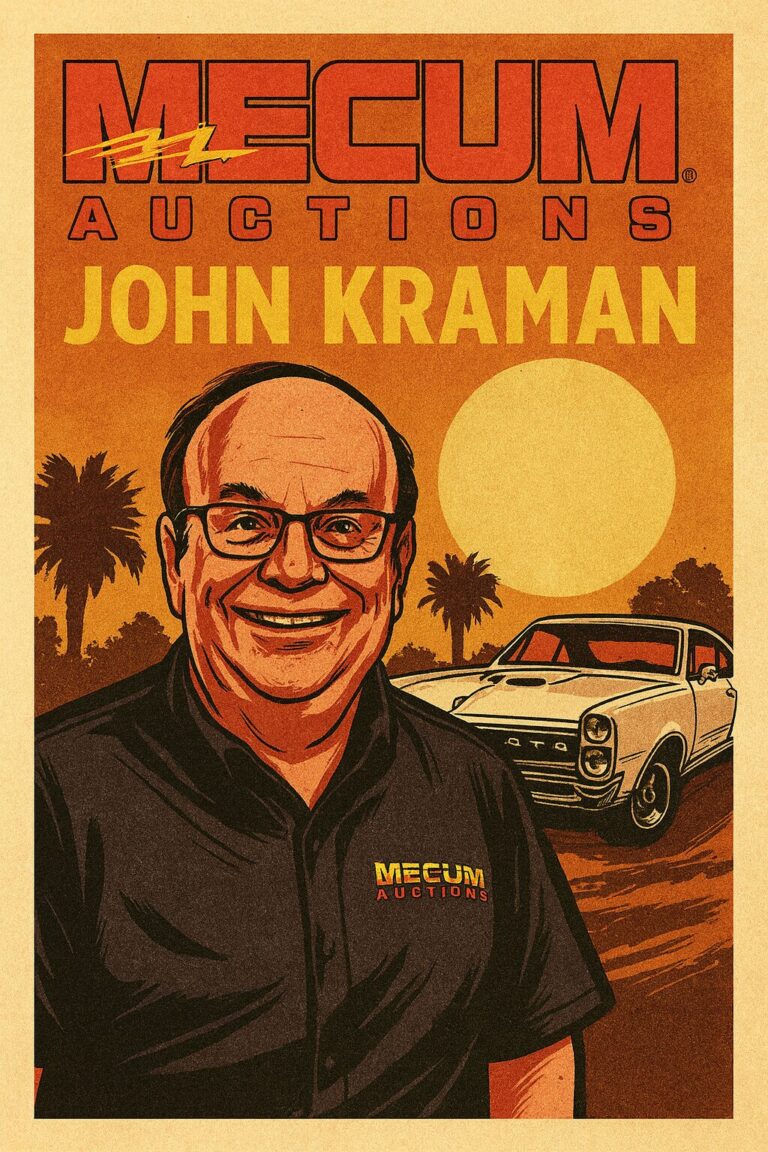
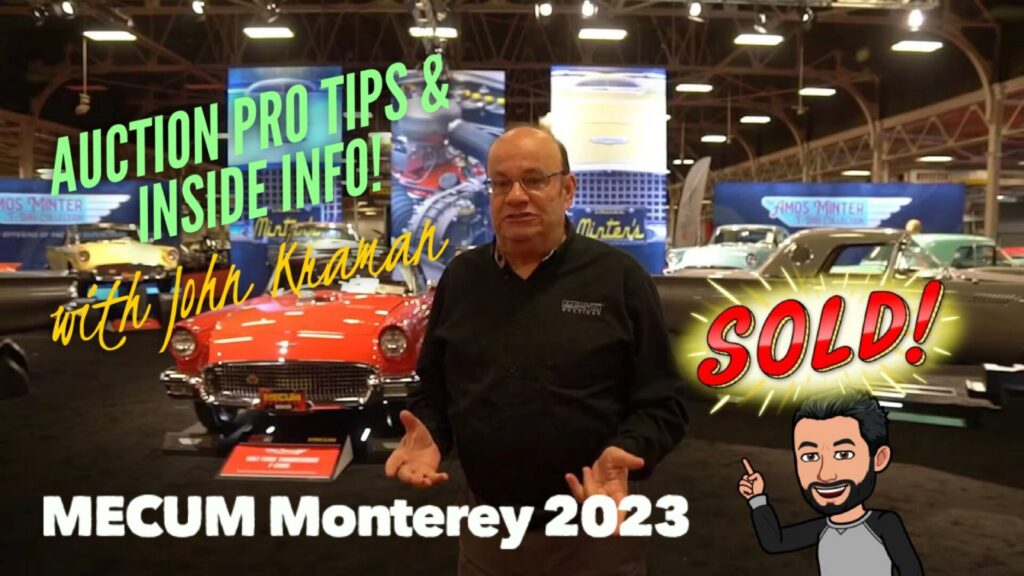
John Kraman from MECUM (and Break/Fix Guest) takes us behind the scenes at MECUM Monterey to show us how it all works ... [READ MORE]

Porsche v Corvette at the Monterey Historics

Is there a best everyman's sports cars between these two brands? ... [READ MORE]

Rolex Monterey Historics – Car Week 2023

Coverage and a Deep Dive into the Rolex Monterey Historics at WeatherTech Laguna Seca ... [READ MORE]

The Ride – 2024 Lexus LX 600

The Gorgeous Green Monster – LX-600 Long Term Test Drive ... [READ MORE]

The Quail, A Motorsports Gathering

 ... [READ MORE]

The Pebble Beach Concours d’Elegance

 ... [READ MORE]

Monterey Car Week ’23 in the Rear View

10 days. Over 35 events. 1000s of Pictures. Car Week 2023. #ICYMI - we recapped it all here for you to enjoy. ... [READ MORE]

**All photos and articles are dynamically aggregated from the source; click on the image or link to be taken to the original article. GTM makes no claims to this material and is not responsible for any claims made by the original authors, publishers or their sponsoring organizations. All rights to original content remain with authors/publishers.


Automotive, EV & Car-Adjacent News

For a list of all the articles and events referenced on this episode check out the show notes below.

Bikes

Domestics

EVs & Concepts

Formula One

Japanese & JDM

Lost & Found

Lowered Expectations

Motorsports

News

Rich People Thangs!

Stellantis

Tesla

VAG & Porsche

TRANSCRIPT

Executive Producer Tania: [00:00:00] The Drive Thru is GTM’s monthly news episode and is sponsored in part by organizations like HPTEjunkie. com, Hooked on Driving, AmericanMuscle. com, CollectorCarGuide. net, Project Motoring, Garage Style Magazine, and many others. If you are interested in becoming a sponsor of the Drive Thru, look no further than www.

gtmotorsports. org. Click about, and then advertising. Thank you again to everyone that supports grand touring motor sports, our podcast, break, fix, and all the other services we provide

Crew Chief Brad: weird, weird music, whatever Eric has. Welcome to the drive through episode number 36. This is our monthly recap, where we put together a menu of automotive motorsport car, adjacent news and wherever Eric has been this last month. So let’s pull up to the window. Number one. For some automotive news. Eric, where were you this month?

Crew Chief Eric: Our week drained me. What day is it, by the [00:01:00] way? Like, I am in a time warp. Let’s do the time

Crew Chief Brad: warp again.

Executive Producer Tania: Too early. Although Halloween is out already.

Crew Chief Brad: Can you believe

Crew Chief Eric: that?

Crew Chief Brad: Halloween was out after Easter.

Crew Chief Eric: Summer isn’t even over yet, and people are already stocking the shelves for Halloween. Soon, Christmas decorations will be out Valentine’s Day.

Crew Chief Brad: That’s if they ever take them down.

Crew Chief Eric: That’s the secret, just have a Christmas section.

Crew Chief Brad: You never have to take it down, just leave it up. You could take away 10% Of the women’s clothing section and still have plenty of room for a Christmas section. I think Kim

Crew Chief Eric: Kardashian has something to say about that.

Crew Chief Brad: Maybe, maybe, maybe.

Crew Chief Eric: But you know what? It is 24 7 Christmas at Bronner’s Christmas Wonderland in Frankenmuth, Michigan. So if you’re on your way to the middle of nowhere, stop by.

Crew Chief Brad: So there you go. But that’s not why we’re here. We’re not here to talk Christmas. That’s for later in the year.

Executive Producer Tania: But wait, speaking of the Kardashians, how is California?

Crew Chief Eric: I might’ve bumped into them.

Executive Producer Tania: Wait, you couldn’t

Crew Chief Brad: miss them. [00:02:00]

Crew Chief Eric: You know, last time we got together, I recapped my epic journey to the European union. This time I went to the completely opposite side of the country. Thanks to Don at garage style magazine. And we did 10 days. of the Monterey Peninsula for Car Week.

Crew Chief Brad: Last time I checked, a week is only seven days.

Crew Chief Eric: You know, I wrote an article about that too. That’s

Executive Producer Tania: them California weeks.

Crew Chief Brad: Because you get stoned the first three.

Crew Chief Eric: California’s famous Car Week is becoming really two weeks. Soon it’s going to be Car Month. It’s absolutely… Insane. And I will say I’ve had people invite me out time and time again to go and I’m like, man, I don’t know if I can put aside 10 days.

I don’t know if I can put aside a week. I don’t know if I can go, you know, works in the way, you know, real stuff. But this time I couldn’t pass off the opportunity, especially to go with a press team, with photographers, with everybody that was there contributing. It was an awesome experience and once in a lifetime to do it that way, to really do it up.

I’ll just summarize it for you 10 days, 37 events, over 5, [00:03:00] 000 photographs, unbelievable people, places, and cars. We’re going to do some show and tell this time. So if you’re watching this on Patreon, you actually get to see what I’m showing off here because every event I went to. I got something and I kid you not.

I paid an extra hundred bucks to send my luggage home because in a mid sized suitcase, I was at 60 pounds.

Crew Chief Brad: That’s my normal packing. Just your shoes, right? Just my shoes, my socks, my underwear.

Crew Chief Eric: So the Monterey area is cut up into these little towns and it starts with like Seaside and you work your way down to Fisherman’s Wharf and then there’s Carmel Valley Then there’s the city of Carmel then there’s Pacific Grove and all these other places that are connected even Salinas where Laguna Seca is It’s all right there and in this Conglomeration of different towns.

At first I was kind of getting spun around. I’m like, where are we? Where are we going? It was a lot of driving and we were actually staying in of all places. Garlic town, USA, which is Gilroy, California, because we couldn’t get a place in downtown Monterey. We were commuting in about [00:04:00] 40 minutes or so with our Lexus LX 600 press vehicle, which I’ll talk about here in a little bit.

But I wanted to highlight some of the events we went to. And the first little town that’s quite charming is Pacific Grove. It’s full of like different things to do. There’s a motorcycle museum there. There’s some great places to eat. It seems to be a repeat offender when it comes to car shows. There’s the little car show.

There’s a couple others. And then there’s the classic motorsports car show. They’re the authors of not only classic motorsports magazine, but one we’re all too familiar with, which is grassroots motorsports magazine. Why I mentioned that. It’s debated whether or not the beginning of car week is actually a week from pebble, or if it’s longer is that the quote unquote kickoff event for many, many years was the classic motorsports concourse in Pacific Grove.

Now we back that up almost a week prior. Car Week really kicks off with the Pasadera concourses, which we had Rick Barnett on the show last year to talk about, and I bumped into him several times while I was there in Monterey. What I liked about [00:05:00] Classic Motorsports, it was one of those anything goes kind of shows.

All sorts of stuff showed up. You’re talking… 911s to Camaro swapped MGs to alpha Montreal’s to Jaguar XJR homologated race cars. It was actually a really great show. I really enjoyed it. Mad props to the classic motor sports guys and free magazine. So I’m going to flip through it. I’m going to take a look at this thing.

Lots of really cool stuff in here. Also in Pacific Grove, I mentioned the little car show. That was a lot of fun. We returned for that. It’s historically been. Cars with 1, 601 cc’s or less. So we’re talking 1. 5 liters, 1. 6 liters rounded up this year. They opened it up to 1. 8 liters. So 1, 801 cc’s, which kind of opened up the field a little bit, allowed some Miatas in and Nissan Pulsars, like all sorts of crazy stuff in the eighties because as engines got bigger, so did the little car show need to grow.

So that was a lot of fun. Saw a lot of micro cars, Japanese imports, you know, stuff like that. So I thought that was pretty cool.

Crew Chief Brad: How many Mark 4 1. 8 T’s did you [00:06:00] see, or does the power adder take it over?

Crew Chief Eric: It doesn’t cause they’re just classified by displacement and technically we’re 1787, but I saw absolutely zero Mark 4s.

Crew Chief Brad: Cause they were all at Radwood.

Crew Chief Eric: No, but you know who did represent us from the dubber side was a G60 Parato that was in excellent shape. So one of the other events that I think I have to say when I look back was maybe one of my favorites and that’s Radius. By Broad Arrow. And so Broad Arrow got bought by Hagerty.

So it’s part of that whole, you know, they bought motor sports reg, they bought Radwood, they’re putting all this stuff together. So they’ve relabeled the Broad Arrow auction to Radius. And they’re going to be doing this at Amelia as well in a couple other places. And what I liked was it was set at the Monterey jet center, which is the airport there in Monterey.

And they made it look and feel like a late fifties, early sixties, Hollywood movie set. It just had this. appeal to it. It had this feel of luxury. It also doubled for the location for the motor Lux, which was [00:07:00] later in the evening, which is more of like a black tie type of gala event. But the caliber of cars they had, I thought was pretty awesome ranging from, you know, the big doozies and the Packards and stuff like that, all the way to crazy concept cars like Weigert’s vector or an Isdera 108, which I’m wearing the t shirt and a little show and tell here as well.

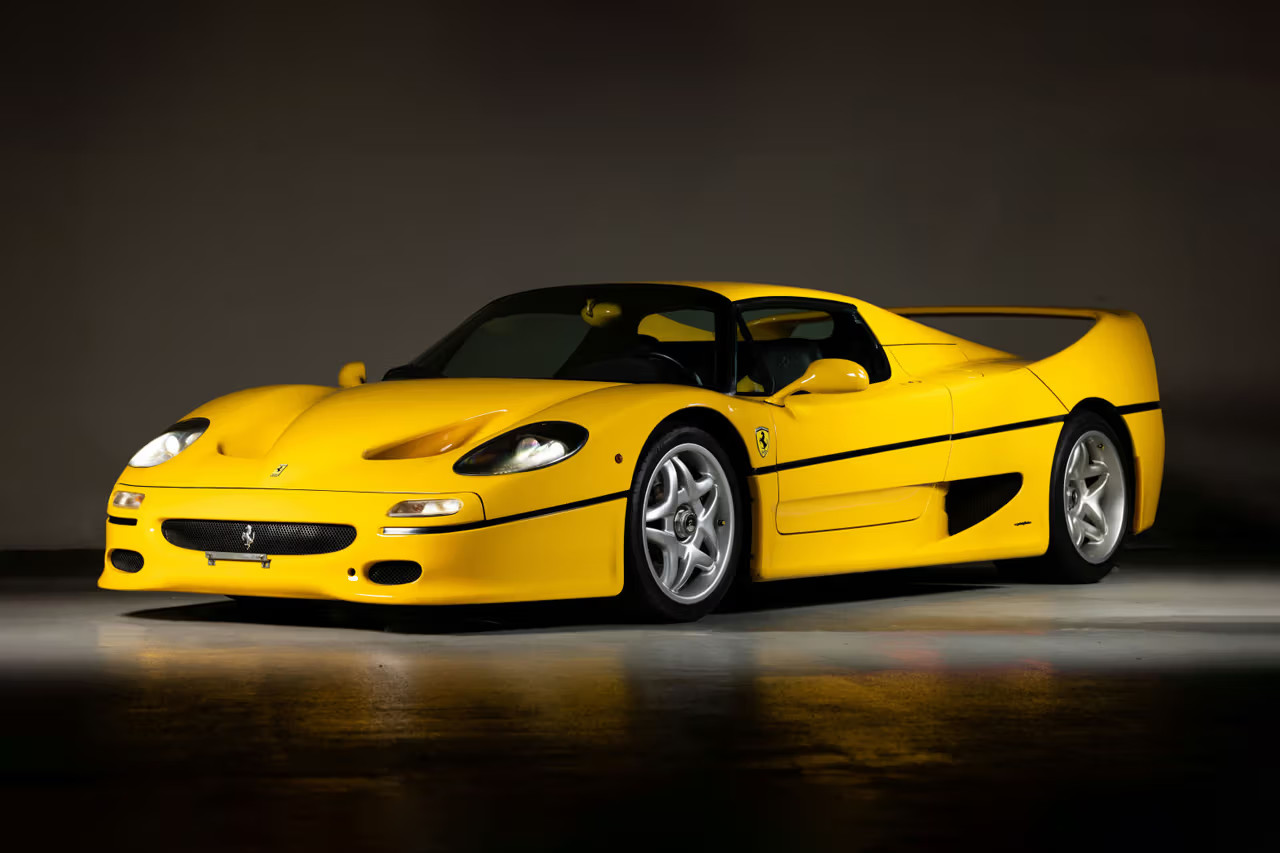
And really everything in between the big three cars up on stage, Ferrari F50, Ferrari 288 GTO, and a Dyson Porsche. Those were like the headlining cars.

Crew Chief Brad: Did you just say F 50? I did say five, zero five, zero. Okay. The most undesirable of the F cars is what you’re trying to say was a highlights of the events.

Crew Chief Eric: I know you love that car.

Crew Chief Brad: I do.

Crew Chief Eric: It was the only one at 50, apparently up for auction and all of car week where there was half a dozen at forties for sale.

Crew Chief Brad: People don’t get rid of them. They keep them.

Crew Chief Eric: They didn’t make that many to begin with either. Right. Whatever. It was cool seeing one again in person. I mean, I haven’t seen one in years and they are pretty rare.

[00:08:00] So I’ve got all sorts of pictures of that. It’s actually that headline photo of the radius article that we wrote. And that’s part of what made this week stressful too. We were averaging four to five events. day over 10 days, and then we were writing every night, processing pictures. So we tried to highlight events that were really unique and really different.

Radius was one of them. It just had this champagne and roses type of feel to it that other events didn’t have, but all the events are different and that’s. Part of the awesomeness of Car Week. I did pick up a copy of Hagerty’s Driver’s Club magazine, which I’ve been wanting to get from anybody that had Hagerty shirts, but I figured, Hey, it’s available for free.

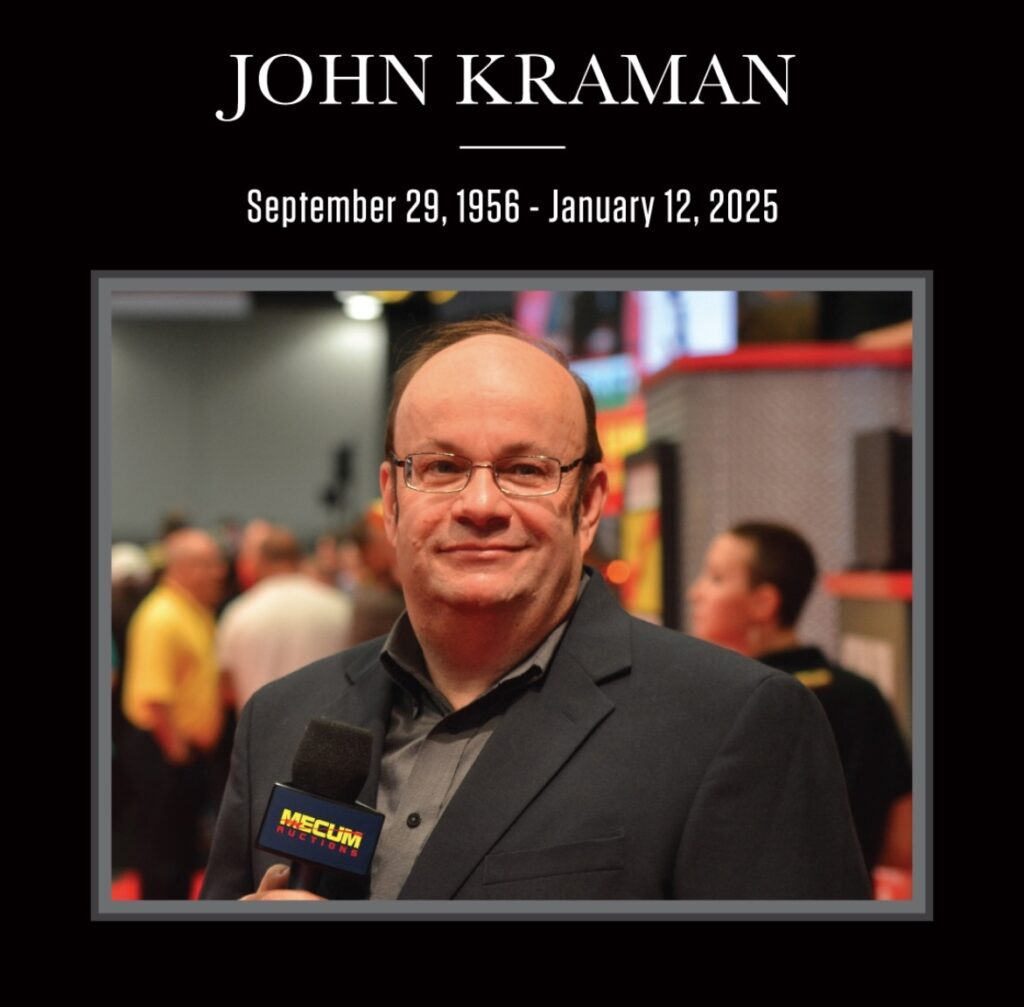
So I’m going to check it out. And this particular issue covers Porsche’s 75th birthday. So I’m looking forward to flipping through that and reading the articles. As many of our listeners probably know, we had John Kramer on from Mecham. We did a special pre release through Patreon, a couple other things.

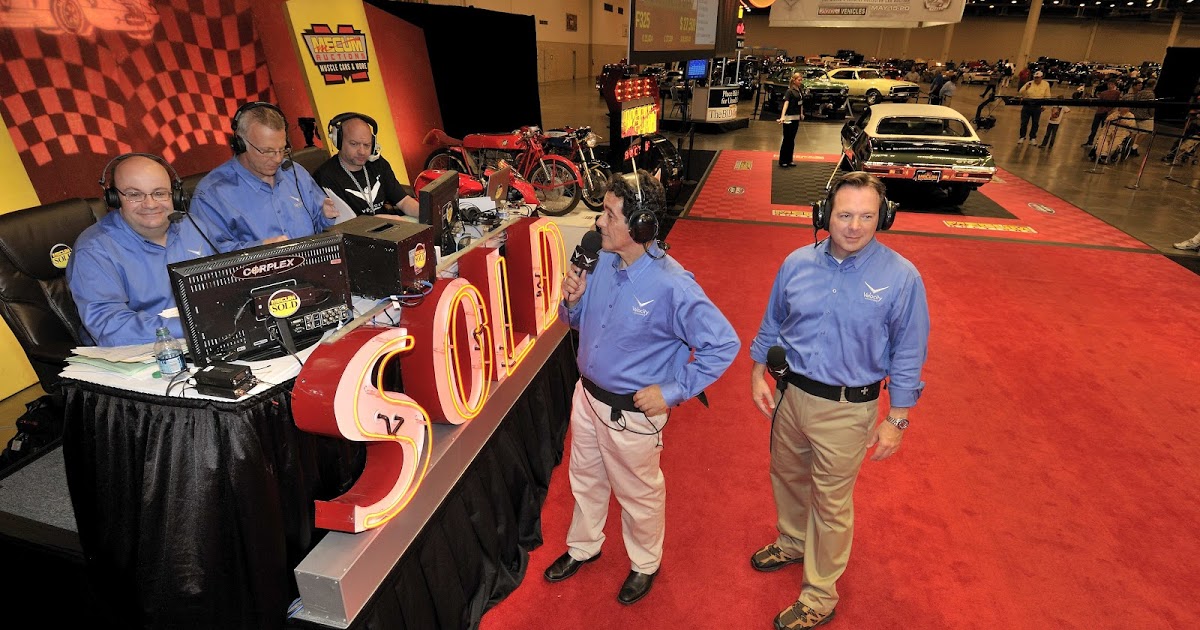
If you wanted to go behind the scenes of the auction, get some pro tips from John, we got his road to success story. But what we ended up doing was when we [00:09:00] went to Mecham to see their Monterey, what they call the daytime auction, we actually ran into John again. He said, Hey, let me take you behind the scenes of the auction and show you how it runs.

Unbelievably busy, super chaotic. And we have all that footage. It’s up on our YouTube. It was really nice of him to do that. We got access to all sorts of stuff that you don’t normally see. Met a bunch of people like in the production studio, other commentators, you know, just watch the auction unfold live.

And it is more of that traditional, you know, standard American auction where you got the guy up there, but I mean, it’s just this constant. Never ending cycle of cars coming in and off the block. And if a car spends more than two minutes on the block, it’s too much. And so it’s this just parade and this commotion, and it’s very different.

It’s very lively. It’s energetic. And when you go out on the field, then you can see the cars that are still up for sale. The ones that have sold what they’ve sold for it’s very interactive. So that was a lot of fun. And again, really appreciate John taking us on that tour [00:10:00] and showing us how the auction runs and how it operates behind the scenes.

Crew Chief Brad: I did actually watch some of the Mecham auctions because they had coverage on Motor Trend app. So I was able to catch some of that. And you’re right. Like, I didn’t see any car go across the block and spend more than like a minute and a half, two minutes. They were boom, boom, boom. Get off the block. Even if they weren’t sold, you know, they put the little graphic up.

The bid goes on. Yeah. Uh, yeah, I, I like watching those auctions. I like watching them with older people like my father in law and my dad. Because they love to reminisce about the vehicles and then complain about how much they sell for.

Crew Chief Eric: You know, I’m glad you brought up the bid goes on. John took us over there in the behind the scenes.

That’s actually a separate section of the auction where you can continue to bid on the cars once they’re off the block and actually negotiate a price rather than the whole, you know, 50, 51, 52, you know, all that kind of stuff. You can settle down and say, okay, I’m offering this. Are you willing to take it?

Negotiate with the owners if they’re there, stuff like that. So it’s really interesting how they run that. But to your point, Brad, a minute and a half, two minutes, every car on the block, they got [00:11:00] 600 cars to go through in like three days. So they got to keep that thing moving. Well, I got to give a shout out to Steve Cuttrell at Veloce media.

We ran into him so many times, whether it was at his place, at the premier of the new beer rally time at Concorso Italiano, which I’ll talk about here in a minute. To some private parties that were at his place. I felt like we were bumping into Steve every two minutes and especially thankful that he opened up his place for us to take a photo shoot for our Lexus press car came out really cool.

He’s got this awesome octopus mural in the background. There’s actually a jellyfish one buried in the back behind where the kitchen is and stuff like that. There, you’re going to see those photos in a garage style article coming out where we feature. Veloce media and they’re building. It’s really cool because it’s unassuming from the street.

You drive by it, not even paying attention to it. And inside it’s a wooden roof and all this glass and that mural. And it was the really great backdrop to take photos of the Lexus and they came out really, really awesome. So I got to give a nod to Steve at Veloce, but also because this happens almost all the [00:12:00] time.

You’re like so tired, you’re done with the day, done all these events. And then the phone rings. And Don’s like, Hey, we just got invited to two private parties or three private parties. Which one do you want to go to? And you’re like, none. You know, I just want, I want to go home and process pictures, but we would do that in the evenings go where people invited us.

And so we ended up back at Steve’s one evening for the Vance party. And so a Vance is a. Lifestyle brand and magazine. Every issue is about 140 pages, beautiful photographs, really, really nice stuff in this magazine. The one I have here is the Monterey edition. So I got to actually meet Avance. I got to meet those guys.

And while we were there chatting and looking at Ferrari two fifties and wide body nine 11s and all this kind of stuff that was in the showroom in walks. Matt Farah from the Smoking Tire and Jason Kamisa from Haggerty. We stood there for a while and I kept thinking, Brad wants me to talk to these guys.

Like, I gotta talk to these guys. And I’m there with Mike Piptone from ESE Carbon, who we’ll talk about here in a minute as well. And he’s like, let’s go [00:13:00] talk to Jason. Let’s do it. So we’re standing there like two fools. And Matt Farah and Jason are having this conversation. I snapped a photo. I don’t know what they were talking about, but the expressions on their face was really, really funny.

But Brad, that’s as close as I got because we unfortunately got pulled to another party. I know that Mike went and talked to Jason. So if you guys are listening, love to have you on the show, would love to get your road to success stories on break fix. So look forward to an email that’s going to go to spam in the near future.

I had to go to my more familiar stomping grounds. The racetrack the Monterey Historics at WeatherTech Laguna Seca Raceway. They sort of run autonomous from concurrently with Car Week, but traditionally there was a race around Pebble Beach back in the 50s as a Grand Prix and then eventually moved to Laguna Seca in 1957.

It was always the lead up to the Pebble Beach Concourse. The idea was you go race your car. And then you go show your car. Now, what they do is what they call the tour de elegance, which [00:14:00] we have a video of that as well. It kind of simulates the old days racing around Monterey on 17 mile drive and around pebble beach and things like that.

And then they end back at the Concord and get the car stage. Meanwhile, the historics are going on at Laguna Seca 300 cars. There were 13 classes of cars running every day, either between practice qualifying, and then there was race one and race two. So I went on race day, hyper focused on group four.

Which was 1981 to 91 Trans Am, IMSA, GTO, all the big body cars, V8 stuff. Was hoping there was going to be a five cylinder fire breathing dragon of an Audi there, but it was still fun. Corvettes, and there was a Newman Nissan in the mix, so that was good. And then group six was vintage Formula One cars, which was just…

Earshatteringly awesome. And then group 13, which was my absolute favorite. We had to stick around to the end of the day to watch them. You had Pat Long in his Celeste green, Bianchi blue, whatever you want to call it. Porsche 962 [00:15:00] amongst other 962s, Audi R8, you had Jaguars, you had Buicks, you had Spice Budweiser cars, all sorts of stuff.

Basically Le Mans prototypes, GTP cars celebrating, you know, the hundredth Le Mans that was. Spectacular to watch, especially big turbo cars running around Laguna Seca. Absolutely amazing. And Laguna is one of those awesome tracks where you can see from everywhere, but it requires a little bit of hiking to get to different vantage points, but absolutely amazing to be there on race day.

Crew Chief Brad: You were there for motorcycles too, weren’t you?

Crew Chief Eric: There were bikes there, but I didn’t see them. Were they

Crew Chief Brad: running in the same day? Just different group.

Crew Chief Eric: We got there a little later in the morning cause we had to cover. Portia works first, which I’m going to mention now. And then we ended up at Laguna lunchtime on, because we had looked at the schedule going, these are the three groups that we really want to see.

So I missed the bikes and all that kind of stuff. But as you wandered the paddock, there was a little bit of everything.

Crew Chief Brad: You’ve got a note here for Corvette 70th. Do you want to touch on that? Or

Crew Chief Eric: that’s a really great reminder. You know, [00:16:00] we’ve mentioned many times. We have a special episode that we did with the IMRRC about the 70th birthday of Corvette.

It coincides with Porsche’s 75th. They’re always trying to one up each other. So I kind of split hairs on thoughts. I was having a lot to track. I did a coverage of the Monterey Historics, but I also did an article called Porsche versus Corvette. Trying to decide whether or not one or the other is the every man’s sports car.

And you’ll have to read it to find the conclusion.

Crew Chief Brad: Is that the sequel to Ford versus Ferrari?

Crew Chief Eric: Yeah, I think so. It’s Porsche versus Corvette. But what was nice is they had a really cool display of Corvettes. I’d never seen in person. Some of the prototypes, the Aerovette was there. They had Ben Keating’s Corvette that I saw live at Le Mans, the winning Corvette.

So that was fun to walk through that outdoor museum that they set up and photograph that I have pictures of. Of all sorts of the different Corvettes that were there and they were making a big to do celebrating Corvette. And like I mentioned before, Porsche works, which is the PCA sponsored event. They were celebrating Porsche in style.

Some of the craziest cars you’ve ever seen. Some of the [00:17:00] craziest colors you’ve ever seen. I ran into the. Current executive director and former executive directors. That’s Vu and Manny from PCA. And we had a chat. So they’ve agreed to come on the show in the future and do a crossover with us, but it was good to reconnect with them.

They’re in the same region that we’re in here on the East coast. They actually did a segment on the crazy colors of Porsches at Porsche Works. So there’s a video there on PCA. org to check out. So that was a lot of fun reconnecting with those guys. And Porsche Works was a great show to attend. It was free to anybody that wanted to go and check it out.

Crew Chief Brad: To answer your question online on Instagram. Graham, the answer is always green. Always. So it’s always green versus

Crew Chief Eric: lime.

Crew Chief Brad: Yeah, yeah, it’s always lime. Lemon just doesn’t look right on it unless it’s a yellow bird.

Crew Chief Eric: Well, it’s funny. You bring up lemons. Cause I did go to the concourse. The lemons, please touch on.

It’s exactly what you expect. It’s the hoopties. It’s the rust buckets. It’s the undesirables. It’s the ugly cars. Like we talked about on our, what should I buy [00:18:00] ugly cars episode? It’s everything you can think of. And then some other stuff you didn’t even know existed.

Crew Chief Brad: I feel like you missed an opportunity to win something with your former Aztec.

Crew Chief Eric: Wasn’t mine. Didn’t own it. Well, there was an Aztec there along with a silhouette, the dust buster of minivans and other stuff like that.

Crew Chief Brad: Oh, the silhouette. That’s the one that basically looks like Illumina.

Crew Chief Eric: Yep. The guy actually had a dust buster on the windshield. It was hilarious. I was like, this is awesome.

So the thing about concourse, the lemons is. Thank God it’s free because you get exactly what you pay for. I did a video of it. It’s on our YouTube. It’s compressed. I literally it’s concours de lemons in 60 seconds because that’s really all you need to understand what happened there. So a lot of fun. It is a bit of a circus to prizes and giveaways.

And the announcers are making fun of each other, making fun of the cars. And there’s a guy on top of his vehicle riding a bucking Bronco. I mean, it’s the weirdest stuff you’ve ever [00:19:00] seen is at the show. So why not just enjoy it, right? It’s part of car week. It’s part of car culture. And that’s what car week’s about is the celebration of car culture.

So then we step into the more serious side of car week. As we get closer to bevel, once you get to the Wednesday, Thursday, that’s when everybody starts to arrive in town. The celebrities start to show up. Things are getting more serious. Cars are getting ready for the tour de Elegance, like all this kind of stuff.

The auctions are. Still sort of going, but wrapping up. Everybody’s trying to get to pebble, right? That is Nirvana for this entire week. So we took the time to go to concorso italiano touted as the largest collection of Italian cars, basically all in one spot

Crew Chief Brad: other than Italy.

Crew Chief Eric: True.

Crew Chief Brad: I would like to think that Italy would win that by default.

Crew Chief Eric: I think there was more Fiat’s at this show than there is in Italy, though. I will say that.

Crew Chief Brad: More running Fiat. You mean?

Crew Chief Eric: Yeah. A hundred percent. Absolutely gorgeous cars. When you come on through the gates, it’s Lamborghini all day. And there’s Lamborghinis that we [00:20:00] talk about where it’s like, Oh, the Halpa and the Jarama and the Espada and you’re like, Oh, they’re super cool.

And there’s six of them right there. And you’re like, never seen so many in one spot at the same time. They had this neat stage set up. They had a fashion show. They had announcers and then they would take certain cars out of the field and then drive them in. I actually have a video of a Bizzarini Strada, which is the Bizzarini Coupe, which is Chevy V8 powered by the way.

Yeehaw. And he’s revving and idling and sitting there and it’s just blah, blah, blah, blah, blah, blah. You know, the whole thing like you’d expect from a Trans Am. So we’ve got that up. It was a lot of fun. I spent some time wandering around the Ferrari section and quickly realized I could buy merchandise at a Formula One race and it would be cheaper.

I didn’t bring anything home. That said, the Fiat’s and the Alfa Romeo’s though, I mean, if they had tucked them any further back, they would have been at a different car show. Like they were up over the hill, out of the way. Nobody wants to see X one nines.

Crew Chief Brad: Maybe they were in a different car show. You just [00:21:00] stumbled upon it.

Crew Chief Eric: I had fun talking to those guys at a delightful conversation with a guy who did a custom livery on his alpha four C looked really slick, but your GTV sixes one 64s Milano’s all the old stuff. I appreciate. I was hoping to see an alpha S Z, which is one of my favorites. It wasn’t to be, but I did talk to a lot of X one nine owners and Fiat one 24 guys.

That was really cool. I mean, Concorso was a lot of fun. You got to see the cars that we salivate over and you just drop a name. Countach, Diablo, 328, 348, Testarossa, 288. It didn’t matter. They were all at that show. So it’s really worth going to, if you appreciate Italian cars.

Crew Chief Brad: Spoiler alert, cause you’re going to talk about this later.

Is this. Where you got to talk to the CEO of Lamborghini or was it a different event?

Crew Chief Eric: No, I got to talk to Stefan Winkleman while I was at Pebble beach. That’s another story for another time,

Crew Chief Brad: like five minutes from now.

Crew Chief Eric: So we went to a new event new for this year, [00:22:00] sponsored by NECOM is called the Monterey motor sports festival.

Shout out to David at MIE racing for bringing this to our attention. He knows some folks over there. He says, you got to go to the show. You got to cover it. You got to check it out. It’s very different than anything I’ve described so far. It’s sort of Monterey’s version of grid life without the drifting and the track event.

It’s all the other parts of grid life. It’s that festival. It’s the music, it’s newer cars. It’s the things you don’t see at all the other shows, right? The tuner cars, all the JDM stuff, because you walk around, you’re like. Where’s all, where’s all the newer European stuff or newer Japanese cars. So you don’t see a lot of that at the other shows.

So it was nice, more bar speed, more my style. The older guys were just like, yeah, it’s okay. It’s cool. You know, blah, blah, blah. The food was hands down the best.

Crew Chief Brad: Well, yeah, it’s our people.

Crew Chief Eric: Food truck food for the win. So they got that right. It was super awesome. The singers they had up on stage, Brad, I think you would have appreciated that they were really, really good.

This one woman. Had a real [00:23:00] knack for making herself sound like a Carly Simon or a Linda Ronstadt. She was very flexible, very adaptable in her singing. So that was a lot of fun. We actually watched her for quite a while and then, you know, took turns looking at different cars and stuff.

Crew Chief Brad: Were they like a cover band or were they like a legitimate artist?

Crew Chief Eric: No cover band. I don’t remember her name, unfortunately. She’s out of New York city. I’m sure we can look it up and see who it was. It was a great performance and it added a good ambience to the show. And in front of her on stage was a Maserati and then an old Packard. And oh, they had a mix of cars kind of highlighting all the different decades.

And she made a point to mention that between songs as they were changing some of the instruments out. And that’s also where I got an opportunity to see some cars from Mecham that I didn’t see when I was there to include a wide body Speedster V8 914. Which was just off the charts insane. I was like, how did I know this thing was for sale?

I might’ve bid on it. It’s kind of cool. We have to ramp up the big two events. The ones that everybody talks about [00:24:00] every year are the quail and pebble. And it comes down to which one do you go to? Which one do you spend the money to go to? Because both are very expensive. Both are very posh. If you look at the cover photo of the quail video that we just.

Quickly put together, you kind of get an idea of what the quail is all about, but what’s interesting is that even though it’s sponsored by bottoms and it has been for many, many years, it’s a little bit more modern than pebble. You had brands like singer there, you had Maserati showing off new cars. You had a new Bentley prototype Kia was there with some of their concept cars.

So it was a little bit more. Modern, but it was a very upscale event. So it’s really kind of cool to see that intersection between those two ideas represented at a very high profile concord

Crew Chief Brad: before we get into pebble. I have to know what did you wear? Did you look like the help or did you look like someone who belonged there?

Crew Chief Eric: Well, I was warned ahead of time that I needed to bring a change of clothes. A lot of events I went to polo [00:25:00] shirt, jeans. Nicer shoes in Pacific Grove. You could go in jeans and a t shirt or shorts. Didn’t really matter.

Crew Chief Brad: Did you wear the yellow? Everyone has a story.

Crew Chief Eric: I did not because I didn’t want to look like a flagger.

Apple is probably where I dressed up the most. You’re talking slack sport coat, you know, all that kind of stuff. It is more upscale. You know, you got to represent when you look around, everybody has those. Funny straw hats, which I thought about buying one, but when you look at the hat and it doesn’t have a price in the price tag, you know, you probably don’t or want or can’t afford it.

So I’m just like, I’m going to leave that alone. There’s a lot of hype around pebble beach been around for 70 some odd years now on the golf course on the 18th fairway. It is supposed to be the epitome of luxury high life and all this kind of stuff. And some of the finest cars in the world. And one of the things I came to find out which I thought was really interesting is they’ve incorporated the concept cars and I got to see where the DeLorean reimagined was unveiled last year because they have other concept cars in that area that’s actually before [00:26:00] you even enter pebble basically was a really large putting green right near the pro shop.

I also learned that cars that enter Pebble and not reenter Pebble for like upwards of a decade. So once it’s been accepted and shown, you won’t see that same car again at Pebble beach. They try to really mix it up. So you don’t have the same champion every year or the same three cars competing. You’re like, I’ve seen all these before.

They want to mix it up. They really want to break up the show. It is sectioned off. So you’ve got like an entire section of pre war cars, Packards, preservation group, Porsche group, and you can go from group to group to group and kind of focus on what you really like. The difference between the Avants party and Quail, even Broad Arrows Radius.

Pebble is where all the it people are. It’s where all the celebrities come. It’s where all the movie stars are. It’s where all the CEOs and executives. I mean, I was 10 feet from the current CEO of Ford. I talked to Stefan from Lamborghini while I was standing next to Magnus [00:27:00] Walker. And I’ve recognized other people that have been on the show and things like that.

And it’s just like, this is the who’s who of California and of the automotive world all in one spot. And we’re surrounded by the most beautiful cars you’ve ever seen. What’s funny is the pebble actually has two books. There’s the little field guide, which is packed full of information while you’re looking at cars.

And then there’s the big pebble program, which is like the phone book, just full of stuff sponsored by Rolex, everything you come to expect from all these brands. It is a cut above, but the question becomes. If you’re going to these shows as a civilian or as a layman, you really have to build Car Week on a budget.

Pebble’s not cheap. 500 for a ticket. Scalper’s up to 800. Quail’s not cheap either. A lot of these events add up quick. So you got to have a big budget or decide, I want to just focus on this and then do all the surrounding shows and private parties. And there’s something for everybody during Car Week. So you got to kind of make those financial decisions.

It’s not like I can do everything and be everywhere during Car Week.

Crew Chief Brad: So pebble or Amelia Island

Crew Chief Eric: that was thrown around a lot too, [00:28:00] but having talked to people that have been to Amelia and not that there’s anything wrong with Amelia, there’s gorgeous cars there. They’re coming from the East. There’s not the rest of what makes up car week at Amelia.

You go to Amelia for Amelia. There’s not the driving tours and there are the private parties, but there’s not 16 other car shows happening on the same day as Amelia. There’s just. That one event. Now there’s been talk that, you know, how the Haggerty’s involved, that that’s going to grow rebranding as radius, just like they did with the broad arrow event.

So really interested to see how Emilia evolves. It would be really cool if it turned into another car week, but it’s going to take some time to get there.

Crew Chief Brad: Are you going to tell us about your conversation with Stefan or are you going to keep that to yourself?

Crew Chief Eric: You know what? I’m going to save it for a future break fix episode.

How about that?

Crew Chief Brad: Yeah. And I do see here that you saw the new Kuntosh. I. Did tell us your thoughts, Mr. Hater. I don’t hate it as much anymore.

Crew Chief Eric: Imagine that [00:29:00] it does look better in person than in pictures. It’s not that it’s horrible in picture. It’s just, you’re kind of like, is that right? Does that look right?

When you see it coming, EB one 10 Bugatti, which doesn’t photograph well either, but you see it in person, you’re like, that’s the Batmobile. And the Countach in that white, it’s huge. It’s wide. It’s low, sort of like the old Countach, where it’s just so over the top, you can’t stop looking at it. And every angle you look at it, it’s one of those cars, you see something else.

And that’s what you don’t see in the photographs. Cause the photographs are almost too polished. They’re almost too rendered, but to see it in person, I mean, I just stood there. And I’m just like, I don’t know what to say. I like it. I still think Magnus’s version of it is better, but you know, Hey, to each his own.

All right. One of the other things that really stood out at pebble, we’re talking about car spotting was the McLaren display right along the coastline. Awesome. And I stopped dead in my tracks. And just had a moment amongst all the noise. I had a moment [00:30:00] of silence for Senna’s F1 car, took all sorts of pictures of it.

And, you know, it was funny as a guy walks up and, you know, I’m just kind of standing there, not like I’m meditating or, you know, kneeling down or anything, but he’s like, whose car is this? Like I recognize it. And I’m like, bro, seriously. And he was an older guy and he’s an admitted Formula One fan. I said to him, it’s Senna’s car.

He’s like, well, how do you know? And I was like, it’s written right on the hoop, dude. But it’s number 12. It’s his car. It’s pretty legendary Formula One car here. We had a good laugh and then we were chatting. So we continued to walk along. And then next to that was one of Donahue’s McLarens. One of Bruce McLaren’s McLaren’s.

Then you had Mika Hawkin’s, McLaren, then you had James Hunt scaffolding multiple wings and all this crazy stuff. So that to me, as a racer and a motor sports enthusiast, that was awesome. That was my favorite part of Pebble and I didn’t know it was gonna be there. So that just immediate surprise. As I came around the corner and their Senna’s car and all the rest of ’em, I was just like, that sold it for me.

That was amazing.

Crew Chief Brad: And you didn’t get [00:31:00] arrested for trying to climb in. I’m proud of you.

Crew Chief Eric: You know, my media pass gets me to certain places too. You know, cross over those chains a little bit. All in all, Car Week was amazing. It is completely a blur. We’re talking 18 hour days, just nonstop. Go here, go there driving around.

I think we clocked 2000 miles of driving or something insane. It’s a lot of work, maybe not physically demanding, but it’s just mentally stressful. You’re looking at the events, not through the eyes of a participant either. You’re looking at it through the eyes of the press. What looks good? Camera angles is the lighting, right?

And there’s a lot of decisions. How are we going to use this? Make sure you grab that car because that could be a winner. So you got to photograph everything. It’s kind of nuts at the end of the day, but I don’t want to say it was a once in a lifetime opportunity, but it was definitely something I’m glad I’m now able to check off my bucket list.

And I did it in a big, big way. Well with that, it’s time we move on to Volkswagen, Audi, and Porsche news. What is this thing?

Executive Producer Tania: What is this? Oh yeah! I don’t know what this is, but apparently it’s Audi honoring [00:32:00] 150 years since manufacturing began in Neckarsalem. It’s called the NSU Prins 4. And it’s unrecognizable as an Audi?

Crew Chief Eric: NSU, for those that don’t know the wider history of the auto union, was one of the four circles in the rings of Audi, right? So NSU was absorbed into the auto union and the NSU Prince was one of these little like Nash metropolitan things that they made back in the day. NSU is also where the Wankel, the rotary was born.

Executive Producer Tania: So side by side with the original one, this looks so much better.

Crew Chief Eric: Yeah. It’s a re imagination of the original NSU prints. I’ve really liked it. It kind of reminds me of what Alpine is doing with the new R5.

Executive Producer Tania: I don’t necessarily feel good about the back of it. I don’t understand, like it’s got a very long trunk lid and a very long rear spoiler wing thing.

Crew Chief Brad: Double spoiler

Executive Producer Tania: action going on.

Crew Chief Brad: It’s the fender flares that do it for me.

Executive Producer Tania: I like the fender flares. So I like the look from the [00:33:00] front. It’s very low. It’s very squat. It’s boxy, but with round headlights, although they’re oval, but with two round headlights inside the oval.

Crew Chief Eric: Okay. So aren’t those the Rivian lights just turned on their side?

Executive Producer Tania: They’re reminiscent.

Crew Chief Brad: They could be, they probably sourced them from the same place Rivian did.

Crew Chief Eric: Again, this is right up there with the re imagined R5, the Opal Manta EV. Some of the other ones that have come out,

Executive Producer Tania: this is not going anywhere. This is just a concept, right?

Crew Chief Eric: Yeah. Can they make it? I mean, I’d be happy with it.

Executive Producer Tania: I see. Unfortunately, nobody’s going to buy that a rich person is going to buy it just to say that they have it. There’s nothing practical about that car. It’s so small considering how it actually looks smaller than the original. I’m going to guess the original is not that big,

Crew Chief Eric: right?

Executive Producer Tania: It’s not practical enough for today’s standards.

Crew Chief Eric: Well, let’s talk about another car that’s being reimagined. Porsche made an announcement.

Executive Producer Tania: Their Vision 357 Speedster, celebrating 75 years.

Crew Chief Brad: Yes. So what is this? It’s a car.

Executive Producer Tania: It’s like a [00:34:00] weird 356.

But

Crew Chief Eric: I like it, but I don’t, I don’t know what to think of it. Like there’s really cool aspects to it. I think the wheels are really neat. I like that grill in the back that reminds me of a three 56 with those striations that they had, you know, back then that canopy is obviously from the three 56 speedster.

There’s some elements of the five 50 spider in this car.

Executive Producer Tania: They could have also just called it an electric boxster.

Crew Chief Eric: Yeah. And that’s what I’m trying to figure out. So it’s obviously mid engine, but the front clip still looks like a nine 11. Like an old 911, but it doesn’t have headlights either. So I’m trying to figure out how that works

Executive Producer Tania: or it does.

And it’s just like, they beam through perforations.

Crew Chief Eric: I don’t know. I’d have to see it in person. It’s kind of cool.

Executive Producer Tania: Again, it’s a concept, so they’re probably not going to build it.

Crew Chief Brad: It’s just to, I guess, celebrate 75 years of Porsche.

Executive Producer Tania: 75 years of the 356.

Crew Chief Brad: Yeah.

Crew Chief Eric: Well, and this is just it. This is what I expected when they were making that big reveal when Le Mans was happening on June the 8th.

And then [00:35:00] they revealed the 9X. We were guessing that it was going to be some sort of homage to the 356. It didn’t happen. So here we are a month later and yes, okay, so there is a 356 sort of prototype speedster car. I don’t think it would be kind of cool to make something like this.

Executive Producer Tania: There is a hardtop version.

Really?

Crew Chief Brad: That was the one they announced back in January. You

Executive Producer Tania: can see the picture. Yes. Which also from the side profile side, it’s kind of actually pretty hideous, but it’s got weird elements of different past Porsches.

Crew Chief Eric: And that’s probably the whole point. But I will also say, I think it’s funny that maybe they’ll go back to the 300 series numbers.

Cause I feel like Porsche has exhausted the nine hundreds at this point. I mean, that’s why we have nine, nine, one dot one and nine, nine, one dot two. And because they’re just running out of model numbers. So maybe going back to the three, five, six, and maybe a handful of others gives them an opportunity to make some different models,

Crew Chief Brad: but think about the marketing event that would be to have the Porsche 1000.

Crew Chief Eric: And that’s something Don and I were joking [00:36:00] about, you know, these guys talking about their nine, nine, one dot two and nine, nine, two dot whatever. When he goes. Tell them you have a 9, 9 1 0.4 and see what happens. Because they’ll be like, wait a minute. They didn’t make that. What, when did the dot three come out?

Like you get ’em all wrapped around the axle on something like that, but dot whatever. It’s almost like software. It’s like, oh, windows 10, do one, do two, three. I’m like,

Crew Chief Brad: whatever. It’s a, an automotive patch, . We’ll talk about that in a little bit. I like the 3 57, both the speedster and the coop. I think they’re cool.

I would take one if I fit and if they made it and if I could afford it. There are a lot of variables there that I need to meet before I can take one

Crew Chief Eric: piece. Hmm. Well, with that, we need to move on to STIs. We actually have some news coming from Chrysler, Dodge Fiat and the whole conglomerate, the new 2025 Dodge stealth Durango.

Did I

Executive Producer Tania: read that right?

Crew Chief Eric: What?

Crew Chief Brad: What

Executive Producer Tania: exactly?

Crew Chief Eric: So is it a Stealth or is it a Durango?

Executive Producer Tania: It’s a Stealth Durango. Oh.

Crew Chief Brad: It’s a Durango in [00:37:00] Stealth mode that you don’t know it’s a Durango. Oh. Okay. It’s just a Jeep. It’s incognito.

Executive Producer Tania: It looks like a big Hornet.

Crew Chief Brad: It looks better than the Hornet.

Executive Producer Tania: Like a big square. Hornet.

Crew Chief Brad: With 24 inch wheels, or whatever

Crew Chief Eric: those look like.

Because the hornet in pictures, although we’ve seen it in person I saw one on the road. It looks like the dart was stretched upwards, like a car that they turned into an SUV.

Crew Chief Brad: What is that weird Stellantis badge on the front? That’s the Dodge.

Executive Producer Tania: That’s the two red stripes.

Crew Chief Brad: Is that all that is? I thought it was an S.

No. Whatever it is, it looks stupid.

Crew Chief Eric: Which is confusing because the Grand Sport has those two slashes on the Corvette, right?

Crew Chief Brad: Yeah, the Grand Sport does on the Fender, eh?

Crew Chief Eric: I don’t know what it all means. All I know is that I’ve heard nothing but commercials about Dodge and the Brotherhood of Muscle. I feel like this is…

In that same realm, it’s a muscly SUV has those things on the top of the fenders that remind me of the Land Rover. The defender would love to see what that actually does in real [00:38:00] life.

Crew Chief Brad: Nothing.

Crew Chief Eric: Yeah. I would be curious to see it in real life. It’s interesting.

Crew Chief Brad: Yes. So still at this news, Dodge is coming out with a new Durango.

They’re calling it the stealth because they’re idiots and some other idiots are going to buy it moving on.

Crew Chief Eric: And the sad part is there’s only one photograph and

Crew Chief Brad: I think it’s just

Crew Chief Eric: a rendering.

Crew Chief Brad: No, so there’s a second photograph if you click in with a different logo, with a different emblem.

Crew Chief Eric: You’re right.

You’re right. The grill is slightly different, but there’s no shots from the back. And if you do look at their rear quarter panel, it is a little disconcerting. It’s probably just a rendering. It probably does not exist.

Executive Producer Tania: Are there no pictures in those 13 photos?

Crew Chief Brad: Nope. It’s all pictures of old Durangos.

Executive Producer Tania: There’s a

Crew Chief Brad: picture at the beginning and a picture at the end.

Executive Producer Tania: 100

Crew Chief Eric: percent clickbait. Well, it’s Motor Trend, what do you expect? Well, you know what isn’t clickbait? Our domestic news brought to us by American Muscle, your source for Ford, Chevy, and sometimes Mopar parts. We participated in a zoom session over the last month with Ben Keating from team [00:39:00] Corvette by way of our friends at the ACO USA.

And if you tuned into the show this month, you’ll see that we also interviewed David Lowe, the administrator for the American arm of the ACO. And so we can get into more details on that. You tune back into break fix, but it was a really great. Hour long presentation by Ben. He talks about his experience winning Le Mans.

It’s like the second or third time he’s done it, obviously with different teams. We got the announcement that GM is officially sunsetting the factory team, but that doesn’t mean that’s the end of Corvette at Le Mans. What was really cool was listening to him talk about the driver changes, driving at night, how hard it was, and the race to the end, especially when they were a couple laps down and they came from the back of the pack, you know, in GTLM to win it.

It’s available, especially if you become a member of the ACO, you can check it out on their Facebook group, the zoom session is out there, but it’s a really great evening, great discussion with Ben Keating. I mentioned we were at pebble beach and I ran into the CEO of Ford. I’m just going to read the headline [00:40:00] Ford tried to be Tesla and it cost the company.

Billions and then I look down and I see a picture of Jim Farley and he’s like rubbing the hood of this F 150 lightning like he’s Gollum from Lord of the Rings. And all I could keep thinking was my precious, my precious, but the result of all of this, if you summarize the article is Ford cut the price.

Of the F 150 and its stocks took a nosedive.

Executive Producer Tania: Which is apt to happen when somebody does that and then investors get all scared. I’m scared. Does it mean anything? TBD remains to be seen.

Crew Chief Brad: It’s all bullshit. Like, I don’t understand how Tesla is so successful. Carbon credits. Works out really well for Tesla.

Executive Producer Tania: Because there’s this side funneling of money into the company.

Crew Chief Brad: From tech bros and people that, you know, refuse to let their investment die.

Executive Producer Tania: Or Elon himself, just funneling his own money in there, probably.

Crew Chief Brad: Yeah. But Ford just has normal customers, so they don’t play that game.

Crew Chief Eric: Don says [00:41:00] it all the time. You sell more Fords than Ferraris.

And so if they can make something that appeals to the masses, like the F 150, just got to get the recipe, right? People bought on to the Tesla bandwagon, just like the iPhone. And so is the Ford F 150 the Android? I don’t want to make that analogy, but you kind of get my point, right? The F 150, as we’ve said before, is the best selling vehicle in North America.

The question is, was electrifying it the right move? I’ve also heard that Ford is backing the throttle off on V6 EcoBoost 150s and they’re moving back to V8s. So what does that mean exactly?

Crew Chief Brad: What’s old is new again. The coyote. Oh! Funny little tidbit, Elon Musk actually commented on the price of the F 150 Lightning saying it’s too expensive.

Oh, there’s the popcorn, the kettle black. He

Executive Producer Tania: was complimentary saying that the Ford Lightning was a good vehicle, though.

Crew Chief Brad: Good vehicle, yes, but somewhat expensive, especially given the high interest rates.

Executive Producer Tania: [00:42:00] And so the Ford is what, like 40, 000 right now? Something around that?

Crew Chief Brad: It’s supposed to be 40, 000 or started 40, but they were selling around 50, 000.

Executive Producer Tania: The Cybertruck’s going

Crew Chief Brad: to be, it starts around 50 and depending on what you do, tri motor, bi motor, single motor, quadruple motor, they

Executive Producer Tania: don’t even have prices out yet

Crew Chief Brad: when they first announced that they had prices and the tri motor was supposed to be like 75 to 80 because that’s the one that I have on hold for a hundred dollars.

That I’m still trying to give away people. Somebody, please contact us through our channels to buy my 100 deposit on a cyber truck. I will give it away for 5. Oh,

Crew Chief Eric: I thought it was a bag of tacos from Taco Bell.

Crew Chief Brad: That’s about 5.

Crew Chief Eric: Switching to. Japanese and Asian imports. More news on the Hyundai N74 that we like so much.

Did you guys see this latest, quote unquote, production version? No, but I’m following this page.

Executive Producer Tania: Something about it that looks [00:43:00] different than the other.

Crew Chief Eric: It looks boring.

Executive Producer Tania: Yes, it’s the missing the wing. It’s missing like the air ducts, I think, on the side that the other one had. Some of the ground effects are less aggressive on this.

Crew Chief Brad: It reminds me of the Subaru SVX.

Crew Chief Eric: Not quite that level of weird, but yes, to your point. You know what it looks like, Tanya? It looks like a Stereon. It looks like a Conquest TSI. Yeah, I can see that. I can see that. It still has the flares, but the rest of the car is just sort of like, meh.

Executive Producer Tania: Which I can’t hate that comment, but.

Crew Chief Brad: They could be doing like Toyota did. Toyota, when they released the Supra, they had a bunch of what looked like fake vents and stuff like that. Right. And it was theorized. That they were put on there on purpose to sell performance parts and packages in the future. So maybe you can add the wing and some of the more radical pieces later on.

Crew Chief Eric: Either that or some aftermarket’s going to make them. Yeah,

Crew Chief Brad: exactly. Maybe this is just the base model.

Executive Producer Tania: And that’s okay too. Like maybe if there’s a base model and then there’s like the GT model. [00:44:00]

Crew Chief Brad: When the 350z came out, there was the base 350z and it went all the way up to the performance or track version that had various different.

Options and stuff. Well, it’s almost like this is like

Executive Producer Tania: the base coupe GT and but we need like the URQ next to it.

Crew Chief Brad: Yeah, the sport quattro. Exactly. I will say I hate it in this silver color. It looks like it was born in the 80s. It would look really cool white. Or red.

Crew Chief Eric: Yeah, it wouldn’t look really that great in black because I think you lose all of its shape in black.

Black cars are gorgeous. Yeah. The silver it’s reminiscent of too many other cars that are coming out in silver right now. Even that three 57 we were just talking about as a silver and white combination. But if it was that Kuntosh white with the black accents, I can see that really playing it to the strength of this car.

Yes. Yes. Yes. So we’ll see, maybe it’s just another rendering. We don’t know what the real thing looks like, but I was a little disappointed when I saw that. I was like, it’s very watered down in comparison to the track toy that has been teased multiple times over. Speaking of [00:45:00] track toys, you guys remember the S2000?

Crew Chief Brad: Yes, I do. I went for a ride in an autocross in one once.

Executive Producer Tania: I recently instructed in one.

Crew Chief Eric: What did you think of the S2000, Tanya?

Executive Producer Tania: You know what? I had never been in one. I have only been around cheater ones. I was actually pleasantly surprised by its neutral handling.

Crew Chief Eric: And it’s motorcycle like engine.

Executive Producer Tania: You know, it’s not the fastest thing, but it’s also not slow.

Crew Chief Brad: I heard they suffer from snap oversteer. They do, that is true.

Executive Producer Tania: I was instructing someone who wasn’t pushing that aggressively, so we didn’t ever encounter anything like that. Thankfully,

Crew Chief Eric: that’s good. And if you watch Initial D, the S2000 is God hand.

Executive Producer Tania: So in the passenger seat, the way this gentleman was driving, it felt very neutral.

It didn’t do anything weird,

Crew Chief Eric: which could also be that it doesn’t have enough power to break it loose. But to Brad’s point, when they do snap, they go around, they come. They’re a great drift car. I mean, everybody that I’ve ever talked to says they’re amazing when they’re [00:46:00] sideways. I’ve ridden in some S2000s.

I’ve driven a couple of myself. They’re always kind of a fun little roadster. For me, the Achilles heel was the engine VTEC kicks in at 7, 000 RPM. And you got to wring its neck to almost 10 to get it to do anything. Yeah. The noise is awesome, but excruciating at the same time. Cause you’re like, I feel really bad for this engine that I have to rev it out like a motorcycle.

But what have I told you? Honda was gonna come back with the S 2000 as an

Executive Producer Tania: ev. I don’t even care about any of that. I saw the picture of this thing and it’s atrocious looking. I don’t care what it runs on fairy dust or not, like this thing needs to go away.

Crew Chief Brad: It looks like a cross between the new N S X and Adel soul.

Crew Chief Eric: You read my mind, Brad. ’cause I was thinking the same thing.

Crew Chief Brad: I will say I did see a brand new N Ss X. On the highway the other day, and it was beautiful. I almost started drooling. It looks so good next to me. And there’s really pretty bright blue color. This does not look like that though. This looks like the Honda Del Sol kind of took over the styling portion of it.

Crew Chief Eric: Cause it has that [00:47:00] Targa bar thing going on with the rear glass there for what you can see from these pictures, which there are not a ton, but yeah, the front end, it’s got that beak, like the older Acura’s had and the NSX that it shares with, I think the wheels are cool.

Crew Chief Brad: I think the importance of the article, though, is to get interest or the thing we should touch on is how do we feel about an S2000 replacement or successor as an EV?

I don’t think it would look like this. I think this is just somebody’s stupid rendering. And Tanya just made the point that she doesn’t even care about all that. You know, Evie, not Evie, whatever. It doesn’t matter. I think if it was like a mini version of the NSX and had to hybrid technology, like a smaller version of the NSX is power plant, I think it would be pretty cool.

Crew Chief Eric: So then why not just build an NSX convertible at that point?

Crew Chief Brad: Because the NSX is 200 plus. Something thousand dollars and the S 2000 should be around 50 something.

Crew Chief Eric: And how much do you think this is going to be?

Crew Chief Brad: It should be around 40 or

Crew Chief Eric: 50. We’ll ask Elon and see how much it should be.

Crew Chief Brad: He’s just going to shoot it into space.

Crew Chief Eric: That’s an episode for another [00:48:00] day too. I actually met the guy that designed the roadster. So that was kind of fun.

Crew Chief Brad: Oh, you mean, uh, Colin Chapman? Yeah. Well,

Crew Chief Eric: you know, Tanya hit the nail on the head. It’s all sort of meh at the end of the day with, is it gas? Is it diesel? Is it EV? Is it hybrid? Is it whatever Toyota is again, back in the news saying meh to EVs.

They have not, and they are still not building full EVs. They’re sticking to hybrid. They’ve invested a ton of money in hydrogen. And it was really funny. I had a conversation while I was out in California with some Tesla owners, and I brought up the fact that there’s a lot of companies moving to combustible hydrogen.

It’s not just Toyota. We mentioned in the last episode, Bosch and Ligier and BMWs going down this route for a while. There’s a bunch of others that are looking to combustible hydrogen. It was really funny because the pushback I got. Especially when I mentioned Bosch, which I recognize as a global partner in the automotive industry, gentlemen said, I don’t know who Bosch is.

And hydrogen is not sustainable long term. And I’m [00:49:00] like, wait, excuse me. So strip mining, the earth and Mars. I’m super hopeful and backing Toyota’s thought that EV is a stopgap right now to this idea of combustible hydrogen, if they can solve the containment and distribution puzzle, which is going to take decades.

Executive Producer Tania: I mean, they also have to solve the acquiring piece as well,

Crew Chief Eric: but the acquiring piece is also a problem with EVs. There’s only so much lithium to go around. We don’t have a great recycling program for it. And yes, We’ll talk more about infrastructure changes in the future, but we’re still not there. There was a report that came out even the other day where they’re saying that EV sales have plateaued.

All the early adopters have adopted and we’re at 7%.

Executive Producer Tania: And nobody else can afford these cars. Yep.

Crew Chief Brad: Not at seven or 8 percent interest rates.

Executive Producer Tania: Who can afford it?

Crew Chief Eric: That and we’re at market saturation at like seven or 8 percent of cars or EV. But the article I was reading was saying that to get from like 8 percent to 12 percent [00:50:00] saturation, it’s going to take another decade to do that.

And in that decade, what other technology is going to come out?

Executive Producer Tania: You have to have disposable income. You’re in a certain bracket financially to just go out and be like, I’m going to dump my car. That’s. Probably maybe paid for and has nothing wrong with it. And go spend 60 plus a charging system in your home, plus whatever else, I mean, you’ve got money to play with your average person.

Who’s trying to make ends meet. They’re going to keep running their Toyota Corolla until it Chernobyl’s in like 50 years. They’re still driving their 1990 Camry.

Crew Chief Brad: Yeah. EVs, EVs are still a niche affluent market.

Crew Chief Eric: Well, you want to talk about niche affluent markets. How about. Luxury sedans that are turned into big SUVs with off road capability.

Executive Producer Tania: How did you enjoy your Lexus?

Crew Chief Eric: Our press car was a 2024 yet to be released to the general masses. LX 600 in a seaweed green. There’s a full article that Don from Garage Style Magazine wrote about it. And we took a. It was nice. [00:51:00] There were some things that were different about it, things that I didn’t expect, like four independent captain’s chairs in the vehicle, right?

No third row seating in that thing. It had a parcel shelf behind the back row. It did cut into the trunk space a bit. I could control the front seats. from a Captain Kirk like console in the back, which was pretty cool. I could change the air con, the radio, like I had this whole thing. Like I felt like I was on the Enterprise.

Executive Producer Tania: So was Don Ubering you around?

Crew Chief Eric: There was a bunch of us. So yes, but Don was our Uber. He got to drive most of the time. It has. Really fast adapting air ride suspension. Like my Jeep has air ride, but it’s the Mercedes system. So it’s a little slow and it’s comfy and

Crew Chief Brad: generations old too.

Crew Chief Eric: True. It’s 10 years old.

The Toyota reacts almost too fast in some instances. And we found that the ride initially was really, really harsh and we had to soften it up. If you went over a speed bump slowly. Like one with collector cars tends to do, or even with sports cars, you know, you want to roll [00:52:00] up to the speed bump and cross over it.

You would have thought a landmine was going off underneath the Lexus, but if you hit that sucker at 30 miles an hour, smooth as glass, it was really bizarre. We had to readjust the suspension, which we could do, but you can only do it when it was parked. And then it’s buried in the menu system. And so that was a little kludgy, but it also had things like the climate.

Concierge, which I’m still not 100 percent sure what that button does. I mean, it had heated and cooled everything from the back of your neck to the ball chiller to the massaging seat. I mean, it had everything you could possibly think of because it was fully loaded. Sticker price before taxes, tags, delivery, and anything else that could maybe get loaded on like optional paint colors or paint to sample or whatever you want to do.

We were looking at above 130, 000.

Crew Chief Brad: On the website it shows 92, 000.

Crew Chief Eric: This one optioned out was above

Crew Chief Brad: 130.

Crew Chief Eric: Well,

Crew Chief Brad: yeah, optioned out. Yeah. But base is 92.

Crew Chief Eric: Would I buy one?

Crew Chief Brad: No,

Crew Chief Eric: it’s a Sequoia underneath. So I don’t know. The thing [00:53:00] is I thought it was a V8, but it wasn’t, it was a twin turbo six. It was a definite get up and go engine.

It would make like 500 foot pounds of torque or something like that. And it was quick for as stout as that vehicle is. But the bigger problem was for all that luxury and all the gizmos and. The electronic rearview mirror, like it doesn’t actually have a rearview mirror and all these sensors and all this stuff that it has, you kind of go, well, that’s going to break.

How long is that going to last? I mean, Toyota quality, right? Sure. But eventually with use things wear out. The biggest issue was we’re doing a lot of highway miles. We were filling it every other day. And with California gas prices of near. 6 a gallon for super because it’s twin turbo. You have to run super in it.

That’s costly. Big time money to keep that thing on the road and keep it running.

Executive Producer Tania: If you have a hundred thousand dollars to spend on that, you have the money to spend on the fuel.

Crew Chief Eric: Maybe I don’t disagree. I will say it turned a lot of heads. A lot of people were like, we’ve never seen this. What is this? And we’re like.

It’s the new Lexus LX 600. They [00:54:00] wanted to see inside it. That color was really unique, especially with the baseball knit interior. It looked really good together. It was a head turner. The grill is probably its major drawback. It looks better from the back than the front. It looks like a Range Rover from the back, the way they cut the bumpers and everything.

But they went from that honeycombed Black Widow grill to this just full on face mask. Like, it’s got braces and then some. Luckily, Toyota didn’t chrome it. It’s like a satin finish, but like brushed aluminum. So it doesn’t reflect everything and anything it can. So. It’s still a little ostentatious, but you can live with it.

And again, for the full review on the Lexus, you can jump back to our website, or you can go over to Garage Style and read more about the Lexus and see more pictures and stuff. But now I’m going to pass the baton to Tanya to talk about other random new EVs and concept cars.

Executive Producer Tania: There’s less car or concept, but a infrastructure update.

Apparently the EU is passing a law to blanket their highways. [00:55:00] By 2025 with fast EV chargers that must be placed every 37 miles.

Crew Chief Eric: That’s for like all the Fiat 500Es and stuff.

Executive Producer Tania: It’s a lot of chargers, but focusing on the Trans European Transport Network, the TEN T as they call it, which is like the Designated major arteries through all the different European countries.

That’s where their main focus is of putting all of these chargers. So think just, you know, major highways.

Crew Chief Brad: It’s a step.

Crew Chief Eric: So you’re saying every Alto grill on the Alto strata, the solar is going to have an EV charger, basically.

Executive Producer Tania: And then some, I would imagine, cause the Alto grills are not every 37 miles.

Crew Chief Brad: This is going to be costly because it’s not just, Oh, we’re just going to put in a charger.

You’ve got to put in pavement. And you got to. Builds the mini gas station. You’re probably going to have a restroom. Someone’s got to maintain it.

Executive Producer Tania: I don’t know. Cause it almost seems like they’re just going to literally be like little outposts because everything has to be self service, self pay. There can’t be [00:56:00] any need for a person there.

No cash. You got to be able to do contactless payment, blah, blah, blah. So if that’s the case and they’re every 37 miles and there’s an auto grill in between, you’re going to go make a stop at the auto grill and get a sandwich

Crew Chief Brad: and then go charge.

Executive Producer Tania: I don’t know that you need to have all those amenities if you’re just needing to top off.

Crew Chief Brad: Yeah.

Executive Producer Tania: And if you’re in France, you don’t need a bathroom. From my understanding. So.

Crew Chief Brad: True. True. Back to a previous episode where the men in France just let her rip anywhere. I got memories to prove that.

Executive Producer Tania: In other EV news, the Consumer Reports has issued the 10 EVs that should last more than 300, 000 miles.

Crew Chief Eric: How much should all the other ones last?

Crew Chief Brad: All the other ones are Teslas.

Crew Chief Eric: So all the other cars are junk? Build quality of cars is supposed to be getting better. So you’re telling me there’s only 10 cars on this planet that’ll get to 300, 000 miles? No,

Executive Producer Tania: no, no. Of the EVs out there, only EVs should last more than 300, 000 miles.

I don’t know what that means. Most of the car is no [00:57:00] different. Then another car, right? Like the body, if you’re saying the body can last here in a thousand miles, well, we know that that’s true of cars that are decades old, right? They’re still out there. Maybe they’re rusted, but they’re still out there.

Crew Chief Eric: You know, and to Tanya’s point about cars going the distance, I met a gentleman while I was in Monterey who has a three 56.

That’s about to go into the history books with almost 1 million. Original miles. And so once it crosses a million, it’ll go into the Porsche museum. And what he’s doing, he’s only got about 20, 000 miles left. You could actually sign up to take a drive for whatever time or length. And then your name would go in the log book at Porsche that you added miles to this three 56.

Think about that, right? There are cars out there that will do that. There’s been Volvos. There’s been other cars that have reached a million miles. So 300, 000. Yeah, okay. Let’s prove it. Let’s see it. Are

Executive Producer Tania: you telling me the battery pack is gonna last 300, 000 miles? I don’t think there’s enough data, cyclic testing data, out there to [00:58:00] support that yet.

Crew Chief Eric: That was the other thing that bugged me about this, based on what information. Haven’t you tested the car for 300, 000 miles? Put them on a treadmill like it’s Ferris Bueller and just, like, let them go or something? Like, what is this?

Executive Producer Tania: I don’t think they really explained. Other than, like, it should and warranties cover.

Crew Chief Brad: This entire article is BS. And then they just

Executive Producer Tania: list out the Kona, and the Mini Cooper, and the Bolt, and the i3, and the Model S, and the ID. 4, and the Mach E.

Crew Chief Eric: Do you notice that all of these cars are in a similar price range too? Are they? I

Executive Producer Tania: don’t think so. I don’t think a Leaf or a Bolt are on the same level as a Model S.

Crew Chief Eric: No, the Model S is the exception here because they have to have one expensive car, but the rest of them are in that 30, 000 to 40, 000 range. The Mach E is not in the 30,

Crew Chief Brad: 000 to 40, 000 range. Yeah, it is.

Crew Chief Eric: The Mach E is only like 42, 000.

Executive Producer Tania: 30 to 40, 000. It’s 42, so it’s not in a 30 to 40, 000 range.

Crew Chief Brad: I think you’d be hard pressed to get out of a dealership with a Ford Mach E for less than 45.

Executive Producer Tania: For all those [00:59:00] people interested in a Ford Mustang Mach E, they start at 42, 995. Start. In the Select trim, the Premium trim 46, 995, the California Route 1 56, 995, and if you’re gonna go all out. And why wouldn’t you, the GT trim 59, nine, nine, five,

Crew Chief Brad: Eric was taking into account the government kickback

Crew Chief Eric: credit minus 7, 500 baby,

Crew Chief Brad: the tax credit.

That’s what he was doing. Yeah. But who’s buying the base model. And the only reason the Tesla model S is on here is because there’s one person in 2017 who showed that they had one over 300, 000 miles. I don’t even know why this is a thing.

Executive Producer Tania: Nobody, who, like, the majority of people aren’t keeping their car that long.

Crew Chief Brad: A car gets 100, 000 miles, and they’re like, Oh, this thing’s gonna die, this thing’s trash, I gotta get rid of it.

Executive Producer Tania: 100, 000? It’s like, Oh my god, I turned 70, 000, my car needs to go.

Crew Chief Eric: Yeah, that’s sort of an old way of thinking, because if you think about the Malays era, those cars, if they made it to 100, 000, that was a lot.

That was [01:00:00] incredible, it was a feat. So I think we’re sort of stuck in the idea that 100, 000 is time to go. In my opinion, I’m saying, Cars got to make it to a quarter million or it’s junk at least 250.

Executive Producer Tania: It could be the hour. It’s been a long day. I had to go to the NBA. I have to go back to the NBA. That should say it all.

Crew Chief Eric: You know, it’s all fuzzy math, just like this next article.

Executive Producer Tania: I don’t understand what it’s saying.

Crew Chief Eric: I don’t think they understand what they wrote.

Executive Producer Tania: I don’t understand what I read. Most cars still cost more to charge than to fill up with gas when you take other expenses like home charging and fees into account.

Okay. I’m like, okay, sure. Maybe. I don’t know. I haven’t done the math. But then it goes on to say things like EV electric truck costs you the same as a gas truck, but that costs you less. Than an EV car.

Wait, what?

Executive Producer Tania: It’s cheaper to fill your electric truck than to fill like a mid-size EV car. And I’m like, how is [01:01:00] that possible?

Crew Chief Eric: Well, electricity’s on a flat rate depending on your state, so that doesn’t make any sense.

Executive Producer Tania: The calculation is miles per range, so miles per kilowatt, hour times your dollars per kilowatt hour, it gives you your dollars. How much it costs, right? They keep using 100 miles as their benchmark. That’s a fixed number.

The charge rate’s fixed, from what I understand, because if you got a truck and a car at your home, I don’t think it automatically changes the price. So you got two variables fixed. The only other variable is that number on the bottom of the fraction, which is the range. And the pickup truck is less efficient, which means it’s going to cost you more.

How is it cheaper? Could be the hour of the day. I don’t know.

Crew Chief Brad: I don’t see where they’re saying the pickup truck is cheaper than the cars.

Executive Producer Tania: Because they said a Rivian or GMC is going to cost you about 1, 770 per 100 miles. And then they said…

Crew Chief Brad: A Nissan Versa, Hyundai Elantra, or Kia Forte will cost you [01:02:00] 978 in gas.

12. 55 in home charging for a Nissan Leaf or Chevy Bolt. So that’s 5 cheaper.

Executive Producer Tania: Maybe I have misread the article then.

Crew Chief Brad: So to where the prices do increase is if they’re doing public charging. So public charging skyrockets to 16 for the cars. But it still goes up,

Executive Producer Tania: which then makes me feel slightly better.

Cause I’m like, that makes no sense.

Crew Chief Brad: It’s 26 for the trucks. Not,

Crew Chief Eric: but wait guys, none of that. You’re right. It,

Crew Chief Brad: it, yeah, I think I know what Eric’s going to say. None of it makes any sense and none of it matters. It doesn’t matter. The points don’t matter.

Crew Chief Eric: Exactly. But. The thing is a hundred kilowatt battery is a hundred kilowatt battery.

It doesn’t matter if it’s in a truck, a boat, or a car, you’re still charging a hundred kilowatts. So the thing about this article to Tanya’s point,

Executive Producer Tania: Well, they’re not framing it that way that you’re filling to the same amount.

Crew Chief Brad: No, they’re including registration fees, the cost of the vehicle, which I’m like, do you not

Executive Producer Tania: register?

You registered either way. I’m confused.

Crew Chief Brad: No, but registration fees for trucks are higher. [01:03:00]

Executive Producer Tania: The way they

Crew Chief Brad: break it down, the overall costs are going to be higher.

Crew Chief Eric: That shouldn’t play into the economy of driving.

Executive Producer Tania: Is the registration fee of an EV truck higher than or lower than the registration of a, is like the F 150 Lightning registration different than an F 150?

Crew Chief Eric: It’s about to be in

Executive Producer Tania: Texas.

Crew Chief Eric: We’ll talk about that in a minute.

Crew Chief Brad: I understand what they’re trying to do. They’re trying to say it’s okay to keep your gas car. You know, you don’t need to jump on the EV train, but the way they went about trying to do that is just stupid.

Executive Producer Tania: Well, the real piece that they’re missing here is what we’ve said before is if you already own a car and you’ve paid for it.

To turn around and sell it and buy something more expensive, that delta, that break even, that’s a lot of gallons of fuel that you need to consume cost wise, whatever wise, before you’ve, quote, broken back even for having paid an extra 30, 000 for a vehicle that you’re charging. That’s the piece that’s missing here that’s more important.

Crew Chief Eric: And what’s funny is it’s not missing because in our community of [01:04:00] petrolheads, it’s the same discussion we always have, gas versus diesel. And the guys, like, let’s say, landscapers. Why did I buy the V10 gasser versus the diesel? There’s the diesel tax. I’m not going to recoup it. I already own the gasser.

What you just explained is true in that use case as well. So the story hasn’t changed. We’ve just shifted it now to gas versus EV. Something here in the numbers doesn’t add up. And I don’t wanna waste too many more brain cycles on this trying to figure it out. No,

I’m not gonna,

Crew Chief Eric: the reality of the situation is nobody’s gonna partially charge, just like nobody puts in three gallons of gas.

Or maybe they do.

Crew Chief Brad: Depends on where you live. I’ve seen, I’ve ridden with people that, yeah, give gimme five 50, gimme five 50 on pump number one,

Crew Chief Eric: but you get my point. 100 kilowatt batteries, 100 kilowatt batteries, 100 kilowatt battery. It doesn’t matter what it’s in. Right. And that’s really the moral of the story.

And that’s why this is some fuzzy math. And maybe we’ll revisit it in the future. After we’ve done some advanced calculus, [01:05:00]

Crew Chief Brad: they need to give us more information. If they’re going to make these claims a hundred percent, I need to see the math. I need to see this Excel spreadsheets that they’ve done all this shit on.

Back during what we do, I think it was 2009, 2010, somewhere around there, after the mortgage collapse, the government had that cash for clunkers deal where everybody had to trade in their old cookies. They’d get a couple thousand dollars per car or whatever to put down towards a brand new car. When do you think it’s going to get to the point where the government does that?

Again, you trade in your ice car for

Crew Chief Eric: it’s not going to happen because as you know, and you report every month, we’re going to do this here in a minute. The used car market is through the roof. Why would you trade a car in as a clunker to end up at concourse the lemons when you can sell that car on the used market?

Maybe as a result, it’s a butterfly effect of the cash for clunkers because a lot of cars did get destroyed, but the value of used cars is through the roof. That would be a bad financial move.

Crew Chief Brad: We know the government doesn’t make bad financial moves.

Crew Chief Eric: No, never, ever. The [01:06:00] wheels on the EV go round and round, round.

Executive Producer Tania: Do they? Or do they go differently than a gas one?

Crew Chief Eric: When we compare them now, they spin differently.

Crew Chief Brad: Well, it depends on how much you paid for the wheels and the registration fees and what kind of tires you’re using. And are you using these on a private road or a public road?

Executive Producer Tania: Was it concrete or asphalt?

Crew Chief Brad: Depending on what county you’re driving in. Not all wheels are created equal.

Crew Chief Eric: And we’re going to try to highlight wheels. I think we’re going to start maybe doing a wheels Wednesday. I took so many pictures of. Wheels that were unique and Monterey we’ve partnered with a new sponsor, ESE carbon wheels out of Georgia, the only manufacturer of one piece carbon wheels, especially in the United States.

And they’ve got a couple of models. They’ve got a new one coming out for 2024. We’ve been working with them, you know, trying to help them out and get these wheels out there. They actually started with the idea of putting them on Tesla’s to decrease the rotating mass. To increase the braking efficiency, the wheels clock in even at [01:07:00] 20 inches.

And they’re like 20 by nine, 20 by 10, 20 by 11, and those sizes at less than 17 pounds. There’s a race wheels that are heavier than that. Carbon is all the rage. If you want to learn more about the one piece made the USA wheels at ESC carbon, check out www. esccarbon. com. And since we’re talking about wheels, I saw a lot of carbon wheels.

There’s a manufacturer that has been around for quite a while called Dynamag. And they’ve partnered with Hyundai to start making two piece carbon wheels for the new N line cars that are coming out in the later part of 23 and 24. They look cool. They’re interesting to see Hyundai going down that route.

You’ve seen carbon wheels on Porsches and stuff like that in the past. And then if that wasn’t enough. Koenigsegg came out with a carbon wheel, which is a single lug center lock that’s capable of doing 280 miles an hour. So lots of things changing in the wheel world. If you think about carbon fiber, technically more environmentally friendly than forging wheels, mining for metal, [01:08:00] everything that goes into creating a steel wheel, aluminum wheel, forged wheel, et cetera.

Executive Producer Tania: How do they ride?

Crew Chief Eric: According to the impact tests and everything else I’ve read and what I’ve been talking to the guys at ESC carbon, they ride like any other wheel. Supposedly the steering feels a little bit lighter. The car kind of feels more agile because again, there’s less rotating mass. If you’ve ever driven on like an N key or a Volk or any of the Japanese wheels that are super light aluminum, you kind of the same sensation, but overall it’s supposed to solicit better braking numbers, better MPG, stuff like that.

They are not cheap, that’s for sure, but they are quite stylish and no, it’s not a wrap. Well, Brad, it’s time for your favorite section, Lost and Found. What you got for us?

Crew Chief Brad: I have news. What kind of news?

Executive Producer Tania: What’s his name? Sell his car?

Crew Chief Brad: You find a Dodge Dart? That’s 1988. Cadillac DeVille is gone.

Crew Chief Eric: No, can we take credit for that?

We helped them sell that.

Crew Chief Brad: Maybe they turned it into cash for clunkers. I don’t know. Maybe [01:09:00] there’s an expiration date on how long you can leave something listed on cars. com.

Crew Chief Eric: It’s gone. It’s gone. It’s

Crew Chief Brad: gone. However, to replace it, a 2003 Toyota Tundra SR5, it is being sold for the low, low price of 42, 000.

Crew Chief Eric: What?

Crew Chief Brad: That’s insane. Eric, the guy I bought the R32 from, he’s got a 1982 Vanagon for sale. 1, 800.

Crew Chief Eric: That’s a good deal. If it runs. If it runs.

Crew Chief Brad: Uh, ran one part.

Crew Chief Eric: Oh, okay. All right. Well, there’s some other things we need to talk about cars that are on their way out, right?

Crew Chief Brad: Yes

Crew Chief Eric: have been discontinued at this point.

Let’s talk about that

Crew Chief Brad: motor trend put out a list of 30 cool cars that are Discontinued in the past decade because when they do this every single year, nobody reads it slow news day So they have to put together a decades long list Of cars that we already know don’t exist anymore. I

Executive Producer Tania: feel

Crew Chief Eric: like we already talked

Crew Chief Brad: about this.

[01:10:00] We talk about it every year.

Crew Chief Eric: And they’re not that great. They say cool cars. I’m like Acura ZDX?

Crew Chief Brad: Really? I would have bought an Acura ZDX over a BMW X6.

Crew Chief Eric: I hate to say the ZDX out of all these is not discontinued because… They just revealed it at Pebble. They’re bringing it back.

Crew Chief Brad: Just like the Camaro was discontinued in 2002 and then brought back in 2005.

Crew Chief Eric: They have the Cadillac CTS V on this list. The Cadillac CTS V still exists. It’s the CT5 V. It’s the same car, different badge.

Crew Chief Brad: And then the Aston Martin V12 Vantage.

Crew Chief Eric: Yeah. Some of these, I’m not sad about like the Avalanche, uh, the Viper does hit a soft spot though. You know, the Ferrari that’s on here. You knew they were going to build three of those.

The Ford flex. Yes. I think that disappoints a lot of people to include Don from garage style. He’s owned several over the years. He has one now.

Crew Chief Brad: Why is he needed to own so many of executive a vehicle

Crew Chief Eric: trading up because there’s new models of the flex came out. You got better options. Who cares? People care about that stuff.

Crew Chief Brad: To Tanya’s point, people are just going to trade in their vehicles, you know, for [01:11:00] something else, they’re going to spend thousands of dollars, lose thousands of dollars in depreciation or for a upgraded stereo system. That they could put in themselves for a couple hundred bucks.

Crew Chief Eric: This list is interesting.

RX 8s, Mazdaspeed 3, I’m not going to miss the Benz R Class, but even the SLS AMG that was replaced by the new GT3 and GTR. Yeah. I

Crew Chief Brad: mean, the, the list is from 2011 to 2020, so we’ve already missed these cars. I mean, come on.

Crew Chief Eric: This is breaking news, Brad. Breaking news.

Crew Chief Brad: Breaking news. When was this article written?

Was this, this article was written

Executive Producer Tania: years ago. I don’t know why it’s in here.

Crew Chief Brad: Hey, what the hell kind of bullshit is this? Eric, what are you doing? That’s why it’s lost and found. You’re fired. We didn’t know this existed. This article was lost and Eric found it one day. Well, it’s that time again. Lowered expectations.

No, no,

Crew Chief Eric: no.

Executive Producer Tania: One in the same sometimes.

Crew Chief Eric: Yeah, that’s very true. Folks, it’s Tez Lucky time. [01:12:00] Dun, dun,

Executive Producer Tania: dun. Dun, dun.

Crew Chief Eric: Well, we would be remiss.

Executive Producer Tania: We hinted earlier about the cost of your EV being higher in Texas. Apparently under a new state law, Texas will bill electric vehicle drivers an extra 200 a year. They’re saying they’re doing this because that is the estimated lost revenue due to fewer gasoline vehicles on the road paying the taxes.

Even though I think it’s like less than half a percent of EVs in all of Texas, total car market, but nonetheless, you now have these extra registration fees. See, see, these registration fees, they’re adding up extra 200 a year because they do registration yearly in that state. And as gasoline taxes are supposed to go to maintenance of the roads and construction, I guess on the one hand I can see the argument.

You suddenly have a car that’s not paying towards that? What if we were in a world where everybody was [01:13:00] an EV? Now what?

Crew Chief Eric: Well, you know, it’s funny you mentioned that. And since you’re returning to the DMV, you can verify this for us. I had heard, and Brad had mentioned it earlier about SUVs and trucks costing more registration wise than passenger vehicles.

And that had to do with the gross weight of the vehicle and the amount of pressure it puts on the roads. So it’s technically doing more damage to the asphalt.

Crew Chief Brad: And what do EVs do? They weigh even more, significantly more.

Crew Chief Eric: But you know what? I can’t hear all the Texans now, you know, with this law cheering it on, go on.

This is why we said Californians would be the ruination of our great republic. And now we’re going to stick it to them. So you do have an influx of a lot of people coming from California into Texas, kind of changing the latitude there. You’re seeing the adoption of more EVs and you know, maybe secretly they’re sticking it to them.

Executive Producer Tania: So fun fact, because I don’t need to inquire at the, the lovely motor vehicle association for this answer to your point. Yes, the registration fees are based on weight. So even passenger cars. Vehicle [01:14:00] registrations are not consistent. They have up to weights and above weights and the registration fee changes.

So yes, three quarter ton, blah, blah, blah. Trucks all have different registration fees, which are higher than regular passenger cars.

Crew Chief Eric: Well, Brad, you keep trying to give away that Cybertruck allotment for a box of tacos, dude, you should just buy an F 150.

Crew Chief Brad: I’m not buying anything. I’ve got a Toyota Tundra that is going to run for 1 million billion miles.

Will it run for

Crew Chief Eric: 300,

Crew Chief Brad: 000? It will run for 301. 1000.

Crew Chief Eric: Nice. Did you see the side by side comparison of the Ford pickup and the cyber truck?

Executive Producer Tania: What is the significance of this? Sorry, I keep looking at the photo. I’m like the two 50 is a big one. It’s not the biggest one, right? ’cause like the three 50, or is there one above three 50?

There’s

Crew Chief Brad: a four 50, there’s like a 6 50, 5 50. There’s a, so

Executive Producer Tania: the two 50 is not the smallest one, but it’s also not the biggest one. So this. Cybertruck is pretty much the equivalent size of an F 250.

Crew Chief Brad: That’s huge. Which is a Super Duty.

Executive Producer Tania: But we knew the Cybertruck was huge, so I guess I’m [01:15:00] confused why this is like…

Crew Chief Brad: I think the Cybertruck is supposed to be competing with the half ton pickup trucks, and the F 250 is a three quarter ton. So it’s the size of a three quarter ton truck. But it’s competition is the smaller, right? I see like a ribbing dimensionally. They’re all, it

Executive Producer Tania: did the tug of war thing with an F one 50 back in the bullshit days.

Right?

Crew Chief Brad: Yes. Have we

Crew Chief Eric: exited the bullshit days? No, we’re in the middle of those days. We’re still deep, deep in the trenches.

Executive Producer Tania: So technically that wasn’t very fair if it was a three quarter ton truck up against, I’m assuming the 150 is not a three quarter ton, right? The

Crew Chief Brad: 150 is a half ton.

Executive Producer Tania: Okay. That wasn’t very fair.

Crew Chief Brad: Nope. Shame on you, Elon Musk. It’s just like that

Crew Chief Eric: kickboxing match between him and Zuck.

Executive Producer Tania: Did anyone see the photo that somebody did where they like, I don’t know if they wrapped their F something. They put like a Cybertruck wrap on it. And so if you don’t pay attention at first you’re like, oh look, it’s a black [01:16:00] cyber truck.

And you’re like, wait a second. It’s, it’s, it’s a Ford pick. It’s really funny actually.

Crew Chief Eric: Is it as good as the PLI truck?

Executive Producer Tania: It’s professionally done compared to the house. . .

Crew Chief Brad: They probably cost the scene too. The wrap in the PLI truck. Not the TR wrapped truck. In the truck.

Crew Chief Eric: Well, yeah, because the Acura that was under the PLA truck was like 50 bucks at a yard sale.

Mm-hmm. . So Tanya, this next one had me go, so they do exist.

Executive Producer Tania: It existed for a while. I’ve never seen one. I’ve never seen one, but I heard the orders went through and that they were quote on the road and that they quote broke down.

Crew Chief Eric: And what are we talking about?

Executive Producer Tania: The semi Tesla, somebody else too. It wasn’t just Pepsi took an order of them, but yeah, they are allegedly out and about and we haven’t heard much about them.

I know recently there was an article about one had broken down and was getting towed. I don’t remember what the issue with it was. But I guess we’ll start seeing more of them maybe?

I

Executive Producer Tania: don’t know what I would do if I actually saw one. Is this like a Cybertruck F 150 [01:17:00] scenario where like it’s more massive than a regular Mac?

Crew Chief Eric: They carry all the batteries, sure.

Executive Producer Tania: But yes, keep your eyes peeled. Hopefully they don’t have full self driving capabilities and they beeline at you and take you out on the highway.

Crew Chief Eric: This next one had me a little confused. If it’s good enough for Lego, it’s good enough for Tesla?

Executive Producer Tania: O M G. So, one of the first Cybertrucks has rolled off or whatever.

The candidate Cybertruck, meaning like, this is the one we’re going to like quality inspect or whatever. And then there’s some sort of shared email that’s been leaked from Elon. It says, due to the nature of Cybertruck, which is made of bright metal with mostly straight edges, Any dimensional variation shows up like a sore thumb.

All parts for this vehicle, whether internal or from suppliers, need to be designed and built to sub 10 micron accuracy. That means all part dimensions need to be to the third decimal place in millimeters and tolerances need to be specified in single digit microns. If Lego and soda cans which are very [01:18:00] low cost, can do this, so can we.

Precision predicates perfectionism. Elon. That’s

Crew Chief Eric: a very well worded email. It’s a very big worded email.

Executive Producer Tania: I would like to drop some knowledge nuggets, okay? How thick do you think a sheet of paper is?

Crew Chief Eric: I would say a sheet of paper is maybe an eighth of a mil.

Executive Producer Tania: So a sheet of paper, according to the Googles, in microns.

Let’s recall what he just said, single digits. So less than 10 microns. accuracy and precision of all these metal panels. A sheet of paper is 102 microns thick. So he’s going to have precision better than a sheet of paper on really long stretches of metal. It’s one thing for Lego to do it on an inch brick.

It’s another thing to do it on a 10 foot long panel of stainless steel on the side of this thing.

Crew Chief Brad: Lego’s also been doing it for how long? Yeah, Brad, to your point,

Crew Chief Eric: Lego’s been doing it for like

Crew Chief Brad: 80 years. Yeah, I guarantee you like the first 10 years of Legos were like a just a [01:19:00] complete cluster.

Crew Chief Eric: 100 percent.

Executive Producer Tania: How much money is it going to cost to have like The equipment to precisely have those tolerances with the tooling.

Crew Chief Brad: I can tell you exactly how much it’s going to cost. It’s going to cost nothing because this truck is never going to be made. It’s never coming out. It’s not going to cost anybody anything.

Executive Producer Tania: And to that point, they have not released specs or updated prices. So there’s no information on anything.

Crew Chief Brad: Not surprised.

Crew Chief Eric: The candidate version, I still want to know if it has mirrors and windshield wipers and all those things.

Executive Producer Tania: It does based on the photos they show.

Crew Chief Eric: But the question becomes. What’s the level of precision at SpaceX?

If the Cybertruck is anything like that, it will burn up on re entry, right?

Executive Producer Tania: On re entry, they often burn up just trying to exit.

Crew Chief Brad: What about the panel gap?

Executive Producer Tania: That’s the panel gap. They need to be less than 10 microns. So that panel gap is dead

Crew Chief Eric: accurate. And how much is that going to cost to repair when somebody inevitably gets an offender bender?

Crew Chief Brad: I was thinking, so how much did that guy pay? To have his [01:20:00] Rivian repaired after it was rear ended.

Executive Producer Tania: A body shop doesn’t have equipment that’s gonna measure precision less than 10 microns of panel alignment.

Crew Chief Brad: No, and Joe Bob down at the collision center, when he gets the Tesla parts come in, he’s gonna hit them into place with a mallet to get them to fit together.

Crew Chief Eric: To give him a little bit of credit, I understand what he’s saying because it’s true. The stainless.

Executive Producer Tania: Yes.

Crew Chief Eric: It shows everything. It’s awful in that respect. Yes, I don’t

Executive Producer Tania: disagree. He’s correct in seeing what all the rest of us realize. And have

Crew Chief Eric: been seeing, yes. But he could do something a little bit more daring.

Crew Chief Brad: He could paint it.

Crew Chief Eric: Oh my god, paint? Never, never. My point is, he could borrow from the Italians and the British. And what I mean is, Lamborghini and Lotus. in the sense that he could make parts of the Cybertruck clamshells where they’re all one contiguous piece and they open differently to gain access to those parts.

On an EV, what are you gaining access to other than getting in and out of the thing? Not a whole heck of a lot.

Executive Producer Tania: [01:21:00] Didn’t the man who’s already done this before say that it’s really difficult to get entire sheets of stainless? Yes. Form them. Mr. DeLorean.

Crew Chief Eric: Correct. And we had Tony Vallelunga on the show who actually formed those stainless pieces and talked about the presses and the process of doing that.

Just making those goldwing doors was extremely difficult. And so the Cybertruck stainless works for a sink. I’ve said that before because you can press it out and there it is. And all it needs to be is a sink that takes your dirty water out to the sewer system.

Executive Producer Tania: I’m wondering how bad is the alignment?

You got to be up close and personal with the DeLorean. Are there huge, noticeably offensive gaps and distortions of panels and lining up of things?

Crew Chief Eric: I’ll answer it this way. No, because it’s built like a real car. Meaning it has a quarter inch between the door and let’s say the fender or the rear quarter, you know, whatever it is, or there’s that gap around the [01:22:00] lift.

back. There’s seals there in place that are supposed to keep the water from coming in. Like any other car has those gaps between the hood and the fender. The DeLorean is no different.

Executive Producer Tania: It also has simpler geometry. It has less sharp angles or simpler angles. Correct. Simple angles.

Crew Chief Eric: But it does show everything.

And part of the awesomeness of the stainless, just like having a stainless countertop or having a stainless stove or whatever, is those swirls and those striations. And I wanted to

Executive Producer Tania: ask a refrigerator or like a dishwasher stainless, like appliances in your kitchen and they get like a water spot on ’em.

Yep. Or after a while. And they look like hot ass. Does the DeLorean look like that? Or did they coat it in something better than like your refrigerator?

Crew Chief Eric: It is better, but it’s not clear coated. It’s still metal. And so if you talk to Don, he actually wrote an article about doing car care on the stainless.

It’s a lot more complicated a process, but it comes out. You can use stainless polishes, all that kind of stuff. Just like you would do in your kitchen, on your stove or [01:23:00] your refrigerator. Those striations, those marks, those imperfections in the stainless actually give the stainless character, because if it was completely smooth.

It would end up looking like chrome and it would look terrible the way it changes the light when you look at it. And even sometimes one panel looks slightly discolored compared to the other, which is also the effect of anybody that has like a mystique paint job or like my BMW, where depending on the light, one panel of purple and the other one looked blue and you were like, not sure if the car was repainted, the stainless is sort of the same way.

What it doesn’t do is it doesn’t blind you the way they have that stainless DeLorean, where it does have that kind of swirl in it and whatnot, or the or the lines in it, it doesn’t have a ton of glare. So you can look at it in broad daylight or at night, and it still just looks the way it does,

Executive Producer Tania: which is hilarious.

Because if you look at the photo in the article, there’s glare coming off the side of This thing, like I need my sunglasses just to look at this photo.

Crew Chief Eric: Well, we have to wrap out our Tesla [01:24:00] gate. We would be remiss section with even more Tesla gate because it continues. Tesla is now faced with a lawsuit for over exaggerating the driving range of their vehicles.

Executive Producer Tania: That is fascinating.

Crew Chief Eric: Kind of like diesel gate. This really is a Tesla gate type of situation. The way that Tesla’s calculate their range using very simple math and not actually taking into account load and all this other stuff and driving conditions. And it’s sort of like you drove two miles, you use this amount of electricity.

So it’s always consistent. It’s a

Executive Producer Tania: theoretical calculation that has no basis in actual.

Crew Chief Eric: Exactly. Now the question I have is theoretical calculation or otherwise, who got paid off at the EPA? Because they post these numbers and EPA certified X amount of kilowatt hours per mile, blah, blah, blah, just like they do with a gas car.

Who signed off on this? Or maybe, just like Dieselgate, it went out there and nobody knew until somebody sat down and figured it out and understood the math that’s being calculated.

Executive Producer Tania: I don’t know. I [01:25:00] guess we’ll learn more as I think this is, you know, fresh and still developing.

Crew Chief Eric: If Tesla gets away with this, Was Volkswagen falsely sort of persecuted because of Dieselgate.

If Tesla doesn’t take on the same sort of, let’s say, punishment or have to pay back the same kind of reparations, what have we just done? What have we created here? We favor one versus the other because it was diesel versus EV or whatever. To me, these are very similar situations where they falsified that information,

Crew Chief Brad: but it, it’s different because Dieselgate was more of like an environmental concern of releasing.

Higher than approved of gases,

Crew Chief Eric: I’m glad you brought that up because here’s the problem with this math. The way I look at it, you’re falsifying the way you consume electricity, which means you’re pulling more, which means you’re putting more load on the grid, which means that the power stations are running more.

So you’re actually not as efficient as you said you were. Which is now a detriment to the environment in a similar, but not exactly the same [01:26:00] way as diesel was to the environment. So if you kind of stretch this out and think about it from a lawyer’s perspective, there’s a lot of other moving parts that could be brought into this conversation about how they’re cheating and gaming the system.

And there’s an environmental impact. Because these Teslas are not as efficient as they say they are. Maybe I’m wrong. Hit us up in the comments. If you have a different opinion or different math, but you know, the more I think about this, it’s not too different.

Executive Producer Tania: I don’t know what to say. Cause this is, it’ll be interesting what comes out of the investigative work, right?

Because this are consumers, I think that have brought this up and are complaining that they’ve seen less mileage. Well, are you, how are you like, how do you validate that? Cause if you’re driving like a. Asshat or something. And you’re constantly, I didn’t get my range while you had your foot to the floor, constantly doing burnouts everywhere.

Of course you didn’t achieve your range. Like it’s going to be interesting to see how they revalidate this.

Crew Chief Eric: Now that our expectations have been thoroughly lowered, Brad can sing for us.

Crew Chief Brad: Lowered expectations.[01:27:00]

Crew Chief Eric: This next one is complete buffoonery. Was this

Crew Chief Brad: Andrew Bank?

Crew Chief Eric: I mean, come on, we’ve all tried it at least once or know somebody that has. I’m going to paint my brake calipers because I want them to look like the Brembo big red. So you get out the spray paint and you go to town and if you got a couple extra bucks, maybe you take your calipers off.

You have somebody powder coat them and then they’re permanently red. But this. Fellow car enthusiasts decided, you know what? Let’s just spray paint the whole damn thing. Rotors and all!

Executive Producer Tania: But if you look at it, he, like, sprayed it through the wheel. He didn’t even take the wheel off.

Crew Chief Eric: If you spin the wheel and spray, it’s, you get it in there, man.

Get that pinwheel effect. It also blows the spray can fumes back into your face so you can get high on them while you’re painting your brake rotors.

Executive Producer Tania: Maybe that’s why this happened.

Crew Chief Eric: You know, they take it into the shop and they’re like, It won’t stop. I wonder why. Unbelievable. So public service announcement.

Don’t spray your brakes with anything, but break clean when you’re servicing [01:28:00] them. How about that quick update for you guys? Last time we talked about Tex Mex motors and Downey’s dream cars. I actually finished both of them. I had some extra time to do so. Yeah. Tex Mex motors. Really interesting. I am looking forward to season two.

They’re hinting at. Potential Ferrari build upgrade and trade six figure car at the end of the whole show actually turned out to be a nine 11 that they converted from basically a club race car back into a street car. They ended up selling it for upwards of 160, 000. So they met their goal after doing all the upgrades and trades and selling and buying.

And in season two, they hinted at going after a Ferrari Daytona that they have to go deeper into Mexico to go get, and then they’re going to try to restore that. So really curious to see where the show goes from there. By the end, I was invested. I was engaged. I thought it was a lot of fun. I liked the fact that they weren’t just doing hot rods.

Just like when they started with that Opal GT, ending with the 911. There were some really interesting rides in between. So they kept it fresh. They [01:29:00] kept it interesting. Lots of builds that you don’t expect to see on other shows. I

Executive Producer Tania: feel like this is a change of opinion. I feel like the initial opinion from the first episode was much more negative than this.

Crew Chief Eric: It was, and that’s why I wanted to come back to it and say, look, I went all the way through, I gave it a chance, and I’ve come around on it. Now, does it have the same charisma that Let’s say the guys from Gotham garage have on rust to riches. No, a same show, but different show. But by the end of the eight or 10 episodes that Texan X motors was, I was on board.

They do good work, interesting stuff, interesting paint jobs, nothing over the top, no spider webs and Halloween stuff or anything like that, just nice, clean builds, somewhat decent prices. If you look at how they sold the cars. Meanwhile, I flipped over to Downey’s Dream Cars on HBO because it was recommended, so I finished watching that.

That’s like six episodes, if I remember correctly. I was into it until the Corvette, and I say that because I think a little bit of all of us as classic car enthusiasts [01:30:00] and petrolheads and motorsports enthusiasts all sort of died that day because he took a pristine, numbers matching, C2 Corvette convertible and just stripped it down and turned it into an EV.

It was like, you know, you could have picked up any other C2 Corvette for let’s say less money. I get that this one was in your collection, but I would have sold that Corvette to somebody that wanted a numbers matching original car and turned it into an EV. Cause I mean, they stripped it all the way down.

They took the interior out of it and replaced it with a mushroom. Leather based interior that it’s like artificially grown, which was an interesting concept. I was fascinated by the way they did the build, but just that episode sat sideways with me because I would have picked something else. I will say I wasn’t a big fan of the paint schemes that Robert chose for a lot of the cars.

But at the very end, it did turn around. They did a really nice Samba build with a T2 bus. And they turned it into an EV. Now, they didn’t use Rich Benoit and his [01:31:00] team from Electrified Garage. They did the bolt in kit from EV West because it was easier. They didn’t have to fabricate, just drop it in. Those have been done a million times.

They turned it into this surfing design, family hauler type of very retro California beach boys type of look. I very much enjoyed the way they rehabbed. That type two bus. So at least we left on a high note, I don’t see the show continuing for a second season. It’s already transferred from one service to another because it was originally on discovery plus, and then moved to HBO max or I guess max.

Now it’s called again. I went through it. It was worth watching. There was some interesting discussion in there, but that Corvette episode just sort of killed me a little bit. And I’m sure it did for other people. If you watched it or are going to watch it. Now this next one, Brad, this is your favorite car.

Is it now? Isn’t that the car you just lust after?

Crew Chief Brad: Yes.

Crew Chief Eric: Large chested women and all.

Crew Chief Brad: This car is a large chested woman.

Crew Chief Eric: I don’t understand this. And for the listeners out there, this is a Fiero. That has been [01:32:00] swapped to have the motor in the front.

Executive Producer Tania: And in doing so, they had to lose power steering, apparently.

Crew Chief Eric: Yep,

Crew Chief Brad: I can tell by the guy playing with the steering wheel. He’s got the underhand. Oh my god, I actually, I’ve seen this guy before. He was at the gas station in his early 2000s Dodge Ram, blasting Marilyn Manson when I was there the other day. Same guy, looks just like him.

Crew Chief Eric: I want to know how he sees. I know he can’t turn fast because no power steering, But how do you see, not just past the A pillar, But three quarters of the engine,

Crew Chief Brad: the motor

Executive Producer Tania: pillar,

Crew Chief Brad: the end pillar.

That’s why you have a passenger, a co pilot to tell you what’s going on, on the right side of the car.

Crew Chief Eric: So riddle me this Batman, the transmission tunnel is where exactly?

Crew Chief Brad: It’s probably

Crew Chief Eric: front wheel drive. Yeah, right.

Crew Chief Brad: No, not with those rear wheels. No, it’s definitely not front wheel drive.

Crew Chief Eric: Oh my goodness. That has to be the most uncomfortable car on the planet to drive.

It’s not even worthy of our uncool wall because it’s just so out there. And then you sit back and say. Hold my beer. I got an idea. [01:33:00] Let’s spend some money and time building a front mounted Fiero. I don’t get it.

Executive Producer Tania: So in our final lowered expectation, this goes back over to California where you were recently, but I don’t think you had any opportunity to see any of these vehicles because they’re limited to the San Francisco area, I believe, which is not where you were.

However, the fleet of Robo taxis that they’ve got going around in not necessarily test mode. They’re actually actively being used as robo taxis, but it’s definitely a significant rollout of the technology. The cruise owned by Google or something as who owns actually owns it as the parent company, but the cruise fleet of self driving robo taxis.

Has hit a bit of a hiccup. They’ve been asked pending investigations from the Department of Motor Vehicles over there to reduce their fleet by about 50 percent because of some recent incidents, which it’s like, all right, it’s the programming of the technology’s fault. Not necessarily the [01:34:00] robo taxi’s fault, because the first situation is the robo taxi’s fault, for sure, because a human driver.

I’m actually not 100 percent sure that they would have been paying attention either. It proceeded through its intersection on a green light. However, it did not audibly sense the firetruck sirens until the firetruck was close enough that it filtered the other noises out, and it didn’t see it. It perceived it as a threat when it was too late and did try to do evasive maneuvering, but it was too late at that point and the firetruck t boned the robo taxi, which did have a passenger in the vehicle and they got a little bit hurt.

But there was also a similar incident where again it was proceeding through its green light intersection and somebody else was running red light. And again, it got T boned by somebody else.

Crew Chief Brad: Well, it’s a good thing emergency services were already on scene. Well, there’s a

Crew Chief Eric: couple of things that I like about this.

First of all, this Chevy cruise, Google cruise, whatever has evasive maneuvers.

Executive Producer Tania: Well, I’ve used those words

Crew Chief Eric: like the starship [01:35:00] defiant or something, right? I’m like, that’s cool. Activate shields, activate shields.

Executive Producer Tania: It needs that apparently. Cause it’s getting hunted down at intersections. Well, I

Crew Chief Eric: mean, if you look at all the gear on the roof, it looks like it’s got a deflector disc and photon torpedoes and everything else attached to this thing.

But I want to talk to somebody that’s gone for a ride in one of these Johnny cabs, because I think it will be not a discussion about cars. But about psychology and my number one question is, why did you think this was a good idea to get in a car with nobody driving it? That’s a level of risk. I guess somebody’s got to do it.

But again, here we are. Two people are in these accidents. And now, now what?

Executive Producer Tania: The second one was actually a day poor little thing. And even better. Again, clobbered by somebody. This time it was somebody running a red light. It happens, right? But it didn’t have time to properly react, which is also what happens with human drivers behind the wheel.

Sometimes you’re effed. Depending on, like, I don’t [01:36:00] know, the road structure building could have been blocking, there could have been something else in the way, the camera couldn’t see, sometimes the human eye doesn’t see either. Not trying to completely defend, but that’s unfortunate. It could be a step back.

Hopefully they can. Can take the learnings and improve the programming and the auditory sensors and the cameras and all that this technology, in my opinion, we need to trickle down to people like Tesla that are claiming their vehicles can just self drive themselves too. So what happens in the same instance, if this was a Tesla crossing that intersection and a fire truck was coming, we already know when it sees the emergency lights, it just drives into the object.

So if I didn’t like turn and headed on onto a fire truck, I don’t know.

Crew Chief Eric: Well, time will tell if the Johnny Cab will become a real thing or not. But you know what else? Time has passed by for a section of the drive thru that we haven’t talked about in a while. It’s one of Tanya’s favorites. What is that?

Executive Producer Tania: Rich people thangs.

Crew Chief Eric: Oh, we got some rich people thangs. So get this. I’m going to summarize this for you. Aston Martin Valkyrie owners. at their [01:37:00] scheduled and appointed 10, 000 mile service are faced with a hefty bill. Would you guys like to guess how much it costs for the first service on your Aston Martin Dockery?

Crew Chief Brad: It’s over the course of the first 10, 000 miles, not the very first service. So it’s all the services over the first 10, 000 miles.

Crew Chief Eric: Potato, potato, tomato, tomato, either way, there’s a massive amount of money on the line here within the first 10, 000 miles of owning this car.

Executive Producer Tania: How much does this car cost?

Crew Chief Eric: Million. Three million. Millions.

Executive Producer Tania: $3 million.

Crew Chief Eric: Yep. Yes. So the service cost at the 10,000 mile mark is a low, low bargain price of $464,000.

Executive Producer Tania: And how many miles do you pay? This car, this car is gonna quickly cost you more than which paid for it. And you won’t have to put any miles on this thing.

Crew Chief Brad: Keep in mind, I think it’s only, I don’t know if it’s street legal.

The original Valkyrie that came out was not street legal. I guess this is different, but.

Crew Chief Eric: I’m going to use their words from the article, because it’s something that you touched [01:38:00] on earlier, Tanya. Customers of such cars are familiar with such expensive maintenance. Anyway, Valkyrie owners are also likely Bugatti Chiron and Koenigsegg owners.

So they’re used to the frequent high dollar maintenance and likely won’t bat an eye at the service schedule.

Executive Producer Tania: You can afford 3 million for some hyper car. That’s completely practical, right? It’s not your daily driver or anything. Then you probably can afford almost half a million dollars of maintenance.

Crew Chief Eric: Well, that’s why it’s rich people fangs. Speaking of other rich people, thanks. You remember that weird looking Cadillac that we talked about like almost a year ago? The Celestique. We kind of made fun of its design because we weren’t sure if it was coming or going, if it was a 928 or if it was a wagon or if it was a sedan.

It’s definitely an EV. I’ve never seen one on the street. You never will either. I don’t

Executive Producer Tania: think we ever will.

Crew Chief Eric: Yeah, they’ve released what it’s gonna cost.

Executive Producer Tania: Jesus, Louise.

Crew Chief Eric: Right?

Executive Producer Tania: Well, it doesn’t quite cost the maintenance of the other one.

Crew Chief Eric: [01:39:00] For the low, low bargain rich people thang price of 340, 000, you can have a Cadillac Celestique.

Executive Producer Tania: That’s hand built in Michigan with a plaque on the door stating such.

Crew Chief Eric: By a guy named Steve who has a DeWalt tool belt and a hammer in it. I’m telling you. He built it with Ryobi tools. I didn’t even necessarily have to read past. Even the subtitle, which was, it’s official, Cadillac is taking on Rolls Royce and Bentley.

And I was like, ha ha ha ha ha, keep passing on the great Poupon, because you know what? That’s been since day one of Cadillac, folks. Cadillac was designed to compete with Rolls Royce, Bentley, and Packard. This is not new. The question about Cadillac has been, why are they in the performance? Segment Cadillac racing, the sort of sports saloons

Executive Producer Tania: because they have been for as long as Cadillac has been around.

We talked to the Cadillac club, dude.

Crew Chief Brad: Why is Bentley in the racing? It’s the same thing.

Crew Chief Eric: It’s a double edged sword, but it’s not new at any stretch. And I [01:40:00] actually kind of feel like Cadillac has been lacking a super 340, 000. Too much maybe, but is it something that Cadillac needs to break away from the muscle car sedans they’ve been building for the last 10 or 15 years?

Yeah, because they really don’t have anything outside of the Escalade that is that limousine black car type of vehicle. And I think the Celestique maybe checks that box if it ever comes to be.

Crew Chief Brad: Okay. So you’ve got 400, 000 to spend on a car. I’m buying this. You can buy a Rolls Royce, a Bentley. Or a Celeste or a Celeste iq, whatever it’s called.

Which one do you buy?

Crew Chief Eric: I’m gonna buy a Porsche Tecan and have money left over.

Crew Chief Brad: No, you’re not. You’ve got three choices. You can buy a Rolls Royce, a Bentley, or a Celeste or a small company. I’m

Crew Chief Eric: okay. Small company for sure, but the reality is, if I have to pick from the cars, I’m gonna buy a Bentley because it’s a Volkswagen.

What about you, Tanya?

Executive Producer Tania: I have to choose one.

Crew Chief Brad: You have to choose one. [01:41:00] You can choose a BMW Rolls Royce, the Volkswagen Bentley, or the Chevrolet Cadillac, or you can buy a sweet frog franchise. Which one are you spending 400, 000 on?

Crew Chief Eric: I was going to say that or a small Eastern block country.

Executive Producer Tania: I’ll do the Bentley also.

Crew Chief Brad: You know, I’m right there with you. As much as I love the Phantom, I would do a Bentley because it’s part of the Vag family. But you know what? None of us said. None of us said Cadillac. The people that are currently buying Rolls Royce and Bentleys, they’ll never say Cadillac either.

Crew Chief Eric: Well, you know what

Crew Chief Brad: they might be buying?

Executive Producer Tania: For their children.

Crew Chief Brad: Oh, tell me there’s a Baby 3. We talked before about the Bugatti Baby 2s.

Executive Producer Tania: There was the Chiron. There was a Mini. Oh yes,

Crew Chief Brad: the Bugatti Chiron, yes. It

Executive Producer Tania: also had the Speed Key, I think.

Crew Chief Brad: Yes. There is a company… Called group Harrington that apparently makes a whole bunch of these cars. There’s the GB spirit.

There’s a spider, the Ferris Bueller, Ferrari,

Executive Producer Tania: Eric, pick the fry. What [01:42:00] would you pick?

Crew Chief Brad: You got to go with the Cobra 289 Cobra.

Executive Producer Tania: I’m doing the 300.

Crew Chief Brad: You’re going to go with the 300. I. Figured you would’ve went with the F 1 race car.

Executive Producer Tania: Nah, I’m gonna go with the Merc.

Crew Chief Eric: He’s a Benz girl.

Crew Chief Brad: And I probably would’ve, should’ve went with the Jeep.

Let’s see how much, let’s see how much is…

Executive Producer Tania: They’re so expensive, they don’t list the price.

Crew Chief Eric: You might as well buy the real thing at that point. Yeah.

Crew Chief Brad: You can design your car. Look at this shit.

Crew Chief Eric: It’s funny, you guys bring this up. I saw some of these. At some of the auctions in car week, they’re really, really cool.

These are the nicest go karts you have ever seen.

Executive Producer Tania: I believe it. If only we could afford them, we could each get one and then go.

Crew Chief Eric: We talked about this before the go karts need to look like the race cars, and then you can do a proper Petit Le Mans or Petit Le Mans classic. There’ll be amazing.

Executive Producer Tania: A Petit Petit Le

Crew Chief Brad: Mans.

You should be able to get the pricing.

Executive Producer Tania: It says to email for a quote,

Crew Chief Brad: because at the top of the page, it’s got great British pounds, the. The euro or U. S. dollar, and you can add things to your shopping cart.

Executive Producer Tania: I don’t know because when I went into the 300, it says request for [01:43:00] quotation. Leave your details and request quotation for the car and options you have selected above.

Crew Chief Eric: Yeah, I see that you can’t afford

Executive Producer Tania: it.

Crew Chief Brad: More than you can afford, pal.

Executive Producer Tania: I can go buy a real one of these.

Crew Chief Brad: Maybe two.

Executive Producer Tania: For probably less than this mini one costs.

Crew Chief Brad: I do like the little Ferrari California though. That’s pretty sweet. Get all rich people

Crew Chief Eric: things.

Crew Chief Brad: I’m gonna get one for Henry.

Crew Chief Eric: It’s time we go down South to Florida for alligators and bears.

You know what?

Executive Producer Tania: I don’t have any Florida men. What? I don’t got no Florida men. I got other men, but no Florida men.

Crew Chief Brad: By the way, did you guys see that picture that I sent you? Yeah, that was good. He pulled up next to me in the turn lane and he was like, Oh, can I get in front of you? I didn’t realize this lane didn’t go straight.

And it was like, yes, whatever. And he pulled up into the middle of the intersection and I looked at his license plate. He said, [01:44:00] Florida, man, like Jesus Christ. Of course you are.

Crew Chief Eric: Well, we had some California man during car week, as you would expect car weeks, a little bit more upscale than just cars and coffee.

Although there are some cars and coffee, I went to one sponsored by the Ferrari club. It was fantastic, included wine and hors d’oeuvres and all sorts of other fun stuff. Not like any cars and coffee that we have here on the East coast running up and down highway 101 between the different areas of Monterey, the California highway patrol or the chips.

Got tipped off. Uh, I don’t know what the tip off was. It was car week. We all knew that they pulled over 154 speeders during the course of car week.

Crew Chief Brad: Only how many of them were in an Alexis LX 600.

Crew Chief Eric: Not going to say we didn’t open the taps on the Lexus a couple of times. It will allegedly, allegedly. That’s a lot of people, though it is, but to Tanya’s point, it also seems awful low considering the [01:45:00] thousands of people that are participating in car week.

Crew Chief Brad: This actually brings up a good question. 154 people at Monterey car week. This is over the course of the entire event. I’m guessing they don’t really, they really give that detail. Do they catch more people here? Or more people at H2O. Ooh. Because H2O isn’t just speeding though.

Executive Producer Tania: Yeah.

Crew Chief Brad: So are more people ticketed at Monterey or H2O?

I’m going to guess H2O.

Executive Producer Tania: All right. This one doesn’t have a link. It was something I heard on the radio yesterday morning, which was a very bizarre story. The radio host was Talking about his encounter in an Uber recently, a Tesla Uber, so it was a Model 3, and he got to just chatting with the driver like, oh, electric car, how do you like it?

Like, I was thinking about getting an EV, blah, blah. Dude’s like, you want to drive my car? And the guy’s like, Uh, no, man, I’m good. Dude was like, no, you have to drive this car. Like, if you’re interested, you need to. Jets out. Makes him get in the [01:46:00] driver’s seat. So now he’s driving his own Uber. And then proceeds to be like, okay, they’re driving around.

He’s heading home. And then he’s like, Oh, but you really got to open it up. Get on the JFX. So if you’re from Baltimore local, you’ll understand what that means. He’s like, you know, get on it. And he’s like, no, man, I’m good. No, no, you really got to like, open it up and experience it. So you’re like, he said he accelerated a little bit.

And the guy was like, no, get on it. Dude was sitting there telling him to like, just, you know, go balls on his like Tesla to this perfect stranger that like got in his backseat that he doesn’t even know. Dude said he was just, like, freaking out and just finally, like, pulled up to his, like, home and was like, Alright, thanks, man.

Crew Chief Eric: Un real.

Executive Producer Tania: He was like, I was so scared. He’s like, what’s the liability if something had happened and I was driving the Hooper?

Crew Chief Brad: Oh my God, that’s ridiculous.

Executive Producer Tania: So watch out if you’re in Baltimore [01:47:00] getting an Uber. You might

Crew Chief Brad: have to drive your own Uber. You

Executive Producer Tania: might have to pay and drive your own Uber.

Crew Chief Brad: For some reason, I thought you were going to say that the car was stolen.

Crew Chief Eric: When I think about this entire story, Is it really an Uber or is that a rental car?

Crew Chief Brad: It’s a Toro.

Executive Producer Tania: What star review do you give? Do you like rate yourself? My Uber driver was really good. It was me.

Crew Chief Brad: I got here real quick.

Crew Chief Eric: I tell you, if that guy gave me the opportunity to drive his car, five star rating and like 50 percent tip.

I would have been like, bro, you’re awesome. This is cool.

Executive Producer Tania: He might’ve been giving you a one star review though. I didn’t know my Tesla could do that. Look

Crew Chief Eric: at that drift.

Executive Producer Tania: But speaking of what a Tesla can or cannot do going to California again, it’s a California theme, Mono city, wherever that is. I don’t know.

I think recently there’s been some storms. This, that, and the other good for them. They need water

Crew Chief Eric: and shout out to all our friends in Southern California that [01:48:00] experienced that flash flood last week and a 5. 0 earthquake, like within 24 hours, like unbelievable, crazy weather in the LA area, especially,

Executive Producer Tania: and this dude was driving down some road and the.

Full self driving mode. There was a sign flooded area up ahead. Oh, it’s probably not real. There’s always a flooded sign out there. Okay. There was some water in the road. The full self driving doesn’t know how to interpret that. So he kept driving. There’s a video of this. It’s pretty funny. Seemingly drives through the initial puddle, which wasn’t too deep, honestly.

As soon as it hits traction again, though, the thing goes, like, crazy and just, like, jerks to the left, swerves off the road. Dude ends up, basically, water up to the door, almost to the windows,

like,

Executive Producer Tania: in a ditch off the side of the road. I can’t imagine what that bill’s gonna be, because, like, the bumper was, like, hanging off and everything’s wet now.

Crew Chief Eric: So what’s funny about the picture, that’s the cover photo of the [01:49:00] video, when I first looked at it, I couldn’t tell if that was dirt or alligators, right? Doesn’t it look like it was taken like gators.

Executive Producer Tania: Yes, it does. And the guy’s like blurry and getting out of the passenger seat.

Crew Chief Eric: He goes through a flash flood and then ends up in a pond.

I mean, what are the chances?

Executive Producer Tania: First of all, What was he doing? Because the full self driving failed, but you could have tried to take control of the car at that point, probably couldn’t because it was forced the steering wheel or whatever. But like, you could have also anticipated like using your brain, like, Oh, there’s actually standing water up.

Cause you could clearly see it in the dash cams of the Tesla that a rational person would have maybe hit the brakes and taken it out of full self drive and, you know, cautiously driven through there.

Crew Chief Eric: I wonder how much water it Took on because of the precise micron of the panel gaps of the doors. And we know how good the seals are on the Tesla three.

Executive Producer Tania: A lot of water. Cause these still remain with home Depot parts.

Crew Chief Eric: Yeah. Yeah. So it was a [01:50:00] kiddie pool inside.

Crew Chief Brad: Maybe it knew it was going to combust. So it drove into the water. Yeah.

Crew Chief Eric: Funny as that sounds to say, it actually makes my brain kind of spin into a more serious direction to say, what if there was leakage in the battery area and suddenly now he’s got water in there in the containment part, right?

This could have turned out really, really poorly for this guy. To Tanya’s point, look ahead, think ahead, don’t let the car drive for you, because with these EVs, all it takes is one little leak, and the next thing you know, you’re in the middle of a serious hazmat and electrical issue. What the hell is full self driving mode?

That is autonomous level 27, remember?

Executive Producer Tania: That means that you can recline your seat.

Crew Chief Eric: Go to sleep.

Executive Producer Tania: Oh, just kidding. That means that you have to have your hands on the steering wheel, but the car will drive itself better than a human being.

Crew Chief Brad: So how is this different than autopilot?

Executive Producer Tania: It’s what they call their autopilot.

Crew Chief Brad: Oh, I thought they called autopilot autopilot.

Crew Chief Eric: They keep changing the name. So [01:51:00] we think it’s something different. That’s all.

Crew Chief Brad: Yeah. Because they keep getting in lawsuits for the name of the product.

Executive Producer Tania: The last but not least, we’re going to jump to the other coast to Pennsylvania.

Crew Chief Brad: Pennsylvania coast.

Executive Producer Tania: Does Pennsylvania have a coast?

I mean,

Crew Chief Brad: Jersey, Pennsylvania’s coast is Jersey.

Executive Producer Tania: I meant we’re moving from the western side of the U. S. to the east coast, of which Pennsylvania is not directly on it, but we’re moving to the eastern side of the United States. I apologize. Oh my god. What the hell is this? Exactly. Pennsylvania man allegedly crashed his Toyota Corolla into a house intentionally, and he wound up Wedged into the second floor of this house, the picture alone.

I’m like, there must’ve been like a ramp and I think there was some sort of berm embankment and he like turned and he shot Dukes of Hazzard and then ended up in the second floor of this house. [01:52:00]

Crew Chief Eric: How fast was he going?

Executive Producer Tania: I

Crew Chief Eric: don’t

Executive Producer Tania: know. Why

Crew Chief Brad: did he do it on purpose?

Executive Producer Tania: That’s another question that is not explained.

Crew Chief Eric: Can you imagine being in your bedroom on the second floor? And a car comes crashing through the side of the house.

Executive Producer Tania: No, I mean,

Crew Chief Eric: unbelievable, but you know, testament to those Pennsylvania houses didn’t collapse right into the first floor. It’s just hanging there like a lawn dart.

Executive Producer Tania: It just like busted a hole in the side of it.

And otherwise it’s. I like the gutters a little bit on the front porch roof. It was like

Crew Chief Eric: that. Apparently there are houses that are built hurricane proof and storm proof and whatever proof Pennsylvania houses are Toyota proof. So there you go. Well, with that, it’s time that we go quickly behind the pit wall and talk about motor sports.

And last car, Tanya, you’re on a roll.

Executive Producer Tania: Yeah, apparently that dude who won his first NASCAR race, the Chicago Street Race, [01:53:00] Shane Van Gisbergen, he’s gonna do another NASCAR race.

Crew Chief Eric: Nice. Good job, Van Gisbergen. We need more European sounding names in NASCAR, I think. It’s like Talladega Knights. Formula One, come on, what’s been happening?

Anything good?

Executive Producer Tania: You’ve been on summer break, the last race before summer break was Spa, and I fell asleep.

Crew Chief Eric: Oh, is that good, huh? First half won. Oh, shocker. How many seconds did he win by? 50?

Executive Producer Tania: I don’t know, because I fell asleep, and it was like, yep, he won, okay.

Crew Chief Eric: But he didn’t win his next race.

Executive Producer Tania: Yeah, that’s right.

I forgot about that. He was involved in a sim racing incident. That happened a while ago already though. That was already a couple of real F1 races ago. And that was a pretty funny video to watch. Footage of that. He got hunted or something. And then he just in a full Forza VRL league rage mode, just.

Torpedoed the dude off the track, which was very unsportsmanlike, and he should have more control and then got disqualified for that.

Crew Chief Eric: [01:54:00] You know how we talked about how expensive it is to go to Las Vegas for the Formula One Grand Prix. I’ve seen pictures from folks on social media, folks that we’re friends with that have taken pictures that have been in Vegas saying construction is happening, looks like they’re putting the race together.

Again, like we talked about how expensive it might be to go to this race, you know, million dollar packages at the wind and the Venetian and all these places to watch the race from. But our friend, Elizabeth Blackstock over Jalopnik says you can pick up your F1 tickets at Costco.

Executive Producer Tania: I mean, does that make them less expensive?

Crew Chief Brad: I don’t believe it’s for the Vegas race.

Crew Chief Eric: You can buy your

Crew Chief Brad: Austin tickets. Yes. Because with Miami and Vegas, who wants to go to Austin? True. It’s 106 this week in Austin.

Crew Chief Eric: Insane. But you know, how American is it? I’m going to buy my F1 tickets while I buy six pounds of country crack.

Crew Chief Brad: It would be more American if they were NASCAR tickets, but they give those away with a Costco pizza.

Crew Chief Eric: Moving on very quickly to WRC news, which nobody cares about. [01:55:00] I just want to highlight there was a little bit of drama. A little bit of drama, former star of WRC Terre Nouvelle running for Hyundai was disqualified from the Kenya rally because he was doing some illegal recce, as they call it, or reconnaissance, trying to get inside information before his sighting passes and things like that and anything else he could gather about the Kenya rally.

So he was disqualified from Kenya. And I still have some rallies to catch up on like Portugal and others. So I might, or might not cover that at a later date. All depends on if our fans care or if Brad cares. Nope. Yeah. I figured I’ll keep it to myself then. My guilty pleasures rally. So that’s all I tried.

That being said, did you know that dirt fish. The rally school in the United States has changed their website and they have taken over where auto sport has left off of their coverage of all things rally. So Brad, you were asking about where you can see it other than red bull TV. You can now check out coverage of WRC [01:56:00] on dirt fish.

So you can go to dot com and see different types of coverage of the rallies there. I’ll give that a try. There you go. And on a sad note, autocross, one of our favorite disciplines of racing that a lot of us started out in, unfortunately took two drivers in Washington state. It was an SCCA event, pro solo event, and as I read it, basically the guy was on course and came in on his lap and just never stopped.

Executive Producer Tania: According to A comment on that news article from somebody, it says, according to the conversation on GRM, which included the brother of the driver in the incident, the driver suffered a sudden heart attack and lost consciousness.

Crew Chief Eric: The car did eventually stop when it hit a building again, sad day because it took the lives of 2 members and this is not a normal occurrence for autocross.

It’s. Generally very safe because the speeds are much lower. Things have been known to happen. Mistakes have been made at autocrosses in the past, but yeah, this [01:57:00] is just sad and tragic and hopefully won’t besmirch the great reputation that autocross has or keep people from going to them in the future, I want to remind people that our motorsports news has been brought to us in partnership by the international motor racing research center out of Watkins Glen, as I mentioned earlier, there’s been a couple of.

Podcast episodes this month, one of them, the history of Corvette celebrating its 70th birthday with Kip Sider, as well as an road to success episode with Mark Steigerwald, the current director of the IMRRC as well, where he talks about the 25th anniversary of the center, talks about the Glenn’s birthday, we talk about Le Mans, a lot of other really interesting stuff on that episode.

So as a reminder, they are still running their sweepstakes for a 2024 Corvette. Ray, you can use the promo code Ray launch to get bonus tickets and either win the Corvette or take the cash option. All the proceeds from the sweepstakes benefit the continued progress of the center. It helps them [01:58:00] fund what they’re doing because they are a nonprofit.

They do have some events coming up. Here in September and the later fall on September the 16th, they’re doing a center conversation called Brumos and American racing icon with Sean Cridland at 1 PM on September 30th, they’re doing their 25th anniversary party on November. The second, the day before and leading up to the arts and girls symposium on motor racing history, they’re doing an international real wheel.

Film festival celebrating the historical racing documentaries on November the 2nd at 5 PM at the downtown Watkins Glen movie theater. And then on November the 3rd and 4th, we have the Michael R Argen singer symposium on international motor racing history, which we will be in attendance for. So looking forward to seeing anybody and everybody, if you come out to the event, it’s a great event.

And we will also be live streaming it on grand touring motor sports on Twitch.

Crew Chief Brad: Coming up in September, we have a few local news and events brought to us by collector car guide [01:59:00] dot net. The ultimate reference for car enthusiasts, the car enthusiast, I guess, schedule is winding down as we head into the fall and winter months here on the east coast.

So it’s not a big long list, but there are some events that I’d like to highlight from the producers of motorama races and shows comes America’s truck best. That’s September 2nd and 3rd at the Lebanon Valley Expo Center in Lebanon, Pennsylvania. Fuel Fest, September 9th at NJMP. The Smoky Mountain Driving Tours is hosting a three day driving event at Tale of the Dragon in Tennessee and North Carolina from September 15th to the 17th sponsored by ESE carbon wheels.

Moto America, Superbikes, and King of Baggers will be at NJMP September 22nd through the 24th and Cruise and Brews at the Rockville Moose in Rockville, Maryland on September 27th. These events and tons more just like it. All the details are available over at a collector car guide. net.

Crew Chief Eric: That’s right. And now it’s time for the HBD Junkie trackside report.

And much like the car show [02:00:00] scene, the track scene is also winding down. We’re heading into the fall. The racing schedule here starts to dry up in late October, early November. If you’re running VIR and some of the Carolinas and things like that, but there are plenty of events all across the country that you can look up in HBDJunkie.

com’s database. But for us, there’s been some cancellations, especially over at HOD. They had to cancel some of their October events. And their last event will be at NJMP Lightning on September the 23rd and 24th. So that’s about a month away. That’s the last event on their schedule. They’ve had to cut their schedule short.

Executive Producer Tania: New Jersey one day on a Thursday is in October. So I’m not sure why the September one is the last event.

Crew Chief Eric: I think it might be advanced only no coaches or something like that. There is an event on the schedule for bikers. Brad mentioned the Moto America Super Bike and King of Baggers event at N J N P, but there’s also the Barber Vintage Festival at Barber Motorsports Park on October the sixth through the eighth.

We have a link to that so you can check it out. We’ve personally been to the [02:01:00] Barber Motorcycle Museum. It is awesome. It is a site to be hold. It is the largest motorcycle museum in the country, and Barbara Motorsports Park is a great backdrop for some. Racing, whether it’s cars or our two wheeled friends on their motorcycles.

So I highly recommend running down to Birmingham, Alabama to check out the Barbara vintage festival, if you have time. And for those of you that do want to go to the remaining HOD events on the schedule, remember that our code break fix 23, that you can use during the checkout process is still valid on your registration

Executive Producer Tania: in case you missed out.

Check out the other podcast episodes that air during the summer break. More than just a paddock party, Gridlife has turned into a phenomenon with one of the fastest growing racing and drift programs on the market. We chat with founder Adam Joubet about how it all got started and why you should be involved.

Our panel of petrolheads extraordinaire combine their brain powers to tackle the question what should I buy from the muscle and malaise era. We celebrate with Mark Steigerwald and Kip Zeider from the International Motor Racing Research Center as they celebrate [02:02:00] 75 years of Watkins Glen, the 70th birthday of the Corvette, and the 25th anniversary of the IMRRC.

AMF board member and pro rider Clive Savakul talks to us about the world of professional motorcycle racing, motorcycle track days, and setting a record at Pike’s Peak on a BMW motorcycle. Want to be part of the oldest motorsports club in the world? Then consider joining the ACO. Don’t take our word for it.

Tune in and listen to David Lowe, president of the ACO USA, explain the benefits of being a member of the ACO in the U. S. Thanks again to everyone that has come on the show over this summer.

Crew Chief Eric: Well, we don’t have any new Patreons for August, and that might be because… There was a little bit of a mess up.

Check your credit card statements. They made some changes with their payment process and they moved from California to somewhere else and then they corrected it and this and that. So some people’s cards were getting declined. Check it out in case you dropped off to get our behind the scenes, access, early access bloopers, tons of extra stuff like [02:03:00] Pitstop episodes are available on our Patreon.

We are actually using Patreon now to pre release episodes cause some things have changed with our podcast server. So we’ll be throwing them over there. For free. We also have free trials that you can do things like that. But if you were an existing subscriber and suddenly you dropped off, make sure that it didn’t get declined because of a change in the payment processing system over at Patriot.

Crew Chief Brad: Anniversaries for the month of August. We have Rob Lorz, who was featured in our man myth and little blue Miata episode celebrating nine years with GTM. Eric, you were going to say nine years. It’s a long time.

Crew Chief Eric: I was, that is a huge achievement. I mean, Rob has been with us since the very beginning. And so it’s awesome to have loyal members like that in the group.

Crew Chief Brad: And if you’re interested in knowing what’s going on with Rob, he no longer has the little blue Miata. It lives on with another club member, but he’s got a GTI that he’s been towing around with lately.

Crew Chief Eric: That’s right.

Crew Chief Brad: And if you’d like to become a member of GTM, be sure to check out the new clubhouse website at club.

gtmotorsports. org to learn more.

Crew Chief Eric: Take us home, Brad. [02:04:00]

Crew Chief Brad: Special thanks to our guest host, no one because we didn’t have any special guests on this episode, but this is my last drive through for a while because I will be on paternity leave as my wife gives birth to our second son. Just so you all know, in September we have a surprise guest host lined up, but if you are interested in getting on the October episode and a couple of the episodes in the future, please do not hesitate to reach out.

Crew Chief Eric: And remember folks, for everything we talked about on this episode and more, be sure to check the follow on articles and the show notes available at gtmotorsports. org. You can always get ahold of us on social media. We are everywhere and anywhere, just like you can stream us on your favorite music service or podcast app.

We are now available on threads, the new social media platform, replacing Twitter X. I don’t know what it’s called anymore and also a shout out to all our new subscribers on our second YouTube channel. We tripled the number of subscribers on our long [02:05:00] format at Grand Touring Motorsports Media channel on YouTube, mostly in part because of Car Week, but it’s awesome to see the people commenting, watching the videos, all that kind of stuff.

We did separate our long format content from our short club content. So it made it easier to find stuff and index the videos, et cetera. So really do appreciate the uptick in the subscribers and keep them coming.

Crew Chief Brad: And of course, thank you to our executive producer and co host Tanya and all the members who support GTM without you, none of this.

Would be possible.

Crew Chief Eric: I guess we gotta say bye Brad.

Crew Chief Brad: Bye Brad.

Crew Chief Eric: Bye Brad.

Crew Chief Brad: Bye Tanya.

Crew Chief Eric: We’re gonna miss you, buddy. You’re gonna be off the air.

Crew Chief Brad: I’ll be back. I’ll be back. Hasta

Crew Chief Eric: la vista, baby. How’s everybody feeling tonight? How are we doing?

Executive Producer Tania: I just went on a 10 minute rant about the motor vehicle association. So I think

Crew Chief Brad: we should have recorded it.

I think we missed an opportunity there to get Tanya on her soap box, which doesn’t happen very often. Usually it’s Eric. [02:06:00] She

Crew Chief Eric: does it when it’s Tesla’s, but we’ll get to that later. So Tesla

There’s some idiot in a Volvo. Lights on behind me. I lean out the window and scream. Hey, whatcha trying to do, blind me? My wife says maybe we should…

Crew Chief Brad: If you like what you’ve heard and want to learn more about GTM, be sure to check us out on www. gtmotorsports. org. You can also find us on Motorsports. Also, if you want to get involved or have suggestions for future shows, you can call or text us at 202 630 1770 or send us an email at crewchief at gtmotorsports.

org. We’d love to hear from you. [02:07:00]

Crew Chief Eric: Hey everybody, Crew Chief Eric here. We really hope you enjoyed this episode of BreakFix, and we wanted to remind you that GTM remains a no annual fees organization, and our goal is to continue to bring you quality episodes like this one at no charge. As a loyal listener, please consider subscribing to our Patreon for bonus and behind the scenes content, extra goodies, and GTM swag.

For as little as 2. 50 a month, you can keep our developers, writers, editors, casters, and other volunteers fed on their strict diet of fig newtons, gummy bears, and monster. Consider signing up for Patreon today at www. patreon. com forward slash gtmotorsports. And remember, without fans, supporters, and members like you.

None of this would be [02:08:00] possible.

Highlights

Skip ahead if you must… Here’s the highlights from this episode you might be most interested in and their corresponding time stamps.

  • 00:00 Introduction and Sponsors
  • 00:36 Welcome to Episode 36
  • 01:55 Eric’s California Adventure
  • 02:31 Monterey Car Week Highlights
  • 04:07 Pacific Grove Car Shows
  • 06:23 Radius by Broad Arrow
  • 08:44 Mecham Auctions Behind the Scenes
  • 11:04 Private Parties and Veloce Media
  • 13:33 Laguna Seca and Monterey Historics
  • 17:45 Concours de Lemons
  • 19:32 Concorso Italiano
  • 21:56 Monterey Motorsports Festival
  • 23:55 The Quail and Pebble Beach
  • 31:48 Volkswagen, Audi, and Porsche News
  • 39:29 Ben Keating’s Racing Insights
  • 39:52 Ford’s Struggles with the F-150 Lightning
  • 40:36 Tesla’s Success and Carbon Credits
  • 40:54 Comparing Ford and Tesla’s Strategies
  • 42:48 Hyundai N74 Production Version
  • 44:59 Honda S2000: A Classic Revisited
  • 48:13 Toyota’s Commitment to Hybrids and Hydrogen
  • 50:38 Luxury SUVs and Off-Road Capabilities
  • 50:44 Lexus LX 600 Review
  • 54:51 EU’s EV Charger Infrastructure Plan
  • 56:30 EV Longevity and Market Saturation
  • 01:06:24 The Future of Carbon Wheels
  • 01:09:33 Lost and Found: Discontinued Cars
  • 01:12:05 Texas EV Registration Fees
  • 01:17:17 Cybertruck’s Precision Manufacturing
  • 01:20:23 The Cybertruck’s Design Dilemma
  • 01:20:59 DeLorean’s Stainless Steel Struggles
  • 01:24:00 Tesla’s Range Controversy
  • 01:26:51 DIY Car Modifications Gone Wrong
  • 01:28:00 Car Show Reviews: Tex Mex Motors and Downey’s Dream Cars
  • 01:33:05 Robo Taxis and Autonomous Driving Issues
  • 01:36:51 Rich People Problems: Aston Martin and Cadillac
  • 01:52:45 Motorsports Updates and Events
  • 02:02:25 Podcast Announcements and Farewells

Would you like fries with that?


There's more to this story!

Be sure to check out the behind the scenes for this episode, filled with extras, bloopers, and other great moments not found in the final version. Become a Break/Fix VIP today by joining our Patreon.

All of our BEHIND THE SCENES (BTS) Break/Fix episodes are raw and unedited, and expressly shared with the permission and consent of our guests.


Other episodes that aired this month…


This content has been brought to you in-part by sponsorship through...

Motoring Podcast Network

Becoming a Le Mans Man: David Lowe and the ACO USA Story

What starts as a childhood fascination with comic books and slot cars can sometimes lead to a life immersed in motorsports history. For David Lowe, ambassador of the ACO USA, that journey began with a vivid image: a villain flicking a cigarette at the hero on the Mulsanne Straight. That comic book moment sparked a lifelong love for Le Mans – and ultimately, a mission to bring the spirit of the 24 Hours to American fans.

David mentioned on this episode that his drive and inspiration to be part of Motorsports, came to him as a young boy reading comics about racing at LeMans; Photo courtesy David Lowe

David’s first real-world connection to Le Mans came unexpectedly through his work in the hardwood industry. A French client – who turned out to be a race car driver – invited him to the 1994 race. That trip, hosted by Werner Racing, placed David in the pits beside legends like Derek Bell. Though the team retired early, the experience lit a fire that never went out.

Tune in everywhere you stream, download or listen!

Listen on Apple
Listen on YouTube
Listen on Spotify

Years later, a chance encounter on a beach in Phuket led David to his future wife – a native of Le Mans – and deeper ties to the ACO. He began assisting the club’s official photographer, Nicholas, eventually helping to digitize race coverage and support the club’s media efforts. When Nicholas became director of the ACO, David pushed for a stronger American presence. After years of persistence, he presented an eight-point plan to launch ACO USA—and checked off the final box just five days before the 100th anniversary race (below).

Photo courtesy ACO USA

David’s induction as an ACO administrator gave him a new vantage point for the 2023 race. From the Sportive Model to the finish line, he witnessed the centennial in all its glory. His favorite moment? Watching the parade of 81 historic Le Mans winners take to the track, many under their own power, with legendary drivers at the wheel.

David says “his favorite time” during LeMans weekend is on Sunday mornings around 8am, on the deck behind ACO HQ, with a cup of coffee – enjoying a few moments of racing before heading back to work; Photo courtesy David Lowe

He rooted for Ben Keating, a club member who staged a dramatic comeback to win his class. And like many fans, he welcomed Ferrari’s return to the top step and the end of Toyota’s dynasty. “It’s not that Toyota’s the villain,” David said, “but dynasties can dull the thrill of competition.”

Spotlight

Synopsis

This Break/Fix episode spotlights David Lowe, the ambassador for the ACO USA, the Automobile Club of the West, which organizes the legendary 24 Hours of Le Mans race. Lowe recounts his personal journey from a passionate young petrol head to his significant role in the club. He narrates memorable experiences, such as his first visit to Le Mans in 1994 and a serendipitous encounter with his future wife in Thailand, which deepened his connection to Le Mans. The podcast explores the ACO USA’s initiatives to enhance member engagement, offering exclusive experiences, such as interactions with motorsport legends and access to live streaming of races. Lowe’s efforts aim to expand the ACO USA membership and provide value to motorsport fans unable to attend races in person. The episode underscores the community spirit among ACO members, highlighting events, volunteer contributions, and future plans to grow the club’s presence in the U.S.

  • What’s your motorsports past? How many LeMans have you been to, etc? 
  • Quick recap on the 100th – thoughts?
  • The “Automobile Club” de L’ouest — it should be obvious from the name that it’s a club, but many people just associate it with the 24hrs race itself. Let’s shatter that glass and talk about the club, its members, and what it’s all about?
  • People join all sorts of car clubs: PCA, SCCA, etc. Why the ACO? How did you become a member?
  • What are the benefits of joining the ACO? Why join? Key differentiators from other clubs. What does it cost? Any Perks (general discounts, lounge access at the races, etc)?
  • ACO USA Events – what’s coming up?
  • ACO USA needs help – volunteers? Describe opportunities that members can be involved in. 
  • “The Legends” – more detail on them and their involvement in the club.

Transcript

Crew Chief Brad: [00:00:00] BreakFix podcast is all about capturing the living history of people from all over the autosphere, from wrench turners and racers to artists, authors, designers, and everything in between. Our goal is to inspire a new generation of petrolheads that wonder. How did they get that job or become that person?

The road to success is paved by all of us because everyone has a story.

Crew Chief Eric: This episode of break fix has been brought to you in part by the ACO USA, where you can become part of the legend membership in the automobile club of the West. The founding and organizing 24 hours of Lamont’s is open to all the club hosts events.

In Le Mans and around the world attracting fans who enjoy their shared passion for motoring and motor racing

Our guest will be taking you on a thrilling journey through the world of motor sports and the rich history of the automobile club of l’Ouest also known As the [00:01:00] ACO. Established in 1906, the ACO is a prestigious organization based in Le Mans, France, and is best known for organizing the legendary 24 hours of Le Mans endurance race.

And just back from celebrating the hundredth anniversary of this great race, David Lowe, ambassador for the ACO USA, joins us to delve into the origins of this iconic race and the incredible stories that have unfolded on the Circuit de la Sarthe and why you should become a member of one of the oldest motorsports.

Clubs in the world. So with that, let’s welcome David Lowe to break fix. Well, thank you, Eric. It’s certainly an honor and a privilege to be on the show. Before we jump into the details of the ACO, like all good break, fix stories. Everybody has a superhero origin. So let’s talk about David Lowe, the petrol head and how and what led up to your involvement with the ACO.

David Lowe: I look back and it started about the time I was 11 years old, with a classic comic book about Le Mans. I’ve looked for the copy, I can’t find it anymore, but I certainly remember [00:02:00] the two panels. The villain in the race was flying down the Mulsanne straightaway, smoking a cigarette, and he flicks it out the window.

At the good guy. It’s a vivid memory in my head for me when I raced my Aurora slot car set. I was always at Lamont driving an XK, but my buddy across the street on his slot car. He was at the Indianapolis 500 big difference in our racing styles right from the very beginning. Fast forward a couple of years and I’m in the hardwood industry.

And one Christmas, we get a call from a French company that wants to come over and buy some cherry veneer logs. I got the short straw for the Christmas holiday. They arrived and I took the company plane up to Titusville, Pennsylvania. It was about three or four inches of snow. I’m brushing the snow off the veneer logs and they purchased a container of cherry veneer logs.

And I’m the hero that week with the most sales in the company, the only sales in the company. Anyway, the interesting thing was as the talk to them, you know, I understand he’s a race car driver and he drives at Lamont. Always [00:03:00] fascinated. I got the chance to come visit him and go to the shop and see the cars.

And then one day I get a call. He says, look, I’m getting ready to race this season. I’d like to invite you over for the 24 hours. I said, I’d love to, but you know, my boss is not going to let me come unless you invite him. He called my boss and invite him. So we came over. It was 1994. It was my first Le Mans.

I was a guest of Werner Racing. It was pretty cool to be there in the pit. The hospitality right over the pits. It was all the excitement and thrills of being there. In fact, Derrick Bell pitted right beside us in that golf livery. So it was a really, really cool event. Unfortunately, they retired in the middle of the night.

But it was still a cool event. It was my first Le Mans. And then we kind of went through a little bit of a dry spell. I switched companies, ended up working in South America. It was Christmas time. I’d been working on a project and I needed to move some product. Thought I’d take advantage of the Christmas holiday and head over to the Far East and look up a couple of customers.

I knew they’d take an order. New Year’s Eve, I landed in Bangkok. The airport’s probably less than 20 [00:04:00] miles from downtown, but it’s a four hour trip. So I went back to the counter, I said, tell me, where can I fly tonight? And she looked and she said, we’ve got a flight going to Phuket. It’s going to leave here in 30 minutes.

We can get you on that flight. I said, I’m on. Landed in Phuket, checked into the hotel. Freshened up a little bit and thought I’d go for a walk on the beach. Couldn’t really see anything, but there were a lot of little outdoor bars. And at one of the bars, there’s this young lady, blonde, black dress, sitting at the bar and the seat beside her was open.

Well, with some hesitation, I walked out and said, excuse me, is this seat available? And she said, Yes. And so I sat down. I said, Where are you from? She said, Well, I’m from France. And you speak English? Yes, we speak English in France. Well, great. We’re great. So where do you live in France? And she said, Well, I live in a little town outside of Paris.

Okay. Does your little town have a name? She says, I live in Le Mans. And I said, do you know Jean Francois Yvon? And her face dropped. The Yvon were very good friends of her parents. So she traveled [00:05:00] halfway around the world to meet an American she didn’t know that knew her parents. It was a long distance relationship.

I ended up marrying in Le Mans at the cathedral. And my son was born beside the Mulsanne straightaway. Yes, I’m kind of getting to be a little bit of a Le Mans man. She had a friend, a very good friend from childhood, who was the official photographer for the ACO. And so with Nicholas, I would get to come to the races and I would assist him in the media center as he was processing the photographs and helping him as we started to get them out on the web.

And this was years ago. And over the years, I’ve worked with Nicholas, providing technical assistance from time to time. And then Nicholas was appointed the director of the club. I’ve been working with him and I said, guys, we’ve got to do something. Every year I would say something, we really need to do something in the American market.

And there was kind of like a little bit of pushback. So last year, right after Le Mans Classic, I sat down and I said, here are the eight things that we need to do for the U. S. market to make it a successful membership program. Five days before the race, I was able to check off the last [00:06:00] box.

Crew Chief Eric: And we’ll dive a little bit more into that as we go along, but let’s expand a little bit upon your past.

As you said, you’re a Le Mans man, you’re a Le Mans. Family. I mean, to think back over the last 30 years, going back to 94 and that chance encounter with a French customer that wanted veneer over Christmas, that’s pretty amazing how it evolved into all this inside of that 30 year span. Have you yourself gotten more involved in motorsport?

Have you picked up some sports cars? Have you turned some laps? Have you been around Le Mans itself? Years

David Lowe: ago, I had a formula Ford van demon chassis, 1600 had a sponsor. But I didn’t have enough money to really go racing. Lamar has been my race for all my life. I think I’ve been to mid Ohio once. I’ve been to VIR Sebring is out in the middle of nowhere.

You got to book your room early, but I found some good places to eat, but it’s a long drive, but I haven’t been to all the tracks around the country. So you can put all that together. And for those out there that do race. It’s a little different sport. I’ve been fortunate enough to have three Porsches. And for those that enjoy going fast, [00:07:00] I’ll have to be honest.

Once you get to a certain speed, you take off. And I became a pilot, which goes a whole lot faster than this three dimensional.

Crew Chief Eric: So you’ve experienced other clubs as well. Member of PCA, involved in SCCA, things like that. So you’ve carried with you to the ACO, some of those personal experiences, part of those check boxes that you talked about, how to make the ACO better.

And we’ll get into that again, as we go along here. But since we both were together at the hundredth anniversary of Lamont’s, I want to get your take, your recap, your thoughts on the Centennial.

David Lowe: I have to be honest. It was very special. The 23rd of May, prior to the race, I was fortunate enough to be inducted as an administrator for the ACO.

With that, I had the opportunity to see the race from a different vantage point than I had in the past. And so for me, it was a very, very memorable experience. Being able to watch the start from the sportive model as well as being at the finish line was really the first time that I’ve had that opportunity.

Crew Chief Eric: Knowing the outcome now, who were you [00:08:00] rooting for in the beginning? Were expectations met? Did you have a favorite horse in the race? I did.

David Lowe: Ben

Crew Chief Eric: Keating

David Lowe: is one of our members of our club and a big contributor. You know, we were certainly excited for Ben. We’re fortunate enough he’s on an episode of Evening with the Legends, so I don’t want to take all the thunder out of his thing, but to come from two laps down and finish first was absolutely incredible.

And I think the other was to see something other than Toyota winning. Anything but Toyota. It was exciting to see Ferrari come back. put it all together. Glickenhaus did a really strong finish. There was a lot, a lot of good, exciting races. I think

Crew Chief Eric: that sentiment was shared with a lot of folks and it’s not because Toyota’s the villain in the equation.

I think a lot of us in motorsport might be growing tired of these dynasties, whether it’s in Formula One or in rally or any of the disciplines to include Le Mans. I mean, you had a stretch. With Audi, what of 11 wins 19 overall with Porsche, but they had a concentration of them before Toyota took [00:09:00] over between Audi.

And it’s just these long stretches of the same people winning over and over again. And so it feels like competition is at a minimum.

David Lowe: I was working with the museum prior to the race and they brought in all of the winning cars. I believe there was 82 winning cars. Maybe it’s 81 winning cars. They were able to get all of the winning cars at Le Mans over the 100 years back, except one.

But Tom Christensen’s cars were coming in and they were taking them off the track. Tom, Tom, okay, okay. But you didn’t, you don’t realize the legends that have just really. Dominated there as drivers. It’s impressive.

Crew Chief Eric: Over a hundred years, there’s been so many different winners, whether it’s Bugatti or Bentley or Simca, or, you know, some of the other brands that you’re just like, there’s been so many winners and there’s been dominant players as well, but I agree with you that moment when they pulled all the cars out of the museum, all the ones that could run under their own power and took them out on track for that half an hour for those parade laps.

And they were going at a good clip. That was the [00:10:00] moment at Le Mans for me, where it set it apart from everything else. It was seeing these cars that I’ve only seen in books, magazines and old movies and things like that out on track together. It was just absolutely amazing. And with some of their remaining drivers too, with these legends that you’re talking about, that was special.

For the

David Lowe: listeners that may miss the 24, the classic is one of my favorite Le Mans classics, every two years, that takes me back to my childhood. I get a chance to go out in the pace car or take a lap during the classic. It’s a little, a little easier to do things like that, but to hear those roar, don’t miss an opportunity to go to the classic.

Is

Crew Chief Eric: there a favorite Le Mans car of all time for you? Growing up was a GT40. So if I take you away from the VIP booths and the start finish and the ACO lounges and stuff, where’s David Lowe’s favorite place to watch? What’s your number one corner? I really

David Lowe: like Indianapolis. I really like being able to stand there.

It’s a little dangerous. Those rocks are a whole lot bigger than they look on TV. When they fly, you’ve got to be, [00:11:00] uh, on your toes. The other part is eight o’clock on, uh, Sunday morning. I’m usually working in the ACO headquarters and there’s a back door that goes out on a balcony. So I usually come out and get a cup of coffee and a croissant and go out on the main straightaway and watch the cars and you’ve got a great view of the pits activity.

You see them coming up through the Porsche curves. That’s really kind of my favorite time is eight o’clock on Sunday morning. Nobody’s around. It’s kind of quiet in the way of activity and I can have 15 minutes of just enjoyable time.

Crew Chief Eric: So let’s switch gears a little bit in the introduction. You know, I spelled out what ACO stands for, right?

Automobile club of the West. If you translate it from the French, the emphasis on automobile club, it should be obvious from their name that it’s a club, but many people just associate the ACO with the 24 hours, the race itself. So let’s shatter the glass a little bit and talk about the club. It’s members membership and what it’s really all about.

David Lowe: The ACO originally started out as what we would consider AAA. It’s the French equivalent of what we have. That’s [00:12:00] been grandfathered for the old members, but you can’t join it now, new. So they’ve kind of phased that over. But now the ACO, the club is, as they say, a club. The French package, if you would, the European package, provide you access to tickets early at a discount and some perks around the, the Lamar area, access to the, the museum, and a chance to go into the track every now and then.

If you’ve lived in Lamar or lived in France, you absolutely are gonna be a member of the A C o, and that’s the majority of the members of the A C O are French

Crew Chief Eric: people join all sorts of car clubs, whether it’s P C A or Ss C C A or others like we mentioned. Why the ACO and how do you become a member?

David Lowe: So what the ACO USA Members Club is, is a community of fans who are passionate and committed to the race and are ambassadors for the event as well as endurance racing in general.

What is our mission? The mission of the ACO USA Members Club is to create a vibrant community of [00:13:00] devoted fans who share a deep passion for the 24 Hours of Le Mans and are committed to sharing the thrills and excitement of this legendary race. Particularly with those that may not be able to attend in person.

That’s what we’re about. The ACO had traditionally been a way for a U. S. person going to the race to purchase their tickets early and get a little discount on the ticket. If you weren’t going to the race, there was no value. When I looked at the American market. And the fans of the 24, not everybody can afford to go to Le Mans when I took over as the ambassador, I made almost 400 phone calls a lot to pass members to say, Hey, why did you leave to existing members?

You know, why are you staying with us to try to get a pulse on it? One of the interesting revelations was the fact that Americans that can’t afford to go to Le Mans, go to the petite Le Mans as if it’s Le Mans. That was really an eye opener. And, you know, I took that back to Lamont and said, Hey guys, you know, Petit Lamont, yes, it’s an IMSA race, but [00:14:00] we have to be there because our fans are there.

When I set out last July, I had a blank canvas and I’m going to create a membership that addresses the real needs of the entire U S market. So we have created this incredible community of volunteers. And just less than a year that I’ve done some amazing things. And as I said, the last checkbox was to ensure that as a member of the ACO in the U S you would be able to watch the 24 live stream.

And that was the final checkbox of the membership package. And we’ve got that five days before the race. So as a member of the ACO, not able to attend the race live. You could plug in for the live stream of the race.

Crew Chief Eric: What’s great about this is even though the formalized ACO USA, let’s say is about a year old, maybe a little bit older.

It sounds like because of your passions, your interest in being involved in this for so long, it’s had some fits and starts along the way. And you’ve been petitioning for this for quite a while. And it’s great to see it become realized. So you mentioned [00:15:00] your eight big bullet points. And that last one was the live streaming available to the US members.

But what else was on that list? What other things did you do behind the scenes to really bring the ACO USA to where it is today? And you’re not alone in this journey. I met some of the board members that you’re involved with, some of these volunteers that are part of the head of the ACO USA. What are they doing and how are they helping you to continue to expand the program?

So you talked

David Lowe: about what my focus is. My focus is to give the members things that they can’t buy. Just like you saw in Le Mans, people would talk. Hey, you know how to ask the question, do you know who the first American woman, you know, no, no, well, it’s Margie Smith Hawes. Oh, really? Yeah. Would you like to meet her?

Oh, Margie, come over here and say, hi. It was, you know, people don’t expect that and that’s the type thing. And so we’ve had Jim Busby, Doc Bundy, and now we’re coming up on Ben Keating with a huge crowd, actually. We’ll be at almost capacity.

Crew Chief Eric: You know, when you look at the membership of any club, the ACO included in this case, granted it’s.

Again, one of the oldest [00:16:00] running clubs in the world. And why not be part of something like that? Getting in really here on the ground floor as part of the U. S. People are looking for exclusivity. You got to get a low membership number. That’s pretty awesome. That’s something to talk about. I got in in the beginning.

But there’s intangible things like these experiences, like the opportunity to ask a question to Ben Keating or Jim Busby or any of the legends really, or to meet them face to face. Like I had the privilege of doing at the 100th. But then there’s the tangible things like you mentioned live stream access, but there’s also other key differentiators from other car clubs or other motor sports clubs as well.

And those are the carryovers for American members still benefit from all of the perks. that the Europeans get as well. That’s

David Lowe: correct. So you still get the advance ticket option, uh, booking. You get all that plus one of the popular, which comes in our packages, your name on the fan wall, you know, your plaque on the fan wall.

That’s really kind of cool. And the legends like that just as much as the fans do. So it’s kind of funny that I’m the legend. [00:17:00] Give me a picture of my name on the wall, even though, you know, they have the club to pull out. But we have the fan wall. The other interesting thing that we have is a USA members only Facebook group.

And that’s kind of cool because you’ve got to be a member to have access. And the legends do post on their things that they wouldn’t open normally post on a public Facebook page, and they’ll engage a whole lot easier in the realm of a private Facebook group, that’s been really cool, as I said, we’ve just started out and through the graciousness of one of our members, actually, we’re going to have an event in San Diego.

It’s called Blown Away in San Diego. Sunset Sail on the Schooner America, which is actually the yacht that won the original America’s Cup race for which the race was named, followed by dinner at the San Diego Yacht Club. On the face, it’s like, well, a boat ride and dinner, but no, each table at the dinner will be hosted by a legend.

We’ve got a pretty good lineup and it’s actually growing because Steve Earl called me the other day and said, David, I’m [00:18:00] coming. Out of the blue, he had talked to Dick Barber, Dick had told him about the event, and Steve just called me up. I’m coming. Yes, sir. We’ll make room for you. So we have an incredible group of legends that show up.

Part of our agreement with the legends is we don’t use their name in our advertising. We don’t say, hey, join the ACO USA and talk to Ben, what have you. That’s not what we’re about. Although Ben knows that we do that. But that’s not our intent. But we do have an incredible lineup. Rick, Jim Busby, Doc Bundy, Margie, Steve Earle, and Jim, Rick, and Doc have not been together in the same place in over 30 years.

So this is like a legendary event. And. You’re going to be on the boat, be in the cocktail hour, each legend hosts a table. So you’re going to sit down and have dinner with a legend. So those are the type things that bringing the 24 to the fans in

Crew Chief Eric: America. It’s an awesome opportunity for folks. And then obviously it’s going to be an awesome experience if you’re able to go.

Outside of all of these perks and these wonderful [00:19:00] things that we’ve been mentioning, to include discounts on merchandise and all those things you can shop on the Le Mans store, it begs the question, for all this exclusivity and awesomeness, how much does it cost? It’s

David Lowe: only 98 euro. Depending on what the exchange rate, it’s like 105 a year.

It’s incredible value. You get back a whole lot more than 105. Even if you don’t go to the race, and that’s the whole focus, is to give you the value and not have to go to the race. To realize

Crew Chief Eric: it. I hear it all the time from people because it is a struggle every year to get the race on television. Well, I got Motor Trend.

Well, I don’t. And it’s on Peacock or it’s on this. It’s on some other thing. But with this, you bought in and now you have access to the race. If you’re a diehard fan, like many of us are of the 24, I personally try to stay up just like I did when I’m there in person as much as I can to not miss a moment of the action.

Having that access is super important. So for me, it’s worth its weight in gold to say. This year, next year and beyond, I can tune in and watch the race with no interruptions. And then I think a lot of people are going to benefit from that and [00:20:00] really enjoy that. There was one other thing that really stood out at Le Mans.

Obviously the hundredth was a big to do. It’s just like a week long circus with everything that happens at the

David Lowe: event. You know, when you think about Le Mans, you can’t take it all in at one time. And like I said, I’ve been going for quite a few years. Le Mans as an event is like a diamond. Each time I go. I see a different facet that I didn’t see before or didn’t notice before.

So each time you go, and you can go many times, but each time you’ll see something you didn’t see the last trip.

Crew Chief Eric: But there are specific designated areas at the track, the ACO lounges, that was also worth it. If you’re going over there, if you can afford to go, if you’re going to be there, there’s ACO lounges all over the main one up by Dunlop, ACO 18 by the Porsche boxes, you know, and throughout the rest of the track, it was well worth the discounts on food, stuff like that was amazing, but it.

Made me wonder, and you brought up Petit Le Mans earlier, it has a similar feel, but on a smaller scale with the ongoing growing relationship between WEC and IMSA, are [00:21:00] we going to see more bleed over from the ACO at IMSA events? Is there going to be something at Road Atlanta that we should be looking forward to anything that you can give us a little spoiler on what maybe some of your future plans are?

David Lowe: John Doonan and I have spent quite a bit of time together here, particularly at Le Mans during the 24, I had a chance to spend quite a few hours with him discussing how IMSA could develop a fan club, integrate how would that look, ACO slash IMSA relationship. So it’s certainly something that we’re looking at because we promote all endurance racing.

So we’re not exclusive. We have one race. However, we do have the WEC races. So that’s something that people really haven’t grasped yet. So the ACO does run the WEC series of which Le Mans is one race in that series. If you followed the WEC championship series. I think there’s a lot of significant opportunities for us to work together.

I use the example. We used it in the wood industry. Everybody’s competing for market share. Your percent of the [00:22:00] market is never going to change. If you have 15 percent of the market, it’s not going to change to 20 overnight. It probably never will. It won’t. So what you’ve got to do is make the pie bigger.

So if we grow the fan base in the U. S. Everybody benefits because their share of that pie will continue to grow. Personally, I’d like to see a couple of WEC races in the U. S., maybe one on the East Coast, one on the West Coast. Now, I’m not involved with that, but if we had a membership base that would dictate that, absolutely, WECs would certainly have to consider that.

Crew Chief Eric: Would it be a stretch to say that maybe in the future, with our ACO membership, not only would we get to see Le Mans? on a live stream, but maybe some of the other races in the series that we don’t have access to.

David Lowe: So on the ACO webpage, you do have access to the films of all the WEC series, not live, but after the fact.

So I think one of the requests that we have for the 2024 action plan is not only the live feed for the 24, but also the live feed for the WEC [00:23:00] races. So that would continue to expand the package for the U. S. members now. They don’t get the live stream anyplace else as part of their membership, only in the U.

S. And

Crew Chief Eric: so now you take that 100 and you divide it over the course of, let’s say, 12 races in the series, that 100 suddenly became really, really cheap. If you’re looking at a monthly race that you could watch even in replay form, that’s better access than we have today here in the States. I think that’s good value for money, considering everything else you can pile on top of that membership cost.

You know, you mentioned some upcoming ACO events. Anything else you have in the

David Lowe: works? Anything else you can share? I just, in preparation for the 2024 plan, we’ve identified 16 nodes in the U S that will be our focus in the coming year and node was defined as an area with 10 or more members within a 40 mile radius.

So we’ve got 16 of those across the country. My idea is that once the race film for 2023 comes out, that I’ll travel around to each one of these nodes, we’ll have a watch party, we’ll sit down and [00:24:00] watch the entire race film with chicken tenders and nachos. I found that the members don’t like wings. They love chicken tenders, but they don’t like the wings.

So chicken tenders,

Crew Chief Eric: not just. I know a lot of things come out in the newsletter, which is actually a fantastic read. At this point, you’ve put out more than a dozen newsletters. So anything else upcoming that you’d like to share with maybe potential members that are going, I need to sign up now. It’s no time like the present.

David Lowe: We’re on a real drive right now. Our next big event will be at the Petit Le Mans. We’ll have a booth there. As we get a little closer, we’re also planning to have a meetup, so we’ll have some sort of social function. We will go to Coda next year. The WEC will be in Coda. Texas is a big market for us, so I’m excited about that.

California is growing very, very quickly. As I said, Margie’s out there just doing an incredible job networking for us out there, as well as Rick. And we’ve got an incredible set of volunteers in Florida and in the D. C.

Crew Chief Eric: area. I’m glad you brought up volunteers. And we’ve mentioned it several times already.

You always need help. You’re [00:25:00] always looking for more people. Why don’t you describe for our audience What some of the opportunities that ACO members could be involved in, how they can help talents that you’re looking for, the types of things that you just need help with, there’s only so many hours in a day and people to go around.

So what’s on your list of things you need to get accomplished. We’ve

David Lowe: got an incredible range of volunteers. We’ve got a whole set of lawyers now working on our next steps as a club. Of course, there are legal aspects to this, so they’re definitely. Pro bono work, helping us get set up in the areas that we need to do.

We’ve got graphic artists, IT folks, sales people are the type that they’ll pick up the phone. They’re, they’re not afraid to cold call people. We have folks that do the setup for our events, organize the meetups, catering. One volunteer that does this incredible job with swag, getting it ordered, getting it picked out, getting all the, everything, get it shipped out.

It’s just incredible. Can’t say enough. Thanks, William. Ruben Sanchez has done just an absolute incredible job [00:26:00] with, with our Facebook account, getting the media, getting the, uh, posting. So that’s a humongous task. So, you know, people that are social media savvy, there are a couple of people out there that like to support that by all means.

Cause I don’t have the time.

Crew Chief Eric: Well, it sounds like ask and you shall receive some sort of task. So we’ll give people your contact information at the tail end of the episode here. But if you’re looking to become a member or are already a member and want to give back to the ACO, sounds like David has some open opportunities for you to contribute and be a bigger part of this growing organization.

I mean, obviously we’re going to do our best to try to help you guys out as well. We want to be involved. There’s a bunch of us here at GTM that are members of the ACO. We saw this opportunity to get in on the ground floor, be a of something of legend. This is just a great way to give back to the racing community.

And there’s a lot of different ways to do that. I’m glad that you have this opportunity open and available for people.

David Lowe: And like I said, we’ve got 16 nodes and over the next couple of months, I’ll be looking to identify individuals within those 16 areas that want to [00:27:00] take a more active role because I just physically can’t travel to each one of these every time.

So we’ll be looking for people in those areas that want to step up. As you saw when you met in Le Mans, it was pretty cool. Give back to a large group of volunteers. I was able to get credentialed for the race, which is kind of a really cool thing. If you’ve never been credentialed, particularly for the 24, that’s a really cool perk.

So they put in the hours for it, but I was able to recognize them with that.

Crew Chief Eric: As we kind of move into our final segment here, I want to talk more about the legends, more detail on them, how they’re involved in the club, even outside of like. Just the speaking engagements that they’re doing in some of these events.

Who else is out there? Who else is a figurehead for the ACO USA?

David Lowe: Harley Cluxton is my counterpart for Club de Pulo in the U S and Harley and I are working very, very close to merge the legends. with the fans and get them involved. The legends really, really, they’re over the moon about the activity that we’re having, an opportunity for them to get involved in [00:28:00] something active and a chance to meet the fans, to talk, to share.

And you understand these guys have stories to tell and they want to tell. For those that are a member, Brian Redman gave us an incredible memoir. It was a donation to the club. And it was actually given to Reuben by Brian, and he asked Reuben to share it with the club. And we waited until after the race, because that was the most appropriate time to do that.

And I don’t want to give it away, but if you have not read it, I believe Brian is 82 years old, a very, very accomplished person. And for him to have written what he did. It’s incredible. Man that has everything has five regrets.

Crew Chief Eric: And we don’t want to spoil them. You got to

David Lowe: read. I don’t want to spoil them.

I’m just saying those are the type of things that we’re getting from the legends. They have a lot to give back. We don’t have the wherewithal to pay, uh, appearance fees. We’re a nonprofit working on a shoestring budget. But the legends understand they want to contribute and they do.

Crew Chief Eric: You talked about competition earlier and make the pie bigger so that your slice of the [00:29:00] pie gets bigger being in business, as you have been for many years, you know, you gotta be forward thinking about this and the club is growing at a very rapid rate and it’s going to continue to expand.

So we talked about some short term goals, but what about some of your longer term? What’s the five and 10 year

David Lowe: outlook for the ACO USA? I don’t want to give all the secrets away, but as we talk about intermission statement, we want to share the thrills and excitement, particularly with those that may not be able to attend in person.

I want everybody to have a chance to go. And then for those that are thinking about to go, we do have an incredible prep program, Zoom meetings, guidebooks for people that are interested in or considering going to Le Mans. It’s usually about a 12 month planning process for the first time, getting your budget right, you know, figuring out.

Where are you going to stay and what you want to do? So we have a whole series of zoom meetings with, with a team that walked

Crew Chief Eric: you through the steps. As we planned out my trip for the hundredth, it took us about two years. And we were by ourselves trying to figure out all the ins and outs, reading blog posts and experiences of other people, and just trying to discern, you know, what it [00:30:00] was going to be like when you got there, expectations, you know, what you do’s and don’ts, all those kinds of things.

Going to Lamont is not like going to your local NASCAR race or even an IMSA race for the weekend. And Petite’s a big deal. And some of the other races are too, but Lamont was a week long of sleepless nights and a lot of things that we couldn’t anticipate and you just had to adjust for the minute you landed at De Gaulle and it all kind of went downhill from there, but I don’t regret a minute of it.

And it was worth every moment of painstaking planning that it took to get me there. So if you’re looking into making your travel arrangements to the hundred and first Lamar and beyond definitely take up the ACO and their wealth of knowledge on how to arrange this sort of trip.

David Lowe: You definitely want to take advantage of what the members club has to offer.

Like you talked about the, uh, ACO Tribune, 1718. That’s my go to Tribune. Purchase access to La Chapelle, which is incredible, uh, hospitality facility [00:31:00] located there, uh, just beyond the Dunlop bridge, which is an incredible, uh, Viewing of Tetra Rouge, you know, cars coming through the Dunlop. It’s a great place to view as well as the hospitality tents area.

Honestly, big screen TVs give you the best view. They’re just these huge screens and you hear the sound right there and you see him right now on the big screen. So it’s a, it’s a wonderful place. Plan to go for a week. If you only go for the day of the race, you’re going to miss a lot. You need to. Kind of watch the race come alive.

The pits get built out and you want to get a paddock pass. Might cost you a few extra dollars. You want to do that with the club. So you’ve got access to La Chapelle and the members areas there at T17. So, but in the meantime, throughout the year, as we build up, you’ve got these events that we’re putting together around the country.

Got the zoom meetings each month, evening with a legend, which. Absolutely are incredible. We’re open to suggestions. A lot of the ideas we get come from volunteers that actually set it up for us. We have a lot of past presidents from other car clubs that are members that provide good [00:32:00] sound wisdom and guidance for us as we grow our wings, if you will.

Well, David, we

Crew Chief Eric: reached that part of the episode where I get to ask any shout outs, promotions, or anything else you’d like to share that we haven’t covered thus far. I tell

David Lowe: the story was on a meeting one night at nine o’clock. One of the staff wanted to do a follow up call as he was asking me that I got a text message from Margie.

That’s Margie Smith Haas. She said she wanted to talk to me. I said, listen, I’m going to need 15 minutes. I need to return this call. I hadn’t spoken with her before. She said she wanted to talk to me. So I’ve got to take this call. That was at nine o’clock at 11 o’clock. I said, Margie, I’m going to have to hang up now because I’ve got to get up at five o’clock in the morning.

Make a long story short. Margie’s lost her husband in. late March. This was in early April when I was talking with her, and she was really in the doldrums. But in the course of that two hours, she went from a low to this high in the sky. And in the course of conversations, she said, well, you know, Paul would have really wanted me to go to the 24 this year.

I’m going, Margie, I don’t know how [00:33:00] that we can do that. We’re sold out for the race. There are no tickets. And I felt really bad. I said, well, I can’t really promise you anything, Margie. So the next morning I called the committee member and I said, yeah, I’m sorry, I didn’t get back with you last night. It was Margie and she really wants to go to race.

And I don’t know how we could pull that off. There are no tickets. And then there was a silence on the line and he said, I’ll give her one of mine. That’s incredible community. That’s just an example of the way the members step up and take care of one another. Absolutely takes you away.

Crew Chief Eric: And I’m glad you brought Margie up.

And we hope to have her on a subsequent episode of break fix here in the near future. And for those that are tuning in and wondering, Who is she exactly? She’s one of the Le Mans legends, and she’s the first woman from the United States to run at Le Mans. She actually predates Lynn St. James by about four years, and she did it in a Porsche 935.

So quite the achievement to be the first woman, especially American woman to run at Le Mans. So I got to meet her. She was an absolute delight to talk to. And again, I hope to have her on the show here in the near future. Oh, [00:34:00] absolutely. And

David Lowe: for those listening, I just wanted to point out that. Jim Busby was the driver that transitioned Margie to the 935 and she hasn’t met him in almost 40 years.

Yeah, talk about an amazing reunion. When Jim did his evening with the legend, Margie was in the audience and I got her in the room early so she could talk to him, but she hadn’t spoken with him for 40 years and to see that was priceless. Just a shout out to Ruben Sanchez, who is our media director. He hooked me up with Rick Newt early on when we started, and Rick was gracious enough to be our first Evening with a Legend.

It’s an event that we have once a month. Right now we focus just on the 24 hours, so the presentation is just about the 24, and then you have a chance to ask them a question live right there on the Zoom. And it’s really kind of funny to watch as the moderator. He’ll get to the end and says, Anybody have a question?

It’s like tearing the headlight. What are you going to ask a legend that’s going to be nearly as engaging as what they’ve just been telling you for, for the last 45 minutes. But people are getting a little more brave now and [00:35:00] they’ll start asking questions. But early on, they wouldn’t ask a question just because the legends and their stories are just so captivating that it’s intimidating to ask a question.

Hopefully we’ve got members watching your episode tonight, a real shout out to all the volunteers and the legends that have gotten us this far in such a short period of time and the gracious hospitality of people like yourself and other folks that have lent and contributed to our success along the way.

So many things. From the awe

Crew Chief Eric: inspiring speed demons that have graced the track to the courageous drivers who have pushed the limits of endurance, the 24 Hours of Le Mans is an automotive spectacle like no other. For over a century, the 24 Hours of Le Mans has urged manufacturers to innovate for the benefit of future motorists, and it’s a celebration of the relentless pursuit of speed and excellence in the world of motorsports.

To learn more about the ACO USA, you can reach out to David via email at d. lowe at aco lemans.[00:36:00]

org. And if you’d like to become a member of the ACO, look no further than www. lemans. org, click on English in the upper right corner, and then click on the ACO Members tab for club offers. As a member, you can follow all the action. On the Facebook group, ACO USA members club. And with that, David, I cannot thank you enough for coming on break fix, sharing your personal story, your journey through LeMans all the way to the head of the ACO USA and helping promote one of the longest running, but fastest growing new motorsport and vehicle enthusiast clubs in the world.

So thank you for everything you’re doing. And we look forward to your continued progress and being part of the

David Lowe: next a hundred years of LeMans. We certainly appreciate the opportunity to promote on your show. It was very gracious of you to have us. Thank you so much, Eric. It’s been an honor and a pleasure.

Thank you.

Crew Chief Eric: Are you tired of just sitting in the pits? Explore the many advantages of becoming an ACO member today. ACO [00:37:00] membership benefits. Exclusive to the United States include live streaming of the 24 hours of LeMans free practices one, two, three, and four qualifying, hyper pole, morning warmup, and the race.

You can get your member name on the fan wall at the famous LeMans circuit. Invitations to an evening with a legend series presentations that are exclusive to USA members where a legend of the famous 24 hours will share stories and highlights of the big event regular interactive video conferences featuring technical experts and racing personalities as well as ACO USA member merchandise, but most of all, as a member of the automobile club of the West in the United States, you will be part of a community of fans that share your passion for the excitement of the 24 hours of Le Mans and endurance racing around the world.

If you’d like to become a member of the ACO, look no further than www. lemans. org. Click on English in the upper right corner, and then click on the ACO [00:38:00] members tab for club offers.

Crew Chief Brad: If you like what you’ve heard and want to learn more about GTM, be sure to check us out on www. gtmotorsports. org. You can also find us on Motorsports. Also, if you want to get involved or have suggestions for future shows, you can call or text us at 202 630 1770. Or send us an email at crewchief at gtmotorsports.

org. We’d love to hear from you.

Crew Chief Eric: Hey everybody, Crew Chief Eric here. We really hope you enjoyed this episode of BreakFix, and we wanted to remind you that GTM remains a no annual fees organization, and our goal is to continue to bring you quality episodes like this one at no charge. As a loyal listener, please consider subscribing to our Patreon for bonus and behind the scenes content, extra goodies, and GTM swag.

For as little as 2 and 50 cents a month, you can keep our developers, writers, [00:39:00] editors, casters, and other volunteers fed on their strict diet of fig Newtons, gummy bears, and monster. Consider signing up for Patreon today at www. patreon. com forward slash GT motorsports, and remember without fans, supporters, and members like you.

None of this would be possible.

Highlights

Skip ahead if you must… Here’s the highlights from this episode you might be most interested in and their corresponding time stamps.

  • 00:00 Introduction to BreakFix Podcast
  • 01:30 Guest Introduction: David Lowe
  • 01:50 David Lowe’s Early Motorsport Memories
  • 03:15 First Le Mans Experience
  • 03:54 A Chance Encounter in Thailand
  • 06:00 Involvement with ACO and Motorsport
  • 07:23 Reflections on Le Mans Centennial
  • 11:28 The ACO Club and Membership
  • 14:34 ACO USA: Building a Community
  • 18:52 Membership Perks and Costs
  • 19:26 Access to the Race and Viewing Options
  • 20:00 Le Mans Experience and ACO Lounges
  • 20:48 Future Plans and Collaborations
  • 24:54 Volunteer Opportunities and Contributions
  • 27:26 Legends and Their Stories
  • 29:16 Planning Your Trip to Le Mans
  • 31:38 Upcoming Events and Community Engagement
  • 35:09 Final Thoughts and Shoutouts

Bonus Content

There's more to this story!

Be sure to check out the behind the scenes for this episode, filled with extras, bloopers, and other great moments not found in the final version. Become a Break/Fix VIP today by joining our Patreon.

All of our BEHIND THE SCENES (BTS) Break/Fix episodes are raw and unedited, and expressly shared with the permission and consent of our guests.

Learn More

To learn more about ACO USA, you can reach out to David via email at d.lowe@aco-lemans.org and if you’d like to become a member of the ACO, look no further than www.lemans.org, Click on English in the upper right corner and then click on the ACO members tab for Club Offers. As a member you can follow all the action on the FaceBook group ACOUSAMembersClub.

The ACO USA isn’t just a ticketing service – it’s a community. David made nearly 400 phone calls to past and present members to understand what they wanted. The result? A club that offers exclusive access to live streams, private Facebook groups, and events that money can’t buy.

One standout event is “Blown Away in San Diego,” a sunset sail aboard the Schooner America followed by dinner at the San Diego Yacht Club. Each table is hosted by a racing legend – Jim Busby, Doc Bundy, Margie Smith-Haas, Steve Earle, and more. These legends don’t just show up – they engage, share stories, and connect with fans in ways that transcend autographs and selfies.

We asked him what his favorite car of all time was, he replied, “Ford GT-40” – without hesitation; Photo courtesy David Lowe

Membership Perks and Future Plans

For just €98 (about $105), members get:

  • Early access to discounted race tickets
  • Name on the fan wall at Le Mans
  • Exclusive merchandise and discounts
  • Private Facebook group access
  • Live stream of the 24 Hours of Le Mans
  • Invitations to member-only events

And the club is growing. With 16 regional “nodes” identified across the U.S., David plans to host watch parties featuring the full race film – complete with chicken tenders and nachos (wings are out, apparently). The club will also be present at Petit Le Mans and WEC’s return to COTA in 2024.

David has been to well over 20 LeMans in his career along with future guest of Break/Fix Ruben Sanchez the head of Marketing & Social Media for ACO USA, seen here together!; Photo courtesy David Lowe

ACO USA thrives on volunteer power. From lawyers and graphic designers to social media managers and event planners, there’s room for everyone. “Ask and you shall receive a task,” David joked. Whether it’s organizing meetups or packing swag, members are stepping up to build something legendary.

David Lowe’s story is proof that motorsports isn’t just about speed – it’s about connection, legacy, and passion. Whether you’re a lifelong fan or new to endurance racing, ACO USA offers a front-row seat to history. As David says, “Le Mans is like a diamond. Each time you go, you see a different facet.” So why not become part of the legend?


This content has been brought to you in-part by sponsorship through...

Motoring Podcast Network

How Watkins Glen Sparked the Birth of the Corvette

Harley J. Earl and the Le Sabre concept car left a lasting impression on the village of Watkins Glen and inspired the creation of the iconic Corvette. Discover the little-known story of how one man’s visit to the Glen forever changed the American auto industry.

Photo courtesy International Motor Racing Research Center

By Kip Zeiter, Coordinator of Visitor Services and Outreach, International Motor Racing Research Center – Photos courtesy of Richard Earl – Grandson of Harley Earl, Bill Green, and the International Motor Racing Research Center Archives

Tune in everywhere you stream, download or listen!

Listen on Apple
Listen on YouTube
Listen on Spotify

Harley J. Earl visits the Glen.

The history of racing in Watkins Glen is long and colorful. It’s a story of one man’s desire to race his MG on the streets and county roads surrounding the small upstate New York village and the obstacles he had to overcome to make that dream a “reality.” So, what happened on the streets here on October 2, 1948, forever changed the face of racing in the United States, and 75 years later, we are still eternally grateful to the drive and vision of Cameron Argetsinger.

BUT…there is another story- certainly not as well-known as that of racing – but one that forever changed a segment of the American automobile industry, AND it also happened in the small village of Watkins Glen.

The following are excerpts from a document titled “The Corvette Story,” written by Nick Fraboni, former owner of Glen Chevrolet and on file at the International Motor Racing Research Center.

In July 1951, Mr. Fraboni received a letter from Harley J. Earl, Chief Stylist of General Motors – an automotive “visionary”  and the man who was the team leader of the largest industrial company in the world built through design and technology. Earl was planning to come to Watkins Glen for the sports car races, accompanied by a GM engineer and photographer, driving a radical new show car – the Le Sabre, where he needed a place to store it – and what better place than the Glen Chevrolet dealership?

Photo courtesy International Motor Racing Research Center

The Le Sabre was one of the most influential concept cars of the 1950s, with aircraft–inspired design elements such as the wrap-around windshield and tail fins, which became common on cars designed during that decade.

It had a body made of aluminum, magnesium, and fiberglass and was powered by a supercharged 215 cubic inch aluminum block V8, able to run on gasoline or methanol. The car also featured GM’s first rear-mounted automatic transmission.

Other advanced features included a 12-volt electrical system instead of the usual 6-volt, heated seats, electric headlights concealed behind the center oval “jet intake,” a water sensor to activate the power top, and electric “lifting jacks” integrated into the chassis to aid in tire changes.

It was GM’s first use of the Le Sabre name, which Buick would later adopt. And like all of Earl’s cars, it was built to be road worthy and would become Earl’s “daily driver” for a period of 2 years after finishing its tour of the show car circuit.

Photo courtesy International Motor Racing Research Center

The car – and the man were both hugely popular in the village that weekend. Mr. Fraboni states, “This was the first time I had met Harley Earl, and he impressed me very much. He had an outstanding personality – so easy to talk to – that he made you feel as though you had known him for a long time.”

  • The Le Sabre was one of the most influential concept cars of the 1950s with aircraft inspired design elements such as the wrap around windshield and tail fins which became common on cars designed during that decade

Fraboni took Earl to the Town House Hotel “Grog Shop,” which was a haven for race enthusiasts. Earl’s stature and relaxed personality made him popular with everyone he met. Warren Clute Jr. and his wife also hosted them, and the night before the race went to the Argetsinger home, where he met more members of the racing community.

  • Harley Earl the father of the Corvette
  • Earl Warren Clute Jr Marshall Lewis mechanic for Jim Kimberly and Jim Kimberly driver
  • Nick Fraboni in Le Sabre being driven by opera singer James Melton
  • In front of Idlewild home of Warren Clute Sr

The day before the race, arrangements were made to have Earl lead the “Concours d’Elegance” parade in the Le Sabre from the Courthouse to Fourth Street. The parade consisted of foreign sports and racing cars, and Earl was greatly surprised at the crowd’s enthusiastic reaction. While driving in the parade, he commented that the American auto industry lacked a sports car similar to the European models.

On the day of the race, Fraboni and Earl watched the races from the porch of Nick’s friends, the Woodwards, just a short distance from the start/finish line. Once again, Earl was amazed at the great turnout of fans and the extent of their enthusiasm and remarked on more than one occasion that American car companies lacked these types of cars. As Nick writes in his piece – “although he never said at the time that it gave him the idea of styling one – his ‘wheels’ were turning!”


Pit Stop! A look back at the 1951 sports car races in Watkins Glen that inspired the ‘Vette. 

  • Start of the 1951 Grand Prix with 53 Briggs Cunningham outside of 3 George Harris III
  • Heading up Route 329 out of town from Franklin Street
  • Crossing the famous Stone Bridge during the Seneca Cup race
  • Coming off the last corner headed to Start Finish line
  • Phil Walters driving the Cunningham 55 winning the Grand Prix at an average speed of 77.65 MPH

Three races were run in 1951 – Seneca Cup, eight laps / Queen Catherine Cup, eight laps/ and Grand Prix, fifteen laps. Starting positions for each race were determined by drawing from a hat – there was no qualifying.

Photo courtesy International Motor Racing Research Center

In the summer of 1953, when Nick learned that Chevrolet was building the Corvette, he contacted the Buffalo Zone Manager about having a car in Watkins Glen. He was told that only four had been built, and none had been allocated to a small Chevy dealership in a rural upstate NY village. While the Buffalo people were not helpful, they did authorize him to deal directly with the Chevrolet Promotions Office in Detroit.

Convinced that Harley Earl’s visit had inspired the idea for the car in 1951, Fraboni flew to Detroit, where the Promotions staff did not know much about Watkins Glen, let alone the story of Earl’s visit. With the same tenacity Cameron Argetsinger showed in 1948, Nick went directly to Earl’s office in the GM Building. Earl was out, but the Administrative Assistant who had been with Earl in 1951 remembered him and that memorable weekend. A call was made to Promotions indicating that Harley Earl’s office had approved releasing one of the four Corvettes to Glen Chevrolet Co. Inc.

The car arrived by van a few days before the 1953 race and, like the Le Sabre 2 years earlier, drew a great crowd to the dealership. Also, like the Le Sabre, it was at the head of the Concours d’Elegance parade a day before the race.

  • Leading the Concours parade
  • Leading the Concours parade

Should you think that this whole Watkins Glen / Corvette story is simply an “urban” or, more appropriately, “rural” legend, there is a recording of a radio interview that Earl did with Detroit journalist Stanley Brams in 1954 where Earl states: “I ran the Le Sabre up pacing a sports car race in Watkins Glen, and that’s where I got the idea for the Corvette” In his recent book, “Corvette 70 Years: The One and Only” author Richard Prince references that 1954 interview and that the inspiration for the car was born in Watkins Glen.

In 2023 we will celebrate 75 years of racing in Watkins Glen. The Corvette has played an integral part in much of that racing history. Beginning in the mid-‘50’s and continuing today with the IMSA Corvette Racing Team, Corvette has been a fixture at ‘The Glen.’


Relive “Corvette Racing” at WGI.

Both the history of racing at The Glen and the Corvette story will come to life during Watkins Glen Vintage Weekend, September 8-10, 2023.

On Friday, September 8 – The 30th Annual Watkins Glen Grand Prix Festival will occur. To learn more about the Watkins Glen Grand Prix Festival, visit their website at http://www.grandprixfestival.com/

  • Competition photos from 1955
  • Competition photos from 1955
  • Dr Dick Thompson The Racing Dentist 1960
  • Tony DiLorenzo one of the most notable and popular Corvette racers 1967
  • Drivers parade from the 1970 US Grand Prix Emerson Fittipaldi
  • Drivers parade from the 1970 US Grand Prix Sir Jackie Stewart
  • Darin Brassfield in 1984 Trans Am
  • Hendrick Motorsports Corvette GTP 1988 Camel Continental
  • 2008 Rolex
  • 2016 Corvette Daytona prototypes running in the IMSA Six Hours at The Glen

The event is a day-long salute to and celebration of the early days of racing in the village. Upwards of 20,000+ enthusiasts make the annual pilgrimage to the Finger Lakes region of New York for this totally unique event.

There will be a special display of Corvette race cars from various eras, tying together 75 years of racing at The Glen and the part Corvette has played in much of that history.

As a very special addition to this year’s Festival, plans are being made to bring the Le Sabre back to Watkins Glen for the first time since Harley Earl’s memorable 1951 visit.

In addition to the Friday Festival, the Hilliard US Vintage Grand Prix will be held at the famed Watkins Glen International race circuit. For details and tickets, visit their website at https://www.theglen.com/

Sanctioned by the Sportscar Vintage Racing Association – SVRA – it’s one of the largest vintage racing events in the country, and the cars and stars of the Trans-Am Championship will have their own unique sound of “American Thunder” rumbling through the hills!

Come celebrate 75 years of racing history and 70 years of “America’s Sports Car.Vintage Weekend at The Glen – DON’T MISS IT!

Other episodes you might enjoy

This content has been brought to you in-part by support through...

Motoring Podcast Network

Monterey Car Week ’23 in the Rear View (37 Events You Missed!)

0

01. WeatherTech Race Car Show on Alvarado

WeatherTech kicked off Car Week with a classic car show in downtown Monterey. We saw 30 classic race cars lining the 300 block of Alvarado Street (by the intersection of Monterey Conference Center and Portola Hotel and Spa).

We also met the drivers of these beautiful examples of racing history while enjoying great music and giveaways.

After the race cars rolled out we headed to dinner at the famed motorsports-inspired Turn-12 Restaurant in downtown Monterey, which is an obvious nod to WeatherTech Laguna Seca Raceway. We enjoyed a great meal surrounded by pieces of motorsports memorabilia.

From Fire Chief to Apex Chaser: Clive Savacool’s Journey from Four Wheels to Two

What do you get when you combine a childhood spent at Laguna Seca, a career in emergency services, and a lifelong obsession with speed? You get Clive Savacool – a racer, paramedic, and motorcycle evangelist who’s lived life on both four wheels and two. In this episode of the Break/Fix podcast, Clive joins hosts Crew Chief Eric and GTM member Marissa to share his journey from karting prodigy to Formula Mazda standout to AFM board member and motorcycle racing instructor.

  • Clive Savacool on Break/Fix Podcast
  • Clive Savacool on Break/Fix Podcast
  • Clive Savacool on Break/Fix Podcast
  • Clive Savacool on Break/Fix Podcast
  • Clive Savacool on Break/Fix Podcast
  • Clive Savacool on Break/Fix Podcast

Clive’s story begins like many great motorsports tales: with a lawnmower and a dream. Raised by a racing uncle and a motorcycle-loving father, Clive was immersed in the world of motorsports from the age of five. He met legends like Carroll Shelby and Dan Gurney as a child, and by the time he was a teenager, he’d saved enough money mowing lawns to buy his first racing kart.

Karting laid the foundation for everything that followed. “The concrete in your brain is still wet,” Clive says, reflecting on how early exposure to racing helped him develop a deep sense of vehicle dynamics and traction limits.

Tune in everywhere you stream, download or listen!

Listen on Apple
Listen on YouTube
Listen on Spotify

After a stint in an RX-7 with SCCA“I was too tall for a Miata,” he laughs – Clive made the leap to the West Coast Star Mazda Series. The transition from karts to open-wheel cars felt natural. “Formula Mazdas handled like big karts,” he explains. “Left-foot braking, responsiveness – it all translated.”

Clive Savacool on Break/Fix Podcast

By 2006, Clive had earned Rookie of the Year and never finished off the podium. But even at the height of his car racing career, something else was calling.

Spotlight

  • Kart racing champion in the ’90s 
  • 2003-2006 Raced SCCA in the Formula Mazda class and the West Coast Star Mazda Series, finishing third for the season and winning rookie of the year in 2006
  • 2008 I switched to motorcycles and started racing with the American Federation of Motorcyclists (AFM) winning several of the Novice races my first year and moving up to an Expert rider in 2009
  • 2009 I was hired with a track-day/riding school organization that I still teach with, and as a paramedic I created a first aid class for track-day instructors so they can assist injured riders until an ambulance arrives.  There will be an article about my class in Road Racing World magazine coming out this year.
  • 2014 I competed in the Pikes Peak International Hill Climb, qualifying top ten and finishing 12th in the Open Motorcycle Class
  • 2019 I won the AFM championship in the Legacy Middleweight Expert class
  • 2023 I was elected to the AFM Board of Directors
  • 2023 I’m finishing restoration of a 1959 Devin that I will be racing in vintage races here in California

Notes

In this episode of Break/Fix, Clive Savacool shares his extensive career in motor racing, starting from go-karts as a teenager, transitioning to the West Coast Star Mazda Series by 2003, and later moving into motorcycle racing with the American Federation of Motorcyclists (AFM) in 2008. Besides racing, Clive talks about his long-standing role as a paramedic and firefighter, which has influenced his perspective on safety in motorsports. He emphasizes the importance of smooth riding and body positioning, detailing his transition from four wheels to two. Notably, Clive discusses his experience racing in the Pikes Peak hill climb and explores the differences between various racing classes and motorcycles. Currently, Clive is an instructor, imparting his knowledge to new riders and racers. He advocates for the thrill and safety in motorcycle racing, advising on adequate preparation for races and sharing insights into track day logistics and vehicle setup. Clive also touches on the rise of electric motorcycles and their future in racing.

  • Some people say that the transition from Karts to Open Wheel Racing “isn’t too different” what were your experiences like in the Star Mazda Series?
  • What made you transition from Road Racing Cars to Bikes? Is there any correlation between racing a car on track to racing a bike? Or was it like starting all over again? 
  • Tell us more about the AFM, is it similar to AMA events? Or more focused on regional racing?
  • Let’s talk about “instructing” at Motorcycle Track Days
  • Tell us about the Pikes Peak experience! 

Transcript

Crew Chief Brad: [00:00:00] BreakFix podcast is all about capturing the living history of people from all over the autosphere, from wrench turners and racers to artists, authors, designers, and everything in between. Our goal is to inspire a new generation of petrolheads that wonder. How did they get that job or become that person?

The road to success is paved by all of us because everyone has a story.

Crew Chief Eric: Our guest tonight started his racing career as a teenager in go karts in the 1990s, moving to the West Coast Star Mazda Series racing Formula Mazdas in 2003, where he finished third overall and won Rookie of the Year in 2006. In 2008, he turned his attention to motorcycles and started racing with the American Federation of Motorcyclists, which is the oldest motorcycle road racing club in the United States.

Marissa Cannon: Along with many racing wins and championships, today Clive Savicool finds himself after several decades as a paramedic and part of the fire service, [00:01:00] still behind the handlebars of motorcycles and is a member of the AFM board of directors to assist in overseeing staff and productive operations of the racing club.

And he’s here to talk to us about why you should consider going to the track with your bike.

Crew Chief Eric: And joining me as co host tonight is Marissa Cannon, GTM club member and Northeast Region Chief who also comes from a background in motorcycle racing.

Marissa Cannon: So with that, let’s welcome Clive to Break Fix.

Clive Savacool: Thank you guys for having me.

Um, love your show.

Crew Chief Eric: Welcome Clive. So like all good Petrelhead origin stories, tell us about Clive. How did you come into racing? Did you grow up in a racing family? What made you a Petrelhead? Did you start as a kid or did you come into it later in life?

Clive Savacool: Yeah, I started as a kid, my uncle raced cars, he raced motorcycles and he kind of helped raise me.

My dad was big into motorcycles as well. And it just really, really intrigued me. I’d go to Laguna Seca Raceway, Sears Point Raceway. And I was just like five and six. Met Carol Shelby, Dan Gurney when I was just a little tiny kid, you [00:02:00] know? And, and so I grew up around, you know, I mowed lawns for like two years to save up my first racing cart.

It’s always been a blast for me. And then as a firefighter, later on as a fire chief, honestly, getting on the track was a huge stress reliever. I used to say it was my meditation time. Cause didn’t have to supervise anybody. Didn’t have to deal with any disciplinary issues, employees, no major disasters.

Just go out and have fun with my buddies, the racetrack. So it grew from a kid’s standpoint.

Crew Chief Eric: So you cut your teeth and go karts, and then you made a transition to formula Mazda’s, which is like. A huge leap. Did you even take an intermediary step until let’s say like a Miata or something else production based?

Clive Savacool: Well you should ask, I actually did one season in an RX 7 with SCCA on the west coast San Francisco region. I was too big for the Miata. I’m 6’4 so didn’t quite fit in that car. It was fun, but going from karts… Cars really felt kind of like slow motion, like a sedan on the track. It was fun getting to go to my childhood dream tracks, Laguna Seca, Sears Boynton, getting to be in a car on it, but the jump to Formula Mazda was to get something [00:03:00] faster and more similar to a racing cart.

Crew Chief Eric: And some people will say the transition from go karting to open wheel racing isn’t too different. Would you agree with that?

Clive Savacool: Yeah, that’s spot on. The RX 7, very different, very slow. If you start to spin out, it feels like it’s an hour. It just takes forever was the formula Mazda. It handled very much like a racing cart, just the responsiveness, the fact you’re doing left foot braking in a formula Mazda, it translated very well.

And that’s why I was pretty successful out of the gate. So I raced with SCCA for a few years and then got to the West coast star Mazda series. In 2006, that last year, I don’t think I ever finished off the podium once.

Marissa Cannon: That is quite the accomplishment.

Clive Savacool: Yeah, I give it credit to being in a cart as a kid, the concrete in your brain is still wet.

And so you learn those skills. You learn the feel of a car, traction limits, and so on. And I also had a great mentor as my uncle and the things he taught me lasted all the way in through motorcycle racing.

Marissa Cannon: Can you elaborate a little more on like what kind of cars are in the Star Massa series, because you said you’re too big for Miata.

I’m curious.

Clive Savacool: So yeah, [00:04:00] the Formula Mazda cars, actually you’re sitting on the ground and you mold a seat. It’s quite a process to actually form a seat around you because you’re buckled in like you’re getting in the space shuttle. I basically had a molded seat that sat me down very low. There was actually plenty of leg room.

So the Miata would have been a lot tighter fit than the Formula Mazda was. I can’t tell you what a modern, you know, Formula One car, IndyCar might be like. I don’t think there’s many Formula 1 racers over six feet, but yeah, actually fitting it pretty good.

Crew Chief Eric: I had your height. I’m impressed that you passed the broomstick test because that’s an age old SCCA thing for open wheel cars, right?

Top of the roll hoop down to what would be the windshield above the steering wheel. You must’ve had the perfect setup.

Clive Savacool: Yeah. I just had that seat as low as possible. Cause if you didn’t have a seat in there at all, you would’ve been pretty low in the car. So it worked well.

Crew Chief Eric: So what did you learn? From the transition from one discipline to the other, from carting to open wheel, before you went to bikes, for instance, every discipline brings something to the table.

So carting, they say is where you really develop your race craft because you have no speed. The carts [00:05:00] are supposed to all be the same. Everything’s got momentum, but they’re momentum machines. But when you go to something like a formula Mazda, now your door to door, literally wheel to wheel, because there’s no fenders, what did you take with you from carting?

And then what. Did you graduate with from four wheels to two wheels

Clive Savacool: carts were amazing in that everything’s happening at a faster speed, not literal speed, like miles per hour, but just the fact that if the cart’s going to spin out, it’s going to be faster than in a car. If you’re passing somebody, you set them up quicker than you would like in a car.

So I think you learn at a faster rate. So when you get into a car, things are actually slowed down for you. Even the formula Mazda, things were slowed down a bit. The carting really just. Get your brain ready to handle the cars. And so when I first started racing formula Mazdas, I felt like I had a huge leg up on some of the other rookies.

Cause it previous experience continuing on to motorcycles, honestly, what really helped me and my uncle taught me this from day one is being smooth. And so you can see some guys they’ll get a car on a track, even with some motorcycle racers, and they’ll have the back tire a couple [00:06:00] inches off the ground, sliding sideways, but it’s hard to be consistent.

When you’re on the edge like that, whereas when you’re smooth and you hit the line, you hit your marks every time out, it just translates into speed and consistency. What I was taught in racing carts, I took into car racing and then going to bikes, even though it’s completely different than cars, I still was able to focus on being smooth, being smooth on the brakes, being smooth, your body positioning.

It, it all makes a big difference.

Marissa Cannon: I’ve been around my fair share of motorcycle racing over the years. And to see that it’s like, as much as car racing is something that is beautiful and fluid, motorcycle racing is ballet. It’s something that you just see. It’s so elegant. It takes a lot of courage. So explains why you’re a firefighter and a paramedic going into that.

You know, it takes a lot of that to take everything that you’ve done in a car and say, Hey, you know what? I’m going to try this on two wheels. Only some of the bigger names who’ve you’ve seen move from either two wheels to four or 42. What was the hardest part of your transition from four to two wheel racing?

Crew Chief Eric: And to dovetail off of that, what was the [00:07:00] impetus for leaving four wheel racing to go to bikes?

Clive Savacool: Racing the cars, it’s kind of like that top point, like 2006. And maybe around that time I bought my first motorcycle. So I would have been, I don’t know, 27, 28 years old. And I’d never had a motorcycle before that.

I didn’t get a small one. I got a leader bike, a Honda RC 51, still my favorite bike on the planet. That’s

Marissa Cannon: a great bike. Thanks.

Clive Savacool: I love it. It was my favorite. And of course my brain is like, well, I should just do a track day with it. I actually went to a school with a company I still teach for. I went to their school and right out of the gate, my brain was already used to being on a track, was already used to going fast.

It already was programmed to sense the limits of adhesion with the tire and so on. And so now it’s just the mechanics of. Body positioning and all the differences between cars and bikes. I just loved it on top of the motorcycle side of it. I felt like I fit in better with the motorcycle crowd, like in the pits, the guys I met, I still hang out with today, an amazing group of people that I’m still up close with.

And so I think that was the impetus. And so then I was looking also like how [00:08:00] much I spend on a car racing over a weekend where you essentially get four sessions, two practice, one qualifying in the race. And that’s it. Whereas you could spend all day on the track with a motorcycle, then put it away. And it’s still in great shape for the next time versus cars.

You’re constantly working on them. You need a team. And so the cost factor was part of it, the fun factor, the people. And so I think that’s what slowly transmission me to bikes. And for a period, I did both. For a couple of years. And then I was like, what am I doing with these cars? It’s killing me financially.

And I just have more fun with the bikes.

Crew Chief Eric: Did you make a shift to production based cars doing like HPDs or something? Or are you still running the formula Mazdas?

Clive Savacool: I still had the formula Mazda in the last race. I did was a double header Laguna Seca. And it was the one and only time I’m aware of them doing this.

They had car racing and motorcycle racing on the same days. And so I borrowed a friend’s bike. I went out and I got sixth in the motorcycle race, like 50 bikes. And then I jumped in the car and got second. There were some people there that also race in the series. And one of them said, Hey, I’m looking for [00:09:00] another formula Mazda.

And I basically came up with a deal to sell it to him. I didn’t even raise it the next day. Cause like I knew my luck, I’d crash it. If I raised it the next day when I have something lined up to buy it. And so that was kind of like, you know what, I’m out. So

Crew Chief Eric: you mentioned. The transition from cars to bikes and how bikes are more exciting and it’s more fluid, but obviously it’s more physically active than being in the car.

But there’s one other component to this that oftentimes maybe gets overlooked and that’s the risk. Would you say that the risk on bikes is higher than in cars is about the same, especially when you’re wheel to wheel with other riders?

Clive Savacool: For sure. A lot riskier. Absolutely. That doesn’t leave your mind. And honestly, I felt like over the years.

I left some speed on the table. There were times when like, okay, I’m not going to push as hard as I could, especially I raced in the Pikes Peak hill climb and there was no way I was going to get right a hundred percent in that situation. And so because of the risk factor, it does kind of hold you back.

Not everyone. But I was very conscious, especially being a paramedic, you know, I’ve seen the downsides. And the flip side, you’re on a racetrack, you have no cross traffic, you have no cars, there’s lots of [00:10:00] runoff, you’ve medical standby around you, you have the best equipment, like you have racing suits now that have airbags in them.

And so the safety is probably as good as it can get considering what you’re doing. And so from that aspect, we do make sure we’re taking precautions to make sure we’re safe.

Marissa Cannon: Are you using like the neck brace that they came out with to, to go with your suit or are you just doing the airbag system?

Clive Savacool: I have a vest.

I don’t have the neck brace. And then the new suits with the company I work with, they have the airbags built into the suit themselves.

Crew Chief Eric: When you were in the four wheeled world outside of the go karts, you were pretty loyal. I heard Mazda, Mazda, Mazda. So are you brand loyal when it comes to bikes? What kind of bikes are you running?

What are you racing out there?

Clive Savacool: Had a little brand loyalty for a bit with BMW because they sponsored me a little bit after the Pikes Peak Hill Climb. Because I was the first person I’m aware of, maybe the only one to ever race a BMW S1000RR. Pikes Peak. And so the year after that, I got a bike from them.

Haven’t had brand loyalty. Like it’s just a favorite, but I’ve kind of gone back and forth to Suzuki. My first race bike was Suzuki, and then I tried a Yamaha, and then I [00:11:00] went to the BMW, then I tried a Honda, and I went back to the Suzuki because it just felt like an all around good bike, especially for someone my height.

The Yamaha R6 was an amazing bike, but it was just underpowered for someone, 200 pounds, six foot four, you know, and the BMW was great for someone my size, but I just never fell in love with the handling on that bike. And so the Suzuki was just like an all around great bike for me. And so that’s kind of what I ended up winning my championship with the AFM.

Marissa Cannon: And that was that the 1000,

Clive Savacool: the 750, that bike is just an all around amazing bike. It’s got a good power, but it still has the handling of a middleweight bike. Figured after that, I would move up to a leader bike again. Nice. Haven’t taken that step yet.

Marissa Cannon: Yeah. I just know that the SV six fifties are really common, especially for those who are starting out in racing.

Clive Savacool: That was my first race bike. That was amazing. I love that bike. It is. And what’s funny is the lower horsepower classes. Cause I think they only have like 80 horsepower. Wouldn’t you put the better carburetors on them? The racing’s better. I think it’s partly because it’s a little bit of a spec class, but when you’ve got just a lower horsepower, you’re just dicing it up.

And I just [00:12:00] loved that with the SV650. It’s

Crew Chief Eric: like spec Miata for bikes. That’s what I’m hearing here, right?

Marissa Cannon: You pretty much nailed it on the head on that one, Eric. Could you elaborate a little more on the differentiation of the classes? Formula 40, which I believe is for riders over the age of 40.

Clive Savacool: That’s right.

Marissa Cannon: And I know that there’s the dirt bike one, the Enduros, and then the other classes like mid weight, lightweight, heavyweight.

Clive Savacool: Yeah. So with road racing, especially like with the AFM and other clubs. The classes kind of all revolve around heavyweight, which are leader bikes, middleweight, which are 600 750s and lightweight, which are the, you know, like the 400s.

And so basically those three categories are what they break off, expand and have other classes. But ultimately those are the three groups of bikes. The class I race in like formula 40, it’s 40 and over. They even have a formula 50. Thankfully I’m not old enough yet for that one. And then the legacy class that I raced in, honestly, the bike I raced in that class, I raced in the 750 superbike class too.

And the 750 production class, even the bikes that are [00:13:00] 10 years old are still rockets. The only difference is mine didn’t have track control, which I was never that big of a fan of anyway. So the classes are really kind of just a break off of those three categories. Fortunately, they do have Some little outlier ones, like I think it’s called super dinosaur.

So you have like vintage bikes, which you guys like to wrench on them. Cause of course they always break down AFM, which is a strictly women’s class. They also race in the other classes too. They’re the rock stars. So that’s been something that the AFM has really been successful at to draw in some more people.

That’s kind of the foundation this year. We are adding two classes with Indians and Harleys to try and see if we can kind of go off the popularity of the Moto America has gotten out of it.

Marissa Cannon: Interesting.

Crew Chief Eric: I’m not a motorcycle guy. I’ve always been a four wheel guy, but I do appreciate them. And they are works of engineering art when you look at them and whatnot, but it’s sometimes it’s really hard to tell them apart outside of, you know, what’s on the side of the gas tank.

I mean, I know a BMW from a Triumph from a Honda, but when you’re out there racing, what’s it like on these different bikes? Just like, well, the handling really wasn’t there. What does that exactly mean? Because your contact patch in a [00:14:00] corner is miniscule compared to what I’m used to on, you know, a 275. R seven Hoosier or something, you know what I mean?

So it’s like worlds apart, you know, Mars and Venus. So how do you translate that to somebody like myself or some of our listeners that are trying to figure out, what do you mean by the differences in all these bikes?

Clive Savacool: It’s all feel, which honestly I think was probably harder for me with the bikes because I didn’t have my first motorcycles.

I was in my late twenties and now I just went ahead first and racing with it. You trail break a lot when you’re on motorcycles more than probably a lot of people think who don’t race them. For example, the BMW and I had the first generation. So it was their first one of the game. I’m sure they’re a lot better now, but you just didn’t have the front end feel on the front end when you’re going in on the brakes.

And so you really couldn’t tell when it was going to break away. And probably a good example for the car. People is when you’re in a turn and you’re getting on the throttle and you can kind of. Feel the rear end start to step out on you and a lot of car guys, they know that feeling. They know when they’re getting close to the rear end coming out, just coming a little sideways.

And so it’s kind of a similar [00:15:00] feeling to where you can tell when the front end is going to slip out and you’re going to low side. And some bikes just have better feel than others. Like the Honda, I raced the CBR 1000 that had amazing front end feel. I loved that bike. Some are just better than others.

The Suzuki was a good balance of all of that.

Crew Chief Eric: Talking about rotation versus the car getting away from you versus drifting, right? There’s three different sort of points. If you’re coming around an apex, especially in a rear wheel drive car, a lot of us want to dial in some sort of rotation out of our cars, right?

Because it allows us to egress the corner much more quickly or put it where we want it for track out and things like that. But what it sounds like to me for the bikes is it’s all about the front end. And that’s a little bit counterintuitive. What about the rear end are bikes pretty planted in the corners because you’re applying the power and you’re just sort of feeling everything through the front suspension and through the yoke.

Clive Savacool: I probably didn’t emphasize the rear as much because that always felt easier because you’re getting on the throttle and you have a bigger contact patch in the rear. You could feel the rear sliding out a little bit. There’s this one turn at Thunder Hill Raceway turn seven. [00:16:00] And when you’re going through that, it’s almost.

Full throttle and you’re just flying. It’s probably like 130 miles a turn. And as you’re coming out of it and you’re on the throttle, your knees on the ground, you can feel the rear tire starting to slide out a little bit. And you just want to do it just a tiny bit, but you can feel that and you can really control it versus the front end.

I was never good enough to want to go into a turn and want to slide the front as I’m coming in. And so honestly, the rear felt a little bit easier. And then with traction control, it’s almost cheating with the rear sometimes. And I never Wait,

Crew Chief Eric: wait, wait, wait. Your bikes have traction control? Like you’ve just blown my mind.

Clive Savacool: The BMWs did. The Suzuki, I want to Championship did not cause I kind of didn’t like it, but yeah, all the modern race bikes, they have amazing traction control. So you’ll hear guys just come out of the corner and practically pin it. And you’ll hear the exhaust was like a popping sound when they’re just riding the traction control.

So it’s almost cheating and you can scale it back. So there’s different modes on the traction control, like race mode, wet mode in different settings to allow a certain amount of tire spin. So to your question. The front was always a way to make up a lot more time on other people. Cause you could get deeper into the corner [00:17:00] and have a higher corner speed that way.

Crew Chief Eric: Because you’ve lived in both worlds. You probably remember the lectures from the classrooms about, you know, the car and the center of gravity and how it pivots on, you know, that pinpoint and whatnot and lateral movement under braking and acceleration, et cetera. What’s the weight transfer like on a bike?

You know, we see all those videos online with guys doing wheelies and doing endos and all, but that’s not what you’re doing on track. So. How subtle is the weight transfer and you’re part of that weight transfer. Unlike in the car. Right?

Clive Savacool: Absolutely. And Marissa hit the nail on the head that it’s like a ballet because you want to be smooth with your body as well.

Cause if you transition from one side of the bike really hard, or if you get on the brakes really hard, you’re upsetting the suspension. And so that weight transfer you just described is huge with keeping the bike. Balanced the writing coach that I’ve worked with for years, Ken Hill, he’s just amazing.

And he would teach you on the brakes of just getting on so smooth on the brakes that you could actually break deeper and get on the brakes later because you were smooth and you weren’t disrupting the brakes balance in that weight [00:18:00] transfer. So you want to be smooth with it. And you watch some of the pro riders and they go into a turn, you know, MotoGP, it’s slow motion.

They see, you see them just slowly lifting the rear tire off the ground. It’s because of how smooth they are transitioning to the brakes and minimizing. And granted, you’re going to have a ton of transition of the weight, but it’s how you do it and how smooth you are. That makes the difference.

Crew Chief Eric: You know, we joke a lot when we’re on track days with other guys, I break it to two going into turn one and you hear it all the time and you watch them from the outside and you’re like, bro, you’re not breaking up the two.

What are the breaking zones like for the bikes? And you were talking about the weight transfer. Are you moving your body towards the front, put more pressure on the front end at that point?

Clive Savacool: For me, I’m lucky because I’m tall. So I put my weight back on the bike because I’m coming to the corner. And another big thing with your body position is think about your, they call it economy of motion.

You want to limit how much you move on the bike, but you want to be the right place. So when you’re coming into a corner, you want to be on that inside part of the bike. You want your weight to be on that inside foot peg, but you don’t want to transition all that as you’re coming in the corner, you do it on the straightaway approaching that corner.

So when you get there, your weight’s already on that side [00:19:00] of the bike. And then as you get onto the brakes for me being tall, it’s easy. I get to the back of the bike, which helps limit how much the rear might come up. You essentially always get the front end diving down when you break, but the body position is huge with everything on the bikes.

And then your question about break points. It’s earlier with bikes than cars. And so that race I mentioned when I raced bikes and cars at Laguna Seca on the same day and a couple hours apart. You break much, much later in a Formula Mazda going over the front straight at Laguna Seca than you do on a bike, especially because the bike is actually going probably a little bit faster when you come to the corner.

But back to your point about the contact patch, it’s a lot smaller on the front tire of a motorcycle than four big wide slicks on a Formula Mazda. So there’s a couple of times I had to catch myself from not going too deep on the bike.

Marissa Cannon: Yeah, combine with all those calipers that you have on the Formula Mazda too, right?

Oh, yeah. Twice the

Crew Chief Eric: braking power, right? That

Clive Savacool: thing was insane.

Crew Chief Eric: You raced the Formula Mazda and your bike on the same track in the same day, and transitioning back and forth has to be an interesting dilemma. Another thing that I don’t think people take into consideration is your apex angles, your [00:20:00] entry points into a corner on the same track.

Are 180 degrees out from each other.

Clive Savacool: They’re different at times. I wouldn’t say it was insanely different, but the benefit was that the muscle memory in my head when I’m on a bike, it knows, okay, this is the trajectory I need, this is where I need to be at this apex. The bikes have more power to weight ratio.

So you probably apex a little bit later. You want to get the bike stood up so you can get on the throttle as soon as you can. Whereas the formula Mazda wasn’t really high powered. So you wanted to be smooth. And so that had an impact on the apexes and the lines of the course.

Crew Chief Eric: You memorized all the left turns at Laguna.

So you got that down, right? You knew where they were. What I’m getting at is the arc of the turns on a bike are much longer than they are in a car. Right?

Clive Savacool: Yeah. It depends too, like the leader bikes. Have sometimes a tighter apex and a slower mid corner speed because they want to carry as much speed into the corner, turn as much as possible, as quick as they can, and then get appointed down the next straightaway.

Because BMW has got [00:21:00] 200 horsepower. You want to get that throttle on with the cars. The Formula Mazda was actually pretty broad arc because it did not have that power that the motorcycles had. There were some differences, but the breaking points were definitely different. One point to your question about breaking points in the bikes is something that always stuck in my head wasn’t as much when you get on the brakes, which is important, but it’s almost more when you get off the brakes, because I wanted to make sure if I got the brakes too soon, and man, I didn’t carry enough speed in the corner.

Marissa Cannon: So speaking of carrying speed through the corner and bike related activities, you’re now an instructor or you’ve moved towards instructing like track days and stuff like that.

Clive Savacool: Yep. I’ve actually been with the same company since 2008. It’s the one I went to my first school at back in 2004. I think it was.

When I had my RC 51, I got recruited to be an instructor a few years later. And it was, it was owned by a different group then than it is now. One of the instructors I worked with back then to bind the company. So we’ve kind of stayed this family for the last almost 20 years. And we’ve made quite a good name for ourself and the reputation about the atmosphere, our events.

But yeah, so I teach with them at the schools and then we [00:22:00] have track days throughout the year, where we also always welcome people for coaching if they need some help. Yeah. It’s sort of where I transitioned away from racing just cause I’m getting a little bit older.

Marissa Cannon: For beginner track rider for motorcycle, how much would you say it costs to get into that first day on the track?

Clive Savacool: What’s great about track riding with bikes is you could just start with a bike straight off the showroom floor, go out and get a 400 for a reasonable price. You could get a used Yamaha R6 for a grand or so and take it to the track and it’s going to be just a really. Fun bike to ride the track. So you could just show up with your safety gear and your bike and you’re good to go.

You do need to do some prepping, like take the mirrors off, cover up the lights and such, or you can go all the way to the extreme. Like I did at the end, having a trailer, generators, tire warmers, extra wheels. Spare body parts, spare sub frames. The sky’s the limit if you really want to go racing serious.

But if you just want to go do a track day ride, you just need a bike, a helmet and some safety gear. That and positive attitude, you’re going to have fun.

Marissa Cannon: In terms of like expense, I know my leathers that [00:23:00] I had were about 1, 500 and the helmet was about 800 and the gloves. I don’t know if you have upgraded to the Stingray leather held gloves or not.

So those are like five or six hundred dollars. You know, the boots and everything. So it’s like you have to have a lot of more, you’re physically on you, as opposed to being in a car. For those who are listening, it’s like you’re gonna spend money, but it’s not gonna be like, Buying a car, setting the car up, adding the safety valves, adding the roll cage, all of that.

There is some expense, but not as much.

Crew Chief Eric: Marissa was bringing up cost. What does a motorcycle track day cost? Because when we look at it from a car perspective, for like two days, let’s just say an average HPDE. Adjusted for 2023 inflation. You’re talking maybe 500 bucks to race for two days and change.

What’s it cost on the motorcycle side?

Clive Savacool: The track is a big factor. Buttonwillow Raceway down in Southern California is an amazing track, really, really desirable for testing cars and motorcycles because it has all types of turns. [00:24:00] And so a lot of proteins will go there because they can test things out, but because it’s in Buttonwillow middle of nowhere near Bakersfield, it’s pretty reasonably priced.

You could probably do track day there for 150 bucks.

Marissa Cannon: I think Eric just died.

Clive Savacool: If you ever come out here, it’s an underrated track. I love Buttonwillow. It’s hard to get to and the hotels in the area are not the best. So camp, it’s cleaner.

Crew Chief Eric: That’s saying a lot.

Clive Savacool: Yeah. But then you go like Laguna Seca, and one of the reasons Laguna Seca is expensive is because it’s such a nice facility, but also because they have a limit on how many vehicles can be on the track at once.

It’s either 30 or 35, depending on how much you paid. So, it probably could be 300 bucks or so. Sonoma’s also kind of pricey, but then you go up to some other tracks, like Utah, they weren’t too bad, probably a couple hundred bucks for the day.

Crew Chief Eric: So cheap! So cheap.

Clive Savacool: Yeah, in Utah, I cannot say enough good things about Utah Motorsports Campus.

I love that track.

Crew Chief Eric: Are the race entry fees as expensive as they were when you were doing Formula Mazda? Because you know, the SCCA events are pricey.

Clive Savacool: Definitely cheaper than [00:25:00] bikes. I think it’s probably like 160 to enter. And then each class, I think is like 60. What a bargain. I should know. I’m on the board of directors, but it’s a lot more reasonable.

And you get a lot more track time. On bikes and another side note with bikes is with the cars, you have to have that thing set up. Perfect. When I raised the formula Mazda, you know, if you had the rear ride height off a quarter inch, the car was going to handle completely different with the bikes. I would just get it set up good the way I liked it.

And I would hardly ever change anything just cause with the bikes, there’s a lot more in the rider than there is with cars. Cause you have to have a car and tip top, good setup shape. If you’re racing, whereas as a rider and motorcycles, you can compensate. Whereas you just can’t do that with cars. You have to have the top car with bikes.

It’s a lot easier to set them up. And they also are way more durable with engines and such than cars typically are. You could push a bike really hard and race a few seasons without needing to do any work. Whereas a car, you could blow up a motor pretty easily.

Crew Chief Eric: How quickly do you go through consumables, brake pads and tires and things like that?

Clive Savacool: Tires, I would get a new set every weekend when I was racing. Probably could have gotten by without doing that. But when you’re up at the pointy end [00:26:00] of the field, if you get second and you think, man, I shouldn’t have worn used Jag tires. I should’ve gotten new tires. You kind of do the best you can. But then again, with motorcycles, you get support pretty easily compared to cars because there’s, they call it contingency.

And so you can like with Dunlop, I would get discounts on all the tires and brakes. And so they would motivate, they want you to run their tires. They can say that they won that class with those tires on your bike. Probably the tires, the biggest cost, the rest of them, brake pads and such weren’t so bad.

The gas for races, I don’t know, 25 bucks a gallon. I’m guessing 30 bucks a gallon. I only use them on race days, but the VP gas gave you a little bit more horsepower and something about the smell of that.

Marissa Cannon: The smell.

Clive Savacool: It’s like, if you could smell the song Thunderstruck by ACDC. That’s what the smell of that gas does to you.

You just go on track. Like, Oh, it’s on.

Marissa Cannon: Well, one 10, right?

Clive Savacool: Oh yeah.

Marissa Cannon: Nothing like race gas.

Clive Savacool: Oh my God. Smell good. Oh. And it turns your exhaust pipe, the outer portion white because it’s burning so hot out there. Yeah.

Marissa Cannon: Now, when you teach for motorcycle, Eric and I are very much familiar [00:27:00] with the right side seat with the coach sitting there and, you know, being in your ear and driving around the track and everything.

As you and I both know, with motorcycles, it’s very different. You know, you, you have that classroom time and then you have what we call lead follow. Again, you have that in car driving, but what makes that different in motorcycle teaching for riding with a student and things like that?

Clive Savacool: Yeah, it’s certainly different than cars in that aspect.

In our schools, we actually have that riding coach, Ken Hill, world known for his skills, and he’ll teach our classroom portions. Every session he focused on something such as braking, body position, hitting your apexes, and then he’ll instruct them, okay, this session, you go out with your instructor and you work on this, and then we go out.

There’s several things we’ll do is for one, sometimes we’ll do a two up ride. And we’ll put them on the back of one of our bikes and we’ll take a student out on the track. We go at their speed and they know if they, we don’t want to freak them out. But the intent of that is we show them how late you can break into a corner, how soon you can get on the throttle to try and get them just to be more comfortable.

Because a lot of times people go to the track for the first time, they’re just flat intimidated. And so we can do two up rides to help show them [00:28:00] the bike and the lines. And then every session we have hand signals if we want to pull in the pits. We’ll coach them on something, go back out, come back in, work on it.

At the end of the session, we might sit them down with the track map, draw lines in the track, make notes for them. We try to have a very good student to teacher ratio at our schools, just to make sure they get that personalized attention.

Marissa Cannon: That’s great. I know the times we’re in a classroom for car racing.

So we’re sitting there and there’s a group of us and there’s an instructor. And then we go out with another instructor and. You know, you do get that one on one time, especially when you’re a novice, but as you, you get higher up, I know it tends to lag a little bit in terms of the instruction. Do you have plenty of opportunity to coach more advanced students to, you know, help them find their paths along in their racing time out on the track?

Clive Savacool: We do, we have beginner schools, we have intermediate advanced schools, and then we have new racer schools. So we’ve had a broad spectrum, which is good because honestly, as a, as a rider, he’s been doing it a while, doing some of the beginner schools, it can be a little tedious going out and not getting to race as hard as you went around the track, [00:29:00] it’s fun when you have some guys that come out wanting to race and they’re just been riding the track for a while, maybe, and they’re.

They’ve got some talent and there’s been some people that have challenged me. Like, Oh, this guy’s going fast. I actually need to pick up my pace. It’s kind of a broad spectrum.

Crew Chief Eric: When I’m in the right seat, coaching somebody in a car, I have a radio. I can talk to them. We can work on things, you know, lap after lap, after lap, this lead follow construct.

You know, we do it. Even with cars, but a lot of times there’s radios, car to car, things like that. Do you use those on the bikes as well to talk to one another, or do you spend a lot of time leapfrogging so that you can see what they’re doing? If they were able to mimic what you were able to put down, how does it really work mechanically?

Clive Savacool: Yeah, we don’t use headsets. And honestly, I think it might be a distraction on the bike. And so, using the hand signals, a lot of the leapfrogging, like you mentioned, you get really good as an instructor watching people in the side mirror, watching them hitting their apexes. It’s surprising after doing it for this many years, you can pick up on them doing it right.

And then the big thing is just that quick [00:30:00] reinforcement. Of either the wrong behavior or the correct behavior and letting them know, okay, you did it right. Keep doing that or let’s pull back in the pits. Let me show you again and we’ll go back out. And so it’s a lot of just pointing discussions and then lead follow.

Crew Chief Eric: Are the teaching sessions designed? To make riders into racers, or is it more of an HPDE progression type system, novice, intermediate, advanced, and then eventually you get cleared to race.

Clive Savacool: The beginner and intermediate schools, advanced schools, we tailor it to the individual students. If they just want to be a better rider on the street, they want to get familiar with the limits of their bike.

We work with them on that. If there’s someone that eventually wants to get to racing, then we’ll work with them that, and then we’ll point them in the direction of the new racer school. The new racer school is both to coach, but also to test, because once you complete the new racer school, which is just a one day class, then your license as a novice racer for AFM.

And you can come out and do our Clubman race. The Clubman race is like new rider race series, and then you [00:31:00] can race as a novice. And so the new racers really prepare them and for us to sign them off and say, yes, this person’s safe to go ride with the AFM. And so it’s kind of different ways to progress.

But the new racer school is the actual gate to getting into the racing with the AFM.

Crew Chief Eric: You mentioned different things that get taught in the classroom, body positioning, apexing, breaking, all those kinds of things. But what I’m still curious about is in HPDE, when we’re training folks that, you know, they have their bucket list car or they want to, you know, like you said, they want to learn how to drive it the way the factory intended their brand new Z06 Corvette to be driven or M3 or whatever it is.

One of the things we always focus on. Is safety, but inside of that is passing because passing is one of the riskiest things that you end up doing at any of these events. Cause you’re going to get very close to a car. You’re going to take it going into a turn or where the wheels are perceived straight, you know, things like that.

But all of that is done and orchestrated using hand signals, which you mentioned between one car and another. And obviously an agreement between the student and the coach that’s in the [00:32:00] car with them. How does that whole negotiation with passing happen on a motorcycle?

Clive Savacool: It’s a lot more liberal than a car track day.

And you know, a car track days for people that have done those, they have different levels. So maybe the newest class, I don’t know all the rules. Like you’re only allowed to pass like at the front straightaway or something like that. And then it goes up from there motorcycles. It’s basically. Give them six feet of room in the newer classes, but you can pass anywhere.

The general rule, just being a racer, especially a track day rider, is you don’t want to take away somebody’s line. And what I mean by that is if they’re going into the turn and you dive to the inside to where they have to sit the bike up and go straight, you took away their line. Or if, say, you get a better run out of the corner, they’re finishing the corner, going to the outside of the track, and you slide up the outside of them, you’ve taken away their line on the exit.

And so basically if you’re going to disrupt them, which is different than if you get on the inside of somebody, you go in side by side kind of, and you have the inside line to a turn, that’s different. It’s if you take the line away from them to where it puts them at risk for crashing or going off the track.

That’s kind of the good safe rule of thumb with motorcycles.

Marissa Cannon: [00:33:00] With any good racing, there’s always one of those violators. I know I’ve seen it. Plenty race starts where somebody comes from the outside and just dive bombs everybody. And you know, they’re all hauling out the anchor to get their stuff together to get through the turn.

It’s incredible.

Crew Chief Eric: Marissa just mentioned something interesting about, you know, passing on the outside in car racing. That’s generally not the way it’s done. It can be done. Let’s look back at the Sebring 12 hour. And at the very end, we all saw how that turned out. Generally, you pass on the inside, heading into the apex, right?

Or whichever side the apex is on, you’re kind of on the inside of that is the same true of bikes, or is it sort of wherever it fits and you can get through and you can see through that line or that apex.

Clive Savacool: Similar to cars, you set people up in bikes to pass them, you know, unless somebody makes a mistake and you’re able to shoot up and get by them, you generally have to set someone up, especially if you’re close to similar speeds and you plan it out.

Good example is there’s this track near out here called Thunder Hill Raceway and going into the last turn, it’s a hairpin is tight turn, but. [00:34:00] On the last lap, that’s a good place to pass on the inside. So a lot of times you’ll go in with a defensive line. You’re not all the way to the edge of the track on the left side, which is the outside before you turn in to make your apex.

And so if you’re coming up on someone, you got a good run. You might go to the outside, let them take maybe the inside of the corner, and then it’ll set you up for a better drive out onto the front straightaway, if that makes sense, because you’re essentially going to be able to take a wider apex. Apex later into the last corner and then have a good run on them down to the finish line.

And so with bikes, you know, the track’s a lot wider than with cars. And so you kind of have these abilities to take different lines with cars, which is another thing I really liked about motorcycles is there’s a lot more passing. It was more fun as a racer to dice it up with people versus a car where you might spend four or five laps to set up a pass on somebody.

It’s a lot more difficult. Not as big for a car, you know,

Crew Chief Eric: and partially what you described there was almost like what we would call an over under which you were used to in the formula cars, wait for the mistake and dive underneath of them. And then you’ve got the exit speed and all that kind of stuff.

Do [00:35:00] bikes track out the same way a car does

Clive Savacool: you mean finishing the turn on the exit?

Crew Chief Eric: Yeah. Some cars don’t want to track out because of differentials, because of, you know, exit speed, just because of the way they are, you know, in some cases we tell students all the time, make sure you get all the way out there to the curving.

The car just doesn’t want to go, or they’re not carrying the same kind of speed, but I wonder what the bikes, because the arcs are larger and you are able to accelerate more quickly if they just naturally track out better than a car would.

Clive Savacool: I wouldn’t say it’s better. It’s different in that you have a much more three dimensional aspects.

Of a bike than a car, you’re, you have the lean angle that a car doesn’t. And so one thing we tell people is when you add throttle, take away lean angle. And so essentially you’re standing the bike up as you add throttle, you can hit the apex from a number of different trajectories on a motorcycle, and it could send you off the track.

It could make it so you don’t use all the track coming the exit. And so the trajectory where your bike is pointed at the apex is huge. And so usually that’s when you’re leaned over the most at the apex [00:36:00] typically. And once you hit that apex, you kind of drop your inside shoulder as you lift up the bike to add throttle.

And so you’re finishing the corner with the goal of having the bike almost stood all the way up by the time you get to the outside of the track and being at full throttle. I mean, depending on how long that next straightaway is. Sort of in the difference of cars that you want to have that bike stood up in the proper position on full throttle as soon as you can.

That makes sense.

Crew Chief Eric: You know, you watch these motor GP races and whatnot, and you see the guys down on the sides of the sidewalls, you know, scraping the pegs on the ground and the whole nine yard, their knees are, you know, a millimeter from the asphalt if they’re not scraping, how much physical exertion does it take to right side the bike?

And even in a slalom situation, you see these guys just. Flip the bike from left to right and back and forth. How much does it take to get it to do that? Cause in a car, we’re just not that physical.

Clive Savacool: Yeah. Probably braking is one of the harder parts of it because you’ve got all that force on your forearms, but the actual picking the bike up, a lot of that is centrifugal force.

I mean, you’re, you’re spinning up the rear tire, which then wants to stand the bike up. That isn’t [00:37:00] the exertion as much as probably the braking part of it with bikes.

Crew Chief Eric: So do the G’s affect you in the same way they do in a car? You know how it is in the Formula Masa, you got out and you felt like you just got hit by a bus.

You just get beat up in the car. Is it the same on the bike or is it more relaxing?

Clive Savacool: The G’s aren’t the same just because you’re changing your center of gravity on the bike. As I’m going into a corner, I’m getting down on the inside. You’ve got your knee on the ground. Some of the faster guys got their elbow on the ground.

And so that weight is on your foot peg. You put a lot of weight, which you probably can’t tell too much.

Marissa Cannon: Like how’s your handshake on your handlebar? Kind of have a different twisty as opposed to grabbing it like full force. Like street riders, you know, for racing, you have the little handshake that you kind of give it different ways of moving around on the bike and different wording and all kinds of stuff like that.

Clive Savacool: People probably think a lot of guys have that weight on their forearm when the motorcycles it’s. It’s not, you want to keep your hands relaxed. That’s why they say arm pump is such a big issue with motorcycles. Cause you want to keep that weight on your legs. And so that’s the part where probably the G forces, I guess, would [00:38:00] wear you out is your calves and quads at the end of a race can be pretty tiring.

And usually in my brain, I think good. That means I had correct body position. If my legs are sore versus having arm pump, that makes sense.

Crew Chief Eric: There’s another large sanctioning body as well, which is the AMA. How is the AFM and the AMA similar and how do they differ?

Clive Savacool: AMA is national. They’re like the pros or like the major league baseball of motorcycle racing in the United States.

World famous Wayne Rainey, world champion. He kind of took over AMA’s racing almost 10 years, maybe 10 years, and they basically developed it to be what’s now called Moto America, but it’s still part of AMA. And they just had an amazing job of just reviving it from what it kind of was falling into. And so the AFM, you can kind of see as a feeder to the AMA, which is Moto America.

And we get a lot of riders from Moto America who will go back and forth riding with us and riding with Moto America, really some of the top guys in the country come from AFM. Cameron Beaubier, who has won, I think, six national championships of the AMA. He used to race with AFM. He’s from California. He’s actually lives about [00:39:00] 20 minutes from here.

It’s really kind of like a feeder.

Crew Chief Eric: As part of an initiative we started a couple of years ago that we call the National Motorsport Safety Association, or NMSA for short, we hyper focus on safety across all the different disciplines of motorsports, to include motorcycles. We learned in talking to you before we got together here on the show that you developed some classes around first aid and four track day instructors and such.

How they can assist injured riders until the ambulances arrive and things like that. So we wanted to explore that a little bit more with you kind of diving into the other side of Clive, which is your paramedic and fire service and things like that. So how did you bring your day to day life to the track with you?

Clive Savacool: That’s interesting. Started almost 10 years ago as a paramedic long before I ever had a motorcycle. And so when I got to the track and I was an instructor, it was kind of just a common thing, whereas if there was a wreck, I would be one of the guys that would stop to help. And I got to know the medics at the different tracks.

And so there’d be a nice smooth handoff of any rider. And we had an incident in 2014, I think it was where someone crashed, had a head injury and sometimes head injury, you know, you’re altered, [00:40:00] they’re a little combative. And I was actually not there that day. And so the company owner emailed me and was like, Hey, this is what happened.

It was a bit of chaotic. Is there something you could do to help train the rest of the instructors? And so I put together a class that’s morphed over the years, but basically I took the premise of even if you’re not a paramedic or an EMT, there’s things you can do to help stabilize the person and essentially try to minimize any further injury until the paramedics get there.

And so we started the class with just teaching some basics, which included how you stop for a crash rider. You know, you don’t want to stop in the impact zone. You don’t want to put your bike in a place where someone can hit it and get injured themselves. You know, you walk backwards from the track, keeping an eye on the track towards the downrider or have somebody with you do that.

So there’s a lot of different etiquette policies we put in place on how to even just get to the person. And then once you get to the person, there were some basics we taught on just making sure their airways open, you know, making sure that they’re stable. They had an injury, hold their head in place until the medics get there.

So it’s really some really basic stuff that fortunately there’s laws in place. There’s a law called the good [00:41:00] Samaritan law, which basically says, if you have good intent, you get down there and try to help someone. As long as you’re not trying to do a tracheotomy, the ballpoint pen, you act within normal behavior.

The laws protect you from a lawsuit. That’s kind of the premise we went with, with teaching the instructors. And it’s basically been a class we teach once or twice a year. constructors,

Marissa Cannon: we all wear helmets and we know that those helmets protect us in such situations as an accident. And for us in the car world, you know, you have the SA helmets and you have the very different motorcycle helmets, the M rated helmets.

Can you elaborate a little more on the differences between those two types of helmets? Do they allow SA helmets for track days with motorcycles?

Clive Savacool: They don’t, and it’s not because they aren’t good quality, it’s because motorcycle helmets have been designed for multiple impacts. So, because if you fall, you’re going to take a tumble and you might have multiple impacts, whereas an SA helmet, sometimes they’re just designed for one big impact.

I think for that rating, that’d be fire retardant too, correct?

Marissa Cannon: That is correct, yeah.

Clive Savacool: Whereas motorcycle helmets, they’re not. They differ in how they were designed to take a hit and then the fire [00:42:00] retardant point. And then the other aspect is, you know, I’ve got a Simpsons helmet for racing cars, and you can’t really see out of the visor unless you’re sitting upright or even leaning backwards because the way they’re set up.

So bikes, you’re going to be leaned over looking out of the top of the visor. You need to have that vision of view that you just don’t typically get with a lot of SA helmets. Something very, very, very important is you get what you pay for when it comes to safety gear. Don’t go buy one of those PVC helmets to go ride a bike.

Get something quality from a quality brand. And same thing with your leathers, you can tell from the stitching from some of the leathers, they’re going to rip as soon as you hit the ground. Now your, your ass is on the asphalt sliding. And as far as gloves, I don’t have bike loyalty, but Dainese gloves, they just fit me so good.

So I wear TCX boots because they fit my feet the best. And so I do have loyalty with safety gear and bell helmets. Those are the helmets I like. They fit me good and they’re very, very safe. They also have the cheek pads that come out. So if your helmet has to be taken off by paramedics, the cheek pads come out and make it easier.

You definitely don’t ever want to cut corners on the safety gear.

Marissa Cannon: Never. Personally, I have an Arai helmet, which is made in Japan [00:43:00] by the same family. I think that’s been doing it for almost 50 some odd years. I’m a Revit suit. Those tend to fit me the best. And then the, I have the seedy Italian boots.

Clive Savacool: Oh yeah.

Marissa Cannon: Along with the matching Revit gloves. I kind of went that way with my safety gear. Arai is definitely something that I will always buy an Arai motorcycle helmet.

Clive Savacool: I have an old Arai too. I love it, but I’m sponsored by Bell. So I have to stick with that one too.

Marissa Cannon: And Bell makes a lot of crossover helmets. If you really enjoy Bell, you can get not only your car helmet, but also your motorcycle helmet, and you never have to leave the brand.

Clive Savacool: Yep. That’s what I used when I raced cars too, Bell.

Crew Chief Eric: Riders generally wear leathers, but is any of that flame retardant or none of it’s Nomex?

Clive Savacool: Nope. I mean, leather inherently is. You know, fire resistant. So that helps because every once in a while you do see a motor blow up or something and they get off the bike pretty quick in general.

I don’t know of any organization that requires fire retardant for motorcycles,

Crew Chief Eric: even underneath of the leathers, like as your undergarments.

Clive Savacool: No, which ironically, a lot of them are this. Sweat wicking synthetic [00:44:00] material, which will melt to your skin in a fire. So no, we kind of went the other direction. We just threw caution to the wind on the fire side of things.

Marissa Cannon: A leather riding suit is basically your roll cage.

Clive Savacool: Yeah.

Crew Chief Eric: That’s a good analogy. I like that. It’s all you got. Protecting you from road rash.

Marissa Cannon: Yep. Basically.

Crew Chief Eric: So speaking of things that are epic,

Marissa Cannon: this is very epic, right? We’re Pike’s Peak. Can you tell us a bit more about your experience? And what are some of your other favorite tracks to race your bike on?

Clive Savacool: Yeah. Pike’s Peak was interesting. It all started with just having one night, having won too many Guinnesses, deciding to sign up for it, see if I get accepted. And next thing I know, they’re like, yeah, come race this. Like, oh, okay. This is going to be a challenge, but it was definitely outside my comfort zone.

When I did the first practice, the course is still open. And what Pike’s Peak hill climb is, it’s basically you race from the bottom of Pike’s Peak to the top of the mountain. I think it’s like 12 something miles. I can’t remember how many turns. It’s pretty crazy. It’s like our version of the Isle of Man race in Europe.

The mountain is still open to tourists, so the only time we got [00:45:00] to practice, there was like three days or four days, and you have to get there like at 3 a. m., get ready to go, and then you race up the mountain. When it’s like literally below freezing, there was ice and snow on the side of the track or road.

You never get to do the whole course until the actual race. They break it up into three sections in practice. And so it was the challenge of my first run up. I thought, oh man, my in over my head. And then once I got a little bit more comfortable, I was like, okay, I got this. And fortunately, Bridgestone. It was a huge sponsor of mine and helped me out and gave me the best tires possible.

It was a unique experience. And then the race itself, just crazy. I mean, you’re racing up this mountain where if you go off, you’re essentially going off a cliff.

Crew Chief Eric: You had a good, I grew up in the era watching the Pikes Peak hill climbs when it was still dirt. And that was super exciting.

Clive Savacool: Yeah. Yeah.

Crew Chief Eric: You know, I doubt anybody wants to do Pikes Peak on a bike in the dirt for sure.

It’s great that it is. To your point with the tourists, it’s like what we have here on the east coast, where we have tail of the dragon, it’s riddled with tourists and cops and people doing things that they probably shouldn’t be doing. This is a fully sanctioned race. And when it is race day, they [00:46:00] close down the entire road to the summit of the track.

So what did you learn about doing the hill climb versus. Yeah. Turning laps at Laguna Seca.

Clive Savacool: You don’t push as hard. You don’t trail brake as hard. You have to watch random things. Like I did not get as close to the apexes as I would have like a Laguna Seca because there might be a little bit gravel and you’re not going to know till you’re there.

Beware there could be deer or wildlife running across the track. Just some little stuff like the painted markers in the middle of the road. I tried to avoid those just because they were a little bit slicker than the asphalt itself. But really the biggest challenge for me was just knowing the course. I mean, there were so many turns and just memorizing it.

And there’s videos on YouTube of it. In fact, my video is still up on YouTube of the BMW, but I couldn’t learn the course from a YouTube video. And so it was really hard. And on the actual race day, I was a lot more attuned to the track. But there’s one section when you get past the tree line, where it’s really hard to tell where you’re at.

And I remember one point I got off the throttle thinking I was coming to corners. Like, Nope, it’s just a bend. You’re going on a straightaway in the video. You hear me get off the throttle, like stopping or something. It’s just forgot where I was at. And so that part was a [00:47:00] challenge physically as a challenge because you don’t get any warmup.

And we had to be like at 2 AM or 3 AM on the race day itself, because they had to get us up and they had to get the spectators up and start. I can’t remember what time. So it was a long day and sadly a racer got killed right before I went up. That was sad and it delayed things. So we’re just hanging out that much longer.

But yeah, I think memorizing the course, I never fully did, but that was one of the biggest challenges for that.

Marissa Cannon: When you were getting ready to race one of your bikes or when you were prepping for Pikes Peak, what do you do to prepare yourself for these events? Mentally, physically,

Crew Chief Eric: you use any simulators, you know, things like that.

Marissa Cannon: Alcohol choices, you know, running.

Clive Savacool: Good question. Pikes Peak is a little bit different because it was just so Different from anything else I’d done. So to prepare for that, I found out a few days before the race, another guy that was racing in a pro racer, you know, winning, he told me that there was a video game that has Pike’s Peak in it.

So I quickly went and found that video game in the Airbnb I was staying in. I got to use X Box and I just. Unfortunately, Pikes Peak was the very last [00:48:00] stage of the game. And I’m not really a video game guy. And so I’d get through the game, but that actually helped a little bit to prepare for it. With normal racing, it’s more about the practice, just getting a lot of laps in, getting physically fit for it so that you’re, you’re not exhausted during a race.

Cause a lot of times with motorcycle races, you don’t just race in one class. You know, you’re racing multiple. And so you might finish one class, you might be in the next race right after that one too. So you can get pretty wore out. You just come in, top off your fuel tank, go right back out. So physical aspects, it’s just stamina and endurance.

Honestly, my size doesn’t help 210 pounds, six foot four. And so if I really was a serious racer pro guy, I’d probably want to lose some weight and not that I’m fat, I just big firefighter. So that aspect, I would probably do different if it was my job. Is lose some, uh, even muscle mass, just get lean a little bit.

So I’m not hauling around 210 pounds.

Crew Chief Eric: One of the earliest motorcycle folks that we had on the show was actually on our nutrition episode. And Ken from new bill of health came on and he talked about when he would prepare for race weekends. And he said the key [00:49:00] to success was hydration and he had a whole hydration routine that he would get into days before a race because bikes.

Are hot, hot, different than a car because the sun’s beating on you directly, but also the heat from the engine. So, I mean, does that still play in even to your regimen outside of working out, going to the gym and things like that?

Clive Savacool: Yeah. Hydration’s huge. I think that what’s funny is when you get on the track with a bike, even when it’s hot out and a lot of our tracks in California are in very hot places.

Cause anybody listening probably knows they can’t drop a race track in San Francisco and expect the neighbors to tolerate it. So they put it in places. People don’t typically want to go aside from Laguna Seca. It’s usually in hot places. But what I found is once I’m out on the track, the heat didn’t really bother me.

There was always enough air movement or I was distracted by from what I was doing. And it wasn’t until the cool down lap and you’re coming in. You’re like, Oh man, I’m, I’m hot and my bike’s hot too. The engine heat was never too big of an issue for me, but yeah, I’d say hydration. Hydration is huge, but I never had any routine of like a certain meal beforehand.

I’m sure the pro racers do, but my buddies and I would just. [00:50:00] Try not to drink too much probably the night before does not have too many beers.

Crew Chief Eric: I think that’s the golden rule, right?

Clive Savacool: Yeah. And I knew that after the race, we’re all going to have a beer anyway together. Yeah. So that’s probably the routine.

Marissa Cannon: Now, how does your bike setup differ?

You know, your road course versus a hill climb a

Clive Savacool: little softer because it got so bumpy up above the snow line just because the asphalt had. From the weather over the winters was rippled. And so it was really, really bumpy. So a little bit softer and you weren’t breaking as hard at times as you might like a Laguna Seca where it’s a little bit better asphalt, better conditions.

And then a huge thing that I messed up on is the gearing. I did not gear my bike. Right to where I don’t think I ever even got out of fourth gear and there’s six gears on the BMW. And by the time I realized that in practice, I wasn’t able to get a new sprocket to fit my aftermarket wheels in time. So I really handicapped myself on the gearing itself.

Other than that, I knew I wasn’t going there to try and win. I was going to, I mean, of course I was going to try to win, but I was going to try and not kill myself. I was going to try and have a good time.

Crew Chief Eric: Number one. Yeah.

Clive Savacool: Yeah. [00:51:00] Finish high up. And I did do good in my first and only time I did the race. So it was an amazing experience.

Marissa Cannon: That’s great. And what about the tune? Do you have a different tune for that altitude related climb versus a road course?

Clive Savacool: I use nitrogen in the tires because you’re increased so much in altitude that if you use just regular air, your tire pressure would have increased too much by the time you get to the top of the mountain.

And so you had to make sure to use just nitrogen in the tires. And then I use oxygenated fuel because I think the fuel is unlimited. I was in the open class, the open leader by class. And so our fuel was unlimited. So I use oxygenated, but honestly, the BMW, you know, those Germans know how to build engines.

And so I watched some of the other manufacturers struggle with the altitude the entire time I was there. That BMW engine was a rock star. In fact, I think I had one of the highest trap speeds of anybody. No issues with the engine and the altitude. More me with the altitude because I’ve got some lung damage from being a firefighter.

And so getting up to the altitude and being able to breathe was probably a lot harder than me. Then it was the bike.

Crew Chief Eric: Do you carry O2 on the bike in that instance?

Clive Savacool: No, but you’re allowed to take one backpack up to the top of the mountain. You wouldn’t take it up. [00:52:00] Everyone threw their bags in this van. They hauled it up because the bikes went in the morning and the cars went in the afternoon.

You couldn’t come back down until it was like five or six. And so you were up there. Ducati team through these little oxygen canisters that you can get them at like REI. I use my backpack. I put a jacket and a flask in it. They were smart. They put oxygen in theirs. So they gave me one of theirs once I got to the top and we’re all just hanging out.

Marissa Cannon: Now, the number one question we all want to know, what was in the flask?

Clive Savacool: Jager, right? Uh, it was rum or whiskey.

Marissa Cannon: Ah, excellent choice.

Clive Savacool: I just remember I got a Coke at the convenience store because I knew I had hours before we were done. So honestly, I shared it and I only got a little bit, but yeah, it was fun.

Crew Chief Eric: So you look back on the experience fondly, would you do it again?

Clive Savacool: Afterwards, I said I would do it again if like I had a full team because it was so hard. I had a buddy there with me. It was just a lot of work getting everything going. Not without a team. And I’d want to have a hotel near the track. I definitely want another sponsorship for tires.

But that being said, I don’t know if you knew this, they banned motorcycles now.

Crew Chief Brad: Really?

Clive Savacool: To your point, it was not paved up [00:53:00] until like the mid 2000s or something. And they slowly paved it all the way to the top. I think it was the Sierra Club that basically fought a lawsuit and made them do it because of the erosion that the dirt was causing.

So they paved the top. You could never take a BMW S1000RR there when it was dirt, right? The speeds and the bikes and the corner speed and everything just got so much faster with my era going there with leader bikes, sport bikes, Bobby Gooden was killed right before I went up. And then the next year Carl Sorensen was killed.

They banned sport bikes after that. They said, okay, no more sport bikes. It has to be a motorcycle with a factory original single piece handlebar. So essentially, if you think about it, no race bike has a single handlebars from the factory, they figured that would slow them down. And then a few years ago, another rider was killed right towards the top on like a record run.

I don’t know for sure, but I’m betting the insurance company basically told the promoters no more bikes. So

Crew Chief Eric: would you do it in a car

Clive Savacool: then? I’m going to say no, if my wife listens to his podcasts, but if she doesn’t, then yeah, that’d be fun. I do that.

Crew Chief Eric: So that goes back to part of Marissa’s original question, which [00:54:00] is, you know, some of your favorite tracks to ride or drive on versus your least favorites.

And are there any on the bucket list still that you want to turn laps on?

Clive Savacool: You know, I’ve never written on a European track. All my buddies have gone over there. Just said how. Amazing. They are the surfaces, the designs, they’re really amazing. And if you’re familiar with the track in Utah, it used to be called Miller Motorsports Park.

Now it’s Utah Motorsports Campus or something like that. That has a European field to it. And I absolutely love that track. It’s amazing. Laguna Seca is a big favorite. Sears Point, which is now called Sonoma Raceway is a challenging track. And I like it, but. It just seems like a lot of people crash there.

And even though my last race I won was at that track. So I do like it. Road America is a track I want to ride someday. I hear nothing but good things about that one.

Marissa Cannon: Yeah, I’ve heard that too. I haven’t had the chance to be on that one. My one experience riding on the track was at Loudon New Hampshire Motor Speedway on my Grom.

Clive Savacool: Wow.

Marissa Cannon: Definitely not challenging at all. But it’s a whole heck of a lot of fun. I will say that.

Clive Savacool: Yeah. There’s not much runoff there either, right?

Marissa Cannon: Because of the [00:55:00] NASCAR, there’s a lot of cement walls. So they do a lot of safety up there involving airbags. So they have giant airbags that they put out for the motorcycle races.

So if you run off, you run into an airbag.

Clive Savacool: I think if there’s any track I don’t like, you’re on a motorcycle. You’re already having fun. You know, they can take me to a go kart track and I’d be better than hanging out a day at the office, right?

Marissa Cannon: Any Northeast tracks that you’re dying to try out?

Clive Savacool: My aunt and uncle are from New York.

And so I’ve always heard about Watkins Glen, but that seems like it might be more fun in a car. It’s amazing

Crew Chief Eric: in a car.

Clive Savacool: Yeah. Barber Motorsports Park. I know it’s not Northeast. Been there. I hear that’s amazing. Lime Rock, I think it’d be fun in the car. Honestly, I’d go anywhere. I almost went to teach with another racing school just because they traveled the country and I wanted to experience other tracks.

Crew Chief Eric: Find yourself doing a lot more instructing. You’re still with the same group, things like that. Are you still racing today or are you just turning laps for fun?

Clive Savacool: I just teach now. I still have my racing license. So I’m on the AFM board of directors. We’re doing a lot of things to improve the experience of our riders, increase attendance.

But. I think my [00:56:00] last race was 2020. And if I don’t race this year, I think I might lose my expert status. And so part of me wants to at least go ride. But then again, I’ve sold all my race bikes. And so now I teach on a Ducati monster. I would have to either borrow a bike or get another one. And I’d preface this with saying I got in a really bad wreck in 2020.

And so after a couple of weeks in the hospital, it was hard to convince the family I was going to keep at it. Yeah. So now I primarily teach and it would be fun to race again, but it’s also they’re perishable skills too. You know, I wouldn’t be as good as I was. Three years ago. So I wouldn’t want to go out there and be down to the bottom of the field or something like that.

Crew Chief Eric: So is that an opportunity then to go back to four wheel racing at that point?

Clive Savacool: It is vintage racing. Yeah. I’m restoring a 1957 Devon to go vintage racing.

Crew Chief Eric: Oh, nice. How’s that going?

Clive Savacool: It’s almost done and it actually started in 2005 and it’s just been this project. I’ve always had other stuff going on and I finally got the seatbelts getting mounted up, getting the extinguisher mounted, getting everything ready.

I just double checked all my old safety [00:57:00] gear, make sure it’s good and I’m buying a new SA helmet for it. That might be fun just because it’s a Devon with a Volkswagen engine.

Crew Chief Eric: Oh, so it’s not a motor MG or something like that?

Clive Savacool: No, it’s a Volkswagen 36, 37 horse with a Judson supercharger, which sounds faster than it is.

Yeah. It’d just be fun. A little open convertible sports cars. Might be my segway back into four wheels.

Crew Chief Eric: How high did you have to extend the roll hoop because of your height?

Clive Savacool: Same thing, drop the seat down to the bottom. Yep, that is a small car.

Crew Chief Eric: And you know, I’ve heard nothing but good things about transitioning to vintage racing.

You can have a lot of fun. There’s a lot of really interesting cars out there in that community. Is a lot like the road racing motorcycle community as well. Everybody’s helping each other out to your point. I mean, you don’t see a Devon every day, but it crosses a lot of lines with other cars, but you got a Volkswagen power plant, you got NG parts on, you got all sorts of stuff going on in that thing.

So it’s not like it’s so different or so radical that, you know, you’re going to be left on the side of the paddock going now, what do I [00:58:00] do if something does go wrong?

Clive Savacool: Yeah. And not that I’m that old, I’m only in my early forties, but in motorcycle racing, I eventually gravitated towards like the legacy classes where I won the championship, which was basically a requirement that the bike be 10 years or older.

The other class of racing was like the Formula 40 class where you have some of the top guys in the club, but they all know they got to go to work on Monday and they’re not thinking they’re going to go to Moto America the next week. And not that it was more mellow, it was just guys didn’t do dumb things.

Which actually, honestly, the AFM has gotten pretty good about riding like gentlemen, I should say, or for women too, but so vintage racing when I was racing Formula Mazda, I remember the last season I was racing with some guys that just clearly had more money than common sense and were ready to just throw away their 100, 000 car to make a pass if they needed to.

So I think the vintage racing might be more my speed now anyway, to.

Crew Chief Eric: So since we’re talking about restoring the Devon and going vintage racing and things like that, there’s a Pitstop question we like to ask on this show, which is generally surrounds the idea of the sexiest or the ugliest car ever, but I’m wondering if that pertains to [00:59:00] bikes too, is there such thing as an ugly bike?

Clive Savacool: I’m sure there is. But for sport bikes, you know, they’ve started to come out with a lot of wings on the new bikes and that that’s not super attractive to me. Kawasaki came out with a turbocharged motorcycle a few years ago. It was actually the one that Tom Cruise rides in his new Top Gun movie, which by the way, there’s no pilot could afford that bike.

It’s not ugly, but it’s. Different looking probably from the sexy standpoint, the BMWs honestly are beautiful bikes that s 1000 rr Ducati’s Naturally, I mean the italians are so amazing with their designs So probably those two would be at the top of my list for the best looking bikes

Crew Chief Eric: What about you, Marissa?

What do you think?

Marissa Cannon: I have to agree with the BMW because I am more of a vintage motorcycle nerd than anything else. And so for me, I owned a BSA for a while, 1967, but the, uh, pre World War II BMW motorcycles are a thing. Thing of beauty. Like they are just beautiful and elegant and just incredible bikes. My favorite has always been triumph.

My next bike [01:00:00] will be a triumph and just to go from there. But I have to also agree on Ducati. The Italian’s no style. Can’t deny that one.

Clive Savacool: Ferrari of bikes. Yeah. I will say they didn’t make them for six foot four guys, though. I don’t fit on Ducati very well.

Marissa Cannon: They don’t make them for five foot two girls either, if it makes you feel any better.

They don’t

Crew Chief Eric: make Ferraris for six foot four guys. Look at Tom Selleck.

Marissa Cannon: He didn’t fit in that 308.

Clive Savacool: That’s why I needed a convertible.

Crew Chief Eric: So a lot of times we also followed up with thoughts on what we called Evolution or the EV revolution. And you’re starting to see more electric motorcycles coming through the industry as well.

What are your thoughts on those?

Clive Savacool: They’re great for Laguna Seca for anybody in the West coast, you know, and you probably despise the 90 decibel noise limit at the track, which by the way, no modern motorcycle is below 90 decibels at full throttle. I think in general, it’s impressive. The world stage Ducati is now the bike that they use for the Moto E series.

My wife, she’s got a Tesla and I got sold on how amazing they are to accelerate. It’s really impressive what they’re doing. And on a [01:01:00] funny side note at the Pikes Peak Hill Climb, because you have one direction, you know, it’s just up to the top and you’re done. All the EV bikes had to have a siren on them so that people could hear them coming.

Probably also so wildlife could hear them coming. I’m excited. I heard that the new Ducati EV race bike also accelerates similar to a MotoGP bike. Not only are they coming up with some really amazing power plants in them, but the power delivery that they’re giving them is something that racers can be familiar with.

Crew Chief Eric: And as long as they get the weight balance right, they don’t make them too heavy and they last long enough. They could probably be out there with the petrol bikes running side by side on track.

Clive Savacool: Oh yeah. I mean, they had the first EV race at Laguna Seca with Moto America probably 10 years ago. And one of the Moto America riders, Steve Rapp, who’s also a native Californian, he was doing lap times that the guys on the middleweight bikes were doing.

I can only imagine it’s that much more advanced now.

Crew Chief Eric: And that’s the challenge we have, let’s say where you don’t see Teslas. In sports car racing, because they can’t go for two hours on a single charge at full tilt. Right. So I think in the bike world, it makes a lot more sense and [01:02:00] it will be cool to see them dice that up.

Kind of chuckling when you said moto E and I was wondering if that’s as exciting and I’m hoping it’s more than formula E because a lot of us are still have mixed feelings about that.

Clive Savacool: It’s pretty exciting. So you have to buy a subscription to watch MotoGP on TV, right? They make the Moto E one free. And so they’re trying to also draw more attention to it.

And honestly, I think with the way the world’s going, it’s inevitable that probably everything will be electric at some point, I imagine it’s just what mandate and what time that’s going to play into it. So it’s great that they’re getting a headstart on it and it’s great that they get, and also some really amazing riders and motorcycles are riding these bikes too.

Crew Chief Eric: Do you feel the same way that the car guys do where part of the biggest thing for them in this transition is going to be the lack of sound and a lot of people aren’t fans of the wine that comes from the electric motors?

Clive Savacool: You know, I didn’t hear that complaint from a friend of mine who raced one. What she said was funny is how you could hear the announcements.

As you’re going around the track,

Crew Chief Brad: you’re riding

Clive Savacool: on the track. You could hear clearly what they’re saying, what [01:03:00] people are doing. And so that was kind of the takeaway that she had from them, honestly, in motorcycle racing in the U S I think the fact that Harley’s are now racing with moto America is a bigger red herring distraction against electric bikes.

So the diehard super bike kind of racers from years ago, probably more resentment towards a bagger bike than they do an electric bike.

Marissa Cannon: Yeah. I’ve seen some of those baggers on track and it, it mostly it’s been police bikes. So you see them going out and they’re doing their testing out on the track. You just wonder like, are they scraping the bags?

Is that part of it? What happens if you catch a bag?

Clive Savacool: They’re carbon fiber. If you’ve ever seen one of those baggers up close, they are full on race bikes with a Harley engine. They have so much money into those bikes that if you get close, you see these. Just amazing Olin suspension on them. So they’ve really put a lot of money to promote that class and done a really good job.

Crew Chief Eric: But wait, I thought you said bikes were cheap.

Clive Savacool: Those ones. No.

Marissa Cannon: Cheap.

Crew Chief Eric: Oh, air quotes. Yeah. Those are [01:04:00] the special racing.

Marissa Cannon: Those are the racing modified air quotes.

Clive Savacool: Yeah. And if our benchmark is a formula racing car, then yeah, bikes are cheap.

Crew Chief Eric: From a safety perspective, again, in your day job being part of the paramedics and part of fire safety, you know, we talked earlier about how rider suits are not fire retardant and things like that.

So now you introduce the EV and if something happens, you could. Basically have a nuclear meltdown. Are you changing your teachings? Are you changing some of your recommendations? How are you getting involved with these new EV bikes from a safety perspective? I

Clive Savacool: think it’s safer than with the cars because you’re not strapped to it.

Probably the bigger safety issue with the EV bikes is their weight. Cause they’re probably about a hundred pounds more than some of these other super bikes. But that being said, they’re also lowering the weight. And so that’s getting better. The fire factor, I don’t think is big of an issue because the bike probably won’t be near the rider.

Might be a bigger concern if there’s battery acid or something. I’m not sure exactly what kind of batteries they use in those. But from the safety standpoint, it’s probably the weight more than [01:05:00] electric factor, but bikes. But having said Tesla’s, there’s a huge problem when they catch fire. It takes lots and lots and lots of water to cool them.

And basically what happens is the car just melts away. If you’ve ever seen like a news story on Tesla fire

Crew Chief Eric: with that Clive, I want to give you the opportunity now, any shout outs, promotions, or anything else you’d like to share that we haven’t covered thus far,

Clive Savacool: just say, if you’re on the West coast or near the West coast and you want to come to track day, I work with Carter’s at the track.

We’ve probably been around longer than anybody, well over 20 years and have great instructors with decades of experience. And then really the FM is, is a great place to come and ride. It makes you a better writer to go racing. You push yourself and you learn a lot. There’s a mentoring program, new racer program.

So no matter what level you’re at as a racer, the FM is really good place to come test your skills and hang out with a lot of great people.

Marissa Cannon: Whether you prefer road racing, motocross, or supercross, motorcycle racing has something for everyone. Motorcycle racing is an exhilarating sport that offers a thrilling experience for both riders and spectators alike.

[01:06:00] With high speeds, tight corners, and intense battles for position, it’s a sport that tests the limits of both man and machine. For those looking to get involved in the sport, motorcycle racing offers a variety of opportunities to participate, from amateur races to professional circuits. With a wide range of classes and divisions, Riders of all skill levels can find a place to compete and challenge themselves.

So if you’re looking for a thrilling and adrenaline fueled sport, consider motorcycle racing. It’s a world of speed, excitement, and endless possibilities, and it’s waiting for you to join in on the action. So be sure to check out organizations like the American Federation of Motorcyclists at www.

afmracing. org. At AFM sports on Facebook at AFM racing on Instagram and at race AFM on YouTube. For more information, if you have any questions, you can always reach out to Clive via LinkedIn.

Crew Chief Eric: That’s right. Thanks, Marissa and Clive. I have to give you a big thank you for coming on break fix and sharing your experiences as a motorcycle racer.

I know I learned a lot. [01:07:00] I won’t doubt that our audience did too. It’s just a whole nother world out there to explore. And again, if you’re tired of four wheel racing, you want to try something different. Maybe bikes have been waiting for you all this time. So you got to check it out. But again, thank you for opening our eyes to this and sharing all of your experiences with us.

Clive Savacool: Yeah. Thank you guys for so much for having me. I got to say also, thank you guys for promoting the safety. It helps keep our sports alive.

Crew Chief Eric: I want to also take a moment to thank you for being a first responder and everything you do as a paramedic and a firefighter. It’s important, not only at the track, but in everyday life.

So thank you.

Marissa Cannon: Yes. Thank you. Thank you so much.

Clive Savacool: Thank you. Yeah. It’s, it’s given me a good life. And as far as guiding my career and met a lot of amazing people and ultimately met my wife that way. So it’s been good to me.

Crew Chief Brad: If you like what you’ve heard and want to learn more about GTM, be sure to check us out on www. gtmotorsports. org. You can also find us on Motorsports. Also, if you want to get involved or [01:08:00] have suggestions for future shows, You can call or text us at 202 630 1770 or send us an email at crewchief at gtmotorsports.

org. We’d love to hear from you.

Crew Chief Eric: Hey everybody, Crew Chief Eric here. We really hope you enjoyed this episode of Break Fix, and we wanted to remind you that GTM remains a no annual fees organization. And our goal is to continue to bring you quality episodes like this one at no charge. As a loyal listener, please consider subscribing to our Patreon for bonus and behind the scenes content, extra goodies, and GTM swag.

For as little as 2. 50 a month, you can keep our developers, writers, editors, casters, and other volunteers fed on their strict diet of fig newtons, gummy bears, and monster. Consider signing up for Patreon today at www. patreon. com forward slash GT Motorsports. And remember, without fans, supporters, and members like you, [01:09:00] none of this would be possible.
Highlights

Skip ahead if you must… Here’s the highlights from this episode you might be most interested in and their corresponding time stamps.

  • 00:00 Introduction to BreakFix Podcast
  • 00:27 Meet Clive Savacool: From Go-Karts to Formula Mazda
  • 00:42 Transition to Motorcycle Racing
  • 01:30 Racing Insights and Techniques
  • 04:44 From Four Wheels to Two: Challenges and Triumphs
  • 12:08 Motorcycle Racing Classes and Experiences
  • 22:08 Track Day Costs and Preparation
  • 26:55 Motorcycle Coaching and Instruction
  • 36:43 Physical Demands of Motorcycle Racing
  • 37:04 Comparing G-Forces: Bikes vs. Cars

  • 37:14 Racing Techniques and Body Position
  • 38:10 AFM vs. AMA: Understanding the Differences
  • 39:02 Safety Initiatives and First Aid Training
  • 41:21 Helmet and Gear Considerations
  • 44:17 Pike’s Peak Hill Climb Experience
  • 47:23 Preparing for Races: Mental and Physical Strategies

  • 56:37 Vintage Racing and Future Plans
  • 01:00:23 Electric Motorcycles: The Future of Racing
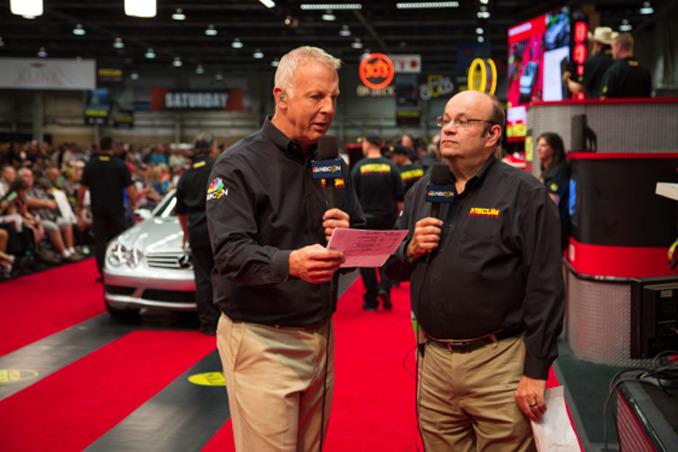
  • 01:05:09 Final Thoughts and Farewell

Bonus Content

There's more to this story!

Be sure to check out the behind the scenes for this episode, filled with extras, bloopers, and other great moments not found in the final version. Become a Break/Fix VIP today by joining our Patreon.

All of our BEHIND THE SCENES (BTS) Break/Fix episodes are raw and unedited, and expressly shared with the permission and consent of our guests.

Learn More

The American Federation of Motorcyclists (AFM)


For those looking to get involved in the sport, motorcycle racing offers a variety of opportunities to participate, from amateur races to professional circuits. With a wide range of classes and divisions, riders of all skill levels can find a place to compete and challenge themselves. So if you’re looking for a thrilling and adrenaline-fueled sport, consider motorcycle racing.

It’s a world of speed, excitement, and endless possibilities, and it’s waiting for you to join in on the action so be sure to check out organizations like the American Federation of Motorcyclists at www.afmracing.org, @afmsports on facebook, @afmracing on Instagram, and @raceafm on YouTube for more information. 

Whether you prefer road racing, motocross, or supercross, motorcycle racing has something for everyone. Motorcycle racing is an exhilarating sport that offers a thrilling experience for both riders and spectators alike. With high-speeds, tight corners, and intense battles for position, it’s a sport that tests the limits of both man and machine. If you have questions, you can always reach out to Clive via LinkedIn. 

In his late 20s, Clive bought his first motorcycle – a Honda RC51 – and quickly found himself back at the track. “It was supposed to be a stress reliever,” he says, referencing his high-pressure job as a fire chief. But it became much more.

Motorcycle racing offered something different: a tighter community, a more visceral experience, and – surprisingly – a more affordable path. “With bikes, you can ride all day at the track and not need a team or a trailer full of spares,” Clive explains.

Photo courtesy Clive Savacool

Clive doesn’t sugarcoat the risks. “It’s definitely more dangerous than cars,” he admits. But with modern safety gear – airbag suits, medical crews on standby, and a deep respect for the craft – he’s found a balance between thrill and caution.

His approach to riding is all about smoothness. “You can’t be consistent if you’re always on the edge,” he says. That philosophy, instilled by his uncle and honed through years of karting and car racing, has made him a formidable competitor and a respected coach.

Photo courtesy Clive Savacool

Since 2008, Clive has been an instructor with the same track day organization that first taught him. He now helps riders of all levels – from first-timers to seasoned racers – find their flow on the track. “You don’t need a race-prepped bike,” he emphasizes. “Just bring your street bike, some safety gear, and a good attitude.”

Track days typically cost less than car HPDEs, and the barrier to entry is lower. “You can get a used R6 for a few grand and be out there dicing it up,” he says.

Photo courtesy Clive Savacool

Clive’s ridden everything from Suzuki SV650s to BMW S1000RRs, even racing a BMW at the legendary Pikes Peak Hill Climb. His current favorite? The Suzuki GSX-R750. “It’s the perfect balance of power and handling for someone my size,” he says.

He’s also a fan of the SV650 for beginners. “It’s like the Spec Miata of motorcycles – low horsepower, but the racing is amazing.”

  • Clive Savacool on Break/Fix Podcast
  • Clive Savacool on Break/Fix Podcast
  • Clive Savacool on Break/Fix Podcast
  • Clive Savacool on Break/Fix Podcast
  • Clive Savacool on Break/Fix Podcast
  • Clive Savacool on Break/Fix Podcast
  • Clive Savacool on Break/Fix Podcast
  • Clive Savacool on Break/Fix Podcast

Clive’s message is simple: if you ride a motorcycle, you owe it to yourself to try a track day. “It’s safer than the street, you’ll learn more in one day than in a year of riding, and the community is incredible.”

As a board member of the American Federation of Motorcyclists (AFM), Clive is also helping shape the future of club racing. From adding new classes like Indian and Harley twins to supporting women-only grids, he’s committed to making the sport more inclusive and accessible.

Whether you’re a lifelong rider or just motorcycle-curious, Clive Savacool’s story is a reminder that the track isn’t just for pros—it’s for anyone who wants to ride better, safer, and with a whole lot more joy. 🎧 Listen to the full episode on Break/Fix to hear Clive’s insights on braking zones, body positioning, and why motorcycles are the ultimate form of meditation.


This content has been brought to you in-part by sponsorship through...

Motoring Podcast Network

Rolex Monterey Historics – Car Week 2023

WeatherTech Laguna Seca Raceway is held in highest regard as one of the “driving nirvana” tracks in the United States and it was the perfect back drop to reignite the discussion around 911 v Corvette in Part-1 of this article over on Garage Style Magazine. However, it’s time to dig a little deeper into the weeks events at the Rolex Monterey Historics.

How does this all tie back to Monterey Car Week or even the famed Pebble Beach Concours d’Elegance?

The Pebble Beach Grand Prix (originally known as “The Pebble Beach Road Races”), were a series of legendary sports car races held in the picturesque coastal town of Pebble Beach, California, from 1950 to 1956. These races, were held on a challenging course that wound its way through the scenic Del Monte Forest and attracted some of the finest drivers and cars of the era, including legends like Phil Hill and Carroll Shelby. Initially run on public roads, the races eventually moved to Laguna Seca Raceway. Voila!

Though Car Week may have a disputed “kick-off or start date” the Monterey Historics have always run autonomously but concurrently with all the surrounding Car Week festivities. It’s the place where petrol-heads, like myself, flock to see “art in motion” rather than carefully parked on manicured golf courses, like this gorgeous Ferrari LeMans Prototype below.

The Monterey Historics span the majority of car week kicking off on Tuesday with Practice Sessions, followed by Qualifying and finally 2 full days of racing. All of this action leads up to and ends on Saturday before the Pebble Beach Concours d’Elegance just like in the 1950s. There’s something for every generation of vehicle and motorsports enthusiast.

Like most of the historic race tracks in the United States found on the major racing schedules, Laguna Seca has all the amenities you’d find at any world-class track. VIP lounges, eateries, vendor booths, clean facilities, ample parking and shuttle services, but more importantly… the ability to see every corner.

Some tracks might be easier than others to navigate between different sections and corners on foot, but Laguna won’t be on that list. Being built surrounding a dry lake bed, the natural terrain of the mountains in the area makes for a dusty uphill climb most everywhere you venture. But it’s worth it!

Part of Laguna Seca’s charm is the famed combination of corners (Turns 8 and 8A) better known as “The Corkscrew.” This section of the track is one of the most iconic and challenging turns in motorsports. It features a dramatic elevation change with a steep descent, dropping from the entry to the exit is approximately 59 feet (roughly 6 stories) over a very short distance, making it an extremely steep and challenging section of the track (as seen below).

This elevation change, combined with the sharp left-right combination of turns, creates a unique and thrilling experience for drivers as they navigate this famous part of the circuit.


2023 Rolex Monterey Historics – The Run Groups

There is so much to do and see at the Monterey Historics, you could spend time wandering the paddock talking with drivers about their stories, or learning more about their cars, and in some cases they probably wouldn’t mind if you lent a hand turning some wrenches.

The schedule of events for the historics is jam packed with 13 run groups featuring all eras and types of race cars. From the pre-war classics, to compacts like Mini Coopers & FIATs, and ground thumping Trans-Am cars or vintage Formula 1, it also includes other parades of vehicles and exhibitions.

If you’re an avid fan of racing, the HSR and SCCA have carefully curated the following classes of cars and racing for you to enjoy throughout the week.

  • Formula 5000
  • 1966-1985 Formula One – non-turbo
  • 1966-1974 Can-Am; 1963-1968 USRRC – V8 only
  • 1966-1972 Trans-Am
  • 1955-1969 Saloon cars
  • 1972-1981 FIA, IMSA, GT, GTX, AAGT, GTU, Trans Am
  • 1981-2007 GTP, Group C, DP, WSC, LMP & GT1 (GT1 through 2009)
  • 1955-1967 SCCA Production – Large Displacement
  • 1955-1967 SCCA Production – Small Displacement
  • 1927-1955 Grand Prix/Open wheel single seat racing cars
  • 1947-1960 Front-Engined Sports Racing and GT
  • 1981-1991 GTO/Trans-Am
  • 1961-1971 FIA Manufacturers Championship
  • Ragtime Racers exhibition

From this fabulous line-up of racing history we chose to focus on Groups 4, 6 and 13 as being a few of the ones that were “most important” because they resonated with our childhoods.

Group 4: Trans AM (1980-1991)

The 1980s Trans-Am series marked a resurgence in American muscle car racing. After the decline of the original Trans-Am era in the 1970s, the ’80s saw a revival, with iconic muscle cars like the Chevrolet Camaro, Ford Mustang, and Pontiac Firebird returning to the track.

Group 6: Vintage Formula 1 (1966-1985 non-Turbo)

Beginning with the introduction of the Ford-Cosworth DFV (Double Four Valve) V8 engine in 1967 along with aerodynamic advancements, including the introduction of wings and ground effects, these changes started to shape car design and racing. Drivers like Jackie Stewart, Emerson Fittipaldi, and Jochen Rindt emerged as stars. In the 1970s, Ferrari, with its 12-cylinder naturally aspirated engines, became a dominant force, winning multiple championships. The rivalry between Ferrari and McLaren added excitement to the sport, while Niki Lauda and James Hunt became iconic figures in this era.

Later in this period, ground effects technology, which used the underbody of the car to generate downforce, became prevalent. The Brabham team, led by Bernie Ecclestone and Gordon Murray, introduced innovations like the BT46B “fan car.” Drivers like Mario Andretti and Alan Jones achieved success during this period. The late 1980s saw the transition to turbocharged engines, marking the end of the naturally aspirated era in Formula One. Formula One’s history from 1966 to 1985 is rich with innovation, iconic cars, and legendary drivers, making it a pivotal chapter in the sport’s evolution.

Group 13: IMSA GTP, Group C & ALMS LMP-1

This combined class of cars is the most perfect pairing of racing super heroes. The GTP class emerged in the early 1980s, primarily in the United States, featuring purpose-built prototypes. Iconic cars like the Porsche 962, Jaguar XJR, and Nissan GTP ZX-Turbo dominating this era.

Group C was a widely recognized international sports car racing category, featuring prototypes. Le Mans 24 Hours was the centerpiece of the Group C calendar, with famous cars like the Porsche 956 and 962, Jaguar XJR-9, and Sauber Mercedes C9. The later LMP classes (LMP900, LMP675, LMP1, LMP2) are known for their participation in prestigious events like the Le Mans 24 Hours and American Le Mans Series. Cars like the Audi R8, Peugeot 908, and Toyota TS050 Hybrid dominated LMP in the late ’90s and early 2000s. Put ALL of that together and you get one of the wildest and most eclectic run groups to watch at the historics.

Thankfully, all 13 run groups are on track multiple times throughout the course of the week. The cars are on track for 25 minute sessions multiple times during the week, but rest assured there’s tons of racing action throughout, the track is very rarely quiet.

Celebrating 70 years of Corvette Racing

Harley J. Earl and the Le Sabre concept car left a lasting impression on the village of Watkins Glen which inspired the creation of the iconic Corvette as we learned from our friends at the IMRRC. Corvettes have been run in Grand Prix racing by privateers since the 1950s, while the modern factory-backed Corvette Racing team has raced since the introduction C5.R in 1998 to its most recent win at the 100th Anniversary LeMans 24-hours in France with the C8.R driven by Ben Keating, Nico Varrone and Nicky Catsburg.

This year, everyone is either talking about or celebrating Corvette’s 70th birthday and the Monterey Historics have joined the fray. Guests of Break/Fix like Bill Warner, were on-site to help usher in and parade various race and prototype Corvettes for this celebration as well. You can learn more about the history and significance of Corvette in another article we published, or jump back to Part-1 of this article on Garage Style Magazine for a discussion about the rivalry between Porsche and Corvette.

Car Spotting: Porsche 962 CR 

This has to be one of the coolest cars in the paddock. Predating the famed Porsche 911 GT1 Strassenversion, the 962 CR is a rare and highly sought-after sports car. The CR stands for “Customer Racing” and was not a racing car like the Porsche 962, which was a successful endurance racing prototype. Instead, the 962 CR was a road-legal, limited-production sports car with only 7 units being sold in the early 1990s.


Overall, the Pebble Beach Grand Prix played a significant role in the early development of sports car racing in the United States and is remembered as an iconic event in motorsports history and was always revered as the event that led up to the Pebble Beach Concours d’Elegance where the race cars were put on display after completing the Grand Prix.

The track’s challenging layout, including the famous Corkscrew, provides a thrilling backdrop for various racing series, including IndyCar and IMSA. The Grand Prix of Monterey is known for attracting top-tier racing talent and offering fans an unforgettable weekend of high-speed competition in the stunning natural setting of WeatherTech Laguna Seca Raceway. It continues to be a highlight on the motorsports calendar, showcasing the skill and speed of some of the world’s most elite drivers and teams.

Even though the original Pebble Beach Grand Prix was replaced with the “The Grand Prix of Monterey” in 1957 and moved to Laguna Seca, it has become a staple of American motorsports and its something we recommend everyone visiting the Monterey-area for Car Week should attend. #neverstoplearning.

Celebrating Porsche & Corvette at the Monterey Historics

There are so many automotive rivalries: Ford v Ferrari, Honda v Toyota, Chevy v Ford, and the list goes on and on. But all of them actually have one thing in common, everyone seems to be getting a little older. That includes both Porsche (1948) and Corvette (1953) who are celebrating their respective 75th and 70th birthdays this year. GSM’s editor-in-chief, Don, is quick to remind folks about one of our earliest conversations, which was a debate over whether or not the 911 or the Corvette was “thee” everyman’s sports car.
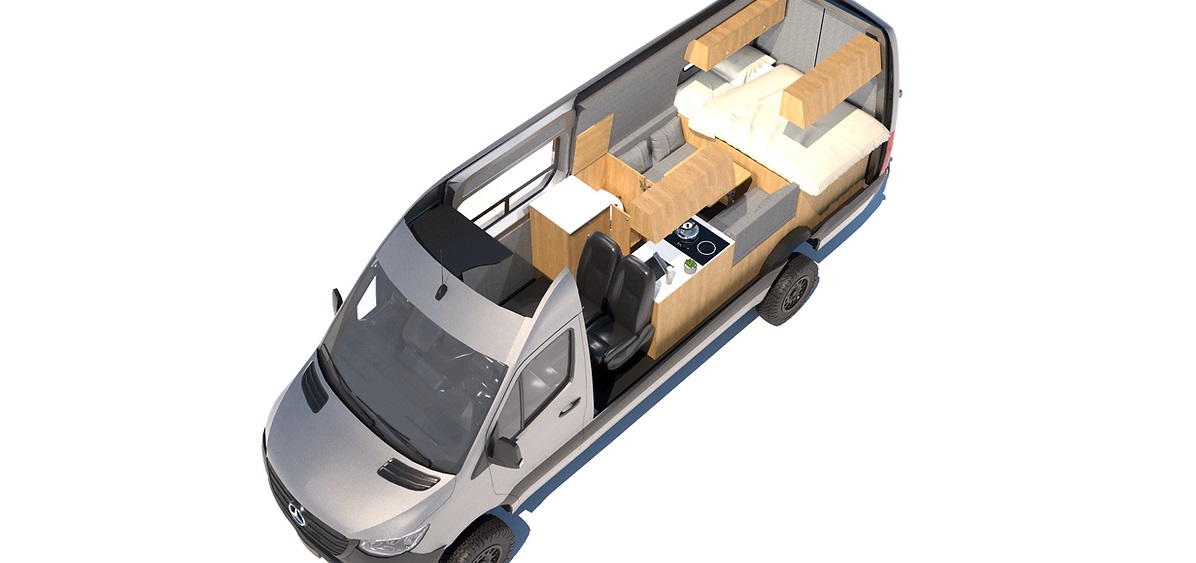
Like two kittens batting at a ball of yarn we carried on a healthy debate for was what probably far too long. But unlike a debate about Porsche 959 vs Ferrari F40 where you can side with either the space-aged technical superiority of the 959 or the raw passion and exhilaration of a race car in street clothes that is the F40, settling on 911 v Corvette is really hard to do. And that’s where we have to step away from the road and take it to the track to settle the score. For an in-depth review of all the events and action at the Rolex Monterey Historics at WeatherTech Laguna Seca Raceway jump over to this follow-on article.

Taking this fight to the race track can get a little tricky. Porsche is renowned for its racing heritage, let’s face it, they’re an engineering company that starting building race cars before their production vehicles ever hit the road. Corvette on the other hand, and many might not know, was ALSO born at the race track. As Kip Zeiter from the International Motor Racing Research Center (IMRRC) recounts in this special Break/Fix episode, the original Corvette design by Harley J. Earl took it’s inspiration from the early US Grand Prix’s at Watkins Glen.

Speaking of the IMRRC, we could also take this to the record books – which they carefully maintain – citing who was the most wins here, and the most wins there. Motorsports history is definitely important in this discussion but you also have to take into account that racing in the 1960s, ’70s, and ’80s was very different than today. Not just from a technological standpoint but from a regulatory perspective, the “rules of racing” have changed. These days cars are more equal and homogenized compared to the golden age of sports car racing, where building not just a better but, the best, mouse trap was the name of the game.

You could also make the argument that “Porsche has had so many *different* models in competition…” but so has Corvette. Most of the racing Porsches are either derivatives of, evolutions from, or variations on a theme. But Corvette has also shown that it can compete in GT, Concept, and Prototype classes with their cars as Kip mentioned in his presentation.

It’s funny when you sit back and look at this entire argument from 19,000 feet, you begin to wonder if it’s really even a rivalry at all. It’s more like a little brother trying to keep up with its older sibling. Porsche is the kid that got everything, and Corvette though a little resentful, looks up to Porsche and wants to be Porsche. That’s what has made both brands better, but also kept them from creating some sort of facsimile of each other and abandoning hope for the adage “if you can’t beat them join them.”

This year also marked another huge birthday in the Motorsports community, which was the 100th Anniversary of the 24 hours of LeMans, where Corvette took home the win with US-based driver Ben Keating at the wheel, along with teammates Nico Varrone and Nicky Catsburg. In celebration let’s also take a moment to applaud Corvette for their tenacity, a very American trait that is exemplified in their cars. It’s that “stick-tuitive-ness” that pushed GM to finally put together a mid-engined Corvette (the C8), which was able to prove itself from day one, as not only a contender, but a winner. To learn more (or continue) the discussion surrounding the future of Corvette Racing be sure to check out the ACO (Automobile Club d’Ouest) and it’s new USA based offerings and facebook group.

WeatherTech Laguna Seca Raceway is held in highest regard as one of the “driving nirvana” tracks in the US and it was the perfect back drop to reignite the discussion around 911 v Corvette. Hearing and seeing these beautiful pieces of machinery in action, brought back great stories of the golden age of sports car racing, memories of drivers, along with the successes and failures that included a smattering of fact finding. All that aside, it also brought us together to experience the camaraderie that Motorsports brings to the car community. Surrounded by all the other events going on during Monterey Car Week, the Laguna Seca experience takes art, and puts in in motion.

So where does all this leave us? Almost exactly where we started. From aesthetics to driving style, the sound of engines to the vehicle’s amenities, either car can be, and is, the ultimate B-road bomber, the car show heart-stopper, or track day weapon. There is no wrong answer, just personal preferences. In the end, you can’t go wrong with either the 911 or the Corvette.

Tune in everywhere you stream, download or listen!

Listen on Apple
Listen on YouTube
Listen on Spotify

We’d love to hear your thoughts on this never-ending debate, so leave a comment below and express your vote for your favorite of the two… or is there a third option out there? We’ll leave that up to you. Meanwhile, Happy Birthday to both Porsche & Corvette – celebrating milestones this year – Here’s to 70+ more!

Tune in everywhere you stream, download or listen!

Listen on Apple
Listen on YouTube
Listen on Spotify

Behind the Scenes at MECUM Monterey (The Daytime Auction)

Mecum Auctions, the world’s largest collector car auction company, offered 600 consignments at its annual Daytime Auction at the Hyatt Regency Hotel and Spa on Del Monte Golf Course.

Tune in everywhere you stream, download or listen!

Listen on Apple
Listen on YouTube
Listen on Spotify

Vehicles ranged from pre-war classics and vintage muscle cars to luxury and high-end exotics, modern supercars, along with approximately 100 vintage and antique motorcycles. We also went behind the scenes with “The Voice of MECUM” John Kraman for a “Behind the Auction Tour” – READ MORE.

Some stories are just too good for the main episode… Check out this Behind the Scenes Pit Stop Minisode!

Tune in everywhere you stream, download or listen!

Listen on Apple
Listen on YouTube
Listen on Spotify

Behind the Scenes at Broad Arrow’s RADIUS

0

When we arrived to the welcome area by way of chauffeurs with golf carts, stepping off onto the carpeted area, Don says “this is just like being back in Hollywood, when I was at Paramount.” We immediately knew there was going to be something different about this event.

Sliding into our most natural roles of Valet, Key Grip and Producer we took the off moment and felt it was appropriate to pose for our film credits.

The behind-the-scenes magic unfolded as car detailers, mechanics and caretakers meticulously maintained all of our “actors,” converting them into characters that will soon grace the silver screen by passing in front of a crowd of 500 or more bidders via black half moon in the main hall.

The team at Broad Arrow did a wonderful job utilizing the Jet Center’s buildings and planes to create the illusion of being behind the scenes of one of your favorite cop dramas or spy movies of the time. All of the prompts and arrangements made you feel as if you were amidst the backdrop of iconic soundstages and vintage architecture. And with so many people in attendance previewing vehicles on sale this week, the facility was brimming with energy, anticipation, and beautiful cars.

Skilled technicians orchestrated intricate lighting setups which allowed for interesting camera angles to capture every nuance of the unfolding Radius story.

Classic advertising puns and jokes were being thrown around like SAAB’s “Born from Jets” slogan or Porsche comparing the 924-turbo to a fighter jet in one of it’s ads, to Ridley Scott’s Nissan 300ZX-Turbo super bowl commercial “…and, then, the… turbo! kicked, in!…” as the driver is chased by a fighter plane as we continued to tour the Monterey Airport “Jet Center.”

The addition of a VIP Lounge at Broad Arrow Radius events is new and the word on the street is that it might evolve into a “club” specifically for auction goers with additional perks much like existing “drivers club” available today from Hagerty.

Beyond the glitz and glamour that the digital silver screen projects, the backstage of Radius pulses with an intoxicating blend of passion and pressure. As bidders roam through and investigate each vehicle, the air becomes thick with anticipation around entries like the Ferrari 280 GTO and F50 up on the mainstage.

And what movie set wouldn’t be complete without an audition from this James Bond classic, a 1964 Aston Martin DB5.

Backstage on the set of Radius, one is privy to the visceral pulse of artistic ambition, a realm where legends are made, sacrifices are rendered, and the very essence of storytelling is captured in each breathless moment of this event. We wish all of the bidders the best of luck, and congratulations to the new custodians for each of these vehicles.

Broad Arrow’s Radius is a fresh take on luxury auctioneering, with nearly $70 million dollars of cars on-site and available for purchase, spanning the turn-of-the-century brass era classics, through the height of the dolce vita, and onto the modern supercars there’s something here for everyone.