
spot_img
Home Blog Page 28

The Tour d’Elegance

0

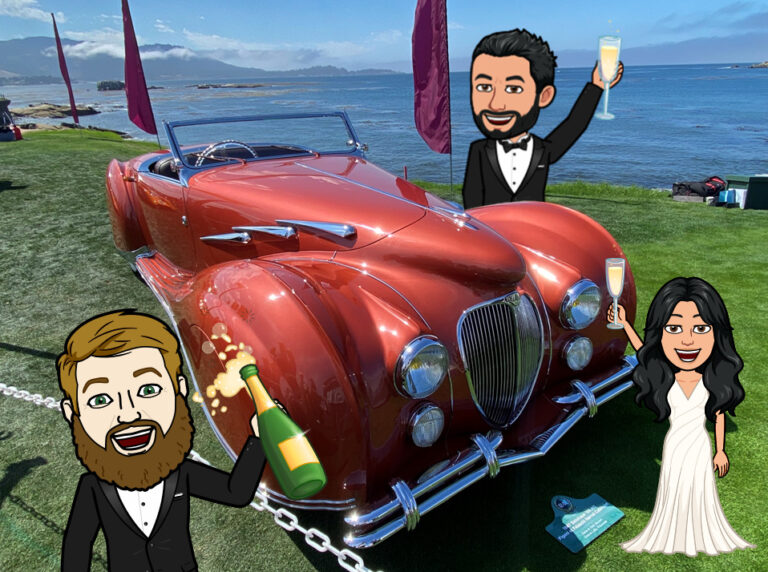
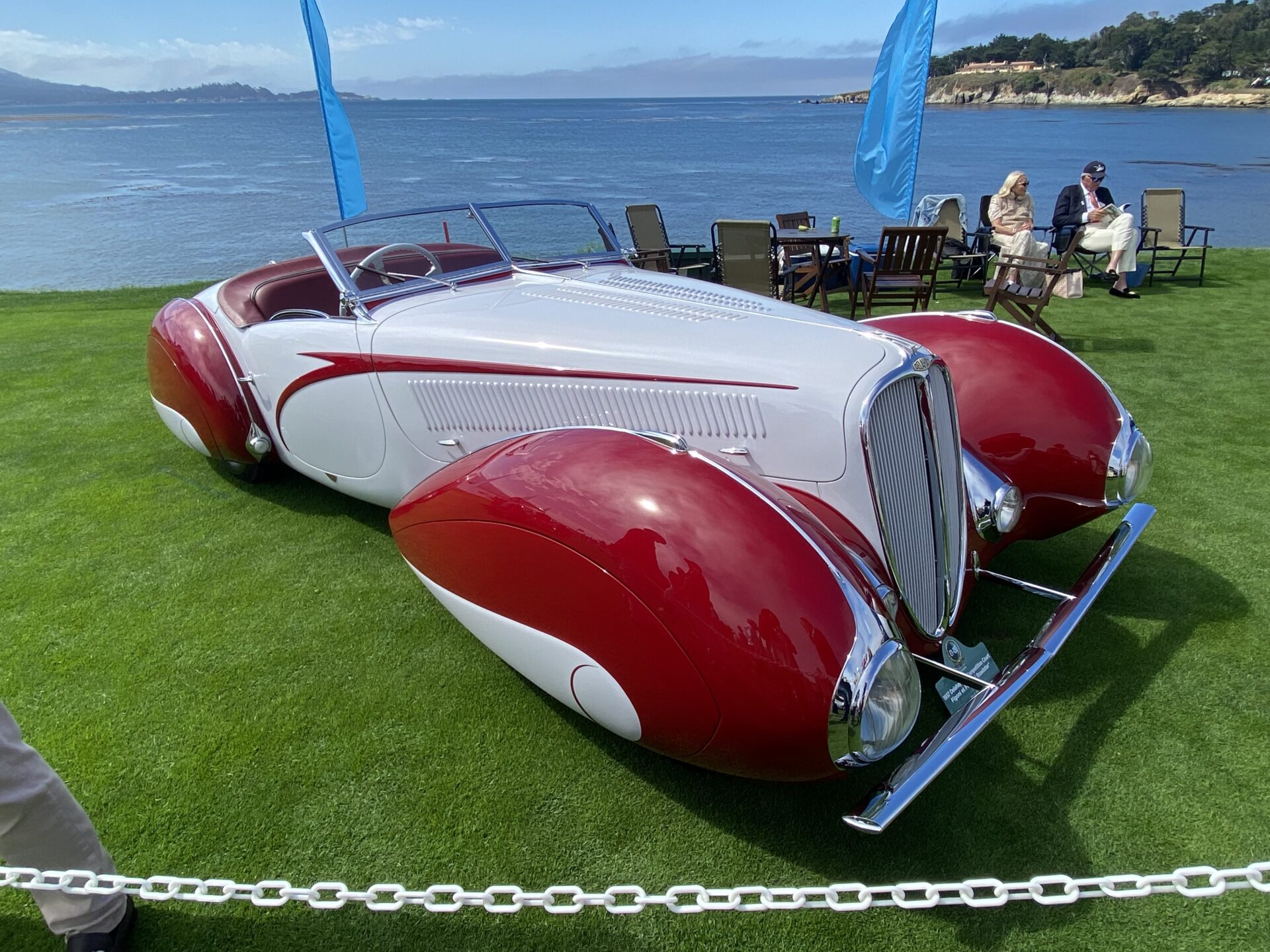
The Pebble Beach Tour d’Elegance is an annual driving event that delights entrants and spectators alike. The tour features more than 150 concours entrants seeking to prove they are roadworthy and gain an advantage in the Concours d’Elegance as they trace a scenic route on Highway One.

The traditional tour traces portions of the original 17-Mile Drive, Highway One to Big Sur, and then returns to Pebble Beach to cross the finish line. A car that successfully completes the tour gets the nod – denoted by a green ribbon on the windshield – if it later ties in class competition at the Pebble Beach Concours d’Elegance.

Classic Motorsports Magazine: Pacific Grove Car Show

0

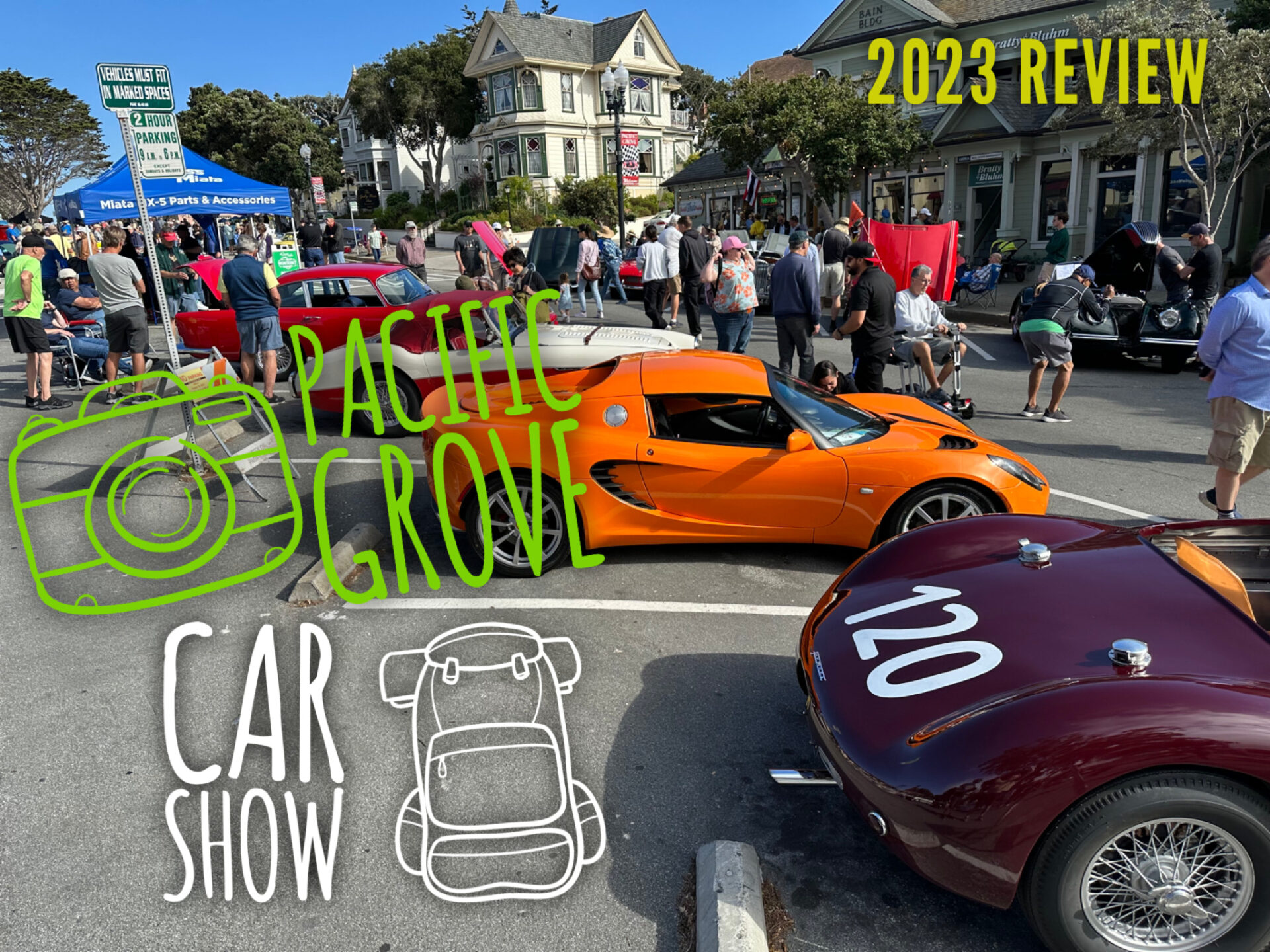
Featuring over 60 classic sports cars and vintage vehicles in beautiful Pacific Grove, this is the Car Week “kick-off event” brought to you by the staff of Classic Motorsports Magazine.

Bring your cool classic or exotic car and enjoy the evening with good people and award-winning restaurants.

After a long day of car-spotting in Pacific Grove, be sure to stop by International Cuisine (620 Lighthouse Ave # 220, Pacific Grove, CA 93950) and rest your feet for some delicious Mediterranean cuisine including: Italian, Greek, Persian and Lebanese delights. Tell Ferris we sent you! – READ MORE.


Preserving the Pulse of Motorsports: IMRRC at 25 Years

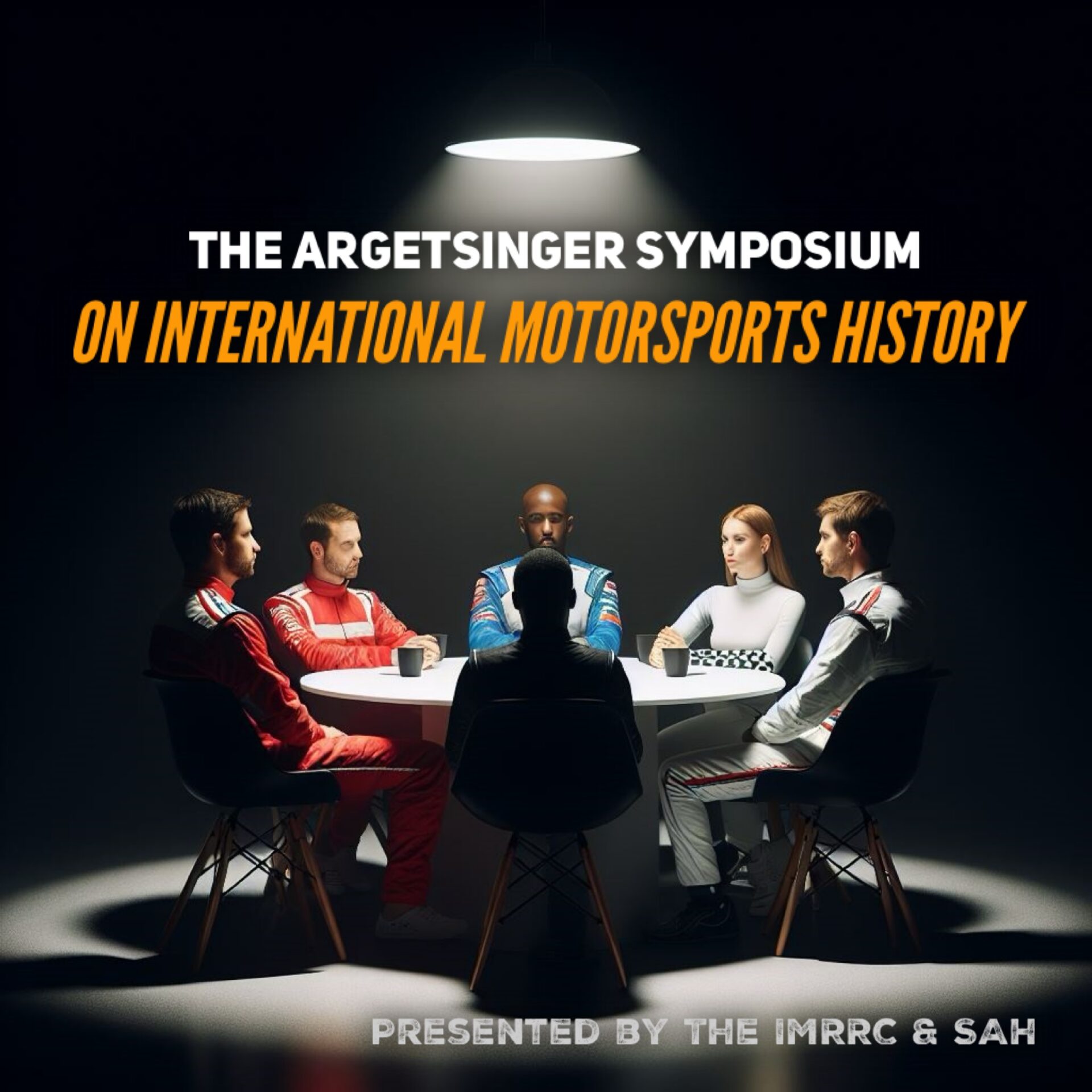
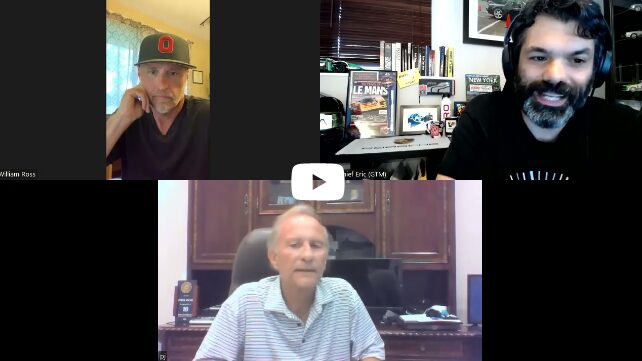
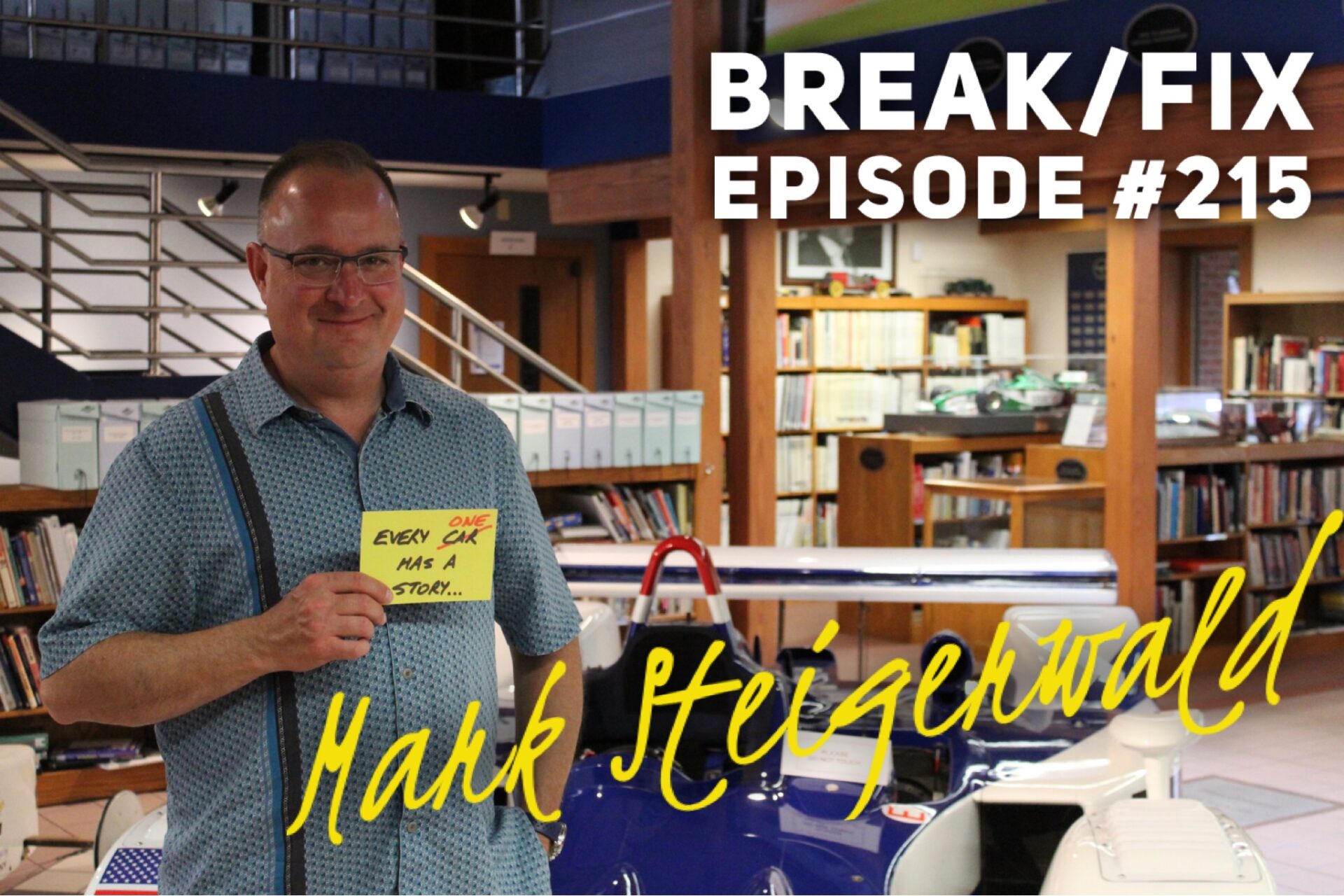
For a quarter century, the International Motor Racing Research Center (IMRRC) has stood as a beacon for motorsports history, nestled in the heart of Watkins Glen, New York. From dusty archives to digital databases, the Center has evolved into a global hub for researchers, fans, and storytellers alike. In a recent episode of the Break/Fix podcast, host Crew Chief Eric sat down with IMRRC Director Mark Steigerwald to reflect on the Center’s journey, its impact, and what lies ahead.

Mark’s story with the IMRRC began serendipitously in the late 1990s while he was pursuing a master’s in library and information science at Syracuse University. A motorsports enthusiast at heart, he heard about a new library opening in Watkins Glen and knocked on the door. What he found was a pile of boxes, an Allard J2, and the spark of something extraordinary.

That three-month internship turned into an eight-year tenure, during which Mark helped transform the Center from a fledgling archive into a professional research institution. “Motorsport as a legitimate field of scholarship made sense to me,” he shared. “And fortunately, it wasn’t a hard sell.”

Tune in everywhere you stream, download or listen!

Listen on Apple
Listen on YouTube
Listen on Spotify

After his initial tenure, Mark left to work in fundraising at Cornell University and later at the California Automobile Museum. But the IMRRC called him back, and he returned as director with fresh ideas and renewed passion. “The mission stayed intact, but the level of professionalism had certainly gone up,” he noted.

Spotlight

Synopsis

The Break/Fix podcast episode showcases the 25th anniversary of the International Motor Racing Research Center (IMRRC) at Watkins Glen, capturing its rich history and contributions to motorsport culture. The center’s director, Mark Steigerwald, shares his journey from intern to director, emphasizing the IMRRC’s role in preserving racing history through extensive archives and research facilities. The episode also explores the center’s collaborations, fundraising efforts, and future plans for expansion. Special features of the IMRRC, including the annual raffle, center conversations, and international symposium, are highlighted. The 25th anniversary celebration aligns with the 75th anniversary of Watkins Glen’s first Grand Prix and incorporates reflections on notable racing events and figures. The discussion underscores the center’s importance for racing enthusiasts, historians, and the motorsport community at large.

  • Let’s introduce the listeners out there to Mark, the petrol-head. Tell us about your automotive and motorsports enthusiast past. How did you get involved in all this?
  • The effect of COVID on the center – let’s remind people of what was, and what’s coming back: Center Conversations? Relationship with the SAH? The “new and improved” symposium
  • This is a big year for motorsports too, 100th Anniversary of LeMans – thoughts?
  • What does the next 25 years look like for the center? Future plans, anything you can share? Teasers for Symposium ‘23? 

Transcript

Crew Chief Brad: [00:00:00] BreakFix podcast is all about capturing the living history of people from all over the autosphere, from wrench turners and racers to artists, authors, designers, and everything in between. Our goal is to inspire a new generation of petrolheads that wonder, how did they get that job? Or become that person.

The road to success is paved by all of us, because everyone has a story.

Crew Chief Eric: The International Motor Racing Research Center, or IMRRC for short, collects, shares, and preserves the history of motorsports, spanning continents, eras, and race series. The Watkins Glen based IMRRC’s collection embodies the speed, drama, and camaraderie of amateur as well as professional motor racing throughout the world.

For 25 years, the Center has welcomed serious researchers and the casual fans alike to share stories of race drivers, race series, and race [00:01:00] cars captured on their shelves and walls. We were very fortunate to speak with the IMRRC during our first season of Break Fix, where Kip and Rick shared all sorts of stories about the Glenn, and we’ve been working with them closely over the last three years.

But this time, we want to welcome IMRRC Director Mark Steigerwald to celebrate the Center’s 25th Anniversary with us. So welcome to the show, Mark. Thanks, Eric.

Mark Steigerwald: Glad to be here.

Crew Chief Eric: So before we dive into the center on a whole new level in the last 25 years, retrospective and what’s coming, let’s introduce our listeners to you, Mark, the petrol head.

Tell us about your automotive and motorsports enthusiast past. How did you get involved in all this?

Mark Steigerwald: Well, I guess it depends on how far I want to go back. When I was in graduate school at Syracuse University, I was pursuing a master’s in library and information science. And it was sort of an interesting period.

It was the late 90s. Technology was really booming. All of my colleagues, my professors, encouraged me to get into some sort of Areas such as, uh, over corporate libraries or other [00:02:00] information science areas. And I needed an internship and I was at the track, like any true motorsport enthusiast that was within driving distance of Watkins Lennon International.

And I heard over the PA system that a library was opening in Watkins Lennon. I thought, well, how fortuitous I have to investigate that. So I knocked on the door of the public library. The IMRRC is essentially a wing to the public library in Watkins Glen. And I inquired about an internship, talked to the director at the time.

And she said, well, certainly, however, we’re just getting set up. She took me next door and there was a pile of cardboard boxes and what became the director’s office and an Allard J2 on the floor and not much else. Gradually over time, I met the incoming director of the research center. He agreed to take me under his wing.

We formed an internship program for me. Fortunately, I never left. I plan on staying for a three month internship and I stayed for eight years. During that period, we had a lot of challenges, but we had a lot of growth and we had a lot of support from a very interested community. [00:03:00] Many of them race fans, but there were also academics that elevated motorsport history in a way that I always hoped from the beginning.

Motorsport as a legitimate study for scholarship really made sense to me. And fortunately, it wasn’t really a hard selling point. 25 years later, we’re still helping authors with books. We’re helping the curious of all age groups and just a casual browser, as well as. Before I mentioned author, even a few filmmakers out there too.

So it was great to find work for that initial eight years

Crew Chief Eric: during that eight year period, you actually evolved from intern to director at some point. So take us on that journey. How did that happen?

Mark Steigerwald: Our core collection was our library. So library migrated in a smaller form from the public library and it grew by leaps and bounds.

So we accepted donations of. Motorsport and general automotive books, and we quickly filled our shelves. So my degree was sort of a natural fit there. Meanwhile, we were starting to acquire manuscript materials, personal papers, diaries, [00:04:00] photo collections, film collections, all sorts of materials that document.

Motorsport that you would expect. I think what we didn’t expect was a sheer volume of material that came as well as the quality too. So all this material had to be cataloged, had to be organized. We had a very small staff, a couple of volunteers and myself, as well as the director at the time. Our services grew as did our complexity and our professionalism.

As I mentioned, always a challenge, but always enjoyable. And we had great community support, both local support, as well as motorsport community in general. We have built in events around the motorsport calendar for walking with an international. So we would get a great influx of people walking through the doors on race weekends.

They always wanted to see what car we had on display or to make a donation or just to catch up. We’ve always had that support since pretty much since day one.

Crew Chief Eric: So when did the archival part come into play? How did the partnership with SCCA form?

Mark Steigerwald: Well, that was after I had initially left. That was a great partnership and a great shot in the arm for the IMRRC [00:05:00] from the standpoint of an endorsement from a sanctioning body.

We are the caretaker of the SCCA archives. Most organizations, even some corporate entities, they don’t necessarily have the resources to manage their own archive. It takes someone special to have an eye and an understanding of how important an archive is to any organization. And the SCCA Foundation had that connection in mind with us.

It was sort of a natural progression. We have a display case in the center that recognizes SCCA accomplishments. That was perhaps the genesis of that idea, but we’ve always had close relationships with the SCCA project. Now that I essentially adopted a year or so ago, managed by our head archivist, Jenny Ambrose.

It is really a fairly large undertaking. We’re certainly up to the challenge. It’s a lot of material. I believe, according to our research assistants, we are up to the letter C in the alphabet going through driver’s files. And that’s, I believe, 40 record boxes just from A to C so far. Massive amount of material in a collection that’s actually getting used quite regularly.

[00:06:00] I believe about 50 percent of our research inquiries are centered around that material currently, so it’s gratifying all the way around. And the Foundation is, as I said, a great partner in this and a supporter of the program.

Crew Chief Eric: Absolutely. And we’ve leveraged the center as well ourselves for researching guests on our show, especially for things like the golden era of sports car racing, where I’ve called up and said, Hey, do you have a profile on so and so?

And it’s not necessarily all SCCA material. This was Camel GT M sub depending on what you’re looking for. To your point, if you’re writing a book or putting a movie together in our case, putting together podcast episodes, interviewing these drivers, it’s a wealth of information. And it came super fast too.

I was surprised by the turnaround time. So I can’t say enough good things about. Quality of the material we’re getting back and just the ability to be able to access it. I don’t think you can get it pretty much anywhere else.

Mark Steigerwald: I’m glad to hear that. We hope to leverage this success with other sanctioning bodies in the future.

So yeah, a great success story for us.

Crew Chief Eric: Continuing with your journey, you hinted a little bit that you haven’t always been at the center. So [00:07:00] you left. And then came back. So what did you do and what brought you back?

Mark Steigerwald: Well, I did make a career change. I was married at the time and I went to work for Cornell university.

What is referred to as a frontline fundraiser, raising money, working with alumni, really gratifying work, very interesting. And I think even from the beginning, the wheels were turning in my head. That some of the concepts I was learning and appreciating the fundraising front could work for some sort of endeavor, such as the IMRRC.

I did spend a couple of years briefly at the California Automobile Museum in Sacramento. And that was sort of the litmus test for this. As everyone says, then COVID hit. So sort of sidelined some plans there. During that period, I did find out about the IMRRC’s seeking a director. Once again, I applied.

Gratefully, I was chosen for the position. A lot had changed in over the years. The mission had stayed intact, but the level of professionalism had certainly gone up. And I was pleased and proud and glad to be back. Initial eight years I was there at the center was a formative period for our [00:08:00] collections.

A lot of relationships were really established back during that time, but are still in place currently. Meanwhile, collections have grown, awareness has grown among the Motorsport community. So we hope to just continue that upward trend. So

Crew Chief Eric: you talked about building relationships. There’s a special one within the halls of the IMRRC.

I know you’re very close with the Artsinger family. So do you want to talk about your relationship with Michael and Duke and the rest?

Mark Steigerwald: Yes. So back when I had begun, I was fortunate to meet Gene Argesinger, who was one of the key players in the formation of the IMRRC. Gene was a proponent of the public library and the collection as well as racing by virtue of her relationship with her husband, Cameron, the founder of post World War II road racing in America.

But libraries were Gene’s thing. And Gene, in addition to John Saunders, had this idea to acknowledge racing’s history, uh, this is back in 1998 anniversary, in an innovative way, not merely just a museum, but an archive in the library that focused on motorsport. It was through [00:09:00] many conversations I had with Jean at the time.

She really encouraged me to sort of run wild, in a sense, with the concept of the IMRRC, apply professionalism, apply whatever cutting edge, state of the art procedures were going on in library science at the time, such as digitization, scanning of photos, and cataloging our books. Certainly glad to do the work and work with Jean and then I gradually met most of the Argettsinger family and Cameron also served as our chairman at the time for a short time too towards the end of my initial eight years.

Without the Argettsinger family, I think that was a sort of a bonding force for me to stay as long as I did. Michael specifically was essentially our chief marketing officer, great supporter of the center. He also had his day job, but then as he became an author, he was always fortunate to work on his book projects with him, working on images, occasionally editing.

It was always enjoyable working with him as well.

Crew Chief Eric: What’s really special about the Argettsinger family, and you kind of hinted to it, was talking about the 50th [00:10:00] anniversary of Watkins Glen in 1998. They’re one of the founding families of sports car racing in the United States because it’s centered Grounded and born there in Watkins Glen.

We talked about that on the original episode with Kip and Rick. Watkins Glen is a special place and the IMRC is just a part of that whole story. So it’s pretty incredible.

Mark Steigerwald: Oh, no, exactly. A famous family and deceit within Watkins Glen, post war road racing on the streets, on public roads. An interim circuit, and then the current circuit location.

And then the series, we had NASCAR early on 65. And then again, obviously in 88 and then current times and form the one for a spell. Pretty much it’s a who’s who of racing for several decades. And that legacy continues.

Crew Chief Eric: A lot of things changed during COVID. And you mentioned that things changed. Let’s remind people of what was and what’s coming back and how COVID changed the way the center is doing business today and what’s transpired over the last three years since that all took off.

Mark Steigerwald: [00:11:00] Attending a lot more Zoom meetings, certainly even at the board level, so that’s not going away anytime soon. Our board is scattered around the country anyway. The work. Sort of continues. I mean, if you think about research services, we’ve always provided research services essentially worldwide by virtual of our service model.

That’s remote. You know, we, we did have to shutter some of our programming. Our center conversations will come back stronger and 23 for certain certainly on the fundraising side. The model changed somewhat. The various government programs, the PPP program that was in place certainly helped us out as well, too.

And then going forward, I think people are so anxious to do things in person. And then, you know, we’ve gradually, our numbers have gone up since COVID as we’ve opened our doors and we’ve seen an influx of people traveling and seeking the center as a destination.

Crew Chief Eric: So you mentioned the center conversations, a lot of people that are familiar with the center know exactly what that is, but for those that don’t, what are those about and what do they look like in 23?

Mark Steigerwald: The center conversations were born out of a desire to [00:12:00] showcase some of the figures in motorsport that have been influential over the years, they’ve been local and they’ve been. National or international. And we’ve been fortunate to have some great speakers. We had off the top of my head, I can remember Dr.

Fred Simeone, for example, I can remember Lynn St. James, so many others. And then our, our local drivers, for example, and we focused on several different aspects of racing history. So from the business side, from the driver standpoint, from the crew chief standpoint, these are all archived at the center currently, these are always free of charge.

Occasionally we had freshmen’s for example, and our crowds would vary in size. You were up and close. And personal with a motorsport personality and intimate way that it’s rarely encountered, you know, now it’s podcast, but you know, this series continues. We’re launching a schedule and I believe we’ve got four speakers set up for 2023 hour, but we’ll probably backfill with additional speakers as well.

Crew Chief Eric: And then there is the symposium, the big one. It’s sort of like put all the conversations together in one [00:13:00] three day event. Let’s talk about. The symposium new and improved starting in 22 going forward. What’s the symposium all about? Why should people come out and check it out and how is it going to grow next year and beyond?

Mark Steigerwald: This was my first go around last November. And as you know, you played an integral part in our success and our growth. last November. So the symposium is an international gathering of speakers and participants as well, too. Again, free and open to the public on a number of motorsport topics. So this elevates the center conversations to the true scholarly level.

We had some great subject matter last year, wonderful topics, a range that would appeal to any motorsport enthusiast and an opportunity for Q and A from an audience. And this year, even live streaming, we hope to continue that again this year, I’m sure we’ll have another great slate of speakers as well as growing our audience.

We have a partner in all of this, and that’s the Society of Audubon Historians. Without them, we could not do what we do. The SAH has a… [00:14:00] Long and storied history of pulling together similar types of symposia across the country. So we have a great partner in the SAH and now the GTM we’re doing great as well too.

So again, we’ve elevated our Senate conversations to a scholarly level. And Motorsport deserves no end of topics from 30s era racing, any sort of pre war topic that you can think of all the way up through current e racing.

Crew Chief Eric: That’s right. And I’m glad you brought up the SAH. I’m a member of the Society of Automotive Historians myself.

I’ve been working with them, you know, since the symposium, we got some ideas brewing and things like that. And obviously we have our co branded Co sponsored content by both the IMRC and the SAH that we’re replaying through break fix throughout the year. So if you weren’t at the symposium, you didn’t see the YouTube or the Twitch live stream, you can actually catch these as episodes throughout the year, continuing into next year.

So thank you. Fantastic stuff. And I look forward to, you know, continuing to work with you guys on this because it’s not only the living history, but it’s also the past. There’s a lot of things in subjects and topics that people [00:15:00] are interested in that there’s this wealth of knowledge out there and it’s getting it in front of people that’s really, really important.

I’m glad you are able to facilitate this through the symposium and the center conversations.

Mark Steigerwald: Oh, exactly. And we’re able to capitalize on current topics too. I mean, women in motor sports has been fairly common topic in some sense over the past few years, but I think we’ve just scratched the surface of some of the pioneers, especially pre war more and more of these stories and these, these women are coming to the forefront.

In terms of their exploits. So it’s really gratifying to see this level of scholarship applied to that subject specifically,

Crew Chief Eric: since you brought a lot of fundraising techniques back to the IMRC during your hiatus, let’s talk about the annual raffle. How does that work? Why is it important? How do you guys select the car that you’re raffling off?

Maybe what’s the next pick? If you can reveal that little spoiler.

Mark Steigerwald: As a 501 C 3, we essentially raise all of our own operational funding. The core of that is a, an annual membership campaign. We’re very fortunate this year. We will have Brian Redmond as our sponsorship chair. We always choose a [00:16:00] sponsorship chair that helps to sort of spread the message to a group indicating how important it is for our work to continue and how it can.

continues with the support of fans like them. We have a great campaign at the beginning of the year that helps to launch a theme for us throughout the year. This year, it’s our anniversary. So, you know, we’re fortunate to have that sort of hook and complimenting our membership is our sweepstakes. That’s something that began as, as a raffle car, straight up raffle, a sweepstakes model is slightly different, wherein there’s really no limit.

Um, so called ticket sales, uh, we’ve had a C8 Corvette for the past two years, quite successful this year, quite certain of what we’ll have in a launch shortly. Again, uh, an important component for our fundraising. And again, C8 Corvettes have been very popular for us and we’ve had other cars in the past.

We’ve had vintage Porsches and Ferraris. So, uh, always something interesting that gets our audience’s attention.

Crew Chief Eric: Let’s talk about the 25th anniversary celebration. What have you got in mind? Is it going to be a big party? You got something [00:17:00] locked down?

Mark Steigerwald: Well, officially we will have a party that we’re still playing the elements together for September 28th.

We’re choosing that date because it’s a Saturday. It’ll be the spiritual anniversary for the very first Grand Prix in 1948. For Watkins Glen that also dovetails with the 75th anniversary of racing into Watkins Glen. That’s our somewhat arbitrary date to celebrate, but throughout the year, we will pick other opportunities to promote our own history.

We’ve had several of our fans and supporters come forward congratulating us on 25 years already, so we’re grateful for that and some are being extra generous with their annual membership. So we, we certainly appreciate that.

Crew Chief Eric: If you’re interested in going to the 25th anniversary celebration of the IMRRC, look no further than racingarchives.

org. All the details should be up on the website shortly. But this is also a big year for motorsports too. I don’t want to eclipse your celebration or the 75th of the Glen, but it is the 100th anniversary of the first running of Le Mans. So any [00:18:00] thoughts on that, Mark, as a sports car fan?

Mark Steigerwald: From a personal standpoint, Lama is an incredibly important event and certainly from the manufacturer standpoint, but it’s world renowned.

It’s the race that everyone thinks about. It was immortalized in a movie starring Steve McQueen. It’s featured in Michael Kaiser’s movie Speed Merchants. I’m dating myself somewhat, but then, um, as Lama has evolved, It still has never lost any of its luster. I mean, there was during the fifties, there was a tragedy.

Unfortunately, that could have really stymied the motor sport development, but it did not. Lamar is the great international road race for certain. So certainly we will have exhibits and displays at the center celebrating Lamar’s history.

Crew Chief Eric: Any allegiances, any loyalties that you’d like to share? Do you have a brand that you’re rooting for?

Mark Steigerwald: I shouldn’t show bias, but I’ve always been a Porsche fan for various reasons. It’s easy to say that, but it depends on where your history comes from. For me personally, it was an experience with a 356 Porsche. My father wasn’t really that mechanically inclined. He worked on his own [00:19:00] cars, but the one car he thought he would want to turn a wrench on if he could, would have been a 356.

So that sort of stuck with me. And then, um, I’ve never owned a Porsche. Driven several 911s and a 928. So the mystique has always been there and it continues to this day, for sure.

Crew Chief Eric: So thoughts on the 963, the new LMDH prototype?

Mark Steigerwald: Gorgeous car, technologically advanced, of course. I certainly would wish Porsche luck.

You know, competition is stiff these days too, and technology evolves ever quicker. So what a gorgeous machine, no doubt about it.

Crew Chief Eric: So since we’re talking about Porsche and you’re a racing fan, what do you think about them potentially, allegedly making a jump into Formula One?

Mark Steigerwald: I’m glad you asked. I personally would like to see it.

Formula One is really enjoying a crest of popularity right now. I, for one, don’t want to see it dissipate in any way. And I think Porsche can really mix up the field. I think it would be terrific.

Crew Chief Eric: 25 years. In the bag, what does the next 25 years look like for the center? Do you have any future plans, [00:20:00] anything you can share, some teasers maybe?

Mark Steigerwald: The center has certainly been growing by leaps and bounds. Probably not unknown that we’ve always been a little pressed for space. We always have a significant racing car on display, and the library is sort of gradually grown. Anybody who sort of stops in semi annually over the past Few years of seeing that about the collections themselves, film and photo, as well as a periodical collection, which is, I believe over 10, 000 volumes at this point continues to grow.

So we are in need of additional space. So we’re looking at options, but we have purchased property on Franklin street, the main street in black and spline at the North end. It gives us a pretty good footprint. And we are currently working with an architectural firm around expansion plans. So there’s an awful lot of work that needs to be done beforehand, the overall building design, the functions that it will contain, a lot of work that needs to be done, but we have an opportunity to expand in our anniversary year.

Motorsport deserves it. So we want to take [00:21:00] that. Leadership role on like we’ve done with the SCCA and push forward. We used to say when we first started 25 years ago or so for the first few years, so many of our donations were about people cleaning up closets and basements and attics that still goes on.

But as we’ve expanded and as we’ve honed in on. Primary resource materials, a lot of that material is out there now, and it’s still somewhat within a, say, a musty corporate archive. It’s not being utilized. We offer that management option of professionally archiving and making resource material available for researchers could be as simple as a copy of the photo.

But it could be more in depth since I’ve been back over the past year. I’ve touched base with a couple of authors, but I recall helping 15, 20 years ago that are still at it, writing authoritative books on motorsport. We’re still helping them with their research. So very gratifying work. It continues. I can’t personally see and tend to the need for this.

So we do need to expand and [00:22:00] we’re, we’re addressing that now.

Crew Chief Eric: Congratulations. I mean, well deserved and I’m looking forward to the move in date, you know, to come check it out, come on tour. So what’s going to happen to the old IMRRC? Is it going to just be reabsorbed back into the library or will it have a function still?

We’ll

Mark Steigerwald: continue operations there. Certainly for the foreseeable future, we might repurpose that space. In some way, it certainly serves us well for office space. We might have quieter space for researchers to work. It’s sort of an evolving project for us, depending on how we’ll continue to utilize that space and what the new space will look like.

Crew Chief Eric: So Mark, with that, any shout outs, promotions, or anything else you’d like to share that we didn’t cover thus far?

Mark Steigerwald: Well, I would just encourage everyone to visit, certainly visit us on the website, but visit us in person as well, too, on race weekends. We will expand our hours to being open on Saturdays and race weekends.

In the past, certain race weekends, we might be open the entire weekend, but always call ahead if you’re making plans, but Saturdays on race weekends are given in 2023. I’ll certainly thank everyone who supported us over the years. There are names too numerous to [00:23:00] mention. Uh, I should remind everyone we have a really dedicated governing council made up of leaders in motorsports as well as a local contingent too.

Everyone’s invested in the Watkins Glen area. That goes without saying because we’re expanding in Watkins Glen. Our operation is staying, uh, rooted right

in upstate New York. Our reach has always been international. It continues on that trajectory. Thank everyone who’s, uh, you know, who’s made us the success that we We are these days. We just continue moving forward. Special thanks to Wackenstone International. Michael Printup and his crew have always been supportive of us and we’re grateful for his time and our exposure at the track too.

I mean, uh, today’s racing will be tomorrow’s history. We’re working hard to preserve all of that history, even the most recent racing.

Crew Chief Eric: To learn more about the International Motor Racing Research Center, check out their website, www. racingarchives. org, or follow them on social media at IMRRC. And if you happen to be in town, post race or beforehand, stop by the center and meet up with folks like Mark [00:24:00] and Kip while you’re there.

And if you’d like to get in contact with Mark and be part of the next 25 years of the center’s growth, reach out to him via email at mark at racingarchives. org. Mark, I can’t thank you enough for coming on the show and you know, I appreciate the partnership that we’ve grown over the last couple of years and I look forward to continuing working with the IMRC and being part of the next 25 years and celebrating with you guys this year.

So it’s fantastic. I mean, you guys are second to none. There’s really nothing else out there like this, especially for automotive historians like myself and others that are looking for answers and looking for our haven, our place to go. So thank you. Thank you for everything you guys do.

Mark Steigerwald: Oh, thanks, Eric. We really appreciate the opportunity and, uh, yep, come in and see us when you can.

Crew Chief Eric: The following episode is brought to you in part by the International Motor Racing Research Center, as well as the Society of Automotive Historians, the Watkins Glen Area Chamber of Commerce, and the Artsinger family.

Crew Chief Brad: If you like what you’ve heard and want to [00:25:00] learn more about GTM, be sure to check us out on www. gtmotorsports. org. You can also find us on Instagram Also, if you want to get involved or have suggestions for future shows, you can call or text us at 202 630 1770, or send us an email at crewchief at gtmotorsports.

org. We’d love to hear from you.

Crew Chief Eric: Hey everybody, Crew Chief Eric here. We really hope you enjoyed this episode of Break Fix, and we wanted to remind you that GTM remains a no annual fees organization. And our goal is to continue to bring you quality episodes like this one at no charge. As a loyal listener, please consider subscribing to our Patreon for bonus and behind the scenes content, extra goodies, and GTM swag.

For as little as 2. 50 a month, you can keep our developers, writers, editors, casters, and other volunteers fed on their strict diet of Fig Newtons, Gummy Bears, and Monster. Consider signing [00:26:00] up for Patreon today at www. patreon. com. dot Patreon. com forward slash GT Motorsports. And remember without fans, supporters, and members like you, none of this would be possible.

Highlights

Skip ahead if you must… Here’s the highlights from this episode you might be most interested in and their corresponding time stamps.

  • 00:00 Introduction to BreakFix Podcast
  • 00:27 History and Mission of IMRRC
  • 01:13 Interview with Mark Steigerwald
  • 01:25 Mark’s Journey into Motorsports
  • 02:53 Growth and Challenges at IMRRC
  • 04:47 Partnerships and Archival Work
  • 07:03 Mark’s Career Change and Return
  • 10:44 IMRRC’s Future Plans and Expansion
  • 15:27 Fundraising and Annual Raffle
  • 16:53 25th Anniversary Celebration
  • 17:59 Le Mans and Porsche Discussion
  • 19:52 Conclusion and Final Thoughts

Bonus Content

Learn More

To learn more about the IMRRC check out their website www.racingarchives.org or follow them on social @imrrc – and if you happen to be in town, stop by the center and meet up with folks like Mark and Kip while you’re there. If you’d like to get in contact with Mark and be part of the next 25 years of the center reach out to him via email mark@racingarchives.org 

Tune in everywhere you stream, download or listen!

Listen on Apple
Listen on YouTube
Listen on Spotify

The IMRRC’s collection grew rapidly, encompassing books, manuscripts, photos, films, and personal papers. With limited staff and boundless enthusiasm, Mark and his team cataloged and curated materials that now serve authors, filmmakers, and fans worldwide. The Center’s partnership with the Sports Car Club of America (SCCA) marked a major milestone, making IMRRC the official caretaker of the SCCA archives – a treasure trove of motorsports history.

“We’re only up to the letter C in the driver files,” Mark laughed, referencing the 40 record boxes already processed. “But it’s gratifying work. About half of our research inquiries are tied to that collection.”

Mark’s bond with the Argetsinger family – founders of post-WWII road racing in America and key figures in the IMRRC’s creation – runs deep. Jean Argetsinger, in particular, encouraged Mark to apply cutting-edge library science to motorsports archiving. “Without the Argetsinger family, I might not have stayed as long as I did,” he said.

Programming, Symposiums, and the Power of Conversation

The Center’s programming includes “Center Conversations,” intimate talks with motorsport personalities, and the annual Symposium, a three-day scholarly event co-hosted with the Society of Automotive Historians (SAH). These events elevate motorsports discourse and bring together enthusiasts, academics, and industry leaders.

“We’ve had speakers like Dr. Fred Simeone and Lynn St. James,” Mark recalled. “And we’re just scratching the surface on topics like women in motorsports.”

Fundraising with Horsepower

As a nonprofit, the IMRRC relies on memberships and its annual sweepstakes to fund operations. Recent raffles have featured C8 Corvettes, and the Center is gearing up for another exciting launch. “We’ve had vintage Porsches and Ferraris too,” Mark said. “Always something to catch the eye of our audience.”

With over 10,000 periodicals and growing collections, the IMRRC is planning a major expansion. The Center recently acquired property on Franklin Street and is working with architects to design a new facility. “Motorsport deserves it,” Mark emphasized. “We want to take a leadership role in preserving racing history.”


Celebrating 25 Years—and Beyond

The Center’s 25th anniversary celebration is slated for September 28, 2025, coinciding with the 75th anniversary of racing in Watkins Glen. It’s a moment to honor the past and look toward the future.

“We used to get donations from people cleaning out closets,” Mark said. “Now we’re helping authors we met 20 years ago write new books. The need for this work hasn’t diminished—it’s grown.”

Mark’s passion for motorsports and archival excellence shines through every corner of the IMRRC. Whether you’re a casual fan or a dedicated historian, the Center offers a place to explore, discover, and connect with the stories that shaped racing. As Mark put it, “Today’s racing is tomorrow’s history. We’re working hard to preserve all of it – even the most recent laps.”

To learn more, visit racingarchives.org or follow @IMRRC on social media. And if you’re in town for a race weekend, stop by the Center—you might just find your own story waiting on the shelves.


Helping the Center

Want to see your name on Watkins Glen’s version of the “walk of fame?” – You can purchase various size bricks and stones throughout the downtown area with your custom commemoration through the IMRRC.

The IMRRC operates largely on donations through physical items, cash contributions and it’s annual sweepstakes. Many of us with large collections, especially consisting of motorsports memorabilia are unsure what to do with those items when we’re moved on from them. The IMRRC is prepared to review them and see if they can be added to the library, or added to their storage. More importantly, the IMRRC raffles off some pretty cool cars each year (or you can take home a $50k payout instead).

This year you have the chance to win a 2024 C8 Corvette E-RAY Launch Edition in silver with blue stripping and matching interior. This car is an absolute stunner! Click here for details on how you can help the center or enter the sweepstakes.


This content has been brought to you in-part by sponsorship through...

Motoring Podcast Network

Talbott’s Moto Museum

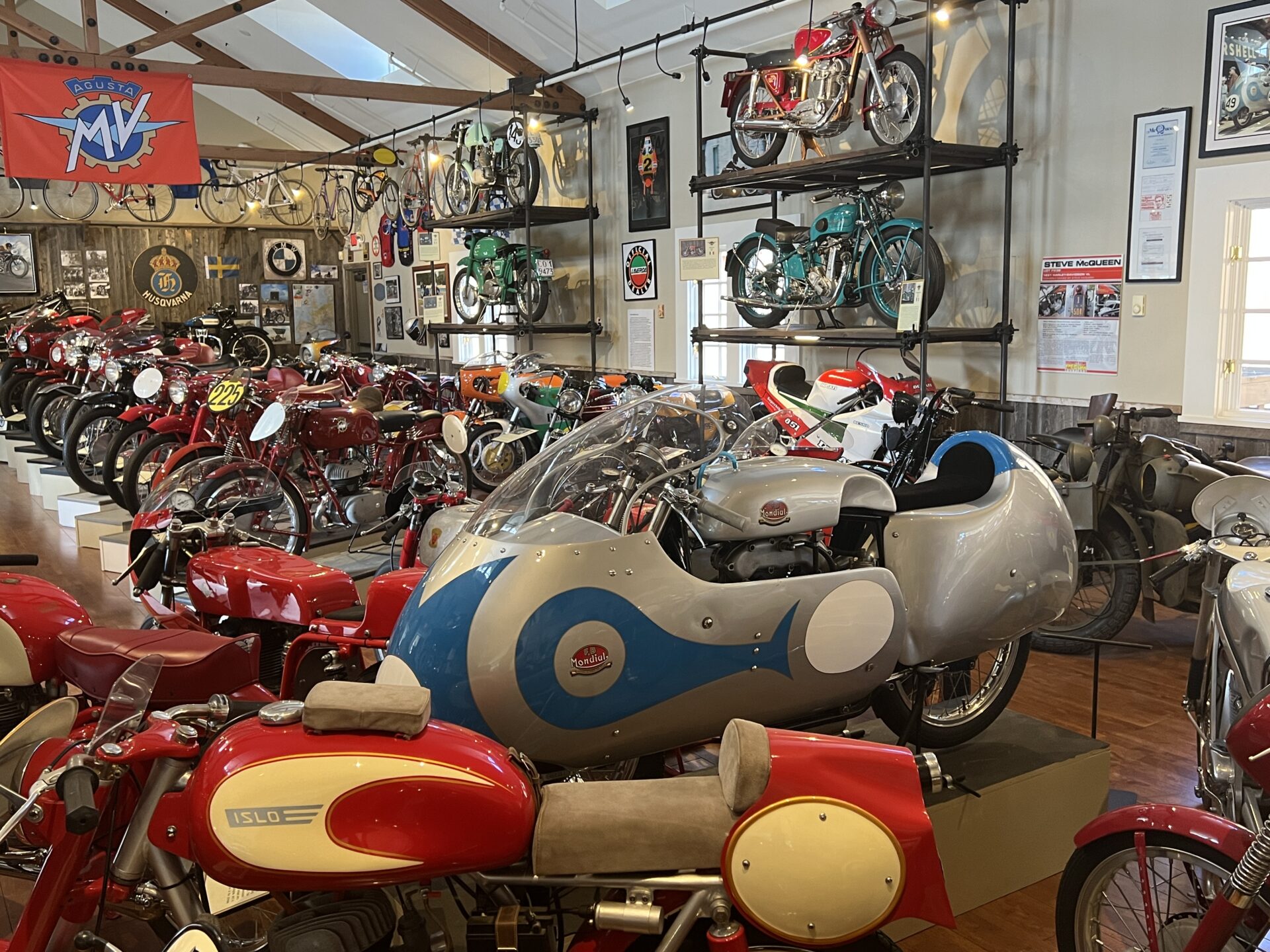
Carmel Valley, is home to the Moto Talbott Motorcycle Museum and is well-known by motorcycle aficionados and admirers of mechanical artistry.

This remarkable museum is a tribute to the lifelong passion of founder Robb Talbott, whose fervor for collecting and riding rare and historic motorcycles has culminated into an extraordinary assemblage. – READ MORE.


Jameson Classic Motorcycle Museum

The Jameson Classic Motorcycle Museum is tucked away a couple blocks off the main street in Pacific Grove and is the private motorcycle collection of the recently departed (2022) motorcycle enthusiast, Neil Jameson.

It stands as a testament to the timeless allure of motorcycling. This museum houses a remarkable collection of vintage motorcycles and special exhibits, meticulously curated to showcase the evolution of two-wheeled engineering.

From Vespas and scooters, to Pikes Peak racing bikes and everything in between, visitors are transported through the annals of motorcycle history, tracing the lineage of iconic brands and groundbreaking designs that have shaped the landscape of riding.

Private Garage Tour: Frank’s Place

Frank is a longtime subscriber and supporter of Garage Style Magazine, and the former head of the Carmel Mission Classic.

While visiting with Frank, he takes us on a tour of his fabulous collection and shares some absolutely unbelievable stories about his time in Hollywood and being a member of the LAPD.

Unfortunately, due to a variety of circumstances, the Carmel Mission Classic is no longer able to continue. It had a fantastic seven year run and Frank continues to thank all his friends, sponsors, and participants for the success they have enjoyed.

RM/Sothebys The Lost & Found Collection

0

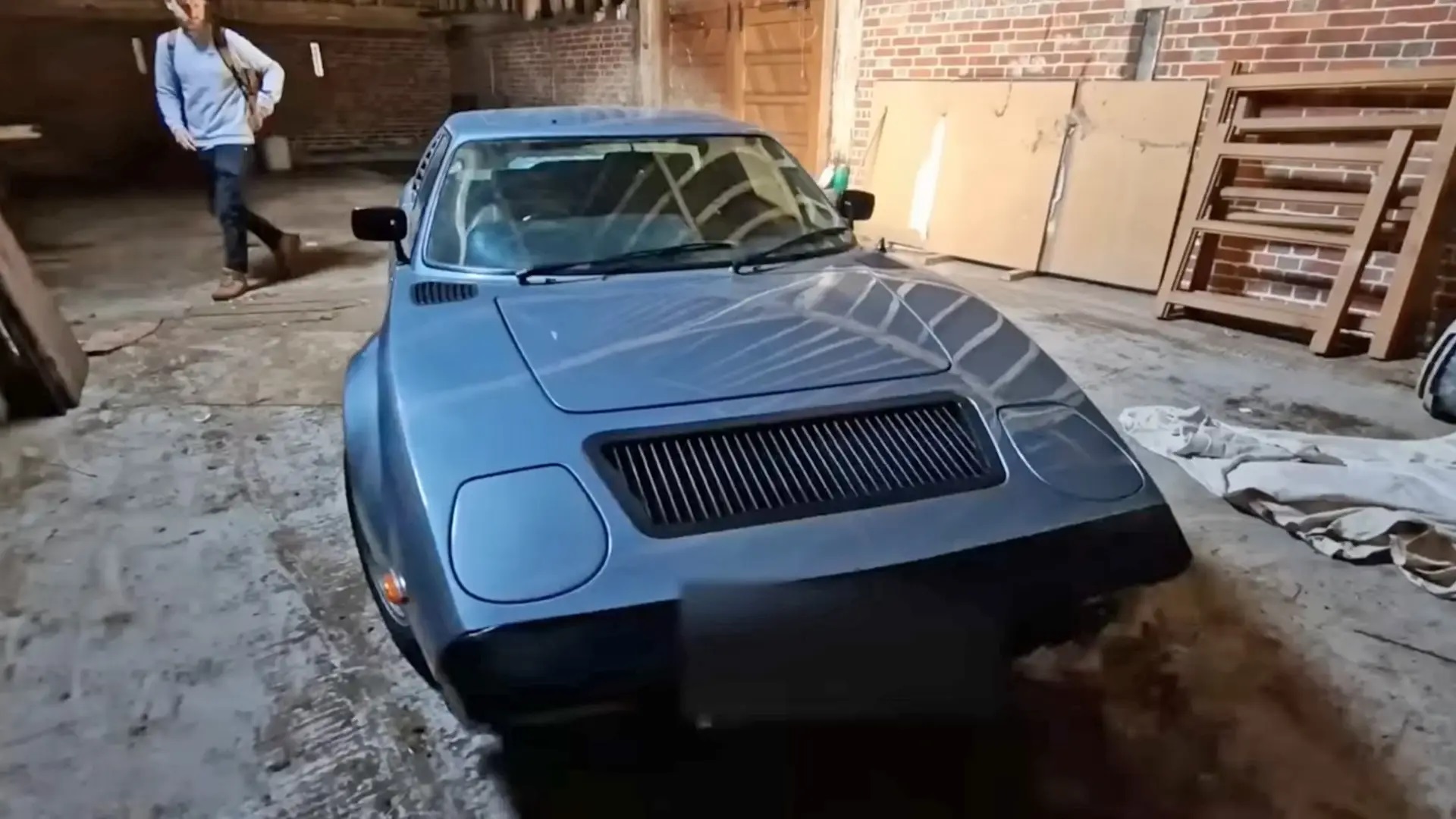
RM Sotheby’s unveiled a once-in-a-generation collection of “barn find” Ferraris, aptly named The Lost & Found Collection. Nestled in downtown Speedway, Indiana, across the street from the legendary Indianapolis Motor Speedway, lay a treasure trove of dormant stallions that have remained untouched for decades, hidden away from Ferrari collectors, restorers, and the public at large, left to gather dust.

At first glance, an unsuspecting observer would never fathom that some of these lost Ferraris have graced the world’s most famous races, such as LeMans, the Targa Florio, and the Mille Miglia. Nor would they suspect that a Ferrari once owned by royalty rests silently in the heart of Indiana. One might naturally wonder how a collection of such magnitude could be consigned to the mercy of time in an Indiana warehouse—that answer lies in Hurricane Charley. – LEARN MORE.

WeatherTech Race Car Show on Alvarado

0

WeatherTech kicked off Car Week with a classic car show in downtown Monterey. We saw 30 classic race cars lining the 300 block of Alvarado Street (by the intersection of Monterey Conference Center and Portola Hotel and Spa). We also met the drivers of these beautiful examples of racing history while enjoying great music and giveaways.


After the race cars rolled out we headed to dinner at the famed motorsports-inspired Turn-12 Restaurant in downtown Monterey, which is an obvious nod to WeatherTech Laguna Seca Raceway. We enjoyed a great meal surrounded by pieces of motorsports memorabilia.

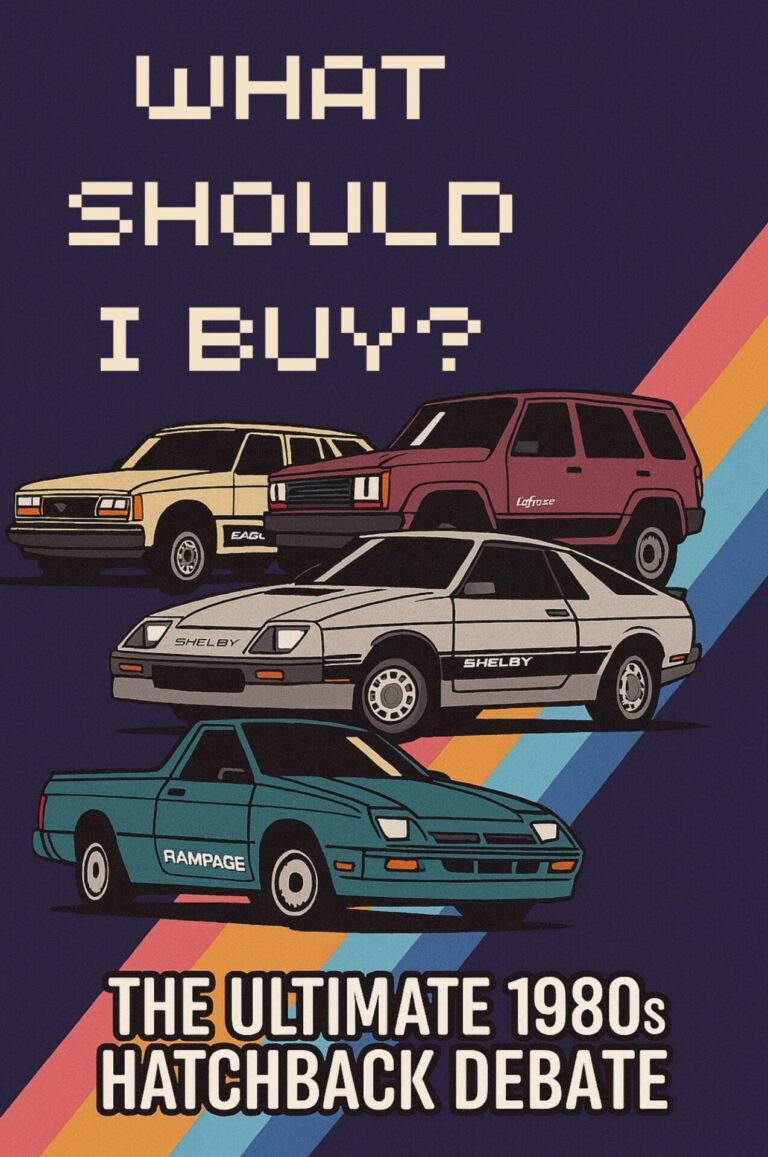
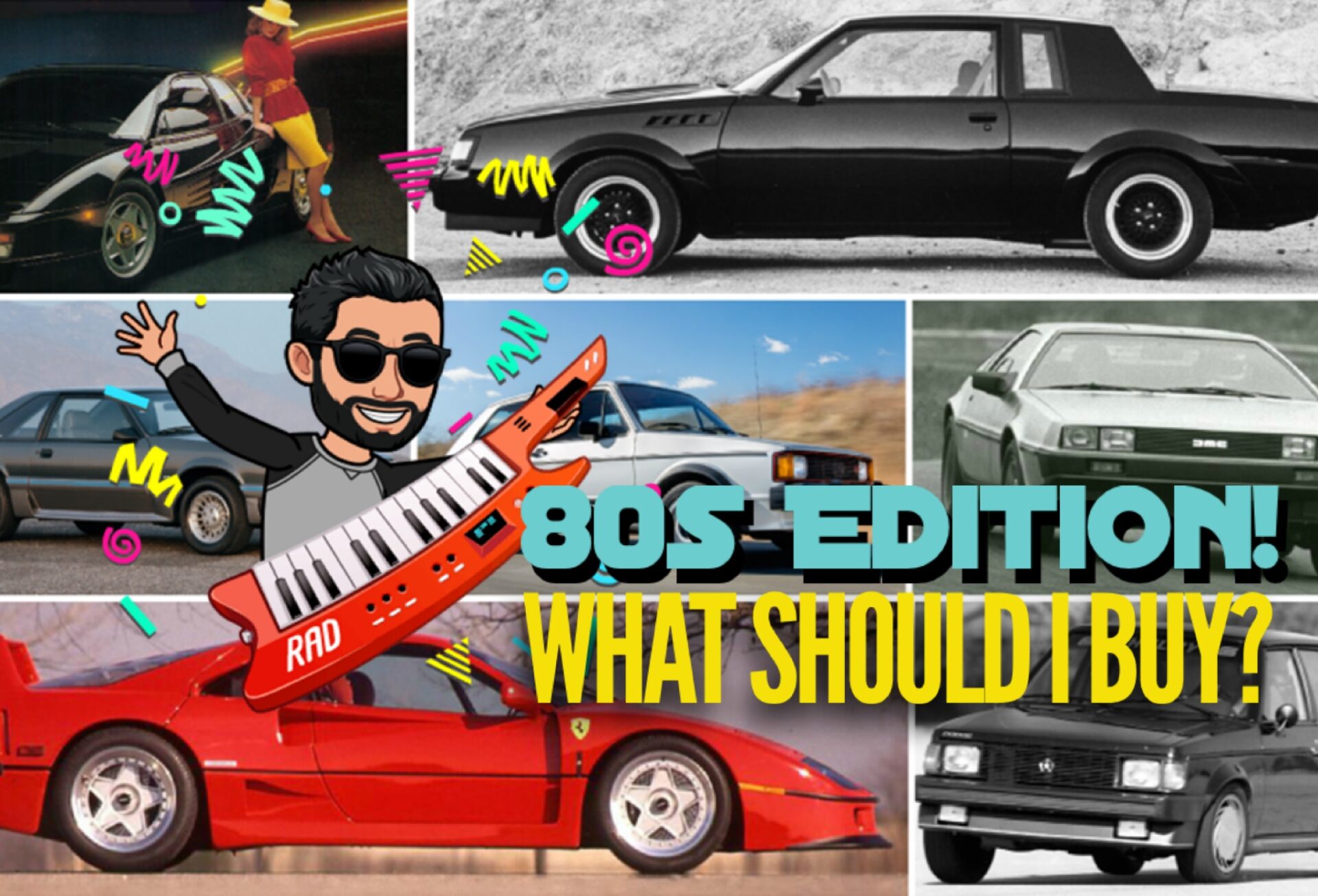
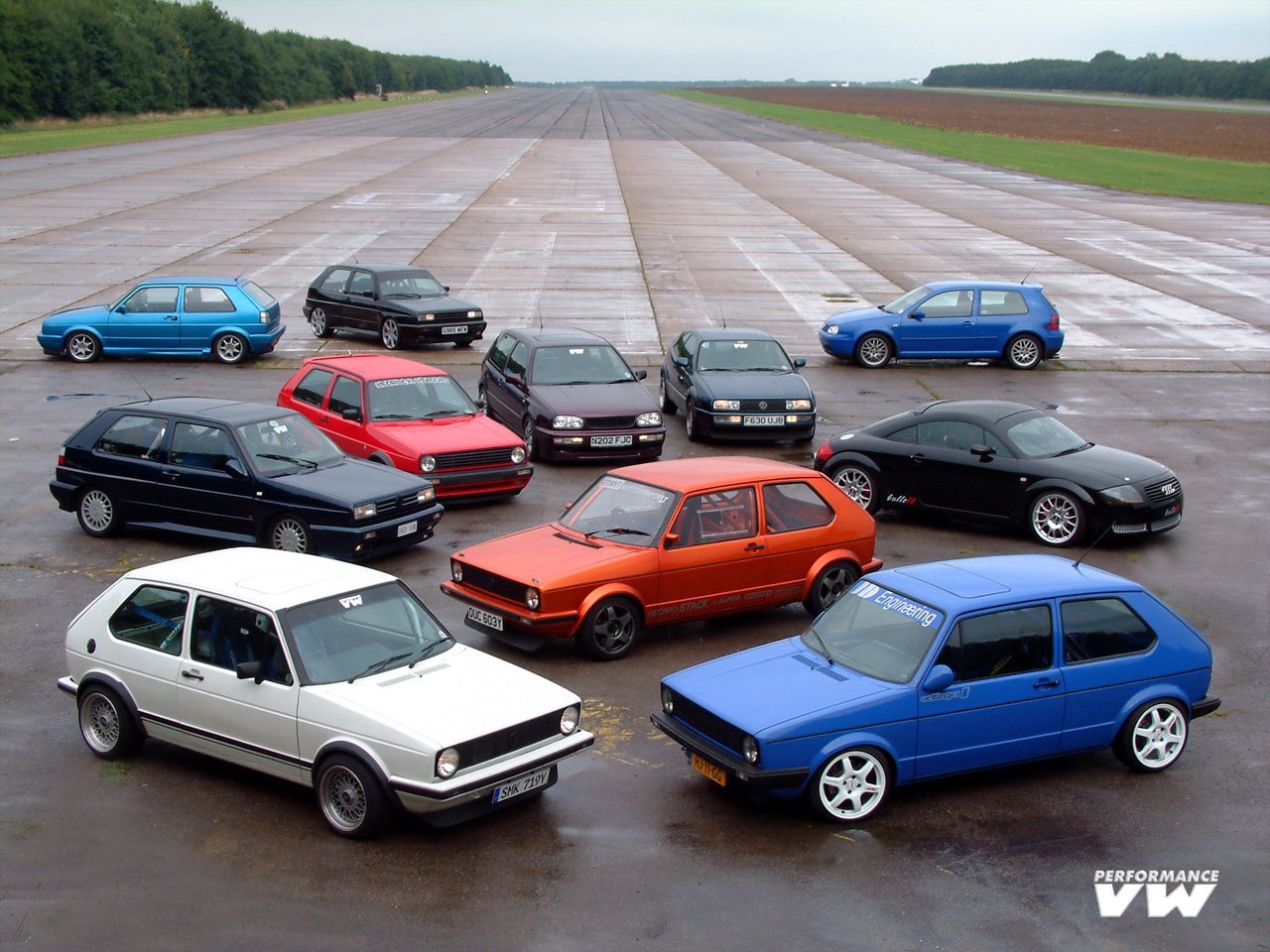
What Should I Buy? Muscle and Malaise Edition (1964–1982)

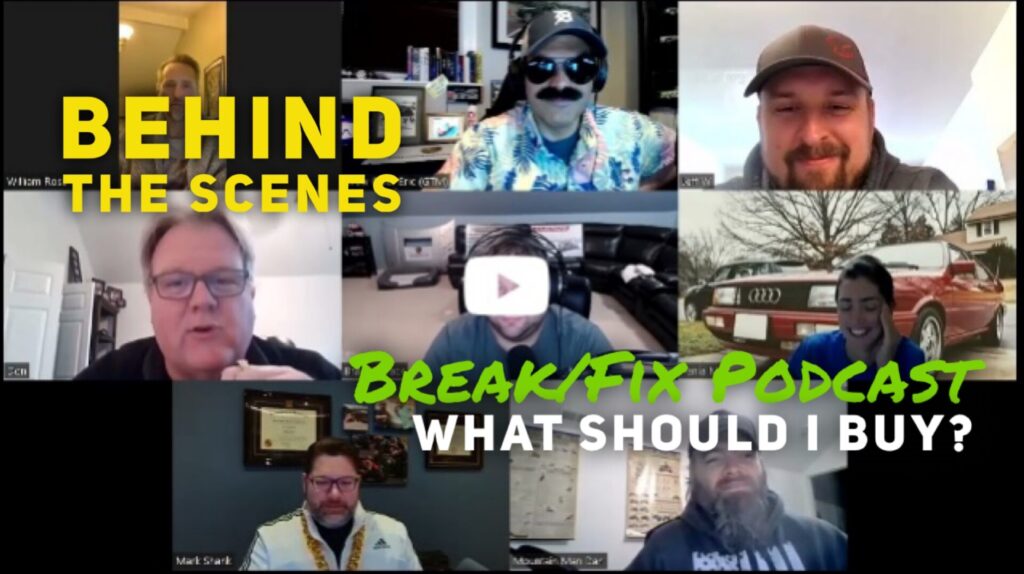
Welcome back to another raucous round of What Should I Buy? – the collector car debate where our panel of break-fix petrol heads dig deep into the archives of automotive history to find the perfect ride for a first-time collector. This time, we’re diving into the underappreciated gems of the muscle and malaise era, spanning 1964 to 1982.

Forget the Camaros, Cudas, and Mustangs. We’re Camaro’d out. It’s time to rediscover the unsung heroes – the square-bodied, round-headlight oddballs that make people say, “Where’d you get that?” or “What the hell is wrong with you?” at the next Cars and Coffee.

Photo courtesy Garage Style Magazine

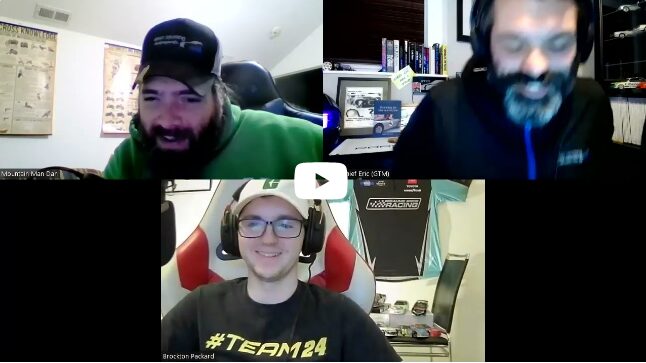
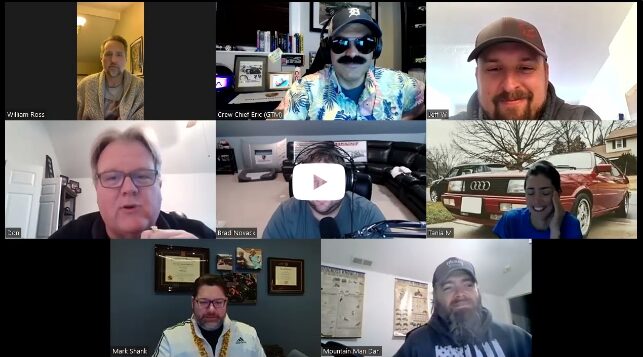
To kick things off, our panelists: Mark Shank, Don Weberg, Rob Parr, Mountain Man Dan, and Andrew Mason – unpack the meaning of “muscle” and “malaise” in automotive terms.

  • The muscle era: Big horsepower, bold styling, and raw performance.
  • The malaise era: Emissions controls, safety regulations, and a shift toward luxury and flash over speed. Think pinstripes, pop-up collars, and Argyle sweaters.

Don reminds us that by the mid-70s, horsepower ratings dropped dramatically, and manufacturers compensated with flashy trim and marketing. The Trans Am of Smokey and the Bandit fame? All show, not much go.

Tune in everywhere you stream, download or listen!

Listen on Apple
Listen on YouTube
Listen on Spotify

This episode’s challenge: Find a car that’s not the usual auction block darling. No Camaros, Mustangs, Chevelles, or Challengers. We’re looking for diamonds in the rough – affordable, fun, and different.

Should we go beyond 1982? Should we look internationally? The panel agrees: yes, if the car has American muscle DNA. That opens the door to Jensen Interceptors, ESOs, and other coach-built oddities with big-block hearts.

Shopping Criteria

Our panel of automotive enthusiasts dives into a What Should I Buy? debate, aiming to help a first-time car collector find a unique, attention-grabbing vehicle from the Muscle and Malaise era (1964-1982). With a focus on avoiding typical choices like Camaros, Mustangs, and Challengers, the discussion covers a variety of lesser-known or underappreciated vehicles. They explore options ranging from the AMC Javelin, Ford Fairmont, Chevy Nova, Lincoln Mark IV, to European models like the Porsche 928 and Jaguar XJS. The panel also touches on the potential of these vehicles for modifications, performance upgrades, and overall collectability.

  • First, I think we have to define “What is a Muscle Car?” and how is a Malaise era car different? What does Malaise even mean? (Don!) 
  • Do we have any exceptions that we can take off the table along with the Camaro, Cuda, Mustangs… ie: Chevelle, GNX, WS6, Viper, etc. 
  • Resto-mods, Swapped Cars, and EV swaps?
  • Underappreciated or Hopeful classics > Prospecting
  • Classics for under $50k – Affordable Classics
  • Classics between $50-100k – Investments

Highlights

Skip ahead if you must… Here’s the highlights from this episode you might be most interested in and their corresponding time stamps.

  • 00:00 Introduction to the Panel and the Challenge
  • 01:58 Defining Muscle and Malaise
  • 03:39 Exploring the Malaise Era
  • 05:00 Shopping Criteria and Budget Considerations
  • 05:56 International Muscle Cars
  • 08:26 Restomods and Custom Builds
  • 18:44 AMC and Other Underrated Classics
  • 20:35 Land Yachts and Luxo Barges
  • 28:24 Ford’s Forgotten Muscle Cars
  • 33:12 The Appeal of Muscle Cars Today
  • 34:47 Young Enthusiasts and Classic Lincolns
  • 35:25 The 79 Caprice Classic and Car Shows
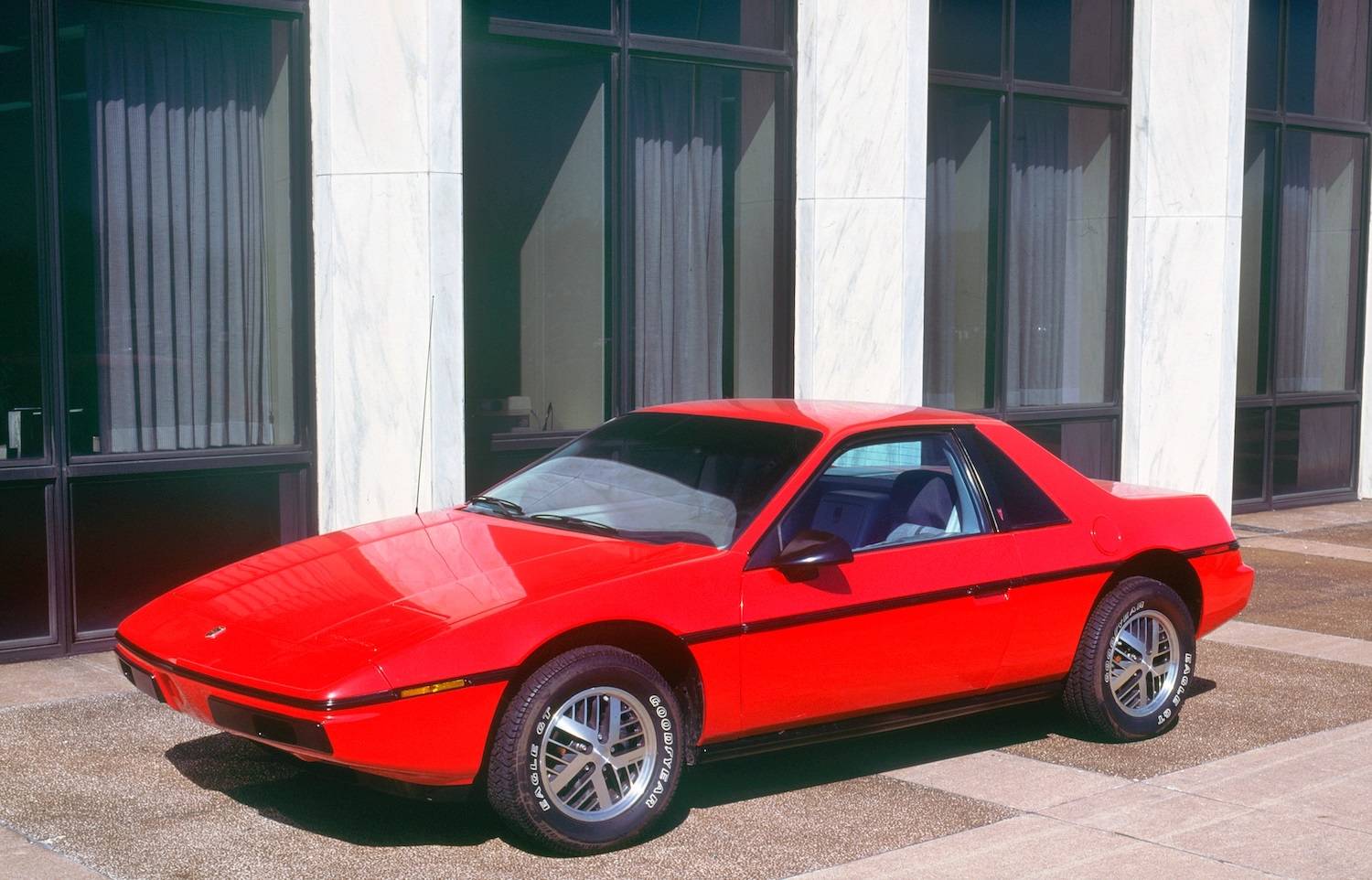
  • 35:54 Pontiac Fiero and Replica Cars
  • 37:23 The Coyote X and Kit Cars
  • 38:58 AMC Rebel and Buick Wildcat
  • 46:18 The Malaise Era and K Cars
  • 48:08 Dodge Daytona IROC RT and Front-Wheel Drive
  • 53:27 Station Wagons and Muscle Cars
  • 57:00 Foreign Cars in the Malaise Era
  • 01:02:37 Porsche 928 and 924
  • 01:04:22 The Quirky Interiors of the Porsche 928
  • 01:05:11 Comparing the 928 to Other Cars of the Era
  • 01:08:26 European and Japanese Malaise Cars
  • 01:08:35 The Jaguar XJS: A European Equivalent
  • 01:11:14 The Mercedes 450 SLC: A Statement of Wealth
  • 01:12:41 The Lotus Esprit and Other European Sports Cars
  • 01:16:52 The Transition to Sportier Cars in the 1980s
  • 01:26:42 The Ford Fairmont: A Sleeper Hit
  • 01:29:35 Final Thoughts and Recommendations

Transcript

Crew Chief Brad: [00:00:00] Our panel of break fix petrolheads are back for another rousing what should I buy debate. Using unique shopping criteria, they are challenged to find our first time collector the best vehicle that will make their friends go, where’d you get that, or what the hell is wrong with you, at the next Cars and Coffee.

Crew Chief Eric: Like most enthusiasts in the collector hobby, we are Camaro’d. Cuda’d and Mustang’d out. It’s time for something new. Time to rediscover the unsung heroes from a period when square bodies and round headlights were all the rage.

Crew Chief Brad: You asked and we answered. From our latest fan poll, there was an overwhelming consensus that our listeners wanted us to come back for yet another What Should I Buy?

This time, hyper focusing on the cars from 1964 to 1982.

Crew Chief Eric: And like all What Should I Buy episodes, we have some shopping criteria. This time, anything goes, as long as it’s not the same old muscle and malaise we’re used to [00:01:00] seeing at our local car shows. Our panel of extraordinary petrolhead panelists It’s our challenge to find our first time collector, something that will make their friends go, Hey, where’d you get that?

At the next cars and coffee

Crew Chief Brad: joining us tonight, our veteran, what should I buy? Panelists, Mark Shank, our nineties expert Don Weyberg from garage style magazine and Rob par from collector car guide, along with special guests, mountain man, Dan and Andrew Mason from the big man in a little car episode. So welcome to the show.

Gentlemen.

Rob Parr: Welcome.

Crew Chief Brad: Good to be here. Now, before we get started, I just want to say that I’ve got a new drinking game. It’s kind of a two part drinking game. Every time Daniel mentions a square body, that’s the first one, and then the second one is every time Eric mentions something Mopar.

Crew Chief Eric: Ooh, interesting.

Crew Chief Brad: So is your goal, Brad, to put people in the hospital tonight?

Crew Chief Eric: We’re all going to be laid out

Crew Chief Brad: as Don mentioned. It’s a pretty big bottle and it’s brand new. So I’ve got a long way to go.

Crew Chief Eric: Well, gentlemen, just like our intro [00:02:00] States, it’s time to talk about mustard and mayonnaise, I mean, muscle and malaise. So what exactly do I mean by muscle and malaise? Well, I don’t know.

You tell me let’s define and turn to our resident experts, Don, Rob, and mountain man, Dan, to tell us exactly what. Those two terms mean in the automotive community,

Don Weberg: you say the word Malaysian think, Oh, Don,

Crew Chief Eric: so Don, we’ve talked about this on a previous episode, but to refresh our audience, what is the Malaysian era really all about?

Don Weberg: Let’s talk about them later. I think that was an era when power was at a minimum because you had what you had a lot of emission control. You had a lot of heavy cars from the safety standpoint. It was a point where, you know, all of a sudden the Dodge charger went from being the Dodge charger to being. A Cordova, you had to make amends with that because you couldn’t market a Cordova that did zero to 60 in 12 or 13 seconds.

That just wouldn’t work. So you had to do what? You had to gussy it up with Argyle sweaters and pop up collars. You had to give it [00:03:00] pinstripes. You had to give it custom trim. You had to give it all kinds of flash to make it look like you were really cool. Take for example, the Trans Am of Smokey and the Bandits.

That was an epic, cool car. But it was not capable of anything that they did in those movies. Nothing that car could basically get out of its own way. It still held his head above water compared to so many other performance cars of the era. But compared to say a 70 Trans Am or a 71 455 super duty, uh, it didn’t hold a candle, but what did it have flash pizzazz.

It was the bright, shiny object that everybody had to have. And the movie helped it do all of that. So that helped us get through there. Somebody here has a drinking game going on. And if there was ever an era for drinking, it was the malaise era.

Rob Parr: Yeah. The weight came on the cars and the luxury was definitely a transition as the years went on from.

Muscle to luxury every year after 72 and actually even 71, they started changing the horsepower ratings to net horsepower from [00:04:00] gross.

Mountain Man Dan: But a big thing during that timeframe up into like the early eighties, a lot of the manufacturers were purposely low balling their numbers. They were putting out an ads to where there were cases where they were taking them from the dealership to a dyno and it was pushing.

10, 15% more power than what they were advertising the vehicles to have.

Rob Parr: And then as time went on, you had a g r, you had other emissions controls, and eventually in 1975, we got the beloved catalytic converter. Of course, everybody cursed like crazy when it came out at 75, 76 were the lowest power cars.

There’s definitely sub 200 horsepower. I don’t think anything, at least on the American side was anything over 200 horsepower.

Mark Shank: There were a few, but you’re right, it was just around there. Right. L82 Corvette was like 220 by the end of the

Rob Parr: 70s. Actually back in the late 70s, it started coming back up again, but it tipped around 75 to 77.

I think the 77, the Z28 came back and of course you had your Trans Am. Like Don said, they got flashier and prettier. And unless you tuned them a little bit, they really didn’t do a whole lot. [00:05:00] So before we

Crew Chief Eric: go too far down memory lane, let’s throw out any exceptions to our general rules. As you guys know, and as our fans know, we try to do this for the first time collector.

So normally we come at this with a Budget in mind, we go zero to 50 grand, 50 grand to a hundred, a hundred to infinity, you know, things like that. But I don’t know that it necessarily applies here because we’re looking for diamonds in the rough. And we already said in the intro that we’re going to avoid the Camaros, the Kudas, the Challengers, the Mustangs.

I would say probably the Chevelles, a lot of their super popular cars that you see crossing every auction block. You see it at every weekend car show. So we’re really looking for something different, something affordable, something fun. Do we need to extend beyond the 1982 limit? Did anybody come up with that as an exception to this?

Crew Chief Brad: I’ve got a question. Do we want to extend beyond our borders too?

Crew Chief Eric: Yes.

Crew Chief Brad: They didn’t screw it up so bad.

Mark Shank: Then you’re talking about Porsche 930s and Skyline GTRs.

Crew Chief Brad: Well, [00:06:00] I mean, I don’t know if… They embody like the muscle car spirit. I don’t know if we want to go down and try and define what a muscle car is.

Every time we do Mark and I end up getting into an argument about something stupid. But

Don Weberg: now at dinner tonight, my wife and I were just kind of doing a little prelim research on muscle car and where the term came from, et cetera. She found something interesting. The first article so far that anybody has found the earliest article that mentions muscle car.

Actually belonged to Jeep and they called it a muscle car in this one article. So now, of course, me being me, I’m on this kick, I got to go find this article, but supposedly it was back in the sixties because it had a big motor. It was actually considered a muscle car. It wasn’t the Chrysler 300. It wasn’t the Oldsmobile.

It wasn’t the Hudson, but yeah, it struck us both. It’s really funny that it was an off road vehicle that first had the term muscle car attached to it.

Crew Chief Eric: So does that predate the GTO? So is there earlier than 64?

Don Weberg: Now, actually, I believe it was 64. Now that you say that, it seems like she said in [00:07:00] her reading, it sounds, I think it was 1964 for that jeep.

So it would be fun to kind of track that down and see, you know, who wrote that, why they write it, et cetera.

Crew Chief Brad: If we extended the borders, I mean, then you can put the Jensen interceptor in there and things of that ilk. They’re not American muscle cars, but they have American muscle car DNA.

Crew Chief Eric: I think that’s okay because they have either small block or big block Chevys or Fords powering them.

So I’m okay with that as a muscle car suggestion. We talked about on the Italian episode, the ESOs. It’s the same thing. There’s a bunch of these Italian coach builders that did American engines. The Pantera is not a muscle car. It’s a sports car. So that’s off the table, right? That doesn’t qualify, but you’re right.

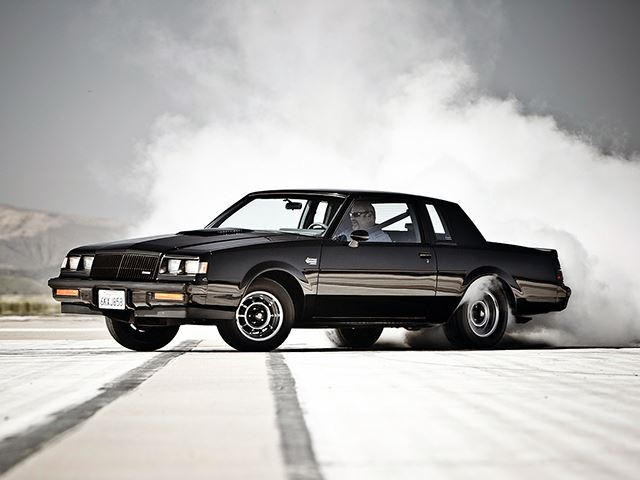
There are some European and even Japanese cars that I think fit into the Malaysia and we’ll probably talk about those as we go along, but I want to make sure there aren’t any other exceptions. There’s a few. I think we can. Immediately take off the table. If we go outside of 1982, that’s the GNX Grand National, the WS6, the Viper, pretty much any [00:08:00] Corvette.

Mountain Man Dan: Quick correction on that. Cause the WS6 actually existed back in the seventies era of the Pontiacs as well. The WS6 was a trim option that had existed since the second gen of, I don’t think they’ve made any first gen, but I know from the second gen on they did.

Don Weberg: And remember to a WS6 really all it was was a handling package to give you.

What they wanted to call the, the Gana experience, right? That was the whole point of the WS six. There was no power increase at all. It was just all chassis. So I don’t know if you wanna go there,

Crew Chief Brad: if we’re gonna nix the G N X, are we gonna nix the TransAm G T A, the turbo V six with the, I guess the, the same motor and the GN X and all that?

Don Weberg: If we’re gonna nix the Grand National, do we also have to throw out Monte Carlo SSS and the Grand Prix? Okay. I knew you would know if anybody has one. That’s

Crew Chief Eric: why.

Don Weberg: Yes. Let me just push that a little further. If we’re going to kill grand national, kill Monte Carlo, kill grand prix, old mobile Cutlass.

Mountain Man Dan: So that’s basically killing the whole G body platform,

Don Weberg: but look what it brings.

And this is up to y’all because we’re pushing kind of far now, because I’m going to bring up a car [00:09:00] that is one of my personal favorite, you guys will laugh. I know Lumina Z 34 and it’s little brother, the Cavalier Z 34, Z 24. But in the nineties, those were considered. The muscle cars, that was it. Unless you wanted to talk about your old guards, Camaro, Mustang, Firebird, et cetera.

Crew Chief Brad: I think we need to pull Don’s card now. I think, I think he has disqualified himself from the discussion.

Mark Shank: We’re like a bunch of medieval scholars arguing about when the dark ages end. I mean, some of these cars, like they’re just too good. Like the eighties made some good cars. Like, I think this is about the audio industry was kind of on its knees.

They’re in a big transition. What are some of those diamonds in the rough? What are some of those things that may be with a little modern technology and assuming you don’t live in California, you can turn into something that’s really cool and fun.

Crew Chief Eric: That’s what we sort of have to figure out. And we keep dancing around these cars that are still sort of popular, right?

So if you look at the third gen Camaro, like the Iraq, the [00:10:00] firebirds not too far off. We need to find something a little bit different. I just wanted to know where we taper things off and where the blend line is. And I think we’re still safe, even if we go up to about 85. If we go outside of our stated boundary,

Crew Chief Brad: I think we’re getting too much in the weeds.

I think we nixed the Camaro, the Mustang, the Corvette, and maybe the charger and just everything else is a free for all. If you choose the Chevelle or whatever. Okay. That’s cool. But I think we leave them in. Why not?

Mark Shank: You won’t find any affordable examples, but I take events to the Chevelle comment, but. The Chevelle Laguna, good NASCAR pedigree.

Don Weberg: I mean, look at the Laguna S3. That was a hell of a car. It really was the styling. It had muscle for the day. Come on. It’s a flashy time. You know, I think the Laguna is a great one, but you’re right. Where do we draw that line?

Rob Parr: I think if you go with the lesser versions of the car, the performance vehicles, like going with the Cutlass instead of necessarily going with the 442, going with the Buick Regal versus the GNX, the lower models, because that’s going to fit the budget anyway.

Mountain Man Dan: Yeah. If we’re going to [00:11:00] take some of the bigger names that you were mentioning, take one that’s a less known car. And GTO as an example, if you get into like the earlier ones before the judge and everything, the mid sixties, and a lot of the guys would find a Tempest or LeMans and make a GTO clone out of them.

And that’s a great way for guys that don’t have the money to go find a numbers, matching GTO. You go find the same, Platform basically, and build the car you want

Andrew Mason: green all wholeheartedly with Dan’s sentiment there that especially when you buy one of those less than, you know, not the GTO, but it is the Lomanzo to Tempest.

There’s no guilt. You’re not going to feel bad if you cut it up to make something fit. I see muscle cars, like kind of two factions. There’s guys who restore and go for period correct. And that’s what they like. And then there’s people who look at it as this is something to be made better and faster. So from the better and faster camp, there’s no penalty to taking something pedestrian and moving it.

Crew Chief Eric: So I think that goes both ways. And that’s a really great point, Andrew, in that you can make a malaise car into a muscle car. And you can probably take a muscle car and make it a malaise car, [00:12:00] adding luxury, adding other creature comforts, adding other things to it that maybe they were devoid of when they were built because they were more sporty.

Right. So I think this conversation. Absent flows in both directions, depending on where you want to take it

Mountain Man Dan: that already exists in a sense for the fact that a lot of those muscle cars become without AC. So there’s companies for the past 20 years that have been making aftermarket AC to put in there. So you can take that muscle car and go for a trip during the summer and not sweat your brains out.

Crew Chief Eric: That power steering, power brakes, all sorts of other stuff. They came out of luxury cars that didn’t exist on the muscle cars. I think it goes both ways.

Rob Parr: Kind of getting into the 80s stuff. We transitioned from carburetors to fuel injection. The cutoff might be just carburetor car. If you want to have a cutoff point, again, it all is going to be based on budgets.

Eric suggested we, I don’t know what our limits are budget wise for an entry level car. That’s another thing we need to determine.

Mark Shank: If it’s expensive, it’s not malaise.

If you have to ask,

Rob Parr: you’d be surprised. I just saw an [00:13:00] auction Fox body Cobra going for 70 grand. I mean, that’s no power. You could get a Corvette for 40 grand. That blows it away. And it makes no sense. So it depends on what the people want. Some of these people are so fixated on the Iraqs and the certain vehicles.

They want to pay more money for them.

Don Weberg: There’s another vehicle that just kind of popped in my head while you were talking about that Fox body Cobra, the 93 Cobra Impala pop back as a, as a full blown hyped out Caprice 260 horsepower for its day. It was really, really amazing. In fact, I remember car and driver motor trend.

One of the two, they compared the S 500 Mercedes. Against the Impala SS 1995, it was an amazing comparison because here you had the highbrow Mercedes with all the luxury and all that crap, but it’s still a fast car. And then you have the Impala, which very fast car with kind of luxurious if you want to call it that.

I hate to say it. The Impala mopped the floor with that Mercedes. That was one of those things they almost didn’t want to publish it because they didn’t want to upset [00:14:00] Mercedes.

Mountain Man Dan: And that particular Impala was only made 94 to 96 and the SS Callaway version of it actually came with a six speed manual, which I’ve always wanted to acquire one of those myself.

Mark Shank: I know Mercedes S500s and Impalas get cross shopped a lot, so I’m sure it was really concerning for Mercedes.

Crew Chief Eric: So what I want to do is pull this back a little bit because Rob touched on something really important. And actually, so did mark, which is 2 sides of the last part of our shopping criteria. 1 is looking at those lesser models or the cousin of, or as Don likes to put it in other terms.

Episodes, the sister to certain vehicles, maybe under a different name with different sheet metal. You could get a variant of the GTO as an example, the old rally 350, which is basically a GTO judge that nobody pays attention to. So those are considerations we need to make. But on the other side, mark hit on.

LS swap the world. And I know this speaks to Andrew, who’s been pretty quiet this whole time, kind [00:15:00] of waiting patiently is resto mods, swap cars, EV swaps. I think all of this stuff counts when we’re talking about the muscle and malaise collector. What do they want to do with these cars? Especially if you’re buying a malaise car for like five grand, it’s going to need some love.

What do you want to do with it? So Andrew, let’s get your thoughts on that.

Andrew Mason: I was going to say built not bar, right? I mean, if you’re on a budget and you want something cool. Who cares what it’s called? Who cares what model or trim it is and what rich guys will pay for it by the cleanest example of something that you can find that has all the trim there that you’re not going to have to spend a lot of money piecing back together.

But if it’s an a body, it’s a G body. It’s a, whatever you’re going to find parts for it. I was going to say 1983, first year of the Fox body. All those parts go back on it. You have a blank canvas is the way I look at these cars. They aren’t terribly exciting as they came for all the reasons that were mentioned, but they’re all just as capable of being modded out and built.

To Eric’s point about not having something like at every car show, I spent a couple of years dreaming of LS swapping a Volvo [00:16:00] 240. Which is just a shoe box on wheels. But if it’s done clean and you get the right wheels, the right suspension, I mean, it can be a hell of a lot of fun. Who cares what it does performance wise.

It’ll be too fast for anybody saying, you know, so that’s my take buy them and build them.

Don Weberg: The nice thing is you’ll be safe in that car. Right. And I’ll send you an Argyle sweater. There you go. Go undercover.

Mark Shank: What about the Mustang too? You can’t argue that that was like a turd. Well, yeah, it was a turd. But if you’re going to be interesting, right, they had the Cobra version.

Like it could be fun. I mean, obviously you’d have to fix it, modify it.

Crew Chief Eric: And so Mark, I will see your Mustang too. Looking for alternatives now. I will pit it against the AMC Concorde.

Mark Shank: I mean, it depends on what direction you want to go. Right. So if we’re going in where Andrew was talking about where, you know, you’re going to build out a muscle car, you’re just looking for a platform or a canvas.

If you’re looking to show up. at Cars and Coffee was just something that people just haven’t seen [00:17:00] before and that you kind of restore and build out mechanically just to make it honestly, I would say more safe. There’s a bunch of different things to work with there, especially from AMC. And so part of that is if you’re going down the Cars and Coffee route, then you’re also looking at volume and how many were made.

So if you look at like a King Cobra or something, they only ever made 4, And because it was so hated. There’s probably, I don’t know, 27 on the road today, you know? So, so there is that angle to play and on the AMC side, they also did a bunch of interesting stuff. Somebody brought it up earlier. I think it was Don, right?

The automotive manufacturers decided this wasn’t a grassroots car culture thing. They just decided because we can’t make cars fast anymore. We’re going to try and make them cool. By pairing them with luxury brands, and so you have like the Pierre Cardin AMC Javelin, you have a Gucci edition Cadillac Seville, an Oleg Kasani AMC Matador.

Crew Chief Eric: There is [00:18:00] never anything cool about the Matador, okay? That’s true.

Mark Shank: I have to admit that’s true, but you have the Levi’s Denim Gremlin. I mean, that was on my list. Like, when was the last time you saw a Levi’s Denim Gremlin? Like, that’s just kind of cool.

Don Weberg: Going to Gremlin, you had a Gremlin with a 304 V8 from the factory. If that wasn’t good enough, there was a dealership in Arizona.

I think it was Randall AMC. They would shoehorn in the Matador 401.

Wow.

Don Weberg: And you talk about a little dynamo of a car. Sounds like death on wheels. That was it. But now you’re talking kind of a Yanko edition for AMC because it was a dealer specialty. It’s like the Celine of AMC. So I don’t know if that would even qualify for this.

Crew Chief Eric: I think it would, but there’s also an AMX edition if we’re going to go down the gremlin road, right? Yes,

Don Weberg: the AMX that was, uh, the Corvettes competitor because it was the only two seat sports car in America and it was half the price.

Crew Chief Eric: I’m not talking about the Javelin. They had AMX edition other AMC [00:19:00] vehicles.

Rob Parr: Yeah, later on in the 70s, they, they brought the AMX name back.

Crew Chief Eric: Okay. So it was like a trim package then. Yeah. That goes exactly back to what Mark was saying. The Javelin is definitely on my list. I love the way it looks. It’s got these kind of funky haunches, almost like wide body flares. It’s a, you’re not sure if it’s got like a 71 Mach one or what it is when it’s coming at you.

Especially in the AMX guys with the spoiler and the rally wheels and all that kind of stuff. I think those cars are pretty cool. And Brad, so does this count towards the drinking game AMC? Is that like Mopar adjacent or do they stand alone? Uh, I think they sent along. All right, good. I’m going to drink for it.

Anyway,

Don Weberg: Chrysler bought AMC in 87. And here we are talking AMC, which of course own Jeep. That’s the only reason Chrysler bought it was for the Jeep brand.

Rob Parr: AMC actually does fit the budget we’re talking about too. You can get a lot of.

Don Weberg: Yeah,

Crew Chief Eric: people don’t usually look for those 100 percent and there’s quite a few of these.

So let’s stay on the AMC path for just a moment [00:20:00] before we deviate. So we talked about the Javelin. We talked about the Gremlin. I mentioned the Concorde, which looks a lot like the Mustang two. And if you dress it up a little bit, it’s a great alternative to Rob’s point. Not very well known. Another one that came up on my list as a potential muscle car conversion is the AMC Ambassador 990.

Bigger car. Lines up with one of my other suggestions, but if you kind of take a look at it, you could do something with it. I think it’s kind of neat. If you’re looking for a bit of a land cruiser that you could shove a big motor under the hood.

Mark Shank: I think that’s an interesting category for the group to get into.

Cause then you start looking at some of the Cadillac Eldorados, that whole kind of category of just land yacht, like just embrace the rolling couch. And if you want to drive a couch, then. You have some really interesting options that come out of this era,

Crew Chief Eric: but that’s the other side of the Malays air.

They’re not all sports cars. Let’s say they’re Luxo boats.

Don Weberg: Me being the [00:21:00] Lincoln guy here, the Mark 3, the Mark 4, the Mark 5, all of those were equipped with 4 60s. The Mark 5 had it for 1 year as an option against the 400, which was a pig, but it was a great cruiser. I’ll tell you, you get on any of those cars, they were They really, really can cook because of that big block tons and tons of torque.

Look at those old mobiles and those Buicks with a four 55, you think grandpa going to church in the old mobile 98 with a four 55, that man could get there in five seconds flat because that thing was just, uh, oh. A rocket, but that’s why it was sheer torque. And the funny thing is when you talk about 1978, the quickest, fastest American production car, Dan, you’ll appreciate this.

It was the Dodge Lil Red Express. Oh, you beat me to it. Oh, sorry. I didn’t mean to the manufacturer, at least Chrysler figured out, Hey guys, did you know that the truck doesn’t have to meet the emissions requirements, the safety requirements, et cetera, that a car does. They’re very lightweight. If we throw our [00:22:00] 360 in there with a few little tune ups, holy cow, we’ll have a tire smoker for days.

That was their little trick. And of course, here you are with this little farm implement and you’re burning Corvettes transams all day long with a pickup. It was hugely embarrassing. The trick was. You had to be a good driver because all that power to a rear end with no weight on it, that thing just wanted to burn rubber for days.

Dan, am I wrong? You’re the pickup guy here. I mean, come on.

Mountain Man Dan: That was definitely on my list of vehicles to mention. And with any truck, because there’s no weight on the rear of them. If you don’t know what you’re doing, you see all the videos of the Mustangs, you know, going through the medians and hitting people on the sidewalks.

It would have been way worse if cars and coffee existed back in the seventies when the little red express was there.

Don Weberg: Yes. And going back to the pickup conversation of, Hey guys, guess what? If we build a pickup with a really big motor, we don’t have to meet emission standards. We don’t have to meet safety standards.

We can have a really fast truck that we can decorate out and make look really, really cool. It was the same thing with those Luxo barges. Look, we’re catering to the guys who can afford a [00:23:00] 15, 000 coupe. To, you know, tool around in and look important. They can be Frank Cannon for a day. They can afford that 460.

They can afford the 455. They can afford the 472s. They can afford the 500s. They can afford all those big luxury liner engines. You know, what’s more fun than finding a lightweight Matador or whatever and pulling out a big 440, 460, 500 and throwing it in there.

Crew Chief Eric: I want to revisit AMC here in a little bit, but I do want to go back to something that.

Mark mentioned earlier and he, he hit something that I had on my list when we mentioned Chevelle, he brought up the Laguna version of the Chevelle again, talking about these lesser known models, lesser known trim packages. I agree with you, Mark. That was on my list as well.

Mark Shank: That particular model actually came on my radar a few years ago when Chevy, they did a Laguna at SEMA.

And they were doing it as an advertisement for their crate engine business and they had, I think it was a 74 Chevelle Laguna restomodded and built out. And that thing just looked so cool [00:24:00] and like nothing that you see, which, you know, made me kind of look into it a little more. I just thought it was super cool.

And there, I mean, there are some, if you’re looking at kind of. Racing pedigree, you know, the, this was still the before times and NASCAR. And, you know, there’s a little more correlation between these models and what was raced then, you know, in the later years when they totally switched everything around.

Crew Chief Eric: But since you brought up General Motors, I wanted to go back to another John DeLorean special, not the GTO. I want to talk about the Vega.

Mountain Man Dan: Here’s the thing about the Vega. I love the Vegas. They are hardest can be defined anymore because all the quarter mile guys realize, Hey, the V8s on them, they’re lightweight.

You can get down the quarter mile real quick with them, unfortunately, because back when they were built, a lot of people didn’t like them. They were kind of thrown to the side and many of them wound up in scrap yards and stuff. So I would say, even though they’re a less known muscle car, they’re 1 of the harder to find ones right now for like the GMs.

Crew Chief Eric: But I found a solution to that problem [00:25:00] because in watching shows like Rust Valley Restorers and learning about the Canadian versions of GM cars that can be imported into this country very easily because the statute of limitations on, you know, different models doesn’t really exist at this point. You could actually get a Pontiac Astra.

Not the Astra as in like the Vauxhall Astra, it’s A S T R E. It’s the same car, different badges in the same way that did the Bonneville as the Parisian. And they had all these other names, kind of more European sounding names for all these GM products. Once you crossed our border to the north of us. So I looked at that and went, okay, cool.

But also in the shadows is the Monza, right? You could go in that direction as well.

Don Weberg: I thought the Astra was an American car. I thought that was also available here in the USA.

Crew Chief Eric: It was sold here too, but I looked it up and a lot of the sales numbers were higher in Canada, just like the Parisian and a bunch of others.

Don Weberg: Yeah. Canadians are big Pontiac people.

Crew Chief Eric: Yeah, they are.

Don Weberg: Yeah. I think the Vega could be a good one when DeLorean was faced. [00:26:00] With Vega, he wanted to make it a sort of American BMW. General Motors just didn’t want to have anything to do with it. They just wanted to put out a quick, dirty, efficient little car.

The main problem with those cars, if I remember correctly, was their engines would literally have trouble with the aluminum. They would self-destruct, just the mythology would give out on those cars. Another problem that they had was huge problem with suspensions. Literally wheels were falling off the car.

I mean, this is not good stuff by design. I think they were fabulous. And when you brought out the Cosworth, that was another John DeLorean special. He was the one who actually went over there and spoke to those people to build the heads and engineer a hot rod Vega. Now you’re talking about a serious collector car.

I mean, these cars, they were limited production. They were reasonably quick for what they were. Somebody brought up the Mustang two earlier today or early on this conversation. And, you know, if you want a competitor for Mustang to Cobra, I think the Vega Cosworth absolutely outshines the Mustang and I’m [00:27:00] a Ford guy, but that Cosworth Vega was something else.

It was a fantastic little car. And again, on the collective market, just because they’re rare. Just because there’s not many of them and because they have that performance pedigree with, you know, European influence, that is a fantastic car and they’re not overly expensive, even in mint condition. They’re really, really not.

Crew Chief Eric: So since you went there and you’re talking about European influences, do you consider the Capri? Not the Fox body Capri, the German Ford Capri, a muscle car or a sports car.

Don Weberg: No, I would consider it a sporty car. Absolutely. I love the Capri. The original Capri is 69. I think with the first one that they built turned into a hatchback somewhere in the mid seventies.

And then at some point it got turned into a Mustang for Mercury. Which, you know, that’s a whole different conversation, but the original European version of it, I don’t think they’re muscle cars, but I think they’re sporty cars. And they were designed by one of the original Mustang designers, Europe wanted a Mustang, and that was going to be Capri.

It didn’t do anywhere near as well as the American [00:28:00] Mustang did. But it did very well in, in giving Americans an idea of, Hey, wait a minute. We could have a sporty little compact, fun little car, but no, I don’t think it’d be fair to compare that as a muscle car, not at all

Rob Parr: for products. Again, Mercury Cougar and Ford Thunderbird.

Okay. And maybe like even. Toward the Buick Riviera, we’re always transitioning a little bit bigger car, but still lots of performance. And I think that probably would fit into our category, too.

Don Weberg: If we’re going to throw Ford under the bus there to talk about them, I’m surprised nobody’s brought up Gran Torino just yet.

And I’m surprised nobody’s brought up Fairlane kind of goes back to the 60s with the 390s and the 427s in terms of off the radar. Both of those cars are fantastic first time cars because they are kind of off the radar. And let’s face it, when it comes to those muscle cars, when it comes to those performance car, for some reason, Chevy always outshines Ford.

And that pushes their values up a little bit. Usually not always, but usually, and when you talk about grand Torino, or you talk about fair lane, you can [00:29:00] get a really nice bargain muscle car. That again, when you pull up to a cars and coffee, once you get over the starts again, Hutch jokes, you know, they’re a damn nice car.

Mountain Man Dan: So I was going to add on to the European influence, it’s still, it’s Blackhawk, you know, unfortunately, I don’t support that, but I got to throw it out.

Don Weberg: The Elvis car. Now you’re talking my language.

What have you done? What have you done? I knew I liked

Don Weberg: you, Dan.

I knew I liked

Don Weberg: you. He

opened Pandora’s

Crew Chief Eric: box.

Don Weberg: It’s party time, boys. And Eric, we can bring the Canadians in because most of those cars were built on a Pontiac chassis. Just saying. They

Crew Chief Eric: were so, 1st of all, I’m going to ignore the studs comment, because that’s just going to get us into trouble. But there are some undervalued underappreciated Fords. And 1 of them that came to mind in doing some additional research on.

This was the Maverick not to be confused with the new pickup truck. But again, going back to this javelin Vega. Yeah, kind of style of card [00:30:00] that you shoehorn a 3 0 2 in that and give it a little bit more oomph and suddenly you’ve got this muscular vehicle.

Don Weberg: Yeah, and if you wanted to go a little classier, you could always go with the comet, which was Mercury’s sister product to the Ford Maverick.

I don’t know that they didn’t, but I don’t know that they ever had something like the Grabber, but it was the same basic formula, a little 302. You could even get a four speed with those cars.

Crew Chief Eric: So was that the same marketing that they used for the Bobcat? Oh, it’s the Pinto’s more upscale version.

Don Weberg: I got all sweaters, baby.

Brad, take a drink just from your big bottle so we cheer up a little bit over here, will you? There we go. That’s what I’m talking about. You know, I’m not a Maverick fan.

Mark Shank: I struggle. I really do. I prefer the clippers myself. I don’t see the lines on the outside. The interior is bad even for its time. That’s saying something.

Crew Chief Eric: It is. And again, the Javelin is a sexier car if we’re going to go really going to go there. Yes. But the [00:31:00] Maverick. It has potential because you’re right. And what I see in it is sort of like they liked what they were doing with the Capri and then they found a way to make it worse. ’cause it has that sort of Capri look to it.

Especially when you’re looking at the side glass. ’cause it has mm-hmm. the way it kicks back. Yeah. Yeah. It’s just, it’s sort of there. And those, the round headlights, capris ugly sister. To use Adonism, yes. But you know, if you look at her with the right light on the prairie, We drink enough. When it’s last call,

Crew Chief Brad: you’re at the bar.

You need to take over. Just keep

Don Weberg: drinking. It gets easier. You’ll love Maverick after a few of those big bottles like Brad has. You’ll love it.

Crew Chief Eric: That goes just with the whole period though. They’re all sort of slightly terrible. Right. But you got to look at it for the potential. I see this as like we were talking about you shoehorn, uh, Coyote in this.

And suddenly this is an exciting car. Well, then remember too,

Don Weberg: not that I don’t love the Coyote. Believe me, I do. I think that’s a fantastic engine. But in this day and [00:32:00] age, you don’t need that much motor. You really don’t. There are so many great four cylinder turbos. So many great V6 is out there right now that are spinning 400

Mountain Man Dan: horsepower.

When I was stationed out in New Mexico, one of the guys that worked with had a sixties Mercury Cougar. They want to put in a three or two out of a Fox body into it. And then to give it a little bit extra pep, he found one of the Paxman right on to where it didn’t even show from above the hood. It was a nice peppy older car.

You know, he was running skinny 14 inch tires, so it burned the tires off of it every day, but it was fun to take out and ride around it.

Mark Shank: If you’re looking at that kind of Andrew’s canvas perspective, you know, I mean, the Panther chassis launched at the end of the Malays era.

Crew Chief Eric: Did it really? Well, was that the LTD at that point or was that a different chassis?

Don Weberg: That was the LTD.

Mark Shank: LTD, Mercury Marquis in 79 through those years. And you get some two doors. If I had more space. Not to go backwards, but I like the idea of a two door land yacht. It’s [00:33:00] just so obscene. It’s just ridiculous that I need a 24 foot long car with two doors. It’s kind of amazing. It’s like everything that was right about America.

And just

Andrew Mason: on four wheels, what that reminded me of was just why are muscle cars cool? It’s because they don’t look like anything that you can buy today. So if you have something like you said, 22 feet long with seven foot long doors, you can’t buy that anymore. And so you have a completely different car experience by whether it’s fast or not.

If it runs, it’s just automatically something that again, you could drive home and not see anything like it all day long. So. I’d ask why is the first time buyer interested in a muscle car, whether it’s malaise or classic, maybe everyone falls in love with the classic things. I’m sitting with a replica of a Shelby Cobra in my garage.

So like I know about going after the poster child or whatever, 72 Eldorado I saw on the road today. I couldn’t help but stare because. Those lines, those fins, the taillights are all in your face that doesn’t happen anymore. Everything today is built for fuel [00:34:00] economy and, and building 50, 000 of them. If it tickles your fancy, that’s, I think what’s more important than is it a special edition?

Again, I would go for something that’s as complete and mechanically sound as possible for the first time collector and then enjoy it.

Mountain Man Dan: For any of those big land yacht, two door cars, any first time buyers. One of the things I’m going to recommend is check the door hinge bushings because those doors weighing a million pounds.

Would wear out those bushings and it’s just one of those things that’s inevitable to happen. And if you’re parking downhill, hold the handle when you open it, because if not, it’s going to go and it’s going to rock the whole car to the side. Sound advice.

Mark Shank: Do they weigh a million pounds? There was no side impact crash testing.

But

Crew Chief Eric: you didn’t need it because they were all made out of lead. And real steel. It’s like hitting the Brinks truck. I mean, come on.

Don Weberg: I’m going to go out on a limb here a little bit. I don’t know about you guys, but For some reason, thanks to Facebook and thanks to the magazine, a lot of my friends these days are in their twenties and early thirties, and I got to tell you, it’s absolutely amazing talking to some of these guys [00:35:00] because I’m a member of four or five Lincoln mark forums.

Uh, and it’s amazing how many of those guys are in their twenties and then their thirties and they are digging these Lincoln mark. Three, four, five, the six is kind of a lost child, but it has its own cult following. And then there’s a seven, which forget about it. The seven was probably the best car that Ford ever built here nor there.

What amazes me and, you know, in my driveway. You know, Andrew, you brought up your Cobra. I’m going to see your Cobra, and I’m going to match it with a 79 Caprice Classic. Two tone brown with a velour interior and plush carpeting. I seriously have it. It’s sitting in my driveway. It’s my godfather’s car. I bought it brand new.

I inherited it. I’ve loved it ever since I was a little kid. It’s slower than anything. It is literally, I I’ve got a Fiat that I think could probably outrun it any day of the week.

Andrew Mason: Again, it’s, it’s a factory five, but I’ve taken this road and started to a few car shows. I’ll park and leave it. And people look at it and everything like that.

And they ask questions or whatever, but I geek out over like. Uh, mint condition Pontiac Fiero, the [00:36:00] GT. And I’m like, cause again, where do you see it? I know my replica is number 7, 000 something. So there’s 15, 000 of them out there now, but how many legitimate period correct, good condition Fieros are there can’t be that many.

Crew Chief Brad: They didn’t come in good condition from the factory. So I think the answer to that is zero.

Don Weberg: Yeah. And see Brad had a Mark eight. Brad is turning me on right there. That’s right. That

Andrew Mason: was a hell of a car in its day. Incredible car. MN 12 platform was my first car. I had an 89 Thunderbird sc.

Don Weberg: Nice.

Andrew Mason: Do you have five speed or the automatic?

Five speed. Nice. Very, very cool.

Crew Chief Brad: You used to autocross it too. You used to auto. I did.

Don Weberg: That’s how, that’s how I met Eric. I learned to drive in my dad’s market eight . Isn’t that kind of a big car to be out crossing though? The Thunderbird? Yeah. Very. Okay. All right.

Crew Chief Brad: Guys, Don, that’s right. That’s true. Big guys drive big cars.

Don Weberg: I can fit with you, but maybe this is off track. You’ve got a Cobra replica. I’ve always wanted a three 56 speeds to replica, but growing up replicas were kind of shunned. You didn’t have those unless you were a cheap, poor [00:37:00] bastard who couldn’t afford anything and we’re going to make fun of you because we can.

So I always kind of avoided it, but I’ve noticed in recent years, and maybe the. Quality too has gone up so well that that’s what’s forgiven them having a Cobra replica, having a Porsche replica, having even just a kit car that, you know, out of some guy’s head that he designed over a something chassis.

That’s suddenly now very cool. That’s actually okay. Remember the TV show, hard castle and McCormick, the coyote X yeah. Which was, if I’m not mistaken, I was designed to look like a McLaren race car. I remember watching that show. I love that show. I was young, but I remember my dad. And I remember all of his friends, Oh, it’s just a VW.

It’s just a blah, blah, blah. It’s just a, but I kept thinking, I don’t care about how slow or how fast it is. It

Andrew Mason: looks

Don Weberg: so cool.

Andrew Mason: There’s something to say, like if you want to take a fiberglass body and put it on a Fiero or a VW bug, like you said, that’s not all that special. I mean, but a modern kit car is a scratch built tube chassis with.

Fox body or SM 95 suspension,

Don Weberg: serious [00:38:00] cars.

Andrew Mason: And that’s why I said my outlook on this topic would be basically like anything’s a kit car. If you look at it, right, that might be a really good piece of advice,

Don Weberg: you know? Cause the one nice thing about those kit cars too, even the coyote is cheesy as it may have been back in the eighties.

Okay. So it was built on a 69 VW beetle. Guess what guys, you don’t have to smog it because it’s on a 69 VW beetle. So if you can figure out how to engineer a little more horsepower to that, Oh, do I hear echo tech? Do I hear EcoBoost? Do I hear those four cylinder turbos that are being made today? Oh my god, what that little Coyote could do today.

And you don’t have to smog it. You don’t have to do anything with it because it was built in 69 or whenever the Beatles platform was built.

Crew Chief Eric: What was that other kit car that was really popular in the late 70s, early 80s that sort of looked like a Duesenberg? I used to call it as a kid like the Cruella de Villemobile.

Don Weberg: They had the Clemé and they had the Excalibur.

Crew Chief Eric: That’s it. The Excalibur.

Don Weberg: Yeah. Yeah. Matt Houston drove one. Remember? Sorry. I had to bring him up again.

Crew Chief Eric: Since we brought up Luxo boats, we talked about kid cars. I want to go back to Mark [00:39:00] again, because I think he’s right. We could probably wax poetic about the Cadillac Broem and how it could tow 11, 000 pounds and all this awesome stuff and the land out top that comes with it.

But there’s a compromise car. And I said, we were going to revisit AMC again. So I want to throw out for your consideration, the AMC. Rebel.

Don Weberg: Oh,

Rob Parr: yeah. Yeah.

Don Weberg: Oh, totally. Absolutely.

Rob Parr: That was a car that was really under the radar back then. I mean, it was competing against the Chargers and G body GM cars. That was definitely a performer.

Crew Chief Eric: And it fits Mark’s recipe. It’s a big car, two doors, big motor. Are you sure it’s a yacht or are you sure it’s a muscle car? Is it malaise? I think it checks all three boxes. This thing is enormous.

Don Weberg: Eric, there are classifications. There’s Yacht, there’s Super Yacht, and there’s Mega Yacht. So I think the Rebel is definitely a Yacht, okay?

Your Mark 5s, your Mark 4s, that’s a Super Yacht. The Mega Yacht, of course, is the Stuts, which you’re not allowing us [00:40:00] to talk about.

Crew Chief Eric: No, no. Again, in the AMC, there’s so many things. There’s a lot of bad, but there’s a lot of good. And I think that’s the brand that has just kind of been forgotten because they’ve got absorbed into Chrysler years later that people don’t think about it as being a front running American brand.

There’s a couple other cars I want to mention in that camp kind of as we go along, but I want to stay on this train of thought because Rob brought up a car, the Buick Riviera. The Boattail. I love the Boattail Riviera. That being said, so does everybody else, but there’s another vehicle much like the Rebel, especially in its aesthetic, which is the underappreciated and often forgotten Buick Wildcat.

Don Weberg: Yes,

Crew Chief Eric: that was a land yacht.

Don Weberg: It was

Crew Chief Eric: that a mega yacht Don.

Don Weberg: Yeah, I think that’s a mega yacht. Yeah, I think that’s a mega yacht

Crew Chief Eric: and my cousin’s dad had 1 and I tell you what, it was a 2 car garage, you know, nose to tail 2 car. It took up every inch of that 2 car garage, but yeah. Hard top sort of a [00:41:00] fastback had that Riviera look to it.

His was red with a black interior, really cool car. Every time we go over there, you’d be like, ah, one of these days I’m going to fix this thing. If I recall that at a big block in it too. So there’s a lot of power buried in some of these cars too. Like your point, you just look at it and you go, yeah, look at that.

Brick on wheels, you know, what am I supposed to do with this yacht? But I think you can do a lot with it. And it circles back to the point earlier, Dan was saying, you know, the horsepower numbers are 18 percent or 10 percent lower than what they actually are in the dyno. But 10 percent of 180. Let’s do the math.

We’re still under 200 horsepower, but you’re still looking at 6. 6 liters of Detroit iron in a Trans Am as an example. So how much power is actually buried in that motor? A thousand horsepower without turbos, without anything with the proper build.

Don Weberg: And let’s remember Eric horsepower is how hard you hit the wall.

Torque is how far you push the wall. And that’s really what it’s all about. And when you bring in the 6. 6 back into it, the 6. 6 only had, if I remember correctly, it [00:42:00] was either 190 or 200 horsepower. It was very anemic for those late seventies, but for those late seventies, that was damn good power. But it was in the torque that was where that 400 had a lot of gumption.

So off the line, it could really go, but you’re right. The 400 had more potential than almost any other engine in the day.

Rob Parr: The thing about the 400 engine was you could take parts from prior year cars, the heads. You could change all these things around other things that you could put together to build that engine.

Even though it was a late seventies model, you can make it like an early super duty motor. If you had the right part.

Don Weberg: When GTO first was introduced to the media, it didn’t do well, you know, road and tracker motor trend. One of the two did test with it and the performance was not that great. It was kind of poo pooed in the report, Jim Wangers, the marketing guy, as well as John DeLorean.

And there was one other guy involved in this little trickery that they did, but they grabbed the red car. It was a red GTO. They pulled the 389 out and they just put in a 421 because the [00:43:00] 421 visually look exactly the same. And that goes to what you’re saying about the heads and all the interchangeability of those cars.

It was really pretty fascinating what they could do with those

Mountain Man Dan: cars. You didn’t mention the 455 that also came out of them in the late seventies. Which was their big block, which was some point, some leader engine. We don’t

Crew Chief Eric: mention those Dan, because they make us cry because they still only make 200 horsepower with more displacement.

The torque. It’s got tractor torque.

Don Weberg: Yeah. That’s a cam shafts, cam swap away. The last 455 though, for Trans Am at least was 76. That was the last time that they did Trans Am. In fact, I might even be wrong about that. It might’ve been 75, but I think it was 76 that they had that.

Rob Parr: You’re right. It was

Don Weberg: 76. And that for 76, come on, you’re still putting out a four 55.

Who else was doing that? Nobody.

Rob Parr: You look at the four 55 and those will be able to through 75 as well. They use that bigger engine because they had to make up for the lack of power in the smaller motors. That was the key thing about the malaise period. Then

Mark Shank: wasn’t it the Trans [00:44:00] Am four 55. I mean, it was making good power up through 74.

It was like the last one. Like the 74 455 made almost 300 horse.

Rob Parr: If you have the same model, that’s true. But the, the lesser ones didn’t have as much power.

Don Weberg: You still had a four 55. I mean, my God, it’s incredible to me to think in those mid seventies and a trans am they’re putting out the four 55s that, that to me, you know, Ford had the four 60 Chrysler had the four 40, you know, Brad, you’ve got a picture of a Cordova up there and I’m really glad because I don’t want to go there now, unless you guys want to.

I

Crew Chief Brad: want to say that my grandmother had. Like Cordova, and she used to race people from traffic light to traffic light all the time. Pretty slow race.

Don Weberg: I’ll tell you, you know, if you knew how to use them, they weren’t all that bad. I had an aunt who had a Cordova, and she also had a Magnum, and she was a drag racer.

And I’ll tell you, that girl could really lay it down with those two beasts. But you had to know how to use them. And let’s face it, you probably couldn’t do what you were doing much with straight from the factory. You had to do a [00:45:00] few tricks to it, but they could move, but somebody brought up these limited editions.

What about the Dodge Magnum XC and what would GT? And it was 1978 and 1979. And that was all they built. And the whole reason for it was aerodynamics for NASCAR, because that Cordova. And the Dodge Charger, which was based on the Cordova, look at that nose. There’s nothing aerodynamic about that nose. So when you put it on a NASCAR circuit, it’s fighting wind the whole time it’s out there.

The Magnum had a little bit more of that laid back look on that front end to try to help the air go over it. It also had a higher rear end to help downforce and the Magnum was hugely underrated. But the biggest engine was a 400. And that was only in 1978, 1979, the biggest was a 360 and it was a 360 police interceptor, which was respectable where they found the 360 interceptor with a better performing magnum was a 360 weighed less than the [00:46:00] 400 and yet it produced.

Almost as much power is the 400. So there was kind of a nice trade off, but you didn’t have that bragging rights. If I’ve got a 400 6. 6 liter, no, now you’re down to what is a three 60? I don’t know if it’d be 5. 9 liter. Tremendous card.

Crew Chief Eric: I think you guys are right. I feel like the malaise era is riddled with experimentation.

We’re trying new safety things. We’re trying new admissions things, you know, are we doing mechanical? Are we doing throttle body? Are we staying with carburetors? Are we doing luxury? We’re not, it’s all this hokey pokey and it lasted for like forever. And then what people forget is during the malaise era, the K cars were also born because we started to shift into the compact market at the same time, because.

The United States is the only one still building these big cars. Whereas the Europeans had shifted to the compacts and subcompacts. I do want to talk about the K cars a little bit, only because you brought them up, Don, at the beginning. And you’re right. Oh, blame

me. Thanks [00:47:00] always.

Crew Chief Eric: You mentioned the 2. 2 liter turbo charger, which shared the name and that’s about it with the original charger, but it was the Daytona, the charger, the laser, they had 16 names for this thing, but you also had Shelby getting his hands in this, just like he did with the Omni creating GLHS versions of those cars.

So sort of muscly, but sports cars, I’m not sure what to classify them as. But interesting, just the same. And I know it’s now the drinking game if I mention a Dodge product. So here we go. I like the Daytona IROK RT. They came later, the much wider car where they finally sort of got it right before they said, okay, we’re done completely.

That’s another car. Despite it being front wheel drive would have loved to have that been rear wheel drive would have been a great candidate in today’s world of hack and slash type of car. Maybe tub the rear out, make it rear wheel drive. Put something in there. Now you got this cool looking body with a really, really neat underpinnings.

Mountain Man Dan: [00:48:00] Downfall to that is during that transition, they were starting to make a lot of the car’s unit bodies and a lot of the unit body stuff won’t hold up to the power.

Don Weberg: Remember too, when the IROC came out for Chrysler, not Chevy, when the Daytona IROC came out, the first ones still had the flippy headlights.

The second generations had these oval open headlights. Those are the super, super rare ones, and nobody knows what they are outside of the Chrysler world, but those things were absolute demons. And to your point about front wheel drive, the original. Idea of the IROC RT was all wheel drive that last Daytona, they considered very hard, make it an all wheel drive car.

So you have the 2. 2 liter, the turbo, the intercooler. It was a 222 horsepower beast. It would spank Mustangs. It would scare the hell out of Corvettes all day long. The only Achilles heel was where the piston goes up and meets kind of the top of the head. You need to install an O ring up there because you’re blowing head [00:49:00] gaskets all day long on that car.

And I don’t know what that was, but I just remember everybody I’ve ever known with the IROC RT had to do an O ring at the top of the cylinder to alleviate pressure. Once you did that, you had a bulletproof performing car, but again, front wheel drive. But their goal initially was let’s do an all wheel drive.

Let’s do a swan song. What killed it was it’s going to be too expensive to do it. And. Why do that when we have the stealth?

Crew Chief Eric: Well, I mean, we know how that turned out, so.

Mark Shank: I don’t know. I’m a fan of the Dodge Stealth. Like, I mean, come on. It’s cool. It’s a cool car.

Don Weberg: A very cool car.

Mark Shank: For a Mitsubishi. Back in the day, I did like the 3000 GT.

I’ll take anything into the 90s. Just give me half a chance.

Crew Chief Eric: The K cars are what they are. The Aries is never going to be a muscle car. It doesn’t matter what you do to it. Now, if you show up to a Cars and Coffee with a fully restored Aries K car, I mean, I’m going to pat you on the back and say, good for you.

Because I don’t know the last time I saw one of those.

Don Weberg: You know, guys, it worked for Ed [00:50:00] Rooney. I think it should work for us.

Crew Chief Eric: It’s like that Seinfeld

episode, John Voigt’s LeBaron.

Don Weberg: John Voigt’s LeBaron. That’s right. John Voigt had one. Ed Rooney had one. These are the ultimate. People that we want to hitch our stars to, you know, we want to hitch to them.

And now, you know, you’re right though, when you come with the Omni, the GLHS, even just the GLH, that was a hell of a performer. That early charger, you’re getting into precursors. You’re getting into experimentation. You’re getting into what can we do with four cylinders? You know, in that same era, remember Ford had the 2.

3 liter with the turbo going in the Thunderbird, going in the Cougar, going in the Mustang. I don’t know what GM had going on.

Crew Chief Eric: There’s another Dodge that we’ve forgotten about, so I gotta walk this back a little bit. So if we rewind the clock and go, there’s the dart. Always kind of forget about the Dart and not the 2016 Dart that Brad loves so much.

I’m talking about the sixties and seventies Dodge Dart, and there were a lot of cool packages for that. There were some RT packages. There was the Stinger package. I often say the swinger package. You never know. [00:51:00] There was a lot of other things that the dark came available with, and it also came with different motors.

You know, you see them every once in a while, but they’re not as prevalent as some of the other cars that are out there.

Don Weberg: True. And they did. And you’re right. They’re understated. They’re underscored. They came with some great motors. I mean, they, they could be everything. A Charger or a Cuda could be no problem.

But if you really want to get weird, I’ll get weird with you.

Crew Chief Eric: Oh, okay.

Don Weberg: Oh, yeah. Here we go. You ready? Oh, shit. You ready? The Dodge Aspen Roadrunner Package. Oh! 1973, 1974, baby. Yeah, bring it. Bring it. Stripes galore bucket seats with some sort of wacky thing and the upholstery going on a console shift and this thing couldn’t get out of its own way.

It made Mustang twos look fantastic. It also had

Crew Chief Eric: that goofy oblong steering wheel, like reminiscent of something French was completely terrible interior as well. Oh

Don Weberg: yeah, they were horrible cars, but Dart has more. Panache, yeah. More respect than the vale Aspen. Oh God. [00:52:00] And certainly that roadrunner. And you know, again, in that same era, and I know we’re not supposed to go there, but Pontiac Ventura brought out the G T O package for 1974.

Love it or hated. I mean, there they were. It was the seventies, man. They were, they were trying to relive the old days, the golden days. And the only way they could do it was with a bunch of stickers. You talk about rare. And again, going back to what I was saying about all those friends of mine on Facebook are in their twenties and thirties, they dig this stuff because they’re not out there.

You pull into a cars and coffee with one of those. Velari Roadrunners or Aspen Roadrunner. Believe me, you’re going to get laughed at, but you’re also going to get a lot of respect because that car, when I went to the last time he saw one, they couldn’t have built too many of those cars.

Crew Chief Eric: So another one that they didn’t build too many of that speaks to me from a racer perspective.

Hope my racer aficionados here will appreciate this going again in this weird Mopar camp, if we consider AAMC in that same village. What about the spirit? And I bring up the spirit [00:53:00] because Lynn St. James raced one and you can shove a V8 in that thing.

Don Weberg: That weird looking thing. Yeah, yeah, yeah, yeah. It’s a hatchback

Crew Chief Eric: sort of Chirac looking thing.

Yeah.

Don Weberg: I was waiting for a convention Eagle. Yeah. They had the four wheel drive at one point. Yeah.

Crew Chief Eric: Well, that was the Eagle, the off road.

Don Weberg: I know, but same body. Wasn’t

Crew Chief Eric: it? They’re very similar. They’re very similar. Yes.

Mountain Man Dan: The Eagle came in a wagon. I had an uncle that had

Crew Chief Eric: one when I is a great segue because this is the high point in wagons.

Mountain Man Dan: I will agree.

Crew Chief Eric: Right? Any of these cars that we have talked about thus far is available in an estate or wagon version. So if you’re a wagon, long roof society nerd, like I am, this is where you go. I mean, outside of the brown Volvo 240, this is it, man. This is Nirvana when it comes to To station where

Mark Shank: it certainly was when they sold the most wagons because they had not yet invented the minivan.

That’s right. But I mean, the CTSV was peak wagon.

Crew Chief Eric: It was peak wagon only because you got to look at the rest of the wagons. I mean, if you’re putting it against the Subaru Outback, I mean, [00:54:00] yeah. Okay. You know, I’ll take

Mark Shank: your eagle sport wagon against the CTSV

Mountain Man Dan: wagon. I will agree for modern wagons, the CTS V wagon is hands down great.

Crew Chief Eric: That’s a muscle car. I mean, let’s be real, right?

Mountain Man Dan: Yeah. 6.

Don Weberg: 2 liters of pure

Andrew Mason: pain. The HSV Commodore has something to say to that CTS V. I’m just going to put that out there.

Crew Chief Eric: 100 percent.

Andrew Mason: My daily is a Chevy SS, so I’ve been fascinated by the Holden. Put the LS in any form factor you can name. Two door, four door, wagon, you, if you want it and you want it supercharged, they make it.

They had the right idea, too bad we couldn’t get more of them.

Don Weberg: You know, if we can go back in time a little bit, not to take away from your Holden SS or your AMC, whatever the hell it is you’re talking about over there, Eric, Brad has an interesting car behind him there. That is a, uh, believe a 68 Ford Country Squire LTD wagon, full size with the wood, and a lot of people didn’t know this.

You could get those with the 428 and even the 429. If you wanted one. Now, this was a funky [00:55:00] little area. You guys brought up station wagons. Chevrolet also had the Brookwood, which was also available with something big. I don’t want to say 427, but it may have been a 427. Chrysler, of course, had their 440s in the Dodges and the Plymouth.

But here are these wagons in a straight line. God help anything trying to race one of these things. Because again, Cure tour all day long. Yeah. They weighed a bit, but they actually didn’t weigh all that much. So yeah. Isn’t it interesting when you go station wagon hunting, you can really get some pretty cool muscle cars out of a station wagon just by the engine.

And okay. AMC, Eric, I don’t know much about that little wagon behind Mark, but could you get the three Oh four. Or the 401, or any of those muscular AMC engines in that they did have an inline six

Mark Shank: that has its own kind of pedigree to it all by itself, right?

Crew Chief Eric: That’s the same inline six that was used in the Jeeps and all that stuff.

So that’s a bulletproof [00:56:00] engine. So let’s not knock that straight six because it is what it is.

Don Weberg: Let’s talk about Oldsmobile 303 V8. That car dominated NASCAR for a long time until Hudson came out with an inline six that had 10 more horsepower. Did you just say Hudson?

Mark Shank: I did. What generation are we in again?

You got to roll in the district cruiser.

Rob Parr: Oh God.

Don Weberg: Windows everywhere.

Rob Parr: You have to remember the translucent roofs on the VM wagons from the late sixties and early seventies. They had their little Alexa and roof panels and they weren’t real glass. Yeah. Oh, wow.

Don Weberg: Okay, I always thought they were glass.

Crew Chief Eric: You take a Caprice, also known as the Malibu station wagon.

You can make a little hot rod out of that too, if you want. So there’s some options there in the Malaise period.

Don Weberg: You can get a lot of car in a wagon. You buy a nice long roof, you’ve got something that shows up at Cars and Coffee with some respect. I don’t know about the AMCs, Eric, you might? Good luck. Uh, but, you know,

Crew Chief Eric: let’s go across the pond because [00:57:00] Brad mentioned it.

There are some foreign cars in the Malaise area that really do kind of capture the essence of the Malaise era. And they’re not just the, you know, the muscle derivatives like the ESO and the Jensen and some of the cars that we talked about. There’s 2 that come to mind. I’m wondering if you guys can guess what they are.

Don Weberg: What?

Crew Chief Eric: Right in

Crew Chief Brad: the stepping.

Don Weberg: Oh my God. Seriously? Gordon Keeble. It’s English. It had a 327 under the hood, 4 speed. It was from a Corvette. It was incredible. And then of course you had the Iso Revolta, which was a sexy little car, looked like a little Maserati.

Crew Chief Eric: I thought you were talking about some one term British parliamentarian or something, like you know, obscure facts.

It looks like a Peugeot.

Mark Shank: It’s not Malaysian, 64 to 67.

Crew Chief Eric: It’s not even muscle car, right? It’s sort of like just whatever one of the other ones that I’m going to throw out for you guys to chomp on if we’re talking foreign cars, and I think it captures the essence of malaise from the Island of Japan, the Nissan 280 [00:58:00] ZX.

Mark Shank: That’s a little bit of a hot take. I like that. I like where you’re going,

Crew Chief Eric: right? You want something different? You want something foreign? I hate to say it’s in this awkward phase of the Z, but it exemplifies malaise as far as I’m concerned. It’s overly luxurious. The performance isn’t that great, but you could turn it in to its muscly predecessors by beefing it up, dropping some of the weight.

It is a two plus two. That’s part of its disadvantage when they came out with the 280 ZX. I

Don Weberg: am a great defender of the two 80 zx. I really am big shock, right guys? Yeah. Uhhuh, . Big shock. Yeah. Okay. But I, I’ll just say this one thing in Defend to the two 80 zx, it’s ugly.

Mark Shank: I mean, look, my dad had a two 40, I owned a three 50 z I love Z cars.

That’s an ugly car.

Crew Chief Eric: It screams malaise, though. Look at it.

Mark Shank: You’re right. You’re right. 100%. But it doesn’t have the redeeming qualities of some of these cars where you’re like, I like the lines. I like the stance. [00:59:00] It’s got good bones. Just rip out the emissions equipment and pull its head out of its own ass.

Don Weberg: You can’t fix that. No, you can’t fix what it looks like. You’re right. It doesn’t excite you when you look at it. It doesn’t say, wow. But on a performance level, I’ll tell you something. That car was only beat by one other in zero to 60 quarter mile. And that was the Ferrari 308, the Porsche and it were neck and neck.

It was an incredible performer. I was shocked. And when you consider the price, it was the cheapest of that entire. Flock, it was only 17, 000 in 1981 for the turbo great performer really, really is. And I think largely what you’re saying, because it is kind of ho hum because it is kind of mass produced because, and I hate to say it, but it does still have that Japanese sort of stigma attached to it.

You can still get one for a veritable bargain. So for our listener who might be thinking about, I want a first time performance classic, maybe not a muscle car. I don’t think it’s fair to call it a muscle car. I think that’s a serious [01:00:00] contender for the era.

Mark Shank: I give it credit from the perspective of I put myself in the position of somebody in 1981 looking at this car and like as a car person, I can point out some of the proportions and some of the things that I don’t like, but damn.

Does this thing look like the future in a lot of ways? And you’re like, okay, I have a hard argument to make that it’s cheaper than like the car that came out in 84, the 300 ZX, which is just a much more sorted car. I think both of these things are fully depreciated. They’re just worth the value of the metal and the fact that it’s a running automobile and however well the person has maintained it to that point.

I realized that I wouldn’t call the 300 car. By any means, but it’s kind of the point, you know, it’s like, if you’re going to get a Z, you’re dealing with thrust and all kinds of other stuff with that generation of cars. And it’s like, if you’re going to deal with that kind of pain, just get a two 40 or just get a 300.

I don’t know. You [01:01:00] struck a chord with me because I do love Z cars. So I get a little

Mountain Man Dan: opinionated. Two forties were horrible with just falling apart with rust. And I didn’t know if they’d fixing that with a two eighties. So that would be an issue. We’re trying to find one is if they were as bad as the two forties with rust issues.

Don Weberg: And again, if you do find one, it brings up that cool conversation point at cars and coffee of, wow, I haven’t seen one of these in a long time. How’d you find it? Where’d you find it? How do you like it? You know, and, and at this point too, you know, they say time heals all wounds. Okay. Mark, you can’t get away from, I’m not going to say it’s ugly.

I disagree with that, but it isn’t an exciting looking car. It’s not something that really, wow. I got to have one of those, you know, for some reason, the Japanese cars, I still don’t think they’ve quite figured out how to make a. Oh, look at that. You know, you’ve got lexus out there with these freaked out front ends and these weird little haunches And and I think really they’re just like how weird can we go here guys?

But yeah mark, you’re right the 300 there’s e31 that first edition. That was a much better car [01:02:00] Then the 280, which was still trying to be a 240, but it wasn’t, it was trying to be a luxurious car. It really did work for 1981. It was a great car.

Crew Chief Eric: So I struggled in my research to find foreign vehicles that really fit the definition of either a muscle car or a malaise car.

And so obviously the 280ZX fits the category of malaise. It was built in the right time. It has that luxury over performance thing, despite its aesthetics and all that. There are two other cars. That I found, but not much else. And please, if you have some suggestions for European or Japanese by all means, but I’m going to throw these out there for you, the big baddie.

The muscle and malaise car of the era, whether you look at it from under the hood, from the outside, from its interior is going to be the granddaddy of them all the nine 28 followed by its littlest sister. The 924, both of these cars scream middle seventies. They exemplify the malaise. They’re probably the only true malaise cars from the [01:03:00] German manufacturers or the European manufacturers as a whole.

So I’m just throwing those out there. It’s

Mark Shank: fighting, fighting words. Bring it, bring it. Everybody loves the hate on the 924. That’s an easy one. I mean, if you look at the history of the 924. Porsche didn’t intend to make that car for themselves, right? It was a consulting gig that VW walked away from. And so they said, screw it.

Fine. We’ll make it. And the 928. Yeah, I have to take issue with that. So we’ve talked about in other episodes that like the greatest nineties car is a Dodge Viper from the two thousands. Like some things cross their decade. And I would say the 928 is an eighties car and they. Launched in the seventies and they made it to the mid nineties, but it is a quintessential eighties car, like when you look at it and like, yeah, okay.

I mean, in 85 with the 32 valve, it kind of a lot better in the late seventies. They had challenges, I guess, homologating it, you know, getting it through into the United States, you know, which they didn’t really fix until 85. But [01:04:00] fair for people to disagree with me. I don’t think of the nine 28 as a malaise car.

Crew Chief Eric: See, I beg to differ four and a half liters that made no power, even though it was better power than everybody else. I mean, from a German perspective, it was an underperforming engine. It’s so get the gray market, like import one, like bring it in through the Harbor, the best night. Early 928 is an LS swap 928.

I’m just going to say it. But if you’ve ever sat in an early 928.

Mark Shank: No, I can’t say I’ve sat in a seventies 928.

Crew Chief Eric: They reek of the Malaysia era. Not in the way the Americans did it, where it was like, we’re going to put gold leaf and it’s all sorts of trim everywhere.

Don Weberg: That’s.

Crew Chief Eric: Yeah, it was like big, you know, just knobbly, nasty, just big buttons, like something out of like a play school, you know, cozy coop kind of thing like a big, a big gig.

Exactly. And then they have like, he’s just God awful interiors and some people love him. Don’t get me wrong. I’m not a big fan of like the Pasha. Sort of houndstooth, sort [01:05:00] of checkerboard interior, or the blue jean, or some of these weird tartans that they were trying to come out with.

Mark Shank: That’s just cool though.

Come on. You can just get leather. Don’t be poor. Get leather. I think it’s hilarious that you’re saying the original 928 interior was bad. Have you looked at the interior pictures of every other car we’ve talked about tonight? Oh, they’re horrendous. By comparison, the

928’s amazing.

Mark Shank: Of

course it

Crew Chief Eric: is.

Because it’s a fortune.

Crew Chief Eric: But no, in all seriousness, I also bring up the 928 because if you listen to the interviews with the early designers of the 928, they said they took their inspiration from all things the AMC Pacer, right? So you’re sort of like, ah, so here we are. That’s

Mark Shank: it. My background is a 1978 928 interior. Is it perfect?

No. Is it 10 times better, like add a zero better to every other American car from 1978? Yes. Yeah, absolutely.

Andrew Mason: Are those AC vents on the door?

Yes.

Andrew Mason: They

Mark Shank: did that for a while. [01:06:00]

That’s luxury, baby.

Mark Shank: That’s amazing. It’s personalization. That gives you that cockpit. You were a

fighter pilot,

Mark Shank: and that’s your personal, you know, air device.

I wouldn’t fit in that, but it looks great,

Mountain Man Dan: Mark. I think you picked one of the better looking pictures because I’d pulled that up and was looking at, and there’s a bunch of them on here to the just, maybe it’s just the color schemes that just, I don’t know. They just don’t do it for me. Oh yeah.

Mark Shank: I mean, they do some crazy stuff though.

The whole black and white like Salvador Dali interior, which that’s just my name for it. That’s insane.

Mountain Man Dan: Am I correct? I’m looking at that, that the handbrake is actually next to the door.

Crew Chief Eric: Yes. It’s that way in the 944 as well.

Mountain Man Dan: Interesting.

Crew Chief Eric: And even the C4

Mountain Man Dan: does that.

Crew Chief Eric: Correct. And my jeep, the handbrake is a pedal on that side too.

It’s like, not uncommon.

Mountain Man Dan: Well, I’m used to handbrakes being in the center. That’s, that’s what

Crew Chief Eric: threw me off. Yeah. It’s, it’s different. It’s weird. It gets in the way of moving the seat too. It’s super annoying. Yes, exactly. Dart’s got

Mark Shank: it. I’m ready for

Don Weberg: my malaise.

Crew Chief Eric: Uh,

Don Weberg: yes, I [01:07:00] own one of the gentlemen

Crew Chief Eric: that was made out of an old nine 28.

That’s what he’s not telling you.

Don Weberg: And it tastes awful. I’ll tell you. Tastes awful

Crew Chief Eric: balls. Yeah. So yes, to Dan’s point, you pick the nicest representation of a nine 28. Go find like the Daytona interior or go find the Pasha interior. Go find like the pumpkin interior. Like dude, they’re ridiculous. Like psychedelic.

Nonsense.

Don Weberg: I love the posh interior. I do. There, there, there, there. Mark has it right there.

Crew Chief Eric: It looks like a, like I’m in a psychology exam. It’s

Mark Shank: trippy. It’s trippy. There’s no accounting for taste. Like some people, they did enough drugs that they thought that was cool. It was the seventies. There was disco.

Mountain Man Dan: You’re still picking one that looks decent. Go with the tan interior with the black and white checker center. And it’s just. It just doesn’t go together.

Rob Parr: I was going to say, we’re in the Twilight Zone with that interior. It’s

Crew Chief Eric: terrible. It’s terrible. And again, it’s these big, just chunky, funky, everything is just for German standards.

It’s just, yeah.

Don Weberg: And if I’m not [01:08:00] mistaken, correct me if I’m wrong, but the Pasha 928, wasn’t that only available one year?

Crew Chief Eric: It was like a special edition.

Don Weberg: And again, it kind of goes right back to what I was saying originally, which is flash and panache.

Yeah.

Don Weberg: Where’s the glitter? You know, we’re not going to go real fast.

We know that, but we don’t want you to think about that. We want you to think you’re in a really cool car. You know, I’m a 928 guy. I’ve always loved 928. I got nothing against 924. I think they’re fine cars. Weird, but they do their job. If I can shift gears here a little bit on you, Eric. You wanted to go across the pond and talk about some, uh, European and Japanese malaise crap.

I’d like to bring up the X J S

Crew Chief Eric: that is a good point

Don Weberg: to me is the European equivalent of a Cordova it’s got its fine Corinthian will tonight, leather, whatever would everywhere. It has flying buttresses out the rear end. It doesn’t run worth crap. A lot of people argue with me about that. I love that. But that.

It’s like me saying Fiat’s are reliable.

Crew Chief Eric: They run really well. [01:09:00] If you go to Jags that run. com because they’re all Chevy swap. They’re amazing. 50s. Yeah.

Andrew Mason: Yeah, exactly. Yeah. Yeah. And that’s where we bring Andrew in on there. I’m just looking at the XJS now and I’m looking at it and seeing all this like kind of rear weighted swept B pillar back to the tail lights.

I’m like, I’m seeing Chevelle. I’m seeing classic what I consider to be muscle car lines. There’s nothing wrong with that. You may have to put. Everything underneath it may have to get replaced, but again, I’ll say it one more time, you buy a classic car because it looks like a classic car. You’re not buying it because it’s more luxurious.

It’s got better features. Nothing’s going to work the way a modern card is, but it’s going to be different. And there’s a great example of if you’re willing to put the work into it, that’s pretty damn cool.

Don Weberg: It goes back to when you roll into a carton coffee and you’ve got an XJS, especially an early one, holy cow, you’ve got gold.

You really do, because nobody sees these cars anymore. And remember, kind of like the 928, this car stretched from…

Andrew Mason: Forever. 75 to 96. The

Don Weberg: [01:10:00] 96, yeah.

Andrew Mason: 21 years.

Don Weberg: Yeah, this car had longevity, just like the 928. And this is the other one I was going to throw out there. Now this one almost anti Malaise, it really is.

But I was going to throw in there with the Jag, the six series BMW. But you look at the eight series BMW, those things are going psychotic on the used market right now for a really prime example, and yet built right alongside of them, there was the XJS. They were right there and they do not command the same amount of money.

Going back to those friends of mine who have them, have had them, once you sort them out and if you drive them, that’s their biggest enemy is people don’t drive them. If you drive them and if you sort them out, they’re actually really, really good cars. But everyone says the same thing. Avoid the 12, go for the six.

It’s just a much better car all the way around. It was more modern. So you’re losing that seventies news that we’re all talking about that we all love, but if you want something you can drive every day and not worry about too much, the six cylinder is your best friend. If you’re just looking for that malaise.

[01:11:00] I am in your face 100%. Go with the 12, but you got to be able to afford it.

Crew Chief Eric: And the best recommendation I’ve ever been given about buying a Jag is make sure it has a lot of miles because then you know it actually ran. Yes.

Don Weberg: Yes. I’ve heard the same thing. The 450 SLC, it was the most expensive car Mercedes built.

In the mid seventies, it was the father of the 3 the 5 60 sec, but it looked like a 450 SL that had been stretched, but it was their ultimate car. It was their most expensive coupe. It is a coupe. It has a long hood. It’s a 4. 5 liter V eight. It has some muscle to it, but not enough to really do anything. It was hugely expensive in its day.

I think they were 29, 000. If I remember correctly, that car screams F you money in the seventies. It screams. I have no taste whatsoever. They’re totally insulting. And on today’s market, they’re just starting to see a little uptick in their value [01:12:00] that for one of these listeners of ours with their thought of, I want to buy a first time car, I really think your XJS and your SLCs.

Those are really kind of the ultimate statement of I’ve made it in the seventies and boy, do the cars suck and they’re still cheap. You can get them in the, they are the SLCs, even in mint condition. They’re not all that much money. And you know, it’s a Mercedes. You can get parts for it anywhere. Pretty much anybody knows how to work on them.

They don’t break easy. They go pretty well. And like Eric was saying about Jaguar. You know, if you buy them with high miles, you know, that it’s earned it’s salt. It’s gone that far.

Crew Chief Eric: Never buy a low mileage Jag.

Don Weberg: How do we feel about Esprit? Esprit was born smack in the middle of the beginning of it. And that is a car that’s very similar to some, just like the Jaguar, just like your Pasha interior.

It’s a love it, hate it car. 007 made it the new Ashton Martin. I

Crew Chief Eric: think we have to take the wedge cars out. The 928 fits both [01:13:00] categories, muscle and malaise, because it was a German muscle car. The Esprit is still a sports car. It’s mid engine. It’s a wedge car, but you hit on something important. You mentioned Ashton Martin, and if you go back to.

Like the Persuaders with Roger Moore driving that V8 Vantage Aston Martin. It’s similar to the XJS that you’re referring to. I actually like the look of that car. It has that kind of Mustang ish feel to it. Now, granted that’s going to take our collector into that stratosphere because that’s going to be a six figure car.

They are super cool.

Don Weberg: And I think that’s where the Jag is really a strong contender. Even the 928, you know, even those cars are starting to get a little bit. Pricey for what they are, they’re joining the eight series BMW, but the Jag is still flatline. And if you, okay, forgive me, cause this is getting nineties this year, but if you really want a better car all the way around the XK eight and the subsequent XK was a fantastic car.

Now, a lot of people will throw at me. Oh, it’s a Ford. Yeah. That’s great. [01:14:00] Throw me an XJS, throw me an XK, tell me which one is the better car. It’s the Ford. Okay, so get over it. Get out there and enjoy your four dwar.

Is that like a boudoir? What is that?

Don Weberg: Boudoir.

Yeah. Come ride in my

Don Weberg: four dwar. Four dwar. And don’t bring the Grey Foupon, bring mustard.

Your blue label with just mustard on it. Better yet, bring little packets of mayonnaise from Jack in the Box or something. Seriously though, I think for Malays, I think if you want the ultimate European Malays, I really wonder if that XJS is not the beast.

Crew Chief Eric: I’m starting to come around on that. I think the 920 is in the muscle car category for sure.

It’s a close second to this though, but this I think probably takes the cake.

Don Weberg: It’s so, I don’t want to say gaudy. Personally, I always thought it was a beautiful car. I really did.

Crew Chief Eric: I like the version that Mark has up with the covered headlights. I always thought that was the best of all of them. Yeah.

Don Weberg: Yeah.

The European that’s the first gen those wheels, et cetera. Yeah. They were magnificent

Mark Shank: cars. I think the British tend to get the look right the first [01:15:00] time. And then they just screw it up from there.

Don Weberg: Yeah. Their evolution is wrong. F type. Like it just looks

Mark Shank: worse. The time goes on to get

Rob Parr: a

Don Weberg: convertible version.

Also.

Mark Shank: That’s true.

Don Weberg: Yes.

Mark Shank: Yeah. They were beautiful without their top. Are

Crew Chief Eric: we still talking about cars?

Mark Shank: No comment. I mean, if we’re going, if you’re going European, the Ford Granada, Gia, good car just died. Moving on. Moving on. No,

Crew Chief Eric: I want a car that’s named after a weapon of somewhat destruction. The

Don Weberg: Granada is a perfect one.

Gran Torino, Cordoba, all these posh names. You know, it’s like those cheesy, I don’t know how well you guys know LA. I’m sorry. I’m from LA. So there’s a place we have called the Valley, the San Fernando Valley. And for the most part, it’s a pit. But you can get anything in the world you want in this pit.

Every sense of humanity is in the pit. In fact, there’s a great saying about Van Nuys or the Valley, which is [01:16:00] Valley money makes Beverly Hills living possible because it’s literally right over the hill. Most of the people in Beverly Hills won’t tell you this. But they all own land over in the valley, because that’s where the businesses that’s where money is made.

Now, that being said, most of the apartments in the valley are known as San Remo, or they’re known as Granada, or they’re known as something else. It’s supposed to psychologically take away how crappy that apartment really is. And give it a posh name and make you think, Oh, no, no, no, no. I live on Lido Isle.

No, you don’t. You live on Colfax. And

Mark Shank: I think this gets muddled when we go into Europe.

Crew Chief Eric: It really

Mark Shank: does. To be totally honest.

Crew Chief Eric: And by the way, I’m a fan of the Cortina 2 because it was featured in shows like Life on Mars and you got to see a lot of those European malaise cars. In that show, but they don’t hold a candle to the kind of, as Don put it, crap that we were producing over here.

Don Weberg: One thing I noticed in just kind of scratching down some chicken notes here for this episode. When I hit 1982, a little epiphany hit me. [01:17:00] One of my favorite Trans Ams, you guys will laugh me out of here, but I am the Malaise guy. So forgive me. The 82 Trans Am, the first year of the third gen with the little flip up.

Headlights, the bowling ball, hubcaps, et cetera. Knight Rider was an 82 Tram Zam. But then I got to thinking, you know, Charger came back in 1983 or 1982. It was a front wheel drive Mitsubishi, basically with a 2. 2 liter Chrysler. If you had the turbo, you only had the 5 speed manual. Then you had the Mustang, which.

Finally brought on that kind of muscular Fox body. It shed the Mustang too, and came out with the more squared off, et cetera. But the one thing you’ve got to say about all of these cars, they kind of shed from muscle to sport. They still have that muscular flair that, you know, American chest pounding flair to the look, but they didn’t have it under the hood.

But what did they have? They had handling. That third gen Trans Am handled like it was nobody’s business. That Mustang handled fantastically. That Charger with the front [01:18:00] wheel drive and the turbo, holy cow, if you could keep the turbo lag to a minimum. And what did that father? The Daytona and the Laser.

And of course, surrounding that, Eric, to your point, you want to talk about the oddballs. Just sticking with the Mopar family, Chrysler LeBaron GTC. Is it a personal coupe convertible or can it be considered kind of a muscle car? I don’t know how gray you want to go with this, but I just noticed in my, in my little chicken scratch, things started getting sportier.

In the eighties, less muscular, more sporty case in point Mustang SVO. I know it’s a Mustang and we’re not supposed to say that word, but the SVO 2. 3 liter turbo total European styling built right alongside the GT and yet it was more expensive. Than the gt and people couldn’t figure out why am I spending more money on this?

Ah, it was a handling car that went just as quick just as fast as a gt

Mountain Man Dan: I was gonna say to add to what you were saying don in regards of they were going to a more sportier there in that Transition through the 80s. They were also switching to a lot of lighter [01:19:00] weight materials on the vehicles You could all the plastic in the interiors and things like that which helped where those low horsepower producing engines after all the uh Fuel crisis stuff of the late 70s.

They were trying to find ways to get that power to weight better. So they started using lighter weight stuff. And unfortunately, some of it was crappy electronics in the 80s, but that’s what it was to have at that time.

Crew Chief Eric: And to Don’s point, he hit the nail in the head. There is a transition there where you started in the late 80s.

You heard about the last of the muscle cars, the GNX itself, the grand national is that crescendo. To the end of the real muscle car era, because it was built as a muscle car, not as a sports car, even though we joke that it’s a sports coupe and things like that. But in reality, Don’s right. They did move more towards sportier cars.

And we started to see that more in the nineties. I’ve got one final car, which I think is the pinnacle here, but Andrew, Mark, Rob, even Dan, do you have anything else on your list? I want to go kind of around the loop again and see if there’s any other cars that we [01:20:00] missed, Andrew, something you’re thinking about.

Andrew Mason: Yeah, I got the Monte Carlo in my background because from the big guy episode, embrace the bigger car, embrace the oversize gotten a little bit pudgy muscle cars that are still a bodies that led into G bodies that again, have all the potential in the world. They don’t look as good as all the classics, but that’s, what’s been put in front of you.

So take a look at the cars that again. With a refresh, with a little bit of love, a little bit of your own personal style put on it is I think a perfect example of a Malaysian era muscle car that can be something to be proud of.

Mountain Man Dan: That late seventies Monte Carlo, they even had a fastback version of it that had like huge sweeping glass.

That was in my opinion, a very interesting look. I won’t say it’s good or bad, but it was interesting. Look for that. Body line,

Andrew Mason: shaved the trim, put a decent wheel and tire package on it. You got something that looks pretty tough.

Rob Parr: I think Dan was referring to the aero look. Cause then that’s what we call it back then.

Yeah.

Don Weberg: Yep. There was Chevy and Pontiac that had that, right? Yes. Bring up a Monte Carlo and let’s talk about a car that transcends because the car started out as [01:21:00] what a personal luxury coupe. Remember it was supposed to be sort of an answer to the Buick Riviera, the Oldsmobile Tornado, whatever. It was a personal luxury coupe that was somewhat affordable.

Ah, but you could also get a 454 if you wanted it and spice it up and make it a real straight going performance machine. It really was basically a fancy Chevelle for all intents and purposes. But here’s a car that transcended from. The muscle car era of Chevelle is dominant, Kuda is dominant, et cetera, to, wow, we can’t do this anymore, guys.

So what are we going to be? We’re going to become a real live, personally luxury coupe, but you could still get a 454 and you could still have a lot of torque and you could still have bucket seats. And you could still, you know, if you just kept your mouth shut, the insurance company, the EPA, they really didn’t know.

Looking at that car right there, it looks like something your third grade teacher would drive. And that was kind of the beauty of it. It was sort of that luxo sleeper thing. I always thought the Monte Carlo was a great car. Then there was that moment of the late, late 70s, early, early 80s, when it was just kind [01:22:00] of a weird, little, funky thing.

Then came… In my opinion, the nicer when I want to say 1984, yeah, the G body, yeah. Sort of matched the, uh, the Regal and that Grand Prix we’re talking about. I thought they got back that muscular look, but they still retained that librarian ish, you know, you could be the librarian or you could be, you know, the Sunday racer.

If you wanted to, I always thought they were tremendous, tremendous car along with the Regal and you know, whatever was in the family,

Crew Chief Eric: I think you just described the Monte Carlo as Linda Carter. Don, I’m just kind of throwing that out there.

Don Weberg: That’s you, man. That’s, you know.

Crew Chief Brad: Uh, I’m not playing the game correctly.

I’m thinking the Chevy 454 SS pickup truck.

Crew Chief Eric: But that was in the 90s though.

Crew Chief Brad: 88, 98. You can’t get more malaise than that though. It’s a 454. For producing like 210 horsepower.

Crew Chief Eric: Yeah, that’s muscle car. It’s not a luxury, right? Malaise really defines luxury on top of this non performance it’s in replacement of.

So that truck, I mean, I’ve driven one of those. They’re pretty [01:23:00] slick. I mean, they’re not super fast by any stretch of the means, but they’re, they’re kind of bad ass.

Crew Chief Brad: They’re a little bit menacing. It’s a Andrew’s point. They’re a cam and a 250 nitrous shot away. From running tens in the quarter mile.

Don Weberg: That’s right.

They were one of those buildable cars. Yeah. It’s a,

Crew Chief Brad: it’s a four 54. I mean, huge iron lock, you know, motor that’ll take a two 50 shot. No problem. All day long

Andrew Mason: swap fixes everything

Crew Chief Brad: and exhaust jam swap. All the things

Rob Parr: before you LS swap, swap. Okay, we go all the way up to 1987 with the uh, El Camino. So we had the El Caminos that started out with performance from the old Chevelles and went through into the 70s with the different model changes.

And then into the 80s, I think they finally had 350s at the end, but the pricing of those is very affordable for the later one.

Mark Shank: You’re a genius. How the hell did we skip El Camino?

Rob Parr: I have no idea.

Mark Shank: El Camino. And they made it for so damn long. It’s the perfect Malaysia. You could get like a 1990 or something.

And it’s basically the 1975.

Rob Parr: And you know what the [01:24:00] crazy thing they’re going to be coming out with a new El Camino, according to Shelly, they’ve been talking about are threatening to come out with a Chevelle that’s 150, 000, 150, 000.

Don Weberg: If I may counter that, Ford is also talking about bringing back. The Gran Torino

Mark Shank: Rancher.

What about the Ranchero? Oh, the wrong car wagons. Things now crux called crux.

Don Weberg: If we’re going to go car truck, we need to bring Andrew in on this because down under they had a ute and that was a spectacular vehicle. It really was.

Andrew Mason: They have a whole subculture. They have the Ford version. They have the Holden version.

It’s just the V8 in the front and work in the back or however you want to. Put that together. But yeah, amazing. That’s

Crew Chief Eric: mullet, not

Andrew Mason: inverse. It’s an inverse mullet. It’s an inverse mullet business in the front party in the back.

Mountain Man Dan: Oh my goodness. Other than the, uh, El Camino, I was going to throw out the Chevy love.

Oh yeah. They’re phenomenal. They were like one of the original mini pickups. Oh, that’s like

Crew Chief Eric: the Zuzu pop or whatever they called it.

Mountain Man Dan: Yeah, but [01:25:00] the Chevy love it was cool. And I think they actually, for a short period of time, you could get it with a small block V8 in them from the factory.

Don Weberg: And don’t forget the Ford Courier.

Mountain Man Dan: We missed something huge guys.

Don Weberg: Oh, that’s why I’m saying, you know, Brad with his 454 over there, you might have a whole different episode bringing up pickups.

Crew Chief Eric: We missed something tremendously huge. We’re talking about malaise. We’re talking about muscle. We’re talking land yacht. We’re talking performance. I got it all.

It goes above the El Camino, the Ranchero, all of them. It is the GMC Ventura Van 18 edition. Vans!

Don Weberg: Muscle Van.

Muscle

Crew Chief Eric: Van.

Don Weberg: I’m all for it. Remember in the 70s. The van was the king, the custom van with the custom paint, the custom interior, waterbeds, bars. I mean, they

Crew Chief Eric: that’s malaise. That’s malaise. Corvette summer van.

That’s a member. Exactly. Exactly. Exactly.

Rob Parr: Don’t forget the mirrors on the ceiling.

Don Weberg: You got to have those

Crew Chief Eric: said us. [01:26:00] So I’ve got 1 for you guys as we kind of close out. These many suggestions we’ve thrown on the table for our collectors to consider if they’re looking down the muscle and malaise era, trying to find something different, trying to find something new, something that not everybody else has, or would consider.

Now, hear me out. We talked about no Mustangs, no cameras, no kudos, no challengers, no chargers, no Chevelles, no, this, no, that the other thing. But what if I could present you a vehicle based on 1 of those with infinite. Amounts of customizability, infinite amounts of performance, even potentially track worthy, but really emphasizes and quantifies in 1 vehicle muscle and delays.

Bear with me now, as I present you the Ford. Fairmont based on the Fox body. 1883. Yeah. That board

Don Weberg: had a nine inch rear end.

Crew Chief Eric: That car is the car that does it all. If you think about the styling, it’s malaise through and through [01:27:00] the interior is as well, but underneath there’s a sleeping dragon waiting to be tuned and set up and be used in any capacity.

You like

Don Weberg: Eric, if I can burst just a little bit here, I want to take it just a little further. here. I want to bring in, it’s called the Lincoln Versailles. It’s one of those cars with the funky names that promises you exotic locations and fine foods when really it’s just a Granada in a tuxedo. But it’s still the five liter.

It’s still the C4. It’s still the nine inch rear end with four wheel disc brakes. And when you get inside that car, you’re surrounded with beautiful luxury. Do you know what I’m saying? You’ve got some leather upholstery. You’ve got some fake wood. You’ve got silver gauges and baby, uh, you’re driving a Lincoln.

You know what I’m saying?

Crew Chief Eric: I mean, when you look at the Lincoln Versailles, I mean, I definitely see it. It is next level malaise, but it’s going to be a hard toss between that Fairmont and the Lincoln. And I think I’m going to lean towards the Fairmont [01:28:00] only because of the fact that I’ve personally seen somebody set one of these up for track use.

And it is a performer. It’s shockingly quick.

Don Weberg: Yeah. And that’s what I was going to say is where the Fairmont has this serious advantage of the weight, the Lincoln is going to have a thousand pounds over the Fairmont.

Rob Parr: And that car was also available as a wagon on top of it all.

Oh

Rob Parr: my God. No,

that does it.

That settles it. If you can get it as a wagon, it’s a Fox body station, right? Done. Done. Fox buddy wagon. My old girlfriend back in the eighties had one of those cars. Rob, you have won the day with that suggestion.

Mark Shank: You win the internet with Fox buddy wagon.

Crew Chief Eric: You put a coyote in that thing, man, you’ve got a screamer.

Mark Shank: Oh

Don Weberg: yeah.

Crew Chief Eric: Even a 302 out of like a Mustang GT in that would be amazing.

Don Weberg: Well, remember the car that replaced the Fairmont with the LTD two basically was a stop gap. It was built after the Fairmont, but before the Taurus, and it was subsequent with the Taurus for a little while. And Bob Bondurant had them as training vehicles and they were dogs.

They [01:29:00] couldn’t get out of their own way. So they swapped it out with a Mustang five leader and turned it into a real beast. They took some Ford executives out and Ford executives were confused, wondering, where’d you get this car? Where did, well, we built it. They liked it so much. They started building their own for 1984 and 85.

They didn’t build too many, maybe 3000 of them, but they were equipped with a Mustang five leader and automatic transmission. And essentially it’s what you’re talking about, Eric, it’s just already. Ready to go from the factory with a five liter, but it’s a little guy. It’s the same size as that Fairmont there, but that might be something to think of too, but it might also be too far in the eighties.

I don’t know.

Crew Chief Eric: Well, either way, I think we’ve given everybody a lot of food for thought. So let’s do a quick lightning round. Everybody pick one car out of the ones we suggest, or maybe one that we haven’t mentioned yet that our first time buyers should buy.

Mountain Man Dan: Pass. I’m gonna throw one out that wasn’t mentioned.

I’m gonna go to the Chevy 2 Nova since that’s the muscle car side and I really miss the one that I had when I was younger.

Rob Parr: I’m thinking about a Regal Turbo 1979.

Mark Shank: 1976 [01:30:00] Cadillac Eldorado convertible. All right, first generation

Andrew Mason: Dodge Dart, four doors.

Don Weberg: Yeah, I think I’m gonna stick with my home base. I’m gonna go with a Lincoln Mark IV.

Crew Chief Eric: I really do think it’s a hard toss for me between three cars. It’s the 928, the AMC Javelin, or the Ford Fairmont that we mentioned there at the tail end. I think those are three big contenders.

Don Weberg: Well, if we can pick three, I’m going with the Lincoln, I’m going with the XJS, and I’m going with the SLC. XJS was my second.

You gotta think, there are three Luxo barges from each country. It’s kind of fun.

Crew Chief Brad: The Caprice wagon behind me. I mean, it doesn’t fit, but I’m… Hard host. I make up the rules. I don’t care.

Crew Chief Eric: It suddenly became whose line is it anyway? The points

Crew Chief Brad: don’t

Crew Chief Eric: matter. All jokes aside, I think there’s so many options, especially when, as we’ve been alluding to, you start thinking outside the box.

The

Crew Chief Eric: boxy vehicles themselves, between the vans, the utes, the crux, the wagon, these supposed muscle cars. There’s just so many different ways [01:31:00] to take this. So it’s an underappreciated and overlooked period in automotive history, but it’s a great time to go back and revisit it and bring new eyes to it and say, where can we take these cars?

How can we make them cool again?

Crew Chief Brad: Bring your garage. the next level with Don over at GarageStyleMagazine. com. Get all the latest information on events, clubs, forums, and recommended vendors over with Rob at CollectorCarGuide. net. You’re guaranteed to catch Mark and Mountain Man Dan on another episode of BreakFix in the near future, so stay tuned for that.

And if you haven’t listened to the season one classic big man and a little car, it’s a great episode featuring Andrew. Thanks again to our panel for another great, what should I buy debate? That’s

Crew Chief Eric: right. We never come to a conclusion, but we always have fun getting there.

Crew Chief Brad: If you like what you’ve heard and want to learn more about GTM, be sure to check us out on [01:32:00] www. gtmotorsports. org. You can also find us on Instagram at GrandTouringMotorsports. Also, if you want to get involved or have suggestions for future shows, You can call or text us at 202 630 1770 or send us an email at crewchief at gtmotorsports.

org. We’d love to hear from you.

Crew Chief Eric: Hey everybody, Crew Chief Eric here. We really hope you enjoyed this episode of Break Fix and we wanted to remind you that GTM remains a no annual fees organization. And our goal is to continue to bring you quality episodes like this one at no charge. As a loyal listener, please consider subscribing to our Patreon for bonus and behind the scenes content, extra goodies, and GTM swag.

For as little as 2. 50 a month, you can keep our developers, writers, editors, casters, and other volunteers fed on their strict diet of fig newtons, gummy bears, and monster. Consider signing up for Patreon today at www. patreon. com. dot Patreon. com forward [01:33:00] slash GT Motorsports. And remember without fans, supporters, and members like you, none of this would be possible.

Bonus Content

There's more to this story!

Be sure to check out the behind the scenes for this episode, filled with extras, bloopers, and other great moments not found in the final version. Become a Break/Fix VIP today by joining our Patreon.

All of our BEHIND THE SCENES (BTS) Break/Fix episodes are raw and unedited, and expressly shared with the permission and consent of our guests.

Blast from the past – Muscle & Malaise show, 2002

Learn More

Rob wins the day, with a Wolf in Sheep’s Clothing!
Ford Fairmont, Station Wagon, manual transmission with 5.0L (302) V8. The ultimate convergence of Muscle & Malaise. Photo courtesy of SCCA.

What else should you buy? Check out other What Should I Buy? Podcast episodes for more car buying “advice” 😉 And remember: the debate never ends – it just shifts gears.

Andrew makes a compelling case for buying clean, lesser-known platforms and building them out. Whether it’s a Fox-body Mustang, a Volvo 240 with an LS swap, or a Levi’s Denim Gremlin, the goal is to stand out and have fun.

  • AMC AMX
  • Lotus Europa
  • Chryslers!
  • Ford Mustang II
  • Aston Martin V8 Vantage
  • Don W's personal 1979 Chevy Caprice Classic
  • Corvette C3
  • Starsky & Hutch's Ford Torino
  • The Nissan Z, Muscle or Malaise? or Both?
  • The late-model GTO Judge
  • Corvette C3
  • Stutz Blackhawk

Mark and Rob echo the sentiment: resto-mods, EV swaps, and creative builds are fair game. The key is finding a blank canvas with potential.

AMC: The Underdog Brand

AMC gets a lot of love in this episode. From the Javelin and AMX to the Concord and Ambassador, AMC offered quirky styling and big-block options at budget-friendly prices. Don highlights the Gremlin 304 V8 and the Randall AMC 401-swapped versions as sleeper hits. Even the Matador gets a mention—though not without some well-earned ridicule.

Don and Dan steer the conversation toward land yachts and muscle trucks:

  • Lincoln Mark III–V with 460s
  • Oldsmobile 98s with 455s
  • Buick Electras and Cadillac Eldorados
  • Dodge Lil’ Red Express—the fastest American production vehicle in 1978

These cars weren’t just big—they were torquey, comfortable, and surprisingly quick.

Photo courtesy Garage Style Magazine

Mark brings up the Chevelle Laguna S3, a NASCAR-pedigreed oddball that Chevy revived at SEMA to showcase crate engines. Eric adds the Vega and its Canadian cousin, the Pontiac Astre, plus the Monza and Cosworth Vega—John DeLorean’s attempt at an American BMW.

Is the 928… Muscle or Malaise?

Whether you’re chasing obscure trim packages, international oddities with American engines, or planning a wild swap project, the muscle and malaise era offers a treasure trove of possibilities. The key is to look beyond the obvious, embrace the weird, and build something that makes people stop and stare.

So what should you buy? Something that makes you smile, turns heads, and maybe even starts a few arguments at Cars and Coffee.


Thanks to our panel of Petrol-heads!

To learn more about each of our guests, you can revisit their episodes on Break/Fix, or continue the conversation over on our Discord.

Guest Co-Host: Don Weberg

In case you missed it... be sure to check out the Break/Fix episode with our co-host.
Listen on Apple
Listen on YouTube
Listen on Spotify

Guest Co-Host: Rob Parr

In case you missed it... be sure to check out the Break/Fix episode with our co-host.
Listen on Apple
Listen on YouTube
Listen on Spotify

Guest Co-Host: Daniel Stauffer

In case you missed it... be sure to check out the Break/Fix episode with our co-host.
Listen on Apple
Listen on YouTube
Listen on Spotify

Guest Co-Host: Mark Shank

In case you missed it... be sure to check out the Break/Fix episode with our co-host.
Listen on Apple
Listen on YouTube
Listen on Spotify

Don’t agree, let’s agree to disagree? Come share your opinions and continue the conversation on the Break/Fix Discord!


This content has been brought to you in-part by support through...

Gridlife: From Parking Lot Meets to National Motorsports Festivals

What started as a humble Honda meet in a Michigan parking lot has evolved into one of the most dynamic, multi-discipline motorsports festivals in the country. In this episode of the Break/Fix podcast, we sat down with Adam Jabaay – co-founder and motorsports director of Gridlife – to unpack the journey from grassroots gatherings to a full-blown touring series that blends racing, music, and community.

Photo courtesy Adam Jabaay; Gridlife

Gridlife’s DNA traces back to the early 2000s, when Adam and co-founder Chris Stewart were organizing West Michigan Honda Meets. These were informal get-togethers of Honda enthusiasts – sometimes held at parks, sometimes at zoos. But in 2004, everything changed: they discovered they could rent a racetrack.

Tune in everywhere you stream, download or listen!

Listen on Apple
Listen on YouTube
Listen on Spotify

Gingerman Raceway became their proving ground, and what started as a ragtag track day slowly grew into a multi-day event with camping, concerts, and competition.

By 2014, Gridlife was born as a standalone event, combining HPDE (High Performance Driver Education), drifting, time attack, and a music festival. It was a bold experiment – and it worked.

Spotlight

Synopsis

This episode of the Break/Fix dives deep into the origins and growth of GridLife, a multi-discipline automotive festival and lifestyle event. The podcast explores how GridLife started in 2014 from humble beginnings and evolved into a nationwide series featuring racing, car shows, drifting, music, and more. Co-founder and motorsports director Adam Jabaay recounts the history, challenges, and unique culture of GridLife, highlighting key events at various tracks across the United States. The discussion also touches on the structure of the GridLife Touring Cup (GLTC), the role of amateur and professional drivers, and how the series has become a unifying platform for diverse automotive enthusiasts. Additionally, the episode outlines the volunteer opportunities, HPDE (High-Performance Driver Education) programs, and the integration of virtual racing through GridLife iRacers. The ultimate message conveys that GridLife transcends the stereotype of being just a festival, portraying it as a comprehensive motorsport movement aimed at inclusivity and community building.

  • Origin Story: the who/what/where/when of GRIDlife – how did it all get started?
  • What’s the difference between GRIDlife and GRIDlife Festival
  • Let’s talk about the different programs and motorsports available through GRIDlife Motorsports: Track Days, Time Attack, Touring Cup (GLTC), Drifting
  • Let’s talk more about GLTC
  • How did drifting become part of GRIDlife?
  • Where can people sign up for GL events? What does it generally cost? Is it per motorsport discipline or one cost for the entire weekend
  • Gridlife in the Virtual World? (iRacing)
  • Ways of getting involved with gridlife (outside of being a participant)
  • Gridlife is also associated with a podcast that many might already be familiar with called “Slip Angle” – with over 460 episodes ; what is the show about? 

Transcript

Crew Chief Brad: [00:00:00] BreakFix podcast is all about capturing the living history of people from all over the autosphere, from wrench turners and racers to artists, authors, designers, and everything in between. Our goal is to inspire a new generation of petrolheads that wonder. How did they get that job or become that person?

The road to success is paved by all of us, because everyone has a story.

Crew Chief Eric: When you think about automotive festivals, your imagination probably wanders to visions of flat brimmed, hat wearing, electronic music pumping social media junkies who spend as much time, effort, and money modifying their vape rigs as they do their lowered, extremely cambered suspensions.

Crew Chief Brad: Whoa, whoa, way to stereotype, Eric, but here’s where you’re wrong. Gridlife has many moving parts. There’s a car show, nonstop on track activities, a rotating mix of drifting, high performance driving events or education, sessions for drivers with various skill [00:01:00] levels and compete against the clock time attack races, plus two evenings worth of music and some great food trucks.

And joining us tonight is Adam Jebe, co founder plus motorsports director for Gridlife, to explain how this petrol filled multidiscipline weekend, festival, and lifestyle works and where you fit in. So welcome

Crew Chief Eric: to Break Fix, Adam.

Adam Jabaay: Yeah, welcome. We’re fresh off of our ninth year of festival. It was real busy and kind of tired.

Crew Chief Eric: Ninth one at this point. So why don’t we wind the clock back up a little bit and talk about the origin story of grid life. The who, the what, the where, and the when. How did it all get started?

Adam Jabaay: Yeah. So this would have been our eighth Midwest festival. If you start, I don’t know, or the ninth year, I don’t know how you actually want to count it, but we evolved into a, like a full touring series slash sanctioned body over the past eight seasons, but in 2001, some buddies of mine at their house had what they called West Michigan Honda meet up in grand Rapids, Michigan, and we were into Honda’s [00:02:00] I’m Chris and myself are still into Honda’s Chris, the other founder for a couple of years, we did like Random parking lot meets.

And then every year we’d have a West Michigan Honda meet, and it would basically be three different Honda scenes of people in Michigan. We were at a zoo one year. We were at a park next to a river the next year. And then how to meet four in 2004, we figured out you can rent a racetrack if you hand them money.

And so we rented Gingerman Raceway for the first time in oh four. Which feels like about a million years ago. It was like three lifetimes worth of evolution ago. It was pretty ragtag first event. We’d really didn’t know what we were doing. And then we kept doing that event every year. It evolved into a two day and then it was a weekend and then it’s a three day.

And it became a really, really fun group of people to hang out with at a racetrack. Chris said in 2013, Hey, do you want to do more events? And we just kind of did this one event a year. And I was instructing all over the country at road courses and we’d go to different tracks all over, you know, with our other friends, but we [00:03:00] only did our one event and Chris had gotten into the concert world in Chicago.

He had some friends that were in like the EDM scene. He and I both had friends in like the drift and autocross worlds. We were both pretty much like track rat kids. So we hosted this other event called grid life for the first time in 2014. It was kind of like a car show, a little bit of drift stuff. We kind of had like a ton of HPD at the time of kind of a rag tag time attack because timing and scoring stuff like wasn’t working well that year.

And camping and like a concert on, I think it was on Saturday night. It was just a two day event. Camping and concert was kind of like the thing that glued it all together. It seemed like the biggest event we had ever been to at the time. Like we saw some pictures of it recently and it was. Pretty tiny.

And, uh, I mean, it was like a big track day, you know, with maybe a thousand or 2000 spectators. And over a few years, that event really blew up at Gingerman raceway, which is sort of like our home track. It’s obviously the first track that we rented. We branched off in 2015, I think we rent or maybe 2016, 2015.

I think we [00:04:00] rented Audubon country club for the first time, which is sort of local to us. We were based out of Chicago. We’re actually going there next weekend for our track battle, Chicago round. And. And then I think in 2016 was the first year we went to Mid Ohio and to Road Atlanta. We held a festival at Road Atlanta as well for four years.

And those were real big events down at Road Atlanta. It wasn’t the best weekend. It was kind of the back to school college weekend. It was always a million degrees. Just sort of kept evolving. The time attack series has become one of the biggest in the country. The rule set, which is one of my primary jobs is obviously operating the racetrack and making the rules and everything.

The rule set has evolved a little bit, got a few more classes. Uh, we’re real proud of how time attack is going. We’ve got amazing parody at the front of all the fields, pretty much every weekend. Most of the weekends it’s. Everybody’s in the same second in like the top five. It’s got great competition. Uh, we’re real happy with a lot of pieces of that, but it was a good eight or nine year struggle to kind of get to where we are in a lot of aspects.

Our bigger events have Drift [00:05:00] also. Colorado is the festival that we’ve been doing for three years now, going into our fourth year there at Pikes Peak International Raceway, which is sort of An ex IndyCar NASCAR oval, and it’s got an infield road course. It’s kind of like a two thirds scaled Daytona or half scale.

Daytona got a kind of a fun road course infield. You use about three turns of the, uh, the big oval and you dropped on the infield. We set up a big concert stage right next to the racetrack. At night, it’s a wild drift party. We have lasers and lights. It’s a really cool spectator event because you can kind of walk around the entire infield the whole time.

That event is one of our most drift focused events. It’s really, it’s a touring show of, of all different kinds of automotive enthusiasm. Got our new wheel to wheel series, which is entering its fourth year in its fourth year now grid life touring cup. Yeah. A lot of, a lot of moving pieces, a lot of different style events.

And we’ve really kind of been all over the country the past couple of years.

Crew Chief Eric: Yeah, we’re going to expand upon all those different things as we continue the conversation. And I have to say, you know, humble beginnings, they sound a lot more exciting [00:06:00] than, you know, the Volkswagen guys that, you know, go behind the Dairy Queen and just talk about their cars.

You know, we hung

Adam Jabaay: out with those guys too. We were those guys.

Yeah. If you gave somebody 3, 500 bucks, you could do that at a racetrack, endanger your vehicles and your lives. Potentially,

Crew Chief Eric: by the way, big shout out to Gingerman Raceway who was on the show during our second season. So we got together with them for their 25th anniversary and they actually mentioned you guys and how you’re, they’re the home of grid light and things like that.

So

Crew Chief Brad: you might want to re say that. Remember the guy corrected us, Gingerman Raceway,

Adam Jabaay: Gingerman. Zach is an interesting dude. He’s particular about things, but we call it Gingerman. So that’s fine.

Crew Chief Brad: Yeah. So to clarify, sure. There are differences. What is the difference between grid life and the grid life festival

Adam Jabaay: at pretty much all of our events?

We do a lot of the same things. It’s sort of like a club race weekend. Typically we get some spectators and we, uh, we might have, uh, like an evening barbecue party kind of thing, but the [00:07:00] festivals are typically a day longer. A lot of our events are live streamed. We’ve been really building out a really robust live stream.

So they all might look the same on the live stream, but the festivals typically have a much bigger camping component. The big festivals in the non COVID years, they have big music production. We’ve had all different kinds of artists play, you know, everybody from, uh, Waka Flocka to Ludacris to Andrew WK to, we just had Cascade, uh, last weekend up in Michigan, big EDM act for like the past 20 years.

And then, you know, trap and house and actual physical rock where they play guitars. That have play, uh, off of a computer, anything and everything has played over the past eight years. Those typically have a much bigger spectator camping component because there’s more of a festival atmosphere, you know, food trucks, all the stuff you kind of talked about at the beginning.

And Gingerman’s a great place for it because between turn two and turn, basically turn five, we fill that with spectators and they set up shop for the weekend, they have a big old party out there. We kind of run [00:08:00] out of room as far as driver paddock area. So it’s kind of the most. tight, packed, crazy, full driver paddock that I’ve really ever been to might be one of the tightest in the country.

It’s almost annoying how tight we have to fit everybody in there, but we use all the space and hopefully it doesn’t rain the week before so the trucks don’t get stuck and uh, we threw a big party. So the festivals are really more like They’re across between a club race weekend and like a music festival, a big car festival, that kind of thing.

So kind of a mishmash of a lot of different things and it uses that festival component as the glue. You bring all these people with the same disease and a different symptom together.

Crew Chief Eric: We had the guys from Hyperfest on. Not too long ago. And I’m wondering how does grid life compare for those that are familiar with Hyperfest here on the East coast and who did it first and who did it best?

Adam Jabaay: I think in a lot of the aspects of the spectator, they’re probably pretty similar, you know, you seeing a bunch of different automotive stuff on a racetrack. I believe they started probably [00:09:00] six or so years ahead of us. They were doing, I think at summit point earlier, and they moved to VIR a few years ago.

We’ve talked with Chris Cabetto a few times. I think we’re very different. Chris and I have never, uh, my Chris, Chris Stewart, we’ve never been to a Hyperfest. I only know a few people that have, I think they serve quite a bit of a different audience. Yeah, I wasn’t sure if you guys were

Crew Chief Eric: inspired by Hyperfest or not, you know?

Adam Jabaay: No, it was two events in before we actually like knew what Hyperfest was. It was sort of a scene unto itself. It seems like, and they’ve definitely exploded that event as far as the drift component, especially, you know, bringing in a lot of big personalities and stuff like that, they’re different, but they’re definitely similar in a lot of different ways,

Crew Chief Eric: same, same, but different.

Adam Jabaay: Yeah, probably we keep saying we’re going to go and see what hyperfest is, but it’s always within about a week or two of one of our events. And we also like have small children and want to stay married. So we’ve never been, I don’t know

Crew Chief Eric: grid life also seems to be a bit of a traveling circus, right? Where you’ve got different regions across the country that are handling grid life events, like festivals, et [00:10:00] cetera.

Adam Jabaay: We’re doing all of the events. It’s all in house. It’s all one team.

Crew Chief Eric: So that being said, do you offer the same schedule kind of events, things like that at those different locations? So let’s. Okay, so you would have track days, time attack, touring cup, drifting, et cetera, at any one of the Gridlife locations?

Adam Jabaay: For the most part, the only one this year that didn’t have actual Gridlife touring cup, we did a weekend out at Willow Springs, and that was much more time trial and HPD focused. Did not have touring cup out there. We’re also a support series with the touring cup at Circuit of the Americas the past three years for the Super Lap battle.

Time attack event hosted by the global time attack guys who are kind of like allies and friends of ours. Touring cup has become this other thing in a few spots that is like a support series that might be sort of the evolution of that series too, in some aspects, but it’s a really fun to watch wheel to wheel event because everybody’s racing each other.

It’s a single class of wheel to wheel. Versus a lot of sprint races, they are multi class racing. So you [00:11:00] really don’t know who’s winning and we’ve condensed down the timeframe and we just do it more times per weekend. So we run four to five individual sprint races. They’re about 15 minutes flag to flag.

So it’s a really condensed, a YouTube friendly. Fun to watch. You don’t have to commit 45 minutes of your day to watching the race. Uh, it’s a quick hit, really fun to watch the field. Doesn’t spread out that much in a short period of time. So kind of an interesting, different way to do club racing sprint racing.

So real proud of how easy it is to digest, you know, the person up front is beating the people behind them.

Crew Chief Brad: And so you’ve touched on a couple of the tracks. You’ve said ginger man, road Atlanta circuit of the Americas. Mid Ohio. What is GridLife’s footprint? Is it nationwide? Like, what are some of the non listed tracks that you guys run at?

Talk about the different regions of GridLife, if there are any.

Adam Jabaay: We’ve done three years out in California. We’ve been building the customer and friend base out there. This year was an explosive event. It was huge. We were real, real Pleased with the feedback we got too, [00:12:00] because it seems like California has segmented itself off into like, you know, I run with speed ventures or I always run with NASA or I always run with this.

And we brought like everybody together in one place, it seemed because we’re kind of the outside coming in. We broke up some clicks, which seemed to be a really cool vibe. It was fun. So California is kind of out on its own because it’s so far away. Three years at PPR, which is kind of in the middle of the country.

Between there and Chicago, we’re going into our second year at Heartland Park in Topeka, Kansas, which is an amazing track. Actually, if anybody hasn’t been there, it’s like this amazing facility everybody forgot or never heard of. It’s like a road America or better level facility. It’s really beautiful place.

We’re actually hosting our championship there. This year, because Road America, which has held our championship for the past couple of years, is getting repaved on our historic date that we’ve had, which kind of stinks. But, and yeah, the Midwest has kind of always been our home. We’ve always done one to two track battle rounds, which is our name for our club race style weekend.

We’ve done one to two of those. At Gingerbread Raceway per year. And one of those is obviously the [00:13:00] festival. We’ve done one at Autobahn for the past five, six years. Mid Ohio for the past four or five years. The furthest we’ve been on the East Coast so far has been Summit Point, West Virginia. But this year we’re doing a sort of an automotive festival at Lime Rock.

We’ve got a sound restriction free weekend at Lime Rock. We’re calling it Circuit Legends and we’re going to try to make it. More of a historic motor sports style festival for our generation, for like the eighties, nineties, two thousands kids that love speed world challenge. The pro and semi pro series of that era.

We’re going to hopefully bring a bunch of those for display and for like a leaderboard style time attack. And it will also be a stop for our track battle series. And we’re going to do one at NJMP also, that’ll be just prior to the Lime Rock event. Kind of drifting all around. We were at AMP earlier this year in March, AMP Atlanta motor sports park, which is a

Beautiful little facility. If anybody hasn’t been there, uh, and then NCM a few weeks later. So yeah, March and April, we’re real busy. We were CODA, NCM and AMP and then Willow Springs. And it got a little busy there for [00:14:00] a while. It feels like it hasn’t slowed down. And next we’re going into Chicago next weekend.

Like I said, a smattering all over the country, basically.

Crew Chief Brad: Not hearing Watkins Glenn in

Adam Jabaay: there anywhere. It is really hard to get into Watkins Glenn. They actually, when we said, uh, uh, via email, we have somebody that knows Somebody there that like is a higher up and they put in a good word for us. And the guy was like, well, probably be about 10 years before it can get you a weekend.

That place is definitely in demand. And everybody says you got to go Watkins Glen, but it’s in demand for a reason.

Crew Chief Brad: Well, changing gears a little bit, since Gridlife does do HPDE events. Can you talk a little bit about your HPDE program, uh, just the process for being a student and advancing through the different classes?

How does one become a coach and instruct for gridlife? You know, things like that. Absolutely.

Adam Jabaay: We actually do a bunch of HPD only events. Also, we’ve obviously had our West Michigan Honda meet event, which we’ve done for. This is our 21st or this is our 18th year at a racetrack and 21st, 22nd year doing [00:15:00] it.

That’s only HPD, no competition. We did a few years of VTEC club time attack, but they wanted to keep VTEC club on the West coast primarily, but it went pretty well and that was our first foray into time attack really ever. HPDE with us, it’s sort of, we’ve evolved into more of a competition series, and so it has evolved along with us.

It used to be the biggest part of what we did, HPDE was. We obviously have kind of something for every driver level. We’ve got beginner, intermediate, and advanced, and we’ve also got this other group that we sometimes call novice, depending on the event. Sometimes we only have room in the schedule for two run groups of HPDE.

So novice is sort of part beginner, part intermediate, and a lot more coaching and classroom sessions. Advanced HPDE, we usually have one to two classroom sessions. We’ve got a couple of really, really good coaches and a lot of pro drivers that kind of frequent our paddocks. Usually a pretty in depth coaching availability.

Got a few pro level coaches that drive with us and sort of have a clientele list that They coach [00:16:00] individually, one on one kind of stuff. And ever since 2017, we have been like a pro style coaching model versus a right seat instructor model, because we did have an instructor go into the wall and break his collarbone down at Road Atlantis.

That was right when SCCA, who we were pretty good friends with, Started their track night in America model. It’s more of a sideline coaching and classroom based HPE. And we developed along with the SCCA Ohio Valley region, figured out how we wanted to do it. And a bunch of our instructors actually typically do SCCA Ohio Valley region.

They do their PDXs also, but we developed this model. It’s, it’s pretty. Meeting intents in the morning for beginners or novices go through all the basic steps, all the things from placement in the car to like take the napkins out of the visor. So they don’t fly all over the apex, you know, all the little things about, uh, you’d seen a regular meeting.

And then we place instructors all around the track, obviously within sight lines of all the corners up in corner worker stations or [00:17:00] next to the track, you know, obviously in a safe zone, but get them all on radio. They’re all taking notes and talking to each other. about how beginners are doing. They usually have a couple of beginners a piece.

Usually the first session is some lead follow, and then they break out and go run around on their own work up to pace on their own, at their own pace, at their own skill level, comfort level. After every session, they get a nice little debrief, usually video work or data work, and then get coached by their coaches, their coaches are a lot of people that have, they run with us.

We have. We’ve got a pretty robust instructor group now. I think we’ve got about 70 people that regularly instruct with us. The model has worked incredibly well. It often keeps drivers retained in the beginner program because they don’t feel the pressure of somebody they don’t know telling them what to do.

They’re able to work at their own pace. They usually pick something to work on every session. It really sets the core principles versus the drivers run seat of the pants and basically just get told what to do. They’re working up through all the little pieces and [00:18:00] it’s pretty similar to how a lot of pro schools used to do it and still do it because a lot of those schools are single seater cars, you know, little, little old formula cars, et cetera.

And, uh, we’re real happy with. How it’s been going and it’s, we’ve beginner sells out and intermediate does fine and advanced does fine. And it’s, it’s, it seems like it’s working. There’s really no great metric to tell how it’s working. Other than we’re out of driver spots. Most of the time, I think it’s okay.

Usually pretty good feedback. I think back to my first HPDE and I had an instructor with me riding right seat who actually just saw on an airplane last year, which is strange. I hadn’t talked to him in like two or three years. And then I randomly saw him on an airplane, which was kind of cool. But the instructor was basically, he was yelling at me the whole time.

So I wasn’t focusing. I was just doing what he said. I didn’t know why I was breaking at this point and why I was throttling out at this point and why I had to turn in here and hit that cone. Area with a concrete patch on the left. I was just doing what he said. And it took me a couple of years of like back [00:19:00] engineering, the things that he said in my brain to like, figure out why this was like early internet days for me too.

So there wasn’t nearly as much of a track day presence. It wasn’t like a HPDs weren’t nearly as much of a thing in the early two thousands, but you couldn’t get all the, you know, the Ross Bentley speed secrets. You couldn’t get a lot of those things. You had to actually go to go to Barnes and Noble and buy the.

book and I was too broke to buy the book and I didn’t know the book existed. It has brought a lot of our beginners into a comfort zone because they’re not paired up with somebody and they’re able to kind of do their own thing, work at their own pace. We mainly judge it based on safety and offs per session, et cetera.

And we have had significantly less offs in the past four years since we’ve been doing it. Then we did in the four years prior. So we’ve had basically no hard impacts into any walls. I mean, somebody booped the wall in the rain one time at mid Ohio, which is slicker than snot in the rain, but we’re real happy with the beginner safety record and hopefully it keeps going.

That’s kind of how we do HPD. And we also do, like I said, a bunch of. HPD only events. We do one on Cinco de Mayo at [00:20:00] Gingerman called taco track day for the past few years. It’s just a simple, basic HPD. I love simple HPDs, especially after a bunch of years of hosting really, really tight schedule race events.

HPDs are just kind of a joy. Just get back to your roots a little bit, you know.

Crew Chief Brad: Yeah, I definitely need to figure out how to get out there for taco track day for the name alone. I just want the t shirt and swag that you guys there are some

Adam Jabaay: really good tacos too. I mean, last year I tried one that had a thing on it called Diablo sauce, which I had never heard of.

It was very spicy and it made me seek out Diablo sauce. So you find new things at the racetrack and it might not just be apexes.

Crew Chief Brad: And it sounded like your first instructor is very similar to an instructor that I know of. That loves to drive from the right seat. I’m not going to name names or

anything,

Crew Chief Brad: but he has a pension for getting lap times down with a novice students just by driving and yelling at them from the right seat.

Crew Chief Eric: It’s a hundred [00:21:00] percent money back guarantee. And I’ve never issued a refund. All right. That’s all I’m going to say.

Adam Jabaay: It can totally be effective for sure.

Crew Chief Eric: He exaggerates right? Seriously. But getting back to the points at hand, I want to ask this question is gridlife associated with global time attack by chance?

Adam Jabaay: So we’ve been friends with Jason and, uh, and the team over there for a bunch of years. Ever since we started, Chris and JD knew each other a little bit. And Jason, who’s sort of their lead over there at GTA. He encouraged us to kind of have a similar rule set as a base series, because obviously we both wanted to build the sport and the series of Time Attack.

So we sort of started with their rule set with a few mods. So we’re not really affiliated, but we started at their encouragement from a similar place. And we do share a lot of drivers, a lot of the higher level drivers, they drive all the way out to California to compete, or a bunch of their drivers drive out to us to compete.

And I really think it’s pretty cool that at first the driver Pools were a little bit adversarial. It was kind of an us versus them. And now it’s definitely not [00:22:00] that, especially since we’ve been kind of co hosting the circuit of the Americas event for the past three years. It’s really kind of unified those two driver pools, which has been great.

We’re loosely affiliated more of friends with them. We started a thing a few years ago called the North American time attack council. N A T A dot. Org I think is the website and with them and with the SCCA who had just gotten into a national level time trials push and SCCA is actually the sanctioning body for them for GTA and for super lap battle.

So yeah, NATA, we bought that website a bunch of years ago, kind of as a us versus them, like let’s be national instead of global, like, and then we kind of decided that it would be. In the words of Hayward Wagner from SCCA, it would probably be better for us to build more ovens instead of slice this pie thinner.

We need to make more pies. And so we’ve been kind of trying to build the, the sport and hobby of time trials and time attack all together, thought leadership and date sharing and stuff like that. That’s definitely been a, that’s been a solid partnership and, and friendship with those two orgs.

Crew Chief Eric: There’s lots of different disciplines being represented at [00:23:00] Gridlife.

Like we said, track days, time attack, the touring cup, drifting, etc. So when’s Gridlife going to add autocross to the mix?

Adam Jabaay: Somebody just asked me about that on Sunday, actually. It’s never been a thing that we’ve thought about doing because other people do it very, very well. And man, it’s hard to secure a place to do an autocross.

Crew Chief Eric: What about the concept of track cross?

Adam Jabaay: That’s an interesting concept to me. I would love to do one. I’ve never actually done one. I keep meaning to run an SCCA TT event and I want to go to the TT Nats quite badly with my own car because, and they do track cross, you know, they do a bunch of different disciplines inside of that weekend or any of those TT Nats style weekends.

We’re sort of out of track time at most events. We do have something new coming up pretty soon. It’s unannounced. Right now we’re poking into the world of running for more than 20 minutes at a time, but not running seven hours at a time. We’re going to dip our toes into the longer races world. And that’s a rule set that’s not quite published yet, but it’s just about done.

You know, we just secured a weekend out in [00:24:00] Pittsburgh at pit race. That’s sort of something that’s upcoming with Gridlife. So I’m not going to give any spoilers. But there might be slightly longer races, not seven hour enduros, but maybe some longer ones coming. But autocross is a thing that I started out doing a bunch of years ago.

When we got busy hosting events, I stopped doing it. Schedules are hard to do and raising a family and working two jobs and stuff is tough. It was always fun except for when I got lost in the cones because I like did it wrong. Windy City Miata Club had some really intricate tight courses and there was one where I DNF’d.

I literally did the course wrong six times in a row before I figured out what I was doing wrong because my worker position like allowed me to see that I was going to the left instead of the right of that one cone, you know. Autocross is very cool. It’s just something that we’ve never done though.

Crew Chief Eric: Your mention of the slightly longer races, we’re going to call them that right.

The SLR slightly longer races.

Adam Jabaay: SLR. That’s actually not a bad little, I might maybe use that and say that I, uh, but I didn’t steal it from you. [00:25:00]

Crew Chief Brad: You might have to give money to Mercedes for that. Yeah.

Crew Chief Eric: Yeah. Right. We accept donations in the form of crypto and Patreon. So it’s all good. I don’t know

Crew Chief Brad: if we want crypto right now.

Crew Chief Eric: Yeah, that’s true.

Adam Jabaay: If you get it right now, maybe it’ll be worth something in the future. You never know. There

Crew Chief Eric: you go.

Adam Jabaay: The pit race event, there will be some HPD and then probably a three class rule set of not regular, you know, turn the flag on at eight and shut it off and go check our flag at five kind of Enduro, but more of a different style of experience where there’s.

A shorter sprint race and like a three hour enduro and that sort of thing. More of like a team driving experience where it’s not quite, you know, burn the car to the ground and rebuild it after, you know, the entire weekend of driving, something that we’re going to try out, we’re kind of excited about the rule set.

It should be kind of a cool way to show a bunch of HPD drivers, a couple of different aspects. Of wheel to wheel as well. There’ll be some sprint elements and qualifying elements, some pit stop stuff. It should be a fun weekend to kind of relax at the track in October when supposedly it’s pretty beautiful down there.

So we’re [00:26:00] excited to announce that pretty soon.

Crew Chief Eric: So actually that’s a great segue to expand upon the GLTC, the grid life touring cup for the people that are hearing about this for the first time. Is it club racing? And if

Adam Jabaay: so,

Crew Chief Eric: so how is it broken down classing wise? Because if you’re familiar with SCCA and NASA classing rules, they can get very complicated.

It can be races of, you know, three cars or 30 cars, or maybe 50 cars. If it’s spec Miata, how do you guys break down your touring cup?

Adam Jabaay: So Turing Cup is one class. In about 2015, I started working on rules because I was running a Honda challenge with NASA and SCCA STL, a super Turing light. And I also raced improved Turing A for a while on an old CRX that I had.

And Chris and I, and some other buddies had done 24 hour lemons. Some champ car events. So we’d kind of competed in a bunch of different things. The things that I didn’t like about sprint racing with SCCA and NASA, it wasn’t an easy thing to put my finger on. So I thought about [00:27:00] it for a long time. And the biggest things I didn’t like was that as a spectator, my wife or my friends that were with me at the track, never knew who was winning.

There was too many cars out there and there was six classes, three classes, five classes. Mixed class racing. It obviously is something that you have to do in like a regional club race environment, and I thought. I don’t want to do that. So we kind of rolled the dice and built one class. And the sweet spot that we picked was a rough 12 and a half to one power to weight ratio.

Basically you take your horsepower and you divide by 0. 08, your wheel horsepower on a dyno jet. That is your rough weight with driver that you need to be at the end of the race. And for the first few years, we allowed a mixed bag of tires. You could run Hoosiers and but they had to be Hoosiers similar, you know, they have, but they had to be narrower and you had to run heavier than if you ran 200 treadwear and you can run a wider 200 treadwear versus a narrower Hoosier, etc.

And the balance was pretty good. But this year we actually jumped to 200 tread wear only, and not all the 200 tread wears, just an allowed block of 200 tread wears that we knew would [00:28:00] race pretty similarly. And we’ve really seen the fields stay nice and close. And obviously tire budgets are down a little bit for people.

The crazy people still want to run two different sets a weekend or three different sets a weekend, but… You can’t control racers from spending money. It’s hard to do, but, but yeah, it’s a single class of wheel to wheel. Everybody out there is, is racing each other. So there’s a practice, a qual cars with arrow.

They have to be a little bit heavier. A splitter is 3%, a wing is 3 percent heavier. There’s no underbody flat stuff. You can really be creative with engine swaps. The rules were built around like the rule set that we really wanted to have. If we were building a car for it, I actually was building a car for it.

At the time it’s based around kind of the tuner mindset of like a tinkerer, build your best mousetrap kind of mindset. So we see a huge variety of cars. Race one is obviously the results of qualifying. So fastest in qual starts up front. Uh, and works their way back, slowest in qual starts at the back. And then race two is based on the fastest lap time of each driver of race one.

Race three is based [00:29:00] on the finishing order of race two. And then race four is based on the order of race three with a random invert. of the basically the top 12 lines and there’s a random number generator at the start of race 3 that’s it and then it tells us what number the invert is so p8 and forward is the invert or p7 forward is the invert because we don’t want the drivers to know what the invert is because we don’t want people racing for p8 we want them all racing as hard as they can There’s rewards weight inside the weekend.

Uh, there’s a maximum of 6 percent rewards weight. And so if you win a couple of races, you run in 6 percent heavier than you were at qualifying. And recently we have acquired a two wheel drive chassis dyno. And so there is a dyno for impound. There’s obviously scales for impound and scrutineering as far as.

Build and vent choice and all that kind of stuff. You got to make sure your car is built to the rules. It’s became a very high level of sprint club racing.

Crew Chief Eric: Yeah. It’s really good that you guys are dyno testing after a session and my intercooler is completely saturated. So I’ll be down on power anyway.

That’s good. [00:30:00] Good plan. We’ve

Adam Jabaay: thought about that. We’ve got some really good fans. We know how this works.

Crew Chief Eric: Uh huh. So that being said, the point system must be absolutely insane because the Corvettes with 900 horsepower are always going to beat the Miatas with 90 horsepower. So how do you do a balance of power here?

Or do you implement a PAC system like SCCA tends to use?

Adam Jabaay: No, we do have a bunch of Corvettes that run with us. Last year, the very last race of the season determined the season champion. And it was between a four cylinder Civic. And I think he’s got a six liter Corvette, but it’s a power to weight class.

You don’t want to have a 900 horsepower Corvette because I think it would have to weigh 12, 000 pounds in GLTC. Um, so these, these Corvettes. Often they’re doing a dry sump and it’s a built motor, but they’re running a drive by wire throttle body. And so that thing makes 225 right? And it also makes 225 horsepower at 7, 000 rpms.

So they’re running about as flat of a power band as you can [00:31:00] get. The power band rules are, it’s a judged power band rule this year. It used to be three to 6 percent adder for power band, depending on how flat it was on any detuned engine, we review dino sheets and we issue a percentage modifiers. Say you had 4, 000 RPMs of flat power on your Corvette.

You’re going to run about five to 6 percent heavier than like a K series swapped S 2000 or a stock motor S 2000 or a BP engine Miata, or. Whatever that is a full effort tune. If you’re both making 225 horsepower, the super flat power band is going to run 5 percent heavier. And we’ve seen a really, really solid parody.

We measure parody and we have a half a dozen aim solos that we put in different cars throughout the session. We also claim data from anybody with an aim data system. And we have literally our buddy, Scott Malloy, his job is pull data, compare data. We want to see who’s cheating on data. And we also want to measure parity for future rules creation.

And the parity that we’re looking for is straight line acceleration. [00:32:00] On like an AIM system, you can overlay those acceleration curves, the ramp angle on acceleration. And it doesn’t even matter if somebody got a bad exit out of a corner, you can judge the angle of acceleration and you can see what cars are too good.

We’ve seen unbelievable parody the last couple of years, and it’s only getting better. The main goal of the rules creation is to let anything race anything. If it’s inside of our box and we’ve seen just about anything. I mean, we’ve seen all wheel drive Audis, naturally aspirated Subarus, swapped VWs, tons of swapped Miatas.

Stock motor Miatas, D series, B series, K series, H series, F series, Hondas, anything and everything. V8 Camaros, V8 Corvettes. We’ve even had a V8 Miata. So there’s a lot of different cars out there in GLTC. A

Crew Chief Eric: couple of years ago, SCCA adopted the idea of bracket racing, a concept that’s known more to the drag racing community than to sprint racers and time attack people and so on.

But it was very well received because it eliminated a lot of the confusion and a lot [00:33:00] of the complexity. On their previous classing systems. And even this classing system, as much as you simplified it, there’s a lot of underlying complexity here that you have to understand to know where you’re going to end up, or if the mods that you’re making are going to either help you or hinder you, you know, how many bags of cement am I putting in the trunk of my car to make a weight?

Basically, why not adopt bracket racing instead of the system you have today?

Adam Jabaay: Because I wanted it to be a raw, I’m racing that person. I wanted everybody on the spectator side to know that the person in P1 is racing for P1. I wanted short sprint racing and we’ve really found what we wanted out of it. It is some of the most exciting club racing, amateur racing I’ve ever seen.

To me, it’s more exciting to watch a recap of a GLTC race on YouTube than it is to watch pretty much any pro racing series, unless you get one of those. Crazy freak IMSA or SRO races that it’s just super close and they’ve fallen a great battle. We’ve got great battles throughout the entire field. And we wanted to have that raw [00:34:00] intensity of the first lap and the last lap of a sprint race.

And we wanted them to only be about six laps apart. And we wanted everybody out there to be in that same battle with bracket stuff. It just doesn’t work quite as well for sprint racing that we’ve seen. It’s really up to how sandbagging were you in qualifying, et cetera. We wanted it to be a full comparable parody across the entire field.

Last weekend at Gingerbread Raceway, we had 57 cars racing everything from a BMW to an S10 pickup to a Honda Odyssey minivan racing touring cup, and they’re all running about the same acceleration curves, really fun to watch. It’s really intense to compete in. It’s really the best racing I’ve ever competed in.

It’s some of the most fun racing I’ve ever watched. We’re pretty proud of the formula and we, we tried to take a different approach to it as far as the formula of classing, how you get a car to make the same speed, but also like the interesting layout of the weekend itself. It makes for really good parody in the top 10, top 15.

They’re all usually within like the same [00:35:00] third of a second. I think at mid Ohio last year, the top 12 were all within like. Same two tenths of a second, the parody is definitely there. It’s just a matter of what mousetrap do you want to build to win? So it’s, it’s a fun builders class and it’s really, it’s a pretty intense class to compete into.

Crew Chief Eric: So what about the guy that is used to running NASA and SCCA and has his spec Miata, and he comes to a GLTC event, he can only do so much for the car, he physically can’t change it outside the parameters of his spec class, because that invalidates his other series that he’s a part of. How does he, or she rank?

When they come to a GLTC event, when they can’t mod the vehicle, are they always going to be in P57 because they’re literally the slowest car out there? So are they competitive?

Adam Jabaay: A spec Miata that’s to the letter of spec Miata rules is probably going to either have to pull a bunch of weight out. And they’re going to have to put some 200 tread wear tires on, or they’re going to run.

Yeah, we, they’re going to run a little bit towards the back. We have seen a, basically a stock motor BP and the Miata run on the top 10. It [00:36:00] was very, very light. It was a lot lighter than the spec Miata would be. Most of the cars don’t have a built motor or anything in GLTC. Definitely became a class of its own.

So there’s a lot of people building to the class. Cars that could catch easily from other sanctioning bodies would be most anything in the super touring light or super touring under category in SCCA. We’ve had some E production cars run really well with minor changes or no changes. Got a couple of F production cars run really well.

And Tegra, Kevin Ruck, who’s a multi time runoff champion has ran. in gltc and he was in the top 10 right out of the box. He was just using it for testing weekend and ran really well. There’s a lot of parity in those classes in SCCA. We have had some GTL cars run from SCCA because there is an allowance for tube frame cars.

It’s a 4 percent modifier for tube frame cars and that’s brought out a couple of GTL cars. Which are like the mini tiny NASCARs, you know, usually based on a CRX or a Sentra. Cool builds. And then in NASA world, GTS three, GTS [00:37:00] two cars, maybe with some power taken out. We’ve got about a half a dozen spec E46 guys that run with us frequently.

We’ve had a few Honda challenge two and Honda challenge one cars run. The biggest thing that we really made a push for, this is years ago. And we started at 29. Team or 18 was our first year. I can’t remember. And the biggest thing we wanted to do was show sprint racing to the next generation of racers that weren’t really enamored with the current offerings that weren’t drawn to something, but we’re in our paddock, like they were already there.

They’re already spectating. They’re already driving time attack with us. They were already running HPD with us. We’ve really built most of these drivers from within and from. Spectators watching this have jumped into HPD and they ran time attack a year later or two years later, and they just built their first GLTC car this year.

It’s a, that’s a story we’ve heard half a dozen times, even this year, inside of every weekend, we wanted to make the driver licensing. very accessible versus sometimes to get a license and other sanctioning bodies, you got to show up first thing in March with a [00:38:00] car and you run this really intense program for a day or two, or you can only do it this weekend.

You can only do it that weekend. We built an, an in weekend, no cost, no loss of track time driver licensing program. And my buddy Scott Giles is sort of in charge of that. We call it comp evaluation and it’s a bunch of classroom. It’s coaching throughout the weekend. You obviously have to be a vetted driver.

We’re not going to teach anybody how to drive on a racetrack. It’s not a start from zero comp school. You really need to be an advanced or instructor level HPD driver, or somebody has driven time trials or time attack with us, or been vetted by one of our sister organizations, or somebody that has raced with other groups or hasn’t raced in 10 years.

But did it a bunch of years ago, the kids went to college time to race again. Those are all stories that we’ve heard. We strive for like a no contact, no crash race series. So we really try to put everybody through a classroom portion and it’s pretty intense laying out expectations, laying out what we want to see out of the racing.

So we do kind of an in weekend comp school every weekend. We’ve seen good success with that. It’s approachable. The biggest thing that I’m proud of [00:39:00] in GLTC is we’ve put a hundred and I think 110 people through that comp school. So those are racers that hadn’t raced anywhere else, might not have raced anywhere else, and now they are wheel to wheel racers, like, like I said earlier, we’re not trying to rob pieces of the pie from NASA or SCCA.

We are trying to make more pies. I think sprint racing, club racing is. The coolest thing. It’s also one of the most strenuous things that I’ve ever had to be on the officiating side of, but it’s an amazing thing to watch and it’s an amazing thing to experience. It’s one of those things that you will remember until you’re not here anymore.

You’ll tell stories to your grandkids when you’re not doing it. And, uh, I wanted to show that to a bunch of people that really didn’t know it was approachable because we have this social media presence and this portal to a young generation of car enthusiasts that they’re following us because of festivals or car shows or whatever.

And I wanted them to know that they could do this. They have figured it out. They’ve seen it. We have people competing that. Would have never competed with somebody else. Obviously we’ve got some friends that race elsewhere. Also. I don’t think [00:40:00] we’ve really robbed anybody, stolen them full time to run grid life, GLTC versus somebody else.

That’s not the goal to me. That is the short sighted goal. It’s a bad way to build a series. We’ve really wanted to build drivers from drivers that wouldn’t have gotten there. And I think largely that’s been what we’ve gotten. We might’ve robbed our time trial and time attack audience a little bit, but we’ve had nothing but sold out time attack events.

So I’m not too stressed.

Crew Chief Eric: So that being said, does the time attack series borrow the same classing from the GLTC series? Or is it different?

Adam Jabaay: It’s quite a bit different. There’s the traditional street, street mod, track mod, and unlimited. And those are kind of a graduated level of modifications. Those were our base for classes street is like bolt ons and.

Smaller 200 treadwear tires street mod is you can do some engine swaps. You can add a turbo to your S2000, but you’re still on 285 or less. All wheel drives 255 or less tires. Currently track mod is like unlimited on 60 treadwear or higher and not as much aero, but you can do a lot of aero. It’s [00:41:00] sort of the tweener class.

That’s the one that’s getting rethunk next year. And unlimited is basically, was your car sold at a dealership? At one point you did all kinds of things that doesn’t fit anywhere else. And you’ve got a wing the size of your trailer, like the big, wild, crazy cars. We’ve got a couple other classes that are kind of in the middle of those though, club TR, which stands for track rat.

It’s sort of like GLTC level modifications. Like you can do a lot of different things, but you have to kind of fit inside this other box. Not exactly, but a lot of GLTC cars could run in club TR it’s a two 55 or less Falcon tire. And you can do engine swaps, four cylinders. There’s a few six and five cylinders that are allowed.

But they have to be unopened internally. It’s got the same arrow rules as GLTC. It’s really more for like kind of the cars that didn’t fit anywhere in our time trials and time attack classing. Our most popular class is called Sunday cup. I don’t know if you ever played grand Turismo back in the day with the slow cars that were Honda fits and stuff like that.

The B spec

Crew Chief Eric: cars. Yeah, it’s.

Adam Jabaay: Basically B spect on 200 [00:42:00] tread wear falcons can run in Sunday cup under current B spect classing rules, but Sunday Cup is largely Honda fits Mazda twos. We’ve got Kia Rios and all they can do is a 2 0 5 Falcon. They can do a single dampening adjustable coil over, they can do intake exhaust and they have to fit in a 25 and a half to one power to weight ratio.

I think it’s 25 and a half to one. I write all these rules and I forget what they are, but it’s roughly, you know, an average American driver. In a Honda Fit or in a Mini or in a Kia Rio or something like that is roughly 25 to 1. So that’s really one of our most popular classes. It’s super fun to watch because they’re all so slow in a straight line.

These drivers are animals in the back section of the racetrack, and they’re usually doing it nose to tail, about four cars in a row bumping each other down the back straight. And that’s a really, really fun class to be in because it’s attainable. It’s approachable. You have to spend all your money doing it.

You can drive the car to the racetrack. A Honda fit can swallow like eight tires and a Jack tent and everything. It’s a [00:43:00] attainable, approachable and sustainable class. It’s really fun to watch. It’s fun to compete in my daily driver car is a Honda fit. That is a little bit Sunday cupped out. I got P4 at road America last year, not bragging.

It’s just a fun little class to watch fun class to drive in that class is now a part of the one lap of America. We’ve convinced Brock Yates jr. To. Let that be one of the classes sponsored one lap of America Sunday cup had four cars running around and they had the best time this year in May. It’s a, it’s a cool class.

That’s one of my favorite classes to watch. We’ve also got some unsubscribed classes that are out there, but haven’t, we haven’t seen many yet. Like track battle EV is for like the build it yourself. EVs that kind of go up Pike’s peak. Sometimes in the hill climb, we’ve had a few of them and super unlimited is for basically tube frame NASCARs, which When we go to Wisconsin to Road America, there’s always half a dozen ARCA cars and, uh, ASA cars that run with us.

Yeah. Those are our core classes in Time Attack. We usually have about an 80 to 120 car field. So usually everybody’s competing with 10 to 15 cars in class. Generally [00:44:00] a really fun. Place to try to beat your best lap. So you’re, you’re running up against a bunch of buddies trying to fix each other’s blown up stuff.

All my good vibes in the paddock, especially when people are yanking the heads of a Honda K series motors and changing the transmissions, which tends to be a theme, a lot of K series transmission.

Crew Chief Brad: All right. Well, I want to switch gears a little bit and talk about something that’s really interesting to me.

Drifting. I’m fascinated by drifting. I know it’s a, I’d say relatively new in the U S but gaining popularity in the U S. So how did it become a part of grid life? I think

Adam Jabaay: it was in 2011, Chris was directing a music video. He was an art director for a big advertising agency. And he was also friends with. A bunch of people in the Chicago music scene.

One of them was the group Flostradamus back in the day, and he was directing their video for, I forget the name of the song, but there’s a bunch of drift cars in the video, and so he found a bunch of friends in the drift world. And we obviously knew what drift was, but we had never done anything with it.

And he made a bunch of friends in that world [00:45:00] directing this music video, which was pretty cool. I think it was the first or second gridlife. I can’t remember the first one we had drift at. It might’ve been gridlife two in 2015 when he was like, well, we’re going to bring drift cars there also. I was like, Oh, come on.

Cause I was this uppity track rat kid that didn’t know anything about drift cars and didn’t know that it was. Maybe the coolest thing that I had never seen yet, my jaw dropped. The first time I saw Ryan Turk, who’s a pro drifter, one of the most famous drifters on the planet. He came to our Midwest festival, I think in 2015, and he entered turn one at like a hundred miles an hour sideways, and he pulled it off in his old street car, which is like a two Jay Z crazy 900 horsepower Toyota 86 or whatever.

You know, BRZ, the drift scene at grid life at festivals. And we also do a smaller version of open track drift at Audubon country club. We’re the only ones that have ever drifted Audubon. We’re actually going to have a pro demo at Lime Rock. So we’ll be the first people to ever have a drift car at Lime Rock.

Which is going to be wild. We also do a bunch of drift out of horse thief mile out of Willow Springs the last few [00:46:00] years, which is kind of their dedicated drift and motorcycle track up on the mountain. But the drift scene in grid life is different at every event at the festivals, especially it’s became a pretty cool place for everybody from an amateur who’s pretty good to like the top level pros in the U S and they kind of all mixed together and it’s just party drifting.

There’s no competition. It’s no egos. They’re just trying to put on a good show for the spectators and have fun with their buddies. It’s different than a lot of the competition groups. There’s a bunch of different groups around the country that have feeder series for the formula drift, or, you know, their, their, their own pro series, you know, clutch kickers down in Florida, et cetera.

It’s really became like a nice melting pot for the drift community. A lot of these drivers, the younger drivers that, you know, they grew up. The last 10 years watching Formula Drift. And now they get to literally drive on Gingerman or PPR or road Atlanta with the people that they watched last weekend run at English town.

It’s a cool place for drift. I think a lot of the pros use it as part of what they pitched to their sponsors. It’s like a part of their [00:47:00] season. They they’re. Gonna do the grid life festivals and they’re also gonna do FD or clutch kickers or whatever. But we have drifters that drive there. They drive from Detroit all the way to to Gingerman and they ship a bunch of tires in and they thrash on their two 40 throughout the weekend.

Definitely not a place to learn to drift. It’s kind of a cool mix of drivers and talents and personalities and. You know, the goal we’re trying to pull off is like thing that we create is like vibes and smiles. So we’re trying to make good vibes in the campground area because the people that are camped along the racetrack, they throw the best parties and they want to watch drift and they want to watch GLTC and we want to put on a good show for them.

And we also want to really. Put on a good vibe in the paddock. We want everybody to get to know your new best friend. And you find your new best friend often at the racetrack because you accidentally parked next to them. Some of the best friends that I have, I met in parking lot and I met in racetrack and some of the most interesting people too.

So like we’re trying to put on best weekend ever. If we can put on the best weekend ever for a small percentage of the people that come to every grid life, I think. We’re nailing it. It’s just another [00:48:00] piece of what we do. And it’s a cool show for spectators too. If you’ve never seen pro level drifting, it’s absolutely insanity.

It’s just insanity. Especially with some of the demo cars, like Chris Forsberg and his Ultimaniac four seat tube frame Ultima, with like 2000 motor. It’s just nuts. It doesn’t even look like it’s trying hard and it’s putting off more smoke than you can see through. It’s insanity. But it’s also, if they do it right, The racetrack is still pretty clear and we can run some HPD sessions right behind them.

Just another piece of what we do. Like I said earlier, it’s the same disease, but it’s just kind of a different symptom in the automotive enthusiasm realm, you know,

Crew Chief Eric: I’m revved up for the next grid life. And for those of you that are listening and hearing about this for the first time, I don’t know what rock you’ve been under, but you’re probably wondering where can I sign up for the next grid life event?

And that’s the big question. So are we able to register for grid life events on something like MSR? Which we’re used to for other track day events, time attacks, and so on. Or do you register through the grid life website? And the bigger question, the ultimate question, how [00:49:00] much does it generally cost? Is it by motorsport discipline or is there one cost for the entire weekend?

Is there some sort of all you can eat different spectator fees? How does all this break down for somebody looking to come to the next grid life event?

Adam Jabaay: So cost wise, we try to stay in line with. other similar organizations for a three day and four day, depending on what class you’re running in at gingerbread raceway, it was under 500 drifters.

They don’t run as much seat times. I think they were in the 2 range and spectators. It totally varies whether you want to buy VIP or you just want to show up for Saturday afternoon, you know, anything from like 60 bucks up to that’s with. Two nights of headlining music and up to, you can spend a couple hundred dollars getting the track side camping and lighting and all that kind of stuff.

Several of our events are usually on sale on MSR. Also grid dot life is the main website. There’s links to all the events there. We often sell through both. pieces. MSR is one place we sell and we also use our own ticketing service. It’s pretty easy to buy a ticket, should [00:50:00] be multiple places you can find it.

Don’t buy a scalped one, that’s been becoming a problem for festivals, but the biggest problem that we actually have right now is drivers buy the driver tickets really fast and the driver tickets are typically sold out pretty quickly. We’ve got this traveling circus of about 75 percent of the same people and there are people that are I can never get Tickets for grid life, which is a terrible problem to have.

I totally hate that problem. I don’t know how to do it better other than to keep doing more events. It’s really hard to do more events. We’re a small teams, their spectator tickets, car show tickets, a lot of places to buy should be pretty easy to find if you look on our website, grid. life and a lot of people put a.

com after that, but don’t do that. It’s just. Grid. life.

Crew Chief Eric: So if you can’t get space at the next grid life event, you can always try in the virtual world. As many of us migrated there during COVID to iRacing, Assetto Corsa, Forza, whatever was available that we could get together with our buddies and compete against one another.

So I see that grid life has done the same thing. Is that continuing on as part of the [00:51:00] circus as well?

Adam Jabaay: Yeah, we’ve done several years of sim racing. And I think actually during early pandemic, there was complete inability to buy sim gear at one point. There’s so many new sim racers because of that, which is wild to think about.

But we have a gridlife iRacers, which is a pretty popular iRacing series actually. And they’ve got their own discord and all that stuff. Gridlife iRacers, Facebook is probably the best way to get involved with that. Or email kyle at grid dot life. He’s more in charge of all the sim world. He also runs a company called sim TV.

Kyle works with us full time and he runs sim TV also, which is sort of a sim hosting. He does live streams for a bunch of different people on iRacing, which is very cool. Does a great job announcing as well. He’s our, he’s our lead presenter and we’ve done stuff on a set of Corsa. We’ve done stuff on Forza.

I’ve done stuff on iRacing. We also, for the last several years, have hosted a SEMA party. Gridlife SEMA party, but it’s spent at the, what’s that one? The one that’s the, the pyramid. Which one is that? The Luxor. Luxor, yeah. They’ve got this video [00:52:00] game nightclub, an amphitheater basically built for gaming at the esports arena.

We’ve hosted several SEMA parties there. Really cool places to get to know people in the industry. And that is sort of where we really launched in 2018. We launched some of our iRacing stuff. I’m a bit more of a caveman. I deal with carpentry and real race cars, but Kyle at grid. life can answer any questions in that world.

He is the dude that knows all about the sim world. I’ll be good. Life iRace is really fun to watch, especially in the winter time. They’ve got a several different series throughout the winter, quote unquote off season, which never seems to actually be off. It’s fun to watch. Kyle does a great job with the streams.

A rotating cast of broadcasting talent goes through their great streams to watch too.

Crew Chief Eric: Are there any other ways that someone can get involved with gridlife outside of being a participant or being in the virtual world? Are there opportunities to come volunteer or help even maybe flag something like that?

Adam Jabaay: Absolutely. Grid. life slash volunteers got a volunteer application on there. We’ve got a super cool culture of volunteers that really help us run the [00:53:00] events. It’s actually more fun for many of them to volunteer. And then they drive a couple of sessions than it is to like buy a ticket and just. Focus on their car.

You know, you get to talk to all the drivers, you’re working tech, you’re working merch at the festivals. You might even get to work the bar and hang out at backstage in the concert. You never know. We need people everywhere because these events are so expensive to run and they require so many people to run them safely.

We’ll take any help we can get. We’ll train you up. We’ve got volunteers that have volunteered with us for six years straight. And traveled the country following us around flagging. Typically we buy flagger help from the racetracks typically, or flaggers by Phoenicia, which is a traveling flagger group that does everything from IndyCar to our ragtag group of unshaven misfits.

That’s typically through the racetrack. Most tracks, they’re always looking for flaggers too. It’s also a great way to experience the weekends. You can get the best view in the house. You’re standing inside of all the turns protected by a barrier. Watching every single car and you get to play with cool Motorola radios, too.

Yeah, we, we would love anybody and everybody [00:54:00] who’s interested in like experiencing motor sports. It’s a great way to really get into it as well. Like if you don’t know if this is what you want to do, but you’ve been watching these Instagram videos or the YouTube videos or the Twitch videos, we would love to show you behind the curtain, show you the backside of grid life, all the dirty work, the people that help and help these crazy weekends actually become a reality.

So we would love if somebody wants to volunteer for sure.

Crew Chief Brad: And Gridlife is also associated with a podcast that many might already be familiar with called Slip Angle with over 460 episodes. So for those of us that aren’t in the know, what is the show about?

Adam Jabaay: The second Gridlife ever, 2015. Matt Farrah, he’s a YouTuber.

He’s got the Smoking Tire podcast. He came out, he and I were announcing time attack or something, I forget. Along with my buddy Austin, Matt was like, you too should just do a podcast. You guys got got like a great on air vibe and that was the first time that somebody had told us. But he and I actually had both been talking about doing it.

We started doing shows once [00:55:00] a week in 2015 and often twice a week. And we sort of never quit. Austin kind of got out of cars, got burned out. He worked in the, uh, the track event world full time for quite a while. And he pops in every few months. He’ll be on the show still, but my time attack and competition director, Abe Schmucker is now kind of the co host and producer.

And we just have a pretty good time chatting. It’s often an interview. It’s often us talking about our broken RVs that we had to drive to the racetrack or street cars, kind of BSing anything and everything. It’s kind of a loose affiliation, obviously with grid life. But I’m obviously affiliated with both.

So it’s become sort of the unofficial podcast of gridlife. We never really wanted to have an official podcast in case we said something stupid on air. I didn’t want it to affect the other company, but it’s got a great listener base and most of the paddocks seems to listen to it. Which is sort of the reason that we keep doing it.

We get to talk to our friends and it keeps the good life community together. And it’s really definitely helped us branch out around the country as well. When we were out in California in March, all I [00:56:00] seemed to do was talk to people about the podcast and they were stoked that we brought an event out there, which is great.

I love that. The podcast was started as if we recorded like a hangout session, when the track went cold, we would always talk about anything and everything. We were literally fixing somebody’s truck, or we were like fixing somebody’s race car or talking about how much fun the day was, you know, BS ing about RVs or actually building a race car in the tower and recording it.

It was anything and everything. And then you also get to talk to some interesting people. We’ve had a ton of pro racers on, crew chiefs. We’ve had officials from IMSA, SRO. We’ve had Well, people all from all over all walks of life and anybody in the sport we’ve had on it’s ever evolving and you never know what we’re going to talk about.

Probably going to talk about RVs at some point though, because lately that’s been a theme. So I traveled the country in a 1991 diesel pusher motorhome. So there’s always something to fix.

Crew Chief Eric: So with that, Adam, any shout outs, promotions, or anything else you’d like to share that we didn’t talk about thus far in the episode?

Adam Jabaay: We have a great [00:57:00] designer on staff, the founder of gridlife, my partner in business world life. Chris Stewart is one of the best designers. He makes amazing. shirts. He makes amazing apparel. We’ve got some amazing people helping him. Check out our store on grid. life. We’ve got some awesome apparel on there.

The line for apparel at festivals is typically hours long. People love it. They love the apparel. Check that stuff out. In Chicago, we’re actually starting another company called Car Club. It’s going to be Car storage and kind of a hangout space on the north side, the near north side, right off of I 94. So if you are in Chicago, you’re looking to maybe store something somewhere, shoot me an email, adamantgrid.

life. I can connect you with the right people. That should be open probably in October. Early storage might be available pretty soon. Actually grid. life is the main website grid life official, uh, Instagram. We have a ton of different Facebook pages for events selves or our track battle or good life touring cup series.

Anything under grid life itself. You’ll know if it’s fake, we do get cloned pages all the time and [00:58:00] they usually disappear after a few hours. And then, yeah, the dumb little podcast, a slip angle podcast, all one word. You can pretty much get it anywhere that podcasts are given away for free. And we do have a Patrion for slip angle.

I don’t even know how to get there. I think it just. Look up Slip Angle on Patreon. We don’t push Patreon very hard, but we do really appreciate our patrons. We try to throw t shirts at them randomly. Some of the shows we put up there, there’s a reason they get hidden on Patreon. So some of the debauchery gets hidden there.

There are some good shows, but there’s definitely some debauchery. You hear weird stories, especially from people that live in Iowa.

Crew Chief Eric: All right, guys. So I think you’ve convinced me it’s more than just flat brim hats and vapes. It’s more than just a festival. Gridlife is a motorsports movement. I’m not sure about you, Brad, but I think we need to become part of the hashtag grid lifestyle and pick our favorite event and go

Crew Chief Brad: full send.

I agree. And to learn more about GridLife and how you can participate, log on [00:59:00] to www. grid. life. You can email Adam at adam at grid. life or follow them on social at gridlifefest on Twitter and at gridlifeofficial on Instagram and Facebook.

Crew Chief Eric: That said, Adam, it has been an absolute pleasure to have you on the show.

I can’t thank you enough for coming on and telling the origin story of GridLife properly for the 10, 000th time, but to a new audience of folks that may or may not be familiar with GridLife and who are hopefully looking forward to participating and joining one of your upcoming events here in the near future.

So again, thanks for coming on BreakFix.

Adam Jabaay: You guys have been a good time to talk to. I appreciate it. Thank you very much.

Crew Chief Eric: That’s right, listeners. If you enjoyed this episode, be sure to check out our Patreon for a follow on pit stop, mini sowed. So check that out on www. patreon. com forward slash GT motorsports and get access to all sorts of [01:00:00] behind the scenes content from this episode and more.

Crew Chief Brad: If you like what you’ve heard and want to learn more about GTM, be sure to check us out on www. gtmotorsports. org. You can also find us on Motorsports. Also, if you want to get involved or have suggestions for future shows, You can call or text us at 202 630 1770 or send us an email at crewchief at gtmotorsports.

org. We’d love to hear from you.

Crew Chief Eric: Hey everybody, Crew Chief Eric here. We really hope you enjoyed this episode of Break Fix, and we wanted to remind you that GTM remains a no annual fees organization. And our goal is to continue to bring you quality episodes like this one at no charge. As a loyal listener, please consider subscribing to our Patreon for bonus and behind the scenes content, extra goodies, and GTM swag.

For as little as 2. 50 a [01:01:00] month, you can keep our developers, writers, editors, casters, and other volunteers fed on their strict diet of fig newtons, gummy bears, and monster. Consider signing up for Patreon today at www. patreon. com. dot Patreon. com forward slash GT Motorsports. And remember without fans, supporters, and members like you, none of this would be possible.

Highlights

Skip ahead if you must… Here’s the highlights from this episode you might be most interested in and their corresponding time stamps.

  • 00:00 What is Gridlife?
  • 01:27 Origins of Gridlife
  • 02:46 Evolution and Expansion
  • 05:52 Festival Atmosphere
  • 14:32 HPDE Program Insights
  • 26:01 Gridlife Touring Cup (GLTC)
  • 31:43 Data Analysis and Parity in Racing
  • 32:25 Diverse Car Builds in GLTC
  • 32:46 Adopting Bracket Racing
  • 33:24 Excitement of Sprint Racing
  • 35:16 Challenges for Spec Miata in GLTC
  • 36:07 Building a Competitive GLTC Car
  • 37:46 Driver Licensing and Accessibility
  • 40:25 Time Attack Classing Explained
  • 41:48 The Popularity of Sunday Cup
  • 44:16 Drifting at Gridlife
  • 48:47 Registering for Gridlife Events
  • 50:46 Gridlife in the Virtual World
  • 52:46 Volunteering at Gridlife
  • 54:23 Slip Angle Podcast
  • 56:52 Final Thoughts and Promotions

Bonus Content

Photo courtesy Adam Jabaay; Gridlife

Some stories are just too good for the main episode… Check out this Behind the Scenes Pit Stop Minisode! Available exclusively on our Patreon.

Learn More

To learn more about GRIDlife and how you can participate, logon to www.grid.life ; email Adam at adam@grid.life or follow them on social @gridlifefest on twitter, @gridlifeofficial on instagram and facebook.

Gridlife is now a traveling circus of motorsports and music, with events held across the country. From Road Atlanta to Pikes Peak International Raceway, the series includes:

  • Time Attack competitions with razor-close lap times
  • Gridlife Touring Cup (GLTC), a single-class wheel-to-wheel sprint race format
  • Drifting exhibitions and parties under the lights
  • HPDE sessions for drivers of all skill levels
  • Live music from artists like Ludacris, Waka Flocka, Andrew WK, and Cascade
  • Camping, food trucks, and a festival atmosphere

The flagship Midwest Festival at Gingerman Raceway remains the heart of the operation, packing the paddock with racers and the infield with spectators who party all weekend long.

GLTC is Gridlife’s answer to traditional club racing. Instead of long multi-class races, GLTC features four to five 15-minute sprints per weekend. It’s fast, digestible, and perfect for livestreams and YouTube. With tight fields and minimal spread, the racing is intense and easy to follow – whoever’s in front is winning.


Coast to Coast: Gridlife’s Expanding Footprint

Gridlife has grown far beyond the Midwest. Recent events have taken place at:

  • Willow Springs (CA)
  • Circuit of the Americas (TX)
  • Heartland Motorsports Park (KS)
  • Summit Point (WV)
  • Lime Rock Park (CT) – with a new “Circuit Legends” event celebrating 80s–2000s motorsports
  • NJMP (NJ)
  • AMP and NCM (KY)

While Watkins Glen remains elusive (10-year waitlist, anyone?), Gridlife continues to explore new venues and formats – including a soon-to-be-announced endurance-style race weekend at Pittsburgh International Race Complex.


HPDE: Coaching Over Commanding

Gridlife’s HPDE program has evolved into a pro-style coaching model. Instead of right-seat instructors barking orders, students receive sideline coaching, classroom sessions, and video/data debriefs. The result? Fewer off-track incidents and a more comfortable learning environment for beginners.

Instructors are placed around the track with radios and notes, offering feedback and guidance tailored to each driver’s pace and goals. It’s a system that prioritizes safety, education, and long-term growth.

Though Gridlife and Global Time Attack (GTA) started separately, they’ve become allies in growing the sport. Sharing rule sets, drivers, and even co-hosting events like Super Lap Battle at COTA, the two organizations now collaborate through the North American Time Attack Council (NATA) alongside SCCA.

The goal? Build more pies, not slice the existing one thinner.


What’s Next?

Adam teased a new format of “slightly longer races” (SLRs, anyone?) – not full-blown enduros, but multi-hour team events with pit stops and strategy. It’s part of Gridlife’s ongoing mission to innovate and offer fresh experiences for drivers and fans alike.

Gridlife isn’t just a motorsports series – it’s a lifestyle, a community, and a celebration of automotive enthusiasm in all its forms. Whether you’re a track rat, a drifter, a time attacker, or just someone who loves a good taco at the racetrack, Gridlife has a place for you. Stay tuned for more updates, and maybe we’ll see you at Taco Track Day next Cinco de Mayo.


This content has been brought to you in-part by sponsorship through...

Motoring Podcast Network