spot_img
Home Blog Page 30

Built to Win: Inside Garretson Enterprises and the Rise of the Apple 935

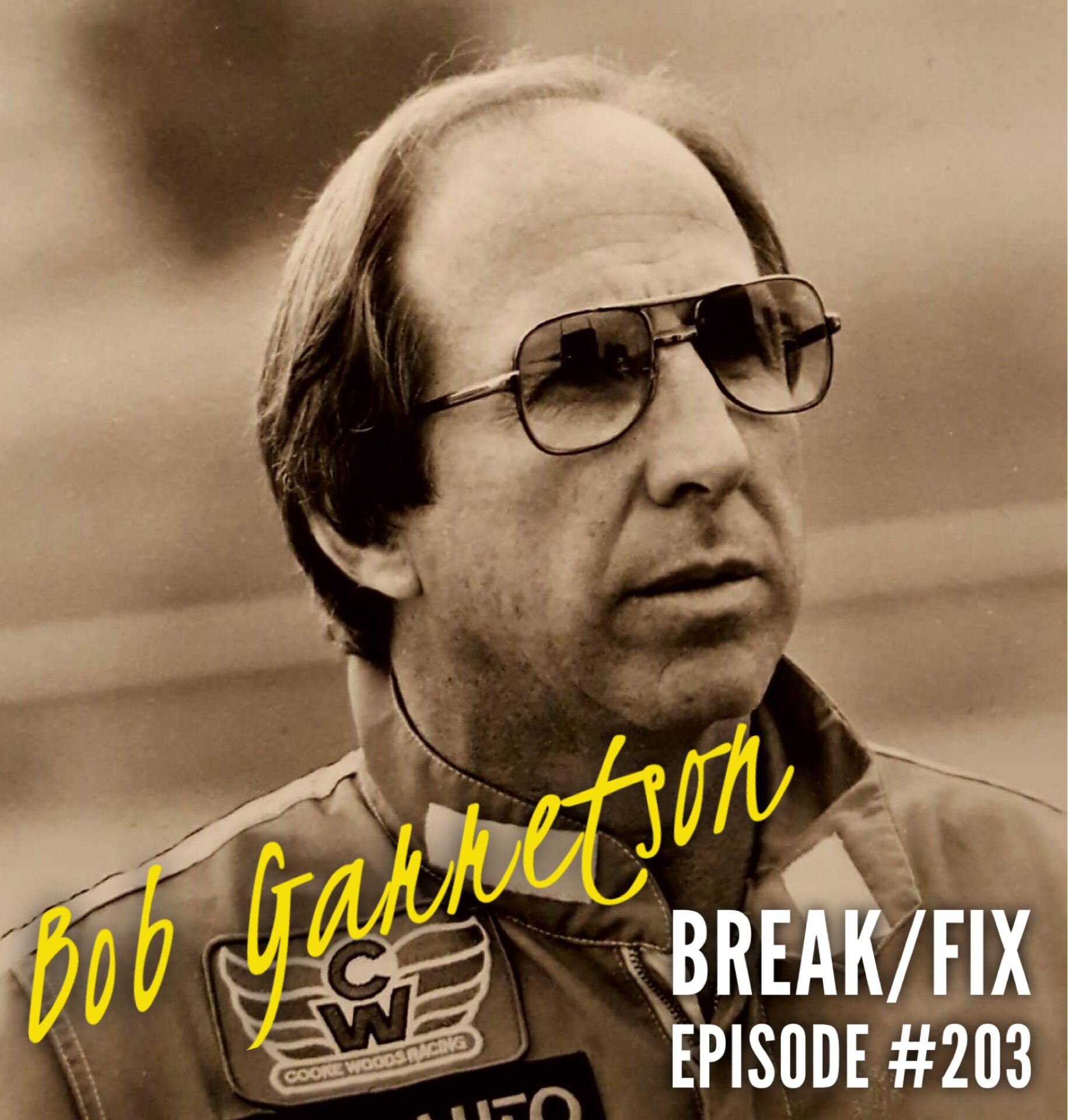
In the golden age of sports car racing, amid the roar of turbocharged flat-sixes and the haze of pit lane fuel, Bob Garretson carved out a legacy not with flash or fanfare, but with quiet determination, mechanical ingenuity, and a deep love for the Porsche marque. On this episode of the Break/Fix podcast, we sat down with Bob to trace his unlikely journey from Navy veteran and Silicon Valley engineer to 1981 World Endurance Champion.

Photo courtesy International Motor Racing Research Center

Bob’s story begins in Southern California, where his older brother’s exploits at Muroc Dry Lake sparked a curiosity for speed. But it wasn’t until a high school friend dragged him to a sports car race at Hanson Dam that the road racing bug truly bit. “Those guys got to drive for 20 minutes,” Bob recalled. “We only got 20 seconds in drag racing. I thought, there’s a better deal here.”

After college and a stint in the Navy, Bob found himself overhauling Ford V8s on weekends to make ends meet. But a chance encounter at a Silicon Valley party led him into the burgeoning semiconductor industry, where he invented a critical chip manufacturing component. With newfound financial freedom, he returned to his passion – cars – and began building what would become Garretson Enterprises.

Tune in everywhere you stream, download or listen!

Listen on Apple
Listen on YouTube
Listen on Spotify

What started as a side hustle servicing Porsches in his garage soon evolved into a full-fledged operation. With the help of Bruce Anderson and a few savvy investors, Bob opened a dedicated shop in Mountain View, California. Garretson Enterprises quickly earned a reputation for meticulous preparation and innovation – equal-length headers, custom intercoolers, and bulletproof exhausts were just the beginning.

Photo courtesy International Motor Racing Research Center

Their big break came when Dick Barbour, frustrated with repeated DNFs, handed over his 934.5 to Garretson’s team. The result? A win at the 1978 Sebring 12 Hours with Brian Redman and Bobby Rahal (above). “That was kind of an exciting start,” Bob said with a chuckle.

Photo courtesy International Motor Racing Research Center

Synopsis

In this episode of Break/Fix, we welcome Bob Garretson, a prominent figure in sports car racing during the late 1970s and early 1980s. Bob shares his journey from Southern California, where his passion for cars and racing began under the influence of his older brother, through university, the Navy, and an accidental career start in Silicon Valley. He recalls founding Garretson Enterprises, a notable racing and car service enterprise. Bob recounts his memorable races, including victories at the 12 Hours of Sebring and the 24 Hours of Daytona, and his interactions with legendary racers like Brian Redman and Bobby Rahal. He discusses his experiences with iconic cars such as the Porsche 935 and reflects on his illustrious career and graceful departure from racing. The episode also sheds light on Garretson Enterprises’ legacy, highlighting the camaraderie and unique stories of the Porsche racing community.

  • Tell us about the who/what/when/where of Bob Garretson, how did you get into cars? And eventually into racing? Did it start as a kid? Did you come from a racing family?
  • What’s Garretson Enterprises?
  • How did the Apple 935 come to be?
  • What was it like racing with and against folks like Brian Redman, Bobby Rahal, Al Holbert, Randy Lanier and others. 
  • It’s been said that the Porsche 935 was one of the most challenging cars to drive and master; what was the appeal of that car over others, and what was it like to drive? Did you still hold the 935 in the same regard?
  • What have you been doing in the racing world since dissolving the team? Did you go back to racing?

Transcript

Crew Chief Brad: [00:00:00] BreakFix podcast is all about capturing the living history of people from all over the autosphere, from wrench turners and racers to artists, authors, designers, and everything in between. Our goal is to inspire a new generation of petrolheads that wonder. How did they get that job? Or become that person?

The road to success is paved by all of us. Because everyone has a story.

Crew Chief Eric: Being the owner and driver of a sports car team during the heyday of sports car racing in the late 1970s and early 80s can be challenging, but also very rewarding. Competing part time in both the World Sports Car Championship and IMSA GT Championship, during 1978, Arges accomplished a win at the Sebring 12 Hours, along with veteran racer Brian Redmond and Bobby Rayhall.

Arges won the 24 Hours of Daytona, but despite not winning another race that season, he won the first ever awarded [00:01:00] World Endurance Championship for driver’s title in 1981. He sold his team and retired from racing shortly thereafter. But that’s just the beginning. So tonight, I’d like to welcome back Mike Carr from the Randy Lanier episode as my co host, who is a huge fan of the golden era of sports car racing.

And with that, we are both pleased to welcome Bob Gerritsen to Break Fix to tell his story. So welcome, Bob. Thank you very much for that introduction.

Mike Carr: Very nice to be here with you, Bob. Thank you.

Crew Chief Eric: So Bob, like all good Brake Fix stories, there’s always an origin. So tell us about the who, what, where, and when of Bob Gerritsen.

How did you get into cars and eventually into racing? Did it start as a kid? Did you come from a racing family?

Bob Garretson: Well, I, uh, grew up in Southern California, and my older brother, who is quite a bit older than I am, but he was into going up to Muroc, Dry Lake, and trying to, you know, run the speed stuff. So I thought, well, when I got to drive, I should do the same thing.

So I fiddled [00:02:00] around, but didn’t enthuse me very much. And so then a high school friend of mine saw a sports car race being run at Hanson Dam in the, in San Fernando Valley. Southern California. So we went to that, look at my friend. And I said, look at those guys get to drive for 20 minutes and we only get to drive for 20 seconds.

I think there’s a better deal. So got interested in road racing, then went off to university and do much of anything until I got out of the Navy after graduation, I worked my way through college. Overhauling Ford V8. My dad worked at Warner Brothers Studio and he would find people that needed an engine overhaul.

So I would come home on the weekend, pick up a car, take it home, pull the engine out, tear it all down, send the block and heads and stuff out to the vendors to grind the valves and bore the cylinder and all that kind of stuff. I come home the next weekend. I’m trying to get it all back together and on the third weekend i would come [00:03:00] put the engine back in and deliver the car when i graduated from uc berkeley i want to work for hewlett packard when i was working at hp silicon valley started to go at a party one night a guy.

Telling me about he was starting a new chip manufacturing company. And so I jokingly said to him, well, if you need a mechanical engineer, let me know. Well, he called me up the next day and hired me. So I got in on the ground floor of Silicon Valley was lucky enough to invent something that every chip maker needed patented and all that kind of stuff.

Now I had money to play with and go racing. So that’s what one of my close friends is. Another name you most likely know. Chuck Forge, he had the Johnny Von Neumann car and we got to be friends and he let me drive it a few times and then I got hooked. But by then I had acquired four children and things like that and my wife said, I don’t think it’s a great idea for you to be out road racing.

So I said, well, you know, [00:04:00] okay. She said, I don’t mind if you’re the only one on the track, you know, not competitive wheel to wheel. So I took off and started doing hill climbs and autocrosses and things like that.

Mike Carr: And you’re in your twenties at that point, I presume.

Bob Garretson: Well, thirties almost, but along about them, one of the guys I used to compete against with at Porsche parades and stuff like that was a guy by the name of Dick Barber, which I’m sure you all know.

You know, we used to talk and I would go to Laguna Seca, for example, and I’d see him and he, I’d say, Dick, you ought to have Garrison Enterprise prepare your car. He says, no, no, no, I have a great mechanic and all this stuff. I said, all right, fine. At Laguna Seca, he DNF’d, so that’s why I suggest he ought to have us take care of his car.

So next time I saw him was at Sears Point. Same thing happened. Well, he got pretty ticked off at his people and told him to take the car down to Mountain View, where our shop was. So we started preparing that. Well, the first race it went out to [00:05:00] run was the finale at Atlanta. Of course, wouldn’t you know, in practice, something happened.

And God, here I am saying how wonderful we are and all that stuff. Well, it turns out that the Porsche truck was there and I could get the parts needed and fix it and he finished the first race in these nine thirty four and a half. So next year he bought a new nine thirty five said to him, I said, Dick, you ought to let me drive the spare car.

And he agreed that I said, if you can drive it as long as you’ll drive with renter riders that pay to sit in the seat. The first race was the 78 Sebring race. Brian Redman was just recovering from his big Formula 5000 accident. Joe Hoppin was running Porsche Racing in America, and he convinced Barber that, you know, I guess paid him some money, of course, to put Redman in the seat with me, which is fine.

The owner of the Sebring track was the third driver. And so we went [00:06:00] off and, uh, as the night went on, everybody broke and stuff like that. And, uh, here we go win the race. So that was kind of an exciting start. And I didn’t race many races after that. I did Le Mans, which I crashed on the Mulsanne straight at four o’clock in the morning.

Uh, didn’t really get serious as far as I was concerned about racing until the next year when we ran the whole season. Did, you know, Bond didn’t win any races in my whole career in IMSA. I only won two races. So one of them was Daytona and the other was Sebring. So we went on and ran and prepared the SACS car for Barbara up through 1980.

81, Barbara quit racing. So I was left with what to do. And there was another team of Roy Woods and Cook. Brian Redman came to me and he said, look, a new car coming over, new Lola. Which he is supposed to drive. He said, uh, I want you guys to prepare the [00:07:00] car. The car wasn’t ready for Daytona and the car wasn’t ready for Sebring.

And finally it showed up at Laguna Seca. We brought the car down from Mountain View and ran it. Bobby Rahal drove the 935 at that race. Of course, the Lola T70 won the race, and Brian went on to win the IMSA championship. But at Le Mans in that year, I drove with Annie Charlotte Vernet and Ralph Kent Cook, and we got in a big fight over some stuff, and I was on my own.

But my car that we drove at Le Mans. So I just went and carried on on my own going to the races I could afford. I was, you know, not in the big financial position like those guys cook and stuff. And so I finally had to give up in about August. I just couldn’t afford it anymore. I get this telephone call from Juergen Barth at Porsche.

Juergen says, Bob, are you coming to Brands Hatch? I said, [00:08:00] why do I want to go to Brands Hatch? He says, well, you’re leading in the world championship. You’ve got to come to Brands Hatch. Word got out that some of the guys that I’d driven with, one of them’s sponsor was Flying Tiger Airlines, and he convinced Flying Tigers to fly the car to England and back.

All the crew guys, I said, I can’t, can only take a couple of you. And they all came on their own and stuff like that and we made it over there and we finished second in the race but group C what had been formed so they ran group C cars and group five cars, uh, four are driven by a couple of formula one guys.

Won the race, but we finished second and won the world championship, winning the world championship and then having and going through a divorce. I moved to England and that was, that was it.

Mike Carr: I want to talk to you about your approach to choices in terms of what races you enter. They had sort of a manufacturer’s prize going on, and privateers [00:09:00] were racing a set of races, and then the makers were racing a different set of races, focusing on winning that maker’s trophy.

And it seems like it added up to you not only winning the season, but assuring your place in the FIA Hall of Fame on a limited season of select entries, maybe half the entries were in us and half the entries were in Europe. Which did you focus on?

Bob Garretson: I only did six races out of the 10, five in the United States and one in Europe.

One of the brands hatched the finale, but you know, the old adage, you got to finish to win. We finished every race. That was the goal.

Mike Carr: Another thing that struck me as unusual is Lancia as the maker won that year. Over Porsche and other manufacturers. I’m confounded as to how that happened.

Bob Garretson: The car that beat us at Brands Hatch was a Ford.

It was a Group C car, not a Group 5. This is the thing that kind of upsets me a little bit, is that the race was for the world championship [00:10:00] in endurance racing. Yet they allowed cars that weren’t in that championship to compete and

Mike Carr: a

Bob Garretson: group C car is going to beat a nine 35 every single time, especially if you’ve got two formula one drivers sitting in it and have tested it and all that kind of stuff.

And I just felt that we kind of got cheated a little bit in the quote glory that the team and the effort and Porsche and everybody else put forth. Yeah, we’d won the world championship, but the world championship really didn’t become. A big deal until all the cars were running group C cars and Jackie X was my successor.

And then, you know, it goes on and on and on from there.

Mike Carr: You just laid down an immense amount of information where I want to go back to is how you had a wife who told you that she didn’t want to see you doing wheel to wheel, but you had a race shop. that was better than the shops that were working on competitors cars.

Crew Chief Eric: Behind all this is Gerritsen Enterprises, so let’s talk about what that is, [00:11:00] its history, what it’s all about, and how that was fueling, basically, your racing career.

Bob Garretson: I had a 356 Porsche. And a Ford station wagon,

right? Well, when I was telling you about this Hanson damn race and wanting to get a sports car rather than a dragster, the car I wanted to get was an Austin Healy. So you’ll mark two. I had one all lined up to buy the guide. I was going to buy it from died and his wife sold the car trying to get rid of stuff before she contacted me.

Anyway, when I was in the Navy, I went back to a homecoming. Event at the fraternity house and met the guy that I’d gone to school with there. We got talking about cars and I told him, well, I’m trying to buy an Austin Healey. He said, ah, you don’t want to buy an Austin Healey. He said, come with me. We go outside and there’s a little 356 coupe sitting there.

An early model, uh, not even an A. He said. Come with me. We’ll go for a ride. Well, [00:12:00] that was it. I went after that ride. I had to have a 356. I saved everything up and in January 1958, I bought a 57 356 and that’s where I started having fun driving a lot. I used to autocross and hill climb all the time.

Crew Chief Eric: This comes right at the heels of the whole James Dean situation with him.

Bringing the 356 into the popular view of, you know, Southern California. And then he switches to the 550 and then his untimely death. We covered this in a previous episode with Lee Raskin, but you’re right in the middle of all this. Was that also a factor in you getting your 356 or why it suddenly just was there as a popular car?

Bob Garretson: After, and I couldn’t, and I didn’t get the Austin Healy. I started looking into when I got the HP. I said, there’s seven Porsches sitting out in the parking lot. You know, they’re going to need service at night at home. I had four kids and the wife and trying to buy a house and all this stuff. So I have always was [00:13:00] short of money.

So I approached a few of these guys and you need service on your car and oil change, you know, all this kind of stuff. So I started doing that at night in my garage. One of the guys that worked there knew nothing about cars, but it was very interesting guy by the name of Bruce Anderson. You may hear that rallying around the Porsche world.

So he started hanging around and finally one day he said, can you come with me to my parents house and have a talk with my father? Oh my god, what did I do now? He was getting elderly and wanted to get his sons into some kind of business where they could be independent. So he said, look, if you’ll open up a shop and do this on a full time basis.

With these two kids and not me working full time because I’m staying at HP, I’ll finance the start. So that’s where Garretson Enterprises started. We grew out of a one stall to two stalls to four stalls on a industrial complex. Then [00:14:00] when my mother passed away, my brother and I built a purpose building with seven lifts, a dino room, and all this stuff and started working on preparing race cars.

And that’s where it all got going. This whole thing with Barber started and after he agreed to bring the car down and stuff like that, we decided that, look it, we can’t work on race cars in the shop designed to run for street cars doing everyday service. So we put a hole in the fence in the back and there was an industrial site behind us and we rented a couple of places there and that’s where Garrison Racing was and we kept the name Garrison Enterprises on the cars and stuff like that to advertise the street shop.

Mike Carr: Head of technology at Google, you know, at some point he found himself with some money to do some racing, which good for him.

Bob Garretson: The funniest thing was, I don’t know if you were aware, but Steve Jobs had a 356, didn’t run, but he had a 356 and Wozniak had a [00:15:00] 928. He used to bring to us for service. The, uh, head of, um, public relations or whatever it is, also had a Porsche 911 or some kind that brought it to Garrison Enterprises for service.

And so, one day, a guy was coming to pick his car up and Steve Jobs drove him to the shop. And so I went up to him and I said, you know, you guys ought to sponsor a race car. Steve says, no, no, no, no way. We, you know, what’s that going to do for me? Well, when was the, I came back to pick up his car. See, I didn’t work there.

I never worked at Garrett’s enterprise because I was too busy in the, in the chip semiconductor business. But I used to come every day at lunchtime, every day at the end of the day, spend a couple hours there getting everything working right. And met these guys. And so after was asked about it and he was a little more.

Enthusiastic well, uh, advertising guy said, Hey, I think it’s a great idea. We’re opening a new campus in Cupertino. [00:16:00] I think it’d be just a absolute barn burner. If we had a nine 35 sitting out there on the apron, you know, with all the Apple colors. So I don’t know if you ever saw the Apple car, but in 1980, it was sort of the neatest looking.

935 running so that was a great event and that’s the car everybody that ever. It says, Oh, do you drove the apple car? And I said, yeah, I drove the apple car.

Mike Carr: Do you know how many tributes to that car have been built over the years?

Bob Garretson: Oh, no, I don’t. But there’s a whole bunch of them in Europe. Anyway, the guy that owns my 935 now, you’ll know the name, Adam Carollo.

We’ve heard of him. He’s a comedian, but he’s a nice guy, great guy. Matter of fact, at the last Monterey Historic System in August, I asked him, I said, this year’s races was sponsored by Le Mans, the 24 Hours of Le Mans, because they were trying to get people to come to the 100th anniversary of the race.

They were going to have demonstration [00:17:00] laps. They were trying to get all the drivers and all the cars that ever raced at Le Mans. Come over there. So anyway, I approached Adam. I said, Adam, would it be possible in these demonstration laps, you’re supposed to be following a pace car around and stuff like that, no racing or anything.

I said, would it be possible to drive the nine 35? I mean, I, first of all, I had to get permission from my wife because she doesn’t think I should do it, but anyway, she finally agreed. And so he let me drive the car, which. I mean, I can’t believe I drove that thing competitively. I mean, well, of course, I’m 89 years old now, so just unbelievable.

Just fantastic car.

Crew Chief Eric: It’s been said that the Porsche 935 is one of the most challenging cars to drive and to master. Tell us about that experience. experience, what you can remember of driving it. What’s the appeal of that car over others? Is it one of the best 911s ever? If you think about it in comparison, do you still hold the 935 in the same regard today knowing what you know about all the modern Porsches?

Mike Carr: How did it [00:18:00] compare to the 956?

Bob Garretson: Well, it was 956, of course, a whole different car. It was a ground effects car, 935, you know, had aerodynamics, but didn’t have any ground effects. I never drove a 962, so I can’t really comment on that, but the beauty of the 935 was how much of a beast it was. There was no finesse in that car.

You did it with brute force and… Ignorance and just, I mean, I was absolutely amazed when I drove this car this year and how fast it was. I mean, the acceleration was unbelievable in the day, you know, didn’t have that kind of an impression on you, but coming back almost 50 years later, uh, 40 years later anyway, it’s just unbelievable.

And the other thing that was interesting about the car, it had a locked rear end. Oh, you have to, you know, meet your down shifts and everything or else got squirrelly and stuff like that. And what I noticed was [00:19:00] driving the car this time, when I accelerated, it pulled to the right. And when I decelerated, it pulled to the left.

Come to find out that Adam Carolla and his mechanics that own the car know nothing about tire stagger. So with two different size rear tires, Uh, you’re going to get, you know, different actions on the acceleration and decelerate. So anyway, that’s one thing they’re getting straightened out. Cause he kept complaining.

He kept telling me what do I do to stop spinning out? I spin out. Well, I think this is what happens. He lets off on the gas and all of a sudden the car jerks one way and he doesn’t prepare for it. He’s not a better active driver and anything, but historic races and stuff like that. And most of the people that drive the 935s now, there’s a special limited slip differential made just for the car and they put that in so they don’t have this problem.

Mike Carr: Can we talk about 1981? Sure. So you’re with Redmond. It sounds like he may have been the motivating force to get you on track with [00:20:00] him. Is that right?

Bob Garretson: No. The way Redmond came along with, I told you about Sebring in 78.

Mike Carr: Yeah.

Bob Garretson: Somebody came to Joe Hoffman and said, Can you get Brian Redman a ride in the car?

He wants to start coming back. This was after his big accident in Canada. And so Arbor said, well, yeah, how much are you going to subsidize me for doing this? And it was just at the last minute, basically that he joined the team. So it was myself and Redman and. The guy that owned Sebring at the time was Charles Mendez

Mike Carr: was

Bob Garretson: it?

Mike Carr: You find yourself in your mid to late 40s.

Bob Garretson: When I won the championship in 81 I was 48 years old.

Mike Carr: And I think Redmond at the time was probably about 45. Yeah. And then you’ve got Rahal on the team and he’s a 28 year old kid. Who has found some success in F1 and F3, and his career is just taking off. How did you

Bob Garretson: hook up with him?

Mike Carr: Well,

Bob Garretson: here again

Mike Carr: at Sebring.

Bob Garretson: Wasn’t 78, but it was [00:21:00] one year at Sebring. He had just lost his ride with Wolf in Formula One when Wolf went broke. And so he didn’t have any ride. And so he came down to. Sebring looking around, talking to teens and, you know, asking to get a ride with him and stuff like that.

Mike Carr: He’s dock walking. He’s looking for a job. That’s great.

Bob Garretson: And Barbara said, yeah, you can drive. And so that’s how we got together. And then Bobby and I became. Yeah, even though there’s quite a difference in the race, we became very close friends. My wife and I and Bobby’s parents were great friends. We used to go back and stay with him and do things all the time.

And Bobby’s dad decided he wanted to run the Mille Miglia, you know, the repro of the Mille Miglia. So he asked me to get him a car, so I got a 550 Spyder for him. We ran that three years in a row, you know, things like that. That’s a Bobby and I are just great friends in France. They run a thing called a tour auto, which is a tour around France [00:22:00] and the doing race circuits along the way.

So Bobby and I, Ray Hall and I did that three times and one year, the last year we did it, we did it in a three liter RS 911. So one of the circuits that we’re going to drive is the old Nurburgring. And I don’t know how long it had been since Bobby had driven the course, but he still knew the turns. He says, okay, we’re, we’re going to come around the corner here.

It was a left hander. And he says, you’re going to see all kinds of cars over in the grass, up against the guardrail on the outside. Sure enough, we come up there and come flying around the corner. And there are all these cars sitting there. And you know, he still remembered after 10 years before the last time he raced, he still remembered all this stuff.

You know, just so simple for him. You always knew that he was in control, such a nice personality. Doesn’t have any errors about how great he is and stuff like that. He just, it’s just Bobby nowhere near the driver. He [00:23:00] is, but he’s unbelievable.

Mike Carr: Were you driving against the Randys and the Bob Wallocks and the other drug dealers in the early 80s who would buy a 935 at Le Mans with a bag full of cash?

No, you mean like, uh, Preston? Yes, we spent some time talking about Preston

Bob Garretson: Henn. Yeah. Well, Preston Henn was actually a nice guy, but, uh, just… Well, John Paul Sr. was the guy that was, uh… Real bad actor. And I felt sorry for his son because he had to live under that cloud, but it all right.

Mike Carr: Randy Lanier told us that John Paul Jr.

was the faster of the two.

Bob Garretson: Oh, definitely. John Paul Sr. was not that fast. He drove one of Barber’s cars at Aledega. Well, I didn’t drive at that race, but Arbor was faster than John Paul er in our car. I don’t know if in his own cars and stuff like that what he had, but,

Mike Carr: and then I was thinking of the Whittingtons.

Bob Garretson: Oh, the Whittingtons. Yeah. They now Whittingtons were good drivers. They were competitive all the time. I guess if you can fly AP [00:24:00] 51 Mustang, you can drive a sports

Crew Chief Eric: car, especially at 9 35. I mean, they’re probably on the same scale, right? Yes, that’s right.

Mike Carr: I think AB 51 might be better behaved.

Bob Garretson: Yeah, I don’t think you can spin out as fast in a P 51 as you can in a 935. You

Mike Carr: can’t pull over, but the ground’s pretty far away. That’s

Bob Garretson: right. Yep.

Crew Chief Eric: It’s gotta be a big jump going from autocross and hill climb right into sports car racing, into Camel GT and IMSA. And back then it was a little bit more open.

Everybody was building a better mousetrap, trying to build the best car, trying to one up each other and whatnot. What was it like? Out on track, not just in the 935, but some of your competitors, were there clear advantages and disadvantages between the cars? What was the competition like back then? We’re, you know, we’re talking about some of the drivers right now, but even in your short time, did you have some rivals?

Did you make friends? Like what was it like in those days?

Bob Garretson: That era, everybody was [00:25:00] friendly. I mean, you, you didn’t fear talking to anybody that they were going to get any secrets or anything like that. I think the biggest difference that I found in the racing in that was the preparation of the cars.

There were guys that was spending tons of money that cars were terrible. Put a Bob Wallach in a car and it doesn’t perform like somebody else’s car that he sits in. That’s what we always prided ourselves on is that, well, we tried to make it as good as we, as it could possibly be made. And we did lots of little things.

driving it easier. And we were the first ones to put on big intercoolers. I mean, we built special exhaust systems because Porsche one was made out of 303 stainless and they would crack and break and stuff like that. We made ours out of 400 series stainless because it doesn’t transfer as much heat.

Therefore you get more turbo action and, you know, little things like that. Equal length [00:26:00] pipes was the Porsche one was. Three into one into, you know, we felt that you had to not only outdrive them, but you had to outsmart them. Well, and the poor victim of that, he’s dead now, so he can’t come after me, but poor Bob Aiken, he spent.

Tons of money trying to get things done. There was always some screwball thing going on with his car. This is the 935, not when he got into the 956 or whatever it was. Anyway, that’s just one man’s opinion anyhow.

Crew Chief Eric: As you were coming up through your driving, and then you got onto the big stage on the IMSA and the Camel GT series, Did you have any coaches?

Did you have mentors? Did you have other drivers that you were just chasing them around and learning from them on the fly? Like, how did you develop yourself as a driver going from autocross and hill climb to pro racing?

Bob Garretson: Well, I think in all kinds of racing, the objective is the same thing. You’re trying to win.

You either teach yourself or you find out [00:27:00] somehow what to do. And I think that in my case, it was never driven a 935 until Sebring in 78. He got in the car and away we went. I don’t know, it just sort of came natural, I guess.

Crew Chief Eric: Were there any drivers that you looked up to? I mean, on that roster of names, when you look at those years specifically you race, you’ve got people like Chip Ganassi, you’ve got AJ Foyt, you’ve got David Hobbs, Hurley Haywood, Peter Gregg.

I mean, you were rubbing elbows with all sorts of famous drivers from that era. Were there guys that you were looking up to? Or that, again, you were chasing around the track trying to learn from them on the fly?

Bob Garretson: One of the guys that I thought was absolutely fantastic is Hurley Haywood. Yeah, I mean, you certainly looked up to guys like Wallach.

And I got to drive twice in the 935. I got to drive with Rick Mears and Johnny Rutherford. They were teammates at Watkins Glen two times.

Mike Carr: Did you run with any other indie winners? Yeah, right. I mean, you got Rahal,

Bob Garretson: Mears. Yeah. No, [00:28:00] those are the only ones. I didn’t drive with him, but Rolf Stamlin drove a couple of times with Barbara in the other car.

He was a guy that thought he was the greatest, you know. We were at Sebring one year, and my first wife was with me. Stamlin fancied himself as quite a tennis player. My wife was quite a tennis player too, so they went and played and she beat him. And you talk about a miserable guy for the next, seemed like the whole time from then on, but just a very interesting guy.

I couldn’t feel like we were on the same wavelength most of the time. Wallach was a nice guy. He’s quiet. You had to almost pull the words out of him. You know, it was a shame of what happened to him.

Crew Chief Eric: What about Mike’s number one guy, not Randy, but Al Holbert.

Bob Garretson: Yeah, Al was, he was great because here again, another guy that thought about things to do and didn’t just get in a car and drive.

I mean, he was involved in the car itself.

Mike Carr: [00:29:00] I’m from Doylestown and that’s where Al’s from and his father, Bob, they kind of had a big role in Porsche factory racing in America going all the way back. It was really fun to go to different tracks. This is how I know of you. Because you were racing against him at places that my family would visit with the Holbrook family.

The loss of Al was just huge, but ignoring that for the moment. Watching him race against you, watching you beat him, watching Randy Lanier beat him when he’s driving a factory sponsored 962.

Bob Garretson: I’d like to try driving one.

Mike Carr: It’s what engendered my love for this sport.

Bob Garretson: Well, one of the things about Porsche is that the Porsche world, you’ve got friends no matter where you go in the world.

I don’t know if any other car make has the camaraderie that the Porsche world has. You think about Germans being cold and hard and rigid and all this kind of stuff, yet the factory is open once you’ve like, I was [00:30:00] fortunate to work with them, but it’s a totally different atmosphere. I had a Ferrari for a while.

I used to run the Virginia city hill climb with it and nobody, unless you’re somebody or you got the latest, greatest thing, nobody really wants to talk to you. Porsches are not that way. It’s a different life. You try to explain that. Like my second wife, when we got married, she said, what the hell? You know, next thing you know, she’s immersed in this thing.

And it’s just unbelievable. Anyway.

Crew Chief Eric: This brings up a great question, Bob. So since you left racing, have you really left racing? Where does the story of Gerritsen Enterprises go? Is it still in continuation today? You mentioned the meal Amelia. Are you still up until this point? Are you have you been active in the racing community, even though not being on the big stage at him?

So,

Bob Garretson: no, no, I haven’t. I don’t know if you’re aware, but I did crash at Lamont 1st time. I race [00:31:00] there 4 o’clock in the morning 2 more laps to go on my. I’m going down the Mulsanne straight and come to the kink, which they don’t have anymore. All of a sudden the rear end starts to come out and you forget how fast you’re going and way overcorrected and it went the other way.

And of course I crashed into the barrier and the car flipped over. I counted seven times that we went over, but ended up on all four wheels. And even though he wasn’t a teammate. Brian Redmond stopped and asked if I was all right. And uh, yep. I don’t know if I’ve ever driven at Le Mans, but it’s quite an experience.

And the thing that will always be in the back of my mind is when it rains over there. You go flying down the Mulsanne Strait, we’re doing 200 miles an hour. Other cars are maybe doing 120, 140. You come across this cloud, and it looks like a heavy fog. You pray that the guy in the slow lane that you’re going to pass is [00:32:00] going to stay there.

I mean, you go into the cloud and you can’t see a thing until you come out the other side. And it’s quite an experience. I’ve managed to walk away. The hardest thing on the whole situation was getting out of the damn car because the doors wouldn’t open. I didn’t think that there was no windshield in the car.

I could have climbed out that way. Only the corner workers managed to bend the window frame. Down because, you know, we had to have nets on the windows because we were running into class so I could climb out through the window and didn’t get hurt at all after 81. I did. I think you did into some part of 83.

I drove Daytona in 82 and then 83. We converted the car 935 to basically a 934. They raced as a GTO car rather than a Group 5 car. I drove it a couple times, but just didn’t have any enthusiasm for [00:33:00] them.

Mike Carr: Are

Bob Garretson: you

Mike Carr: satisfied having left the arena when you did? You had had such success, and then you moved on.

Bob Garretson: Oh yeah, no, I mean, I quit on top and that was very satisfying and I, you know, I’m not sorry at all that I ever stopped. I tried to help various people along the way, just like I said, Brian Redman insisted that I prepare his Lola first of all. An English guy came over and became the crew chief finally.

But what broke that situation up was we took Lola T70 and put a 935 engine and gearbox in the car. Problem was we were running out of time. The car was supposed to debut at Le Mans. Well, we got to Le Mans and had never been on the track before, went out there and we couldn’t get any boost. It wasn’t getting to the engine.

The problem was is that the. Framework that supported the intercooler was not sturdy enough. So as the pressure [00:34:00] built up, it opened gaps in the gaskets. And so we started losing boots. So it never did run at Le Mans. And that was the straw that broke the camel’s back as far as me and Cookwood’s racing.

And so I had to go out on my own from there on. So that’s what happened.

Crew Chief Eric: The rest of the history of Gerritsen Enterprises. Is it still around? Does, did it continue on or did you close that chapter too?

Bob Garretson: No, what, what happened to Garrison Enterprises was I had sold my semiconductor business as a company that bought it, wanted me to stay with them and run the business.

Keep it going the way it was or expand whatever happened well i was still racing it was 81 or 82 i guess i still playing around stuff like that and these guys came to me and said look at we don’t like you running around the world doing all this stuff you’re supposed to be running this business i said well business is running i’ve run it the way i’ve run it all along what’s the big problem.[00:35:00]

And he said, well, if you don’t stop, you’re gone. I said, fine. Well, I’m gone because I had a lifestyle and that’s the way I wanted to live. What happened was, was I just said, okay, I’m gone. Take my money and run. And I went over and basically took the English office over and competed with the other companies because the EU had started then so we could supply from England, all the stuff that we used to have to have offices in.

Germany and France. So Garrison Enterprises was functioning. I’d come back three or four times a year or more and find out what’s happening and all those kinds of, well, I came back one trip and the assistant bookkeeper came to me and said, you better look at these things. We don’t have any cash.

Something’s wrong with the money situation. We have to do an investigation, find out that the head bookkeeper was embezzling money because she thought she was a professional bridge player and was gambling on bridge. And then the two brothers that were business partners said, [00:36:00] you know, you’re not here to guys and stuff like that.

Can we sell the business? They had a friend that had a Porsche customer who was a big banker and he wanted to buy the whole. To me having to come up and get us out of debt and all that kind of stuff. I said, you guys sell it. And I left my brother and I kept the building and they paid the rent on it.

When I left, I left my association with Garrison Enterprises. They made it run for a year and then went. So my brother and I sold the building to the Dotson dealership across the way and Garrison Enterprises was no more.

Crew Chief Eric: Knowing what you know now, looking back over your career, your wins, you know, all the people that you’ve met for young, aspiring racers.

That are coming up through the system now. Do you have any advice? Anything you can pass on to them? Words of wisdom? Anything you’d like to share?

Bob Garretson: Well, I think that the young kids today, the drivers are extremely talented, but I don’t think they have a [00:37:00] complete understanding of the mechanics of what’s going on.

And why they do things and why things happen when they do certain things and stuff like that. And I think that’s part of the stuff. I don’t think I have any talent compared to half the guys that I raced against, but I think that I was able to, some cases, I’ll think of them and stuff like that.

Mike Carr: Looking back over the course of your life and career and your racing experience and your success in business and, you know, the people that you’ve met and the interesting life that you’ve had.

Where does racing rank? I’ve

Bob Garretson: made great friends with a lot of people, and some people just unable to make friends with. They, you know, they thought, who’s this punk kid that thinks he’s a race car driver? I, I mean, I admit it, and I’m not the talent that half the guys I race against are, but the thing is that we manage to do what racing’s all about.

We manage to win and do things. So it seems like there’s more ego in things than there used to be. I don’t think that’s [00:38:00] true. I think there’s a, it’s just expressed differently. It

Mike Carr: seems like you got in and then you got out and you drove an epic car.

Bob Garretson: Absolutely.

Mike Carr: You did some amazing things with it. I don’t know how you walked away.

It answers some questions, it leaves more questions.

Crew Chief Eric: But you guys must have some more questions. Sure, Mike does. I don’t want to keep you up all night though, you know.

Mike Carr: I could talk to you for hours. It’s a real pleasure to talk to you. So thank you, sir.

Crew Chief Eric: I have to second Mike’s sentiments there. I mean, I can’t thank you enough for coming on here and sharing your journey into the sports car world, coming up the way you did, and then just gracefully exiting, as you said, at a high point in your career, having that win at Sebringham, the win at Daytona.

And it’s just like. Wow. That’s all I can, all I can keep thinking is, wow, but then you’ve done so many other cool things since then and worked on cool cars and made so many different lifelong friends between the Rahalls and the Redmans and all the other folks that you mentioned. I mean, it’s just, again, thank you.[00:39:00]

Bob, anything else before we let you go? Or Mike, any other questions you want to ask?

Mike Carr: I’m good.

Bob Garretson: Thank you. Well, if you think of anything you want to ask, don’t hesitate. Thank you so much, Bob. Well, you’re very welcome. I enjoyed it myself. Thanks, Bob. Take care.

Crew Chief Eric: This episode has been brought to you in part by the Exotic Car Marketplace.

Founded by BrakeFix guest William Ross, he provides private client services to discreet Ferrari and Porsche buyers as well as sellers. With experience and access to the most desired vehicles in the marketplace, William can source the perfect Porsche or Ferrari you’ve been looking for. To learn more, be sure to check out www.

exoticcarmarketplace. com. Additionally, this episode was supported by the International Motor Racing Research Center in Watkins Glen, who provided the factual data as well as racing results and photographs from their archives, which can be seen in the follow on article alongside this episode. You can learn more about the IMRRC by visiting www.

racingarchives. org.[00:40:00]

Crew Chief Brad: If you like what you’ve heard and want to learn more about GTM, be sure to check us out on www. gtmotorsports. org. You can also find us on Instagram Also, if you want to get involved or have suggestions for future shows, you can call or text us at 202 630 1770 or send us an email at crewchief at gtmotorsports.

org. We’d love to hear from you.

Crew Chief Eric: Hey everybody, Crew Chief Eric here. We really hope you enjoyed this episode of BreakFix, and we wanted to remind you that GTM remains a no annual fees organization. And our goal is to continue to bring you quality episodes like this one at no charge. As a loyal listener, please consider subscribing to our Patreon for bonus and behind the scenes content, extra goodies, and GTM swag.

For as little as 2 and 50 cents a month, you can keep our developers, writers, editors, casters, and other volunteers [00:41:00] fed on their strict diet of fig Newtons, gummy bears, and monster. Consider signing up for Patreon today at www. patreon. com forward slash GT motorsports, and remember without fans, supporters, and members like you.

None of this would be possible.

Highlights

Skip ahead if you must… Here’s the highlights from this episode you might be most interested in and their corresponding time stamps.

  • 00:00 Introduction to BreakFix Podcast
  • 01:29 Bob Garretson’s Early Life and Racing Beginnings
  • 04:12 Career Highlights and Challenges
  • 10:55 Garretson Enterprises and Racing Ventures
  • 14:41 The Iconic Apple Car and Racing Stories
  • 17:38 Reflections on the Porsche 935
  • 19:50 Racing Partnerships and Personal Connections
  • 21:48 Memorable Racing Moments with Bobby Rahal
  • 23:01 Racing Legends and Their Stories
  • 24:22 The Competitive Spirit of the 80s Racing Scene
  • 25:23 Innovations and Technical Insights
  • 30:34 Transitioning from Racing to Business
  • 36:36 Reflecting on a Racing Career
  • 38:29 Closing Thoughts and Farewell

Bonus Content

There’s more to this story…

Some stories are just too good for the main episode… Check out this Behind the Scenes Pit Stop Minisode! Available exclusively on our Patreon.

If you enjoyed this History of Motorsports Series episode, please go to Apple Podcasts and leave us a review. That would help us beat the algorithms and help spread the enthusiasm to others. Subscribe to Break/Fix using your favorite Podcast App:
Listen on Apple
Listen on YouTube
Listen on Spotify

Consider becoming a Patreon VIP and get behind the scenes content and schwag from the Motoring Podcast Network

Do you like what you've seen, heard and read? - Don't forget, GTM is fueled by volunteers and remains a no-annual-fee organization, but we still need help to pay to keep the lights on... For as little as $2.50/month you can help us keep the momentum going so we can continue to record, write, edit and broadcast your favorite content. Support GTM today! or make a One Time Donation.

Learn More

Historical Records (provided by the IMRRC)

For more information on Bob Garretson and other drivers from the Golden Era of Sports Car Racing, look to the International Motor Racing Research Center (IMRRC) for all sorts of historical data and photographs, like those provided in this article, on all sorts of races and drivers! Check out Bob’s Profile on the IMMRC. 

Despite limited starts, Bob’s driving career was punctuated by landmark victories – Sebring in ’78 and Daytona in ’81. But it was his strategic approach to the 1981 World Endurance Championship that cemented his place in motorsports history. Running just six of ten races, Bob focused on reliability and consistency. “You’ve got to finish to win,” he said. And finish he did – every single race.

With support from Porsche and a last-minute airlift from Flying Tiger Airlines, Bob and his crew made it to Brands Hatch for the season finale. They finished second overall, but first among Group 5 entries, clinching the inaugural FIA World Endurance Championship for Drivers. “We kind of got cheated out of the glory,” Bob admitted, referencing the Group C cars that overshadowed their effort. “But we won it fair and square.”

Photo courtesy International Motor Racing Research Center

Garretson Enterprises wasn’t just a racing outfit – it was a hub for Silicon Valley’s Porsche faithful. Steve Wozniak brought his 928 in for service. Steve Jobs, ever the skeptic, once asked, “What’s that going to do for me?” when Bob pitched a sponsorship. But Apple’s PR team saw the vision. The result? The iconic rainbow-liveried Apple 935, one of the most memorable race cars of the era.

Bob mentions on this episode, that his Apple 935 is owned (and vintage raced) by comedian and car enthusiast Adam Corolla. Bob continues to work and coach Adam on how to tune and drive this car; and Bob was able to reunite with the Porsche and drive it once again at the 2022 Monterey Historics at Laguna Seca Raceway.

Bob recently reunited with his old 935, now owned by Adam Corolla, for a demonstration lap at Laguna Seca. “I can’t believe I drove that thing competitively” he marveled. “It’s still a beast.” At 89, Bob remains sharp, humble, and deeply connected to the Porsche community. “It’s a different life,” he said. “You’ve got friends no matter where you go in the world.”

Bob Garretson’s story is a testament to the power of persistence, preparation, and passion. He wasn’t a factory driver. He didn’t have deep pockets. But he built a team, a car, and a career that beat the best in the world. And he did it his way.

As Bob put it, “You either teach yourself or you find out somehow what to do.” For a man who never set out to be a champion, he sure left a legacy worthy of one.


Guest Co-Host: Mike Carr

In case you missed it... be sure to check out the Break/Fix episode with our co-host.
Listen on Apple
Listen on YouTube
Listen on Spotify

And returning with me to co-host this episode is Mike Carr, who some of you might remember from our Randy Lanier episode


This content has been brought to you in-part by sponsorship through...

Motoring Podcast Network

GT Celebration: Racing for the Love of the Drive

What happens when a lifelong passion for motorsports meets a savvy sense of business and a deep respect for racing heritage? You get GT Celebration – a racing series built not just for speed, but for soul.

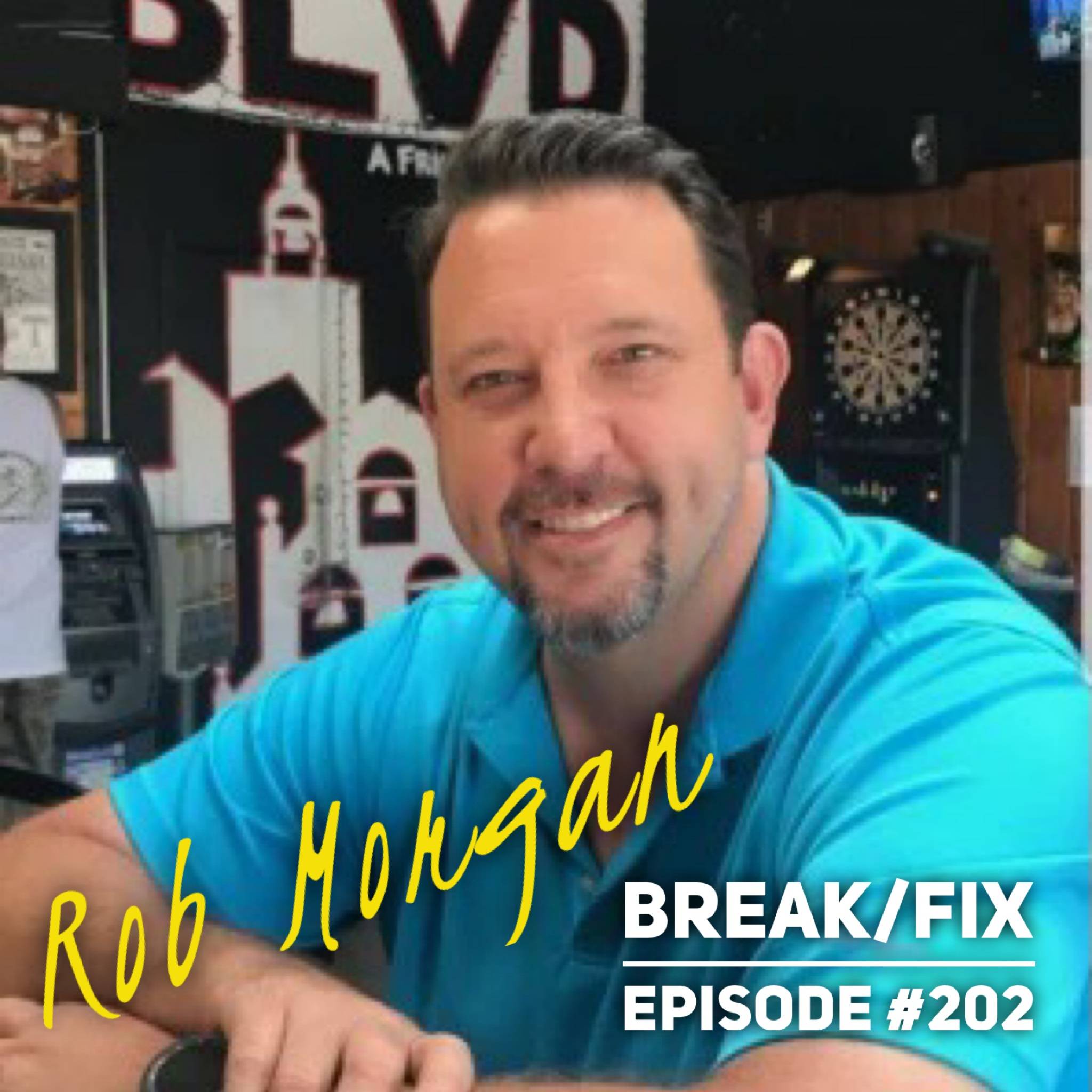
In this episode of the Break/Fix podcast, host Eric and co-host Charlie Streicher from Max Track Time sit down with Rob Morgan, founder of Morgan Performance Group (MPG), to explore the origins, philosophy, and future of one of North America’s most exciting grassroots racing platforms.

Photo courtesy Morgan Performance Group

Rob Morgan’s story begins in Arkansas, where his first word was reportedly “car.” Raised in a motorsports family – his father raced motocross before switching to four wheels – Rob grew up trackside, absorbing the culture and thrill of sports car racing. By age 19, he was racing street circuits in New Orleans and jumping between Firestone Firehawk series, NASCAR trucks, and prototype Ferraris. His resume includes a full season in the Ferrari 333 SP and stints in the Craftsman Truck Series, all while earning a marketing degree from the University of Arkansas.

Tune in everywhere you stream, download or listen!

Listen on Apple
Listen on YouTube
Listen on Spotify

After stepping away from full-time driving in 2001, Rob launched TrueSpeed in Orange County, California, specializing in air-cooled Porsche sales – before they were cool. The business grew rapidly, expanding into service, race car prep, and eventually trackside support. By 2013, TrueSpeed Motorsports was a full-fledged operation, later sold to Rob’s GM and relocated to Thermal Club.

Rob’s next move? Creating a racing series that gave high-performance cars a second life. “These cars are amazing,” he explains. “There’s no reason they should be put to bed just because they’re not the latest homologation.”

Spotlight

Notes

This Break/Fix podcast episode features Rob Morgan, founder of Morgan Performance Group (MPG) and GT Celebration, discussing his journey from a motorsport-enthused childhood to founding a racing series. Morgan shares insights on his early love for cars, his racing career, and the inception and growth of GT Celebration. He emphasizes the series’ aim to provide a fun, professionally run racing platform for both new and seasoned drivers, featuring multiple classes like GT3, GT4, Cup, Prototype, and M2. Key topics include the series’ structure, class distinctions, BOP (Balance of Performance) approach, race weekend logistics, track selections, and future plans. Co-hosts Crew Chief Eric and Charlie Streicher delve into the unique aspects that set MPG Racing apart from other sanctioning bodies like SRO and IMSA. The discussion also touches on the transition from club to pro racing and the importance of seat time for aspiring drivers.

  • Tell us about the who/what/when/where of Rob Morgan, how did you get into cars & racing? Did it start as a kid? Did you come from a racing family?
  • What led to the founding of GT Celebration? Why start your own racing series?
  • What is the program like? Classes of Racing?
  • Where does GT Celebration race (tracks/schedule, is there a “home track”) 
  • What’s the difference between GT Celebration and SRO World Challenge and IMSA?
  • What’s next for MPG and GT Celebration? What do the next 5 years look like? 

Transcript

Crew Chief Brad: [00:00:00] BreakFix podcast is all about capturing the living history of people from all over the autosphere, from wrench turners and racers to artists, authors, designers, and everything in between. Our goal is to inspire a new generation of petrolheads that wonder. How did they get that job or become that person?

The road to success is paved by all of us because everyone has a story.

Crew Chief Eric: Unparalleled passion for sports car racing is what GT celebration is all about. Founded by Rob Morgan, president and CEO of Morgan Performance Group or MPG for short, he worked to build this racing series from the ground up, utilizing both experience and passion with one mission. Deliver a unique racing platform for drivers and teams to compete in a safe, adrenaline filled, unforgettable environment.

MPG features dozens of manufacturers and a wide range of race cars that compete in one of four series. And he’s [00:01:00] here tonight to explain how it all works and joining me as co host is Charlie Stryker from Max Track Time. So I want to welcome you both to break fix.

Charlie Streicher: Thank you for having

Rob Morgan: me back on Eric.

Thank you. Glad to be here. Thanks for having me. Eric, Charlie, Charles, not sure what you go by, but yeah, thank you guys for having me.

Crew Chief Eric: So like all good stories, there’s always a beginning. So Rob, tell us about the who, what, when, and where of you, Rob Morgan, the petrolhead. How did you get into cars? How did you get into racing?

Did it start as a kid? Did you come from a racing family?

Rob Morgan: My mom said the first word I ever uttered was car. It’s imprinted in my DNA. Car, motorcycle, anything with wheels. I love cars, love racing, grew up around it. My dad actually started in motocross in the 70s. Ended up blowing out both knees and ended up going to four wheels.

I’ll jump ahead a little bit and say that’s actually when MPG was first founded. Morgan Performance Group is actually what he raced under when he started doing SCCA and uh, M-A-G-T-U and Es Dawson. [00:02:00] So, yeah, so I grew up around it, grew up at the racetrack, a lot of trips in the motor home to the racetrack, and it was just an amazing experience.

Not only did I love the cars. And love everything. I couldn’t wait till I could drive them myself, but it was just fun because that’s what we did as a family as well.

Crew Chief Eric: If I’m not mistaken, I detect a little bit of a Southern accent there. Did you grow up in NASCAR country?

Rob Morgan: Well, I did believe it or not grew up in Arkansas.

So I would definitely say that’s NASCAR country for sure. But I, I didn’t drive in NASCAR till. After a lot of years, sports car. So my dad race sports cars. I grew up racing sports cars. That was always what I wanted to do. Not much road racing going on in Arkansas back when I drove. There wasn’t really Cardi.

In Arkansas, I mean, there was probably a little stuff, but that didn’t interest me at the time. So I didn’t really start driving until 1992. I went to driving school at road Atlanta the month after I graduated high school, and then entered my 1st person, fire, [00:03:00] later, so kind of thrown to the walls, but my dad always had the theory that instead of going from an 80, C.

C. 2 stroke. Might as well go straight to the 2 50. My racing career was in cars was pretty similar. So I went from doing Firestone Firehawk to jumping right into an MCGTO car like a year later. So, yeah, I was racing New Orleans Grand Prix street race. I think it. 19 years old when I went NASCAR racing, it was the same way.

I mean, I’d never driven any ovals, definitely not a short track, which was quite the experience doing it for the first time, but went straight to doing the truck series, did some races with Kevin Duran and David Dollar who ended up being my partner later on. But in 1997, I raced a Ferrari 333 SP for a full season.

And then. About five or six truck races. So I don’t think you can get much different and the cars that you’re driving [00:04:00] prototype pickup truck. So it was fire hose. Yeah.

Crew Chief Eric: So you mentioned going to school and racing at the same time. That had to be hard because obviously you need to study at some point and all the races are on the weekend.

And if you’re super committed on the big stage, it’s a week long affair for some of these races. And it’s hard to just drop in, arrive and drive and go. I mean, some people do it, you know, they have that talent. They have that ability. Was school the building block for what became MPG? What did you go to school for?

Rob Morgan: My degree is in marketing management from the university of Arkansas. I was lucky enough to have a lot of good pledge brothers that when I was going off racing, they were taking good notes and I could stay fairly up to date with what was going on. But yeah, I mean, we would leave typically. On a Wednesday afternoon, and I would miss Thursday, Friday, for sure.

And then depending on when we got back, sometimes a Monday, but yeah, it was tough, but that was always the deal with my parents. It’s like, okay, you can race, you can follow this dream and do this. But our caveat is you got to get a [00:05:00] degree first. I mean, you’d have to have a degree to keep doing it.

Crew Chief Eric: So if you grew up in the golden era of sports car racing, as we like to call it around here, who were some of your heroes?

Who were some of the people you were looking up to during those times?

Rob Morgan: I always love John Paul, Jr. The transition from, let’s say, the 935 to the prototypes was always just incredibly interesting to me. And I just thought the prototypes were may came out the March and 962 and some of these other cars were just, I mean, they look like spaceships to me.

And then to go to walk and squint and before the bus stop, watching 962 go down the back straight away and the little whistle that it does when you shift the gear. I mean, it would just give me goosebumps.

Charlie Streicher: Yeah, sounds like you have a bit of a driving background there. And so how did you end up making the transition from being a driver to starting a series

Rob Morgan: back in 2001 when I stopped driving and the craftsman truck series full time, I started a company in Orange County, California called true speed.

True speed when I started, it was [00:06:00] basically just pre own sales of specifically air cool courses and it was kind of before they were cool. I mean, everybody sells them and they’re worth a ton of money now, but I started down 2001, focusing on the 9, 9, 3, specifically turned into quite a business. The euro was so strong to the dollar 06 to 08.

God, I was selling 30 cars a month to Germany. We were selling the car so fast. I started my own service department mainly for our own cars, which turned into clients, which turned into getting a 27, 000 square foot facility. And then I was like, well, I’m doing sales and service to street cars, let’s do race cars.

Crew Chief Eric: It’s a logical conclusion.

Rob Morgan: Yeah, especially it’s an opportunity. Maybe get back in the seat. Right? So, I started that for North America is in Santa Ana, which was close to where I was. Went and met with those guys at the time, the [00:07:00] program I wanted to put together was just basically buy and portion cup cars, refurbishing them through portion motorsport, North America.

So they get the seal of approval and, you know, you’re buying a good car at the time. He’s like, yeah, yeah, yeah, we’ll do that. Then they said, well, what we’d really like you to do is start a premier track side service for cup car owners. Southern California, so that’s kind of what started true speed motorsports, which is still around sold it to my GM back in 2013, they’re located out at the thermal racetrack now.

But, yeah, so I actually went from driving to team owner to sponsor to actually in 2017 did work for world challenge. I was a class manager. Work for Greg Gill and those guys. And from there, and just, I saw an opportunity, it started with the GT three cars, continue to grow it today.

Crew Chief Eric: We’ve had Greg Gill and a lot of other people on the show.

So I’m really kind of interested to compare and contrast GT celebration and some of the other classes [00:08:00] against your experience, obviously in IMSA, but also in world challenge. So what facilitated starting up a whole nother sanctioning body of racing?

Rob Morgan: You know what? It’s a great question and it, and it was very calculated.

So with my experience with True Speed bought and sold a lot of three cars of course, but we ended up doing a lot of race cars. I mean, I bought and sold probably a hundred race cars during that period. And then when I went to work for World Challenge, I noticed that, okay, the new generation of the GT three R comes out the dot two.

Well, to race and pro racing, you got to have the latest and greatest to compete and to win. And so these. 1 cars are still absolutely amazing cars. There’s no reason they should be put to bed. And so they were ended up in gentlemen, racers hands. With the growth of social media and everything else, I see all these cars.

And I’m not taking anything away from NASA or SCCA club racing, but when you got a [00:09:00] $400,000 GT three R racing against or on the track with a Mazda Miata, I mean, the right front corner of the GT three R costs what the, the Miata costs. So I put myself in those. If I were to be able to be in a position to buy one of those cars.

Would I not want to race against light cars? So that’s kind of where the concept came from and providing them a fun and that’s the key word of fun. Because none of these guys have to do it a fun, but professionally run series where these guys, because these guys are obviously all very successful. Well, to do like, things structured and so that’s basically where the idea came from was given these.

And I used to always say this when I was starting it, the guy you’re racing against knows what the car costs. The guys you’re racing against knows what it costs to get the car prep to get to the racetrack. And most importantly, he knows what it costs to fix it. And our guys, a lot of them, they could be running them.

So they could be running SRO. They definitely got the funding and the ability and some of them, like I say, some of [00:10:00] them do have the ability, but just don’t want the hassle.

Charlie Streicher: You know, you mentioned professionally run. So a thing that I was interested to hear about, how do you guys handle the homologation and the BOP?

Do you stick pretty close to how it was back in this series that they were running before? Or do you have your own kind of setup of rules?

Rob Morgan: Nick Lester is obviously my partner. It was a porcumiter for, for many years in Honda and GM. He is the technical side of things, but I’m, I’m technical enough to, to understand what we need to do to make it fine.

Right? And so there’s no way you’re gonna B-O-P-A-A 2012 Audi R eight GT three to a dot two, GT three R. So, what my idea was, and Nick’s drawn the line in the sand where these cars are divided, but we have a red and a yellow. So there’s a split there just because of the generation of the car, the 2012 are a.

Is running against the 997 GT3R, which that alone makes it a [00:11:00] lot easier. And it’s obviously for all models. I’m just using the Porsche and Audi just because I’m more familiar. But then we also, we have this saying, we want to make tech fun again. We know we have to manage and balance these cars somehow, because they were never meant to be run uncorked.

I mean, if you run a GT3R against an uncorked Evo Lamborghini. It would be a joke, so we have to do something. But 1 thing we do is we kind of start look at what SRO and answer doing as far as baseline. We don’t dive deep into the details. What we do is we do a way a minimum ride height and restrictors.

And that’s it.

Charlie Streicher: Allegation question was always the one that was interesting to me. Cause I don’t, you know, like for the P3 car, for example, if you’re testing, you got to move the camera back from where it’s homologated to B& M so that you can actually see the driver’s hands and whatnot, and then move it back to the race, you’ll get a safety infraction.

Have you relaxed any of those [00:12:00] rules specifically around the cars to allow people to Service the car that they want to have, I don’t want to say it’s

Rob Morgan: run what you brought. I mean, it’s definitely an LMP 3 homologated car, preferably 1st generation. We will allow the new ones, but we’re also letting the Orica, the old LNPC open cockpit cars run with us.

So that’s our prototype class. And then we have a prototype light, which is for revolutions, radicals and stuff like that. What I said earlier, let’s make tech fun again. We’re not here to make people jump through hoops for no reason. Quite frankly, as far as like, you mentioned the cameras. I mean, yeah, we want to forward facing camera.

We would love a rear facing camera just because if things do happen, but no, we’re not going to get into the minute details. 1 thing I’ve always said is this is going to morph into whatever it morphs into. Some of that stuff may be needed down the road. We may have to get a little more strict and we may have to change things and which is fine.

But if it’s for the betterment of the sport [00:13:00] and of the series, we’re okay with it. If it’s just do it to do it to say, we can do it. No, that’s not how we do things.

Charlie Streicher: You know, with a lot of these cars, you know, recently out of homologation, they were running on a spec tire, kind of strict rules. Do you guys have an open tire rule or how do you guys manage that?

We’re

Rob Morgan: sponsored by Pirelli. Couldn’t do it without them. They take really good care of us and quite frankly, the early days went to a lot of races and supported us when they shouldn’t have. Just renewed with them for another few more years. The GT Celebration, Cup Celebration, M2 Celebration, all run on the Pirellis.

Pirellis. 1 thing we’ve noticed with the LMP cars is a lot of those guys don’t like running the Pirelli’s on them for whatever reason. Pirelli claims that, and I’m sure the right set up needs to be drastically different from running on a Michelin, but we just don’t want that to be a hiccup. So our prototype class, and then also to with the revolutions and the radicals has a tire for it, but it’s in Europe.

And so we’d have to bring them all [00:14:00] over here. So, to try to motivate people to come over and try us out in the class, we just felt it was best to leave that open and a ratio and everybody really North America, but in Europe was nice enough to allow us to do that. Which they didn’t have to, so we really appreciate them doing that.

At the end of the day, they succeed if we succeed. They looked at the bigger picture, and even though they may not agree with our, where our mindset is, they allowed us to do it, which was very nice of them. If somebody’s cheating at this level, it’s like, there’s no reason for you to be there. But it’s more about having fun.

But we also take the liberty, as well as, we want it to be fun and exciting for the guys. We don’t want. An Andy Wilsock, a Brent Martini to just lap the field, which they can do sometimes, because those are two guys that can definitely race in the upper leagues. But the guys that are maybe not as experienced, have good cars, putting the time in, go to the races.

[00:15:00] We may help them out, help them with restrictor, help them with weight. And it’s mainly just to keep it more exciting for them. We want them to come back. I’m not saying we’re going to let them go 30 miles an hour faster down the straightaway. That’s not what we’re trying to do, but it’s our goal to have the whole field come by within a legitimate amount of time and not the winner’s already in pit lane and the last place guy is crossing the finish line.

Crew Chief Eric: So Charlie segued right into talking about. The logistics of the program itself. So let’s unpack that a little bit more and talk about how the MPG series is broken down. There’s obviously four different classes in there, but you mentioned even within your GT three class, you split between a red and a yellow.

You’re talking multi class in the same session, or is there a run group specifically for red and one for yellow, or how does this all break down? How does a day of racing play out?

Rob Morgan: What we did at our last event, Dakota is kind of a prelim of what we’re going to be doing this year. 1 thing we did, we’ve noticed Nick and [00:16:00] Kelly and I is for this series to grow.

You got to have a different product. You can’t just have 1 product running on the track. I mean, you’re limited as to how much that can grow. So we realize. Over the last few years that having our own product, developing our own product, controlling our own weekends is key to grow in this and making it successful.

Let’s use celebration because that’s at this point now, it’s just a class within MPG. So celebration is GT 3 cars, red and yellow GT 4. And we’re considering now with all the new GT 4 cars coming out, eventually splitting those as well. 1st generation Afton Martin sure as hell can’t keep up with the new GT 4 Cayman.

There’s just no way. I think that’s down the road, but we can see that coming. And then what we’ve done the last 3 years, it will run. When we do have prototypes, we’ve run the prototypes with the GT cars. We’ve moved on from that, and [00:17:00] now we’re going to have a prototype celebration class, a cup celebration class.

Some events we’re going to do into celebration, the BMW 2. so that’s mainly West Coast. A typical Friday is 340 minute sessions. Saturday Sunday is the same schedule, which is a 30 minute practice 20 minute qualifying and then a 40 minute long race. With the prototypes, it’s a little different because a lot of those drivers also have pro coaches like Colin Braun and Matt Bell and some of these other guys.

So we want to find a way to incorporate those guys into coming to some events with their drivers that they coach. So, Saturday event for the prototype will be a 50, 60 minute Enduro. The gentleman will qualify it. The pro will start it. But the thing is, the pros got to bring the car back in one piece for the gentleman driver.

So that’s why we did that, because you put the pros in at the end of the race, might not have all the cars on Sunday.

Charlie Streicher: You partially answered my question. I was going to [00:18:00] ask if you guys were ever considering doing something like an Enduro format. Are you guys ever looking at doing any sort of special events where you run along with another series or something like, you know, like F4, F3 will go and run with any car at a time or something like that.

Is that on the radar at all?

Rob Morgan: A little bit, I mean, our

Charlie Streicher: our

Rob Morgan: road

Charlie Streicher: Atlanta

Rob Morgan: event is with formula drift and so it has been for the last 3 years and it’s actually an incredible weekend. I mean, they’ll bring in 30 to 50, 000 spectators for that event. You go through the festival area road Atlanta before you come back down the hill.

I mean, they’ve got 10 set up. The drivers just love it. Because they actually feel like somebody is there to watch them. And then after the race, a lot of the fans come down to our paddock and look at the cars and get exposed to it. Something they don’t see every day. So we’ve done that a little bit. We tried to do an event at Sebring a few years ago, the week before the 12 hour.

It was with MSAL and P3 and we were going to be a support event. We couldn’t get the traction. Kind of find out. We just think with IGT and PCA [00:19:00] that’s going there that time of year. It’s just. Seabirds overdone, but, yeah, we’ve had some opportunities to go and do that. I mean, we run with the use that guys Porsche sprint challenge from time to time really like working with those guys.

Great group of guys. But as far as big time events, probably not. And here’s why it’s because, like I said earlier, a lot of our guys. Most of ’em for that matter, could, like I say, do SA or SRO, but they choose to run with us because it’s, you don’t have the jacked up hotel prices, you don’t have all this crazy security.

They go, they have fun, they race against their buddies and it, it’s just a low key weekend, and that’s what they enjoy.

Crew Chief Eric: All of this is really exciting. And so I like the fact that you’re giving the opportunity for some of these older cars to still come out and play and folks to be able to utilize the investment that they’ve made in these cars.

So my question is how old is too old? You know, you mentioned driving. The trucks and then a 333 [00:20:00] SP, if somebody was willing to ensure something like a 333 SP to come out and run and prototype, is that allowed? Or is there like a minimum age that these cars need to hit to be allowed to run in the, in the different series?

Rob Morgan: No, it has to fit within that window with that type of car, that type of class. With the prototype edition, we’ve been asked, well, can we do Daytona prototypes? Well, at the end of the day, we have to be able to police it. And we also don’t want it to look like a run. What you brought, we want the cars to look similar, be similar, have similar performance, and that’s where I was talking about.

If we got to split classes up based on the age of the car, then we’ll do that. I mean, we all need car count, right? But at the same time, you got to stick to what the series was founded on and what’s bringing the customers there and why they’re interested. I mean, we’re getting a lot of LMP 3 interest from guys that have been doing HSR and some of these other classes because they’re taking their LMP 3 cars to these events, but they’re classified with.[00:21:00]

LMP two and LMP one. I mean, they’ve gotta beat an LMP one, Audi to . You know, the podium, you’ve gotta draw the line somewhere. It’s gotta fit into that mold.

Crew Chief Eric: And the GT classes obviously make sense. GT three, GT four, like you said, some of the older GT two cars by today’s standards are probably as fast as a GT three car, even though there were class ups.

So I’m sure you guys make exceptions for all that. But I’m really curious about the cup class. Is that specifically relegated to Porsches or do you have like M four competition in there, maybe some S fours, other vehicles like that, that may be competed in world challenge back in the day, what qualifies for cup classing?

Rob Morgan: I’m going to use next terminology. It’s as delivered from Porsche. However, we don’t have any affiliation with portion motorsport North America. And I don’t want this to sound bad, but quite frankly, don’t want to. And the reason I say that is because there are so many cars that have had engines rebuilt [00:22:00] by autometrics out of South Carolina, not rebuilt by portion motorsport.

Well, that car that’s had an engine rebuilt by Gordon and those guys can’t run in a Porsche sanctioned event. And to answer your question, we’re going to go from a 997. 2 to a 992 cup is our window, but the engine doesn’t have to be sealed by Porsche. The gearbox doesn’t have to be sealed by Porsche. It’s given these guys another place to go run.

And some of the mindset behind it was once autometric started racing with us pretty much full time. They’ve got a very large contingency that they take to these bigger events. Road America, for example, there would be 70 cars.

And it’s gotten to be pretty physical. It’s not quality track time, which is what we provide and what we pride ourselves on. It’s not only a lot, but quality. I mean, the most part of me, you want to put on Laguna [00:23:00] 25 to 30. I’m not going to sell a 40 car field at Laguna. I mean, we’re just not going to do that because it starts taking away from the product.

What we’re doing is giving these guys another option because if you have a 991. 1, pretty much the only place you can race it is NASA or some other type of PCA, POC, but just giving them another place to go look at, to go run the car.

Crew Chief Eric: Going back to the race weekend, you mentioned, you know, when you partner with, let’s say formula drift, you know, you have tens of thousands of spectators.

What’s it like for a spectator coming to an MPG weekend? Are there spectator fees? Are the races televised? Like, what would somebody expect going there for the 1st time?

Rob Morgan: So we are starting to get traction. I mean, like I say, we’re going into our 4th year. We do have people that either look at our website or follow the tracks website that we’re going to see that we’re coming and we get quite a few emails about.

What the costs are, but no, we don’t charge a gate fee. The track may, it’s something [00:24:00] like the Formula Drift. They don’t charge a gate fee to get into our paddock. We’re in the old paddock outside the front straight. But most all of our events are come hang out. Check it out. Did have an incident. We were at VAR with USAC.

The track was getting so many people coming out and wanted to see it that the track started charging. Of course, USAC and us, we didn’t see a penny of that, but we don’t care to. And then as far as the TV, I mean, we would love the live stream. It’s not as much for sponsors, which we do have some. Also, we’re going to be announcing some new ones, some pretty nice ones actually come in the next few weeks, but it’s mainly for these guys to say, hey, tell their buddies.

I’m going to race my car this weekend. Check it out on this YouTube channel or what have you. It’s mainly just another avenue to build interest and keep this thing going.

Charlie Streicher: Sounds like the big impetus behind a lot of this is to give guys a fun place and experiential place to race. Is there any sort of hospitality or anything provided by the series to kind of elevate [00:25:00] that?

Rob Morgan: We have a very nice 53 foot transporter that we take to the events. One side is hospitality, the other side is for tech. We always have a, uh, Either a Friday night or a Saturday night beer and wine party with food and some races we barbecue for everybody. Like, because the formula drift thing we run during the day and then they run at night what we’ll do.

I think it’s Saturday night. We do it. There is we’ll do a barbecue have fun, have some drinks and then everybody will go in the golf cart or whatever and go over the formula drift thing. But we’re not far long enough yet to have a typical Ferrari challenge or a career cup type of hospitality.

Definitely looked at it. Yeah. And it’s definitely something that’s interesting. It’s a whole nother event in itself. We’re a small organization. It’s full time. It’s me, Nick and Mallory Kelly pops in every now and then. But yeah, we’re a small organization and we’ve got a business office, but it’s for the most part, we’re doing what we can do to keep this thing rolling between really the [00:26:00] 3 or 4 of us.

Charlie Streicher: I host test events where I offer catering and all that stuff, and I hear you 100%. The second you add hospitality in, it’s a whole other level of community for sure.

Rob Morgan: It is, and it’s nice, and we would all love to do it. It’s just, you’ve got to have somebody full time just taking care of that.

Charlie Streicher: And that actually raised another interesting question.

So it looks like you’ve got some really cool tracks here lined up. I’m seeing Apex Motor Club, you’ve got Spring Mountain, you’ve got Sonoma, Utah, which I love that facility. And it looks like I saw Flat Rock, I think, somewhere on there. Yeah. What goes behind your track selection there?

Rob Morgan: Fly Rock’s interesting.

I’ll get into the other ones as well, but we’ve been talking about our Road Atlanta event. At Road Atlanta, we’re also with Global Time Attack and we see this guy out there running his Cayman GT4 and we walked over to him and said, hey, why don’t you come race with us? And he goes, well, I’ve never done wheel to wheel.

And then we kind of Kelly talked to him a little bit and understood what his experience was. And we said, well, why don’t you come around with us? He’s like, okay. And actually brought 1 of his buddies to, and it was rusty Bill, who [00:27:00] is actually the guy that’s doing the track. We knew that track was coming quite a few years ago, actually.

But, yeah, that’s how that came about. Rusty’s been a good supporter of ours, and I think it’s going to be an amazing facility. I think they’re doing it the right way. Little concern. They’re having supply chain issues and some weather issues. So I hope that doesn’t. Throw a kink in it, but we’re excited about it.

Everything else is destination at the end of the year. We put out a questionnaire. Where would you like to go? I mean, some of the places you’re just, you got to go to. Right? I mean, you got to go to Laguna and red America, which we’re not going to either this year, but there’s stories behind that. But, yeah, there’s just places you got to go to.

We got a lot of feedback and people wanting to go to Watkins Glen. So we’re going there. Obviously, people love, so we’re going to go back there. Laguna, which is my favorite track with their repaid and rents for we quite frankly, couldn’t get a date because we have to run unlimited sound. And with the repaid, they’re given all those unlimited [00:28:00] sound dates to IndyCar teams to test there.

We got put on the side burner with. Elkhart, we just couldn’t get a date. There were dates there that we could nab, but they didn’t make sense with what we already had in place. But the big thing is we listen to our customers, see where the teams are that run with us and try to maximize that.

Crew Chief Eric: So I was scribbling down names cause you’ve been.

Name dropping tracks left and right, you know, between road American road, Elena and the Glen and Coda and Laguna and Sebring and BIR and flat rock and a spring mountain. And I mean, the list goes on and on. Is there a track that you call home?

Rob Morgan: I would say Laguna a couple of years ago, we ran that twice. A lot of the teams like true speed and some of these other flying lizard used to run with us a lot because we were specifically just West Coast the 1st year.

So we got a lot of West Coast support. So I would say Laguna. I love Sonoma. We struggled there a little bit the attraction and I don’t know why and they’re quite frankly, 1 of the best tracks to work with. But yeah, I would definitely say Laguna.

Crew Chief Eric: Let’s talk [00:29:00] about the key differentiators between the MPG racing series, which includes GT celebration, cup celebration, prototype M2, et cetera, versus SRO world challenge and IMSA.

What really sets you apart from those other organizations?

Rob Morgan: I know this sounds kind of cliche ish, but we want it to be fun when Greg Gill and I work together. I always told him, especially growing up around it. I saw it. The backbone of sports car racing was built on the gentleman racer. And they’re the ones that provide these guys, the opportunities field, the cars.

I mean, quite frankly, the manufacturers come in there sometimes and screw that up. The gentleman racer and having fun and go by boat. And go by an airplane, you can just travel. So what we want to do is provide a place that it has structure. We don’t want to be the level of structure of or and so our guys could do that.

I mean, they definitely could. They have the funding and the ability, but they just don’t want to. [00:30:00] Again, I’m not taking anything away from club racing, but they don’t wanna necessarily run club racing anymore. They’ve all done it ’cause they’ve had to get the experience somewhere. We’re between that club level racing and that.

S-A-S-R-O usac, we feel there’s a real gap there that needs to be filled and that’s what we’re trying to provide. Another thing we pride ourselves on is. Kelly Collins, myself and Nick are all owners of the series. We consider ourselves and this is another thing that series don’t typically have the ability that we’re nimble.

I mean, if something comes up, something needs to be decided, whether it’s even changing the schedule of the weekend, 3 of us will sit down in a room, talk about it. And if we feel like we’re not all on the same page, we’ll have a vote majority wins, but we’ll make a decision quick and easy. I mean, it wrote Atlanta this year, whether it looked iffy for the afternoon race.

So we swapped the schedule around, talked to the drivers about it. They were all cool and made qualifying a [00:31:00] race. We ended up saving a race. So you, the other, the guys are going to be out there in a rain race. And at this level, I don’t think many of them would have gone out, quite frankly. It’s

Crew Chief Eric: a great service.

And I think a lot of us see that as well, but it also gives people stepping stones. So you’re not jumping straight out of a spec Miata. Into IMSA, you can work your way up through the system if you want to. I mean, if you have the ability and the talent and the funding to jump from one to the other by all means, but this is a great way to make your way through the system, you know, with a stop in GT celebration or an M2 or whatever it might be with your organization.

So I think this is a really great thing.

Rob Morgan: Thank you. And I mean, uh, you look at a guy like. Let’s say Jason Harward. He ran his 1st race with us. He’s zealous. Motorsport runs in GT America and SRO young guy. Very successful ran actually his 1st semi pro race with us. I knew we weren’t going to keep a guy like Jason in the paddock.

I mean, he’s young fit. Well, to do, we knew it was going to move up, but yeah, [00:32:00] exactly what you said. We knew we could provide a place for him to run and gain experience and go on to the next level. But let’s look at a guy like Jim Slavik or Kevin Westcott older guys per se, they’ve got ability. They can win races, but they have no desire.

To go run in SRO, and I’m sure I’ve had plenty of opportunities, teams beating them up and coming to do events, but it’s not in their wheelhouse and what they’re interested in doing.

Crew Chief Eric: That makes a very valid point. Not only can you move up the ladder, you can come back down too. So if you feel like, you know, the big stage is too big and you want something a little bit more relaxed, you don’t have to go all the way back down to, you know, SCCA if you don’t want to, that you have this stop gap in between, which is great.

But it begs another question because you see it in IMSA and SRO, which is the classification of drivers. So do you guys utilize a metric or a system like a gold, silver, or bronze qualification for drivers or as drivers, just drivers, the car BOP is what it is.

Rob Morgan: Let’s start with [00:33:00] GT celebration, which was the original series and kind of what sparked all this.

GT celebration was founded on bronze drivers and below. What’s crazy is you look at a guy like Andy Pilgrim, you’re technically a bronze, but there’s no way Andy Pilgrim is a bronco. It’s founded on bronze drivers and below, especially in the GT 3 class GT 4, we’ve kind of let some of the, like, Andy’s and some of these other guys come in.

Johnny O’Connell is probably a bronze. James Sopranos is bronze. You get those guys in there and some of the other drivers like it. Hey, I raced against Johnny O’Connell. I raced against Andy Pilgrim, but then. Other guys don’t like it because it’s taking podium spots away from so it’s happy balance. And like I say, as far as BOP and what we do, we really, really try to keep it bronze and below.

If we do have a true silver that wants to come, we’ve crossed that a couple of times. We run them an exhibition. We just put an exhibition class on and they don’t care. Those guys that are at that level aren’t coming to win [00:34:00] trophies. They just want to get the track experience or test or whatever. And they typically don’t care.

But yes, prototypes a little different. I mean, we’ll let pros, we’ll let goals, we’ll let whoever because we want to help motivate. Them to bring the guys that they coach, they’re gentlemen drivers. And the reason, quite frankly, we don’t do an enduro with the 3 cars is they’re just so expensive to operate.

They’re expensive to fix. 1 of those guys don’t want anybody else in their car unless it’s their process and a data lab or something like that. They don’t necessarily want to pay for driver damage. Have a race from Joel Miller getting in the car. Not that Joel would hurt a car, but getting in the car and having something happen.

So where are the prototypes are a lot more cost effective to run.

Crew Chief Eric: Since we’re still sort of talking about differentiators between the MPG series, SRO and MCI, et cetera, as we spent a lot of time last year with world challenge and following them around and being part of the press corps and things like that.

So you kind of learned the inner workings of the series as well. And one of the things that just. Baffled [00:35:00] me outside of not being totally thrilled with balance of power as a concept in general was the way they conducted the restarts of their races. So they do tend to follow a lot of the rules from the European side of SRO, which is interesting into itself.

And I see how IMSA does things, right? If there’s a yellow condition, people check up. And then when it goes green, everybody goes green again. You’re kind of where you are behind the pace card. There’s not this, Oh, we’re going to take a lap and catch up and reorganize and all this kind of stuff. So I saw a lot of fire drills happening in the other series.

So I’m wondering how do you guys handle caution situations and the restart of a race? Cause you know, event after event, it was an interesting debate as how they were going to handle that.

Rob Morgan: At our level. Luckily, it hasn’t been as much of an issue. A gentleman club racing is much different than top level pro racing.

Definitely understand what you’re saying. Been there, done that, wrote the book, but with us, quite frankly, it hasn’t been much of an issue, but my experience with the world challenge, I [00:36:00] was in race control quite a few times and voiced my opinion of what should be done. And I wasn’t listening to, but I know where you’re coming from and I know what you’re saying, but.

If we see that there could be an issue, because we know our group, we know who’s running with us. If we got a slower GT 4 guy between 2 GT 3 guys that we’ve been watching, they’re going to end up racing each other for position at the end. I’ll notify Casey or Kelly will, because we’re watching what’s going on with everybody.

And we’ll say, hey, will you talk to the guys on pit lane and just see if so and so will give so and so a wave bye. And at that point, it’s up to the, uh, the driver, it’s purely for safety and for equipment and they don’t have to. It’s just a question, but we do as much as we can. And with Kelly and myself being racers, we see what’s going on.

We see what’s transpiring. We’re paying attention. And so we try to avoid that stuff as much as we can been lucky so far as car count increases. Those incidents are going to increase for sure, and SRO definitely has a lot of cars. [00:37:00] So that’s going to be an issue. And then we just do what we can to manage it.

And then not to say that that’s an issue, but hopefully someday we get enough cars that we really got to start paying attention

Crew Chief Eric: to that. It becomes a good thing, right? When you get to that point. Which is actually a great segue into our penultimate question here, which is what’s next for MPG and GT celebration?

What’s the next five years look like what’s on the horizon?

Rob Morgan: Verbally agreed. We’re going to have a fuel sponsor. Sunoco is going to be our fuel sponsor. And then Ironclad has always been a, uh, product sponsor buyers and they were. Team sponsor when I had true speed, but they’re big supporters, they did a lot of activation.

They really enjoyed that. They’ve got a new company that bottom out that’s progressing, which is always a good thing for us. When I had this concept and I started it, it was always the intention to grow it into other classes and other. I don’t want to say serious, but additional classes and so now that we’ve [00:38:00] made that step, and this is our 1st full year of controlling all the race weekends ourselves, controlling our own content, it’s going out there and perfecting the product, making it a destination place where people do want to come listening to the driver team owners, what they’re looking for as a place to go race and take their customers.

I think our base is now built and what you see is what we’re going to have for the next 5 years. We’ve got one other exciting thing going that maybe one event this year, we thought it was going to be three, but I think it’s going to turn a lot of heads if it comes together, it’s going to be pretty cool and that would be a VAR.

But, but yeah, it’s just perfecting the product and getting people to come to the racetrack and try us out and I don’t want to sound like I’ve got a big head or anything, but once they do come try the series out, they love it. I mean, the guys love it. Of course, you’re going to have a few here and there that.

Didn’t like this or didn’t like that, but nobody’s perfect. But I mean, it’s a lot of track time. It’s good track time. It’s well [00:39:00] run. And like you said earlier, we got a good tracks.

Crew Chief Eric: So since we’re talking about futures, let’s just take one more quick look down the past. So Rob, if you could. Give some advice to aspiring racers, folks that may be looking to get out of SCCA and NASA and whatever.

And as you look back over your career, maybe some do’s and don’ts for these younger drivers, as they’re coming up through the system, you know, any words of wisdom,

Rob Morgan: it’s all about seat time. If you can get in a Mazda Miata and go drive it all day, Saturday and Sunday, go do it. It’s all about seat time, perfecting your craft.

One of the things. I always used to get asked from, especially when I was driving and NASCAR was who do you think the best driver is in the world? And my answer was always he’s sitting on his couch at home. They look at me like, what do you mean? I said, this sport is not like a stick and ball sport where you can just have the talent and make it.

And that’s where you got to have the funding and the resources to get that shot, to get out there and do it. As much as anything advice [00:40:00] would be is just don’t give up. If you can’t afford to, to necessarily drive, help out on the team, just have that mindset and never give up. And any opportunity you can get seat time, no matter what it is, hop in it.

Crew Chief Eric: Well, with that Rob, any shout outs, promotions, or anything else you’d like to share that we haven’t covered thus far?

Rob Morgan: Touched on a little bit earlier, just Corelli and Orazio and Bob at Frisbee. And like I say, those guys, they’ve stuck it, stuck it out with us. And I cannot thank them enough. And like I mentioned earlier to went to quite a few races where they had no business being there.

I know they lost money. Really appreciate them and those guys sticking with us. Been a growth for us and everybody at MPG and GTC. We’ve been lucky enough to have a few teams that have really supported us and what we’re doing. And Chicago performance with Al has been a great supporter with his driver, Michael.

Speed Club. With Rex and Paul and true speed, of course, my old team and autometrics [00:41:00] is really coming on board and supporting us. And quite frankly, and changing a lot of their program around to be centered around us. So it’s exciting stuff for us. And we just continue that to grow, but couldn’t do it without guys like Alex and Gordon and Paul and Rex and Tyler and the list goes on.

But those guys have been really supportive of what we’re doing. And we, we really appreciate it. Quite frankly, our whole team, just the dedication from Chris and Brock, our logistics guys. I mean, they’re making trips daily. Chris is rebuilding all of our scale pad equipment, reorganizing the tractor trailer truck, and Brock doing all the shuttling.

I mean, it just takes a team effort. Chris Lester, Nick’s son, does a lot of our financial forecasting. Pam, back in Arkansas, does all of our business side of things, and sure as hell couldn’t do it without her. And of course, Mallory, I mean, Mallory has been a godsend, definitely couldn’t do it without her.

Um, great group of people. We get along really well, but when we get to the racetrack, we take care of business, but at the same time, have a good time.

Crew Chief Eric: Where racing, [00:42:00] fun, and camaraderie come together. Racing that’s been designed by enthusiasts. For enthusiasts, that’s the Morgan performance group motto to learn more about GT celebration and the other programs in the MPG series and how you can become part of them.

Be sure to check out www. mpg racing. com or follow them on social at race MPG on Instagram. At Morgan performance group on Facebook and at GT celebration, 3529 on YouTube. So with that, I cannot thank you guys enough for coming on the show, especially Rob for coming on and sharing the newest, hottest racing sanctioning body that’s out there right now.

You know, personal favorite for me, sports car racing. So this is great to see more cars out there, especially these older ones back on the track. Giving them a second life and opportunity for all these drivers to get out there. And thanks to Charlie for coming on the show and co hosting with me and kind of digging deeper into this story.

So thank you both for doing this. No,

Rob Morgan: thank you guys for having me. Uh, really appreciate it. [00:43:00] And I’m glad you guys are behind what we’re doing and believe in it. So thank you very much,

Charlie Streicher: Eric. Thank you for having me back out and Rob. Thank you for sharing the story. This sounds like a really cool series. I think the idea behind creating a fun environment for bronze is to bring this recently out of homologation cars.

Sounds like a great value.

Rob Morgan: Thank you. We believe in it. We’re going to keep charging forward.

Crew Chief Brad: If you like what you’ve heard and want to learn more about GTM, be sure to check us out on www. gtmotorsports. org. You can also find us on Instagram at GrandTouringMotorsports. Also, if you want to get involved or have suggestions for future shows, you can call or text us at 202 630 1770, or send us an email at crewchief at gtmotorsports.

org. We’d love to hear from you.

Crew Chief Eric: Hey everybody, Crew Chief Eric here. We really hope you enjoyed this episode of BreakFix, and we wanted to remind you that GTM remains a no annual fees [00:44:00] organization, and our goal is to continue to bring you quality episodes like this one at no charge. As a loyal listener, please consider subscribing to our Patreon for bonus and behind the scenes content, extra goodies, and GTM swag.

For as little as 2. 50 a month, you can keep our developers, writers, editors, casters, and other volunteers fed on their strict diet of Fig Newtons, gummy bears, and Monster. Consider signing up for Patreon today at www. patreon. com forward slash GT Motorsports. And remember, without fans, supporters, and members like you, none of this would be possible.

Highlights

Skip ahead if you must… Here’s the highlights from this episode you might be most interested in and their corresponding time stamps.

  • 00:00 Founding of GT Celebration
  • 01:20 Rob Morgan’s Early Life and Racing Beginnings
  • 02:49 Transition to Professional Racing
  • 05:43 Starting True Speed and Business Ventures
  • 08:03 Creating GT Celebration Series
  • 10:04 Technical Aspects and Car Classes
  • 15:27 Race Weekend Structure and Logistics
  • 23:29 Spectator Experience and Future Plans
  • 23:43 Event Costs and Gate Fees
  • 24:50 Hospitality and Community Building
  • 26:16 Track Selection and Challenges
  • 28:59 Series Differentiators and Philosophy
  • 32:58 Driver Classifications and BOP
  • 35:41 Handling Caution Situations
  • 37:12 Future Plans and Growth
  • 39:08 Advice for Aspiring Racers
  • 40:13 Shoutouts and Acknowledgements
  • 41:58 Conclusion and Final Thoughts

Bonus Content

There’s more to this story…

Some stories are just too good for the main episode… Check out this Behind the Scenes Pit Stop Minisode! Available exclusively on our Patreon.

Learn More

”Where racing, fun and camaraderie come together” – Racing that’s been designed by enthusiasts, for enthusiasts … that’s the Morgan Performance Group motto.

To learn more about GT Celebration (and the other programs in the series) and how you can become a part of them, be sure to check out www.mpg-racing.com or follow them on social @racempg on instagram, @MorganPerformanceGroup on facebook and @gtcelebration3529 on Youtube


GT Celebration was born from a simple idea: give gentleman drivers a place to race their GT3 and GT4 machines against similar cars, without the pressure and politics of pro racing. “We want to make tech fun again,” Rob says. That means simplified rules, thoughtful class splits (Red and Yellow groups for different GT3 generations), and a focus on fun over formality.

The series also includes Cup Celebration (for Porsche Cup cars), Prototype Celebration (LMP3 and open-cockpit Oricas), and Prototype Light (Radicals, Revolutions, and similar). While Pirelli is the tire sponsor for most classes, the prototype categories enjoy an open tire rule to encourage participation.


Hospitality, Camaraderie, and the Spirit of the Weekend

MPG events are designed to be low-key, high-quality, and community-driven. With a 53-foot hospitality trailer, beer-and-wine socials, and occasional barbecues, the vibe is more “track family” than “corporate paddock.” “We’re not trying to be Ferrari Challenge,” Rob says. “We’re trying to be the best version of ourselves.”

The series also embraces flexibility. For example, in prototype Enduros, pro coaches like Colin Braun or Matt Bell start the race, but must return the car intact for the gentleman driver to finish. It’s a clever way to blend mentorship with competition.

GT Celebration’s calendar reads like a motorsports bucket list: Laguna Seca, Road Atlanta, Watkins Glen, Sonoma, Spring Mountain, and the upcoming Flat Rock Motorsports Park in Tennessee. Track selection is driven by driver feedback, regional team density, and the desire to offer destination-worthy weekends.

Whether it’s a 997.2 Cup car with a rebuilt engine or a first-gen LMP3, MPG offers a home for machines that still have plenty of life – and plenty of stories to tell. “We’re not run-what-you-brung,” Rob clarifies. “But we’re also not going to make you jump through hoops just to race.”

GT Celebration is more than a series. It’s a sanctuary for racers who value the drive, the people, and the legacy of motorsports. And as Rob Morgan puts it, “We’re just getting started.”


Guest Co-Host: Charlie Streicher

In case you missed it... be sure to check out the Break/Fix episode with our co-host.
Listen on Apple
Listen on YouTube
Listen on Spotify

This content has been brought to you in-part by sponsorship through...

Motoring Podcast Network

B/F: The Drive Thru #34

In Gran Touring Motorsports’ (GTM) monthly news episode series, The Drive Thru, Episode 34 features hosts discussing a broad array of automotive, motorsport, and car culture topics. Sponsored by a variety of organizations and businesses like HPDEjunkie.com, Hooked on Driving, AmericanMuscle.com, and many others, this episode covers corrections from previous segments and introduces the primary theme of ‘Lost and Found.’ Key points include the introduction of a new sponsor, Gray Chevrolet, amusing comparisons between automotive and maritime finds like the Titanic, and notable auction prices of classic cars. It also delves into the latest on affordable sports cars, costly vehicle repairs, and quirky internet car finds. Conversations also venture into significant industry discussions involving electric vehicles, odd insurance repairs, and new technological concepts like e-ink and hydrogen-electric powertrains. The episode wraps up with news about local and national motorsport events, insights into Formula 1, World Rally Championship (WRC), and sports car endurance racing, with a special focus on the upcoming 100th anniversary of Le Mans. Upcoming events, track days, and drive-through antics for the following months are also previewed.

Tune in everywhere you stream, download or listen!

Listen on Apple
Listen on YouTube
Listen on Spotify

Showcase: Lost & Found, sponsored by Gray Chevrolet! 

First full-size 3D scan of Titanic shows shipwreck in new light

 ... [READ MORE]

The Cheapest 300-HP Cars You Can Buy: Good Power, Smaller Price

When did it get so cheap to park 300 horses in your driveway? ... [READ MORE]

Family Cars That Are Genuinely Fun to Drive in 2023

Hauling around your family doesn't have to be boring. ... [READ MORE]

The Best Affordable Sports Cars of 2023

 ... [READ MORE]

Hell Will Freeze Over Before These Cars Become Collectibles

Rarity or specialness does not beget value or desirability. ... [READ MORE]

This Ultra-Rare 1971 Porsche 914/6 Is Expected to Fetch up to $550,000 at Auction

One of 23 examples to leave the factory with the optional "M471" package, it's being offered by Broad Arrow Auctions.  ... [READ MORE]

Vettel Will Drive F1 Cars From His Collection at the Goodwood Festival of Speed

The four-time world champion, who retired last year, is set to drive his own Formula 1 cars up the hill using e-fuels. ... [READ MORE]

Three brand new Tesla Roadsters have been found sitting in container for over a decade

 ... [READ MORE]

Celebrating 70 Years of Corvette

Harley J. Earl and the Le Sabre concept car left a lasting impression on the village of Watkins Glen and inspired the creation of the iconic Corvette. Discover the little-known story of how one man’s visit to the Glen forever changed the American auto industry. ... [READ MORE]

**All photos and articles are dynamically aggregated from the source; click on the image or link to be taken to the original article. GTM makes no claims to this material and is not responsible for any claims made by the original authors, publishers or their sponsoring organizations. All rights to original content remain with authors/publishers.


Automotive, EV & Car-Adjacent News

For a list of all the articles and events referenced on this episode check out the show notes below.

Domestics

EVs & Concepts

Formula One

Japanese & JDM

Lost & Found

Lower Saxony

Lowered Expectations

Avis is pushing EV Rentals… would you? - 10% off!

Gran Tourismo Movie Trailer

Motorsports

Rich People Thangs!

Stellantis

Tesla

VAG & Porsche

TRANSCRIPT

Executive Producer Tania: [00:00:00] The Drive Thru is GTM’s monthly news episode and is sponsored in part by organizations like HPTEjunkie. com, Hooked on Driving, AmericanMuscle. com, CollectorCarGuide. net, Project Motoring, Garage Style Magazine, and many others. If you are interested in becoming a sponsor of the Drive Thru, look no further than www.

gtmotorsports. org. Click about, and then advertising. Thank you again to everyone that supports grand touring motor sports, our podcast, break, fix, and all the other services we provide.

Crew Chief Eric: Here we go. This is going to be special,

Crew Chief Brad: but before we get into all that, welcome to the drive through episode number 34. This is our monthly recap, where we put together a menu of automotive motor sport and random car adjacent news. Now let’s pull up to the window for some automotive news.

Crew Chief Eric: We have to retract one of our statements.

We thought we were going to have a special guest host. Instead, we have a special episode [00:01:00] of The Drive Thru for you, where we focus on finding things that were lost. We found Tanya this month. She’s here with us. Woo!

Crew Chief Brad: Not only did we find her, we found two of her.

Executive Producer Tania: Double Trouble. Isn’t there a song something Double Trouble?

Crew Chief Brad: Which Tanya do I address?

Executive Producer Tania: Well, there’s Double Vision. I’m seeing Double Vision.

Crew Chief Brad: I’m

Crew Chief Eric: definitely

Crew Chief Brad: seeing that

Crew Chief Eric: right now.

Crew Chief Brad: Yeah, I think Double Vision isn’t that, that’s a foreigner song, right? Yeah, I think so. It’s called Double Vision.

Crew Chief Eric: And you can only see that. Yeah. But you know what else, Brad? This episode has a new sponsor.

Crew Chief Brad: Oh, yeah?

Crew Chief Eric: Yeah, yeah. This episode brought to you by Gray Chevrolet.

Crew Chief Brad: Where you can pick up a 1988 Cadillac DeVille base model for 17, 988. Get yourself down to Gray Chevrolet and tell them you heard it here on Brake Fix.

Crew Chief Eric: We’ve never started a drive thru episode with Lost and Found before. So this is kind of fun.

And what set it into motion is not Tanya saying that she was going to be here, but she came to the table with this really interesting article [00:02:00] about all things, the Titanic. How is this car, Jason?

Crew Chief Brad: Was there a car on the Titanic?

Crew Chief Eric: Don’t think so. There were piano players on the Titanic.

Crew Chief Brad: We may find out after this 3d scan that there were cars on Titanic,

Crew Chief Eric: but what’s brilliant about this is they have this new technology that is really, really super accurate and they can 3d scan the floor of the ocean and all this fun stuff.

And yet. All the pictures from space look like they were taken on a 1 megapixel camera from 30 years ago. We still continue to find cars in barns month after month after month. But hey, we can map the ocean floor in high res 3 dimensions, right? It is Car, Jason, Tanya, and here’s why. It actually ties into, spoiler alert, a future episode where we sit down with author Larry Jorgensen and we talk about a book he wrote called Shipwrecked and Rescued, which is all about [00:03:00] shipwrecks where it was carrying cars and Michigan and all this kind of stuff.

Don Weaver from Garage Style and I sat down and interviewed him and that was actually quite delightful conversation and it’s. Been pre released several times through other affiliates, but it’s going to be coming out here very, very soon. So you can tune into that. But I thought it was kind of funny that if we can map the ocean, we kind of need to map Lake Michigan and some of the other things that Larry talked about on that episode and see how many 1920s Chryslers are still sitting at the bottom of the lake, or, you know, maybe they’ll find Jimmy Hoffa.

I’m not sure which. Along with all things lost and found, we’re going to talk a little bit about history. It’s a little bit of what should I buy as well. So right at the top of that list, we’re going to hit you hard with the cheapest 300 horsepower cars you can buy.

Crew Chief Brad: You know, I’ve been looking through this list and the sad part is all of them, except for the Camaro 1LT, they’re all over 30, 000.

Crew Chief Eric: Yeah, that’s the new base price these days. If you’re not paying 35 for a car, which is something I swore I’d [00:04:00] never do, you’re not getting anything. Where’s the Golf R on this list? That’s because it’s 45. Is it? Dude, it’s so expensive. And isn’t it 400 horsepower now?

Crew Chief Brad: More than 300, I guess. The GR Corolla’s on here, Todd.

Yeah, it is! For a meager price of 36, 995.

Crew Chief Eric: The four cylinder turbo Mustang’s a good deal in here, an entry price of 29, 100.

Crew Chief Brad: And having had experience with one, I mean, we know that they do perform really well.

Crew Chief Eric: I think it has better weight distribution than the V8. Granted, people argue it doesn’t have the power to get out of its own way, but John’s, he put that Ford performance package on there with the chip from the factory and he was making like 378 at the wheels.

I mean, that’s pretty substantial for a four banger.

Crew Chief Brad: Exactly. That’s really good.

Crew Chief Eric: I enjoy driving that. I mean, I’ve driven the Coyote powered Mustangs as well. I’ve been in plenty of Shelby 350s, the track, but you know, the four banger for 30 grand, if you want a two door coupe with a manual transmission and rear wheel drive, it’s sort

Crew Chief Brad: of hard to beat.

We’ll go around the horn real quick. Which [00:05:00] car on this list would you have? You only get one.

Crew Chief Eric: Do I get two?

Crew Chief Brad: You get two. There are two of you here.

Crew Chief Eric: That’s

Crew Chief Brad: true. Eric, go.

Crew Chief Eric: Man, I’d have to go with the Kia Stinger.

Crew Chief Brad: Really? That is such a surprise. After you just waxed poetic about the Mustang 4 cylinder turbo, the SVO.

Crew Chief Eric: Mustang’s the obvious choice. The Stinger, because it’s the precursor to the N74 Vision, which we can’t have yet and is going to cost 200, 000, I’ll go with the Stinger.

Crew Chief Brad: Yes, because they look exactly the same. Same car underneath. Tanya Wan. GR Corolla. Pizarro Tanya.

Executive Producer Tania: The Mustang.

Crew Chief Brad: I would go with the GR Corolla.

Moving on.

Crew Chief Eric: To the hottest family cars that are genuinely fun to drive in 2023.

Crew Chief Brad: What the F is this Aston Martin DBX 707?

Executive Producer Tania: Whose family car is this? For 235, 000. This list is a hot…

Crew Chief Brad: Mess.

Executive Producer Tania: This is rich people family [00:06:00] cars.

Crew Chief Brad: Yeah, I feel like this is in the wrong section. This should be in rich people doing rich people things.

Executive Producer Tania: The first car is 235. The next car is 123. Then we got the bargain basement Taycan at 99.

Crew Chief Brad: Oh, then you get the Jeep Gladiator, which is a terrible, terrible family car. What was this moron smoking? Did the person who wrote this ever actually drive a Jeep? Nope. Because they ride like a medieval ox cart. Ask me how I know.

Crew Chief Eric: The other things on this list, just, I don’t get it.

Crew Chief Brad: A Hyundai Kona?

Crew Chief Eric: The Hyundai Kona, there’s the WRX, Civic Type R, which is, yes, because the Civic is as big as an Accord, but not the Type R, that’s not a family car.

Executive Producer Tania: I don’t know, the Camry has 300 horsepower, so it’s… The same.

Crew Chief Brad: This list is stupid.

Crew Chief Eric: So here’s the problem with the word family car.

Unfortunately, there’s stereotypes around that. So you start thinking, quote unquote, mom mobile. And I know it’s not okay to say that. No, I’m

Executive Producer Tania: thinking you have children that you’re carrying this with your spouse or whoever. And it’s like, you’re [00:07:00] not going to go around unless you’re a rich person. 200, 000 Panamera Turbo SE Hybrid Sport Turismo.

I mean, what kind of family car is that?

Crew Chief Eric: But if you’re dad and you only have to haul the kids around every once in a while, it’s okay.

Crew Chief Brad: I don’t know about you being a dad, Eric, but I can’t afford a 235, 000 car. Can you afford a 235, 000 car?

Crew Chief Eric: No, no. This is why I’m a cartoon avatar this month. I can’t even afford the zoom payment.

Executive Producer Tania: Mercedes AMG E63 S Wagon, 600 horsepower, V8, all wheel drive, 122, 000, really?

Crew Chief Brad: This list just doesn’t make any, there’s no continuity between the list. The Hellcat is

Executive Producer Tania: not a family car.

Crew Chief Brad: There’s no cohesiveness between the list. The WRX and the Civic, even like the Civic Si, I think would have been a better option for a family car.

Executive Producer Tania: What is a typical family car these days? None of these.

Crew Chief Brad: They’re all SUVs.

Executive Producer Tania: Exactly. There’s not a single SUV on this list.

Crew Chief Brad: That, that’s… Well, that’s not true. Not true. Well, there’s [00:08:00] the

Executive Producer Tania: Alpha. There’s the Alpha.

Crew Chief Brad: There’s the Aston Martin.

Executive Producer Tania: Is that thing an SUV?

Crew Chief Brad: Yeah. And then there’s the I Pace something or other.

Isn’t that an SUV?

Executive Producer Tania: That looked very squat.

Crew Chief Eric: If they had changed this list to Petrelhead Father’s Day Special or something.

Executive Producer Tania: When you win the lottery, this can be your family car.

Crew Chief Eric: Yes, but this is like… What you buy the dad, who’s a petrol head that sold his sports car, you know, that kind of thing. Like if you put it in that context.

Then it all sort of makes sense. But to say, these are hot family cars. Yeah, this is trash. Now I will say we have to give a special hall pass to the Audi. The wagon of all wagons.

Crew Chief Brad: Well, there’s also an AMG 63

Crew Chief Eric: S. Yeah, but it’s not as cool. It’s not as cool as the Audi because the Audi has these flares. It has these hips.

If you’ve ever seen one in person, it is the coolest station wagon. In a long time for me as a long roof society member [00:09:00] myself, I really like this car. Now, 123, 000 is a bit much, but it is probably worth every penny of it. That’s all I’m saying.

Crew Chief Brad: Maybe it should just say family car alternatives. We’re just subjectively nitpicking.

We don’t like Brian Silvestro, I think is the thing.

Crew Chief Eric: Well, we’re going to see a trend as we go through this drive through this month. I noticed that a lot of the articles were coming from the drive and I’m starting to wonder if they’re turning into Jalopnik. I’m not sure I can trust what I’ve been reading.

We’ll get into that as we go along. Also talking about what were they smoking?

Crew Chief Brad: The new segment, what were they smoking?

Crew Chief Eric: Best affordable sports cars of 2023 from money. com. And this was all broken down in different segments. Like you can best family car, best this car, best economy car. So I honed in on best sports car.

Cause I was really curious. Here’s how they broke it down. Best overall value and best overall went to the Toyota GR 86 best for safety, the burrs, which is the GR [00:10:00] 86. So the GR 86 took first and fourth place. Apparently the Nissan Z best for features. The Chevy Camaro best for technology, which I’m a little puzzled about.

And then finally, who won best handling

Crew Chief Brad: the USS Dodge challenger.

Crew Chief Eric: Good

Crew Chief Brad: night.

Executive Producer Tania: I

Crew Chief Brad: love how there’s only one kind of sports car ish. Category.

Executive Producer Tania: No, I like that under the Dodge Challenger, it says few standard safety features. Wow.

Crew Chief Eric: It’s got a seatbelt. I didn’t know what to think about this. We’ve gone from like one extreme to the other, right?

We went from 300 horsepower cars. Okay, great. So the family car, okay, whatever. And now this,

Executive Producer Tania: how does it handle better than like a, 86 or BRZ.

Crew Chief Eric: There’s no way. Maybe if I’m pushing Matchbox around my table it handles better? Like, who tested these cars? All three of these articles almost infuriate me as much as the [00:11:00] yearly Consumer Reports thing, where it’s so all over the map, where they’ll ditch one car like the BRZ and say how terrible it is, and then they’ll commend Toyota for how great the GR86 is.

And I’m like, do you people not realize it’s literally the same car? Stiffer badges on it. It’s notorious for stuff like that, and I just wonder who writes this stuff.

Crew Chief Brad: So the person that writes this stuff, her name is Jacqueline Trop. She joined money in April, 2023. So she’s new and every single one of her articles is best.

The Best Subcompact SUVs of 2023. The best electric SUVs of 2023. The best plugin hybrid SUVs of 2023. The best hybrid SUVs, 2023 Best three Row SUVs. Best minivans, best large SUVs.

Crew Chief Eric: That’s very specific categories.

Crew Chief Brad: Every single one of her articles for this, that’s her thing.

Crew Chief Eric: That’s okay. Cause we’re going to go over to MotorTrend where they know a thing or two about cars.

Crew Chief Brad: They know a thing or two cause they’ve seen a thing or two. Yeah. You think?

Crew Chief Eric: And I love the title of [00:12:00] this. Hell will freeze over before these cars become collectibles.

Executive Producer Tania: I mean, they’re not wrong.

Crew Chief Eric: I have a problem with the first car.

Executive Producer Tania: The Chevy Lumina? Was that the first one? What is there not to

Crew Chief Eric: like about the Cadillac Catera, also known as an Opel?

Crew Chief Brad: No, that’s, that’s just the cover photo. Oh no, it’s the Jaguar. The first car. The Jaguar S Type R. You mean the Ford Mondeo S Type R.

Crew Chief Eric: Exactly. What’s wrong with the Mondeo again?

Crew Chief Brad: Absolutely nothing.

Crew Chief Eric: And maybe that’s just it because it’s built on a commodity platform that it will never be desirable. It doesn’t really have any sort of specialness or rarity to it.

I look at it and go, that’s awesome. It means there’s a ton of parts and maybe ability to modify it, do other things with it, make it bespoke in a certain way. And honestly, this Jag. It’s pretty handsome.

Crew Chief Brad: Yeah, I think it was a nice looking saloon. To tell you a car that was god awful ugly is the Mercury Cougar on this list.

Yeah,

Crew Chief Eric: that Cadillac wasn’t very nice either.

Crew Chief Brad: No, I refuse to even acknowledge it. I’m moving right to the Mercury.

Crew Chief Eric: And I remembered that little [00:13:00] baby shoe of the Aston Signet was created and then I immediately like deleted it from my brain because I was like, why did Aston make a smart car? Like I just don’t that that will never be collectible ever.

Executive Producer Tania: The only one on here that I could see being collectible, but it would be a niche collectors market, is the Subaru.

The Baja?

Executive Producer Tania: I could see that there’d be like some cult followers that would like have 10 of them or something.

Crew Chief Brad: Those are the same people that buy the Pontiac Aztec.

Executive Producer Tania: Exactly.

Crew Chief Eric: But if you’re gonna go down that route, I saw one even the other day, you get an old Subaru Brat.

And there was like older gentlemen driving one around that was completely restored. And I was like, look at that. There’s a Subaru from the eighties. There’s a survivor. And that’s cool. The new Baja, which tries to be the brat. You look at it and you go, that’s a messed up look at legacy.

Crew Chief Brad: Yeah, that’s all it is, but I will say there’s one car on, we’re going to get to that.

Come on. Am I, am I going to take your thunder? I’ll, I’ll, I’ll let [00:14:00] you do it.

Crew Chief Eric: No, no, no. I don’t want to offend any of our fans out there. Oh yes. Yes.

Crew Chief Brad: Please do.

Executive Producer Tania: Oh yeah. Now I know. Okay. Nevermind.

Crew Chief Eric: Before we get to that though, there are some other ones on here that I think are arguably Interesting. Like the 318 Ti, I think is a collector car.

People do a lot of swaps with those, the E36 based car.

Crew Chief Brad: So what makes it a collector car? Making it a different car. 100%! You take a car, you turn it into something else, and now it’s a collector car.

Executive Producer Tania: Yeah, that’s a collector car. You know, I know a lot of people, they like gut these and they take them to the track.

That’s not a collector car.

Crew Chief Brad: No, it’s a donor car. That’s a rolling chassis is what that is.

Crew Chief Eric: You’re right. It’s a collection though.

Crew Chief Brad: I feel the Ford. Contour. Contour SVT actually. I used to lust after those when I was back in high school. I thought they were pretty snazzy. And then the Ford Probe GT too.

Executive Producer Tania: No, that was so lame.

No,

Crew Chief Eric: I drove a 24 valve probe in Europe [00:15:00] and it was awesome. I actually really enjoyed that car. So which was the one we got? The one I drove was a us spec car. It was brought over. No,

it

Crew Chief Eric: was great. It’s a Mazda six to six. It’s got all the Mazda things you expect. It handles pretty well. It’s got good power.

They designed it. Sort of to compete with the Corrado, but the Corrado will clean its clock because it weighs so much less.

Executive Producer Tania: I mean, this thing is so lame looking.

No, it’s cool. The probe is cool.

Crew Chief Brad: The 318 TI is not backed into a wall or like a hundred miles an hour. I did like the Mercedes Benz 320 compressor Coupa.

Crew Chief Eric: Well, how can you like that and not like the 318 TI? I think the compressor looks weird

Crew Chief Brad: because I’m not a BMW guy. I’m not a Beamer guy.

Crew Chief Eric: It’s

Crew Chief Brad: terrible. But there’s one car we have not mentioned on this list. And that’s for a very specific reason.

Crew Chief Eric: Are we going to go there? We can avoid it. We’re just going to skip it all together.

Crew Chief Brad: Should we just skip it?

Crew Chief Eric: No, I think our fans would be sad if we didn’t, they would be remiss.

Crew Chief Brad: If we did not mention this,

Crew Chief Eric: it is [00:16:00] not a Tesla. It’s a car you’ve searched for many times on cars. com and bring a trailer and other places.

Crew Chief Brad: It’s a car we’ve talked about several times. Craigslist

Crew Chief Eric: is where you should be looking for it.

Crew Chief Brad: Craigslist.

Crew Chief Eric: Facebook marketplace

Crew Chief Brad: marketplace. What’s a step below Craig’s list? A Facebook marketplace. Yes. You’ll find it in the garbage bin on Facebook marketplace. It is the Chevrolet HHR SS turbocharged.

You

Executive Producer Tania: know, what’s awesome about that?

Crew Chief Brad: Nothing. This car is trash.

Executive Producer Tania: But they handle so well and they’re very fast, I’ve heard. You can

Crew Chief Brad: get 500 horsepower out of them. I mean, which is true, you can get a lot of power out of them, but still, you’re still driving a piece of shit.

Crew Chief Eric: Tanya 1 and Tanya 2. Think about it this way, though.

This is why the HHR is awesome. It made this list of terrible, uncollectible cars. And you know, what’s missing from this list and can now say it’s second [00:17:00] place to this is the PT cruiser

Crew Chief Brad: and the Dodge Dart

Crew Chief Eric: and the Aztec. Like all these cars we know are terrible. Didn’t make it on this list.

Crew Chief Brad: Maybe it’s because whoever put this list together, didn’t realize that those cars were still on the road.

Crew Chief Eric: Cause I think those other cars are collectible and that’s just it. Right?

Crew Chief Brad: See the PT cruiser did it first and that’s why it’s collectible. No,

Crew Chief Eric: not at all.

Crew Chief Brad: No, nobody tried to outdo the Aztec at whatever the Aztec was trying to do.

Crew Chief Eric: You know what is super collectible and I hope that maybe one day I’ll get 55 for mine, you know, which is 5 more than I ever bid on a car.

Crew Chief Brad: I will give you 56 for yours right now.

Crew Chief Eric: Oh, will you? All right. Car of the Week! According to Rob Report, ultra rare 1971 Porsche. 914 6 was expected to fetch a cool 550, 000 at auction. I have a model car of this exact vehicle on my desk. Again, [00:18:00] 55 bucks is where I’m at.

Executive Producer Tania: But it’s just a stock. It is a 914 6.

There’s nothing. There’s something else special about it.

Crew Chief Eric: Yes. The objective of complying with SCCA rules regarding production, Porsche made approximately 400 of the M471 conversion kit, blah, blah, blah, without getting into all the very technical Porsche stuff about this.

Executive Producer Tania: I missed that part. Okay.

Crew Chief Eric: It’s some

Executive Producer Tania: homologation

Crew Chief Eric: competition option group package that they made for the 914 6.

Crew Chief Brad: So the price goes up with every single one of those words that you just said, the price goes up.

Crew Chief Eric: And what’s deceiving about this is you realize it’s basically the very, very first. 914 six GT, it has the big flares, it accommodates the bigger wheels from the nine 11. And so when you first look at it, you’re not really paying attention to it.

You’re like, Oh, it’s a blue nine 14 big deal. It’s that very, very early nine 14, six GT. And those [00:19:00] cars, you know, obviously went on to win many races, Nurburgring things like that later on in life. Kind of cool. This is akin to the nine 24 DP. That Al Holbert and his team were building for SCCA as well. Like they had these option groups for the Porsche cars to be able to compete probably in classes by themselves.

This is along those lines for the nine 14, but still half a million bucks for flares. That’s a lot. Yeah. Okay. That’s fun. Too rich for my blood. Other things, historical and fun and rich people doing rich people things. And it ties into formula one as well.

Executive Producer Tania: Sebastian Vettel. Getting back behind the wheel of a Formula One car at Goodwood.

Whoa, whoa, whoa, whoa, whoa! Who’s he gonna be driving for? Haas? No, he’s driving for Team Vettel.

Crew Chief Brad: His own collection of F1 cars. Oh. This is really, really, really cool. And an autocross? Like,

Crew Chief Eric: where’s he gonna be? Goodwood. Ah, what? Festival of speed. Oh, that’s actually kind of awesome. But the big

Executive Producer Tania: thing that he’s pushing, so apparently [00:20:00] he’s got like an ex Nigel Mansell formula car.

He’s got a McLaren MP4 that Senna drove. I don’t know which of the ones he’s going to drive or maybe he’s driving several of them, but the thing about it, I guess it’s cooler or whatever. more important is he’s now on this sustainability kick and he was starting to go down that path while he was still driving in Formula One, recognizing the impact of fossil fuels and blah, blah, blah.

He is going to run them on e fuels.

Crew Chief Eric: Ooh,

Executive Producer Tania: that’s pretty neat.

Crew Chief Eric: Is he going to get a haircut?

Executive Producer Tania: I’d be nice, but you know,

Crew Chief Eric: F1 and he is looking homeless.

Executive Producer Tania: He had that hair in F1. So I think that’s COVID hair, they call it.

Crew Chief Brad: COVID hair.

Crew Chief Eric: I mean, if you’re buying old Formula One cars, you run out of money quick, I think. I had heard that he had bought Nigel’s car.

I didn’t know about Senna. I think he also has like one of Mark Webber’s cars, something like that. And then there’s a bunch of other cars in his stable because he is a car collector. But I think that’s kind of cool. [00:21:00] And it’s not the first time he’s been to Goodwood. So something to look out for. Well, we might have a field trip in our future.

Did you guys hear that Chip Ganassi tests race cars in our backyard? Uh, yep.

Crew Chief Brad: I heard just now.

Crew Chief Eric: Well, in southwestern Pennsylvania, out towards the kind folks of the Pittsburgh area, there is a 4, 500 foot long tunnel. That runs underneath Laurel Ridge. It has had many uses over the years. It was originally for railroads and some other stuff.

And they were going to use it for diverting traffic. Things like that didn’t really work out. And eventually it was abandoned and it found its new purpose in 2004. as a race car test center for the chip ganassi racing team lord knows what they’re doing in the bat cave but i want to go check it out

Crew Chief Brad: they’re not building for gts

Crew Chief Eric: but can you imagine what it must sound like with your own personal tunnel doing dino poles and top speed runs and other things like that i mean that’s got to be pretty [00:22:00] Awesome.

Crew Chief Brad: Yes, it would be very awesome.

Crew Chief Eric: I love this one little quote from the article. Tunnels railroad routes make it well suited for testing cars at speeds up to and perhaps over 100 miles an hour.

Crew Chief Brad: Wow. 100 miles an hour.

Crew Chief Eric: Obviously you don’t know how fast race cars are. And if you do venture out to the Laurel Hill Tunnel, you can also enjoy yourself on the Laurel Hill Hiking Trail.

You

Executive Producer Tania: can’t actually go into it. At best, you can, like, see it from the outside.

Crew Chief Eric: You could call and find out if they’re doing tours and things. I think this would be fun.

Executive Producer Tania: Based on the way the article was written, no, they’re not.

Crew Chief Eric: What? To get a tour of this facility, but it is part of Atlas obscura’s collection of unique things in the United States and other parts of the world.

So if you haven’t checked out their website before you ever seen those books, like weird Maryland and weird Portland, oh wait, no, that’s just the Portland yellow pages. You know, all those books. That highlight all the strange things in your state. So this is right along the, up there with it, uh, over on atlasobscura.

[00:23:00] com. Oh, and I moved to a new state. So all kinds of fun stuff for me to find down here. Down under? Down under. Crikey! I see that the value of dodge darts have gone up.

Crew Chief Brad: Yeah, I don’t actually think so.

Crew Chief Eric: Dude, I love this meme. This meme is hilarious.

Crew Chief Brad: In 2017, you could get a Dodge Challenger SRT Hellcat for $65,000.

In 2022, you could get a Dodge Challenger RT No Hellcat for $65,000. In 2030, you can get a brand new 2014 Dodge Dart. For 65, 000

Crew Chief Eric: with the prices, the way they’re going these days. That is not far off. It’s called an inflation. It’s called insanity over and bring a trailer, right?

Crew Chief Brad: There is something off the charts.

So I’ve been scouring bring a trailer and I found something very peculiar. Oh, it is a 2006. Chevrolet Tahoe [00:24:00] Z71 4×4 with 16, 000 miles. How much would you think this truck sold for?

Crew Chief Eric: I’m gonna go with our obvious guess here. 65, 000.

Crew Chief Brad: Close. What? This truck sold for 40, 000.

What?

Crew Chief Brad: Some moron. And yes. I’m calling you a moron.

Paid 40, 000 for this stupid thing. Oh my god.

Crew Chief Eric: 40, 000, I hate to say, you could pick up a couple year old pickup? Maybe a base model F 150 or a Tundra or 000, you

Crew Chief Brad: can pick up like a 2017 Tahoe. Right? You don’t need to buy a 2006, which has basically the same motor. They’re both 5. 3 liters. I’m telling you, you’ll want the newer motor.

Crew Chief Eric: Now that square bodies are so expensive, they have to move on to the round bodies. That’s why that 2006 is desirable.

Crew Chief Brad: It is not desirable. Whoever bought this is You dumb.

Crew Chief Eric: Speaking of things Mountain Man Dan would be interested in, [00:25:00] He texted us on Discord the other day, and he said he was considering, of all things, a station wagon.

Can you believe this guy?

Crew Chief Brad: So he said at one point, he considered it. I don’t know why he would buy something so new. They didn’t make a CTS V wagon in 1985.

What they did is the family

Crew Chief Eric: truckster. Buick Roadmasters.

Crew Chief Brad: I didn’t realize there was a square body CTS V wagon. Put

Crew Chief Eric: a 454 in that Buick Roadmaster.

You’re all right. That’s the CTS V. There you go. Yeah. And it’s

Crew Chief Brad: a square body, you see. Why was that not on the family haulers list?

Crew Chief Eric: So Dan tells us that he’s considered a CTSV wagon before, and he sends us a link to a new one. And you know what the price was on that? Our magic number of 65, 000 because it’s a car that was 40 when it was new and it’s 65 today.

So here we go again.

Crew Chief Brad: I should just do a search on bring a trailer for anything 65,

Crew Chief Eric: 000. That’s the new price point right there, man. That’s craziness.

Crew Chief Brad: I [00:26:00] scoured the internet and I found something you will find interesting. You can get either a brand new 2000 that’s two zero zero zero Volkswagen Jetta, GLS TDI, or.

A 2000 Volkswagen Jetta GLS VR6, both of them brand new, according to the site at Alexandria Volkswagen, just up the road from me, just down the road from you, MSRP, 23, 000.

Crew Chief Eric: Oh man. The price of my car just went up through the roof. My God.

Crew Chief Brad: So if anybody wants a brand new Mark four Volkswagen, either the gasser or the diesel, you can get one brand new.

My left

Crew Chief Eric: foot. 6, 500 becomes 65, 000 really quick at a zero. Located in the scenic suburbs of Joseph city, Arizona, destined to fetch a high value here, I present you with the 2001 [00:27:00] Acura.

Executive Producer Tania: You know what, I think this is a steal. The cost of wood prices? I mean, shit, you buy this for the wood.

Crew Chief Brad: Brad, how much Dogecoin would you give for this?

I am still selling my Cybertruck reservation. If anybody wants to buy my Cybertruck reservation for 3, 000, I will turn around and buy. The Acura Plymouth truck.

Crew Chief Eric: You should, because you’re guaranteed delivery on this Plymouth truck.

Crew Chief Brad: I wonder what the, uh, insurance is on this.

Crew Chief Eric: Do you have to take out, like, special insurance due to termite infestation?

Crew Chief Brad: Is there special fire insurance?

Crew Chief Eric: Yeah,

Executive Producer Tania: exactly. But they’ll include a camper attachment with it. Did

you see those exhaust pipes?

Crew Chief Brad: I love the interior. It’s got the star interior from a Rolls Royce.

The things people will spend money on and build just blow my mind.

Executive Producer Tania: My question is, is there an actual car under there?

The body is under there and it’s just covered in geometrically [00:28:00] aligned Cybertruck esque plywood panels.

Crew Chief Brad: If you look at the interior picture and you look at the roof, that’s wood. There is no, like, Acura MDX underneath this.

Executive Producer Tania: Oh, what? You know what? You’re right. It’s Acura

Crew Chief Brad: MDX chassis. There are no MDX body panels on this.

Executive Producer Tania: You’re right. The roof, from the inside shot, you can see the wood, so they cut the roof off.

Crew Chief Brad: This was a unibody car. How the fuck did they do this?

Crew Chief Eric: I don’t know that any of that matters, because there’s two important points here. First of all, it is a legitimate Tesla like product because the parts were sourced from the same place that Tesla sources its parts.

The other thing is, I have to commend them on the precision of the alignment of the body panels and all of the color matches.

Crew Chief Brad: Look at that panel gap. Yeah, I don’t know. Elon better watch his back. Acura is coming for you.

Crew Chief Eric: This is one of those moments when you’re up at [00:29:00] the mountain and Dan’s like, I can do it for cheaper.

Crew Chief Brad: The question is, is this going to be a collectible more than the HHR?

Crew Chief Eric: I think this will be in a museum. You’ll see this in like Ripley’s Believe It or Not. By museum, you mean bonfire. Junkyard, same difference.

Executive Producer Tania: I have a question. I guess in fairness, there’s no rules around this. It’s street legal.

Crew Chief Eric: Yeah, because it’s an Acura MDX.

Yeah,

Crew Chief Brad: it’s titled as an MDX.

Executive Producer Tania: But if the body panels have been removed, disturbed, I mean, clearly the front bumper, the crash brace bar is still there. So I guess structurally and safety wise, what if you get Hit in this wood box.

Crew Chief Brad: Well, they put you straight in the ground. You’re already in your coffin.

Executive Producer Tania: Nobody light a match.

Like

Crew Chief Brad: you can’t smoke it. This is a no smokers car.

Executive Producer Tania: This thing

Crew Chief Brad: is genius. That’s all. Do you think

Executive Producer Tania: this is like treated? Like If it’s out [00:30:00] in the elements, because it has no

Crew Chief Eric: windows. It still has the barcode on the fender, like when he bought it from Home Depot. I mean, you can

Executive Producer Tania: tell it’s ridiculous. But did he splurge for the pressure treated outdoor grade?

It’s Arizona,

Crew Chief Eric: it’s there in the desert. It doesn’t really, you’re right.

Executive Producer Tania: It doesn’t rain, Sarazona.

Crew Chief Eric: I like the added touch of the tire shine on the tire treads. Did you guys notice that?

Crew Chief Brad: That’s fresh to def, yo.

Crew Chief Eric: This thing is awesome. But you know what? All jokes aside, it has something in common with a vehicle that we’re going to talk about later.

This thing is just amazing. Brad, I think you should give up your Cybertruck allotment for a Plybertruck.

Crew Chief Brad: Three brand new Tesla Roadsters have been found sitting in a container for over a decade and that is where they shall remain because nobody wants them.

Executive Producer Tania: How’d they get there? They found a shipping container in China with three brand new Tesla Roadsters.

Crew Chief Brad: They used the 3D scanning from the Titanic now.

Crew Chief Eric: X ray vision into the shipping containers, which I think we need actually. So many shipping [00:31:00] containers that still, God knows what’s in them. But we probably don’t want to know

Executive Producer Tania: cool. They’re brand new. They’re going to need new batteries. Guarantee. They don’t work.

Crew Chief Eric: I’m surprised. They haven’t caught fire. I thought Tesla said you couldn’t get the batteries for those anymore. So basically you had the 3000 pound paperweight, which is the scary part about some of these electric cars. What happens? When the battery technology changes, let’s say we do standardize who uses D batteries anymore, as an example, anybody know you make the same power out of four double A’s, you know, that kind of thing.

And so what happens when you can’t get the battery for your EV anymore? I think this is a classic case of brand new cars that are useless. I mean, maybe they’ll end up in a museum somewhere.

Crew Chief Brad: Yeah, it’s sad. Are we sure they’re really Teslas? Are they Turslers or Twizzlers or something like that? Are we sure they’re Teslas?

Crew Chief Eric: We’re never quite sure. They could be protons for all we know, Malaysia. So kind of wrapping out our showcase here, talking about all things lost, found, historical, and just weird. [00:32:00] Did you know that the Corvette finds its roots in, of all places, Watkins Glen? There’s a little known story from the creator of the Corvette, Harley J Earl, who talked to the Detroit Free Press, I think it was, several years after the Corvette was built and is quoted as saying, I went to the Grand Prix at the Glen and it inspired me to build a sports car.

Our friendly friends at the International Motor Racing Research Center have been digging. Into that story, going through the archives, fact checking, verifying, et cetera. And I actually got together with Kip. He did a presentation in preparation for the 70th anniversary of the Corvette this year and the 75th anniversary of Watkins Glen.

And it kind of ties the two stories together. They’re doing a big to do at the Glen celebrating the Corvette’s birthday. It’s all about Corvette this year, which is awesome. They’re giving away a Corvette. Or here as we go along how you can enter to win that Corvette. We have hosted the story in a couple of different places.

You can get it on Garage Style. You’ll be able to get it over on gtmotorsports. org, stuff like that. And it’s the little known story of how Watkins [00:33:00] Glen influenced Harley J Earl into designing the Corvette. And the car that actually kind of sort of spawned the Corvette’s beginnings is also quite interesting too.

Carries the name Le Sabre. If you want to know more about the early, early, early days of the Corvette, head on over to Garage Style and GT Motorsports to check out that article. And there’s one more little bit of history that we need to talk about. I think he’s looking pretty damn good for 84 years young.

What do y’all think?

Executive Producer Tania: Indeed.

Crew Chief Eric: Yeah. If you’re just tuning into the show today, all you have to do is go back. One episode to know what we’re talking about. In celebration of our three year anniversary of Break Fix, and 200 episodes later, and believe me, our foot is still heavy to the floor on the accelerator pedal around here, we had the legendary.

If there is anyone that is the man, the myth, and the legend rolled up into one, we had Mario Andretti. On the show and a big shout out to our friend, William Ross over at exotic car marketplace for making a lot of that happen and being part of that. And I [00:34:00] shout out to the IMRRC as well for helping us with some of the research, et cetera, but having Mario on the show was absolutely.

Amazing. He is very sharp. He is very technical and he is raring to get behind the wheel of a modern formula one car again. And he talks about that on the episode. He also talks about the future of Andretti autosport and formula one and the relationship with Wayne Taylor racing as well. It wasn’t just old stuff talking about dirt car or Indy or the Daytona 500.

We talked about all sorts of really interesting stuff, a lot to do with his time at Le Mans in formula one. And also. If you’re unaware, he ran Pike’s Peak three times with Bobby Unser. So lots of really cool stuff in that episode, especially if you want to know some little tidbits about Mario’s history that you might not already know.

Well, that wraps up Lost and Found. Now it’s time to talk about Porsche, Audi, and Volkswagen news. What do we have?

Executive Producer Tania: We’ve already heard Audi’s entering the Formula One fray. Gonna join with Sauber who is branded as Alfa Romeo right now, [00:35:00] not until 2026 when the new engine stuff changes. The announcement, the latest one was they’re planning later this year to do bench testing on their proposed engine for the future.

Crew Chief Brad: I would love to hear

Executive Producer Tania: that.

Crew Chief Eric: Rumor has it, after this episode airs, mark your calendars, June the 8th, on the anniversary of the iconic Porsche 356, Porsche is launching a new car.

Executive Producer Tania: Another 911.

Crew Chief Brad: Right? It’s a new special edition 911 that will cost… Five million dollars on bring a trailer.

Executive Producer Tania: Put some sort of, like, 356 badge on it then, like, I don’t know, make it special.

Crew Chief Eric: There’s some interesting stuff in here, like a quote from Seinfeld that says they might be putting the flat eight in this car. I’m like… It’s flat eight. What, what are we talking about here?

Crew Chief Brad: Well, plus remember the race cars are mid engine now.

Crew Chief Eric: Well, I guess they keep moving the six cylinder forward. They got extra space in the engine compartment.

They can add two more cylinders now.

Crew Chief Brad: So that gives them a lot more room. They could do that. I think Seinfeld’s on crack, but yeah, [00:36:00] that would be cool if they did that.

Crew Chief Eric: Why does Porsche do the things they do? Why do they call it Ovaltine? He’s got a license plate that says

Plyberman. Do we need another 911? Do we need another livery package? Do we need another combination of letters? You know, whether it’s the 911 ST that has been rumored. So Tanya’s point, it’s just going to be another 911. Where is the new 928? Where is the new 944? Where, where? Where

Crew Chief Brad: the new 928 is the Cayenne and the new 944 is the McCann or whatever it’s called.

Crew Chief Eric: Portia do something different. I did find something interesting this month, a quick follow up as we kind of travel to Lower Saxony here. There’s new news about the e ink that BMW is alleging for, you know, some of their concept cars. And you remember we heard about the e ink prism. It’s that multicolor e paper film.

They did it on a couple of BMW prototypes and [00:37:00] it’s like, you could have like grayscale, white, black, whatever. Now they’re talking.

Executive Producer Tania: Color changing. Whaaaaaaaaat? I don’t know. Are we supposed to be surprised?

Crew Chief Eric: No, but we speculated about this. How cool would it be going down the road and you get one of those cheesy little remotes like when you buy any Chinese LED from Amazon, right?

With the little buttons that you hit in blue, green, red, yellow. Honestly, I think

Executive Producer Tania: it’s stupid and I hope it doesn’t happen.

Crew Chief Eric: Why?

Executive Producer Tania: You don’t want to automatically be able to repaint your car on the fly?

Crew Chief Brad: It’s not repainting though.

Executive Producer Tania: No, not really. And the first rock that hits it, I’m sure, is going to F the whole thing up.

Not to mention, there’s just too many bad people in the world.

Crew Chief Brad: I was about to say, what does law enforcement think about this?

Executive Producer Tania: Oh, my car was yellow. Hit a quick button. Oh, uh, that wasn’t me who just ran over an old lady on a sidewalk. That was that yellow car. My car is purple.

Crew Chief Brad: Oh, you got to make the car red so it hides the…

It’s the blood.

Executive Producer Tania: My bad. You’re right.

Crew Chief Eric: That’ll all change in the future. I’m going to make a really old reference here,

but

Crew Chief Eric: it’s going to be like the [00:38:00] pilot episode of Sequest. It’s going to be RFIDs and barcodes, and it doesn’t matter what color your bike is or your car is or whatever, because you’re not going to be able to change that tag.

We’re not going to need license plates in the future. Everything’s going to be wireless and electronic. We’re not even going to need roads in the future. Where we’re going. We don’t need them. Yes. I

Executive Producer Tania: don’t want that to happen either.

Crew Chief Eric: It’s going to happen. I’m telling you, we just deducted 250 from your bank account.

Thank you for speeding. That’s how it’s going to work. I’m telling you it’s coming. Sequest,

Crew Chief Brad: but it’s not going to be dollars. It’s going to, we just took 250 credits from you

Crew Chief Eric: or what’s that new currency that they’re talking about? That’s supposed to rival the dollar muskets, muskets, the revolutionary wartime.

Executive Producer Tania: No, Musk, Elon Musk. Oh, that’s his new crew, Muskets! I like that!

Crew Chief Eric: Well, you know what’s not good, and I was a little scared the other day? A recall from Stellantis. And I’m like, luckily, thankfully, I read it very carefully.

Crew Chief Brad: I’m glad you did because, you [00:39:00] know, one of our members is very quick to point out whenever there’s anything wrong with something that might be owned by somebody else in the group.

Crew Chief Eric: So if you own one of these vehicles from 2014 to 2016, there is a recall for over 220, 000 Jeep Cherokees. Not Grand Cherokees where there is an issue with the power lift gate. There’s like a drainage issue. It causes a short, the power lift gates might catch on fire. The recall states that you should park your car outdoors away from your home.

But the recall is when the vehicle gets wet, it might short and catch on fire. So wouldn’t it be smart to keep it inside where it’s dry? I was a little confused on the resolution here.

Executive Producer Tania: If you are out driving it in the rain, and then you came home and parked it in your garage, you probably shouldn’t do that.

Crew Chief Eric: Yes, just let it burn to the ground. I mean, it is a regular Cherokee.

Executive Producer Tania: Maybe you shouldn’t be driving it in the rain at all, because couldn’t it spark and catch on fire while you’re doing 70 down the road? That’d be cool.

Crew Chief Eric: This is [00:40:00] part of a long list of terrible recalls by Stellantis customer service right now.

Kid you not, I have a series of them for the Pacifica. And the very first one is like, there’s a problem with the transmission. Like that’s all it said. He’s just like, don’t call us, we’ll call you. I mean, that’s like literally just the email. I have it taped to the fridge in the garage. I kid you not. And I look at it and I laugh.

It’s right next to the recall. I continue to get. For a 2000 Audi TT for the airbags, which, you know, I want to take the race car to the dealership and see what they think. I love these recalls, right? And then there was another one that came after it and it said, okay, we’ve identified that the transmission may fail and the car will just stop operating without warning.

There will be no symptoms. I’m like, okay. And I’m looking for the resolution. Like, what are you supposed to do? And there’s no resolution for

Crew Chief Brad: them to call

Crew Chief Eric: again. It’s we will call you, right?

Crew Chief Brad: Well, our people will call your people,

Crew Chief Eric: but it doesn’t say don’t stop driving your car. It’s just like, you know, your transmission just might [00:41:00] stop working.

Like, Oh, okay. That’s cool. So we got the third one. And then it finally says nothing more than the previous two said, other than call us. To discuss your vehicle. So they’ve written us three times and my wife is like, isn’t this the problem we already had where they replaced it like a while ago, because we did have an issue where it just suddenly bricked itself and Chrysler swooped in and they changed the trans.

They actually put an upgraded transit and all this other kind of stuff. And it was all under warranty and it was great. So I’m wondering if we were on the front end of that particular recall, the absurdity to put that paranoia in any minute now, my car might just die. 70 miles an hour on the highway, right?

I mean, that’s just insane.

Crew Chief Brad: You know, I want to go back to your recall for the TT. I wholeheartedly think you should load it up on the trailer and take it down to the Audi dealer and say, yes, I’ve got a recall for airbags. I need new airbags. Can you please put them in my car?

Crew Chief Eric: The best would be to hand them the airbag controller and the steering wheel.

Crew Chief Brad: Yes. [00:42:00] They’re

Crew Chief Eric: not attached to the car at all.

Crew Chief Brad: Yes.

Crew Chief Eric: Oh, that’d be great. Now that we’ve dipped our toe into our domestic news, let’s continue on with the rest of Ford and GM brought to us by AmericanMuscle. com, your source for OEM and performance replacement parts for your Stellantis GM or Ford product.

Executive Producer Tania: First one is the Ford F 150 Lightning, their EV electric pickup truck, catching fire at Dearborn. So actually three of them, I guess, were in the lot. There was some issue with battery cells, and they, I guess, spontaneously combusted because there was nobody in them. They might have been on chargers. Maybe they were actively being charged, and obviously if there was a problem with a cell, created a reaction, set it on fire, etc, etc.

I found it funny, the responding officers, quote, were not putting this effort out. To look at it, they have to put like a whole effing lake on it to put [00:43:00] them out.

Crew Chief Eric: So it went full Chernobyl is what you’re saying.

Executive Producer Tania: All three of them pretty melted down from the photos. I mean, they’re not completely down to like just nothing as we’ve seen.

Some other EVs like some Teslas. There’s been photos of that before. Like, I think they caught them in time.

Crew Chief Brad: Did they confirm that all three of them spontaneously combusted or just one did and got the other two?

Crew Chief Eric: Oh, chain reaction.

Crew Chief Brad: I’m saying that. Because it looks like the one in the middle is significantly more damage.

I’m wondering if That’s the one, but then the left side of the one on the right is destroyed too.

Executive Producer Tania: It’s like the right most truck, the left side of it is more destroyed maybe than the side next to them. Yeah. So

Crew Chief Brad: who knows? Yeah, it does look like they were charging too. It does look like they were charging.

Executive Producer Tania: All it says is that they traced it back to a battery cell production issue.

Crew Chief Eric: You made an astute observation there, Bradley, since you have your Indiana Jones hat on as well. You’re looking for things here. You found a clue and this is something I’ve been [00:44:00] thinking about for a while. So imagine you’re at Sheetz or Target, Walmart, and they have Tesla chargers or they have whatever charges available and you’re in a row of cars and maybe you go about your business and something like this happens.

And the truck next to you melts to the ground in a pile of goo. Is it going to create a chain reaction with all the other EVs that are there charging?

Executive Producer Tania: Technically, if the flames or the heat alone, yeah, that’s a huge risk on any lithium battery, whether it’s your cell phone or your laptop or whatever it is.

You do not want to expose them to extreme heat or any sort of fire because you can fuck them up and then bad things happen.

Crew Chief Brad: What happens? You can compromise

Executive Producer Tania: them, right? And then they’ll go off on their own.

Crew Chief Brad: When a vehicle is charging and it explodes, it catches fire like this and you spontaneously combust.

Does it do anything to the system that it’s connected to? Does it send some sort of overload or something back through the system that could [00:45:00] affect other vehicles that might? Be on the system as well.

Crew Chief Eric: I hadn’t even thought about that. And you’re right. There’s some sort of feedback. You know, maybe those systems have an emergency cut off.

Executive Producer Tania: I would assume they’ve designed them because you can do that right in the, if you want to call it circuitry for probably lack of proper technical terms.

Crew Chief Brad: Yeah. But when the circuitry is melting. They designed the cars to not spontaneous combust, too, but they still do that. You’ll have

Executive Producer Tania: blown some other capacitor in that circuit, right?

So when you’re charging anything, you can have a reverse signal where it faults and then will stop

Crew Chief Brad: the flow into whatever

Executive Producer Tania: it’s trying to charge.

Crew Chief Brad: It reaches a certain voltage and just shuts off or something like that, maybe. The

Executive Producer Tania: article makes it sound like the growing risk of… of EVs and fire, right? And what we don’t know is, and what other people will counter argue, is that plenty of ICE engines do catch on fire.

You’ll see them on the side of the road burnt down the same way as an EV. Of the vehicles on the road, what percentage of those are catching fire versus what percentage of EVs on the road are catching fire? I don’t know [00:46:00] what those numbers are. Are they higher in EVs? Are they less? Like if you normalize them together, which one has the higher risk?

The bigger problem isn’t any of them catching on fire. The bigger problem is it’s really easy to put out an ice engine fire. You put the fire hose on it and you’re done. The lithium battery fire is much more difficult to put out. Not all the fire people are trained and they don’t have the proper foam or whatever other chemicals that they need beyond water to put them out.

And my other concern with EVs would be what is all that doing to the environment if you’re dousing all that foam and stuff and then it’s leaching into your groundwater, into your drinking water and all that stuff. There’s other ramifications.

Crew Chief Brad: Is

Crew Chief Eric: it like

Crew Chief Brad: environmentally

Crew Chief Eric: friendly foam? No, it’s nasty stuff like halon and other things.

In response to your ice engine cars on the side of the road, burning down. And I say, yes, I’ve seen that too, but have you paid close attention to those cars that are burning on the shoulder? They sort of deserved it. We can take Daniel’s square body as case in point. We have video of that, by the way, [00:47:00] if anybody wants to see it available free on our YouTube.

Crew Chief Brad: Hit us up on discord.

Crew Chief Eric: Speaking of General Motors. They’re taking a step into 2015. They just hired an Apple executive to head up their new software division.

Executive Producer Tania: I’m not an IT person, so I could care less.

Crew Chief Brad: Yeah, same.

Crew Chief Eric: It’s sort of like when the Apple guy was waving the flag at that race and nobody knew who he was.

Crew Chief Brad: Oh, is the point of this to show how General Motors is still constantly behind the times?

Crew Chief Eric: I think so. Right. It would have been funnier if they had said that they had hired somebody from like BlackBerry.

Crew Chief Brad: Like,

Crew Chief Eric: yeah, bulldoze their cotton.

Crew Chief Brad: Nokia executive hired by General Motors.

Crew Chief Eric: Like, all right, you got a vision of the future.

Again, lost and found all this stuff coming to the surface. Again, in the line of General Motors, over the last couple of years, we’ve talked about all the extensive issues. And recalls with the C8, some are funny, some not so much that, you know, need to be taken care of right away, especially if I’m an early C8, [00:48:00] stuff like that.

But now, as we’ve mentioned before, a lot of tracks are sort of bipolar on where they stand in terms of allowing EVs on track. Last month, I believe it was, we talked about how Summit Point has put out because of new insurance and things like that. No EVs. On the track of any kind, it doesn’t matter who they’re made by now.

That doesn’t mean you can’t go as a spectator and be in the paddock and things like that, but you’re not going to run your Tesla at some point on the track. You know, things like that. A lot more racetracks are taking that stance. And what’s the hottest car on the market right now with an electric hybrid that everybody probably wants to take to their next hooked on driving event.

Tracks are saying no way. To the E ray. Oh, well, it’s like the NSX in a lot of ways, as we’ve joked about in the past. It’s such a small hybrid. I sort of feel like the Corvette didn’t need this.

Crew Chief Brad: This article specifically touches on events sanctioned by the National Council of Corvette [00:49:00] Clubs. They’re the ones banning the E rate.

You know, I’m not that big of an EV fan to begin with, but I feel like this is more of a political move to show their dislike for the fact that Corvette has gone E more than they want to just ban it because it’s an EV.

Crew Chief Eric: Are you saying this is a OK Boomer moment?

Crew Chief Brad: Yes, in addition to the things you’ve already stated, like the cost of insurance and stuff like that, these people are running DEs and club racing and things like that.

Yes, those costs go up, but my spidey senses are tingling and I feel like this is a political move for some reason. I don’t know why. I’m just, my, my cynicism is getting the better of me.

Executive Producer Tania: But haven’t other Organizations also said no EVs on track.

Crew Chief Brad: I don’t know that organizations specifically have, but some racetracks specifically have.

That’s correct. But when, but when I saw this was events sanctioned by the National Council of Corvette Clubs, it kind of Triggered. I’m triggered. I feel triggered. [00:50:00]

Crew Chief Eric: Well, I don’t know what to think about it. You know, I have said before that I think the C8 was a step away from the classic Corvette owner and no offense.

We have plenty of friends in the Corvette club. We love Corvettes. I love going to NCM and coaching Corvettes and things like that. I still have yet to coach in a C8 that’s coming. I think it’s a step away from. What people are used to, and I think people are still trying to adjust to that, like anything else, there’s early adopters, but if you look at the crowd of people that are buying Corvettes right now, the C8s, it’s going to be younger folks, right?

People that want that American NSX, or they want that, it’s, it’s like a Ferrari or like a Lambo, but it’s got an LS under the hood, you know, kind of thing. Mid engine is a step in the right direction for Corvette. They’ve tried several times over the years, if we look at it historically, you know, there’s been a lot of failed attempts at a mid engine Corvette and they finally did it.

It may be a day late and a dollar short in some respects. I mean, would we be having the same [00:51:00] discussion today if they had done it when they brought out the C5, kind of stepping away from the C4 instead of waiting until now? Who knows, right? We don’t know. But. People are sometimes hesitant to change, reluctant to change.

This is a microcosm of that versus let’s say the greater EV discussion where people are still grappling with range anxiety and other issues and things that we’re talking about. I mean, the fire is a real concern. This stinks a little bit. It’s a little petty unless the track says, no, who cares?

Crew Chief Brad: Or if your insurance company says no, right.

But if the insurance company says we will allow it for X amount of dollars, then you increase your registration costs to cover it. Or you charge the people that want to bring in EV a little bit more money.

Crew Chief Eric: If the E Ray is probably heavier than the stock C8 because of everything else it has to carry with it, yes, it’s making more power, but let’s say they left the brakes alone and it’s anything like Andrew’s C8 was, and it chews up the brakes and suddenly you’ve got nothing going into turn one at summit point at 150 miles an hour.

The ramifications of [00:52:00] that wreck, to Tanya’s point from earlier, are you equipped to handle the battery fire and everything else that’s going to come from that, right? So that’s a scary reality.

Executive Producer Tania: What about you as the driver? That lithium fire that they can’t put out quickly, that’s burning hotter, likely, than if your gas car had caught your fire suit.

Probably isn’t rated for lithium ion battery fire.

Crew Chief Brad: Yeah, it’s useless. So we’ll have to have a conversation with our resident safety clothing and apparel company to see if there’s any developments on changing the technology behind race suits to see if they’re going to make something.

Executive Producer Tania: And there might be, since don’t they have Formula E, so

Crew Chief Brad: those guys might have special million

Executive Producer Tania: dollar race suits, but is that trickling down to OG?

Crew Chief Brad: How many fires have there been at a Formula E event since the race series has started?

Crew Chief Eric: If they do happen, it’s not publicized very often. Although I don’t know how much of Formula E is publicized. [00:53:00]

Executive Producer Tania: I don’t know. I never hear anything about it and I don’t follow it, so.

Crew Chief Brad: You know, we talk about EVs and that they spontaneously combust and everything like that.

Does it ever happen when they’re moving or is it only when they’re stationary and shut off?

Executive Producer Tania: A lot of the ones that I’ve reported seem to be like randomly parked in garages and stuff, but I don’t know. Which ones were moving, obviously, when they’ve suddenly stopped moving, there have been problems, fires.

They once were moving and abruptly stopped.

Crew Chief Eric: Isn’t that what Clarkson said would always get you? It’s that sudden stop.

Crew Chief Brad: Yeah. It’s not the speed that gets you. It’s that stopping. Speaking of the Chevrolet Corvette E Ray, the first electrified Chevrolet Corvette E Ray just sold for over one. 1, 000, 000. Did it come with lasers?

You mean for the windshield wipers? Yes.

Crew Chief Eric: A million bucks for a Corvette, really? I don’t know what to say.

Executive Producer Tania: Somebody with money that that was like 1, 000 to them.

Crew Chief Brad: Rick Hendrick, C8 Corvette [00:54:00] NASCAR team owner.

Crew Chief Eric: Oh, Hendrick Motorsports. Yeah. Okay. Well. Oh,

Executive Producer Tania: okay. Yeah. So it was like 1, 000. Yeah. He

Crew Chief Eric: prints money. I mean, come on.

Good for him. He can say he had the first one, right? And it’s a Hendrick Corvette or whatever, blah, blah, blah, but a million bucks. I mean, it’s still an expensive car at 150 grand or whatever it is. If that ain’t enough, sounds like Audi’s not going to be the only one bringing power plants to Formula One.

Nope. General Motors.

Executive Producer Tania: Supposedly Chevy is going to join up with Andretti if they get their formula team.

So will this be the turbocharged HHR? Four cylinder or will this be a big ol

Crew Chief Brad: thumpin LS? It’ll probably be closer to the four cylinder turbo.

Crew Chief Eric: But will it be a Chevy power plant or a Cadillac power plant?

Cause Cadillac seems to be at the front end of racing for GM right now.

Executive Producer Tania: I mean, it’ll be Cadillac. They’re so strong in the other racing. Course it’s going to be.

Crew Chief Brad: Cadillac is GM’s racing division. Apparently

Crew Chief Eric: it’d be one thing. If this was the old days of formula one, where you could [00:55:00] bring anything to the party, four cylinder turbo V8 V10 flat 12, like Ferrari used to have in the eighties, you know, stuff like that.

Yes. If they could pick up a Chevy V8 out of an IndyCar and say, yeah, we got a power plant for days because they can get those like a dime a dozen and drop it into a formula one chassis. Sure. They got to engineer this from scratch. Maybe the quad four is the answer, right? We know it can make in a billion horsepower and a cobalt and an HHR.

So maybe that’s the pedigree of the future General Motors Formula One. It’s not going to be a Northstar motor? No, definitely not. No cylinder deactivation. Trash. Moving on to JDM and Asian car news. Toyota, again, the hotness. Says hybrid and a man in the Supra. Can you believe it? Go for it. Damn, right. It’s about time Make that money, but is it about time or is this just old news?

Because Honda did this with the CR Z. It was the first [00:56:00] manual hybrid, if you check the history books there. I’m

Executive Producer Tania: sure there must be differences in how the clutch works too between them.

Crew Chief Eric: Toyota’s got a plan to bring a hybrid to the manuals. Or the manuals to the hybrids. This is interesting. I want to stay on top of this story.

I want to see where this goes. Would be really curious to drive one for sure. I can see this partnering probably with the small motor, the four cylinder turbo that they already had with the manual. So it’s kind of the next logical conclusion to do that. I like the fact that. If they go in that direction, it’s another step away from BMW for the Supra Toyota sort of making the SRA its own, even though it’s still gonna have the Z four chassis.

Next up, the Supra will be a station wagon, just like the Z four touring goop or whatever they’re calling it. But hey, you know, we’ll, we’ll leave that where it is. Good for Toyota, again, the hotness, they are pushing the boundaries of what is possible.

Executive Producer Tania: So in other Toyota news, apparently they’ve gotten the green light from the state of California to begin [00:57:00] selling hydrogen electric semi truck powertrains in an attempt to push those trucks away from diesel.

That’s scary stuff for Tesla there, isn’t it? I think it’s a great idea.

Crew Chief Eric: When is that electric semi coming again?

Executive Producer Tania: It already came and then it got like towed or something. I remember seeing something recently, like they got delivered. Who took the first orders? Was it like Pepsi or something? It like broke down immediately.

Crew Chief Brad: Wow. The first load they put on it. Did it get towed by a diesel? That’s the

Executive Producer Tania: best. I don’t remember like what the. Failure was, was unfortunately broken down on the side of the road pretty soon after receipt.

Crew Chief Brad: And they received a letter from Tesla that said, don’t call us. We’ll call you, but Hey, they got no issues.

Crew Chief Eric: You know, what’s great about this article is it’s actually a little bit of foreshadowing for one of our guests that we had on, we had Carrie Weishar on here who actually works for Pactar and some other places where they do. Testing for semis, she’s been in the business for a long time. She’s worked for Peterbilt and some other big [00:58:00] semi companies.

And she actually talked about what the future of semis looks like and some of the hybrids and things like that. And her episode is actually available right now for pre release on her website. And that’s trophy girl designs. So you can go check it out over there and listen to some really interesting information about the semi industry and also her adventure going to the top of Pike’s Peak in a racing semi.

Really cool episode to check out. Nod to Mountain Man Dan for co hosting that episode with me. You know, really excited to kind of keep the pulse on what’s going on in the big truck world as well. Just remember that. Tesla’s not the only one making changes out there.

Executive Producer Tania: If you’re a Canadian, beware, you could accidentally buy a Hyundai Ioniq 5 Essential, which actually, you can’t accidentally buy them anymore because only 30 units were Made and sold in 2022.

If you did accidentally buy one of these and you haven’t realized it yet, you cannot fast charge on them. [00:59:00] Apparently, essential means basic, basic, basic. So I don’t know if it takes like nine years to charge.

Crew Chief Brad: It was like five hours.

Executive Producer Tania: These essential units were actually just like compliance models. So I’m not sure why they were even sold.

Crew Chief Eric: Like, why would Hyundai do that? It doesn’t make sense. Like, we’re going to give you something that takes a week to charge.

Executive Producer Tania: It’s unfortunate to spend 40 plus grand on something and then get it home and then realize I don’t even think it’s retrofitable to the fast charging system for whatever reason.

Crew Chief Eric: Hyundai should just send all those people new cars and then flatbed the old ones out of there. That’s just sad. I have to say, you know, we talked earlier in our showcase about hot family cars. If it’s good enough for John Cena, it might be good enough for the rest of us. Would you like to guess what his daily driver is?

2014 Dodge Dart. Oh, you wish he did. No, I know it’s a

Crew Chief Brad: Honda Civic.

Crew Chief Eric: 2020 Civic Type R with a manual. And he’s on an interview. I [01:00:00] guess he’s on a podcast or something. And it’s a short little moment that they clipped out of it. And it’s actually a riot. He compares it to, I guess he owns a Countach as well.

And just why the Countach is just complete garbage and the Honda is reliable. It gets in it. It’ll do 140 miles. Blah, blah, wink, wink, nudge, nudge, all this kind of stuff. And I was just like, you know what? Respect props. Good for you, John Cena. promised earlier that we were going to find a tie to Brad’s new Plyber truck to a new concept and EV car that Tanya is going to tell us about.

And what’s the relationship between those two?

Crew Chief Brad: All star with no glass.

Crew Chief Eric: The Plyber truck you couldn’t see out the back of. It had no rear glass. So, does that mean it’s got a camera?

Executive Producer Tania: That’s the thing with the Polestar, their new SUV, that they’re claiming is gonna have no back window, is because it has 900 cameras on it.

I’m exaggerating, but I’m assuming. Like, a lot of cars have the backup camera, so when you’re in reverse and you go, Well, wait a second, I don’t back up down the road. I still need to look out the back glass, which nobody does. So, I mean, why do you need a rear glass? [01:01:00] They’ll have the integrated camera in the rearview mirror, so you’d still have a rearview mirror, and when you look in it, you’ll be seeing what’s behind you without seeing what’s behind you, which I guess is great till that stops working.

But again, nobody uses their mirrors anyway, so it really doesn’t matter why. You don’t need the glass. You don’t need the mirror. I

Crew Chief Brad: was about to say, why is this news? Contractors and painters have been driving vans without rear glass for decades. Why is this news?

Executive Producer Tania: That’s great point.

Crew Chief Eric: Although you’re right.

A hundred percent. This is race car technology. If you follow sports and endurance racing, they don’t have rearview mirrors either. They use those onboard TVs with cameras facing out the back. You can’t see out the back of the Ferrari 296 or the Huracan or any of those cars, especially with the roll cages and all the other stuff they have to have and onboard cameras for TV and all that stuff.

So they’ve got cameras out the back and that’s how they see who’s coming up behind them. They’ve been doing that for years. I find this interesting in the sense that race car technology is finding its way to the [01:02:00] street.

Crew Chief Brad: Isn’t that how it always works though? Doesn’t it start in motorsport and then eventually, I mean for most, for some things it starts in motorsport and then trickles down to civilian life.

I’ve driven a car with this technology, Andrew’s C8. And I absolutely hated it. It was terrible. And I would never use it if I had the option. I would rather drive with not being able to see and just use my side mirrors than to use that crap.

Executive Producer Tania: Here’s a name that we haven’t heard in a while. Sob.

Sob? Ooh.

Born from jets.

Executive Producer Tania: Apparently, I guess, the company that they became or bought them, which there’s like 20 people left in it, has been working on a new sob. For quite some time now, and they’re alleging the, what they’re calling the Emily GT. Saab 90,

Crew Chief Eric: 000.

Executive Producer Tania: Nevs Emily GT, because Nevs is the name of whatever this company is that owns Saab now, or at least the name.

They’ve been working on their own EV that is [01:03:00] claiming 600 miles of range. 484 horsepower with honest to goodness torque vectoring, and even a performance variant that’ll get you 653 horsepower.

Crew Chief Eric: I really like the front. It looks like another car. The front looks like a Camaro. The back, whatever.

Executive Producer Tania: These little spy photos that are like…

taken in a dark alley closet with no lighting are really hard to

Crew Chief Eric: this is like when DeLorean reimagined did that whole thing and we counted it down and all you saw was one third of the quarter panel. Yeah, this is the same thing. This is annoying. It’s old now, but the interior Is where I’m stuck and I’m confused and

Executive Producer Tania: I’m not sure the hole in the back of the seat for like, if this was your family car, your child to be like kicking you in the back of the head through that hole,

Crew Chief Brad: throwing Cheerios at you.

Crew Chief Eric: Yeah. Are those for a massage parlor? Are you supposed to put your face through that hole? Like, I don’t [01:04:00] understand. It looks like a dentist’s office inside of this car. You read the. Comments below and people are like, Oh

my God, that interior is so gorgeous, bleh! And I’m like, what are you talking about?

Crew Chief Brad: Sob people are weird anyway, so it fits the sob brand.

Crew Chief Eric: Anybody who likes putting their car key in the floor to start the car, I mean, shit. I like the color though, this weird, goes back to the C70 Volvo, burnt copper. That color is having a resurgence and I’m okay with it. The only thing I like about this car is the front, but it looks like another car. We talked about semis earlier.

I’m just kind of following along with that since we’re talking about EVs. Diesel vs. EV. There was actually a recorded part of a congressional hearing that you can find as part of a TikTok video that Mountain Man Dan sent us. What is disclosed, as Brad would say, a dodoy moment, but also a reality of what’s happening in that market space?

Executive Producer Tania: Don’t [01:05:00] look on this guy’s face.

Crew Chief Eric: I mean, he gets shut down by this congressman. When he says the words, we’re going to pass the cost onto the consumer. I was immediately like, bruh, we’re done.

Executive Producer Tania: I was like, damn your face right now. I didn’t think they’d catch that part.

Crew Chief Eric: Yeah. Right. Just this sheer audacity that some of these.

Corporations have where they’re like, pass it on to the consumer. We’ll make it a subscription plan. Pay to play. Blah, blah, blah. It’ll all come out in the wash. It’s unfortunate because these new semis that they’re proposing are three times what a standard semi costs. Not that a standard semi is cheap.

Executive Producer Tania: So what’s the cost of your Amazon Prime membership going to go up to?

Crew Chief Brad: Is it worth all that free shipping now?

Crew Chief Eric: The base model EV semis are starting at the high end of the petrol powered ones and they just go up from there. Who’s going to recoup the cost? It’s going to come on us. And this is where I get the environmental impact. [01:06:00] Of continuing to run the old trucks, but if the old trucks are still running, can’t we find ways to retrofit things like we’ve talked about synthetic fuels or whatever diesel the motor itself isn’t necessarily as dirty as the stuff we run through it.

There’s arguments to be made. We’ve made them before, but there’s got to be ways to maybe make some of those older trucks better. There’s got to be a market there for people to develop parts and it’s not. Yeah. Passing the cost onto all of us as consumers and making Pepsi or Amazon or whoever, like we’ve been talking about, buy all new trucks at three times their value.

I think it’s sad. And I think more people need to understand what’s going on. Not just those of us that are in the car community, talk to your fellow civilians. And explain to them in simple terms. Maybe show them this video, get them to understand what’s going on and what’s being discussed. Sometimes I wish we spent more time watching C SPAN than CBS, Paramount Prime, get in touch with what’s going on behind the scenes.

Executive Producer Tania: Well, I don’t [01:07:00] know if this guy just got ripped off, if it really costs that much.

Crew Chief Eric: It’s another article from The Drive, that’s what it is.

Executive Producer Tania: I think we do know that when an EV is involved in an accident, the repair costs seem to be generally higher than your traditional… Ice powered vehicle.

Crew Chief Eric: Which is why all our insurance rates went up, because they’re passing on the savings.

Executive Producer Tania: I love paying for other people’s stupidity, but anyway. So this Rivian owner got rear ended, damaged the rear bumper. From the picture, actually, it doesn’t even look like it’s that badly damaged, but apparently it was 42, 000 worth of repairs.

Crew Chief Brad: Where? Majority of its labor hours, because the shop literally took the entire rear of the vehicle apart and rebuilt the thing, basically.

Which…

Executive Producer Tania: Is part of the, did this guy get scammed or something because there was another person that said that they were involved in a similar accident and it cost them less than half of that. They paid [01:08:00] 14,

Crew Chief Eric: 000. For a pickup truck, for a rear bumper, they’d be like, I’m gonna go down to the junkyard and get one for 500.

Executive Producer Tania: But for 42, 000, he could have bought any of those cars off our top list. What was that first list of?

Crew Chief Eric: 300 horsepower cars, that’s right.

Executive Producer Tania: 300 horsepower cars?

Crew Chief Brad: So, Tanya, does this change your mind about the Rivian? Do you want one still?

Executive Producer Tania: I mean, I don’t. I

Crew Chief Brad: mean, I know you don’t want one, but.

Executive Producer Tania: Yes, yes.

Crew Chief Brad: You like. But I don’t think

Executive Producer Tania: it’s unique to Rivian necessarily because your Tesla go gets, gets rear ended.

It ain’t going to cost you 300 to fix. It’s not going to be Toyota Corolla. Or Honda repair charges and you’ll be out of a car for months,

Crew Chief Brad: but part of this could be volume to take to Eric’s point. You know, if one of us is in Iraq, we can go down to the junkyard and get a replacement part or something because there’s so many more of those vehicles around.

How many are on the road right now? I mean, I see them all the time, but that’s just

Crew Chief Eric: it. It’s the barrier to entry. Right? And so obviously, [01:09:00] we’re not privy to their profit margins and all that kind of stuff. But if you’re doing the math, 42, 000 for a repair bill, whether your insurance company is canceling you after that or not.

I’d rather buy an F 150, gas guzzling, EcoBoost, whatever, than deal with this nonsense. Because at least if something happens, I can go to Ford, or I can go to the junkyard, or I can get the part after market, because it is the best selling car on the planet, even though it’s a truck. But the point is, if Rivian reduced the cost, and it wasn’t a 100, 000 pickup, Maybe more people would buy them if it was a 30, 000 pickup, it’d be something different.

There’d be more volume. Right? So they’re playing this game and I have seen more Rivians on the road and I’m starting to actually dislike them in the beginning. I liked them because they were so niche and so different. But the more I see them, I’m just like, Oh, Oh, you have an R one T or you have the R one S I’ve seen the SUVs too.

And I’m just like, okay, whatever. And then the [01:10:00] fear that it’s going to spontaneously combust. And who’s paying for that? That’s not unique to Rivian. It’s not, but it’s very expensive. And is Rivian going to give you a new truck when it burns to the ground? That’s the thing that we haven’t heard about these things either.

And again, say in this case, this guy wasn’t rear ended, he was front ended, potentially deadlier accident, but then it burned.

Executive Producer Tania: Does it matter besides your hit anymore in EVs when you’re sitting on top of it?

Crew Chief Brad: In my truck, I sit on top of the fuel tank. That was any different.

Executive Producer Tania: I don’t sit on my fuel tank.

Crew Chief Eric: No, my passengers sit on my fuel tank.

It’s in the back.

Crew Chief Brad: Yeah, I mean, it’s down the center of the cabin though.

Executive Producer Tania: Because generally, when you’re rear ended, your gas tank doesn’t absorb the impact and crack open and then a match get lit. and explode under your ass.

Crew Chief Brad: Well, I would like to think that with the electric vehicles, they’re designed to where the battery does not take the impact of an accident.

Executive Producer Tania: They should be, [01:11:00] but you have to trust that something so temperamental like a lithium battery cell I wouldn’t want to be in an accident in one of them. Yeah,

Crew Chief Brad: I don’t trust anybody anyway, so

Crew Chief Eric: well no, but there’s a lot more variables There’s a lot more chemistry involved to tanya’s point you crack open the battery like an egg There’s other things that are happening You suddenly exposed all that stuff to oxygen or carbon dioxide or something else or some, you know moisture something happens It causes a react gasoline It pours on the ground.

Yeah, it’s bad, but it evaporates as long as you don’t expose it to flame

Crew Chief Brad: or spark on a

Crew Chief Eric: rock

Crew Chief Brad: or something.

Crew Chief Eric: Yeah. I mean, we’ve seen that too. I

Executive Producer Tania: mean, either has to be at a super high temperature that it auto ignites, which probably isn’t or there needs to be a flame, whether it’s coming from a literal flame or a spark, it’s still a flame that creates the combustion.

So. This is not unique to Rivian. I don’t know if that guy got scammed.

Crew Chief Brad: I think he kind of got scammed because it says there are only three certified shops in his [01:12:00] location to work on the Rivian. So I, I feel like there’s some collusion here.

Executive Producer Tania: I mean, that doesn’t sound absurd because to your earlier point, they make like three of them.

So there’s not volumes. You’re not going to have a dealership on every street corner or service center that can fix these things.

Crew Chief Eric: And if it wasn’t a Rivian certified place, it might be Like in the contracting world, it might be one of those FU numbers. They threw it out there and they went, okay, well, we got to get it fixed.

So that’s what we’re going to pay. And those guys are laughing all the way to the bank because they look at the complexity of the job and they make the quote really high. You got no choice, right? It is what it is.

Crew Chief Brad: If it was me, I would have just left the bumper messed up and pocketed the 40 grand.

Crew Chief Eric: That’s how you do it with your Ford.

Executive Producer Tania: Think I’d want to know that nothing was compromised around the batteries. But

Crew Chief Eric: how do you do that without some sort of x ray vision?

Executive Producer Tania: But that’s why they took the car apart.

Crew Chief Brad: Yeah, they took the entire thing apart. Are they going to have it certified by Rivian that this will not spontaneously combust as a result of this accident and the work that was done?

Crew Chief Eric: It is under warranty.

Crew Chief Brad: Who’s taking the liability for this?

Crew Chief Eric: Pass on the [01:13:00] consumer, we already established that.

Crew Chief Brad: Cause this brings me to, I used to watch the TV show Gas Monkey Garage, and they took on the challenge of rebuilding a totaled Ferrari F40. They went through so much painstaking work, and they even had to have the chassis recertified by Ferrari.

Before they could sell it for the, you know, the amount of money they were trying to sell it for. I’m wondering if something similar has to happen with this, like if the shop is going to certify or Rivian is going to certify, yes, that the vehicle is sound now, because somebody is going to take on the liability for if this thing actually does blow up or still compromised, who’s signing off on this saying, yeah, it’s good to go.

Crew Chief Eric: I’ll just say this. Cause I saw a 2006 ish Tahoe Z71, like we were talking about earlier, going down the road the other day. And I, and by going down the road, I mean, almost sideways. Cause it was that severe crab walk. Cause the frame was bent. If you see a Rivian doing that, just pull [01:14:00] over, just stop driving and wait for the mushroom cloud, because that is not good.

And that’s just it. That’s the other thing that I worry about is when you buy a truck, I mean, we’re not talking square bodies here, although they are still on the road, but a lot of people do keep their trucks for a very, very long time. And trucks are used and abused. And these Rivians, where will they be 10 years from now, 20 years from now?

Will they even be? And that’s What goes back to my point of we’ve made them so expensive, so expensive to repair, and it’s not like it’s something collectible. It’s a pickup truck.

Crew Chief Brad: Are there going to have to be special junkyards for these electric vehicles? Hazmat facilities. Decommissioned? It

Crew Chief Eric: has

Crew Chief Brad: to be.

Are they going to go back to the manufacturer to recycle the parts?

Crew Chief Eric: That’s the talk from Volkswagen and other people that there’s a whole recycling process. But nobody’s actually gone through those steps yet. Everything’s still so new. There’s nothing to recycle. And I find it sort of like the same game they play with [01:15:00] recycling a cell phone and some of the other electronics.

Like you take it to those places and they end up just dumping it. Goes in a hole somewhere. It’s like, you didn’t really recycle anything. I don’t see it. We would be remiss not to talk about Tesla. Oh, what’s going on in Elon’s kingdom this month?

Executive Producer Tania: Tesla’s new car making process, it’s going to be revolutionary and all this stuff and honestly, I guess you’d have to go back and go to their investors day and find out the details of what was revealed because this article really doesn’t explain anything other than some sort of different modular Construction and like, you’ll have all finished parts done elsewhere that then get put together later, like, okay.

Crew Chief Eric: Since we’re talking about things historical, this actually harkens back to the 80s. It reminds me a lot of how the DMC 12 was built. All the body panels, everything were built off the car and then it was assembled later. But granted they weren’t dealing with paint booths and painting and color matching and that whole process, they were stamping out [01:16:00] stainless steel components and then assembling the car later.

I’ve heard rumor that Musk is a big fan of some of the earlier generation entrepreneurs like DeLorean and Iacocca and others, and he’s kind of stealing from their playbooks in some respects. We’ve built cars for a long time the same way because of the trial and error in the other processes that obviously failed, and we build cars a lot with robots, which are very fast and consistent.

Why deviate from that? If you’re not building a custom coachwork or some sort of hand built car, why go through this process of some guys on a Monday morning pumps out 1400 left front red fenders, and then next week when the temperature is different, he does the rear quarter panel.

Executive Producer Tania: Another question is whether Tesla can produce multiple vehicle models of different sizes and body styles on the same production line with the unboxed system.

What does that even mean? So you’re going to have like a three coming down with a Y behind it with [01:17:00] another three within an X within a roadster and somehow like you’re assembling them all in the end. It’s one thing if it was like all the same base platform and then like I’m sticking different body panels on it, but.

They’re not.

Crew Chief Eric: Yeah, more like the MQ chassis Volkswagen, where it’s like, well, a Golf’s coming down and then a Jetta and then a TT and then whatever else.

Executive Producer Tania: Maybe they are, and I don’t realize it. I don’t know. Maybe a Model Y chassis is exactly the same as a Model 3.

Crew Chief Brad: I have a feeling they’re very similar. If I’m reading this correctly, it looks like they’re getting rid of the assembly line process, and they’re probably literally going to just take Stuff out of a box and put it together.

Executive Producer Tania: What does that mean? Like I just opened my Lego box and now I’m going to sit here and put all my parts together and then I’m going to open my next Lego box. How is that more efficient? This is

Crew Chief Brad: Elon Musk. That’s exactly what it means.

Executive Producer Tania: How is that more efficient than an assembly line dedicated to a Model 3, to a I guess because you

Crew Chief Brad: don’t have to have separate assembly lines for each.

Crew Chief Eric: You know, what it’s going to require is less [01:18:00] vacation and more work. You’re definitely not going to be able to work from home. And Elon

has thoughts on that

Crew Chief Eric: as he tries to take over the world. He has lots of

Executive Producer Tania: thoughts.

Crew Chief Eric: He’s

Crew Chief Brad: the smartest moron I’ve ever seen. He’s

Executive Producer Tania: a tool.

Crew Chief Brad: He’s a 10 millimeter socket.

Executive Producer Tania: Don’t offend the 10 millimeter socket like that.

Crew Chief Eric: Well, most of them are lost as well. Why can’t we lose this one? Yeah, Elon

Crew Chief Brad: Musk is as lost as a 10 millimeter socket.

Crew Chief Eric: You know, what’s funny is I listened to something the other day and I know there’s the whole cancel culture thing, especially NPR and Twitter and. Elon and all that stuff. We talked about that already, but they played some clip of him talking.

I literally held my head in my hands and I’m like, who is this tool that is talking right now? They’re like, Oh, that was Elon Musk. I was like, Oh my God, seriously. Yes. He’s pushing boundaries. He’s challenging norms. He’s looking for solutions where there are no problems. The assembly line thing. I don’t understand.

It worked for Henry Ford 130 years ago. It still works today. They’ve only made the process better. I don’t see why [01:19:00] this boxing process or unboxing, whatever, it’ll turn into stupid TikTok unboxing videos. Yeah, I don’t want to put my car together. It’s not a Super 7. It’s not a Caterham, right? No, it’s not an erector set.

I want my car to be the same color. I want it to be gapped correctly. I want seals that seal. I want a quality piece of equipment.

Crew Chief Brad: Speaking of Elon Musk and saying stupid things. The vacation is morally wrong.

Executive Producer Tania: Not that vacation is morally wrong. It’s that working from home is morally working

Crew Chief Brad: from home is morally wrong.

I

Executive Producer Tania: don’t understand what morals have to do with that, but

Crew Chief Eric: when you’re king of the world, you can say whatever you want. Right. I mean, that’s, that’s where this is.

Executive Producer Tania: My favorite part was Musk said he himself works almost every day, taking just two to three days off per year. I work seven days a week, but I’m not expecting others to do that.

He said, cool, bro. You work 363 days out of the year. Wow. You want a fricking gold star?

Crew Chief Brad: If I had a billion dollars in the bank, I [01:20:00] would do that too. Give me a billion dollars a year and I will work seven days a week in an office

Crew Chief Eric: and work as a hobby. At that point, you’re not really going to work. They say, Oh, you You love what you do and you don’t do it for work.

Of course, when you’re filthy rich, when you’re rich people, thanks, everything is a vacation. Everything’s a hobby. What do you care? You like print money. I mean, this guy’s like one of the richest people on the planet. Why do we keep feeding this maniac more money? Every freaking rocket he puts up into space explodes or whatever.

I’m like, come on.

Executive Producer Tania: I mean, I wouldn’t even have talked about this and the sole purpose to not give this guy more airtime than he deserves. But

it’s Tesla.

Executive Producer Tania: The car is one thing, but the stupid stuff that comes out of his mouth.

Crew Chief Eric: That’s the disconnect. Do people not put those two things together?

Executive Producer Tania: No.

Crew Chief Eric: How can you ignore that?

People do it all the time. If the president of Ford came down and said something like this, people would just, like, their jaws would hit the floor.

Executive Producer Tania: No, they wouldn’t. They’d go out and they’d rev their F 150 in the driveway and they’d go to the grocery store.

Crew Chief Eric: Well, [01:21:00] my expectations are… Thoroughly lowered.

Lowered expectations. Ooh, he went deep. He reached down into his soul for that one. That was good. My deep soul. You channeling your Barry White right there. That was good.

Crew Chief Brad: Let’s get it on.

Crew Chief Eric: This is one of those moments where you’re just not sure what to say.

Crew Chief Brad: I can tell you what to say. It’s what the fuck.

Crew Chief Eric: This car. Instantly made our on cool wall.

Crew Chief Brad: Is this a Vern Troyer car? It looks like something that would go for him.

Ha ha It’s the Mini Mii

Crew Chief Eric: Treadsamp! Ha ha

Crew Chief Brad: Credit where credit is due, it’s really well done. No. Negative credits. Take credits away from this.

It’s exceptional. It’s a micro machine.

Crew Chief Brad: No, it is stupid.

Crew Chief Eric: Okay, folks. It’s a 76 Beetle. That looks like a Camaro Z 28. It’s really well done. It really is.

Crew Chief Brad: It is [01:22:00] Stew . It is morally wrong. This is what Elon Musk was talking about, .

I love one of the comments in the comment block. It says, okay, you get one car. This for Pontiac Aztec.

Crew Chief Eric: Wow. This is genius. Again, it’s up on our own cool wall. You could check it out. You could vote for it. That’s all I got to say about that.

Crew Chief Brad: It hurts. It’s so bad. It hurts to look at. It makes me uncomfortable. It’s so good. A Camaro makes me uncomfortable anyway, but this, whatever it is, makes me uncomfortable to look at it.

Crew Chief Eric: You remember the 3d viewfinders we had as a kid and you put in the little disc and you pull the arm, it’s what a Camaro would look like through a viewfinder because it’s always sort of distorted.

Crew Chief Brad: It’s a picture. On a Windows 95 computer, where it’s a regular Camaro, but you do stretch to fit. It’s [01:23:00] designed for an 800 by 600 screen.

It is trash.

Crew Chief Eric: What else is trash? Again, another trailer for the Gran Turismo movie. Have we not learned our lessons yet? All I have to say.

Executive Producer Tania: This isn’t a movie about the video game, this is a movie based on apparently a true story of somebody who entered those Gran Turismo driving experience challenge to find the next great driver or something.

And like, that’s what this movie is apparently chronicling. So it’s not like it’s some weird storyline of the video game itself. It’s that like, there is this real race car driver, that was a kid who was so good at playing Gran Turismo video game that he actually got a ride as a professional race car driver now out of this Gran Turismo Academy.

Crew Chief Eric: And now he’s home playing Fortnite, eating Cheetos and drinking Red Bull.

Executive Producer Tania: No, he’s not. He’s still a race car driver.

Crew Chief Eric: Where? Nobody’s heard of him. What series? [01:24:00] Brazil driving Chevy Cruzes. I mean, what he’s not in formula one or sports car or anything. No,

Executive Producer Tania: he’s in Toyota racing series, FIA F3, British GT championship, different endurances, GT four, 24 hours of this, that, and the other Dubai.

I think that was maybe like the first race after the Academy or something.

Crew Chief Eric: Yes. He’s achieved more than probably most of us will have ever done, but do they race at Maple Valley?

Executive Producer Tania: I mean, I’m not saying this is going to be a great movie. I’m also just saying that it’s not some weird video game movie. It’s a movie that happens to have video game in it.

Crew Chief Brad: It’s not like Doom or whatever other trash you compared it to. What was the other one? The Need for Speed movie? Oh, that was terrible.

Yeah, that was really bad. This is more like a docu.

Crew Chief Eric: The Gran Turismo sort of takes the center stage on that, and then you immediately go into this bias against it. And that’s what I’m trying to highlight here. It’s like, it could have been [01:25:00] truth in 24, but then maybe that’s not going to pull the people.

And so it’s this weird game of marketing. And then when people get there, like, Oh, this documentary is boring. But the minute it steps away from being a documentary.

Executive Producer Tania: I don’t think we can make it a documentary.

Crew Chief Eric: No, it’s a

Crew Chief Brad: dramatization.

Executive Producer Tania: Even though he’s been a professional race car driver since 2011 and even to today, he’s still active.

He’s not a Max Verstappen. He’s not a Michael Schumacher. So it’s not going to be interesting to be a documentary, right? Like he’s had some good finishes in different series, but it’s also not earth shattering, right?

Crew Chief Eric: Yeah. So it’s a challenge. I guess we’ll have to stay on top of it, see what happens when it comes out.

I’m not saying I’m not going to watch it.

Executive Producer Tania: Not going

Crew Chief Eric: to

Executive Producer Tania: pay money for

Crew Chief Eric: it. Yeah. I’m definitely going to review it with Steve and Izzy. I mean, that’s all I’m saying about that. Right. So it’s sort of like, I’m trying to keep my expectations lowered in this case. Cause I don’t. want to get into the hype machine.

Who knows? Maybe it’ll be interesting. Maybe it’ll inspire other people [01:26:00] to get off the couch and get behind the wheel of a car. If that is the moral of the story, that’s excellent.

Executive Producer Tania: I only issue with the storyline and it’s based on a true story. So fine. I feel like it’s one of those one in however many thousands of these kids were like, yeah, this Academy that it’s like, the odds of someone who’s never driven a car before they play the video game and suddenly they get in a seat and they can win a race.

I don’t know. I just have a hard time believing there’s such a disconnect between, I don’t care how good your simulator is. I don’t know. Maybe if your simulator is like a hundred grand, it could be good enough, but I don’t know that Gran Turismo, the video game is good enough. Then

like,

Executive Producer Tania: You’re translating into real world driving now, and so he could just be raw talent of a person that had he came up through carding or something like that.

Like, he could have gotten to the same place. So it’s really less to do about the video game because clearly. Thousands of other people didn’t make it.

Crew Chief Eric: And even there in the races that he won in the academy, he’s [01:27:00] racing against other, let’s say non drivers. So you’re the best of the worst.

Executive Producer Tania: Yeah. I don’t know how all that worked, but and if you’ve

Crew Chief Eric: got a hundred grand to spend on a simulator, get out of your house and just go buy a Miata.

You’re going to have more fun. That’s the point of a lot of this stuff. Right. Geez Louise, 100, 000 rig.

Executive Producer Tania: Well, I’m making up another No, you’re

Crew Chief Eric: not wrong because there are, I’ve looked at them. Some of these sim rigs are 80, 000 plus dollars by the time you’re done. They got the gyroscoping, this and that, and the shock absorbers.

Buy a car. You can buy a Miata. You could buy a race prepped Miata for less than 30, 000, turn key with a logbook, and go to the track, and you’ll have money left over for YEARS because Miatas cost nothing to run. And you’re gonna realize on lap two, your video game has nothing to do with reality. As good as it is to your point, Tanya.

If you’re spending that kind of money, get off the couch and just go drive. We’ve talked about rental cars before. We [01:28:00] know that Hertz was going into a deal with Tesla in the past and there’s been other movement for EVs and why I bring this up because amongst my Camp Lejeune, AARP and other spam mail that I am constantly wading through every day.

Every once in a while, there’s a golden nugget in the pile of turds. And Avis sent me a promotion to entice me to come rent an electric vehicle next time I need

alternate transportation. And what do they show me? Cover of this ad saving me up to 10%.

Crew Chief Brad: It’s Chevy Bolt.

Yeah, I will take the base model Corolla.

Thank

Crew Chief Brad: you

very

Crew Chief Eric: much.

Crew Chief Brad: I watch a lot of Hulu and they have, there’s a lot of Hertz commercials on there. And recently it’s been Tom Brady trying to get a rental car, whatever, how easy it is to get a rental car at Hertz. The first ones were of him stepping into a Tesla, you know, at the end of the commercial, but the most recent ones are him getting into a Polestar.

I don’t know if anybody picked up on that.

Executive Producer Tania: I haven’t seen that one yet. Is it all the same leading up [01:29:00] to that moment?

Crew Chief Brad: No, no. So it’s, the first ones are him.

Executive Producer Tania: The Tesla ones are like, got annoying after a while. Cause he’s always like, come on.

Crew Chief Brad: Yeah. He’s doing menial tasks. It’s like, like he’s, he’s acting like an impatient jerk.

Yeah. And then he gets to the rental car place and was like, let’s go. Let’s go. And he gets to the car, it’s like, Let’s go. Let’s go, man.

Executive Producer Tania: Yeah.

Crew Chief Brad: Yeah. So, so the, the one with the Polestar, he’s actually doing an interview talking about how he always just wants to, let’s go, but he can’t. And then the interviewer is like, well, Tom, we’ve got something for you here.

You’re gonna get to go wherever you want, do whatever you wanna do. And they spin some stupid wheel and like, where are you going, Tom? You’re taking an EV and you’re going to X, y, Z place. And then they put ’em in a white polestar. That was like, Oh, I’m sure Elon likes this commercial.

Crew Chief Eric: Meanwhile, Gronkowski is doing commercials with horses.

Crew Chief Brad: Yo soy Fiesta. Exactly.

Executive Producer Tania: My choice in rental [01:30:00] car is solely based on price. So if you’re going to offer me an EV at the same price as a compact. Or maybe a subcompact, then I don’t care. Sure. As long as I’m somewhere where there’s a charging infrastructure and I’m not like driving into the mountains and the boons where I know there’s not going to be.

But if I was in a city somewhere that had the infrastructure and you’re giving it to me at the same price as an ICE, I don’t care. But I’m not going to pay extra.

Crew Chief Eric: And if you offer me a Chrysler 300 for the same price, I’m going to take that. That used to be my go to free upgrade. You want a Chrysler 300?

We got like six of them, sure.

Crew Chief Brad: Whatever. Let me, let me upgrade. Upgrade.

Executive Producer Tania: But then again, like, what is the insurance cost at the rental car on these?

What if it spontaneously combusts?

Crew Chief Brad: If you don’t own an electric vehicle, is your insurance company, are you going to be able to just say, Oh, I want to use my own insurance for this electric vehicle?

How does all

Executive Producer Tania: that work? It’s a good question.

Crew Chief Eric: Well, you know what else is a good question? And it really is rich people thangs.

Executive Producer Tania: I don’t understand this article. It was written really [01:31:00] poorly. No flow, disjointed thoughts, zero, like, reasoning, descriptions.

Crew Chief Eric: It goes right in line with, basically, photo needs no caption.

I mean, the summary here is Alyssa Milano, who’s the boss, and many other things. She apparently owned a Volkswagen, and she’s had quite the journey from her Volkswagen to her Tesla. From Tesla

Executive Producer Tania: to Volkswagen.

Crew Chief Brad: There was controversy when she made the switch, because Volkswagen was in fact founded by Hitler.

Executive Producer Tania: But that’s what I don’t understand. None of this flows, because it was like, there’s this controversy. Because Volkswagen was founded by Hitler, but then she criticized the car manufacturer, which now suddenly we’re not talking about Volkswagen, we’re talking about criticizing Tesla. And then Volkswagen threatened to sue her, and then Tesla’s gonna sue her.

And I’m like, what are we even talking about? First of all, is this the ID Volkswagen? Or is it like a fucking Atlas? Or is it a Mark IV? Like, I don’t even know what Volkswagen [01:32:00] she has that caught on fire. Now, if you keep reading, if it was an EV, it’s not some oh my god, another EV like spontaneously combusted, I guess what they found out, maybe, I don’t even know, are there facts that have been checked here, is there legitimate sources, I can’t tell, but apparently someone left a bucket of diesel and lit that shit underneath her car and arsoned, is why her Volkswagen is so messed

up,

Executive Producer Tania: and apparently they wrote, F you Elon hater, Did she piss somebody off with whatever her comments against Tesla were?

I don’t know. Is any of this true? Who cares?

Crew Chief Brad: Oh my god, this is all bullshit.

Executive Producer Tania: It has to be.

Crew Chief Brad: Three individuals wearing red hats were seen running away from the scene. Did you like them? Fleeing. In a pickup truck with fake nuts.

This must have been written by ChatGPT.

Executive Producer Tania: Nothing makes sense. I’m like, I tried to scroll up.

Is there a date on this? Like, was this April Fool’s?

Crew Chief Brad: I’m trying to see the name of the publication, but I can’t because of all the [01:33:00] fucking advertisements.

Executive Producer Tania: I don’t even know if this is this?

Crew Chief Brad: What

Executive Producer Tania: is this? Like, I don’t even understand this was like added malware on my computer. Probably by opening this link,

Crew Chief Brad: whoever this in the person, Chaudhry, Bader, he’s a small business owner and blogger.

Crew Chief Eric: Just run your antivirus after you

Crew Chief Brad: open that book. Online tabloid is what it is.

Crew Chief Eric: It’s terrible. Well, if that wasn’t bad enough, we still have to go south and talk about alligators and beer.

Executive Producer Tania: Florida beer! So this Florida People article is just stupidity at its absolute finest [01:34:00] and could happen anywhere. And it’s worth watching this video because this was so… avoidable. And then the poor person whose Tesla was catching all of this with the cameras that were recording was innocent. And the video is taken from this poor Tesla’s vantage point.

So dumb on so many levels, inability to zipper merge, impatience, not paying attention, distracted driving, raging. to rear end two cars. And not like you rear end one that rear ends the other. No, you’ve like simultaneously managed to rear end two cars at once. And it’s almost like the second Tesla that’s doing the rear ending was like accelerating through it.

Like the person ever hit the brakes.

Crew Chief Eric: That’s Tesla on Tesla crime right there.

Executive Producer Tania: I feel bad for the white Tesla. It did nothing wrong, except be present.

Crew Chief Brad: What a mess.

Executive Producer Tania: But also, I liked the Lexus [01:35:00] or whatever it was. I was like, okay, first of all

Crew Chief Brad: Try to duck out of the way.

Executive Producer Tania: If you’re gonna swerve off the shoulder Just swerve.

Like, get the hell onto the shoulder, not like Stay like a quarter on in lane because you wouldn’t have gotten rear ended and she would have plowed straight into the other Tesla.

Crew Chief Brad: How much does this crash cost? That’s

Crew Chief Eric: a hundred thousand dollars of damage done right there.

Executive Producer Tania: Those are total probably

Crew Chief Brad: a hundred percent.

Executive Producer Tania: I mean, the white one’s probably totaled

Crew Chief Eric: the front end collision. The airbags went off for sure.

Executive Producer Tania: Yeah. They’re both of them. The red one too, probably

Crew Chief Brad: the front popped open.

Executive Producer Tania: Whoever that was, a lot of clothes in that front.

Crew Chief Brad: Now I noticed she was living in her car. She couldn’t afford a house anymore. She’s living in her

Executive Producer Tania: car.

But anyway, not really funny. More public service announcement, but it did happen in Florida. Now this next one. Also, really isn’t that funny, but in Colorado,

the title of this is the goal of some

Executive Producer Tania: people. I don’t even know if that’s the right thing to say, but don’t drink and drive always at public service.

Now, please don’t [01:36:00] drive under the influence of any type of substance suspected DUI driver leaps from car. Implies the dog was driving Fido is the one responsible for the car accident

Crew Chief Eric: supposed to be here dog ate his homework and drove him to school. I mean,

Crew Chief Brad: yeah,

Executive Producer Tania: you know,

Crew Chief Brad: and he ran he fled. And guess how far he got?

Not very far. 20 yards.

He made it two first downs and then was caught. He sucks. This guy cannot run for shit. I wonder if it was a straight line he was running

Executive Producer Tania: in. In fairness, he didn’t have a collision, but he was driving enough. Under the influence, the dog was responsible. Sorry. The dog that he allowed to drive the car was not well equipped.

Just like cats. No opposable thumbs.

Crew Chief Brad: Did the dog have his learner’s permit?

Executive Producer Tania: You know, you should have your [01:37:00] dog taken away from you.

Crew Chief Brad: I mean, that’s protecting

Crew Chief Eric: the dog at that point.

Executive Producer Tania: I mean, I’m sure there’s somebody in PETA who’s like this man endangered the dog.

Crew Chief Eric: 100 percent dogs are not supposed to operate heavy machinery.

Wow. I’m gonna. Venture a guess that a dispensary was involved at some point. It’s time we go behind the pit wall.

Executive Producer Tania: This first one confuses me, guys. What the podium, there is a Netherlands flag under which Charles Leclerc is standing. And Max Verstappen is standing on the third place podium with the name Charles Leclerc under him. Underneath the Monaco flag, that is not correct. So somehow the two of them stood on each other’s podium.

So it’s just a little bit amusing, that’s all.

Crew Chief Eric: Did you also notice that it says Ferrari under all of them? Yes. They all drive Ferrari. It’s a complete win for [01:38:00] Ferrari. I mean, this whole thing is messed up. Wow. Good job. Good job. That’s what you paid that formula one subscription for, right?

Executive Producer Tania: The podiums and stuff like the words on them could just be sponsored through that because there’s like four podiums there.

Right. And they all say Ferrari. So it’s not like there was a fourth place person.

Crew Chief Eric: Brad Pitt. We’ve talked about him before. He’s doing that Formula One movie. He’s working with Lewis Hamilton to bring that to the table. I don’t know what’s going to be more realistic, that, or that Gran Turismo movie we were talking about earlier, but they say they’re going to put Brad Pitt behind the wheel of a Formula One car.

Executive Producer Tania: Yes, he’s directing this movie or whatever. I think also like it’s this is his brain child Hamilton’s involved in at least a Consulting capacity for now TBD. I guess if he gets some sort of a role maybe driving another car or something it’s a little bit of clickbait because it’s like Brad Pitt to drive a Formula One car and it’s like Not really, because like, yeah, that’s right.

Brad Pitt driving an F1 car from Silverstone [01:39:00] onwards. He won’t be on the racing against any other people on track, and the race car he’s driving will really be a modified junior F2 or F3 car.

Crew Chief Brad: Mmm.

Executive Producer Tania: So I’m like, you’re not really driving a Formula 1 car then.

Crew Chief Brad: He’s driving a Formula car.

Executive Producer Tania: Yes, but not a Formula 1 car.

Crew Chief Brad: This whole movie is just a Pet project for Brad Pitt to be able to drive a formula car.

Executive Producer Tania: Which I’m sure he could do without doing this movie.

Crew Chief Eric: Maybe. I mean, Richard Hammond did it and didn’t wreck, so, you know, hey, whatever. It’s true. Which is the moral and the point here. Don’t forget, he who does his own stunts does his own crashes too.

We’ll see how that plays out. Speaking of seeing how things play out, Northern Italy is in a bit of chaos, which forced the Imola, formerly known as the San Marino Grand Prix, to be cancelled and or postponed. That’s not what

Crew Chief Brad: it was

Crew Chief Eric: called. Isn’t it some like 15 word name? It is now. It was San Marino. We had this argument once.

They call

Executive Producer Tania: it by the region now. So it’s the La Emilia [01:40:00] Romagna Grand Prix.

Crew Chief Brad: There was something like the first state something or other, whatever, I don’t know, there was a whole bunch of names and there were a ton of memes about the name being exceptionally long.

Crew Chief Eric: Spaghetti Glinguini Fettuccine Ziti. It’s

Executive Producer Tania: TBD what happens, because on the Formula One site it’s…

Listed as postponed in the schedule and not canceled. So maybe they probably gonna

Crew Chief Brad: try and force it in somewhere.

Executive Producer Tania: I think somewhere down the line. There was still a canceled race, right? Like, they were supposed to be somewhere there. They’re not going anymore. So maybe on 1 of those kind of open weekends, they can re slot it in.

I guess tbd. It’d be nice to see them race there, but obviously if they can’t, they can’t. This weekend is Monaco, so that will be interesting because whoever basically is on pole there is going to win the race, so it won’t be that exciting.

Crew Chief Eric: Where you qualify is where you finish, that’s.

Executive Producer Tania: Pretty much, so it’ll be a train and maybe like one person will get to pass somebody, but that’ll be about it.

And Miami was two weekends ago and that was really a snooze [01:41:00] fest.

Not even that, it’s just the difference in the Red Bulls is just outrageous. He passed the Ferrari and the Haas, which is also a Ferrari. He was behind them. He came out from behind them when the DRS enabled and it was like, they were fucking parked.

Crew Chief Brad: How many places did he make up? He made up like 10 places, right?

Or something like that?

Executive Producer Tania: No, that was Azerbaijan, wasn’t it?

Crew Chief Brad: I thought it was Miami because he didn’t finish. Q two. They didn’t send him out in time. Yeah, yeah. So he didnt get that. He didn’t get a lap in Q two. So it was basically Sergio’s race to lose.

Executive Producer Tania: Yeah.

Crew Chief Brad: And then he lost

Executive Producer Tania: again. The Red Bulls were out ahead, you saw like they were posting like the speeds, the Red Bull and then like the speeds of the far, and it was like 10, 15 miles an hour fat.

Like what the hell? What? You’re a good 10 miles an hour faster. There’s no way. There’s no way. How is anybody like, I mean, everybody else needs to get their act together.

Crew Chief Eric: Again, you [01:42:00] guys are not convincing me to watch Formula One. You are all psyched. You got to watch it. You got to do it. It just sounds like bull crap.

Executive Producer Tania: No, I think what Brad’s been saying is you should watch Drive to Survive. Not gonna happen. Not gonna happen.

Crew Chief Brad: I have a confession to make. Uh oh. You know, is this a safe space? Can I speak? I did not finish the last season of Drive to Survive. Oh,

the pot has blackened.

Crew Chief Brad: Soon

it will

Executive Producer Tania: be the kettle.

Crew Chief Brad: And I feel like I don’t need to see it because…

Executive Producer Tania: You just watched the season.

Crew Chief Brad: I watched the season. I

Executive Producer Tania: did watch the last season, but I didn’t watch the season before it. Cause I’m like, I don’t need to watch this. I literally just watched the season. Why do I care?

Crew Chief Brad: I used to be all hot and bothered about seeing the stuff going on behind the scenes. And I thought it was really cool.

And now I’m just like… I watched it unfold. I don’t like Red Bull. Red Bull’s okay. I don’t like Verstappen. No, you

Crew Chief Eric: like rich energy. We already know that.

Crew Chief Brad: I don’t like Verstappen. I think he’s a toolbag. It was one [01:43:00] thing when Lewis Hamilton was winning, but I thought he was a decent enough human being. But I don’t like for it to happen at all.

Crew Chief Eric: Well, there’s also rumor now that Hamilton might be going to Ferrari. I’m like, what? I

Crew Chief Brad: did see that. I, I, I heard. We’ll have to see what happens.

Crew Chief Eric: I can’t see that happening. Is Ferrari that desperate? What? And I thought that was like a thing with Hamilton. He didn’t want to be associated with Ferrari because he didn’t want to be Schumacher’s replacement.

The optics on that look for him.

Crew Chief Brad: He’s already broken Schumacher’s records. He’s well ahead. He’s, he’s surpassed Schumacher. I think now is the time to do it. May, that may have been true before, but now he is his own legend. He’s not under anybody else’s shadow.

Crew Chief Eric: I don’t know. Maybe I’ll feel differently in 10 or 20 years

Crew Chief Brad: when Formula One merges with Formula E.

Crew Chief Eric: It was different growing up with Formula One and characters and the people like right now, I, I have a hard time identifying with anybody or really. Getting engaged with any of the drivers and that’s kind of kept me away. And I guess that’s the same when we talk about rally, right. For you, [01:44:00] Brad, as you’re kind of learning the system over there.

So, you know, we’re on two ends of that spectrum, but as we wrap out formula one news, Tanya, you got a first kind of digital look at the track for Vegas, which is coming up in November, right? What do you think? It looks like Long Beach.

Executive Producer Tania: I fell asleep on the straightaways it was like, Oh, there’s Caesar’s Palace, what?

Um.

Crew Chief Brad: It literally looks like Long Beach.

Executive Producer Tania: The straight is so ridiculously long. Red Bull is just going to be lapping everybody, I think, because they’re so much faster straight line that it’s going to be… Boring.

Crew Chief Eric: Yeah. And Brad, you’re right. Kind of does lay out a little bit like Long Beach in a way. And having been to Vegas many times, Tanya, you’ve been there as well.

The strip is pretty long. There’s not a lot of places to kind of turn off. So if they’re going to build any sort of straightaway, they’re going to have to use more of the Vegas strip. And that’s your point. It’s a long straightaway. It’s boring. And they’re going to do that twice. Right? So you’re like, okay, it’s not the same configuration as the [01:45:00] old Yeah.

Vegas Grand Prix, which did use some of the city streets. We’re going to actually talk and cover that more throughout the year. There’s some episodes coming that talk about the history of Formula one in Las Vegas and stuff like that. So look forward to that. If you tune into the show every week, I’m glad there’s another race coming, but, you know, honestly, I’d like to see Formula one cars.

Back at the Glen or something like that, or, you know, somewhere else in the States.

Executive Producer Tania: Eric’s glad another race is coming, but he doesn’t watch and he’s not going to watch.

Crew Chief Eric: And he’s not going to go either. Can any of you afford to go? Nobody’s going to be able to go to that race. If you haven’t booked tickets three years ago, it ain’t happening.

Crew Chief Brad: Sure. Sure. Yeah. Same with Miami. Once those were put on the books, it’s impossible for us normal human beings to go.

Executive Producer Tania: Where are you going to go? Like, what’s the point of going to somewhere like Vegas? Where are you going to watch the race from?

Crew Chief Eric: The tallest building you can find.

Executive Producer Tania: Are you going to walk down the sidewalk of the Strip to get to another turn?

No.

Crew Chief Brad: You go to pay for that, what, million dollar VIP package? Yeah, you try to get some, [01:46:00] some

Executive Producer Tania: penthouse room in the MGM or whatever, the hotel, so you can just. See you over everything. Yeah, good luck. Brad Pitt will be in that room.

Crew Chief Brad: Yeah, when we do the Vegas recap, we’ll put that under rich people doing rich people things.

Crew Chief Eric: 100 percent on that one. Well, we’ll switch quickly to WRC News. Brad, did you watch anything since the last time we got together?

Crew Chief Brad: You know, I haven’t had a chance to. My family’s been sick for the last three weeks and I’ve just been trying to survive.

Crew Chief Eric: No worries. Well, I will pick up. Where we left off, if you don’t mind a quick recap of Croatia and Portugal, as we reported last month, unfortunately, Craig Breen was killed during an accident before the Croatia rally in testing for the Croatia rally, I will say Croatia watching it.

Was quite sad. It was very somber. It Red Bull did an okay job of sort of covering. I expected more of a tribute to Craig, some of his past exploits, some of the cars he used to drive teams he drove for. They didn’t really go into all that. It was really like, [01:47:00] what is everybody else doing to honor him? You know, maybe that was at the behest of the family and stuff like that.

I don’t know. I thought it was cool that Hyundai threw a livery on all the cars. It was an Irish flag in honor of Craig. I thought the cars look fantastic. I think they should kind of play into that maybe a little bit more. One of the drivers, the gentleman that replaced him, Danny Sordo is going to be running an Irish helmet all year.

And then he’s giving it to Craig’s family at the end of the year, which is pretty cool. It’s a spectacular looking helmet. It matches the car’s liveries and stuff like that. So as you move away from that, you could tell all the drivers were pretty bummed out. The whole just attitude of the race was just watching it.

I was just like, like, this is depressing. People were definitely not at their prime or at their peak. Croatia is generally really intense, really high pace, very narrow. It’s fast. It’s exciting. This one just was not there. On Friday, both of Toyota’s suffered punctures in the same [01:48:00] pothole, driving the exact same line.

In your guy’s notes, you should have noted not to put the car there. And that took them out on Friday. That was a, that was a pain in the butt. On Saturday, Terry Neuville wrecked his Hyundai. I mean, he slid out, hit the back of the car on a tree, and it snapped the car around and crushed the front end. And it was so fast, and it was so violent.

And you’re just like, wow, okay, that was cute. It was on a very narrow section of track where he really had no choice. It was like, hit the tree or go off the cliff. And that was that. There was an interesting battle between Robin Pera and Ogier, the two leading Toyotas. They did lead going into Sunday, but Elvin Evans was pretty much at the top of the race.

It was his rally to lose. He’s been in that position many times before, but then something. Catastrophically goes wrong. And then there goes his win for the overall of the rally. I will say congratulations to Takamoto. He didn’t wreck. So another Toyota came home in one piece. That was pretty cool. The end result was Elvin [01:49:00] Evans, Oittanik, and Esa Pekka Lappi, one, two, three.

Terry Neuville, they were able to get his car back together enough that he scored an extra five bonus points in the power stage, which is the last stage of the event. Good for him that at least keeps him in contention gives him some points since he didn’t do that. Well, overall, I will say Citroen came to the table to play in Croatia.

They beat out the leading SCOTA in the WRC2 class. It wasn’t a ton of coverage on that, but it was actually quite exciting. Those guys were going full send. In those Citroens and those Skodas. And if you watch some of the action, I mean, they were just destroying those cars coming off of jumps and stuff because they were just pushing really, really hard.

And like I said, overall, the whole of Croatia was meh. It led into Portugal, not even two weeks later. And the big draw in Portugal is what they call the FAF stage, the F A F E. It’s stage 16. It’s the one with the jump. The one everybody recognizes, they show it in all the rally videos. You get massive [01:50:00] airtime, couple stories off the ground, flying at full speed.

One of the most famous stages in all of rally. Unfortunately, Evans wasn’t able to capitalize on his win from Croatia. He wrecked the car so bad in Portugal. It also caught on fire. So he was out starting on Friday and that was the end of his weekend. Terry Neuville could not catch a break. I chuckled so many times something wrong with the gearbox.

The car was stuck in third gear and then they took him out for a while to try to fix the car. They got that fixed and he had zero power. His turbo failed. The hybrid failed. And I’m sitting here going, why? father, he was going out and literally doing stages at like 30 miles an hour, just so he could get points for the championship.

Crew Chief Brad: Didn’t he have turbo issues in Mexico?

Crew Chief Eric: Yeah, he had issues. He’s had issues with the car constantly keeps complaining about it. And I, and at first I was like, stop whining. You know, you’re getting old, you’re getting beat by the young guys, but he’s legitimately [01:51:00] having problems. The car’s falling apart around him, but it was just pathetic.

And during the The super stage at the end, they put him out first and you’re just watching everybody else. And they’re like, this is going to take forever. Cause it’s like 40 kilometers. You can only do like 30 miles an hour. It’s going to take him an hour to get to the end. And it’s like, they sent him out first thing in the morning and said, all right, Terry, just make it to the end.

He brought the car home, but it was just laughable. It was comical and absolutely ridiculous. Oittanic suffered. Problems with the Puma. He had hybrid issues where he was also down on power, not in the same way that Terry Neuville was. The end result of the race was Ruv and Para, Danny Sordo, So Esa Pekka Lappi taking home two third place podiums in a row, Croatia and Portugal.

Skoda was back on top in WRC2. Then I found a parallel between Rally and Formula One. There’s this kid, Pierre Louie Lube. I don’t know if you paid attention to him or not, Brad. He is the DeVry of Rally. [01:52:00] He shows up when he wants, his dad pays for him to drive. He wrecks a car. He does care. He goes home, and they focused a lot on him for some reason in Portugal because apparently, I guess maybe that’s his favorite or, or whatever.

It was just laughable. Right now, Robin Pera, who is Ogier’s teammate at Toyota, he leads the overall championship going into the Italian rally at Sardegna. And even though Ogier kind of plays when he wants to, he’s still in the top three right now in terms of points and everything. So really interesting to see if Seb takes it to the end and ends up winning, despite not putting in all the races.

Kind of goes to show how the points work in rally. Moving right along into sports car and endurance racing. I don’t have anything to report right now, but I will be reporting some in the coming weeks. So pay attention to social media, Instagram, Facebook, Twitter, et cetera, because I will be at the hundredth.

Anniversary of Le Mans. So I will be reporting for France, which also means we won’t be having a drive through next [01:53:00] month because going on vacation, we’re all taking a break. We need one after three years and 200 and some odd episodes. So look forward to the next drive through in July, but there will be updates from Le Mans.

We will be talking all about remote Le Mans, and I’m hoping Brad and Tanya catch the race from home or wherever they’re going to be. And we’re going to talk about it a lot more, but it’s going to be exciting. 16 cars in LMP1 or GTP, Porsche, Peugeot, Ferrari, Cadillac. And so on down the lines, seeing if they can take on the mighty Toyota.

So I’m looking forward to being there in person to see that it’s a kind of a once in a lifetime opportunity in some respects, I just want to remind everybody that our motor sports news is brought to us in partnership with the international motor racing research center and Watkins Glen, just so you guys know, there are more episodes that we’ve done in partnership with the IMRRC and the society of automotive historians coming your way.

Each month on break fix. So stay tuned. And as a reminder, you could enter to win a 2024 Corvette E Ray through the IMRRC’s [01:54:00] sweepstakes, there is a promo code E Ray launch that you can use, and you can find more details on racingarchives. org on how you can enter to win. This 2024 Corvette E Ray 3LZ convertible.

All the proceeds go to the research center and keeping it going. If you don’t want the Corvette, there is a cash option and they run promotions throughout the year. Buy more, get more of those kinds of things. Two for one. Ticket opportunities, et cetera, et cetera. And really quick, they have a couple of events.

As we mentioned, they are focusing this year on the Corvette celebrating its 70th anniversary alongside of the 75th anniversary of Watkins Glen, the hundredth anniversary of Le Mans and the 25th anniversary of the center itself. There’s an upcoming center conversation called the American sports car and inside.

Look at. Corvette racing, and that’s going to be on June 24th from 5 to 7 p. m. It’s a fascinating behind the scenes. Look at Corvette racing by Richard Prince, the official photographer for Corvette race team over [01:55:00] the last 27 years and author of the book Corvette 70 years. The one and only if you’re in town for the sale in six hours at the Glen, don’t miss the opportunity to listen to this presentation while you’re there in town.

On September 30th. The IMRRC is going to have their 25th anniversary party and more details on that to come so stay tuned to their website. GTN along with many others will be live streaming and in attendance at the annual Michael R. Artsinger Symposium on International Motor Racing History. That’s on November the 3rd and 4th.

At Watkins Glen international, the symposium provides an opportunity for scholars, researchers, and motor racing writers of all descriptions to present their work related to the history of automotive competition and the cultural impact of motor racing to their peers and the motor racing community in general.

We were there last year. We live streamed the whole event. There’s other episodes coming as a result of that. And it was a fantastic and fascinating event to be a part of. And we’re really looking forward to being [01:56:00] there. So if you’re interested in meeting any of us from GTM, feel free to come on down. And if you can’t make it, be sure to tune into our Twitch feed and we’ll be telling you more about that as we get closer to the event,

Crew Chief Brad: upcoming local news and events brought to us by collector car guide.

net the ultimate reference for car enthusiasts for June and July, mostly June. We’ve got a couple of events that we want to highlight June 3rd. The Mopar show is going on at the Volo museum in Volo, Illinois. June 10th, Radwood is coming to Philly at Subaru Park in Chester, PA. June 10th and 11th, the 7th annual Chesapeake Bay Motoring Festival at Kent Island Yacht Club in Kent Narrows, Maryland.

June 17th, Thunder on the River in downtown Columbia, PA. This one really got me. June 17th, the McSherrystown Fishing Game, Pig Rose Car Truck Show. Unfortunately, it didn’t give any details about where it is.

Crew Chief Eric: Is that before or after the nudist car show that you’re going to?

Crew Chief Brad: I [01:57:00] think this is before the nudist car show.

But if you want to go to this on collectorcarguy. net, there is a phone number to call. I believe the guy’s name is Gary and tickets are 30. On June 23rd through 25th, M Vading the Dragon at Tale of the Dragon, where BMW enthusiasts are taking their M cars to Tale of the Dragon in Maryville, Tennessee.

Crew Chief Eric: And it’s great you brought that up because that’s being brought to us by one of our other sponsors, which is ESE carbon wheels.

So I want a big shout out to Mike Pippitone for letting us know about the invading the dragon event, along with other tale of the dragon events listed over at collector car guide

Crew Chief Brad: on June 24th, the rocking chair Nats car and truck show at Mason Dixon, Dragway in Boonesboro, and tons more events like these and all their details are available over at collector car guide.

net.

Crew Chief Eric: That’s right, Brad. And now it’s time for our hbdjunkie. com trackside report. So what’s coming out here as we’re going on vacation? Well, the Northeast [01:58:00] Quattro Club is going to be at Palmer Motorsports Park on June the 15th and 16th. They’re also making their annual run to Mont Tremblant in Quebec, Canada for a couple of days of road tripping and some HBDE fun on July 15th and 16th.

The Audi club is also holding an HPD event at Watkins Glen on July 31st through August 1st. I’m actually looking forward to potentially going to that event, so more details on that to follow. Our friends at the Washington DC region of SCCA will be holding their sixth combined HPDE and time trial on June the 24th and 25th at Dominion Raceway.

By the way, that’s the same weekend as the sale in six hours for anybody that was trying to make a decision on what they wanted to do that weekend. Meanwhile, if you can’t make that WDCR will return to Summit Point for the Shenandoah Circuit Time trial in HPDE on July the 15th and 16th. That’s the seventh event of the season so far with a, I believe, a total of 10 or 11 for this [01:59:00] year.

WDCR will also be holding their Level two Autocross school on June the 25th at Summit Point Motorsports Park, Amira, the Eastern Motor Racing Association, will be holding their third event of the season at Pocono. on June the 25th and 26th weekend. National Corvette Museum has their fourth HPD on July the 21st at National Corvette Museum Motorsports Park.

And there are details out there on how you can drive at Spa, yes that’s Spa in Belgium, over the 4th of July weekend with our friends at Hooked on Driving. And since we mentioned Hooked on Driving, that reminds me as a thank you to everyone for being loyal listeners and supporters of Grand Touring Motorsports and fans of Brake Fix Podcast, Mike and Mona from Hooked on Driving are offering a discount all season on HPD events on their schedule.

You use code BrakeFix23, all one word, BrakeFix23, to receive a discount on your event registration at checkout. So thank you for being loyal supporters of all our efforts and tune in throughout the year for [02:00:00] more promotions.

Executive Producer Tania: In case you missed out, check out the other podcast episodes that aired this month.

Practice makes perfect, which is why you need to maximize your track time with Charlie Stryker over at Max Track Time, the perfect blend of testing and track weekend. Jim Cruz from Classic Auto Insurance takes us through why we should look past regular vehicle insurance for our beloved classic collector and race cars.

Colleen Sheehan recounts 52 years of Ferraris Online, now known as the Prancing Skunk, as she takes the helm and sets sail for another 50 years in the collector car world. We celebrated Indy 500 month with two IMRRC and SAH episodes, Second to One by Joe Freeman and Harry Miller and His Machines by Gordon Elliott White, both pertaining to the early days and developments of racing at Indianapolis.

And finally, we celebrated our 200th episode with the legendary Mario Andretti. Tune in to episode 200 for awesome insight into his amazing career and [02:01:00] find some great behind the scenes and outtakes available on our new YouTube channel at GrandTouringMotorsportsMedia, as well as more extras over on our Patreon.

And since we’ll be on break in June, fixing to get back into more drive thru antics in July, here’s a sneak peek into next month we chat with Rob Morgan from MPG Racing, home of the GT Celebration Series. Bob Gerritsen stops by to tell us about the genesis of the famous Apple Porsche 935. Kat DeLorean returns with Tony Vallelunga to talk about what it’s like to bend stainless steel into pieces that resemble a vehicle.

Jeff Willis tells us about his new book, Human in the machine and hear from John Summers about how social and modern media have changed racing. And finally, Kevin McDonald from Positive Talk Radio chats with Crew Chief Eric about some of the lesser known parts of the GTM origin story. Thanks again to everyone that came on the show.

We’ll see you in July.

Crew Chief Eric: Thanks, Tanya. We do have some new Patreons for May. Big [02:02:00] shout out to our new Patreon supporter and GTM er, as well as Northeast Region Co Chief Marissa Cannon. She signed up to support us on Patreon.

Crew Chief Brad: Celebrating some anniversaries, we have Northeast Co Region Chief Shane Cease celebrating nine years, along with Ethan Pinkert, who’s out in Colorado now, but originally from our DMV region.

We get together with him at Rolex. We’ve done that a couple of times and we hope to see him next year at Pike’s Peak and Matt Small celebrating four years with GTM. And if you’d like to become a member of GTM, be sure to check out the new clubhouse website at club. gtmotorsports. org. We didn’t have any special guests.

I’m sorry, Mark Hewitt. We ran out of time. And of course our co host and executive producer, Tanya.

Crew Chief Eric: And remember for everything we talked about on this episode and more, be sure to check out the follow on article and show notes available over at gtmotorsports. org. I’d also like to add that all of our episodes starting for a while now have transcription and closed captioning [02:03:00] available as well.

Crew Chief Brad: And to all the members who support GTM, without you, none of this would be possible.

Crew Chief Eric: I guess it’s not outro this month, it’s au revoir. Honey,

Crew Chief Brad: did you know Eric was going to France?

Crew Chief Eric: Off to France. Bon voyage!

Crew Chief Brad: Are you ready for me to start? Yeah! I didn’t read the article, of course, because why would I do that?

This is, this is excellent. See, I was thinking of the U2 song, um, and I still haven’t found what I’m looking for.

Well, that is the theme this month, isn’t it?

Crew Chief Brad: Yeah. Yeah.

You were lost and now you’re found, doo dah, doo dah. You were lost and now you’re found, oh, doo dah dee. That was creepy.

Crew Chief Brad: 1988 Porsche 911 Carrera Coupe G50, 65, 000.

Crew Chief Eric: It’s like that old TV show. What’s the 64, 000 question? What’s for sale in Bringer Trailer?

Crew Chief Brad: I didn’t read the article. I’m sorry. You know, surprise, surprise. I thought you were going to talk about Ron Burgundy.

Keep it classy. Cause I’ve lost [02:04:00] my mind.

Crew Chief Brad: If you like what you’ve heard and want to learn more about GTM, be sure to check us out on www. gtmotorsports. org. You can also find us on Instagram at GrandTouring Motorsports. Also, if you want to get involved or have suggestions for future shows, You can call or text us at 202 630 1770 or send us an email at crewchief at gtmotorsports.

org. We’d love to hear from you.

Crew Chief Eric: Hey everybody, Crew Chief Eric here. We really hope you enjoyed this episode of Break Fix, and we wanted to [02:05:00] remind you that GTM remains a no annual fees organization. And our goal is to continue to bring you quality episodes like this one at no charge. As a loyal listener, please consider subscribing to our Patreon for bonus and behind the scenes content, extra goodies, and GTM swag.

For as little as 2. 50 a month, you can keep our developers, writers, editors, casters, and other volunteers fed on their strict diet of fig newtons, gummy bears, and monster. Consider signing up for Patreon today at www. patreon. com forward slash GT Motorsports. And remember, without fans, supporters, and members like you, none of this would be possible.

Highlights

Skip ahead if you must… Here’s the highlights from this episode you might be most interested in and their corresponding time stamps.

  • 00:00 Introduction and Sponsors
  • 00:36 Welcome to Episode 34
  • 00:57 Lost and Found Special
  • 03:39 Cheapest 300 Horsepower Cars
  • 05:40 Hottest Family Cars of 2023
  • 09:34 Best Affordable Sports Cars
  • 12:00 Uncollectible Cars
  • 21:06 Chip Ganassi’s Secret Tunnel
  • 32:00 Lost and Found Wrap-Up
  • 34:48 Porsche, Audi, and Volkswagen News
  • 37:40 A Quick Button Mishap
  • 37:51 Future of Transportation
  • 38:51 Stellantis Recall Issues
  • 42:21 Ford F-150 Lightning Fire Incident
  • 44:00 EV Charging Risks
  • 47:05 General Motors’ New Software Division
  • 48:00 EVs on Racetracks
  • 55:34 Toyota’s Hybrid Manual Supra
  • 01:15:14 Tesla’s New Manufacturing Process
  • 01:21:50 Unveiling the 76 Beetle Camaro Hybrid
  • 01:23:05 Gran Turismo Movie: Fact or Fiction?
  • 01:27:57 Electric Vehicles in the Rental Market
  • 01:31:12 Alyssa Milano’s Car Controversy
  • 01:33:30 Florida’s Tesla Crash and DUI Dog Incident
  • 01:37:17 Formula One Updates and Brad Pitt’s F1 Movie
  • 01:46:14 WRC News: Croatia and Portugal Recap
  • 01:52:37 Upcoming Motorsports Events and Announcements
  • 02:01:56 Closing Remarks and Special Mentions

Would you like fries with that?


There's more to this story!

Be sure to check out the behind the scenes for this episode, filled with extras, bloopers, and other great moments not found in the final version. Become a Break/Fix VIP today by joining our Patreon.

All of our BEHIND THE SCENES (BTS) Break/Fix episodes are raw and unedited, and expressly shared with the permission and consent of our guests.


Other episodes that aired this month…


This content has been brought to you in-part by sponsorship through...

Motoring Podcast Network

Mario Andretti: The Master of All Terrains

Few names in motorsport evoke the same reverence as Mario Andretti. From humble beginnings in Italy to conquering the world’s most prestigious racing circuits, Andretti’s story is one of grit, adaptability, and relentless pursuit of excellence. In this episode of the Break/Fix podcast, co-hosts Crew Chief Eric and William Ross sit down with the racing legend to explore the winding road that led him to victory in the Daytona 500, the Indy 500, and the Formula One World Championship – a trifecta unmatched in motorsports history.

Andretti’s passion for racing was ignited at age 14, watching Alberto Ascari tear through Monza. A year later, his family emigrated to Nazareth, Pennsylvania. Despite the language barrier, Mario and his twin brother Aldo immersed themselves in American culture, attending school by day and working at a local gas station by night. One evening, the roar of engines from a nearby track changed everything. “We saw the bright lights and heard the explosion of engines,” Andretti recalls. “That’s when we discovered modified stock cars—and that’s when the idea started.”

By 19, the brothers had built their own Hudson-based race car, fudged their birthdates to compete, and began dominating local dirt tracks. Aldo won the heat and feature in their debut race. Mario estimates he won 23 races before his career officially began – unverified, but legendary nonetheless.

Tune in everywhere you stream, download or listen!

Listen on Apple
Listen on YouTube
Listen on Spotify

One of Andretti’s most profound contributions to motorsport was his role in developing ground effects with Lotus in the late 1970s. Drawing inspiration from the wing-shaped side pods of the March 701, Andretti proposed extending the aerodynamic profile across the car’s wheelbase. “I said, as a driver, I’d love to have downforce without the penalty of drag,” he explains.

Through trial and error – including plastic sheets and broom bristles  – Lotus eventually developed movable skirts and a rolling-road wind tunnel, revolutionizing Formula One aerodynamics.

Spotlight

Synopsis

In this episode of Break/Fix we feature an in-depth interview with racing legend Mario Andretti. Born in Italy and emigrating to the US at 15, Andretti began his illustrious racing career in stock cars at 19. Over five decades, he won 111 races across different disciplines, including the Daytona 500, Indy 500, and the Formula One Championship. Andretti discusses his experiences from racing underage, contributing to the development of ground effects in Formula One, and his various racing endeavors, including Pike’s Peak and Le Mans. The episode also covers his collaborations with notable figures like Colin Chapman of Lotus and Enzo Ferrari, his transition across different racing disciplines, and the evolution of safety in motorsports. The podcast also touches on Andretti’s future aspirations and his son’s involvement in Formula 1.

  • You raced for five decades. Like we mentioned in the intro 111 wins, does that count the 23 before you turned 21 and were legally allowed to race?
  • Staying on top of new technology certainly played a part in your longevity. When you started racing, they didn’t even have radios in the race cars. The technology evolution that you have lived through has been incredible…You recently drove a modern F1 car at COTA, what was that like? 
  • We’ve heard that one of the drivers that inspired you to race was Alberto Ascari (from Ferrari), did that give you a desire to pursue F1.
  • You raced at Pikes Peak? (With Bobby Unser).
  • What possessed you to approach Colin Chapman (after Jim Clark won the 1965 Indy 500) and ask about a ride?
  • You recently reunited with Jacky Ickx. You and Jacky were teammates in 11 grand prix races for Ferrari, six in 1971 and five in 1972.  In the same timeframe, you ran 9 long distance races, had six poles, 4 wins and one second place finish.
  • We talked in the beginning about the technology changes in racing, but Safety also changed during the late 60s and early 70s in both F1 and Le Mans. When you raced in prototypes at Le Mans with Jacky Ickx; a couple years after his infamous boycotting of the Le Mans start – feelings on that?
  • Thoughts on the 100th Anniversary of Le Mans? Are you going? Are you participating in it in some way?

Transcript

Crew Chief Brad: [00:00:00] BreakFix podcast is all about capturing the living history of people from all over the autosphere, from wrench turners and racers to artists, authors, designers, and everything in between. Our goal is to inspire a new generation of petrolheads that wonder. How did they get that job or become that person?

The road to success is paved by all of us because everyone has a story.

Crew Chief Eric: Our guest is a racing icon considered by many to be the greatest race driver in the history of the sport. Born in Italy, emigrated to United States at 15, he began racing stock cars in Pennsylvania at 19, which was the start of an illustrious career. He won races in sports cars, sprint cars, and stock cars, on ovals, road courses, drag strips, on dirt, and pavement.

His achievements have become legendary. The world watched as he won the Daytona 500, the Indy 500, and ultimately the Formula One Championship, an unprecedented [00:01:00] trifecta. Mario Andretti took the checkered flag 111 times during his career. A career that has stretched five decades and across six continents.

I am joined by William Ross from the Exotic Car Marketplace in welcoming the one and only Mario Andretti to BreakFix.

Mario Andretti: Thank you. Thank you very much.

William Ross: Appreciate you taking the time to join us, Mario. Really appreciate it.

Mario Andretti: It’s my pleasure. My pleasure.

William Ross: In Eric’s intro, he mentions the 111 wins. Does that include the 23 that started when you were underage?

Mario Andretti: No, it doesn’t because it’s almost impossible to verify those because of the times. It was not a, um, a sanction series. It’s a local. You know, a race within 150 miles, you know, different tracks, Western Pennsylvania and New Jersey. But, uh, it was not sanctioned, so they cannot verify it. We started when I was 21, started with the three quarter midgets, which was, uh, [00:02:00] sanctioned by American Three Quarter Racing Association, U R C, then A R D C in, in 1959 and 1960.

I won a lot of races. You know, the way, as much as I can remember is 23 races.

William Ross: I’ll take your word for it. We’ll add it to the tally. It says you can ask some of my friends. They’re verified. I was watching the year before when Zach Brown offered you to drive his McLaren at Coda. I always remember that day cause you’re walking next to him.

You kind of said it half heartedly and he said, sure. That look on your face was shocked, like really? And then they set it up. So I was curious, how was it driving that car? Obviously, it’s been a long time since you’re in something so technologically advanced like that.

Mario Andretti: Well, actually, uh, it was pretty much everything I expected, if you will, because, uh, it’s not that I’ve been totally out of it.

An IndyCar in every aspect has a lot of the same commands and so forth. And I’ve done some testing for my son on high speed, and then I was playing around with it. I’m pretty current, [00:03:00] technically, it was really a pleasure. I just wish that I would have had more time to really get the cockpit properly, the adjustments.

It was impossible to adjust the pedal platform and the steering. There was no adjustment at all. So for me to reach the pedals because I’m not six foot two. So they had to bring me up so far forward that the steering was right in my chest. So I could not really get the feel that I wanted to be able to thrash the car like I wanted to.

I got what I expected and I’m grateful that he made that available for me of course. Zach Brown is a good man, he’s a great friend. Next time I’m going to ask for a full day of testing so we can set a record. And a seat fitting. Fitting, yeah. I must say, the padding was very soft, you know, except foam rubber.

I felt like I was in a jelly bowl. One time down the straightaway, you know, yeah, my hunch device. The back of it got [00:04:00] stuck on my headrest and I was looking up at the sky. Oh my goodness. Well, anyway, that was fun.

Crew Chief Eric: I will say from the outside, all of those things that you described, none of us could tell. And I will say this, watching you drive a modern Formula One car at Koda.

And lap after lap, despite everything you just said, it looked like you were going faster and faster and faster. Your lines were perfect. Your apexes were on point. You sat back and you go, I’m watching a master. Just learn from this, watch this in slow motion, every little inch of the track. So hearing it from the other side is hilarious.

But from those of us watching, it was. Perfection.

Mario Andretti: Well, you’re very kind. Just wait until I get the seat fitting.

William Ross: Obviously, with what’s going on in F1 now, the downforce the ground effects, what I always found was interesting, and you don’t hear much about it, you were really integral in regards to creating the ground effects, working with the engineers at Lotus.

And if memory serves me, I know you were saying how when you’re going around corners, [00:05:00] getting closer to the ground, it was creating that effect. It popped in your head about the marches you drove. In regards to the angle of the side pods in that. So you kind of were integral in creating the ground effects and helping get these perfected.

Mario Andretti: What happened is in, uh, 1970, I drove the March 701. It was a, uh, grenatility effort in Formula 1. And the car had side pods. The side pods was primarily cosmetic, but there were shape of a wing profile. We were testing in South Africa, which is altitude, and I’m looking at the silhouette of the car and I felt maybe we should take those off because I thought there was additional frontal area.

And so we did, and all of a sudden the car started flying the front end. So basically I needed to compensate for the balance of the rear wing. I needed more front wing, which that created actually more frontal area. Okay, so we bolted the side pods back on, which meant they gave us some downforce. Some [00:06:00] forward center of pressure at the end of 76 with Lotus, with Colin and the engineers at the end of the season, you know, we all caucusing about talking about, okay, what is a driver?

What would you like? You know? And I said that, well, I said, as a driver, I would love to have downforce without penalty of drag, you know, and nobody laughed. The bottom line is I gave that example. And I said that nobody discussed that ever that I know. I said, but we tried it. We did take those off. So why don’t you construct on a new car, get a longer profile?

Because if you look at that March 701, those weight profiles were very short. And I said, Why don’t you take advantage of the entire wheelbase, you know? And then of course you put the fences on, you know, so we’ll direct the air properly because there were no fences on those, you know, the fences were, I mean, end plates anyway.

So that’s how the Lotus [00:07:00] 78 was born in 1977. Immediately we got definite ground effect out of it, but we were still searching. We were not really on it, if you will. The other part is that we found out, which is very important. All of the wind tunnel testing was done was static wind tunnel. They were getting some numbers that didn’t really coincide very much with what we were feeling, you know, on a track.

We’re testing in Hockenheim, Germany. Porsche curb that connects the two main straightaways is kind of a long right hander. And I remember just in the middle of the right hander when you get the, you know, the most roll in the car. That means we were closing the side plate to the ground. All of a sudden I was getting an enormous amount of downforce and the car felt good.

And I was really flying through that corner. And I came in and I said, you know, I said, there’s something about closing the gap here. Okay. How do we do that? So Colin sent one of the mechanics into town to get some [00:08:00] plastic sheets, pop rivet those on to drag on the ground. And I went out. All of a sudden it was a whole new deal.

The car really felt good. It was fine, but two laps later, you wear them out and then you’re back where you started the next race. He had like bristles, like a broom bristles, you know, they were not that effective, but they were at least. consistent. After that, the so called movable skirts were born. He designed that, which obviously that’s when the situation was much more consistent and then also most effective.

So you could see there was a, we were searching throughout the season, started out on the one idea and it turned out to be something else. And then. And then what was important was that Colin Chapman, they were the first ones to develop a wind tunnel with a belt, which would mean the moving road that of course the wheels had to be turning, you realize how much the wheels were affecting the flow into the tunnels.

And so a lot of, you know [00:09:00] what I mean? Then all of a sudden it’s a whole new deal, how you’re designed to direct the air in that direction and all that. So, but again, you were just learning and then you could start putting the pieces together. Oh yeah, okay. This is a whole new world now. Then of course, everybody else, uh, you know, obviously pursued the same thing and then great engineers, you know, the other teams, and they just started perfecting in their own way, but, uh, we definitely are the ones that, you know, the Lotus that brought this about, you know, this idea.

William Ross: It’s great how Connell was willing to push the envelope like that and have those ideas. And he was brilliant in that aspect in regards to new techniques, new things, trying stuff and building cars like that.

Mario Andretti: Yeah, it was also interesting that, you know, you talk about porpoising and all that, you know, we actually started with putting a name to that bouncing that the car gets, the more downforce that you got.

Then we started getting that because the car would be at high speed, pushed down and bounced up. As soon as you hit the travel [00:10:00] of the dampers and get on a bump rubbers, then it bounced right back up and you get all of this. Well, obviously, I saw when, you know, they went back to the tunnels in Formula One, I saw that they were dealing with a sport pursuing situation.

It was very familiar, as you can imagine for us. Did

William Ross: you guys have it as bad as they seemed to have it in the beginning last year?

Mario Andretti: Well, we did, but each design will produce more frequent. Or less, and also depends on how stiff your suspension is at the time, but porpoise is probably, it’s very annoying and disturbing.

And then obviously physically it’s a real problem for the driver. No question. Oh, yeah. We’re on you quite considerably.

William Ross: Yeah. I kind of want to jump into Italy. I believe you said you were 14 when you went to Monza for the first time to watch your first F1 race?

Mario Andretti: 14. Yes, that was a year before we came to the States.

Yes.

William Ross: Ascari was your favorite driver at that time, or always has been as one of your favorite drivers?

Mario Andretti: Yeah, of course, you know, Italy was very prominent in Formula One, as you can imagine, the 50s [00:11:00] with Ferrari, you know, Maserati especially, and then of course the beginning of Formula One. Alfa Romeo winning the first official world championship and Alberto Ascari was at the time was the first Italian world champion.

Liz Farina was, I’m not clear on that, but nevertheless, you know, I was just a teenager and Ascari was the guy. To be able to witness him first hand in Monza, you know, it was a huge, huge thing for me and my brother, Aldo, my twin brother. But honestly, that’s when my, uh, the dream of becoming a race driver was cemented in my head, you know, no question.

William Ross: When you got over here though, 15, what were you working to get to? Cause you obviously didn’t start racing until you were about 19. What were you doing in that interim here in those four years? Were you just trying to get everything together to start go racing or? Were you doing some other things?

Mario Andretti: At that age, I was going to school, you know, Aldo and I, we were going to school and then, uh, we used to alternate in the evening, uh, working at, we call him [00:12:00] uncle.

He was, he was married to my second cousin. He had a snorkel gas station at the end of town. And that was a great way to be able to, you know, to mingle with people and learn the language. Because, uh, in school in Italy, we had three years of English, but, uh, you know, it was not practical. I mean, I couldn’t even ask for a postcard in English, you know, when, when we came here.

But when you have more knowledge of the grammar, you know, it’s easier to learn the language. And in school, we… I think we did quite well, but it was, the objective was to really, we arrived in the States here in June, of course, start school in September, but I vowed, I said, by Christmas, I want to be able to communicate in English and, uh, and I think, uh, we achieved that, Aldo and I, which was very useful, but going back to your question, when we arrived here on a Thursday, we were hanging out at my uncle’s house at the end of Nazareth, the end of town.

Yeah. And Sunday night, we see the bright lights on the background, and [00:13:00] then all of a sudden, a big explosion of engines, and that’s when we discovered modified stock cars. And that’s when the idea started. I said that because, you know, you had a dream, okay? How do you put a dream into reality, you know? We didn’t know much about racing in the States, except after seeing a movie, uh, to please a lady in Italy.

That’s another one that gave us some idea that what was going on here, but, uh, it was dirt racing was something that I said, Oh, I don’t know. This was very far after seeing a formula one race. In Monza, then going to the fairground and seeing the stock, you know, the one good thing, it looked doable, didn’t look as sophisticated.

That’s what three years after we arrived here in 1957, we got to know some buddies, you know, always you talk racing and this, and I always say, you know, I tell the same story. I said that there was a geek there, a guy that knew everything, Charlie Mitch. And he’s the one that was giving some ideas as to how to go [00:14:00] about it.

And we could not afford to go modify a race, but they had a category, sportsman, and that’s what we pursued. And we did the right thing because the Hudson cars were very popular in NASCAR on the dirt tracks. They were winning, pretty much winning most of the races. At the time, so, uh, we pursued that. We bought some information from a Marshall T team.

Factory folded. They went out of racing at that time, officially. So we got suspension setups. We got, uh, all of that, which was, uh, pivotal. It was, uh, amazing how useful that was for us. And then, uh, we found out that the factory was sold all the racing engines to, uh, the Whitney company in Chicago that they were selling for, like, power plants or something.

So we bought one of the racing engines there, and you know, when we put that thing together, you know, we thought that, okay, we start racing at 21, but the car was ready. We were 19. I said, time to go. And, uh, we had a friend of ours that, uh, [00:15:00] fudge day. I’ve actually, the Editor of the local paper, fudged the birth dates on our license, driver’s license, and telling everybody that we used to race in Italy and all that.

So it was a bit of a fib there, but for sure. But anyway, so that’s when it started, 1959. And I’ll go! Aldo, by the way, won car to drivers. Aldo won the toss. He won the heat and the feature in the very first race.

William Ross: Yeah, your brother was a heck of a driver, too.

Mario Andretti: You know, we have some newspaper clippings to back that up, by the way.

Not just a dream.

Crew Chief Eric: You piqued my interest when you started talking about dirt, but not in the same way I grew up during what’s known as the killer bee or group B era, watching drivers like Michel Mouton and Walter Rural and Hannu Mikola driving rally cars. And that’s what I wanted to be. I wanted to be a WRC guy.

Mario Andretti: Yeah.

Crew Chief Eric: But as we look through your portfolio, you’ve done so many different disciplines of racing, which is amazing. And in that. Our attempts at Pikes Peak and a win at Pikes [00:16:00] Peak and you hold a similar title to Bobby Unser who won Pikes Peak in the same year as winning Indy and that was back in 1969. So what drove you to go to Colorado Springs?

What about that Pikes Peak experience?

Mario Andretti: Well, it was Bobby Unser. He’s the one, you know, you know, we were good pals. He’s the one that talked me into it. As a matter of fact, the very first one, I only drove there three times, three years. One of the third, and I figured I’d never go back because I think I was going to kill myself with that.

I took so many risks on that third year. But The first year I drove and the deal was with him that I’ll drive, if he only drives a stock car class, you know, so I don’t have to compete against them because there’s no way I could have beaten him there. You know, that place so well. And that’s what the whole thing is.

You need it to know 183 corners. There’s no way. And then point is you miss one, a couple of them. And they used to say that a bird will build a nest up your butt before you hit the bottom. That’s how far you had to [00:17:00] go. So you had to respect the place. There was not a guardrail, you know. I mean, it was just gone.

There was no guardrails at all, nowhere.

Crew Chief Eric: And obviously Bobby went on to run many times more at Pike’s Peak. He set the record in the Audi Sport Quattro S1, which was later. Taken away by Peugeot and things like that in the eighties. What do you think about now? Pike’s Peak has been paved all the way to the summit.

Is it really still the same race to the clouds?

Mario Andretti: No way, no way. I mean, you’re talking about rallying, you know, I, uh, that’s why I said that at least I have a Taste of that. I could say that I technically did rallying, you know, because that’s what it was all about. You know, the dirt racing left, right up and down, you know, and, and braking accelerating, yeah, that was unique in itself, no question now being paid.

I mean, now it’s, it’s just another hill climb.

Crew Chief Eric: As we transition the conversation here, both William and I want to dive a little bit [00:18:00] more into Formula One, but we also want to talk about your time at Le Mans, because Le Mans is coming up on its hundredth anniversary here very soon. You talked about starting in dirt and stock car, and we’ve talked about Pike’s Peak, but I’ve heard the story that you sort of walked up to Colin Chapman after Jim Clark won the 65 and you were asking him about a ride, but is that really how it played out?

And where did you find the motivation to just? You know, knock on his door and say, Hey, Mr. Chapman, I want to come drive for you.

Mario Andretti: Well, you know, in 65 at Indianapolis, it’s one race where you have the luxury of spending a lot of time, much more even was one week longer than now, even. And so you get to know people, you know, every day.

And back of my head was always somehow I want to have the opportunity to do some formula one in my career. At the time there was not much road racing on the single seaters. The way it worked out with Colin Chapman and Jim Clark, you know, I got to know him quite well for the period that we were there.

So I finished third, so I got Rookie of the Year. So I [00:19:00] got some recognition. The end of the banquet, you know, which was traditional banquet, which goes on every year now, even the day after the race, we were saying our goodbyes. I said, Colin, I said, someday I would like to do Formula One. And he said, Mario, he says, whenever you think you’re ready, you call me and I’ll have a car for you.

You know, I hit cloud nine at that point, you know, my objective then was to try to hone my skills into road racing. You know, as, as luck would have it. There was just one road race in 1965 on that season, which was Indianapolis Raceway Park, which I won. The only race that I won, even though I won the national championship that year, that’s the only race that I won.

I got a lot of seconds and thirds and so forth. And the other one is when I was driving midgets. I was driving the ARDC midgets. There was one race, a Lime Rock, on a road course. And I won that one. And there, they even had a Mark Donahue with one of John Cooper’s, you know, [00:20:00] chassis was a rear engine midget.

They was constructed just for that race was brought in for just that race. And he led until the last lap. And I got him the last lap cross the finish line. And, uh, so I thought it was sponge of that day, actually. Uh, it was, you know, uh, road racing was something in. That was part of my objective right from the very beginning.

I love my third track racing, but that was the way to get there. You know, the reason why I really tried to get the attention of Ford, to be able to join the Le Mans program. Because there was a big effort there to try to win Le Mans, of course, Henry Ford. That’s, that was his objective and, uh, there were no holes barred.

So there was a lot of testing and development that I wanted to be part of. I made myself available for every test. You know, I befriended Bruce McLaren along the way, great guy in every way. Plus he was very technical driver and I was [00:21:00] watching. His rotations, braking and accelerating through the snow corners and all that, all the technical part, it taught me a lot.

Bruce taught me a lot, actually. We won the Sebring together with the new Mark IV. So a lot of things were going in the right direction for me. And in 1968, I felt, you know what, it’s time, it’s time. It was, uh, two races left, Italy and the US. And I asked, uh, Colin, you know, if he’s, if he would apply, he would absolutely, I will have a, he entered a third car for me for Italy and at Watkins Glen.

It was a glitch there in Italy because I was going for the national championship and it was a dirt race on Saturday of that weekend. So I was in Monza a week before testing and it went well. In fact, Chris Heyman tested a Ferrari a few days before me, and at the end, I was quicker than him. And I couldn’t believe it, you know, just how well [00:22:00] that Formula 1 suited me at that time.

And so I was very encouraged, you know, after this. There was the problem, like, I could only qualify on a Friday. You know, in those days, There was no specific qualifying period during the weekend, every lap that you turn in practice counted for qualifying. So I had to get my qualifying and the first practice on Friday morning because I had a 2.

30 flight in the afternoon back to the States. I brought Bobby Anser with me. I got him a ride with the BRM, Lewis Stanley BRM. And so we could do some slip streaming because Monza was very important to do that. And he and I did that. And at that point I was Quickest, you know, but nobody was really trying very hard, but was quickest by a second and a half, actually.

And so we left and ran to Hoosier Hunter, actually ran second to Floyd. And we went back the next day. We arrived at the track about an hour and a half before the race. My car was already on the grid, was seventh on the grid, but [00:23:00] there was a protest. It was agreed that they were going to waive the 24 hour rule, which had been in place for a couple of years.

It was agreed, but you know, it still was a protest and I never really knew officially who protested. I think it was Ferrari and it was the only one that could have protested that. Nevertheless, they would not let us start either Bobby or I. So the first actual official race was. Watkins Glen, two weeks later, and I put the car in pole there, which surprised the hell out of myself, but honestly, but you know, I felt like, okay, maybe, maybe I belong.

It’s one of those moments where it’s so encouraging, you know, that, uh, it builds up your confidence that I haven’t been wasting my time type of thing, you know, like, uh, belonging in this business and, uh, great moments. These are important moments in my career. Especially the fact,

William Ross: the difference between the two cars, USAC IndyCar.

Heavy, a lot of power, don’t know, but then you got this F1 car, it’s super light, nimble. That’s [00:24:00] impressive.

Crew Chief Eric: Well, not only that, jumping to a prototype doing the Le Mans testing is completely different too. And so I think one of your key strengths, Mario, is that you had so many different racing disciplines under your belt by this point, it made you a versatile driver.

But also well rounded maybe compared to other people that were coming only from touring car or only from open wheel. You had this ability to basically morph into whatever you were driving and be successful behind the wheel of everything.

Mario Andretti: Yeah, Eric, I think it served me well in the sense that I could adapt.

From one animal to the other, I could adapt, uh, easier and also because I really wanted it so bad, you know what I mean? I think there was a burning desire to get it done along with some of this wider experience. Like, I use some of my experience on the dirt tracks, you know, dirt racing for the wet races, because you always run a very different line through the corners, always searching for grip in a wet.

And that’s what you do in the dark. Exactly [00:25:00] what you do in the dark. You could see that there’s something that seemed that, you know, apples and oranges by comparison, you know, as far as the, you know, the type of car and circumstances. But a lot of things mesh, you know what I mean? You can put to good use what you learn one for the other.

Crew Chief Eric: You were talking about the desire to win and to achieve and all that. And obviously along the way, you made tons of friends, lifelong friends and teammates and et cetera. But I wondered. Did you have any rivals or did just people consider Mario Andretti, their rival? You were the bar that they were trying to get to.

Mario Andretti: You know, they’re different personalities. It’s different teammates and different personalities. And, uh, give you a, for instance, like in, you know, even with Lotus and Formula One, uh, with the Ronnie Peterson, he and I were really good friends. Outside the track, you know, we spent time together, you know, there were time when the family spent together when he came to the States, you know, we go out and play around, you know, up at the lake and so forth.

We’d have a [00:26:00] beer together and try to kill each other on the racetrack. And then, then have a beer together, you know, that kind of a thing. And Carlos Reutemann, he wouldn’t even have dinner with me. You know, I just, he was very secluse. It was that kind of a thing. You want to have to keep it that way. And other areas, even in sports cars, you know, the teammate, Jackie Eaks and I got along peachy, just, you know, we understood each other and blah, blah, blah, and there were others where, you know, you’re fighting, Oh, I’m going to qualify, I’m going to qualify, you know, I had one or two of those.

Again, it’s all about personalities, but you know, you try to keep the peace as much as

Crew Chief Eric: possible. It’s funny you say that. We had Lynn St. James on last year, and when I asked her that question, she said, everyone was my rival. Again, different perspectives on the same thing.

Mario Andretti: We talk about rivals. Here’s the way I look at it.

There’s always somebody better than you somewhere. You’re learning, you know, the rivals. I mean, if it’s not a potent rival, you’re not going to work as [00:27:00] hard for some reason. So I always say that the rivalries are ultimately very healthy, in my opinion. That’s the way it served for me. You know, there’s a premium as to who finishes second to you or who you finish second to.

Very true.

William Ross: Yeah,

Mario Andretti: that’s the way it works.

William Ross: Speaking of Jackie Hicks, you guys actually, uh, I want to say reunited or ever got together in Long Beach.

Mario Andretti: Yes, we did. Yeah, actually, I hadn’t seen him for a while. Great way to catch up and sort of reminisce a little bit. But we, we had a great time together, obviously.

That was a good period to be in a Ferrari and we won some good races together.

Crew Chief Eric: What was it like switching from under Colin Chapman at Lotus and then working for Il Comendatore himself, Enzo Ferrari? What was the culture like switching from the Brits to the Italians? Uh, different culture for sure.

Mario Andretti: And here again, that’s where you have to adapt.

The one. Good thing about Ferrari, I could speak the language, you know, some of the foreign drivers that, you know, everybody just, even, you know, whether they’re German, whatever, [00:28:00] whatever the nationality, you still learn the language, but I could speak it fluently and I could speak it with the mechanics, which was a good feeling, you know, and it was very special.

And my relationship with Mr. Ferrari was also direct. I didn’t have to have a middleman feel like Dr. God, see, uh, For instance, uh, as of late, and you can imagine that just me having that relationship with him, you know, where I dreamt so much, you know, being a race driver because of Ferrari really as a young lad.

So you could see how precious those times were for me.

William Ross: Yeah, especially winning your first F1 race in a Ferrari, taboo.

Mario Andretti: Yeah, so many of the right things, you know, happening. My last experience in Formula One was a Ferrari, you know, and they do, you know, how do you design that?

William Ross: You

Mario Andretti: cannot, you know,

William Ross: someone upstairs.

Mario Andretti: Yeah, yeah. Somebody upstairs likes.

Crew Chief Eric: During the time period, especially when you were leaving Ferrari in 1982, this was also where the Villeneuve Pierroni [00:29:00] rivalry was sort of coming to light. We’re starting to hear about that now. What was your take on that situation as you were sort of there on the scene?

Mario Andretti: I was never in the middle of that. All I know is that Villeneuve was loved by Enzo Ferrari. And he was… Obviously, and it was a such tragic time. Not, there was nothing you could talk about, you know, going back to Monza, uh, was moment mm-hmm. , you know, it was just sad and you didn’t talk about it, obviously.

Yeah. It was trying circumstances. Uh, you put aside everything else. There was, uh, any controversy, you didn’t discuss it. That was something that whatever went on, went on with them. I had nothing to do with it.

Crew Chief Eric: But the reason I bring it up leads back into the conversation about Jackie. And in 19… 69, he stood his ground at Lamont’s and said, I’m not partaking in this craziness.

That is the Lamont start. And he walked out to his Porsche and he still ended up winning the race at the end of it all. Like [00:30:00] we talked about in the beginning where William was talking about how the technology changed and you were in the new formula one car recently, how has safety changed for the better?

Or maybe some things have stayed the same. How do you see the transition over the years as you’ve been involved in racing?

Mario Andretti: Huge transition and everything evolved. The safety aspect, as I say, certainly was not dealt with very virgously, you know, in those years that we’re talking about. And it took someone like Jackie East.

To stand firm and say, this is crazy. Why are we doing this? Like I said, then all of a sudden, I think reasoning prevailed. I said, you know, here, Baba, we don’t do it anymore. So that was a step in the right direction for sure. Because I experienced that in 66 and none of us actually really clipped the belt on, you know, until we were on the Le Mans straight.

30 miles an hour trying to click the belt on. So anyway, it was crazy. Uh, but the safety aspect is what I think saved the sport in my way of [00:31:00] thinking. Going into modern times when the sport, you know, has become more commercial, as you could see with, we’re relying on, um, outside investment companies spending millions of dollars to be.

Proud with being connected and they don’t want to go to funerals, you know? So from our standpoint, it had to be something that we had to lead. And actually all of us started with forming the GPDA in formula one and demanding certain aspects of improving circuit safety. We started from the beginning, you know, from the bottom up.

I brought into Formula One some, uh, you know, aircraft fueling aspect. After I did Sebring, you know, they were dumping fuel in the funnel. I got a bunch of fuel on me and when I went out and my whole right side of my leg blistered because, uh, you know, the heat. and rubbing and the fuel that was all blistered down to, you know, a lot of things that, and it took time.

It took time. I’m one that obviously nowadays appreciates what today’s drivers are enjoying because I’ve seen [00:32:00] and experienced back then. But in the same breath, did that make a difference when we were in the car? Hell no. Did we hold back? Because of that, hell no. You know what I mean? You still went for it.

So that’s the way it is. But some of us are not here to tell the story, you know, because of that unfortunately. It’s wonderful that today’s drivers, like I said, have the best chance ever to retire on their own terms. That’s a beautiful thing.

Crew Chief Eric: We are about to celebrate the hundredth anniversary of Le Mans.

Are you going? Are you participating in some way? What are your thoughts looking back over the hundred years, especially the many, many years you spent at Le Mans?

Mario Andretti: Well, since I’m not driving, I don’t think I’m going, but I was invited there. They have a lot of events. They have dinners and all that sort of thing.

I don’t know. It’s not a hundred percent. I’m not going, but I don’t think I’m going to go, but it’s very nice that I was invited for sure. Officially great to celebrate an event like that, you know, wonderful milestone for Lamont [00:33:00] Lamont, let’s face it. That is the premier long distance race anywhere on this planet.

So I’ve had the opportunity to race there. I think it’s, uh, something that I put on my mantle very proudly.

Crew Chief Eric: So are you rooting for the new Ferrari 499P or do you have something else you’re interested in following during that race?

Mario Andretti: Well, if Ferrari would ask me to drive, I’d probably go there.

Crew Chief Eric: It’s going to be an exciting year.

16 new cars in LMP1 or GTP. So it’s looking really cool.

Mario Andretti: Sports car racing is really, really, it’s at a good place nowadays as well. WEC and IMSA just seeing great equipment and the technology and all the right things. And it’s amazing how hard you can drive these cars, you know, and it’s a 24 hour race.

He’d leave nothing on the table. You know, the reliability aspect is such that, uh, it’s amazing. So it’s gotta be so satisfying. I’ll have a lot more opportunity to be closer to that because of. [00:34:00] Michael involvement with the Wayne Taylor team, you know, he, he owns part of that team now. And, and it was really interesting.

I mean, it’s the first time I just sat there with Wayne, um, in Long Beach and great event, you know, obviously they started on Paul with Philippe Albuquerque and then, uh, he led until the, they had a pit stop issue, radio, whatever, and then it couldn’t. Connect and they did last like 14 seconds. And Ricky Taylor had to make all, just about all of it up.

And he did. And at the end, they kind of tried a little bit hard, but nevertheless, they’re always competitive and that’s, that’s going to make it fun.

Crew Chief Eric: That’s what makes for good racing. Absolutely.

Mario Andretti: Yeah.

Crew Chief Eric: William, one final question, right?

William Ross: You’re some Michael and what’s going on. Last thing you want to ask is me and her both want to see it.

Same journey name back in F1. We know the powers that be over there not wanting to cut up the slice of the pie, so to speak. Has there been any more progress in regards to getting the team together or getting it on the [00:35:00] grid?

Mario Andretti: Well, the process is continuing, you know, with the FIA. It’s in the hands of the FIA right now.

We’re responding to all the requests. It’s a specific protocol they want to follow and we’re going with it, of course. And so, yeah, the process is on for sure. Yeah. Fantastic.

Crew Chief Eric: Mario Andretti remains one of the greatest ambassadors and one of the most respected voices in motorsport. And you can follow Mario on social media by finding him on Twitter at Mario Andretti, on Instagram at Andretti Mario, and on Facebook at Mario Andretti Official.

Be sure to visit his official website at www. marioandretti. com for more updates on what’s next. For his racing career. Mario, I cannot thank you enough. Grazie Emilia for coming on Break Fix. There’s not a bigger name in racing than Mario Andretti. A name everyone knows, past, present, and future petrolheads.

Someone that all of us can relate to.

Mario Andretti: You’re very kind. Thank you so much for having me [00:36:00] on.

Crew Chief Eric: Oh, thank you. Thank you.

Mario Andretti: I like it , man. I really do. . We’ll make a slight correction on it.

William Ross: I know I’m wrong. Like I said, I was trying to squeeze it in. So , you should trademark this Mario and start selling merch on your site net.

Mario Andretti: If everything seems under control, you’re just not going fast enough. Remember ? Thank you, Gracia. Very kind. out.

Crew Chief Brad: If you like what you’ve heard and want to learn more about GTM, be sure to check us out on www. gtmotorsports. org. You can also find us on Instagram Also, if you want to get involved or have suggestions for future shows, you can call or text us at 202 630 1770 or send us an email at crewchief at gtmotorsports.

org. We’d love to hear from you.

Crew Chief Eric: Hey everybody, Crew Chief Eric here. We really hope you enjoyed this episode of BreakFix, and we wanted to remind [00:37:00] you that GTM remains a no annual fees organization, and our goal is to continue to bring you quality episodes like this one at no charge. As a loyal listener, please consider subscribing to our Patreon for bonus and behind the scenes content, extra goodies, and GTM swag.

For as little as 2. 50 a month, you can keep our developers, writers, editors, casters, and other volunteers fed on their strict diet of Fig Newtons, Gummy Bears, and Monster. Consider signing up for Patreon today at www. patreon. com forward slash GT Motorsports. And remember, without fans, supporters, and members like you…

None of this would be possible.

Highlights

Skip ahead if you must… Here’s the highlights from this episode you might be most interested in and their corresponding time stamps.

  • 00:00 Introduction to Break/Fix Podcast
  • 00:27 Meet Mario Andretti: Racing Legend
  • 01:25 Early Racing Career and Achievements
  • 02:19 Driving the McLaren at COTA
  • 04:43 Innovations in Ground Effects
  • 10:39 The Birth of a Racing Dream
  • 12:55 Racing in the United States
  • 16:07 Pikes Peak and Rallying Adventures
  • 17:55 Formula One Aspirations
  • 19:45 Racing Midgets and Winning at Lime Rock
  • 20:27 Joining the Le Mans Program with Ford
  • 21:17 First Formula 1 Experience and Qualifying Challenges
  • 23:51 Adapting to Different Racing Disciplines
  • 25:16 Rivalries and Friendships in Racing
  • 27:35 Switching Teams: From Lotus to Ferrari
  • 29:59 Safety Evolution in Motorsport
  • 32:28 Looking Back at Le Mans and Future Prospects
  • 35:18 Final Thoughts and Farewell

Bonus Content

Mario drives a modern F1 car!

As discussed on Drive Thru News #27 and this episode!

It doesn’t get bigger in racing than the name “MARIO ANDRETTI” – a name EVERYONE knows… past, present, and future petrol-heads alike, someone that all of us can relate to. 

There's more to this story!

Be sure to check out the behind the scenes for this episode, filled with extras, bloopers, and other great moments not found in the final version. Become a Break/Fix VIP today by joining our Patreon.

All of our BEHIND THE SCENES (BTS) Break/Fix episodes are raw and unedited, and expressly shared with the permission and consent of our guests.

Learn More

Mario got his start in motor racing in the work of 3/4 Midgets and Stock Cars on Dirt Ovals. You can learn more checking out the guided tour at the Eastern Museum of Motor Racing (EMMR) where many of Mario’s early cars still reside while hall-of-famer Lynn Paxton talks us through the living museum.

Tune in everywhere you stream, download or listen!

Listen on Apple
Listen on YouTube
Listen on Spotify

Mario Andretti remains one of the greatest ambassadors and one of the most respected voices in motorsports. And you can follow Mario on social media by finding him on Twitter @MarioAndretti on Instagram at @AndrettiMario and on Facebook at Mario Andretti Official, be sure to visit his official website at MarioAndretti.com for more updates on what’s next for Mario. 

Andretti’s versatility extended to rally-style racing, including three attempts at Pikes Peak. His final run was so intense, he vowed never to return. “There were no guardrails. You miss one corner, and a bird builds a nest up your butt before you hit the bottom.”

He credits Bobby Unser for convincing him to compete, and while Andretti won the stock car class, he admits the mountain demanded respect. Today’s paved version, he says, “is just another hill climb.”

Andretti’s Formula One debut was nearly in Monza, 1968, but a scheduling conflict and a protest (likely from Ferrari) delayed his start. Two weeks later, at Watkins Glen, he stunned the paddock by securing pole position. “I hit cloud nine,” he says. “Maybe I belong.”

His road racing chops were honed through midget cars, sports cars, and endurance events like Sebring, where he partnered with Bruce McLaren. Andretti’s adaptability – switching from dirt to prototypes to F1 – became his hallmark.


Rivals, Teammates, and the Ferrari Years

Andretti’s career was filled with fierce competition and deep friendships. Ronnie Peterson was a close friend off-track, a fierce rival on it. Carlos Reutemann, by contrast, kept his distance. Jackie Ickx was a peach. Lynn St. James once said, “Everyone was my rival.” Andretti agrees: “Rivalries are healthy. They push you harder.”

His time at Ferrari was especially meaningful. Fluent in Italian, Andretti communicated directly with Enzo Ferrari and the mechanics. Winning his first F1 race in a Ferrari – and ending his F1 career in one – was poetic. “You can’t design that,” he says. “Someone upstairs likes me.”

Andretti’s story is more than a racing resume. It’s a testament to curiosity, courage, and the ability to learn from every surface, every machine, and every moment. Whether it was wet races informed by dirt track experience or aerodynamic breakthroughs born from intuition, Andretti’s legacy is built on adaptability and passion. “The road to success is paved by all of us,” Eric reminds us. “Because everyone has a story.”

And Mario Andretti’s story? It’s one for the ages.


Guest Co-Host: William Ross

In case you missed it... be sure to check out the Break/Fix episode with our co-host.
Listen on Apple
Listen on YouTube
Listen on Spotify

This content has been brought to you in-part by sponsorship through...

Motoring Podcast Network

From Bagels to Burnouts: Embracing the CT4 V Blackwing

[SPONSORED CONTENT] Pictures & Review by: David Ray, Hooked On Driving

Hey there folks! Sorry for being absent from writing reviews for you for two years. I was stoked when GM cleared the way for the CT4-V BLACKWING loan. Especially when I gave them my driver resume and they bought it!! They’re letting me track it!!

Chapter One: Essential Specifications

  • Four door sedan
  • Twin turbo V6: 472 HP, 445 Ft lbs Torque
  • Rear wheel drive
  • Brembo performance brakes
  • Six-speed manual transmission standard. Demo equipped with optional 10-speed automatic.
  • Performance Traction Management System with Line Lock and Track modes
  • Curb Weight: 3860 lbs.
  • Michelin Pilot Sport 4S: 255/35X18 front, 275/35X18 rear
  • Promotional program for performance driving at Spring Mountain included in purchase
  • Gas mileage: 15 mpg City, 23 mpg Highway

Chapter Two: David Drives the BLACKWING on Public Highways

The Caddie was delivered to me at a secret meeting place (Starbucks) in Stockton, CA, where the car immediately caused a stir. While the Blackwing is a handsome modern sedan, I was truly surprised by the hubbub the car created. Starting with the barista at the Starbucks drive-through who about spilled my latte as he handed it to me. Then, guys in the parking lot wanted to confirm that this was, not only a CT4-V, but a Blackwing!! At the Chevron, when it was time for a top off, the guy in the pickup behind me freaked out and had to take pictures. You’d have thought this was a vintage split window Corvette, or a Huracan…but nope, this Cadillac has a following amongst young car people for sure…fun stuff.

First impressions behind the wheel in the real world. Crisp. Taught. Interior well-laid out. Seat adjustments very generous to accommodate the non-track driver who might be petite, AND the larger dimensioned track driver – both with good lines of sight, appropriate pedal spacing and steering wheel adjustments. Being of the slightly less young demographic, I began arguing with some of the user interfaces, and even the switch gear (power seat adjustment awkward). Like Congress arguing about the debt ceiling and having meetings to solve these issues, could we have the manufacturers gather to agree on some things like up is up and down is down? How about when you push a lever forward that this would mean you want to go forward? Ah…but this is useless moaning and I have to assume that an owner would get accustomed to operating the switches, gears and adjustments in due time.

The real point to be made here is that the V makes a GREAT first impression as a comfortable driver’s car. GM Performance credentials and the momentum they have is clearly present with this car. A crisp ride without any sense of harshness. They’ve tuned the tire sizes, spring and shock rates and sway controls to deliver an extremely livable car that allows one to only imagine what those track modes can accomplish when the time comes.
The front seats are truly driver seats in this V. You’ll sit down pretty low, so some will need to max out the vertical adjustment. And these are truly buckets – almost Recaro race seats in style and form. I’m 6’ 1” with a long torso and could find the perfect fit for cruising, and later – performance driving. I asked a friend who is a bigger guy than me, thinking the seat might crimp him a bit, but no – he liked it just as much as I did. What I’ll say is that these seats won’t be for everyone, but they sure are great for what I’m going to do with the V – both interstate and apexes.

Driving into the Sierra Foothills, the V shines as a very comfortable cruiser. The angular shape of the V brand has been tuned on the Blackwing to produce zero detectable wind noise. Combine this with a firm ride without harshness, light steering with feel, and precise response, without any wandering at dead-center, I was ready to head to Des Moines. All this had me thinking that the steering wheel in the V could actually be 1” smaller in diameter and provide an even more intimate driving experience. The conclusion on the touring capabilities of the V is simply – awesome. A great mix of feel and comfort, feedback and control, and quiet when appropriate. I’ll give the sound system a passing grade while not setting the world on fire.

And then there was the power…YIKES! With the power afforded the V, and ten gear ratios through which to drive, there is an argument that this car was designed more for the Autobahn than the Interstate 5. Suffice it to say we look forward to dropping the hammer on the track, cuz if you do it on the public highways, you are jailbait in about 3 seconds.
Taking a moment to evaluate the room in the cabin, as the four doors provided is a key part of a buying decision, we are pleasantly surprised, but skeptical about the back seat. If someone wanted a performance car and didn’t need room for four adults, they’d buy a Corvette, or another sportier coupe, right?

So, I set the driver seat for my frame – representing the real world and climbed into the back seat. OK – it’s a bit tight. I’d ask the driver to move the seat forward at least 1”, maybe 2” so I could find a comfortable seating position. Yeah, I’ll just say it – the back seat is a bit cramped for many adults. But wait, I’m thinking that a buyer of this car is needing those back seats for a run to a concert with friends, NOT a tour with the kids to Yellowstone. Thus, it’s very possible to rationalize the back seats as adding utility to a sports car that will make the V more useable more of the time. And actually, you’ll be right…the back seat is usable, just not spacious.
The trunk, with the backs of the back seat dropped (with a very simple and accessible lever) is very deep longitudinally to start with, a bit shallow, yet super cavernous in the picture shown.

Finally, within the Chapter 2 agenda of evaluating the V for the real world, I’ll conclude that Cadillac has a world-class sport sedan on its hands.  And drivers of Euro model sport sedans should take a GOOD look at this car, as well as the CT5. Cadillac, with its commitment to the V series cars while providing huge support for the IMSA Prototype racing program, is now a long-term player in the sports sedan market. Cadillacs are no longer for Grandmama, or Grandpapa…they are for those who are Hooked On Driving!


Chapter 3: Driving on a Road Course: Thunderhill East 3-mile OVER the Cyclone

With thanks to a private driving club that loaned us some track time, I was able to stretch the legs of the V over three full-throttle, albeit brief runs on a near-empty track.
It’s time for a disclosure:  HOD is a national sponsor of the Cadillac V Club.  GM is helping support the Club, and is encouraging members to drive their cars on track.  This is clearly a reason for me to have pushed for this loan.  I/we needed to see if this is a nice track cruiser, or truly a car that would be appropriate for track driving beyond a beginner level.  I also promise to tell the truth!

The CT4-V BLACKWING IS a TRACK CAR!!!

My jaunts on track were all at an advanced level.  While not able to stay with the GT4’s on Cup 2’s that I shared the track with, there were NO issues having this big-ish, handsome, sedan, mixed up with a group of experienced drivers in track cars.
Driving impressions flooded in as I confidently moved the car up near its limits within a few laps.

The power is awesome and sneaky fast.  With the many shifts going on upon full throttle, the driver better be paying attention or things could get out of hand fast…literally.  And, THE V TURNS!  Understeer is probably the number one limitation to most street cars when taken naked to the track.  The Blackwing has the best turn-in of any street car I’ve driven, short of high-end exotics or track-exclusive models.  I literally felt the BITE of the front tire on the loaded side upon initial steering input…no tendency to push! Certainly, I must have found a speed that the V liked, but I felt I was carrying good speed and was prepared to modulate with any understeer, but it was not a problem. Just unwind, wait on the throttle, let it rotate, and squeeze throttle…a proper handling car!! Trail braking was very rewarding with the V.  At Thunderhill, in turns like 2, a carousel, 14, a sharp right hander after a heavy braking zone, and 1, which takes a good brake tap, but then needs to bit of throttle at 90 mph to make the upsloping, soft 90 degree left hander, all felt natural to trail off the brake as I transitioned to throttle.  Never did I feel that I’d overpowered the entry, and always I felt the car come around under control to catch apexes. (Maybe I could push it a bit harder? But this is a review…not gonna shred tires).  Yes, this is a tall car to be on the track, and there is body roll to manage.  In that way, that back seat and trunk are a price to pay…the lean does provide a limit when the suspension seemed capable of doing more.  But – yes – this is a nearly 4000 lb car, and yes, there is inertia that must be dealt with. By the way, the seat is GREAT for gripping for dear life while restrained by only a three-point belt.

How did the V6 Twin Turbo do?  Awesome.  Having driven several different forms of automatic trans on the track, the drivetrain in the V is the best behaved, and most predictable that I’ve experienced.  The shifts are where they belong, allowing the driver to find a rhythm without surprise upshifts…The engine sound was surprisingly quiet, with the only aggressive element was a very cool BARK on each upshift.

Track modes: As I did not have a blank check to drive the car all day and kill the tires, I started out with the most aggressive setting: Track 2.  You can immediately feel the V pump up its muscles.  Harder steering, stiffer springs and shocks, and faster shifts with no interference if you want to let the tail out just a bit.   This is the setting for an advanced driver to have advanced fun.  But after two sessions, I went out for my final run and stopped to move to Track setting #1.  And behold, setting #1 was clearly more civilized, and basically a scaled down suspension and transmission feel.  This would have been ideal for the third day HOD driver who is moving to the Intermediate Group.  Or, for an older guy like me who is winding down a bit on his last session of the day and wants to save his tires.  By the way, the Michelin 4S seemed ok on the V.  I think they are a good match for the purpose of the car.  Mainly – be reasonably fast and predictable on the track, but still there at the end of a track day to drive home.  While I’m curious to know what it might do to have slightly wider tires on the same wheels, I’m sure the engineers tried that and feel the sizes provided are the best overall solution.  Ah…one more thing – the Brembos are monsters.  They did not fade, and I promise that I gave them an opportunity to…

Lastly – we don’t do lap times at HOD track days, but I know individuals use them to judge their progress.  And speeds on straights are only partially related to lap times…but I will do a comparison here.  I own a 2022 Mach 1 Mustang with a 5.0 liter V8 and the same 10 speed trans as the V.  My Mach has all the performance options including Brembos, trans and diff coolers, and 4 track settings. It has much larger tires.  On the straightaway at Thunderhill, the Mach 1 achieves 128mph before tapping for T1.  On 4S rubber, the CT4 Blackwing was making 133mph at the same spot. I believe that this is the tuning of the engine to the trans, and the quick boost feeding the acceleration with faster shifts.  The shifting on track with the V6TT is MUCH more precise than the Ford 5.0.  While I love my Mustang, this was a clear differential between what felt like an older technology powerplant in the Stang, compared to a hyper-efficient powerplant delivering more results with less drama.

Picture taken at Samuel Clemens cabin where the “The Celebrated Jumping Frog of Calaveras County” was written.

In conclusion, I now “get” the V cars. I drove one a couple of years ago and liked it a lot. But I didn’t get to drive that car on the track.  GM/Cadillac has truly built these cars to directly compete with the M, AMG, and other import manufacturers’ performance models, while living in an entirely different price range.  It’s just plain cool to see GM get behind the HPDE phenomenon in building a true track weapon that can hold its own on any track out there.  The V cars are worth a serious look, no matter your budget, if you need a street-able car that is at home on the track as well.

Harry Miller: The Forgotten Genius Who Shaped American Racing

In the pantheon of motorsports legends, few names resonate with as much quiet reverence as Harry A. Miller. Though nearly lost to history, Miller’s influence on American racing is profound—his designs powered victories, inspired generations, and laid the foundation for the iconic Offenhauser engines that dominated for decades. Thanks to the tireless work of historians like Gordon Elliott White, Miller’s legacy is not only preserved but celebrated.

Photo courtesy Gordon E. White

Born in Menominee, Wisconsin to German immigrants, Miller had little formal education. He learned mechanical trades in lumber mills and later moved to Los Angeles, where he worked in a bicycle shop and took correspondence courses in engineering. His early career included stints as a foundry foreman and a mechanic for Oldsmobile’s 1910 Vanderbilt Cup entry.

Miller’s breakthrough came with his patented carburetor designs, which found favor among racers like Barney Oldfield and Dario Resta. His shop became a winter haven for racing’s elite, and his empirical approach to design – learning by doing – echoed the spirit of American innovation.

Tune in everywhere you stream, download or listen!

Listen on Apple
Listen on YouTube
Listen on Spotify

In 1916, Miller built the radical “Golden Submarine” for Oldfield – a gold-lacquered, enclosed race car powered by a Miller-designed engine. Though not a dominant performer, it marked the beginning of Miller’s journey as a car builder. Collaborations with engineer Leo Goossen and machinist Fred Offenhauser elevated Miller’s designs to new heights.

By the early 1920s, Miller’s engines were winning at Indianapolis and competing in European Grand Prix. His front-drive 91 cubic inch supercharged cars became icons of the Roaring Twenties, winning five of eight Indy 500s during that era.

Spotlight

Gordon Eliot White is a retired newspaper correspondent who covered Washington, D.C., Europe and the Far East for the Chicago American and other newspapers for 34 years. After he retired from news-paper work he became the Smithsonian Institution’s auto racing advisor, following a sport he had enjoyed since 1939.

Synopsis

This episode of The Logbook, our History of Motorsports series, features Gordon Elliott White, who provides a comprehensive overview of Harry Miller’s significant impact on American racing. Gordon White, a retired newspaper correspondent and Smithsonian Institution advisor, elaborates on Miller’s journey from a Menominee, Wisconsin lumber town to becoming a preeminent race car and engine designer. Miller’s pioneering work included the development of successful racing engines and cars, often in collaboration with key figures like Fred Offenhauser and Leo Goossen. The presentation covers Miller’s personal history, innovative designs, and the evolution of his engines such as the Golden Submarine, Miller 91, and the legacy of Offenhauser engines in midget and Indy racing. The talk also honors the efforts of individuals and organizations dedicated to preserving Miller’s legacy, underscoring his lasting influence on motorsports.

Follow along using the video version of the Slide Deck from this Presentation

Transcript

[00:00:00] Hello and welcome to the Gran Touring Motor Sports Podcast Break Fix, where we’re always fixing the break into something motor sports related. The following episode is brought to you in part by the International Motor Racing Research Center, as well as the Society of Automotive Historians, the Watkins Glen Area Chamber of Commerce and the Arts Singer Family, Harry Miller, the Man and the Cars by Gordon Elliot White.

Mr. White is a retired newspaper correspondent who covered Washington DC Europe, and the Far East for the Chicago American, and other newspapers for 34 years. After he retired for newspaper work, he became the Smithsonian Institution’s auto racing advisor following a sport he has enjoyed since 1939. He since has written seven books on the history of American open wheel racing, including the history of Fred Offenhauser and the Offenhauser Racing Engine.

He has served as the unofficial historian of the Harry A. Miller Club, and as curator and archivist of more than 12,000 drawings. [00:01:00] Tracings and blueprints of Miller’s cars and engines, as well as thousands of documents covering the history of American racing since the early 20th century. His presentation will address Harry Miller and Miller’s impression on American racing, as well as how aficionados rediscovered him after he had been all but forgotten and over the past 40 years have unearthed and restored many of his cars.

All right, folks. Next up we have Harry Miller, the man in the cars. By Gordon Elliot White. Thank you Bob. And, and good morning. It’s nice to be back in w Watkins Glen. I first visited here in 1951. In 1952 when they were running the, the races on the streets of Watkins Glen, and as I recall, they had the Queen Catherine’s cup and I was just totally, also had the Seneca Cup and then the Grand Prix was the piece de resistance.

I was a freshman at Cornell in 1951. And a race fan, which [00:02:00] led me to come over here to, to watch the races. While I was at Cornell, I ran a few rallies with my hot rod, one of which I actually won to the amazement of my mostly sports car competitors. My first photos are, are Harry Miller won with his, uh, nutting, one cubic inch straight aid engine, supercharged in the second with a supercharger.

My subject today is Harry Miller and his legacy. Miller built both racing cars and engines, and his engine designs dominated American racing for nearly 60 years later. They were known as often hours engines, but they were based on Miller’s design and general engine architecture. They would’ve lasted longer in Indianapolis if the supercharge of boost pressures and not been limited to protect the.

Competing four can’t Ford Engines, which couldn’t take as much boost as the offing Griffith Boesen has described Miller as quite simply the greatest creative figure in the history of the American racing car. Harry was born in Menominee, Wisconsin, son of German [00:03:00] immigrants. He had very little formal schooling.

Menominee was a lumber town, and he learned mechanical trades on steam engines and other heavy equipment in the lumber mills. He left Wisconsin to seek his fortune in Los Los Angeles working in a bicycle shop. He took correspondence courses and various mechanical subjects, which was the only technical training he ever had.

At one point, he worked as a foundry foreman where he learned the art of casting, which became very important in his life. Later on. 1960 went to work for the Senil Company and wrote as a mechanic on that year’s osen be entry into Vanderbilt Cup races on Long Island. Os didn’t do very well in the Vanderbilt Cup and Harry returned to Los Angeles eventually setting up a shop to produce carburetors of his own design.

Patented several designs and they were initially used as aftermarket carburetors on passenger cars. The Miller Carburetor, however, turned out to be quite successful for racing cars. [00:04:00] Led Miller to do custom work for many of the racers. The Miller Shop became the winter headquarters for many of the racing people, and he had customers including Barney Ofield, Bob Berman, and Dar Aria Resta, which at that time were the top people in American racing.

As Miller built racing equipment, his design work followed the empirical habit of Americans learning by experiment. Much as had Thomas Edison, who designed the light bulb by trying out, I think 200 different things for his filament. And Henry Ford, neither of whom had university educations by comparison in Europe at the time.

Trained engineers led most of the, uh, technical development. And uneducated race drivers jus go. George below and Pu Elli would would call Le Charlas when they designed the first overhead CAM convention for pia. Much to the disgust of the trained engineers that worked for Pia go drove an overhead [00:05:00] camp Pia to win an Indianapolis in 1913, Bob Berman bought it.

Blew the engine and race at San Diego and took the remains to Harry Miller to have it rebuilt. And he, Rick Backer also in his terms, unloaded his broken down puo on Miller, calling it the major mistake of my racing career because he made a tremendous car out of it. Miller, in the process of rebuilding peso’s, educated himself in the best European engine practices, the first complete car that Millerville.

It was called the Golden Submarine. It had carried one of the engines that he had designed. Engine was also perhaps to go into an aircraft, and Miller hoped to sell those engines either for racing or airplanes. In 1916, Barney Oldfield had Miller built this radical enclosed racing car, powered by that engine.

As I say, it was painted in Gold Locker and became known as the Golden Submarine. Bull Fields drove it in a number of races. It was not a mess league successful, but it won a few races at Springfield, Illinois. [00:06:00] He crashed and the car caught fire, and so after that, Barney cut off the rest of the body so he wouldn’t be trapped in it.

From the Golden submarine, Miller went on to build a few more experimental racing cars. The best of them being the t and t. After Leo Goen, who was the trained engineer and draftsman who came from Buick, joined his staff, Goen supplied the technical knowledge of a trained engineer. That Miller lacked, and he would go on to become the preeminent race engine designer in North America.

Somewhat earlier, Miller had hired Fred Orphanage as a machinist orphanage, had been trained in the, uh, railroad shops, and at the time, the railroad shops of what NASA became, it was the highest level of technical work and design in the country from the golden submarine. Miller went on to build a more few more experimental race cars.

In 1924, Miller Engine cars were entered in Indianapolis, but none of them qualified during the following year, Miller and Driver, Tommy Milton helped design [00:07:00] a uh, straight engine of 183 cubic inches. They embodied much of the engine architecture that remains through the life of Miller and Izer engines.

Ive qualified one of these 180 threes in India in 1921 and finished 10th, 1922. Jimmy Murphy qualified with a Miller engine and won the raids in 1923. Millers competed in several European Grand Prix. And they finished well, although they didn’t wanna race. This next picture is of a front drive, 91 cubic inch Miller car.

And the man in the background with the the bowler hat is umbrella. Mike Boyle Boyle was the business agent for the Chicago Electrical Union as his day job. And you wonder how he made enough money out of. Being the business agent to afford race cars, but that was Chicago through the rest of the roaring twenties Miller Engine cars would win five of eight races at any Indianapolis, even as engine sizes were reduced first to 122 inches and into 91 [00:08:00] inches supercharging.

We used to increase the horsepower even while engine displacement were reduced. This is Ralph Hepburn in the front Drive, Miller 91. This is a car I will mention again later on. At the same time, Miller was also producing a four cylinder engine of 151 inches for racing boats. Eventually, a slightly larger forests produced for dirt track cars that are now known as sprint cars.

Miller engines were the top of the line of speed boat racing in the 1920s, and eventually band leader. Guy Lombardo would win the Gold Cup in a, uh, Miller Engine speedboat, which started out named My Sin, and he named it Tempo Fourth, by 1929, Miller was at top of the heap in racing, but his and the Dusenberg brothers, tiny 91 cubic inch engines had gotten a long way from the original Indianapolis racing, which was largely a stock car.

So the F taken off. This is a Miller 91 pistol, supercharged straight eight. [00:09:00] Actually, this piston is out of one of Leon Dre’s, uh, 1928 Front drive Millers. I got it, uh, when the Smithsonian took one of Dre’s cars in 1993, and it had been re restored by Bob Ruben, the donor. The change that Rickenbacker pushed through the AAA contest board led to what was called a junk formula.

They banned supercharges and allowed stock block engines 366 cubic inches quite a bit more than any of the Miller engines really were ever built. Miller engines continued to win and in Indianapolis, nonetheless in the early 1930s. Harry, Designed a series of innovative chassis powered by larger 230 cubic inch engine UN supercharged in accordance with the rules, but those are depression years, and he couldn’t sell enough two 30 s to keep his business going.

This picture is short at Catlin in one of the two 30 chassis with a 16 cylinder engine Miller engine in it. However, Harry got [00:10:00] into the, uh, custom passenger car business, which, uh, he couldn’t sell enno enough of them to keep his business going either. The next photo is of the engine, which I, I think this is a pretty impressive V 16 Miller engine, which later went into a a race car.

When Miller went bankrupt, he left Los Angeles forever. And although he was broke, he was still considered a genius by people who wanted, uh, race cars. This is a, a Miller Ford Preston Tucker was able to talk. Henry Ford in the, having Miller built a series of 10 race cars, very advanced race cars to carry the the new Ford BA engine.

Unfortunately, they started building them in March for a race in May, and they were not able to test them adequately. While they had some good drivers, Chad Horn was on four, were able to qualify, but all of them fell out of the race in 35, largely because of the inherent problem with the steering gear, which of course much [00:11:00] discouraged, uh, Henry Ford and he sequestered the cars for, for a while.

Eventually, they got out and were used in other ways. The unsuccessful passion card has probably put the nail in the coffin of Miller’s business and at the bankruptcy auction. Miller’s shop foreman Fred often has had bought most of the machinery and patterns and set up his own shop to manufacture both parts and complet engines.

Eventually changing their name from Miller to often has it, although they were, of course, based on Miller Design. And next Gulf Oil hired Harry to build emissaries of race cars. Unfortunately, they specified that they run on Gulf Pump gasoline, which was not a very good idea because other people were running race cars, particularly in Indianapolis with uh, racing fuel, which made a lot more power.

Harry didn’t have Fred or Leo to calm some of his flights of fancy. This car, you will see, has a radiator made out of chrome plated tubing that was. A mistake, it overheated [00:12:00] immediately and they had to replace it with, uh, rather ugly conventional radiators in the event they took these cars to Indianapolis, but they had problems of all sorts getting them qualified.

The fuel tanks were at the. Bottom of the frame there. Mark D thinks they’re an aerodynamic item. I’m not sure about that, but they were certainly a hazard because when they, A couple of ’em crashed. And the next picture is, uh, one that crashed, ruptured the fuel tank. The car burned up, killed the driver.

Who was George Bailey? His World War II approached Miller, moved to Detroit and designed both aircraft and marine engines for the military. Preston Tucker lured him into designing an engine for both an armed car and a fighter plane. But Harry didn’t have the engineering skill or knowledge to meet the Air Corps requirements for military engine.

He was still designing empirically by trial and error that didn’t suit the, uh, military. Harry was then living in Detroit and [00:13:00] he died in Detroit in poverty in 1943. Now this is Fred Offenhauser who had taken over producing Miller Engines in the early 1930s. Midgets had become a, a real force in racing, but they were generally powered by junk engines, motorcycle engines, and moved the sha along.

Several people decided they needed a, a professional racing engine. Often Hauser had Leo Goen essentially cut a Miller 180 3 and a half to produce a 97 cubic inch Midge engine. It was an immediate success till the late seventies. They put often Hauser and uh, had produced 450 of those engines. We’ll note some of the successes that.

Of the orphanage arrange. 1959 usac, which replaced three A as the dominant sanctioning body in American racing, held a series of formula Libra races pitting midgets against sports cars. In the most famous of these held on the road course at Lime Rock, Connecticut, [00:14:00] Roger Ward, and an orphanage powered Curtis defeated the cream of the world’s sports cars.

This is Ward and the Ken Brand Midget about to pass George Constantine in the Aston Martin d b R two. Shocked the sports car world that midget could could defeat them. And I had a little success with an offy midget. This is my car at Bonneville 1989, where I set a midget record of hundred 56.902. And then I set a an f i a two liter un blown record.

Well, 1 53, 198 probably the only car to set a speed record after winning top prizes of antique show car. The izer indie engines I say were penalized by not being able to run as much boost as they would’ve liked. This is, uh, Mark Anderson in the last offy powered car to be entered at Indy. He was in line put qualification run when time ran out.

And that was the end of of the Izer at in Indianapolis. This, by comparison, is [00:15:00] an indie off engine 270 cubic inch. As you can see, it’s somewhat larger than Millers 91. The first of the izer built Millers was a 2 55 cubic ends produced in 1935 for Kelly Patello who won the ND 500. With it that year, putting the orphanage or off the engine at the top of the list, a series of indie competitors.

Although Leo Gren said to his dying day that the engine was refer Miller. Well, the following 37 indie races, the engines known as orphanage 1 28. In fact, the five years in Indianapolis, all of the qualifying cars were offy powered. In 1946, Fred Orphan Ier sold engine business to Lou Meyer, Dale Trade, who continued to under the orphan ier name.

As I said, the awfully was displaced at Indianapolis by the T Camp Ford Engine, but it came back in the 1970s with Turbocharging to win five more. Five hundreds. The last awfully qualified came in 1980. This is, uh, a turbo [00:16:00] offy owned by RO of Als stat. As I say, it was in line of qualified but didn’t make it.

2 72 55 and later turbocharge off dominated championship racing for many years, and the smaller midget engine simply overwhelmed midget racing after World War II UN offy engine and occurs, chassis was so dominant. There was an event of any other car engine wanted to raise. The two 20 sprint car engine was the class on the half mile tracks as well though because it cost more than the, uh, modified model A engines, another passenger car engines.

It was in a minority 1957. The small block Chevy with many more cubic inches became competitive in the last year and off he won the Sprint Guard championship was 1959. As I said, Miller died in Detroit in 1943. Almost forgotten after the war. A few people remembered him or that the dominant orphanage engine had become life as a Miller.

It was not until a dozen years after Miller’s death that Griffith Ferguson had a sports Car. [00:17:00] Illustrated magazine began to write about Miller and his engines. And people began to appreciate Harry Miller. Leon Duray had taken his two Miller franchise of Cars to France in 1929 after the last Indianapolis race.

Before they were outlawed by the rules change, he sold them to Bugatti. They remained in France during World War ii. Borg discovered ’em. Their 1959 brought them back to the United States. One went to the Indianapolis Speedway Museum. By 1990, the newspaper I was working for had lost half its circulation and couldn’t afford me in Washington.

So I took early retirement, went to the Smithsonian as their auto racing advisor. This is a photo of me in the Dure car at Bridgehampton when I was trying to persuade Bob Rubin to donate to the Smithsonian, which he did in 1993. Boon’s writing about Miller generated a movement among a group of car collectors to find surviving millers and restore them.

In the early 1990s, mark Ds of Moore Park, California, [00:18:00] Chuck Davis of Chicago, Dave Elon of Milwaukee, and Bob Sutherland of Colorado, organized the Harry A. Miller Club, which each July hosts meet at the Mile Track in Milwaukee, where restored Millers and other front engine champ cars can be exercised at speed.

This is a photo of the, uh, field at Milwaukee with mostly Miller cars and engines. Many of Miller’s drawings and blueprints have survived for 25 years. I’ve maintained an archive of more than 12,000 such drawings, originals of which are out to Henry Ford Museum at Dearborn. By now, there are more Millers many put together out of parts, and how he built.

The event at Milwaukee in shows such as Pebble Beach, media Island, and Hershey Pay. Appropriate honor. Harry Armenia Miller, A Giant in American Racing. Thank you.

Do we have any questions for Gordon White? Gordon, you and I have worked together [00:19:00] for a long time. I’m interested to just comment. There are a couple of things that remain, you might say in question that I’d I’d like to bring up, but the, the first is that, Actually the design for the double overhead cam sh shaft engine, the, uh, 180 3 was a result of the frustration of Tommy Milton with, uh, getting dusenberg single overhead cam engines that he didn’t think were up to level.

But he did steal the, uh, specifications of the Dusenberg engines that brought them to Miller. Which, uh, produced, uh, the original double overweight came, uh, Miller, which then he began to win races with a car called the Durant Special. And, uh, eventually of course, uh, as I mentioned in my lecture, Jimmy Murphy and Harry Hartz got a hold of engines.

And eventually then, uh, cliff Durant build a, I think a field of five cars that were entered. I’m interested, and I, I don’t know if you’ve ever investigated this, but Jim O’Keefe and I, uh, [00:20:00] were working hard on this, uh, Question. And, and we believe actually that the first true full Miller racing car was called the Pan-American Built prior to the, uh, golden Submarine.

It’s never been fully accredited as such, and I’m, I’m wondering whether you have any comment on that. The final comment is just that, as been said, there is really a real cult of Miller lovers. Me being one, oh, I don’t own one. Miller’s achievements, at least prior to losing his company, were a result of competition that, uh, was from both Louis Chevrolet and Fred Oga and Dusenberg who introduced supercharging at, uh, the Indianapolis 500 and others.

It’s a fascinating era of American development in which. Tires, fuels and metals, lubricants, all of these things were in essence, developed in the board track era, largely by Harry Miller and the Dusenberg and, and, uh, and Louis Chevrolet. But [00:21:00] comment is, is rather too long, except to say that I’d be interested to know if you’ve investigated.

The Pan-American as a car, and whether or not indeed it was the first true full car built by Miller. From what I know, that’s a, an unfounded rumor that might possibly be true. It’s clear that Miller took advice from, uh, Milton and other drivers car owners. He didn’t do a lot of on track testing a little.

We have a few photos. Most of the testing was done in races and the things didn’t work. They came back to Harry and said, you gotta fix this, you gotta fix that. And that continued through often Arthur Meyer and Drake and Drake Engineering. But I, I’m not really aware of definite knowledge on the, uh, pan-American.

When did Henry or did he have any interest in aerodynamics in the streamlining of his cars? You could possibly say the Golden Submarine was an experiment, aerodynamics. It was certainly more aerodynamic than contemporary [00:22:00] race cars at that point. It did not prove to be a world beater as we saw Bernie Ofield be likely to be trapped in a closed car, took it off side fuel pods on the, uh, Gulf Miller cars.

If you look at them carefully, side pods there could be seen as an air foil. It was thought to perhaps Miller was designing them to give down, down for us. That’s as much as I’m aware of Sirius aerodynamics. Of course the front drive cars without a drive shaft under the driver allowed them to sit lower and they had less frontal area, so that was an aerodynamic advance right there.

Gordon, one last gentleman in the back asked, has any of the tooling survived often? Hauser or Miller, what have you? Not that I’m aware of. I’ve got photos of some of the Miller machine. Izer bought some at the bankruptcy auction in 33. He’s also said to have taken some out of the back door before the auction.

Myron Drake undoubtedly got some when they [00:23:00] bought out Fred Izer. I knew John Drake talked to him. I don’t think anything had. Survived from Millers shop. His machinery was run at first by overhead shafts. His machine shops were running those days. Eventually, they electrified some of the machinery.

Machinery from the late twenties was probably not really useful by the time that John Trach were out of business. Some of the patterns have survived. Bob McConnell has a number of patterns. Kendall Merrit has a number of patterns. Dean Butler had quite a few and he sold them to somebody in Troy, Michigan.

Unfortunately, during the Meyer and trach years patterns that were clearly obsolete were thrown away and some of ’em were burned up. A few people rescued some of those obsolete patterns, so I never have survived. So if you really want to cast your own Miller 2 55 block, you can do it. Gordon, thank you again.

Thanks very much.[00:24:00]

This episode is brought to you in part by the International Motor Racing Research Center. Its charter is to collect, share, and preserve the history of motorsports spanning continents, eras, and race series. The Center’s collection embodies the speed, drama, and comradery of amateur and professional motor racing throughout the world.

The Center welcome series researchers and casual fans alike to share stories of race, drivers race series, and race cars captured on their shelves and walls, and brought to life through a regular calendar of public lectures and special events. To learn more about the center, visit www.racing archives.org.

This episode is also brought to you by the Society of Automotive Historians. They encourage research into any aspect of automotive history. The s a h actively supports the compilation and preservation of papers. Organizational records, print ephemera and images to safeguard, as well as to broaden and deepen the understanding of motorized wheeled land transportation through the modern age and into [00:25:00] the future.

For more information about the s A h, visit www.auto history.org.

If you like what you’ve heard and want to learn more about gtm, be sure to check us out on www.gt motorsports.org. You can also find us on Instagram at Grand Tour Motorsports. Also, if you want to get involved or have suggestions for future shows, you can call our text at (202) 630-1770 or send us an email at crew chief gt motorsports.org.

We’d love to hear from you. Hey everybody, crew Chief Eric here. We really hope you enjoyed this episode of Break Fix, and we wanted to remind you that G T M remains a no annual fees organization, and our goal is to continue to bring you quality episodes like this one at no charge. As a loyal listener, please consider subscribing to our Patreon for bonus and behind the scenes content, extra goodies and GTM swag.

[00:26:00] For as little as $2 and 50 cents a month, you can keep our developers, writers, editors, casters, and other volunteers fed on their strict diet of fig Newton’s, gummy bears, and monster. Consider signing up for Patreon today at www.patreon.com/gt motorsports. And remember, without fans, supporters, and members like you, none of this would be possible.
Livestream

Learn More

If you enjoyed this History of Motorsports Series episode, please go to Apple Podcasts and leave us a review. That would help us beat the algorithms and help spread the enthusiasm to others. Subscribe to Break/Fix using your favorite Podcast App:
Listen on Apple
Listen on YouTube
Listen on Spotify

Consider becoming a Patreon VIP and get behind the scenes content and schwag from the Motoring Podcast Network

Do you like what you've seen, heard and read? - Don't forget, GTM is fueled by volunteers and remains a no-annual-fee organization, but we still need help to pay to keep the lights on... For as little as $2.50/month you can help us keep the momentum going so we can continue to record, write, edit and broadcast your favorite content. Support GTM today! or make a One Time Donation.

Miller’s influence extended beyond the track. His engines powered championship speedboats – Guy Lombardo’s “Tempo IV” among them – and dirt track sprint cars. His designs pushed the boundaries of metallurgy, fuels, and aerodynamics, often outpacing the competition until rule changes, like the “junk formula,” limited supercharging and favored stock block engines.


Bankruptcy and Reinvention

The Great Depression hit Miller hard. His attempts to build custom passenger cars and larger race engines couldn’t sustain his business. After bankruptcy, Fred Offenhauser acquired Miller’s shop equipment and patterns, launching the Offenhauser engine dynasty.

Miller’s later years included a troubled partnership with Preston Tucker and a failed attempt to build Ford-powered race cars. Despite his genius, Miller’s empirical methods clashed with the military’s engineering standards, and he died in poverty in Detroit in 1943.

Photo courtesy Gordon E. White

Offenhauser, with Goossen’s help, created the legendary 97 cubic inch midget engine by halving a Miller 183. These engines dominated midget racing until the late 1970s. In championship racing, the Offy-powered cars won 37 consecutive Indy 500s, with turbocharged versions returning to victory in the 1970s.

Even in retirement, Gordon White set records with an Offy-powered midget at Bonneville, proving the enduring power of Miller’s legacy.


Rediscovery and Revival

Miller was nearly forgotten until Griffith Borgeson began writing about him in the 1950s. Borgeson’s rediscovery of two Miller front-drive cars in France reignited interest. By the 1990s, collectors and historians formed the Harry A. Miller Club, hosting annual meets in Milwaukee to showcase restored Millers.

White himself became the Smithsonian’s auto racing advisor, curating an archive of over 12,000 Miller drawings. Today, more Millers exist – many built from original parts – than Miller himself ever constructed.

From the board tracks of the 1920s to the salt flats of Bonneville, Harry Miller’s fingerprints are everywhere in American motorsports. His story is one of ingenuity, resilience, and rediscovery – a reminder that true greatness sometimes waits decades to be recognized.

This episode is sponsored in part by: The International Motor Racing Research Center (IMRRC), The Society of Automotive Historians (SAH), The Watkins Glen Area Chamber of Commerce, and the Argetsinger Family – and was recorded in front of a live studio audience.


Other episodes you might enjoy

Michael R. Argetsinger Symposium on International Motor Racing History

The International Motor Racing Research Center (IMRRC), partnering with the Society of Automotive Historians (SAH), presents the annual Michael R. Argetsinger Symposium on International Motor Racing History. The Symposium established itself as a unique and respected scholarly forum and has gained a growing audience of students and enthusiasts. It provides an opportunity for scholars, researchers and writers to present their work related to the history of automotive competition and the cultural impact of motor racing. Papers are presented by faculty members, graduate students and independent researchers.The history of international automotive competition falls within several realms, all of which are welcomed as topics for presentations, including, but not limited to: sports history, cultural studies, public history, political history, the history of technology, sports geography and gender studies, as well as archival studies.

The symposium is named in honor of Michael R. Argetsinger (1944-2015), an award-winning motorsports author and longtime member of the Center's Governing Council. Michael's work on motorsports includes:
  • Walt Hansgen: His Life and the History of Post-war American Road Racing (2006)
  • Mark Donohue: Technical Excellence at Speed (2009)
  • Formula One at Watkins Glen: 20 Years of the United States Grand Prix, 1961-1980 (2011)
  • An American Racer: Bobby Marshman and the Indianapolis 500 (2019)

This content has been brought to you in-part by support through...

Motoring Podcast Network

Second to One: Forgotten Legends of the Indy 500

In the world of motorsports, victory often defines legacy. But what about the drivers who came heartbreakingly close – those who finished second at the Indianapolis 500 yet left an indelible mark on American racing? In a compelling lecture at Watkins Glen, automotive historian and vintage racer Joe Freeman revisits three such figures from his book Second to One, reframing their stories as Second to None.

Tune in everywhere you stream, download or listen!

Listen on Apple
Listen on YouTube
Listen on Spotify

Earl Cooper wasn’t just a three-time national champion – he was a pioneer who raced everything from open-road courses in California to high-banked board tracks in Chicago and Sheepshead Bay. Known as “Earl the Pearl” and “The California Comet,” Cooper’s career spanned decades and disciplines:

  • Teamed with mechanic Reeves Dutton to dominate in Stutz Bearcats
  • Built and entered his own front-drive cars at Indy after retiring as a driver
  • Innovated with ethyl lead fuel and worked with Union Oil on racing products

Despite finishing second at Indy in 1924, Cooper’s contributions as a driver, constructor, and technical innovator made him a cornerstone of early American racing.

Spotlight

Joseph Freeman is an automotive historian, writer, publisher, vintage racer, and racing car collector, well known in the racing world for his expertise on automotive subjects and as owner of the award-winning publishing house Racemaker Press of Boston.

Synopsis

This episode of the Logbook, our History of Motorsports series, presents a lecture by automotive historian Joe Freeman, who discusses the legacy of early race drivers who never won the Indianapolis 500. Freeman highlights three drivers – Earl Cooper, Harry Hartz, and Lou Moore – whose contributions to American racing were significant despite never securing a victory at Indy. Earl Cooper was a three-time national champion known for his versatility and mechanical knowledge. Harry Hartz, a national champion in 1926, finished second at Indy three times and later became a successful car entrant. Lou Moore, also an entrant, found success with innovative car designs post-WWII. Freeman’s lecture is based on his book, ‘Second to One,’ which aims to honor these drivers and their impact on motorsports history.

Follow along using the video version of the Slide Deck from this Presentation

Transcript

[00:00:00] Hello and welcome to the Gran Touring Motor Sports Podcast Break Fix, where we’re always fixing the break into something motor sports related. The following episode is brought to you in part by the International Motor Racing Research Center, as well as the Society of Automotive Historians, the Watkins Glen Area Chamber of Commerce, and the Arting family, second to one by Joe Freeman.

Joseph Freeman is an automotive historian, writer, publisher, vintage racer, and racing car collector well known in the racing world for his expertise on automotive subjects and as an owner of the award-winning publishing House Race Maker Press of Boston. His talk will cover the history of some of the earlier champion race drivers who, but for a stroke of bad luck, an unfortunate last minute mistake, or just the intervention of fate, were never able to win.

America’s greatest race. The Indianapolis 500 Mr. Freeman’s Reflections are based on his recent book, second to One All But for Indie. All right, our next topic [00:01:00] presentation, second to None by Joe Freeman. Hello everyone. Good afternoon. I always enjoy coming back to Watkins Dunn for a couple of reasons. At least two of them are one, I won my first formula Ford Race here against the 25 for 2028 other guys, which was pretty exciting.

It was also the first formula Ford race that was held on the new long track. So I was pretty pleased about that. Went home, smiling, thinking. Of course I was gonna be a grown pre champion, which I was not. The second was, uh, when I came, uh, for a, uh, IMSA race that they had for formula, Fords had my first comprehensive wreck.

Uh, I got them Red Mist and drove over by the guy in front of me, uh, who was holding me up and, uh, ended up in the guardrail and, uh, came out with a very bent car. And, uh, luckily not too many injuries, but, and a bash to sense of, uh, of competition. The Red Mist does work. The, the talk I’m giving today is based on a book which you’ll see back there, you can look through.

It’s called Second to One. It’s [00:02:00] an idea that I had several years ago about knowing that there were so many. Really interesting drivers who had taken second in Indianapolis and then and were champions and whatnot and never got any recognition and nobody knew about them, or at least if they knew about them, they didn’t think that they were of significance.

So I felt, let’s do a book on that. And it really came out, I think, quite well in this case, I’ve changed the name because I’ve chosen three of these drivers who were really major contributors to American racing. And so it’s second to none because these guys really were. In some ways, not just second to one, but second to none in the sense of their con contribution to American racing and to the Indianapolis 500.

The first is a man by the name of Earl Cooper. I’m not sure if his name is familiar to you. A lot of, a lot of you. He was a, as you can see, a three time national champion, 19 13, 19 15, 19 16. And that era literally went from everything from racing on [00:03:00] open roads through, uh, parts of California where he, he, uh, and other, uh, road races, uh, on the West coast, uh, in Tacoma and whatnot, through the first major board tracks.

One of which was in Chicago, another of which was, uh, in Sheepshead Bay, New York. And I hope all of you are familiar with the fact that there was an era in which all the major championship racing was done on high banked board tracks, board speedways. If not, come see me later. Earl was say. Second in India, 1924, but he was also a constructor in an entrant.

This photo is a of when he first joined Stutts. Harry Stutts was a tough guy to work for, but Earl really did. Uh, he, he knew how to do it. He had, uh, started out in Maxwell, but he really, he was a superb racer, and as a result, he won, I think it was something like 23 national Championship races, and he teamed up with a mechanic by the name of Reeves Dutton.

And the two of them were practically unbeatable. This is [00:04:00] driving in big open studs, Bearcats, basically a mixture of your sports and racing car again, in all over the country. He was a remarkable driver. He was not a big man, and yet he would do these literally 300 mile and, and, and 400 mile races. I, I don’t know how he did it, but he was really good at it.

And Rees Dutton. Could take apart and put back anything, anytime, and was a huge help to him. So that as a team, that’s one of the reasons why they won three national championships. I, by the way, I have to preface that with a little asterisk by saying that in 1913 and 1915, There was no national championship.

It was only later on that the AAA established a national championship in 1916. First, as a result, it was magazines of the day, the Motor, motor, motor Age, horseless Age that declared someone was a champion, and they declared Earl Cooper as as being a champion under any circumstances. He really was a, a major driver at [00:05:00] his time.

In 1919, having, having won all those championships and having been a really superb and well-known sports figure, I mean a Honus Ner, or a guy Cobb in some ways, in his own day, uh, he decided to retire. Kind of fun shot I put in. He’s, this is taken in Tacoma, Washington. That’s a big touring car. He’s going fishing and he’s gonna relax for life.

But then, uh, In 1921, a guy by the name of Joe Thomas who was driving for Dusenberg, was riding a horse, fell off the horse, broke his leg, and Cooper was there and they said, well, why don’t you drive his car? Not, not only did he drive a car on the Fresno board track, he won the race, by the way. It’s the only time he ever drove a nunberg.

But the fact was he was able to literally, after three years of. Total time off Beat the best. And Jimmy Murphy and uh, uh, well, Jimmy Murphy wasn’t really in full blast at that time, but Tommy Milton and a whole series of other really great [00:06:00] drivers. So, uh, that’s by the way, a fellow by the name of Al Nielsen beside him on one of the Dusenberg mechanics who accompanied him on that win.

Here he is in his. It’s illegal to big stda baker, but it’s not as, I think most of you will know. It’s a Miller. It’s a Miller 1 22, not a 91. And you can see at the bottom of there, those are the updraft carburetors. Underneath the frame was, uh, prior to the time that they had supercharging for these millers, uh, this was very much the same as the car that won the race, which was Tommy Milton’s Miller that looked almost exactly the same.

But, uh, Earl was pretty good at selling sponsorship. So he got a, initially a sponsor, a St. Baker, and then eventually a, a St. Baker dealer in San Francisco to sponsor him, uh, called Weaver. But he continued racing and, uh, continued winning races, uh, major races, 250 miles generally on these board tracks.

That’s what they ran. And at the same time, [00:07:00] he could drive almost anything that you put him in. This is one of Miller’s early front drive cars that initially were developed 1924. And by the way, the car that nearly beat him in, in and or nearly won the race in in 1924 was uh, front Drive Miller. These were incredible machines.

They had some weaknesses, but overall they were. Really fast. He put this on the pole in Indianapolis that year as it happens. He also wrecked it, but not in the race. He didn’t finish the race. The, uh, gearbox broke as they did quite regularly on, on the Miller front drives. That was a weakness. But then he did decide to retire again and when he retired, but he didn’t retire altogether.

He made a deal with Dutton. He and Dutton got some money from Buick, which is why there’s this odd radiator, uh, shell there. And they built their own front drive that they thought would be better than the, the Millers Cooper front drives. I think they built three or possibly four of them. And [00:08:00] this is, uh, One of them that, uh, entered the, the 500, this is another one.

It’s, it’s a little hard to see, uh, Earl behind there, but he’s there along with Ray Dutton. They didn’t finish the race, but what was important about these is he was one of the very few. People who actually decided to build and enter CARSs at Indianapolis as well as be a driver after he’d finished driving.

They were successful enough so that these chassis continued on. I think that there’s still, well, I know there’s still at least one around, and I think they continued racing at Indianapolis after the Second World War. They, they were modified in all sorts of different ways, but the Coopers were just known.

You can see his engine configuration was a little different. He was a straight eight. Double overhead cam shaft engine exhaust system and trying to get the car as low as possible, uh, was one of the things that he was attempting to do, uh, with this particular design. After he finished with that project, [00:09:00] why, uh, became a car dealer for Marmon?

At the same time kept his, uh, involvement with racing Throughout his career. He worked for the Union Oil company and developed a number of different products for them. He was also, by the way, one of the earliest people use Ethel led for, uh, his engines in the 500. He and Tommy Milton were there, and he stuck around in Indianapolis.

Here he is in his latter years with Peter Paolo being an official until his death was, uh, Again, an extremely well known American sports figure who was, uh, very much appreciated. Earl the Pearl, they called him also the California Comet. He had a lot of different names, but a really quick guy. The next person I’ve chosen is Harry Hartz.

Harry Hartz was a really interesting fellow. His rundown was a national champion. In 1926, he won seven major board track championship wins. Second in Indian three times 19 22, 23, [00:10:00] 26. Indy car entrant from 1930 to 1940 and wins as an owner in 1930 and 1932 at Indianapolis. So no small hitter. He started out nice portrait of him, the Chevrolet, as a reference to his time when he was being a mechanic for Billy Durant’s son, Clift Durant, who was promoting Chevrolets at the time and they were racing together.

So that’s why he has that. Chevrolet Baja, but he started out as a kid racing these small race cars that were basically motorcycle engine creatures. Uh, there were actually quite a few of them. Uh, a few have survived and they had races on board tracks the same way, and also on road courses. I think they raced in Santa Monica, et cetera, and he got his first name.

Through those, and he called himself the junior racing champion of the world. Maybe he was, I’m not sure, I don’t know how many kids were doing that at the time. But as he grew older, he associated himself with various folks, uh, including a very [00:11:00] well-known driver by the name of Eddie Hearn. Hearn, uh, had one of the 1915 championship winning Stuss were remarkable cars.

Uh, believe it or not, they, they built four. Two are still in existence. One in the United States, in Los Angeles, in the Los Angeles County Museum and the other in New Zealand. They were hugely successful. Harry Stutz used them as a promotion, but then when they won the 1915 championship, he said, I’m done with racing.

I don’t want it anymore. And he sold his cars, and at least some of them, maybe all of them, went to Cooper, but eventually ended up in the hands of. Cliff Durant who was racing them. And this is Harry working on the engine by, we can see it’s a single overhead cam engine with the exposed valves and whatnot, but in the day they were light, fast and could win on road courses, on board tracks, uh, and uh, on sand just about anywhere they wanted to race.

This is a picture of his first win at, uh, Indianapolis. Sorry, it’s [00:12:00] not a. The best quality of picture, uh, that I have. It’s a dusenberg. It was, uh, a dusenberg that actually is, we believe if it’s correct, yes. This is the actual car that is still in existence. It’s in Fred Simeon’s collection. I’m sorry. It it, it’s not that car, but it is one of the three cars that were taken to France in the 1921 French girl prey.

Jenny Murphy won with his Driven by Joe Boyer, another driver. Was brought back. Harry Harts bought it and that’s it. That car is still in existence and, and, and in very, very original. It’s amazing that it survived all the years through its racing. It raced in California, it raced in the east, but they tried it at Indianapolis later on.

Didn’t work. Fred Simeon’s father bought it from a family by the name of Burger who owned it at the time. Kept it. I had to convince Fred that he had one of the most important racing cars in the United States. He, he wanted to stay, keep it the way it was. It had been for 1930, but when I sent [00:13:00] him a, a lengthy article, I’d written about it, he, he called me up and said, Joe, I had no idea you knew that much about this car.

I’m gonna restore this and restore it as a real racing news berg. So if you go to Philadelphia and you, and you look, that car is there, it’s, it’s one of Fred’s really remarkable machines. He continued, by the way, With that, uh, car he raced in 22 was a full dusenberg with a Dusenberg engine. But by 1923, uh, Jimmy Murphy had, uh, bought a Miller double over red cam engine, which seemed to work better than the single over red Kim Dusenberg.

Uh, the 180 3 cars that were, uh, 183 Cub Cubig inch cars. And as a result, Murphy bought a, a Miller and put it in his, in his Nunberg chassis and called it the Miller Special. He won the Indianapolis 500 with it. Seeing that, uh, hearts not to be left behind. Got his own Miller engine and put a miller nose on the berg.

And, and this is him on a board track racing that in the latter part of [00:14:00] 19, uh, 22. And, and in 1923, by the time, uh, that, uh, Indianapolis rolled around in 1923, the Millers had become basically almost ubiquitous, sponsored by the first real big. You might say, uh, swatch of them, I think four or five were built with money from.

Again, if you can see the side there, his sponsor, cliff Durant. Cliff Durant actually is an unknown figure in, in a lot of American racing. He was the son of Billy Durant who founded General Motors. His money paid basically for a lot of innovation, including the, for example, the front drives that really transformed American championship racing, particularly during this board track era.

Finally, the third, uh, second place was, uh, in, uh, 1926. That’s the year that Frank Lockhart won in the rain, but can imagine. Here’s, uh, Harry again, I gotta say he must have been enormously frustrated by the fact that he’d taken second three times coming [00:15:00] within inches of, of winning the big race, but never did.

He continued his career till 1927. He got one of the front drives, uh, and made a national championship in that year in 1926. He also set several close course world records, including one at a board track Speedway in Amaal, New Jersey. Uh, It was a, uh, track named after ans factory that was built there. He set a world record for a 300 mile distance.

I’ve forgotten what it was, but these were, uh, 1500 CC engines and I, and I believe it was the average for the race was over 130 miles an hour. If you can imagine that double orbi cam shaft, small pistons, uh, Gordon White here had brought along one of the, the little 91 pistons. It’s amazing to see. But these cars were, uh, incredibly fast for their size.

By the way, they were also all supercharged, uh, at the time. And, uh, that technology had, uh, been pretty well developed and they’d also improved on lubricants and [00:16:00] fuels, along with tires. There, there were a lot of word track innovations that came along as, uh, racing, being matured. Competition between first Louis Chevrolet, the Duesenberg Brothers, Fred and Augie, of course, Harry Miller, who, uh, who, uh, Gordon will talk about later.

He then Harry had a really serious accident in New Hampshire at the board track there. Nearly killed him. He was very badly injured, but was burned, you know, broke ribs, broke arms, and uh, whatnot, and basically, I think probably damaged his brain enough so he was never able to race again. But he stuck around and lo and behold, he started to enter his own cars at Indianapolis, and this is one of them.

I believe it’s the car from 1932, which was, um, a winner, that huge trophy. By the way, if you don’t recognize it, is one of the. Crown jewels of the collection of the Indianapolis Motor Speedway Museum. It was made by Tiffany. It’s called the Wheeler Siebler Trophy, and [00:17:00] it’s given to the car that’s leading at 400 miles.

Well, it’s, it’s an amazing trophy. I, I’ve seen it in person. They had it at the Museum of Fine Arts of Boston for Tiffany Exhibit. It’s just incredible. If you get there again, they don’t put it out on display. I, I don’t. Quite un under understand why. Here we have, again, some of the old timers from left to right, babe Sta, who was a, a, a regular racer at the time, but had retired by this time, Earl Cooper, uh, this is in Indianapolis, of course, Tommy Milton, who was the chief steward at that time.

And you can see, uh, On his AAA car and Harry Harts to the right. These guys were, they, they were the old timers around Indianapolis, but they were very well respected. They were all, uh, served as various, uh, shall we say, officials and uh, sort of advisors to Rickenbacker. And then after the track was sold to the people who owned it in after Rickenbacker, Here’s another group of, uh, interesting people left to right again.

Peter DePalo, who was [00:18:00] of course a winner several times. Eddie Hearn behind him, who’d, uh, been a mechanic for, and the infamous Mike Boyle in the middle, uh, umbrella. Mike, if you haven’t read that story or know that again, come around and ask me about it. Uh, he was quite a character and Harry Harts, so they were again, hanging around Indianapolis at the time, getting ready for the 500.

But again, this is the sort of final picture of Harry. He was, uh, basically got very old. I think he died. This was, this was taken in 1971. He died in 74. But again, sadly an unknown figure. A man who really contributed to the race in a lot of different ways and drove a lot of different cars. He, uh, he drove cars on the salt.

He drove cars. Uh, he drove a car backwards across the United States and set a record. So it’s quite an interesting character. All these guys were, I’m picking these because they’re kind of fun and interesting. Finally we got Lou Moore. Lou was not as much of a standout racer, although he certainly did well, he started [00:19:00] in a very competitive racing in in California at um, A track called Ascot.

Uh, not the Ascot, you know, nowadays, but it was a very, very popular track during the, the thirties. Very competitive, whole number of major drivers came out of there including, um, say Rex Mays and, uh, oh gosh, the names would go on and on, who were racing at, and who developed their skills at, at Ascot, which was not, by the way, it was a, it was a packed dirt.

Race track. Um, I think about, uh, I I wanna say it was a little longer than, uh, half mile. I think it was, uh, maybe about three quarters of a mile. Uh, you can see he was second in India in 1928, but kept racing during the so-called, uh, junk formula era when indie cars had gone back to riding mechanics and supposedly to get manufacturers involved at the same time.

He finished a third in 1933 and 1934. Then he himself turned to be an indie entrant, was a good shot of him as a driver [00:20:00] and one early shot of him. This is the number 28 car is the one he took second in a copy of that car called the Majestic Miller. Bright Green, by the way, green was not allowed in Indianapolis for a long time.

They thought it was a hudu, but it was green Anyway. In this particular case, that was, it was before, it was the Majestic Miller. It was the next year. Uh, here he is in one of the two man cars. Again, there’s Mike Boyle’s name coming up, and I think this is one of the cars he finished third in, but he himself felt he should retire.

He wasn’t doing well enough, and so as a result, he himself. Turned to being an entrant. He, uh, encouraged a car builder by the name of Curly Wek to build a very, uh, by the way, by this time in 1937 or 38, had returned to one man chassis and in 1939, Lu Moore entered this, uh, wetter Earth, uh, chassis with, I believe that’s Floyd Davis.

And, uh, Floyd won the race for him. The first race he’s won on an [00:21:00] entrant. Then Floyd was killed in the next, uh, Indy 500. Sadly, the, the next year, 1941, I believe, uh, he hired Murray Rose, who was an upcoming young driver at the time. And, um, rose, uh, along with another driver, took his car again, that wet earth and won, uh, the India a second time.

So he, he was a two-time winner by that time. Of course, took time off during the war, but then following the war, It was sort of a mixture in 1946 of cars that had just been assembled together, but Lou Moore said, no, I, I want to build something really original. And so he embarked on building these very radical front drive cars and made by men by the name Emel Dee.

They were very successful. They had a low. Uh, sense of gravity as a result. Uh, Murray Rose was able to dominate the Indianapolis 500 for two years running in 1947 and 1948, winning the race there. So two more wins for for Lou. [00:22:00] Finally, uh, Rose’s partner, bill Holland was not too pleased, particularly in the second time around about being beaten by by Rose.

But Rose broke in 49 and as a result, Holland, uh, won his race. So Lou Moore, uh, was truly a, a magnificent and interesting character, and not only in terms of the innovation he brought to the track, but but also the success for the Indy 500. Here’s the final entry that he had, a final entry that actually made the race in 1952 with, again, one of his front drive cars, Tony Betten Haen, who drove for him for three years.

By that time, the cars were. Out of, uh, competition. They were, they weren’t competitive. In any case, all of this information I’ve gone through, come out of the book that I’ve done here second to one. It was an idea that occurred to me, as I say, I, because I felt it was really important. Uh, there are about 40 drivers in here who were.

And their names in there, like again, like these folks, but Rex Mays and of course probably the most [00:23:00] famous be Michael Landrey, who wrote The Ford for, was incredible, uh, how many times he came close to winning the race and didn’t, uh, the, the, the Andrei Curse really covered his, his career. So, That’s about it, other than to say that, uh, I’m delighted to be here.

I’m delighted to take us back to some of the history of American racing when it was really successful in major sport in the United States, sadly. Now where I bet I could ask people in the room how many people would know who the National Champion was, who won the National Championship this year. Can anybody tell me who won the National Champ this year?

Nobody. Who won the National Championship of American racing. Of, of IndyCar racing. Yeah. That, that shows how, unfortunately, sadly, American racing, particularly open real racing, but all American racing has been just the television ratings are, are zero. The, the emphasis is going away, even for NASCAR as well as others.

So that’s a whole nother topic. But, but I thank you and, uh, [00:24:00] I hope you’ve enjoyed my. Kind of raced through a couple of, or three, three guys who were really kind of interesting early drivers.

Thank you, Joe. Thank you. We’ll see if I have any questions for interview. You don’t know. Joe has become a publisher and he’s published, uh, one of my books as well as, as a number of other, what I think of is important racing books. Just a question on Louis Chevrolet. His little history on his racing at Indie Louie, I’m trying to remember how many times he raced at Indie and I don’t recall right offhand, but he initially came to the United States, actually a Canada as a cha of fur that was hired in New York.

First major race he did was one of of Vanderville Cup, and I want to say, As I say, I think it was 19 0 4, 19 0 5, it was his first, uh, race on Long Island. Uh, he [00:25:00] drove a car for a, a guy, um, a big fiat, had a wreck, nearly killed himself. He continued racing on and off, but primarily he, he wanted to build his own car and he went to Billy Durant and said, I want to build a Chevrolet.

Well, Billy Durant said, fine, but what? Chevrolet had in mind. Louis Chevrolet, they had in mind was a quality car. What Billy Duran had in mind was something to compete with a model t Ford Durant won, came out basically turning a car that was called the little at the time into the first two Chevrolets.

The royal male and I, I tend to forget this, the name of the second, and so, but Louis, Was totally desist. He had built his own racing cars called Front and Acts that competed with the Duesenbergs, uh, and eventually Harry Millers. Then subsequently he and, well, one of his brothers, he had three brothers who came to the states.

One was killed sadly in 1920 at, uh, a race in, uh, in Los Angeles. Uh, [00:26:00] on one of the board tracks. Uh, then, um, he and his other brother started a company called Front and Act, and they made speed equipment for Model T Fords, uh, hot up systems to, uh, improve the, uh, the, the engine, but, you know, uh, primarily to, uh, heighten its fuel consumption, but then eventually went to overhead valve systems.

The first one called Single Stick, and the second one then called a dio. Those are very rare. I think they only built about three or four of them, but they were very successful, well into the thirties. So he had a full career in racing and around racing. But as a driver, he, he, again, I, I, he competed at Indianapolis, but I, I’m sorry, I can’t remember exactly which years and, uh, what cars he drove.

I should know, but I’m a little blank on that. I’ll look it up. By the way, one. Just tool that some of you might wanna learn to use, which I’ve found hugely valuable is called champ car stats.com. www.champcarstats.com. If you go on [00:27:00] there, it’s got all the drivers. A lot of the car makes all the races for different years and extremely.

Full statistics. So if you need to, to hunt up something, you can do it very quickly on that site. There are a few mistakes here and there, but believe me, for a person who’s researching, racing or wanting to know about drivers or in their careers, that’s where to go. Uh, it’s a, it’s a really useful site. I’m, I’m glad we have it.

Any other questions? Who was the driver that won that race? Uh, that won the, uh, the one you were talking about, the big race, Indy 500 or the Yeah, the one that you were talking about. Oh, the in car. Oh, uh, yes, it was, it was willpower driving for, for Roger Penske. You’re quite welcome. Uh, sorry, I should have said that.

Um, uh, again, the year before, very few people would remember. We’re not, uh, anywhere near where we should be, but thanks again. I appreciate it and, uh, [00:28:00] always enjoy coming here. Thank you, Joe. Thank you. This episode is brought to you in part by the International Motor Racing Research Center. Its charter is to collect, share, and preserve the history of motorsports spanning continents, eras, and race series.

The Center’s collection embodies the speed, drama, and comradery of amateur and professional motor racing throughout the world. The Center welcome serious researchers and casual fans alike to share stories of race drivers race series, and race cars captured on their shelves and walls, and brought to life through a regular calendar of public lectures and special events.

To learn more about the center, visit www.racing archives.org. This episode is also brought to you by the Society of Automotive Historians. They encourage research into any aspect of automotive history. The s a h actively supports the compilation and preservation of papers. Organizational records, print ephemera and images to safeguard, as [00:29:00] well as to broaden and deepen the understanding of motorized wheeled land transportation through the modern age and into the future.

For more information about the s A h, visit www.auto history.org.

If you like what you’ve heard and want to learn more about gtm, be sure to check us out on www.gt motorsports.org. You can also find us on Instagram at Grand Tour Motorsports. Also, if you want to get involved or have suggestions for future shows, you can call our text at (202) 630-1770 or send us an email at crew chief gt motorsports.org.

We’d love to hear from you. Hey everybody, crew Chief Eric here. We really hope you enjoyed this episode of Break Fix, and we wanted to remind you that G T M remains a no annual fees organization, and our goal is to continue to bring you quality episodes like this one at no charge. As a loyal listener, please consider subscribing to [00:30:00] our Patreon for bonus and behind the scenes content, extra goodies and GTM swag.

For as little as $2 and 50 cents a month, you can keep our developers, writers, editors, casters, and other volunteers fed on their strict diet of Fig Newton’s, gummy bears, and monster. Consider signing up for Patreon today at www.patreon.com/gt motorsports. And remember, without fans, supporters, and members like you, none of this would be possible.
Livestream

Learn More

If you enjoyed this History of Motorsports Series episode, please go to Apple Podcasts and leave us a review. That would help us beat the algorithms and help spread the enthusiasm to others. Subscribe to Break/Fix using your favorite Podcast App:
Listen on Apple
Listen on YouTube
Listen on Spotify

Consider becoming a Patreon VIP and get behind the scenes content and schwag from the Motoring Podcast Network

Do you like what you've seen, heard and read? - Don't forget, GTM is fueled by volunteers and remains a no-annual-fee organization, but we still need help to pay to keep the lights on... For as little as $2.50/month you can help us keep the momentum going so we can continue to record, write, edit and broadcast your favorite content. Support GTM today! or make a One Time Donation.

Harry Hartz’s resume reads like a motorsports epic:

  • Three-time Indy 500 runner-up (1922, 1923, 1926)
  • National Champion in 1926
  • Owner of winning Indy cars in 1930 and 1932

Hartz began as a mechanic for Cliff Durant and raced everything from motorcycle-powered mini racers to front-drive Millers. He set world records on board tracks and even drove a car backwards across the U.S. for a publicity stunt. After a devastating crash ended his driving career, Hartz became a successful entrant, contributing to Indy’s golden age.

Though less celebrated as a driver, Lou Moore’s legacy as an entrant is unmatched:

  • Second at Indy in 1928, third in 1933 and 1934
  • Five-time winning entrant at the Indy 500 (1939, 1941, 1947, 1948, 1949)

Moore’s collaboration with car builder Curly Wetteroth and later Amel Deet produced revolutionary front-drive cars with low centers of gravity. His drivers – Floyd Davis, Mauri Rose, and Bill Holland – dominated post-war Indy, cementing Moore’s reputation as a visionary team leader.


Why These Stories Matter

Joe Freeman’s lecture wasn’t just a nostalgic look back – it was a call to remember the builders, thinkers, and racers who shaped American motorsports. As Freeman noted, today’s racing struggles for mainstream attention, but the legacy of these second-place finishers reminds us that greatness isn’t always measured by a single win. “They were second to one,” Freeman said, “but in their contributions, they were second to none.”

This episode is sponsored in part by: The International Motor Racing Research Center (IMRRC), The Society of Automotive Historians (SAH), The Watkins Glen Area Chamber of Commerce, and the Argetsinger Family – and was recorded in front of a live studio audience.


Other episodes you might enjoy

Michael R. Argetsinger Symposium on International Motor Racing History

The International Motor Racing Research Center (IMRRC), partnering with the Society of Automotive Historians (SAH), presents the annual Michael R. Argetsinger Symposium on International Motor Racing History. The Symposium established itself as a unique and respected scholarly forum and has gained a growing audience of students and enthusiasts. It provides an opportunity for scholars, researchers and writers to present their work related to the history of automotive competition and the cultural impact of motor racing. Papers are presented by faculty members, graduate students and independent researchers.The history of international automotive competition falls within several realms, all of which are welcomed as topics for presentations, including, but not limited to: sports history, cultural studies, public history, political history, the history of technology, sports geography and gender studies, as well as archival studies.

The symposium is named in honor of Michael R. Argetsinger (1944-2015), an award-winning motorsports author and longtime member of the Center's Governing Council. Michael's work on motorsports includes:
  • Walt Hansgen: His Life and the History of Post-war American Road Racing (2006)
  • Mark Donohue: Technical Excellence at Speed (2009)
  • Formula One at Watkins Glen: 20 Years of the United States Grand Prix, 1961-1980 (2011)
  • An American Racer: Bobby Marshman and the Indianapolis 500 (2019)

This content has been brought to you in-part by support through...

Motoring Podcast Network

The Sheehans of Ferraris Online: 50 Years of Passion, Precision, and Prancing Skunks

What do Clint Eastwood, a prancing skunk, and a 1957 Testarossa have in common? They’re all part of the living legacy of Ferraris Online (now known as “The Prancing Skunk”); a family-run business that’s been shaping the exotic car world for over five decades.

In this episode of the Break/Fix Podcast, we sit down with Colleen Sheehan, daughter of Ferrari broker and restorer Michael Sheehan, to trace the wild, winding road from VW buses to becoming North America’s largest Ferrari restoration shop.

Photo courtesy Jeff Willis, Garage Style Magazine

Michael Sheehan’s origin story reads like a motorsports fairytale. At 19, he hitchhiked from Canada to California and began working on VW buses – vehicles that Porsche brokers used to ship parts but didn’t care to maintain. Michael saw opportunity where others saw scrap, buying and flipping the buses during the height of the hippie era.

Then came the turning point: a Ferrari PF Coupe bought for $2,000 and sold for $2,500. That modest profit in 1972 dollars launched a career that would span racing, restoration, and high-end sales.

Tune in everywhere you stream, download or listen!

Listen on Apple
Listen on YouTube
Listen on Spotify

With few exotic car specialists in the pre-internet era, word-of-mouth was king. Michael’s reputation grew quickly, and so did his shop. At its peak, he employed 30 specialists – mechanics, fabricators, and restorers – many of whom now run their own elite shops.

The clientele? Not just Hollywood celebrities, but also lawyers, doctors, and contractors. Back then, owning a Ferrari wasn’t as unattainable as it is today. And yes, Clint Eastwood did commission a custom Boxer conversion with a targa top.

Photo courtesy Jeff Willis, Garage Style Magazine

Originally named European Auto Sales and Restoration, the business evolved into Ferraris Online when Michael shifted focus from restoration to sales. But the real branding twist came when Ferrari tried to sue him for using their prancing horse logo on his race trailer.

The solution? Replace the horse with a skunk. Thus, the “Prancing Skunk” was born – a cheeky emblem of independence and defiance. Today, it’s the official company name, complete with hats, stickers, and jackets.

Photo courtesy Colleen Sheehan

Spotlight

Synopsis

In this episode of Break/Fix, Colleen Sheehan of Ferraris Online shares the fascinating history and legacy of Ferraris Online, a company founded by her father, Michael Sheehan, in 1972. Colleen details how her father transitioned from working on VW buses to becoming a leading expert and restorer of Ferrari cars. She discusses their expertise, which spans over 50 years, and their passion for exotic and classic cars. The conversation also delves into the intricacies of buying and selling Ferraris, the role of auctions, racing interests, and the upcoming projects for Ferraris Online. Additionally, Colleen emphasizes the importance of preserving and appreciating classic cars, which she showcases through her engaging and informative YouTube video reviews.

  • Your dad started in Motorsports; what/where/when/how… What kinds of cars? Was he already a body/paint guy? How did he get into the world of fixing crashed cars for insurance companies?
  • What’s in a name… What’s the backstory behind “The Prancing Skunk” 
  • If you’re going to buy a Ferrari – where should people start? Is the 308 always the gateway? Or are there other models to consider? What would you recommend for the first time collector? Which is the best, which is the worst (per se)?
  • Let’s talk about the business of brokering cars – how does that work? Buying, Selling, Consigning? Online versus Traditional. Thoughts on Auctions? 
  • 51 years in the business – what does the next 5- 10 50 years look like?

Transcript

Crew Chief Brad: [00:00:00] BreakFix podcast is all about capturing the living history of people from all over the autosphere, from wrench turners and racers to artists, authors, designers, and everything in between. Our goal is to inspire a new generation of petrolheads that wonder. How did they get that job or become that person?

The road to success is paved by all of us because everyone has a story.

Crew Chief Eric: With over 50 years of experience as brokers of exotic cars specializing in Ferrari. Lamborghini, Maserati, and collections of other exotics. Ferraris Online was founded in 1972 by Michael Sheehan, offering experience as an expert witness regarding exotic car values, market trends, appraisals, and all aspects of repair and vehicle restoration.

Ferraris Online is still run by Michael, who is now accompanied by his daughter Colleen and her husband, RJ and Colleen is here with us to share their story, starting with how [00:01:00] they began Ferraris online by fixing crashed exotics for State Farm, USAA and the Auto Club insurance companies and quickly growing to be North America’s largest Ferrari restoration shop.

Joining me from Exotic Car Marketplace, along with other Brake Fix episodes like What Should I Buy Italian Cars, is my co host tonight, William Ross, to help me welcome Colleen to the show. So welcome aboard. Welcome to Brake Fix. Thank you very much. I’m glad to be here. Colleen, we normally always start a Brake Fix episode By asking for your superhero origin story, who, what, where, when, and why of the topic at hand.

But in this case, we actually have to start even further back before you were talking about your dad, your dad started in motor sports. So let’s dig into that. What kind of cars he got into Peyton body, all those kinds of things. So take us on that journey.

Colleen Sheehan: It’s actually such an interesting story and I love it.

It’s just. Something that you don’t hear nowadays, especially. So my dad hitchhiked from [00:02:00] Canada when he was 19 years old. He came down to California and he started working on VW buses. It happened in a very kind of weird way. Porsche broker around here would ship parts here to California using the buses and then basically cared about the parts.

They really didn’t care about the buses. So my dad started buying the buses from this Porsche guy and would kind of fix them up and sell them. This was in the late sixties, early seventies. So he helped with the whole VW bus, hippie. era. And then after doing that for a little while, he bought his first Ferrari.

When he sold it, he made quite a bit of money on it. And so he decided I’m out of the VW bus business and I’m gonna start working on Ferraris and selling Ferraris.

Crew Chief Eric: If I might ask, what was that first Ferrari?

Colleen Sheehan: [00:03:00] So the first Ferrari was a PF Coupe. I believe he bought it for my dad’s in the other room. He bought it for 2, 000.

And how much did you sell it for?

Crew Chief Eric: 2, 500 in 1960 seventies dollars. So we got to translate that for inflation, right?

Colleen Sheehan: So that was really the kickoff of his business. So that would have been 1972.

Crew Chief Eric: Was he racing that Ferrari at that time or was he racing other cars?

Colleen Sheehan: So that was before he really got into racing.

That kind of evolved with the business. So it started with the service and sales. And then very quickly after that got into racing.

Crew Chief Eric: So you’re working on. Specifically, I guess, restoring exotic cars, focusing on Ferrari, starting with that. How do you build that sort of clientele? Was it just because there weren’t so many other people doing that kind of work at the time?

Colleen Sheehan: Yeah, that’s a big part of it. So back then there weren’t as many dealers and brokers as there are today. It was also the world seemed a lot bigger, I guess, when you [00:04:00] don’t have the internet. If you own an exotic car and you’re in this area and there was no one else to go to, then you go to that guy and word of mouth in a small community like the exotic car community, word spread really quickly.

And that’s kind of the only way to do it back then.

William Ross: How was your dad sourcing all the parts in that back in that time? Was he actually trying to source them back? from Italy, or was he like just going through junk yards or, I mean, how was he coming about getting all that stuff?

Colleen Sheehan: Actually not sure how he got some of the parts back then, especially in the beginning.

I know after years in the business, you have all the right connections, but I’m really actually not sure at first how he first started getting all the parts.

William Ross: Yeah. I can see that had to be quite a chore.

Colleen Sheehan: Oh yeah. I could only imagine.

William Ross: That’d be a job in itself. Yeah. Yeah. Yeah.

Colleen Sheehan: Right. Figuring all that out in the early seventies with a business that not many people are doing definitely must have been a huge challenge.

Crew Chief Eric: And also being in [00:05:00] California, a lot of the clients had to have been, let’s call them Hollywood type celebrities, right? Because to afford a Ferrari, even then was grades above. Even some of the best sports cars, I mean, you compare it to the Porsches and they were cheap by comparison. I’m sure there’s some interesting stories about folks that walked in the door wanting their Ferrari repaired or, or even restored or what have you.

So any of those that you can share?

Colleen Sheehan: Oh, yes. One of the things I found very interesting, my dad and I did kind of a breakdown one time because his client base, it actually used to be lawyers, doctors, contractors. Basically, if you owned. A big contracting company built houses or were a lawyer, a doctor. You could afford a Ferrari almost seemed like it wasn’t so unattainable back then.

I mean, for a lot of people, it still was, but now just the prices. Seems a lot harder nowadays, but some of the people, I mean, one of the things, besides just restoration and repair, my dad did a [00:06:00] lot of the conversions. So like the Daytona spider conversions was a big one. My dad and Strayman were actually the two big Daytona conversion people, and they happened to be down the street from each other.

That was a really big thing. And. Clint Eastwood actually wanted my dad to convert a boxer for him into a target top, which he did. There’s been a couple of the celebrity cars that are pretty cool. And occasionally we’ll come across some of the cars that he used to work on. Lots of the Daytona spiders have.

Come back to us and we’ve sold them. Sometimes we’ll get cars in. My dad used to put stickers in the windshield, you know, just the service sticker and I sold a three Oh eight that a guy had bought from my dad and still had all the service records. From the old shop and still had the little sticker in the window and all of that.

So it’s fun to see those cars come back around.

William Ross: Yeah, it’s gotta be really cool.

Colleen Sheehan: Oh yeah, definitely.

William Ross: Did your dad just like [00:07:00] basically self taught himself how to do the repairs? Or, I mean, he had the mechanical aptitude to be able to. Get into it, engine, body work. I mean, I sound like he was pretty much doing everything and anything that needed to be done on the cart.

Colleen Sheehan: Yeah. And then he did grow the business to where at one point he had 30 employees. So he had a head mechanic, head fabricator, all the guys. And funniest part is they’re still around today. They run big shops of their own and they’re. Some of the best in the business today.

William Ross: Well, you learn from the best, right?

Yeah, you’ve got to.

Crew Chief Eric: Sometimes we have to ask, you know, what’s in a name. And so today you guys are recognized as Ferraris online, but in 1972, you weren’t called Ferraris online yet. As the article in garage style magazine was put out the prancing skunk. Is that the original name of the company? Where did that name come from?

How’s the name of the business? evolved.

Colleen Sheehan: So it’s evolved quite a lot. The initial restoration shop, my dad’s first [00:08:00] business, it was actually called European Auto Sales and European Auto Restoration. Back in the early 70s, it was not a common name and it spoke for itself on what he did. So it was kind of perfect.

For the time, whereas today, if you look, there’s all kinds of European, you know, sales, European, something. So as time evolved, Ferrari’s online came about because after many, many years in the restoration business, my dad decided he no longer wanted to restore cars. He just wanted to do sales. He didn’t want a whole bunch of employees.

And so he downsized and. Became Ferraris online, which was also a name that just kind of spoke for itself for what it was. They’ll do business as far as online, but our official company name is prancing skunk automotive. That whole thing actually came about because of my dad racing back in the seventies, he would race all kinds of different Ferraris, but other cars as [00:09:00] well, eventually he would buy a big race trailer and he put the prancing horse on the side of it.

And Ferrari is a bit touchy. They don’t like people who sell their cars and they don’t make money off of it. So they were not a huge fan of my dad. They tried to sue him over having the prancing horse on the side of the trailer. The actual badge, the Ferrari badge, the shield, is non copyrightable, so Ferrari doesn’t own the badge.

So the only thing they actually own is the prancing horse itself. Kind of as a middle finger to Ferrari, him and my mom had designed the prancing skunk. And that replaced the horse, and it’s just kind of stuck around ever since. It’s unique.

William Ross: Where’s the t shirts for those? I want a praising skunk t shirt.

Colleen Sheehan: I have hats, actually. I have the stickers that are the exact size [00:10:00] of the fender badges. Oh, really? Uh, yeah. So they fit right over the real fender badge on a Ferrari. And then I have some baseball caps. I’ve made jackets, all kinds of stuff.

Crew Chief Eric: I would totally wear a prancing skunk t shirt. I think that’s fabulous.

Yeah, that’d be fantastic. It also reminds me of the Volvo guys with the prancing moose, like same kind of thing, right? So I think that’s really slick. So let’s dig into the racing just a little bit more. So you said your dad raced some Ferraris. What kind of Ferraris? And when he wasn’t racing Ferraris, what else was he putting on the track?

Colleen Sheehan: So he raced everything non Ferraris. So like Formula Ford and Formula Russell, he had a Corvette. He named Porky that he raced at the Long Beach Grand Prix. So many different cars, a Curtis, all kinds of stuff. But as far as Ferraris go, probably my favorite one he’s raced. Was the 1957 Testarossa, pontoon fender, Lucy Bell, the white one with the blue stripe, and he raced that [00:11:00] in the Mille Miglia.

I mean, he’s raced the 1970s, 512 M, 206 SP, 750 Monza. He’s owned a lot of comp Daytonas and raced numerous comp Daytonas. Actually the cool one. So the comp Daytona is one of my favorite cars. There was 15 original comp Daytonas, and then a prototype. He actually bought the prototype in the seventies and used it as his daily driver for years.

William Ross: Hey listeners, they have one for sale right now too. Just FYI.

Colleen Sheehan: We do. And that one, I don’t mind if it sits in the showroom for a while. Probably a little selfish on my part, but I just love it so much.

William Ross: Turn some heads, driving that into that cars and coffee or if you just went to over a week last week, I saw that post on that.

I saw that must’ve made it an entrance.

Colleen Sheehan: Oh yeah. It’s loud and you know, it stands out as a presence, but it’s awesome. Yeah, and I don’t know why I love those cars. So, I mean, I know why, but [00:12:00] they’re not the most comfortable. They have a heavy clutch, no power steering. They’re really heavy to try and drive around town.

They’re meant for high speeds, but I think that’s part of the charm of them, in my opinion.

William Ross: I agree.

Crew Chief Eric: So coming up through the seventies in the Ferrari world, you’re still in that sort of transitional period from the classic. I want to call them the flowing bodies or the round bodies. Like when it started with like the 57 Testarossa forward, those nice, like almost Aston Martin looking bodied Ferraris, not to make that comparison, Ferraris or Ferraris, but you get to the seventies and then you got the Dino.

Which made a huge right turn for Ferrari. And then the dawn of the 308, I’ve said it jokingly before the 308 and the 360 as well, were two of the Ferraris that sort of kept Ferrari people in business, just like the 944 did for Porsche, right? It was like every man’s car if you were in that market. So during that time, did you guys see a lot of, [00:13:00] let’s say 308s coming through and things like that, where that was.

The hot ticket item?

Colleen Sheehan: Yeah. Well, the 3 0 8 was Ferrari’s first real mass produced car across the different variants. They’ve made over 12,000 of them back then. That was crazy. Previously, I mean, the Daytona’s, they only made less than 1300 Dino’s, a couple thousand. That was their first really big production car, and it was a huge hit, and it was definitely helped by the whole Magnum PI thing, but also.

A lot of people do forget about the Dino 308, the 308 GT4. And that was the interim car between the two, which was not as popular. So they went to the Bertone style body design, which was the very wedgie angular look. When it first came out, people were kind of like, Oh, I don’t know about this. But then they revised it with the 308 we come to know today, and it had a little more, I don’t even want to say curve.

It just wasn’t [00:14:00] quite the same harsh angle. So it was more widely accepted. And by that time, Bertone started to make a name for himself. I mean, with the Monte Estrados, a bunch of other cars, it was a very popular look. So it definitely caught on really quick.

Crew Chief Eric: Before we move on to our next segment, because I think there’s a whole conversation around buying Ferraris, and I’m understanding what to buy and things like that.

It’s part of what you guys do, not just a restoration part and whatnot. I got to ask this pit stop question because you just dropped some vehicles on us that you really like, but are Ferraris the sexiest cars? Is there a Ferrari that’s the sexiest of all time? Or is there something for you that is even more beautiful than any Ferrari?

Colleen Sheehan: No, it’d be Ferraris. It’d definitely be Ferraris pinpointing it down to one, probably not Lucy Bell. But the other 250 Testarossa pontoon fender, it’s black and it has a red stripe around the nose. That car has to be the sexiest [00:15:00] car of all time. It is just drop dead gorgeous. That one I think has to win.

Crew Chief Eric: I’m of a different school of thoughts. I mean, I’m a huge. F40 fan, you know, it’s the last car that Enzo blessed before he left us. It’s just, I don’t know, there’s something just about that car. I just saw one again the other day in person and it’s just, it blows my mind every time I see one. So that for me is always the top of the list, but the 57 Testarossa for sure.

Gorgeous car, but the antithesis of that, right? The ugliest car of all time. Is there such thing as an ugly Ferrari?

Colleen Sheehan: If you put it just in the realm of Ferrari, there’s gorgeous Ferraris and then there’s a couple ugly Ferraris. Now if you put them in the realm of cars in general, definitely I would take the ugliest Ferrari over lots of other cars.

There’s lots of other cars that would definitely be, in my opinion, uglier. If I had to pick,

Crew Chief Eric: please say the Mondial T, please. I

Colleen Sheehan: was actually, that was going to have to say. The [00:16:00] Mondial is, uh, not high on my favorite list.

Crew Chief Eric: You hear that folks? It is now confirmed by an expert. Weird science killed that car.

Colleen Sheehan: But if you take that car and put it up next to a whole bunch of other non Ferrari cars, looks wise, I would probably still pick that one, but. I know the maintenance that comes along with them and a lot of the reliability issues. There’s some that are very well serviced and maintained, but for the most part, I’ve had more of those leave me stranded on the side of the road with an ugly car than actually.

You know, do real well for me, maybe they just don’t like me either. So maybe the feeling’s mutual.

Crew Chief Eric: That’s a great follow up to where we’re going with this. William was with us recently and we did an episode all about buying Italian cars specifically targeted towards the first time collector. So now we’re going to hone in a little further and talk about Ferrari.

We mentioned before the 308. They’re so plentiful. That’s sort of the [00:17:00] gateway. Into the Ferrari world. If you’re going to buy a Ferrari, where should people start? Should they start that far back? Is there something more modern? Is there something that’s more of a compromised car to get you into the world of Ferrari?

That then lets you sort of build up from there. What should people consider if they’re looking to buy a Ferrari

Colleen Sheehan: that is very much dependent on. Each individual person, some people would probably prefer something a little more modern three sixties and four thirties are always kind of a good beginner choice.

I’d say a four 30 cause they don’t have the cam belt. So the service requirements are a little less. The three Oh eight is great. If you want a good classic, that is fairly reliable because they have pretty bulletproof ECUs and they’re. Not horrid to work on and parts are readily available because they made so many.

So you’re not going to get killed trying to find parts, but I also think that you should buy whatever you’ll be [00:18:00] happy looking at in your garage, you know, and happy driving down the street. I deal with so many different buyers. Some of them are investors where they’re buying cars. Cause they think in a few years they’ll be worth more.

I have buyers who are, you know, just enthusiasts who just really like certain cars and everything in between say your favorite car is the Mondial, you know, or, or whatever it is that. You really want that you look at and it just makes you happy. That’s what you should go for. My biggest recommendation would be to buy the best car you can afford.

Don’t buy something cheaper. Cause it seems like a deal. Cause usually when that happens, you get eaten up in deferred maintenance costs and other issues that could pop up if you can, depending on the budget, get the best car you can for whatever your budget is. The 308 is a good starter. If I had to pick a couple of good starter Ferraris, 308s are great.

360s or 430s are [00:19:00] great. So those would probably be my two go to kind of starters.

Crew Chief Eric: I’ve got a couple I want to throw at you just to get your feedback. So a lot of people don’t realize, but I’ve brought it up before, and I brought it up on the Italian car episode. What about the 208 Turbo? Same body, smaller engine?

Colleen Sheehan: Oh, yeah, no.

Crew Chief Eric: I

Colleen Sheehan: Those are just gutless until the turbo kicks in and then it’s there. No,

Crew Chief Eric: that’s so eighties though. You look at the nine 11s and the Audi Quattros and the Renault fives and you have to have that period appropriate turbo lag. That’s what I like to call it.

Colleen Sheehan: Definitely period appropriate packs a little punch, but they’re not the worst, but just

Crew Chief Eric: they’re quirky.

We’ll get to that. So another one that. comes up is the four or five, six GT

Colleen Sheehan: out of the four 56 line, the M series is a bit better because they made some improvements. Basically they had valve guide issues at [00:20:00] first, long story short, it would cause a lot of smoking, quite expensive. If you ever have to fix that.

If you have a four 56 GT, one of the earlier ones, or you’re looking to buy one, my big recommendation is see if the valve guides have already been done. Because if not, it could cause a problem in the future that would be very expensive to resolve. The M has taken care of those issues with some other upgrades.

So overall, just a bit more reliable. They’re both great cars. So those are definitely a good option.

Crew Chief Eric: And I hear a lot of people say, I’m going to buy a 430 Scud and put a 6 speed in it. How do you feel about the converted cars?

Colleen Sheehan: I don’t mind. I know that there’s plenty of purists who hate anything converted.

The 430s are easy to convert because they made so many factory 430 6 speeds. The parts are much more easy to find. Plenty of good shops that could do that conversion. Once you get into the more limited edition cars. So we actually just [00:21:00] sold today a 599 6 speed conversion. The problem with those conversions is they only made 30 factory 599 six speeds.

That means you really can’t get the original part. And the four thirties had used shift cables. Whereas the five nine nines use shift rods. When the conversion on the car I just sold started, they tried to fabricate the rods, but there was vibration issues. Just couldn’t get it right. They wanted to go with cables, but the owner really just wanted the factory.

So we sent the car somewhere else and they were actually able to source the factory original, like from the factory parts and to have those installed in the car. Well, that’s great. But then the next problem is the more modern the car, the more complicated the computers. So getting the transmission to.

Speak correctly with the rest of the computer and everything actually function without warning lights and all kinds of [00:22:00] things going wrong is very difficult to do. Luckily, the mechanic is a computer genius and was able to make everything function seamlessly. So it drives just like the factory. 6 speed 599.

But doing that is extremely difficult. 430s, go for it just because it’s not hard to do and I don’t care what people do with their own cars. Do what makes you happy. But for stuff like the 599… Be aware, it’s a lot more difficult and it’s going to cause some headaches in the future while you’re trying to do it.

Crew Chief Eric: The darker side of that conversation you alluded to earlier, when we were joking about the Mondial T and how it leaves you on the side of the road. And, you know, people are scared of Ferraris. We even talked about this in some other episodes. It’s like an engine is an engine is an engine. If you can figure out how to take it apart without breaking it, you know, you probably can work on it.

There are some, let’s say reliability issues with the Mondial T that might be one to stay away from. I’ve heard some horror stories about the three 48, the three 55 with the joystick, you [00:23:00] know, things like that. So are there Ferraris that are just a little bit more troublesome? I don’t want to call them bad.

I just want to call them maybe a little bit more temperamental or labor intensive. That you should be aware of if you’re shopping.

Colleen Sheehan: Yes, absolutely. And that doesn’t mean that just cause I named one car, they’re all bad. There’s just certain models that have known issues that could go wrong. Just like with the, the four 56, the valve guides, it doesn’t mean every four 56 is going to be bad.

It just means that it’s something to be aware of. And especially if you’re looking to buy one, you just want to do your due diligence. I know it could be an issue in the future if it’s not something that’s already been taken care of or other cars like the 355 Spyder with the top issues, even if that’s been taken care of before doesn’t mean it can’t break again, other cars have reoccurring issues.

So there’s no lack of Ferrari models that do have their issues. You know, their [00:24:00] problems that could, and quite often do occur for me personally. I’ve grown up around these cars my whole life. It’s kind of like, Oh, okay. Well, the dash and the six 12 went out. Take it to the shop, get it fixed. Cause that’s something the 612s, the 599s, they’re pretty solid cars, but the dash is a weak point for them.

It’s happened plenty of times. So for me, I’m just like, okay, well gotta go get that taken care of. But I know for a lot of people who don’t deal with so many cars all the time, it’s a big deal and it is expensive when that kind of stuff happens. Kind of part of the territory though,

Crew Chief Eric: out of all the cars that we mentioned and plenty of others that we haven’t, is there one that sort of just checks all the boxes?

That’s great at everything, right? You can take it up in the canyons. You could autocross it, maybe take it to the track. You could show it, you could drive it to work. Is there one that just does it all?

Colleen Sheehan: I think that’s a very individual question for me. That would be the comp Daytona. I would drive that everywhere.

You can take that to the track, take that to the canyons, puts a smile on my face every time I start it. But I [00:25:00] know a large majority of people probably wouldn’t want to drive that around everywhere because it, you wrestle with it, you know, it is difficult to drive, goes back to what I said about buy what makes you happy, whatever that car is, that just puts a smile on your face.

Go with that one.

Crew Chief Eric: Well, now we’re going to switch gears a little bit and we’re going to talk about an area of this business that both you and William are familiar with. And that’s the buying and selling a brokering of these cars. So it’s more than just having a passion and a love and saying, I want that red one.

Or that yellow one. There’s a whole process to buying a Ferrari. It’s not, let’s say, as easy as, you know, just running down to CarMax kind of deal. So let’s get into buying, selling, consigning, online versus traditional, and maybe your thoughts on auctions, specifically those that do feature Ferraris.

Colleen Sheehan: Sure.

It’s not just one kind of set thing. We do a lot of consignments. We buy and sell. We sometimes just middleman broker where we know somebody who owns a car and somebody asked me to find [00:26:00] them that car. And I kind of put it together. So cars never on consignment with me and it was never really for sale. I just know of buyer and seller and put it together.

So a lot of different sides to our business. Each car, because they’re so different, each deal ends up being very different, which is part of the fun of it. It’s never mundane. It’s never boring. Always have to learn something new. It’s always something new and different. Currently we have behind me, the showroom, we have about 4, 000 square feet, probably about 25 cars in there.

Some we’ve bought a lot on consignment. Luckily my dad, since he’s been doing this for 51 years now, he’s built a very large client base. And I started working with him about 10 years ago, and I’ve been around the cars my whole life. So when you’re in this business, a lot of people just see expensive cars and think they can make a bunch of money.

From what I’ve found, those people don’t really last that long. It’s not like real estate. It’s [00:27:00] not like, okay, if I sell a million dollar house, I can get 4%. You have to have a passion for what you do. Otherwise, there’s lots of options with other dealers and brokers where people can go elsewhere with someone that just kind of meshes with them better.

Having a real interest and passion for these cars does make a huge difference in this business.

Crew Chief Eric: So now that a lot of things are much more digital, going back to the Ferrari’s online part of your name and your evolution. More things are online, you know, the advent of things like bring a trailer have really changed the way we look at buying and selling cars.

Do you see traditional sales still being the thing? Do you have people coming in the showroom? Are you doing more things virtually now?

Colleen Sheehan: We’ve done things virtually for a long time with so many years in the business, having a good reputation helps. When somebody calls me asking about a car I have, and I tell them everything I know about it, and I’ll tell them everything.

I don’t want there to be any surprises if they buy the car when it gets [00:28:00] delivered. And I also always recommend they have a pre purchase inspection done if they would like. Many times people will buy cars either because they know our reputation and they know that what I’m telling them about it is. How the car is, or they’ll have it inspected.

If it clears a third party inspection, then they’re happy with it. So for a long time, it’s been a lot of just online business, which is why we started doing all the videos with the cars, because seeing static photos is nice, but you want to hear it start. You want to see it run through the gears. That was a big part of it.

Since everything is going more online nowadays than having a good video is very important.

Crew Chief Eric: So you mentioned investing in exotic cars and obviously you guys carry brands other than Ferraris. We mentioned in the introduction, Maseratis, Lamborghinis, and we’ll talk about some of your YouTube videos with some very pretty Porsches as well.

[00:29:00] Cause there’s different car markets, right? Especially in the Italian car market. How does it weather the storm? You know, looking at our economic. Climate over the last couple of years. Has it maintained, has it been pretty steady? Is it rocky? Like what does it look like in the market space?

Colleen Sheehan: It’s interesting because the market’s cyclical.

What goes up must come down, whether it’s exotic cars, real estate, stock, whatever it is, it’s all part of the market and you have good months and bad months or good years and bad years. The last couple of years have been very interesting. When 2020 hit and the lockdown started, sales stopped for about a month.

People who had been in the middle of buying a car with me would call me up and say, my stocks just tanked. I have to back out, sorry, which I understood, but after about a month, people started getting bored and window shopping, there was a real uptick in sales. And that continued for [00:30:00] the last couple of years were really good.

Recently, the economy’s seen some rough patches that has had an effect. So sales slowed a little, but what is really interesting to me is. Back to the sales thing real quick. We have kind of two separate things where we do what we advertise and then the quiet deals. What we advertise on our website is not everything we have for sale or are in the middle of selling.

Quietly, we’re always selling all kinds of bigger stuff that people don’t want publicly advertised. When the market recently kind of took a little slump that hit the showroom style cars. Pretty hard, the 308s and that kind of area of cars, but behind the scenes, we had more requests than ever for the 288s, F40s, F50s, all the bigger cars, especially of that kind of era right there, the supercar, those have been very popular and seem very [00:31:00] untouched by the economy.

So not all cars. are hit equally when the market is hit in any given way.

Crew Chief Eric: So it sounds like, if I infer correctly here, that it’s still a good time to invest in a higher end Ferrari, even in today’s climate.

Colleen Sheehan: Well, I definitely believe that a lot of these cars are good long term investments. I can’t, and won’t even pretend to try and predict what tomorrow’s market may bring.

But years from now, the F40, it is a poster car for so many people, not only older generation, but younger generations too. So when you have the 20 year olds and 30 year olds and 40 year olds who love the F40. And had that poster on their wall in five or 10 years when they have their own company and can afford their dream [00:32:00] car, then that’s what they’re going to be buying five years out, 10 years out, those cars are still going to do really well because they’re the poster car.

Now, eventually that’ll change and it’ll become something else. In my dad’s era, the poster car would have been, you know, one of the old two fifties or a two 75 or one of those cars. And that was the poster car back in his generation. And today, if you ask a 25 year old, what an F40 is, yeah, they’re going to know.

If you ask them what a two 75 GTB four cam is, they might look at you. Like you just spoke a different language, the generation shift. But this current generation, this one of that kind of era car will last for a while. Cause the 280 F40 F50, like the big five today have reached quite a few generations. It appeals to so many people that I think those ones will last for quite a while.

Crew Chief Eric: And the same could be said about Lamborghini, right? With the Miura and the Countach and Diablo’s and so on. [00:33:00]

William Ross: Oh yeah. I agree with everything you’re saying. I mean, it’s absolutely correct. I mean, it’s. You know, the generation, they know what those cars are. I think it helped to, uh, with the video games, like a Gran Turismo.

So they have put those in there and having those in there. So these kids can play it. So they know what those cars are. But then to her point also is you tell them what a two 75, four came as you write, you’re like, what, uh, who. Yep. Which unfortunately, cause they’re such a gorgeous car. I mean, it’s like, it’s what they’re familiar with their eyes and seeing it, what they deal with.

And those things are be good for the next 20, 30 years. That’s how much you appreciate who knows, but they’ll go up in value. Either they’ll go up quickly, then level go up. Yeah. And it says, keep going up, but if you got the money, buy one.

Crew Chief Eric: We continue to funnel down in our purchasing here, but our, our buying power increases as I continue to us down this path.

So being a. Motorsports petrol head growing up around the racetrack. You’re right. The F40 was the poster on the wall next to the Testarossa and the Countach and a lot of other cars that were on my wall. But just to the right of that were [00:34:00] things like the 333 SP, you know, the IMSA GT car, the prototype car.

And then you have things like Schumacher’s V10. So should people also turn their attention towards the motorsport side of Ferrari for like the F40 Evos and a lot of the challenge cars? Those good investments as well.

Colleen Sheehan: It very much depends. So as far as the Formula One cars, those have been great investments.

We have sold quite a few of those. The prices always amazed me and the prices have only continued to go up. So an F40 is a dream car, but the Formula One cars, that’s a different kind of dream. That’s almost, even if you are a billionaire, that’s. A dream on a different level, because most people can get in an F40 and drive one if they have the money to buy one.

Whereas the Formula One car is not nearly the same. You might not even be able to fit in it. If you do, then you have to be very skilled in order to To actually drive it, [00:35:00] even if it’s at, you know, six tenths of its potential, even just driving it carefully around the track takes some skill. Those are kind of a different level, but on the opposite side, they’re also pieces of.

art and history. I’ve had lots of clients who buy them because it’s literally if you already have everything else in your showroom, what else can you add? That’s kind of just the cherry on top. And that’d be a Schumacher F1 car. So we’ve had lots of people who have bought Schumacher F1 cars just. To have that gorgeous historical piece of art sitting in the middle of their showroom.

I’ve had lots of clients who do buy them to race them. There’s a program through Ferrari cliente where if you pay Ferrari enough, they will have your car waiting for you at the track with your race suit and the lunch ready and the mechanics all there, everything you could need. You just pay them a couple hundred grand and, uh, you can go racing.

Crew Chief Eric: We all [00:36:00] gravitate to Schumacher, right? Eight time champion or. Or whatever, a Formula 1 in Ferrari, you know, he ran many other cars even before his time at Ferrari. But there’s other drivers that carried the banner too, right? You got Barry Kelly, you’ve got Eddie Irvine, you’ve got Alan Prost, Nigel Mansell, Berger.

I mean, the list goes on and on. So do those older Formula 1 cars carry the same kind of, let’s say value? I mean, they, they have a different. Provenance, but what do they look like in the market? Are they all just sort of tucked away?

Colleen Sheehan: I mean, a lot of them are tucked away, but it depends. So like the Niki Lada, the three 12 T2, that one is very recognizable, recognizable driver.

That one would demand a big premium. Part of the generational shift. People do tend to move towards the Schumacher cars just because that era and the name is. So recognizable, but Nikki Lotta’s definitely another big name. We did sell Kimi Raikkonen [00:37:00] car, his championship car, and that one went for good amount.

So there are definitely other names that people love and want and remember the names, remember the races. But Schumacher is the biggest, just hands down. He’s the biggest.

William Ross: Just because of the era and what he did just sticks in people’s mind. I mean, he was. Unprecedented time is how many championships everything and what he did and everything like that.

So, I mean, he just stood out. He was a fabulous driver, but you know, I’m a bit older. So I look more back at the older generation guys and what they drove and yeah, just the raw car. I mean, there was, didn’t have ABS, any of that kind of stuff. So. I have a lot more appreciation for those guys back at that day, like with louder, Jules Villeneuve, you know, but then you go back to Jimmy Clark and, you know, Phil Hill, those guys.

Oh yeah. I appreciate those guys that much more just because of one, what they were driving. And two, I mean, look how many people died just every weekend. And so it’s. Big respect for those guys back then. But yeah, Kelly’s correct. The fact is, you know, it’s what [00:38:00] people they have in their head and their mind, but they watched racing, then they can afford it now it’s in their living room or if they can fit in it, they can drive it.

It’s one of those things. So, but it kind of boils down to personal preference in regards to that. Yeah. I agree that the Schumacher cars, they’re just going to keep going up in value for a while.

Colleen Sheehan: Oh yeah. I agree with you. I like the older cars. that were more raw and harder to drive the older generation of drivers just in the market in general.

Schumacher is, he takes top in the market.

Crew Chief Eric: Yeah.

Colleen Sheehan: Not my personal feeling. That’s just what I’ve noticed.

Crew Chief Eric: Lastly, on the conversation of buying and selling Ferraris and other exotics, what are your thoughts on the auctions? Feel like they’re seeing a resurgence. These days, you are seeing more Ferraris and other exotic showing up at places, you know, like Meekum and broad arrow and other things like that.

So is that an avenue that people should consider should pursue?

Colleen Sheehan: Auctions are very interesting because [00:39:00] from a buyer’s perspective. You have a little bit of time beforehand to go look at the car. Maybe they’ll let you start it or they’ll start it for you, but you can’t drive it. You can’t put it on a lift and have a real inspection done.

And then when it comes down to buying the car, you have a couple minutes. To bid as it rolls across the block and that’s it. So from a buyer’s perspective, it is a fun time. It’s a fun way to buy a car. Have some friends there, have a couple drinks, bid at the auction. It’s fun. But if you are looking seriously at the car and the quality of the car and you want a good inspection, all that kind of stuff, then you just don’t have enough time at the auctions.

There’s no real way to have a good inspection and to know all the details about the car. There’s pluses and minuses. So if you’re a seller, then the exact kind of scenario works for sellers too, where your car is crossing the block. There’s a [00:40:00] couple of minutes. And if you have the right buyers in the room, you do great.

If you don’t have the right buyers in the room, it doesn’t sell or it sells for a low price. With the auctions, it’s kind of a attempt to get lucky. Sometimes it’s a good gamble and you win. And sometimes it’s a bad gamble and you don’t win.

Crew Chief Eric: And my point for bringing it up is that I feel that what you do, Colleen, and what William does as well, dealing in this market space is that.

It’s that personal touch that’s really, really important to say, well, you know, maybe I am the lowly owner of a Monday LT and I want to find it a new home and you’re going to help me do that. And it’s not that, well, I’m going to take it to X, Y, Z auction and hope that it sells and be satisfied with what I get for it.

Right. And it’s not always about the money sometimes, at least for me. And I know for a lot of other petrol heads, it’s about knowing that it’s going on to a better place. And sometimes with auctions, you can look at it the other way. You kind of wonder like. Did that car get passed up? Like it wasn’t good enough to be sold through a caretaker.

For me, there’s lots of angles in [00:41:00] that conversation, but I want people to kind of realize they’ve got more choices than to just kind of put it out there. Yeah. Kyle mentioned before, like her

William Ross: father being in it so long and there’s a reason he has, they both have, that rather large I’ll say black book of names, contacts, networks, and why those people keep coming back because it’s a relationship and they trust them to know the fact is they get a car from them.

They know they’re not going to drive it half a block away. It’s going to catch on fire or some breakdown. They’re going to come back and, you know, you get that repeat business. As that adage is, you know, that person tells two people, those two people tell four, you know, so it’s getting your reputation, go to an auction, especially if you had too many cocktails, you get caught in the thing, you end up paying too much money for it.

All right. All you can do is go look at it for a couple of minutes and straight. They started to me. I’m not a big fan of that. And I could never understand why someone would go by especially a couple hundred thousand dollar car, let alone multimillion dollar car at an auction because. I would be scrutinizing the heck out of it to be sure I know what I’m getting.

So again, it’s everyone’s own preference.

Colleen Sheehan: It is. [00:42:00] So if you’re looking at some of the very expensive cars that cross the auction block, I’ve had clients who have asked me to look at the car, talk to the auction beforehand. So sometimes I’ll contact an auction weeks beforehand to get. Extra information and details on a car for a client.

A lot of times they will do that, especially when you get into the higher dollar cars, if they provide more information, they try harder. You’re trying to buy a three 60 at auction. They’re not going to spend days answering every little question you have before the auction. They don’t care. They have hundreds of cars running through and don’t have time for that.

Does kind of depend on the car you’re buying at auction.

William Ross: What do you think the percentage is at auctions that it’s dealers buying the cars as to compare and it’s an actual person buying the car for themselves? It is a good percent. I talked to him and they asked me about it and I asked him, I go, look, I go, you’re They are competing against a majority of those [00:43:00] people in that crowd are dealers buying those cars.

And they’re used to that. Okay. Look at a car and evaluate what to do it. You know, as someone’s buying for themselves, you know, it’s got an emotional investment in it. Oh

Colleen Sheehan: yeah.

William Ross: I don’t think a lot of people realize that in those auctions, that there’s a just ton of dealers that are in there buying cars just for inventory.

Colleen Sheehan: Oh yeah. It happens a lot. And you know, dealers buy cars at auctions and sell them at auctions. Dealers a lot of times will have very close relationships with auction houses. So there’s a good percentage of that, which isn’t a bad thing. I mean, there’s nothing fake about it. If a dealer buys a car at auction, he thought it was a good price.

And so he buys it. He’s selling one at auction. He thinks it’ll be a good auction for that car. And that’s how he sells it. It’s very upfront. At least. Sometimes when you see the sell through rate at auctions, you have to take that into account. You know, Monterey Car Week isn’t all just this huge chunk of end user buyers that put their money in the auctions.

Crew Chief Eric: It’s time for another Pit Stop question. So you can’t talk about Ferrari without [00:44:00] talking about motor sports. We’ve crossed that threshold several times in this episode. So I wonder Colleen, Ferraris have been run in a multitude of different racing disciplines from grassroots sports car racing through world challenge and IMSA in GT3 and GT4.

Obviously they had prototypes back in the day and then in formula one. So if you had to turn on the television and say, I’m going to watch a Ferrari race this weekend. What discipline of racing would it be in and why?

Colleen Sheehan: So honestly, my favorite form of racing to watch is rally cars.

Crew Chief Eric: Oh, there we go.

Hallelujah. Finally, somebody, I felt like I’m the only person on the planet that likes WRC.

Colleen Sheehan: Oh, no. It’s incredible, especially I love the Lancia rally cars. Those are incredible.

Crew Chief Eric: I grew up in the group B era. So for me, I have a soft spot for it.

Colleen Sheehan: Group B. I mean, I understand why they had to cancel it, but that was one of the best forms of racing to ever [00:45:00] exist.

Seeing as Ferrari never actually got into rally racing, they made a couple of cars trying never got one in. So it’d have to be F1 just because the history behind formula one. Today’s races, they’re fun to watch, but I personally, I end up watching clips from old races more than I do new races of just about anything.

I just love the older era and probably the older era, it was much more visceral and raw and dangerous. It’s still dangerous today, but I’m happy they’ve made such safety improvements because I definitely don’t want to see any drivers get hurt or killed. But back in the day, it was just so dangerous and raw.

These guys knew when they strapped themselves into these cars that they may not go home that night. That in itself is just incredible to me. And they go out there and go so fast, do so well. They’re [00:46:00] incredible. So, I think… I’d rather just watch old F1 on rerun.

Crew Chief Eric: So with the hundredth anniversary of Le Mans right around the corner, what are your feelings on how Ferrari has teased us about a new prototype coming and competing in the LMDH class?

What are your thoughts on Ferrari returning to Le Mans?

Colleen Sheehan: I would love it. When I first saw that car, my phone started going nuts right when they released it. And I had four people texting me photos of that car. And I was just like, what is this? And I got very excited. That’ll be fun to see.

Crew Chief Eric: I bring it up because Ferrari has been an important piece of history across not only the automotive industry, but in motor sports as well, to me as utilitarian and perfect as Porsche’s can be right there, an engineering company at the end of the day.

But a lot of times people forget the Ferrari is too. They’ve always pushed the envelope and forced, let’s say the rest of the Italian makers to follow them [00:47:00] and suit being all partnered together. But also I can’t find a single brand that doesn’t say. I built a car to compete with Ferrari. It just, it doesn’t happen.

It doesn’t matter if you’re, you know, an American brand, Japanese brand, you know, German, whatever, everybody’s comparing themselves to Ferrari. And so I’m really curious to see what they do at Le Mans and some of the other endurance races. Because for me, I think it transcends even what they do in formula one, because formula one has this recipe that they have to follow.

It’s like a spec race. You know, it’s like all the Miatas are the same, but in endurance racing, the car doesn’t have to run for 90 minutes. It has to run for 24 hours straight, you know, at LeMans or Rolex or whatever. So I really want to see how they take everybody. Into the next hundred years of sports car and prototype racing.

So I’m with you. I’m super excited. I’m stoked to see what happens. And I bet they’re going to surprise everybody.

Colleen Sheehan: And people forget that Enzo Ferrari did not care about his street cars. He only cared about the race [00:48:00] cars. He basically sold street cars in order to fund his racing. So it is literally the heart and soul of Ferrari is their race cars.

Crew Chief Eric: And when that didn’t work anymore, he just got Fiat to pay for it. That’s what I’ve heard. No,

Colleen Sheehan: no, exactly. That’s exactly what I did. He was like, okay, sure. I’ll sell to Fiat. They’ll take care of the street cars. I don’t care about anyways. So I just can keep running the race shop.

Crew Chief Eric: It’s the art, it’s the passion, it’s all of it.

It all wraps up into everything we’ve been talking about here and why these cars are so sought after and why there’s people like yourselves that specialize them and keep those legacies going. So that’s super important. Now, as we kind of round out the conversation here about Ferraris online, now the prancing skunk, you guys, as I mentioned before, cater to more than just Ferraris.

So let’s talk a little bit more about some of the other cars that you sell and some of the cars that you feature on YouTube. And like I said, I’ve been watching you drive around. out in some really cool looking [00:49:00] nine 11’s lately. So what else is on the docket that you guys are interested in and are willing to sell and work with people on

Colleen Sheehan: all kinds of things.

We have sold so many random different cars. So currently in the showroom, just this week, we got into Panteras. We have a couple of C1 Corvettes, a 59 and a 62. We have a Ford model. I

Crew Chief Eric: was sort of going back to what you’re doing. With social media. And that’s why I bring up these YouTube videos and some of the other cars.

So tell our audience, maybe they’re figuring this out for the first time, or maybe they’re already followers. Take us on the journey of what you’re doing and what you’re posting out on social media and what you’re trying to showcase with respect to the Prince and skunk

Colleen Sheehan: across the different platforms, basically for the YouTube channel.

That is all the car reviews I do on mostly cars I have for sale. Sometimes like the 288 GTO that I just posted, it was car I had just sold and it was local to me. So [00:50:00] the buyer let me do a video before we shipped it off to them. So that was great. Sometimes I’ve done videos on like when me and my dad go racing and stuff like that.

But 95 percent of the YouTube channel is car reviews. I don’t like being sales pitchy with the videos. I don’t want it to seem like an advertisement. Part of my thing is I love older cars. I have so many friends in the car world who all love the latest, greatest hyper car Pagani or whatever, and they’re cool.

They’re nice cars. But I like the old one. I like classic cars that have a soul and a personality. They tell a story and just have a real history to them. And I just don’t feel like enough of this generation appreciates the older cars. Cause at some point, yeah, sure. People are, you know, makers are coming out with thousand horsepower, 1500 horsepower, all kinds of crazy stuff.

What are you going to do with it? It’s unusable at [00:51:00] a certain point. I think that the history behind the cars. Where all these supercars started, you know, 50 years ago, that is so much more interesting to me and so much more fun to drive. And so I try and kind of give the history on these cars and some fun facts and you know, just all the details that might get younger people more into some of the older cars.

So that’s what I like to do on the YouTube.

Crew Chief Eric: And what I especially appreciate about what you’re doing with them is. They’re not just model cars in the showroom. Like you see that all the time. Like everybody’s got this video review that they’re trying to do. You take them out and you drive them. Maybe not all of them, but a majority of them are taken out and they’re driven on the roads.

Cars are meant to be driven. They’re meant to be appreciated and enjoyed. So I really respect that. I really like that. And I hope that the audience does too. And that’s one of the fun things I look forward to every time you put something out is where’s she driving this thing next? Where are we going?

Like what adventure are we up to? So that’s a lot of [00:52:00] fun. And I really like that. You know, you guys just celebrated your 50th anniversary in 2022. So that begs the question, what does the next five, 10, and maybe the next 50 years look like for you guys? What are some exciting projects, some changes, some things that are coming up?

Colleen Sheehan: As we talked about earlier, my dad used to have a big restoration shop and he shut that down a long time ago before I. Join the business, but we are actually currently looking into adding a little service center here. Kind of like how my dad did at first, start small, work our way up, decide how many people and all that as we go, you know, start with one and get bigger.

Eventually we’ll see where that takes us. I don’t like putting too many plans set in place. I’d rather just start, see how that goes and then maybe add on as. As time goes, but my dad and I are also getting more serious into racing. We’ve always done it together for fun. [00:53:00] So he did some of the West Coast Trans Am last year.

We both want to do it this year, more heavy into racing and the little service center. So those are two big projects we have coming up.

Crew Chief Eric: Well, if you’re running in Trans Am, Camaro or Mustang?

Colleen Sheehan: Well, actually, um, Ferrari.

Crew Chief Eric: Really? In Trans Am?

Colleen Sheehan: I know, I know. He ran his, uh, Lamborghini Gallardo last year in it. They have a XGT class, Gallardo GT3.

And then I’m working on getting the 458 Challenge Evo and we can run together. It’ll be a blast. And we definitely get some money. You know, from all the, the other guys in Trans Am, they’re kind of like, what are these guys doing here? But

Crew Chief Eric: did you miss the world challenge paddock? Like, what are you guys doing here?

Right? Yeah. Trans Am East. It’s like a or B, you know, pick which one you want, but good for you guys. That’s awesome. Definitely be rooting for you. So, with that, Colleen, any shout outs, promotions or anything else you’d like to share that we didn’t cover this far

Colleen Sheehan: 1 thing. [00:54:00] So, uh, my. Personal Instagram is all about cars too.

So it’s Colleen and then Comp Daytona. So Colleen365GTB4C, just like the Comp Daytona. And it’s like 95 percent car stuff. So my husband runs the Ferrari’s online page, but since I run my personal one, I do stories all day, every day, just kind of around here and cars we get in and that kind of stuff. So it’s more behind the scenes of like what we’re doing around here in case anyone’s interested in that kind of stuff, the real promotions, I’m just happy that I get to share my knowledge on these cars and all the fun things that I have learned over the years, or even just learn as I go, there’s.

So many fun, unique things about these cars and being able to share that with people and find other people who are just as passionate is one of my favorite things, especially about the social media aspect. There’s so many people who love seeing this kind of stuff [00:55:00] and it just makes me happy to be able to share it.

And then they share my passion and I’ve made lots of good friends. Thank you to all those people who have become my friends over the years and share my passion. And I look forward to meeting lots more gear heads. And I love this, this automotive world and the amazing people you get to meet.

Crew Chief Eric: Today, the prancing skunk known to many of us as Ferraris Online has a 4, 000 square foot warehouse filled with the highest caliber vintage automobiles consisting of racing memorabilia and an extensive amount of rare and unique Ferraris.

The front office pays homage to Michael’s racing days with photos and memorabilia of decades of his racing past. While they love to collect, they also broker sales and are not only Ferrari historians, but expert appraisers of Ferraris. Keeping on trend with exotic car values regarding Ferrari, general vintage market values, market trends, and all aspects of repair and restoration.

You can learn more about Ferrari’s online by checking them out@www.ferrari with an [00:56:00] s-online.com, or follow them on social. at Ferraris online LLC on Facebook and LinkedIn or at Ferraris online on Instagram, Twitter, and YouTube. And with that, Colleen, I can’t thank you enough for coming on Brake Fix, sharing your story and your passion for Ferraris.

And I again have to congratulate you guys for hitting that 50 year milestone. And here’s to another 50 years as a staple in the Ferrari and exotic car community. So thank you all for what you’re doing and keep up the good work.

Colleen Sheehan: Thank you so much. This has been awesome. I really appreciate it.

Crew Chief Eric: Fantastic.

Thank you much.

Colleen Sheehan: Have a good night, guys.

Crew Chief Eric: Thanks.

Colleen Sheehan: Bye.

Crew Chief Brad: If you like what you’ve heard and want to learn more about GTM, be sure to check us out on www. gtmotorsports. org. You can also find us on Instagram Also, if you want to get involved or have suggestions for future shows, you can call or text us at 202 630 [00:57:00] 1770 or send us an email at crewchief at gtmotorsports.

org. We’d love to hear from you.

Crew Chief Eric: Hey everybody, Crew Chief Eric here. We really hope you enjoyed this episode of BreakFix, and we wanted to remind you that GTM remains a no annual fees organization, and our goal is to continue to bring you quality episodes like this one at no charge. As a loyal listener, please consider subscribing to our Patreon for bonus and behind the scenes content, extra goodies, and GTM swag.

For as little as 2 and 50 cents a month, you can keep our developers, writers, editors, casters, and other volunteers fed on their strict diet of fig Newtons, gummy bears, and monster. Consider signing up for Patreon today at www. patreon. com forward slash GT motorsports, and remember without fans, supporters, and members like you, none of this would be possible.
Highlights

Skip ahead if you must… Here’s the highlights from this episode you might be most interested in and their corresponding time stamps.

  • 00:00 Introduction to Break/Fix Podcast
  • 00:27 The Origins of Ferraris Online
  • 01:26 Michael Sheehan’s Journey
  • 02:39 Building a Ferrari Restoration Business
  • 04:58 Celebrity Clients and Unique Projects
  • 07:37 Evolution of Ferraris Online
  • 10:21 Racing Ferraris and Other Cars
  • 16:53 Buying Your First Ferrari
  • 22:33 Challenges and Considerations
  • 25:14 The Business of Buying and Selling Ferraris
  • 29:05 Economic Climate and Market Trends
  • 29:31 Impact of 2020 Lockdown on Sales
  • 31:10 High-End Ferraris as Long-Term Investments
  • 32:24 The Appeal of Classic Ferraris
  • 34:08 Motorsport-Inspired Investments
  • 38:35 The Role of Auctions in Exotic Car Sales
  • 43:57 Ferrari’s Motorsport Legacy
  • 48:40 Expanding Beyond Ferraris
  • 52:16 Future Plans and Racing Aspirations
  • 56:11 Conclusion and Farewell

Bonus Content

There’s more to this story…

Some stories are just too good for the main episode… Check out this Behind the Scenes Pit Stop Minisode! Available exclusively on our Patreon.

Learn More

You can READ MORE ON GARAGE STYLE MAGAZINE in Jeff’s Interview with Colleen. His work inspired this episode of Break/Fix and we appreciate him making the connections along with William Ross from Exotic Car Marketplace. The photos in this article were provided by Jeff Willis, courtesy of Garage Style Magazine, and Colleen Sheehan – Ferraris Online.

You can learn more about Ferraris Online by checking out www.ferraris-online.com or following them on social @ferrarisonlinellc on facebook and linkedin, @ferrarisonline on instagram, twitter and youtube. 

Michael’s racing résumé is stacked: Formula Ford, Formula Russell, a Corvette named Porky, and a Curtis. But the crown jewels are the Ferraris – especially Lucy Bell, a white 1957 Testarossa with a blue stripe raced in the Mille Miglia. He’s also driven a 512 M, 206 SP, 750 Monza, and several comp Daytonas, including the prototype he used as a daily driver.

Colleen admits the comp Daytona isn’t the most comfortable ride – heavy clutch, no power steering – but its raw charm makes it her favorite.

Photo courtesy Jeff Willis, Garage Style Magazine

Buying Your First Ferrari: What to Know

The 308 was Ferrari’s first mass-produced model, with over 12,000 units. It marked a shift from the flowing lines of the 250 series to the angular Bertone designs of the GT4. While the GT4 was initially met with skepticism, it paved the way for the beloved 308 we know today.

Colleen’s advice for first-time buyers is simple: buy what makes you happy, but buy the best example you can afford. Her top picks for entry-level Ferraris?

  • Ferrari 308: Classic, reliable, and parts are plentiful.
  • Ferrari 360 or 430: Modern, less maintenance, especially the 430 with its cam-chain engine.

She cautions against bargain hunting – cheap Ferraris often come with expensive problems.

Ferrari purists may scoff, but Colleen is open-minded about manual conversions. 430s are relatively easy to convert due to available parts. But for rarities like the 599, it’s a complex and costly endeavor involving factory-original components and computer wizardry.

Photo courtesy Colleen Sheehan

Models to Watch (or Watch Out For)

Some Ferraris come with known issues:

  • Mondial T: Reliability concerns and a reputation for stranding drivers.
  • 348 and 355: Electrical gremlins and maintenance headaches.
  • 456M: Improved over the GT, but check for valve guide replacements.

Even the ugliest Ferrari, Colleen jokes, is still prettier than most other cars.

Photo courtesy Jeff Willis, Garage Style Magazine

Ferraris Online isn’t just a showroom – it’s a network. Colleen and her team handle consignments, direct sales, and quiet deals between collectors. Reputation and transparency are key. Every car is documented, inspected, and often sold sight unseen thanks to their detailed videos and trusted name.

The exotic car market is cyclical. After a brief dip in 2020, sales surged as people sought joy during lockdowns. While recent economic shifts have slowed things slightly, Ferraris Online continues to thrive – especially through private, off-market transactions.

Whether it’s a prancing skunk or a roaring Daytona, the Sheehan family proves that passion, grit, and a little rebellion can build a legacy. Their story isn’t just about cars – it’s about character.

Photo courtesy Colleen Sheehan

Guest Co-Host: William Ross

In case you missed it... be sure to check out the Break/Fix episode with our co-host.
Listen on Apple
Listen on YouTube
Listen on Spotify

The following content has been brought to you by The Exotic Car Marketplace. With over 20 years in the collector car market, they can source the specific vehicle you desire.

Motoring Podcast Network

Driven to Protect: Jim Kruse on the Art of Insuring Automotive Passion

Indianapolis may be known as the Crossroads of America, but for Jim Kruse, it’s also the intersection of passion, profession, and pre-war horsepower. On this episode of the Break/Fix podcast, we sit down with the vice president of Classic Auto Insurance to trace his journey from riding in a 1908 Brush as a kid to helping collectors protect their prized possessions today.

Photo courtesy Classic Auto Insurance

Jim’s petrolhead origin story reads like a dream for vintage car lovers. Raised in a family that restored pre-1915 vehicles, his earliest memories involve riding in his mom’s lap in a 1908 Brush and tinkering with Whizzer motorbikes before graduating to Indian motorcycles and eventually a 1913 Renault AX – his honeymoon car, no less.

“I’ve always enjoyed cars that there aren’t a million experts on,” Jim says. His collection includes a 1908 Cezar Naldin Grand Prix racer, a one-cylinder oddity that sparks curiosity and deflects criticism with a simple retort: “What does yours look like?”

Tune in everywhere you stream, download or listen!

Listen on Apple
Listen on YouTube
Listen on Spotify

Jim’s professional journey is as serendipitous as his personal one. While working at a BMW dealership during college, he sold a car to the CEO of K&K Insurance – yes, the same K&K that sponsored the legendary #71 Dodge Daytona. That sale turned into a job offer, and Jim dove headfirst into motorsports insurance, covering everything from IndyCar to offshore powerboats.

Fast forward 30 years, and Jim now helps lead Classic Auto Insurance, a family-run agency in Indianapolis that specializes in collector and classic car coverage. Their secret sauce? Concierge underwriters who are hobbyists themselves, making the process personal, knowledgeable, and refreshingly straightforward.

Spotlight

Synopsis

In this episode, sponsored by Garage Style Magazine, the focus is on Jim Kruse, Vice President of Classic Auto Insurance. Jim shares his journey from growing up in a family passionate about restoring pre-1915 cars to his career in automotive insurance. He discusses the unique aspects of classic car insurance, including predetermined valuations and lower premiums, along with the importance of documentation and estate planning for automotive collections. Kruse also introduces ‘CARnection Advisors,’ a service dedicated to helping car enthusiasts organize and plan the future of their collections, ensuring that the legacy they built is preserved and passed on smoothly. The conversation covers various aspects of classic car ownership, insurance nuances, and the significance of maintaining detailed documentation to maximize the value and enjoyment of classic cars.

  • Classic Auto Insurance has been around for over 25 years; how and why did it get started. And how did you get involved in the insurance business?
  • How does Classic Car insurance differ from regular car insurance?
    • Are these a declared value plan? If so, are appraisals required? Or is there a minimum value before that kicks in as well?
    • We’ve heard that there are different types of classic and collector car insurance in the sense that some care and others don’t how much the vehicle is driven. How are your plans structured?
    • Who underwrites all the policies for CAI? Do you underwrite your own policies or is a 3rd party involved. 
    • What does classic car insurance cost compared to regular insurance?
    • Are there provisions for classic car insurance? Meaning… limits on mileage, use, are the vehicles covered while at a car show, what about on a road rally or tour? or on the trailer/in-transit?
  • Does the insurance cover vintage race cars? Or will they also need Track Day insurance?
  • One of the other ventures you’re involved in is called CARnection – let’s talk about its genesis, how it relates to Classic Car insurance, etc. What is CARnection all about?

Transcript

Crew Chief Brad: [00:00:00] BreakFix podcast is all about capturing the living history of people from all over the autosphere, from wrench turners and racers to artists, authors, designers, and everything in between. Our goal is to inspire a new generation of petrolheads that wonder. How did they get that job or become that person?

The road to success is paved by all of us, because everyone has a story.

Crew Chief Eric: The following episode is brought to us in part by Garage Style Magazine. Since 2007, Garage Style Magazine has been the definitive source for car collectors, continually delivering information about automobilia, petroleana, and more.

To learn more about the annual publication and its new website, be sure to follow them on social media at Garage Style Magazine or log on to www. garagestylemagazine. com. Because after all, what doesn’t belong in your garage?

Indianapolis, Indiana is [00:01:00] home to a great many automobile lovers. Known as the crossroads of America, the city rumbles at the heart of four interstate highways and six US highways. It’s where the Indianapolis Motor Speedway hosts the most attended single day sporting event in the world. The Indianapolis 500!

Don Weberg: Yeah, um, I hate to interrupt your monologue, but… Indianapolis is also home to Classic Automobile Insurance Agency, a family business built on a love of classic cars that drives truly inspired service for collector and classic car enthusiasts.

Crew Chief Eric: You’re absolutely right, Don. And that’s why we have Jim Kruse, the vice president of Classic Auto Insurance, on with us tonight.

So let’s welcome him to the show and talk about protecting your pride and joy. So welcome to Brake Fix.

Jim Kruse: Thank you. Thanks for having me. Happy to be here.

Crew Chief Eric: Like all good Brake Fix stories, tell us about your petrolhead origin story. The who, the what, the where, the when of Jim Cruisey. How did you come up through the hobby?

Was it by way of your family or was there a vehicle that caught your attention as a kid? [00:02:00]

Jim Kruse: I’m probably one of the luckiest guys in the world when it comes to the car hobby because I was able to not only grow up through the hobby. But I’ve made it my vocation for the last 30 years. My father restores cars and specializing in pre 1915 cars.

My earliest memories were riding in my mom’s lap in our 1908 brush when I was, you know, nine or 10 years old. But before I could drive, they started me with bicycles. So I was into early turn of the century bicycles, and then I was old enough to add motors. We jumped up to Whizzer motorbikes. When I was able to get a driver’s license, they jumped into Indian motorcycles, had an Indian, an emblem with two wheels.

Then I had figured out that it’s hard to take a date with you on a motorcycle. So then we jumped into cars with my father through our restoration shop. We restored a 1913 Renault together, a little two cylinder model AX. Which ended up being my honeymoon car with my wife. Actually, we did a week long rally in it.

So I’m in it by pure family. And my heart has always been with turn of the [00:03:00] century pre 1915 cars, which is unusual for anybody who isn’t taking social security. It’s more of a, an era that you see, you know, the older folks that like it, but I always have enjoyed cars that. You know, there aren’t a million experts on, I’ve got a 1908 Cesar Nalden, which is a one cylinder Grand Prix racing car.

There’s only just a few left in the world. And so when people start pointing out what’s wrong with it, my first question is, what does yours look like? And obviously they don’t know. So that’s always been my, uh, fall back on having cars that most people haven’t seen before. So I came up through it naturally and restored quite a few cars and very lucky to fall into the business side of it with the insurance angle, you know, 30 years ago when I graduated from college, it’s been a lot of fun to say the least not a lot of nice people.

Crew Chief Eric: So back in the green room, you mentioned you had to take the Lamborghini poster down off the wall that you had since you were 11. So it sounds like you might like some modern cars too. So let’s talk about that poster on your bedroom wall.

Jim Kruse: I’m a true car fan, [00:04:00] which is what’s great about the car hobby is, is that if you like cars, you like all cars.

Some of you like more than others. You know, you can’t say which is your favorite kid, but we all know we have one and cars are very similar. My newest collector car. I drove in high school was a 69 SS Camaro 396. That was my daily driver back then, but all the way up through today, I’m a huge Corvette fan.

The new C8 is just an amazing automobile. Lambo’s never owned one. My wife wouldn’t let me have one, even if I could have one, she knows me better than I do, so she keeps me honest by not letting me have it, but now really all cars. That’s what’s great about the industry and the hobby. If you like them, you like them all.

And then the best part is the people that come along with them because we all know what a Corvette owner’s like or a BMW owner, a Porsche owner. The stereotypes are true and that’s what makes it fantastic. Just absolutely love it. Just love it.

Crew Chief Eric: So for petrolheads of a certain age, there’s two different Lamborghinis that could have been on your wall.

You’re either in the Miura camp or a Countach kid.

Jim Kruse: Countach, 84. So that

Crew Chief Eric: begs the question, sexiest [00:05:00] car of all time.

Jim Kruse: See, I fall back into the classic era and I’d have to go with a teardropped Bugatti Type 57. That’s where my heart falls back in the custom era. I mean, I’m a big street rod fan too. In my world, the high point of street riding was 1930s.

where they were taking chassis and you could build anything you want. You took it to your custom bodybuilder, like making a dress, and they would do it for you. That’s the epitome of custom cars. And so I, any European car from the 1930s, custom body, Pininfarina, whatever it might be, it’s just absolutely fantastic.

Crew Chief Eric: And the opposite of that, something you go, eh, not so much. Or ugliest car of all time.

Jim Kruse: That’s actually a tough one. I’ve never been asked that question before. Well, I can tell you my least favorite that I’ve ridden in. How about that? I was in Sofia, Bulgaria in 1993, and we were driving to Cappellari, Bulgaria.

We had to take a Trabant. Are you familiar with those? Yes. As we were leaving Sofia, there was a checkpoint. We had to show them your [00:06:00] ID. Something we’re not familiar with in the U. S., but there you had to. I swear the guys at the checkpoint, because I knew my friend that was with me, we were both Americans with our two drivers.

They almost felt sorry for us that we were in this car. You could just see it in their eyes, but that was probably my least favorite car I’ve ever ridden in. Let’s put it that way. It was about four hours of agony in a two cycle Trabant. We’ll talk about the Turkish toilets we had to use later along the way, but that’s a whole nother story.

Probably my least favorite is that.

Crew Chief Eric: I mean, there’s nothing worse than a bad fiat that you make, even more terrible.

Jim Kruse: And they did. They did. But if you didn’t know any different, that was the best they had. You know, better than a horse. Let’s put it that way. I’d rather be in that than a horse. So.

Don Weberg: Classic auto insurance has been around for 25 years.

Yeah. How did it get started and how did you get involved in the insurance business? It sounds like it just came naturally from your family, the restoration shop, etc. It just sounds like it’s in the DNA.

Jim Kruse: Yeah, it is. And in fact, I was fortunate that My father, before he was able to quit, he was a service manager for a BMW [00:07:00] dealership in Fort Wayne, Indiana.

I worked my way through college as first a car jockey on the lot, because it was cool driving other people’s BMWs. And then into the sales portion, I was given great advice at one point. Cause when I was in college, I went to Purdue university. I didn’t know what I wanted to do. And the F& I sales manager, when I was just moving cars around the lot, and I was having a conversation one day, said, if you want to get a job, hang out where people who hire people are.

And in that case, it was at selling BMWs. Who buys BMWs? But people who own businesses. The year that I was graduating from college. I actually sold and delivered a BMW to the CEO of a local insurance company, which happened to be K and K insurance. And for anybody out there that’s familiar with K and K, goes back to the old racing days, the number 71 Dodge Daytona, historical name in the motorsports industry.

Basically at delivery, I asked, I told him I was graduating from college and I needed a job. And I started there about three days later. That’s a true story, but I had no clue what I wanted to do. Never thought about going to the insurance [00:08:00] industry, but I was a car guy. Got into it from that perspective, was in the collector car portion, worked in the motorsports area for insurance, which involved IndyCar.

Offshore powerboat racing, anything with a motor, let’s put it that way. We insured. Again, that was my start 30 years ago. And since then been through a couple iterations of my own companies, which I’ve sold. And then the most recent company, Classic Auto there in Indianapolis, Dan and Drew, the father and son owners of the company I’ve known for going on 20 years needed something to do.

And they needed somebody to come in and kind of shepherd them to the next stage of the company. It’s worked out perfectly. It’s a great family business, heart of the country in Indianapolis. car capital of the world as far as I’m concerned. It’s a great opportunity for everybody involved.

Crew Chief Eric: So let’s dig in a little deeper.

But for those of us that are learning about classic car insurance for the first time, we got to start with the basics. So let’s answer the most obvious question for our audience. How does classic car insurance differ from regular car insurance?

Jim Kruse: Yeah, so [00:09:00] several ways. First, everybody always dives right to the valuation.

If you’ve been involved in an auto accident, I’m sorry to hear that, but it happens, there’s always a question as far as what the car is going to be valued at at the time of loss. Either a partial loss where you’re forced to go to a repair shop that the insurance company dictates, or a total loss where all of a sudden you find out that you owed way more on the car than they’re going to pay you for it.

There’s always a big question at settlement time. The biggest difference is here with classic collector car insurance like we offer. That’s predetermined up front. So in the event of a total loss, let’s just say a fire, you know, immediately how much you’re going to be paid. It’s 50, 000, whatever the number might be.

There’s no question at that point. In the event of a partial loss, it’s equally as easy. Most people have a good idea of where they want to take the car for repair. The guy who restored the car or somebody that they know it’s up to their choice where they want to take it, which makes it very easy for the client [00:10:00] at that point also makes it easy for the insurance company because they’re not trying to hunt down or scout down a company in the area or whatever it might be.

So that’s really the biggest difference. Is that side? Beyond that, auto insurance is one of the most heavily regulated insurances there are in the world. A lot of the coverages are mandated by the state, no liability, which pays if you hit somebody else. There’s coverage like uninsured motorist coverage, because yeah, you can get hit by some with no coverage.

All that stuff’s mandated. And then there’s always little bells and whistles that companies put in towing and labor, things like that on top of it. The biggest thing is the valuation. And then maybe the second most important thing is the price because our cards are driven very little. The premiums are significantly less.

So typically. Maybe half to 60 percent less than a normal auto policy, but that’s taking into consideration that you’re not driving into work every day. I mean, it’s not what we typically do with our collector cars.

Crew Chief Eric: You mentioned that there are declared value policies, but how do you come up with that declared value?

Jim Kruse: Yeah.

Crew Chief Eric: We’ve talked with [00:11:00] track day insurance companies before. We’ll touch more on that later valuations. So in this case with class and collector card, does it require an appraisal or does the owner come to the table and say, this is what I think the car is worth. Plus all the receipts I have, how do you put together that to clear value?

Jim Kruse: All of our underwriters, we call them concierge underwriters at our company. Everybody is highly involved in the car hobby. So let’s start there. Not very. Typical that someone will present a vehicle that we’re not familiar with from evaluation perspective. We don’t use guidebooks auction results. If there’s something very specific that someone wants to compare their car to, you know, bring a trailer right now.

I mean, they’re selling more cars than anybody. And that is, it’s incredible. The real time data that you can get on there, just searching their results. But normally that’s how it is. Our company, we don’t require appraisals. And in fact, the only time that we would is if the value of the car is based off the authenticity, i.

e. matching numbers for a Hemi Barracuda convertible, you know, they made what [00:12:00] 11 of them. There’s a big difference between. Just a stock crate motor and a 318 and a Hemi that’s original. So we might want some additional documentation there. If somebody wants 2 million for a car, but that is very, very unusual.

95 percent of the cars that we see are ones that we’re pretty familiar with. So it makes it very easy, no additional costs for the customer. But again, that’s just for us. I do tell people though, appraisals are incredibly valuable from an estate perspective. If you’re leaving them to your kids or whatever it happens to be, if there’s an estate, it’s going to get dolled out someday.

It’s good to have an updated appraisal just so there’s no question as far as that goes. We see that a lot. When there isn’t an appraisal, people will ask what the car was insured for and that all of a sudden sometimes become the legal amount. In valuing estates and how things get broken up amongst families, but that’s not the best way to do it.

To be honest with you. That’s what we look at as far as like on track physical damage. Not sure you’re talking there. They see a lot more partial losses hitting the wall, things like that. They might require a little more [00:13:00] if somebody’s got a rear end that’s wearing out in their Porsche. Okay, you’re not going to get a brand new one if the old ones wore out.

One of those kinds of things. Back in the day, we actually wrote policies for IndyCar on track when they first split off from CART. And that was a big issue, trying to figure out somebody touches the wall. They want a whole new everything. Well, no. You still got parts that you can use again. That’s a difficult thing to adjust, actually, the on track physical damage.

So I’m sure they’ve got different requirements than we do. But for us, normal road going cars, not an issue, not a problem at all.

Crew Chief Eric: You mentioned you have these concierge underwriters. Does that imply that Classic Car Insurance underwrites their own policies, or are you using a third party provider?

Jim Kruse: We are an agent for American Modern Home Insurance.

That is our main company that we use. We have others that we do for policies that don’t fit with what their profile is. We basically act as the insurance company from an underwriting perspective, but we don’t pay the claims. So they’ve got an incredible claims [00:14:00] department. When I say concierge, I mean the person that you’re talking to on the phone can manage the entire process.

There’s no, let me go talk to my manager. You want too much for your car. Got to get a second opinion. It makes it very easy for the process and also makes the client comfortable that the person they’re talking to understands what they’re doing. No one wants to call somebody and thinks that they’re talking to somebody that’s the decision maker only to find out 20 minutes in the conversation that, Oh, hold on.

I can’t help you. It’s above my pay grade. I got to go talk to somebody else and separates us from a lot of companies out there. The person you start the conversation is the one you’re going to end the conversation with and probably be a friend going forward. I mean, we have got clients that have been on the books for 20 plus years and they’re still talking to the same person, which is kind of nice.

How do you define a classic car? There’s official designations. The Classic Car Club of America has their definition, but from our perspective, as far as what’s insurable, kind of the generic way to look at it is the car has to be worth more [00:15:00] than just the transportation that it is. A new Chrysler Pacifica minivans worth 25, 000.

But it’s utilitarian, a new Porsche, it’s worth more as a Porsche and having fun with it as it is just a driver to go back and forth to work. So in our world, if it has more value than just utilitarian mode, it’s a collector, which means it qualifies for our program. A lot of states, it says that car has to be at least 25 years old to get a classic plate, things like that.

But that’s not what we, we look at here. We really look at whether the car has some intrinsic value beyond just driving it every day. And that’s actually a lot of cars now. It’s incredible how many newer cars. Uh, just straight up hot, cool collector cars right off the line. And people are treating them as such too.

Don Weberg: Got a lot of cars coming in to maturity from the nineties, even the earlier part of the new millennium. I mean, I got to tell you, I’ve got friends all over Facebook who are generally younger than me. And it’s really interesting, the cars that are turning them on. I mean, they’re literally looking at minivans.

It’s in the nineties and the eighties that they are, they’re just blowing their [00:16:00] minds. And I always kind of think, yeah, they were kind of cool. We overlooked them. Cause as you say, they’re just utilitarian. They’re the mom mobile to get us to school, to soccer, et cetera. That’s all those cars did. But now the survivors that are still with us that are in nice shape, that is pretty impressive.

You look back at some of the APVs that General Motors produced and you know, they have that dustbuster shape, which really, it does give them a unique image and look at pickups for crying out loud.

Jim Kruse: Oh my gosh.

Don Weberg: They have always had a strong point in, you know, the heart of collectors, but now it seems even more than ever.

Jim Kruse: Did you see any of the numbers from the most recent Barrett Jackson auction? 1990 pickup trucks that are going 100, 000 plus. I would believe it. It’s a different marketplace than I think any of us would have predicted, but none of them survived. I mean, you use pickup trucks, so you threw them away, right?

And so you get a good quality pickup truck. And actually one of the cars that we have in our collection at Classic is a beautiful white C10. We just had that down at a show in Nashville for the C10 Nationals down [00:17:00] there. Beautiful truck. But yeah, very unusual to see things like that. But you’re right about the cars that folks are collecting now.

When was the last time you saw a nice 84 Plymouth minivan? Like never. Right. That was first year Ford. It is unusual to see those cars at events and there is interest in them because historically that changed the world. 84 Plymouth minivan. That was a complete game changer. That was the model T of 1908 in 1984 when they put that on the road.

One quick story there at that time, my dad, I said, he’s a service manager. It’s a Chrysler Plymouth BMW dealership. I’ll never forget one day I was sweeping the floors and all the mechanics came in and we’re looking at this 84 Plymouth. 2. 2 turbo minivan. It was a five speed. Plymouth never made a five speed minivan.

No one could figure out how this car made it to the street, and she said she just bought it at a used car lot, and all we could figure was is that it was one of those cars that escaped from the factory [00:18:00] somehow. Somewhere on this planet, there’s a five speed 2. 2 turbo minivan.

Crew Chief Eric: It belonged to Wally Swift.

Jim Kruse: Do you know the car? I mean…

Crew Chief Eric: And with their stories of it. And we had a member who recently passed away who actually drove that minivan. And he talks about, guess what Wally gave me for the weekend because he worked in Chrysler’s motor sport division. He’s the one that brought me on to SCCA.

Jim Kruse: Okay. So this is a very cool story then.

I mean, this is an absolute fact that car was in Fort Wayne, Indiana at point set Chrysler Plymouth. And everybody’s looking at it saying they never built that car. I’ll

Don Weberg: build on both your stories. And I don’t know if we’re all talking about the same car. It has to be. But what you’re describing was up for sale about a year ago.

Okay. One of those online, but I can’t remember if it was a Plymouth or a Dodge. I really can’t remember that. But I do remember reading the ad thinking, my God, I’ve got a manual transmission. I don’t know that I’d ever seen one with it. They always have the seven. Well, the little front wheel drive automatic.

I didn’t know that I’d ever made one. And then. That buddy I was telling you about, who’s looking at the APVs, he [00:19:00] sends me one through text message and says, check this out. It’s a manual transmission. You know, Eric, I don’t know if that’s the same one you’re talking about. And to your point, are we all talking about one or are there a few little unicorns out there running around?

Jim Kruse: I can

Don Weberg: remember

Jim Kruse: cause in an 84 I would have been. But a freshman sophomore in high school, I can remember back then, let’s face it in a new car dealership, there wasn’t anything that was really all that much interesting and they have mechanics all huddle around a minivan of all things. And it was like a silver blue.

It was a light blue color, no wood grain. So it wasn’t like the grand caravan or anything or the grand Voyager. That’s what they said back then. Now, as soon as you say, it’s the only one. There’ll be 50 that come out. I realize how this works, but in my mind, as far as I was concerned, these guys had seen everything that was it.

Interesting story, small world on this thing. I’m glad to hear it might be still around.

Crew Chief Eric: You always wonder where this stuff ends up. So the punchline on this is through classic auto insurance, there’s really no limit to what could be considered.

Jim Kruse: Oh, yeah.

Crew Chief Eric: A classic or [00:20:00] collector car. So it doesn’t have to be low volume Hispano Suiza or something like that.

Something super rare. It could be, as long as you can find a way to insure it, it can be insured under one of your guys classic and collector policies.

Jim Kruse: Oh, yeah, absolutely. And in fact, go back to the truck things. They made millions of trucks. There’s hardly any left. So as far as production goes, rarity does not equal value.

That’s a sad fact for a lot of people that they assume it’s one of one. So it must be worth a lot of money. Nope, not necessarily. It only means they hated it back then too. That’s true. Normally, if there’s not many of something, it wasn’t a good car to begin with. That’s all there is to it. And I will throw.

50s Ferraris and all those cars in there with all those carburetors that never match up. I mean, they’re beautiful. That’s why they gave you a toolbox with the car when you bought it because you needed to have it. But no, you’re right. Pretty much any car, especially depending on how the people keep it and protect it.

I mean, let’s face it, AACA now they’ve got 20 year old cars now that are showing up at their shows that are part of the car show. Again, I’m not saying that they’re for me, [00:21:00] but I think it’s fabulous that there’s entry points really at any level for anyone to get involved with the car hobby. Sometimes we get accused of being car snobs looking down our nose, other people have, and I think that’s a shame because the love of cars is the love of cars, whether it’s a 10, 000 car or a 10 million car, most of them go down the road.

Equally as well, and everybody’s having just as much fun when you’re sitting on the seat.

Crew Chief Eric: See, that’s exciting news for all the Aztec owners out there that can now claim their cars as collectors. That’s all I’m going to say.

Jim Kruse: And if you own an Aztec, you’re going to have to own a Cybertruck. I mean, that’s all there is to it.

You’re going to have compatriots in pain. As you have those two cars in your garage, but you got to have the whole tent kit for the Aztec. You got to have the whole camping portion for that. You’re not really in the game otherwise. So,

Crew Chief Eric: well, I’m happy to hear that there isn’t an age minimum. There isn’t a brand specific thing that you have to jump through all these hoops to get these cars.

That’s a very open policy. So that begs the question then, is there some sort of limitation [00:22:00] that classic and collector owners are up against when they register their vehicles with classic auto insurance?

Jim Kruse: Yeah, there is. If you’re going to drive your car every day, that’s not what we do. Rates are not set up for that 8 o’clock in the morning traffic.

Sadly, and this breaks my heart, I learned to drive in a 1927 Model T. That was the first car I ever drove in our side yard of our house. If you’re a young driver, 15, 16 years old, it’s incredibly difficult to get insurance. It’s just the way that it goes. All of us have kind of Gone through that pain until legal in our world, which some companies it’s five years experience.

Some companies it’s 10. I’ve always told people with that, that if you’re young and you’re a car person, don’t screw up because it’ll just make it that much more difficult for you when you do want to join the hobby officially. But believe it or not, from a car perspective. As long as you’re not driving it every day, we really like and prefer that cars be kept in a fully enclosed lot garage, which typically isn’t a problem for a collector cars.

I mean, it’s funny. You’ll see the old car in the garage and the new car in the driveway. So that’s [00:23:00] kind of the way the world works where, you know, they’re more concerned about their old stuff than their new stuff that really defines a collector. They want to protect them and take care of them. Mileage wise, I mean, most people don’t drive the cars more than a couple of 3000 miles a year.

If they drive more than that. That can be accommodated. I was fortunate enough to take a 1910 Oldsmobile on a three week, 3, 000 mile rally, which under most circumstances would be way more than that car would ever be driven in a year, and we did it in three weeks. There are circumstances where people are going to drive more, but we can accommodate that kind of stuff.

Not a big deal.

Crew Chief Eric: Not every state is the same way, but here in the DMV, we have historic titles. When we convert the cars over to collector status, to that point, there is a minimum number of years. Sometimes it’s 20, sometimes it’s 25 in Virginia. Antiques have to be 50, you know, things like that. Does your policy require what we would call here a brown title or a historic title to make sure that it’s not a car that’s driven every day?

Because the stipulation with those titles, if they’re not daily drivers, they’re [00:24:00] not insured the same way.

Jim Kruse: Believe it or not, in some states, there’s actually requirements that you like keep a log book of your miles. If you have a historic plate. I’ve never known anyone to have pull that out and show a stopping officer in theory, they could know our policy doesn’t require that some states in order for you to get a collector plate, they do require you to show collector car insurance.

So it’ll say right on the ID card when you hand it to him. So you’re right. Every state is different myself. I’ve never had historic plates on a car. I’m a bit of a conspiracist from the standpoint that someday when they say that our old cars. admit too much smoke and things. It’ll be very easy to just pull up all the historic plates and say, we’re taking these cars off the road.

So I kind of think that if I’ve got a normal license plate, it’s going to make it difficult for them to say, get that car off the road. But that’s just me. That’s just my weirdness of the world. So, but beyond that, yeah, there are state differences as far as licensing goes.

Crew Chief Eric: So I remember back 914, they required [00:25:00] him to log his miles.

Every year to keep the policy going is the same true with classic auto insurance, or do you have a different mechanism?

Jim Kruse: No, not required for us. And again, there’s going to be individual differences between the agencies and the companies that are out there that offer these things. And that’s why, you know, we always tell people.

Write down the top three or four things that are most important to you. And those are the questions that you want to ask when you call whoever you’re calling. The dirty little secret is there aren’t that many of us. There’s only a handful, maybe half a dozen companies like us that are out there. So you’re not going to spend weeks calling around, but just whatever’s important to you.

If you are going to drive, let’s say 10, 000 miles a year, you’re going to want to find a company that says that’s not a problem. We can do that for you. And there’s companies out there that can do that. Most people don’t. Little differences here and there. For sure.

Don Weberg: Can you kind of walk us through a claims process?

What happened? My car just got whacked. What do I do?

Jim Kruse: And this is just good advice, whether we’re talking classic or just standard auto. The biggest thing is everybody’s got cameras now on their phones. Take pictures, [00:26:00] document things, take a lot of pictures. Can’t hurt. You know, in the old days, you had to go back after the facts and they try to guess how things happened.

Like any accident, make sure you get everybody’s information. From that point going forward, you can drive the car home. Great. If you can’t, you get it towed. Most people in our situations, they have the cars towed home. They don’t have them taken to a lot. You know, if it’s a newer car, a lot of times they’ll take it to just a wrecking lot next to a tow yard.

And from that point forward, depending on the severity, it’s just a matter of one finding a shop. If you don’t know of a shop, and that certainly can happen depending where you’re at, you buy a car at an auction. It might be your first collector car. You don’t know anybody. We absolutely can get you in touch with.

an expert in that field. What you want to avoid from a claims perspective is working with a company that are just sheet metal hangers. And that’s really what bump shops are today, a body shop. There’s no letting, there’s no filling, there’s nothing. They hang sheet metal on and that’s it. We make sure that people that you go to that they’re familiar with what it takes [00:27:00] to bang out a fender.

I mean, an English wheel, there’s skill sets for certain cars that you have to have. Fortunately, one of the nice things about these programs are, and this relates back to the lower premiums, claims, they don’t happen that often. And when they do, typically they’re not that severe. It does happen. We all know stories.

There’s plenty of pictures on the internet and videos of having issues, but generally the claims. They’re infrequent compared to standard auto. The cars aren’t used that much. The biggest thing is documentation. If the car’s hurt, we can fix the car. It’s hard to fix people that are hurt. So it’s always good if there’s no injuries.

If there are, you treat it just like a normal accident. Go to the hospital, whatever you need to do. The claims are, I think, sometimes the easiest part of this whole process, believe it or not. It’s not a big deal to get managed.

Crew Chief Eric: So there’s always two sides to every claim, right? There’s the, I came out of the cars and coffee and just…

Took out a telephone pole with my Mustang, and then there’s the Mustang that hit you as it crossed traffic coming out of the cars and coffee. So the question [00:28:00] becomes, we know our standard insurance policies have that personal injury protection or the PIP. There’s the liability, there’s the other thing, so does the classic auto insurance operate the same way or does it only cover the car?

Jim Kruse: Yep, and you’re in Maryland, so you’ve got personal injury protection, that’s why you know that. A lot of your listeners that are listening right now have no clue what you’re talking about because it’s medical payments in other states, but you’re exactly right. When I said what makes collector card insurance different, and when I talked about the agreed value of the policy, everything else is pretty much dictated by the state, what ends up happening is, and at least for us is that when we have a new client come on board, we match all those coverages, your PIP coverage, your liability with their standard autos.

So it’s exactly the same coverage as everything else they have. The other reason why that’s important is, is that if someone has an umbrella policy or an excess policy, in other words, a policy that goes over all of your insurance, our policy would be under that umbrella as well because the limits are the same.

A lot of companies will want you to give [00:29:00] them a copy of the policy. They can see it to make sure it’s a legitimate company that they’re going over, but we try to match that with the other policies. So it is identical. Coverage to what you would have on your standard auto,

Crew Chief Eric: let’s say here in the DMV where things are a little bit more expensive because we have extra riders on our policies.

What does the average cost look like? If you could just say maybe normalizing it for the country, let’s talk about a 70 challenger or a late sixties Mustang. What would that cost to cover for a year

Jim Kruse: from a valuation perspective? The biggest part of your premium is the value of the car. The liability is pretty inexpensive, really.

Because again, Odds are you don’t drive it that much. There’s not a big liability where you’re going to hit somebody else. So that’s pretty cheap. Most of our claims come from comprehensive claims, fire, theft, roof collapse in the winter in Minnesota from too much snow, like a 50, 000 Dodge Challenger, a Mustang.

You’re going to be in the 450 to 500 range

Crew Chief Eric: for the year.

Jim Kruse: Exactly. And you compare that to a new 50, 000 two [00:30:00] series BMW is going to be 1, 200, 1, 500 a year. I mean, it’s significantly less than a new car. And then you get all of the benefits associated with it that you don’t have with that. New BMW policy, meaning if your car catches on fire and burns up, we cut you a check for 50, 000 and you go out and buy another one.

That’s the peace of mind that you get with policies like ours.

Crew Chief Eric: Let’s just say your daily driver’s down and you have to use the collector card to scoot around in and you’re putting some excess miles on it. You did a couple of long distance car shows because you didn’t feel like towing it. And you go over, let’s say this high water mark that we’ve created, at least for this episode of 3, 000 miles, let’s say you do 4, 000 miles or 5, 000 miles in a year with the vehicle.

What happens if anything?

Jim Kruse: Really nothing. One thing I would say, if it turns out to be your backup vehicle. What’s going to happen this day and age, when you’re talking late model collector cars, now it’s not a big deal to have a, you know, a C5 Corvette be your backup for in the summer for a week, let’s say.

I can’t speak for everybody, but I can tell you, we do have [00:31:00] occasional use for things like that. We can actually endorse the policy to make sure that you’re covered. I would say for anybody listening, if you’re ever in that situation, I would call the company and tell them what you’re going to do. And they’ll work out a solution for you.

So there’s no question. What you don’t want to do is have a potential claim figure out afterwards. If you have coverage, I can tell you there’s coverage for exactly what you’re talking about. Let’s put it that way, but you’re gonna want to understand that policy was sold to you as a limited use collector car policy.

If your car’s in the shop, it starts out as a week, but then with supply chains. It’s three weeks and then, and then, and then very well could be an issue for you. More communications, the better. It’s very easy to reach out and just say, this is what I’m doing. We’ll document the file. You’ll be just fine. So, and also from a mileage perspective, we actually have 6, 000 unlimited mileage on our policy.

So you have people that do. We call them transcontinental rallies, coast to coast, Portland, Maine, Portland, Oregon, drive both ways. Not a [00:32:00] problem. You just need to be able to rate, or in other words, charge for that kind of an exposure. If we sell you a policy or if anybody sells you a policy with the understanding, you’re not going to use it that much.

And then it turns out, you know, you’re going to drive it 50, 000 miles. Well, that’s not what you paid for.

Don Weberg: Bottom line, if I’m hearing you correctly, is no matter what, if you’re going to start using that car a little more, call the insurance guy and say, Hey, this is what’s happening. How do we make sure my policy still covers me?

Jim Kruse: Absolutely. And anytime there’s a question that we all know, all of our customers know exactly what they said when they bought the policy. Give you another great example. Happens every April and May, prom time. I can’t be there for the prom, but my neighbor is going to drive my son and my daughter in my car for the prom.

Is that covered? Probably is. It’s best to then call the company and say, I’ve got another driver who’s going to drive my car for this event. Is it covered? Always better more communication than not. That’s just the gold rule. Have a conversation with somebody. That’ll work [00:33:00] out.

Crew Chief Eric: Having a bunch of cars myself, I’ve taken the route of, well, the car’s really not worth that much.

So I’ll just do liability only. Yep. In this case, it’s a trade off. I could actually get more probably pay less overall and have a better experience than just that liability only that I say, well, if somebody hits me, I’m just going to walk away from the car. I’ll build another one or we’ll get something else.

I guess is liability only an option in the classic car world as well, or it’s not, it’s just a more comprehensive plan altogether.

Jim Kruse: One, it really isn’t from the standpoint that most collectors are concerned about the physical damage. The first person that calls up and says, I don’t care about the car. I just want liability.

They probably don’t qualify as a collector because we all do. The old joke is when we used to have photographs in our wallets, which we don’t have anymore because we have phones, but if you ask for pictures of the guy’s kids, he doesn’t have them, but here’s my cars, right? That’s a collector. These policies are so inexpensive.

It doesn’t make any sense to shortchange yourself on the physical damage at all and just do a liability only policy. [00:34:00] It’s not like standard auto where your policy is 2, 000 a year. And now all of a sudden you got to make a choice, right? It’s not that way. It’s not that expensive.

Don Weberg: And actually, Jim, I’m one of your non collector collectors.

Back in California, we just recently moved here to Texas. We had normal liability coverage on all the cars except the daily drivers because they had payment behind them. And then we got that DeLorean. The financer. Was a classic car financer. That’s all they loan money on. And they insisted on having collector insurance.

And they gave me a choice. They said, you’re going to go with this company or this company. And that’s it. And when I thought, okay, well, what do I get now? You got to call them. Okay. So you’re forcing me to do business with one or the other. I got to do all the legwork on it, but I called them. I like Haggerty the best.

So we went with Haggerty. They were happy. I was blown away because here we were, we had, and I think it’s like what you said, I forget the exact amount, but it was like full coverage. Car gets whacked by one of those crazy Mustangs. Car blows up [00:35:00] driving down the road. Car just catches fire. And let’s face it, DeLoreans love catching fire for no reason.

They just cut me a check for the agreed value. That’s it. Car’s done. I’m done. I get a check. I walk away. I buy something else in California. And this is where that state thing comes in. All three of us are from different States and we have different rules we have to work within. In California, we actually could not afford all of the collector cars to be on a single Hagerty policy.

It was just too expensive. And the broker who was actually out of Florida of all places, the broker actually said, yeah, California has some very, very high rates because the way he put it was bottom line year around a lot of people all the time. So your chances of getting hit by an honest to God accident.

The guy did not see you. He bumped into you. You’ve got a stainless steel car, man. That thing is not cheap to fix, but let’s talk about the Mustang. Parts are coming off the shelf. You got parts everywhere for the Mustang. Yes. I have a Mustang, but I don’t have one of those Mustangs. I have a 65 Mustang. So I’m not one of those guys who’s going to pull out of cars and coffee.

But the bottom line was. We were a very litigious [00:36:00] state and I lived in Orange County over by Disneyland, which is considered one of the most litigious counties in California. This is all new to me. I born and raised there. I had no idea. I knew we all love to sue each other. We’re from California. That’s what we do.

It’s a hobby, but that was what pushed the insurance so high. So then we relocate to Texas. Cars are paid off, everything’s done, and we’re still status quo. We still have the Mustang, the Caprice, everything is still with. The Honda and the flex. So we get new insurance out here for the DeLorean. And the lady says, you have all these other cars.

Why don’t we go classic? And I said, well, how much does that going to cost? Unbelievable. I think for the DeLorean in California, and I’m stretching my long memory cells here, but I think we were paying right around 600 for a full year, full coverage on a DeLorean, we got here, all of the cars. On one collector policy, it was like 700 for all of them.

Full coverage, everything done. It was, it was beautiful. It really, really was.

Crew Chief Eric: So Jim, this brings up a really good point. Don mentioned it again, the declared value. Is there a minimum declared [00:37:00] value necessary to put a car on an insurance policy with collector auto insurance?

Jim Kruse: So technically there is, we’d like to stay at least 5, 000, but then you got parts cars and things.

I mean, this is where the conversation comes into play with the, with the concierge underwriters. Let them know what you’re doing. You might have two cars. You know, you talked about your 914, you might have your 914, you got a 914 parts car. So the 914 is worth 22, car might be worth 10, or 3, 000, whatever the number happens to be, right?

Those can both go on the same policy. They can. You just want to have a conversation. On these types of things for valuations, there truly isn’t anything written in stone. It’s a negotiation as far as things go. Don’s point there is exactly right. You move from Anaheim to Texas and the whole world changes as far as The liability side.

Now what he’s got in Texas, which he didn’t have in Anaheim, is hail storms, major rains, flooding. So no matter where you go, there’s issues. The difference is you can kind of protect your cars from [00:38:00] storms. It’s very difficult to protect them from crazy drivers in California. It’s just crowded. So yeah, there are differences in rates depending on where you are around the country, for sure.

Crew Chief Eric: We mentioned earlier that we’ve interviewed some track day insurance companies on this show before, and we definitely have an understanding of how they work and how they get applied in the claims process there and why and when you would purchase those track day insurance policies. So I’m starting to wonder though, there’s a subsection and an intersection between the classic car world and the motor sports world.

And you mentioned it at the top of the conversation. It’s the vintage and classic motor sports guys. So some of these old race cars are sitting in collections and whatnot, you know, maybe collecting dust or maybe getting fired up every now and again, just to run gas through the carburetors. But then there’s the guys that take them to the Monterey historics or take them to road Atlanta or different places, you know, with like, that.

Does the classic auto insurance policy cover them or do they need to also [00:39:00] purchase track day insurance on top of, and if something were to happen, how do you guys work together or not?

Jim Kruse: Any timed event, track event on a policy like ours is excluded. We don’t charge enough for it. I come from the world that if you can’t afford to fix it, you can’t afford to erase it.

That’s my background. That being said, it also makes people much quicker to remember there’s more than just the gas pedal to push if they’re paying for the damage. So I’ve always thought there’s a little bit of. Moral hazards here when you know that there’s a potential policy to fix the damage. That being said, there’s always significant deductibles to pay.

It’s not like you get away scot free. And I can’t tell you specifically because it’s not what we sell. HPD insurance. If you’re gonna go to a track event. Where it’s timed. I know there’s some gray areas when you talk about driving schools and a lot of them say that if there’s any passing that it doesn’t count as a driver school, there’s guys that have tried to get away with racing by calling it driver education and the companies are becoming a lot [00:40:00] smarter about those types of things.

It’s why today. I hate to say it, but there’s cars out there. You almost can’t get insurance for just because of the accidents that have been caused not all on tracks either, by the way on the road as well, but there’s high performance cars with people who just get out of their Honda and then go jump in their 400 horsepower rural drive, 1600 pound Cobra replica.

That’s a disaster waiting to happen. It just is. I mean, let’s talk about it this way to collector cars in general. It’s a niche of a niche because there’s a very small percentage of cars that are really collectors. 50 million cars on the road. There’s what, 10 million collector cars. So if you start talking about racing, Monterey Historics, everywhere you go, you pretty much see the same guys at every event.

SVRA, same guys going around the country. You got a few that do all the races and you got some regional guys. It’s a very small subset of the community. Anybody that’s doing that, they’ve got the fighter suits. They’re all the cars has to go through check. I’m not going to tell them anything here that they don’t already know as far as the coverage goes.

10 years ago, [00:41:00] very difficult to find. It’s much more common today. I’m still surprised that it is, but it is, you can buy it today.

Crew Chief Eric: So let’s just say I’ve got an old Triumph, you know, e prepared car. It’s collecting dust in my garage, even though it’s not road legal, that could be covered under classic car insurance.

I just want to make sure that that caveat is okay. As long as I’m not using it at a track day, I could be taking it to a show, something like that, where it’s basically static, it could be covered to protect it in case of an issue.

Jim Kruse: Absolutely. Hemmings did a story on one of my cars a few years ago. It’s up in the Auburn Core Duesenberg Museum right now.

It’s a 1938 Bowles dryer race car. It was that junk formula for IndyCar. It was right in between dirt and IndyCar. And it came out with a Spana Suiza engine. It’s got a dual overhead cam, Model B Ford in it right now. But that’s on a collector car policy right now. It’s my car, but I’m not racing it. But at the same time, I could still drive it if I wanted to.

But as long as I don’t take it on a dirt track. It’s no problem at all. So yes, we [00:42:00] have lots of race cars that are on policies. They just aren’t covered when they’re on the track.

Crew Chief Eric: Let’s unpack this a little bit more. There is a discipline inside of motorsports known as road rally used to be called Gymkhana, not the Ken Block Gymkhana that we’re all accustomed to today.

It’s an SCCA sanctioned. Quote unquote motor sport event, but it’s not timed. It’s more like touring and some of the things that the classic car guys do. If you’re at one of these Dominion Packard club or SCCA road rally or something like that, one of these sanctioned events, it’s not timed. Are you still covered

Jim Kruse: public roadway?

There’s no issue. My mom and dad did that in the fifties with a DKW of all things. I’ve never heard of a DKW before. One of the four rings of Audi. Yeah, that’s exactly right. That’s good. Yeah. Typically, that’s not an issue. Again, if there’s any question, I would always say, call your company real quick, send them an email, whatever you need to do and ask, but anything that’s on the road, if you’re breaking the road laws.

There’s a problem. Poker runs, things like that. That’s not an issue. [00:43:00] You’re just using the roads. Speed limits are the speed limits. That’s it. We potentially get in trouble is if it’s a timed event. Now, how many high school parking lots turn out to be an SCCA solo two type event? That’s a different thing.

And I would tell you the guys that are doing that, they pretty much understand how that works. If there’s a newbie coming along, it just doesn’t happen. People know.

Crew Chief Eric: I’ve seen it because I’ve been in these events. The folks that bring their vehicles to these tours, to these gymkhanas, these road rallies, by way of trailer, either open or enclosed.

We’ve asked this of the track day insurance companies as well. Is the car covered while in transit, if it’s on a trailer or in a trailer?

Jim Kruse: I would tell you in our policy, it would be. Not a problem. Comprehensive coverage, trailer upset. If you’re towing your race car, your on track physical damage, your HPD insurance is different than your off track and storage.

If you’ve got a race car and you’ve got a trailer, you’ve got tools and equipment, you can get what they call an off track and storage policy, which is strictly physical damage, no liability. [00:44:00] Trailer upset trailer stolen. That’s where that coverage comes from. You think about the insurance world, everything siloed, you got road, you got a garage, you got a racetrack.

There’s coverage for all of these different areas. It just might mean you have to combine a couple of policies. That’s the big thing.

Crew Chief Eric: So that also implies if you don’t keep your cars at your house, say they’re on loan to a museum or in a storage facility or something like that. Classic auto insurance covers that as well.

Jim Kruse: Yeah, absolutely. Yeah, though, we’ll want to know like what the other storage location is. And a lot of times if it’s at a museum, the museum is going to want to see where there’s proof of insurance anyway. We’ll send certificates to those locations to say, yep, it’s covered. It’s fine. You got a good museum.

So alternate garaging locations aren’t an issue.

Crew Chief Eric: So one last question. You brought it up. You talked about bad behavior on the public roads. So what happens in an instance where Maybe you were doing something silly in your classic car and you were pulled over, given a citation or whatever, have you, obviously the points [00:45:00] still apply to your license to you as a driver and all the reciprocity between states and all that kind of stuff.

But how does that affect your policy in any way?

Jim Kruse: It could be significant depending on what it is. I mean, we’ll take the most extreme example of DUI. I hate to say that it happens to people. Typically, it’s not intentional, but that means at least with us, you won’t get a policy next year. That will affect your other policies as well.

I mean, that’s a felony. If just a speeding, depending on the severity, everybody’s policies, your MVRs or your motor vehicle records are run through a system each year. And if there’s been any activity on there, they actually drill down to see what it was. If it’s a reckless driving, a hundred and a 65, again, that’s another reason to lose your policy.

Some companies, they can charge you a higher rate. If it’s not so severe that they have to like stop your policy and cancel it at renewal, they can charge you additional. But needless to say, nothing ever good comes from getting stopped. Bottom line, you’re never going to get a congratulations. You got a 20 mile an hour [00:46:00] ticket.

Thanks for being in our customer card. That’s not going to happen. Just try to avoid those situations the best you can.

Crew Chief Eric: Well, the opposite of that, is there the good driver discount?

Jim Kruse: Yeah, that’s true. Uh, there, there are, and uh, that’s kind of built into the base rate. I would tell you. That the best drivers on the planet are clients and your listeners, because the last thing you want to do is lose your license, what you love.

You can’t do, we actually find that poor driving among true collectors is never an issue where it isn’t issues. You’ve got somebody who just got a big bonus and now they go out and buy a 96 Viper for 40 grand, you know, same price as a Toyota Camry. It lasts about a month. And then go on Copart, and there it is, right?

Those folks, in my mind, they’re not true collectors. This year it’s a hot rod car, next year it might be a boat, two years from now it might be a helicopter. But your average car collector, the last thing they want to do is have a bad driving record and not be able to use your toys. That’s bad.

Crew Chief Eric: Like you, I get my speeding out of my system by going to the track.

So [00:47:00] that’s an easy solution.

Jim Kruse: You’re exactly right. And I will tell you, you mentioned cars and coffee a couple of times. I do a lot of speaking engagements at events. What I always leave with is there’s no better police than peer pressure police. And when you see people leaving cars and coffees or whatever it happens to be, and they’re being stupid, understand that their actions are going to affect everybody else that’s there.

We’ve all been at these shows now where they. Talk about no peeling out when you leave and those types of things, because it’s true. If you see anybody being stupid with a car, it’s very fair to go up and say, not cool, not cool. Because if you screw up, it’s going to affect all of us at that point.

Crew Chief Eric: And not to continue to beat that drum, but coming from the autocross world myself, it’s always something that we told people is when you’re leaving here, first of all, the cops are waiting for you.

And second of all, what you do within the vicinity of the autocross lot. Jeopardizes our ability to continue to have those events. Just be mindful of the rules of the road when you’re not at those events.

Jim Kruse: That is exactly right. That’s the downside of our hobby. And again, the newer, [00:48:00] faster, more affordable cars that we have today, it makes it very easy to have that right foot go all the way to the floor.

Nothing good comes Copart is.

Go to copart sometime and just click on exotics. It’ll break your heart when you see all those beautiful cars that are just sitting in parking lots, collecting dust, you know, 2000 miles on these cars and destroyed makes me want to cry.

Don Weberg: I hate to break up the party here. You know, Jim, you and I came to meet each other through a press release.

And it was about a new venture your company is getting into called Carnection. So why don’t we talk about that a little bit? Why don’t we tell the listeners what Carnection is? Why don’t you educate us about it? All we’ve got is that little press release.

Jim Kruse: Carnection Advisors is a company that I started about three years ago.

I would tell you after, again, 30 years in this business, one of the most frequent phone calls that I would get is someone who inherited a car. They didn’t know who to talk to. All they had was the insurance ID card and the glove box or under the seat. And what do I do? Throughout the years, I’ve [00:49:00] referred people to dealer friends and auction houses and things like that, that people didn’t want it.

And so 3 years ago, I thought the opportunity is here to pre plan what’s going to happen to these cars down the road. So everybody else pre plans for everything else in their life, but they don’t talk about their cars. And what I mean by that is, I’m not buying and selling. But just sitting down and making sure that all the documentation is done for a car.

There’s nothing worse than a car that I know is an incredibly special car that tons of money was spent lots of time, but no one ever documented what was special about it. You go to an auction and they can’t get a car started. And then you go over and show them, well, because there’s a toggle switch under the dash that the guy put there 20 years ago.

There, now you could start, well, that can mean world of difference in the sales price on a car. I mean, valuation goes. So what I do is what I did was you work with folks. Typically the wife is the most happy about this because unfortunately, gentlemen, in this world, we’re going to be the first ones to go.

The spouses are then [00:50:00] left with what the hell do I do now? You know, the obituary hits within 24 hours. The calls start hitting. Unfortunately, the people that are left don’t know what to do. So literally we come up with basically a drop dead book. In case something happens to me, here’s all the information on the cars.

Fred, the next door neighbor, I loved him. He’s going to get the 63 Corvette as opposed to Fred, the next door neighbor, who your husband actually hated is going to come over and say, you know, he promised me that car. I want it now. Cause that happens all the time. So you set all this stuff up front. You decide the guy’s got a 65 Mustang GT three 50.

They’re going to want to sell it. Dana does a great job selling American muscle cars. Oh, and they’re in Florida. Let’s sell that at the semi auction. So whoever is left when the time comes, they know exactly what to do with those cars, as opposed to. A dealer calling up and saying, Hey, I’ll take all those cars off your hands and I’ll give you X for them.

And this is their job. This is not belittling anybody. And they’re actually doing them a favor. My idea was to make [00:51:00] sure that the cars that are left, it’s a maximum payout for the family. And also thinking about the guy that did the restoration. You kind of owe it to him, especially for good cars, they get enough money for them.

Because all at once, if a car doesn’t run, when it crosses the auction block, everybody’s like, I thought Larry’s car, Eric’s car, Don’s car. I thought it was a better car than that. I can’t believe it doesn’t run. I’m really surprised. Well, you’re not there to tell them it doesn’t run idiots because you didn’t flip my safety switch, you know, things like that.

So we document all that stuff. And then we do what we call our virtual garage. We actually build an app. For each one of the cars, so it’s actually on their phone. So at the same time, all their information is ready to go. So if you want to share your car and all the information and all the documentation, it’s right there on your phone.

You can email it to people. You can show them at the car show as opposed to scrolling through all your pictures. To try to find pictures of your cars or your favorite cars. And so it’s a complete package. It could be a package they hold on for a year, 10 years, 20 years. I mean, like [00:52:00] any will you want to pre plan all these types of things?

Because I know we’re all going to live forever, but guess what? We’re not going to. It’s a tremendous amount of stress on the people left behind to deal with this stuff.

Don Weberg: So basically what Carnection is, it’s helping people organize their automotive properties for the next of kin. When we depart, you mentioned the wills, do you work with wills, trust, estates?

I mean, do you bring in the family attorney? I mean, we’re going to assume you’re the insurance guy of the family. So is there a banker? Is there a lawyer? Because obviously sometimes if you set up your trust, if you set up your will, that can conflict with what you’re doing here on the side. So how do we stop that?

I want my 65 Corvette to go to my neighbor, Bob, because he always loved that car. And he was always good to me and my dog and my wife and all that. But, oh God, I forgot about my will, which said I’m leaving it to cousin Tony back in Jersey. Back to the silo idea,

Jim Kruse: most financial advisors, most attorneys, the cars and things like that are kind of in all other category.

And so basically what we [00:53:00] prepare, then that’s presented to whoever their advisor is. And again, you have two, you’ve got your attorney for the legal side. I’m not an attorney. Thank goodness. But then you also have financial side. You look at people’s balance sheets, you know, they’ve got their 401ks, their savings, their stocks.

And over here, they’ve got other another could be guns or whatever else. A lot of times it’s cars and the financial advisor says, and what’s that car worth? Oh, I know. I bought that car in 1967. I guess it’s probably worth. I don’t know. I paid 30, 000 for it back then. I haven’t been paying attention. Let’s just say 200, 000.

Okay. And then it turns out to be a 67275 Ferrari 4 cam, you know, for 3 million. That actually has happened. When people get older, sometimes they forget and they don’t pay attention to values. We do because it’s the business that we’re in. Some people don’t. So all at once. This all other number over here, which is 200 grand might be worth double what the rest of the estate is, which changes everything from a financial planning perspective.

At that [00:54:00] point, that’s what gets missed. Stocks, bonds, real estates, gold. Easy. I can tell you spot gold right now. 1, 697 an ounce. It’s much more difficult to value the stuff that we like. You’re better off doing that earlier rather than later. Part of that also is videos. We all want history, right? There’s no better history than the guy that restored the car to tell you what he did.

This is all part of it. You’re hearing their words. This is what I did. My car. This is why I love it. So eventually when you end up with it, that continues on with it. This is the story as much as anything. And that also helps you in a world perspective.

Crew Chief Eric: Yeah. I love this whole estate planning for the cars and the vehicles.

I mean, it obviously incorporates motorcycles and everything else along with it, but it brings up a really good question because as we rewind the clock and look back over the year, we’ve seen the Gene Ponder collection. We’ve seen the Jim Taylor collection. We’ve seen a lot of other ones come to the table and it’s not just the cars.

It’s the collection. So say you have a Lotus, you [00:55:00] have all the Lotus paraphernalia and memorabilia and everything that goes with it. Is that included in that package as well? Is that documented in the process?

Jim Kruse: It certainly can be. And I would tell you that a memorabilia person and that’s not my expertise, but there’s people out there that aren’t that.

I mean, you’re talking signatures and all the rest of these things that you got to document. It’s the car side, which typically is the biggest piece of those collections. I mean, you can get into toys. All the Petrolina stuff. I mean, it’s incredible. The majority of the people though, honestly, that this is an issue for are people with probably five cars or less.

The big auction houses aren’t knocking down their doors because they kind of don’t know about them. It’s people that haven’t been involved in the hobby for a while because they’ve gotten old, which is, I hate to say it, a big part of our hobby right now. It’s an aging. Either have the very young folks or very old folks, but all that stuff can be incorporated where right now, typically it’s not.

And when you fill out your asset liability and balance sheet, the person you’re handing this stuff to is just taking your [00:56:00] word on those valuations and then. When you do need to dispose or develop your succession plan, it’s just too hard when the person who put the collection together is gone. And for a lot of people, four or five cars, that’s a significant collection.

The average owner owns one and a half cars. When you start dividing things up, about one and a half is what most collectors have. But then you’ve got huge collections, right? But at the end of the day. It’s the little guys that need the help with this. And sadly, they’re the ones that a lot of times it’s too late to get any help for them, just the way that it goes.

And that breaks my heart. Again, we all know stories of someone getting, whether it was a neighbor, whatever it happens to be, that kind of got taken advantage of by someone. It’s just sad.

Crew Chief Eric: Is the Carnection app, let’s call it that, included when you buy a classic auto insurance policy or is that something separate you got to get?

What does it cost?

Jim Kruse: Yeah, it’s a separate business, completely separate business. You do not have to be a classic customer for this. And typically it’s a percentage. It’s a fee based. Model, just like you would go with [00:57:00] a fee based financial advisor, you’re looking at anywhere from, you know, a half to one and a half percent as a valuation of the collection.

So you’ve got 100, 000 in cars, let’s say might cost you 1500 total, but with that, you’d get the whole peace of mind of what’s going on and, uh, what’s the rest that’s going to go someday. That’s huge. The other side of it is. It makes you a very attractive prospect for a dealer or an auction house because they don’t need to do any research done on the cars.

It’s done. You hand it to them. Typically, if they’re going to bring in a car or cars, especially special cars, they’re going to go through and do all the documentation and pull all the paperwork. Well, that’s kind of what we do. We scan it in, build your own file for you, and it’s all ready to go. It’s amazing how many times we’ve heard about people when somebody dies, they know the car’s worth a lot of money, but there’s all this paperwork.

Just pitch it. It’s just old receipts and things. Well, that was everything that was ever done to those cars. Back to the story of what we like. You just threw away 10 of [00:58:00] the 12 chapters. Of that vehicle because you didn’t know, but once you digitize it, it’s there forever.

Don Weberg: You brought up a lot of the big collections of big collectors, etc.

And you said the little guys are the ones who normally need the most help with this. And I kind of agree. Let’s take my cars, for example. Yeah. None of them are what you would call important collector cars. The DeLorean and the Mustang might have a little bit, the DeLorean would, but the Mustang might have a little say in something.

But all the rest of my cars are pretty darn basic. Is that a customer that you would want to have? Or are we looking for the guy who has the Corvette with the racing provenance or the Bugatti that was shown at the Paris something or other show in 1940? When we talk about Bugatti, for example,

Jim Kruse: there’s no issues.

Everybody knows those cars. No matter what he says, all those cars are known. Sure. They might find it cause it’s been 30 years since it’s been shown, but people know those cars, the cars like you have. Depending on your situation. Yeah, it could be. I mean, if you don’t want from an estate perspective, your spouse, your [00:59:00] kids, whatever, hassle.

And again, sadly, the other reason why this has come up is because most families, the children want nothing to do with the cars. All they want is the money. I’m unique in that I’m a second generation person. It just doesn’t happen. All the kids I grew up with in the car hobby. I don’t think any of them stayed involved.

They got burnout. Their parents drug them to every car show when they were under 18. And as soon as they got out of high school, they lived a lifetime of cars in 18 years. They never want to see him again. Even your cars, if it’s nothing more than just to formally establish where your DeLorean is going to go, you know, it’s a 40, 50, 000 car.

Depending on your state, that’s significant. That’s a lot of money. And it makes it easier for whoever might be left to dispose of those cars to know right up front. This is what it’s worth. This is where it’s going. Here’s an offer. Or it could be the neighbor or it could be a grandkid, but you want to establish that stuff up front.

It’s really not even a value perspective, peace of mind on where these things go. And it may not seem like a lot of money to you 10, That’s a boatload of [01:00:00] money for a lot of people. And there’s a big difference

Don Weberg: between 15. You mentioned this is where this car is going to go. You said that is their hand holding.

I’ll just call it that from your company. Like, let’s say I croak right now drop dead. You and I fortunately went through and documented all my cars. We got them all in video and books and receipts and all this digitizing and all this other stuff. So my wife and my daughter, what do they do now? There’s a book, there’s an app, there’s a phone number.

Jim Kruse: It’s amazing how strong spouses can be when they at least have some direction. What they’ll have is a guide of exactly who they need to call when, you know, sometimes the best thing to do is don’t do anything for a year or six months. I mean, and you tell everybody that calls nothing’s happening, whatever.

We absolutely can shepherd them through that process. But the idea is if I get hit by a bus. Or someone else who’s worked with them gets by a bus, they literally can open that book. And we decided upfront that 65 Mustang is going to get sold at the sale [01:01:00] because it makes the most sense. Whether it’s a Mecham January auction or whatever happens to be, let’s say, then they just pick up the phone and call and say, Hey, Carnection put this together for us.

Here’s where we’re going to sell the car. They’ll be thrilled to talk to them at that point. It’s not difficult. I mean, those folks are very good at managing that process of then shipping the car. At that point, they might have to do a little spit and polish and maybe they haven’t run for a while. That’s what those groups do for you.

But it’s very simple. But we can do as little or as much as they want. But in the end, they can do it all themselves. That’s the whole idea.

Don Weberg: Your company would be there for them if they needed a little help or a lot of help or no help. They can make that decision.

Jim Kruse: Absolutely. I told a lot of people this, I’m doing this for total selfish reasons, because someday I’m going to have to do this for myself.

I already have. It’s probably my wife someday going to have to put up with this stuff that I’ve forced upon her our whole lives. It’s just the way that it goes. It’s kind of paying it forward here a little bit. And honestly, from our perspective, we’re not talking a lot of money. This is not a big moneymaker for us.

It’s more helping the [01:02:00] community. As much as anything, only because we know it’s just a tough spot for those people left behind to have to deal with and have a disinterested third party. You’re going to have no interest in the cars. They’re not helping selling. We don’t get anything. Many of you refer them too.

It doesn’t make any difference. It’s just, in our opinion, it’s the best place for them to get rid of those cars or do whatever they want with them at that point.

Crew Chief Eric: I want to remind our listeners though, that even though Carnexion is an awesome service, I love this whole concept and this whole idea. It is not And I’m going to say it again is not a replacement for your will trust or a state plan and you still need to pay your state taxes, your probate or however you want to set that up.

It’s not going to get taken care of for you through this ancillary service. This is an augmentation of your existing will or trust or a state plan or whatever it is.

Jim Kruse: That’s exactly right. We’re not attorneys. All we’re doing is helping people get pointed in the right direction because there’s a lot of directions they can go.

And it can make a huge difference [01:03:00] financially for them where they choose to manage that process. That’s it.

Crew Chief Eric: All right, Jim. Well, we’ve come to that point in the episode where I get to ask you if you have any shout outs, promotions or anything else you’d like to share with our audience that we haven’t covered thus far.

Jim Kruse: If you’re thinking about an insurance decision, always think about us at Classic Auto Insurance in Indianapolis. If you’re ever in the Indianapolis area. Got a neat office, stop by, got a lot of cool cars in our back room that you’re more than welcome to show to you. I appreciate the opportunity to

Don Weberg: come here and tell our story.

The truth of the matter is, everyone should be using classic and collector car insurance instead of their generic carriers. Classic auto insurance offers specialized classic car insurance coverage you just won’t find anywhere else. Their goal is to offer clients a tailored insurance policy that is as unique as the collection in their possession.

Coverage which will help them protect and pass on the legacy they have worked so hard to build. To learn more about Classic Auto Insurance or get a quote online, be sure to log [01:04:00] on to www. classicins.

com. Dot com. That’s classic IN s.com, or follow them on social at classic auto ins on Twitter, at classic auto insurance, on Facebook, at classic ins on Instagram, as well as on LinkedIn, Pinterest. And don’t forget about their YouTube channel.

Crew Chief Eric: That’s right, Don. And Jim, I can’t thank you enough for coming on Brake Fix and sharing your story, telling us about classic auto insurance and carnexion.

And you know what? I’m going to add this to the column of things I didn’t know existed, but I am sure glad I do now know about it. So thank you again for sharing your knowledge. educating us and our audience. I think it’s important to both of our worlds, right? Don’s bringing the classic car guys from GSM.

I’m bringing the motorsports guys and here we are all sitting at the table together having a great conversation. And you know, what’s really special about this is [01:05:00] that when you call classic auto insurance, you’re talking to car people, not a bunch of math nerds that are just looking at amortization tables and whatnot.

So it’s nice to know that you can pick up the phone. Have a conversation with car people from car people to car people. So that’s pretty awesome.

Jim Kruse: These are fun. And if you ever need anything else or anything more specific, don’t ever want to talk about brass cars. Call me. Thank you very much. It’s been great.

Appreciate the time. Thanks, Jim.

Don Weberg: The following episode is brought to us in part by garage style magazine. Since 2007, Garage Sale magazine has been the definitive source for car collectors continually delivering information about automobilia, petroleana, events, and more. To learn more about the annual publication and its new website, be sure to follow them on social media at Garage Style Magazine or log on to www.

garagestylemagazine. [01:06:00] com because after all, what doesn’t belong in your garage?

Crew Chief Brad: If you like what you’ve heard and want to learn more about GTM, be sure to check us out on www. gtmotorsports. org. You can also find us on Instagram at GrandTouring Motorsports. Also, if you want to get involved or have suggestions for future shows, you can call or text us at 202 630 1770 or send us an email at crewchief at gtmotorsports.

org. We’d love to hear from you.

Crew Chief Eric: Hey everybody, Crew Chief Eric here. We really hope you enjoyed this episode of Break Fix and we wanted to remind you that GTM remains a no annual fees organization. And our goal is to continue to bring you quality episodes like this one at no charge. As a loyal listener, please consider subscribing to our Patreon for bonus and behind the scenes content, extra goodies, and GTM swag.

For as little as 2. 50 a month, you can keep our developers, writers, editors, casters, and other [01:07:00] volunteers fed on their strict diet of fig newtons, gummy bears, and monster. Consider signing up for Patreon today at www. patreon. com. patreon. com forward slash GT Motorsports and remember without fans, supporters and members like you, none of this would be possible.
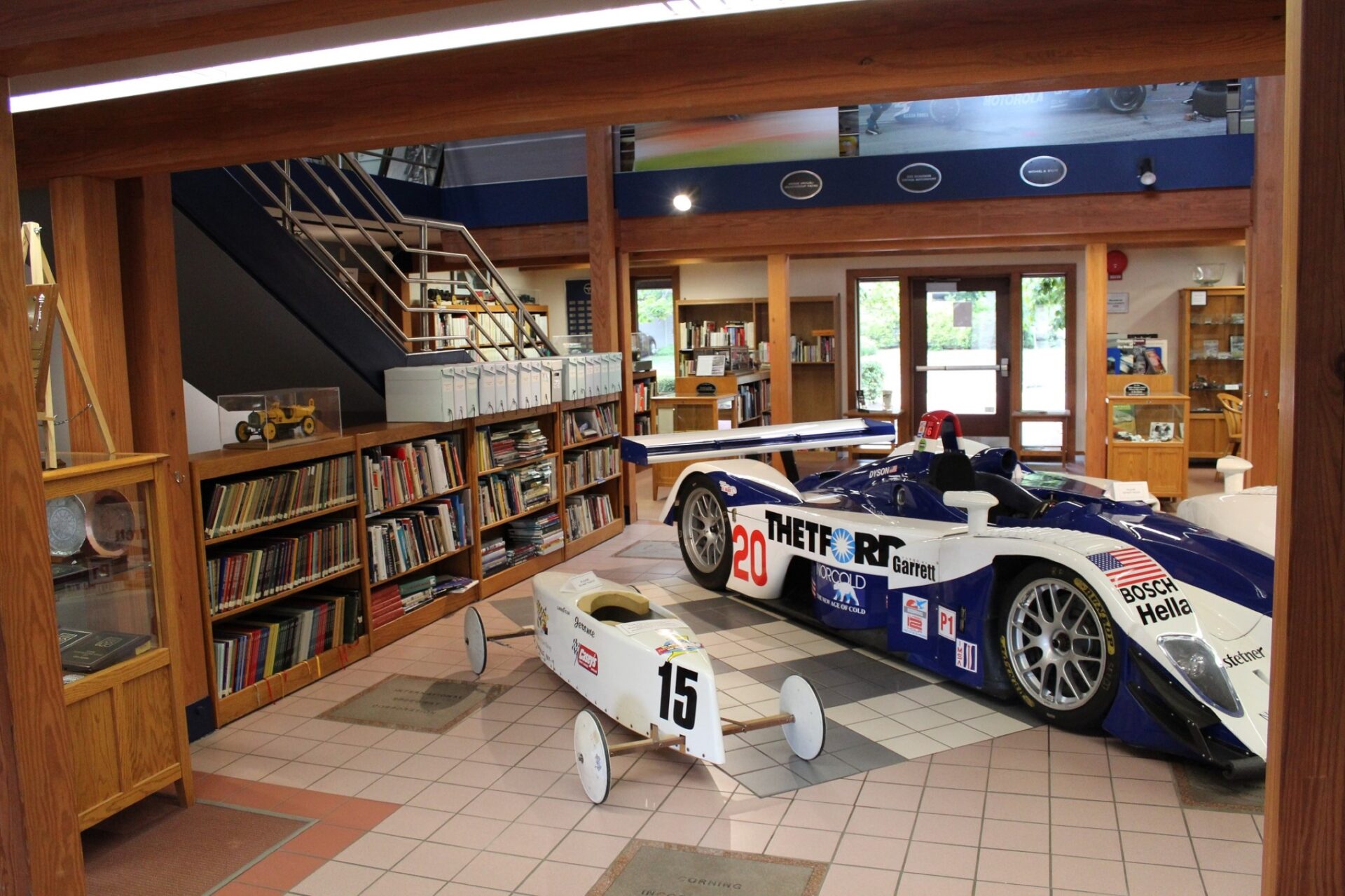
Highlights

Skip ahead if you must… Here’s the highlights from this episode you might be most interested in and their corresponding time stamps.

  • 00:00 Introduction to Break/Fix Podcast
  • 00:25 Spotlight on Garage Style Magazine
  • 00:57 Indianapolis: The Heart of Auto Enthusiasm
  • 01:33 Meet Jim Kruse: A Life in Classic Cars
  • 01:46 Jim’s Petrolhead Origin Story
  • 02:20 From Bicycles to Classic Cars
  • 03:46 Modern Car Enthusiasm
  • 04:47 The Sexiest and Ugliest Cars
  • 06:40 Classic Auto Insurance: The Journey
  • 08:43 Understanding Classic Car Insurance
  • 10:59 Valuation and Appraisals
  • 25:47 Claims Process and Coverage
  • 34:42 Choosing the Right Insurance
  • 35:12 California’s High Insurance Rates
  • 36:16 Relocating to Texas
  • 36:53 Declared Value and Collector Policies
  • 38:08 Track Day Insurance and Classic Cars
  • 42:03 Road Rally and Public Road Coverage
  • 48:24 Carnection: Planning for Your Car’s Future
  • 01:03:05 Final Thoughts and Promotions

Bonus Content

There’s more to this story…

Some stories are just too good for the main episode… Check out this Behind the Scenes Pit Stop Minisode! Available exclusively on our Patreon.

Learn More

Using CARnection Advisors to plan for the future of your Vehicles

Carnection Advisor founder Jim Kruse was raised in a family that restored some of the rarest cars in the world.  A past board member of the Horseless Carriage Club of America, he went on his first car hunting trip at the age of 12 and grew up driving in hundreds of rallies.  It was during this time that he decided to seek a career in the collector car industry.  That decision led him to become a premier collector car insurance expert.

Photo courtesy Classic Auto Insurance

Over the last two decades, Jim traveled the world to be with cars and collectors at events like the Pebble Beach Concours d’Elegance, Amelia Island Concours d’Elegance and the Paris Retromobile. When you’re around collectors as often as Jim, you get asked a lot of questions.  “Where should I sell my car?”  “My kids aren’t interested in the cars, what should I do?”

Acquiring a classic car is easy.  Mapping out a succession plan for your collection is an artform. That’s where Carnection Advisors come in.  As a fee based advisory firm, we never take payment from any business or organization. We work solely in your best interest to put your plan into action.  

Photo courtesy Classic Auto Insurance

CARnection advisors provide confidential and objective classic car advice to our clients by assisting them in pre-planning the future of their collection.  It’s an important part of an estate but frequently gets left to the surviving spouse at the worst possible time.  The Carnection Advisory Plan (CAP) is a four-step process.

  1. Get to know you and your history.
  2. Review each car and establish its General Market Value™ (GMV).
  3. We’ll go deeper to establish the Historic Market Value™ (HMV) for each car by documenting what makes them unique.
  4. Map the future of your collection and store the cars in your own virtual garage.

To learn more, be sure to visit www.carnectionadvisors.com

To learn more about Classic Auto Insurance or get a quote online, be sure to logon to www.classicins.com or follow them on social @ClassicAutoIns on twitter, @ClassicAutoInsurance on Facebook , @classicins on Instagram as well as on LinkedIn, Pinterest and don’t forget about their Youtube channel!

Jim breaks it down simply: “The biggest difference is valuation.” Unlike standard auto policies that leave you guessing after a loss, collector car insurance offers agreed value coverage. That means if your car is insured for $50,000 and it’s totaled, you get $50,000 -no haggling, no surprises. Other perks include:

  • Freedom to choose your repair shop
  • Lower premiums due to limited mileage
  • No appraisal required (unless authenticity is key)

And yes, they insure everything from million-dollar Bugattis to lovingly preserved minivans- like the mythical 1984 Plymouth Turbo 2.2 5-speed that Jim swears once graced a Fort Wayne showroom.

Forget the 25-year rule. At Classic Auto, a car qualifies if it’s worth more than its utilitarian value. That means your pristine ’90s pickup or quirky APV might just be collectible. “Rarity doesn’t equal value,” Jim reminds us. “It only means they hated it back then too.”

With younger enthusiasts embracing everything from Azteks to Cybertrucks, the definition of a classic is evolving – and Jim’s team is here for it.

Photo courtesy Classic Auto Insurance

Limitations and Logistics

While the policy is flexible, there are a few caveats:

  • Daily drivers aren’t eligible
  • Cars should be stored in enclosed garages
  • Young drivers face stricter requirements

But beyond that, it’s all about celebrating the love of cars – whether you’re cruising in a $10K survivor or a $10M showpiece.

Jim Kruse embodies what makes the car hobby so special: a deep respect for history, a passion for preservation, and a belief that every vehicle has a story worth protecting. Whether you’re restoring a Renault or rallying a C10, Classic Auto Insurance is there to make sure your pride and joy stays safe – and stays on the road.


Guest Co-Host: Don Weberg

In case you missed it... be sure to check out the Break/Fix episode with our co-host.
Listen on Apple
Listen on YouTube
Listen on Spotify

The following content has been brought to you by Garage Style Magazine. Because after all, what doesn't belong in your garage?

MaxTrackTime: Redefining the Track Day Experience

What if your next track day wasn’t just another run group shuffle, but a full-throttle, open-passing, no-compromise test session designed for serious racers? That’s the vision behind Max Track Time, a new player in the motorsports scene that’s turning heads with its streamlined, pro-level approach to track events. We sat down with Charlie Streicher, Operations Manager at Max Track Time, to learn how this concept evolved from a private testing operation into a full-fledged business – and why it might be the best-kept secret in grassroots and pro-am racing.

Photo courtesy Max Track Time

Charlie’s journey into motorsports started with a fifth-grade viewing of American Graffiti. The drag race between Bob Falfa’s ’55 Chevy and Milner’s ’32 Deuce Coupe lit a fire that never went out. “All I wanted was a yellow Deuce Coupe,” Charlie laughs. “Instead, I got a Mustang and chopped the exhaust off. Loud, obnoxious, and totally cool—at least to me.”

That Mustang became Charlie’s first track car, and while it wasn’t ideal (“You’d drive up to the corner, hop out, lift the car, turn it, and go”), it taught him the fundamentals. From there, it was off to Skip Barber, then into racing proper, eventually piloting the Sebeco NPO1 in WRL competition.

Tune in everywhere you stream, download or listen!

Listen on Apple
Listen on YouTube
Listen on Spotify

Max Track Time began as a solution to a problem: how do you get meaningful seat time and car development without the hassle of renting a track solo? Charlie and his team started organizing private tests, inviting other teams to join. The response was overwhelming. “Every single team we invited showed up,” he recalls. “We realized there was a real demand for open-format testing.”

Photo courtesy Max Track Time

Now, Max Track Time offers two-day events with open track, open passing, and a capped 25-car limit. It’s not your typical HPDE – it’s a race weekend without the racing. No run groups. No rigid schedules. Just green-to-checker freedom.

Spotlight

Notes

In this episode of the Break/Fix, Crew Chief Eric interviews Charlie Streicher, Operations Manager at Max Track Time. Charlie shares his journey from a late-blooming petrol head inspired by ‘American Graffiti’ to becoming a track day enthusiast and racer. The discussion delves into the inception of Max Track Time, a company focused on providing high-quality, open-track experiences for experienced racing and track day drivers. Charlie explains the unique format of their events, the safety measures in place, and the kinds of cars and drivers they cater to. He highlights the value of weekend events and partnerships with organizations like WRL to facilitate testing and preparation for race weekends. The episode concludes with information on how to participate in Max Track Time events and a shout-out to their supporters.

  • Tell us about how you got started with Max Track Time, and how the program has evolved. What are some changes you’ve made.
  • What’s the difference between a “Test Day” and a “Track Day”?
  • Does Max Track Time have a “home track” or “home base”
  • How do you find, and where do you register for Max Track Time events?
  • What is the average session length? What is the average weekend/day cost? 
  • What other services does Max Track Time offer that people might not be aware of? What are some changes for the next few upcoming seasons you’d like to share?

Transcript

Crew Chief Brad: [00:00:00] BrakeFix podcast is all about capturing the living history of people from all over the autosphere, from wrench turners and racers to artists, authors, designers, and everything in between. Our goal is to inspire a new generation of petrolheads that wonder, how did they get that job? Or become that person.

The road to success is paved by all of us. Because everyone has a story.

Crew Chief Eric: Their mission is in their name. To provide the maximum amount of high quality track time for their participants. Events are open exclusively to experienced racing and track day drivers. This allows them to remove run groups to allow their entrants to manage their own schedules to best service their needs.

Tonight, we’re joined by Charlie Stryker, Operations Manager for MaxTrackTime, to explore the idea of how you can maximize your entire track day experience with them without compromises. So welcome to Break Fix, Charlie.

Charlie Streicher: Hey Eric, thanks for [00:01:00] having me. I appreciate you guys bringing me on.

Crew Chief Eric: So like all good break fix stories, everybody has a superhero origin.

So let’s talk about Charlie the petrol head before we get into what is max track time all about. Did you get into cars as a kid? Did you come from a racing family? Did you come into it later in life?

Charlie Streicher: I got in maybe a little later than most kids did, but You know, earlier than a lot of folks who discovered it later in life in fifth grade, I saw a movie called American Graffiti.

My dad was a big fan of old movies. So, you know, he always had us watch those. And there was a drag race in that between, it was Bob Falfa’s 55 Chevy and Milner’s 32 Deuce Coupe. I just thought that those things were the coolest thing in the world. And all I wanted in fifth grade was to have a yellow Deuce Coupe, just like Milner’s, you know, a little unrealistic, both for the age.

And, you know, I don’t think you’re going to see a teenager driving around in a classic car like that. You know, when I was old enough to drive, I did end up buying myself a Mustang. I wanted to be just like those cars in that movie. So I chopped all the exhaust off, made it loud as hell. It was, my mom [00:02:00] hated it.

Everyone else around town thought it was the most annoying thing in the world, but man, I thought I was cool. You know, after college finally had a little bit of cash. And so I wanted to start doing track days and whatnot. And so I did it in that Mustang. That car was probably the worst car to do track days in.

You know, you’d kind of drive up the corner, hop out, lift the car up, turn it, and then go the next corner. Taught me the fundamentals enough, you know, I was able to then kind of leverage that into then going to the Skippy schools, doing Skip Barber and racing and that, you know, from there, racing just kind of took off.

And that’s what I’ve kind of been doing since then.

Crew Chief Eric: So if you had to buy a track car today, new, old, or in the future, what would you buy?

Charlie Streicher: You know, I had the opportunity to drive a Radical SR3 a while back. Yeah, I just think that they’re great value. I think the NPO 1 honestly as well is pretty good value when looking at a track car for dollar per mile and just the pace per dollar.

You know, I think the NPO 1 is an extremely underrated car. Well, our Thunder Hill car, you know, we’ve got that [00:03:00] built with a, uh, 2. 5 liter putting out 250 horsepower. And at Audubon country club on slicks, we were doing. F3 car pays, you know, and granted an Audubon country club, not the fastest track for an F3 car, but the amount of aerodynamic ability that that car has built into it is phenomenal.

You know, like, the, the tobacco and 1, the guy who builds them, his name is Ben Cooper. He used to be a wind tunnel guy for Williams. F1, you know, he really took a car that was like, very built. I think for cost efficiency. At first when it came out and he’s taken it and turned it into a really, really proper race car.

So, uh, yeah, I think if I, if I had to get a track day car, it’d be an NPO one.

Crew Chief Eric: So you mentioned that you’re driving the NPO one for a WRL team and you started out with a Mustang. So when you go to your local HPD event, what are you tooling around in these days?

Charlie Streicher: So usually when I go to HPDs, I just instruct.

I do some coaching with, like, the NASA region locally here and, uh, NASA Great Lakes. I’ll go up and coach every once in a while. I’ll go home, see my buddies. I [00:04:00] have a 1994 Miata with, uh, like 220, 000 miles on it. And to be honest, I’m kind of afraid of that thing. It’s kind of a rusty piece of junk. You know, last time I took it out to VR and I’m going through turn 10 and, you know, that car is so down on power.

Now you can take turn 10, just about flat. And I’m thinking, what if something broke right now, that would be absolutely catastrophic. So most of the time I just go there and coach, cause I love coaching. I worked at extreme experience for five years, you know, working right seat with hundreds and hundreds of people.

And I just, I just loved sharing that experience with folks.

Crew Chief Eric: Is there anything on the street these days that gets your attention?

Charlie Streicher: When I was a kid, I was such a muscle car fan. I loved muscle cars. You know, nowadays I drive a 2015 Camry. I’m very boring. If I had to have kind of a cool cruiser car, I love the 82 Ferrari through a GTS, you know, the Magnum PI car.

You know, there’s just something about target top old red Ferrari that just. You know, it’s just cool[00:05:00]

Crew Chief Eric: speaking my language. All right, so how did that evolve into max track time?

Charlie Streicher: Yeah, so max track time started as a private testing operation for our team where we would just rent tracks and do about six weekends or six, you know, two day tests every year. Me and a couple of folks that I did Skippy with wound up racing the Sebeco NPO1.

That’s a car that both needed development on the performance side for the car, but then also we wanted development for us as drivers. Two cars and eight drivers between them. A track day just won’t cut it for getting that kind of practice and getting that development. Or, you know, God forbid you need to try out a change on a car, be it aero change, setup swaps, new components, what have you.

And so we did a lot of private testing, you know, we really focused on getting convenient dates for our drivers, whether that be weekends or Thursday, Fridays or Monday, Tuesdays, because a lot of our guys work, you know, there’s only a couple of our people who are professional in the racing industry and had that kind of [00:06:00] freedom to come and test during the week.

And so we tried to make it as convenient for everybody as possible. From there, we had a tested barber a couple years ago. We just extended the invite to a bunch of other teams that were racing with us to see if anybody else wanted to. And, uh, sure enough, every single team we invited showed up. And so it kind of started to just snowball there where we thought, okay, people see the value in coming out and testing and, and having this open track environment.

Yeah. So we thought, okay, why don’t we just standardize this and market it out to anybody who might be like us, who is interested in doing this kind of testing. We decided that, you know, okay, we’ve got something that people want to do. Let’s make it into a business. And so from there we made Max track time.

It’s not so much a track day company in the chin or like that sense. It’s more of an alternative to private testing. We open up these two day events. They’re open track, open passing from green to checker for up to 25 cars to come out and just run. If for those folks like us who really can’t make the track day format [00:07:00] work, it’s a great alternative to having to go and rent a track and get your own insurance and do all of the kind of the legwork to get that all sorted.

Crew Chief Eric: So when did you guys establish max track time? How long have you been doing this?

Charlie Streicher: At this point, Max Tractime has only done two events. We had one at Thunder Hill, and then we had one at Audubon Country Club, and we’ve added in catering and beverage service and such, because not every team has that arm where they have someone providing hospitality.

You know, at the events that we hosted before, some folks would end up disappearing during lunch to go run out to, you know, whatever subway or whatever they could find. So we thought, okay. We can plus up this experience a little bit and, uh, our big rollout’s going to be next year here where we have 14 events, we’ve got six, two day events, and then we’ve got a bunch of Thursday test days before WRL events at the various tracks that they go to.

Crew Chief Eric: So you guys are the newest. Let’s call it track day organization on the scene. So that’s exciting because they don’t just pop up overnight anymore. I mean, I hate to say the market is pretty saturated. There’s different [00:08:00] organizations that have been around doing this for decades now and others that come and gone.

So it’s cool to see something different. And obviously max track time is doing just that. So when you run an event, it’s pretty cool. Kind of compare and contrast your experience with, let’s say other HPD organizations and how you’re running it. Are there flaggers? How does coming on and off the track work?

There are no run groups, so it’s just an open day. But, you know, we’re all sort of used to the flag talk and all these kinds of things. So what’s the day like when it kicks off at a max track time event? What’s that drivers meeting like?

Charlie Streicher: You know, generally it’s going to be the rundown of the facility, where things are going to be, where our catered lunches are going to be coordinated, how to get in and out of pit lane, what the flags are, obviously, and where the flag positions are.

You know, I like to include a lot of maps and graphics and stuff in my PowerPoints that I give so that people know where to look and what to look for. Trying to get people as acclimated to the facility and the on track attitude before they get out there. I typically try to make the driver’s meeting restricted to things that people [00:09:00] need to know and that they’ll actually want to know.

And not so much all the ancillary stuff that might be focused on a, a beginner.

Crew Chief Eric: Because the track is open and there’s no run groups and things like that, you still got to give the workers, the volunteers, the flaggers a break. So do you guys cut up the day in any way, or is it, we’re going to run the morning session for four hours, there’ll be an hour break.

And then, you know, we’ll do an afternoon or how does it all lay out?

Charlie Streicher: Yeah, you hit the nail on the head there. Yeah, we do the four hours with one hour lunch break and then another four hours there, you know, a lot of teams when they test, they’re not going to go all day long. And so, you know, they’ll give on track, they’ll come off track and they’ll come on track again, you know, just as they’re working on stuff.

So we actually open up our lunch 30 minutes before that breaking and 30 minutes after. So that way teams can kind of trickle in and feed themselves without having a whole bum rush on the lunch service there as well. It’s not uncommon for us also, being that this is effectively like a private test for us to have those rental car laps available to those people who want to utilize those.

These events are open [00:10:00] to folks who should have a pretty good understanding of what they’re doing. So, you know, in many ways, it’s a lot more lax than say, like, uh, a track day where you’ve got folks bringing their street cars out to come and run and do whatever.

Crew Chief Eric: Absolutely. And so with that, the on track etiquette, like you said, is like a race weekend.

So therefore it’s open passing. That’s the expectation.

Charlie Streicher: Absolutely. With the caveat that, you know, there’s 25 cars out on track and everyone’s got a different goal. Someone might be in there. Learning a track for the first time might be a newer driver who, you know, is licensed, but maybe not familiar with the track or getting more familiar with the car.

And then you’ve got someone else out there laying down quali labs, you know, but that’s where that 25 car limit comes in. At the expense that people are paying to be at these, we generally trust that the prep shops are going to prep their cars appropriately. And so we don’t have our whole internal tech team, you know, we’ll do the visual inspection, right?

You know, if someone’s running around on track who maybe shouldn’t be, then that would be an appropriate time for us to go and talk to them. But you know, we’re not going to go through your car and make sure that it’s prepped and ready to [00:11:00] go full flaggers. It’s going to be like a race weekend effectively as far as safety on track going to be a flagger in every corner.

There’s going to be a guy working pit lane releasing cars in and out overall. A lot of folks use these test days as opportunities to prep for race weekends. And so we want to keep the pit lane open, so we’re not going to hold people in pit lane. You can enter and exit pits as you wish. You can fuel in pit lane.

You can set up your crew in pit lane, driver changes, whatever you got to do. As far as the rules and the structure, it’s a race weekend because God knows when testing, especially if you’re a team that’s going to run an IMSA or SRO or something like that, you know, part of the value of testing is preparing your crew.

You can’t much do a practice driver change if you’re doing it in the paddock.

Crew Chief Eric: So are there any groups out there that are doing, let’s say, exercises or other types of strategic maneuvers? They

Charlie Streicher: can coordinate that between themselves. They want to do that, that’s all fine by me, as long as they’re not going to impinge on anybody else’s ability to test.

Because even though it’s like a race weekend, we’re not racing. You know, you don’t want to be bombing people in the corners, testing’s [00:12:00] about. We expect our participants… To be courteous and work together and be mindful of each other on track and not try to force the issue. So that’s kind of my big goal there is I’m walking the paddock, I’m talking to folks.

How’s it going out there? Is there anything that you need me to know? Because I’m not out on track with them, right? If there’s an issue, people generally tell me, and then I can go and chat with the folks who need to be chatted with and we can get that cleared up. But so far, it really hasn’t been an issue.

We stress that in the driver’s meeting, that we need to be courteous and that we need to work together, and people are generally very aware of that. Though we wouldn’t limit anyone from kind of practicing between their own two cars, we’re not going to see that in mass. It’s very uncommon.

Crew Chief Eric: Do you guys do any simulated starts?

Sometimes that’s important for different groups to do either rolling or standing or any of those kinds of things. Do you set up for that?

Charlie Streicher: We have not seen that. I’m not aware of any organization that does that. Set up, you know, I think that that might be something that’s appropriate for like a private test if anybody wants to do that.

Mostly what we’re built for is, is [00:13:00] folks who want to do driver development and want to, you know, work on set up at cars and such.

Crew Chief Eric: Yeah, I could just envision teams. You mentioned SRO with maybe 2 cars or 4 cars, and they’re all running, you know, nose to tail or doing some sort of exercises that they might want to work on, you know, traffic management, things like that.

So I could see that playing out with such an open amount of space on track.

Charlie Streicher: Yeah, absolutely. And you know, they’re welcome to do it. Generally speaking, I think that what test days are used for our driver development, have your gentlemen drivers come out and try to find some pace, work on a little bit of setup.

Some teams will be working on running in certain components and whatnot as well. You know, again, at 25 cars, I think it’s generally pretty clean.

Crew Chief Eric: You mentioned earlier street car versus race car is every car that’s coming to a max track time event. Caged, logbooked, you know, maybe club racing level on up type of vehicle, or are there people bringing, let’s say, a hypercar or supercar?

What does the field look like?

Charlie Streicher: So our insurance will actually not allow anything without a roll cage, racing seat, and racing harness. That’s [00:14:00] the bare minimum that our insurance allows out on track. We’d be open to time attack cars, I’d say, at a minimum. Assuming that, you know, everyone’s vetted and the driver’s comfortable with open track, open passing.

But typically speaking, the group that we attract is going to be race car drivers looking to do testing. And they’ll be coming from, say, the PCA, Porsche Sprint Challenge, SRO, IMSA. We have a partnership with WRL, so we are targeting that group very heavily and making sure that they are aware of our service and what we can provide for them.

Crew Chief Eric: So you mentioned caged cars and you mentioned trialers, time attack, et cetera. So in a lot of trial organizations, the minimum that they follow for safety a lot of times are hill climb rules, which means half back cages, not full cages. So do you differentiate there? Or as long as you have some sort of cage harness Hans, what’s the minimum in terms of being caged?

Charlie Streicher: So our insurance will allow you to have a halfback cage. However, right now I’m restricting it to full cage. Just as we work out the format. If it ends up that we feel comfortable doing halfback cages in the [00:15:00] future, then we will, but for now it’s full cage.

Crew Chief Eric: So Charlie, we’re talking about all the different cars, and I’m curious, you know, we talked about the limits of, you know, maybe bringing in a streetcar, a supercar, something like that.

It’s gotta have a cage, all these kinds of things. But what about vintage cars and also. Open wheel. Do you guys mix it up?

Charlie Streicher: I almost wish we could with the open wheel. Cause I get so many emails from folks asking if we open up to open wheels and maybe, maybe that’s something on the horizon, you know, maybe that’s a, maybe we’ll do some open wheel exclusive events.

You know, I used to do some driving in pro Mazdas and such, and in those cars, the last thing I’d want to be pulling up next to is a GT car. Like that would be terror. Like, you know, what happens to you? Lock wheels and brake and that car is going upside down. That’s the last thing that I’d want at one of these events, is to have an open wheel and a closed wheel car on the track at the same time.

Crew Chief Eric: Have you thought about maybe carving out a session for open wheel guys and kind of splitting up the day a little bit?

Charlie Streicher: I try to not divert from the format. Folks like the format that will keep it that way. I am very tempted in the future to try to carve out [00:16:00] one or two open wheel events and just see how they do because the demand is definitely there.

I think there’s a group down in Florida that actually does open testing events exclusively for open wheel guys, and it’s been pretty popular.

Crew Chief Eric: We have some open wheel guys here too, and they say all the time, they’re like, there’s never anywhere to go to practice. I got to practice. When I’m there for, you know, the regionals or the runoffs or whatever it is, and it’s to their disadvantage all the time that there’s nowhere to go.

Charlie Streicher: Yeah, totally. You pretty much have to have a private membership at a place. If you want to drive those things, you know, like, uh, you know, Audubon Country Club, they have that open wheel group and it’s pretty much dominated by. Local, you know, USF teams coming down to tennis just because you don’t have the opportunity.

Crew Chief Eric: So what about the vintage guys? Are they able to run with the modern cars too? Is there any restrictions there?

Charlie Streicher: Yeah, I’d love to have vintage guys come out. I’m a huge fan of vintage cars. I love going down even just watching SVRA and HSR cars run around. I think as long as they’re appropriate. You know, I’d love to have them out.

You know, I’m not going to have a, uh, like an old Model T ripping around on track, but… No,

Crew Chief Eric: I’m thinking like e prepared Triumphs and [00:17:00] MGs and stuff like that, you know?

Charlie Streicher: Totally. We’ll take them. Especially if they, you know, we got a test at VIR in May. Anybody wants to have some very early testing for the runoffs, they’re welcome to come on out and bring whatever they’ve got.

Crew Chief Eric: Now with those e prepared cars, they’re not full cage, right? You’ve seen them. So will that fit in for your guy’s insurance?

Charlie Streicher: Yeah, you know, cause again, the insurance, it’s a half cage rule. But I think that, I guess my differentiation there would be that that is truly a race car. You know, you can race it wheel to wheel.

It’s appropriate to do so. Then I have no issue with that one coming out.

Crew Chief Eric: A lot of cases for these teams, whether it’s club racers that are coming out or SRO teams or WRL teams, et cetera, there’s a whole staff of folks between, you know, the trainers and the engineers and the crew and all this kind of stuff.

But somewhere in there, we’re here to learn. Tests, we’re working with the car and all this kind of stuff. Does max track time offer any pro coaching, or do you guys have people on staff that can jump in and work, especially with the AM AMs, the new guys or the rookies or any of those [00:18:00] folks that are really trying to come up quickly?

Charlie Streicher: I would love to offer that. I’ve actually explored that typically with the IMSA teams and the SRO teams, you hit the nail on the head. They usually have folks on their end who do that. And so I’m trying to not interfere too much with their programs. Most of these teams have a trusted coach that they work with, and I think that sometimes it can be a little inappropriate to toss a coach in there who they don’t know and, you know, kind of shove their way in.

So we try not to impose that on folks in our group. We do have some very qualified folks who do race and IMSA and SRO and whatnot, who could if needed, but we’re not going to have that at the forefront of our offering. What our offering mostly focuses on is making sure that we can take care of the folks, catering, beverage service, coffee, what have you, the stuff that most teams might not bring with them, our events in the past, you know, the teams kind of vary in scale.

And the 1 thing that they all benefit from is having nice warm lunch.

Crew Chief Eric: I’m sure there are a lot of people that are interested in finding out more about how do I get [00:19:00] involved in this? I got a car that qualifies. I need some track time. I don’t want to go to a DE and I don’t want to learn on the fly either.

So it comes down to cost and how do you register and things like that. So let’s talk about some of those details.

Charlie Streicher: So what we do is we have two tiers of events. I think that this is one of our differentiators with max track time versus some of the other open track organizations out there. Typically the format is find a pro race weekend, find a couple of days just outside of the testing band window, book those and then go, it’ll be a Wednesday, Thursday, what have you.

Our focus is. A lot of folks who are going racing with these organizations, especially on, you know, like kind of am level of the pro am the value in testing is gaining experience, getting miles in the car, and it matters less if you’re testing at the track that you’re going to be racing at. That’s incredibly valuable.

No doubt. But I think that the most valuable test of these folks are the ones that they can make. So that’s why we focused so hard on booking tracks like NCM, CMP, [00:20:00] Hallet. You know, they’re not those huge Premier Pro tracks. They’re not Daytona. They’re not COTA, which we do host events at as well. But for the two day events at these tracks, they’re on weekends.

So for folks who are racing in these Pro Am series, who a lot of times the business owners, they’re having a great opportunity cost by having to take four days off to fly to the track, do two days on a Wednesday, Thursday, and then fly home on Friday. We’ve eliminated that conflict. Our NCM event, for example, or our NOLA event at the beginning of the year, next year, are both on Saturday, Sunday, allowing for those people who are not full time drivers to come out and practice in the case of like NCM, HAL, and C& P.

Sure, it might not be the track that they’re going to be racing at, but you’re getting miles in the car, you’re getting exposure to corners in a low pressure environment where you’re unlikely to come across, you know, an LMP2 car that’s going to be sharing the track with you. So, you know, registration, we work through motorsports reg folks can just go to our website, click on the events tab and then find the event they want to attend and then go through that, click on that.

And then it’ll take you to the motorsport reg pays. They can click that [00:21:00] all out there being that this is a semi private testing event, 25 cars limited for 16 hours of track time. The pricing does follow that the 4, 500 ballpark for the. More regional tracks that we attend that will be priced lower 2, 500 bucks, you know, and so that’s our, our goal having this offering at the pro tracks, close to the pro weekends.

And then the regional tracks further off of a pro weekend is to allow folks who want to test. To be able to have that access without being limited to one type of option. So for the more price sensitive folks, the more club focused folks, we have those more regional tracks at a more reasonable offering for the more pro series focused folks.

We have the big pro tracks closer to the province.

Crew Chief Eric: Do you guys have a track that you call home somewhere? That’s the closest that you see yourself doing the most events at?

Charlie Streicher: You know, we’re a WRL team. We run the two Stratus Racing NPO1s in WRL. So we really like [00:22:00] going to those tracks. The schedule that we will follow will be the one that most closely follows the WRL schedule.

Crew Chief Eric: What about for you? What’s home?

Charlie Streicher: So I grew up in Chicago. I was the Audubon country club wrote America where my two home tracks wrote America was actually the track. I did my first ever track day at a little intense for, uh, someone doing their first track day. I remember I took my Mustang out. It was a MVP track time event.

And you know, they do a lead follow and I pull back in at the end of my session. And my friend’s like, how fast are you guys? And I went 80 miles an hour and I was so hyped and thought that was amazing. Looking back at it, that’s.

Crew Chief Eric: That’s not the now, right?

Charlie Streicher: Yeah, that’s your min speed some places. You know, now I live down in Raleigh, North Carolina.

So I’m about an hour and a half from BIR. I, uh, I try to get up there as much as I can. It’s a, it’s a great track, great facility.

Crew Chief Eric: And the CMP is not too far.

Charlie Streicher: It’s not, you know, I, I haven’t been able to go there as much as I like our last test that we had scheduled at CMP. I was getting my bags into my car to go.

And then I got a call from our team owner that the lift gate on the semi broke. And so [00:23:00] we couldn’t get any of the cars down there. And so, you know, we paid for the track, but we didn’t go to it. You know, I am excited to go back next year at the end of March. I think that’s going to be a great event.

Crew Chief Eric: You said there really isn’t a tech session per se.

You kind of just visually looking over the car to make sure a lot of the folks that are coming are more professional teams, things like that. Is there a form or anything that has to be filled out ahead of time or any sort of paperwork, medical documentation, anything that needs to be submitted to you guys before showing up for the event?

Charlie Streicher: With the cars, these teams know more about the cars than I do. You know, they’re professional teams. They’ve been doing this for their careers. I think that it’s just fine for them to bring them out. If I see something that looks a miss, you know, while I’m kind of wandering the paddock and chatting with folks, that’s when the issue will be raised, but overall, these are professional teams coming out and testing their cars.

I trust them to prep their cars appropriately. And then the drivers, they’re all race license drivers. So they have their appropriate medicals in order to have those licenses.

Crew Chief Eric: So what other services does max track time offer that people might not be aware of? What are some of the changes that are coming for the next few seasons?

What’s [00:24:00] the future look like for max track time?

Charlie Streicher: The thing that I’m really excited about is this partnership that we’ve announced with WRL. So what we will be doing next year is hosting Thursday test days ahead of every available weekend that they have. So I believe that that’s Confirmed at eight weekends.

So we have a full open track. The WRL ones are limited to 30 cars just because there is that big of a demand amongst that group. And a lot of these tracks are big enough that 30 cars is still appropriate to get a good lap in. We’ll be offering that same format with that same catered lunches that we provide for the WRL teams that want to attend.

So. As WRL grows and it gets massive, these weekends have kind of turned into four day weekends where individual teams would rent the Thursdays ahead of time. And then they’d call up their buddies and then share the track with a few folks. And we thought that it would be good if we took the onus off the teams of having to rent the track, but also make sure that it’s opened up to the entire WRL paddock and everybody who wants to participate.

And so I think that that is going to be a really promising opportunity for a lot of these teams to get more seat time. And prepare for the weekend as they need to, especially with their rental drivers [00:25:00] who might be seeing the track for the first time and could really benefit for an extra day.

Crew Chief Eric: We’ve come to that part of the episode where I always like to ask any shout outs, promotions or anything else you’d like to mention that we haven’t covered thus far.

Charlie Streicher: Sure. You know, uh, I’d love to shout out to Sebeko. You know, they build an awesome car. We’ve had a lot of fun racing it for the past couple of years. And, you know, as the WRL GTU class grows, I think that the competition we have is, uh, incredible. You know, I can’t wait to see what happens next year. So I’d love to do a shout out here for WRL, their offering is absolutely incredible.

I think that coming from Skippy, you know, after Skippy ended up closing down a few years ago, it was tough to find a place that had those same values and brought that same value and experience to racers. And I think that WRL has done an amazing job at creating a professional level atmosphere for racers who are either on the pro end and coming in or, or coming up.

into racing for the first time.

Crew Chief Eric: Max Track Time understands that many drivers have obligations outside of racing, and they have worked diligently to obtain dates [00:26:00] on or near weekends. That way, participants with careers outside of racing are able to attend and maximize their experience without having to compromise.

So if you’re interested in attending a Max Track Time event, you can get more details by visiting them at www. maxtracktime. com or follow them on social at Max track time on Instagram and Facebook. Well, Charlie, I can’t thank you enough for coming on break fix and telling us all about max track time.

I’m actually really excited about this. I’m sure a lot of our listeners are too. This is a haven for those of us that need to shake down our cars, test our cars. Get away from massive amounts of traffic at your standard HPD or club race type weekend and really get in tune with our vehicles and tune up our vehicles at the same time.

So, I really appreciate you providing this service to the motor sports community at large. This is really amazing. And I wish you guys the best of success in 23 and beyond.

Charlie Streicher: Thank you very much, Eric. I appreciate you guys having me on. This has been an awesome experience.

Crew Chief Eric: No worries. Thank you.

Charlie Streicher: Thank you so much.

It’s been a pleasure. Take [00:27:00] care.

Crew Chief Brad: You can call or text us at 202 630 1770 or send us an email at crewchief at gtmotorsports. org. We’d love to hear from you.

Crew Chief Eric: Hey everybody, Crew Chief Eric here. We really hope you enjoyed this episode of BreakFix, and we wanted to remind you that GTM remains a no annual fees organization. And our goal is to continue to bring you quality episodes like this one at no charge.

As a loyal listener, please consider subscribing to our Patreon for bonus and behind the scenes content, extra goodies, and GTM swag. For as little as 2. 50 a month, you can keep our developers, writers, editors, casters, and [00:28:00] other volunteers fed on their strict diet of Fig Newtons, Gummy Bears, and Monster.

Consider signing up for Patreon today at www. patreon. com. dot Patreon. com forward slash GT Motorsports. And remember without fans, supporters, and members like you, none of this would be possible.
Highlights

Skip ahead if you must… Here’s the highlights from this episode you might be most interested in and their corresponding time stamps.

  • 00:00 Introduction to Brake/Fix Podcast
  • 00:45 Meet Charlie Streicher: From Petrol-head to Operations Manager
  • 01:11 Charlie’s Journey into Racing
  • 02:34 Choosing the Perfect Track Car
  • 05:04 MaxTrackTime: The Concept and Evolution
  • 08:11 MaxTrackTime Event Experience
  • 13:39 Safety and Car Requirements
  • 23:56 Future Plans and Partnerships
  • 25:03 Conclusion and Contact Information

Bonus Content

There’s more to this story…

Some stories are just too good for the main episode… Check out this Behind the Scenes Pit Stop Minisode! Available exclusively on our Patreon.

Learn More

About Max Track Time

Max Track Time’s mission is to make testing as convenient as a track day with the added freedom of a private track rental.

For more details on getting on track with Max Track Time be sure to visit www.maxtracktime.com or follow them on social @maxtracktime on IG and FB.

What Makes It Different?

  • Open Track Format: No run groups, no sessions. Drivers manage their own schedules.
  • Hospitality Included: Catered lunches, beverages, and coffee—because no one wants to leave the paddock for Subway.
  • Pro-Level Etiquette: Full flagging, pit lane access, and race weekend protocols.
  • Strict Safety Standards: Full cages, racing seats, and harnesses required. No street cars allowed.
  • Driver Development Focus: Ideal for teams prepping for WRL, SRO, IMSA, or club racing.
Photo courtesy Max Track Time

Max Track Time caters to experienced drivers and teams looking to maximize seat time. Whether you’re a WRL squad, a Porsche Sprint Challenge team, or a vintage racer prepping for the runoffs, the format is built to support your goals. While open-wheel cars aren’t currently allowed on mixed-grid days, Charlie hints at future events dedicated to them.

Photo courtesy Max Track Time

The WRL Partnership and 2026 Expansion

Big things are coming. Max Track Time has partnered with WRL to offer Thursday test days ahead of select race weekends. These events will expand to 14 in the upcoming season, including regional tracks like NCM, CMP, and Hallett, plus marquee venues like COTA and Daytona. Pricing varies by venue:

  • Regional Tracks: ~$2,500
  • Pro Tracks: ~$4,500

Registration is handled via MotorsportReg, and the events are designed to be accessible for both pro teams and serious club racers.

Charlie’s passion for motorsports is infectious, and his vision for Max Track Time is clear: create a space where racers can test, learn, and grow – without the compromises of traditional track days. Whether you’re chasing tenths or just trying to get your gentleman driver dialed in, Max Track Time might be the perfect fit. To learn more or register for an upcoming event, visit Max Track Time’s website and check out their full schedule.

This content has been brought to you in-part by sponsorship through...
Motoring Podcast Network