
spot_img
Home Blog Page 39

HyperFest at 20: How a Wild Idea Became America’s Ultimate Automotive Festival

What started as a risky experiment to get tuner kids onto racetracks has evolved into one of the most eclectic, immersive, and beloved automotive lifestyle events in the country. HyperFest, now celebrating over two decades of tire smoke, off-road dust, and musical mayhem, is more than just a motorsports gathering – it’s a rolling tribute to car culture in all its forms.

Photo courtesy HyperFest; Matt Rocholl

Chris Cobetto, founder of HyperFest and regional director for NASA Mid-Atlantic, didn’t set out to create a mega-event. He was just trying to fill seats at his NASA track days. Back in 2001, NASA was a West Coast phenomenon, and Chris was pioneering its East Coast expansion. But the tuner crowd—240SXs, Civics, and the like – weren’t showing up. So he asked: “What if we made the track day feel more like a party?”

Tune in everywhere you stream, download or listen!

Listen on Apple
Listen on YouTube
Listen on Spotify

A chance conversation with Mike DeFord from Carlisle Events sparked the idea: combine a car show with track time, drifting, and music. Throw in a VHS tape of Japanese drifting (yes, VHS), and HyperFest was born – equal parts grassroots hustle and gearhead dreamscape.

The inaugural event at Summit Point Raceway drew just 800 attendees – far short of the 10,000 hoped for. But the smiles were real, and the vibe was electric. Drifting made its East Coast debut, with a young Vaughn Gittin Jr. winning the first US Drift Nationals. Bikini contests (later swapped for Daisy Dukes), live bands, and a chaotic mix of motorsports disciplines set the tone for what would become a rolling circus of automotive fun.

Spotlight

Notes

This episode of Break/Fix podcast features Chris Cobetto, founder of HyperFest, and Matt Rocholl, social media and marketing director for HyperFest. They discuss the inception and evolution of HyperFest, a premier automotive lifestyle event now in its 20th year, initiated as part of the National Autosport Association’s (NASA) growth on the East Coast. The discussion covers the event’s multi-faceted activities including road racing, drifting, off-roading, rallying, and unique contests like the Power Wheels downhill race. They reflect on operational lessons, challenges faced, and the festival’s impact on the automotive community. Looking forward, they anticipate the continuous growth and potential expansion of HyperFest, emphasizing the importance of family and community in motorsport culture.

  • Hyperfest celebrated its 20th anniversary this season, but let’s talk about how it all got started? Why? How?
  • What is Hyperfest all about? Is it a festival? What kinds of “events” go on during the course of the weekend. Let’s talk about a few?
    • Drifting (ridealongs, bash, games, demonstrations)
    • Tire Rack Ultimate Track Car Challenge
    • Time Attack / Time Trials
    • Koni Power Wheels Attack by Red Line Oil
    • Hagerty Car Show presented by SpeedTrendSociety
    • National Auto Sport Association Road Racing
    • Off-Road Experience presented by Chaos Fab Shop (obstacle courses, trail runs, ridealongs)
    • X-Force Exhaust Burnout Contest & Sound Off
    • Hawk Performance HyperDrives (where you can drive your own car on track with an instructor)
    • Motul Rally Experience featuring Exedy Rally Rides, RallySprint, and RallyCross
    • Kaizen Autosport Racecar Ridealongs
    • Club HyperFest
    • Helicopter Rides
    • HPDE: High Performance Driving Event
    • Off-Road Rides
    • Models
    • Karting
    • Vendor Midway
    • Kid Zone
    • PRS Air Guitar and Shred Contests
    • Spectator Games
    • Camping (tent, car, trackside, family, RV)
  • Where was Hyperfest held this year? How can you run so many events in one place?
  • For someone that has never been to a Hyperfest event before, what should they expect? What does it cost?
  • Where will Hyperfest be next year? What does the next couple of years look like? What does the next 20 years look like?

Transcript

Crew Chief Brad: [00:00:00] Break Fix podcast is all about capturing the living history of people from all over the autos sphere, from wrench, turners, and racers to artists, authors, designers, and everything in between. Our goal is to inspire a new generation of Petrolhead that wonder. How did they get that job or become that person?

The road to success is paved by all of us because everyone has a story.

Crew Chief Eric: Hey everybody, crew Chief Eric here. I wanted to give you a heads up before we head into this episode that we did have some technical issues with the audio. We’ve done our best to make corrections so that it’s easier to listen to. But unfortunately, you know, there’s always challenges with internet connection, the different systems that people are using, the audio quality itself.

So please by all means, sit back and enjoy this episode. The content in it is amazing, but our apologies for the quality right up front with activities taking place on [00:01:00] asphalt, dirt, mud, grass, and even in the air. From camping with your friends and family, riding with world-class professional drifters, or enjoying music from a variety of artists.

Hyper Fest is the destination for those who want to be immersed in one of the premier automotive lifestyle events and offers numerous activities to enjoy both on and off the track over the course of an entire weekend. With us tonight on Break Fixx to talk about the 20 year evolution of Hyper Fest is founder Chris Coto, who you might also recognize as a lead from the National Autosport Association, also known as nasa.

And joining us in the conversation tonight along with Chris is Matt Rockel, social media and marketing director for Hyper Fest. So welcome to Break Fix, Chris and Matt. Hey, how are you doing, man? Good to be here. Just celebrated its 20th anniversary here at the end of the 2021 season. But before we get into that, why don’t we talk about [00:02:00] how it all got started.

Why, where did the idea come from and where was the very first hyper fest?

Chris Cobetto: I was scared is really what it came down to. I had started the NASA Mid-Atlantic region. It was actually called NASA Virginia at the time. At that time, the National Autosport Association pretty much existed just in Northern California and Southern California.

When we started the East Coast, we were the only region. There are now 13 regions. We technically made NASA national and for what it cost to run a track out, I was really just trying to figure out a way to get a lot of the tuner guys on the track. At the time I had, I had another job. I was, I was working in the medical industry when we started nasa.

In my travels, I would find these guys, you know, in the Hondas and in the, the two 40 sxs and that sort of thing, and. They revealed his road racing types of cars. I would talk to ’em and say, Hey, you know, you guys know that you can take your car to the racetrack and put that thing on a real racetrack, right?

And they’d be like, really? At the time I was, I’d be in Northern Virginia. And some points about hour, hour, 20 minutes from. Depending how you are, they had no idea that [00:03:00] you go and take your own car in the track, and certainly one of those guys to come out and put butts in seats basically on the track. It got me thinking about how I could do a car show or something along with the regular NAS event.

Oddly enough, I get a phone call outta the blue from a guy named Mike De Ford who was working with Carlisle at the time, and Carlisle car shows in Pennsylvania. He was a NASA guy. From California to Carle, Pennsylvania to take over the Al Sport Compact Show at the time. Made it a pretty big success.

Called me. ’cause he was just trying to get people to, uh, he had some extra slots for vendors and like nasa and said, Hey, you’re the local guy. I wanna come up. So I went up there and I displayed and, you know, talked to people and he and I just became friends and, I don’t know, one night, probably after a glass of vino and a and played a pasta, we were talking about, Hey, wouldn’t it be cool to do a Carlisle type of event, like the car show and everything else, but do it at a red course and introduced.

More people. And really that’s how the idea of Hyper Fest got born. And the main idea really was just, Hey, let’s do a car show. And then he sent me [00:04:00] a video and he said, do some drifting. I’m like, what the heck is drifting? And he sent me a videotape. This is 2001. So he sent me a video tape. I couldn’t understand a word because all the Japanese, but it was smoky and it was cool.

I said, we have to have this set hyper fist, and that sort of started the whole circus. Let’s do everything that we would think would be cool as kind of dorky car guys and put it all in one spot. That’s really how it started. But you know, like I said, I was scared and the reason I was scared is because I have a lot of money that I had to pay the tracks if I didn’t get participating in NASA events.

I was just trying to fill the top of the funnel with new people and get them involved, what we were doing and, and I loved the sport. I mean, I loved road racing. Yeah. It took me a long time to find club racing. You know, I always wanted to race, but my exposure was always MSA stuff, and that was just very expensive.

And I didn’t realize there was this whole club level type of thing out there till a good friend of mine took me and his dad was racing at Summit Point, and I went, oh my gosh. It opened my eyes and realized that it’s actually [00:05:00] within most people’s grasp is to go take a car on track. As Matt will tell you, when I get ahold of something that I like, I’m hard to get to be quiet about it.

Shut up. The high is really sort of an extension of my own voice.

Crew Chief Eric: Here we are at Circa 2001 Summit Point Raceway High Fest is born at about the same time as the E 46 was debuted, right? So we’re gonna put it in perspective for our petrolhead of a certain age. But what did the first hyper fest look like?

How many cars showed up? How did it go? Did you feel that you had succeeded in achieving what you wanted and And you went to Hyper Fest too, or was it Yes. Yeah, we could have done better. Let’s try again.

Chris Cobetto: I think if I would’ve had no expectations, it would’ve probably been a wonderful thing. But you know, our expectation really was to have 10,000 people out there, and I think the first year we had 800.

And so I went into it really with the expectation that. We would have the crowds like we do now, you know, back then. So that was a little disappointing. However, in terms of proof of concept, and honestly the smiles that got generated by [00:06:00] everybody that was out there, it was enough to say, Hey, let’s try this again.

And actually we did two of them. The first year we did one at Summit Point, we did the other one on the R down at Charlotte. One was in, I think, July, which was very hot. The other one was September at Charlotte, which is also hot. And, um, you know, it just sort of went from there. I don’t, I don’t know that I would say that it was exactly how I’d en envisioned it, because to a certain extent, you know, you’re trying to find content that is going to appeal to car guys and still be able to manage that in a new event for the most part.

Yeah, I mean, we got the first one done, so from an operational side, it was great. We had the bands there, we had. Bikini contest has turned into the Daisy Dukes contest later on, which we don’t do that anymore at at BIR. You know, we had the drifting that took place. If you gotta to Summit Point and you run the main track through the carousel, basically down five the whole way through nine, you talk to any of the Drifters, it’s one of the best tracks that they can run on.

It’s great for spectators too. Y Vaughn Gitten [00:07:00] Jr. Was the winner of the very first US Drift nationals, which had this genesis that I professed. We claim and, and believe this is correct, that we were the very first pro drifting ev in the country. And they were terrible. All of ’em were there. Yeah. I mean, they were entertaining, but from a completely different, Vaughn was actually the least terrible out of them all.

Crew Chief Eric: That’s generally how you

Chris Cobetto: win, right?

Crew Chief Eric: That’s right. That’s right. It’s the least worst.

Chris Cobetto: The

Crew Chief Eric: least worst.

Chris Cobetto: Uh, he obviously has gotten much better. He’s just a great guys. And then we had think the next year, the year after that we had Forsberg win it and uh, we’ve had a lot of guys come through that are out pro kind of stuff.

But anyway, to the original concept, yeah, it was exactly what we had sort of thought about and it was nothing like what we had sort of thought about. It was definitely in the end, I saw a lot of guys like me or just goofy car guys, petrol heads, gearhead, and they had never seen anything like it. And when you see that on somebody’s face that you feel a brotherhood with, you know you want to keep doing it.

Crew Chief Eric: So like any [00:08:00] project right at the beginning, everybody’s bright-eyed and bushy tailed and excited to get things off the ground. And then there’s a bunch of lessons learned. The more you do it, obviously you did it twice in the first. Season and then I profess, let’s say, I guess three and then four, and then so on, on the line.

If you count them in in sequential order, right? What did you learn in those first couple of years? How did you get to year five, right? Because that’s always a big milestone for a lot of projects. And then you get to like the seven year itch. Like, do we continue? What do we do? How do we change? We can’t keep repeating the same thing and over, over again.

And once you cross that hurdle. The next 13. It’s like, how did you get there? Right? So walk us through the evolution process of Hyper Fest.

Chris Cobetto: We just really wanted to put a good show on, you know, I mean we did a tour in 2003, uh, in which we did Pittsburgh, Charlotte, summit Point and Cal Speedway. And then the following year we.

Let’s see. We did Charlotte Summit Point and Sonoma. We only did three that year. You know what I learned really from that was that the market wasn’t ready for the event. We were too far ahead, really, [00:09:00] of the market. That sound bad to say that I don’t, I don’t mean it to sound like I’m some master sooth there.

Reality is the vision we had was not yet understood. It was way too subtle for the market at the time, which was, you know, a bunch of clear taillights and bad, really large exhausts. On Honda Civics, the higher performance side of kind of what this event represented was just loss on the aftermarket. You know, you get to seem, uh, it seemed like 90% of the, and this is not right, but it seemed like 90% of the, the people that were just filet were like the clear taillights and stickers and things like that.

Crew Chief Eric: It’s okay, Chris. 27% of all statistics are made up anyway, so it’s all good. What we learned really was,

Chris Cobetto: I think on the operational side, what people liked, what got people. Interested. Certainly I learned a lot about marketing to that group of individuals, but I would say really the biggest thing was sort of the operational side and what pieces and how to place them.

I learned that there are a lot of people who [00:10:00] will say they’ll do something but don’t. I’ve learned that when you find somebody who really, you know, knows what they’re doing and does a good job for you, that you do whatever you possibly can. Make sure that they stick around. It’s just critical because this thing is such a detailed monster.

You have got to have some really excellent people in each one of the categories. Yeah. Don’t, and learning how to manage my own expectations.

Crew Chief Eric: Absolutely. I mean, a, a lot of what you’re talking about is like managing any large business or, you know, group of people. I mean, there’s all that, you know, HR. Side of things, but also don’t take this the wrong way.

It sounds like a logistical nightmare because there’s so many events going on within the larger umbrella of high professor. We’ll dig into that a little bit more as we go on. Let me ask you this two goals here, because the original goal was bring, as we call them, the stance bros, right? And tutor crowd into the de world to help foster nasa.

So A, was that successful? B. What was the biggest flop in maybe those first five years where you’re like, man, we [00:11:00] should have never done that?

Chris Cobetto: There are two NASA national champions that got their start Hyperdrive Hyper Fest. A typical Dasa HPD is a two day event. At the time it was about $250 a weekend.

It’s now doubled that inflation, but. We were trying to get people on the track. I’m like, man, if I can get somebody on the track, I gotcha. And so that particular car that you see behind me, the license plate says Track dealer. I just need to get ’em on the track. So we did these things called Hyperdrive, which is a 20 minute session on a track.

With an As instructor, you start to go through all the classroom. So after to go through all the tech, it basically, it becomes a taste test. That was the way that I wanted to introduce them to the road racing side. And sure enough, you know, we have two national champions. A lot of people podium actually at NASA Nationals, their first event ever was a hyper driver.

We have a guy in Honda Challenge right now. He was in the car show and he had spent oodles of money on the show car, said, Hey, I’m gonna go do this cyber drive thing. I went home from Hyper Fest, started ripping the car apart and turning it into a race car. So I would say I would consider that a success.

I mean, I think [00:12:00] that, you know, to introduce people to NASA and keep sort of filling the top of the funnel with enthusiasts. I think that that was a very good. In terms of something, being a, a flop, really, I don’t know that we’ve had anything that’s really major as a flop because you know, we’ve just always been just so methodical about the things that we added and every time we added it, being sure that there was some sort of demand for it, and then also coming up with the logistics to make sure that it happened correctly.

I’ll tell you a funny story regards to music. We have an excellent partner who’s been with us forever. Paul Reed Smith Guitars. They’re based outta Stevensville, Maryland, and they provide. Guitars for a lot of people. I mean, know for Santana and for Navarro, and you know, mayor, the list goes on. They had a relationship with Theory of a Deadman.

It was a bro deal, basically. It’s been long enough now. I’ll tell you what it was. It was $10,000 that, you know, we were gonna pay those guys to play. Had a great stage, all the rest of that kind of stuff. And it was in July. It was in July, and it’s tend to be thunderstorms in the Mid-Atlantic area. [00:13:00] Well, there were a lot of storm that were coming through and we’re getting phone calls from the airplane ’cause the air of a dead man was still in an airplane doing loops around BWI.

If I could call anything of fail, they couldn’t get out there in time for us to hit the sound curfew that Summit Point had with their neighbor. So I had to stroke a check for $10,000 for fear of a dead man in play.

Crew Chief Eric: Oh man.

Chris Cobetto: I guess maybe that was a flop.

Crew Chief Eric: If it’s you win some, you lose some, right? They’re all lessons learned.

The program continues to evolve as a result of it, right? You take other precautions, you change measures, et cetera. But as I look over the 20 year history of Hyper Fest, I wonder though if it gave way to programs like Grid Life, which started in 2013. I wonder if they found their inspiration through Hyper Fest.

Of course they did.

Chris Cobetto: Chris is a good guy. You’re great to show up there. I think they’re very fortunate in the fact that they had their idea at the time the market was ready to accept it, because that was about the time we started seeing interest, you know, in Hyper [00:14:00] Fest from the marketplace that was out there, and that when I say that, I’m talking about the manufacturer’s sponsorship and things like that.

People that you would typically see it seem, and now it’s gangbusters. I mean, this type of lifestyle event is really the way to go because it’s multifaceted. It used to be, if you go back in the sixties, seventies, eighties, really into the nineties, you know, the race itself was the show. You know, with the advent.

Of internet and phones and and everything else that’s gonna take your attention away. You really have to come up with something that’s going to be multifaceted in order to keep people going. But I know that there was an event called GT Live, like Grand T Live. Those guys were outta California and I knew the guys that ran that.

They came out to Cal Speedway when we were out there, Cal Speedway, and they saw that and they decided to put a, a Los Angeles spin on it and do some traveling. They didn’t end up lasting. I don’t exactly know why they folded. That was one that was definitely a copycat. There’s some others that have sort of come around, takes a lot of work.

I don’t think people realize exactly the dedication that goes into putting one of these things on. So it sounds like a real sexy idea until [00:15:00] you deal with a logistical monster that it really is.

Crew Chief Eric: You know, we’ve been talking a lot about the origin and the history of Hyper Fest, but for those that are tuning in and listening to the story for the first time, we haven’t gotten around to explaining what Hyper Fest really is.

Let’s talk about that. Is it a festival? Is it a track event? What kinds of events go on during the course of the weekend and let’s expand upon some of those.

Chris Cobetto: Oh man. I mean that’s the greatest thing about Hyper Fest is all of this stuff is going on and most difficult thing about Iker Fest is all this stuff that’s going.

The idea is that really, I’ve had Jeeps, I’ve had go-karts, I’ve had four wheelers, side Byside, race cars, motorcycles, everything that is on wheels. My kids bought power Wheels when, you know, when they were young. They play with power wheels. And so I’m a card dork, you know? And so we just, I’m like, all right, well we have some space over there.

How can we fill that up? There’s some space over over there, so how can we fill that up? And so the idea is that if you’re a petrolhead, you may have your particular [00:16:00] discipline. You may like road racing, or you may love drifting, or you may be an off-road guy, whatever it happens to be. You can appreciate all the other things.

Even though your main goal, you may be a road racer, I’m still kind of looking over there going, that’s pretty cool. 30 fives on that Jeep. Or Hey, you know, that’s, how do you get the angle on that drift cart? Whatever it happens to be. There’s a natural tendency to sort of blend, you know, and fold into, into all the different types of disciplines.

But anyway, it’s centered around road racing, so really it’s centered around road racing and drifting for the most part. And we started this at Summit. VIR has got a phenomenal off-road set of trails, a couple off-road optical courses. And so if you want here side by side or you have your four by four truck, Jeep, whatever it happens to be, and you wanna come out and you wanna play in the dirt, you can do that.

NASA sanctions rally as a, as a showcase for everything NASA does. Rallies part of those things. And you know what? There’s a rally course. There’s a rally course at Summit Point. There’s a rally course at BIR.

Crew Chief Eric: I gotta ask for everybody that’s listening. That’s been to BIR, [00:17:00] myself included. I’ve been there like a hundred times.

Where is all this offroad stuff at the I Rx? I’ve never seen it.

Chris Cobetto: Well, it’s hidden and that’s one of the challenge honestly, that we’ve run into. When you come in, before you make the left to go down the hill, go across the bridge. If you just keep going straight and go over to the where the go-kart track is, if you know where that is.

Yep. If you’re standing in the go-kart track parking lot and the go-kart track is actually behind you. Directly to your left is the rally course straight ahead. It’s actually a, um, geet shooting range, but we turn that into a rally slash off-road course, and if you kind of go up on top of the hill and it’s back in the woods, there’s a really, really good optical course.

The trails are the whole way along the Dan River. And so basically the, if you’re going down the front, straight of the main track of the full chorus, BIR, over onto the left hand side is the river. Between the trees and the river, there’s a trail, and so that trail goes the whole way, wraps around. Turn 17 goes the whole way down the back street [00:18:00] and all through the hills and everything back there.

It’s an amazing facility that’s 1300 acres. We do our best to try to use up every inch of it.

Crew Chief Eric: I’m having one of those eighties NBC moments. Now it’s like do like the more you know, right. Like I would’ve never known that. Now that I know I’m gonna be looking for it though. Hey, don’t feel bad,

Chris Cobetto: man. I didn’t know it was there either.

For the longest time. That’s really cool.

Crew Chief Eric: But you know, and jokingly, we played around with Za messing around with the infield of VIR and created a rally cross track. Yeah. That’s as close as we ever got, uh, to doing that. And now I’m like, next time I go down to VIRI gotta check this out. This is pretty cool.

It’s.

Matt Rocholl: The greatest thing about Hyper Fest is you can walk around, you can see something for 15 seconds and decide you wanna go see something else. There’s never nothing going. So like with every other event, there’s typically only one thing to do and that’s, you could have multiple stages and you have different acts, but that’s the only variation of experience that it with Hyper Fest, it’s so.

[00:19:00] So broad and all encompassing that you can see three, four things at a time. Chris has said this a lot in conversations that I’ve had with the average road course driver was like 40 to 60. One of the main reasons that I was brought in first place was to try to bridge that gap and really make them realize that it’s not as.

Much out of reach as you make the fact that there is so much going on with my generation and below, everything is soin. Even to show someone a post is difficult challenge, having so much to do and look at is great as you can get those people to pay attention, if that makes sense. I mean, that’s just something that I’ve noticed that’s very unique, the powerful asset for us to have so many things going on for the whole team.

It can be very stressful when you see it all come together and you’re just either. Riding your pit bike around or your golf cart or whatever it is, which is the fact that you’re not only immersed in motor sports, but most of the people that are riding [00:20:00] around are riding around and that’s not something you see at any other festival.

You try to drive a moped through the middle of a crowd at a electric daisy carnival or some kind of music festival, you know, you probably get tack. It’s welcome. It’s like, bring your toys and literally have as much fun as you want. You know, as long as you’re being safe. And that’s another thing, it’s like constantly seeing like negative publicity about festivals and injury.

Stuff like that. And here we are with one of the highest potentials for injury, but we don’t have, because it’s like Chris has done an amazing job curating some very positive vibe. You see it most in the NASA pad. Whenever I’m around nasa, Mid-Atlantic. It feels like your family, you know, as cliche as that might sound like Chris doesn’t market.

It just does it. He makes you feel polluted. I think that’s why at the core of it so strong.

Chris Cobetto: I’m the last of six kids. I love Thanksgiving and Christmas because it was bonkers. You know, we had tons of people, you know, it’s [00:21:00] just even more fun when you have 15,000 people out there.

Crew Chief Eric: I mean, I’m not trying to date you, Chris, but it feels like Woodstock for car guys, right?

I mean, it’s kind of like one of those deals

Chris Cobetto: we actually thought about using that as, as a tagline. Oddly enough, I don’t know if you know the history of BIR, but basically it started in 1956, I think, or 57. It got shut down in 1974 by the farmer that they had the land in. Then they reopened again in 2000, whatever.

They’re getting the permits and stuff from the county. They were talking about the use of the facility for things that were other than basically road racing stuff. They said, no Woodstocks. We figured Automotive Park could probably a better tagline.

Crew Chief Eric: It’s, it’s a close second, that’s for sure. It would be kind of cool to use that tagline if you did historics though, right?

Some cars from the period. It’d be kind of neat. A themed hyper fest. I guess I’m full of ideas of here all week. Try the veal. On this list, if you go on the website, hyper fest.com, tons of events on there from drifting to the track events, time trials, you’ve got the car shows, road [00:22:00] race offered experiences.

You talk about you got the exhaust burnout, all this kind of stuff, and then there’s one that sticks out. We’ve actually talked about this event on several of our drive through news episodes because they are just so common gold every time they surfaced, which is the. Coordinate Power wheels attack by Redline oil.

Let’s unpack. Going down a racetrack in a power wheels. I want talk about the wrinkles. I wanna talk about the limpets. I want to know all about where this came from ’cause it’s awesome.

Chris Cobetto: I’ll give you the history. Chief Operating Officer of VIR, Dave’s Kerrigan Smith. He was just an awesome, awesome guy. Lot of fun.

Brian Egger, who is sort of a compadre in this, who is a, he’s actually a Formula D judge. We’re doing a. We’re thinking about, Hey, let’s take these Barbie cars, call ’em Barbie cars, Barbie Jeeps, and let’s do one of these crazy things down on the backside down through the woods. And we looked at the hill that was there.

Let’s. Would be awesome, but we’re probably gonna hurt somebody. So we sort of tabled the [00:23:00] idea. Well, it never really left Kegan’s mind. And one day he’s out there with his 6-year-old daughter and had talked about doing it on the rollercoaster, which is from turn 14 down through 17. His daughter who has a ton of guns, man, I, I wanna do that, I wanna do that.

And so Kegan apparently convinced his wife, this would be just fine. Got her at the top of the rollercoaster in the pickup truck behind her, with his wife in the passenger seat, and she started going down. He is following her in the pickup truck, and he started 20 miles an hour, 25 miles an hour, 30 miles an hour, 35 miles an hour as Carrigan puts five miles.

His daughter, she got started getting the depth wall in the steering, and my wife’s going, wh what? I can’t believe you let her do this. To her credit, she bailed out, driver’s ready to hit the grass, and it was, it was all done. That’s where we got the idea. You know, I’d love to say that I came up with it. I just propped.

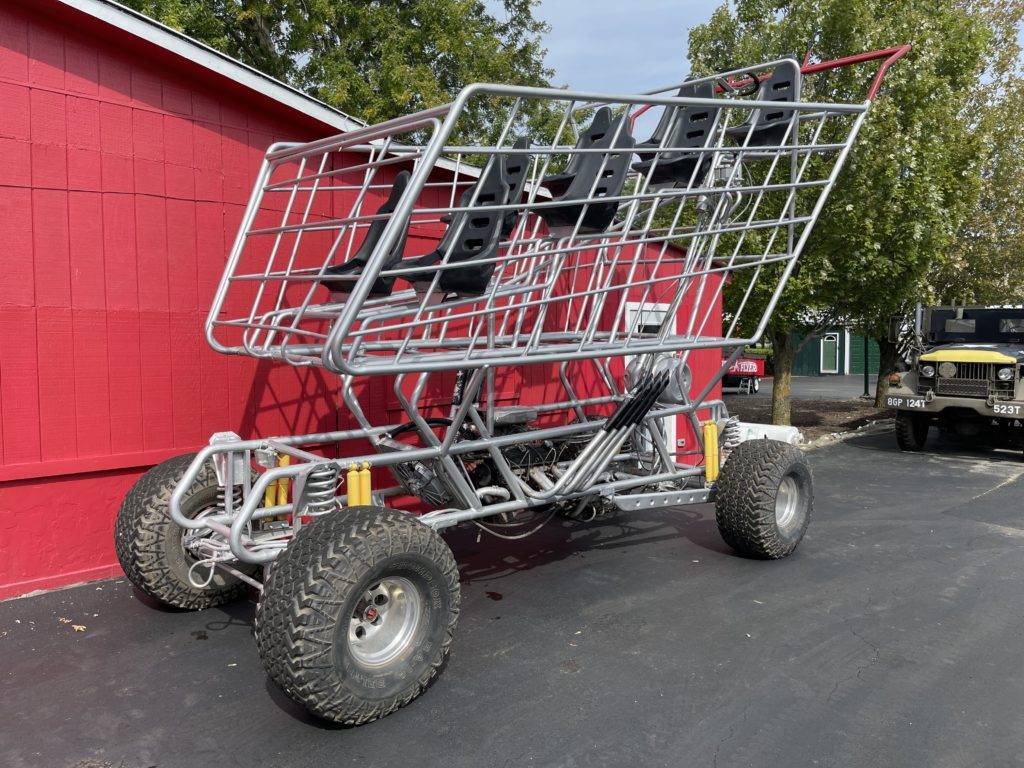
Kerrigan was the genesis of it. The first year we did it, I think we had about 20, like 28 people that participated in it. The rules are simple. You got a power wheels car, [00:24:00] can’t modify the wheels, so you can’t put rubber anything on the wheel through the plastic wheels. You have to pull the motor, pull the battery out, the red deck, soapbox derby, you know, I mean, you have free wheel down this.

We’ve had Andy Laley, pro road racer came in second. He was in a firetruck. James Clay has run the thing. He’s been our show twice now. Just wanted to point that out. James is great. Like, oh, that’s so much fun. The cameras went down. He is like, woo. Those things are a handful.

Matt Rocholl: Noah said, uh, fielding shredder ran it this year.

Chris Cobetto: That’s right. Fielding shredder ran it. But I mean, the main thing is, is that it’s a goof. I mean, you win a hundred bucks, we don’t wanna make it worth cheating or spending a lot of money on, although I’m apparently certain it might be a little something that’s not exactly stock on some of these vehicles.

So border

Crew Chief Eric: balancing, maybe just to get a other stick.

Chris Cobetto: That’s right. It’s, it’s about fun. You know, this year we decided to introduce some elements from Mario Kart, and we built some jumps that have the, the lit arrows on them. You’ll see that some of the videos that, that are coming out and people dress up, what it’s turning into is it, do you ever see the, uh, I think it’s the [00:25:00] Fluen Toin Fluen to Flu talks from Red Bulls, right?

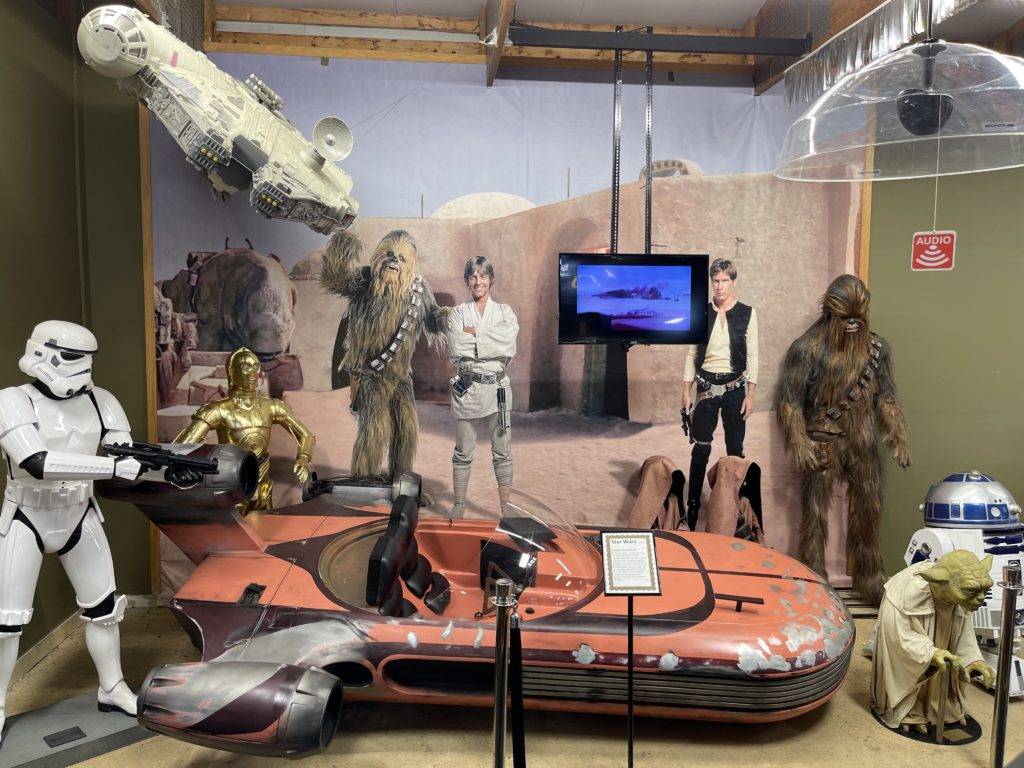
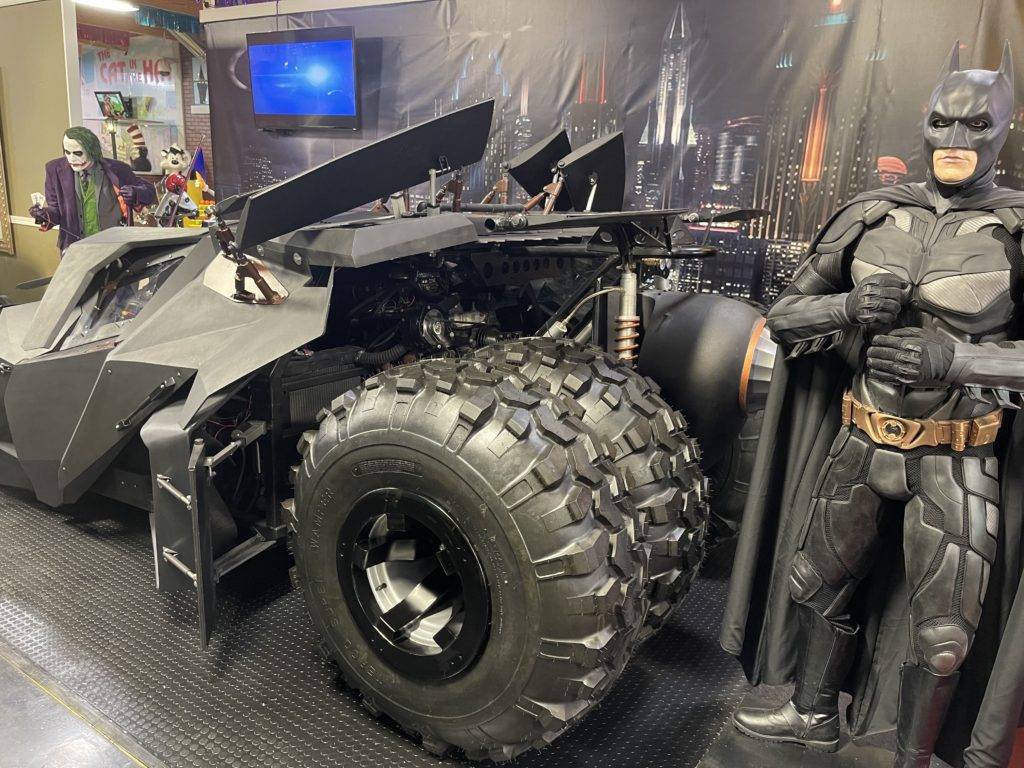
Yeah, the, exactly the. It’s a lot like that, you know, in that people are showing up and dressing as Batman and they’re running their Batman power wheels. You know, we have somebody dressed up as Luke Skywalker. They had the, a speeder car, had one guy dressed up as, oh, what’s her name from Frozen beard and everything, and like a frilly dressed in a frozen sleigh.

That’s a power wheels thing.

Crew Chief Eric: It’s great. So what, so what you’re saying is miniature lemons race is what it really is. Kind of Anybody Mel upside down yet?

Chris Cobetto: I haven’t seen that yet, but. If somebody watches this video, I’m sure it’s coming next year.

Crew Chief Eric: There’s a lot going on, you know, between the vendors and cart racing.

Obviously VIR has available. You’ve got kid zones, you’ve got contests, you’ve got concerts. I mean, that sounds like a lot of stuff going on. In what, two and a half days? Does anybody actually sleep at Hydrox? Not there

Chris Cobetto: near the patriot circuit. Depends on who you ask. That’s exactly right. There are people who do get a chance to sleep, and there’s some [00:26:00] people that basically between the gallery and patriot circuit, that’s where the stump championships happen.

It’s not official types of DJing happens, but it’s thumping pretty good up there. I might maybe once or twice have visited that group on a Saturday night. I do enjoy. I do enjoy me some stump. Do you have any idea what, do you know

Crew Chief Eric: what stump is? I can only imagine. Now please enlighten me.

Chris Cobetto: This is a Gabe.

So basically what it is, is you get a huge stump and literally a wooden stump. Oh, and this is

Crew Chief Eric: not what I was thinking. Okay?

Chris Cobetto: Oh no. This is the Gabe. You know, you stand around, everybody gets a nail. You tap your nail in a circle right around the ridge of the ridge of the stu. You tap your, your nail in, and you have to have it in there enough that it’ll stand up and then you get a hammer.

Everybody has a hammer. Everybody stands in a circle. Everybody has a goal, is. Hammer everybody else’s nail in. So you’re the one that has your nails still sticking out, even if it’s just a little bit. So the rules are if you take the hammer and you flip it up in front [00:27:00] of you and you grab it, you get one hit.

Now, the thing is, is that once you grab the hammer, you can’t adjust it. So however you grab it, that’s how you have to hit it. Let’s see. If you throw it under one leg, you lift a leg, you throw it up under one leg and grab it, that’s two hits. Okay? Again, you can’t adjust it. If you adjust the hammer, you lose.

You gotta pass it along. If you toss it behind your back and you catch it like this, you get three hits only in the way that you caught it. It just kind of goes around the circle and you try to nail everybody else’s nail. And if you’re the last one standing, you win. And I gotta tell you, Brian Edgar from us Drift, and the guy who runs with stuff, and also Formula Judge, he is just like stupid good at this,

Crew Chief Eric: again, hidden talents of people, right?

But then again, I don’t know. How to even react to this, but my mind is still processing what you just explained. I, I guess that leads me to, I gotta come to the next Hyper Fest. Come check this out, because it’s one of those believable, when you see it type of moments, talking about expectations for somebody who’s going to Hyper Fest for the [00:28:00] first time.

Obviously hyper profess moved around a lot over the years. It was at Summit Point. Quite a bit. Now it’s at VIR, it’s found a new hall. So if I’m going to BIR for hyper for the first time, what should I expect? Like how does it work? Am I presented a schedule? Like if I’m going to the INSA race of VIR, I mean, how do you figure out what to do and where to go and, and where does it cost and.

What are some of the rules for all these different events, especially the events where people can bring their cars?

Chris Cobetto: Depends upon what you’re doing, right? You know, if you’re doing a hyperdrive, it’s basically nasa, HPDE rules is really what it comes down to. You need to have a helmet. We do have some loaners for the Hyperdrive people.

If you’re HPDE during the entire weekend, you’ll bring your own helmet with. What I would say is that, you know, you take a look at the schedule and take a look at the map ’cause it’s a really big facility and really take a look at what you wanna see, take a look at what time those things take place. We do our best to try to not put things on top of each other.

Sometimes they over they, they will overlap just because that’s, there’s so much going on. We do our best really to, to buy them. My suggestion would be if I were [00:29:00] coming, if you don’t have a golf cart or some sort of a paddock vehicle. You plan on renting one there, or you plan on bringing something along with you, because once you’re parked, that’s pretty much it.

There is so much going on that if you like to camp, there’s a lot of space. It’s a beautiful facility. It’s just gorgeous. So I would say if you can get on. And find a camping. People really like the track side camping. That gets sold out very quickly, but they really like that a lot. Really pick what it is that you want them to do because in terms of the cost, we try to keep it as reasonable as we possibly can, but there’s a lot going on.

We are less than some of the other events out there. Do that on purpose, because I really do want to have people to come and have fun, and once they come through the gate, that’s a limited number of drifting ridealongs. It’s a limited number of rally ridealongs, offroad, that sort of thing. You know, we charge for those things.

So you have a ticket to get in. I mean, literally if you get on right now, it’s what? $60? I think 60 bucks is an early bird. We have a limited number of those. Those are gonna run out here pretty soon. 25 left. There are 25 left of those. [00:30:00] Okay. $75 will be the next ticket. That’ll be the main ticket. Price.

Once you get to the event, it’ll go to 90. So it behooves people to try to get their tickets early. Camping’s pretty inexpensive to camp for the the weekend and car camping. 60 bucks. If you’re there for three days, you buy it. Right now you have three days of fun. Plus you’re camping for $120. That’s less expensive than just about any other type of festival like this that I know.

Plus, you can

Matt Rocholl: divide your camping spot up.

Chris Cobetto: Right.

Crew Chief Eric: What does that, let’s say, general admission ticket get you access to, you mentioned that the ride-alongs are a separate cost and there’s a limited number of those. Camping is a separate cost, that’s an add-on. What else does that general admission get you access to?

Just kind of roaming around and seeing the other events. If you wanna be in like, let’s say the power wheels of that, do you have to pay for that separately? Obviously the de has its own cost, so what is included in general admission and what is a rider?

Chris Cobetto: So in general, admission, you know, you obviously get to spectate with everything.

If you wanna participate in games like the blind [00:31:00] driver, golf cart, Alan, we basically have a golf cart out there. The driver has a blindfold on the passenger, is the one that is telling him where to go. Two carts that compete against each other through. Of course, whoever makes it back to the start finish line, first wins that doesn’t cost anything and can win some, some significant prizes there.

PRS, if you like to play guitar and you play guitar, we have a shred contest, which you can win a seven to $800 ball. Reach guitar if you think you to know how to perform, but really don’t play guitar. There’s the PRS Air guitar contest and so you can jump in there and if you’re really, really good at an air guitar contest, you get the prize of it real.

PRS Guitar, Paul Reid Smith guitar, you can participate in, uh, the Power Wheels downhill simulators. And, and that doesn’t cost you anything. It doesn’t cost you anything for the burnout contest. Doesn’t cost you anything for the, the sound off. And all these things have prizes associated with them. Either, either chake kind of stuff or cash or gift cards, you know, that, that sort of thing.

The kid zone doesn’t cost anything. You go in there, we have bouncy houses and things get a huge soccer ball that they moved around. And then there are a [00:32:00] lot of the vendors have. Activation as part of their marketing packages where you know, you might be able to get a ride with Bon getting JR because you love Monster.

You might be able to get a ride with that MLZ, that sort of thing. And all that stuff is free. There’s really a lot of stuff to do and see with your entry.

Crew Chief Eric: For the folks that want to come down to do the HBDE part, obviously there’s also gonna be coaches. And if they’re running a standard HPB weekend, maybe a club race mixed in there in a time trial, as is the NASA formula.

Do those folks get to enjoy and experience other parts of hyper profess? Is there enough time? Is it more of a limited or not maybe as many run session de as we’d expect? I mean, how does that time get divvied up? Or is it just everything’s so busy? Everybody’s hyperfocused on their different parts of hyper fast.

I

Chris Cobetto: think if you come out and you run the racing and the HPDE side, you’re probably both focused on what you are doing on track. But the reality is that we don’t shorten any sessions and we don’t skimp on any sessions. For the HP, it is a regular NASA week and that [00:33:00] we just overlay this circus on top of those individuals that are participating in the HPDs, the racing.

They’ll have time to get out and see some things. We tend to wait. The entertainment stuff on Saturday toward the afternoon and into the evening. So, you know, we’ll finish track operations at five 30 to six 30. You know, we have a lot of racers that they take their racing suit off. You know, they put their Batman suit on, grab their Power Wheels car, and they can make the power wheels thing.

And then they’ve got somebody meet ’em up at the burnout contest with their car and they go out there and do the burnout contest. So there is time, and we do that on purpose because we want the people that are our regular NASA people or anybody that’s doing the HPDs to still be able to enjoy the festival portion of this.

Crew Chief Eric: Obviously if you’re participating in the different motor sports disciplines that are going on, they’re gonna follow the rules and regulations of the different disciplines within nasa. So if it’s rallied, it’ll follow that in HPDE club racing, et cetera. So all the standard tech, everything that goes on with those events that you’re used [00:34:00] to doing on a regular weekend still apply in the case of hyper fast.

Okay. And that’s the easy part. Getting everybody organized in tech for the power wheels downhill. That’s a challenge. One question that always comes to mind when you’re talking about Des or any motor sport events in general, does track insurance cover hyper fest? You’re talking about if you’re a de person, is it considered because it’s a festival and part of something larger?

Is track insurance still available for an event like High Fest?

Chris Cobetto: Oh, sure. Oh yeah. I mean, if you go to Haggerty. Haggerty will write it because like I said, it’s, it’s a regular NASA event and we tend to separate out the NASA paddock. Not so much that we’re trying to be exclusive, it’s just that we have 525 registered drivers that are participating just in the regular NASA stuff.

The time trial, ultimate Track car challenge, you know, that we put on for grassroots motor sports, the racing and the the HPD stuff. If you take a look at the number of drivers that we actually have participating, whether it’s drifting or off-road, [00:35:00] rally, whatever it is, you start to creep into the 900 participants.

You start adding in riders and everything else, it goes well beyond a thousand for somebody who is actually physically doing something in a car or in, you know, something on wheel.

Crew Chief Eric: So what’s attendance like in the last couple of years at Hyper Fund? What are the numbers looking like in terms of people being there?

Chris Cobetto: 2019, we were just about 11,000. For 2020 we didn’t have it. And for 2021, you know, it’s interesting, we were just about the same as numbers. Slightly lower by like I know 80 people or something like that for 2021. And I think this particular year, if you take a look at the way the ticket sales were, you know, we opened up ticket sales.

I wanna say that it was in May. We broke the internet. I mean, that’s how many people were trying to get on to buy the things. I think we were expecting 200 to 250 people to hit the site at one time. We were having 1200, 1500 people hitting the site at one time. We, we weren’t prepared honestly for that. We are now, our tickets were 300% higher than same [00:36:00] time prior to in 2019.

And then the Delta variant started creeping into things and you could actually watch as the scare and concern, you know, with the Delta variant happened. You could actually see the ticket sales sort of start to drop. And we did. We had people that were like, Hey, you know, we love this event. We had people that saw some of the videos that we put out day of.

We got messages going, ah, that should have come from our perspective, given COVID and all the goofy stuff that happened, it was still a good year. We certainly expect that to grow pretty substantially from me.

Crew Chief Eric: So are tickets available through hyper fest.com or do you get ’em through Motorsport Reg, where we, you know, sign up for all our other Motorsport events in this area?

How does that process work?

Chris Cobetto: We don’t use Motorsport Ridge as ticketing. We actually talked to them about doing the ticketing, but again, it goes back to all the stuff that’s going on. Motorsport Ridge does, I think a great job for regular events, but it’s something like this. They just couldn’t handle it.

They couldn’t handle the ticketing and, and all the different nuances are there with Piper Fist. So we’re using a customized [00:37:00] system, but either way, that’s the backend side of it. Yes, if you wanna get tickets, you go to Hyper Fest, do hit the Get tickets button, and you get tickets. Go from there.

Crew Chief Eric: I noticed as I was looking through that there’s a bit of a kind of bundle package, the grassroots experience package.

Do we wanna expand upon that a little bit? Tell people what it’s all about. Is that a all in one? All you can eat sort of a deal

Chris Cobetto: in a way. We haven’t confirmed what those s are going to be like this year. It wasn’t an all you can eat type of a thing. It’s very difficult to do an all you can eat type of thing because if you do, that gets pretty costly pretty quickly.

Yeah, I don’t know. I still have to actually, the conversation with GRM in terms of what packages that we’re considering, likely what’ll happen is it’ll get in some third parking, camping and some access sort of VIP type of access to places.

Crew Chief Eric: What we were just talking about is a great segue into the future of hyper fast.

So big question. Is hyper profess gonna be a DIR next year, or is it moving? Are there gonna be multiple ones beyond 22? [00:38:00] What do the next couple of years look like? And let’s put our thinking caps on. Let’s talk about the future, the distant future. What’s the next 20 years of hyper profess look like?

Chris Cobetto: Good Lord.

I’m still alive. If one just about killed me this past year, we’re going back to VIR. It’s a wonderful facility. Every time we do one of these things, I wonder if they’re gonna want us back, but, uh, but VIR is phenomenal, you know, you know, one of the owners there, you know, Connie Ome is just, she’s awesome.

You know, she gets it. She loves everything from the emphasis stuff to the crazy lawnmower racing, you know, and, and power wheels down. She loves it all. As a matter of fact, I was riding around in a golf cart with her a couple years ago and we’re sitting there and she brought it up. We’re trying to figure out where we’re gonna put a, a demolition derby, her idea.

Just a second. Yeah, no, we’ll be back there in May and there’s no plans to move at any place. You know, number one, that facility is gorgeous. Number two, as a multi-use facility, there really is not another facility out there where we could duplicate this. Completely on the same facility. Are we thinking about some other [00:39:00] venues?

Yeah. Summit Point actually still is a good place maybe, but that would be an augmentation. It wouldn’t be a substation, you know? It would be an augmentation to the thing. There’s a pretty well known circle track where the raid course. Conversation with today. There’s another track actually that’s on the East Coast.

The facilities are, are pretty good. So if we expanded, you know, we thought about going to California, you know, we’re, we’re open to just about any place. And the cool thing about Hyper Fest is that we can expand it to pretty much any road course across the country. I don’t necessarily have to run the road racing of the HPDE side of it.

I have NASA regions all over the place, so I can call Northern California and say, Hey, we wanna run a hyper fest in Sonoma. Jerry Kunz wind’s the guy who started all of NASA a million years ago and he still runs the Northern California chapter, and he’d be like, yeah, man, let’s figure out how to do it.

His answer, just like mine, it’s always yes, unless the logistics say no or make you say no. Yeah. Where we go in the next couple of years, you know, we’d like to maybe expand it out to one or two more events. I think that [00:40:00] we’re probably gonna keep it somewhat close to home on the East Coast, just because that’s where our assets are, but we’ve done it in California before.

Know what it takes to put one on out there. So we may do that too, as a matter of trying to find the facility. It’s in a good enough spot geographically that is willing to work with us. Preferably, uh, an independently owned track. ’cause some of the ones that are owned by the corporations tend to be little more strict guidelines with what you’re allowed to do.

Crew Chief Eric: So it dawned on me the one event I didn’t see on the list, and I’m wondering if maybe this is in the future and I could see it happening at VIR. Have you guys thought about bringing in the Auto Cross? Guys?

Chris Cobetto: We talked about it a lot actually. There really isn’t a spot. It’s very difficult to do it if the skid padd was extended and there was some talk about may make the skid pad a little bigger, but that’s still a pretty small pass for.

A typical autocross. There was actually an autocross. They ran up in the south paddock and that was run by, and it was, it was an employee, I can’t remember exactly who it was at BIR, but they wanted to do it. I’m like, yeah, sure man, whatever go have at it. [00:41:00] And that lot was just so small it, it really wasn’t that much fun.

And I love autocross and I wish there was a big enough spot out there to make one That’s. One of the challenges that we have, even if we did what do on the Skid pad, is where do you stage the cars? Because there just is no space right there. Can’t put ’em on the main road if you put ’em in the grass and it’s wet.

I mean, it’s just, it’s a logistical problem, not a content. Wish we had it kind of a problem.

Matt Rocholl: The way that I would answer the Where do you see hyper? What would be our focus rather, A lot of attention has already started to go into it. We’d like to see more so of developing it from just a festival or once a year into a household lifestyle brain.

A lot of that happens when we do more events, so we definitely see some kind traveling circuit. Sort like they would still carry the core of Hyper Fest, but where I could see it going is that each one would vary in its own way, depending on location, bring [00:42:00] in different cultural styles. Stylistic element that might retain better to that area of the country.

Something to add. We had our first international attendee, somebody flew from England. Come to Hyper Fest

Chris Cobetto: International baby.

Matt Rocholl: Yeah, we’re getting the, we’re getting the word out. Um, I think a lot of hyper fest marketing for years was done solely by word of mouth stuff. We’re moving into the digital age, getting word out there, and that’s something that.

I would love to see grow year after year and it seems to be working. Our demographic is shifting a little bit. We’re seeing a lot more younger crowd start to get interested in anticipating. That’s great to see as we know that the future of the festival is secure

Crew Chief Eric: actually. All very good points. And leads me to a question I generally reserve for our fit teams.

Which is, how do you see that, what we call the [00:43:00] E revolution or the evolution? Impacting future of Hyper Fest and or how is your team embracing the change in the automotive landscape as more and more EVs are coming on the scene?

Chris Cobetto: Well, I mean, aside from wanting him to drop a Prius from a helicopter at some point, it’s just.

I like ev stuff, right? I love new technology. I sometimes don’t really appreciate the optimism of EV vehicles being a panacea. However, I think that, you know, Elon Musk did a great job of, of making ’em sexy and fast. And the styling can be, obviously, you know, beauty is a the beholder, but a plaid is a fast, fast vehicle and you cannot deny that.

So if you’re a performance guy. I like anything fast. I mean, I just like fast stuff. You know, when you drive one of those things, you can’t help it to be impressed. They come with some limitations with regards to track time and, and racing. A lot of the tracks are slow to embrace it because if you don’t have chargers, you do a 20 minute session and a pla that a [00:44:00] 25 minute session and pla.

You’re done. You have to charge the thing up, which takes a while. You have to have the chargers that are, that are available. The only track that I know of, you know, I haven’t traveled to them all, certainly, but the ones that we’re associated with is Summit Point. I think they have three or four chargers at Summit Point.

That’s it. As it continues to grow, you’re gonna see more and more of these cars. But really the limiting factor is going to be how do they get charged. Our schedule is such that we’ve got enough time in between races, time in between HPD sessions. Somebody could plug in. And you know, on a supercharger and getting enough juice to continue, you know, throughout the day.

From an EV perspective, and when I say ev, I don’t mean an electric vehicle, I’m talking about emergency services perspective. You know, there are some logistical things you have to make sure that the fire guys are aware of and most of the tracks. Knowing that whether it’s a hybrid car, high performance, hybrid cars that have the electric side of it, register full electric, they already know the safety crews from the tracks already really know how to handle that stuff.

It’s four wheels and a motor man. I mean, you know, four patches, rubber on the track. You know, we’re all efficiency [00:45:00] experts, right? We’re trying to get around the track in the fastest amount possible. It doesn’t matter to me what power plant is. Help it to love the rip of normally aspirated Ferrari V eight or V 12 an A line six from BMW an S 52 or an S 54 Uncorked is just beautiful.

That’s the only thing I could, that that just bugs me, man. About the sound, I mean, the electric things don’t make any sound. They’re a performance, but I’m old school man. That power is, is I want something loud, I want something to rip. But either way, we’re all brothers in speed, as far as I’m concerned.

Whatever weapon you bring to the table is what you think that you can wield. Best way, and let’s go have fun on some wheels.

Crew Chief Eric: Well, guys, this has been a lot of fun learning about the circus that is hyper fast. So, you know, I use that term lovingly because it really does feel like maybe the American version of Goodwood, the festivals of speed and the revival kind of combined into one event in that flare that we [00:46:00] have here stateside.

So. To Chris’s point, we are all brothers and sisters in speed and in motorsport, and this is a great way to pay homage to that, get us all together a few times a year and celebrate our petrol inspired and petrol fueled enthusiasm at a festival like this. With that being said, presented by Grassroots Motor Sports Hyper Fest is the largest automotive event on the East Coast, touted as the automotive amusement park and 2021 marked the 20th anniversary of Hyper Fest and we’re looking forward to Hyper Fest 2022 and we bet you are too.

So for more details on Hyper Fest, visit www.hyperfest.com and follow them on Facebook at Hyper Fest One. Or on Instagram at Hyper. So congratulations to Chris and his team on 20 successful years of Hyper Fest and many, many more to come.[00:47:00]

That’s right, listeners, if you enjoyed this episode, be sure to check out our Patreon. Follow on pitstop Mini, so check that out on www.patreon.com/gt motorsports and get access to all sorts of behind the scenes content from this episode and more.

Crew Chief Brad: If you like what you’ve heard and want to learn more about GTM, be sure to check us out on www.gt motorsports.org.

You can also find us on Instagram at Grand Tour Motorsports. Also, if you want to get involved or have suggestions for future shows, you can call or text us at (202) 630-1770 or send us an email at Crew chief@gtmotorsports.org. We’d love to hear from you.

Crew Chief Eric: Hey everybody, crew Chief Eric here. We really hope you enjoyed this episode of Break Fix, and we wanted to remind you that GTM remains a no annual fees organization, and our goal is to continue to bring you quality episodes like this one [00:48:00] at no charge.

As a loyal listener, please consider subscribing to our Patreon for bonus and behind the scenes content, extra goodies and GTM swag. For as little as $2 and 50 cents a month, you can keep our developers, writers, editors, casters, and other volunteers fed on their strict diet of fig Newton’s, gummy bears, and monster.

Consider signing up for Patreon today at www.patreon.com/gt motorsports. And remember, without fans, supporters, and members like you, none of this would be possible.

Highlights

Skip ahead if you must… Here’s the highlights from this episode you might be most interested in and their corresponding time stamps.

  • 00:00 Technical Issues Disclaimer
  • 00:52 HyperFest Overview
  • 01:25 Meet the Guests: Chris Cobetto and Matt Rocholl
  • 01:57 The Birth of HyperFest; Early Challenges and Successes
  • 05:24 First HyperFest Event
  • 08:05 Lessons Learned and Evolution
  • 13:34 HyperFest’s Influence and Market Readiness
  • 15:02 What is HyperFest?
  • 16:38 Off-Road Adventures at VIR
  • 21:50 Unique Events at HyperFest
  • 24:15 Introduction to HyperFest 24:45 Fun and Games at HyperFest
  • 27:51 Logistics and Planning for Attendees
  • 29:49 Ticketing and Costs
  • 30:54 Activities and Events
  • 37:46 Future of HyperFest
  • 43:13 Embracing the EV Revolution
  • 45:41 Conclusion and Final Thoughts

Learn More

Presented by Grassroots Motorsports … Hyperfest is the largest automotive event on the East Coast touted as “the automotive amusement park” and 2021 marked the 20th anniversary of HyperFEST. We’re looking forward to Hyperfest 2022, and we bet you are to, so for more details on Hyperfest visit https://www.hyper-fest.com/ and follow them on facebook @hyperfest1 and instagram @hyperfest 

Bonus Content

There’s more to this story…

Some stories are just too good for the main episode… Check out this Behind the Scenes Pit Stop Minisode! Available exclusively on our Patreon.

HyperFest’s early years were a whirlwind of experimentation. Chris and his team took the show on the road, hitting tracks from Pittsburgh to Sonoma. But the market wasn’t quite ready. The tuner scene was still dominated by clear taillights and oversized exhausts, and the deeper performance ethos of HyperFest flew under the radar.

Still, the team learned what worked: hyperdrives (20-minute taste tests of track driving), curated content, and the importance of reliable partners. Operational excellence became key, and the event slowly grew into a logistical monster—one that required serious planning and a dedicated crew.

Photo courtesy HyperFest; Matt Rocholl

Success Stories and Stumbles

HyperFest’s original mission – to funnel tuner enthusiasts into NASA’s HPDE program—has paid off. Multiple NASA national champions got their start at HyperFest. One Honda Challenge racer even began his journey in the car show before converting his ride into a race car.

As for flops? Chris recalls paying $10,000 for Theory of a Deadman to perform – only for the band to be grounded by thunderstorms and sound curfews. Ouch.


A Festival Like No Other

So what is HyperFest, really? It’s a motorsports Woodstock. A rolling celebration of everything on wheels. From road racing and drifting to off-road trails, rally courses, and even power wheels downhill races, it’s a choose-your-own-adventure weekend for petrolheads.

At VIR, the off-road trails snake along the Dan River, hidden from view but rich with terrain. There’s karting, concerts, contests, and a thumping nightlife around the Patriot Circuit. It’s a place where you can ride your pit bike through a crowd and be cheered, not tackled.

The Power Wheels Downhill: Pure Gold

One of HyperFest’s most viral events is the Redline Oil Power Wheels Downhill Attack. Born from a dare involving a 6-year-old and a rollercoaster section of VIR, it’s now a staple of the weekend. The rules? Strip the motor and battery, keep the plastic wheels, and let gravity do the rest. Costumes encouraged. Past participants include pro racers like Andy Lally, James Clay, and Fielding Shredder.

Culture, Community, and Controlled Chaos

HyperFest isn’t just about cars – it’s about connection. Chris describes it as a giant family reunion, where 15,000 people share the same passion. Matt Rocholl, HyperFest’s social media director, sees it as a bridge between generations, helping younger enthusiasts realize that motorsports aren’t out of reach.

With its blend of high-octane action and laid-back camaraderie, HyperFest has become a blueprint for modern automotive festivals. It’s inspired events like GridLife and outlasted others like GT Live. And it’s done so by staying true to its roots: fun, inclusion, and a relentless love for all things that roll.


This content has been brought to you in-part by sponsorship through...

Cones, Camaraderie, and Car Control: A Deep Dive into Autocross with Tom Hill and Todd Lilly

Autocross – or “solo” as it’s known in SCCA circles – might look like a sea of orange cones in a parking lot to the uninitiated. But for seasoned drivers like Tom Hill and Todd Lilly, it’s a gateway to precision driving, lifelong friendships, and a whole lot of tire smoke. In this episode of Break/Fix, we unpack the world of autocross: its history, its quirks, and why it continues to be one of the most accessible and addictive forms of motorsport.

Autocross is a timed motorsport event where drivers navigate a tight, technical course defined by traffic cones. Speeds rarely exceed 65 mph, but don’t let that fool you — it’s a full-send experience that demands razor-sharp reflexes, vision, and car control. Unlike drifting or gymkhana, autocross emphasizes precision over style, and every thousandth of a second counts.

Photo courtesy Crew Chief Brad, Gran Touring Motorsports

For many, autocross is the first step into motorsports. Todd transitioned from motorcycle racing after a few too many broken bones, while Tom returned to autocross after a hiatus, trading project cars for a C4 Corvette and later a Miata. Whether you’re coming from karting, rally, or just looking for a safer thrill, autocross offers a low-barrier entry point with high rewards. And here are some variants you might want to remember:

  • Pro Solo: A drag-race-style autocross with mirrored courses and a Christmas tree start.
  • Track Cross: Autocross on a racetrack, often with cones to modify layout and limit speed.
  • Time Trials: A bridge between autocross and wheel-to-wheel racing, focused on consistent lap times and precision.

Each offers a unique flavor of competition, and many autocrossers eventually explore these disciplines.

Tune in everywhere you stream, download or listen!

Listen on Apple
Listen on YouTube
Listen on Spotify

Notes

This episode of Break/Fix features a detailed exploration of autocross, a motorsport event that often puzzles outsiders. Originating post-World War II as time trials within the Sports Car Club of America (SCCA), autocross involves navigating a car through a course marked by orange cones in a large parking lot, emphasizing handling over speed. The hosts discuss the sport’s history, key skills such as precision driving, and the importance of walking the course for successful navigation. Guests Tom Hill and Todd Lilly share their personal journeys into autocross, compare it to other motorsport disciplines like track racing, pro solo, and track cross, and discuss the preparation, classing, and scoring intricacies involved. They delve into technology and data usage in improving performance, safety measures, and the overall community and camaraderie surrounding autocross events. The episode also touches on the complexities of car preparation, the varying characteristics of different autocross venues, and advice for newcomers to the sport.

  • For many folks AutoCross has been a gateway, or transition into Motorsports. For some, they went from Karting to AutoCross to Track and beyond. How do you get into AutoCrossing?
  • When you see an AutoCross “course” it can be a bit intimidating, people often joke that it’s just “a sea of cones” but there is a reason/purpose for the layout.
  • One of the most important things every AutoCrosser learns is to “visualize the track” and that oftentimes comes in the form of walking the course, why is this so important?
  • When you really get into AutoCross, it can become really complex, from the Timing/Scoring, Classing and especially the car prep side, let’s explore this. 
  • Is AutoCross safe?
  • There are other variants of AutoCross, like Pro-Solo and TrackCross – expand on the differences? 
  • Like in circuit racing (ie: Track) we have our favorite and least favorite “tracks” is the same true of AutoCross? Aren’t all Parking Lots the same?

Fun Fact: When the Sports Car Club of America (SCCA) was founded in 1944, some of the first events it held were local time trials, also known as Autocross. BUT As we said in the intro… outsiders looking at an AutoCross for the first time might be thinking, “What are these cars doing driving around a parking lot with cones? Is this some sort of driver education program? Defensive driving clinic?” How would you explain AutoCross to someone that’s never seen it before?

Transcript

Crew Chief Brad: [00:00:00] Grand Touring Motorsport started as a social group of car enthusiasts, but we’ve expanded into all sorts of motor sports disciplines and we want to share our stories with you. Years of racing wrenching and motorsports experience brings together a topnotch collection of knowledge and information through our podcast.

Break Fix.

Crew Chief Eric: On this episode of Break Fix, we’re gonna chat about a discipline of motor sports where outsiders often ask What in the world is going on over there? You know, the one, that form of racing many of us started with, where you attempt to navigate your car through a defined course made up of orange traffic cones on a large parking lot composed of tight technical layouts.

These races put handling and driver ability above engine output and outright top speed. So if you haven’t guessed by now, we’re going to be exploring the world of autocross, also known as solo, with my guest, Tom Hill and Todd Lilly, both [00:01:00] seasoned SCCA, autocrossers here to help us really understand what is autocross.

So welcome to Break Fix, Tom and Todd.

Todd Lilly: Hello. Hi. Thanks.

Crew Chief Eric: Good to be here. Did you guys know that when SCCA started in the mid 1940s, you know, just at the tail end of World War ii, some of the first events they held were time trials known then as autocross.

Todd Lilly: No, I didn’t. Did not know that.

Crew Chief Eric: But as we said in the intro, outsiders looking at an autocross for the first time are thinking, what are these cars doing?

Driving around a parking lot with a bunch of cones? Is this some sort of driver education program, defensive driving clinic? How would you guys explain autocross to somebody that’s never seen it before?

Todd Lilly: First of all, you know, my mom, she, you know, it’s like, oh, you do autocross. I thought you drove your car on pavement.

Everything, everybody thinks motocross or something and they’re like, oh, you, it’s like dirt bikes, right? I mean, that’s the first one you gotta dispel.

Tom Hill: Absolutely. But the, uh, other items you mentioned, driver training, safety and all that, I was sort of classified as all the [00:02:00] above. The stuff we do out there teaches you skills that are actually useful in avoiding accidents and being a better driver on the road.

Plus it, you know, gets all of that driving excitement out of your system so you’re a more mellow, uh, driver on the road.

Crew Chief Eric: So when I was growing up, people always used to say autocross is all about precision driving. And nowadays if you say that, they go, wait, you mean drifting? They’re not the same thing.

Todd Lilly: The, and well, the precision part. I mean, you’re, you know, sometimes you’ll be classed or ranked the thousands of a second or even better, you know, so it, it’s absolutely a little wobble or a sneeze. And there goes first place. Some of my other friends, I say, Hey, you know, how fast can you do a u-turn? That’s pretty much all, you know, it’s like, how fast can you avoid a pedestrian?

Can you do a u-turn? Can you, can you do those? You know, ’cause they’re like, man, how fast do you go? Your car looks so fast and you’re like, well, it’s like 25 miles an hour in a, in a street car maybe.

Crew Chief Eric: And not to be confused with another discipline of motor sport, which actually falls under the rally category, partially drift, which is gym kana, which is also sometimes [00:03:00] done on large parking lots.

But those are larger defined courses with walls and barriers and as we refer to it in autocross, one cone turnarounds, like they’re going around a hay bale, things like that. So we wanna make sure that people understand what autocross is, is really about here.

Tom Hill: Like you mentioned, lots of traffic cones.

It’s a bit of a, uh. Mental exercise. I mean, if you’re on a track, you’ve got a fairly defined area, right? You’ve got the pavement and you’ve got the grass. Uh, you typically wanna stay off the grass. Well with autocross, the course is actually laid out in that big parking lot and, and it’s in the cones. The cones really don’t define the course per se, you know, they’re the limitations and all that sort of thing, but the course actually is in there.

You have to be able to go out there and walk the course. Understand, you know, what the path is gonna look like and be able to develop some vision there. And that’s one of the more challenging aspects of it, I think.

Crew Chief Eric: Absolutely. And we’ll explore that more as we get deeper into the conversation. Let’s kind of talk about beginnings.

You know, there’s always an origin story. In this case, we’re not gonna talk necessarily about the history of DER Cross. [00:04:00] Let’s talk about your guys’ history and CROs. So for many folks, autocross has been a gateway into other motor sports. I mean, Brad and I, and unfortunately Brad isn’t here with us on this episode.

I know he loves the autocross. We autocross through high school and college. You know, I grew up with my dad being a national pro solo champ, things like that. So I was always around the autocross course, but it led me to other things. It led me into time trials. It led me into track and HPDE and all these other kinds of things.

And for other folks, maybe they started in carting and found their way into autocross. How did you guys get into autocross? Let’s start with Todd.

Todd Lilly: Well, you know, I was in California and doing, uh, I. Pseudo motorcycle racing. I drive at about 110%, but I have about 89% skill. So you know, a separated shoulder and some other, other broken bones and stuff.

And they had a autocross club at where I worked that they set up in the parking lot. Same thing. What? What are you guys doing? You’re driving around some cones and then you know, I got outta motorcycles and in at a 97 Trans AM [00:05:00] V eight and took it out there and spun it around. Dig donuts. Slid all over the place and went really slow.

Right. And that, and that’s how, you know, and then it went to ESP. So then you had, you know, sticky tires and started throwing money at suspension and brakes and training. Of course, lots of training, lots of seat time. So it really was, wanted to save my skin going from motorcycles to some other sort of cheaper, you know, I, I looked at racing, but, you know, I couldn’t even afford, I was run, had a production class Ninja two 50, right?

Which is basic beginner motorcycle. And even just keeping that going, I was like, man, that I don’t know that I want to get into actual racing, going to the racetrack, putting that additional time into it. So, I mean, that, that’s how I got started.

Crew Chief Eric: Would you say that that’s what attracted you to the sport, is maybe getting out of motorcycles?

The risk had become too high and then it was like, Hey, I’m more protected. Four wheels, this seems safer, or was it something else? Well, you

Todd Lilly: know, and also in California, I, I’d gone to Thunder Hill quite a bit, Laguna Seka, and on the motorcycle. So it was, you know, big, long, [00:06:00] straight. You’re set up for the corner, you’re waiting, you’re waiting turn.

Set up for the next corner. You’re big, long, straight. You’re waiting, you’re waiting. You know, I really enjoyed the cornering and the G-forces. Autocross is just all corners. There’s any straight, you know, somebody messed up the course or it’s like a 4th of July course or something where, you know, they say, oh, you know, we’ll let you get up to 75 miles an hour or something.

But don’t tell anybody.

Crew Chief Eric: So Tom, how about you? How did you get into auto crossing?

Tom Hill: A long time ago, a friend of mine, uh, his dad was doing this auto cross bent and I had a, uh, a 1980 Honda Accord that I had, you know, worked on, put bigger tires on that sort of thing. So, you know, my initial auto crosses were, were back in those days, back in the, in the mid to late eighties.

And I, I ran some and then, uh, sort of gave it up later on. This was probably about 15 years ago. I was, uh, thinking about building some other, another car. But then I had sort of had this crisis of conscious where I was thinking. What am I gonna do with this car? Once I build it? It’s gonna be some kind of fast, hot rod.

Can’t [00:07:00] really rip up and down the uh, highways and byways anymore. There’s too much traffic, so I thought, well. Hey, what I’ll do is start autocrossing again. I actually got rid of the project cars that I had and I went out and bought a, a c four Corvette and started Autocrossing. The thing I like about it is I, I’ve done some track days, you know, those are fun.

Uh, but I’m, I’m with you, Todd. It’s kind of compared to autocross, it’s, I don’t wanna really say boring, but the autocross, like you say, is all turned all the time. I mean, you’re either setting up or you’re turning or you’re speeding up, you’re slowing down tracks. A lot of times, you know, you go to the turn, you turn in, you hit the apex, you accelerate.

I mean, it’s fun, but it’s just the pace is a little slower. Plus it seems to be harder on the car, on the track. Almost every time I would go to a track day and come back and have to replace brakes. Plus with autocross, I’m lucky we’ve got a good site here locally. I can go autocross and come home, mow the grass.

You can go get your uh, you know, motor sports on, but still be home in time for dinner.

Crew Chief Eric: Let’s settle A little debate between the track guys and the autocross guys. ’cause I know we’ve [00:08:00] all dabbled in both and you hear the arguments both ways. To your point, Tom, oh, it’s a little bit slow, it’s a little bit boring, this and that.

It’s repetitive being at the track, but then you hear the same thing about the track guys talking about auto costs. I gotta wait around all day for three runs that are gonna be a minute or less. And if you’re lucky to, to Todd’s point, some of these 4th of July courses that are a minute and a half long, oh my God, that, that’s a stretch for an autocross.

I don’t wanna say which is better. Which is right. Maybe they both are, maybe they, they both have their pluses and minuses, right?

Tom Hill: Oh yeah. I feel like any people that are involved in motor sports. That’s drag racing, drifting track stuff all across. I mean, they’re all part of the family and I think, like you said, they all have their pluses and minuses and certain things appeal to certain people.

I’m not saying track stuff’s boring. I’ve never actually done any wheel to wheel racing, so I would imagine that would be pretty exciting as well. You know, I was out doing the, the track days, so, you know, you’re just out there kind of goofing off when you get right down to it. You gotta like picking up cones if you [00:09:00] want to do all the stuff.

Todd Lilly: I like hitting them. Yeah,

Tom Hill: yeah. But, but I think that really, that working the course gives you an opportunity to stand out there and watch what other people are doing. You know, I find that that actually helps me do better when I’m driving the course. If I get to watch a bunch of cars go by, and especially if you’re on one of the tricky corners, you get to see what works and what doesn’t work.

I’m with you. I mean, all across hell, I, I went one time to an event in Georgia. I drove, uh, eight and a half hours to get down there. Like I say, I’m gonna get six runs. They’re 30 seconds, 40 seconds a pop. Well, my accelerator pedal broke on the first run, so I got about 30 seconds of driving for my, you know, 16 hours worth of transit time anecdote on that.

So a

Todd Lilly: regular, regular autocross then, huh?

Tom Hill: Yeah, no. Oh, that was so frustrating. But when I, the first time I went to nationals, we ran out of daylight when I was running my class. I burned a tank of diesel fuel for each run that I got on the course at National. Geez. So [00:10:00] it took me five tanks of diesel to get there and back.

So, yeah. You know, I, I understand, but I do feel like those 30 seconds, 45 seconds, 62nd runs, I mean, it is. Pure excitement the whole time.

Crew Chief Eric: It is full send, as we call it, around here. There is no room for error and you are pedal to the metal, that’s for sure.

Tom Hill: That’s what I like about, of course, I haven’t ever done wheel to wheel, so I’d like to,

Todd Lilly: I did some lemons and I, I, you know, it’s sort of like what you’re saying, that the autocross is continuous Absolutely.

At the edge of your seat. And I did, you know, lemons wheel to wheel sort of, you know, the difference between, uh, track days where you just set up, turn in apex and you know, gas on the way out, wheel to wheel. You’re like, oh, I need to get around this car and then still make the corner. So it’s like, okay, I’m gonna do a Chicago box around to that guy.

Oh, the car is sliding a little bit. I slide my car all the time in autocross so I know what’s going on. And then, you know, changing different lines and stuff. So I think the autocross experience really helps out all of your screw ups on the racetrack. Every time I’ve screwed up, [00:11:00] you know, it’s been like, oh, well I’m sliding, I know what happens next.

Right. You know, but if it was just racetrack experience, I’m like, oh, I do not wanna slide. I don’t wanna. Change lanes suddenly. I don’t wanna, whatever, where autocross gives you the chance to do all that stuff, reasonably safe, put ’em together and it’s pretty fun. Unless it, you know what I mean? But yeah,

Crew Chief Eric: I do, I do.

And, and it can be summarized in a small phrase, which is car control. Every discipline of motorsport brings something else to the table. And I always approach motor sports as this broad brush thing that you can learn something from every discipline and it makes you a more well-rounded driver. For instance, if you started in carts, what did they teach you?

Other than that, carts are really slow compared to anything else you’re ever gonna drive except for Miata. But we’ll get into that. I gotta take a pot shot at Tom a little bit. What I’m getting at here is. It teaches you Racecraft. That’s one of the best places to learn how to be in a pack of other cars like a Spec Miata race.

As you grow into motorsport, things like that, [00:12:00] autocross brings car control, which to your point, Todd, when you’re in a on a racetrack and the car suddenly breaks loose on you, it becomes instinctual how you’re gonna react to that, you know? And, and rally brings different things. They all bring something to the table.

So, like I said before, I don’t know if one is necessarily better than the other, so much as they’re all stepping stones to where we want to go. Eventually. I don’t know what everybody’s goal is gonna be different. Some people live in the world of autocross forever. So let’s kind of expand upon that and talk about.

How do you get started in autocross? What does it take to get going? What do you really need? Are there schools and how do you get better at this particular sport?

Tom Hill: What you need is a checkbook, a pulse, and a car with a good battery hold down and that right there will get you started in autocross.

Crew Chief Eric: Well, there’s about 50 of those at the Hertz rental lot.

So, uh, yeah,

Tom Hill: yeah, just make sure the battery’s tied down. That’s the, seems to be the number one thing that flunks people on tech inspection, but to me it’s all about showing up and doing it. There are plenty of stools. The group that I ought to [00:13:00] cross with is very good about helping people out, and that’s one thing I’ve noticed amongst the auto crossers is, you know, you’re fighting the clock when you get right down to it and people are just very willing to help out.

I mean, they’ll help their competitors out if their car breaks and they’re like, here’s the part you need, put it on. Let’s go a benevolent organization, if you will. They’re, they’re looking to help so the local people can help get you started. We have a driving class. Our, uh, club does the EVO schools that they do before most of the national event.

So there’s lots of ways to get training. The whole key is really just getting out there and getting behind the wheel and doing it to it.

Todd Lilly: The Evo schools, you know, you’re throwing a little bit of money at it, but like you said, autocross, I would jump into anybody’s car. Not that I’m, you know, know what I’m doing, but I mean, anybody that has an idea of where to go could jump into anybody’s passenger seat and just point and say, okay, left.

Well, you know, look to the right or whatever and give somebody directions, whereas. A track day, I’m probably not gonna jump in your car and, you know, and, and let you go full, you know, so autocross, you can have somebody sitting in the passenger seat telling you where to [00:14:00] go, what to do, and how to do it, basically.

Crew Chief Eric: So I gotta give a shout out though, the era that Tom came up in same era that my dad came up in and autocross, he went to the Dick Turner Autocross School. You could still find a lot of those classic eighties autocross training videos out there on YouTube and whatnot. We’re gonna link to that in the show notes, so shout out to them.

But to your point, there’s the Evo schools, a bunch of other ones. If you wanna learn really about autocross,

Todd Lilly: you show up, like you said, with 50 bucks or whatever it is, and a car with a battery that’s tied down. Really. You just gotta show up. You’ll show up and there’ll be somebody there with, you know, their mom’s Tercel or what you see kids bringing out their, whatever, you know, whatever their parents happen to have, and bring it out there and drive it and see what happens.

Crew Chief Eric: Autocross seems to be a little bit more open than say, track events where, you know, we have the broomstick test and this test and it can’t be a convertible and this other thing and up and down and PDQ and it can’t be an SUV, you know, all that kind of stuff. It’s more inviting. You got a card to your point and it’s got a battery tie down, let’s go.

Let’s have some fun. And even the coaching style isn’t [00:15:00] nearly as formal, right? I don’t ever hear about certified CROs, coaches like there are on the track side of the world, you know, everything’s so. Regimented and political when you go to the track world, right? It’s very different, but obviously the speeds are higher, safety’s a bigger concern, you know, things like that.

We’ll dive into the safety of Otter Cross as we go through the conversation, but that’s good to know, right? Just run what you brung as they used to say, right? Come out, have a good time, and learn something new. And that’s usually when you get bit by the Otter Cross bugged. It’s almost like, like I’ve said before, it’s like golf, right?

17 really crappy holes, and it’s that one run, that one hole that makes a difference and then it brings you back every time, right?

Tom Hill: I’ll echo it again. The first time you’re driving on the street, after you’ve been autocrossing for a while, if something happens. You put your autocross skills to use to avoid an accident, you’re like, Hey, you know, this is worth it from, uh, not just a fun perspective, but, you know, staying alive on the, uh, on the, on the streets, on the mean streets.

Right.

Todd Lilly: My wife also drives a GTO with me, co drives it and, you know, she had a [00:16:00] Jeep Cherokee daily driver, California, of course, all the best drivers out there. Not on the freeways though. So, you know, some sort of freeway snafu. You know, somebody parks their car in front of her and she, you know, does basically a Chicago box with a Jeep Cherokee.

And she says, man, that guy that, you know, he pulled out in front of me, you know, ’cause it was on a on ramp, right on ramp stuff going. She’s like, I noticed I was on the gas. As I was, you know? Right. So she ga gassed it out, you know, the Jeep started to lean a little bit. She just gassed it and you know, added steering input.

And she’s like, so I noticed I had my foot on the floor going around the on ramp. I’m like, well, that’s good. You didn’t run into anybody. You didn’t flip junkie old 200,000 mile.

Tom Hill: If she had not been autocrossing, that would’ve

Crew Chief Eric: likely been an accident.

Todd Lilly: Yeah, absolutely. I was happy she raced with me.

Crew Chief Eric: And I think the thread we could pull out of that is one of the things that Autocross teaches you, even though the speeds aren’t nearly as high as say like a track lap, is that you find the limit of your vehicle very [00:17:00] quickly and then you can work backwards from that.

And so even at that lower speed, you know, kinda limited, let’s say the second gear, third gear on, on some courses, on some lots. I mean, you can still get the car outta shape and then learn how to walk back from that, which is really, really good.

Todd Lilly: Definitely learn the limits of braking. I mean, you definitely learn the limits of braking and you know, braking and steering that they don’t normally go together.

Tom Hill: You mentioned that in Chicago Boxes side. I remember. I can remember. You know, it’s funny, maybe you had a similar experience, but I remember the day that the Auto Cross thing slowed down for me. I was charging into a Chicago box. I was breaking a hundred percent. I was turning a hundred percent. So that means I was basically going straight, I was heading towards the back of the box.

And you know, these things aren’t that big. And I remember having the thought, you know, Hey knucklehead, take your foot off the brake. And I did. And the car turned. But it, it was weird because normally I, by the time I would’ve had the thought about taking my foot off the brake, I would’ve been through the back of the Chicago box making the workers run.

It was literally like a, almost like a switch flip, where suddenly at that [00:18:00] point forward, the cones weren’t coming at me as quickly.

Crew Chief Eric: I mean, it just slowed down. But you guys mentioned something a couple times this Chicago box, and people were probably thinking, what is this? What is this box? What? There’s boxes on the parking lot now.

It’s a type of gate. And so autocross uses a series of gates, you know, um, decision cone gates, slaloms, increasing, decreasing, all these kinds of things. And so we outlined that as well. There’s a link in the show notes that to kind of better explain what our guests here are talking about tonight. But what I wanna kind of address is when you see an autocross course.

It’s really intimidating. People often joke that it’s just a sea of cones and there is a rhyme and reason to this layout, and that’s the point that I’m getting here too. When we’re talking about Chicago boxes and Slaloms and so on. Obviously the goal is to navigate the course any way you can as quickly as possible.

And Tom alluded to this, the cones kind of define the boundary, but not necessarily the path you need to take. What should someone expect to learn or get out of this discipline of autocross and how do you [00:19:00] reshape it based on driving style and car and things like that?

Todd Lilly: Some courses like, you know, I’ve done good guys and my company, they had a real small lot.

I mean, some courses are literally a sea of cones and the only line you can really drive is. Inside of those cones, but it’s really hard to tell where the corners are because there’s so many cones and you just, you get lost the, the cone in the front versus the cone in the back. And we’re gonna talk about walking the course, but I mean, sometimes you have so many cones that you know you really need to pay attention.

As far as your preparation for the course.

Tom Hill: The first field that you have to develop, you’re gonna succeed at autocross is making sure you’re in control of your eyes and where you’re looking. So, you know, when you look at that sea of cones, there may be 25 cones out there that are defining a couple of features you’re gonna have to go through.

But there’s probably gonna be like five or six of those cones that you really need to be paying attention to, separating the week from the chaff and just training your eyes to look ahead. All across speeds, say 30 miles an hour, [00:20:00] you’re going about 45 feet per second. So if you’re looking close to the front of the car, if you’re not looking 50 feet ahead.

You’re essentially looking at stuff that’s already happened. First primary skill thing I harp on when I’m talking to uh, uh, novices is make sure that you’re looking in the right place.

Crew Chief Eric: And to your point, Tom, you mentioned earlier about working the course and watching from that vantage point. When I would work the course, I would always laugh because I could always tell when somebody was driving what we call gate to gate, they could only see the gate that’s basically right in front of the car and they couldn’t see the path in front of ’em.

Somehow. They like a rat finding the cheese at the end of the maze. They made it to the end without going off course and, and all that kind of stuff. It’s just interesting how we all visualize the course differently. And I always felt, and I don’t know about you guys, if you ever done the events where they chalk the boundary of, of the course, I feel like that’s cheating.

Like it just makes it too easy.

Tom Hill: But it seems like when we do that, there’s always a few places where the chalk, it winds up going away because. That’s not really a [00:21:00] boundary on the course, it’s just sort of a guideline. That’s right. And, you know, you probably, uh, uh, need to go out a little bit to, uh, get around a particular cone.

So, uh, so I’m with you. Sometimes I feel like the chalking of it causes a problem ’cause people think that that is a boundary.

Todd Lilly: Sometimes, you know, they’ll throw in an extra cone just to create that boundary, or they’ll throw in a, a cone of 10 or 15 feet back from the alleged apex as opposed to on what would be a good apex.

So, I mean, sometimes the course designers, they’re not throwing out cones there to give you the nice, pleasant experience. You know, some of those guys are good at making you, uh, envision some sort of a magic cone or a, or your imaginary cone or whatever, and Chicago box, or a slalom or whatever you need to get from, you know, one element to the other and then tie ’em together in some sort of a fashion that is conducive to a good time.

Crew Chief Eric: And that’s actually a really good point that you bring up because I find myself doing that at track days as well, especially in time trials, which we’ll elaborate on a little bit [00:22:00] here, is that I almost visualize that there are cones on certain tracks. I mean, we could use Shenandoah Circuit at Summit Point as a prime example.

There’s parts of that track that you would ignore, just like if it was a slalom at an honor cross. And so you have to reshape the course sometimes that it’s not just about track in Apex and track out it’s, my car doesn’t wanna do this this way. I need to reshape the boundary, utilize the asphalt I have available and make, pretend that there’s one of these cone like obstacles there to kind of set up the car mentally.

So being able to visualize that is super important. Obviously, you know, we touch on the fact that autocross teaches you car control. The basics of under steer, over steer neutral, steer, all that kind of stuff. I think there’s more to it than that. It’s all about steering input more than anything. And there’s a bigger debate to be had, which is fixed.

Versus shuffle. So who wants to take that on with a chuckle? They both chuckled at this one.

Tom Hill: I like to set my cars up with fast steering so that, uh, I may be able to, uh, not, I can, you know, not have [00:23:00] to shuffle. I find that I, when I do have to shuffle, I tends to set up earlier in the turn. So I think I used kind of a hybrid approach of the two techniques.

Todd Lilly: I would have to agree that knowing where your hands are at all the time, you know, I’m not one of the guys that that will pretzel my arms over each other trying to do the turn, but having the race car steering wheel with the little red stripe, you know, this way up. Type deal. You know, it’s always good to know which way you’re going and that’s just your natural, you know, return to center point as far as how much turning you’re do doing.

But being a GTO Pontiac guy, you really gotta know how to shuffle because if you can’t do a donut and go and still put in a good time and autocross a good time on the clock, then you know you’re really not driving and that takes shuffle.

Crew Chief Eric: So I agree with both of you that I think there’s a hybrid approach to this and watch anybody’s in-car video, whether it’s an autocross or track event.

First thing they’re gonna comment on is your hand placement. And it’s like, well, first of all, did we get through there safely? Do we get through there [00:24:00] fast? Yes. So doesn’t really matter. I mean, I can sit here and watch pro racers. I, I’ve commented hundreds of times about Hurley Haywood and Hauck and Terry Neville, and they shuffle, but then they don’t, but then they do.

And to your point, I think it all depends on the situation, the corner, where the car is, if you’re trying to react to it, things like that. But I believe there’s a third option. And to your point, it’s about presetting your hands and then basically putting the steering wheel exactly where you want it and then bringing it back to center.

And so it’s a mix of both fixed and shuffle steering. And I’m sure we could do an entire episode on that by itself. But I wanted to bring it up because it’s important that CROs teaches you about hand placement. And then after that. Well first eyes hand placement and then it’s all throttle control at that point.

’cause some cars you are gonna throttle, steer. And Tom, that’s especially important in your little Miata.

Tom Hill: Absolutely. Well, I had a Corvette that was, uh, a big throttle steering car as well. There’s multiple facets that have to be sort of mastered, or at least you gotta get reasonably good at. You know, I think it’s a challenge that [00:25:00] goes on.

I mean, I’ve been doing this for, you know, like I said, 13 years now, and I still feel like I have plenty of improvement to go. I have firmly proven to myself, to my competitor that I’m a slightly above average driver.

Crew Chief Eric: I like the way you put that. That was very well done.

Tom Hill: So, uh, you know, I keep trying to get better.

I, I think I do. I get a little better every year. To me, that’s kind of what’s so interesting about it. And I see these people that come in and are naturals and just come in and go from novices to winning. A couple of seasons and, you know, most of those folks move on and do something different. I, I guess they feel like they’ve mastered it, they get bored.

Uh, I have not gotten bored yet. That’s a good thing. Yeah.

Todd Lilly: Being mediocre means you need to hang out longer to, your claim to fame is that you’ll be around long enough that all the people that beat you might die before you and then

Tom Hill: Well, and

Todd Lilly: I mean, I’m there with you. I’m waiting.

Tom Hill: So we, we have a guy un unfortunately he did pass away, uh, year before last, but he was well into his eighties.

He was, uh, still auto crossing [00:26:00] with us. He went as fast as he was. He had auto cross for a long time. But, you know, it was still kind of fun because, you know, young guys would come in and, and they’d race in his class and, you know, he’d beat him by two seconds and, which is an eon. And I always wanted to go over to him and say, Hey man, you realize that your granddad or maybe even your great-granddad just beat you at autocross.

So I thought it was kind of fun that this guy could come out. He would put his age as his number on the car, and then he stopped. He was worried people were gonna get, you know, kind of nervous when it was like 89 or 90 on the car. But you know, he did this for a lifetime, you know, and I think that’s pretty cool.

Crew Chief Eric: We’ve hinted at this earlier in the episode, one of the most important things every Autocrosser learns outside of the car control and things we just discussed, is how to visualize the course. Right? And that requires you to do something that Tom mentioned, which is walking the course. Why is walking the course so important?

Why should you not skip out on that?

Todd Lilly: First of all, I mean, it’s not a racetrack or a [00:27:00] drag strip. You’ll likely never see the same. Autocross course twice. So that means you got three runs at the least. So there’s your minute and a half total to throw down your, you know, your first place run. So you gotta go in with a plan because you know you’re never gonna see that exact same course, likely never see it again.

Definitely won’t be the same pavement temperatures, same tires, same whatever. So the, the walk is the very first part of trying to memorize that course and coming up with a plan that you try to execute on that fir very first run. You don’t have a warmup run, you don’t have a bunch of sighting laps.

There’s no time trials. You get three to five runs, six. I mean, it depends on the club, but you know, nationals is, is three runs. Right. So you get three to get it done.

Tom Hill: Yeah. If you get out and blow it on your first run, then the heat is on. You gotta get out there and eyeball the course. To me, it, it always seems, you know, most of the national stuff flows pretty good, but there’s always a couple places you’re gonna need to do something.

[00:28:00] I say is unnatural, and you gotta identify those places and have a plan to get through those features. And typically those are the ones where maybe there’s not a lot of points of reference, things like that. Those are the features that win or lose the event. And that’s something I still struggle with, is really coming up with a plan that, you know, survives first contact with the course.

Todd Lilly: Uh, you know, I’m, I’m always mooching off of the guys, find out who drives well and who will put up with me, right? That’s another, that’s a smaller group of people. And then start bugging those guys and walking the course walks with ’em, you know, and they normally walk right where they’re driving. Uh, you know, the guy I having to be hanging out with now, you know, I’ll be like, Hey, I, I don’t think you really know the course.

Maybe you can talk through it while you’re walking, which is fine. But then, you know, we’ll get back to the start and he’ll say, okay. Repeat the course back to me, right. And I’ll be like, I don’t, I think there’s a left somewhere, you know? And he’ll say, okay, you know, you’re, you know, and he goes through the whole course in his head without looking at the course, and he says it out loud to me what he’s gonna do late Apex, [00:29:00] early apex, when he is gonna break what, you know, what he is looking at, which corner he is gonna throw away.

And he, you know, just blurts it out. And he says, okay, let’s walk again. And then I’ll repeat about half the course and then we’ll walk again. I’m a slow learner. So then after maybe three times I can say my plan out loud. And then at least when I get in the car, I have a plan. It might not be the plan, but you, you gotta have a plan when you get in the seat.

Tom Hill: I’m with you. It’s, it is to me, it’s like you, uh, hopefully won’t make any huge mistakes. So you sort of chip away at the time, you know, that’s the thing, when, when I get data, compare it with people that drive faster than me, typically it’s not one huge mistake that I need to correct. They’re just a little bit faster.

Finally have realized that it’s all about chipping away. It’s about, you know, you save half a second by finding tents in the hundreds, literally of a second out there on the horse. And that’s what separates the winners from the losers.

Todd Lilly: They’re getting on the gas just a smidge earlier than you, which gives them a couple more miles per hour leaving the corner and a couple more coming into the corner and yeah.

Right. Placement for the right [00:30:00] speed. Yep.

Crew Chief Eric: So on average, how many times do you guys walk the course?

Todd Lilly: Well, depending on the course and length, and if they allow bicycles, I mean, the, the course I’m at now, I, you know, you can walk it three times pretty quick and easy. When I was racing on a, the, uh, backup for the shuttle landing airfield, they allowed bikes.

So you’d ride your bike maybe twice and you, you know, you’re, that’s enough exercise for the day. Right. So, I mean, if you can walk it two times, it’s my minimum. Mm-hmm. I don’t know about you, Tom.

Tom Hill: I walk it as many times as I could stand it. I went to an event in Bristol, Tennessee a while ago and had my, uh, you know, my handy Danny Apple watch on there.

And it was a pro solo, it was a four day event, and over those four days, I, I believe it was, I walked almost 30 miles. It was crazy because we walked and walked and walked the courses and we were in the situation where we could actually walk it sort of during the event once. So yeah, I, I will walk it as many times as I

Crew Chief Eric: can.

So, do you guys also use maps? Do you make notes? Anything like that?

Tom Hill: I don’t. I try to, just, [00:31:00] like I said, when I’m out there walking the course, I’m trying to figure out where I’m gonna be looking, and I find if I’m looking in the right place, the path sort of works itself out. I don’t have to be totally focused on that.

If I’m just looking in the right place, things tend to fall in place. But there are, like I mentioned, typically two or three, four places. That you’re gonna have to do something that might seem, you know, a little weird.

Crew Chief Eric: And I bring up the map and I don’t normally express my opinions when I’m at a track event, but I usually smirk when people are handed a map of the course.

I’m like, you can see that the turn goes left. I mean, I, I don’t know what you need a map for and I understand why it’s okay, but when you get to an autocross, I feel like you’re pelli looking for the fountain of youth. You need some sort of reference sometimes when you’re standing in the Chicago box and you turn around and go, where the heck am I in the sea of cones?

I just wanna express to people that there’s these other tools that you can use, right? Obviously there’s software you can use now on your, your smart watch to map out the course if you need to see it that way. Make notes, you know, there’s paper maps always available, but walking the course, [00:32:00] the more you repeat it to your guys’ point is the way it’s gonna cement it into your head.

But it also draws a very interesting parallel to another form of motorsport, which is rally. Right. If you look at World Rally to Todd’s point, they never see the same course twice, and they have a set of hieroglyphs for notes with a navigator telling them where to go. But CROs and Rally are very similar in that you get one sighting pass in a passenger car to figure out where the course goes, and then you’re supposed to, you know, do the whole thing in 130 miles an hour wide open.

It translates. It’s kind of interesting how, again, the, there’s crossover between autocross and other disciplines of, of Motorsport out there.

Todd Lilly: Tom uses some sort of data. I have some sort of data thing, you know, and I tried carrying that around once and then. Sort of looking at the map that distracted me. I, you know, I know a, a couple guys that are really good at it, they take a video around the course.

They’re just, as they’re walking, they take the video and it’s, it’s a really good time to interject funny stuff into their video and moon them or whatever. But one guy [00:33:00] I know does that has video. Another guy, you know, ’cause you’re going to the same place over and over. He’ll have, you know, like a Google photo or a Earth View photo or something and he just draws the map in real quick.

My former workplace, they would set up the course with a map. It’s a known course. You could just have the printed off copy of the map and, and what they actually laid out, I think, not nationals, but some events have maps of the course that you can at least take a note and say, oh, I wanna remember break here, or whatever.

You know, I’m trying to always try to keep things in my memory, but I don’t have time to look at ’em, write ’em down or watch video. But maybe that works for somebody else.

Tom Hill: I think an overhead map, you know, you don’t get the same sort of visual. Picture to do when you’re, when you’re driving or walking the course.

It can even be a little bit weird going from the walk to the drive too, depending on, you know, how low your car is, those sorts of things.

Todd Lilly: Like I said, I’m always mooching off of people that are driving better than me. And first guy that she, he’s like, okay, you’re like six, whatever, you know? How tall are you sitting in that Trans Am?

And I’m like, I’m about belly button height. He’s like, [00:34:00] okay, squat down, you know? And he’d point, he’d say, okay, see that dip in the road? And you see the, so yeah, def, it’s definitely different, different heights and different speeds and yeah,

Crew Chief Eric: all of this is very true, but I’m coming at this from behind the scenes because my dad was a big autocrosser.

He was also autocross chair for different regions and different clubs and things like that. I always got to see it from the Friday night after dinner as he sat down with an 11 by 17 sheet of paper and mapped out what the course. That he was gonna design. To your point, Todd, about follow the fast guys, here’s another top tip.

Go ask the course designer for the map and what he was thinking when he drew it on a piece of paper because he had something in mind when he laid the course out. So there’s another kind of like, Hey, look at it from that perspective too. Or maybe think about the course designer drives a Miata, I wonder if this course is geared for his car and not for the GTO or something like that.

I mean, they’re never geared for the GTO, but let’s face it, right? But just some top tips there. Something that’s [00:35:00] just like an CROs course. Think outside of the box a little bit in terms of strategy and how you might pick up a 10th or two by asking different questions and talking to different people. And that leads us into the next part, which is when you get down to it, autocross can be really complex from the classing to the scoring, to data, to the prep, all of that.

And actually I wanna ex. Expand upon Tom’s comment about data because we’re used to running data at the track with things like an AIM solo where we’re looking at, you know, individual corners and braking speeds and exit speeds and things like that. How does data work on the autocross side?

Tom Hill: If you’re on a

Crew Chief Eric: track,

Tom Hill: right, you could take data.

Analyzing that data might be useful for the next time you go to that track. ’cause if the track’s not gonna change with autocross doing sort of the postmortem I think helps you identify your mistakes, but it really doesn’t give you an opportunity to go correct that particular mistake. Getting the data consumable in between runs is a, a tricky thing.

I find it sometimes and it [00:36:00] can be sort of distracting in many cases. Just looking at my video and seeing where I messed up is the best thing during the event. But there’s some guys, and I’m trying to get better at this, that are really good. At comparing paths and, you know, really refining their technique during the event.

So to me that’s the, the big challenge with Auto Cross is it helps to look later, but you’re, you know, that’s, like I say, it’s sort of a postmortem you that, that data, you’ll have to learn what you did wrong and try not to make that mistake on the next course. But you’re not gonna be able to say, well I should have been two inches closer to that cone.

’cause the course is gonna be totally different the next, or at least different enough that the data’s not gonna be any good for the next event.

Todd Lilly: Yeah. As a mediocre drivers, Tom and I, you know, and then being overwhelmed with data, the thing I have, it can compare the two laps, you know, show you which element you got through faster.

Or maybe you come in and you have a really fast time and you have no idea. Like I didn’t change anything from the first lap, so maybe the data can pick out where I slowed [00:37:00] down or where I really picked up some time. You know, maybe I just chose just a slightly different path. And then, like Tom was saying, that you know, the postmortem looking at your videos, you can say, oh geez, look at how late I am getting on the gas.

Or, you know, I’m not looking ahead, or I’m way off the cones, or I’m turning too slow, or whatever. So, I mean, the data is kind of multifaceted, but sticking your head in into that iPad or laptop or whatever you got is, it’s really tough to do, especially if you’re co-driving, right? You’re busting just trying to get the tires cooled down, the pressure’s done, the seat belt’s done, and then there’s no time for data.

So, I mean, don’t count on it.

Tom Hill: You know, even a sunny day can make it difficult. You need to go find some shady area to, to even be able to really look and see the tablet appropriately.

Todd Lilly: I have looked at some people’s fast guy, right? Run over to his car. Push the buttons on the camera and watch his video real quick.

And I’ll say, oh, he’s using that imaginary cone where, you know, where I’m running through the chalk line or something. You know what I mean? [00:38:00] So you might be able to get something off of somebody I know at Nationals, first person out with the first video immediately puts that on YouTube or wherever, and people are watching that video trying to figure out what’s going on.

Crew Chief Eric: Did you say watch the video or delete his video? Which one was

Todd Lilly: it exactly? Delete the video at the time doesn’t count. Well,

Tom Hill: I wonder if you’re ever gonna really address this, because we’ve had some folks, ’cause you know you get to walk the course the day before. Well, there’s been some folks that have been taking advantage of some of these simulations capabilities.

So they can take videos and sort of recreate the course in their simulation and go run a hundred runs in that course the night before. And I’m not sure what they’re gonna do about that. There’s been some debate over, uh, how to either

Crew Chief Eric: embrace or, uh, prohibit that sort of technology move every cone six inches the next day.

And it’s all, you know.

Todd Lilly: Right. Well, so the, you know, one of the things we did, uh, I may maybe we’ll get into with classing and whatnot, but you know, there are some fairly strict rules about, you know, no, you’re running the same heat, the same time, the [00:39:00] same temperature as your competitors. You don’t have all day to get it done.

You know, you’re all running at the same time. You know, the same heat, you don’t get a extra look, you don’t get to be a passenger and, and you know, and see the course at real speed. Right? You know, all that stuff. Then you add into what Tom is saying, you know, you got a simulation of the course with video from the course.

You know, the guy holding the camera at belly button height walking. What he thinks is a good line. Yeah.

Crew Chief Eric: Or a drone. Or a drone, right. Or whatever. I mean, it could be anything. Right. So,

Todd Lilly: yeah. And you know, in some places they, you know, they don’t let you ride bicycles because they don’t want you to be able to get that momentum going and figure out, you know, what is a good line on a bicycle.

Crew Chief Eric: So Tom, you talked about data, and it sounded like from a software perspective, is there a package or a software, something you’re running on a phone or a tablet that you would recommend for somebody that wanted to try out recording their session?

Tom Hill: The reviews I’ve gotten from most of the phone-based apps have not been that great because, uh, normally the integrated GPS is really not fast enough.

So I’m actually using [00:40:00] a race capture system, which is a standalone data acquisition system. It’s got a fast GPS on it, it has a set of accelerometer. So I get some, uh, data about, you know, how the car’s moving, not just from the, uh, just from the GPS connected in with, um, it controls the camera. It’s connected via CAM bus to the ECU.

So, uh. So it’s a pretty comprehensive system and it’s, that’s another one that’s kind of interesting. ’cause you know, that system was probably five or 600 bucks, which is not chunk change, but it’s certainly not 10 years ago. That was probably a $20,000 setup. It’s, uh, it’s really kind of surprising how the technology, how, how accessible it is to us, uh, autocross and, and amateur race.

It’s educational too. It’s been very interesting to me. Not just from, you know, the racing perspective, but the whole, uh, analyzing data, gathering data, learning about sensors. I mean, it’s, that’s, that’s been a lot of fun for me.

Todd Lilly: Gonna add, so I’m, I’m using a, a low dollar tablet and an app solo storm, which you can run on, you know, you can run that on your phone, but if you buy the, you [00:41:00] know, the super duper package, it comes with a GPS device.

And like you’re saying, the, you know, just using your phone might be good enough if you want some data, you know, you’re gonna have to end up adding some sort of sensors. Now on the other end, one of my friends is a, you know, retired Ford engineer that ran their racing program, you know, and he’s got all sorts of data on his car, so he’ll change tire sizes or, you know, make any minuscule change.

And he’s looking at difference in, you know, G-Force for stopping and turning and, and what his wheel speeds are over time. And, you know, just all sorts of. Crazy stuff, you know? And he is looking at changes in ride height during braking and grip forces and brake temperatures, brake pressures. So you know, you can use the phone and it might be useful maybe, right?

Or you can go completely nuts. And you got, there’s your 10 grand full,

Crew Chief Eric: full race engineer. Yeah. Yeah. I mean it’s, it’s one end of the pendulum or the other. Something for our listeners to look into, and we did a previous episode on this and happens to be in your backyard, Tom. We had [00:42:00] Andrew Rains on Break Fixx to talk about the Apex Pro.

And as we compared that to other systems like the AIM and the Garmin and others, and he explained how the platform works, I found. Really good applicability for the Apex Pro in an autocross situation because it gives you that immediate feedback with the AI and the machine learning to tell you, you can go a little harder in this corner.

Granted, at Autocross, everything moves really, really fast, but if you’re able to record that and look at it the next time it’s telling you your tires can give you a little bit more. Now you have that feedback between the first run and the second run and the, and the subsequent runs after that. So maybe that’s something to look into as, as the bridge in the middle of these two ends of the spectrum.

As you guys can see, it’s pretty darn complicated, but it gets even more complex when we talk about. Classic. So who wants to explain how this all works within this kind of microcosm inside of autocross?

Todd Lilly: I, I’ll, I’ll go first. I’ll go first. I’ll go first for my car. 66 GTO. Classic [00:43:00] American Muscle, you have to have finished interior and it can’t be any bigger or smaller than factory dimensions for the, you know, overall width, height, size.

Tom Hill: Don’t you have to have a 200 tread wear tire as well,

Todd Lilly: right? Yes. 200 tread wear tire. Yeah, that’s actually a defining, you know, having that tread wear really is, you know what takes everything apart, right? If you had sticky tires, then you’d start worrying about a lot of other things. But yeah, so my class is pretty much run what you brung my first event, you know, I just got it on the road, no interior.

And the way the rules were written, I just took that sharpie and I wrote, finished interior on the floor pan, you know, and the judge said, Hey, where’s your finished interior? You know the rules say you have to have finished interior and I’m. It’s right there and he looks at it and he goes, yep, that’s finished interior.

Crew Chief Eric: So let me take a basic question to this, which is, what class do you run in Todd?

Todd Lilly: Classic American Muscle. Oh, okay. Traditional kmt. Yes, it’s kt. Okay.

Crew Chief Eric: There’s a [00:44:00] lot more classes now than in the old school days when it was showroom stock, stock street, prepared, prepared and modified. Those were the, let’s call those the top level domains of classes in R Cross.

Right? Yeah. Then you have all these splinter groups inside of there.

Todd Lilly: My class cam really started, because you know, now it’s up to year 2048 to 2000. Some of the classes kind of started getting less, uh, showings. ESP doesn’t even run anymore, I don’t think. You know, the CSP guys, all those guys with the sort of race car classic cars, and then there’s a lot of dudes with muscle cars that wanted to come and do something.

So they tried to get a set of rules that you could just bring that classic car, whether it’s 20 years old or 40 years old. Bring that out, you know, and have some fun with it in a class, right? So I mean, that was, you know, my class is a little bit different than, say, Tom’s mine is sort of like, Hey, we’re trying to get people that already have a car.

Here’s a car. Try to get those guys out here, the good guys, autocross, the racing birds, the optimal ultimate streetcar and stuff like that. I mean, [00:45:00] those guys want, you know, wanna play in SECA. So that’s what my class really came from, is trying to get that, that group in as opposed to Toms,

Tom Hill: the variety that you see in those classes is always interesting.

I mean, the limiting factor basically is the 200 tread wear tire. Uh, and you know, those few things, like you said, finish interior, a few other odds and ends, but it’s Katie, borrow the door. Otherwise, if you wanna put up. 9,000 horsepower engine in your car, have at it. You probably won’t be able to put it down with a 200 tread wear tire, but nobody’s gonna say you can’t run into class as far as classes go, just there’s a street class, a similar street class can use 200 tread wear tires as well.

There’s a whole crop of tires that really blossomed around this, uh, this sport and around that t wear rating. You know, you can make some changes. You can do some slight changes on the wheels. You can, you know, put a cat pack exhaust on it, you know, you can change your shock absorbers. You know, there’s, so there’s, it’s not just straight up as it rolled off the showroom floor.

That’s the street class and it goes all the way from Super Street all the way down to I think H [00:46:00] Street. The Super Street cars are the fastest ones. The H streets are the slowest to an extent. They try to group cars together that are. Similar in their performance capabilities. Then you move into, uh, like street prepared, which I’m in, and there’s really not a whole lot of street left in street prepared.

I mean, uh, I, I run a 15 by by 11 wheel on a 2 75 tire. I had to cut the fenders, the air conditioners out. You take the radio out. I, I replaced, uh, the seats with racing seats. I mean, it’s, it’s pretty, it’s not a very comfortable car to drive on the street. It’s got very stiff springs, crazy shock absorbers.

You know, you can do a lot of stuff. You really can’t get inside the engine and do very much. But at the stuff on the outside of the engine intake and exhaust, all that stuff is basically unlimited. Uh, my turbocharged you can’t fool around with the factory turbocharger, but you can fool around with the boost control.

So, uh, there are some advantages, there’s some opportunities to build a horsepower there, and I’m, I’m skipping over a few of the classes, but then you get into some of the mod [00:47:00] classes and that gets even crazier where you can chop the windshield off, you can get the interiors. You know, really get the cars very lightweight.

So, but there is a proliferation of classes and I think some of these attempts, like the um, CAM stuff, there’s some street touring classes. The idea there was to try to maybe have a class that more cars could run in, but they really haven’t eliminated

Crew Chief Eric: any

Tom Hill: classes

Crew Chief Eric: along the way.

Tom Hill: So, well, they also

Crew Chief Eric: didn’t know where to put all the WRX STIs either.

They had to build STX around those cars. ’cause where else were you gonna put an all-wheel drive, four cylinder turbo car? It just didn’t make sense.

Tom Hill: Well, they were in, uh, they were in my class for a while and, and the B Street prepared, they moved them up to a street prepared. And I was kind of glad to see that because, uh, at that point time I was driving a, uh, my big heady Corvette and I, it was hopeless.

Uh, yeah, it, it’s, it’s really kind of sad because, uh, the street prepared classes especially I think have, um, you know, and this is not a knock on cam, but, but a lot of the ones that had the Detroit iron in ’em, if you will, those classes really have suffered. ’cause people have moved over to cam. They, s’s not [00:48:00] the right word, but they’re less attended.

They’re really trying to do a similar thing with this SB and excess a, I believe they’re calling it now, which is gonna be essentially cam for imports. When you get right down to it, you know, my problem is I’m hooked on the purple crack, man. I got to have my Hoosiers, I mean, I wanna be running on any 200 trigger tires.

To me, that’s the detractor or the, the thing that keeps me out of the uh, CAM and or S-V-X-S-A.

Todd Lilly: I find that I see the limitations of the 200 tread wear tires. But as far as with an open CLA where you can do, like you’re saying, I have the low, I have 400 horsepower, right? So I’m probably the lowest horsepower car out there where I came from, you know, they had big blocks and, you know, six, 700 at the wheels.

That 200 tread wear, it’s okay. How well can you steer this car? Mm-hmm. We don’t care how much, how big, how good your engine builder is or your gear ratios and all that good stuff. It’s how well can you actually drive the car. So I think the 200 tread wear is a pretty good defining factor. And you missed one [00:49:00] class.

The what? The BRZ and the FRS class. They had that Snowflake S don’t t. Yeah. Right. So that’s another, that’s almost a spec class I think, Tom. It is.

Tom Hill: There’s a, uh, sort of package of mod you can do, and then you’re out there, you know, it’s, it’s a mono, a mono if you will. It’s driver on driver action. There’s not really a whole lot of, uh, you know, I guess around a line few things, but it does limit the, the prep to a formula.

Crew Chief Eric: Todd, I have to ask you a direct question. What are the width of your tires on your GTO?

Todd Lilly: Well, well the, you know, and if the, the tire wars, it’s either three 15 or 3 0 5, whoever has them. Oh. Oh,

Crew Chief Eric: okay. So it’s still slightly bigger than Toms Miata audience. You heard that right? Two 70 fives on a Miata. I believe they call those either square or box Miatas sometimes, because they are, they look like little roller skates with those lot of time, you know, 11 inch wheels on ’em.

It’s nuts.

Tom Hill: Yeah, it looks a little weird, but it sure does go around corners nicely.

Crew Chief Eric: You know, and it’s funny because you’re in one of the most highly contested classes, I think in all of SECA and it’s traditionally always [00:50:00] been C Street prepared. And even my dad fought for years in C Street prepared with an original CRX si.

And it was one of those deals where back then CCSP, the rules were so tight and so stringent and obviously they’ve allowed more things and it’s mind boggling every time they make a change to CSP. ’cause in the old days it was like you could run whatever, you know, with the wheel and tire so long as it fits.

Within the fenders. And then there were these weird exceptions, like, well, if you had a mark one GTI and had the factory fender extensions that was legal, so you could get a bigger tire, and then you put like nine degrees of camra in there so it would fit inside the fender and you still have like a 2 55.

It was, it was insane, you know. But now, I mean, I see these guys, you know, cutting the fenders of the Miatas, putting these big tires on there. And I’m just like, shouldn’t you be prepared? Like I, I don’t get it.

Tom Hill: And you can, you can cut the fenders, uh, in, in the plane of the wheel mounting surfing. You can

Crew Chief Eric: cut a pretty good bit off the Miata fender.

That’s insane. And so you’re running an [00:51:00] NB Mazda speed, or was this a modified Miata?

Tom Hill: It’s a Mazda speed, so it’s in B Street prepared. So I got S two thousands. And the, the funny thing is they put the, uh, the new Miata in that class as well, so. They have a pretty good weight advantage. And the big kicker is they’ve got a gearing advantage.

So my car, typically you’re gonna see some third gear action ’cause it’s geared so low. If it’s a course that doesn’t require the, uh, newer Miata to go to third gear, then I’m in a pretty good disadvantage. If it’s a course that requires them to go to third gear, then I, I’ve got a pretty good advantage ’cause I’ve got better acceleration in third gear so that, that’s part of the game.

You know, you build yourself a car, you know, and, and when you do a full build on a street prepared car, you know, it’s, it’s not a inexpensive kind of thing. And then they, you know, some class changes come along and it sort of, uh, may relegate your car to the, uh, the back marker place. So that’s exactly what happened with my, uh, Corvette that I had.

Todd, do you know the names? Uh, you know the Barry family? Yeah, the guy [00:52:00] Ankeny.

Todd Lilly: Yeah, yeah, yeah, yeah.

Tom Hill: This, this black Corvette that I had was Tom Berry’s car, been built by Guy Ankeny and it was National Champion back when the C four was a car to have in that class. And it was a, it was a barrel of monkeys to drive, but you know, it just was not gonna beat these newer, smaller, lighter cars.

Todd Lilly: Not in that class. It won’t, yeah. If you’re limited, those c fours won’t do it. But now some of the cam guys are building killer C fours. Mm-hmm. Right. But that’s to open the rule book and you can see what happens. But again, you’re just pouring in money.

Tom Hill: I wonder if those built c fours are gonna be able to hang with a built even C five with a transactional in the back, those sorts of things.

I hated to see that car go ’cause it was so much fun to drive. Guy Ankeny is a genius on the stuff that he does with regards to setup. When I was working on that car and, you know, maintaining it, I would come across these little touches and I was like, man, that’s clever and I won’t reveal into the secrets here.

It was a well set up car. It was fun to drive. I hate to see it go.

Crew Chief Eric: So do you guys feel like CROs sometimes is a little bit of keeping up with the [00:53:00] Joneses, or is it more trying to find new ways to work within the boundaries and the parameters that we’ve been given? It’s Todd’s point. We’re mediocre enough that we wait for everybody else to leave and then the class works for us.

’cause we’re the only ones left.

Todd Lilly: Let me, let me cut in before Tom starts talking. So he, he has a different class, different car, different idea. Right. When I got into, I had that TransAm, I bought a GTO and I built it because the TransAm was failing a California smog. So I just built this car for myself. I was gonna drive it to work, drive it to the racetrack, drive it wherever, air conditioning, cruise control, you know, automatic headlights, track control, A, b, s, all that stuff.

And I wanted, just wanted to. To drive it and then, hey, cam class started. So I mean, I didn’t necessarily build the car for the class. I built the car for me, then Cam happened. If I was gonna try to win cam, I would take a C five, you know, zero six, cut the top of it off. Put a Mustang on top of it or [00:54:00] something and you know, or a tube frame chassis, a Mustang and come in at 3001 pounds.

And if you’re building a cam car to win, you got a load of money. And a lot of dumb, because I got a load of money in it and a lot of dumb, and it’s not, you know, and it’s not really built for the class, you know, it was just something I built. So,

Crew Chief Eric: yeah, and, and I think that’s the other impasse that you hit, which is you can only go so far in a class till you realize you have to switch cars if you wanna be nationally ranked or a champion or, or whatever.

So I’ve seen that a lot where people are like, wait, when did you get this car? Well, I wanted to be competitive in this new class. That’s the hot thing to be in.

Todd Lilly: Yeah. Whereas, you know, whereas Tom’s class, any class basically that has a Miata in it, follow the flow chart. Miata is the answer. Right. So. So you build it to that class spec.

Crew Chief Eric: It used to be CRX, but you know, Miata has taken over. Yeah. At least for Otter Cross. At least for DER Cross. Oh yeah.

Todd Lilly: And I did own a Miata, so I mean, I still have one in the trunk of the GTO. I use it as ballast when I have to put a little extra weight on. But I, I [00:55:00] mean, it’s not a built Miata. So

Tom Hill: the Miata situation is nice ’cause there’s a lot of traffic in, uh, used parts and that sort of stuff as well.

That’s kind of a nice thing. I like my Miata. I’ve had a couple of Miatas, I think they’re cool cars. I have a sun in Alpine too, so I’m, I appreciate the little British car. And to me the, especially the first gen mi was like all the good stuff from the British cars. All the good stuff from the Italian sports cars mixed in with that was a short list, wasn’t it?

Yeah.

Todd Lilly: I dunno. It had a funny name.

Tom Hill: Yeah. Had 16 valve twin cam, high rev engines and the, you know, and the Italian mix, of course, they broke every 10 minutes. Most of the British cars were sort of hip on their styling, but. You know, they had voters out of tractors, that kind of thing. None of ’em were reliable.

So, you know, you mix all that together with some good Japanese reliability and that’s what all the, the, all those sports cars wanted to be back in the day. So I, I’ve enjoyed my Miata. I like the Corvette. Like I said, everybody that does this, in my mind is part of the family. I love ’em all, appreciate their cars.

I just want [00:56:00] everybody to come and have fun and enjoy their cars. I appreciate pretty much all makes and manufacturing.

Crew Chief Eric: So knowing what you know now, because you’re on the subject matter expert end of the pendulum for the folks that are starting out, right? This is kind of a double-edged question. If you had to start all over again with the cars that are available today, what would you buy?

Which segues into what are some great starter autocross cars that’s not your mom’s caravan or the Hertz rental car like we were joking about at the beginning. I

Tom Hill: think we’ve established that Miata is typically the answer for most Motorsport questions. So that’s an obvious choice. There’s lots of ’em out there.

Three series BMWs. Honda S two thousands, C five Corvettes, C six Corvettes. There’s a lot of cars out there. It’s just kind of depends on what you wanna do. I mean, there’s literally, in my, in my mind, there’s a car for almost every taste, if you will, that can be all across and do pretty well. No love for front wheel drive.

That’s what I heard out, right? Yeah,

Todd Lilly: I was just gonna say all there, there’s a common denominator there, which was river drive. Starting out [00:57:00] though, and trying to buy a car that’s gonna do well. I mean, you know, we got Mr. Purple Crack here and I’m 200 tread wear. Starting out, you have no idea if, do you want to have high horsepower or do you want to go with STS or whatever, you know, low horsepower.

But man, they can turn to buy a car. Starting out. I would show up at, I had a Acura Vigor or whatever, whoever made vigor or vigor or whatever. I like to call it vigor king Vigo, or, you know, made it anyhow. Yeah, right. The Viagra car, you know that five cylinder? So you show up with some turd and you kind of go from there and you see, you know, maybe you like the looks of a car.

I like the looks of a car and I build it. The Miatas are great fun. I mean, stock Miatas are fun to drive On the street, I don’t really fit and I got into an accident once, so I don’t want one. But to start out, yeah, I would take my mom’s car, my dad’s car, or any car, I’d get my rental car, you know, and go see what I like.

Tom Hill: Basically it just needs to be wider than it is tall [00:58:00] Auto cross and like I mentioned, uh, a, a sturdy battery hold down and, and then do it to it. But I do want to go back, you know, on the front wheel drive thing, it’s uh, we have a guy that runs with us. Who has a, uh, a neon and that’s a, you know, that’s an autocross car.

They had a great contingency program back in the day. They were very popular. Well, the funny thing was, apparently the guy that was like the manager of the neon program for Chrysler was

Crew Chief Eric: an autocrosser. Wally Swift. I knew him personally. Yes. So, you know,

Tom Hill: the car came with a little bit more suspension adjustment than you might have normally expected in a economy car.

But it’s a lot of fun because this guy’s got a, a first gen neon, a CR. He bought it off the lot, didn’t even know what it was. He was just looking for an economy car. But it’s always fun when, uh, you know, new people are show up and they’re like, well, yeah, can I get a ride with something? It’s like, yeah, just go ride that guy with his neon.

It’s, it’s just a neon. Then they come back with a bit of a terrified look on their face and say, I thought I was gonna die. Which is always a, a fun thing to do to

Crew Chief Eric: people. [00:59:00] Fun fact about Wally, he autocross forever, but he also was the owner of an alpine he auto to across a tiger. So, uh, there you have it.

Oh yeah, I remember that. He, I think well didn’t, yeah, he took that tiger quite a ways, as I recall, didn’t he? Yep. I mean, obviously he was in Detroit for a long time, but he resided in the BMV after he got out of all that, but awesome guy. Uh, unfortunately he passed away many, many years ago, but many of us here in our area knew Wally very, very well.

So, yeah. That’s, that’s funny how small the Otter Cross world can be, even though it’s a nationally recognized program.

Todd Lilly: I was enjoying your story about the neons. I almost bought one.

Crew Chief Eric: I’m sorry.

Tom Hill: Well, this guy’s running an FSP. We’re trying to get him to sort of take it to the next level. He is running the white tires and all that sort of stuff, but there are other things that he could do to, uh, kick it up a notch.

Crew Chief Eric: So this actually brings up a really good point about car prep. You can take this two ways. One, I’ve heard it said many times, autocross make terrible track drivers and track cars make terrible autocross cars, right? So [01:00:00] you can go either way. It, it’s vice versa. Track drivers going to autocross and, and, and, and so on and so forth.

The disciplines are so different and the driving styles are technically so different, grounded in the same foundational properties that they cannot. Used in both realms. Right? It’s like taking a bow and arrow to go shoot something you need a bazooka for, right? It just, it doesn’t, it doesn’t work. Do you guys think that that’s true or is there a compromised car that could do both

Todd Lilly: 66

Crew Chief Eric: GTOI I’ve ridden in your car?

Yes, it does.

Todd Lilly: It’s, you know. So, uh, sorry Tom. Lemme cut. So again, I had, you know, one, a friend of a friend, it was like a Mr. Actual track training type, like professionally paid to do this stuff for racing teams. So he helped us out at some event and he is like, what are you guys doing with your cars? And he is just goes through this whole list of stuff that we should be checking on our autocross cars.

We’re at a race track, track event. He’s like, you should be checking this, this, this, this. You know? And did you adjust [01:01:00] this? Since the track and all these adjustments he would’ve made, he knows Autocross and he knows track cars. He is like, did you guys make any of those adjustments? And I’m like, I put gas in it.

I think

Crew Chief Eric: I’d say chiropractor,

Todd Lilly: right? Yeah. You know, yeah. Check tire a couple pounds lower and we’re good to go. I mean, as far as one that does it both. I mean, I don’t change my stuff because it’s kind of hard to change from autocross to a road race configuration. And then I just drive around it knowing that if generally if it starts sliding, I know what’s gonna happen as opposed to trying to make it this track beast.

Which, I mean, you could pick up a couple tents, but if road race and tracks were any easier way it would be drag racing.

Tom Hill: Oh man.

Todd Lilly: Boom.

Tom Hill: My experience with the C four core events, the two of ’em that I had was. The big change that you needed to make was different tires, but I would, like I said, I typically would ruin a set of brakes.

That was the other thing too. You didn’t wanna run with your autocross bands on the track.

Todd Lilly: Not for two hot laps [01:02:00] in a row. You don’t.

Tom Hill: Nope. But I, you know, I always, I, I enjoyed those. We have a. Motorcycle track, little Talladega. It’s near the big Talladega, and that track was pretty cheap to rent. So I, I did a number of track days there.

It was, uh, you know, a hundred to 53 times in about a minute and a half for the lap. So it was, it was pretty brutal on brakes.

Crew Chief Eric: We talk about autocross and its complexity and this and that, but there’s one piece I think. That we’ve forgotten to address, which is the penalty side of autocross. I mean, in the track world, the penalty is, eh, I scrubbed the lap.

Or maybe you had the, uh, the unfortunate incident of mowing some grass or something like that. But at autocross, we have to remind people it’s a competitive event. It always is. There’s no like fun runs. It’s not like a de or there are fun runs, but it’s not like a de where you’re out there learning and it’s all about expanding your knowledge.

You’re competing against the clock, you’re competing against other cars in your class. You’re competing against everybody that’s there. So what’s penalty for screwing up? [01:03:00] Well, if you hit a C,

Tom Hill: it’s a, uh, time penalty. One second, I believe is what they’re, uh, putting on there. Is it two,

Todd Lilly: depends on where you’re racing.

Depends on where you race.

Tom Hill: So it depends thing. When we do two, I don’t hit cones that much, but, uh, it says modestly. Well, actually it’s a problem if you’re not hitting cones, at least on occasion, you’re not trying hard enough. Uh, yeah, two second penalty. I mean that, and in two seconds is like 10 years in autocross.

If you hit a cone, unless everybody else hits a cone, you’re probably done with that run. You’re heading towards a gate or a feature and you don’t go through that feature appropriately. You go around it or you miss it, which, uh, you know, if you’re not looking ahead, that’ll happen. Then it’s a DNF, so you don’t get a time at all.

They’ll, they’ll typically post what your scratch time is, but that run does effectively doesn’t count.

Crew Chief Eric: Also known as off course. Right, right. Because you did not stay within the boundaries of the course. There’s also another DNFI believe you can get, which is blowing through the stop garage when you run out of brake pads.

Isn’t that right, Todd?

Todd Lilly: Yes, exactly.

Crew Chief Eric: The other thing is, yeah, maybe you hit a cone. You know, a lot [01:04:00] of people worry, oh well it’s gonna mess up my car and this and that. Which kind of leads us into the question is autocross safe?

Tom Hill: Like I said, I’ve been doing this for a while. I have seen two cars essentially get towed, so it is not without risk, but I’ve also seen numerous cars.

We just had one a couple weeks ago, you know, the car, uh, we had one go in the ditch, the guy got it out, took it to the car wash, washed mud off and ran in the afternoon. Uh, he had a couple little minor problems with the car or you know, cosmetic issues, but you know, he is probably gonna fix it for less than 200 bucks.

So anytime you get out in the car and you fling it around, there is going to be a degree of risk. We endeavor and have safety rules, debates, and we’ll change the course if we think it’s dangerous. But you know, there’s only so much protection from an individual that can be done if you do something colossally stupid or perhaps have an equipment failure.

There is a risk of of hitting a solid object. Yeah. I’ve never seen anyone injured. I’ll put it to you that way.

Todd Lilly: We’ve had equipment failures that have had things, have a lot of people running off course. I do know one person [01:05:00] that had a stuck throttle on a, some sort of a kick, you know, 700 horsepower in a 1500 pound car, and that car went straight.

That was a mess. You know, that’s, uh, some sort of a failure on a home-built car, which is different than your, you know, driving your mom’s car. But, yeah, you know, I wasn’t kidding. I do not on purpose, but I generally, if there’s room, I’ll do a donut instead of, you know, if I, if the backend starts to come around, you end up doing a donut or spinning out or, or running over a whole pile of cones.

One time I was like, I was yelling at my wife. You just smashed into that cone. Well, I wanted to try going straight and see what happened. So you can do that, right? I mean, you can just go straight, hit a cone and say, oh, no big, you know, I gotta rub a little plastic off the paint. Generally speaking, you know, it’s a smoke and go, or a, you hit a couple cones or you get a red flag and you gotta stop or something like that.

But generally speaking, it’s way safer than track. But we’re not talking like good guys, autocross or Optima, ultimate streetcar, autocross, where they have concrete kras [01:06:00] all the way around the autocross course. So, I mean, that’s a different, some organizations wouldn’t allow the concrete caveras around, you know, they say it’s, you don’t have enough safety barrier.

The SCCA absolutely has a load of rules and they have a safety, uh, chief safety, you know, it’s a steward. Yeah. Actual position steward. Yeah. So I mean, they’re trying to make a safe course. If your top speed is. 50, that if you have a, a reasonable driver, a reasonable idiot, that you’re reasonably safe.

Crew Chief Eric: And some of that also comes down to the construction of a lot harder and harder these days to find lots like there are in California or maybe abandoned airports or even down south where Tom is, where there’s not a lot of islands and, and things in the middle of the lot for lighting.

And you know, the days of, you know, running at certain stadiums is still sort of a deal, but not really anymore, right? ’cause they’ve tightened down on what can be done and where auto crosses can be run and all that. So obviously you want a, a parking lot with the least amount of obstructions and those are the safest ones.

But then you have to keep in mind, hey, if there is some sort of [01:07:00] barrier in the center or whatever, where is that? You know, what’s the transition like? Are they using that part? How close is it to a gate? So these are things you have to kind of use your better judgment on your own. Are you gonna go 11 tenths into that corner?

Well, no. Maybe that’s to the point. You guys were talking earlier. That’s the throwaway corner. We’re gonna take it easy ’cause we don’t wanna do a donut six feet from a curb. Granted, they would probably never put the gate that close, but you never know, right? Physics will take us in interesting directions, but there’s another side of this, right?

We talk about all the time, and you guys mentioned it earlier, at least on the track side of the house, tech inspections, right? When you go to the track, because the car is under heavy duress, heavy stress, and lots of heat, things are prone to fail a lot more than, let’s say, they would be in an autocross.

So our tech inspections are very in depth, or we’re checking all these things. It’s like almost like a safety inspection for your state. What’s a tech inspection like for autocross? What are you looking for? What are you checking? Do you do it beforehand? Do you do it on site?

Tom Hill: That’s one of the things I do for, uh, our events is, uh, due to tech inspections, you know, we’re checking to see that [01:08:00] there’s not any sort of bad leaks.

I, I keep mentioning the battery. Hold down. That is the number one thing. It gets people in trouble in the tech inspection. You gotta have your battery batten down. Uh, I remember there was a guy there and a Lotus police, whatever. The battery’s in the front, the previous owner had left one of the hard to get to, clamps off, pull down.

Of course, it wasn’t really evident in the tech inspection. Battery came loose at the autocross trundled around under the hood. There did like 12 grand worth of damage. He had to have it taken on a tow truck. So, like I say, battery hold down’s, biggie. You wanna make sure that the steering wheel’s not loose.

We, we wiggle the tires to try to see if there’s any loose lu nuts. You know, you’re, you’re basically just doing a good visual inspection looking for anything that could cause problems in an autocross situation. It’s not terribly invasive, but you know, loose items outta the cockpit. Seat belt’s in good shape, no big cracks that obscure the vision on the windshield battery.

Hold down for the 11th time. You know, no missing lu nuts, things of that nature, but it’s, it’s as comprehensive as a, uh, five to seven minute inspection could be. [01:09:00]

Crew Chief Eric: Yeah. And that wheels shake is also for wheel bearings as well, to see if anything’s clicking or clacking CV joints, stuff like that. It’s a lot of suspension, heavy inspection.

I just outta curiosity, you guys still did the hands off brake test like in the old days. Uh,

Tom Hill: no.

Crew Chief Eric: So for those that don’t know what that is, I used to love that at the end of the tech inspection they would have you take off and then take your hands off the wheel and then slam on the brakes. And the idea was to see whether the car would track true, would track straight if there was an issue with the alignment.

So wasn’t sure if that had totally gone away. I always thought that was kind of fun and kind of just silly. ’cause you could drive with your knees if you were smart, but hey, you know, whatever.

Tom Hill: We do a walk around tech inspection, so we just, you know, stroll around a lot. And, uh, check cars out.

Todd Lilly: I also do tech inspection and yes, it’s always the battery hold down that you’re, you know, sending people away class and numbers sometimes sends people away.

The other thing is the lug nuts. You know, we had in California, one guy showed up and he is, and he was missing a lug nut. And the tech inspector, you know, he is like, come on man, I, you know, I’m [01:10:00] just missing one lug nut. And the guy’s like, okay, well, you know, go replace that lug nut and I’ll, you know, I’ll let it go.

So he checked the two wheels on the other side, were missing two lug nuts as well. Sometimes people are just asking, you know, it’s like, you know, that kind of person where you don’t inspect your car at all and autocross a track day, any of these things, this is not an arrive and drive. This is not come and show up and drive our supercars, drive our go-karts drive.

This is your car. You are responsible, right? So I mean, if your state has an inspection, basically it’s a state inspection would be good enough to, to do autocross.

Tom Hill: The other thing that is, uh. Become problematic as of late. We run sound at our events because that seems to be the number one complaints, and it’s such an inexact science, but we do have to run sound.

We, we we’re in a high school, uh, football stadium parking lot that’s right next to a big bunch of apartments. That’s one of the things that as of late, it’s been problematic.

Crew Chief Eric: It’s your guys’ sound limit, the same as the track guys. Is it 103 decibels? No, it’s like,

Todd Lilly: I think it’s 90 at something. Our, you had so many feet or something.

[01:11:00] 98 at

Tom Hill: 50 feet or something? Yeah, it’s like 97 or 98 that runs DNF. You get some warnings and stuff like that. Lower levels. Depending on the humidity and working with some of our guys. ’cause you know, huntsville’s just chalk a block with engineers. I’m thinking there’s gotta be a way to calibrate things.

Maybe you use one of those boat horns or something. It’s all about how it sounds to the people in the apartment. So maybe you go stand over near their place and blow the horn at the. Sound meter and ensure that it’s about the same every

Crew Chief Eric: time. I dunno, it sound sounds to me like super traps need to come back in style.

You guys remember those? Or you put the plates on the back to quiet the car down and whatnot? I, I have

Todd Lilly: one in my tool toolbox. Those, yeah. Yeah. I was just gonna say that, that’s a standard, uh, autocross item. It’s a plug in, you know, super trap type deal. I don’t know if yours, Tom, if yours is actually a super trap, but

Crew Chief Eric: he has a turbo.

That’s like a muffler. Anyway, so, you know,

Tom Hill: I was concerned about it being too loud, so I got thing that would fit over the, uh, exhaust, the tit. I loaned it to a guy one time at a, an event when he was blowing sound in his, uh, s 2000. It turned out to be so restrictive that his car wouldn’t even go [01:12:00] into Vita.

Crew Chief Eric: Wow. It’s like

Tom Hill: that

Crew Chief Eric: scene from Beverly Hills Cop where he shoves a potato, a banana tailpipe, right?

Todd Lilly: Oh, yeah. Uh, I mean on the sound thing. I, I get ya. There was, I was there with a guy some. Porsche, uh, at a track day event, and we were parked right next to each other. And I start my car and it’s pretty noisy, and he starts his car and we’re kind of screwing with each other before the event started.

You know, I revved it up a little bit and he revved it up and people were like, man, that GTO is loud. I’m like, okay. He ends up getting thrown off the track for sound violation, and I didn’t. It’s because my exhaust was pointed away from the sound meter or something. And, and to Tom’s point, you know, we’re not trying to get kicked off of these courses, these pads, right?

So I have, uh, you know, cutouts, I can close my cutouts if, if we’re in a, you know, some sort of a place where you wanna be a little bit, uh, less noisy, but you know, it’s really about what you hear, the DB where the meter. Is sitting is not necessarily what the person in the apartment complex is hearing, you know?

So I mean, as far as trying to keep your place happy, just [01:13:00] going by sound meter alone might not necessarily do it. One of the places we used to race, they would say, Hey, if you guys got cutouts or if you got super trap, put your Laguna Seka exhaust on because we’re trying to keep this lot. It just sort of depends,

Crew Chief Eric: and that’s also really important too, I guess, dovetails back into that safety conversation as well, is also to remember that you are a steward of the discipline.

So what you do coming and going from the lot. It’s representative of everybody that’s there. So, you know, kind of like the cars and coffee thing, if you screw around leaving, that has ramifications or repercussions for the people. And sometimes it has caused folks to, or organizations to lose lots. So, something else to keep in mind.

It’s not just about what’s going on when you’re there, it’s also in that surrounding area. And don’t be fooled if you don’t think the cops are hanging out either. Right. Waiting for everybody to tear out of there.

Tom Hill: It’s funny because almost without fail, we will have somebody drive by our event, not affiliated with the event.

They see a bunch of guys and guys out there driving around in their cars and they’re gonna have to do [01:14:00] a, you know, top speed run as they go past the site. Yep. Um, we’ve actually done some, uh, emergency service challenge races where we’ll have the cops and the ambulance drivers and such come and, and run.

We do what we can to, uh, maintain good relationships with those people. Uh, we’re, we’re sort of using this site at the pleasure of our local school system. So we do, um, the street survival schools, uh, that SECA puts on. And those are

Todd Lilly: excellent.

Tom Hill: And the other thing that’s kind of cool in hunt school, they’re doing this green power racing.

I don’t know if you guys have ever heard of it. Mm-hmm. It started in the uk it’s about electric cars. They got a class that, uh, they have elementary school, middle school, and high school kids. They have these kick cars. Basically they take ’em apart and put ’em back together as part of the class, learn about electricity, and they get out and race ’em.

Uh, and it’s like an endurance race. And the club does timing and, uh, race control, support for the schools along those lines as well. So we do what we can to make sure we’re giving back and being a valuable part of the

Crew Chief Eric: equation here. We’ve talked a lot about TER Cross, [01:15:00] but there’s. Other sort of sub variance of CROs.

I know of two others, pro solo, which we’ve mentioned, and then there’s Track Cross, which I know Todd does. Are there any others, and let’s expand upon the differences a little bit. Obviously we defined CROs, but what about the other two?

Todd Lilly: Track Cross is generally, and it depends on the the event, but generally it’s just a section of track that, you know, they’re timing it like autocross, so it’s one car at a time.

Same basic idea as autocross, but it’s on track. Occasionally they’ll throw out a cone or two to maybe slow down a corner, kind of change the speed. So, you know, like we were talking about Shenandoah, they use, you know, a section of the course that doesn’t have the straight, because they’re trying to keep, you know, the speeds in the seventies, you don’t, not into the hundreds depending on your car, of course.

Right. So that’s track cross where it’s, it’s actually on a road course track. So, you know, the cool thing is you can go learn the track and then go to this track cross, and then if they’re going the same direction [01:16:00] using the same sets of corners, you know, maybe they’ll use the emergency turnout or they’ll, you know, use some sort of a bypass or the infield or something like that.

That’s a little bit different. But you know, if you went back to 10 events, you would see the same course a couple of times and you’d have a chance to say, oh, I know these three or four corners, and you could throw something together.

Crew Chief Eric: And they’re still using cones to change the configuration of the track, even though the track is.

Static.

Todd Lilly: Some do like Shenandoah, not much of a need for additional cones. I, I did one in, uh, Las Vegas and they put, uh, those 55 gallon, you know, barriers in there that would mess up, you know, it was a, it was on purpose, you know, they’re like, if you hit that, you’re gonna destroy your car, so don’t drive through there.

So, I mean, it just depends on the event and who’s running it. There was one at Thunder Hill where they put, you know, a Chicago box in the, you know, in one of the straightaways, which wasn’t so good because there’s a wall there. And, you know, some people aren’t thinking about that. So that’s, you know, that’s another, you’re talking about where’s your throwaway corner, where are you gonna give it, you know, full go.

I think about if I lose control [01:17:00] of this car, where am I going? So in that straightaway, and then a Chicago box, maybe you want to take it easy on doing that lane change. A Chicago box is like avoiding a car in the middle of the road. You know, maybe you’re gonna take it easy on that. So it just sort of depends on the club.

Crew Chief Brad: So pro solo.

Todd Lilly: That’s all Tom. You know, I got the GTO and everybody’s like, oh man, wow, that’s so cool. The car’s so fast. What kind of times do you run? And I’m like, oh, you know, like 53, 54 seconds. It depends on the auto. They’re like, no, no drag race. I’ve never drag raced it. I’ve drag raced a motorcycle for fun, like at a track once.

But other than that, no drag racing terrible at the lights. Tom go.

Tom Hill: So pro solo is uh, kind of a blending, uh, somewhat of drag racing and autocross. There will be two courses. They endeavor to make them as equivalent and similar as possible. Mirror image, usually right, right. Mirror image, they try, depends on the site.

Regular autocross, when you come up to the start line, you get set and then they’ll tell you, okay, you can go. And [01:18:00] then the timing doesn’t start until you take off and break the beam. So you can sit there and, you know, scratch your head for a minute. With pro solo, it actually has a Christmas tree start, so that’s the sort of drag race angle.

The scoring on it gets kind of complicated. Normally the way it’ll work is you’ll have a day long session where you’ll do kind of standard dish kind of autocross thing, where you’ll come and get probably three runs. And that will be three runs on each side of the course and you do ’em kind of back to back.

So that’s kind of fun. And then you’ll come back and do an afternoon run and then the class winners and such will be selected then at that point to go into the tournament the next day. Normally they’ll have a last chance where you’ll come in and get two more runs of the course in the morning if you’re not already a class winner to kind of get in, you know, on that second chance sort of scenario.

But then you’ve got an index time that you ran the previous day, which is basically your fastest time. The objective is essentially to run as close to that time as as you can, and if you don’t, it does just reestablish your [01:19:00] index if you run faster. And then in that part of the show, the light timing is different.

So the what they want to do, they’re trying to make it so that both cars will finish at the same time. So if you’re in the 400 horsepower SSM and you got somebody that’s in the H Street Cobalt or whatever. You’re gonna have to sit there after they take off, which could be a little bit of a discipline problem.

So I’ve run pro solos. I think they’re fun. I’ve never really done very well at them. The, uh, other thing we haven’t talked about, the handicapping system called Pax comes into play and that’s a whole nother, uh, kettle of fish. So I think they’re fun, but I’ve never really had

Crew Chief Eric: much

Tom Hill: success at.

Crew Chief Eric: So do we wanna talk about Pax?

’cause every time it comes up there’s just this giant groan from everybody that knows what we’re talking about.

Todd Lilly: I, Hey, hey you. You know what, Tom? Sorry to cut in, but I, I can level this down. So I’m sitting at the stoplight, right? And there’s one of those sweet all-wheel drive Porsche, the brand new Corvette and me and my GTO, right?

And we see it’s on, okay. You know, engines are revving a little bit. [01:20:00] Light turns green. We take off tire smoke flying, just hauling ass to the next light. You know, we get to the next light. Porsche is first, Corvette second, and I come in last in between ’em, I rule down my windows and I yell pacs, I won.

Nobody cares about pacs. It’s not real. Okay? It’s like the race is the race. You gotta pax up kid.

Crew Chief Eric: It’s like the drag racer say it’s gonna give you 15 in the kick, right? And it’s like, seriously?

Todd Lilly: Yeah, something.

Tom Hill: It’s sort of funny ’cause there’s one dude that comes up with these PACS factors and the whole objective is.

Take the car outta the equation. Again, if you’re running hot Rod a GTO and I’m running into Volkswagen Golf, then what they wanna be able to do is multiply our times by a factor so that we could sort of run head to head. I’m, I’m with you. There’s nobody really likes pax.

Todd Lilly: Yeah,

Tom Hill: so

Todd Lilly: PAX is based off of a national driver in a national car that’s optimally set up for the class.

Right. So that’s where these PACS [01:21:00] numbers come from. So if your car is not necessarily optimally set up in your class, then the PACS might not, you know, because you put in a different seat in your car and now you’re in a some weird class. Well, that PACS isn’t really Yeah. Any good for you. But, but it is good.

So that way, you know, like maybe Tom and I are running at, AT events. He’s a better driver than me. I can see where my packs, if it’s getting closer to his packs or not, to determine if I’m getting better at driving, because we know Tom’s not getting any better. Right. You know, or you know, so, so you can at least see, you know, when you’re starting out, you’ll have changing seconds, you know, in your time, not tens or thousands.

Right. So you can see your improvement compared to maybe one of your friends that’s been doing it for a while that’s in a different class or something. That’s where I think it comes in handy. So you can take that guy that never changes, that’s always, you know, up there at the top of the heap and see how, how you’re comparing to him across these courses that it’s a different course every single time.

So, I mean, [01:22:00] that’s where I use pax.

Tom Hill: I mean, it’s a thing, the SECA uses it, it’s frustrating. I don’t, I mean, I’m, I, you know, like I said, one guy’s doing it, it’s not even a committee, so it’s imperfect to be sure, but I’m not sure it could be perfect. I, I really think that it’s not horrible,

Crew Chief Eric: but I, I

Tom Hill: haven’t had much

Crew Chief Eric: luck

Tom Hill: with

Crew Chief Eric: pacs.

I’m with you. The time should be the time, and the reason I say that is I got burned by the packs, not necessarily in autocross, but in time trials because SCCA decided, oh, we’re gonna carry the packs over to time trials, which makes no sense to me. And so a second place overall for the day, put me in eighth place by the end of the weekend because the pacs, and I’m like, my time is my time.

I should not get beat by a Miata with half my horsepower because the PACS said so it doesn’t work.

Tom Hill: You

Crew Chief Eric: know what I mean?

Tom Hill: Yeah. It’s kind of, to me it’s like, well, if you’re gonna have a ton of classes and you’re gonna have one or two people in classes, then you probably need something to try to be able to compare.

People outside their class.

Crew Chief Eric: I would not wanna be the guy doing it. I don’t disagree. And the [01:23:00] second worst job there is the guy that’s gotta come up with all the classing rules. ’cause that’s even worse than the pacs. Yeah.

Todd Lilly: So so’s they, they, they do have the what, the X class, which is a PACS based class, right?

So there’s a whole group of guys running on the PS class. I mean, those dudes are normally at the, their car is at the top of the prep. You know, their, their car is set up and ready to go and they’re the better drivers. So, I mean, they’re having fun in ps, you know, using it to their advantage.

Tom Hill: We run a, uh, pro class, which is, you know, whatever C you can run and they just use your PS again, it, it is funny to watch.

’cause if it rains at a certain time, you know, there’s so many things that can sort of derail it. Like I said, it’s, it’s an imperfect system, but it is a thing

Crew Chief Eric: makes it more interesting and it gives people a reason to come back and try again. Right. Like, or like we talked about at the beginning. So what comes next?

You graduate from CROs. Some people go to the track, some people go club racing, some people go Spec Miata, you know, spec E three six, things like that. But I think there’s a stop gap for those that aren’t a hundred percent [01:24:00] sure they wanna go to the track, but they don’t wanna leave. Autocross and I brought it up several times, and that’s time trials.

That’s where I found myself and join, because I’m still competing against cars in my class against the clock, but I’m doing it on the racetrack. So oftentimes, you know, people are like, ah, time trials. It’s just qualifying. But qualifying is what sets you up for the race, right? And so I think it’s a great blend between going to the track and just doing track stuff and going to autocross because you’re still competing.

You’re still trying to squeeze every little second out of the car, every little adjustment to gain back as much time as you can on that lap. And then to our point that we were just talking about, scoring is incredibly complicated. So is the class saying, but that’s what makes it fun and a reason to come back.

So something else to explore for the autocrossers that are listening to this, you know? Try time trials. It’s a fully sanctioned program with an SECA as well, and it’s an easy transition if you’re looking for something new and exciting that doesn’t have the same, let’s say, payload. As you know, club racing would have,

Todd Lilly: you know, the fastest [01:25:00] lap time is absolutely not the way you’re gonna be racing wheel to wheel.

I mean, unless you’re out in the front of the pack or by yourself or something. And even then fastest lap time, you’re, you’re leaving that door wide open for somebody to shove it in, into a corner, stuff it in there, and then that messes up your lap. Then you end up going off courses with what I did at Lemons once.

So I

Crew Chief Eric: That’s very true. And the other thing with time trials is, is you’re building your consistency. You want those laps to be within fractions of a second of each other lap after lap after lap. When you’re club racing, it’s all, well, I got stuck in this pack and now I had to make the pass and I’m holding ’em in a defending, so your lap time.

Pretty much goes completely out the window. But if you’re looking for precise track, driving time trials is definitely where it is. If you’re not doing track cross like you’re doing, which is also a nice little blend or hybrid there. Continuing that conversation of what other variants of autocross is there, obviously time trials being that ultimate blend of all those together.

Tom Hill: There are passing rules in time trials. ’cause you’re out there with other cars, you can be out there with slower cars and don’t you have to get a point [01:26:00] by or or at least it? It depends

Crew Chief Eric: on the, it depends on the organization. They all run them differently. So some are completely open passing and you just leave space and the guy goes by.

Sometimes you run door to door, other times it’s a staggered rally start. So they don’t want the cars on top of each other. They give everybody a certain amount of distance and then if you do end up catching, the other thing is they will stagger us by class. So you only qualify, let’s say all the BSP cars go out together and they should be running similar laptops.

So you, you all just eventually just spread out or give each other room. So there’s different strategies depending on what you’re doing. I happen to run, and it depends on the group. I would be an STU and SCCA. Ambrose’s got different rules than SCCA and BMW’s got theirs. They vary wildly other than the guiding principle that the fastest lap is what you’re scored on.

However you achieve that is, is kind of up to you. I’ve also been told, and I followed this rule religiously, if I can’t get it done in nine laps, I’m off the track, three warm, three hot, three cold, and I’m [01:27:00] gone. Because if you’re spending more time than that, you’re just destroying consumables. But we, that’s, that’s a conversation for another day.

So just like in circuit racing, we have our favorite and least favorite tracks, right? Some we go to because. We absolutely love them and others well, whatever, we’ll just kind of skip over ’em. But can the same be set of autocross? Is that true? Are there some that are great and some that are different? What makes a lot better than another one?

Tom Hill: The surface is the biggie. So, uh, concrete is king. There’s much more grip available on the concrete. I find, you know, I run on an asphalt course, uh, here locally, so when I go somewhere else that has concrete, there’s always a bit of an adjustment that has to take place, you know, take advantage of the additional grip.

Places like Bristol, the parking lot’s got a lot of bumps and elevation changes. There’s almost always a few cars that break some suspension parts on those, uh, at that lot. But it’s interesting because, you know, it’s, it’s a little different than a flat lot. So yeah, I definitely think there are different venues.

That have different characteristics that [01:28:00] make them more or less desirable.

Todd Lilly: The, like I said, the, that one airport that we run at at Crows Landing, the, you know, the backup runway for the shuttle, that’s a concrete, you know, striped concrete. So it’s like infinite traction. You’re setting your suspension as stiff as you can get it.

Picking up wheel. I was picking up wheels, you know, on the GTO. And so, you know, you have loads of traction, lots of runoff. If you run off the track, you’re running over weeds. And you’re talking about the asphalt course. Good guys, notorious, you know, they have that super smooth black asphalt that’s never used, you know, it’s off in some corner, so it’s sort of dirty and greasy and it’s like ice when you’re on it.

One of the lots we used to go to the asphalt was coming up so you’d get, uh, wagon wheels, you know, of debris, little pebbles and stuff. So if that was the line, there was no, choose your line, it’s stay out of, out of the stones. And then you’re talking about tom elevations or features in the parking lot, the American Autocross series, uh, that I ran in California, uh, one lot that they would use [01:29:00] had, you know, a big, like a drainage bump in the middle of.

They would use that as some sort of a banking curve, you know, so they’d do a banked curve, you know, and get you slowed down and then do a U-turn or something. Whereas other organizations that would use that lot, they would just go straight across that drainage dump, you know, and you’d be jumping your car, breaking suspension, you know, depending on what it was making an unsafe situation where, you know, one time it was, you know, go over that jump and then make a, a hard, right.

Well, you know, a lot of people just went straight because you know, you can’t break in the air. Right. So, yeah, absolutely different lots. And even, you know, that same, you know, I liked going to the events with, you know, that one club because they use the terrain, whereas other clubs didn’t necessarily pay attention to that.

So, I mean, it could be, try a different club, maybe that club uses. The lot more effectively. Even just where they set their trailer or where they have the staging or where they like to put the lights or they want to have the entrance on one side versus the [01:30:00] other. Try a different organization at the same lot and you might have a completely different experience.

Crew Chief Eric: And I think asphalt’s probably more variable than concrete in terms of its grip, let’s call it that, because it also depends on the composition of the asphalt itself. Right? I’ve been to some lots that just tend to bleed sand. It’s insane just because the asphalt’s so porous versus you’ve auto crossed the summit point on multiples of the tracks up there.

And the asphalt using a racetrack is completely different than that using a parking lot. So your grip factors are kind of all over the map. Concrete’s, uh, uh, to your point is way more consistent, right? It’s kind of, eh, there’s different mixtures there too, but not nearly as extreme as asphalt where you have different sealants and how old is it and you know how beaten by the sun and all this.

I think again, that brings back some replay value. To your point, Todd, about going to the same lot multiple times. You might not have had a great experience with that one club. The course layout didn’t work for that lot, but another course layout might have been awesome. And so that’s another bring it back.

Try it again. Keep going after it. You [01:31:00] know, don’t let your first or or second time ruin the experience. Try and try. You’re gonna become a better driver during that entire process.

Todd Lilly: And Tom said he went to nationals or has gone to nationals a couple times, and that the courses flowed together pretty well.

Well, I went to Nationals once. It seemed one of the courses was just horrendous. Didn’t flow at all for me and, and my driving style or the car I was in or whatever. Right. But, you know, you go back the next day and you’re like, oh, hey look, this, this is fun. So, I mean, absolutely. If you, you know, if you quit after just one bad event, right?

You’re gonna have a lot of bad events. You’re gonna have a lot of bad courses. You’re gonna have courses that you don’t like, courses that don’t fit your car, that don’t fit your driving style. It’s gonna be too hot, too cold, too wet, not enough traction. You got the purple crack guys that you know, you know that, that want ultimate traction.

You got the 200 tread wear guys that are like, Hey man, I’m trying to drive my car home. So you, you just never know what you’re gonna get. You gotta try a couple of them and, and see what shakes out. It’s not gonna be the perfect [01:32:00] experience

Crew Chief Eric: all time. I believe for Gump said it’s like a box of chocolates.

Right? Right. Just as a reminder for everybody that’s listening. I wanna summarize everything that we’ve captured here. We’ve gone off the deep end. We’ve talked, we’ve shared a lot of stories. We’ve talked about a lot of really interesting things. But if you’re trying to learn about autocross for the first time, I just wanna remind you that Autocross is a performance driving event and a safe way to learn how you can drive your car at its limits.

Events are run at speeds, usually between 40 and 65 miles an hour commonly in second gear. You not only learn how to handle your car at speeds that you drive daily, but you also gain confidence in your driving ability.

Todd Lilly: You learn the livings of your car’s brakes,

Tom Hill: you learn the correct seating, hand and feet positions.

Todd Lilly: And of course you learn the limits of your car’s, tire adhesion and do donuts.

Crew Chief Eric: And on top of all that, Otter Cross is a social gathering of new and old friends. And it’s a heck of a lot of fun if you couldn’t tell from all the stories that we shared on this episode.

Todd Lilly: Sure. And then, you know, the, one of [01:33:00] the events that I was going to was a two day event, you know, and it’s like car classing and all that stuff.

For the longest time I thought Cam was, who knew how to barbecue and tell the best lies, right? Because you’d hurry up, get the racing over with, and then, you know, the barbecue grills would come out and the bench racing. And you know, even here when we’re at Summit Point, I’ll throw out the barbecue grill, you know, at lunchtime.

And even if you’re just throwing hot dogs on, you say, Hey, did you have anything to eat? Here’s a wiener and you know, what car are you in? And so comradery, definitely a part of anything car related, right? Yeah. Does not just show up, do your thing, and leave. There’s a lot more, some of my best friends in California are my car racing buddies.

Right. My autocross buddies. Right. I still keep in touch with those, you know. They, they still know that I burn the food, so they’re gonna run the barbecue, right?

Tom Hill: I, I’ll say, uh, you know, it’s a great bunch of folks. My car, I was headed for, uh, nationals this year, but my car blew up on the Dino. My good friend [01:34:00] Eric Anderson from up in Knoxville, Tennessee, called me up and offered me a co drive and 400 horsepower SSM Miata, which was a lot of fun.

I, uh, was a tire warmer. Eric did win his class. And, uh, his usual co-driver, uh, Randall Wilcox won the, uh, XP class in that car as well. So that was a, a nice gesture on his part and I, uh, really appreciated him, uh, doing that. I was gonna be sitting at home with one for them.

Crew Chief Eric: So, to learn more about autocross, be sure to check out our website, gt motorsports.org, and search autocross or check out the show notes for links to additional tutorials and more things you can learn about this sport, even if you’re a veteran.

Maybe some top tips in there that you weren’t aware of, but you can also hop over to the Gospel of all things autocross scca.com and learn about Autocross Track Cross and Pro Solo, as well as reviewing all of their comprehensive rules about these disciplines of motorsport. And more [01:35:00] importantly, if you wanna follow Tom and his progress, you can follow him on The Little Race Shop of Horrors on YouTube.

And Todd

Todd Lilly: Day, tooth, goat, tiger. Uh, just about everything.

Crew Chief Eric: Instagram. Facebook. Instagram.

Todd Lilly: Yeah. Gmail, Facebook.

Crew Chief Eric: Well, guys, this has been a ton of fun. I really do appreciate you guys coming on the show and being able to share your passion and your stories about autocross and hopefully reaching out to some folks that might be on the fence about coming to their first event or reinvigorating folks for next season as we’re all turning wrenches here in the winter.

Getting ready for the 2022 autocross season. Well, gentlemen, again, I can’t thank you enough for coming on the show. This has been. Absolute blast and a lot of fun. So we look forward to seeing you both next season out on track somewhere, or maybe on a subsequent break fix episode. Absolutely.

Todd Lilly: Thanks.

Crew Chief Eric: That’s right, [01:36:00] listeners. If you enjoyed this episode, be sure to check out our Patreon for a follow on pitstop Mini. So check that out on www.patreon.com/gt motorsports and get access to all sorts of behind the scenes content from this episode and more.

Crew Chief Brad: If you like what you’ve heard and want to learn more about gtm, be sure to check us out on www.gt motorsports.org.

You can also find us on Instagram at Grand Tour Motorsports. Also, if you want to get involved or have suggestions for future shows, you can call or text us at (202) 630-1770 or send us an email at Crew chief@gtmotorsports.org. We’d love to hear from you.

Crew Chief Eric: Hey everybody, crew Chief Eric here. We really hope you enjoyed this episode of Break Fix, and we wanted to remind you that GTM remains a no annual fees organization, and our goal is to continue to bring you quality episodes like this one at no [01:37:00] charge.

As a loyal listener, please consider subscribing to our Patreon for bonus and behind the scenes content, extra goodies and GTM swag. For as little as $2 and 50 cents a month, you can keep our developers, writers, editors, casters, and other volunteers fed on their strict diet of fig Newton’s, gummy bears, and Monster.

Consider signing up for Patreon today at www.patreon.com/gt motorsports. And remember, without fans, supporters, and members like you, none of this would be possible.

Highlights

Skip ahead if you must… Here’s the highlights from this episode you might be most interested in and their corresponding time stamps.

  • 00:00:00 What is Autocross?
  • 00:01:10 History and Origins of Autocross
  • 00:03:53 Personal Autocross Journeys
  • 00:07:55 Autocross vs. Other Motorsports
  • 00:12:29 Getting Started in Autocross
  • 00:26:36 Course Walking and Preparation
  • 00:33:04 Navigating the Course: Tips and Tricks
  • 00:35:19 The Role of Data in Autocross
  • 00:42:40 Classing and Scoring in Autocross
  • 00:56:04 Choosing the Right Car for Autocross
  • 01:02:21 Safety and Penalties in Autocross
  • 01:04:58 Thrilling Autocross Stories
  • 01:07:26 Safety Measures and Tech Inspections
  • 01:10:32 Sound Limits and Noise Control
  • 01:14:57 Exploring Autocross Variants
  • 01:19:26 The Debate on PAX System
  • 01:23:50 Transitioning to Time Trials
  • 01:27:16 Choosing the Best Autocross Venues
  • 01:32:05 The Social Side of Autocross
  • 01:34:24 Final Thoughts and Resources

Bonus Content

There’s more to this story…

Some stories are just too good for the main episode… Check out this Behind the Scenes Pit Stop Minisode! Available exclusively on our Patreon.

Learn More

Want to learn more about Autocross? 

Look no further than GTM’s comprehensive guide to learning AutoCross. If you’re interested in an even deeper dive, check out more information at NMSA.

Photo courtesy Crew Chief Brad, Gran Touring Motorsports

Local clubs and national organizations offer schools, coaching, and plenty of seat time. From Dick Turner’s classic VHS tapes to modern Evo schools, there’s no shortage of resources. And unlike track days, autocross allows for in-car coaching, making it ideal for beginners.

Getting Started: What You Need

  • A car (any car — even a rental, as long as the battery is secured)
  • A pulse
  • A willingness to learn

Before the first run, drivers walk the course – sometimes multiple times – to visualize their line. It’s part reconnaissance, part meditation. Veteran autocrossers memorize cone placements, anticipate tricky transitions, and even squat to simulate their car’s ride height. Some use maps, videos, or even simulations to prep, but nothing beats boots on the ground.


Data, Development, and Donuts

Autocross isn’t just about driving – it’s about learning. From GPS-based data systems like RaceCapture and SoloStorm to video analysis and telemetry, drivers dissect every run to find tenths of a second. And yes, sometimes you learn by spinning out or mowing down a cone or two. As Todd puts it, “If you’re not hitting cones occasionally, you’re not trying hard enough.”

Autocross classing is a labyrinth of acronyms: CAM, CSP, STX, BSP, and more. Each class has its own rules about tires, modifications, and car eligibility. CAM (Classic American Muscle) welcomes vintage iron like Todd’s GTO, while CSP is home to Tom’s turbocharged Miata. And then there’s Pax – a handicapping system that attempts to equalize performance across classes. Love it or loathe it, it’s part of the game.


Community, Camaraderie, and Cone Carnage

Autocross is remarkably safe. Most events are held in open lots with minimal obstacles, and tech inspections focus on basics like battery security, lug nuts, and fluid leaks. But safety isn’t just physical – it’s cultural. Drivers are stewards of the sport, responsible for respectful behavior on and off the course. That includes how you drive home.

Not all autocross venues are created equal. Concrete lots offer superior grip, while asphalt can be greasy, bumpy, or unpredictable. Elevation changes, drainage bumps, and surface composition all affect performance. Sometimes the same lot feels completely different depending on the club running the event.

Beyond the driving, autocross is a social sport. From shared tools and co-drives to post-run barbecues and bench racing, it’s a place where friendships form and stories are swapped. As Todd jokes, “CAM class is really about who knows how to barbecue and tell the best lies.”

Autocross is more than just cones in a parking lot – it’s a proving ground for drivers, a playground for car lovers, and a launchpad into the wider world of motorsports. Whether you’re chasing trophies or just trying to avoid curbs, there’s a place for you here.


This content has been brought to you in-part by sponsorship through...

SRO Motorsports: Shaping the Future of GT Racing in America

What do you get when you blend decades of motorsports evolution, a global vision, and a passion for growing the racing community? You get SRO Motorsports America – a driving force behind GT racing’s resurgence in the United States. In a recent episode of the Break/Fix Podcast, Greg Gill, President and CEO of SRO America, joined the show to unpack the history, philosophy, and future of the organization.

Photo courtesy SRO America; Dean Case PR.

SRO America didn’t start as SRO. It evolved from a patchwork of series like the Playboy Endurance Series, Speed World Challenge, and Passport Endurance. The World Challenge name has endured, becoming synonymous with accessible, competitive GT racing in North America.

Gill explains that the series was born out of necessity during a transitional period in American motorsports. As Trans-Am faded and IMSA entered its “dark ages,” World Challenge offered a new home for touring and GT cars – especially those outside the traditional Ferrari-Porsche mold. Acura, Audi, and others found a place to shine.

(ABOVE) SRO RACE/AMERICA – “Follow Your Dreams” w/ Robb Holland.

Gill’s journey to SRO is as eclectic as the series itself. Raised in Southern California, he was immersed in car culture from a young age. After stints in publishing and marketing, he found his way to motorsports through Racer Magazine and NASA (National Auto Sport Association). His hands-on experience and business acumen made him the perfect fit to lead SRO America.

Tune in everywhere you stream, download or listen!

Listen on Apple
Listen on YouTube
Listen on Spotify

The turning point came in 2015 when Stefan Ratel, a French motorsports visionary and co-architect of the GT3 regulations, invested in the series. By 2018, he became the majority shareholder. Ratel’s philosophy? Don’t re-slice the pie, grow it. That mindset has helped SRO expand globally while keeping its roots in grassroots racing. Gill emphasizes that SRO isn’t trying to compete with IMSA. Instead, it complements it. “We’re like the little brother, the nephew, the cousin,” he says. “We want to grow the pie bigger for everybody.”

Spotlight

Notes

This Break/Fix Podcast episode delves into the history and evolution of SRO Motorsports Group, particularly its American division, with guest Greg Gill, President and CEO of SRO America. The episode explores the origins and rebranding of the series, its partnership with the Sports Car Club of America (SCCA), and the impact of influential figures like Stefan Ratel. Discussion includes the variety of racing programs under the SRO umbrella, such as GPX, Curb Stone, and the integration of esports. Also covered are the comparisons with IMSA, commitments to inclusivity and support for veterans, and the future outlook of SRO in adapting to changes in motorsports like alternative fuels and increased diversity. Key races and ways to watch SRO events are highlighted, emphasizing the grassroots spirit and community focus that SRO aims to maintain.

  • Discuss the history of SRO – So many name changes: formerly Pirelli World Challenge,  formerly Speed World Challenge, and others… what is SRO?
  • SRO is broken into multi racing programs, let’s expand on that and talk about what each one is about, types of cars, is it all “road racing”
  • We had SRO series driver Robb Holland (from Rotek Racing) on the show a while back, who are some other Drivers that people might recognize running in the series?
  • How does someone watch an SRO race?
  • What is the future of the SRO program? What are some of your short-term ’22/23 plans, and what does the next 5+ years look like?

Transcript

Crew Chief Brad: [00:00:00] Break Fix Podcast is all about capturing the living history of people from all over the autos sphere, from wrench, turners, and racers to artists, authors, designers, and everything in between. Our goal is to inspire a new generation of Petrolhead that wonder how did they get that job or become that person.

The road to success is paved by all of us because everyone has a story.

Crew Chief Eric: The following episode is brought to you by SRO Motorsports America and their partners at AWS CrowdStrike, Fantech Pelli, and the Skip Barber Racing School. Be sure to follow all the racing action by visiting www.sromotorsports.com.

Or take a shortcut to GT America US and be sure to follow them on social at GT America, on Twitter and Instagram at SRO GT America on Facebook and catch live coverage of the races on their YouTube channel at GT World. [00:01:00] With more than 25 years of experience at the forefront of a continuously evolving industry.

SRO Motorsports Group is the established international leader in GT racing, best known for the development and. Implementation of the GT three and GT four regulations. SRO promotes and organizes championships that embrace professional and amateur competitors. It’s a portfolio of highly regarded series, including the Continental GT World Challenge, powered by AWS with categories in Europe, American Asia SRO continues to play a key role in shaping the future of international GT racing, and with us to explore the history and evolution of SRO Motorsports.

In the United States is President and CEO of SRO America, Greg Gill. So welcome to Break Fix, Greg.

Greg Gill: Great to be here. Thanks.

Crew Chief Eric: So let’s talk about the who, the what, the where, the why of SRO and why don’t we start off with what does SRO stand for

Greg Gill: DE and RATTEL [00:02:00] organization? Not standing room only.

Crew Chief Eric: Darn. I like the second one.

Greg Gill: Yeah, so it’s really great. The US organization’s actually slightly older than our namesake organization. We celebrate our 30th year this year for the SRO and this season as we go into 2022. Actually marks our 33rd season. So, uh, we’re excited about that. And there’s a little bit of explanation that has to come to mind, doesn’t it?

Yeah. So was it always called SRO? No, it wasn’t. We got started and I think people have always heard of different things. Well, was it the Playboy Endurance series? Was it the Speed World Challenge? Was it the Passport Endurance series? What, you know, what, where is it So the World Challenge that people know and love in North America?

Has been an always evolving series. That did start right at now 32 years ago, and when it did, it was a focus on really your original idea of sports car racing, but a real emphasis on grand touring and looking at cars for the first time. Acura’s, et [00:03:00] cetera, are getting out on the track. And that had not been something people were seeing.

They were normally used to a Ferrari, Porsche type of mentality in that era, and suddenly they saw a blend. What’s really fun, and you see in, in everything that you guys do in the Motor Sports Club where. You mentioned about being about all things automotive. In a lot of ways, that’s what drove us as well.

You know, it’s way overused by racers, for racers and every series uses it in one form or another. I worked on a series that used it in the tour GAR space and the Tuner Market and so, you know, we get it. We understand that, but the reality was is that what is World Challenge today in the US was reformed by a group of racers that saw the SCCA Sports Car Club of America was looking at going.

You know, it’s money losing speed’s, pulling out. We’re not really getting the money we wanna do, you know, I think we wanna do something different. And a group of our racers got together and said, let’s form World Challenge, or in this case WC Vision and create a new marketing group still working with the SCCA and put on these races.

And that, I, [00:04:00] I kind of think of us having various decade breaks. And that was a, a real change for our company about 2008. They looked at all forms of it and at that point we were running maybe. 20 cars when we run at Sonoma in April, we’ll be having probably 120, 130 cars. So, you know, a lot of growth over that period of time.

And because of that. Really the global leader in GT racing, A man named Stefan Rotel, who went to San Diego State as his name would sound. He is from France and very much a world resident. He’s lived all over the world, but always talks about how much he loved San Diego and, and the car culture of of America, and really regretted as much as he briefly worked for Bernie Eckel Stone for seven years and put on a lot of different races around the world, he always felt like, gosh, I’m missing something in North America.

He is, as you noted. Uh, the introduction, uh, a partner in the development with the FIA of GT three, uh, and is considered in a lot of ways the, the godfather grandfather of GT three racing in Europe and in the world. And in a lot of ways people often say that Stefan [00:05:00] Rotel saved GT racing. And I think there’s a lot of truth to that and it really become.

Really small. So about 2015 an opportunity came up for Stefan to invest and then eventually take over and become the majority shareholder in 2018. And what was World Challenge? Four of those same racers are still there today and part of the ownership group, but we’re majority owned by Stefan Ell, that’s then’s the name Stephan Rael organization.

Crew Chief Eric: So if I remember my motor sports history correctly, and, and please correct me if I’m wrong, this would’ve. Been born in that kind of gray period after SECA ProAm TransAm started to disappear in my formative years watching drivers like Lynn St. James and Hurley Haywood and Willie t Ridge Oh, and Houck running the ITU at GTO cars and things like that.

Watkins Glen and Summit Point were on the schedule in those times, but you’re like, what happened in the, the mid to late nineties? And there was still touring, car racing, but I think a lot of us maybe turned our [00:06:00] attention to BTCC and even, you know, the Swedes and the Australian Supercars and all that.

And it’s like, well, what happened to gt racing in America? And so this was almost born, let’s say, out of necessity to to Exactly. She, yeah. And,

Greg Gill: and it became natural. I joined the company in 2012. And at that point we had done, I came in in October. In August, we had done a demo of the Audi R eight, uh, at Sonoma, and it was already home.

This might be better than our own built GT cars. And of course, that sounded a little bit like blasphemy at that point because the culture still was, Hey. I’ll build all of this and then we will get the series to home alligator and then we’ll do it. And it wasn’t really practical and, and many people were already thinking, well, what about this GT three stuff that’s going on in Europe?

So we were the first to adopt it. SSA came along and adopted it about three years later and went full bore into it as well. And I think it’s been good for the whole industry. And when you look today about how many GT three cards there are, you can see it as a really successful global platform.

Crew Chief Eric: And at that time, that would’ve been [00:07:00] also when a LMS was very popular here in the United States.

Correct.

Greg Gill: And it, well, A LMS was having the challenge of working against, and I know one of the things I always get asked in these interviews is, what’s the difference between you and the other guys? And I’m sure you’ll come to that when you want ask it, but, oh, we can have, we can talk

Crew Chief Eric: about it now. Let’s go.

Greg Gill: But, uh, A-A-L-M-S was awesome, Dr. Pan’s point of doing it for the fans as opposed to what we talked about by racers for racers. Was really awesome. And on the same token, you could not argue with the corporate strength, just presence that the NASCAR organization could bring to Grand Dam. And yet they really fell into something that was just a constant battle and a constant argument about who was bigger, who was better, and I don’t think the sport really benefited.

Stephen Rotel has an saying that I absolutely love. I think all of us can take it to heart for business. That is, he likes to say, I don’t wanna res slice the pie. I want to grow it. I love that. I love working for someone like that. It’s a great attitude to have and a great way to work. If you’re always thinking about how are you gonna grow the business?

You know, stealing market share from another [00:08:00] person, okay, we can do that. Is it really growing? Is it making to your goal as you talk about for your site and what you guys do? Of getting more people were, you know, understanding about mobility, transportation, motorsport, the excitement of all of this. You know, that’s much better than let’s fight and take something off of so and so

Crew Chief Eric: not realizing what things had become.

I’ll be honest, I reengaged this story along with a LMS, but at the same time, that Speed channel became really popular. You know, my dad kind of grabbed me and said, Hey, check this out. Audi’s back with, you know, GTI running the S fours and the S sixes, and then I was suddenly hooked again because again, this was the weird dark ages of imsa.

It wasn’t Can-Am anymore. It wasn’t this, it wasn’t that. Nobody really knew what was going on. There was all these little pockets of touring, car racing going on, and you needed. Special access to watch them or you know, cable feeds from overseas, all this kind of stuff. So now I like the fact that we’ve kind of homologated all this to use a racing term and that we have a platform we can jump to.

Hopefully this name sticks. And that’s part of the reason why we’re talking about [00:09:00] this, is to reintroduce people to the many name changes that we’re SRO from Speed World Challenge to Pelli, world Challenge, et cetera. But the World Challenge part, as you said, sticks.

Greg Gill: Yes. And now used globally as well.

Crew Chief Eric: But I also think we wanna take a step into history and talk about.

Greg Gill, the Petrolhead. So how do you get involved with SRO? What’s the story there?

Greg Gill: Well, it was part of a work release program with the judge and the parole officer and, and just, uh, it really, you know, they, they were trying to find things that would keep me off the streets and out of trouble. Probably more true than I want to admit, but truthfully.

Growing up in Southern California, 1960s and 1970s, everything was about two things, really, surfing cars. You couldn’t grow up in that culture without a love for the outdoors and a love for everything. Automotive, my stepfather was a huge sports car fan. He really wasn’t too thrilled with our displacement passion that we had as a family.

The sixties and seventies, but he also got us interested in sports cars and would talk about racing jaguars and restoring [00:10:00] jags and doing different things that we had in projects. We were dragging home and I was dragging home all sorts of falling apart race cars that never really made it back to the track.

But you know, I had a dream like every teenager does. So. Amen. Um, that was fun, but a lot of it was enthusiast driven. What came out of that while working in the family business of architecture and construction management, a friend of mine was. A big enthusiast, publisher, and a real second tier publishing company.

It wasn’t hot rod, it wasn’t CarCraft, it wasn’t names that you knew, but they were names that were really nichey, street Rodder and Trucking and VW Trends and you know, these magazines later. Sport Compact Car, this enthusiast base. I ended up just, you know, I would say luckily, grace of God. Showed up and got an opportunity in it, and there I was in automotive.

At every aspect of automotive, you were dealing with restoration, you were dealing with hot rods, you were going to Bonneville, you were still talking about major events like Long Beach Grand Prix. And I did that for almost 20 years, and it was absolutely wonderful to [00:11:00] just always be, even though I worked on some kind of highbrow magazines during the same and got bought by a company that published things like 17 and Modern Bride and Power and Motor Yacht and Automobile Magazine.

So you could, but at the end of the day. I worked with hardcore hands-on enthusiasts. Dean Case can always tell you about D Sport and the great guys there. I got to work with them. There were a lot of that type of really put, you know, another part on to make the vehicle go faster, to make the vehicle look better.

So the transition from what we might say in the British world, bits of kit and go fast Bits. Was really probably the biggest thing for me. I loved media, I loved communication, and I knew the brand name World Challenge until I got over to working with Racer Magazine, which in the printed motor sports world is pretty much everybody’s holy grail at North America of the highest quality, greatest standards of journalism.

And, you know, just a dream job. And I got that opportunity in 2010. Out of that though, I realized that my hands-on [00:12:00] experience, I’d always been the business guy, and I was suddenly signing checks for people who had Jackie Stewart on their phone dial and, oh, if you wanna talk to Bernie Stone, this is how you do it.

I’m thinking, no way, I’m not, this is not right. And I literally resigned. Loved the position, loved the magazine, but I went to the folks at National Autosport Association and said, you said you wanted a vice president of marketing. I think I’m your guy. And God bless ’em for about 11 months. They let me do that.

I got to go hands on and start at HPD, start learning how to drive a car, get the experience on track. Still, definitely not a racer, nor will I ever act like one, but at least I could say I started to understand the terminology and actually had been behind the wheel. Driven at speed. Understood the things that I’d been selling and part of for so long, but didn’t have that hands-on experience.

And so during that time period, I got recruited by World Challenge, I think because they were looking for that same identification area. We were doing it with nasa, we were changing things up. We created Speed News, came out [00:13:00] with connecting with the both the readers and the participants. And that’s very much where World Challenge wanted to go.

And that’s. Opportunity. That’s how I got there. So that’s that long, painful

Crew Chief Eric: story. We talked about the when and the how, but let’s talk about the what. SRO, as I understand it, is broken into multiple racing programs. So let’s expand upon that idea. Let’s talk about each one. Types of cars, is it all just road racing in

Greg Gill: North America?

We are. We run our tour car series, our GT four series, and our GT series. Globally though, in the SRO umbrella, as you know, we’re in Australia, we’re in Africa, we’re in Asia, obviously started in Europe. Because of that, we have really a good relationship with growing and doing new things, whether it’s the Motorsport games, which will go on again in Marse.

Second annual, and that’s on behalf of the FIA. We’ll produce that for them. So that’s exciting. And that is just like, it sounds like the Olympics, but this time now with first time we did it, I think it was 12 or 14 categories, now we’ll have 23 categories. So [00:14:00] really excited. And again, that speaks to that whole importance of transportation and how things are changing.

So we’re excited about that. We also do something called GTX, which is a, again, spend from our grand tour heritage. And if you know, as you look back, automotively, the whole concept of the grand tour was. Could we take a vehicle a hundred miles without breaking down in the X of GTX is talking about your high-end Rolls Royce, Porsche, Mercedes, et cetera, that are creating these full electric powered vehicles.

Can we take ’em from Paris to Berlin? What does that look like? And, and take care of it. We do something called the Ven Dome Rally. Uh, we’ll be having another one in Italy, all thematically done. Did one as a salute to the eighties. The next one will be the Dolce Vita sixties. All done in Italy. Really, really cool.

So we do some things that are, speak to that enjoyment of the automotive experience. We also have something called Curb Stone. That’s our version of Edge Attic Chin, David Murray, insert your track day company here. It is the most expensive track [00:15:00] day series, but on the same token, it’s the absolute best.

And because of that, we have something called the GT one Sports Club where you’re running the Lamborghinis, ani, et cetera, and people are just having a great experience. It’s not really racing, it’s still on track. And they’re getting that experience typically right after one of our race weekends. So they can tell their friends, they were at spa, they were at Al Silverstone, but they were not, or God willing at Indy, but I’m the same token.

They weren’t there driving an A world challenge, eight hour racing.

Crew Chief Eric: And SRO has also expanded into eSports. Am I correct?

Greg Gill: Yes. That’s something we’re super excited about. I came to our board in 2017 after seeing Ericson at the CES show demonstrating 5G. I’m a bit of an early adopter and I, I just got so excited.

I walked into the boardroom, actually it was a board meeting that served Americas, and so you can kind of get the context of it. I said. Gentlemen, this is the future. We’re gonna be on track here and down in the media center. Guys will be racing against us in real time. They didn’t throw me out of the room, but I wasn’t exactly warmly received.

I don’t think they really thought [00:16:00] that was possible. Fast forward now to the Fantech being one of our signature sponsor and GT real challenge power by AWS. When you look at it, what Fantech has done, we now have a fantech arena. We require our GT world challenge, European competitors to nominate one of their regular drivers, not a ringer from someone who’s Billy in their bedroom, or Susie, who’s been playing for, you know, eight years.

But no, these are people who are, or their day job is racing a, you know, a, a car on track and they’re required to qualify and run. At SPA as an example, the team that got pulled, they were within one 10th of a second in the game as they were on track. That’s how close we are now with eSports. We do a global eSports championship.

We have rounds in Europe, rounds in Asia rounds here in North America. And again, thanks to Fantech, also thanks to Honda HPD, able to do some really cool things with that. And when the pandemic hit like a lot of others. We were already mindful of this, I think in either two weeks time or three weeks time, God bless Robbie Ola, our Vice President of marketing, he [00:17:00] put together a great program and our partners were interested in it ’cause we have a great relationship with AWS and CrowdStrike and we’re able to get right out and go into virtual racing.

And again, not too much patting ourselves in the back. I know the rest of the Motors sports professional world did the same thing. I think we were kind of first to market ’cause we were already passionate about doing it. But we have our own game set of cor do com ceiling. That’s a very cool game. All branded up running GT cars and now the new BMW is in it and I’m happy to say with one of our racers Livery, Samantha Tan, so that’s pretty cool.

Crew Chief Eric: What about SRO and imsa? How do they compare and contrast, you know, the GT cars and IMSA versus the touring GT cars? SRO, how does that work?

Greg Gill: Especially now starting in 2022? We’re on the same platforms, not on LMDH. Obviously, when you come down to their GTD Pro and GTD, they are GT three cards. Same thing we’re running in GT World Challenge.

That can be both confusing and a blessing because on one hand, people, but wait a minute, but on the other hand, it really is apples and oranges. If you think about it, NASCAR and imsa. Is a [00:18:00] amazing part of American culture and history. They own racetracks. They have a focus on that because of their own personal pleasures and pride.

They also have some of the amazing races at Daytona, Sebring, Atlanta. These are all endurance races. We, on the other hand, are a focused customer racing and pro racing series using the same cars, but focused on sprint racing. Their attitude might be a little bit of, you can do all these here and you might get to La Monk.

Our attitude is you can get to LA Mall through our Asian LA Mall series or you can get to the 24 hours of spa through our series. You know, I always tell people we’re like the little brother, the nephew, the cousin, you know, whatever you wanna say. I never wanna put us in a competition. Light. Back to that example we talked about.

We want to grow the pipe bigger. The more people enter I ssa, that can be good for us. The more people who enter our series, that’s good for ams a and it’s good for the whole industry. At the end of the day, we wanna grow that pie bigger for everybody.

Crew Chief Eric: I always thought the bigger difference was the fact that the World Challenge Series allowed for the inclusion of fun wheel drive.

I mean, [00:19:00] front wheel drive vehicles, as well as all-wheel drive vehicles with penalty, unlike the rear wheel drive and mid engine biased, you know, series. No, and,

Greg Gill: and we, and we have an outright ban of the Confederate flag, but that’s really true though. You’re right. 10, 15 years ago, and especially when we were running all-wheel drive, Volvos and some other things that didn’t run an imsa, you could say that, but now with when they’re running TCR, we don’t, they’re in that, that world definitely with their Michelin pilot serious challenge.

So there’s a lot of similarities. I think a little bit more of a, as much as we’ve got world-class racers that people recognize the names of sports car racing globally, that race with us. We also really look for the opportunity. Again, part of that growing the business for everybody, bringing new people in.

And that’s the great thing about TCA TC and, and now TCX people can come in and you’re not looking at a 1 million, 3 million, $5 million budget to go racing. People are coming in and the low to mid six figures or less, and they’re having a successful fund. Pro racing experience, that is a difference there.

[00:20:00] That there’s probably a lower barrier to entry in the SRO than there is, and that’s across the board, operating costs, et cetera. And again, that’s by design. But also I’m not carrying the overhead of, you know, running racetracks and doing all the other things that IMSA does in their leadership role that NASCAR has.

I think it’s very important for all of us in North American motor sports to remember the weight that these local racetracks carry on their shoulders, whether they’re. Part of the Penske organization. In the case of Indy, the independent operators who, who race around the country for IndyCar and other places, or the small mom and pop tracks, if we don’t support these people, they’re a part of an economy and they give us a place to enjoy our hobby and our passions.

So it’s important to do that. Again, God bless the folks in Daytona for, and they have the courage and building things and like what they just did at the Coliseum. That was amazing.

Crew Chief Eric: So I don’t know if our listeners were paying close attention or not, but if you go back about a minute or so, Greg just dropped a bunch of SRO classes on you, T-C-A-T-C-X, et cetera.

Now you might be scratching your head going, [00:21:00] well, what happened? TCR. Wait, I thought, does that belong to SRO? Is that so? Can we clarify this a little bit?

Greg Gill: Certainly. The WSC owns the TCR name and they’ve started a lot and done a tremendous amount that they’ve done in that space over the years and just, uh, again, have worked with the SRO and others.

They gave us the opportunity to license and work as a sub license to imsa. So we did run TCR cars for a period of time. But because we were running in a sprint format and, and very much we had to run under a certain BOP and we always hear that term balance of performance. It really made it hard to be competitive for our customers.

Whereas in the same token, TCR in the Michelin pilot series had more room because they had an allowance of changing things. ’cause they had to be competitive with the GS cars, in this case GT four cars that were running. So there, there was a little bit more flexibility. So it really. As much as we love TCR and still do, it just wasn’t practical for us to keep it because it couldn’t be competitive in our fields.

It was really a difficult decision. So did away with [00:22:00] TCR, uh, passed on, renewing a license on it. We brought out something called TCX, which is a pretty cool category that’s growing. I think we’ll have 10 cars in it this year and continued to grow. Right now it’s predominantly driven by BMW, but there’s some, uh.

New cars coming and Honda, Hyundai, Nissan and others Subaru, uh, et cetera, are all part of our TC field.

Crew Chief Eric: You mentioned something really, really important here. BOP Balance of Power. It comes up all the time. You see it in the headlines, especially after the last Rolex where Team Corvette was nerfed by the BOP.

And if you’re not in the motorsport world or you’re just learning about this, what does that mean? What does that mean

Greg Gill: exactly? All these

Crew Chief Eric: terms.

Greg Gill: Remember, it does mean blame other people. Just to understand. Just Yeah. Just to be clear what that stands for. It could be balance of performance and like driver rankings.

It’s something in the SRO that we started first, and like driver rankings. There may be times that we scratch our heads and say, what were we thinking? But it is the best way to take. A wide variety of cars when you have to balance a Bentley against a Carrera, you know, how does [00:23:00] that work and what you know, what are the good ways to do it?

And the same thing when you look at back to our friends at Hemsa and you’re trying to balance Lamborghinis, BMWs, and Corvettes with GM’s normal way of doing business and how aggressive and competitive they are. Ferrari, the same way, none of ’em wanna. Right. The series then has to find that balance of performance where they evaluate everything and we’re talking from not just how fast did you go into that corner, but you know, what was your breaking pressure?

Where are you at? What was your exit speed? How much fuel were you carrying? What’s the flow rate of the fuel that you were getting on your refueling? It goes on and on, and then you’re always gonna deal with interpretations of it, and different engineers are gonna argue. No, no, no. You’re interpreting that data completely different than I think you should in interpret that data.

But at the end of the day, if you look at balance of performance, and again, back to the SRO and the leadership on it, we brought it out so that people could not just have all spec series racing. ’cause that’s where it was heading. You were gonna have one dominant brand that was gonna do well [00:24:00] and no one wanted to compete against them.

Now, when you have a balance of performance, you have the opportunity. Sometimes it works out great. But if you look at it, when I first started hearing the word BOP. In 2012, you know, 10 years ago it was stated, this is a true story. If you can get 10 cars within two seconds of each other, you are doing really good on your BOP.

Oh my goodness. Here we are now with sometimes 20 and 30 cars within a 10th of each other. As much as any one team on any one weekend is gonna tell you that BOP is a terrible thing. You have to look at those overarching stats and say. If I can take again, we’ll the say a minimum number of 15 world class drivers and get them within tenths of a second of each other in different platforms.

VOP works and is here to stay.

Crew Chief Eric: Yeah. And there’s different arguments to that idea, and I think we all understand it and appreciate it. You know, back in the eighties. Audi got slapped with the unfair advantage, which was kind of the genesis of BOP. Yes, because they were running all wheel drive and all these kind of things.

So what did they [00:25:00] do? Sandbags in the trunk. Just keep adding weight to the car, reduce the power to weight ratio. You know, they were only making 600 horsepower with a single turbo against a big massive V eight. I mean, you know, whatever. But that’s a history lesson we learned from that. But I do also appreciate the simplicity in that because Audi and VAG kind of turned around and said.

Why don’t you guys build a better car? Stop, you know, punishing us for having cutting edge technology. And by the way, we are making less horsepower than you We’re on a production chassis, not a tube frame. We’re on all these things. Build a better car. The argument goes both ways. If you went back to simple, to power to weight ratio as a balance of power.

If you’re behind by five seconds, build a better car. But I get it, some of it’s politics, some of it. You know, whatever. Yeah.

Greg Gill: And Eric, I think the other thing you have to, to look at too is the fact that we have one thing, again coming from the era that I came up in and you know, when million dollar payouts, and I always like to talk about the fact that people woke up from the tobacco hangover and just this [00:26:00] amazing amount of money and the merchants of death were throwing at Motorsport.

And so those were grand times and it was great for people. When that went away, you couldn’t just say, Hey, I need a bigger engine. I need to figure out how to more creatively cheat. Well, I’m sorry, creative interpretation of the rules. People don’t cheat. Then manufacturers had to go to customer racing, and so you know, that happened.

But on the same token. What it did, and you really touched on it when it was Audi, Porsche, and others that led the way saying, okay, great, we’re gonna do this. Now here’s the problem with that, though. It’s an arms race. Now we’re in GT one again, you mentioned history lessons. Now we’re talking about, oh, look how great this is.

But pretty soon you have got one dominant manufacturer. When they’re charging people for building their program and they want someone to buy their car something, oh, well, we’re not site manufacturers always do this. The history for the last 30 years has shown this and you, we mentioned British Terrain Car.

You can look at the same thing as Supercars and Ossie V eight. You allow the manufacturers come in, they get excited, they wanna win, they’re there, they wanna dominate, and they [00:27:00] build more and more and more expensive vehicles, whether they’re a straight manufacturer like General Motors in the Cadillac program or Corvette program.

Then you say, well, let’s go customer racing, wanna have more people buying it? And then you talk to ’em and say, well, how much is your engine? Well, that’s $5 million. Now that’s not really gonna work. But that’s the same thing we see in the evolutions of GT three, which is why we brought out GT two, which is why we have GT four, which is why we continue to believe in turn car.

Because if we go the normal way of that arms race approach. Every year, the EVO and the GT three will be even more precise, only able to be driven on that 10 10th edge by the absolute most professional person in Motorsport. Then that’s gonna take the driver who is funding those programs. The term we use obviously is gentleman driver.

He or she. Is out there and, and they’re paying for the program, but they may not be able to drive that car at that level. What happens then? They say, you know what, I think I wanna go sailing instead, I think I’m gonna go horse racing. Instead, they put their money in something else. We don’t want that. We want ’em enjoying motor sports for a long, long [00:28:00] time.

Crew Chief Eric: And you know, this actually segues into my next question, which comes from basically a very simple question, which is, what is the definition of a touring car? And I have to lead into this, right? We, we can very simply say, well, what kind of. Vehicle brands run in this series? Are they factory teams? Are they private tier, but more important to that is kind of this ethos behind what is touring card?

Because the definition of vehicles, right? We kind of slice it like music. It’s all these genres, right? You have the hypercar, the supercar, the luxury car, and the grand tour and the sport compact and all these kind of things. But when you go to the dealership, you don’t walk up to the salesperson and say, I’d like to buy.

Tory car. What is a Tory car?

Greg Gill: Yeah, but it’s a two-door sport coop. But that doesn’t really put that way, and it’s very hard for people to relate to it. And then you have the same thing. The series looks at it and says, well, wait a minute. Keo wants to run, but the car only has four doors. Oh, okay. We’re gonna make allowances so it gets really confusing fast.

Or in the case of our. Okay. It’s always gonna be front wheel drive. Well, except [00:29:00] for these cars. ’cause they’re okay. ’cause they’re rear wheel drive so they’re running. So the, the definition gets very hard. So what we do is really kind of keep to a power to wait ratio in our De Terrain car class. So we start at 200 in TCA and we are gonna say you’re gonna be 150.

We’ve gone as low as a hundred with TCV. That was kind of exciting, but not practical. There are TCV cars still out racing today, but uh, it wasn’t really good for us. So we have TCA, which one’s in that? Power to weight? 200 horsepower. Then you go up to our TC cars and you’re in 300. And then you’re at TCX, where you’re 400 being throttled back.

It works out really well for us to have kind of a horsepower and a power to weight ratio that we deal with. And you, and you touched on earlier about those, you know, make a better mousetrap, you know, build a better car. You didn’t really touch on rewards weight. And I came in as we were killing rewards weight.

What a negative term. Hey, you won. Now you’re gonna have to carry some ballast, you know? Right. Exactly. Work harder. Or in the cases of like when we had Hyundai running in TCR, they’re like, do you know how heavy 90 kilos is? And what we’re having to do to compensate for that, you know, on a, on a [00:30:00] Hyundai. And yeah, they did great.

They did very good. But my goodness,

Crew Chief Eric: what kinds of brands do run in the SRO America Series?

Greg Gill: So we’re really proud that we have 20 different brands and you literally start, you know, and, and you can, you can read through and. Say Aston and Audi and BMW and you know, you just keep going through the alphabet and you’ll find the cars that are appropriate there.

I no longer try to count them off like Pokemon because I inevitably miss people and then feel really bad after an interview. You know, like we have BMW, um, we have many, it’s a constant additions all the time as we bring new people in, as we homologate new cars. I would say every year there are one or two marks that are being added to the series.

I think I’ve been as high as 24. Different marks running in the series in a year, and as low as I believe, as 17. So it can vary just on what people’s programs and like I say, there are the standards, BMW, Porsche, Ferrari that we’re used to, but, and again, you look at Aston Martin, then you start talking about, well, what about a [00:31:00] jeanetta?

Uh, what do you do about a KGM crossbow? And, you know, there’s all these other, other brands that have become GT four Homologated or in some other category. They’re homologated and running with us, the Julia and TCR, the Alpha Romeo, you know, interesting to see the, the different cars that can run.

Crew Chief Eric: I’m still upset with the 1 47 GTA rear wheel drive hatchback that Alpha Romeo brought over, teased us that they were gonna sell and never did.

I’m still really mad about that. Yeah. But that, that’s a whole discussion for another day. But there’s

Greg Gill: a lot of cool cars in Europe that I wish we had. Yeah,

Crew Chief Eric: lots of French cars in touring car racing too. Oh my

Greg Gill: goodness. Yeah. I would love to get some CI drones over here, but, uh, Cleo Sport would

Crew Chief Eric: be the first one on my list, but that’s okay.

Oh, boy.

Greg Gill: Absolutely. Absolutely. Yeah.

Crew Chief Eric: If our audience recalls, not long ago we had an SRO series driver on break fix by the name of Rob Holland for broTECH racing, and so he came on and shared his. He talked about SRO, which got us clued in in doing a little bit of investigative work ourselves to say what’s SRO, [00:32:00] and obviously we covered that earlier.

Are there other drivers, are there other names in the SRO, especially in the GT America series that people might recognize or not know that these drivers are running in the program? You know,

Greg Gill: it’s, we can’t ever release before we hit the entry list or release. You know the drivers that are well-known racing around the globe.

John Halen, Robbie Foley, Ron Ell, bill Berland, you know, again, you know, awesome. Uh, driver Corey Lewis. People know that name. That’s a name that again they see in both paddocks I mentioned earlier, no longer racing the series when Al Rent managing for the series. Jack Baldwin, one of those Trans am great scholars of Vac Camel GT days.

Two names that I love being part of the series are Aaron Vogel. And Michael Cooper. Michael is somebody who came up through our tour car, went through GG four, went through GG three races around the world, raced with the Cadillac program. Michael was just down racing in Daytona. So that, you know, those, those are some of the names of that.

And then again, I’ll say Rob Holland is somebody who knew that world challenge in those, [00:33:00] in the quote early days or in the glory days. And then came back in after racing at BTC and doing the different things in Europe and adac and all the different areas came back in, said, Hey, I wanna change things up.

Let’s make some differences in motorsports. I am so grateful to be running with Rob and working with him on just making the paddock a more inclusive space, creating more opportunities for people, and it’s just an honor to work with him and some other great people too. Samantha Tan, who I mentioned earlier, Samantha is really no stranger to coming up through our touring car ranks through G two four.

Now in GT three and there’s a good example of somebody where in their family they’ve said the goal is LA Mall. I imagine we’ll see them a couple more years in GT World Challenge, and then you’re gonna find them over in GTD and GTD Pro as their goal is to get to LA Mall. Now maybe they’ll go through Asian LA Mall series and and go in that way, or maybe they’ll go through the 24 hours of spa and head out that way.

In Europe, who knows what their path will be. But we have people who have been racing with us like GMG and James d have been with us for. Over 20 years and racing it and then mixing it up against the [00:34:00] Johnny O’Connell’s and Jan Halen’s and others, you know, for those 20 years. Uh, so it’s been really a great com in combination of people.

Tony v Lander was one of our regular styles. Tony’s now been out for a year, but you know, again, names that people would say like Jordan Pepper and Elli, and these different. Global sports car stars evolving racers with us.

Crew Chief Eric: You actually mentioned something really important, which was the progression from SRO to a series like lamonts, the WEC.

How does your aspiring ProAm driver, somebody in SCCA or NASA make their way into SRO? What does that progression look like? What are the qualifications? How does somebody get involved if they’re at that level and maybe to your point, looking to mix things up and do something different, grow out of spec Miata.

Into SRM.

Greg Gill: You know, again, you look at the people in the momentum space and there are some of the best racers out there. You watch a spec me auto field and you know, and either NASA or SCCA, it is hard, tight, some of the best of the best, absolute grinding, [00:35:00] fast racing, and I love watching it and I love the people who participate, the detail they put in.

Along the way, people sometimes get a bug, and I think it’s the transition when people are looking, at the end of the day, they just wanna be able to tell their country club friends that they raised a Porsche. Okay? So they go to PCA, they do that for a period of time. They maybe go on the Cup series and they may be very, very happy there.

But along the way they start hearing about, oh, well I heard the Ferrari did this, I heard the Lamborghini did that. And they start thinking, what can I beat them? You know, you talk to people about the, you know, putting ’em in a GT four Supra. We’ll tell ’em, look. This is an awesome vehicle and it’s really that very small evolution.

When you look at all of the great enthusiast groups out there and and racing groups out there, there are literally hundreds of cars on any given weekend that could be running and many of ’em qualify to run in our series or an IMSA in terms of there are GT four, there are GT three car there, they’re in the TC classes.

The difference is a lot to do with how good are you and how hard do you want to push? If you want to be a pro racer at the very entry level with us at [00:36:00] TCA. Or in GT World challenge, you’re gonna have to have a ton of time to do it and you’re gonna have to really push hard for it. Could Chris go better race with this comfortably?

Yes. Chris is a good shoe and he could do a great job and I can guarantee you he would do very, very well. Chris has run and and run long things before. But it also might be the case where Chris would go, man, that is just too much. That is really too much of a commitment. It takes too much time and training.

Is Chris qualified? Absolutely. But on the same token, he may just not have the mindset and temperament for it to do that. A great example was said by George Robinson, which is Gar Robinson’s father, who, uh, just did so well in LMP three down in Daytona. Obviously his co-driver was Jack Baldwin years ago.

He said to Jack, do you understand why I race Jack? Do you know why people like me who have private jets and live in that type of lifestyle, why we race? And Jack said, well, you know, ’cause it’s competitive because the prize money. He’s like, no, no, Jack. Not that at all, because we want to and we can’t. And if you take away either of those interests, then it [00:37:00] becomes less likely.

At the end of the day, you’ve gotta allow that people who want to and can, and some absolutely want to, but they can’t time, money. Other reasons they can’t. Or at the end of the day, they’re just looking at and go, you know, I’d like to do that, but I don’t know if I, you know, one thing that we all acknowledge that entry level.

NASA, HPDE, it’s expensive to go racing. It still costs you some money and time, even if you’re just taking your bone stock streetcar out and HPDE is still gonna cost you in fuel. You’re gonna still put some tape on the car, you’re gonna have to get some lessons. And if you get hooked, like most everybody does, it’s you know, the beginning of a very expensive drug habit and we realize that.

So I think you have to look at, there’s an economic driver to all of this too, and that’s why we push so hard to keep the touring car. You know, we can very nicely say gateway drug so that people can look at it and go, okay, I got that. I got these skills. And I wanna be on television. And there’s some other aspects of it that in pro racing that become a big deal is it’s a bit of a fraternity of like-minded [00:38:00] individuals.

People are there, they’re part of something special. And when they go to St. Petersburg to race with IndyCar, when they’re out in Sonoma, yeah, they’re at wine country, but they wanna be able to tell their friends. If they’re old school, they’ll say they’re at Sears point, they’re gonna wanna be able to talk about it.

You mentioned about Watkins Glen. We know the F1 history there. We know James Hunt at Watkins Glen. Why wouldn’t you want to be there? You know, I’m so happy to be from my first time racing at Sebring. I had attended Sebring, but I’d never been part of the promotional group putting together a race at Sebring.

You’re at Sebring, for Pete’s sake. This is this historical place you’re looking at the track service. I mean, it’s a nightmare, but you’re thinking about. Races you’ve seen, think of all that water stacking up years ago. You know, you’re, and there’s this amazing experience. You are there. You earn the right to be there.

And that’s the, I think, kind of the excitement in that

Crew Chief Eric: transition. You name drop some tracks, the Glen Sonoma, Infineon, Sears Point, whatever you wanna call it, depending on your era. What tracks does the SRO America series run at? Obviously it’s nationwide, but what are some of the, the [00:39:00] keystone events that you’re at?

Greg Gill: You’re looking at roughly for our classes of racing, there’s probably about 22 to 25 tracks in North America. We’re very excited to have our, our season finish at Indianapolis Motor Speedway. There’s something very magical about that place and kick the year off this year, um, outside of some special IndyCar appearances in St.

Petersburg, in Nashville, where we run as a support series with just one of our racing groups There. Our other ones are what we call standalone weekends. So we’re at Sonoma, then we’re at Ozark International Raceway, which is just the coolest place. We’ve been following along with those guys since they were literally blueprints in December of 2017 and, and a dream and an intention.

We’ll be back racing there five years later. Very excited about racing there. It’s gonna be, it’s a very technical track and, and really a cool deal. So from Ozark International, we head to VIR Virginia International Raceway. You and I were just talking about that from VIR. We go up to Watkins Glen. From Watkins Glen, I unfortunately jump on a plane outta JFK and go to the 24 hours of spa.

Well, somebody has to do it, so a [00:40:00] group of us are gonna have to suffer and do that. But then afterwards we’ll be back to Nashville with the, uh, IndyCar race and doing the street race there. Followed up by Road America, just one of the most iconic, beautiful places to race at. We go from Road America to Sebring, and as I mentioned, we’ll finish the season there at Indianapolis in October.

Crew Chief Eric: Those are some great tracks. I mean, these are names that people should recognize and should be excited to watch races at. Which brings up my next question. How does one go about watching an SRO race? There’s so many different providers now. I mean, I think we’re all overwhelmed. We begged for years. A la carte television and cable service, and now everybody’s got a platform.

Everybody’s got an app. So how does one go about tuning in if they can’t be there live to an SRO race?

Greg Gill: Well, if you have a dial up modem, you go to a OL. Um, you know, I started with a company and we were doing streaming, and it really looked like that. It was just. You know, it was difficult, but here we were, a speed world challenge and everybody knew where we were and it was so cool, but speed [00:41:00] went away and so we were struggling.

We did NBC sports. We were really happy to go to CBS sports. It’s been a great relationship. So that’s our quote unquote broadcast partner. So we love being on CBS sports. All of our races in highlights packages. A few live on CBS sports and our global races are as well, or on CBS sports. So for folks we can say politely that are over 70 and watching TV that they watch on a wall.

They can go to CBS sports and it’s in almost every cable package. I think it’s like 90 million households or some crazy number. I don’t know who really does it, but nowadays I think we’re all more inclined to do same way that I watch any other racing around the world. You know, we run through our global YouTube channel GT World, which is a great way to watch and we love that and especially helps for people at all hours and times.

We keep all of our races there, so that works. We also are on Twitch, we’re also on Facebook. We’re on MAP TV afterwards too, so we have a week after the race. You can find us at CVS sports. The day of the race on our live [00:42:00] stream. You can find us on our website, you can find us on YouTube,

Crew Chief Eric: and I want to give a quick shout out to the folks over at Motorsport tv because I catch a lot of the overseas SRO races on that platform, and a lot of people forget about that.

It’s awesome. You can watch European Touring Car and Asian Tour, all that stuff on Motorsport tv. So if you haven’t checked that out, it’s actually free to get into and then you know it goes from there. You know how it is free to play, right?

Greg Gill: Yeah. The first hit’s always free. I,

Crew Chief Eric: you said it, not me, Greg. You know, we talked about what this year looks like.

We talked about where to find the program. Obviously, you can buy tickets online and show up at VIR or the Glen and come check it out in person, which is always the best way to experience a race. But let’s talk about the future. I mean, none of us have a crystal ball, but you mentioned some things that you wanna do short term for the 22 and 23 season, some changes that are coming.

Not only that, what does the next five years look like and what’s your tenure outlook look like for SRO and SRO America specifically?

Greg Gill: It’s interesting you asked that question ’cause [00:43:00] I’m gonna a presentation to our board tomorrow about that very program and where are we gonna be three to five years and 10 years out, and what does that look like?

And we know. And especially all of us as petrol heads, there’s a fear of that. What does that mean? What does alternative fuel mean? Or Ross Braun said some really intelligent things about over a billion vehicles that are fossil fuel powered on the earth right now. You know, that’s probably not gonna go away overnight.

As much as we see these radical changes in some amazing things happening with All fuel and, and all fuel racing vehicles, autonomous racing vehicles, the Electrify expos will have five of those. Running around the country next year. They did three this year. The founder and promoter of that event is a good friend of mine.

I enjoyed going out to his event at Circuit Americas and seeing people who are looking at all electric future. And what does that look like? Uh, we’re gonna be mindful of that. We’re very active on it in Europe. We’ll bring it over to the states as we see that go on. And I think that engagement in the automotive experience and the transportation experience.

It’s gotta be more and more inclusive. There’s [00:44:00] an an expression that hit me at an AWS event called Reinvent. They sat down and talked about diversity, inclusion, what did that look like? And those are really, uh, interesting buzzwords. But the lady who headed up the panel, she had a very good comment. She said, uh, after a couple years ago, we had a reckoning in this country.

Rather than looking at it was for this reason, it was for this reason, it was, there was a reckoning. A lot of us faced it. And that was something for me as a chairman of the League of Old Fat White Guys that I could look at. You know, when I started in the SEMA show in 1983, I was probably one of the youngest people there.

Now I’m like the average age and. That’s old. So you know, we all want more people in. But when we look at it in that time period of almost 40 years of going to the SEMA show, does the SEMA show and our automotive world, does it reflect what our neighborhoods look like? Does it reflect the communities look like Not, doesn’t really.

Before we all want to hold hands and sing kumbaya. Why I love motorsports. It’s like anything [00:45:00] competitive. You don’t get there based on who your daddy was. It, it helps if Daddy’s rich, you know? That’s great. Mama’s got a big checkbook, that’s awesome. But at the end of the day, you get there by your talent.

You get there by what you work and the passion on it. And I think America as an experience has been a melting pot. And an opportunity for all of us to work together to get something done. I had mentioned to my board a year ago when we were starting some of these programs that said, Hey, look in Motorsport, all of us got a hand.

In my case it was, oh, please don’t do that again. But you know, I mean it was still a hand, it was someone doing something that was absolutely unsolicited going, I’m gonna save you from either getting run over by a car right now or driving off the track. Let me help you. That’s how this works. So we wanna give people who maybe wouldn’t have that first opportunity, an opportunity to be involved in Motorsport.

And to see it. And so we’re working with Rob Holland, working with Samantha Tan, working with Sally Ulti. These would be people I know will be on your show in days and months to come. They’re just great individuals that are speaking out for the communities. They serve that passion. And I think one of the things that we [00:46:00] wanna, with our GTX series in Europe, but particularly here in the States, ’cause we view a lot of times that SRO America.

It’s kind of an incubator. We were a rebel thing away from the mothership in around 1776 or so. So you know, we still have that spirit. Our Ossie division is even more so that way that they don’t do it like they do it in Asia and Europe. It’s Australia, and same way here in the States. But we think that sometimes that we take best practices from Europe or we also bubble up things go, Hey, you know, we’ve had some really good luck with this.

Look. Look what we’re seeing here. And again, that’s what Motorsport does. It bubbles up, it brings new things in. Like everybody talks about disc brakes, seat belts, all these other things that. You know, came to be because of, you know, realizing the importance of a motorsport so that, you know, that’s gonna continue.

And, and again, it’s a fun time to see it. So that’s what you’re gonna see with SRO. That’s the five year plan without telling it.

Crew Chief Eric: You know what, Greg, we’re gonna follow up this conversation on our pit stop mini. So where we talk a little bit more about the balance of power when it comes to EVs and other things like that.

Oh. So let, let’s let, let’s hold that thought. [00:47:00] Safety and safe and many other things. Let’s put a pin in that. But I wanna give you the opportunity here as we close out the episode and we kind of wrap up our thoughts for any shoutouts promotions or anything else you’d like to share that we didn’t cover in the episode Thus far,

Greg Gill: veterans support is very, very important to us and we have Veterans race with us and it’s something that we support operation motor boats, both individually and corporately and, and so if there’s things that are in that area, particularly if there’s veterans groups.

That’s either you just know, even a small group, Hey, could you help these guys out? Can you do something for ’em? Don’t hesitate. As far as I’m concerned, they have cart blanc for anything they need with us. They’ll be my guess and and so anything that we can do to help that, we’d like to do that. It’s a team, it’s a team.

I’m incredibly uncomfortable being the figurehead for this team. I was given this opportunity by our board of directors. It was an amazing opportunity. You don’t turn down an opportunity like this. I get to go to work every day doing something that people dream of doing, and yes. Is it hard? Is it difficult?

On some days, yes, but on the same [00:48:00] token, it’s because I have a great team. The shout out goes to the super staff that I have from Susan Stacy. Robbie, Brian, Dean, Natasha Ray. I mean, I can go on and on of all the great people I get to work with, Jack, Jim, et cetera. But then, you know, you always have to go back to, as we talk about a figurehead, Stefan Mattel, a guy had the courage to follow his dreams and put something together.

I get to play with her because that man had the courage. And when we looked at the pandemic and a lot of people were saying, well, should we shut down for a year? And Stefan and I had that conversation. He says, Greg, I’ve never stopped. I’ve never bankrupted a business. We’ve taken people’s money. What do we do?

I said, Hey Stefan, I think we race. Let’s find a way to race. And he did. I love that spirit of competition. Again, it comes back to it. So I give the shout out to my team. I give the shout out to our teams of sponsors. Certainly Pelli, we wouldn’t roll without them. But on the same token, you can look at AWS.

CrowdStrike, VP Fuels will be a new announcement, a new partner returning to us down through the list of just great companies, [00:49:00] Fantech that we mentioned. These are all visionaries. These are all people who are committed to motorsports and they’re committed to the success of the drivers that are participating in it.

So it’s something that I’m just, again, incredibly blessed. Very thankful. Can’t believe you gave me over an hour to talk with you guys today. It was a great honor. Appreciate it. I hope we’ll have a chance to follow up and talk more again.

Crew Chief Eric: Absolutely, Greg. And you know, I wanna thank you because what’s really important here, and I hope people have grasped from this particular episode, is that your passion for Motorsport has come through in the stories that you’ve told and the way we’ve been talking about SRO.

But more importantly, it’s organizations like yours, like SRO America, that reinvigorate. The motor sports base, every one of us can tune into the next NASCAR race or the next Formula One race and go, yeah, it’s great. It’s highly polished. It’s a great product, but it’s just that it’s a product. It’s lost.

Mm-hmm. That grassroots, mm-hmm. That we have all either are still in or have come from. And I think SRO brings that back. And so I think this is a great. For people to return to their roots. [00:50:00] Look for that touring, car racing. Look for that door-to-door competition, even though there’s some balance of power in there.

But it’s still, it’s fun. It’s family. It’s all of the things that we miss about racing, and I wanna congratulate all of you. For perpetuating that, for keeping that going and, and continuing to bring that enthusiasm to the table. So best of luck this season, and I’m sure we’ll hear from you more. But as we close out the 2022 SRO America season, we’ll see more than a hundred.

Races under their banner. You can follow all of the racing action by visiting www.sromotorsports.comortakingaquicklittleshortcutovertowww.gt america.us To hone in on SRO America specifically. And remember, just like Greg said, be sure to follow them on social media at GT America on Twitter, at SRO GT America on Instagram at GT one World.

On Facebook and they’re awesome [00:51:00] YouTube channel where you can watch all the races live. And remember, all of this information will be posted alongside this episode in our follow along article on gt motorsports.org. So if you wanna learn more about SRO America, go ahead and hop over there and check all that out.

So again, Greg, I cannot thank you enough for coming on the show. This has been an absolute pleasure.

Greg Gill: Thank you.

Crew Chief Eric: The following episode is brought to you by SRO Motorsports America and their partners at AWS CrowdStrike, Fantech Pelli, and the Skip Barber Racing School. Be sure to follow all the racing action by visiting www.sromotorsports.com. Or take a shortcut to GT America US and be sure to follow them on social at GT America, on Twitter and Instagram at SRO GT America on Facebook and catch live coverage of the races on their YouTube channel at GT [00:52:00] World.

Crew Chief Brad: If you like what you’ve heard and want to learn more about GTM, be sure to check us out on www.gt motorsports.org. You can also find us on Instagram at Grand Tour Motorsports. Also, if you want to get involved or have suggestions for future shows, you can call or text us at (202) 630-1770 or send us an email at Crew chief@gtmotorsports.org.

We’d love to hear from you.

Crew Chief Eric: Hey everybody, crew Chief Eric here. We really hope you enjoyed this episode of Break Fix, and we wanted to remind you that GTM remains a no annual fees organization, and our goal is to continue to bring you quality episodes like this one at no charge. As a loyal listener, please consider subscribing to our Patreon for bonus and behind the scenes content, extra goodies and GTM swag.

For as little as $2 and 50 cents a month, you can keep our developers, writers, editors, casters, and other volunteers fed on their strict diet of Fig Newton’s, gummy [00:53:00] bears, and monster. Consider signing up for Patreon today at www.patreon.com/gt motorsports. And remember, without fans, supporters, and members like you, none of this would be possible.
Highlights

Skip ahead if you must… Here’s the highlights from this episode you might be most interested in and their corresponding time stamps.

  • 00:00  SRO Motorsports America Overview
  • 01:23 History and Evolution of SRO; Interview with Greg Gill
  • 02:06 Origins and Growth of SRO
  • 02:42 World Challenge Series
  • 04:20 Stefan Rotel’s Influence
  • 09:14 Greg Gill’s Journey
  • 13:13 SRO’s Global Racing Programs
  • 15:29 eSports and Technological Innovations
  • 17:31 Comparison with IMSA
  • 22:22 Balance of Performance (BOP)
  • 28:00 Defining a Touring Car
  • 30:02 Brands in the SRO America Series
  • 31:42 Notable Drivers in the SRO America Series
  • 34:25 Pathways to SRO Racing
  • 38:53 SRO America Race Tracks
  • 40:24 How to Watch SRO Races
  • 42:41 Future of SRO America
  • 47:03 Shoutouts and Closing Remarks

Bonus Content

There’s more to this story…

Some stories are just too good for the main episode… Check out this Behind the Scenes Pit Stop Minisode! Available exclusively on our Patreon.

Learn More

2022 SRO GT America Series Schedule

The 2022 season will see more than 100 races run under the SRO Motorsports Group banner and you can follow all the racing action by visiting www.sro-motorsports.com or taking a shortcut to https://www.gtamerica.us/ and be sure to follow them on social media @gt_america on twitter and IG @srogtamerica on FB @gtworld on YT.

  • Round 1 & 2 – Sonoma Raceway – April 15-17
  • Round 3 & 4 – Ozarks International Raceway – May 20-22
  • Round 5 & 6 – VIRginia International Raceway – June 17-19
  • Round 7 & 8 – Watkins Glen – July 22-24
  • Round 9 & 10 – Road America – August 19-21
  • Round 11 & 12 – Sebring – September 23-25
  • Finale – Indianapolis Motor Speedway – October 7-9

While IMSA focuses on endurance classics like Daytona and Sebring, SRO America specializes in sprint racing. The cars may be the same – GT3 and GT4 platforms – but the format and accessibility differ. SRO offers a lower barrier to entry, making pro racing attainable for more drivers and teams. SRO America fields multiple series:

  • Touring Car (TC, TCA, TCX): Entry-level racing with front-wheel, rear-wheel, and all-wheel drive platforms.
  • GT4 America: A proving ground for manufacturers and privateers alike.
  • GT World Challenge America: The premier GT3 sprint series in the U.S.

One of the most misunderstood aspects of GT racing is Balance of Performance (BoP). It’s not about punishing innovation – it’s about leveling the playing field. Gill notes that BoP allows 20–30 cars to qualify within tenths of a second, making for thrilling, competitive racing.

Globally, SRO operates in Europe, Asia, Australia, and Africa. It also produces the FIA Motorsport Games and hosts luxury events like the Vendôme Rally and GT1 Sports Club.


eSports and the Future of Racing

SRO was ahead of the curve in embracing sim racing. With partners like Fanatec and AWS, they’ve built a competitive eSports ecosystem that mirrors real-world racing. Drivers from GT World Challenge Europe are now required to compete in virtual races, and the lap times are nearly identical to their on-track performances.

Did you know that Assetto Corsa Competizione (ACC) is the official GT Racing simulator officially sponsored by SRO Motorsports?

Assetto Corsa Competizione is the new official GT World Challenge videogame.
Thanks to the extraordinary quality of simulation, the game will allow you to experience the real atmosphere of the FIA ​​GT3 homologated championship, competing against official drivers, teams, cars and circuits, reproduced in-game with the highest level of accuracy ever achieved. Sprint, Endurance and Spa 24 Hours races will come to life with an incredible level of realism, in both single and multiplayer modes.

Assetto Corsa Competizione is born from KUNOS Simulazioni‘s long-term experience, and it takes full advantage of Unreal Engine 4 to ensure photorealistic weather conditions and graphics, night races, motion capture animations, reaching a new standard in terms of driving realism and immersion, thanks to its further improved tyre and aerodynamic models.

Designed to innovate, Assetto Corsa Competizione will set to promote eSports, bringing players at the heart of the GT World Challenge and putting them behind the wheel of Ferraris, Lamborghinis, McLarens and many other prestigious GT racing cars, all reproduced with outstanding level of detail.

Photo courtesy SRO America; Dean Case PR

Whether you’re a seasoned racer or a curious newcomer, SRO Motorsports America offers a gateway into the world of GT racing. It’s a place where passion meets professionalism, and where the goal isn’t just to win – but to grow the sport for everyone. Want to follow the action? Head to www.sromotorsports.com or catch live coverage on YouTube at GT World.


The following content has been brought to you by SRO Motorsports America and their partners at AWS, Crowdstrike, Fanatec, Pirelli, and the Skip Barber Racing School.

B/F: The Drive Thru #20

0

In this episode of the Gran Touring Motorsports ‘The Drive Thru News’ podcast, the hosts discuss a wide range of automotive and motorsports news. The sponsors, including organizations like hpdejunkie.com, garageriot, and americanmuscle.com, are acknowledged. Key topics covered include Toyota’s development of fake manual transmissions for EVs, the chip shortage affecting the automotive industry, and several quirky news stories from Florida. The hosts also review recent Formula 1 updates, including Haas’s performance improvements and Ferrari’s resurgence. They go over the latest in GT and prototype racing, and humorous Florida man stories. The episode features a detailed discussion on the best and worst Super Bowl car commercials, local car events, and track updates. Additionally, they delve into the potential new Atlantic City motorsports park and the Teslas’ price hikes. The hosts conclude with various upcoming events, recent episodes, and a call for Patreon support.

Tune in everywhere you stream, download or listen!

Listen on Apple
Listen on YouTube
Listen on Spotify

Showcase: Oh, for the love of chips!

Toyota Developing Fake Manuals For EVs, Patents Reveal

Manual transmissions were already on life support before electric cars made it big, but it looked like the mass switch to EV power was definitely going to be the final nail in the coffin. ... [READ MORE]

Cargo Ship Full Of European Cars Left To Burn In The Atlantic Ocean

Matt Farah is going to have to wait a whole lot longer on his new Boxster  ... [READ MORE]

US approves new headlights that won't blind oncoming drivers

Anyone who has ever been temporarily blinded by high-beam headlights from an oncoming car will be happy to hear this. ... [READ MORE]

Electric Delorean - ::mic drop::

Just an update on the EV delorean - it’s being designed by ItalDesign!!! But yes, it will be unaffordable  ... [READ MORE]

There Are Still Some Cars That Dealers Can’t Sell Right Now

If you need a car amid this sales disaster, these vehicles might be a good place to start. ... [READ MORE]

Ernest Shackleton's Ship Was Found by a Saab

A Saab Sabertooth underwater autonomous vehicle delivered the first images of Endurance, from 10,000 feet deep. ... [READ MORE]

**All photos and articles are dynamically aggregated from the source; click on the image or link to be taken to the original article. GTM makes no claims to this material and is not responsible for any claims made by the original authors, publishers or their sponsoring organizations. All rights to original content remain with authors/publishers.


Automotive, EV & Car-Adjacent News

For a list of all the articles and events referenced on this episode check out the show notes below.

Bikes

Domestics

Chevy Silverado electric truck

General Motors, Dr Evil

EVs & Concepts

Formula One

Japanese & JDM

Lost & Found

Motorsports

Rich People Thangs!

Stellantis

Tesla

VAG & Porsche

TRANSCRIPT

[00:00:00] Hello and welcome to the Gran Touring Motorsports podcast, break Fix, where we’re always fixing the break into something motorsports related. The drive-through is GTMs monthly news episode, and is sponsored in part by organizations like h hpde junkie.com, garage riot, american muscle.com, hooked on driving and many others.

If you’re interested in becoming a sponsor of the Drive-Through, look no further than www.gt motorsports.org under about and then advertising and sponsorship. Thank you again to everyone that supports Grantor Motorsports, our podcast Break Fix and all the other services we provide. Welcome to drive-through episode number 20.

This is our monthly recap where we’ve put together all news regarding Eldon Ring. Wait a minute. That’s my other show. Hold on. This is our monthly recap where we put together a menu of automotive motorsport and random car adjacent news. Now let’s pull up to the window number one for some automotive news.

What’s [00:01:00] up guys? Welcome to our season three kickoff. This month we’re talking about for the love of chips, for the love of chips, chips, potato chips. You know, there’s these chips that I get from Pennsylvania, fun chips only in Pennsylvania. They’re called middlesworth. They’re fantastic. My father-in-law brought me a whole, pretty much like a box full of them.

Can the audience hear me slamming my head on my desk right now? No. We’re gonna revisit a topic from months ago where Mark Shank filled in for Brad, where we talked hashtag because chips, chips are back in the news again. Did you guys hear about Toyota developing fake manuals for EVs? No, it’s not about I.

I don’t get it. I was even thinking about this the other day with all the automatic transmissions we have. Why do we need a stick shift, like object or even a knob? Why can’t it just be a button or just you hit D for drive. It doesn’t matter what gear it is. Right? P for park [00:02:00] and for neutral. End of story.

Move on with life. No Toyota has gone as far as to develop these fake manual transmission shifter things for EVs. What do they do? I am not. I’m guessing they shift gears. Sure. Well, what gears are there for are there are four of them. Park neutral, drive in reverse. But they look like gated shifters out of a Ferrari or whatever.

I mean, I guess it’s to give you that arcade feeling like you would have on your PlayStation. There’s lots of technological stuff like in charts and graphs in this entire article that I didn’t even wanna waste the brain cells on diving into, because I just think this is ludicrous going back to my point.

But, but, but, but I think this could be a good thing because we’ve all seen the memes. What’s a good theft to turn a car theft to turn a manual transmission? Well, now Toyota has fixed that. They’ve given your automatic car, a manual look. So there’s like a dead clutch pedal that does nothing. You just push it for like leg, it’s leg date, bro.

Just push that pedal. Well, most people aren’t, most people aren’t looking [00:03:00] for the clutch pedal. They, they look for the shifter. They see, oh, it’s a gated shifter, it’s a manual. I can’t steal this car. I’m gonna steal the Honda Civic down the street. I mean, I guess they basically could be adding gear reduction on the motor, puts you in a different battery induced torque band, but I don’t know why you would really care to do that.

A, again, with paddle shifters being in cars since like 2007 ish, who cares? Like, why does this even matter anymore? Again, this is a thought that crossed my mind the other day before I even came across this article and this article reinforced the fact that if you have an automatic transmission, none of this stuff is really necessary.

I mean, I, I do see some designs from British manufacturers that are super clean, like Jags started doing this a while ago. You remember the, uh, the trans, the selector would disappear into the console and stuff? Yep. It looks really cool. I mean, well, are they meaning it really to be that you’re driving down the road like a.

Traditional ice manual transmission, where you’re going, oh, I’ve started in first and [00:04:00] now I’m second, now I’m third. Or is it like, or is it like an automatic where you’re like, oh, I put it in drive, but now I wanna be in like, okay, sport mode and it changes. No, no. Drop it. I will read it to you verbatim. It says, this is according to the patent that they’ve submitted.

It includes a simulated clutch pedal, simulated dealership, and a method, and a method of interrupting torque flow to mimic the experience of driving a traditional, manually equipped combustion engine. Again, it’s a video game. I don’t, I don’t understand. Okay. And how, how much is this stupid option gonna cost?

So it’s a, so it’s a fan of tech. Inside your car. Exactly. It’s a on the bright side. Are you getting your replacement parts at Best Buy when, or my car center? Oh, it’s made by Sony? Hey. No, no, no. Because of what Sony’s been bringing to the car world, you know, they’ve been trying to show their, what is it, the Sony vision or whatever the hell that car’s name.

I don’t know. Mm-hmm. Yes. But maybe it is made by Sony. Maybe they brought something to the table. It’s a [00:05:00] PlayStation controller. Maybe we’re suddenly gonna hear how Logitech. It’s going to get into, uh, the automotive world. Oh man, it’s a little force feedback. There’s gonna be a fan attack, there’s gonna be a Logitech, there’s gonna be a Microsoft Car Master.

I mean, look at the aftermarket potential here. I just wanna know when I get the Game Genie for my car. Okay, what’s the contra code up over AB start? Cuz that’s what it’s gonna turn into. You have to have a Tesla that comes equipped with the games. Well, as far as I’m concerned, there aren’t enough chips to make this happen.

So this is fantasy more than it is reality. Fantech fan. I mean, again, it’s one of those things. They’ve got an idea, they’re putting a patent in. It doesn’t necessarily mean they’re gonna implement it, but they’ve thought of something somebody else hasn’t and they should put legal bounds around it to prevent somebody else from doing something with it.

Yes. But now I’ve got a question for you. What is stranger this thing, whatever the hell it is, or the electric cars that actually come with a manual transmission? Because didn’t Ford come out with [00:06:00] a Mustang, an electric Mustang concept car that actually had a manual transmission? There’s a Wrangler as well, I believe that they did with a six speed manual strapped to an ev.

So what’s stranger? I’m okay with that though because I’m still physically connected to the car and I’m changing gears. The tachometer is the disconnect. I guess I’m shifting at 14,000 revolutions or something. I don’t, I don’t know what that might be. With an ev, it’s a little bit different to make that translation, but for an off, off-road or like that electric Wrangler prototype, it makes sense.

I wanna be in second gear, third gear, or whatever it is, versus, well, yeah, you wanna be able to control the torque, but I mean, I guess you can do that with the transfer case too. I don’t know. I like the idea of, of bridging the two together, but most people have already graduated away from manual transmissions.

I mean, I feel like a dinosaur. I still drive a manual car, but I love it. I enjoy that experience. It’s visceral. I’m connected to the car. This reminds me of those stupid arcade games where you know how they are, you sit down and everything’s just loose and [00:07:00] just gross. And I, I don’t know. Well, and you wonder what its place is in a future that seems to be heading towards all this self-driving.

Right. Well, what’s the point exactly? I mean, why do you need a steering wheel? Well, I mean, There’s always the, uh, the backup scenario that you need the steering wheel for redundancy in safety measures, but the transmission like that, I, I don’t know, extra cost, extra complexity, more things to break. But I think that Eric hopes in the future, these Toyotas, if they do make them with this transmission, they have a similar fate as the cargo ship that caught on fire in the Atlantic Ocean.

Oh, pretail. Yes. I think most people heard about this, that there was this gigantic car hauler, cargo ship that was suddenly a blaze off, I think the coast of Portugal or something as it was trying to set sail. Unfortunately, it was filled with high-end Volkswagen products, [00:08:00] so there were Porsches on there.

I think there were, I could misspeak if there was Bugattis or something. There were Lamborghinis on there as well. I think there were some other electric Volkswagen Propers, unfortunately, after the Blaze went out. It sank. So any hope of salvaging any of the cars that possibly weren’t fire damaged, now they’re water damaged.

The real tragedy here is the chips. Yeah. So I’ve got a conspiracy theory. I think this was caused by Bosch to get retribution on the whole diesel gate. He said. He said thing. So I think Bosch is getting revenge on vag. Well, that’s a stretch. That’s a stretch.

So that’s not the only, uh, issue with chips these days due to current economic crises. If you’ve watched the news lately, a lot more shortages are happening due to disruptions in supply chain and raw materials, et cetera, et cetera. So I think the latest victims of cars in production right now are the ID [00:09:00] four, the tecan, the.

Z four. Some of the Mercedes lines as well, some of the Fords also went slow rolling production and even GMs and whatnot because of this new chip shortage. The ongoing crisis, we’ll call it in the Ukraine, isn’t helping anything either because a lot of the Xon supplies and things like that used for the chips using the vehicles come from that area of the world.

So seeing production lines shut down or slow down, I mean, it’s all a trickle down effect at this point. Sad to hear everything that’s going on. You know, on the global landscape where I think we can wait for our take hands and our zu PRAs to come out, you know? Oh, for sure. They’re, everything that’s going on, they’re, they’re the least of concerns.

Yeah, exactly. I guess I’ll have to cancel the order for my take hand. Well, I mean, what are you doing with that cyber truck reservation you had? Right? You got to wait on that for a while too. I’m going to eat that a hundred bucks. And what’s gonna happen with that thing that, that being said, there is something I will stand in line for.

[00:10:00] Okay. And there was a video that got released recently that I am still salivating over and I’ve watched this thing a thousand times at the very least. And it’s the reveal or let’s say, sort of reveal of the tease. Teaser. New teaser. Yeah, the teaser of the new electric DeLorean. Just saying that gets me excited.

Like my, my heart skips a couple beats. I’m gonna say it again. Electric. DeLorean? Yes, please. A thousand percent. Look it to my veins, as they say. Take my money, take it off. Take my money. Unrelated, but kind of related. I saw a picture on Instagram of a lowered DeLorean painting. I saw that one too. Yeah. Oh my God, that was such a gorgeous, beautiful car.

Gorgeous. Oh, you know, and somebody had the nerve to tell me that that car needed to be lowered nine inches on top. It’s already slammed to the ground. Yeah, and, and even talking, I had a conversation about regular DeLoreans, the same thing. They’re too tall. I actually recently did an episode with a DeLorean owner sneak preview [00:11:00] here, guys.

Spoiler alert, that car is as tall as a nine 14. It’s only 43 inches from the ground in stock. Trim. That is a low vehicle by any standard. The only car lower than that is a GT 40 at 40 inches. The what are they? What are they? Spacing nine, they should be lowered by nine inches off. I mean, that’s an exaggeration, but, oh, okay.

I was like, what? Yeah. I mean, if you, if you, if you look at a DeLorean, it’s on 14 inch rims with like 75 series tires. It does look like it’s up on stilts, but in reality, when you see it in person, it’s a small car. It’s very wide and it’s very low. It’s not huge by any stretch of the imagination. No. No.

I’ve actually never seen one in person. Ooh. I used to, wow. To, there was a guy, he lived near me. I would see him on the road, or sometimes he’d go get gas at the grocery store, gas station or whatever, and so he’d be there parked and I’d be like, walking to my car, the grocery store. I’m like, Ooh, it’s [00:12:00] a DeLorean guy.

That must have been back when people could actually afford gas. Well, I mean it by design. It’s a big Rocco, it follows in line with the Audi coop and, and all those cars of that generation. And why is that? I don’t know why. I think it’s because they were all designed. By the greatest, no, I’m just kidding.

By one of the, the best by Mr. Giro, who, he, he’s famous for many cars that we take for granted, you know, cars with the name Delta and Rocco and golf. And, and I mean, his, his list is on and on and on. He, he touched almost every major mark at some point. He even did like a concept Mustang or whatever, read his laundry list.

And apparently his company, etal Design is slated. So he designed the original DeLorean, they’re back on the team to design this new DeLorean Here is my bank account number. Yeah, right. [00:13:00] And by the way, he also designed the Fiat Panda. I mean, there is nothing that holds a account. I mean, I’m, I am, the only problem is this thing is gonna be like $175,000, so I can’t afford it.

But what I can afford is the new Lego set that’s gonna be coming out, which looks amazing. And that’s $170 instead of 175,000. So they drop off a couple zeros. Yeah, it’s one 10,000 the scale. So it’s perfect. Right? So it’s great. But yes, if you’re looking for an affordable DeLorean, check out Lego, they’re, they’re dropping soon.

And you know, we’re gonna talk about collector cars here in a little bit, but that DeLorean is still on the list of very affordable vehicles. If you want something from an era gone by, like the, you know, the early eighties, we’ll talk about this more on that episode than I mentioned. A lot of people don’t realize that 9,000 or so DeLoreans were built.

There’s a lot of them out there for a car that was basically in production for about a year. There’s tons of swaps, people putting LS motors in ’em and, and boxer engines [00:14:00] and all sorts of stuff. So I think it’s gonna become more of a collector item. Granted, back to the future, kind of saved it from oblivion, but this resurgence with the DeLorean ev, I think it’s awesome.

I can’t wait. I really can’t. So switching gears out of the, uh, chips, is it, or automatic, although I’m sure this next one uh, also runs on some chips. So what would I, what would you say about Saab? And there Wait, wait, wait, wait. What? Excuse me. Did you mean just blaspheme on the podcast? What, what did you just say?

You know, I saw SOB and I had to click it cuz I was like, what’s going on here? They were dead and uh, it’s not what you think it’d be, but it is still pretty cool. So the Saab saber tooth is an underwater autonomous vehicle. So it’s not really a car, but it’s a vehicle of sorts. So I just threw it in here as an interesting thing.

So Saap is still doing cool stuff and this particular autonomous underwater [00:15:00] vehicle recently is infamous for taking some pictures of the sunken endurance ship, which was. Ernest Shackleton, he did several expeditions through Antarctica and whatnot. Um, so it was able to go, you know, 10,000 feet or something deep and get first time images of that shipwreck that they found.

So pretty cool. It’s not a vegan wagon or anything, but you know, it sort of looks like a SOB 900 from the eighties. But that being said, there was a preview recently on History Channel where Lawrence Fishburne is narrating the, the expedition where they’re using this SOB technology and everything else to find that shipwreck.

So I think that’s pretty cool. So if you’re interested in diving more into that story, check out history channel. Speaking of technology, finally, maybe apparently the US has approved a new headlights, headlights that won’t blind oncoming drivers basically adaptive headlights. We can now have adaptive headlights.

What does that mean exactly? [00:16:00] Because it, if they’re not blinding you, it means they’re off. So what are they adapting to? I think it’s sensing the headlights of the other people and maybe dims or points ’em temporarily down because there’s a lot of like the adaptive, like high beams and stuff like that.

They can sense like super long distances. I was actually pretty impressed in an excursion I was in, in the mountains at how well that actually worked. I didn’t, wasn’t believing it at first, but when I’m driving around in my new DeLorean ev, which is 43 inches from the ground and a Tahoe is coming at me from the other direction, yes, and it points its headlights down into my eyes.

I have adapted to nothing but blindness. That’ll be an interesting test case. We’ll have to see how that goes. Will it keep people from turning on their high beams during the day? Pet peeves. Pet peeves? Do you not see the big indicator in the middle of your dashboard? Nope. That’s telling you your high beams are up.

No, of course not. Cause you don’t ever look at your dashboard. It’s Dawn. The sun is barely up. I can’t see the [00:17:00] big black truck coming my way. They’re holding the cell phone up to block the sun. Remember we covered this? It’s true. And that’s why they can’t see. So they need their high beams so they can see further down the road.

You wanna get me riled up? It’s people in their high beams when they shouldn’t have ’em. They’re sitting behind me. I will say this, the one thing that I think should be on all cars anymore, it was invented like in the fifties by the French, by Citroen, which is the headlights that turn. As you’re turning, and that was actually on one of the cars I hate the most on the, on the face of the planet, which is Citron ds.

Right. It had those, my Jeep has that now 50 years later, and it’s really cool and it does work. Those adapt to the road as you’re turning and all this kind of thing. Not every car has that. I actually think that’s more useful in some respects than this adaptive headlight thing because unfortunately we have so many vehicles with different ride heights and belt lines that again, to our point from before, I don’t know how this is gonna work outside of shipwrecks, Volkswagen has decided that it wants to take Porsche public.

Anybody [00:18:00] lining up to buy stock, didn’t they like try that then not try that and talk about it, but not talk about it. And you put your left foot in and you take your right foot out and you do the hokey pokey. I don’t know. I mean Volkswagen, Porsche, all them, they’re traded on the European markets. You can already look all that stuff up.

We just can’t get access to it here, obviously. Probably through Porsche, north America or Porsche cars, north America, whatever. They’ll come up with a way to list Porsche on the nasdaq. I can see this in the same respect that Fiat did with Ferrari and okay, that’s cool. But does Porsche really want to be a publicly traded company?

Do they want to be under that kind of scrutiny? I have no vested interest. Unintended. Lemme just what’s with this shift? Shift all my Tesla stock over. Shift, shift, all that a M C stock you’ve got. The Porsche c e o has also confirmed that an electric sports car is going to replace the current seven 18 model lineup.

And if you don’t know all the Porsche numbers, the seven 18 is the [00:19:00] Boxer Cayman platform. And so by 2025 they will be replaced by EVs, sorry, boxer Cayman owners, you’re outta luck. You know, keep what you got if you like your petrol powered vehicles. But it does seem like as they move to the Tecan and the Macon Electric and all these different ones, the holdout is still the flagship.

It is the nine 11. I think the nine 11 is gonna be probably one of the last vehicles to go ev because it takes away from the essence of the nine 11 and a lot of nine 11 purists I don’t think are ready to have a fully electric nine 11. They can drive their take hand for that instead. Right, exactly. I mean, I don’t think there’s anything wrong with that strategy either between that, between the take hand that’s already there between the Macan, that’s supposed to become an EV as well.

They’ve got other vehicles in their lineup, so they are shifting towards electric, but there’s no reason to just necessarily just drop everything in one go. I [00:20:00] think also the nine 11 is held out because of its motor sports involvement, because the rules in organizations like SRO where they’re doing GT three and GT four and I M sso, where GTL M and GT Pro and stuff like that, where the nine 11 competes.

There are no EVs, there’s no regulations for that yet, so they have to keep. For homologation purposes, a petrol power plant in the nine 11. So again, I think it’s gonna be the holdout because nobody’s racing a tecan or really Caymans and, and boxers at that level of motorsport. You see it in the grassroots world or in the ProAm space, you know, the Caman GT four s and all that kinda stuff.

But you’re not seeing it at the higher levels like Lamonts and Rolex and things like that. So once that changes, once those things get adopted as they’ve hinted to 20, 23 and beyond, then maybe we’ll see something change. But it’s, it’s gonna be a ways, I think before the nine 11 gets a heart transplant.

Agreed. They’re just gonna build like a, a six liter boxer motor to go back there. It looks like there really isn’t a whole bunch of news [00:21:00] coming outta Mercedes or B M W this month. And we happened to get out of our lull of STIs news with the reemergence of Chrysler. I didn’t know they had exited. Well, cause you can still buy a brand new 2008 Chrysler Sebring convertible somewhere.

I’m sure sitting on the dealer lot it, it’s parked next to that 2016 Dodge Dart, right? Yes. Yeah, yeah. Or PT Cruiser. The Chrysler 200 Chrysler that you always get the rental. 200. I mean Chrysler kind of like faded into the sunset. It’s an afterthought for most people. Like yeah, we remember that the Seabring.

Ooh, like that’s something we should remember. Does you remember that brand that wasn’t quite as good as Cadillac or even Buick Chrysler? Does anybody even remember when the 300 left stage, did they make an announcement about that? Exactly. It’s there and then it’s not. But you don’t even realize. See that’s, that’s what Chrysler has become.

It’s like you don’t even remember that they’re there or they’re not there. I mean, that’s kind of magical in its own way, [00:22:00] but that’s secret assassins. But that’s the point of this is they want to bring it back so that you are fully aware that yes, there is a Chrysler and that’s a result of the new CEO that we talked about coming online at Chrysler.

We speculated about what they would do and whether Chrysler would be. A EV arm of STIs and all that. The new Pacifica stuff I’m seeing looks really cool, right? They’ve teased some stuff. I like the redesign. I’m not a big fan of the current one. When they kind of merge the caravan and the Pacifica together and they, you know, they created the Voyager, which people don’t realize exists right now.

Again, going back to Chryslers and stealth mode, but this new EV that’s coming out, it looks pretty cool and I’d be curious to see it outside of pictures in person and maybe even go for a test drive. First picture that they put in the article, car and Driver article on this is just a front shot and it’s called the Airflow.

I’m not sure if that’s quite gonna be the final name or not, but it’s being [00:23:00] called the Airflow. I mean it. It doesn’t look bad from the front. I don’t know what the rest of it looks like. It reminds me of an ID four. They’re also claiming 400 miles of range out of the new air flow. So again, it’s not a replacement for the Pacifica, right?

The minivan’s much larger than this thing. To Brad’s point, it does look like an ID four, but it’s got some good styling cues. You can definitely tell that Fiats had their hand in tooling this up. This isn’t supposed to be a minivan. They said it’s supposed to compete against the, the Model Y, the mach E, and then the Volvo recharge.

So it’s. One of those compact crossover. I’m not sure I’m an s u v, but I wanna be, so switching to domestic news, brought to you in part by American muscle.com, your source for Chevy Ford and Mopar Performance and O E m replacement parts. We’ve got only really one thing to talk about this month there.

There might have been a couple other things. GM has got another plant they’re trying to open maybe for building batteries here stateside. [00:24:00] Obviously there’s the chips issue across everybody and, and slowing production. But the cool thing that’s come out is, or interesting thing I guess is Ford is restructuring and they wanna split Ford into the ICE Ford and then the electric Ford.

So they’re calling it, I guess Ford Blue I guess cuz Blue is the Ford color and that’ll be the ice division. And then in the great infinite genius that is Ford. And I’m not saying that in a sarcastic way, their electric division is going to be called Ford Model E because they snatched that trademark name up.

Like way back in the beginning when Tesla started doing stuff with model blah blah blah, they were like, Nope, he is ours. And I love it cuz it hearkens back to the, you know, the model T and blah blah blah. Way to go Ford. Way to go, Ford way to be on top and last at the same time. This reminds me of Volkswagen and Vols.

Wagon. Yeah. Except this isn’t April 1st. I do not think [00:25:00] it’s a, they’re a week early. What can I say? They’re a week early. Yeah, exactly. A falsely uh, leaked April Fool’s joke, weirdness. Hopefully that doesn’t happen again. So the more I think about this, you know, even going back to what we talked about, the top of the show, where, you know, looking at how things have changed, you know, what’s the point of a manual when you have an EV or you have an automatic transmission, all that kind of stuff.

I think that the Mach e and this type of rebranding and separation is in line to save Ford from the brink of extinction. And that’s a strong thing to say, but if you think about it, they’ve already downsized all their vehicle fleet. They focused heavily on trucks, which we know are not fuel efficient and difficult to make long range EV pickups right now and things like that.

And so the market is shifting. You’re seeing Tesla introducing sedans, CUVs and things like that. They need to compete to stay viable, you know, especially a company that’s been around for well over a hundred years at the beginning of when cars were new, right? They can say [00:26:00] that things like the Mach e, things like this model E plan, I think make sense.

They have to do this. This is why I tip my hat to Chrysler, right? They’re taking their time, they’re doing their thing, they’re trying to reintroduce, they got some cool stuff coming. Again, I asked the question. What is Chevy doing? Crickets, Chevy’s. The Chevy’s still fixing ignitions switches and, and the popup hoods on the, on the Corvette Cs, right?

And all that stuff. Yeah. The popup hoods on the Corvettes. Yeah. They’re still settling out lawsuits left and right. Ah, you know, but it’s something to think about. The market is. If you look at when Tesla was introduced, there’s a lot of Teslas now that are getting close to 10 years old. We’re 10 years into EVs.

Whether we like it or not, we still make it seem like it’s so new when it really isn’t, you know? And that’s, that’s a good long run for a lot of vehicles. So the market is shifting. The market is changing. I’m still holding true to certain vehicles that I, I love and cherish. I still want my electric DeLorean.

That’s a whole nother thing. There are some things that just kind of bogle my mind, and we’re gonna talk [00:27:00] about it more as we go through, which is the introduction of yet another awesome, cool sports model. Ice motor thing is like, are these last two rock cars? Or what the heck is going on? And more importantly, On the JDM side of the house, Toyota and Yamaha have gotten together and done something that I didn’t think anybody was gonna do, and basically they took one of the Lexus V eights, one of the race motors, basically, and made it run on hydrogen.

Much like Tanya mentioned earlier, Chrysler, you forget that they’re there and they’re doing this and that. Mm-hmm. Well, the same thing with the hydrogen cars. You forget that there’s been a bunch over the last 15, 20 years. So they did away with the fuel cell, uh, and said it’s gonna run on, on H two in place of gasoline.

I guess they wanted to show that you, you would be able to fill it, I guess easily, I guess more easily than a fuel cell, right, exactly. As a, as a true alternative to gasoline. Again, like I said, you know, a lot of hydrogen ideas have come and gone. Tanya’s talked about ’em too. Every once in a while there’s some really [00:28:00] cool like super hypercar hydrogen thing that they’re working on and you know, like that one that broke all those records maybe six months ago I think, or so that we reported on it.

I think this is neat, you know, going back to the well and saying, how can we refine and perfect the internal combustion engine to run on something else? You know, they’re saying it makes 450 horsepower. They’re saying yes, it’s zero emissions. All these kinds of things, but there’s not any comparable numbers right now.

I don’t know. It says that since they’re basing it on the five liter V8 Lexus RCF F engine, they’re saying it’s gonna be somewhere like four 50 horsepower and almost 400 foot pounds of torque running on hydrogen gas. And how much is the hydrogen gonna cost per gallon? That’s the bigger question. Right?

So I’m gonna let people kind of figure that out for themselves. Didn’t the Hindenburg run on hydrogen? No. Oh, damn. Speaking of expensive Japanese things, a Toyota of all things has set the record for the most expensive Japanese car to [00:29:00] be sold at auction at the recent Amelia Island, the Toyota 2000 GT Shelby Edition, the one that Shelby himself worked on and helped modify for GT racing back in the late sixties, sold for a whopping two and a half million dollars.

Now, that doesn’t seem like a whole lot when you compare it to $50 million Ferraris and Bugattis and all sorts of bespoke TBOs and things like that, but in the JDM world, two and a half million dollars for a vintage Toyota that’s saying a lot, that’s good. That means things are changing and people are really beginning to appreciate those cars.

But it took Carol Shelby to make it sell for that much. I don’t think it would’ve sold for that much without the Carol Shelby. Touch and the racing pedigree and the winds and everything else behind it. I mean, that, that car has history. So, but it’s good to see, I mean, I, I love those 2000 gts, I think they’re fantastic cars.

Every time we do a vintage series in Forza, you know, I choose one of these if I can, [00:30:00] and I think it gave way to other designs as well. Like if you look at the two 40 Z, which came mm-hmm. Several years later, they’re very similar. Right. And so again, there’s, there’s a lot of things to be proud of with the 2000 gt.

It’s a cool car. I just wish it was better known. But I also am curious now to see. What’s gonna happen with the nineties supras and things like that. As they get older, are they gonna blow this car out of the water or suddenly is this car gonna be a 25 million car one day like the Ferrari are now? You know?

So it’ll be curious to see what happens on the auction scene and in the collector car world. Well, all those cars that go to auction are unobtainium for me. But if we’re looking at new cars, something that a lot of people are looking at now is the new W R X. I’m sure you people have seen the 2022 W Rx that came out not too long ago.

It’s got the weird blacked out fender wells. It looked like it’s an off-road or, or whatever. It raised a lot of controversy. Well, with A W R X comes an s t I right. Not this time. Subaru has [00:31:00] said that, you know, with the ever-changing regulations and everything and the the need to build cars that meet greenhouse gases and, uh, zero emission vehicles and fuel economy and cafe and, and all that other stuff, they’ve decided to scrap the idea of an s t I for this generation.

And actually they’re looking into possibly an electric s t I and the future. So for all you people that saw the WR RX and thought, oh, I’m gonna wait for the s t I version to come out, you’re gonna be waiting a really long time. Uh, explain to me again how a flat EV is gonna work. Isn’t that the whole thing about Subarus as we got the flat motor?

I think the whole thing about Subarus is the marketing campaign. Oh, okay. Gotcha. All right. Nevermind. But since Tanya can’t get that Subaru STI that she’s been looking for, I found her replacement for all those beaters that she has. Dow has Blast Beed. Apparently the US market has been teased several times, is getting a Toyota gr.[00:32:00]

Corolla. I was so hopeful there for a minute. I don’t know anything about it. I mean, the Corolla hatchbacks not a bad looking car. We’ve seen them on the road. I like seeing the Corolla hatchbacks. Yeah. I have not driven one, so I can’t comment in that regard, but I think they did a nice job with it. Yeah. I enjoy seeing them on the road.

They are. Appropriately small. Yes. Yeah. As you would hope them to be. They’re proportioned. Well, I think they’re good looking cars. They are small. I would never drive one because I don’t fit well, you can still get one with a manual transmission. One of the few cars you can get with a manual transmission.

So they’re coming out with a GR gazoo racing version. I would like to see that. Two US shores, it’s, I wonder what the difference would be really. Maybe it’s all under the body work, cuz I believe you can already get the CO and the midnight murdered out edition, which is pretty sweet. So beyond that, I mean, I guess obviously there could be more aggressive air dams and, and things, and the body kit, blah, blah, blah.

And then hopefully suspension. It needs two. It needs, it needs [00:33:00] a turbo. A be big tur wheel. Cylinder drive. Yeah. A big turbo, four cylinder and all wheel drive. Although I don’t think the GR yards has all wheel drive does it? It can come with all wheel drive overseas. And doesn’t the Yaris come in a, isn’t it a three cylinder turbo or is it a four cylinder?

I think there’s different engine packages for that thing. For, for the, for the gr version. Well, the, the rally, the rally car’s a four cylinder. Okay. You know what’s interesting about this car in particular? I’m hoping somebody buys one of these and brings it to the track because the big question that comes out for me isn’t, how good is the GR Corolla?

It’s how good is it compared to the Hyundai Veloster nm. Because here’s the thing, I, I get to coach in a lot of different cars and the new civics, they’re cool. And you know, a Honda finally adapted turbos. It only took them like 30 years to catch up and all that. But the civic’s really big and it feels big, the veloster.

And you know, like I’ve said before, it’s the best G t I ever built in Korea. But the experiences [00:34:00] I’ve ever had with JDM cars, when I walk away from a Toyota, I always feel satisfied whether it was a Supra or an M R two or whether, you know, even if it was even a shit box, Corolla, I’ve always walked away from it.

Not feeling like it was just completely numb like a lot of other cars are. They’re just fun. They kind of remind me of the old Volkswagens in a way, and so I’m really kind of excited to see somebody bring one of these out and put it through its paces. Well, I’m glad to hear you say that about the Toyotas because I’ve got another bit of Toyota news that is unsubstantiated and unconfirmed and it’s just rumor mill Bs probably, but allegedly Toyota for the Zu PRA is bringing back the manual.

You wanna know why? I can speculate on this one. You wanna know why? Go for it. Because of the Z, because the Z’s coming with a manual transmission, and so to be competitive, they’re gonna have to put one in the Zu PRA as well, which isn’t a big deal for BMW at the end of the day. Right? They got like 93,000 ZF transmissions laying around that they could [00:35:00] probably throw in this thing, why they didn’t do it in the first place.

But also BMWs making that shift back to manual transmissions for the enthusiasts. We talked about this last month with the M three s and the M four s and things like that, so it all makes sense to put a manual in the Zu pra, but on the same token, I think it’s in direct competition against the Z. Mm-hmm.

The thing about the Z is if the price point. Is accurate. They keep saying it’s gonna be a high forties, low fifties car. If that’s true, it’s still gonna blow the supra out of the water. Thera was supposed to be in that range. I think it ended up being higher because of markups and stuff like that, and it was rare and blah, blah, blah.

The prices for Thera, well they haven’t come down because Covid this chipped that, you know, whatever. But I think it’s supposed to be in the similar range in the fifties, and I think the, the top of the line, after $20,000 in destination fees, you’re at 75 grand. Yeah, it’s amazing. But, but they also brought down, they also brought out the four cylinder RA as well, [00:36:00] I guess.

Wait, what? That’s a thing. That’s a thing. There’s a four cylinder Zora. Yeah. To, to hit a lower price point. So it’s obviously it’s not as fast and it doesn’t perform as, as well as the six. But yes, there’s a four cylinder Zora. So is that the two-liter turbo B M BMW motor that doesn’t wanna stay together?

I believe so. I don’t know. I haven’t looked into it too much. Cuz Who runs a four cylinder Supra? Exactly. So they sell three of us. Who wants an, who wants an NA Supra? No. It’s like the people that bought the clown shoe. Non ammunition. You’re like, really? There’s like three of those, right? It’s, they’re just clowns.

So I think we’ve talked too much about our four wheel friends here. What about two wheels? Oh, what’s Ducati doing these days? Yeah, yeah. What are they? Well, you know, honestly we’re gonna have to pull a little more info here cuz different manufacturers are stepping it up a bit and there’s more things coming out left and right in terms of the motorbike electric scene.

But this development. Is of the pedal [00:37:00] variety. Oh, so is this, is this Huffy? No. BMX is back. Do they still make Huffies? I think you can buy Huffies at Walmart. Yeah. It’s probably the only place you can buy ’em. No, I saw this and I have always, I thought really long and hard. The last bicycle that I bought, I really wanted to get a Bianchi and really the only thing that stopped me was the place I was living.

There really weren’t any bike shops that had them available to test ride and whatnot, so I ended up going a different route. And they’re very, very expensive bicycles and you really can’t buy a bicycle without testing it out. There are a lot of places around here, this Al Bianchis. Yeah, too late Hindsight.

Hindsight 10 years later, kidding. Apparently Bianchi’s getting into the electric bicycle realm as well, and they’ve unveiled two different city bikes. One city and one actually country touring bike that are gonna be mid drive electric Now I’m [00:38:00] sad actually to see that they’re not the classic Celeste Green that all bianchis usually come in, or at least some bit of it not being on here.

I think they need to, to fix that. If you’re looking for an electric bicycle, I’m not sure how much these cost, and I’m not sure they’re actually even gonna come to the states cuz they talk about the top speed being limited by European e-bike laws. And so they’re actually limited to 15 and a half miles an hour, which if you’re not really a cyclist, that goes out very frequently.

That’s. It’s a pretty good cruising speed and a lot of people can even struggle to hit that if they’re not routine bikers. You can pedal beyond that, so you can exceed the bike speed limit laws, which would be pretty easy to do actually. That’s pretty cool. This is not the first Bianchi electric bike. Ooh.

Apparently. Further down in the article, there’s a link to, I guess a, a previous model that actually does have pricing. The previous model actually looks pretty killer, actually, if you find that link. But the top of the line, [00:39:00] previous version was. Up to $5,900, man. So I can only imagine that these a little more pedestrians.

So maybe they’re gonna be in the 4,000, 4,000 to $3,500 range, something like that. Which is still not cheap for a bcta. No. I guess if you live in the city and you, it’s a commuter bike, maybe you can afford that because you don’t have a car. So you don’t have that and you don’t have any, and you don’t want a moped or something like that.

So maybe this is affordable in that very specific use case. Buy a Bianchi bike or put gas in my vehicle. Which one do I Well, if you don’t have a vehicle, even if you do, you can’t afford to fill it. You just buy, well, yeah, these days I think that’s cool. I, I like the electric bike idea. They need to up the weight limits on them, but you know, whatever.

Well, I think it’s time for us to now move on to Brad’s favorite section. Boston found. So remember we talked about that Lamborghini, that some dude built in his basement? Yeah. The one that has [00:40:00] termites, right? That’s the one that had to, he had to like bust his wall down. Did it have a wooden frame? How did you, I can’t remember anything about this car.

Well, whatever. It’s for sale he says. He says, so cavalierly, it’s for sale. Where? It’s for sale on eBay. For how much too much? $85,000. That’s a bargain for a fake Lamborghini. Are you kidding? For 25 grand you can have a Firo with a F 40 body kit on it. You know I saw one of those the other day when I was at Auto Fab.

They do exist. So weird. They’re terribles are all wrong. This is like the nose is long enough, but the door is itty bitty and it’s got a Firo v6 and oh my God, those cars are atrocious. This one had an LS swap in the back with turbos and I can assume that it was fast, but it looks scary. Waste of money.

Waste of money. So speaking of waste of money and we were talking about chips, there seems to be a lot of new cars still [00:41:00] sitting unsold on dealer lots. Even in today’s ridiculous used car market, not shortages of vehicles, things like that. There’s still cars sitting around. What do we got sitting around on lots days and dealer inventory.

The Hyundai Genesis G 80. Oh, the Nissan Armand. You know, they missed one. They missed the 2016 Dodge Dart because that’s how many years ago was that? Um, so is that 1200 days? Yeah. So this is really a chart about the number of days that they’re staying in dealer inventory. And to your point, the Nissan Armanda and the Genesis are sitting in inventory for almost three months on lots.

So being unsold, but then those cars are on the higher end of the price spectrum too. If you’re gonna buy a G 80, you’re looking at a $70,000 car. It’s like no wonder, I mean, with the prices of vehicles being what they are, and we’re gonna talk about that a little more as we go along. It’s no wonder that they’re not selling.

Same with the Alfa Romeos and stuff, right? That the Julia and Stelvio, they’re a little bit more expensive. I did chuckle at the Passat because we know that’s. Had it [00:42:00] Swan song, you know, nobody has Firestone in a rental car. I’ve said it before. The thing that I like is the Jeep Wagoneers with all the fanfare and everything, and this is gonna take on Lexus and Range Rover and blah, blah, blah, blah, blah.

Now they’d sit on the lot for 50 days. Well, it’s also 120 grand. So, you know, Hey, go for it. Why can’t they start dismantling all these cars and taking the chips and putting ’em into cars that people actually wanna buy? Uh, that’s what I keep thinking too. Now, the one that did surprise me was the Ram 1500 to see a pickup truck sitting on the lot.

Maybe because dodge trucks have a bad wrap. You know, like they always say you buy a Dodge truck for the motor and you wait for the rest of it to rot. I don’t think that’s the case anymore. The new Rams are really great places to live. E everybody that I know that’s bought one. Says nothing but good things about them.

The warranty that Chrysler Dodge has nowadays is pretty awesome. I can, I can attest to that personally. So I don’t know why a ram would be sitting around for, you know, 40, 45 days or whatever, again, could be the cost. I mean, these pickup trucks are coming in now with [00:43:00] markups clocking in anywhere between 70 and 120 grand.

We’ve seen It’s nuts. Yeah, I, I doubt they’re the tradesmen edition. They’re sitting there in a lot. They’re the big horns and the power wagons and stuff. Yeah, and the power wagons and the, what, what was that? The rtx or whatever the hell, they just came out with the T Rx, the Tyrannosaurus Rec. Yeah, the, the big a hundred thousand dollars 10 year auto loan ram.

Well, on the other side of that coin, Forbes is telling us that there’s a whole bunch of cars that we should hang onto because they’re gonna be collectible in the future. I love the fact that you’ve owned like three or four of these right? Con and continue to own two of them right now. I noticed that.

Well, one thing, one thing that irritated me about this list is what, it’s 67 ca, a list of 67 cars. How many duplicates were there was? There’s the Camaro, there’s the Camaro ss, there’s the Camaro one le, there’s the Camaros E 28, there’s the Corvette Stingray, there’s the Corvette Z L one. There’s the blah, blah, blah, blah.

How about just say Corvette with these [00:44:00] models? Well, did anyone notice that? This is the list of. Collectible cars. And then there was a Ducati. I did see that. I thought that was cute. I mean, it’s quite collectible. But then there were other things to Brad’s point, four generations of the Miata mean the Miatas, I guess it’s collectible to include.

It was only the recent version too though. Well, there was, I guess is the only good one now. Well, there was the nd, the N D R F, the NC Miata was on the list and to include the Fiat 1 24 of bar, which is a Miata. So there was at least four on this list. I mean, I kinda, I started losing focus on this list. I, I get it.

It’s the future car. So it’s cars today. And hold onto them later. But I don’t know. Some of them I, I was just like, really? I don’t think so. And then the number one, I was like, really? Yeah, Kia Stinger. I mean, it did start to feel like, here’s the hottest cars of the last 20 years, you know? Okay, fine. There were only [00:45:00] really a handful of vintage cars on this list, like the Ferrari test Arosa from 84 to 91.

I did chuckle at the VW van in West Flia. I was like, right on. That’s a, that’s a collector car. The Dodge Viper, 96 to 2002. The Gen twos obviously. And then to Brad’s point, they reiterated again with the Gen five Vipers. So pretty much I said Any Vipers collectable except for the one, yes. The two that Andrew bought.

Those are not the VW Carrado was on that list. But if you’re in the VW community, you already know the Carrado is a unicorn. It’s, it’s already a collector car. They’re unobtainium as they exist. I was happy to see the nine 14 on the list. That has a special place in my heart. Okay, in your garage. That is true.

The TT coop, the original Mark one is on that list, which is, you know, neither he nor there, but its counterparts. Were also on the list, right? The Z three, the S 2000. You didn’t see the boxer on this list. Actually, this list was completely devoid of Porsche’s except for the nine 14. So I thought that No, there [00:46:00] was a Cayman, there was a gt.

Oh, you’re right. There was a GT four on that list, but that’s a super new car. I think if I had to pick three off of this list, I don’t know about you guys. It would be the WK one s RT eight Jeep. That is definitely a collector. It’s limited edition. It’s the first of the big muscle Jeeps, unlike the track hawk, which they listed later, the Alpha four C, I actually really like that car, and I think the other one that would probably surprise a lot of people, and I’m gonna say this.

Is the BMW M two. And I’ve sworn off BMWs, but I’ve ridden in a lot of M two s and the M two s are really, really good. And I agree with the M two because look at what happened with the one M when they came out, right? They made it for like one year. They’re now unobtainium, even like a couple years, a used one with like 10,000 miles right after they stopped making ’em.

You couldn’t buy one for less than. 10 grand over what the person paid for it. Brand new. So I, I agree with the M two. So if you guys had to do a [00:47:00] little mini, what should I buy here? What would you pick off this list? Anything different than what I chose. I wish they would just show the list. I didn’t have to go through the stupid slideshow.

Cause that’s, yeah. I need the T L D R. Just list 67 of ’em in straight line. I would have the tester Rosa a hundred percent. I would also have the lfa. I would have the Julia, I’m seeing a theme here. They’re red and Italian. They’re, it’s Italian. Well then you need the Ducati cuz it is also red and Italian.

So you’re good. Or Brad would have that for sure. Yeah. Yeah. I would have the Ducati. I am actually upset at the lack of fiat panda on the list. Exactly. I don’t need, people don’t know what a collector car is. Yes. So, so what, what on this list would you take off and replace with one car? I think we just answered Tanya’s.

Obviously the Kia Stinger or the Carrado or No, the Kia Stinger is the one that would leave. Or the, the numerous versions of Camaros. Just keep one Camaro. Yes. I, I think a car I would add to this list that’s [00:48:00] underappreciated that is gonna become a collector car is gonna be the 9 28. I could see that because it’s so weird.

It’s so awkward. It’s got a mystique behind it too. It, it was around for a long time. It was supposed to replace the nine 11 that anything that’s supposed to replace a line nine 11 never actually does. Exactly. And it’s not as rare as a 9 68 or not nearly as modded as a 9 44. A lot of nine 40 fours are just ragged out race cars.

Like whatever. There’s a lot of nine 40 fours that were produced. But the nine 20 eights kind of like, uh, yeah, it’s a 9 28 and when you see one or may, maybe it’s just me. I get excited, I’m like, ah, it’s 9 28. Yeah, I think another, I was excited to see that it actually runs, Yeah, there were no British cars on this list that I, I could tell.

I think another, yeah, Aston Martin VA Advantage. Oh yeah, you’re right. There was a mini that John Cooper works. Yeah, I guess that’s BMW technically mind, and then that, that Aston Martin’s a Ford. But that’s a whole nother story. I think it’s a neat list, and if you’re thinking [00:49:00] about what’s sitting in your driveway or what’s in your garage, I think it’s a great opportunity to kind of review the list, maybe take some financial advice from Forbes and hang onto that thing instead of trading it in on whatever the latest, you know, Nissan Leaf is that’s coming out, you know, next week.

Something to consider. Except for you, Andrew. Get rid of those vipers. You said Nissan Leaf. And I think the only electric car out of those 67 cars was the Polestar. The Polestar one, which I didn’t even know was available for sale. There’s only an only meeting like 1500 of ’em, which is gonna make it super rare.

Uh, and I didn’t even think that’s 1500 that are coming to the United States. It’s just 1500 global. Maybe Never seen a pole star actually in the wild. Well, speaking of pole stars, actually, while everybody else is having chip shortages, apparently Polestar and Volvo and Gly are, uh, had a little, uh, little nest egg hoarding of, uh, chips.

The Polestar two is coming, it is actually arriving. And at what dealership? No, at the Polestar dealership. I don’t know. [00:50:00] Okay. I think they get delivered to your driveway. Oh. So it’s www.polestar.com. Okay, cool. No, I mean they are there to order. That sounds like a, that sounds like a different website Eric.

No, but you know like the pictures of it, I would be interested to see this one in person because it’s not as Sudan as the first one. It’s like if you just take the outline of it, I’m like, that is very flat back. GT coupe with the rise on on the back. Glass boxy front end too. Not very aerodynamic. I’d be interested to see one of these, but again, they’ll probably only make like two of them available and they start at around fif $45,900.

There’s one in Baltimore. I can give you the address if you wanna go look at it. There you go. They do exist. Polestar was throwing this car in our face during the Superbowl showing us all sorts of things and poking fun at Tesla and VW and Dieselgate and everybody. They could poke a finger at that. They did.

We’re gonna talk more about those Super [00:51:00] Bowl commercials, even though we know it’s a little bit late. That were covering them, but you know, they were right up at the front of the ones that got my attention. And now you’re seeing that ad constantly, which again begs the question, when people see this car, they’re gonna go, well, where can I find it?

Where can I go drive it? You know, nobody’s gonna order a car and have it show up at their house without test driving it first. A lot of people say you buy with your eyes. So yeah, if it looks good and all that, but then it shows up and you’re like, man, this thing drives like garbage. I mean, I don’t know. I, I would like to go to a Polestar dealer if they’re in bed with Volvo or whoever.

Fine. Let me know where it is that I can go see this car and test it out for myself. There are several different Polestar places to begin a test drive, spaces, events, destinations. Each one will have a polestar specialist on hand to assist with the test drive and help familiarize you with the car, uh, blah, blah, blah.

I’m on Pole Star’s website trying to, so, which, which flea market in the middle of Omaha am I going to, to go drive this thing? So you can go to Polestar, you gotta set up, uh, an appointment or they can bring the car to you. We’ll meet you at your [00:52:00] chosen location. A Polestar specialist will meet you there with a Polestar car, at which point your test drive will begin.

All righty then how bougie? It’s like Carvana, they come to you. We talked about that list of collectible cars, and we mentioned on several episodes in the past, you know, the price of cars are going up, especially new cars. And I think it was last month, we talked about how is the new freshly minted professional straight outta college or going to afford a new EV when they’re off to work for the first time.

And so there was a list that was put together of the cheapest new electric cars you can buy in 2022. There’s 11 of them. The prices range from 28,000 to 45,000. So the cheapest one is at 28,000, which is the Nissan Leaf all the way up to the most expensive one was the, uh, Q4 e-tron. Yeah. And everything in between, the Chevy Bolt is on the lower end.

The Mazda MX 30 is gonna be on the lower end at 34,000. I wanna drive none [00:53:00] of these. No, I don’t know that. I don’t, I, I wouldn’t mind test. Driving any of these, honestly. But I just look at this and I’m, I don’t know, I guess cuz my cars are so seasoned, if you will, old, I just like 40,000 plus and this is cheap.

I don’t know what that means. That’s the reality of the car market these days though, car prices are constantly going up. Yeah, I guess and I don’t, I don’t appreciate that. Cause I’m a, I’m not in the market, so I’m, I’m never really looking to allow. It’s like a TR Corolla comes out. Woo. That’s true. But let’s flip that around.

If you do a one for one comparison, right. The ID four, which is on this list from Volkswagen, clocks in at 41 Grand GTIs are selling in the mid to high thirties, let’s say five years ago. The prices on them have come down because obviously sales are down. When A G T I was commanding almost 40 grand after markup and warranties and all that, and you say, well, I can get [00:54:00] an all electric for 41.

The people that are in the market for a G T I aren’t in the market for an ID four, I don’t think, especially the people that are buying the $40,000 gt I Cuz that’s the gt. That’s the R. Yeah. The golf R is 40, so they’re looking for a specific car. They’re not in the market for an ID four. Yeah, and the people that, but I understand what you’re saying though.

And the people that do have ID four s or in the market for the ID four might also be holding out for the ID buzz. Right. The, the van that’s coming now, that’s something that I’m interested in because we’ve talked a couple times about how, you know, my family is growing and expanding and this, that, and the other, and we might be in the market for a bigger vehicle, and I’m curious as to what the ID bus is gonna be like compared to our current fleet, which is a Honda pilot.

So I, it looks stay tuned for. That looks small. It does look small. Small. It looks small. Small. I don’t, I don’t know if it’s gonna be the same size as like a microbus then it’s a no-go because I need something at least expedition size. It’s definitely, my wife and I looked at it too because she thinks it’s super cute, not [00:55:00] in that yellow color that they keep showing it in on the press releases.

But what we realized, the camera angles are very, I. Targeted. They don’t want you to see it specifically. It’s a two row vehicle. It’s not three row seating, which means it’s not a minivan size. Oh, that less dumb. When? When you look at the proportions of the doors, and if you kind of take careful measurements between the front seat and the back seat, a lot of times it’ll show with the seat folded down so it looks bigger than it is.

I think it’s built on like a car chassis of some sort. It’s not a minivan. It to your point, it’s a microbus. That being said, what’s it gonna cost? Is it gonna be the same price point as the ID four? Is it gonna be more expensive cuz it’s the hot new hotness? Maybe I walked back my statement from before.

There’s nothing on this list that I would want. Obviously the Audi’s gonna command a certain level of luxury and things that we’re accustomed to in every Audi. The only one that I put a star next to was the Mach E. It’s on the higher end of the spectrum at 44 grand. But I look at the Mach E. [00:56:00] It’s a good looking car.

I get that it’s a Ford Escape underneath with all the bells and whistles on top of it. I don’t, I, I don’t know. It’s the only one that I would want out of this list. If, if you told me these are the, the 10 or 11 cars that I’m only able to buy tomorrow, I would pick the Ford. Okay. If you forced me and said, you have to have, pick off this list.

Tomorrow or else, man, I would probably do Volkswagen pick. I would pick the mini, you know. And that’s the only one that looks like a normal car too, on this list. Exactly. Why? Exactly why? And it’s cheap. It’s like 31 grand. So is that really any more expensive than a Cooper s you know, fully loaded with all the bells and whistles?

Not that I necessarily want a mini, I would want it cuz it is literally the only car on this list. Traditional car. Yeah. Yeah. I, I, at first I was confused. I was like, why is this thing even on here? Cuz it’s just, why did they put a mini on nearby mistake? I. I guess we would be remiss if we didn’t talk about EVs and include Tesla.

And speaking [00:57:00] of price of electric vehicles, apparently, um, you know what happens to that whole model too? We’re gonna bring you an EV at 20 grand or whatever that Bruhaha Habu was. Cause now apparently Tesla’s increased their prices across the board for all their models. So the cheapest model you can buy, the model three now starts at $47,000.

Oh. That’s the one that was supposed to be 35 grand, the car for the masses, that everybody was gonna drive an electric car and they’re gonna drive a $35,000 Tesla. Apparently the masses can all afford $50,000, you know, loans Now I don’t get it. Uh, well, apparently, and, and if, uh, you were of the masses that wanted the, the Model X, what was that other, like S u V thing?

Mm-hmm. The Model X is, it got like, I believe the steepest price hike, it went up 10 grand is now a hundred fourteen ninety nine. The Model X or the model? Yeah, the Model X is the big guy. Yeah. The Model [00:58:00] X, the big one. Prices increase anywhere from, you know, a couple grand to $10,000 across their lineup. I think the Model S went up like five.

The model Y went up a couple does it, is a percentage hike across the board, or they just chose random amounts. I, I don’t know. It talked about obviously inflation, so now we gotta increase prices. But what the basis was, I mean, part of the Model X, they’re like, well, the Model X never saw a price increase or barely a price hike this whole time.

So they made up for lost time. I, I don’t know, that’s bs. The problem is they’re no longer receiving funds for the gas credits that all these other manufacturers were giving them. So they need to find a way to make up for that loss revenue. As you said before, Brad, this is no different than the Apple model.

This is why a brand new iPhone costs $1,100, right? Jesus. They keep slowly bringing prices up on everything. They’re following the same thing, proprietary, charging, all this kind of stuff, you know? Oh, it’s all branded together. It’s the [00:59:00] Apple model. I mean, it is what it is. There’s a reason why Apple’s, but the most valuable company in the world, or one of the most valuable companies in the world, they’re like drug dealer.

They, they got you hooked. They’re, they got you hooked and think you can’t live without it. And then so you’re just like, well, I, I gotta have it. So you know, what’s another a hundred bucks? What’s another a hundred bucks? You know? I’m not even, what’s another a hundred bucks? That $1,100, you mean what’s another $40 a month?

Because we’re all renting shit these days. Nobody’s buying anything. We’re all renting our iPhones. You can barely go into a store and actually buy an iPhone outright. They’re all like, oh, well, we’ll just hack it onto your plan. You don’t have to come outta cash at all. The phone companies are doing this shit to us too.

They’re in cahoots, collusion. With Apple forever clean. Now, speaking of other ways to earn income and some shady, sketchy things, possibly did, you know, I feel like I should have known, or maybe I didn’t, I forgot, [01:00:00] but Tesla, they’re underwriting their own insurance for their cars. We talked about this a season or two ago that, that we were trying to figure out how they were gonna go about doing this.

It was a whole thing. I don’t remember exactly what we said, but yeah, we did talk about this before. Apparently, I guess it was mainly in California where this was happening, but now they’re starting to increase the breadth of, of states for which you can apply for Tesla insurance. And on the one hand it’s like, okay, cool.

I guess on the other hand, What’s the ad campaign for that 15 minutes Just cost you 15 grand Tesla insurance, I think. I think they had to do this or they thought they had to do this because their customers were complaining about being able to get insurance for their vehicles for one reason or another.

I don’t know exactly because of the, I guess insuring an electric vehicle was diff was hard or difficult or something. I can only imagine that the way they figure [01:01:00] out those tables and all that, when you’re dealing with something so new as an electric vehicle, they have nothing to compare it to. So yeah, a brake rotor is a brake rotor and And a shock is a shock.

But at the end of the day, when you’re in an accident and you have all these cameras and radar and lidar and batteries and all this, there’s nothing to compare it to. So I can only imagine that, you know, Geico and Allstate and farmers and everybody’s going, I don’t even know where to start on how to insure these things, and it’s probably insane.

How do they total. An ev something as you know, complicated as a Tesla, you scratch the door and it’s totaled. Well, that’s what happens with the lotus’s, right? If you ding the clam shell on any lease, the cars basically salvage that point because it, it’s almost unfixable. Although anybody that could do carbon fiber or fiberglass can probably fix it, but the insurance companies will write those cars off in a, in a heartbeat.

Plus, I think the fact that Tesla has kept everything in house, So it’s not like insurance adjusters could say, okay, here’s a [01:02:00] $15,000 check. Go down to Joe Blow body Shop down the street and get your car fixed. I don’t think Tesla lets their customers do that. You have to go to Tesla, which raises the cost and even more.

Where is that again for the insurance company? Where do I take it to again? Do I drop it? Do I drop it off at Kohl’s and then somebody takes it to Tesla’s? No. So you, you, you get a buddy and you open the double wide doors at the mall where they drive in all the Jaguars because nobody buys a Jag. They’re all at the malls.

And then you drive into Tyson’s Corner to the Tesla shop, ah, right next to the Apple store in between the Apple store and the Microsoft store. And then you just park your Tesla in the middle of the showroom and say, here, fix this. At the Genius Bar. Yeah. At the Genius Bar, you drive to the Genius Bar in your cousin.

My, my only concern for something like this is something that Progressive tried to do several years ago. Luckily that seemed to fizzle out and I don’t think anybody else is doing it anymore. Or maybe they [01:03:00] are. They offered you that little pod to plug into your car so that you could save on your insurance by letting us track you as a good driver.

And it’s like, yeah, that’s a terrible idea. And basically that’s what this is gonna be based off of. Like your premium or your good driving is gonna be based on them recording all of your driving habits inside the Tesla. So it’s like, okay, at what point. Do I now get penalized because I wanted to see how, you know, I wanted to see the zero to 60 in two seconds and suddenly I’m getting flagged on my insurance report.

I mean, that’s, the premium goes up when once we have autonomous driving level 37, it’s all irrelevant because the cars will have to abide by the speed limits. Yep. Because they’re Johnny Cabs and none of it’s really that important. I, I hate to break it to you folks, when that happens, enjoy going 55 miles an hour.

There will not be 70 on 95 in the left lane anymore. It’s not [01:04:00] gonna happen. Well, I remember a couple years ago there was a hurricane coming through Florida. Tesla sent a software patch and gave all of the people that owned Teslas in that area More range or more performance or, or something. Yeah. To get out of the area quickly.

Now, I don’t know who’s read a Tesla contract then the fine print and everything, but if they can give you, they can take away. A hundred percent. So if you’ve got a loan, you’ve got a Tesla, Tesla model S, you’ve got your loan through Tesla, you’re five days late on your payment because this, that, and the other Tesla can throttle back your performance, throttle back your car, you know?

So you can’t drive it until you can They can break it. Payment. Yeah. Yeah. They can break your car until that scares the shit outta me. And to Tony’s point, I take my Tesla to the drag strip. I’ve got a Tesla plaid, and I wanna blow the doors off my buddy’s Dodge Viper and I do one run down the drag strip, and all of a sudden Tesla’s like, oh, we’re gonna throttle your performance until we can re-underwrite your insurance to make it so you’re paying [01:05:00] $5,000 a year versus the $2,500 a year.

It’s the same as the scam that the cellular companies are doing, where you pay for unlimited bandwidth up to a certain gig. They throttle it. Yes. And then you throttle it down. So it’s not unlimited. It’s, it’s gonna be the same thing again. It’s the Apple model. It’s turtles all the way down. Which, you know what this reminds me of?

This reminds me of the old coal towns where people would work for the coal companies. They weren’t paid in actual currency, they were paid in coal chips or whatever. And then you used those to buy a house owned by the coal company and you shopped at the general store owned by the coal company. It’s called, it’s called Bitcoin Uhhuh.

Uhhuh, see this? Exactly. You’re living in their coal, the new modern day coal country, a hundred percent. Which is also powering the electricity that charges the, but I’ll leave that where it is. Nevermind. Speaking of taking your Tesla to the drag strip, what about taking it to the racetrack, right? Yeah. Uh, we’ve seen some people do that and [01:06:00] apparently someone, you know, whoever commissioned this, uh, lap at v i r Grand Course in a Model S plaid edition, modified apparently with aftermarket carbon, ceramic front brakes.

I guess it went there to contest the Porsche Tecan track record there, and apparently it beats the Porsche Tecan record by four and a half seconds, so it did a lap at v i r in two minutes and 50.7 as a time. Interesting. Maybe you can watch a video of the lapse. I will say the pucker moment going the uphill Ss where he almost bend, it was like, woo.

That was a, luckily he recovered so good, good on that professional driver. But that was a bit of a scary moment or could have been a scary moment. I hate these kind of things because it’s not the same driver who drove the tecan. So you know, what was the day of the week, the weather, the conditions. I would like to see these done.

And I’m [01:07:00] not saying you know, that it’s necessarily not faster or not, but I would just like to see it, you know, the same driver get in and outta the car and well, the same day at least that you have that. Apples to apples comparison. And can I just say, why not do this on v I R full? Why does it have to be grand in the, you know, no pun intended, grand scheme of things.

I guarantee you there’s thousands upon thousands upon thousands of more laps on v I R full than there are on V I R grand. So why not pick a course that people can relate to? I’ve never driven Grand two 50. Okay, that sounds great. I don’t care. Give me a sub two minutes on v i r full. That’s, I wanna see something like that.

Well, the, the reason is when you do v i r Grand, for those that aren’t familiar with the course, you could go try it maybe on Forza or some other game, or iRacing or something like that, depending on the configuration. Grand or Grand West. I can’t remember which one is which. Either way, it cuts that 7,000 foot straightaway down into two pieces.

So [01:08:00] if the Porsche has an advantage on top speed that equalizes it with Tesla, because they’re not using the full length of the straightaways by cutting up the course, adding Patriot in and doing all that kind of stuff. Yeah. Is it a fair comparison to your point? No, because nobody tests on grand. Mm-hmm.

You don’t see car and driver and road and track going to v i R and te. They always test on v i R full. So yes, I, I would love to see this redone. Obviously there’s a lot of politics when you do a shootout. It’s easier to do when you know somebody independent owns all the cars. It can take their GT three and their Tesla and their their zl one Camaro and everything that was on that Forbes list to v i r do a shootout.

But Porsche’s never going to formally challenge Tesla in a race. The only record that matters. I think in this comparison is a Tesla model plaid against the Tecan Turbo or whatever it is, dollar for dollar at the berg ring with a professional driver that knows the track behind the wheel of both of the [01:09:00] cars.

I think that’s the more fair shootout and the best part about this is that even in the article, they make a clarification. This story has been updated to clarify that because the Model S plaid was modified, its lap time is not directly comparable. I’m gonna repeat that part, not. Directly comparable to the lightning lap results of the Tacan turbos.

So what the F are we talking about here? We’re talking about, we’re talking about apples and chainsaws. That’s what we’re talking about. We’re we’re talking about a regular Mazda Miata and a SSM Miata doing lap times. It’s incomparable. Yep. Go away, Tesla. Well, they’re not going away quite yet. So next time we talked about this a while ago, the next time you found yourself in an airport, once you could fly at an airport again, which now is the time and you needed to go get a rental car, that you would be able to get a Hertz model three.

So apparently that had that contract has come to fruition and not only has that one [01:10:00] come to fruition, but they are expanding the contract further and are going to have another a hundred thousand vehicles. The Model Y as a Hertz rental. And actually this is gonna tie into something a little bit later.

Let’s keep that in the back of our heads. Tesla rental cars. Basic it, it hurts my wallet. Just to think about this. Tesla is doing what GM did. We can’t sell our cars, so we’ll make them rental cars, which is where all the Impalas and the Malibu ended up. Tanya, when was the last time you drove an Impala?

God, it’s my nightmares. But let’s move on to something a little bit more fun now that our expectations have been lowered. Let’s review lower expectation. Let’s review the Super Bowl commercials. And I know we’re a little late to the game on this because there’s been so many other things that we’ve needed to cover over the winter of 21 and 22.

So let’s get around to talking about these Super Bowl commercials. So there was the Schwarzenegger Selma Hayak, [01:11:00] B M W Electric Car Commercial, which I liked in the sense that I liked it cuz it was Schwarzenegger. I thought he was funny. Him singing was funny. The fact that it was like a car commercial, I don’t know.

Okay. It was cuz the B M W showed up eventually. But other than that, so that to me, I like this one the best because of Selma Hayek. That’s kind of funny. You liked it? Cause of Arnold. I liked it cause of Selma. That’s, this is definitely not my favorite. No, that one’s not my favorite. Then we alluded to the Polestar commercial, which was very simplistic.

It was almost like a black screen. Just had some words that kept coming up. Know this, know that, you know. No conquering Mars. That was clearly a A Tesla dig. Dieselgate. Yeah. No diesel gate. Oh my God. Pulsar had the gloves off. They’re coming at everybody saying, Mm mm Look what I got. Look what I got. So none of that bullshit.

You got none of that. Blah, blah, blah, blah, blah. They said, so that’s pretty funny, clever way of doing it. I guess we’ll see how well they actually do when we start seeing more of them on the [01:12:00] road though. So then we had the Chevy Silverado electric truck, which I’m so confused by now. What the hell? So this is basically, A rivian, then?

Yes. Isn’t it? Yes. Okay. Okay. Then I’m not confused anymore. Cause her, I’m seen her by the Rivian instead. Who cares? Right? Yeah. That was such an unmemorable commercial too. Like whoever the heck that was, she was driving. They said something soprano, something, I don’t even know. And then like she’s driving around and then she like pulls over or parks wherever she was going.

I don’t know. Isn’t Yeah, this is Meadow Soprano. She was the daughter. Oh, okay. Sure. Yeah. This is Jamie Lynn Siegler. That doesn’t help me. It was also on Entourage. All righty. Well, there was that commercial for anyone who’s interested, obviously was not a favorite of the group here. Here’s my favorite one.

I was really liked this one as well. Yeah, the Toyota Tundra. Keeping up with the Jones’s Jonas commercial was funny then. Who, who, who the hell are you? I’m Jonas. That was the best part. We’ll [01:13:00] try to keep up whoever you are. Plus it had Tom Jones music playing. I mean it was great. And it was nice to see Tommy Lee Jones.

It was like, where, where’d he go? It was nice. Alive to see Rashida Jones.

Kidding. Moving on. Well, I, I’m in for Leslie Jones. Whatcha talking about? Then there was the Kia e V six commercial with the electric robot dog and they had the total eclipse of the heart song playing. This was like one of those emotional, I think commercials, like the poor dog. He’s trying to chase the Kia and he can’t, and then he jumps off the building to be with the Kia and his battery’s drained and he can’t.

Nail his landing. It was just like, did we just kill a robot dog in this commercial? I was so w wa about this commercial. I was just like, is it over yet? It’s it over yet. And then he plugged in. He took like the charger from the [01:14:00] Kia and plugged it into the robot dog and charging him or something. Yeah, I was confused.

I didn’t know where the commercial was going for the longest time. And I was like, we just killed the dog. But okay. But then we revived the dog. So the key is wonderful. You can charge your other electronic devices with it. Like your dog. My dog would get very mad if I tried showing you Calebs, but do not plug your charger into your biological dog.

I wanna see this commercial redone black Mirror edition with those crazy like robot do the real robot dogs like chasing the Kia down the road and Nakia explodes. Like that would be the commercial for me. Like that would be awesome. Anything where Ike explodes, I think is for you. H how did we feel about the general motorist commercial?

There was a general motorist, general Motors we’re having a conversation. Eric asked earlier, what is General Motors doing? They’re having a conversation. That’s it. So they do a lot of talking, dude. I mean, why resurrect something from literally [01:15:00] 20 years ago that the young generation, I mean obviously it’s targeted at us, but nobody, Austin Powers Exactly.

It’s targeted at, at this generation that would recognize that Cause this generation is the more likely to be able to go out and buy one of these. Yeah. We’re the generation that still buys cars. Okay. Yeah, we got our driver’s licenses. Austin Powers movies are showing up on Turner Classic movies these days.

I mean, none of the young generations watching this stuff. I wasn’t a fan of it. I mean, it was interesting in the respect to see all the characters were there, like the actual, all the actors and actresses came back, but it was, someone said it was cringy and yeah, it was a little bit cringy, I guess. Yeah, it was.

It’s just not. Austin Powers was funny for a hot minute and I have fond memories of it, but going back it’s unwatchable in a way and so it’s kind of, yeah, it’s cringy. There is one that you forgot on this list before we get to the ultimate one. Here is the Jason Bateman Hyundai [01:16:00] Ionic five commercial, which is now playing all over the place where we got to see it for the first time outside of the pictures.

What’d you guys think about that one? I don’t remember it cuz apparently I missed it. He’s just driving around. Basically they keep shooting to him inside the car and he is talking about it. You see it on regular broadcast now, but it did air for a hot second during broadcast. I’m just saying. Yeah, I don’t remember it either.

Then there’s the ultimate, my personal favorite video. I’m glad you saved it for last. I did quite enjoy this one as well. It’s the best. This was best the Nissan, the new Nissan Z thriller movie. It was like the thriller movie and it was starring Eugene Levee as an action star. It was like a fast and the furious.

Parody kind of movie that he was pretending to be in as he is driving to Nissan Z all around. It was awesome. Did anybody recognize the fourth Gen F body? Chasing him? Mad Max style? Any, any, anybody? And am I the only, am I the only FBO fan here? It was the Camaro, right? So I can’t tell from the front end.

It looks [01:17:00] like a Firebird from the back end. It looks like Camaro taillights. Yeah. So I’m gonna go, I could, I don’t, I don’t know enough. I thought it was a Camaro all like in Mad Max gear. Yeah, I think it’s a Camaro. Well, regardless, okay, this is a, this is a Z commercial. What are you worried about a F body for?

Well, he drove over it. Z 28 Z No, 28 Z 400 is where it’s at, dude. So the only thing I I, the only thing I don’t like about the Z is that that color, that yellow, I’m not a fan of it. I think it looks better in other colors that I’ve seen. I haven’t seen one yet in black or silver or the burgundy. The disease came in a long time ago.

I want to see some of the other dots and colors that just were available back then. That Yelp, it needs to be in that brown, that, that SUV’s in. Yeah, that, that metallic brown, the disease came in. Yeah, exactly. But it’s still a good looking car. The more I see it, the more I like it. I cannot wait to test drive one.

I feel like I’m being teased though, kind of like that electric [01:18:00] DeLorean where it’s like, it’s coming, it’s coming, it’s coming, it’s coming, and, and it just, it’s not here yet. You know, you look on Nissan’s website. It doesn’t say anything about the z other than, you know, promotion. It doesn’t say available models.

You know, I can drive to the local Toyota dealer here, and there’s Zupas sitting out on the lot. There’s just, there’s no Zs right now. I, I don’t get it. Thank you for that tidbit of information because I’ve been trying to get into Azura just to, to poke around. We had six of ’em for like forever. Like they wouldn’t, they couldn’t move ’em.

I’ll have to come up to your dealership, but it’s to, to the point about the, the color in the video, he pulls up next to a brand new Nissan EV and like a metallic brown, and I think that color would be perfect on that car. To me it looks a lot like a A G R 86 or B R z. I think the burrs and the furs were modified.

To look like the Z during their facelift that they just recently got. Exactly. Exactly. Be, yeah. We, we’ve seen the Z now for several years in this configuration that it was coming and it, it’s just been delayed again. I [01:19:00] like it and I’m ecstatic to go drive one, and I think this commercial was the best out of the bunch.

I love the taillights. I love the whole back end of the car. It’s very, very iconic and very of a period, but it looks good. It’s proportioned well. I don’t think it’s gonna be a big car, which I’m totally a fan of, and I’m, I’m a huge advocate for the fact that it comes with a manual and again, I want to drive one on, I wanna drive one, and I want be in one on track.

You know what I mean? Mm-hmm. So, mm-hmm. I’m not even mad that it’s a three liter twin turbo because the 400 horse that it’s coming with, that’s why I keep calling it the Z 400. That’s nothing to sneeze at. Okay, so quick question for you, cuz you’re always kind of in the market for a car, some, somewhere in this price range, Dodge Viper or Z 400.

I can’t get a fifth gen ACR for that kind of money. If I had to buy a new car today, everything being, you know, equal, I would buy the Z and I have to own a French car at some point in my life. So it’s gonna happen, but it’s the closest I’ll ever get. But no, in reality, I [01:20:00] think that if it’s true, the price point and everything that they’re saying about the Z, it’s going to be a bargain.

What I’m hoping is that they don’t do like they did with the introduction of the c8. The C8 was supposed to be this, you can be all in for 55 grand or 60 grand or whatever they were saying, and then suddenly was 110. You’re like, whoa, whoa, whoa, whoa. Right? So I don’t want this bait and switch to occur with the Z where I show up at the dealership and go, all right man, it’s a hard pill to swallow at 52 K.

But. This card does everything and checks all the boxes. It’s worth it. If you don’t buy it now, it will be 110 grand in two years when everybody realizes just how good it is. That, that’s my thing that, and I’m sticking to it for now. You know, speaking of the ridiculousness of prices of things these days, I guess it would be unfair if we didn’t talk about some rich doing rich people things, rich people things.[01:21:00]

Got something on the list. We’re coming, we’re, we’re revisiting something that we’ve already visited before. Mm. And that is the Bugatti baby too. Remember that, that little gem I bought one for Henry.

Did you get it with the speed key? Of course. Oh, excellent. Nothing but the best for my little one. Oh man. That’s, that’s fantastic. Well, obviously, you know these exist, but why it’s back in the news is Bugatti was doing a celebration of its racing history and they were doing GP in an ice race. They brought, you know, a Type 51 Bugatti to, to do that.

But they also brought the little ev baby two with them and they, they outfitted it with a limited slip studded tires. I mean, they did some modification to this and they went ice racing with it. Nice. Now that sounds pretty. Epic. That’s some spec racing that [01:22:00] needs to happen right there on ice and snow or whatever those conditions were.

If they were using the speed key version, I mean, they’re, they’re getting up to 42 miles an hour ish, miles an hour. So that’s on ice. That’s like on ice you’re flying and that thing and that thing. Thing’s like a little go-kart. I mean, it’s, it’s small. The question is, did it beat the original? You know, I don’t think they talk about that, but that would be interesting.

Well, that’s always fun. So if you have an extra, you know, 70 grand laying around for an electric go-kart, that’s the way to go right now. I can’t wait for the Bugatti baby three to come out, so we’ll have to wait and see what that looks like as we move away from champagne wishes and caviar dreams to the complete opposite spectrum of stories, swamps and alligators and beer.

Yeah, going down to Florida. Oh, Lord, have mercy. Going down to florid. So we got a couple stops throughout Florida. And our first one, this is just dumb. Yes. I mean, obviously dumb, but you know, it’s, uh, [01:23:00] one of those warnings for the rest of us. The repercussions of intoxicated driving or intoxicated behaviors.

A a public service announcement. Public service announcement, if you will. This dude, the mugshot picture, not very flattering, so I’m not entirely sure all the things he was on. However, he but was on Tiger King. He might’ve been, I mean, he’s got like a scratch across his face. He might’ve gotten scratched by a tiger.

I don’t know. Please don’t drink and drive people. Okay, let’s just put that out there. But this guy, of course, there’s always one, you know, chose to be out. You know, 1:00 AM he’s on the wrong side of the road. He’s driving in the middle of night, got no headlights on. Cops see him decide they’re gonna try and pull him over.

Of course, he’s not gonna have any of that. So what does any logical person do? You’re not logical when you’re strung out or, or drunk, right? The logic of a drunk person says to drive through the fence to the local golf course, drive across the golf course, drive [01:24:00] into a pond, abandon your vehicle, and then try to hide in the little swampy marsh area.

You’re going to go undetected by the poppo. What is the stroke penalty for driving your car into a water hazard? I think he was, uh, what is it? Bogey.

Oh, he bogeyed. All right. No, so then you got that guy, but then you have some good spirited people that despite bad circumstance, that happens to them, that befalls them, they still have a positive outlook on it. You got a guy that’s walking out of a convenience store. All he wanted to do was grab his 12 pack or 24 pack, go do God knows what in Florida for the rest of the day.

And he has, he is leaving local golf course. Go to his local golf course, check the pond, you know, to see if there’s any valuables. And he’s salvageable trucks and you know, he is walking out of the store and you got some crazy dude, probably the same [01:25:00] dude that was driving the golf course, Mrs. Stopping in the parking space and just drives into the entrance of this convenience store as dude is walking out.

So he gets hit. Oh, he gets hit. Ooh, by this car, and as they’re taking him away on a stretcher, he obviously sustained some injuries and whatnot, not life threatening. He asked the cops if his beer was okay. Is it still cold now? That’s a half glassful kinda outlook, isn’t it? Looking for the ray of sunshine after getting struck.

Save, save, save those beers. I’m gonna need ’em when I get outta the hospital. Yeah, exactly. You gonna bring them for my iv? I paid good money for them beers. They didn’t see that the 21 year old woman who hit him was intoxicated. She just hit the wrong pedal. Was that the reason she tried to hit the brake and, and got the gas unintended acceleration?

Yes. Did you say 21 or 201? The 21 year old girl. 21. Well, maybe if you were filming a [01:26:00] TikTok video at the same time you got a little confused and forgot where you were, you know, cause you were doing a dance step in the car and so then your feet, you know, there you go. You got two pedals. Remember two pedals to worry about.

You got a 50 50 chance. Okay, this time it didn’t work out. Gotta know when to hold and know when to fold them. You know, there’s a theme going on with really poor driving and, uh, intoxicated driving. So this next one, the heroism of this police officer. Thank God for her and her bravery, cuz whew, lot of guts to do what she did.

So she was stationed to assist in a 10 k run that was taking place on part of this highway. And this cray drunk lunatic, somehow evaded barricades and other officers that were, you know, posted on along the route. And she started driving towards the runners. Basically she was in an, in a, in a path towards the runners and this brave police officer when she saw that she basically, Put herself in the way of a front end [01:27:00] collision.

You can see the video cuz they got the dash cam from the cop and like she took full force, hit however fast that drunkard was going. Luckily she was okay and everything, but thank goodness for that. Those people were spared or that would’ve been fricking horrific news. We alluded to something earlier.

Teslas and rental cars. Oh man, here we go. Nothing good apparently can come of it because if you heard what happened recently in Los Angeles, so now we’re going across the country here, we’re in LA and they said apparently some dude got a rental of some sort Model S and he decided to go reenact some Duke’s hazard stuff.

And he shot off this LA kind of neighborhood street came down. You can see video of it cuz of course you know you’re recording yourself so you can post it on YouTube and incriminate yourself cuz these people are geniuses and the 20 other people standing around recording it as well. Yeah, exactly. He smashes down on the front end.

I’m like, hey, surprised like didn’t explode or something [01:28:00] given such an impact on the battery. But I’m sure the safety features should have disengaged everything. But he’s, he’s lucky the car didn’t flip Endover end the way it, no kidding. It was quite the steep fall, but Palm’s landing. He took out somebody’s Subaru Forester that was parked.

So this guy wakes up in the morning to his car. Like destroyed on the street corner. And apparently there was another Tesla sitting around. So dude abandons this now totaled Tesla and just leaves why there’s a, there’s a positive to this. He flew through the air, landed impaled a Subaru and walked away.

Think about it, that Tesla’s a tank. That’s a good thing. I mean, it does say something, I guess to the crash integrity of a model S and the fact that it didn’t Chernobyl when it crashed. Yeah. That part was more impressive I think than anything. It’ll, it’s gonna Chernobyl two weeks later in the impound lot.

It’s smoldering currently. Yeah. I think I saved the best for last. [01:29:00] Okay. Yeah, we’re back in Orlando and this woman, yeah, she had a little bit too much to drink. Trying to get her off the plane, put her back in the terminal, get her to sober up dispatch the police terminal cops. He arrived by a bicycle, which I’ve never, I normally see the Segways.

I don’t think I’ve seen a bicycle in the airport. But nonetheless, the woman decided to evade him. And apparently she had some sort of luggage called a moto bag, which is an electric scooter slash luggage. So she got on her little scooter luggage and there was a chase through the airport at eight miles an hour, at eight miles an hour.

You know, he really needs one of those bianchis. Well, let’s face it, Paul Blart can’t run eight miles an hour, so that’s a hell of a chase, right? I mean, normal person probably walking a couple, three, four miles an hour, five if you’re really power walking. I would assume so. I mean, eight. She was zipping. I love how she’s sitting there [01:30:00] drinking.

He’s coming up to her. She’s like, F you, man, I’m out. And she just pulls away on her luggage. So is that driving under the influence’s? Definitely a dui. It’s definitely a, it’s definitely a private road. I wanna see like more slalom action from this suitcase. I could also see this now becoming an event at Hyper Fest where, you know, screw the power wheels, we’re just gonna ride luggage down rollercoaster at V I r.

So why not? I don’t know what’s better. The fact that she gets stopped or the fact that she gets stopped like four or five times and still rides away after each time. Well, cause what you gonna do is a bike cop inside an airport. You’re just gonna, I mean, I’m not gonna tackle you. What? So then, so there’s a little bit of icing to this story too.

They do finally apprehend her whatever and you know, she was yelling at the cops and allegedly spitting and, you know, whatever. I. So they get her into the patrol car and apparently [01:31:00] she does a little business in the backseat. No. Yeah, she’s, she’s facing up to five years in prison for all these shenanigans.

So that, I don’t know if that was worth it. Oh man. She’s got that weaponized covid. Oh, in Florida folks, I guess it’s time for us to go behind the pit wall and talk about motor sports news and here we are at the tail end of March and you know, a lot of the racing season has begun, but it’s still pretty much in its infancy.

There’s never an unending amount of drama over in the formula one side of motor sports. I’ll start off with the more serious news before I pass the baton off to Brad to catch us up on all the things that have happened in the world of Formula One. Michael Andretti has officially submitted his American Formula One Team Plans.

Yay. Oh, that was the Somber news. Yeah, that was pretty much it. He didn’t say, he said serious. More serious news. Oh. Which I’m all for an Andretti team in Formula One. I guess maybe [01:32:00] he’ll take over the Haas team or something. I don’t know. I think that would make, that would make sense. Yeah. Especially with everything that’s going on.

I don’t see them adding another team with two more drivers to make the field. 22 cars. I don’t see that happening. So he’s gotta take over for somebody else. Cool. Good on him. I hope he’s got enough money to do it for more than one year. Well, since you brought up a Haas, that’s a great way to talk about what’s been going on.

Yeah. So F1 raced last week, Bahrain Haas, you know, I’m sure everybody knows what’s going on in the Ukraine. Uh, and because of sanctions and this, that and the other and social influence, global social influence around the world, people are basically cutting ties with anything that has to do with Russia, including the Haas race team.

They had a Russian driver, Nikita Zein, his father was the main team sponsor. His company basically Uro Kalei or something. Yeah, uro. Kalli. They were an agricultural company. Basically. Haas cut ties with them, ripped up their contract and then fired his son. Uh, and then in doing [01:33:00] so, they brought on Kevin Magnuson, who used to race for Haas.

Prior to last year, it was a good turnout. Kevin Magnuson got fifth place in the race. That’s awesome. Qualified and seventh, I believe, finished in fifth. It helped that both Red Bulls and one of the, uh, alpha tore cars, dfd that freed up a couple spots ahead of him. But it was an excellent showing from Haas, who, if we all remember last year, Finished dead last and second to dead last the entire season.

Well, because they made a strategic plan, instead of investing a ton of money into building a competitive car for one season when all the regulations were changing for the next year, they elected to say F that they took all their resources, put it into the new car and just said, we’re gonna run last year’s car and we’re just gonna give these rookie drivers some experience.

That’s what we’re gonna do. I mean, even Schumacher came in at 11 now. He missed the points. [01:34:00] It’s clear that the new house car is competitive. Well, I can’t wait to see how they spin this on Drive to survive. Oh wait, I can wait because I haven’t watched a single episode yet. And it’s probably for good reason because now Formula One is chasing Netflix saying there is undue drama in that series.

So I don’t know who to believe anymore. Right. And maybe I just gotta go back to watching the races. I still think you should watch Drive to Survive. It’s very interesting. But yes, there is a lot of made up controversy and confrontation and soap opera ness to the whole thing. Okay. So is it, is it Bravo level of like reality television, like Real Housewives Orange County?

Or is it, I don’t think it’s Bravo level, but one thing I will say strikes me as genuine is the hatred between Toto Wolf and Christian Horner that I think is 100% dead on. I think those two hate each other’s guts and it, it comes through in the, in the show. But I don’t think Lando [01:35:00] and Danny Rick have an issue with each other.

I don’t think Lando hates Carla signs. You know, they tried to play up those aspects because I guess otherwise, one are the days of the big rivalries. Like, like S cross? Yeah. Or hunt hunting Lata. I think those days are over with. So they’re trying to make it, they’re trying to make something out of nothing.

But another thing about the F1 race, this, this past weekend, Ferrari came in, won too, for the first time since 2000, 2018. I think it was 2018 at the same track. It wasn’t even further back than that. They only did it once in 2018. Yeah. So it was good to see Ferrari at the front of the pack, one of the fastest cars out there.

What’s the deal with the Red Bulls and the fuel pump? Wouldn’t we all like to know, including Red Bull, I think, but uh, they haven’t really disclosed too much information. But the cars failed because the engines were starved for fuel. We all hear all the time that lean is mean, but apparently two lean is not that mean and Mercedes is having issues.

Is that what I also heard? There was some speculation [01:36:00] and talk during the testing that Mercedes cars weren’t up to their usual standards. They did. Okay. I mean, they came in. Third and fourth. So they’re not terrible. Obviously if the Red Bulls were there, though, they would’ve been a little further back.

They’re not running away with it like they have in previous years. The gap has been closed between the front and the back, which is good. It, it is. It is good for racing, I think. Well, it’s gonna be really hard to divert our attention away from GT and prototype racing, especially as we build up to Lamont’s 2023.

I’m gonna be paying a lot more attention to GT four, GT three, and GT two racing this season. And you know, not to spoil anything that’s coming down the pike, but we’re gonna definitely gonna be talking a lot more about touring car GT racing and prototypes and things like that in the months to follow.

That’s my second love right next to World Rally. So I guess we’ll see what happens there. But in other news, Porsche has debuted a sexy new car for Grand Tomo seven I, I [01:37:00] have to chuckle at this because. A number one. I feel like Grand Teresa seven took a hundred years to come out. And B number two, this Porsche, it’s cool looking.

I wish it was a real car, but it also kind of reminds me of that. Remember that Nike car that was in like Grand Teresa before? You know that they like made up and it was like the fastest car in the game. I feel like this is like the same thing. Slap a Porsche badge on it. Call it a day. I mean, if it’s a way to drive people to PlayStation and to Branch Turmo fine.

They did the same thing. Not the same thing, but they used fours X seven to unveil the nine 11 GT two. Yeah, they partnered with games all the time to, to do this, especially since they didn’t renew the contract with the need for speed series and they opened themselves up to all these other racing platforms.

So I mean more Porsches and more video games. I’m all for it. I’m with maybe the popular, maybe the popularity of the car in the game will prompt them to actually make a real version of it. You never know. And I’m hoping that in the months to follow, we can [01:38:00] get back to an idea we had where we do like a, what should I buy for some of these racing simulators?

Get a deeper look, have some previous guests back on to talk about it, that are knowledgeable and subject matter experts in that field. I mean, I’ve been testing a lot of games recently, streaming stuff on Twitch and whatnot, and, you know, spending like a month on one game and then moving to the next one.

And, you know, I, I gotta say, I can’t do iRacing. I don’t get it. I don’t love it. It’s way too complicated. I just wanna. Jump in and drive, but I don’t want it to be cartoony, like something that is on a console. Right? Obviously, grant Primo seven and Forza being, you know, the upper echelons of the console world.

There’s plenty of, you know, you wanna play Rocket League. There’s plenty of those kinds of racing games out there, quote unquote. I dabbled with the new Grid legends. I thought the story mode was excellent. I have it all up on our YouTube page if anybody wants to see the game and not try it themselves. I, I still think it’s good.

It has a lot of replay value, but I’ve also moved on to a set of course, uh, I think. For me, it speaks to me. It’s a [01:39:00] lot of gt racing. The tracks are good, the graphics are excellent compared to a lot of other stuff. It was easy to set up. You know, a lot of people say it’s difficult and challenging. I, I found that to be the exact opposite and I’m enjoying it and I’m streaming that now as well.

If people wanna check it out on our YouTube channel. And on our Twitch translation, Eric went into Steam and bought all the discounted, you know, car games that came out about a month ago. Quiet cause Cause I did the same thing. So we have some sad news here to report. Earlier this week, mechanic legend in the DMV area in longtime motor week, I guess guest spot Pat Goss passed away.

Brief moment of silence for for Pat Goss. So he wa he was on Motor Week. He had the segment telling people, it was kind of like a click and clack thing. Would Was Goss Garage? Yeah, Goss’s Garage. He would go over General Automotive News actually he had a separate TV show of go of, of [01:40:00] more extended version of Goss’s Garage telling general maintenance tips and answering phone calls and people’s questions and things like that.

My brother tried taking his Camaro to him and he quoted like $3,500 for a car that cost like 1500 bucks to fix. And so, You know, maybe he was living off his fame or whatever at that point. It is still sad to see and, and a D M V Automotive Legend Pass. So it’s absolutely, and and Motor Week is a nationally televised show, right?

It’s in syndication in a lot of places and whatnot. I mean, him and Jim Davis are the two basically anchors on that show. I met Jim Davis in person a long time ago, and I feel like I grew up with Pat Goss because every week you watch Motor Week on PBS or whatever and there they are, you know, telling you all the latest car news and, and things of that kind of like our drive through, like we try to do every month.

So, yeah, sad to see, you know, a legend in the community. For sure. So speaking of other community news, We’ve got upcoming local news and events brought to us by collector [01:41:00] car guide.net, the ultimate reference for car enthusiasts. First thing we wanna talk about here is the 2.7 billion plan to renovate the vacant Bader Airfield in Atlantic City to a car enthusiast dream, which will include a 2.44 mile course.

A race course. Close course. Yeah, that’s cool and all. I don’t like the fact that it say you can drive your high-end automobiles there. What about the people with the GTIs? We want, we wanna drive. Two, don’t forget about us. And also it says there’s literally nothing like this anywhere in the world. Except like 40 miles away.

There’s N J P, right? If there’s N j P, there’s Monticello, there’s Watkins Glen, there’s blah, blah, blah. There’s blah, blah, blah. There’s v i r. You’re in a league of your own with all these other people. It’s very Jersey short. I’m not gonna snub my nose at more racetracks, though. Hundred percent more the merrier.

Bring ’em. Bring them one. Well, yes and [01:42:00] no. Other than that, they’re trying to make this into like a theme park. It almost seems like, because they’re gonna have auto themed de attractions and a retail promenade and housing units, so it’s like a country club amusement park. So, so yeah, you bring your high-end cars, it’s probably gonna cost you an exorbitant amount of money just to go.

That is some fancy marketing speak for the stuff we already know to be true garages, concessions, and like the race shop and whatever mean call, so whatever. Go car track, auto mean detraction. Exactly. Okay. Okay. So, so you add a museum and you’ve got barber. Yeah. What else? You got a thousand percent exactly.

What else you got? Exactly. Well, we are gonna pick this apart, this plan that’s unlike any other in the world’s. I, I think the thing that’s gonna stop this from happening as much as I want another racetrack to be here, at least in the Mid-Atlantic and the Northeast, is the proposed 2000 houses that they wanna build around this.

And I’m like, this is never gonna fly because we’ve seen it before. You [01:43:00] build houses around a racetrack, everybody complains. It’s like you knew the racetrack was here. This is why racetracks are built in the middle of nowhere. So I, I don’t know, I see it being stopped by any, you know, housing commission isn’t gonna let this fly.

Now granted, they’re trying to repurpose and abandon airfield. Whatever was already there. People were used to the airport. I don’t think it was, it was in a major airport, but still, that’s the thing that I don’t understand cuz it’s not very clear, is, is that 2000 units of housing intended to be a neighborhood?

It’s adjacent or is it intended to be Country Club Villas for you to go spend your weekend or your week because you have a country course membership here and you can just, you know, instead of having my condo in Vail where I go skiing for a week outta the year, I have my, my condo in Atlantic City where I take my race car.

The only thing I see about that is you take the race track on top of the airport. Kind of think about like, what is it, Dunfield, where they had the original top gear [01:44:00] track, which is built on top of an airport. Same idea. Let’s call it the top gear track of New Jersey. The acreage of that municipal airport isn’t gonna be that large, right?

It’s a couple strips and taxiways put together. Where are you gonna put 2000 houses? So they’re gonna be built surrounding this airport or in existing neighborhoods maybe that have been abandoned or need to be rehab or gentrified or whatever word you want to use. So I just, I don’t see it working as a full, I love the, as a full package.

Yeah. I love the package. It says it’s even gonna have an eSports video game playing facility, quote unquote, somebody’s bedroom. It’s gonna have one Fantech set up in the gray shop somewhere. Oh my gosh. For people, she should, for people that can see the stream behind me. I’ve got my eSports gaming playing facility right there.

You should Google Maps this actually Google Maps Bader Field. Okay. Like I said, it’s time, is it the size of Tipton Airfield? There’s a McDonald’s literally across the street. Yeah. Oh my God. Now that is a concession they [01:45:00] don’t have at V I r. So more local news. Upcoming shows in the area. We’ve got the Damascus Cars and coffee, which is every Saturday through October.

Likewise, the Jimmy Cohn cruise ends are the first and third Saturdays every month through October at the famous Jimmy Cohn in Mount Airy Maryland. Hager Sound Cars and Coffee is the first Sunday of every month. We have the Battle for South Mountain Drag or Die featuring folks like previous Break-Fix guests, Bobby Parks on April 8th and ninth.

Golden Gears Cruzin has a new location in Frederick. April 10th Classic Auto Mall is holding their annual swap meet in Morgantown Spring. Carlisle has been scheduled for April 22nd through 24th. Vols Fest, not to be confused with vfa, will be held on April 22nd in Manheim, Pennsylvania. Vag Fair will be in August in York.

Fairgrounds and the 45th annual PCA swap meet returns to Hershey on April 30th. Tons more events like this and all their details are available@collectorcarguide.net. That’s right, and it’s [01:46:00] time for the track side report sponsored by h hpd junkie.com. So what’s coming up here in April in May, well April 9th and 10th weekend H O D hooked on driving returns to New Jersey Motorsport Park for one of many weekends.

They have scheduled there. Also hooked on driving, has just recently announced that they are adding a three day v i r date in July on the 22nd through the 24th. April 14th, the Colonial Challenge Cup is holding their track day at Summit Point, Maine, and you can learn more about their program from the episode that aired earlier this month.

Emera, the Eastern Motor Racing Association kicks off their season at Limerock on April 2nd with a full lineup of locations like N J M Summit Point, Pocono, and the New York Safety Track. So check them out@eeraracing.org. We’re looking forward to being able to be on site with SRO America, powered by AWS and CrowdStrike for their June v i r and July Watkins [01:47:00] Glen events.

So if you’re interested in joining us, please don’t hesitate to reach out and let us know in case you missed out. Check out the other podcast episodes that aired in March. We kicked off season three of Break Fix with Mike and Mona Rigo from Hooked on Driving and took an in-depth look at what makes them America’s number one non-competitive performance driving program.

We learned how you as a Motorsports enthusiast can give back to the community. By participating in the Colonial Challenge Cup, making a direct impact on kids’ futures in our area designed to get dirty, we learned how the worlds of motocross and fashion collide and how it’s being revolutionized by sisters Paige and Kelly Kelly McReynolds of McCabe Motocross.

Don’t forget to catch the special St. Patty’s Day Patreon re-release of Airwolf, as told by GTM or John Wade. We introduced a new G T M partner collector car guide to the mix and learned about how it’s the ultimate reference for car enthusiasts. Thank you to everyone that came on the show this month, and please look forward to more great episodes this spring.

And don’t forget, welcome to season three of Break Fix. [01:48:00] Well, we don’t have any new Patreons this month, but remember, if you love what we do here and you know, after 110 episodes of the show and you wanna keep things going, help us keep the lights on. Jump over to patreon.com/gt motorsports and sign up for one of our many different tiers.

Continue to support the show. Get some kickbacks, things like that along the way. I was gonna say for Patreon, I think we need to do like a Sarah McLaughlin thing. So we showed, we, we, we, we played the Sarah McLaughlin. We show pictures of us wearing a old GTM gear. Picture pictures of us repairing cars in the paddock.

Yeah. Right? Yes. Yes. Tons of those. We’ve got tons of those, Eric, under every single Volkswagen in the group. I, yeah, I I think we, I think we’ll get some patrons from that. Yeah. Right. Uh, yeah. Other shout outs We’d like to shout out our anniversaries, Donna and Laura from Garage Ride is officially celebrating one year as a gtm, and Eric Bley from the Mark IV Mafia also celebrates one year with G T M this month.

That’s right. And [01:49:00] remember, for everything we talked about on this episode and more, be sure to follow all the follow on articles that go along with Break Fixx episodes. They have comprehensive show notes and all of that is available@gtmotorsports.org. And of course, we cannot forget giving a shout out to our co-host and executive producer of Break Fixx Tanya, who helped us change up the format.

And I think it really worked this time. What do you think? Nobody else agrees with me. Awkward. Sorry. Thought you were as I was looking to Eric, who was the deer in the headlights. That’s what I thought you were asking. And to all the members who support gtm, without you, none of this would be possible.

That’s a wrap.

Here we are in the drive-through line. Me and her cars in front of us, cars in back of us all. Just waiting to order. There’s some idiot in a Volvo with this bright sun behind me. I lean out the window and scream, Hey, watch your trying [01:50:00] to do Blind me. The wife says Maybe we should park.

If you like what you’ve heard and want to learn more about gtm, be sure to check us out on www.gt motorsports.org. You can also find us on Instagram at Grand Tour Motorsports. Also, if you want to get involved or have suggestions for future shows. You can call or text us at (202) 630-1770 or send us an email at crew chief gt motorsports.org.

We’d love to hear from you. Hey everybody, crew Chief Eric here. We really hope you enjoyed this episode of Break Fix, and we wanted to remind you that G T M remains a no annual fees organization, and our goal is to continue to bring you quality episodes like this one at no charge. As a loyal listener, please consider subscribing to our Patreon for bonus and behind the scenes content, extra goodies and GTM swag.

For as little as $2 and 50 cents a month, [01:51:00] you can keep our developers, writers, editors, casters, and other volunteers fed on their strict diet of fig Newton’s, gummy bears, and Monster. Consider signing up for Patreon today at www.patreon.com/gt motorsports. And remember, without fans, supporters, and members like you, None of this would be possible.

Would you like fries with that?


There's more to this story!

Be sure to check out the behind the scenes for this episode, filled with extras, bloopers, and other great moments not found in the final version. Become a Break/Fix VIP today by joining our Patreon.

All of our BEHIND THE SCENES (BTS) Break/Fix episodes are raw and unedited, and expressly shared with the permission and consent of our guests.


Other episodes that aired this month…


This content has been brought to you in-part by sponsorship through...

Connecting Car Enthusiasts: The Story Behind Collector Car Guide (CCG)

In the ever-evolving world of car culture, finding trustworthy resources can feel like searching for a needle in a haystack. That’s exactly why Rob Parr created the Collector Car Guide (CCG) – a one-stop reference for automotive enthusiasts across the Mid-Atlantic region. In a recent episode of the Break/Fix podcast, Rob joined host Eric to share the origin story of CCG and how it’s become a vital tool for hobbyists, racers, and restorers alike.

Rob’s publishing roots trace back to 2002 with the Maryland Pet Gazette, a printed directory for pet lovers that became a go-to resource for reliable services. But as the pet industry consolidated and digital platforms took over, Rob pivoted online and began exploring his lifelong passion for cars. With a background in mobile detailing, autocross, and car shows, he saw a gap in the automotive world – especially for local enthusiasts seeking vetted vendors and events.

The lightbulb moment came during a Friday night cruise at a VFW in Westminster, Maryland. Rob overheard two hobbyists struggling to find parts and events. That conversation sparked the idea for CCG: a vetted, regional guide for car lovers, modeled after his successful pet publication.

Tune in everywhere you stream, download or listen!

Listen on Apple
Listen on YouTube
Listen on Spotify

Spotlight

Notes

The episode features Rob Parr, the publisher of Collector Car Guide (CCG), a comprehensive directory and resource for car enthusiasts in the DC, Maryland, Virginia, and Pennsylvania area. Rob discusses the origins of CCG, which evolved from his previous venture, Maryland Pet Gazette. He highlights the significance of community and trusted resources in the automotive world, explaining how CCG helps car enthusiasts find reliable vendors, events, clubs, and more. The conversation touches on the different formats CCG offers, including an annual printed guide, a dynamic website, newsletters, and potential future additions like a marketplace for classified ads. Rob also emphasizes the importance of supporting small businesses and fostering collaboration within the automotive community. Listeners are encouraged to visit the CCG website, subscribe to newsletters, and pick up a copy of the guide from various locations.

  • Where did the idea of CCG come from? What’s the origin story?
  • What’s the purpose of CCG, what types of services do you offer?
  • Let’s unpack “Recommended Vendors” + Events Calendar, ability to Advertise, etc.
  • There is an annual publication (the one we picked up) – but you also offer a monthly newsletter. What types of topics are discussed/covered in the newsletter?
  • What new and exciting things are planned for CCG in 2022?

Transcript

Crew Chief Brad: [00:00:00] Break Fix podcast is all about capturing the living history of people from all over the autos sphere, from wrench, turners, and racers to artists, authors, designers, and everything in between. Our goal is to inspire a new generation of Petrolhead that wonder. How did they get that job or become that person?

The road to success is paved by all of us because everyone has a story.

Crew Chief Eric: Sometimes you might feel like being a car enthusiast is a lonely place. In reality, the automotive world is practically the only industry today where you can almost instantly form strong bonds with fellow hobbyists in short order.

But there’s so many events, clubs, and gatherings to choose from. How do you know which one to pick? That’s where Collector Car guides steps in as the ultimate reference for car enthusiasts in the DC, Maryland, Virginia, and Pennsylvania area. With us tonight. To expand on that thought is [00:01:00] CCGs publisher Rob Parr.

So welcome to Break Fix Rob. Thank you Eric. It was a pleasure to be here today. I have to give a little bit of backstory. Why are we talking about the Collector car Guide? And it just so happens I was visiting one of our sponsors, happens to be Auto Fab. You know my favorite fabricator and I saw your annual magazine sitting in their display area and I had one of those.

Wait, what is all this? Moments and when that happens, I know there’s a story to be told. That bright yellow cover definitely got my attention and I was flipping through the magazine. I saw listings for vendors that I knew, clubs, all sorts of information and motorsports organizations that piqued my interest.

So I reached out to you and, and I, my first question, like many episodes is, where did CCG come from? Where’d this idea come from? What’s the origin story behind the collector car guide? It

Rob Parr: is a kind of complicated answer to that. It was kind of a threefold answer. I’ll try to bring it all together for you.

Back in 2002, I founded something called the Maryland Pet Gazette, and that is what we call the ultimate resource for [00:02:00] pet. So printed directory for pet lovers, and I’m gonna segue into it, so I’m not gonna talk too much about that, but there’s a point to me bringing that up. And the resource became highly popular and it became the first place pet owners would go for reliable pet services.

We’re located in vet offices, animal shelters, groomers, boarding, other locations. Although we wanted to remain a popular niche and it was going very well for many years. Started to wane a little bit back in 2018, so I started doing some analysis, what to see what was going on, and discovered two important reasons, a majority of our readers for that publication where between 30 and 50 in demographics.

So the second thing was the industry, and it’s going on also in the car, in the auto industry, is consolidated through buyouts, mergers and acquisitions. So you don’t see as many the the small parts stores, for example, some of ’em are getting bought up by larger stores happened in the pet industry as well.

I decided at that point to just strictly go online. It’s still online today on the Maryland p.com. But also I’ve been in the cars, I mean, since the mid eighties and in fact, when I was in college. [00:03:00] I started my own mobile detailing business, so that was, you know, something I, I had back then different cars.

I had Volkswagens muscle cars and even a Corvette. Participated in car shows, dabble in racing and auto cross back in those days. But I was not very handy with as far as repairing stuff goes. I could do small things most complicated. Everything I ever did, which I messed up, was a replacing a radiator in my 70 GTO.

Anyway, so with occasional repair work needed and my limited mechanical ability on a 70 GTO and a 70 Buick Gs convertible, many times back in those days it was a young guy walking into a shop. Maybe they saw me. I figured I was an easy target, whatever. I was ripped off for work. I did not need a, a recharged for actual work or mechanics would break something on one of these cars bring forward, back into 2019.

When I came up with the concept, I was actually here locally, here in Westminster. We have a. VFW and they do like a Friday night type of cruise pretty much every week. And I, I actually overheard a conversation between who two hobbyists, one guy was [00:04:00] asking about where can I get parts for certain parts from my car.

I can’t remember specifically what they were about, but I remember the questions and one was looking for parts. The other guy was looking for events going on in the area. As he spoke to each other, they each did not have a clue as to what, where to go for either of these things. Hit me over the head like a sledgehammer.

Had an epiphany. Why not provide a vetted reference guide for car enthusiasts, just like I did. Marilyn Peck that for Pet Love. So that’s really where that stems from. I’d like to consider myself more like the Henry Ford where I connect everybody. I’m like the conduit, so to speak. That’s probably the best word I use.

I’m not really per se my myself an expert like some of these other people are. But avatars write the articles. I’d rather them write the articles. They’re more of an expert than I am, especially in certain fields. And that actually by itself and, and just like with the pet publication, has steered people to the website.

Obviously we’re online, like we have SEO, like everybody else, social media and connections. Just so the demographics on this, so, you know, the printed guy is, is really between 50 and 75. The majority of the readers are, and even I’m within that category and I still would like to use a [00:05:00] printed copy versus going online.

Although I have fully access online, most of these guys have smartphones and they know most of the features of those phones and I don’t know ’em all myself. And, uh, luckily I was able to sell my wife on it. Gotta have the, the better half behind you, you know, she said, Hey, that’s a great idea. That’s where we go.

That’s how we, how we started. That’s the origin of the concept. And now we have two issues in already. So I’m working on my third annual

Crew Chief Eric: chock full of information and we’ll get into what’s in there, what services you offer and how it all breaks down. And I tell you, you know, I mean it definitely got my attention.

And like I said, when things get my attention, and I’m not saying I know everything about everything, there’s something there. And this is awesome. And you know, this is coming from a petrolhead to other Petrolhead. And that’s what’s important is you’ve got the discerning eye of. What needs to be in here, but also being a publisher yourself, having worked on other pieces, other magazines, et cetera, you know how to lay it out.

So as I went through it, I was like, man, this is fantastic. This is great. You know, how do we get involved? How do we get people to understand what it is that you’re trying to do? So let’s expand upon [00:06:00] that. You kind of gave us the background on the magazine itself. There’s two pieces to this. There’s this annual magazine as well as your digital newsletter and the website itself.

So when you put all three of those together, what types of services does Collector Car Guide offer?

Rob Parr: Okay. So yeah, the Annual Guide is really a reference guide. So the idea with behind these is basically to have something for reference. They’ll read it when they get it cover to cover, like probably you did yourself, and then they’ll file it somewhere, maybe their glove box or in their garage with their OR service manuals.

So when something breaks, they have it right on. They have something and they can hold in their hand and it’s a one stop shop. On the relevant articles in here, things that, you know, not everybody thinks about necessarily, but are important things. And then it gives me the opportunity to list all the clubs, like we have like over a hundred clubs in here and by category or, or by make even my model in some cases like Ford Mustang or versus just Ford in general.

We have some overlap where you have the, if you go onto the website and you look at. In the different pages we have there, I want, we [00:07:00] have our mission statement, which basically is my mission because of my background. I wanna steer people literally in the right direction. That’s kind of like a, one of our slogans we use, pun intended.

Yes, right, exactly. The idea is everybody, I’ve vet everybody before I put ’em in here. There’s other publications. Out there. Some are good. You know, you’ve heard of Hemmings, I’m sure, or a national company. They go across the United States. We actually all around the world when it comes to buying parts, things like that, the emphasis behind a whole thing that we, even when you go from just a printed guide to the, to the website and through newsletters, through subscribers, is to go within a two hour range.

There’s a lot of people in our backyard that can do the work. People like, like I have probably heard of stories, and you see shows on, you know, MotorTrend for example, on tv, and they’re going halfway across the country to get this thing done and across three states farther away from something else. And it’s fine, but.

The thing is there’s a lot of good experts in our area within our re I call it like rather call it a region, even though it’s local. It’s somewhat regional too, because I’ve got somebody all the way, [00:08:00] believe it or not, down in North Carolina, I’ve got Breaker racing who’s pretty famous for rear differentials and they do other things.

They build chassis for clients, things like that. So that’s probably my furthest one. But they were more like more nationally known and I’ll probably get some more of that. But most of the. Emphasis is on the local small business. And the other thing is, that’s part of the mission too, is to help the small business because I’m all, I’m a small business guy and, and I believe in entrepreneurship, so I wanna help promote the small business.

The bigger companies, they may not have the expertise that the smaller guys have. I’m not saying they don’t. In some cases, most of the time if you deal with, you walk into a mom and pop shop and he’s got a business, let’s say he is got a machine shop and he is been there 25 years, that guy knows what he’s doing.

He’s been there a long time. He’s got a reputation, but

Crew Chief Eric: well, like our favorite fabricator auto fab, I mean, right. There you go. You know, I, I recommend them constantly. If somebody ask me. Where do you get this done or where can you get a cage done, or, I need a custom part. Made you go to Auto fb. They’re in this area, right?

They’re in this journal and obviously your book was on their shelves at the shop. And what I like about the CCG is, [00:09:00] as you flip through this and what really caught my attention is. It’s not just, you know, a Yellow Pages type of thing or a bunch of articles that are slapped together. It’s really a nice blend of different genres inside of the car enthusiasts and Motorsport world.

I wanna stress the and Motorsport world. I mean, obviously there’s vendors in here, there. Some of our sponsors listening here, like Battery Warehouse and Auto Fab and, and others that we’ve worked with in the past. But then there’s also articles in here about, you know, liquid paint versus powder coating.

Right? Really technical. There’s an article in here that I saw when it was in Dvo Ganger the first time, right? The PCA Potomacs Magazine about. Restoring an air called Porsche. There’s actually a racing guide in here for the local drag strip. The ovals, one of these shots is actually from NJMP. From SCCA, you know, things like that.

So as, and, and I actually really was intrigued. You guys had a review on the Quick Jack, which is, I actually own one of those, so it’s. It spans the gamut. And so every time I flipped the page and I [00:10:00] saw something that either I recognize or knew about it, put a smile on my face. And obviously a lot of these things are local.

So for anybody that’s tuning in in California, they’re like, eh, yeah, whatever. To your point, it’s all in one spot. And this is super useful. It’s like, Hey, let me flip through here and, and one of the things that got my attention, again, places to get non ethanol fuel, like we talk about that a lot with our classic car guys, and they’re like, Hey.

Did you see that this sheet now has, you know, ethanol free fuel and you’re like, let me scratch that down. Lemme write it down. It’s in the C, C, G, you’ve already got it listed here. So that’s why I find this to be a great Cliff’s notes to the car enthusiast world and this is a great resource to have.

Rob Parr: Well, thank you.

I appreciate that. And hopefully people will consider like you, like a Bible and at least within this region, that they, if they need anything, that it’s available here. And actually that one of the things we’re trying to do. To expand is we want to continue growing our category list online as well as in the magazine.

There’s some overlap between the two. If you go online, [00:11:00] you’ll see if you go to a recommended vendors category or online, you’ll see a lot of these guys. Advertisers are by category, kind of like we did in the magazine. A little different in some ways. When you go to look at each of the examples, it’s more.

The book is static. Even though it’s great, it’s static, right? Whereas online, we can update it. We can take an advertiser’s ad, we can add photos if they wanna add them, we can have links to the, you know, I think through social media articles, we can link to articles, videos. A lot of these guys, not everybody does YouTube, but the people who do have YouTube videos, we can link to those.

Have a map to the location, so it’s a little bit more, I guess you would call that interactive. Absolutely. You know, more than anything else. So that, that’s an interactive way to get through. The younger crowd generally likes to email more today than they do to pick up a phone. I’m a, I like to pick up a phone, but there’s direct dial on, available on mobile devices so that they can do that.

Direct emails, you know, this way they have a, you know, a way of getting in touch by other means besides just the, the phone. Some of these guys that run these shops, they just don’t have any face time with the public. Some of ’em are in the back. Some of the guys, absolutely. These guys are, they’re prepping cars to get painted.

They’re doing [00:12:00] machine work, they’re doing other things. They’re not, some of ’em aren’t as people. People like we are. They’ve either got a front person in the office or they don’t have anybody. And the only way to get in touch with them is to email. I think over was an example. I can’t remember the gentleman’s name that that runs it, but I had to email a couple times before I could actually speak to him because he is usually not in the front of the office.

Crew Chief Eric: Oh yeah, yeah. They’re brazy busy and that shop is like a maze. And you know, people are always amazed. Being involved in the motor sport and car enthusiast world for so long, there’s some of these shops that I walk into and I just wave at the people and I go straight into the back and my friends will go with me and they’re like, wait, what?

And I’m like, I’ve been coming here since I was in diapers. I mean, gimme a break, you know? But yeah, to your point, the guys that are, that are doing the work are oftentimes in the back, not at the front of house, you know? But those are the ones we wanna connect people to because they’re the ones that their name is on the door and they’ve built these vehicles, you know, whether they be race cars or show cars.

Re restorations or whatever they can be of help. And a lot of times it’s like those commercials you [00:13:00] see on tv. Well, if you know, then you know, in this case maybe you don’t know. And this is where something like the CCG gives people a leg up to say, Hey, they’ve been vetted. These are what other automotive enthusiasts are saying are reputable shops to go to.

And, and when I looked at your recommended vendors section of the website, especially, and I know it’s in the book, but obviously the website’s gonna be more dynamic and more fluid. This is gold right here. This is your go-to spot. Just like we talk about for track days, we talk about h hpd junkie.com, right?

That’s where you want to go for that nationwide schedule. Of all those track events, the CG is the other side. Where do I go to find that part for that, you know, DeSoto or Ed Solar, you know, whatever you might work on next. I’m being extreme here, but the idea is that. You’ve got a resource, you’ve got this place, you know, a one stop shop for all this information.

So recommended vendors isn’t just it for C, c, G. You guys have got some other stuff going on with events and the ability to advertise and stuff like that. So why don’t we unpack [00:14:00] that a little bit for our listeners as well.

Rob Parr: Part of it is we have a list of clubs that are generic in here, and it’s a little more than a static listing in the magazine.

Eventually we’ll probably have. A list of all the clubs, but right now, at least to start off, is, this is still in its infancy. Of course. At least there’s some information because I really believe that everybody should consider joining some kind of a club out there because the, the resources are, are tremendous.

There’s an old slogan, I think it started with. Horse Club of America. What We came for the cars, but we had the friends were what we, it it, it did, it

Crew Chief Eric: changed and it became, it’s not the cars, it’s the people. That’s it. So they shortened it.

Rob Parr: Yeah. So that’s right. Now the Corvette Club says it also. So, and then we have to pick and choose because being a different interest in different cars, like I personally belong to three clubs.

I approach all these people and they all want me to join their club. And some of ’em gimme. The guy from the Cadillac Club, I think his name’s Vinny, gave me a free membership, which I never asked for, but I, I love Cadillacs too. I love them all. You know, maybe I’ll hang out sometime with one of their events.

We wanna give everybody the opportunity to see what’s out there, because a lot of people don’t know

Crew Chief Eric: about these clubs and there’s a huge upside to that as [00:15:00] well. I recently kind of was reintroduced because of COVID. Right. You know, being home and watching the races. I went to the petite Lamonts and I had forgotten that there’s all these.

Car corrals at these bigger races, especially like IMSA races and things like that. Even if Formula One races, they have this kind of stuff and you walk in and if you show your membership card, even if it’s digital, like, oh hey, I got a BMW, you know, membership, then you’re suddenly, Hey, come on into the BMW corral.

We got, we got food and we got drink and you can park your car over here and all this kind of stuff. And so there’s this extension of benefits. That a lot of people forget. It’s like, well, why do I want to join the club? I tell people all the time, join SCCA, even if you’re not a racer, support the Sports Car Club of America and by proxy, if you go in there, there are discounts for major vendors for being an SCCA member, whether it’s for breaks or it’s for tires or for whatever have you.

It’s worth its weight in gold when you [00:16:00] hook up with these clubs. But if you’re not aware of them or you’re trying to spin up your own, which is fine too. I mean, if you wanna be the the North American Eco Boost Ford Flex Club, I mean, that’s fine too. That’s fine too. But you know, it’s gonna be a small market.

But looking at some of these bigger organizations that are established, to your point, you’re gonna find friends. Whether you want to or not, but you’re also gonna have resources and the ability to exchange parts, and that’s huge. And we’ll probably expand upon that more here as we go along with the conversation.

But I didn’t wanna derail you, so keep going.

Rob Parr: Absolutely. You’re, you’re educating me as we’re speaking right now actually. And I, one of the reasons I was really interested and intrigued and, you know, connecting with you, Eric, is the fact that. You have resources I’d like to bring to, to our readers attention, especially the racing side, where you have guys that may want to, they’ve never raced before they, but they wanna try it, they want, they wanna dabble in that a little bit.

We wanna give them the opportunity to do it. So I’m hoping I can expand with your help in this racing section. Maybe have a, a separate page for that also. On our website.

Crew Chief Eric: Absolutely. And that’s, that was the whole impetus behind our [00:17:00] first season, was introducing people to what we call different disciplines of motorsport.

Have you ever heard of autocross? Do you know what a rally cross is? You know, what is HPDE? You know, all those kinds of things. And so those kinds of explanations, even though they might be basic for the veterans, is important to these folks out there that are now picking up CCG for the first time and going, well, what is an autocross?

How do I learn about that? Where do I learn more? And it’s really important that we foster that educational layer for car enthusiasts because without your guys’ help, you know, all these listeners that are tuning in, Motorsport dies. So we have to keep the interest going and it stems through not only just the sport, but through the clubs, the parts, the vendors, right?

We are all part of an ecosystem and we rely on each other to keep it moving.

Rob Parr: And this actually is a good segue to, you asked me about our newsletter, kind of a byproduct of the fact that we want to keep building this thing up in the news. Having a regular newsletter, be it monthly or whatever, is a really good opportunity to keep the eye on the [00:18:00] ball for all of our subscribers and bring in new people in, obviously, obviously helps see.

SE as you’re trying to generate more traffic to your website. Of course, part of it also, you mentioned SCCA, but I think also everybody should consider joining CMA as a member. I agree. Because CMA really behind all this and is trying to protect us because right now, and this is something that specifically this month in, uh, in February, we’re gonna cover a couple legal things that just came.

One is in Maryland where they’re trying, they wanna tax everyone with, with a car that doesn’t have go three emissions. So that’s an condition exempt, probably heard this the first time, so I just got something from them. So I’m broadcasting a, a link on there. I actually went online today to contact all the state senators and Maryland General Assembly.

As well as the, the representatives or the, I guess they call ’em delegates, make them aware of what’s going on. ’cause a lot of times the times they pass this legislation not knowing what’s going on, some of it’s because they’re political, but also because they really don’t know, you know, what are the ins and outs of all this and how, who are you affecting?

So everybody’s got one collector car that’s not getting emissions test is gonna have to pay $14 every two years. [00:19:00] Which doesn’t sound like a lot of money, but it just adds to the difference. We already have to have special rules. If you have certain tags on your vehicle, collect the street rod tags. Et cetera can only be operated specifically at, at certain times and whatever.

Now, I don’t know if people kind of bend the rules and they don’t worry about it, but still you, you don’t wanna have more restrictions. Bringing this to the attention of all the, the enthusiasts is important. ’cause then they can get involved. You know, it’s also, we have cool things on there, like spy photos or like links to spy photos.

From different sources out there. We, we’ll give them credit of course, you know, fun stuff on like at the, uh, show. We had an East Indoor show. We, I participated in that with folks at Motorama do that. So there’s a couple photos on I Candy we posted up on one of our, uh, social media sites we pointed to. So that’s really good to keep in front of people and have, also have something to look forward to on a regular basis.

And obviously this being a slow time of year because it’s winter, people aren’t thinking about really cruising around right now. Although they are, some of ’em are working on their winter projects. We found out during COVID that that was a huge thing and actually the auto industry did better. Some of our clients actually like Gunther’s [00:20:00] Machine.

Jeff said he had the best year he ever had during COVID. They didn’t have anything to do. They were not working, or they either laid off or they’re working from home. They had spare time on their hands so they could work on these projects. So they’d bring him different things to work on. They motors, whatever, and he’d do it for him.

So he had a really great year. Something continuing to further, this is always a better thing. Absolutely. That’s where the newsletter, it points to our website. Absolutely.

Crew Chief Eric: There’s an efficacy to the newsletters too, because I see it a lot on these different social networks that we’re a part of where I’ll recognize an article.

I’m like, oh, that came from PCA’s newsletter, or that came from Chris Bright’s, you know, CPX newsletter. This came from, you know, Rob CCG newsletter and, and it goes around and. These articles make the rounds as much as a lot of people are like, well, it was in a spam folder and I missed it for three weeks.

There’s many of us, like myself that I’m, I’m reading these, I’m looking at these automotive journals and that’s how I’m staying, you know, up to date on a lot of this kind of stuff. Right. And it’s, it’s really fascinating and granted. You could make the argument, well, we don’t live in the automotive industry, [00:21:00] but if it’s your passion, right?

All this stuff is important. Just like you were saying about the laws changing in the DMV about emissions and collector cars. I mean that’s important to a lot of us that do have multiple cars or that our car enthusiasts, we just did an episode last season where people of my generation, you know, not too far off yours, I’m not, not dating us and placing us just yet.

They’re starting to turn their eyes now to say, cars are the nineties. Are they collector cars yet? Is it time to invest in a car from the nineties? So the nineties cars are now on that edge too, of do they go to emissions anymore? Are they considered vintage? You know, especially here, dc, Maryland, Virginia.

What does that mean? So the point that you’re bringing up is really important for somebody that might be going, Hey, you know, that old, uh, nineties Lexus or Toyota Supra, or whatever it might be that I’m thinking about buying to do a restoration on. You know, now you have some other things to think about, some other things to consider.

It’s all very relevant. It’s just, you know, how do you capitalize on people’s attention and their time? Right. We’re, we’re constantly being bombarded by [00:22:00] information, but again, as a reference guide, the printed manual’s awesome to have. The website is dynamic and it’s being updated. So I guess that leads us into the next question, which is, how does someone contribute to Collector Car Guide?

How do we become part of your world? Help build out your website, get your name listed there, get your information out if you’re not already on the list. How does that work?

Rob Parr: You know, it’s so funny because generally as, as a, as a role I’ve been in sales for, since before college, I’d like to get some more inbound uh, sales because 95% of the sales I have are.

Me going out there knocking on doors, being aggressive without being annoying, so to speak, if possible. They call that

Crew Chief Eric: gen generating pipeline? Yeah.

Rob Parr: Correct. I pretty much generating my own, I, they say, I always go by the philosophy. If it’s to be, it’s up to me. Obviously, if I can get enough feelers out there on, on the, on the web, get more interest, you know, but I, yeah, obviously it’s getting the name out there, getting the feelers out there.

Obviously I’m open to talking to everybody, but again, they have to contact me. Then I go and do my own. Background search on them, going through my [00:23:00] sources, the people I know that I trust, some of ’em are who are in the guide. Now, also going online, checking reviews are for valid reviews, not just just any reviews.

’cause there’s a lot of fake reviews out there. And I wanna give everybody a fair shot. They have to be at least a four star though if I go across different things like Google Reviews and Facebook and some others that I trust and I can come up with, you know, the fact that they’re, they’re a decent company to deal with and like for example, there’s a company on the Eastern shore that wants to advertise.

Everywhere they can and their restoration company. I won’t, I don’t want their money. I don’t want, I don’t wanna have anything to do to do with them. They advertise in other places, but I, I won’t take it because it’s all about reputation to me more that’s more important than the money. Because being a hobbyist myself, I wouldn’t send somebody anywhere.

I wouldn’t go.

Crew Chief Eric: That’s a fair statement.

Rob Parr: It’s so basically it’s one of those things where I wanna share a good experience and also very important. We wanna send people to some place that it’s gonna be the first place to go. And the only place, I can’t tell you, of all the shops and people I deal with, how many cars they’ve had from, you know, other places that have messed something up or whatever, and they, the guy spent a hundred grand, now he’s gonna have to spend more money because they have to undo the work that this other place messed [00:24:00] up and start from scratch.

So they’ve been better off not going there at all to begin with. Part of it is also education. People don’t realize, I wanna get a, I want a 70 Chevelle. I mean, that’s a very common car that people want, right? They had it when they were a kid or. Whatever their dad had one. The thing is they have no idea what, how much, how the time and energy it takes to put that together to build a car, even if it’s street worthy.

I’m not even talking about show worthy, I’m talking about street worthy. It could be at least a hundred thousand dollars to start. It goes up from there when you’re looking at rates of a hundred dollars an hour or more. Some of guys are getting $150 an hour. That money gets eaten up so quickly. So a lot people will do it because it’s a passion, but generally, most of the people that are subscribers, they car, they’re enthusiasts and they’ll, they’ll spend the money, they don’t care.

Personally me, if I wanna get something from my car, I’m gonna buy the best part I can find. If I can find, like when I got timing and chain cover from my Buick, a few years ago we redid the, uh, we had to rebuild the water pump and all that. There’s two companies out there. There’s TA perform. He was a nationally known company, and then you got another company was Chinese, and the Chinese time machine cover was $300 and the other guy was five 50.

I said, he’s [00:25:00] made in America. And I read reviews. I’m, I’m going with that guy. And I called the guy. I actually talked to the owner, which I was really impressed talking about contacting people. Mm-hmm. And I wanted, I said, I gotta compliment you. You have a really good product. I said, we installed, I’m not a mechanic, a good friend of mine’s a mechanic.

And he, I assisted him putting this, this part into the car, replacing it was. Perfect. In fact, he had improved the engineering on the product. So, you know, like, just like the quick Jacks getting the information about why are they better than, why are people spending the money on this product versus some other product.

So an education process. My job, I feel, is to help educate people. And some of ’em may already know this, and some of this might be, you know, no, no big deal. Some of this might be over their heads and they have no idea. So where they, how do they get started? Where do they go? I’m looking at an article here called Restoration Roadmap.

Solving the new issue here. So you, you gotta get people a starting point so they at least know people that are breaking into this hobby. Like you’re talking about guys, look at the nineties, well, maybe they really weren’t car enthusia, but they love the specific car back from the nineties. Well, now they have an opportunity to maybe look where, what can I do?

What are all the stages [00:26:00] involved in in taking that corn to a restoration?

Crew Chief Eric: Well, and all those TV shows you watch on, you know, and I’m not poking fun ’cause I love ’em all the, what I call restoration shows, like on motor trend and History channel and stuff like that. They make it look so easy. It’s like wave a magic wand and suddenly that rust pile is a cheves, you know, Barrett Jackson car.

Well that doesn’t happen overnight. That takes. Upwards of a year, if not longer. And to your point, probably a hundred thousand dollars to do that. Now, if you watch roadkill, that’s probably closer to what you and I could put together on a budget, you know, is grab a car to the junkyard and it barely gets to wherever our next location is.

You know, and, and there’s variance in between. But the reality is. Every journey starts with a step, right? To borrow that particular phrase. Making the right first couple of steps is super important When you’re starting a project like this, especially when you’re talking about a restoration, building a race car, I mean, I’ve said it time and time again, I have wasted enough money to pass on my knowledge to other folks to say, [00:27:00] don’t buy this part.

And it’s not because it’s an inferior part or whatever, it maybe doesn’t hold up to track use and abuse or the heat or whatever. It’s a great part for the street, and I’ve already wasted my money on it. Don’t go down that road. That’s part of that whole idea of sharing of information, and it comes down to the three Cs, right?

Communication, collaboration, and cooperation, and that’s what helps the automotive. Enthusiast world, continue to move forward is us working together, talking, sharing stories, experiences, you know, and helping each other out. Again, I applaud you for putting all this together, but let’s go back, you know, here I am, vendor A, I’m hearing about, you know, CC, G for the first time.

I want to become part of your world. I wanna advertise. How does that work? Do I just get a spot in the magazine on the website? Both. What does it cost? What are we looking at here? If I wanted to advertise outside of the vetting process, I mean you, you explained that really well. What’s the next [00:28:00] step once you go, Hey, yeah, this looks good.

Rob Parr: They contact me. Usually I like to speak with someone at least by phone, preferably if I can meet them in person, because this is a very visual, as you know, with the magazine and even looking at the website, uh, even on a smartphone, it’s a very visual thing. And they, there’s different, they can get involved specifically in the magazine, solely in that they can go online an ad with us just strictly online or they can do.

They get a significant discount with both. The minimum thing I recommend, uh, someone gives a bold blue listing in the magazine, which I believe starts about 2 45 for the year. We give everybody rates and annual, and is an annual because for me, as I do all the sales, I have to work the book by area. So I’m in different areas in different times.

So right now I’m working in specific area. Today I was, I sold two ads. Actually renewals. My goal is also to keep our existing advertisers happy. The other thing we do is something specific to advertisers I didn’t mention before. I also like to give each of the advertisers, depending on what they do, some breathing space.

So if there’s two machine shops that are next to each other, it’s first come, first serve. As long as the reputation’s good, I’ll only put one in. I won’t put the other [00:29:00] guy in. So, you know, again, it’s to try and help them maximize their benefit ’cause they’re making an investment taking a risk with me and I wanna help them out in re in return for that.

It’s very important and I, I wanna stress this and anybody contacts anybody in here, please mention, collect their car guide when you call ’em. ’cause a lot of times people don’t mention it so they don’t realize they’re getting any feedback and then they may think, well, maybe I’m not gonna do the ad next time.

So sometimes I feel like I’m going two steps forward and one step back because if I’ve got now, I’ve gotta get somebody else in here instead. Like I said, I’m trying to expand it. It’s, there’s a little bit of headwinds when it comes to trying to keep the people in the magazine. Some people, like I said, actually most people do, they do not do their due diligence to see, really see how they’re doing with, and the other publication the same thing.

They’re really do, they can anecdotally, they can get a feel of like, well, I’m thinking that business going up. I’m not specifically knowing it’s, it’s this or that, but I know things have improved. I’m thinking it’s doing better. If anybody’s got a little bit of business consultant working with them, they, they have some way, even their accountant or something can give ’em a little bit of leeway as far as.

You gotta evaluate what you’re doing here. Found that [00:30:00] most people work in the business, but most, most people do not work on the business. Important thing is that they’re in the right place. And what I tell people, you gotta advertise to the right audience. It’s some people feel like you’re throw enough ’em out against the wall, something’s gonna stick.

But if it’s too generic, it’s too far out. For example, on a popular AM radio station and the Baltimore area, I hear of, uh, one advertiser advertising certain things for cars. Now I talked to the guy before about this. He’s throwing, he’s telling a ton of money. I assume he is getting something out of it.

And you know, especially if you’ve got a limited budget, put your money into the vehicle where you’re gonna get the most bang for your buck, your, your audience. In other words, who’s your audience? Anybody out there who wants money, who wants to make money and be very successful and they’re chasing the dollar, they’ll take anybody’s money.

And that’s really where most of the publications are out. They, they’ll take anybody’s money. They don’t care if their reputation’s bad or not. The, the money’s more important to them. So, but I think that there’s a good meld here where you basically melding in the mind to speak where you have the right people in the magazine or the online, on the resource, and they’re speaking to the right people on their lending, their expertise [00:31:00] to those enthusiasts and getting them in the right place.

There have been people in the past where they’d want to advertise, and I’ll say, I, I don’t know if I’m really right for you. There was a guy who did like work on homes, but he wanted, he liked the guy he wanted to be in. The only thing I could do to bring somebody in here who’s not in the automotive field is make him a sponsor on our OR club page or something.

But generally I want to keep it specific to the industry. That makes sense. So I, yeah, I generally like to meet people and that way they get a feel of me at the same time, see, make sure it’s a good fit, and then see how I can help them, because. I’m a very visual and I can take an ad they may have done or look at their business card and figure out how are we’re gonna work in this space to get your message out there.

I’ve got an ad here from, uh, it’s called PCS Power Coding Specialists. Mm-hmm.

Crew Chief Eric: It’s

Rob Parr: a small ad, it’s an eight page ad. It’s very well done. It gets right to the point, isn’t it? People don’t have to have the largest ad to get the best re response. I’m also talking to a guy right now who’s an artist. He just got, Shelby gave him like the licensure for their logo, which is huge.

He might be better suited. We have like a couple spot ads on our website. I could put ’em under Art in the magazine and put ’em under art [00:32:00] online. The categories under recommended vendors, but because that’s not something people normally look for, I think maybe he’d be better for a spot ad on our homepage.

People see it right away. You know how people get diverted. Oh, that’s kind of cool. I’ll click on that. And then the next thing You’re on his website. Yeah,

Crew Chief Eric: exactly.

Rob Parr: I wanna feel them out to see what I think is best for them based on what they do and how they’re gonna benefit. I always believe in putting other people before me because I want them to benefit first.

I, I’ll get paid eventually for doing the right thing, but if I put other people first, then. Give them what they want, then that’s really the bottom one to help them out.

Crew Chief Eric: Full call ads in the magazine, ads on the website, stuff like that. Obviously there’s a cost associated with the ads, but let’s just say you wanna get your club listed, or you wanna get your event listed on CCG or better still, maybe you’re an aspiring author or you wanna republish an article as part of the CCG website or even in the next annual.

Is that something that is available to folks and how do they go about that?

Rob Parr: Good question. So basically I call that free stuff. My goal is to help the close builder memberships up. I’m hoping they’ll, they’ll embrace our [00:33:00] resource and as a result of that, but Club Listenings are free. The events are free. I have a guy who helps me out, his name’s Tammy.

He helps me out get the, uh, list, gives me lists of events, and I also put some on myself. And we try to do it on a list so it’s more efficient to get ’em all at one time. Uh, he’ll give me events maybe up to two or three months in advance, depending on who they are, where they’re located, and so forth. Then I’ll, I’ll kind of enhance ’em a little bit if I’ve got a flyer.

I can pull somewhere, I’ll add it so they can click on the flyer for more information. That’s free. So like most people, we, we are always looking for content. Unfortunately, with the printed magazine, there’s a limited page count. I have to limit the articles to the people who buy the ads because space is such a premium.

It’s like real estate on a monopoly board and park place and Boardwalk. You gotta make everything count there, right? So there’s free stuff in the book and I don’t mind putting free clubs listings in here. Some of the larger shows are in here. I don’t put all the little show. To me, a car show is great. It doesn’t matter if there’s 25 people or a hundred people there, but we only have so much space in there.

So I usually tend to put the larger events in there. Carlisle Events is one of our sponsors, [00:34:00] so you know, obviously that’s a big type of thing. Tens of thousands of people that attend their events. But online I could do a whole lot more. There’s no limitation on space. We just started a blog on, on our website.

We’re obviously taking advertisers. We’re allowing them to provide additional, if they have blogs or they want to, we’ll post them up there. If there’s somebody else that’s got something, I’m happy to, to put it in, maybe link it on our newsletter. So there’s different ways we can get their content up. If they wanted to contribute something, I definitely would.

You have to consider who they are and so forth, obviously. And at the end we usually have to give a credit to the, the author, and then if they’re an advertiser, we’ll link to their website or if they’ve got another classic auto mall. We just posted their blog up there about. Doing estate planning, working with your collector cars, you know, that’s something people think about this time of year.

I thought it was relevant to have that up there. There’s like a little link that goes right to their add on on our website that you would find on their, uh, the recommended vendors. Yeah, I’m always looking for, obviously more information. I think another thing is the racing side of like. I’d like to get more with your help.

I think I can get that and I’ll be giving you credit [00:35:00] for anything, any contributions you guys would wanna make. And I know you’ve got your own stuff too, so that’s cool. And we can help contribute to that, share some information. I think it’ll be valuable.

Crew Chief Eric: Well, we’re all part of one big car enthusiast, happy family, right?

So we’re happy to share. And so wherever we can make that partnership work and we can make it grow, obviously like we’ve been talking about this entire time, it’s all about collaboration and working together to support each other and keep this hobby, label it as that, you know, strong, alive, and vibrant.

So that’s awesome. I mean, it sounds like there’s a. Bunch of different ways for people to get involved with the CCG. Obviously, you’re coming to the table with past experience as a publisher with a successful version of this in a totally different genre. So repeating the formula, not a bad thing, it’s just getting people’s attention and it’s about awareness.

So that’s why we’re having that conversation. But that does lead us into, so there’s been two of these annuals put out. They are annuals, so they come out once a year. What are your ideas for the future? Is it gonna come out more? Often expansions of the website. What are some things [00:36:00] you’re thinking about now that you’ve gotten through your first year and change of the CCG?

What are some lessons learned and and what does the future look like?

Rob Parr: Basically, I, like I said earlier, I’d like to expand the categories. That’s a big deal. I don’t know if the magazine, because of the way it’s. Set up is part of the thing is the way it’s published, the way it’s printed, is the fact that it has to be done in certain page counts.

You know, so the first magazine was at 40 pages, and the second one, the one you’re looking at is, is at 48. So it depends on, you know, who’s in the magazine, the size of the ads, how we lay it out, like putting three puzzles together. Online is obviously more open, but as more information becomes available to us information and as in combination of the two, we can make the magazine larger.

You know, obviously I wanna have more people in different categories online. There’s some other things I’d like to add. Uh, I was thinking toying with the idea of doing some type of, uh, and I don’t know if this is gonna work or not, maybe having some kind of a marketplace online. It’ll be a very small charge to advertise.

Let’s say somebody had. Set of wheels they wanna sell for a small charge for too much [00:37:00] time. They would, could be 10 bucks or 15 bucks. Like a, like

Crew Chief Eric: a cla, like a classified or something. I remember, I remember back in the day, a staple in the DMV was the penny saver. I’d flip right to the back and see what cars were for sale and what parts were for sale.

I mean, stuff like that doesn’t exist anymore. And it was kind of fun. I mean, then. You know, then we had the advent of Craigslist, which is neither here nor there anymore, but, and Facebook marketplace and stuff like that. But it is difficult, like there’s a lot of of junk, right? If you’re in the business of curating this and saying, Hey, we’ll accept that ad that’s a legitimate, you know, 1970 Chevelle distributor or whatever, and, and you have eyes on this, then you go and say.

You build that trust with your community, you’re that trusted advisor now to say, Hey, we’re putting in classifieds that are legit. These are known people, you know, whatever. It might be known quantities, and you can buy from them. They’re reputable or, or, or whatever. So you’re bringing folks together and I, I think that’s a good idea actually.

Rob Parr: Again, like I said earlier, it could be a conduit, but I don’t know if we’re really ready for that, even though it’s on the back end of the site and it’s set up to do that. I [00:38:00] think we need to get to a certain point where like there’s a, a threshold. We, once we break that threshold, and I don’t even know what that number is yet to actually do it right now.

There’s so much competition out there and it, it really is hard to compete against that kinda thing. I’m not really trying to compete per se. I want the, the people who want to, if they wanna make that investment of $15 or whatever it is, I certainly don’t want them to get it to say, oh, this doesn’t work.

You know, I don’t want them to look at or say, well, I tried advertising there and it does. No, you’re, you can’t get a hundred percent. There’s no

Crew Chief Eric: guarantees. Yeah, there’s no guarantees. No guarantees

Rob Parr: in the world. But generally though, I think if we get, once we get to a certain threshold, that’d be something I would push more for.

I think the blogs are, are really good to have them be adding to that as we go forward.

Crew Chief Eric: So Rob, we talked about the website and obviously nowadays it’s all about social media. So you guys are currently on Facebook. What are your plans to expand your social media presence?

Rob Parr: Okay, well, I find that what happens is with Facebook, without getting too political, that there’s some people who are migrating away from it.

So we’ve actually started a social media. We have a page on gat.com looking also at Reddit, which is got a pretty [00:39:00] large following in the car community. I’m looking into other social media for this year to input ad pages too. Where we can share, because that way obviously you’ve got one specifically for the community, but more and more generic ones that are, that have a following in the car communities that are out there, I’ll certainly wanna make sure that’s there as well.

So that’s, that’s gonna be something we’re do this year

Crew Chief Eric: and I invite you and our listeners and I wanna remind them to come visit Garage Riot, the social media network for car enthusiasts. Buy a car enthusiast, right? It’s a great place to share your stories. Post pictures. Donovan’s big thing is no kitty memes, no political rants.

It’s all fueled by petrol at the end of the day, so garage ride’s a great source for that. If you’re looking for a social media platform specifically for car enthusiasts,

Rob Parr: I’ll be looking into other types of way of expanding online. Thing, like I said earlier, maybe having a page for the racing side would be good, like we do in the magazine.

I’ll be looking to you for some more help. So, so that was,

Crew Chief Eric: that was my other question. So let’s dream big, you know, where is CCG in 10 years? Are you thinking regional [00:40:00] magazines, you know, Northeast, southeast West, things like that. Are you still just wanna focus on the DMV?

Rob Parr: Well, the thing is, it’s a great area.

I, I mean, we’re looking at the, probably getting into the, to the panhandle in the West Virginia, the western side of, of, um, Virginia. Based on my limitations, the only way I could go further than that is to, to basically franchise this business. I just don’t see how, in knowing how this type of thing works with publications, that I could get someone else in another area that would wanna be interested in doing this.

And I’m doing this more of a passion, more out a passion, even though I’d make money at it. A business, obviously we have to pay for the, the cost of printing and the web space and everything else. Obviously we’re trying to wanna make a living at it, but primarily do it because I do it. ’cause I, I, it’s all love.

Crew Chief Brad: Oh, absolutely.

Rob Parr: I like to go, go to the events. I can’t do ’em all, but I like to hang out with the guys and you know, I hang the magazine, I just can’t go on hand. The magazines get my conversation, oh, you know, this guy in here and they’re looking at. Ask me about this guy and then ask me about at our warehouse or classic auto mall, whatever.

Oh, you gotta go up there. That’s a day trip to go to classic Auto Mall. [00:41:00] It’s free. You go, you walk around. I mean, it’s awesome.

Crew Chief Eric: We gotta get you to come out to one of the track events and start talking about track. I want the track rats.

Rob Parr: Well, I wanna get, I got a Corvette I want, I’d like to try tracking the grand sport I like to take out.

Oh, absolutely. You know, I’d like to get involved with that and get part of that scene as well. So I think in getting my own experience. Will help to get more of that into the book. People have different interests, obviously, but I’m trying to cover that. Ga whole gambit from showing to racing and everything in between could just be guys getting together.

I meet at a restaurant, they just have, they call it bench racing. Absolutely. That’s where the ultimate one hang out talk, you know, share experiences. Have a good time. That’s fine too. It’s a conversation piece. Really nothing else.

Crew Chief Eric: So, Rob, you know, this has been really awesome. So I wanna give you the opportunity to do any shout outs, any promotions, anything else you wanna share for our listeners that are tuning in and listening to the story of CCG for the first time.

Rob Parr: Well, thank you. So obviously I wanna give a shout to my wife, Joanne, who’s been very supportive of, of this whole thing, this whole venture. A secondly, a gentleman named Chuck McDonald, who’s been like a mentor to me. Maybe eventually we’ll [00:42:00] connect him through to you guys. He is a very well known car enthusiast and collector in the DC metro area.

Does his own weekly newsletter, and then Jack Dewar, who’s a good friend of mine, I’ve known for probably 30 years. You know, been a car guy since I’ve known. He’s the guy who helped me do some major work on my cars that I couldn’t do do by myself, and really was very supportive of me from the beginning with this.

It was a great concept. A couple of sponsors. Of course, I thank all the sponsors. Mike with Universal Muscle Cars, stored and Edge from Classic Auto Mall, and of course all the advertisers. And again, everybody who looks at this magazine and, and they go, go to our website and they see somebody in here.

Please mention if you found ’em in Collect the Car Guide ’cause it really helps support the business and help support what we’re trying to do to help the enthusiast. That’s really the bottom line to help the enthusiast. And thank you enthusiast. Thank you very much. Everyone who reads this and subscribes to our newsletter, please tell all your friends that to come online, join our newsletter and join the club, so to speak.

Crew Chief Eric: That’s right. Hey Rob, I’m gonna give you a hot take. Racers love stickers. So if there’s ever an [00:43:00] opportunity for us to slap a CCG sticker on the many race cars that there are here at GTM, let us know ’cause we’ll gladly do it.

Rob Parr: Thank you for that tip. In fact, uh, I dunno if it’s a strict bumper sticker or.

Something special that they’re looking at, but

Crew Chief Eric: however you want it to look, Rob,

Rob Parr: that’s a huge tip. I appreciate it.

Crew Chief Eric: So with that said, for all the latest in DC, Maryland, Virginia, and Pennsylvania, car Enthusiast news and happenings, be sure to check out www.collectorcarguide.net. Sign up for their newsletter right from the site.

You can also check them out on social media at Collector Car Guide on Facebook. And don’t forget that you can pick up a copy of the annual printed directory at one of more than 300 locations in the DMV area, including local shops, independent parts, retailers. Events. So Rob, this has been absolutely awesome.

I appreciate you coming on here and sharing the CCG story, getting people enthusiastic about what you have to offer, how this is gonna become the [00:44:00] gospel for car enthusiast. So again, I can’t thank you enough for coming on the show.

Rob Parr: Absolutely. Love to be on the show. Had a good time talking to you, Eric.

It’s been kind. Well, we’re friends already. I appreciate that. Thank you. Take care now you have a good evening. You too. Bye now.

Crew Chief Brad: If you like what you’ve heard and want to learn more about GTM, be sure to check us out on www.gt motorsports.org. You can also find us on Instagram at Grand Tour Motorsports. Also, if you want to get involved or have suggestions for future shows, you can call or text us at (202) 630-1770 or send us an email at Crew chief@gtmotorsports.org.

We’d love to hear from you.

Crew Chief Eric: Hey everybody, crew Chief Eric here. We really hope you enjoyed this episode of Break Fix, and we wanted to remind you that GTM remains a no annual fees organization, and our goal is to continue to bring you quality episodes like this one at no charge. As a loyal listener, please consider subscribing to [00:45:00] our Patreon for bonus and behind the scenes content, extra goodies and GTM swag.

For as little as $2 and 50 cents a month, you can keep our developers, writers, editors, casters, and other volunteers fed on their strict diet of fig Newton’s, gummy bears, and monster. Consider signing up for Patreon today at www.patreon.com/gt motorsports. And remember, without fans, supporters, and members like you, none of this would be possible.

Highlights

Skip ahead if you must… Here’s the highlights from this episode you might be most interested in and their corresponding time stamps.

  • 00:00 Meet Rob Parr: Publisher of Collector Car Guide
  • 01:05 The Origin Story of Collector Car Guide
  • 02:21 Challenges and Realizations in the Automotive World
  • 03:46 The Birth of a Vetted Reference Guide
  • 06:16 The Annual Guide and Its Offerings
  • 08:16 Connecting Car Enthusiasts and Small Businesses
  • 14:01 The Importance of Car Clubs and Community
  • 16:38 Expanding the Racing Section and Newsletter
  • 23:25 Rejecting Unethical Advertisers
  • 24:03 The True Cost of Car Restoration
  • 24:39 Choosing Quality Parts
  • 25:28 The Importance of Education in Car Enthusiasm
  • 27:33 Advertising with CCG
  • 32:53 Free Resources for Car Enthusiasts
  • 35:53 Future Plans for CCG
  • 41:36 Final Thoughts and Shoutouts

Learn More


[editors note] I discovered CCG when I was visiting one of our sponsors and saw the annual magazine in their display area. I had one of those “wait… what’s this moments” ; the bright yellow cover definitely got my attention and as I was flipping through the magazine I saw listings for vendors, clubs and all sorts of car and motorsports organizations.


Are you interested in classics, hot rods, muscle cars, car shows, cruises and more? Keep the conversation going on GarageRiot with CCG as they sponsor the Classic & Collector Car group. Learn more about upcoming events, or CCG’s social by clicking on the photos below.

For all the latest in DMV & PA car enthusiast news and happenings, be sure to check out www.collectorcarguide.net and sign up for their newsletter right from the site. You can also check them out on social @collectorcarguide on Facebook. And don’t forget You can pick up a copy of the annual printed directory at one of 300 locations including local shops, independent parts retailers or events.

Bonus Content

CCG is more than just a printed magazine – it’s a multi-platform resource that includes:

  • An annual print guide packed with articles, vendor listings, and club directories
  • A dynamic website with interactive features, updated listings, and expanded categories
  • A digital newsletter that keeps subscribers informed about events, legislation, and industry news

The print edition is designed to be a glovebox companion – something you can flip through, file away, and reference when you need parts, services, or inspiration. The website, meanwhile, offers real-time updates, maps, contact info, and even YouTube links for featured vendors.

One of CCG’s standout features is its commitment to vetting every vendor before inclusion. Rob personally researches businesses, checks reviews, and consults trusted sources to ensure quality. “I wouldn’t send someone anywhere I wouldn’t go myself,” he says.

The guide highlights small businesses and local experts – fabricators, machine shops, restoration specialists – who often fly under the radar. Shops like Auto Fab, Battery Warehouse, and Breaker Racing are just a few examples of the high-caliber talent featured in CCG.

Photo courtesy CollectorCarGuide.net; photo by Rob Parr

Clubs, Community, and Motorsport

Beyond vendors, CCG emphasizes the value of joining car clubs. Whether it’s the Cadillac Club or PCA, these organizations offer camaraderie, resources, and perks like exclusive corrals at major races. Rob and Eric agree: “It’s not just the cars—it’s the people.”

CCG also aims to expand its motorsport coverage, with plans to include racing guides, discipline breakdowns (autocross, HPDE, rallycross), and educational content for newcomers.

CCG’s newsletter doesn’t just promote events – it also tackles legislative issues affecting car enthusiasts. Recent coverage includes proposed emissions-related taxes in Maryland and the importance of supporting organizations like SEMA and SCCA. Staying informed helps protect the rights and interests of the collector car community.


How to Get Involved

Want to be part of the CCG network? Rob welcomes contributors, advertisers, and collaborators – but every listing goes through a vetting process. Reputation matters, and CCG is built on trust. Whether you’re a vendor, club organizer, or motorsport advocate, there’s room to grow together.

Collector Car Guide is more than a directory – it’s a bridge between generations, disciplines, and passions. It’s a reminder that car culture thrives when we connect, share, and support each other. And thanks to Rob Parr’s vision, the Mid-Atlantic region has a resource that’s as reliable as it is inspiring. Ready to explore? Visit www.collectorcarguide.com and start your journey.


This content has been brought to you in-part by sponsorship through...

Designed to Get Dirty: How McRey Motocross Is Rewriting the Rules of Women’s Gear—and the Culture Around It

In the world of motocross, where grit meets gear and adrenaline fuels identity, two sisters from Northern California are kicking up more than just dust. Paige and Kelly McReynolds didn’t just launch a brand—they launched a movement. One that’s equal parts sass and soul, stitched together with leopard print, sparkly gold, and a whole lot of purpose. Welcome to McRey Motocross: women’s gear designed to get dirty – and look damn good doing it.

Photo courtesy Kelly & Paige McReynolds, MCREY Motocross

Like many great origin stories, McRey began with frustration. After a crash left Paige’s jersey shredded, she discovered the replacement was discontinued—and worse, matching pants were now a must-buy. Cue the whiteboard session. Within an hour, the sisters had a name, a slogan, and their first sketch. McRey Motocross was born.

Raised in a family that rotated sports with the seasons—wakeboarding in summer, snowboarding in winter—the sisters were no strangers to adventure. But dirt biking was different. It was theirs. And when they realized they could ride solo, wrench solo, and dream solo, they knew it was time to build something bigger.

Tune in everywhere you stream, download or listen!

Listen on Apple
Listen on YouTube
Listen on Spotify

Neither Paige nor Kelly studied fashion. But they did study life. Paige, a communications major with a knack for storytelling, built the McRey website from scratch. Kelly, a psychology major and former counselor, brings empathy and insight to every design decision. Together, they’re the yin and yang of McRey—sassy and independent meets gentle and loving.

Their gear reflects that balance. Jerseys with side snaps for easy layering over protective gear. Pants with high waists and stretch panels that accommodate real bodies—not just idealized ones. And designs that feel familiar, like something already in your closet, but built to ride.

Spotlight

Notes

  • Deeper dive into the MCREY MotoCross story; by checking out the site, it sounds like there’s some great stories, epic crashes, outfit changes and more.
  • Did either of you compete/race in MotoX? What’s that like?
  • They say that necessity breeds invention, but in this case necessity begets a business… Let’s talk more about how MCREY Motocross got started, and what products you offer.  
  • Do you have a background in fashion?
  • If a young girl walked up to you today and asked, Why do you race? What would you say? 
  • How should racing change to be more inviting to more people, esp. Women?

Transcript

Crew Chief Brad: [00:00:00] BreakFix podcast is all about capturing the living history of people from all over the autosphere, from wrench turners and racers to artists, authors, designers, and everything in between. Our goal is to inspire a new generation of petrolheads that wonder. How did they get that job? Or become that person?

The road to success is paved by all of us. Because everyone has a story.

Crew Chief Eric: Our guests tonight are the epitome of yin and yang. One being sassy and independent, while the other gentle and loving. From an early age, they were encouraged to try anything and everything. And there was only one thing these sisters had in common, and that was their love for adventure.

Fascinated with off roading from an early age, receiving their first dirt bikes around the age of 10, they quickly realized, like any sport, it requires proper gear and safety equipment. But the problem is, there were hardly any options for young ladies. During the pandemic, [00:01:00] sisters Paige and Kelly McReynolds jokingly talked about what their dream company would look like.

Women’s motocross apparel that they actually wanted to wear, instead of whatever they could scrounge up in the men’s section. They sat down at the whiteboard and within an hour had a name, slogan, and their first design sketches. They knew they had something special and they wanted to share their story.

Their designs and their passion for adventure with other women and girls around the world. So join me on this adventure with my co host Mountain Man Dan and our guest Paige and Kelly McReynolds to share their story and tell us all about McRey Motocross. So welcome to Break Fix, Kelly and Paige.

Paige McReynolds: Woo.

Thanks for having us. Wow. What a wonderful intro.

Crew Chief Eric: Thanks. So why don’t we dive deeper into this McRae motocross story? When you check out the website, it sounds like there’s some awesome and epic stories, crashes, outfit changes, all sorts of stuff. How did it all start?

Paige McReynolds: with a [00:02:00] crash. I crashed and ripped my gear, my jersey specifically.

So I just wanted to replace my jersey and realized that because it was a couple years old, they no longer sold it online. Like I couldn’t find it anywhere. And so I’m like, okay, well now I’m not only just buying a new jersey, I have to buy a new pair of pants. At least for me, I want my stuff to match. And I feel like that’s a cross.

That’s like a cross. I feel like most riders like. You match your gear. And so it just started this conversation between us where I was super frustrated that I had to buy a whole new kit, just because I had a huge rip in my sleeve. We started talking about what our dream Jersey would look like. If I could create any Jersey, what would it be?

Animal print for me, it’s very natural choice. And so we started sketching that up. And literally, like you said, within I think an hour, we had a name, a slogan, and our first Jersey sketch. And we were like, dude, this, I feel like we should do this. It was kind of a, we’re like, I think we’re kind of, and all of a sudden we had like a logo and shirts.

I was like, Oh, we’re doing it. Cause we lived together at the time and we’re up in Northern California and our entire living room [00:03:00] was just sketches. Like there was all our pencils, paper colored pencils everywhere. Yeah.

Crew Chief Eric: Do you guys have a background in fashion? Nope.

Paige McReynolds: Not like an actual degree or certification.

And if you look at like our pictures from like Fifth grade, you would definitely notice we have no style, but we were always involved in like, creative projects growing up. We both took art classes. We would make bags and shirts out of like old clothing. Oh, that’s right. I totally forgot that. Yeah. And like, as you get older, you know, in high school, we would keep up with trends.

So we like, we like style and whatnot, but we do not have a degree or anything in fashion background. Yeah. So we started riding, learned how to ride when we were younger. And then I think for both of us, at different times, we took time off. Mostly when we were, I think, a little bit older in high school and then went to college.

We both went to Sonoma State, so we weren’t home. There wasn’t something that we did by ourselves. And it wasn’t until we both moved back to the area that we really started getting back into it. Made [00:04:00] friends that ride that were our own age. We got our, you know, had our own bikes that we could take with us.

And all of a sudden we realized. We could do all of this by ourselves. Like, why do we have to be with our dad to do it? Why do we have to be with family or friends? We can ride all on our own. We can take our bikes out by ourselves. And to add to it too, we were like on and off with dirt biking just because our family does so many other sports.

Like, each season has its… sport we do. So summers was for wakeboarding and then winters was for skiing and snowboarding, and we always had other stuff going on. And I feel like for racing, you really have to, I mean, it’s a full on sport. Like I played soccer, she played softball. Like we know what it means to dedicate.

And I just don’t know if we’ll ever have like the full time and energy to be like full on racers, but we definitely. Want to race in the future. And that’s also kind of why it took so long to get to this point, but it’s kind of perfect timing, like our age and now just feeling so dedicated to the sport that we want to create a business around it.

So growing

Crew Chief Eric: up sounds like a family affair, but going out there, riding and whatnot, were there other girls that rode with you? Did you ride with other guys? Just you [00:05:00] guys like out with the fam by yourself. So,

Paige McReynolds: yeah, it was normally our dad and his friends and then his friends sons. And that’s how we. Became friends with a lot of our, some of our best friends now was through that.

For the most part, we were always the only two girls. There were a couple of rides where some family friends, like a couple, maybe older women would go riding with us. Up until like a year ago, we haven’t really had any friends our age that ride that are female. Yeah. That just became very normal for us.

Like we didn’t even really think about, I mean, it sucked. It was a bummer. Like, man forced us to get really close, you know? Yeah. You know, it’s like we just, were always riding with the dudes and that’s just how it was. And there wasn’t really any other option for, or we didn’t see any other option. Um, yeah.

And we’re very family oriented, so, I mean, of course we had like friends growing up, but our family does a lot too much. Yeah. Together. Like we had ditch out on plans with friends ’cause their dad’s like, we’re gonna man with the next week. And we’d be like, all right, bye. So I feel like it felt really normal.

Now it’s like, we’re like, Oh my God, there’s all these other people that ride at our age. [00:06:00] Cause we were used to riding with just our family. It’s rare to meet as many people that do as many hobbies as we do and work beyond spoiled with how much that our parents have encouraged us to do and gotten us involved in.

So I think we are just like, this is. You know, it’s our parents and us that do all this stuff together, but it’s awesome to now expand that and through our company, we have found so many other people that like to do what we do.

Mountain Man Dan: So you guys mentioned that you guys were up in the Northern California area.

I’ve only ever ridden out in California. One time that was down a little bit South of the Fresno area is the terrain up in Northern California. Similar to that, or is it more mountainous or

Paige McReynolds: more mountainy, like a lot more Redwood mountain rock, little more single track. I would say a lot more single track.

That’s probably why we stay away from it. I don’t do well on single track. It’s too much pressure to keep your tire in a, such a small, we need space. I need space to make a mistake because if I, like, if I veer off, I need to be able to course correct and come back. We’re still like, you see that rock and you’re like, don’t look at the rock.

You’re going to hit the rock. And I’m like, all I’m doing is looking at the rock [00:07:00] and I’ll send you off trail. And I’m like, I was that should definitely have to master

Mountain Man Dan: the art of balance when you’re doing trails like that.

Crew Chief Eric: And we ran into you guys at the mint 400, which is the complete opposite of single track, right?

I mean, it’s as wide as it can be. The motorcycles have their own thing. I mean, I can’t believe how long they were out there. I mean, absolutely all day. Do you guys see yourself maybe one day doing something like the mint 400, something big?

Paige McReynolds: Hey, I don’t know what’s my niche. Not what I thought you were going to say.

I don’t know if my niche could handle that much. We have some genetics in our family that has given bad niche to Paige. But I really think Why not? Why not? Like you said, we really want to try writing, I think, getting involved. in this. It makes us just want to try new things. We don’t want to say no to anything if we haven’t tried it.

And we are pretty decent writers, I feel like. Not amazing, but like we’re definitely willing. I think we surprise people. We’re obviously a little. We’re eccentric and we’re a lot. And I feel like people don’t expect us to be on two fifties, which is, we get that a lot, especially at events like the [00:08:00] mint 400 and whatnot.

And then people go riding with us and they’re like, I’m not going to lie. You’re a lot better than I

Crew Chief Eric: thought you were going to be. So why don’t we crank up the way back machine a little bit and talk about Paige and Kelly, the young ladies, right before McRae motocross and talk about your experience in dirt bike racing and what seems like hair scramble and some other things. You got into it, honestly, right?

Sounds like from your parents and from your dad. So what was that like getting on a bike at 10 years old and then going into racing?

Paige McReynolds: We’ve never raced. Actually. We were going to start racing this year and then we didn’t register for the Biltwell 100 in time. Stay tuned. We are going to race eventually.

But for us, I think I was in middle school and you’re in elementary school. And we came home from school. One day the garage was open. There was a one 50 and a one 10 sitting in the. Garage and we pull up and dad’s just like, girls, you can tell that we impersonate our dad a lot. Girls, you’re going to learn how to ride dirt bike.

And we’re like, I don’t even know what this is, but sure. And then a couple hours later, this [00:09:00] semi truck pulls up in front of our house and this crate gets dropped off. It’s a go kart with a roll cage. And dad’s like, we’re going to. Build it. And by we, he meant him, but we became like a full off road family in a matter of like three days.

And I was like, I don’t know what this is.

Mountain Man Dan: Two quick questions. One, the brand of the bikes that were in the garage when you came home that day. And do you still show loyalty to that brand? Or do you not show any brand loyalty for the type of bike you ride?

Paige McReynolds: We have show brand loyalty. So the one 50 was a Honda and we are both Honda gals through and through.

We’ve only had Hondas. was a Suzuki.

Crew Chief Eric: Tell us maybe like one of your most epic stories or one of those adventures that you look back on and go, that was absolutely amazing.

Paige McReynolds: Well, cause when you said epic, like the first thing that came to mind is when I crashed into two trees. Yeah. That’s what I thought.

Okay. But that’s not epic. Like, Ooh, that was slick. I went riding with my friends in Gorman, which is I mean, it’s Southern California. I’m trying to [00:10:00] think of like how to describe where it is. There’s some open trail, but there is a lot more single track or like not all technical or single track, but definitely like smaller trails on the side of a mountain.

Yeah. I don’t know what it was. I think I was just, I didn’t know. I didn’t know. A little nervous. I think there was a 90 degree hairpin turn that I didn’t know was there and I’d hit it. And then, you know, they say like when in doubt, throttle out. Well, I throttled out and I throttled out off the side of the trail and landed in a tree, like went down the hill, landed in a tree.

And I like was stuck in the tree to the point where like my feet were on the pegs and I was still sitting upright. Like my bike was sitting upright by itself in the tree. One of my best friends comes over and he’s like, damn it, McReynolds. And I was like, when in doubt, throttle out. He’s like, now we got to go get everyone to pull your bike up.

We have toe straps on our bikes. For these reasons, because we do this a lot. So our dad just put those on there, pulled my bike up, got it out, kept riding. And then probably like 30 minutes later on a different turn on the same trail, I did it again. And this time, like all my plastics bent [00:11:00] back. My front plate fell off.

We had to disconnect like all the wires and everything. My leg had a bruise, like literally the size from my hip to my knee on it. Cause it was in between the tree. And dad’s like, this is why I don’t let you guys go by yourselves.

Crew Chief Eric: Never off road alone. They say,

Paige McReynolds: yeah, it was like pretty epic when we wrote in the, I was gonna say when we wrote in the snow, that was like a really cool day that was in Cal city.

And we were riding up in the snow and it was just like. a really cool we don’t get to do a ride in the snow a lot so it’s just different beautiful and really cool and our family was with us so until we fell and there was just snow like stuffed in my helmet and my chest protector someone came like whipping around the corner and so we all like hit our base but it’s snowy.

So we all like slid and then everyone got up and it was just like snow stuck in your goggles. You’re like, well, that was fun day. That was fun day. Yeah.

Crew Chief Eric: Oftentimes in the four wheeled world, we talk about, you know, these legendary tracks and court places like Laguna Seca, Lamans, [00:12:00] and, you know, Rhode, Atlanta, whatever the people that have on their bucket list that they want to go drive their vehicles at.

So I wonder for you guys. Is there a trail that you’ve heard of or a place that you want to go? Maybe like off roading in Alaska or something like that. Is there some sort of epic journey that you guys have on your bucket list that you want to do on your bikes?

Paige McReynolds: I have a couple locally for a trail. One of them is called bean Canyon.

And the only reason I want to do it is because. All of our friends do it and talk about how hard it is and they’re like, you’re not ready to go. And I’m like, try me, try me. I’m like, come on, take me out there. I want to try and do it. I know it’s hard. I like, I know I’m not going to do it well, but the fact that everyone tells me how hard it is and they’re like, Oh, maybe you’re not ready.

Makes me want to do it even more. Yeah. I feel like bean canning for us. Cause for that reason, also we got to do the Sierra safari. Cause our dad does it. And it’s this ride up in mammoth lakes and it’s three days. Right. And it’s like, It’s pretty extensive. My dad’s like, you can’t before he’s like, you guys can’t do it.

Like it’s two, it’s three days, 120 miles a day. It’s too much. It’s too much. It’s [00:13:00] rocky. We always mess with them. We’re like one year, we’re going to show up without telling you. And we’re going to be like surprised. So I feel like we have to do that. We’ve just been talking about it for so long. I feel like those are actual.

Well, you know what? I don’t want to say that. I think everything’s tangible, but those, I, I, I think I can see in the much closer future, but I think one thing that would be really awesome is riding, just riding on a super cross track. Like I don’t want to ride with, I don’t mean anyone else on the track with me.

Like I’m not trying to race anyone. Liability reasons. No one else is going to be allowed on the track. For their safety, no one else could be allowed on the track. I think it would be really awesome just to have the opportunity to like ride my bike around the track.

Kelly McReynolds: Yeah.

Paige McReynolds: Just any of the supercross tracks.

I don’t care which one. And I think at Loretta Lynn’s as well. I think that would be really cool just to say I rode my bike around the track at Loretta Lynn’s. Yeah.

Mountain Man Dan: We generally don’t get too many two wheel enthusiasts on the show and we’re aiming to correct that by getting more individuals. Such as yourselves on.

So a lot of times we often ask questions like, what’s your thought on the [00:14:00] sexiest car of all time, ugliest car of all time. But in your guys case for motorcycles, what is your favorite bike, sexiest bike, worst bike you’ve ever ridden? Things like that.

Paige McReynolds: I mean, have you seen our bikes? I was going to say, I feel like if we say anything other than our own bikes, then we’re out of, we got to go.

We’re done. We to

like, I think our bikes. are cool just because we have McRae graphics on them and they match other than our numbers, but like we have our butterfly on it and the McRae logo and use our colors. But then we also have our individual seats. So my seat is leopard print and Kelly’s is sparkly gold. We call it the Dolly Parton seat.

So I, yeah, I mean, you know, I look at our bikes and I’m like, she looks good. That’s my baby. So there’s,

Crew Chief Eric: there’s no like three bay bucket list. Like you want a Ducati and a triumph and you know, whatever in your garage, you know, in your collection of motorcycles, nothing like that.

Paige McReynolds: We did recently go to a street motorcycle event and [00:15:00] we kind of were thinking like maybe a pair of Harleys would be really cool collection.

I was looking at this like 1973 street Honda. I was like. That’s a pretty sweet, but it’s on Craigslist. I got her saved. So, you know, I feel like we got to come back to that one. We’ll check back in with you. I mean, cause dirt bikes, we got to stick with Honda through and through the rest of our lives, Honda, but street bikes will come back because our family’s like not big on our mom works in insurance.

So for her street bike, she’s like, nope, liability, but maybe now that we’re older, you know, and we’re just. met that community of women that ride street bikes. And it was just very cool. And we’ve rode our dirt bikes just like on the street in the neighborhood. I’m like, man, I could just like, I can see myself do this.

Yeah. So it’s something we might be entertaining. I thought we’re entertaining soon.

Crew Chief Eric: So we should probably go back to talking about what this episode is about, which is McRae motocross. I gotta say, I love the whole slogan. It’s what got my attention, which is the design to get dirty. I just love that. And [00:16:00] the quote on the website really kind of sets the stage.

Shopping for women’s MoTex gear can be frustrating and disappointing. The prints are undesirable. The fit is terrible. We hear you. We are you. You know, they say necessity breeds invention. necessity begets a business. So let’s talk more about the products you offer, how they’re designed, how they’re different, you know, and those kinds of things.

What are, what are you putting out there?

Paige McReynolds: You know, really focusing on, we have street apparel. That’s what’s currently available on our website. I think our street apparel is awesome, but that’s definitely like, that was not the focus of this business. Our main focus is women’s motocross kits. So the jerseys and pants that you wear when you ride for us, like the Jersey specifically.

So, We made a lot of technical enhancements to the jerseys that we feel like make them better suited for a female rider. So designs alone are just like nothing we’ve ever seen before in the motocross or off road industry. You know, tailoring the sides so that it fits a woman’s natural curves a little bit more.

Shortening the hem so that they don’t go down to our [00:17:00] knees and like bunch up when we try to tuck them into our pants. And then we came up with a snap design. So on the front of the jersey, there’s. Four snaps on each side of the front and you open them up so you can pull them over your gear without it getting stuck on anything on any of your protectors.

And then you just snap them closed. And then for the pants, same idea. Like we made a lot of technical enhancements. We basically just, we took what we had and we’re like, Hey, what do we like about this and what do we not like about this? And we asked a lot of our friends, a lot of the women writers we’ve met over the past couple of years.

And we’re like, what is your ideal pair of pants? And so higher waisted, more stretch panels, like women’s pants. I think. Sometimes our friends and other companies think like it’s for women. It needs to be skin tight. And it’s like, I don’t want to wear skin tight clothing while I’m riding. That’s not comfortable.

And so that’s what we’re focused on. That’s what sets us apart. I mean, again, I think our apparel is cool, but at the day, like it’s. It’s a pair. It’s a pair.

Crew Chief Eric: You have a huge challenge in front of you because let’s face it. Men’s sizes and cuts are pretty standard. Large, extra [00:18:00] large, 2XL. Then you got your 36, 38, whatever size you are and you’re in seam.

And it’s pretty basic, right? But women come in, I hate to say, all shapes and sizes. So you guys have to have like just a mountain of challenges ahead of you to say, Yeah. What works, what doesn’t, and to your point, stretch panels, isn’t that to make a size sort of work for people? So how have you overcome that?

Paige McReynolds: Yeah, you know, on one hand, we, we want to be as inclusive as possible for everyone in the community. And I think another big thing for us is there might be women who aren’t. in the community yet, but they don’t feel like that there’s a place for them. And so we want to create, we want to open that door for other women to see the industry and to see us and our company and be like, okay, I can do this too.

Like I can go buy a bike. I can learn how to work on it. I can do all this stuff by myself. And so all that being said, we want to be extremely inclusive, but there is only so much we can do. within our budget and our first run. And so for the first run of pants specifically, cause I think we will run into more hurdles with the pants than the jerseys.

We did what we felt was standard [00:19:00] sizing. So small through extra large based on our sizes. And we feel like we’re pretty like standard in terms of we’re not at one extreme or the other. And so we kind of use that. starting point. And, you know, we just ask for patience from everyone else that it will take some time and a little bit of extra cashflow to, to get those additional sizes.

And we have a lot of ideas about, okay, these are going to be our super durable waterproof pants. And then we’re going to have a pair of extremely comfortable. Soft canvas pants that are tailored maybe more to the ladies who like to sit around the campfire as much as they like to like put around on their bikes.

And so we have ideas where you’re going to create products that fit everyone and everyone’s not only just fit physically, but style and needs. We just need a little bit of time to build that inventory. We just have to take it one day at a time, honestly, like we do have a lot of ideas and not just for this.

but for other sports to include women. And so starting with one pair of gray pants, and then we want to hear critiques. We want to hear what other [00:20:00] women have to say like, Hey, this didn’t fit my body. And this is why great. We want to hear it. So then when we bring out new pants, we want to one day be able to provide it.

So I can fit as many body types as possible. And like Paige said, too, with the street wear and also what other things we’ll be bringing out, we’re hoping to include women who. are like diehard riders and want to get out there and get into racing, but also other like women that do want to just chill at the campfire and maybe like ride in a razor or something.

Like we want everyone to feel welcome in this community.

Crew Chief Eric: And you’re a hundred percent right. Because the challenges exist also in the four wheel community, where if you look at women’s driving suits, the Nomex suits and things like that, it’s all just super boxy. And I hate to say I’m flattering. You’re starting to see.

Some color palette changes, but in terms of cut and finish, it’s just the same old kind of banana suit that we all zip on like onesies or whatever. It’s terrible. I mean, the guys ones aren’t any better, right? They’re not form fitting or really tailored in any way either. They’re just boxes. Basically

Paige McReynolds: careless guys just care.

They don’t care. We

Crew Chief Eric: just, we [00:21:00] want cool patches all over our stuff. Like it’s, you know, stroke stroke race, like Burt Reynolds, you know what I mean?

Paige McReynolds: And my existence. And we’ve gotten this question because, you know, I think for so long, there’s only been a handful of companies in the off road industry that people can name off the top of their head and they all look the same, no offense to any of them, but they do, they all look the same.

And so when we started coming out with our stuff, we’ve shown a couple snippets of our jerseys and our pants, and some of our friends have seen it and people are very quick to tell us like. You don’t have your name on it. You don’t have your logo on it. What about your sponsors? Well, what, when you race, what are you going to do?

And I’m like, hold on, excuse. That is literally what we’re trying not to do. Like, I don’t care. I don’t, my ego doesn’t need 15 logos up my arms to make me feel better about myself riding. Like we put a very simple butterfly logo on our chest and that is the only logo that will be on our jerseys to your point, like, I feel like guys like get really stoked on that.

Like all the logo, all the brands that they’re wearing and they’re like. Look who I’m wearing. Look at this. And like for women, I’m like, I just want to look cute. I don’t [00:22:00] care. The sport is really intimidating again into like this huge piece of machinery. You’re sitting on it and now you’re trying to go over rocks and sand and technical terrain.

I mean, it’s already intimidating enough. Slap on a bunch of like big company logos and stuff. It can look scary. So I think we are trying to bridge that gap where it’s like, if that maybe is a little overwhelming, then we’re the brand for you where it’s really just like. We’ve got good looking stuff that’s durable.

And it’s not so overwhelming in pattern. It’s like very just, we call it our free baby, free moto baby, because we love free people styles, which is a clothing brand and it’s a lot of like organic, like florals and neon and stuff, but it’s very different than what’s in the moto world. And so we’re introducing that.

So it’s helps women be like. That’s really cute. I actually would just like to wear that. It kind of looks like a long sleeve I have. That’s kind of the point. It’s like this comfortability, this familiarity with something that’s already in their closet, but just in a different way that can attract them to the sport.

Makes it a little less eerie.

Crew Chief Eric: So let’s also talk just for a moment about safety, right? Because that’s always a concern in every mode of sport. [00:23:00] People that we talk to all the time, and we’ve had some other safety gear providers on, you know, obviously in the four wheeled community. So one of the things that comes up, the durability of the clothing, like you said, waterproofing is something that’s important.

to you guys in the motocross world, but also fireproofing. So how much of this gear is Nomex rated? How do you get it certified? Things like that. And I also wonder, are you also faced with the challenge of making your apparel work with the safety gear that exists, like the padding and like you talked about the chest plates and things like that.

So how does all that work together with the McRae line of apparel?

Paige McReynolds: I would just like to say that we are not certified. We are not selling any form of. Protective gear. We do not claim that our jerseys or pants will protect you from any sort of harm bodily play anything. Like we’re not like our gear does not do that.

We’re just guaranteeing you look good. It says it on the tag, but

Mountain Man Dan: I’ve had plenty of name brand apparel, and I will say that it is not hold up the heat and fire and stuff because I had plenty I’m getting melted and [00:24:00] stuff. So I’ll just throw that out there for you. So

Paige McReynolds: I appreciate that. Thank you. Yeah. You know, we’ve done our research and especially I think for the pants.

To try to find the best materials possible that we think will work. And so we’re not using a leather, but sometimes there’s a leather patch or a dilemma or something on the side of your leg. That’s the leg. That’s especially the one that sits next to all your pipes and your motor and whatnot. We took all the fabric samples and hung them on, you know, the hangers that have the little clips on them.

And I turned my bike on and I ran my bike. For like 20 minutes. And I hung the hanger next to that with all the fabric samples and just let them sit a centimeter from the hot pipe for about 15, 20 minutes. And we’d like pulled everything up and some of them had started belting. So we were like, that one’s out.

Some of them held up really well. And we’re like, okay, that one, that’s a good option. So we have done our research in terms of. Trying to use the best material, because obviously we want to use stuff that holds up. We don’t want it to rip in the first wear. We don’t want it to start melting, you know, just because your leg is sitting next [00:25:00] to the pipe.

And so all that being said, we’re doing our best. I know I’m sure as we grow and as we are in the industry more and talk to more people and start to see different types of materials, like. I’m sure our pants will evolve and change. I hope they do. It’d be cool if like our only pair of pants just like crushes it.

And we’re like, great, that’s awesome. But we will always continue to evolve. We wouldn’t be doing our jobs right if we weren’t, but we do come across some, I don’t necessarily know if they’re like problems, but we do have to keep in mind like what already exists. So do these pants, like the bottom of our pants, are they stretchy enough to accommodate?

existing knee pads, but without being too tight. Like if someone wanted to wear padded shorts under their pants, like do our pants allow for that kind of movement in that room? And same with our jerseys for anyone who wears like the different sizes of protective gear. Like those are all things that we have to take into account.

And we went through several samples, like having to change materials and make adjustments for this reason. So we’ve been through materials and we’ve now come to this last one, especially with our pants that we’re like, This is durable. This is [00:26:00] what people need. This is what we want to wear. We’ve had to go through it though.

We’ve had to make some changes and especially after doing research, realizing some materials won’t work and these ones are better. And then actually using materials from different sports on our pins. We’re like, this is actually going to work way better, particularly from a woman’s body to like certain stretch panels.

We’ve put in that work ourselves to make sure that it’s going to fit. Over our protective gear and also hold up while riding and whatnot during certain weather. And I think what’s cool, our manufacturer has never made motocross pants, either motocross gear, which we were a little nervous about at first, but I think it actually works in our favor because we don’t know what we don’t know and they don’t know what they don’t know.

So we don’t have anyone telling us. Well, this is how everyone else does it. This is how it’s always been done. Like we don’t have anyone telling us that what we’re doing is wrong, which again, on one, like we, we welcome feedback if something is visibly wrong with our product, like we would obviously want to know, but we have out of the box ideas and what we’re doing is out of the box and to have.

A manufacturer say, Oh, you want something durable and strong and breathable. Here are [00:27:00] your fabric options. And it’s not based on what anyone else in the industry is doing. It’s just based purely on what we’re looking for in our materials. On the

Crew Chief Eric: need. Yeah, absolutely. The sky’s the limit here, right? You’re starting with the outerwear and like you’re talking about the pants and the jerseys.

And like that, but I could obviously see this going into undergarments. I could see it going into gloves, maybe shoes, even maybe let’s, let’s dream big helmets, right? Goggles got to be coordinated all the way through. That’s really cool. But to your point, you have to crawl before you walk, before you run.

Mountain Man Dan: A lot of times when we have companies on to highlight their business and such, we ask them what’s in the name and to give us information regarding that, or for you guys with something that’s really significant is your logo, the butterfly.

So what is the importance and meaning behind the butterfly?

Paige McReynolds: To make a long story short. Well, I don’t know. Do you want the long story or make a

Crew Chief Eric: short story long? Let’s go for

Paige McReynolds: it. Yeah. When we first partnered with a graphic designer and a brand developer, when we had this idea, we specifically said, we don’t want anything girly.

We don’t want butterfly polka dots flower. [00:28:00] I don’t know what else we said, like stars, like just nothing girly. Because at the time in our mind, we didn’t want to be so obviously different that it would deter people from supporting our brands. We wanted our brand to kind of just. Fit in with the rest hindsight.

We were very wrong. We don’t want that at all, but not doing that at all. So, you know, if we felt like the women’s options that do exist in the market, currently it is a very specific look, it’s a very specific vibe and we just don’t necessarily resonate with that. And so we wanted to try to stay away from that.

Well, fast forward, he came back to us with the logo that we’re both wearing on our shirts. And we were like, and it has little handlebars on the side and we’re like, we really like it. But it’s not our logo. And he’s like, okay, what do you want? And so we sent a couple more sketches and we did it separately.

And he came back to us and he’s like, both of the sketches that you send me have butterflies in them. And we’re like, Hmm, interesting that you didn’t want,

Crew Chief Eric: you didn’t want butterflies, but now you want butterflies. Yeah, we didn’t know we

Paige McReynolds: wanted them apparently. And I like, we’re a headache. We know we’re, [00:29:00] we’re a lot, but like, I mean, and so he came back to us with.

Our logo, the butterfly, it’s ombre, the orange and yellow. And we just immediately looked at each other. We were like, that’s it. And for a lot of reasons, butterflies have a meaning in our family, special meaning. I have two of them tattooed on my side. I don’t know why I didn’t think of that sooner, but I’m like, I, I have two butterflies tattooed on my side.

Like that’s how much they mean to us. Our mom loves butterflies. So I feel like that has had an influence as well, like our interest in them, just being their beauty. And I don’t know, there’s something really pleasant when a butterfly’s around and now it. So it kind of started that we’re like, wow, it’s really cool.

It’s got like this family thing behind it, but now it’s cultivated into this new meaning for us that we have undergone so much transformation over our lives. You know, truly, you know, starting as a caterpillar, if you saw pictures of us from like middle elementary school, you’d be like, Oh yeah, caterpillar, you guys.

Rough years. Um, there is this form of transformation that comes with a butterfly and especially starting this business together. Our relationship has [00:30:00] transformed so much and we’re kind of spreading our wings and finding our way and really embracing our own authenticity. But then what we bring to the table together, definitely.

And we. couldn’t do it because of that yin and yang style we have. That’s really what makes this business what it is. Like, I don’t think it would have the same success if it was only one of us. It’s just been interesting how that’s now, like, it’s turned into this thing where it’s really about transformation and how we hope, too, that people see the butterfly and they’re like, You know what?

I can make that change today and be the woman I want to be or be the girl I want to be. And I can like start that change now. We’re hoping that this butterfly can be a representation of being bold, being courageous, getting on that dirt bike, going fishing with the boys, getting your girls to go out fishing with them.

You know, like I, we really hope that when you look at our butterfly and everything that it embodies. That’s what you feel.

Mountain Man Dan: I’ll say I can definitely have a strong appreciation for you guys trying to get women into the sports because for years, being a father of a little girl, when she was first born, my aspiration was for her to become the first [00:31:00] professional motocross rider, but I don’t think it’s going to happen, but she still likes to go out and ride.

Paige McReynolds: We’ll sponsor her. If she does, we will sponsor her. Absolutely.

Mountain Man Dan: I’ve seen, like you were mentioning earlier with road bikes and stuff. I’ve noticed in probably the past, a much larger presence with women coming out riding because I ride street bikes as well. I love seeing more women involved in it because if there’s more women involved in it, and like Eric was mentioning earlier, we’re trying to spread the enthusiasm across all spectrum of motorsports.

And one of the key areas is the youth and women, in my opinion, to get them more involved. So what you guys are doing, I applaud it because I really see the need

Crew Chief Eric: And I think there’s a quote on the website, if you don’t mind me stealing yet another one, because it leads me into my next point that kind of summarizes this whole thought.

And it reads the butterfly symbolizes everything women are and who we hope to become bold. Beautiful, elegant, unique, and transformational that really resonated with me. And I think it’s very true. And it, but it also speaks to your [00:32:00] guys creativity and the writing on the website. I think this is something that goes unappreciated about the McRae motocross website, because there’s a lot of these like golden nuggets in the blogs and on just simple things like the about us page, you know, where you’re giving people these titles, like, you know, VP of treat distribution and all this fun stuff and it, it’s super engaging and it makes me want to read.

More and stay on the site and do all these kinds of things. So, you know, you guys are very multi talented. You’re very clever. And I think it speaks across the board in terms of the brand and what you guys are doing and thinking outside of the box. So I really got to applaud you guys for that.

Paige McReynolds: Actually, Paige is responsible for the website.

1000%. I mean, too, you’re asking like, Oh, do you guys have a background in fashion? Nope. And we’re not racers. We don’t have a background in these things. Paige was anything that we’re doing. And I honestly think that gives us a leg up in a lot of ways. She was a communication major. So you can see from our website, Paige writes beautifully when she would write all my speeches for stuff.

She really [00:33:00] knows how to grab someone’s attention in that sense. And so that’s her background. She also has worked in like corporate America with different companies and whatnot. And then I was a psych back.

I was in psychology and I was working as a counselor for several different populations. And so those things combined kind of give us a different edge that we’re not just two girls on dirt bikes. Sure. You know, we know how to ride a dirt bike and we can ride a wakeboard, like we can do all of these things and be a face that woman can look at and be like, okay, they can do it.

I can do it. But at the same time. That’s awesome. I think part of our blog too, is that we’re a lot more than that. We’re a lot more than two athletes. We think deeply about life and about the world around us and supporting our community and uplifting other women. And I think that comes from having that background in the majors that we had in the way we were raised.

Her introverted self couldn’t handle anymore. She was like, and I’m done and close. Um, well, I think to add onto that, there has been a lot of push for supporting women, businesses and women empowerment over the past [00:34:00] couple of years. And. So what’s really important for us is we don’t want to just be another trend.

Like I think we started the company at the perfect time. Like we really nailed it with timing in terms of what’s happening in history, but we don’t want to just talk about it. We don’t want to just tell women to be authentic, live yourself, transform into your highest power, like stuff like the cliche stuff that you hear all the time, because while we do want that, we realized that in order to actually inspire and empower women to do those things, we have to do those things.

We have to be those things as well. Through that, you know, we’ve learned starting this company, like we just try to be as honest and open as possible, like pushing ourselves out of our comfort zone on our blogs and on our YouTube video and on social media. Like we just try to be as authentically ourselves as possible, so to hopefully inspire other women.

Oh, okay. Like I can be kind of weird and quirky and still be funny and like I can put on social media and no one’s gonna judge me. And if they do, who cares? Yeah. I just think that’s a big thing for us is. If we’re going to not just talk about it, but be about it and hopefully [00:35:00] embody the things that we blog about and do

Crew Chief Eric: those.

And I think the bigger difference is when you look at your guy’s website versus a lot of other ones that are out there, you can tell it’s the same level of professionalism you’d expect from any website today, but there’s a sense of realness there. And there’s a sense of you guys coming through. that you realize very quickly, this was not written by some guy in a cubicle who cranks out 50 of these a day.

And it’s just regurgitating the same stuff. It’s like, this is legit. This is for real. And it speaks to both of you guys. And so again, I found it to be a lot of fun and I’m looking forward to whatever the next blog post is that comes out. I also want to turn this around because you hit on my next. Really important point, you know, talking about doing it rather than saying it, being that beacon, being that role model, being the hero for young ladies.

And so I wonder if a young girl walked up to you today and said, why do you race? Why do you do this? What would you say?

Paige McReynolds: We’ve had a couple of instances where young girls have come up to our booth and it’s. It has [00:36:00] made us cry. Um, I mean, the guy like Terry talking about it now, it has made us cry because they’re so excited about seeing something so cool and beautiful, like a butterfly, but then it’s also for women, like just how excited little girls get.

It just like, that’s why we started this. And we talked about, you know, when our stuff is in stores. We picture a young girl walking in with her family and like in traditional American fashion, like the family walks in, they’re looking to buy stuff for their son. And the little girl sees the big butterfly logo.

And she’s like, there’s stuff for me too. I can ride. I can do this sport. That’s a huge part of why we do what we do. And I think selfishly we do it because it makes me feel confident and powerful. Like when I’m taking my bike out by myself or, you know, I’m throwing this 300 piece of machine around, like, I feel really good about myself.

And I’m like, I know I can do anything. I can conquer anything. Selflessly, why we started this is to help others feel the same way. Is to help young women and young girls, or of all ages, to be totally honest. Like, [00:37:00] I think it’s never too late to start something new or to make a change or do something different in your life.

And it’s just to make them feel like they also have a place and that it’s not too late. Only thing I had to add to that was Everything you said, of course, and then I think something we reflect on is, I’ll be having not such a great day and I’ll just be like, God, I don’t feel beautiful. I don’t feel like I’m enough.

And why would this person be interested in me? I don’t even know if these people like me. I’ll be having these negative thoughts and I’ll check in with myself for a second. I’m like, hold on a second. Like I can kick butt on a dirt bike. I can get it on a trailer by myself. I can tie that thing up and get out there.

And I can jump on a wakeboard and I can do all these things. Like there’s something about like getting involved in these sports that we think is like so important to just find your thing that you like, because there is something so empowering about it. And then I like check them because I’m like, I’m just kidding.

I’m a bad ass lady. I feel like worthy again. And I, it’s, there is something very cool about that. And we’re hoping as we’ve done that with each other, we check it. Sometimes she’ll be having a bad day and I’m like, listen, you’re a [00:38:00] bad ass lady. You’re the whole package. We do it for each other all the time.

I’m like, this brand is our life. Like that’s why, you know, you’re seeing it on our website that it doesn’t sound like someone else wrote it. It’s cause it’s not, and this brand is really us sharing our lives and how we live and what we think with everyone else. Cause I think it’s so important to share.

Crew Chief Eric: To borrow a phrase, you guys are sending it. So like the full extent, right? So I love it. I love it.

Mountain Man Dan: To add to that, you mentioned you have a psychology background. The past two years with the whole COVID and all that has been very stressful for everybody. And I see it extremely stressful for females. Like you were mentioning, you think about the fact you out there on a bike and slinging around, like it’s nothing hitting them, jumps, hitting them, pervs.

And it brings that emotions. For me. I’ve always thought that, you know, it’s a great spirit lifter and I think it’s just really good in that aspect.

Paige McReynolds: Yeah. And you can’t think about anything else when you’re on dirt bike, you are focusing on what you’re doing. So there is that little bit of a perspective check.

Like you might be having a bad day. There might be a [00:39:00] lot on your mind. You jump on a dirt bike, ride around, you come back, you’re like, I don’t even. Like, my problems are kind of flown away with the dust behind me, you know, there’s just nothing else you have to think about but the trail. There’s something very therapeutic about that.

That’s what

Mountain Man Dan: clears your mind.

Paige McReynolds: Yeah. Do you have a bad day when you’re out in the desert, like camping with your friends in the desert? Well, like a crash. But I feel like even that, like even that, it’s like you might have a bad crash or something happens, but it’s kind of, it’s pretty impossible to have a bad day when you’re out with a bunch of your friends.

Sitting by a campfire, everyone’s having a good time, like laughing, telling stories, playing cornhole, like the entire community around it, the entire vibe. And now we’re in a place like most of our friends are in this community and it’s like, that’s all like I could just normal.

Mountain Man Dan: Yeah. It’s normal.

Paige McReynolds: Yeah. And

Mountain Man Dan: even with, even with the days that you have bad crashes or stuff, when you’re back at the campfire and everybody’s.

You know, safe. Nobody was injured. That’s when it turns into laughing time. Erica mentioned I’ve had my share rising from our guys and events. So it increases the mood. It makes all I’m

Crew Chief Eric: going to say is we [00:40:00] have video to prove it and I’m going to leave it where it is.

Paige McReynolds: Hey, you know what? Ain’t nothing a little Captain Morgan can’t fix, right?

You come back from the campfire. And as

Crew Chief Eric: we’ve said, probably a million times, if we said it once, the worst day at the track is still better than any day anywhere else. So it’s all good. Right? So, so going back to their thought, I want to get your guys opinion on something. A lot of people often confuse.

Motorsports with being like super geeky and really nerdy. Like you need to be an engineer. You need to be in STEM or hard sciences to really get involved. And you guys are ingenious. You’re resourceful and work on your own bikes. Is it really as hard as people make it out to be?

Paige McReynolds: Yes and no. Like we do the bare minimum on our bikes, but we have a vice president of bike operations, AKA our dad to do those things.

Like if you asked me to take my bike apart. And dad’s not an engineer. Let me just say that right now. He can work on a bike, but he is not an engineer. He’s a redneck engineer. Yeah.

Mountain Man Dan: The best kind.

Paige McReynolds: Exactly. [00:41:00] And I would honestly love to get to learn more about working on my bike as we’re growing in this company.

That’s something that I realized I want to. Not necessarily like be better at, but just take more time and put more effort into learning more of the intricacies and the ins and outs of my bike. Cause I feel like prior to this company, it’s just been like oil chain, air filter, okay, get on ride. But I think really understanding the carb and the gas and how everything works together, that makes a huge difference in the relationship that I have with my bike.

We’re very lucky. We’re very fortunate that we have a dad who does know how to do that stuff and does work on it. But you don’t have to know someone like that to own a bike. There are shops that will do all of that for you. Like you can just take your bike to them and be like, I don’t know what happened.

And I like, I think it’s important to know. I think it’s important to know the basics and basic maintenance, but I also, that’s part of the approachability and people get really scared of the sport because it does seem really daunting and expensive and you have to have all this knowledge. And I would argue that.

You don’t like in, in anything that you do, there’s always someone you can [00:42:00] pay to do it for you. And so I think it’s kind of whatever you put in is what you’re going to get out. And of course, like there is a level of engineering though, to working on your bike. I don’t want to take, I bet you don’t have to be an engineer to work on your bike.

But I think if you really want to get involved with the mechanics of a bike, then absolutely. And there are people, there’s tons of YouTube videos. I mean, you can call yourself an engineer, but you’ll definitely be doing engineer like things. But I think if that’s something you don’t want to get involved in, that shouldn’t be a reason to not get involved.

Mountain Man Dan: Every place I’ve ever been at riding here in the U S and even overseas. If you break down on a trail or something, other riders will stop and they’ll be willing to help. So it’s not like your average commuter going down the highway. Breakdown alongside the road and people just keep driving by for hours, people stop and help and it’s

Kelly McReynolds: a

Mountain Man Dan: great thing because that whole community is much more willing to help others than the average citizen, I would say.

Paige McReynolds: Oh yeah. The amount of times that like we’ve been on a, we’ll be on a group ride or trail ride and I’ll fall in the back or something. And the rest of the group just keeps going. [00:43:00] Cause they don’t know that you fell and I’m laying there. I’m like, Oh, okay. And I like. I just need, you know, it’s like the bike’s laying on top of me.

Gas is pouring everywhere. I’m like, I just need a second. Like I can’t reach my kill switch. I just need a moment, but people will come up and be like, are you good? Can we help you? I’m like, keep going. My group will turn around eventually, but you know, people always stop. Most of the time people have tools.

Yeah. Someone will help you. It’s interesting. You mentioned that about the community, cause we’ve really felt that as well. And there’s been some people that have asked us, Oh, you know, being two women in this male dominated sport, have you experienced sexism? And honestly. Minimally, maybe a moment or two, but honestly, we feel so much support from the men in this community.

They’re like, we want like our wives, our girlfriends, our daughters. We want them out there. We love what you’re doing. So it kind of goes with that. Like, it’s a very supportive community in that sense too, that people want more people. It’s more fun to ride and camp when there’s more, so they don’t want it to be intimidating.

They, they want you to win. I think that’s really cool about the community as well.

Mountain Man Dan: I’m going to let you in on a little secret about that. [00:44:00] The secret is those of us that have. Females on our lives, if we get them involved in it as well,

Paige McReynolds: you get to go more,

Mountain Man Dan: yes, that, and they’re more willing to let us spend more money on it.

So

Paige McReynolds: there you go. That’s what we’re trying to find men. That’ll let us do the same thing. Yeah. I’m like trying to find me a man who will let me spend money on a dirt bike. I’m like, I want different plastic, change it up, different tires. I feel that

Crew Chief Eric: we hit on a lot of important topics. And there’s one thing that I want to address, you know, the changes that are needed in the motorsport world, whether it be in motocross, whether it be in vehicles and road racing and things like that.

And obviously you guys are making a big change in the way we look at motorsport and motocross. But if there was something that you could change about motorsports, as you know, it to make it more inviting for women, what would that be? What do we need to do to make it so that we can get more women engaged?

Paige McReynolds: I think definitely seeing like more women faces in the sport. I mean, we love seeing the guys race and they’re awesome and they work their butts off to get to that point. It is mainly male faces. And I [00:45:00] think it would be great if we did start seeing a lot more female vendors, promoting female writers and brands at events.

I think that’s definitely a start and hopefully we can contribute to that. If I saw more women writing when I was younger, I’d be like, Oh, this is. I feel like a lot of times you think this is like a sport for women. I mean, and cause if you’re only seeing men, you’re kind of like, I don’t know. I’m not seeing other chicks do this.

I don’t think that would be for me, but if you’re seeing a lot more representation, I think it’s definitely easier to be like, well, I mean. Like this group of ladies are doing it. So why can’t I do it? And I think there’s definitely a lot more of that happening right now and also coming. So we’re answering the question.

Yeah. I mean, seriously, because in order, that’s what we’re trying to do in order to get more women involved. You want to see gear that was actually created for women, not just an afterthought. I will fight anyone on this existing women’s gear. It looks like an afterthought. It looks like it was created by men.

Four women at the end of the meeting, they were all tired. They wanted to go home and they’re [00:46:00] like, slap some pink and stars on it and call it a day. And I am, to me, that doesn’t scream this sport is for you. Like, it’s just like, Hey, if you decide to come with your husband, with your boyfriend, you can wear something, but it’s like, ultimately there’s no room for you.

And so. I think doing exactly what we’re doing, creating more gear, having more conversations, women tend to be a little bit more apprehensive than men. Like I think men are more likely to just buy a bike because they’ve always wanted to, you know, like I feel like I could see a guy is more likely to be like, I’ve never written, but I want to, I’m going to buy a bike on Craigslist and I’m going to give it a go.

Whereas for a woman, like. The chances of that happening are a little bit slimmer. And we’ve talked about one of our goals would be to create a summer camp for youth where girls can come and learn to ride. And maybe they’re not riding every day, but that’s part of the experience. And maybe doing something like that for women of other ages as well, where it’s the not scary experience.

There’s trainers, people to show you what to do. There’s no [00:47:00] judgment and you can learn at your own pace until you’re comfortable to go out on your own.

Mountain Man Dan: It baffles me. The fact that we haven’t seen more of a female presence in motor sports, because unlike your normal physical sports, like basketball and football and baseball, motor sports.

It doesn’t come down to the physical abilities as much to where the machine does a lot of the work. And I’ve been telling my daughter since she was younger that especially in something like motocross, women are very fortunate because your guys center of balance is lower than a male’s. So it actually makes you guys a better rider in many ways.

And the fact that we haven’t tried as a society to push more women to be on bikes out there, I’m just dumbfounded by the fact that we haven’t done that.

Paige McReynolds: Well, and I think something that we’ve realized over, you know, going back to like, we haven’t experienced a lot of sexism, we’ve actually had a lot of support from men, but I think we had to overcome our own barriers that we created, you know, a little bit of an imposter syndrome that because we haven’t raced, people throw names at us all the time.

And I’m like, I’m going to be honest. I don’t know who you’re talking about or because we [00:48:00] can’t take our bike apart and put it back together. Like. I think people are very quick to judge your existence in the industry based on those things. Who do you know? Can you take your bike apart? What have you won?

What have you raced? And so we had to realize it doesn’t make us any less. Like it doesn’t make us bad riders because those things. So we’re just going to be honest. And we’re going to say like, we don’t know, but, uh, we’ll Google it later. That sounds cool. Like, and I. So I think that’s the, the first piece of it that it is intimidating.

And I don’t know if I would have gotten into it had it not been for our dad, like putting us on a bike and being like, go for it now. I can’t imagine my life without it. Like I love dirt biking motocross, like more than a lot of things in my life. And, but I think the other thing too, is. Which has been kind of sad and hopefully we can change it is that while we haven’t experienced a lot of outcasting from the men in the industry, I think the women in the industry, there, it is a little bit more of a, there’s a lot more competition.

Yeah. And I, no disrespect, I think for the women that have made it in the [00:49:00] industry and are successful, like they had to work very hard to get to where they are and they had to overcome a lot of obstacles. And I don’t want to take that away from them, but I just feel like now we’re in this place where it’s like.

Why can’t we coexist? Why can’t we be successful and you be successful? Why does it have to be one or the other? The men clearly have it figured out where there’s 10 major companies that exist and they all sell gear fine and they do their thing. And so, but we realize in that in moto industry, it is a man’s world.

And so when a woman makes it, it feels like a huge accomplishment. And so when another woman comes in, it can feel very threatening to that success. We don’t want to like throw shade at any other woman. We absolutely could. See where it’s coming from, but we’re hoping that we can show them that we’re here to support them just as much as we’re doing our own thing.

And if other women want to start making kits, we want more options. Like that’s totally fine. We don’t have to be the only ones to do it. Every company is going to be so different. We obviously come from a very personal, like family oriented type of style in this, and we don’t know a whole lot about what Paige is saying when it comes to like taking your bike apart and the people, but because we’re doing something.

We [00:50:00] think it is actually bigger than that because we don’t want to just stay in motocross, even though we love that. We do want to get into other sports. We want to open up the extreme sports world for women. That is our main priority. That’s where my thought ended.

Crew Chief Eric: And that actually leads into another question, maybe a combination of questions here.

So pants and jerseys and things like that. Are there any new products that you want to talk about that are coming online, you know, while this episode is airing any shout outs, promotions, anything you’d like to share?

Paige McReynolds: Our jerseys, we are pretty confident that they will be launching by mid April at the latest.

We’re ready to go. Our jerseys are in production and the second that we get them in hand, we are launching them because this has been a very long time coming and we’ve just, with the pandemic and everything else, we’ve experienced a lot of roadblocks. So we’re, let me tell you, we threw ourselves into the fire and We’re learning how to fire dance and it’s been really fun.

Hey, shout out to my business partner, my sister for being really awesome. Our parents for allowing us to live a very [00:51:00] unconventional life. Paige was born first and they’re like, okay, a daughter. Like we’ll try again. My dad’s like, we’ll probably get a son the second time. Then I came out and they’re like, two daughters.

My dad’s like, he’s like, I’m treating them both like sons. I don’t care. And like, I guess I ended up benefiting us in the end. There was really nothing. Our parents told us we couldn’t do. Sports wise, obviously there were a lot of things. There were some other, there’s some other things that we just can’t.

But when it came to trying new things in sports, the world was our oyster. They encouraged it. And I, so shout out to Keith and Gail and our parents for, and for letting us happen, letting us use the house as a warehouse. Letting us live headquarters, but no, all jokes aside. I mean, thank you to both of you.

This has been such a wonderful conversation and we do have a promo for your audience. So through the end of March, March 31st, through the last day of March, use code McFix. So M C F I X. for 15 percent off your order online.

Mountain Man Dan: My daughter’s going to love that. Cause when Eric brought this podcast to me and mentioned it, I looked your guys website up and was going through it.

And of course I brought my daughter in to the office. I’m like, Hey, check this [00:52:00] stuff out. What do you think of it? And she fell in love with a lot of your guys apparel. And she was like, I want one of their hoodies.

Paige McReynolds: And we should have some more. We’re working on hopefully some more youth stuff. Once we get our adult kits out, our next focus is going to be youth kits, because that’s a really the main focus for us.

Selfishly, obviously, we want our own kits to come out first so we can wear them, but then second to that, we really want to make youth kits. And so yeah, if your daughters have any recommendations for styles that they’d like to see, I mean, because I’m not seven, unfortunately, so I just don’t know what’s Cool anymore.

I envision, you know, something with unicorn, like something might have to be more of my style. Yeah. Kelly’s probably going to design her. Yeah. I like flowers and unicorns and things. And I think as for like future, if women came up to us and we’re like, can you please make apparel gear for can any four wheel other stuff that we don’t know enough about?

I think we just have to wait until we do have a big enough company where we have employees and we can hire people that specialize. In that sports, I feel like that’s so important. If we were just to make [00:53:00] apparel or gear for things that we don’t do, I feel like we wouldn’t be doing those women justice, anything to help women get involved in extreme sports we want to do, but we would probably have to wait until we would have the bandwidth and the money to hire people on that are part of that sport and can give like an actual personal touch to those things.

So that’s really important to us and real insight on what women want for those sports.

Crew Chief Eric: Well, folks, especially our lady listeners. out there as you’re tuning into this episode of break fix. I think it’s time for y’all to update your closet with the hottest new items in motocross gear. If that’s the case, then look no further than McRae motocross company.

You can learn more about them at www dot. mcraymx. com that’s m c r e y m x. com and be sure to follow them on social at mcray underscore mx on instagram mcray motocross company on facebook at mcray underscore mx on tiktok and they have a youtube channel Don’t forget to keep up with all their very clever blogs and be [00:54:00] sure to check out our follow on article on gt motorsports.

org for more details about this episode, Paige and Kelly. I cannot thank you guys enough for coming on the show. This has been an absolute treat. You guys are a. Bundle of energy and inspiration. And I really wish you guys the best of success as you launch your new line and everything. We look forward to seeing what comes next.

Paige McReynolds: Awesome. Thank you for having us. We’re stoked to be here. Sorry. We talked your ear off. By we, I mean you. And by we, I mean me.

Crew Chief Eric: That’s right, listeners. If you enjoyed this episode, be sure to check out our Patreon for a follow on pit stop, mini sowed. So check that out on www. patreon. com forward slash GT motor sports and get access to all sorts of behind the scenes content from this episode. And more.

Crew Chief Brad: If you like what you’ve heard and want to learn more about GTM, be sure to check us out on [00:55:00] www.

gtmotorsports. org. You can also find us on Instagram at grandtorymotorsports. Also, if you want to get involved or have suggestions for future shows, You can call or text us at 202 630 1770, or send us an email at crewchief at gtmotorsports. org. We’d love to hear from you.

Crew Chief Eric: Hey everybody, Crew Chief Eric here.

We really hope you enjoyed this episode of Break Fix, and we wanted to remind you that GTM remains a no annual fees organization. And our goal is to continue to bring you quality episodes like this one at no charge. As a loyal listener, please consider subscribing to our Patreon for bonus and behind the scenes content, extra goodies, and GTM swag.

For as little as 2. 50 a month, you can keep our developers, writers, editors, casters, and other volunteers fed on their strict diet of Fig Newtons, Gummy Bears, and Monster. Consider signing up for Patreon today at www. patreon. [00:56:00] com forward slash GT Motorsports. And remember, without fans, supporters, and members like you, none of this would be possible.

Highlights

Skip ahead if you must… Here’s the highlights from this episode you might be most interested in and their corresponding time stamps.

  • 00:00 Introduction to Break/Fix Podcast
  • 00:27 Meet Paige and Kelly McReynolds
  • 00:58 The Birth of McRey Motocross
  • 01:45 Challenges in Women’s Motocross Gear
  • 03:39 Riding Adventures and Experiences
  • 07:18 Future Goals and Aspirations
  • 15:46 Designing McRey Motocross Apparel
  • 22:54 Safety and Material Testing
  • 26:17 Innovative Motocross Gear Design
  • 27:29 The Story Behind the Butterfly Logo
  • 30:48 Empowering Women in Motorsports
  • 33:52 The Importance of Authenticity
  • 38:24 Community and Support in Motocross
  • 50:18 Future Plans and Promotions
  • 53:20 Conclusion and Farewell

Bonus Content

There’s more to this story…

Some stories are just too good for the main episode… Check out this Behind the Scenes VIDEO Pit Stop Minisode! Available exclusively on our Patreon.

Learn More

Designed to get Dirty!

Is it time to update your closet with the hottest new MX gear? Then look no further than MCREY MotoCross Co, learn more at www.mcreymx.com and be sure to follow them on social. Use the PROMO CODE below to get 15% your entire purchase at MCREY MX now through April 1, 2022.  

Ironically, the butterfly logo almost didn’t happen. “We told our designer: no butterflies, no flowers, nothing girly,” they laughed. But when both sisters independently sketched butterflies into their concepts, the truth emerged – they didn’t know they wanted it until they saw it.

The butterfly now symbolizes everything McRey stands for: transformation, authenticity, and boldness. It’s a nod to their mom, who loves butterflies, and to their own journey—from awkward caterpillars to confident creators. “We hope people see the butterfly and think, ‘I can make that change today. I can be the woman I want to be.’”

McRey Motocross Butterfly Logo

Gear That Work – and Speaks

McRey isn’t just about looking good. It’s about gear that holds up. The sisters tested fabric samples against hot bike pipes, rejected anything that melted, and sourced materials from other sports to find the perfect fit. Their manufacturer had never made motocross gear before—and that was intentional. “We didn’t want anyone telling us, ‘This is how it’s always been done.’”

They’re not selling protective gear (yet), but they’re building apparel that works with it—stretchy enough for pads, breathable enough for heat, and durable enough for real-world riding. And they’re dreaming big: gloves, underlayers, helmets, goggles. But for now, it’s one pair of pants at a time.

McRey’s website isn’t just a storefront – it’s a storybook. From playful titles like “VP of Treat Distribution” to heartfelt blog posts, Paige’s writing brings the brand to life. “We’re not just two girls on dirt bikes,” Kelly said. “We think deeply about life, community, and uplifting other women.”

They don’t want to be a trend. They want to be a transformation. And they’re walking the walk – sharing their quirks, their fears, and their triumphs on social media and in their blog. “If we’re going to talk about authenticity, we have to live it,” they said.

McRey Motocross
Photo courtesy Kelly & Paige McReynolds, MCREY Motocross

Inspiring the Next Generation

The emotional core of McRey? The little girls who walk up to their booth and light up at the sight of a butterfly. “It’s made us cry,” they admitted. “That’s why we started this.” They imagine a future where a young girl walks into a store with her family, sees the butterfly, and knows – this is for her. This is her invitation to ride, to explore, to transform.

Beyond the gear and the brand, McRey is a lifeline. “There are days I don’t feel beautiful or enough,” Kelly shared. “But then I remember—I can tie down a bike, hit a jump, land a wakeboard. I’m a badass lady.”

Motorsports, they say, are therapeutic. When you’re on a bike, there’s no room for doubt—just focus, flow, and freedom. “My problems fly away with the dust behind me,” Paige said. “It’s impossible to have a bad day when you’re out with friends, riding, laughing, sitting around a campfire.”

Despite being in a male-dominated sport, Paige and Kelly say they’ve felt overwhelming support. “Maybe a moment or two of sexism,” they admitted. “But mostly? Encouragement, respect, and camaraderie.”

The real challenge, they say, is overcoming imposter syndrome – and building bridges with other women in the industry. “We don’t want to compete. We want to coexist,” they said. “There’s room for all of us.”

What’s Next for McRey?

McRey’s first jerseys are set to launch by mid-April. After pandemic delays and production hurdles, the sisters are ready to fire dance through the finish line. And they’re not stopping at motocross. Their goal? To open up the entire extreme sports world to women – with gear, community, and confidence.

They’re also planning youth kits next, and eventually gear for four-wheel sports – once they can hire specialists who live and breathe those disciplines. “We want to do it right,” they said. “With real insight and real representation.”

McRey Motocross Logo


Guest Co-Host: Daniel Stauffer

In case you missed it... be sure to check out the Break/Fix episode with our co-host.
Listen on Apple
Listen on YouTube
Listen on Spotify

This content has been brought to you in-part by sponsorship through...

From Sails to Apexes: The Colonial Challenge Cup’s Legacy of Speed, Scholarship, and Service

What do a wooden sailboat, a Mazda RX-7, and a Morgan 4/4 have in common? At first glance, not much—unless you’re Crispin Etherington, co-founder of the Annapolis Trust and mastermind behind the Colonial Challenge Cup (CCC), a unique event that blends motorsport, mentorship, and meaningful change.

In the latest episode of the Break/Fix Podcast, hosts Eric and Mountain Man Dan sit down with Crispin and Leslie Prewitt, Director of Marketing and Logistics, to explore how a weekend sailing regatta on the Chesapeake Bay evolved into a decades-long tradition of track days, community building, and educational empowerment.

Tune in everywhere you stream, download or listen!

Listen on Apple
Listen on YouTube
Listen on Spotify

The CCC began in 1986 as a sailing event among friends – developers, sailors, and enthusiasts – who saw an opportunity to give back. What started as a casual regatta soon became a fundraiser for the Boys & Girls Clubs of Annapolis and Anne Arundel County. But as Crispin recounts, the funds often disappeared into a general pot, leaving donors unsure of their impact.

That uncertainty sparked the creation of the Annapolis Trust, a scholarship fund with a clear mission: to support underserved students in their pursuit of higher education and career development. With the Trust in place, the CCC could ensure every dollar raised had a direct, measurable effect.

Spotlight

Notes

  • How do you go from Sailing to Track Days? Origin of the CCC.
  • The scholarship, who is it designed for, how do people qualify, etc. How does the scholarship payout? Is it applicable to any school?
  • The CCC Track Day event structure, how does the day/weekend work?
  • How does someone sign up for this event? What does it cost, what are the pre-requisites and expectations.
  • Most memorable experiences in CCC thus far, and what does the next 25 years look like for the CCC?

Transcript

Crew Chief Brad: [00:00:00] Break Fix podcast is all about capturing the living history of people from all over the autos sphere, from wrench, turners, and racers to artists, authors, designers, and everything in between. Our goal is to inspire a new generation of Petrolhead that wonder. How did they get that job or become that person?

The road to success is paved by all of us because everyone has a story.

Crew Chief Eric: 28 years of supporting education, the Colonial Challenge Cup. Also known as the C. C. C has been raising funds for education by holding an annual sailing regatta on the Chesapeake Bay since 1986. Fast forward to 2006 and a track day was added to the CCC calendar.

Obviously this is the polar opposite to the regal sport of sailing. What it has done is provide motoring, enthusiasts and sailors a chance to experience the fun and exhilaration of learning how to drive their everyday car [00:01:00] in a controlled environment on some of the best road courses, and with us tonight to tell us about the nearly three decade long tradition of the Colonial Challenge Cup is Leslie Pruitt, director of Marketing and Logistics, as well as Crispin Etherington, who, as Leslie puts it, is the mastermind of the CC, c and co-founder of the Annapolis.

Scholarship trust. So we welcome them both to break fix. And joining me tonight is my co-host Mountain Man. Dan, let’s get into it. What is the origin of the Colonial Challenge Cup? Tell me about the who, the why, the when, and the where of, how it all got started.

Crispin Etherington: As you just mentioned, Eric, many, many years ago, we did the sail regatta on the Chesapeake Bay, where we went down and essentially messed around on very old sailboats for a long weekend.

On the back of that, being in the property development business, we saw an opportunity to potentially raise money for a non-profit. We had a number of boats. We would sail around for the [00:02:00] weekend and we potentially persuaded some of the participants to throw a few shackles towards a nonprofit, which at that time was the Boys and Girls Clubs of Annapolis and Anne Arundel County.

The money that we contributed helped the kids study in college, trade School University after they graduated from high school. And the boys and girls clubs certainly provided a wonderful service and continue to do so. For the kids during elementary, middle, and high school. But once they graduated, they were pretty much on their own.

And we did did this for a number of years, and then we found that the money went into some amorphous pot and we weren’t quite sure where the money went. So we decided to set up a scholarship trust, specifically being able to dictate where the money went. So the Colonial Challenge Cup, the CCC provided the funds to support.

Kids from, at that time, the boys and Girls clubs attend college. What happened thereafter? Being a bit of an aficionado of the [00:03:00] motor sports world and spending a, a small time of my career with SCCA racing and having gone through the skit barber school. I decided that we ought to expand the CC, C from just sailing, but also to a track day.

And having been up to summit points on many occasions, we decided to try our luck at having a track day bringing some of the sailors who love cars plus others. Friends to participate in a track day, and what transpired was that we were able to raise money for the Annapolis Trust from both the sailing Regatta plus the funds that we raised from the track day.

Crew Chief Eric: Kristen, let me ask you this. So you mentioned you were part of SECA and things like that, so tell us a little bit about your motor sport pass. Obviously there’s a sailing pass there. But what kind of cars were you driving? What kind of racing were you doing? Oh, was it just for fun? Competitive.

Crispin Etherington: My MO in life has always been to do something, put it on your bucket list to maybe move on and do something else.

I’ve been a Formula One follower for many, [00:04:00] many years, and I’m dropping names, but I’ve been to Monte Carlo a couple of times. We did all the races in Indie. I’ve loved motor sports from the early age, and I was introduced to racing probably 30 years ago and went up to Summit Point. We did some track days, and then I had the opportunity to partake in the Skip Barber Open Car racing school.

I got my SCCA license. I did, uh, a few races up at Summit Point. What car the first time was in, I, I couldn’t even tell you which class it was, but it was in a completely, I’ll be careful what I say here. Basic RX seven, Mazda RX seven, which when you go around corners, the fuel slops from one side to the other.

So it’s a motion car. When you go to the corner, you know you’re gonna slow down, not because of your inability to put your foot on the pedal, but because there’s fuel starvation. Um, and then I remember one time I was going through the S’S at Summit points and I was bumped by somebody who clearly was practicing for nascar, and I couldn’t believe that he would actually try and push me off.

So I [00:05:00] decided I’d progressed to a slightly better class of car where chances of being pushed into the woods were minimized. So I ended up, I think it was RS. I-R-S-I-R-T, I forget now. And I raced A-A-B-M-W three 20, which was owned by a friend of mine. I enjoyed it. Middle of the pack, when you’re driving somebody else’s car, you don’t wanna go and wreck it.

And I felt that I’ve been there, done that. Now let’s do something else. So I can say that in my bucket list. I got my license, raced cars, and at that time decided that we would start something where it would provide the opportunity for everybody else who aspired to be a racing car driver who had little ability like myself.

But to go out and drive around a car, around a track. And so we started the C, C, C and in 2006, I think was the first time and we did it on the up at Summit Point, on the Shenandoah Track, which was a lot of concrete and it went from there. But that’s my background. So it’s more a want to be, love to be a racing car driver, no ability to do so, but enough to actually drive [00:06:00] around a track and survive on a few occasions and live to tell the town.

So that was the Genesis 2008. The world sort of collapsed with the, the Depression, and shortly thereafter, the sailing regata, which was a lot more involved and more expensive, we put on hiatus. And then a little bit later we did the same with the track day, I think about what, four years ago, Leslie, we decided to bring the track day back.

Since then, we have run it two occasions each year. One in spring, one in the fall. We are unique. We have a very good following. We have I think 700 people who at various times have turned up.

Leslie Prewitt: You forgot a big detail here about your Morgan. I

Crew Chief Eric: was gonna ask if he had a proper British car as

Crispin Etherington: well. I’ve owned a lot of cars over the year.

I’m associated with one particular brand called the Morgan, and I’ve owned a couple of Morgans. In fact, the first Morgan I bought was a 64 4 4 competition. I had it rebuilt in England, brought it to America. Then I sold it in [00:07:00] 1995 to a delightful chap. And then last summer he called me up and said that he was of an age.

He didn’t, he couldn’t get into it anymore and would I like to buy it back? At that time, my youngest son said he would like to buy it, so he then bought the car back, which I had built for me in 1964. And so that particular Morgan now sits in our garage. We will take it up to the track in April, so the car will be taken up, we’ll drive around.

I’ve always had an affinity to that particular car, uh, Handbuilt three months to build the car, and the, the company’s been in the family for a hundred years, so that’s my relationship with cars of a different era and a different type, but I’ve always had that affinity to cars.

Crew Chief Eric: Is that where we start the similarity between sailing and cars?

Is the wooden frames on the Morgan or is there more to it?

Crispin Etherington: Sailing was when I lived in New Jersey. My neighbors would go down to the Chesapeake Bay and I was working in New York and, and of course at that time never wasn’t aware of the Chesapeake Bay. Baltimore was a tunnel on the way to Washington and they said, why don’t you [00:08:00] come to down sailing for the weekend?

So we went down to a place called Trap off the Chop Tank River. We rented these archaic wooden boats with sails made out of something from the early 19th century. And we had fun. And then I thought, well, maybe we can make something out of it. Went back to all my friends, they decided they’d like to come the following year, so we had two boats and we decided we need to call it something.

So we figured since we were in the colonies and we had a few Americans, we had a few Brits and, and some Irish people, we decided to call it the Colonial Challenge Cup. Came up with the name. Being in the construction business, we were grateful to accept voluntary, um, donations from subcontractors. We had some gear and then we got some money and raised the money and gave it to the, the Annapolis trust.

Crew Chief Eric: Oh, I meant more than that. In that, we talk often on this show about how there’s multiple disciplines of motorsport out there, and so motorsport is a broad term. There’s a, an engine to propel something, in a way to pilot it. It could be a plane, it could be a boat, it could be a car, it could be a [00:09:00] motorcycle and so on down the line.

But we often talk about how the disciplines either overlap. Or they bring something to one another. So I guess I have to rephrase my question and ask, is there a parallel or something that you can bring from sailing into racing cars or are they two just totally different animals?

Mountain Man Dan: I have very minimal experience with boating, but one thing I’ve learned from a little bit of experience I do have with boating is you have to think well in advance of where you wanna place the boat.

Because a boat responds much later than like a vehicle would. Do you think that helps you anticipate like an upcoming turn on a track?

Crispin Etherington: Absolutely. I mean, I’ve, I’ve said to, um, my youngest son, when I taught him to drive, I said, don’t just look at the person in front of you. Look at the person in front of the front of you.

In other words, don’t just look at the person who’s driving 13 meters up the road or 20 meters up the road from you. Look at the, what the person’s doing in. Front of that person because they’re going to influence what the car in front of you does, and then you are going to be the recipient of whatever that particular action is.

Always [00:10:00] look at the other person. In the same respect, sailing is, anticipate the problem, look at the buoy. Long before you get to the buoy, keep an eye on the other people when you’re racing. Sailing. But anticipate, and that’s absolutely true of driving. Don’t just look at the person in front of you. Look at the person who’s going to take the corner before the car in front of you.

Hence, the old expression when you are racing is, don’t look where you don’t want to go. Which invariably, if you say that to a student, they immediately look where they don’t want to go. Which begs the question, why did you say it in the first place? Anticipate, and that’s something that we tell all the students.

Our chief instructor will sit down before every particular event and spend 20 minutes explaining about the art of driving and what to do and what not to do. From the connection it’s going to be sailing use your common sense. Survival is key. Driving is listen to your instructor, do what they tell you to do.

Try not to be a cowboy. Driving [00:11:00] in a straight line is something anybody can do. Taking corners is something you can’t do and you need to listen to somebody who can do it. So I think there are probably parallels, but I think one of the point I want to make is I think about going to a track day. And it’s not just the c, c, c Track day teaches you the art of.

Cornering the art of breaking the art of anticipation in my daily driver, whether I’m going teaching or whether I’m driving down to the store to buy something. You look at a corner as an apex, you learn how to take that corner. You anticipate what’s going to happen. I’d be the last person to say that I don’t have fun driving with somebody behind me.

Because if you get to the corner and the person was in the wrong lane, the wrong side, the wrong speed, he braked incorrectly. And in my little Subaru, I left him in the dirt just driving normally, because when you go to a track day and certainly a c, c, C track day, they teach you how to drive, how to anticipate, how to corner, how [00:12:00] to stop.

It’s worth its weight in gold because it helps in your daily driver. That’s something that we really, really emphasize, that when you leave the CCC, we hope that you listen to the advice you’re given and you become a better driver for it.

Crew Chief Eric: Sage advice. So let’s talk about the event structure.

Crispin Etherington: How does the day.

Or weekend work re regularly. Probably have about a hundred to 120 people sign up. The cars vary from everything from Ferraris to Volvo Station wagons. We have lots of side shows. Mix is somewhat unique. We plagiarize top gear. We have a wonderful barbecue. Over the years, we’ve had every possible sideshow event you could think about, go-karting, riding bicycles around the paddock.

We have a wonderful cause. We have fun. Everybody gets kit, as we say in England, they get a T-shirt or a hat. We give out silly rewards. Rewards can be things like, think about another sport off-road [00:13:00] experience. This year, I haven’t even told, uh, Leslie. We have a, a broken tennis racket. Last year we gave a, a tennis racket mounted on a podium to somebody who should consider another.

Sport other than driving this year, we’re going to give that a broken tennis racket to the same person saying that obviously that sport didn’t work out.

Crew Chief Eric: We call that OSB, other sports Beckon. Yes, that’s right. When,

Crispin Etherington: and then we also at the the event where other than the barbecue, we have the CCC musicians and we have.

A wonderful chap who plays the, um, not the flute. What do you call it? What do you call that thing? Leslie? Help me here.

Leslie Prewitt: He, he plays the saxophone.

Crispin Etherington: Saxophone. There we are. And we have somebody who plays the guitar, and this year we’ll probably have someone who can sing or try to sing. But the whole thing thing, you’ll have the full band, right?

You just get him one piece of guitar. Hopefully every year we come up with different ideas and it’s. For whatever reason, which goes back to sailing, they call me the Commodore. So this cry goes out. What’s Etherington? AKA The Commodore going to come up with this year [00:14:00] and we’ll come up with something fun.

But it, it’s unique and it’s fun and uh, it’s not just people going out there enjoying their cars, driving, learning how to drive with professional instructors, but also raising money. For a good cause. We’re very appreciative to our supporters and, um, and it’s a good cause. And, and long may it continue. So we

Crew Chief Eric: should probably talk about the fundraising side of this, the scholarship side of the CC, C.

So let’s. Switch to Leslie for a moment to address that and tell us about who is the scholarship designed for? How do people qualify, how does it pay out? What types of schools is it applicable to? You know, all those kinds of things. So why don’t you fill us in on those details.

Leslie Prewitt: I will tell you about the fundraising side.

From a C, C, C perspective, I’m going to hand it back to Crispin because I only manage it for, for our event. He and the board of directors of the scholarship trust actually decide on the schools. [00:15:00] But I will tell you in general. The money that is raised is used for the underserved students in Anne Arundel County while they’re in high school.

And actually, I think the programs are now developing for the middle school as they’re preparing for high school, so that you’re actually creating that pathway to higher education for the students. The scholarships support different types of trainings for them. We have mentors for the students so that they, you know, some of the students do not have mentors are really, have had backgrounds where people understand education can really help them navigate education.

Are career development, are career choices. So our mentors help the students in that decision making and setting the career goals once they are in college. Then we have mentors who also continue and work with them through college because while we think that it’s okay, once you get to college, you’re doing great, [00:16:00] but that’s actually when you probably need the most mentorship and guidance and direction for your career development.

So the money is, is used to send kids to college. We have. Sent, I think over 70 kids over the past 20 years to college, raised over $340,000 with all the combined efforts. One of the things though, we, we talk a lot about the c, c, the track time, et cetera. I go in every time when we have our class at each event and say, wait a second guys, just so you know, we know that.

You are here to get on the track, but the real purpose behind this event is really to fundraise and really help those who really probably haven’t had the opportunities you have had, and you’re helping us support them and helping them get the education and the training so that they can really launch meaningful, long-term, successful careers.

[00:17:00] So we really are focusing on that, and I think. The outcome is to really inform your listeners about what we’re doing. ’cause it is really exciting, it’s really unique, but the bottom line of what we’re doing is really helping those who really wouldn’t have the opportunity. That’s what I really wanna stress more than anything.

And. We’ll be giving you our website so that you can hit that Donate Now button because $10, $20, $50, a hundred, a thousand, every little bit counts to help send these kids to school. And the more money we raise, the more kids we can support. We do have a lot of. Programs that the trust is working on and that I will give back to Crispin because he’s on the board and he works closely with Reggie Brody, who is the CEO and has been very ambitious in developing the programs to really help give the skills, the background to really start moving forward with higher [00:18:00] education.

So Chrisman, if you can talk about some of the programming that you are doing, I think that would be beneficial.

Crispin Etherington: Yeah, Reggie’s background was, I think I mentioned before, he was Chief Professional Officer of the Boys and Girls Clubs in Anne Ronald County in Maryland, 25 years. The programs, the trust support, since we started it in 2020, have included first in family, kids going to college.

We have, I think a 75, 80% graduation rate, which is way more than, than is typical for this particular group of kids. Come from a challenge background.

Leslie Prewitt: What we call them in workforce development is called Opportunity Youth. Those kids who wouldn’t normally have the opportunity to go to college and learn right

Crispin Etherington: in very simple English, they come from families where the parents may not have been to college, and these are the first generation kids who go to college.

They come from families that haven’t got the money to support them to go to college. What we do is provide them with a scholarship in association [00:19:00] with a PEG grant that enables them to go to college. If it wasn’t for us, they probably wouldn’t be able to do that. As well as going to college as, as Leslie mentioned, we provide them with a mentor.

A lot of kids, they’re very smart, they get a grant, they go to college, and they can’t handle it because it’s the first time they’ve been away from home. Our kids, I think in the large part, survive because we give them a mentor. They’ve got someone they can go and call up. That’s one thing that we do.

Another thing that we’re doing now is we are providing opportunities for kids to participate in programs and one program we do with. The Osgood Center in Washington is the UN program where kids can go on and discuss hypothetical situations with the United Nations. It’s a program that we’ve been sending kids now for, I think for three years.

For 15 years, we’ve been sending kids to Scotland to summer camp at the Gordons Stone International Summer School, where they spend three weeks in Scotland and they learn everything from computer science to repelling, to sports, to sailing. [00:20:00] Anything you can think about. And they meet from kids all over the world and they have, uh, developed everlasting friendships.

And these are kids in some cases, they’ve never been on a plane before. And we fly them to London and they go from London up to a place called Aberdeen in Scotland, and they spend three weeks there. We’ve recently started a program now based upon the Fox TB program, Lego Masters. We have a virtual program now for kids from six to, I think 12 years old, where they go online and they participate in a six week course making things out of Lego.

It teaches the kids to work together to combine their talents, and it’s run by the trust in association with Lego International, and we give them all Lego. Kits and it’s been wonderful and we’ve done three seasons. We’re starting the four season this year and we’ve now got kids from all over the east coast signing up.

We’ve got school systems who want to send their kids to this program. ’cause it’s not just making something out of Lego, it’s teaching these kids to [00:21:00] work with each other and given these challenging times. It’s a wonderful way of breaking that monotony of online learning. We’re no longer just supporting first in family kids to go to college.

We’re now helping kids from middle school, from elementary school kids study abroad and association with another company. We are now going to work on student exchange programs. We’re helping kids who go to HBCUs. Study abroad. So it’s expanded a long way from our initial program. It’s not all dependent upon the CC, C, but the C.

C. C has been, I would say, inspirational in bringing to the attention of a far wider audience, not the need but the opportunity. To provide kids who don’t have the ability financially, or maybe from the stability of a background to actually take advantage of their innate skills that they can do, they can achieve something in a very small way.

The CCC has helped not just fund some of these programs, but also [00:22:00] bring to light the opportunities from kids from all walks of life. But certainly the focus has been on perhaps as, as Leslie would say, those who don’t have the advantage. That mainstream kids have, we’re not sort of sponsoring them to do everything for them.

The whole goal is that we’re giving you a, a leg up, but it’s up to you to succeed. We’re not guaranteeing anything. We’re not writing a check so that you are going to be successful. We’re pushing you out of the door. We’re giving you the opportunity. Once you’re outta the door, it’s up to you to succeed.

Leslie Prewitt: What I would add there, it’s the foundation, it’s the soft skills. It’s some of the hard skills, but I mean really going back the soft skills, because teamwork in the workplace is because employers today are looking for those soft. And they would rather hire someone with strong, soft skills than someone with strong, hard skills.

So that’s been the benefit of what a lot of these programs have added to the, uh, scholarship trust and the kids that we [00:23:00] support, because we’re really helping give them that foundation to really advance in their lives. Because a lot of times they don’t have that, necessarily, that mentorship at home to understand.

What the workplace expectations are with these types of trainings. They’re able to go through school, middle and high school, and then go into college with the basic skillset of what the real world will be when they get enter the workplace.

Mountain Man Dan: Real quick question with. The scholarship itself. I noticed you guys were mentioning some STEM sort of related stuff with the Legos and things like that.

Yep. Do you guys have your scholarships set up in a direction towards a certain sort of goal of college, or is it wide open to where the children can determine their path of what fits them and choose something? Or are you kind of trying to aim for a certain goal for them? I would say no, they, it’s entirely up to them

Crispin Etherington: and they hear about the trust.

Through friend family alumni [00:24:00] or the school, and they will make the application and they have to hit certain levels. They have to have a 2.5 GPA. They have to commit to a maybe two year trade school, but four year university. They have to provide updates on what they’re achieving or what they’re doing during that particular course.

What degree course they decide to take is entirely up to them. We don’t prescribe that. The education Committee will determine, and I will emphasize that it’s not me, it’s Reggie Brody, who is the CEO, who we think will demonstrate the determination and ability to actually succeed at what they aspire to do.

Probably the one of the reasons for the success is that you pick the right kids. You don’t just pick somebody who thinks so I can get a free scholarship and do something for three or four months, or whatever. In other words, the secret is. Finding the student who has that determination to succeed, and it’s less about what they’re going to do at college, which course they’re going to take.

Crew Chief Eric: It reminds me quite a bit of a program that was around [00:25:00] when Dan and I were coming up through school. Marilyn used to have something known as The Hope Scholarship. I don’t know if it exists anymore, but I’ve heard of it.

Crispin Etherington: I’m not familiar with it. Yeah, the way

Crew Chief Eric: you outlined it is very, very similar and so that’s quite good.

It’s quite unique as well, so that’s great to have that flexibility.

Mountain Man Dan: I’m really glad you guys also lean towards not just college. Mentioned like trade school is an option as well. A lot of different tuition assistance, well as scholarships are only for your four year degrees for trade school type stuff or even colleges.

Do you guys have any sort of relationships with any out there right now to help the students from being

Crispin Etherington: in the property development business? We obviously have contacts with contractors and I know a lot of subcontractors and then there is a a given demand, which we all know from reading newspapers.

There’s a shortage for the trades. The challenge is that when you go to high schools and you talk to kids about the trades, it’s perceived to be blue collar. It’s perceived to be, why do I want to go and be a carpenter? I’d rather be a techie. There’s a [00:26:00] program I was a director of for a while called the ACE Mentoring Program.

Which is a national program where they go into schools and teach kids about the professions. I remember talking to some of the kids in a particular high school in Anne Arundel County and saying to these kids, have you thought about becoming a plumber or an electrician? And all you could see was this.

Why would I want to do that? So I posed to them, how many of you know an out work plumber? How many of you know an out work electrician? And I did this the other day in my elementary school and one of the kids put his hand up and said, my dad’s an electrician. And he’s always busy. These were 9-year-old, 10 year olds.

Listen to this particular kid. His dad runs an elec electrical construction subcontracting company. When you grow up, think about being an electrician. If you don’t want to go to college, you don’t wanna be a techie. So think about being a plumber. Think about being a carpenter. Think about being an electrician.

It’s a wonderful business to do.

Crew Chief Eric: Just have to add mechanic to your list of [00:27:00] trades. That’s all.

Crispin Etherington: Yeah, we can do that. Yeah, I mean, you can be whatever. I haven’t thought about mechanic I’ve, I’ve usually focused on, because of being in the construction business. Sort of carpenters, electricians, and plumbers, mainly because if you need one, you pay a fortune getting one to the house.

But all of those trades need that vehicle

Mountain Man Dan: to get to said jobs. Uh, that is very true. That is very true. Like for your guys donations, ’cause I’m assuming it’s majority all donations that support scholarship. And if so, what sort of like goals do you guys have for annual donations into it?

Leslie Prewitt: Most of my emphasis is on the event.

We have never really set a goal as far as. Okay, we have to make $20,000. It really has been dependent on each event and within the past couple of years. What I have observed is that as we really are starting to say, yes, you’re getting on the track. But really this is a fundraiser and really making the drivers aware that, you know, this is a privileged sport and what we’re really trying to do is raise money for people, for [00:28:00] the students who really don’t have such opportunity, but we’re launching.

Potentially the opportunity for them to come join us and be able to enjoy this type of life. As we increase the awareness, we are going to be able to increase the fundraising. I think that what we’ve seen as reignited the track day program since 2017, as we push the thought of, yes, you’re getting on the track.

But you’re really helping us raise money for this targeted population of students. That’s why we’re emphasizing what you’re doing is, yeah, you’re getting on the track and we’re giving them the hook. ’cause some of the folks at our beginner class last summer, definitely were hooked. They’re now going to all sorts of different track days and they definitely will be on in our advanced class.

So that’s why we are very upfront when we have our classes, when we get the group together at our award ceremony, we’re really emphasizing this is a fundraising event. And one of the things that [00:29:00] we haven’t said yet tonight, and Crispin can probably give you more examples, but I always love the story of one of the students that we supported through this program who now is going off and getting a PhD.

I mean, this is someone who never thought that they would ever get their education and they’re getting a PhD, but then they’re going to be doing research and really adding to the community of knowledge. So it’s pretty remarkable of what the power of the program. You’re taking people who are creative, but they never knew that they could.

Be a graphic designer and work in a biotech company as a graphic designer, but it’s just being able to give them the opportunity to see what’s out there as career options and being able to support them without any judgment. All with a very caring, understanding, nurturing environment to really make sure they succeed.

And so we don’t necessarily have the goals yet, and [00:30:00] that’s really because we continue to build that momentum of understanding that we’re having fun, but let’s also give back.

Crispin Etherington: Although there may be no direct link between motor sports and these kids going to college, there is a link from the standpoint that we provide them with financial incentive and there is a link from the standpoint that they know that there are people who are watching them, uh, interested in what they’re doing.

We try and give each of the sponsors a kid so that rather than money just going into some amorphous pot, Adam Smith knows that X, Y, Z is the company that’s providing him with the money to go to college and you better write a letter to Mr. X, Y, Z and tell him what you’re doing. So, although they may not be car guys.

They know that money’s coming from somewhere. And again, we have Reggie Brody, who is the CEO, who is the, the glue in, in the trust, that he’s the connector between raising the money, the kids, what they’re doing, [00:31:00] and the successes and, and recounting to the kids what they do. And again, if you go to the Annapolis Trust website, you can.

The C, CC is one of the supporters and, and, and so on and so forth. So there’s a, a direct connection from a monetary standpoint, inspirational mentoring. I’d be misleading UFOs to say that all the kids who receive funding from the CCC are, uh, motorheads. They’re not. But we’re not expecting them to be.

Mountain Man Dan: One thing that you’ve mentioned quite a bit through this is the mentors that’s drawn me in a lot because I’ve been fortunate in my life to have some mentors in my life to guide me in the right direction, and I think that is a huge thing to help out people that are younger and not sure where to what they’re doing and things like that.

So with y’all’s mentor program, is it all people who are members of the CCC that are the mentors? Or do you guys have

Crispin Etherington: No, no. Reggie takes. Care of this. Every student gets a mentor, and the mentors are all managed by the trust and they include [00:32:00] former teachers, people in from education, they include people from social work, they can be professional people.

They’re all people that have a passion towards helping that particular. Child, student succeed. So what we found over the 20 years is that you’ve got students to go to college and they’re not happy because they haven’t been away from home. They may come from a one parent family and they don’t want to ring up their mom or their dad and say, look, I’m not very happy, because all of a sudden it’s as though they’re letting the side down, but they can feel comfortable ringing up the mentor.

Saying, listen, I’m struggling from such and such, and what we do, we send a format to every single student at the end of the semester. One of the questions is, what are the challenges you’ve had? And that form has to come back before they get funded. I don’t see all the forms, but Reggie reviews everything.

But the forms that I’ve seen, the majority. The struggles are oddly enough, living with other students in their particular room or their facility. [00:33:00] The distractions of trying to study and work with somebody else, stress comes up. Mental stress, which is something you may or may not be aware of, which I am more aware of now as a teacher, and also because we’re involved in other businesses, mental stress is a massive impact on students.

I certainly being in the business world was unaware of in the past it’s been brushed under the carpet, but now far more and more people are aware of it and it’s something that has to be dealt with. And certainly the mentors that we have in the trust are aware of mental stress and they are qualified to deal with it or certainly to help the student deal with it.

It is interesting being on the outside, looking in, looking at some of the papers that are submitted. So mentors, it’s, it’s a really important part. Of supporting any kid going to college. And that doesn’t matter whether they are first in family or whether they come from well established, middle of the road, normal, you know, whatever family with all ticks, all the [00:34:00] boxes, they can still have problems.

No one is immune from this particular challenge that we face. And we live in a society that has a lot more problems than maybe a hundred years ago, but they need someone they can talk to. And so that’s something unique about the trust that every single kid. Has somebody, they can ring up and say, Mr.

Etherington, Mr. Brody, Ms. Pruitt, Ms. Whoever it is, I have a problem and I can’t speak to my mom, can’t speak to my dad because they won’t understand, but can you help me do something,

Leslie Prewitt: Kristen? Let me add. It’s not just that we’re doing it at the beginning of a college, but we follow them through college because all the way through.

It’s all the way through, and even if they need it, once they’ve launched into a career, so they basically have the sup, a support system to really help them to gain success.

Mountain Man Dan: I’m sure having that definitely builds confidence in them, and that’s a huge thing that at that age, our youth need that confidence because it all it can take is lack of confidence for a kid to drop outta school.

That simple little bit of support of a mentor being there I [00:35:00] think is tremendous by the rate you guys said you guys. Graduation rate is very high compared to many out there.

Crispin Etherington: We urge you to go to the Annapolis Trust website and you can see some of the stats and see what we’re doing, and you can get a profile of Reggie and the programs.

A lot of it’s got, it’s got nothing to do with the CC, C track day, nothing whatsoever. Some of the kids have no idea how they’re getting funded, and we don’t necessarily expect them to know that. We do expect them to know that somebody’s helping them, but it’s incumbent upon. Asked to tell them that somebody’s helping you.

And it’s not just some amorphous pot, it’s a company or a real person and right to that person because they have a vested interest in your success. And one of the things we’re trying to do down the road is that we get sponsors that provide those students with opportunities to go and work for them. I could digress into a different world completely, but internships are really important and my own company is something that we’re promoting that.

Internships really are the modern day version of [00:36:00] interviews. If you can get someone to work for you for a while, you can sous them out and they can sous you out, and if it works, then you get a full-time job. The

Crew Chief Eric: beauty and the magic of radio and now podcasts is that you never know who’s ears your message is going to.

For those that know about the CCC, they’re well aware of what’s going on, but it’s the folks that are now listening to this episode going, how do I get involved? How do I sign up? Let’s talk about those technical details, and I know that’s Leslie’s area of expertise, so let’s jump right into that. Start out.

How would you sign up for an event with

Mountain Man Dan: the C ccc?

Leslie Prewitt: If someone’s interested in supporting the Colonial Challenge Cup, you would go to www dot Colonial Challenge Cup. Dot org and there will be a link on the website. You’ll see track day. It’ll take you to the page and there will be a register link and that will take you to Motorsport Reg.

The registrant will fill it out and come in and join us.

Crew Chief Eric: So that always begs the question, [00:37:00] what does it cost?

Leslie Prewitt: It’s $299. Our first event this year is April 14th, Thursday, April 14th,

Crispin Etherington: and then we’re going to have one in probably June, July for beginners. And that is specifically for people who have never driven a car.

A track. Uh, we’ve had people who when they applied to, to do this, uh, they put down their experience as including things like backing outta the garage or parking the car, or near miss. Last year was the first time we did this. We had about 17 or 18 drivers. All sorts of people, all walks of life, everything from Ferraris to Jags and a couple of, um, hybrid cars.

And they had a wonderful time. So we’re going to do that again this year.

Leslie Prewitt: We added the, uh, summer or July, June, July event to be for, just for beginners. And, and the reason being is. What we’ve noticed too, especially some of, some of our events piggyback other weekend events [00:38:00] and for the more experienced drivers, so they use our event as their warmup event.

Our levels have gotten a little more advanced. The people who were advanced now are kind of a little intimidated, so they’re going back to the intermediate. And so the beginners, you know, it, it’s actually more intermediate. So really what we found that we needed to have an event for the true beginner, the person who has not gotten on the track before, or maybe one time, they’re starting from the absolute basics.

And last year was our first year, last July, and I have to say, everyone walked away feeling so invigorated and really gaining so much experience and having been on the track as many times as I have doing this event. I learned so much and I walked away and I felt like, wow, this was truly meant for the beginner, and you really gained a lot of knowledge.

I will tell you, it gave me more confidence.

Crispin Etherington: And then in the fall,

Leslie Prewitt: the fall event is on September [00:39:00] 1st at Summit Point. And again, it’s $299.

Crew Chief Eric: That’s a one day event, correct. It’s a

Leslie Prewitt: one day event. Registration starts at 8:00 AM and the event runs through four 30. And then we have our award ceremony. Which you have already heard from Crispin how entertaining it is really in truth.

So many people stay just for the awards ceremony because it’s, it’s entertaining. It’s everyone wants to know what are the awards, because not only are the awards. Unique as far as what they say, as far as, this isn’t really your sport. They’re really clever. Our team really puts a lot of thought and creativity into what the awards are.

I have to hand it to Crispin. He definitely comes up with some really interesting awards. But then we have, we have, we have

Crispin Etherington: one. Year we had for somebody who probably showed no talent at all to drive, when we gave them the Rookie Bobby Award, which was a, uh, a cardboard cutout of Will Ferrell, along with a rookie Bobby uniform, which we insisted that [00:40:00] they wear.

It’s rather like people like to be in insulted. They like to. Be told that they’re completely hopeless and that they shouldn’t drive a car, and then they take great pride in receiving that award. But again, it’s part of the fun of the event, which again, there is a very serious part, which is driving, and we take the driving very seriously, and you have to drive and you have to comply with the rules.

And you can hurt yourself if you don’t do that. But the other part is the fun part that makes it unique. And there’s nothing like. The CCC Track Summit Point have lots and lots of events, but they love what we do because it’s so different. It’s like Monty Python. It’s just different. It’s just nuts. It is.

Leslie Prewitt: I mean, it has that reputation and people really do hear, oh, I heard about the CCC. What do you guys do? Well, it is serious. It is a lot of fun.

Crispin Etherington: It’s a sort of all in one. It’s just a unique event that you go home with a smile on your face.

Leslie Prewitt: You don’t wanna miss it. I’ll tell you, it’s, and

Crispin Etherington: people come back and they’re nuts.

I’ve gotta go back. I’ve [00:41:00] gotta go it again and I’ve gotta come back. What they, what are they gonna do this year? What are they gonna come up with? And the challenge that we face. And we’ll sit down as a team, what are we gonna be doing that’s different? What can we do? That con continues the fun aspect. And even now, I haven’t even told Leslie, we had somebody say they want to bring a cigar shop there.

Can we sell cigars? And I got the green light. Yeah. So we’re going have somebody who’s going to be selling cigars. Part of the money they sell will go as a donation to the trust. Now you could argue, well, you shouldn’t be selling cigars and smoking going to kids. Listen, don’t stand on your high horse.

It’s money. People are gonna have the ability to do whatever they want to do. They’re driving cars with gas. I mean pollution, the

Mountain Man Dan: environment.

Crispin Etherington: Have fun.

Mountain Man Dan: Enjoy yourself. I’m assuming all your events is any typical streetcar could come out to the track, what sort of tech type stuff you guys do. And then for like the beginner event, what is your limits on what is the youngest driver that’s allowed to be out there, and what are your requirements for an individual to be on track?

Leslie Prewitt: Anyone can get on the [00:42:00] track as long as they have a driver’s license. So that’s the first thing. As far as all types of cars can come on the track, the only restriction would be if it is a convertible, it does need the roll bar. So it’s all about safety and that’s one of the requirements I believe from Summit Point, that you do need to have the roll bar.

As far as the tech requirements,

Crispin Etherington: uh, they have to comply with, um, the Summit Point Tech requirements. Which are based upon the Friday at the track, the FATT track requirements from a, um, security and safety point of view, whatever they are, that we comply with the same requirements. And you can find those on the Summit Point website.

And you can also find them on the Motorsport Reg website, which is where you will apply to participate in a CCC track date.

Crew Chief Eric: So are the run groups limited in size? Leslie, do you have a cap on the number of drivers that can participate in the event?

Leslie Prewitt: The maximum is 30 people per run group, and that actually is a pretty full [00:43:00] run group.

Generally we try to keep it to about 25 because it does get a little full on the track.

Mountain Man Dan: How do you guys break down your run groups?

Leslie Prewitt: They tell us what their driving experience is and then actually Crispin reviews the driving experience if they have been a driver with us. We will look at which run group they were in in the previous event.

Sometimes people like to advance themselves. They are not allowed to advance themselves because we have to have a sign off by an instructor. So whatever they were at in the event before, we will keep them in that and then they will be assessed at the track. And if the instructor feels that they can be advanced to the next group, then they can move up to the next group.

Crew Chief Eric: That implies that there are solo drivers as well. Is that correct?

Crispin Etherington: Absolutely. Mm-hmm. We base our track regulations on Friday at the track. These are the ones put together by Summit Point. As Leslie said, when you apply for participation, you will put in there what run group you were in the previous time.

If you have been signed [00:44:00] off to move to the next run group, then you can move from intermediate to advanced or conversely, from the beginner’s group to intermediate to move to the advanced group. Which means solo, you have to be approved by our chief instructor. So we are very careful about making sure that the driver is in the run group of their capability because as Leslie said, sometimes drivers feel that their capability is probably slightly more than uh, their experience.

Which is human nature. We all think we’re slightly better than we actually are, and in some case you then we have had experience where we have drivers coming along saying, can I please go down from advance to intermediate? I thought I was a little bit better than I actually

Crew Chief Eric: am. So the we is very important in that statement, and usually those determinations are also made by the coaches that are present at these events.

So let’s talk about how you become a coach for the CCC event. [00:45:00] Do you guys accept or is there reciprocity from other groups for coaches to come and participate in this?

Crispin Etherington: To become an instructor for the CCC Track day, you have to have been approved by some other body that runs Motorsport events such as BSR in the case of Summit Point.

So you have to demonstrate that you are a member of BSR or you’ve been approved as an instructor from PCA. Or some other motor sports organization to be a instructor at the CCC, you have to be accredited by another organization. That makes perfectly

Crew Chief Eric: good sense. So generally it’s a one-to-one relationship between the students and the coaches.

How many coaches are you guys looking to wrestle up every year?

Crispin Etherington: Try and, uh, bring in about what, 25 to 30 and stuff. 25

Leslie Prewitt: to 30? Mm-hmm. And it’s mostly for the be begin. Obviously it’s for the beginners group and for the intermediate group because if someone is in the intermediate group and they have not been signed off as a solo driver ’cause they can be an [00:46:00] intermediate and a but solo driver, we still need to have enough instructors.

Crew Chief Eric: Leslie and Kristen, I’m actually super excited about this. I know there’s folks in our organization that participate in the uh, colonial Challenge Cup every year and you know, we’ve heard about it and now you know, we get to share this story with other folks. So it kind of begs the question 30 years in the making, what does the next 25 look like?

Leslie Prewitt: Well, that is going to be the mastermind, Crispin Etherington to come up with that because he has been so wonderful in creating the first 30 years. So we are waiting for the Mastermind. I see the gears working Crispin.

Crispin Etherington: The sailing regata will probably reconvene this year. It’s been tough with COVID. I would say in 25 years time, it would be nice to think that the event is still running in the wildest expectations.

It would be an event that would be run on more than one track, possibly half a dozen tracks around the country. I would like to [00:47:00] think that we have some more significant major sponsors that we’re able to contribute more money to the trust. It would be nice to think that maybe we could, in our own vein, participant in some major events.

One that we touched upon the pre COVID was the One Map of America event where we were, this is the trust we were on the, the recipients of one of the. Uh, the cars that participated in one lap of America, it would be nice to think that we have some more events where we have that national recognition. I think that’s the goal.

Leslie Prewitt: I would say also Crispin, just adding in, because we always talk about the students, the young adults that we have helped, but if we really think about it from a community perspective, it’s not. The students, but we’ve really helped the families and really had an impact on the communities because as they gain skill, it really affects their communities.

’cause they go back to their communities and help give back [00:48:00] and implement change. So it’s a domino effect of what we’ve created. Really. In truth, if you look at the impact on the lives that we’ve helped, it’s not just the young adults, it’s really their families and. Communities in the future. And I think another thing to look at for the next 25 years is not only from the event side, but is really being able to impact more, uh, young people throughout the country and even more broader globally.

So really be able to grow the event.

Crew Chief Eric: As we kind of wrap up this thought, that’s actually a great segue into are there any shout outs or promotions or people you’d like to thank while you still have the microphone?

Crispin Etherington: Memorable events, the fact that we are still here, that we’ve survived the trials and tribulations of economies.

Of depressions of various other economic cycles and the

Leslie Prewitt: pandemic

Crispin Etherington: that we have managed to help the lives of many people, many students, and I think the fact [00:49:00] that we should not belittle the success of the team, that we have a great team, and that we’ve stopped together, it wouldn’t operate without Les Leslie.

Is the mainstay behind it. She’s the one that’s sort of the glue that keeps it going. I tend to come up with some of the ideas. We’ve got a wonderful group of people who help. It’s a lot of work involved. It’s a fun event. But like all of these events, a lot of work goes into it behind the scenes.

Absolutely. And if it wasn’t for the dedicated support and sense of humor of all my colleagues, there wouldn’t be a CCC track day. I think we have to thank certainly Summit Point for their support. We have to particular, we have to thank Kathleen and Edwin who run Summit Point, Motorsports Park. Without them a, we wouldn’t be able to probably do some of the things and that we do, and I think we have to thank all the people who turn up.

Because all good fun. It’s a great cause, but they’re fun. They make [00:50:00] it, they make the event. The fact that you can stand there and look at 120 cars, drivers with families hangers on want to be racing car drivers. It’s a family event. I think that’s the thank you that we have really. And our sponsors, sponsors, sponsors obviously who have put money up and supported us over the years, whether it’s the track day or whether it’s the San Regata.

Without them, we wouldn’t be able to contribute the money we have over the years. To the trust and support the kids. Finally, my thing is thank you to all our recipients. Thank you to the students for proving that you can live up to the aspirations that we have for you and you have for yourselves, and you’ve got a story to tell.

Uh, we could line them all up and they could say, well, but for you, we couldn’t do the following. And we have letters to support that. Thank you to all the students. We’ve supported over [00:51:00] 30 years who have gone on to do really good stuff, whether it’s helping yourselves, other people, your family, we’re proud of you.

You’ve done a great job. Thank you.

Leslie Prewitt: And at this point with your listeners, we really do hope that if you, if you have any listeners out there who haven’t been participated in the Colonial Challenge Cup, but really like what we’ve talked about and really wanna support the event, not. Just make a donation, but really support the event and become a long-term sponsor.

Please reach out to Crispin or myself through our website and we will be more than happy to talk with them.

Crew Chief Eric: Well listeners, this is a first mountain man, Dan. It’s actually gonna take us home.

Mountain Man Dan: Colonial Challenge Cup Incorporated is a charity dedicated towards raising funds for educational opportunities for young men and women.

For more information on the Colonial Challenge Cup and how you might qualify for the scholarship or participate in this wonderful event, be sure to check out www.colonialchallengecup.org. We follow them [00:52:00] on social at Colonial Challenge on Facebook. For more information

Crispin Etherington: on the event, you can also go to the Annapolis trust.org and the trust is the beneficiary of the funds that are raised from the CCC Track day.

But I do urge you, again, if you go to YouTube and you put down Colonial Challenge Cup Summit Point Track. You can find a wonderful two minute video on what we do and some of the crazy things we get up to.

Crew Chief Eric: Leslie and Kristen, I cannot thank you enough for coming on the show and educating us on this awesome opportunity for people to give back to the community and support others that are trying to make their way and maybe become future petrol heads and will join us at the track someday in the near future.

So thank you again for coming on Break Fix and telling your story. We look forward to seeing you in the seasons to come. Much.

Crispin Etherington: Thank

Crew Chief Eric: you very much,

Crispin Etherington: inviting us.

Crew Chief Eric: God bless. Cheers. Take care.

Crew Chief Brad: If you like what you’ve heard and want to learn more about gtm, be sure to check us out on www.gt [00:53:00] motorsports.org. You can also find us on Instagram at Grand Tour Motorsports. Also, if you want to get involved or have suggestions for future shows, you can call or text us at (202) 630-1770 or send us an email at crew chief@gtmotorsports.org.

We’d love to hear from you.

Crew Chief Eric: Hey everybody, crew Chief Eric here. We really hope you enjoyed this episode of Break Fix, and we wanted to remind you that GTM remains a no annual fees organization, and our goal is to continue to bring you quality episodes like this one at no charge. As a loyal listener, please consider subscribing to our Patreon for bonus and behind the scenes content, extra goodies and GTM swag.

For as little as $2 and 50 cents a month, you can keep our developers, writers, editors, casters, and other volunteers fed on their strict diet of fig Newton’s, gummy bears, and monster. Consider signing up for Patreon today at [00:54:00] www.patreon.com/gt motorsports. And remember, without fans, supporters, and members like you, none of this would be possible.

Highlights

Skip ahead if you must… Here’s the highlights from this episode you might be most interested in and their corresponding time stamps.

  • 00:00 History of the Colonial Challenge Cup
  • 02:55 Transition to Track Days
  • 03:37 Crispin’s Motorsport Journey
  • 06:07 The Unique Event Experience
  • 14:19 Scholarship and Fundraising Efforts
  • 18:05 Supporting Underserved Students; Expanding Educational Programs
  • 25:13 Encouraging Trade Skills; Exploring Trade Careers
  • 27:18 Fundraising and Scholarships
  • 31:28 Mentorship Program
  • 36:26 Track Day Events and Registration
  • 39:13 Unique Awards and Fun at CCC
  • 41:46 Safety and Technical Requirements
  • 46:17 Future Goals and Community Impact
  • 48:30 Final Thoughts and Thank Yous

Learn More

The Annapolis Trust is the direct beneficiary of the CCC Trackday Experience!

Since 2000, the Annapolis & Anne Arundel County Scholarship Trust has been a part of technical school and college graduation stories around the country.  Our scholars study diverse subjects such as biology, art, web development, and engineering and work in a variety of industries such as community service, advertising, technology, defense, and education. LEARN MORE | DONATE TODAY.

Bonus Content

There’s more to this story…

Some stories are just too good for the main episode… Check out this Behind the Scenes Pit Stop Minisode! Available exclusively on our Patreon.

In 2006, the CCC added a new twist – track days (HPDE). Crispin, a lifelong motorsports fan and former SCCA racer, saw the potential to bring car enthusiasts and sailors together for a shared adrenaline rush. The inaugural event took place at Summit Point’s Shenandoah Circuit, and it’s been growing ever since.

The CCC track days are open to all skill levels and all kinds of cars – from Ferraris to Volvo wagons. But what sets them apart is the atmosphere: part driving school, part festival, part fundraiser. Think Top Gear-style antics, live music, barbecue, and tongue-in-cheek awards like the “Other Sports Beckon” trophy (a broken tennis racket for the least promising driver).

Photos courtesy of CCC; photos by Sarah Nomoto Photography

Driving with Purpose

Beyond the fun, the CCC track days are serious about safety and skill-building. Participants receive professional instruction on cornering, braking, and anticipation—skills that translate directly to safer everyday driving. As Crispin puts it, “Driving in a straight line is something anybody can do. Taking corners is something you can’t do without instruction.” And that’s the heart of the CCC: giving people the tools to succeed, whether on the track or in life.

Leslie Pruitt emphasizes that the CCC is more than a motorsports event – it’s a vehicle for change. Since its inception, the Trust has raised over $340,000 and supported more than 70 students through college, trade school, and career development programs.

The Trust’s initiatives go far beyond tuition. Students receive mentorship throughout high school and college, participate in international programs like the UN simulation and Gordonstoun Summer School in Scotland, and even join virtual LEGO engineering challenges inspired by the TV show “LEGO Masters.”

Looking Ahead

The goal? To equip students – many of whom are first in their families to attend college – with the soft and hard skills needed to thrive in today’s workforce.

The CCC continues to evolve, now hosting two track days annually and expanding its reach through partnerships and community engagement. But its core mission remains the same: to create opportunities for those who might otherwise be left behind. As Leslie reminds us, “You’re getting on the track, but the real purpose behind this event is to fundraise and help those who really haven’t had the opportunities you’ve had.”

So whether you’re a seasoned racer, a curious beginner, or just someone who believes in the power of education, the Colonial Challenge Cup offers a way to make a difference – one lap at a time.


Guest Co-Host: Daniel Stauffer

In case you missed it... be sure to check out the Break/Fix episode with our co-host.
Listen on Apple
Listen on YouTube
Listen on Spotify

This content has been brought to you in-part by sponsorship through...

Driving with Friends: Inside Hooked on Driving with Mike Arrigo

What happens when a Corvette Club petrolhead loses a bet and ends up transforming the Northeast’s performance driving scene? You get Mike Arrigo, Director of Hooked on Driving (HOD) Northeast – a man whose journey from autocross weekends to orchestrating high-performance driving experiences across the East Coast is as entertaining as it is inspiring.

Mike’s motorsports story began with the National Council of Corvette Clubs, autocrossing and attending the annual “Spooktacular” high-speed event at Summit Point. But it wasn’t until a friend nudged him toward a new group – Hooked on Driving – that things really shifted gears. “It was different,” Mike recalls. “No car brand affiliation, no competition—just people treated like guests, not numbers.”

  • Back in the early days... Mike was part of the CCA going to HOD track events with his 'vette
  • Chris Lou and Mike Arrigo; Year 1 of the new HOD NE region at Pocono
  • Instructing!
  • Mike loves Corvettes! C7 Z51 Stingray

That ethos stuck. After years of coaching with various organizations, Mike joined HOD Northeast under the leadership of Dr. Fred Edelman, a foot surgeon with a passion for track days. With help from motorsports legends like Jay Tepper and Chris Lou, Mike helped grow the region into one of the largest in the country, stretching from New Hampshire to Virginia.

Tune in everywhere you stream, download or listen!

Listen on Apple
Listen on YouTube
Listen on Spotify

Hooked on Driving isn’t just another HPDE (High Performance Driver Education) group. It’s a community. “We treat people like adults,” Mike says. “They’re guests, not students. They’re professionals – CEOs, doctors, lawyers – who want to enjoy their cars safely.”

That philosophy extends to every aspect of the event. Coaches aren’t instructors barking orders – they’re mentors guiding guests toward their personal goals, whether that’s learning the limits of a new sports car or preparing for a future in racing. And the vibe? Think “driving with friends,” not “track day boot camp.”

Spotlight

Notes

  • The history and evolution of Hooked On Driving (Northeast Region). How has the program changed.
  • What is your DE program like? What expectations should a new student have coming into the classroom for the first time? What’s your student Progression model?
  • If someone wanted to come and coach for HOD how does that process work?
  • How do you find, and where do you register for HOD events? What is the average session length? What is the average weekend/day cost? 
  • Thoughts on Track Insurance; is this included as part of registration?
  • Track Day prep – Tech – Does HOD tech if so, how?
  • What other services does HOD offer that people might not be aware of? What are some changes for the next few upcoming seasons you’d like to share. 

Transcript

Crew Chief Brad: [00:00:00] Break Fix podcast is all about capturing the living history of people from all over the autos sphere, from wrench, turners, and racers to artists, authors, designers, and everything in between. Our goal is to inspire a new generation of Petrolhead that wonder. How did they get that job or become that person?

The road to success is paved by all of us because everyone has a story.

Crew Chief Eric: You and your car on America’s best racetracks, that’s the hooked on driving motto. GTM has been very fortunate to have partnered and worked with HOD for many years, as well as watching their program evolve and expand. For those that know hooked on driving, not much of an introduction is probably needed, but for those that might be new to the brand, with us tonight is Mike Ar Rigo, director of Hooked On Driving Northeast to explain why HOD is America’s number one [00:01:00] non-competitive performance driving program.

So welcome to Break Fix, Mike. Thanks for having me on. I’m glad I finally got on here. It’s a long wait sometimes and I apologize. Yeah, you guys should have been on here a lot sooner. With that being said, let’s talk about how you, Corvette Club Petrolhead got involved with Hooked on Driving and how you’ve grown the Northeast Program over the years and how you’ve made changes.

Mike Arrigo: You know, you, my usual joke when people ask me that, Mona told me not to say it, but I’m gonna say it anyway, is uh, I lost a bet. Now I’ve run hooked on driving. Truth is, you know, I started with a Corvette and I was, uh, with NCC National Council of Corvette Clubs. You know, most of their stuff was autocross and one high speed event we do at Jefferson every year.

At the Spooktacular it was called, I mean, I was doing stuff with NASA mostly because PDA and NASA just become merged back then into one unit. Audi, Ferrari, the Corvette Club, you know, the usual track junkie stuff where you jump wherever there’s a track day, you know, you’re kind of running up to, I’m good friends with the regional [00:02:00] competition director for Corvette.

And Brian’s like, you gotta try this. HOD it was brand new. It had just come here and it was actually considered the Pennsylvania region when it first started, believe it or not. Interesting. I think David started it 2004, so this was like maybe 2007 ish. We went out there. It, it was pretty awesome. I’d say the first time I did an HOD event, it was really.

Different from what I was used to. Most of the stuff was, it’s that very club mentality, you know? Or you went to like someplace that raced. So this was like kinda the first time there was something that was completely non-competitive and had no car brand affiliation. I saw the way Joe Mills ran his operation at the time.

He was the original franchisor here. And, uh, Joe Mills is a great guy and he still comes to all our events. It’s like, I can never not have him around. We just saw him

Crew Chief Eric: at Watkins Glen here at the finale of 2021. Yeah, we, yeah,

Mike Arrigo: all the time. I just saw the way he looked at people and treated people. It was different.

Like, you know, people, they, they were drivers. They were. Customers, they were [00:03:00] guests, you know, they were real people. They weren’t just like numbers on a balance sheet, so to say. And you know, that’s what really stuck out in my head at the time. ’cause I drove to the track, you know, this was pre trailering, so I had a hundred mile radius, but that was it.

AAA was gonna tell me home, I was good. And then, then it went to the 200 mile range. So unless I was going with somebody who was, had a trailer and a car that they could drive in the street, like that was my little bubble. I mean, it was so great when I got the 200 mile trip because you know, that opened the door for Watkins Glen and Summit and all the other place I always wanted to go to.

But yeah, that was it, that that really started me there. So after that, you know, I was still coaching for everywhere else. Five years down the road, Dr. Edelman basically took over. I love Fred, he’s great, but he’s a foot surgeon with multiple practices. Think about the time it takes. I mean, how much time does it take just to get yourself ready?

To go to an HPDE or any kind of driving event, think about trying to run the operation. So it, it was a lot for him. I’m not really sure what Fred was thinking of buying, hooked on driving as a surgeon. You think about it like, you know, here you are, you know, in an [00:04:00] operating room and then the next day you’re gonna be out there.

Just, you know, kind of handing out schedules and, you know, putting on a track event. Definitely, uh, a different vibe for somebody and it, it’s a lot of work. His, his wife Bridget was really involved and I think the first year the legendary Jay Tepper pretty much took the reins and, and ran it for him. Year two with Fred, I think it was Jay was kind of out the picture and then Chris Lou took over and I had met Chris Lou at HOD.

I think the first time I met Chris was up at New Hampshire Motor Speedway. We used to do the BMW event for, um, south Shore BMW. Chris took over about half the season in, brought me on, and then the two of us kind of ran it for Fred for another year and a half or so.

Crew Chief Eric: And that’s when a lot of us here at GTM started to come on board, which is when you and Chris were running the show.

Mike Arrigo: We had a lot of good momentum because being a national brand makes things a little bit different. You know, we, we try to keep it somewhat standard even though every region has their own little flavor to it. My region, which, you know, think about the area I have to encompass. I go from New Hampshire down to Virginia, think I’m probably the largest region, TrackWise probably in the [00:05:00] country.

If I look at them, I’m not the busiest. ’cause I mean, you look at California, they, they’re season’s 11 months outta the year and you know, if I can get six good months. Two, cross my fingers. I hope nothing goes bad months with weather, you know, I’m lucky. So we uh, we got approached by, uh, Corvette, by Chevrolet for the what, the launch of the Stingray ’cause they were bringing back the Stingray.

They were worried. So that put us out there a lot more. We had two stingrays for people just to play with at every event. And I think we did six national meets where we had Pratt Miller there. I dunno, 90 some odd Corvettes come in there and they, you know, brought people in. You specialized. So if you owned a Porsche or you owned a GTR or you owned any of these kind of competitor cars, they brought you in to try and, and do this.

And it definitely worked fantastic. So fantastic that, you know, our year two option, we weren’t even needed. So we kind of just put ourselves up, which kind of sucked for me. ’cause you know, my Z oh six never appeared after that. But, um, it, it’s a funny story. We were at New Jersey Motorsports Park. A guy comes out there and he’s got his Porsche, his nine 11.

He takes the [00:06:00] Stingray for a ride. He loves it. Saturday, he goes right over to Kerbeck, puts his nine 11 on his trailer, takes a Z 51 car right off there, and that’s what he drove on Sunday. Nice

Crew Chief Brad: like that,

Mike Arrigo: like so I know that type of stuff works. Wish we could get back to doing that stuff and actually have live cars there for people to play with.

I mean, not every company wants to do that type of stuff anymore. It seems uh, companies have gone their way to let me pay a marketing agency to do everything.

Crew Chief Eric: Let’s unpack a couple things here. So HOD as a brand hooked on driving started in California by David Ray and that’s where the parent company comes from.

And you mentioned briefly there’s been franchises of HOD over the years now. When we came on the scene 2012 ish through people like the Crutchfields and others, there were more regions to HOD. There’s HOD Southeast, there was HOD Great Lakes. You know, nowadays it’s. It’s changed a couple times. There’s HOD, Texas, there’s like HOD Southeast again in Florida and things like that.

So it kind of ebbs and flows, and as you mentioned, it changes ownership, but you’ve been around a long time now. [00:07:00] You came on the scene, you know, in the early days and then took over in the 2012 ish timeframe if I got my calendars right. Yeah. You’ve been growing steadily ever since. What has changed over your tenure at HOD?

What have you really tried to improve from the early days? We tried to make

Mike Arrigo: things. I don’t wanna say the same, but we really try to make sure we cater to every track and every demographic because how you operate in real south is very different than how you operate, say, up in Boston and Massachusetts.

Just completely different genre of people. In the beginning there was the Pennsylvania region, which now became the northeast. Southeast, there was a Florida region, there was the California region, and there was the Great Lakes region. What had happened when, uh, the southeast region, we, I kind of absorbed Virginia ’cause that was, I really wanted Virginia.

I think the two, two of the best tracks on the eastern half of the United States gotta be Watkins Leonard, VIR. There’s a reason that magazines use them to do their tests and stuff. Absolutely. So I got [00:08:00] Virginia and then Florida actually took over from basically the Carolinas down. So instead of having three regions on the east coast, kind of muddled down to two because there’s a big gap of where tracks were.

But in the meantime, we’ve been moving more and more west. So we’ve been doing stuff at NCM the last two years with COVID. It happened, it didn’t happen, but, uh, we run Camaro Fest every year. The David would fly it in, run Camaro Fest for them. And it was so, uh, you know, we started doing pit race. I’m trying to put together a Mid-Ohio type of back-to-back event with.

Pit race, but track scheduling is just, it’s an unbelievable juggling act. 2022 is definitely increased for us as far as track days. We added a ton of track days, but I know I, I kind of went off there, but at California had its region. There was a Pacific Northwest and then California was two regions, Northern and southern Twain Dobson.

The race car driver took over the southern region, but I know his racing career kind of took off more. So David RA put California back into one region. Now we have Texas, Arizona, so David [00:09:00] added a couple regions. The person that actually. Came out there and took him over. Real interesting guy. His name is David Zubik.

If you look him up, he’s got some history. Olympic skier, I mean, does a lot of, uh, exotic car experience. He’s been around a long time and I think everyone that’s in hooked on driving family nationally all started somewhere, you know, in some kind of car enthusiast type of guy. I don’t think anyone actually came into this because they just saw, uh, they’re gonna be the next Warren Buffet by running an HPD organization.

I think it’s all a labor of love for everybody,

Crew Chief Eric: and if I remember correctly. One of our members who was stationed down in Texas happened to go to A HOD Texas event and I believe, uh, Zubik you mentioned he actually owns the track, the home track that HOD Texas is based out of, which is Grand Sport Speedway grounded in Motorsport there.

So that’s really pretty cool. So would you say that’s maybe one of the key differentiators between Hooked on Driving and other providers that are out there, be it Chin or SCCA or just track it and other folks that have been on break Fix over the last, you know, year and a half [00:10:00] or so, what would you say really stands out and makes HOD different?

Mike Arrigo: I think how we look at people. How we treat people. We try to treat everyone as their, as an adult. I don’t want anyone spoken down to, I don’t want anyone feeling like inferior. I mean, the people that come to our events are, are pretty far along in life. You know, they’re, they’re CEOs, they’re doctors, dentists, lawyers.

I mean, they’re professional people. They’re usually top in their field. They’re kind of decision maker type of guys, mostly wanna treat them the right way. There’s a balance to keeping people in order and, and kind of bringing them along and to treating them right. So, uh, I don’t consider them, you know, just.

Some random driver, you know, uh, I don’t tell our coaches are instructing you and you’re just some student out there. No, no. You’re our guest. You’ve chosen to come to us and we’re gonna treat you as such the same way if you had a guest at your house, you know you are gonna treat ’em a certain way and they’re gonna treat you a certain way also because, you know they’re a guest of yours.

So we wanna make sure everyone’s an adult. We treat ’em as such. We expect them to act like adults. And I think it’s been balanced out really, really well the way, um, things have become, uh, kind [00:11:00] of people that don’t fit that HOD family mentality. I think they kind of uninvite themselves. They realize it’s not for them.

We look at it, we, we treat people as friends, driving with friends, you know, they’re gentlemen drivers out there. I mean, granted, I mean, we have TransAm and IMSA teams and pro racers that come and practice with us on their pseudo name a lot of times that you don’t see. But, but they’re still, they’re drivers driving with drivers, you know, that’s, uh, there.

One day he came to us and he said to us, he goes, you know, he comes up to, and he grabs moan and he says, I gotta tell you something about what goes on here. He goes, this is the first organization where the helmets come off. I know who drives that car now. It’s not just that car and that car and that car.

It’s Joe and John and Larry and people become friendly and they talk. You know, at lunchtime, you know you’re sitting at the table and you know the guy that’s driving that $6,000, you know, Miata is having lunch. Yap. And, and they’re all having a great time with the guy who just showed up in a center, GTR.

It’s people, you know, we like to bring people together. We consider this the HOD family and everyone that comes to an event, we try to treat [00:12:00] ’em that way. Uh, I think that’s a big part of it. Well, I’ll never

Crew Chief Eric: forget one of the first instructor meetings that I went to where Chris Lou was, and he always had a certain way of presenting things, especially the hierarchy, I guess you could say.

And the way, as coaches, you know, we don’t call ourselves instructors in nature. Do we call ourselves coaches the way we would treat the guests? And I always thought it was hilarious. You know, you’d tell us right up front, you know, you’re adults, be professional, do your job, but also remember that they’re here to have fun, be safe, and if they learn something as a, as a result.

So be it. Yeah, so he always put the impetus on customer service, and I will say that is something that definitely has always stood out about HOD versus anywhere else that I’ve been, no slight against anybody else. You know, there’s a ton of fantastic groups out there, but you guys really make it a point to be forward about it, to be very upfront.

Like you said, Joe Mills set that precedent by making customer service the number one priority. It’s really important, and I, and I do feel that is a key differentiator, but let’s move on a little bit and talk a little bit more about [00:13:00] HOD. So as the Pennsylvania region originally, and now Northeast, does HOD Northeast have a quote unquote home track or home base?

That’s

Mike Arrigo: kind of hard to say. When you have an area. That stems from New Hampshire down to Virginia. It’s hard to say. What’s gonna be your home base? You know, I live 11 miles from Pocono, give or take. Can I say that’s my home base? No, not really. You know, we do a lot of events in New Jersey. I think we’re doing seven different dates in New Jersey.

We have eight days at Watkins Glen in 2022 now. So it, it’s kind of hard to pick a track that say that’s my home base, you know? ’cause we’re national, you know, want any, anyone who comes, you know, becomes part of that team. HOD you know, it’s like, what’s your home track? Well, anyone you want to be at, so to say.

So I, I, I don’t want to just pick, I couldn’t really say home track.

Crew Chief Eric: That’s fair.

Mike Arrigo: That’s fair. Guacs Gun’s probably one of my favorite ’cause of the area. ’cause you know, we have some good friends up there also, you know, overall a good time up there, you know, it just, it’s just such a fantastic [00:14:00] facility. If I live closer to VIR, I might say VIR.

It’s tough to pick one track just in case any of the track operation guys are out there listening. You’re all, we love you all.

Crew Chief Eric: Yeah, right. Let’s give us better

Mike Arrigo: dates.

Crew Chief Eric: So let’s switch gears a little bit because obviously we’re talking about HPDE, high performance driver’s education, there’s always an emphasis on the e part of this, which is education.

So let’s talk about H HODs DE program. What is it like, what are expectations for somebody that’s new and never been to an HOD program? Or maybe there’s some things that veterans have forgotten that you would like to remind them of. What’s it like at an HOD event? You know, for the first time,

Mike Arrigo: there’s basically two things I I look at, uh, that are major for me.

You know, one is safety. Safety’s already paramount for me. You, you gotta have a safe day. People are get comfortable and they realize that this is actually gonna be safe for them. Their anxiety level goes, drops down a little bit. You know, I try to explain to people, you know, say, Hey, you know, you’re doing 70, 80 miles on a highway.

You have no idea. The girl next to you is crying, texting her boyfriend who just broke up the truck driver’s been in out there [00:15:00] for 17 hours, you know, in, you know, about to fall asleep and you’re three inches away from them. You’re gonna come here, you have a closed racetrack, no cross traffic, no this, no that, no one’s gonna pass you without you knowing about it.

You’re gonna be in complete control of everything that goes on around you. It’s a lot safer. So we try to explain that to them and bring their anxiety down as, as far as someone new goes. It’s very structured as, as you see, but it’s also very fluid at the same time. So we, we have to make sure to balance that structure with the fluidity of what people want.

So after that, I look at, I said, Doug, the next part of it, like you mentioned before, is my motto. You have safe. Have a good time. ’cause if we make this enjoyable for you, like anything else, you know, you can’t help but learn something about you, about your car, about the person next to you, whatever it is.

But you’re gonna come away with some bit of knowledge. This is for me, I love this, I can do this. This is not, whatever the case may be. Then the other part of it is like, what does that individual want out of this? There’s some people out there that they want to be the next Emerson fitter Aldi, or you know, Mario Andretti or, you know, they might want have real aspirations.

They want to, you know, go to [00:16:00] Formula one one day. Who, who knows out there? We gotta figure out what that one person is looking for. What’s their goal? We have people out there, their only goal, like, listen, I got this great car. You know, I do 50 miles an hour on the highway ’cause I don’t wanna get a ticket or get hit by a deer or something like that.

I wanna see what it can do, but I wanna make sure I’m safe doing it. So that coach’s job for that day is to help that guy achieve that goal. He wants to just see what this car’s like, he wants to learn, he wants to get more comfortable with it. The next weekend that coach might be with someone and he’s like, listen, I think I wanna race one day.

I love it. I, you know, I, I don’t wanna street race anymore. I want to, I wanna do this. And, and so we really customize it for what that person wants. But under that complete structure of like, these are the guidelines that you have to follow right before every event, you know, kind of three, four days before the event you get them.

I, you know, I send out like a two page email, which make sure you, you know, follow up, check your car, give that that flag, talk the ancient flag video from, uh, you know, David, do. I want people to really understand so when they come out there, they’re already prepared. And I think if you give people a little bit more information about that and [00:17:00] what to expect and what to do, they’ll have a better time and it’ll flow easier.

Crew Chief Eric: So to your point, I think one of the things that’s often overlooked or maybe misunderstood about. HPDE. It is a discipline within Motorsport, right? It’s educationally focused, but a lot of people that I’ve talked to that I’m like, Hey, you should really come to the track. You should check it out. They’re apprehensive.

I’ve discovered there’s this fear that they’re going out there alone. Yeah, they’re gonna take their car and they’re out on a track by themselves with 50 other people. Like you said. In reality, it’s not like that. You have somebody in the right seat. You have a classroom scenario that you’re going through.

You’re being educated on how to improve your driving and grow yourself as a driver and learn your machine, et cetera. That’s the focus behind the de part of HBDE. So let’s talk a little bit more about how HOD does it differently. What does, Jay, as we all know, Jay, is classroom instructor emeritus. What does he do?

What does he talk about? What type of knowledge does he try to transfer to these newbies?

Mike Arrigo: Well, usually our [00:18:00] structure kind of is based on, you know, we get ’em in the classroom. So the new guys are gonna go out there, they’re gonna be with their coaches, you know, we have a small drivers meeting. They meet their coaches if they haven’t already communicated.

’cause we send out an email and I gotta say, we get about a 90% response that the coaches and our guests have actually contacted each other. They gotten the talk, they got a little bit of that out of the way. So when they meet each other for the first time, they, you know, they’ve already had some sort of conversation or dialogue.

Then they’ll go out on track. There’s a, an orientation and inspection lab. So you’re gonna drive under highway speeds, helmet’s not required. There’s a PACE card out there and there’s no passing. So you’re just gonna go out there, single file and you’ve been part of it, you’ve seen it. And that’s just kind of to alleviate so people can get a little bit of vision of what’s going on out there.

Where things are for like 15 minutes or so before they get into that classroom, that angst that go out out there. We got, we’re gonna be out on track, we’re gonna be on track. Probably builds up for, you know, that two hours while they’re in that classroom before they really get out there. So I think by doing that orientation inspection lap out there that goes out there, they get to see the track and it’s [00:19:00] multifold, you know, and you can inspect the track, you can see what’s going on and you kind of get that little bit outta your system.

You’ve been out there even though it’s slow and you realize the residual effect is like all those flaggers are holding out a yellow flag. So now you understand what a flag is. You’ve seen the video if, if you hopefully read the email that we send out and watch and that guy’s standing out there with that flag out there and he’s like, oh, okay, so flags.

So now when he gets in that classroom, they talk about flags. They’ve already seen it out there. There’s a guy holding that flag. There’s a guy waving that checkered, so they get a little bit out of their system right then and there. The head of the classroom where Jay takes over and starts to go over the basics, what high performance driving really is, what’s involved in it, a little bit of the physics behind it, and a lot of the communication that you require to use.

So that way when you get in the car with that coach, you have already kind of somewhat built up that skillset so that communication’s much, much easier and fluid. We try to make sure that there’s a relationship built. Ken does this, you know, and I’ll, I’ll talk about Ken after tour too. ’cause he’s just a fabulous part of the organization.

He goes out there and he really looks, he says, you know, part of being [00:20:00] personal with everyone, I said, okay, I know that he’s six foot four. I’m not putting him in that Miata. I know that he’s, you know, tiny, but you know, he’s, he just drives all front wheel drive cars. So if I put him with that cobalt, those guys are gonna meld well.

You know, so there’s a lot of background work to really try and make sure that people are paired up personality wise, also along with the cars that they’re used to. Just be realistic out there. You know, a guy who drives a Cobra probably is like, oh my God, I got a Corvette guy in the car with me now, you know, and a guy in a vet.

He goes, so I don’t want that Mustang guy teaching me anything. You know? So we try to really break that apart like that because, you know, the Corvette and the Viper guy and the Mustang guy, they’re all having lunch together later on. So we, we really. Break the clicks. There’s really no hierarchy of this group of coaches and that group of coaches and, and these guys over here, you know, we, uh, we try to make, really make everyone feel like they’re at home.

Like there’s no one’s inferior. Mm-hmm. Or better than anyone else. At the end of the day, same blood runs through all of our veins. And no matter how good or bad we are, you know, no matter how [00:21:00] good we become, you know, one point in our lives, we got in that car for the first time. Like, what the hell? What’s that third pedal for?

My mom never told me that third pedal. What the hell’s that? You know, we all started somewhere and really had no clue and someone brought us along and no one was born being a Louis Hamilton or, uh, you know, or an Antron set up. I try to kind of remember, remind people that. You were there one day, remember what it was like that, so that way you can better help this person that’s there.

Now. I think we do a decent job. We’re always, we, we always try to do a little bit better. We send out surveys and uh, we really listen to what people try to have to say about things that go on there. For 2022, we’re definitely making some changes based on the surveys we’ve got from people on how they like runs, how the run groups are structured, how the timeframes are structured, you know, they’re adaptive.

I don’t run 20 minute sessions at every track, like some other places will do that. He goes, Nope, it’s 20 minutes on the twenties, on the forties, and on the zeros and that’s it. And I’m like, well, I can’t do that, you know? 20 minutes at a, at a three and a half mile track is like, okay, I [00:22:00] just did seven laps.

I’m back in there. You know, take your three laps to warm up. You don’t wanna do a half hour session at a one and a half mile track either. You know? Yeah. Sometimes that might be too much. So it’s hard to find a balance with the hours that go on there. And I think that’s one of our strengths that we really try to focus and customize every track experience based on that track and based on the people we have coming, the run group sessions that were, the way we run them, we’re A, B, C, D, you know, A is our novice group and wristbands are colored and everything else that goes on there.

So you always know what run group you’re in. You do it a couple times, fourth, fifth, sixth times, you know, depending, whatever it is, you know. But now that classroom kind of gets stale at the same time. Right. You don’t need to hear Jay’s classroom for a fourth time. I mean, it gets repetitive after a while and each track is kind of customized a little bit to it, but maybe you’ve been to Thunderbolt three times already.

Guess what? You don’t need to seat that same classroom for the fourth time for 2022. One of the things we’re planning is once you’ve been to a track, yeah, you’ve done this a couple times, you’ve, you’ve know the classroom stuff you have that. Basics and the bad habits have already been broken. [00:23:00] You’re going out there, you know, maybe you’re not ready to go out there on your own yet, but we’re gonna start to say, okay, once you get that first class, remember where we’re gonna remind you because you know, you can never say it enough.

The flag talk, the safety talk and the safety speech, they’re gonna start going out with some of the more, the advanced tutoring that’s going on there and instructing that’s going on. You know, with our classrooms, we’re gonna teach something more dynamic, say from each corner. So now you’re gonna go out there and we’re gonna be doing stuff from the track side, so maybe we’ll be picking a corner at that corner.

There might be really good examples of. How the apex is taken, how the track out is used. And the way we formatted our schedule is right after the A group C-D-B-A-C goes out, which are more we our more advanced drivers, you know, those are our solo advanced drivers passing us out anywhere and they could say, see what that car’s done, you know, and then start to explain, say he’s a little off and the next car.

So that coach that’s going out there with them, one of our group leaders is really gonna focus with them and people could ask questions and do things and make it a little bit more interactive on there. Eventually you get good enough, you don’t [00:24:00] need a coach in the car anymore, or you don’t need it every time anymore.

Prior you’d go from A to B. I start to look at this, I’m like, so. Group B, intermediate drivers, you know the biggest variety of talent? My favorites. My favorites are the bees that continue B and and the cars, right? Because you got low horsepower cars and then you got ZR ones and everything in between. You have guys that just became solo and guys that should have been advanced long time ago, but eh, I don’t wanna play with the big boys.

Most of my friends are in B still. So I’m gonna register there. So you got this extreme vast talent separation and car separation and it become overwhelming ’cause the pace is much faster. When you get into B, I mean I, you know, depending where you go and which B drivers are there, I’m like, holy shit, these guys are just like killing it when half the team is, you know, running 2 0 6 to two tens at Watkins Glen in the B group.

You’re like, wow, you know, so what are we doing? So when you’re done with a, you’re actually gonna run in with a solo. Now you’re gonna be out there on your own, but at the pace you’re already used to the [00:25:00] size limitations have changed also. So, Watkins done is 3.4 miles long. I think we’re only gonna take 12, a 17, a solos, 35 Bs.

If you look at it there, you know, that’s. Not even 10 cars per mile, basically on, on most of the, like that if you are looking at the A group, it’s pretty small. We’re really gonna try and stick to that now, and it, it gives me a little bit of a buffer for the people that might exaggerate their talent for the first time.

Or, you know, they might be a C level driver at a track like. Pocono, but you know, they get to walk and spend where it’s very different. They’re like, okay, I’m not ready for that. Right. So we’re very adaptive, very fluid. After the first session, we’ve kind of know the newer people that have never been with us, if they’re in the right group, so they might need to be moved up or moved down.

Um, I know a lot of places they’re first time running with them. Like, you gotta start at the beginning. Do I need a guy who’s here for the first time is won? WRL, California and Lucky Dog? Does he really belong in the novice group? Because he’s never run with us. No. We [00:26:00] treat him like adults. We let ’em register where they want, but we also do our homework.

We look at their experience and if something looks outta whack, they’re getting a phone call. Our group leaders have notes on every driver that comes in there This year, for the most part, we’ve had the same group leaders almost at every event. Or they’re there doing something so they get to know the drivers.

You know, you get to see the drivers. Drivers start to become, you know, used to each others. But I think that’s one of the bigger changes we’re doing for next year, limiting the run group sizes tremendously.

Crew Chief Eric: So listeners, as you can probably ascertain by this point, you think, I talk a lot on this show. If I.

Mike go. He takes all of the runway. And I mean that in the most loving way. By the way, I mean you, you are definitely a talker. But we have to unpack a little bit of all this stuff you said in here ’cause you covered a lot of ground. So I wanna refresh our listeners minds here for a minute. Especially if they’re learning about hooked they driving for the first time.

So what did we just cover in your talk here? We talked about expectations, we talked about what to expect in the classroom, what J covers. We talked about progression models, we talked about number of [00:27:00] cars on track, the run groups, right? I do think we need to expand a little bit more on the progression model, but I also wanna remind folks that when you come to HOD, when you’re signing up in the A group, the beginner and novice group, you are assigned a coach.

It’s a one-to-one student to instructor ratio, which is awesome as a coach. Myself, a veteran coach of HOD. I, you know, I love the fact that I can come in and work with you, the student for the entire weekend, right? Be it a two day event, three day event at Walk-Ins, Glen, things like that. I can really focus my attention on your car, your needs, what needs to get done, and my job is to augment everything that’s going on in the classroom.

The Jay and also the ci. Kenny are covering, so they don’t cover all of it in the textbook sessions. We have the rest of the work to do out in the field, but we’re working together. We’re working in concert with a material that’s there. It’s a really great thing and it, I hate this term, but it’s a symbiotic relationship between the coaches in the field and what’s going on in the classroom.

Just want everybody to understand that you’re covered [00:28:00] on all ends. You’re not alone. And if you do feel as though you’re off by yourself, raise your hand. Come say something to somebody because that’s not the HOD way, that’s for sure. But let’s unpack the progression model a little bit more. Mike A is our beginner, novice B is our intermediates, and then we have C and D group.

So you kind of hinted that C group is advanced, and then there’s this mysterious, also quite alluring D group, which we’ll talk about. But how does one get from A to B2C to D? How does that exactly work?

Mike Arrigo: A group is our, our novice group, like you’ve never done this before. You wanna try it? Sign up. We try to get you acclimated.

What you’re gonna do is you’re going to have a dedicated one-to-one coach, right? You’re gonna sit there when you’re, whenever you’re on track, that coach is gonna be there. Helmet to helmet communicators are absolutely mandated by us, so you’re never gonna be screaming over someone or figuring like that, and he’s gonna be with you and he’s gonna guide you through that.

Everything that has to go on there, you know, you could say, I don’t want to say. Concierge, but you know, he’s there for you. You know, we’ve weeded [00:29:00] out people that have just come kind of just, oh, I just want some free track time and I’m outta here. I gotta say, everyone I see come to our events almost entirely are doing that just because they just, they just love to give back to the sport.

It’s amazing how many people just show up. So, yeah, you know what, my car broke last weekend, but they’re still there. Coaching. You know, they’re not just saying, oh, well my car broke, I’m not coming anymore. You know, it’s few and far between when that happened, and it’s very understandable. I don’t expect someone who lives in upstate New York to drive down to VIR just, you know, to coach with us.

It’s like they’re there for them. They’ll hold that person’s hand as much as needed. You’re gonna have classroom time that’s really gonna go over and get you ready for what goes on on track. You know, it’s a racetrack. Oh my God. But, you know, you start to realize that you’re probably doing faster speed sometimes on that off ramp than you are in some of these situations till you really get used to it.

So you do this, you’re out there, you’ve got your track time in, you’re at the point where coach is like, you’re, you’re hitting, you’re doing everything right. You know, you’re, everything you do is very consistent. If you’re consistent. You’re good, because even if you’re doing the wrong thing, consistently means [00:30:00] you have the ability to learn something at that point.

You’re not just random and that’s what it is. You, you know, you’re, you’ve become predictable at some point. You’re doing yourself a disservice if someone’s always pushing yourself, because part of what we try to do is we want to teach people how to self-learn. Can you know I can give you a fish or I can teach you how to fish, right?

If I could teach you the habits of the basics that are out there, because listen, there’s a million different ways to do something, right? There’s always things that are absolutely wrong, and there are things that are absolutely right. We try to make sure that you have those proper habits. You know, don’t drive with one hand, don’t lean your seed back.

Don’t put your arm over the, you know, over the steering wheel like you’re, you know, you’re cruising on a net round. You know, get those, break those bad habits of making sure that you have the proper tools in your toolbox now to learn. Comes a time where now you become soloed off. Right? You know, they go through progression, they check you out.

We have a sheet that every coach, when they want to check someone off, right, they go through it, make sure this student does this, this, this, this, this, and this. I’m not gonna go through the two pages of what they’re looking at and say, you know what? I think this person’s ready. You know? I [00:31:00] think your time to really be out there in your own.

At that point, the group leader will go out there and he’ll, he’ll get someone and they’ll do a checkout ride. Before that checkout ride though, that coaches and one of the other coaches or group leaders has probably been watching you on track now because he knows that you’re gonna go solo soon and to see what’s going on from the outside.

You go through all that, you find that boom, you’re now a solo driver out there, but that’s not the end. You know, you’re still gonna be with someone. So, uh, once you get soloed, that coach is staying with you. So whether, you know, you decide that we’re gonna do some lead follow exercises, driving my tracks, pretend there was snow out there, type of scenarios.

And you know, we have a lot of tools in our toolbox. You know, all of you guys are just. Fantastic. We couldn’t do this without all of you coaches out there. You know, I haven’t coached in quite a few years and believe me, I, I will never forget how difficult it is sometimes out there. You know, you’re never alone.

Like, so once you’re soloed, you know that group leader now when you move to the next group is always gonna be, there is kind of that person to go to, you know, he’s gonna be there for you, you know, whether you have a problem with a turn or you know you’re [00:32:00] having an issue or you know you wanna work on something, they’re always gonna be there with you as, as well as the coaches.

And I mean, you could attest how many times you say, listen, you wanna jump in this car with this guy? ’cause he really has, he’s having issues at turn seven over there and you know, just, you know, he might be a C driver, but you know, he’s just trying to get a little bit better at this, you know, so always there for you.

So guys get soloed, they’ll go out and the passing rules in A and B are pretty much straightaways and in B, they’re a little more looser. Maybe an extra area here or there where the wheels are perceived straight. Generally, you know, there’s no passing in the corners in that B Bravo group because we’re, you know, we’re still getting you used to that higher pace now.

Once you get to that, you know, you have group leader meetings afterwards and some classroom time in our group B, you come to the point where it’s like, you know what? I want to go to group C. And uh, a couple times a year we do, uh, a passing exercise very similar to what is done in race school, where we do drills where people are three wide at a very reduced speed.

Kind of gets you very used to and comfortable being right next to a mirror to mirror with a car, you know, and we’re doing this at 25, [00:33:00] 30 miles an hour for a session, just so you can get used to, you force people to be in the corners next to each other. We also, you know, kind of set the pace where people get used to.

Flowing around each other, almost like a dance, and, and you’ve done the exercise. So it’s kind of hard to describe on a, on a podcast, but you know, if you have three cars wide, you know the car all the way to your right. So to say if you were going in that direction, sets the time when people are gonna move around by dropping back, going over and getting on the outside.

You know, the car in the middle sets, the speed you’re going at and the guy on the outside kind of just blips along. So you’ll be in one of those spots at every time. So whether you have the car all the way on the inside of an apex, taking your turn, but not being able to track out all the way because someone’s next to you at a very reduced speed.

That feeling of what it feels like to be next to each other in a corner, or get past multiple times. Most guys love the exercise. You know, if we get a group where every B driver in there says, yeah, we, we’ve all done this like three times already like that. So, you know, we might. Bypass that, but, ’cause you know, we want guys, people to be happy.

They realize the [00:34:00] value in that. And, and there’s a reason that that’s even taught in race school because, you know, no matter what, you’re not used to being, I mean, unless you’re, you know, a little out there, nobody wants to be mirror to mirror with anyone on the highway all the time. You kinda wanna be staggered.

You want some space, you want some comfort zone, some emergency. Where am I getting out of this situation if something happens? So we want people to get used to that. So once they’ve at least done a more a b group exercise with us, or, or we know that driver, we’ve, you know, taken steps to promote him. That point, he’s out there, he’s consistent, he’s at the top of the group.

And it’s not about being fast, right? Because no matter what I mean, I mean, you look at the cars that are out there today, a mediocre driver in a Z oh six or a ZR one or a GTR is gonna look a lot better with all those trunks there in there to help you than say. Someone with a maybe, maybe an older slower, E 36, E 30 Miata, that has none of those things to kind of help ’em out there.

So you really can’t just judge on speed, you know? So that’s what we do. We want, we really look at consistency, the flow, the courteousness and the situation and dimensional awareness of what you have [00:35:00] around you. You have all those things. You know how to pass and the turns out, ’cause you got it, you’re provisionally moved up into sea at that point.

Does it take three days on track? Does it take two years on track? Everyone’s different, you know? Right. I don’t tell people you have to do 10 days at this. Once you do this, then you can go to there. No, everyone’s a little bit different. We have kids that have come out carting champions. I’m like, does that kid need an exercise?

And you know, dimensional awareness. No, he just needs to get used to how we do our things. You know, he’s already got that skill set. Passing is allowed anywhere, still with a point by which I didn’t really get into for people that don’t do this. Basically, when you are, uh, when you’re in these run groups, in order for someone to pass you or for you to pass ’em, there has to be a point by.

So if, if, if you want to let someone around you, you’re gonna point them in the direction that you want them to go around you either by sticking your arm straight out, very courteously, and I know I’m, I’m sticking my arm out on a podcast right there. Or you’re gonna kind of point up and like just kind of give a big swing over the, so people, when, when you watch the extras, you’ll see me acting like a monkey, like now, like from scratching my head [00:36:00] here.

So you’re very much in control and that’s why I say it’s a very safe. Environment where it’s not like what, you know, you see on TV where people are just trying to get around each other. It’s nothing like, it’s not Days of

Crew Chief Eric: Thunder. No. No, not

Mike Arrigo: absolutely not as much as I, I know I put that movie on where Watkins Glen all the time in, in the background up there is no, it’s a, it’s very controlled.

So the passing is always done controlled and someone is always telling you Yes. So if you’re behind somebody and you know, you just can’t just pass them. There’s corner workers that are out there that are watching everything along with coaches and group leaders that are out there and kind of in the background.

And when something goes on like that, you know, you’re gonna get black flagged and come in. You know, flags are flags, but for people that, no, no, if you get a black flag rolled up and pointed at you, it means you gotta come and you’re gonna be spoken to about something. So nobody wants to lose track time.

So there, uh, we don’t get a lot of rule offenders. People realize that. Your safety is involved here and everyone out there, and that’s why he said we’re adults. So that’s passing us anywhere. You guys want to go three wide at turn one to high banking at Pocono. Go at it. You’ve got the skillset, you wanna do it.

Go. I gotta say, you know, we have a very safe [00:37:00] operation. Couple years ago, the uh, Lockton Affinity does our insurance for us and they came to us and they told us, I said, you know, you did a million and a half miles on track last year. You have no incidents, you know, to report, you know, listen, people get mechanical failures.

Things happen. But uh, you know, when they came to us a couple years ago, they said, you know, you think about it, a million and a half miles. I guess that’s what bean counters do for a living, right? They figure out how many cars are on there, how big the cars are, how much time you’ve had on there, how long does it take?

And they figured out that we did about a million and a half miles on track in the Northeast and we’ve never had a claim, ever. We are. Considered by the insurance agencies out there, the, the safest HPD organization in the country. So, uh, congratulations. Luck on wood. Thank God our, our rates reflect that helps me out a lot.

So our drivers are doing the right thing.

Crew Chief Eric: We missed a run group. We keep avoiding D group, Delta group. How, how do, how does the, somebody qualify for this mysterious Delta group, which doesn’t exist at every event? No,

Mike Arrigo: it doesn’t. The D group is basically, I’m not gonna say it’s one step up from C, it’s different from C.

The driving [00:38:00] skillset and speed and pace is, you know, is on par with C most of the times. It’s not like any cards are that much faster, but the difference is pointwise are not required out there. So it’s an invitational group. It’s the group that we have the least amount of incidences. Ever at any run group out there, because we’re really careful who goes on out there.

And that’s where you’ll see a lot of these IMSA teams come into practice. Or, you know, the TransAm teams and these, you know, pro drivers. They’ll be out there in that Delta group. It’s invitational. So basically, if you want to get into D, you have to be a C-level driver. Our D group leader’s going to really go through everything with you and vet you to make sure you’re there.

It’s dimensional awareness, situational awareness, predictability. There’s no point buys required. But even though people do give point bys and D sometimes, you know, just to open the door. If I’m in an E 36 doing 120 and I see that 0 1 1 turned behind me, I’m just gonna be like, yeah, just go right there. Uh, the door’s open for you.

I’m not gonna do it, but have a nice

Crew Chief Eric: day. Yeah,

Mike Arrigo: yeah. It’s, you know, it’s uh, and there’s two rules in D. You know, there’s two major, major rules. I know I have one. The only rule I have in D [00:39:00] is there’s no contesting corners. Two friends are going at it back and forth. That’s fine. But you in that car don’t have some arrangements, some radio, some whatever, some history.

You don’t contest a corner. That is it. There’s zero tolerance for contesting a corner. You either give it or you don’t give it. It’s not a race. It’s not race practice on how to block somebody. It’s friends, driving with friends and having a good time out there. Yep. I know this was the Chris Lu rule, and Ken says it too.

Rule number two. Go out there, drive, don’t be a dick. That’s it. I’ve heard that so

Crew Chief Eric: many

Mike Arrigo: times. It’s true. And that’s all. And that’s it. You know, so I have, you know, my one rule is don’t contest a corner. And the group leader has his own rules. We don’t really allow driver switching of a car out there in D because now you’re out there, right?

And you and Mark and the Mustang, you see ’em, you know. How he drives the predictability. You’ve learned it right away. Well, you get another driver in that car, suddenly he drives very differently. Now the predictability is gone. So that’s one of the, the limits we set. We don’t really want people, drivers switching cars that aren’t there, which leads us into our group leader meetings [00:40:00] after.

The run group about 10 minutes after you come off track. In the lower groups, there’s more of them, the upper groups, you know, there’s usually now one or two after the first session of every event. That way, you know, we can actually talk about what goes on and they’re really important because that’s where we’re gonna go out and we’re let, that’s a forum for the drivers.

We’re all gonna talk to each other about what’s going on out there, you know, what we’ve seen, what we’re experiencing. Um, you’re gonna find out there’s a guy with hand controls. You know what, he’s not gonna be able to give you a a point by somewhere. You know, we’re gonna find out that there’s a person, you know, who’s in, you know, a radical that’s gonna be out there that morning with you.

’cause you don’t know all the drivers. So at that meeting, and when you have a, or your first morning group leader meeting, and then your meetings afterwards, you’re gonna find out what’s going on in your group. It’s gonna make you safer for the day, and you’re gonna find out what’s happening out there.

Even though you may not have experienced, other drivers could say something, you know, you could have pitted and then something happened out there. Say, you know what, Hey, we’re seeing this at turn seven. You know, who’s driving that blue Corvette out there? Man? Great job out there. You know, it’s like, listen.

I saw how you took that turn and tracked out and it creates a dialogue of [00:41:00] drivers getting to know each other. I think when people get to know each other, they’re also more courteous and respectful around each other too than not just some random car. It’s a person. I think they’re really valuable. It’s hard to balance that of like, you know, being overbearing and trying to give people too much, you know, and guidelines on how to do this and how to do that.

And being off in the wild, wild west. Absolutely. It’s, it’s a balancing act. It definitely is. But I, I feel that those group leader meetings really help people that come out to it. And, uh, and it’s a place to, uh, to share their grievances. Uh, you know, you’ve seen my morning meeting is about five to 10 minutes long in the morning.

I tell you where the bathrooms are, where lunch is gonna be happening. I tell you the, you know, the couple safety options. And one of the things I always tell people is, uh, you know, don’t suffer in silent. Shooting me an email next week and telling me what happened and how we could do better is fantastic.

And I want that. If I could fix something for you today, right here at the track to make it better, that’s my goal. Come see me. Mona, any of the coaches that are out there, your group leaders, you know anyone, our grid staff is out there. You see something that goes on track that’s weird. Pull through the [00:42:00] pits.

Car 37. Listen, I, I, I don’t think he’s got a gas cap on there. You know, we’re gonna take care of that right then and there. Yeah. Throughout the day. You know, we, you know, we try to make sure there’s bottled water, you know, hopefully next year COVID restrictions are lifted. We can get back to having, you know, snacks and our drinks and our coffee and our, you know, all the stuff that I shouldn’t be eating every morning at.

But you never know what’s going through someone. You know, they didn’t drink enough. You know, you see a driver you’ve been driving with all day out there, it’s a little bit different. You go out there and you pull through the pits and say, Hey, you know, that car is really erratic out there. Pull him in. He might just need a wake up call ’cause he’s dehydrated.

You know, we’re always looking out for each other. I don’t want people to suffer. I want to know whatever I can do to fix your day right then and there. I want to do. Yeah. And that’s, uh, and I think that’s one of the things we try really hard. You know, we don’t always succeed, you know,

Crew Chief Eric: but we’re always looking to get better.

We definitely appreciate it. And I gotta say, I take this as a joke, one of the biggest changes I’ve seen over the years is your morning meeting has gotten shorter, and I thank you for it every time. Yeah. But let’s kind of switch up the conversation a little bit and talk a little bit more about coaching, because that’s, you [00:43:00] know, the other side of the audience, right?

You have the people that are really interested in trying HPD for the first time. You’ve got folks that are from other organizations that want to check out HOD for the first time. But there’s also a glut of coaches out there that wanna know what the HOD Coaching program is like. Do you accept certifications from other groups?

How do you become a coach with HOD? How do you get promoted to a coach within HOD? Do you recognize certifications from S-C-C-A-P-C-A-M-S-F? Is there reciprocity there? Let’s talk about that a little bit and try to invite some other coaches from other organizations to come and check out HOD as well.

Mike Arrigo: We don’t necessarily say like if you’re a coach at any of the other organizations, you, it means you’re automatically okay to coach or, Hey, I did my MSF level one and two, I want come coach with you.

It really doesn’t work that way. You know it. You need to have a certain skillset. If someone wants to come in there and they’ve been coaching and they’re coaching with X, Y, Z organization, I don’t wanna single anyone out like that. They would come up and say, Hey, I coach here and this is what I do and I’d like to, you know, come coach you here.

You know? [00:44:00] So they come to me, you know, or moan or anyone else. We’re gonna put him right in touch with Ken, you know, who’s our lead coach? He’s our head of coaches. I let him handle everything. I try to stay his hands off so I don’t get in his way. My mentality has always been to manage from the bottom up, not the top down.

I build a structure. This is the, uh, the structure we have to keep, you know, refining there. These are some basic guidelines of what is yes and what’s no. And from there, I feel, as you know, uh, in a tiered, managerial type of position, my job is to give the people who, for lack of better term, below me, the tools they need to do what they need to do.

If I’ve instilled you as a group leader or a head coach or classroom or whatever, that job that you have there is because I trust you enough. At that job. If I had to, uh, babysit you and just watch you at every moment, then you know, I’m not, I don’t need to have you there. So you’re an adult. I vetted you through a process and you belong there.

So my job now is to make sure that you have what you need. So with that said, I put them onto Ken and, and Ken will go through their resume and, you know, it’s a small, tight [00:45:00] circle, the HPD world, so we all know each other. I have no problems when someone say from, uh, you know, when the guys are on Summit or.

Frat called me and say, Hey, you know who this person is. He wants to drive in this run group. This person says he coached with, he wants to come here. And I’ll give ’em their resume and their history and you know, some customer evaluations and different things like that. And, uh, other organizations will do the same.

They go through that whole process, you know, they give us their resume. They say this, we check out their head. Coach loves ’em. The, you know, uh, person who owns the organization says, yep, they’re fantastic. They do great. Usually Ken will give you, you know, it’s a couple page document. It tells you the HOD philosophy, you know, like what we explain, you know, these people are our guests, you know, we are co we’re not coaching them a certain way.

If a person’s there, I’m not gonna try to beat their head that you need to know how to take this apex. Perfect. That person’s goal is what that person’s goal is. All you have to do is get him safely through the day, make sure he has a good time, and just break any bad habits as it goes on there. So the coach has to understand that philosophy.

So depending where they came from, that’s a hard thing to break sometimes, you know, because [00:46:00] certain organizations are very geared towards, we’re teaching race car drivers, we’re teaching a certain way, and they have to learn something. So once they’ve realized that, they’ll figure out, is this for me or not?

We’ll take ’em in provisionally and then Ken. Or some of the other guys that have been around the group leaders, we’ll work with that person to make sure that they understand what their expectations are set at and how to handle that. If all works well, you know, they do it a couple times. You’re an HOD coach, forget right, that we started this past year and so far we’re doing it yearly and we’re gonna try and start to do it, you know, and coming soon, at least twice a year, we have a coach workshop.

So every year at Pocono right now, and we’re gonna try and do it more than once a year. It’s just very hard to get track time in tandem with an event. The Saturday before our big mega course where we, you know, do the entire facility. We rent a small part of the track, so we have season coaches that are coming out to refreshers.

We have coaches that are just going out there to be mentors, and we have people that want to come in there. And basically do this, you, I mean, there’s some qualifications, you know, that, you know, they basically, they have a chat with Ken [00:47:00] first, and we only take, you know, about 10 people through this. And most of the people just wanna do it as refresher.

But we’re doing, we’re starting that program now to kind of get people, we want our coaches to continuously improve. And like, if you stop learning, then you, you, you kind of, you, you probably shouldn’t be doing something. ’cause you know, the moment you start looking at things, I have nothing else to learn.

You probably have more to learn you than you can imagine. And the first thing you need to learn is that I’ll always learn something. So we really try to make sure that our coaches are up to date with different programs that are going out there, different technologies that are going out there. And whatever we can do, we try to share that information.

We don’t try to keep it all to ourselves and worry that, oh, other places might, it might take this somewhere else. You know, anything we could do to make this sport safer across the board is better for everybody. You know? So if I teach a coach how to do something, he becomes better at it and takes it to another organization.

Well, you know, I know that. Someone’s safer out there because of it. And those places, you know, hopefully they, you know, the reciprocity is there on how they do things. So, but we are trying because there, there are a lot of places that have that and they, they definitely teach a certain way and get some skill sets in there.

But we are, uh, we’ve tried this now and every [00:48:00] year we’re gonna have at least one and we’re gonna try and mo make more of them where it’s that coach clinic, we’re not teaching you to be an instructor. We’re teaching you how to do this, how to do this better, is this for you? And we’re only gonna take like a handful of new people and promote them.

But most of our teaching has been one-on-one throughout the year where we take you under our wing and really give you a personalized experience on how to coach. And it qualifies as an MSF certification too for people that want that, which I think is a very good starting point. It’s a really good starting point to learn is this for me, type of stuff.

It’s definitely not a program where it’s say, I’ve done MSF, now I’m a, now I’m a certified coach. No way. You know, there’s a lot more to it than that. At least. At least for us it is and we wanna make sure, like I said, that customer’s getting what they deserve. You brought up

Crew Chief Eric: a really good point, and it’s something that I learned early on when I was becoming a coach.

I actually, I got this from John Meyer who’s also a veteran HOD coach from the Northeast and because in his real world job, he was a ski instructor, he says. Coaching, high performance driving is very [00:49:00] much like coaching, skiing because you’re taking children and adults that, you know, you’re trying to work on the basics, the balance, and you know, standing up on their skis and working the poles and all this.

And it’s a different type of mechanism than making large assumptions that everybody knows everything. And so, you know, that really resonated when he explained that, you know, how, what his philosophy was and his approach to coaching. And I see a lot of that. Actually amongst the HOD coaches, and you see it amongst the good coaches do approach it that way.

It’s like you’re kind of clay and we’re gonna mold you or work from zero. And if you do have some natural talent, we can build upon that. You know, we can go from there. But yeah, it’s not very, you must take this apex at 80 miles an hour, da da da, da. You know, all like a race school would be. It’s, it’s very much more low key.

So I wanna make sure that people understand that it’s not a stressful situation. We’re there to work within your limits. We understand some people can be more timid, some people can be more aggressive. We work with that and the coaches are super adaptable to all these different personalities and cars and all that kind of thing.

So the idea is to ingratiate [00:50:00] you into this world of high performance driving, you know, work with what we’ve got for that weekend in a very quick manner. But make very good forward progress for you, the driver. But also we learn something every weekend, every student. I’m well into the triple digits of students now that I’ve had.

I learn something from each one of them and I learn something from other coaches. I mean, it’s just one of these very wealth of knowledge sharing type of environment. So I, I just wanna remind people that that is what it’s really about. Again, that stress on that e part of HBDE. But I do wanna move on to some of the more, you know, kind of bits and bytes part of this that somebody might be listening for the first time or is already comfortable with HBD wants to know more about, you know, HOD, which is, what are those average session lengths?

What is the weekend cost on average? Let’s talk about, you know, dollars per mile dollars per session. What does that boil down to for somebody that’s looking to come to HOD for the first time?

Mike Arrigo: That’s a tough question to how we do that. My goal has always been to provide. Quality track time over quantity, track [00:51:00] time, so to say.

So, uh, we were at Watkins Glen last two weeks ago. I, I felt like we were so overcrowded with 40 some odd cars in the run group, but I break it down to what goes on. I’m like, okay, that’s probably not that much. The guy that was running Grid out there, he goes, oh man, you, he goes, I don’t wanna say the name of the club, but they had 80 some odd cars in every run group.

And he told me, I said, are you for real? He goes, I wouldn’t lie to you. And I’m like, how can you have quality track time by putting 70 or 80 cars on there? Like, you get what you pay for. And I’m hoping that we’re providing value and quality track time from the responses we get and we ask people. And I, and I hope people are honest about it, but they say they get more quality track time.

And that’s what they’re really looking for over quantity. So yeah, you know, I could run three run groups charge XY and you had, you know, more track time, but if you get two good laps every session as opposed to two or three bad laps every day for the whole day, I mean, I think, you know, we, we try to not price people out, but at the [00:52:00] same time, I want to try and get less cars on track.

And that’s something we’re gonna stick to next year because as a softie, I’m not taking these calls anymore for people, but he goes, oh, you know, I didn’t register. I want to try and get in. And I’m like, okay. You know, our car counts are always a little bit lower to begin with. So, um, starting for 2022, we’re gonna really strict car count numbers.

And that is it. It’s sold out. It’s sold out. And like I said, I leave myself like a 10 to 15% buffer. Like I said, if you register for B and you don’t belong there, we’re gonna move you into C. And if you register for C and I find out when you get there that you’re. Experiences Forza, you’re going into a, you know, right.

I, I’ll tell you about later, but I’ve had that twice in my life already. Yes, grand Tomo the name of choice. But so we are trying to do that. So when you get a track like Limerock, that’s one and a half miles long. It’s in there. There’s the most expensive track you could probably rent per mile. The couple tracks that are more expensive to rent out there, you know, you look at Coda is pretty long track there, you know, such a huge facility.

You get Watkins Glen, you know, huge [00:53:00] facility, three and a half miles, and then you get. Limerock, which is actually more expensive to rent because we’re one of the few people that our weekend in June, the second week in June is, uh, is become like a, a thing for us and we don’t have sound restrictions. So if you have a loud car or you need to practice with your race car, I mean there’s, there’s very limited opportunities to do that on a weekend there.

So we have that and we’re usually, I think the week before the SCCA regionals, which kind of helps a lot of those guys that really need that last minute test and tune or to bring a driver in and stuff like that. So, I guess aimless pitch right there where there, right before the SCCA races. How do you price that out By giving people and you have a, you know, a decently short day.

It, this is an expensive hobby. And if you think of it in the long run, like the cheapest part of that weekend might actually be the, the entry fee. Once you consider fuel getting there, the cost of tires, the cost of breaks and everything else you do. That might be the cheapest part of it sometimes, besides maybe the hotel room at Limerock, maybe not the hotel room, but well look, we’re there in June at the perfect springtime, it’s prime season at a hotel up there and, and there’s some nice [00:54:00] resorts there.

It’s kind of hard to, uh, balance that. ’cause at the end of the day, you know, this is, it’s a business and we have to keep things flowing. But I do this more because I just, I just love the sport. I love doing it. I love giving back and I like to see the people that are having a good time. But like I said, you know, we gotta keep the lights on at the same time.

There’s no McLaren center in, in my future because of HOD right now. Both McLaren wants to send me one, but I try to make it fair. Now we look at it. We come up with a number and I figure out how many cars I can put per mile, what it costs to operate per minute there, the prices went up substantially, but I think this is what I’m going through all now to make it next year’s price schedule.

It was running me $58 a minute to run it line rock. Wow. So that’s my cost per minute. I’m paying the track. So, you know, do the math there, how many cars do you need at X amount of dollars is to do that. I found that that most drivers would rather spend, you know, 25 or $50 more to know that they’re on a track with a couple less cars, with a different quality of [00:55:00] drivers that they’re used to.

And I think that’s what we’re really catering to. We’re not the budget track day where you know, you’re coming in there maximum time go on and off all day. You know, that’s definitely not us. I’ve done a couple events where we did less run groups, midweek events, guys were getting like three, three and a half hours of track time.

Midweek I, I got complaints that there was too much track time. Like, I literally got survey complaints that we did. It goes too much track time in there and there wasn’t enough time between sessions. And I’m looking at myself and I’m like, I thought that people just wanted more and more. So I started to realize that, you know what, most guys want a little bit of downtime in there.

They wanna be able to do things. There are a lot of drives that are coming out there just because, you know, this is their relaxation time. There’re there with their friends, you know, they’re not out there to get maximum track time. So, uh, we try to balance that. So you could say on an average two hours of track time, give or take, you know, depending on the track, say at Watkins Glen is a very, very short day.

They’re very strict. From eight 30 to four 30, that’s your entire day with an hour lunch on there. We’re Pocono, we’re on there for, you know, a 10 or [00:56:00] 11 hour day. We can have, depending on what it is, we try to do that accordingly. So, but you can figure on the two hour mark, give or take at Limerock. Like, we’ll run 20 minute sessions because, you know, when.

Pace car probably running, you know, a minute and 10 a minute and 20 seconds fast. Guys are running under a minute. You know, you’re gonna get, you know, 15, 20 laps depending on what you’re doing out there, depending where you’re putting out there. You know, if I gave you a 20 minute session of Watkins Glen by the time you got your first lap done and you warmed up, you know, you’d, you’d get almost no time.

So we’re billing the schedules ahead of time. We’re gonna put them up on all the event pages and uh, and really try to adjust them to maximize the efficient time of you having a good time having a break. Depending where things are, I don’t want you to have a three hour break because lunch fell in the middle of it all there.

So it’s a juggling act to try and make everyone happy. We’re definitely not the cheapest game in town. We’re not the most expensive. We’re just trying to make sure we’re the most fun, where you get the most quality track time. That’s the goal here for me.

Crew Chief Eric: For people that are excited to come learn more about HOD and, and sign up for an event, where do they find out where HOD events are and how [00:57:00] do they register for them?

Mike Arrigo: That’s the easiest part. You, they just go to hooked on driving.com and then you’ll see all the regions listed right across the board there. There’s a membership fee that goes to our parent company, PDP, out in California. And what that does get you, there’s, you know, there’s quite a few discounts that come up with that, depending on what you’re doing.

You know, wine countries, one of our national sponsors that come out there, so you’ll get discounts, you’ll get free shipping at certain times. Bell is, is one of our major sponsors out there for the coaches out there. I dunno if they, you know, a lot of people may not realize that every era, like the 2020 helmets came out there.

So once every error you’re gonna get a any bell helmet other than their. I think 88, 60 line, you know, those 4,000 helmets, you know, any one of those helmets are gonna be 25% off for you. So, you know, all the catches there. There’s a lot of others like that. We, we have break partners, we have regional partners like that will be announcing, uh, certain deals for 2022.

I don’t wanna shock anyone out there, but, uh, you know, we have a, Rachel and David Eaton from Eaton Motorsport are out there. They’re at all our events. You know, if you need something delivered to the track, they’re bringing it with you out there. They’re giving the HOD [00:58:00] coaches a very nice discount. On brake pads and a lot of the consumables that we, uh, we go through, you know, those are the big ones.

You know, the consumables, people don’t realize how that adds up. As you know, John, he’s got PMX Motorsports coming out there. You know, he’s got some nice deals for communicators, for all the coaches that wanna upgrade from the old chatter boxes and stuff that would basically, you know, point to point helmet stuff for motorcycle guys in tandem, you know, but we’ve adapted.

And so they give a lot of benefits out there that go through things. You know, uh, apex Wheels buy Apex Wheels. You, you know, they double the warranty if you’re team HOD members. There’s a lot of programs and what I, I try to remind people, I see this all the time and I, uh, we actually go on our way to make sure people get refunded.

Sometimes it’s like, wait, you and your wife and your son are coming? Why’d you buy three memberships? It’s one family membership and you can register any driver you want on there. Yeah. But that’s something that helps keep that going on there for our sponsors and everything else. So there, there’s a good amount of discounts that come out there that I, uh.

I hope people take advantage of out there because it adds up. You know, you once, you know, you get the money off on one set of brake pads, right? There is more than that. Uh, that yearly [00:59:00] fee,

Crew Chief Eric: your events are listed on, hooked on driving.com. Every once in a while they pop up on places like Motorsport Reg and things like that.

Yep. Depending on where you are in the country. But you register through HODs proprietary system on hooked on driving.com and then obviously it walks you through, you pick your event, you know, there’s a whole shopping cart mechanism, all that kind of thing. And in the recent years, there’s been something that’s been added to the shopping cart.

There’s some options that you can get. And so normally I’ll ask people like, you know, do you recommend that a student get track insurance before coming to an event? But HOD actually recommends it right there at checkout and you can sign up for track insurance through one of ho’s national partners. So I didn’t know if you wanted to expand on that a little bit and get people to understand what that’s all about.

Mike Arrigo: You’re flowing right in the direction I was gonna go right into. So, uh, so yeah, so when you’re, you’re on there and you, you order your stuff, one of the options out there, like after you fill out all your information and your, your driver information, your emergency contact, and you ordered what you want, you know, there’s that box there said, do you wanna purchase track insurance?

And, uh, we don’t provide track insurance. It’s done through open track. Just [01:00:00] try to do is provide a, an easier pathway so you don’t have to go outside. You can get everything done at once. So basically you go through that, you decide whether you want to buy track insurance, and one of the questions you asked was like, do you suggest it?

And I’m like, it’s kinda like a personal type of thing. Like as more insurance companies are looking at this, you know, check your policy. Like there’s certain. Companies out there that because we are strictly non-competitive as an education department, you know, you would be covered. And there are a lot of insurance companies now that have changed and said anything that goes on at a race facility is not covered.

So the best thing to do is to check your policy. But after that, you know, you say you want to get track insurance, so you know, track insurance, you know, with liability might be 350 bucks for the weekend. Right. Think about what in, in reference to what is value to you. You know, this is your my daily driver.

This is a dedicated track car. It’s really depends on the person. And when you look at it and you say, okay, I’m spending a thousand dollars this weekend on a hotel room and [01:01:00] an entry fee and this and that, and then, you know, plus my fuel costs, plus my travel. 350 bucks make a difference. To some people, it might to that person that that’s their daily driver, they come up with a value and you know, and that’s what it’s geared towards.

So it’s not like, okay, we’re gonna go find you another, you know, 2006 this, you’re gonna have an agreed upon value. When you do track insurance, which is very different from what most people are used to, you’re gonna know exactly what your deductible is. You’d know exactly what the value of your car is. So you’re gonna, you know, you may have a car that’s, I value this car at $47,000.

You know what you’ve put into that car. That’s gonna be the value of that car on that track. Regardless if they can find you 16 other cars for $4,000, they don’t realize that you have $15,000 shocks in that car and you have, you know, $10,000 worth of motor work in their car. These motorsports, HPD insurance companies, they’re familiar with what we do, which is very different from like, you try to explain HPD guy to your local insurance agent and he’s gonna be like.

What are you talking about? Yeah, exactly. And it’s, it is relatively, you know, cheap [01:02:00] insurance, right? Against what can happen out there. We don’t see a lot of instances, and I know a lot of people do get the track insurance out there, so I’d never wanna discourage anyone from getting it because it’s peace of mind.

Insurance is peace of mind is what it is for everybody. I suggest it. Yeah. It’s out there, you know, it’s not in everyone’s budget all the time, but at the same time, you know, you, you gotta look, it’s. Things, you know, what’s, uh, what’s the cost of a windshield on your, on your pizza.

Crew Chief Brad: Exactly. It’s

Mike Arrigo: $5,000 windshield, you know?

So, you know, it all depends on what goes on out there, you know, as opposed to a car that does that. So, I like it, but, you know, we don’t actually make any money off of that. That is just a separate pass through that goes right to them. And in fact, you know, even though you, you’re putting your card and your information out there, you’ll see it come out as two separate bills.

One goes right to, you know, what we did, what we hear, team, HOD fee goes where it has to go. And then that open track insurance goes where it has to go. So you’ll see that separately out there. So we don’t actually make any money on that. We are just trying to provide a service to our customers. One stop shopping.

So there, it makes it easier. You know, I’ve heard stories of people, [01:03:00] he goes, I want to get track insurance. And I called and I didn’t do this. I do that and I wish I would’ve gotten it. Well, now we put it right there on our website. So you can do it very, very easily. I will say, you know, the guys at Open Track are fantastically easy to deal with.

They’re responsive. The emails, the phone calls, or I mean like you’re talking, if you need to, you can talk to a human being, you know, right away. They work with us, so anytime people have had to make a claim or anything else, it’s been very seamless. I just tell ’em like, yep, this car was here at this event.

I certified, it was there. There’s an incident report, and that’s it, and they’re done. You know, it’s 1, 2, 3. They’ve made it very, very simple and easy because the turnaround rate is so small. Chances of something happened to you. At a racetrack during a, an education program like ours, you’re more likely to have something happen to you on the way to the track and home than either track.

I mean, really it’s, and I know that because, you know, we’ve been told that from, you know, the insurance agencies and the bean counters have told us that. I’m very proud of that. And I, and I trust that because of, uh, of you guys that are out there that coach for us, you are our eyes and ears out [01:04:00] there in the other run groups.

So I gotta give all you guys out there that, that, and anyone who’s a coach with us or coaches anywhere, I mean, you’re the eyes and ears of everything in these operations. So, you know, my hat’s off to you right there out there. Great spot up there. Well, thank you. You know, because, uh, you’re, you’re the guys that make this, uh, this sport what it is.

And safe, you know, we couldn’t do this. We’ve got new drivers.

Crew Chief Eric: Now you did mention something that is truth that we all understand, but often ignore, which is a mechanical failure. Right. We are stressing. Machines to their utmost limit when they’re at the track, especially when you’re in the higher run groups.

’cause you’re, you know, we’re not timing, but we’re all reaching for this golden lap in our head, right? Let’s call it what it is. A lot of organizations, they have a pre-inspection, they’ll call it, or they’ll have a tech inspection or something you have to fill out, and that’s part of the registration process as well.

So does HOD have that? If they do, how does it work? If they don’t, how does that work? You know, explain that to the audience.

Mike Arrigo: When you register for an HOD event, you come on there, you’re on our [01:05:00] website, you’ve gone to hooked on driving.com, you’re gonna get what’s called an E waiver. So we’ve gone to an electronic waiver system and electronic tech system.

So basically you’re signing the same waiver that you would sign at the racetrack. Instead of signing at every single event, you’re signing a yearly waiver, then you’re also gonna sign a tech inspection form. That says that, and like I said, it goes back to treating you like an adult. You’re getting out there, you’re getting on a racetrack, you’re getting into a car that you’re gonna push to, you know, a, a limit higher than what you would normally be driving.

And it says that, you’re saying that say, I’m gonna make sure that all of these things at the most basic level have been checked out. You’re gonna do that before. Every event. So I don’t need you to bring me a tech form. You’ve already told me you’ve signed a document and said, Hey, I’m gonna be responsible enough to do all these things out there.

Come the day of the event. I’m not gonna go over your car and look at it and make your weight in a, in a 20 minute line to so we, someone could check your wheel nuts and take a peek under your hood or anything like that. One. No one at any of these events [01:06:00] is, is really gonna catch any of these major mechanical problems that usually happen.

Two, it’s time consuming. I, I’m asking you to fill out a waiver and sign that you did this and then I’m gonna check up on you as if you are lying to me. That’s the case. Do I won’t even want you on track with me. With all that said, you know, our group leaders go over this and our coaches are out there and, and you do this also, you know, when you, when you meet that student and you go over it, you’re kind of going to the conversation about the car.

I mean, we’re all car people ’cause we’re out there at the racetrack and you know, we’re gonna look at it. Hey, check your torque system and check your tire pressures this morning. You know, like, just give their memory because they, they got a lot of things going on in their mind. They’re there for the first time that coach nine at a 10 times is gonna give ’em a hand with that and say, oh, no, no, no.

Say no you, you don’t wanna be at 38 pounds right now. I said, you know, that’s, we’re gonna do this and we’re gonna build up. And, you know, they’re gonna give them, because, you know, they’re a, a wealth of knowledge out there. They’re gonna notice if that car is, you know, looking out there and say, well. That tire doesn’t look, it belongs on track.

You know, we are walking the paddock, we are looking at things, we are making announcements. We are telling [01:07:00] people in our group leader meetings, these are all the things, you know, Hey guys, make sure you know, you went over your checklist on there and you know you got it here, but before you go out and you know, make sure your wheels are torqued, you know, take a peek that nothing happened from the last track day.

You know, Hey guys, I know you were here Thursday and Friday, but you know, it doesn’t mean that you know you’re good today, Saturday and Sunday. You know, because a lot of times events go back to back and if it’s a destination track, you know, we do get a lot of people that will come say, you know what, it’s a 12 hour ride.

I’m not going there for one day or two days, but if I can do a four day weekend there, I’m gonna do it. I will say mechanical videos that we’ve had, usually. Nothing that we would’ve caught ahead of time. You know, no one’s pulling up their, a very small percentage and we usually catch ’em at the grid line, you know, that’s leaking.

Something like that. If something happens, it’s usually something that’s been just catastrophic right out there, out in the open. And like you saw at Watkins, you know, a motor blows, you know,

Crew Chief Eric: I broke a wheel hub going into turn one. I was like, all right, whatever. It happens, right? It is what it is.

Mike Arrigo: I heard about a guy who broke an axle [01:08:00] on a skid pad at Watkins Glen.

Hey, hey, you know, that’s, that’s a story for another day. A rainstorm and then some maniac. Went out there and did the skid pad in the pickup truck. Uh, I still have that video. It’s so funny. We’re all, we would knee deep, we would pretty much knee deep in water pushing that car outta there, weren’t we? But, uh, we had good time.

So, I mean, that’s the, the process with the tech inspection, you know, and it, in all seriousness, it’s. Really, really important. I mean, you’re putting your life on the line out there. I mean, would you, would you go out and drive with ball tires and a snowstorm out, you know, in, on the road, you know, with your family and your kids in the car?

Probably not think of, you know, what goes on, you know? And if you’re not capable of doing it, we’re asking you and you’re asserting that you are gonna have someone take this. And I gotta say, a huge amount of people are out there and they’re going out there and they’re getting their stuff checked out.

And uh, you know, we have certain, you know, partners that are out there and being such a big region, it’s hard to say, okay, go to this one spot or that one spot there, you know, we just wanna make sure you’re safe out there. And that’s what it boils down to. And Yep. In the [01:09:00] lower run groups, when you’re first starting out there, if your car’s roadworthy and in good shape.

You can probably do this in there. You know, you, you can’t take your minivan, you can’t take your big SUV or your pickup truck out there. Most road cars are out there. And like I said, you know, it’s funny when you see out there and you see, you know, a brand new perfor out there and there’s a, a Honda Accord bucket list, I’ve stuff, and they’re out there together.

It’s crazy, right? If your car’s capable of being out there, we ask you still. I, I don’t care if it just came off the lot three weeks ago. Go over it, make sure things break. And being in the service industry, like a lot of people are there. We know we do a lot of service stuff, you know, if things didn’t break people, a lot of people wouldn’t have jobs out there, so, yep.

I stopped questioning why things break, but we do what we can to pick. Beforehand, find the wear and tear items. Don’t come to the track when you only have a quarter of your brake pads left, you know, don’t come to the track. That never happens. That never

Crew Chief Eric: ever happens.

Mike Arrigo: I, I won’t mention any names, but he, he answer Now

Crew Chief Eric: it all is pretty much par for the course, right?

I mean, these are things that people [01:10:00] oftentimes forget to consider, and, and I think you’ve done a good job. Explaining all that, but you know, as we’re kind of wrapping up here and, and kind of bringing everything to a head, you know, HRD has a lot of great things to offer. It’s a great program. It’s been around for a long time.

It’s progressive, right? It’s been changing, it’s been a, it’s adopting. You guys have been at the front end of a lot of programs, you know, like MSF and its early days and things like that. So I wanted to take a moment to talk about if there were any other services that HOD offers that people might not be aware of, even if they’ve been around for a long time.

You mentioned some changes that are coming in the 22 and 23 season. Things that you guys have had to change because of COVID, you know, anything else that you wanted to address? The services we offer a

Mike Arrigo: lot, what a lot of people realize is we do a lot of event management services and private event caterings.

There are people that, you know, want to go out there and do. A private event. They want to, instead of doing an a hundred thousand dollars Atlantic City bachelor party crazy weekend, you know, let’s get a bunch of guys, let’s go to the racetrack and rent a racetrack and stuff. You know, [01:11:00] I just threw a fictitious number out there.

You know, it’s like, you know, I, if anyone’s having a bachelor party where they’re throwing a hundred grand out there, please invite me. I’m, yeah, yeah. I wanna

Crew Chief Eric: be on that list

Mike Arrigo: too, right? Me and Eric will be there right away. In fact, I’ll put a cap on and drive. We’re both professional drivers here. No, but we do a lot of event management and private event services.

Whether you are, you know, a small club of enthusiasts, you know, you got your local exotic car club or anything, or you know, the Shelby guys or the vintage lotuses or anything like that. It’s very hard to rent a racetrack. One date availability is so hard to get out there. And two, it’s ridiculous, expensive.

If you can have someone else put together a turnkey operation for you where you just have to arrive there. You’re done. We do that for you. One of our partners right now is Track Car Solutions, you know, and Mike is fantastic. You know, if you saw some of the, his setup over there, you know, with the, uh, couple brand new C eights, you know, the one elite, the Z 20 eights, the SS Camaros, and you know, and it’s quite a few cars are out there.

So for guys that want to do [01:12:00] something and maybe do like, you know, a team building exercise or do something together, I mean, there’s solutions there where we can actually provide cars. Now, it’s not like it was years ago where if you wanted rent, you were renting kind of like a semi prepped race car and who doesn’t know how to drive stick and oh my God, I’m getting into this.

You know, what am I getting into over here and I can’t fit into these spells? Might get track. Our solutions is in a lot of places and he has an arrive and drive program, whether, you know, one of our members wants to said, know I always wanted to drive Coda, but I don’t wanna ship my car out there. And I don’t do that.

Guess what? Simple phone call. You fly in there, you’re picked up, you’re there at the track, everything is taken care of, and you fly home and, and you’ve driven the shit outta someone else’s car basically. Um, so we do that for people where, you know, I say, Hey, you know what? I want to do a little corporate outing on a Wednesday, you know?

Upstate New York, or whether it’s in New Jersey or Pocono, you know, we deal with the track operations, we get everything set together and we do that for you. Um, some car clubs, they want to do, they, you know, 15, 20 guys, you know, they just want to be together and that’s it. And they wanna do all these, [01:13:00] you know, famous race tracks and do stuff like that.

So, you know, they’ll. Pool their money together and kick in there and they have 15, 20 dates in California. We’re doing that between Laguna and a couple other tracks that are out there and it’s just them and that’s it. So we do that and we, we do that, you know, pretty much everywhere. And you consider the caliber of racetracks we have out there, you know, it’s a lot of opportunity.

I don’t think a lot of people realize that we do that for them. Hopefully we can get some more guys out there to do some of these nice private days, because I can tell they’re easygoing. People have a great time, you know, they’ve. It’s a, it’s a white glove service type of operation. We really, we really try to treat them nice and have, uh, have some fun out there.

The other part of, uh, you know, what we’re planning to change, like I said, is we’re really gonna try and look over and just get away from what everyone else is doing. You know, everyone else does this, this, and this. And taking some of the data we’ve have, I’ve collected over the last two years of what works.

Some of the surveys, what people like, what people don’t like, and obviously you can’t make everybody happy all the time. And I’m gonna start to put together, like I said, I mentioned some of the numbers for Watkins Glen, and I’m like, you, you know how big [01:14:00] that facility is. You know how big that track is? 27 cars out there.

I mean, you should never see a train of cars out there. And it is like that. You do 35 cars, you know, or in the higher run groups, it kinda gets boring when you don’t have someone to play with, so to say. So, you know, if you take 15 cars per mile and multiply that by 3.4, when I put 45 cars out there, I’m well under that.

My goal has always been between 12 and 15 cars per mile. Next year we’re actually gonna kind of work on that, where it’s. A lot less in our lower groups. I think people with less cars, you know, even though it might be a little bit more money kind of hurts the profit line a little bit later on. But I want them to have a good time and I want them when they get somewhere else to be like, you know what, I’m going back.

I really want them to be hooked on driving with us. I think that’s one of the major changes we’re gonna be doing next year, along with keeping a very adaptable schedule. It’s one of the things we do differently. Um, mishaps happen. You know, someone blows a motor and spins oil on the, at the end of his run group who suffers.

They had two lefts left. Next group lost 10 minutes. I [01:15:00] don’t tell people like, you know, well sorry, you know, you lost that run session ’cause someone blew oil before you. What happens if that happens three times in a row? You know, I don’t want someone leaving there getting 15 minutes of track time for the day.

Have you seen like, uh, you know, I will go up there and I, you know, I’ll work with the, uh, race control. People and really figure out, how do I maneuver this? At the end of the day, you’ve had cars break down. You have guys that are tired, you know, you lose some drivers through attrition. They’re just like, nah, I’m not going out.

The last session, you know, kind of the end of the day, we’ll try to manufacture where people fit in with each other. Like the c and d group drivers, for the most part, are on the same level and most of the, that’s where most of the coaches drive. Also, we have a lightly attended event and we’re already running those lower numbers to begin with.

It becomes a lot easier to kind of combine maybe one group to get back a half hour. Makes sense. Yeah. And then, you know, give the C group an extra 15 minutes here and give the B group the 20 minutes they lost here. So I try to adapt to that. I know you guys, uh, provide a great online tool, c scheduling and stuff.

So we’re gonna try and work forward to have something electronic displayed at all [01:16:00] our sites for, for next year. And, uh, we’re working on that. Hopefully I’ll get it done by March where people will see any schedule changes. I know people tell me, you know, I get on that microphone, you know, at all advance and I try to make announcements and, you know, like I said, our our run group leader meetings, you know, when we’re gonna make changes and we try to adapt.

As a driver, you know, if I lost track time, it’s upsetting. You know, it happens when it happens this time and this time and this time, you know, we go through events where we have four or five events where like not one thing has ever gone wrong. And then you’ll have an event where there’s like literally five breakdowns who blew a radiator hose, an oil line broke, you know, or just like, just mishaps or control arm just snapped.

You know, things that just happen, you know, it’s, it’s nature. It’s, we’re stressing cars out tremendously. You know, you have, it doesn’t have to be driver error all the time, right. You know, even though there is, I wanna make sure that I try to make it right for those people as, as best I can. Something happens, you know, near lunchtime, okay, you know what, guess what, we’re gonna start lunch now and move the whole schedule by half hour.

We try to work with the tracks to adapt that. Um, people say share the wealth, I guess. Uh, share the pain of losing a little [01:17:00] track time so you haven’t lost 30 minutes of track time. Maybe every group is lost. Four or five minutes. Yeah. It all just

Crew Chief Eric: blurs into gray at that point. Yeah, exactly.

Mike Arrigo: So, you know, we try our best to really do that, and we’re gonna really work harder at that for next year to keep that number lower so we can adapt a little bit better.

So hopefully, you know, knock on wood, you know, we won’t need it, but it’ll, it’ll be another tool in our toolbox. Right

Crew Chief Eric: now, the one looming thing out there, COVID is still a very real thing. And obviously we’re gonna. Foremost follow state locality and then track guidelines, right? Every track has different things, and even at Watkins Glen, there was posts all over the place.

You know, still social distancing and all this kind of stuff, and this and that. I mean, there’s a lot of open space at the Glen, which is nice. Like a lot of tracks like you’re not indoors at really at any point. I’m not trying to make any exceptions there, but any special COVID related rules that HOD has instituted, whether between students and coaches or amongst the, the guests, whatever it might be that you [01:18:00] wanna share with folks so that they know coming into next season what to expect?

Mike Arrigo: We’re following old guidelines given to us by every track. Being that we cover so many states, it’s a lot to follow. But behind the scenes, basically I get there the day before, you know, we do an inspection, we make sure things have actually been cleaned and sanitized, and if they’re not, we get on the phone with someone, whoever’s gotta do that.

There’s masks at our classroom. There’s masks at the gate. There’s masks at our registration table, and we tell people, listen, they’re here. Anyone wants one. You don’t feel comfortable with something, say something. We’re gonna do what we can. Like at Watkins Gun, we no longer use that little room for any kind of meetings.

As far as the group leader meetings, we went and we use the media center now, which is, if you’ve been in those two rooms, is huge. People can be really spaced out, you know, a little bit better between whether it’s the press room or the other room. The other thing that goes on, like say for our coaches and all our novice guests or anyone who’s gonna be coached at an event, we also provide professional coaching for much higher level with data acquisition.

It’s in-car and out of [01:19:00] car. That’s another thing that we do. We have a lot of pro coaches that will actually come to us, whether it’s, you know, they’re flying in from California or you know, wherever they are. You know, we had some fun with Billy Johnson, uh, last week. That’s a whole nother story. That could be a whole podcast on its own.

Yeah, so we, we, right, so we send out over an email and we said, listen. Do you want to be with someone, you know, whether they, you will not work with someone who’s vaccinated. What, what’s your preference as far as what you want? Do you want to be in a lead follow situation, which for, you know, people that don’t know what this is, it’s like we’re gonna teach you from outside the car, you know, we’re gonna do our best and depending on the cars, and we try to pair people up because technology’s here, there’s a lot of great technology out there.

We can Bluetooth car to car pretty much, right? There’s a lot of options to use technology to help us. So we can guide someone behind them, walk them through as if they were in the car. That is a great tool to use. I feel in-car coaching still has a very important place because someone who’s never done this probably has bad [01:20:00] habits.

Whether it’s they keep taking their hand off the wheel to hold the stick or whether it’s, you know, their, their hand position Being in the car as a coach and I, I said there are certain risks and I’ll, I’ll get into that too. You can see certain things, you know, you can see his body language, you can see how tightly he’s gripping, whether he’s holding in the right spot.

So a lot of habits. Break that, go on like that. So that part is a really important aspect of being in there. But we have COVID now. So how do you social distance in there? Well, we tell people if you’re gonna be in a car together, listen, you have two wide open windows with a hundred mile an hour wind coming through you and you’re wearing a face mask.

So we, we insist if you’re gonna be in a car together, obviously, you know, a father’s coaching, his son lives at home with them and stuff like that. You know, am I gonna enforce that? It’s like, no, you live together, you drove in the same car there and you’re sleeping in the same hotel room together. Let’s use some common sense in here like that.

But we send out an email, we survey and we match people over what they’re looking for. But if people are on the car together, we’re asking, and certain states, it’s mandated that you wear a mask at all times and the windows [01:21:00] have to be down. We usually don’t have a window rule. We’re okay. Our insurance company’s fine with it.

Windows have to be either all the way up or all the way down. But like I said, you know how you gonna give a point by with a closed window? So

Crew Chief Eric: yeah, it doesn’t make a whole lot of sense. Right? Yeah. But, but

Mike Arrigo: for the coach, when it’s raining, it’s a great thing. Windows are open and you have to wear a face covering in there.

Most of the people will wear a face mask, and then we will give them an HOD bva, you know, a head sock to put over there. So you have kind of an extra layer out there. Yep. The communicators that we give out are sanitized. We have new phone pieces at every event. Basically, your students, you’re gonna get a headset of communicators that you’re gonna slide into your helmet.

I know we’re on a podcast. I’m making hand motions here. Okay. And you’re gonna put it in there. So that’s been sanitized, it’s been cleaned, bring bottles of alcohol and stuff to every event with cleaning wipes and sanitizing wipes. After that, mic’s been sanitized, A new foam mic cover goes on that, and you keep that with you.

So that’s yours. You’re using it. And then when you give it back to the coach, when you’re done with it. He’s gonna clean and sanitize it, and then we provide, you know, new, uh, foam pieces for ’em. And at the coaches’ [01:22:00] meeting when Ken goes, I have foam mic feeds if you need new ones. You know, you know, a lot of guys I’ve noticed have been going to Amazon just buying them for themselves, you know, because they just wanna make sure they always have ’em.

But, and there are people that never go out and follow the strictest guidelines and they suddenly get it outta nowhere. So we do the best we can to protect ourselves, but we treat you like an adult. You’re outside, how much time are you really spending alone in a closed quarters with someone? It’s really minimal.

Yeah. But we still insist that you have there and we ask, you know, you to choose your vaccination requests. If you do not want to be with someone who’s unvaccinated, we are not gonna pair you with someone who’s unvaccinated. You know it. It’s your choice. We’re all adults and we are never gonna try and force anyone to a situation that they’re not happy with.

Crew Chief Eric: And on the flip side of that, now’s a great opportunity to start thinking about maybe refreshing your helmet and getting one with comms already built into it. I will say I made the switch last season ’cause I was due for a new helmet and I will never buy another helmet that doesn’t have integrated comms ever again.

’cause it is a godsend, that’s for sure. But at any rate. [01:23:00] So, Mike, as we’re closing out here, any shout outs you want to give to sponsors, friends, people, while you still have the microphone at your disposal? Some you, you know, anything you wanna say to, to fans out there of HOD, uh, as a thank you or otherwise?

Mike Arrigo: I gotta thank all the coaches that are out there. I mean, they do a fantastic job of really showing the people that are out there, what we’re about the staff people that I work with. You know, I gotta say we have the most amazing group leaders and out there, you know, um, our group C leader, Steve Ferman.

You know, it’s funny, you hear me at the driver’s meeting, the jeweler of the drivers, you know, he’s, uh, have you seen like, I, you know, you guys have those HOD watches. Steve made them for everybody, you know, added. He just created that stuff. So he’s, uh, he’s great. He’s fantastic out there and, and he really, really is passionate about what he does.

He cares about those people. Like, they’re like his kids, even if they’re older than him, you know, that’s the way he looks at it. He goes, uh, Ken has been Indisposable. I mean, he’s just fantastic. He’s been the Group D leader, which kind of just fit great for him for a while [01:24:00] because it’s, uh, you know, he’s got a lot of coaches who are running in there.

He really has his hands on right on there of what we actually do and what we mean, and, and the amount of. Time and effort he puts into things. It shows, it shows completely on, on how operations run. He’s been fantastic. Ken out there and we have Dave Du Bois has come on and people know Dave has been around for a very long time doing this.

You know, chief instructor for Ferrari comes out there and they know, and then he helps us with our intermediate drivers. The hardest run group I think there is out there. And then, you know, you have Jay who’s been around and you know, sorry Jay, but you’ve, I mean, I think, uh, you’ve been around before, dirt, you know, doing this, you know, I mean, there are tracks that have opened, closed, opened and closed and no longer exist that you’ve been to that I’ll never get to see now.

And uh, and all these guys bring all these years of experience and. Their only goal is to really pass on this information so this can continue and, and be out there. And it’s, uh, so I gotta thank all those guys out there that really make this happen. I, I gotta thank the coaches that are always out there, just looking out for people and just, [01:25:00] you know, just really on top of everything to make sure we have a great event.

And then we have the people that come out there and, and make our drivers and our, our people that are out here. Fantastic. Like I mentioned, you know, Dave and Rachel from Eat Motorsport, they do an absolutely fantastic job of out there. And if, and if it’s funny too because we go to their website. You’d think they were only a, a Subaru type of guy, but they, uh, they do everything.

Um, I had a problem with some shock shocks on my rv. They actually got me NY shocks from my rv. I mean, so they’re a one-stop operation out there. Uh, a lot of guys know Greg Bristow from his, uh, Camaro days and uh, you know, even though we haven’t seen ’em in a while, but he provides all those numbers, those awesome stickers that everyone looks forward to.

You know, we have fast automotive, you know, Adrian and his Trans Am team, you know, they come out with us. They do so much track site support for everyone. It’s just, it’s great. This year, uh, we’ve had Bright come on. And if people don’t know what Bright is, they’re uh, an internet solution security company.

What she said re really hit home is like, you’re out here, you know, enjoying your time with the track. You don’t have to worry about what’s going on with your [01:26:00] website and especially with internet commerce. And, you know, so much is based on the websites out there. And that’s what they do. And they’ve come on there and they’ve had a great time.

And like I said, I mentioned Mike already from Track Car Solutions. I mean, he, there’s lots of times when guys just, they don’t want to bring their four, five, $600,000 car out to a racetrack. You know, one windshield is more expensive on their car than, uh, than renting a track car for the day. So Track Car Solutions provides a, a great chance for people to drive some really nice cars without having to take their cars out.

Or the flip side is that they can actually go to tracks around the country without, without have to ship their car. So these are guys that are making our drivers days a lot easier. And these are our local regional guys and, uh, and we try to, you know, have a part. For everywhere. Uh, next year, um, one of our drivers, Chris Coronado, I mean, he’s got a, a tremendous realty group out of Jersey and he does a tremendous amount of rental properties.

You could say almost like an Airbnb up at Watkins Glen area. You don’t wanna stay in a hotel room. And, uh, we try, like I said, you’ve seen our operation. We’re very family friendly. We ask people. [01:27:00] Bring your wives, bring your girlfriends, bring your kids out there. And there’s things to do, especially at a place like Watkins Glen.

Uh, it’s uh, it’s how I first got Mo to come out to the track. You know, I got them to come out to go camping and they would go to Corning Glass Museum and see the waterfalls and we’d go camping and stuff like that. So it’s a really awesome, like, family type of weekend out there where, you know, you get to go out and play and they can do a couple things and then, you know, our day ends at four 30, so you are plenty of time to go out and do stuff with the family and have dinner and everything else.

Chris is a, is a, is a great guy. He’s super fast out there and you know, he is got a bunch of properties out there, up at, up in Watkins Gun that he does rentals for, you know, for guys that, you know, wanna do a, a bed and breakfast near the track side. And as a track guy, it’s great to have someone like that on board.

Try to figure out what helps people and like I, and, and I say this in my meetings and stuff like that, so we’re the core of America, you know, all these small business out there, and we should always really be trying to help each other out, out there. Jeff Bezos does not need another jet. I don’t think he does.

I mean, maybe he does. You know, can you [01:28:00] get those same brake pads on Amazon? Maybe a little cheaper. Maybe, probably not, not with the service that these people are gonna provide. And you know, when you get some, say, say from Dave and Rachel Eaton out there, you know, it’s gonna be a real part and you don’t have to worry about it, whether it’s been fake or anything else like that.

Yeah, yeah. Uh, you know, so when you’re dealing with these people, they’re, they’re really topnotch guys. They’re track people. They come to the track and that’s what they’re all about. So they understand what people need, what they want, and what they expect. I love our continued relationship with them, you know, locally and then on national tires, you know, we, we have Toyo, which is, uh, another, you know, thing like.

Which is unheard of in the HPD industry. You know, all our coaches I know, you know, and you’ve, you get them right. You, you see them when they come in there. So when you coach every event you coach for us, you’re gonna get Toyo bucks sent to you, which you redeem. And then, you know, at event you’re out there, you know, you do a couple events, next thing you know, you have four or $500 towards, you know, getting a Toyo tire, you know?

Well, if you’re in a mi, that’s, that’s more than half a cent right there, you know, if you’re in a. New Camaro, that’s almost one back tire. Yeah. Right. So, [01:29:00] uh, those little perks that we try to really are hardest to provide for our coaches. ’cause those are the guys out there and, and our members that are coming out there.

You know, everyone works hard for what they have out there. And I, and I, uh, and I appreciate that they choose hooked on driving and I’m gonna do my best to give ’em the, uh, the, the best day that they can. And that’s, uh, that’s what we do out there. So, you know, thank you to all those people out there. Thanks Bell.

Thanks Lockton Affinity. Thanks. You know, open track and wine country and, uh, the corner workers. People don’t realize they’re the unsung heroes, those corner workers and ambulance workers and our track first responders. I mean, you have no idea what’s happening in that next turn. And when you’re doing 160 in the back street at Watkins Glen, that flagger is the only person that’s gonna tell you what’s up there ahead of you.

And those people, I think, don’t get the recognition they deserve. So every time I chance, I get, I thank them out there. Those, the people that are keeping us safe, they’re the guys that are giving us communication of what’s gonna happen in front of us. If any of those guys ever listen to any of this like that, listen, thank you so much for what you do.

And, uh, you know, it’s a labor of love for those guys. I know that, you know, [01:30:00] they’re out there and whether it’s raining, whether it’s hot, whether no matter what it is, keeping us safe. So I want to thank them out there too.

Crew Chief Eric: I think there’s two people we forgot and I’m gonna shout out to them. First and foremost, Jay’s better half Ginny for always being at every event, you know, putting up with all the shenanigans and the chaos that goes on.
But there’s one other person, and I know she’s in the room with you, and she deserves a massive amount of applause for keeping everything running so smoothly. And that’s a big, can you need my word? No. No. It’s a big thank you to Mona. Thank you, sweetheart. She abandoned me for this call, for this podcast. I don’t think, I don’t think this ship would stay afloat without Mona.

No. And, and, and she doesn’t ask for a lot of praise, but she deserves every ounce of it. Yeah. So, thank you, thank you, thank you. I’ll say I

Mike Arrigo: am, I’m very blessed to have Mona in my life with this, you know, she is the voice of hooked on driving when you call. She’s the one who, uh, who picks up the phone. She tells me everything I’m doing wrong.

Um, and once in a while, you know, very rare tells what I do right [01:31:00] now. You’re out there.

Mona Arrigo: Thank you, Billy. Thank you.

Mike Arrigo: Thank you. And I can’t tell you how many people have met at the track or now, like family friends, go on vacations together. It’s a really great feeling to see that, you know, we can provide that field and that environment where people are so comfortable that, you know what?

You gotta come over, bring your wife over to my house for dinner and stuff like that. You know, where, you know, I, I never really saw that before. HOD you know, I didn’t see a lot of that. And I, I think we kind of moved in that direction. There’s a lot of organizations out there and you know, I think we’ve scratched the surface on like, you know, a single digit percentage of what’s out there car-wise.

I mean, this is the golden age of performance in cars. It really is right now. So, I mean, you think about the amount of cars that are out there that can do this and the amount of cars that are doing this. You know, there’s a, there’s a lot of people out there. So there’s, uh, I think there’s something for everyone.

You know, like I said, not everyone wants to be a race car driver and you know, we treat people as that friends, driving with friends, drivers driving with drivers, you know,

Crew Chief Eric: so with that, Mike, you know, I have to say it [01:32:00] has been an honor and a privilege to grow with. And be able to work with HOD all these years, obviously, you know, we’ve had a strong relationship, you know, many of us from GTM come from HOD and vice versa, and it’s been a, a mutually beneficial family relationship as, as you call it.

So it, it’s been an honor to be able to be part of this and see this story expand and be able to, you know, stand here and. What does the next five, 10 years look like with HOD? And so we’re really excited to see what happens and what comes of all this. And so for those of you that don’t know the story, you’re hearing this for the first time and you wanna learn more about hod, now is your opportunity to jump on www.hookondriving.com and then click on Northeast and check out all the things that Mike was talking about.

Or maybe you live in a different part of the country. Check out the other events that hooked on driving has nationally that are available to you. Also check for UpToDate schedules on h HP D Junkie, another, you know, HOD partner, [01:33:00] but also remember to follow HOD on Instagram at. Hooked on driving and at hooked on driving NE for Northeast or join the HOD Northeast Facebook group.

So if you’re into that and you wanna chat with some people, reconnect with folks that you met at the track, that’s a great opportunity to do that. So Mike and Mona, who I know is in the background, I can’t thank you both enough for all the many years of us working together, but also for coming on break fix.

Getting this opportunity to get your story out there and tell people and get them closer to HOD and hopefully we’ll see them out there next season.

Mike Arrigo: No, listen, thank you for having us on here and thanks for all, you know, over the years you guys have definitely have put a tremendous amount of support in us.

And you know, me, me and Mona, we, we appreciate that. We, we love that. You know, you’d have your yearly bash at the events. You know, we’ve had a, a couple anniversaries out there, which are always fun. Shenandoah is back on the schedule for this year.

Crew Chief Eric: Alright.

Mike Arrigo: Yes. So, uh, I did not put it up. It’ll be putting up tonight.

Silly fact, I, [01:34:00] uh, we wrote the dates down, scribbled ’em down when I was with the track on the bill and we couldn’t find them. And we will be the, um, third weekend of June at Shenandoah. So that’s a

Crew Chief Eric: great weekend. So looking forward to that.

Mike Arrigo: Let us know if we are, uh, plan around

Crew Chief Eric: that. Yeah, that’ll work.

Mike Arrigo: And then we, uh, we have the summit main back later on, but I think June is more fun, especially with the skid pad like that.

So, we’ll, uh, I’ll bring extra

Crew Chief Eric: axles. How about that? Is that a deal? And we,

Mike Arrigo: we definitely plan on bringing back our Saturday night barbecues if COVID allows it. That’s one of the things we’ve missed the most, that family type of everyone getting together and just, you know, everything just has such a good time.

I mi that’s what I think I miss the most about this past season. Mm-hmm. With COVID taking over. Barbecues are legendary.

Crew Chief Eric: Absolutely.

Mike Arrigo: Absolutely. Yeah. Just get a couple of us, mix a little Pat Sullivan in there and woo,

Crew Chief Eric: it’s all a good time.

That’s right, listeners, if you enjoyed this episode, be sure to check out our Patreon for a [01:35:00] follow on pit stop mini. So check that out on www.patreon.com/gt motorsports and get access to all sorts of behind the scenes content from this episode and more.

Crew Chief Brad: If you like what you’ve heard and want to learn more about gtm, be sure to check us out on www.gt motorsports.org.

You can also find us on Instagram at grantor motorsports. Also, if you want to get involved or have suggestions for future shows, you can call or text us at (202) 630-1770 or send us an email at crew chief@gtmotorsports.org. We’d love to hear from you.

Crew Chief Eric: Hey everybody, crew Chief Eric here. We really hope you enjoyed this episode of Break Fix, and we wanted to remind you that GTM remains a no annual fees organization, and our goal is to continue to bring you quality episodes like this one at no charge.

As a loyal listener, please consider subscribing to our Patreon for bonus and behind the [01:36:00] scenes content, extra goodies and GTM swag. For as little as $2 and 50 cents a month, you can keep our developers, writers, editors, casters, and other volunteers fed on their strict diet of fig Newton’s, gummy bears, and Monster.

Consider signing up for Patreon today at www.patreon.com/gt motorsports. And remember, without fans, supporters, and members like you, none of this would be possible.

Highlights

Skip ahead if you must… Here’s the highlights from this episode you might be most interested in and their corresponding time stamps.

  • 00:00:00 Meet Mike Arrigo from Hooked On Driving
  • 00:01:12 Mike’s Journey with Hooked On Driving
  • 00:03:35 Growth and Evolution of HOD
  • 00:06:23 HOD’s Unique Approach to Customer Service
  • 00:07:19 HOD’s Regional Structure and Expansion
  • 00:14:10 Safety and Education at HOD Events
  • 00:27:02 Progression and Coaching at HOD
  • 00:33:47 The Importance of Group Exercises
  • 00:34:30 Consistency Over Speed; The Role of Point By in Passing
  • 00:37:44 Introduction to the D-Group; Rules and Etiquette
  • 00:40:00 Group Leader Meetings and Their Importance
  • 00:42:55 HOD Coaching Program and Certifications
  • 00:50:53 Balancing Track Time and Quality
  • 00:59:23 Track Insurance and Its Benefits
  • 01:04:56 HOD’s Electronic Waiver and Tech System
  • 01:10:40 Event Management and Private Services
  • 01:17:24 Adapting to COVID-19 Guidelines
  • 01:22:59 Shoutouts and Acknowledgements
  • 01:31:48 Closing Remarks and Future Plans

Bonus Content

There's more to this story!

Be sure to check out the behind the scenes for this episode, filled with extras, bloopers, and other great moments not found in the final version. Become a Break/Fix VIP today by joining our Patreon.

All of our BEHIND THE SCENES (BTS) Break/Fix episodes are raw and unedited, and expressly shared with the permission and consent of our guests.

One of HOD Northeast’s standout moments came during the launch of the C7 Stingray. Chevrolet partnered with HOD to offer demo rides at national meets, including one unforgettable weekend at New Jersey Motorsports Park. A Porsche 911 owner took a Stingray for a spin, loved it, and showed up the next day with a brand-new Z51 Corvette. “That kind of experience works,” Mike says. “It’s real. It’s visceral.”

The Classroom, Reimagined

Education is central to HOD’s mission, but it’s not one-size-fits-all. Jay Tepper’s classroom sessions cover the physics of driving, communication between coach and guest, and the fundamentals of track safety. But for 2022 and beyond, Mike’s team is evolving the format. Repeat guests will get dynamic, corner-by-corner instruction from trackside leaders, while new drivers still benefit from structured classroom time and orientation laps.

HOD Northeast doesn’t just run events – it curates them. From pairing coaches based on personality and car type to tailoring run group lengths to each track’s layout, Mike’s team ensures every detail enhances the guest experience. “We’re not rigid,” he explains. “We adapt to the track, the people, the cars.”

Cheers! to the hardest working couple in HPDE!

And while there’s no official “home track,” Watkins Glen holds a special place in Mike’s heart. “It’s just a fantastic facility,” he says. “If I lived closer to VIR, maybe I’d say that. But really, any track can be your home when you’re part of the HOD family.”

With expanded track days, new classroom formats, and a growing national footprint, Hooked on Driving continues to evolve. But at its core, it remains a labor of love. “Nobody gets into this thinking they’ll be the next Warren Buffett,” Mike laughs. “We’re all car guys. We’re all enthusiasts. And we’re all here to drive – with friends.”


Special thanks to Mike & Mona Arrigo for always being there and supporting GTM over the years. They are Break/Fix super fans too!


This content has been brought to you in-part by sponsorship through...

B/F: The Drive Thru #19

0

This month’s episode of ‘The Drive Thru,’ GTM’s automotive news recap, features a variety of topics. It opens with a message of appreciation for sponsors and a special announcement about the end of Season 2, wrapping up with 56 episodes. The hosts dive into discussions on the continuing availability of manual transmission cars in 2022, surprising models that still offer it, and how brands like BMW and Ford are catering to car enthusiasts. There’s also a lively debate on boring vehicle designs and various manufacturer news, including the phasing out of the Chevy Spark and Volkswagen Passat, the revealing of the latest Mustang GT3 for upcoming IMSA races, and Ford’s Maverick pickup. The episode also covers electric vehicles, with a focus on the Hyundai Ioniq 5 and a notable Defender EV conversion. The segment shares insights into Formula One and Rolex 24 updates, the continued debate on balance of power in motorsports, and GTM’s memorable events and collaborations in Season 2. This episode ends season two on a high, setting the stage for the upcoming Season 3.

Tune in everywhere you stream, download or listen!

Listen on Apple
Listen on YouTube
Listen on Spotify

Showcase: Ferrari

Ferrari Purosangue SUV Production Confirmed for 2022

Deliveries of the first Ferrari SUV will begin in 2023, with a reveal likely coming in the next few months. ... [READ MORE]

Ferrari Reinvents The Windshield Wiper

We bet you won't guess what it is. ... [READ MORE]

Ferrari Patent Drawings Show Midship-Mounted Battery Pack

The Prancing Horse wants to retain the mid-engined feel of its sports cars even when they will no longer burn fuel. ... [READ MORE]

ENZO Ferrari movie in the works!

Adam Driver, Penélope Cruz & Shailene Woodley Set To Star In Michael Mann’s Passion Project ‘Ferrari’; STX Inks Big Domestic Deal & Handles Int’l — EFM ... [READ MORE]

**All photos and articles are dynamically aggregated from the source; click on the image or link to be taken to the original article. GTM makes no claims to this material and is not responsible for any claims made by the original authors, publishers or their sponsoring organizations. All rights to original content remain with authors/publishers.


That crazy Math Lesson (re: Hyundai Ioniq5)

If you were following along with this months episode, here’s the logic (“maths”) we used to come to our MPG vs eMPG/Range conclusion. If you think it’s off, or have a better way of approaching it… then please comment below. #notoffended #notascientist #notamathematician.

One gallon of gasoline has 100% of the energy of 33.70 kWh. Ioniq-5 comes equipped with a 77.4 kWh battery which equates to roughly 2.3 gallons of “fuel”. It also boasts a 303 mile range… 303/2.3 = ~132 “mpg”.  The single-motor Ioniq-5 manages 225 horsepower and 258 pound-feet, and weighs 3979 lbs; It’s PWR ration is 92.96 W/kg. Comparables: V6 Jeep Grand Cherokee (WK2) 107; Audi 2.0T Q5 Quattro is 112. The average residential electricity rate in the U.S. is 14.19 cents per kilowatt-hour (kWh) — 77.4 * 0.1419 = $11 to fill up (from empty). 


Automotive, EV & Car-Adjacent News

For a list of all the articles and events referenced on this episode check out the show notes below.

Domestics

EVs & Concepts

Formula One

Japanese & JDM

Lost & Found

Lower Saxony

Lowered Expectations

Motorsports

News

Rich People Thangs!

Tesla

VAG & Porsche

TRANSCRIPT

Executive Producer Tania: [00:00:00] The Drive Thru is GTM’s monthly news episode and is sponsored in part by organizations like HPTEjunkie. com, Hooked on Driving, AmericanMuscle. com, CollectorCarGuide. net, Project Motoring, Garage Style Magazine, and many others. If you are interested in becoming a sponsor of the Drive Thru, look no further than www.

gtmotorsports. org. Click about and then advertising. Thank you again to everyone that supports Grand Touring Motorsports, our podcast, Brake Fix, and all the other services we provide.

Crew Chief Brad: Welcome to drive through episode number 19. This is our monthly recap where we put together a menu of automotive, motorsport, and random car adjacent news.

Now let’s pull up to window number one for some automotive news.

Crew Chief Eric: Before we head into automotive news, I want to make a special announcement. Guess what folks? This is the last episode Of season two, not the last episode of the show, but the last episode of season two, [00:01:00] 56 episodes into this season, we are wrapping it up with drive through episode number 19.

And as always, we aimed please. So it’s going to be a fun one. And we’ll talk more about what season two look like in case you’re tuning in maybe for the first time and don’t know, or maybe miss some episodes along the way. I think we got to start off this month, following up. With last month. And so, you know, we talked a lot about cars that were becoming zombie cars and disappearing and in a number of station wagons that aren’t being produced this year and next year and things like that.

And we missed something really, really important vehicles that are still available in 2022 with manual transmissions.

Crew Chief Brad: My one question is, can you still get a 2016 Dodge Dart with a manual transmission with a warranty that your local Dodge dealer I’m surprised by the M3 and the M4 because the previous generation, a lot of the reviews that came out about them said that the car was better.

[00:02:00] With the dual clutch, I guess the, the auto transmission setup compared to the manual. It said it was just a better driving experience. So I’m actually surprised that they are still catering to the enthusiast by putting the manual in these two cars.

Executive Producer Tania: So clearly. Brad hasn’t scrolled through the entire list if he’s being shocked off the bat, shocked off the bat with that one, because I didn’t know the Chevy spark came as a manual.

Crew Chief Brad: Wait, isn’t the Chevy sparky an electric only car? Is it a hybrid either way? That’s weird.

Crew Chief Eric: No, it’s an econo box, right? It’s the, it’s the generation of the geo metro. You know that, that heritage, that, that

Executive Producer Tania: there, the vault. The vault is the, is the little electric one.

Crew Chief Eric: So you brought up the spark, the Camaro’s on this list, the Challenger is on this list.

But aren’t all these cars headed to the graveyard? Didn’t they stop production of the Camaro? So what, these are the ones that are, to your point about the Dodge Dart, the ones that are left over on the lot. In the article, there’s an entire list of all these cars. There’s actually 34 [00:03:00] vehicles in 2022. I think that’s pretty impressive.

That still come with a manual transmission from the factory. I agree with you on the BMW, but there were rumors, not really rumors so much as complaints a couple of years ago by BMW owners saying, why did you get rid of the manual? You know, then you heard the other side of the coin BMW say, we’re going to be the last ones with the manual.

We’re going to be the last ones, you know, with a petrol engine and all this kind of stuff. So. I don’t know what’s truth and what’s not. I’m glad to see BMW sticking to offering a manual transmission. I will say it’s better for the track, especially with the gyros and safety software. I’ve coached some of these M4s and stuff and tracks like Shenandoah.
You know, you get up on an embankment and the car freaks out. It thinks it’s flipping over shuts down at least, you know, with a manual, you can pop it in neutral, keep going. And it’s not just dead in the middle of the track. Like I experienced with one of my students, I’d say things that did surprise me on this list were the two Cadillacs.

Executive Producer Tania: See, y’all are boring with your things surprising you. [00:04:00] I’m surprised to see that there are Mitsubishis! Are still being made here? Or, not made here, but being sold here?

Crew Chief Brad: What’s a Mitsubishi? I don’t know what that is.

Executive Producer Tania: Exactly! Y’all are getting hung up on Cadillac and Meredith Sennett. There is a Mitsub two Mitsubishis!

And you can get a manual folks.

Crew Chief Brad: What really surprises me is the Ford Bronco. I didn’t realize I didn’t know a manual like you, I knew the Jeeps. I mean, I had a couple of manual Jeeps, but I had no idea you could get the Bronco with the EcoBoost motor and the manual transmission.

Crew Chief Eric: That is pretty surprising.

I didn’t, I didn’t think that was the thing. Now, all the rest of these, the Hondas, the Hyundais, the GTIs and the Subarus, there’s no surprise there. There’s always going to be some car with a manual transmission, same with the Porsches, right? The 911 seems to always, you know, despite the PDK being better, there’s always going to be a manual option for the enthusiasts, the car I’m most excited about on this list, because I want to go test drive one as soon as they come out is the Z.

The [00:05:00] spark. No, the Z 400, right? The Nissan. I think that’s really cool. And at the dollar value that the Z is coming in at, that’s going to be a driver’s car. That’s going to be an enthusiast car. And I’m really excited about that. I think the only other one that got my attention that was a little out of left field, and still in the realm of the Bronco and the Jeeps, was that you can get a Tacoma in 2022 with a manual transmission.

Crew Chief Brad: Always, I think like the Wrangler, you’ll always be able to get a manual Tacoma. As long as they make the Tacoma, I will say that there, there is a car that’s not on this list that is sad panda. It’s the, uh, the Corvette. It’s a shame that they don’t offer the Corvette or the manual transmission. We knew that the C8 we knew, but I mean, I wonder what cars were on this list before like the previous year, the year before that, that are no longer on the list and which, which ones of those are disappointing.

You’re right. And you know, we,

Crew Chief Eric: we would need to do that comparison or maybe some of our listeners already know that information, but you know what? You’re right about the Corvette. I didn’t even [00:06:00] dawn on me. I kept thinking maybe there was a manual C8 out there, but I guess there isn’t. So again, some of this is.

No surprise, like the Miatas and the Mini Coopers and stuff. And there are a few shockers on here to include the Mitsubishi that Tanya pointed out. Something else that we missed during the whole shuffle of last month in the Winter Recap, Road Track announced the 2022 Performance Car of the Year.

Executive Producer Tania: At what point do they say what it is?

There’s like 15 cars listed.

Crew Chief Eric: Let me break it down for you. This is classic TLDR too long. Didn’t read. Even I got bored about a third of the way through this article and I was like, just get to the point. I found

Executive Producer Tania: it.

Crew Chief Eric: I’ll get to the point. The winner was the 9 11. Woo ha, whatever. But if you look at this list of cars, it is such a just menagerie, just [00:07:00] potpourri of different vehicles.

It didn’t make sense. How can you declare a winner? When on one end of the spectrum, you have the Volkswagen GTI and on the other side, you have the latest Lamborghini. And then all these cars in between like the Merc and the Cadillac and the Bentley, like whatever.

Executive Producer Tania: Because this was no ordinary Porsche. As it says, it’s God’s own Porsche.

Crew Chief Eric: Oh my God. Yeah, whatever. Much like the Consumer Reports stuff that comes out every year, when you enter the same car twice, aka the Burrs and the Furs, right? The 86, Subaru, and the Toyota as two separate entries in a contest like this, I’m like, yeah, you don’t know what the hell you’re doing. The same car, end of story.

I

Crew Chief Brad: think they put this list together. These were the only cars where manufacturers had microchips for them. So they were, these are the only cars they were able to deliver at the time. And I love how the Subaru BRZ weighs more than the Toyota GR 86. And it weighs more and [00:08:00] costs less. So it’s a better value.

Crew Chief Eric: You get more for less money.

Oh, what a mess. So which one’s

Crew Chief Brad: the winner? Which one’s the winner? She said the nine 11.

Crew Chief Eric: It was the Porsche. Yeah. And if you look at it from the hyper cars on one side or the super luxury cars, like the Bentley, you know, continental GT and all that stuff. And then the econo boxes basically on the other side, the Porsche sits in the middle, almost by itself.

It’s going to win. In almost every category between speed handling styling, all that kind of stuff. And it’s like, was this really a fair fight? And the other thing I thought that wasn’t fair about this article is we’ve got 2 entries that are the same car and we’re talking about performance vehicles.

Let’s let’s call it what it is sports cars. There’s not a single mention of a Miata on this list

Crew Chief Brad: or the C8 Corvette.

Crew Chief Eric: Exactly. And I’m like, what? So

Crew Chief Brad: you replace one of the Burrs Furs with a Miata. [00:09:00] You replace the GTI with a Corvette because it’s the only hatchback hot hatch in this. It’s a hot hatch. It’s not a sports car.

If they’re trying to do sports cars. The GTI, I love the GTI. I have one. You have one. That will everybody we know has one. It’s not a sports car though.

Crew Chief Eric: No, it’s a compact hatchback. It’s cool. They’re fun, but it’s not, it doesn’t fight in this fight. Right. Everything else on here is rear wheel drive. It’s the only front wheel drive car.

I’m like, I don’t know, whatever.

Crew Chief Brad: Oh, I would think the Bentley is all wheel drive. True. And the Lambo too.

Crew Chief Eric: Rear wheel bias, right? So yeah,

Crew Chief Brad: I agree with you though. The GTI doesn’t fit for me. And the double burrs. Separated should be combined and then add the C8.

Crew Chief Eric: In other news, we got to now talk about our showcase this month.

And for the first time ever in the drive through, we have Ferrari as our showcase brand. So Tanya, let’s talk about what’s going on over our favorite manufacturer from Maranello.

Executive Producer Tania: Apparently our friends at Ferrari, uh, you know, trying to [00:10:00] keep up with the Joneses, even though they shouldn’t. And I think they had alluded to this a while ago, but unfortunately.

What could have just been a rumor and a concept is apparently coming to fruition. Say it

Crew Chief Eric: ain’t so, say it ain’t so,

Executive Producer Tania: but the Ferrari, SUV on its way.

Yes, I did say the word SUV. And Ferrari in the same sentence. I have blasphemed.

Crew Chief Brad: Didn’t Ferrari’s CEO over the last, like, decade say that they will never make an SUV? Never

Executive Producer Tania: say never.

Crew Chief Eric: This is the automotive equivalent. of when the roof on Notre Dame fell in. Like, we’re, this is sacrilege. Ferrari’s building an SUV.

You’re lying to me.

Executive Producer Tania: I will say, based on the picture, its stance makes it look less SUV and more [00:11:00] slightly smaller compact crossover.

Crew Chief Eric: No, that’s

Executive Producer Tania: even worse! That’s

Crew Chief Eric: even what that means.

Executive Producer Tania: It’s

Crew Chief Eric: a Fiat Multipla with a freaking Ferrari badge on it. At least if it was the Maserati rebranded or an Estelvio or something, I could get over it.

But no. Compact crossover, Frank, get out of here.

Executive Producer Tania: I mean, it’s very much camouflaged to the point of they didn’t put Vinyl camouflage on it. They literally have like car cover on it is all you can really see is the windshield. So the true body lines are hard to discern. However, it doesn’t look like, you know, a Ford Explorer or something.

Crew Chief Eric: Terrible. What are they calling this turd?

Executive Producer Tania: The pure blood as it’s translated. The Puro Sangue.

Crew Chief Eric: Yes. Yes. The pure blood. Can you believe that? Can really, really. Real. That is,

Crew Chief Brad: that’s a terrible name for a Ferrari

Crew Chief Eric: idea. This is Amos. [00:12:00] This is, this is

Crew Chief Brad: a bunch

Crew Chief Eric: of the eye.

Crew Chief Brad: This is like that company that we thought died.

That’s still around Mitsubishi naming their SUV. The eclipse.

Executive Producer Tania: Anyone want to wager how much it’s going to cost?

Crew Chief Brad: 100, 000. How much does a Lamborghini cost? And then add like a 50, 000 to it.

Executive Producer Tania: So apparently this thing is going to be north of, well, it could start as high as 350, 000.

Crew Chief Eric: What? Come on.

Crew Chief Brad: So I can expect to see these in my kids schools parking lot.

Executive Producer Tania: They make a lot of bespoke Ferraris, if there’s truly this demand, which I’m curious to know, is there demand for like, are people clamoring to have an SUV? If not, they should have just made some bespoke ones. Like I could have lived with like, Oh, there’s only three in the world, but not something worth.

Crew Chief Eric: Ferrari owners are tired of driving their Porsche McCanns. That’s that’s what it is. And bed Yagas and [00:13:00] whatever. All right. So they’ve lost their minds and it seems like there are a list of other things that they’re trying.

Executive Producer Tania: Ferrari is also busy reinventing the wheel, if you will, not the literal wheel, but the windshield wiper.

So Tesla, look out, you got some competition to your laser beams.

Crew Chief Brad: Are they partnering with Tesla?

Executive Producer Tania: No, their idea is using compressed air across the windshield, which I like better than the laser beam because at least I’m not going to have like my retinas burned. Yes. The laser is not going to be that strong.

They actually still plan to have a wiper blade. So it’s this weird, like. Compressed air plus wiper blakes. They want a smaller blade. That’s lower profile. That’s not affecting their aerodynamics, which most of the days, the windshield wipers tucked down underneath, you know, the top of the hood kind of tucked in under the cowl anyway.

So what, [00:14:00] how is it really impacting your dynamics? I mean, if you’re using them and you’re going that fast, it doesn’t matter. Anyway, you’re losing speed.

Crew Chief Eric: The last time, if your car is slippery enough, just like we talked about the Cybertruck. You don’t need the windshield wipers put a little rain X on there and the uncompressed air as you’re driving will dissipate the water off of your windshield.

Here’s the problem with this. This is literally cutting your nose off despite your face. We’re going to develop this highly intricate compressed air miniature wiper blade system. to save on something totally idiotic and add 150 pounds of gizmos that’ll break when I can go to Walmart and buy a regular wiper blade for 11 bucks.

Executive Producer Tania: I mean this like anything else is just Then having an idea and what do you do when you have an idea you patent it so somebody else can’t take it doesn’t mean they’re actually ever going to use it in this application but it [00:15:00] precludes anybody else from doing it so I mean yes this is they’re doing exactly what they should do now in 10 years if they actually do this we can criticize them more.

Crew Chief Eric: I mean like I said before the patent trade office is full of bad ideas what I’m wondering though is You guys know what it sounds like when your wiper blades are like worn out. So what does it sound like when you’re driving in the rain and your micro wiper blade is worn out and you’ve run out of compressed air?

Is it like,

Executive Producer Tania: it’s nothing. Cause you creamed off the road. Cause you couldn’t see

Crew Chief Brad: what we’re not discussing is how 99. 999 percent of Ferrari drivers, their cars never see rain street. Or the rain or anything and never see the outside of a garage. So who is this wiper for?

Executive Producer Tania: This is not the only thing they’re patenting.

Crew Chief Brad: Oh,

Executive Producer Tania: really? So they’re on a patent from me, a frenzy, a role, [00:16:00] whatever

Crew Chief Brad: forefront of innovation.

Executive Producer Tania: And they will not be left behind just like they will not be left behind with this whole SUV thing. That’s decades old, even though they’re last, they’re not going to be last on EVs. They are patenting. a battery layout for mid ship mounted batteries.

Whenever they do unveil whatever EV they’re working on, they want to retain the weight balance of their Ferraris today that are all mid engine, etc, etc. So they, some, I don’t know enough about The battery placement and how it warrants the patents, but they’re patenting the location, uh, or I guess the setup, the assembly of these batteries to be quote mid engine in their, in their cars.

Crew Chief Eric: This is something I can get behind. This is something that makes sense outside of these other, just things that are complete lunacy, because if they can make the battery pack. Dimensionally fit in that space and way about the same as the [00:17:00] petrol motor that they’re pulling out with some sort of transaxle direct power to the rear wheels and all that.

I think it makes sense because they’re going to have a performance. EV something that can actually handle unlike a lot of these, you know, I get it. They do it low center of gravity and they try to disperse the weight across the car. But if they can make a one for one, what is Ferrari care about range?

Because to Brad’s point, these people are either maybe they’re using them at the track. Driving to somewhere or they sit in the garage a lot of the time. So why not make something as close to the OE as possible?

Executive Producer Tania: And lastly, in case you were now getting that little itch for all things, Ferrari, it was announced very recently director Michael Mann, if anyone’s familiar with.

His work. I’m not. He and I think the person who wrote script on the Italian job are collaborating for this director’s passion project, which is a movie about Ferrari, the [00:18:00] man. So this movie apparently is going to take place back in the fifties and be focused on Mr. Enzo himself.

Crew Chief Eric: I like this idea. I looked at the cast photo and I thought this was an article for that new House of Gucci movie, because isn’t it like the same people?

Is this a sequel to that movie? Like, what is this? It’s

Executive Producer Tania: not the same people. It is the same main male character. So Adam Driver is again, Playing an Italian gentleman. He was playing Mr. Gucci and house of Gucci. Now he’s going to play Enzo in this movie, but instead of Lady Gaga, we have Penelope Cruz playing, I guess his wife or

Crew Chief Brad: whatever.

The name I haven’t heard in about 20 years.

Executive Producer Tania: Yeah. She hasn’t really done much, has she?

Crew Chief Brad: Yeah. She, what was the last movie she was in? I can’t, I can’t remember vanilla sky.

Crew Chief Eric: No, no. That pirates of the Caribbean movie. Oh, good

Crew Chief Brad: one. Caribbean, the Caribbean, Caribbeanos. [00:19:00]

Executive Producer Tania: Well, before this turns into a, you know, Steve and Izzy show, shout out, we’ll have to catch this one with them in the future.

Whenever this eventually comes out. Not much to report on this, but it is a movie that’s coming. They got to get it all lined up. So it’s not in production yet.

Crew Chief Eric: It’s like rush or Ford versus Ferrari, something like that. It could be fun. You know, it’s one of those sort of mockumentary almost types of films.

So there’s no bad guy here. I mean, who are they going to, who’s, who’s going to play the villain, right? I mean, whatever, we’ll see. It could be, it could be fun. It could be entertaining. I guess we got to move on and we got to talk about Porsche, Audi and VW news. So what’s hot right now? Or maybe what’s not right now?

Executive Producer Tania: Well, a little bit of sad news to start off, I guess, depends on your point of view. Some people probably care less. Some people might be happy. And then there’ll be some that are sad to see the, I don’t know that it’s iconic, but it’s been around for quite a long time. The Volkswagen Passat is finally taking its [00:20:00] last cruise as a Finally discontinued that model and the last vehicles have rolled off the assembly line down in Chattanooga, and they’ve been fitted as Chattanooga anniversary edition.

So there’s, I know we talked about this some time ago that they said they were going to do this. So there’s a bunch of Tennessee touches and inside and things like that for the last model, but essentially the facade. Even though it was not the Passat when it first came over has been in the US at least since the early 70s, when it was known as the Dasher.

Crew Chief Eric: And then it became the Quantum.

Executive Producer Tania: And then it became the Passat. So it’s had a long history here. It’s taken a couple body shapes to get to the most recent rendition, which has always kind of been the larger sedan It was always class larger than the Jetta in terms of size, but, and now the Jetta, I guess, is the new Passat because they’re the same size, but we digress.

Crew Chief Eric: There’s an interesting video in this [00:21:00] article where they, they found like the original clip from like 79 or something like that of when the Passat came to the United States, because it came here later than when it was introduced in Europe, obviously. And if you watch it, it’s like this. Yuppie guy in California, this man, and you’re the guy that he breaks the fourth wall.

And the narrator asked him, well, why are you buying a Dasher? And he’s like, well, it’s better than buying a Buick. And I immediately, I thought to myself how that was foreshadowing at that time, because Passat just basically became a big old marshmallow Buick in its last runs. I mean, it’s, it’s the rental car of rental cars.

It’s the German Camry. I mean, it’s just like, Blah. And what I think they failed to do with the Passat, they should have gone in the direction of Cadillac with like the V cars. Like they never had a sport version of the Passat that was worth anything. They had a few trim packages and the W8 and every once in a while they’d throw us a bone, but in [00:22:00] general, as Tanya would say, it was vanilla.

It drove like vanilla. The Passat was just boring. It was always boring. And even as a VW, diehard VW guy, I’m not sad to see it go. And then unfortunately to make matters worse, the best and last Passat, in my opinion, was the B5. 5. But even that was an Audi and not really a Passat. So it’s like, eh, whatever.

Executive Producer Tania: Those are the ones that came four motion, the first four motions.

Crew Chief Brad: Correct. That was also the one that came with the W8 motor.

Executive Producer Tania: Those were nice.

Crew Chief Eric: They were a good size. They were good looking. They were the equivalent of the eighties Volvo. I mean, they were that, you know, kind of exciting. But when you, they were,

Crew Chief Brad: they were Volkswagen’s version of the E 39 BMW.

Exactly. Exactly. It was just like a nice, handsome midsize sedan sports sedan.

Crew Chief Eric: Like I said, there’s sort of other cool possessed, like the one with no grill. As long as it had the VR six. Right. ’cause it was one of the early VR six cars. That was cool. [00:23:00] But like some of the other stuff, you’re just like, eh, whatev, whatever.

Like nobody cares. And that’s why it’s not sticking around. I hate to say it because nobody cares.

Crew Chief Brad: They, they kind of replaced it with the Aron or the a, whatever the hell that car’s called. The The Aton. The Aton.

Crew Chief Eric: No,

Executive Producer Tania: I was behind one of those. I was behind one of those. I was like, oh, look at you.

Crew Chief Eric: Yeah. The Arton, is that what it’s called?

Crew Chief Brad: Yeah, the, the, the, the Una. Yeah. .

Crew Chief Eric: Yeah, that one. I mean, so is it, is the Passat really dead? Who, who knows? But even then it got weird with the Fon and all this other stuff and it’s like, is it an A eight? Is it 86? Like, I don’t know. It’s like who cares?

Crew Chief Brad: I think the Fayton was more Bentley than anything else.

The Fayton was actually a really cool for features and everything. I think it was far past an a eight of its time. Because whoever commissioned that car to be built, I can’t remember the names of anybody that worked at VW at that time, but they wanted that car to be the best car on the road that [00:24:00] all

Crew Chief Eric: that was Ferdinand PX, like mission is to make the smooth, you know, to beat Lexus, to have the smoothest, most luxurious, all steel construction vehicle, the fate and Wade, like a semi truck and it’s basically an aid underneath.

And the sheet metal on the outside, it was like a bloated B5 Passat. It still had the same styling cues. So that was what was hard to swallow of that car was like, I’m going to be

Crew Chief Brad: bland looking.

Crew Chief Eric: Yeah. You’re going to pay 90 grand for a fat Passat. I’m like, yeah, whatever. Get out of here. You

Crew Chief Brad: waited a year.

You could pay 10 grand.

Crew Chief Eric: Yeah. And then all the maintenance on the W12 would have cost you 80 grand. Yeah. Nine,

Crew Chief Brad: nine, nine. Yeah. 80, 90 ran on maintenance. For the

Crew Chief Eric: other things that confuse me and disappoint me just like the Passat is this next article, yet another Pikes Peak Porsche e tron records like I tried to read this article I read it three times and I’m confused.

Hopefully our audience will get it because I sure don’t

Crew Chief Brad: do the Porsche won the record for the largest elevation change in [00:25:00] one. Is that what I’m understanding? Is that

Crew Chief Eric: a record we were looking to beat?

Crew Chief Brad: It’s like a baseball record. You know, the greatest, most hits wearing two left shoes or most of the strikeouts wearing tennis shoes with red laces.

I don’t know. It’s, it’s all bullshit.

Crew Chief Eric: I mean, I didn’t understand that one picture of them. It looks like they’re in a, like a coal mine or something. Yeah, that’s, I think

Executive Producer Tania: that’s, I think that’s the point in order to hit that altitude record that actually started down in this mine and they drove out of the mine.

Okay. So it had to do a little bit of very light off roading if you will.

Crew Chief Brad: It’s a record Porsche now owns. It’s also a record that Porsche is the only one who’s attempted,

Crew Chief Eric: right?

Crew Chief Brad: The Guinness book

of world records is full of that shit. But speaking of records being broken,

Executive Producer Tania: apparently Lamborghini, somebody aftermarket tuning people, they took a twin turbo Lamborghini Huracan to the drag strip and they took it to [00:26:00] Bradenton Motorsports Park in Florida to do a quarter mile run.

And they, as it says, cross the finish line clocked at 7. 54 seconds with 186. 41 miles an hour top speed understood to be quote, A new best. And that that time is enough to humiliate the fastest stock production cars out there, including the current king, which is the Rimac Nivera.

Crew Chief Brad: This is not a production car.

First of all, it’s on Mickey Thompson slicks.

Executive Producer Tania: Thank you.

Crew Chief Brad: Yes. If you put a RIMAC on Mickey Thompson slicks and you slap however much money was spent on this kit into one of those cars, I’m sure you would beat it. I don’t

Executive Producer Tania: even think you’d have to do that because the RIMAC on summer Michelin pilot sport tires did an 8.

58. In the quarter mile. So put drags on that and let’s see what it does.

Crew Chief Brad: Yeah. All right. Put drag slicks. And yeah, none of this is

Crew Chief Eric: important because an [00:27:00] eight second car is slow as dirt. I don’t give a crap if it’s a twin turbo Lamborghini or the rim back seven and a half to eight and a half seconds. Just like, you know, Toretto, you owe me a 10 second car.

That’s slow. I mean, there’s Teslas that are faster than this. There’s other cars that are faster than this

Executive Producer Tania: caveat with this was it’s street legal car.

Crew Chief Eric: There’s plenty. No, that’s BS. And there’s plenty of pro stock cars out there and plenty of American muscle, big block cars that will blow the doors off of both of these that are street legal, quote unquote.

So this is, this is a bunch of hype and that that twin turbo kit. Okay. That’s what the same twin TUR kit that’s available for the R eight ’cause it’s basically the same motor and all that stuff. Who cares? This is old news. Speaking of old news, we ask a lot of times on the pit stop. If you were the last person in the boardroom to cast a vote and the vote is between the 9 59 and the F 40, which would you choose?

So far, all of our guests have answered. [00:28:00] F 40, but have given a justification for why the 9 59 is quote unquote, technologically superior. And so I found it interesting that our friends over at the Porsche Club of America, who by the way, have kicked off their own podcast recently, they put together an article talking about nine interesting facts that you might not know about the 9 59.

And what’s really important about this article and the research that went into it is that when you stand back. and look at what is being shown, you have to put it into the context of the time period. So you look at, Oh, twin turbo, big deal, four wheel drive, whatever, manual transmission and all these different kinds of things, you know, off road capability.

You’re like, whatever, there’s tons of cars that have that now. But when you bring this back to late 1980s technology, built on top of 70s 911 chassis. This was a supercar. This was Porsche’s first real production supercar. [00:29:00] These things are record setting. These are real records being broken by Porsche.

These are pushing the boundaries of what could be done at that time in the automotive and really in the motor sports world as well. And so, When you compare the 959 to the F40, the 959 is hands down technologically superior. The F40 was primitive. It was still based on, you know, like the 288 GTOs and things like that.

It had some Formula One technology in it, but not in the same way that the 959 did. So I think this is a really solid read. And my good friend, Manny Alban, who I’ve known for many, many years, put this together. And I gotta give him a shout out. So when you have the chance, be sure to check out Porsche Club of America’s new podcast.

It’s called the PCA Insider. And Manny is also one of the hosts on that show. And I wish them all the best of luck as they’re building out their platform. So I think that wraps up our Porsche, Audi, and VW news for the month. Let’s transition now to the rest of Lower Saxony and talk about what’s going on over at Mercedes and [00:30:00] BMW.

Executive Producer Tania: Somebody woke up, woke up and realized those ugly kidney, not kidney grill things, beaver teeth, not a good look.

No,

Executive Producer Tania: bucktooth beaver BMW might be sun setting lies. Newer models have smaller sized proportionate grills.

Crew Chief Brad: Those two giant grills, at least on the car, we’re only on the M three and the M four. I don’t think I saw them on any of the other regular.

The Xs and the sevens. Not really. I don’t remember seeing those giant. But the trucks

Crew Chief Eric: have those huge grills. Remember they compared them, the grills on the front of an X five are bigger than the whole front end of an E30. Like they’re just ginormous. Maybe this goes in line with them returning the manual transmission to the M3 and the M4.

Maybe they’re starting to listen to their customer base. You know, the enthusiast saying, Hey. BMW, what the hell are you doing? They thought the bangle period was bad. This stuff is just insane. And I know we’ve had guests on that sing the [00:31:00] praises of the new BMWs, early adopters, all that kind of thing. And I have to agree with some other folks that have been on the show.

People buy with their eyes. And if it’s ugly, it’s ugly. They ain’t gonna buy it.

Executive Producer Tania: People buy with it. Well, I don’t have to see it when I’m sitting on the inside.

Crew Chief Eric: That’s very true too, but I would be embarrassed all kidding aside. I mean, I’m glad that they’re changing back to something that is more iconic BMW.

I don’t want to call it pleasant to the eyes or more appealing. I want to label it as iconic BMW. I looked at that car and went, it looks like a BMW. Like every good concept prototype. Spy photo, what is there and what is reality? They might slap those huge grills back on it again. So, you

Executive Producer Tania: know, I’ve seen some other, they’re going to do it with the eight.

They’re going to do it with the four. They’re going to do with a bunch of other models. They’re already showing the new models coming out and they have the smaller girls, not these big monstrosity things.

Crew Chief Brad: That’s going to make those giant grilled [00:32:00] cars, collector’s cars. It’s a very limited run.

Executive Producer Tania: Maybe that was their plan this whole time.

Crew Chief Brad: Mm-Hmm. . Mm-Hmm. .

Executive Producer Tania: If you’re in the, uh, market for a touring wagon, BMW will Sure to delight you with the upcoming 20 23 3 series wagon. Just as long as you don’t live in the United States and you live in Europe, ,

Crew Chief Brad: they’re even making an M three version as well.

Crew Chief Eric: I’m okay with all of this. You had me at Wagon and I will say previous.

Generation three series and even five series station wagons are good looking wagons. They lend themselves well to the BMW physique, to the design. I like them. I’ve never not liked them. I haven’t seen an ugly wagon yet. And thankfully, I think the wagons missed the whole weird front end phase. So I’m okay with this.

Now I will say this. It looks a little big. The belt line looks a little high, kind of reminds me of the Volvos where they’re just sort of. stretched [00:33:00] up, you know, maybe with a set of nice wheels, like an M2 has or M3 or some sort of M sport package or whatever. I’m excited for this. And I don’t say that very often about BMW, but I am excited about this.

We can now finally say that there is no Stellantis news this month. So we’re going to take a moment of quick silence in honor. There being no Stellantis news. Well,

Executive Producer Tania: none that we’re

Crew Chief Brad: apparently aware of. I mean, we already talked about Stellantis news. The challenger comes with a manual again.

Crew Chief Eric: Oh, okay. All right.

All right. So yes. All right. The record is still in place. There is always Mopar news. To talk about, but we do have to switch to our other domestic news sponsored in part by American muscle. com. Your number one source for OE performance and replacement parts for your Chevy Ford or Chrysler product

Crew Chief Brad: Ford and GM worn their dealership network to stop overcharging for brand new cars.

Crew Chief Eric: Somebody posted the other day and I was [00:34:00] completely flabbergasted by this. One of the sticker ads for a brand new Ford pickup truck. Now I know the prices of vehicles have been going through the roof, but to see a 52, 000 dealer markup, I get the 1997, you know, dealer, what was that? The destination charge?

We talked about the last time, but 52 grand for what?

Executive Producer Tania: I’ll buy another car with that money. What the hell?

Crew Chief Brad: I get angry at the 595. Pen striping charge. Who the hell is going to pay 52, 000 over sticker? Well, the best part is the

Crew Chief Eric: pin striping charge is for the pinstripe. You didn’t want on the car to begin with.

It’s already there. Exactly. You got to pay money to get it off. The pickup truck that was posted about it, put it like well into like 130, 000. I’m like, why, who, how, how? I mean, I get that Ford trucks and trucks in general and high demand and things like that, but to 52, 000 markup, I [00:35:00] mean, that’s bring a trailer crazy levels of asking price in mind at

Crew Chief Brad: your local dealer,

Crew Chief Eric: hopefully something course corrects, or the factories can push back on the dealers and say, Hey, you can’t, you can make a profit, but you can’t make this much profit.

Or I think it’s going to have to take government legislation to step in and say, you’re gouging people, you’re ripping people off, or People buy with their eyes, like we said, but they also buy with their wallets and their hearts. And if you walk in and you see that you got to walk away,

Crew Chief Brad: you should walk away, but you won’t walk away because the dealer will slap on 15 year auto loan for a mere six and a half percent.

Crew Chief Eric: It’s like a mortgage.

Yeah.

Crew Chief Eric: No, thanks. Flipping that coin a little bit and talking about the motor sports world. I’m a little bit excited because as I’m diving more into the new changes that are coming for the classing, especially for 2023 Le Mans, we’re seeing a lot more GT3 and GT4 entries, right? And there’s whole [00:36:00] series like SRO that are devoted to GT3 and GT4 and Ford has now officially announced their GT3 plans.

for IMSA. And I’m like, awesome. This is great. But we have to wait another two years. I feel like this is a carrot that’s being dangled out. I don’t think that the Mustang’s ever going to go away like the Camaro’s gone away. But then again, I’m like, what’s going on here? How’s this going to work in two years?

Is that Mustang going to be a hybrid? Is it still going to be a V8? Is a V8 going to be a thing? How does this work with the Corvette? With the whole balance of power thing? The Mustang’s at a disadvantage right now against other cars that are in its class. And so I’m really curious to see how this all plays out.

I’m really excited that Ford is coming back. I just wish they were coming back in 23 to compete with everybody else that’s going to be on the big stage. We don’t know if they’re going to be an LMDH, you know, with some sort of prototype. I mean, the Cadillac was. Re revealed [00:37:00] again with some new videos and things like that.

And it looks super cool. I’m really excited about that. I mean, go GM. That’s awesome. I think coming to the stage in 23 without something big from Ford is, I feel like it’s a mistake.

Crew Chief Brad: Yeah. Maybe they did the latest iteration of the Ford GT. A little too soon and they should have timed it from a marketing standpoint, a little differently to coincide with the a hundred years of the, and all that.

I’m excited for a GT3 Mustang, mainly because in 30 years, when they’re all on racing junk for 15 grand, I had to pick one up.

Crew Chief Eric: Nice. I like that. That that’s forward thinking. That’s that’s solid strategy there. I like that. You know, I don’t generally commute a lot, especially into the city, but I did this month many, many times and, you know, gave me an opportunity to see what’s hot on the road, just kind of scanning traffic.

And you know what? I spotted, I spotted a Taurus X. Can you believe it?

Crew Chief Brad: What is

Crew Chief Eric: a Taurus X? [00:38:00] Exactly. It’s not a new car. It’s a quite an old car. And it’s like this Taurus that’s not an SUV, is a station wagon, but it’s sort of like the original Pacifica when they reintroduced it. Remember that thing that like up on stilts, but it’s a wagon, but it’s an SUV.

And I looked at it and I said, yeah, somebody actually bought one of those. I was really, I was actually really proud of that guy. And I was also proud of the fact that it’s still on the road after like 20 years. It was been produced, but again, I didn’t know

Crew Chief Brad: you, you, you mean the Ford freestyle? Is

Crew Chief Eric: that what it

Crew Chief Brad: is?

This is exactly what it is. Yeah. It looks like a flex too. It’s

Crew Chief Eric: weird.

Crew Chief Brad: Yeah. It was the Ford freestyle. And then I guess they rebadged it as the Taurus axe to give it, you know, some clout because, you know, the Taurus name carries with it some pedigree, but it replaced the freestyle.

Crew Chief Eric: Yes. We’re just going to leave it right there.

It was, yes, it was. Yes. So that being said, all kidding aside, I actually saw. [00:39:00] Two Mavericks this month on the road, brand new. Here’s my first impression. Explorer sport track. Look at that. And then I went, Oh, no way. It’s Maverick. It looks like a sport track at first glance, you know, that weird SUV in the front, mini pickup truck in the back size wise, it’s like a step up from the previous Ford Ranger.

Like when they stopped making the ranger. So it’s actually a decent size. It’s not F one 50 big and it’s not as big as the ranger. So I think as a, as a small pickup, it’s good. It’s bigger even than the sport track was, but it’s got that shape. The front is reminiscent of the last generation ranger, the pre EcoBoost ranger and all that kind of stuff.

I’m not sure what to think of it, but one thing did get my attention. The Maverick on the back is huge. I mean, it reminds me of like a square body Chevy. I mean, it just takes up the whole tailgate. And then it kind of dawned on me. I was like, well, where does the license plate go? And then I spotted it.

It’s off to the [00:40:00] right side of the receiver where the trailer, you know, where the trailer hitch goes. It just looks so awkward. Everything’s out of proportion because the license plate sits off to the side. Really low too. It’s, it’s kind of bizarre. That’s the one kind of styling cue that I was just weirded out about.

Crew Chief Brad: I don’t know that I’ve ever seen one on the road, but I don’t know why they needed to make this if they have the Ranger, like when I’ve heard people talking about this, I thought they were just, it was a trim level of the Ranger. Maybe I didn’t realize that it was its own standalone truck. Because looking at it, it, I mean, it looks like it’s not body on frame.

It looks like it’s unibody. So, so I guess the Rangers body on frame, this is unibody.

Crew Chief Eric: For all we know, it could be a sport track just, you know, with new sheet metal.

Crew Chief Brad: Yeah. Cause the sport track was based on the Explorer.

Crew Chief Eric: Overall, I liked it. I will say the first one I saw. I wasn’t a fan of the color was this weird blue, the ones you kind of see in the press pictures, it doesn’t look as good in real life as it doesn’t picture.

And the other one was like a, [00:41:00] I gotta say it this way. It was like a diarrhea Brown, but it wasn’t, it wasn’t bad. I mean, I was actually a kid. That’s like a paper bag color. That wouldn’t be the first color I selected, but you know, whatever. So I was, that was cool. I thought that was neat to see a Maverick on the road.

This soon after us talking about it coming, I was like, that’s cool. Curious to see what else comes out here in the next year or so.

Crew Chief Brad: So when does the Raptor version of the Maverick come out? How soon till we start seeing them in a, in an HPDE event?

Crew Chief Eric: Hey man, send it. We got to talk about our friends over at GM.

Executive Producer Tania: So they’re doing some investment. Obviously they’ve gotten into the electric car race as well. And they’ve got a facility in New York locked in components that makes a lot of parts specifically for GM radiators, condensers, HVAC, oil coolers, things like that, and so this facility is actually going to get a big upgrade.

Thanks to GM dumping some money into it to build a bunch of. Electric motor [00:42:00] components there. So expanding kind of their component train and in us based and bringing jobs and investing in their EV future.

Crew Chief Brad: We talked about it on a previous drive through where GM was using 3d printing technology to make race parts.

Will they be incorporating some of this technology into these EV parts?

Crew Chief Eric: That’s a very good question.

Executive Producer Tania: Time will tell. I guess.

Crew Chief Eric: I also feel like GM is spending a lot of money. Every time we turn around, I hear the word GM and investment in the same sentence. Remember they invested a ton of money in Nicola.

They invested a ton of money in the Lorton factory. They, and they invested a lot of money in all of these things. What’s coming of it? I mean, I get that it takes like a decade for this stuff to come around full circle. They’re

Crew Chief Brad: not paying taxes.

Crew Chief Eric: There’s that, right? They’re taking a loss on this, but I feel like.

Even Ferrari’s going to come to the table with this EV, CUV, monstrosity, pure blood thing before GM gets their first legitimate EV out [00:43:00] there that isn’t the Volt. So there was the Volt? And the Bolt. No, because

Executive Producer Tania: they, they’re coming up with the lyric. So Cadillacs is supposed to be coming out within the year,

Crew Chief Brad: late this year,

Executive Producer Tania: next year.

Crew Chief Brad: And the Hummer is still GM, right? Nobody else bought it. I don’t believe so. I think it’s GMC, which is GM. It’s, it’s all the same.

Crew Chief Eric: Well, Brad, you know, I’m glad that you’re back because we haven’t had a lot of Corvette news since you’ve been absent from the drive thru and suddenly you come back and now there’s all this Corvette stuff in the news.

What’s going on now?

Crew Chief Brad: I’m not saying I inspire all this Corvette stuff, but. GM kind of does it for me only. So the Chevy Corvette is celebrating 70 years and how are they doing that with an anniversary package, which I haven’t read this article yet, but I’m guessing it’s just a, a bunch of badges and colors and bullshit like they did for the 50th year.

Oh, so let’s see. Including as unique badging, special colors, and lots of red trim. Yeah. So it’s a, it’s an appearance package. GM is all about the appearance package. They [00:44:00] did the same thing with the Camaro for the Camaro’s 25th anniversary. The Corvette 50th anniversary was a special maroon color. I think with the magnesium wheels and whatever bullshit, I just said it.

It’s bullshit. It’s 52, 000 markup at the for a base. Stingray. If you can get one.

Crew Chief Eric: Now, I will say I like it. I think it looks good. Those wheels are really nice. And the little red trim, especially because it’s coming in black and white, I think it kind of reminds me. In a weird way of like the GTI trim package, right?

Where it’s like the, just that little thin red line makes all the difference. And it just, it looks, it actually looks pretty cool. That’s a lot. Cause I’m not, I’m not the biggest fan yet of the C8, especially the back, those profile shots, I think it looks pretty slick.

Crew Chief Brad: Good on them. No, no, I mean, they definitely do a good job with them.

I don’t see anything about the price for this package when it comes out, but I can tell you that it’s not going to be worth the price. It’s a good looking car, but it’s not [00:45:00] going to be worth the price.

Crew Chief Eric: One last sad bit of Chevrolet news, which we kind of

Crew Chief Brad: tying it in all together with our first story.

Crew Chief Eric: That’s right. We are.

Executive Producer Tania: We mentioned how surprising for that Chevy spark to be offered in a manual, but folks, you better jump on it after August of 2022, there will no longer be. Chevy Sparks available off the line. They are being discontinued.

Crew Chief Brad: Collector car alerts.

Executive Producer Tania: Funnily enough, the picture in the article even shows the manual version.

Crew Chief Brad: If there was an automotive investment opportunity. This is it. I gotta

Crew Chief Eric: ask. Would you

Executive Producer Tania: drive one? Like as a rental? No, not at all. Why? Why would I be buying this? I would totally get the Corolla hatchback.

Crew Chief Eric: I agree. I saw one of those driving around this month too. They’re pretty cool looking. It was in a weird blue color, like this, like Robin’s egg electric color.

It was [00:46:00] striking. I was like, man, that’s the new Corolla, like sport hatchback.

Executive Producer Tania: You can get the midnight murder packages on it too.

Crew Chief Eric: Yeah.

Executive Producer Tania: I was just going

Crew Chief Eric: to say no, because I do not fit. I would drive a spark under one condition. If it was a fully prepped B spec race car, I would drive a Chevy spark thousand percent, because it would be a lot of fun.

Crew Chief Brad: This wouldn’t even be B spec. This would be D spec.

Crew Chief Eric: He’s using the Forza class. You

Crew Chief Brad: buy one, the base model is F spec. And then you, you drop 150 grand into it to get it up to D.

Crew Chief Eric: I didn’t say I was building the race car. I said I would drive it and this over stuff like the Honda fit.

Crew Chief Brad: I do love. Okay. So all jokes aside, you can pick up a brand new one of these cars for 15 grand.

Yep.

Crew Chief Brad: Yes. Okay. So I, yes, I would buy this if I was in the market for a new car and I was not six foot four, then I would totally consider one of these for just a putting around [00:47:00] town, normal commuter car at 15 grand. When the average base. You know, average cost of a car right now is close to 50.

Crew Chief Eric: Let’s take that back.

That Maverick is something like in the 20s. So would you rather have the Maverick or the Spark at that point?

Executive Producer Tania: Well, the Corolla Hatchback’s 20.

Crew Chief Eric: Yeah, I think I’d still go with that. It’s as close as I can get to a Yaris, right? Without.

Crew Chief Brad: So we basically just explained why the Spark is going away because of the Corolla Hatchback.

Crew Chief Eric: Wasn’t there a Spark Turbo? Wasn’t there like some Goofy add on thing for the factory, like special version or something like that.

Crew Chief Brad: I, yeah, I think it came with the tornado that you used to see on infomercials that would help the fuel economy.

Crew Chief Eric: You hit a slap chop on the dashboard and it spins up the turbo.

Crew Chief Brad: It came with a tube that came from the engine compartment in New York, in the cockpit and you blew into it. And it forced induction into the motor.

Crew Chief Eric: That’s awesome. Oh man, lean as me and keep blowing that air in

Crew Chief Brad: [00:48:00] there. Is GM or Chevy going to release it with a special appearance package?

Executive Producer Tania: They should, they should sunset it with some special trim packages.

Yeah, it’s black and white with little red lines.

Crew Chief Eric: It’s the what, what year anniversary does anybody

Crew Chief Brad: even care they could call it 10 years, 10 years, 10

Executive Producer Tania: years, decade,

Crew Chief Brad: the 10 year anniversary of the spark, the car existed. Let’s take what he was leaving.

Crew Chief Eric: Let’s take this back. Let’s take this back just one more time by a facade or spark.

Crew Chief Brad: I mean, the sparks got more style. So I would totally buy a Corolla hatchback.

Crew Chief Eric: That’s awesome.

Crew Chief Brad: No, the answer is Toyota

Crew Chief Eric: GRRs. It always will be. That’s for sure. Yes. So this has actually been a great month for news. We’ve had Corvette stuff come up. We’re talking about manual transmissions. People are breaking records. Appearance packages, all this fun stuff. We don’t have any Stellantis news to [00:49:00] really talk about, but you know what we do have instead?

We’ve got JDM news. This is awesome. So let’s, let’s dive into this. And the one that got me right off the beginning of the month, Toyota, the gazoo racing team has unveiled their GT three concept car. And just like the title of the article says it left me with questions.

Executive Producer Tania: It Batmobile.

Crew Chief Eric: My first question was, is this a Toyota powered Mercedes?

Cause it looks like the SLS, right? I was like, what is this? Is this

Crew Chief Brad: like, and because of that, just to save them money.

Executive Producer Tania: And because of that, I like it looking like that. Mercedes is not a bad thing.

Crew Chief Eric: No, it’s good looking. I’m really shocked that something like this would come out of the Toyota design studio and I’m just like, wow, this is cool.

Who knows to Brad’s point, maybe this is some cooperation like they did with on the Zupra right between hopefully [00:50:00] it isn’t a BMW and they’re not going back to that well yet again, he’s right on point when he says that because all of their sports cars, whether it’s the 86. Or it’s the Supra or whatever it’s in combination with somebody else, right?

It’s a cooperative effort. So I’m really curious to see where this comes from. Doesn’t look or read like it’s a Lexus with different sheet metal, like they’ve tried to do in the past, like the RCF and things like that, which we’ll talk about more when we cover Rolex. And this is cool. I’m curious to see where this goes.

Crew Chief Brad: I think it’s just going to go as a race car in the GP3 class, much like that Mustang. I would love to see something like this eventually end up into production. I don’t see that ever happening, but it may have to, if this is going to be a real race car, but

Crew Chief Eric: or it ends up in Gran Turismo before it ends up on the street.

You know what I mean? That kind of thing. Kind of like the Mazda Ferrari, which was super cool looking, same kind of thing, like just blows you away. Even if you look at it today, you know, 10 years later, you’re like, Oh, the Ferrari is awesome. Just never came to fruition. It never happened. So I want to spend a little bit of [00:51:00] time talking about the next car on our list.

And it’s, it’s a car that’s come up before and Tanya talked about it when we talked about new EVs and concepts, you know, before we devoted more time to the Japanese market, it was the Hyundai Ioniq 5. And it’s now being titled as one of the best affordable electric cars yet. I have to take a pause here because I’m going to say something I didn’t think I was going to say.

I like this.

Executive Producer Tania: It looks good.

Crew Chief Eric: I like it a lot. And the more I read about it, the more I like it. It would be a hard, hard decision to make between this and the Mach E because I’d like the Mach E as well, like the way it looks, especially in certain colors and things like that, again, buying with my eyes. But I started to dive into the numbers a little bit because I will be honest, you know, I’m not a dinosaur.

I do love my petrol. I wanted to do a little bit of homework because if this is one of quote unquote, the best. What’s so good about it. So I wanted to dive into the numbers. I wanted to do some comparisons between the driving I’ve been [00:52:00] doing this month with, you know, an older petrol car against something like this ionic five.

And you can read all about the ionic five in our show notes and figure out how wonderful it is, but I want to get. to a deeper conversation here. And so one of the things that I think has eluded us for a while when we talk about range anxiety and things like that is that there is no simple way to convert and compare a gallon of gas to unicorn farts, right?

And so I actually found there were some Equations that were put out by Stanford about like EMPG and like how it converts all this kind of thing. So I kind of boiled it back and I got down to a single, very important number. One gallon of gasoline has a hundred percent of the energy of 33. 7 kilowatt hours.

And I went, whoa, wait a minute. Okay. That’s something tangible. I can work with this. So starting to break it down a little bit further, not trying to go into a whole math lesson. So I’ll kind of tell you what I discovered here, why this is, this is important to the larger [00:53:00] discussion and the future of EVs and how we grasp this as car enthusiasts, right?

So 33.7 to one is the ratio. The ionic five has a 77.4 kilowatt hour battery, so you kind of look at that with 77. That’s a low number. A hundred is good. Triple digits like we think like horsepower, right? Bigger numbers are better, but in reality, 77.4 kilowatt hours is roughly equivalent to 2.3 gallons of fuel.

So it has a 303 mile range. People start flipping out about that number. A lot of gas cars have about 300 miles of range. So they’re trying to give you this equivalency. That’s 2. 3 gallons into 303 miles is an average of 132 miles per gallon. There is no gas motor or diesel motor on the planet right now that can achieve those numbers.

I’m sorry. I finally have come to this realization. Okay, fine. Here’s the downside. And it dawned on me in a conversation that I had with one of our previous guests, Crutch, who’s been on the show a bunch of times, he [00:54:00] has a Volkswagen ID4. He mentioned that his ID4 has the equivalent horsepower to about 225 gas horsepower and I said, okay, wait, hold on a second.

I took that back to the Hyundai again, and I said, okay. The Hyundai’s single motor model manages 225 horsepower, just like the ID4, and 258 pound feet of torque. Roughly the same as a 2 liter Volkswagen TDI. Now, I know what that feels like, I know what that drives like, so whatever. The IONIQ weighs almost 4, 000 pounds.

So that got me thinking, like a racer, power to weight ratio. So the power, so power, weight ratio of the ionic is 92. 96 because it gets all converted to Watts per kilogram. Right. And all this kind of thing. I wanted to know without going to drive one of these, what does it drive? Like, what’s it going to feel like?

Because it’s a heavy car at the end of the day with, let’s think about it as a small motor, not really about the battery or the range. So when I started to kind of back calculate and figure out what cars that were equivalent [00:55:00] to this, I couldn’t find something that was like right on the money. I could find things that were close.

And in my mind, then I could wrap my head around the whole idea because I’ve driven these vehicles before. So let me put it in perspective for the listeners. A Pentastar 3. 6 liter Jeep Grand Cherokee is roughly faster than this Hyundai. Also in that same category, The 2. 0 turbo Audi Quattro Q5. So if you’ve ever driven one of those, you know, kind of CUV SUV, then you have an idea of what this is roughly going to feel like, obviously power delivery is different because the electric power plant, all this kind of stuff.

Cool. So we kind of put that all in perspective. It’s just like any other midsize SUV V6 or high strung turbo four cylinder. So then it got me thinking, well, how much would it cost to operate? In general, so to fill it from 0 is 11 bucks because the average in the U. S. Is 14. 19 cents per kilowatt hour, right?

So I just took the number and just [00:56:00] multiplied it out. It’s 11 bucks to fill from 0 and the driving that I’ve been doing this month, rough mileage and kind of figured it all out. It would basically cost me. 18 a week to operate the vehicle running the mileage that I ran just basically charging the car every time I got home and I ended up spending close to what the current price of gas right now.

I was up in the neighborhood of 100 in fuel. So the cost savings overall better. The upfront cost of the vehicle. Obviously there’s that. There’s a lot of things to weigh in here, but if you’re considering an EV or you’re digging your heels in about how petrol’s better, I kind of encourage you to sit back and do the math and I’ll, and I’ll share my math in the, in the follow on article if you want to take a look at it.

Just kind of how roughly I got. You can tell me I’m wrong too. I’m totally okay with it. I am not a scientist or a mathematician, just an average Joe. Like you try to figure out how this makes sense and what the future does look like. Okay. Thanks for joining my TED talk.

Crew Chief Brad: My only thoughts on all that is yes, [00:57:00] you save savings came to 82 a week in your test case, 82 a week.

So that’s what, 240 a month. How much is a car payment going to be on a 40, 000 car?

Crew Chief Eric: Yeah, that’s,

Crew Chief Brad: that’s the part I didn’t want to look at as opposed to a vehicle you already own. Correct. Well,

Executive Producer Tania: that’s the thing with any car purchase though, right? Like if you already have a car, it really makes no sense to ever Change your car.

You can never recoup it,

Crew Chief Brad: right? So unless you’re in the market, you’re in the market for a new car.

Crew Chief Eric: If you are in the market for a new car, go electric. But if you really want a WRX station wagon,

Crew Chief Brad: move to Australia.

Crew Chief Eric: That’s right. Because we’re not going to get one. Sorry, folks. That’s okay.

Executive Producer Tania: This thing’s ugly.

Crew Chief Brad: I was just thinking it looks, it looks just like the Buick.

Executive Producer Tania: That’s what I, yes. Although I think the Buick looks better.

Crew Chief Brad: So Subaru is selling a Buick wagon in Australia with a CVT transmission. This thing is a waste of time. Why are we talking about it?

Crew Chief Eric: I [00:58:00] don’t know, but you know what else is a waste of time? How about spending 111, 000 and bring a trailer for a 2000 Acura Integra?

Crew Chief Brad: I’m going to defend this a little bit.

Crew Chief Eric: Oh, please do.

Crew Chief Brad: No, I’m not defending 112, 000, but this Integra, the engineering that went into this car when Honda created it is very similar to the amount of engineering and over engineering that Toyota put into the Mark 4 Supra, as far as over building the motor and everything like that.

This. Particular Integra type R model is actually a very special car. Still only had like 200 some odd horsepower or whatever it was, but Honda overbuilt, you know, the car and use special materials and engineering when they created the car. So I, I say they are collector’s items and they are worth something.

000, but I’m also not in the market.

Crew Chief Eric: I don’t know what to [00:59:00] say because I am a fan of front wheel drive cars. But I could never see spending this kind of money on the equivalent of basically a shit box. I mean, as good as it is or was or whatever, it’s your point. It’s still a 200 horsepower front wheel drive car that any other car in the year 2000 obliterated this thing.

I can name 12 of them right now to include the E46 M3 and any 911 and just about anything. Is better than this and you could buy one of those used right now for less money or the same, but especially the BMWs, you 46 and threes, you know, they’re starting to gain some traction on the used car market, but you can still buy a reasonably priced BMW from the 2000s and have a way better car.

Crew Chief Brad: Don’t know if it’s necessarily a way better car, maybe a way better driving car.

Executive Producer Tania: Hold on a second. Can’t you buy a brand new Corvette for like 60 grand?

Crew Chief Brad: Yes.

Executive Producer Tania: No. So you could almost, you could buy two almost. Dealer markup. [01:00:00] Dealer markup. Oh, you’re right. You’re right. 60,

Crew Chief Brad: 000 dealer market.

Executive Producer Tania: Right. So you could buy one Corvette for the price of this.

Integra.

Crew Chief Brad: Yeah. I mean,

Executive Producer Tania: someone’s buying this as a collector piece at 6, 600 miles on it. That’s the only reason it’s clean.

Crew Chief Brad: Otherwise this thing

Executive Producer Tania: is worth move the decimal point a couple of places over.

Crew Chief Eric: Yeah.

Executive Producer Tania: Yeah.

Crew Chief Brad: 30, 35 grand when they were, which was actually a lot of money in 2000,

Crew Chief Eric: I wouldn’t have paid that then.

I mean, it, I don’t know. I I’m wrong. I know. I know I’m wrong, but I don’t know, but you know, speaking of, you know, of wrong. Toyota builds autonomous self driving Supra.

Executive Producer Tania: Why? They built it to test their autonomous driving capability, which is pretty cool actually when you consider what they’ve done, is they are autonomously drifting a car around a course.

So it does know where the barriers are. But it doesn’t know how to navigate the barrier. So it navigates them drifting. So it’s still [01:01:00] able to negotiate the changing speeds and the changing traction by itself. So in terms of their technology capability, that’s pretty cool.

Crew Chief Brad: How many pedestrians did they avoid?

Executive Producer Tania: Well, they didn’t hit the barriers. But

Crew Chief Eric: I love that. We’re excited about this. But isn’t this the same thing Audi did like five years ago with the TT where they made it run on track at full speed with nobody driving it?

Crew Chief Brad: But driving under control was different than driving. Yeah. I mean,

Executive Producer Tania: they just, they just did a thing at the consumer electronics show too, where college kids or whoever they were, they took the indie cars basically, and they made himself driving around the oval or whatever that they had set up.

In Nevada. So it’s like, okay, but they had a fixed course. They weren’t trying to drift. They weren’t trying to be on the edge of traction and control. Right.

Crew Chief Brad: I would rather be on a racetrack with this than Andrew Bank and four is a seven any day, [01:02:00] just going to I

Executive Producer Tania: mean, they’re not saying this isn’t about like, Oh, the new super is going to be autonomous and you’ll be able to like drift.

No, that’s not the point. It’s just, yes, they use the supra to do this. It’s a testing apparatus for them to test autonomous driving and not just beta test it with people driving through San Francisco.

Crew Chief Brad: Have they done this with a Camry? We wouldn’t be talking about it.

Crew Chief Eric: I mean, I’d still like to see a Camry drift.

I think that would be pretty exciting.

Executive Producer Tania: I mean, if you read through the article, apparently someone’s already done this with a DeLorean.

Crew Chief Eric: I did see that. I mean, that’s pretty, that’s pretty cool. Come on. The fact that a number, because you know why it’s cool? The fact that it was capable of drifting. There you go.

Because a DeLorean weighs like 9, 000 pounds and makes like a hundred horsepower. Those things are like terribly underpowered. I know that’s an exaggeration, but if you look at the power to weight numbers, not to go back into that math lesson around the DeLorean, it is terrible. Like, it was not a joke in that movie.

It struggles to get to 88 miles an hour. The top speed on a DeLorean is like [01:03:00] 106. And I think it has to be going downhill with a semi truck pushing it because it just, it’s so pathetic. Granted. I love those cars. I think they’re fantastic. I’m not, I’m not hating on them. I am still waiting for my EV version to come out, but you know, it’s all good.

But speaking of flux capacitors.

Executive Producer Tania: Apparently there’s a recall on Hyundai’s and Kia’s anything from 2016 to 2018, the Santa Fe’s, the face sports, the Tucson’s, the Kia’s in the same year range, even a little bit older, 24 to 2016, their sportages are all being recalled because apparently there’s a defect in the, uh, anti lock brake system and something short circuits.

And essentially they can turn into flaming balls of fire. And so it’s being and so it’s being suggested strongly recommended that you not park your vehicle inside a garage or anywhere that could light your house on fire, as that is a potential. However, it is still perfectly safe to drive these down the [01:04:00] road.

This

Crew Chief Eric: is becoming more common. Have you guys realized almost every month, even over the last course of Season 2, we’ve talked about Chevys that could spontaneously combust. There were Toyotas, there was the Chryslers, the Hyundais. It’s all a plot.

Executive Producer Tania: It’s all a plot. It’s all a plot about the dangers of gasoline cars.

All they do is spontaneously explode all the time.

Crew Chief Eric: In the combustion chambers. You’re right. They spontaneously, yeah, nevermind. You know, I mentioned earlier about spotting cars in the wild, the Ford Taurus X and the Maverick were not the only things I saw on the road. I did see some interesting JDM cars.

As I mentioned, I did see the Corolla sport hatchback. I thought it was really cool. Got to see that several times. That guy was easy to spot in traffic every day. And then. I actually noticed something out of the corner of my eye and I sped up to take a look at it because I’d never seen one before and I thought it was another Toyota Corolla hatchback, but actually it was the Hyundai [01:05:00] Elantra Sport.

And if you haven’t seen this car, it’s like Better than the Veloster, not maybe performance wise, but it’s more of like a GTI. I thought it was a good looking car. I was like, man, Hyundai’s really putting out some neat stuff. We’re not hearing about it. Or maybe we’re just not in that, that circle, you know, of Korean cars and whatnot.

But I kept looking, I kept looking, I was like, man, that’s the coolest, GTI that Hyundai’s built yet. So anyway, yeah, the Hyundai Elantra GT sport,

Crew Chief Brad: there’s an inline version as well. Like, like an, in a GT, that’d be kind of cool.

Crew Chief Eric: That would be kind of cool. And the Veloster N is a neat car. I mean, uh, the looks you got to get used to, but performance wise, I’ve said it before.

It’s a really good performing car. It’s surprisingly good. I think it would be a hard toss up for me between that and the Elantra. And the Civic Turbo, the Civic Turbo is a much bigger car, but the Veloster N is actually a really capable vehicle. But you know what else I did see on the road? I saw the newest Prius.

Very angular. [01:06:00] I don’t understand it because the previous Priuses, they weren’t beauty queens by any stretch of the imagination. But what I don’t get is the back, like they took the previous Prius and it’s like they just grabbed it and squeezed it and yanked it and stretched it. And it’s just like, you know, when you watch a kid with a marshmallow and it begs the question, why do they have to continue making it look so strange?

Why can’t the Prius just be? The Corolla sedan with an EV power plant in it, like with maybe some, I don’t know, different wheels or something. Like, why does it have to look so weird? It stands out. Maybe that’s the point is people get people to go. Ooh. Ah, now there was another what I’d like to call Asian car on the road that I saw that I don’t understand.

And I say it’s Asian because it’s made by Tata and Tata is an Indian company. And it was the Jaguar. I pace EV 400. I honestly felt like I could drive. underneath of it. It was the back end was so tall. [01:07:00] The rear glass was so short and so angled in that sort of like, uh, what do they call it now? The Atlas or whatever sport back thing where I don’t even know why I had rear glass.

It was, it’s bizarre. Glad somebody bought one good for Jaguar that does things out there.

Executive Producer Tania: That

Crew Chief Eric: back is

Executive Producer Tania: like a nice bench.

Crew Chief Eric: Yeah, you could definitely sit up there, but it’s also flat like a wall. You can

Executive Producer Tania: eat your lunch on the back of it. Real nicely.

Crew Chief Eric: Oh yeah. Nice. Yeah. Yeah. The birds will perch up there and poop down the side of it.

It’ll be perfect. So that wraps up our JDM news. So now we need to move into Brad’s favorite section, lost and found. So what do we got this month?

Crew Chief Brad: I wanted to go ahead and go back to cars. com and see what the oldest. They have categorized brand new vehicle you can buy is right now on the market. And as of today, you can purchase a brand new, again, it’s categorized as brand new, 1988 Cadillac DeVille base [01:08:00] for a whopping 18, 000.

Crew Chief Eric: What?

Crew Chief Brad: Yeah. There’s no picture. You know, we should send John to VC to this dealership because it’s in his. Tome town. Oh, gray Chevrolet and Stroudsburg PA. Uh, another quote unquote, brand new car that they’ve listed is a 2005 Ford GT. If anybody remembers, that’s when they brought back the GT the first time it’s got the, uh, the 5.

4 liter motor from the Ford lightning, obviously souped up with a supercharger and all that good stuff, uh, with a bigger supercharger and all that 450 grand, it’s a steel.

Crew Chief Eric: And it’s low mileage because it. Never ran.

Crew Chief Brad: Oh yeah. This is Jeremy Clarkson’s own. So it never ran. So no, it’s got 13, 000 miles. So that’s actually probably high mileage for one of these cars.

Crew Chief Eric: It’s like, uh, some guys used to say, you know, you never buy a Jag that doesn’t have high mileage because you know, it didn’t run.

Crew Chief Brad: We’ve got, put it in the bank. I tried convincing Andrew to buy this car. [01:09:00] He was not interested, sadly. I think he really should. He could use it. There is the cheapest Dodge Viper GTS on the internet right now.

It’s in Albuquerque, New Mexico for 16, 000. It’s a 2002 Dodge Viper GTS, basically back end. It starts at the windshield and goes back, but there’s no motor. There’s no anything with this car. I mean, there’s an exhaust. Yeah.

Crew Chief Eric: Yeah. There’s like a bumper or. Something this

Crew Chief Brad: is like a, what, what were those model kits that the Tiesto model kits or whatever they were,

Crew Chief Eric: it’s going to need a windshield though.

That’s a 100%.

Crew Chief Brad: I love that. You’re looking at this and you say it definitely needs a windshield. I love that you focused well, I want to leave. I want to leave

Crew Chief Eric: something to the audience’s imagination because you definitely need to check this out in our show notes because, yeah, I definitely would not put this in the bank.

That’s for sure. I would save my pennies. I [01:10:00] might almost buy that Chevy Spark instead of this Viper.

Crew Chief Brad: But if any of our listeners are on Instagram, please DM to the bank and make sure you DM this ad and let him know that it is still for sale and he should buy this because he does not have enough Dodge Vipers as it is right now.

Crew Chief Eric: Thousand percent. And if you want to learn more about that, check out this month’s episode with Havoc Performance, all about Vipers and Andrew and his Vipers.

Crew Chief Brad: Oh, yes. There is a geo Metro. Oh, our favorite car. Yeah. This is a fan favorite here at GTM. This one’s kind of special because it takes two fan favorites.

It takes the geo Metro and it takes the LS conversion and it puts them together. So yes, there is an LS swapped geo Metro. Sadly, it’s not the convertible that would have been too perfect. I was going to say Jalopnik has the Volvo wagon. We’ve got the LS swap, geometric and readable.

Crew Chief Eric: I want to know, is it still a [01:11:00] geo with the Chevy badge or is it the Aveo?

Is this that weird period? But none of that’s important because it

Crew Chief Brad: is a geo with the Chevy badge,

Crew Chief Eric: but what is important is when I scrolled down to about the third picture and you see the view from the trunk, I, I just, I’m speechless. I don’t even know how this works. Let me describe it for the folks that are going to be like, you know what?

I’m not going to waste time looking at the article. Think of it this way. The motors in the trunk. And it’s in their transverse and it’s still an LS. I, I don’t understand any of this.

Crew Chief Brad: Yeah. I don’t think they ever mounted an LS motor transverse in any vehicle.

Crew Chief Eric: I’m trying to think what transmission this, I mean, I I’m spending way too much.

Mental effort on this that is necessary.

Crew Chief Brad: It does have an automatic transmission though. It comes with the 40 ADE from a Cadillac. So I don’t know, I don’t know how they made it. That maybe a custom bellhousing, Andrew bank, please buy this car to park it on top of your Viper.

Crew Chief Eric: Oh, this is the best part. This car [01:12:00] is listed for sale for a 7, 000 firm.

Price. I know what

Crew Chief Brad: I have. Okay, okay, okay, okay, okay. All things considered, I would almost say that this car is worth buying it for the motor itself. Except it’s just a 5. 3 liter. It’s not the, not the six liter.

Crew Chief Eric: Okay, let’s back it up for one second before we move on. I want to know the conversation or the bet.

Or what that started this. Like, who literally said, I got an idea, pour LS and that geo up in the backyard. To waste the time, and the resources, and the effort, and all the custom fabrication. I mean, unless this guy was bored. I don’t understand.

Crew Chief Brad: Daniel, are you listening?

Crew Chief Eric: I can build it myself. I can build it better.

Crew Chief Brad: Daniel, you need a motor for that BMW you bought.

Crew Chief Eric: With all that said, I think it’s time we move on to random new EVs and concepts. And first up this month is an Alpha Wagon, but this is an Alpha. A L F a as an alpha remail. This is [01:13:00] alpha as an a L P H a, a brand, none of us had ever heard of before. So continuing on this whole thing that’s been going on for the last couple of years in boutique brands, here’s yet another one to the list, the clickbait got me at the wagon part, and then when I opened it, I.

I didn’t read it and clicked the close tab as fast as I could. This thing is terrible. I think it’s

Crew Chief Brad: awesome. What? Looks wise. It looks like a wagon Scirocco.

Crew Chief Eric: It looks like I took it and bent it over my knee. I mean, what is

Crew Chief Brad: this thing? I love the fender flares. I love the back end. I love the profile of the whole thing.

Sign me up. Oh, I love the off road version down below. The stubby tires.

Executive Producer Tania: There’s worse things than this. I think it could be cleaned up. A couple of lines could be cleaned up on it. The side profile reminds me of like something from decades ago of Volvo, maybe, I don’t know. Something.

Crew Chief Brad: For the corners, it does remind me of something [01:14:00] old school, but it looks really cool.

Yes. It looks like, yes, I see. It’s curved

Executive Producer Tania: the surfboard on the top. That’s curved. It follows a curvature. You can tell it bent.

Crew Chief Brad: It’s just coupe.

Executive Producer Tania: They need to pull the nose forward. So it doesn’t triangulate back. That’s what’s drawing the line weird because that’s not even a very steep hood compared to

Crew Chief Eric: no, it’s not.

I mean, the back is reminiscent of some older Aston’s in my opinion, from the side, from the straight. Straight on view of the back. It’s just kind of blah. I mean, it has those four round lights, like an old Ferrari. It has inspiration from different vehicles, but I don’t know that we needed to marry an Outback with the Ferrari station wagon and whatever that front end is off of, uh, you know, off of a Dasher, it’s never going to get built.

Let’s be serious. Who the hell is Alpha that isn’t Alpha or a male?

Crew Chief Brad: Well, before we move on, I will say Alpha is taking [01:15:00] reservations for this car. What dealer network? The same dealer network is tesla www. alpha. com probably.

Executive Producer Tania: Well, if you’re interested in, in other EVs that aren’t cars, but trucks and other workhorses, if you will, there’s a car and driver article that goes through a long list of other EVs that we didn’t even know were coming.

So there’s a bunch of different. Buses or vans, things of that nature. Apparently, Amazon has a deal with Rivian delivery trucks.

They’re so cute.

Executive Producer Tania: And they’re very futuristic. They’re very cute looking. There’s even Honda has a work vehicle. That’s it looks like they look like the things that run around the airports.

I don’t know what you call those, but the little guys, the guys drive them, pull in the luggage and all that kind of stuff. The interesting one on here too, is the John Deere autonomous tractor.

Crew Chief Eric: That looks like a Pokemon. Like, I was like, what is this?

Executive Producer Tania: Looks so weird. It’s got like alien thing coming out the front.

I don’t know. It’s

bizarre.

Executive Producer Tania: There’s some [01:16:00] off road snowmobiles, the Polaris. It’s got an Eevee, which just sounds frightening. It looks like they’re out in the Arctic. Hate to have that battery die.

Crew Chief Eric: The Polaris, they didn’t do a whole lot. They put an EV in an existing Polaris and it’s like, all right, no, yeah,

Executive Producer Tania: it looks like any other one.

And then the, the last one is interesting is the freight liner tractor trailer. It looks like it’s out of Tron. That

Crew Chief Eric: thing is awesome. I know it’s an appearance package, but I’m in love with that tractor trailer for the Tron livery. That’s on it. I think it’s cool. I will say I was delighted to see a brand returning to the list.

We talked about them last month and that’s our friends over it. Canoe. Yeah, they have it. MPDV, whatever that stands for. This is a vehicle that I built when I was five years old outta Legos. . It

Executive Producer Tania: does

Crew Chief Eric: one brick and four wheels.

Executive Producer Tania: It does. It’s a very, it’s very utilitarian. I like delivery truck, I guess is what you would use it for.

I mean, it could be a lifestyle vehicle, it could be a [01:17:00] minivan or, or light duty. So

Crew Chief Brad: it, yeah. MPDV is multi-purpose delivery vehicle. Give it some, some knobby tires, lift it a little bit. And

Executive Producer Tania: there you go. Take it off road, hashtag, you know, van life, take a camping. Speaking of utilitarian vehicles. So we’ve talked about before Bollinger, another, you know, off brand that nobody’s ever heard of.

And they were coming out with the B1 and the B2. And basically it looks like really utilitarian Hummer. The pickup truck’s not any better. Well, apparently they’ve pulled the plug on this. And they won’t be bringing these to production as they said they would. Instead, I guess they’re kind of shifting their focus to the platform that they develop.

It’s not clear who they might be partnering with, I guess, whatever this platform they’ve developed is at least good enough to have that keep going and partner with other people. So they’re going to focus on that side of the business versus. You know, designing this horrifically ugly SUV and pickup [01:18:00] truck.

Crew Chief Brad: And this is what I used to always say that Tesla should have done is they should have designed and perfected an electric vehicle platform and then sold it to all the other manufacturers to put their own body on top of

Crew Chief Eric: that’s the same model that Mercedes did with the sprinter vans and why they sold them to everybody under the sun and why there’s a freight liner and a Dodge that.

That’s the model. And I think that makes sense. We just talked about these vehicles last month, you know, hot to trot on the EV list of EVs to get, and now it’s already dead. I became completely disenfranchised and I went straight to the comments looking for some levity in all of this, and I found that my favorite troll post thus far, which is don’t feel bad about the loss of the B one and the B two.

If you really want one, just check out your local Lego store. For 39. 99 plus tax.

I very much enjoyed that. So that made the article that much more worth it. But

Executive Producer Tania: sadly, Bollinger B2 pickup or Cybertruck? [01:19:00] I’m leaning towards this Lego truck.

Crew Chief Eric: You know, I have to agree with you on that, but there’s something else I would lean completely towards and I think that’s the new Rivian

Executive Producer Tania: that is a handsome and you know, me, I’m not a fan of pickup

Crew Chief Brad: trucks question for you, which one are we going to see first, this that we already know is suspended or.

The Cybertruck, which one has production first?

Crew Chief Eric: Ooh, it’s hard. That’s hard to say. The Bollinger has regular windshield wipers. So, you know, it might come out first. It has three of them. It’s got an extra one. That was

Executive Producer Tania: their mistake. That’s why they’ve had to pull the plug on this. One extra windshield wiper.

Crew Chief Eric: We want to talk about the Rivian other than the way it looks.

Executive Producer Tania: I think it’s a handsome little pickup truck. I mean, I think it does a good, it looks like a pickup truck and that’s what I kind of want to see with these electric pickup trucks. I want them to remind me that it’s a pickup truck, [01:20:00] not an N64 game, but then it changes the style enough with the front and the lights that it has that futuristic, EV vibe to it.

Crew Chief Eric: I like it, but I like it in the same way. I like my Jeep in that it looks like a little hippopotamus and that’s okay because it does right with this big, those big nostrils in the front. It looks like a hippo, but that’s okay. It’s proportioned. Well, what I think is deceiving about the pictures. is that this is probably the same size as the maverick.

I could be wrong. I don’t think it’s a 1500. I think it’s slightly smaller. And if GM is involved with Rivian, this might be like a Jimmy might be that smaller, the S10 or the resurgence of the S10 or something like that. I’m okay with all of that. But to your point, I like it as well. What bugs me though, Is this latest ad campaign on the Rivian site?

Because it feels like we are [01:21:00] following in the Broncos footsteps talking about the goat modes and all this stuff and the eight modes and the trains and this and that. And I’m like, let’s just sell a truck.

Executive Producer Tania: I didn’t take it that way. I thought it was an interesting video because I think, okay, Bronco Ford, they’re doing it for their goat mode, but I, Think to some extent, someone making electric pickup truck has to come out with a video like this because everyone who is a pickup truck enthusiast is gonna be like, what a piece of crap.

You’re not going to take that off the road with electric motor, blah, blah, blah. And they have to demonstrate. Right. And they’re not doing anything really. Wild from a lay person’s perspective, you know, Brad, you’re can correct me because you’re more off road. I think it’s showcase. Well, that it’s going to be competent in different types of terrain.

And I think they need to do that. I think they need to show that to people.

Crew Chief Brad: Yeah, it shows that it’s as good off road as any other standard pickup truck. Major altercations or any one kind of impressive thing is when it does a little bit of rock crawling, just because of the, I guess the [01:22:00] approach angles are that of, you know, very similar to a Bronco or a Jeep, at least on the front, the back end departure angle is not very good because the bumper hangs off so far.

I agree with Tanya. It’s to put the naysayers to rest before they can.

Crew Chief Eric: I’m going to put it this way. When Tanya decides to go test for drive one, I will go with her and it will be a pleasant experience, but you know what, it’s not going to hold a candle to the next car on our list that we want to talk about.

That, Hey, that’s a little mountain goat. It’s big, bad granddaddy is this Land Rover defender that has been converted to an EV. And I know there’s a lot of people that are against doing that. This is a classic, you know, kind of old school defender. This thing is bad ass. This is. The off roader of off roaders right here, right?

You can still fix with a spoon and a dull knife. This is cool. You got to check this article out, guys. I mean, it just looks awesome. It is awesome. I mean, if you’re a fan of Landy’s, this is the way to go right here. I don’t see any fault with this.

Crew Chief Brad: [01:23:00] You, you aren’t totally wrong being able to fix it with a sharp spoon and a dull knife because you can fix the Tesla power plant at Home Depot with some copper wire and And, you know, a classic tub and some, some wood bits.

Crew Chief Eric: Now this is a Tesla conversion. So you can pull up to any Tesla charging station and all that kind of thing. But this is really cool. You know, if you ask me, I would rather spend the kind of money that people are spending on converting old Aston’s and stuff like that, you know, to Evie on something like this and the interior, this thing is beautiful.

Executive Producer Tania: This is 300, 000.

Crew Chief Eric: Again, for the money that is being spent. You could

Executive Producer Tania: get a Ferrari SUV in two years

Crew Chief Eric: and a Corvette, even with the mark of church, but it’s not a Landy and this thing’s pretty bad ass. You

Crew Chief Brad: could

Crew Chief Eric: buy

Crew Chief Brad: 20 Chevy Sparks. All right. Well, we would be remiss.

Executive Producer Tania: Dun dun dun.

Crew Chief Brad: This is a great segue into we would be [01:24:00] remiss, I would say.

Yes.

Executive Producer Tania: So speaking of Tesla Motors. And we alluded to this, I think, last month when we mentioned how suddenly you couldn’t put place orders anymore on the Cybertruck and whatnot, but it has now been officially confirmed that there will be no production in 2022 of the Cybertruck, the Roadster, or the Semi.

They are going to apparently be focusing all their attention on full self driving that’s going to be quote, better than a human.

Crew Chief Eric: Asterix and Elon’s new rocket so he can go into space.

Executive Producer Tania: Which is ironic when the news this week has been showing footage, I guess it was finally released of a Tesla crash from I think like a year ago where it got confused by the police blinking lights and it just sideswipe a cruiser that was parked on the side of the road, nearly taking out the two officers that were standing next to it on the side of the road.

Mind you, a lot of damage,

Crew Chief Brad: anybody out there that’s looking for a cyber truck. I have for sale a day one [01:25:00] reservation reached to me with the, your best offer. No 1, what I have 1, 1. No, it has to be at least a hundred of those.

Executive Producer Tania: So on your, uh, pre order that you placed on your cyber truck, let’s pretend one day you actually get it.

Are you going to try and see if you can get a little add on feature to it? A little bit of, uh, A little bit of mood setting in your Cybertruck as you’re cruising down the road.

Crew Chief Eric: Yeah. Yeah. Brad, are you gonna, are you gonna play with your butthole? I think you mean tickle and no.

Executive Producer Tania: So you would not be interested in, in the turn on butthole.

I mean, sorry, turn on Tesla mic feature. That, uh, can be offered with your Tesla and turn your car into a karaoke machine.

Crew Chief Brad: Have you all heard my voice? I do not have a voice for singing or karaoke. So no, I know you’ve got that deep

Executive Producer Tania: baritone.

Crew Chief Brad: Yes, yes, but not quite.

Executive Producer Tania: He could have a barbershop

Crew Chief Eric: quartet in his Tesla.

So that’s, that’s perfectly perfect. [01:26:00] Yes. He’d be back there. Boom, boom, boom, boom, boom. I

Executive Producer Tania: mean, apparently like we’re just. Play to the party here. It’s not offered in the U S this is something offered in China. Software update feature or something, something, something like that. And you can order special microphone with Tesla written on it.

And then, yeah, apparently you can karaoke in your car. I have nothing against karaoke. It’s very fun. I. Don’t know why you would be driving down the road and karaoke because that implies a lot of times you’re reading the lyrics to songs that you’re less familiar with because you can karaoke already in your car without a microphone.

This is

Crew Chief Brad: needed because Tesla owners. Realize that the last thing they want to actually do is drive a Tesla. So they try to do everything else under the sun. So they don’t have

Crew Chief Eric: Tesla’s also celebrating an anniversary, right?

Executive Producer Tania: Yes, it is. And not being under the sun, but sort of around the sun.

Crew Chief Brad: Around

Executive Producer Tania: hundreds of millions of miles away, I [01:27:00] guess, but closer, the roadster was launched this week, four years ago, so the roadster and spaceman are still out there orbiting waiting

Crew Chief Brad: for service at their

Executive Producer Tania: waiting to be crash landed back, I guess, eventually, I don’t know, there’s nothing useful.

No useful information to gain by like, I think positioning any telescopes or anything, like check what this thing is doing. So nobody has so, but they are speculating that it’s probably been like wrecked a few times in the sense that like asteroids or other meteors or objects have like hit it.

Crew Chief Eric: I don’t want to see that.

Executive Producer Tania: I know. So now I’m like, can we please turn a telescope in his direction or something? Can we see if there’s like door panels missing or the spaceman is what if the spaceman

Crew Chief Eric: has like no head? He’s just, oh my

Crew Chief Brad: gosh. So I can’t tell you what it looks like right now, but I can tell you where it is. [01:28:00] And it is 234, 675, 760 miles from earth.

Moving away from earth at a speed of 2, 455 miles an hour. And it is 197, 769, 713 miles from Mars.

Executive Producer Tania: Technically, I guess it has a record of most miles traveled. Cause it’s traveled like 2 billion miles.

Crew Chief Brad: I’m sorry, Porsche, but it also has the elevation, the longest elevation change. So you lose again to Tesla.

Oh, but I will say this car is no longer. Within it’s 36, 000 mile factory warranty. So if you have to replace the battery, you might as well just blow it up.

Crew Chief Eric: Did they shoot it into space with the hazard lights on? Cause that would have been so awesome. Just like blinking

Crew Chief Brad: away. No, but the radio was playing, you know, David Bowie.

So

Executive Producer Tania: pretty sure that cut out. Couple of years ago,

Crew Chief Brad: I was going to say cut out when it left the [01:29:00] atmosphere.

Executive Producer Tania: Exactly.

Crew Chief Eric: Well, my expectations have been thoroughly lowered. What else is in the news?

Crew Chief Brad: I do have one expectation that I want to explain. It’s a more of a PSA about the Jeep grand Cherokee. I think last month I panned the way that new Jeep Grand Cherokees look saying that they were too long and they look stupid and I didn’t like them or whatever.

I will say that I have seen more of them on the road and the more that I see the new Grand Cherokee granted, I’m not talking about the Wagoneer. I think I’ve only seen one Wagoneer on the road. But I have seen several of the grand Cherokees and I’m coming around on their design. I’m starting to like them more.

I’ve seen them in different trim packages, a little bit bigger wheels, some knobbier tires. They definitely look, I’m starting to come around on design. So yeah, you’re, you’re right. I

Crew Chief Eric: mean, After a while of seeing so many Geico caveman commercials, decided that he was charming and cute. You know, it’s the same thing with the Grand Cherokee.

It’s got this [01:30:00] weird, it’s the grill because it bends back in on itself. It’s, I don’t know, it’s odd. Like, it hasn’t grown on me yet, but then again, I’ve seen a bunch of them in the wild. I mentioned it last month when we talked about it. I almost wish that the Cherokee nation had come through and said, do not call this Cherokee because I don’t feel it should wear the badge.

Right. It feels like it’s a step away, especially with the three rows. It should just be the Wagoneer. Like, I don’t know. It’s my personal opinion,

Crew Chief Brad: but they should just bring back the commander name. That seems to be what a lot of people are doing when they move from Native American.

Crew Chief Eric: Yeah, exactly. Now, the other thing I did see.

To your point about the Grand Cherokee, I also happen to see the new Cherokee on the road, kind of the smaller version. They’ve made it bigger. It’s more like the old Grand Cherokee, not nearly as big. It’s not bad. It’s proportioned well. They got rid of the, you know, the three headlights and all this crazy stuff that was going on.

They continue to refine it. They’re playing a [01:31:00] little badge engineering, I feel like, but we’ll see what happens. Who knows, right?

Executive Producer Tania: You ever get tired of driving in traffic, just wish you could, you know, have a helicopter, just zoom to where you need to be, avoid all the congestion? Well, look out, another disruptor on the way, thinking EVs are the future.

Well, what about The air car. No. What about a car that transforms into a small aircraft? So you can take off, take flight, get to your destination, land back down, convert back into a car, and drive that final distance.

Crew Chief Eric: How many times is this idea Going to come up in the history of the automotive world and never get off the ground, like what they’ve been trying to since the sixties,

Executive Producer Tania: it’s been successful because it has passed the Slovak transport authorities flight testing in Slovakia.

Oh, that testing is equivalent, just for [01:32:00] anybody who’s in doubt, equivalent, sorry, compatible with. The European Aviation Safety Agency standards. So we’re on to something here.

Crew Chief Eric: How big is the no fly zone in Slovakia?

Executive Producer Tania: Also, this thing is powered by a BW engine. Does that change your mind?

Crew Chief Brad: Yeah. Cause then it will fall out of the sky halfway through your flight.

Well, we know it’s an inline motor, so we’re good there.

Executive Producer Tania: Sad enough, driving and having to worry about the person next to you, the person behind you, the person in front of you, the deer that could run out. And now you have to worry about. The person above you, I mean, this is great reason to have a moon roof so that you can be constantly checking above you to see if an air car is going to fall on your head.

Crew Chief Brad: Well, when we get a little further into this episode, we’re going to hear more about you having to work people above you anyway, but I’m looking at this and I’m wondering how does it convert? Where are the wings? I

don’t get

Crew Chief Brad: it. It’s a helicopter. It’s called a helicopter. And I see a picture of it without [01:33:00] wings, but I don’t see.

You get

Executive Producer Tania: out and

Crew Chief Brad: you pull the

Executive Producer Tania: panel off and then it has a track that you slide it in the back in the trunk.

Crew Chief Brad: Yeah. I trust an aviation device that I’ve. Put together. Yes, that’s exactly

Crew Chief Eric: what I want. It’s just like those guys in Japan, where you see them walking away from the train station with their 11 by 17 briefcase and it suddenly turns into a mountain bike.

There’s nothing else in the briefcase. I don’t know where the wheels were stored or anything else, but it’s just like that.

Crew Chief Brad: It’s just like that, except it’s nothing like that. A hundred percent.

Crew Chief Eric: But here’s what we’re going to do. We’re going to retire this thought. We’re going to put a pin in it and we’re going to invite our guests to jump on a special Patreon minisode, where we continue this conversation completely unfiltered for your enjoyment to not suck up the entirety of the drive thru.

We implore you to jump over to patreon. com forward slash GT Motorsports to continue that conversation. Well, I think it’s time [01:34:00] that we move on to rich people thangs.

Executive Producer Tania: I don’t know if this is really. Rich people fangs, but we’ve lumped it under this category for anyone who is a fan of Lego, which, okay, I mean, some Lego sets are definitely a rich people thing, but they have a speed champions line in the Lego brand, and they’ve come out with a new lineup in 2022.

So if you’re looking to add to your collection, this year will be releasing the Lotus Evija. The Lamborghini Kunta in 1970. Ferrari five 12 M. The Mercedes A MG F1 W 12 E performance alongside the Mercedes a MG Project. One, I think that’s two in one set. And then the Aston Martin Valkyrie a MR Pro, along with the Aston Martin Vantage, GT three in one set together.

Crew Chief Eric: That’s a heck of a lineup.

Executive Producer Tania: These range about 20 for the single, but the, when they’re in the two pack, it’s 30 or

Crew Chief Eric: 40. I forget the scale. Like [01:35:00] they’re almost like one 24th. So they’re about six, seven inches long, not as big as a one 18 scale car. So it’s actually a good size model. If you’re not interested in, you know, die cast or anything like that.

And if you want to play Legos or whatever, it’s, it’s pretty cool. I have a couple of myself. I haven’t unboxed them yet. They are pretty neat. I’m glad to see that Lego is putting some more attention and effort into supporting the motorsports community with Legos. I think that’s pretty neat.

Executive Producer Tania: So the other rich people thing, which I definitely opinion rich people thing or not, I think it is cyber quad for kids, cyber.

What? Huh? Tesla. Yes.

Crew Chief Brad: Cyber wad

Executive Producer Tania: quad four wheel ATV. And it’s. Cyber. So it’s got the look of the cyber truck. So it’s the cyber quad and obviously it’s battery powered electric. It’s got the lithium ion battery, has 15 miles of range, top speed of 10 miles an hour. It’s suitable for eight years old and up.

These are no longer available. They’re out of stock right now. I think they just started.

Crew Chief Eric: In stock?

Executive Producer Tania: They were. They were. [01:36:00] They started shipping out at the end of 21 in December. So I believe people have already started receiving them. You can actually go on eBay. People are already trying to resell them for more.

But what do you think this costs? This Power Wheels?

Crew Chief Eric: Power, power, power wheels. How many Dogecoin do I need to spend to buy this?

Executive Producer Tania: You say that, but the item number on this is 14135 Doge.

Crew Chief Eric: So then it’s, it’s 1400, 135 Doge. That’s how much it costs.

Executive Producer Tania: Okay. Well then I guess the equivalency in USD is 1900.

Crew Chief Eric: What?

Actually for a quad, is that right on par, Brad? What do you think?

Executive Producer Tania: No.

Crew Chief Eric: No? What’s a quad cost these days? Yamaha or something. What do they cost?

Executive Producer Tania: So the top one to get the Razor, I believe, the Razor Dirt Quad, which does also does 10 miles an hour is 700.

Crew Chief Eric: Wow. Okay.

Executive Producer Tania: And it’s an electric ATV.

Crew Chief Eric: That’s a bit of a dealer markup there on that.

Executive Producer Tania: So I’m not sure what you’re for 1, 900 that you [01:37:00] couldn’t get. in the razor.

Crew Chief Eric: Well, you’re getting the actual cyber quad.

Executive Producer Tania: I mean, okay, you’re getting a Tesla product for your kid.

Crew Chief Eric: So I want to know how the wiper blades work on this.

Executive Producer Tania: We have wiper blades.

Crew Chief Eric: Oh, perfect. Excellent. Excellent.

Executive Producer Tania: It doesn’t need them. It doesn’t have a windshield.

Crew Chief Eric: So on our special breakaway minisode of this particular drive through, we talked about all sorts of crazy people and driving in the city, but I think we have to return to our normal crazies down in Florida.

Executive Producer Tania: You know, in defense of Florida, we love you just as we love every state. I did try to find news out of other states.

I tried really hard. I looked through a lot and unfortunately, once again, A lot of the good stuff’s coming out of Florida, you know, I can’t help that. Okay. Can’t hold me responsible for this completely. It’s not all Florida news. I’m going to save. There’s some good ones that have not come out of Florida, actually not come out of the United States, spoiler alert.

So we’ll get to those. But we’ll start with this guy, [01:38:00] you know, this is like the stupid criminal file. Like you clearly have done something wrong because you have an ankle monitor and you’re out and about in the red side by side. And then you start knocking on people’s doors because your ankle monitor battery is running low.

So of course you need to get that bad boy charged back up. Cause if it runs out of juice, suddenly the alarms are going to go off and popo going to come after you. Right. Well, you know, I guess people started reporting like, Hey, this You know, dudes coming around. Yeah, you know, that side by side stolen. So, uh, yeah, he got arrested trying to charge his ankle monitor up while going around on a stolen.

I’m thinking his original felony was probably also grand theft, but he also

Crew Chief Brad: has an extensive history, including battery burglary and grand theft is stand up

Executive Producer Tania: guy stand up guy. He’s just misunderstood.

Crew Chief Brad: He’s a class act.

Executive Producer Tania: Now this next one also involves some, some grand [01:39:00] theft, but a little bit of a different spin.

So, you know, people like to go out and party and it’s Florida, there ain’t no rules. So, Hey, everything’s open. So, you know, you’re out at the bar late one night doing as you do. Unfortunately, you’ve had a few too many and the responsible person. Would pick up the phone, although maybe they’d use it as a sun visor too many times during the day and, you know, the battery is dead.

I don’t know. You’d call an Uber, get you home. Now, this guy, you know, upon exiting drunk, he couldn’t find his car. And you’re thinking, yes, you shouldn’t be driving anyway. No, no, no. This guy’s a problem solver. Can’t find his car? Let me just steal a car and go look for my car in the stolen car. But while I steal this car, and I believe it was like, what was it?

It was a Honda Fit. So anyway, he steals this car, proceeds to, I don’t know, stall it somehow on a railroad track. And then a train comes along and [01:40:00] the train hits the car and launches it into somebody’s house. And this is that night. So as the picture shows, this car is like up on its tail, smashed demolished by the train inside of this person’s house.

And then he proceeds to run away on foot, vandalizes a fruit cart and then tries to steal.

Crew Chief Eric: Wait, wait, wait, wait, wait, wait, wait, wait. How does

Executive Producer Tania: one vandalize

a fruit cart?

Executive Producer Tania: He vandalized the fruit stand! And then he stole the forklift that was at the fruit stand and tried to get away

Crew Chief Eric: because the money was in the banana stand.

That’s why he’s

Crew Chief Brad: saying vandalized, not sodomized.

Executive Producer Tania: Oh, that’s brutal. But he told the cops. He made sure to let them know that he was looking for his stolen car. It’s

Crew Chief Brad: all good, it’s all good, it’s all good. He

Executive Producer Tania: flags them down to tell them he was looking for his stolen car. So it’s all [01:41:00] okay.

Crew Chief Eric: Where’s my car? It’s because two wrongs make a right, right?

Executive Producer Tania: Oh my goodness. I don’t know where people Too much, too much to drink. That person had apparently not enough. Okay.

Crew Chief Brad: Florida

Executive Producer Tania: people in general, I guess apparently are going to get very disappointed here. Pretty soon because I think up until very recently, Florida is one of the few states remaining that essentially doesn’t have rules around what you can write on your vanity plate. And so now they’re changing their minds on that and they’re going to regulate it.

Might be recalling people’s tags that are already out there and they’ve already denied 500 applications last year, I guess when they started cracking down on bad vanity plates and, and some of ’em, it’s like, okay, clever 2020 WTFF you. [01:42:00] 2020. Okay. Aha. And okay, slow. POS Shitbox was another one like. All right.

You’re just having commentary on yourself. I don’t know. And then they just get a little bit weird. You know, there’s some political commentary ones in there. Then there’s drug man. I don’t think you should probably be advertising for possibly legal habits. Um, that’s marketing, marketing, right? Dead AF. I’m not sure what that is supposed to signify.

I mean, killer. Here’s another one that could be marketing for themselves. Not in a good way. Fat AF. F T B S T R D.

Crew Chief Eric: That’s fat bastard.

Executive Producer Tania: Yep. F K diet. Okay. These people are like personally attacking themselves. It’s very strange. Then the weirdest one. T Bundy. Like, really?

Crew Chief Eric: I

Crew Chief Brad: get this one though. I get it though.

Brown Volkswagen Beetle.

Crew Chief Eric: Yeah, I’m going to give the shout out to the girls over at Sinister Hood. You need to listen to the Ted [01:43:00] Bundy episode or multiple episodes on Ted Bundy. So this all gets explained on their podcast. And that is, that is clever, but also creepy.

Executive Producer Tania: They didn’t say that it went on a brown Volkswagen.

They’re saying how creepy would it have been had the application been on a

Crew Chief Eric: I skimmed, I skimmed. Oh, then I wonder if. Okay.

Executive Producer Tania: Yeah.

Crew Chief Eric: Yes.

Executive Producer Tania: Creepy. So yeah, apparently they’re cracking down on that. So can’t imagine what the other plates that have gone through in the past must say.

Crew Chief Brad: Way to go, Florida. Way to try and fast things up.

Executive Producer Tania: Well, apparently there’s some other states that are buck wild already. So

Crew Chief Brad: there’s a tag idea right there. Buck wild. Buck

Executive Producer Tania: wild. That’s safe though. There’s nothing bad about that. I don’t think. All right. So now we’re going to go north to our Canadian friends and Canada ones are always good, you know, because they always, I think so much better of Canadians.

And then when I see stuff like this, I’m just like Canada. [01:44:00] Okay. It’s not a kid.

Crew Chief Eric: I love Canada. I enjoy visiting there.

Executive Producer Tania: This woman somehow bless her heart. Ends up some sort of frozen water body, I think a river. She ends up on this river in her bright yellow scion, from what I can tell in that picture. But then the ice breaks and so the car starts sinking.

Now, you’d think a sane person would be like, time to get the F O. GTFO this thing. No, no, no. She stands on the back of the car, proceeds to take a selfie, as everybody else is trying to, like, come to her rescue and call police and do whatever. She’s just chillin As her car is sinking, taking selfies.

Crew Chief Eric: I mean, you got to capture the moment.

That’s for the gram, as Brad would say, for the gram. What other time in your life would you get the opportunity to stand on a sinking scion [01:45:00] and take a picture of yourself?

Executive Producer Tania: I mean, you know, this one Twitter person, I think, summarized it pretty well. You know, she captured the moment with a selfie while people hurried and worried to help her.

Crew Chief Eric: Yeah, 100%. They should have just left her there. But then the best part is it’s like inception, right? Because there’s a picture of some other person with their cell phone taking a picture of her on her cell phone doing the selfie thing. So it’s like this cascading failure. For the gram!

Executive Producer Tania: I have saved the absolute best, I think, for last.

I think this has got to be tops. And this comes from our friends across the pond in the UK. Oh, apparently an Englishman’s home is his castle and that pretty much stands up in court as defense. Really? So this man who’s got this estate farmland or whatever, he’s a farmer.

Crew Chief Eric: Not Jeremy Clarkson.

Executive Producer Tania: Fourth generation hill farmer, this man.

Cutting to the chase, he uses essentially a telehandler, so like a forklift, [01:46:00] telehandler with a fork on the front end, so like a forklift, and he flips and pushes some guy’s car off his property that refused to move his car out of his driveway. Watch the video, there is a video of it. This is epic. This dude’s car got like a flat or broke down, asked him repeatedly to move.

The driver, I think, didn’t get into an altercation, but this other dude that was his friend showed up who was drunk and shirtless and like allegedly punched the guy first, which I guess He was like, nope, forklift, telehandler thing. I’m gonna take care of y’all. He pushed it out into the road, turned it onto the side of the road and just like left it there.

Crew Chief Eric: That is awesome.

Executive Producer Tania: And he was taken to court, but the charges were all dismissed because he was protecting his

Crew Chief Brad: Oh, before we move on, did you all watch the end of the video? He hit the guy with the forklift.

Executive Producer Tania: Oh, yeah. Yeah. Well, he turned the forklift and the guy was standing there. Yeah.

Crew Chief Brad: No, he, [01:47:00] he hit the guy with the forklift.

Yeah. The guy was standing there. He knew the guy was standing there and he turned the forklift pretty rapidly. More power to him. You know what? Get off my lawn.

Get off my lawn.

Crew Chief Eric: Well, that being said, I think it’s time that we go behind the for some motor sports news. So what’s going on in the world of NASCAR time?

Not something you usually report about?

Executive Producer Tania: No, um, it’s just something that came across Netflix apparently on the 22nd of February. They’re going to be airing a docu series. It’s six episodes. It’s called Race Bubba Wallace. So it’s a docu series on the NASCAR driver Bubba Wallace. And his NASCAR journey thus far, not really much other information in, in the preview for it, but one can only imagine.

Crew Chief Eric: Well, maybe we’ll have to take a look at it and talk about it in the next drive thru, right? But speaking of other dramas on television, what about Formula One? What’s going on over there, Brad? What’s the big news?

Crew Chief Brad: Uh, All the manufacturers are, or all the teams are releasing their new 2022 cars. I think Haas was the first team to do it.

[01:48:00] And yeah, I mean, all the cars pretty much look the same. They’re all cool. I believe the wheels are bigger. I mean, the tires are bigger than they have been previously. So that should help. So I’m just going to have to wait and see how they perform on in some way, make the racing more exciting. We’re going to go ahead and see.

We always

Crew Chief Eric: say that every year I hear that phrase. We’re going to make the racing more exciting. Has that ever proven to be true

Crew Chief Brad: since Bernie Ecclestone or Ecclestine, whatever his name is, is no longer in charge. And that other guy sports or whatever, took it over. They have made some improvements. And actually this year is the first year where they implemented a lot of different changes, especially to the cars and stuff.

So I think it could be good. Last year they were done. They were playing around at a lot of the races with the sprint races, a qualifying race. I think that was really cool. Inadvertently or without their even trying some of the races ended up almost in like a reverse grid because of red flags and stuff like that on the restart, which was super exciting.

That wasn’t anything that they actually did. It was just kind of a coincidence thing. They [01:49:00] are trying to make changes. Some of them make it more exciting, but it depends on what you’re looking for in racing. Some of our F1 fans hate the idea of the sprint race because it takes away from the actual qualifying and it adds nothing really.

It discourages someone from actually trying to qualify, you know, and have the fastest lap. I’m going to watch anyway. I like F1 racing. I think it’s much more exciting than that bit IndyCar.

Crew Chief Eric: I thought the new Formula cars were IndyCars. They really look. Similar. They, I mean, I’ve looked

Crew Chief Brad: at, they, they look identical, but they’re

I mean, the

Crew Chief Eric: McLaren’s, the Astons. I was like, man, that’s a cool livery on that indie car. You guys got there. I’m like, whatever. But to your point about making the racing more exciting and, and the changes, my hot take on this is if you want the racing to be more exciting, get rid of all this balance of power nonsense.

What the people want, what the fans want is not. Everybody to be the same. This isn’t go kart racing. This isn’t even NASCAR for that respect. And NASCAR, I think should change to let people build their cars. We’re going to talk about here with Rolex. And actually we should [01:50:00] probably maybe transition to Rolex at the same time.

You know, when they did the balance of power on the Corvettes, if you can’t build a car that competes, build a better car, stop penalizing everybody. If you’re hitting, if you’re following the marks of the rules. Build a better car.

Crew Chief Brad: The only caveat to that is I would say institute some sort of budget to keep some of that.

I mean, there’s a huge disparity in the amount of money that some of these race teams have. Like obviously the factory teams like Mercedes are going to have a significant budget compared to a team like Haas.

Crew Chief Eric: Why don’t we split F1 down the middle and do like they did in WRC where it’s WRC1 and WRC2. So there’s F1A and

Crew Chief Brad: F1B.

It’s essentially what it is. There’s the best and then the best of the rest. But that’s an unofficial thing. It’s not official, but yeah, I would, I would agree with that.

Crew Chief Eric: But look at it this way. If it was cheaper for Williams to develop, like they did in the seventies, like a six wheeled formula car and have it be a V12, let them do it.

Who cares? Like this whole cookie cutter, everybody’s got [01:51:00] the same car with different skin on it. It doesn’t do anything for me. This is why I stopped being interested in Formula One, was right after the V10 era, where all the cars were basically the same. And during the V10 era, it was, it was still different enough.

Ferrari still had their motors. BMW had their motors. Renault had their motors. They were all different enough. And they perform differently. Some were better than others to your point Ferrari has deep pockets, you know, things like that. But once they decided to make all the F1 cars, cookie cutter, I’m done.

I checked out. I don’t care. I see that in a lot of other racing and it, and it hurts me because I think it takes away, From the technological progression, it takes away from the ingenuity, it takes away from the originality. And when you’re looking at the cars, you’re like, well, what’s the difference between the Aston and the Honda?

There should be a clear delineation between what they are and what they’re capable of, not the same thing.

Crew Chief Brad: Here it is. It’s this, there is a team spending down to 140, 000. 40 million from 1 7 5 in 2020. Oh damn. Is that [01:52:00] all to, to help level the playing field for smaller teams like Haas, as they go up against outfits with relatively unlimited resources like Ferrari and Mercedes and Red Bull, which used to spend upwards of 400 million annually.

So yes, they’re instituting that as well as all these other changes to kind of more,

Crew Chief Eric: here’s the underdog story, right? Ferrari spends 400 million and they get their butts handed to them by Williams, who can only spend 1 75. So who cares? Let them spend. A billion dollars if they want to, but build a better mousetrap, figure out a way to do it.

And you know where it comes from. The better engineers are the ones that do more with less. That’s been proven time and time again. The cars that succeed are the ones that were built with less. And they got more out of them than the folks that had deep pockets. That’s the Porsche story. That’s the early Italian sports car stories where they didn’t have anything and they built from nothing.

So I think we’ve, we’ve gone away from that and it, it takes away from the racing in my opinion, because it’s like watching a video game, right? And we’ll talk about that in a minute too. [01:53:00] I want to talk about Rolex before we transition to some WRC news. I mentioned the, you know, balance of power a couple of times when we talked about the Corvette.

I thought that was, I hate to say, sort of pathetic. Like, I really felt bad for Team Corvette. I don’t know why they were trying to like, or they were forced to step down to meet the new rules or whatever. Maybe the Corvette’s in this weird gray area where it should really be like a GT2 car, which doesn’t exist.

You know, this kind of thing. I, I just felt like, meh, it didn’t really help. The, the field was bigger than it’s been in a number of years, but. I also wasn’t impressed. I’m not happy with this LMP3 thing. It just feels like there’s more of the same cars on the track and there’s no variation and on the theme, you know, stuff like that.

What’d you think, Brad, at least of the lineup and stuff like that for Rolex?

Crew Chief Brad: Uh, I thought the top level was fun. It was fun to watch. The VPI class was a lot of fun. I can do that. The Acuras and the Cadillacs go at each other. It was cool. Corvette, I don’t know. Cause I don’t know if I fully understand the rule changes with that, but it [01:54:00] was my understanding that both the GTD and the GTT pro cars are basically classed the same now, the only difference is the driver’s skill, really, if that’s the case, I mean, again, with the balance of power or balance of performance or whatever, whatever it is, I haven’t looked too much into it and how it affected Corvette, this race.

I don’t know. Overall, I thought the race was fun to watch the bits that I did. Watch the 9 11’s was insane.

Crew Chief Eric: The front of the pack end of the race wasn’t nearly as important as the battle between those two 9 11’s. That was legitimately awesome racing. Those last 18 minutes where they’re battling back and forth, bump drafting, pushing each other and inevitably It ends in a cloud of smoke and disappointment.

It was, it was epic. The front of the pack, I could have cared less what was happening between Acura and Cadillac and all that stuff. Cause that race was already over by the time the second place car had dropped back a couple seconds. I was like, they’re never going to make that up. And I’m glad the cameras turned their attention to the GTLM cars because that was, that was exciting.

I waited [01:55:00] 23 hours and 40 minutes for that 20 minutes of action. And it’s a shame that it had to come at that point. And there was cool stuff that happened in the middle of the night. But I think the thing that made the race a complete drag was these extended yellows and I watched most of the race. I only got a couple hours of sleep.

And so I was, I was tuned in for a lot of it. It was incredible. I think we were over 20 yellows in the whole race, but they like went on for. Ever. And it was just like, what are we still doing under yellow that we come out of yellow and then we go into another yellow and it’s like, Oh, we crud. And it just, there were parts of the race that were just painful, but that that ending definitely made up the difference.

You know, going back to the balance of power, I felt bad for Corvette, and this isn’t a slight against Lexus. But when the Lexuses are walking away from the Corvettes, I was like, something’s wrong. Either cars are busted or whatever. And, and again, it’s not a slight against Lexus, but it’s just that Lexus has been riding that same car for what feels like forever.

And I’m sure [01:56:00] they’ve made advances and whatever, but I don’t wanna say that the Lexus isn’t competitive, but it’s not winning GTLM. The front runners have been Porsche and Corvette and BMW and things like that. They’re always just sort of there. But to see the Corvette just getting walked. By the Lexus, which is tried and true, you know, it’s kind of always there.

Like I said, it just, it hurt a little bit to see that. And I, I don’t know what’s going on. Hopefully they’ll figure that all out. A couple of things that I thought were interesting, the safety car was that color was heinous. I mean, I, I know that it has to stand out, but that BMW did not look good in whatever that yellow was.

Please repaint that car, rewrap it. Oh God, that was awful. The other thing was I had a hard time differentiating between the new Benz’s and the nine 11s because from behind, they look a lot alike. The rear end of the nine 11 is so big now. I don’t know. So that was hard to like tell them apart when they were in traffic.

But the other thing. That I thought was interesting was John Pearson. Apparently he’s 15 year old. He next year, he’s going to be [01:57:00] the youngest driver in Rolex history. So I thought that was pretty cool. They did a spot with him for a couple of minutes, kind of interviewed him. I’d love to know what his backstory is at 15, you know, going to be 16 years old next year.

How do you go from high school to driving? Well, yes. Okay. The answer is obvious, but I still think it’s pretty cool. I’d love to know what that backstory is. So 23 is going to be an awesome year. There’s a lot of new cars coming. I’m really curious to see how Rolex shapes up. If the teams that are going to go to Le Mans are going to use Rolex as their test race, because it’s going to make for a really exciting Rolex next year.

I’m cautiously optimistic. But I think it’s time we switch to some WRC news. What do you got, Tanya?

Executive Producer Tania: Isabelle Galmiche, a French co driver in Raleigh, she teamed up recently with Sebastian Loeb and has become, I guess, maybe the second woman, or at least the first woman in the last 25 years to, [01:58:00] uh, Co drive at Monte Carlo rally and be in the winning car.

So congrats to her. And she’s got an interesting story that this is not her full time gig. She kind of moonlights as a co driver and she has for, for many years. It’s the first time, uh, competing with in the right seat with Sebastian Loeb. So good for her, her, her day job is a math teacher.

That’s awesome.

Executive Producer Tania: And she’s very humble sounding. She doesn’t want to have a lot of us and must about any of this or bring the trophy in the school to show anybody. Yes. Kind of wants to go about her day.

Crew Chief Eric: And, you know, a lot of people that may not be intimate with how WRC works and rally, you know, there’s two people in the car, they’re going flat out, you know, crazy on these mountain roads and the navigator’s job is super important.

It’s actually even more difficult than the driving in the sense that they keep the pace and the rhythm of the run itself of the past, right. They’re giving out instructions to the driver in advance because there’s On many occasions, [01:59:00] the driver only sees the run one time, and it’s usually in a passenger vehicle at lower speed.

And what they’re doing on that one run is taking notes about the course, about the elevations, the camber, where there’s holes, where you need to turn in, where to watch out, what’s on the exit of the corner. And those hieroglyphs, those instructions that they write are super important. So very complex type of shorthand that they use.

And they need to be able to obviously remember that, but also come to an agreement with their driver on what the turn is, what they’re going to do. So she’s got a really difficult job working with any of the drivers, but even a world champion like Sebastian Loeb. I mean, it’s an honor and a privilege, but also it’s, it’s a challenge, right?

So. Obviously they don’t have a, uh, language barrier because they’re both French. I’m proud of her. I mean, it’s a tough job and being in the right seat and not really looking also where you’re going and just reading that book line after line and being on those difficult stages and crazy weather conditions and all that.

It’s a tough [02:00:00] job. I don’t think I could stump. I don’t think I have the stomach for it, honestly, because I probably get sick, you know, just trying to do that. In the passenger seat, but to your point about the last time it was done, and I might be wrong about my WRC knowledge, but I think it goes almost as far back as Michel Mouton and Fabrizio Pons as winning female co driver navigator at Monte Carlo.

It might be that far back, which is 35 plus years.

Executive Producer Tania: Instead it was Fabrizia Pons with Piero Liatti in 1997.

Crew Chief Eric: So after she left Michelle, yeah, yeah, okay. But it was Fabrizia then, still the same navigator as it was for Michelle Mouton. So there you go. I mean, she’s famous as, you know, one of the early female rally navigators.

So that’s awesome. It’s good to see that. And we want to promote that. And I know she doesn’t want the glory, but you know, I’m proud of her. That’s awesome. It’s a tough job. It’s a thankless job. That’s for sure. So a little bit of news from the e sports world, right, Brad?

Crew Chief Brad: Yeah, I guess if you’re a PlayStation person, which I’m not, but [02:01:00] GT7, is coming out.

It is going to be released on March 4th of this year. It brings with it 400 cars at 34 different locations with 90 different layouts. It’s going to be available on both the PS4 and the PS5. And yeah, if you play Gran Turismo for some reason over Forza, then, you know, this is your bag. I’m just curious,

Crew Chief Eric: how long have they been waiting for this new version of Gran Turismo to come out?

Crew Chief Brad: I mean, the last Gran Turismo I saw was Gran Turismo Sport. Which that one was, I think it was all supposed to be like multiplayer online racing based and not much of like a campaign or anything like you get with all the other forces and everything. I don’t know. Apparently this one,

Executive Producer Tania: they’ve they’re going back to the heyday of grand Turismo, which I guess would be like what grand Turismo three,

Crew Chief Brad: two,

Executive Producer Tania: two or three.

So I think they’ve kind of gone back to that campaign mode style and added back in a lot of the. Other, I guess, side features that that had, which were kind of the [02:02:00] nifty, silly things that was Gran Turismo, like buying the used cars. And I thought that was the coolest thing. Doing mods and like all that kind of stuff.

So they’re bringing that back in.

Crew Chief Eric: I like the wheel swapping was my favorite. You could get wheels on other cars. Washing

Executive Producer Tania: your car.

Crew Chief Eric: Oh, yeah, you could wash your car. That

Crew Chief Brad: was pretty cool. One of my biggest gripes with the most recent Gran Turismo was the track selection, I guess because Forza has so many tracks under contract, and our licensing, you know, they own licensing to all these different tracks.

As HPDE people, we drive a whole bunch of different tracks around the country and everything, and you couldn’t drive some of those in, Gran Turismo because they just didn’t have them. I don’t know that there were any tracks that I was actually interested in, in Gran Turismo.

Executive Producer Tania: I think that’s still the case in seven.

Cause I had pulled up a track list and they really don’t, it seemed like a high percentage of what seemed like made up tracks versus actual. Tracks forces seems to have a lot more actual tracks

Crew Chief Brad: when I was a kid. I used [02:03:00] to love driving those made up tracks. Cause I didn’t know I’ve actually been on, or this doesn’t interest me at all.

Crew Chief Eric: Oh, you don’t, you don’t want to drive autumn Valley or whatever that is. You know, Forza has Naples Valley, right? So it’s all good.

So let’s switch over to our HPD junkie trackside report. I got a note from Dave Peters the other day, you know, they are still backfilling tons of events into the system for the 2022 season. Feels like a lot of people are making up for lost time. He told me the other day that at Thunder Hill alone, they just entered 75 events and apparently there’s like 80 more for that track itself this year.

And I’m like, they must be doing something. Every day of the week out there in California. So he’s keeping up the date on that kind of stuff. So there’s a lot more information being pushed to the website right now. So if you want to know what’s going on in February and March, hop over to hpdjunkie. com and search by track to make it much easier to say, Hey, what’s going on in my area.

And you can actually see what’s going on from now until [02:04:00] the end of the year. And obviously it continues to prune itself, expand and contract and all that. But I do want Want to announce on behalf of our sponsors are very hooked on driving. As a reminder, they are going to be at VIR at the beginning of March on March 3rd and March 4th.

This is like one of the earliest events in the DMV on the schedule right now. There might be something a little bit earlier, but that’s pretty early for this area to have a track event followed very soon after by New Jersey motor sports park, they’re going to be at Thunderbolt on April 9th and 10th.

And then. Two weeks after that, they’ll be at Watkins Glen for a three day spring fling from April 29th, 30th, and May 1st. So they’re doing their fall event in the spring as well now, three days at Watkins Glen. And then it goes from there, right? They’re at Pocono, A couple more times or Lime Rock and Summit Point, you know, Summit Point is back on the schedule.

They’re at Shenandoah for June 18th and 19th and things like that. And I also want to give a shout [02:05:00] out to Mike and Mona. They’re actually going to be on the show next week, kicking off season three. So you get to hear all about HOD and what their program is like. And some really cool behind the scenes content where Mike actually turns the tables on me and interviews me.

during that behind the scenes Patreon minisode. So be sure to check that out next week when it hits our main server. You know, I mentioned this is the end of season two. This is the last episode of season two. And I just wanted to kind of just do a quick retrospective for the folks that Maybe listening to the show for the first time, you know, this is going to be the first episode at the top of the list.

If you want to go back and want to know when season two started, look for the vet motor sports episode with Peter Klein, right? Where we talk about their program to get disabled veterans back into the motor sports world and all these kinds of programs that they have and how they facilitate that and whatnot.

Crew Chief Brad: We also had, what should I buy? Ugly cars, parts one and two and nineties [02:06:00] cars.

Crew Chief Eric: We kicked off an entire crossover month in the middle of the summer. We had Brian from take two podcasts on, we talked about a bunch of car related movies and shows and things like that. We had Steven Izzy from everything I learned from movies on twice this season.

We had a lot of fun with them. We look forward to doing more projects in the future. John Warner the fourth author of the little Anton series and noted Portia historian. He also has a podcast. We did a crossover with him and a shout out to Carolyn Ford and Mark Sonnell from the tech transforms podcast, where we talked about the intersection of it and the racing world as a crossover episode as well.

Crew Chief Brad: We also had a ton of interviews, awesome interviews with Rob Holland, Bobby Parks, David Middleton, Chris Bright from CPX, and our favorite, you got a guy, Paul Willemoski.

Crew Chief Eric: Yeah, we did a ton of technical episodes too. We had Andrew Rains on from Apex Pro. We interviewed the folks over at Liqui Moly. We talked to Blackstone Joe over at Blackstone Labs, which is also a crossover episode.

We interviewed James Clay, both for Powerflex and for Bimber World. And we [02:07:00] talked to Sal Finelli over at Porsche Diesel USA.

Crew Chief Brad: And to prove that we do more than just take laps and do HPD, we talked off roading, we talked drag racing, we talked lunar racing. I mean, who talks lunar racing these days? We do.

That’s who

Crew Chief Eric: we also celebrated gingerman raceways 25th anniversary. And we did a retrospective with summit point, looking back over their 50 year history, dove into both of the backgrounds of those tracks and their evolutions and what the future looks like for those two facilities.

Crew Chief Brad: And there are 56 episodes to catch up on from season two alone, not counting all of the bonus and behind the scenes content.

If you sign up for Patreon,

Crew Chief Eric: you know, I can’t pick a best of articles for season two because there are 640 drive through articles that we have reviewed on this particular sub arc. Of the break, fix podcast. So there’s a lot to catch up on there. There are a lot of fun and don’t forget one of our favorite link to the drive through episodes has to be this [02:08:00] year’s.

We would be remiss retrospective where Tanya rants about all things Tesla.

Crew Chief Brad: And we would love to give some big shout outs to all our guests hosts during season two. David drew Andrews, David L Middleton, Donovan, Laura, Mark Shank, mountain man, Dan, and especially Tanya. And yeah, we have to shout out Tanya for helping us out.

Especially while I’ve been away.

Executive Producer Tania: And if you’ve missed out some of the winter episodes on the podcast, we celebrated our 100th episode with a crossover with our friend, Steven Izzy from everything I learned from movies where we reviewed the seventies cult classic Corvette summer. Andrew Bank and Mike Kuchavik from Havoc Performance told the tale of two vipers, and we cranked up the Wayback Machine by revisiting a Patreon minisode called Toro Toro, where we chat with Jason Kennedy from Auto Interests about their humble beginnings in the Ford Taurus Club.

Thank you to everyone that came on the show this month, and please look forward to more great episodes this spring, and don’t [02:09:00] forget, March officially kicks off Season 3! Can you believe it?

Crew Chief Eric: I don’t know. Can you believe it? So we do have some new Patreons for February. What do we got there, Brad? I’ve

Crew Chief Brad: got to give a big shout out to Todd, the saber toothed goat tiger, Lily, and he’s also the recipient of this year’s GTMer award.

So if you’re a Patreon member, you would have heard the GTM awards night that was recorded during Rolex. He would have heard his name. Uh, we also have a special thanks to our new sponsor, Mike Kuchavik of Havoc Performance.

Crew Chief Eric: That’s right. And remember folks, everything that we talked about on this episode and more is available on our website, gtmotorsports.

org. So be sure to check on the follow on article so you can dive into all the Florida man stories. Tesla technological advancements, or maybe that Ferrari SUV that we talked about. So that’s all available on our website. There’s links pretty much everywhere. And remember there’s bonus and behind the scenes contents on patreon.

com. So that’s patreon. com forward slash GT [02:10:00] Motorsports.

Crew Chief Brad: And we would be remiss if we didn’t shout out some anniversaries. This year is eight years with GTM. It’s Tanya and I, Eric, of course is a lifelong GTM er, but officially eight years as well. Uh, we also have some, some other OG original gangster GTM ers like Mountain Man Dan, uh, and Portia Al.

That’s it.

Crew Chief Eric: Well, we didn’t have a special guest host this month as we close out season two, but look forward to other returning guests in season three, some really cool stuff that we have planned some exciting new interviews, racers, and other ideas that we’re going to put together for season three. As we’ve mentioned before, if you have an interest on being on the show, don’t hesitate to reach out to us, call or text, email us, etc.

But if you’d like to be a guest host on the drive through, we always have a spot and you’re always welcome to come on and share your opinion, share your stories. We’d love to have you. So I guess I got a shout out to Brad. Thanks for being here, closing out 56 long episodes of season [02:11:00] two. And I’m looking forward to where season three takes us.

Well, thank you for appreciate

Crew Chief Brad: my spot. And I’d like taken also, it’s a big spot to fill my man. There’s big shoes. It’s a very big seat to fill, I must admit. Uh, and then also a shout out to the executive producer, co host, uh, and owner of the podcast, whether she likes it or not, Tanya,

Executive Producer Tania: whether she knows it or not.

Crew Chief Eric: The drive thru wouldn’t be the drive thru without time. That’s for sure. We’d all be living in Florida

Crew Chief Brad: and GTM without you, none of this would be,

Crew Chief Eric: that’s right. Well, until next season, I guess this is us signing off. Thanks for being aboard for all of season two.

Executive Producer Tania: Watch out for that Sunshine

Crew Chief Eric: and we’re out bus

cars in back of us all just waiting to order. There’s some [02:12:00] idiot in a Volvo with us. Brights on behind me. I lean out the window and scream, Hey, watch. Trying to do blind me. My wife says, maybe we.

Crew Chief Brad: If you like what you’ve heard and want to learn more about GTM, be sure to check us out on www. gtmotorsports. org. You can also find us on Instagram at GrandTouringMotorsports. Also, if you want to get involved or have suggestions for future shows, You can call or text us at 202 630 1770, or send us an email at crewchief at gtmotorsports.

org. We’d love to hear from you.

Crew Chief Eric: Hey everybody, Crew Chief Eric here. We really hope you enjoyed this episode of Break Fix, and we wanted to remind you that GTM remains a no annual fees organization. And our goal is to continue to bring you quality episodes like this one at no charge. As a loyal listener, please consider subscribing to our Patreon for bonus [02:13:00] and behind the scenes content, extra goodies, and GTM swag.

For as little as 2. 50 a month, you can keep our developers, writers, editors, casters, and other volunteers fed on their strict diet of fig newtons, gummy bears, and Consider signing up for Patreon today at www. patreon. com forward slash GT Motorsports. And remember, without fans, supporters, and members like you, none of this would be possible.

Highlights

Skip ahead if you must… Here’s the highlights from this episode you might be most interested in and their corresponding time stamps.

  • 00:00 Introduction and Sponsors
  • 00:46 Season Two Finale Announcement
  • 01:33 Manual Transmission Cars in 2022
  • 06:17 Road & Track’s 2022 Performance Car of the Year
  • 09:45 Ferrari’s New SUV and Innovations
  • 19:32 Porsche, Audi, and VW Updates
  • 30:00 BMW’s Design Changes and New Models
  • 33:36 Ford and GM News
  • 45:01 Chevy Spark Discontinued: Last Chance to Buy
  • 49:07 Toyota’s GT3 Concept: A Mercedes Lookalike?
  • 51:02 Hyundai Ioniq 5: The Best Affordable Electric Car?
  • 52:11 The EV vs. Petrol Debate: Breaking Down the Numbers
  • 57:31 Subaru’s WRX Station Wagon: Only in Australia
  • 58:02 The $111,000 Acura Integra: Is It Worth It?
  • 01:00:37 Toyota’s Autonomous Drifting Supra
  • 01:03:16 Hyundai and Kia Recall: Fire Hazard Warning
  • 01:04:29 JDM Cars Spotted in the Wild
  • 01:07:33 Lost and Found: Rare and Unique Cars for Sale
  • 01:12:51 New EVs and Concepts: From Alpha to Rivian
  • 01:24:03 Tesla’s Cybertruck and Roadster Delays
  • 01:25:35 Tesla Karaoke: The Turn On Tesla Mic Feature
  • 01:26:57 Space Roadster: Four Years in Orbit
  • 01:28:18 Tesla’s Space Adventure
  • 01:29:06 Jeep Grand Cherokee Design Debate
  • 01:31:03 Flying Cars: The Future of Transportation?
  • 01:33:58 Lego’s Speed Champions Lineup
  • 01:37:16 Florida Man Chronicles
  • 01:47:15 NASCAR and Formula One Updates
  • 01:53:00 Rolex 24 at Daytona Recap
  • 01:57:45 WRC and Esports Highlights
  • 02:03:15 HPDE Events and Season 2 Retrospective

Would you like fries with that?


There's more to this story!

Be sure to check out the behind the scenes for this episode, filled with extras, bloopers, and other great moments not found in the final version. Become a Break/Fix VIP today by joining our Patreon.

All of our BEHIND THE SCENES (BTS) Break/Fix episodes are raw and unedited, and expressly shared with the permission and consent of our guests.


Other episodes that aired this month…


This content has been brought to you in-part by sponsorship through...

From Poster to Performance: How One Teen’s Dream Became Havik Performance

For many car enthusiasts, the journey begins with a poster on the wall, a handful of Hot Wheels, or a race glimpsed on TV. For Mike Kuchavik, founder of Havik Performance, it all started at age 14 when his father brought home a Dodge Viper – his dream car. That moment ignited a lifelong passion that evolved into a premier automotive business serving Viper owners with white-glove service and unwavering attention to detail.

Photo courtesy Havik Performance

Mike’s story is one of grassroots grit. From wrenching in his parents’ garage to managing the second-largest Viper collection in the U.S., his trajectory is fueled by love for the car and the community around it. “You buy the car because it’s gorgeous,” Mike says, “but you keep it because of the people.” That ethos shaped Havik Performance into a one-stop shop for restoration, modification, and track prep – where communication and care are paramount.

Tune in everywhere you stream, download or listen!

Listen on Apple
Listen on YouTube
Listen on Spotify

Havik isn’t just a garage – it’s a sanctuary for high-performance machines. Mike’s commitment to treating every car like his own means no Viper sits outside in the rain, and every detail, from battery tenders to paint correction, is handled with precision. Whether it’s a full restoration, suspension tuning, or trackside support, Havik Performance offers a concierge-level experience for owners who expect more.

Photo courtesy Andrew Bank

Spotlight

Notes

  • Origin of Havik Performance and what services they provide & maintaining the 2nd largest Viper collection in the US
  • What Should I Buy (WSIB) Viper Questions and Mods + Setups for Autocrossing and Tracking a Viper
  • Fact vs Fiction + Viper Myths!
  • The Viper Truck
  • Settle the debate: Viper vs Corvette
  • Do we think, know, rumors… is there a next-gen Viper coming? FCA teased a V8 (ferrari) powered Viper for a while. With the EV-olution, what does that mean for the Viper? Hybrid?
  • Viper Owners Association

Transcript

Crew Chief Brad: [00:00:00] Break Fix podcast is all about capturing the living history of people from all over the autos sphere, from wrench, turners, and racers to artists, authors, designers, and everything in between. Our goal is to inspire a new generation of Petrolhead that wonder. How did they get that job or become that person?

The road to success is paved by all of us because everyone has a story.

Crew Chief Eric: For many of us, it all begins with a dream, inspired by a poster on the wall, a small collection of Hot Wheels, a race you saw on tv. But for our guest, his dream began when he was 14 years old. His father purchased his dream car, a Dodge Viper.

They started attending events together, learning more about the car, and meeting like-minded car enthusiasts. Joining the Viper Club of America opened him up to understand what Viper owners expected from mechanics, how they wanted to modify their cars, and what they wanted to be restored. And with [00:01:00] that. A single dream realized havoc performance was founded to offer a premier automotive business that would provide white glove treatment paired with constant communication and above standard industry expectations.

And to talk to us about all things. Vipers is Mike Vic, founder of Havoc Performance. Joining me and filling in for Brad is my guest host and newly minted Viper owner, the one, the only Mr. Andrew Bank. So welcome both of you, Mike, and Andrew to break fix.

Mike Kuchavik: Thanks for having me. Really appreciate it.

Andrew Bank: Yeah, thanks, Eric.

Unfortunately, finally caved all on my first podcast ever. Uh, I don’t know how I feel about this drag kicking and screaming.

Mike Kuchavik: We’re doing it together. At least there’s a viper in the background. A hundred

Crew Chief Eric: percent. And we will get into that in a little bit. So, Mike, we met recently at Watkins Glen. You were working on all things a Jaguar, and we got to talking about a bunch of different stuff.

And then you [00:02:00] mentioned something that really got my attention, which was the word viper. And like you, I’ve been in love with the Viper since the very first one came out. And let’s face it, it’s the hottest car from the nineties that was designed in the eighties. Right. Let’s talk about all things Viper, but first let’s kick off with the origin of havoc performance, what you provide and where this evolution is gone from you having this poster on your wall to now being a Viper aficionado.

Mike Kuchavik: It really started, like we said, kind of in that intro about. I was probably about 14 years old. My dad bought that Viper, and it was just so much fun going out to the events and meeting all the people. They always joke around that like, you buy the car because it’s gorgeous, right? We love Vipers for what they are.

They’re beautiful cars, but you keep the car because of the people you meet through the clubs and the people are second to none on top of it. Growing up and getting to watch all that and meet all these great people and just watching some people’s experiences when you go to shops and stuff and their cars sit outside in the rain, like when they’re not [00:03:00] getting worked on and all that jazz, it’s like I found that unacceptable even when I was 18.

If you’re gonna have a car like that, you expect it to be treated like your baby. When I started to go, okay, well, like maybe I could start a business working on cars, doing that sort of thing, it was one of those where I wanted to make sure that I built a business that not only communicated, because that’s the biggest issue with most shops, is they don’t tell them or give them realistic deadlines, or even if the deadline is pushed, they’re not updated.

So. Communication was the biggest part of it. And the other thing was taking care of their cars like, like a baby of mine. ’cause at the end of the day, our cars are like our children in a sense, always wanted to make sure that they were clean battery tenders while I had them in my shop. And they would never sit outside in the weather.

They had to go outside in the sun. They’d sit out in the sun for a little bit, but they’d never be out in the rain or anything like that. As years went on, we were watching all this stuff happen and people would take ’em to shops and some shops would end up wrecking vipers because nobody really knew what to do.

And some young guy would take it out. And if you floor these things in third gear, if you’re at a high enough RPM, you [00:04:00] could spin the tires if it’s. Not the right condition. So it can get dangerous pretty quick. It’s,

Crew Chief Eric: it’s ’cause it’s got all the torques, right? Yes. Peak torque is like

Mike Kuchavik: 3000 RPMs for the record.

Like that’s awesome. You hit 3000 and you’re just about around peak torque. That’s like a truck. Yeah, we we’ll into that too. It’s, it

Andrew Bank: also sounds like one

Crew Chief Eric: that’s, it sounds like two five cylinder Audis running together. That’s all I know. That’s for damn sure.

Mike Kuchavik: Just stand on each side of the car and you’ll figure that out.

So it all started off with like, I saw a need. As I started to do like car collection management, even when I was younger, like a friend of ours had a car collection of like 50 cars. He’s got a little bit of everything and he watched me grow working outta my parents’ garage. I was doing oil changes for him when I was like 16, 17.

All my friends knew and most of my high school knew that I had like a two car garage, my parents’ place. So they’d all shipped their stuff up to me and we’d work on it and figure it out and brake slowly turned into, oh, well let’s rebuild a motor. Let’s put transmissions in, let’s [00:05:00] do performance shocks, and all that other fun stuff That continued to grow.

And while the first guy that I was working with, he watched me grow and do all those things, gave me more and more responsibility. When I was a junior in college, I was actually going to Penn State at the time, studying business and marketing. He met with the one Viper guy we met through the Viper Club and he said, who works in all your cars?

Well, Mike Junior did. So I started working for the Viper guy. And 2015 he had six cars. As of today, we’re up to 52 in his collection.

Crew Chief Eric: Holy cow. That’s something you mentioned to me at the track. You actually manage the second largest Viper collection in the us

Mike Kuchavik: correct? The second largest, the first largest is down in Texas.

And last I heard they were at 94 Vipers, but they have like two. Is

Andrew Bank: this one person owner, is this like a company that owns them all?

Mike Kuchavik: That’s one person for both collections. Wow. Well, husband and wife

Andrew Bank: for one month. I had two Vipers in the scratch. One didn’t run and the cooling tank didn’t, uh, didn’t fill up, but you know that’s okay for a brief [00:06:00] and one month minor

Mike Kuchavik: problems,

Andrew Bank: somewhere on that list.

Mike Kuchavik: They’re highly desirable, very bottom, and honestly meeting those guys that have all those vipers, you would never guess that they’d have more than one talking to ’em. And that’s the one of the best parts about the Viper Club.

Crew Chief Eric: I don’t think we delved into what you offer at havoc as service products, et cetera, as part of your business.

So do you wanna expand upon that for our listeners? Just

Mike Kuchavik: so like people know in general here, I handle anything and everything, right? So I’ve got a guy’s car who basically wants it essentially fully restored. I’ve got body shops I work with. I’ve got guys who come in and do paint correction for us. We handle suspension components, motor builds, all that stuff.

And we do some of the things in-house. But basically I wanted to design my business where you could drop your car off and when you picked it up, everything would be done. If you wanted clear blood done, we would have it done for you and someone would come in and do it. If you wanted any of those services done, we could handle it.

And it’s expanded into doing. Pre track inspection forms and going to track days with customers [00:07:00] and making sure their cars are on tiptop shape. So it’s really expanded into a bunch of different things. So it’s not like, oh yeah, I’m just gonna go get this engine work done and that’s that. It’s okay, I can go see him.

We can set events up, we can get the whole car detailed and you know, so a bunch of different things. But I have all my services too on the website if anyone wants to dive deeper into some of those things. But if you need something done nine times outta 10, we can handle it and you won’t have to worry about the process

Crew Chief Eric: and you work on more than just Viper.

So that’s always also good. So, uh, yeah, we’ve done, we’ve done a little bit of

Mike Kuchavik: everything.

Crew Chief Eric: Let’s step back, let’s step back to 13-year-old Mike Vic and talk about the car that was hot on his list before the Viper came on the scene. What was the poster on your wall when you were 13 years old? I

Mike Kuchavik: had. I had two posters.

It was Mustangs and Vipers. And at the time, all in my mind that I would be able to afford was going to be a Mustang. So I loved Mustangs. And then Vipers started to kind of creep up as more and more. And like [00:08:00] one day my dad just walks out and we’re sitting in the garage and he goes, well, Mike, I did it.

There’s a Viper coming. And I was like, you’re shitting me. There’s no way in hell a viper’s coming. You’re pulling my leg. And sure as hell, a trailer pulled up and dropped a viper off in our driveway. And that was when the really, the, the real big dream of it was really happening. Gen color and year are the first one.

Should I make you guess? It’s iconic

Andrew Bank: Gen two blue, white

Mike Kuchavik: stripe. Ah, man. You weren’t kidding. You have two vipers. Yeah, it was, it’s the, uh, the gen two iconic blue and white. Because it copied after the Shelby Daytona. That’s right. And we’ll, we’ll expand upon that in a little bit.

Andrew Bank: Those are crazy valuable right now.

I just saw an alert on that. I get alerts every time that Vipers listed, because I’ve been looking for one my whole life. Yeah. Even though I just got one for the first time, I didn’t unsubscribe from all these alerts. I got an email five minutes ago, hundred $19,000 for Blue White Gen two. I can tell you right now, I see cars.com and I, of course, I deleted it because I was [00:09:00] like, that’s a little outta my price range.

Just, just a little bit. I think it was in the thirties or less. It’s wild how much these things are going for now. And it’s, it’s specifically the blue and white. Yeah. The reds, the yellows. They’re getting, they’re going from 50, 60, sometimes 70. And that’s the gen twos. I paid less for the gen threes.

Everyone fucking hates them for some reason. Well, you have the coup. I know why. I know why. But yes, that’s one thing for here you go. 28,470 miles.

Mike Kuchavik: He’s out of his mind. I just coordinated a deal a couple months ago for a all original blue and white 96 with like 5,000 miles and it was under 80. Wow. I just meant so horsepower.

Look. Got it There you twin thousand horsepower twin Turbo makes a big

Crew Chief Eric: difference.

Andrew Bank: Yeah. Twin turbo. 2000 horsepower. Woo. Okay. That car will kill you.

Crew Chief Eric: So let’s get back to some more Viper origin stories. Right? As I was joking, the best car from the nineties that was designed in the eighties, and a lot of people don’t realize that much [00:10:00] like Lee Iacocca is credited for being, you know, the godfather of the Mustang, even though he didn’t pen a single line on that car, he was the guy that pushed the Muang program forward, and it’s been an iconic vehicle ever since.

When he went to bat for Chrysler the second time, not the first time, the second time, to bring them back from the brink of complete destruction. There’s a little bit of mystique and mystery behind the story of why Lee pushed for this skunkworks project. Known as the Viper Project. Got them a separate building, got car, his buddy Carol Shelby involved, things like that.

So the plans for the Viper were already started in the eighties, and then when I saw a debut in 89 and it rolled out on the stage, it was one of those moments where it was like, this is the next best thing since sliced bread. Let’s talk about those early vipers, what they really were, where the idea came from.

I mean, you’re an expert in these cars. Let’s kind of nerd out on the original 92, 93, 94 Gen one [00:11:00] vipers.

Mike Kuchavik: So one of the big pushers for the Viper was Bob Lutz. There’s a backstory to that that’s not really ever talked about. Talk like I’ll hear it at some of these like Viper team guys will hear, tell us some stories.

Every so often you hear it pop up. But one of the reasons that they built the Viper was Bob Lutz was, would drive his Shelby Cobra to work and they would all razz him. He’d be like, all right, well like build me a car then that’s Dodge that can compete with my co. Because right now, well, I’m gonna drive a minivan.

Dodge wasn’t doing too much in the performance world at the time. When it came to the original stuff, the main guys that were really pushing for it, they didn’t have a budget. They didn’t have any of that stuff. They had very little money to make these things happen. And let me tell you, they put a hell of a car together that can do many things that people don’t realize.

It’s just crazy to see what they made back in 89 compared to even what they have now. It’s one of those nice body styles that’s almost timeless. ’cause if you take the wheels off of an RT 10 target top the originals, and you put a set of gen five [00:12:00] wheels on ’em. Yeah. If you get rid of those three spokes, you throw a new set of wheels on ’em.

I’ve had people come up to me and say, is this car from like the two thousands? It’s just crazy to see how these cars have been so timeless over the years. And there’s

Crew Chief Eric: a few other cars that are just like that. And I’ll name drop them. The Gen three RX seven, the fourth gen Supra, the Audi R eight. Yeah. It doesn’t matter what year it is.

And you look at it today, you’re like, it still looks new. It still looks modern. And I think the Viper is, is one of those designs. Granted we, we gotta discount the blocky Mercedes period there for a moment. But those early vipers, I mean they are, to your point, very reminiscent of the Shelby Cobra. And obviously having Carol Shelby involved in helping to design the original Viper is really important to that part of the story.

It comes at a terrible time for Chrysler though. I mean, there’s in dire straits, you know, on the brink of financial ruin and here they are building, quote unquote a supercar. How does that all work?

Mike Kuchavik: Honestly, that’s probably [00:13:00] why the budgets were so tough and all the like crazy things that I know we’ll get into later about some of these other stories.

I get to tell you that they made happen and did the things that they did because the money wasn’t there. But somehow they got through this process of things to make these cars and give them all this publicity, which I really think helped them in the long run. They didn’t, I don’t think they made a ton of money on the cars.

One of the reasons why they probably stopped, but in the beginning. As far as the performance world, this stuff goes you, like you said, they were designed in the eighties and they lasted through the nineties and did a hell of a job doing it.

Crew Chief Eric: And there was a gap there too between the initial prototype rollout in 89.

Mm-hmm. To when the first one went on sale. The very first vipers in 92, that’s a three year gap, so they spent that time refining it. The first vipers that launched don’t exactly look like the prototype either. You know, they’ve been modified, they were slightly bigger, you know, things like that. They had to add some creature comforts, although there were very few.

Yeah, yeah. Which we’ll talk about. In those early cars,

Andrew Bank: they had windows and. A [00:14:00] roof and a doorknob. That stuff is all useless. You didn’t need for that first one.

Crew Chief Eric: Did the COBRA have any of that stuff? No. So the Viper didn’t have it either, right? They didn’t need it. No ac, none of

Mike Kuchavik: that.

Crew Chief Eric: Coming from the Cobra, we go to the Viper to continue with that lineage.

It all, it all kind of gels together. It’s obvious to us as Petrolhead, but it might not be obvious to somebody else. Like I don’t, I don’t get the history. So we’re gonna fill in those gaps. And I remember one story that was kind of fun about the Skunk Works project. As they were putting it together, Lee Koco said, Hey, go take this building over there.

Go work on it on your own. And I read this in his memoirs and he was saying about how guys were like basically taking the, the corporate minivans and running over to other parts of the campus and basically quote unquote, borrowing, we’ll call it equipment, computers, whatever they could. Get in the back of a minivan and bringing it over to the skunkworks building.

Mike Kuchavik: Roy Shoberg, he was the one overseeing the project at the time, right? He was the one that was building a team. So he was the one who put like Dick Winkles together, Tom Gale together. All those [00:15:00] guys that made this viper happen. In the beginning, the team of guys were like, Roy, you need to get a minivan as your company car.

And he goes, why the hell would I want a minivan as my company car? And he goes, we’re gonna take the seats out of it. And because you’re corporate, your car isn’t inspected when it leaves the plants. So we’re gonna drive to the other plants that we know aren’t using computers and aren’t using all the drafting stuff, and we’re just gonna take it.

We’re gonna put in the van and we’re gonna move it to where we need it to so we can use that stuff to develop this car because we don’t have any money to do so. So that story is actually true, and it’s rather hilarious that that actually happened because I mean, it nowadays, there’s so much paperwork involved to do anything.

Back then they were like, ah, fuck it. Like let’s just do this.

Crew Chief Eric: It’s ingenious. And you know, it speaks to something that Lee talked about in his first autobiography when he went to Chrysler the first time, is that even though he was a Ford man and he had been at Ford forever, he said that there was always something about the Chrysler engineers that they were always thinking outside of the box.

They were really a cut above. They just [00:16:00] were performing surgery, as I like to call it, with a spoon and a screwdriver, right? They just never had the tools to bring these dreams to reality. And so they made a lot of, let’s face it, a bunch of turds, right?

Mike Kuchavik: Yep.

Crew Chief Eric: But, and there was some cool stuff in the seventies and the muscle car era, but there was a this, this middle aged period of Chrysler, you’re like, I don’t want to talk about any of this stuff.

And then along comes the Viper and you’re like, whoa. And we can nerd out upon that. But there’s some other, I think, myth busting we need to do along the way. And that’s. The one you hear all the time. Well that’s just a Lamborghini V 10. They didn’t even develop that engine themselves or the other side, it’s just a truck motor and it came out of an agricultural piece of equipment, blah, blah blah.

So what’s the

Mike Kuchavik: truth? The truth is, at the time they did not have the molds or the technology to really make an all aluminum V 10. Dick Winkles at the time did go over to Lamborghini ’cause he was one of the head designers of the Viper motor. And they worked with Lamborghini to figure out how to make the motor run cool enough, [00:17:00] work well enough being all aluminum, because Lamborghinis was making aluminum blocks at the time.

So it’s not truly a Lamborghini motor because they took the basic design, kind of like from the trucks or even from the V eights, just added two cylinders. ’cause that’s all, it’s really two inline fives essentially. So they used that platform, took some information from Lamborghini and then made it happen in the process.

So. On one end, it’s not on the other. It’s kind of dead center as far as how that goes. Interesting. So it’s a little bit of both, so everybody’s sort. A little bit of both. So everybody’s kind of right that

Andrew Bank: applying to both the first gen and the third gen ones. I know they changed a lot about the engine between the, uh, what was it, 2003 remake when they went from gen two to gen three.

Mike Kuchavik: Gen two and Gen three motors are different. Ironically enough, you can put gen three heads on top of a Gen two motor. The head gasket are. And so there are a lot of similarities. The design is kind of the same at the end of the day. They’re all kind of the same motor. They just made improvements through the year, so there’s definitely like a redesign.

’cause they went up to the eight three and the gen [00:18:00] threes versus uh, like the eight liter. So they

Andrew Bank: 8, 8 4. Yeah.

Mike Kuchavik: The eight three is the gen three. The eight four is the gen four. So oh, eight to 10 is gen, is the eight four.

Andrew Bank: That’s just, I know it’s written on my little intake thing says 5 0 5 8 0.4.

Crew Chief Eric: He’s uh, he’s fact checking.

Oh yeah, I’m

Andrew Bank: fact checking myself. How much did they change it to in 2008 when they made the gen four and they bumped it up a hundred horsepower. They went from five 10 to 6 0 5, 600 flat. And they literally, you know, they didn’t change anything about the frame of the car. They just changed the intake and the manifold from my understanding.

They went, well these aren’t selling. We gotta do something and bump it up a hundred horsepower and make a cooler, you know, cooler hood with the three open vents instead of like the flatted,

Mike Kuchavik: the displacement only went from an 8.3 to an 8.4 from the gen threes, which was oh three to 2006. And then the gen fours came out in oh eight and they, oh, eight to 10 was an 8.4 liter size block.

But what they changed was they added like a variable timing essentially with the cam. By doing that, it was creating more power.

Crew Chief Eric: B Tech, [00:19:00] yo, you got

Mike Kuchavik: BT Tech. Yeah, it’s, I mean, kind of

Crew Chief Eric: vanos, maybe it’s more like vanos.

Mike Kuchavik: Basically it’s like a variable intake sort of situation where you were able, they were able to get some more power out of

Crew Chief Eric: it.

Yeah. Volkswagen introduced something like that in 2003 on the R 30 twos as well where they can change the length of the runners and all this kind of crazy stuff using vacuum and, and solenoids and all sorts of stuff that was prone to break, you know, so it was awesome. Yeah. So speaking of prone to break, let’s talk a little bit about the early cars.

’cause it’s kinda still staggering. To put it in perspective, you’re talking a quasi 500 horsepower car in the early nineties. I mean, even the F forties and other iconic super cars of that time weren’t making that kind of power. Like this was the muscle car of the modern times. Right? And if you think about it, what things did the Vipers not come with?

Let’s start with that and then how have they evolved and what is still on? Let’s say, let’s, let’s say what’s. Still on a current viper, last Gen Viper. That’s a carryover [00:20:00] from the originals. Did anything make it all the way through? Every generation.

Mike Kuchavik: They all stayed manual. You could never get ’em in an automatic.

Crew Chief Eric: That’s hugely awesome.

Mike Kuchavik: Yeah. So that was one of the big things that, uh, they wanted was it had to stay raw, right? So they always kept them v tens and they always kept them manual transmissions. From 92 to 2010, there was no traction control, no stability control. It was only until the government mandated traction control, stability, control in the cars, which was what happened with the Gen five.

So like the government stepped in and made that have to happen. Or like in 2001. They brought in a BS, so like in 2001 and newer Vipers will have, and we’ll have a BS modules in ’em. Besides that, everything from 92 up to 2000, we’ll have, uh, sorry, 2000. They brought the A BS in 92 to 99. There’s no a, b, s.

Crew Chief Eric: And which years did they actually have door handles and door locks and windows as Andrew alluded to?

Mike Kuchavik: Um, so I mean, once they brought out the GTS model, so the coop, they had [00:21:00] door handles on the coops. So in 96 they started to add door handles to the coop, well to the RT 10. So like they have this weird 96 and a half RT 10 that, like some of them didn’t necessarily have exterior door handles. They were just still, you reached inside and grabbed the interior handle.

So it’s like the half year RT 10 stuff.

Andrew Bank: That

Mike Kuchavik: didn’t have roll up windows. It didn’t have necessarily have handles yet. So it’s like that 97 era that they started to incorporate windows into the RT tens that weren’t like in the trunk that you had to put in. You still the tops in the trunk that would go on.

But, and that was another crazy story, right? Like,

Andrew Bank: like a hideous little top hat. I hate the look. It just looked like a, like an old man with like a fake hair piece on and you could see it. It doesn’t belong. Like he didn’t glue it on all the way. It’s as seams. Well, so that’s the one thing that always bugged me about the RC 10.

Mike Kuchavik: If you do, if you do 55 miles an hour, you won’t get wet, just so you know. Um, but that arrow dynamic about that science, [00:22:00] but it was another one of those situations where somebody in corporate was driving an RT 10 and it started to rain in Detroit. So they were like, these things need roofs. We need to make sure that these have roofs because I don’t wanna get stuck in the rain if I’m out.

So that’s why they ended up adding them into the fold up into the trunk, whereas. To my knowledge, cobras didn’t have any roof system. It was, you better drive it while it’s sunny or you’re getting wet.

Crew Chief Eric: Or they had those sort of tunnel covers. Like the old lotus’s would have that, you know, they would use those button rivets Yeah.

To like, you know, clip it on. It’s like a leather cover. That was typical of British cars. ’cause you gotta remember the Cobra itself started out as an AC going way back before Shelby got his hands on it. So there was a British roadster before you. They, they put the Ford heart in it and the Ford Drive train and all that kind of stuff.

The Cobra kept that. And there’s actually a really great video, which we’ll post in the show notes that Jay Leno did during COVID of his 93, I believe it is. T 10, which he, he gets into this whole debate about whether he’s the first one to [00:23:00] own a black viper because they came red up until that point. And there’s another gentleman that contests that he got his first and all this back and forth, but what he ends up doing on the episode is going through all the amenities, or I guess lack thereof on those early vipers.

And he lays out in the gr his garage floor at one point. He’s like, this is all the stuff I gotta do to make sure I don’t get wet. Right. And, and he lays it all. It’s really cool. And you’re, and I’m looking at it going, this is like all old British Roadster stuff. So it’s kind of neat that they kept that.

And eventually, obviously that went away. But you said the manual transmissions. And the question I got from somebody recently was what manual is in the Viper,

Mike Kuchavik: in the Gen Ones and twos? It’s a T 56. Sorry. In the Gen threes it’s also a T 56 and then the gen fours and Gen fives use the T 60 sixties.

Crew Chief Eric: Okay. So no ZF transmissions, not the Mercedes based or anything like that.

Mm-hmm. They’re all tremi. All tremi. Nice. A lot of guys will find Viper Transit and use ’em for like V eight Chevys and other types of conversions or converting [00:24:00] the, the truck, which we’ll talk about in a little bit. In terms of chassis, obviously that evolved, especially during the Mercedes period. They got really kind of big, you know, things like that.

But is there anything that is a, a heritage piece that has made it from the first Gen Viper all the way through the last ACRs in 20 16, 20 17?

Mike Kuchavik: So, like I said, like the big thing about all of that was they wanted to keep the car as raw as possible. Yeah. Some people wanted to put automatics in ’em from corporate and all that other fun jazz, and they basically said, no, they have to stay manual, they have to stay the V 10, they have to stay rear wheel drive, we, and we want to keep it as race car esque as possible.

Right. So they wanted to keep the nannies off the cars and make these things be able to be track monsters at the end of the day. And then if you broke down, you’d be easy enough to fix at the track if you needed to. The thing that really held true, the car the whole time was. The fact that they only came in manual transmissions through the entire generations.

Andrew Bank: When they switched from the Gen four to gen five, they went, well, basically a three year gap in 2010 to 2013 [00:25:00] where SRT took over and they were no longer dodge fiber. They were SRT Viper. At that point, they scrapped. I mean that, it didn’t look anything like the resume. They modeled the body off of the original gen two GTS coup.

They did the swooping, you know, hood again, that was the exotic, sideways opening one rather than this garbage one that opens up, you know, four the boring regular hood. I don’t know. I love those ones. I got to do a ride along with Eugene at one of our events at New Jersey Motor Sports Park. Unfortunately, we had a little incident where the, uh, oil cap was not screwed on all the way after he filled it back up and it blew smoke and oil all over the engine.

I, uh, legitimately thought I was dying because NACR and he was going faster than I’d ever been on the track. All of a sudden we’re seeing black smoke everywhere and I’m just in the passenger seat, like, cool, this guy’s about to kill me. That’s cool. And I, I played a little bit too much GTA five gta, and I, I, I was like, I know what black smoke coming outta the engine.

Me. That means the car’s about to explode in about, you know, five seconds we pull over. It’s just oil and everything, but. I was [00:26:00] incredibly memorable. Ride along and I’m holding a spot. The, the poster you have right behind you, that one with white stripes, that’ll be the next one. Might take me a little longer, but I’ll be happy with this one.

But they’re gorgeous.

Mike Kuchavik: But like you were saying too, they wanted to try to keep the clamshell hoods, especially as the design changed through the years and that was again, something else that they kind of tried to keep. But at the end of the day, even if you look at all vipers, the front ends, in my opinion, all have that kind of same mean design.

The headlights are a little bit different. I mean, they didn’t, the gen fives and the gen twos are like, to me, the Gen five is the new version of the gen two and which is one of the things that I really like about those designs. So as far as things that made it through all the years, I think it’s really just like trans motor.

And they kept, they tried their hardest to keep the rawness of those cars.

Crew Chief Eric: If the Gen five is the new gen two, does that mean that the gen three is the new copperhead? So let’s talk about the copperhead for a second, shall we?

Mike Kuchavik: That

Andrew Bank: was a slight jab that like the Mamba edition.

Mike Kuchavik: So [00:27:00] there’s a million additions.

You mean

Andrew Bank: I had all these special ones that I’m like, what’s special about the copperhead? That’s what I wanted to ask.

Mike Kuchavik: Let’s let Mike fill us in on what the copperhead is. The copperhead was either a Cooper or convertible, and depending on the year, it would have a dash plaque, it would have orange stitching, it would have that copper color, and it would have those five spoke polished chrome looking wheels.

Outside of that, it was like a badge that they put on it, just like a lot of the other cars they did.

Crew Chief Eric: That’s true of the Viper. I’m gonna stretch. Oh, okay. Your imagination, right. Where are we

Mike Kuchavik: at?

Crew Chief Eric: We are at the concept. Dodge Copperhead, if you recall, which was developed in 1997 as a one-off prototype, as a variant of the Viper.

It has a very squareish front end. Looks like something out of Batman. The animated series, if you search, I’ve actually seen it. There is apparently like one, and that’s why I joke that the gen three is the [00:28:00] new version of the Copperhead because it has kind of similar body lines, right? If you think about it.

Yeah.

Mike Kuchavik: I mean the tail lights look exactly

Crew Chief Eric: same, hideous. There’s also

Andrew Bank: this front end looks like a, uh, not PC cruiser, a uh, Plymouth Crowler. Only it has. It’s not open wheel.

Crew Chief Eric: It’s got fenders. Exactly. And there’s a third little car, and I mean little that you add to this equation known as the demon, which we talked about in an earlier episode, which was designed as a Miata killer and also had related

Andrew Bank: articles.

Crew Chief Eric: And also has very viper like lines to it as well. So that’s kind of another kind of sub variant of the Viper family there. If we’re playing a little bit of Viper Family Tree Viper trivia. Speaking of that, Mike, what are some other great little interesting tidbits of information or stories or anecdotes about the Viper and its lineage that you’d like to share?

Mike Kuchavik: So one of my favorites. It has to be the turn signals on the gen ones and twos because we’ve always talked about how they didn’t have enough [00:29:00] money to be really building these cars, right? They had to cut corners as best they could to make things cheap and make this car happen because they all wanted it to.

They all had the passion to, but how are they gonna do it? And they were originally needing to make the tooling for turn signals for these bumpers. Basically, Chrysler came back and said, well, it’s gonna be 250,000 aside to make the tooling, and then you can make all the lights you need. Well, Roy said, that’s not happening.

Go down to the trailer store and find a good set of lights that will fit and look good in this bumper. So they went down, they found a set of trailer lights and the turn signal lights in the front bumpers of the gen one and twos are actually trailer lights. So they took the trailer lights, used the tooling from them.

Saved a crap ton of money so they could put it elsewhere.

Andrew Bank: Plastic parts bin.

Mike Kuchavik: Oh yes. Very much parts. PIN

Andrew Bank: card to excess. I mean, even my key and the key fob are the exact same ones out of a Dodge Caravan from that year. The vent identical, I mean I looked it up, I, I’m sure you have seen how much these things are cheap plastic.

So that first [00:30:00] viper I got, everything was broken. Like every interior piece of cracked was so brittle. Yep. And trucks did not hold up to 15 years of even gr. I don’t know if it was garage kept or not, but the interior is not what you buy this far for. It’s definitely minimalist. That correct at that. But it sounds fantastic, even if it does sound a little bit like the old Cub cadet tractor I used to mow my parents lawn with.

It still sounds pretty good. I, like, I I, the first time driving, I’m in six gear and I, I rev it. I just hear and I’m just like, okay, that’s not what I was expecting this to sound like. I’m not, I can’t say I’m disappointed or anything, but

Mike Kuchavik: Well, hey, six gear. You’re probably at like a thousand RPMs, so

Andrew Bank: 90 miles an hour, 1,750 RPMs.

It’s wild. I’m like, this thing, it’s got so much to give, I mean a ton of displacement. And, uh, you know, first order of business, I gotta look for an exhaust. Actually, Mike, you gotta gimme suggestions even if it’s later on. I gotta know Corsa Barilla, like, well, what do I get for this? Because Barilla whatcha talking about [00:31:00] That’s a brand I, I, I swear I saw it on a form that’s available on the bi version.

I was surprised. Pipe, no, I was surprised when we had it up on the lift that the pipes, they went down. Crossed around the back and came out. So the, the left exit pipe coming outta the side here is actually coming from the right side of the engine, and it crosses behind the passenger foot, like behind your seats, which to me seems like a ton of excess weight.

A ton of excess. You know, it, it just seems like they could have straight piped, like coming right outta the side. I’m sure there’s EPA regulations and stuff, but yeah, I don’t know if you have any insight on that

Mike Kuchavik: that came down to sound. I’m sure if you’ve ever driven that thing in the summer, it gets very hot in that cabin because you’re completely surrounded by exhaust.

Andrew Bank: I definitely have a burn on my leg to prove that.

Mike Kuchavik: Oh, you’ve got the snake bite. Oh, is that what that thing I’ve been bitching. You’ve been bit by the snake because you reached the leg out and you burn it on the side sill. Oh man. [00:32:00] So,

Crew Chief Eric: so this is actually really good tips for understanding how the viper’s built what you should look for if you’re buying one.

Obviously Andrew just went through this experience and I think he, it was a trial by fire in some cases. So let’s talk about if you’re shopping for a viper. Mike, what should you be looking out for? What are some telltale signs? What are things that are known to go wrong? You know, some things that people might be afraid, oh, it’s got that issue.

I don’t want to deal with that. Or it’s something super simple. It’s actually really cheap to fix. So let’s kind of go with some of these buyer’s tips.

Mike Kuchavik: On a viper, depending on the generation, is gonna really depend on what the uh, ohs or the things that were problematic from 22 to even up to 2017. The oil cooler lines almost always leak.

It’s just a matter of time. They don’t leak bad. I haven’t seen any stock ones like blow out yet, but it is something that you eventually need to address. Again, nothing that’s too big of a deal. You should worry about oil levels. If you go look at a guy’s car and the oil is below the low. Point, maybe you should steer away from it.

Again, it can be [00:33:00] fixed. Anything on these cars can be fixed. That’s the nice part about being built out of part spins. You just have to figure out where the parts actually came from and cross to something else. Like on the gen fours, the rear lift hatch, right? There’s a button in the trunk to open the rear trunk.

The viper part is like $200. You get the same exact button out of a Chrysler minivan for $15 on Amazon. There’s a lot of many parts

Crew Chief Eric: on this sports car. What? What’s going on in here? Oh yes,

Mike Kuchavik: you’d be surprised. So it really just comes down to the generation, right? Like the gen ones, they were so rudimentary, there wasn’t any creature comfort.

So like the dashboard gets super sticky because they just wear out unfortunately, and they get scratched up and just not look great. So that could be something that would steer somebody away, but again, they could be refinished and redone. But the gen ones were. Honestly, really solid as far as that stuff goes.

The suspension was just a little bit more rudimentary, so it was easier to essentially kill yourself in because if you didn’t know what you were doing, you could hurt yourself because again, no nannies, none of that. So the gen ones were pretty solid. Unfortunately, though, ethanol and the fuel [00:34:00] nowadays.

Eats away at the fuel hoses, inside the fuel pump, which then eventually causes them to split on the gen ones, not the end of the world. Fuel pump assembly comes out, you rebuild it and everything’s okay. Again. So the gen ones, the big thing to look out for is when you turn that key and you crank it over, if it takes a little bit to crank over, it probably needs a fuel pressure regulator because it’s not holding the fuel up into the rails and your fuel system probably needs to be rebuilt.

That’s the biggest issue that I’ve seen so far on the gen ones. Outside of like is that head gaskets will eventually go, but from a 92, are you

Andrew Bank: including like the ones up to like the 2002? Depends. The Gen one and two to me are so similar that it’s hard for me to differentiate. I When does it become gen?

Is it 1997 that it became Gen two or 1996? No,

Mike Kuchavik: when the GTS came out in 96, it became the second generation. Okay. Depending on where they were in that year is gonna depend on the kind of fuel pressure regulators that were in the fuel buckets. But it’s mostly the gen ones that I’ve seen all the issues with, at least thus fall.

Crew Chief Eric: [00:35:00] Is that because there was a changeover in the minivans as well? They went from the caravan to the Grand Caravan or something? Is that why it changed? Um,

Mike Kuchavik: so the regulators are actually the same as ones that are out of like a Dodge Durango and like the fuel floats for the gen ones are the same out of the Dodge Grand Caravan.

I can buy the whole assembly for 80 bucks, but if I find a fuel float out of a viper, I’m gonna spend like 300. Oh geez. As far as the Gen two stuff goes, oil cooler lines were solid. The big things to look out for now that they’re old are the cooling system hoses just ’cause rubber wears out. The power steering pump pulleys are huge because they were plastic.

It’s plastic onto mounted onto a metal shaft. It separates, it splits, it cracks, and then now you lose your serpentine belt, your cooling system, and you’re stuck on the side of the road and you’re pissed off all because the $10 part broke. But overall, like the gen twos were pretty solid outside of like a couple, you know, maintenance things.

They didn’t really have too many problems. Bottom S were pretty solid. They eventually switched over in 2000 [00:36:00] to like the cream puff motors where they switched out the cams and they got rid of the forged pistons. When they switched over to that stuff, they didn’t have any, at least from what I’ve seen so far, they haven’t had any like bearing issues or anything like that.

They just changed the cam up a little bit to meet some EPA stuff. But overall, the gen twos are really solid, so that’s kind of nice. The one thing to look out for too, as far as paint goes on the gen twos is the side cells are aluminum, right? So they corrode from the backside, then bubble the paint, and then like rust through, people think it’s all from heat.

Well, it’s not actually all from heat, it’s from corrosion on the backside. But everyone says online, oh, it’s because the cats are so hot it plays a part, but it’s not necessarily true.

Crew Chief Eric: The early cars, were they ahead of their time? They were at least OBD one, correct? Or

Mike Kuchavik: not? Early model Gen one stuff is OBD one.

As soon as they switched over to 96 when everything had to go O2, it’s OB D two. Okay. I mean, it’s rudimentary OB two, but it’s OB two. You can hook a scanner up and read some things

Crew Chief Eric: and on the later cars, the three fours and fives, some buying tips. If [00:37:00] you’re looking at this, especially the threes now that you know, Andrew’s already gotten his,

Andrew Bank: it was, it was a whole thing.

I’ve been looking forward to these my whole life. I had a Lotus Elite tracked it for a year and then you know, COVID happened and used cars started skyrocketing and the first thing to go up were those specialty cars and I looked at the price releases go up 40, 50% and I took it. I got rid of that and that’s when I knew it was like I had to have a viper and the first Viper I looked at in person was a 2002.

So Jen. To final edition Coop Red with White Stripes. It was the car that I had a poster of as a kid, unfortunately did not work out. The guy had three in his garage. Young guy. He had bought three. He knew the market was going up. He had a blue with white stripes. He had a red RT 10 gen one, and he had this gen two final edition they bought from a guy.

I was so upset because he had the title in someone else’s name and I went to get financing and they wouldn’t follow through on it. You were mentioning the fuel pump getting messed up and even the one that he had on a battery maintainer, it wouldn’t start. It just like turned over 10, 15 seconds, which is excruciatingly a long amount of [00:38:00] time.

Mike Kuchavik: Yeah, and

Andrew Bank: it finally ran, but I ended up with this Gen three off of cars and bids.com. After buying another Gen three from a Florida dealer who told me this car is in good condition, I, I talked to him on the phone, I see it on Autotrader and it gets here. And then, you know, we were kind of texting about this one the other day because I gotta, you know, I gotta do this front control arms, but this other one that I got, oh my God, it was trash.

Cool tank is cracked, so it wasn’t even holding cooling. So it shows up with a check engine light on and I think, oh, you know, it just needs cooling. Fill the cooling up. It drains out within like a hundred miles of driving. So I get it to my buddy’s shop, put it on a list. He’s got no O2 sensors, a straight pipe exhausted shooting flames out the side, which I must admit was the coolest fucking thing ever, and it sounded great.

But downstream, O2 sensors removed. You know, they put resistors in, both of them burned out or the right side, one burned out. He goes underneath and he’s starting to rub everything and there’s oil everywhere. We’re like, what is this? Well, it was either power steering fluid. Oil or coolant [00:39:00] couldn’t discern what it was.

There was three types of fluid in there that within five days of owning it, six days, the clutch just went to the floor one morning when I went to start it and I couldn’t get it in or outta gear, turn on a first game chunk. But yeah, I got rid of it. The guy took it back, he paid me for it and uh, I ended up winning this one on, you know, the officer set a couple days later.

I love it. I think a part of me will always be disappointed and get that gen two, gen twos, arguably. I know Eric had, he had a lot to say to me when I was, when I told him I got the gen three because. Yeah, it’s uh, it’s Mercedes. It’s crap. It’s parts spin car. And uh, you know, I, I love the gen twos as much as anyone else.

I’m still happy with it, but, you know, we’re gonna be talking in the future because there’s gonna be, I’m sure many things that need to be replaced. He’s saying is he wants try,

Crew Chief Eric: he’s gonna try to make your Gen three cool. It’s, it’s a hard task, but he’s gonna try to make it cool.

Andrew Bank: Alright, turbo supercharger.

What we doing? Uh,

Mike Kuchavik: let’s start smaller first. Like you can make a good amount of power with like heads and cam out of those cars, you know, I mean, what you started out with 5 0 5. Our last head and [00:40:00] CAM package put down six 14 to the wheels, which is technically a little bit more power than a gen five.

Andrew Bank: Okay.

So it’s just, it’s basically making the changes that they did for the gen four in 2008. And was it bigger intake or you’d say just the cams, bolt them on, still trying to learn, that’s

Mike Kuchavik: all. Basically. That’s okay. I can teach you. I’m fine with that. So basically with like the heads and cams stuff, we port and polish the heads.

We go larger intake and exhaust valves. So it flows a lot more air. It goes headers, exhaust. We keep the stock intake. Stock injectors. Would you do? Upgrade the fuel pump, but outside of that you add those couple different things and you get to put down a bunch more power. That is the recipe for most, I assume you got American, you gotta tune it.

Yeah, of course You have to tune it. Yeah.

Andrew Bank: I got a ZL one that sent my track car recently and I bought it from a guy who had a intake, a pulley in exhaust. No tune. And I took that shit to New Jersey Motorist Park and threw codes on every session for fuel pump issues, this and that. And I, and I finally take it through shop and the guy goes, this is the stock ECU.

And I’m like, what? He was like, that guy [00:41:00] put all that stuff into it and then drove it like a grandpa and never once had an issue with it. Running lean. I gotta find that on the track. So now I’m, now I’m savvy. Now I know to get stuff tuned, but, well, I’m happy you’re learning

Crew Chief Eric: some things through time here.

As we move into those Gen threes, obviously you see more and more Bosch like stuff because of this portion of Chrysler’s history. Daimler, you know, Mercedes had taken over the company, so you probably see a lot more German type of parts in there. And then obviously later they sold to fiat when the Gem fours and fives came out.

So then it was FCA at that point and, and that’s when the redesigns come in. And I will say across the board at Chrysler, I thought Fiat did an excellent job redesigning cars inside and out. But what we haven’t talked about yet is what to look out for if you were buying one of these later edition Vipers, the gen four or Gen five.

So what’s on the buyer’s guide there?

Mike Kuchavik: The typical thing to really look for on Gen four is the oil cooler lines. Like we’ve discussed, gen fours were pretty solid, and they do have issues with window regulators. The window regulators through most of the generations were kind of [00:42:00] crappy. The glue they used weren’t, wasn’t good.

All that fun stuff. So Gen fours were fortunate enough to get the swinging pickup upgrade from the Gen threes, so it didn’t have as many oiling issues when you were on the track. So overall, the Gen fours were pretty solid as far as that stuff goes. Until you, there were certain modifications that people could do that.

Would screw things up. But as far as stock goes, they were overall really solid. As long as you weren’t gonna be having misfires or anything like that, which you know, you should change your spark plug wires out and all that stuff. We as car guys know that that’s normal maintenance overall, the gen fours were really solid.

They didn’t really seem to have any bearing issues, of course, unless you were really hard tracking ’em or running ’em low on oil. The, just the big thing where really the oil cooler lines on those and the window regulators were super common. And of course the typical interior issues that all of them had, but overall, they didn’t were one of the better ones.

Yeah, the dash that cracks and pieces that fade and peel and then you need that stuff restored. But the gen fours are overall pretty solid.

Andrew Bank: The [00:43:00] subwoofer, oh my God, I, you, you love that. I thought it was blown. The box is so shaky that even when I, I took as much apart as I could and I. Foam in there and it still rattles and I go online to see how to fix it.

You gotta remove the whole piece that goes underneath the door, still up behind the car and covers the box to get in there and stop the rattling. And it involves taking the seats out and this and that. And I’m like, if you have any suggestions on how to make that sub for enclosures, stop sounding like literally a busted old, you know, Honda Civic can tell you exactly.

I love it. Would how to

Mike Kuchavik: fix it.

Andrew Bank: Alright. Sounds like it’s probably boring. We could talk about that offline, but you know, I’ll greatly appreciate it because man, I’m trying to listen to my base, get amped up to the gym driving somewhere and I’m like, all right, base down to negative eight. And it’s still rattling.

I mean,

Crew Chief Eric: who needs a stereo? Who needs a stereo? When you have a big, when I can listen to that

Andrew Bank: truck engine that, that, that beautiful tractor.

Crew Chief Eric: It’s a moan thing. It’s more like woo. But that’s [00:44:00] okay. So the gen fives are still pretty new, so I’m assuming they haven’t lived long enough lives yet to really come up with some major problems.

You know, if you were buying

Mike Kuchavik: one, right? So there was some major problems. Um, there was, believe it or not, it was common, but not that common sort of problem, right? Everyone online, if they had a bearing problem, everyone had a bearing problem. A lot of guys were having bearing issues. But the other issue of that is, is if you don’t monitor your motor oil, you probably are gonna have motor issues or a bearing issue.

If you let the car sit for three or four months and all the oil drains back into the pan and you start that thing up, it’s a dry start and it’s gonna wear the bearings out more and more over time. On top of it, they switched over to a zero 20 or a zero 40 for the stock motor oil, which I think was like a marketing aspect ’cause they were gonna start using Pennzoil.

But when you talk to the engineers and everything else. All the cars that leave my shop get at least five 40 in them, if not 1540 or 1550 depending on what the application is because that zero eight oil [00:45:00] is just too thin and it can cause some of that premature bearing wear over time. And the bearing wear was pretty big on those.

In 17, there was some like hush hush things that were kind of happening with some of the diffs where the wrong fluid may have been used and it was blowing diffs up. Of course it was all covered under warranty, but if, you know, if you buy a 17 and there’s 200 miles on it, change your diff fluid because.

You don’t wanna blow a diff up just in case that’s kind of a bad thing. A little bit more common issues that guys had, whereas the bearing issues on the gen fives and like the diff issues. But outside of that, there hasn’t, at least from what I’ve seen thus far from all the collection management I’ve been doing, I haven’t seen too many issues with the Gen fives outside of the typical, Hey, your oil cooler line’s leaking, or We’re just gonna change all the fluids out and all that jazz.

Crew Chief Eric: So I know this sounds like a redundant question, but it’s a professional opinion question here. Yeah. So to kind of wrap up this thought, because there are five different generations of the Viper and they all have their idiosyncrasies and everything else, but you, Mike, if you were [00:46:00] gonna recommend somebody buy a Viper today, their first Viper, Andrew doesn’t get a vote on this one, the best year, maybe the worst year, Targa or Coop, what would you pick?

Mike Kuchavik: What would you tell somebody? I would pick a early model gen two. So the early models were 96 to 99. That would be what I get into for a couple different reasons. One, it was the Iconic Viper, so even if it’s not blue and white, it still was like the iconic Viper two. I’m six four and I don’t fit in these cars as it is.

The gen twos I fit in the most I can actually see out of the windshield, even though my eyes are up towards the top, when I drive the later generations, I have to duck my head down so I can see through the windshield and see the lights. So for me, the size of the car matters and the Gen two to me personally has the most amount of space.

And in my personal opinion, I like the gen twos the most because they also seem to be the most reliable. As long as you maintain them well enough. And if you ever want to go add more power, the gen two, gen threes are really easy to add power without going turboed [00:47:00] and everything else. And it gives you still that raw feeling.

I’ll never forget when I first started driving, when he would let me take his Mustang out, my dad always told me this traction control button, if you turn it off and it doesn’t kill you, I will. So like as a kid, when I was really young, I asked, what’s that button do dad? He turns it off and we go through an intersection freaking sideways, and he goes, that’s what that does and you will never turn that button off.

And ironically enough, now I get to test drive vipers that are. 600 to 1200 horsepower that don’t have any traction control. So I need to know what I’m doing.

Crew Chief Eric: Let’s do this. ’cause Andrew has evolved a lot. As of many of our members in our audience will attest. You know, he’s grown a lot as his DIY shade tree mechanic.

You know, he moved from, let’s say, production cars. I mean, he had the, he had the Lotus, which is considerably an exotic, but hey, it’s a Celica engine. So we can, we can live with that cheaper. But you move into this super, super absolute cheapest, you move into this supercar territory, things change [00:48:00] immediately.

There’s tax, like we joke about the, you know, the M tax and the, you know, the Porsche tax and things like that. So you have the cost, like you said, of viper parts, but then there’s also, you have to have a specialty, quote unquote, mechanic work on these vehicles, or is that. A myth, are these cars actually workable by the average, let’s say, guy that knows how to turn a wrencher to like how hard is it to work on a viper?

Andrew Bank: I know I sent Mike this picture, but that’s exactly what I was trying to talk to him about because I’m looking at stuff and I’m like, cool. It needs a new, uh, sway bar, InLinks, it needs a new control arm. And I got another shop to quote me, $800 per control arm. He didn’t even quote me on the sway bar InLinks.

Looked him up two 50 a piece. And that is a what? $50 part? My buddy’s got an SRS My buddy Andrew, who’s at the track, he just had to replace his, and I’m like, he, he was doing his, uh, coil overs and he broke a sway bar in like, he got it overnighted for like, I think he said 30 [00:49:00] bucks, 40 bucks. You can get

Mike Kuchavik: the end links on.

I’m looking at for like 30 bucks.

Andrew Bank: Alright, once again, we’re gonna be having another conversation soon, so I really gotta, we’re glad we gotta get this rapport before I started asking you to work on my car.

Crew Chief Eric: Well, we’re also gonna check with our friends over at Powerflex to see if they make anything for the Viper too.

That’s a one and done solution. When we go down that road,

Andrew Bank: I mean, you absolutely know within the next year I’m coming to you to do the headers. Everything, dude. Yeah. 600 horsepower. That’s good. 500. Nah, that’s not enough. That’s, that’s not enough. We gotta make as much as, you know, what I’ll do is I’ll get that gen four hood with the bigger vent and after, after I get the 600 horsepower, because then I’m not opposed, then I can be like, well it is a 2006.

It has the hood, but it also has the power a little bit more. There you go. You got me. You got me excited about that. So

Crew Chief Eric: for those of us that aren’t ballers, like Andrew, going back to my original question, if I don’t have

Andrew Bank: kids,

Crew Chief Eric: but if I wanted to turn wrenches, kidding. If I [00:50:00] wanted to turn wrenches on my own, Viper, how difficult would it be?

Mike Kuchavik: My

Crew Chief Eric: personal

Mike Kuchavik: side says, oh yeah, they’re really hard because that’s what I do for a living. But honestly, at the end of the day, they’re very easy cars, right? Like to put it in perspective, if you had to change an oil pan gasket at the track, you could easily do it. They’re simple push rod motors, and a lot of guys know through the years how push rod motors work.

The timing is literally the crankshaft and the camshaft. You line those two up, it’s two pieces. It’s not four or five pieces that you have to line up with belts and crap. So they are pretty easy to work on and most things you don’t really need a lift for. Again, they make it easier. The shocks come out pretty easy.

The shocks are two bolts unless you’re going to like remote reservoirs and everything else. Overall, they’re pretty easy to work on. There’s definitely some nuances that like it would help if you would ask some questions. So if there are people that do work on their own car and they want to call me and I can try to direct them in the right direction, I’m more than happy to do that.

If you wanna work on your own stuff. I actually kind of encourage it [00:51:00] because again, it keeps the comradery together and people really, some guys really like to wrench on their own cars and it’s really not that hard. At the end of the day. I also joke around and say, it’s like big boy Legos. Like if you pull one motor apart, you can put one together.

It’s like as, as long as you put it back the same way it came in, then you’re okay.

Crew Chief Eric: Well, I’m secretly asking, knowing that Andrew’s gonna come to my garage and inevitably I’m gonna end up working on his Viper when you, when you can’t, Mike. So I was

Andrew Bank: was gonna, you said, you said you were, you were down, but you said, I’ve never worked on a Viper and I would like to, and, and for everyone listening, I wanted you to know how good of a guy Mike is because I had an issue with this one.

Now I had an issue with the other one too, but this one, two days after I got it, I go, you know, I take my girl out, we go to brunch, driving back. Starts bucking like crazy. And it happened the day before and I was like, oh, cool, something’s gonna go wrong, but I’m gonna ignore it until I actually know what it is because no lights, whatever.

And I get strained on the side of the highway and I throw codes and it ended up being the crankshaft position [00:52:00] sensor. I go online nothing. I can’t find anything. I found a foreign version of the, uh, service manual, one page at a time. No way to search it. And I’m lost. I can find a camshaft physician sensor, but I couldn’t find what to do.

Mike, literally, he goes, oh yeah, I know what to do. He sends me a PDF of the 400 page of service manual and he goes, I’m gonna have her on a list tomorrow, send you a picture. Fortunately, that night I was able to replace it, $15 part at, uh, AutoZone, but it got the car running again and it was easy to do.

Once I found the part, it was a little hard to get to. He was so helpful. ’cause I, I have a buddy at the gym who has a gen two. He gave me another Viper mechanics number first, and that guy, he wasn’t really helpful. Like, he was like, oh, super easy. It’s like changing your oil, which clearly was like a jab at like, you should be able to do this.

And I’m like, bro, I can’t find the sensor. Like I, I’m brand new to this car. It’s on the rear side that. Mike helped me and, and because of Mike’s help, I was able to do it that night. And Mike, I appreciate that so much because I got the car running and I got to get that. Yeah. You’re saying the camaraderie between people [00:53:00] that work on their cars.

It’s awesome because I do so much work at Eric’s house, mainly because he’s got the awesome race deck floor and quick jack. But mainly because he is the most knowledgeable now, maybe the second most on this call, but he is the most knowledgeable guy I know working on cars. He puts the engines in other cars, he can do everything.

And so I won’t deny that If I have anything big to do, I’m coming to Eric’s house to do it. I just trust him to help me. That’s fine. Just gimme a

Crew Chief Eric: call. Like I said, I wanna add a viper to my resume, whether I own one or work on one. I’m gonna, I’m gonna get it on there so it’s all good. Right. Well that being said, cool.

You

Andrew Bank: wanna, you wanna do some control arms with me because hey man, not gonna pay the shop. They quoted me 12 labor.

Crew Chief Eric: I got the presses man, I just did a set of ones the other day.

Mike Kuchavik: They quoted you 1200

Andrew Bank: for the labor, $800 for each control arm, not the sway bar inland. And they gave me a printout because once again I bought this car.

The guy said it was perfect. We get it on the lift and there’s oil everywhere coming from the control arm. So I contact guy, he’s a super rich guy in Florida that had like a bunch [00:54:00] of Ferrari and I talked to him and he is like, he’s like, oh, I’m so sorry man. Like. He offered to help me with the cost of getting that repair.

So I told my buddy to send me a, a quote, so he might’ve told them to, you know, quote it, whatever the maximum price was. But I think it’s fair to say that as much as I trust them, I, I don’t think I wanna shell out the, it would be 1800 to get that done. That might be something if Eric, if you think you’re up for it, that would be something to do at your house.

Let’s, let’s do a little, let’s do a little

Crew Chief Eric: homework. We’ll talk about this with Mike offline. Right. It’s easy because it’s easy. It’s easy. We, we’ll do.

Andrew Bank: Beer, beers and foods on me.

Mike Kuchavik: Just make sure when you guys get the wheel alignment done, you get it done at a reputable place. Specifically those like gen three, gen four cars, if you get it done at a Dodge dealership, they actually strap the car down and add driver and passenger weight to the car and do the wheel alignment that way.

And that’s why the wheel alignments are usually like 200 bucks. Oh, interesting.

Andrew Bank: So, okay, so you can do the work and then you just gotta do the alignment afterwards somewhere reputable. Correct. That’s easy enough. So

Mike Kuchavik: that’s not too bad. Just make sure they have an [00:55:00] actual wiper tech and one that actually knows how to open the hood.

That’s the true test.

Andrew Bank: I dunno how to open the, I know this guy named, I know this guy named Mike. I dunno if he’s good for it, but

Crew Chief Eric: the reason I was asking about, you know, how hard are they to work on and how, how easy are they to work on? Is that. In my imagination coming from Shelby’s Pen, right? And with his influence in this, it’s probably very race car-like in some of its setup, which means certain pieces, like the suspension, like you said, it’s held on by two bolts.

That’s very much like, Hey, I need to be able to change this over the pit wall, you know, at LeMans in 30 seconds and get the driver back out on track. You know, that kind of thing. So if there’s a lot of that type of engineering involved in the Viper, for me, that’s not intimidating. That to me signals this is actually easier to work on than your standard production car where everything’s jammed in there because you’re trying to maximize people space or, or whatever it is.

Or maybe it’s over-engineered like some other vehicles are. So is that true or is. Am I on the wrong

Mike Kuchavik: path? [00:56:00] 1000%. 90% of the stuff you can need to fi. If you would need to fix it, you could fix it at the track, right? Like if you had to do an oil pan gasket at the track, you could do it there. Like it’s not that hard.

I mean, on the Gen Threes park plug wires, they put them underneath the intake manifold, which is rather annoying. You know, that’s probably the more difficult things to do, but it’s really just pull the intake and then do the wires there. Overall, you can fix most things to the track, right? Like it’s a simple two bolt design on the coil overs.

Control arms are three bolts. Or it’s two bolts and a ball joint, so it’s nothing like crazy. They’re easy to get to. It’s easy to pull off wheel bearings, at least on the later gens are all just bolted in, so it’s, you can swap ’em out pretty quick. You know, it’s the Brembo style calipers, so you just pump the pads in and out like you can.

So there was a lot of things like that that they did do. So you could do those things on the track if you need. Go ahead. So

Andrew Bank: you can track, I would love to know what you think needs to be checked, because when I first started getting into my car, I saw that boxer and Evo 3 35, a bunch of like, you know, fun cars.

And it was [00:57:00] really not until Eric and I’s mutual friend Sam, he had a, uh, a blue w Rx, STI that he started tracking before he got his fe racer. You know, I had a white Evo, he had the blue Subaru, went to the same gym, saw each other every day. Eventually it’s like you the, or you the Evo, you have the Subaru.

And you know, we ended up talking about, he got me the track and for five years now I’ve been doing all the, uh, you know, de events on what would I need to check on this because I can’t own this and not take it to the track at least once. But when I was under there. I saw a lot of it was a Florida car, 15-year-old Dodge product.

There’s a lot of stuff in the suspension components at at least that I see that needs some, you know, repair. I would love to know what you recommend and maybe, you know, I’ll bring it in sometime. We can run it over. Gimme the Okay. Or one other side question is the transmission. I know they’re all the TREM X.

They’re pretty bulky. I notice a lot of like s floppiness, if I’m in third, fourth and I get on the gasket off, I can hear like some metal and metal in there and you know, 20,000 miles, 15 years old, had five owners and I’m [00:58:00] sure they beat on it. I don’t know if it needs a new clutch or if that’s just, there is some play in that transmission.

It’s just one thing that worries me because I don’t want, you know, you can fix everything on the track except for the transmission. Yeah, that would be a, uh, a,

Mike Kuchavik: that’d be a bad one, but, you know, not the end of the world. Could be fluids, it could be the throwout bearing could be going bad in it. That’s like kind of typical with the older age on almost all the generations too.

The throwout bearings wear out. But if you’re gonna be doing track stuff, you of course you want to check over your shocks. You know, they’re probably original, so they, there’s a good chance they might be leaking. Check your wheel bearings, check your ball joints, control arms, sway bar links. Make sure all the suspension stuff looks good.

All your brakes looks good. Brake fluids probably never been changed. Power steering fluids probably never been changed. The big thing on your car that I actually had an issue today is on the sum of the gen threes, the crank bolt can back out. So make sure you torque that thing down because. Like today I was picking up a customer car and I get to the shop and I hear this squeaking.

Well, the crank bolt started to back itself out pulling the pulley off the crank, which [00:59:00] would be very bad. You can do a lot of damage that way. So like check over those things. Make sure the oil’s topped off. Yeah, I mean you’re all your basic track stuff. Well, I don’t wanna

Andrew Bank: speak for Eric, but Eric, I’d love if we could do a road trip.

Hop in, Eric, you drive the vi route. We’ll visit Mike, check out the shop. We’ll get that thing up there and uh, get it track ready. Hopefully.

Crew Chief Eric: Get it inspected. And actually that, that’s a really great segue that you brought this up, Andrew. So Mike, if you were looking at Andrew’s Viper and it needs new shocks or it needs new this or new that, are there certain mods that he should be thinking about making that you know aren’t outrageous?

Like the stuff we were talking about, oh, we’re gonna throw cams in it. You headers. Yeah. And all this kinda stuff. The way I look at it, and the way I was brought up was if you’re gonna replace a factory part, try to find a racier part or a higher quality part. ’cause a, it’s gonna last you longer on the street.

It’s gonna give you maybe a different ride or different feel you’re looking for. But is, is there something about the Viper you’re like, you know, you should really consider modding this. If you were gonna track it or autocross it or something like that.

Mike Kuchavik: Just [01:00:00] solely due to the age I would replace those coil overs.

It’s your entry level coil over like a BC coil over or run. You probably have 14, 1500 for the set. Again, that’s entry level. You can go crazy, like I just ordered a set of Penskes for like six grand for a customer’s car today. You can really go all. The bushings and the control arms are probably old and maybe cracked and dry rotted.

You can upgrade those with deran bushings. Like you push the old bushings out, you put the de rans in, and between that and new shocks, it transforms the way that car handles. It’s totally a different animal and it’s amazing. Like a close friend of mine slash car that we kind of sponsor, he’s really big into autocross.

It’s got Penske racing shocks on it. Del Rand bushings all the way around on all four corners and he races the balls off this thing weekend after weekend at every autocross event he can. Driving that car versus a stock car is mind blowingly different.

Andrew Bank: First thing I noticed, maybe in the last one I drove, that one did have leaky shocks.

This one, the shocks aren’t leaking, but you know, I go over the speed bumps in my neighborhood and I hear creaky noises and stuff. I uh, I noticed the car [01:01:00] tram lines like nothing I’ve ever felt before. I remember my first time coming off an exit ramp, obviously pushing a little bit, coming onto the highway.

No cars. But it pulled me, like in the second lane, it pulled me back into the first lane. Like, oh shit, there’s something breaking. I’m ready to like, saw the wheel and like save it. I was like, oh no, that’s just following the lines of the road, which 3 45. They grab, they grab everything. Yes, they do. They, they pull you all over the place and it’s something to get used to.

I mean, I have the Lotus with no stability or traction control and 190 horsepower, 1400 less pounds. But this thing, it’s a different beast and it, I’ve never driven anything like it as much as it’s pretty easy to handle. You know, I’m gonna wait until I get it on the track before I make my pool.

Mike Kuchavik: So if you change out the suspension and the tires, 95% of that tram railing will go away.

Andrew Bank: I figured, yeah. Suspension’s probably overdue. 15 years is probably about time, which it’s, I’m sure that I could go five years of street driving this and not have [01:02:00] to do it, but I want to drive this car for what it was meant to do.

Crew Chief Eric: So earlier I asked you what was the best viper if you were buying your first one.

Mm-hmm. But what’s the best, if you’re buying a track or performance weekend warrior type of Viper, what would you recommend for somebody that wanted to do more spirited driving? Personally,

Mike Kuchavik: if I was gonna go buy a Viper that I was gonna dedicate to track use, I’d probably look into like a gen three that was possibly an R type, because you can pick ’em up for cheaper, which means you can throw the work that you need into it to make it outperform everything else on the track.

Now again, we’re not talking like a CR level here. Like if you go out and buy a 2017 a CR, you throw that thing at any track and you are to cross track, it’s like gonna be a monster. There’s almost no competing with it. When you have what the rear wings on those things have like. 1700 pounds of down force, or I think with full

Crew Chief Eric: gills removed and all the vents over the wheels, it’ll generate over 3000 pounds of down force or something like that.

Yep.

Andrew Bank: So are you serious?

Crew Chief Eric: Yeah. Yeah.

Andrew Bank: That’s wild. I know. I remember seeing a forum [01:03:00] post about a guy trailering his car to the track and he was getting five less miles per gallon because he had his a CR on the back of an open trailer and the down ports just on the highway from that was throwing things off like crazy.

Over a thousand pounds of down. That’s, that’s wild. I don’t, I seen any car does that. It’s insane

Mike Kuchavik: being in one of those cars. Right. Like my, a buddy of mine bought one directly from the factory. We were on our way home, you know, in Mexico, of course he broke like a little over a hundred and you just feel the car squat, he hits like one 20 and it’s almost like the car is slowing down because there’s so much.

Downforce that yes, it’s accelerating, but it’s not doing what it was doing from the 80 to 120 at that point. So it’s just wild to feel.

Crew Chief Eric: So this is a great opportunity for me to tell a little story as we transition to my next thought. Andrew mentioned earlier about his excursion in an a CR with the gentleman from our organization that owns a 2017, supposedly the story is he bought one of the last ones, you know, it’s got his name on it and all this fun stuff and beautiful car.

It’s a black with green stripes. And I’ve had the [01:04:00] privilege of riding in it several times. And the first time I got to ride in, it was at Watkins Glen. You know, we were just there not long ago. Uh, yep. You and I together. And so it reminded me of that story. And so, you know, every opportunity I can get to ride in a different car, especially as a coach, I will obviously take it because I wanna learn about the car and, you know, see how people are driving and all that.

So I, I’ve ridden with this gentleman many, many times. He’s gotten some private coaching. Now he is come a long way on his journey to, you know, where he is. And now he has his viper. We get out there. He, he already had it. Everything uncoupled, we’ll call it that, right? So full down force, ready to go. And I’m looking at this thing, hey, it’s on street tires, whatever.

We pull out of pit lane, which is really long at the Glen. And he’s like, Hey man, let tell you right away, I gotta let this car warm up before we can really go fast. And I’m like, we’re already like hauling ass, okay. And then I’m like, I’m like, cool, alright. It’s all good, you know? And I’ve had an, I’ve had an experience with this car throughout the weekend and I’m with, at this time, I’m there with my M three race car, the closing rate of the [01:05:00] Viper.

You’d look in your rear view mirror, there’s nobody there. And two seconds later he was brushing his teeth in your rear view mirror. You’re like, he was teleported there, but you know, which was his closing speed. So now I’m in the car and he’s like, all right, we gotta let it warm up. You know, this kind of thing.

We’re still, we’re booking and I’m like, wow, this thing is a rocket ship. So we come around the second. Full lap. And he is like, all right, we’re gonna, we’re gonna open it up now. I’m like, we’re gonna open it up. So we get from, from turn two to the bus stop. I mean, we’re in a buck and a half in fourth gear in like no time.

And he goes, by the way, this is over the chatterbox. He’s like, I’ve been told I need to maintain 150 mile an hour maximum. So he’d hit 150 and then he would just lift his foot, right? Because his closing rate was so big compared to everybody else. And I’m like, dude, I’m not understanding, I mean, we’re, we’re hauling butt.

He goes, you’re gonna understand in a second we go into the bus stop and he b lifts his foot and he doesn’t even break. And the car just basically flies in there like, now at like a buck 20 or whatever, we’re gonna die. Right? I’m like, [01:06:00] there is no way we’re making it out the other side because he’s coming in like, I’m in a, in a Honda Civic, like full out, right?

And I’m like, bro. And he’s like, just hang on. And he, he just quickly jabs the wheel and then gets back on the throttle and the car just. Absorbs itself into the asphalt. And I’m like, you gotta be kidding me. And I start laughing, right? And he’s just like, he’s like giggling a little bit as he’s driving.

And then he finally had to hit the brakes and turn six, right? Because he’s like, oh, I can’t go through here this fast. So he gets on the brakes and it’s like freaking anti-gravity. And I’m like, holy cow. And then back on the throttle and away we go. And we are just like reeling in cars, like left and right at every lap faster and faster and faster.

I’ve never been in a car that could get around the glen in sub two minutes, you know? And, and not even with the professional driver behind the wheel. I mean, that’s how good this a CR was. It was a mind blowingly fast. And I walked away from the car and he’s like, so what do you think? I look around the paddock.

Y’all, you changed my,

Andrew Bank: depends real quick.

Crew Chief Eric: [01:07:00] Yeah. After that, but I’m like. Y’all can keep all of this stuff, all of, because the Viper is like king. And it’s one of those things that I don’t think even me telling the story, people will believe until you experience. So what I’m trying to tell you is if you get a chance to ride in a late Gen Viper, do it.

Do not hesitate to do it. ’cause it’s amazing if you trust

Andrew Bank: the driver. Yes,

Crew Chief Eric: that’s a hundred percent true. I gotta put that in perspective of Motorsport a little bit. The Viper came on the scene, best nineties car built in the eighties to compete against what? So if we look at that time period, you’re looking at 9 64 dx.

Andrew Bank: Oh

Crew Chief Eric: wait. Well, no, you still had, yeah, not back then. You’re right,

Andrew Bank: you’re right, you’re right, you’re right.

Crew Chief Eric: C4, Corvette and the ZR one didn’t come out until 1995, and that’s when the Gen two vipers were starting to come on the scene. You had the 9 64 from Porsche, you had a couple Ferrari that weren’t anything to write home about, and maybe a couple other oddball things like, oh yeah, the Jaguar XG two 20, you know, random stuff like that, that was in that hype, what we would consider [01:08:00] hypercar genre now.

So the Viper didn’t really have any competition until later. Corvette steps in and UPS their game big time, especially with the C five and C six R. So there’s been a huge battle over the years. Huge rivalry between Dodge and Chevy when it came to that world. I don’t know that anybody else really appreciated it as much as some of the rest of us did.

’cause the Porsche guy’s like, ah, whatever. We we’re just gonna build a faster nine 11 and move the engine closer to the driver every year. It’ll be perfect. Don’t worry about it. I wonder, you know, as fans of the Viper, how did we feel about the rivalry and did the Corvette finally beat the Viper in the end?

I mean, let’s discount the mid-engine Corvette for a minute and let’s maybe compare the C six and C seven to the A CR. I

Mike Kuchavik: don’t know. I’ve been in all of those cars. And to this day, I know I’m a little bit biased, but those ACR are another animal, like you’re saying, ungodly, an average driver can get behind the wheel of one of those things and kill it out a [01:09:00] track the way the downforce and everything else feels.

It’s just so hard to compete against. And with all the track records that broke, and I know the Corvette beats some of them, but it’s just a whole nother animal in comparison. Plus, Corvettes do what? 30,000 cars a year. If that’s how many vipers are on the road? They did 32,000 from 92 to 17. So like it’s just a whole different animal as far as rarity goes, which then gives them that allure.

Andrew Bank: So I had a C six grand sport. First car I took to the track, which pretty comparable to this. I mean, it didn’t make the same power, but it was very analog. It didn’t have as many driver controls. I had a C seven Z 51, which that thing drove for you. It was too easy to drive and this requires attention. So did the C six, but I, I didn’t have that.

I’ve never owned a ZI know the Zs on paper will beat them with everything except for maybe road holding and a hundred to zero. Like you said, they, they make the same amount. For a year of Corvettes that they’ve made total of the vipers, which was another reason. I mean, I’ve always wanted one of these same thing poster on the wall when I was in high school, and [01:10:00] I’ve always, you know, always need have, and I don’t care if they’re a little bit faster.

You know, the exclusivity, I guess is a, is a draw. And also the V 10, I mean, you don’t get that in a lot of domestic cards. There isn’t many that aren’t trucks that have V tens to put this kind of power down.

Crew Chief Eric: We’re gonna talk about the truck. I promised we wouldn’t, I hinted to it earlier. I wanna close out this thought about the Viper itself.

We joke about this on the drive through and Brad’s brought up several times. Do you know there are still new vipers that are unsold at Chrysler dealerships throughout the United States? You can buy a brand new 2017 a CR off the dealer lot today. God knows what the markup is, how much. They’re still out there.

They’re a lot. What I’m getting at is, you know, the Viper was Sunset now five, six years ago. At this point we’re closing in on, right. If you think about, you know, they announced that they were closing out the production run in 16 to say, Hey, we’re gonna have a few seventeens and then that’s gonna be it.

We’re done and we’re Vipers. End of story. Get it now while sales are hot. Then Fiat sort of hinted there’s gonna be a [01:11:00] resurgence of the Viper. They talked about a V eight powered Viper, and I’m like, oh, well they’re borrowing a Ferrari mode. It is gonna be some Maserati. Concoction that they’re gonna come up with.

It’ll probably look awesome. But you know, that never happened either. And now Chrysler’s been absorbed into Stellantis, right? The Borg, right? They are the fourth largest auto manufacturer on the planet now, but we still don’t know what’s happening over there. Right? They’ve talked recently about Sunset setting the Hemi because of the, the evolution, right?

The EV revolution. They’ve talked about, hey, this is, it party’s over for the Challenger and the charger as we know them today. But it still brings up the question, what about the Viper? Everybody seems to be building a supercar right now, whether it’s an EV or otherwise, I think it’s time to reintroduce

Andrew Bank: Hellcat engine.

They’re gonna put it in there. They put it in the minivan, they’re gonna put it in a bike. There you go. Vice worth the Hellcat engine. I mean, I hope they don’t, but one of my favorite memes that I’ve definitely shared with Eric and the guys is like [01:12:00] all the other car brands, you know, they’re like, oh, how do we make our cars more fuel efficient?

And then it’s a Dodge Dealers do a line of Coke strippers as, and uh, let’s throw a Hellcat in a minivan. Yeah,

Mike Kuchavik: it’s like the Wolf of Wall Street. When it comes to like the future of it, I don’t know if they would be able to bring back a All Electric Viper and be able to call it a viper and like, I don’t know if the diehards would, would buy it if you put it under the Viper name.

Like if they brought a supercar back and made it look like a Viper, but named it something else, I think it would be a lot more accepted. The Viper, at the end of the day, they wanted to make it raw or it needed to be a manual, it needed to have the B 10. And those were its needs. And that was why they built them the way they built them.

So if they came out with something like an all electric Viper or something along those lines, you know, I’d worry that it would come out looking like the electric Mustang. Like that’s not a,

Andrew Bank: to me it would, it would dilute the brand name too, or the, you know, the model name in some way. But, and

Crew Chief Eric: this is something we bring up often, which is [01:13:00] important, which is also why we don’t refer to the Mach e as the Mustang Mach e because they’re, it’s a Ford escape, but, we’ll, we’ll leave that where it is.

Yes. But the, the, the name, the name Viper, just like Cobra or even nine 11 and other things, if you put that on something else, it just changes the whole dynamic. So I guess you just have to sunset it. And to your point, I often wondered, yes, I get the Purs side of the Viper, but would the Viper have been that much better with some sort of double clutch PDK system, you know, maybe borrowed from Mercedes or developed by Porsche or something like that to really squeeze out Corvette and, and some of these other, you know, supercars that are still around,

Mike Kuchavik: they probably would’ve sold more vipers.

It pains me to say it, if they made ’em an automatic, if you could put your golf clubs in the back and make it an automatic, they probably would’ve sold

Andrew Bank: two sets. Of course.

Mike Kuchavik: Yeah. Two sets of golf as is the Corvette

Andrew Bank: standard. Yes. Two sets of golf clubs.

Mike Kuchavik: And that’s why like, I hate to say it, but that’s why in my opinion, the Corvette sell more.

’cause it’s not like they’re easier to work on.

Crew Chief Eric: Where do you put the golf [01:14:00] clubs in the C eight? I just wanna bring that up real quick. Front

Andrew Bank: trunk, back trunk. Actually, I know they said they could do two, right? That was, that was their whole thing. I don’t know why that’s always a selling point, but it can fit too.

That was rhetoric that rhetorically.

Crew Chief Eric: I just wanna point that

Andrew Bank: you put one in the passenger seat. One of the passenger seat next to you with the roof off and then one the back. Oh, there we go. There

Mike Kuchavik: we go. Yeah,

Andrew Bank: backdrop.

Mike Kuchavik: I worry that if they did bring something back, I don’t know if they would name it the Viper.

There was, you know, there’s always rumors and there’s always rumors from the higher ups in Chrysler and everything else that come to some of the events. It’s like, oh, like, well, if you could build a viper, like what would you guys be willing to give up? Would it be the B 10? Would it be the stick? Would it be rear wheel drive?

Would it be mid engine? You know, what are those things to give up? And that’s what gives us some hope that they would bring back something with how all the EV is going and everything else. I don’t know if they’d be able to bring back a Viper and be able to sell it underneath the Viper brand name and have the support and dedication that the current owners have for the car.

Crew Chief Eric: And we saw hints of that were [01:15:00] beyond the grapevine rumors. There was a gentleman that had a bespoke Ferrari built that was very viper like in its look. We actually talked about it on the drive through episodes earlier in, I think season one. It was that we brought that up and we thought that was really interesting.

We’re like, wait, is this foreshadowing by way? Of Ferrari, you know, part of now the parent company, stellantis owns all of this stuff, which has also jogged my thoughts to say, this is the opportunity for Alpha Romeo to make a comeback with a viper like vehicle. Let’s not call it a viper, but that would be their opportunity to introduce a hyper sports car or something like that.

You know, along these lines, it would make sense. There’s been rumors there too, that they wanna bring back the GTV. What’s that gonna look like? What’s that gonna be? You know, that’s traditionally been a two-door sports car, you know, stuff like that. So maybe there’s a chance, but I wonder the timing is right.

Maybe not the formula to your point, right? Yeah. It’s not a viper as we know it.

Mike Kuchavik: And I think once like supercars and stuff do [01:16:00] start coming out, I think they’ll be able to build something along those lines. But it’s gonna be pretty hard, at least at first to bring the comradery back into having an electric car.

’cause most of these guys are like. I want all gas all the time. Like, I don’t want an electric car. They don’t make noise. They, you know, it’s the diehard fans of when you buy a Viper, you’re buying it because it’s this raw machine, and now you’re gonna go out and buy an electric car that, yeah, it’s fast, but you’re, you’re losing some of that, so that might be hard to sell.

Crew Chief Eric: Yeah. And when everybody’s grocery getter can do zero to 60 in sub three seconds, I mean, what do you need a supercar for? Right. So it comes down to styling at that point. It comes down to amenities, interior. But to your point, the sound, the, one of the things about the Viper, even compared to an R eight or a Lamborghini mm-hmm.

Which basically leverage the same V 10, the Viper has a distinct sound. I, I bring it back to those old days of the screaming Audi quatros. ’cause it sounds more like an Audi. Than it does, you know, a V 10 Lamborghini or anything like that. So that’s part of that experience. Is that sound, I mean, obviously you both [01:17:00] can attest to that.

It’s, it’s unique and it’s, it’s absolutely amazing. So two more pieces of Viper, let’s say Lore or part of the Viper culture, we hinted at it several times, is the Viper truck. So Mike, do you end up working on those two? What’s the deal with the Viper truck? So they’re actually pretty cool.

Mike Kuchavik: I’ve had a couple at my shop here and there.

It is actually the same motor that’s in Andrew’s car behind you. And the two doors were stick, the four doors were automatic. They’re pretty cool trucks. It’s badass to say, yeah, I’ve got a Viper motor in my truck, and it’ll, you know, roast the tires ’cause there’s no weight in the rear. So that aspect of things is cool.

I actually work with a guy not too far from me that specializes in the Viper, in the Viper trucks. He specializes in. Those trucks. So usually we work together and I send him some stuff that way if I have to work on the Piper trucks, but he calls me for any of the performance stuff sometimes. So it’s one of those things where they’re sweet.

I would definitely rock one to drive it around. I mean, listen, trucks always get terrible gas mileage, so why not drive around with a big V 10? Like that’s pretty badass. But [01:18:00] you know, I mean, it competes against things like that. SVT Lightning and let’s build these low, low rider trucks essentially that can go fast instead of.

Now everything jumps

Crew Chief Eric: specs wise, you know, same motor power plane as that. Gen three Viper that Andrew has. They built those in very low numbers. Right. Only for like maybe a year or two. I

Mike Kuchavik: believe it was oh five and oh six. There may have been 2004. I’m not very well versed as far as the Viper truck aspect of things Go.

It’s not,

Crew Chief Eric: it’s a cool piece of nostalgia, right? Yeah. And if you think about it, the marketing campaign was brilliant because they literally sold it as the Viper truck. Yeah. And when it debuted, there was a viper on a trailer being pulled by the Viper pickup. And I just thought that’s the ultimate. That’s, that’s amazing.

I mean, that’s pretty cool, especially color matching blue with the white stripes, you know, that classic iconic Viper look. Although for me it’s still the three spoke wheels and the red Targa, but you know, we’ll leave that where it is. But that actually leads me into probably one of the most brilliant, if not conceived by Chrysler, but in partnership ad campaigns [01:19:00] ever, which was the probably long forgotten by a lot of our audience, if they even saw it in the first place, which is NBC’s show called.

Viper, which debuted in the nineties and was basically a redo of night rider. It had the same storyline. I hate to say I binged all 80 episodes. I wrote an article about this, you can search for it on our website. I thought season one was amazing and that is actually really what cemented it for me, really fall in love with the Viper is bringing that kind of night rider forward.

’cause I got to see the Viper on the regular, I got to hear it. It was on adventures, it was doing all that cool stuff. But what I thought was neat was there was a lot of foreshadowing in that and it was really smart on the part of Chrysler. And I pointed this out in the, in the article too. There were a lot of Chrysler prototypes in various episodes of the show parked along the side of the road, strategically placed in scenes of the show where, you know, they’re flying with the Viper sideways and jump out and you’re like, wait, what’s that?

Uh, Chrysler Espresso in the background there. You [01:20:00] know, weird concept car that they were trying to make look futuristic because the show was supposed to be set some somewhere in the future. What I also thought was really unique. Is they also sneak peak, the GTS on that show. If you watch, I believe it was like season two-ish or so, there’s a blue GTS coop during a traffic stop where there’s a bunch of, you know, typical Chrysler intrepids blocking traffic, and this blue coop is just sitting there and then the Viper team shows up and it’s just kind of in the background and you don’t pay too much attention to it.

You’re like, because now we all realize, oh, the, the GTS is the thing, but back then you’re like, holy crap, what is this? Right? Yeah. This is pretty cool. Part of our petrol heads of a certain age, right? And so we grew up with this show and then it disappeared and whatnot. So what’s, what, what are your guys thoughts on it?

Mike Kuchavik: So

Crew Chief Eric: I,

Mike Kuchavik: ironically enough, I’ve only seen actually a couple episodes. So to put this in perspective, I haven’t seen, I haven’t seen any. I was born the same year. The Viper came out all through the nineties. I was like a young kid.

Crew Chief Eric: It’s a treat, let me tell you.

Mike Kuchavik: Alright, well I’m gonna have to, I’m gonna have to [01:21:00] download it or find it on Hulu or some crap.

Yeah, and watch all of them.

Andrew Bank: You let me know what the best episode is. I’ll watch the best episode. Season one is actually the

Crew Chief Eric: best, and I’ll be honest with you guys. The show was technically canceled at the end of season one, but then I don’t know who petitioned. I gotta go back into my, my lore and trivia there.

Seasons two and three were brought back with a different cast and then season. Four, they actually brought back the original actors and the original cast, and that’s actually really good to kind of bookend it. If you watch Seasons One and season four, I have all of them, by the way, I can hook you guys up.

Oh, perfect. Uh, to check it out. It’s, it’s absolutely amazing. But what was also cool about that, aside of all the things they had to do to build the defender, which was, you know, kit, let’s call it that they spent so much money in the first season just on CGI, and this was cutting edge CGI to do this transformation of, you know, a stock viper into the defender on screen in real time.

They said it, every time they did it, it cost ’em like, you know, a hundred grand or something to do the CGI was nuts. Later they [01:22:00] made it really cheesy and you know, and then they eventually went back to that as computers got better and less expensive and all that kind of stuff. But even there, the idea of this viper coop.

In the form of the defender, you kind of look at it and go, this is a thing, this is possible. And I wonder if that inspired Chrysler or if they already knew they were gonna go with the Cobra and then the Daytona Cobra. Right. And I’m, you know, who decided, or Leg just said, we’re gonna do this if it worked for Pontiac, it’s gotta work for Chrysler.

It’s gotta work Dodge. Right. So it’s, it’s kind of, it’s, it’s kind of cheesy and corny when you look back over it, but it’s also somewhat awesome at the same time and some of the tech and the things that were there. And so I recommended, if you haven’t seen it, but I’ll hook you guys up. You gotta check it out.

If nothing else, check out the article on our website to get a fast forward on all that. And I tell you what, I’ve mentioned it before, if I had to own one Hollywood car, it would be a defender. And by the way, Felix. And and reason being, they were built on actual vipers. So if there’s low numbers out there, there’s cars that are missing.

They’re [01:23:00] Hollywood cars and they didn’t use like some old Chevy Nova and make it sound like a viper. They were actually built on top of production vipers. So kind of cool. Very interesting. Kind of cool, you know, couple of those. 32,000 are still out there in Hollywood, running around. So As the defender? As the defender, yeah.

The defender’s pretty, it’s pretty badass. It’s not an ugly car at all. It kind of looks like a, like a Gen four, gen five viper in some, you know, at certain angles, especially the taillights and the nose and stuff. Like with the thinner headlights, you know, I kind of see it was like foreshadowing of what the Viper could be in the future, right?

Yeah. I mean, they definitely

Mike Kuchavik: took some of the design cues, right?

Crew Chief Eric: And the story there is the defender was actually developed by a famous company that does like movie cars, right? Would develop all these like specialty cars. And so it was their design built on top of that Viper chassis. So I thought that was really kind of cool that somebody had the ingenuity to say, well, we could take this, we could make it sleek and, you know, make it a coop and do all these kinds of things.

And it’s really neat. And it’s still, like you mentioned, it still looks good today, [01:24:00] although it’s still had the

Mike Kuchavik: three spoke wheels. Well, I guess you like them, huh?

Crew Chief Eric: Uh, just a little bit. I mean, you know,

Mike Kuchavik: I, I like them for what they are. That’s the only thing on those cars that date them.

Crew Chief Eric: It’s very true, but it’s very unique.

It’s a very vibrant thing. No other car had is a three spoke wheel that looks like that. You know, not even the smart cars with their three bolt wheels, but uh, I also hear they’re really hard to get tires for ’cause it’s a unique size, like a 16 by something bizarre. Yep. The early models,

Andrew Bank: 3 35 or something like that.

I, I saw in the forum when I was looking it up. Yeah, if you try to find them, you have to buy ’em used or they do group buys for the people who have those cars because now they don’t manufacture ’em. So you gotta find used ones or old ones, which is wild.

Crew Chief Eric: So before we wrap up and kind of close up, I have a pit stop like question to ask you, Mike, because we’ve geeked out here for, you know, over an hour about Vipers.

We’re all over the map and talking about really fun stuff and stories. But I gotta ask, is the Viper the sexiest car of all time, in your opinion?

Mike Kuchavik: Ooh, I [01:25:00] love the Viper, but lately pains me to say this and I’m sure plenty of people will be pissed about it. Lately I’ve been loving the new Porsche GT four. I still love the Viper.

Like I think the a CR is like one of the sexiest cars like I’ve ever seen. Going back to those old GTS R like I think they’re gorgeous cars. I think it’s definitely up there, but I, the Porsches are starting to. Grow a spot in my heart because I fit in them and they look good and they’re pretty quick.

Crew Chief Eric: So since you get to work with Vipers on the regular and maybe you get a little desensitized to them and that’s fine.

1000%. Oh yeah. So, you know, if I asked you the question, if you had a three car garage and unlimited funds, what would you fill it with? Anything but a viper, what would it be? Ooh. Anything but a hyper. Yeah, you’re, because you, you, you’ve already, you deal with them on the regular, so is that really fair? I,

Mike Kuchavik: I guess you’re right.

I would get new GT four. I’d have to get like a truck, like I’d want like a Dodge dually and I would probably get some badass, I don’t know, maybe like a newer M three to daily drive that is ugliest car of all

Crew Chief Eric: time. I love this question. Ooh, [01:26:00] ugliest car,

Andrew Bank: PC cruiser with the wood grain.

Crew Chief Eric: Oh man, that’s up, that’s a dodge spot too.

I’m, I’m breaking bad.

Andrew Bank: When they give, when they give Walt Jr. His, uh, he got the, uh, challenger and then, uh, they take it back and give him PC Cruiser. And, uh, in, in case you need another reason to hate Skyler most hateable woman on all tv, it’s because she got on the TT cruiser

Mike Kuchavik: that Aztec does something to me.

Like, I don’t know why, who thought that was a great design, but it’s not for me.

Crew Chief Eric: All right, so as we close out, one final thought, Mike, you mentioned several times, you know, as a now longtime member of the Viper Club and Viper Owners Association, et cetera. You know, one of their slogans is, come for the cars, but stay for the people.

Do you wanna talk about the Viper Club and, and why Andrew should join, or why someone else should join? You know, what’s it all about? So it really,

Mike Kuchavik: it’s all about, at the end of the day, the comradery, right? Like, I’ve got guys that have bought cars, bought Vipers, didn’t get involved, and then ended up selling the cars a couple [01:27:00] years later because.

They weren’t going out with other guys, they weren’t doing stuff with the car. So they’re like, well, I’m just gonna sell it. And then you have guys that join the clubs that get involved and go out to all these events and get to meet all these great people and just have a blast. You’ve got Viper guys that have millions of dollars and you’ve got guys that are blue collar, like just got their dream car, like love it.

Don’t have a ton of money, but love their car. You can all hang out in the same room together and you would never guess who was who. Everyone is humble. They’re super modest. And I’ve gone, you know, I mean we’ve gone to track days and everything else and you meet guys in Ferrari clubs and Porsche clubs and some of them are hoity-toity in other clubs.

Whereas like in the Viper Club, I’ve only met a handful, few of guys that were like ever really true like dickheads in the Viper Club. It’s one of those things where you just meet so many great people and have such a good time at every event you go to. If you can get involved, get involved, and you know, I mean it’s, at the end of the day, you make the most of whatever your situation is.

If you want to get involved to come do stuff, you’re gonna have a blast. There’s no way you’re not gonna [01:28:00] have fun. And if you don’t want to go do stuff, that’s fine. I joke all the time and I’m. Pretty active in our area and I run a lot of events and it’s so hard to get people to get off their couch, to have fun with us.

Like if I’m not calling them during the week saying, Hey, like we’re going to this event, it’s a car cruises and we’re gonna go do a tour yingling and like hang out and have lunch. They don’t show up. It’s like, guys come out, have a good time, and the guys that come, ah, it was so much fun. And then everyone online gets upset that they didn’t go.

You know, it’s one of those things where if you can get involved, get involved and do it. Like I was just down at, in Miami last year for a National Viper event. There was like 200 vipers down in Miami. We did a track day, we did dinners, we did all sorts of

Andrew Bank: like, did you drive your Viper down there?

Mike Kuchavik: So no, I was, I played support vehicle and fixed cars going on my way down.

Andrew Bank: Nice.

Mike Kuchavik: But I did have the opportunity, a customer or a friend of mine was like. We went to the track day and I just was going to hang out and ride bitch. He’s like, oh, you’re driving today. Here’s the keys and take it out on the track. Have fun. Oh, okay. Well

Andrew Bank: good friend.

Mike Kuchavik: I’m in. [01:29:00] So like I’ve gotten to do some things like that and that’s where the benefit of working on these and being trusted with them, you just meet so many good people that it just, it’s crazy the amount of nice guys that you meet and the other like, not opportunities, but like there’s just so many different cool things you get to go and see and do.

And again, all through like the comradery of the car. I’ve been in other car clubs and stuff and none of them have ever been like anything I’ve experienced with the Viper Owners Association.

Crew Chief Eric: I think to the point, if you can’t. Afford a Viper and the Viper’s still on your dream list as your dream car.

You’ve been salivating after. Mm-hmm. There’s some really excellent alternatives from the, the Hemi Chargers to, you know, the scat packs and all the challengers and all these different types of things that are on some of the other models. I mean, they’re obviously making more horsepower than the Viper in some respects, especially the demon at a thousand Horsepower and all that craziness that’s going on there.

Dodge made some really cool stuff, and I think the Viper gave way to them being at the front end of modern muscle cars because [01:30:00] when you look at the entries by Ford and even by Chevy, and, and let’s discount the Corvette because it’s, it’s really achieved supercar status now. They can hang their hat on saying, we revolutionize the modern muscle car.

And, and I gotta tip my hat to them. And I, and like I said, I think the Viper gave way to that. And I think what you’re doing at Havoc by keeping these cars engaged, keeping their owners engaged, maintain these collections, working with these folks at the national level, going to these track events and, and bringing Viper enthusiasm, not just Motorsports enthusiasm, but about this particular brand to the surface is awesome.

And that’s why we get excited about it. And folks like Andrew and I can geek out with you for over an hour about these cars. So, you know, I gotta say in closing, Mike, I think this has been awesome. Maybe it was a little hard to follow for some folks, but if you’re a Viper owner or maybe you’re a viper.

Fan. Hopefully you learn something from this episode, but I’ll leave you with this. If you wanna learn more about Havoc performance, check out their [01:31:00] website@www.havocperformance.com or follow them on Facebook and Instagram. Or email Mike directly at mike@havocperformance.com. ’cause he’s got all your answers, everything you wanna know, everything you wanna look for.

Super personal guys, super knowledgeable. So we thank you for coming on the show. I think this has been absolutely fantastic.

Mike Kuchavik: I really appreciate it.

Andrew Bank: What I

Mike Kuchavik: loved coming on and doing this, what’s that?

Andrew Bank: Instagram handle

Mike Kuchavik: Havoc performance.

Andrew Bank: Okay? It’s all havoc.

Mike Kuchavik: It’s all havoc, performance. It’s all havoc performance.

But again, if anyone ever has any questions, and same thing with you guys, if you have any questions, but I’m definitely dragging your asses out for our Snakes on the Mountain event. Ooh. So make sure your car is ready. It’s basically a private event. We do it usually at a guy’s house that has a car collection, so you get to see that as well.

But it’s performance forward. So like for gts, cobras, Shelby stuff, Vipers will invite like track hawks and demons and stuff will come. And then it’s also Ferrari. So it’s a competition between the three. Last year I had almost 40 Viper show up. And where is, and where is this at? Is this

Crew Chief Eric: at [01:32:00] Pocono or where is this held?

This

Mike Kuchavik: is, uh, it’s uh, about 20 minutes from my house. Depending on whose place we’re doing it at this year, we’re gonna do it over in like SA Valley, over near Lehigh College.

Crew Chief Eric: So it’s more

Mike Kuchavik: of like

Crew Chief Eric: a hill climb, mountain run type of deal.

Mike Kuchavik: Think of it like private cars and coffee. Right. I gotcha, gotcha. Come up, like, hang out.

We usually do a car cruise afterwards and lunch. You know, we show up at like nine o’clock, hang out till like 11, go do a car cruise for an hour, hour and a half. Stop and get lunch. Usually around one, two o’clock when the places are slow. And uh, then everyone either goes on their way or we go do something else.

You guys, that sounds like a

Crew Chief Eric: blast. Bye. All right boys, take it easy. Alright. Hey, it was fun.

Mike Kuchavik: Hey, have a good night. Thanks again. See?

Crew Chief Eric: That’s right listeners, if you enjoyed this episode, be sure to check out our Patreon for a follow on pit stop mini episode. So check that out on www.patreon.com/gt motorsports and get access to all sorts of behind the scenes content [01:33:00] from this episode and more.

Crew Chief Brad: If you like what you’ve heard and want to learn more about gtm, be sure to check us out on www.gt motorsports.org.

You can also find us on Instagram at Grand Tour Motorsports. Also, if you want to get involved or have suggestions for future shows, you can call or text us at (202) 630-1770 or send us an email at crew chief@gtmotorsports.org. We’d love to hear from you.

Crew Chief Eric: Hey everybody, crew Chief Eric here. We really hope you enjoyed this episode of Break Fix, and we wanted to remind you that GTM remains a no annual fees organization, and our goal is to continue to bring you quality episodes like this one at no charge.

As a loyal listener, please consider subscribing to our Patreon for bonus and behind the scenes content, extra goodies and GTM swag. For as little as $2 and 50 cents a month, you can keep our developers, writers, editors, casters, and other volunteers fed on [01:34:00] their strict diet of fig Newton’s, gummy bears, and Monster.

Consider signing up for Patreon today at www.patreon.com/gt motorsports. And remember, without fans, supporters, and members like you, none of this would be possible.

Highlights

Skip ahead if you must… Here’s the highlights from this episode you might be most interested in and their corresponding time stamps.

  • 00:00:00 Guest Introduction: Mike Kuchavik and Andrew Bank
  • 00:01:51 Mike’s Journey with Vipers
  • 00:02:13 Founding Havik Performance
  • 00:02:42 Viper Club and Car Enthusiast Community
  • 00:04:33 Managing Car Collections
  • 00:06:14 Viper Collection and Services Offered
  • 00:07:32 Early Car Influences and First Viper
  • 00:09:49 Viper Origins and Development
  • 00:12:25 Viper Design and Evolution
  • 00:16:40 Viper Trivia and Anecdotes
  • 00:31:59 Tips for Buying a Viper; Common Issues Across Viper Generations
  • 00:33:42 Gen 1 and Gen 2 Viper Insights
  • 00:36:59 Gen 3 Viper Buying Experience
  • 00:41:33 Gen 4 and Gen 5 Viper Considerations
  • 00:48:15 Working on Your Own Viper
  • 00:56:48 Preparing a Viper for Track Use
  • 01:03:14 Experiencing the Downforce of High-Speed Cars
  • 01:03:39 A Ride in a 2017 Viper ACR at Watkins Glen
  • 01:07:23 The Viper’s Legacy and Rivalry with Corvette
  • 01:11:26 The Future of the Viper in the EV Era
  • 01:17:03 The Viper Truck: A Unique Piece of Nostalgia
  • 01:18:51 The NBC Show ‘Viper’ and Its Cultural Impact
  • 01:26:31 The Viper Club: Community and Camaraderie
  • 01:30:41 Closing Thoughts and Contact Information

Bonus Content

There's more to this story!

Be sure to check out the behind the scenes for this episode, filled with extras, bloopers, and other great moments not found in the final version. Become a Break/Fix VIP today by joining our Patreon.

All of our BEHIND THE SCENES (BTS) Break/Fix episodes are raw and unedited, and expressly shared with the permission and consent of our guests.

Viper: The Defender

Viper (the TV show) – #defender

We chat about the RT/10 variant “The Defender” as we talk all things Viper on this episode. Check out our review of the long-forgotten ’90s Night Rider clone!

Learn More

2nd largest Viper collection in North America

“At the age of 22, I worked with two car collectors, and my clients trusted me with their most prized possessions. I handled all aspects of their collections – from maintenance to modifications to showing their cars at Concours events. When it comes to high-end cars, I have fulfilled my client’s needs by supporting them through the entire process of preparing for events to attending the event itself. I prepare each car to a show-quality level, making it look exactly how it was delivered from the factory. Additionally, Havik provides track inspections and accompanies clients to the track to ensure their car is always ready to go for the next heat by monitoring the car, tires, and driver. 

My parents continued supporting my dream by lending me their garage so I could start my business. Havik operated out of my parent’s house, quickly outgrew it, and two years later I purchased the garage where my company currently resides. My dream was fully coming to life and growing at an unimaginable pace. Five years later, I am 29 years old and now manage just over 100 vipers. In the last year alone, Havik Performance grew sixty percent. My dream of owning a reliable, trustworthy premier automotive business has not only become my everyday reality, but it has proven to be more than successful – just as I imagined it would be when I was 14 years old.”Mike Kuchavik

The Dodge Viper’s origin story is as wild as its exhaust note. Designed in the late ’80s and launched in ’92, the Viper was Chrysler’s moonshot – a raw, manual-only supercar born from a skunkworks project led by Roy Shoberg and championed by Bob Lutz. With Carroll Shelby’s fingerprints on its DNA, the Viper was a modern Cobra: no ABS, no traction control, no frills. Just a massive V10 and a chassis that demanded respect.

Mike recounts tales of engineers “borrowing” equipment in minivans to build the prototype, and how the early cars had no exterior door handles or roll-up windows. “If you did 55 mph, you wouldn’t get wet,” he jokes, referencing the RT/10’s rudimentary roof setup.


Mythbusting the Viper V10

One of the most persistent myths about the Viper is that its engine was borrowed from Lamborghini or a truck. The truth? It’s a bit of both. Dodge collaborated with Lamborghini to develop the all-aluminum V10, but the architecture was based on Chrysler’s existing V8s- with two cylinders added. The result was a torque monster that sounded like “two five-cylinder Audis running together.”

Generational Shifts and Trackside Tales

From Gen I to Gen V, the Viper evolved while staying true to its roots. Manual transmission? Always. Rear-wheel drive? Absolutely. No nannies until the government mandated them in Gen V. Mike breaks down the differences between generations, from the Gen III’s 8.3L engine to the Gen IV’s 8.4L with variable cam timing. And yes, Gen V brought back the clamshell hood and the aggressive styling of the Gen II GTS coupe.

Guest host Andrew Bank (below; left), a newly minted Viper owner, shares his own trackside adventure – an ACR ride-along that turned smoky when an oil cap wasn’t tightened properly. “I thought I was dying,” he laughs, “but it was just oil. Still, incredibly memorable.”

The Viper may be gone from production, but its legacy roars on through collectors, clubs, and shops like Havik Performance. Mike’s story is a testament to what happens when passion meets purpose. From teenage dreamer to trusted steward of America’s most iconic muscle supercar, he’s built more than a business—he’s built a community.


This content has been brought to you in-part by sponsorship through...