Home Blog Page 40

Nothing Stock About It: Inside the World of Late Model Racing

Late model racing sits at the heart of American motorsports. Whether it’s dirt or asphalt, oval or road course, the drivers, crews, and fans form a tight-knit community built on grit, horsepower, and shared passion. In this episode of Break/Fix, we dive into the world of late models with Mike Gallagher and Koby Timms – founders of Late Model Mafia, a grassroots movement turned motorsports marketing powerhouse.

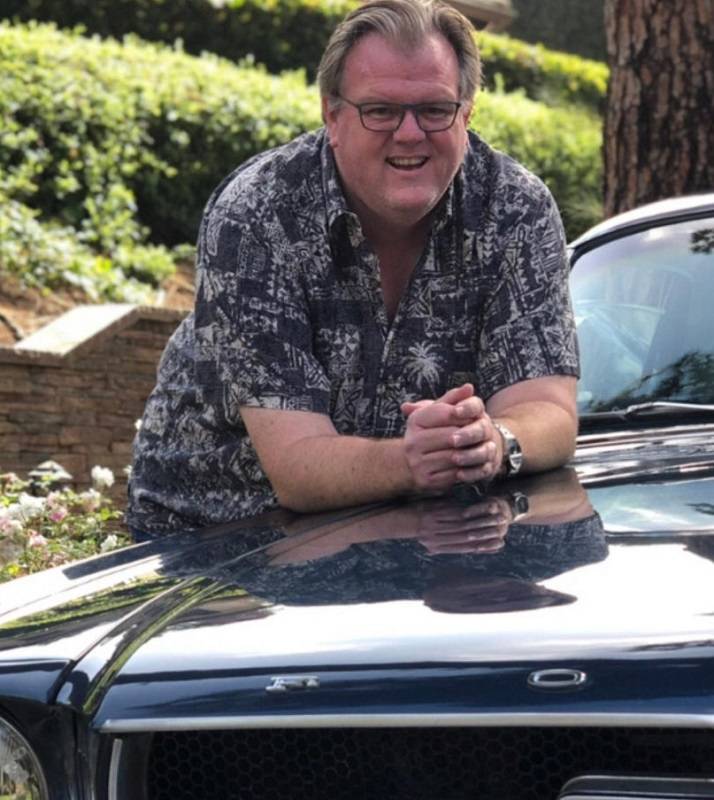
Photo courtesy Mike Gallagher & Koby Timms

Mike’s journey started with a midlife crisis and a beat-up 350Z. Koby’s began with a retired Kyle Busch Cup car and a Thunder Roadster. Their paths collided when Mike unknowingly bought Koby’s old chassis and reached out for advice. That phone call sparked a friendship, a racing partnership, and eventually, Late Model Mafia.

Tune in everywhere you stream, download or listen!

Listen on Apple
Listen on YouTube
Listen on Spotify

What began as a joke – two guys getting black-flagged at Barber Motorsports Park – quickly evolved into a brand. Fueled by patriotism, camaraderie, and a shared love for high-horsepower chaos, they launched Late Model Mafia with the tagline “Make Racing Great Again.” The red, white, and blue branding reflects their backgrounds in military, law enforcement, and Harley-Davidson culture.

Spotlight

Synopsis

This episode covers the evolution of ‘Late Model Mafia,’ co-founded by Mike Gallagher and Koby Timms, focusing on late model racing on both asphalt and dirt tracks across the U.S. Mike and Koby share their experiences and insights into the unique aspects of late model stock cars, highlighting their purpose-built chassis and custom components. They discuss the challenges and thrills of racing, including memorable moments of mechanical issues and even a serious fire incident. Additionally, future plans for ‘Late Model Mafia’ include the expansion to ‘Motorsports Mafia,’ new initiatives like pit lane marketing, and the introduction of a mobile simulator rig to engage with fans and racing enthusiasts. The script emphasizes the community and family atmosphere within the sport and the importance of safety in racing.

  • Let’s first start off defining and describing to our audience “what exactly is a late model?” – are those specifically GM products, or does the label apply to all domestic brands, or is it a period in time?
  • The Late Model Mafia origin story – how did all this get started?
  • Taking a “STOCK CAR” (won’t call them NASCAR) and converting it to Road Racing (TA2) what is that process like? What needed to be changed/upgraded/replaced? How different is the setup from oval to road?
  • More about the LMM community, what would a first timer expect to find when they visit latemodelmafia.com? How does one “join the club” so to speak? Are there fees? What services does LMM provide?
  • We noticed that you have something called “the pit lane” on the website, and we noted a previous guest on that list of racers: Annika Carter. Tell us more about the pitlane; what is that all about?
  • How is LMM changing? – evolution to “Motorsports Mafia” what does that mean for the future of LMM?

Transcript

Crew Chief Brad: [00:00:00] Grand Touring Motorsports started as a social group of car enthusiasts, but we’ve expanded into all sorts of motorsports disciplines, and we want to share our stories with you. Years of racing, wrenching, and motorsports experience brings together a top notch collection of knowledge and information through our podcast, Brake Fix.

Crew Chief Eric: Late model racing is at the epicenter of American motorsports. Whether on dirt or asphalt, late model drivers, their crew, and their fans

Mountain Man Dan: are family. And it’s the essence of family that makes the world of late model racing one of the greatest of all time. Late model mafia. And their founders, Mike Gallagher and Koby Thames, join us tonight to share their experiences and help you understand the gathering place they’ve created for all the late model enthusiasts to interact, learn, and simply share their stories, good times with one another.

Crew Chief Eric: That’s right, folks. And joining me tonight is the one, the only Mountain Man band to talk about late models with the boys from Late Model Mafia. So let’s first [00:01:00] start off by defining and describing to our audience. Exactly is a late model. Are those specifically GM products or does that label apply to all domestic brands or is it a period of time?

What the heck is it?

Mike Gallagher: Late models, whether they’re on dirt or they’re on asphalt, whether it’s oval or road course racing, they’re, they’re really in one of a kind. They are purpose built from the chassis up from nose to the tail. Everything’s a tube frame. There’s nothing really that even resembles what a normal street car would look like.

And Kobe, if I’m wrong, they’re one step away from an Arca car or a NASCAR or anything that you would see on TV.

Koby Timms: Nothing’s production. It’s all custom built handmade chassis. They call them stock cars, but they’re so far from stock. It’s the best way to put it. There’s nothing stock about it.

Crew Chief Eric: Does it go back to a certain peer starting with the muscle cars forward, or is it just the way they’re built?

Mike Gallagher: Yeah, it really doesn’t. It’s all about chassis, right? So like on my car, I have a Townsend chassis and Kobe’s car has a Hampty chassis and their purpose built from these two companies and [00:02:00] our cars were designed to run asphalt oval. We took them and turn them into road course cars. Dirt cars that I’m, I’m a little less familiar with, but we have some people, you know, on the team that, that run dirt cars, same thing they have purpose built chassis all the way up the bodies that you see on these cars.

You know, just take NASCAR, for example, you know, you’re looking at the cars. It looks like a Camaro, but there’s nothing Camaro about it. My car is actually a body of a Monte Carlo. But it’s literally just sheet metal and fiberglass. Uh, it comes off in about 20 minutes door costs about 30 bucks. There are no doors.

Actually, you just climb through the window, like a, like a regular stock car and off you go. It depends on what series you’re on. Really? I mean, you can talk about dirt guys or run 602 604s or the super lates where they can pretty much run, run with your broom kind of thing. For Coby and I, we typically stay LS based motors, Chevy’s, which adds to the conundrum of Coby’s car, right?

The 13, which is a Dodge challenger body, Hamke chassis, and an LS based motor. So there you have it. There’s no telling what’s coming around the track until you actually get to the pits, you get to see, you know, under the hood and see what the guy’s actually running. So it’s kind of wild.

Mountain Man Dan: [00:03:00] So you mentioned two chassis builders in your description of them.

Are there other chassis builders out there?

Koby Timms: There’s probably in the southeast along as far as like, you know, asphalt chassis in the Carolinas is where they’re really big in production. There’s probably 25 plus companies out there right now that’s building cars. As far as dirt cars, there’s tons. I mean, it’s everybody’s got their own ideas.

Everybody’s got their own concept. And then there’s a lot of companies that’ll take a modern name brand chassis and they’ll find something they like about it and they’ll tweak it and kind of copy it and produce their own chassis. So there’s not like a one generic company everybody uses. If there’s 25 cars in the field, there may be 25 different chassis.

Crew Chief Eric: But only three really engine types, right? You’re talking about the Ford V8 LS and, uh, Mopar Hemi at that point, right?

Mike Gallagher: And most guys, you know, will run something LS based. They’re just super reliable. They’re dependable. You know, most guys that run late models, especially road courses and, you know, the regular late models on dirt and asphalt oval, they don’t have these million dollar budgets, right?

So they’re looking for the biggest bang for their bucks. So [00:04:00] they’ll go with the CT crate, 604 crate, something along those lines, plenty of horsepower for what we need. I mean, my car is actually getting a new CT 525 put in it right now. I think I weigh the new motor will be about 2,600 pounds and I’m gonna have about seven 50 horsepower.

So weight, the power ratio is gonna be nuts.

Mountain Man Dan: Well, a great thing that I’ve mentioned on numerous articles I’ve written as well as podcasts is I’m a GM guy, and with the GM engine itself, interchangeability is way better than your Ford or your MO power engine because if you go from small block to big block, a lot of stuff can be interchangeable.

Right. That’s a great aspect of GM motors going and stuff.

Koby Timms: The cool thing about GM too, is the 525 and the LS based stuff. It’s, and me and Michael’s had this scenario countless times. You break something stupid, more than likely advanced autos got it. Oh yeah, we’ve been at

Mike Gallagher: Roto Lana and we’ve had to make a dash for advanced auto for an alternator, or just some stupid part that just broke.

Koby Timms: Starters, serpentine belts, power steering belts. It’s hilarious when you get to the parts store, they’re like, [00:05:00] What make and model is it? Michael always has to tell them some stupid shit.

Mike Gallagher: Yeah. I don’t even know what I tell them half the time. I’m like, yeah, it’s uh, not really sure. I’m just kind of winging this here, but it’s a Chevy motor.

No chassis. You’re not, you’re not going to find it in your database, I promise. You know, it’s one of those things.

Crew Chief Eric: It’s a late model

Koby Timms: and they go, uh huh.

Crew Chief Eric: Yep. Got it. Yeah. Okay. What’s that?

Koby Timms: Part short, if you got like a 525 or something like that, a small block. Basically tell them you got something for a 72 Chevrolet truck, if it’s an LS space, about a 99 Corvette, and usually you’ll find something that’ll work.

Crew Chief Eric: So you could basically say that at the heart of late model is GM. And that’s, that’s pretty cool. So it’s neat to see that, I mean, despite the sheet metal on the outside, but we all know that, right? You see the new Camaro NASCAR, and you’re like that, that’s not a Camaro, right? It doesn’t share anything with

Koby Timms: you.

So generic is ridiculous. Literally they’re all now running Everybody, Toyota, Ford, Chevrolet, are all running the same chassis, just different metals. I may be wrong, I want to say the chassis is designed by [00:06:00] McLaren.

Mountain Man Dan: I don’t know if it changed, but there was a rule for a while where they were using the exact same template for the outline had to be the same for the aerodynamics to be the same.

My thing is the original stock car and NASCAR back in the day was off a manufacturer’s lot and you took to the track. It’s not like that.

Mike Gallagher: No, no. These are purpose built race cars. Now there’s nothing that came off any assembly line. These things were built from the ground up basically right there in the shops.

So just like ours.

Crew Chief Eric: And that’s what we’re going to explore here, right? Is there’s more than meets the eye because these things are way more complicated than people realize that there are a lot of fun to your point. I mean, looking at the weight alone, people go, I think weighs 2, 600 pounds. No way. So we’ll get into all that.

Kobe hit on something kind of interesting before he said about the asphalt chassis, all being built in the Carolinas. Are they coming out of Mooresville? Just like a lot of the trucks and the NASCARs and things are as well, or are they built somewhere else?

Koby Timms: There’s a lot up in NASCAR country. Carolina is kind of the epicenter of stock car racing.

Carolina has also come home. A lot of the indie teams, also some of the indie teams have moved operations up there. So I’ve got [00:07:00] buddies that live up around, you know, Charlotte area, Carolina, and that’s, you either work in NASCAR or, you know, somebody that works in the racing industry or something, that’s just, that’s what they do up there

Crew Chief Eric: before we get into the more intricate parts of how these late models work.

Let’s take a step back and talk about the origins of late model mafia, where that came from, how you guys met and everything that goes along with that particular origin story. So who wants to take their first shot?

Mike Gallagher: I’ll take a crack at it. I call Kobe first. I started road racing about three years ago. I had 40 and I was having a midlife crisis and I have a C7 Corvette, my daily street car.

And my wife’s looking at me, like, don’t even think about it. You are not taking that thing to the track. And I was like, all right. So I ended up buying a 350 Z for like three grand, beat the brakes off it, had a ball and just fell in Yeah, we both did. Yeah, I’ll get to that. We broke that car’s back, you know, but we had so much fun.

It was reliable. It was a good time. And then I started going to track days, you know, working around, you know, HP junkie and, you know, working with him and just having fun. And it progressed for me to where [00:08:00] I decided to go ahead and build my first purpose built race car. I found a Thunder Roadster chassis.

They were one of the classes within NASA that was kind of fizzling in fizzling out kind of thing. And I found a chassis with a blown motor, basically a roller needed a lot of work. I was going to do the upgrade, the high boost upgrade and all that. So I bought it for like three grand and I started to take decals off it.

And I noticed that I saw these logos and they said KTR. I’m like, wow, that must’ve been the last owner. You know, I bought it intermediary from another guy. So I started hunting down KTR racing next. I. Somehow got his phone number and I’m like, Hey, you don’t know me, but I think I have your race car.

Remember?

Koby Timms: Yes. I remember. I get this call. I can beat on him now. He’s like my best friends now. So I can, I kind of beat on him a little bit. I get this call from this Jersey boy asking me questions about a race car. And I was like, but he told me he had my old car and you know, was asking questions about it.

I kind of helped point him in the right direction as far as, you know, where he needed to go. As far as, you know, getting that car repaired and back on [00:09:00] track. And then God, I don’t remember. Where did it go from there?

Mike Gallagher: Honestly, man, I called you a couple of times and we just started talking more and more and the next thing you knew, man, we were talking about like, Hey, do you want to go here?

You had already had your comp license with NASA. So then you just started going to me to get my comp license. I ended up getting it in the Thunder Roadster. And then I think it was a barber motorsports park. Like is where late model mafia came to be. We, I brought number, I brought the Z up and we just beat the shit out of that car for like, Right three days straight, we got black flagged like 25 times for smoking and for just doing all kinds of ridiculous shit.

Man, it was bad. It was so fun there. We got video of it, like we’re going by the flag station and they black flag us with our number. It was 0 2 3 and they’re like, and CO was like, what the yelling out the window dude. It’s like a plume of smoke coming outta the back of the car. We had, I don’t even remember what was leaking.

We had something leaking. We had so much fun that weekend. We were sitting around after the Saturday track day and we were just drinking beer and having a good time. You know, Brittany, Kobe’s fiance and my wife, Debbie, we were just sitting around laughing and [00:10:00] goofing and we’re like, Hey, we need it. You know, and Kobe had been egging me on about buying a late model.

He was like, get rid of that Thunder roaster. It’s slow. It’s boring. Trust me. Once you get into a late model, you’ll never come back. And I ended up buying one. Turns out I was hooked and right there that day, we created a late model mafia. We started thinking about names and it was going to be like stock car mafia.

And then we changed the late model mafia. The logo came about within a week. And actually I knew we were LLC and we were up and running.

Koby Timms: Without getting political. That was during 2020.

Mike Gallagher: Oh, it’s a rebel flag and NASCAR.

Koby Timms: Yeah, yeah, yeah. We intentionally use the tagline, make racing great again. Yeah, I saw it on the website and the hats.

Oh yeah, oh yeah. We had a hat, like a throwback hat that actually was red hat like Donald wore and it said, make racing great again.

Mike Gallagher: There was a 45 on the side for my late model number, which, you know, just happens to be his presidency number. So that was kind of funny too.

Koby Timms: We’ve always tried to be really patriotic with everything.

As pro America as we can, because Mike is a vet, I’ve always been involved in it. And I grew up in a [00:11:00] house where you either rode a Harley Davidson or didn’t bring it to the house. So we’d go to the international motorcycle shows and stuff, and I’d see the Buell bikes, and they were American Buell street bikes.

My dad always would tell me, if you’re going to have one of those damn crotch rockets, it’s going to have to be a Buell. To continue on our patriotic theme of a business of our bloods in my house,

Mike Gallagher: military Coast Guard for five years, police officer for 10 years. Yeah. I mean, it’s, it’s red, white and blue.

You know what I mean? It’s, it’s kind of, we started out with, you know, American racing and then did the whole make race a great again thing and just kind of segwayed it back, you know, and just keeping the red, white and blue themes. Nothing’s more American in my eyes than a late model stock car. I mean, they’re just, it’s America, you know, it’s America’s race car in my book,

Koby Timms: growing up, it had to be a V eight or a V twin.

That’s the way I always looked at it.

Mike Gallagher: It’s American as hell, man. I mean, it gets no more American man, big high horsepower cars and just big boxes, you know what I mean? Ripping around track. You know, honestly, we started it as like, kind of like a joke, Hey, you know, like we’re late model mafia and we were teammates.

[00:12:00] We knew that we were going to run together and NASA, you know, we had a bunch of other teams out there like big dog racing and team Tracy motor sports and Anika’s racing and all these people that had pit crews, you know, or somewhat of a pit crew and teams, they have multiple cars on track at the same time and we’re better than a team up with another late model.

We get side by side on a road course, we’re 15 feet wide, good luck passing us. You know what I mean? So. Yeah, we ended up, it just started out as a joke, you know, and we were just laughing and clowning and kind of playing the whole NASCAR BS that was going on. And next thing you know, we’re doing business and we’re in business.

Koby Timms: My background, I got into road racing in 2018, well, actually about 16, I guess we bought an old retired cowbush cup car and we were taking it, running track days with it. And I think about every track day group that we went to, it asked us not to come back because it was just ridiculous. It turns out it had some issues.

We sold it off. I got a Thunder Roadster. I ran it for probably three quarters of a season. And the guy that’s over the Thunder Roadster program told me, he’s like, the motor you’re running is the old [00:13:00] Yamaha. It’s kind of previous make of engine they use. He said, you need to get the Habusa. I was on the line of deciding whether or not I wanted to invest in the Habusa because to upgrade one of these cars from Yamaha to Habusa was like 15 grand.

And I was like, how? Ask me how I know. I was like, Jesus, you could go buy a fricking brand new booster for that. I mean, why the hell is this much money I got on Facebook marketplace and actually found the late model that I, I have it. It was a guy actually down in Savannah and down around Michael’s area that had it.

And so we ended up wheeling and dealing and. I traded him a roller Thunder Roadster for a light model turnkey, which I still don’t know why he did it, but hey, that’s on him. The car got and Michael ends up finding out who KTR is and welcome to the shit show.

Crew Chief Eric: So as an organization, as a business, what are you guys selling?

What are your services? What are you providing?

Mike Gallagher: So the biggest thing that we just started and it’s actually really starting to gain traction is on our website. If you go to lightmodelmafia. [00:14:00] com and to the page pit lane, We’re actually doing marketing for race teams now for young up and coming race teams, where they get their own website under late model mafia.

They have their own webpage, their schedules out and they have merchandise that’s available to people that follow them, their fans, you know, video of them. If they have YouTube accounts and all that sort of stuff, we can kind of custom tailor, whatever their outfit is, you know, according to their race team, the size of the scope.

I think we’ve got seven or eight teams now and it’s only been up for a couple of months ago. Oh my God. Yeah. It’s a very nominal fee, you know, on their side and depending on what contract is signed with late model mafia, it depends is kind of dependent on profit proceeds that go back to the team. So basically, you know, they pay the upfront costs for the website development, marketing, and all that kind of stuff.

Any sale they make on late model mafia of all their merchandise goes straight to them. So the profits all go back to the team and eventually help fund their team.

Mountain Man Dan: For the teams that you help are most of those the road course guys, or do you guys have

Mike Gallagher: well, yeah, so right now I can kind of break them down real quick.

We’ve got, um, Kobe and I are up there obviously team Tracy Motorsport. [00:15:00] She’s, uh, running NASA. She’s a two time TT champion, and she just changed over to wheel to wheel. And she is one bad ass driver. I play hell keeping up with her. She’s Awesome driver, Anika Carter with Anika’s racing. She’s another great one.

She typically runs Spec Miata. She also has a ST car with NASA

Crew Chief Eric: and she’s been on the show before. So that was part of the cross. I

Mike Gallagher: thought you guys knew that. Yeah. Rita Marie racing. She’s an up and comer. She’s trying to work her way into the Arca series. God bless her. We hope she makes it. We know how tough that can be.

She’s pretty new and she’s developing a car right now to hopefully get her there. And then we’ve got some Oval guys, number 22, Joshua Batch. He’s actually out of Savannah, Georgia, runs a lot in Cordele and up in Dillon, short track Oval with a pure stock, my stepson, Zachary Christian racing, number 69, just made his debut up at Chris motorsports park.

He went out for his first outing and his brand new legend that we just put him in. So he’s having a hell of a time. And then we’ve got a champ team that’s being developed right now, which is FAFO motorsports. Cause why not? I mean. It’s kind of very fitting. [00:16:00] It’s more or less a bunch of late model drivers, and that’s kind of their mantra is basically if you don’t move, I’m just going to run you over kind of thing.

So, so they all decided let’s call it motorsports. So there we are. A couple others that are looking into it right now, and like I said, it’s a great product. I definitely urge anybody that’s looking to, you know, get merchandise out there and get their name out there a little more. It’s literally no must, no fuss.

You tell late model mafia what you want. We build it. We put it out there for you guys, share the heck out of it. Make your sales, make your profits, help fund your addiction of racing, you know, or even trapeze, whatever you’re into.

Mountain Man Dan: Most of the teams you’ve mentioned are all in the Southeast right now. Are you guys planning to expand to Northeast, even out West and everything?

Yeah, we are.

Mike Gallagher: Absolutely. We’re fully capable of handling the entire country. So it’s one of those things that if somebody comes on the website and they, they’re interested, there is a place where they can shoot me their information and I’ll get in contact with them and then hopefully 24 hours and see how it can help.

Crew Chief Eric: I like the fact that it’s not strictly locked into just late models. I mean, you got some spec me on us and other stuff in there as well. So do you see yourselves also supporting the folks that are doing e sports? Because [00:17:00] we know a lot of guys that are, you know, I racing became really, really popular a couple of years ago.

And there’s folks that are running virtual late models out there and they got teams and they got swag and they need sponsorship. Is that another avenue to pursue as well? Yeah.

Mike Gallagher: Absolutely. I actually ran ERA last year and had a ball with it. It’s a lot of fun and honestly, it’s great practice. You know, it’s one of those things where if I wreck my car, I just hit reset and keep going on like my real car that probably cost me 40 grand to fix.

iRacing is blowing up. We’ve got some big plans for that here in the near future. We’d love to come back on and tell you guys about more once we have a little more developed. Yeah, we’d be happy to take on iRacers. Is anybody looking for

Crew Chief Eric: Sponsorship and marketing basically, right?

Mike Gallagher: Yeah, anybody looking for sponsorship and marketing in the motorsports arena, drag racing, it doesn’t matter.

If it’s got a motor and four wheels, or even two, and you want to go fast and you need some marketing, we’re here to help you.

Crew Chief Eric: So how does one go about joining Late Model Mafia?

Mike Gallagher: Are there upfront fees? So it’s all contractual without getting too deep into it on here. Basically it’s how much you buy in is how much you get back, right?

So if you elect to do the, you know, to pay the full price upfront, which is very nominal, [00:18:00] it’s very small. Like I said, Kobe and I are here to make millions. This is part of our passion. This is what we love to do. And if we can help other people. Great. You know, it’s very small and it’s really just to help pay for the expenses of the website, putting marketing ads out there, if they pay in a hundred percent, they get a hundred percent of their profit back.

They already have a small fan base or even just family and friends that are buying stuff. Even if they purchase from their own website, they get their profits straight back. It’s kind of a win win. I’d kind of factored out the other day on the profit margins based, you know, around the merchandise sales.

And we don’t just do t shirts. We do hats, t shirts, mugs, banners, flags, you name it. We can do it. Hoodies. Pants, shoes. I mean, whatever you can dream, socks, we can get them. You want socks, we have bathing suits. I mean, whatever you want, you know, whatever your crowds into, we can make it happen. It doesn’t take much if you were to, you know, to throw in the full top dollar amount and you have a pretty popular base already, you’ll make that money back and probably the first month or two.

Like I said, we’re doing this so that we can help people get their names out there, hopefully help advance their careers in motor sports and just. Help them do what they [00:19:00] love, you know, because Kobe and I, we know the one thing about a late model, when you ask what the definition is, the first part of definition is goes fast, breaks a lot.

We know exactly how bad it sucks to blow a motor and be out 15, 000 to get this thing fixed, get it back on track to finish the season. It’s helped us. I mean, coming, I have both made sales just off our own website, you know, and it’s, it’s put one in our pockets and, you know, it’s cool to walk down the street or at a racetrack that you’re, you know, your hometown or whatever.

And there goes a guy, you know, walking down the street in your shirt and you’re like, yeah, that’s cool. You know what I mean? And you don’t have to be a NASCAR driver, you know, to get that kind of exposure.

Koby Timms: What I really like about this program is. This is my 20th year racing. I started in 2002 in dirt show carts.

I wish that we would have had this program back then. It would have helped a lot marketing and everything. But I mean, we got to figure 20 years ago, we didn’t know what social media was and social media is everything now. It seems like when it comes to motor sports and Michael has helped me a lot as far as the marketing and, you know, social media stuff, that’s, you know, if you don’t really know a lot about it, you can get [00:20:00] yourself in trouble with it.

If you don’t know how to properly use it.

Mike Gallagher: Social media is funny, right? It’s one of those things where it’s a blessing and a curse because everyone’s on social media. So how do you get yourself to the top? Thankfully, I have a brainiac of a wife who knows how to maximize SEOs and do all that sort of thing.

So the first thing you see when you type in Michael Gallagher, It’s going to pop up and it’s just a matter of how do you do that? How do you formulate that and get yourself to the top of that Google search? It’s invaluable. You know, some people would never even know that my team exists, but they happen to look up racing and somewhere in the Southeast.

And boom, one of the first to pop up.

Mountain Man Dan: So thus far, all of your, I guess, client base and people that have joined up, has it all been like word of mouth? I think you’ve been working out at this

Mike Gallagher: point, the SEO, we were getting quite a bit of traffic on the website. I just don’t think that we have quite the marketing strategy that we need yet.

We’re still developing it. Quite frankly, it’s interesting because we really expected more late models, especially dirt late models. Cause those guys are in desperate need of sponsorship that they would have popped up, but we’re seeing more road course cars outside of the late model scope. We’re seeing Corvettes.

We’re seeing Miatas. [00:21:00] We’re seeing legend oval cars. We’re seeing pure stocks.

Koby Timms: It’s went a lot further into motorsports than I thought it would as quickly as it has. I thought we would pick up, you know, late models, you road racing and stuff, but there’s a lot coming.

Crew Chief Eric: For those folks that are looking to work with late model mafia for their sponsorship and getting their brand out there and building their base and all that.

Are there any restrictions or obligations that they should be aware of, or is it pretty much open to anybody That’s currently racing right now.

Mike Gallagher: It’s open to anybody that’s currently racing right now. The more the merrier we want as many people to get that exposure as they possibly can. You know, the only thing that we ask is, you know, we try to keep it as PG as possible.

A lot of people will come to me. Hey, can you make this shirt? I’m like, yeah, that’s great. But that’s not what our brand’s all about. We’re not trying to stir the pot. Yeah. It’s funny. You know, we joke around, make racing great again and all that, but we’re not going to that level. Keep it professional, have fun with it.

That’s the biggest part. You know what I mean? If you want a goofy design, we can certainly do that. Or you want something wild, it’ll catch somebody’s eye. Sure. We really [00:22:00] don’t want to dive too deep in the politics or we won’t, you know, don’t want to get into any kind of offensive behavior and it’s racing.

And so bring people together to have fun.

Crew Chief Eric: You’re building a community. Absolutely.

Mike Gallagher: And I will say this too, that, you know, out of the teams that we have so far, and there’s multiple disciplines that between team Tracy and I, you know, it’s, it’s funny, Coby and I always, you know, we, we race against Tracy, I mean, and she’s probably one of the biggest threats on the racetrack to us.

And she always called herself, she’s the honorary mafia member because she said, I don’t ride, I don’t drive a light model, but I’m like, you’re in, don’t worry. You’re good. Everybody’s, you know what I mean? Like you’re part of the mafia, man. It’s that’s what it’s supposed to be. It’s a, it’s a big group of people that, you know, I mean, look, I’m 43 years old.

I’m not making it to NASCAR. Let’s just get one thing straight. I’m like. Only because everybody else crashed, but it is what it is, but I’m not here to have fun.

Crew Chief Eric: I’m going to blow your mind. Andy Pilgrim got his pro seat with GM when he was 40 years old. So think about that. There’s still time, right?

Mike Gallagher: I got three years.

I got three years on, but I’ll give it a shot. But I’m saying? It’s one of those things where it’s like, we just want people to come on here, [00:23:00] have fun. Even if they don’t want to really publicize themselves that much, it gives them an opportunity to build like t shirts they can wear to the track while they’re racing or even just track day people.

It doesn’t have, you don’t have to race. This could be if you’re a track day enthusiast and you’re all over, you know, the United States, or even if you just have one track that you call home, like roadbling for me and road Atlanta for Kobe, it’s cool just to have your t shirt and your number on your back.

You know what I mean? Walking around and kind of like, you know, matching your car and kind of getting that swagger going, you know, Kobe will tell you. I mean, we, I mean, there it is. Boom. MGR sit on top of my hat. Kobe’s got KTR gear. People identify you with your car and like, Oh shit, you’re the guy driving 45, right?

Yeah. How about rec field? Not so good. You know what I mean? But why are you laughing? Kobe?

Crew Chief Eric: I get it. It’s more of a lifestyle, right? And that’s part of the racing culture that sometimes is forgotten. People go to track days that they go maybe once or twice. They don’t find their niche and they go home and they never come back.

Right. And they’re like, well, racing really wasn’t for me. Like you guys. I grew up in racing long time ago. And so, you know, I ran around the paddock with other kids. We all grew up [00:24:00] together. It was always a family environment. You know, there were rivalries, there was this, there was that. But at the end of the day, you’re all laughing, goofing off, having a good time for the love of racing, right?

For the love of driving.

Mike Gallagher: Whether it’s a track day or a full blown race at NASA or SCC or whatever, you know, whatever league you’re affiliated with. I mean, end of the day, no matter if we wreck into each other, as long as everybody gets up and walks away, man, we’re cracking beers and having a good time.

Koby Timms: Absolutely. That’s what we’re here

Mike Gallagher: to do.

Koby Timms: I mean, I’ve had a rubber mallet beating dance out of Michael’s car, so it don’t matter.

Crew Chief Eric: You know, that’s probably a great segue for us to switch gears and talk about what it’s like to maintain, operate and run one of these late models on an asphalt course, right?

We did some previous dirt track and oval type of stuff on this show, but now we’re kind of bridging the gap and coming back to the track world with these cars. What’s it like taking a quote unquote stock car? We won’t call them NASCARs and converting them to racing for road racing, like TA2 cars. What’s that process like?

What’s involved?

Koby Timms: Well, it depends on how serious you want to be with it. Honestly, you’ll see a lot of guys [00:25:00] come to track days and stuff that’ll find the old cup car or something like that for sale up in Carolina, and they’ll throw a crate motor in it and bring it to the track. And then they’re like, Well this thing won’t turn right for shit.

I wonder why. I guess you’re talking about as far as converting an asphalt over car. You gotta get a hold of somebody that either knows what they’re doing or knows somebody knows what they’re doing. You’ve got to get that chassis straight up. Some of the problems that I’ve seen people that, you know, bring stock cars road racing, you’ve got to get it neutral.

You’ve got to get it straight up. You’ve got to get chassis geometry right and everything. When you’re going to turn one at road Atlanta at 120 plus miles an hour. You got to turn right uphill, not left, it can bite you.

Mountain Man Dan: And you mentioned geometry, that’s a huge thing because my familiar late models is all dirt track up this way.

I don’t think I’ve yet to see a late model on asphalt up here. With the dirt track though, they purposely have their rears set at an angle for when they’re going into turns so they can get out and slide around. And the way it’s set up, it would be a nightmare on a road course. I can imagine there’s a lot of math and everything goes into that.[00:26:00]

As well as just trying to figure out how it was set up previously for the other discipline.

Koby Timms: You’re talking about dirt racing. I actually come from dirt. So I’m familiar with dirt cars and, you know, that geometry and stuff. And you’re right, you know, you, you kind of preload a dirt car to where your rear end will offset in the corner.

Our cars are, you got to keep them straight up. And we have figured out, you know, depending on where you go, you might play with stagger. Let’s say you got a road, there’s what, more rights than there are lefts down there?

Mike Gallagher: Seven rights and two lefts, right?

Koby Timms: Yeah, you kind of, you know, make the car a little more to the right, give up a little bit on the lefts if you have to.

Just, you know, getting the car set up pretty neutral is the main part.

Crew Chief Eric: What are the suspension differences or even the brakes? Because like, if you’re on an oval track, you don’t Really use the brakes all that much. So how do you gear up a car for now, let’s say a road Atlanta, that is a very technical track where you have heavy breaking zones and loaded up corners and things like that.

So what components are you swapping out? If you buy, let’s say something off a racing junk tomorrow and think you’re going to go to the [00:27:00] track.

Koby Timms: We’re pretty much using standard light model brakes because we’re still 26, Short tracks, they do pound on the brakes pretty hard. Probably one of the biggest consumables in these cars is brake pads and using the correct brake pads.

The fluid helps. And fluid. Yes. We use Castro react, which I want to say in the COVID trap got up to like 120 a bottle or something.

Mike Gallagher: But let me tell you, I painted my brakes coming down at a 10 a road Atlanta last time about 155, 160 miles an hour, went to pump and brakes and downshift and do everything I could to stop that car that day.

I rolled out and got. Castrol react and never had that issue since,

Crew Chief Eric: yeah, for those of us that are familiar, we call it SRF in our

Koby Timms: paddock. So

Mike Gallagher: yeah,

Koby Timms: I’ve seen people do that before, you know, bottle stock cars and stuff. And they’ll just grab off the shelf, break fluid, DLT, throw in it, edible. You can forget it.

But like you were saying, as far as going from oval to road course, probably one of the main things is getting air to the brakes. You got to keep the brakes cool. You got to get the brake bias set up, right. Using [00:28:00] good pads, using good fluid. Well, most of them not using the brakes unless you have to.

Crew Chief Eric: So what about the suspension itself?

Like on an oval track, I would say, yes, there’s suspension, but it’s pretty static in a certain way, right? You’re going to set it up for the banking and the degrees and all that. But on a road course where you have all sorts of undulation and modulation, especially if you’re on a natural terrain track, like road Atlanta,

Mike Gallagher: you

Crew Chief Eric: are you using multi reservoir, you know, six way Ohlins and.

Coney’s like Bilstein’s. What are you using? Cause we’re used to that on production based vehicles. What do you go to from a stock car to then turn it into a road course car?

Koby Timms: We’re still using the same shocks that you typically use in a light model, just different spring rates and the way they’re set up and the weather.

Geometry

Mike Gallagher: is a big point.

Koby Timms: Yeah.

Crew Chief Eric: You know, you’re talking about straightening the car up. Are you actually tweaking the two frame itself and straightening it up? Or is it just a matter of getting all of the components basically square?

Koby Timms: It’s basically, you know, just as far as geometry and setup and everything, getting it straight up.

I’m not going to go [00:29:00] blow a hundred thousand dollars on a new stock card for a track day, you know, NASA racing or something like that. If you had the money to go buy a new chassis, and you could buy a front clip that was straight up, you would be ahead of the game. Majority of people don’t have millions to blow.

The Hampty car we’ve got, we just straightened it up as much as we could. I got with Jimmy Garman, which is one of the biggest late model gurus in the Southeast. He’s worked with many of the guys that’s in the cup series field today. Yeah, I took the car to him. You know, he helped me get it straightened up, get everything right.

Mike Gallagher: Hey, if Hendrick wants to throw two cars at us, we’re here. Mafia dot com will take two time attack cars,

Koby Timms: two track attack cars, 16 in a seat. Those cars

Mike Gallagher: are undeniably amazing. You know what they produce for the money of any, you know, they’re expensive, but for what you’re getting for that money is unbelievable.

Koby Timms: Got a buddy that’s got one setting in his shop right now. I won’t name drop because I’m not supposed to. It is ridiculous, you know, the way those track attack cars are built and it’s literally one of his son’s cars. That’s all I’m going to say.

Crew Chief Eric: So if I read between the lines on this, it [00:30:00] sounds like with the setup, you could easily go, let’s say you’re a Pocono, you could be running the tricky triangle and then be running the double infield and go back and forth on setup.

Without really having to change any components. So the question is how long does that take? Or is it all, Hey, I’ve got a pre prescribed for this track, move it to this position, lock it in and go about your business.

Mike Gallagher: It’s all measurements, really fine tune

Koby Timms: everything and just adjusting everything out. If you had the right people in the right stuff, couple hours, you could be good to go.

I saw me, I’ve

Mike Gallagher: gone from Jericho four speeds in our car. That’s another big difference between short track oval versus what we do. We obviously need a little more gear than what those guys have got. Most of these cars are converted over at Jericho four speeds, winners, quick change, rears or tigers, you know, something along those lines where we can swap gears out quickly for whatever track we’re running.

Crew Chief Eric: Let’s talk about maybe some of the advantages of these cars on a road course and maybe some of the bigger drawbacks, right? They seem really appealing, like who doesn’t wanna go drive, quote, unquote, a stock car on a road course, but there’s gotta be pluses and minuses [00:31:00] to it. So what have you guys learned over the years?

You know, some of the things you just put up with and tolerate and other things that are just freaking awesome and that’s why you love ’em.

Koby Timms: You have to learn to tolerate stuff’s going to break. I don’t think we’ve ever had a perfect weekend. You’re going to rent on it. We don’t have a spec Miata or something like that.

There’s going to come some point between two cars that we’re going to have to turn wrenches on something. It’s mostly preparation. If you’re willing to spend the money and keep good break paths under the car and you know, just keep the fluids changed out and everything, you really shouldn’t have a lot of trouble.

To Kirby’s point, the biggest thing is like.

Mike Gallagher: I had a three to three stroker in my car. It was a built motor and it lasted me, you know, it was new to me that they had one season on it, what Cobes eight races. And I, it was a built motor tolerances are much closer. I had to run one 10 because you know, it was, everything was higher dollar, more of this, more of that.

So that motor finally went, I said, you know what, we’re not doing this again. I’m just going to go to a CT 525 GM performance crate motor. And I know it’s going to be reliable. Keep the oil in it and make sure it’s good. You know what I mean? Check fluids. [00:32:00] Motor run strong, maybe two seasons or so. I got to do a refresh and I’m good.

And Kobe’s right. I mean, whether it’s the transmission or the brakes or something, something’s going to go wrong on that car. Just have parts be ready, you know, or make sure there’s an advanced auto close by, because like Kobe said earlier, most of the parts we need are pretty generic. When you go to these LS based motors,

Koby Timms: I always try to keep, you know, a spare set of brake pads, hubs or something like that around, but there’s majority of the stuff can be purchased.

Like I said. We can make a repair at the track out of your local park store, typically, unless you’re in the wall and, you know, on rollback, typically we can repair trackside

Mike Gallagher: after running these things for a couple of years. You know, we’ve got who’s at Magnus, you know, they help us with all of our transmission issues.

If we ever greater transmission, we send it off to them. They totally rebuild it. The cost will be as crazy as you want it to be. Right. If you want 850 horsepower and some wound out motor, then yeah, you’re going to pay for it if you want some NASCAR style cup style motor, you’re going to pay and you’re going to rebuild it every two weekends or whatever it takes, honestly, reliability over a couple extra horsepower wins every day in my [00:33:00] book.

You know, I think Coby and I have both learned that very valuable lesson coming from built motors over to something more reliable. They’re just tricky cars. You know what I mean? They’re very basic cars. I mean, it’s really just. Horsepower meets ground and go. But when you’re asking a car to do that for as long as we do it, the speeds we do, shit’s going to break, you know, so you just gotta be ready for it.

Mountain Man Dan: You hinted on earlier, speaking like a spec Miata, people know spec Miata has regulations, what can and can’t be done to the car for late models. Is there anything like that? Or is it a free for all how you want to set your own car up? And run it like that. Cause you mentioned going from the three,

Koby Timms: uh, in NASA competition, we fall under super unlimited run.

What’s your brung? And like, hell you brought enough. We’ve actually ran into that situation a few times. We might unload and be the freaking fastest thing there. But then again, we had another buddy, Brian Tyler, that he’s a freaking sprint car legend from the Midwest. He showed up with a, uh, yeah, lightning crown sprint car and took it road racing.

Holy shit. How’s that going to work? But it is.

Mike Gallagher: [00:34:00] Yeah, he was flying and you know, the difference is there too, when you talk about road racing is we do a lot of interclass racing. So we’ll have super unlimited, super touring one through five. We’ll have Specky 46. There’s a bunch Thunder roasters, Thunder roaster extreme.

You know, you’ve got a bunch of different styles of cars out there. You have radicals out there. I mean, there’s some open wheelers out there from time to time, you know, formula style cars. I think the biggest allure to me with late models is just the horsepower sound. I mean, when you hit that throttle, your ass is gone.

See you later. You know what I mean? It’s, We’re hell coming down a straightaway or a big sweeper, but it’s a mechanical grip car, so when we start getting into those tighter turns, we’ve really got to focus and we’ve really got to drive the car where these other guys running radicals or, you know, these high downforce cars, they can’t keep up with them straightaways, but they’re going to equalize when it comes time for the tight turns because they’re just point shoot, right?

They’re not worried about, you know, horsepower blown off the back end. That downforce is holding the track and we’re gone. We got to make up our time where we can, and they’re going to make up the time where. Where they can, and hopefully we’re going to get to the finish line ahead of them, or they might [00:35:00] beat us right

Koby Timms: there.

That’s a point as far as bringing stock cars or late models into road race road racing, always kind of been looked at as the gentlemen’s sport, I guess you would say not much beating and banging going on there. We’ve knocked the hell out of each other. I’ve had my bumper on his bumper, straightaway at Roebling at 160 mile an hour.

It’s got to trust your buddies, whatever. But that’s one of the cool things about these cars is you can beat and bang on them and, you know, rough them up pretty good. And you’re not worried about wrecking your Corvette or your Ferrari or radical or whatever. Like you said earlier, a door panels, you know, anywhere from 30 to 50 bucks, you could put a whole new front bumper on for what a

Mike Gallagher: hundred maybe.

Kobe’s point, you know, you listen to like these radical drivers or Corvette drivers, they get so antsy when we’re around them because they know we just don’t care we’re in a race car. Neither do the Miata

Crew Chief Eric: guys. So just,

Mike Gallagher: yeah, exactly. Right. They’re like, they’re like the spec Miata were like the thunder version of the spec Miata’s and lightning for, for NASA.

Right. I mean, we just, it’s a giant piece of sheet metal and you can literally go to AR bodies or five [00:36:00] star bodies and buy another door panel for 50 bucks. You know what I mean? So

Koby Timms: as far as us going into road racing that we kind of had to chill out, I guess you would say maybe, cause we’re typical stock cars, we’re going to beat and bang on each other.

And then we had a lot of people in NASA that would get butthurt like, Oh my God, they leaned on me in the corner. Who cares? I mean, you give me a rubber mallet and a four before block, we’ll straighten the door back out. Didn’t Cole trickle say rubbing his race?

Mike Gallagher: That’s right. And now I know why he said it because he was driving a car similar to ours.

You know, other people may not, may not agree with us. Right. I mean, look, I ended a day, like Kobe said that the front bumper on my car for both pieces is like 200 bucks, you know, and if I rip it off, so be it. I’ve got friends local here at Southern Knights Racing. He bends his own sheet metal. I mean, he can build you a body for a dirt late model, my late, whatever you want.

He can have it to me like next day. That’s one very big advantage of a late model over a production car. That’s out there. Road racing is if you make a mistake, it’s not the end of the world. It’s just a piece of metal. You know, it’s not a 6, 000 door on your Corvette or, uh, you know, a whole [00:37:00] front bumper on a, God knows what, on a BMW.

You’re not as scared to maybe try that corner a little faster next time because you know, you’re in a really safe cage and your body is pretty expendable.

Mountain Man Dan: It’s really beneficial that a lot of the panels are fairly flat on those cars as well, compared to some of your production cars where it’s got all these weird curves bent to it.

That’s well, thanks to Kobe.

Mike Gallagher: My whole right side is no longer flat.

Mountain Man Dan: It’s more wavy.

Mike Gallagher: I lean on you lean on me like

Mountain Man Dan: it’s waiting in the wind.

Mike Gallagher: It kind of does this now as you look down the side of it because Kobe decided to lean on me and turn one at road.

Koby Timms: Okay, hang on. It’s his wife’s fault. Why is it her fault?

Because when she put the knee wrap on his car, she told me on the grill, she said, if you scratch his car, I’ll kill you. I forgot about

Mike Gallagher: that.

Koby Timms: And

Mike Gallagher: I came back in with a tire with a donut on the side of my car, right on my five. I was like, that’s great.

Crew Chief Eric: So, Mike, I wanna ask you this question. You said it earlier, and I, I know, I know that even though your wife said you couldn’t take the Corvette on track, I’m [00:38:00] sure you’ve turned a couple laps in it.

So when you compare your Corvette to your late model, what do you think about the differences? Right, because the Corvette’s fast, it’s light, it’s all very modern and computerized and all that. Yeah. But how do they differ and how do they compare? And obviously you love your late model, but if you had to do it all over again, was walking away from the Corvette, still the right choice.

Mike Gallagher: Yes, absolutely. It’s two totally different worlds. Best way to say it, I think, is a late model is just raw power that you have to control. There’s no assist. It’s not like you’re on iRacing, you turn on all the assists and you pray for the best at the turn, right? I mean, it’s you and the car. That’s it. You don’t have traction control.

You don’t have ABS. You got none of that crap. You mess up, it’s on you. With my Corvette, if I get a little wonky, the traction control kicks in and kind of straightens me up a little bit, keeps me out of trouble a little more. I’ve learned how to drive a car so much better, even with my Thunder Roadster, and now this late model, than I think I ever could in a car with all those assists.

It’s night and day difference. You’ll see us in there, you know, like on the cameras and we’re just saw on the wall, trying to keep that car straight [00:39:00] and stay in the throttle, coming through a turn where my Corvette’s more smooth. You know, I don’t have to worry about it. Cause I know that slip and that trash control is going to kick in.

If something goes wrong, you know what I mean? It’s like, all right, I got this. I got this. The car will tell me when it’s enough. The late model is going to tell you when you’re backwards staring at the rest of the field going.

Crew Chief Eric: Backwards in the woods at Roebling. Yeah.

Mike Gallagher: Backwards in the woods. And we’ve done, we’ve been there a couple of times.

Crew Chief Eric: So are there any tracks where you kind of regret having a late model and you wish you were in the Corvette instead?

Mike Gallagher: Um, no, honestly, to each their own, right. It’s what I love to drive the Corvette at each one of those tracks too, just for the experience. Absolutely. But I think I’d take my late model over the Corvette any day.

It’s the sound, the horsepower, like I can’t wait to get Daytona this year for hopefully, you know, I get the car back, I cannot wait to put that late model It’s like, you know, with the Corvette, it’s just very street feel with a late model stock car. If you’re in a race car and there is no getting around it, I think Anika did a thing on track shaker and where she drove my car.

And I think one of the things she said is, you know, it’s like a race car. She said, I’ve driven, I’ve driven a C7 Corvette on track [00:40:00] and I’ve never been in a late model. And she said, the one thing about race cars, they always feel like they kind of want to kill you. Hey, that’s true because the car is just a beast.

Just, it wants to go. You hit that skinny pedal and it’s gone. It’s up to you to maintain control of it. And it’s just, it’s a wild ride. You come out of turn nine at Roebling or coming down out of turn seven at Road Atlanta and you just drop the hammer on that thing, man. Just go ripping through the gears.

The next thing you know, you’re doing 165, 170, 175. You feel like you’re doing four miles an hour because the car is so big, but you’re just blasting past people on the straightaway. And you’re like, oh, you’re slow. And then you realize you got to turn And here come all those damn High downforce cars off your butt because you’re like, ah, you know, like trying to everything you can to make that turn.

And they’re just pointing and shooting. You just got to know where you can give up time and make it back up. No, I don’t, I don’t think I could ever say that I would take the Corvette over. I mean, I love the Corvette. Don’t get me wrong, but yeah, the late model is just a beast of its own.

Mountain Man Dan: You mentioned earlier, the fact that getting into the late model and they’ve dented the door or something like that, it’s not as bad as doing the Corvette.

Do you think that inflated confidence helps with [00:41:00] the want to be in the late model? Because Like I did a lot of motocross when I was younger. So going from motocross, you know, on a bike to being inside a car, my confidence is way higher than it would be.

Mike Gallagher: Yeah. So a funny story when I was still just doing track days, I went out with, it was either just tracking or max speed track days here at Roebling.

I was still in my Z. It’s a cool car. It’s fun, but it was such a shit box. And it still is, you know, we’re totally redeveloping the car for champ car. Like the motor’s got to come out. Everything’s getting redone. But I was out there and I had been out on the track probably for like six, eight months. And I, I know, remember like the back of my hand, I mean, it’s 10 minutes from my house and I’m out there beating the C7 Corvettes and these guys came in, two of these vets came in and I’m passing them left and right.

And then they’re like, they came over and they’re like, dude, what do you have in that thing? I’m like, what do you mean? They’re like, you’re passing this, like in the turns everywhere. And I’m like, dude, it’s stock. I popped the hood, dude. It’s a 200, 000 mile VQ35D. You know what I mean? There’s nothing special, dude, the suspension, every time you turn it, pop and crack, like.

It was a 3, 000 shit box, but I had so much [00:42:00] fun because I didn’t care about it. If I wrecked it, Oh, well, I didn’t have 85, 000 and insurance company to go to and say, I think I wrecked it on 95. You know what I mean? Like, cause I mean, that’s a huge concern. And then if you, if you want to play it safe with a super expensive car, you know, like Corvette or a Porsche or a McLaren, you’ve got to get track insurance.

And I don’t even want to know what that costs. You know, I’ve. I heard of some horror stories where these guys are spending thousands of dollars for a weekend and they only get like 40 percent of the value of the vehicle back. I’m like, what’s that? I mean, dude, just crashing into the wall. Who cares? So I think you’re right.

It does give you a kind of an inflated sense of what you can do because you’re not afraid to push it because guess what? It’s not my daily driver. If I do skirt the wall or I do, you know, clang it off of somebody or I hit it in the tire walls, um, dude, I’m going to take a pry bar and a welder or a torch and just bend it the frig back.

Unless something catastrophic happens. Then I just take it back to, you know, over to Southern Knights racing and they straighten it out for me and go, all right, here you go. I would probably [00:43:00] cry. I’d just walk back to the pits crying. Like sobbing, you know what I mean? Cause I just destroyed my baby. So it’s, it’s a whole different role.

Koby Timms: You know, I think it gives you more confidence being in a stock car because you know, all these late models and everything, they’re basically built off the idea of NASCAR roll cages. And as far as their job direction, any race we go to, there’s not a safer race car at the event than what we’re in. We’re pretty much bomb proof in there.

Mike Gallagher: I mean, I’ve seen a guy roll it over and turn one. He lost his brakes going to turn one at Roebling. If you know Roebling, that’s a super long straightaway followed by a right turn. And if you don’t make the right, you’re going into the dirt wall up over the trees. And that’s exactly what it did. There wasn’t anything left but the cage and he walked away.

And when you feel safe behind the wheel of something that’s got that much power, you’re more willing to try to push the envelope a little bit.

Koby Timms: You don’t have to worry about what it’s going to cost if you bang it up or if you tear a body panel up or if you get in the wall or if you go off track and tear a splitter off of it or something like that.

I guess I shouldn’t say this, but if you got a set and you don’t give a shit, you can haul ass in one of these cars, [00:44:00] as long as you got the car set up right, safety wise, which is something that we are very big fans of, don’t buy the cheap stuff, set the car up right, good seat, good belts, you know, you’ll be okay.

Mike Gallagher: Wearing an Alpine Stars hat for a purpose.

Crew Chief Eric: Mike and Kobe, let me ask you this for the folks that are looking to get into late models. Is there an opportunity out there either with late model mafia to come and try a car? Maybe somebody that’s in the group that’s got one or where would you recommend somebody going to get one of these cars on the cheap if they’re trying to get in for the first time?

Stop it right there.

Koby Timms: Do not go by a good deal.

Mike Gallagher: No, no.

Koby Timms: If you see a car on racing jump that, oh, it’s turnkey ready to go for eight grand, 10 grand. No, it’s not. It’s not. It’s a pile of junk. This is probably going to get you hurt or break your bank account.

Mike Gallagher: Most times those cars are people’s cars that have raced for three to four years.

They know the engine is spent and they’re just trying to get rid of it to get something new themselves. And it’s nothing against them. It’s just, that’s just the nature of the beast with most things on racing junk. You have to search for the good deals, you know, or buy the [00:45:00] right car.

Koby Timms: I mean, as far as somebody wanting to get seat time on one of these things.

No, unfortunately you, you kind of got to make the commitment and the investment to get into the program. The probably best thing you can do is come hang out, you know, with us or whoever. We’ve got a lot of friends in late model racing, get in with a good shop, a good house, something like that. They can point you in the right direction because you could give me 50, 000 and tell me to go buy you a turnkey race car.

And you’re not guaranteed to get anything good off racing junk or Facebook marketplace. You need to know somebody that knows somebody

Mike Gallagher: and get something good. You know, the other option, if it’s somebody that’s just looking to experience what it’s like to be in a late model, you know, most of these NASCAR tracks have those experiences, right?

The NASCAR experience, you’re not gonna really be able to like wide open the car, you know, and really let it, you know, send it in term one. But I mean, to get that experience and the sound and the horsepower, you know, and go through a class and get to see what these guys do and think people would really appreciate that.

’cause, you know, got, you know, these guys in NASCAR and, and you know, the Xfinity Cup at Xfinity and arca, I mean, look, they, they earn their money. You [00:46:00] know, I, I never thought it either when I was younger and before I ever drove a late model and I’ve quickly realized just how skilled those drivers are to be able to do what they do week in and week out.

Mountain Man Dan: So for an individual looking to get into late model, would you guys be open to them like reaching out to you guys on late bottom off and like, Hey, I found this deal. Do you think it’s worthwhile? Is it something I should look into farther or just walk away from and don’t think about it a second time? Is that something you guys openly give advice to people for?

Yeah, absolutely.

Koby Timms: That’s kind of the way I got into it. And as far as coming over to stock cars and road racing and stuff, I bought what I thought was a really cool, good deal, but it turns out it was a car that Kyle Busch backed into the wall at Daytona. They got straightened up, become a show car. And it was about as wonky as it came.

Mike Gallagher: Yeah. And the funny part is there’s no car facts for a late model, right? Like you can’t check it out. Like God only knows what’s my talents and chassis has been through in the past 18 years. I mean, God only knows it could be bent up three times, restraightened and kept right on rolling. You don’t know what you don’t know.

The biggest piece of advice I have is if you have a friend that’s [00:47:00] local, that has been in the late models or in any sort of racing, and you’re looking to buy a car, take them with you. Don’t go it alone because they’re going to see things that you’ll never think about. You’re looking at it. Oh, the tires look good.

And the brakes look good. And you know, the body’s in decent shape, but they’re looking at the chassis as straight as this is that, you know what I mean? Is the motor even in there straight? I mean, some of these guys just drop a motor and they don’t line them up. Nothing. I mean, it’s just boom. See, and they send it, you know, and next thing you know, you’re putting a huge load on your transmission and next thing you know, you got a torch transmission or rear lens.

Koby Timms: I’ve got a couple of really good friends up in the Atlanta area that are kind of doing that now. They’re big fans of light model racing as far as road racing and stuff and they’re buying cars that are, you know, nice, respectable cars. And you can get in touch with a guy like this and kind of tell him, you know, what the budget is, what you want to spend, and they’ll build you something legit and turnkey.

Ready to go to the track. It’s probably not as expensive as you would think. I’ve actually talked to some people that’s told me that they had more money in a spec Miata than we have in a stock car. That’s saying a lot,

Mike Gallagher: but just [00:48:00] realize, you know, you might be able to buy one, a decent one for between 15, 25, maybe 30 grand, but just know when that motor goes, you’re talking anywhere from eight to 15, 000 or a place that, you know, you’re not going to find a cheap motor unless you just go to the junkyard and try and find something that’ll suffice their investment for sure.

Crew Chief Eric: And I think you alluded to it earlier. They’re not for the faint of heart either. So I would recommend from a coach’s perspective, learn on something else first, something with the right seat. So you can at least get an idea of this, what it’s like being out on the track, because I mean, outside of your guys mentorship and tutelage, it’s going to be very difficult for somebody to jump into one of these turnkey race cars and a be safe, be, be fast.

And see, figure out where the hell they’re really going. So it’s a progression, right? You don’t start with a late model. You probably don’t end with a late model, but it’s going to be to your guy’s point, the most fun you’re going to have during your journey as a driver, if that’s on the resume that you’re building, but you just can’t start there.

Mike Gallagher: [00:49:00] Yeah. You know, it’s, it’s interesting. I jumped into them way too early. I went from a Thunder Roadster, 180 horsepower, you know, little tiny open wheel car, open top car, and just went head first into a late model and drove it. Like I was driving a Thunder Roadster, which was a huge mistake. I got in over my head.

I spot a bunch, Kobe’s laughing at me on the radio. I’m cussing him out. You know what I mean? Like I got you, I’m coming. I couldn’t catch him because I just didn’t have that wherewithal in me yet to understand what it took to drive in a car. Took me. You know, six, eight months to really start dialing it in and getting people ask, oh, how do I get one of these?

And what I do, I’m like, well, you know, have you driven a race car before? Have you been on a track? Oh, I’ve been on a track, but you know, it’s in a, you know, I was in, you know, a BMW Z four, like, no, no, no, no, no, no, not yet. Yeah. And there are guys out there. There are some of these chassis that are actually two seaters, you know, where they’ve converted them and they put a second seat.

We know one or two locally here, you know, in the Georgia area that have those. And, you know, and these guys are great. Like if you go to an open track day and you see one, it’s got two seats. You say, Hey man, can you take me for a ride? And 9. 9 times the guy that owns the late model, like, hell yeah, man, jump in.

Koby Timms: Actually [00:50:00] something we’ve discussed building as far as business wise for the late model mafia was building a two seater. So we could go to track days or HBDE and take our friends for a ride. I just got to figure out

Mike Gallagher: insurance of Kobe’s driving.

Koby Timms: Obviously scaring the hell out of Debbie Gallagher. I’ve always said that I wanted to get a two seater and get her in a shotgun and just make her scream. Like a little girl. Well,

Mountain Man Dan: Mike, you had to do it earlier regarding the fact that the late models don’t have any of the driver assist options on it is strictly a driver’s ability in the car.

And a lot of the people that do a lot of the HPD events have gotten so used to driver assist items. The late model from what I’m taking is definitely not your fresh, you know, novice driver to hop in and go get some experience under your belt. Work your way up to that and then get into it.

Mike Gallagher: Yeah. And if you decide that, yeah, you know what, hell with it.

I’m going to jump into a late model right away. You need to start in D1. And work your way up [00:51:00] and just realize that’s only going to go as fast as you let it. As far as you get that skinny pedals as fast as it’s going to go and just realize, know your limits, you know, and understand that it’s a whole different world.

You got to get those tires warmed up. You got to make sure that the suspension’s right. If you set up your suspension wrong for a certain track, you’re in serious trouble before you even roll out on the track. And you’re not going to realize it until it’s too late. You know, these guys have been doing this for a long time.

I’m relatively new to it. So when we go to the track, I listened to Kobe, you know, and these other guys that he’s mentioning and just try to absorb everything like a sponge so I can learn as much as possible. Could you violate my out of the gate? Absolutely. Should you just go out there and go full send like I did?

Oh, hell no. That’s just a bad idea.

Mountain Man Dan: I would recommend either a, uh, broader restrictor or a governor.

Mike Gallagher: Yeah, absolutely. But I will say this, you know, for the younger generation growing up, like my stepson, Zach, he just ran his first race in Oval, you know, and I was kind of like waffling as to what I should get him for his first car.

You know, I know that he’s going to eventually end up in late models. He loves Kobe’s car and my car to death. And, you know, he’s crewed for us for years since we’ve both been out there at [00:52:00] Vassa and even R& D. I was going to buy him something like a Z and I said, you know what? I’m going to buy him something that’s totally out there.

I’m going to buy him a us legends car and let him go run oval for a while. I don’t want him to learn on the assists. If he wants to make it to late models, he needs to drive something that needs to be driven and not assisted to drive. So, you know, he’s been out there already. You know, he had his first race and he loved it.

He was out there. He was a slow poke for practice and warmups and qualifying. He started picking it up, but he’s starting to realize now that. You know, it’s not just holding the steering wheel and cruising around, you know, you’re really letting this thing have it in order to keep it going where you want it to go.

And I think that’s going to be his biggest attribute when he moves up again. I think it helped me with the Thunder Roadster because there’s no assist in the Thunder Roadster. I mean, it’s balls in the wall the whole way that at least gave me some sort of a shot with a late model life or something.

Koby Timms: I grew up running dirt and for anything from go karts to late models, all that stuff.

And first off, there’s no assist whatsoever. I’ve never drove a race car in my life or anything that had assist on it. The assist was [00:53:00] what’s between your ears and hopefully used it smart enough. It’s one thing that’s really helped me is dirt experience on road course racing, because you let these cars skew out so much.

You let these cars rotate so much through the corner. People think that you’re just turning left. No, and Michael can tell you there’s, if you follow behind me, you’ll be like, yep, he’s gone. How the hell did he do that? There’s times I’ve, I’ve drove the car sideways and I look back at my dirt experience and it, it helps with that.

I reverted back when my late model went down

Mike Gallagher: middle of the C or middle of last season, I went back to the Z just to play around a little bit. The trash control came on at road one and like a couple of turns and I’m like, just piece of shit. You know what I mean? I was like, stupid track. I’m like reaching down trying to hit the trash control button is I hate it.

You know, I want to feel the car rotate. I want to know what it’s doing and not have it stop itself because it thinks it might lose control. You know what I mean? It’s just, it’s a whole nother level of driving that realizes streetcars.

Koby Timms: That’s like the weekend you had trouble with your light model and you unloaded the, uh, Thunder Roaster to back up.

That was miserable for him. That was, that was, it

Mike Gallagher: was so frustrating. [00:54:00]

Koby Timms: He went from 700 plus horsepower to fuck

Mike Gallagher: 80. Fuck 80. And I’m like literally getting passed by the light models and the bets. And I’m like trying to Fred Flintstone it like through the floorboard, like trying to get the car to go fast.

Come on, come on, come on, come on. But I caught him in the turns for a little bit and then it just left me again. So we’re going to get the same story

Crew Chief Eric: we hear from the auto owner. So, you know, whatever you’re in good company. Yeah.

Mike Gallagher: Yeah. Yeah. It’s, it’s fun. So

Crew Chief Eric: that brings up a really good question. I like to ask people.

So what’s your biggest oops moment or maybe code Brown moment on track with your late model? Yeah.

Mike Gallagher: My impales way in comparison to Kobe, you know, honestly, when I first got my late model, I really haven’t had any major oops. I’ve spawned at a bunch, you know, in the race and practice and whatever test in tune, you know, honestly, the biggest oops was just, I jumped in way too fast.

I went from my Thunder Roadster, which they’re fast. They’re faster than the turns. They aren’t straightaways. And I gotta be honest when I first went down the straightaway, my late model, I’m like, Holy, I would never go back. I mean that horsepower, that speed, that sound. I was like, I’m done. I’m [00:55:00] hooked.

That’s it. You know, when you come back, never nothing against those guys. Those are fantastic cars. Well, you don’t drive this thing. It just sounds like something off a TV, you know, and you’re just hooked on it immediately. I pushed it too hard. You know, I ended up spinning a bunch of times. I was like in like fifth place in the race.

My first race in LA model ended up spinning two or three times all the way to the back of the field, got all the way back to eighth place. And then me and a Mustang got into it and turned one at Robin on the white flag. You know, it is what it is. Both kind of entered the turn at the same time. I was on the inside.

He was on the outside. He ended up on my inside. I ended up outside backwards with a front up busted up clip that cost me a hundred bucks to fix. It didn’t fare so well, unfortunately, you know, we just kind of met, but yeah, no, that’s fine. It wasn’t much, but I’ve got plenty coming. I’m sure. Go ahead, Kobe.

Tell them your fantastic story.

Koby Timms: Well, rode Atlanta this past December. Did you have, you didn’t have a car there, did you?

Mike Gallagher: No, mine, mine was still down. Hey, were you at five? I think you were in the SS. Yeah, it was, uh, it was actually, let me, let me set this up. Cause he’s not going to give it to you the right way.

Cause there, [00:56:00] this is a crazy story and a scary story, but it was kind of funny as hell. Cause it’s just, you got to understand who Kobe Timms is. Like when you get on the radio and tell him that it looks like something’s wrong with his car, he goes, F that, let this bitch eat. And he just keeps right on going.

The dude has no fear. I’ve learned so much from his driving because he just doesn’t give a shit. Like he just goes, he wants to win. He wants to be up front. No matter what, I mean, I’ve seen him spin at Rhode Island or at a Roebling going to turn three, I’m coming around or I’m coming out of two and I see him over in the woods, I got a half a lap on him and the whole field does.

And here he comes a lap and a half later, here he comes like a bat out of hell. I mean, he’s just, he’s a, he’s a maniac, you know, he’s just, but it’s great. You know, he just, he knows what he’s doing. So yeah, so to set this up, hang on, dad, you wait, cause I know where you’re going. He calls me up and he’s like, Hey, come up to the track.

We’re going to road Atlanta. I need you to clear a spot. No problem. I’m on my way. So we go out there. We’re hanging out. We’re having a good time. It was what two races that weekend, Saturday went shittily because you ended up with carbon monoxide poisoning because you’re, you’re frigging exhaust pipe.[00:57:00]

Start there first. I’ll preface that. And then you can start.

Koby Timms: Okay, Saturday, we had a really fast car, we’re doing great. I started getting a little lightheaded, a little choked up in the car. I the hell’s wrong with this thing? I started getting sick in the car. Next thing I knew, I threw up in my helmet and I was like, oh shit, what’s going on?

I seen the flagman. I think he threw down three to go or something at us or something like that. And I was like, I’m gonna hang on to it. I’m gonna hang on to it. I finished the race and I noticed the car was louder for a reason. The collector pot after the headers that runs down the transmission tube come loose.

And It was dumping all the exhaust in there with me. It’s on the radio. He goes, get back here quick. I’m

Mike Gallagher: not feeling too hot. I was like, what?

Koby Timms: As soon as we got to the checkered flag, I dropped the window net was literally ripping my helmet off going around the track. I didn’t care what they said about it.

Come all the way around all the way back to the paddock. You know, that car is going slow. It’s not getting a lot of fresh air in it at all. So I was gagging to death. I got back to our pit box and his wife was there and I, I [00:58:00] call her mother goose because she takes care of me. I don’t know what I did. I looked at her.

I said something and I think she called Michael and said get medical up here.

Mike Gallagher: I can’t remember what, what was my oxygen levels? It was not good. I don’t remember what it was, but it was not a number. It was. Oh shit. Cause they put him in the ambulance, took him down to the medical facility there at Rhode Island and had him for two hours on oxygen transporting.

That’s how low he was. Like he did not look good when he got out of the car, let’s just put it that way.

Koby Timms: We come back in Saturday. Not, I think we had our awards banquet that night, didn’t we? I was sick as a dog. I had carbon dioxide poisoning. As long as weekend’s looking back, I shouldn’t have raced the next day.

But we did. Yes, he raced the next day.

Crew Chief Eric: He said, I’m still gonna send it.

Mike Gallagher: Well, he did. It’s full sends only with Kobe Tims. That should be his nickname. Kobe full send only Tims.

Koby Timms: So we get the car back. We have the NASA awards banquet and all that. We go to that. I mean, you stayed up and fix the car. We got it ready to go.

So we go out Sunday, we had a good day. We were running good. I thought that I

Mike Gallagher: was a qualifying one. Great.

Koby Timms: Yeah. [00:59:00] When great, we developed what about five, six laps in a little

Mike Gallagher: smoke. Now mind you, this is how competitive this guy is. This was a fun race. They erased the race on Sunday and then they had a fun race.

So he went out, no guts, no glory. Just, Hey, let’s go have fun. And

Koby Timms: went

Mike Gallagher: to the rear

Koby Timms: behind what? Like 3000 cars or something like

Mike Gallagher: that. You guys were stacked up in the like. Turn nine, when they took the green flag at the start finish, there were so many cars in there

Koby Timms: that I think they had the rollback out there racing too.

I mean, everybody was out there,

Mike Gallagher: so I told him I’m going to go spot for you and turn five. I’ll be on top of the golf cart. I got you. I can see pretty much the whole back of the track. I think Debbie and Brittany were up front. He comes around, I guess it was like, yeah, four or five laps in and he is moving.

I mean, just flying, like carving the field up, ripping it up, like truly showing what a late model can do. You know what I mean? Yeah.

Koby Timms: Eight to 12 cars a lap down the backstretch.

Mike Gallagher: He was just ripping them down the back straight. And then he was, he was just nailing all of his marks that wrote Atlanta. I mean, he knows the track really well, and he was really doing well.

And he comes up turn five and I see fire in the wheel. Well, behind [01:00:00] the tire, kind of like up by the firewall, like where the headers come down. And I, one thing about Kobe Tim’s and KTR number 13 is if he’s not smoking something wrong, like always, He comes up, he was smoking lightly the whole time. I figured he probably just put too much rear gear dope in it or something like that, it was blowing up the breather and it was hitting something hot.

Everything was fine. Power was good. Temps were good on the radio. I’m making sure. And, and he comes up, he’s on fire. I see a flash of flames come out of the wheel. Well, behind the tire by the headers and all that good stuff. And I’m like, you’re on fire. I’m like bringing in, he goes, let me see what it does.

And he goes in the six comes out of six comes out of seven. I see him getting on the back straight. He wasn’t on fire. He said, I’m going to let this bitch eat. I’m like, here we go. Before I can turn around, there’s three specky 46 is coming up. Turn five sideways. I think he dropped oil on the track or something, and it probably ignited, you know, on the headers.

And that’s probably what cooked his entire wiring harness and all that good stuff. And before I could turn back around, there’s a mushroom cloud or by turn [01:01:00] nine. And I’m like, well, I’m on the radio, Kobe, Kobe, Kobe, Kobe. I’m like, shit, I get on the golf cart. I fall ass over there. There he is on fire, fully engulfed.

I’m like,

Koby Timms: great. We come out of seven and Michael told me, you know, he’s seen flames smoking or whatever. And I was thinking it’s just something on the headers or whatever. It’ll burn off. When I went under the bridge and I went to pull the car back into fourth gear. When I went into fourth gear, the shifter boot just disintegrated.

And flame come up through it. So I’m what in the fourth, what about 140 mile an hour or so?

Mike Gallagher: Yeah, you’re, you were probably doing between one 30 and one 50 somewhere. Now you were flying because you came out of seven, like a bat out of hell.

Koby Timms: And I’m on fire and I’m trying to get this thing wowed up, get this thing stopped.

I didn’t know if it was fuel, if it was oil, if I mean, what was going on? We’re putting pretty big, pretty good bit of wind to the fire at 140 mile an hour. So I stopped the bridge and I say, the next corner worker is before you, I guess we’ll call it eight. Before you get where the club course would come back on the track, we get the nine to the corner worker there.

So I start gearing it [01:02:00] down and I’m already dropping when the net dropping seatbelts, you know, trying to get out, get ready to get out of the car. And I did what you’re not supposed to do. And I’ll admit it. I panicked when I got the car stopped me and Michael, or, you know, we’re bigger, taller guys. And I’m about six, one and a half, six.

Did you start

Crew Chief Eric: yelling, save me, Jesus, save me Tom Cruise.

Koby Timms: I was in the car. I think we got it to about 24 seconds with flame. Wow. I went to pull the fire handle and the fire handle had already melted to the dash, you know, it was getting a little creepy. At this point, we got oil burning. We’ve got the fiberglass body burning the legs and windshields burning, and I’m choking to death.

When I dumped the seatbelts, I got them hung in my Hans device and I couldn’t get loose and I’m sitting here trying to fight to get loose. And the smoke’s getting darker and it’s. It was what, like two o’clock in the afternoon. I couldn’t see right here. I mean, I was blind and I’m screaming at the corner worker.

Help me, help me, help me. I mean, cause he’s literally 20 yards from me. It was

Mike Gallagher: maybe,

Koby Timms: it wasn’t even that he was like

Mike Gallagher: 15 feet from you. I

Koby Timms: [01:03:00] could see his eyeballs and I’m screaming, help me. Come help me. You know, you got a damn fire extinguisher. Bring it over here. And he wouldn’t do anything for some reason.

I just kept fighting to live and I kept fighting with it, fighting with this. I went and I finally got loose out of the seatbelts. I got out of the car and I ran and got the fire extinguisher off the wall. And I probably should have called road Atlanta and shoot everybody out, but I didn’t. And this corner worker says the fire truck will be here in about 30 seconds.

I said, the damn thing will be burned up in 30 seconds. Give me the fire extinguisher. And I grabbed it off the wall, ran back, stuck it in the hood, man, dumped it. But I guess I was running on adrenaline man, because. After that, I collapsed to the ground.

Mike Gallagher: And that was the second time he went to the medical facility at road Atlanta on the same weekend.

The car was scorched and it was, it was bad. It scared the hell out of all of us. I mean, everybody that went by Tracy was on the, you know, on the track at that time, there were several drivers, you know, that were really close friends. Right. They didn’t know what to do, whether they needed to stop and help him or they were just throwing yellow.

No, I didn’t even double yellows. They were racing by him while they were on fire. It was, it was crazy. [01:04:00] Thankfully he got out and he was right on the edge of the track. And when he stepped out, he actually stepped. onto the track. And thankfully everybody was far enough left realizing what was going on, even with the yellow flags that they kept them safe.

But

Koby Timms: speaking negative about the situation would be bashing road Atlanta or bashing NASA. But F you, whatever. I don’t care. You could have threw a red flag. Wasn’t gonna hurt. I’m literally on fire. Tracy could do was the leader of the race. And she literally was going to stop on the track and help me get out of the car.

It was that bad. I was like, where’s the red flag? Why is there not a red flag? I was

Mike Gallagher: yelling at the corner worker, throw the red, throw the red. Cause he was just out there, you know, and thankfully fire got there pretty quick and they were still like just racing. I was like, this is a fun race, man. Shut this thing down.

Wasn’t cool. But

Koby Timms: we

Mike Gallagher: learned a lot

Koby Timms: that day,

Mike Gallagher: you know, it’s so it’s one of those things.

Koby Timms: The rescue crew got to me, you know, once I seen that, you know, they were putting fire out or whatever, I, I finally got in the ambulance. And we’re going down the backstretch and where we always park, we call it nausea hill, which is up at 10 a above the bleachers or whatever.

I told the [01:05:00] ambulance driver, I said, when you go by here, I said, my people’s up here on the hill. When you go by, throw a thumbs up out the window and let them know I’m okay. I’m alive. Apparently. Debbie misunderstood that is he’s dead or something. I don’t know. He thought he said, come on, bad. They nearly beat us to the infill care center.

It was a lot of change and experience. I’ll I’ll say that. And it’s really pushed me to help others in racing. Don’t buy the cheap fire suit, man. Don’t buy the cheap seat belts. Don’t buy the cheap gloves. Wear your underwear. Cause we all, you know, we all wear fire suits and we all think, Oh, it’s not going to happen to me.

Bullshit. It can happen. And it happened to me

Mike Gallagher: biggest fears, you know, in racing. I think for anybody that’s on track and is taking this stuff seriously with a car that really has some performance to it. It’s one thing to be out there in a mini Cooper, you know, or, you know, just a regular old street car.

But I mean, dude, if you hit the wall the right way, something might pop. You know, and next thing you know, you’re engulfed in flames, wishing to God you had all that gear. I had a nice Alpine star suit that was getting kind of old. I upgraded mine. You know, I just, nope, not taking that [01:06:00] chance. Malaclava, Nomex underwear, socks.

I mean, look, NASA does an excellent job. No fault to them. You know, it’s that they weren’t in control of the corner workers. I think that NASA does a great, great job with safety, just like the rest of the clubs do. But it’s because of them that they’ve ingrained into us to wear all that stuff. Right. Cause look, a lot of your dirt track guys, dude, they got suits that are 25 years old.

They don’t wear gloves. They don’t wear a balaclava.

Koby Timms: I never understood as far as dirt track racing. I got buddies that will not wear gloves. Why? Cause I can feel the steering wheel better and my long time saying that I’ve always used, and this may be too R rated, you’re not going to wear the gloves in the race car.

Who’s going to hold your pecker when you need to piss, when you’re burnt?

Mike Gallagher: It’s so true though, because you don’t think about it. You go to the racetrack, whether it’s a track day or a race, Ah, it ain’t going to happen to me, I’ll be fine. Next thing you know, you’re fully engulfed in flames going, Uh oh.

There’s a problem. That’s another detractor. You know, late models, they’re wild, man. I mean, you know, you got, Parts moving extremely fast for what they are, you know what I mean? And it’s shit [01:07:00] happens, dude. And you got to be ready for it. And thankfully, you know, the only thing Kobe really happened to him, a little bit of smoke inhalation and some more oxygen solved that problem for him.

And, you know, pretty much burned his nose a little bit. But thank God, I mean, he had to see how his visor down, the flames were still coming up, you know, under his helmet through his bottle of clava. But I mean, think about it. No bottle of clava on. Visor up. People don’t think about that. They just cruise around their visor up, man.

Koby Timms: That’s not enforced more in racing is, you know, keeping the shield down because it’s there for a reason. And that weekend was the first weekend I actually started using a helmet sock. So I had on the balaclava and, and the helmet sock. So it was kind of double protection, but even with the shield down, even with the sock, You know, the helmet socks, I still got flame in the helmet.

Mountain Man Dan: As someone who’s experienced being on fire before, not in a car or anything weird, because they always teach you as a kid, you catch fire, stop, drop, and roll. For me, I was working on a, and fuel got sprayed on me and it backfired. And I wound up being a ball of flame running through the field. I never thought to hit the ground.

It’s one of those things you [01:08:00] never think about. And it’s like, no, you were saying that you got hung up in your belts trying to get out. I can’t imagine how bad that would have freaked out because. I was freaking out running through the damn yard with just being like my whole face and chest on fire and my arms.

So I was like, I’d hate to imagine being stuck in a car, having trouble with my arms.

Koby Timms: I did freak out. I did get a little crazy there for a second, but I had to tell myself to calm down and get out of that car. I mean, I was hacking, coughing, wheezing, trying to get some fresh air and I was in it for over 20 seconds.

I say, I say 24, 25 seconds. My fire suits done. I will not wear it again. It’s hanging on the shop wall. You know, being

Mike Gallagher: bigger guys, you know, Kobe 6162. I’m 64, you know, getting a little, you know, they look like massive cars. But when you’re in the cockpit, it’s I mean, you got your helmet on your Hans device and all this gear, you know, you got radio wires everywhere and just being able to maintain that calm when you’re on a fire is just next level, man.

I mean, it’s, it’s scary.

Koby Timms: I admit it. I panicked when it happened, when I [01:09:00] got stopped and I was trying to get all the belts off the radio and hooked. I finally figured out afterwards, tearing the car down. The reason I didn’t hear Michael on the radio is because the radio harness had already burned up.

Mike Gallagher: I wasn’t going to hear him.

I mean, I looked. I looked at Kobe once we knew it was okay. He was back in the pits with us. You know, we all, we all hugged it out for a minute and try to make light of the situation. I looked at him and I said, you know, NASA’s big into safety, you know, and kudos for that. You know, everybody that that works for NASA, the owners of NASA are great.

We’ll be impounded for whatever after a race or qualifying. And, you know, they’ll say, all right. Exit drills and like, oh, you know, you have to get out of the car in 15 seconds. Yeah. Well, I looked at Coby and I said, I bet you’re glad we do those exit drills now. Aren’t you? And he just kind of shook his head and laughed.

It’s all there for a reason, you know, pay attention.

Koby Timms: And it makes you try to do the exit drills in the dark covered in smoke,

Mike Gallagher: because that’s where it’s going to be when it happens. Yeah, being on a nice sunny day, that’s for sure.

Koby Timms: Not going to happen where the safety director can go. All right, try it again.

Mike Gallagher: See, I told you my story suck.

Crew Chief Eric: This is actually a great segue into the future of things, right? So let’s first start off with what’s the future of [01:10:00] KTR number 13? Where are things now? You know, maybe now that we’re six months away from the fire, is there a new car? Are there more plans? What’s going on there?

And let’s also dive into the future of late model mafia and where things are going there as well.

Koby Timms: As far as the future of KTR, we plan on going back road racing soon. I’ve had a lot going on in my life in the past four months, six months, something like that, just a little bit of my story. The fire happened the first weekend of December and at Road Atlanta, two days after Christmas, my grandfather was diagnosed with stage four lung cancer.

Out of respect for him, I stepped away from racing for a little while because it made him nervous. He passed away back in April. So there was three or four months there. I was not behind the wheel. I actually had another car that I was in the process of purchasing, ready to go. That deal just didn’t work out.

And we’re looking at doing another car and I’m going to try something really crazy. And Michael and Debbie’s not too happy about it. Alpinestars saved me in a race car. So we’re going to take, we’re going to go two wheel racing. Oh, interesting.

Mike Gallagher: Yes, sir. I keep telling him he’s not 18 anymore and with [01:11:00] age comes cage, but he doesn’t want to listen.

He’s not as old as I am. So I guess he’s still got a little bit of a shot at it, but I came from there. So I know how bad it hurts to wreck and break seven bones at one time.

Koby Timms: I want to try. I may do it one time and say, No, forget this. And then again, I may, I may love it. I don’t know. It’s just something I want to try.

I’ve always been a fan of, you know, MotoGP and stuff like that. I want to try that, but my roots are in stock car racing and I’m not going to leave home. I know where I belong.

Crew Chief Eric: So Michael, what about the future of late model mafia? What’s what’s going on?

Mike Gallagher: Late model mafia is here to stay. To be honest, it’s grown to a point, especially with pit lane.

Where I think we’re going to step into a new venture to that’ll be more of the parent to late model mafia and it’ll be motor sports mafia. We’re really going to branch out. I think the late model mafia was a bit too niche for, you know, the general motor sports population. And I think that from the feedback that Toby and I are receiving, I think it’s, it’s wise for us to maybe expand it out a little bit.

Motor sports mafia is on the horizon. We’ll be transitioning anyone that’s not late model related [01:12:00] over to motor sports mafia. It’ll be two wheels. It’ll be four wheels. It’ll be road racing, asphalt, dirt, rally, whatever, you name it, bring it like we’re, we’re here to be one cohesive, you know, motor sports family and have fun and help people market their teams and, and just get out there, get the exposure they need.

You know, we’re hoping maybe one of these days, one of these teams makes it to the big time. We can say that we had a small part in helping them get there. Look forward to Motorsports Mafia. We have a one more exciting thing that I guess I’ll release right here for the first under Motorsports Mafia and subbed out by late model mafia.

We are actually in the process of building out our first mobile simulator rig. Basically we have a short bus, which is very fitting for late model mafia, as you can hear from the past hour or so, and we are putting into full blown simulator rigs in the back and we will be. Basically traveling to dirt tracks, asphalt, ovals, road course tracks, you name it.

And whoever wants to jump into the simulators, feel free to do so come on in. We’ll, you know, we’ll load up iRacing, we’ll get everything on and we’ll load the track that we’re at, or, you know, we’ll let people [01:13:00] run it out and have fun and see what these drivers experience out there, a lot of families out there, especially at the oval tracks, you know, on the dirt tracks, there’s a lot of spectators that maybe want to see what it’s like.

And we definitely think it’d be cool to bring something like that to the crowd. So. And then of course, you know, your club racing and all that at 5 PM, everybody shuts down, the beer drinking commences and what better place to go try to see if you can handle Roebling road than after a six pack in a simulator.

So who knows? I mean, it could be a lot of fun. So yeah, we’re excited. We’re excited to announce that the bus is about a, about a quarter of the way built. We just gutted it and painted the whole thing and we’re getting ready to build all the foundation on the inside power and all that good stuff. And we’re hoping to have it ready to rock and roll for 2023.

Crew Chief Eric: So Mike and Kobe, any shout outs, promotions, or anything else you’d like to share that we didn’t cover up until this point in the episode.

Mike Gallagher: First and foremost goes out to my crazy ass wife for putting up with all this stuff. I mean, I love her to death. Uh, my stepson, Zach, the rest of the family, you know, for being there by my side and just putting up with my shenanigans and, you know, help me succeed in this stuff, you know, and just go out and have [01:14:00] fun as a family.

A couple of sponsors, I can’t not mention Hurricane Tumblers, uh, Speedy Racewear, Trinity Motorsports, MFREX Designs, and Chicane, and Violent HD. Just a couple that kind of helped me get to where I’m at with MGR, with Michael Gallagher racing in the 45 late model,

Koby Timms: you know, looking back over the years racing, it started from my mom and dad helping me as far as, you know, getting started in dirt, go kart racing and stuff.

And my dad actually opened a cart shop and ran a cart shop the same time I was racing all those years. So my dad’s been a really big influence on me racing and he’s a big shout out. I owe him, I owe him one. He spent a lot of money when I was younger. I didn’t realize it, but looking back now on, and you know, on a race team, you go, damn, pop spent some money.

We traveled all over the place. We were going five, six, seven states a year on the road. And that’s, that’s some money. Past two years, I have to thank Michael and Debbie Gallagher. They’ve been a big part of my promotion. I I’m the wrench monkey. They handle the marketing and the brains of the business. You know, Zach, his stepson’s been a big help to me, means the world to me.

I give him hell, but that’s my buddy. My fiance, Brittany, has put up with a [01:15:00] lot of shit the last few years from wrecking and on fire and, you know, everything else. That’s a big one. As far as sponsors and stuff, I’ve got some really good connections in racing. Jimmy Garman’s one, you know, he’s a big supporter of mine.

Alan Thornton, Jack Stanford, those guys have been a big help to us in the late model program. They are wicked fast. Carlos Gann, he’s been a big help to me. Jim Barfield, if anybody knows old school NASCAR probably knows that name. He was very influential in Bill Elliott’s career and he’s helped me a lot.

It’s been a fun ride and you know, I look forward to what 22 brings and I think 23 is going to be a really big year for Motorsports Mafia, whether we’re doing it on four wheels or two, or I’m sitting on the pit box, drinking beer, screaming at Michael. I don’t know. We’ll, we’ll see where we go with it, but I’m looking forward to it.

Mountain Man Dan: If you’re a late model enthusiast or want to learn more about the community that Mike and Coby have created, be sure to stop over at www. latemodelmafia. com or follow them on social media at late model mafia or Instagram, Tik TOK as well at late [01:16:00] model mafia America on Facebook.

Crew Chief Eric: That’s right. And Mike and Kobe, I can’t thank you guys enough for coming on the show and giving us better insight into the world of late models, kind of giving us a better idea of what that really means and getting us excited to come check out some of the races and maybe even get behind the wheel of one of these monsters.

So thank you for everything that you’re doing in the motorsports community to continue to spread this. Type of enthusiasm and share this part of the motor sports world with the rest of our audience and everybody that’s out there that might be interested in learning about this for the first time. So thank you.

Mike Gallagher: Thanks for having us guys. We appreciate it.

Crew Chief Brad: If you like what you’ve heard and want to learn more about GTM, be sure to check us out on www. gtmotorsports. org. You can also find us on Motorsports. Also, if you want to get involved or have suggestions for future shows, you can call or text us at 202 630 1770. Or [01:17:00] send us an email at crewchief at gtmotorsports.

org. We’d love to hear from you.

Crew Chief Eric: Hey everybody, Crew Chief Eric here. We really hope you enjoyed this episode of Break Fix, and we wanted to remind you that GTM remains a no annual fees organization, and our goal is to continue to bring you quality episodes like this one at no charge. As a loyal listener, please consider subscribing to our Patreon for bonus and behind the scenes content, extra goodies, and GTM swag.

For as little as 2 and 50 cents a month, you can keep our developers, writers, editors, casters, and other volunteers fed on their strict diet of fig Newtons, gummy bears, and monster. Consider signing up for Patreon today at www. patreon. com forward slash GT motorsports, and remember without fans, supporters, and members like you.

None of this would be [01:18:00] possible.
Highlights

Skip ahead if you must… Here’s the highlights from this episode you might be most interested in and their corresponding time stamps.

  • 00:00 Introduction to Gran Touring Motorsports
  • 00:59 Defining Late Model Racing
  • 02:59 Chassis and Engine Insights
  • 07:13 The Origins of Late Model Mafia
  • 13:48 Late Model Mafia’s Services and Expansion
  • 24:28 Maintaining and Operating Late Models
  • 40:20 High-Speed Thrills and Challenges
  • 40:41 Late Model vs. Corvette: Confidence and Performance
  • 41:10 Track Day Adventures and Lessons
  • 42:13 The Reality of Racing Costs and Safety
  • 44:12 Getting Started in Late Model Racing
  • 49:01 Racing Mishaps and Learning Curves
  • 01:04:43 The Importance of Safety Gear
  • 01:09:57 Future Plans and Shoutouts

Bonus Content

Learn More

If you’re a late model enthusiast or want to learn more about the community that Mike & Koby have created, be sure to hop over to www.latemodelmafia.com or follow them on social @latemodelmafia on IG and TikTok as well as @latemodelmafiaamerica on FB

Photo courtesy Mike Gallagher & Koby Timms

Forget everything you know about “stock” cars. Late models are purpose-built machines, crafted from the ground up with tube-frame chassis and custom fiberglass bodies. They might resemble Camaros or Monte Carlos on the outside, but under the skin, they’re pure race car. As Mike puts it, “They call them stock cars, but there’s nothing stock about it.”

***this video courtesy of Track Shaker & Annika Carter

Chassis builders like Townsend and Hamke dominate the scene, especially in the Carolinas, where asphalt racing culture thrives. Dirt racers have their own ecosystem, with dozens of builders tweaking and innovating. Engine-wise, LS-based GM motors reign supreme for their reliability and parts availability – perfect for racers on a budget who still want serious power.


Building a Racing Community

Late Model Mafia isn’t just a name—it’s a platform. Through their website, they offer marketing services to up-and-coming race teams, providing custom web pages, merchandise, and exposure. Teams like Team Tracy Motorsport, Anika’s Racing, and Rita Marie Racing have joined the fold, spanning disciplines from NASA road racing to short track oval and even legend cars.

The model is simple: teams pay a nominal fee for setup, and profits from merchandise go straight back to them. Whether you’re running a Miata, a dirt late model, or even competing in iRacing, Late Model Mafia wants to help you build your brand and fund your racing dreams.

Expanding the Empire

While most of their current roster hails from the Southeast, Mike and Koby are ready to go national. They’re open to all forms of motorsports—drag racing, eSports, two wheels or four—and they’re committed to keeping the vibe fun, professional, and inclusive. No politics, no drama, just racing.

As Mike says, “You don’t have to be a NASCAR driver to get that kind of exposure.” Whether you’re a seasoned racer or a weekend warrior, Late Model Mafia offers a way to turn your passion into something bigger.

Final Thoughts

Late Model Mafia is more than a brand—it’s a movement. It’s about honoring the roots of American racing while embracing the future. It’s about helping racers get noticed, get funded, and get back on track. And most of all, it’s about having fun, building community, and making racing great again.

To learn more or join the Mafia, visit and check out the Pit Lane section. Your car, your story, your swag—just waiting to hit the track.


Guest Co-Host: Daniel Stauffer

In case you missed it... be sure to check out the Break/Fix episode with our co-host.
Listen on Apple
Listen on YouTube
Listen on Spotify

This content has been brought to you in-part by support through...

A Girl’s Guide to Cars: Driving Change, One Story at a Time

What happens when you combine a passion for storytelling, a love of cars, and a mission to empower women in the automotive world? You get A Girl’s Guide to Cars – a vibrant, inclusive platform that’s redefining how we talk about vehicles, driving, and the lives we live in motion.

Founded in 2013 by Scottie Reese, A Girl’s Guide to Cars began with a simple but powerful realization: 85% of car purchases are made by or influenced by women. Yet, the automotive industry wasn’t speaking their language. That statistic sparked a movement – one that would grow into a digital magazine, a community, and a voice for women who buy, drive, and care for cars.

Tune in everywhere you stream, download or listen!

Listen on Apple
Listen on YouTube
Listen on Spotify

A Girl’s Guide to Cars is more than a website – it’s a multi-platform experience. With fresh articles posted daily, the site covers:

  • Car reviews and buying guides
  • Travel tips and playlists
  • Motorsports coverage
  • Lifestyle stories and personal narratives

You’ll also find their content on YouTube, Pinterest, Instagram, Microsoft Start, and syndicated through outlets like Parents.com and PeerWow.

Spotlight

Synopsis

This episode of the Break/Fix features Sara Lacey, the Managing Editor of A Girl’s Guide to Cars. The podcast explores the origin story and mission of the platform, which aims to empower and inform women about car purchases, experiences, and maintenance from a female perspective. The discussion covers how A Girl’s Guide to Cars offers content through their digital magazine, YouTube, and social media, and touches on topics such as electric vehicles, driver safety features, and car care. Sarah also shares insights into how women think about cars differently than men and emphasizes the importance of community and inclusion in the automotive industry. The conversation includes the evolving landscape of automotive preferences, the role of women in motorsports, and ways to encourage more female participation in the field.

  • Let’s talk about the origin of AGGC – how did this all get started? (Who/What/Where/When/Why)
  • Is AGGC a digital magazine? What services or features does it offer ?
  • Who are some of the authors/contributors? 
  • In the intro we mentioned women think about cars differently than men, what does that mean exactly? How so? What are some of the most important topics covered by AGGC that women are interested in?
  • Are there automotive brands that cater more to women, than others?
  • How to engage women (invite) them the Car and Motorsports world?
  • Future of AGGC? How can people help? Fund raising? Charity events? Becoming a writer?

Transcript

Crew Chief Brad: [00:00:00] BreakFix podcast is all about capturing the living history of people from all over the autosphere, from wrench turners and racers to artists, authors, designers, and everything in between. Our goal is to inspire a new generation of petrolheads that wonder How did they get that job or become that person?

The road to success is paved by all of us because everyone has a story.

Crew Chief Eric: Born as a community of writers, influencers, friends, and women who buy, care for, and live their lives in and around their cars, Their own car, the family car, and often the cars of family members. A Girl’s Guide to Cars is dedicated to sharing car purchase information, experiences, and stories told from personal points of view and focusing on what is important in a fun, smart, advice from your best friend sort of way.

Executive Producer Tania: A Girl’s Guide to Cars brings [00:01:00] together the insights and views of writers and reviewers who share their unbiased, honest, and personal narratives about cars and their lives in cars. And with us to talk about this rapidly growing platform and share some great stories is Managing Editor, Sarah Lacey.

Sara Lacey: Thank you for having me.

It’s great to be here.

Crew Chief Eric: So like all good break fix stories, we always say everyone has a story. So let’s talk about the origin story behind A Girl’s Guide to Cars. How did it all get started? What’s the who, what, where, when, and why behind A Girl’s Guide to Cars?

Sara Lacey: The founder, Scottie Reese, was approached to develop this website back in 2013.

And at the time, you know, she liked cars and enjoyed cars, but didn’t really have an enthusiast perspective. And so she was invited to collaborate on this website. She wasn’t really certain that it was a thing that she wanted to do. And after kind of going away and thinking about it and doing some research, she was really struck by this statistic that 85 percent of car [00:02:00] purchases are made by or influenced by women.

And that got her really thinking about, wow, how do manufacturers, how do dealerships communicate with women, and how can I facilitate a more comfortable relationship with women in cars?

Crew Chief Eric: Then, is A Girl’s Guide to Cars a digital magazine? What services or features does it offer?

Sara Lacey: It is a magazine. And, you know, we have all of our articles that are posted there daily, usually update three times a day with either news or reviews or, you know, travel pieces.

So we have that, but then we’re also on YouTube at a girl’s guide to cars on YouTube, Pinterest, Instagram, you know, all of that. And we just started making our content available on Microsoft start. We also share our articles with peer wow and parents. com. So. We’re trying to kind of make our stuff available everywhere.

Crew Chief Eric: How is the content broken down? Are there different categories? What would I find there if I was going to a Girl’s Guide to Card for the first time?

Sara Lacey: If you went there, you would see just our main [00:03:00] page that’s got our most recent posts. And that might be a review. It might be travel tips. We do podcasts and playlist recommendations.

So it’s a little bit of everything. But then of course, we do have the searchable bars at the top where you can look for reviews. You can look for travel articles. So if there’s anything in particular you’re looking for, if you’re looking for a particular make or model, if you’re looking for a three row SUV, you can search that way too.

Executive Producer Tania: Do you have standing authors that are contributing to girls guide to cars? I know I’ve seen Anika Carter contributed and she was a previous guest on the show as well as Elizabeth Blackstock, who is a Jalopnik writer. You invite folks and they come in or out. Or do you have like a standing crew that are always there in the background with guests?

Writers.

Sara Lacey: Yeah, that’s a good question. You know, it’s mostly built of freelance writers. We welcome lots of different types of writers into our environment. We do have like some travel bloggers and we do really pride ourselves in this is [00:04:00] something that you want to break into. If you want to learn how to write about cars and talk about cars and learn about cars, we’re really happy to help you with that.

We do have writers such as myself, like you mentioned, she’s back at Jalopnik now, so we don’t have access to her writing. As much as we would like, but we do try to keep people coming back regularly. Some of our writers right now that we’re really excited about are Kristen Shaw and Jill Simonello. If those names don’t sound familiar to you, they will soon because they are embarking on a journey with the world.

The rebel rally, and they’ve been sponsored by Hyundai and they’re driving a Santa Cruz in the rebel rally, which is an off roading navigation type rallies. You’ll be seeing probably some pieces by them and about them after the rally wraps in the fall. So that’s pretty cool.

Executive Producer Tania: That is definitely very cool.

Look forward to checking out some of those articles. We had any listeners that their interest is being peaked right now and they wanted to contribute an article. Is there a process for that or how would [00:05:00] somebody do that?

Sara Lacey: Yeah, we do actually have a tab on the website that you can click on that it’s under the about us section and they can just click on that outlines how to become a contributor and kind of puts forth our expectations and basically fosters the conversation for us to bring new people on board.

That’s awesome. Yeah, thanks for asking that. We like contributors.

Crew Chief Eric: So I pulled a thread out of there, which was I heard you guys also cover motorsports.

Sara Lacey: We are getting better at covering motorsports. Like a lot of automotive related content, we’re working at finding people who Enjoy that subject, whether it’s NASCAR, hot riding, whatever, and really writing about it more in a way that brings people in and helps people understand why our writers are passionate about those types of races.

So it could be something informative, like one of our favorite posts recently was how to attend race that was fun. Like I said, we’re going to be covering Jill and Kristen coming [00:06:00] up and we want to expand, but we want to do it in a way that brings our audience in and doesn’t alienate them, not unlike all of the other types of articles that we post.

Crew Chief Eric: And we’ve talked about this before, especially on our drive thru episodes. Right now we’re on the precipice. Of an awesome revolution in the motor sports world. There’s more and more, not only just female drivers, but all female teams coming on the scene with the work that Beth Perretta is doing. And then just recently at Le Mans with the Iron Dames running their Ferrari.

I mean, that’s got to draw in the female motorsport enthusiasts as well.

Sara Lacey: Absolutely. And I think, you know, there are some pop culture moments with the formula one drive to survive program, bringing people into it. So I think that kind of lays a nice foundation. And if we can work with that and kind of create that language and.

bring that viewer in and talk about other types of racing formats. We would love to do so, but we also want to do it in a way where we have experts talking about it and helping people learn and understand what those different types of

Crew Chief Eric: races are about. Before we move on [00:07:00] into the next segment of our talk and get deeper down into the conversation around a girl’s guide to cars, I want to share something with you that I found really recently and it might not be the earliest girl’s guide for cars.

But it’s the earliest one I’ve ever seen, and she was a previous guest on our show, and I didn’t know this existed until I unearthed it just last weekend. And this is published in 1984. This is Lynn St. James’s car owner’s manual for women.

Sara Lacey: Oh my gosh. Oh, how cool. Wow. What a find.

Crew Chief Eric: I looked at this and I said, how apropos, this must be like the original girl’s guide to cars.

And it’s literally laid out just like a car manual that you would get in your glove box, all written by Lynn and all that. I thought this was just an absolutely incredible find. So I thought this was really

Sara Lacey: cool. What is she talking about in there?

Crew Chief Eric: Everything. How to change your tires, you know, the pattern of torquing your wheels, how to sell [00:08:00] a car, how to buy a car.

Oh my gosh. It’s a hundred and 60 pages long. We actually reached out to her cause obviously she was on the show and she said, if you send it to me, there’s not many of these left around. I will autograph it and send it back. Did you? Not yet. Cause I’m still, I’m still holding it.

Sara Lacey: Did you save it for me? You saved it for me.

How cool. You

Crew Chief Eric: know, if anybody’s interested, we’re going to post this in the show notes as well. Just some photographs of it. So you guys can see it again. This is a really, really rare book, but I thought this was really cool and right in line with what we were talking about.

Sara Lacey: Absolutely. Oh, what a fine, very cool.

Crew Chief Eric: So going back to the a girl’s guide to cards story in the introduction, we mentioned, and this is posted on the website as well. Women think differently about cars than men. So as a guy, I’m perplexed. What exactly does that mean? Can you explain it to me?

Sara Lacey: That is a question that I get so often. Like, consumer is a consumer.

You know, the thing that you should care about [00:09:00] is the thing that you should care about. Our mantra really is cars on your terms. So whatever it is that you find important about a car is important because it’s important to you. I think at times men tend to focus on statistics. They focus on the mechanics and the engineering and that is important to them.

And obviously that’s important in the function of a car. Women for a long time are much more consumed about life in the car. How is it going to function for me on a day to day basis? Yes, I know I’m going to get from point A to point B. I know that I’m going to be able to go out to my car and turn on the heater and have that happen.

And what’s important to me is, am I going to be comfortable? Am I going to be able to reach the pedals? Am I going to have a good cup holder? When I started writing about cars from a woman’s perspective back in 2005 and 2006, it was just not okay to talk about it. And it took a Very concerted effort to say no, it is [00:10:00] okay to talk about because I do have a beverage in my car.

I do have kids in my car, so it is important to me how the car seats fit. Those are things that aren’t necessarily front of mind for guys when they go car shopping.

Crew Chief Eric: I’ve heard it said before that a lot of us men and women, the first thing we do when we buy a car is we buy with our eyes. We’ll put a pin in that and talk about it a little bit more later.

Aesthetics is like, I think where we both branch from and go, do I like the way it looks or not? The rest of this stuff becomes a little bit auxiliary and to your point, it becomes a lifestyle choice, right? The guy wants the horsepower and the whatever, and you’re looking at other parts of it. You started writing at a time, you know, in the, in the early two thousands when a lot of things were changing in the world of car seats and ergonomics and things like that.

And just to bring up a factoid in the German car world. Cup holders were really rare, even to that point, because in Germany, there were laws that said you couldn’t have those sorts of things in the car, so adding them in for the U. S. market was awkward [00:11:00] and clumsy, and so they just did it to do it. We’ve evolved in the way we buy.

In the same way that the manufacturers have evolved to keep up with the way we buy. So it’s a, it’s a little bit of a tug of war there, right?

Sara Lacey: Absolutely. Absolutely. And whenever there’s an innovation that takes place, there is a push pull between the consumer and the manufacturer. You know, I say, I want. a nice cup holder, or I want a double stroller to fit in the trunk, or whatever.

I don’t think it’s a matter of the manufacturer not wanting to make it happen. It just tends to not get listened to, at least back in the day, it wasn’t listened to as much just because it wasn’t front of mind. So in a way, when women start writing about cars, it starts creating that change and the manufacturers go, Oh, to your earlier point, I didn’t know that was a thing, but now I know it’s a thing.

So let’s see what we can do to bring it to life. It’s a very symbiotic process. I think more than adversarial.

Executive Producer Tania: And it probably helps more as time progressed in the history of the automobile. [00:12:00] And now in modern day, there’s more women also that are in the room and the automotive manufacturers, right? So they can have a say, but 50 years ago or whatever, all the men in their suits at Ford, there were no other women there.

They weren’t. Giving opinions, right? They didn’t care. They only saw it from, you know, their perspective.

Sara Lacey: You’re so absolutely right. And women in the room has affected a lot more than just some basic creature comfort. You hit the nail on the head. When someone is in the room, who’s been taking her kids to practice and sitting in the parking lot for an hour and a half at a time, while the kid goes and does gymnastics or baseball or whatever, that’s a different way of being in a car.

And the person in the room can articulate that and help people understand Why it’s important to have some additional features that would make that way a little more

Crew Chief Eric: comfortable.

Sara Lacey: Definitely. For sure.

Crew Chief Eric: If we go back and look at the articles on a girl’s guide to cars, and I’ve read a few myself, and I think they’re quite refreshing because it is that different outlook on things.

I do get slightly tired of the standard [00:13:00] industry rags where it’s this shootout competition and drag race. And you know, what’s your lap time at the Nurburgring. I’m like, I don’t really care anymore. You know, They’re all getting beat by Tesla’s anyway, so it doesn’t matter. So when I read your guys articles, I do see that other perspective.

And then I start to wonder what are some of the most important topics that you guys are covering? You know, your audience isn’t me, it’s Tanya and other women out there. So what are those pillars that you’re trying to focus in on?

Sara Lacey: A massive interest is occurring with electric cars and electric vehicles.

And a lot of people are wondering things like, when are we going to see three row SUV EVs? So EVs are huge. Wanting to feel better about your car purchase from an environmental standpoint is key. A huge topic. I think another huge topic is driver safety features and systems, driver assist systems. How do those work?

Are they standard? And what is standard [00:14:00] even mean these days? A car with standard X, Y, Z features meant that that car just came with it and now we have all these different trim levels and what standard on this Nissan Leaf is going to be different than what standard on that Nissan Leaf SL. What am I getting?

When I buy a certain trim level of a car, am I getting those safety features?

Crew Chief Eric: Yeah. Unfortunately it becomes a bunch of badge engineering and alphabet soup, right? When you get down to it sometimes.

Sara Lacey: Absolutely. And we work really hard and I think it makes our articles more understandable and more readable and more functional.

Because we take a lot of the capital letters out kind of normalize a lot of one manufacturer might use one acronym for say blind spot mitigation. So we just say it’s a blind spot management system. It kind of creates a normalized language. So when you’re reading the article about. This car and the article about that car.

You can compare terms and know that we’re talking [00:15:00] about the same thing.

Executive Producer Tania: I think you’ll have a lot of content in this subject area for a while. Cause if you’ve heard how BMW is piloting subscription features for like heated seats and, and adaptive headlights, high beam headlights. So now you’re going to have your audience confused of like, so what’s in my car?

There’s heated seats, but I can’t use them. I have to pay for

Sara Lacey: them. I had it last month. Why don’t I have it this month? And what is the thing? And I think that’s such a good point, Tanya. And I didn’t even think about going forward, kind of managing your features on a regular basis. I had this and now I don’t, or I want this.

And how do I keep it? That’s going to be an interesting experiment to keep track of. There’s a question about whether or not American consumers will tolerate that. We’ll have to see,

Crew Chief Eric: we already have 10, 000 subscriptions to everything else. Right. And we talked about this on our drive thru episode. And part of it has to do with the economics of building a car.

And to your point [00:16:00] about those trim levels, if you think about BMWs from a strategy perspective, it makes sense. They build one car with all the features and then you decide what you want rather than building 16 trim levels and you don’t know what you’re getting to your point. So you just go, I bought.

And M3 and it comes with everything and I turn on and off, a la carte, what I want today. I want heated seats for three months. I pay an extra two bucks when I don’t, I turn them off. I mean, it’s silly from a manufacturing perspective. I totally get it because unfortunately the bean counters are in charge, right?

Sara Lacey: And we’ve learned, we’ve learned that we are all a lot more trainable about that than we thought, right? A hundred percent. I hate to say it, I hate to say it, but I will.

Crew Chief Eric: This actually dovetails into a really great question on this show. We have a sub series called what should I buy? You know, we have shopping criteria.

Somebody comes to the table and says, I want to buy a station wagon and a panel of us get together and we kind of chew on the idea until we come up with suggestions that the person likes. We’ve done [00:17:00] collector cars. We’ve done Italian cars. We’ve done ugly cars, all sorts of things. I started thinking about it.

And if we were to set one up for a girl’s guide to cars, what would be the top five things that women look for when they’re buying a new or used vehicle that let’s say we could use in a, what should I buy episode?

Sara Lacey: That’s a great question. And I think it’s a little tough to answer because it’s like painting and broad strokes.

By and large women. Tend to like cars with light interiors. They tend to like large storage areas for their purse. Like in a center console, they want those safety systems. As I mentioned earlier, they want to not be shamed for liking a car because of its color. You know, we were talking about that a minute ago.

You know, you want to, you want to like what you see. You want to like what you look at. You want to come out to your car and you want to feel proud and excited to drive it. So those are some, some main features, but I do think that women more and more are really excited about some luxurious details and manufacturers that [00:18:00] haven’t always been paying attention to that before.

And I think EVs are giving some manufacturers an opportunity to integrate some of those things. You know, we’re seeing little crystal bezels and features that are just really luxurious to the touch and not feeling plasticky. I think those are some of the big pieces for the ladies out there. So pivoting

Executive Producer Tania: off that, are there brands that you’re seeing that cater more towards women?

Or which of those brands would you say are giving those extra features that women are really gravitating towards?

Sara Lacey: I want to call back what you said earlier. There are a lot more brands that have women in executive positions. Chief officer positions that just kind of bring the whole entire brand on board.

One of the interesting product launches we saw was infinity did a marketing campaign with their SUV, where they basically built this whole story around Claire and Claire live life like Claire, you know, and they really looked at the [00:19:00] life of a woman who wanted to drive a luxurious SUV. Car, where did she live?

Where did she go? What did she do? And you know, Kate Hudson was at the forefront of that marketing campaign. So infinity has been really dialed in. I would say Genesis is really an up and comer with that too. I’ve tested a few of their vehicles. Now I had the GV 70 and then I went on the launch for the electrified G 80 and I loved how adjustable everything in the car was.

I loved that they were Ford. Just making every surface feel great, not skimping on things. They have features like ambient noise that makes you just feel like you’re at the spa and very Zen. These are coming from brands that maybe haven’t focused on that before. Someone had mentioned Volvo. I think. Volvo has always been very attentive to women.

And part of that is because they’re so dialed into safety. So they want to make sure that anybody in the car is having a quality experience. And they’ve included women in that [00:20:00] historically. Everyone’s getting a lot more on board and are very excited to hear feedback from our reviews, from our test drives.

What did we like? What worked? what didn’t work. I love that. It’s making me very happy to say that there’s not just this brand or that brand, that it’s a more sweeping and inclusive feeling from just about everybody.

Executive Producer Tania: And I think the interior comments are even more important today as electric vehicles kind of removed a lot of things from the consoles and whatnot.

So there’s a lot more room now for the designers to do different things that haven’t been done in the past. And it’s funny because it’s Oh, man, 10, 15 years ago now, it was funny. There was a young lady I knew, and she actually said that when she went to go buy a car, she didn’t actually care what it looked like on the outside because she was spending all of her time looking at it from the inside.

So it was very important to her when she was testing different cars that the interior. Was aesthetically pleasing and like you’ve been saying has all [00:21:00] whatever comforts and adjustability that they need. And so now like full circle, it’s like she would probably still have that today, but even have even more choices for prettier interiors and things like that.

There’s, there’s market now for that

Sara Lacey: area. I love that you said that Tanya I’m in the midst. I’m having a moment right now of, and the market is too, of recognizing that people don’t necessarily want what I call the Jetsons car. They don’t. Necessarily want that minimal, spacey, weird looking. Ev and I went on the launch for the, as I mentioned, that Genesis, the electrified G 80, and one of the things that they were talking about is that it’s essentially, it is the G 80 and it’s just got the electric powertrain, right?

There’s no difference in the interior between the electrified G 80 and a regular one. And they were saying that they didn’t feel like they really had any competition in that department. at this time, most EVs in terms of their interior look and [00:22:00] feel, they all were kind of going in this EV direction. And Genesis was like, yeah, but what about people who don’t want that?

We’re going to talk to them.

Crew Chief Eric: So you’ve been reading my mind this whole time. Cause I was thinking that myself and I’ve commented more than once. My biggest issue with EVs is that that you sit inside them and they all feel like an Ikea showroom. They’re extremely utilitarian and very simple and they lack the creature comforts that we’ve gotten used to.

To your point, we’ve also said that it was going to take time for the major manufacturers, especially the luxury manufacturers to catch up. So Genesis being the luxury arm of Hyundai, but then you have. Audi and Mercedes coming to the table with, let’s call them more normal looking cars as well.

Sara Lacey: Yeah.

Crew Chief Eric: What’s the difference between the e tron GT and let’s say the RS7. They’re very similar cars when you come down to it or, or, you know, the Taycan or anything like that. So you get inside the Audi and you feel like you’re in an Audi. You don’t feel like suddenly you stepped into, I hate to say it, like a Nissan LEAF, something that’s much simpler, you’re going to see [00:23:00] a lot more of that.

To your point, people are going to turn away from the simplicity factor and they don’t want cars that look funky. They want something that looks classy and refined.

Sara Lacey: Yeah, and I think that a major point there too is the fact that we now have battery power. And the range that’s extended that now we don’t necessarily have to lighten everything up kind of like, well, we have a little bit more power.

So now you can have some of these other things that we thought we had to take out. I mean, early on with EVs, it was absolutely a necessity to try to. Kind of eliminate all this stuff that was going to suck the battery power. And now, you know, you can go 280 miles on a charge. So maybe you can have some of those heavier weighted knobs that feel nice to turn and, and all this, and you don’t have to rely so much on just a touch screen.

Crew Chief Eric: And what we don’t want to end up though, is with a 9, 000 pound plus Hummer. That’s the scary part of that. It says you Eric,

Sara Lacey: it says you. Maybe [00:24:00] I totally want that.

Crew Chief Eric: Underlying here. We’ve mentioned some of these manufacturers. There’s two in particular that have stuck out to me over the years that not only do they have women in the boardroom, but they have all female design teams and those clock in at Volvo and at Hyundai.

Hyundai, again, being the parent company of Genesis. To Tanya’s point earlier about are there automotive brands that cater more to women. That adds some more of those features that you guys are looking for. I think those are two in my mind that really stick out.

Sara Lacey: Absolutely. Absolutely. And I’m excited. I’m so excited about that because I think automotive is really good at the rising tide lifts all boats.

And I also think it’s fair to say that what women want men want to, you just don’t always want to say it out loud in front of your friends, maybe, but I will say that our readership is 35 percent male. You know, the things that we think guys don’t want, turns out that maybe they do, or they will take that in addition to the [00:25:00] horsepower and the torque.

And the other things, I want a cup holder.

Executive Producer Tania: Also,

Sara Lacey: I want my big gulp too.

Executive Producer Tania: Are you seeing a trend with your audience? at all in terms of what type of car you’re talking about that. Is it convertible, coupes, sedans, SUVs? Are there anybody out there still want a wagon?

Sara Lacey: No.

Executive Producer Tania: To my

Sara Lacey: heartbreak. I know I love a wagon.

I was a wagon owner. I had a Saab nine five wagon that I just loved until she broke my heart. SUVs, SUVs. All day long are the vast majority of what our readers are looking for. And so I think because SUVs have kind of replaced the minivan as the family car.

Crew Chief Eric: Van life forever.

Sara Lacey: If

Crew Chief Eric: you don’t have a station wagon.

You should have a van.

Sara Lacey: You should, you should, but you’re not, you’re not gonna nobody’s doing that. You know, it was [00:26:00] funny. I just gone on vacation to Italy and I loved how many station wagons there were. This is station wagon heaven. I love it. All brands. Yep. Little ones, big ones. I was just like, for some reason, not meant to be here as smart as it is, as great as it is.

It just, they can’t get traction and keep it with the exception of the Outback.

Crew Chief Eric: That’s

Sara Lacey: true. You tell me, I don’t know. The last wagon standing.

Crew Chief Eric: That’s going to be their slogan at Subaru for the next 10 years. There’s always going to be a wagon.

Sara Lacey: We always have the wagon. We always have the wagon.

Executive Producer Tania: Are you differentiating at all between SUVs and this hot new trend that’s been the last couple of years of the.

Compact crossover SUVs. Have you seen a difference yet or are people gravitating when, or is it just too early to tell? Don’t have the data. It’s

Sara Lacey: too early to tell, you know, what I will say, I think people don’t always attach to those designations. You can be like, Ooh, that’s a compact crossover. [00:27:00] And they’re like, well, it’s just a small SUV.

I think, yes, people are liking those. To a certain degree, more than they’re going to buy a small sedan. Yeah, they’re going to buy that. I don’t know that people are consciously thinking, gosh, I really need something that’s smaller than my CRV, but bigger than my Corvette. You know, I mean, I don’t know. I don’t know.

I just feel like sometimes. Manufacturers do tend to throw something out there and see if it sticks. I have to say that when I first started writing, I came to automotive writing at the dawn of the crossover. So it was the Chrysler Pacifico is just coming out and The Ford Freestyle, if you remember that, it was kind of this weird time where people are like, is it a wagon?

Is it a truck? What is it? Is it a SUV? The language merges and people start shopping just for what it is that they need.

Executive Producer Tania: Definitely. And I think if you’ve been watching Eric’s facial expressions, you know his opinion of compact crossovers.

Sara Lacey: Tell

Crew Chief Eric: [00:28:00] me, tell me, Eric. We use all these fancy words to say hatchback with a six inch lift because that’s all it is.

You take a VW Golf. And put it on stilts. That’s it. I don’t get it.

Sara Lacey: But you know, if you call it an all road, then somehow it doesn’t do well. I don’t know. I hear you. I might even be on board.

Crew Chief Eric: I’ve got a pit stop question for you.

Sara Lacey: Okay.

Crew Chief Eric: It’s a derivative of other ones, but it’s really important in the context of this conversation.

There’s one vehicle on this planet that most people agree is probably like the worst car, ugliest car, whatever. And that’s. The Pontiac Aztec, some of us hold this vehicle in high regard. It was ahead of its time. There’s all these arguments that can be made back and forth. So whether you love it or you hate it, but I’ve been asking this question lately, which is if the Aztec, if you look at all the things that it came with.

As one of the early crossover SUVs, right, came out in 2000, even before you started writing, if it was introduced today, would it be [00:29:00] better accepted?

Sara Lacey: I’m going to think out loud about this and I might ask you a question back. I’m not entirely sure because I don’t see a whole lot of Honda elements still out there as glorious a fan following as they had people think they want a thing sometimes when they’re given that thing that will manifest all their camping, hiking dreams.

They might not actually wind up using it for that when push comes to shove and they’re thinking about buying a vehicle that will do those things, they don’t do it because they’re like, Oh, I maybe I’m not actually going to go hiking. Maybe I’m not gonna go skiing as much as I thought maybe. So that’s me thinking out loud about it.

Crew Chief Eric: So let me ask you this question since you said that, then why the SUV craze? Because if we’re talking about people space and cargo space and family space, the wagon and the van are smarter choices. If you don’t live in an area where it snows six feet a year or something like that, you need to charge through that.

What are you doing carrying around all that extra [00:30:00] drive train and the bulk and a lot of SUVs aren’t that roomy inside. There’s very few of them that offer third row that aren’t the size of a suburban or an expedition. You know, the Durango is an exception or now I guess the, the Wagoneer or whatever you want to call it.

So I guess the same question applies to those folks. Why are you buying that SUV? If what you’re looking for is people’s space.

Sara Lacey: I will say that I think that the SUV is popular because there’s the inclement weather fear that people buy into with the SUV. I think the SUV, you can get people in there. And if you are carrying kids around, you’re going to have stuff.

So your point is not lost on me that there are wagons, there are hatchbacks, there are cars that can do the same, but if you’re going to spur of the moment, not go camping, but maybe you’re going to invite your kids baseball team to pizza after the game. And some of those kids don’t have a ride or their parents are going to go do other things.

So can you blah, blah, blah. There’s more [00:31:00] of the people moving factor that I think plays into it. And again, the van. Hands down, right? You have the deep well in the cargo area of a minivan that you don’t have in an SUV that can bring all the gear and all that.

Crew Chief Eric: It’s not even that there’s one factor that finally got my wife to cross the bridge to van life.

And we should have done it years ago because she was a hatchback girl. Then she went to wagons. Then she got her first SUV and she really didn’t like it. And we finally got a van and what did it. The one thing that a van still has over every other vehicle, because it already has third row, it already has the deep well for luggage, all the creature comforts.

Some of them have vacuum cleaners in them, right? They got everything you can think of what they have over all other vehicles, especially people movers are sliding side doors and with kids getting them in and out. I don’t care what SUV you have and how cool it is, nothing beats those sliding doors. They are amazing.

Sara Lacey: It’s so funny you talk about that. Scotty and I were talking about that, like, especially at the dawn of the [00:32:00] crossover, like that was this big opportunity to just kind of normalize sliding doors. Why did that not happen? You know, you’re, you’re putting vacuums in the car. You can put refrigerators in the car.

You can certainly put a mechanism to slide the door open and closed for a little while. I think it was at the Mazda five that did that. It was kind of that little mini minivan. And I thought for sure, I’m like, Oh, They’re on to something. This is going to happen. This is going to be a thing. And I’m on board with you, Eric.

I agree. I think the sliding door is to God’s end. I don’t know why it’s just relegated to minivan life only.

Crew Chief Eric: Since we’re talking about that, we didn’t answer the Aztec question and that’s okay. We shouldn’t, we’re just going to leave it there.

Sara Lacey: No, I totally want to answer that. I totally want to answer that by the way, cause I was thinking out loud, right?

So I will say if the Aztec were invented or brought back to life today, given that there are a lot of people looking at van life and working [00:33:00] remotely, I’m going to go out on a limb and say it would be a hit. Is that edgy?

Crew Chief Eric: Yeah, no. And edgy is the right word because we are back in a time in car design where angular You’re so right.

Executive Producer Tania: That’s what I was gonna, I was gonna go with a yes also because all those sharp, weird lines fit in today where they felt out of place back then.

Crew Chief Eric: Absolutely. Everything in the early 2000s was still a carryover from the 90s. Very marshmallowy, very round. The Aztec came at a time where it was like, what? I don’t get it.

By the way, a little bit of trivia. The same guy that designed the Aztec is the guy that designed the C7 Corvette. So just do the math on that. All right.

Executive Producer Tania: You know, one was during a fever dream, the other wasn’t.

Crew Chief Eric: You know, we’ve been skirting around this other, I don’t want to call it issue, but there’s this moniker that was bestowed upon certain cars over the last hundred years.

And that’s [00:34:00] The mom mobile, right? And maybe that’s the problem with minivans. That’s the stigma that’s attached to them is that they’re a mom mobile, right? Just like the Outback could be a mom mobile or whatever have you. Does that concept still exist today in 2022? Is there a new mom mobile out there? I know there’s probably a couple that Tanya could offer up as suggestions.

Sara Lacey: Tanya, are you going

Executive Producer Tania: there?

Crew Chief Eric: Do you

Executive Producer Tania: want me to go to the ID Buzz’s

Crew Chief Eric: momobile? I think so. I think that’s a number one candidate for the next generation of momobile.

Executive Producer Tania: I don’t know if I would have chosen that, but

Sara Lacey: I wouldn’t rule it out. I mean, it’s electric. It carries people, the thing about the ID buzz, and it’s something that we’re seeing with a lot of brands, right?

This kind of revival of their heritage models, right? Broncos, you can go on and on and on the ID buzz. The thing that makes it maybe more palatable and less mom mobile is the fact that it has this treasured past as the micro bus. You think surfers, you think road [00:35:00] tripping. It doesn’t really necessarily evoke this whole mom mobile stigma.

That being said, when we write now, when we write now,

Crew Chief Eric: when

Sara Lacey: we do, when we do that about cars that formerly would have been considered mom mobiles, typically just refer to them as family cars, because fundamentally it might be the mom’s car. During the week, but dad’s certainly you’re driving everybody around on the weekend or moms and moms and dads and dads and whatever.

So it’s a more utilitarian title and not quite as mom shaming mom mobile, but you’re absolutely right. I mean, there is. There’s certainly a point in time in which the mom mobile was kind of this very unsexy tag that really gave women pause about when they went to go and purchase a minivan. I think there might be less of that now, but it certainly would explain the popularity of the SUV because the [00:36:00] SUV seems a little more individualistic and rugged and not quite so mom ish.

Executive Producer Tania: I think you hit on something, Eric, that I never really thought about before until you just said it now, because I don’t. Think about minivans. I’ve never needed to think so in depth about them, the stigma. So the first minivan came out in the mid 80s, right?

Crew Chief Eric: The Dodge Caravan. It saved Chrysler.

Executive Producer Tania: Yes. Lovely square.

Classic Dodge Caravan. The 80s. I mean, that was an interesting time for women in the workforce and everything. And you were starting to see them want careers and climb the ladder and things like that. So to say, go buy this mom mobile, it would have been off putting because I did have a professor who would have been out of college.

First job in that timeframe had gotten married, was starting to have kids. Her husband had suggested back then. Oh, you should get a minivan, get rid of your BMW, whatever [00:37:00] she had. And her answer was basically, hell no, I will never have a minivan. Don’t put that on me. So I’m wondering, you know, maybe there was a bit of that, like the career woman didn’t want to be put down in that way with the minivan.

Yeah, that’s held the minivan back.

Sara Lacey: I want you to write that article for me. That is brilliant.

Crew Chief Eric: What she’s saying is we need to elevate the minivan now. It needs to have a resurgence, a rebirth, a renaissance.

Sara Lacey: You know, I think that that has been tried. Remember, Toyota had their whole swagger wagon campaign for the Sienna for a long time, and

Crew Chief Eric: Yeah, but that’s, that’s so lame, though.

Sara Lacey: Yeah, I know!

Crew Chief Eric: They gotta take the top gear approach. Like they always said, the fastest car in Britain is a Ford Transit van. Boom! Done! And then you get everybody excited about it. Yeah!

Sara Lacey: I really, I’m Really enjoying that line of thinking, Tanya, that really the minivan showed that the career woman was doing something [00:38:00] other than just being the career woman or not being able to have the career woman car, but also have the minivan, which wasn’t.

As compelling and sexy and great and all those things,

Executive Producer Tania: this is what happened to the sliding doors. It all started had not been stigmatized with mom mobile. We all have sliding doors.

Sara Lacey: Now we know. Now we know. I mean, I’ll

Crew Chief Eric: say this. I have no shame in driving my wife’s van.

Sara Lacey: Okay. Stop right there though. You just said that you have no shame in driving your wife’s van.

Why isn’t it your van, Eric? Why isn’t it your van?

Executive Producer Tania: Our van. You should say our van.

Sara Lacey: Our van. Driving our

Executive Producer Tania: van.

Crew Chief Eric: So I’m going to put it this way. We have a lot of cars and there are definitely cars that are my cars and then she is territorial about her car. The van is hers and she refers to it as Her car. So I refer [00:39:00] to it as her car as well.

That being said, I have no shame in driving her minivan. And I tell you what, it’s a Pacifica hybrid. I will embarrass some people at traffic lights. I have fun with that thing because it puts all the power to the ground immediately. And then it’s got 330 horse to back it up. I mean, you get that breadbox move at it.

There’s no better way to put it. I love it. I love it. I love those kind of like those sleeper things. And for the guys that are listening, I mean, you got to try some other cars because there’s some fantastic stuff out there. I’m with you guys. I brought up the whole momobile concept because you know, there’s been other cars to like sports cars that have been set over the years that well, like the Camaro was really designed for women.

If you’re a guy and you want a muscle car, you buy a Mustang and you look at the statistics and more women bought Mustangs than men did. Oh, interesting. All that nonsense for me goes out the window. I think cars are asexual, but I think it goes back to that. thing we were talking about when we buy cars, [00:40:00] we buy with our eyes, right?

It’s all about the aesthetic. I’ve also heard it using the metaphor that cars are like women’s shoes because there aren’t a lot of diversity in men’s shoes. It’s like black shoe, brown shoe, lace up shoe, slip on shoe, right? It’s pretty basic. But when you look at women’s shoes, handcrafted, they evoke emotion.

They’re used for different purposes. Maybe you’re going to a wedding or graduation, or you’re going to work, or you’re going camping. You know, there’s like five things. 50 million different styles and the same is true of cars. It makes me wonder using one of our all time favorite pit stop questions, Sarah, is there a sexiest car of all time for women?

Does that even exist? Is that how cars are viewed? Like from your perspective?

Sara Lacey: You know, that’s a good question. And again, it’s, it’s kind of getting into that dangerous territory of painting and broad strokes. So I don’t know that there’s a, Fundamentally, hands down, all women think this car is sexy type of car.

I can tell you what I think is a sexy [00:41:00] car. I would say that the Mercedes SLS AMG.

Crew Chief Eric: We laugh because Tanya loves fences. So you guys are good. No,

Executive Producer Tania: I have, I have, I’ve said that car multiple times.

Sara Lacey: No way. I love it. It’s got everything. It’s all of the pieces. It’s exotic. There’s touches of color. There’s, Just a beast of an engine. There’s going doors. I mean, oh my God. That’s pretty much usually how I go through the spiel too.

Yeah. Maybe the ladies do have something in common. I will say I was thinking about this a sexy car guys. Is a clean car. Can I get an amen?

Executive Producer Tania: Yes.

Sara Lacey: Those

Executive Producer Tania: cars that look like someone’s been living in it for 30 years. Oh, [00:42:00]

Sara Lacey: out of the cup holder. Yeah. I’m not even going to get into details, but yeah.

Crew Chief Eric: So speaking of details and detailing, do you guys cover car care and detailing and maintenance and things like that as part of a girl’s guide to cars?

Sara Lacey: We do. We have quite a few posts. regularly about caring for your car. One of the things that we always advocate for is like on Mother’s Day, a great Mother’s Day gift is to go and get the mother of your child’s car washed and detailed. Cause it’s just such a nice feeling to come out to your car and have everything tidy.

And it wasn’t a chore that you had to put on your own plate to do. Some of our most read posts It’s our car care posts and how to buy tires, tire maintenance. When do you need new tires? Those posts are incredibly popular too. They consistently do really well for us. Our issue, like so many other outlets is always just, can we create more content more regularly for those types of posts, [00:43:00] but moving into each season, we do usually say how to get your car ready for like now, how to get it ready for fall and winter.

What do you need to take out? of your car that you may have had in there for the summer that you won’t need for the winter. And what do you need to put in there? Always fill up windshield wiper fluid. Always, always, always, always check your tire tread, that sort of thing. Season to season. We have different needs.

Crew Chief Eric: Your other recommendation for mother’s day, it’s like a spa day for the car. So you got to think about that or something.

Sara Lacey: Again, I think I’ve just found my two new writers.

I love it. So if we go

Crew Chief Eric: back to the question of aesthetics, and again, you can answer this personally, you don’t have to generalize for the larger female population, but is there that Birkenstock of cars, you know, that ugliest car of all time? And the Aztec doesn’t count. We’ve already talked about it.

Sara Lacey: Ah, well, you know, it’s funny because I think the car that I think is one of the ugliest is also such a [00:44:00] gateway car.

For modern vehicles, and I hate to name it because it’s kind of now maybe getting a little retro cool, but I’m going to say it the AMC Eagle sedan. It is not.

Crew Chief Eric: Oh, for way back in the day.

Sara Lacey: Yeah, did you? Oh, sorry. Did you, did you mean like something? Oh, no,

Crew Chief Eric: no, no. All time. Okay. Of all time. Cause that, that’s a great call.

And a lot of people forget about that. That was one of the last AMCs before they were completely absorbed into Chrysler and Jeep. So it’s pretty cool. You bring that up.

Sara Lacey: In Colorado, they were really popular because they were four wheel drive and you know, they had the ground clearance. So you didn’t have to buy a Jeep or a Scout or a Wagoneer.

You could get this. Cute little sedan. And then it was like, but is it cute? I don’t, I don’t know. It’s kind of weird. And the dimensions are kind of strange and that

Executive Producer Tania: brown color. So nice. And that

Sara Lacey: brown color and my friend had one and it had plaid seats [00:45:00] and it was just a visual cornucopia of weirdness. I have to give it props for laying the foundation for Subaru.

I mean, I don’t know that, I don’t know that we can make a definitive connection that Subaru looked at that and said, we’re going to do that. But it blazed a trail and with consumers that, oh, you can have this kind of car and it actually would really work really well. It was yet another great idea that maybe just couldn’t last through the market doing what it was doing.

Crew Chief Eric: So here’s another pit stop question for you. Yeah. As we lead into our final segment, if there was one lady from the automotive world, whether it’s industry, whether it’s from the aftermarket or from the motor sports world, whatever, who would you like to sit down and have a glass of wine with and discuss cars?

Is there somebody on your list? Like one of your female heroes? Oh, just one. Oh, I mean, give me a list then.

Sara Lacey: Well, okay. So I grew up learning [00:46:00] about Michelle Mouton who drove Audi up the Pikes Peak Hill climb. I just really admire her. And I just think she was such a trailblazer, pardon the pun, but she had sass.

She had confidence. She was a hell of a driver. And of course to do it in that car. It’s just what a story. You know, there’s, there’s a woman who is still writing and very active and her name is Sue Mead. And she’s always written from an off roading perspective. She’s a wonderful human being and an incredible off roader.

She has been in the off roading hall of fame as a journalist, but she’s Yet another person who’s lifting everybody with her as she goes. And she recently participated in one of the first all woman rally races. Well, she didn’t participate, but she supported racers in an all woman rally race in Saudi Arabia called the rally [00:47:00] Jameel and she’s just incredible.

And she’s. Friendly and wonderful and so inspirational because she started her riding career. I think she said she was around 40 when she started. She’s very inspirational to me. Yeah, those are two. Those are two that I can think of off the top of my head.

Executive Producer Tania: Speaking of motorsports again. So how do we engage or invite more women into motorsport?

How do we do that through your articles? Or are you guys leaning in that direction at all? How do we put more women in the seats?

Sara Lacey: I feel a bit that that is a community mandate. It starts with people being willing to talk to us and bring us in and teach us. You know, we want to teach our readers. We want to pass that passion on.

So when we find a writer like Annika, for example, you know, she’s super excited and very enthusiastic and you can read that in her writing and we want to be able to answer the questions. And I [00:48:00] think oftentimes motor sports. Can feel so intimidating because I don’t know about horsepower. I don’t know about torque.

I don’t know displacement and gear ratios and all these things that you think you have to know in order to enjoy it. And fundamentally to bring more people to motor sports, it’s letting them know that you don’t have to have that technical knowledge. You have to be excited about a racer. You have to like, Maybe the smell of the track, when you get out there and you can smell the exhaust or the tires, it’s making people understand not unlike bringing women to cars.

It’s okay to like a red leather interior say, you know, it’s okay to like this for the driver. It’s okay to like this because you want to go and sit out. On a Saturday afternoon with your family and see what happens. You don’t have to know anything technical, anything specific other than that. Like a lot of things, it’s just kind of about making people feel welcome and that whatever it is that they like about that [00:49:00] particular motor sport, that that’s enough.

Executive Producer Tania: So the future of a girl’s guide to cars, is there ways people can help? You know, they’re hearing about this or getting excited. They want to, you know, help the cause. Or do you guys do anything to help promote charity events or fundraising or things like that on the flip side, both ways helping? Yeah,

Sara Lacey: you know, one of the things that Scotty is great at bringing people in.

She really embraces if you love cars, but maybe you don’t know how to write about cars, we can help you with that. We are happy to help you with that. So let’s talk about if this is something that interests you and that you can passionately engage in and write about for our readers. So in joining the cause of bringing motorsport, Go to a girl’s guide to cars and read the articles that are there.

We are always working to attend races and create more content about those particular events. Oftentimes we just don’t have the people. If you are [00:50:00] showing us that this is something that’s important to you by reading what’s there, asking questions. This is a great opportunity for me to know that there are people that want to read about it.

So, you know, just have me on here a lot more. Shameless self promotion, shameless self promotion. We’ve

Crew Chief Eric: got a, what should I buy episode with your name all over it.

Sara Lacey: Yeah, for sure. Well, and you know, I, you know, oftentimes people just don’t, even I, I don’t know how much people want to read about certain things.

So being here really is helpful for me to know that there is an audience out there who wants to read. To read from our perspective about different races and different rallies and different kinds of motorsport events.

Crew Chief Eric: Absolutely. And we’ve had the very good fortune of meeting a lot of women in motor sports from, you know, the McReynolds sisters who are in motocross to Lindsay James and everybody in between where we want to capture those stories.

We want to get people to understand and recognize that it’s not just a bunch of dudes in the paddock. Like [00:51:00] many people have said, when we talk about diversity in the paddock, which goes beyond gender, right. And race, religion. and color and everything else. If you don’t see yourself there, you know, that reflection as an example, you don’t feel like you belong there.

And so it’s difficult, I think for diversity in general, in motor sports to say, how do we break those walls down? How do we make it more inviting? And I think you guys are making the right steps in the right direction, wanting to be there, going there, having to be there. People like Anika and Elizabeth who writes motorsports articles for Jalopnik and things like that, being present, being there.

And one thing I want to remind the women listeners that are listening to this episode is everyone is welcome. That’s the one thing that we’re always championing here at GTM at Grand Touring Motorsports is that motorsports enthusiasm has no boundary. If you get excited about motorcycle racing or drag racing or go karting, or maybe it’s, you know, world challenge racing with SRO or whatever, have you go to those events.

Go

Sara Lacey: Absolutely.

Crew Chief Eric: Not [00:52:00] only are you satisfying your curiosity, you’re helping to perpetuate motorsport because as the fans have turned to, well, I could just watch it later on my DVR and on TV. That whole realness of racing has left when you look around the grandstands and they’re half empty. So being there as part of it and that, then again, you see yourself there and now other people see themselves there as well.

And that’s really, really important. So we always want to remind people of that and bestow that upon them.

Sara Lacey: We. We do have a series called What Drives Her on a Girl’s Guide to Cars, and we interview women who own their own garages. We interview women who run racetracks. We interview executives. So it is an opportunity if you’re interested to know and understand just how many people send that same message.

Just come, just come. You’re welcome. We want you here. That certainly solidifies. That message for us.

Executive Producer Tania: I think what you guys are doing is really important. And, you know, yes, we were talking about the motor sports and all that, because obviously we care about [00:53:00] getting just in general, the more people that are engaged in the sport, we’ll keep it alive for years to come.

But just even in everyday life. Cars have always been boys play with cars and girls play, you know what I mean? So like that, there’s been that ingrainment. And so as you get older and suddenly you have your first car and you need to go buy your first car, you’re treated a certain way when you walk into the dealership or into the mechanic shop to fix your car.

So, you know, by you all creating these articles that are helping to explain how to go do this and how to go to that and what to look for, you’re empowering women to feel more confident. To go to these traditionally male dominated, if you will, areas, right? Environments. Exactly. And so I think that’s really important, you motorsports, but just everyday life, what you guys are doing and these articles that you’re sharing.

Sara Lacey: Thank you. It’s so validating to hear that. And it’s validating all the time when we have the numbers that we see of people reading our articles. But the idea of [00:54:00] cars on your terms, it’s so true and it’s okay. You know, it is empowering to know that the things that are important to you are valid, whether or not they’re valid to the dealership or whatever other environment you’re in, in the car life.

Crew Chief Eric: I will say this. I’m very fortunate to be surrounded by strong women in my life. And hopefully my daughters will be that way as

Sara Lacey: well.

Crew Chief Eric: There is nothing more entertaining than watching either my mother, my sister, or my wife. Go to a dealership and buy a car. I don’t have to say a word and stand back and just watch the fireworks go because all three of them coming from, you know, either being in the car world, racing world, or exposed to it, they got their guns out when they go to go buy something.

And it is just hilarious. I mean, I’ve seen some sales reps be like, Oh my goodness. And I’m like, you don’t mess with these ladies.

Sara Lacey: I love it. I love it. I, I detect a podcast tips, tips and tricks. [00:55:00]

Crew Chief Eric: My mom’s favorite, her staple is she walks in the door and asks, does it come in a manual? And they say, excuse me, ma’am, did you say manual as in transmission?

She goes, yes. Does it come in a manual? And they inevitably say no. And she turns around and walks out the door and leaves. Her reasoning is I never learned how to drive an automatic. That’s a riot. So, I mean, it’s just like, they just lay it out there. She’s like, we’re not

Sara Lacey: going to waste time. I love

Crew Chief Eric: it. We focused a lot on a girl’s guide to cars and we didn’t talk about your journey as a journalist and coming into the automotive world.

So I want to wrap that up in a single question. So if a young lady came up to you, Sarah, and said, I want to do what you do, I want to write about cars. I want to do this kind of job. What would you tell them? What steps would you tell them to take? What lessons have you learned that you could pass on to these young ladies that might be interested in following your career path?

Sara Lacey: First I would say we can do it together. There are so many people in this [00:56:00] business who are willing to help other people. So fundamentally, always ask. Ask the question. Ask for help. Make it known what you want to do. That’s first second. And these seem like esoteric sort of things, but one of the most difficult things I think it is to learn in this business and, and in a lot of them.

In many ways, one thing that I am working with my writers with quite a bit is owning your expertise, whatever level that’s at. As women, we tend to say things like, well, I kind of think this, and it might be that. And so and so said, this is a great car. And I tend to agree, no, you have a knowledge base. You are an expert and people are coming to you for this information.

Own it. Talk confidently, be brave. We will help you do this. It’s a matter of learning how to know that, you know, enough kind of that classic [00:57:00] imposter syndrome thing that we all fight from time to time. But I think young women particularly can fall victim to it and. Not even want to start something because they feel like they don’t belong.

So the first thing they need to do is say that this is a thing that they want to do and find the people who are going to want to help them in that journey. Cause they’re everywhere.

Crew Chief Eric: Sarah, any shout outs, promotions, or anything else you’d like to share that we haven’t covered thus far.

Sara Lacey: Oh my gosh, this has been such a wonderful experience and I hope you’ll have me back.

And in the meantime, you can find me at our website, agirlsguidetocars. com. Again, we’re on Pinterest, we’re on Instagram, we’re on YouTube at agirlsguidetocars. com. We have lots of videos and articles everywhere just waiting for you to come read them and come see us.

Executive Producer Tania: A Girl’s Guide to Cars, their mission, to empower women to be smarter, happier car owners.

Women think about cars differently than men. So why should they talk about them, read about them, and evaluate them the [00:58:00] same way men do? A Girl’s Guide to Cars brings a natural and engaged conversation about cars to you, pairing it with empowering information, tactics, and strategies to ensure you make a smart and comfortable decision.

They also empower the auto industry to develop a closer, more meaningful relationship with their female customers.

Crew Chief Eric: To learn more about A Girl’s Guide to Cars, be sure to log on to www. agirlsguidetocars. com and that’s girls with an S or follow them on social at A Girl’s Guide to Cars on Facebook and Pinterest.

At a girl’s guide to the number two cars on Instagram at girls guide to cars on Twitter and their YouTube channel, Scotty. She buys cars, so we can’t thank you enough, Sarah, for coming on the show, sharing with our audience, the story behind a girl’s guide to cars and helping us. Get the message out there to this ever growing audience, males and females alike.

And we really do appreciate everything you’re doing to bring a whole new perspective, a whole [00:59:00] different set of eyes. Again, giving that unique perspective from behind your steering wheel.

Sara Lacey: Thank you so much for having me. I’ve loved every minute of it and I hope to be back soon. Definitely. We can’t wait to have you on another episode.

Thank you. It was a pleasure to meet you both too. And I hope you have a great rest of your night. This was such a blast. Thank you.

Executive Producer Tania: You too.

Sara Lacey: Bye.

Crew Chief Brad: If you like what you’ve heard and want to learn more about GTM, be sure to check us out on www.gt motorsports.org. You can also find us on Instagram at Grand Tour Motorsports. Also, if you want to get involved or have suggestions for future shows, you can call or text us at (202) 630-1770 or send us an email at Crew chief@gtmotorsports.org.

We’d love to hear from you.

Crew Chief Eric: Hey everybody, Crew Chief Eric here. We really hope you enjoyed this episode of Break Fix, and we wanted to remind you that GTM remains a no [01:00:00] annual fees organization, and our goal is to continue to bring you quality episodes like this one at no charge. As a loyal listener, please consider subscribing to our Patreon for bonus and behind the scenes content, extra goodies, and GTM swag.

For as little as 2 and 50 cents a month, you can keep our developers, writers, editors, casters, and other volunteers fed on their strict diet of fig Newtons, gummy bears, and monster. Consider signing up for Patreon today at www. patreon. com forward slash GT motor sports, and remember without fans, supporters, and members like you.

None of this would be possible.

Highlights

Skip ahead if you must… Here’s the highlights from this episode you might be most interested in and their corresponding time stamps.

  • 00:00 Introduction to Break/Fix Podcast
  • 01:21 A Girl’s Guide to Cars: The Beginning
  • 02:14 Features and Services of A Girl’s Guide to Cars
  • 03:27 Contributing to A Girl’s Guide to Cars
  • 05:21 Motorsports Coverage and Female Representation
  • 06:58 Historical Finds and Women’s Perspective on Cars
  • 13:28 Key Topics and Trends in Automotive for Women
  • 18:19 Brands Catering to Women and EV Insights
  • 25:33 SUVs vs. Wagons: The Ongoing Debate
  • 31:21 The Evolution of Family Vehicles
  • 31:54 The Sliding Door Debate
  • 32:38 Revisiting the Pontiac Aztec
  • 33:49 The Stigma of the ‘Mom Mobile’
  • 34:35 The Future of Family Cars
  • 42:07 Car Care and Maintenance Tips
  • 49:01 Empowering Women in the Automotive World
  • 55:28 A Girl’s Guide to Cars: Mission and Vision
  • 58:55 Final Thoughts and Farewell

Bonus Content

Tune in everywhere you stream, download or listen!

Listen on Apple
Listen on YouTube
Listen on Spotify

Sara Lacey also joined us as guest host for Drive Thru News #26A Girls Guide to the Automotive Industry! Tune in now!

Learn More

To learn more about A Girls Guide to Cars, be sure to logon to www.agirlsguidetocars.com or follow them on social @agirlsguidetocars on FB and Pinterest, @agirlsguide2cars (the number 2) on IG, @GirlsGuide2Cars on TW and their YT channel “ScottySheBuyCars”

THEIR MISSION: TO EMPOWER WOMEN TO BE SMARTER, HAPPIER CAR OWNERS

The platform thrives on diverse voices, welcoming freelance writers and newcomers alike. Contributors like Kristen Shaw and Jill Simonello are currently making waves as they tackle the Rebelle Rally in a Hyundai Santa Cruz—an off-road navigation challenge that’s as gritty as it is inspiring.

Sara Lacey emphasizes that women often approach car buying with lifestyle in mind. Comfort, accessibility, safety features, and interior design matter just as much – if not more – than horsepower stats. Features like cup holders, adjustable pedals, and spacious consoles aren’t trivial; they’re essential.

Motorsports coverage is growing, with a focus on storytelling that invites readers in. Whether it’s NASCAR, hot rodding, or endurance racing, the goal is to demystify the sport and celebrate the passion behind it. Recent highlights include guides on attending races and features on all-female teams like the Iron Dames at Le Mans.

EVs, Safety, and Subscription Features

Hot topics include:

  • The rise of electric vehicles (EVs), especially three-row SUVs
  • Understanding driver assist systems and safety tech
  • Navigating trim levels and feature availability
  • The controversial trend of subscription-based car features (hello, heated seats à la carte)

A Girl’s Guide to Cars helps decode the alphabet soup of acronyms and standardize terminology so readers can make informed decisions.

Manufacturers like Genesis, Infiniti, Volvo, and Hyundai are stepping up with thoughtful design, luxurious interiors, and women-led initiatives. Genesis, for example, offers spa-like ambient noise and tactile elegance in its EVs – proving that electric doesn’t have to mean austere.

While SUVs dominate the market, there’s still love for wagons and vans among the editorial team. Sara fondly recalls her Saab 9-5 wagon, and the crew laments the decline of stylish long-roofs in the U.S. (except for the ever-faithful Subaru Outback).

Be sure to check out the previous episode with guest Annika Carter, who writes and reviews for AGGC.

Inclusivity Drives Innovation

With 35% of their readership identifying as male, A Girl’s Guide to Cars proves that good design and thoughtful features appeal across the board. As more women enter the boardroom and design studio, the industry is evolving – and everyone benefits.

Whether you’re shopping for your next ride, curious about motorsports, or just love a good story, A Girl’s Guide to Cars is steering the conversation in a fresh, inclusive direction. Check them out, contribute your own story, and join the ride.


This story was sponsored in-part by A Girls Guide to Cars


THEIR GOAL: EMPOWER WOMEN TO BE SMARTER, HAPPIER CAR OWNERS
Women think about cars differently than men. Why should we talk about them, read about them and evaluate them the same way men do? A Girls Guide to Cars brings a natural and engaged conversation about cars to you, pairing it with empowering information, tactics and strategies to ensure you make a smart and comfortable decision. We also empower the auto industry to develop a closer, more meaningful relationship with their female customers.

B/F: The Drive Thru #26

In this episode of the Gran Touring Motorsports Podcast ‘The Drive Thru News’, hosts bring the latest monthly automotive and motorsports news segment. The show opens with sponsorship shout-outs and a special guest introduction: Sara Lacey, Managing Editor from ‘A Girl’s Guide to Cars,’ filling in for regular host Brad. Topics discussed include the Detroit Auto Show’s schedule change and its focus on domestic automakers, the popularity of unique vehicle trends like ‘ducking’ within the Jeep community, and a detailed showcase on the new Ford Mustang. The episode also touches on Queen Elizabeth II’s extensive automotive knowledge, new electric vehicle technology, and the impact of current lawsuits and recalls in the industry. In the motorsport section, the hosts talk about Formula 1 driver changes, IMSA and SRO World Challenge updates, and the upcoming NASA championships at Pittsburgh International Race Complex. They end with lively segments on humorous and strange automotive news, including runaway vehicles and odd custom cars, providing a thorough and entertaining recap of the latest happenings in the world of cars and motorsports.

Tune in everywhere you stream, download or listen!

Listen on Apple
Listen on YouTube
Listen on Spotify

Showcase: A Girls Guide to the Automotive Industry

THE BELOVED DETROIT AUTO SHOW (AKA NORTH AMERICAN INTERNATIONAL AUTO SHOW) HAS A NEW LOOK

BUT WAIT, THE NORTH AMERICAN INTERNATIONAL AUTO SHOW (DETROIT AUTO SHOW) ALWAYS TAKES PLACE IN WINTER, RIGHT? ... [READ MORE]

THE 2023 TOYOTA GR COROLLA IS SO GOOD, I WANT ONE

HOW GOOD IS THE 2023 TOYOTA GR COROLLA? IT MADE ME BELIEVE IT HAS RACING DNA. ... [READ MORE]

THE 2022 TOYOTA HIGHLANDER: TOYOTA DOESN’T MESS WITH THE FORMULA

HOW DOES THE SAYING GO? IF IT AINT BROKE… ... [READ MORE]

IT’S JEEP 4XE DAY, AND THERE ARE SOME NEW ELECTRICS COMING OUR WAY!

JEEP HAS ANNOUNCED SOME NEW ALL-ELECTRIC AND HYBRID ELECTRIC MODELS, AND YOU’LL PROBABLY WANT ONE. ... [READ MORE]

WHY QUEEN ELIZABETH WAS THE CAR GIRL WE ALL WANT TO BE

HER MASTERY WAS INTIMIDATING–AND SHE DIDN’T MIND INTIMIDATING OTHERS, INCLUDING THE KING OF SAUDI ARABIA. ... [READ MORE]

**All photos and articles are dynamically aggregated from the source; click on the image or link to be taken to the original article. GTM makes no claims to this material and is not responsible for any claims made by the original authors, publishers or their sponsoring organizations. All rights to original content remain with authors/publishers.

Guest Co-Host: Sara Lacey

In case you missed it... be sure to check out the Break/Fix episode with our co-host.
Listen on Apple
Listen on YouTube
Listen on Spotify

Automotive, EV & Car-Adjacent News

For a list of all the articles and events referenced on this episode check out the show notes below.

Domestics

GT3 Mustang has been revealed, will be competing in IMSA and SRO next season

2023 Cadillac Escalade EXT Pickup with Supercharged V8 Turbo Blackwing Engine

EVs & Concepts

Formula One

Japanese & JDM

The Hyundai N 74 Concept's Grandfather... meet the 1974 Pony Concept

Lost & Found

Lower Saxony

  • Group 5 Jagermeister BMW is coming up for auction at RM/Sothebys! -- A significant competition BMW wearing one of motorsport’s most iconic liveries. Powered by a correct-type M12/7 four-cylinder engine capable of producing 330 horsepower Period race history from the heyday of Group 5 and DRM Accompanied by detailed restoration photographs, and a history file comprising circuit sheets, period photographs, and relevant motorsport magazines

Lowered Expectations

Motorsports

Rich People Thangs!

Did you know that you can write off your Mercedes G-wagon?

Stellantis

Tesla

VAG & Porsche

Have you seen the Countach redesign by Magnus Walker?

TRANSCRIPT

[00:00:00] Hello and welcome to the Gran Touring Motor Sports Podcast Break Fix, where we’re always fixing the break into something motorsports related. The Drive-Throughs GTMs monthly news episode, and is sponsored in part by organizations like H P D E junkie.com, hooked on driving American muscle.com, collector car guide.net, project Motoring Garage style magazine, and many others.

If you are interested in becoming a sponsor of the drive-through, look no further than www.gt motorsports.org. Click about and then advertising. Thank you again to everyone that supports Gran Touring Motorsports, our podcast Break Fix and all the other services we provide. Welcome to drive through episode number 26.

This is our monthly recap where we’ve put together a menu of automotive motorsport and random car adjacent news. Now let’s pull up to the window number one for some automotive news. Aw, look at you doing the intro like Brad does. Wrong, no . [00:01:00] You know, he’s off this month as he’s in the middle of moving across the river, and we look forward to having him rejoin the conversation in October, but in his place, we’re excited to have a special guest, right, Tanya?

Yay. We have Sarah Lacey back. Yay. She is the managing editor from a Girl’s Guide to Cars filling in for Brad this month. And like Tanya said, we’re welcoming her back and you all are kind of scratching your heads going, wait. Hang in folks. You’ll find out there’s more coming. That said, let’s kick off this month’s showcase a proper showcase.

Unlike last month’s double down showcase, we’re gonna do a girls guide to the automotive industry. So what have you got for us, Sarah, in exciting news this month? The Detroit Auto Show showed up in September instead of its annual slot in January. Who made that decision? . Certain people who make those kinds of decisions decided.

It’s been really interesting actually, because, you know, we’ve all been trained to gear up for all the news coming out of [00:02:00] Detroit in January, and it came out just now in September. So there’s a lot of news hot off the presses, but I also imagine that the show goers will be excited because it won’t be in, in the middle of winter that they can go.

So there’ve been some outside booths and outside events for families and for show goers. It’ll be cool to see how that plays out. My destinations in the winter vacation months are definitely Detroit. You know, where it’s like negative 12, number one. . Yeah. Top choice. So you wrote. Earlier this week on a girl’s Guide to cars.

So tell us about this year’s North American International Auto Show in Detroit. What do we have to look forward to? It was a big three news event. There weren’t a whole lot of other pieces of information from any European automakers or Japanese or Koreans. So it was really exciting from the standpoint that Ford and STIs and Chevrolet had some interesting pieces of news to share, and it ran the gamut.

There was some [00:03:00] interesting information about internal combustion engine futures, which I think a lot of consumers are thinking about and wondering about because electrics seem to be so front of mind for everybody right now. But there was some big news about that. In more interesting family related news, there was a giant rubber duck out on the plaza for deep fans to experience, and that might have come up on everybody’s Instagram pages and whatnot.

But really fun, and again, part of the fun outdoor atmosphere that Detroit had going this year. The ducking move. Apparently in the juke world going on right now, and not, that’s not a play on words. I’m not trying to be like, oh, you know, duck this or anything like that, but it’s not an autocorrect parody.

Yeah, no. So I was like, what is 61 foot tall inflatable rubber ducky like you’d see in your bathtub? And apparently it’s like this whole thing that got started by one Jeep owner leaving a rubber ducky on someone else’s jeep with a note that says Nice Jeep . And I guess [00:04:00] that’s a thing with Jeep owners.

Yeah. And in fact, we have a writer who just recently published a post about why Jeep owners love their Jeep. She taught about that being a very compelling, exciting facet of Jeep ownership, which I thought. Awesome. And she has had it Jeeps her whole entire life and for the first time got ducked earlier this year and she was very excited about it.

So nice. It’s a thing. I don’t think it applies to Grand Cherokee owners. I’m just gonna leave it right there. I think that’s a smart, to clarify that maybe one day you’ll find a duck. There’s a duck in your future. Oh, thanks. I saw some articles though on the North American International Auto Show. A lot of them were saying how it was a ghost town and there were maybe vendors missing, and I don’t know if that meant it was specifically like vendors were missing or attendance was low.

I don’t know about attendance. I haven’t been looking at that, but I do know that attendance from manufacturers was really low. You know, usually it’s the show of [00:05:00] the year, and I guess probably for the last seven or eight years it started to wane as manufacturers start looking to LA and to the East Coast, you know, the New York Auto Show as venues for their reveals and everything.

But it’s unfortunate, you know, there are a lot of other smaller displays and kind of up and coming aftermarket companies that then had room to kind of showcase their products and everything. So I don’t know. It’ll be interesting because of the shift in its normal schedule. Like you said, it’s in the middle of winter usually, and we all aspire to go to that event, but it’s tough.

You’re like, oh, new York’s a couple months later, it’ll be warmer. We’ll do that in March or April some, or the show comes to dc, you know, things like that. But it also is at a weird time of year because it’s back to school time in September, but it also comes on the heels of a lot of concourse. So Car week there in the middle to the tail end of August at Pebble Beach, and then there’s a bunch of other concourses right behind that.

So, , the folks from the hobby are busy showing their cars and [00:06:00] probably not at the Detroit Auto Show because it’s not traditionally been at this time of the year. Right. You gear up for the winter when there’s nothing else going on. So I could see as they readjust, and maybe this becomes more normal, that tendon would rise.

Yeah. But you kind of have to view this as the first time event. And I think it’ll be interesting too, to see news is disseminated so differently. Now then when the auto shows were born and, and it was really a necessity to kind of put out all of this information all at once so people could write about it and get all that information at the same time.

And it, it’ll be interesting to see if this going forward is how automakers choose to present newsworthy information. There will always be a place for auto shows because dealerships want people to be able to shop the cars there. But as far as press events, it’s really gonna be interesting to see how this plays.

They’ve also changed a lot too. They used to be more like the world’s Fair compared to these dealer shows that they’ve become over the years. I mean, I remember going even 20 years ago to the New York [00:07:00] Auto Show, and it was a spectacle. The types of displays they created, cars that were suspended on air, that looked like they weren’t held by anything.

All this crazy stuff. And then they become more and more mundane and just kind of regular like, oh, I can see this Baltimore as I could see it in San Antonio or in Detroit, sort of all the same. So I think to bring back the appeal, there needs to be more concept cars. There needs to be more stuff that kind of like Geneva where it kicks off that season.

Yeah. Of those auto shows and really gets us excited about what the art of the possibility could be. That’s a really good point because I think, I wanna say it was Chrysler. They had a concept car that people were talking about, and it just felt like, gosh, it was so singular, you didn’t hear about a whole lot of other concepts.

And part of me was feeling like we are in a moment where past concepts now exist. Many years ago when I would attend auto shows, it was like, the future is electric and check out these crazy electric cars. And it was like, who knows if these will be made? And now all of a sudden, here they are. And it’s a lot to present a consumer [00:08:00] with.

So I wonder if manufacturers are hoping that some of that razzle dazzle kind of comes out in the products that they’re actually offering today versus a concept. I guess in other news, unfortunately, unless you’ve been living under a rock for the last week, I think it would be hard to miss the sad loss of a great lady, great woman in history.

Queen Elizabeth II finally passed away peacefully. Very sad news. Condolences are, are British compatriots, um, in the Commonwealth, but what’s cool about that? That people didn’t realize until maybe after she passed is that she was a heck of a car girl. She was amazing, and as a young woman, really fought against her parents to earn the right to go and join her military to learn how to work on trucks.

It was largely trucks and heavy machinery. She. Very hands on, and I think she was 18 when she joined the army. Their version of the Army, it was the auxiliary [00:09:00] territory service, I believe it’s called. In any case, she trained on not just how to change a tire, not just how to clean the windshield. She was in there.

She was taking engines apart and putting them back together. She also learned how to drive those vehicles in all kinds of terrain, and that was something that she did as a young woman, obviously. So she carried that with her throughout her life and it was really something that gave her a lot of freedom and she really embraced driving as her way of doing what she wanted in a life and in a role that she couldn’t always accomplish, that.

It was really fun to write this story and to remember that through her learning and her education, she found such independence. It’s something that we all get when we start to learn how to work on cars. It seems so simple, but it really is empowering. It really is something that makes us feel like we have some agency and control over our lives.

And [00:10:00] she drove her whole life. It was so cool. And I think you posted a video in there too, of her kind of driving different cars and it was funny to see her even, you know, in her later years she was, she’s there driving a JA and. Oh my gosh. And you can hardly even see her head over the steering wheel and the dash and it’s hysterical.

And yeah, she had a large collection of cars and had her favorites like that Jag, she drove that for ages and it was one of her favorite. One of her other favorites was a station wagon that she had outfitted with a gun rack and a little cage for the corgis and I think it was at Vox Hall. Cresta Estate is the name of the car and it looks so cool.

This cool station wagon out. See there’s some foreshadowing for the next episode here if it’s good enough for the queen to drive a station wagon. Everybody should drive a station wagon. Everyone should have one. Everyone should have one. I agree. Could not agree more. I know she was pictured a lot in her rovers and everything, and of [00:11:00] course those were some of her favorites as well, but her station wagons were the ones she drove the most.

I believe. If you can’t have a station wagon, you can always have a hot hatch. That is true, even though it’s sometimes seems like the number of hot hatches is declining, perhaps Toyota will help us and reinvigorate all of the different marks to create more hot hatches and then flood the market with more small, fast fun cars.

You’re not getting a yarus. It’s not gonna happen . It’s fine. Well, I will say though, the GR Corolla would be a fair compromise, wouldn’t it though? You know, especially if you got boiler Alert 50 grand to spend on the Mao Race Car Edition. . Well, I know that we’ve been talking about this car for quite some time and it’s your second favorite GR product next to the Yaris.

Probably third in line is the Supra after that. Annika Carter who writes for our girls guide to cars, got a chance to drive one outta track and review it. [00:12:00] So let’s get Tanya’s take on Annika’s review. Essentially, she said she wants one boom mic. Everyone should have one. pretty straightforward review. For people who don’t know her, she’s into pro racing now.

She made that transition from starting track days. You can catch her episode on a previous break fix podcast. You learn all about her story. Did start out track days, moved up into club racing, trying to go into the professional circuit. So she’s got a lot of experience. She gets to go on these new car rides and doing these car reviews.

So the slightest one was on the GR Corolla as it’s coming. Finally, right? We’re getting more and more information, I think daily and prices were finally listed. She goes into all this. She does a nice job of very clearly outlining the main points. She goes into her test drive and how she felt the car performed and all that.

And there’s essentially three trim levels. You can get your basic trim level, you can get a performance trim level, and then you can get the super trim level, which is [00:13:00] actually gonna be a super limited production. And even like in the first year, it’s gonna be a really small quantity, so you’ll be lucky to even get one.

We’ll probably. Hardly ever see these on the road, but that top tier one is literally a race carb. It’s the Toyota nine 11 GT three, right? They took the backseats out to save weight. They put a chassis bar for reinforcement and rigidity back there. The windows don’t roll down in the back. They took out speakers.

I mean, they stripped a whole bunch of stuff in there to save weight. Most of us aren’t getting that one, but you know, maybe you’d start out with the core model that’s, I think it was 36,000, almost 37,000 to start one could go. It’s a Corolla . But if you compare it to like the golf R and the W R X and some of the other cars at let’s say $35,000 for 300 horsepower and all-wheel drive according to Annika, it’s fun to drive.

It does everything it’s supposed to. Yeah. And with electronically biasing all-wheel drive system where you can actually make it more rear wheeled and front wheel, all these really intricate gizmos that you would expect from a much more expensive vehicle, that’s a lot to ask [00:14:00] for in that little package.

And even the MAO edition at 50 K, that GT three version, I mean, the joke there is. You’re getting less and paying more, but it pays off in dividends. The extra a hundred pounds that you lose, you get more boost, which you’re making more power. All this kind of stuff. If you wanna track day weapon that’ll blow the doors off of focus Rs or a golf R, I think this is your option.

I love what she said in her review about the fact that the Corolla feels like it was born and built as a track car, that it does not feel like anything that’s been modified in order to perform like it feels like from day one that this was the intent. It drives that way. It feels that way. She was so smitten with it.

I love it. Which the interesting thing about this car though, is it. Only being offered as a manual transmission. Yes, I’m fine with that. Save the manuals. That’s a very interesting business proposition. . Well, I think they’re catering to the enthusiast market. For sure. [00:15:00] For sure. Toyota’s gonna make these.

They’re gonna make them for the people that really want them. Yeah, and if you look at like the B R Z and the FRS crowd, they’re all manuals as well, right. If they’re looking to kind of fill the gap of people are like, well, I don’t really want the rear wheel drive B rz, or whatever the Corolla is. The next answer, especially if we’re not getting the yarus and the Supra, we keep going back and forth on this.

You want the manual, you get the smaller motor. If you want the horsepower, you’re stuck with the flappy paddles. I think they’re trying to appease that missing section of the enthusiast crowd and draw them away again from Subaru, from Volkswagen, and even from Hyundai, because the Veloster M is starting to be sunset as well.

So where do you take those people that went, man, I really wanted a veloster. Used car prices are too high. I can buy a new car for the same amount. What is that new car? It’s this car. You have to be an enthusiast, right? Because like this car is going to ride a little bit stiffer than a regular Corolla, right?

It’s not gonna have that kind of sofa feel to it that pedestrian [00:16:00] cars might have, right? Like as soon as you start doing performance modifications, the cars get stiffer, you start feeling the bumps in the road more, et cetera. And there’s people that don’t like that. And so if you don’t like that, you’re probably not gonna like this car.

But if you’re an enthusiast, then you like to feel more connected to the road, and you don’t mind feeling the cigarette butt when you hit it. Not saying that this car is so stiff, you’re feeling cigarette butts, but sounds like it’s gonna be just wild. The nail in the coffin here is a shootout. Like all those silly shootout videos that we see, well, that’s what we’re waiting for.

This versus civic type R versus the golf R. Yeah, and the Nissan 400 z. Cuz if it’s quicker around the track than a 400 z I’m sold. We’re getting a Corolla end of story . I mean, I don’t even care about the Civic anymore. Can you call that a hot hatch? It’s the size of like a town car and then it’s got that God awful wing on the back that looks so trashy, like I’m embarrassed.

Not in the car. I’m embarrassed for the other people in it. , we talked with James Naan from [00:17:00] Honda Performance when we were at V I R earlier this year. If you really want to go. In the new Civic, buy the race, ready Civic because it actually costs less than the streetcar. If you are thinking about buying a civic to go to the track, don’t build it yourself.

Just go buy it from H P D directly and you’re gonna have a better car. That being said, jokingly, I said to him when I walked up to the car, Hey, is this the new Accord? And he gave me this look like if looks could kill because the 11th generation civic is so big compared to its predecessors. But the same is true at Volkswagen, at Subaru, at Toyota, all the cars have gotten bigger as they’ve evolved, which is funny.

Yes and no. I feel like the Civic has bigger, even bigger than it needs to be. Like. Yes, the Gulfs have gotten bigger, but it’s like the Civic, I swear to God. Yes, it’s an accord. Stop calling it a Civic, but was in the car with someone the other day. Mark seven passed us Volkswagen and the response was, wait a second.

Oh, is that the new, I thought that was a [00:18:00] wagon. Wait, that’s a, that’s a golf like, well, not quite that big, but yeah, we’re getting there. . I mean the Jetta’s as big as a, the old Passat, that’s all I’m gonna say. Talking about big cars. A little bit more foreshadowing for the next episode. Sarah, you mentioned that the hot thing right now, especially for the ladies on a Girls guide to cars, is to talk about SUVs and trucks.

So let’s talk about the one you just most recently reviewed. Another product from Toyota. Yeah, I am a fan of the mid-size S U V, and I think I talk about this a bit in the review, but you know, you kind of have all the utility without all of the bulk. You can wind up carrying people, which is often the first thing that makes people look towards three row SUVs anyway, but don’t always wind up carrying all the cargo that you think you’re gonna carry and you kind of get a little more in the fuel efficiency department.

What I love about Highlander, Toyota in general and the Highlander, is that some people might accuse them of [00:19:00] underdoing things. They’re not gonna always have the biggest flashiest new features. They kind of take their updates slowly. They’re kind of thoughtful about what they choose to incorporate. And while it sometimes it can seem boring, it’s timeless, it’s effective, it makes it really an easy car to be in all the time because everything is very ergonomic and friendly.

All the buttons and switches are where they should be and it makes sense. Unlike a giant S U V, you can reach things like your purse if you happen to have one, you can put that on the passenger seat and still reach for it if you need to get something. So it’s a very practical car. So that’s the reason why I love those so much.

And you know, if you have two kids, And you want to carry some of their friends around from time to time. It’s really a nice size and I know that we’ve debated a little bit about, well, why don’t you just get a gosh darn minivan? Well, some people want the all-wheel drive. They [00:20:00] want some of the capability that you can get in something like the Highlander and, and in that case, the Highlander really delivers in that way.

So any consideration to doing, let’s call it a shootout between the four wheel drive, Sienna against the Highlander. You guys thought about maybe doing that? I would love that. We just haven’t had an opportunity to get a Sienna yet. Generally speaking, when we do our reviews, we don’t do shootouts, but. I wouldn’t rule that out because I also think that seldom do people go out taking their kids to school and to activities and whatever.

When there are these massive snowstorms where you have 12 inches of snow out there, that could really be problematic. That would require the clearance, the ground clearance that you would have in a crossover and U as opposed to minivan. So I’m down. I think it would be a neat comparison to rank Stack the features of the Highlander against the Sienna, like making things equal.

Right. The power plants are gonna be similar, especially if you buy V6 models. [00:21:00] All-wheel drive is an option on both. Granted, the Highlander’s not gonna have those awesome sliding doors, but there’s gonna be a lot of other creature comforts that either carry over or exist on one and not the other. And it’d be neat to, even if it was in a tabular form, see what that looks like because I don’t think people are doing those comparisons.

And it might be the difference of one or two things. And even price, is the minivan cheaper? Is it more expensive? How far is your dollar going? And what are you willing to live with and live without? As much as you try to rationalize a minivan to people, there’s just. They’re just not cool. Yeah, I get it.

your listeners will hear this on the episode that I’m on with you in as much as it makes zero sense in many cases to select an s u V over a minivan, there are always gonna be people who are not interested. And so on paper, I agree. I think it would be really fascinating because on paper they’re probably a lot closer to each other in [00:22:00] terms of how they price out, how they behave.

All of this and push came to shove if your heart wasn’t invested in it. If it was just a cerebral decision, people would pick the minivan every time. All right. You know, if it, uh, looks like. Drives like a Jeep or does that Looks like a duck then It’s a Jeep. Did you go ducking again? . So I really wanna know about the new four Xes.

These are the hybrid Jeeps. I actually ran into somebody that bought a hybrid Wrangler, and again, you reviewed one of these this month, so I wanted to get your take on that as well. We were writing about all the news that was coming out for Jeeps four by E Day. Jeep is really putting it out there that this is their four by E.

Their plug-in hybrids are some of the most popular hybrids that people can buy. And so they’re really doubling down on this. And it’s super exciting because owners of these cars are just smitten with them. They love them. They’re kind of getting the [00:23:00] best of both worlds. I don’t think that Jeep could look the other way in the face of that kind of success and that kind of popularity.

It’d be crazy for them not to create some more models. So what they wound up doing was they announced that they are going to do an all electric, their recon, which is probably the image that you’ve seen the most out there with the Jeep four by eDay News. The recon is going to be all electric. You’re gonna be able to take the doors off, you’re gonna be able to remove the roof.

So it’s gonna feel gp, it’s gonna look a little different. What Jeep is saying is that in true Jeep fashion, they’re tying it to the Rubicon Trail and they say that there will be. Charge in this vehicle that you can take it from start to finish on the Rubicon Trail. So that’s exciting. Some of our listeners might be wondering, why is it so important about this four xe?

Why is it so important that Jeep has this hybrid and all this kinda stuff? They’re a little late to the game on this, but also [00:24:00] sort of at the pointy end of the spear. Because if you think about it, plug in hybrids, all hybrids to this point have generally for packaging purposes, been designed around front wheel drive vehicles, right?

Transverse? Mm-hmm. , front wheel drive vehicles and the Jeeps, the Wranglers and the Grand Cherokees especially are all longitudinally oriented. And so from a engineering packaging perspective, the hybrid transmissions a little bit bigger. There’s more stuff. How do we move things around? Where do we put things in the place of the transfer case, you know, if we’re doing all-wheel drive, the standard transmission that’s there.

So they had to figure out how to fit all that without losing the already limited space that a Wrangler and even a Grand Cherokee have inside. So for them to be able to do this is monumental because it also goes into the playbooks of other vehicles to say, now we can do rear wheel drive hybrid. That’s what they’ve been trying to overcome for a while.

And then to do all electric, this has opened so many doors and I’m glad to see that STIs is the one that’s walking through this. Hearkening back to our [00:25:00] conversation we just had about what consumers want. There’s this hurdle that people have about electrics and how far you can go and range anxiety and all of this and, and while you know, hybrids certainly assuage a lot of that fear to really take the leap and create something and say, you can embrace your outdoor lifestyle.

You can go out in the woods somewhere and have an experience. You can go camping, you can do the things that you like to do and you can do it with an all electric vehicle. I mean, that’s the bold statement. If they can pull it off, it’s gonna be some bold technology for sure. What I think is interesting is I’ve actually seen a number of them on the road or in a parking lot more aptly put, you don’t notice them unless you’re paying attention because they just look like regular Jeeps and until you, your eye catches that blue, that’s their little electric blue color and it’s just accents here and there in the gray color that they did, which is kind of a new color.

You don’t really see the Jeeps in that color. And then you kind of look at it, go, wait, is this something [00:26:00] different or just a new color? I kind of like how they did that where it’s not like in your face like, oh, I’m so different. I’m electric. But it’s like, no, I. I’m ducking, you know? Yeah. . Hi. Just ducking around.

Ducking around. Well, and they did just announce, this was a couple days ago that there will be a Willie’s version and it’s actually gonna be the least expensive of those plug-in hybrid models. And they did say it’s gonna be the blue accents, blue toe hooks, and the Willy’s lettering in blue. But it’s going to be subtle.

I think a lot of people agree with you that you don’t need your car to look like it’s a U F O. Thank you very much. I’ll take just a regular looking car and if it happens to be electric or partially electric, then great too. Yeah, and that’s the upside to hybrids over EVs in the sense of making people transition to more carbon friendly cars.

Especially now with everybody having automatics. If all cars came as hybrids, and I’ve heard the Toyota is pushing for this to have a hybrid on every chassis that they [00:27:00] have, the drivers wouldn’t know the difference. We’re still pumping fuel. We’re going a lot longer between Phillips, but the hybrids do and its thing under the hood, and it’s just like driving every other car.

When you get into the all electrics, that’s when the anxiety rises. You know, can I really go where I need to go in an emergency situation? Is it gonna be there? Is it suddenly bricked because of a bad firmware update? None of that stuff really exists in the hybrid world. Yeah. So you’re starting to see the Japanese.

Embraces through Toyota and you’re starting to see even the Europeans sort of turn in that direction now too, saying maybe all electric isn’t the answer. I think we will be a little bit slower here because now we’ve invested so much to pivot right away. Back to where we, where we sort of started is gonna be a difficult switch.

The practical problem of all electric is that not everybody will have a home charger. Not everybody will be able to to charge their cars that way, which changes your behavior around any ev if you’re having to go and charge it. It may not take a [00:28:00] long time, but it’s still a little bit longer than a gas station.

And as of right now, those are harder to find. It’s still quite a bit of a hurdle and I think that hybrids are really a great bridge between internal combustion and all electric. You know, we can still self-inflicting idea on ourselves too with internal combustion engines. You know, like leaving for your morning commute with over 500 miles on your tank and then just noticing how the needles moving closer and closer to the east side.

But you know, duck it, it’s fine. Do we know someone like this? Does this does I don’t. I don’t know. I think, I think she made it this morning to the gas station. It was fine. She got fuel . Well, one last piece of girls’ Guide to industry, right Tanya? We have something from the motor sports world. Yeah. So it was recently announced that the FIA.

Is introducing a new role for the first time ever in their structure, they’re introducing a C e O role. And for those who don’t know what the F I A is, it’s the International Federation of Automobiles. They’re [00:29:00] the basically the overarching licensing sanctioning body of all the big motor sports events, formula One, rally, world endurance, yada yada, yada.

They do everything for those. So, okay, big deal. One c e o. Cool. Ooh, who? Big deal. A woman is stepping into that role. That’s the real big news here. Yes. So congratulations. And she’s American. Yes. Not a European or somebody else that they’re putting in there. Mm-hmm. . That’s great news. Icing on that cake. So Natalie Robin is gonna be taking that chief executive officer role.

She is not a stranger to the automotive industry. She comes from past experience with Volvo, Nissan, Daimler Chryslers should be hopefully a good fit and I hope to see her be successful and then obviously do good things with the F I A . Absolutely. That wraps up our showcase. So let’s move on to Porsche, Volkswagen and Audi News.

There’s only a couple things to talk about here. We mentioned in the past that Porsche has been teasing us all with a [00:30:00] potential American I P O. They’re already traded on European stock markets and other places around the world, but it’s taken them some time to get their act together and by way, a Volkswagen, the parent company, you know, there’s a lot of red tape that they gotta get through.

So right now, the I IPO demand has been valued at 85 billion. The article that we added to the show, States that the IPO should have been in September, and I marked that as should have been. I checked the NASDAQ for all the filings, redactions, and otherwise there is no mention of Porsche filing yet for their ipo O So you’re still in time.

Save your pennies to buy some of those early Porsche stock when it comes out. That said, I wanna ask you guys, you know, we know that the new Kuta has been pretty polarizing and the designer of the original Kuta said not no way not know how. I don’t wanna be affiliated with whatever this new thing is.

And then Magnus Walker steps into the picture and presents us with [00:31:00] just, I don’t even know how to describe it. I don’t even remember what that other one looked like other than the back was hideous and reminded me of like something out of the Transformer movies, not the cartoon, but the live action. And it was got awful, but this is quite nice.

This is what they should have done in the first place. This car is a kuta. Regardless of the fact that it’s an R eight or an inventor or whatever, underneath this plays the part. It fits the role. This is the right way to go. Lamborghini, if you’re listening, just take Magnus is design and go with it. This is quite nice.

The front end is nice. Oh yeah. It’s beautiful and it, you know, it really makes my childhood Kutas dreams reignite like, yes, that’s what it’s supposed to look like. Like I don’t mind an update. I don’t mind things being different, but this all makes sense. It feels right. It feels good. Yeah, this whole thing just screams perfection.

I’m not always a fan of the stuff that Magnus [00:32:00] puts out. He’s done some weird things like the van again, F 40 and like all this crazy stuff. Yeah. But this was a stroke of just pure magic here. Yeah. So, uh, you were just talking about Porsche before Lamborghini. So speaking of them, you know, there was a whole big hoorah thing about Porsche and F1 and Audi and F1 and, and Porsche suddenly was in talks with Red Bull.

Yeah. Took their label on the side of the car, I guess. Put your left foot in and hit your right, right foot out. You know, we’re doing the hokey pokey. Yeah, that’s where we left it. . That’s exactly where we are. The music stopped. Porsche fell out of the seat. Duck, duck goose. Didn’t work. Got the duck reference again.

Good. There it is. There’s no hope for a Porsche F1 team. Is that what you’re saying? They wanted to do, I think. 50 50 and that was 49. Too much I think for Red Bull,

whatever it was. It was like it was too much. Corner was not willing to give up that. So they kicked them to the curb essentially. So no deal. T B D, what [00:33:00] happens? Do they go after somebody else now? I don’t know. I haven’t heard, I haven’t looked. I know we’ll talk about it later, but I hear Al Alpha tars up for sale, so who knows?

Maybe those slap Porsche stickers on that card will be confused just as where we’re gonna be before Honda powered Formula One car by Porsche, whatever, . But more on that later, we wanna talk about Lower Saxony. The news for Mercedes and BMW has been really, really seldom lately it’s been, they’ve been pretty quiet, so I figured they’re probably tooling up for, you know, the hundredth different design for three people that wanna buy it.

But our friends over at Garage Style Magazine, Don Weiberg specifically sent me a note this month and he says, Hey, I got a great B M W for you to buy it. I said, oh really? And I opened it up. In my jaw, hit the floor. It is a BMW three 20 Group, five Jagermeister race car. And he had me at Jagermeister

That’s all I have to say, . But would anybody like to guess what this is going for during the RM Sotheby’s [00:34:00] auction? Do we have any numbers? 70,000 shots of Jagermeister. Ooh, $1 Bob. Yeah, $1. . What? I don’t know. What is this? Like 900,000? I don’t know, million. The price was listed as furnished upon request. So you know when it says that , you can’t afford it.

That’s rich people. Thanks. Can’t afford it. But it’s still super cool, super cool. All these jaegermeister cars have such great racing history. It’s such an iconic livery in the racing world too. I mean, they’re unmistakable and little known fact. Little bit of trivia. If you’re ever on, who Wants To Be a Millionaire?

The first Liveried Jaegermeister race car was a P nine 14. So there you go. But moving on to Lantis News, and I hope you all took your medication for this . Cause if you’ve got a case of Lantis, to your point, Sarah, from earlier about the Detroit Auto Show, there was a teaser that came out earlier cuz we have a Lantis products here.

And I got a thing in the in our newsletter and it was [00:35:00] like, we’re prepared to un unveil one of Chrysler’s most luxurious, powerful special edition of vehicles to date. Catch the big reveal, yada, yada, yada yada. Reserve one of your own for this extremely limited production. So I went and checked it out and it was the airflow, which we all already know about.

So I’m like, wa, wa, wa bud. The airflow is pretty cool. We’ve talked about it before. It’s a neat looking, I don’t know what size it is. Maybe it’s the size of a Highlander. Maybe it’s smaller, but I like the way it looks. But that’s all we have to go on. I guess with the big reveal, you go to chrysler.com, it’s there on their website now, alongside the 300, which you also mentioned in your article.

And I thought the 300 was dead. They’re talking about how the 300 is not. I’m not dead yet. No, I’m not dead yet. They’re doing a limited run of the 300 and it’s kind of giving it a proper sendoff. You know, they’re very clear that the [00:36:00] 300 as we know it is endings. It also begs the question of, okay, well will there be a future 300?

Will it be electric? What will it look like? What will it be like? But we have no other information. I enjoyed all the 300 rental cars I’ve had over the years. They’re great. Mercedes to that point. It’s a little long in the tooth. The 300 s had a 18 year run that’s really good for that car. I’m sad to see it go, but on the same token, I felt like they couldn’t take it anywhere either.

It was the same car for a very, very long time. Right? We get recalls and TSB in the mail all the time, and there’s this growing trend lately that upsets me, and I only want to talk about this because. It falls in line with something else that we’re gonna talk about later, which is all the, you know, the diesel gate stuff, everybody’s suing everybody and there’s all these scandals and don’t modify your car right to repair and it just ducks all the way down.

But we got one in the mail the other day came as a result [00:37:00] of us having that Pacifica, as our listeners have heard about before, there’s a now a class action lawsuit over a CAM position sensor, and I’m like, Send me the tsb, I’ll take it in. It’s a $25 part. Why does there have to be a class action lawsuit over something simple?

I get it. Maybe somebody blew up their motor, but really now we gotta be involved in all this and all these payouts. I mean, I feel like they’re capitalizing on the diesel gate thing, that now we can just turn around and sue the auto manufacturers for every little thing. It made me sad because getting these in the past and be like, okay, well I’ll find the time to take the car in, but do I really want to be part of this lawsuit?

Everybody’s shaking their head. I know. Like I, I can’t speak to that one in particular. You know, I know that it’s such a tricky thing, you know, manufacturers are sometimes reluctant to send out recalls for certain things. Like, you know that you can get a recall in the mail and it might be for your radio dial knob.

People are prone to ignoring them. I think [00:38:00] people are prone to putting off repair in general, and I’m curious to know about this class action lawsuit to know whether or not there was really something to it that, you know, obviously they must feel like they’ve got a a case there. Oftentimes, I think with car stuff, it’s just really on the onus of the owner to pay attention to what’s going on with your car and to read those recall notices and to act accordingly.

What I thought was really telling is, One of our neighbors actually has a regular gas Pacifica. It has the same three and a half liter pen star that the hybrid has. And he texted me and he goes, Hey, do you get this recall? Does this affect your hybrid? And at that moment I sort of realized, you know, we still have a lot of education to do with these hybrids.

We really do. . It’s true. It’s so true. . Well, as we move on, we need to retract a statement from last month. We said Siara to our friends at American Muscle, and at the last minute, they must have listened to our episode because they’re back. So we’re gonna talk about domestic news sponsored [00:39:00] by American muscle.com, your source for O E Em performance and replacement parts for your.

Ford or Mopar product. So first up, and I know how much you love these big fast trucks, Sarah, the 2023 Cadillac Escalade, E X T, supercharged, V8 Turbo Black Wing addition. If the title couldn’t get longer, we can add a couple more things to it. Don’t tempt them to make the name longer, cuz they’ll always take the bait , they’ll always take the bait.

I was so surprised to see this resurgence. I did not think this was gonna happen. And of course my brain immediately went to the Rivian and the Hummers. You know, the big electric trucks. Maybe they’re laying the foundation for that. I don’t really know where this came from, but I’m interested to see where it goes.

You know, we have a lot of interesting types of trucks happening right now. Not just the electrics, but you think of ones like the Hyundai Santa Cruz. You know, granted that’s [00:40:00] smaller. It’s a different animal than this, but people kind of have more of an appetite for something interesting and different.

Goodness knows, people like distinctive cars. So this is like a four bag mulch truck . Oh. Oh yeah, but you can move four bags of mulch with 800 horsepower very easily, really, and quickly. You wanna get that project done. You’re right. You know that’s important cuz you really needed like 16 bags, so you gotta go back and forth four times.

So you gotta do it quick. I have a friend who says if you have to go. To the home improvement store once, you’re gonna have to go four times. And it’s so true. So maybe Cadillac is like, look, we know you’re gonna have to go four times, so we’ll just make it a small bed. I’m trying to remember the last time I saw an Escalade pickup at my local Lowe’s or Home Depot.

Not every day. Never. No. But seriously, like they already had one of these, right? A while [00:41:00] back. Yes. A long time ago. Cause I like haven’t seen one of these on the road in forever. I don’t know. I’m not a fan of them. Not just cuz it’s a pickup truck, but I’m not a fan of ’em. But it’s just like weird shape.

Like do you put your groceries in that little slot and then get ’em wet? Or if it’s raining, I guess you put ’em in the backseat. around. Yeah. I can’t help you. I don’t know. I don’t know. Like my other problem with this is Cadillac in my mind. Is a certain type of vehicle. So this is the equivalent. Look, Cadillac, having a pickup truck is the equivalent, and we haven’t talked about it here, and we could, we didn’t cover it of the

The new S U V from Ferrari. Ferrari should not be making an S U v. Cadillac should not be making a pickup truck mic drop. I a hundred percent agree with you. It’s like when Lincoln did the Blackwood and some of the, it’s like, why? It just doesn’t make sense, but somebody’s gonna buy it. Trucks are popular.

We love our trucks. Yeah, maybe it’s just throw it at the wall and see if it sticks again, because [00:42:00] I do feel like car interiors are leaning more towards luxury. They’re leaning more towards posh. You know, whether or not this is your cup of tea, it might be somebody’s, and maybe they’re just looking at this to say, okay, what is the.

If the show ballers on HBO was still going to rock, the Rock would drive one of those. I mean, that’s all I’m saying for sure. ? What? What Is it not in the bed? ? ? No, you would? I don’t think you would. But what is interesting, and this goes back to the Detroit Auto show again, Sarah, let’s talk about the new seventh generation S six 50 Ford Mustang.

Yeah, it looks pretty. I did not see it in person. So all of my statements are about the photos and videos that I’ve seen. One thing I wanted to point out was that Ford really is embracing the internal combustion engine. And nothing says it [00:43:00] more than this model. It’s got a special va. Your audience probably knows a lot about that, but for a lot of people who come to a girls guide to cars, they may not know that, that that’s a special and unique engine.

So it’s really important for me to outline that. And I think the thing that’s really interesting is that there’s a lot of doubling down on special additions, on new versions of cars that we’ve seen before. And is this really the same kind of Mustang? Is it a different Mustang? What does make it different?

Two things stood out. The first one. what I thought was cool. I guess they’ve gone to a whole digital dash console display system. Mm-hmm. , like everybody’s doing that. Nah, I don’t know. Not super fan of like traditional gauges, whatever. The cool thing about this though is apparently you can like change what your display looks like.

So you can actually go like retro, late eighties, early nineties, Fox Body Mustang and have Yes, that be your [00:44:00] display gauges. Sadly, they didn’t go like super, you know, classic car, sixties, seventies era firmware update. Yeah, software update. Exactly. So maybe in the future. So I thought that was pretty neat and pretty cool.

I guess we could see that maybe with other auto manufacturers though Mustang is more iconic, so that’s probably more relevant. To go back to other dashboard displays, like I’m thinking like, would it be really cool to go back to like a 1990 Camry display in your 2024 Camrys? Probably not, but you know, there could be a couple different marks that this could work for.

But the other thing. It was a little disturbing was the mention of an electronic drift break. And what does that mean for cars and coffee ? Yeah. I think that’s gonna require a lot of mobile detailing services at the cars and coffee events. It has a new feature called Crowd Control. The button says crowd on it.

You just hit that and it clears the path for you [00:45:00] and makes sure you hit the curbs in the median at 60 miles per hour. Yeah, right. , I wanna talk to you guys too about this feature that it has and it’s a remote rev feature. Did you read about this? Oh, you’re right. I forgot about that. It’s available on the 10 speed.

Not the manual though, right? Yes, not the manual. Right. Uh, and do not like this feature. I might need a deeper understanding of when it would be applied. It’s going to be applied at 2:00 AM by some drunk idiot in the neighborhood when you’re trying to sleep, and he is just gonna sit there from inside his home.

Mustang Hold. Hold on. Well, okay. Do you remember the Fast and the Furious movie? I was. Where they pull up and they can like shoot the flames and the nitro and stuff. It’s the same thing. So I’m standing there. Yeah. Like a complete tool with my key fob and instead of doing remote start, which is what it is, it’s remote start and rev up.

Right. So it’s gonna go rah prop. But you know what somebody’s gonna do is they’re gonna reprogram it and then it’s not gonna be [00:46:00] just fired up and rev it a couple times. It’s gonna sit there and peg the rev limit and be like, ba, ba, ba. And they can do that, you know, from 50 feet away. It’s gonna be an absolute nuisance.

But it’ll be cool the first time it happens at a car’s coffee . Yeah, for sure. And I’m like, it’s like a clicky pin. It’s fun to, to click on it over and over if you’re the person doing it. And for everybody else. Totally annoying in, in my previous location, there was a guy a couple blocks away who had, I don’t even know what latest Mustang monstrosity, like it was a super nice car, but he got up in the morning, he was my alarm clock because when he turned the car on it like shook my house and he was literally like two blocks behind me.

And I found out one day like walking through the neighborhood who he was and where the car was. And it was like without fail, like at five something in the morning, he was getting in his car, going to work and then you’d hear him like come through the neighborhood. It was just, I don’t know what exhaust he had on it.

It was so loud. So I am not in favor of [00:47:00] this . Well, you know, and it’s, and it’s interesting, like the dark. Mustang reminds me of what might be an overarching theme of this episode, which is bloodlines, right? We were talking about the Queen. We’re talking about some of the Jeeps that are coming outta Willie’s that’s been around forever and ever, but yet it’s new.

I kind of go down this road of is it a Mustang? Is it not a Mustang? When does a a heritage model just become a full departure? Can we still call it a Mustang? Can we do something different? It’s yet to be determined. To me, I think being in the presence of one would definitely help me make the decision about how Mustang is this Mustang I, and there’s so many jokes we could make about the Machi, but I’m gonna leave that right where it is in terms of bloodlines.

I left it. I left it. I didn’t even bring it up. I didn’t even bring it up. . There is a bit of journalistic rubbish here that I need to just highlight and read this quote to the audience because it left me baffled because you’ve [00:48:00] mentioned bloodlines and the article says it reads The Dark Horse is an entirely new breed of Mustang one that shares no bloodlines with the historic models, while it’s based on the new seventh generation v8.

Ford Mustang gt, and now my brain is going Question mark. Question mark, question mark. The dark horse is more badass out of the box, and it’s bred for racing with numerous standard performance features and exclusive track focused options, which goes back to what Annika was talking about in terms of the hype around cars and how they’re built for the track.

And then you put ’em on the track and they’re just like, w, want want, but what isn’t? W. Is the new GT three version of the S six 50 Mustang, which is coming to both IMS A and SRO World Challenge next year. Those pictures were released before and it’s already been talked about well before the Detroit Auto Show, and that to me and to, I’m sure a lot of people, is gonna be exciting because it’s the return of [00:49:00] Ford Performance and Ford Motorsport back into world class racing.

So to see these cars on those stages means it’s only a couple more years. It’s a foregone conclusion when you’re gonna see Ford battling against Porsche. at Lamont’s. And that’s exciting. That’s cool. I wanna see that. I will see that for sure. . So our last bit of domestic news is around gm and I didn’t realize they had a slogan, quote, EVs for everyone, but apparently they’ve got some sort of campaign or plan to bring EVs to everyone.

So their latest news is a almost half a billion dollar investment in their Indiana assembly plant for specifically EV cars. So I guess they’re seeing the writing on the wall and they don’t wanna offer just the bolt and the Hummer, and they’ve got the Cadillac lyric coming too, but they’re gearing up.

We could be seeing the Blazer and the Silverado and the Equinox, and I think we’ve already heard tell of the Silverado already, but then some of these other SUVs or [00:50:00] other pickup trucks, they’re gonna get more serious. Now, remember what we talked about last month? They’re always late to the party, not like Mountain Manan.

You say it starts at seven, he shows up at nine. That’s That’s gm. It’s the GM way. . Well, and at Detroit, they reannounce the Silverado of course, but then there’s also an Equinox and a blazer that will be electric. Welcome. Welcome to the party. Yeah. Thanks for showing up, . Better late than never, right? That’s what they say.

That’s true. That’s true. You know, there’s the flip side of the coin where you wait for other people and see if they fail or not, and then you jump in . So maybe that’s their strategy. They’re just waiting for everybody. To stumble and fall and chip shortage. What we didn’t know they were doing is they’ve probably been hoarding chips this whole time.

That might be true, but you know who hasn’t been hoarding chips? Apparently Hyundai and Kia . Because apparently they haven’t been putting, IM mobilizers in their cars since like, like until very recently, [00:51:00] apparently. So if you didn’t hear this bizarre news that had come up, I don’t even weeks ago, it’s a Kia challenge on TikTok and it’s like, okay, what is this?

What are, what are people doing like putting their mouth on the tailpipe and, and huffing , you know, , you eat Tide pods while you’re driving a Kia and see if you can get to the next place and then, and, and then cook your chicken and NyQuil cuz that’s the latest TikTok challenge too. Please don’t do these things, people don’t do it.

So, okay, what is this Kia TikTok challenge? Apparently it’s go steal a Kia and record yourself doing it cuz that’s always brilliant. Poster felonies, to social media. Wait, really? Really? Mm-hmm . Apparently these Kias and even some of these Hyundai days, these like early two thousands models, I believe it is.

They didn’t have a mobilizer, so it’s like super easy to like hot wire and just like steal. Boom. Done. It’s like being in the seventies with any domestic product. Pull them wires down and the way you go. It’s insane. But it looks like we’ve stumbled backwards into our J D [00:52:00] M news section, so we need to also pull back something from last month we talked high praise about the new Hyundai N 74 vision concept.

We were literally drooling. Tanya stood up on her desk going, take my money. Just take my money. the best car that we have seen in years. What’s the truth, Tanya? We’ll probably never see the light of day . Oh wow. Wow. It is apparently based on an article the car and driver released earlier this month. It is.

Essentially they’ve, they said a, A rolling lab. So it’s literally just like a test car. It’s not even anything unique. They put this body, this beautiful body that needs to become a car on top of a Kia Stinger, . Oh my gosh. What? This is so disappointing. I know. We were so excited. I was like, where do I sign up?

Which Hyundai dealer do I need to contact to get one of these? Yeah, it’s like hydrogen powered and all this stuff. So it’s really just, [00:53:00] they made this beautiful car to just tool around and test out, I guess. You know, this new power plant and whatnot. And I, I really hope that they make this thing. I don’t care if it’s not hydrogen or if it runs on snowflakes or something like this.

Body needs to appear somewhere. And the interesting thing that came out of this, as you were reading the article, they talked about the history of like the concepts and all this stuff, and like where the name came from. Like what is N 74? Like, where did they come up with this? And apparently it’s like an homage to the 1974, the Hyundai Pony Coop.

Which then if you look at the history of that, because when we first saw this car, we were like, this is what the DeLorean. Should look like the new electric DeLorean. This is what it should be. And when you go back into the history that they said the 74 is an homage to the pony coop 74, that car was designed by Gito Giro who ended up designing the DeLorean D m c [00:54:00] 12 years after he designed the pony coop.

And when you look at the pony coop, you go, oh, I get it. Thankfully he fixed that one and made the DeLorean . Cause that was kinda weird looking. But yes, they are close cousins and you know, there’s a bunch of cars. When you look at Ju Jaros portfolio, you start to see the man gusta in there, you know, the BMW M one.

You start to see some of the other things that he’s designed and they all come together and it’s just, he has such an interesting story and there’s so many cars that he has penned that people just take for granted. They don’t realize that it’s the same guy that designed the lowly fiat panda to the VW Golf, to the DeLorean famous race cars and, and everything in between.

It’s just, it’s absolutely amazing. Again, this is just another like missing link in the whole story and it all starts to come together. So I’m with you. When I saw that, when we were doing the research as we were kind of climbing back from last month, I was like, wow, that’s really, really cool. So that’s the silver lining in that whole discussion for [00:55:00] me.

All right, so now onto some random ev. Bosch interestingly, who is like in everything in every car, right? Largest auto parts supplier. Essentially, they too are going to join the evolution and are going to transition to supporting EVs. So maybe they hope to be the number one supplier of EV electronics. So does that mean the e empg numbers that are on the sticker will not match what I get on the road and there’s gonna be an electric gate?

Is that like what, what comes next? Z . Yeah. So more to come as that story develops in the future. Now over to in car adjacent news, this next one is frightening, and I think we’ve heard things about this before about electric aircraft, but apparently we’re even closer. So close that Air Canada has actually ordered 30 electric planes.

And I’m like, I don’t [00:56:00] know how I feel about this. And they’re not like big, I think they’re, they’re those e RJ Bombardier type planes. Yeah, I mean these would probably be very like private planes, private taxi kind of things. But I don’t know how I feel about battery air powered airplane. Yeah, not so much.

I hope there’s a backup system, like some sort of small fuel tank that switches over a hybrid emergency. Yes, like a hybrid would be great. because like when the battery something fails or short circuits and the plane just falls outta the sky , I mean, it won’t fall outta the sky, but hopefully they can do a controlled landing.

But, ah, Then it got me thinking like, well, man, what if there was like a Boeing seven 40 something and we were like there, that we, it’d be impossible. You’d need a Boeing size of batteries, I think, to make it fly. But I don’t think I’d, I’d be uncomfortable. Okay. What does the inflight safety video look like on an electric airplane?

In the case of an emergency, when we lose all power, like , your oxygen mask cannot be deployed . It’s [00:57:00] not a flotation device, and it’s not a parachute either. Are they gonna give you parachutes, like is along with life vests? I mean, how is this gonna work? What happens? Like the plane crash lands, but not like in a, in a, in a bad way.

Like sometimes planes, they land the landing gear breaks or something, and they have a quote crash landing. It’s not catastrophic or anything. But like what hap like when a electric car crashes, sometimes there’s that whole issue, right? The firefighters can’t, like, God forbid you, you have a minor crash landing and a fire happens.

Do we have the fire suppression technology available and ready? , do you remember the show Lost? Oh yes. It ends like that. in Happier News, I’m proud to say I bought my first EV Lies. Wait, wait, wait. Is this the Power Wheels that you bonafide with a R? I got a super deal. You’re not gonna believe this. I bought a Lucid Air.

I got the best deal of the year. . It’s on his fall chance. Should they make a coloring book? [00:58:00] No, no, no, no. You know I found it at a local dealership. Uhhuh, Walmart, amongst a bunch of other cars. You’re right. I paid 94 cents for a brand new Lucid Air by Hot Wheels. Congratulations . Yay. It’s green and everything.

The packaging has this little battery on it and stuff. It’s very cool. Well done. Look at you . Well, our last bit of random EV news. So we reported previously about Hertz speaking of, uh, rental cars from earlier that Hertz had been going under contract to order like a hundred thousand Teslas, whatever. And not a lot.

It was random airports in California, basically seeing them. Not widespread, but apparently now, cuz Hertz wants to be like the leader, I guess, in rental. EVs is signing contract with gm. So, woo, look at you. Gm, I guess technically late cuz Tesla did it first. But nonetheless, not super late. They’re [00:59:00] getting 175,000 EVs from GM is their plan and to spread them out even more.

And they want something like, I think like a quarter of all of their rental fleet to be EVs, which is interesting. Good for them. We probably need that in this world. The other interesting thing I had thought of though was like, okay, 175,000 GMs, but you only asked for a hundred thousand Teslas. Is it because like when someone drives it, like they stole it and they wreck the Tesla, it takes like a hundred years to repair it.

like I was wondering, like wonder why there’s not more Teslas that they’re ordering if they’ve come across that as a problem or not. Or if it’s even a concern. Because I know some people that have had minor, minor incidents with art Teslas, and then they were out for like six. To get a new camera in the bumper installed because it’s Tanium and who do you take it to and whatnot.

And I was just thinking in general, it would probably be a better idea for Hertz to be going to someone like GM or Ford or whoever started making these EVs because they’ll actually have parts [01:00:00] available to replace in like dealer networks and mechanics and things like that. So I wonder if Tesla might just be like a niche little, it’s like a, what is it?

The gold executive star level when you go to the the Hertz rentals and they only got like one of the car, maybe that’ll be like what Tesla ends up being. Then I wonder about the sales of the cars after they’ve run their life through the rental. That’s a good question. Gauntlet and, and then they have to put ’em up for sale.

And maybe there’s something about the GM that would be easier to sell than the Teslas. That’s a good point as well. What happens, the batteries, the degraded and how do you turn around and sell that? I guess you replace the batteries. That’s a huge cost though. And we’ll talk about that a little bit later.

Yes we will. About how much that might actually cost you . So it’s time we move on to Brad’s favorite section, even though he isn’t here, which is lost and found where he spends the month scouring the internet, looking for the newest old car on dealer lots. And lately it’s been all sorts of fun stuff. It was Dodge [01:01:00] Darts and wipers for a very long time.

We found something that was truly lost and then found should almost be in Florida man category. So let me summarize this for you. new cars. Especially luxury cars have what we used to call the old days LoJack G P S tracking systems. A Bentley Mosan V8 was stolen from the UK and discovered 5,000 miles.

Later in Pakistan. Not that it wasn’t obvious on the back roads of Pakistan, that a Bentley didn’t belong there, but authorities not only confirmed it by G P s tracking, but also by all the VIN numbers that are all over the place on those Bentleys, because the Germans will stamp the VIN in all sorts of places.

So cars can be recognized later in these types of incidents. So pretty interesting story, and I will say if you’re the type of person that is paranoid about your precious vehicle, turn those systems on. You’re seeing more [01:02:00] commercials these days about OnStar. That’s what it’s for. It’s for tracking those vehicles though.

G p s systems, if you have a classic card, look into putting one of these G GPS trackers in the case that somebody were to take them, the owner of the Benley is getting his car back. It’s a little dirtier and dustier than when it left the uk, but it’s really cool to see that it didn’t just disappear and somebody wrote it off and then insurance had to pay out for it.

That’s the awesomeness of modern technology. So another lost and found, one of the Ford F-150 Arctic Expedition pickup trucks that was used for a first ever crossing of the continental shelf of Canada, and then going up into the, you know, high Arctic region areas on that trip. Unfortunately, when they were done, it fell through the ice.

Luckily no one was in it, but it fell through the ice and then San, and unfortunately they had to leave it, the lost part. And then the found part. They finally, after a long time, I don’t know how many months or whatever, were able to go back and [01:03:00] actually they pulled out of the frozen water. And I guess I’ve taken it to dry out.

I, I’m not sure it’ll run again, but you know, so what you’re telling me is this is what Lawrence Fishburn has really been talking about on History Channel, not Earnest Shackleton ship. It’s pulling this F-150 out of the Arctic. Yes. , speaking of pulling things out of nowhere, mountain man, Dan sent us a lost and found this month.

And you know how he gets about his square bodies? He can always do it cheaper. He can always do it better. You’ve heard it from him time and time again. So he sent me a listing from the Holy Gospel of all things, used cars bring a trailer, and his quote was, I can get one of these all day for five grand.

Well, at the time we talked, the auction wasn’t over yet. And Dan, I hate to tell you. You were wrong. That square body commercial truck sold for almost $12,000 before fee. So the value of square bodies is going up, and this thing is not pristine. It is not a [01:04:00] show car in any respect. It looks like something you would’ve picked up from an electrician or a plumber and threw up on bring a trailer again, goes back to what I’ve said.

It is the Wild West over there on B A t. I don’t understand the pricing at all. Isn’t that like a low price on ? That’s like super low. I mean, the only thing lo lower than that was that $6,000 Geome convertible. Remember that one? Yeah. May. Maybe that needs to be a new segment. What’s the cheapest car you can buy on?

Bring a trailer. Hundred percent. This wing , but I came across another one that I have been debating, right? It checks all the boxes. It’s Early American jdm. It’s very well put together. It’s a show worthy car and it’s a station wagon. It’s a Sweeten the pot. It was put together by Top Gear, America’s Rutledge Wood.

It’s his 1983 Honda Civic deluxe wagon that was up for sale. It’s been engine swap, highly modified, lowered gold basket B B s [01:05:00] wheels. I mean, just a brilliant looking car. And for less than $20,000. It had me going, man, you might just wanna pull the trigger on this one. I mean, that’s probably not a bad price for what it is for all the work that went into it.

I mean, it’s like the singer of Hondas, if you look at this thing, not that I just recently listened to, uh, you know, an episode about your first classic car purchase, but you know, that could almost be considered up up in there, right? That is a hundred percent true. It checks all the boxes in terms of rarity, peculiarity, and you know, that cult following.

You wanna stand out at a Carson Coffee. This one definitely does it. And it has that provenance, right? Coming from a celebrity like Rutledge Wood, no, it doesn’t have the same sort of, you know, pedigree that a Bugatti owned by Ralph Floren has. It’s still cool in its own right, as Don Weiberg says, we need to embrace more of these oddities, more of these weird cars and the people that like them, and you are passionate about it and it’s making you smile just talking about it.

So I, I think it’s worth considering , [01:06:00] it’s a wagon, super clean, and then there’s like a big ass dent on the front fender Defender , that’s pat. That’s Tina . Character. Character. Well, there’s something else that’s for sale. A car that we saw running here locally when we were a kid, right. Tanya? The 1984 Nissan 300 ZX race car that Tom Cruise graced LA track of Summit Point with in his very short tenure as a race car driver.

with Paul Newman, alongside of Paul Newman. And you can find his photo in Shea Summit if you’re ever there to visit. I believe along with photos of Paul Newman. Yes. His former race car is for sale. Did he keep it this whole time or is it like pass through multiple hands? I couldn’t figure that out from the auction listing, but the car did sell.

So do you want to take a guess what the planner’s Peanut 300 ZX sold for? No idea. 15 grand. No idea. Because nobody cares. What? No. Okay, fine. [01:07:00] 65, you’re still too low. Hundred 65. What? It’s sold for almost $103,000. What? For almost 40 year old Nissan. I mean, that’s pretty good again, okay. The numbers right now on used cars are insane.

Granted, race cars have always been higher, especially if they have some sort of pedigree. It wasn’t really the most winningest car. The biggest memorable part about it is it was Tom Cruise’s car when he ran with Paul Newman. I mean, I remember seeing this car as a kid. I remember seeing even the videos way later of it running at some point.

Stuff like that. It’s pretty cool. Would I pay a hundred grand for it? I don’t know. But for the right Nissan collector, absolutely. Would it be more valuable because is Tom Cruise’s car or because it’s Paul Newman adjacent? I think it’s probably both. And I wouldn’t be surprised if Adam Carlo was involved because he’s a big collector of Newman cars.

So you know, one of those kind of deals. Interesting. So the answer to that question, it says the car you see [01:08:00] here. Is the Nissan 300 ZX that Cruz was driving in 1987. It was lost to history before being rediscovered in a junkyard and restored with the racing delivery. It carried when it was driven by the up and coming movie star.

So it’s worth its weight at that point if it’s a full resto. And then it got the log books, the VIN numbers, if it’s all like they say in the American car’s numbers matching, they paid a lot of money to get that car back to where it is. And it looks really good. It looks super clean. If that was a junkyard car, Hmm, something’s odd about this photo cuz it looks like brand new.

So, okay. It’s not like he parked it and it had all the robins racing on it and now it’s for sale. This is like probably a really nice car . It probably got sold a couple times through S E C A and then somebody ditched it going This car isn’t worth anything and moved on with life. Maybe they crashed it, who knows?

Or he crashed it, didn’t he? . We won’t get into that. We would be remiss if we got into that. We would. And you know what, again, the Tesla news is pretty, uh, short this month, but I, I did wanna highlight an article [01:09:00] that I saw that was just mind boggling, I guess, and not a good omen. Hopefully, like, I, I hope this isn’t the trend, cuz I think this will be a problem for the longevity of EV cars.

But it said that, uh, a teslar was locked out of their car after the battery died, and then the replacement cost for that battery was $26,000. That is a big pill to swallow after you’ve paid, what did they go for? 40, 50 grand and you have to pay almost half the cost of that card to replace the battery because it died prematurely or whatever.

Or I don’t even know. I think this was one of those like 10 year old Teslas. So yeah, I would want my battery to go more than 10 years because internal combustion engines go longer than 10 years only unless you freaking blow ’em up. Right. Doing something stupid. Right. But if you’re driving normally every day, usually something catastrophically doesn’t happen and it then cost you isn’t necessarily gonna cost 26,000 to replace either

So I did [01:10:00] a little sleuthing on this story just because I’m curious A, because I don’t know how much it costs to replace the batteries and the EVs. So first thing is that it was Canadian dollars, which. Good catch doesn’t feel a whole lot better cuz it’s still around 19 to 20,000 American dollars depending on the day.

It sounds like the actual battery that died was the 12 volt battery, um, that this guy didn’t know about. Perhaps if I’m putting the pieces together right. It was the 12 volt battery that died in conjunction perhaps with the lithium ion battery pack, but the 12 volt battery died and that’s why he couldn’t unlock the doors because that battery power.

That makes sense. Like the screen and all of this. Yeah. So granite, it sounds like he was a very frustrated Tesla owner and had probably dealt with a lot of issues before now and this was the proverbial straw. That being said, it sounds like the person who purchased the car was able [01:11:00] to either access and replace the 12 volt battery right?

Or somehow recharge the 12 volt battery or swap it out. In any case, it was really the 12 volt battery. That might have been the problem. So did the 12 volt battery car vault. It’s a bigger battery somehow. I have no clue. I rhetorical question. That’s all I can find out. , let’s take this back to what I was talking about with Chrysler earlier.

Where’s the class action lawsuit here? A $50 part cam position sensor on a pentastar that’s been around for 20 years. It’s the same motor they’ve been making forever, but we got a class action lawsuit for that, but not for these Teslas, because this isn’t gonna be the first or the last in this particular case.

So I don’t know. Maybe that’s happening, but you don’t get the same kind of press, right? It’s. Tesla’s like this holy cow that you can’t touch and then everybody’s gonna go after Chrysler or Ford over something silly. And I’m, I just, I don’t understand. I wanna follow this story to see exactly what the situation is because yeah, it would [01:12:00] seem like it would merit that class action lawsuit if this was in fact like, oh my God, I just can’t even get into my car.

That’s a problem. That is a problem. So I’ll do a little homework and I’ll let you guys know What I find out, there was a video posted, engineering explained you follow them on like Facebook and stuff like that. And the guy was in his Tesla and he was kind of going on like a little rant about a recent service, I guess instant he was having, cuz he had ordered like the performance package tires or whatever, something or other as like extra on his, I think model S because he had wanted to go to the track.

But then some weird thing about the brakes on at Tesla, like. , you can’t order them separately. So you were supposed to have known that at the same time that you bought the tires, you needed to order the brake pads that were the track pads. And then he got this whole ring around the rosy with like the service centers.

He called like four or five times or something to get like things straightened out. He ended up not getting the pads, so he ended up not doing his track day that he wanted to do. But apparently like, it’s like this whole thing that’s like really [01:13:00] hard to order certain parts and then I’m like, are the brake pads really that specific that you can’t just throw on hawks or power stops or something on the Tesla?

Or people just being super special about it Cuz oh I want the Tesla ones cuz they say they’re the best. I don’t know. They look like Brembo Cas like everything else runs right now. So you could get ’em from Porterfield or Hawk or anybody. I, I don’t get What about, yeah, I didn’t understand. Cause then I Googled like Tesla brake pads really quick and then like the first thing that came up was like, yeah, power stop and whatever and all that typical name.

So I was like, I didn’t quite understand what the whole thing was unless you were just trying to be super particular and get the ones from Tesla. But I’m like, they didn’t make bespoke brakes on their cars. But I’m aware of, I’m not gonna throw shade at this because you know again, they’re a burgeoning car company.

They’re gonna have some growing pains, all the things that we’ve talked about before. But what I sort of take issue with is, and I’ve had the privilege of coaching in a Tesla. I wrote an article about it, all that stuff on track. I hate to say even if you do all that prep and you buy the race [01:14:00] tires, it’s not the unplugged.

Car that Randy Pops is running around in or, or the one that Johann Schwartz is driving. You know that kind of stuff. You’re not gonna have the same experience. The guys who go to the track with the Teslas are sitting around all day trying to keep that thing charged up cuz they can’t last 20 minutes at full speed in a regular H P D E run session, if you wanna put good money behind this, just rent a Miata for the day, it’s actually gonna cost you.

Than getting your Tesla prepared and all the heartache that comes with it and the track time that you’re missing. And let’s face it, track time can be expensive depending on what track you’re going to. Watkins Glen versus Rhode Atlanta versus Summit Point, they all cost a different amount. I hate for people to go and get all psyched up and then be super disappointed when they get there.

If you want the real track experience, go rent something from somebody. Or if you’re really getting into the hobby, I hate to say ice cars are still the way to go and there’s lots of really affordable ones out there that you can pick up cheap [01:15:00] on places like racing junk right now. Yeah. When we were at Road Atlanta, there was that guy with that tu and he literally do like three or four laps and then like he’d come in and then you’d come in from your session and then you’d see it there charging in the paddock.

So I’m like, okay, cool. I mean, spoiler alert, there’s an upcoming episode here in a couple of weeks with Johann Schwartz. He’s the record holder at V I R in a Tesla right now. And he talks to us about that entire experience. We actually talked about him on a previous drive through episodes setting the drift record and all this other kind of stuff, and setting the lap record at v i r.

And you know, he explains it was an all day affair to get that hot lap. And he’s like, yes, it was exciting. But he’s like, we’re driving into town to charge the car and then we have to run back and then we do three hot laps and we’ve depleted the battery cause they’re on grand course, which is even longer.

And then we gotta, it’s all this back and forth of yo-yoing. And he’s like, the experience you have in an ice car at the track, there’s still. Dollar to dollar. Apples to apples. Comparison with an ev, there’s still not an EV yet. They can [01:16:00] do what an ice car can do at a track day. Now, from a performance perspective, they’re hella fast, don’t get me wrong, but maybe drag racing.

I think that’s where I would take my Tesla. I’d have a great time. . There you go. Lots of waiting around. Now that you’ve thoroughly lowered my expectations, let’s lower ’em some more with some news from our friends at Toyota. Whoa. Whoa. Wait. You’re not gonna sing No cuz. Brad’s not here. . Oh, it’s a duet. It’s a moment of silence then moment of silence.

Lower expectation. That was my best Brad impression. . . Lowering our expectations this month is Toyota. It’s coming off the heels of the high expectations of GI Corolla. We swing the pendulum all the way over to tractor beams. What? Which honestly, in a futuristic sci-fi alternate reality universe, I love this idea because then I could tow my car to the track without having to purchase an S U V or pickup truck.

However, I [01:17:00] hate this idea because it’s never gonna work and it’s gonna be wildly unsafe. Yes. Tractor mean no physical connection between your tow vehicle and the object it is towing. How could this possibly go wrong or right? Right. like so many ways this can fail. , I have two questions. They’re safety related.

I like the idea too, the whole tractor beam thing. Yes. Because you could take a regular passenger car and Rosie the robot is actually doing all the work of towing your trailer, your camper, your car, whatever It is fine in an emergency situation and I have to do a quick evade lane, change maneuver. Does my trailer follow me or go straight into the object?

I was looking to miss. Does my trailer suddenly become a projectile and now I’m in court for the next 10 years because my tractor being failed. Is your trailer considered autonomous? Oh, whose fault is it then? . Oh, that’s a good one. I love that . [01:18:00] And do you have to have the appropriate vehicle and maintain the same range as your Rosie the robot that’s towing your trailer?

Because remember the adage is you know that you’ve bought the right tow vehicle when you’re no longer really paying attention that you’re towing something, like it’s just sort of back there and you’re used to it. So what happens when you’re driving along and suddenly you look back in the rear view mirror and your trailer’s not there anymore because the batteries died?

Furthermore because cyber stuff is getting so much more sophisticated, could we have like the equivalent of the great train robberies where the guys on the horses ran up alongside the train or whatever and took it over? Could you have someone drive up the side? Yes. And like feel your, your trailer out from under you or cause your trailer to run into you?

Right? I mean there’s all sorts of things that could go. That’s it. You have to make a panic break. They’re using the speed sensing radar or [01:19:00] whatever that adjusts automatically. So what is it gonna say? Three car lengths behind you and you slam on the brakes and then it slams into you. So if the gap is too big, as I witnessed today when there was like barely a car length of space and this dude started changing lanes in front of a tractor trailer, I literally got on the shoulder cause I was in the left lane and this guy was in front of me.

I drove onto the shoulder. We weren’t going too fast cuz there was a lot of traffic. But I maneuvered onto the shoulder in an anticipation of avoidance. Okay. But the tractor trailer was horns blazing and the guy did not complete his lane maneuver. But what happens if someone tries to lane maneuver between you and your little tractor beam

But if they complete it, say they cut off your trailer and they’re, do they take the trailer? Yes, because they’re doing the maneuver like they do in Virginia where they stay in the left lane until they off ramp. So they cut off your trailer and then your trailer starts following the other guy? No, and he wipes everybody out.

There is no good exit to [01:20:00] this scenario ever. . I like it. I like it. Again, this is probably one of those, we’re testing innovation, we’re trying cool things. It makes people talk about it, right? We’re talking about it, but is this ever really gonna happen? No. Maybe in a hundred years, I don’t know. Maybe I’m harsh.

You have shuttle craft. Yes. You know, maybe it’ll work on Mars with the moon. I don’t know. The battery that you spoke. Earlier, isn’t the only five figure battery replacement either? Did you guys hear about that $30,000 Chevy Bolt invoice that that had gone viral? No. No. Oh, yeah. Yeah. You guys gotta check this out.

Does a Chevy Bolt even cost $30,000? ? Well, th let’s start there. No. Okay. It was floating all around the internet. I mean, it, it even made it to our, in internal Slack chat within the club and things like people, have you seen this invoice? It’s from a Chevy dealership. Operation number, you know, N 0 1 11 0 battery, r and r, hybrid battery [01:21:00] replacement.

There’s a GM part number, and it says part price, $26,853 and 99 cents. And the second part. Cooling $16 and 99 cents and then it continues down battery fees and so on and so on. So in this Chevy Volt, the customer paid $29,842 to have their battery replaced. And to your point, Tanya, on this aging vault, that’s more than what it costs new.

So is it really worth it in the end? And originally people were like, this is bs. This is just a thing. Somebody doctored this up on their computer. Apparently it was verified that this invoice from a South Florida Chevy dealership was legitimate. Somebody was charged almost $30,000 to have the batteries replaced in the hole.

So I just googled that part number and then it brought me to gm parts giant.com. I don’t know the legitimacy of this cuz I don’t own a gm. Car lists this part as discontinued. Ah, hence the markup. Ah, maybe that could have [01:22:00] contributed to such a high cost. That’s. Terrifying. The first comment from the trolls was, uh, but that a V doesn’t look so affordable now.

Haha. Yeah, we get it. But it’s the cost of innovation. I mean, you look at the Chevy Volt, how long has it been out? So maybe it’s 10 years old, it’s 12 years old. A lot of people change their cars. I mean, Sarah, you guys talk about this all the time. What’s the life expectancy of a vehicle Nowadays, people are keeping them longer, but if you’re within that 10 to 15 year threshold, you’re probably looking for a new car.

Maybe this person really loves their bolt and it’s worth $30,000 for the next 15 years that they’re gonna get out of it. Hopefully the new batteries are better than they. They didn’t just put the same thing in there, but I, I think it’s the cost of doing business, right? Ah, the contributing factor was the discontinued battery high cost, and then it was coming from a third party, so it wasn’t even.

You know, directly from GM or anything, there are articles saying that they, it got fact checked and it is confirmed from the dealership service director that that was indeed the bill. [01:23:00] Holy moly. Wow. You’d hope in a case like that GM’s thing now allegedly is EVs for everyone. I would hope that they would do something about this, right?

Like, this isn’t transaction lawsuit. I mean, well, if, if, if this is happening to every volt, then hey, okay, something bigger needs to happen if that’s the case. But if this is like truly a one off kind of thing and it’s the one in however many thousands you have something go wrong, there’s always a small percentage of that manufacturing.

It’s like you’d hope EVs for everyone. Maybe they, they do a little something for this guy. Show some goodwill here, , because that, that’s steep social media campaign or something at least. Yeah. No, I do, I do wonder about that. Give him a discount on his next one. Yeah. Like was this person just really in love with their vault?

Were they looking at buying a new car right now? And that cost of whatever they wanted. So much more than whatever the price of replacing this would be. We all know [01:24:00] that new and used cars are super expensive right now, and if they really loved that car, then you know, I mean, I guess it’s on them to decide whether or not to pay that bill.

But who, I mean, also shame on the dealership because we’re very used to the German cars and the way they do their things. And when you go in and you request a part number like that, especially for something that doesn’t exist anymore, there’s usually a superseded part number and the system tells you that.

But to press forward and say, we’re gonna order you something that let’s say doesn’t even exist anymore and charge you the full value when there’s maybe a newer battery sitting to the side, that’s a fraction of the cost to me, that’s criminal. Now, I’m not saying that that happened here, but that’s sort of where my mind goes next.

And I could see it again talking about, you know, jokingly that class action lawsuit building around this to say, well, what’s this dealership doing? We’ve been hearing about price gouging, you know, all these kinds of crazy things that are going on in the automotive market right now in that last mile in those dealerships.

And this, I feel, just adds just another layer on top of that. I don’t know, it’s, it’s shameful. It really is. [01:25:00] But you mentioned social media, Sarah and I have to say, a lot of folks are probably familiar with Cletus McFarland, and this is gonna be motor sports related, but he’s gonna get somebody killed. And for those of you that don’t know who Cletus is, he’s a law school dropout.

He was an automotive YouTuber. Again, he’s rich people things, right? I, I don’t understand everybody’s making that much money on YouTube that they can do these extravagant things like buying a short track in Florida and renaming it, freedom Factory and hosting your own races there and all this kind of thing.

So let me cut to the chase. He hosted a race on Labor Day at Bristol, not at his home track of Freedom Factory a hundred laps. 30 cars, inexperienced drivers, and if you look at the screen grabs from the videos that they posted, these things are literal death traps. These are even lemons quality cages where you’re putting together with like tin cans and pvc.

You’ve seen some crazy stuff. These are cobbled together cages. I mean the window net being [01:26:00] screwed into the doorframe and into the door panel itself just did it for me. At that point, I was like, safety is no joke when it comes to motor sports, but to make fun of it in this way, to not take it seriously, be like, wow, I just screwed it to the door.

That’s not even just a slap into the face to all of us that do participate in motor sports. You are endangering yourself and 29 other people at this point and somebody needs to stop this. I mean, granted, if you’re on private property, do whatever you wanna do YOLO and all that stuff, but you’re at Bristol.

This is a major racing facility and I don’t know how they got away with doing this. It, it really just upsets me because it’s just, it’s. Beyond stupid. It’s dangerous. It’s reckless. Did anybody get hurt? Was were there any incidents? As far as we know, there is an incident that it looks akin to a demolition derby.

There was like five cars involved. Looks like one of ’em rolled over. Somebody had to crawl out of the window while the radiator of another car was spraying [01:27:00] hot cooling on them, like all sorts of stuff. So it didn’t end well. Now I get that these Crown Victorias are just tanks, but. . Is it ironic that a law school dropout doesn’t recognize the negligence here?

maybe there’s a reason he, he’s not a lawyer. That is a fair, it’s all becoming very clear now. It is a fair point. Well, you know what else is also unfair? You know, we talked about class action lawsuits and we’re talking about all sorts of things. In the last couple of drive-through episodes we mentioned that the EPA has been going after tuners, you know, names like Cobb and, and others in the industry.

You know, we have our slew of diesel gates, right? Whether it’s Volkswagen or b w or Mercedes or Jeep or whoever had a diesel over the last, you know, 10 years or so. Now the EPA is going after diesel tuners. We all know it’s not fun to choke on the rolled coal, but sometimes it’s maybe well-deserved for [01:28:00] misbehavior on the road.

It’s our only self-defense as diesel owners, sometimes blowing clouds of smoke, like you’re like a semi, it’s not great, and that’s what’s given. Diesel a bad name. You know, I go down the road with my diesel Jeep and you would never know that it’s a diesel. It doesn’t puff an ounce of smoke. Even if. Stand on it, you’d never know.

Right. It runs actually pretty clean. 10 million fines for defeat devices. I even heard a story, somebody told me the other day that the White House had some cars commissioned to have, you know, some things changed and they were fined by the E P A. So to me that said, like the right hand doesn’t know what the left hand is doing sort of thing.

It has gotten out of control and I think they’re making an example of diesels and when in reality it’s a smaller portion of the population, granted it’s the visible effect. You can see them rolling coal. It is nasty. It’s not just a visual effect. There’s a health effect. Right. That’s the whole point of trying to clean the diesels and trying to clean even gasoline engines where the same emissions aren’t [01:29:00] as visually obvious.

Right. But there’s plenty of diesels that make power that don’t blow smoke like some of these bro dozers that you see going to the mall or going to Lowe’s or wherever they’re going. Yes, I get it. It’s cool, it sounds neat, whatever. But you’re doing a lot of harm and you’re making it worse for the rest of us.

That Yes. Are diesel loyalists. Right. And diesel enthusiasts. And we would love to see this technology stick around. So my plea here is just leave it alone. Don’t ruin it for the rest of us. Exactly. Exactly. Don’t be that one kid that keeps us all inside from.

Uhhuh. We remember those days, right? Oh, there’s always that one kid. And then suddenly we all couldn’t go to recess. A hundred percent we’re all on Saturday detention together on some happier news I found as a potential stocking stuffer. As we’re getting now into the fall, start thinking ahead, right?

There’s only 90 some odd [01:30:00] days left until Christmas. Harbor Freight is now offering its version of the 10 millimeter Essential Socket Set made by Pittsburgh. It comes in at a great price of $16 and 99 cents, and has deep, short swivel wobble, and all sorts of different tens that you’re going to lose. So if you’d like, just burn the $17.

Don’t buy the sockets and move on with life . Buy two shots while you’re there. Hundred percent. So our last lowered expectation comes out of China. They are testing a magnet powered floating car that they were able to get up to 143 miles per hour. This was done over top of a conductor rail. So yes. You’re going hold a second.

Aren’t there trains that do that? The whole maglev thing? Yes. Yeah. Like maglev, essentially it’s maglev in cars. Wait, but it’s, it’s a car, not a train. So you’re just saying it’s a train [01:31:00] car and not the whole train, like I’m confused. No, it’s literally no. It is literally a car, not a train car. A car vehicle.

Four wheels, doors, windshield. Yeah, that kind of car. So how does it work with the tractor beam trailer set up from Toyota ? It’s all coming together now. I see what’s going on. I see what’s happening. I don’t doubt they can do this cuz obviously if you can do it on a fricking train, I mean you can’t be that hard on a car.

How do you practically execute this, right? Because if you have to put the rails in, you could just put a train in . Yes, yes. And move more people. Stop using logic. At any rate, Sarah, you brought up Queen Elizabeth earlier and I wanna bring up Princess Diana. All right. Do it because as we shift into rich people things, princess Diana’s much loved Ford Escort RS Turbo series one came [01:32:00] up for auction recently, and I guess everybody but me knew that Princess Diana basically drove a hot patch, a liftback.

This thing is sick. Like who knew she was a car gal? Like, this is super cool. It is. I liked it. Oh, she’s pretty. Look at that. I mean, she’s a mint condition. Oh yeah. Wow. Yeah. This is like the baby’s sister to the Sierra Cosworth and the escort Rs, the escort rally car that we’re used to seeing. It’s a two-door sedan, but it’s got all the same d n as the rally car did or what became the focus later.

Right. So this is like a super cool car. I don’t really know the back history on these, like how many they sold in Britain or anything like that, but I can tell you being an RS model Ford, there’s not a lot of them. Yeah. It only has apparently 22,000 miles on it. 22,961 mile. I love this picture of William in the back in the car seat.

Mm-hmm. , right? Mm-hmm. . Apparently she [01:33:00] also had a red escort Cabe. Oh. So apparently she’s like Ford girl, . She is a Ford girl. That’s awesome. Wow. Was a Ford girl. Very cool. Yeah. Always with us in her hearts. But do you want to venture a guess as to what her prized RS Turbo Series one sold for? Oh no. 125,000 pounds.

I know the number. Oh, all right. Audience, a earth shattering 722,500 British pounds for a car that probably costs 7,000 bucks. . Really? That’s how much. Oh, I didn’t know the number then. I’m really bad at this game. I’m care about it. We play it every month. We’re not good at it either.

Wow. But if that wasn’t enough, some millionaire bought a Bentley Arage and converted into a woody station wagon because apparently he wants to be the [01:34:00] British version of Clark Griswold. I don’t understand this girl at all. Oh, that thing is, uh, I didn’t even, I don’t wanna look at that ever again. . It’s idiots.

I mean, I like most station wagons, but this is hideous. Ugh. Not, not like a big Bentley person. Like they don’t speak to me. They don’t, their looks don’t really draw me in. I get it. If I was a rich person, I guess, and it was like my chauffeur, I’m sure it’s very luxurious, but like this does not improve the looks, that’s an impressive tongue in cheek move.

I can’t see it as anything other than that, but, . Oof. I can see buying a PT Cruiser and not this with the same faux wood paneling. I mean, that’s the only time I’ll probably ever utter those words because this is just so bad, . But if you find this car exciting, you could have it for the low, low price of $130,000.

Wow. Hot. Wait, what? Wow. No. Okay. No, you can keep that. Thank you . Yeah, [01:35:00] you it not Take my money. Have it. I’ll keep my money. Thank you very much. So the next one is Rich people, thingss. When I first saw this article, all you see is a picture of a plain Jane, silver, cayenne, eg. Tore, sorry, cayenne, eg . And you see it like straddling, it’s a mountainous terrain.

And all I could think of when I saw that, I didn’t even read the article. All I needed to see was that picture. And I’m like, that’s some rich people saying if you’re taking your Porsche Cayenne rock climbing, essentially like bouldering through. And apparently this person, this owner, took their bone stock cayenne through Moab for egg, through Moab Offroading, rock crawling.

It’s a testament to Volkswagen Engineering. That’s all I’m gonna say. And so, yeah. And so I guess the real moral of the story is the thing made it so, who knew that the Cayenne was an amazing off rotor? You know, who knew? It’s the people that wanted it to weigh [01:36:00] more than it does? Because you know what, it’s not heavy enough to be a tax writeoff.

And you’re probably saying to yourself, what in the world are you talking about? So did you know. Going back to our Cadillac Escalade, X T pickup truck, XYZ p dq, super turbocharge Blackhawk Supersonic Edition. If a vehicle weighs more than 6,000 pounds and is used 50% or more of the time for work purposes under Section 1 79, are we, hold on, are we doing like a math word problem here?

Yeah, I gotta, I gotta lay it out for you. Okay. So if you do all these things, if you check all these boxes under section 1 79 of the tax code, you can write off your Mercedes G Wagon, Cadillac Escalade, infinity QX 80, all because of this one tax loophole. I. Have no response to that. , what is business, exactly?

What is allowable under the business criteria? I mean, that is a loosely defined [01:37:00] term.

what is your business? If you spend all day recording podcasts, you could be driving around and that’s business, right? Because I don’t know. I’m just saying, I’m just saying maybe you really like this loophole and you just don’t know it yet. , figure out your podcast business. I air quotes, I use it for business.

And I mean, we’ve seen that in the past too. This is a marketing vehicle. You’re like, what does that mean? How does that even work? But apparently there is a tax write off for these types of extremely heavy vehicles. So if you’re in the market for the new 9,000 plus pound Hummer and you use it for work, you can write it off on your taxes under section 1 79.

So keep that in mind while you’re crab walking like LeBron, right, your yard. You know what? That’s a good commercial actually. I really enjoyed that commercial. So kudos to them. I don’t get it. You’ll have to explain it to me. It’s like those memes that people send me and I. Why is this funny? They’re like, ha ha, ha [01:38:00] ha.

I’m like, I don’t, I don’t get it. Like whatever. It’s like watching Aqua Teen Hunger Force. I don’t, I don’t understand . So anyway, speaking of things we don’t understand, did you know before we get into our fan favorite section of Florida? Man, that Blue Oyster Cult? Yes. The music super group from the seventies and eighties, they came out with the Epic Classic.

Don’t Fear The Reaper, put out a song in 2020 called Florida. Man. I did know that. I do not think I’ve listened to it though, or I can’t remember if I have. Oh, it is epic. I will have to read. Listen to it. Florida people . Oh yeah. As a Bard of Floridian News. Why don’t you sing us some tales of Floridians?

I’m just taking a moment to soe in these lyrics, you know? Should you settle down in the Sunshine State, you should know of its tangled fate. How the conquistadora came to Florida long before it had a name. Florida man. Florida man. Florida man. Florida man. I’m, [01:39:00] that’s the Refl.

Hi. On meth. There’s little best. The neighbor’s cat is on her breath. Florida man, these are great lyrics. Dad dreams, he’s got red Wings of Fire, speaking of red Wings and chickens. So there apparently have been a slew of truck spills across the greater United States, if you were not aware all in this month.

Yeah, all pretty much very late August into early this month, all the way from as far west as California to down south in Florida. We got everything from tomato sauce. Or fresh tomatoes, which is just horrific to behold as an Italian to see all those glorious tomatoes go to waste strewn across the highway.

Run over pulverized, you’re ketchup. Now, if that wasn’t bad enough, you had the Alfredo sauce carrying truck that overturned in Tennessee, to which [01:40:00] people first said how wonderful the highway smells for about the first 30 minutes, and then it smelled like garbage rotting in the hot pen. Then we even had, in, I think Georgia, we had more groceries.

Slewed across the highway, just random groceries as the public’s grocer truck equivalent. Giant Safeway, Kroger, whoever just spilled their contents. And then we get super awkward in Oklahoma. Okay, and S F W. Not safe for work. This truck was carrying some adult items. recreational use adult items, let’s just say.

And those apparently could have made the morning commute a little confusing for some people bringing their kids to school as the paraphernalia was strunger strewn across the highways. Oh my god. Mommy. What’s that? Sarah? How would you explain [01:41:00] that now? . Oh, and then. Down in Florida you had all the Pedialyte, so not, it wasn’t bad enough that we had like the baby formula shortage and all that stuff.

Now you had the Pedialyte shortage because the semi-truck in a train collided. It was carrying all the Pedialyte. Do you know how sl, how bisous that stuff is? If you hit that with your car, you might as well be on ice. Can you imagine hitting pedia light all over the road? I don’t know what is going on.

What is happening? What happens to the tractor beam trailer when it hits pedia light when it hits pedia light or Alfredo sauce? These are good questions. What if that sauce was on the maglev car? I don’t even know what would happen. Lastly, back in Georgia, cuz once in Georgia wasn’t enough. Back in Georgia, you had a truck crash that it was not only hauling.

But it was hauling chicken parts. And I just wanna know who rolled where was the truck with the barbecue grills that overturned? I’m bringing [01:42:00] the potato salad. Let’s have a tailgate right on Highway 60 ones. Can we just coordinate these catastrophes? Can we just put our heads together, put some of these trucks in the same proximity with the question is, what is going on?

Do we have Teslas that are coming at them, like missiles like we’ve seen in the past that are causing these semis to tip over? Or is this a conspiracy by the Teamsters Union to, you know, fight back the evolution? You know, you hear all these, all these things all the time, but it is pretty crazy to see.

Not one, but like seven of these incidents over the course of a month. And it’s just like, that seems like a lot. And I was wondering that myself too. I was like, do these always happen? And we just didn’t notice and suddenly we’re noticing because now normally they hit the bridges, right. And open like sardine camps.

Right. And yeah, so, you know, I think I’m gonna have to start like looking out for these now going forward. Yeah. Like is this a thing that’s happening all the time? What can we find next month? But this next one is [01:43:00] a little video, which it’s about four minutes long. It’s well worth a watch. It was posted by one of our members, and it’s a compilation of runaway vehicles from the looks of a no people were hurt even though many vehicles were harmed throughout the making of this compilation.

But some of these. Fuck, wild. Unreal. So basically there’s people that left their cars out of gear, out of park and they walk away and suddenly they just start going in reverse. And the ludicrous thing is the number of people, and I guess you know, they say if you’re following, you might as well try to fly, right?

Like your car’s rolling away. You might as well try to hold it like your Hercules are Superman and have any chance of stopping it. Like, I mean the, the smart people were the ones that just sat there looking, defeated and watched it like crash . Yeah. Yeah. The one woman that walked away as it went into the woods and it was like, yep, that’s it.

We’re good. . You know what? She was holding her child. So [01:44:00] kudos to her for not, not sacrificing her child for the thing, but they have like a little thing in the corner. These were all across the globe. A number of them in the us I mean one one year close to home with it, apparently. Don Johnson, duffle Ganger, Miami Vice Post pan.

Where is this guy? I wanna meet him. I’ve never seen anybody deliver mail in a Sears sucker suit. What is this? I don’t know. I have not seen the Miami Vice mailman, but I hope to one day cuz that’s hilarious. He’s in Baltimore. I guarantees that Baltimore’s gotta be. Oh. But at any rate worth the watch for a few chuckles.

There were a couple near misses from people, but uh, luckily I think most people were unharmed in this crazy, I have my own Florida man story. It happened right here, close to home, right near Summit Point, and it stars a G T M man, one of our members who as we were going through and cataloging an estate, found a grenade.

No. Yes, I was there for this. I was not the one that [01:45:00] discovered him. I’m gonna keep the innocent innocent, even though I, he knows who he is and he’s listening to this . We called the sheriff’s department immediately, and then you would’ve thought it was like a schwartzen anchor movie. There were cop cars coming out of everywhere and firetrucks and this and that, and everybody had to clear out and all the neighbors.

And you have to get 500 yards away. And if you’re in the house, stay in the house. Cause now it’s a bomb shelter. I mean, all this stuff, right? Wait, wait, stay in the house with the grenade? No, no. The grenade was found in boxes that we had been moving around from the basement to the garage to the other garage.

Like carelessly, like I just chucked that box over there. And there’s a, so you were fully involved in this? Oh, you were a participant. Oh, you’re a hundred percent witness to what went down . So we find this thing, actually my wife found it turns to our friend and says, what is this? And he goes, holy shit.

Grabs it runs out of the garage and chucks it under the trailer? No, he’s through it. Yeah, he threw it under the trailer and I’m [01:46:00] like, well, you probably, I guess, wouldn’t hopefully know if it was like the pin was out or however grenade works, I guess. . Meanwhile, I’m like, what did you guys find? Oh, we found a grenade.

I’m like, cool. And then I turned back to, to doing what I was doing. Like, you guys are messing with me. Like, you’re full of crap. No, for real. There’s a grenade. And he’s like, oh, I put it under the trailer. Here’s a picture that I just took of it. Like after he jumped it under the trailer, right. Sends it to his father.

His father’s like, you know, call the cops. Right? Whatever. Again, they show up all this stuff. It looks like just a, like a war scene is going on. They make us all push, back hours are wasted. They had to call in some guy. We’re like, where’s he? He’s Strausberg. Pennsylvania, like where is this guy coming from?

Like that’s hours away. Oh no, it took him forever. Some other part of Virginia, this guy gets there and all this commotion and he comes up afterwards with a shiting grin on his face and unscrews the grenade right in front of us. He goes, there’s nothing wrong with this thing. You should have seen the people’s faces just turn white.

Like we’re all about to blow up [01:47:00] as he’s opening this thing up. Right. At that point, I had already Googled. I had looked into it. I had done some research in the newspaper article that came out in the Clark County Gazette. I was really surprised where all this information came from. Cause there no reporters show up.

No, there wasn’t news trucks or anything like that. I’m like, how did they get all this information? But what they got wrong is that it was a fake grenade. No, no. . It was a real grenade. It was a training grenade that had been disassembled. It was enured. When the inspector guy came, he had already figured that out.

Part of the giveaway was that the grenade, you know, had the military stamping on it. It was legit. It wasn’t like whoever had it bought it at like ranger surplus or something like that. Like you can buy ’em for like 12 bucks. They’re like ornaments, you know, you can put on your desk. Normally they have the whole drill in the bottom to tell you that they’re empty.

This was legitimate. This was a leftover from a military veteran, but it was empty. The charges were taken out. And the reason, it’s not a fake grenade, it’s a training grenade. They’re actually designed, [01:48:00] you can change the element inside. And the way they work is you pull the pin, you throw it, and there’s some mercury concoction that goes pop and makes a bunch of smoke, and then that’s it.

If it had been a real grenade designed differently and all this kind of stuff. So all this commotion, all this back and forth, lots of really pissed off people because how many times do you get a call? We got a grenade, right? So , it was a bit of a, it was a bit of a mess, but So did they let, did they let the grenade stay?

No, no, they had to confiscate it, so, oh yeah, that was kind of a bummer. But it makes for a good story. But I think we might be giving out, you know, the fake ones for Christmas this year. Oh, ooh, ooh. All right. Don’t gimme one pass. No thank you. Just gimme a picture. That, that was fine. So our last one here, I saved this one for last because not only is it probably the best, but it’s also timely with Halloween coming up.

Oh, oh no, this [01:49:00] isn’t like the Orlando drive-through haunted house thing, is it? No. It depends what you think. But cinder fell. Out in Missouri, he decided to paddle in an 846 pound pumpkin that he had grown. He carved out this hollowed pumpkin and he paddled down the Missouri River . How epic is that? This is car adjacent people.

This is vehicle adjacent. This is boating. Okay. It’s transportation. It’s transportation. This counts. I’m gonna start a car company called Gord

So how far did he get? How did this end, what happened and why He is set to take over a 2016 Guinness World Record. Wait. Whoa, whoa, whoa, whoa, whoa. There’s a, there’s a, there’s a standing record for going down a river in a Gord. There is a record of a 25 mile trip in Grand Forks, North Dakota to Oslo, Minnesota.

So this guy, I guess, is [01:50:00] trying to beat that record. He paddled his pumpkin for 11 hours. How does this play out? You tell your buddy, the motor on the dinghies busted. Let’s just climb into the pumpkin . Let’s go fishing. We’ll take the pumpkin . How does this work? What a great bumper sticker. Gone fishing and you put a pumpkin

Oh, yes, yes. What we know what’s happening. Did he make it? Did he do it? I’m confused about the status of this endeavor. So apparently he did 38 miles down the Missouri River. and yes, he did complete it. And he’s quoted saying, I ain’t gonna do this again, , I’m done with this. So I think there’s a whole process to Guinness World Records validating something.

So I’m not sure how long that takes. So I guess we might need to, yeah, I think they have to have like a witness there or something, right? Yeah. Like I hope there did it. Yeah. Yeah, there’s gotta be whole bunch of evidence and stuff. So we’ll [01:51:00] see. We gotta check in on this in a couple months. See if he’s now Guinness World Record Holder.

All right, so I got a top tip for this guy when he does it again, so we can talk about it and soon No, no, no, no. I ain’t gonna do this again. He said , he ain’t going do it. He ain’t gonna do it. I’m done this. I’m not gonna do it. Not gonna do it. But if he was gonna do it again to keep it car adjacent, because it is a pumpkin and is such a big pumpkin, the walls of that pumpkin are pretty thick.

I think he should carve in the Honda badge and on the back he can write element in Sharpie, . And he’s good to go. . Oh my gosh. You’re welcome listeners. You’re welcome. There’s some bad dad jokes there. Well folks, it’s time that we go behind the pit wall and talk about motor sports news. So what’s going on in the open wheel Formula one community?

Tanya, I know without Brad here, this is all you. Oh man. Whole bunch of stuff like, you know, Ferrari being Ferrari, so they blew up and caught on fire. . No, but you know, looking great and [01:52:00] qualifying, getting pulled positions and then just going home on race. It’s disappointing, but it’s becoming quite comical.

The memes are getting good, so yeah, not much goodness to report on Ferrari, but a lot of just turnover and driver changes. And the most interesting thing of the last race, which is also quite comical, was album very last minute ended up out of the race with a appendicitis so he wasn’t feeling great and then ended up having to go get surgery last minute.

And it was like a whole thing. Like he, he like reacted badly coming outta the anesthesia too and like, but he’s okay. He’s o, he’s good. But they put the reserve driver in Mr. Nick DeVry, I think his name is, and like he got like a top 10. Finish his teammate. Yeah. He’s so much better than like, I don’t see Latifee having a seat because this guy just got the first points like how bad is it that you’re like 21 outta 20 drivers and points.

Cause your reserve driver came in . He had a resume, he did a job [01:53:00] interview and he passed that job interview. Like if he doesn’t get probably a seat, Having shown that based on his performance. I, I mean that’s, I don’t know who’s in charge. So is that why Herda lost his seat? Because now they gotta put this guy out there.

I don’t know the hor Well the whole Herda thing is all the drama around the, the super license and he doesn’t have enough points cuz he hasn’t done enough races and indie and this, that and the other. And you know, the whole scary thing. If they make an exception for him, then it opens the floodgates to all these other people.

But then I think I saw an article that was like, well then like Kimmy and even Verta should never have gotten their license or something. And I didn’t follow into that. So I don’t know the whole story behind it for what is right now. Her does not moving in yet cuz they’re sticking to their license rules.

But there are other movements with Ricardo getting kicked out. Yikes. And then they finally, that whole will he. He do, they don’t they with Pietri and that he was with Alpine and then he’s not, apparently he’s being signed now to [01:54:00] McLaren officially. So there’s a bunch of vehicle driver changes.

Unfortunately, Schumacher is no longer, I guess, on the Ferrari team anymore. So I guess they’re not pleased with his house performance, unfortunately. So he won’t no longer be part of the Ferrari driving team. Well, they can’t afford to replace cars after every race. Well, you know what, the last several races, he hasn’t really had any incidents.

He hasn’t put ’em in the wall or anything like that. So he is, he’s been finishing, so, you know, that’s good. He’s got big shoes to fill and that’s unfortunate carrying that last name and the heritage and thinking that he’s gonna jump into the Ferrari and suddenly he’s gonna be his dad. I mean, I hate to say it that way, but there’s only one Michael Schumacher.

Uh, it’s tough. Who knows? He needs more seat time like we all do. Right? And that’s, that’s the recipe for success is more seat time. The question is, where does he get his seat time? Does he walk away from Formula One for a while and go to m s A or go to w e c go run prototypes or, or indie [01:55:00] cars, come to the states, get some more experience.

I know that F1 is the top of the totem pole, but a lot of these guys. Have experienced from other places, and then they had ventured out afterwards. Look at Juan Papa Montoya, look at Alonzo, you know, trying to go for the Triple crown and, and all that kind of stuff. There’s other opportunities. There’s been plenty of people that left f1, take Olivier Penns, he ran for pros.

He was a basically a back marker, way back in the day. He went to touring car and he kicked butt. Like he found his discipline. Right. And maybe, uh, Schumacher needs to do the same thing. I don’t know. I was wondering, BES retired, they’re friends. Maybe he could become more of a coach or a mentor for time, world champion himself, Sebastian Bes.

So maybe there’s something he, I, I think he’s already probably to some extent been working with Schumacher, but maybe there’s something more there he could do if, if there is a path or, or anything for him to be as a sliver, as great as his father. Right. So that’s very true and I think the last bit of hokey pokey that’s been going on in the open wheel world [01:56:00] has to do with Alex plu, right?

There was a whole thing about he was leaving Indy car to go to McLaren. Same kind of thing as like Colin Hurda, and now we’re talking about he’s sticking with Chip assi after all of that stuff. So, okay, fine, whatever. It’s always like this, this time of the year, right? What does the next season look like?

You know, if it isn’t the new cars that are coming out, we all get excited about that. It’s the drama of the drivers changing teams. The bigger question is, and maybe for Sarah, is how’s it all gonna play out and drive to survive? I don’t know. I’m dying to watch this next season to see the other perspective of what I’m watching right now.

It’s crazy. I don’t know. I, when we were talking about Schumacher, I didn’t realize that he’d been let go, so I’m kind of processing that information as we speak. There’s gonna be a lot to catch up on. It’s gonna be all off track. Drama. Yeah. It’s not gonna be on track drama for this coming season. So much movement.

So much movement. All the on track drama will be making fun of Ferrari, unfortunately. , [01:57:00] right? I think so. I think so. Sorry guys. Sorry, and since we’re bringing that up and, and to talk a little bit about what we talked about on your episode, you became a Formula One fan as a result of Drive to Survive. No, you’re absolutely right and I will admit it freely all day long.

I love it. It’s been kind of a gateway for me to start watching and learning about other races too. So one of the women I work with, our associate editor, Shannon McBride, or Shannon Scott, sorry, she just got married. Shannon Scott, she’s a big indie car person. And so we published an article about watching an indie car race for your first time, and she provided her perspective along with one of our newbie writers.

And so, you know, we’re all kind of getting excited about that even though it’s the tail end of the season. But in any case, it’s like figuring out, okay, what am I gonna do? Am I gonna be maybe go see some races this coming year? Because it would be really fun to put all those pieces together in [01:58:00] person.

I’m really excited about that. I would say probably one of the best pro race weekends, if you want to get a taste of multiple disciplines at the same time was actually at the Music City Grand Prix in Nashville, where they had not only IndyCar, indie Lights, TransAm and SRO World Challenge there all in the same weekend.

So for one price of admission you got to see four different disciplines of racing, which was pretty cool. Oh, that’s really cool. I would love to do that. Okay. I’m putting that, I’m writing that down. writing that down and to do that next time, because I would love to have that comparison. Exactly. And Nashville’s an awesome city, great place to be.

Street courses are unique compared to anything else. I mean, going to Rhode Atlanta or Watkins Glen or High Plains or wherever, great. But a city course is always sort of different. They gotta make changes and how do we go around that building and they just blew that one up last year. You know, things like that.

So the city courses are a lot of fun and it was a great time being there. Live at the Music City Grand Prix, so I highly [01:59:00] recommended. There’s also other street tracks you can check out, like St. Petersburg, long Beach. There’s a few others, but those, those are the big three on most of the sports car and IndyCar calendars, you know, outside of when they add like, uh, bell Isle, like Troy and things like that.

So there’s some cool stuff out there. So if you’ve never been to a street race, definitely check it out. I’d love to. And speaking of that, there was an article that gives you no information that the Las Vegas Grand Prix is planning affordable zone of tickets. Whatever that means. Whatever that, what does that mean?

affordable for who? So if you’re interested in Formula One at Las Vegas, keep your eyes out for these affordable price seats. I wonder that myself, and I also wonder which high-rise casino is really the one to get a room at and just watch it from there with the TV on to get full coverage and then looking out over your balcony to see the race and hearing the race live.

I think that’s really the strategy. Forego buying the F1 tickets and sitting in [02:00:00] the grandstand. Get yourself a room at the Bellagio or at the Venetian. It’s the Las Vegas version of the yacht and the Monaco Harbor. Correct? Exactly. Yeah, I like that. Which you needed to reserve your ho, your hotel room then three years ago,

It’s okay. Lamont’s is way cooler. . So as we segue into sports, car racing a little bit, I wanna bring up something really important. The SRO World Challenge season is coming to a close. I will say that I wasn’t able to make it to Road America this year. We’re planning on going next year and shout out to guest and friend of the show, Andy Pilgrim, for an epic battle in GT three.

If you haven’t seen the replay race from GT America, front Road America, it was absolutely spectacular that Mercedes was all over ’em and he fought ’em to the very end. It was a very good race. I will also say there’s one more race left in the world challenge schedule, and that’s Indianapolis. That’s where they’re finishing their year, running the old F1 track.

So that’s gonna be a [02:01:00] lot of fun to see as well. But on the M side of the house, As you guys are listening to this episode, this coming weekend is the big one. It’s the end of the Emta season closing with the Petite Lamont at Road Atlanta. That’s the 12 hour Enduro at Road Atlanta, and it’s also the final bow for the Daytona prototype cars.

We’re closing the chapter on that book, and next year we move into the new rules and regulations as we get closer and closer to a combined W E C and IMSA rule book, where you’re gonna have, like we had in the A L M S days where the cars could cross over from one series to another next year. Also brings, like we talked about back in the summer on the Lamonds showcased episode of the Drive-through all the changes that are coming to Lamonds next year.

Next year is the big show. So I’m really looking forward to closing out this season. I’ve only got a couple track days myself left, but the Petite LeMans is [02:02:00] always a favorite and I was very fortunate to go last year in person. And if you have the opportunity to go to petite in person, it’s well worth going to.

All right, so local news and events brought to us by collector car guide.net, the ultimate reference for car enthusiasts. So what is coming up for October? Well, we’ve got GTM and Garage Style Magazine, hosting a happy hour in sponsor appreciation event during the A A C A Fall Nationals East in Hershey, Pennsylvania.

We’ll be at the Tattered Flag Distillery from five to 9:00 PM on Wednesday, October 5th. Food and drinks are on us. Lots of great giveaways. Come meet people and you can RSVP for this event on our members website. Go to club.gt motorsports.org. Click uh, events or jump over to CCG for those details as well.

And meanwhile, also in October. Packed full of events. We’ve got the third annual Audra Newport Concourses and Motor Week, presented [02:03:00] by the Audra Automobile Museum, and this kicks off in Newport, Rhode Island, September 29th through October 2nd. Also, world-class Bobby Nuon Jr. Petroliana and Soda Pop advertising collection will be the centerpiece at the Morpheus auction, September 30 through October 3rd.

This is a 32 year collection that you do not want to miss. The Corvette Club of America 40th annual car show is being held at Sport Chevrolet in Silver Spring, Maryland. We actually went to one of those a couple years ago. It was number 44. I don’t remember what number there. I drove by it last year. It’s almost 50 years of this car show being at the same place.

Pretty cool. Wow. The Anma Fall Grand Tourist. That’s off from Pismo Beach in California on October the sixth. Broad Arrow Auctions presents the No Reserve Jim Taylor, passion for the drive auction in Albany, New York, October 14th and 15th. Break fix sponsors american muscle.com are [02:04:00] holding the world’s largest charity car show to raise money for.

Make-A-Wish in Monton, Pennsylvania, October 15th. And don’t forget about the Black Forest Industry’s 11th annual Octoberfest event. And there are tons more of events just like this and all their details are available over at Collector Car Guide dot. Thanks Tanya. And now it’s time for the h hpd junkie.com Trackside report.

So let’s talk about what’s coming up in October for our area. I’m actually gonna be at the NJ MP event with Audi Club Northeast Region on October the third and fourth. That is a Monday Tuesday event. But the reason it’s so awesome is that it’s two days at Thunderbolt and a lot of people really want to do two days at Thunderbolt.

It’s hard to get, happens to be on a weekday, but I’m looking forward to being there. So if you’re coming out, give me a shout look for me and my mark one out, e t t ripping up the track sounding like a rally car. That being said, there’s a lot of other groups that are winding down their seasons. In October, you’re seeing a [02:05:00] lot of fall finale events, but the folks over at Chin Track days still have 10 more events on their schedule ranging from locations like Seabring Road, Atlanta, Daytona International Speedway.

Koda, the Circuit of the Americas, Eagles Canyon, and even National Corvette Museum. So more on that@chintrackdays.com. If you wanna try out something completely different and you live out West or Points West, check out the California 300 Offroad event that’s being brought to you by the same folks that put together the Mint 400.

And if you remember, I went to the Mint 400 last year out in the deserts of Nevada and it was an absolutely amazing experience. And you can catch a previous podcast episode with Matt Martelli. That’s all about the mints and the efforts that they’re doing. The California cleanup and everything that goes along with that and details for that event are also available over on Collector car guide.net.

Like I said earlier, most importantly, this weekend, if you’re listening to this episode on the date, it airs [02:06:00] September the 28th through October. The first is IMSA Petite LeMans at Road Atlanta, 12 Hour Enduro. It’s awesome. Put it on, watch it. If it’s your first sports car race. Ever. This is multi-class racing.

At its best. You’re gonna have full-blown prototypes. The gentleman drivers, Porsches and Corvette’s and BMWs that you recognize all racing at the same time. And the beauty and the magic of sports car racing is that it’s sometimes three to five races happening at the same time. It can be a little confusing to keep track of who’s on first, but that’s part of the game and that’s why these races are a lot longer too.

So you have plenty of time to get caught up. More importantly, next year, nasa, the National Auto Sport Association, the championships will take place for the first time at Pittsburgh International Race Complex. A track that a lot of us here at G T GTM know well, and we love making the trip out too. So look for those 2023 runoffs for NASA and the club racing time trials, et cetera, to be held at [02:07:00] Pittsburgh next year.

So we’re really looking forward to that as well. And in case you missed out, check out the other podcast episodes that aired this month. September was action packed as we went back to school with Mountain Man Dan, taking on questions from an eight year old panelist in an episode called, can You Explain It to a Third Grader?

All the records were broken when Lynn St. James came on Break Fix to share her incredible journey from Club Racer to IndyCar Rookie of the Year. Catch the behind the scenes on our Patreon. There’s so many reasons for why we shouldn’t do something, but open track, track day insurance gives you the confidence to put those fears aside and get out there with your car today.

Tune in to learn more about their coverage policies for your track day vehicle. Do you mentally sabotage your own performance and want to know how to stop? Do you want to learn how to reduce your anxiety in the race, environment and life in general? Do you want to know how to control your focus more effectively in the race, car, and beyond than tune into maximum performance and mental sabotage with Dr.

Del Air? What should I [02:08:00] buy? Classic and collector cars. Learn from our panel of Petrolhead Juggernauts Mark s Shank, our nineties car expert, Chris Bright from Collector, part exchange, Don Weiberg from Garage Style Magazine and Rob Parr from Collector Car Guide as they work through what cars a first time collector should invest in.

Thank you to all the guests that came on the show this month. We have some really exciting episodes lined up for the fall of 2022, so be sure to tune in to more episodes of the show. Check our behind the scenes and bonus content on Patreon. And don’t forget about our new Facebook group for the show where you can chat with guests, co-hosts and get questions answered.

That’s right, and I think we forgot about an episode. There’s a special extra September episode airing after this one, two days from now, and that’s Sarah’s episode on a Girl’s Guide to cars. So do you wanna give everybody a little teaser about what we talked about, what it’s all about? Oh well, it was a really fun episode where I just kind of introduced myself and we talked a little bit about the history of a girls’ guide to cars, kind of where we’re coming [02:09:00] from and who our audience is.

But also we talked a lot about how we want to talk a little bit more about Motorsport, and so it’s been really fun to get to know the audience here so that we can, you know, learn about you, you can learn about us, and we can just have more fun together in this Motorsport environment. So some other quick shout outs to our members, Brian Shaw is celebrating.

Seven years as a GTM member and Bobby Paul Shock and Jeremy Rinker are celebrating three years with gtm. So if you’re interested in learning more about Grant Touring Motorsport’s membership and Club hop on over to club.gt motorsports.org and we would be remiss to not give a special thanks to our guest host Sarah Lacey from a Girls’ Guide to Cars for filling in for Brad this month.

And we hope to have her on another break Picks episode sometime in the future. Anytime you want, you are always welcome. And for everyone else, if you’d like to be part of the conversation, hit us up. We’re always excited to have more people on the show. So, Sarah, like we close our [02:10:00] regular episodes, any shout outs, promotions, or anything else you’d like to add before we wrap up?

I just had such a great time with you guys and appreciate getting together with you and learning more about you guys and and talking about us. You can find us online at www.agirlsguidetocars.com. We’re on Instagram at a girls guide to number two cars and on Facebook as well. A girls’ guide to number two cars.

And of course we gotta thank our executive producer of the drive-through series. The person that keeps. Somewhat organized, sane, and on track. Pun intended, the illustrious Tanya, because you’re never more prepared than when you’re not prepared. That is the slogan of this show, isn’t it? ? And remember, folks, for everything we talked about on this episode and more, be sure to check out the following article and show notes available@gtmotorsports.org.

And as Brad likes to always say, without all the [02:11:00] members, families and friends that support gtm, without all of you, none of this would be possible. Outro, . I’m surprised that ducks didn’t come up again. I love the ducks. Oh, I bit my tongue a lot on the ducks cuz I don’t know if this is a family show. . . There are a lot of moments I thought about, uh, ducking, talking about ducking things and whatever.

Thanks guys. Oh, thank you. It was really nice. Well, and I hope I did a good job. I hope I made Brad proud. I hope I stood in. All right,

well here we are in the drive-through line. Me and her cars in front of us, cars in back of us all. Just waiting to order. There’s a idiot in a Volvo with us. Bright son behind me. Hi Lena. The window and scream. Hey, watch A to do blind me, my wife says maybe.[02:12:00]

If you like what you’ve heard and want to learn more about gtm, be sure to check us out on www.gt motorsports.org. You can also find us on Instagram at Grand Tour Motorsports. Also, if you want to get involved or have suggestions for future shows, you can call or text us at (202) 630-1770 or send us an email at crew chief gt motorsports.org.

We’d love to hear from you. Hey, everybody, crew, chief Eric here. We really hope you enjoyed this episode of Break Fix, and we wanted to remind you that GTM remains a no annual fees organization, and our goal is to continue to bring you quality episodes like this one at no charge. As a loyal listener, please consider subscribing to our Patreon for bonus and behind the scenes content, extra goodies and G T M swag.

For as little as $2 and 50 cents a month, you can keep our developers, writers, editors, casters, and other volunteers fed on their [02:13:00] strict diet of fig Newton’s, gummy bears, and monster. Consider signing up for Patreon today at www.patreon.com/gt motorsports. And remember, without fans, supporters, and members like you, none of this would be possible.

Would you like fries with that?


There's more to this story!

Be sure to check out the behind the scenes for this episode, filled with extras, bloopers, and other great moments not found in the final version. Become a Break/Fix VIP today by joining our Patreon.

All of our BEHIND THE SCENES (BTS) Break/Fix episodes are raw and unedited, and expressly shared with the permission and consent of our guests.


Other episodes that aired this month…


This content has been brought to you in-part by sponsorship through...

Motoring Podcast Network

What Should I Buy? The First-Time Collector Car Edition

Welcome back to another raucous roundtable of What Should I Buy? – the fan-favorite segment where our panel of petrolhead pundits tackles the eternal question: what’s the perfect first collector car for someone who wants to turn heads at Cars & Coffee?

Before diving into recommendations, our panel: Mark Shank from the 90’s WSIB episode, Don Weberg from Garage Style Magazine, Rob Parr from Collector Car Guide and Chris Bright from Collector Part Exchange – wrestled with the slippery semantics of “classic” vs. “collector.” Is a 20-year-old Ford Tempo a classic? Is a 2022 Ferrari an “instant collector”? Does rarity equal collectibility, or does emotional resonance matter more?

Chris Bright summed it up best: “Anything desirable is a collector car.” Whether it’s a DeLorean once dismissed as junk or a Caprice that went from punchline to showstopper, time and taste change everything.

Tune in everywhere you stream, download or listen!

Listen on Apple
Listen on YouTube
Listen on Spotify

To help first-time buyers navigate the landscape, the panel broke down collector cars into digestible genres:

  • Pre-War Classics (1915–1948): Think Packards, Duesenbergs, and Model A Fords. Gunther (from Season 1) recommends starting with mass-produced models like the Model A for ease of maintenance and parts availability.
  • Post-War European (1950s–60s): Chris Bright suggests Triumph TR4s, Austin-Healey 3000s, and Alfa Romeo Giulias — small, underpowered, but full of charm and pedigree.
  • Muscle & Malaise (1960s–80s): Don and Rob dive into Thunderbirds, Oldsmobiles, and overlooked Mercurys. The advice? Look beyond Ford and Chevy — Buick, Pontiac, and even square-body Chevys offer great value.
  • Modern Classics (1990s–2000s): Mark champions quirky picks like the Alfa Romeo Milano and supercharged Oldsmobiles. These cars are affordable, fun, and often underappreciated.

Shopping Criteria

  • Best pre-war classics
  • Best post-war, pre-gas crisis classics Euro or Domestic
  • Best Muscle cars
  • Underappreciated or Hopeful classics > Prospecting
  • Classics for under $50k – Affordable Classics
  • Classics between $50-100k – Investments

Highlights

Skip ahead if you must… Here’s the highlights from this episode you might be most interested in and their corresponding time stamps.

  • 00:00 Introduction to the Debate
  • 00:38 Defining Classic vs. Collector Cars
  • 01:16 Panel Introductions and Initial Thoughts
  • 03:31 The Evolution of Car Values
  • 11:01 First-Time Collector Car Recommendations
  • 16:28 Exploring Affordable European Classics
  • 22:04 Domestic Classics Under $50K
  • 37:39 Unloved Ferraris and Porsches
  • 40:54 Underrated Classics: Fiat X1/9 and Lancia Rally
  • 41:37 BMW E9: A Forgotten Beauty
  • 42:21 Affordable Muscle: Mustang, Camaro, and Firebird
  • 42:45 The Rise of Car Modifications
  • 45:06 Pontiac’s Hidden Gems: Tempest and GTO
  • 49:16 Malaise Era: The Dark Ages of Cars
  • 57:44 Porsche 930 Turbo: A Collector’s Dream
  • 59:14 Porsche 928: The Affordable Supercar
  • 01:10:59 80s Icons: From Lincoln to Lotus
  • 01:19:56 Oddball Cars and Cafe Standards
  • 01:20:39 Collectibles and Rare Finds
  • 01:21:48 Underappreciated 80s and 90s Cars
  • 01:25:52 Japanese Cars and the 90s Market
  • 01:28:56 First Collector Car Advice
  • 01:33:04 Nostalgic 90s Cars
  • 01:51:55 Future Classics and Modern Collectibles
  • 01:59:11 Conclusion and Final Thoughts

Transcript

Crew Chief Brad: [00:00:00] Our panel of brake fixed petrolheads are back for another rousing what should I buy debate. Using unique shopping criteria, they are challenged to find our first time collector the best vehicle that will make their friends go, Where’d you get that? Or what the hell is wrong with you? At the next Cars and Coffee.

We get ideas and suggestions for show topics all the time. And recently someone asked us to revisit the idea of purchasing your first classic car, never looking to turn down an opportunity for a hearty debate. We said challenge accepted. And you know what that means, listeners. It’s time for another fan favorite What Should I Buy episode.

Crew Chief Eric: That’s right, Brad. And as our listeners know, all What Should I Buys have shopping criteria. But in this case, it unravels very quickly when you take into consideration all the different genres and eras of collector cars. Are we talking pre war, post war, muscle car, the malaise era, or something more modern?

So this begs the question, what exactly is a [00:01:00] collector card? And with the help of our esteemed panel of guests tonight, we think we can solve this puzzle and come up with some great suggestions for the first time collector car buyer.

Crew Chief Brad: All of our guests tonight have been on the show before and have experience in the classic car prospecting and investor car markets.

So please join me in welcoming back to break fix our panel of petrolhead juggernauts. Mark Schenk from the 90s What Should I Buy episode, Don Wieberg from Garage Style Magazine, Rob Parr from Collector Car Guide, and Chris Bright from Collector Part Exchange.

Crew Chief Eric: Hey guys, welcome back to the show. Thanks, we’re honored that

Crew Chief Brad: you all even won a comeback.

Crew Chief Eric: Well, as everybody knows, the what should I buys are a fan favorite. They’re a little bit more of a happy hour style, a little bit more casual. So tonight’s big debate is the first time classic car buyer. So who wants to take a stab at defining what a classic car is

Crew Chief Brad: now in the intro, we said classic car and collector car.

Are we using these [00:02:00] terms interchangeably? Because they’re different.

Crew Chief Eric: Are they?

Crew Chief Brad: If you read Jalopnik, they come out with articles all the time. These are the next future collector’s cars. Just because it’s a classic car doesn’t make it a collector car. And just because it’s a collector car doesn’t make it a classic.

Chris Bright: My business is named Collector Part Exchange. We didn’t name it Classic Part Exchange because we wanted to keep the door open for modern classics. People like are talking about modern Ferraris or whatever, you know, we wanted to have that be open to them. But I think technically classic car is 1989 and before is what I, I believe it’s.

Sounds

Mark Shank: like a middle aged man definition.

Chris Bright: Exactly. I’m mansplaining right now. Would you please shut up, Mark?

Crew Chief Brad: Do classic cars go along the way of classic rock? Like if we listen to a classic rock station, now we hear Nirvana. Does that mean anything from the nineties is considered a classic?

Mark Shank: Hell yeah. I mean, in Maryland, it’s a 20 years and you get a, you can get a classic car tag.

Crew Chief Brad: Yeah. Is that the standard [00:03:00] across the, across the US? So,

Mark Shank: so Brad, actually, let me flip this around on you and say, I’ll give you the exception for the future classic near term. What’s a car that’s 20 years or older. That’s a collector car. That isn’t a classic. All

Crew Chief Brad: right. Is it, is a Gremlin a classic? Right

Crew Chief Eric: up there with the HHR and the PT Cruiser, but let’s let Don weigh in.

Don Weberg: Yeah, I I’m listening to all of you and and I all of you are hugely well qualified. And you know, I’m just an old fart who has an idea here. You know, one thing that has always upset me when you look at magazines, you look at podcasts, you look at television shows. And all of a sudden, let’s talk about Oh my god, the instant collector, the Aston Martin something.

Oh my god, the instant collector, the Ferrari something or other. Well, what year is that Ferrari something? Oh, it’s a 2022. But it’s an instant collector. Wait a minute. You know, it’s like saying the Viper. I remember reading about that years ago, the Viper. Oh, this is an instant collector’s item. Well, yeah, it’s going to be limited [00:04:00] production.

It’s going to be high performance. It’s going to be very expensive. Nobody’s going to be able to have this car, but what makes a five liter GT a collector car? Oh, nothing. Nothing. That’s not a collector car until today. You ask anybody, Hey, I got a 93 GT triple black chrome ponies five speed in the garage, 25, 000 miles.

Oh my God, I gotta have that car. Well, wait, wait, wait. You were the same guy that when the car was new and I bought it, you said this would not be a collector car. You know, Eric, you and I talked last time about DeLorean pretty extensively. And I think I told you, I’ve got a stack of magazines Each one with articles from the day with DeLorean in it.

One of my favorite stories is in one of them, a young writer talks about what a piece of garbage, the DeLorean is that it’ll never be worth anything. It’s going to fall apart before it’s worth anything. Bah, bah, bah, bah, bah. Fast forward 30 years. I have another magazine. Where the writers gushing over DeLorean and how different they were and stainless [00:05:00] steel and gullwing doors and the plastic underbelly and all this other wonderful stuff.

And it’s such a great car. It’s an absolute collector car. You should buy it now while they’re priced right. That was written by the same guy.

Chris Bright: Don’t you think there’s this like, cars are new and then they go into the valley of death. Even if we look back, there’s even lots of Porsche 911s, like when they weren’t that valuable, then all of a sudden they became like 250, 000 cars.

Now they’ve come back down to earth, but it’s like something goes away and then it starts becoming like Ferrari Tessarossas like five years ago, you’d get one for 40, 000. 50, 000. They were not expensive cars. Now, they’re expensive to own, but now they’re back up over in 120, 140 range. And

Don Weberg: look at your Kuntosh’s.

Those cars have gone completely nuts. The 800, 000. It’ll be a couple of years. That’d be a million dollar car,

right?

Mark Shank: The residual value of the cocaine you’ll find in a test for us. Just worth more than 40 grand.

Don Weberg: That’s true. And they were all brought to you by [00:06:00] DeLorean, the dealer of the year for 1982.

Crew Chief Brad: You know, Mark, I had a little bit of time to actually think about your question.

I had to do some mental math because you said 20 years older. That’s 2002. How about the Ford Tempo, the Ford Escort, the Ford Taurus? Are those classics? Oh

Mark Shank: God, no. The Chevy Impala? yes. The Tempo, no. So, so, so, okay, so it’s got a particular model.

Crew Chief Brad: Uh, the Escort, if you actually

Mark Shank: got the, like the good one.

Crew Chief Brad: You’re talking about a particular model, the Ford Probe. I’m, I’m ragging on Ford a lot here because it’s just popped into my head. Ford Probe is just great. The Volkswagen Passat is not a classic that’s I’m sorry, the 2001 Volkswagen Passat is yeah, of course, it’s a good okay, but it’s a collector car. So wait, the 2000, it’s not a collector car either you but that was that was my question was anything that’s 20

Mark Shank: years old that

Crew Chief Brad: classic give me a car that’s not a classic that is 20 years old.

You

Don Weberg: didn’t tell me these guys were married.

Rob Parr: And it’s very undefined. But anything that’s desirable is the collector car. I mean, if you want to [00:07:00] Probe GT or something. V6 to the, whoever wants the car. That’s a collector car. Right. I mean, that same guy has six

Crew Chief Eric: of them because, you know, he needs the parts.

Crew Chief Brad: Like the guy on this panel that I’m not going to name who has about 200 Mark fours and parts.

Crew Chief Eric: It’s going to be a collector car. One of these days. That’s all I know.

Crew Chief Brad: Yeah.

Mark Shank: Cause you’re at least five collector cars

Don Weberg: now. Wait, wait, wait. Mark four. Volkswagen. the German Mark 4 or from Dearborn?

Crew Chief Eric: No,

Crew Chief Brad: not your Lincoln.

We’re talking about Volkswagen. Yeah. Okay. Not the Toyota Mark 4 either. So let me do Yeah, yeah, yeah. The

Don Weberg: Toyota. Good. Very good. Building on what you were saying about the Tempo and the Probe, etc. I have a 79 Chevy Caprice. I inherited it back in 2002. Nobody gave a crap. I was the only one who cared about that car.

It was mint condition, 40, 000 miles, two tone brown. My wife hates it. She still hates it to this day. Thanks. But here we are now 2022. And I got to tell you that car gets attention just as easily as the DeLorean, [00:08:00] as the Mustang, as any of the others, it really commands a lot of attention and a lot of respect.

Even though again, years ago, nobody gave that car anyway. It was like driving Rodney Dangerfield around. It was

Crew Chief Brad: horrible. You look like a man that would have that car on 22 inch rims. Am I right?

Chris Bright: No, God, no, no, no, no. I think that was like the biggest burn I’ve ever heard.

Crew Chief Eric: Let me do this. Let’s wrap up this thought.

I think it’s very challenging to define

Chris Bright: what a

Crew Chief Eric: classic or a collector car is. However, there is one staple guideline that we can fall back to, which is the official list of approved full classics. Thanks. from the Classic Car Club of America, which I happened to work with over the last couple of years.

And I’ll read it to you so we can separate a couple of hairs here. The Classic Car Club of America defines a full classic as a fine or distinctive automobile, American or foreign built produced [00:09:00] between the years 1915 and 1948. Many factors come into play, but a classic was a high price. Top end vehicle when new and was built in limited quantities.

That is their definition of a classic, which now we can say is distinctly different than something that would be a collector vehicle.

Chris Bright: I call bullshit on that. That’s just who the hell is a member of the classic club of America?

Crew Chief Brad: Gunther’s not on here, is he?

Crew Chief Eric: No, he was supposed to be,

Don Weberg: you know, again, Eric.

Going off to your definition, when you think about what you just read, oh, the Testarossa, instant collector item. Oh, the Viper, instant collector item. Oh, the Porsche, blah, blah, blah, instant collector item. Yeah, because nobody can afford them. They’re limited production. It’s exactly what they were talking about.

Chris Bright: I like those types of cars that are Like I own an Alfa Romeo Giulia Super. So it’s a boxy four door sedan, but it’s really cool. That car [00:10:00] gets so much attention, but it was a mass market car. It was well designed. It had a race pedigree, but there were. Tens of thousands of them made, but most of them were left to rot.

So then they became rare again. It’s like Fiat five hundreds. They’re really cute. They’re cool, but they were a mass market car. A lot of them rotted on the vine and now they’re pretty extraordinary and rare, even though they weren’t really valuable to begin with.

Don Weberg: I mean, not that I’m trying to insult you or anything.

But your Alpha and my Caprice, they’ve got a lot in common. They really do. They’re little boxy cars.

Crew Chief Eric: At least pair up your Fiat 124 with his Alpha. I mean, come on.

Don Weberg: No, no, no, no, no, no. We’re talking about boxy sedans. Oh,

Crew Chief Eric: okay. Not Minnietti Morelli sponsored vehicles. Yeah, I got you. It’s all good. No, no, no.

Don Weberg: AC Delco, baby.

AC Delco.

Rob Parr: Especially if it’s an Impala SS.

Don Weberg: Oh, those are the best, aren’t they?

Crew Chief Brad: Oh yeah. Oh, the nineties ones. Yes. Fantastic.

Don Weberg: Yeah. My neighbor has one. I salivate every time I see that thing. [00:11:00]

Crew Chief Brad: LC one engine.

Crew Chief Eric: So for our first time collector car buyer, let’s call them that or classic car buyer. I think we need to now split this into different genres, which is why we actually have all of you on this show, because you represent the different genres that these cars can be dissected into.

Unfortunately. Gunther couldn’t make it. He was on an earlier episode of Break Fix in season one, where he came on and talked about Packards and actual classics from the classic car of America. So we call those pre war classics. Some of those are post war up to 1948, just after the Second World War. Then you have the post war cars, much like what Chris has with that Alfa Romeo being in the 50s and early 60s, right?

That heyday, the Dolce Vita times. Then you’ve got these pre gas crisis, the muscle cars. This is where Rob and Don come into play. And then you’ve also got the malaise era, which Don is very familiar with. It’s one of his favorites. Then there’s Mark coming at this from. The last 20 years and older in the nineties with those [00:12:00] are those collector cars now.

So now let’s kind of go around the horn a little bit here and talk about maybe some suggestions for the first time collector buyer for a car. That’s let’s say in today’s market with adjusted for inflation, 50, 000 or less. So who wants to take on the challenge of a suggestion for our first time car buyer?

Crew Chief Brad: Square body Chevrolet.

Square body Silverado, but I will say from Gunther’s episode, one thing he did recommend a lot of people like to go out and buy the rarest car they can find is like, Oh, it’s an instant classic Gunther’s philosophy was exactly the opposite of that, especially with the cars that he was dealing with. You want something that was more mass produced, something that a lot of people have.

Because then it’s a lot cheaper and a lot easier to get replacement parts. And when you’re dealing with cars from pre 1948 or whatever, he said, you know, they’re all rare at that. That is extremely important to be able to find parts to keep the car running. And that’s our ultimate [00:13:00] goal was to have a car that we can keep running.

I

Chris Bright: know where you can find parts. That’s a whole other conversation. And I think I’m putting myself, I was out at a cars and coffee last weekend and there were some, you know, kind of 18 to 20 year old kids and they were driving some interesting stuff. And we all forget the whole hot rod culture was basically built out of taking mass produced cars and making them your own.

Right. And now we revere that. When people kind of shit on kids who are doing things with Subarus. It’s like, it really makes me angry because here are these kids. It’s like, they don’t have a lot of money. They’re probably working in a, you know, a Starbucks job or something like that. And this kid had, did any of y’all know what an Alfa Romeo Milano or a 75 is?

It’s kind of like a family car, but it’s got a V6 Busso engine that when you tune it up, right, sounds like a formula one car and a transaxle. Drives like a dream. They race them back in the day. So it’s got some pedigree and you can get one of those [00:14:00] for like seven or eight grand, what a cool car for a kid to have.

It’s unusual. It’s different. They get to learn about the history of a different mark that they may not have been part of. I don’t care what you’re into. If you’re into cars. We’re all down for it. And that’s what I love about cars and coffee is like guys rolling up in 250, 000 supercars parking right next to these kids that I’m talking about that have 5, 000 cars.

Like I talked to a kid who he was 15 and he had with his dad’s help, he had helped him rebuild a Corvair. And, uh, you know, it’s like, I want to give you a hug. I, I wish I at 15, this is getting out

Crew Chief Eric: free hugs. Now, can you believe it?

Don Weberg: It’s the, it’s that drink. It’s that adult drink. He’s got, I

Mark Shank: really wanted to be a kid. Cars and coffee. Just don’t do it.

Crew Chief Eric: See, your cars and coffee are very different than ours. Cause ours are full of new age Mustangs and Camaros. [00:15:00] Like I, you know, I don’t get it. There

Mark Shank: definitely is a car culture in Portland around, you know, that they’d like to bring the oddities out.

You can find, you know, early seventies, two door BMWs and other really kind of interesting stuff out there. It’s kind of cool.

Crew Chief Eric: The last time I visited Portland, I was shocked by the number of VW Type 2, squarebacks, 411s, all that kind of stuff. You know, station wagon culture for sure and in vans. And I’m like, wow, this is awesome.

But I also have to remember West Coast. They don’t rock like they do here on the East Coast. So for us, they’re like unicorns. But out there, it’s like, wow, amazing. Still on the road. To go back to Brad’s point about what Gunther was saying, he’s 100 percent right. And I will not. Try to imitate his German accent.

Uh, so if you’re listening, I’m not going to do it, but one of the things he did say, if you’re looking pre war specifically, let’s start there. He said, model a Ford is a great place to begin your journey in that. [00:16:00] Genre of classic or collector car, because to Brad’s point, they’re mass produced parts are everywhere and you won’t break the bank.

It’s when you get into the Packards and some of the Duesenbergs and all that stuff, you have to build your way up to that. You can’t just walk in and say, ah, yeah, I’ll take that studs over there. Have a nice day. I mean, maybe you can, but the pre war cars, they’re getting tougher and tougher, you know, to deal with, but they’re still really cool.

I’ve driven some of those cars. They’re as fun as something modern, but in a different way. Right. So it really depends on what gets you excited. So why don’t we move to the heyday and go back to Chris for a moment and talk about the 50s and 60s. What have you got? What’s a, what’s a suggestion outside? The Milano is really modern, right?

That’s a late, late 80s, 90s car.

Chris Bright: Yeah. 80s generally, you know, if you’re looking for something earlier and I’m going to focus more on the European side, like 60s, that’s affordable. That window is narrowing pretty quickly, especially if you’re kind of to the, uh, Below 50 K. But from my [00:17:00] standpoint, I like smaller cars, kind of underpowered cars in many ways.

Like my Julie is a 1. 3 liter and I took it out on tour and I like everybody else was having a good time, but I was working, I was driving the same speed as they were, but I had to work to keep that. 80 horsepower kind of up with traffic. Right. That’s what I kind of skew towards. So there’s like a really cool kind of a little bit off the radar called an a bar record Monza, really cool little car.

They’re a little bit higher in there right around the late fifties, early sixties, and they come in at around 80 K. They’re really cute and unusual. They’re fun. They’ve got a race pedigree, but they aren’t like overpowered either. They’re. Four cylinder, but they rip tuned up. They’ve got hot cams. They’ve got really tight suspensions, pretty nice looking cars.

So, you know, if you’re looking like in the fifties, I would look at that or maybe like an Austin Keely 3000, something in those ranges, but you’re still talking like around 50 K and I, I want to offer. People who are listening to this, like kind of like a, [00:18:00] a lower level. And I think if I was really pointing to something European, I really dig Triumph TR4s, those are cool convertibles, great proportions, fun to drive, beautiful, not common, but not expensive either.

You can probably get one for 20, 25 K. You know, I’m an Alfa Romeo guys, you’ve all deduced. And I really am a fan of. The earlier alphas from the 50s are really cool and iconic. But again, their prices are going up out of the reach of what someone might want to do for their first classic car. And 50s cars can be a lot if you aren’t really up for that.

So I kind of steer people into the 60s and 70s range of alphas, which are all the 105, 115 years. They all have common drivetrains. So There’s three models. There’s the belina or the the four-door sedan, the two-door coops, and then the the open top spiders. So you have three different distinct looking cars, but they’re all on a common drivetrain.

So parts [00:19:00] are inexpensive and available. They’re easy to repair. You can. Literally disassemble the engine with some wrenches and some Allen keys and you can tear down the entire engine. They’re bulletproof engines, four cylinder chain drive, double overhead cams, lots of fun to drive, plentiful, unique, and available.

Mark Shank: Assuming they don’t have Spica fuel injection.

Chris Bright: No, I recommend Spica. I disagree. Very cool. Well, then you can’t say it’s

Mark Shank: easy. Then you can’t say it’s an easy repair.

Chris Bright: You said about the dining room. One or the other. You got to pick one. Once you get them tuned, they just, they’re pretty bulletproof. They’re really good.

But you know, I’m, I’m a fan of carburetors, carbureted engines and stuff. Like my car has a Delorto. It’s got a single Delorto, but most people have put a couple of Webers on there and they’re rippers. They’re fine. And they’re really great cars to drive super well balanced, but not overpowered.

Crew Chief Eric: Chris, since you speak a little Italian, do you know what Delorto translates to in English?

Chris Bright: I believe of the, of the [00:20:00] forest or

Crew Chief Eric: of the garden garden, which is a slight reference to being agricultural.

Chris Bright: Lamborghini was a tractor company. Come on. I know. Right.

Crew Chief Brad: But I was thinking it meant being environmentally friendly, a car, a car motor, environmentally friendly.

Crew Chief Eric: Before I pass the baton, I do want to play off something you said about the barth.

I am a big fan of the Fiat 850. That’s a cheaper version of a similar car. They came in a ton of different variants. You can get into coupe and all this kind of stuff. I think they’re again, quirky. The one really neat thing about that car, people don’t realize it’s rear mounted, just like a nine 11. So you can have some really fun trailing throttle oversteer in those cars, but it technically doesn’t have enough.

Horsepower to get out of its own way, but still it’ll put a smile on your face, you know, day in and day out.

Chris Bright: No, I think that’s a great suggestion. Another great car. I mean, there, there are different cars. I mean, some of them have just gotten so valuable that I wouldn’t steer someone that for their first car.

Right. You know, and like [00:21:00] Porsche three 56 is they’re kind of fun, but since

Crew Chief Eric: you brought that up, I’ll put it to our other resident Porsche guy on the list here. What about the beetle? He makes a grimace when I say beetle.

Mark Shank: I’ve had friends that are huge beetle fans. It’s almost a subculture in and of itself.

It’s like beetles, Jeeps, they are their own culture. And it’s like, at that point, what year do you buy? You just buy one made in the nineties in Mexico. That’s. Just a more recent copy of the 1960s or 70s version. Like, uh,

Crew Chief Eric: everybody wants a split window. We all know this, right? They’re only a hundred grand. I mean, come on.

But I think the Beatle is an entry level Collector car in a way. I mean, it is mass produced, but you can do really, to your point, you do really cool stuff with Beatles, right? I mean, I’m not saying turn it into a Myers Manx overnight or something extreme, but you can have a lot of fun with the bug for not a lot of money.

So I think it fits maybe in that same category as the Fiat 850, or even the early one 20 fours, which are [00:22:00] more in the seventies, but we’ll talk about that in a little bit. I want to give Rob an opportunity. You got anything from the domestic side of the house in the fifties that would be under 50 K that would be good starter.

Rob Parr: You’re having a little bit of a challenge on that. Because those cars are going, most of them are going over 50, they’re decent ones. Your Fords are cheaper, overall. Fords are less expensive, although their prices are coming up higher. I’ve seen these crazy auction prices, and Thunderbirds used to be less than 50, now they’re going over 50.

Depends on condition, all about condition. What’s in the car and who built the car and all that good stuff. But I, I, you could probably get under 50 and a Thunderbird.

Don Weberg: I agree with what he was saying. The Thunderbirds are a great way to go, especially, uh, you know, the 57s, 55, 56. Those are always a little, but I think if you get a square bird, which is a 58.

To, uh, 60, those, you can always get a real nice bargain on, you can even get the 61 to the 60, uh, 66. Those are pretty nice too. The, the, to me, they look like a switchblade, but, uh, those are pretty nice too. [00:23:00] You can always get a nice bargain. And I guess I’m a sucker for this, but what is it that you like? You know, if you like the 57 Thunderbird, we can find you one for under 50.

It’s going to be over 20, I’m sure, but you know, we can still find you one. It just depends on I had a friend back in the day, he had a 70 Charger. I remember thinking to myself, that to me is the ugliest of the three, the 68, 69, and 70. I prefer the 68, but I never liked that big lip mouth that the 70s had.

I just thought those were kind of ugly. But I remember thinking to myself, why did you buy that one? Why don’t you hold on to the 68 but I got to thinking they’re basically the same car. Just go enjoy yourself. Have a good time. Don’t get stuck on stupid little details. And. You know, not enjoy the car, the 50 60s are getting harder and harder because the cars are going up.

What is it that makes a, uh, a fair lane more collectible than a falcon? Does it go back to what you were saying about the ACA where it has to be rarer, it has to be more expensive, it has to be more powerful. Okay, well, that would be a fair lane [00:24:00] over a falcon for sure. But I’ve seen a lot of falcons out there that are just exquisite.

They’re, they’re crazy. And you think to yourself, why would you put all this money into a Falcon? Oh, because I like it. Ah, there it is. Your recommendations for the fifties or sixties. I, I, God, there are so many different cars out there. Even if you go off the big three and start looking at other cars from Hudson, look at the car from Willis.

There’s all these different off the beaten path manufacturers that really were results from coming out of World War II. Everybody wanted a car, and there was this flurry of manufacturers popping up left, right, center. I’ll tell you one that I think is off the grid, that two of them that always pop to mind, is Mercury.

And Oldsmobile collection cars, always Ford, Chevy, bam, there they are. Then there’s Cadillac Lincoln, you know, and then somewhere there’s this Imperial guy off to the side. When you get down to it, it’s always Ford, Chevy, Ford, Chevy, Ford, Chevy. Then there’s the Imperial guy. Then there’s a Chrysler guy, the Cadillac guy, that Lincoln guy.

You rarely hear about the old mobile guys or the Mercury guys. Cause there are none because of that. There’s a [00:25:00] glut of cars out there that cannot find buyers because people don’t think about them. You know, one of the cars I look at every now and then is a, it’s a 69 Mercury Marquis convertible. It’s a great car.

It’s basically the same thing as a Ford XL. You’ve got the 429, you’ve got the four barrel, the, the C6. You got all the stuff to make it go, but it’s thousands less than the Ford. It’s a knee jerk reaction. Get a Ford, get a Ford, get a Ford, get a Ford, or get a Chevy, get a Chevy. Well, wait a minute. Why don’t we slow down?

Let’s go up a scale. What about a Mercury? What about an Oldsmobile? You’re getting more car for the money, and it’s less money, usually. I encourage people to look outside of the neighborhood and see what you can find that way.

Rob Parr: Also add to Don’s suggestion, Buick. And possibly Pontiac and also go with the cars that are not the high end models now.

So like a Pontiac T37, for example, that’s like 1970. But if you go back to like the Buick Skylarks, the Pontiac Lomanzas, the Oldsmobile, not the 442 necessarily, but the, um, [00:26:00] Cutlass. The Cutlass.

Don Weberg: Yeah.

Rob Parr: You can get those almost at a bargain rate. Actually, Chris did a swap meet with me. It was a 1965 Buick Skylark convertible.

A guy was selling for 12, 000. Decent shape. Probably could have got it for 10, 000. I mean, it could probably work more money. I think that’s where to go now. And the parts, you can still get the parts.

Mark Shank: I’d like to throw in a quick plug since we’re talking about GM’s dead relatives. They made some cool supercharged Oldsmobiles in the 90s.

Yes, they did. They were kind of badass.

Don Weberg: Yes, they did. No, you’re absolutely right. And don’t forget the quad four. Yeah. That was a tough little guy. It really was. I

Crew Chief Brad: was going to ask, was that Buick Skylark mint green convertible and was it coming out of the sack of suds? To their point, I’m on Hemings right now and you can get a 68 Oldsmobile 442 for 40 grand.

That’s really good. That’s really good. Yeah. Don’s right. Everybody sleeps on the other bastard children of the GM and Ford.

Crew Chief Eric: No Mopar love here though. I don’t, I

Crew Chief Brad: don’t,

Don Weberg: you know, [00:27:00] it’s funny. I love, I do. I love those old Chrysler, but my God, are they outrageously expensive? If they have a fin, forget about it.

Yeah. I need

Crew Chief Eric: leather and Ricardo Montalbán. Okay.

Don Weberg: And don’t forget in 1981, they reintroduced the Imperial. And they had to go a step above Ricardo. They got Frank Sinatra to introduce that. They went all the way out, baby, all the way up, you know, get your three martinis, let’s go have some dolls. You know, I mean,

Mark Shank: I love what you said earlier, Don, you know, the, you find a car that somebody spent an irrational amount of money on.

I learned that lesson on my father’s knee with his. 72 dots in two 40 that you couldn’t hold together. The thing just instantly rusted and fell apart. Like every time you put a new thing on it, it just turned to dust. Like Thanos snapped his fingers or something, but he loved that car. He put the money into it and he sold it for a small, small fraction of what he put into it because when he sold it, it wasn’t cool yet in the early nineties or whatever, for actually giving car buying advice, [00:28:00] instead of kind of.

Taking the piss with each other. If I’m buying my first classic car, I would look for a car that somebody spent money on, like they were going to give it to their kid and this was going to stay in their family for the next several generations.

Don Weberg: Yeah. I think that’s a good idea. And I think that applies to any car you’re going to get.

I mean, really try to buy the best of the best of the best that you can.

Rob Parr: Cheaper to buy a car already restored or highly worked on versus buying a pile of junk, so to speak. But there’s a lot of people to buy, buy piles of junk for VIN numbers. They spend hundreds of thousands of dollars because it could be a sentimental reason they’re buying it, not because it’s a practical reason.

Crew Chief Eric: So what you guys are saying is the adage from racing, how to make a fortune in racing is to start with a large one is this is very much the same in collector car world, right? That being said, it sounds like we ushered ourselves into the late sixties and early seventies without even really trying. So I got a couple of cars to throw out there that, you know, for you guys to chew on.

One of them personal favorite of mine and I kind of [00:29:00] rediscovered it when the Clint Eastwood movie came out called Gran Torino and specifically the Gran Torino sport. I personally think it’s the only good looking one because the Starsky and Hutch one is terrible. Many people will argue with me. Don’s making a face.

I’m a big fan of square lines and round headlights. You know, that’s why I like M3s and other things like that. But that car has a really nice shape to it. It has nice hips. It has nice curves. I don’t know what they go for, but that would be on my list to target if I was looking for a car from that era.

Chris Bright: I have just a story to add to that.

When I was A little, little boy. The first car that my parents bought new was a grand Torino. They kept it long enough where I got to learn to drive three on the tree in that car. It wasn’t one of the nice, but it was a, it was a six cylinder, but, uh, still great car. Super fond of it. I

Crew Chief Eric: mean, that’s like having a six cylinder challenger.

I’d still be okay with it. You know what I mean? Which brings me to another car [00:30:00] that is out of the realm of possibility, but it’s always been on my collector car list for that early muscle car era, or it’s right in the muscle car era really is a 70 challenger. Like you saw in vanishing point, like I fell in love with that car.

It’s nothing really to write home about in those days. But you’re just like, Oh, it’s so cool, you know? And so if they were below 50 grand, I’d be all over it. But for less than 50 grand, you could buy a Viper two years ago, and it’s a way better car. But I do have one other one, and it’s right on the edge of when things started to turn and the EPA got involved and safety started to change.

And then after the highway, Whatever you say next, prepare. I will stop at 1973. Say the MGB, because that’s before they got the ugly bumpers. ,

Rob Parr: we could say that about the portion. Nine 14, also a

Chris Bright: hundred percent true. 14. Fix the bumpers. That’s not hard. That was one of my recommendations as a nine 14.

Crew Chief Eric: I’d love nine 14, and I go along [00:31:00] Eric.

Product placement. Product placement. Venmo

Chris Bright: me. Uh, I was just hanging out with this guy who is like the Porsche 914 King down in Redwood city, California. He raced them and his whole business was he started road racing them and he’d go out and kick everybody’s ass. And then all of them would come in and they would.

Pay him to tune up their cars and then he would kind of keep that going. So I owned a Porsche 9 28, which we’ll get to in a little bit. Oh, oh,

Crew Chief Eric: I’m right there with you on that. So, so we’ll that come

Chris Bright: because it’s, we’re not in that era yet, but any Porsche that isn’t a rear engine Porsche, I love, they two exceptions, the 9 24 and the 9 68, those are garbage.

But uh, the 9 28. Don’s face is priceless. I

Mark Shank: could like you. I did.

Chris Bright: Like I had a Cayman, you know, it was mid engine, but I think that’s a [00:32:00] very rich scene because they’re undervalued. Like the nine 11 rear engine, especially air cooled, but now even water cooled. They’re the top performers and the ones that people splash cash on, but.

Go get a 944. Go get a 928. I promise you, you will, if you get one, that’s good. And if you like the

Mark Shank: 944, what’s wrong with the

Chris Bright: 968? They’re just ugly.

Crew Chief Eric: Oh, I don’t know. You have blasphemed.

You

Mark Shank: have to give a better reason than aesthetics. Aesthetics is relative. The 968 is a good car. I think it

Crew Chief Brad: looks good. The 968 is a perfect car. And the 924 is a great car, too. No, no,

Chris Bright: no,

Crew Chief Eric: no, no.

Chris Bright: I love those cars. It just looks like someone, there was a little baby playing with cars, and they took a 944, and they were going, nyeh, nyeh, nyeh, and they matched it with a 928, and it’s just like That’s 100

Crew Chief Eric: percent what they did.

Chris Bright: it is.

Don Weberg: Don’t you remember the ad? Don’t you remember the magazine ad and it shows the cars that are [00:33:00] staggered and the ad said simply it has his father’s eyes. Remember that?

Crew Chief Eric: 100%. And that was

Don Weberg: the 9 68. It just doesn’t work for me. So,

Crew Chief Eric: so let’s, let’s backpedal on this a little bit, right? Because you’re, you’re on to something and we’re going to get to this a little bit later on to the 9 14 is in the lineage.

Of Porsche that is one of the true roadsters. So that is defined as a proper two seater, no backseat. So none of these nine 11s with their jump seats or speedsters, they’re not roadsters, right? So it follows the lineage of the five 50 and some of these other vehicles. And there’s another episode that you can nerd out on where Lee Raskin talks all about that along with James Dean and his whole history, but what I’m getting at is the nine 14 has been underappreciated for so long that it is a good buy.

If you can find one. Now you’re not going to buy. A last year to leader. Good luck on a 9 14 6. That’s out of the equation. Those are

Chris Bright: six figure cars.

Crew Chief Eric: So you’re gonna get stuck with a 74 with the [00:34:00] ugly rubber bumpers because of the ones that nobody wants because the early cars are either to somebody’s point a race car.

Or completely unaffordable. That said, recently we reviewed an article from Forbes where they nominated the 914 as an up and comer in the collector world. But I wouldn’t vote for that on this list. I’m with Don. I want to go for the weird one. I want to go for the oddball. I want to go for the 912. Which gives me the 911 styling with the 914 powerplant.

Nobody wants a 912.

Don Weberg: For good reason. You know, I think, I think your conversation is getting very, very interesting here because I’m a huge fan of Ferrari 308. I, I really am. It’s the Magnum PI upbringing, I guess, but I’ve always loved that car. And I watched them just. Skyrocket in value in the last few years.

Well, why is that? If you start to look around all the Ferraris, especially those V12s and Chris, correct me if I’m wrong, you’re kind of the resident Italian guy here, but the V12s, the flat 12s, they’ve all been going absolutely psychotic. Well, I want a [00:35:00] Ferrari. I want a Ferrari. Well, I’m going to go get a 308.

That’s what I’m going to get. Cause I can afford a 308. I can go get a 308. Now taking this back over to Porsche, 914s, chrome bumper, 914s, 6. Unobtainium. So we go get the next best thing, which is the rubber bumper. Everybody wants to call it ugly, but whatever here nor there, but it’s what I can afford. You see what I’m saying?

So people get into the mode and that’s what’s going to drive up the price of the 914 rubber bumper. Is everybody wanting it? What happened to the 308? Uh, the stories I could tell you about 308s, I could have had, but everybody told me, Oh, don’t buy that. That’s a shit car. You don’t want that car. It’s a terrible car.

You don’t want that car. They built too many of them. Never be worth anything. Bah, bah, bah, bah, bah. We’ll look at them now. First rule of car

Mark Shank: buying. If Jeremy Clarkson says, don’t buy it, buy it. Yeah.

Crew Chief Brad: Why do you want a Ferrari? Can I interest you in a Mondial? The

Chris Bright: Mondial and the 968 in a room and [00:36:00] like, Birthed, uh,

The . I mean, do do’s

Crew Chief Eric: having an aneurysm? Don’s gonna have a heart attack. ’cause every car we say is ugly. I’m just gonna leave ugly. He’s, I, I’m just gonna leave.

Don Weberg: I’m gonna go hug my caprice and I’m gonna leave, you know, .

Crew Chief Eric: But what’s interesting about the 3 0 8, I want to go back to that for a moment, right?

That like the 9 44 was the every man’s Ferrari, right? Mm-Hmm. . And the 9 44 was the every man’s Porsche. It was affordable back then. They’re still sort of affordable today. But the thing that is actually really obtainable, if you love the body style of the three Oh eight, and now because of gray market laws and things like that, you can get them, they weren’t sold here, but there was a two Oh eight, which was a two liter turbo VA that was available in Europe.

And it’s looks exactly the same, but nobody knows the difference. I’m sure Chris is too. I’m on some of these Italian car marketplaces and I see them all the time. And it’s like, Oh, 12, 000 euros and you can have a 308 and nobody knows the difference, right? So I think they’re kind of cool.

Chris Bright: I think they’re cool, [00:37:00] but they were so unloved that it’s hard to find one that’s even worth saving.

That’s the challenge when you get into some of these oddball cars, those cars in particular, if they’ve been sitting around, it’s going to cost you five times what you paid for it to get it back on the road and kind of be operational. So if you’re doing it and you have a good one and someone who’s loved it and driven it often, that’s great.

If it’s been under a tarp in the back of a garage, run away, run fast and far. This,

Don Weberg: this could bring you business. You should be encouraging people

Chris Bright: in the business,

Don Weberg: buddy. Come

Chris Bright: on. Sometimes I don’t always think of my own best interests, but, you know, just to pick up the thread of this. So I own a Ferrari 348, which is often referred to as one of the most unloved Ferraris of all time.

I love them. Thank you very much.

Mark Shank: It is though. I’m not saying that’s right. I’m just saying,

Chris Bright: yeah, it’s true. Those things that I had portion 9 28 which was unloved and I had now a Ferrari 3 48 and it’s unloved. I got it for [00:38:00] 33, 000 and it was very well maintained and very well loved. Oh my God. What a bargain.

It’s got a rip in the, a last analog Ferrari, no power steering. It’s got renowned for its steering and drivability. It’s a phenomenal car. It will be available on bring a trailer by the time this episode comes out. But, uh, I think one of

Crew Chief Eric: the best parts about the three 48 though, aside from the price is if you’re not in the know, it’s one of those cars.

Kind of like the 968 that you didn’t know what it was when it was coming or going. Because if you look at it from the back, if you’re not a Ferrari person, you say, Oh, look at that Tessa Rosa. Cause it has those, those greats over the lights. It’s really wide. And from the front, you think it’s a 512 TR because of those fog lights and the grill at the way that it’s scooped in the front.

So you’re like, you kind of don’t know what it is. They’re super cool because they are understated and they’re pretty cheap. Now, granted engine out is the service [00:39:00] position to do any maintenance.

Chris Bright: That’s the whole Ferrari scam. Right. And I kind of warn people off of buying Ferraris in general, just because they have these incredibly expensive by design.

It was part of the business plan to have these engine out services to keep the service departments at the dealerships. Operational and keeping the money coming in, but the three 48, we’ve kind of jumped out of the era that we were talking about. I bring it up only because it was in the, the, the nine 14, but that particular car it’s less related to a Tessa Rosa or even a three 28.

It’s actual big brother is the F 40. It’s got the longitudinal engine. It’s like an un, Turboed F40. Now it’s got a little bit lesser parts, but it’s got the same layout and a lot of the same drivability and a lot of the same. There’s a lot of common parts between them. And the fact that 328s are cool, but one of the problems is they aren’t cool in a literal way because the radiators are [00:40:00] right in front of the driver’s compartment.

And in the summer day, you just get heat bombed out of them. So in the 348, they moved them back. That’s why the, the, the streaks are on the side. Great car, really fun to drive. And, and I think that’s a philosophy that I have is like, go for the little oddball, like you guys were talking about where it’s like a little off the mark, cause you get like 98 or 99 percent of the car for probably sometimes a third or a quarter of the price of the one that everybody aims at.

Crew Chief Eric: So I’ll throw a couple others. So now we’re in 1968 to 1974, right? We’re sitting in that era. The pre Malaysia era, which Don will define for us here shortly. The other cars that we’ve overlooked are entries from BMW, like the 2002s, but also the Audi 100s. They also get overlooked, right? They had some Audi 100 coupes back then, you know, Pre dating the famous UR Quattros and all that, and those are out there.

I’ve seen some popping up on Instagram lately, and also you mentioned the 308 and 328. We’re going to go back to that [00:41:00] again. They’re the big brothers of the Fiat X1 9. So that’s another underappreciated car. It’s not. Fast by any stretch of the imagination. But if you want an affordable version of that with plentiful backing, because they were raced forever and there’s a big subculture for X one nines, that’s another car to look at.

Chris Bright: Piggyback on that, which is the launch of full via rally car with a, it’s really interesting if you guys ever seen one or been around them, the engine is all cockeyed and rotated over to lower the center of mass. And they’re incredibly good cars. And they’re very unappreciated because lunch yet.

Especially in the U S was never that big of a deal or very well known. So I’ll just throw that one in there as a, another one,

Mark Shank: one of my favorite cars in that era, the BMW E9 before bringing trail, I got ruined. I used to look at those things and they were, most of them were in Portland. And I mean, I haven’t priced one in a while.

I hope they’re still under 50 grand, but they were pretty damn reasonable.

Crew Chief Eric: Beautiful cars too.

Mark Shank: Yeah. And gorgeous. Like the proportions are [00:42:00] great. No, they’re not fast. At all. Well,

Crew Chief Eric: everybody wants the CSL or the quote unquote Batmobile and that version of it, but why not just have the regular 6, 3, 5 or whatever the equivalent is,

Don Weberg: 800?

Crew Chief Eric: Yeah. You can do an

Mark Shank: engine swap and then you don’t feel guilty if you do something interesting with it. Like, what the hell?

Crew Chief Eric: I mean, I, I guess if I’m,

Mark Shank: if I’m giving legitimate advice, don’t feel bad about being basic. Ford. So everybody

Crew Chief Eric: aspires to buy a rental car. I’ve said it many times. If you

Mark Shank: like us, if you like a 69 Mustang or Camaro, then get a 69 Mustang or Camaro.

Like there’s a million things you can do with that platform. You can fix any problem you don’t like. You don’t like the interior. There’s a ton of options. You don’t like the, the axle. You can put an IRS kit in the back. You can do anything you want with those platforms. As far as you want to take them.

Rob Parr: You know, we’ve talked about everything that’s from the stock point of view. Really haven’t talked about modified because today people are modifying pretty much almost everything. I mean, you got your purists out there, but now we got a new generation coming in here and, and even the guys in our older [00:43:00] age range with everything.

Well, how do I want to drive this car and what comfort level do I have? Do I want to add air to it? Well, I’d rather ship versus an automatic one. I was just like, change my transmission, put a five speed in one way. They only have four speeds and then I could drive on the highway or 80 miles an hour. Crazy rear ratios like 411s can’t drive those things unless you have a, an overdrive, right?

Yeah. On the highway, it begs to mention that, you know, we might want to look at consider that as well. And that’s going to probably will affect the value. Obviously nowadays they, you see these crazy cars going with auction or higher than stock value when they’re highly modified. You got five or two cubic inches, probably with the supercharger, you got six gears or they’re using two 56s in them now.

You know, anything’s possible, but I would go back again like we were talking about before. If you don’t have to get a Camaro, get a Firebird.

Don Weberg: I am a Firebird junkie. I don’t mind Camaro. I think they’re okay. But Firebird and Trans Am have always just, you know, again, it’s that white trash, smoky in the bandit upbringing, I guess.

Mark Shank: But if you’re going to get a, if you’re going to [00:44:00] get a malaise muscle car, you might as well get a Firebird. Like, are we moving in? Are we moving

Crew Chief Eric: into the late 70s now? Are we going there? You

Don Weberg: don’t have to, you don’t have to, you know, it was funny. We were talking about your challenger earlier. You’re talking about your challenger in 1970.

And it’s really funny because in the back of my mind, I’m thinking to myself, give me a Trans Am any day of the week, twice on Sunday. I don’t care what the challenger pack and give me a Trans Am. Again, it’s personal preference. It really is. I’ve had a few Mopars they’re interesting. They’re unique. I’ve never had a Trans Am, just always wanted one, but you know, the Trans Am first started 1969 with the first body style, first generation, but it was very limited.

So that goes right in your hand of what’s a collector car. Anybody who knows GM muscle cars, anybody who knows muscle cars, I’ll tell you right off the bat. The original 69 Trans Am is one of the absolute crown jewels, especially If it’s one of the seven or eight convertibles that were built and it’s seven or eight because nobody can agree.

Was it seven? Was it eight? [00:45:00] Nobody really knows. It was one or the other. Obviously, if you have a car of one of seven or eight built, you know, you kind of won the bet.

Crew Chief Eric: Why not a Tempest? Not a GTO. You can make a Tempest into a GTO. And I know everybody wants the Judge, right? And all that stuff.

Don Weberg: And here’s kind of the funny thing.

When you’re talking about Pontiac, when it, when you go to Tempest, before John DeLorean snuck the GTO into the back door, GM wanted to kill, they thought, nah, we’re never going to be able to sell enough of these things. Get rid of this stupid GTO. I don’t want to hear about it. We’re going to get a lawsuit from Ferrari.

It’s just not worth it. And DeLorean made it. What an options package for the Tempest. Well, I don’t know exactly how it went down, but there was the Tempest 3 26 HO and not many people know about these cars, and they were literally, it was a high output, 3 26 4 barrel, the whole nine yards heavy duty suspension.

Basically, it’s a baby GTO. But I wanna say 1964, they built 3,800 of those cars, or 4,200 of those cars versus [00:46:00] 33,000 GTO. Equipped Tempest. But the question is, where do you find them? A lot of people that have Tempest, they don’t even know that they have the HO or the, the lamont. They don’t even know that they have that HO package.

They just know that they have a really cool old car that looks like a GTO. They have no idea what they’ve got. You know, that’s one of those funky cars that if you really start to look again, we’re going back. Who, Hey, buy a Mercury, buy an Oldsmobile. Okay, fine. Buy a Pontiac, the Bonneville’s. Holy cow. I mean those, that’s like buying a Cadillac.

Those things are or Grand Prix, right? Oh, the Grand Prix are nuts. Yeah, those are absolutely not. And, and it wasn’t long ago, I wanna say it was a 72. It was a Firebird and it was white. White with a 4 55 and an automatic, but it was a Firebird. It was not a Trans Am, but it was a 455. And I thought, I didn’t think that they built that.

I really didn’t. So I started looking it up and now they did. You could have had it. They built something like 1200 of them. We’re talking the Rockford Files Firebird, the entry level Firebird. It [00:47:00] was white, white, crazy color combination. You know, you don’t see cars like this, but I think you guys are on the right path.

When you’re trying to tell somebody, what kind of collector car should we buy? Chris, we can talk Ferrari all day long, but you’re right. Trying to get one of these things serviced, it’s going to put you in the poor house. Just the tires alone can put you in the poor house. You got to be really careful. You know, the Ferrari, I’m looking at the 456, 90s new millennium kind of car.

So it’s out of this conversation for the moment. But my God, are they a bargain? They’re a V12 front engine. And if you can find a stick shift, I like the stick shift. The price goes up quite a bit, but even the automatic, why not get the automatic? I come from L. A. Back there. It was all automatic. You wanted an automatic because you don’t want to be in traffic working that clutch all the time.

But the 4 56 is just under the radar. It has little inherent problems, but they’re all fixable. They’re all very, very fixable. And once you fix them. From what I understand, you’ve got a pretty bulletproof car. And in terms of being part of the Ferrari [00:48:00] family, they’re super, super cheap. There’s your odd ball for Ferrari.

I guess you have a three 48 is kind of an odd ball too. That I think slips away from even the three 55. It’s almost like the three 48 is kind of the forgotten little V8 child. The four 56 is kind of the same thing. Now going back. To the Pontiac, the Overbills, etc. Where’s that 326 HO? What, what, what is that?

You mean the GTO? No, no, no, no, no, no. It was the Tempest 326 HO. Nobody knows what this is. But you know, when you look closely, good old GM. It’s going to have a brother and that brother is going to be something from Chevrolet. Oh, could it be a Malibu? Could it be a Chevelle? A Malibu with a big butt? We don’t know.

You just really have to start digging if you’re not going to go pay the high dollar for a Trans Am or the high dollar for a Camaro Z28, something like that. Maybe I’m wrong because I’ve been watching the Trans Am, the prices are going up, but I think they’re still in the shadow of Camaro. I think you’re still getting a bargain for what you get [00:49:00] with the Trans Am with the Firebird.

And you think about it out of the gate, they were marketed to a more upscale crowd. So they had a few more amenities. They had a few more little niceties to them that made them just a little nicer than the Camaros. That makes any sense whatsoever.

Crew Chief Eric: So, as we’ve said before on this show, as the music changes, so do the cars.

Music changed in the mid 70s into the height of disco, so came the malaise era. Don, would you like to briefly define for folks that might be hearing this term for the first time what exactly that means?

Don Weberg: You know, honestly, I have trouble defining it. I really do, because I own all of them. To me, they’re mainstream cars, man.

I knock him. I drive him every day. I thought it was French for shit. Isn’t that ? Am I did, did I read that wrong? Uh, you’re probably correct. You’re probably correct. It’s resume.

Mark Shank: That’s what resume. It’s French for, shit.

Don Weberg: resume. Yeah.

Crew Chief Eric: That being said, it covers the period between, what is it, 76 and like 82 or 83.

Right.

Don Weberg: Let me just 70, [00:50:00] 73 for American Cars. Let me just bring it around the corner to you. Anything. Built in the era of Corinthian leather. Oh, nice. The Mala Cup, , speaking, which I, I really think the Cordoba is the one that kicked that off. I, I really do. And when you start talking Cordoba, it’s like, okay, that’s it.

We’re going out for cheap drinks and cheap, what do they call polyester suits? You know? I mean that’s, that’s what it’s all about. My family, my leisure suit

Crew Chief Eric: is legit. There’s so much blah. But so much kind of awesome during this period, because these are the, I think the most unloved cars on the planet, like across every brand, like everybody went through this period of just like, it’s like the dark ages.

Mark Shank: The most important thing on the Malaysia is going to be what state you live in and what emissions regulation control framework do you live under? Because if you can just rip all the reverse vacuum crap out and get away with that, then you can have some really [00:51:00] cool. Really awesome cars. Like if you’re in California, like skip ahead in the podcast, just go like forward 10 minutes.

Crew Chief Eric: That applies to all vehicles except for the Mustang too. I just want to highlight that. That is not good anywhere.

Mark Shank: Some good ones, not all.

Don Weberg: Oh, man, two men. I just say anything that’s good enough for Farrah Fawcett is good enough for me. Okay. That’s all

Mark Shank: including Vietnamese anti aircraft guns.

Crew Chief Eric: This is also the era where these unloved cars also picked up notoriety and fame through Hollywood.

If you think about it, there’s more cars from this era that are showcased in TV and film than probably any other.

Don Weberg: If you remember, if you go back to I Dream of Jeannie, which is 60s. They all had Pontiacs in that show. If you watch Bewitched, it was all Chevrolet. You know, it’s all about product placement.

And yeah, that kind of had its beginnings right there in the 60s. But yeah, in the 70s, they [00:52:00] hit it hard. They really had to, you know, to Mark’s point, if you lived in California, just skip over and go, because they had so many restrictions. New York, I think, was the same way. You know, one reason I love these cars, a lot of people ask me about the Caprice.

In fact, one of my wife’s friends asked me straight up at dinner one night. So, your Caprice. Yeah. Why do you have that car?

You know, I

Don Weberg: mean, it was, it was just a ban, you know, there was no sugar coating at all. And for me, it was out of your dirty mouth lady.

Chris Bright: And on that note, come on, it was a Will Smith reference. Come on. One cocktail, one cocktail,

Don Weberg: one half of the groaning guy, man. And just so you know, I’m drinking coffee. So if I start talking more and more fast, you can just, Do this and I’ll understand. Okay. But now one reason I love those cars. And this, this sounds like some sort of cop out, I guess.

And I don’t mean it to, I really, really do admire these cars from this era. We went from four [00:53:00] 55, four 26, four 27, all these wonderful engines having billions of horsepower to the four 55 was reduced to 230 horsepower. I mean, it was just pathetic, but. Remember, they had to adjust the way they were taking their horsepower figures, they could no longer rate it from the flywheel, they had to rate it from the wheels, so that lowered everything.

Then, you had the lower compression, then you had the gas, then you had this. Those cars to me are like the lab rats, you know, to me, they’re like the heroes of the animal kingdom, because these are the ones who, you know, we don’t have horsepower, we can’t go fast. Yeah. Smoking a bandit is hysterical to me because he’s doing burnouts and he’s doing this and he’s doing that.

That car does not move like a Lamborghini. I’m sorry, it just does not. And if you’ve driven one, you know, the first time I drove and it was beautiful. It was a 78. It was a full bandit package car. Eric, you know, my Fiat, the guy wanted to trade for my Fiat. That was his [00:54:00] thought plus cash. And I, you know, I’m thinking, oh my God, this is my shot to get a Trans Am, blah, blah, blah, blah, blah.

I drove it and I remember thinking, okay, so it’s a little bit quicker than my Fiat. And I’m gonna get a lot worse gas mileage. I gotta tell you too, and I hate admitting this because I do love Trans Ams. You close the door, it sounds like a busboy lost his tray. The T Tops, the guy admitted to me, oh yeah, yeah, yeah, don’t bring it out in the range of the T Tops, they’re gonna leak like a sim.

Oh, my Fiat is a full convertible, it doesn’t leak. Seriously, it doesn’t leak. And no, my Fiat does not leak oil, but his leak that where the engine and the transmission come together, there’s a main rear

Crew Chief Eric: main seal,

Don Weberg: rear main seal. So I was going to have to fix that at some point. I’m thinking, Holy cow, this poor car is just a beast, you know?

So needless to say, the Fiat is still with me. My point is this is where we started going from substance to style, big screaming chicken, and let’s take your Torino. You know, you like the muscle one. You’re like the one in Clint Eastwood’s movie. And I love that car too, but that car can lay it down pretty [00:55:00] authoritatively.

Starsky and Hutch was another funny show because there’s no way that Torino could have done half the stuff that it wanted to do. It had a lot of stuff. You had the wood grain dashboard. You had the beautiful grain of the vinyl seats. You had a vinyl top. You had all these wonderful things. Why? Because we can’t give you a horsepower, so we’re gonna give you not only the malaise.

You know, it’s funny, whenever I write about these cars, I love calling them the Baroque period. , because you have so much baroque going on. It’s a thickness, it’s a heaviness. It, you know, it’s like you’re, you’re in some sort of a Frank Cannon TV show and everybody’s dressed in these drapes. It, it just broke.

I’ll shut up. Did say broke. I know that’s what you guys want me to do.

Crew Chief Eric: Broke for sure. Brad broke for. broke.

Rob Parr: He actually started. The direction was going to luxury. Luxury was where they were emphasizing. Look at the Corvettes in the late seventies. There were dogs, but they’re becoming more collectible.

There’s a certain thing about them. You’re saying there’s a [00:56:00] certain feel you get about him that I guess that it’s a charming thing about it.

Don Weberg: I got to learn how to talk more succinctly like him. But

Crew Chief Eric: I have to agree with Rob because I have grown a newfound appreciation for the C3 Corvettes. It has to do with something he said earlier, which is people modifying the cars.

And in stock trim, I’m not a big fan of the C3. I think it’s plain, especially the long with the long butt versus the Bob tail 427s. Those were cool. So you look at the long tail cars, And I’ve grown more attracted to them because people are doing things like removing the Chrome or lowering them or using modern wheels and adding modern touches to them.

And now it’s like, that’s a cool car. Like that’s really neat. Yes. It’s still 6. 6 liters of 200 horsepower of awesome. Not, but, but you can fix that with modern technology. You know, you put a sniper on there from Holly and suddenly you wake that thing up, right. Or, or whatever cams and [00:57:00] exhaust, and you’re making 500 horsepower out of a motor that made 180.

You said, you know, it was like this and that, and the animal kingdom and everything between, I hate to say these cars were neutered. That’s really the term is they were. So it’s unfortunate. Everybody did it. But the problem is, Your big four barrel 6. 6 liter Trans Am going down the highway got roasted by the 1100 cc Honda CVCC precursor to the Civic or a GTI or all these hot hatchbacks that were suddenly showing up in the later part of that era.

So. Now it’s like apples and chainsaws when we’re talking about the malaise period, because there’s, there’s so much to choose from. What’s considered a collector during this period, right? A lot of, a lot of it’s junk.

Mark Shank: And the car that wasn’t the malaise car, the nine 30 turbo, which you used to be able to get 70s, nine 30.

For under 50 grand, no problem. I feel horrible. I had my friend’s dad try to sell me his 1977 930 turbo for 25 grand like 10 years [00:58:00] ago and I feel like a complete moron that I didn’t just buy it.

Crew Chief Eric: But you know what ruined the 930 but also helped the 930 at the same time because you saw a drastic price increase in those cars even when they were available was the introduction of the slant nose.

Because suddenly everybody wanted one because the slant nose was the coolest thing on the block. Nobody had ever seen anything like that before. Yeah.

Mark Shank: I mean, yes. If you looked at that within the context of the timeline, but like, I mean, you can look at the nine 30 turbo prices. I’m bringing trailer the price history that goes back.

Some of the best ones depends on your definition. Best. You could absolutely pick up a set of malaise era, late seventies, mid late seventies, nine 30, that had a slant nose kid on it. And somebody had just coped out in the eighties or nineties. But then obviously precipitously dropped in value. You can see price transactions in just two years ago in 2020, 2019 of those things going for 46 for, you know, 48, 000.

But the market recently is really [00:59:00] controlled. I mean, it’s, it’s, it’s 80 grand. I mean, there’s

Chris Bright: some amazing cars from that era. If you look in Europe and other places, and I was talking about you leave

Don Weberg: Detroit, you’ll be okay.

Chris Bright: Yeah, yeah. . So you know, and I was talking about nine 20 eights. I bought a 9, 19 85, 9 28, and I drove it 175,000 miles and it was my daily driver.

Its cost of operation was less than a Honda Civic. I actually costed it out and that is. It’s a hand built supercar. It had a Mercedes. That was

Mark Shank: the first year of the 32 valves in America?

Chris Bright: Yes. Yes. Yeah. Very good. Well done. Five liter. And, um. Yeah. They

Mark Shank: didn’t get that in Europe for a few years.

Chris Bright: Yeah. I had an automatic, so it was a transaxle.

It was a Mercedes Benz unit in the back. I could fit two bicycles in the back, make Costco runs. Leather seating, powerful, made all the right noises, drove like a dream and I recently had a chance, uh, I’m friends with Keith [01:00:00] Martin. He bought one down it and I flew down and picked it up and drove it up the coast and fell in love with it all over again.

It’s, you can get one of those for 20 grand. And Get a good one. Make sure you’ve got someone that you can take it to who really knows what they’re talking about with those. And they are bulletproof because they were built to replace the 911. They were horribly over engineered. Their oil changes. The recommended service was every 6, 000 miles, every 10, 000 kilometers.

They over engineered this thing. So it really lasts. It’s a solid car. You know, I can’t emphasize enough. It was completely hand built in a supercar. And I remember seeing him on the cover of road and track. And when I picked one up for 13, 000, I couldn’t believe my luck and amazing.

Crew Chief Eric: The thing about that lineage, right?

Because everybody, you know, nowadays likes to say, well, the nine 24 is a Porsche. Sure. Cause it’s got a badge in the hood, but it was supposed to be a Volkswagen and then politics got in the way. And then it evolved 28, and so [01:01:00] on. The thing about it is The

Chris Bright: 9. 28 came way before any of those, by the way. It was in the

Crew Chief Eric: early 70s, yeah.

Yeah, the bastard metamorphosis of the pacer, right? Let’s say where the 9. 28 got its inspiration from. That aside That aside That aside, what I’m getting at here is They share a lot of parts with Volkswagens. So the people that had 944s, as an example, that kept them affordable, that didn’t become the mechanic’s dream, and you were paying their mortgage through every week you needed to take them to shop, you started to realize, well, hey, this part can be cross matched on a Scirocco.

Which is the same part on a rabbit. And it’s this and that, or, Oh, this one’s off a dasher, like all this weird stuff, because they grabbed from the same parts bin, like I know they try to play off today, the common platform and all this stuff between VW Porsche and Audi that’s been going on for a very long time.

So to your point, the nine 28 can be really affordable when you understand that part of that motor is derived [01:02:00] from a Volkswagen, right. And all these other parts come from different places. There are things that are used. It’s true. It’s right.

Chris Bright: You’re exactly correct on 948 is a kind of its own beast, but it isn’t as expensive to maintain.

I think that’s the real point. And the parts are pretty plentiful. There’s a lot of great suppliers. They sold a lot of them. I

Crew Chief Eric: mean, it was supposed to be the next big GT car, right? It was supposed to be. Like I said, replace them. 20

Mark Shank: years. It’s been stolen for almost 20 years, 77 to 94 or something. I mean, it’s a long time.

Well,

Don Weberg: you got to think too, as a marketing standpoint, the 928 suddenly lured people who might have gone to Mercedes or BMW. All of a sudden, they’re going to a Porsche because they have a proper GT car. This is a car you can take to the country club. This is a car you can take to the boss’s party and not look like you’re some sort of rebel rouser The 928 really opened up a whole new door for Porsche.

Frankly, I thought it was the best Porsche that was ever made. I really did [01:03:00] kind of going back a little bit by naming off the 930, the 928, and even the little 944, 924, let’s take that Malaise era. You’ve got some bright spots. Take my little Baroque cars, like your Cordobas, like your Caprices, whatever.

Those are okay. They are what define the Malaise era. But then you have these bright spots that were born, like your 928, like your 944, like your 930 Turbo. These were cars that came out and blew people’s minds. They were, whoa, wait, wait, wait. You got a Porsche that does 0 to 60 in five. Come on, who does 0 to 60 in 5?

My Trans Am takes 10 seconds. Well, yeah, that’s because it is what it is, you know, where the bright spots in the Malaysia era and going back to the main point, if you’re buying a first collector car, we can’t really in good conscience say, Oh, yeah, yeah, go ahead. Go go buy a 930. Oh, yeah, you know, pop out 100 grand, 200 grand, whatever they’re going for.

Now, the 928, I think is a great place to go. Because again, bias, I love that car. But it is one [01:04:00] of those bright spots. You know, this is going way to the extreme. Kuntosh was born right at the beginning of the Mali’s era. Look at them now.

Chris Bright: One of my other recommendations, like for the, what should I buy is a Lotus Esprit, a Lotus Esprit.

The early ones are. Pretty cheap still. They’re like 25 K and they look, they have Kuntosh S looks. I mean, I think they’re all that box. They’re like a baby Kuntosh James Bond one. And the other one that I really love out of this era, that is really affordable and probably one of my top picks for people who are looking for like something to have an experience of a collector and classic car is a gen one.

RX seven, they came out in the late seventies. Those were. Cool cars. I think it’s still a great design today. The rotary engine, they’re really weird, but man, they rip, they are cool. They sound cool. They are fun. Get a good one and you can get a good one for under [01:05:00] 10 K. You will get the full experience and you’ll show up at cars and coffee and you’ll have lots of people talking to you.

Don Weberg: Absolutely. Seek out the bright spots. You know, I can talk about Cordova all day long, but what were the bright spots? What were those little glimmering, you know, moments of, you know, you brought up the RX 7. Holy cow, what a car that was. I mean, that was just bam. There’s style, there’s flash, there’s power.

What a great car.

Mark Shank: It’s a little cheating. It’s a little cheating in the sense that we’re like when we’re doing 90s cars, realizing that some of the best. 90s cars were made in 2000, 2001, 2002. And some of the best eighties cars were made in 79. It’s like, you can pull in the sob turbo. You can pull in the RX seven.

You, I mean, but those are eighties car spiritually. I agree with that. I have a hard time counting a first gen RX seven as a malaise car.

Chris Bright: It’s 77, man, like 1977. That’s the high. Yeah, but there’s this 79,

Don Weberg: 79. It’s the bright [01:06:00] spots. Look for the bright spots on being

Mark Shank: positive. I want to argue.

Rob Parr: Two men enter 75, 79.

Buick is when they came out with the regal turbo. Which eventually ran, became the Grand National. And that was the fastest car, fastest in the Corvette in 1986. And that

Don Weberg: builds perfectly, Mark, on what you were saying. Some of the cars from the 80s came from the 70s. Some of the cars from the 90s came from the 80s.

There’s that Buick that popped up. Yeah, all of a sudden it became an 80s icon with the Grand National and of course the GNX. You know, everyone knee jerk reacts to Grand National, and that’s fine. Then there’s the T Type, the little brother. Nobody even knows about the LeSabre T Type. And it’s a turbocharged T Type.

It had the little Grand National logo on it. It was all blacked out. It was just a bigger, more luxurious car. But this is a car that could still hustle from zero to 60 and right around six and a half seconds. Now, I don’t care who you’re talking to six and a half [01:07:00] seconds in the early, mid eighties, damn, that’s moving.

And you’re talking about a big grandpa

Crew Chief Eric: Buick. Don, I thought you were going to go at one. Point, you know, it’s the height of the malaise era. Maybe mention cars like the Stutz Bearcat. I mean, you can’t get classier than that. ,

Don Weberg: who doesn’t even love those cars? Those are the best. And I’ll tell you something, the la not that anybody cares.

I know. Here I go again. Me and my Elvis crap. But. The last photograph taken of Elvis Presley was him driving into his estate in his black Stutz Bearcat. I mean, there’s something to be said about that. They were the height of the Malays, you’re right. They were the absolute gaudiest, most baroque car you could possibly have.

The gauges were gold for crying out loud, you know. The trunk, Was fully lined in shag carpeting that matched your interior. I mean, it went on and on and on with these cars. Were they fast? Were they quick? No, they were typical GM body Monte

Crew Chief Eric: Carlo’s. I mean, they weren’t anything special.

Don Weberg: They were wheezing their way to 30 miles an hour and [01:08:00] you felt good when you got there and yet today people still like to make fun of them, but they’re slowly coming into their own.

And what I think is funny about that. The people I see who are most interested in them are in their late twenties, early thirties. I’m blown away by that. It’s not guys my age. I would love to have one, but I’m weird, but everybody I see who’s really interested in those cars, late twenties, early thirties, or maybe up to the mid thirties.

And that blows me away when you ask them, what is it about that car that you like? And it’s just what you said, Eric. Oh, it epitomizes that era. They’re

Chris Bright: buying them. Ironically. I think they are. I think you’re right. Chris, I aspire to be a pimp. So,

Mark Shank: I don’t know if you know this, but pimping ain’t easy.

Crew Chief Eric: I actually got to see one in person at the Peterson on a recent visit and it’s down in the vault.

And you know, I’ve always had a visit,

Chris Bright: a urinal,

Crew Chief Eric: but I will say this, it is gaudy in picture. And it’s [01:09:00] ostentatious in person. You’re just like, wow, this thing is ridiculous.

Don Weberg: And when you consider that car, I mean, pick a year that it would bill. Let’s just grab 1976, 70, 000, 70, 000 in 1976.

Yeah.

Don Weberg: You had to be Elvis Presley to afford this thing.

You were the only one who could afford it. Yeah. I mean, it’s astonishing the money that those cars commanded. And isn’t it funny that if I’m not mistaken, you know, Those cars were assembled in much of the way the Cadillac Elantra was put together. They were assembled here, sent over there, assembled over there, then sent back here and they were sold.

I mean, that’s a lot of money to be flying those cars back and forth. Now the Stutz is something else. It really is. That car was something else and it was, you’re right, it was the height of the And they’re cheap, you know, when you really think about it, they’re not all that much money.

Crew Chief Eric: I have one where I can

Mark Shank: add no sales on brain trailer.

Crew Chief Eric: There’s only one Italian car from this era that sticks out. Well, actually two, I will take that back. [01:10:00] One is the super plain Jane. It’s the Fiat one 31 and not the rally version of the Abarth. It’s the plain Jane one. If you dress that thing up, it’s actually really cool. Cool. People, ironically, to Chris’s point, would probably think it’s a Lada because it’s the other way around, you know, they copied the Fiat’s.

But the other one that’s understated was sold in United States and people might remember from the Herbie Goes to Monte Carlo movie is the launch of Beta Monte Carlo from 1978. I personally love that car. It’s that just miniature Ferrari, right? It’s more affordable. It is more obscure. It has a pretty decent following.

I’m sure Chris can probably back me up on that, but it’s a looker and it has that almost DeLorean kind of front end with the panda bear two tone grill and body work thing going on. I

Chris Bright: think they’re neat. They don’t appeal to me. I like the other launches, like the launch of Delta that comes along a little bit later.

Which we can get to, it’s on my list, but. Absolutely.

Crew Chief Eric: So we might as well [01:11:00] dive head first into the 80s, right? Let’s do it. The music changed yet again. I’m

Chris Bright: there for it. What era is the 80s?

Crew Chief Eric: We’re, we’re the digital era now. That’s where we are, at the beginnings of the digital era.

Chris Bright: When I look at the 80s, and again, I’m kind of going to focus more on the foreign, but I would say the C4 Corvette.

Yes. I’m a big fan. That’s my favorite Corvette bodies. I just, I really think that’s a, It’s a little plainer, but you know the things that I like out of the, and these are still reasonably affordable. It’s like the Acura NSX. What a car! Came out in the 80s. Formula One heritage. That’s when Honda was kicking ass in Formula One.

Really complex and interesting engines. I think they look great. They’re creeping up around 40 now, but that’s a lot of car for $40,000. I mean, a lot of car and I, I’d get one of those any day of the week, like a notch down from that is the lunch. Uh, Delta Intergra, which is [01:12:00] a hot hatch, one of the early hot hatches.

Really cool rally cars. Very cool engine. You don’t have

Crew Chief Eric: to buy the HF Integrale. You can buy the eight valve or some of the other ones like Chris Harris just bought one as a daily driver and you don’t need all the extra bluff and bluster. You can buy a plain Jane one like we’ve been talking about and they’re just as fun.

I think he said he spent like 8000 euros for it. I mean, what a car

Chris Bright: for that kind of money, that’s a very cool and very special car. So I’m all over that type of thinking, you know, getting those, uh, those 8, 000 cars in it. And I mentioned it kind of at the top of the show, but look at those Alfa Romeos from that era, the GTV six, the Milano’s and the 75s.

I mean, They might not be as beautiful in terms of their design or aesthetic. Like they may not like totally catch your eye, but there’s a lot of car under there. And if you want to spruce them up, you can put some kits on there to make them look like rally cars or some of the touring car series. Like they ate that [01:13:00] series up.

They were some of the hottest cars back then. So they’ve got a cool racing lineage. So, you know, the NSX though, I think out of this two, You’re from an affordability entry way into like a really, those are exotic cars.

Mark Shank: I thought we were doing

Chris Bright: eighties.

Mark Shank: And it was sold in America in 1990.

Crew Chief Eric: That’s true. It did come out in the 90s.

I thought they came out in Japan. In Japan first.

Chris Bright: All right. Well, I’m

Mark Shank: up. I’m going to, I’m going to, I’m just going to give you a hard time. Your RX 7? Not good enough. Not

Chris Bright: good enough.

Mark Shank: I

Chris Bright: hate you. I’m going home.

Don Weberg: Eric, I think you’ve got to give Chris and Mark a show. Yeah, he got a good Chris and Marcus show because that’s right there.

People would pay to see that one

Crew Chief Eric: behind the scenes on Patreon for sure. But I’ll say this, there are a couple of cars that springboard me into the eighties and they’re not what you’re thinking. And I’ll just throw these out there and look for some church nods as collector cars, the Ford Capri and the Opel Manta.

Also kind of [01:14:00] forgotten cars because they’re European cars sold here, you know, Ford people go forward, Ford, it’s not the same Ford UK versus for Germany versus the U S I think those are cool cars, but we are getting into the boxy cars with round headlights era, which are starting to catch on. And I have to pose this question, the Mark one GTI, is it a classic or is it still just a shit box?

Mark Shank: Classic. It has to be a classic.

Rob Parr: You know how much a Mark 1 GTI goes for now? It’s insane

Mark Shank: these days. Too much. I mean, I’m not going to buy one. You know how

Rob Parr: much they were going for? You know how much it costs to buy a decent one now? But when you,

Crew Chief Eric: I know, and I’ve seen them on Bring a Trailer, but here’s the thing being VW, Porsche, Audi family, I get into an original GTI and it does put a smile on my face.

And I walk away from it going, it’s still the same shit box. It was 30 years ago. It didn’t get better with age. There are better GTIs later. The Mark II is a thousand times better a car than the Mark I, but this nostalgia [01:15:00] thing is driving the price up of the Mark I’s. I would say the Scirocco is more of a collector car than the GTI is.

Chris Bright: I was just going to throw that one out there, man. That I love those Shiroccos. I think those are cool cars

Crew Chief Eric: and they’re the same chassis. I just got to throw it out there. I had one

Rob Parr: of the Shiroccos were incredible. I had a second gen,

Crew Chief Eric: but the second gens were awesome, but they were still carry over chassis, unless you had a 16 valve and that’s a whole nother story.

A

Don Weberg: car that we’ve kind of overlooked here that I mean, they’re kissing cousins visually. Uh, I know where you’re going. Oh, where am I going?

Crew Chief Eric: I know where you’re going. The Audi coup

Don Weberg: gt Actually, no, but yes, you’re correct. You’re correct. Yeah. I, you know, wasn’t trying to be nice to you guys. I’m trying to be nice.

I’m letting you handle what are the time, the Audi VW stuff, you know? I figure I’ll let Chris handle the Italian stuff, you know? No, where I was gonna go was the Isuzu Impulse,

Crew Chief Eric: another two Jaro car. Yep. Yep. Yeah, which little, little known fact that was [01:16:00] supposed to be the third gen Scirocco and it was rejected design for Volkswagen.

Rob Parr: Mistake, mistake.

Crew Chief Eric: I don’t know. The Corrado is a way better car.

Mark Shank: Corrado’s is the nineties car. And it was totally one of my nineties recommendations.

Crew Chief Eric: Believe me, it came out in 1989 with the G 60, but you know, what? It was counting.

Rob Parr: Don was going to talk about the Shelby GHS. The, the Chrysler,

Mark Shank: the Omni,

Rob Parr: the little

Mark Shank: Dodge

Don Weberg: Omni Shelby.

Yeah. Well, and don’t forget, they didn’t just do it to the Omni, they also did it to the little charger. They had that little fast charger back then. Yeah. Yeah. And then they have the, they have the GLH and then the G-L-H-S-G-L-H stood for goes like hell. Right. The S was goes like hell some more. So those were the ones that were really modified by Shelby.

What they built. God, you talk about rare. They built what? 500 of them? 1500.

Rob Parr: You don’t see any, you don’t see them anymore.

Crew Chief Eric: But to your point, there’s a lot of cars like [01:17:00] that that are sleepers during this era because the GLHS packed a punch in a small package. I mean, granted, The base motor was a rabbit engine.

They were collaborating with Volkswagen at that time. There’s a lot of similarities. There’s also cars that people salivate over from that time period that they don’t realize are super rare either. To your point, 500 GLHS is let’s look at the UR Quattro. Right. You were talking about the launch of Delta before I owned one of these cars.

We actually had two of them over the years, and they only brought 627 of those to the United States. So they are ultra rare. And that was within a three year span. But you want to original quattro, go get a 4, 000. They made a billion of those, but if you want something super cool, go get a quantum. Synchro station wagon.

That

Crew Chief Eric: is awesome. That’s a collector car that nobody even thinks about. And that’s an Audi underneath. Mark is holding his head in his hands going, oh my god.

Don Weberg: Is that car really Volkswagen though?

Crew Chief Eric: The [01:18:00] Quantum was bodied by Carmen and VW like all of them were, but it’s a 4000 underneath. It’s the same power plant, drivetrain, everything.

Don Weberg: Okay.

Crew Chief Eric: Yeah.

Don Weberg: Okay. Interesting.

Crew Chief Eric: And the quantum became the facade. I don’t know why that whole period, the rabbit and the quantum, they made all these weird names up. I kind of wish quantum had stuck around, but maybe, maybe the EV versions we’ll, we’ll get it.

Don Weberg: Shifting, you know, shifting gears here. And again, one car I really did want to bring up that is just starting again, as the younger people who are interested in them, the Lincoln mark seven, I know.

Eric, here I go with the Lincolns, but I am a Lincoln junkie. I love these cars. The Mark VII was really, really something in this day. It was introduced late, late 83 for the 1984 market. If you look at it, it has the flush headlamps. No other car had the flush headlamps in 1984. They were not available.

Chrysler will tell you they were the first one to have it. It’s not true. It was actually Lincoln. The doors, they were cut into the roof, kind of like a 63 Stingray. There were all kinds of advancements that. [01:19:00] Mark seven brought to the program, they had a console, they had true bucket seats, they had a floor shift, you know, this for an American luxury car was really, really, I mean, frankly put, it was just mind blowing, because here you had everything people loved about the European car, the bucket seats, the floor shifts, the doors in the in the roof, the flush headlamps, all these things added up.

Damn, I mean, Lincoln really knocked it out of the park. And yet, yeah. Not many people really noticed you were a Lincoln guy or a Ford guy. You looked at it and said, wow, this is the wave of the future. And sure enough, if you watch Ford’s history, if you watch all American car history, they followed the Lincoln mark seven and nobody wants to give that car credit, but that is one hell of a robust car, really a robust car,

Rob Parr: five liter engine.

Don Weberg: Yeah, they had the five liter, the three Oh two, but for 1984 only, they also offered a diesel, which was built by BMW. And that was to meet the cafe standards here. We’re talking about the [01:20:00] GLHS as one of 500 or one of 1, 500. I forget how many they built, but it’s the odd ball of the odd ball family. That BMW diesel six cylinder in the mark seven is always the oddball of the family.

I want to say they did import something like 1500 and it was literally just to meet whatever the federal government required for cafe standards. And that was the whole reason they did that. And the funny thing is they’re not worth any more. In fact, people prefer the 302 because they’re more familiar with it.

They can get parts for the five liter. They don’t know what a BMW diesel is. They’re not comfortable with that. So even though it’s much, much more rare. People don’t care

Crew Chief Eric: could potentially be a collector item, strange and rare, sometimes equal that person going, well, that’s really cool. And I want to have 12 of those,

Don Weberg: right?

I think that’s something to do with collectibles to as collectors. One little, uh, trait collectors have is they all want that something nobody else has. And that’s where these cars start to become popular, like the [01:21:00] Lincoln with the BMW diesel, that Audi, they only imported 532 of them, whatever. Unless you’re an Audi guy, you’re not going to know about this thing.

You know, it’s just one of those off the radar cars. And yet, because it’s off the radar, you can probably buy one pretty cheaply.

Crew Chief Eric: Your Quattro is not so much anymore. Those have gone. Way through the roof

Don Weberg: and see, and that’s the funny thing. The Mark sevens are doing the same thing. I’m looking at these Mark sevens and they’re maybe not like that quattro, but they are really starting to climb up.

But anyway, I think that is a pretty important car. And that is a car that actually, when I do meet some younger people who are interested in buying some sort of a collective car, but granted I have weird tastes, I’m not into going 500 miles an hour. I’m not into, you know, I like a car that I can get in, just enjoy.

You know, you, you want to cruise to the beach. You want to cruise to the mountains. You want to cruise to your local resort to the car. You can do it in, um, you know, if I want to have a site, I’ll go find an in law somewhere, you know,

Crew Chief Eric: So what else is sitting in the eighties that isn’t already considered a collector, things like the UR Quattro, we already talked about the DeLorean.

It’s [01:22:00] already really a collector car. What are some of these wolves and sheep’s clothing that are still sitting out? There that a first time collector could be interested in? Is there something we’re overlooking?

Mark Shank: I mean, I, I gave Chris a hard time earlier, but I go back to the 85 9 28 just because it is a really great early example of relatively modern technology with the 32 valve, five liter V eight.

They are underappreciated, undervalued.

Rob Parr: During this time, I wanted to mention to you also that. Joint ventures started off like Callaway with the Corvette. There were certain models that were done aftermarket that they brought on. I think it was a Chrysler had a relationship with Maserati. They had a, I can’t remember the name of the car, but the TC, there you go.

Thank you.

Don Weberg: And they didn’t use Corinthian leather.

Crew Chief Eric: I want to drive one of those. I’ve looked at them and those are another underappreciated car, right? Motor by Maserati, drivetrain by then designed sort of by pinning Farina. And then Chrysler had their magic in there. Thanks. And they came as a manual. So I’m like, I want [01:23:00] to be

Don Weberg: careful of that though.

Be careful of that. Cause some of them had, it was the head by Maserati, but the actual engine, everything else was Chrysler Mitsubishi. So you want to be careful. You’ve got to get the actual one with the head by Maserati. And the five speed manual transmission. If you want to go that route building on that one, the Cadillac Elante, that’s kind of coming into its own, but one car that a lot of people forget about the Buick Riata,

Crew Chief Eric: the little kind of bathtub thing,

Don Weberg: I think that’s one of those people are going to wake up and realize, Oh my God, what a cool car this is.

I don’t know if it’s going to go through the roof and price, but it is something that’s overlooked. You know, it’s in the shadow of the Elante. It’s in the shadow of the TC. And I don’t think Buick people really got into them that much, because it was kind of out of the Buick scope. It wasn’t what your traditional Buick buyer would go look for in a showroom.

Oh, I’m going to go buy a 2 seater, you know, coupe or a 2 seater convertible. That’s not your traditional Buick buyer. But I think that’s another one.

Rob Parr: I would agree. I would also say the Pontiac [01:24:00] Fiero. Yes. Brad’s favorite car. And

Mark Shank: we should have had a Deadpool on how long it took for the Fiero to come up.

Chris Bright: Of course,

Rob Parr: of course. .

Chris Bright: Well, I, I, I’ve got one that’s Fiero adjacent but is actually a good car. And that’s the to Toyota MR two. Yes. Um, yes.

Mark Shank: First gen is, is a great little

Chris Bright: car. Cool car, great car. I mean, if you want a

Crew Chief Eric: reliable X one nine, that’s the thing to buy is a M two. Yeah. And you could get it with a factory supercharger as well.

Chris Bright: I think that’s a great car, but I don’t want to crap on the Fiero. It’s like a DeLorean in that I feel like that was a really ambitious and important car, but not well executed. The running gear just wasn’t as good as it should have been for what they were trying to do. I mean, the last couple of years of the Fiero, they really sorted it out.

Crew Chief Eric: In the 90s, they got it right. Yeah, exactly.

Don Weberg: Well, and let’s remember one thing about the Fiero, like I think Mark was just saying, The last couple of years of Fiero, they were getting it right. They were getting it so right, in [01:25:00] fact, that Chevrolet essentially told General Motors, you know, this is not the kind of club room we can have two seater sport cars now, is it?

So Fiero was getting so good that Corvette was starting to get a little paranoid about it. You know, it was cheaper, it was fun, it was something everybody could afford. No, it wasn’t going to move like a Corvette yet. Give it time. They were working on turbocharging. They were working on all wheel drive. So this was going to become an animal of a car.

We’re going to get rid of it because sales aren’t that good. Oh yeah, right. Sure. Sales aren’t that good. Mind you, it’s outselling Corvette like three to one.

Crew Chief Eric: There’s a lot going on in the eighties, right? And to the point of the episode we did with Mark, we discovered that a lot of really great nineties cars Came from the 80s, right?

They were born in the 80s and they made their way like the Fiero, same kind of deal. So

Mark Shank: matured

Crew Chief Eric: the, exactly. They matured like fine wines, but one thing we’ve kind of overlooked, we talked a lot about Italian cars, talking a lot about domestic cars, German cars, [01:26:00] you know, in there, we, we focus a lot on VW, Porsche.

Porsche, Audi, not a ton of BMW because a lot of BMWs have already become collector cars. What we haven’t touched on except for that RX 7 and the NSX are Japanese cars. They were late to blossom. They were late to the game, right? It took them a while to get ahead of steam in the eighties. I think there’s some really neat cars in there, but they.

fall into the hot hatch category, like the starlet and the FX 16 and other cars like that where they’re kind of obscure. And when you see one, you get excited. You’re like, wait, is that a Fiesta? No. Oh wait, no, it’s not. It’s it’s a Corolla. Right. But I think they were still coming into their own at that time period, unless there’s something that really jumps out during the eighties.

Other than the 80, 86, I mean, but that’s already a collector car.

Don Weberg: Well, I, I think one thing we could all say, I, I think we can agree on, you know, let’s face it, BMW, the Ultimate Performance Machine, Dotson Nissan came out with the Maxima and they started marketing it as the four-door sports car. And it had the 300 [01:27:00] ZDNA, it had the engine, it had a lot of the chassis components.

It, and if you ever drove a Maxima, any of them. They really were something else. They were absolutely amazing cars. When you pit them against the more expensive BMWs, it was pretty amazing what a bargain you were getting. Yeah, I’d like to throw the Maxima out there.

Mark Shank: I love Maximas. I grew up learning to drive on my friend’s Ford DST, the little label they put on the side of all the Maximas.

But front wheel drive, rear wheel drive, it’s a little apples and oranges from a platform perspective, in my humble opinion.

Don Weberg: No, you’re wrong.

Mark Shank: Fair enough, fair enough. So much good fruit, right? We’ve talked about the first gen RX7, you know, I think that really matured in the eighties. Obviously, we’re going to see the sales volume where you’re going to be able to buy one of those, the Celica.

If you’re up for that kind of challenge, I think it could be a lot of fun.

Crew Chief Eric: There’s one more, and I don’t know that it’s super desirable yet. But sort of is part of the reason people shy away from them is because they’re a little [01:28:00] strange compared to their cousins, the civic and that’s the CRX. So even though they’re very similar vehicles, their DNA internally is different.

Like some things people don’t know their early CRX is the motor spins backwards and the civic spins the way we all traditionally do it. There’s all these oddities with the CRX and people go after the later ones, the Gen twos and obviously Their early roach looking civics that came out in the nineties.

Those are more desirable for autocross and track and things like that. But those first gen CRXs, they’re really kind of awesome cars. I had the privilege of driving one that was modified for pro solo. It was a fantastic vehicle and they get forgotten. Oh yeah. The CRX forgot about that car goes back to the point of the Japanese at that time, I think we’re still coming into their own and didn’t come into their own until the nineties.

So maybe we need to cross that threshold and now kind of quickly discuss some of the cars, maybe we didn’t talk about during your episode, Mark in the nineties.

Mark Shank: Sure. If I’m giving, you know, legitimate advice, someone getting [01:29:00] into this. Ridiculous hobby. You do have to kind of think a little bit about goals.

You know, what are your goals to yourself? Are you getting into this to enjoy a car, but like you ultimately have some longer term goals, so you want something that is either going to at the very least hold its value, if not growing value so that you can turn this around over time and grow the amount of money you’re investing in cars.

I personally did that. You know, I buy a car that either appreciated it or didn’t, at least didn’t depreciate. I paid off. I take that, I roll it into the next car. And now I could buy a car that was twice as expensive, you know, from that perspective, you do have to maybe factor in some of these other considerations.

This is your first car and you have some other kind of more aspirational goals. Then you do have to think about kind of where the market is in what’s becoming popular. Then once you get into the nineties. It’s a really interesting market because the nineties teenagers are starting to come into their peak earning potential from a macroeconomic [01:30:00] perspective.

Right. And so the values of cars traditionally kind of track relative to the earning potential of the age that that person was 18 years old or whatever. And so that’s why you, you see cars peak and then start to trail off. You’re just starting to get into that. We’ve talked about good options. I kind of personally disagree on, on the nine six eight perspective.

I’d like that car. I see it as like a really, the most mature nine 44, if you’re not going the turbo route. So you have to think about how much the car market has changed in the last couple of years. You used to be able to pick up that three 48 for below 50 K that four 56. I think that Don was talking about earlier.

Although any ones that would have been in your 50k range were automatic 456s, so meh. If I had to land on a recommendation, your first car collector. We’ve talked about it a little bit already. I really like the Corrado. It’s a very 90s look. It really is the epitome of the 90s. You can put [01:31:00] some turbo twist wheels on it.

The bolt pattern fits. It’s a cool car. I’m a little actually personally impartial towards the supercharged four cylinder. The VR six is more valuable in the market. Even today in this kind of crazy market. If you look at bringing trailer prices, which are always kind of inflated, you can find a better deal than bringing a trailer.

If you’re willing to work your market and work your area, take your time and shop for something. They’ve been selling Corrado’s. You know, they have, I think, three transactions this year that are all like sub 20 grand. And those are VR sixes and some other things. And so I’m going way below the 50 K target.

You know, I’m thinking about myself when I was 27 years old and I was first buying my first collector car. I went with an 80s car. I got it in a really nice 85 Carrera 911, but that was back when everybody hated the 80s 911s. I got it for 20 grand and it was an amazing car and amazing condition. And the guy had a ton of money into it.

You’ll find a [01:32:00] very passionate Corrado owners that spent an irrational amount of money on their car in the 90s. If I had to pick one, that’s, that’s probably one that I, that I could lean on. There are a ton of others. As I said earlier, don’t be afraid of being basic. Don’t be afraid of a Fox body Mustang.

If that’s what you like, you can find somebody that somebody dropped the fortune in, you know, you’ll still get beat by Tesla at the drag strip, but it’s really cool. And a lot of fun. There’s a lot of, a lot of different options out there.

Chris Bright: Oh, I already gave you the NSF early

Mark Shank: your best eighties car. I

Chris Bright: got time shame by time.

Cop

Don Weberg: mark. I’m cop. I have that great game,

Mark Shank: Eric. I’m,

Don Weberg: I’m telling you, Eric, you’ve got a fortune in Mark and Chris. You have a fortune, give them a show on a

Mark Shank: goldmine.

Don Weberg: Oh my God, I can promote the heck out of this thing. Are you kidding me? This is going to be brilliant. I mean, Mark is even drinking over there.

He can’t believe some of the crap that Chris is coming up with. He’s just drinking. He’s like, I can’t [01:33:00] take any more of this crap. I’m going

Chris Bright: to

Don Weberg: give him a

Chris Bright: spit take now. So start drinking. I have two in the very, very, very different cars that keep my attention from the nineties. Do you remember the Ford Thunderbird SC, the supercharge?

That was on my list. Yes. Sorry, I ripped.

Mark Shank: Uncle had

Chris Bright: one of those. The thunder chicken. The thunder chicken. My brother had one and he never let me drove it, the jerk. But what a car. What?

Don Weberg: Remember, remember that car had a sister, the Cougar XR7. Again, if you’re seeking Ford, you’re going to pay a little more money.

But if you know what to look for in a Mercury, you can get the same car.

Mark Shank: They made a five liter version of that, which you can find for like 5 in a McDonald’s burger these

Chris Bright: days. Yeah. No, just go rip the engine out and put it in something like drop it into something else. And it’ll like blow your mind.

Great, great, great car. He also had a Pontiac, like he had some sported up Grand Prix. And I can’t remember what the bottle number was for that. Hold on. If you’re in the nineties, [01:34:00] supercharger, the SSE.

Don Weberg: The Grand Prix also had a really special car from McLaren. It was the McLaren ASD Grand Prix, and it was a turbocharged.

It was essentially a much more handsome, much more comfortable version of what a Grand National might’ve been. Very rare. Very few people even know what they are. Yeah, they’ve got flared out hips over the wheels. They’re a little bit bigger looking, a little chunkier. I wonder, Chris, could that have been it?

Or did you have the Supercharged?

Chris Bright: It wasn’t a McLaren, but it was the, someone said it. I heard it. I just forgot the name. Robin. SSEI?

Don Weberg: The Supercharged SSE?

Chris Bright: Great car. Really great car.

Crew Chief Eric: GXP model as well, wasn’t there during that time period? I think so. The GXP, I’m

Chris Bright: sorry, yeah. The SSE was the Bonneville. The GXP was the, yeah.

Right. Actually, the one that I would really point people towards is a Gen 1 Lotus Elise.

Crew Chief Eric: Yes.

Chris Bright: Generally think that’s one of the all time greats. But

Crew Chief Eric: they didn’t sell those here. You have to import those. And a lot of people, you and I know what they look like, but they’re not the ones.

Chris Bright: Because the time is, [01:35:00] the clock has run out.

You can bring them in without penalty. A guy brought one in from England. He was a Holy crud. I’ll never forget that car. The handling, you know, it’s got a Toyota engine. I just think it’s a beautiful, beautiful car. And also it was the prototype for the Tesla roadster, you know, they kind of built. Right.

Crew Chief Eric: See, but I would, I would take a step back.

And if I’m going pure nineties Lotus, I would look for the last. of the line before the Elise came out, the Elan, which is what they kind of spun off of. And the Elans are kind of wedgy and have that 80s shape to them, but they’re also really kind of cool. And there were some NGs and Opals that were very similar as well.

And if you remember, there was a commercial in the early days of the line. Kind of the internet. There was this guy and he would, you know, spin the car into the parking spot. And it was in this little Opel convertible. And I’m not talking about like the Vauxhall VXR and the Opel that became the solstice and all that precursors to those cars in the [01:36:00] generation of the late Elans and stuff.

Those are pretty neat cars that could be really collectible and very forgotten if you’re looking British.

Chris Bright: Yeah, I think that’s great. I’m pushing back a little bit on what you were saying. Like they’d lost their way a little bit

and

Chris Bright: like the, at least just like brought them right back to what Colin, what it should

Crew Chief Eric: have been.

Yeah, exactly.

Chris Bright: You’re lightweight, low power, but unbelievable handling. That was a really cool car. And I’ll throw in last mark can call me on this. It was the, I certainly will. What year was the Meco or whatever they call that?

Crew Chief Eric: Oh, the Ford Sierra Cosworth. The Meco XR four ti. Yeah, that was the eighties, the late eighties.

That wasn’t it. Okay.

Chris Bright: That was a cool car though. That’s another

Crew Chief Eric: underappreciated car. Very underappreciated. Extremely.

Chris Bright: That’s my nineties list,

Crew Chief Eric: so I have one for the nineties that I think gets forgotten. Because it was eclipsed very quickly. And I recently got to ride in one for an extended period of time.

[01:37:00] And it reinvigorated the passion for one of these. And it’s the first gen two and a half liter Boxster.

Mark Shank: Oh yeah.

Crew Chief Eric: Makes 200 horse weighs 2, 700 pounds. It’s everything you need out of a two seat roadster convertible and they’re cheap. They’re very, very cheap.

Rob Parr: Good one. You have to bring it the first gen ZR1 Corvette right now.

Good bargain, right? Are

Mark Shank: they still cheap? They were relatively cheap for a long time.

Rob Parr: Yeah, they’re still cheap. You know why they’re overlooked because people look at the C fives and sixes, but you know, it’s a collectible item. And it was very expensive back in 1990 to buy a ZR1, it was double the price of a regular Corvette.

375 horsepower had a turnkey. So your kid couldn’t get more power of like 200 normally. And then it goes with the 375 or 405, depending on the year.

Don Weberg: Remember when that, when that car hit the 405, that was the moment when Corvette absolutely went fender to fender with Testarossa and Countach and the, and the 930 Turbo.

They were [01:38:00] fender to fender with our cars all the way. And yet they were so much cheaper. I heard a good one, uh, back in the day, I’m going to go buy myself a Walmart Ferrari. You know, and they were referencing a Corvette, you know, you can’t go wrong with one of those cars. You really can’t. The only caution I’ve got with the ZR1 from that era is don’t break that engine because there are no parts anymore.

Those engines are, you know, unobtainium.

Mark Shank: Yeah, you do run into this situation very often where, you know, the aspirational, less expensive platform, and I’m not going to say American or whatever. This is a true cross country where they go up against the end of the older platforms. And they kicked their butts.

It’s kind of really a shame in the zero one. You just, the internal politics around GM kind of killing that car, totally badass and underappreciated.

Don Weberg: Great one, you know, kind of building on that way off base here. I’m going to say this and you guys are either going to wonder what it is, or you’re going to say, you’ve got to be kidding me.

Especially Mark over there with his anti front wheel drive thing. But [01:39:00] the Dodge Daytona IROC RT of 1992, that was a bear of a car. And it was a little 2. 2 liter or cylinder with a, with a turbo and an intercooler. The damn thing put out 222 horsepower and Mark, forgive me that front wheel drive because of it, good God almighty.

You, you could scare the bejesus out of Trans Ams, Corvettes, Mustangs all day long. And especially in the curves, when that front wheel drive is just pulling you through, they were brilliant cars, they were very few of them produced. And yet again, there are none out there. And a lot of guys don’t even know what they are.

And if you go back to the 80s, just like you’re saying, Mark, build on that platform. I mean, it was just a K car with a turbocharger body.

Crew Chief Eric: That charger you mentioned earlier, the GLH charger, it’s basically a derivative of that,

Don Weberg: right? It is the father of the Daytona. They shared the showroom for one year. I think then no more charger with Daytona city.

Crew Chief Eric: So another one that was on my list coming from the VAG [01:40:00] world yet again, nowadays, you’re starting to see the resurgence of. First gen quattros and second gen quattro coupes. And a lot of people second gen quattro coupes are like, what is that? And you can go look them up 1990, 91, they brought 1, 500 of them.

Some say 1, 600 to the United States. We had three of them. So I can account for those. We still have one. They’re kind of the epitome of the nineties, right? A big old, just blob of metal on wheels, you know, like any. Ford tourists or contour, you know, all that same shape, the 90s, everything was a marshmallow, right?

The bubble design cars, right? Cab forward, all that kind of stuff. And the reason I bring up the Intrepid is the first car with cab forward. Granted, the Chrysler Intrepid is not going to be a collector vehicle. It’s not going to make this list. I just said it for fun. Now going back to Audi, the car you should buy is not a second gen quattro coupe.

You’ll be disappointed with the whopping 175 horsepower that that 20 valve five cylinder puts out. Save your pennies. You only need about a hundred more and go buy yourself a 1994 [01:41:00] Audi 90 quattro CS. There’s a 2. 8 liter V6. It’s a more modern suspension. They came automatic and manual. It’s a better gearbox.

A lot of other stuff that was just improved upon the same platform. Those chassis are great. Adding the V six and putting the wishbone suspension, all the other stuff that you take and put on a second gen Quattro is all there for you. And it’s not that much more expensive. And the best part is it’s a sedan, right?

You’re not dealing with trying to get into the back and the vault doors, like a Chevy Beretta. It’s That, you know, the second gen coupes had all that kind of stuff. So that would be my recommendation for a saloon car from that era.

Mark Shank: That’s interesting. You know, the Audi guy recommending you go from the classic inline five to the V6.

Crew Chief Eric: Heck yeah. The other reason is. the four valve heads on there from the later six is you can do a lot of stuff with the six cylinder. There was an all aluminum three liter that you could drop in there. There’s a lot of things you could do more [01:42:00] modern fuel injection in 1994 versus 1990 right in the beginning they had Motronic and then the later stuff came out.

So it’s just a better car waiting four years later for something way more modern. Now, if you really want to go extreme, the cabriolet is what I would get if I was cruising around. Same body style, all the stuff I just talked about. Only difference is they came in automatic only, but that’s really easy to swap out.

Rob Parr: Let me throw one else out at you guys. The Taurus SHO Yamaha engine. He’s shaking his head.

Crew Chief Eric: Yes. They were cool. Yeah, definitely. It was affordable. It was the poor man’s Audi 5, 000. I mean, right. You know,

Don Weberg: It really was, you know, the SHL again, Yamaha power, 220 horsepower out of the box, five speed manual is it went into the nineties, you have the same package, but the availability of an automatic and a sharper body.

Uh, no, the SHL was a fantastic car and building on that and going into the Mopar camp again, you had [01:43:00] the Dodge spirit RT, which was basically let’s take that Daytona is 2. 2 turbo and put it into a sedan body. And again, nobody knew. Nobody had any idea what this car was. It was a killer car. It really was.

Now going back to Japan, if I could kind of compliment you guys, Mitsubishi had the, um, Galant, but it was a VR4 package. So you had the three liter V6 with the twin turbo, with the intercooler, with the five speed manual transmission. I mean, for the most part, it was a fairly conservative looking car. I think the SHO and the Spirit looked a lot more aggressive than the VR4 Mitsubishi sedan.

Crew Chief Eric: The Spirit was the one that was also offered as the Shadow and the Duster and like a million other names, right?

Don Weberg: It was the Plymouth Shadow and it was the Dodge Spirit. The Duster was a sub package. To the Plymouth Shadow.

Crew Chief Eric: So you would recommend that over the Neon? Not that I’m saying the Neon is suddenly becoming a collector car, because it’s not, but I’m just [01:44:00] asking.

Chris’s face is amazing.

Don Weberg: I would. I think he opened

Crew Chief Eric: some Gorgonzola over there.

Don Weberg: I think the Neon is a little car, but when you’re just talking, you know, sheer drivability, sheer torque. The neon cannot touch the spirit RT. There’s just no way it’s just not going to do it. And it sure as hell not going to touch the VR for another reason.

I like that spirit. It’s a 2. 2 liter four cylinder with a turbo and an intercooler. The other cars are V sixes. The Mitsubishi is the bully of the group. That thing’s got a V six with two turbos and an intercooler. The SHL is a three liter V six. That’s really, really well tuned up. Those two are bullies compared to that Dodge.

That Dodge is a little four cylinder, but it. Kicks butt.

Crew Chief Eric: So I’ll see your spirit and I will raise you. And I think it was 1992 ish when they went out in 93, the last year of the first gen minivan came as an RT with [01:45:00] color match bumpers and all this stuff. Mm-Hmm. . Those are cool. And I think that’s a collector car if you’re into vans and station wagons.

Rob Parr: But I wanna throw a, a wrench in here. ’cause we did bring up minivans. Got to bring up the SVT lightning truck. It’s a very sought after truck now. Very collectible. The very

Crew Chief Eric: first one. Yeah, you’re right. You’re right. I like those a lot too. They’re, they’re a lot of fun.

Rob Parr: I know a guy tunes them and lowers them and those things are incredible.

Yeah,

Crew Chief Eric: that’s a great car that had the Windsor in it. If I remember correctly or the Cleveland, one of those two motors, right? It’s, it’s nothing fancy and base trim, but when they lightening it up, it was a hell of an engine.

Don Weberg: They are. And if you want to go that route, here I go with my Oldsmobile again, the Oldsmobile silhouette, which was a dust buster looking van.

I mean, they weren’t performance oriented at all, but if you want to talk about cool minivans, now, I don’t know if we’re going to go recommend to some guy, Hey, for your first collector car, you should go get a minivan.

Chris Bright: I think you guys have been smoking a little too much. So let’s get back on track that we’re starting to talk about [01:46:00] minivans.

Don Weberg: I think we’ve just lost. Chris, I can pretty well assure you that Mark is writing all this down and he’s going to bomb us very soon here. No, it’s Brad. We haven’t

Crew Chief Eric: heard from Brad for like 90 minutes. I

Don Weberg: know Brad has just been sitting over there. I’m like, what does he do, you know?

Crew Chief Brad: Uh, no, thank you, Alex. I’m okay.

Uh, the nine 28 was definitely one, although I’m a nine, six, eight guy, like Mark, the nine, six, eight, just a phenomenal car ever since we started auto crossing together 20 years ago, I was drooling over the couple of the nine, six, eights that were there. So that car for me, but the nine 20 is a good distance second for that.

I’m disappointed that nobody said anything. Truck wise, other than the SVT lightning, when we were talking about the sixties, I was thinking like suburbans and stuff like that, but that’s just because I’m a bigger guy and I like bigger vehicles than late nineties BMW seven series. Those are beautiful.

Like the

Crew Chief Eric: transporter. Yeah, those are really

Crew Chief Brad: 7 40. [01:47:00] Yeah, that’s the 7 40 aisles and the, you can get a 7 40 I sport. I looked for one for a long time and they just was very hard to find. So that’s why I bought the S8 when I did, but yeah, those cars are phenomenal as well.

Don Weberg: Okay, but look guys, I really, I hate to cut in again.

I know I’m like the Jay Leno here, but I, I kind of got to get going. I want to throw out a few that I, I wrote down here for 90s cars that I think are Worth looking into laugh at me. Don’t laugh at me. Whatever. I’ll start with the Honda Del Sol, which is basically a nine 14 or an X one nine or a Viper, if you look at it, it kind of looks like a baby Viper, the Lexus SC 300 or SC 400 coupe, the other one, which is kind of a weird one.

You might actually have to look it up very early, the infinity and the 30 coupe or convertible. Then there, here I go with the old mobiles. Again, the old mobile Calais quad four.

Crew Chief Eric: I wanna see your facial reaction. I want your opinion on this, Don, 2002 to 2004 Thunderbird.

Don Weberg: Oh, yeah, [01:48:00] yeah, yeah. They’re a great car.

I mean, if you just want to cruise and, and chill. Correct me if I’m wrong, I don’t think those have the supercharger option at that point, did they? No,

Crew Chief Eric: four point, they were

Don Weberg: just the 4.6 and then the uh, the three point, it’s so Lincoln

Crew Chief Eric: Mark X, it’s a Jag X type or whatever underneath. So yeah, those could be collector cards.

They’re really cheap. And they’re very retro and they’re in that at the end of the retro period, really. So I think those are something people could look out for.

Don Weberg: And actually that specific generation, which was the last of the classic bird, if you will, before the retro bird came out. If you look at the interior of those, they had a stunning interior.

They really had a very, very nice interior. And again, you can get the Mercury brother, which had a kind of a blunted rear roof, uh, different, different style altogether. But, you know, building on that car, it shared the chassis with the Lincoln Mark 8 and the Mark 8 was a beast of a car, very technologically advanced.

It had the 4. 6 liter, but you had 32 valves, four overhead cams. [01:49:00] Essentially it was a ZR1. It had the same formulas as the ZR1. Slippery, slippery body. One of those was recorded at, it was either El Mirage or the Salt Flats, I can’t remember which, but one of those, very modified, went over 200 miles an hour.

It was still just running. When I say modified, it wasn’t the engine. It was the body and the interior and lowering it so it’s even slipperier through the wind. But it went, it went something like 207 miles per hour with a factory engine. Yeah, building on your Thunderbird idea, you know, take it a step further.

And if you want to talk sedan again, here I go with the Lincolns, the Continental of that same basic era also used engine, 32 valve, four overhead cams, but it was a front wheel drive. I’m sorry, Mark, but it was a front wheel drive platform, but it was a sedan. Very luxurious, very nice car, but next he’ll try to sell

Crew Chief Eric: us on something with a North star in it, like the XLR, but I’m going to leave that.

I got

Don Weberg: you. Yeah. Yeah. I, you know, I liked the North star, [01:50:00] but you know, what’s funny about the North star, it is a good engine. If you repair everything, Cadillac did. If you go through and fix everything Cadillac did, you’re going to be fine. But if you really want a solid Cadillac engine, look at the 4. 9 liter.

Anything with that 4. 9 liter is going to, going to get you around.

Mark Shank: The nineties go without talking about the Mitsubishi Eclipse.

Chris Bright: Yeah, that’s a great one.

Mark Shank: I mean, it’s such an iconic. I agree. It’s such an iconic nineties car. If only because of the fast and the furious, which,

Crew Chief Eric: but isn’t it already a collector car though?

It’s not,

Mark Shank: no, no. Look at printer trailer. They haven’t sold one in five years. I’m not kidding. Type Mitsubishi Eclipse in there and an actual second gen Eclipse. And they haven’t sold one since like 2019 or something. And you can’t find them. I have looked, there’s two on eBay motors right now. And that’s about it.

Crew Chief Eric: I like where you’re going, but I would say the collector card for me would be anything with an eagle badge on it from that time [01:51:00] period. Not the Mitsubishi. It’s the same car. You’re

Chris Bright: just being difficult. You’re just being difficult. I’ve got like a cult classic that I have a super soft spot in my heart from the 90s, which is the Saab 900S Turbo.

Oh,

Crew Chief Eric: that’s the, that’s kind of the end of the line, right?

Chris Bright: Yeah, it’s like a, it’s that last of the wedgie boxy. Yeah, ULAR sob and then the

Crew Chief Eric: nine, the 9,000 came out, which was unlike anything else they had at that time.

Chris Bright: Yeah, the The 900 Turbo, it’s not gonna win any beat anybody off the line, but it’s just funky and weird.

It’s a sob. I mean,

Crew Chief Eric: what do you expect?

Chris Bright: Yeah. And we forget about sobs ’cause they’re gone now.

Crew Chief Brad: Right. Anytime I saw one of those cars, I thought it was just a weird looking 9 11.

Chris Bright: I

Crew Chief Brad: can say that. That’s very true. Because of how the windshield. You’re a weird

Chris Bright: looking 9 11.

Crew Chief Brad: I would be a very weird looking 9 11 if I was a 9 11.

Crew Chief Eric: So I don’t think we can go too much further into the 2000s. Like you guys said at the [01:52:00] beginning, 2002 is really the cutoff, right? The last 20 years. We still have yet to determine what’s going to be considered a classic, but I’ll pose this. Unless it’s

Mark Shank: the Porsche, everything they made is a classic just buy them all.

Yeah. So

Crew Chief Eric: I’ll leave this as kind of the last lightning round question. As we look at the last 20 years, is there something right now that stands out that you guys are going? I think that’s going to be a classic.

Chris Bright: Tons of like high end cars that you could pick off. I find that less interesting because they’re designed to be instant classics or whatever, like there’s this whole marketing thing.

I don’t know the one that I would pick out. And I already alluded to it because I think it’s an important car. And I think it’s a cool car is the Tesla roadster electric sports car, kind of groundbreaking first of the Tesla lineage, which. I think we can all predict is going to be a huge thing. So it’s going to be like the little kernel of car that kind of like started the whole EV car revolution.

And [01:53:00] you know, that’s a controversial thing for all of us old timers. But when you look at a car, that’s going to be looked back upon is important and pretty rare. Already it’s that

Mark Shank: I totally agree. I mean, I don’t like the car, but I totally agree in the sense that, you know, it’s, it’s, it’s certainly was the beginning of an era in, in that way.

It’s going to be a seminal car for the, you know, the next generation of technology and a hundred percent be collectible is basically a paperweight. As it sits today, but, uh, you know, I mean, given the cost of the batteries and, and the unavailability of software updates and all the other things, like I’m confident that there will be an open source community that eventually is able to get that thing running.

And you’ll be able to buy some aftermarket batteries and be able to make a modern vehicle out of it. I think we fall into this trap very often. You said earlier in the class, there’s so many auto manufacturers today are kind of playing on the trope of the, you know, this is the last hurrah [01:54:00] of the ice platform and whether it’s Shelby Cobras or, or whatever, you know, The thing is, is like, who knows when that last hurrah really will be right?

Like there was, there will absolutely be a market for 5, 000 or 10, 000 cars for 150 grand that make a bunch of horsepower and runoff internal combustion engines. They’re going to be making those through 2035 or 2040 or what? Like it’s not now it’s really not as much as anybody says now for your mainstream cars, certainly, but your Shelby GT 500 is not the last one of those cars.

It just isn’t. You know, people tend to fall into those traps or they fall into the manual transmission trap on Porsche or whatever it’s like, Oh my God, they put a manual in it. I’m one of those people, I own one, but I like it. That’s, that’s why, that’s why I have it. That’s what I wanted. The values and the things that had happened to them as a result.

You know, it’s easy to point out like a Viper [01:55:00] ACR or something, but the values of those have already gone through the roof. They couldn’t move them off the damn lot for 145 grand. When they were making them now they’re 300, 000 if I had to pick a classic car that wasn’t like an obvious bid at a classic, maybe it’s a little basic, but I go back to like a C7 ZR1 or Z06.

You know, it was the last front engine Corvette. It was last year, it was the last of a, of a generation and they had a hard time moving those. They were selling, especially the zero sixes with like huge discounts to get those things off the lots just to move them and you know, the market had kind of fallen out from them.

And I think that’s generally kind of indicative of a classic car. This is the best version of this platform, but it’s when the platform is a little too long in the tooth for the contemporary market. But the classic car buyer doesn’t care 20 years from now. They don’t care 20 years from now that that car was [01:56:00] three or four years too late for the market.

That’s the best version of that platform. That’s the best version of that car. And I think, you know, that’s, that’s a future classic.

Crew Chief Eric: So I think you guys And the audience included has probably already guessed what my vote will be in this category. And this car has yet to be sold on the dealership lots.

And that’s the new Z400. I mean, if you think about it, it checks all the boxes. If we talk about the end of the ice era and all this kind of thing, a two door sports car. Proper sports coupe with a manual transmission, making decent horsepower, all that kind of stuff. I think that’s going to be the car you buy today and in 20 years is worth a mint because it really is the end of the line in a lot of ways when you look at all those boxes.

But you know, Brad’s been stewing on all this stuff throughout this episode. So after taking all this in, what do you think, Brad, what would you buy?

Crew Chief Brad: 2016 Dodge

Crew Chief Eric: Dart. HHR, BT Cruiser, all those.

Crew Chief Brad: You can get a brand new 2016 Dodge Dart on [01:57:00] dealer lots right now. People do it every day. At least one a month. Um, no, I, I’m going to say the F Type Jag.

Crew Chief Eric: Well, that’s a good choice too. But

Crew Chief Brad: I’m not going to say like the SVR or the big V8 one. I’m going to say the only one you can get with a manual, there’s like the standard V6 because they just didn’t make very many of them. I like the supercharged six as well. If I was talking about a car nowadays. That’s not a Dodge chart.

Don Weberg: If I can fire a shot too, and I think this is hugely important. The thing I tell everybody who asked me anything about this, it’s just buy what you like, because then even if you’re stuck with a total dud in terms of value, at least you like your car. You know, and you can have fun with it still, you might not be having some sort of Porsche, but you’ve got something that you enjoy.

You know, there’s a kid back in California, a real nice kid. He bought himself a, uh, Mitsubishi Eclipse convertible, real nice car, five speed car, real, real nice car. He was just having a [01:58:00] ball with that thing. But behind his back, I hate to say it, but people were kind of making fun of him. And I said, why are you making fun of him?

You know, and they all have these goofy, all is a mass produced Mitsubishi, who cares? I said, yes. You ever heard of the 3000 GT VR4? Have you ever heard of the stealth? Those are the big brothers of the Eclipse. And guess what? People are starting to clamor for those cars. I guarantee that Eclipse is going to be exactly the same way.

Sorry to all of you out there who are kids. I know I’m the old fart of the group here, but he’s a kid who’s really getting into it, and the Mitsubishi is his gateway car, so to say. He’s really enjoying the Mitsubishi. I’m hoping that later on he’ll get into other cars. He seems to have a thing for the Japanese, but the bottom line, even if he can’t sell that car for more than a dollar down the line, you know what?

He had a ball. He had fun. Who cares? Let it go.

Crew Chief Eric: And I think that goes back to a very important point that you talked about on your episode, Don, which is not dissuading people from the cars that they like, right? If they’re attracted to it, even if it’s not the [01:59:00] most popular thing or not the smartest investment, foster that enthusiasm, get people interested in the automotive world.

So like all good, what should I buy episodes? We never really come to a conclusion, but we give you plenty of food for thought. So hopefully if you’re listening to this, you had a good time. We sure did. And maybe we gave you some things to think about that you weren’t considering before. So to learn more about each of our guests, you can revisit their episodes on break fix or continue this conversation over at garage riot.

com, the social media platform for vehicle enthusiasts.

Crew Chief Brad: And

Crew Chief Eric: bring your garage

Crew Chief Brad: or collection to the next level. Don over at garage style magazine. com. Get all the latest information on events, clubs, forums, and recommended vendors over with Rob at collector car guide. net. And if you want to clear out your garage shop or shed, list your parts today with Chris over at www.

collectorcarguide. net.

Crew Chief Eric: Well, gentlemen, I can’t thank you enough for coming back [02:00:00] on break fix and putting up with the shenanigans that is what should I buy? We look forward to seeing you all again soon on another episode.

Crew Chief Brad: We can’t agree on what cars you should buy, but I think we can all agree on what car you should not buy.

You know what car didn’t

Crew Chief Eric: make this list?

Crew Chief Brad: The Pontiac Aztec.

Crew Chief Eric: A hundred percent.

Chris Bright: I’m going to get one just to be cool.

Mark Shank: Yeah, it’s going to be a collector breaking the ad. I think change the profile of that car. Not enough.

Don Weberg: It was great talking to all of you. Great to meet you. And, uh, I’ll look forward to our next conversation.

Mark Shank: Good to see you, Don. Good to meet you.

Chris Bright: I’m sure. Thanks. Thanks for having me. Thanks. Thanks for hanging out. It was, uh, it was a real blast. Signing off. Later.

Crew Chief Eric: Thanks guys. No worries. Thanks. Bye.

Crew Chief Brad: If you like what you’ve heard and want to learn more about GTM, be sure to check us out on www. gtmotorsports. org. You can also find us on Instagram at GrandTouringMotorsports. [02:01:00] Also, if you want to get involved or have suggestions for future shows, be You can call or text us at 202 630 1770 or send us an email gtmotorsports.

org. We’d love to hear from you.

Crew Chief Eric: Hey everybody, Crew Chief Eric here. We really hope you enjoyed this episode of Break Fix, and we wanted to remind you that GTM remains a no annual fees organization. And our goal is to continue to bring you quality episodes like this one at no charge. As a loyal listener, please consider subscribing to our Patreon for bonus and behind the scenes content, extra goodies, and GTM swag.

For as little as 2. 50 a month, you can keep our developers, writers, editors, casters, and other volunteers fed on their strict diet of fig newtons, gummy bears, and monster. Consider signing up for Patreon today at www. patreon. com. patreon. com forward slash GT Motorsports and remember without fans, [02:02:00] supporters, and members like you, none of this would be possible.

Bonus Content

There's more to this story!

Be sure to check out the behind the scenes for this episode, filled with extras, bloopers, and other great moments not found in the final version. Become a Break/Fix VIP today by joining our Patreon.

All of our BEHIND THE SCENES (BTS) Break/Fix episodes are raw and unedited, and expressly shared with the permission and consent of our guests.

To learn more about each of our guests, you can revisit their episodes on Break/Fix, or continue the conversation over on our Discord.

Learn More

What else should you buy? Check out other What Should I Buy? Podcast episodes for more car buying “advice” 😉 And remember: the debate never ends – it just shifts gears.

  • Model A Ford
  • Chris Bright's Alfa Romeo Guilia Super
    Chris' Alfa Romeo Giulia Super
  • Austin Healey 3000
  • Abarth Record Monza
  • Triumph TR4
  • Fiat 850
  • "Squarebird" Ford Thunderbird 1958-1960
  • 1965 Buick Skylark Convertible
  • Pontiac T37
  • Ford Gran Tourino Sport
  • 1973 MG B
  • Early Porsche 928
  • Porsche 912 (The 4 cylinder 911!)
  • The Ferrari 208 turbo... you know what a 308 looks like, right?
  • BMW E9
  • Lancia Fulvia
  • Audi 100 Coupe
  • The Chrysler Cordoba w/ Ricardo Montalban + Corinthian Leather
  • The Stutz Bearcat
  • The "C3" Corvette
  • Alfa Romeo Milano / 75
  • Ferrari 456 GT
  • 2002-2005 Ford "New" Thunderbird
  • Buick Regal Turbo
  • Buick LeSabre T-Type
  • Gen-1 Mazda RX-7
  • Lancia Beta Montecarlo
  • Fiat 131
  • Acura/Honda NSX
  • C4 Corvette
  • Opel Manta
  • Ford Capri
  • VW "MK2" GTI
  • Isuzu Impulse
  • Dodge Omni Shelby GLHS
  • 1986 VW Quantum Syncro Wagon
  • Lincoln MK VII
  • Pontiac Fiero
  • Buick Reatta
  • 1991 Nissan Maxima
  • Toyota Starlett
  • Toyota Corolla FX-16
  • 1985 Honda CR-X
  • VW Corrado
  • Pontiac Grand Prix "McLaren ASC"
  • 1990 Lotus Elan

Advice for the Aspiring Collector

  • Buy What You Love: Don’t chase trends — chase joy. Whether it’s a Falcon or a Fiat 850, if it makes you smile, it’s worth it.
  • Think About Parts: Mass-produced cars are easier to maintain. Rare doesn’t always mean better.
  • Learn the History: Every car has a story. The more you know, the more fun you’ll have.
  • Join the Culture: From VW Beetle fans to Alfa nerds, collector car communities are welcoming and passionate.

Whether you’re drawn to pre-war elegance, post-war charm, muscle car bravado, or modern oddities, there’s a collector car out there for you. The key is to find something that speaks to your soul – and maybe makes your friends raise an eyebrow.

So, what should you buy? That’s up to you. But thanks to our panel, you’ve got a roadmap – and a few detours – to get started… Don’t agree, let’s agree to disagree? Come share your opinions and continue the conversation on the Break/Fix Discord!


Thanks to our panel of Petrol-heads!

Guest Co-Host: Don Weberg

In case you missed it... be sure to check out the Break/Fix episode with our co-host.
Listen on Apple
Listen on YouTube
Listen on Spotify

Bring your garage or collection to the next level with Don over at garagestylemagazine.com

Guest Co-Host: Rob Parr

In case you missed it... be sure to check out the Break/Fix episode with our co-host.
Listen on Apple
Listen on YouTube
Listen on Spotify

Get all the latest information on events, clubs, forums and recommended vendors over with Rob at collectorcarguide.net

Guest Co-Host: Chris Bright

In case you missed it... be sure to check out the Break/Fix episode with our co-host.
Listen on Apple
Listen on YouTube
Listen on Spotify

And if you want to clear out your garage, shop or shed… list your parts today with Chris over at www.collectorpartexchange.com

Guest Co-Host: Mark Shank

In case you missed it... be sure to check out the Break/Fix episode with our co-host.
Listen on Apple
Listen on YouTube
Listen on Spotify

This content has been brought to you in-part by support through...

The Mental Road to Victory: Dr. Jacques Dallaire on Performance, Focus, and the Psychology of Racing

In motorsports, the green flag doesn’t just drop on the track – it drops in your mind. You can be in the zone during practice, but when race day arrives, everything unravels. Why? According to Dr. Jacques Dallaire, founder of Performance Prime and a pioneer in performance physiology, it’s not just about skill – it’s about mindset.

Recorded live with SRO Motorsports at VIR, this episode of Break/Fix dives deep into the mental side of racing, revealing how champions think, how they train their focus, and how they avoid the trap of self-sabotage.

Tune in everywhere you stream, download or listen!

Listen on Apple
Listen on YouTube
Listen on Spotify

Dr. Dallaire’s central framework is deceptively simple: your performance (A) multiplied by uncontrollable factors (B) equals your results. You can bring your A-game – skill, preparation, effort – but if you fixate on outcomes, you’re already off track. The B-factors (weather, competitors, mechanical issues) are out of your hands. The key? Focus on what you can control. “It is impossible for me to do better than that best I can do. If I bring the best I’ve got, it will generate the best result possible on that day.”

Spotlight

Synopsis

Dr. Jacques Dallaire, a performance physiologist, discusses the psychological aspects of high-performance in motorsports and other fields. He explains his performance equation (A x B = Results), where A represents personal performance and B represents uncontrollable factors. Dallaire outlines seven ‘rules of the mental road,’ emphasizing the importance of controlling one’s thoughts, focus, and perspective. He argues that mental self-sabotage often stems from worrying about results rather than focusing on the present task. The doctor advocates for severing the connection between confidence and results, instead linking confidence to one’s commitment to face challenges. Dallaire stresses the significance of controlling one’s focus of attention as the key to peak performance, applicable not just in motorsports but in all aspects of life.

  • Tell us about your Motorsports background and how you go into this field of sports medicine. 
  • So what is Mental Sabotage? – where does this stem from, why do people do it to themselves?
    • How do you reduce your insecurities / anxieties in the race environment, and does this carry over to your life in general?
    • How do you control your focus more effectively, in the race car and beyond?
  • Much of what we’re going to talk about next is based on your Performance Equation – and how do you apply / use it?
  • STRESS AND FATIGUE – how does it play in?
  • So – let’s talk about some recommendations for getting out of your own head… You have this framework called “the Rules of the Mental Road”, there are 7 of them – let’s explore those

Transcript

Crew Chief Brad: [00:00:00] BreakFix podcast is all about capturing the living history of people from all over the autosphere, from wrench turners and racers to artists, authors, designers, and everything in between. Our goal is to inspire a new generation of petrolheads that wonder what’s How did they get that job or become that person?

The road to success is paved by all of us because everyone has a story.

Crew Chief Eric: No one ever goes into any motorsports event and says today, I want to come in last the essence of competition is that we’re all fighting to be the best. Training, conditioning, practice, and even superstition all seem to go out the window when the green flag drops.

Have you ever wondered why you can be in the zone and perform at your best on a practice day, but during the race, nothing ever seems to come together? Maybe it was bad luck, or maybe You mentally sabotage

Crew Chief Brad: yourself with us to discuss why people psych themselves [00:01:00] out and how to prevent it from happening is Dr.

Jacques Dallaire, PhD founder and president of performance prime, where he spends his time working with race teams of all disciplines to develop the mindset of champions.

Crew Chief Eric: That’s right, Brad. And let’s rejoin the action as we recorded live with SRO Motorsports at VIR. Welcome to break fix. Dr. Diller. How are you?

Thank you, gentlemen. I appreciate the invitation. So before we jump into what your area of expertise is in the world of mental therapy, let’s talk about your motor sports background and how you got into this field of sports medicine.

Dr. Jacques Dallaire: Okay, well, I think it’s probably useful to clarify, first of all, I’m not a psychologist, nor am I a psychiatrist.

My background is performance physiology. But I’ve been dealing with the mental skills side of the high performance world for just over 50 years. In addition to the mental skills side, the physical preparation side is something that academically I’ve spent a lot of time studying as well. I got involved with motorsports.

[00:02:00] of mine for a course I was teaching at McGill University back in the early 80s. The course was called Scientific Principles of Training and Conditioning. This gentleman raced karts and he was a real motorsports fan, as well as a competitor at the karting level. And he chose to apply a Project that I had given the students within the class, he had chose to apply that to the sport of motor racing.

And that actually started off my involvement in racing. That year, I found myself at the Formula One Grand Prix with heart rate monitors, measuring the heart rate response of Formula One drivers during practice and qualifying for the Canadian Grand Prix. So that was a start.

Crew Chief Brad: What is mental sabotage?

Where does this stem from? Why do people do it to themselves? How do you reduce your insecurities and anxieties in the race environment? And does this carry over to your life in general?

Dr. Jacques Dallaire: Wow, that’s an interesting series of questions because we could probably spend [00:03:00] 25 to 40 hours talking about those things.

Where does self sabotage comes from? Unfortunately, society today sets us up for self sabotage. Because results are so important, we are constantly reminded and encouraged to worry about results. And because everybody so desperately wants to be successful, they actually do worry about results. And that is fundamentally the cause of their self sabotage.

If you’re focused on how you’re doing, you can’t be fully focused on what you’re doing at the same moment in time.

Crew Chief Eric: How do you control your focus more effectively? In the race car and beyond.

Dr. Jacques Dallaire: It’s a skill. Think of a flashlight and a beam of light. Consider that beam of light, your beam of concentration.

You get to aim it where you want. You can shine it on one wall, or you can turn around and shine it on an opposite wall. You can take that flashlight, spin the head, and make it more like a floodlight, and broaden its [00:04:00] capture. Or you can narrow it like a spotlight, and narrow what it focuses on. So if you think about the skill set of concentration, it’s managing and controlling.

The beam of concentration and where we apply it.

Crew Chief Eric: So on the racetrack, there’s a lot of things going on at the same time. So how does any one person pick the one thing they should be focusing on? How they broaden that floodlight or that spotlight?

Dr. Jacques Dallaire: Depends the situation they’re in. If you’re on a straightaway and there’s a gap between you and the guy in front of you and the guy behind you, you can afford to allow your shift in focus to occur internally.

To think about strategy, to think about a problem you’re having, how you might solve it. If you’re dicing with someone in a corner, you don’t want to be inside your own head because you want to be paying attention to what’s happening around you. Because if you’re inside your own head, When you’re in that corner, you’re not paying attention to the exact spot you’re on on the track, where the other [00:05:00] competitors are, and so on.

So it’s a constant adjustment, a focus of attention, based on the demands of the situation in that moment. Think about it. If you’re thinking about a corner you just messed up, as you drive into the next corner, what is more likely to occur? You’re gonna mess that one up too, right? Why? Because your performance is defined by what you do in this corner right here and right now, but your mind is preoccupied by what you did in the last corner or what you might do four corners from here.

Either of those thought processes are counterproductive because rule number two of the mental road says the conscious mind can only actively process one thought at a time. And if you’re focused four corners away or two laps from now, what are you not focused on in the same moment? What you’re doing right here and right now.

And that’s when people get into trouble. They make mistakes.

Crew Chief Eric: We’ll talk more about the rules of the mental road as we move on here in the conversation, but you brought something to light that [00:06:00] I think was summarized very well by Enzo Ferrari. He says what’s behind you doesn’t matter. We talk about that a lot in high performance driver’s education as coaches, where if we focus too much on what happened in, you know, two corners ago, our students are suffering from the learning that we’re trying to give them in the fact that we’re focusing on something that really isn’t important.

We need to catch that the next time around and keep them focused on driver’s line, what’s going on, being situationally aware, et cetera, et cetera.

Dr. Jacques Dallaire: So I would have said it a little differently myself

Crew Chief Eric: than Enzo.

Dr. Jacques Dallaire: Yeah, honestly, I would have, I would have said it this way. We can learn from what happened before, so it does matter, but I shouldn’t focus on that.

What I should focus on is what’s happening right now.

Crew Chief Eric: So living in the now, per se. Yeah,

Dr. Jacques Dallaire: because there is value to what happened if I use it as a learning opportunity. When you say it doesn’t matter, I know what he meant. He meant it doesn’t matter right now, but it actually does matter.

Crew Chief Eric: Much of what we’re going to talk about in this session revolves around this principle of a performance [00:07:00] equation.

A lot of us are scratching our head going, math? Really? How does this all play in? So how do you apply it? How do you use it? Let’s expand upon this. Can you explain to us what the performance equation is? It’s a

Dr. Jacques Dallaire: simplistic, but I believe profoundly true, way of explaining where results come from. I’ve been doing this for more than 50 years and I’ve never had, as you said in your introduction, I’ve never had someone visit with me and say, I want to be a loser.

I’d like to fail. I’m really hoping to come in last this weekend. Can you show me how to suck at this thing I’m about to do? Because I’d really like to suck at it. No one’s ever said that. And that’s because everybody wants to be successful, because success is a heck of a lot better than failure. For lots of reasons, right?

So the really important question is not, does everybody share the same goal? Because I am certain, I’m at VAR as you guys are this weekend, I’m certain that every single competitor, not just the drivers, but crew members, team bosses, sanctioning body people, everybody hopes for [00:08:00] success this weekend. That’s the goal.

It’s not a single person who wants to lose. More important question is how do you make results be as good as they can possibly be? And that’s where the performance equation comes in. Something I created about 35 years ago as a way of explaining how results are generated. And there are two components.

The equation reads as such. A times B equals results. This has been true since the dinosaurs roamed the earth. And it will be true for the next 300 years or at least as long as we’re on this rock. So what does it mean? The A in the equation represents my performance. What I bring to the party in the moment when my performance is required.

In the race car, in a negotiation, in a presentation, on date night, doing brain surgery, singing a musical piece on the stage at Carnegie Hall, whatever it happens to be. In that moment, the knowledge, skill, experience that I bring. It’s part of that A game. It’s not good enough just to [00:09:00] have it, I also have to bring it.

Which means I have to put in the effort and make the commitment to bring my A game. Because I could be knowledgeable, skillful, and experienced, but be lazy. Or sleep deprived, or dehydrated, or haven’t been eating well, or sleeping well. All of those things contribute to minimize the quality of the A I bring to that moment.

So, our A game is the best version of us. Influenced by things that may reduce that to some degree. So the question is this, if a driver on this paddock brings their honest to God, a game to the party this weekend, and let’s sweeten the pot, every member of their team in their respective job brings their a game to the party as well, are they guaranteed to get the result they want?

Brad, what do you think? I’m gonna say yes. No, of course not. Of course not. You know, some people say yes, absolutely. I said, so, you’re telling me that if I could guarantee [00:10:00] you that you’re gonna bring your A game, and every member of your team will bring their A game, you would bet your parents house that you’re gonna win this race.

And then they think about it, and they say,

Crew Chief Eric: Mmm. I only bet if I know I’m going to win.

Dr. Jacques Dallaire: Yeah. Right. If I know I’m going to win. As we know, there are other things. Because if that’s all it took, the equation would read A equals results, wouldn’t it? Right. And who in their right mind wouldn’t simply bring the best they’ve got, and they’d be guaranteed to win.

So there’s a second variable in the equation. And you’ll see where I’m going with this. The second variable are the B factors. By definition, all the things that I can’t control. Doesn’t mean they’re always B minus, and they work against me. Sometimes I am the windshield. Sometimes I’m the bug, though. It’s a B minus when it’s bad, but sometimes it’s a B plus.

Sometimes the B’s are very big, and they have a significant influence on the outcome. Sometimes they’re small. They happen, but I can drive around it. [00:11:00] Is it not true that in life in general, In everything, the results we accomplish are a product of what we bring to the moment of our performance, influenced by the things we cannot control.

I think that’s fundamentally true.

Crew Chief Eric: It is.

Dr. Jacques Dallaire: It applies everywhere. So, where does the self sabotage comes in? When I ask people this question, why do you not always have the mindset that leads to those moments of personal virtuosity? Where you’re in your sweet spot, your groove and your zone. How do we explain why someone does so well on a practice day, chokes in the big moment of performance, only to come back and win practice again?

It’s not because we forget how to do on Sunday afternoon what we did so effectively on Thursday and Friday, and then miraculously remember again on Monday, or lose the ability on Sunday and then find it again on Monday. Something happens to corrupt our mindset that prevents us from bringing our skill set to bear in that moment of performance.[00:12:00]

So I ask the question, what is it that gets in the way and corrupts your mindset that prevents you from bringing that skill set that you obviously possess to bear when the chips are on the table and it’s go time? What do you think, Brad?

Crew Chief Brad: I think I need to know what this is. Well,

Dr. Jacques Dallaire: you tell me what you think it is.

I bet you do know. When you have struggled to put that moment of performance, virtuosity, that sometimes it can manifest, when it’s not there, what is it that gets in the way? Well, I mean, the obvious answer, I think, is myself. What exactly? That’s a pretty broad answer, myself.

Crew Chief Brad: I have a tendency to overthink things over and over and over and over.

And what does

Dr. Jacques Dallaire: that lead to?

Crew Chief Brad: Doubt, self doubt.

Dr. Jacques Dallaire: I’ve asked that question. Of thousands of people around the globe, in many different professions, very successful people. 100 percent of the time, I get the same two answers. Doesn’t matter what culture, language, gender, job. Or how old they are. I get the same two answers.

90 percent of the [00:13:00] time, it is the same answer first. Guess what I hear? Fear. A failure. Self doubt. Lack of confidence. Worry over the consequences of failure. Worry about disappointing someone. Worrying about getting hurt. Worrying about crashing. In a nutshell, worrying about failing. And the reason it burns the hottest is because that is the one that creates the greatest amount of anxiety.

Think about it. We never have anxiety unless we are worried. Because when you’re not worried, you’re not anxious, are you? You create the anxiety in yourself through worry. And what is it that most people worry about? Failure.

Crew Chief Eric: So, you’d say it’s a little bit of a self fulfilling prophecy then?

Dr. Jacques Dallaire: Absolutely. One leads to the other.

It’s tied directly to how the unconscious mind takes its directives from our conscious thought. We don’t have time to get into all that relationship, but it’s all tied together. But [00:14:00] here’s the key. When you understand that your anxiety is a product of your thought process, and you realize that you have a hundred percent control over how you choose to think, then You can change your anxiety response.

By thinking differently.

Crew Chief Eric: So a couple things here to unpack to your point of earlier, stress and fatigue play a big part in our performance as well. And sometimes that will degrade our ability to perform at maximum. And I think we get inside our own heads in that respect to going, Oh man, I’m tired. I really don’t know if I can do this.

I’m not in the mood, you know, all that whole thing. But then there’s also the other side of this. When we bring it back to motor sports, I feel that for the guys that are at the upper echelon of racing, it’s really about risk mitigation. How far can they go before it’s too far? And then if they do scare themselves, again, that fear factor comes into play, then that’s when their performance starts to fall apart.

But until that point, it’s complete full send the whole way through until something bad [00:15:00] happens. And maybe they’re thinking, I’m just lucky nothing’s ever happened.

Dr. Jacques Dallaire: I think there’s an interplay that exists between experience. And that comfort level that leads to confidence. The experienced driver is willing to go straighter and more quickly right to the edge of control.

Because he has more confidence in his ability to manage the car at the edge of control. The cushion is thinner. He gets there faster and it is closer to the edge. The novice or the person who doesn’t have quite as much experience takes a lot longer. More laps to get to that. And usually the cushion is fatter because he doesn’t have the confidence to trust that he can bring it back if it does go off the edge.

Because sometimes you can. Right?

Crew Chief Brad: But with that point, it makes me think that there’s a correlation between experience and confidence. There are other factors though. Oh,

Dr. Jacques Dallaire: for [00:16:00] sure. There is a relationship between confidence and experience. If you look at the research literature in the area of confidence, it tells us that there are two principal things that contribute to this question, this issue of confidence.

The first is preparation. The more well prepared I am, the more I’ve practiced, the more I’ve rehearsed, the more I have trained, the more confident I become. It is both a psychological and a neuropsychological influence. The psychological influence is I prove to myself repeatedly through practice that I actually can do this.

Because I’ve successfully done it in practice. The neuropsychological piece is, I groove the neural pathways, in particular when we’re talking about skill sets, where I improve the efficiency of that execution that simply reinforces that I’m getting better and better at doing this, and then it builds. So that’s the first piece, that’s that correlation between confidence [00:17:00] and experience or preparation.

And if you ask most people, When they start to lose confidence, here’s what they’ll tell you. When the results I’m getting, or I fear I might get, are not good, my confidence goes down. But when the results are good, or I believe they’re going to be good, my confidence tends to be high. Isn’t that

Crew Chief Eric: true?

Simply put, I view it as confidence being a lack of fear. Going back to that risk mitigation conversation. If again, you try something, you try something and nothing bad happens, you grow your confidence and I can continue to do those actions or those behaviors or whatever that thing is, whether it be sports or otherwise, I can keep getting away with it.

Dr. Jacques Dallaire: As long as I believe the thing we’re doing is doable. Correct. As long as I believe it’s doable. The moment I believe it’s not doable. Confidence goes out the window.

Crew Chief Eric: Einstein said nothing’s impossible, just improbable, right?

Crew Chief Brad: There you go. There you go. To me, when you talk about the luck and, you know, [00:18:00] nothing bad has ever happened, a prime example of the opposite happening is Nicky Lauda.

I mean, he had all the confidence in the world, and then he had that terrible accident. He was in the car two weeks later. With his head wrapped up, uh, like a Yeah, I mean, any normal, sane person like us would just be like, Well, I’m never getting in the car again. But not a Superman like him. So what gave him that Superman ability?

Dr. Jacques Dallaire: Fear is an interesting one. Because it has to do with what I believe I am capable of, right? I may be able to do it. Actually, I may have the skill and the ability to do it, but if I don’t believe I can, I will have fear. If on the other hand, I can’t do it, but I believe I can do it. I won’t have any fear.

It’s misguided because I’m going to put it in the weeds, but it is a product. Like fear is a product of false expectations that appear so real. If you think of the acronym FEAR, F E [00:19:00] A R, false expectations appearing so real in the moment, and yet the reality of it is, how often do our fears actually materialize?

Not that often. And yet they limit us. Why?

Crew Chief Brad: Because we let them.

Dr. Jacques Dallaire: Because we think they might. And that undermines our confidence, and when our confidence is down, our willingness to go closer to the edge goes down. And that affects our performance.

Crew Chief Eric: So the question is, how do we fix that?

Dr. Jacques Dallaire: I think the first thing that’s useful to consider is cutting the titanium cable that exists between confidence and results.

If the performance equation is true, the only thing in the A times B equals results equation I can actually control is A, what I do, what I bring to the party. I cannot control results because I can’t control the many things I can’t control, all the B factors in the equation. That’s fundamentally true in everything.

And yet, we [00:20:00] associate our confidence with outcome. We tend to have good confidence when results are good and bad confidence when they’re not. So it’s a fallacy if you think about it. If we’ve connected with that titanium cable, confidence and results, confidence will only be good when results are good, but it’ll be bad when results are not there.

Perhaps through no fault of our own, because of a B factor in the environment, and yet our confidence will not allow us to perform at the level that we’re capable of. We will sabotage ourselves. It really is that straightforward. So, what do you do with that connection? You sever that connection, and you re establish a new connection between confidence and the belief and commitment that I will lean into every challenge in front of me.

Win, lose or draw, can’t control that. But knowing that I will lean into every challenge and bring the best I’ve got. Confident that no matter how big the challenge is, I can do that. And you know what the great thing [00:21:00] is about that? It’s 100 percent in our control. So why worry if it’s 100 percent in our control?

All we have to do is work at executing that. Confidence stays high. You will be disappointed about lousy results on occasion, and that’s A OK. But those lousy results won’t gut your confidence, because confidence is not about something that you can’t control and that hasn’t happened yet, which is what results are.

Crew Chief Brad: So something tells me that the key to severing that connection lies in your rules of the mental road. It does. So let’s let’s explore those those seven rules. The

Dr. Jacques Dallaire: rules I created decades ago as a simple framework to help people to understand exactly what the thought process is that leads to mental self sabotage and also how they can avoid that trap.

Rule number one says, if you want to climb out of a hole, the first thing you have to do is recognize [00:22:00] that you’re digging. Stop digging. Then you can climb out of the hole because it’s impossible to be digging and climbing out of the hole at the same time. So what does that mean from a mental skills point of view?

What is mental digging? It’s the what if game. It’s the internal mind chatter. What if I’m not good enough? What if I can’t do this? What if I crash? What if I fail? What if I disappoint someone? All that internal dialogue That undermines our personal confidence and causes us to shift our focus to outcome and the fact that we’re worried about that outcome.

Rule number one simply says, if you want to climb out of the hole, you have to put the damn shovel down. Rule number two is a really important rule. The conscious mind can only actively process one thought at a time. I could prove it to you easily enough. You want me to prove it? Because we can do it right now.

Crew Chief Brad: Yes, prove it.

Dr. Jacques Dallaire: Okay.

Crew Chief Brad: On Eric.

Dr. Jacques Dallaire: What we’re going to do is, we’re, the three of [00:23:00] us, and the audience, we’re all going to do an exercise together. Here’s what we’re going to do. When I tell you to start, all of us together, out loud, we’re going to count backwards by threes. While you’re doing that, however, I’m going to ask you to solve a simple mathematical equation and give me the answer to as well.

Ready? Here we go. One hundred. Ninety seven. Ninety four. Ninety one. Keep going. Eighty eight. Eighty five. Two times three equals? That’s

Crew Chief Eric: correct.

Dr. Jacques Dallaire: Okay.

Crew Chief Eric: And now we’re at 82, and so on and so forth.

Dr. Jacques Dallaire: Yes. So let’s examine the cognitive processing that was going on in that little exercise. I don’t care if someone’s good with numbers or not.

If they’re good with numbers, they can do it on the fly. If they’re not, they have to picture in their mind’s eye a piece of paper, put a hundred down, Put a three under it, subtract it out. I don’t care what cognitive strategy they employed. Their mind is fully occupied by that task until I ask the question two times [00:24:00] three equals.

What happens to the first task? It stops. Listen carefully to the choice of my words. Your internal focus of attention shifts. You dip into auditory memory. And you ask yourself, what did he say? Oh, two times three. That’s six. Your internal focus of attention should have shifted back. You would have dipped into short term memory to remember where you were and you would have re engaged the task most people crash and burn on re entry.

Crew Chief Eric: The same concept as how a computer works by

Dr. Jacques Dallaire: interrupts. Absolutely. We are not multi core processors, and we are serial processors, not parallel processors, if you think of electronics, right? And the reason of the structure is what leads us to being unable to process one thought at a time. So here’s the significance of rule number two.

If I’m processing this, whatever this is, I can’t be processing [00:25:00] that at the same moment in time. If that is what I should be processing, because this is what’s relevant to my performance right in this moment, but I’m processing that other thing, what am I not doing? Paying full attention to what I’m doing in this moment.

very much. And that’s when people make mistakes. So when they say, you know what, so and so, Eric, he’s just not very focused. If Eric just focused more, he’d do better. They’re actually wrong because I guarantee you that little Eric is focused. The problem is he’s focused on the wrong thing. So when we say that person just isn’t focused, think about it.

Is that true? Is their mind completely blank or are they thinking about something? It just doesn’t happen to be the thing that matters in this moment. There’s part of the secret of this issue of concentration, isn’t it deploying it to what matters in the moment? It starts with recognizing when it’s incorrectly [00:26:00] deployed so we can redirect our flashlight to what matters

Crew Chief Eric: So in the context of motorsports and racing then What we’re doing is with practice and more practice and laps after lapped after lap is we’re building muscle memory to minimize the amount of Multiple things that we need to concentrate on, right?

Because, you know, coming out of the combination 14 through 17 on the backside of EIR through a roller coaster and hog pen, it’s very complicated. You can be very daring through there, but you can also do it almost innately. The car feels like it’s driving itself autopilot. Exactly. But you could be thinking on a million other things.

Who’s behind me? What’s happening? You know, should I make that pass? How close am I? The guy, do I need gas? These are again, what does that?

Dr. Jacques Dallaire: Right? Unconscious mind is where that happens, and the problem is we can’t control our unconscious mind directly. We have to sneak up on it with our conscious thoughts.

Here’s a concept that is worth considering. Our conscious mind’s thoughts serve as the rudder that engages our boat. [00:27:00] Our conscious mind’s thoughts are taken by our unconscious mind and acted upon. Emotions are an unconscious mind thing. We can’t directly control them. We can try and control how much of the emotion we’re feeling we show to somebody, but we can’t control the feeling part, because once we believe something to be true, the emotions flow from those beliefs automatically.

Our unconscious mind salutes and says, Aye aye, Captain. The key is to understand that the access point to change emotions like anxiety, competitive anxiety, is to change the way we think in our conscious mind. Change the position of the runder, You change the direction of the boat. It’s very simplistic, but it’s profoundly true.

And how many people do a good job policing their thoughts? Very, very few. Even though we have 100 percent control over our conscious mind’s thoughts, because I can choose to think about one thing, or I can choose to think about something else. I can choose to focus on [00:28:00] one thing, or I can choose to focus on something else.

It’s my choice. Most people don’t make that choice, and they don’t execute control over their conscious mind’s thoughts. They simply interact with their environment, and they allow the environmental situation and circumstances to infect their conscious mind’s thoughts. They don’t police their conscious mind’s thoughts in the face of those environmental circumstances.

It’s not what champions do, but it’s what the vast majority of people do. We don’t do a good job controlling our thoughts. We just react to our environment. That’s why people are good when things are going well, and they suck when they’re not. That’s a scientific term.

Crew Chief Eric: So what do champions do?

Dr. Jacques Dallaire: They control their internal environment.

They control their focus of attention. I am absolutely confident of this fundamental truth. The single most important mental skill in any profession, in any occupation, from any culture around the planet is this. The ability to control the [00:29:00] deployment of my focus of attention so that it is directed to what matters in the moment that it does to the exclusion of everything else in that moment that exists as noise.

That’s also what mental toughness is. The ability to do that. In the face of the most hectic, crazy, chaotic environment. To control the deployment of my focus so it is correctly oriented in the moment when it must be. Simple enough, isn’t it? And you know what the advantage is? When I do that, when I stay present, when I stay engaged with what I’m doing fully, I never have anxiety.

Because anxiety only happens when I allow my focus to shift away from what I’m doing to start considering the consequences of what I’m doing, especially if I fear that I won’t do it.

Crew Chief Eric: So doc, I think we stepped backwards into rule number three, which is you cannot not think about whatever [00:30:00] is on your mind.

Dr. Jacques Dallaire: I don’t want you to think about the next thing I’m going to describe for you, right? I don’t want you to picture in your mind’s eye a huge pink elephant. Wearing purple boxer shorts with great big yellow dots splashed all over it. Hard to do, isn’t it? What is the only way you could not see the pink elephant with the purple shorts and yellow dots?

Crew Chief Eric: You have to already be thinking about something else and blocking it out. Ah,

Dr. Jacques Dallaire: use the truth of rule number two. Because rule number two says the conscious mind can only actively process one thought at a time. If I was vividly picturing in my mind the blue squirrel with the orange bushy tail, I probably would not have seen the pink elephant with the purple shorts.

I use a focus on one thought to deny my processor the capacity to focus on another one.

Crew Chief Brad: But then, if someone’s talking to you and they tell you to do something, you have to turn them off, so you have to turn off outside noise and outside [00:31:00] inputs.

Dr. Jacques Dallaire: It’s a skill, you practice it. Have you ever been bred in a situation where, say, you’re doing something and you’re really focused on it and there’s commotion close to you?

And you don’t even notice it. And someone says to you, Could you believe that thing that happened? And you look up and you say, Huh? Because you weren’t even aware of it. Why were you not aware of it? Because you were so intently focused on what you were doing that you effectively had a shield up. And you never process that other distraction.

You can still use directed focus to shut down the noise from elsewhere. Because rule number two is true. Conscious mind can only actively process one thought at a time.

Crew Chief Eric: So I actually like rule number three quite a bit because I find it analogous to some of the things that we teach our students when we’re coaching.

And one of the things that came right to mind as we were talking about this is in a situation where you’ve lost control of the vehicle. Do not look where you don’t want the card to go. Meaning if you [00:32:00] see that guardrail or that arm co and you’re focused on it, that’s exactly where the car is going to go.

Now everybody says your hands go where your eyes go. I get it, but it’s a conscious decision to avert yourself and say, I need to escape. I need to look for an exit route. I’m glad

Dr. Jacques Dallaire: you made that second point because I was going to jump on you a little bit because the reality of it is. If I say to you, now whatever happens, make sure you’re not looking at the trees.

What’s the imagery that you employed as I made that suggestion, looking at the trees? As a high performance driver, coach, you want to tell them what you don’t want them to do because it’s of the consequence, but you never leave it there. You turn it and you add to it, what I do want you to do is this, I want you to look for the openings.

Look for the gap. Keep your eyes glued on the gap, and your hands and your feet will take you there. You don’t just say, whatever you do, don’t get too wide there, because if you get out too wide, you’ll end up on the marbles. And if you’re on the marbles, front [00:33:00] end’s gonna wash out, and you’re gonna plant the front of the car right in those tires, right near the pink bush.

So whatever you do, don’t get out too wide. What did you picture that whole time? The pink bush. And your hands and feet will do exactly what your mind led it to do. So you tell them what you don’t want them to do, but you then tell them what you do want them to do, and how it looks and feels and smells and tastes when you do it the right way.

And that is also true when you’re self coaching. Don’t just keep telling yourself what you don’t want to do. Remind yourself of what you don’t want to do, but then tell yourself as vividly as you can what it looks like when you do it the right way. How it looks and feels and smells and tastes, what the timing of it is, what the smoothness is, how the transitions feel when it’s done correctly.

Because the more of that imagery you can put in there, the more your unconscious mind salutes, snaps to attention, and in fact takes you in that direction. Rule number four.

Crew Chief Eric: Yeah, I think we’re backing into that one as well. But to your point about rule number three, one of the things that I try [00:34:00] to employ with my students, slightly different technique than other coaches would use.

But at some point during the weekend, I actually have them talk me through the track. Now they’ve learned in their own vernacular and their own syntax, what a lap should look like based on what I’ve instructed them on. But what I’ve come to realize not only by reciting, The track over and over again to themselves.

They’re memorizing it in that sense, but they’re also catching their own mistakes because they say turn in and then they don’t or break now and they didn’t. So they begin that whole continuous improvement cycle. It’s

Dr. Jacques Dallaire: reprogramming. They’re actually reprogramming their unconscious mind by using their conscious thoughts as a guidebook.

It is the rudder. That steers the direction of the boat.

Crew Chief Eric: So let’s get back to rule number four. What is rule number four?

Dr. Jacques Dallaire: Rule number four says your dominant thought, whatever you choose to make dominant in your conscious mind, it determines your emotions, your behaviors, and ultimately your ability to perform, but it must be dominant.

[00:35:00] Whatever thoughts you put into your conscious mind become the rudder that steer the direction of your boat. Be careful what you put in there, because once you believe something to be true, it becomes truth. Whether it’s true or not is absolutely irrelevant. If you believe something to be true, it becomes your truth, and your unconscious mind acts on that, because that’s its job.

Its job is to accept what the conscious mind tells it, and to take you in that direction. It doesn’t care if it’s true or not. If you say, I’m a loser, there’s no way I can do this, I’m a failure, your unconscious mind snaps to attention and says, loser, yes sir, I can take care of that for you.

Crew Chief Eric: So how does one control their dominant

Dr. Jacques Dallaire: thoughts?

Ah, rule number five is the key. It says, we are in control of our conscious mind’s dominant thought. We have 100 percent control. We have to

Crew Chief Eric: prioritize.

Dr. Jacques Dallaire: Well, the first thing is we have to recognize that we’re in control and then accept that we are, then we [00:36:00] actually have to execute the control. And what does executing control mean?

It means we have to recognize when we’re drifting. Off the ideal line, because the sooner we catch ourself drifting, the less of an off we’re having and the less of a correction it takes to get back on the right line. If we don’t catch ourself until we’re way off, four wheels off, pointing in the wrong direction, the amount of correction and the time it takes is substantially greater.

We have to become better at eavesdropping on the mind chatter. Going on inside of her own head. Think about this. If I eavesdrop on that little voice inside my head, and I think about the script that it’s playing, Will that not give me a great deal of clarity on what it is I’m focused on in that moment?

The script will define what I’m focused on. Whether it’s an external focus or an internal focus, the little voice will tell me where [00:37:00] my thoughts are. And if I check in and I just eavesdrop and I say, well, wait a second now, you’re worrying about something that you can’t control and hasn’t even happened yet.

Don’t go there. Go here instead. This you can control. This matters now. Go here. And it’s about small adjustments

Crew Chief Eric: in the world of endurance racing, which I’m sure you’ve come into contact with many drivers that have participated in things like the 24 hours of spa or the 24 hours, the Nürburgring or Rolex, etc.

Right. How do you get them to clear their minds, let’s use that phrase, for long periods of time where they don’t have thoughts that are domineering what they’re doing because they need to be extremely consistent for long periods of time and those one hour and three hour and six hour stints that they’re in the car, how do you train them to, to settle?

Dr. Jacques Dallaire: What do you do with your students? You tell them to hit their marks and then rinse and repeat. If the focus that each of those people takes. Is [00:38:00] a perfect approach, perfect breaking, perfect turn in, perfect apex, perfect exit, or however one divides the corner, right? Because there’s different strategies. If that becomes my focus, And then I simply rinse and repeat throughout my stint.

Simplifies things, doesn’t it? I don’t have to compete with a lot of other thoughts. All I have to do is focus on the perfect approach I’m doing now, then the perfect application of the break, perfect turn in, the perfect apex, and the perfect exit. I don’t have competing thoughts intruding themselves in there if I steer my flashlight to those tasks.

Isn’t that true? It’s not easy for an hour and a half on a double stint, an hour and forty minutes, but with practice you get better and better at doing it. And the more relaxed you are, the more calm you are, the more likely you are to pull it off.

Crew Chief Brad: Looking ahead to rule number six and seven, your perspective concerning the challenges that you face determines your dominant [00:39:00] thought and your emotional response.

Choose your perspective carefully these rules before we dive into them. They actually make me think of a book that I read I don’t know if you’ve ever heard of David Goggins. Yeah. Yes. He’s a fascinating person He’s got the concept of callous the mind which is very similar to what you were saying earlier where you’ve got to lean in to your challenges and your thoughts and everything and Exercise control.

Yeah. If you have, if nobody, if the listeners haven’t read his book, it’s called Can’t Hurt Me. It’s an amazing read. I recommend the audio book. ’cause he, he reads it to you and it’s, it’s fascinating. He’s, he’s a real BAMF mm-Hmm. to, to, to be a little crass. But rule six kind of strikes me as it kind of, sort of callous the mind kind of, kind of concept.

Dr. Jacques Dallaire: Yeah, it is. In a way, I, I guess I’d add another layer to it. I would put it this way. Make sure that you make the right choice. Because perspective is a choice. I can choose to see the glass as half empty or I can choose to see it as half full. What people don’t realize is that choosing to see it as [00:40:00] half empty tends to make me a pessimist.

We’re choosing it as half full makes me an optimist that influences the direction of my boat because my unconscious mind keeps me there. A lot of people fail to do, I think, is to recognize that our mindset is highly infectious. People around us will catch it. And I think the question we should ask ourselves more often is this, is mine worth catching today?

And if the answer is no, maybe it isn’t, maybe I should change my mindset. Because the basic truth is people around us will catch it. Our mindset will impact other people. Just in the same way as theirs influences us. If you’re always around a pessimist, what does it tend to do to a group? Brings a group down.

If you’re always around an optimist, what does it do? Tends to bring the group up. Why? Because we get infected. Rule number seven. Rule number seven simply says, If you do what you’ve always done, you’re going to get what you’ve always gotten. If you want something different, you need to approach it with a different mindset.

Because if you keep [00:41:00] doing the same thing time and time and time again and expecting a different result, as Mr. Einstein postulated decades ago, It is the definition of insanity. It’s physics. In this case, it’s psychology. Relatively speaking. Relatively speaking. Exactly. So, rule number seven is sort of the bonus rule at the end of the car commercial where the guy says it with a low voice very fast.

The real key rules are the first six. Because they tie together, and they present a framework that if I respect those rules in the way that I think, I will not only bring the best version of myself from a performance point of view to everything that I do, but I will crush anxiety from my life. If I violate those rules, I will sabotage myself.

My performance will be less than it is capable of, and I will create states of anxiety that I live with. Simple as that. Fundamentally true, universally applicable, infallible.

Crew Chief Eric: So that said, you know, many of us are, as you said earlier, the average Joe suffering from different forms of [00:42:00] things on this list, whether it be the A factors or the B factors.

How do we put all this together in summary and take ourselves to the next level to become champions?

Dr. Jacques Dallaire: Okay. I’ve given this a lot of thought over the decades, and I’m going to summarize what I think the secret to performance is, and I don’t care whether you’re a surgeon, a musician, a combat pilot, race car driver, or a business executive.

The key is to control the deployment of my focus of attention so that I direct it to what I can control, to the right thing at the right time, so that I don’t waste that capacity focusing on things I can’t control and that haven’t even happened yet. Control over deployment of my focus of attention so that it is on what matters in the moment that it does full stop.

That is the holy grail of the performance equation. It’s like the

Crew Chief Brad: serenity prayer

Dr. Jacques Dallaire: in a way, isn’t it? It’s exactly the serenity prayer. It’s nothing I’ve said today that people don’t already know I just package it in a different way and create a framework that maybe helps people [00:43:00] gain clarity on how the pieces are connected Because they are all connected.

We haven’t talked about how the conscious mind and the unconscious mind work together There’s a lot of things we haven’t talked about but they’re all tied together Ultimately, it’s about conscious mind dominant thought and policing

Crew Chief Brad: those thoughts So, Doc, are you going to tell us how to implement these rules or do we have to call you?

Dr. Jacques Dallaire: Well, you know what you can do? There’s things you can read, for starters. There’s podcasts you can listen to. This is one of them, give you some insight. You can go to my, uh, link tree. address, www. dardelaire, my name, D A L L A I R E dot C O. That will take you to my link tree. You can check out the website, you can look at some books I’ve written, but there’s also some podcasts there, of which this will be one of them at some point down the road, that I’ve been a guest on with the, uh, different people around the world where I talk about this stuff.

And you might get some insight from that. Something that twigs you and you say, you know what? I never thought of it that way. That makes a lot of sense. I’m going [00:44:00] to start controlling that, or I’m going to start trying to implement that thought process. And the more you do it, the better you get at it.

These are skills. So they’re skill sets, mental skill sets.

Crew Chief Eric: In closing, any shout outs, promotions, or anything else you’d like to share that we didn’t cover, maybe some upcoming seminars, some tours that you’re on, things like that, where people could get a more in depth look into what we’ve been talking about here.

Dr. Jacques Dallaire: The books might be useful. I’ve written three, one in particular, the third one is a very niche book because it’s about law enforcement and the military. Uh, the first one is a much broader, has more science in it. I call it performance thinking, mental skills for competition and for life. The second one I wrote out of frustration at seeing parents destroy their kids, meaning to help them, not realizing that they’re sabotaging them.

The title is helping kids perform mental skills. Every parent, teacher, and coach should master. I definitely need that one. Well, you know what? It goes back to the fact that [00:45:00] society keeps telling us that it’s good to worry about results, that we should focus on results because results are so difficult.

And unfortunately our kids listen to us. So what they end up doing is they’re constantly fearing that they’re not going to live up to the results that are expected of them. And the more they fear that they’re going to fail, the more they fixate on the gap between where they are and they believe they need to be at the expense of what they’re doing.

And it becomes a self fulfilling prophecy and their anxiety goes through the roof. And those kids are afraid to try anything challenging in case they might fail. So they live in the middle rut of life.

Crew Chief Eric: And that’s a very important point that you bring up. And I remind my daughters constantly, I even have this posted on my eldest daughter’s.

door so that she sees it on her way in and out of school every day is that stop being afraid of what could go wrong and get excited for what could go right.

Dr. Jacques Dallaire: That is in fact an expression of rule number six, isn’t it? Your perspective on how These [00:46:00] challenges appear influences your emotional response.

Instead of worrying about failure, get excited about the potential to learn and be successful. You’re looking at exactly the same challenge, but you’re seeing it as half full rather than half empty. And that changes everything.

Crew Chief Brad: Not to harp on David Goggins. I just find him fascinating, but he’s got something similar, not quite the same, but he’s got the account, the accountability mirror.

So you, you, you list out all the things that you need to focus on and then you hold yourself accountable. Every morning you look in the mirror and did you do anything to further these?

Dr. Jacques Dallaire: You know, these goals and these, this, this mindset, this belief system, this version of yourself really, right?

Crew Chief Brad: And you have hard conversations with yourself every day.

The ACT model

Dr. Jacques Dallaire: process is a process that I teach that is effectively a behavior modification tool and it’s incredibly powerful. It integrates neuro linguistic programming, control theory, psycho cybernetics, and rational emotive behavior therapy into something that’s easy and doable. And it’s proven around the world because I have a lot [00:47:00] of high performance people who have act models.

Many of them are on this paddock right now. I’m ready to sign up.

Crew Chief Brad: So, well, first of all, thank you. You’re welcome. Thank you for, for coming. This has been very insightful and I’m no longer worried or I’ve got more confidence. So I’m ready to go.

Dr. Jacques Dallaire: Well, you know what? Just remember this. If you insist on aligning confidence with outcome, you’ll always be on a roller coaster because you can’t control outcome.

Instead, align confidence with the commitment and the willingness to step in, to lean into the challenge, and to give it your all. It’s probably the thing that has affected my life personally the most in the last 50 years, is this understanding and this belief. Not just an intellectual belief, but an emotional, I trust in the truth of this.

It is impossible, impossible for me to do better than the best I can do. If in the moment I give the best I’ve got, wishing it to be better would never make it better. Worrying [00:48:00] about being good enough will never make it better. If I bring the best I’ve got, it will generate the best result possible on that day, in that moment, except for the B factors I can’t control, and there’s no sense worrying about them because I can’t control them.

Simplifies life a lot, doesn’t it? And you know what it does? It gives us license to stop worrying about results. So that we can pour all of our capacity into the execution of process, which in the end is what drives the results anyway.

Crew Chief Brad: Dr. Delaer has helped more than 800 racers from around the world meet and even exceed their performance goals.

To find out more about the Performance Prime Mental Skills program, be sure to log on to www.drdaire.co. That’s D-R-D-L-L-A-I-R e.co for all the website social, as well as contact information so you can work with Dr. Delair to increase your focus mental control. And

Crew Chief Eric: with that [00:49:00] doc, I cannot thank you enough for coming on break fix and giving us an insight into this side of motor sports, the mental side of the game and having this conversation.

I hope that people do reach out to you for assistance and how they can become champions as well.

Dr. Jacques Dallaire: Well, thank you very much for the invite, and I think I would simply cast the net a little broader. The stuff we’ve been talking about applies not just in motorsport, but in every facet of life, so don’t be afraid to apply it to your personal relationships, to your work life, to your hobbies, beyond motorsport, because this is about how human beings think, and how the way we think influences how we feel, how we behave, and ultimately how we perform.

And everybody wants to be successful. I’ve never met a single person who actually wants to be a loser.

Crew Chief Brad: If you like what you’ve heard and want to learn more about GTM, be sure to check us out on www. gtmotorsports. org. You can also find us on [00:50:00] Instagram at GrandTouring Motorsports. Also, if you want to get involved or have suggestions for future shows, You can call or text us at 202 630 1770, or send us an email gtmotorsports.

org. We’d love to hear from you.

Crew Chief Eric: Hey everybody, Crew Chief Eric here. We really hope you enjoyed this episode of Break Fix, and we wanted to remind you that GTM remains a no annual fees organization. And our goal is to continue to bring you quality episodes like this one at no charge. As a loyal listener, please consider subscribing to our Patreon for bonus and behind the scenes content, extra goodies, and GTM swag.

For as little as 2. 50 a month, you can keep our developers, writers, editors, casters, and other volunteers Fed on their strict diet of fig Newtons, gummy bears, and monster. Consider signing up for Patreon today at www. patreon. com forward slash GT motor sports, and [00:51:00] remember without fans, supporters, and members like you, none of this would be possible.

Highlights

Skip ahead if you must… Here’s the highlights from this episode you might be most interested in and their corresponding time stamps.

  • 00:00 Introduction to Break/Fix Podcast
  • 00:27 The Essence of Competition
  • 00:51 Mental Sabotage in Racing
  • 01:24 Interview with Dr. Jacques Dallaire
  • 02:42 Understanding Mental Sabotage
  • 07:10 The Performance Equation
  • 15:50 Confidence and Experience
  • 21:26 Rules of the Mental Road
  • 24:01 Understanding Focus and Attention
  • 25:56 The Role of Practice in Building Muscle Memory
  • 26:42 Harnessing the Power of the Unconscious Mind
  • 27:50 The Importance of Controlling Thoughts
  • 28:45 Mental Toughness and Anxiety Management
  • 31:40 The Power of Visualization in Performance
  • 34:47 Dominant Thoughts and Performance
  • 37:15 Endurance Racing and Sustained Focus
  • 38:51 The Impact of Perspective on Performance
  • 42:03 Summary and Implementation of Mental Skills
  • 44:10 Resources and Final Thoughts

Bonus Content

Learn More

The rules of the Mental Road

  • Rule #1 – if you want to climb out of a hole, the very first thing you must do is STOP digging!
  • Rule #2 – The conscious mind can on actively process one thought at a time
  • Rule #3 – You can’t NOT think about whatever is on your mind
    • Analogous to “don’t look where you don’t want to put the car” << loss of control situation
  • Rule #4 – Your dominant thought determines your emotions, your behaviors and ultimately, your ability to Perform!
  • Rule #5 – You ARE in control of your Dominant Thought!
  • Rule #6 – Your perspective concerning the challenges that you face determines your Dominant Thought and your emotional response. Choose your Perspective carefully!
  • Rule #7 – If you do what you’ve always done, You will get what you’ve always gotten. If you want something different, You must approach the day-to-day challenges you face with a different mindset.

Dr. Dallaire has helped more than 800 racers from around the world meet and even exceed their performance goals. To find out more about the Performance Prime mental skills program be sure to logon to www.drdallaire.co for all the website, social as well as contact information so you can work with Dr. Dallaire to increase your focus, mental control and maximize your performance. 

Imagine your concentration as a beam of light. You can narrow it to a spotlight or widen it to a floodlight. The skill lies in knowing when to adjust. On a straightaway, you might reflect on strategy. In a corner battle, you need to be fully present. Thinking about a mistake from two corners ago? You’re already compromising the next one.

Don't focus on the Pink Elephant

The Seven Rules of the Mental Road

Dr. Dallaire outlines seven rules that govern mental performance:

  1. Stop Digging – Recognize when you’re sabotaging yourself with “what if” thoughts.
  2. One Thought at a Time – Your conscious mind can only process one thing. Make it count.
  3. You Can’t Not Think About It – Telling yourself “don’t crash” only makes you picture crashing.
  4. Dominant Thought Drives Behavior – What you focus on becomes your truth.
  5. You Control Your Dominant Thought – Eavesdrop on your inner voice and redirect it.
  6. Perspective Shapes Emotion – Choose optimism. See challenges as opportunities.
  7. Change the Pattern – If you want different results, think differently.

Confidence Without Outcome

Most people tie confidence to results. But results are B-factors. Dr. Dallaire urges racers – and anyone striving for excellence – to align confidence with effort and commitment. Lean into the challenge, win or lose. “If you insist on aligning confidence with outcome, you’ll always be on a roller coaster.”

From endurance stints at Spa to daily life, consistency comes from mental discipline. Dr. Dallaire’s ACT model blends neuro-linguistic programming, control theory, and behavior therapy into a practical toolkit. Whether you’re a racer, parent, teacher, or executive, these skills apply.

Society teaches us to chase results. Kids absorb that pressure, fearing failure and avoiding challenges. Dr. Dallaire’s advice? Flip the script. Focus on what could go right. Encourage process over perfection. And remember: mindset is contagious.

Dr. Dallaire has worked with over 800 racers worldwide, helping them unlock their mental potential. His message is clear: success starts in the mind. Whether you’re behind the wheel or facing life’s daily races, control your focus, lean into the challenge, and trust the process.


Other Recommended Reads

Reading List

Don't miss out on great book like this one, or other titles we've read and covered as part of the GTM Bookclub on Break/Fix Podcast.
My Travels On Racer Road: Can-Am and Formula 1 in their golden age
DeLorean: The Rise, Fall and Second Acts of the DeLorean Motor Company
A French Kiss with Death
Driving to the Future: Living life following Formula One racing
Tales From the Garage
Geared for Life: Making the Shift Into Your Full Potential
Ultimate Garages
Fenders, Fins & Friends: Confessions of a Car Guy
Racing While Black: How an African-American Stock Car Team Made Its Mark on NASCAR
The Last Lap: The Mysterious Demise of Pete Kreis at The Indianapolis 500
James Dean: On The Road To Salinas
Performance Thinking: Mental Skills for the Competitive World...and for Life!
The Other Side of the Fence: Six Decades of Motorsport Photography
Racing with Rich Energy
Little Anton: A Historical Novel Complete Series
Lone Rider: The First British Woman to Motorcycle Around the World
Iacocca: An Autobiography
Colin Chapman: The Man and His Cars: The Authorized Biography by Gerard Crombac
Paved Paradise: How Parking Explains the World
Shipwrecked and Rescued: Cars and Crew: The


Gran Touring Motorsports's favorite books »

Goodreads

Gran Touring's book recommendations, liked quotes, book clubs, book lists (read shelf)

The following content has been brought to you by SRO Motorsports America and their partners at AWS, Crowdstrike, Fanatec, Pirelli, and the Skip Barber Racing School.

HPDE Starter Pack!

As we head into the fall, we’ve been getting some questions from folks about “what’s the best way” to get themselves, their friends, or loved ones on track. And it got me thinking, most of Season-1 of Break/Fix was devoted to exposing people to the world of Motorsports, especially High Performance Drivers Education (HPDE).

Below is our best-of #tbt for all things related to getting on track!


Want to ask us questions or learn from our Guests? Join our new Break/Fix Discord!

And if you really want to go off the deep end, join a social community just for car nuts at www.garageriot.com – available on web/apple/android, FREE.


This content has been brought to you in-part by sponsorship through...

Motoring Podcast Network

Why Track Day Insurance Matters: Inside OpenTrack’s Mission to Protect Passionate Drivers

For many motorsports enthusiasts, the track is more than just asphalt and apexes – it’s a sanctuary. A third place between home and work, where adrenaline meets community. But for all the joy that comes with pushing your car to its limits, there’s always that nagging “what if?” – the fear of damage, liability, or worse. That’s where OpenTrack Insurance steps in.

In a recent episode of the Break/Fix podcast, Brett Larson, Head of Sales at OpenTrack, joined the conversation to unpack the company’s origin story, its unique approach to coverage, and why it’s become a game-changer for track day drivers across North America.

https://youtu.be/6tG5rafGhW4

OpenTrack was founded in 2013 by Ben Phillips, who saw a glaring hole in the insurance landscape while researching coverage for Palm Beach International Raceway. Existing policies were restrictive – limited vehicle values, sanctioned events only, high deductibles, and single-event coverage. Ben envisioned something better: a product built for the lifestyle of serious drivers.

Tune in everywhere you stream, download or listen!

Listen on Apple
Listen on YouTube
Listen on Spotify

Inspired by Howard Schultz’s idea of Starbucks as a “third place,” Ben saw the track as that same kind of refuge for enthusiasts. He dove into market research, spoke with clubs and drivers, and even cold-called Aston Martin owners. The result? A policy that flipped the script: coverage for high-value vehicles, non-sanctioned events, low deductibles, and annual unlimited memberships.

Spotlight

Synopsis

In this episode of Break/Fix, the focus is on OpenTrack, an insurance provider that caters to track day enthusiasts.  Crew Chief Eric, interviews Brett Larson, head of sales for OpenTrack, about the company’s origins, their offerings, and the motivation behind their unique insurance products. Brett details OpenTrack’s comprehensive and flexible insurance solutions tailored for high-performance track cars, including options for single events and year-long coverage. They discuss the product’s inception by CEO Ben Phillips, who identified a gap in the market for track day insurance. The conversation addresses various coverage aspects, from on-track incidents and liability to vehicle valuation and deductibles. Additionally, Brett talks about OpenTrack’s Drive Better program, offering participants free driver coaching and various resources to improve their skills. The episode concludes with contact information for listeners interested in learning more or providing feedback on OpenTrack’s services.

  • Origin Story: Who/What/When/Where/How was OpenTrack formed? 
  • What kinds of Motorsports does OpenTrack cover?
  • Let’s get down to some specific listener questions about your coverage:
    • What about an incident in the paddock? What about in transit? Is the trailer covered? What if something happens while the car is on the trailer, etc. 
    • What drivers are covered under the policy. When I’ve called I’ve been told that anyone that drives the car is covered, but when registering an event in the policy online I must list drivers and can only add two.
    • When is fire damage covered by track insurance? I’ve heard that a car that catches fire is only covered if the fire happens in connection with a collision.
    • If a car has a declared value that is higher than the KBB value and it is totaled, what is the maximum payout? Would it be the full declared value or KBB value plus the value (replacement cost?) of the modifications?
    • We’ve also heard that OpenTrack is the only Track Insurance provider that will cover vehicles with a declared value over 150k?
    • How much personal liability insurance is provided when track insurance for a vehicle is purchased?
    • Does track insurance cover the driver’s liability for damage done to the track (i.e., will OpenTrack pay for tire barrier/wall repairs or track cleanup?).
    • In the event of a “Total Loss”, how can the owner retain the damaged vehicle for salvage or parts?
  • How does someone sign up for OpenTrack Insurance? What are the costs/plans? Are there packages? How do you determine “declared value?”
  • OpenTrack also offers the “Drive Better” program, what’s that all about?

Transcript

[00:00:00] Hello and welcome to the Gran Touring Motor Sports Podcast Break Fix, where we’re always fixing the break into something motor sports related. There’s always a reason not to do something, and in our case, it’s that gnawing, clawing feeling of what if holding us back from trying Motorsports. We were all there once.

Many of us aren’t anymore, and that’s a result of organizations like Open Track that make it possible to have total coverage of your prized vehicle no matter what happens at an event. Open Track’s, flexible track day. Insurance solutions allow drivers to do what they love most. Get more time behind the wheel and on track from single event policies to 365 day coverage.

You get the insurance you need when you need it. And with us tonight to discuss why you should protect yourself and your vehicle investment with Open Track is Brett Larson, head of sales for Open Track Insurance. So Brett, welcome, welcome [00:01:00] to Break Fix. Thanks, Erics. Thanks for inviting me. Like every good break fix episode, we always start with the who, what, where, when, and why.

So let’s talk about the origin story behind open track. Yeah, yeah. It’s a pretty good one, great place to start. So open track is, I’d say in its infancy, even though we’ve been around for. About eight years now. But back in 2013, Ben Phillips, who is our C E O and our creator was at the time a private client producer, and he had a unique inquiry or request from someone that asked him to find a market for commercial lines coverage for Palm Beach International Raceway.

As he was researching carrier options for that inquiry, he realized there was also. A need or a gap for the tracks private club members and other track day enthusiasts who were tracking at that club on the weekends. And so what he had found is that the existing carriers that were offering coverage for track day, it was limited.

They were limited to just up to a hundred k, single [00:02:00] vehicle value. They were only offering coverage for sanctioned H P D E events. That’s high performance driver education. They were only offering higher deductibles. And there were only offering single event coverage. And so Ben saw that gap and he said to himself, these people are trying to get out to the track.

And some of them are going often. There’s some of them also that were driving higher valued vehicles. He also had read some research at the time indicating that the number of drivers and the hobby were in fact growing at a pretty good pace. Howard Schultz, the c e o of Starbucks once said, Starbucks serves as a third place between home and work.

An extension between people’s lives at a time when people have no place to go. Ben saw the same situation happening with track day enthusiasts. They were going home work, and their third place was the track. So he began doing additional market research, extensive market research. He talked to drivers, he was talking to motor sports enthusiasts, anyone he could find that was connected into this [00:03:00] lifestyle and sport to gather feedback.

And one of the conversations he had at the time was a cold call. Actually to Nick Candy, who was associated with the Aston Martin car club. Ben talked to him for more than an hour. Who wants to have a conversation about insurance for an hour? Right? I mean, that’s just the first question I have from this conversation.

Bill. Ben knew there was a great passion for this sport, for this hobby, but something was missing, and that’s the point where the spark for open track was lit. So Ben decided he was gonna build the product. That would fit the lifestyle of the passionate and serious drivers and be something they actually wanted as well.

People need to buy insurance, and of course they benefit from it, but most insurance products aren’t built for them and they don’t desire to purchase it. Open track is a business. Was built to break that mold, so we did exactly the opposite of the other carrier. We insured only vehicles greater than a hundred thousand dollars value.

We ensured all track time that was non-competitive. Regardless of whether the event [00:04:00] was sanctioned, we offered a low deductible and we offered annual unlimited membership. Now, initially, because Ben was a producer, he thought that this product would be an appetizer to bring in clients for cross-sell opportunities, home auto umbrella, you know, those basic coverages focused on private client where this kind of plays.

However, he quickly found that open track was a self-sustaining business built around the lifestyle of passionate drivers who wanted to drive faster and drive better. We started getting comments from clients such as, this is the first time I’ve purchased an insurance product that I feel was built specifically for me.

In the early stages, and based on actual client feedback, the open track product and form was iterated 20 plus times. We took client feedback very seriously. In 2018, we dropped down to ensure vehicles as low as $30,000 value. Additionally, we added track day liability coverage, and in 2021 we launched. Our drive better program, which includes free driver coaching, access to hobby [00:05:00] specific webinars, and some other things on demand.

While the pace of iteration has slowed down, our desire to continue enhancing our offering and to provide greater value to our clients has not changed. We’ll continue to put the client at the center of our universe and we’re going to try to help people drive more and drive better. Wow. There’s a lot to unpack there.

And we have some very detailed questions that some of our audience has asked us to relay to you, and we’ll go through that in a q and a type of session here. And I think one of the first ones that needs to be addressed is, as you guys have grown, do you still only cover H B D E or do you cover other types of motorsports as well?

So open track will. Cover any track time on road courses on our covered tracks that is non-competitive. So obviously that’s gonna include the H P D E events, but it also includes, and this is where we really become competitive, is the private track days. So there’s a lot of private track clubs popping up throughout the country.

There are [00:06:00] memberships, like a golf membership, like you go to the golf club, these drivers are going to their track. And so as long as the driver is tracking at one of our 120 covered tracks, Most in the US, but some is well in Canada and they’re not participating in a competitive event, they’d be eligible for coverage.

So one of the other questions that comes up a lot is, what about an incident in the paddock? Is that covered? So our product is on track only, so it’s on the track surface. Our products do not cover. While in the paddock though, there are products available in the marketplace for the paddock as well as if it’s a, a vehicle that they’re bringing on the track, which I’ll back up.

We actually do cover both regular road use vehicles as well as track only vehicles. So if that vehicle is a road use vehicle, that driver probably has a policy in place to cover them for that. That would cover them up to getting to the track. There is that bit of a gap in the middle for the paddock.

There are products out there in the marketplace that would cover that. So that answers the next question, which is [00:07:00] does the policy cover the vehicle in transit? Is the trailer covered? What if something happens while the car is on the trailer? Things like that. So that’s probably a no, right? Correct. Yes.

It’s not covered until it hits the track surface with our products. When you talk about the policy, not only does it usually cover the car, but it also covers the driver. So one of the other questions that gets fielded is what drivers are covered under the policy? Because when folks have called, they’ve been told that anyone that drives the car is covered.

But when registering for the event policy online, you have to list all the drivers. Maybe there’s a maximum you can set there. How does that work for open track? Our products, we do not limit. Or cap, the number of drivers, additional drivers that can be added to our policies, and that’s either our daily policy or our annual program.

No additional costs for adding drivers. The only limitation that we have is that the drivers must be at least 25 years old. We do not insure anyone less than that. That [00:08:00] said, if a policy holder is being professionally instructed, the instructor would be covered automatically as a driver without having to have them be specifically added to the policy for any other additional driver situations.

However, the person must be specifically listed for coverage to apply. Let’s say there’s an instance where. A coach or an instructor is driving the policy holder’s vehicle, maybe showing them some laps, doing some things like that, and something occurs, whether it’s mechanical, there’s an incident, whatever.

Does the policy suddenly change? Let’s say that instructor is not listed on that person’s policy either, right? They didn’t add them. How does that all play out? If the instructor is in the process of instructing them, then they are covered automatically as a driver. For any damages that would occur to that vehicle.

Another one of our listeners asks, when is fire damage covered by track insurance? I’ve heard that if a car catches fire, it is only covered if the fire [00:09:00] happens in connection with a collision. True or false? That is true. Yes. Our policy will provide coverage for damage to the vehicle only when caused by a collision.

Mechanical failure or other similar losses would not be a A covered cause of loss? Yes. So if you blow a fuel line or something happens that you’re on your own, at that point it’s not covered? Correct. Another question that came across our desk. If a car has a declared value that is higher than the Kelly Blue Book value, and it is totaled, what is the maximum payout?

Would it be the full declared value or Kelly Blue Book value plus parts replacement? Costs of the modification? So it gets really complicated with track cars. So how do you guys determine what the full value is? So our policy is written on a stated amount basis. And what that means is that in the event of a covered loss, we will pay out the lesser of the cost to repair or replace.

So if a vehicle is determined to be a total loss at the time of a claim, the maximum that would be paid out is the coverage limit on the [00:10:00] policy minus the deductible Of course. If the value of the vehicle at the time of the loss then is less than the coverage limit on the policy, and the vehicle is determined to be a total loss, then the client would be indemnified up to the amount of the actual value of the vehicle, which might not be that limit that they have on their policy.

This is why it is very imperative. That vehicles are insured to the most accurate replacement cost or market value, including any upgrades or enhancements. So our goal is to indemnify the driver so that they have the opportunity to replace that vehicle if they so choose. However, we don’t want them to be over-insured and paying for coverage they don’t need.

So reading between the lines there, basically you need to come to the table and make sure you’ve saved all of your receipts when you come up with that. Estimated value of your vehicle, right? It’s not just, well, it was a $4,000 Miata. There’s $25,000 worth of parts on top of it, making it, let’s say a $30,000 car, correct?

Yeah. We won’t need that for [00:11:00] policy issuance. That’s not part of our quoting or issuance process. But at the time of a claim, the vehicle owner would want to have that on hand to provide to the claims representative to provide a smooth process. So you talked earlier in the intro about the $30,000 entry point, that lower limit, is that still the case or has been dropped More and a segue from this conversation where we look at the total value of a race car, right?

It’s worth, or a track day car. It’s worth more in parts than it is whole. So does that play into, I can get my base $1,500 Miata. Up to 30 grand because let’s say it’s an s s M car that I took to a de, well, first of all, our lowest limit we offer is $30,000. Now, in the event of a loss, going back to my prior statement, we are not going to just automatically pay out that 30 k.

It’s still the lesser of cost. To repair or replace. So while we don’t go down below 30 K for a coverage limit, we can ensure vehicles that are of a lower value. The [00:12:00] driver would just have to know that we’re gonna pay up to the amount of the actual value on the vehicle. So what’s the deductible generally, right.

Our deductible on our daily policy program is 10% of the vehicle value. So that’s a flat amount multiplied by the value that they’ve chosen at coverage issuance. And then on the annual program, it’s a 5% deductible except for a few unique situations where it will still be the 10% and that would be McLarens.

Are still 10% on our annual program and vehicles greater than $300,000 are still a 10% deductible. So you’re looking at basically a minimum deductible of 3000 bucks if you’re coming in at that lowest threshold. Now, obviously it climbs from there with certain caveats for the really. Much more expensive vehicles.

150,000 and above, let’s just say. Correct. As you mentioned and we’ve heard before, open Track is the only track insurance provider that will cover vehicles with a declared value over $150,000. Is that true? [00:13:00] False? Yes, very true. Will insure vehicles up to a value on a single vehicle of $500,000. So as far as our coverage is concerned, we do not require that the vehicle be a registered vehicle.

We’ll cover registered vehicles and we’ll cover non-registered vehicles. The true track only cars, for instance, rush Auto Works. The Rush Sr is a non road legal vehicle. We’ll cover it. We will cover the G GT two rss, anything that’s not road licensed, and it could be a, an eligible vehicle for the road, but it may not be road titled and ready.

And so we will cover those. No problem. Those can be in our program. We don’t require it as long as they’re at an H P D event. As long as it’s non-competition, though, there are some vehicle types that we’ll not insure at this point. We do not insure Ferrari and we do not insure any open wheeled vehicles or formula cars, F cars, whatever you wanna call them, Ferrari specifically, we did ensure them until fairly recently.

However, what [00:14:00] ultimately put the nail in the coffin is that Ferrari accounted for very low percentage of our premiums, but a fairly high percentage of our losses. So that’s Ferrari across the board. So even if you have, let’s say, a Magnum PI 3 0 8, it’s not covered. It doesn’t matter what year it is. It doesn’t matter the year or the model.

And then on the open wheel side, not just F cars, but does this also include things like the KTM crossbow, the aerial atom, things like that, that are more open cockpit, open wheel type of vehicles? No, we will cover those cuz they are a semi-closed wheel. They’re not completely open. So we do the aerials and the cas and, and things like that.

You will cover those? Yes. Good to know. I mean, that’s a little asterisk on that open wheel idea, but, okay, so no formula cars, but then again, you’re not gonna see too many F class vehicles at a de either, right? Usually they don’t run at those types of events, not at de, but because we will cover private track clubs ah, and track them at those clubs.

A lot of those members do have those [00:15:00] types of vehicles. So another question from one of our listeners. How much personal liability insurance is provided when track insurance for a vehicle is purchased? I’ll start by saying, we are the only track day insurance product or products. That offer true liability coverage.

We have liability limits of 1 million and 2 million available. But I’d like to clarify this. Coverage is not mandatory. Drivers can purchase our physical damage coverage on its own if they’d like to, and then add the liability if they’re concerned with that exposure. Does open Track’s insurance cover the driver’s liability for damage done to the track?

For example, will open track pay for a tire barrier or tire wall repairs to the track or any sort of cleanup? Yes. If the client has purchased our liability coverage, it would cover damage to track property, including damage to a wall or the track surface. Additionally, it will also apply or cover fluid cleanup.

Do you [00:16:00] submit that as a separate claim or does that get submitted at the same time you’re putting in? Obviously there’s gonna be a collision claim here too. Are they all under one transaction or two separate ones? It would be a single claim transaction if it is in conjunction with. A collision? Yes. In the event of a total loss, how can the owner retain the damaged vehicle for salvage or for parts?

Each claim is unique. I’ll start by saying that, and so I cannot provide specifics. However, I can say that the client does have the opportunity to negotiate keeping their vehicle if and when it has been determined to be a total loss. So there is that negotiation process that takes place with the claims representative.

So this last one here is part of our 20 questions section of this, of this interview. It’s a little complicated, it’s multi-part, so hang on. One of our listeners writes What or who does the insurance cover? Does it cover the facility owner, the event organizers, third party me against what? [00:17:00] Respectively facilities, damage, harm and lawsuit, medical injury.

I feel like I’m watching one of those infomercials right now and the list continues to go on and on and on. So I guess it’s further refinement of. The caveats of the plan and what it can and can’t cover. Obviously we talked about being able to cover the tire barriers and the fluid cleanup, which is awesome.

So what other things are maybe buried in this policy that could be covered? Yeah, so the physical damage portion, uh, of the policy is pretty straightforward in that it covers damage to the insured’s vehicle from a collision while on track. The liability coverage covers property or bodily injury damages to a third party, so it’s going to extend for any damages that if I were a driver, that I cause to others who are external to my vehicle.

So pretty much everything external to my vehicle could be covered under that liability policy if I’m found liable for that damage. Additionally, the liability coverage does include legal defense coverage that would protect the client [00:18:00] in the event that they are brought into a lawsuit for their actions on track that coverage is provided without regard to fault, for no fault of their own.

They could be sued, but they still have the need to defend themselves. Our liability coverage is going to provide that defense coverage, and I get the facility and event organizer question as well because sometimes the track will pass fees on to the H P D E organizer and then the org. Organizer will pass those fees on again to the person that was involved in the incident.

Again, like we talked about submitting, you know, a separate transaction for the tire barrier and the fluid cleanup. If some other fees were passed on, are those also covered by the track insurance? I think that would have to come down to a very specific claims situation and a claims representative.

Possibly an expert would have to weigh in on that. It really comes down to liability. You know, from a liability standpoint, what were they responsible for? Did they do something that caused damage to someone else? So that’s why I say it has to come back to a specific claim situation, [00:19:00] because that gets into some legality as far as how the contract reads.

Absolutely. And then part of that, just to split hairs a little bit, because in this complex question that was posed, there was also the medical injury to themselves. You talked about to the other person at that point. That’s where you say asterisk. This is covered by your a, d and D or accidental death and dismemberment, or your life insurance and your personal medical insurance.

If something were to happen to you, let’s say the cause of the incident. Yes. So anyone inside of, again, I’ll put myself in the driver’s seat. If I’m in my vehicle, anyone in my vehicle, whether it’s myself or a potential passenger, there is no bodily injury coverage for anyone in the vehicle, like you said, would be covered by their health insurance or another product that they have that covers them for that type of loss.

Now, the ideal situation here is, let’s say it’s not a car on barrier collision. Let’s say it’s a car on car collision. Both cars are covered by track [00:20:00] insurance. At that point, let’s say. Open track would pay out to the other person to cover any injury, loss, whatever there. But the question I think that stems out of that is, let’s say that vehicle is a student and the instructor.

How does that work? Are they both covered in that instance? Uh, for bodily injury specifically? Yeah. Say the instructor and student were hit by someone with track insurance, open track specifically, they would be covered. Right? Yes, they would be yes, because they are external to the vehicle that we are ensuring, or our driver who we are ensuring when talking about liability that would be potentially covered for their bodily injuries.

Again, ideally, both vehicles would be covered by open track. Therefore, the person that got hit is covered and the person that did the hitting is also basically covered at that point, and both parties come out pretty much on top in the end, let’s just say. Yes, and let’s say both of those drivers are covered by open track and the liability or the the fault is difficult [00:21:00] to determine, then each of those persons would file a claim on their own policy for the damages.

Obviously, bodily injury might start playing into that because the policy for myself doesn’t include bodily injury for myself, so that could be sticky, but it is essentially a no fault policy for my damages. One of the mitigating factors, a lot of times, let’s say in regular insurance policies, has to do with the weather.

And many of us run rain or shine at the track. So that could be, to your point, one of those gray areas, like how did the accident actually occur, things like that. And luckily that’s pretty much null and void in this case. But is there an instance or scenario or use case. Where somebody would not be covered.

They did something, whether it’s negligence or something that would just null and void the policy. Yeah, unfortunately, Eric, I’m not able to speak to that. I don’t know if we’ve run into that in the past. All right, so let’s switch away from the inquisition here, away from our listener base questions, and now that we have a little bit more idea of how [00:22:00] this works, people are excited to sign up.

They’re hearing about open track for the first time. How do they go about getting their track insurance? What are the costs? Like? What are the plans? Are there different packages? Let’s dig a little deeper into declared value, and how do you step somebody through that process? Do they need to get an an appraisal?

You know, how does this whole thing work? Yeah, so I’ll start with how does someone sign up for our coverage? For open track, so our policies can be purchased on our website@opentrack.com. Our quoting is pretty simple. Quoting, underwriting, and issuance process is the quickest in the marketplace. With coverage issued in just a matter of minutes, the client will even have a policy document in their possession via email immediately after making payment for the coverage.

So there’s just a bit of information when they go out to the website to get through that quoting and underwriting process, the vehicle information, their name, their birthdate, any additional drivers they want to add to the policy, as well as whether they want both the [00:23:00] physical damage and the liability, or just the physical damage, or even just the liability coverage.

Once they’re enrolled, whether a daily policy purchase or an annual enrollment, the client will have access to their personalized online dashboard, and that’s where they’re really gonna access all of their information. They can make changes from that dashboard. They can inquire from that dashboard they can access.

A lot of what we’ll get to here in a moment, the drive Better program from that dashboard, the process itself is very simple from start to finish to get coverage put into place. Specifically when you’re talking about the valuation of the vehicle, the client will determine that value. We don’t have any tool available to them to use.

What I found is that a lot of these drivers do have a, a good idea of what their vehicle is worth. And so when they’re determining that vehicle value, they would want to include any upgrades in that valuation. They put in just the one limit when they’re going through the quoting process, and when I’m discussing this with clients, I tend to [00:24:00] rely upon multiple resources, at least as where I’m directing them, if they’re concerned with how to determine that value.

So I refer them back to vehicle valuation sites. For instance, Kelly Blue Book, auction sites purchase price. If they’ve just purchased the vehicle, that’s a pretty good place to start, right? That’s the current market value of that vehicle. They’ve just paid for it, or a professional appraisal. Some of these folks have a regular appraisal done on their vehicles, so they know exactly what that’s worth for insurance purposes or otherwise.

So say I sign up for an event, not that this has ever happened before. The day you’re supposed to go to the track, it snows and you need to reschedule because your event coordinator canceled the event on you. Or you know, maybe something else happens. Who knows. Right? Is it easy to move these policies around or are they locked into the dates?

You know, is there kind of a range check type of system? How does that work? That’s another great question. It’s one that comes up, you know, more than we’d like it. To this year, for instance, has been a pretty rough start to the season with weather related issues. [00:25:00] To answer your question, we have a couple different options.

The first option, and probably the easiest for that person is that from their personalized dashboard, they can actually go out and change the date if it’s the day before or earlier of the event. They can go into their dashboard and change the effective date to a future date. Now, that’s the only thing that they’d be able to change.

They wouldn’t be able to change the vehicle that’s being insured. They wouldn’t be able to change the track that they’re going to or the number of days that they’re going to that track. Oh, but interesting. So you can’t move from, let’s say, summit Point to Watkins Glen. You have to go to another Summit Point event.

Correct. With that process. Now, that’s not the only process we have available. We do also have, if that event has been truthfully canceled, which does happen, there is the option to cancel the policy altogether. That person, to your point, might not be going to Summit Point again in the next 30, 60, 90 days.

So we can cancel that policy [00:26:00] if it’s the day before or earlier, we would just take their word and they say, Hey, I’m not going to that event, and we’ll cancel the policy if it’s the day of or after. We would just ask for some sort of proof from the track day event coordinator or host of the event to indicate that that person did not participate.

Specifically, or the event was canceled. So what if that organizer doesn’t have another date at that track? Let’s say maybe they only go to that track once a year. Can you transfer it from one provider to another? Say maybe it’s h o d this weekend and then it’s Chin that’s gonna run there the next time and, and somebody else, but they don’t go to the same place twice.

Yeah, I know some of our competitors do, but our policies are not tied to a specific event coordinator or host. That’s not even a question that we ask in our process because that’s not a field or a bit of information taken into account for the purchase of that policy. It does not matter. So the only thing to change in a date down on a single event policy.[00:27:00]

Because we don’t ask for the event coordinator or the host, they’re just changing the event date. They just change the event date easy enough. So what if there’s a track you really want to go to? You’re a loyal open track customer and it’s not on the list. How do new tracks get added? Are they being added all the time, or do you just have to skip it?

Is there some sort of maybe blanket policy that can still be acquired if the track isn’t on the list of, let’s say approved venues? Yeah, so I would say we run into this on occasion. And it’s usually not a situation where it’s been an existing track and we just don’t have it on our list. We have every track that anyone could go to on our list.

For the most part, what usually happens is that it’s a new track that has just opened. And we didn’t know about it. Like Ozarks right, is brand new. So Ozarks is, uh, a great example. Ozarks is a track that someone reached out to us, let us know that it was not on our list, and we had it added to our covered track list within a matter of two [00:28:00] hours.

And essentially that’s what’s gonna happen is we’re gonna do a bit of research to understand why was it not on our list. Usually it’s going to be a situation where that is a new track. It’s a new track that’s just been created or built, and it’s just opening. We’ll do our due diligence to look at the track, look at their website, make sure it’s a road course that’s, you know, within our standards, and we’ll get it added to our system.

And that literally takes a matter of, uh, just a couple hours. So the big thing is always cost. And obviously with any of these, it’s on a sliding scale because like we said, the minimum’s 30 grand. Then you got the 150,000 and above cars. How does one determine or estimate what they’re gonna be paying when they buy, let’s say that single day policy, and is there a discount for buying the whole year?

So what are we looking at Costwise? Yeah, so cost wise, you know, it’s all very technical and so I won’t really be able to speak to cost per se. That can all be obtained when going through the quoting process on our website. A couple things I’ll say. One is, uh, [00:29:00] we offer on our daily policy, programer, our single event coverage we offer.

One to four consecutive days of coverage and where we might differ from our competitors is that our pricing is different for one day versus two days versus three versus four. Now it’s not quite double for the two day triple, for the three, quadruple for the four, it actually steps up less than that, so it actually becomes very competitive for the annual program.

It is a true annual program, 365 days a year. And that pricing is based upon really only a couple factors on both the daily and the annual. That pricing is based upon the vehicle value the vehicle make, and if on the daily product, the track that they’re going. That’s really the only three rating factors that we have.

When speaking about the annual unlimited program, we built that program for the more passionate drivers, right? Like I said earlier, that’s what we started out as. We started out as an annual only product. And it wasn’t until just a few years ago that we even added the [00:30:00] daily product, the annual program, uh, being for those most passionate drivers.

And those that are getting out to the track more frequently, it’s going to include the 365 days of continuous coverage. There’s no need for them to worry about purchasing except, but once per year, there’s unlimited track days with that product. There’s no requirement to notify us when or where they’re going as long as they are going to one of our covered tracks.

They have coverage, they don’t need to let us know. This provides them the freedom to enjoy that passion for tracking without the hassle of having to worry about their insurance every moment that they’re out there. Additionally, one of the benefits when I’m talking about the 120 plus tracks that they have access to, I mentioned it briefly, but it’s kind of a big one.

We do offer coverage for Canadian tracks that is only available in our annual program. We do not offer our daily policies for the Canadian tracks. There’s unlimited cars, and what I’ll say there is it’s not unlimited cars at no additional [00:31:00] cost. There is an additional cost, but it’s very competitive, so we will always rate for the highest valued vehicle that they own, that they want to put on that policy.

The highest value’s always gonna have. The primary rate, any second or subsequent vehicles that are of equal or lesser value would be just $150 each in premium for the year. Now additionally there I’ll say, is the vehicles all must have common ownership. It’s not like I can put my car on the policy and then my buddy or my brother can have his vehicle on the policy as well.

We’d have to have our own separate annual policies if we are intending on having coverage. We already went through earlier, the unlimited drivers. There’s no cap to the number of drivers. There’s no additional cost for adding drivers. Instructors are covered automatically while in the process of instruction.

And then we also went through the reduced deductible from the daily product down to the annual product from 10% down to 5% except for the McLarens and the greater than $300,000 value. So many of us are used [00:32:00] to our everyday driver policies, whether we have Geico or Liberty Mutual or Allstate, you know, all the commercials, these farmers DA and all that kind of thing.

But they all have these good driver incentive programs. Say you get through the entire season, especially with the unlimited plan that you’ve bought into, and you don’t have any claims, you don’t have any faults, you don’t have any actions. Is there any sort of kickback there or promotion or anything for being a good track driver in regard to good driver discounts?

We get that question. It does make sense on on your regular auto insurance. We price our products competitively for everyone. In current state, we do not offer any good driver credits. We offer our pricing as competitively as possible for everyone. Ultimately, if someone has a loss with us, we’re not going to penalize them either.

On that back end, what will happen is there is a lifetime, two losses. Before someone would become ineligible for our products. We kind of covered what the common types of incidents and claims might [00:33:00] be, and we never really wanna be in that situation. We always try to avoid that. That’s why we’re there to be at an H P D E is to get better as drivers, to be safer, to predict when things are gonna happen and potentially go wrong, but you know, things go wrong.

And if you’re going to submit a claim, that’s the part where we all kind of grown and go, oh man, what? Now? You know, how long am I gonna be on hold? Listen. Tomac, you know, that kind of thing. So let’s talk about how the claims process works at Open Track. So while I cannot disclose any specific claims data, what I can say is that claims certainly do happen, and with recent supply chain issues that we’re dealing with across the country, And across the world, understaffed shops and the overall price of repairs, increasing claims are only getting more expensive.

So the main driver of claims that we see is a driver’s simply making an error and their inability or failure to properly recover from that error regarding the claims process. Then once they’ve had a loss, once something [00:34:00] does occur, We have gotten great feedback from our clients who have gone through that, and while we do not enjoy our clients having to go through a claim situation, we do strive to provide a quick response and claim resolution so that they can get back to doing what they love, get back on track, enjoy their passion for driving as quickly as we possibly can get them there.

Different than your standard driving policy, you’re not really interfacing with the claims adjuster and things like that, or are you They would be, yeah. So our claims process is pretty simple. From their dashboard. Again, they can put in the claims information, submit a claim that then goes through our internal.

Review process and goes to a claims representative with the company, and that claims representative will then reach out to them within a 24 to 48 hour time period. While that’s happening, the vehicle owner can take their vehicle to any body shop that they would like. We don’t have recommended body shops.

We don’t tell them where they can and can’t go. They can take it anywhere they like. So that is their freedom [00:35:00] to use someone that they are familiar with, someone that might be familiar with their vehicle or that type of vehicle, and we get great feedback on that as well. And they’re also allowed to fix or repair it themselves.

Right? Yes. I know you said you couldn’t tell us about any specific claims data, but maybe you could talk about trends. Are there higher horsepower cars that are. Getting more claims than others. Any fun things that you’ve seen in the patterns over the last couple of years with respect to track insurance?

Unfortunately, I’m not able to comment on that. I think there’s some logical assumptions that could be made as to, you know, where those claims lie. Like I said earlier, Ferrari’s, we had to make a decision to adjust our product because of the loss experience that we were seeing. But I can’t get into it any further than that, unfortunately.

Understood. So let’s switch gears a little bit. There’s something very unique about Open Track in that you guys offer a program called Drive Better. So why don’t you tell us what that’s all about? Drive Better was launched in early 2021 and it’s really focused [00:36:00] on what resources can we offer to our membership.

That will help them become a better driver and that’ll be things such as free driver coaching from our on staff, professional driving coach. That is a once per year virtual coaching session with our on staff driving coach, and it would begin with that driver signing up for the session and then sending in if they have it, any driving data.

That they have from a data system in their vehicle that can be reviewed during that virtual session. They’ll go through that with the driving coach and get some feedback. Those sessions last about an hour to an hour and a half. Talking about their data is not the entire portion of that conversation.

There is a lot of time during that conversation for them to ask additional questions, get a bit more specific on some of the feedback that they’re being given a and other things. That’s probably the highlight of Drive better. But additionally, they would have access to webinars, try to at least do a monthly webinar, [00:37:00] and those range in topics from where should I be breaking in the corner?

Or we had one recently was, Hey, I’m interested in racing. What do I need to know before jumping into that space? Even though we don’t ensure racing, we don’t ensure any kind of competitive event, our drivers may be pursuing that as the next step in their evolution of driving their vehicle. So there’s access to those webinars.

There’s also access to track guides and protips. We’ve created those types of materials for about 20 to 30. Of the primary tracks across the country, and so they would have access to that. It gets very specific in, you know, the corners on each track and some of the other things that you’d want to know when you get there.

And then we have, all of those webinars that we’ve created are also on demand, so they don’t even have to. Attend the live webinar if they don’t want to. Of course we want them to. We want them to be able to enjoy that because it’s a different feeling when you’re there in person, but those are also available on demand from their [00:38:00] dashboard.

All of the benefits we offer with the annual unlimited program support our motto of helping people to drive more. Through unlimited insurance and drive better with awesome coaching content. Yeah. And if it helps sweeten the pot for our listeners, I mean the pro coach that you have on staff right now, some people may recognize from Trans Am IMSA and S R O World Challenge, we’re talking about Andy Lee.

I mean, he’s got over a hundred professional race starts, 24 podium finishes. I mean, he’s been doing this for forever and he is a great guy. And why not take the opportunity to expand your open track experience and get to work with Andy Lee one-on-one? I mean, what an amazing experience. Talk about a key differentiator between you and the competitors, and actually that’s kind of a great segue.

As petrol heads, we’re all very mechanical in some form or another, maybe more so than others, but that’s okay. But a lot of us come to the table and we like our popular mechanics charts, right? So if we’re gonna stack rank all the competitors out there, you know, there’s open track and there’s Haggerty, [00:39:00] and there’s Lockton, and there’s Goal Wing and there’s rli.

But without getting into all the specifics of who’s who in the zoo, let’s talk about just those key differentiators that makes Open Track stand out from all these other names. Like you said, while there are other track day insurance products in the marketplace, we at Open Track, we believe our products provide the best value, specifically our annual unlimited membership, where we’ve included many of the benefits that I’ve gone through today and access to those resources at no additional charge.

We want to empower our members to accelerate their skills, to be more safe and to get faster at the track. You know, when I’m talking about the daily product, Not much differentiation can take place in the marketplace Where we differentiate ourself in that product. One place specifically is that our product is not requiring that the event be sanctioned.

So it can be used for that general track time where you’re going out and it’s probably gonna be tied to a private track club or something like that, where they’re just going [00:40:00] out and they need coverage and they don’t have a sanctioned event. Makes sense. But ultimately, with any of our products, We are always focused on the driver.

We want to provide a product that they want and that they can use to improve their skills. So, Brett, as we wrap things up here, any shout outs, promotions, or anything else you’d like to share that we didn’t cover on this episode? One thing I would say is this. So we are always looking for feedback. We thrive on feedback.

The company was built. On feedback. It was built on talking to clients, talking to people out at tracks, and so if anyone has any information, anything they want to talk through, reach out. I would love to have a conversation. I’ll give you my number here in a minute, but I am always available to have a conversation with someone because I love talking about our products.

I really do because I believe that we have something to offer that no one else does. I think our products are immeasurable in how they compete and what they can provide [00:41:00] to our client base. As far as promotions, I’ll hit it really high level. We rolled out in December of 2021, a referral bonus program. So without getting into specifics on dollar amounts and things like that, anyone who is a member and I, I’m including daily policy purchasers and annual policy purchasers.

Any one of those members is eligible to participate in that program. And so once they’ve enrolled into or purchased one of our products, they can go to their dashboard and they can find more information about that program. So Brett, if people want to continue this conversation with you one-on-one, what’s the best way to get ahold of you?

I would say two ways. One, I’m happy to take an email. My email address is Brett, b r e t t dot Larson, l a r s o n, at open track.com. Would love an email, but emails aren’t always the greatest for having these types of conversations, so would love a phone call. Would love someone to reach out to me to talk through why they’re excited about tracking.

What type of vehicle they’re driving, what have they [00:42:00] put into their vehicle? What has their experience been and any feedback they wanna offer on, Hey, here’s something where I see you guys could really improve. We’d love that as well. So my phone number, if anyone wants to reach out, is 6 1 2 6 0 1. One zero three four, and either email or phone.

Happy to have a conversation. Track day insurance coverage for both your car and your actions. That’s what Open Track is all about and what Brett has been talking about here throughout this episode. Because your track day rush should come from your speed and not from your financial risk. So if you’ve been apprehensive about getting on track with your beloved vehicle, hop over to www.open track.com and like Brett, Said, get a free quote in minutes and make sure you’re covered before ever turning your first lap.

And if that’s not enough, you can also check out open track on social media at Open Track Drive on Instagram, Facebook, and Twitter. And by the way, they’ve also [00:43:00] got a YouTube channel at Open Track. And you can also find open track on LinkedIn. So they’re just about everywhere, everywhere you need to be as well.

So Brett, I can’t thank you enough for coming on Break Fix and telling us all about Open Track, its offerings, and hopefully getting some people up off their couch and onto the track where they want to be. I appreciate the invite. Eric was happy to be here and I heard a statistic the other day that said that the track day market, the track day enthusiast, is gonna grow exponentially for the next five years.

People are going to find out about this. When they’re finding out about it. We want them to be aware. There are products available out there, there’s people they can talk to. We want to make sure that they’re protected as adequately as possible so they can enjoy their time and keep that hobby growing.

Absolutely. Thanks Brett. We’ll talk soon. Take it easy. Bye now.

If you like what you’ve heard and want to learn more about [00:44:00] gtm, be sure to check us out on www.gt motorsports.org. You can also find us on Instagram at Grand Tour Motorsports. Also, if you want to get involved or have suggestions for future shows, you can call our Texas at (202) 630-1770 or send us an email at crew chief gt motorsports.org.

We’d love to hear from you. Hey everybody, crew Chief Eric here. We really hope you enjoyed this episode of Break Fix, and we wanted to remind you that G T M remains a no annual fees organization, and our goal is to continue to bring you quality episodes like this one at no charge. As a loyal listener, please consider subscribing to our Patreon for bonus and behind the scenes content, extra goodies and GTM swag.

For as little as $2 and 50 cents a month, you can keep our developers, writers, editors, casters, and other volunteers fed on their strict diet of fig Newton’s, gummy bears, and monster. Consider signing up for Patreon [00:45:00] today at www.patreon.com/gt motorsports. And remember, without fans, supporters, and members like you, none of this would be possible.

Bonus Content

Learn More

Track More!

This episode is sponsored in part by Hooked On Driving (HOD). HOD partners with OpenTrack and offers you extended coverage quickly and easily, as you register for your events. Concentrate on driving, not the “What If’s” – Get yourself and your car on track, on America’s best racetracks, with Hooked On Driving. 

https://youtu.be/By1WrHw8hug

So if you’ve been apprehensive about getting on track with your beloved vehicle, hop over to www.opentrack.com and get a free quote in minutes, and make sure you’re covered before ever turning your first lap! If that’s not enough, you can also check out OpenTrack on social @opentrackdrive on IG, FB and TW, and @opentrack on YT as well as linkedin. 

OpenTrack’s policies are designed for non-competitive track time at over 120 approved venues across the U.S. and Canada. Whether you’re attending an HPDE or enjoying a private club day, you’re covered – as long as it’s not wheel-to-wheel racing. Key coverage highlights include:

  • Vehicle Value: Policies start at $30,000 declared value, with coverage up to $500,000.
  • Deductibles: 10% for single-event policies, 5% for annual plans (with exceptions for McLarens and vehicles over $300K).
  • Driver Flexibility: Add unlimited drivers over age 25 at no extra cost. Instructors are automatically covered during coaching sessions.
  • Track-Only Vehicles: Non-registered cars like the Rush SR or GT2 RS are eligible.
  • Exclusions: No coverage for Ferraris or open-wheel formula cars due to loss ratios.

What’s Covered—and What’s Not

OpenTrack covers collision-related damage on the track surface. That includes fire damage only if it results from a collision – not mechanical failure. Coverage does not extend to the paddock, transit, or trailer incidents, though other products may fill those gaps. Liability coverage is optional but robust, offering $1M or $2M limits. It includes:

  • Damage to track property (walls, barriers, fluid cleanup)
  • Bodily injury to third parties
  • Legal defense—even if you’re not at fault

However, it does not cover injuries to the driver or passengers inside the insured vehicle. That’s where personal health or life insurance comes into play.

OpenTrack uses a stated amount policy, paying the lesser of repair cost or declared value. At claim time, receipts and documentation for upgrades are crucial. Clients can negotiate to retain salvage vehicles, depending on the situation.


Flexibility and Ease of Use

Policies can be purchased in minutes at OpenTrack.com. Drivers get access to a personalized dashboard to manage coverage, change dates, and tap into the “Drive Better” program, which includes coaching and webinars.

If an event is canceled, policies can be rescheduled or refunded with proof. Coverage is tied to the track and date – not the event organizer – making it easy to switch hosts.

OpenTrack is responsive to new venues. If a track isn’t listed, a quick inquiry can get it added – Ozarks International Raceway was onboarded within hours of a customer request.

OpenTrack isn’t just insurance – it’s peace of mind for those who live for the thrill of the track. By putting drivers first and listening to the community, they’ve built a product that’s as passionate as the people it protects.


This content has been brought to you in-part by sponsorship through...

Motoring Podcast Network

Lyn St. James: A Trailblazer’s Journey Through Motorsports

In the latest episode of the Break/Fix podcast, we had the honor of sitting down with Lyn St. James – a pioneering racer whose story defies convention and inspires generations. From humble beginnings as a secretary and piano teacher to becoming Rookie of the Year at the Indianapolis 500, Lyn’s journey is a testament to grit, passion, and the power of persistence.

Lyn didn’t come from a racing family. She came from a racing culture. Growing up in the muscle car era of the 1960s, she was surrounded by GTOs, Mustangs, Chargers, and Cougars. Her first taste of motorsports came as a spectator at the Indy 500, tagging along with the guys from the local gas station.

But it was sports – specifically field hockey at her all-girls school – that taught her how to stand her ground. “It was the most fearful moment of my life,” she recalls. “But it taught me how to work, how to compete.” That early exposure to competition laid the groundwork for her racing career.

Tune in everywhere you stream, download or listen!

Listen on Apple
Listen on YouTube
Listen on Spotify

Lyn’s first race car was a Ford Pinto, which also served as her daily driver. After installing a roll bar, five-point harness, and fire extinguisher, she took it to SCCA driver’s school. Her first race? A disaster. She lost control and drove the Pinto straight into a lake at Palm Beach International Raceway. “I had to flat tow it home, dry it out, and drive it to work,” she laughs. “Seaweed would come out of the vents to remind me of failure.” But instead of quitting, Lyn doubled down. Her husband told her, “Race car drivers aren’t born. It’s a trained skill.” That mantra fueled her determination.

Spotlight

Synopsis

This Break/Fix episode highlights the incredible journey of Lyn St. James in the world of motorsports. From her humble beginnings as a secretary and piano teacher to racing a Ford Pinto and eventually making a name for herself in prestigious races like the 24 Hours of Sebring and the Indy 500, where she earned the Rookie of the Year title. The discussion delves into her early influences, struggles with sexism, and the importance of persistence and passion. Lyn also shares insights about her transition from amateur to professional racing, mentoring young drivers, and her continuous efforts to promote and support women in motorsports, including her recent initiative with Women in Motorsports North America. The podcast reflects on her legacy and ongoing influence in the racing world.

  • Let’s talk about how you got into racing? What attracted you to it? Did you come from a racing family? What was your motivation? 
  • Rumor has it, you drove your Pinto it into a lake?
  • The progression to Trans-AM – this era in racing was some of the best there was. 53 SCCA Trans-AM races with six wins, 62 IMSA GT races, with 17 top-5 and 37 top-10 finishes. 
  • In 1989 (and 1991) you went to LeMans – describe what that was like. 
  • The Road to Indy 
    • How did you go from TransAm/IMSA to Indy?
    • You Finished 11th in the world’s most iconic race — and took home Rookie of the Year honors against a rookie class that featured Paul Tracy and Jimmy Vassar. Talk about the experience.
    • Notably, the first woman to ever win the Rookie title. 
    • You were the first woman to go over 200 mph (227.32 to be exact) Let’s repeat that. First women to reach over 200 mph, in any car. – full stop.  What was that like? 
  • After Indy – what came next?
    • Women in the Winner’s Circle Foundation
    • Lyn has written a few books, and is now a motivational speaker – what are some of the topics? 
    • Women in Motorsports North America

Transcript

Crew Chief Brad: [00:00:00] BreakFix podcast is all about capturing the living history of people from all over the autosphere, from wrench turners and racers to artists, authors, designers, and everything in between. Our goal is to inspire a new generation of petrolheads that wonder. How did they get that job or become that person?

The road to success is paved by all of us because everyone has a story.

Crew Chief Eric: For many of us, our stories begin with amateur racing in SCCA. And our guest is no exception. Full time secretary and piano teacher by day. By the age of 26, she moonlighted in racing behind the wheel of a Ford Pinto, which doubled as her daily driver quickly moving up the ranks.

She fought alongside names like Haywood, Schook, and Ribs in the TransAm and IMSA series. She would take home titles and races like the 24 hours of Sebring, 24 hours of Rolex, and the 24 hours of the Nuber ring in 1992. [00:01:00] The mold wasn’t just broken. It was shattered, and at the age of 45, proving that neither gender nor age matter in motorsports, she entered the Indianapolis 500, earning the title of Rookie of the Year.

And tonight, we are proud to welcome the one and only Lyn St. James to Break Fix.

Lyn St. James: Well, thank you very much. Nice intro. Nice intro. I was like, my, I wonder who that is.

Crew Chief Eric: Well, thank you. And co hosting with me tonight is Tanya from our drive thru series. So we’re going to be getting down to some really interesting questions and diving into your background.

So like all good Break Fix episodes, let’s start with an origin story. How did you go from being a secretary and a piano teacher to racing? What drew you to that? Did you come from a racing family? What was your motivation?

Lyn St. James: I mean, no, I was just a race fan. I mean, I grew up in the sixties and the muscle car era.

And so everybody around my age, we’re all are into cars, you know, I [00:02:00] mean, that was kind of the GTOs and the Mustangs and the Chargers and Cougars. I mean, it was just the muscle cars. That was the big deal. And so, and I went to the Indy 500 as a spectator. With the guys from the gas station, but I kind of lived, I don’t want to call it a double life, but I mean, I went to a girl’s school.

I got sports because of that. This was pre title 9 and just for educational purposes. So you all know that this year is the 50th anniversary of the passing of title 9, which was actual law went into place that if you receive any federal funding. which all schools received some type of federal funding that you could not discriminate.

And then it was added that you couldn’t discriminate for sports. And so that enabled girls to be able to have sports. And again, this is the 50th anniversary. So I went to high school prior to that, but because I went to a girl’s school, I got sports and I’m absolutely convinced not just because I got sports, but because the most fearful moment of my life was when I was the first time on a field hockey team.

And I didn’t even know what field hockey was. And I’m like standing there holding the stick and trying to [00:03:00] figure out what the heck I’m supposed to do. And then all of a sudden, you know, I see these kids running after me or towards me. And I realized, you know, I got to stand my ground and I got to work.

And this was what sports was all about. And I think that served me very well throughout my entire development, you know, seventh or 12th grade that then enabled me many years later to get behind the wheel of a Ford Pinto. But anyway, muscle car era went to Indy, did some drag racing with my buddies. It wasn’t the right thing to do, particularly for a young female.

I mean, My mom sent me to girl’s school to become educated and self sufficient and independent, not to be out driving race cars. But I got married. I helped my husband build a business. We went to the 24 hours of Daytona together. I was, yes, the secretary and the bookkeeper. And you know, when you’re the co owner of a business, you do whatever it takes.

She’s a bottle washer

Crew Chief Eric: too, right? Yeah.

Lyn St. James: Yeah. You know, whatever. I mean, you sweep the floors, you, you know, do whatever, wash the windows. And so that’s what we were doing is we built the business. We went to the races in Florida, cause that’s where I was living then. [00:04:00] And I saw Daytona, the 24 hours of Daytona.

I saw the 12 hours of Sebring. To me, it was like all of a sudden I saw real people drive race cars and not super humans like at the Indianapolis 500. And so we became a members of sports car club of America. And found out that you had to go to driver’s school to get your competition license. Went out and bought a Ford Pinto, put a roll bar in it, a five point seat belt, a five pound fire extinguisher, which was required for all race cars and not just Pintos, if you know the story of the Pinto.

And it was my street car that I drove back and forth to work and then I went to driver’s school and it was my competition car in the beginning. The piano teacher thing, people pick up on that sometimes. That only lasted for six weeks and I got fired. And it’s a good thing to learn what you’re not good at.

That was what I was not good at was teaching piano. So I’m not a good teacher actually at anything because I’m very intense. You have to have a lot of patience as a teacher and I’m not that type of person, but anyway, kind of evolved over [00:05:00] time. You know, I didn’t come from the kind of family, but I came from a culture.

That made it acceptable and made it popular at the time that it was popular. So even though there weren’t a lot of females doing it, I was hanging out with the guys and it just, it was okay. You know, it was just okay to do it. And they let me behind the wheel and I was good. I was a good driver. I like to go fast.

Crew Chief Eric: If you read all the trade magazines and interviews you’ve done over the years, and you mentioned it yourself, the Pinto, right? It’s always listed there, but a little birdie told me that you actually drove that Pinto into a lake.

Lyn St. James: Yes, that’s true. My very first race after driver’s school, you know, they, they had good driver’s school and then usually the second school, there’s actually a regional race that same weekend.

So I got to enter that race. And of course I had a big X on my car. Cause as a rookie, you have to put an X next to your car number so that everybody knows to stay away from you. I lost control of the car as the car was passing me. You know, this was in South Florida. It was at. Palm beach international raceway, which just closed [00:06:00] literally.

They finally officially announced that the track is closed and they’re going to turn it into, I guess, to some housing development or something. But that was where I first started racing. And there was a lot of water down there. Turn two, three, and four went around what we thought was a pond. And I found out actually it’s pretty deep.

And so the car totally submerged. And it was my street car. So I had to flat tow at home, dry it out and, you know, drive it to work. Ran just

Executive Producer Tania: fine.

Lyn St. James: Well, it was not that easy. We had to really clean it out. I remember putting the motor for the windshield washers and the windshield wipers in the oven, and I think 150 degrees to get it to dry out and, you know, but it, yeah, it, it ran, I mean, uh, you know, we.

took spark plugs out and water came out, but you know, it was nasty. It was nasty though, because I ordered the car without air conditioning and I lived in South Florida. And so I would turn the fan on, try to get a little bit of air movement when I would be driving this thing to work and seaweed would come out of the vents, you know, to remind me of failure.

And you learn a lot more from [00:07:00] failure than you do from success. And in racing. You will have a lot more failure than you will have success. And it tests your dictativeness. It tests your fortitude of how bad do you really want to do this? And that was, to be honest, I could have easily given up after that first race because I was so embarrassed.

And I realized maybe this isn’t what I was meant to do. Maybe I’m not as good at this as. I think I am, you know, my husband at the time and is a really good guy. And he said, Lenny said, race car drivers aren’t born. It’s a trained skill. And he said, it’s just how hard are you willing to work? So that kind of was a good way for me to start to realize that I better know how badly I really want to do this because it’s going to be a lot of work, not all fun and games.

It’s not just, Oh, get a race suit and get a helmet, get all your gear and then get your car ready. And you get on the track. I mean, that’s just. There’s so much more to it.

Crew Chief Eric: Some of our previous guests, who you’re also friends with, happen to mention some other little tidbits about your past. So, you know, you’ve always really been associated with [00:08:00] Ford in a lot of ways.

When you look over your history and your driver’s resume, from the Pinto to the Mustang, to other cars and whatnot. And Dean Case mentioned making you part of the Ford Motorsports Enthusiast Group that he was a part of and helped start at Ford Motor Company.

Lyn St. James: Dean Case has a better memory than most of us.

You know, he remembers stuff that I look at. Look at him sometimes. I’m like, what? And he’s usually right. So unfortunately you don’t debate with Dean. You just sort of, sometimes you have to remember that he remembers stuff you don’t remember. When I got Ford as a sponsor, and I mean, I’m going to just fast forward a bit.

That was not Ford’s idea. I worked hard for three years, bugging the hell out of them. I’m absolutely convinced they hired me because they said that’s the only way we’re going to get control of this gal is because she’s going to keep bugging us unless we do. And then I told them the Pinto story. And to be honest, you know, they were not proud of that car.

They were like, could you leave that out of your story? I said, Hey, I’m telling you it’s there, you know, and it’s documented. And then not only that, it gets a lot of laughs. So, you know, it’s kind of like, it’s a great conversation piece. So there was no connection, the [00:09:00] Pinto to Ford, other than it’s the truth, you know, and that’s it, but they were not happy about that when I got forward as a sponsor in 1981, after literally three years of bugging him and they had announced special vehicle operations.

So they were really just getting back into racing after being out of it for the seventies. They were still formulating how they were going to do this. And so somewhere along the way, with the help of Dean created some Ford enthusiast program that they would ask me to make appearances and go to things, which at the time I’m like.

What? I gotta do what? All I wanted to do is drive the race car. I learned that they had other objectives that I needed to learn about and I needed to support. And I use that a lot with my training with young drivers or any driver trying to get sponsors. I say it’s not about what you want. It’s not about what you need.

You have to figure out how to satisfy them. What do they need that you can do while, by the way, you need their sponsorship so you can go racing. So it was a really [00:10:00] great learning experience for me to fulfill what Ford’s. You know, objectives were with why they were sponsoring me. And also along the way, I learned so much about how cars get built and used to go to the test track.

And I got to test drive a lot of cars. I used to, I worked with their engineers. I went to the design center. I went to factories. I got to see how car, you know, I mean, the whole thing was amazing and a huge learning experience about how the industry really works.

Crew Chief Eric: So we’re going to close the loop on this Pinto story because it does bring us into the modern times as well.

And Jim Jordan, who was also on the show, mentioned that he shared a Pinto with you in a 24 hour race where there were 25 different drivers. He says, we raced together, but not together, but using the same car.

Lyn St. James: Well, it wasn’t at a Pinto, it was at a Mazda. It was with Mazda. Yes. And so it was the 25 hours of Thunder Hill and it was so much fun.

I mean, I was all excited. I’m doing another endurance race. And then I, I show up and, and I’m like, so when’s my stint? And they’re like, well, [00:11:00] that’s not until tomorrow. Like what? And then I put my suit on and I did my stint. And then I’m like, what’s my next shift? No, you only get one. Like you’re kidding. So it was a fun, but weird experience to have 25 drivers.

And one race car in one race, you know, everybody only gets one stint. It’s like you just get warmed up, you know,

Crew Chief Eric: Lyn, let’s go back to the timeline here a little bit. You moved away from, let’s say, amateur racing SCCA up into trans and more into the program side of the world. How did that transition occur?

And just to remind our listeners, this was the. Era in racing where there was some of the best there was, you know, some of those names that we listed in the intro is just a very, very short list of very famous people in that list to include yourself. Let me just add some stats to this to level set.

Everybody does this and you had 53 SCCA Trans Am races, 6 wins, 62 IMSA GT races in this time period, 17 top 5 and 37 [00:12:00] top 10 finishes. Just to kind of round out that era. How did you get there and what was it like?

Lyn St. James: I had been racing SCCA, my husband had a Corvette, so I got to run a Corvette a couple times in IMSA in the Camel GT series.

So I got to drive a high horsepower big car. In 1981, actually before that, the Kelly company, Kelly Services, which used to be called Kelly Girl, they sponsored a series in IMSA. called the Kelly American Challenge. That’s when I showed up on the scene in the IMSA series. I was actually quite successful that first season.

Then I kind of scrounged around getting rides in various endurance races. Then I got Ford as a sponsor in 1981 in the Kelly American Challenge series. And Ford chose to start out with a Mercury Capri. That first year that that was the first one, which is essentially a Mustang, but with a Capri body on it, I did that for two seasons.

This is when I learned that Ford was going to decide where I was going to race. Not [00:13:00] me. And then that’s when they said, okay, we’re going to put you with Tom Gloy and you’re going to run in the, which was at the time SCCA Trans Am series. That was my first season in Trans Am. A completely different experience, completely competitive, meaning the top drivers, one hour races, no pit stops.

It’s not like endurance racing. I mean, an SCCA, they were all 30 minute races, very short, no refueling. I mean, no pit stops. You just, you know, go to your thing. Then you get into IMSA and now you’re running these endurance races where there’s multiple drivers, longer stints. You had to learn how to make pit stops, refuel.

I mean, the whole thing, which was great experience. And the other thing is that I really learned how to qualify because there they had very short qualifying sessions where in endurance racing they have, you have to have a long enough session that all three drivers or all four drivers get to actually get a qualifying time.

There was just a lot of learning to do. And that’s essentially every season after that, whether it was Trans Am or in the IMSA Camel GT series, Ford decided what team I was going to [00:14:00] be on, what series I was going to race. I was blessed. These were all one year contracts. I was never on a long term contract.

So I was always fearful in negotiating that next contract and then trying to figure out where the heck I was going to race. But loving the 24 hours of Daytona and the 12 hours of Seabrook, I was always hoping that I would get to at least be in those two races because I really do love endurance racing.

And of course, because I lived in Florida and I went to the IMSA races, I saw drivers like Hurley Haywood and Peter Gregg and Hans Stuck and Jim Busby, Al Holbert, and you know, all of these world class drivers. And I mean, the dream was one day to be on the racetrack at the same time with those drivers.

But when I wasn’t on the racetrack, I was watching them because that’s how I would learn. I would watch their lap times. I would go and observe in their paddock area, how they handled and managed their team and how they set their garage up. How do you learn all this stuff? I even read a lot of books about it.

But you will learn most by watching and observing. It’s like going [00:15:00] to class, you know, you, you get to go to the paddock and watch how the pros do it. And not just any pro, but how the best, you know, I always watch to see who was the best and that’s who I would pay attention to that way they do things.

Peter Gregg, invariably, every time there was a practice session or a qualifying session, his car was the first in line to go out. I mean, he was ready. That makes a statement. If you’re still trying to get your car together when qualifying starts, which you see a lot of people that way, I mean, they’re still thrashing, trying to get their car on the pit lane to even go out or get them in their own pit.

Peter was always First car in line, it’s just something that I remembered, you know, so you always got to be ready

Crew Chief Eric: amongst all the drivers in the paddock, who would you say were your closest friends at that time? And maybe who are your biggest rivals?

Lyn St. James: Well, they were all rivals. One of the ones that was, I felt like we were buddies with Doc Bundy, which of course, then a few years later, he did a very bad thing at Riverside and caused a horrible crash.

I got along with everybody. I [00:16:00] got along with just about everybody. Wally Dullenbeck Jr. We had a good time together. You know, I mean, he was a kid. I was old enough to be their mothers in some cases. I mean, seriously, I was definitely a little aged out compared to them, but I got along with most of them. I mean, seriously, Scott Pruitt was great.

Tom Gloy and I, you know, but we became much more friendly when we were no longer teammates, or we were no longer competitors at the same time.

Crew Chief Eric: When you were going through this, were you being coached or were you learning by the seat of your pants, by lead follow or driving by feel? This is still the era where data wasn’t nearly as prevalent as it is today for drivers.

Lyn St. James: We had no data except for our butts and our fingers, you know, on the steering wheel and our brains. We didn’t have coaches back then. We didn’t have driver coaches like they do now. So, and we didn’t have spotters. You were on your own out there. I literally would pick the brains of drivers as much as I could, my competitors and my teammates.

And I can tell you one person that was hugely, hugely [00:17:00] impactful on me was Bob Riley. Bob was a car builder, an engineer, he’s a chassis expert, he was hired by Ford on occasion, you know, sometimes he was working for Chevy and sometimes he was working for Ford, but if he was at the track, I would find him and pick his brain and start talking about.

The, what the car was doing and what I was feeling. And then sure enough, I’d find out that he was out on the track, watching corners. He wouldn’t tell me that automatically. I would eventually, you know, we’d come out in our conversation, but he taught me a lot by asking me the right kind of questions about what I was feeling in the car, and I have to learn how to communicate.

So that an engineer in this case, Bob Riley and any engineer could understand what I was talking about, but it was learn as you go. You know, I was like a sponge. I was absorbing information like crazy. I mean, I remember one time I saw a picture. Actually, I came across just a little snapshot. Jim Busby was somebody that I just, I was like, Oh my God, the guy is so good.

And I was on pit lane in Pocono and I was really frustrated. The car is a piece of junk and I was [00:18:00] trying to figure out what was wrong and you know, yada, yada. And so I saw Jim and I walked up to him and I said, Jim, hi, I’m Lyn St. James, which means nothing to him. But anyway, I said, if you’ve got a couple of minutes, he goes, yeah, what do you need?

And I said, can we just walk on pit lane, walk down pit lane? And will you point out features? Of every race car that we’re going to walk past and tell me why that car is good or why it’s not good just by visually looking at it and I learned more in that 10 minute walk that I learned in the whole season because of learning about where the center of gravity was, where the driver’s seat was, where the wheelbase was, look at the aerodynamics, look at the ride heights.

It was like a walking encyclopedia experience.

Executive Producer Tania: You were doing competition, so it’s race day. What are you doing in between race day to practice? Were you doing any and every track event that you could possibly find? Or were you the seat of your pants every time and you’re absorbing and you’re learning, you’re trying new things race day?

Lyn St. James: We had no simulators back then either, dear. So we’d get track maps, wonderful [00:19:00] track maps. I would always try to get in a day early. You know, usually it was a Friday, Saturday, Sunday schedule. I would make sure that I got there on Thursday and I would walk the track or I would beg whoever was the track owner or the track promoter or the track maintenance person, can I take my rental car around?

I promise I’ll go really slow. I tried to at least do that on the new tracks that I’d never been to. And that was in the beginning in those early eighties, you know, I hadn’t been to any of them. I get previous years programs because a lot of times you would have a race program and there would be a driver like, you know, Jim Busby or Derrick Bell, who would describe the track and so I’d read their track descriptions to try to learn the track.

It was definitely I mean, you had practice qualifying. I mean, you had sessions, right? But hopefully by race day, you had it pretty well figured out. You were on your own. You were on your own. All of the infrastructure, which I, I admire. I mean, I used to get frustrated because I’m like, as I got to know other athletes, you know, I, I’d meet other tennis players and [00:20:00] swimmers and golfers.

They all had coaches. They all had trainers. We didn’t have any of that stuff. I’m like, that’s one of the reasons why I started my driver development program in 1994, is it’s like every race car drivers on their own. Today the world is different, but back then, even in the nineties, it wasn’t. And so I said, well, you know, you have to get better.

You have to learn new things. You have to get new information,

Executive Producer Tania: and you need that seat time. And using your example, if you got access to a swimming pool, you can go every day and practice for hours. But it’s really hard to have a racetrack in your backyard.

Lyn St. James: You used to drive me crazy because of that. You know, I mean, I played tennis, you know, locally just for fun, but it was still competitively and, you know, you go out and drill and practice and get ready for a tournament and in racing, I mean, it was just.

You know, you prayed that you might get a test day the day before the race weekend, you know, because obviously track conditions change, weather changes, you know, so if you go at the different time of the year, it doesn’t help you much usually, but it’s a very frustrating sport even today because the cost, I mean, even though [00:21:00] simulators help tremendously, if you could get into them and.

Know how to work them, but no, that’s true. Yeah. I mean, seriously, you’re right, Tanya. I mean, it’s a very difficult sport, which is what I also tell up and coming racers that maybe race go karts or quarter midgets or legends cars or mini sprints or all the different. And now they have these great ideas about what they want to do.

It’s tough. It’s really, really tough. You know, the, the gender thing is. First of all, it’s the one thing you aren’t going to, I shouldn’t say that, but that you aren’t going to change. And so you have to focus on the things you can change. And if you don’t have the funding or you don’t have the capability, if you have a full time job and you don’t have the chance to go, even if you had the money, you can’t go test, you know, you can’t go do a test day.

And these track days and all those wonderful things that are available now, they just, they’re just, it’s just hard. It’s just a hard sport, but it’s so rewarding. That’s why when you get a good lap, Just a good fricking lap. You are like [00:22:00] elated, you know, and you know, you put a bunch of laps together or you get a good qualifying and then you actually get it about the time you’re about ready to give up.

You get a good race result and you’re back in again. You got hooked again. They

Crew Chief Eric: often draw that parallel with. Playing golf, you know, 17 terrible holes. And then you have that one good one. That’s what keeps you coming back.

Executive Producer Tania: Yeah. We’re going to circle back on a couple of things you just hit on there, but obviously you’ve hit lots of different tracks.

What is your favorite or least favorite, or is there a track you haven’t been able to go to that you wish you will one day?

Lyn St. James: Hmm. That’s an interesting question, actually. The last part there, because I don’t, I mean, I’ve been to Austin, but I haven’t been on the track to race it, even though I got a hot lap around it with in one of the Skip Barber cars.

And I’m like, where the hell am I? I mean, it was like, the corners are also similar, you know, visually. Been on that track. Have you? Yeah. And I mean, I was like, God, I think I’d have a hard time just figuring out where I am, you know? Well, my favorite road course is Watkins Glen. I mean, that is completely, and they’re [00:23:00] running it.

You know, and I’m so soon, I just love that track, the flow. And of course this was before they put the chicane in and it’s still the flow of that track, the rhythm, just love it. I absolutely love it. The hardest track that I never felt, right. I never, ever felt like I got the right lap. Not one damn good lap was a serious point.

You know, Sonoma. It’s just so hard. The off camera, the elevations of blind corners that, you know, it just about the time you think you got one corner, right, you’re into that next corner. And then you’re like. Screwed up. I never felt right there. Other than that, I mean, I got to run Nürburgring. I got to run, you know, Le Mans.

Yeah, I have gotten some really, really great, you know, great racetracks that I’ve been able to be at and Daytona. So anyway, I don’t really have one out there that I’ve got. Oh God, I wish. I could still do that. I mean, the only thing I have left that I, that I really want to do, but I don’t know if it’s going to be in the cards is to set a record of Bonneville.

I got to run Bonneville once in 2017 and it is, it is not easy. It’s like, Oh, what’s the big deal? It’s just going straight now. It’s rougher than, I mean, [00:24:00] it’s like really, really rough and rugged. I mean, you’re bouncing around. And so the car is bouncing around and your eyes are very hard to visually have a perspective of where you are.

And the bouncing is it’s brutal. It’s actually brutal.

Crew Chief Eric: So I want to stitch together a couple of things before we transition again through the chronology here. And it has to do with, it has to do with Watkins Glen as a matter of fact. And as I look back on this time with very fondly, because it was in my formative years between IMSA Trans Am and Group B, that’s where I fell in love with motor racing, right?

And they’re still my top two things. And some of those drivers transitioned between the two in that era. So my question is this. I remember Hans Stuck in the rain in the Audi’s at Watkins Glen. We look back on that and you see the old videos and this and that, and you know, they talk about the unfair advantage and you put it in today’s perspective, it’s probably on par with the drama drive to survive and all these wonderful shows that people watch.

Was it really like that when you guys were competing against the Audi’s? [00:25:00] Was everybody so upset about it? Was it really that earth shattering?

Lyn St. James: It’s awful. You would be hanging under your car in a corner. And then they just go driving by, you know, cause you got that all wheel drive and it would be like, you would just cuss the hell out of everything.

I mean, I could have killed Hurley and stuck, you know, because it was like, Oh, I can remember metal lands particularly because you know, when you get in these temporary circuits and, and so it was maddening, it was totally, it was, it was brutal and maddening because it was an unfair advantage. I mean, it completely, I mean, there’s turbos and there’s normally aspirated that are racing against each other.

They have different power bands. But you know that all eventually it evens out and there are certain tracks that are handling tracks, certain tracks that are more high speed tracks if you have a handling car versus, you know, one versus the other. But it eventually evens out when they had that all-wheel drive bullshit.

I mean, that was like, that was never gonna even out. There’s no balance

Crew Chief Eric: of performance there, right?

Lyn St. James: No. Oh, of course now, yeah. I mean there’s the, that, that’s a whole different thing the way the rules are. I mean, God, [00:26:00] I’d hate to have to run a team right now because every week they change the b o P, you know, Yeah, back then you were stuck, you know, you were stuck with what you got, the way the roles were.

They didn’t change the roles that much throughout the year. And if they did, it was usually to your disadvantage. But that whole Audi all wheel drive thing was, it makes me just live in thinking about it again, because. We struggled so hard. God, it was awful

Crew Chief Eric: to add a little levity to that. I will never forget the summit point race.

It was just before they got banned. And I believe Hans was pretty upset because people started blocking. They put their elbows out. They’re like, we’re tired of this. So he starts passing people in the grass.

Lyn St. James: Yeah,

Crew Chief Eric: come on, man.

Lyn St. James: Well, you know, it’s like I got to race. This is not maybe a good analogy, but it makes me think of it.

We just said that because I got to drive for the first time and race a prewar. You know, what is this like 1912 national? And I remember learning. You know, how to do the clutch. And I mean, we were driving and it was at Sears point or, you know, Sonoma. So we’re driving [00:27:00] on the hill there. Try it. I’m trying to learn to drive this thing, you know, and I just remember the guy that owns it, Brian Blaine said, he said, don’t worry about it.

If you go off course though, he said, don’t try to correct and come back on. He said, just ride it out. It’s nothing more than a tractor. So, you know, It’s like if you go off course and one of those all wheel drive, that’s, you know, it doesn’t really matter because it’s really just, it’ll drive on, it’ll, those wheels will get traction anywhere, you know, even if it’s off of the grass,

Executive Producer Tania: just stay out a little longer, do some landscaping for us.

Lyn St. James: Yeah.

Executive Producer Tania: Yeah. But, uh, jumping back into the chronology. Uh, so in 1991, fast forward a little bit. So you went to the mall,

Lyn St. James: but see, I went to Lamont 89 and that was. At that time of my career, that was the highlight of my career. I mean, to get to go to Le Mans and it was, I didn’t know that they were going to completely rebuild it right after that.

So in other words, where they put a chicane on the Mulsanne straight and they built these new garages and they built this new structure and, you know, everything changed in 91. But at 89, [00:28:00] I got to run with Gordon Spice and Ray Bellum in a Cosworth Spice chassis. And it was the old track and the old pits.

And, you know, I felt like I was in the movie, you know, Le Mans, because it was just the way it was in the movie. We ran 16 hours. I got to get a lot of seat time. It was perfection other than we didn’t finish. And I loved it. I mean, I loved it. The 91 was pretty awful to be honest. It’s not one that I, I, I don’t like to even talk about it because it was just

Executive Producer Tania: this time it was an all female team.

Lyn St. James: Yeah. And I mean, there was nothing wrong with the all field. Desiree was fabulous by the way. I think she’s one of the most talented male or female race car drivers that I’ve ever met, but that was what Desiree and Kathy Mueller. But it was the, the car was a piece of shit, clearly. I mean, and the team was lost.

It was a Japanese team. They were clueless. The car was not set up at all. It was not prepared to run a race period, yet alone the 24 hours of Le Mans. You know, the two gals, I mean, we were, we were great, but the car was just.

Executive Producer Tania: Yeah, because I saw that ended in a very short number of [00:29:00] laps.

Lyn St. James: Yeah. Yeah. I mean, I didn’t even get suited up.

I wasn’t gonna, I mean, it was not worth it. But Des was absolutely relentless. She was convinced she was going to get that car to work. I mean, the brake pedal fell off. I didn’t lose the brakes. The brake pedal fell off going down after the at the, at the end of the Mulsanne straight. Oh, God, it’s just makes me

Executive Producer Tania: so they wouldn’t have been, you know, the first ones out on a qualifying session in a different race.

Lyn St. James: I mean, it makes my blood boil just thinking about it, you know, it really does. So anyway, but I was glad to go back because it made me appreciate 89 even more, you know, but it was very pristine and clinical and kind of, I don’t know, it was very much different.

Crew Chief Eric: Do you look forward to next year’s 100th anniversary of Le Mans?

Lyn St. James: Well, I do. I look forward to celebrating it this year because we’re going to celebrate it at Monterey Historics and we’re going to celebrate it at the Pebble Beach Concourse. I’m excited to be. There to help celebrate, you know, to be part of the celebration in any way, shape or form, and [00:30:00] to see all the cars.

I wish my spice could be there, but it’s not. Yeah. The next year being the hundredth anniversary is very, very exciting. I remember the hundredth anniversary of the Indianapolis 500, and that was a huge deal, you know, and they actually had, I think three or four. They had the hundredth anniversary of the building of the track in 2019.

Then they had the hundredth anniversary of the first running of the 500. And then they had the hundredth running because of obviously those years that we had a number of different hundredth anniversaries and Indies. And I think Lamar will have another one too, because this was their 90th running, I believe.

So another 10 years, there’ll be another hundredth. So it’s kind of cool to be a part of something or to be around when something is being celebrated.

Crew Chief Eric: I think that’s a perfect segue into our next set of questions because you are part of the Indy 500 history. You’re part of those hundred years. So how do you go from Trans Am and IMSA into Indy?

What inspired you to go there? There’s a lot of congratulations around what happened, [00:31:00] but I haven’t seen too much of What was the road to get there? What got you there? Did you look to somebody like Janet Guthrie, who was the previous woman to run the 500 as your inspiration, or was it something else that drove you to Indy?

Lyn St. James: No, I mean, I, I remember watching Janet, but you know, I was racing in, in SCCA back then. I hope so. And I just remember I was real happy doing what I was doing and she didn’t look like she was having a really good time to be honest. And they didn’t want her there. I mean, there was the coverage I saw. I mean, I’m having a great time, you know, I got a lot of friends.

I look forward to seeing my friends when I go to the races, you know, and, and that was not her experience at Indy. So that was not a, That didn’t leave a really good, you know, positive image in my mind, you know, after doing Daytona and winning at the 24 hours and winning at Sebring. And then I started doing the TV coverage at IndyCar because I was done Trans Am.

And we were the same weekend. Often I was actually working for ESPN and ABC and doing that. And I, so I got to hang out a lot with the IndyCar teams and the cars. I became just [00:32:00] mesmerized with those cars. I mean, when you get up close, it’s one thing to watch them, you know, when they’re going 190, 200 plus miles an hour going by.

But when you’re in the pits where they make pit stops, you know, I was a pit reporter. And when you’re in the garage and you’re around them, you know, the sophistication level back, back in the eighties. And I thought, you know, I just want to drive an Indy car. I mean, I’m a race car driver, prototypes and the cars that I’m racing are pretty cool.

But, you know, this is a lot cooler. And so I just want to drive an Indy car. I mean, seriously, that was it

Executive Producer Tania: want to go fast.

Lyn St. James: I want to drive an Indy car. I want to know what it’s like to drive what I’m going to call a perfect race car. And so I spent probably two years talking to team owners. Can I just, when you guys are testing sometime, you know, it doesn’t work that way.

Leave the keys in it. Just turn around. Exactly. It doesn’t work that way. And so, you know, doing a test, they like big money to do that, you know, I mean, for a [00:33:00] driver to do an IndyCar test. is expensive. So it was really like, I don’t know what the hell I was thinking, but I really kept. And so finally I ended up talking to Dick Simon.

I talked to him a lot. I would talk to him almost every race, you know, and they may, Hey Dick. And, you know, this is a fairly long story, but it’s the truth. I was doing TV coverage at Tamiyami, which was the last race of the season. And it was actually the race where Al senior beat Al junior to win. You know, the championship was a very big deal.

I also owned an auto parts. Shock absorber business. And I remember Sunday night getting back to my office down in South Florida and the phone rang and it was Dick. He said, Hey kid, you said you wanted to drive an IndyCar be at Memphis tomorrow. And that was about the end of that conversation. I’m like, what, what, what, what, what?

I didn’t even know there was a racetrack in Memphis. I’ll see you tomorrow. He hangs up. I get an airplane ticket. I go to Memphis. I rent a car. I find this damn racetrack that I didn’t know existed, which is basically it’s a drag strip with a little return route and the IndyCars test there sometimes. He was on the way back to the shop at [00:34:00] Indy.

He had a rookie test scheduled, but he also had Rolls cars and other cars on the trailer that he’d brought into Miami. And he also, I found out later, he had miles left on his Cosworth because you had to. Send them back to Cosworth to get rebuilt after so many miles. Well, he had miles left on that engine, so it wasn’t going to cost him anything.

He gave me that chance. And so I showed up, he’s like, hi, how you doing? And then I had my race suit and everything, but we weren’t going to pour a seat or anything, so now we’re trying to get me fitted in the car. You know, we’re using rags and jackets and, you know, anything we could get a hold of to try to get me fitted in the car, the kid working on the car could have had that day off.

If I hadn’t been there as the test, he was in charge of that car, but that car wasn’t supposed to do anything except Dick said he, he let me have some laps. So, while we’re getting fitted in the car, I’m thinking to myself, you know, this is such a cool opportunity, but I could get the feeling that this guy was like, not necessarily excited about having to work that day, but then he says to me, Hey, he [00:35:00] said, were you ever at Snedderton?

I was at Snedderton. One day, about four years prior, when I tested the Argo GTP car, and I went, yeah, yeah. He said, I was there that day. He said, you ran good. So magic, in my opinion, this kid knew me, knew that I was at least a decent race car driver, maybe a good race car driver. And so he was in the game that day.

He could have made my life miserable, but instead he worked with me. All day. And Dick told him, he said, put 10 gallons of fuel in, let her run 10 laps and then bring her in and just keep doing that. And then Dick left, he had meetings or something and he left. I, I started out, I’m sure horrible, but I mean, I got to run almost the whole day.

I would do 10 laps and I would come in and he’d put fuel in, I’d go back out and do 10 laps. ’cause that way it didn’t change the weight of the car. In other words, the car was pretty stable. And Dick came back and when he came back, By then I was actually running pretty decent. When I got out of the car, Dick said to me, we can do this.[00:36:00]

He didn’t say you can do this. He said, we can do this. And I’m like, what? And so that was what changed from, I want to drive an IndyCar to, oh my God, I got a team owner who’s willing to give me a shot at this. It was in 1988. And that’s when I started the whole mission of trying to race an IndyCar. God knows I did not want to start at the Indy 500, but when I was pitching sponsorships, that was the only race that anybody wanted to talk about was the Indy 500.

I was in. I felt so good in the car. It’s the first time I didn’t have to wrestle with a car to get it around the track. I mean, hell, I stopped. I mean, I put the foot on the brake and the car stops. I literally, the first time I had to drive, the car came to a stop on the straightaway because I was so used to the Trans Am cars and the heavy cars that, you know, you, you have to break back there to get the car slowed down up there.

And instead I break back there and then the car came to a stop. I’m like, holy shit, I have to put it in first gear and drive back down to the corner. But it was beautiful. I mean, I felt so one with the car and it was just great. And not only that. At the end of the day, [00:37:00] after we got all done and Dick said that, he said, Hey, come on, join us for dinner.

He took the whole team to dinner. It was just the family atmosphere. When you run with Dick Simon, you were just part of the family. That was something that I kind of didn’t have with some of my other racing experiences that I remembered that I did have when I was running SCCA. It was like, there was just a family spirit with Dick that connected with me and.

We’re friends to this day. I mean, he and Diane are just wonderful people and there’s so many people on pit lane, not so much now, but for many, many years that at one time or other, there’s almost every crew guy working in IndyCar at one time or the other worked for Dick Simon, you know, I mean, he kind of.

He was just a super, super team owner and a super guy.

Crew Chief Eric: So catching everybody up, this road to Indy took four years. And in 1992, you got your chance on the big stage. You finished 11th in the world’s most iconic race. I’ve watched this on TV as a kid. It was absolutely just amazing. And you took home the Rookie of the Year honors against a rookie class that featured [00:38:00] both Paul Tracy and Jimmy Vassar.

And notably you were the first woman to ever win the rookie of the year title. So what was it like being on track now that you’ve built up to it? Big day comes you’re out there.

Lyn St. James: First of all, Dick also was very smart. He took me to Texas, the old Texas track before we got to Indy for rookie orientation to teach me how to go flat on an oval.

Because it is instinctive that when you are going to turn the steering wheel, that your right foot comes off the gas. I mean, it’s just instinct, you know, turn the wheel, lift, and then go back. Well, you can’t do that. Ultimately at Indy, you’ve got to be able to be comfortable. And there was no media, there were nobody else there.

It was just, so it was this real comfort level that he prepared me for. So that when we got to Indy, at least I had that under my belt. I mean, the Indianapolis 500 was my second open wheel race. And my first oval track race, I mean, I don’t recommend that for anybody. I did every lap available in the pace car that we could have had before we even got in the race [00:39:00] cars.

And I had dick simon again as he was a great teacher. He had that ability because he was a former driver himself that he could tell me what I needed to know when I needed to know it. We took it nice and slow, you know, and that was when you had the whole month. I mean, that was when the whole month was available to you.

I thought I died and gone to heaven. I mean, I, I looked at every day is like Christmas, you know, and I would show up at the track, even if we weren’t running, I was there every day. And I just felt this is like, it’s like Christmas. I mean, it was just. An amazing experience. I never, ever, ever expected to get Rookie of the Year.

I didn’t even know they had such a thing until we got this packet for all the rookies and then, you know, told us there’s a Rookie of the Year. There’s a past history of who all the former rookies. I never paid any attention to that. Until then, and then when I saw all the rookies that were there, we had 9 rookies that year.

I think it was a very big rookie year. I was like, there ain’t no way just forget that. So I really never expected that. I’m proud of it. I was [00:40:00] really proud that I actually held the record until this year as being the oldest rookie in the history of the Indianapolis 500 and the oldest rookie of the year.

But good old buddy, Jimmy Johnson decided to take that record away from me this year. So he was, I told him that when I saw him at Daytona at the 24, I said, well, I got to tell you I’m cheering you on. But meanwhile, I’m kind of pissed off because you’re also taking my record. I know you’re going to get rookie of the year unless you crash and you aren’t going to crash.

You’re too smart for that anyway. So yeah, he’s got that record from me.

Crew Chief Eric: But you also hold tons of other records, especially speed. Yeah, I know. So let’s, let’s talk about one important in particular to this race itself. Most people may not realize you were the first woman to go over 200 miles an hour.

227.32 to be exact. And let me repeat that. The first woman to reach over 200 miles an hour. Full stop. What was that like?

Lyn St. James: Well, I mean, actually the first time I went over 200 was in the Ford probe at Talladega. We averaged [00:41:00] 204. You know, I can’t say it was the first woman to go over 200 miles an hour, maybe on an oval track because there there’s others going down Bonneville and other high speed, you know, drag racing.

I mean, hell they’ve been going. Shirley Muldowney has gone over 200 miles an hour. I’m sure the dragster around an oval. Yeah. Over 200 things start to change. I can tell you that. I mean, everything comes up on you so much faster, you know? And then I went average to 12 at Talladega in the Ford Thunderbird in 1988.

And my top speed there was two 32, all those things. When I talk about the Indy 500 being my first oval track race and only my second open wheel at the same time, because of Lamar. And running the most on straight at 230 miles an hour because of running Talladega at 230 some miles an hour and the Thunderbird and also running that oval, even though it was in a stock car.

And this is to me important for any young driver. Or any driver wanting to go someplace they aren’t there yet is to pay a lot of attention to what you’re learning about where you’re [00:42:00] at now, because everything you do now will pay dividends on something that you’re going to do that you haven’t done yet.

But if you aren’t absorbing that, you know what I mean? If you aren’t processing the learning that you’re getting from that experience, you’re having now. You’ll have a hard time remembering it or drawing it when you go to that next thing, the high speed stuff that I had, the open meal stuff that I had, the little bit, it was the prototypes where I was able to run down for us, the turbo XR, 40, the turbo Ford probe, all of those pieces were things that I was able to use to some help, you know, when I got to IndyCar running.

The Cosworth Turbo with a lot of downforce and then trimming it out, understanding the difference between having downforce and then loving it and then losing it because now we trim it out for qualifying, you know, and so it’s just gobs and gobs and gobs of experience that you just have to, you have to be.

able to really retain and retain the physicality of [00:43:00] what it feels like. It isn’t just data, even though by the time I got to Indy, there was data. Oh, I love the data by the way. I mean, I love, give me a graph, you know, let me see my, the trail, you know, of my throttle. Let me see my break, you know, anything I’m like, I want to know, I want to know it was, I loved the data, but you have to really process how it feels.

Because how it feels is what you’re going to really react to. You don’t have data while you’re in the race car. You only have that to study afterward.

Crew Chief Eric: Very, very true. So what came after Indy?

Lyn St. James: I mean, after 2000, my last

Crew Chief Eric: 500,

Lyn St. James: I thought maybe life was over. I mean, to be really honest, because, you know, I’ve been racing solid from what?

1974 to 2000. And then I tried to get a deal together for 2001 and it didn’t happen. And then that’s when I realized it’s over 53 years old, older than any sane person should be driving anyway. At this point, it’s over. And that was tough. I went through a really, really tough time because I had no race to look forward to.

Even though I was only [00:44:00] sometimes running Indy only, I was either working towards it or I knew it was in the, it was going to happen. And I was getting ready for it. I always had that next race. Always, even if it didn’t happen, I was still getting ready for that next race and I had no next race. I can tell you, it was really tough and a lot of other stuff that wasn’t going well in my life as well, but what I did have is my driver development program.

And so I, I had that commitment to try to help the young up and coming drivers. And so I continued with that. And then I got the opportunity to run a vintage race and I didn’t really get the opportunity to run a vintage race at CSRG, which is the vintage race group out in the West Coast. And they asked me if I’d be the grand marshal.

They wanted me there for four days and they had no budget. Isn’t that always

Crew Chief Eric: the case?

Lyn St. James: Yeah. And I said, look at guys, you don’t want me around for four days at a racetrack, particularly if you aren’t paying me. I said, I’ll drive you guys crazy. I’ll be the biggest pain in the ass, but if you get me a ride and something, you don’t have to pay me anything.

Right. You [00:45:00] know, I’ll stay as many days as you want, you know? So for 11 years, I was a pain in the ass. And so I got a ride in a Formula Atlantic car.

Crew Chief Eric: I was going to say, did they get you a Pinto?

Lyn St. James: No. And in fact, I even said, no, I told him anything but a Pinto. Do not show up with a Pinto. Chris Locke had a Formula Atlantic car.

He had a Formula One vintage car, one of the Mario Andretti’s Lotus’s. And then he had this Formula Atlantic car that he had used as a trainer to get ready for him to be able to run this. Lotus Formula One car of Mario’s. He was this really good guy who, who then said, yeah, she could run my car. I remember in the seventies, what, when I was running the Pinto and then I’d run the Vega and then I was running that Corvette, I’d watch those Formula Atlantic cars and I’m like, God, those cars look so cool.

Someday I want to race a Formula Atlantic car. So here I am in 2011, after everything else I’ve done, I finally get to race the Formula Atlantic car. And it was like everything that I could have dreamt about. I mean, it was like a mini Indy car, you know? And so, I mean, I was already. Old and the car was not [00:46:00] as fast as an Indy car, which was a good thing, but it had downforce and it had power and it handled and it did all the things like an Indy car.

And so I got to run a lot of seasons in that the vintage car world opened up to me in 2011. And all of a sudden I had a next race to look forward to. And it was like, I was reborn all over again. So, you know, I continued the driver development program. When you said what happened after, you know, Indy is that.

I did that until around 2013, and then I decided to turn over whatever funds I had raised to create a scholarship fund for women in racing. And I turned it over to the women’s sports foundation, which I was very active in and very involved in. I continued to do vintage racing up until 2019 when I had a bad crash at Indy.

So I got to do vintage racing, but for eight years was fun.

Executive Producer Tania: You hit on this earlier. You talked about it. But you didn’t really. Share any negatives and I’m sure there must have been so the elephant that’s been on the podcast this whole time is the [00:47:00] sexism you undoubtedly must have encountered or maybe you didn’t, but I would be very surprised if that’s the answer.

Did you have any particularly bad experiences? Was it not that bad, but you’re just the type of person that you said, I ain’t dealing with your crap and I’m doing my thing. So get out of my way.

Lyn St. James: It was probably mostly the last, but at the same time, I mean, I had to develop a pretty thick skin. Obviously I hired a basketball coach at one point to help me deal with.

The stuff, this is another thing that I advise people is that you have to have your own personal board of directors or whatever you want to call it, your group that are wanting to support you and that are outside of the circle of your race team and your race so that you could keep a clear head and you get good advice.

And I mean, there, there’s some stories for sure. I mean, and most of them center around Jack Roush, who was the team owner for many of the seasons I was with Ford. Jack and I were not on the same page and he was the boss. There were some really, really rough times. I’ve shared some of [00:48:00] those. The year that I won Daytona the first time, 87, I literally was going to retire from racing at two o’clock in the morning because he wouldn’t let me in the car.

I had one stint and then I was out of the car and there was a thing on the board, you know, when the next shift is, you know, and I just kept getting moved off, moved off, moved off. And I was so pissed, you know, but I had a friend that I called at two o’clock in the morning. In Miami, I’m in Daytona and I said, I’ve had it.

I’m not going to put up with this step anymore. And I said, so I’m going to go press conference that I’m going to retire. And my friend said, Lyn, it’s two o’clock in the morning.

Executive Producer Tania: Nothing good happens after 2am.

Lyn St. James: First of all, nobody cares. Nobody cares if you retire from racing or whether you race or not, you’re going to let somebody else take away your passion.

You’re going to let somebody else really just talk sensitive to me. He said, go and get some sleep. When the sun comes up, you’ll be in the car. So, well, when the sun came up, I got ahold of the head at Ford racing and I called a meeting and with Jack and with him. And I said, I got to get in this car. Ford is the sponsor.

They’re [00:49:00] paying for me to be in this car. And Mr. Ford, who happened to be Lee Morris, I said, you tell him that I’m going to be in this car. And I got in the car and I got my four hours in and at two o’clock that afternoon, I was in victory circle at Daytona. So, I mean, that was a huge, huge lesson, you know what I mean?

So, but you know, Jack and I had had many, many, many of these up until that point and before that and after that, but you know, there was shit that happened, but at the same time, I would be like, I had to focus on the things I could control or that I could do something about. And so I would just continually want to learn more about how to be a better race car driver, how to know like stuff I was telling you about learning more about how to identify what was right or wrong with a race car.

I mean, the people part of it was the hardest part, but I’ve tried to deflect by focusing more on the competition part and how I could be better prepared. That was my way of dealing with it was I can’t. And I, and I had a basketball coach that said, don’t [00:50:00] try to change others. You have to change yourself to adapt, to put yourself in a stronger situation.

You can’t fix the world, Len. Fix yourself and focus on yourself. And so that’s what I did.

Executive Producer Tania: Can’t always fix other people, but you can fix how you react. To other people

Lyn St. James: and be better prepared. And, you know, just the whole thing was, you know, most of it, I mean, it was just get over it and focus on my performance and, uh, and let it speak hopefully more, but it’s hard.

It’s hard. I, the hardest part with my crew, because in most cases. Literally, almost 99. 9 percent of the time, the crew working on my car, we were like, together, we were a unit. They were the ones that had to put up with a lot of the shit. It was hard to try to help keep them motivated and to help keep them glued together.

Because they were the ones that directly impacted my performance. But at the same time there, if their hands were tied, they were more frustrated than I was, you know what I mean? And in some cases, cause they knew more, you know, you just had to focus on the stuff you can do something about and let the rest of it,

Executive Producer Tania: [00:51:00] was there a difference between when you were on the amateur level versus going to the professional level, or is it pretty much the same?

Lyn St. James: No, it was pretty much the same. I mean, it was probably worse on the amateur level because they were mostly my buddies. And then they’re like, well, you go make a sandwich. I mean, cause that’s what I was doing too. I was making the sandwiches, doing the timing and scoring, go make a sandwich, go shut up and make a sandwich.

You know, you know, and I’d be like,

do you think it’s better now? I think so. But you know, the thing that I still worry because it’s, the world has not changed as much as we would like it and it’s evolved a bit, but I do worry partly because. They’re all so much younger now. In other words, you have to understand, I was in most cases old, as I said, old enough to be some of their mothers, you know, I mean, a lot of the people that I worked with, I was so much older than them.

You already knew

Executive Producer Tania: how to deal with a lot of that stuff. I did. I didn’t

Lyn St. James: understand that. I really had a more mature brain than most. And so many of the gals today that are out there competing are young [00:52:00] and that’s great. Cause everybody is younger. I mean, But at the same time that they haven’t had life experiences, you know, and, and I’m a little worried that they’re not ready to figure out how to deal with it.

And you can’t train that you can’t, you know, it’s, it comes. Yeah.

Executive Producer Tania: One of those things you don’t understand until it happens to you, where somebody is acting away just because you happen to be female, or you happen to be even with minorities or anything like that, like until you’ve had that experience. For yourself, then it’s like, wow, that’s what that is.

Lyn St. James: Yeah. And you know, many of you gals are very attractive. When you

Crew Chief Eric: had that perm back in the day.

Lyn St. James: Oh my God. Some of these hairstyles. I know. Oh God. God, I know. It’s the way we laugh about those. That’s for sure. I mean, there’s just the way the culture of the way society is, you know, and there’s a lot of stuff that goes on.

And, but when I hear some of these stories, Tonya, that these gals have told me. And then I go, well, what did you say? Or what did you do? Oh, you know, I didn’t really know. And I didn’t want to complain. I said, you grab [00:53:00] him by the collar and say, don’t do that. Not going to happen. You know, sometimes you’ve got to stop it.

Executive Producer Tania: Unfortunately, we’re not trained to be that way. So that is one thing we could do to help the young ladies is train that assertiveness and to not tolerate That behavior when it happens and yeah, don’t make it exactly that.

Lyn St. James: Don’t go screaming and hollering and make a big fuss, but stop it at the butt. You know, nip it at the butt.

Exactly. Yeah. You don’t

Executive Producer Tania: have to go all postal, if you will, on somebody. You can make your point assertively and say, this does not fly. Sorry.

Lyn St. James: That’s exactly. Yeah.

Crew Chief Eric: So I, I was thinking about this. You’re seeing more all female teams these days. Take Beth Perretta’s team as an example, or the Iron Dames who just competed in the 22 Le Mans.

Do you think what you did back at Le Mans, you know, in the late eighties, early nineties set the stage for that?

Lyn St. James: Well, first of all, because. I was just the woman, you know, the girl, whatever. I don’t think it set the stage. I mean, it laid some [00:54:00] groundwork to create in the minds of the others. And I don’t mean the other females, but I think of the, of the guys that, oh, I may be making assumptions, it’s wrong, but it’s like, well, she’s okay.

I think there was an acceptance. I mean, like Wayne Taylor was actually my teammate at Le Mans, you know, the year that I ran with, because we had two cars and I was with Gordon Weiss and Ray Bellum, but Wayne Taylor was in the other car, you know, of the two cars. And I’m only using that as an example that I, you know, Wayne’s now a dad and he’s got his own team and he’s totally receptive and open to having females.

You know, on a scene, and I’m not saying that’s because of me, but I’m just saying, I think that I planted some seeds. I kind of created an image that, oh, I mean, it is okay. Not that they wanted it necessarily, not that they were excited about it, not that they were going to celebrate it, but it was just, it was okay.

And then you have the women that are now showing up, which is amazing and their performance. is that clearly it’s okay. In other words, their performance is solid. So whether it’s Catherine Legge or Simona or [00:55:00] the Iron Dames today or Anna Beatrice or, I mean, we could go on, you know, and on with the Sarah Fisher.

I mean, these drivers earned. Those seats and earn those. I mean, they had their ups and downs is like every race car driver has. But I think that that’s what excites me is that the ones showing up with a rare exception are fully qualified, fully earning the respect and delivering the performance. And I think that’s what needed to happen, you know, I was the odd one out to a certain degree because I was the only one and thank God I didn’t mess up too much.

And I kind of opened the, the minds, I guess, the plant, the seed and open the minds that it’s where I think I made a difference and I didn’t plan this. Believe me, it was just my own stubbornness. And determination to not ever stop was that I was around long enough the whole decade of the 90s that I mean, if I had done Indy one rookie of the year, which I only had a one race deal from JC Penney, everybody’s expectation was, Hey, check the box.

You’re old, you know, you’re the oldest rookie. You’re done. [00:56:00] And I had a one race deal. Dick and everybody was like, we did it. Terrific. Next. There was no next, except I decided there was. And then, and I went to JC Penney and I, you know, and I kept going and going. So I think the best thing was that I continued to compete in the nineties while these other kids were growing up and getting old enough to then be there, you know, and then.

Sarah came and Danica came, you know, so there was enough continuation. If there’s a big gap, a big void in history, in anything, if you go like, like this, and then there’s this big gap and it just falls off, people forget about what happened back here. Where I think there was enough sustaining story about a woman that’s still competing, you know, and then you’ve got Michelle Mouton started the women in motorsports commission in 2010.

It was a trickle, a little activity, but at least there was activity continuing and Danica going to NASCAR. I mean, the whole thing is that there was sustaining enough. And now we’ve got more numbers, which is what [00:57:00] we’ve needed for the longest time. And so it

Executive Producer Tania: still felt like a huge hurdle, but at least you could see there is a possibility for us.

We could also be,

Lyn St. James: I really got to know you, Tanya. I liked you.

Executive Producer Tania: Oh, thank you. Oh, I’m enjoying you very much. So

Lyn St. James: you’re, you’re that generation now that’s, you know, your perspective valuable and is, you know, really, I mean, you’re living it. And yeah, yeah,

Executive Producer Tania: living it. And yeah, we’ll see. So another question, given what you know now and what you went through, if you were starting over, let’s say, I think the first thing you’d probably say is I would start earlier.

Lyn St. James: Yeah. Start younger.

Executive Producer Tania: So you’re starting earlier now, but you’re starting today. Would you still jump straight into competition license? into the races, or do you think you would have gone a different route, maybe built up to that differently, or your personality, you would have just jumped in. So

Lyn St. James: that’s a really good question.

I mean, I definitely [00:58:00] would have started earlier, even though I worry when they start five, six, seven, eight years old, that they’re going to get burned out by the time, you know, they kind of peak at that age of seven, 16, 17, 18, when the world is really should start opening up to them, that they’re burned out.

You know, I, I worry when. Cause after, you know, 10 or 15 years of that life, you can get burned out. And so, you know, I wish I’d known about like things like autocross and even though I hate pylons. So a pylon is a target to me, you know, I got to hit it. You know, you mentioned like track days, like, you know, if I had had more.

Track time, more seat time, because I love testing and I love going against the clock. I love that. Give me a lap time and the target

Executive Producer Tania: fixate on.

Lyn St. James: Yeah. And also the, you know, the, the data that’s available today. I mean, I’d be, I’d be looking at those graphs and, you know, and absolutely loving every bit of it.

The by product of that is, Oh, I’m going to be faster than it. And I can take the corner. You know, I can, I know I can take that corner because. I’ve done it, you know, and I’m going to take it better than the idiot [00:59:00] next to me. But it was as much about the joy of driving, the joy of driving the race car and then of getting the most out of the race car.

So those are my priorities. The joy of getting in the car and getting the most out of the car. And then, oh, by the way, beating that’s the third piece for me. And I think that’s in my nature, no matter how young or old I am, because it is hard to learn while you’re doing it. You know, there was those early races were rough.

I mean, I had a guy that. protested me for giving them the finger in the race. I was like, what? You know, and I had to get witnesses to come in from the corner to say that I was only pointing him by and I, you know, I don’t know what finger I used. I don’t know, but it was like, you know, I mean, it was silly, stupid stuff that I had to deal with, you know, really early on that if I hadn’t been in that wheel to wheel competition mode right out of the box, I think I probably, you know, would have.

been a little more comfortable, but,

Executive Producer Tania: and I’d honestly question whichever finger you may or may not have used, had you been a different gender, would anyone have protested you? Probably not.

Lyn St. James: A big deal, right? Yeah. No, I [01:00:00] don’t know. You know, I think knowing what I know about the sport and knowing what I know about me starting sooner and maybe taking advantage of what’s available now, which would be technology data.

I would have definitely fought to have a better race car. I

Executive Producer Tania: was about

Lyn St. James: to say, would you have still chosen Ford Pinto? Even though I have to admit, I have to, I’ve watched the Miata, the spec Miata series and all that, and that’s some of the best training ground because race craft is so critical. And if you’re in a series that there’s too much variance.

In the speeds, or you’re in a series where there’s like 6 or 7 cars or 8 cars or 10 cars in your class versus 30 cars in your class and have them all be the same. That’s where you get race crap. I have to admit that I would have liked that because I think that’s where you really develop the confidence and, you know, the knowledge and.

And you learn how to be a clean racer. You gotta be a clean racer to be successful. You gotta bring the car home. Yep. You know, and you can’t be running people off the track, you know.

Crew Chief Eric: So Lyn, looking at all the cars that exist in the fields between, you know, IMSA and [01:01:00] SRO and all these different racing organizations that are out there.

If you were starting today, is there something you would love to jump behind the wheel of?

Lyn St. James: I just don’t look at it that way anymore. I mean, I just posted actually on Facebook, my favorite race car that I have had my butt in that I would love to race again. And I will actually, I’ve talked to him about it is the Ford GT that Kevin Doran built from the 2007.

So it’s like the GT3 car, you know, it’s prepared to a GT3 level. And it was a GT3 car that speed handling package. I would get pretty impatient if I don’t have a lot of power. I’ve gotten spoiled where I like a car that I want to do the breaking. I don’t want. ABS. I don’t want to go so to the highest level of technology.

I looked at the Ford GT that won Le Mans in 16 and I saw that. I think it was at Long Beach when they were still where they were running an IMSA. And I mean, it was like. Oh, my God. Way too complicated. I mean, you know, the cockpit, everything on the steering wheel. I mean, all of it. It was like, you know, I so I want some simplicity and that’s kind of the era would have been the probably the mid [01:02:00] 2000s and that for GT was just fabulous.

So the new shit is way too much. It’s way too much, too complicated,

Executive Producer Tania: especially when it breaks.

Lyn St. James: Yeah. Yeah. And then, and I even remember at the time with Chris, the technology is better today, but when we were with the Ford probe, you know, the thing would just stop running out of the, you know, and nobody, nobody knew all it’s.

got to be the black box, you know, and they just changed the box. Nobody knows what was wrong with the car, but that’s how they learned. The point I’m making is I don’t want a lot of technology. So I would want to have a car that I’m racing and driving and not technology and not having, and then just a car, a car that you drive.

Lots of power, lots of power, brakes and handles. That’s all.

Crew Chief Eric: I think what we learned though, is by reading between the lines that Lyn is a blue oval gal through and through with that answer.

Lyn St. James: Well, I mean, Ford was good to me. I mean, seriously, I mean, I’d be very, very candid on this. I had Ford as a sponsor on one year contracts from 1981 to 1994 between personal service [01:03:00] and full race sponsorship in good equipment dealing with a very difficult owner at one point, but still that gave me such quality experience and exposure and race.

I would have not had the kind of career I had without that kind of experience. So, I mean, I, I have a loyalty to Ford that will run forever in my, my veins. My blood’s not blue. It’s just that, you know, I, I have a loyalty to Ford for what we did together. I mean, they didn’t give it to me, but I earned it, but I worked hard to get it.

But at the same time they were there and there were critical people that at the right time. And I talked about that a lot, quite frankly, is that it’s the people that have your back When you’re not in the room within the team, within corporate sponsorship, within, even if it’s the chief steward, you have to know who’s in charge and you have to know who’s got your back because many times it’ll be somebody that will make the difference in your career when you weren’t even in the room.

You didn’t even know that conversation happened. That’s why relationships [01:04:00] are so critical and you have to pay attention, not just who your friends are, but who to make sure. Understands who you are and what you’re about. That’s very, very important. And

Executive Producer Tania: those are true words, not only in the racing environment, but

Lyn St. James: any business in any relationship.

Yeah. Yep. Yep.

Executive Producer Tania: I

Lyn St. James: mean, most businesses have a fairly structured business. You know who the boss is or, you know, who’s in charge, who’s the manager, whatever racing, it’s, it’s a free for all. And you just don’t know necessarily who can make the difference. And so there’s, it’s a harder to reel it in, you know,

Executive Producer Tania: shifting gears a little bit.

So tell us about this foundation. You founded the women in the winner’s circle,

Lyn St. James: the women in the winner’s circle, I have disbanded. So that doesn’t exist. I closed it in 2013 and turned the funds over to the women’s sports foundation for project podium. But what I did co found this year with Beth Perretta is women in motorsports, North America, and that I’m very proud, very excited.

We have a working group of over 40 people. I mean, I have to admit, I was [01:05:00] totally focused in my past activities for drivers because I’ve always felt that it’s the drivers who are the most visible. And so if you’ve got women drivers out there successful. Then it’ll trickle over to everybody. But the reality is it’s cause I’m a driver, I guess.

And that’s how I felt the world was functioning is that now we have Beth as a team owner, people like Alba Cullen, you know, who used to be GM representative for NASCAR engineering now works for Hendrick. You know, so we have engineering, we have the business side. We have Laurie Eberhard, who’s a woman attorney and not just women.

We have men who are our allies. You know, we’ve got Dean Case, John Doonan, and Jim Jordan, and people that I know will have your back, even when you’re not in the room. So now we have this working group. We got our heads together last year, and we spent six months on the phone, once a month, talking about how can we make a difference for women in motorsports, in all disciplines, in all categories.

And that that’s how we’re going to move the ball forward. That’s how we’re going to help grow the sport. We’ve got an organization. [01:06:00] It’s a 501 C3. We’ve got priorities in advocacy and mentorship. I wanted to create sentiment. There’s a lot going on. I mean, there’s shift up now. There’s. Michelle Della Petta started a, you know, a scholarship program in her next gen.

There’s all kinds of stuff happening. The problem is that it’s all a little fragmented here and there. So I said, I want to create some kind of an umbrella over all of the stuff going on. SCCA has their women on track. So we’ve just caught this website that I’m most proud of that has multiple pages of information about Racing 101.

What kind of jobs are even existing within motorsports? You know, if you go to a website of a corporation, you know that you can find out the structure of the company. If you go to a motorsports website, all they give you is the schedule or how to become a member.

Executive Producer Tania: There’s no careers tab at the top.

Lyn St. James: Exactly. Exactly. And I’m finding that some of the times now there isn’t the way we’re at the bottom, but you know, I’m just trying to be information central. Also everybody who’s are part of our [01:07:00] community. It’s not a membership deal where you pay a membership fee and all that. Our community or people who are mentorship minded, you know, that their mindset is that if you pick up the phone and call them or you send them an email, they will respond because they want to mentor others and even mentor each other.

So we’re just kind of this umbrella organization to pull everything together that’s happening. And whether you’re in the media or you’re. A student, or whether you’re in the sport already, or you’re interested in the sport, you can come to this website and hopefully get your hands wrapped around what’s possible.

And that’s what Women in Motorsports North America is all about.

Executive Producer Tania: That’s amazing. Cause some people don’t want to be a driver, but they very much love the sport. And there’s so many ways they could be involved. You know, whether you’re a reporter or commentator or you’re, you’re an engineer, so you’re working as crew or whatever.

And. It really is hard to know what those opportunities are. So that’s a great resource for folks.

Lyn St. James: Yeah. And you often start as a volunteer. We know that. I mean, that’s what our sport, the lifeblood of our sport of volunteers. Do you actually [01:08:00] know that you could actually become paid and have a career? You know, you may start as a volunteer, but you ultimately you could have a career.

So that’s kind of what we’re trying to accomplish.

Executive Producer Tania: Excellent. And that website for anyone who’s interested is women in motor sports and a. com

Lyn St. James: women. We call it women now, but that doesn’t help for the website, but it’s yes, it’s women in motor sports and a.

Executive Producer Tania: And it sounds like there’s an upcoming event later this year.

Lyn St. James: Yeah, we are very excited. We just literally launched it today, October 5th and 6th. We are going to have our women with drive summit. The debt proceeds will benefit women in motor sports, North America, but we have two days of panel discussions and keynote speakers. It’s going to be at the Hendrick racing team headquarters in Charlotte, North Carolina.

And it’s, you know, literally are full of agenda. So if you go to our website, womeninmotorsportsna. com you can click on that to sign up and register for this two day seminar. It’s going to be full of good folks, interesting people, [01:09:00] not just in motorsports. We’ve got a lot of people in motorsports that sometimes you can learn from best practices from other organizations.

So we’ve got sailing, you know, is another sport that women compete in and often with men. And we have other sports like that and other people coming in from other disciplines to talk about their Experiences and to help our sport be better. If you go to our website, the survey pops right up. And it’s a survey that I did through women in the winner’s circle.

When I had it back in 2004, we had 1856 respondents, 75 percent men. And it was all about the attitudes of women in motor sports. It amazed me that 75 percent of the respondents were men. It was very interesting. I had all kinds of research that was done with the data, but I had nowhere to go with it. I mean, it was.

Done with University of Indianapolis, U of I, a professor from the Women’s Sports Foundation from a university that did the analysis, but we never published it. It was just kind of there. And so what we did was [01:10:00] with my help, Cindy Sisson from GS Events and Shifting Gears. She said, let’s redo that survey.

It’d be great to compare it to the data that was. In 2004, and so we just upgraded it a little bit with the current sanctioning bodies and the types of racing going on, you know, in the, in social media, which we didn’t have back then. So, that survey is now online available through our website takes about 10 minutes to go through and it’s the same questions that we had back in 2004, and then we’ll be able to analyze those.

To just see what the attitudes about women in motor sports have changed, or it’s the same.

Executive Producer Tania: And if any of our listeners are interested in helping contribute to this survey, we’ll be sure to include all the web addresses and everything in our show notes.

Lyn St. James: Terrific. And then we’re going to keep it going because we’re going to announce the results of the survey.

at the October event. So the survey will be up for a while. I mean, my goal is to make sure we get at least that many respondents to compare what we had before.

Executive Producer Tania: Excellent. That sounds very exciting. I guess as we wrap up a little bit, what would you say if a young girl walked up to you right [01:11:00] now and asked, why did you, why do you race?

What would your answer be to them?

Lyn St. James: I mean, it’s actually because I love it and I found my passion. I mean, I think that we all have untapped reservoir that doesn’t always get tapped until we find our passion. I was always a hard worker. I was always, I always tried to be really good at what I did and, you know, get good grades, whatever you want to call it.

But I was kind of lost to be honest, until I found racing and racing found me. And so I just don’t think you don’t, we don’t know. What’s available to us or what’s possible until you do something that you’re just so passionate about, because it, it makes you better at everything. It makes you better, not only at finding that and doing that, but it also makes you better at everything else.

So it’s just find your passion. It really is find your passion. It may be racing. It may not. Don’t hesitate to explore the world to find something that just. You are so passionate about it, so compelled that it brings the best out in you. It brings everything you, you know, everything you have out because you’ll find that you have power, you have intelligence, you have energy, you [01:12:00] have whatever that you don’t know you have, that you maybe have to drag yourself to do the other things that you have to do.

Executive Producer Tania: And don’t let any of the naysayers tell you you can’t.

Lyn St. James: Yeah. And don’t let anybody take it away from you. Yeah.

Crew Chief Eric: And on that, Lyn, any other shout outs, promotions, or anything else you’d like. Talk about the, we didn’t cover thus far.

Lyn St. James: Well, thank you. I mean, I’m going to add, I am going to add one thing. Women need to be invited.

Men just show up. My piece of advice to every motor sports racetrack, every club, just invite the women by yourself, ladies, or, well, and if it’s the women out there that show up, don’t wait to be invited, but I just think it’s inherent in us, you know, that we just, we feel welcomed if we’ve been invited as opposed to that.

Oh, we just got to show up. You know, we hear it all the time. And that’s. It’s not just women actually, but it’s, if you, it’s a simple thing. I mean, I can’t, I mean, myself, I thought, well, I don’t, of course I don’t do that anymore. Now I’ll walk into any place, but you know, back in the day, I wouldn’t necessarily, you know, and if you don’t see someone [01:13:00] like yourself, then you don’t necessarily think I belong there.

And if you don’t belong there, you tend to not go there. Yep.

Crew Chief Eric: So it leads to a great question. What would you do to change the programs to make the paddock more inviting without being invited?

Lyn St. James: Yeah. I mean, without being invited, well, I mean, you don’t need to do a ladies day. You don’t need to have a ladies section, but think about having women that are part of your organization already in most cases.

I mean, there’s hardly and celebrate them, bring them forth as a part of your. Organization. And it’s an important part of your organization because I guarantee you, they probably are. And so a lot of times women are comfortable being in the background, you know, but if they work for you or they volunteer for you, celebrate that, elevate that as part of your story without making it sound like it’s a tokenism thing.

And if you don’t have anybody to celebrate, think about that because that means you’re probably missing an important piece of the puzzle and, and that’s how it’s going to [01:14:00] grow. I mean, I can remember with automobile dealerships, when I used to go to these dealers back in the 80s for Ford, you know, how do we sell more cars to women?

I mean, this is probably not a good example. One of the things I would do is I, can I use your restroom? And if you go in the restroom and it’s filthy, I mean, dealerships, it was often that way. And there would be nothing but baby car magazines around. Not that you should have women’s magazines around, but I mean, just think about what makes a woman comfortable to be in your space, to be in your environment.

So invitation, cleanliness, openness, celebrating the women that are already there. And the women need to step in and take some ownership. The women who are there need to take some ownership.

Executive Producer Tania: Put yourself out there, step up to the plate.

Lyn St. James: It’s a two way street from that standpoint. I would appreciate that you promote women in motorsports in North America because that’s ongoing, you know, and obviously a lot of your listeners are probably women or young girls or females.

And also appreciate the survey. You know, I do have a book out that’s been out for a while, so it’s not new. If people just go to my website, they’re in my [01:15:00] garage and I ship them out. And if you tell me you want me to autograph it, I’ll autograph it. Love going to the races. Just go to the races, man. Just go to the races.

Have fun.

Crew Chief Eric: With 31 speed records earned over a 20 year span with many. many wins and titles in her logbook. Lyn St. James reset more than just metrics in a record book. She rebooted the way we look at and think about motorsports. And because of her perseverance and accomplishments, she has inspired generations of talented women to also get behind the wheel of a race car.

Executive Producer Tania: And at 74 years young, her efforts to expand and equalize motorsports are far from over, and we can’t thank her enough. For all she’s done and continues to do for the racing world at large. To learn more about Lyn, you can visit her website www.Lynstjames.com, as well as her latest program, www.womeninmotorsportsna.com.

Or follow her on social@Lyn.st. James on Facebook [01:16:00] or search Lyn St. James on LinkedIn.

Crew Chief Eric: That’s right. And Lyn, we cannot thank you enough for spending your evening with us here on break fix to walk us through the past and into the future. I want to again, thank you for everything you’ve done for the motor sports community at large and all the ladies that are out there that might be.

Considering going to the track, like Lyn said, go to the track.

Lyn St. James: Oh, I’m exhausted. So I’m glad that it worked out.

Executive Producer Tania: Thank you very much.

Lyn St. James: All right.

Crew Chief Brad: If you like what you’ve heard and want to learn more about GTM, be sure to check us out on www. gtmotorsports. org. You can also find us on Motorsports. Also, if you want to get involved or have suggestions for future shows, You can call or text us at 202 630 1770. Or send us an email at crewchief at gtmotorsports.

org. We’d love to hear from you.

Crew Chief Eric: Hey [01:17:00] everybody, Crew Chief Eric here. We really hope you enjoyed this episode of BreakFix, and we wanted to remind you that GTM remains a no annual fees organization, and our goal is to continue to bring you quality episodes like this one at no charge. As a loyal listener, please consider subscribing to our Patreon for bonus and behind the scenes content, extra goodies, and GTM swag.

For as little as 2 and 50 cents a month, you can keep our developers, writers, editors, casters, and other volunteers fed on their strict diet of fig Newtons, gummy bears, and monster. Consider signing up for Patreon today at www. patreon. com forward slash GT motorsports. And remember without fans, supporters, and members like you.

None of this would be [01:18:00] possible.
Highlights

Skip ahead if you must… Here’s the highlights from this episode you might be most interested in and their corresponding time stamps.

  • 00:00 Introduction to Break/Fix Podcast
  • 00:33 Meet Lyn St. James
  • 01:37 Lyn’s Early Racing Days
  • 05:21 The Pinto Story
  • 07:56 Ford Sponsorship and Racing Career
  • 11:26 Transition to Professional Racing
  • 16:32 Learning and Competing in IMSA and Trans Am
  • 20:05 Challenges and Triumphs in Racing
  • 30:42 The Road to Indy
  • 37:52 Rookie of the Year and Early Challenges
  • 38:14 Learning the Ropes at Indy
  • 40:30 Breaking Speed Records
  • 43:26 Life After Racing
  • 46:52 Facing Sexism in Racing
  • 53:36 The Evolution of Women in Motorsports
  • 57:29 Advice for Aspiring Racers
  • 01:04:33 Women in Motorsports North America
  • 01:10:53 Final Thoughts and Reflections

Bonus Content

Learn More

With 31 speed records earned over a 20 year span, with many wins and titles in her log book. Lyn. St James reset more than just metrics in a record book, she rebooted the way we look and think about Motorsports. And because of her perseverance and accomplishments, she has inspired generations of talented women to also get behind the wheel of a race car.

And at 74 years young, her efforts to expand and equalize Motorsports are far from over and we can’t thank her enough for all she’s done and continues to do for the racing world at large.

To learn more about Lyn, you can visit her website www.lynstjames.com as well as her latest program www.womeninmotorsportsna.com or follow her on social @lyn.stjames on facebook or search Lyn St. James on LinkedIn. 

Lyn’s path to professional racing wasn’t linear. She helped build a business, worked as a secretary and bookkeeper, and attended endurance races like Daytona and Sebring. Seeing “real people” behind the wheel – not just superhumans – made her believe she could do it too.

She joined the Sports Car Club of America (SCCA), earned her competition license, and started racing. Eventually, she caught the attention of Ford—but not without effort. “I bugged them for three years,” she says. “I’m convinced they hired me just to get me to stop.” Ford wasn’t thrilled about the Pinto story, but Lyn insisted on keeping it in her narrative. “It gets laughs. It’s a great conversation piece.”

  • Lyn St. James on Break/Fix Podcast
    The cars of Lyn St. James - featured at Amelia Island Concours
  • Lyn St. James on Break/Fix Podcast
  • Talladega Ford Top Speed Vehicle
  • Talladega Ford Top Speed Vehicle on Display at Amelia Island
  • Lyn St. James Spice GTP Le Mans 1989
    Spice GTP/LMP1 Lemans 1989
  • Lemans 1991
  • Lyn St. James on Break/Fix Podcast

TransAm, IMSA, and the Climb to the Top

With Ford’s backing, Lyn raced in the Kelly American Challenge, TransAm, and IMSA series. Her stats speak volumes:

  • 53 TransAm races with 6 wins
  • 62 IMSA GT races with 17 top-five and 37 top-ten finishes

She raced alongside legends like Hurley Haywood, Peter Gregg, and Hans Stuck. “I watched them like a student,” she says. “I learned by observing their lap times, their pit setups, everything.”

One standout mentor was Bob Riley, a chassis expert who taught Lyn how to communicate what she felt in the car. “He asked the right questions. I had to learn how to speak engineer.”

In an era before simulators and telemetry, Lyn relied on instinct, observation, and conversation. “We had no data except for our butts and our fingers,” she jokes. She’d walk pit lane with drivers like Jim Busby, asking them to critique cars based on visual cues alone. Practice was hard to come by. She’d arrive early to walk the track or beg for a slow lap in a rental car. “It’s a frustrating sport,” she admits. “But when you nail a lap, it’s elation.”

Photo courtesy Lyn St. James

Final Thoughts: Grit Over Glamour

Lyn’s favorite road course? Watkins Glen. “The flow, the rhythm—it’s just beautiful.” Her least favorite? Sonoma. “I never got a good lap there. It’s brutal.”

She also recalled the dominance of Audi’s all-wheel-drive cars in IMSA. “It was awful. You’d be hanging on in a corner, and they’d just drive by. It was an unfair advantage.”

Lyn’s story isn’t just about racing. It’s about resilience. She didn’t have coaches, simulators, or a racing pedigree. She had determination, curiosity, and a willingness to fail forward. “Racing is tough,” she says. “But it’s so rewarding. Just one good lap can hook you all over again.”


Women in Motorsports NA (WIMNA)

Women in Motorsports North America is a community of professionals devoted to supporting opportunities for women across all disciplines of Motorsport by creating an inclusive, resourceful environment to foster mentorship, advocacy, education, and growth, thereby ensuring the continued strength and successful future of our sport.

Take the WIMNA Survey!

In 2005, this online survey, was commissioned by the Lyn St. James Foundation and conducted by Prof. Butch Fennema and Prof. James Stephens, University of Indianapolis, and Don Sabo, Ph.D. D’Youville, College, with the primary goal is to understand race fans’ attitudes toward women in racing. Participation highlights included the following and our goal is to broaden the reach through the advances in social media, etc. and our collective reach. 

    • 1887 motorsports fans completed the survey; 74% males, 26% females
    • 95% or 1801 are US Citizens
    • 85% were between the ages of 20-57 (ranging between 8 and 84)
    • All 50 states were represented, as well as from 15 other countries
    • The 2022 study is being done in partnership with Dr. David Ferguson, Asst Professor, Michigan Sate University. David has done considerable research in racing for over ten years with the top teams in NASCAR, IndyCar, Formula 1, and IMSA 

Our ask is that you take the 10 minutes to complete the study and to comment on your experience. You might also find this current research of interest. Thanks!


Rare Find! – The Original “Girls Guide to Cars”

There aren’t many of these books still remaining out there in the wild. And we are very fortunate to have snagged a copy for safe keeping. This 160 page book was published in 1984 and is designed like a factory owners manual found in your glovebox -but- for Women. “Lyn St. James’s Car Owners Manual for Women” covers everything from how to change a tire, maintain your engine, to buying and selling vehicles. This might very well be the earliest execution of the “Girls Guide to Cars” idea, and we have Lyn to thank for it! #neverstoplearning


The following content has been brought to you by SRO Motorsports America and their partners at AWS, Crowdstrike, Fanatec, Pirelli, and the Skip Barber Racing School.

Can you explain it to a 3rd grader?

What happens when you put a seasoned gearhead in the hot seat and let an eight-year-old grill him about cars? You get one of the most charming, enlightening, and downright hilarious episodes of GTM’s Break/Fix podcast to date.

In this special edition titled “Can You Explain It to a Third Grader,” Mountain Man Dan faces off against a panel of one: Clio, our host’s daughter and a budding motorsports enthusiast. Her mission? To ask 11 questions about cars that she’s always wanted answers to – and Dan’s challenge is to explain them in terms a third grader can understand.


Tune in everywhere you stream, download or listen!

Listen on Apple
Listen on YouTube
Listen on Spotify

Clio kicks things off with a deceptively simple question: “Why do cars need motor oil?” Dan dives into the world of lubrication, explaining how oil keeps engine parts from overheating and seizing up. Even electric vehicles, he notes, have components that may need lubrication – though he admits EVs aren’t his specialty.

Next up: “What part of the car breaks very easily?” Dan gives a nod to the fragile plastic interior bits of modern cars and then shifts gears to engine belts, explaining how a broken belt can take out your alternator or power steering. Clio, ever observant, asks if he means seatbelts. Dan clarifies with a mini lesson on serpentine belts and their rubbery, ribbed design.

When asked what makes a car stop, Dan takes Clio through the evolution of braking systems – from wood and leather pads to hydraulic calipers and even air and electric brakes used in larger vehicles and trailers.

Synopsis

In this episode of Break/Fix, we take a fun and educational spin by inviting an eight-year-old panelist, Clio, to ask automotive questions to their expert, Mountain Man Dan. The episode is inspired by Jeff Foxworthy’s game show concept but tailored to make car-related topics understandable to a third grader. Topics covered include the necessity of motor oil, car parts that break easily, the working of the braking system, internal combustion engine functionality, car crash survivability, electricity use in cars, hybrid vehicles, and self-driving cars. Additionally, Clio shares her experience at racetracks, her favorite part about cars, and her interaction with monster trucks. The conversation underscores the importance of involving kids in motorsports for the future of the industry.

  • Why do cars need motor oil?
  • What part of the car makes it stop?
  • What parts of the car breaks easily?
  • How does the engine work?
  • Can cars survive crashes or big big fires?
  • How does electricity get used in a car?
  • Do people race in old-fashioned cars?
  • Are there self-driving cars?

Transcript

[00:00:00] Hello and welcome to the Gran Touring Motor Sports Podcast Break Fix, where we’re always fixing the break into something motor sports related.

Remember that show with Jeff Foxworthy where we used to watch people show off how smart they were and if they could pass a fifth grade exam. Well, tonight we’re taking a break fix spin on that in a special called, can you Explain it to a third grader where Mountain Man Dan squares off against automotive questions from our eight year old panelist who just happens to be my daughter Clio.

So I don’t know about y’all, but I can’t wait to see how this turns out. And with that, let the games begin. Okay, Mr. Dan, I’ve written down 11 questions about cars that I wanna know. And you’re gonna have to answer all, okay. Why do cars need motor oil? Can’t they just run off electricity? That wouldn’t have to deal with the fact that electricity would be an electric car [00:01:00] and the normal internal combustion engine or diesel engines are requiring.

Oil for lubrication because there’s components inside the engines that move, and without the lubrication, the metal will get hot and seize up. I do believe that even some of the electrical vehicles, some of the components on those might require oil for lubrication as well, but as I’m not very versed in electric vehicles, don’t hold me to that.

Okay. Are you ready for the second question? I am ready. What part of the car breaks very easily. That could be a long list of things. So I would say apart that breaks, I would say for breaking very easily from the early to mid eighties on when they started putting a lot of plastic components in vehicles, especially like interior pieces, they break very easily and especially with young children such as yourself, you guys not exactly the most gentle with interior components.

So it is not uncommon for something in the interior of the vehicle to break. But did you have some specific in regards to. Items that break. I was thinking [00:02:00] like something inside the car, like name one thing inside the car that could break like very easily if the car were to break down again. I would say a very common thing for cars to break down alongside the road would be something such as a belt for the engine.

You know, if a belt breaks on the car, then you can lose things like your alternator, which is what gives you power or your power steering, which makes it more difficult to turn or do you think will clear. What kind of belt are you talking about? Are you, like you talking about the seatbelt or like a different kind of belt?

A different kind of belt. The belt on the car engine, there’s multiple types. There’s VB band, there’s rib. Most newer cars go with a rib style, which is for a serpentine system. So basically if you take in, just make a complete. Loop, and that’s what your belt is. It’s from start to finish. It just continues and it’s made of like a rubber material.

Some have fiber in them, like thread type material inside of them to help make them stronger. And they’ve been used on cars [00:03:00] for hundreds of years now, since the beginning. I remember. It’s kinda like. The pattern is like up and over. It’s kind of like castle Walls, how they’re like this, but smaller and on a circle wheel or like a circle chain.

Yeah. Similar like when you’re out in the garage with your dad and you. See on the side of the engine, you’ll see the belt there. And of course, we’ve got plenty of times, we have the engines out of the cars there. And when you’re paying attention to what we’re doing and not just playing and writing with chalk in the driveway and stuff, we’ll be glad to point it out to you.

Okay. Are you ready for question three? I think I am. What part of the car makes it stop? I’m talking about like the brake on the car. What part of the brake makes the car stop? Okay, so originally one of the very original methods of brakes, and I believe it was with Mercedes, when they first built the first [00:04:00] vehicle, they used wood and leather material for the brake pads.

The original versions were used with. Like a drum type system uses pressure to push out and that friction calls it to slow down. And then there’s also styles where they use a brake around where it’s, it’s a wheel and it’ll have like a strap come around it. When pressure’s applied, it draws pressure on the outside of that.

But with motor vehicles, it’s more common to see the drum or newer vehicles from probably the late seventies, early eighties on, they have what’s called a rotor and a caliper setup. And what that does is, The rotor will spin and a caliper sits on it. When you push the brake pedal, it’ll squeeze in on the side of it so it’s moving freely and easily.

And then when you push the pedal, it’ll squeeze in on it and uses hydraulic pressure to push in on that. The friction causes you to slow it down, but then there’s also, other than hydraulic, one larger vehicles such as your tractor and trailers, they use air brakes. And air pressure is what actually holds the brakes disengaged.

When you push the pedal, the air is [00:05:00] released out of the valve to put pressure on, and there’s also electric brakes on trailers, which it uses electromagnets to create the pressure on the shoe or the caliper to cause the friction. You hurt. D three first questions. Now I have seven more questions for you.

Okay. How does the engine work in a car? Okay, so I’ll go with the most common, which would be your internal combustion engine. The easiest way to explain that, which most internal combustion engines and cars are. Four stroke engines the easiest way I was taught, it’s called the suck, squeeze, bang pop. The suck phase of it is where it pulls air and fuel into the cylinder.

The squeeze portion is when the piston comes back up, creates compression, and the bang portion of it is when the spark plug creates ignition to ignite the fuel and air pushes the cylinder back down. The pop portion is when it releases those spent exhaust fumes out through the exhaust system. So [00:06:00] that’s the more technical, but basically use combustion to make a rotating mass, give you power that transfers to your transmission now to your power line in your vehicle.

So what is combustion? So combustion is when something ignites and. All different materials have different combustion points or flashpoints. So like fuel compared to diesel have different flashpoint. The combustion process and car engines uses the fuel, the compression. Which is basically compression is just squeezing really tight.

So when it squeezes that down really tight, it creates heat, which helps with the ignition process for the combustion when the spark plug ignites the fuel. Okay. Are you ready for the fifth question? I sure am. This will be tough. Can cars survive crashes? Depending on the extent of the crash, [00:07:00] yes, because many cars, when they get into crashes and there’s actually testing done, which has been done for the past few decades, companies like Volvo and SOB were very big on the safety aspects of the crashes.

So they would test and purposely use like crash test dummies in the vehicles to see how it would impact the passengers. And so they would run ’em into walls and other vehicles and things like that just to see what the aftermath was, what they would do in that process. They’d be able to give it a rating of how safe it was for the passengers.

But most accidents that occur, uh, you know, say somebody’s going down the road and a deer comes out in front and they hit a deer, a lot of times they can replace the things that got broke, such as, you know, your hood, your fenders, or even your glass and stuff. Those things can be replaced and make the car drivable again.

Okay, let’s see if you can do this. How does electricity get used in a car? Okay, so electricity and cars can be used in many different ways [00:08:00] with the aspect of the internal combustion engine. It is used to power your things like your lights, your horn, your radio. And even the fans and stuff, your heating and air conditioning, and especially all the actual entertainment you have sitting in the back, riding down the road, watching the TV and stuff, that’s what powers it.

And for your electric vehicles, it also uses that power to actually provide the energy to the electric motors. They turn the wheels to allow you to actually drive the vehicle down the road. Mm-hmm. Where does the power come from? So whether it be an electric vehicle or an internal combustion vehicle?

Majority of the time it’ll initially start out in a battery, and the battery is just a cell that retains the power for you to either initially start your internal combustion engine or with your electric vehicles, where it provides all the power the whole time. And then once the internal combustion engine is started, it has something either called a generator.

We’re an alternator, which most modern vehicles from the, I would say [00:09:00] fifties on one, have alternators. That is what puts out the power to the system after it’s actually up and running, and then it acts very similar to a generator, but alternators are the more modern technology of creating the power from a rotating mass.

The alternator, basically, it has. A lot of copper coils in it, and then inside of that’ll be an armature. And as that spins, it creates essentially electromagnetic force to put power out. Okay, Mr. Dan, do people race in old fashioned cars? Yes, they do. And there are actually leagues out there for just the purpose of receiving the order vehicles still.

I don’t know any of the specific names of the classes or the organization’s off the top of my head, but there are plenty of ’em out there where they’ll still run, like they’ll order open wheel cars and even, I think they’ve even had some where they use some like the steam powered vehicles to race as well.

A lot of those things happen and even within, other than. Cars in the agricultural community, [00:10:00] people still take out their old tractors and things that are steam powered and they’ll do tractor pools and such like that using the old steam powered tractors as well as the old and things like that as well.

Has anyone whos driven an old fashioned race car ever won a race? I would say yes. Cause normally any of those races that occurred, there’s always gonna be a winner. Now, if those older vehicles are racing against newer cars, it’s definitely more difficult for them to win the race. But most of the times they have those races.

They’re racing against cars that are similar in power weight design. So that’s more of an even match for them to race against their competitors. Clio, before we move on, I wanna know what your definition of old fashioned is. Like. Very old cars. Well, how old is old? I don’t really know how to describe it.

It’s like a car that is like very old in years. [00:11:00] Do you have a specific year in mind? No, just any. Okay. Give us a yes of a year that you consider to be an old car. I don’t really know any years that there might have been like really old cars in. Well, the very first car was invented in the 18 hundreds, over a hundred years ago.

Over 120 years ago to be exact. Did they have any really old cars in the year 18, like 55? No, not that far back. The first cars came out in the late 18 hundreds, right around 18 96, 97, 99, and in that era, Okay, more modern cars. What we would consider post-war cars, post-World War I cars, that’s when you started to see things become more standardized, more normal.

Pedals were all in the same place, steering in the same place. Levers were all standardized, things like that. So that didn’t happen [00:12:00] until the later 1920s, early 1930s. That was the beginning of the more modern cars. But even those are considered now vintage and classic. Why did they call it post? Born World War One, correct.

There’s been several World Wars. The first one started in 1914 and ended in 1918, and the second one started in 19, we’ll call it 39, and ended in 1945. So there are two periods of post-war vehicles. The first is anything from basically 1919 to 1938, and then after. The second World War 1946 until basically the mid fifties, those are still considered post-war cars, and then it kind of goes on from there.

Then we enter what they call the Dulce Vida era. Then we enter the muscle car era, we enter the malaise era, and they go on and on from there. As we move up through the decades until today. Oh yeah. Thank you. Act to Dan. [00:13:00] Okay, Mr. Dan, I have two more questions left for you. And cars survive big fire due to the materials that cars are made out of.

Older cars would stand up much better to a fire than a modern day car because a lot of the older cars, and I’m talking. Post-war type era where they’re a lot heavier gauge steel and metal cars back then could potentially catch fire, and if it wasn’t set there and just left a burn for hours where it melted or weakened the metal, they could be rebuilt.

A lot of the modern cars, there’s a lot of newer materials such as the plastics, composite materials, and even s like the aluminum hollows on wheels under the heat. They melt a lot faster than the metal of the older vehicles would. So depending on the era of the vehicle, I would say determines and also determines on the level of the fire.

Because there were fires scout in California when they had the massive fires raging throughout. There were cars that were burnt down to where it looked like a, just a poly molten metal. Cuz [00:14:00] if a fire gets hot enough, it’ll melt metal. You wanna talk about EVs in there as well? What, what EVs? The electric vehicles, I would say it’s gonna be much more dangerous for the fact that all the wiring and stuff required for the power and everything within the system, once that melts, you’re gonna have no power to the vehicle.

So if you were to try to rebuild an ev, it would be a very difficult job, in my opinion, because the batteries themselves, once the fire starts, they can act as an actual accelerant to the fire, a fuel for the fire, and create the fire to burn for even longer, which is why. Modern fire departments are coming up with new methods of how to fight the fires when an electric vehicle catches fire.

So it’s called an Evie, right? Yeah. Evie is an abbreviation for electric vehicle. When you said, Evie, I thought you meant the Pokemon type. Nope, I’m not. I’m not knowledgeable with Pokemon. So if a car was parked in a building, And the building was [00:15:00] breaking down, would the car still survive? And like if everything collapsed on top of it, if it was an old car back then, would it have survived?

There is potential that the car could survive because if we’re gonna look at, say, You know, the older vehicles like the 1950s, 1960s vehicle had heavier metals, or even prior once to that. A lot of the buildings during that time were made from wood, so some of the wood as it gets older and gets rotted.

It’ll be less dense so it falling on the car could potentially like create some dents and things. But I have seen what people consider like barn fines or field fines and stuff like that, where buildings and stuff have collapsed onto them and they were able to restore them. And I’ve even seen pictures of field fines where a vehicle be sitting there and a tree grows up through its hood or something.

Could modern day cars survive it? [00:16:00] Some possibly could, depending on, like I said, the type of building. There’s a lot of modern buildings now that are built with steel and other metal components. So I would say if it was like the building, I planned to put it, it’s gonna be a steel I beam building. If it were to collapse.

I don’t think even the older vehicles would hold up very well to that because of the density of the steel and the weight of it. But it is possible if a newer car were in one of the older wooden buildings and it were to fall, it could potentially be salvageable. Okay. Thank you to that question. Here’s the last question I will be asking you.

Alright. Are there self-driving cars yet? That’s a bit of a tricky question because some ways yes, but it requires certain parameters for them to work on general highways and roads. Right now, no, because there’s not infrastructure in place to give the proper sensing, and for the vehicles, it’s a technology they’re working on.

Hopefully we will eventually get there [00:17:00] because. When I was your age and I would watch movies and TV shows and stuff, they had self-driving cars and stuff. By the year 2020 we’re past 2020. We still don’t exactly have that, but even the Jetson showed us like flying cars and stuff. That’s something people work on as well.

But we don’t yet have ’em. But hopefully by the time you’re my age, you’ll see that. Hmm. In the year 2049. I wanna ask if my dad would want to try to answer one of these questions. Sure, bud. What do you got for me? I’m letting you say, Dan, watch you see you’re smarting in a third grader. Fair enough. Can steering wheels like get dented if you’re driving and you get into a car accident, can the steering wheel get very badly damaged and bent?

That’s a question I want. I know. Well, it [00:18:00] really depends on the type of accident. In the old days, there were many steering wheels that were made from different materials, namely, let’s say wood, lighter metals, things like that. So they don’t have the same safety ratings that the modern pieces do, which means they were more prone to braking and bending, denting, things like that based on the type of accent, the cars themselves weren’t nearly as safe as they are today.

Steering wheels today have airbags. In them to try to protect you from hitting them with your body, which was one of the causes of them bending or breaking was the weight of your body and the force of your body hitting those steering wheels in an accident. Is it likely that a steering wheel today would dent or bend?

Probably not. It’d have to be pretty extreme for something like that to happen. It’d be a pretty nasty accident. So in the old days, yes. Today, not so much. Got it. Thank you for answering that. Questions you don’t have anymore. That’s it. Just 10? Mm-hmm. 11. I [00:19:00] had 11, but you answered the bonus. 11 questions. So what if we asked you a couple questions?

What if we turn the tables here and have Mr. Dan ask you some questions? Oh, Okay. I don’t, nothing about the subject. I’ll try to think of something pretty simple. Let’s see. Okay. What is your favorite car? I don’t really know the different types of cars, so I don’t really know which one to choose, but I would probably say the same type of car that my mom’s scar is like don’t what type that is.

Are we talking about the spaceship van? What? Your mom’s spaceship van. It’s a minivan. I know, but it sounds like a spaceship. One is running off the battery portion about the engine since it’s a hybrid. Are you? Well, I’m just gonna have to go with it. Speaking of your mom’s van, how’s this that is considered a hybrid?

Do you understand what that [00:20:00] means when they talk about cars? Cause we’ve spoken about internal combustion like an an electric car cause it runs on electricity. Yep. It also has a gas engine, which was what makes it hybrid, so it can run on both depending on the situation, and it allows you to have the reliability of the internal combustion engine if your batteries go dead.

Okay. You answered a question and I also answered a question for you. So, Clio, you’ve been coming to the racetrack since you were a baby. What, what do you think of that experience? What’s it like at the racetrack? So, first off, I like it because I get to see like it was the winner at the track and stuff, and I also get to see like friends and family and stuff.

But my favorite part is actually hearing the noises. Because it’s fun, like hearing the different car sounds, trying to memorize which sound is which one, it comes past [00:21:00] you. So I really like enjoying that and I like memorizing the different cars, like pass by like, oh, there’s a green car. Oh there’s a pink one.

Oh, there comes the green car again. Very nice. Can you pick out Mr. Dan’s car when he is out there on track or daddy’s car? I haven’t been to the track in a while, so I don’t really remember, but I feel like my dad’s is black. Cause black, black. You don’t say,

you always look out in the garage, then you would know what your dad’s car looks like. The one in the garage or outside of it? Well, depending on where he has parked for the day,

he has so many cars. How do I know which one is switch? I rookie numbers. He’s gotta increase those numbers. He gotta get up to the amount of cars that I got here at my place. Is it the one with like [00:22:00] one of does have that? Yes.

But I do not remember what your race car looks like, Mr. Dan. Well, it’s been a while since you’ve seen it. It’s got a lot more stickers and decals on it now than you when you saw it last. So hopefully you’ll make it out to one of our upcoming events and see it again. What’s the easiest way to remember a car as it goes by on the track?

Do you know? No, I just figure out its colors and what sounds it makes and try to memorize the label on the front of the car because every car has like this different label. I’m saying which brand it’s from. Very true. Which brands do you know? Clio? I forget. All I do is look at the logo. I don’t even read the words.

I’m just like, oh, there’s the logo. So what’s the logo? What’s the logo look like on mommy’s car? So I feel like it has like this oval shape [00:23:00] thing. It does. Does it look like wings? What never. You’ve never noticed? No. Next time you look at the fan pay attention, it looks like wings. They look like, like bird wings, basically.

I don’t know why the Chrysler logo is bird wings, but whatever. That makes no sense. Real quick, back on the way of identifying cars on track, Clio is as they go by, Most tracks have a ruled where you have to have a number on the side of the car. So example Mr. Judd in the club, and I had the same color car.

So without the numbers on the side, it would be difficult to tell which of us was going by. Consider, do you have, so on the Volkswagen it’s 8 0 8. Is that my dad’s car four here? Well, your dad has two Volkswagens or well a Volkswagen, a semi Volkswagen on the other since it’s Volkswagen powertrain. So how many Volkswagens does my dad even have?

Not gonna [00:24:00] get into that. Here. It’s an episode for another day. It’s like six, seven in parts. Yes, that’s for sure. Definitely. Mr. Dan, would you like to ask me another question? All right. I know this past summer we went to a little outing out near your house. And we got to see something other than race cars.

Do you remember what type of vehicles that was? That we saw Go-karts. They were a little bit bigger than Go-karts. They were really noisy. Monster trucks. Yep. So how did you like the Monster Trucks? I really liked that they were so colorful and they did like flips and stuff and I really liked it. I’m gonna throw this out there, Lou, anytime you have any curious ideas regarding cars and stuff like that, I know your father’s more than willing to answer those questions as well as for helping out.

Feel free to come out and we’ll even put a wrench in your hand and let you turn some wrenches with us. [00:25:00] Seriously. Sure. I’m gonna. I’m sure your father might prefer be one of my cars, but we can make that happen. Yay. But you gotta, you’re, you’re never too early to learn. Right. You’re never too early to, you know, change the motor oil on something that you have to teach me.

That’s right. That’s right. Well folks, that was an interesting round of questioning for Mountain Mandan and I, the more I think about this, the more it makes me wonder what we were like as kids, you know? What kind of questions did we have? I know we spent a lot of time in the garage under the hoods of cars, and it does remind me of something very, very important, which is, Make your kids part of your life, especially if you’re in the motor sports community, because they are the future.

They are. What’s keeping this going in the year 2049 when hopefully there still are race cars and organizations out there that allow them to go explore, drive, enjoy all the things that we’ve come to know. To [00:26:00] be normal in our corners and disciplines of the Motorsport world. So Clio, I can’t thank you enough for coming on the show and asking us some really tough questions and getting to know cars a little bit better.

And hopefully we’ll see a Trackside this year. You are very welcome. And I’d like to show on a little additional tidbit for the listeners out there when it comes to bringing the children involved into our sports and stuff for myself as a kid. Math initially was one of my weak points and fractions were the death of me as a child.

And if you bring a child into the garage and you’ve got your standard sockets sitting there seeing the numbers and actually being able to correlate the numbers to a physical size, that is what allowed me to learn my fractions as a kid, children, Clio’s age, and even younger, that are learning fractions.

In my opinion. That’s a great way to have your kid involved with what you’re doing. And learning at the same time. All right, Clio. Well, if you’re done, we can let you go. It’s almost bedtime. Anyway, [00:27:00] thank you for having me. Pleasure to see you, Clio. Pleasure to see you.

If you like what you’ve heard and want to learn more about gtm, be sure to check us out on www.gt motorsports.org. You can also find us on Instagram at Grand Tour Motorsports. Also, if you want to get involved or have suggestions for future shows, you can call our text at (202) 630-1770 or send us an email at crew chief gt motorsports.org.

We’d love to hear from you. Hey everybody, crew Chief Eric here. We really hope you enjoyed this episode of Break Fix, and we wanted to remind you that GTM remains a no annual fees organization, and our goal is to continue to bring you quality episodes like this one at no charge. As a loyal listener, please consider subscribing to our Patreon for bonus and behind the scenes content, extra goodies and GTM swag.[00:28:00]

For as little as $2 and 50 cents a month, you can keep our developers, writers, editors, casters, and other volunteers fed on their strict diet of Fig Newton’s, gummy bears, and monster. Consider signing up for Patreon today at www.patreon.com/gt motorsports. And remember, without fans, supporters, and members like you, none of this would be possible.
Learn More

Clio’s curiosity knows no bounds. “How does an engine work?” she asks. Dan introduces her to the “suck, squeeze, bang, pop” cycle of internal combustion, breaking down each phase with clarity and enthusiasm. He even explains combustion and flashpoints, making the science behind engine power accessible and fun.

“Can cars survive crashes?” Clio wonders. Dan walks her through crash testing, safety ratings, and the repairability of vehicles post-accident. He highlights how older cars, built with heavier metals, might fare better in certain scenarios than their modern, plastic-laden counterparts.

Electricity gets its moment too. Dan explains how both internal combustion and electric vehicles use electricity – from powering lights and radios to driving motors. He breaks down the role of batteries, alternators, and copper coils, painting a vivid picture of how power flows through a car.

Clio wants to know if people still race old-fashioned cars. Dan confirms they do, from vintage open-wheelers to steam-powered tractors. She asks if those cars ever win races, and Dan assures her that in class-specific events, they absolutely do.

The conversation turns to fire safety. Dan explains how older cars, made of heavier metals, might survive fires better than modern ones. But EVs? Their batteries can act as accelerants, making fires harder to control – a challenge modern fire departments are actively tackling.

Clio’s final technical question: “Can cars survive a building collapse?” Dan says it depends – older cars in wooden buildings might survive, but steel-beam structures could crush even the toughest classics.

In a delightful twist, Clio asks her dad a bonus question: “Can steering wheels get dented in a crash?” He explains how older materials were more prone to damage and how modern steering wheels are designed with airbags and safety in mind.

Then Dan flips the script and asks Clio about her favorite car. She picks her mom’s hybrid minivan – because it sounds like a spaceship. Dan uses the moment to explain what a hybrid is, and Clio impresses everyone with her understanding.

She shares her favorite part of going to the racetrack: the sounds. She loves identifying cars by their colors and engine notes, and she’s even learning to recognize logos—though she admits she just looks at the shapes, not the words.

As the episode winds down, Dan and Clio reflect on the importance of involving kids in motorsports. Dan shares how working with tools helped him understand fractions as a child, and he encourages parents to bring their kids into the garage – not just to bond, but to learn.

Clio’s curiosity, humor, and sharp observations remind us that the next generation of car lovers is already here. And if this episode proves anything, it’s that even the most complex automotive concepts can be explained with a little patience, a lot of heart, and a whole lot of fun.

We want to thank Clio for coming up with these awesome questions and making us think about how we can boil them down and make understandable answers for up-and-coming vehicle enthusiasts to get excited about the things we’re most passionate about… cars! 

Remember… in order to keep our hobby and motorsports alive, get your kids involved as early as you can. They’re the next generation of Petrol-heads! 


Guest Co-Host: Daniel Stauffer

In case you missed it... be sure to check out the Break/Fix episode with our co-host.
Listen on Apple
Listen on YouTube
Listen on Spotify

This content has been brought to you in-part by sponsorship through...

Motoring Podcast Network

B/F: The Drive Thru #25

0

In this episode of the Gran Touring Motorsports Podcast ‘The Drive Thru News’, hosts discuss various topics surrounding motorsports and automotive news. Sponsored by multiple organizations, this monthly news recap includes updates on General Motors, intriguing quotes from John DeLorean, and current challenges faced by GM, such as issues with EVs, hybrid attempts, and market responses. They also discuss several recalled vehicles, including some Ferrari cars for brake reservoir cap issues and Ford F-Series Super Duty trucks for wheels potentially falling off. Other automaker updates include the latest from Porsche, Hyundai, and Rivian, as well as Dodge’s new all-electric Charger Daytona SRT concept. Innovations in electric vehicles (EVs) from companies like Hyundai and Rivian were explored, along with insightful perspectives on future vehicle trends and regulatory changes, such as California banning new gas-powered vehicles by 2035. The podcast also offers entertaining segments on lost and found unusual cars, Florida man antics, and motorsports news, including Formula One updates and IMSA events. The episode wraps up with local car events listings and discussions on upcoming HPDE track events, all while seeking guest hosts for future episodes.

Tune in everywhere you stream, download or listen!

Listen on Apple
Listen on YouTube
Listen on Spotify

Showcase: General Motors! 

A quote from “A Clear Day you can see GM” by J. Patrick Wright, dictated by John Z. DeLorean – in reference to GM’s corporate philosophy he says “GM is reluctant to pioneer in the auto industry, rather banking on letting others pioneer new markets and following them up with a bigger and more aggressive sales effort. The logical result of this, when I was there, was that GM was usually late in the market with new products, slow to respond to quick turns in the marketplace because it didn’t perceive them when they were happening, and the least effective in the automobile industry in its advertising programs.” (page 164) note: this book was written in the mid-1970s. 

2021 BUICK GRAND NATIONAL REDESIGN BRINGS MODERN FLAIR

HOW DID WE MISS THIS ???  ... [READ MORE]

A $1,500 ‘option’ is now mandatory on GMC, Buick, and some Cadillac models

 ... [READ MORE]

We pick seven of the most criminally undervalued collector cars of today

High esteem, low prices? ... [READ MORE]

1999 Chevrolet Monte Carlo

 ... [READ MORE]

Raikkonen tests Trackhouse NASCAR Next Gen car at VIR ahead of Cup debut

Kimi Raikkonen got his first taste of a NASCAR Next Gen car at VIRginia International Raceway today, ahead of his Cup Series debut at Watkins Glen next weekend.  ... [READ MORE]

IMRRC C8.R IMSA Edition Sweepstakes

Don’t forget that our friends at the IMRRC are still in the process of raffling off A 2022 Corvette C8 IMSA-R Edition off, take the car or a cash option. We’ve seen the car in-person, and it’s quite the stunner. Yellow accents over gunmetal grey. Proceeds benefit the library/museum, and we’ll have those details in the show notes for anyone that wants to try their luck.  ... [READ MORE]

**All photos and articles are dynamically aggregated from the source; click on the image or link to be taken to the original article. GTM makes no claims to this material and is not responsible for any claims made by the original authors, publishers or their sponsoring organizations. All rights to original content remain with authors/publishers.


Automotive, EV & Car-Adjacent News

For a list of all the articles and events referenced on this episode check out the show notes below.

Domestics

EVs & Concepts

Formula One

Hilarious F1 Mid-season recap!

Japanese & JDM

Hyundai N Vision 74 Concept

Acura’s new LMDh is real!

Let’s talk about the Hyundai N Vision 74 Concept and the RN22e - Thoughts?

Lost & Found

Lowered Expectations

Motorsports

Rich People Thangs!

Stellantis

Tesla

VAG & Porsche

  • 2022 Lamborghini Aventador LP 780-4 Ultimae Is the End of Its Kind -- Last in a decades-long line of mid-engine, V-12 supercars, the Aventador LP 780-4 Ultimae is a magnificent beast, but its era is drawing to a close.
  • Porsche Built a Real-Life Sally Carrera From Cars -- The Porsche 911 Sally Special gets its bright blue paint and wheels from the Pixar character, and it's going up for auction to support charity. RM Sotheby's is thrilled to announce the sale of the 2022 Porsche 911 'Sally Special' for $3,600,000 with all proceeds benefiting charity. Sally Carrera would be proud.

First details of Porsche's buy-in on Red Bull Revealed

Everything you need to know about the Hoonigan (Ken Block) 911

TRANSCRIPT

[00:00:00] Hello and welcome to the Gran Touring Motor Sports Podcast Break Fix, where we’re always fixing the break into something motorsports related. The drive-through is GT M’s Monthly News episode, and is sponsored in part by organizations like H P D E junkie.com, garage riot, american muscle.com, hooked on driving and many others.

If you’re interested in becoming a sponsor of the drive-through, look no further than www.gt motorsports.org under about and then advertising and sponsorship. Thank you again to everyone that supports Grantor Motorsports, our podcast Break Fix and all the other services we provide. Welcome to drive through episode number 25.

This is our monthly recap where we’ve put together a well prepared and well organized menu of automotive motorsport and random car adjacent news. Now let’s pull up two. Window number one. For some automotive news, why? Why do you gotta lie to our audience like that? Brad? We are [00:01:00] well prepared, well organized in a well-oiled machine.

We are a Ferrari engine. Two seconds before implosion. Oh yes. It always runs best. Just before blowing up. Maybe that’s partially because it’s been super quiet around our media center this month. You know, all the parties are over. The anniversaries and celebrations have come to a close. I’m still finding confetti and glitter and like the weirdest places around here.

Thanks Izzy. Tha thanks. Thanks for that. I don’t know about you guys. I’m really starting to feel like we’re finally sitting back. We’re netflixing and chilling a little bit. You know, we’re watching everybody else, right? I’m not sure where we go next, right, Brad? Nah, that’s GM’s play. They always wait and react, but not ours.

So let’s get into it. Come on now. Touch up. We’re gonna showcase this month on General Motors. Thanks for bringing that up. And you know, I wanna start us off with a quote. I’ve been doing a lot of reading, and as you guys know from this month, I put out a recommended read on a clear day. You can see General Motors, which was written by Patrick [00:02:00] Wright and dictated by John DeLorean back in the seventies.

I found on page 1 64, something super interesting, something that I’ve been preaching about with respect to GM for a while. You know how we’ve talked about, they always seem to be behind, they always seem to be kind of waiting for what everybody else is gonna do. That was all conjecture. That was all speculation.

But as I’ve been reading this book, and I’m gonna read you this quote, I think it all comes full circle. So DeLorean says, General Motors is reluctant to pioneer in the auto industry, rather banking on letting others pioneer new markets and following them up with bigger and more aggressive sales efforts.

The logical result of this when I was there was that GM was usually late in the market with new products, slow to respond to quick turns in the marketplace because it didn’t perceive them when they were happening, and they are the least effective in the automobile industry in their advertising programs.

He wrote that in the seventies. I didn’t know this to be fact until I [00:03:00] just read it earlier this month as I’ve been reading this book and in my mind is blown 40 plus years later. This is so true. And I think they’re still following the same playbook. If anybody’s ever seen anything from General Motors and just followed them casually, they’ve known all along that this is true.

I mean, this guy just put it in black and white. Then he’s got real world experience from being at gm. I mean, we all knew it was never just put out there and written. Exactly. But it, it makes total sense. If you watch anything in General, motors is ever done, fits in line. This philosophy makes total sense.

Agreed. And it’s still happening to this day with the, I mean, what ev do they have really to compete with some of the ones that we’re gonna talk about later in the show and even their hybrid attempts have been lackluster. I mean, there’s just always kind of late to the game, late to the party like we’ve been talking about sitting back, watching everybody else except for the Corvette, which we’re also have the lyric.

Yes. The Joel Cola. I mean, how many of those do you see [00:04:00] on the road or in driveways compared to pre I and Teslas? They got a Hummer. GM’s got the Hummer. They were first to market with the Hummer. They’re coming out with the Silverado. But the F-150 lightnings already out. Is it because chips? Well, we’ll get to that too.

But there is something else that we missed if maybe this happened before we started the drive-through. I was trying to find a date for this article. There was a proposed rendering for a new Buick sports car. Anybody wanna guess what I’m talking about here? There’s a reason why it was missed. You just said Buick GM Sports car.

This car was never a sports car, though. It was a sports saloon. It was a touring car. It was a sports coupe, a GT car Back in the day, back in the eighties, this car was faster than the Corvette. A Buick Grand National. A sports car. Yeah. Is that a sports car? I mean, you gotta look at what else was being made at the time.

I mean, come on. [00:05:00] No, no. This is the eighties. This is like the 83, 84, 85, somewhere in there. Yep. Exactly. So yeah, you still had the C4 Corvette, you still had the Fierro. You know the Chave. You had some really Mustang Camaro. A lot of hot trash is what you had. A hundred percent. So there was an artist. Couple years ago that put together a rendering of what it would look like if Buick brought back the Grand National as a modern carb.

I mean, I’m all for a grand national, as long as it’s not a qv, which is what General Motors does, it feels like a Cadillac from the front. It’s a CTSV coop. Very much is. Yeah. Supposedly though, the artist took in 87 Grand National, started stretching it, moving it, doing things like that. It’s a good piece of Photoshop, but at the same token, there’s a lot of things that are just wrong with it.

It looks like a Chevy Lumina from the side. Hmm. And I only bring this car up first because I actually saw a Grand National on the road the other day was behind us, and I turned to my wife and I said, look at that thing. This car is super [00:06:00] badass coming up behind us. It was an old man and he was flying up on us, and she’s like, what is that?

And I said, that is the hottest muscle car of the late eighties. A total sleeper. Right? They only came in one color. They all look the same way, and it’s just got that whistle and that snarl and everything that’s cool about a Grand National that this new rendering, I don’t feel it, the new rendering in hot garbage, but the original is hot sauce.

A hundred percent. The original Grand National should be right up your alley. It only comes in black as sinister as fuck looking. It’s turbo. That screams Eric. That is a recipe for success. Yeah, exactly. But speaking of hot trash, anybody see that this new mandatory option on GM vehicles? Hold on, wait a minute.

Option mandatory. Is that like being voluntold? Uh uh. Basically, so you have the option for the OnStar subscription package that you have to pay $1,500 for. Wait, wait. Whether you continue the subscription or not. So is that built into the price or is that $1,500 every year? [00:07:00] That’s a great question because it almost sounded like you can’t cancel the thing.

It’s like Sirius xm, you can never get rid of it. They’re always trying to rope you back in. So it looks like they can decline the service, but they still have to pay for it. They start out with three years, so they paid for it for three years and they can’t cancel it at any point and get their money back.

So this means OnStar is $500 a year. It’s only $42 a month. Okay. That is absurd. What do they do again? So they’re the ones that do the emergency roadside assistance. You hit the little blue button. Oh yeah. That’s still a thing. I have aaa, so I don’t know. Okay. Does anybody else do this? There were a couple other people that had OnStar at one point.

Now I will say the funniest OnStar moment, and this is a nod to one of our previous episodes this month, is the Andy Pilgrim testing the z R one at ncm and the OnStar keeps calling him while he is on track. That is an absolute riot of a video to watch, and he’s so polite to them too. He’s like, no, I’m on a [00:08:00] racetrack.

We’re fine. But sir, it says you’ve had a high speed collision. No, I’m fine. I’m on a racetrack. It’s so good. I will probably never buy I, I definitely won’t ever buy a brand new GM product, but I don’t know that I’ll ever buy a GM product again. I have another reason for you to not buy a new GM product.

This left me just sour on all things right now. So everybody’s really excited about the zero six coming out, the bunch of spy photos. Up until recently, right around Pebble Beach time, they released the new zero six information. You could go to chevy.com right now and go look it up. They’re talking about pre-releases available summer of 22.

Yeah. Okay. Summer’s almost over folks. We’re heading into September now. We’ve only got a couple weeks left before it’s the fall. On the Chevrolet website, it says that the zero six is starting at $105,000. So let’s just talk about the zero six for a moment before I go into what upset me so much about this new vehicle.

How much does a normal [00:09:00] Corvette cost? $105,000. Seems absurd. So a normal Corvette, as we found out, somewhat optioned up a little bit with the performance package and the the 51 package and you know, all that stuff with the taxes and everything out the door, it’s close to 90. Wow. Okay then Sure. What’s another 15 grand upgrade that right.

But that’s the starting price for the zero six. Now you have to add the options on top of it. So it’s more likely a hundred twenty, a hundred twenty five, if not more. And here’s where I say this and I have the proof posted on Garage Riot. Earlier this week there was a letter from a dealership where somebody was putting in one of those deposits to get their new zero six.

And I just wanna read this to you guys. 2023 Corvette non-refundable deposit policy in order to place a 2023 Corvette zero six sold delivery order X Y XYZ dealership requires a $6,000 non-refundable deposit from the customer [00:10:00] once your order is accepted by Chevrolet. In the event that the customer does not take delivery, this fee will be utilized for restocking marketing and merchandising of said Corvette to the general public.

Furthermore, upon delivery of the 2023 Corvette two said customer, the $6,000 deposit will be applied as a down payment. Okay, cool. There’s a footnote. The vehicle will be sold, and this is in bold highlighted print for $90,000 over M S R P. So if Chevrolet’s base number is 105 at this particular dealership, and I’m not naming names cause I don’t want to throw anybody under the bus, we’re looking at a $200,000 Corvette with destination fees, tags, taxes, and everything else out the door.

Suddenly that bargain basement exotic car killer is no longer an a bargain basement car. It’s just an exotic. You’re basically buying a a Chevrolet exotic, which in that price range I would have any number of other cars than a zero six. And don’t forget, you have to add 1500 [00:11:00] bucks of OnStar on top of this 90,000 on top of the hundreds five.

Right? It’s true. It’s true, true. So we’re inching closer to 200 K every moment. Is the zero six worth $200,000? That’s the question. And I think you’re on the right track there, Brad. But the problem is when you compare it to the latest Ferrari or the latest Lamborghini, those cars are all half a million bucks.

So what are you comparing it to? Like we’ve always compared it to Porsche. The hurricanes are still in the two As and three s, I believe. As long as you’re not getting a special edition per ante or anything like that. Or, or whatever special additions they have. But what I’m saying is when the zero six is 130 grand, when you and you start comparing it to those other cars, yeah, it’s a deal.

It’s a bargain. You’re getting a a hell of a performance vehicle. But when it costs the same as those other vehicles, you have to look at it in a different lens. We’ll talk more about Lamborghini here in a little bit, but the latest, greatest last of the petrol Lamborghinis is clocking in at almost $600,000.

So to your point about [00:12:00] the special models in super costly, is that the new Kuta or is that the column LM four Masterpieces Theater 3000. The Evented Ultima or whatever, but we’ll talk about that more. Yeah. And those are just collector cars to be collector cars. You know what you could buy instead. That is apparently criminally undervalued as a collector car.

Oh, an 84 to 96 Chevy Corvette for 9,900 bucks. God. Or you could buy the new C8 for 200,000. The problem with the c4 is this a c4? Exactly. It’s great and awful at the same time. I mean, I’ve had the luxury of riding in a bunch of different ones on track from the base models to the Z one s and everything in between.

I don’t know. It’s a c4 and I know it’s the jumping off point for the c5. C5 is just kind of a bigger, heavier c4, and then the C6 is built on top of that. So it’s got three evolutions in it. But it’s just, I don’t know, I can’t see myself behind the wheel of a [00:13:00] c4. The only time I will ever buy a C4 is if the only other option is a c3.

Other things on this list, the Corvet Club coop, which put all the stuff from Nader aside, rear engine, rear mount, all that kind of stuff. I think the coves are cool, but it, it’s a certain type of collector that gets into the corvera market and really enjoys those cars because they were built for a while, but there’s in such a low numbers, so that’s a tough one.

There’s other weird stuff on this list. I think the one that stuck out at me the most is the one that probably Tanya appreciates and would enjoy the most. I could finally buy my Mercedes. That’s right. The three 80 s l I think those are great cars. They’re understated. If you can get rid of those US spec bumpers.

Oh man. You can have your lunch on those park benches. This is Rick’s Mercedes from Magnum. These were around forever. They had different engine packages. You don’t have to get a three 80. They had a two 80, they had a five 60. There’s a bunch of different versions of this, and I think they’re a [00:14:00] pretty handsome car.

227 horsepower. That’s a lot. That car probably doesn’t weigh that much. I don’t suspect it does, but for 20 grand, I think it’s a pretty good deal. All things considered. Or even under 15, apparently you can find them in the right color. Right. Well, that’ll help. Didn’t the Wicked Witch or whatever her name was?

Yes. Not the Wicked witch, but the evil Queen from once upon a time. Yeah. She drove one too. Mm-hmm. Burgundy. I remember of the cars on this list, I would drive the Lexus that does screen Brad. It is very nineties though. It’s such a round, kind of a porous looking car. Why get this Lexus SC 300, 400 with the front end of a fourth gen Supra when you could go get a real collector Toyota and get the Supra, because when you buy the Supra, you’re paying 50, 60 grand for a Supra.

The sc you’re paying five, six grand price. That $40,000, what? Oh, that’s in 1995. [00:15:00] Okay. Yes, it’s brand new. I don’t think the Supras are 40 grand anymore. I think they’re 140 grand now. Yeah, like everything else. Yeah. They, they were four, they were 40, 50 grand for like a ragged out piece of shit one 10 years ago.

I see the upside to it. Some of the SC 300 s, I believe they either came with a manual or you could do a manual swap on them. They came with a manual. It’s sustain, basically it’s the standard non turbo. Super drivetrain. Yeah, and, and it’s the same two, Jay-Z. So you throw a turbo on that thing and then suddenly you’re making 1200 horsepower in it.

Basically a two-door sedan. I would do the V8 though, just because by like Big Motors and I cannot lie. Oh. What I don’t agree with was at the bottom, any mid seventies full size American sedan. Alright, listeners, there’s some episodes coming about collector cars, especially about the Ma Blaise era. And I mean, most of these are junk.

There are some gems out there. I mean, please disagree with us. Convince me that there is something of value between 1974 when the [00:16:00] catalytic converters and the big bumpers were introduced to, you know, 1982. That list is gonna be pretty short. And then they show this picture of this giant Pontiac Bonneville and I’m like, that’s cool.

My dad’s boss used to have one of these. It never ran and it pretty much stayed in the office parking lot and it was the size of like a barge. It was just humongous. I mean, if you’re into that sort of thing, by all means, but it wouldn’t be my first choice for a collector. Since we’re talking about GMs, we have been ragging on Dodge Darts for over a year now.

And you know, we talk all the time with our guests, you know, what’s the ugliest car of all time? And we get the PT Cruisers and we get all sorts of fun stuff in there. And you know, there’s a car. It dawned on me because I saw one on the road the other day for the first time in a while that we haven’t talked about in, uh, quite a long time.

So I was wondering, have you been keeping up with the, uh, H H R market? No, I have not. But I did a little bit of research today and I will say, first of all, I had no idea that there’s a Chevy hhr.net message board enthusiast page. Of course there is. They [00:17:00] have a classified section. Of course they do. And in this classified section, they have cars for sale.

Oh. In these cars for sale, I found user c Jones with a Z 1993 selling. His 2009 H H R Ss with 94,000 miles for 10 grand. That is a criminally undervalued collector card. Wait, what? 94,000 miles? Yes. 10 grand. 94,000 miles. $10,000 or best offer. He’s open to negotiation. He knows what he has. People don’t love Bob.

Me, bro. I give you nothing. I don’t want it. Exactly. And this is as recent as August 18th. That’s a good deal. Well, it’s actually not a bad car. It’s all black blacked out wheels, black out paint. Black interior got the typical, it’s a 2009, so the interior’s a little ragged and stuff, but it’s got some performance mods and stuff like that.

Anybody looking for a performance car? Some of our members will tell you that the H H R and Cobalt SS are where it’s [00:18:00] at for front wheel drive performance. I’ve got one better for you. What’s that? Down in Texas, in Conroe Texas. Know that area well, you could snag a 2010 H H R Ls with 31,235 miles for only 8 9 99.

Yeah, but the LS is not the Ss. Hmm. The LS don’t have the turbo ORs, the supercharge, whatever. It doesn’t matter. Nobody’s buying these things. It’s all poop. The only people that are buying this H H R S S are people looking for an H H R S S. I don’t know what’s wrong with people. They’ll do buy these cars.

Tanya’s gonna save her pennies because I found something better. Oh my God, this is trash hot. Trash hot. This, I can see her driving around in, you know, taking her, oh, you can’t the streets, streets of dc No, you know, you can just enjoying this so much. I wanna get carjacked. That’s why. Do you think somebody would carjack you in this thing?

What? This is just turd. No, I love more than notes where it’s like, top pick for [00:19:00] Tanya. I’m like, What is this? Click it and and I literally was like, what the beep is this? And I, and I thought it was a joke below and behold, it is apparently not a joke that this was like some limited edition, legit production run.

One of a kind Star Wars livery number 24 NASCAR painted in Jeff Gordon shop. Yes. All of these things. 99 Chevy Monte Carlo in blue with like sparkles on it, which I guess are the stars in the universe of Star Wars. I mean, it’s got you and McGregor on the hood with his buddy Liam Meson there. Which, when was this done?

Because when was that movie with you and Gregor? Five years later. It was a long time ago. And a galaxy far, far away, right? Like did the timelines line up? It doesn’t matter. Did you see how much this thing is going for? No. Now I’m bothered by it. No, no, no, no. It’s not going for that price. It’s just listed at that price.

This is [00:20:00] one of those Jalopnik, good deal or crack pipe or whatever their series is that they have. No, they changed the name of it. Yeah. They had to be politically correct. Oh crap. Episode one came out in 1999. It is atrocious. That is legit livery for the year. Oh my gosh. How time flies? Let me ask you this.

Would you pay $24,000 for this car? No, I wouldn’t pay $24 for this car. I wouldn’t pay 24 cents. Let’s not be. Maybe I would pay 24 cents. I would pay 24 cents. I would drop a quarter. If they gave me the keys, I would drop a quarter too. I’d give, I let ’em keep the change on that. I’d drop ’em a quarter if it was a matchbox car, and then I’d turn around and I’d sell it for scrap milk.

No, no, no, no, no, no. This becomes a lemon’s car. Sorry. You got delivery. I mean, outside of the paint job, it’s just a 99 Monte Carlo, which people can correct me if I’m wrong. Wasn’t really much to write home about, so you are being way too kind. Holy shit. This [00:21:00] was probably one of the worst cars in history.

Wait, it started out as a already. Well optioned Z 34, 3 0.8 liter V6 with a four speed automatic come now it’s well optioned. 3.8 liter V6 with 200 horsepower. Well, switching gears, let’s talk about GM and Motorsports a little bit. There has been a push recently through, what is it? Project 91 and Track House Motorsports to get famous drivers from different disciplines to come run in America’s premiere racing series.

Known to us as nascar. Yeah, they already have. He already did. It was this past weekend. That’s right. Our latest victim was Kimmy Reichen. And how did he do? Yeah, how did he do not well, he got crashed out in the bus stop. I heard. I’ve read his report. He’s the iceman as he always will be. He didn’t say a whole lot.

It sounded like he crashed with his own teammate and excuses about how everybody went left and he didn’t. And I, I don’t know. It was just like, okay. There was all this [00:22:00] seesawing about where he was in terms of the pack. One minute he was eighth and then he was 28th and then he was 18th and I didn’t really understand what was going on.

So what I think happened is he was taking the airline into the bus stop staying far right. Everybody else was taking the NASCAR line, staying far left. And then when he started turning or not turning, basically because of your far right, you just kind of jerked the wheel a little bit. Everybody else kind of turned in on him and pushed him into the bus stop.

More than likely, I hope to see Kimmy out there running some more events. Maybe he’s only gonna do the road courses. Yeah, he was doing testing at B I r. Why? I don’t know. Cause the v i r and Watkins Quinn are not close to being the same track. Curious to see if he continues. I’d like to see him do some more.

I’d like to see some other people, I mean we saw this with Juan Pablo Montoya and a lot of other folks that transitioned over from other motor sports. I don’t want it to come off like, well I’m retired from the big stage, so let me go run nascar. It’s a difficult thing that they do. [00:23:00] Those cars are very, I, I don’t want to use the word primitive and have it come off sounding negative or derogatory cuz it’s not.

Those cars are a handful and we’re gonna learn about that more in an episode later on in the season where we talk to some folks about late models and what they’re like to drive and how they’re set up. They take some bravery, they take some strength to drive. It’s a lot different than the super computerized jet fighters of like a Formula One car.

So there is an adjustment there. But I like to see people move around. Some folks retire and choose other disciplines and it doesn’t work out. Kimmy’s still got a lot of life ahead of him as a driver, so who knows? Maybe he’ll end up in the uh, S R O or Imso pad one day. You know, we’ll get to see him out in a touring car or GT car.

And just outta curiosity, what is the connection to General Motors? He drives a Camaro. Okay. That isn’t a Camaro, but it’s got a Chevy engine. Does it have a Chevy engine or a Gibson engine? Well that’s still a Chevy at the end of the day, right? Maybe sort of. In spirit. Yes. Kind of sorta. [00:24:00] So we’re gonna wrap up our little segment here on gm.

It’s always, you know, just a challenge to talk about them. Like we said, you know, the news is slow coming out of General Motors. We’re not really sure what they’re up to or what’s coming next, but we’re gonna keep our eyes peel. If something comes across your desk or your ears and you wanna share it with us about General Motors, you know, be sure to reach out to us and let us know because we’re always interested to see what they’re up to.

That said, I wanna remind our listeners to not forget about our friends at the International Motor Racing Research Center up in Watkins Glen. Since we were just talking about the Glen, they are still in the process of raffling or is it waffling? What, what do we call it now on the internet? Raffling. I, I heard it was waffling now on Facebook or something like that.

No, that’s what General Motors does before they make a decision. Uh, well any rate, they have a sweepstakes for a 2022 Corvette, C eight IMSA R edition, or you can take a cash option. As always, Brad and I have seen this car in person. It is quite the stunner. It’s a [00:25:00] gun metal gray with these electric yellow accents.

It’s a really cool looking car. All the proceeds benefit the library. And the museum. So we’ll have all those details in our show notes. So if you want to try your luck and try to win the Corvette, you know, have at it. And again, it goes to a good cause and it’s a great group that we’ve been fortunate to work with over the last couple of years.

And before we move away from General Motors, I just wanna say that if you want to know what’s going on with General Motors next year and into the future, just look back at five years what everybody else is doing, and you’ll know what General Motors is up to. Touche, Brad. Touche. It’s time that we move on to Volkswagen Audi in Porsche News.

And first up in that category is Lamborghini, because for those of you that have forgotten, Lamborghini are actually a hundred year old Audi R eight chassis. Underneath it comes as no surprise when Lamborghini made the announcement that the inventor LP 7 84 UL is going to be the last of its kind. I exaggerate on the a hundred year old chassis, but let’s be [00:26:00] real.

The Evented door is built on a 2011 R eight, so that is now 12 years old going into next year as they’re selling these 20 twos and the remainder of 20 threes. The reason the ultimate is the last of its kind, it’s the last petrol powered V12 Lamborghini that’s gonna be sold. There’s all this waxing poetic when you read the articles about this particular car, and one thing that stuck out in me in particular, I highlighted from the article, but I thought it was actually just complete rubbish.

And the author goes, But how it looks, it’s valet fight club at any casino, merely seeing it instantly propels 12 year olds through three years of adolescence, pimples, pop pupils, dilate tendons, tatin and breathing gets so shallow that people fall into respiratory acidosis. It’s not beautiful. It’s startling.

Catch a glimpse of it when unprepared and your cerebral spinal fluid will boil off. And I’m like, oh my goodness. Talk about just a bunch of adjective soup. It’s the same freaking [00:27:00] inventor they’ve been making for 12 years. You look at it, I don’t see any difference from the one they started with to the one they made last year.

I mean, you guys can correct me if I’m wrong. The price goes up, the special little buttons and knobs and colors change and it makes more horsepower than the last one Whoopy do. It’s, it’s cool. I guess it’s an evented door, which personally, my favorite was the Mercy Lago, which was the predecessors of the invented door, whatever.

I think that guy was on something when he wrote that nonsense. He had a, he had a word quota he had to hit in the article. Yeah. He was trying to, to beat the most adjectives that he could fit into an article about a car. Do you win Guy? Thumbs up to you. Yeah. They’re only making 350 of these and who cares?

At the end of the day, it is for rich people. Yeah. It’s a rich people thing. Rich people doing rich people things. You know the type of clientele that’s gonna buy this car. And it’s not us average Joe’s, that’s for sure. I’ll buy the Lamborghini Evented door when it comes outta Walmart [00:28:00] for 94 cents. Mm-hmm.

Donut Media and, and Hogan and all those guys. They want get you up to speed. So they put out a video recently. Everything you need to know about the hooligan. Nine 11. I thought I was gonna hate it and then I don’t hate it, but I also haven’t like watched the 48 minute video about it. It’s a bit long for a Hannigan video.

They’ve been doing that recently. But I also feel like this goes in line with what we talked about with the Audi stuff. Does Ken Block need to tell us why nine 11 s are good? Is that what they’re doing for 40 to eight minutes? I mean, because I definitely won’t listen to it. If you’re in the nine 11 camp.

You know why? They’re awesome. They’ve been awesome for a long time. If you’re a nine 11 hater, well nothing’s changed. I mean, you gotta consider their audience. They’re catering to a bunch of people that probably don’t know Didley Squad and about an early nine 11, cuz that’s what this is. This isn’t a new nine new, you know, nine 11 of the last decade.

Yep. Just like the Audi and him going out in A U R Q and all that. People don’t know what that is. If they’re catering to the current demographics [00:29:00] of a certain age, right, they can put them out. The engines in the back. Yes. The engines in the back. It always has been. It’s cooled by air. What are you talking?

That’s magic. Cooled by air. Oh, goodness gracious. So they gotta make the videos that of course, you know, do that. They need to make the Cliff Notes video for everybody else. I would’ve gladly accepted it over 48 minutes, but I feel like it’s falling in line, right? We’re doing the Audi stuff now. We gotta do the Porsche stuff.

I just can’t wait for Ken Block to do his next Volkswagen video. It’ll probably be reviewing the mark. Nine G t I sure can’t wait for that Hogan front wheel Drive GTI to come out. It’ll be great. Yeah, not gonna happen. We have Tanner Faust if we want those types of videos. Meanwhile, Porsche has revealed its first details about its buy-in of the Red Bull Formula One team, since you two are their resident Formula One experts, how do you feel about this?

Sorry. Go ahead Brad. Great. Yeah, good job. Go teen. The yawn explains everything. My biggest question is, like we’ve been saying for a while, is [00:30:00] it gonna be a Porsche? There was all that back and forth about Volkswagen supplying the mgus, the new power plants and, and this and that. Now we’re not hearing that, but it’s gonna be an Audi.

Okay, well we’ve seen how that plays out. It’s a Volkswagen product that they put a different badge on and will go that way and make everybody believe that that’s the truth. The question is, is the first Porsche F1 car in 2026 really gonna be a Porsche? Isn’t it all badge engineering at this point? It’s all just advertising.

Porsche’s paying to put their name on somebody else’s Formula one car. Sort of like the LMD H cars too, right? Where the chassis are being built by Delara and they’re being built by Orca and Weber, and then people are slapping their badges on ’em and maybe supplying the power plant. So maybe that’s the way of the future.

Although for Porsche, it just seems out of character for them not to build a car from the ground up. And I don’t like that. I’d rather see them be car, motor, chassis, everything them than like, okay. I bought into 50% [00:31:00] Red Bull slapped some PORs sticker on the side. Ronna Honda Motor. Exactly. They’re doing the same thing that Aston Martin did.

I think with the now Aston Martin team, formerly forced India, it’s all cost cutting. The, the bean counters and accountants have gotten in the year of the executives and saying, yes, this is great. This will be wonderful for us, except we don’t wanna spend any money to do it, so make it happen. Other Porsche News, so there was an article about Porsche building a Real Life, Sally Carrera from the movie Cars, the animated film.

It’s cute. It is cute. It’s blue and it’s got some other like, interior features. It kind of harken to cartoon or whatever, but it’s a a, a newer nine 11, obviously. Wa wa Sally’s a 9 96. That’s all I’m saying. Sally’s a Carrera. It’s in her name, but she’s a nine. They’re all the same. They’re all nine elevens.

Yeah. But a 9 96 is a nine 11. Yes. Yes, you are correct. Yes. But okay. I also heard that this car sold at auction, so it’s only [00:32:00] one being built was built for I think like charity or whatever. Okay. So it was sold as like a charity event. Would you like to venture a guess as to how much it’s sold for at Sotheby’s?

A lot. Brad, what do you think? I know the answer, so I’m not going to guess. I know the answer too. I’m going to guess anyway. Well, let’s not keep our audience guessing. 3.6 million. Wow. Wow. Did they say which charity it benefited, or it just went to charity Air quotes? It went to Girls Inc. And the United Nations Refugee Agency.

That’s awesome. That’s good. That’s really good. Which of the directors is gonna be driving it? I dunno. My bigger question is if you dive into several articles that have been posted about this car, I’m very curious, what does the Ccha button do on the steering column? I believe nothing. It’s odd to do that because that wasn’t her signature thing.

Right. But it is a [00:33:00] reference to the movie. So it was just they were trying to do something fun. I will say that I did appreciate the tattoo that they put on the tail when it comes up, just like she had that she was hiding in the movie. I thought that was cute. That was a great little nod to the film. And if you were wondering why it randomly came out this long from when the movie aired is, this is actually the 20th anniversary of this car because it was actually created.

Earlier than the movie came out. Like in 2002 was the first time this was penned on paper and she was actually created. So this is her 20th anniversary. Suddenly I feel super old God, she’s an adult now. Little Sally’s all grown up. Well, I guess it’s time that we talk a little bit more about the rest of lower sate.

Do we have any news about BMW or Mercedes? Nothing good. What? We’ve got a teaser for the Lost and Found section. Oh, apparently BMWs and Mercedes models are trending higher in the used car market for collectors, [00:34:00] thanks to millennials and young kids buying ’em up. So there’s the BMW M three, the Mercedes Benz 500 E, the Bmwm five from 88, the Mercedes-Benz five 60 S E C, and then the BMW 2,800 Cs.

Younger people are buying these cars up. I guess these are the makes and models that they grew up watching as they were young whipper snappers and they couldn’t afford ’em at the time. Wait a second. What’d I, what’d I say? Hold the phone. So the BMW 2,800 is $121,000 and it was $15,000 in 2012. Suddenly these.

People can afford it. Now, who are these people? Trust fund children. Apparently Instagram famous and YouTube famous. And they’ve got more money than they know what to do with. Apparently I don’t see those people buying these BMWs. I think this article is not geared towards them. I hate to say it this way, but I see the boomers buying these cars still.

I have no interest in any of these. I have actually lost interest in the E 30 M [00:35:00] three because of all the nonsense that we’ve seen. And bring a trailer. It’s an E 30. It’s an E 30 with a smaller engine to boot. It’s not even, I would rather have a base model six cylinder E 30, and go put flares on it and run the hell out of it and have at least a motor that makes some torque rather than that four banger.

And I know it’s sacrilege to change an early M three and all this kind of stuff, but you can build an M three for cheaper than what the M three is worth. But I’m not attracted to any of these cars. And this actually contradicts that other list that we were just looking at, that Mercedes three 80 sl, the five 60 sl.

Either the Cooper, the convertible, didn’t make this list and people are saying, Hey, that’s an undervalued collector car that you should be targeting. So Haggerty’s putting out these numbers, but I think their definition of the millennials, maybe they got their dates wrong or something, but. We straddle the line.

Right. They call azals sometimes cause we’re sort of Gen Xers, but sort of millennials, but we’re not. We’re in this sort of lost generation. I don’t know about you guys. Is there any attraction to these five cars that they [00:36:00] listed? No. The 500 E for me, yes, but the rest of ’em not really. No. That 500 E is so just blase though, right?

It’s such a carryover from the eighties. Yeah. If someone said, pick a car off this list, so not withstanding anything else, I would pick the E 30. Yes. The M three, excuse me. I would pick the M three. Yes, of course. AKA E 30 out of this list. Done. Where’s the one 90 E? 2.3 16 Val. That’s what I’m looking for.

Right. I would take that overall with these a hundred percent. I’d rather have the Benz than the M three at the end of the day. Oh yeah. I would take the one 90 E. Yeah, I would take that. Like there’s a lot of other cars I would pick before I pick these that are either in the same range or newer. These two Mercedes they listed here, they’re like the saloon old people, Mercedes and, and they’re just boring.

Just, ugh. If I was to buy a Mercedes right now, it would be one of my old time favorites, which is like the late nineties, early two thousands cl, [00:37:00] you know the big giant? Yeah. Coop those cars with the v12, the CL 600. Those cars were amazing to me. Yeah, you don’t see too many of ’em. You never see ’em on the road anymore.

But those cars were amazing to me and to go along with that, as much as I appreciate the E 28, M five, it’s so just compared to the, the E 39 again, I would pick the later M five over this. I would have more fun with it. You know, we always joke all the time that the E 39 is like the chassis that was hand built by God, but even there, what about the seven series B M W that the transporter had?

Again, another sort of underappreciated big saloon. I pick it over any of these. I’m not gonna spend a hundred grand on a on an M five. That’s insane. I’ll go buy a new M five for a hundred grand. I don’t believe the numbers here, but it is what it is. Still Haggerty’s making money somewhere. They’re keeping track of the market.

Basically. You can use Haggerty and bring a trailer as your reference point. We do that a lot on the, what should I buy episodes where they sort of give [00:38:00] us the high water mark in terms of where the market is and how cars have sold and what their, the quote unquote index is for the ve the collector vehicles.

Yeah. The market is just absurd. Speaking of absurd, what is this about a subscription model for heated seats? What the hell is BMW thinking? What is wrong with those people? Well, they’re thinking what GM is thinking. It’s a mandatory option, right? It’s not just BMW or gm. Toyota is also on this wagon charging you $8 a month for remote start, which used to be free What?

Uhhuh. So no wonder the prices of the older cars are going up in the long run. It’s cheaper to pay a million dollars for one of those cars than to be nickel and dimed with monthly fees. To have remote start and I want my window to go down, I’m gonna pay $5 a month. This is a Spirit Airlines, blah. They’re following the microtransactions from the video game industry.

Yep. Absurd. Yep. And your cell phones. All your Google Play and Apple Play and all that stuff. Now, if I can pay $5 to unlock a new delivery, Now you got my intention, but that’s not gonna happen. [00:39:00] Wasn’t BMW talking about the paint that you could change from within the car because they were using that digital skin and it could be black or it could be white and all that.

And that was concept stuff at like a CES show or something. But yes, some, I think it was bmw, some paint technology. Yeah. But that’s something you could pay for to say, Hey, I wanna change the color of my car and it costs 20 bucks and boom, it’s done. Yeah, no, it doesn’t cost 20 bucks. Cuz here’s the thing they wanna do.

What BMW is doing or allegedly going to do, is basically, oh, $18 a month for heated seats. Well what does that mean? That means your car comes with heated seats. So you’ve base model bought all the features Yep. That you possibly could. So now what are you paying a higher base price? And then on top of that, get to be like, oh, this month I wanna pay for heated seats because then that’s some crap.

Because now my. $50,000. BMW costs $80,000, and then I gotta go put subscription fees on top of that. How does this work? Because Yes. Then Brad, to your point, for $80,000, I can go get that old N three. [00:40:00] Yeah. And I don’t have to pay $15 a month, $18 a month for heated seats. It doesn’t have it at all. So I see it both ways.

From a manufacturing perspective, I agree with the notion that all the cars should come with all the options, because then there’s less variability on the production line. All cars come with heated seats done full stop. To Brad’s point, they’re trying to monetize this, they’re trying to gamify this. It’s all the in-app transactions and all that kind of stuff.

But I do see it the other way from the consumer perspective. I only want heated seats three months out of the year when it’s cold in the place where I live, that happens to be cold. Or I live in Arizona where it never gets cold. My car has heated seats, but I don’t need them, so why pay extra for them? To your point, Tanya, that cost is already baked in.

They’re gonna push that onto the consumer anyway. They’re saving money on one end. They’re sort of robbing Peter to pay Paul at the same time. What happens with the warranty policy at that point? Did it break while you were paying for the subscription [00:41:00] or not? If it was broken and you weren’t paying for it and you activated it and it suddenly didn’t work.

Now do we have all these microtransaction warranties as well? Like H how does this work from an operations maintenance perspective? What happens when the computer controlling the thing, your subscription breaks and you pay for it and it doesn’t turn on? How much does that cost to fix and who’s responsible for it?

Yeah, that’s the other problem. The planned obsolescence in the technology. I see that with my Jeep all the time. My Jeep had, you know, the cellular, and you saw the articles years ago. Oh, you can hack it. Well, guess what? It’s secure now through obscurity because 3G is dead. So there’s no way to get into it, but there lies the problem.

So are all these BMWs, they’re coming with 4g, are they coming with 5g, say tomorrow, Verizon, T-Mobile and everybody else, the consortium gets together and says six G is here and all those other protocols are dead. Granted, that’s the wave of the magic wand to make that happen and, and that’s fantasy and not reality, but let’s just say phased [00:42:00] out over the life of that car because people are keeping cars longer over 10 years.

It is plausible to say that the technology necessary to maintain that subscription to your point, will be phased out. So now you’re left with a basically base model car that can’t do anything other than just drive around. And how do you turn around and sell that to somebody? What’s the the aftermarket car value on that?

Oh, I got this car with all these features that don’t work. What if you’re late on making payments? Hey, I’m gonna sell you my bmw, but I haven’t made my heated seat payment for the last six months. So the heated seats don’t work unless you, you bring that back up to current. That’s the fear with the Teslas too, where all those models and those payouts and being able to push the updates over the air and all that.

I mean, it’s a scary reality when now the car companies can basically brick you at any point and leave you sitting there unable to go to work and make the money to pay that subscription fee. We’ve gotten to the point now where there’s just too many subscription fees. Everybody’s got one. It’s all either, to your point, the Apple model, the Netflix model or, or the [00:43:00] Spirit Airlines model.

This is a obscene, like this shouldn’t be happening in the car world. You either buy the option or you don’t, or all cars comes with the options or they don’t. I don’t like it, but yeah, I’m tired of B M W and Mercedes. What’s next? I know, right? Well, what’s next is our friends over at STIs. Ooh, this is Eric’s investment strategy.

Oh, buy diesel cars and then when they get in trouble with the US government, you make a ton of money off of them. It’s worked out well for you, hasn’t it? You know, lightning strikes over and over again. Apparently. I love diesel. I’m not, I’m just gonna flat out say it. There is nothing like the power and the ability and just everything that diesel gives you, right?

Everybody says, oh, diesels are so dirty. This and this. The motor is not the dirty part. It’s the fuel that we’re running through it. No, it’s the motor. It’s the motor that’s doing incomplete combustion. That’s the dirty part. Because you get incomplete combustion. You get soot that comes up outta the tailpipe, the black stuff, the smokescreen that I love.

But nonetheless, that’s [00:44:00] the dirty part, says one diesel owner to the other. Yes. I still think you can run cleaner fuels through a diesel motor without making major modifications to the diesel. So some of it is the fuel diesel itself is pretty nasty stuff. They’ve already gone to ultra low sulfur diesel, this, that, and the other, and they’re constantly trying to push the, the limits down on what are the pollutants in the fuel.

There’s only so much they can do without making they cost even more. That’s true. But diesel engines can also run on propane and hydrogen and other. Types of fuels. There’s alternative fuels that can be run through a diesel motor with minimal modification like vegetable oil, like that sounds crazy.

You’re not just gonna be like, I’m gonna roll up and put hydrogen in my diesel motor when there’s no way to safely inject the hydrogen. I wanna know when Eric does the vegetable oil conversion, the bio oil or the biodiesel, there you go. His cheap and he drives up to the Chinese restaurant and gets his free oil.

A [00:45:00] hundred percent you to dump in there a hundred percent. I would do it if I had a place to to get it. No, like McDonald’s french fries going down down the road. Yeah, it smells good. Makes me hungry. The reason I bring it up is because Cummins is coming to the table saying that they’re gonna build agnostic engines.

They’re using base diesel blocks and crank cases and everything else, and they’re changing the cylinder heads and making ’em so you can swap between fuels. Some of ’em just to go from diesel to propane as an example. It’s an add-on. To go from diesel to hydrogen is a different head to your point, Tanya, how do you inject it?

The piston bottom end is always gonna be the same. It’s an internal combustion engine. How do you take propane and propane accessories and then put it into another tank like it’s not a liquid like that. It’s not like diesel and gasoline just sloshing around. It’s pressurized multiple tanks. Yes, that’s a complete redesign of a car.

You just can’t be like, oh, I have my golf diesel, and suddenly converted it to propane with a snap of my finger. I just roll up to the propane tank. True. And oh, I changed my cylinder head and it works. It very well might be possible, but [00:46:00] it’s a whole new car. It’s a whole new design. You don’t have to transfer the gas from one tank to the other.

You go to Home Depot, you get yourself a bunch of blue rhinos. And you lift it up and when one is empty, you take it out, you take it back, you exchange it for another tank, and then you get more fuel. It’s, it’s simple. It’s just like that. Problem solved. Well done, Brad. It’s cheaper than buying gasoline. And while you’re there, you can get your mulch and you can get your.

Your Tesla replacement parts. We have solved all the problems. Thank you. He just described what Fiat was doing 25 years ago with their little propane powered vehicles. So it does a hundred percent. Make sense? So let’s go. Let’s bring this back to the original. Yes, yes. You know, topic. Eric owns a diesel Jeep and Jeep and Rams, and St.

Anis Fiat, who whatever they are this week, are in trouble with the US government for cheating diesel emissions because haha, the only way to get diesels to pass emissions is to cheat. And I’m not gonna see a dime of it. I think it’s all, again, a cover up for the E C U manufacturer because [00:47:00] it has been the lowest common denominator across all of these manufacturers that have been caught, quote unquote.

It’s Bosch, isn’t it? Yeah. Hey, I’m not saying it out loud. You did. I mean, I told you a long time ago, BOS. Bosch did it all. Hey guys, we’ve got this program. It works wonderfully. You guys should use it and like, okay, we’ll do it. I mean, I’m not gonna deny that there’s a Bosch computer in my Jeep because my Jeep is a Mercedes masquerading with a Jeep badge on it.

So it’s all good. Right? There is that, and people will argue one way or the other, but at the end of the day, that is the common denominator. All of the ECUs were sourced from one manufacturer. It’s like the us it’s AC Delco or whatever. That’s supplying the parts to these different manufacturers using a reference to gm.

Yet again, our our showcase this month. It’s a shame. I feel like there’s undue pressure on the diesel manufacturers, and I guess, like I said, Cummins is coming to the table with a solution that they’ve been toying with for like 20 years now. This agnostic engine, which can run multi fuel. I [00:48:00] still think the answer is a diesel electric hybrid.

I think hybrids are the answer, not full. Ev. We’re gonna get more into EVs in a little bit here. Diesels just getting such a bad wrap. I just wish there was a better alternative at the moment. Yeah, and I don’t understand why they’re attacking the diesel consumer when they should be going after the big diesel vehicles.

I think there’s things that they should do. That’s a very thoughtful statement there, because I’ve been saying for years that we’re getting punished like Tanya, he’s got a 1.9 liter diesel. How much can she possibly be admitting compared to the 15 liter Volvo? Kenworth Peter built, that’s next door. Her going, you know, down the highway all day long, belching black smoke.

That was a good impression of the engine breaking. Thank you. I mean, that’s gotta be like equivalent to 50 of your Volkswagen. There’s just, there’s no way. But they seem to be untouchable. You cannot touch the big rigs, you can’t touch the ambulance because they move America. And if you didn’t have [00:49:00] them, what would happen?

We’d go and move everything with the intricate train system that we have. Yes. Yes. The, the train system, if you can make efficient and clean burning trains and then you run them to the different train stations and then you use electric vehicles to get the shit off the trains and take them to their various destinations.

Speaking of trains, just a tangent real quick. Germany has just inaugurated its first hydrogen train. Woo. All right. There’s your alternative clean energy train. Is it using a diesel lower end? Is it called the The, the Hindenberg? No, it’s called the Heidelberg. They call it the Heidelberg. The Heisenberg.

There’s a lot of good ideas out there. I mean, I’ve heard things coming from some folks that we’ve interviewed, and these episodes are gonna come later where they’re working on sparkless gasoline engines, which I jokingly said, well, isn’t that just the diesel? And the designer said Yes. As a matter of fact, it is.

It’s a diesel that runs on gas. Again, the answer seems to be diesel without saying it right. We need to find a new [00:50:00] way to reconstruct that power plant in such a way that is socially, politically, and environmentally acceptable. The problem also is that it’s low hanging fruit to go after passenger vehicles, and it’s probably much more difficult to do it on the larger scale.

That is a peterbuilt, and so that’s why the focus is on one side versus the other. But you have the electric Tesla tractor trailer coming, right? Yeah. That’s been coming for the last 10 years. It’s, it’s coming next year. Brad, how’s that a hundred dollars working out for you? Uh, it has made me zero return.

Any doge? Nope. I didn’t get any Doge for it. Well, there is some other STIs news out there that I found quite amusing since our showcase this month was gm. You know, we joked many times about all the different recalls for the ca eight Corvette issues with the breaks, the funk was popping open. Right. Brad, you talked about all sorts of stuff.

Yep. Guess what? Ferrari is recalling pretty much every car they’ve ever made for the last 17 years. So silly Over what? Tanya? The brake [00:51:00] reservoir cap. Mm-hmm. The brake fluid reservoir cap. People are in a panic over this, let me tell you. Like, okay. Yeah. Cool. They used the same one for the last Good For them.

It’s a fiat part from a panda. Oh, no wonder it lasted that long. Apparently it’s missing like a breather hole or something like that. And it, it causes issues in the master cylinder. But the way I looked at it, and the reason I found it amusing is they’re recalling all these cars that don’t get driven anyway.

So the likelihood of this posing a problem to me was. It’s sort of just irrelevant. How many of the cars they catch fire did they recall? Those are only Formula One cars. On the brighter side of Dodge News, we talked many months ago about the CEOs coming down from on high and flicking on and off the lights and saying, all right, folks, party’s over.

It’s time to go home. Take your challengers and your chargers anywhere you want, but you can’t stay here. They have finally released outside of [00:52:00] the spy videos and teasers. We got six months or so ago. The new. All electric Dodge Charger, Daytona, s r t concept. What do we think? Well, I have a theory on Dodge Charger drivers, uh, I think I shared at another time, so I’m not really that excited to have more of these on the road.

They drive like shit. Not that the car drives like shit, that the drivers drive them like ass hats down the road. True, true. It’s missing the big Wang. I mean, it’s okay. It looks very much like the current one, right? You can’t tell there’s a giant hood scoop on it, like hood vent thing. Yeah, I think that’s really cool.

That’s a front. Spoiler. That is awesome. What are you talking about? Oh that is okay. That’s some Ferrari technology right there where the air pushes the hood down by going basically through where the grill used to be, creating that pressure center there. Okay. They did a really creative thing with the front grill.

Yeah. By doing that I think. And why don’t more car manufacturers that are making EVs that don’t need a front [00:53:00] grill, why don’t they take more chances and do stuff like this? Cause that looks really awesome. You are reading my mind man. I like the fact that they took the current charger, they updated it and then they added cool stuff like this and didn’t make it look like a spaceship and call it a charger.

Yeah, I’ll give them that. No, the more I look at it, the more I want. One, I think it’s aggressive. I think it still brings that muscle car feel to the market, even though it’s gonna be an ev and if I remember, the power numbers are pretty staggering. Well yeah, of course it’s gonna make like the equivalent of 9 million horsepower and it’s gonna get like one mile of range because it’s gonna like burn rubber.

Use all the electrical power at once and then you’re gonna be done. Because more power dodge, one mile of range is four pools down the quarter mile. There you go. That’s halt. Needs to do. The first official specification was makes more power than a hell cat. Full stop. Then if you continue to read the article, they’re saying it’s gonna have an 800 volt electrical architecture.

They’ve [00:54:00] called this the Banshee, which I think is a weird throwback to the Pontiac days. Again, going back to gm, but they’re saying it’s equivalent to 807 horsepower, and it’ll be all-wheel drive. So you can actually put the power to the ground. So like I said, 9 million horsepower, but come on, four wheel burnouts with no sound other than the tires screaming for mercy.

Come on. You mean screaming like a banshee? Yes. Hello. Why does it have to be all wheel drive? How the hell else is it gonna put down that 900 horsepower they have d r s on this. Did you notice? They got the curves. When is Dodge entering into the Formula One arena? They have a push to pass button called the Power Shot and it will give you a temporary power boost.

So it’s Kors. I thought the power shot was something else. Well, you know, hey it is Dodge after all. I do wanna see the race between this and the Tacan and the e-tron and some of the other ones. Like I, you know, we’re all tired of those Tesla [00:55:00] shootouts against ice powered cars that’s over with. But I would love to see this go toe to toe.

You know, maybe get it out on v i r and see how it does in a grand chorus hot lap type of situation. STIs, we have a driver for you if you decide to do that. Hundred percent. I wanna know how much this car is gonna cost actually. Cause I’m actually, I’m really interested. I’m gonna say looking at current trends, looking at the price of other EVs, if they wanna be competitive inflation, everything else, it’s gonna be a hundred thousand dollars.

Yeah. What are the chances? It’s a subscription model and you have to pay $5 a month to get the other 200 horsepower over X, y, Z number. So that’s how the red key works. It’s like an extra subscription. Yeah, you gotta, you gotta subscribe. I mean, that’s not bad. It still leaves you with 600, but that’s, that’s more than enough to get you into trouble.

Yeah. Well, we need to move on and talk about the rest of the domestics. Why. Yeah. Right. That leaves us with Ford this month. And normally we would tell you, this is brought to you in part by [00:56:00] American muscle.com, your number one source for Ford, GM and Mopar Parts. But we actually get to say farewell to American Muscle this month.

They’ve been with us for a little bit over a year now. If you are interested in replacing them as a sponsor on the drive-through, please don’t hesitate to reach out to us. So thank you American muscle for everything you’ve done over the last year. And if you are a Chevy Ford or Mopar enthusiast, be sure to check out their site.

You know, who will not be sponsoring us STIs because they’re shelling out millions of dollars to the US government to pay for the Jeep scandal. Yeah, yeah. To pay for the the diesel scandal. So we were just talking about recalls. I hear there’s another one at Ford. It’s something minor. Really? You know, on the scale of your car, catching on fire to your brake fluid cap, not having a breather, pulling it, you know, and the wheels could fall off.

The wheels on the, the wheels on the Ford go round and not anymore. Wait, where did the wheel on the Ford go? It’s, it’s next to me. The [00:57:00] wheels on the Ford fall. Off, off, off, off, off, off. So which vehicles are subject to this particular recall? Every Ford made since 2005. That’s next week’s recall, but specifically the 21 F-Series.

Super Duty. Ooh, those are big trucks for a wheel to fall off. I think if your wheel falls off those, you’re in deep duty because you’re probably doing something really heavy duty like hauling mulch with your dually. Four 50 pulling a utility trailer with a lawnmower on it. You’re towing a piata to Summit point, you know?

Yeah. But you got your Harley Davidson in the bed, Ford’s up to shenanigans. What shenanigans would those be? Well, you know, we all know that EVs are expensive and the federal government for quite a long time now, has been providing consumers with a $7,500 tax credit. If you buy an EV or a hybrid, there are some asterisks and disclaimers in that, and it needs to be [00:58:00] an EV or a hybrid built in the United States.

So some of the vehicles that are built in Japan and Korea and import it over don’t count. But if it’s a Toyota or a Volkswagen, you know, any of the big three built here, you can apply for that $7,500 credit after you buy the vehicle. However, Ford has said, They are hiking EV prices by $8,500, which basically negates the tax credit all together.

So it’s not just a Ford thing, everybody is hiking their prices, citing inflation, it’s costing us more to do this X, Y, z, blah blah, blah and selling this, blah, blah, blah. But then at the same time, everybody’s having record sales and, and record profits and, and shit like that. It’s funny how all that shit works.

Yeah, I see it this way. Supporting sales teams where you lose volume, you make up for, by increasing the price. So you kind of have to look at the relationship between the number of vehicles sold versus their price tag. You know, supply and demand. It’s basic economics. Right. And I think right [00:59:00] now people are keeping their cars longer.

Yeah. There’s less cars being sold. There’s also less cars being sold per brand because like I’ve said before, we have so many boutique manufacturers. Now think about it. Tesla was the newest kid on the block. It was always the same old Volkswagen and Toyota and Honda and GM and so on, on the line. But now we have Tesla and then you have Lucid and you have Rivian and you have all these other companies that are cropping up and they’re taking another slice out of the pie, which means Ford’s volume numbers are going down.

So to compensate for that, we need to raise the price cause we’re selling less and they have certain quotas that they need to meet. They’re arbitrary. Uh, you know, God knows it’s probably related to somebody’s bonus or their paycheck or whatever. I get it. The factory workers, the people on the floor, They never see an ounce of this $8,500 per car that Ford is tacking onto the vehicles as they get purchased.

Not to mention what we talked about earlier with that Corvette where they’re tacking on $90,000 [01:00:00] over sticker. I mean, that’s all dealer inflation and, and all that kind of craziness. Unfortunately, the trickle down economics doesn’t work in the automotive industry in the way we would like it to. It’s just a mess until somebody buys somebody out and then they merge and then volume goes back up again and prices will hopefully come down.

But the reality is we never see the price of anything come down anymore. But I think we’re due for a course correction. And you just said these other car manufacturers, these other electrics are eating into Ford’s sales. What’s the best way for Ford to start making more sales? Let’s increase the price that really works.

Uhhuh. That’ll help. Yeah, that’ll bring the consumers in right away. I wanna pay $50,000 for that Mercury saveable wagon, not $5,000. Mm-hmm. Mm-hmm. Next up, I’ll bring a trailer. Let the madness continue. Apparently they are going to build a production version of an experimental car, of which only 30 are going to be built, of which the price tag.

We thought this Corvette was steep. This thing is going to [01:01:00] be $209,995. Whoa. What is it? Is it four gt And you have to provide a donor car to even get this build. What? The GT 500? Code red making 1300 horsepower. It’s a code. Nah, for me, dog. It’s a code brown when this person’s leaving cars and coffee and then it’s a code red after they murder people.

I don’t know what to think of this. So it’s like Ford’s doing its own singer thing now. Like what is this? It’s basically not a street legal car. So it’s like a drag car, but in a street skin. Like we want it to look like a street car, but it’s not street legal. But we wanna go as fast as we can in a straight line.

And it’s not Ford that’s selling it, it’s Shelby. So Shelby American is putting this package together, all right? For, was it 300 grand, 200 grand, whatever? 209. 209,000. Plus the donor car, which begs the question, buy a fox body, put an LS in [01:02:00] it, two massive turbos. Make 2000 horsepower. You’re all in it for what?

Half of that at most, right? But it says you need a donor car. It doesn’t say what donor car. Ooh, so can I bring a Kia Rio and then you give me 1300 horsepower cheesy 500. Cause that’s, I mean, that’s a, it’s an even trade right there. I just don’t see it. If you’re gonna build a drag car, there’s plenty of F body Chevys, plenty of fox bodies, plenty of just Vegas, like whatever, like the classic shit boxes that you pick up and you turn into drag cars with massive amounts of horsepower, mostly all powered by GM LS engines for 210 grand.

Let’s just round up. You’re gonna have a lot of money left over, even if you build one yourself or buy somebody else’s car. But you’re still forgetting the 80 grand you gotta pay for the donor car. So it’s $300,000. So, ah, forget it. Would you pay $300,000 for a Mustang? No. No, because that’s essentially all it is.

No, it’s a high horsepower [01:03:00] Mustang. No, cuz you can’t even drop drive this thing anywhere. You can’t even go to the cars and coffee and try to have vehicular manslaughter on your record because it’s not street legal. So what’s it good for? What? It’s not even street legal. Oh my god. No. So what’s it good for?

And then Brad, you’re forgetting, then you have to buy F four 50 Super duty duly where the wheels fall off to be able to trailer this thing to the drag strip to run it for six seconds. How much is an F? Four 50. A hundred something grand. And then you’re gonna buy a trailer. Yep. So you, so you’re, you’re in it for like half a mill.

Yeah. At that point you might as well buy that Lamborghini we were talking about earlier. You’re in this whole setup for half a million dollars to run test and tune like those people that spend all that money on cars that they run at H P D E. This is our bad. This belonged in rich people. Thanks. Well, speaking of other rich people things, Rivian, I don’t know where that renting came from because that’s not exactly how they’re advertising it, but yes, there is always gonna be an S U V in their lineup.

The R one s, this sort [01:04:00] of looks like the Jeep Grand Cherokee had a baby with the Rivian. Why is the roof slanted so much? This has to be someone’s rendering because it’s not the real one is square. Got it. Yeah. They ruin this. It’s, it’s a box. They’re doing this. They messes up. I haven’t seen it offered in any package other than regular, which is very land rry.

Is it for sale right now or is it still sort of being teased for pre-release? Uh, yeah, I don’t think it’s for sale. It is fully advertised on their website and everything. I believe the price they listed at starting at 78 and that the R one T, which is the pickup truck, starts at 73. So they’re actually surprisingly priced very similarly.

I spoke to someone recently who said they actually went for a ride in one of the new rivian pickups, and I know we were talking about going to go test drive one and we probably still will here in the fall when we get the opportunity here in the dmv. They were out west and they told me that basically it’s very, very small.

It [01:05:00] seems larger on the outside, but on the inside it’s quite cramped. They said they were sort of uncomfortable, and I said, so how small is it? Are we talking old Ford one 50 small? Because people’s definition of small varies or are we talking like. G M C, Jimmy, S 10 small, like old school ranger small. And they said it’s about the size of the Maverick.

Obviously, you know, Ford and Rivian are in in bed together. Maybe there’s some sharing going there. I don’t know. But they said it’s about that size at least internally, so it’s not the most comfortable pickup truck in the world. And because this particular person was used to a bigger pickup, like a Silverado F-150 of the current ones, they’re like, yeah, this really isn’t for me.

Let’s be real what it is. Okay. It’s not a pickup truck to go haul your mulch once a year. Yeah, you can put a bag in the back of this thing. But honestly, it’s like someone who’s a hipster or whatever and they want a pickup truck, but they don’t want a Ford pickup truck or the Chevy, whatever. And they do want something small, but they want it to look like a pickup truck.

[01:06:00] And that’s what this is. You’re gonna go camping and you can throw your cooler in the back or something in a tent, but that’s about it. What are you really doing with this? Nothing That sounds negative. I like the way it looks very much. But in terms of like being this awesome utility vehicle, no. So yeah, if you’re coming from a F two 50, 500 million dually triple cab extended Texas edition.

Yeah, I’m sure This thing is like driving a Kia Rio. The looks are always just captivating. Like I can’t stop looking at the rivian. There’s something about the front end. It’s very animal-like. And I haven’t decided if those oval shaped things are tusks or they’re nostrils or, or what they are. But there’s kinda like a snake somehow doesn’t.

Yeah. Or a hippo. I’m not sure. A snake thing. Yeah, fake pain. It’s cool like, but it captivates you. Like you keep looking at it, you keep looking at it and it, it’s neat. It’s different enough that it’s unique and it doesn’t look like everything else on the road. That’s a bummer that it’s small though. Yeah.

So Brad, you might not fit. That’s the punchline. We will. [01:07:00] So, switching gears, we want to talk about JDM news, which encompasses all the Asian brands, the Japanese, the Koreans, Chinese, and whatever else we can find out there. So, you know, we’ve made it a point this season to dive more into those vehicles. You know, we were really heavily slanted on the German cars for a long time and I wanna start out with the technical article I came across cuz I thought it was intriguing.

We’ve had several episodes on this show talking about oil changes and services and testing and talking to different oil manufacturers and, and brands and whatnot. And there’s a Toyota master technician out there that’s arguing against oil change intervals that Toyota recommends for their engines after he broke down a Camry motor.

I’m gonna fast forward the whole thing because as soon as I started reading it, I put two and two together and the comments in the article do what I’m about to say, justice. Basically stop crying. It’s one car. Plenty of people that are doing 10,000 mile oil changes that aren’t burning a cord of oil every day, you know, or whatever it is.

Unfortunately, [01:08:00] as sophisticated as the cars have become, we have less and less gauges and we have less and less information in the vehicles. So if this particular Camry was running low oil pressure, it was already doing damage before the customer or the driver even knew that the damage was happening. So he probably blew the rings in the motor, and that’s uncommon for a Toyota or a Honda or any of these.

They’re pretty reliable, bulletproof motors. I’m not gonna sit here and say 10,000 mile oil changes aren’t a good thing, but I think you should probably get your oil tested, like we talked about back in, I think it was season two with Blackstone Joe from Slick. Talk about why those tests are important. If you have any doubt you have any concerns, you’re starting to see anything weird, get that oil tested and find out if you’ve got deposit any freeze or any sorts of other things that aren’t supposed to be there at your next oil change and get ahead of it.

That’s not for everybody. That’s for us, the enthusiasts. That’s for us, the wrench, Turners, and the DIYs. To base this whole thing around one car I, I wanna see not a [01:09:00] hundred, I don’t wanna see 10,000, I wanna see a hundred thousand Camry with this same problem, but to base this whole thing around one car, I think it’s just stupid.

Agreed. The next article should have Tanya. Super excited. So we’re gonna go test drive the Rivian in the fall. The Nissan 400 s coming out in the fall officially, unless they kick the can on that again. Well, we’ve already talked about the Nissan 400 being not on our list, but you know what is still on Tanya’s list that she can go drive in October.

Fiat Panda Don’t, do you dare tease me like that. Her second favorite car that isn’t the Yaris. GR Corolla. That’s right. The GR Corolla is supposedly hitting our shores October the 22nd. I don’t know why they gave such a specific date on that, but October of this year, we’re gonna be able to go out and test drive gr corollas.

So I’m excited about that. So Tanya, correction, you’re not gonna be able to test drive one. Why not? Because the US dealers aren’t going to let you. Aw. I guarantee [01:10:00] you, you’re not gonna be able to test drive one. I bet you people couldn’t test drive the new super when it came out. You think guarantee, unless you put a deposit down, you are not going to be able to test drive one.

You may not even be able to sit one. Screw that up. Is that a not refundable deposit? Probably refundable because good dealers are a little bit better than the shady ass GM dealers. It’s just a Corolla though. I don’t see why they would hold you back from, don’t you wanna sell these cars? It’s not just a Corolla, it’s a GR Corolla.

Exactly. Same with the Civic type R. I guarantee you, you will not be able to walk into a dealership unless you have money to put down and say, I want you to test drive a new civic type R. They probably won’t have one for you to test drive. The only one will be the one in their showroom because there’ll be some sort of problem in shipping to tend to one.

It’s somebody else’s car too. It’s coming in October. One of the dealerships will have one at either let’s say in our area, the DC or Baltimore Auto Show, and we will get to sit in one. They’ll have removed the shift knob and the wiper blades and the wheels and everything else, but we’ll be able to see one and sit in one at one of the car shows for sure.

You just won’t be [01:11:00] able to drive it. Our hopes and dreams are crushed. Thank you, Brad, for bringing that to our attention. What a poop. You’re welcome. But here’s also where I’ve got my expectations set really high. And it’s because Hyundai has come out of left field and shocked me with a vehicle that I didn’t think that they could produce.

Who is in charge of the art department in right Hyundai? Uh, probably a guy from Alpha Romeo, somebody from somewhere else. So what we’re talking about here is the Hyundai N Vision 74 concept, followed very closely with the RN 22 E, I think the new Hyundai GTV six is a really cool car. It’s more DeLorean than the DeLorean is.

I mean, this thing is Epicly cool. It’s like retro wide body. Which one’s which? So the N 74 vision is the two-door coop that looks like a DeLorean, like an old school. DeLorean. The RN 22 E is basically a highly modified Sonata or Elantra or whatever. It’s one of those [01:12:00] type of sedans. I want whatever one I already just forgot cause I’m staring at it.

The one that looks like the DeLorean, the vision. Yeah, it’s got those same headlights as the Ionic five. I mean there’s just, there’s so many cool things about this car. The boxy flares that are so like retro, so eighties. Please Hyundai, please make this car. Now there’s a video, apparently they’ve built one and they’ve built an RN 22 E as well, and they have them running side by side on a test track.

Now both of these vehicles are EVs and you don’t hear a whole lot. There’s a lot of whining. Kind of like the The Mae 1400. I want them. Where are they? I don’t get enough clips. I almost look like it was like the numer ring track. Track. Not the ring reminded me of the test track that Volkswagen owns in Germany that a lot of people use for testing with a high bank.

It’s like Elsa something or other. I mean the car looks sick. It’s amazing. It’s, they have to build this blinking. Gorgeous. I’m sure it’ll be. Unobtainium priced the sound aside because it did sound like Night Rider in the video. I mean, that’s [01:13:00] my first takeaway from the sound of the vehicle. But my gut reaction when I saw the pictures come across my desk and then the video came out a couple days later, I haven’t been blown away by a car like I have with this one in a long time.

I literally said out loud to myself, F that Nissan, I need this car. And secondly, I thought this is the coolest DeLorean ever built in Korea. Much like I always say that the Veloster is the best G t I ever built in Korea. So if they’re bringing a lot of that to the table, I’m really, really psyched. To see this happen.

We, you know, we talked about the ionic five. Have you guys seen the Kia equivalent to that on the road? They call it the e V six. I saw one the other day. I don’t think I’ve seen that. I’ve seen it but I don’t think I’ve seen it on the road. It’s sort of got a Maserati like fish look to it. It’s not angular.

It’s very slippery. It almost kind of looks like that Mercedes we’ve been talking about that gets like 700 miles to a single charge. Are we talking about the same Kia E V six? I believe so. I [01:14:00] saw that was the badge on the back of it when I saw it in traffic the other day. Cause it looks nothing like that concept Mercedes car.

That’s it with that funky wraparound rear taillight and everything. It’s sort of like a crossover but it’s not. Mm-hmm. It’s lower than it looks in pictures. I think it’s lower than the Ionic five. It’s quite wide and so when I saw it in person from different angles and stuff, I was like man this thing is wicked.

And I don’t know if the guy was messing with me or whatever, but cuz I kept pulling up and backing off and you know, I’m out there in my station wagon making noise and I wasn’t trying to mess with him. I was just trying to get a good look at it and then suddenly he just punches it and I mean the thing took off like a rocket ship.

If it’s sharing the same power plan as the ionic, it’s definitely got some get up and go. If it’s a competitor to the ID four, I don’t know. I think I would pick the Ionic first. I think the Ionic is too small to be a competitor for the ID four. No, apparently the wheel base of it is as big as the ID four or bigger Really.

It does not look good at all. It’s 118 [01:15:00] inches wheelbase. Wow. That’s huge. It’s a deceiving car in photo. It looks so small and I’ve seen multiple in person up close, and I’m always surprised. It’s like weird. There’s like this weird perception depth thing that happens. You see it next to other cars and you’re like, it’s really tall and you see it by yourself.

It’s like it’s really small. Yeah. And to go along with that, the Lamborghini that we mentioned earlier, I looked up the specs on that. The wheel base on that is 106. And to put it in further perspective, the Mark four Volkswagens that we’re all very familiar with, those have a 98 inch wheel base. And longer than that are Formula One cars.

They’re at 140 inches now. They’re like freaking pickup trucks. So the ID four s wheel base is 108 inches, 108.9, 109 inches, whatever. It’s longer. Even though I would say it’s a smaller car, right? It’s deceiving. I’d have to see them side by side. The thing is so deceptive when you see it. Okay, so, so wheel based aside, what’s.

Total overall length because [01:16:00] the wheel base, I’ve seen them though the wheels are pushed pretty far out to the corners, but I don’t think they are on the ID four. So overall length I think is what we should be focusing on. If it’s 200 inches right, then you cross into that Explorer territory i E five is 183 inches long.

The ID four is 181 inches long. So that’s as big as my Jeep. Then my Grand Cherokee’s in the 180 inch, I think it, yeah, I think it’s right around there, but there’s no way, it’s not as big as your car. This thing is like mind-blowingly deceptive. Yeah. When you see it, maybe it’s the weird angles that are on it.

Make it look smaller. Yeah. Cause I thought it was the size of like a mark five. I thought it was gonna be like the size of like a Corolla hatchback or you know, more traditionally a golf blah, blah blah. Right. But then I saw it in person and I’m like, this thing is taller than, yeah. As I passed on on a road and I was like, holy crap, I’m looking up at this thing.

Granted my car’s lowered, but still like seeing it past the roof plans of other cars, just like, wow, you’re taller than I thought. It’s just deceptive. I still like it. I do too. And going back to the grill comment on [01:17:00] the charger, I like how they made that grill as well. They’ve sort of made a mini grill that’s not really grill, but it’s just like this black area where you could perceive a grill being on the car.

Right. As opposed to like just this flat front face like a Tesla has. I like how they did that. It’s still not as cool as the end vision 74 concept though. That is just sick. Take my money. So speaking of another hie, have you seen this Genesis X concept evolves into the elegant. Speed coop. So I’m not sure I like the name.

And when you first click in the article, all you see is the rear end of the car and I’m like, wow, Hyundai, you’re doing well here. But then unfortunately you scroll down and you get to the front of the car and I’m kinda like, eh, I’m not sure. I like what they did with that triangle nose. Okay, I have questions.

Dig in the flares, the wide body look. Why do the lights go completely through the front? Fend. Why is Hyundai trying to make a 9 28? I thought Hyundai was the [01:18:00] best. Aston Martin from Korea. Yeah, there’s a lot going on with this car. Again, it’s a very long two-door. I like the sloped rear end again.

Reminiscent true of the astin of the 9 28, a bunch of other cars. The back is great, the side profile is great. Whatever they’ve done with the headlights, going all the way down to the door on the side of the car is bizarre and needs to go away. They need to fix the headlights and then they need to fix this whatever triangle shape, I guess the headlights also make.

Yeah, and get rid of that. Put like the nose of the whatever thing, 74 on there from the profile. It makes sense. It draws your eye across the car cuz it’s so long and those doors are so humongous. The LEDs, as they wrap through the fender, it carries up into the C pillar as it swos up to the sloping rear end and brings your eye to the back end because the taillights also wrap around most of the way into the rear quarter panel.

So I see how they use those lines to kind of bring [01:19:00] it all together From the profile view, from the front, it is a bit shocking. Like I, I’m still confused how this is even gonna pass like d o t with this sort of, you know, headlight configuration. I gotta give ’em props for pushing the envelope or not seeing manufacturers putting stuff out like this, right?

You’re either getting more of the same, you know, same old Mercedes, same old BMW and we’re gonna change the power plant, which is fine. Or you get something just totally whimsical or whackadoodle that like doesn’t make any sense at all. So they’re sort of pushing the boundary of design and I like it. The thing that I really like about this car is that rear spoiler, that little, the ducktail.

Yeah, exactly. It’s cute. I’ll just say, you know how this car passes, d o t flip up headlights as a concept car technically, even though they’ve given it a name. You know, obviously they would still have to probably change some things to be compliant with certain road rule regulations. A lot of these features and stuff will probably end up on other Genesis cars.

I mean, they can put [01:20:00] that rear end on another car and to wrap out our long practically could have showcased on Hyundai. Hyundai this month. We should have, it would’ve been more entertaining that GM stuff. So our second mini showcase of Hyundai cars, the 2022 Carn driver ev of the year has recently been announced.

And spoiler alert, it is the Ionic five. Hey, hey. Congratulations. Congratulations. Clap, clap, clap, clap, clap. The article has a almost an eight minute video. That’s pretty good. They’re showing a guy. Test driving it and detailing how they do the test drives and all that stuff. Kind of giving you the feel and the comfort and opinions, this, that and the other.

Obviously it’s not the longest range cuz it only gets 210. So in terms of range, it’s not in the top tier, but basically it’s scored on average of all features and considerations. It’s scored the best for comfort of ride and acceleration and those kind of things for what [01:21:00] it is. And it only costs 41,000 versus something like a Tesla or Lucid Air Ridiculousness.

Right. It’s more reasonably priced. How much does it cost? 41 because as tested was 60, so it starts at 41 because I was just about to say, how are we seeing so many of these cars around if they’re so freaking expensive? The prices of everything are going up. There’s some funny things about the Iion Incs design, like that cladding that’s at the bottom of the doors.

I could live without that. I wish there wasn’t also that strike between the the rear door and the front door. But I get why they’re doing the angles the way they are. But overall it’s an attractive car. Those wheels are a throwback to an older genesis that I saw actually at one of the car shows years ago.

So I think those are pretty cool. I think it suits the car. I love the overall shape, but the interior, what an interior, what a nice place to live. It actually looks really, really cool inside. Everything really comes together on this vehicle. Had a very cleaning dash. It’s very nice. Yeah, no IKEA in there.

Well some [01:22:00] news coming outta Honda. We have been talking in preparation for LA’s 2023. You can go back a couple episodes where we nerded out and LA’s was our showcase. The Acura LM v h car is real. The L M D H type S Acura number 93. They’ve released photos of it and it is pretty wicked looking. Yeah, it does look nice.

I’m a little confused about the vents above the lights in front of the front wheels. I don’t know what those are exactly. I know there’s the canards and diffusers there for the arrow and whatnot over top of the tire, but I don’t understand what’s going o on with the headlights section, but it, I still think it looks really, really cool.

No, I, yeah, I, I, I think it’s a pretty killer looking race car. All right, so what else is in the random new EVs and concept cards that we need to talk about? Interesting company, which I’m, I’m still trying to figure out who exactly they are because when you look at ’em, it’s like a Vietnam company that’s headquartered in Singapore, but then I thought I saw something about they’re [01:23:00] manufactured in Ukraine or something, but VIN fast.

Okay. Yeah, we mentioned them on the last drive-through episode. They are an electric car maker as well, and they offer a couple models essentially to the VF eight and the VF nine. The VF eight is a mid-size S U V and the nine is a full size u v mid-size. The eight starts at $40,700 and the nine, the full size SUV starts 55,000.

Now the interesting thing is, aside from that, feels like a very low number for something that gets almost 300 miles of range with an estimated quote, 400 horsepower. Those are some pretty interesting numbers for that price. The interesting part is there’s an asterisks and it says, plus monthly battery subscription.

What Uhhuh, so when you go to the monthly battery subscription, this is what it says. The VIN Fast Battery Subscription program is a truly innovative service model that makes premium electric vehicles more accessible to [01:24:00] everyone. When customers purchase VIN Fast EVs, the battery cost is excluded from the vehicle purchase price.

Customers only pay a monthly subscription fee based on the plan that suits their needs. Interesting. Additionally, with a valid battery subscription, vin, fast Bear’s responsibility for battery repairs, maintenance and replacement costs to provide customers with a worry-free experience for the life of the vehicle.

I don’t know how much that costs, but that is very interesting sounding. It’s not $1. I doubt it would be for a brand that very few have heard of before. I gotta say it is reminiscent of other vehicles. There’s some Mazda CX nine kind of look to this thing. There’s definitely a very ciro in front end on it.

The back view I think is the best. It looks a lot like the ID four and some other vehicles, but overall, when you put it all together, there’s not a bad angle on this. It’s a very unassuming car that you could park in a Walmart parking [01:25:00] lot or a target and people go, okay, yeah, they drive an SUV like everybody else.

And that’s not necessarily a bad thing because do you want something that’s overly ostentatious that people are going, what the hell’s a vin fast? Why would you ever drive that thing? Versus you kind of blend into traffic. It looks like they also unveiled a VF seven in LA not long ago. That’s just another variant of the same formula here.

Again, I don’t find fault with this thing. I would love to see another boutique manufacturer come to the shores. Actually, they do list their plan prices. If you scroll further down on their subscription page, so it’s interesting. They offer a fixed plan, which basically unlimited mileage per month, $110 per month.

If you have the mid-size U V one 60 with the full size, if you don’t drive that often, which okay, maybe you live in the city, you can have the flexible plan and you only get 310 miles per month for $35 or $44, and then there’s an additional like 11 cents or 15 cents per mile if [01:26:00] you go above your 10.

It’s like a cell phone plan. I was just say, we’re going back to the Nokia cell phone days. I can’t come out tonight. I. I, I’m past my minutes. I don’t have enough. I don’t have enough miles on my, on my freepage. You can only drive nights and weekends. You got the nights and weekend? Yeah. Oh, wow. Yeah. Yeah. I can only go out after nine o’clock and I have to be back before 7:00 AM the next day.

There’s so many people that won’t know what that means. Yeah. It’s cheaper to text than to talk. Right. It’s the same plan with the car. I think that’s a weird model to follow. I was thinking you were gonna say, okay, it’s a hundred dollars a month. You’re gonna get 300 miles of range, but you want 400 miles of range.

It’ll unlock some software and you pay 125 a month. Not it’s 300 miles. Total? No, it’s what you can go, it’s implies because if it only can get 292 miles of range, it’s not what you get on your charge, it’s just your cumulative monthly mileage. That’s nutty because you could kill that in one [01:27:00] day driving somewhere.

And then, then what do you do? You’re stuck on the side of the road with your VIN fast? No, because you’ll just get charged 11 cents a mile that you go over. Right? Because it’s, it’s got, obviously it’s got like a, a counter, it’s the leasing model. So when you lease a car, you lease it per, but I’m gonna drive 10,000 miles a year, or 12 or 15.

And when you go over, then you have to pay the overage fee, which is like Kanye was saying, it’s for me cents per mile or whatever. What I love about this, and I I, I’m being sarcastic, is that you’re buying a car and the most integral part of the vehicle, it’s like buying an ice car and you don’t own the engine, right?

You’re leasing the engine. And then what happens if you go to sell that car or you don’t make payments or like when you own the car free and clear, you’re not making payments on it anymore. Are you still just leasing the batteries? It says the policy is automatically transferred to the new owner when the vehicle is sold.

Mm. Yeah. I believe when I see it, yeah. Well it’s okay because we’re in denial about the chip shortage anyway, so I [01:28:00] don’t know how many of these are gonna get built in the near future. True. The because chips that we talked about months ago has not changed, there’s still a shortage. I think the bigger problem too is as some of these larger EVs are coming to bear, let’s use the Hummer as an example.

I was reading something even the other day that for every one Hummer that they’re building, they could build like five or six other regular EVs outta those vehicles. So there’s that problem as well. There’s only so many of these precious resources to go around and now we’re building cars that are fully dependent on them and then all the microprocessors and everything else to go along with that.

So building something like a Hummer really cuts into the production of other vehicles and that’s why you’ve got stuff sitting around that still can’t be finished. There are two articles that I read on the drive kind of related to what you were just saying about how you, you can only build so many of these cars cuz of the resources and everything.

Did you guys see that in California by. The year 2035, they’re no longer going to allow the [01:29:00] sale or purchase of ice cars. I, I had just seen that. Yeah, I did hear that too. No new gas powered vehicles will be able to be sold in California as of 2035. Now is that like new from dealer or used car? No new from Dior.

So used vehicles and stuff can still be kind of grandfathered in and everything. The carb restrictions are still gonna be the carb restrictions, so you’re gonna be restricted on what you can bring in. I keep saying it and people will argue against me and that’s fine, but I keep saying cars are going to become equestrian.

And what I mean by that is it’s the same thing as when cars replaced horses. EVs are replacing ice internal combustion engines in the same way that we did that. So I, I have joked before that we’re gonna be like the Amish, we’re gonna have our own lane to the side of the road. Look at those guys ha over there with their gas powered cars.

It’s gonna be that the racetracks become our country clubs and if you can afford to run an ice powered vehicle, then [01:30:00] you will, but you’ll do it in certain places just like you do with horses, you know, except for the areas that allow it. You don’t see people riding horses on the major roads, you know, things like that.

So my gut says we’re gonna move in that direction in the next probably 20 years. It’s gonna be a while before we get there. To your point earlier about the precious metals and the lack of resources to be able to make this a. Full scale conversion from ice to electric when the ice cars came out and started taking over from the horses and, and the more primitive modes of transportation did they have the same types of limitations?

And I mean, it looks like the EV conversion in the EV market itself is trying to fight an uphill battle cuz they don’t have the resources to even do this on a small scale, let alone a large scale like they want to. There’s a great series on history channel if you go back and it’s the cars that built the world.

And they talk about Daimler bends before they got together and all that, and how [01:31:00] Bens especially didn’t want to put his car out there. His wife did it. There’s this whole story about how his wife jumped in the original Ben’s motor wagon and drove to her mother’s house with the kids and it was like 60 miles away and it took them, I forget how many hours or days or whatever it was.

And part of the problem was that the fuel tank on the original Ben’s motor wagon was tiny. It was like a liter, but it could go X amount of distance on that liter. So it’s kind of the same parallel that you are talking about. With the ev, we only have so much range. Back then they didn’t have range anxiety because it was such new technology.

And you see that with the early adopters. People are like, I don’t care if it goes 50 miles. I got an electric car and I don’t need to use gas. What was the turning point? And it’s talked about in that docu-series, right? That documentary is that gasoline was a precious resource. It didn’t exist in abundance, but there were other types of cleaners and other types of chemicals that were readily available that Ben’s [01:32:00] wife could pick up at like the local aary.

Throw it in the tank and keep going because the motor was primitive enough that it could run on anything that would basically combust. So at that point, it goes back to the questions that Tanya has brought up in the past about the battery technologies. Are we on the verge of coming up with a new way to create the electrolysis that happens inside of a battery?

Does it have to be lithium? It’s not gonna be nickel metal, high dried like we use in our rechargeable double A batteries because that’s just, it doesn’t work. I’m sure there’s companies out there, I’ve heard things coming from like Panasonic, like they came up with a whole new way of doing batteries, but it’s not available to the mass market yet.

Maybe that Panasonic battery is gasoline where the lithium batteries are that concoction from the apothecary that we’re using to get by until the next thing is coming. I don’t think we’ve reached the Model T of EVs yet. I don’t think that car has been built. I think it’s [01:33:00] is yet to come and we’re all kind of scrambling to get there, just like it was in the early 19 hundreds where we had all these boutique manufacturers.

So then my point is, why is it acceptable for governments to mandate purchasing these vehicles if the technology hasn’t really been flushed out yet at a scale for the mass market? And I, not to get on the political soapbox, I think it has to do with the fact that the nature of government has changed. If we go back a hundred years, government was smaller.

Yes, there was a lot of laws in place and things like that, and the wars that had taken place and all that. But I think it’s accelerated since the 1950s in terms of how much is in the way it’s called a bureaucratic red tape. There’s a lot more of that since post World War II than there ever was before.

So there’s been a drastic shift in what we’ve allowed the government to control or where they’ve stepped in to put the oversight and all that kind of stuff. And I don’t think that’s gonna change because [01:34:00] it’s just the way we are. We just like everything else, cars keep getting bigger and bigger and bigger as they evolve.

The government has gotten bigger and bigger and bigger as it’s matured as well. And, and not only are cars getting bigger and bigger and bigger, they’re also getting more expensive and more expensive and more expensive. A hundred percent. And eventually there are poorer communities and poorer people out there that they’re gonna be priced out of owning a vehicle.

They’re the ones that are gonna suffer the most. There are already so many that are priced out of owning a vehicle today because with the average price of, of brand new vehicles, like what? 35, 30 $6,000? It’s absurd. That’s where the catch 22 is, is not to get political. We raised the minimum wage inflation has raised everything out of the reach of the new minimum wage.

Right? Exactly. It’s a vicious cycle. Yeah, but this is the same argument as solar panels. Oh, solar panels are never gonna do anything because the cost is just too prohibitive. Nobody can afford them. And then what have you seen in the last decade or 15 years, et cetera, as the price has come drastically down.

Right. So as things scale to market, as innovation [01:35:00] occurs within that product, the price can come down. We’re still at the forefront of this battery technology design. There’s still innovation to be made, new ways of doing electric motors. There’s a young man, Florida man, a young Florida man, 17 years old, just won some big award for his novel design of a new electric motor that uses no rare earth metals if that can be scaled up.

He has a benchtop model that he is done all himself in his garage, claims to be almost 40% more efficient torque gear, et cetera, than normal electric motors. This is the kind of stuff that needs to be allowed to happen. You can’t just go snap my fingers. I have solved the battery issue and the electric motor issue.

No, there’s constantly gonna be development, but it takes years. Before it can come to fruition. Right. And to my point, is this something that is going to be flushed out in the next 13 years? California is betting that. Yes. I don’t disagree with you. It’s absurd to be like, you have to be forced to buy this, that and the other.

But you know, you can also choose not to [01:36:00] live in California. Let’s be real. People who live in California have a certain way of life, certain quality, certain mindset. They’re more environmentally conscious than another state in the country. And so they care about emissions and stuff like that. So to them, to the vast majority of people that choose to live in California, they’re probably okay with the idea of a switch to electric vehicles.

Are you gonna get Texas that’s gonna come out and say by 2035 you can’t buy an ice engine? Hell no. There’s also larger things at play too. I can’t say for a fact, but a lot of people have said that the electrical grid in the United States can’t support it either. And we’re deferring the pollution from the city centers back to the power plants.

And in this country, we’re not running on nuclear. No, it’s different when you’re in Canada or France or something like that. Mm-hmm. We’re running on coal, we’re running on whatever. And so all we’ve done is displace one for the other. And if you’re okay with it, that’s fine. To your point, if you don’t wanna live in California, don’t live in California.

Now this guy in Florida, you know, you immediately made me conjure the imagery of, you know, the potato [01:37:00] powering the light bulb and the science fair project, you know, add some acid. No, and, and go from there. All jokes aside, that’s not what he did. I want a potato power. Not at all. I mean, if you wanna nerd out on the synchronous reluctance motor, not using magnets, steel rotors with air gaps, blah, blah, blah, and all the stuff that he built, it’s not a potato with a light bulb in it.

It’s a pat potato. It’s a pat potato. That’s what it’s I, I don’t disagree with anything that’s being said, and I still stand by that. I don’t know that it makes sense to be a hundred percent, like we’re swinging the pendulum where there’s gonna go a hundred percent ev. There’s probably a happy medium where there’s a mixture, and I would love to see the tractor trailers, the city buses, the school buses, the post.

Trucks and all that kind of crap, be electric and not sitting there smogging up the world. But unfortunately, who’s gonna pay for all that? Right? There’s more of them than there are of us. And why can’t they lead by example instead of leading by dictations. And also, it’s not just California, because there are several states that [01:38:00] follow California’s carb guidelines and stuff like that, and it’s theorized that West California makes this change.

All these other states that follow their lead are going to follow suit rather quickly. To Tanya’s point, well, don’t live in California a place you don’t wanna live. I’m transitioning to a different story now. You don’t wanna live in Australia because the Australian bank has said by 2025, they will no longer offer loans for gasoline or diesel cars.

Wow. That’s a bold move. Cotton. It’s only for brand new vehicles, but they will no longer offer new auto loans for gasoline or diesel powered vehicles. That’s all right. They’ll be Chinese subprime loans for all that stuff that you can apply for. So it’ll be all good. Oh yes. The joys of subprime lending.

Thinking of litigious things in California and everything else, let’s talk about how there’s an alleged lawsuit against DeLorean. By way of karma for an intellectual property infraction. That’s a bad karma. Yeah, right. Yeah. [01:39:00] That’s some bad karma. Let me put it this way. Can we build a car with a name DeLorean, without some sort of scandal attached to it?

Apparently not. No. No. This is all part of the marketing for the DeLorean, I think it is too. This is already the second scandal. The first scandal was like the unknown child coming out of the woodworks. Oh yeah. That guy building those Reliant Robbins and whatnot. The short of the long of this story is that at some point, the DeLorean Reimagined company, which is different, I guess, than the Steve Wynn mothership, DeLorean Motor Company, so I didn’t realize that either.

As I was digging into the story, the four heads of DeLorean Reimagined as they’re calling it, even though we all call it DeLorean for short, originally worked at Karma, and they left. There was an idea about a partnership between DeLorean and Karma. It fell apart, and then now the DeLorean was being debuted at Pebble Beach and all the things that we talked about over the last couple months.

Somebody got upset and said, oh, well, because they worked here, they took [01:40:00] intellectual property with them, and it’s, you can see it. It’s evident in the DeLorean. Okay, fine. Karma isn’t doing that great. Let’s be real as a brand. So I can see how they would be clawing away saying, well, our people defected and went to another company that is wrapped in the mystery and the mystique and the allure of the DeLorean name, and maybe it’s gonna take off.

So maybe there’s some jealousy, little green eye monster there. I don’t know how much of this is real, how much of his fiction, and to Brad’s point is a publicity stunt files have been filed and papers have been issued, and we’ll see how it all turns out for DeLorean at the end. Now, I will say from a social media perspective, it looks like the new DeLorean was pretty well received at Pebble Beach.

The car that was on display was not silver. It was like a, like a Burt orange sort of reddish color, which I thought was an interesting way to put it out there versus what I expected to see was what we saw in the pictures. So good on them. We’ll see how it goes. Hopefully they sell some cars. So now it’s time for Brad’s favorite section, lost and Found, where he is now looking [01:41:00] for H hrs and not Dodge Darts, but there are some Dodges on your list.

Yeah, so I’m kind of done looking for darts right now as we look for the the H hrs and I’m gonna look for other obscure terrible cars in the future. But we did find a Dodge Viper for sale. Oh, is it? Is it one of those leftover 2016 Vipers? No, it’s even better. It’s a 2002. 2002. It’s a Timo tool. No, it’s a 2002 Dodge Viper, R T 10 0, 1 of my favorites.

That’s technically a gen two. Still that classic, original Viper body style. What’s special about this one? It comes in a classic dodge wiper color too. Pepto abysmal pink. Don’t. Ugh. It is the Barbie Viper. Oh my God, this is horrendous. How much is this going for? $63,000. Wow. You can keep it. Well, here’s an interesting question.

Would you rather buy this or would you rather buy a zero six [01:42:00] with $90,000 dealer markup because you can buy this and paint it a hundred percent. Yeah, exactly. That’s what I’m thinking. I think I would buy the Lipper. I really would. I might drive it around Pepto-Bismol Pink for a while. I mean, you kind of flaunt it a little bit.

Take it to a cars and coffee and watch everybody faint. True. When you drive up to the nail salon place and get your, your Manny pet and your hair done well that is just sad. Pretty much all I got for you. Well then I guess that means it’s time for us to be not remiss. Oh, oh, we got Tesla news. We, we had a black out there for a while.

We did. Well we got a couple interesting ones. Some of these almost borderline on like Florida, man. We’ll keep ’em here under the Tesla thing. So the first one is about another Tesla vehicle fire. We’ve had quite a few. Of course, everyone will pound their fists on the table and say that a ice engine is much more likely to catch on fire, blah blah blah.

And maybe that’s true. I don’t know. I haven’t seen the data. But what’s disturbing is I’m not really aware of [01:43:00] many ice vehicles, if any, that three weeks after they’ve been in an accident and have been sitting in a junkyard burst into flames. Ooh. Spontaneous combustion. Mm-hmm. And this isn’t the first time this has happened either.

This has happened several times. Well, and that’s the scary thing. Fine. An ice engine. There was one not too far away. There’s some Ford F-150 parked on the side of the road. Hopefully the guy got out on time. Cuz there nothing left of the front engine or the cockpit area. It’s on fire. It was scorched melted.

How many wheels did it have? The back two. Losing its wheels was the least of its worries apparently. That’s what called the Indian fire. The wheel came off, knocked some, uh, brake line out, and the fluid splash splash on the hot engine. No, but that’s kind of scary to me that there’s been more than one reported incident where, oh, there was a tractor trailer filled with Teslas and it’s spontaneously combusted.

Or there was a Tesla parked in a parking garage and it’s spontaneously combusted. Uh, that sounds scarier to me than, yeah, I could be driving down my road and some sort of fuel line bursts and yeah, I [01:44:00] could have a fire in my car, but usually my car that’s been sitting all weekend and the garage doesn’t, just, unless arson happened, doesn’t just combust.

I say luckily the intrepid junkyard workers were very, uh, creative in how they managed to get it out because obviously it’s not easy to, to put out those kind of fires. Long story short, they ended up digging a pit, filling the pit with water, and then lifting the Tesla and like throwing it in the pit so they could just sit in a pool of water.

That’s awesome. And that was what finally quenched the fire because it kept reigniting and they finally got it out that way. Tesla was thirsty and it just needed to be quenched. It needed its thirst quenched, and there is like nothing left of it. Basically, but to Tesla’s defense, this isn’t an issue that is known only for Tesla’s.

Sure, because Eric, didn’t you get some sort of notification that you are not supposed to park your car in your garage for a time period there because it could spontaneously combust. Yeah, the Pacifica had an issue, but it [01:45:00] actually dealt with the regular battery and not the hybrid battery system. There was some connector that they were worried that was gonna short out and cause a fire in the trunk because the actual regular 12 volt battery is in the trunk that’s been taken care of.

We took it in. There was like a five minute fix, but yes, you’re correct cuz I think the Chevy Volt or Bolt or something, one of those old, the Joel Cola, the Chevy Joel Cola had a recall of similar effect where it was like park it outside. I don’t remember what the culprit was, but yes. It’s not a Tesla It you’re right.

But it is an EV and plugin hybrid related, I think a Kia recall on the new Tellurides where they’ve just said don’t park them in your garage because they could catch on fire. So I said all that and maybe ice vehicles will also spontaneously catch on fire. Maybe garages are not for parking your vehicles anymore.

No, but here’s the other thing I see as a result of that. So the more of these events that happen, which are outside of our control, when do the homeowner’s insurance companies and underwriters step in and suddenly [01:46:00] bombarded all of us with increased rates on our homeowner’s insurance because our cars may or may not spontaneously burn our houses down.

Oh yeah. You know, they had that whole problem with flood insurance where people weren’t getting flood insurance and flood zones and all the issues that happened with Katrina and all that and, and everybody’s rates went up nationwide. We just saw a nationwide. Insurance increase on just car insurance in general lately, because the new cars are so expensive and we’re all driving old cars, you hit a Tesla and it’s a hundred thousand dollars.

So I can see this trickling down to homeowner’s insurance and suddenly my rates are going up because somebody’s Tesla burned their house down. Well, it’ll probably be a question when you go to apply for the insurance and they, they ask you like 150 questions. What is the roof material of your house?

What is the structure? What is the foundation? What kind of paint did you use? What toilet paper do you have in the bathroom? You know, blah blah blah. They’ll probably be like, what kind of car do you drive? And do you plan to park it in the garage? But that’s okay because when you burn your house down, Tesla has a solution for [01:47:00] you.

They do. And you know what I wanted to be like? I call bullshit on this. I wanna see Mr. Musk live in one of these $10,000 sustainable portable living homes. Portable. What the hell does that mean? It’s a mobile home. Like okay, like an rv. Well let’s call it what it is. It’s a Tesla trailer park. That’s what it is.

I mean, and that’s fine. No offense saying by living their best life in a trailer park or not their best life. Sorry, fine, but like what is this? And so, you know, I bit my words. Cause then I watched the skim through this eight minute little video and apparently Musk. Has a tweet out there somewhere that says that his house only costs $50,000.

How the hell does he have a house? Where does he live in like SpaceX that he rents from SpaceX or some shit. I’m like, what? I don’t believe you, as far as I can throw you, but maybe it’s true. He tweeted it lies. Yeah, because, uh, because everything you read on the internet is true. Well, everything he posts is true.

Right? That’s why he’s not in trouble with the s e C or anything like that. Never. Never. [01:48:00] This whole eight minute video is such bullshit too. Like you never see the home like I think for like 10 seconds out of eight minutes. Do you actually get to see this thing? Otherwise we’re like flashing neighborhoods and wherever.

And the Tesla factory and the cyber truck showed up at one point. Wait, wait, wait, wait, wait. Just dawn on me. Oh. So this was an eight minute cyber truck commercial. If Tesla vehicles are made from Home Depot parts, what are Tesla homes made out of? Maybe that’s why you don’t actually see the home in the video.

And if you throw a rock at the window of the house, I’m just gonna leave it there. I mean, I’m so confused. You’re like 37 seconds into the video. I’m not, granted, I don’t have the sound on, but like, you see this neighborhood with these houses that must be like 4,000 square feet or some shit. I’m like, there’s no way that this isn’t the Tesla $10,000 home.

Like, what are you smoking? What’d you do? Make it out of cardboard boxes? Like I don’t get it anyway. Insane. If you’re interested in an affordable, sustainable living, $10,000 home made by Tesla, I don’t know. It doesn’t exist. [01:49:00] It’s coming next year. Yeah. And next year he’s gonna raise the rate 10,000 bucks.

Yeah. You can put your a hundred dollars deposit down. Yeah. And then yeah, yeah, it is. It costs $10,000 now and then it’ll be $250,000. Next year he’ll raise it because of, guess what? Inflation. The next Florida man, sorry, we’re not a Florida man yet, but this one applies. So, and you know what I also learned, apparently this is not the first time someone has done this, however, in the very recent, a few days.

Tesla owner implants his keys into his hand. Oh, say what? Yes, so he has implanted some part of the key fob, infrared R F D, whatever the heck in his hand. There’s even like a little picture that was someone surgically embedding something in between the pinky finger and the ring finger. On his hand. This is like sci-fi, total recall crap.

And then you see him like putting his his hand up against the pillar on the car to unlock his car. No way. Because now he won’t lose his keys. And apparently some lady did this several [01:50:00] years ago. Just cuz she could, because if people were telling her it wouldn’t be possible and she’s like, I’ll prove you wrong.

I don’t know what to say. I don’t understand like no, no. You are not implanting anything. No, no. I’m not volunteering to have anything implanted in me. Sorry, what hap what happens if his car keys spontaneously combust? What does he do if his hands is on fire? Not only that, from the picture that they’re showing, it looks like the raw circuit board going in.

Yes. Like what happens when the moisture from your body, the blood caked on it. Right. Well not only that, like they said in Star Trek where bags of mostly water, right? So this thing’s gonna be breaking down and corroding and, and all this kind of thing. What is that leeching into your body at the same time.

So what happens? You bang your hand really hard against something. Yeah. And crush your knuckle. And then like you break that thing inside you now what? Well, you’re not gonna drive your car hope you’re still carrying key with you, which defeats the purpose of having it in your hand. Can we just stop talking about this guy?

This is absurd. [01:51:00] We’ll go back to California. Let’s go back to those crazy people out in California. Those crazy people in California that we were getting upset about cuz they’re trying to get rid of ice cars. But you know what? Props to California on this one. Their safety advocates are trying to finally, their motor vehicle association, everything, have the full self-driving Tesla plane be put in a toilet.

Whoa, whoa. Are are you rejoicing? Did you throw a party that, isn’t that the most exciting news for you? It is, because I think that’s the dumbest thing to call because it’s not full self-driving. Stop calling at that. Stop making people think that they can go recline their seat and go to sleep on the highway at 70 miles an hour because my car is full self-driving.

No, it’s not. So yes, California’s doing a good thing with this. Call it something else until it actually is. What Tesla fails to realize is that people are stupid and they’re gonna believe whatever you tell them. The thing I took away from this article is that California, the way they’re forcing Tesla to [01:52:00] change what you and I would call false advertising, is basically saying that if the vehicle is fully autonomous, is fully self-driving, then they’re not selling vehicles anymore.

They’re not selling cars to consumers. So basically California’s twisting their arm and saying, if you want to continue to sell motor vehicles, it’s like a D M V versus Tesla situation. Yeah. That they need to be cars and not robots. So are you selling a robot or a car? Because the DMV is not in the business of titling and licensing robots.

Right. So it’s like this really weird discussion, but I get it from their perspective. So they’re really forcing Tesla’s hand to say, knock it off with all this self-driving nonsense. This is like when I tried to sell my soul on eBay and what? Yeah. So, and I was in my twenties and really dumb, and I was like, oh, this will be really cool.

I’ll sell my soul on eBay. Mm-hmm. Wait, wait, hold on. Hold on. How much did you get for it and does it cover your losses for the cyber truck? I got nothing for it [01:53:00] because eBay pulled my advertisement. It was pulled for one of two reasons. One, you cannot sell intangible objects on eBay. And two, if it is a tangible object, you cannot sell body parts.

That’s awesome. So I was not allowed to sell my soul on eBay and this kind of like this. So basically they just created an argument that suits their purposes and then they’re forcing Tesla to comply. So what I really wanna know is if your soul is an intangible object that can’t be sold on eBay, Dogecoin is an intangible currency that can only be traded in the ether of the interwebs.

How much Dogecoin is your sole worth? Uh, I dunno. I haven’t done the 2022 conversion rate yet with inflation. Don’t forget to correct for inflation. My soul is worth quite a bit more to me now than it used to be. So, ah, well now that you’ve thoroughly lowered our expectations, lowered expectations, I think we’re gonna round out with.

Our final piece of [01:54:00] Tesla news, right? Yeah. Or Tesla adjacent news. Tesla adjacent news. So it’s the boring company? Yes, exactly. So the ones that are making the hyperloop or whatever it’s called, Tesla’s in tunnels, driving themselves in Nevada or whatever now is Tesla’s being driven by somebody through a short tunnel at like 10 miles an hour.

It’s the small world ride at Disney World one at a time. Basically. He still reports that the whole infinite tunnel structures the way of the future because the above ground highways, there’s just. Too limitation, this, that and the other, blah blah. You read this article, so I was reading it, yada yada, yada, you know?

And then I got to the part he said, underground tunnels are immune to surface weather condition. Subways are a good example. And I just, full stop. I don’t even think I continued the article. I was like, go ask New York City if they agree with that, because not too long ago, their subway underground immune [01:55:00] tunnel.

Got flooded. This is the biggest scam on the planet. He has spent the last like five, 10 years selling people a hole in the ground. I mean, this is insane. The stuff that people will buy off on because Elon Musk puts his thumbprint on. It is just. Beyond my understanding, Elon Musk is using Earth as his testing ground for all his great ideas that he’s going to implement on Mars when he gets there.

I agree with that. Everything he’s trying to do here on earth is really just a concept. It’s proof of concept for what he plans to actually implement. When he gets to Mars, does he plan to be like 150 million years old? Yep. Maybe his neural network weave mesh thing for the brain that he was working on.

He’s gonna like use it to like become immortal that way he can get to Mars. That wasn’t his brain mesh, that was the hair implant regimen he was going through. Have you seen him from back in the PayPal [01:56:00] days? Come on. I mean, let’s be serious. He might already be an Android. He looks like Lieutenant Commander Data from Star Trek.

Is he a human? What’s gonna happen is he is going to live to be that old, but it’s gonna be like future Rama. Somebody’s gonna have his head in a glass, he’s gonna be put on a shelf somewhere. He’ll be like crying from the Ninja Turtles. Oh God. Uh, we love to rag on the guy, but he’s such a clown. He deserves it.

Uh, what’s next? Well, what’s next is something we talked about last month that I can’t believe they published yet. Another article about it was literally a complete regurgitation. Mitsubishi makes a comeback with the EVA 11 and. Nobody cares. Moving on. All right. Literally, I don’t even care enough to look at what it looks like.

So moving on to rich people, fangs, which we’ve covered a few of them already, but we put in one here specifically for Carv I’ve never even heard of. Please tell me the Bugatti Baby three is coming out. Oh, man, really? Oh, come on now. I’m excited. [01:57:00] So there’s something called the GMA T3 three Supercar. Yeah, the The Gordon Murray Automobiles.

Who? Gordon Murray should I know? Yeah. Hi bad. Who is he? One of the former McLaren designers. Oh, okay, okay. I don’t remember people’s names. All right. So former McLaren designer. He’s got his teeth 33 fully street legal supercar, and he already has a T 50 out. Be an interesting looking car. I mean, it looks like any other supercar really, but apparently the production’s going to be limited to no more than a hundred of these cars.

And if the $2.5 million price tag on the T 50 s a little too steep, then maybe you could go for the 1.9 million T 33. I’m sorry. They actually. They already sold out so you can’t even get one. Wa wa Where are people getting all those money? It’s like a couple of the Saudi princes celebrities and Steve Coogan who buys anything pinned by Gordon Murray.

It’s no normal person. How do I become a Saudi [01:58:00] prince? Yeah, I think you’re a little too tall and blonde. They don’t like tall blondes. Not your kind of blonde. I’m not gonna speak for them, but I think you’d stand out. That’s all I’m saying. Speaking of things that stand out, it’s time for us to go to the great state Florida.

Flo Ride a man. He stands out, that’s for sure. Florida man. Florida man. What you got for us? Coming in? Joy riding on construction equipment just for no good reason. He was a homeless man. That’s sad. He steals some construction equipment. Goes on a joy ride. Quote, leaves the path of destruction. Path of destruction.

You gotta read it right Leaves Path of destruction. Police say $10,000 worth of destruction. That’s a lot for a homeless man to pay for. I don’t think he’ll be able to pay for it. Yeah. He took a rather moderately sized piece of construction equipment and was just driving down sidewalks. Looks like he busted and opened a fire [01:59:00] hydrant when he hit it.

All sorts of crazy stuff. Do they just leave construction equipment strewn about in Florida with the keys in it? Or is this a pretty ingenious homeless guy? You know, hotwiring, the Bobcat. I don’t know. We, I think we’ve had other stories of construction equipment that’s gone on. Joy rides before. So must be a Florida thing.

You know the fix for all this, they need to have the construction equipment keys embedded into their hands. Oh, there you go. There. That’ll prevent them from being stolen again. You make another valid point. Problem solving tonight. That is why I am here. Another floor to demand took another piece of construction equipment.

Another piece. No, he was arrested on dui, so please don’t operate machinery and drive under the influence. Okay. But this person decided to drive a scooter into Walmart, so you know, it ended well. Was it gas powered electric or put, I wanna say that it was probably a [02:00:00] powered scooter. It says in the article it was.

Motorized. It says it’s a motorized scooter. Motorized scooter. But they do say the man was driving a Walmart scooter and had his open backpack sitting in the scooter basket. I didn’t see that. It was a Walmart scooter. So it was one of those Walmart shopping carts. Oh, I got, oh, they’re the mobile challenged people.

Sick is better in his backpack in the front. Scooter basket was an open bottle, a Smirnoff vodka. You could see it. So he was drinking the good stuff and he had glassy eyes, quote unquote. So is this on par with the lady that rode her suitcase through the airport? I mean, it’s up there, right? He crashed into the store shelves, get his backpack in the, in the basket on scooter.

Did he do more damage in the Walmart than the homeless guy did with the construction? It’s a great question. They do not say the damage he caused. So wait, those go around things. What did they do? Like two miles an hour? Like how [02:01:00] much carnage could this guy have created inside the Walmart? Probably just knocking stuff off shelves.

Everything’s strewn around. Crashing into shelves is a bit dramatic. It was probably bumping into shelves. Scraping into shelves, yes. Trading paint with the shelves. I really enjoyed the title of this Jalopnik article, which does not need any explanation other than the title itself. Nothing of value Lost.

As a Bud Light Truck overturns on a Kentucky Highway.

The picture is epic. I mean, there’s just Bud Light cans everywhere. The title got me and I chuckled, and that’s all you need to know. Nothing of how you lost it would’ve been hilarious if there would’ve just been like mad swarm of people like running out to like collect it. I know it’s not a fan favorite, but there are people that love it, so it would’ve been hilarious.

You see like people in the photo scouring to grab up the cans, the people that love it don’t listen to [02:02:00] our show. It’s only Yeager here, meanwhile in the Czech Republic. But wait, what? At first I was like, this is so dumb. And then, I watched the video and I was like, this is sort of badass. I think it’s super awesome.

We don’t talk about the Czech Republic. Can you find it on a map? What’s the best selling car in the Czech Republic? An F two car. Oh, what, what? Apparently a GP two former Delara former lunch car. So, okay. What happened? Apparently he has one and apparently he takes it onto the highway and cruises at a, at the speed limit, not doing anything crazy.

And somebody was doing him well, he, he did do a, well, he did a pull when? When the c r got out of his way, but the person videoing him was keeping up. So what were they driving? Another GP two formula car. Apparently the car sounds amazing. It does. It looks amazing. Oh my God, this guy’s living his best life and I, I [02:03:00] went to be him sort of like the cart Vader videos.

They came out a while back. If anybody remembers, I think they’re on Ebos World where that French guy goes out in the middle of the night with his shifter cart and starts driving through Paris and, you know, blasting people down the highway at a hundred miles an hour. We always say that cars are meant to be driven.

Thumbs up to this guy, right? Granted, Take it to the racetrack. Nah, dude. Take it to the the Walmart. It sounded like this is not necessarily the first time he is done this either or at least there’s somebody else who has done this as well. Yeah. I wanna know why there are so many of these decommissioned formula cards.

How do we get them in the wild? Yes. How do, how do we get them? I like the last line of the article though. It may be the only time you ever see an open wheel race car and a second generation new Beatle in the same place. And then I had to go back and look at the photo. I was like, damn, you right son.

There is a Beatle there. That’s awesome. This last one is amazing and I’ve saved it to the end and the title says it all [02:04:00] Woman used Wicca book of spells. To set car on fire. This was in Pennsylvania, not Florida. The Wick book of spells is just what she called her battery. I was gonna say, if it was an ev, was it really mind control powers of magic, or did it just spontaneously combust?

Apparently this distraught, probably drugged out woman went to a car dealership to confront a gentleman who she may had previous relationship with. There was a shotgun involved, but you know why use a shotgun when you could use WICE spells? So

she, I guess, attempted to use the spells. To set one of the cars and the lot on fire, but obviously that didn’t work. Spoiler alert people, no feds to anyone live your best life. Then she literally lit the pages on fire and threw it in the Ford focus and set the interior on fire. That’s, that’s one way to do it.

So wait, wait, wait, wait. [02:05:00] I get it now. She used the lit Wicca book of spells to set the car. Oh, the literal book. Oh, it’s not, not because the in didn’t work. It wasn’t for not trying. Okay. I think the article title is a amazing, so we can say the spell book actually worked. Yes. Technically that would be accurate.

It’s Jesus.

Oh my God. Well, on that note, it’s time to go behind the pit wall, talk about motor sports news. So first up, let’s start with Florida. Man. That’s so much fun. We could do some Florida man here, Southeast racing nascar. Actually, there’s been a video put out recently and we have a link to it that shows the evolution of Stock car to the current NASCAR racing series Seven generations of [02:06:00] NASCAR explained, even if you’re a NASCAR fan or you’re just getting to know that discipline of motorsport, I thought it was a really good watch because it brings you right up to speed on how it’s transitioned.

You know, you can go back and watch things like Lost Speedways that Dale Hunter Jrs got on Peacock, but I thought this was a good way to summarize all this and give people an introduction to NASCAR and show them the evolution. My goodness, it’s going on 60 years now of nascar, if not more so. I thought this was a really good wrap up for anybody who’s interested in diving a little bit deeper into the history of the sport.

But without further ado, I need to turn to my subject matter experts in the worlds of open car racing, especially Formula One. Let’s talk about what happened in August. Nothing cuz it had basically been a holiday. Well, there’s one thing we could talk about. What’s that? Daniel Ricardo is losing his racing seat for next year.

Oh, are you sad? I, I’m a little sad. He hasn’t really done much. He’s fell pretty hard from Grace after [02:07:00] leaving Red Bull and he’s had his string of really bad and unlucky years. I don’t know what is next for him, but apparently McLaren is buying out the rest of his contract and it’s a sad day for you. Is it Danny Rick fan?

Yep. So we will see if he ends up racing, maybe we’ll see him over in SRO somewhere. Well, he may go wherever ves going. Ves retiring, he’s going biking and all the stuff that Vel does. Buying old formula cars like Nigel Mantles, right? Yeah. So that’s two drivers out. Ves out. Danny Ricks out. Well there was drama around Fernando just out of the blue announced that he was leaving his race seat and jumping.

Who did he jump over to? Aston Martin joked there being that, you know, Stroll’s daddy bought him his seat and then metal retires. He thinks he’s gonna be the number one driver and all of a sudden Fernando, as in his seat, a lot of shuffling going around. There was a lot of drama around this Piri guy. And Alpine made an announcement that he was gonna take the seat and then two seconds later he’s like, I never said [02:08:00] that and blah blah blah.

So who knows? Yeah, butal Pietri is actually going to McLaren that I stop following after the initial drama. Nevermind. McLaren hopes to replace Ricardo with reigning Formula two champion Pietri. Pietre has been in the middle of a tug of war between Al p and McLaren, and his future will be decided by the FIA’s Contract Recognition Board next week, because I guess he maybe had a verbal commitment to Aine.

Nothing was really set in stone, and then he really wants to go to McLaren instead of Alpine. I don’t know. Yeah, it’s all fodder for drive to survive. So what isn’t fodder is what we alluded to earlier about all the Porsche stuff. We’re not sure if it’s gonna be a Honda powered Porsche, whatnot, but the F I A has approved the wording for the new regs when the new cars come out in 2026.

Basically the bluff, the bottom line up front is that the M G U H, the power plant that Volkswagen was gonna supply has been dropped and the F I A is pushing for, what they’re saying is quote, fully sustainable [02:09:00] fuels. The M G U H was supposed to be Volkswagen, Porsche, Audi’s way into Formula One.

Obviously they’re still coming. As we noted earlier, what I think is happening is, you know, these quote unquote, fully sustainable fuels might be a nod to Porsche’s synthetic fuel that they’ve been been developing. And so maybe there’s something going on there that’s complete. Speculation. That’s just my opinion, why we would do such a drastic shift from replacing the engines to going back to let’s find a different fuel source and keep the ice motors in Formula One.

I thought that was interesting, but we’re not gonna see what that turns into for a couple more years. Apparently the next Call of Duty update is gonna have one of the zones be. The Singapore Grand pre track as a battlefield. And so you’ll be fighting across the streets while Formula One cars are driving around.

Uh, why? I don’t know why, actually I didn’t look into it cause I didn’t care. But I, my question is, can you shoot the Formula One cars? So does that secure a win for Haas if you blow up everybody else? [02:10:00] Speaking of households, there was a video that is going around that has led me to the conclusion that I don’t need to watch drive to survive.

I just need to watch more of these mid-season recaps by this YouTuber. This is the funniest stuff I have ever seen. It’s like a one man video, but he plays the role of all the different drivers and their afex and their accents and some of the team owners like Christian Horner and, and all those guys. I mean, it was unbelievably funny.

I busted out laughing when he is making fun of the Ferrari and he is like, my car is on fire. My car is on fire. Like all this stuff and the whole Gene Haas thing. No, he’s hilarious. I think he usually puts out a video after every race. Yeah. Unbelievable. This is the first time I’ve seen this and it was just, I was in tears.

It was so good. We’re gonna post that in the show notes for anybody who doesn’t know what the heck I’m talking about. I don’t wanna spoil it. You definitely gotta check it out and you can search for him on YouTube, Connor Moore, and I believe he does more [02:11:00] impressions than just F1 racers too. So he’s got some other different kind of videos out there.

Switching to the world of sports car racing, two big announcements. IMSA has. Announced the new Sports Car Challenge series, which is gonna be part of the larger ims a weekends. They’re gonna feature LMP three as well as GT four cars, which are licensed through S R O, the cousin or sister organization there, or I should say that other series.

As we know, IMSA and S R O do go back and forth. GT four cars are coming to the IMSA big stage, so there’s big news on that. I’m really excited to see the Supras and a lot of the other cars that are in GT four coming to IMSA and running with everybody else on the heels of that. IMSA also announced early the Weather Tech Sports Car Championship schedule for 2023, and they’ve added some new tracks to the list.

Places like Mosport is back on the m a series. We haven’t seen that in forever, like feels like the Canam days, so there’s gonna be 11 races next year on the M S A [02:12:00] calendar. Really excited about that. So there should be some really cool racing action there. And actually, one more piece of news since Formula One’s gonna be in the next call of Duty, M S A is partnering with iRacing for their own eSports season.

SRO partners with the Settle, Corsa and IMSA partnering with iRacing. If you’re a fan of either or both. I don’t know what it’s gonna be like to get into the M S A eSport series, but I’m looking forward to some excellent live streaming and having the voice of IMSA commentating those races. As we wrap up the episode, we wanna touch on our local news.

Upcoming local news and events brought to us by collector car guide.net, the ultimate reference for car enthusiasts. We’ve got an important update. Collector car guide is now listening and promoting car, vehicle and collection auctions on their site. So if you’re looking for that latest piece to add to your garage office or den, check out the auctions.

Listen on collector car guide. And don’t forget, you can post your events on C C G for [02:13:00] free today. Details are on the site. So let’s see what’s coming up for September. The biggest and most anticipated VA event of the year is happening in September. Jamie ORs low show will be held on September 1st through the fourth in Pottstown, Pennsylvania.

This year makes the 12th annual Downtown Charlestown Bar show. The Radner Hunt concourse at La Goz is being held on nine 11 in Malvern, Pennsylvania. Dubs at the Gap sponsored by Audi Club Potomac Chesapeake Regions returned to Rocky Gap State Park one September 17th and 18th. And as we mentioned, C C G has started listing auction events on their site and there are all sorts heading into the fall months, like the Auburn auction on September 1st through September 3rd.

And tons more events like this and all their details are available over@collectorcarguide.net. Thanks, Brad. Now it’s time for our h hpde junkie.com Trackside report, what used to be the Northeast Cuatro region or the Northeast Audi Club is coming to nj MP in October. It’s gonna be a Monday, [02:14:00] Tuesday event, October 3rd and fourth.

It’s two days on Thunderbolt. They posted that in their most recent newsletter, and turns out a few of us, myself included, might be going. So I am definitely looking forward to two full days on Thunderbolt. And can I just say that that’s pretty rare cuz usually it’s two days on Lightning. It’s hard to get two days on Thunderbolt, so that’s a really good event for people to go to.

It is, and price-wise it’s a really good deal. It’s a full event, so students and coaches, all the run groups in between. So if you’re looking to take and have the ability to take some time off from work, it’s gonna be a good time at NJ and p. And Thunderbolt, in my opinion, is the more fun track. Everybody says lightning is better, but I don’t agree so.

But I like technical tracks. I wanna shout out again to GTM or Steve Ferman who now heads up H O D Southeast Region. He’s got two events left on the 2022 schedule. He’s got Carolina Motorsport Park on September the 17th and 18th, as well as Robling Road on October the second. So if you’re [02:15:00] itching to get out to the track this fall and you live in the Southeast, try out HODs Southeast region.

Headed up by Steve Ferman and we wish him the best of luck going into the 2023 season as well and look for more events to be added to the schedule. Unfortunately, in the month of August, Emera had to cancel its two day Summit Point, Shenandoah Circuit event. There was a bunch of different reasons, one of them being some folks came down with Covid and made us extremely short staffed.

So it got pushed off. And if you hadn’t heard, the September New York Safety Track event was also canceled and replaced by a one day at Pocono North on September the 17th. The last em a event of the season will be on October 15th at Limerock Park. So look for GTRs at both of those events coming up here in the fall.

In addition to that, PCA Potomac Region is in need of volunteers for their rock, the Summit Charity event at Summit Point Motorsports Park on September the 16th through the 18th. [02:16:00] So if you’ve got some extra time and you want to help out at Summit Point, please consider signing up and you can find all those details on PCA potomac.org.

In case you missed out, check out the other podcast episodes that aired this month. Andy Pilgrim racer, journalist, educator, and all around nice guy. We reconnected with Andy after several years of being away from ncm and he shares his epic motorsports journey with us. In confessions of a DeLorean owner, Don Wer from GSM Returns to break fix, to tell us what it’s really like to be a DeLorean owner.

A 26,000 mile ride took s r o driver, Joey Jordan the fourth on an epic adventure with his van Flaco, filled with stories of man verse, machine love, hate, and even some South American jail time. Be sure to tune in for Joey and Flacco’s. Excellent South American Adventure. Bill and Vicky Fisher, superheroes of the Grassroots Motorsports world, train us on all things in the podcast Garage Heroes and Training, and we returned the favor in a Boomerang episode as guests on their show in this double crossover episode.

Did you know that we were invited to be on the granddaddy of all automotive [02:17:00] podcasts? That’s right. The G T M team was featured on Mark Green’s cars. Yeah, part one is available now wherever you listen to cars. Yeah. Meanwhile, mark has agreed to return later this fall to be a guest on Break Fix and tell his story more details on that to come Thank you to all the guests that came on the show this month.

August kicks off to second half of season three, and we have some really exciting episodes lined up for you. If you’d like to get in contact with us, express your opinions, suggest show ideas, or ask our guests more in-depth questions, be sure to join our Break Fix podcast group on Facebook. Thanks, Tanya.

I wanna give a quick shout out to some new Patreon patrons and supporters for the month of August. Shout out to Jim w from the Volo Museum for kicking into our Patreon. He was featured on the show last month, as many of our listeners might recall, and to Mountain Region member Nicholas Matthews for signing up as well.

Remember folks, every little bit helps and we very much appreciate. All of your support. We have a couple anniversaries [02:18:00] this month. Rob Lores is celebrating eight years with G T M and Lauren Thompson from the Mountain region is celebrating two years. So congratulations guys for sticking with us. We appreciate it.

That’s right. And remember folks, for everything that we talked about on this episode and more, be sure to check out the follow on article and show notes available@gtmotorsports.org. As you all can tell, there are no guest hosts this month, but I will not be here for the drive-through number 26 in September.

So if anyone is interested in filling my spot next month, please reach out to us at Crew chief@gtmotorsports.org or hit us up on our new Facebook group so you can jump on and be part of the show. We really appreciate whomever decides to get on here and fill my size 13 shoes. And of course our co-host and executive producer Tanya.

Thanks. And all the members who support GTM without you and none of this would be possible. Outro. True. Oh true. Good job team. Good job. We fumbled through another one.[02:19:00]

Well here we are in the drive through line. Me and her cars in front of us, cars in back of us all. Just waiting to order. There’s a idiot in a Volvo with this bright son behind me. Hi Lena. The window and scream. Hey, what you’re trying to do blind me. My wife says maybe we.

If you like what you’ve heard and want to learn more about gtm, be sure to check us out on www.gt motorsports.org. You can also find us on Instagram at Grand Tour Motorsports. Also, if you want to get involved or have suggestions for future shows, you can call our Texas at (202) 630-1770 or send us an email at crew chief gt motorsports.org.

We’d love to hear from you. Hey, everybody, crew, chief Eric here. We really hope you enjoyed this episode of Break Fix, and we wanted [02:20:00] to remind you that GTM remains a no annual fees organization, and our goal is to continue to bring you quality episodes like this one at no charge. As a loyal listener, please consider subscribing to our Patreon for bonus and behind the scenes content, extra goodies and GTM swag.

For as little as $2 and 50 cents a month, you can keep our developers, writers, editors, casters, and other volunteers fed on their strict diet of Fig Newton’s, gummy bears, and monster. Consider signing up for Patreon today at www.patreon.com/gt motorsports. And remember, without fans, supporters, and members like you, none of this would be possible.
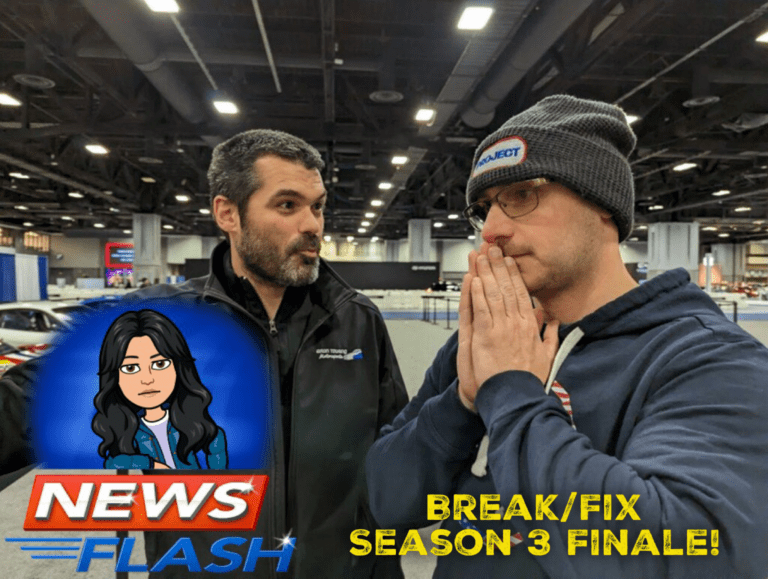
Would you like fries with that?


Other episodes that aired this month…


This content has been brought to you in-part by sponsorship through...