

spot_img
Home Blog Page 43

The Last of the Original Datsun 510 Wagons

0

What was once called the “poor man’s BMW” is now one of the most desirable Datsuns made when it comes to tuning, just behind the 240Z. We’ve all seen the 510 in Fast and Furious, Gran Turismo and any other car related medium. It’s there with its fender flares, engine swaps and lowered stance just teasing us and really appealing to those who are “in the know”. Many car people will just look over the 510, but enthusiasts will savor it for its racing heritage, style and potential. Oddly enough in recent years the 510 Wagon has become one of the most desirable Hot Wheels toy cars produced, with examples fetching over $500.00!

Datsun created and produced the Datsun 510 between 1968-1973 worldwide. All in all, there were four body styles ranging from a 2 door coupe to the 5 door wagon shown here.

This particular car is an all original 1972 Datsun 5 door wagon in bright orange with a great history. Owned for the past 29 years by the same owner, the car is still sporting original paint, interior and has appeared in several movies including Fast and Furious, 2 Fast 2 Furious, Mean Girls 2 and several TV shows. Even more impressive, the glovebox is signed by the original BRE race team members and the steering wheel a Racemark that was actually used in a race by Mark Donohue, although in a different car.

With 510’s becoming less and less common every day, it’s definitely a treat to spot a wagon. This beautiful original edition was sold shortly after this photoshoot and has relocated to New York where the new owner plans a full rotisserie restoration.


The following content has been brought to you by GarageRiot. The Social Media Network for Vehicle Enthusiasts.

From the Track to the Typewriter: The Racing Life and Hidden Histories of John W. Warner IV

What do you get when you cross a U.S. Senator’s son, a Star Trek enthusiast, a gentleman farmer, and a former IMSA pro racer with a passion for historical fiction? You get John W. Warner IV – a man whose life story is as eclectic and high-octane as the cars he’s driven.

In this episode of the Break/Fix Podcast, we dive deep into Warner’s journey from college gearhead to professional race car driver, and eventually, to author of the espionage-laced historical fiction series, Little Anton. It’s a tale of speed, legacy, and the pursuit of truth – on the track and in the archives.

Tune in everywhere you stream, download or listen!

Listen on Apple
Listen on YouTube
Listen on Spotify

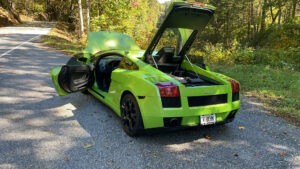
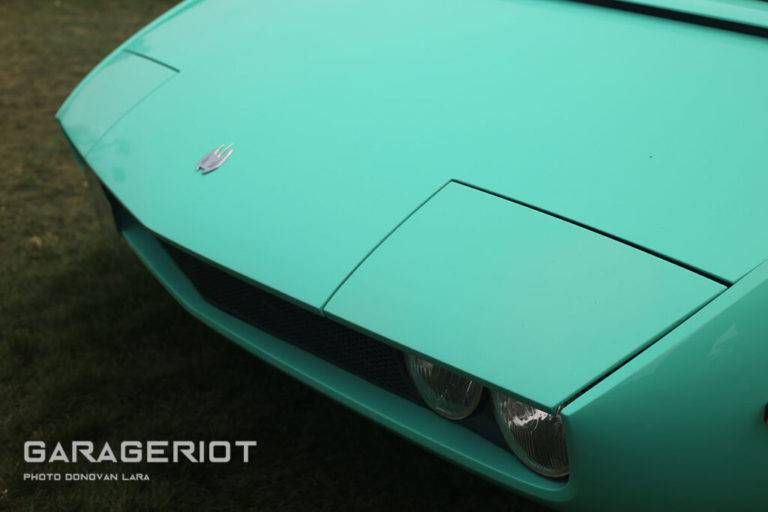
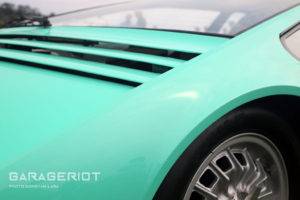
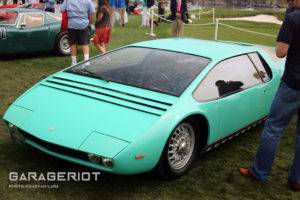
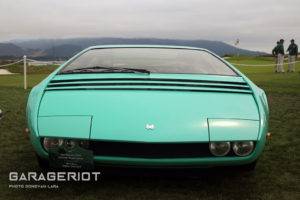
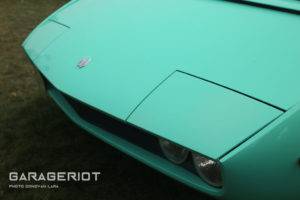
John’s automotive obsession began in college when he scraped together his savings and borrowed $5,000 from his father – a lifelong Lincoln man – to buy his first car. The catch? It had to be a Ford. Technically, Warner complied. He bought a lime green 1972 De Tomaso Pantera, a Ford-powered Italian exotic with a GT40 pedigree and a blueprint-tuned engine that could hit 160 mph.

That Pantera wasn’t just loud and fast – it was transformative. After scaring both a salesman and his father with high-speed joyrides, Warner was sent to Skip Barber Racing School in 1983. There, he met Paul Newman and Tom Cruise, sparking a lifelong friendship with Newman and a racing career that would span Grand-Am, IMSA, and ALMS.

Spotlight

Notes

  • The Dr./Prof. Ferdinand Porsche story, which includes folks like Ettore Bugatti, Hans Stuck, and more!
  • Planes, Trains and Automobiles: the technical side of WW2
  • “The Peoples Car” (aka Volkswagen)
  • The Little Anton series and its newest book: Lion Tiger Bear
  • The “mad cap cast of characters” in the series; and many scenes in the book series.

Transcript

Crew Chief Brad: [00:00:00] Break fix podcast is all about capturing the living history of people from all over the auto sphere, from wrench turners and racers to artists, authors, designers, and everything in between. Our goal is to inspire a new generation of petrol heads that wonder. How did they get that job or become that person?

The road to success is paved by all of us because everyone has a story.

Crew Chief Eric: Tonight, our guest is an author and historian with a passion for hidden history, revisionist, historical narratives, vintage cars, and the unsung heroes of world war II. His father, a five term U. S. Senator from Virginia, his mother, the daughter of a renowned Pittsburgh born philanthropist, his stepmother, a famous celebrity.

If you haven’t guessed it by now, we’re honored and excited to have John W. Warner IV, on Break Fix, a former IMSA pro driver turned gentleman [00:01:00] farmer, car collector, and passionate petrolhead, to talk about his historical fiction series, Little Anton, which is part satire, part love story, and a dash of espionage.

And I promise, John. We wouldn’t talk about aliens. Maybe. So welcome to Break Fix, John. Howdy, how are you doing? Let me put this in perspective for our folks that are listening in. You and I have had the pleasure of meeting up several times during the course of the last couple of years. Last names withstanding, John.

I didn’t really realize how tied into the automotive and motor sports world you were until we both participated in the classic car tour back in the 2018 2019 season, where I was introduced to John W. Warner IV kind of behind the scenes. I got to see some of your collection, your racing memorabilia, hear your war stories, pun intended.

Which leads to our first question. Were you always into cars? Was that your thing? Has it always been a passion? How did you find yourself behind the wheel? [00:02:00]

John W. Warner IV: Well, I have a dual passion, everything to do with space and Star Trek and UFOs and all that. But also I had a passion for cars at an early age. When I was in college, I scraped together all the money I had in the world.

And I borrowed five grand from my dad. It was a lifetime Lincoln driver. And he says, what, what the hell kind of car are you going to get, son? And I said, Oh, don’t worry. It’s going to be a Ford. As long as it’s a Ford, I’m fine with it. Here’s five grand, pay me back later. And so I went down in Charlottesville, I went to UVA, Brady Bushy Ford there, they had a used car building and inside was a lime green 1972 Pantera.

That’s Ford adjacent. Yeah, I was like tell me about it because I was kind of gearhead and he’s like well This car’s got no radios too loud And the former owner was a gt40 driver and he pulled the motor and blueprinted it And it’s got a solid lifter cam and you know big holly double pumper higher compression and all that jazz and I said I’ll take it.

Where do I sign? And I [00:03:00] took a salesman for a little drive. This is before I learned to race because my father got me into racing. Really? I gave him a ride in the car one night at 140 miles an hour. Same thing with the salesman. My dad said, Oh, Jesus Christ, you’re going to kill us all. Go get some professional driving lessons.

I’ll pay for them. I insist the next week I was off to skip Barbara racing school. This was the summer of 1983. I met Paul Newman and Tom cruise was there in my class. He was late. I was friends with Newman from then on. I actually dated his daughter later in life. They were a wonderful, nice family. They were just the nicest people.

And he and I raced together later on in a grand am IMSA. American Le Mans series at Daytona and Sebring.

Crew Chief Eric: You

John W. Warner IV: know, my father got me into it.

Crew Chief Eric: You know, that’s not something I would have guessed. I don’t know why I didn’t put those two things together. So was your dad passionate about cars and racing?

Lifetime

John W. Warner IV: Lincoln, man. Oh no, he was a 55 mile an hour guy. I usually had a driver, you know, in the Senate days, but he always instilled responsibility and safety [00:04:00] with me all throughout my life. He said, listen, you know, you’re a good responsible kid, but you’re 21 and you need to learn to drive because this thing will kill you.

And he was right. How it didn’t kill myself. I don’t know. That was a genuine 160 mile an hour car with that engine in it. I did it late at night, one time with a friend. He knew that it would save my life, and it probably did. That’s one of a few Widowmakers that you’ve owned. I’ll tell you that Pantera was a really nice handling car.

Engine would protrude into the cabin. Talk about mid engine. It was more mid engine than either the Ferrari 308 or the Boxster at the time. And I’ve owned two Boxsters, and they handle like shit compared to a Pantera. I mean, they’re wonderful cars. Beautiful sounding engines, but they don’t have any torque.

Pantera would eat it alive. The Pantera is a very neutral handler, and so you could go into a turn, a really tight turn, hot, and lift off the gas, and the nose would point in gently. Beautiful understeer built into it, just enough. When I came back from racing school, you know, I could drive all of a sudden.

I noticed that the car was very neutral to balance, so I [00:05:00] think it was a very safe car, actually. Your dad put you in racing school, but what did your mom think about all this? Well, she was more of a car person than dad was. She taught me to drive one day. I was 12 years old. Out in the rural Virginia in 1974, you know, it was no big deal for a parent to have a kid drive them to the store.

Today it’s a different deal. She said, you know, put the booster seat in and said, drive. There’s the clutch. That’s the brake. That’s the gas. It’s four speeds. She had a BMW. It was a 3. 0 CS coupe. And I said, okay. And then dad, I think two years later, it was like, come on, I’m going to teach you to drive my Bronco.

He had a 75 Bronco. And I said, Oh, mom already taught me to drive when I was 12. He’s like, what? Both parents instilled that in me.

Crew Chief Eric: Not to foreshadow what we’re going to talk about in a little bit here, but did your passion for Porsches start at an early age or did that come at a later time?

John W. Warner IV: That came at a later time.

I had always noticed them and liked them. Boy, I’ll tell you, a friend told 911 turbo back then before I bought the Pantera. And I’m glad I didn’t, was a novice driver [00:06:00] and the trailing throttle oversteer on those old ones is bad. Once you master it, it’s great. Back then, I kind of knew that from reading road and track.

And I was like, you know what, it was the Pantera with badass. You know, it had every bit of 370 or 80 horsepower, which was a lot back then in 83. It could take on anything in the world.

Crew Chief Eric: And in lime green, they saw you from a mile away and they heard you from a mile away too.

John W. Warner IV: They did. The state trooper, one, one guy pulled me over in Charlottesville and he said, Son, this car is too loud, too low, and too green.

And he gave me a ticket for no front license plate. I don’t know how I never got a ticket for speeding in that thing. It’s a miracle. But I got a ticket for everything else. Another Porsche question. What was the first Porsche you ever purchased? I had a couple of girlfriends with Volkswagen Bugs. I was really impressed with those.

I had a girlfriend with a 914. And I was amazed at how it handled in college. And so, I bought it from her, but immediately sold it two weeks later to a friend. Friend of mine, but I was impressed with the handling. My first Porsche that I bought was the race car actually. I [00:07:00] bought a nine 11 GT three R water cooled from the factory.

You know, it was factory race, car racing for a German team. And they’re like, ah, we had . You SISs, man. They would call me Ner and so on. Speed Vision at the time. W-E-R-N-E-R. Ferner Johan Vener. Yeah. before the race. And so my first car was the race car. But then when I got home, I bought a used 9 11 c four s from a friend.

I love that car, but the race car was awesome. We had problems with the early water cool blocks like at the date of going to 24 hours. We blew through a Brock and practice. But the factory FedEx is one overnight in Germany, a long block. That’s Porsche for you. I mean, I raced on a German privateer team, but they had factory support in the back door because they were German.

Let’s expand

Crew Chief Eric: upon that a little bit more. So, you know, you went through racing school, Paul Newman, Tom Cruz, all these kinds of things. And then you find yourself in IMSA. You know, what was ALMS then is still now IMSA today, soon to be merged with the WEC to become whatever these new classes are that they keep talking about.

So late. [00:08:00] 90s, early 2000s and three of the major cars that stick out. One of them, you mentioned the 911 GT3R, Corvette C5R and a Toyota. Of those three, which did you prefer?

John W. Warner IV: Well, definitely the Porsche. I’ll tell you that the Toyota was a spec series. It was a sports Toyota pro series. They were very good mid engine.

open sort of a mini prototype. I have a guy, Riley and Scott, why don’t you move up into that? And I said, no, I’m going to do a couple of years in a 9 11 before I do a prototype. I had just done a year, two seasons of Grand Am and a Corvette CE 5, which I really liked. The only problem with the Corvettes was the slicks got greasy about 40 minutes into their last now, depending on track conditions and heat, you’d be going through the corner, just sliding around.

But the Porsche kept its weight on the rear wheels and it had a distinct advantage in the corners and the Corvettes were allowed to have a little more power so you could pass on the straights. But. I found I could dive into the corners and beat people that way in a Porsche. I was like, why would anyone race anything else?

I mean, I really felt that [00:09:00] way. I don’t plug for the Porsche factory or anything, but that car saved my life on many occasions. And I just got a real appreciation for the engineering that went into it. It was evolutionary. I had a brief couple races in a, in a rented air cooled, and then briefly, I, I, I did a, the GT one with the twin Turbos, Newman raced that, and the 2001 Daytona did a race or two in that.

It had definitely had turbo lag problems and other electronic problems. It wasn’t the car, the car was set up.

Crew Chief Eric: Great. We talked about it on an episode in season one about the gentleman drivers, and I’m wondering, were you officially on a team or were you considered a gentleman? Driver. And I don’t mean that in an offensive sort of way, more of a curiosity sort of thing.

John W. Warner IV: I’m not even sure what the definition of gentleman driver is other than just some rich ding dong, you know, going to rent a car. I didn’t do it that way. My father told me some good advice. He says he came to a race of mine when I was doing SCCA National in Austin Healy. I said, I’m moving up to this Toyota Pro thing.

He’d always tell me never do anything half assed. And don’t jump into something that you’re not prepared for. [00:10:00] And so I really was very conservative. I raced with some very rich guys who would buy a brand new car, but they didn’t have jack shit per experience. And they would obviously spin out and they couldn’t take the heat of professional racing.

That happened on a number of occasions, but I had five years in the Toyota series, two years in the SCCA pro and the vets, and then the grandam and the vets and other things. I really worked my way up slowly because I didn’t want to be this rich dilettante, not knowing what the hell they’re doing, but they’ve got the money to buy two cars or a stable of cars.

I never did that. I rented cars until the Porsche and then I had to buy it. I enjoyed racing with drivers who came up through the ranks like I did and didn’t just buy their way in. That’s a really dangerous thing to do and people get killed all the time and their arrogance. They’re like, I built this company.

I’m CEO. I’ve made 700 million and I’m going to buy a brand new Ferrari race car and they stuff it into a wall. I’ve going to race at school of two weeks. Pro racing is, it weeds out the children from the adults. Some of the [00:11:00] women I raced against, one was a paraplegic. She was the best racing driver I ever saw.

Car caught fire. She called herself out of the car by herself. And we were all there clapping, you know, holy shit, you know, that’s real balls was that woman. I always tell that to people, you know, I have girlfriends, you know, you do all these macho things. I said, Oh no, I raced against some very good women who take it very seriously.

Crew Chief Eric: And you would have come up through the same era as. Like Lynn St. James and Willie T. Ribbs and all those folks that were in Trans Am in the 70s, 80s, and 90s as well.

John W. Warner IV: Sort of. I mean, I, I, I, 83, I was 21. So I started early, but I went through the Skippy series for four or five years. I really didn’t think I was going to go beyond that.

I thought it was just going to be a hobby and everything. My dad said, don’t do anything half ass, so I didn’t. But by the time I got into the Toyota stuff, I won a minor award for most improved driver. It’s like 40 of us. And my crew chief said, it’s time to move on. The problem with those cars, they were momentum cars and they didn’t have a lot of power.

They would go. 145, but I wanted [00:12:00] to be in a GT three or two.

Crew Chief Eric: What do you think are some of the, other than the quadriplegic pulling herself out of the car at Sonoma? I think it was the racetrack, if I recall the story correctly, what other memorable moments from racing? Like maybe some folks that, you know, you encountered that maybe kind of puts you in all like one of the characters in your book.

Hans Stuck Senior. Did you ever meet Hans Stuck, his son?

John W. Warner IV: I wish I had. I was going to race in Europe for the, not the Super Cup. It was another series in 2002, but my back went in and I never got to Europe. I was going to move there for a year. I was going to live in Munich or somewhere with this German team, but it all fell apart.

I met Newman early on, but my sister knew him. I dated his daughter briefly for a few years, and he and I became good friends. Around Daytona, 24 hours in 2001, it rained all night. Oh, that was awful. He was in the class above me. I was in the GT3, he was in a GT1 Porsche. And he would flip me the bird every time he passed me on the oval, you know, on the high back in the rain.

You know, I’m like behind Dale Earnhardt, his son. They [00:13:00] were in the vets. I’m like, Oh shit, what am I doing here? You know, going 180 and you’re following a little red light and all this spray. You’re praying the guy ahead of you knows where to break for the turn one. I thought I was going to die that night.

Unreal. I didn’t really meet any, I met, you know, Mario Andretti and some of the big drivers through Newman. I would hang out in his IndyCar pits with the family. And that was a lot of fun. I thought Andretti was kind of arrogant. You know, it’s like, don’t beat your heroes. You know, I was lucky. I mean, Newman was this down to earth guy.

He was a really good driver. I wish I was as good as he was.

Crew Chief Eric: Of all the racetracks that you’ve driven on, What’s your favorite? Or your least favorite. Of the tracks you wish you had driven, is there still something on your bucket list?

John W. Warner IV: Well, I can’t drive anymore. My back’s too bad. I’d always want to go to Le Mans.

Check that out. My least favorite? In the old days, Mossport in Canada had a hill that went down to a bridge. I was there one time and they were like, All right, the drivers, I mean, the guy just died yesterday in practice. And we’re all like, Oh shit, really? [00:14:00] They come down this hill at full speed, then there’s no protection against the bridge.

Now they fixed that over the years, but man, back in the early 90s when I was there, oh my god, that was awful. The rest of the track was great. Sears Point, you got me. How you drive that track fast, it’s beyond my, I don’t, weird setup, turn, I never could get it right. I never got it right. My favorite was Sebring.

It was flat. You had the nostalgia of it. Turns were perfectly proportioned. It was pretty fast. There was room to pass, you know, on down the line, flat out best. And I like Summit Point, West Virginia, which is my hometown track. It’s a really good track. It’s bumpy as hell. But if you can learn to drive there fast,

Crew Chief Eric: you’ll learn to drive anywhere.

That’s very, very true. You’ve alluded a couple times, you know, back injury, back pain. Is that the reason you got out? What happened? What made you leave racing?

John W. Warner IV: No pain. I was getting ready for the 2002 season. I did a few practice runs in the 9 11, went back to the hotel, and I was like, [00:15:00] oh my. God, I chugged a half a bottle of Tylenol and nothing happened.

And I just said, there’s something wrong with me. And I went to the doctor and I’ll never forget it. He laughed at my MRI. He said, you’re done. Two races prior to that in practice, I was at road Atlanta and one of the Audi prototypes bumped me going in the downhill full speed. And I spun around into the wall.

I don’t know, 140. I can’t remember what it was. Pushed the engine up against the firewall. Didn’t break through. Car saved my life and I blacked out for a few seconds, but it was just an aggregation of all my accidents. I was riding Harley’s and I was in good shape. I would go to the gym and I just thought I was invincible.

I was 40 years old. I had just turned 40. And uh, the doctor’s like, you got compound fractures. You’ve got fractures in your pelvis. You didn’t know about. I was like, Oh, really? And he’s got, you’ve got two smashed discs. You’re done. And then weirdly enough, couple months later, I figured I’d take out the 2002 season and get an operation and get back into shape.

I went head over heels and a mountain bike on the street about seven [00:16:00] miles an hour. And I hit everything. I broke my right femur. I had about 30 fractures in my pelvis. That’s when the compound fractures in the lower lumbar vertebrae started. I was just a mess. Wow. I’m still in pain to this day. I had three operations.

Crew Chief Eric: This is really the jumping off point as to where you get to your writing career. Let me put a pin in that for just a moment. Let’s come back and revisit this being in pain, coming off the bike, your last accident there. Thanks Some lighter hearted questions before we get into the meat of the conversation, which is your book series, little Anton, I’ve seen your collection of cars.

So I know it’s quite eclectic, but what are your favorite kinds of cars? And what would you consider the sexiest car of all time?

John W. Warner IV: You’d have to put it in a specific category, the sexiest car all time. If I had to pick one. a sports GT car. I would do the Maserati Ghibli of the early seventies. I’m an artist.

I can tell you there’s not one awkward line or anything on that car. I don’t, I’ve never owned one, but I’ve seen [00:17:00] one in person. It’s so low and proportioned so beautifully. And actually it’s a very good car too. I mean, Maserati could really build a car with, with that engine was raced. It’s just perfect.

My back wasn’t bad. I’d probably invest in one. It’s such an amazing car to look at. It’s breathtaking in person. ferrari, Daytona and GTO other one sedan would be continental suicide door. own. I’ve owned it for al my wife and I just stare Post war four door American car ever made, in my opinion. The Ford and Lincoln guys got it right.

The proportions, I mean, the Kennedy White House was filled with them. Because Robert McNamara used to be CEO of Ford. And Jackie Kennedy driving. I remember the Kennedys driving the cars when I was a little kid in the 60s, Cape Cod. My sisters were friends with them. I remember, you know, you get 10 kids on the back of the convertible.

Those two cars, but I have to say for America, the [00:18:00] 63 Stingray split window. I’d pick that over all other cars. My God, that thing is just perfect. What do you consider like the ugliest car ever? I don’t. That’s one of the questions in our meetings that people pass around. There’s a million answers. You know, beauty is in the eye of the beholder.

One person’s idea of something good looking is another person’s cool and weird. There’s no answer to that.

Crew Chief Eric: That is the most neutral answer we’ve ever received to that question. And I’m not, I’m not saying that’s a bad thing.

John W. Warner IV: There’s some ugly cars out there. To someone, it’s always cool. That’s very true.

Crew Chief Eric: So are there still some cars on your bucket list that you’d like to own outside of, you know, a couple of the

John W. Warner IV: ones that you’ve already mentioned? 49 Cadillac. Fastback, sedan, definitely on my list as my next car. I don’t want to drive a super duper expensive car. It makes me a little nervous because I like to drive my cars.

I barely even clean them. I’m in the poet’s group, you know, that category. We just drive our cars. I don’t go to shows and do the trophy thing. I could care less. I keep them relatively dust free, [00:19:00] but I don’t wash them a lot. Pre war cars, I just can’t do anymore. I need power steering now. That bike accident ruptured my rotator cuff and it’s just gotten worse, babe.

I’m almost 60 now.

Crew Chief Eric: Is there anything modern that would be on your list? Something that’s caught your eye in the last maybe 20 or 30 years?

John W. Warner IV: Oh yeah. I go to this local Sterling, Virginia Ferrari dealership. I know the guy. He’s Italian. He likes to drive fast. So I drive all the new modern Ferraris and back there they got a road circuit.

We really hammer the hell out of them. So I’ve test driven all of them. The new, uh, Roma looks nice. But all these new sports cars, they look like angry insects, you know, from a sci fi movie. I just can’t get over the styling. Maybe that’s just my age. I just don’t like it. Everything’s so techie in the Ferraris now.

I have a 1968 365 and that’s just such a pretty car. Beautiful, elegant car with no fuss and electronics at all. I’m guessing I’m kind of a Luddite that way, but as far as new cars, that’s a good question. What would I like to drive? I think the Bugattis are silly, even though Porsche has a hand in that engineering.

Now, professor [00:20:00] Porsche would admire the design engineering, but he would not have liked the weight. He was into lightweight, and so was Jerry, of course, his son, and so to see this behemoth, you know, 16 cylinders and 50 radiators and 20 intercoolers and 50 turbos, even the professor, I think, would say, whoa, it’s just too much.

I think it’s, it’s just a. Toy for weirdos. I blow down in my old age, I, I don’t get the rush of adrenaline. I, it’s not pleasurable anymore. I collect old Cadillacs and Packers. My wife and I just love cruising. Uh, we still have 3, 5, 6 Ferdinand that we drive. I go around corners fast in that, but you know, that’s only got 105 horse.

That’s a lot

Crew Chief Eric: for a 3 56.

John W. Warner IV: Yeah, it’s got the 1800 cc kit on it. Oh, there you go. Maybe 110 on a cool day. Boy, it’s, it’s so much fun to drive and it’s actually rides pretty smooth. I can get away with it. I couldn’t ride it for four hours, but I can do an hour and a half without hurting too bad.

Crew Chief Eric: It’s funny.

We’re talking about a 356 here for just a minute because, you know, I’m a [00:21:00] petrol head of a different generation. I grew up in the era of the 930 and the Countach and the Testarossa and the F40 and things like that. So those cars get my attention, but I’ve always had an appreciation for air cooled Porsches because That’s what I grew up with as well.

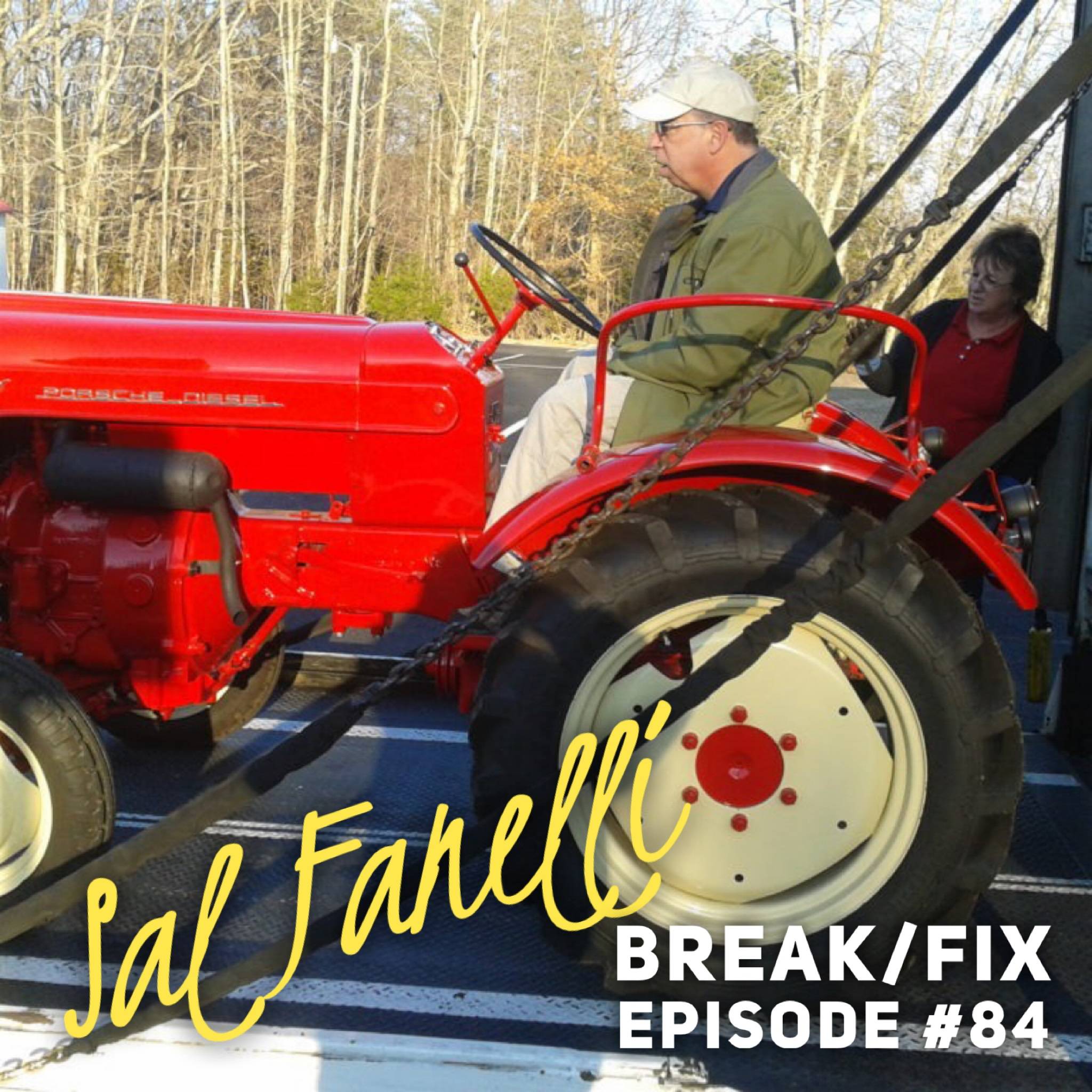
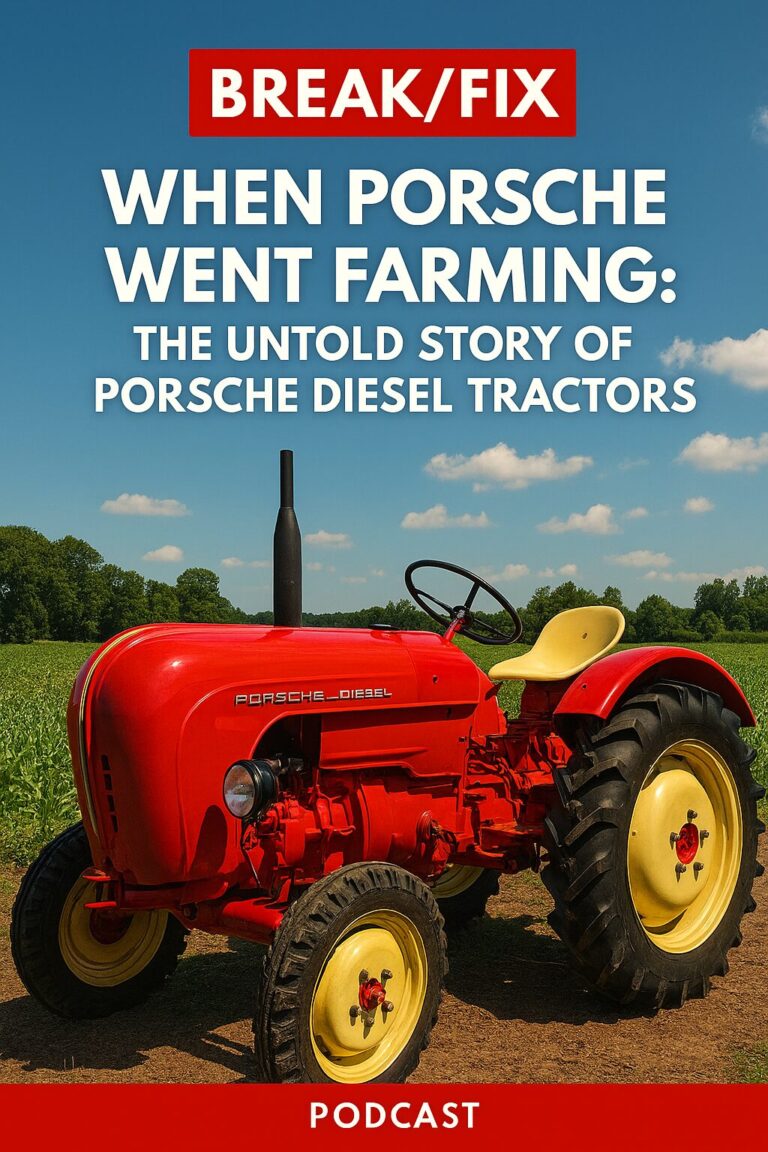
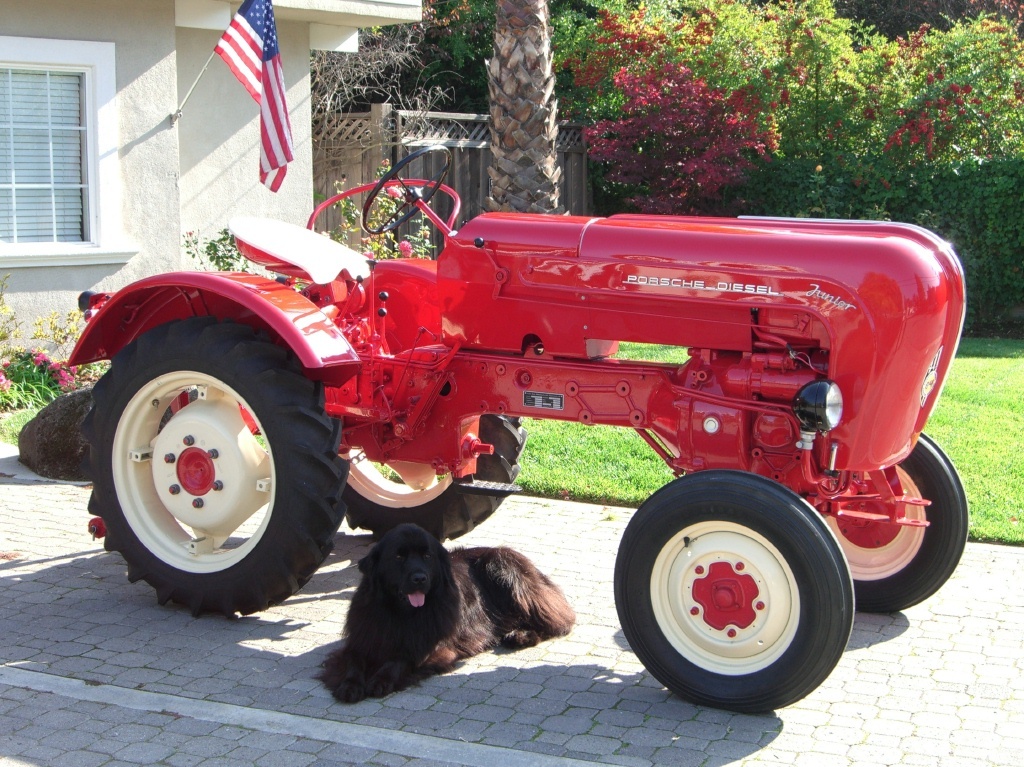
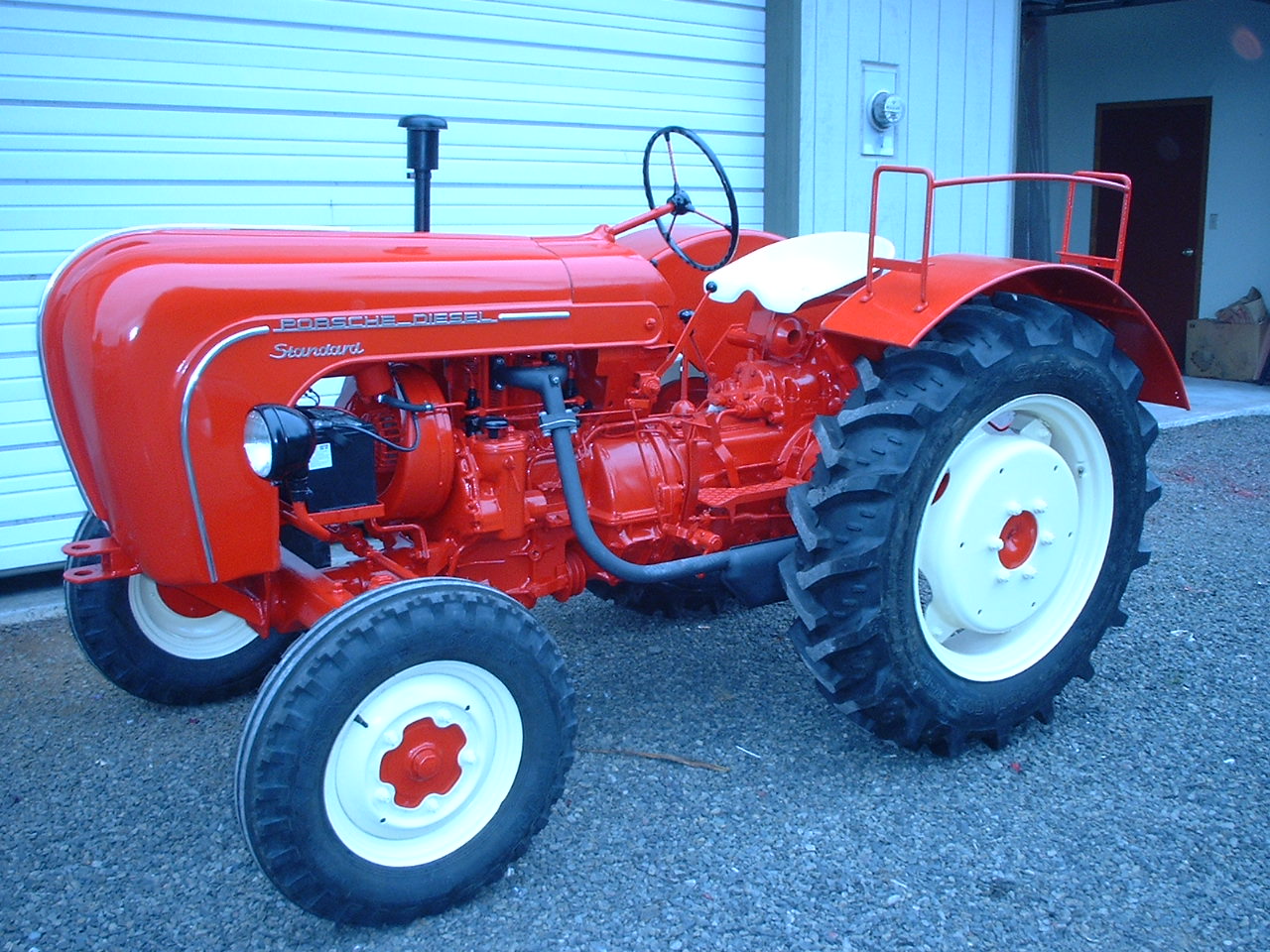
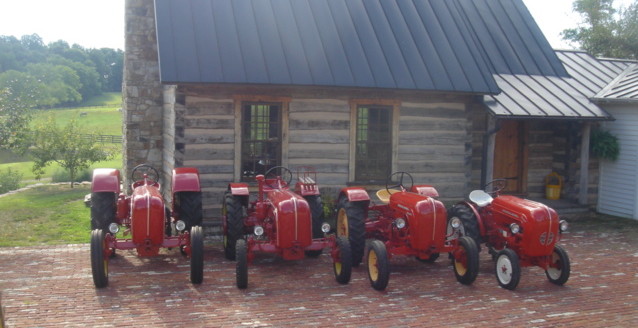
There’s a common misconception when it comes to who designed what oddly enough, I recently had a mutual friend of ours, Sal Fanelli on an episode of break fixed as well, to talk about Porsche diesel tractors. And he dove into the Porsche history as well. And you know, who’s designing what, and when the tractors came out, that was still during the last couple of years of professor Porsche’s life.

And I’m like. Did he actually design the tractors, which kind of begged the question. As I looked over things, he designed a beetle ferry designed a three 56 and Bootsy designed the nine 11. So it’s kind of interesting to see the generations of the Porsche family and how they’ve evolved everything.

John W. Warner IV: People don’t crack the big books. I talked to the guy at the Gamoon Museum for hours with a translator. No, no, no, no. Professor Portia designed the first 356. Ferry took it from [00:22:00] there, but no, he designed it. Portia, people forget his World War I and earlier inventions. Before the tractor, he invented a front motor tiller tractor in the teens, 1914 or something.

For the German people, he was always about efficient designs of things. You know, he was an airplane engine designer, designed engines for flying boats, all in my book. People always think, you know, the beetle and everything. He designed a lot of different things. He was a well known genius in the 20s, teens and 20s, Germany and Austria.

It wasn’t this fame that he got with Hitler. Hitler was a nobody when he met. Porsche in 27. Porsche was a famous man. Him and Bugatti were walking. That’s a true story. Lerner and his entourage show up stinking like motor oil and armpits. And they were like, no, this guy’s a whack job. The old man designed the tractor as well.

Ferry designed the 550, I think, you know, obviously, and I’ll, you know, the later 356 race cars and all that, the four cylinder race car series, and then everything after that. Bootsy, you know, I’ve No, the old man did the 356 [00:23:00] his prototype for it still exists somewhere and it’s pre war. It didn’t have an engine, I don’t think it might be in the Porsche museum.

I can’t remember. The 356 was designed loosely based on a Berlin to Rome aerodynamic car, but that was basically the Genesis for the 356, the chassis and everything, sort of the aerodynamics. People get a lot of that stuff wrong. It’s no wonder because road and track and all these car magazines, those guys.

They don’t do much research. They do the minimum. They’ve got a deadline. When I started this book, I’m a very detail oriented person as Porsche was, and the Germans are known for that and Austrians. I hate it when Hollywood movies like Indiana Jones or whatever have even war movies and books and things, they get the details wrong.

I went to extra lengths to get the details, right? I don’t introduce a gun or a plane or a car until, you know, The moment in history that it was introduced. I don’t play fast and loose with facts. I hate that in movies and books and things. Oh, they’ll never notice. And most [00:24:00] people don’t. I understand that.

And so I, in my books, I get a lot of compliments over the email of people like, you really sweated the details. You’ve got things right. I went on the Axis forum and the one guy that said, Oh yeah, you get things really right in your book. You don’t screw around. So I’m very proud of that. I do have revisionist history, but There’s a lot of true stories in there mixed in.

I do write fantasy, but it’s all based in probable reality. And Peinkel does something, I put the serial number, you know, it’s that kind of detail. I don’t want World War II, especially the, you know, the German buffs coming after me and going, this guy’s a hack. But, you know, I, I write every book I can on the old man.

And, uh, no, he doesn’t get enough credit. Everyone thinks Ferry Porsche did everything. And it’s like, nope. He didn’t. He helped his father. He was there every step of the way. And he was a very good engineer and designer in his own right. A lot of it is, you know, the father and son.

Crew Chief Eric: Very much so. And especially in those last years of his life, because a lot of people also don’t realize that he was put in jail or in prison for being associated with, you know, potentially with [00:25:00] war crimes and whatnot.

And obviously with the third Reich and all that, because Hitler did have him under contract to build the people’s car and all that kind of thing.

John W. Warner IV: Another reason the French put Ferdinand Porsche in prison for two years. Not just because of his war crimes. He was just an engineer. You know, I’m not going to debate that, that they pressured all the industry.

Join the SS. Before the war, he had been working with Renault, had licensed his torsion bar suspension. I can’t remember if there was some foul deal going on at Peugeot. And they got pissed at him, and then the war started. And so that was another reason why they kept him in jail, was that bad deal with the two French car companies.

So I just want to throw that out there that, and in my new book, Porsche, you know, he admits that they’ve got 20, 000 Russians, Jews, and other people working at the Wolfsburg factory. And my character B shakes him and says, don’t you dare go up against the SS, they’ll kill you. And they don’t care who you are.

Crew Chief Eric: I think that you’re right. It’s pulling a thread. Like Ferry kind of continued, you know, the 356 A, Bs and Cs and all those that are more popular than the earlier Khmun cars. You know, [00:26:00] I associate with Ferry specifically because he was left with the companies like, what are we going to do with this now?

And they had to keep things going, put bread on the table, et cetera. And obviously they had a reputation to maintain having that legacy that his father had already built. Kind of interesting how all that played out. plays out and much like the intro, it’s those unsung stories. It’s kind of clearing up some of the more commercialized and watered down versions of Porsche story, even Enzo story, Lamborghini, going back into all these legacy car designers and families that are now known worldwide.

And I have a very pointed. Portia question to ask you this question came up internally a long time ago and it raged a really fierce debate about ethnicity versus citizenship. And actually Portia senior was the crux of the argument, oddly enough, and it was whether he was Austrian or check and where did he align himself and how did he identify as a person?

And so I want to ask you this. Two ways. One, because you’ve found a way to bring his [00:27:00] story to life and fill in a lot of gaps, especially through your research. And two, because you are a known Porsche historian. So what is the truth there? Was he Czech or was he Austrian?

John W. Warner IV: Well, both. He was born in the Austro Hungarian empire.

In 1886, he was an Austro Hungarian. You know, that region is Bohemia. So you could say he’s a Bohemian, which he was. Today, it’s like Silesia and part of the Sudetenland. So he was all that, but he did identify with Austria.

Crew Chief Eric: He never really identified with Germany, though. He was always Austrian in his heart.

John W. Warner IV: My aunt was Austrian, and so she was able to give me some intel on that. Austrians are very proud of their heritage. They call the Germans pivka is the German pronunciation. And I say that in the book, he and Oscar make fun of the Germans. It’s like someone from New York talking about California. It’s like, well, we’re Americans, but not really.

Yeah. I don’t know what language they’re speaking. And so there are subtle differences in the German from region to region, Swabian German versus Prussian and other things. So, People identified with [00:28:00] region, but he identified himself as Bohemian and Austrian.

Crew Chief Eric: Part of the argument was, it didn’t matter what the paperwork said.

It didn’t matter that the lines had been redistricted, and the area that he lived in is now what we know as Czechoslovakia. It wasn’t

John W. Warner IV: back then.

Crew Chief Eric: Exactly, exactly. person, you identify a certain way and we could extrapolate that into a lot of different things. But in this sense, patriotically, you know, his ethnicity.

So I wanted to confirm at least from your knowledge that yes, Portia senior, if you asked him, he would have said, I’m Austrian.

John W. Warner IV: Yes. And he was proud of being from Bohemia. They’ve changed the name of this town from Mappersdorf to something else, but he was Austrian. Hitler had an affinity for him. He was a fellow Austrian.

People always think Hitler’s, German. He’s not, he’s Austrian. And for us here in America, what’s the difference. But over there, there’s a big difference. Like I said, when I did this Porsche tour and history mission that I did in Germany, I went to Germany twice to research the book. He was Austrian and my aunt was Austrian.

And they were like, Oh, don’t you ever call us Germans. They’re friendly. And they’ve always had [00:29:00] cross pollinization. It’s a myth that Austrians welcomed Hitler with open arms in 1938. Most of them were not happy with the Anschluss. And Porsche and his family, I wrote it that they’re not happy either. My editor liked that quote.

I have a very short chapter of him and Ferry listening to radio. And my editor liked that above all else in the book.

Crew Chief Eric: Hitler favored Portia. Obviously, he contracted Portia, well known at the time, as you said, Hitler was a nobody when Portia was already on the scene. It made me wonder, though, what Outside of fame and notoriety and the celebrity that Porsche had, Hitler was very much a Mercedes man.

Let’s put it that way. So why didn’t he go to Mercedes and have them build the people’s car? A group that was already established. Porsche didn’t have a factory. Porsche didn’t have the assembly line and all these people behind him to build the Volkswagen originally. So That’s a part of history. I’ve never understood why Porsche above Auto Union or Horch, DKW or [00:30:00] NSW or Wanderer or any of these folks that were still around, but Mercedes above all, because he was such a fanatic about Benzes.

John W. Warner IV: It’s a complex story and most people don’t know it because it is so complex. I write it as clear as I can in the book. He opened his Porsche design firm in 1930, in the middle of the depression. The lightweight, inexpensive people’s car was not his idea or Hitler’s. It had been floating around Germany for a while.

French had an idea to do it too. The problem was steel costs money and engineering costs money and got to sell millions of these couldn’t figure out how to do it. Cars were a luxury item, even for middle class people, they were a luxury item. And so Joseph Gans, I think was the originator of his lightweight car, which, and Porsche had met with him.

People say, Oh, he stole his idea. Well, everyone was stealing each other’s ideas. He admired Gans, and I wrote that in the book. Saw Gans’s car, it was very promising, but I could do better because his engine’s water cooled and all, too many things to break down. Hitler [00:31:00] had the idea. Mercedes had toyed around with it.

They couldn’t figure out how to make it work economically. A lot of the horch is luxury. Auto union wasn’t interested. It was just a third rail thing. It was like, we can’t do it. And it took Hitler and the Reichsbank and everyone to force it to be done. The car manufacturers didn’t want to do it because Mercedes is the luxury brand.

It wasn’t like today where they’ve got a million cars for sale. They had like five. And they didn’t want to build some dinky toy. Oh no. And Porsche had the dream to do it, and Hitler had the dream to do it. I think Alfred Rosenberger and Hans Stuck had something to do with it. It’s a little unclear, but they ended up in Hitler’s office and they were like, we can make this work, but man, we’re going to need money to do it.

And he’s like, don’t worry about that. I need to auto mobilize the populace. That’s a verb. People think I made that up. I didn’t. Hitler was very enamored with Mercedes. They picked him up at Landsberg prison in 1923. with two supercharged S Class. They knew the value of political people on the road.

Mercedes was trying to market itself. Hitler [00:32:00] was a bit of a gearhead. In his letter, which I publish in the book, I publish it verbatim. He says, I need, require this and such gear ratios and for this amount of RPM and which is more efficient. He had some knowledge of that. He wasn’t stupid. He was just crazy as a madman, but he wasn’t stupid by any means until the drugs and everything later on, or got to his head, he’s a megalomaniac and all that.

But in the early days, he definitely a psychopath, but that really didn’t mature. But when Portia met him, the stories I was able to piece together was Portia and Bugatti were not impressed with this politician, but Portia was impressed with the letter that he wrote to Jacob Verley. And said, God, this guy’s not half idiot after all.

He likes cars and everything like this. And it really is true that Hitler knew who Porsche was. The troops in the trenches in World War I, the German troops, they know who was designing the Fokkers and the engines and all that. It was the Red Baron and everybody. But it was Porsche. They knew. He was a famous man.

And of course he did artillery trains and mortar stuff. And he [00:33:00] developed a lot of things. That history is forgotten. That’s why I made this book an epic throughout 45 years or more, because I wanted to showcase his early life. No one talks about it. And I didn’t know a lot about it until I started to research it.

It was astounding. He was recognized as a genius in World War

Crew Chief Eric: I. So as we dive into your book a little bit, you reminded me of that scene with at the beginning stages of the book where It’s told almost from Professor Porsche’s perspective where he’s there working with the Mercedes race team whatnot and there’s Bugattis chasing them down in another one of the, in his own vehicle.

And he refers to him as this arrogant Frenchman. And that’s another thing that’s always funny is Bugatti is associated somehow with Italian cars, even though they’re French. He’s French. It’s, it’s an Italian sounding name. I found that whole scene to be extremely comical and I think it’s a great jumping off point for going back to what we put a pin in, which was how did you go from pro racing driver to automotive historian slash author?

John W. Warner IV: Well, I’ve always been interested in history. [00:34:00] My degree at University of Virginia was in Russian history and Russian studies, Cold War and all the whole history. So I had a history background. And a good friend of mine, when I was laid up in 2006, you know, I was in terrible pain. He said, look, buy a laptop and teach yourself to write.

You wrote really good, funny stuff in high school. You need to do it. I was like, all right. I didn’t really want to do it. That’s how I got into it. I had a history background. I traveled all over the world with my dad carrying his suitcase. I went to Russia with him to meet Gorbachev with Bob Dole and a bunch of senators.

I was the only one who knew anything about Russian history or culture. And these guys were like, Oh, we’re not going to the Bolshoi. You’re going to go to bed early. And I said, every one of you is going to go to the Bolshoi. That’s a rude thing to do. The Russian people take their culture seriously, their literature and all this.

And, uh, I was, read a lot of books on World War II. I, I can label myself now as a World War II historian. I have enough knowledge. And of course I’m a portrait historian. Honestly, when I went to the museum. They were very nice, but they didn’t know jack shit. And they would not talk about World War II. And they didn’t know anything.

I had to [00:35:00] go to Gmund. I had an Austrian guy on my Porsche tour. And he said, I know some people that know some people. And I talked to people in their 90s who had been through the war. This is 10 years ago. So I had firsthand accounts. I met an old woman who had met the professor when she was a little girl.

One’s degree of separation, you know, the museum and all this stuff. They want that World War II history to go away. In Germany, they’ve got this thing. Well, if they outlaw the swastika and they outlaw fascism, it’ll go away. It won’t, they’re doing everyone a disservice by trying to ignore it in some ways, the Porsche Museum needs to get over it.

I mean, they should have a model of the Porsche Tiger tank and that’s in my new book. You know,

Crew Chief Eric: that’s another thing that I was surprised. It was somewhat referenced, but not directly in the early chapters. Cause you do cover a lot of the world war one efforts and some of those scenes, I love the way they were graphically represented.

He’s out there on the mountain. It’s cold breath of the soldiers, all this stuff and the anxiety. And it painted this awesome picture. And I liked the fact that the book isn’t too technical and having a [00:36:00] background, even as a petrol head, it resonates anybody that has any mechanical background, you get it.

It’s not so over the top that my wife couldn’t read it. Not that I want to insult her intelligence. Cause she’s very bright, young lady. It’s very different than what I expected as I was diving into the book. So. It’s the

John W. Warner IV: great doorstop.

Crew Chief Eric: No, I mean, I don’t want to be overly complimentary, but what I, what I want to say is it’s interesting how you were able to fill in the gaps and get all this research material on something.

I don’t want to say as obscure as Dr. Portia’s life, but something that isn’t as annotated as let’s say Henry Ford’s life is right where you can dive into the history of Ford and figure out a lot of things and fill in the gaps very easily.

John W. Warner IV: Plus Ford was a Nazi lover too. I mean, he. Portia hated the Nazis and the SS, but it’s funny.

Henry Ford was good friends with Hitler as well.

Crew Chief Eric: You were able to thread it all together and piece it all together based on interviews, scraps of information, stuff that people probably wrote down for you on a napkin. But the thing about the book that really [00:37:00] got my attention is it’s very dialogue forward.

I’ve read plenty of historical fiction, you know, alternate history books and things like that. They’re very dry. They’re very, whatever. And, and I’m not saying. That’s what was my prejudice going into this book. But what I came to realize was there’s these characters, there’s these other stories, there’s these, these underlying arcs.

And how do you just conjure up this world

John W. Warner IV: around Dr. Portia? It wasn’t easy and I’m not patting myself on the back. I knew the story somewhat of the silver arrows and the auto union silver fish, which most people don’t get. ever. They call them the Silverfish. And actually, Hitler picked the color as their national racing color.

He polished an aluminum car in the 20s once. I think Neubauer did it to save weight, but that was a myth. The silver paint was made with fish scales. I put that in the book. Porsche’s, you know, in World War I, he really was out there in the mud, and he had that electric land train. He was very proud of that, and it did work.

It hauled, you know, mortars and stuff up the Austrian Alps to fight the [00:38:00] Italians. And, uh, he really was on the front lines. The books just say he was there and nothing else. And so I had to fill in, you know, he was from a family of pacifists. He hated war, but he was also very patriotic about Austria and then later Germany.

But, you know, his boys were at the front dying. And to ask an engineer, we need this airplane engine or Design this or this electric train thing. He’s going to do it because you know, those are his young countrymen dying. And you know, his story with his brother is true. His older brother. That’s the name of the book.

There’s not much. I tried to find some of the family members to tell me exactly what happened, but no one knew. But I’m not going to spoil that for the readers. The book is a tough read for other than for gear heads or World War II people. It is a tougher read, but I wrote it kind of with that. I was like, you know, regular folks aren’t going to read this.

And then it, the story became more metaphysical and it got bigger. It’s really three novels in a long story format. Portia, you know, it was hard because the books are just technical. And I had to piece together scraps, like stale bread and [00:39:00] the cookies in his pocket. That’s true. He and his brother Oscar were close.

You know, they had long talks. They would go hunting for stag and mushrooms and his wife would make mushroom soup and, you know, these little things that gave him humanity. Whereas all the books are about racing and technical and the Volkswagen Beetle and Hitler and the Tiger Tank. And little about the man, what he was really like.

And so I had to piece that together from a million different That’s why the book took me 10 years to write. But it takes on this life of almost a

Crew Chief Eric: biography.

John W. Warner IV: It is his biography. I wanted to do that in a novel format. My editor had a cow with it, but we made it work. It’s still too long for one story. I should have split it into two.

Two or three different books with beginnings and endings, but it is what it is. It’s just three books.

Crew Chief Eric: One of my things that I had to come to terms with as I’ve been reading it, fully admitting here for the audience that, you know, I haven’t finished it yet because it is quite long. I’m on the old version of Little Anton, which is in two volumes.

The first one is massive and the second one is like a riot. It’s like an appendix. It’s the [00:40:00] first volume. Brick and the stick. Yeah, exactly. The brick and the stick. Exactly. It’s my

John W. Warner IV: wife’s name for it. Yeah. As far as I know, I could be wrong. The only single novel that’s sold in a three part set, I don’t know of any others.

My publicist and my editor, we are all like, no one’s ever done this before. And I was like, well, I’ll do it. .

Crew Chief Eric: Yeah, there you go. But that leads to my question and, and kind of my thought is when I tried to grasp, when I was reading it, and for somebody that may be reading this book for the first time, what you realize is.

You dive right into the Porsche family story in the early, early days, Dr. Porsche as a kid, and it kind of builds from there quite quickly into him being a young man and getting into engineering. I’ve seen some other things explained about his early days and how he got into electronics and he was auditing classes in Austria, and I’ve seen other versions of that story too, but I liked the way you painted that picture and how you got us to his as an adult, but what ends up happening though, as you’re reading it, suddenly you’re introduced.

These other characters, to use your words, a mad cat cast of characters in [00:41:00] this

John W. Warner IV: book.

Crew Chief Eric: And I love the personalities that you brought forth of, let’s say the Mercedes engineers, you know, and folks like you mentioned, like Neubauer or even Hans Stuck’s father, Hans Stuck senior, right. And things like that, where you personify them, they become real suddenly because they are too far in the past for any of us reading it now to have been maybe intimate with their story or having even met them.

But what ends up happening is you flip the script suddenly and you’re like, wow, we’re talking about B and we’re on safari in Africa and we’re setting the story. And I’m like, wait, this is like a whole nother book, which kind of posed a question. It’s like, why didn’t we just stick with Portia in one book and then do some sort of crossover and do B in her book.

But I, as I’m reading it more at first, I was like, oh, maybe this is going to be to quote a movie title. And you know, Melvin goes to dinner, which is like, I come to Jesus type of thing. No, it’s not that this has to play out this way. In order for us to get to where this all comes to a head and all these characters are now interacting with each other very, very closely.

And so that makes it really exciting.

John W. Warner IV: I did a very complex [00:42:00] thing for my first book, but that’s me, you know, the Porsche way. I designed it like a, like a race car. Bee, Beatrice, Ferdinand, Porsche, and Lutz are the three main characters. And their lives intertwine, and they become tightly intertwined in the third part in book two that you have, but the third part, the third book, and around this project that’s classified in Germany.

Then it all comes together, and then the reader’s like, oh shit, no wonder he went off on all these tangents. They’re all coming together. Exactly.

Crew Chief Eric: Boom.

John W. Warner IV: They’re all in the same building together with this project. And it’s like, Oh, that’s why he named the book little Anton. I take a very circuitous way to do it, but I did it.

The original version was 1300 pages.

Crew Chief Eric: Whoa.

John W. Warner IV: Yeah. It was difficult to do. And it took me a lot of revisions. I mean, my editor and I went back and forth for a year doing that. Now you would send me tranches of book. He’s like, I don’t know how you’re going to do this, but you need to do this. [00:43:00] I said, you’re right.

I got to cut this out and redo it. It took a lot. It’s way too ambitious, but I did it, but it all comes together in the end. I assure the reader that, and I think I mentioned that somewhere forward. Yes, you do. It requires an explanation. My new book is only 400 pages. You’ll read it in a day and a half goes so fast.

This was a little bit more. Sophomoric and retrospective in places and it is very technical in places It’s not for you and me or your fans, but for the average reader like my wife They don’t know what 4. 5 liter engine mean the average person can glaze over that Who cares about a 12 cylinder engine versus a v8?

Who cares as long as you understand what’s going on? And I try to explain things in the simplest way I could but just was a little much It’s definitely a gear heady book. Bea is an interesting character. She’s just the total opposite of Portia. She’s an absolute fuck up, although they both are rebels.

Yes, very much so. Young Portia was a rebel. Mercedes fired his ass. They were like, you’re too wacky for us. You know, the [00:44:00] genius. Say what you want about Hitler, but he recognized his genius. Building the Volkswagen Bug, simplicity is not simple. And that’s a quote from him. Damned if I know where I got it from, but I think he said it to Hiller when they laid out his race car, the C Type Auto Union with 16 cylinders, two stage supercharger.

That was the opposite of the bug. I mean, that was the most advanced automobile in the world. People still marvel at it today. You can see videos of it firing up. The characters in the book, a lot of that comes from my father’s military background, uh, my Access to the government and the U. S. Senate through him, spending time in the Pentagon.

Uh, I know race team people. I know a lot of engineers. I’ve talked to airspace engineers. In fact, I consulted an aerospace engineer to make sure I got everything right on a lot of that stuff, you know, be as a pilot and everything. And so it’s a complex book, but it’s really about friendship and love. I mean, it’s a love story, plain and simple.

Crew Chief Eric: And I don’t want to give away where that comes in. And folks, it’s not a Portia’s mistress. So get that out of your head. It’s something completely different.

John W. Warner IV: [00:45:00] As far as I know, he didn’t have a mistress. He was very much in love with his wife, Aloysia. She was his, like my wife, she’s like his right arm. Fairy on the one arm and his wife on the other.

And he really drew upon that strength.

Crew Chief Eric: And there is also, hidden in here, a bit of a, we’ll call it an homage, but it’s a bit of an amalgam. There’s a character that’s hidden, but not so hidden. And it’s a bunch of your mother’s side of the family combined into one character. And if I remember correctly, his name is Redway Mellon.

I thought that was really funny only because I know a little bit about your back history and your family tree and whatnot. So for the average reader, they may not know that, but this is the melons, as I said in the intro from Pittsburgh and that whole lineage. So what was that like and why did you choose to bring all that in as well?

John W. Warner IV: My grandfather was an OSS agent. He was the forerunner of the CIA in World War II, and he told me a lot about a lot of classified projects he saw with General Patton at the end of the war in Pilsen, Czechoslovakia. If somebody wants to watch my interview, it’s on [00:46:00] Dark Journalist, which is on YouTube, and he does deep state UFO things.

But this is true history. Some of it’s documented. But the Mellon family, we’re a small family and we’re in the committee of 300, 300 rich families, Rockefellers, Morgans, Duponts, the founding families, they call them. Some people call us that we’re not a big family. There’s about 130 or 40 of us alive at any given time.

And I’ve been told by people in Washington, friends of my father and ex CIA and military Pentagon people that there’s been over 40 melons since World War Two. In military intelligence. I do not have their name. However, my friend and cousin, Chris Mellon is currently involved in the UAP UFO Nimitz thing.

You know, he writes articles for CNN, you know, Washington Post and New York Times. He’s in there. And so he and I have had a little chat about that. cross pollinization. I wanted to put a Mellon character in there because he’s not a very big character, loosely based on actually my cousin and my dad and all this.

So he’s a composite character. We Mellons have had a [00:47:00] hand in all that stuff, even going back to the 30s. My great grandfather Andrew Mellon had intimate dealings with Halmar Schacht. Which is Hitler’s private banker and that’s through Sullivan and Cromwell, which is Alan Dulles and John Foster Dulles and was very corrupt.

Andrew Mellon was pretty much a fascist and they were doing business with Hitler. Oh, he’s a Republican. They were investing in Nazi Germany. So Alcoa Aluminum, the melons, we sold a lot of that to Germany and they made Messerschmitts and Heinkel bombers, you know, standard oil. Went through Portugal, Ford trucks, Chevy trucks, GM.

It’s a true story that when the Allied, you know, our B 17s, the American Air Force was bombing the Ford truck factories in Germany. Germany under contract. We had to repay them to rebuild them out. And Chevrolet, GM, and Ford. That’s a true story. The Wehrmacht rolled into Russia with Chevrolet trucks on firestone tires.

The Japanese Zeros had firestone tires. They were new old stock. Wars, business. I mean, no one knew who was going to fight, [00:48:00] you know, in the thirties. There were tons of weapons and trucks and everything sold. I just find that interesting. And I mentioned that when Porsche didn’t know Henry Ford and they were, they were friends and Henry Ford gives Porsche, he says, your genius comes from reincarnation.

And of course, Henry Ford and General Patton said that’s where their genius came from. lives. The book does delve into some metaphysics and philosophy.

Crew Chief Eric: There’s two threads I want to pull here. And one of them is to go back to what you said about the book being technical and maybe complicated for the average person.

And this is where I think I would disagree with you. And you’re the author of the book. Let me put it To you from my perspective, right? You

John W. Warner IV: haven’t gotten to the end yet.

Crew Chief Eric: True. That’s true. That’s true. I mean,

John W. Warner IV: portion field physics.

Crew Chief Eric: Oh man, episode of ancient aliens, but we’ll keep that at bay. I’ve always been a voracious reader.

I had the distinct pleasure of meeting. One of my heroes at Johns Hopkins university before he passed away. And that’s Michael Crichton. And so as I’ve been reading your books, it reminds me of his writing style, which is [00:49:00] also extremely technical, but brought down to a level that can be absorbed by anybody that sits behind those pages.

So if you’ve read sphere or Jurassic park or timeline or any of those, there’s tons of science in there. They’re not portrayed as science fiction. That wasn’t his thing. thing, but there’s so much tech in there presented in such a way that it’s absorbable. And I appreciate that about this book as well.

It’s enjoyable for anybody that sits down and reads it. But there was also something that came out. And as I realized how long it took you to write this book, and you mentioned on your podcast several times, you were kind of laid up watching TV and you know, you bought the laptop and all this kind of thing.

And I wondered. As I peeled back the onion on Bea and Lutz and some of the other characters, I wanted to ask you, how much Downton Abbey were you watching while writing this book? Certainly

John W. Warner IV: some, but,

Crew Chief Eric: um, I knew it. I knew it. I

John W. Warner IV: personally had to relearn the English language to write in the British vernacular of the 1930s.

And before [00:50:00] that, Churchill’s Edwardian. But really, it was Churchill’s books, I think I read most of them. I watched every English program, not just Downton Abbey, which I think is silly. But that’s another story. I

Crew Chief Eric: bring that up on purpose, but please continue your thought.

John W. Warner IV: I watched everything and I took notes.

And I still take notes to this day, the phrases. She’s round the twist, means she’s nuts. These little things that the British have, just like Americans have, we have vernacular slang and everything like that. Colloquialisms. I’m sure it was in the 1930s, as much as I could, so it was doubly difficult, or deuce difficult, as they would say in World War I, you know.

It was mind bending. I had nothing to do in my life. I couldn’t move around. I was semi hazed. It was pain pills some of the time, you know, when Back pain was too much and I was laid up a lot and I would do my exercises but really couldn’t do much. I was at a place in my life where I had the time and interest to dig into and the deeper I went into all this the book became bigger and deeper and as you finish it you’ll understand why.

But you know the Germans really [00:51:00] were into a lot of that technology. That’s a whole other side that gets into my UFO side of things. Ancient Aliens is very watered down. But it’s not bad for the average person with no knowledge, but I don’t agree with everything in it. The UFO field is people will rip your face off in arguments.

The Germans really were into their Wunderwaffe technology. And this book gets into that. And that’s a real thing, whether people want to believe that or not. They were way ahead in their atomic bomb program than we were taught. I know that. I’ve talked to, you know, generals and admirals who told me, Oh yeah, we kept that secret during the war.

But you didn’t hear that from me. These are the kind of stuff I’ve had access to. And the characters in the book, they’re very human. And I really dig out Portia’s human side. I have to fill in the Every once in a while, the technical book will say, you know, he really did tie lights to his lifescapes. What was that night?

You know, 1880 something or, you know, 1890. That’s a true story. He got in trouble, but that’s all it said. He did this. He was mischievous. He got in trouble and his father beat him. That’s the only thing the book would [00:52:00] say. And so I had to extrapolate from there, from everything, but it was a good intellectual exercise.

Crew Chief Eric: Now I will say there’s one part, especially when you’re talking about how you absorb the language of the characters that you’re writing for, especially notable characters of history. And I remember. very vividly the scene where Winston Churchill, who happens to be the grand uncle of your character, Beatrice.

He’s in the room with, uh, fellow other folks from the MI6, like, you know, the precursor to MI6. He’s trying to convince her, persuade her, and there’s some very back and forth dialogue, and then suddenly, he goes into Churchill mode. He gives this, uh, monologue. It transported me there. I mean, that’s the word I want to use.

Like I’ve heard other speeches of Churchill and I’ve read other books and I was like, wow, this is really on point. And so I got to tip my hat to you on that because it’s very well done. And there are scenes like this where Throughout the book that just stand out that are either extremely comical, very [00:53:00] imaginative, super descriptive, or just really, really on point.

When you introduce Chamberlain and he’s signing off her paperwork for her to go into formal training and all this stuff. It’s just so hilarious how you just bring out this kind of nasty, snarky side of his personality. And I just, I really enjoyed it. I actually chuckled as I’m kind of reading through those pages.

John W. Warner IV: There’s a lot of satire in the book. The humor moves it along. I’m I mean, it’s dark when it needs to be serious, dark it is. Once I, I got into Churchill’s head, I can write anything in his voice. You’ll really like the speech in lion, tiger, bear. When it comes out next month, he’s addressing all the generals in Cairo.

And he’s like, God, and she has this back and forth with him in front of these generals, including Montgomery, you know, it’s a desert war 42 Churchill was amazing because I read all those books and somehow over the years, I just was able to write in his voice at will. And it’s. A lot of fun.

Crew Chief Eric: You’ve mentioned before being a very skilled mimic, especially with voices and personifying people in your own way.

[00:54:00] So, I mean, I, we, we saw some of that at the beginning of this episode and my wife calls them the voices bloody

John W. Warner IV: fucking hell.

Crew Chief Eric: They’re not nearly as scary as the ones that are inside your head. That’s all the

John W. Warner IV: conversation between Briggs, her father. and Churchill and her and I think Lord Sherwell was in there and he was saying this.

The kinds of things they’re discussing were actually true. But I pulled a million different things and I created this scene. Briggs is kind of this gruff old soldier, tough on Bea a lot. But he loves her and he dotes upon her, but he’s very fearful of her going to spy on the Germans because he knows what she’s up against.

And they’re talking about the German engineering, where does it come from? And he’s like, I know, I didn’t remember it now. And he goes off into this monologue about German airships of the 19th century and their engineering schools and the occult and other things. And it’s all based on truth. You know, they did have philosopher scientists in Prussia and the early German states.

And he knew it all [00:55:00] because he’s a military historian. He teaches at Sandhurst. I was able to do that because he had the knowledge of that. He was amazed that he could help his daughter with this weird operation that they want to do. You know, they think it’s a walk in the park. Of course, it is nothing of the sort.

She grows up a lot. She’s very headstrong. immature and racist and classist and she’s snob and she’s very intelligent and she’s a good pilot and she’s a good driver and so she understands engineering. She has her dainty side with her friends and they’re hard drinking and they cuss and that’s based on women that I know.

Some of it’s based on my own sisters and their friends. You know, I know some people in British high society I was able to draw upon. It’s just my background.

Crew Chief Eric: And I don’t mean to offend by making this, you know, Downton Abbey reference, but for me as a reader, I’ve always somehow tried to imagine what the person would look like.

Sometimes an author does a good job of describing, Oh, she had long flowing blonde hair, metallic blue eyes, whatever. And you’re like, okay, well, Fine. But in my head, you know, everybody either looks like a [00:56:00] cartoon character or a Muppet or somebody from Star Trek. So, you know, it’s one of those kind of deals.

Kidding aside, the scene that did it for me was actually when Beatrice was bantering back and forth, really battling back and forth between her German tutor is Frau Gerwig, I think is her name. It suddenly hit me. That’s Lady Mary Crowley from Downton Abbey. Whether you painted that picture or not, I saw that just rigid, like she buckled down, dug in her heels and she fought back.

It didn’t matter what her teacher was going to say. It was pound for pound. She was just going after it. And it’s like in that stubbornness, I also pulled through the thread that I didn’t realize until later, which was the feminism part of it. There’s a side to this book that I want my daughters to read when they’re old enough to read it and very true.

John W. Warner IV: All the, all the women’s setting records in the thirties. They really did a great job. And of course, World War II, they became pilots and ferry pilots and nurses. And so it does have that. And the second book continues in that thread being Alice. [00:57:00] I actually was terrible at languages. And in high school, I would go back and forth.

My French teacher was this little fiery French guy. We both had this crazy sense of humor and I would say, call him a withering snail in French. And I would draw things on the blackboard. It was all based on my high school experience. That’s so funny. Downton Abbey is a good visual. But Downton Abbey is very sanitized.

It is. It’s a very good show about the British upper class. It is. But they cussed a lot more, and they had a lot more dirty, drug taking, boozing episodes than Downton Abbey. It’s very sanitized. I always enjoy the downstairs scenes. When Bea does go downstairs and visits with staff. And of course, when I was growing up, I hung out with the housekeepers all the time.

I really enjoyed blue collar people. I still do, mechanics. You know, everybody. And those are the most interesting people because the rich people always put on airs and armor and they never say what they mean and it’s absolutely frustrating. And so B is like, fuck this. You know, that’s part of me and B.

It’s like, [00:58:00] fuck this. I’m going to get to know the real interesting people like that pilot, Amy Johnson, who is not a rich, fancy person. And so they became good friends. And Amy is a real person. She’s a hero. Most people don’t know who she is, even in English.

Crew Chief Eric: I had to look her up myself because she’s in the foreword.

You have a picture over there. At first, you know, as I’m reading the book, I’m like, is B Amy Johnson? Is that the parallel here? Is that what we’ve done? And then I realized, no, no, no, no, no, no. Because you specifically call out that they’re friends. And so I’m like, oh, now there’s this parallel. I have this whole image of another person, right?

It cleared it up for me as we went along. That also led me to dig into some of the episodes of your podcast, where you, I don’t remember the lady that you interviewed, who was responsible for interviewing all of the wasps they call themselves and the wafts, which were the women air. Yeah. Ferry squadron or whatever, correct.

My acronym was an amazing story. And I’m very passionate about World War II history myself, but that’s a side of World War II history. Actually, I didn’t even know about it. And I was like, wow, this is amazing.

John W. Warner IV: You know, women get downplayed in movies and the [00:59:00] press and history. It’s changing, you know, of course, but you know, my experience with the women racing drivers and having grown up in a house full of women, Liz Taylor and everybody, and, you know, she was a wild, wild woman.

child for sure. So there’s some Liz Taylor and B as well. It’s a shame. This world is very conservative and patriarchal and quasi fascist and, you know, it is. It just is. And the United States is. And women were given second class status and still do carry that. Glass ceilings are real. It’s better now, but it is so hard.

Uh, a CEO told me one time, I said, What, what is it like climbing to the top being CEO? And she’s like, well, that glass ceiling was tough, but I basically had to put a suit on and become a man to do it. To be one of the boys. And that may be very sad, but it’s just the truth of our reality. And of course, B gets into the ancient druid women, the divine feminine, in that chapter 109, and she learns that the reason the Vatican and everyone went after druids and witches, witch is another word for woman druid, and these were not evil people doing black magic, they were doing [01:00:00] white magic, being very conscious and everything like that, and that’s why they were gone after.

She learns this in chapter 109. She learns the whole shebang in McMaster’s view. It’s the gift of the lamp, which is based on the hermetic, uh, and other things.

Crew Chief Eric: It’s kind of funny how your mind runs away sometimes. So I know I, and not again, I’m going to, I’m going to make another Downton Abbey reference here because As I painted this picture of Michelle Dockery playing Bede in my head, that was like my visual cue there.

I’m like, okay, you know, the, the, the bobbed off black hair and that scowl and everything, then there’s Luz and I love the story you tell. And when you introduce his character and he’s the humble mechanic, you know, or he’s rather the fabricator and he’s driving this. Big old ox cart of a Mercedes truck down a hillside.

And he sees Ferdinand Porsche broken down and there’s this whole back and forth with him. It’s funny, this like almost runaway truck scene where he’s hauling ass down these switchbacks and Porsche’s like doing the mommy arm. And you know, this is the way I’m painting the picture, but he’s [01:01:00] like, he’s okay with it because he’s also almost like a talent scout.

He’s like in the back of his head. He’s going, this kid can drive. Where the hell did he come from? Why don’t we know about him? And obviously that sets him in a totally different trajectory. It changes his life entirely. He was Hitler Juin, right? He was Hitler Youth. He was NSKK motorcycle, basically police officer patrol.

This character’s so multifaceted. But then I drew this sudden parallel. I went, oh my God, it’s Tom Branson, the mechanic. He was IRA, he was patriotic, Ireland, all this kind of thing. And I’m like. Sort of similar, but not distant cousin. Right. And then I started to realize the interaction that my made up Lady Mary character was having with him in their first interaction is how she interacted with Matthew Crawley the first time.

And then it became more like Henry Talbot. And I’m like, here I am fantasizing. And I’m like, no, stop, stop. The train has left the station. Right. So Those are some of the things that maybe to draw people in, hoping you guys see the fantasy, see [01:02:00] the type of thing that John, the picture he’s painted here, but set in World War II Germany instead.

John W. Warner IV: Portia was a talent scout. He saw Baron Rosemeyer and said, this guy’s got the balls. I think as you and all your fans know, gearheads and racers and car nuts, we’re birds of a feather. And so there’s two strangers and you know, and the truck was actually fairly new. It was, it belonged to the NSKK. It was a Mercedes diesel and Porsche did design the Mercedes diesel.

He’s like, hey, I designed this thing, you know, for Mercedes. Like, Oh, I know professor. You know, he was very enamored with him. He’s hauling ass to impress him Porsche’s getting nervous because he’s like i’m with some idiot who can’t drive and he’s hauling ass and then the gearhead thing Switches on like a differential boom and Porsche’s like go faster.

Luce is like, oh my god And so if any racing driver as you know, we can get into anything a van a truck or anything and drive it at 10 tenths of the limit. You can get in anything because you know [01:03:00] instantly, you know how everything handles and okay now in two seconds you can take any rental car and take it to its limits because you know where the limits are and Lutz is naturally like that because he does all these runs and I grew up on dirt bikes that dynamic movement becomes instant second nature and so.

That’s what Lutz and Baron Rosemeyer share. And that’s what makes them good drivers. Hell, Baron Rosemeyer didn’t even, never drone a car before. So he had none of the bad habits. Lutz was the same way. I wrote, that’s why they became best friends. And all those pranks and everything, that’s all based on true stories.

Crew Chief Eric: And that scene too, with Portia and Lutz going down the hill and like you to your point, you’re in a truck and you’re hauling ass. And I kind of had this thing in my head. Like, I kept thinking Portia’s going, I designed this thing, but I never designed it to operate like this. And it suddenly kind of melted his brain.

He’s like, to your point, if we could do this with a truck. What can we do with the race car? But then I also had this flash forward, like Sabine Schmidt in a Ford transit at the Nürburgring type of moment where it was [01:04:00] like, that’s who Lutz is internally. Like he’s Sabine Schmidt. Like he’s that type of driver, you know, where he’s just naturally gifted and naturally talented.

And, or as we say, he’s full send his risk mitigation button. It doesn’t exist, you know? And I thought that was just awesome. And it was a great way to introduce that character. And then as they all begin to interact. Later in the book together. It’s just, it’s a good story and I don’t want to spoil it. So I’m hoping more and more people will, you know, pick up a copy of little Anton and begin to read it.

You know, you’ve mentioned a couple of times, let’s call it book number four, the sequel to the sequels, the sequel to the brick and the stick. What is lion tiger bear about if you want to give us a little bit of foreshadowing.

John W. Warner IV: Loots is in it, but in a very strange way, ruin that for you does play a small part in the book.

But B and, and Alice are back. And it’s the Desert War in 1942. Bea gets shot down near Siwa Oasis. And the Germans, the Italians, the African Corps had occupied it. So she does a whole adventure [01:05:00] there. And then she and Bernie and Alice and this new character Guafa, who is a black African Mali, very capable man, he used to steal airplanes and trucks.

So he’s kind of a gearhead with Bea. There’s a scene with them. Bea’s got An engine on fire in an Italian fighter. She’s in a C 47 cargo plane. Troops firing out the windows, you know. It’s based on a true story. They would smash the windows open and start firing at the plane. If you yaw the plane back and forth on a pilot.

She’s doing all this funky aerobatics. And so this guy comes up and helps her fly the damn thing. Got one engine on fire, another one. And they were able to restart one of the engines. It’s a radial engine, Pratt Whitney. Even with three or four cylinders gone, it’ll still run. Uh, B and her team, they go to Cairo.

It, the book is much more into the occult Atlantis lore and German anti gravity experiments, and they go on this adventure operation in the Zagros mountains of Iraq. So it takes place mostly in the desert regions. The Germans were in Iraq in 1941, not a lot, but there was a Luftwaffe [01:06:00] unit. And Portia comes back as a character.

I’m not talking about it.

Crew Chief Eric: I can’t wait to read it. He’s in

John W. Warner IV: there. Don’t worry about it. He’s in there. So his journey is not complete. When you get towards the end and Bea has been captured by the Germans, she goes through some horrible, torture and other things. And she comes out with PTSD. And I’ve learned all about it from talking with these young veterans and the older guys to Vietnam.

So it comes from firsthand accounts or battle fatigue. She goes through combat and it does change her as they did to many young people grew up in a hurry in World War II. And my dad was 17 when he got in the Navy. These young people They grew up really fast. And so a lot of those things, I, I talked to veterans about it.

And actually I’ve gotten good comments from veterans about the book.

Crew Chief Eric: It’s almost poetic justice in a way, because in the first volume, when she is going through her SIS training and they take her up into the Highlands of Scotland and her trainer. Is hilarious. I had this whole army of darkness [01:07:00] moment where I thought she was going to turn to him and say that whole scene where the I’m the king of Scotland and the king of this man.

Yeah, you’re the king of Jack and shit. And Jack just left town. I expected her to like, come off totally like that, but they broke her down. That was his mission and to rebuild her. But she said at one point, I’m never going to need this. Much like some students say about the things that they learned in school.

I’m never going to need this kind of math. I’m never going to need this kind of grammar or English. And I think bringing the story to that point is poetic justice. She learns her lesson, maybe not necessarily in the most delightful way. It brings it all together. And I very much appreciate that.

John W. Warner IV: It’s based on true accounts.

My grandfather, Paul Mellon, was in the OSS. He was an army major in World War II, and one of his jobs was training French women in England to jump out of C 47 Goodyear behind the lines, and they were trained by the SOE, the Special Operations Executive, and that training, which that happened later in the war, but that training was extensive, hand to hand [01:08:00] combat.

This is 1937. There’s no SOE, the SIS. very small. They don’t have any funds. So what is her boss McMaster going to do? Well, he sends them to the best soldiers he knows of, and that’s the Seaport Highlanders in Scotland. And they’re like, what the hell are we doing with this woman? And you know, it was for king and country.

And so they did it, but they did it the only way they knew how, and they don’t like the fact that she’s a spy. They call her a goddamn sneak thief and worse. And that’s how they would do it. And of course, she realizes she was so angry at McMaster for that training. And then he says, do you know what those guys had to go through?

She’s like, yes,

Crew Chief Eric: they were humiliated.

John W. Warner IV: They were humiliated in front of their fellow soldiers and catcalled and yelled at in the mess hall. And so she sends them a case of whiskey. She grows up. You know, these are some of the things that I went through in my life. And everyone goes through some things. All of a sudden you grow the hell up.

And then she needed a lot of growing up. I like those chapters. I fought with my editor. He said I should condense it into one. That may be true. But because later in the series, you [01:09:00] know, there’s going to be several more books. Where does Bea get her training and instincts from? Well, Seaport Highlanders and also the Nazis training.

So she has double training. And a lot of women made very good soldiers. It’s a myth. They went behind the lines for SOE and French resistance and they were incredibly brave. And capable. I had a woman write me, why are you so violent with all this? I said, this is based on

Crew Chief Eric: truth. Dr. Ferdinand Portia senior, he passed away in 1951.

If I remember my Portia history correctly. So this means that the torch will be passed at some point in your series of books, specifically to be, because she’s going to outlive him. Obviously she outlives Amy Johnson. She outlives a lot of other people in the story. So is the future of the series If we were to imagine and theorize, is it all about B?

What, what does the future beyond Lion, Tiger, and Bear look like? Kind of as you’re just ruminating on these ideas.

John W. Warner IV: B is still the main character, but she has this team of people. Uh, the four of them, Bernie, Alice, Guafa, uh, [01:10:00] the African guy from Mali. And they are in World War II. I dig out a lot of little known history.

That’s my thing. MI6 did indeed have an occult division. And occult is just a word meaning hidden knowledge. Doesn’t mean. black magic and cats, which is mysticism. Yeah. Ancient wisdom and philosophy. And, but they’ve got to go do a job against the German SS on an air bay. And everyone will recognize in the first Indiana Joan movie, they show the Germans digging for the lost art.

Well, that’s based on truth. Yeah. That’s the Ananerbe SS. Although Spielberg watered it down, he didn’t call it that, but that’s who they were. They didn’t have the SS uniforms. He didn’t want to go there, but that’s the Ananerbe SS. And they deal with those guys intimately in this book. A lot of fun, this new story.

And Portia is a great character because he’s now he’s confronted with unimaginable engineering and also, you know, these metaphysical and wild adventures. And it’s funny, he’s going back with this real life physicist named Walter Gerlach. And they’re loggerheads over everything. [01:11:00] He’s like, you’re just a simple mechanic.

I’m a quantum physicist. It’s like, screw you. And, you know, it was a lot of fun. So when does

Crew Chief Eric: Lion Tiger Bear come out?

John W. Warner IV: In about a month, it should be on Amazon in about a month. The faster read is, my wife read it in a day and a half. Where can folks find the

Crew Chief Eric: books if they’re interested in picking them up?

John W. Warner IV: Amazon, or you can go to my website. LittleAnton. com. I have all that information and links. And there’s sample chapters to read from the new book, too.

Crew Chief Eric: And there’s something special about the purchase of the book, which actually is very near and dear to us here at GTM. And what’s that, John?

John W. Warner IV: Well, I donate all my profits to Wounded Warrior Charities.

My wife and I have the honor of working with wounded veterans twice a year at our farm. They come for a black powder deer hunt and a picnic and everything. We’re going into our sixth year now. It’s our way of giving back to these young men and women, and I give out copies of my book. It’s just a very rewarding thing.

There’s very few farms in Virginia that people are afraid. Just me and this one other guy in [01:12:00] Rappahannock County, that we do this. I think it’s a shame, and I have a small foundation that I give away. everything. All my work, research, everything I do, you know, I do it for free, obviously. And

Crew Chief Eric: we thank you for it.

And again, we try to do a lot of different philanthropic projects here at GTM. And we’ve worked with folks like Peter Klein at Vet Motorsports, who worked at Helmets Off to Heroes, Wounded Warriors, et cetera. The DoD is very near and dear to our hearts because jokingly, a lot of folks refer to us as the DoD.

As the car club of the DOD sometimes. And so for us, it’s really important that we’re doing these kinds of things for the veterans that are in our group for our enlisted, there’s car enthusiasts and whatnot. So this is really cool. And it’s, it’s an interesting intersection between military history, car history and everything that is in this series.

And I urge people to pick up the books and check them out. John, had it not been for our initial chance encounter during 2018, 2019 classic car season, and you kind of handed me a book going, Hey, check this out. I wrote this. And I’m like, okay. And the conversations that we had, [01:13:00] I wouldn’t have really taken the deep dive into this universe that you’ve created this, this let’s call it alternate or revisionist history of this part of World War II centered around characters like Dr.

Portia, like B, like Lutz, et cetera. It has been. An epic ride to use your word. It’s a very enjoyable read. I highly recommend it for a lot of people. And so what I want to tell the audience is to learn more about our guest tonight, John W Warner the fourth, you can find him on Goodreads. You can also visit little Anton.

com for more information and get behind the scenes information on the series, on the book, John’s been on history channel. He’s got YouTube videos, there’s podcasts. Which is also known as Beyond Little Anton. There’s not a ton of episodes. I listened to them all. They’re really, really great. And it’s fun to listen to John kind of go deep in with his guests.

Hopefully there’ll be more of those episodes later on. Wink, wink, nudge, nudge. And you can also find John on all the social media majors at Little Anton book. That being said, John, it’s been an [01:14:00] absolute pleasure. It’s been an education and I can’t thank you enough for coming on and doing this crossover episode from Beyond Little Anton with us here at Grand Touring Motorsports on Brake Fix.

That was a lot of fun. My pleasure.

That’s right, listeners. If you enjoyed this episode, be sure to check out our Patreon for a follow on Pitstop Minisoad. So check that out on www. patreon. com forward slash GT Motorsports and get access to all sorts of behind the scenes content from this episode and more.

Crew Chief Brad: If you like what you’ve heard and want to learn more about GTM, be sure to check us out on www.

gtmotorsports. org. You can also find us on Motorsports. Also, if you want to get involved or have suggestions for future shows, You can call or text us at 202 630 1770 or send us an email at crewchief at gtmotorsports. org. We’d [01:15:00] love to hear from you.

Crew Chief Eric: Hey everybody, Crew Chief Eric here. We really hope you enjoyed this episode of BreakFix, and we wanted to remind you that GTM remains a no annual fees organization.

And our goal is to continue to bring you quality episodes like this one at no charge. As a loyal listener, please consider subscribing to our Patreon for bonus and behind the scenes content, extra goodies, and GTM swag. For as little as 2. 50 a month, you can keep our developers, writers, editors, casters, and other volunteers fed on their strict diet of fig newtons, gummy bears, and monster.

Consider signing up for Patreon today at www. patreon. com forward slash GT Motorsports. And remember, without fans, supporters, and members like you, none of this would be [01:16:00] possible.

Highlights

Skip ahead if you must… Here’s the highlights from this episode you might be most interested in and their corresponding time stamps.

  • 00:00 Introduction to Break Fix Podcast
  • 00:27 Meet John W. Warner IV
  • 01:53 John’s Early Passion for Cars
  • 03:16 Racing School and Early Career
  • 04:56 Racing with Legends
  • 14:43 Challenges and Injuries
  • 16:15 Transition to Writing
  • 16:27 Favorite Cars and Modern Preferences
  • 21:37 Porsche History and Legacy
  • 36:19 Filling the Gaps in Dr. Porsche’s Life
  • 37:23 The Silver Arrows and Historical Context
  • 37:47 The Human Side of Dr. Porsche
  • 38:41 Challenges of Writing the Book
  • 39:43 Introducing the Characters and Their Stories
  • 40:18 The Complexities of the Book’s Structure
  • 43:14 Technical Aspects and Inspirations
  • 44:46 Character Development and Historical Accuracy
  • 49:41 The Role of Women in the Story
  • 01:04:27 Future Projects and Philanthropy
  • 01:13:21 Conclusion and Final Thoughts

Learn More

Pick up a copy of the “Little Anton” series today!

To learn more about John W. Warner IV you can find him on “Good Reads” and also visit https://www.littleanton.com/ for more information as well as behind the scenes information on his series of Little Anton books via the “Beyond Little Anton” podcast. You can also follow John via all the social majors @littleantonbook – and check out his YouTube Channel.

Bonus Content

Warner’s racing resume includes stints in the Toyota Pro Series, Corvette C5Rs, and Porsche GT3Rs. But he’s quick to distinguish himself from the “gentleman driver” stereotype. “I didn’t want to be a rich dilettante,” he says. “I worked my way up slowly.”

His Porsche GT3R, purchased directly from the factory, became his weapon of choice. “Why would anyone race anything else?” he muses. “That car saved my life more than once.” Warner’s respect for Porsche engineering runs deep, especially after surviving a 140 mph crash at Road Atlanta that pushed the engine into the firewall.

Racing with Legends

Warner’s time on track brought him face-to-face with motorsport royalty. He raced alongside Paul Newman at Daytona and Sebring, traded middle fingers in the rain, and shared pit lane with Dale Earnhardt Sr. and Jr. He even dated Newman’s daughter and spent time in the Andretti pits – though he admits Mario wasn’t exactly warm.

One of his most memorable moments? Watching a paraplegic female driver crawl out of a burning car at Sonoma. “That was real balls,” he says. “She was the best racing driver I ever saw.”

The Pain That Changed Everything

Warner’s racing career came to a halt in 2002 after a series of injuries culminated in a devastating mountain bike accident. Multiple fractures, ruptured discs, and chronic pain forced him out of the cockpit – but not out of the automotive world.

Today, he’s a collector of Cadillacs, Packards, and air-cooled Porsches, preferring elegant cruisers over high-tech hypercars. “All these new sports cars look like angry insects,” he jokes. “I’m in the P.O.E.T.S. group now – we just drive our cars.”

From Track to Typewriter

Warner’s post-racing life led him to writing Little Anton, a historical fiction series that blends espionage, satire, and love with meticulous attention to detail. His passion for hidden history and revisionist narratives shines through, especially in his portrayal of Ferdinand Porsche – not just as the Beetle’s designer, but as a multifaceted engineer whose legacy spans tractors, flying boats, and wartime innovation.

“I hate it when movies and books get the details wrong,” Warner says. “I don’t introduce a gun, plane, or car until the moment in history it was introduced.”

A Legacy of Truth and Torque

Whether he’s dissecting Porsche family dynamics or reminiscing about the Kennedy-era Lincolns, Warner’s stories are steeped in authenticity. He’s not just preserving automotive history – he’s challenging the sanitized versions we’ve come to accept.

From the roar of a Pantera to the quiet resolve of a historian, John W. Warner IV proves that the road to truth is paved with passion, precision, and a little bit of octane.


There's more to this story!

Be sure to check out the behind the scenes for this episode, filled with extras, bloopers, and other great moments not found in the final version. Become a Break/Fix VIP today by joining our Patreon.

All of our BEHIND THE SCENES (BTS) Break/Fix episodes are raw and unedited, and expressly shared with the permission and consent of our guests.

Tune in everywhere you stream, download or listen!

Listen on Apple
Listen on YouTube
Listen on Spotify

Other Recommended Reads

Reading List

Don't miss out on great book like this one, or other titles we've read and covered as part of the GTM Bookclub on Break/Fix Podcast.
My Travels On Racer Road: Can-Am and Formula 1 in their golden age
DeLorean: The Rise, Fall and Second Acts of the DeLorean Motor Company
A French Kiss with Death
Driving to the Future: Living life following Formula One racing
Tales From the Garage
Geared for Life: Making the Shift Into Your Full Potential
Ultimate Garages
Fenders, Fins & Friends: Confessions of a Car Guy
Racing While Black: How an African-American Stock Car Team Made Its Mark on NASCAR
The Last Lap: The Mysterious Demise of Pete Kreis at The Indianapolis 500
James Dean: On The Road To Salinas
Performance Thinking: Mental Skills for the Competitive World...and for Life!
The Other Side of the Fence: Six Decades of Motorsport Photography
Racing with Rich Energy
Little Anton: A Historical Novel Complete Series
Lone Rider: The First British Woman to Motorcycle Around the World
Iacocca: An Autobiography
Colin Chapman: The Man and His Cars: The Authorized Biography by Gerard Crombac
Paved Paradise: How Parking Explains the World
Shipwrecked and Rescued: Cars and Crew: The


Gran Touring Motorsports's favorite books »

Goodreads

Gran Touring's book recommendations, liked quotes, book clubs, book lists (read shelf)

This content has been brought to you in-part by sponsorship through...

Hydration Is Horsepower: How to Beat the Track Day Hangover

Track days are a celebration of speed, skill, and adrenaline—but they can also leave you feeling wrecked. That sluggish, foggy, post-race feeling? It’s not just fatigue. It’s often dehydration. And if you’ve ever dragged yourself through day two of a race weekend, you know exactly what we mean.

In this episode of the Break/Fix podcast, we sat down with holistic health and nutrition consultant Ken Newbill of Newbill of Health to unpack the science – and the strategy – behind proper hydration for motorsports athletes. Because yes, drivers are athletes. And hydration is performance.

Ken starts by busting a myth: hydration isn’t just about drinking water. It’s about cellular electricity. True hydration requires minerals – electrolytes like sodium, potassium, and magnesium – that help your cells fire and function. Without them, water is just wet.

Tune in everywhere you stream, download or listen!

Listen on Apple
Listen on YouTube
Listen on Spotify

Historically, humans drank from rivers and springs, where water was naturally infused with minerals. Today’s bottled water? Often stripped of those essentials. That’s why Ken recommends adding a squeeze of lemon or lime and a pinch of Celtic sea salt to every 16 ounces of water. It’s a simple way to mimic nature and supercharge your hydration.

Spotlight

Notes

  • Dehydration is bad!
  • Should we just drink water?
  • Are sports drinks, like Gatorade or Powerade good for you?
  • Is “the urine test” still a viable way to know if you’ve had enough to drink?
  • Sometimes people confuse being hungry with being thirsty, how do you tell the difference?
  • What types or combinations of proteins, fats, carbs are ideal for long and stressful days?
  • Eating at the track is often limited, some folks like to camp, others fast food, sometimes there is an option for a cookout. But if you really want to stay in top shape, what kind of menu would you recommend, when the ability to cook is limited? 
  • What can you do to cut the temptation to snack?

SHOUTOUTS to GTM members for inspiring this episode with their articles:

Transcript

Crew Chief Brad: [00:00:00] Break Fix podcast is all about capturing the living history of people from all over the autos sphere, from wrench, turners, and racers to artists, authors, designers, and everything in between. Our goal is to inspire a new generation of Petrolhead that wonder. How did they get that job or become that person?

The road to success is paved by all of us because everyone has a story.

We, as automotive enthusiasts spend a lot of time researching and modifying our cars in pursuit of better performance. However, we often tend to overlook our own physical performance and take for granted what it takes to keep performing at a high level. All day at a racetrack.

Crew Chief Eric: Many of us have felt the track day hangover, which for some can feel like an actual hangover, headaches, fatigue, lack of motivation, those are all signs of dehydration.

Usually day two of a track weekend, you can see folks in the paddock moving slower, [00:01:00] not nearly as energized, nor as motivated. Just kind of feeling a little bit off

Crew Chief Brad: and with us tonight to discuss proper hydration and nutrition techniques is Ken Newbill Holistic health and nutrition consultant from Newbill of Health.

Welcome to the show, Ken.

Ken Newbill: Good evening. It’s nice to see you both. Thanks for having me. I’m excited to be here.

Crew Chief Brad: And as always, I’m your host, Brad. And I’m Eric. So let’s roll.

Crew Chief Eric: So let me set the stage here for our audience. For those of you that are loyal listeners and fans of the GT Motorsports webpage, you will have noticed in the past we’ve written some articles about this.

Big shout out to two of our members, Sam and Andrew, who put together articles about health and hydration with respect to this particular topic. Ken is a professional in this field, and we wanted to get the inside scoop on some expanded techniques on avoiding the track day hangover, prepping for a track weekend, recovering from these hot out in the sun with no shade motorsports types of events.

So Ken, why don’t we kick this conversation off [00:02:00] with hydration first. You know, as they used to joke on Star Trek, humans are bags of mostly water. And that being said, we do need water. Or liquid in order to survive. Right? But being properly hydrated, it’s very complex, right? It’s all about regulating your body temperature, delivering nutrients, you know, keeping organs functioning amongst other things.

What really is that high watermark, pun intended, on a normal day-to-day basis of intake versus something more strenuous, like a track event. You know, you hear these numbers? Yeah. Six four ounces a day. A gallon a day. Yeah. What are we supposed to be shooting for?

Ken Newbill: I’m gonna drop some knowledge on you guys today.

That might be a little shocking. If anybody listening to this right now went out to actually hit a actual research site to define how much water a human should drink a day, you will not find a conclusive study period. It’s never existed because we all have one major metric of hydration that gets us to drink water.

It’s called thirst. I [00:03:00] get asked this question by all my clients all the time, like, Hey, you know, I heard I should be drinking half my body weight and and water. Is that true? For some people it is because of their output. Let’s transition a little bit. Not so much for the amount, but let’s talk about what hydration is.

When we understand what hydration is versus watering the body. Hydration and watering the body are two different things, so water is just an aqueous solution. There’s nothing in it Technically, it’s H2O. That’s pure water. As soon as there’s something else in that water, it’s no longer water. From a molecular standpoint, we have to be honest about this almost most people don’t want to give that credence.

So if you were to pick up like an average bottle of water, there’s typically more than water in it. Mm-hmm. So there might be sodium bicarbonate or something like that to help raise the pH balance of that water or potassium citrate or something like that. You’ll probably find some level of additive to a lot of the so-called plain waters out there that’s no longer technically H2O from a chemistry [00:04:00] standpoint, period.

Point blank. Anybody can try to argue that, but they’d be wrong. Let’s think a little primally. As humans, why did we drink water and where did we source our water from? Before the invention of cities and tap water purification plants and all this wazoo stuff, we got it from the creek or the river or the lake.

All that water that H2O was not pure H2O. It was H2O with all types of other things in it that humans naturally knew they needed. One of the most important parts about drinking any spring water from the source. What are you getting? You’re getting the minerals and all the additives that that water has traversed through to get to you or wherever that source of water is that you’re gonna take in.

So hydration is about producing electricity at a cellular level. That’s hydration. I tend to remember it that way by thinking of hydroelectricity. We are hydroelectricity makers, so we take in this aqueous solution that we just [00:05:00] label as water in hopes thereof from a primal standpoint, that we’re gonna achieve the hydration levels from the electrolytes naturally existing in that water because humans.

Cannot make one mineral. We don’t make any. We make vitamins, but we don’t make any minerals. And minerals actually drive the spark of life at the cellular level. When they’re in charge of so many functions in the body. It’d probably make your head spin. And I would say typically in most medicinal journals, and even people that are talking a lot on different podcasts about health, they have no depth of understanding around this piece here.

That is kind of a root foundational wellness strategy. So when we think about that hydration, I don’t care about how much water you drink, you could get hydration from fruit, probably one of the best sources of aqueous solutions that can hydrate you because. The tree is already filtered out all the junk.

That’s true. You’re getting good stuff [00:06:00] in a fruit. So if you’re taking in good organic fruits, these are way more hydrating than the average, crappy cup of water that people are typically drinking because there’s nothing in the water. It’s just wet.

Crew Chief Eric: So that’s amazing. Right. Kind of earth shattering, their mind blowing for a lot of people that probably haven’t broken it down to that level.

So you are hitting us with some serious knowledge here. Let’s hold on the alternatives to water for a moment and let’s discuss dehydration for just a moment. We all know it’s bad. It’s like a curse word. So dehydration. A lot of people don’t know when they are dehydrated and you mentioned something you know you need to drink when you’re thirsty, and I’ve always heard that when you know that you’re thirsty, it’s already too late.

Right? Right. You’re already probably dehydrated at that point. Is drinking in that moment. Enough. How long does it typically take to recover from when you are thirsty? How much do you need to overcome and rebalance? Like how do you know these things? How do you know when it’s too late? Right? There’s so [00:07:00] many conditions there.

A lot of folks will say, you should also pre hydrate.

Ken Newbill: Yeah, let’s take it from soup to nuts, you know? So what’s a good pre hydration strategy? And ultimately that means that you just don’t allow yourself to get dehydrated. So that’s the ultimate strategy is just what are you doing to protect yourself from going into a state of dehydration?

Are you resting enough? That’s part of dehydration. What type of activity are you doing, especially for athletes like drivers that are gonna be in these hot conditions anytime of the year. Once you get it behind that machine, depending on what you’re driving, it’s gonna be hot, it’s gonna be intense, there’s gonna be a lot of adrenaline, there’s a lot of hormones produced during that activity.

So you want to preload and all that really means is. You wanna make sure you’re compensating for what you’re about to do. So if you’ve been like just, you know, going about your week, you know, happy go lucky, but you really haven’t focused on, I’m racing in four days. Okay. And I think that’s a really good point to start pulling your shit [00:08:00] together, if you will.

About getting serious about loading your body and preparing for a very athletic event that’s going to exhaust you with that hydration strategy comes this less sugar. Number one, sugar dehydrates the hell outta you. So you’ve instantly gotta start moving away from sugar, processed sugars and simple carbohydrates.

Your chips and cakes and all the stuff that we know we’re not supposed to be eating anyway, but we like ’em, right? So we eat ’em sometimes. Well, this is a good time to just be like, okay, I’m gonna go really lean going into this race so that I’m not pulling anything. So one of the things that we don’t think about nutritionally, even when it comes to hydration, is whatever you eating is either giving to you or taking away from you.

There’s an exchange. It’s not just an input because it requires resources to process what you’re putting in your body during this next four days. You wanna put in things that are just giving and giving and giving to you as much as possible and not. Taking a lot from you. So [00:09:00] lighter foods four days in are a good idea.

Just lighter foods, uh, conserve energy. Um, when you conserve energy, you also conserve your hydration ’cause all of this stuff requires juices and things to make happen. Like you can think about your digestive track itself. We’ve got all this water in the system as we’re digesting food. So the heavier your food is, the heavier the digestive load is as well, which is gonna require more water to do so.

And then by the time it makes it to your rectum, you’re hopeful that much of it can be absorbed back. Into your body if you can. Just depends on the state of your wellness and your health. Let’s preload with just basic stuff. Get on your fruits and vegetables hard because they all have water in them.

They’re easier to digest. And I would think like the easier, digestible foods that aren’t super high in fiber, like right now at summertime, your squashes, your cucumbers and tomato salads. Avocado’s cool because it’s got fat there and it’s also still like 85% water even though it doesn’t look [00:10:00] like it. And this way you don’t have to really get into like this box.

If you will, of picking out specific foods and fruits. Just go eat a ton of fruits and vegetables leading into this opportunity so that your digestive system will probably be nice and flowy. Things will be moving out as they should. So by the time you make it there, you’re not constipated, you’re not dehydrated, things are working as they should.

So you’ve got the best opportunity possible. And then moving into race day, you need to prepare a pack, make a hydration pack. So you need to have some good drinks on deck that are gonna support you throughout the event. And you wanna start drinking those types of drinks four days out. So you need to start drinking your mineral beverages or your electrolyte drinks, you know, your coconut waters, you know, mixing it up, getting some diversity in there so you’re not bored and just, you know, some plain water is fine too.

But a simple thing that anybody listening could do is for every 16 ounces of water that you’re drinking, one squeeze of a full lemon or lime. [00:11:00] Into that water, get you some vitamin C in there, and grab a pinch of Celtic sea salt. This is the gray sea salt that you can get at your local grocer. It’s wet. So it doesn’t do very well in a grinder, but it’s got a little gray color to it because it’s not processed, which means it has over 92 trace minerals in it.

Crew Chief Eric: Interesting.

Ken Newbill: Just doing that alone on a regular basis. Here’s something that most people find, they don’t need to drink as much water,

Crew Chief Eric: and that’s because the salt allows you to absorb more quickly Right into your system. Exactly.

Ken Newbill: And it’s gonna serve your systems. Even though we’re talking a lot about hydration, you know, you mentioned like that after effect.

Crew Chief Eric: Yep.

Ken Newbill: Right? The day after, you’re like beat down because you’re not just dehydrated. You’ve also went through a very significant emotional event, and so you have tapped out all your hormones. You have had some serious highs and some serious lows, so you have pumped out a crap ton of cortisol. Your adrenal glands are tired, and that’s part of [00:12:00] your hormonal discourse, and that hangover that you’re feeling is.

I need more salt and potassium because both of those nutrients drive how adrenal glands work and perform.

Crew Chief Eric: So I heard bananas and salt in there. That’s what I heard.

Ken Newbill: Well, let’s think of some other cool potassium foods, right? One of my favorites potatoes. This is why potatoes are an actual survival food.

There’s not a whole lot of foods on the planet that that’s all you could eat and thrive. Think Holocaust. Why? Because it’s full of nutrients and it has a crap ton of potassium, which is one of the hardest nutrients for Americans to get the right amount. If you look at recommended daily allowance, they’re gonna tell you really poor lie of 99 milligrams a day that’s doing nothing but keeping you above the grave.

Barely. The number’s more like 4,900 to 5,000.

Crew Chief Eric: Wow.

Ken Newbill: And so when I run labs on my clients and I’m looking at their cellular. Mineral levels, potassium’s always one of the bottom [00:13:00] next to magnesium. Magnesium is often not included in electrolyte drinks, so I encourage you to use one that includes magnesium because it is gonna make you feel like a million bucks.

Okay? You’re gonna feel more refreshed, you’re gonna feel even more relaxed. Your muscle twitches are going to dissipate between the combination of magnesium, sodium, and potassium. Having those concentrated in a in a drink is bar none amazing, and you won’t feel the drag. If you think about getting halfway through a race and you start to feel the dip energy’s coming, you’re trying to get the focus back.

Your focus is not as sharp if you’re constantly trickling in magnesium, sodium, and potassium while you’re driving your edge. Is gonna be so much better. Your attention span, your reaction time is gonna be way cleaner because you’re not depleting, you’re just constantly keeping the tank full, keeping those electrolytes and at the cellular level and that’s what we want.

You get that fire of a TP.

Crew Chief Eric: So what’s funny about that is, you [00:14:00] know, I think some of our audience, the closest they get to ingesting magnesium is leaking vintage Porsche transmissions. But, uh, is there a natural way to get magnesium into your system outside of some of these sports drinks that might have it in it?

Ken Newbill: Yeah, I mean there’s absolutely plenty of foods that you can get with magnesium, but nobody wants to eat them. Your highest magnesium foods are gonna be green, leafy vegetables, dark green, leafy vegetables, especially like charred collards, kale, kale, kale’s, getting a bad wrap these days. Oh my God. I did a post on my Facebook page yesterday asking like, what’s the, um, health food that you hate the most, you despise the most?

And Kale was catching a bad rap. I didn’t know we had gotten there.

Crew Chief Eric: And you know what’s funny about that? I grew up, you know, in a, in a European household and, and for us, bitter leafy greens are just part of the culture. You’re eating things like radiko and stuff like that. And, and even. I mean, in the old country, they’re eating like dandelion and stuff, and you’re just like, man, but you get, you get used to it.

After a while you’re like, you know it’s not in kale. I’m [00:15:00] like, man, this isn’t that. This is pretty good.

Ken Newbill: Yeah. I remember the, I remember the first time I was deployed to Germany, I went out to eat on the local market for the first time, and I got the salad with my food and I was like, who picked these weeds and put these on my plate?

Crew Chief Eric: So let’s circle back a little bit. We talked about dehydration, but the signals, like we said, what you

Ken Newbill: feel. Oh yeah. Yeah. So the first thing you’re gonna feel is probably you might get, if you’re lucky, you’ll get the precursor dry mouth. You might skip dry mouth and start getting to the low dull headache, which is typically bad.

Things are about to happen. If you’re pretty depleted on magnesium, for example, you may be prone to a migraine at that point. I’m sure that happens sometimes on the track where guys are like, Jesus, my head is banging. I can’t make it

Crew Chief Eric: stop. And then people are taking the military cocktail, right? A couple of Advil and some monster and then that’s, you know, it’s supposed to rectify the problem, right?

Ken Newbill: Trying to get it right. He’s like, whatever it takes to get out of pain, to get refreshed, you just may feel [00:16:00] your response. Time is a big part of dehydration that creeps up on people. Your response time is just not as sharp, so don’t think it’s not happening. It’s really happening. You’re really not turning as fast as you were before.

You’re really not coming out of the turns as well as you were before. You gotta truly take that into account because the ego just wants to go. It just wants to perform and ignore those things when you’re trying to win a race. You know, I rode bikes for a very long time. I loved to race bikes and I’ve been under that helmet plenty of times about to blackout and I’m like, I’m stupid.

Okay. I mean it’s, I guess it’s part of the fun, right? We just want to, we we’re high on that adrenaline and that adrenaline just comes at a cost crotchety fingers. If you feel your hands start tightening up or swelling, that’s a sign of dehydration as well. Ankles, swelling, knees swelling. You might even start to get puffy in the face.

And so this is the attempt of the body to try to retain water because it knows that you are dehydrating. [00:17:00] And so you probably really need to get some more potassium into the body if you start swelling right away. So slam a banana, eat a avocado, grab a drink like we said before, but the headache thing is really bad.

Now there’s a next stage. You know, in the military you do not wanna get to heat exhaustion or heat stroke, and this is where things get really deadly. And that’s when we stop perspiring. So if you stop sweating and it’s hot, that ain’t normal and you need to, you need to back down and you need to figure things out because you might not make it through this, you might die.

I have had heat exhaustion very close to heat stroke before when I was in the military, and it’s not fun at all, and you’ll never wanna go through it again if you survive it. So if you’ve been pretty wet and all of a sudden your bone dry, but the environment hasn’t changed and you’re still pushing, that’s a clear indicator that you better start drinking.

And at this point, we want to get wet. All right? Just get wet right away because you’ve ran outta juice. You [00:18:00] have ran out, your sprinkler system is all out of resources. You’re gonna start overheating ’cause you’re gonna get hot. Right? And that’s one thing to just figure out is how hot am I am. I like, so when you first get on the track, and I know as the day goes long, track’s gonna get hotter typically, you know, during the summer months.

So it’s gonna get hotter throughout the day. But you’ve gotta kind of gauge yourself when you’re in it, if you’re able to get in and out of the vehicle or just when you first get in for that ride. All right? How comfortable I am I in my gear? ’cause some guys wear full body suits racing, so that can tax a lot from you.

Is that thing soaked with all your sweat wet comes out, needs to go back in. So you kind of have to think about that. And so for guys that are experienced drivers, they may notice this when they drive and they’re like, dude, I probably sweat at least a half a gallon in that suit through the course of a race.

And some people more like, I’m a really heavy sweater that’ll give you a good indication of how to preload. I’ve got experience with this. I know how much I typically perspire in a race of this statute. [00:19:00] Let me make sure as I’m building up to this. And there’s nothing wrong with doing a little force hydration as well.

For sports, taking in a gallon of water and really making your body kind of saturate itself 48 hours prior to going in. Not such a bad idea. Just make sure you have a place to pee. ’cause you’re probably gonna need to pee a lot on race day. So I don’t know how you guys handle that in the car, but I’m sure you have very inventive ways to get it done.

Crew Chief Eric: And you know, that’s a great segue. This is probably the third time you’ve brought it up and I wanted to thank you the first time you said it, which is the understanding that motor sport is a sport. It is an athletic sport. A lot of people don’t consider it that, oh, you’re just driving around the circle.

It’s like driving on the beltway. I’m like, not really. Cabin temperatures are 150 degrees. You’re under pressure. You’re wearing full Nomex. You know, you’re wearing a Hans device and just pushing you down, which actually a lot of people don’t realize, doesn’t allow you to perspire properly because we perspire up and this thing is carbon [00:20:00] fiber keeping you down, you know, all that kind of stuff.

And, and again, thank you for that. But what it does lead me to is something you mentioned, you know, the peeing situation. Yes. So there’s a couple of. I guess maybe wives tales or myths that I wanna address, right? The quote unquote, the fabled urine test, right? Looking at the color of your pea determines how dehydrated myd you are.

Oh my gosh, right? And the other one has to do with the temperature of the fluid that you ingest. Is it better to drink something warm because you absorb it more quickly or because you drink it cold? Your body actually generates more heat, more energy to consume a cold beverage because now you have to generate heat in your body to process it.

All these kinds of things you hear about all the time. So what is fact and what is crap?

Ken Newbill: Well, first we’ll start with the first one, with the color of your urine. Let’s start with comparing us to your dog. So, have you ever seen your dog pee clear?

Crew Chief Eric: Not

Ken Newbill: quite. You’re never gonna see a dog pee clear unless it’s got diabetes.

Okay, so their P has always got some level of [00:21:00] yellow in it because that means your kidneys are filtering appropriately for the volume of things coming into your body. Measuring color of our urine, I wouldn’t say is a great indicator always of how hydrated you are. What it could mean is you’ve drank a lot, okay?

So you drank a lot, but guess what? I remember doing forced hydration drills in pre ranger school where we would have to line up in a line. It was some bit of hazing, if you will. So we all ate way too much food and then they line us up and make us drink bottles of hot sauce and well, we gotta drink all the water.

So they show up in like ten five gallon cans of water that we all need to drink. We only have two canteens, 16 ounces each, right? Top those off, and then we gotta drink the rest. I’ve seen plenty of guys drink a crapton of water and still have heat injuries. Why is just water going in? Okay? There’s nothing else serving them.

In fact. Too much water and peeing clear means you’re probably having renal leakage of other nutrients. You’re probably leaking out [00:22:00] potassium, leaking out sodium and leaking out magnesium because you’re putting all this force on the body to hydrate to get to this clear state. So no, I don’t see that as a indication of proper hydration.

Proper hydration should be a skin test.

Crew Chief Eric: How elastic your skin is.

Ken Newbill: Yeah, that’s where all the fluids are going, right? They’re going to the skin and the muscles and to the tissue. So that’s a way better indicator. Of how hydrated you are. Now, if you are dehydrated, your skin’s gonna go up here and stay up here.

It’ll be like, Hey, what? You know it’s gonna hang out until it goes down. You’ll find people like this on a track. Try this test. I guarantee you, you’ll be like, dude, you’re about to die. You need to drink some water. Your skin’s sticking up like you’re 95 years old. Like, what’s up with that? You’re 35. Let’s just dismiss that color thing.

Now, if you’re peeing butter, yeah, you could probably lay off the alcohol or the beer or whatever’s. Got you peeing butter. All right?[00:23:00]

I mean if, if you’re

Crew Chief Eric: peeing butter, please consult the doctor. I mean, immediately

Ken Newbill: there’s something else going on. But no, you want your urine to have some color in it. Otherwise, you’re probably overtaxing your urinary system. Interesting. You’re just putting too much in and not enough other good things. To allow the hydration to actually happen.

And so the water’s just gonna move through you cause you to pee a lot and you don’t feel any better. You’re just peeing, but you’re like, but I don’t feel better. The only thing that’s gonna make you feel better is a little sugar, a little salt and other minerals. That’s what ignites you and gets you to actually

Crew Chief Eric: feel

Ken Newbill: refreshed.

Crew Chief Eric: See, you know what I just heard him say? The answer is Jagermeister. That’s the answer.

Crew Chief Brad: And monster. You can’t forget the monster.

Crew Chief Eric: That’s true. Monster and Jager is where it’s at. But getting back to the other two kind of myths, you guys know

Ken Newbill: caffeine? No good. Caffeine, no good.

Crew Chief Eric: I know we’ll talk about that in a minute, but let’s dispel the other two myths a little bit here about the temperature of the liquid.

You know, nobody wants to drink hot coffee on a hot day or you know, is [00:24:00] ice cold water better for you than let’s say room temperature water?

Ken Newbill: Yeah. And so I went through these things for years back and forth and so there’s always like the perfect primer way of doing things. And then there’s also like. But I’m a modern human man.

I grew up drinking cold beverages and I like them. I like a cold beverage. It does help you reduce your body temperature. So a cold beverage on a hot day, I hear you, the naysayers out there, but, but, but it’s gonna cause your body to burn more energy to, to bring it into the body. Do you know how much, probably negligible is my guess, right?

It’s nothing. It’s water. Your body. Can change the temperature of something pretty quick because it’s already hot. Okay? So I think we can get very overly sensitive and really focus on minute things that just don’t really matter. Point of the matter is does it make you feel good? Does it make you feel refreshed?

Did it lower your body temperature? I’m drinking a cold beverage. You can go drink that lukewarm crap if you want to, but on a hot summer day, I’m from Texas, man, we’re drinking cold water right now. It’s a hundred every day. Yes. Can we get break down and get [00:25:00] anal about it and go, yep, you might burn more energy.

But if I have the energy to burn, who cares? Exactly. I’ve got some extra fat on my belly I can use to burn. What do I care about? Right? I wanna feel refreshed and feel alert and feel safe getting behind that machine. I’m about to, to drive one 50 or whatever. Know that I’m gonna come out alive. And if the lukewarm water restricts you from drinking, then that’s not your choice.

Because it’s not what we can do. It’s about what we will do that matters the most. Even if you turn someone onto an electro like beverage and they hate it and they won’t drink it, what good is that gonna do for them? You gotta find another way for them to make, to take care of themselves.

Crew Chief Eric: Ken, that’s another great segue.

So into our next section where I need to first quote Derek Zoolander. Because moisture is the essence of wetness, and wetness is the essence of beauty. But we need to go beyond water, right? We need to, we need to understand these other drinks, additives, whatever that are out there, that will help.

Supplement what we’re losing, like you’re saying as we’re burning it throughout [00:26:00] the day, we need to replenish, we need to replenish the potassium, the magnesium, the salt, all those kinds of things. So if you look back over time, Gatorade was where it’s at, calling ’em out. And the original Gatorade is not the Gatorade of today, just like the original mobile one is very different than the mobile one that you buy off the shelf today.

The original Gatorade was developed. It was very much like a saline solution, right? It was. It’s very different than it is now. Now there’s, you know, 37 colors that you can’t find in nature that it exists in. Blue color is so special

Ken Newbill: to me.

Crew Chief Eric: Oh God. But, but you know, now there’s competitors. You got vitamin water, body armor, you’ve got even things from like Cliff where it’s like cube additives and gel packs and Nemo, I think you can squeeze in the water, but you were saying, you know, ad lemon and lime, is it one of those, it’s whatever works for you and resonates with your body, or is there really.

Maybe a top five or top three that people should be gravitating towards in highly strenuous, high heat types of athletic events like we’re dealing with.

Ken Newbill: I would say first, you know, like you [00:27:00] mentioned before, just look for the beverages that are still trying to live on their legacy and have been bought out by huge soda companies like Gatorade.

You know, when we were growing up, nobody wanted to drink Gatorade. Nobody want that garbage. It was horrible. Why? Because it was a true. Electrolyte beverage. Back then, it didn’t have any sugar in it at all. It only had, I

Crew Chief Eric: remember

Ken Newbill: minerals and potassium and a little bit of chalky, really bad flavoring that they hadn’t quite figured out yet.

We only had two flavors back then. Remember green and orange? That’s right. And orange was really bad. It was like a, like a basket

Crew Chief Eric: version

Ken Newbill: of tang.

Crew Chief Eric: Now we got the Crayola crayon box of colors. Yeah. Now you can cook

Ken Newbill: any anything you want. Just remember when you’re trying to hydrate, you don’t wanna bring in a bunch of sugar.

Here’s the thing though, I think there’s a balance to strike a little bit of sugar on a really hot day in a beverage. Or in one of your beverages throughout the day could be a bit of a lift. But if every beverage you’re picking up is a strong high fructose corn [00:28:00] syrup based beverage, you’re putting yourself in a further deficit.

You’re not helping yourself at all. You might as well be drinking Jim Beam or something. ’cause you’re just gonna keep dehydrating yourself more. And also it takes 54 molecules of magnesium to digest one molecule of sugar. So just remember, everything comes at a cost. How much is this sweet worth to me? If I just wanna feel good and do my job today and show up and kick ass on the track?

It’s business. It’s the day to show up and kick ass, go do your work, have your work beverage with you. That’s not, you know, a fufu beverage. It’s not the sweetest and tastes the best, but it makes you feel great and it works and it gets the job done and watch out. Also, for things that include a lot of these goos and stuff, they have mato dextrin in them as like one of the leading ingredients.

And that’s a genetically modified piece of crap corn derivative that you don’t really want in your body. Number one. Number two, it’s going to dehydrate. It’s not gonna help you. It’s a quasi sugar. All bets are off for those [00:29:00] types of substances. Push those off to the side. So look for these types of ingredients.

Maltodextrin, all the various 50 different names of sugar that’s out there. Dextrose, sucralose, sucrose. ’cause they’ll try to hide it in many different ways. Oh, this electrolyte drink is sugar free. Just gonna poison you with something else. Asperine, you gotta deal with that diet sweetener. It’ll makes your body kind of respond in the similar manners.

If it was real sugar anyway,

Crew Chief Eric: you know, there was a craze there for like half a second for aloe water, right? You’re like, oh god,

Ken Newbill: why?

Crew Chief Eric: I don’t understand why anybody wants to suck on an aloe plant, but you know, hey, I, I got it when I got a burn. I’m gonna put it on my hands, but I don’t wanna, I don’t wanna make tea out of it.

But the new hotness seems to be coconut water. It seems to be everywhere. Oh yeah. I have a hard time with it because of whatever they mix it with. A lot of times, to your point, you talk about chalky, the old days of Gatorade, stuff like that. Some of that coconut water, it’s just. It’s so dense, right? It’s almost sappy and it’s like it’s hard to drink in some [00:30:00] ways.

Now, I’ve personally found I’m gonna name drop here. Body armor, which is made with coconut water, is actually a pretty good balance. I haven’t read the label like you have. What’s the story? What’s the scoop with coconut water? Why?

Ken Newbill: Well, coconut water is just one of the most balanced, electrolyte beverages on the earth that nature built, and it’s just that plain and simple.

It’s balanced. It’s got so many things that you need to refresh. High potassium, a little bit of sodium, some magnesium. It’s a good, refreshing beverage. I don’t like ’em. I’ll be straight up with you. I don’t like drinking coconut water. I will drink it though if I need it, and if that’s all that’s around that I can get my hands on, I’m gonna drink that.

But the aloe stuff, dude, aloe is great for your gut. That’s what aloe is really good for is soothing, healing astringent. It’s antiseptic, antibacterial, antimicrobial, all that good stuff. It’s good to help your gut out. It doesn’t have super strength for hydration, you know, it’s really more of a, a soothing opportunity for digestion and things of that nature.

And of course topically, [00:31:00] you know, to heal from things. You know, going back to your initial point. In terms of, you know, what’s the deal with all these different types of drinks? Powerade, Gatorade, those are the same thing, right? Just slide them to the side. Coke versus Pepsi. Ignore. Just ignore. Ignore all the energy drinks.

I know that’s hard to say for a lot of people. Yeah, don’t shoot me. Okay? Ignore all the energy drinks ’cause they’re gonna dehydrate the heck out of you. Because not only do they have plenty of sugar types of substances in them, they also have hormonal mis regulators in them. You will not be as calm as you wanna be under pressure.

You’re gonna be a little more jacked up. Also, your blood’s probably gonna be a little thinner because some of them things have thermogenics in them, so they kind of just make you sweat, which you don’t wanna do. You don’t wanna sweat extra. Okay, so remember I’m not trying to sweat extra. I just wanna sweat normal.

So I’m trying to hold on to my fluid so I can stay hydrated as long as possible. A drink that I would recommend, cocoa one, which is one of the coconut water, pretty decent. Trust me, they’re not all equal. Most of the coconut waters, they don’t have a lot of [00:32:00] coconut water in them. So I’ve done a lot of research on this and with a couple supplement companies to help me verify some things and so I can make the best recommendations for my client as well.

So you can actually find really cool, dehydrated coconut powders that are really good. They’ve been blended in such a way where they have lots of hydration potential and feel good stuff in there that doesn’t mis regulate you or dehydrate you, but just support you. It might have a little bit of mushrooms in there.

Mushrooms can make you feel good. Not psychedelic, but they’ll make you feel good. I mean, psychedelic ones are nice too, but that’s another story. But a

Crew Chief Eric: little fungus among us, right? So it’s all

Ken Newbill: right. But what I encourage people to do, so when I go golf, especially this time of year, I make a mineral beverage for myself.

And so I’ll take some type of fruit powder, like some kind of bioflavonoid powder. It has like mixed berries and stuff like that, just to give it some flavor, toss that in my bottle, and then I will put in some liquid electrolytes. Which anyone can find trace minerals. If that’s all you’re starting with, just go grab [00:33:00] a bottle of ionic trace minerals.

Buy trace elements you can find on Amazon. Super easy. Doesn’t taste like much, not super bitter, so you can pour that in there. Can find you a magnesium liquid supplement to put in there. That’s also along the same lines and maybe a little bit of potassium. Just get that thing to taste like something for yourself.

Add a little salt to it if it needs some salt. And it should be just a little salty, not a lot, just a little salty. Like, mm, I can taste something there, but it doesn’t offend you. It shouldn’t be offensive. This way you can just pour that over some ice. ’cause I’m drinking cold beverages on a hot day, the lukewarm police can come arrest me.

I, I don’t care. So I’m gonna, I’ll pour that over ice one batch at a time and sip on that and feel super fresh the entire round. I’ll go get to the 18th hole and I feel like no big deal. I feel completely legit. Like I could go another round. And that’s what you want to feel like when you end the race.

You want to end the race. Strong. You don’t wanna get across the line and be like, dude, [00:34:00] I am done. You’re still gonna have that adrenaline crash after that you gotta cope with, outside of that, you should be feeling pretty well to do. Another one that I’ll throw out there is even doing this with mineral water.

So like I’m a big Topo Chico mineral water fan, super seltzer. So it’s super refreshing, man. It’s probably got the most carbonation out of any of the mineral waters on the market, better than Perrier. So if you, if you like the bubbles, like I’m a Bubbles guy, Topo Chico, it’s gonna blow your face off. And I mix all my minerals in, in the Topo Chico.

I just mix it together and I chuck it down instead of using plain water. I’ll use that ’cause Topo Chico has the most, uh, minerals per liter. Then just about any distributed mineral water here in the us. It’s got more than Perrier and LaCroix. It’s got more than both of those for sure.

Crew Chief Eric: And what I also heard there is Ken is a big fan of Don Ho.

He likes the tiny bubbles in his wine. I like bubbles. I like the bubbles.

Crew Chief Brad: Well, yeah. One thing I’ve, I’ve always heard, not specifically about like the track hangover [00:35:00] and like being dehydrated and stuff, just a normal alcohol hangover cure is Pedialyte. You know, people talk about Pedialyte all the time.

Ken Newbill: Yeah.

Crew Chief Brad: Uh, I do. What is your, what are your thoughts on that? I’ve done it every once in a while. I’ve actually have some in the fridge for if I’m really dehydrated after mowing the lawn on a really hot day or something like that. For sure. Uh, I, I’ve got that in conjunction with the evil Gatorade. Um, but you know, what are your thoughts on that?

Ken Newbill: Pedialyte is rock solid. It’s just most people cannot drink it.

Crew Chief Brad: It’s like, it’s definitely an acquired taste

Ken Newbill: man. So I’ll share this little story with you guys. The very first day of Ranger indoctrination, I got really sick. I got a migraine, and I was in the back of the class. Like we had just got our butt smoked, like we were extremely exhausted.

It’s very first day, so they’re, they’re hazing the hell out of us having a party, if you will. And so I’m in the back and a medic comes up to me and he goes, drink this for the next hour. I am committed to drinking that [00:36:00] and throwing it back up over and, oh. So if you can’t hold it down, Pia at night’s not for you, just let it go.

Find something else or try to dilute it at least. ’cause it’s a little slimy. It’s got a little thickness to it that, that texture.

Crew Chief Brad: Yeah, it’s greasy.

Ken Newbill: It’s weird deal, but it’s a legit man. Pedia light’s legit. It’s been legit forever. It’s just disgusting.

Crew Chief Eric: So you brought up a really good point about dilution, right?

That’s another thing that you hear all the time, and I saw it raising my girls as well. You know, if you’re gonna give ’em juice or if you’re gonna give ’em something, you know, you dilute it with water. I’ve heard the same thing about, you know, Gatorade and whatnot is for every one of those, if you drink one, you need to drink X amount of water to dilute it or mix the two.

So is that true as well?

Ken Newbill: Yeah, because you’re taking in so much sugar, you probably need to drink two to one to be honest, to really kind of compensate for how much the sugar’s gonna take from you. It’s not a low dose, like when you pick up the bottle and you see how many grams it really is. ’cause it like a typical bottle is like, yeah, 16 [00:37:00] ouncer, 16 ounces.

It’s two servings. But they don’t tell you, they don’t really like make it easy for you to figure that out. ’cause you’re like, oh, this is one, you know, I’m gonna drink this at one time. Right. Yeah. But you know, you 30, 40 grams of sugar. Yeah.

Crew Chief Eric: And 400

Ken Newbill: calories later, right? Yeah. You’re like, dude, what’s up? And so the divorce part is you get the quick energy and then you get the crash.

Crew Chief Eric: Yep, exactly. That also brings up another great question. Drinks and fluids to avoid, obviously top of mind would be dark sodas, sodas in general, anything maybe with caffeine and probably alcohol. Is there anything else on that list?

Ken Newbill: Think about food too. Foods that cause you to want to drink a lot when you eat are typically dehydrating foods.

So avoid fried foods for those days. Maybe leading into the race day, right? Because they’re gonna suck a lot out of you. Fried foods suck a lot of water out of you. That’s why you get so thirsty when you’re eating them. Some other things to avoid drinking. So we’ve got the alcohol, we’ve got the coffee, we’ve got the energy drinks.

And that’s a hard one for a lot of people. ’cause [00:38:00] most people are freaking hooked. Like they’re just hooked on them. But those you really do want to try to cut loose from. I would probably not be doing a lot of dairy this time of year because dairy’s technically like a food, right? So if you’re drinking a lot of milk, you probably don’t wanna do that going into race day.

That’s just,

Crew Chief Eric: so I gotta ask this question and I know it’s, I know it’s not your world, but I gotta ask it because we just passed the Indy 500 not long ago, and it’s tradition that at the end of the race, he’s handed like a quart of milk. He or she, the winner is supposed to drink it. And I’m like. To me that would be like taking in paint.

Like I, why would you wanna drink milk

Ken Newbill: on a hot

Crew Chief Eric: day?

Ken Newbill: There’s no way. There’s no way I’d want any of that. No, I, I’ll pass. You know, milk is a liquid meal, especially if it’s whole milk. We used to do challenges where we see who could drink a whole gallon of milk and hold it down for an hour. Oh, you know what you get when you try to do that sick?

You get cottage cheese, that’s what you get. You’re gonna make cottage cheese.

Crew Chief Eric: Oh man. [00:39:00] So since we’re talking about that, you brought up a really good point. Oftentimes people confuse being hungry with being thirsty. Oh yes. So how do you really tell the difference? And if you are feeling hungry. Are there foods that can be used to offset dehydration?

For example, I’m thinking like melons, like watermelon, cantaloupe, right? That are high in water content.

Ken Newbill: Well, first was how do you tell the difference between when you’re hungry and thirsty? So you test, you drink first and you drink a copious amount. So you take in somewhere between eight and 16 ounces or a little more and just slowly drink it and then walk away from the situation.

Go and do something. Because nine times outta 10, especially like in the morning times, most people really aren’t hungry. They’re dehydrated ’cause they haven’t drank anything in nine hours. That’s normally what you need is just some, just some water to get going. Just drink something down and give it a half an hour.

If in a half an hour your stomach’s rumbling for food, it’s probably time to eat. If you feel like you need food, you feel like you’re ready for food, go ahead and eat. Think about it. I mean, [00:40:00] like a watermelon is one of the most underrated super foods on the planet. I say it all the time, and it’s because it’s got such a huge delivery system, it has tons of water to deliver nutrients to you easily.

The fiber of the watermelon is very soft and malleable. So melon is the fastest moving food for humans to digest, period. That means that’s your fastest hydration opportunity in a food. Don’t skip this. Honeydew, watermelon, Cantal, LOEs, all your muskmelon varieties. Dig in because they’re gonna serve you well.

Like everybody feels better after they eat that stuff pretty quickly because it’s only like 20 minutes that watermelon’s moving through. You also wanna make sure that when you are eating melons, that you’re not combining it with other fruits or vegetables ’cause of its fast nature. It has special enzymes that allow it to digest pretty rapidly in the body.

It’s barbecue season, right? So what do we do? We’re cooking ribs and briskets and whatnot, and then what do we have ’em for? Dessert, watermelon. Mm-hmm. A lot of times. And so a [00:41:00] lot of people have. Gut problems at the end of barbecues because meats very slow digesting food. Watermelon’s a very fast digesting food and so when it can’t get out right, because it’s other stuff is in the way, it ferments in the gut.

And so then what happens? You get all the bro, the gas, the dissension, maybe a little bit of heartburn or acid reflux, and then when you finally do go, it’s a hot mess in the bathroom because the watermelon is forcing the issue. So some things may not really digest that well. ’cause watermelon’s in the environment, and I know it sounds crazy, but it sure is true,

Crew Chief Eric: but it’s always an opportunity to make a joke.

So watermelon is nature’s draino. I get it.

Ken Newbill: It definitely is. Like you said, melons. Next citrus. Get all your citrus in. Lemon, lime, grapefruit. Those are my top three. Lemon, lime. But not or,

Crew Chief Eric: but not oranges.

Ken Newbill: Not oranges necessarily. They’re not. They’re my number four and it’s because of the sugar content that they have.

But the other three grapefruits, it’s getting [00:42:00] close to that. But the orange is the sweetest. Who doesn’t love a fresh squeeze? Orange juice. Everybody loves that ’cause it tastes freaking awesome ’cause it’s sweet as it all get out. Plenty of lime. Plenty of lemon. Mix it with some grapefruit. Now you got a really nice blend.

It’ll lift you. You’ll feel supported. You get some vitamin C and you, everybody needs vitamin C. And just the hydration of those fruits are amazing. So even if you’re just eating them, that’s easy to create. For anyone. To have a quick grab bag of fruits that are already broken down. Next would be like pears.

Like pears right now are really good and they’re juicy. It’s a really wet. Fruit. But what’s really cool about pear is the skin, because of the fiber of the pear, it slows down the digestion of it a little bit because the fiber’s there. So you don’t get that huge sugar spike from that fruit, but you’re still getting all that juice and flesh that’s nice and watery, so that’ll support you as well.

So those will be probably my top ones. The other ones are a bit more exotic, where you start getting into like Kiwi star fruit, dragon fruits because of their high water content. Totally [00:43:00] cool. But they’re just clumsy and fumbly foods to kind of get right. I did do this for a month where I ate Kiwis with the skin on, Ooh, ooh.

That’s like eight sandpaper was not as bad as I thought it was gonna be. It didn’t prickle my tongue, which I was concerned about. The skin is so tangy. Oh my gosh, it’s super tangy.

Crew Chief Eric: You know, it’s funny on that list, I didn’t hear any stone fruits, and I didn’t hear any berries, probably because they’re extremely high in sugar content.

Ken Newbill: Well, the berries just don’t have enough. They’re not gonna give you enough bang for your buck unless you’re cool. With eating like a half a gallon of blueberries,

Crew Chief Eric: and that ends poorly too for most people. Yeah.

Ken Newbill: Site. You’re gonna be like a, you’re gonna be like a bear. You’re gonna be like, dude, what? What’s happening back there?

You’re gonna be looking for,

Crew Chief Eric: looking for a bunny

Ken Newbill: to square yourself

Crew Chief Eric: away. Before we switch gears, one thing you kind of made me remember again, you know, growing up, especially going overseas and whatnot, in Italy especially, they used to sell something over the counter that they would call. [00:44:00] Acha, which I didn’t realize until way later was just them saying the acronym for vitamins A, c and E and basically it was a bottle of lemon, carrot and orange In a, yeah, in a particular proportion.

And I always, every time I would try it, I was like, this stuff is amazing. What I wanted to get to here is we often overlook carrots as a source of those extra nutrients that we might be missing,

Ken Newbill: or vegetable juices in general. I mean, V eights are pretty cool. It’s an old school beverage. There’s nothing but pretty good stuff in those things if that’s what you can get your hands on.

If you’re into juicing, dude, there’s nothing wrong with juicing some stuff up for a track day if you’re cool with it. And I mean like some fruit juice, some vegetable juice blends. You’re just not doing all sugar stuff because that’s just gonna give you a quick push and you’ll probably get some good out of it in the beginning.

But without a good hydration plan, that could derail you or it could give you the runs if you’re not prepared, if you’re, so, don’t try too many new things on track day. [00:45:00] So you want to experiment like when you’re practicing. So if you’re gonna go practice this weekend, treat it like a race prep day. You gotta practice the stuff and see how your body responds to things.

You know, some people, when they start hydrating appropriately, they poop better. So most Americans don’t poop very well. So once they start really getting their hydration down appropriately, all of a sudden they’re like, dude, I don’t know how I’m gonna make it through the race. I gotta poop like four or five times.

It’s ’cause your body has to acclimate to it. Yeah, you have to get used to it. Things will then balance out and your bowel movements will become predictable again. But the last thing you wanna do is to try all this new things, especially messed around with minerals and you get too many and your body can’t absorb ’em yet.

You’re gonna have the poops and it ain’t gonna be pretty. If you can’t absorb magnesium very well, or even salts, you know, I have some clients that I start off on salts that very low dose salts, and it gives them the runs right away because they’re so out of balance. Their body’s been so out of balance for so long.

The body is not, it has to go [00:46:00] really super mega low dose and gradually work them up over time.

Crew Chief Eric: I’m thinking Virgin Bloody Mary’s at the next Sunday morning, uh, free race.

Ken Newbill: But, you know, I drink, I drink V eight. Celery juice is a, is, you know, celery juice is not just great. For healing. It’s a great hydrator too because it has natural salts in it, uh, which is also cool if you can stomach celery juice or maybe celery juice with some apple juice in it.

I was gonna say, you’d have to cut that with something fierce. Uh, your and your watery fruits, your watery vegetables, cucumbers, and summer squash and all of those can been eaten. Raw celery, nothing but water and fiber. These are some of the things I would keep around just like quick snacks ’cause I don’t want to eat a meal.

On race day until it’s done.

Crew Chief Eric: Right. I, I’m with you on that. And actually, that’s a great segue into our next segment, talking about nutrition, the eating side of this conversation. Right? ’cause that has a lot to do with it. And I tell you what, the hotter it gets and the more amped up I am, the day, [00:47:00] the less I want to eat.

I just want to drink and drink and drink and drink, but you show me food and I’m like, I’m revolted by it. Right? It’s, it’s like the last thing on my mind. Now at the end of the day, I’ve been chilling in a paddock for a couple hours. I’m like. All right. Where, where’s the, where’s the T-bone? That’s right.

You know what I mean? I’m like, I’m ready to chow down right at that point. But that brings up the, the big question of what types of combinations of proteins, fats, carbs are ideal for an athletic event like this or other athletic events like this. Um, is carbo loading ahead of time the right strategy?

’cause you hear that a lot gotta carve up before I do this. Yeah. You know, big thing, I’m going for a triathlon or whatever, but Motorsport is right there with it. So what’s the strategy here?

Ken Newbill: You know, there’s been a lot of back and forth about carb loading for years, and I think it really depends on the application that you’re trying to use it for most people.

Tend to have used carb loading mainly for a glycogen effect, for muscle building. That’s where we have the most scientific based arguments [00:48:00] about getting those glycogen stores back up to help support your muscle growth and maintenance. But in terms of like endurance. Things of that level. There’s only so much glycogen that you’re gonna hold onto in your liver, and then the body’s either going to, depending on what type of metabolizer you are, is either gonna take the rest and convert it to fat, or it’s just gonna poop it out.

There’s no need to put yourself in a situation where you think I need to be eating bowls of pasta and potatoes and cake. Most people carb load as an excuse to eat crap. Just to be very frank. Like, I’m carb loading whole cake baby. Okay dude, chill out. No man, your diabetes loading. That’s what you’re doing.

You’re diabetes loading. We just have to be honest and understand that food is just information, okay? It’s just information. You don’t have to have a whole bag of potatoes on your back inside of you to go into an athletic event. ’cause your body’s only gonna store so much of this stuff. So eat normal, eat clean, whole foods.

Could [00:49:00] you have some carbs? Yes, you can have some carbs. I’m not telling you not to eat carbohydrates. You’re gonna wanna make sure that that liver. It’s full. You wanna get a good glycogen store going on so that you don’t feel lightheaded. ’cause you’re probably, like we say, you we’re not going to eat a lot on race day.

So at some point you’re gonna deplete, you’re gonna tap out by working and moving around and sweating all damn day. Eventually you’re glycogen stores are gonna go, whoop, I’m out. That’s why I mentioned earlier, it’s not such a bad idea to have some beverages along the day or just maybe grabbing a piece of fruit here and there.

It’s got, it’s got some sugar in it, but it’s good sugar, right? It’s got mainly fructose. And what’s good about fructose is it doesn’t cause that much of an insulin spike because. Fructose does not require insulin to carry it to the cell. Like glucose does Anything with glucose requires insulin as its partner to get it into the cell.

So that’s creates a higher spike when we’re thinking about, oh, do I wanna have a piece of toast or a piece of fruit go with the fruit? [00:50:00]

Crew Chief Eric: And that brings up another question, right? And so we all know eating at the track is often extremely limited. Yeah. We don’t all have full kitchens and, you know, and all that kind of thing at our disposal, a lot of folks like to camp.

People will go for fast food or whatever’s available at the concession stand or, you know, whatever they’re cooking that day. Sometimes there’s a cookout at the end of the day, somebody’s barbecue and somebody’s grilling. To your point, if you really wanna stay in top shape, especially on a multi-day weekend, you know, a lot of folks are there three days, sometimes longer, depending on what’s going on.

Oh yeah. What do you, what’s the menu? What’s, what’s your recommendation for how you should be eating through the course of those couple of days?

Ken Newbill: Especially ’cause if you’re ra, you know, racing multiple days at a time, definitely want to get satiating meals, but also stuff that can really lift you and support you.

You’re gonna want some carbs after your race ’cause you’re gonna be depleted from a lot of sugars. I would be more concerned about after a race carving up, if you will, and I’m really not carving up necessarily. I’ll probably have a meal, something like a ton of vegetables [00:51:00] and maybe a baked potato or two as a meal.

Like that’s my meal. It’s two baked potatoes and some broccoli and carrots or whatever. Steamed or boiled. However, I could get ’em done at the track. Super simple. I might just get some steamers tossed those in a, in a boil of pot water, throw ’em in a microwave, there’s, if there’s one around and go that it’s hot,

Crew Chief Eric: whatever.

Yeah,

Ken Newbill: yeah. Whatever we got. And go that route. And that’s a very satisfying meal, believe it or not, because most of us have been raised in America to eat steak and potato. But the problem with that is it’s really too heavy and it doesn’t do that well. Digesting in the gut. It, it put. Gut. So we miss out on a lot of the nutrients that we should be getting from that meal.

We just don’t get ’em, we just poop ’em out. Definitely fibrous foods, you wanna get something that’s plenty of vegetables. Whatever your, your take is on vegetables. If you can get in like some dark leafy greens, easy on the track is like a, one of those pre-packaged bags of mixed salads or spinach. Have way more than just like Romaine and Iceberg in them.

You are [00:52:00] like, what are these funny looking leaves? Get that bag. The bag with the funny looking leaves. Grab a bag of that and eat some of that and cover a ranch dressing. Right. Whatever you gotta do, get it in whatever

Crew Chief Brad: you

Ken Newbill: like. I don’t see no spinach in here. It’s just a bowl of white stuff. Is this a soup?

Crew Chief Brad: So one thing you didn’t really touch on, because we’ve talked about carbs and we’ve talked about fiber and everything, but we don’t really talk about protein.

Crew Chief Eric: Yeah, I was gonna say, do you even protein broth. Our protein.

Ken Newbill: Our protein. Our protein. Wow. You know, protein is everywhere. It’s in everything in America, we are overly protein sensitive.

To think that we can’t find protein in, in regular food. And something that a lot of people don’t realize is your protein is recycled. Every day, like 75%. That’s kind of kind of like, what if you just step back and think about the paradigm that we’ve been preached to forever, especially like in muscle building magazines and things like that.

Hey, if you don’t eat right after you work out, like your muscles are [00:53:00] gonna deflate and you’re gonna die. That’s how they try to make you feel. But let’s get back to the brass tack of understanding. We’re eating protein to get to some very key nutrients. The top nutrients that we’re looking for are essential amino acids.

That’s what we need the most from meat outside of, especially muscle meat because muscle meat doesn’t have like, you know, in liver where we get 700% of our daily allowance of vitamin A, which everybody’s pretty short on because nobody likes to eat organ meat anymore. But that’s why organ meat is so freaking healthy.

’cause it has a crap ton of vitamins in it, like 400% B12. And we’re talking about a little piece of liver, not like a big piece, a little piece like an ounce or two has that much in it.

Crew Chief Eric: I thought it came in that little bottle of seven 11 for like two bucks.

Ken Newbill: You’re going to eat meat. This is America, so you’re going to end up eating some meat.

I’m not worried about that, but I would say if I was in a race mode, I would not eat meat. Would you eat eggs instead? I would eat eggs. ’cause I don’t consider eggs. Meat. Yeah. They’re just an animal protein, but they [00:54:00] digest way differently. In fact, the assimilation of egg protein is the highest. Amount of assimilation any animal protein can make to the human body.

48%, whatever the value is of the protein, we can actually absorb and assimilate 48% of that protein. Wow steak, 30% at best. Any other animal plush 30% at best. So when you get this big steak and it’s like, oh, there’s a hundred grams of protein in here, your body can only absorb both. 30 of them.

Crew Chief Eric: Interesting.

Ken Newbill: So what about poultry and fish?

I consider animal flesh. Animal flesh. Right. Okay. Okay. ’cause it all requires the same enzymes To break it down, I have a little bit of concern with some fish. I think some fish just naturally break down easier. Than others, but the assimilation of the amino acids at the cellular level is still very much the same.

It’s about 30 to 33% maximum. That’s if you’re a very good digester. So if you’re the average American and you don’t digest food very well, because, well, 80% of the people are undiagnosed [00:55:00] hypothyroid. If you’re hypothyroid, that means everything in your body has slowed down to include your potential to produce good, strong amounts of hydrochloric acids in your stomach, to break those fats and proteins down, to start there, and then to secrete the right amount of bile out of your liver and your gallbladder, and then getting the enzymes from your pancreas, all of that stuff into the small intestine to break and emulsify those fats down to where they’re actually absorbable.

From a cellular perspective, a lot of times we’re not really thinking about this, and this is why I wouldn’t if on race day and I had two race days in a row, I would eat no animal protein outside of eggs. Because I want easy, absorbable, fast moving foods that I can get the most nutrients out of while I’m trying to perform at my highest peak.

I could be eating plenty of meat up until race week, and then probably I’ll start thinning it out. If I eat meat two times a day, normally I probably drop down to one by when. Four days out from a race, drop down to one, one nice steak a day or whatever, burger chicken, whoever’s animal you want to eat [00:56:00] that day, eat that animal.

But as we roll into race day, it’s game on. I’m gonna go light and frequent. I’m gonna eat as frequent as I can where I can stomach it and light as I can so I can really just stay highly hydrated and getting plenty of nutrients. So it’s just about nutrient density, not fullness.

Crew Chief Eric: If you come and visit us in our paddock, it’s tradition that you will see across the table.

Three things. A case of monster, a five pound bag of Haribo gummy bears and boxes of fig Newtons. I mean, it’s whether it gets eaten or not, it will always be there. This is tradition. It brings up a good question about snacking, because people sometimes eat because they confuse it with being thirsty, as we mentioned, but they also eat because sometimes they’re bored, right?

And it’s something to do. And so how do you cut the temptation to snack? And generally snacks are either super high in salt, right? Something like a chip or crisp if you’re from across the pond or a high sugar item, like a candy bar or whatever. You hungry, grab a [00:57:00] Snickers. You know, you, you’ve heard the commercials.

We’ve talked about melon, fruits and things like that to offset. But what’s a good kind of healthy snack? Is it the trail mix or is that still in the wrong category? You know, what else is on that list?

Ken Newbill: But as far as like some good snacks, like what to bring with you, trail mix without candy, legit get the m and ms out of there.

Maybe a little bit of dehydrated fruit, like some raisins or dates. Dates are really cool ’cause they’re super sweet, like candy. If you can tolerate them, I happen to love them. You could have one date and you’d probably pretty satisfied ’cause the sugar content is super high. So you have a date, chug some water and like go.

And the best part is the way the fiber and the skin of the date is amazing and it just doesn’t give you that hard glycemic hit. It’s a slow digesting sugar, so it’s really cool. So it doesn’t make you feel bad. And you can have a few of those throughout the day and they’ll just lift your day up, you know?

So we’re looking for stuff like that, just plain nuts. Nuts are great. Trail mix is great because it’s fatty. [00:58:00] That’s what you’re looking for. Out of a nut snack is the fat that’s going to solve your hunger. The fat cuts off the hunger, so you get some fat in. You get about a anywhere from a handful or two, which will be anywhere from a quarter cup per handful for most men.

And so you get a half a cup of nuts. You’re probably looking at somewhere between 275 to 350 calories, probably somewhere around 50 plus grams of fat, and so that will satiate you as long as you’re willing to eat that and then hydrate thereafter, probably do you fine. So then there’s also cool bars. To buy out there.

Laura bars have been out forever. And what are they, dates and something else. Just get the plain stuff that just got the fruit in it. Don’t fool yourself and go, I’m gonna go get the Healthy Bar that’s got chocolate chips in it. That’s a candy bar, bro. We crossed the line from Health Bar to Candy Bar and we just have to be real about that.

’cause a lot of us want to placate like we’re not, and we just play childless game.

Crew Chief Eric: I, I don’t disagree. I, I think you’re right about that, but there’s also some other things when you start to talk about those [00:59:00] bars and some of those alternatives. Million of ’em out there. Right. And it’s hard to choose when you’re in a big box store.

It’s like suddenly you just go into like, you know, analysis paralysis. So I’ve actually found that I really enjoy the Larry and Lenny’s products. Right. Uhhuh, they make the, the cookies or whatever. Yeah. And you know, I remember you telling me about

Ken Newbill: those years ago.

Crew Chief Eric: They’re awesome. Right. And my wife hates ’em.

She’s like, they taste like pea protein and they taste like this, and you can, she’s real sensitive to that stuff. And you know, I’m sensitive to anything with peanut powder in it. Like, and, and that was, I was gonna say about the nuts too. Obviously nuts are an alternative for folks that can have them. And there’s probably some nuts that are better than others.

Obviously, honey roasted peanuts is not the option. Yeah. Versus maybe a hazelnut, an almond, a cashew, something that could be roasted or boiled or whatever, know. You know, the simpler the ingredients. Exactly.

Ken Newbill: Better

Crew Chief Eric: what’s hidden in a lot of these bars. And it’s not found in the Larry and Lenny stuff because if you look at the ingredients, they’re actually pretty simple, pretty straightforward.

But in a lot of these healthy bars is soy. Yes. [01:00:00] And so there’s kind of two schools of camp on soy. It’s either super awesome for you or it’s like the devil. So I wanted to address this as well. Talk about the controversy of soy. You know, should we be doing this? And then there’s obviously the, you know, the, the male side of this where it’s like, it’s gonna feminize me by eating soy because it has estrogen in it.

Right? And so suddenly we’re all gonna have, what is it mans ears like on like on Seinfeld, right? So let’s talk about that a little bit.

Ken Newbill: Well, soy has a lot of history. It’s just not the same in this country as it is in the original country, which is designed, which is the case for a lot of different foods of culture that end up.

On our soil here in the us, we us, it, us, we, us blessed it to death and it like will bring you death literally. So yes, processed soy is not your friend. It’s not anyone’s friend, it’s not even a woman’s friend, to be frank. So when we’re looking at these soy byproduct preservative items, and if you live around farms like I [01:01:00] do, I live around farms, so I get to see soy fuels all the time.

Okay. I see soy, corn, and wheat fields regularly. I truly have a very strong understanding of how these things are farmed, and it’s not just the estrogen that you have to cope with from processed soy because eating processed soy is very different. Than eating at a Mame. At a Mame is a whole food bean.

Does it still have some estrogen characteristics? Yep. Does it have more things in it to counterbalance it as a whole? Food? Yeah, it does. Your body can recognize it and do better things with it. No one’s gonna grow, man boobs from eating at a Mame. But if you’re eating lots of processed foods and all the processed foods such as your bars and your chips, freezer meals and things like that, ravioli.

Soy is everywhere. It’s in so many things, you don’t even realize how much you’re really taking in. So I’m such a nut about it. I source soy free chocolate. I don’t want any soy leftin in my chocolate. I just avoid soy as much as possible because [01:02:00] I’m an aging man. I wanna look and feel like a man for as long as possible.

Okay. And if

Crew Chief Eric: you guys could see Ken, you would swear he’s at his early thirties,

Ken Newbill: you know, so I’m not all against soy. I’m an application of soy. Yeah. Whole food tolerable. Not a high priority food because it’s still a genetically engineered crop. I don’t like how soy is grown in the us. Because it’s sprayed with glyphosate every time they harvest it.

So they prep the fuels with glyphosate, they grow a genetically modified bean that can tolerate that environment, and then before they harvest it, they kill the crop with glyphosate. So it’s easier to harvest those toxins, make it into those processed foods, along with the soy. You can’t separate ’em, unfortunately.

So we’re getting not only that estrogenic opportunity. But we’re getting a chelation opportunity. And what that mean is we are pulling more stuff out of your body because the presence of glyphosate in that food [01:03:00] is in your body. Glyphosate is a natural chelator. It pulls minerals out of things, so it’s gonna pull it out of you and you’re trying to keep your stuff.

But yes, soy meat. The only time I recommend soy to clients is typically women, and it’s in a fermented form supplement form to help them get their hormones balanced appropriately. So if they are estrogen deficient, which happens to women as they age, they can become estrogen deficient. We supplement with the right estrogen opportunity and soy is good for that.

And maybe even heard of things like, uh, nato, that pasty looking really gross, horrible paste block that Asians typically eat. Don’t eat it in the US because if you read the ingredients on that thing, you won’t eat that. I hope you won’t ’cause it’s not the same, not to from Japan.

Crew Chief Eric: I mean, if it looks like something, a wombat pooped out, I’m definitely not gonna eat it.

Ken Newbill: No, I’m not doing that. I don’t mess with temp either temp soy or tofu. Those are not meant for me, not this human. No, thank you.

Crew Chief Brad: We talked about energy and the type of energy you get from foods and things like [01:04:00] that, but what about things you can do physically for yourself? Sleep. Uh, I mean obviously everybody needs sleep.

Uh, like the stretching and like some, some certain like small exercises you can do with body weight exercises in the paddock to help kind of get your juices flowing and things like that kind of warmups and stuff like that. Did you want talk on that a little bit?

Ken Newbill: Do you even Yeah, absolutely. I, I would love to man, I would love to talk about moving the body.

You know, really getting your energy to fire right, requires a, a holistic approach so we can drink all the right things, eat all the right things. That’s all great. But if we don’t fire this system, move the body, things become stagnated. So there’s a lymphatic system that runs all throughout the body, which is my biggest focus about movement because that system does not have a pump.

It does not have a heart to pump it like your veins and arteries do to move blood. And there is lymphatic fluid in that. All the tubes, they’re kind of mirror everywhere. You have veins and arteries, you’ve got lymphatic. In fact, there’s probably a little bit more lymphatic. It’s all over your brain everywhere.

[01:05:00] When you get sick, you’ve got glands out here that swell. You see a lot of people that get cancers, they get these bumps under their arms. Those are lymph nodes or glands. What that system’s for, it’s your sewer system for your cells. This is where your cells poop and pee into. Physical movement is the only thing that pumps that system to move all that sludge down to your kidney where it gets filtered and then recycled.

This is when we’re talking about kidneys earlier in that yellow. Versus clear peeing going on. That’s from the blood. But some of that is also from the lymphatic system of the gunk that it’s filtering out needs to leave as well. Some exercises that we can do right head to toe deep stretching. Don’t make it complicated.

I don’t have to turn, you know, race stars into, into yogis. I’m not saying there’s anything against yoga. It can be complicated, but everybody knows. Just a simple head to toe. Give yourself some time to move. What hurts? Move and manipulate with hearts. You, we all got something that ain’t aligned, right?

You’ve got the shoulder, we’ve got the lower back. The way that you sit in the car, you probably know what you’re gonna [01:06:00] feel like, what’s gonna feel like trash after you get out of that cage, okay? And you’re like, geez, my left hand is always jacked up. Work on it. Bring out the roller, bring out the phone roller, and do some of that rolling work on those areas that you just tend to have that injury memory.

Work on those. Get them moving, get them flexible. It’s possible. Get them warmed up before you get in the cage, before you get in the car. And like I said, I’m doing head. Turning your head’s gotta be on a swivel in a vehicle, so you need to make sure that your neck ain’t all jacked up. You’ve done a lot of good stretches with your neck, just some basic jumping jacks.

It really gets everything. You can’t beat the old jumping jack. It’s just funny as hell to do now that we got burpees and shit, right? You got burpees that nobody wants to do, but the old jumping jack is pure awesome because you don’t have to do it in high impact. You can just barely move your leg. So you don’t have to be a thin guy or an athletic person to do it.

And if you want to get things pumping even better, especially if you’re a little heavier than you want [01:07:00] to be, fit down on the floor and get up by any means necessary safely. And that will get your blood pumping. And I’ll also let you know where you hurt. You’re like, shit, my ankle’s fucked up. I didn’t know That hurts.

My knee’s not right. Oh, this, this hip over here is a little outta whack. My neck, my

Crew Chief Brad: back. My neck and my back. Yeah. You

Ken Newbill: know what’s up. So you know you can work on those areas. I like to do a little pushups. I’m a pushup guy, so I’ll just get down, knock out 25 50 pushups. Just get pumped real quick, shake it out.

But really for me, it’s more about stretching because it’s really loosening up the body before you go into a really tight and constrained place where you’re not gonna have that opportunity for a long period of time is probably gonna be the best win for you. But you’ll protect your energy by opening up.

Because when you’re in the car, everything is closed. We’ve got the straps on, they’re kind of holding us up, but we’re kind of hunched over. And so when we get into that seat position, that seat position, I call close, you’re closing [01:08:00] energy off. Anytime you see someone walking like that, they’re never energetic people.

They’re not the hyper people, they’re the slow, methodical, uh huh ho-hum kind of people. So open everything up, get a nice deep stretch, get some deep breathing exercises. That’s amazing. You can practice breathing while you’re driving. You’ll be a zen master if you can con, you got good breathing exercise while you’re driving, you’re gonna think way clearer than the average driver.

’cause you’re just taking in way more oxygen to your brain. And most people, when they’re under duress, they stop breathing short breaths so they’re not getting as clear thoughts. So if you can train yourself to do nice deep belly breathing while you drive, man, you’re gonna have an advantage. You’re gonna have an advantage over the other players out there.

But keep it simple. Nice deep stretching. Just a little bit of calisthenics because I don’t know, you might be in your suits. I don’t, I don’t know what the pit is like, or where your area is like all the time, but you know, I might not wanna make a big scene, but just some very basic calisthenics, body [01:09:00] squats.

I probably wouldn’t do burpees just because there’s too much opportunity to hurt yourself. Right before a race, you don’t want to tweak a finger or a wrist or something and you’re like, damn it. I was just trying to warm up like Ken said, now a freaking hand hurts. I can’t turn like I wanna turn, you know what I’m saying?

Wrap me up man. Wrap me up Eric. My, my wrist is all blown out. Call Ken, tell him thanks.

So yeah, avoid those type of high impact movements ’cause that’s not the day to do that. ’cause you, there’s no time to recover. So low impact, you can grab a chair and do body squats into the chair. If you can’t go all the way to the ground, just get some stuff to mobilize those legs, fill those knees and joints out.

Crew Chief Eric: I’m, I’m with you there man. Sumo squats. Even running with high knees right in place. Sure. A lot of that stuff. Did you get the heart rate up? Do some basic cardio? Yeah. Yeah. I, I’m

Crew Chief Brad: telling you, Eric, when we go to Summer Bash and CMP, we’re gonna have a GTM bootcamp every morning. We gotta do it. We should be stretch.

I love it. It’s like ba it’s like baseball practice all over again. You, you get there, you warm up, you [01:10:00] stretch, and you’re good to go. Everybody’s gonna laugh at us in the paddock until we’re the one jumping around at the end of the day and they’re all sitting in their little holes. It’s gonna

Crew Chief Eric: be starting their day

Ken Newbill: with the Java monster.

Whatcha talking about, dude? A body in motion is hard to beat. If you’re in motion before the other team, you’re gonna be more alert, more ready, and more prepared to go while they’re going. Oh, we’re gonna drive now. I was just putting my coffee down. Okay. I was just getting my coffee down. You guys will be hydrated, you will have eaten well, you will have moved your body, you will be doing some deep breathing, so you got plenty of oxygen flow.

And so when you, when you land into the vehicle, you’ll be more focused, man. I mean, that’s the biggest part. When people play sports and they, they don’t wanna call this a sport dude. You try driving that long at that intensity and not kill yourself or someone else.

Crew Chief Eric: It’s not like going to the grocery store, that’s for sure.

Ken Newbill: No, man, this isn’t, this is, this is not picking up bread. It’s just

Crew Chief Brad: as dangerous though.

Crew Chief Eric: Some would argue safer actually, but you know, that’s a story for another day. And you know, that actually brings up another really good point. I even heard the other day somebody was [01:11:00] talking about these DNA tests that you can run to tell you which foods are basically in your red zone, orange zone, green zone, et cetera.

So what do you think about that versus maybe more traditional styles of nutritional coaching and, and things of that nature?

Ken Newbill: Well, I actually use DNA in my practice. I have a very cool platform that allows me to take like 23 and me and ancestry.com reports and run ’em through my platform. And I can go all the way down to every snip in your body.

Okay, I can see your full code, which is cool, but what’s more important is understanding that epigenetic factor, right? Not just understanding your DNA. But understanding how your environment is affecting your DNA, how what you’re doing from a lifestyle perspective is affecting your DNA and what type of nutrients you’re taking into your body.

So what DNA is really great for is getting a good vision map of where your danger areas are. Oh, if I lean too far this way, I’ll probably get cancer. I am predisposed and I have these markers that are in red flags right here saying [01:12:00] I’m pretty susceptible to this. Or we could be like, dude, green tea is your shit.

That’s the best stuff for you because of X, Y, and Z snips. There’s certain things in green tea that would just make your life

Crew Chief Eric: better.

Ken Newbill: I’ve even helped a client figure out why. She’s been trying to stay off of fish because she heard it was bad for her and she craves fish like crazy. She’s supposed to eat fish.

Her DNA says, eat fish, avoid red meat, period. And she felt so much better when she says, I’m just eating fish like crazy. And I feel amazing. Why? Because she probably needs way more iodine in her body to feel better. When people tell me they don’t eat any seafood, I get very concerned and I take a good look at them because they probably have all types of deficiencies from not eating seafood because there’s no iodine in anything else we eat except seafood.

It used to be in our, in our land, but it’s not in our land anymore. And you’re not getting it from Morton’s table salt. That’s not even the right form of iodine. You don’t want that crap in your body. Yeah. So the DNA test, I love them. I love them as. One of [01:13:00] the markers, what I typically do is I look at DNA, I look at cellular information, so I wanna see your cell data, your cell tissue information.

I wanna see your DNA, your DNA is like that’s a foundation. Cellular data is like, this is who you are right now. And I also look at blood type, and I know people talk good and bad things about blood type diets and all this good stuff. My thing is not to go blood type for a pure play methodology. But to find correlation.

And so instead of going one test, most doctors, they’re locked in to blood test. What’s the problem with blood tests? They’re homeostatic. Your body’s doing everything in its power to make your blood perfect every minute of your life. So it’s not telling you the truth. So by time you see a bad marker in your blood, you’re really screwed.

We have other tests that allow us to see things before they become clinical. Let’s just take magnesium for example. I got into this argument with, not an argument, but a little bit of a dispute with a doctor. Once I had made a post about magnesium or something. He goes, man, I’ve run like over 5,000 labs with my clients [01:14:00] and not one of them have ever had a magnesium deficiency.

I said, that’s interesting, doctor. Don’t you find that like not scientifically valid considering the, the state of America and that we don’t have magnesium in our soils. Maybe the test isn’t the right test for what you’re looking for. And then I went to further explain to him only 1%. Our magnesium is ever in our blood at any given time.

Oh wow. It’s not the right test to test that functionality of the body. If you wanted to find out if you were good on potassium, well, if you ate a banana for breakfast that day, you’re probably gonna be good on potassium. But from a cellular reserve standpoint, you might have none. You might be down to like one milligram of cellular reserve for potassium, which means you’re an incident away from a heart attack.

It’s not a test. It’s looking at multiple vector points of a body and then also getting to understand what is the human body saying. And so I run a another assessment where it’s like a psychological evaluation for your health. And so you get asked some repetitive questions [01:15:00] for about 30 to 45 minutes.

And what we’re asking you is about symptoms, their severity level, the frequency and intensity, like how intense it is, how often does it happen, and what is it. We’ll map those back to nutrient deficiencies. Imbalances, preclinical and clinical conditions. And so now I’ve got the language of the body. I’ve got the language of your cell, I have the DNA code, and now I can cross reference that information.

And then if we have anything left undiscovered, like iron for example, you know there’s some good iron panels to get in blood. That now I can use some of that information to correspond with the other data to come up with a very smart way of doing things. And now we’re not, just depending on, this is the technical thing that normally happens out there, and probably many people out here are gonna probably nod their head when I say this.

You go to your doctor after you did your blood test and they take at your blood and they go, everything’s good. All the levels look good. All everything’s within range. Meanwhile, you didn’t go take your blood because you felt amazing. Probably got your blood taken ’cause [01:16:00] you felt like hot garbage and you still feel like hot garbage.

But the doctor’s sending you on going, I don’t know what else to do with you. Because they have limited tool sets. They’re gonna do a blood test. Or they’re gonna do a urine test problem with urine. Urine, just shows what you’re excreting. That’s it. This is what’s coming out. This is what’s left. This is extra stuff that we didn’t need to make blood with, right?

So we’re gonna let it out. So we just have to kind of take that into context. Wrapping our heads around what’s the right test to get the right information. Don’t depend on one source of information around the human body. ’cause the human body’s pretty damn complex. We’re obviously still trying to figure it all out.

You know, for us not to take that into account. Is not good. But man, I, I like DNA tests because for some people it’s the trigger to get them to do something right.

Crew Chief Eric: You know, you hit right upon something that I’ve been thinking about this entire time is, is getting it right. Right. And everything we’ve talked about here is all part of that larger recipe.

And I think it’s more than just the track hangover, it’s more than just the track weekend. It’s about maybe resetting your polarity a little bit and putting yourself on a trajectory for success, you know, in anything you wanna do, [01:17:00] whether it’s day to day or, or some other pursuit or other athletic event or whatever it might be.

So, you know, Ken, this has been an awesome bit of insight into, you know, your professional background, what you do in your practice and how it’s applicable to our often overlooked sport of motor sports and and yeah. And all that. So this has been absolutely fantastic.

Ken Newbill: I wanted to leave with this too, ’cause you mentioned this and so part of what I do as coach, I want you guys to think about this.

When you think about your health in general, you’re a sports person. You go out and you show up on a day to perform at a high level. But what if. You got a call today and they were like, man, we need you at the track tomorrow. We got a spot for you. There’s money on the table. Can you make it? Will you be ready?

That’s the question. Are you physically able to, and that’s one of the principles I live by. Can I be called upon today? Am I ready to perform at my highest level on a whims notice? Am I sleeping enough? Typically, am I eating the right things? Typically, am I taking good care of myself [01:18:00] typically so that if I get the call.

And someone’s like, Hey Ken, I need you to fly out to New York to do a show. Okay, let’s go. Right? I’m, I’m ready. If you’re doubting that right now as we’re going through this, are you ready to go do your craft? And if you question that, then you have to question your lifestyle and start to get real about some things.

You know, I’m trying to be on the earth until I’m at least 125. That’s how long I’m, I’m, I’m trying to be around. Okay? So I specialize in chronic fatigue, adrenal fatigue, physical and mental fatigue. I’m a fatigue specialist. And the reason I became a fatigue specialist is because I have a network engineering background.

We like systems. We understand systems and cross connects, and the body is nothing but systems. And they have routers, they have gateways. And so it’s not about looking at one thing, it’s about looking at the system as a whole and understanding where things intersect, where things are breaking upstream, downstream, northeast west, and getting a good troubleshooting mindset framework around that so that we can [01:19:00] get you back up running appropriately and getting very strong cellular fire, getting oxygen to deliver appropriately.

Getting a TP to be built appropriately happy mitochondria all over the place, you feeling like a million bucks and all your friends going, dude, how in the hell are you have that much energy? So if you’re into this game of what we’re talking about today, like you’re a badass driver and you’re, you’re, you’re all about it.

Put the best body you can behind the seat. Do that, put best body you got behind the seat, and if you wanna reach out or just check up on me. The hottest spot to find me right now is on Facebook. I know that might be old news for some of you younger listeners out there. My Facebook group is called Fatigue.

Fixers, you’ll find it if it has a black logo with these gold wings on it, like it’s got gold wings. That’s me and that’s new Bill of Health. I’m Ken New Bill. I’m a functional nutrition practitioner, holistic health coach. I’m also a hair tissue mineral analysis professional. I have the training to actually look at your cellular information, to understand the disposition of your nutrients and [01:20:00] toxicities.

All the things that are breaking you and you don’t even realize are breaking you. We can help get those things mobilized out of your body and bring you back into balance and vitality.

Crew Chief Eric: As Ken said, you know he is. He is multifaceted in the nutrition world. And if you wanna learn more about him and his program about hydration and nutrition, be sure to reach out to Ken via Facebook at New Bill of Health or check out his YouTube channel or his live seminars.

And I hear you got a podcast in the works.

Ken Newbill: I do Podcast is coming up. We’re still messing with the Title I, I wanna call it New Bill of Health so that I can talk about anything. So that’s probably what it’s going to be. We were gonna do fatigue focused. I think New Bill of Health will be a bit more catchy, but I invite people to come on out, check me out.

Join the Facebook group. You can check me out online at new bill of health.com. If you need a session, I give 15 minute free sessions, 15 minute discovery session. Let’s get on. Let’s talk about what you got going on. I’ll share with you how I can help you and we’ll get [01:21:00] you moving in the right direction from there.

But we can kind of vet each other out, make sure I’m the right fit for you, and I’ll definitely refer you to the right place if I’m not. The right guy.

Crew Chief Eric: And again, big shout out to Sam and Andrew for really kicking this on. Again, thank you to Ken, my longtime friend, for coming on and doing this and explaining to our Motorsport community all about the importance of hydration, health, nutrition, and all of this.

I cannot thank you enough for coming on the show. I think this has been absolutely fantastic.

Ken Newbill: Thanks so much for having me, man. You guys are great hosts. I love what you guys are doing. I wanna see you do more of this stuff and get, get super big so I can be like, that’s my guy. I know that guy. You’re awesome.

Your, your

Crew Chief Eric: driver number is 13. That’s all I’m gonna say. If they ask, what’s your driver number’s? 13.

Crew Chief Brad: Yeah. And I can say after this podcast, GTM members are gonna be the most fit. People around the paddock, all across the country. Anywhere we go, we’re gonna be the fittest group you’ll ever see. But in the words of the greats weird owl, remember everybody.

Just eat it or I, I [01:22:00] mean, I mean, stay thirsty my friends.

If you like what you’ve heard and want to learn more about GTM, be sure to check us out on www.gt motorsports.org. You can also find us on Instagram at grantor Motorsports. Also, if you want to get involved or have suggestions for future shows, you can call or text us at (202) 630-1770 or send us an email at Crew chief@gtmotorsports.org.

We’d love to hear from you.

Crew Chief Eric: Hey everybody, crew Chief Eric here. We really hope you enjoyed this episode of Break Fix, and we wanted to remind you that GTM remains a no annual fees organization, and our goal is to continue to bring you quality episodes like this one at no charge. As a loyal listener, please consider subscribing to our Patreon for bonus and behind the scenes content, extra goodies and GTM swag.

For as little as $2 and 50 cents a month, you can keep our developers, writers, [01:23:00] editors, casters, and other volunteers fed on their strict diet of fig Newton’s, gummy bears, and Monster. Consider signing up for Patreon today at www.patreon.com/gt motorsports. And remember, without fans, supporters, and members like you, none of this would be possible.

Highlights

Skip ahead if you must… Here’s the highlights from this episode you might be most interested in and their corresponding time stamps.

  • 00:00:00 The Importance of Hydration for Racers
  • 00:01:02 Welcome Ken Newbill: Hydration Expert
  • 00:01:56 Understanding Proper Hydration
  • 00:04:03 The Role of Minerals in Hydration
  • 00:07:01 Pre-Hydration Strategies for Racers
  • 00:10:27 Hydration Tips for Race Day
  • 00:20:14 Debunking Hydration Myths
  • 00:25:34 Best Hydration Drinks and Additives
  • 00:37:23 Foods to Avoid and Consume for Hydration
  • 00:41:47 Top Citrus Fruits and Their Benefits; Exploring Pears and Exotic Fruits
  • 00:43:47 Juicing and Hydration Tips
  • 00:46:47 Nutrition Strategies for Race Day
  • 00:52:18 The Role of Protein in Your Diet
  • 00:56:34 Healthy Snacking Options
  • 01:00:05 The Soy Controversy
  • 01:03:55 Physical Preparation and Exercises
  • 01:10:57 The Importance of DNA Testing in Nutrition
  • 01:17:05 Final Thoughts and Contact Information

Bonus Content

If you’re racing in four days, your hydration strategy starts now. Ken’s advice:

  • Cut processed sugars and simple carbs—they dehydrate you.
  • Eat lighter meals to conserve energy and digestive fluids.
  • Load up on fruits and vegetables, which are naturally hydrating and easy to digest.
  • Start sipping mineral-rich drinks like coconut water or homemade electrolyte blends.

Think of it as tuning your body like you tune your car. You wouldn’t show up to the track with low oil and worn tires—so don’t show up with depleted electrolytes. Dehydration isn’t just thirst. It’s:

  • Headaches and fatigue
  • Slower reaction times
  • Muscle cramps or twitching
  • Puffy hands, ankles, or face
  • Dry mouth or sticky skin
  • And worst of all: no sweat in hot conditions (a sign of heat exhaustion or stroke)

Ken emphasizes that dehydration affects your focus, reflexes, and safety. If your skin doesn’t bounce back when pinched, or you’re not sweating in the heat, it’s time to stop and rehydrate – fast.

Potassium, Magnesium, and the Power of Real Food

Forget the banana cliché – potatoes are potassium powerhouses. And magnesium? It’s often missing from commercial electrolyte drinks, but it’s essential for muscle function and mental clarity. Ken’s go-to magnesium sources include:

  • Dark leafy greens (yes, even kale)
  • Chard, collards, and bitter greens
  • Avocados (surprisingly high in water content)

These foods don’t just hydrate – they help your adrenal glands recover from the hormonal rollercoaster of racing.

🧪 Mythbusting: Urine Color and Beverage Temperature

Ken debunks two common myths:

  • Clear urine doesn’t mean you’re hydrated – it might mean you’re flushing out essential minerals.
  • Cold drinks don’t “cost” your body more energy to absorb. If they cool you down and make you feel good, drink them.

Instead of obsessing over pee color, try the skin elasticity test. If your skin stays pinched, you’re dehydrated.


Beyond Water: What Should You Actually Drink?

Gatorade isn’t what it used to be. Today’s best hydration options include:

  • Coconut water
  • Homemade mixes with citrus and sea salt
  • Electrolyte powders with magnesium, potassium, and sodium
  • Fruit-infused water for flavor and nutrients

Ken’s rule: if it tastes good and makes you feel good, it’s working. Just avoid sugary, caffeinated, or artificially colored drinks that do more harm than good.

Hydration isn’t a luxury – it’s a performance tool. Whether you’re behind the wheel or wrenching in the paddock, your body is part of the machine. Treat it like one.


This content has been brought to you in-part by sponsorship through...

B/F: The Drive Thru #13

0

In this episode of GTM’s monthly news segment, ‘The Drive Thru,’ the hosts cover a variety of topics from the month of August. Sponsored by several automotive companies, the show begins by discussing GTM’s partnered sponsors and encourages new sponsorship. The main content includes discussions on automotive recalls, particularly Lamborghini’s new V12 hybrid successor to the Aventador and the controversial design of the new Lamborghini Countach. Other major topics include Bugatti’s final delivery of the Divo, issues with Ford’s production due to chip shortages, and an announcement of the return of the Acura Integra. The hosts also touch on domestic news, particularly Ford’s transition to build-to-order models and Chevy’s massive recall of Bolt EVs due to battery fires. A segment on odd and unusual automotive news features a wooden Ferrari GTO 250 replica and a Bentley turned into a Ute. They also reflect on motorsport events such as the 2021 24 Hours of Le Mans and preview up-and-coming races. F1 schedule changes, the potential return of the US Grand Prix to Indianapolis, and Valentino Rossi’s retirement from MotoGP are all discussed. There is a light-hearted ending with some ‘Florida Man’ stories and shoutouts to GTM members. The episode wraps up with a mention of their recent successful fundraising event and upcoming track events.

Tune in everywhere you stream, download or listen!

Listen on Apple
Listen on YouTube
Listen on Spotify

Showcase: Lamborghini

Lamborghini Is Making a New V-12 Hybrid Supercar to Replace the Aventador

It's expected to debut in 2023. ... [READ MORE]

Lamborghini Teases the Countach’s Return

Lambo is apparently bringing back the Countach nameplate—and it could happen during Monterey Car Week. ... [READ MORE]

WAREHOUSE FIND: A BARE METAL BODY LAMBORGHINI MIURA P400 S

This Lamborghini Miura P400 S was hidden away in a California Bay Area warehouse for well over 40 years, a victim of a minor fender bender that had seen it laid up for repairs that wouldn’t happen until it was rediscovered four decades later. ... [READ MORE]

Lamborghini to become sixth LMDh manufacturer

Welcome to the growing LMDh wars, Lamborghini. ... [READ MORE]

**All photos and articles are dynamically aggregated from the source; click on the image or link to be taken to the original article. GTM makes no claims to this material and is not responsible for any claims made by the original authors, publishers or their sponsoring organizations. All rights to original content remain with authors/publishers.


Automotive, EV & Car-Adjacent News

For a list of all the articles and events referenced on this episode check out the show notes below.

Domestics

EVs & Concepts

Formula One

Japanese & JDM

Lost & Found

Lower Saxony

Lowered Expectations

Motorsports

Mountain View

Rich People Thangs!

Tesla

VAG & Porsche

TRANSCRIPT

Executive Producer Tania: [00:00:00] The Drive Thru is GTM’s monthly news episode and is sponsored in part by organizations like HPTEjunkie. com, Hooked on Driving, AmericanMuscle. com, CollectorCarGuide. net, Project Motoring, Garage Style Magazine, and many others. If you are interested in becoming a sponsor of the Drive Thru, look no further than www.

gtmotorsports. org. Click about and then advertising. Thank you again to everyone that supports Grand Touring Motorsports, our podcast, Brake Fix, and all the other services we provide.

Crew Chief Brad: Welcome to the drive through episode number 13. This is our monthly recap, where we put together a menu of automotive, motorsport, and random car adjacent news.

Now let’s pull up to the window. For some automotive news,

Crew Chief Eric: you know, guys, I’ve been looking over August and I thought it was going to be an absolute bust. We just had nothing but piles of recalls and halted productions and chip shortages. And I didn’t know what we were going to talk [00:01:00] about this month, but the magic of the interwebs and of the automotive world itself never ceases.

And you know what we’re going to kick off this month talking about?

Crew Chief Brad: Lamborghini.

Crew Chief Eric: That’s right, Lambos! There’s all sorts of news aflutter this month about Lamborghini, our favorite tractor builder.

Crew Chief Brad: So what’s in store there, Brad? They’ve announced that they’re going to come up with a successor to the Aventador.

It’s going to be a V12 hybrid. Their second hybrid, not to be confused with the Ceyon FKP and the Ceyon Roadster. Is that, am I pronouncing that correctly? Ceyan. Ceyan, Ceyon, I don’t remember. Two cars that I had actually never heard of until this article. So the Aventador is a little longer than the two.

So they’re replacing it. And of course it’s going to have hybrid technology, the hybrid technology that’s in the cyan or Cion or Cion in the Cylon. Is that the XB or the

TC?

Crew Chief Brad: This is the, this is the, the lunchbox, but apparently they said that it’s not up [00:02:00] to par with the. What they see for the future of hybrid technology.

So

Crew Chief Eric: you mean what Rimac is building

Crew Chief Brad: what we talked about last month? Yeah. Whatever Audi and Porsche have, uh, concocted, have, have, have contracted for the Lamborghini to be doing. So the, the technology that’s going to be in the new car is not going to be the same technology that’s in the thes FK 47 Roadster.

Touchdown. Hike. Hike, hike.

Crew Chief Eric: Nice. Well, on the other side of that, you know, we did. Allude to in the past that Lamborghini was going to come up with a hybrid and to your point, this is the second car that they’re proposing with this hybrid technology. I’m really impressed that they’re bringing back a V12. I mean, in today’s age of let’s go in the opposite direction and go quad turbo V6, having a V12, I thought they were dead.

I thought they were gone the way of the Dodo bird, kind of interested to see where this goes and why, and if it even really comes to fruition.

Crew Chief Brad: Well, speaking of quad turbo V6, the Huracan successor. Is allegedly going to have a hybrid V6. I [00:03:00] believe that’s what I saw.

Crew Chief Eric: Interesting. And that’s not the Countach.

Crew Chief Brad: No, that’s completely separate from the Countach, which I believe is also utilizes a V12, but a small electric motor for, you know, powering the. the sun visors or the, you know, the lipstick lights or whatever you get in the car.

Crew Chief Eric: So since we brought it up, that’s the biggest buzz in Lamborghini this month by far.

Let’s talk about the new Countach, you know, the one, the only epic music video car of all time. Does the new one really stack up with. Our hero, our icon, the David Hasselhoff of automobiles.

Crew Chief Brad: I hope no copyright lawyers are listening to this right now. I personally. Love, love, love, love. I’m looking for a poster of it as we speak. Love the new Kudosh. I think it’s [00:04:00] amazing.

Crew Chief Eric: As a rebadged Aventador, you’re absolutely right. I have a few. The front is

Executive Producer Tania: on point. Yes, I agree. Better than the original. I mean, it’s okay.

I don’t like the back. The back reminds me of the Decepticons in the live action Transformers movies. Like the way their mechanical eyeballs are, it looks like a Decepticon staring at you from the back.

Crew Chief Eric: To your point, it took me a minute to figure out the rear end of that car. And actually it’s very similar to a car we’re going to talk about here in a little bit, which is the Bugatti Divo.

I take a bunch of issues with the new Countach. First of all, like we talked about in the past, there’s other manufacturers That have been very successful at taking classic designs and making them modern. Let’s just go with Chrysler as an example. I think Lamborghini could have done a real salute, a real heritage car and taken the LP 500 QV and just duplicated it.

And gone from there. Now, I get that that doesn’t fit this 25 year old Audi R8 [00:05:00] chassis that they’ve been recycling now on every Lamborghini since the Volkswagen Audi Group bought Lamborghini. And so I get it. It’s got to fit those dimensions. But when you look at the press photos of the original car, even the LP 500 next to the new one, it is ginormous.

It just needed to put a wang on the back. Wang definitely would have helped and it would need to be the wing from the, uh, the LP 500, you know, the big like airplane wing on the back, but that scoop on the side looks like a second window. And it just, it irritates me. I don’t like the fender cuts. Like we had talked about internally.

It reminds me of the Jalpa. It doesn’t really remind me of the Kuntosh, the way they cut those angular fenders. There’s definitely. Pieces and parts of other cars in the design, but at the end of the day, if you read some of the comments, even on Instagram and some of the other social media platforms, people are like, yeah, that’s a great redo of the Aventador.

Does it really speak to the Countach? And to your point, front on? Absolutely. [00:06:00] I’m just, I struggle with everything else.

Crew Chief Brad: I can see your point that it should not be called the Kosh, and if it was not called the Kunta, would your perception be any different?

Executive Producer Tania: How, I think the Isador isn’t, the Aventador more is newer.

Way Newer, yeah. Yeah. So I mean, this isn’t a, I mean, this isn’t, this would be

Crew Chief Brad: like an evolution of the Aventador.

Executive Producer Tania: Yeah. You could say an evolution, but it’s not a redo. I mean, it doesn’t, yeah. Yes, they all have similar wedge body shapes, but I do think it hearkens more to a Countach than the Aventador. I agree.

Crew Chief Eric: But to Brad’s point, we’ve seen it before, you know, somebody comes to the table with a new Mustang, and you go, oh, it’s an Evolution.

Executive Producer Tania: Yeah, but wouldn’t you just say the Aventador is nothing but a Countach Evolution? Or is it

Crew Chief Eric: a

Executive Producer Tania: Diablo

Crew Chief Eric: evolution?

Crew Chief Brad: Which is a Countach evolution.

Crew Chief Eric: Yeah, I mean, yes, they all go back to that.

I mean, for a while there, they only

Crew Chief Brad: made one car at a time. That’s very true. They made many different variations of that car, but they made one vehicle at a time.

Crew Chief Eric: Going back to your [00:07:00] point about the name, the name carries a lot of weight. So certain cars, like, let’s say the Esprit, if suddenly Lotus brought that out and you, and you’re doing this whole thing compared the old to the new, you know, is the sequel as good as the original.

Right. And that’s kind of what we’re, we’re talking about here. Performance wise, visibility wise, handling wise. It’s all the electronic goodies. The new Kuntosh is going to be a thousand times better than the old one. Hands down. We all know that for a performance perspective. I’ve heard that the old ones are terrible to drive.

You can’t see out of them. All that aside, that’s the point. They’re awesome and they’re bonkers and everything else. So maybe it’ll grow on me when I see it in person. I like that it’s white, just like some of the, you know, the older Kuntosh. I mean, they

Executive Producer Tania: already made a new Esprit in 2014. So that example is poor.

Crew Chief Brad: Is that the Evora?

Executive Producer Tania: I don’t know. It says 2014 Lotus Esprit debut. Did that ever come to market?

Crew Chief Eric: I

Crew Chief Brad: think it was just a concept car. I think it was a concept car too.

Crew Chief Eric: Yeah.

Crew Chief Brad: I think, I think that evolved [00:08:00] into the Evora.

Crew Chief Eric: Yeah, I think so too. But I mean, there’s other names. If I said Lancia Stratos, you know, I, I don’t know.

There’s, there’s a bunch. I,

Crew Chief Brad: I agree that there are Some cars that are iconic, they’re of such a level that you’re killing yourself if you try to do a redo of them. Right. The Countach is one. The Corvettes, I mean they I don’t know. I, it’s definitely one of them, but I was thinking like a nine, five, nine, four, um, Porsche, you can never have another nine, five, nine Porsche is weird because all their names are numbers or, but you never have another F 40, the F 50 was supposed to be an evolution of that, but I don’t know.

But, but I think you understand my point. There are some names that are so iconic that we do it in the sports world all the time. You see somebody. A player that is so good. They’re in the hall of fame. Their number is retired. I feel like these names for automobiles should be retired. Exactly.

Executive Producer Tania: The perfect example of bad naming convention is the [00:09:00] Mustang Mach E.

Crew Chief Eric: What

Crew Chief Brad: about the Mitsubishi? Eclipse. SUV. SAV.

Crew Chief Eric: Oh my god. Oh, please stop. But just to the point, talking about Lamborghini, say they introduce the Miura again, you’re like, uh, I mean, again, that’s another name that I think is, is hallowed and sacred in the halls of automotive history. Like you can’t have another Miura unless it really is super close to the original one.

Right. And I, I feel, Like that with the Countach. Now you could flip the coin the other way, and let’s talk about the Alfa Romeo 4C, which is supposed to be the redo of the Alfa 33 Stradale. I see the hints and the homage, but they weren’t as ballsy to say, well, we’re just going to call it the 33 Stradale.

They said, here’s the 4C, it’s a new model. It takes its influence from this vintage race car, but it’s not really the same thing. It’s a hard pill to swallow, but like I said, maybe when we see it in person, it’ll do it justice. Maybe it looks [00:10:00] different. Some cars don’t photograph the best. Although the Kuntosh photographs pretty damn well.

Crew Chief Brad: All I know is if somebody can help me find high res versions of some of these images, so I can turn them into.

Crew Chief Eric: That

Crew Chief Brad: would be no, I mean, like legit posters for my wall behind me,

Crew Chief Eric: I can find you guys some high res pictures of Fierro stuff. So we got that covered. All right,

Crew Chief Brad: what kind of contain on the, on the, on the hood.

Crew Chief Eric: So moving on a little bit coming from completely out of left field is a Lamborghini that is now being referred to as the jump a con.

Crew Chief Brad: That’s not a comic con.

Crew Chief Eric: No, no, it’s not a

Crew Chief Brad: convention.

Crew Chief Eric: No, no, the jump a

Crew Chief Brad: con. So

Crew Chief Eric: I was like, wait a minute. What is this all about? So I click on this and I go into it and I find out 2 kind of interesting things.

1. there was a race that I’d never heard of before. And apparently it’s been going on since 1968 in the deserts of Las Vegas. It’s known as the mint 400. the mint used to be a casino [00:11:00] hotel in Vegas. And now it doesn’t exist anymore. I don’t know which hotel it’s become these many years later, but this is touted as the longest running hotel.

American off road race. I don’t know how that plays in versus Pike’s Peak, but still, you know, let’s just say let’s follow that. You know, maybe we’ll dig into that story a little bit more at a later date and then comes to the table in conjunction with the 2021 running of the mint 400 is this group called B is for build and you’ll find them online, YouTube, et cetera.

They’re known for building all sorts of extreme cars and they decided to build an off road Lamborghini Huracan. And so when you look at this thing. You start to realize there’s only a few pieces on it that are actually Lamborghini. It’s very low to the ground. You know, it’s got big wheels. It’s got, you know, all this kind of stuff.

And then, you know, it’s mostly tube frame. It still has the scissor doors, which is okay. But then you realize it’s powered by an LS. There’s not a whole heck of a lot to it. That seems to be Lamborghini. And it got me into this whole kind [00:12:00] of philosophical debate. Known as Theseus’s ship. If you replace the parts enough on the original platform, is it still really that original ship?

And so it kind of made me think, you know, was this a wrecked Lamborghini that they basically stripped down retaining those few couple of pieces still makes it a Lamborghini and maybe in its overall shape and design. You could kind of debate that for a while, but needless to say, You know what makes it

Crew Chief Brad: a Lamborghini?

Crew Chief Eric: Uh, yeah, that’s probably the

Crew Chief Brad: only thing that makes wise, it

Crew Chief Eric: seems to perform they recorded that video of last year, they said t the car really off road o an hour. So this was kind video and we’ll post it i you can check it out your They’re kind of hitting the sand dunes and whatnot at a decent speed.

And they learned some lessons. They had to go back and redesign some stuff, different skid plates, more ground clearance, stuff like that. So really curious to see how it fared in the race itself, but this Lamborghini Jumper can Batman Tumbler [00:13:00] thing, it definitely got my attention for all of, you know, the four minutes that the video was,

Crew Chief Brad: I don’t know.

It’s just people with way too much money and too much time on their hands. More power to them for coming up with something unique and different, but I hope they didn’t take a brand new Huracan and do this to it. I hope they started with a flood car or a salvage title or something like that.

Crew Chief Eric: Because It’s a

Crew Chief Brad: waste.

Like, like the guy who

Crew Chief Eric: put the wagon wheels

Crew Chief Brad: on the Hellcat. I just don’t, I don’t understand shit like that. It’s It’s stupid.

Crew Chief Eric: That being said, maybe a little teaser for our lost and found section there, Brad. What do you think?

Crew Chief Brad: We found a warehouse find is an all bare metal body Lamborghini Moira. I don’t know how to pronounce these words.

Moira. Moira. It’s a Myra. It’s a Lamborghini Myra. The Miura. I’m not Italian. I don’t get it. The

Executive Producer Tania: Miura. Spaghetti.

Crew Chief Brad: There’s a good

Executive Producer Tania: name. They should have named it, instead of the Lamborghini Countach, [00:14:00] it the Lamborghini Spaghetti. It’s such a cheesy linguine!

The Lamborghini

Crew Chief Eric: Carbonara!

Crew Chief Brad: Uh, Gemelli, uh, the Lamborghini Miura P400S.

Crew Chief Eric: It’s pretty cool. This is kind of like some of those other unfinished vehicles. You know, like we’ve talked about before, what is a barn find anymore? Now we got warehouse finds, basement finds, and kitchen finds. They’re coming out of all the woodworks now, uh, no pun intended. From last month’s episode about the lamborghini, but this one I just think is striking being a bare metal car and not being completely rusted Aluminum bodied it’s beautiful actually and it’s just kind of pure form I am hoping that maybe whoever put the car together or ordered it that way or whatever At least put a protective coating on it And I think we’ll talk about a car that’s very similar in design here in a little bit But I just think this is kind of cool And if you haven’t seen it check it out again These barn finds are popping up all over the place

Crew Chief Brad: I think it’s really cool.

It reminds me of the, the [00:15:00] body is kind of like the DeLorean a little bit. It’s got that look. It’s obviously a much better, much cooler car. I would totally drive this and blind the people, you know, going down the road in the sun.

Crew Chief Eric: So as a teaser for our Motorsports section later in this episode, There’s also a bid.

It’s bid number six for the 2023 running of LeMans, and that’s by Lamborghini. The number of people lining up to run in LMDH, the replacement for LMP one. The new hybrid hypercar class is going to feature the names Porsche Ferrari. BMW, and now Lamborghini. And we also mentioned last month Peugeot slash Dodge by way of Stellantis.

So that’s pretty awesome. And 2023 is stacking up to be an incredible year for Le Mans. And we’re going to talk more about Le Mans later in the episode. To close out our section on Lamborghini, our friends at Garage Riot, we were debating the Countach there as well. You know, it’s kind of hot news this month.

And Donovan [00:16:00] happened to post a commercial. For Lamborghini, which I didn’t know, no, they did Lamborghini commercials. And I got to thank him for this. I got a great chuckle out of it. The tagline for the commercial reads close to the road. We’re going to post that in the show notes. You need to check it out for yourself.

I think it’s, it’s actually very well done. Very tongue in cheek. Good on you, Lamborghini.

Crew Chief Brad: Do we know when this. Commercial came out, I want to make some guesses on who the arm belongs to. It’s definitely a baller.

Crew Chief Eric: Yes. I think it’s a V10. So it’s, it’s a V10 era Lamborghini. So it’s gotta be within the last, Oh, I don’t know, 15 years.

Right. So who do you think it is in the car?

Crew Chief Brad: Well, knowing that you said it’s V10,

Crew Chief Eric: it’s Michael Strahan. No, I don’t know.

Crew Chief Brad: No, from the song gold digger, he’s the one that wins the super bowl and drives off in a Hyundai.

Crew Chief Eric: Uh, that’s

Crew Chief Brad: right. That’s right. I’ll say Poby.

Crew Chief Eric: It might be, we don’t know. I mean, cast your votes on who the mystery arm is in this particular video.

But again, very, very clever, very cute. And I very much enjoyed it. So thanks Donovan for [00:17:00] posting that. And special congratulations to Donovan who just picked up. Lamborghini Gallardo. So it’s a bit of a change from his background in BMWs and Porsches, etc. But if you want to learn more about his recent acquisition, check it out on garage riot.

com. All the pictures are there. And with that bit of Lamborghini news, we round out our showcase this month. Since Lamborghini is You know, cousin second removed of Volkswagen Audi group. I think we should probably transition to Volkswagen Audi news like we always do. And I mentioned it a little bit ago, the Bugatti Devo, the last Bugatti Devo, a model probably you didn’t even know existed.

40 of which were built, the last one has been completed and delivered. That is the end of the production run for the Bugatti Divo. I think it’s cool, but also very Lego like, I mean, obviously you can see the inspiration in it from the Chiron and the Veyron. And even like I was talking about the rear end of the Countach and things like that.

[00:18:00] It’s sad to hear about a car on its way out. Because I think this would really been really cool to catch in the beginning, like, you know, something shocking, but there are other cool and unnamed models from Bugatti coming. We’ve seen some articles floating around, some spy pictures, et cetera. So I’m really excited to see what comes next.

What do you guys think about this Devo now that you’re probably hearing about it for the first time?

Crew Chief Brad: I had no idea it existed. Is this the successor to the Chiron?

Crew Chief Eric: It is a one off model. So no, it is not necessarily in that line. But much like the Cyan and some of those cars, it runs in that kind of vein of here, we’re going to do a small batch and then move on to something else.

So I didn’t realize Bugatti was doing 40 car runs. I mean, to tool up for new unique body work like this, granted, it’s still like a hundred year old R8 chassis underneath. It’s still neat to see that they would put something out like this. They could have just called it a Veyron. But you can still buy the Veyron the what super sport now it is, I think at the top of the top line, 300 mile an hour [00:19:00] monstrosity that they have.

All right. So switching gears a little bit and talking about sort of related Porsche news singer that makes the most beautiful retro, what I call heritage cars out in California has pre sold 75 of what they call their DLS model based on the Porsche 964. For a cool 2 million each and an awkward pregnant pause there.

As you do the math, that’s an influx of 150 million into the company. Not sure when they’re going public, but, uh, pay attention to that stock IPO for sure. And this quote from the Jalopnik article definitely summarizes how I felt about the consumption of 964s. And it reads, listen, I like an air cooled rear engine driving experience as much as the next guy, but you can’t tell me that this car drives 1, 979, 000 better than my shitty old [00:20:00] 912e.

Do you have any idea what I could do with 1. 97 million? I could build a really freaking cool 9 11 and still have about 1. 9 million dollars left over. That being said, it’s also the reason why, and we talked about this when Donovan guest starred on the show, the prices of 964s are going up. Because 964, as we know, had the shortest production run of pretty much, you Most 911s, it only lasted about four to five years, and there’s not a ton of them out there, especially coupes.

You know, there, there was a mix of variants in the 964 line convertibles. There was a speedster. There was, you know, wide bodies, the four S and things like that. So there’s all these variations. And singers just buying them up and turning them into these ducktail classics and short nose cars. And they’re beautiful.

They’re handcrafted. Absolutely amazing. They perform really, really well, but it’s driven the price of stock nine 64s through the roof. I’ve also read that once singer can’t get any more nine 64s, they’re going to move on to nine 93s. [00:21:00] done so. So that means the price of 9. 93 is also going to skyrocket, right?

They want to stay with the air cooled 9 11s, the best of the best. I’m really, really curious to see where the whole Singer line goes because people are going to board the cars that they have. To try to hold out, you know, what’s the, you’re going to come to the table with and offer you 2 million bucks for your nine 64 and then turn around and sell it for four.

I mean, good on them.

Executive Producer Tania: Good on the person who still has their nine 64 that they can sell for 2 million, nine

Crew Chief Eric: 64 turbos will be there soon enough. Don’t worry about it. I

Crew Chief Brad: still think it’s a ridiculous amount of money for a car.

Crew Chief Eric: Yeah. And you’re dealing with a car from the nineties. They overlap with the nine 93, five maximum six year run the low production numbers.

Cause that was the first year of the 3. 6, you know, stuff like that. You’re dealing with a 30 year old car. So it’s already vintage. And then you’re making it even more vintage, right? Going to the late sixties, early seventies, look of the RSS and the ducktails and stuff like that. I mean, again, The singers are gorgeous, hands down.

Maybe they’ll start doing something else. Like [00:22:00] where’s my retro 308 built on top of a Modena 360 or a Ferrari F430. Why don’t we do something different than a retro 9 11? I feel like they’re kind of played out, at least in my opinion.

Executive Producer Tania: I think we forgot to just start this one with rich people doing rich people things.

Crew Chief Eric: You’re probably right. Definitely out of my price range.

Crew Chief Brad: I think we started the entire episode with rich people doing rich people things with the V12 hybrid Lamborghini and the Countach. Definitely not

Crew Chief Eric: in the market for that. Yeah. So what else is going on in the VAG world there, Tanya?

Executive Producer Tania: So Audi is unveiling that I guess they’re going to join the Dakar series.

We’re going back to Rally What? We’re going back to. Rally What? Huh? Come again. YouTube video out there where they’re showcasing their brand new purpose built Design Decar Rally vehicle, and it’s an e-tron and it looks sick. It’s reminiscent of other rally cars of the Decar series. So that’s exciting to see them returning to the world of rally and hopefully they actually go back to the other rally world as well.

[00:23:00] WRC.

Crew Chief Eric: So they’re calling this the RSQ. And I thought what was really kind of cute about the video is there’s this like double asterisk that says this vehicle not based on a production car. So I was like, it’s a purpose built Dakar rally raid vehicle. Right. And so what I thought was also interesting, unlike the VW submissions of years past, which were loosely based on the Touareg or the Amarok or some of the other vehicles that they have in their lineup, especially overseas.

This is a purpose built. Desert rally car. It is super cool. The big question that came to mind, and I rewatched the video a couple of times in slow motion. And I thought I saw a shot of the crankcase and I’m thinking it’s not a full e tron, but a hybrid, but I can’t confirm that. And there’s not enough information because the.

Biggest question that came to mind. If this is a legitimate e tron, where are they recharging this thing on the Dakar?

Crew Chief Brad: Because the Dakar rally is what? 1, 000, 1, 500 miles. It’s something ridiculous. I mean, I guess they’re going to charge it with their diesel generators. [00:24:00]

Crew Chief Eric: This is some pretty long rally stage weights that you have to go through.

So you’ve got to charge that thing up. I’m curious to see where it is and what the specs are. If they are going full electric, I’m shocked. And I want to see how that pans out. I don’t want to, I don’t want to say good, bad or indifferent, but I just want to see how it all works out for them. So best of luck on that, but design wise, super cool.

Very futuristic. It reminds me of the Viet Cross. No, it does not.

Executive Producer Tania: Speaking of futuristic. So they’re at it again, Audi. So they unveiled a concept car. Car of the future, if you will. It’s very sleek looking car. Got a lot of futuristic bits on the outside and definitely on the inside. I mean, this thing looks kind of like a Batmobile or should be in a James Bond movie or some villains driving this thing around.

I mean, it looks pretty neat, but the interesting thing about it, it’s an autonomous. Concept car for the future, but it’s also a transformer. Wait, wait,

Crew Chief Eric: what, what,

Executive Producer Tania: what? Transformers. [00:25:00] There’s more than meets the eye here, but I’m done. When they say transformer, it’s not going to suddenly stand up on its hind wheels and start talking to you.

It actually can elongate the wheel base by almost 10 inches. So basically you can have a sport mode in a shorter wheel base or elongated 250 millimeters. To a more touring wheelbase, if you will. And since it’s autonomous, they’ve created it such that the steering wheel is retractable and the pedals are attractable.

So basically they’ll disappear into the dashboard and the under dash so that you have more comfort room. It’s a concept car. It’s kind of the vision of where the future could be going once true autonomous vehicles, if they ever actually come to fruition, this could be the future of what more and more vehicles.

Crew Chief Eric: Okay. So this car has melted my brain. I have looked at this video on repeat for way too long. And here’s my takeaway.

Executive Producer Tania: There’s a lot of stuff. It’s really expensive that [00:26:00] can break.

Crew Chief Eric: Okay. Well, I was going to save that part, but. First thing that came to mind, Batman, the animated series. Second thing that came to mind, the defender from Viper, because it looks like a Viper from the side and profile.

Yeah, I was

Crew Chief Brad: just about to say they, they went there, they’re going all the way to the future of 1993.

Crew Chief Eric: It looks like a Viper from the side. I mean like a gen one, gen two Viper. It’s scary how close it looks. Third, what does 250 millimeters, which comes out to about 10 inches. Buy me on a two seater that I can lay down and go to sleep while it’s driving me. Cause I don’t understand. It’s not like suddenly your back seats pop up out of this thing.

I

Executive Producer Tania: don’t think it’s for your comfort. I think it’s for the driving experience. So if you want people,

Crew Chief Eric: If

Executive Producer Tania: you want to pull the steering wheel back out in the pedals and go hoon around a bit, I guess, you shorten the wheelbase and then you have a more sporty feel.

Crew Chief Eric: It’s a car that fits everybody. I guess if you’re seven feet tall like our big man in a little car episode, you don’t have a problem.

You just stretch the vehicle like [00:27:00] Gordon wanted to do with that Viper, right? That we had talked about. But in this case, I get it. It’s cool because there’s no drivetrain and so on these electric vehicles where they can put the power plants at the end of the car and all that kind of stuff, it makes sense that they can grow and shrink the interior, especially at the pedal box.

And the way I look at this, I just, the question that continually comes to my mind. Is why, why do I need this in my life?

Executive Producer Tania: Well, it’s a concept car. So why do any manufacturer do the things they do with concept cars? They’re proving they have the technology and the capability to do something that’s crazy.

Crew Chief Brad: So in my Mark four Volkswagen GTI, when the sunroof broke and it wouldn’t retract or whatever, there was a crank and you had to manually crank it. So when you’re stuck in 10 inch mode.

Executive Producer Tania: Get outside. Outside. You need to pull, you

Crew Chief Brad: need to pull out a crank. Yes. Stick it in the side and crank it back in to the driver mode.

Cue the music. No, you,

Executive Producer Tania: the jack in the box music . No, no, no. You just

Crew Chief Eric: do like those, those cars that the [00:28:00] kids have and you, you back ’em up until it winds up, you know, and then you can like let it go. It’s the same thing, just back up the car into a wall until it crushes itself. It’s perfect.

Crew Chief Brad: Or, so I’m a baller and I’ve got my Audi, whatever this car is called.

And I’ve got my, you know, supermodel girlfriend with me or whatever, and I can’t get it to shrink back in. So I go stand at the front. I asked her to stand at the back and we just kind of smush it back together. Is that how that works?

Executive Producer Tania: She, she walks away from you. She calls Uber. She goes

Crew Chief Brad: over to the guy in the, in the Chiron.

Executive Producer Tania: Yes,

exactly.

Crew Chief Eric: I mean, first of all, to do all this mechanism, I’m sure it takes a ton of power and there’s a lot of servos. And like you said, it’s expensive to replace something breaks, but the stats on this car are not great. 310 miles of range. They’re claiming equivalent 553 foot pounds of torque, but that’s a lot of stuff going on.

Crew Chief Brad: And it’s still not more complicated or more expensive to repair than a Volkswagen Touareg or Phaeton.

Crew Chief Eric: Uh, you’re probably right about that. So there, there is an advantage to these cars. So we’ll, we’ll move on because this [00:29:00] thing just, you’ll see it in the show notes. It will just, it bends spoons. That’s what it does.

That’s what it does for me. It’s like the matrix, you know, normally our next. that we talk about on every drive thru episode is our friends over at Stellantis, right? The fourth largest auto manufacturer on the planet, now home to Chrysler and Peugeot, Fiat, Ferrari, and all sorts of wonderful names that are in the Stellantis portfolio.

So normally this spot is reserved for news of 2 million horsepower Dodges, right? But sadly last month we talked about how. There was the last hurrah for the Challenger and the Charger. But since we know that most of these Chrysler products that fill this space that we love talking about are really built on as Brad would put a hundred year old Mercedes Benz chassis.

We thought it was appropriate to bring in a substitute with a name in the automotive world that we haven’t heard in a while. And that name is. Brabus. Yes, folks. Brabus is back and they won’t be outdone. They were usurped by AMG many, many years ago. You know, there were other names [00:30:00] out in the field, you know, doing really cool things as well, but Brabus was the name you went to for high horsepower Mercedes.

So they’ve come to the table with all things in 800 horsepower SUV built on top of the GLE. It’s wicked cool. It looks like any Brabus you’ve ever seen, you know, it’s sort of. outlandish, but also subdued at the same time. It’s got all these really cool styling cues internally. They’ve redone the interior, giving it massive horsepower.

You know, the typical all Brabus black, it comes in one color, as long as you want it in black type of deal. It sounds amazing. I mean, I have to hand it to the Mercedes engineers. Their V8s are some of the best. Sounding V8s on the planet next to the Corvettes C7R and some other vehicles that are out there.

There’s just nothing like a Mercedes V8. So good on Brabus for coming back. I thought it was really cute to have it parked next to a Brabus Smart 4. 2, which I didn’t even know was still a thing. thing. So when you watch the video by Shmee [00:31:00] 150, it’s kind of an interesting review of the vehicle. It is new.

The newest entry from Brabus, curious to see where that goes. And interestingly enough, the name Brabus came up on our, what should I buy 90s episode. So we were debating whether that was a good pick and a goodbye and kind of revisit that old moniker. If you’re looking to invest into a 90s car. So if you haven’t listened to that episode yet, definitely check it out.

Executive Producer Tania: Sweet. I’ll I have something.

Crew Chief Eric: Oh, you do?

Executive Producer Tania: So the other little bit of Stellantis news we have. So last month, we talked about the guy who was building the Lamborghini in his basement and there was some wood involved among other things, and eventually had to bust the basement wall down to get the car out.

But nonetheless, wood strikes again. And this time though, it is an entire car made out of wood.

Crew Chief Eric: No.

Executive Producer Tania: Yes, so, oh, yes, it is a scaled down version of a Ferrari GTO 250. So it’s not a one to one replica, but it’s not the size of a go kart either. So [00:32:00] a gentleman in Vietnam who is a woodworker and he is very talented, he wanted to give his son a Ferrari.

So he built him one out of wood and it has a working electric drivetrain. So it is drivable completely on the road. Not that it’s probably street legal, but But it does function and does run and it’s, and he handcrafted it, carved it out of wood.

Crew Chief Eric: Some of the proportions are off.

Executive Producer Tania: That’s okay.

Crew Chief Eric: Like the windshield is ridiculous.

I love the wooden windshield wipers. That does make me laugh. I mean, those little details, the door handle is exceptionally entertaining. Looks like something you’d see on a bathroom vanity, but I got to give you props on this. The woodworking is exquisite. The car does look really, really cool. I mean, I’m not sure what else to say.

Executive Producer Tania: He’s a woodworker. He had 70 days extra time on his hands and he built one.

Crew Chief Eric: That is something else. That’s for sure.

Executive Producer Tania: I

Crew Chief Brad: feel like this could have been done with a Fiero and 200 bucks.

Crew Chief Eric: I don’t know if they, there’s a kid out there. I don’t know if they have the [00:33:00] Fiero out in Vietnam. Can we send them out there?

’cause we don’t want ’em.

Crew Chief Brad: Yes, please. Like we do with like the campaign T-shirts and the Super Bowl loser shirts we send to third world countries. Let’s just send all the fieros. Now to those third world countries,

Crew Chief Eric: you know, and that’s probably a great segue into talking about domestic news. We separate Stellantis because they’re now this global conglomerate with all these different brands underneath.

And so the domestics are now really Ford and GM Toyota aside and all the other ones that we know are built here in the States, but big, bad American companies, Ford and GM Ford has put out a press release saying they’re going to move to build to order. And I’m like, cool, Volvo talked about doing that.

BMW has talked about doing that. Porsche does that now, quote unquote, on their website. Doesn’t MINI do that? Aren’t all MINIs built to order? Supposedly. These are supposed to be completely bespoke. Like you’re supposed to actually get what you want. And here’s where I found the lies. [00:34:00] As I’m reading the article, it just stands out to me and to quote ordering the exact vehicle color trim level accessories.

Everything you want is how Europeans have been buying their cars for ages, lies, lies, and more lies. I’ve never been able to custom order a European car the way I want it, right? I want triple black or I want purple interior. All right, it’s always. You could do it in their little configurator, especially today online.

And then at the end, it goes find closest available compromise. And it’s always black over tan or black over gray. If you want red, you can only get these wheels. It’s always some stupid catch 22 that you can’t actually get what you want because they’re not building cars to order. And by the way, I’ve tried more than once going to the dealership and saying, I’d like the wheels off of that car, you know, while I’m there already making a compromise and they won’t do that either.

Executive Producer Tania: [00:35:00] Was there comment? Cause I didn’t read this. Was there comment in America? You can buy your European cars built to order or in Europe, Europeans can buy.

Crew Chief Eric: Yeah, I think that’s more the truth because what I read was the actual quote and they’re like, Oh, Europeans have been doing this forever. And I’m like, no, no, no, not here.

Not here. At least now. So I like the concept, right? Some people are like, well, this is dumb and blah, blah, blah. I just went down to the dealership lot and pick what I want to pick. But there are those of us in the community that would prefer to buy a bespoke. And I’m not saying it needs to be ridiculous, but at least give me the combinations that you offer.

If I want a black interior on a black car with black wheels, you know, or whatever, I should be able to get it. Not get to the end, and it just be this giant tease, and I’m left with, Nope, there’s 13 white ones and a blue one, so this is what you get. I’m like, what? What? No.

Executive Producer Tania: I thought we were kind of moving toward that new hotness of, you know, made to order and a la carte and all this stuff.

So [00:36:00] I would think people would want to be able to have more choices in their interior, hopefully with some limitations. That we can’t be getting hot pink Pepto Bismol color choices, right? Like here’s a palette, choose from it. You can want to be able

Crew Chief Eric: to choose heritage interiors. So I want the Ricardo Montblanc Corinthian leather in burgundy.

I want everything burgundy in my car.

Executive Producer Tania: As long as they can do it fast enough. I think people would be on board with being able to say like, Oh, I really want. White leather interior in my

Crew Chief Eric: Oh, like the old Volkswagen Cabrio’s had and stuff like that.

Executive Producer Tania: But I want a tan dashboard, red carpeting in a forest green exterior.

I don’t know. Somebody probably wants that combination.

Crew Chief Eric: Stop talking about the color choices that were in my UR Quattro from the factories. They had green pile carpet. I don’t understand what they were thinking. Like, what is this? Black seats and a brown dashboard.

Executive Producer Tania: What is wrong with [00:37:00] you? All those cars were kind of slightly bespoke.

They were all Not by choice though. Random combinations of interior. Took me the longest time before I realized that my black interior was actually a really dark chocolate brown.

Crew Chief Eric: So bad. But on the other hand, you know what you can order, but you get all the options and no choices is a 300, 000 Ford GT 40 replica from South Africa.

Executive Producer Tania: Well, you know what, if I’m spending 300, 000, you darn tootin better be giving me exactly what I want.

Crew Chief Eric: So under license from golf to put the golf livery on the car and superformance who has made these superformance Cobras in the past, which were Ford approved replicas of the 427 Cobra. They are now constructing exact replicas of the 1968, 1969 Le Mans winning GT forties down to every single nut and bolt.

So if you want to turn key. Late sixties race [00:38:00] car. Get yourself a super performance GT 40 for a cool 300 grand.

Crew Chief Brad: Would you buy this or a new Kutosh? But

Crew Chief Eric: the price points will probably be the same. So in all honesty, I’m going to have to lean towards the Kutosh. only because 1960s replica means 1960s handling.

It’s not an homage or anything like that. It’s a direct copy. And it even has the ability to be homologated into like vintage racing and stuff like that. That’s how accurate this copy is. And so what that means is. Is awkward. You know, geometry is going to have an ancient handling characteristics. I’ve read that the old GT forties kind of were awkward.

They were a handful to drive and it’s something that I don’t want that. I mean, if I’m going to spend 300 grand, I want it to be fast and I want it to be predictable.

Executive Producer Tania: Does it have like 18 years to shift? Uh, only in Ford

Crew Chief Eric: versus Ferrari. So

Crew Chief Brad: Ford, we talked about them last month and about how people are taking delivery of their new full size Broncos.

And they’re not happy because the [00:39:00] tops are trash. Well, Ford has come back and said that they’re going to replace each and every one of those tops. For free, under recall. I thought they were having issues with sound quality and, and fit and finish and stuff like that. That’s not the case. They’re actually having problems with, Peeling paint and discoloration and things of that nature.

Ford is going to replace each and every one of them. So if you’ve got one of these fancy new Broncos and you’ve got a hard top, take it on down to your Ford dealer and come October, they’re going to start replacing those tops. So what else

Crew Chief Eric: is going on in the world of Ford?

Crew Chief Brad: Same thing that’s going in the world of the entire automotive industry, the chip shortage.

And Ford is obviously no stranger falling victim to this, not only in their trucks. And, you know, we talked a couple of months ago or last month about the F 250 sitting on the side of the road and parked in parking lots and everything, because they don’t have all the parts to finish production and get them up to sale.

Well, the Mach E refused to call it the Mustang. The Ford Mach E is no stranger to this either. [00:40:00] It is also hit by the same issues with

Crew Chief Eric: We have a huge contradiction here, though, don’t we, Tanya? Because there was another release that just came out from Ford that says

Executive Producer Tania: Given the higher than expected volume of pre order deposits that have been put down for the Ford F 150 Lightning, the electric truck, Ford is actually changing their production plan and saying they’re going to be doubling their original production numbers to keep up with this demand.

So it will be interesting to see how they can do that with this global chip shortage. It just isn’t a car manufacturing issue, it’s anything that requires Microchip.

Crew Chief Brad: I think the difference here is the Mach E is a car that was already in production and is already being sold and is out on the road. But the F-150 Lightning is not in production yet.

Correct.

Crew Chief Brad: They’re doing kind of the Tesla thing. They took all those orders in and then for vehicles to be built in the future.

Executive Producer Tania: Yeah. They’re hoping that the trip shortage. Goes away and they don’t get the chips they need in time, right?

Crew Chief Brad: It’ll correct itself. And I’m sure they’ve got inside information.

They’ve been in communication with the [00:41:00] chip producers, and they know that there probably is an end in sight. They just can’t divulge that information to us.

Executive Producer Tania: Or they start doing something like Tesla or Tesla to circumvent this allegedly is. building their own chip in what capacity that exactly means that they’re not having it outsourced but lays or us like what kind of chips

Crew Chief Eric: are

Executive Producer Tania: they

Crew Chief Brad: why don’t they just put the new apple a12 chip or whatever that comes on the phone why can’t we use those

Crew Chief Eric: because they’re made all on the same same place.

That’s the bigger problem. I mean, once places like Intel and micron and whatever moved their production overseas, they’re all at the same, let’s say Foxconn factory, you know, where they’re all being produced side by side. So the global chip shortage also has to do with rare earth metals and all that kind of stuff and people being able to produce them on the line.

So The Even the new Apple chip, that’s why there isn’t a new iPhone 13 yet. They’re still stuck on whatever they have, the 12s and the 11s. You’re starting to see a lot of re pops and refurbs and things like that. What I find interesting here in this contradiction on the Maquis [00:42:00] versus the Lightning is Is the Mach E really selling that well, right?

We haven’t seen sales numbers yet. So if it’s not selling well, it makes sense to halt its production to something like the Ford F 150, which we’re going to talk about here in a minute, best selling vehicle in North America.

Crew Chief Brad: The chip shortage is a great scapegoat for low production numbers, low sale numbers.

Crew Chief Eric: Correct. And we saw that with the Camaro. We saw that with other vehicles where it’s like, it doesn’t make sense to keep this going. So let’s just blame the chip shortage and we can take this thing off the line. Speculation here. I’m not saying that that’s what the case is, but Brad, you’re a numbers guy on paper, I mean, just the most sense.

Executive Producer Tania: Just a quick look, apparently, without doing too much research, it does look like maki sales are continuing to grow month on month.

Crew Chief Eric: Where, I don’t know, because I don’t see them on the road. It’s like finding hen’s teeth. You can count them on the fingers of one hand. The numbers

Executive Producer Tania: are small, I think, in terms of production quantity.

So it’s not like they’re sold 20, 000. They sold, [00:43:00] apparently, in June, I think it was like 2, 500, barely. Oh, wow.

Crew Chief Brad: This is a good little tidbit because I have actually seen a couple makis on the road. I’ve seen more unique Porsche take hands than I have makis. And that’s a car that’s what, five times the cost of a maki?

Crew Chief Eric: Probably has five times the amount of chips in it too. You know, I love those. Marketing numbers. I mean, I see it all the time, even in my line of work where it’s like a hundred percent growth year over year. Yeah, you’re right. Last year you sold one and this year you sold two. So there you go to your point, Tanya.

If we don’t know what the sales numbers are, yes, the Mach E is continuing to grow, but at what rates, right? We’re not seeing 200, 000 producers. It’s not like the Mustang when it was introduced. Let’s talk about the Mustang and the Iacocca era where it outsold anything. It’s still the fastest selling car.

Like. Ever during its first production year. So they’re not going to see that on the Mach E, but to the point of the real sales numbers, the F 150 still holds the crown right now of the best selling car in North America. That’s the U S and [00:44:00] Canada combined. And based on some numbers that we’ve recently seen, which we’ll talk about here in a minute, but go where the money is.

If you’re going, I thought we

Executive Producer Tania: talked about that last month too, as part of the Slow down on some of the production was they were diverting where the microchips were going. So they could be slowing down production because they know if they’re seeing those pre orders being so much higher than what the Mach E’s were and Ford F 150 being the all time greatest bestselling vehicle in the history of the galaxy in North America, past, present, future, then, I mean, it behooves them to make sure that they can fulfill those orders.

Absolutely. And

Crew Chief Eric: I’m sure you’ll probably see things being peeled back or slowing on other vehicles as well. I mean, granted the big two, we won’t call them the big three anymore. The big two have been peeling back. Their model proliferation for a while. Right. I mean, the fusion’s gone. A lot of the passenger vehicles, you know, even on the Chevy side of disappeared.

I had the unfortunate experience of driving a brand new [00:45:00] Malibu the other day. They should stop making that car. I’m sorry. If you own one, uh, keep the Impala.

Executive Producer Tania: No, get rid of that trash too.

Crew Chief Eric: You know, since we are talking a little bit about GM. Let’s step into that for a moment.

Executive Producer Tania: The Chevy Bolt, there’s been several recalls that have happened around the Chevy Bolt and fires.

There has been a third recall, which essentially encompasses that every single Chevy Bolt globally has been recalled.

Crew Chief Brad: All three of them.

Executive Producer Tania: I think they sold more than three, surprisingly. I have to look at the numbers they’ve sold. I think like a couple hundred thousand or something. So I don’t know that I don’t know that the highest numbers were necessarily in the U.

S. Nonetheless, this is a, I think a billion plus fix for Chevy and the fixes replacing all the batteries. car, which is you just

Crew Chief Brad: turn a bolt over and take out the two double A’s and put two more in.

Executive Producer Tania: And the problem is, you know, with these electric cars, we’re [00:46:00] blaming, Oh, it’s a piece of crap. Chevy catches fire.

Well, Problem is Chevy didn’t invent the battery. Chevy didn’t make the battery, unlike sometimes Tesla claims to make all that stuff, right? This is why people get on their case because it’s like, well, if you’re making everything, then it’s your fault, right? So LG, Ken, South Korean battery manufacturer, the ones that are supplying all the batteries for the Chevy Volts, along with a bunch of other car manufacturers batteries, apparently there’s an issue in their manufacturing and not one, but multiple of their plants.

And so there’s some sort of instability, obviously they can’t divulge exactly what their battery chemistry is, but the lithium batteries are already known to be somewhat dangerous, and you know, there’s a lot of cobalt usually that goes into the batteries, which stabilizes the reactions, however, there’s issues with, you know, how much cobalt’s available, and that the cobalt comes from the Congo region, and there’s human rights issues, etc, so a lot of folks have been trying to dial back cobalt mining and whatnot, and so if you Take the cobalt out.

You got to replace it [00:47:00] with something else. And they’re replacing it with nickel. It sounds like maybe that chemistry isn’t quite maybe as stable as it needs to be. And it’s leading to battery fires possibly. So Chevy is trying to go after LG because they’re making the batteries and the batteries are catching fire.

We’ll see what comes out of that. If they can maybe recoup. Some of their money, but that’s a big problem. If LG Chem is making all these batteries, they’re supposed to be, I believe, supplying the ID Volkswagen ID batteries for those cars. I’m sure more is going to come out of this. If there truly is some sort of manufacturing issue.

Yeah. So this becomes like

Crew Chief Eric: a Takata problem where everybody’s getting their airbags from the same place. So, yeah, I see where you’re going with this and, you know, it’s going to be tough, maybe Chevy can harvest semiconductors from all these bolts and give everybody an Impala instead. And they can go, I

Executive Producer Tania: mean, it’s, it’s, it’s a growing pain also, because.

This is new frontier, all these batteries. And, you know, I like the one statement in the article. If it was easy to make a battery, [00:48:00] everybody would be doing it.

Crew Chief Eric: I mean, Duracell and Energizer have been doing it forever. Come on now.

Executive Producer Tania: Yes. Well, I think it’s a lot different to power your flashlight. Versus, you know, your car to go zero to 60 and then the unnecessary 1.

2 seconds, right?

Crew Chief Eric: Or shrinking, you know, accordion in the car, right? We’re

Executive Producer Tania: asking a lot of batteries. Today, that is not historically how we use them. Right?

Crew Chief Brad: How many dura cells would it take to power a bolt?

Executive Producer Tania: I forget. I went to that museum, the Reno car museum, and they had one of the first electric cars on display.

It had to go back through my photos because I took a picture of this thing. Like, You know, looking like one of those Model T, Tin Lizzy type vehicles. And I forget, it was an electric vehicle and it had like, I forget how many, like the car batteries we put in our cars. It had like, I forget how many dozens in order to make that thing have like 20 horsepower.

I

Crew Chief Eric: think they’re [00:49:00] insane. And they weighed like 9 million pounds. I was recently talking to somebody about the history of Porsche and you look at the lawner Porsche, which is like the very first one that Ferdinand senior built. And it was an electric vehicle. This is not a new concept to have an electric car, but back then, to your point, I mean, they weighed like nine tons and they went three miles an hour and they had the equivalent, you know, horsepower.

Of two terrible, but we’ve been playing with this science experiment for a very long time. And I hate to say, and I know I’m going to get chastised for this. It’s hard to beat petrol. It is consistent. If nothing else, it has been consistent for a hundred years.

Executive Producer Tania: I mean, we’ve also had that many more years to develop it and do economies of scale and make it.

Cleaner and et cetera, et cetera. So this is the problem of being in the middle of innovation.

Yes.

Executive Producer Tania: Everybody’s going to bitch and moan and point fingers. And it’s huge growing pains for research and development to still be going on. But then at the [00:50:00] same time, trying to actually put it in the hands of the consumer.

Crew Chief Brad: It’s all fun and games until somebody’s battery blows up.

Executive Producer Tania: All fun and games till your house burns down because of your car.

Crew Chief Eric: Yeah, right. Exactly. One last bit of domestic news. What do we got?

Executive Producer Tania: So there’s always the raging debates that go on. Like, is there a car that’s faster than a Tesla in a drag race? You know, blah, blah, blah.

Can anything beat it? And there’s been tons of videos, right? Ferrari is going up against Tesla’s and Veyron’s and Porsche’s and blah, blah, blah. And I haven’t fully kept track of all this, but I believe finally, finally, ladies and gentle listeners, there has been a car that has beaten a model S plaid in a rolling drag race.

Crew Chief Brad: Can, I guess. I think it was a A 2016 Dodge Dart.

Crew Chief Eric: Oh, that’s brutal. That’s Savage right there. ? No, it was a HHR Ss.

Executive Producer Tania: I was about to say Cobo SI was about to say what it also was not , [00:51:00]

Crew Chief Eric: all those things, HHR

Executive Producer Tania: or any derivative thereof.

Crew Chief Eric: No front wheel drive cars were harmed in the beating of this Tesla.

Executive Producer Tania: Neither. Was it a Malibu or an Impala or any other flaming turd?

No. In order to beat a model S. Plaid version. All you need is RURK! Shelby GT500 modified to 1100 horsepower. Yeah! Hell yeah!

Crew Chief Eric: Yeehaw! That is not factory, that is not legitimate, and that is not fair. I don’t care how you call this.

Executive Producer Tania: Well, I mean, one could argue the Shelby GT500 is a factory car. However, yes, it did require some modifications that weren’t base model in order to achieve a quarter mile mark of 7.

91 seconds at 159. 63 miles per hour. On the first round, second round, they got to 160. 94 miles per hour at 7. 66 seconds, beating the Tesla most times. [00:52:00]

Crew Chief Brad: By a very

Executive Producer Tania: slim margin. What was

Crew Chief Eric: that 2000 horsepower Challenger we talked about last month that doesn’t exist? Didn’t we name it like the bat out of hell or something like that?

That’s a production vehicle that needs to go up against Tesla.

Crew Chief Brad: Well, why, why aren’t people racing the Dodge Demon against the Tesla? Or are they in this losing? Cause the Dodge Demon is supposed to run seven, nine,

Executive Producer Tania: hold up, hold up. I don’t know. So that’s it. This is a rolling drag race. So I don’t know what, Oh my God,

Crew Chief Brad: that’s bullshit.

So there’s a little bit of a

Executive Producer Tania: difference. Stop the line with all wheel

Crew Chief Eric: drive and everything else. Yeah, that’s junk. And that’s what I’m saying. Pump the brakes because even the demon I’ve read that to get to that seven second number, Oh, you got to do all kinds

Crew Chief Brad: of shit to it. They got to

Crew Chief Eric: strip the car down.

It’s only got like one seat in it. No carpet. It’s not really the car you buy off the factory floor to get to that number.

Crew Chief Brad: No, no, it is. They just need to do a couple of little things. You can actually buy it without the seat. You pay a [00:53:00] dollar for the additional seat and the extra wheels and all that other bullshit.

It’s a package and you’re built to order Dodge Demon.

Crew Chief Eric: I’m

Executive Producer Tania: waiting for

Crew Chief Eric: the bat out of hell.

Executive Producer Tania: There’s an advantage of electric over petrol in. I mean, you get one run, but that one runs really fast because it puts down all the power immediately.

Crew Chief Eric: You don’t have to build up to it. It’s just, it just discharged.

Here’s the amount of voltage.

Executive Producer Tania: It’s almost not even really a fair comparison to even be doing like,

Crew Chief Eric: no, it’s like, let’s take a seven 47 and drag race it against an F 18 fighter jet. I mean, come on. I mean, it’s whatever. I mean, we’re always going to do it. Hell yeah. I mean, so let’s talk about. Our newest section that isn’t really new anymore because we found it and it was lost.

It’s our historical and lost and found section.

Crew Chief Brad: Before we hop into this first article, I just want to do my little cars. com search and tell you all what I found.

Crew Chief Eric: Oh man, [00:54:00] here we

Crew Chief Brad: go. You can buy a brand new with three miles on the odometer 1991 Honda. Accord ex in white with a 2. 2 liter four cylinders, 16 valves, single overhead cam.

Executive Producer Tania: How much is it going for? I missed that

Crew Chief Brad: 33, 000. It’s

Executive Producer Tania: a

Crew Chief Brad: The Sam Linder Honda in California.

Crew Chief Eric: You’re shitting me.

Crew Chief Brad: Nope.

Executive Producer Tania: Sam Linder out of his mind, Honda in California.

Crew Chief Eric: That is insane. 33 grand for a 30 year old car. But, but

Executive Producer Tania: not even a good 30 year old car. At least it was something that I wanted. Not a fricking Accord EX.

Crew Chief Brad: But it’s, it’s white.

Executive Producer Tania: Well, did they really make any other exciting color? It’s, it’s

Crew Chief Brad: not silver.

Executive Producer Tania: Yeah.

Crew Chief Eric: To quote [00:55:00] Hazmat, that white makes it rare. It’s rare.

Executive Producer Tania: Well, considering there was a lot of, you’re right, there were a lot of brown, gold, champagne y ones.

Crew Chief Eric: I’m throwing up in the back of my throat just thinking about it.

Crew Chief Brad: The next car after that is a 2000 Dodge Ram 2500 with 10 miles on the odometer. It’s exterior color is metallic. That’s all it says. And it’s 55, 555.

Crew Chief Eric: I just want to point out that metallic in my mind immediately conjured up the word rust. Cause rust is metallic.

Crew Chief Brad: It’s called

Executive Producer Tania: patina.

Crew Chief Brad: My brand new patina truck.

Executive Producer Tania: I mean, for 55 grand, just hold out for the F 150 lightning people.

Crew Chief Eric: Yeah. Right. Nobody wants a Dodge from 2000, please. Unless it’s a Cummins. Maybe.

Crew Chief Brad: Well, no, it’s 55, 555 because Facebook Marketplace wouldn’t let them put in the correct price.

Crew Chief Eric: The real price is 1234 like all Facebook [00:56:00] Marketplace ads. Ah, terrible.

Speaking of which, the Passat is still for sale. Facebook people, somebody buy this damn thing. I need it to go away. It is lost. Somebody find it.

Crew Chief Brad: He’s going to find his way to a wrecker.

Executive Producer Tania: No, it’s a good running car.

Crew Chief Brad: Yeah. Speaking of Volkswagens, there was a brand new 2001 GTI for sale for auction. I believe it was Germany.

It was in the UK. Yeah. It’s a silver 25th anniversary edition, which they did not bring the 25th anniversary edition over to the U S came over a year later as the three, three seven, but it’s got the BBS wheels, the special interior, you know, all that good stuff sold a brand new car for 30, 000. 38,000 pounds.

38, 2 50. So translates to 52,494.

Executive Producer Tania: I remember there being the 25th anniversary, GTI in this country. ’cause it came in the three colors. It came in black. It came in [00:57:00] that bumblebee yellow and it came in that candy blue and they said it was a 25th anniversary or they just sang that and it was 3, 3 7. Ah,

Crew Chief Eric: they were sold here as the 20 ae.

The 20th. That’s right. Anniversary cards. Oh, that’s

Executive Producer Tania: right.

Crew Chief Eric: Because you have to remember the GTI came in Europe earlier than it did here. Here it came out in 1983. That’s the date we set at. So 20 years from there, 2003, 2004. You’re right. You’re right. You’re right. Right. Yeah. 52 grand for a Mark IV VW, especially a 150 horse motor.

Yeah. No, thank you. But I found something interesting this month. You know, you’ve heard of the Flying Spur, which is a Bentley. It’s a, Volkswagen product, we’ll call it what it is. It’s, it’s an A8 somewhere underneath there. A gentleman decided that having a, what is considered a rare Bentley to begin with wasn’t rare enough, he wanted to turn it into a ute that’s right, folks.

He contracted with a builder. To his specifications to develop a [00:58:00] Bentley flying spur pickup truck. And it looks like every other Mark four Volkswagen pickup truck conversion that you’d imagine.

Crew Chief Brad: Who gave Daniel access to a flying spur?

Crew Chief Eric: In all honesty, the build quality is really good. I love the teak wood finish and all that, but again, it conjures up my quintessential question of.

Why?

Crew Chief Brad: Why didn’t they just buy a Chevy SSR?

Crew Chief Eric: I don’t know. That’s exactly what it looks like. It’s terrible. It’s absolutely terrible. Granted, Bentley doesn’t make a ute. They don’t make a pickup. They make the Bentayga, whatever that is, Toreg.

Crew Chief Brad: They should have done this to a Bentayga.

Crew Chief Eric: That would have looked also terrible.

I mean, I just don’t get this. I

Crew Chief Brad: mean,

Crew Chief Eric: this goes back to what Tanya says all the time. Rich people doing rich people things because nobody in the right

Crew Chief Brad: mind. The best

Crew Chief Eric: part of the article was this guy spent quarter million dollars in the car alone, if not more. The. Custom Coach Builder said we will not disclose how much he spent to do this conversion.

So [00:59:00] I’m assuming he probably doubled down on this vehicle. So here’s a half million dollar Bentley Ute. Have at it, folks.

Executive Producer Tania: So for a little bit of levity, there is a link that you can see a visual map representation of the best selling cars. In each country around the world, in the world, we already talked about Ford F 150 is the greatest best selling car, this side of the galaxy, inside the Milky Way, since the Milky Way came about.

Yes, in North America. So the United States, it’s the F 150, it’s the F series in Canada. Ford takes the cake in North America, more or less. And then you have like countries like Italy, where is anybody surprised that the Fiat Panta is the number one selling vehicle in the country? No, I mean, you step foot out of the airport and there’s like 50 of them in front of you.

Crew Chief Brad: I love that Kosovo was the Dacia Sandero.

Executive Producer Tania: You know, Germany is the Volkswagen Golf. I’m not really [01:00:00] too shocked by that one either, but I think there are some interesting thing ones in there. Like, actually, I didn’t know that The Irish were into the Toyota Corolla, but cool for them. Another, I think, fun fact is which is the best selling car in the most number of countries?

Crew Chief Eric: I was going to bring that up. It’s the Hilux beats everything. When you look at it, it’s in the worst places on the planet. Like Australia is the outback and Africa, South America, everywhere where the roads suck, you find the Hilux like a hundred percent it’s everywhere. And then if it isn’t a Hilux, it was like.

Toyota Land Cruiser and like other stuff, just like it. I’m like, yes. So F 150 might be King on our shores, but around the world, the high luxes, we don’t get to 16

Executive Producer Tania: countries. The Toyota Hilux is the number one vehicle.

Crew Chief Eric: And you know what, if it was available here, I’d buy one too, because I think they’re freaking awesome.

Crew Chief Brad: It is. It’s called the Toyota Tacoma.

Crew Chief Eric: It’s just cause

Executive Producer Tania: the Toyota pickup in North America.

Crew Chief Eric: No, it’s not as good. The Hilux is [01:01:00] better and it comes into diesel, but I did see recently. There are folks. Importing right hand drive Hilux’s from overseas. And there was one at summit point at summer bash. I thought it was super cool.

It took me completely by surprise. Cause I’m like, what is this Navy blue thing that looks sort of like an eighties forerunner. And then I hear it, it’s diesel and the guys on the wrong side of the car. And I went, Oh, that’s the car from top gear. It’s super cool. And I got to talk to him for just a minute.

And you know, they’re now coming in gray market, like a lot of other cars from overseas. And I think that’s super neat. I don’t know why Toyota just doesn’t sell the Hilux. Here in Hilux trim, the way we all have seen it on television, the way we would want to, to your point, I think another car that got my attention and it was surprising to see in places that I didn’t expect was the Renault Clio kind of popping up here and there.

And I also thought it was interesting that more SCOTAs, which are a derivative of VAG, they’re just rebadged are showing up more in Europe than the Volkswagen’s themselves. Kind of interesting.

Executive Producer Tania: Do we want to [01:02:00] address that there are six countries where the. A Dacia of some sort is the number one selling car.

Crew Chief Brad: I want to address that the Tesla, any Tesla at all, has made this list. The Model 3 in the Netherlands and Norway.

Executive Producer Tania: Norwegians are pretty electric.

Crew Chief Brad: Yeah, but why a Tesla? Because

Executive Producer Tania: Tesla basically, who else was there?

Crew Chief Brad: Yeah.

Executive Producer Tania: There’s other electric cars out there. I also want to point out with the Dacia, did we know that there are five different Dacia models?

Stop melting my

Crew Chief Brad: brain. The Sandero and then the Sandero adjacent.

Executive Producer Tania: So there’s the Sandero, which takes

Crew Chief Brad: two

Executive Producer Tania: countries. There’s the Duster, the Logan. The docker twice. So there’s four different ones. Three more than I knew about.

Crew Chief Eric: That’s three more than there should be.

Crew Chief Brad: I love how this Saudi Arabia loves the Hyundai accent.

Crew Chief Eric: Also Kazakhstan buys Camrys. I think that’s like the funniest thing on this map, hands down. I get crazy [01:03:00] this, but anyway, I think when you guys dive into this, it’ll be in our show notes. It’s actually very interesting to see the highest selling numbers of cars around the world. It’s pretty shocking and very revealing too.

So pretty surprise,

Crew Chief Brad: surprise. The Russian leader is a lot of, I mean, how arrogant are the Russians and the Americans that their number one selling vehicle is their trash.

Crew Chief Eric: Well, I mean, they’re not allowed to import anything

Crew Chief Brad: and the

Executive Producer Tania: Italy and Germany or, and, and, uh, Spain Makes sense. Yeah. You know, and, and yeah.

So,

Crew Chief Eric: well, if it’s a Sayat in Spain, it’s just a Volkswagen. I mean, let’s be serious, right? That’s

Crew Chief Brad: Sure. So Volkswagen really is not the car of the people. Toyota is the car of the people because more people across the globe by Toyota.

Crew Chief Eric: Speaking of around the world. I came across a video recently, a husband and wife from the Netherlands, of all places, like we were talking about with their very electric Ford with their Teslas.

This gentleman still runs around in the 1915 model T as [01:04:00] a sort of retirement, you know, adventure with his wife. He decided to traverse the world North, South in his model T. So he started in Edom, you know, where the, cheese is from in the Netherlands, and he made their first trip all the way down to South Africa.

It was 22, 000 kilometers, and they had not a single problem with the vehicle. Their first leg took 180 days. They set off on their second leg of the trip in the United States, uh, doing the United States and Canada and basically a little bit of Latin America. 28, 000 kilometers suffered two failures. One of which was a flat tire and the other one was a malfunctioning alternator on their third leg.

They did South America, and then they were going to do their fourth leg, which was in Australia, New Zealand, and that part of the world, again, got traversing North to South, kind of keeping Theme, unfortunately, when they returned home, they were involved in a car accident in the Netherlands and the Model T was destroyed.

It was completely totaled. So there’s actually still a campaign going on. Cause this was right at the [01:05:00] front end of COVID and some other things and whatnot to try to get these folks back in the Model T and finish their world tour. You know, it’s not that easy to just go get one anymore. If you don’t already have one to buy one from somebody else.

And it’s not the same car again, going back to that, that Philosophy lesson about Theseus’s ship, you start and rebuild. Is it really the same car? And I believe they were still working to do that. There was a big push from Ford to help these people get back on the road. And as I dug into it a little bit more, because this is an older video that I had seen for the first time, you know, keeping with our lost and found idea here, I didn’t see any follow up as to whether or not they were able to complete this particular journey.

But I thought it was really, really cool. It’s about a four or five minute video. Telling their story and all that. And if you haven’t seen it before, it’s definitely worth spending the amount of time to check it out.

Crew Chief Brad: Where do you find an alternator for 1915 model?

Crew Chief Eric: Yeah, no, that is a question I just can’t answer, but you know what I can answer top 20 highest selling cars at auction.

So [01:06:00] another. Another article that came across my desk, it just kind of falls in line with this whole theme that we always talk about a loss of found about ridiculous auctions and whatnot. So the low end of this scale is in the 17, 80 million range. The upper end is on the 50 million range. No surprise here.

11 of 20, over 50 percent of the vehicles on this top 20 highest grossing. Auction cars of all time are Ferraris. A handful of others are also Italian, they’re Alfa Romeos. You have the rest of the lineup inside of there, outside of Italians, are mostly British. McLarens, Jaguars, Aston Martins, etc. So an interesting lineup, if you haven’t seen them, check them out.

Crew Chief Brad: With the way prices have been going, I’m surprised to not see a Porsche on this list.

Crew Chief Eric: Uh, yeah, the singers aren’t there yet, so it’s only a matter of time. They’re, they’re only a 2 million. You gotta, you gotta cross that 17 million ceiling. Oh my God.

Crew Chief Brad: Wipe my ass with 2 million.

Crew Chief Eric: You know, Tonya [01:07:00] mentioned plaid earlier.

You know how we talked about with Donovan. couple episodes back about where this plaid comes from ludicrous mode and all these kinds of things. It comes from the movie space balls, right? But plaid is not an uncommon thing in the automotive world. And it actually was started at Volkswagen.

Executive Producer Tania: Yes. There’s a article on the Volkswagen newsroom that came out.

goes into this in more detail, but essentially there was a female designer in Germany back in the day. Back in the 60s, she joined as a young lady. She’d formerly been a painter and chocolate tier candy box designer. So she had an artistic background, knew how to put colors together, things like that. They hired her in their fabrics and colors department in Wolfsburg.

Apologize. I’m sure that’s not the best accented pronunciation, but close enough. And yes, she is basically the founder of the plaid interior that we have come to know as standard [01:08:00] GTI today. And also as a side note, the golf ball shift knob was also her doing as well. It’s kind of a sidebar. So she had a lot of influences essentially from being in and around Great Britain because Great Britain is known for the tartan and all that, which is just, you know, the piece of cloth that’s plaid.

And so she got inspired from that. And even though I think I was talking about how she actually was very much like a black and white color palette person. Like she did enjoy like just having that contrast, but then still wanted to marry some color to break that up. And so she got inspired by the plaid that she saw in great Britain and incorporated that into the interior design of the golf and then clearly a smash hit and carried on.

To this day,

Crew Chief Brad: that’s not all. She also discovered what we now know is metallic paint on our vehicles. She discovered the iridescent pearl color. Do you apply to a car service using transparent foil? So [01:09:00] anybody with a metallic car in their driveway with the metallic flake and all that. You can say thank you to, uh, gunhill, to, to gunhill.

Crew Chief Eric: Proud Gunhill. Let’s get it right. Right. , so I’m not saying all roads lead back to Volkswagen. Interesting things are invented sometimes by accident and come from the weirdest of places. We’ve seen plaid interiors pop up in all sorts of cars, but that’s kind of really the inception mainstream that it became like this cult thing.

To have these certain patterns and there is a specific GTI red, black, gray, and white pattern that we’ve all come accustomed to, which is kind of cool. And you’re seeing that resurface even today in the most recent mark eight models of the GTI. It hasn’t gone away. They’ve tried. Variations on the theme over the years, but we’ve always gone back to that original pattern.

And it’s just, it looks really cool. And it still holds up to this day. So Brad, I found something really interesting this month. Did you know? Oh yeah. Do I know what

Executive Producer Tania: this is?

Crew Chief Eric: I think I have found the oldest new vehicle. I think I’ve [01:10:00] broken your record. In speaking with a guest that will be on a future episode of Break Fix, he informed us that he has a new, never been sold 1950s.

Porsche diesel tractor available with certificate of authenticity from the America Porsche Diesel Corporation, and it’s located in Virginia. More on that later this season, when we interview Sal Finnelli, president and owner operator of Porsche Diesel USA. It’s a very interesting episode in the fact that it is car adjacent and brings to light a side of.

You know, motorsports icon, Porsche that many people are not familiar with. So be on the lookout for that episode later this season, as we go over Porsche diesel tractors with mountain man, Dan, as my cohost on that particular episode. But I also found something else. I have to thank mountain man, Dan, for this one as well.

It is a 1978. Classic film. No

Executive Producer Tania: thanks to be given.

Crew Chief Eric: It stars [01:11:00] Annie Potts, Janine from Ghostbusters, and Mark Hamill, Luke Skywalker from Star Wars, in a movie called Corvette Summer. And although Dan wanted to do this viewing party and review of the movie, I don’t think it needs to be done. I think all you need to do is watch this four minute trailer and that’s four minutes too much.

Executive Producer Tania: Hot garbage.

Crew Chief Eric: What got me though is Where the hell did they film this? It’s a right hand drive Corvette.

Executive Producer Tania: Yes. Toward the end, I was like, wait a second, pause. Why is he in the passenger seat driving? It

Crew Chief Eric: to realize it was Mark Hamill at first too. Like, antipods, right away, I got it. The plot line is implausible.

It starts off like a seventies porn. I mean, it’s terrible. Terrible.

Executive Producer Tania: So I just had to look up cause very familiar with Hamill’s career. I mean, everybody is. I mean, he, Star Wars, basically, and then a lot of voice acting.

Crew Chief Eric: The Joker.

Executive Producer Tania: And Annie, yes, Miss Potts, people know her from Ghostbusters, people should know [01:12:00] her from Designing Women, people should know her from several other shows.

When I was watching this too, I was like, how did this not derail her career? I had to look this up. This was her fourth credit in IMDb. So this is her fourth on This could have been a

Crew Chief Eric: career Ending movie for her.

Executive Producer Tania: We could have had somebody else in the Ghostbusters movie because of this hot trash.

Crew Chief Eric: I mean, who else would get flack to the Sugarbaker sisters other than Annie Potts?

Come on now. I don’t know. Dr. Venkman. Dr. Venkman. You got a call. God, I love those movies.

Crew Chief Brad: That is must see TV.

Executive Producer Tania: Dumpster fire. It

Crew Chief Brad: must see it go into

Crew Chief Eric: the garbage can.

Executive Producer Tania: I mean, I guess, I guess Mark Hamill’s lucky that his career wasn’t sidelined. Yeah, he’s lucky

Crew Chief Brad: he didn’t, he’s lucky he got to meet Luke Skywalker again after this.

Executive Producer Tania: I would, I gotta look it up and see where did this fall in his

Crew Chief Eric: We’re gonna call up our friends at Take Two and Everything I Learned From Movies. We do need to do a group. Viewing of this like mystery science 3000 [01:13:00] style on this thing, because it is atrocious. Check out the YouTube clip where we show the teaser for this.

I mean, it is all the glitter and glam that you would expect from any 1978 movie. It is time for us to move on to random EVs and concepts and Famous name in the motor sports world. Dennis Palatov has come up with a new radical battery idea for cars. He’s famous for designing some very sleek and aerodynamic concepts and some very lightweight cars, kind of on the nose of, The ideology of Lotus, add lightness, then power, those types of things.

And now he’s saying, you know, for the EV world, same idea, highly streamlined vehicles, super light, all this kind of thing, granted, he’s designing around, you know, tube frame, two seater, almost roadster type cars. But what he’s also saying is, look, folks, you’re running around doing 40 miles a day in a car that has 400 miles of range, and then you’re doing all these, you know, recharging exercises.

He does specifically call [01:14:00] out Tesla a couple of times in the article. And he says, why not put in batteries that only provide you with what you need? This way we could distribute the load of the batteries necessary for all of these EVs. We’ve talked about multiple times, where are we going to get all the precious metals?

If they’re pulling back on cobalt, where are we going to get the cobalt necessary to build these batteries? So to his point, I get it. If you’re only driving a certain distance, smaller batteries makes more sense. However, if you want to go anywhere further than your normal commute, This doesn’t work. I’m kind of torn on what he’s proposing.

It doesn’t not make sense, but on the same token, meh, whatever. I thought at first, you know, with the clickbait headline, he was going to introduce some new revolutionary battery technology. Just wasn’t the case.

Crew Chief Brad: The similar concept to the naysayers that say you don’t need a 700 horsepower Dodge Hellcat.

You just need a car that can get you from point A to point B. Going the speed limit. My response to that is, fuck you. Yeah, I do. [01:15:00]

Executive Producer Tania: Because I can’t.

Crew Chief Brad: Because I want Merca. Merca.

Executive Producer Tania: Well, the answer is, you’re absolutely right. However, I still want one.

Crew Chief Brad: What does he drive? He drives a Hilux, doesn’t he?

Crew Chief Eric: Drives a car that he designed himself.

ACS Endero, Logan, or Docker.

Crew Chief Brad: Yeah. How many resources did he burn up in research and development for his own car?

Crew Chief Eric: But on the brighter side of concepts, Like we talked about names are important. There’s a name that’s coming back. What if I told you Integra?

Executive Producer Tania: Oh, sorry. Can you repeat the question? No, I’m just kidding.

I don’t hate the Integra that much. It was fine. Integra slash RSX, I guess. I think that’s probably exciting. It should be good news for us. Cause it’s what should be a hot hatch entry. Liftback, there’s always

Crew Chief Eric: a liftback.

Executive Producer Tania: Liftback, hot hatch, whatever. A compact car that’s not a freaking saloon. Acura, Honda, whatever.

The Civic is going away. What else do they have? [01:16:00] What was it? 91 Accord EX.

Crew Chief Eric: Yep. Available today. 33 grand, same price as a Civic Type R.

Executive Producer Tania: So, I mean, this is a good thing to see a sporty little compact.

Crew Chief Brad: My guess is it’ll be an SAV, just like the Eclipse.

Executive Producer Tania: You know That would

Crew Chief Eric: be terrible. And the worst part is there’s no pictures of it.

There’s nothing other than the shot of the headlight, which it looks like an NSX headlight, to be honest with you, with an embossed Integra font there. But to your point about the Civic going away, Is it really going away or is it just switching places? Is it changing outfits, right? Is it the Civic now becoming the Integra?

Immediately when I read that I was like, what’s the over under on this just being a Type R with different badges on

Executive Producer Tania: it? What’s the over and under being the size of an Accord or, good point Brad, being a freaking compact crossover thing?

Crew Chief Brad: Could end up being a Acura version of the HR V or whatever that thing is called.

The smaller one?

Executive Producer Tania: It’s their version of the, it’s the Mustang Mach E. It’s the Integra, except it’s a fricking SUV. It’s just, it’s an Integra on stilts. [01:17:00] Yeah, it’s interesting. Look forward to seeing what comes of it. Not going to get too excited yet till they have some more photos leaked. We might as well hold our expectations low so that we’ll be pleasantly surprised.

Crew Chief Eric: I agree with that statement. That’s what I’m going to go with. That’s what I’m going to lead with. And we will follow up on this car when we know more about it. Tanya, as we know, has an affinity for small hatchbacks and small vehicles in general. Here’s something new from Minnie.

Executive Producer Tania: It’s a small, small world.

Yes, apparently, and I do not know, I apologize, who this famous fashion designer out of Britain is.

Crew Chief Brad: Not very famous after all.

Executive Producer Tania: Well, I mean, not over here on this side of the pond, but likely over there, but fashion guru, Paul Smith has re imagined, redesigned a Mini Cooper SE to be simple and sustainable. So what does that mean exactly?

It’s environmentally friendly. It’s simplicity in its beauty, if you will.

Oh my God.

I kind of liked the, where he [01:18:00] went with it. Cause essentially he gutted this thing. It’s ready for the track.

Crew Chief Eric: 100%. I agree with that. And some of the things he did, especially those door cards and whatnot. I’m like, I’m going to copy that for my race car.

Cause I like the way that turned out. I read the troll posts at the bottom. We’ll call them reviews. We’ll call them reviews. I’ll be nice. I mean, most people are like, this is heinous. This is disgusting. Why would you ever do this? This is a publicity stunt, blah, blah, blah, blah, blah. I’m like, yeah, I see it.

Nobody’s ever going to buy a car. That’s basically a gutted race car.

Executive Producer Tania: No. And I don’t think this is, I’m not sure this is supposed. To be out for production. I feel like this is just kind of a one off like, Oh, I did this. Oh, we can be sustainable. We can be more green with our cars, but no, absolutely. I was trying to like read through and be like, all right.

So yeah, strip like everything out. Did you leave the sound deadening? Because no one is going to drive one of these on the road when you have none of the sound bending and the carpet, because people already don’t like sporty suspension because it’s too, yeah. So this would be [01:19:00] heinous. to drive on. Yeah, everything is like, what’s left of the door cards is made out of cork and the dashboard is like made out of cork and also partially clear.

Essentially, he stripped out anything that he deemed was not necessary. So not really adding value or function, strip that out of the car. Like, I’m not opposed to the stairwell kind of. Parking back to the day when the steering wheel was a steering wheel. And he stripped out all the buttons and all that stuff.

I’m not on board that we wrapped it in a tennis racket handle wrap. That’s a little bit,

Crew Chief Eric: we

Executive Producer Tania: could have spent a

Crew Chief Eric: little bit more money there. I think. That gets sticky. And when it gets hot too, so gross,

Executive Producer Tania: I just had to unwrap two of my tennis rackets because the wrap disintegrated, touched it and it just powder black dust everywhere.

You thought the soft

Crew Chief Eric: touch stuff in the two thousands was bad. That’s going to be nasty.

Executive Producer Tania: No. Yeah. So, I mean, it would have been better off just like whatever the base material, the steering wheel is just polish it nicely sanded and just [01:20:00] like an old wood

Crew Chief Eric: steering wheel. Exactly. Exactly.

Executive Producer Tania: Anyway. So this is this fashion designers.

Bespoke, simplistic, bare bones car. The outside is unpainted, so going back to the car earlier where it’s bare metal, I guess this is, I would hope, at least clear coated or something, but no paint on it, so you get silver, gunmetal gray.

Crew Chief Eric: You can have any color you want, as long as it’s metallic.

Executive Producer Tania: It’s ready to be painted, folks.

Inside is painted blue, though, it makes no sense. They didn’t build a car from the ground up. He took an existing car and stripped it of everything. So he obviously started with a blue car.

Crew Chief Eric: I have issues with this. Okay. First of all, every fashion designer car I’ve ever seen is always to use your quote

hot garbage,

Crew Chief Eric: right?

So I don’t care who it comes from, whatever. I mean, this guy could be Gucci or I don’t care. Right. It doesn’t matter. Ralph Lauren. Whatever. [01:21:00]

Executive Producer Tania: That’s usually the other extreme. Yeah.

Crew Chief Eric: Right. Of ridiculous. Yeah. Of ridiculous. But what I’m getting at here is, first of all, it’s made of sustainable materials. The car is still out of freaking metal.

So I don’t get it. It’s not like he rebuilt the car out of recycled cardboard. Like you mentioned on last month’s episode. Second of all, the chemical process to strip that car down to bare metal wasn’t necessarily Eco friendly. Third of all, the stuff he stripped out of the car, I don’t think that was the biggest detriment to the planet, the stuff that was in there.

Because here’s the deal, all that cork for the longest time, weren’t they even talking about they had to make synthetic corks for wine bottles because it’s an endangered species of tree and you can’t do all this kind of stuff. So I’m like, I don’t really buy that. And the other thing was you take away my racer brain.

It’s the first car I looked at and said, holy crap. You just made a Tesla look high class because it is kind of janky inside. If you’re don’t appreciate it from a motorsport [01:22:00] perspective.

Executive Producer Tania: So I think the outside actually looks nice. Wheels are gross. Those

Crew Chief Eric: wheels are disgusting. I’m

Executive Producer Tania: not looking at the wheels cause you can change those easily, but whatever minor, like the trim things that you change, it doesn’t look bad.

I think exterior wise, put a different set of wheels on it and paint them thing. It looks good. The interior. No, would I want that as my car? No, but I think I would take your arguments and take come at a different perspective. I don’t think sustainably. He’s trying to make 100 percent sustainable car. I think you could take it from the perspective of that’s not attainable.

However, There are many things you could do to make a car more sustainable. It doesn’t need all these things. I think there’s a problem with how gutted the interior is because realistically, how does this pass safety? So I think that’s an issue. And I forgot what my third point was. Nonetheless, I think this is just an artistic piece.

And we just leave it at that. It’s more of a, get people thinking that there may be more simplistic things you can [01:23:00] do that are a little more sustainable, but I don’t think at the end of the day, you’re like, what’s sustainable making the whole damn thing out of wood. No, that’s not sustainable either.

Cause now we’re talking about Vietnam. Did I

Crew Chief Eric: mean, come on now.

Executive Producer Tania: Well, he did it, but now, but now the argument is, well, you’re chopping down trees, right? So I go, I go, I go back.

Crew Chief Eric: Yeah, well, not even that really, but I go back and forth on that because some of the things I thought were really cool again, from a racer perspective, he replaced the glass with a new kind of Lexan, right?

I forget what he called it. which I thought was really cool, super lightweight, but plastic made from petroleum glass is made from sand.

Executive Producer Tania: Yeah, I don’t know how they made the glass, but for instance, he replaced the floor mats that he did put back in were apparently from recycled plastic. Okay. That’s a sustainable thing to do.

We’re burning through plastic. Like it’s. nobody’s business, whether it’s plastic bottles, food packaging, etc, etc. So if they’re able to take that or even tires and recycle the rubber and turn them into floor mats, I mean, that’s a positive thing. So [01:24:00] there are aspects of, Hey, we can be more sustainable and friendly in our design.

You don’t have to start from scratch every time with petroleum products to make every component in the vehicle.

Crew Chief Eric: The one thing that was missing from this, as we kind of Finalize this thought stood out to me as I read the whole article, not one time did they mention how much weight he saved out of car.

Executive Producer Tania: I mean, I would imagine it has to

Crew Chief Eric: be a lot.

I’d be curious, but they wouldn’t say they didn’t weigh it. So it’s kind of like,

Executive Producer Tania: I don’t know what the point. of it, of any of it was other than like the guy did it. I’m surprised we generated this much conversation on it, but good talk.

Crew Chief Eric: It’s exactly.

Executive Producer Tania: Moving on. We’d be remiss if we didn’t move on. It’s time to talk about Tesla.

Crew Chief Eric: Oh God, here we go.

Executive Producer Tania: So there’s three points to hit here. And I think it ties back to some things we were already talking about earlier around supply chain issues. Microchip delays, things of that nature. So the Tesla semi truck, was it just me or did that thing drop off the face of the earth? Cause that, that thing was coming.

Like I thought [01:25:00] five years ago already, it was hot and heavy and orders were made and we were going to make so many of them in crickets. Which is, let me offend some people, kind of par for the Tesla course, right? Because every time, like, we’re announcing something, it’s always like six years later that it actually comes to fruition.

Whatever. But, you know, that boy who cried wolf gets a little old after a while. So the Tesla’s truck is once again delayed and it’s very unclear as to what the delay is but it sounds like it is essentially supply chain issues and refocusing. Kind of what we were talking about earlier with the Ford is they’re refocusing their energy and The supplies that they do have, the semi and the Cybertruck as they both are delayed.

They do kind of talk a little bit about, We believe we remain on track to build our first model Y vehicles in Berlin and Austin in 2021. Well, 2021 is almost over folks. The pace of the respective production ramps will be influenced by the successful introduction of many new product and manufacturing technologies.

ongoing supply chain [01:26:00] related challenges and regional permitting. To better focus on these factories and due to the limited availability of battery cells and global supply chain challenges, we have shifted the launch of the semi truck program to 2022. We are also making progress on the industrialization of Cybertruck, which is currently planned for Austin production subsequent to Model Y.

I mean, it goes hand in hand. The Cybertruck is also delayed. The Cybertruck was supposed to come out this year. It’s supposed to be in production. That’s not happening. That one’s vague too. I would assume the whole we’re shipping the model Y is part of it. There’s also question as to, are they having problems with the design?

Or,

Crew Chief Eric: or could it be, they got to figure out how to resell those carbon credits that they sold everybody that got returned. Or B, is it because they’re under investigation for Tesla’s hitting emergency vehicles? Let’s unpack that.

Executive Producer Tania: Or, before we unpack that, C, they’re seeing how well the F 150 is already putting [01:27:00] pre sales in, and they’re like, hmm, maybe this triangle blob thing polygon from Nintendo 64 days isn’t what people want as a pickup truck.

Crew Chief Brad: That’s specifically why I put 100 deposit. Can

Crew Chief Eric: we

Executive Producer Tania: get a big doy

Crew Chief Eric: from Brad?

Executive Producer Tania: I mean, beauty is in the eye of the beholder. So, I mean, Those people are all blind. You like the look of that thing, I guess, to each their own. I mean, I’m not a pickup truck fan, but give me the F 150 all day, every day. You can haul.

I have to. If you’re

Crew Chief Eric: telling

Executive Producer Tania: me I have to have a pickup truck, I would like a traditional looking pickup truck. So give me the F 150, give me a Rivian, give me whatever, as long as it looks good. Square body Chevy,

Crew Chief Eric: Dan will get you one tomorrow.

Crew Chief Brad: It’s hot.

Executive Producer Tania: I do not want one. So they are also under investigation right now because of the number of times their Teslas have struck emergency vehicles while operating in the autonomous mode, which they’re still [01:28:00] claiming is fully autonomous.

And then also Elon Musk recently tweeted in the last day or so how their autonomous beta testing version, whatever the heck they’re on 9. 2 or something. Eh, might not be that great. He’s like, literally said something to that effect. In my opinion, it’s not so good. Oh, okay. Yes, that’s what the rest of us know.

Because A, it is not fully autonomous. There’s no such thing yet. There’s no vehicle that you can lay down in the back seat and get to where you’re going without dying. Okay. I mean, you might get there once, but I wouldn’t put my face in that more than once. But it becomes a

Crew Chief Eric: hearse at that point, you go straight to the funeral coffin,

Executive Producer Tania: converse into a casket and you’re done.

I guess it’s not like there’s been like hundreds and hundreds of these accidents, but I mean, there’s been like almost like a dozen or so over the last five years, which is more than enough. to make people go why is it always happening when there’s an emergency vehicle on the side of the road with their lights flashing, particularly in night or low light [01:29:00] conditions?

What is wrong with this technology that’s not seeing what it should be seeing, right? And I mean, I think it’s Tesla themselves need to investigate this. That’s pretty serious. Often when there’s an emergency vehicle on the side of the road, there is a human being on the side of the road outside of said emergency vehicle.

It

Crew Chief Eric: does seem to be a reoccurring theme, whether it’s police cars, ambulances, et cetera. It’s like the camera system on the Tesla target fixates on those flashing lights. It must freak out the camera in such a way that it causes The thing to become basically like a homing beacon or like a, like a targeted missile.

I mean, it’s just, it’s

Executive Producer Tania: nothing happening. It’s blinding something there. I have read he’s very adamant. Tesla’s are only going to be using the camera technology as opposed to other people’s autonomous vehicles are a combination of the camera, radar, LIDAR, all these things, or, or so my understanding is the, it’s kind of insistent that it’s going to be a hundred percent of cameras.

It’s like, okay, maybe one day, but it doesn’t seem like the camera technologies. Quite as good as the human eye that’s paying attention, plenty of people at the [01:30:00] hands of the wheel that have struck emergency vehicles also. So

Crew Chief Eric: I still think the biological alternative, you know, the organics in your head are still far superior to any camera and any computer.

And that’s part

Executive Producer Tania: of the debate too, is just a computer. they’re not sophisticated enough to have that reason component and to understand and to get the other clues that can warn you about something.

Crew Chief Eric: Not on a computer that small. I mean, yeah, sure. If you got big blue from IBM in the backseat. Yeah. Yeah. I

Executive Producer Tania: mean, if you’ve got three stories of I’m sure it can be better than the human eye, but yeah, no, at any rate,

Crew Chief Eric: Brad’s a huge fan of Toyota, as we learned earlier, but we heard something interesting

Crew Chief Brad: and this is something we don’t hear very often, but BMW has recalled it’s super a model or wait, I didn’t get that right.

BMW has recalled it’s Toyota super a model for a breaking issue. Basically, it causes them to not have brake assist, which means it’s very difficult to stop the car. And once it’s in motion, [01:31:00] so if you have a BMW Supra, make sure you get down to your BMW dealer and get this BMW Supra issue taken care of.

Crew Chief Eric: Is that the Zupra? Zupra with a Z?

Crew Chief Brad: Yes, your BMW Zupra.

Crew Chief Eric: So I have to say, I actually rode in one of these recently. During summer bash weekend, I got to the right I got to right seat in a new Supra. I went in with a little bit of prejudice going, uh, it’s just a Z4. It’s just a Z4. It’s not going to be that good.

I will be honest with you. It is really, really good. Surprisingly good, incredibly fast, very agile, unlike any other new car I’ve been in. Granted, there are cars that are better. I will take a 2016, 2017 ACR any day of the week. 911 GT3. The Corvette C7 I think is a better car overall, but for what it is as this cooperative effort between two brands that I never saw coming together [01:32:00] to work on something like this.

It’s really, really good. It’s the best. BMW Toyota has ever built.

Crew Chief Brad: You mean is the best Toyota BMWs ever built?

Crew Chief Eric: It depends on which side of the street you live on.

Crew Chief Brad: Now, question, did you have an issue with the wind buffeting? Because there was a huge complaint from owners with the windows down. It was almost undriveable because of the wind buffeting issue.

Crew Chief Eric: You know, to be honest, no. I didn’t notice it at all because of the track you are forced to run with the windows down. Granted, I had my helmet on, but it was not this over exaggerated blowing over a Coke bottle type of scenario as everybody described it. I actually thought much like other cars with a similar shape like a 944 or the Audi TT.

There was hardly any airflow coming into the vehicle. It was kind of hot in there. Now, granted it’s got enough horsepower. You could probably run around the track with the air condition on and not even feel it, but I never noticed any of the wind buffeting or anything like that. And the brakes seem to work just [01:33:00] fine.

All four days that this car was on track, no issues there, but. I would say the only downside to the Supra is that it doesn’t come with a manual transmission. I think that would be my only gripe, especially when you look at the new BRZ, when you look at the new Z400 coming from Nissan, they’re being offered with manuals, it’d be really cool.

If the super came in a manual, because I don’t think it would take anything away from it, right? Everybody says, Oh, but the double clutch is so much faster, blah, blah, blah. Granted, if you’re Randy Pope’s or Tom Christiansen, or one of those guys running around the Nurburgring doing a power lap for us, normal pedestrians.

On a regular track day, I still think the manual is a lot more fun and you have a lot more control. You can kind of decide when you want it to shift and all that kind of thing. Just to be an old timer, you know, call me a boomer. I think it would be really cool if the Supra came in a stick, just like all the other two door sports cars that are coming out right now.

Crew Chief Brad: And if any of our listeners have a new Supra, please let me know and reach out because I would love to see [01:34:00] if I Fit in one

Crew Chief Eric: again, if you haven’t driven one, I highly recommend it. And for the money, I’d say it’s a good compromise compared to some of the other stuff that’s out there. Now, is it going to be as good price wise as the 400 Z?

No, if the 400 Z comes in where they’re saying it’s going to come in, that’s going to be the hot ticket next year when it’s officially slated to come out. But moving on

Executive Producer Tania: rich people, doing rich people, things

Crew Chief Brad: you didn’t say that. Right. As rich people doing rich people, things.

Executive Producer Tania: New Enrich people, fangs. I mean, I think we can just read this headline and then move on.

Now there’s a license, three quarter size Ferrari, two 50 Testa Rosa for fancy kids.

Crew Chief Eric: How much does this thing sell for? That’s what we wanna know. It’s up there with the Bugatti Baby two. It’s up there with that Aston Martin James Bond thing. What are we talking about price wise? I’m just curious.

Executive Producer Tania: We are talking about for a whopping 37 miles an hour.

It is so expensive they don’t list the price in the article.

Crew Chief Eric: It’s a Ferrari, of course. You only pay for the best. Well, since we’re talking about ways to blow your [01:35:00] money, two things came across my desk this month. I found some really cool logo merch, officially licensed products at paddockcollectionstore.

com. So if you’re looking for stuff from F1 teams, Brumos Porsche, IMSA related stuff, pretty much different facets of the motorsport world, check out paddockcollectionstore. com for some actually great sales, reasonably priced, officially licensed merchandise. And on top of that, I saw an ad on Instagram for something called The block zone, which is the coolest custom Lego sets I have ever seen.

So there’s a group in the UK that puts together and sells sports cars, race cars, et cetera, for you to buy, you know, they’re not Lego sets, they are the block zone sets. Although they are comprised of Legos, you can order these reasonably priced. What’s funny is if you want to search for certain brands like Porsche or Lamborghini or Ferrari, you have to use kind of [01:36:00] creative ways to look them up.

Like the old bull is what they call the Countach and the prancing horse is Ferrari. Could you learn their nomenclature? Lare pretty quickly, and there’s some very cool sets out there. I highly recommend the Porsche nine 17 kit came in right around 150 pounds or so, which you know, can be kind of expensive, but it’s a 2000 piece set and it looks really, really good.

So. Check that out. We’ll post a link for it in the show notes and maybe think about that as a Christmas gift for your petrolhead this winter and stay tuned for our holiday shopping guide later this year when we’ll talk more about that. August was also the month for Car Week. Traditionally earlier in the year, but the Monterey Historics were back!

You know, first time since COVID, they had some keeping it weird cars in the collections out there at Monterey. And one of our members, Ryan Compton has a huge assortment of pictures that he took while he was out there in person. But there were a few cars of note, one, [01:37:00] especially I targeted for Tanya. The Bugatti.

What’s it called? The Bugatti Bebe. The Bebe. Is that the baby? Zero.

Executive Producer Tania: The original. Is it the original baby? The bebe?

Crew Chief Eric: I think it is. So there’s some really interesting cars on this list of seven oddballs that were at the Monterey Historics this year. I think the one that really got my attention was the BMW, which is the only BMW I’ve seen without the signature kidney grill.

Executive Producer Tania: It looks like, what’s it called? A

Crew Chief Eric: Studebaker. Japanese

Executive Producer Tania: car.

Crew Chief Eric: The Cosmo. It looks like the Cosmo. Yeah.

Executive Producer Tania: I like the Glockenspiel. I mean, I mean the Glockler.

Crew Chief Eric: So before we wrap up our, we would be remiss with our traditional Florida Man stories. I wanted to touch on a couple of quick things that you can check out today on your local streaming services.

Most of us know that the Grand Tour released their newest episode Lockdown during the month of August. And so I got a chance to review it. I don’t know if you guys did, or if our listeners did. [01:38:00] I would be curious to see your thoughts. I walked away from it going. It was better than the last one, but it’s the same old formula.

I’m okay with that. I enjoy seeing Clarkson Hammond and May doing what they do best. I found it rather delightful. The cars that they chose and some of the way the scenes played out. But it was kind of more of the same.

Crew Chief Brad: I watched it. I was bored about halfway through because I was like, Oh, it’s another top gear episode.

I didn’t like the car choices or the premise or whatever. It just, it wasn’t for me. I guess the Buick Rivera was pretty cool. I think it was pretty slick.

Crew Chief Eric: I feel bad that he kind of chopped that thing up. I think he ruined a perfectly good car. I would have cared less if they had done that to the Lincoln or the Cadillac, although lowering the Cadillac was kind of funny.

I mean, what a turd. There’s been some other mockumentaries that have come out. There’s a new John DeLorean one that has come out. The Lady and the Dale is finally available on Hulu. You have to pay for it on, you know, Hulu’s premium service. And then, you know, we were teased with Rust Valley [01:39:00] Restorers, their latest season, but I can’t find it anywhere.

It’s supposed to be on Amazon Prime. I don’t know if that’s like Prime Canada. And eventually make it to the U S syndication there or whatever. Car masters season three released earlier this month. And I did a review on it, which is available on our website. You can read all about it. I don’t know if you guys watch that.

It really, to me feels like season two part two, because it picks up exactly where car masters season two ended, but no

Executive Producer Tania: spoilers. I’m watching it right now.

Crew Chief Eric: It is kind of off the rails. I posted on garage ride a couple of pictures from the series for folks that hadn’t seen it yet. I wanted to get their gut reaction.

The response was, is that what they’re building now? If you haven’t seen car master season three, I recommend it. You know, I sat down and watched it with my wife. She enjoys the show because she enjoys the cast of characters. She had a lot of really Insightful feedback, which I incorporated into the article, not all of it, because some of it was a little more colorful than I was willing to put in the article.

Executive Producer Tania: Would you like to know [01:40:00] my pet peeve? Sure. And I’d have to go back and look at the other two seasons, but I think there was a change and I’m terrible with their names. I don’t remember what their names are other than caveman. The female Constance, Constance. There you go. The only female that’s on the show.

And I don’t remember exactly season one, season two, but I feel like season three is different in that this chick has got freaking manicured fake nails and she’s working on a car and her hands are always constantly pristine looking. And I’m like, please step off. This is so fake, which is terrible because I actually think her credentials that they explained from like season one or whatever, she actually knows.

What the hell is she’s doing and actually knows how to work on engines and things like that. So it’s like, why do we have to freaking make her fashion model? And I guess the pretty eye candy to generate, you know, more viewership from the male audience or, you know, whatever audience she knows what she’s doing with cars, let her be herself.

Maybe she works on her cars and somehow it [01:41:00] doesn’t get greased on her hands. I need to learn her trick then. I’ve never seen

Crew Chief Eric: anybody on the show where a pair of gloves. So, you know, whatever now granted, they are dealing with a lot of new parts and new parts are not dirty either way. There’s some grease involved.

There’s some grime involved. I’ve worked in new parts and you still get, I’ve managed to get, but I

Executive Producer Tania: break a nail when I don’t even have nails. So I can’t even imagine. working on cars and things like that with fake nails on. I

Crew Chief Eric: agree. And I’ve gone back and forth on this. And Jess and I talked about as well, honestly thought in season three, despite the Lee press on nails that she’s got going on, that she actually had more credibility this season because she was given more screen time.

Yeah. She speaks educatedly when she speaks about the stuff that she’s working on when they partnered her with cave man. Yeah. And with Tony to work on the two special builds, they did the fire bike and the school bus. I was like, wow. I mean, she’s on point in the previous two seasons. I’m with you. I felt like Constance was a bunch of eye candy.

They were just there to spike the ratings to keep people interested in the [01:42:00] show their work. Stands for itself. They don’t need the eye candy. So to your point, if she’s going to get dirty, let her get dirty, let her do what she’s going to do. I go back and forth on this all the time. You know what I mean?

But I do like the cast unlike some shows like West coast custom. And even as much as I like Ross Valley restorers, I can’t. Get into a show where people are constantly at each other’s throats, it takes a lot to put up with that, but this show they seem to gel. They seem to get along, which is good because

Executive Producer Tania: it’s a very good show.

Like, don’t let that comment deter anyone from watching it. It’s very entertaining. They’re wildly talented people, all four of them and what they do.

Crew Chief Brad: I tried watching the first episode of the first season. I couldn’t get behind the whole trade up to we’re going to do this. To trade to this guy to get this car to ultimately trade up to this guy to get this car.

They lost me with the trade. It actually works.

Crew Chief Eric: Unlike other shows, it keeps it so unique. Mark towel has done a really good job of not copying the counting cars [01:43:00] formula. And that was very apparent in this season specifically where Sean, the guy that does the wheel in and deal in was trying to bring in these high profile customers and these high profile builds where they’re just doing like parts hanging and stuff like that.

And I could tell his body language and his, the way he dug his heels in, he was like, I don’t want to be that show. And I kind of knew where he was going with that because if you watch counting cars, it’s the same thing over and over again. And a lot of people love to copy that formula and it’s worked.

It’s been good for Danny Coker and his team whatnot, but this show is unique in the sense that they are doing this whole bargaining and bartering and upgrading and trading and whatnot. And that’s, what keeps it interesting. Even though I sometimes take issue with the way Sean does his business deals.

Even Jess was like, gotta take a shower after this. Cause it’s kind of slimy. It just, it works like their team works. The whole premise works. And I do enjoy the show. And I’m, I’m very serious when I say that [01:44:00] I want to see it come back. And it is on my top 10. shows amongst Goblin Works, Rust Valley Restorers, these guys and others.

I do want to see them come back and I want to see them succeed. I would like to see him branch out of the Gothic Batman stuff that he’s been doing and do more like what was in season one with the Futura and even the Exner from season two, like those kinds of builds where it’s really over the top, but authentic.

resonates more with me as a viewer than some of this kind of crazy brushed aluminum, you know, gothic skeletons and spider webs. I know spider webs are his thing. He even brings it up in the show. He’s like, I take flack for it all the time. You know, Hey, let’s see what season four brings us. Right. And let’s hope that they survived.

The COVID because that’s where season three ends is right on the beginning of all the lockdowns and shutdowns. I did visit their website. They are still around. They’re selling merch. There’s pictures of some other builds on there where they’ve been using some C fives and C sixes instead of the classic C four, which I gripe about in this particular season.

So again, Let’s see what [01:45:00] happens in season four

Crew Chief Brad: in order to be a well informed podcast host, I’m going to go through and watch the show so I can have an informed opinion next time,

Crew Chief Eric: probably right. Is when I watch drive to survive. So

Crew Chief Brad: you watch drive to survive and get up to date before the next drive through and I’ll watch car masters.

I have watched

Executive Producer Tania: both. I am currently watching season three of the car masters.

Crew Chief Eric: And

Executive Producer Tania: you can

Crew Chief Eric: tell me if my review is wrong. Just leave a comment on the website.

Crew Chief Brad: What did you think of drive to survive?

Executive Producer Tania: I thought it was very good. I enjoyed it. I think it’s gotten better since the first season.

Crew Chief Brad: It has, but they added Ferrari too.

Cause Ferrari wasn’t in the first season.

Executive Producer Tania: The first season was like. I don’t even remember now, but it was very focused on only like two or three teams. And then every season it’s expanded. And the last season, actually, you got to touch on, like, everybody got the opportunity to have a voice or, you know, be covered.

So

Crew Chief Brad: yeah. And then the drama that they create for each of the episodes is actually really well put together. And some of it’s stuff that I didn’t even realize was [01:46:00] happening throughout the season.

Executive Producer Tania: It’s not overly like soap opera ish or dramatic either. So it’s not like you just. feel like, Oh, this is stupid reality TV.

And what I’ve actually heard from some folks, it’s doing a positive thing for American viewers to formula one, who never were ever interested. I’ve heard people that really, they’re like, I watch formula one now. Cause I watched drive to survive. Like, this is so cool. Like I’m into formula one now. So that’s a good thing.

And we’re going to talk about, I think later in the motor sports thing, how there’s possibly. Another American team that could be coming to Formula One. Spoiler alert! Spoiler alert! We’ll talk about that in a little bit. So, I mean, if the show can bring more people into this sport that is pretty big everywhere else in the world, then I think, I mean, it’s doing something what we would consider positive.

I’m just bringing more people into the

Crew Chief Eric: motorsports world. The only downside is if you get new viewers into Formula 1 and they see the same people winning all the time and [01:47:00] the same BS and the same drama and all the things we’ve talked about, I hate to say Hamilton’s got to go.

Executive Producer Tania: But that’s fine because Hamilton, the reality is.

He’s waning, how many more years is he really going to keep going? So I don’t think had drive to survive came out seven years ago and now everyone got into it and they’re like, Oh, this dude’s still winning again. It’s a different story, but

Crew Chief Eric: don’t get me wrong. I have no complaints against Lewis Hamilton.

Extremely talented driver. I just want to see him behind the wheel of something else. I don’t want to see him behind the wheel of another formula car. That would be a great wish. And we all know that’s the epic challenge. Put them behind, you know, what was the force India car or something, which is actually his old car anyway, but you know, I’d love to see him in a prototype.

Do you like what Alonzo did? Go to IndyCar, go do like Juan Pablo Montoya, go to NASCAR, get, you know, get into a prototype at Le Mans, whatever. I mean, just do something different.

Crew Chief Brad: To your point about the Force India car or the Racing Point car being Lewis Hamilton’s old car, there’s actually an entire episode in Drive to Survive about that very topic.

Crew Chief Eric: I don’t know that I need [01:48:00] 45 minutes of my life used up to explain that. You

Crew Chief Brad: do. You really do. It’s very interesting.

Crew Chief Eric: Uh huh. Next week on Mujeres Engañadas. Telenovela of Telemundo. Let’s move on. How about Florida man stories?

Executive Producer Tania: So we got a couple and we’re going to kind of do maybe a reverse order this time.

I’m going to start super serious and then we’re going to end it on a high note. Oh man.

Crew Chief Brad: You mean a low note?

Executive Producer Tania: Oh, a high note. The first one is, uh, is really not funny at all. It’s very quite serious. I hope the gentleman recovers, but I want to use it as a public service announcement for people who think that their neighborhood is, you know, The Indianapolis 500 straight away, because I would like to inform you that it is not, nor is anyone’s neighborhood.

So please drive accordingly. So there’s a gentleman in Detroit who apparently brought up with the county, the city, whatever, that many, many people are speeding down the neighborhood street. Please put in speed bumps, please put in speed [01:49:00] bumps. And I’m not a fan of speed bumps. Okay. By any stretch of the means, but he felt so strongly that he kept petitioning for this.

They kept rejecting him. No, who knows? I mean, like Detroit can afford to put a speed bump in, right? I’m surprised the road is so smooth that someone can be speeding down it, but that aside. So unfortunately, and this was like caught on, I guess, surveillance video, the guy that had been petitioning for so long that People were speeding down his road, was going to turn into his driveway, make a left hand turn, and people started victim blaming immediately that, oh, his turn signal wasn’t on.

Well, okay, it’s a neighborhood road. As he’s turning in, he gets t boned by a guy in a pickup truck, basically doing twice whatever the speed limit in his neighborhood. I mean, it shoots him down two houses. The guy brain damage, all this other stuff. I mean, he got T boned by a freaking pickup truck and he was driving what looks to be possibly a 1991 Accord EX.

No, no lie. Which

Crew Chief Brad: where I know where he can get a brand new one.

Executive Producer Tania: Versus like a modern day pickup truck. So, you know, He took one hell of a [01:50:00] hit at whatever the speed was to get T Bone. So this poor man is probably fighting to survive right now. So please don’t be an ass and drive respectively. There’s no need to speed through the neighborhood.

Crew Chief Eric: In a neighborhood, you should always assume that there’s pets and kids and whatnot. Well, the best

Executive Producer Tania: part is he’s turning left into his driveway. And he gets T boned the truck going to the left. Why are you even driving that way?

Crew Chief Eric: Yeah, that doesn’t make sense. That being said, the same is true of the paddock.

We sometimes forget, even at the racetrack, that paddock speed is as fast as you’d like to get run over by a car. I mean, I say that all the time during group meetings and briefings and stuff like that. So it’s something to just keep in mind. There’s no reason to be doing 60 mile an hour in a 20 mile an hour zone.

Executive Producer Tania: But moving on to more idiots. Because we’ve kind of heard these stories already. I don’t know what this new hotness is, but I’m going to let the title speak to itself and then move on. Some assholes in Camaro’s stop traffic to do burnouts on a New Jersey turnpike.

Crew Chief Eric: Wait, wait, that’s the actual title of the article.

That’s

Executive Producer Tania: the title of the article.

Crew Chief Eric: [01:51:00] Jalopnik is amazing.

Executive Producer Tania: Nailed it on the head. Jalopnik. Well done. You captured it. I. Don’t need to read the rest of the article. So also, public service announcement, don’t be these people. Completely unnecessary. Go to your local skid pad at your local racetrack and do your donuts.

For the gram! For the gram! For the moron. But For TikTok. TikTok

Crew Chief Eric: these days.

Executive Producer Tania: For TikTok. Now, to end it on a high note, have you watched the link? Of this YouTube video.

Crew Chief Eric: I have seen this.

Executive Producer Tania: Mad props to that guy. In his pull start, power wheels, whatever it was, peeling out of the local diner. He peeled out of that parking lot onto the road.

That thing is fast.

Crew Chief Eric: I think the best part of that video is the lady. And she’s like, no, he didn’t. And he’s just like, burned down, like takes off. I was like, that’s awesome.

Crew Chief Brad: My favorite part is the Jolly Roger flag behind them.

Crew Chief Eric: Yeah. It’s street legal, [01:52:00] right? Yeah, definitely Florida’s Waffle House. It’s downstate.

All right. Well, it’s time for us to go behind the wall, the pit wall and talk about motor sports news. We talked a little bit already about the F1 season, drive to survive, et cetera. And there is. a constant revolving door of schedule changes this year, just like last year for Formula One. So I’m going to kind of summarize two of them.

Miami is on the docket for May of 2022. So next year, the Formula One Grand Prix of America is in Florida. So very curious to see how that turns out. And rumors indicate that Indianapolis. May return as a replacement for the canceled Japanese Grand Prix. Now we ran six to seven American Grand Prix’s at Indianapolis, especially the one where, you know, three teams ran and there were only six cars on track because they were boycotting the tires and that whole situation.

You know, there was a lot of interesting years at Indy. I went to a bunch of them myself along with some of our other [01:53:00] members in GTM, but it’s cool to see Indy coming back on the calendar, even if it is Just as a substitute teacher. But I think there’s even bigger news that Tanya alluded to coming to Formula One in the next couple of years.

Executive Producer Tania: Michael Andretti has announced that he’s trying to throw his hat into the Formula One ring and bring a U. S. team into the mix.

Crew Chief Eric: I’m glad he didn’t say he was coming back to Formula One, because if anybody grew up watching Michael Andretti in Formula One, it was not so good. The Andretti name. Carries a lot of weight.

His dad, Mario, Formula One champion, right? He’s actually a triple crown winner. Le Mans, Indianapolis, and F1. It’s a long legacy there. The Andretti family, you know, kind of kicking ass and taking names. I would really like to see this happen because Andretti making a play for Formula One will be the first of its kind.

Fully American team, American cars, American owned, American drivers in Formula One, I think almost ever. So that’ll be a first. I mean, granted there’s Haas as an American owned [01:54:00] team, but employees, you know, foreign drivers. So this would be really, really cool to see this, this play out. Meanwhile, in the world of IMSA, BMW is making a play, not just in LMBH, but in GT3, the BMW M4.

is set to race in the Super GT series next year. On top of that, a Portland teen is set to become the youngest driver in Le Mans ever. He will be 15 years old when he takes the green flag. at Le Mans in 2022. Wrap your head around that. Not sure how that plays out, how that works, but cool to see a young American driver on such a big stage.

You know, the biggest stage, the Le Mans 24 hours. We now have yet another bid! Lamborghini is not alone! In making their bid this month to go to the 2023 running of LeMans, which Lamborghini running LeMans. Isn’t that really Audi? I wanted to mention that earlier, but Hey, you know, it’s their way in the door.[01:55:00]

But Cadillac has also confirmed that they are making a bid to go to LeMans too. So it’s going to be an action packed hundredth anniversary of LeMans. I can’t wait to see it in person going to be absolutely amazing. But what we need to do is take a moment and talk about. This year’s 89th running of Le Mans, the 98th anniversary of the first Le Mans here in 2021.

Brad, what’d you think? I know you watched the race. We didn’t do our viewing party this year like we always do. I stayed up as long as I could and I think I got the most sleep of any Le Mans race I’ve ever watched.

Crew Chief Brad: I actually did not watch the race. Out of the 24 hours I was able to watch maybe about a half hour.

Crew Chief Eric: What?

Crew Chief Brad: But I’ve got other pressing life Events going on right now. So I did not get to

Crew Chief Eric: tell

Crew Chief Brad: that to my eight month pregnant wife. I did see the new hyper car class. Uh, or at least I guess the early makings of [01:56:00] the new hyper car class. Oh, you mean the

Crew Chief Eric: LMP2 cars with slightly boosted motors?

Crew Chief Brad: Yeah. I thought some of them actually looked really cool though.

Crew Chief Eric: I will say this, the Glickenhaus car, which was the big to do, the announcers in the middle of the night, and because I was up late watching it, and like I said, I did watch most of it. They mentioned that the Glickenhaus team, which is, you know, Scudiera, Glickenhaus, this whole nonsense name that they came up with.

Is supposedly the prototype for the Peugeot nine X eight that we talked about last month, kind of cool to see it. So they’re using it as a test mule, this weird hyper car class that they have, you know, it’s supposed to be a mixture of like DPI and like all the LMP and all this kind of thing. Right now, the cars that were running in there outside of the Glickenhaus car were basically boosted LMP two cars.

I was really excited for team Alpine Alpine, depending on You know, which accent you use the Matt Moots car, basically under the auspices of, Hey, it’s [01:57:00] a Renault and it’s a Renault power plant, everything on Nissan, whatever, you know, whatever effort they were calling it under, but that Alpine, it had a chance of beating Toyota,

if

Crew Chief Eric: the circumstances.

For Toyota went sideways on them, which is the same thing we say every year. If it falls apart on Toyota, they’re going to lose and an LMP two car is going to win, whatever. But that Alpine or Alpine did a really great job in terms of its qualifying lap times. It was very much on pace with the Toyota hybrid.

So I was very excited to see that. That means there is potential next year, depending on how things play out in this new LMDH class and hypercar class, what the competition is going to be like. What I haven’t heard yet though, is Toyota’s bid for 2023. So I’m wondering if they’re going to bow out gracefully, maybe next year or even unspoken this year, like maybe this was it.

And next year as Porsche and other folks are got to be testing. I mean, they’re not going to come to the big stage [01:58:00] without testing something. I’m really curious to see how 22 plays out, but as just like last year’s Le Mans kind of took me by surprise because I forgot it was in August, but also it was really unexciting and Corvette suffered a bunch of problems.

The Porsches were still privateer cars. Ferrari pretty much swept the GT class. Good for them. The same folks that are doing the AF Corsa cars are also building the Ferrari LMDH cars that are going to come out in 2023. to see more of a presence from Corsa as well. I found it oddly disconcerting that I was really excited about the LMD2 class more than anything else.

So that speaks volumes as to this race. And I’m sure there’s people that are going to be out there. Oh my God, imagine it was. It was boring. All right. I’m going to just flat out say it. It was boring. And I can’t wait for 2023 when we actually get some brands back on the table competing for a proper championship and not a bunch of let’s stick it in there so that Toyota isn’t running by themselves.

Crew Chief Brad: [01:59:00] Well, two things, one Toyota’s next entry is going to be the BMW Supra and two, the Glickenhaus is the car that I was looking at. It was like, damn, that car looks really good. It’s a really awesome looking race car.

Crew Chief Eric: It reminds me of the old days of like. Group c imsa Can-Am with like the nine 60 twos. It kind of has that look to it.

It’s like an old school prototype car, which again, I’m like, Mercedes, hello Salberg. Let’s do something here. You know, I’d also select to see Mazda come back. I mean it granted their whole sky, active diesel, whatever the heck that DPI thing was, they were running an imsa. wasn’t so great. I mean, there’s an opportunity for Acura here, Honda McLaren, whatever.

I mean, there’s a bunch of other names that could still come to the table in the next two years. So I’m really, again, excited for 2023, but 2021, a little bit of a letdown. I’m just glad that Le Mans wasn’t canceled. That’s pretty much it. I would say the grandstands weren’t full. There were definitely spectators there.

And as typical of any Lamont’s race, it [02:00:00] was more exciting at night, which forces you to stay up. The, the announcer shut up and you can actually watch the race. It’s more exciting at night than it is during the daytime

Crew Chief Brad: hours. And do we want to talk on the changes in the schedule and when the next races are?

I think the IMSA Petit Le Mans has changed and the VAR race has changed as well. I think they’re both within like a couple, like a, like a month of each other. I think one’s in October, one’s in November.

Crew Chief Eric: Because Lamont’s. Slid from typical father’s day weekend to this August date right now, which hopefully it’ll slide back to the middle of summer, the VIR race and the petite Lamont has slid way into the fall.

Again, I’m going to be watching those. I will say that the WEC schedule has been severely disrupted because of Lamont’s moving. So the final two WEC races are going to be held at Bahrain, a six and eight hour race in September and October. I think it was, I looked and for What I understand, none of those folks really like running at [02:01:00] Bahrain.

They just don’t like the track. They don’t like the layout. So to have two races less than a month apart, it’s kind of a womp womp for the WC season. If you’re into watching that particular series, which is available on like motorsport. tv and, you know, places like that, but I think we need to move on to. F.

I. M. The Motorcycle Racing Series. What do we got,

Executive Producer Tania: Tanya? Talked about him before. Likely GOAT Valentino Rossi has finally announced that he will retire from motorcycle racing at the end of this season.

Crew Chief Eric: That is a shame.

Executive Producer Tania: It’s probably inevitable. I mean, he’s getting up on years. Motorcycle racing is definitely its own beast.

You need to be a young man. I think you got to have those reaction times and whatnot. And you know, the fact that he hasn’t really been winning in the last couple of years does not detract and how skilled he is because he’s still wildly skilled, but when you’re, I forget how old he is, 40s already, like, and you’re competing against.

People aren’t even 20. It’s just not the [02:02:00] same, but I mean, kudos for him. Congratulations. He’s still a young man. There’s, you know, speculation, rumor. What’s he going to go on to next? Could we see him in DTM? I already know that he usually competes in a couple of races a year in WRC. So could he do more there?

I don’t think this is probably the last we’ll hear of him. So I’ve heard

Crew Chief Eric: he’s heading to IMSA. I’m super excited about that. So Valentino Rossi might be on the schedule for IMSA and maybe Valentino will be at the 2023 Le Mans. What’s up? So I’m really excited about that. Don’t know which team he’s signing with, but I’m going to be keeping tabs on this.

I’m sure you will too. Big name like that. Moving from motorcycles into cars, not necessarily a bad thing. Again, I mentioned this about Lewis Hamilton. Try something different. He’s And again, like you said, behind the wheel of a prototype or even a GT car, he’s still got a lot of years ahead of him because look at somebody like Yann Magnussen.

I mean, I feel like he’s the elder statesman of IMSA Le Mans right now. The guy is still [02:03:00] blindingly fast, feel bad for the wreck that he was involved in, you know, the middle of the night, which basically took him out of the running in the LMP2 cars. But you know, it is what it is. You know, we’ll look to next year and see Yang Magnuson yet again out there on the WEC stage.

So what else for Valentino? Is there a little bit more news?

Executive Producer Tania: I think we have congratulations in order because he is also going to be a father to be. So he and

his girlfriend are going to be expecting a little girl apparently. So congratulations to them.

Crew Chief Eric: So maybe another Rossi and FIM in the future. This time a female.

Think about that. That would be something very exciting. Well, that’s it for our motorsport news. Now we need to jump into our quick little recap of our local news here at GTM HQ. And I want to remind everybody and thank everybody again, that came out to our charity event at the end of July, beginning of August, uh, our summer bash seven in conjunction with auto interest summit point American cancer society, we [02:04:00] raised over 90, 000.

200. That’s 9, 200 on behalf of the American Cancer Society. That was our biggest, baddest, best fundraising event yet. Can’t thank everybody enough that showed up and participated from the people that came out and volunteered. It worked the event that were part of the car show, our members that were there for our anniversary reunion.

Fantastic event. It was a lot of fun. It was a long four days after it was said and done. And right behind that, We went to Carolina motorsports park and met our friends at just track it face to face. I will say this about Carolina motorsport park. If you haven’t driven it yet, go drive it. It is a heck of a lot of fun.

I wasn’t sure what to think of it when I was looking at, you know, track maps and videos, another one of those types of tracks that doesn’t do it justice. I unfortunately learned the track as quickly as I could in the rain, but that quickly translated to some. Awesome dry laps about midday on the first day and throughout the entire weekend.

So I can’t [02:05:00] recommend going there enough. If you haven’t tried it, if it’s on your list of tracks to get out to, and you’ve been kind of like, ah, I’m not sure if I want to make the drive, it’s definitely worth checking out and check it out with our friends at just track it. They run a fantastic event, very affordable, well run, very well organized, right on point and a big shout out and a thank you to Nabil and his team for inviting us down and letting us experience a CMP together.

Our trackside report brought to you by hpdejunkie. com. What’s coming in the next couple of months, there are still a ton of events. I mean, Hooked on Driving’s got an event this week at Summit Point, Maine. You’ve got Chin all over the place. You got PCA. I mean, there are events still booked. Day in and day out now through Audi’s event in November at VIR.

So I don’t want to list them all. I could just recommend going to HPD junkie. com and checking it out. But a couple of things that fall in line with our trackside report, join us, the GTM team for our end of year bash, what we refer to as the animal house. Yes, we’re going [02:06:00] yet again to Watkins Glen that’s October 22nd through 24th.

That’s. Three days on track with hooked on driving at the famous, maybe infamous Watkins Glen full circuit Lake Seneca in New York. So if you haven’t checked it out before, it’s breathtaking. It’s beautiful. It’s enormous. It’s fast. It’s fun. If Watkins Glen is a bucket list track. Get it done. There’s no excuses.

It’s absolutely amazing. And it will become one of your favorites by far. Talked last year about Oak Ridge and new tracks coming to the Tennessee Valley, the Smoky Mountains and things like that. Turns out that we know didn’t happen. It got shut down, but there’s a new track. Coming to Missouri. It’s called the Ozarks International Raceway and it was slated to open in 2021 to Tanya’s point about other things that are supposed to happen in 2021.

It’s already come and gone. So what we’re going to do is we’re going to pay attention to HPD junkie. com and see when Ozark gets added to the roster and who’s going there first. [02:07:00] It’s within reach, even from the DMV folks to get out there. It’s within that 12 to 14 hour window that you can try a new track and the track map, the aerial view looks pretty good.

It looks kind of exciting. I’m interested to check it out. I can only imagine that out in the mountains, it’s going to have some elevation changes. For next year, as we kind of pre plan our schedule, we’re going to be looking again to Dave and the HPD junky schedule to figure out when there’s going to be events at places like Club Motorsport.

Palmer Motorsports Park, National Corvette, Gingerman, and maybe Road America. So these are some of the things we’re talking about for next year. So if you’re a hardcore, what we call cannonballer and want to do some long distance caravanning and go experience a new track together, or go to a track you’ve been to before with a great group of people.

We’ve got you covered. Let us know, get involved in our cannonball runs. Those are the types of tracks we’re looking at. So a little sneak peek. Usually we reveal this in the fall, but those are the things we’re thinking about. Drop us a note, let us know which one you’re interested in, and we’ll try to coordinate with you to get it out there.

And [02:08:00] also remember to check out HBD junkie. com for who’s going to be there. Who’s going to be hosting events and when you can get on track sooner than later.

Executive Producer Tania: And in case you missed out, check out the other podcast episodes that aired earlier this month. We talk suspension 101 with Jake and James from PowerFlex USA.

an engineering company devoted to improving your street and track handling experience. We chatted with fellow petrol head Mark Schenck as we discussed which 90s icon he should consider in a what should I buy episode. We talked STEM and eSports with David L. Middleton of MyRacing and got a first hand account of his incredible journey of becoming an American race engineer at the Nurburgring.

And lastly, don’t miss the full length Pit Stop episode with Porsche enthusiast Mark Porto. Talking about his cars, his family’s racing history, and his father being featured in the new book, The Beltsville Shell, You Are What You Drive. Thank you to everyone that came on the show this month, and please look forward to more great episodes in season two.

Crew Chief Eric: Unlike other months, we got some new Patreons. And so big shout outs to our Southern States member, Dave [02:09:00] Scherf. Who came and joined us at Carolina Motorsports Park earlier this month. Thank you for signing up. Thank you for supporting the club. Thank you for being a member for many, many years, you know, coming on board through our virtual racing league, stellar guy, him and his brother have been longtime members of GTN, so we can’t thank you enough for joining us.

for supporting us through Patreon and also to mountain region member, Brian, Baba young, who you might remember from the big man, little car episode, mad props to both of you guys for signing up and pledging your support to GTM and being longtime members and helping us grow. Through Patreon, Brad, any other shout outs this month?

Crew Chief Brad: Uh, we have one shout out. Uh, we talked about him earlier in this episode. He was over at Monterey historics car week, uh, this, uh, past week, Ryan Compton, happy birthday for his birthday in August.

Crew Chief Eric: You know, Brad birthdays are special, but how about some anniversaries in the club? I want to give a big shout out to folks like Rob Lors, who’s been on break fix podcast several times celebrating [02:10:00] seven years with us this month here in August.

Fellow instructor, Brett Sonderby celebrating four years with GTM, Andrew Maureen, Lauren Thompson, celebrating a year. And we picked up a couple new members this month as well. So shout outs to folks like Greg Hammond, Hunter Wilson, and the Beauchamps, Dale and Neil, and so on down the line. So shout out to all of you because you know what.

As we grow and as we continue to keep members on board, have our loyal fans, our loyal listeners, et cetera, you know, as we’ve said many times, and we realize we can’t do this without you folks. We want to send you that shout out. We want to send you that. Thank you. So again, thank you for being part of the GTM community, being part of the show, just being part of everything we do and continuing to perpetuate motorsports enthusiasm.

And remember folks, everything we talked about in this episode and more is available on our website, GT motorsports. org. Every one of our podcast episodes comes with a follow on article, [02:11:00] summarizing our show notes, everything we talked about, pictures, videos, a lot of things that you can’t see when you’re just listening to us.

It helps describe and support what we’ve been talking about. So please check that out, leave your comments, leave feedback. We appreciate it. And if you have. If you have other ideas for shows, episodes, or maybe you know somebody in the motorsport or car community, give us a call, send us a text, shoot us an email, let us know.

We want to get them on here. We want to share their story. And on that note, I think we made it through yet another drive thru episode.

Crew Chief Brad: We’ve got one more. Thank you though. Oh, we do. Yeah, we have to thank our leader, Tanya.

Crew Chief Eric: Oh, that’s right. Our executive producer.

Crew Chief Brad: Without Tanya, we could not do this show period.

Executive Producer Tania: Without me, you’d still do the show.

Crew Chief Eric: That’s true. All good praise goes to her. All bad goes right into the circular repository. That’s all I’m going to say. [02:12:00] And on that

Executive Producer Tania: note, we’ll see you next

Crew Chief Eric: month. Bye.

There’s some idiot in a Volvo. Lights on behind me. I lean out the window and scream. Hey, whatcha trying to do

blind

Crew Chief Eric: me? Wife

says maybe we should party.

Crew Chief Brad: If you like what you’ve heard and want to learn more about GTM, be sure to check us out on www. gtmotorsports. org. You can also find us on Instagram Also, if you want to get involved or have suggestions for future shows, you can call or text us at 202 630 1770 or send us an email at crewchief at gtmotorsports.

org. We’d love to hear from you.

Crew Chief Eric: Hey everybody, Crew Chief Eric here. We really hope you enjoyed this episode of [02:13:00] BreakFix, and we wanted to remind you that GTM remains a no annual fees organization. And our goal is to continue to bring you quality episodes like this one at no charge. As a loyal listener, please consider subscribing to our Patreon for bonus and behind the scenes content, extra goodies, and GTM swag.

For as little as 2 and 50 cents a month, you can keep our developers, writers, editors, casters, and other volunteers fed on their strict diet of fig Newtons, gummy bears, and monster. Consider signing up for Patreon today at www. patreon. com forward slash GT motorsports, and remember without fans, supporters, and members like you.

None of this would be possible.

Highlights

Skip ahead if you must… Here’s the highlights from this episode you might be most interested in and their corresponding time stamps.

  • 00:00 Introduction and Sponsorship
  • 01:08 Lamborghini’s Latest Innovations
  • 03:22 The New Countach: A Modern Take
  • 10:27 Lamborghini’s Off-Road Adventure
  • 13:34 Lamborghini’s Warehouse Find
  • 15:10 Lamborghini’s Le Mans Bid
  • 17:33 Bugatti Divo: End of an Era
  • 19:01 Singer’s Porsche 964 DLS
  • 22:31 Audi’s Dakar Rally Entry
  • 24:27 Audi’s Futuristic Concept Car
  • 29:50 Brabus Returns with 800 HP SUV
  • 33:26 Ford’s Build-to-Order Strategy
  • 44:38 The Decline of Traditional Passenger Vehicles
  • 45:08 Chevy Bolt Recalls and Battery Issues
  • 45:56 Electric Vehicle Battery Chemistry Challenges
  • 50:10 Drag Race: Tesla vs. Shelby GT500
  • 53:42 Historical and Lost Cars
  • 59:07 Global Car Sales Insights
  • 01:03:47 Adventures in a 1915 Model T
  • 01:05:50 Top Auctioned Cars and Plaid Interiors
  • 01:17:20 Sustainable Car Design by Paul Smith
  • 01:24:38 Tesla’s Delayed Semi Truck and Cybertruck
  • 01:26:39 Tesla’s Troubles: Carbon Credits and Investigations
  • 01:27:09 Pickup Truck Preferences: F-150 vs. Cybertruck
  • 01:27:45 Tesla’s Autonomous Mode Under Scrutiny
  • 01:30:37 BMW Supra Recall: Brake Assist Issues
  • 01:31:13 Supra’s Performance and Wind Buffeting
  • 01:34:21 Rich People Toys: Mini Ferraris and More
  • 01:34:57 Motorsport Merchandise and Lego Sets
  • 01:36:37 Monterey Historics: Unique Cars and Highlights
  • 01:37:48 TV Show Reviews: Grand Tour and Car Masters
  • 01:52:09 Formula One Updates: New Races and Teams
  • 01:54:05 IMSA and Le Mans: Young Drivers and New Entries
  • 02:01:21 Motorcycle Racing: Valentino Rossi’s Retirement
  • 02:03:38 GTM HQ Updates: Events and Announcements

Local News

  • Upcoming/Recap GTM Events: Summer Bash 7 + ACS, Cannonball Run (CMP) – Check the Club Schedule for all the details
  • HPDEJunkie.com reportHookedonDriving NE: Aug 28/29 @ Summit Point, Lightning Strikes twice in September and 3-days at WGI in October. New October date at Palmer MS; and new race track “Ozark International Raceway” in Missouri. All the details at www.hookedondriving.com
  • New Patreons for August: Shoutouts to Dave S from the Southern States region and Brian Y “Bubba” who might remember from the “Big Man, Little Car” – made props to both these folks for pledging their support of GTM through Patreon – we salute you!
  • Birthday and Anniversary shout-outs for GTM Members!
  • In case you missed out- check out the other Podcast episodes that aired earlier this month… We talked Suspension 101 with Jake & James from Powerflex USA – an engineering company devoted to improving your street and track handling experience. We chatted with fellow petrol-head Mark Shank as we discussed which ‘90s icon he should consider in a What Should I Buy? Episode; we talked STEM & eSports with David L. Middleton of MIE Racing and got a first hand account of his incredible journey of becoming an American race engineer at the Nurburgring, and lastly don’t miss the full length Pit Stop episode with Porsche Enthusiast Mark Porto, talking about his cars, his families racing history and his father being featured in the new book “The Beltsville Shell: You are what you Drive.” — Thank you to everyone that came on the show this month, and please look forward to more great episodes in Season 2! 

Would you like fries with that?


There's more to this story!

Be sure to check out the behind the scenes for this episode, filled with extras, bloopers, and other great moments not found in the final version. Become a Break/Fix VIP today by joining our Patreon.
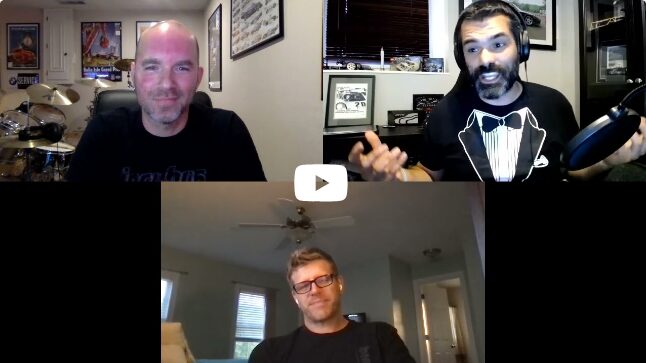
All of our BEHIND THE SCENES (BTS) Break/Fix episodes are raw and unedited, and expressly shared with the permission and consent of our guests.


Other episodes that aired this month…


This content has been brought to you in-part by sponsorship through...

The Beltsville Shell: The Porto’s Porsche Journey

There’s a special kind of thrill when two petrol heads discover each other in the wild – especially across a boardroom table. That’s exactly how the Break/Fix team met Mark Porto, a lifelong car enthusiast whose Porsche passion runs deep. What started as small talk before a meeting quickly turned into a full-blown storytelling session, revealing a legacy of racing, wrenching, and reverence for the air-cooled era.

Mark’s automotive journey began in Beltsville, Maryland, a hotbed of drag racing in the ’70s and ’80s. His father was a quarter-mile racer turned offshore powerboat motor builder, eventually settling into the world of BMWs and – finally – Porsches. The first 911 to grace their garage was a 1972 model, green and gleaming, waxed with a diaper and outfitted with Weber carbs and a free-flowing exhaust. It wasn’t just a car – it was a sensory experience. The door thunk, the crayon-like smell, the flat-six rumble. For Mark, it was love at first ignition.

Tune in everywhere you stream, download or listen!

Listen on Apple
Listen on YouTube
Listen on Spotify

Mark’s dad wasn’t just a weekend warrior – he was part of a legendary crew chronicled in the book The Beltsville Shell: You Are What You Drive by Carey Thomas. The Shell station was more than a gas stop; it was a speed shop by night, with quarter-mile stretches marked out on Route 1. The book immortalizes the camaraderie, competition, and chaos of that era, and even features Mark’s father as one of the first to run a professionally sponsored drag car. For Mark, reading it was like unlocking a time capsule of his childhood.

Spotlight

Synopsis

Break/Fix interviews Mark Porto, capturing his automotive history and passion. Mark shares his journey from discovering his love for Porsche, starting with a 1972 Porsche 911, to owning a 1988 Carrera and later a 2008 911 GT3. He reminisces about his father’s influence, who transitioned from building American muscle cars to becoming a BMW and Porsche enthusiast. Mark discusses his experiences on the track and significant moments, including a lost engine and a switch to BMWs after selling his GT3. The conversation also touches upon motorsports evolution, favorite and least favorite cars, and the state of modern automotive design and culture.

  • Stories about Mark’s Dad – and the “Beltsville shell station” book
  • His car / motorsports past, all the Porsches, etc.

  • Giving away a motor to the Gardeners!   
  • We also asked PitStop questions like: Favorite Car, Favorite motorsport Million-dollar Man, Ugliest car, thoughts on the EV revolution, etc. All very “car enthusiast” or “racing inspired questions”

Transcript

Crew Chief Brad: [00:00:00] Break Fix podcast is all about capturing the living history of people from all over the autos sphere, from wrench, turners, and racers to artists, authors, designers, and everything in between. Our goal is to inspire a new generation of Petrolhead that wonder. How did they get that job or become that person?

The road to success is paved by all of us because everyone has a story.

Crew Chief Eric: It’s always interesting when you come across a fellow Petrolhead, especially a Porsche enthusiast, while sitting across a boardroom table. Not long ago, our guest, mark Porto and I were killing time before a meeting and came to the realization that we were both car enthusiasts.

And Mark has some really interesting stories to share.

Crew Chief Brad: Finding another petrolhead in the most unlikely of places is akin to a Highlander moment, or I guess in nowadays terms, your spidey senses goes off. I’m really excited to hear all these stories and see where this is going. So welcome to Break Fix, [00:01:00] mark.

Thank you, thank you, thank you. I’m, uh, thrilled and honored to be here.

Crew Chief Eric: So I gotta start with the first question. Is it Porsche? Porsche or Porsche? Which one is it?

Mark Porto: It is, uh, it is Porsche and only Porsche and will always be Porsche. My dad, uh, drilled that into my head when I was about eight years old and I think the first time I called it a Porsche, she said, uh, we call them Porsches.

And from, from that point on, it’s been Porsche for me. And every time I hear it, it just kind of cringe.

Crew Chief Eric: That being said, you’ve teed it right up in the sense that you understand that Porsche started before the year 2000, much like Audi and some of these other German brands that are now at the front of our conversations in the Petrolhead world.

So how far back does your Porsche legacy go?

Mark Porto: So my Porsche legacy goes back to about the time when I was, uh, you know, eight or nine years old, you know, like some of the folks in in the space. I’m lucky ’cause I was born into it. You know, it was just, you know, really, really interesting, you know, to, to look back at, [00:02:00] you know, how I got indoctrinated into the petrolhead world.

And, um, ironically, you know, my dad, you know, when I was a little boy, he was building and racing quarter mile race cars, American muscle chavelles and that sort of stuff. Eventually, you know, went from being a, a car builder, um, and, and racer to a motor builder and for off offshore powerboats and for quarter mile cars.

And then he got himself out of that and then became a BMW guy. And after that he was a Porsche guy. So, you know, about the time I was eight years old was the first time that I ever, uh, had a nine 11 in my dad’s garage, and, uh, understood the quirks and the sounds and the smells of those cars, and fell in love with them ever since.

Crew Chief Eric: Nothing quite like an air cooled nine 11. So what year, let’s start with that. What type of nine 11. So

Mark Porto: the, the first nine 11 my dad owned was a 1972, uh, nine 11. Nice. And it was, uh, it was green. It was beautiful. He would, you know, wax it and wa wash it with a diaper. Being [00:03:00] a, a sports car guy and a gearhead, you know, uh, that car was outfitted with Weber carburetors before we knew it.

It had a free flowing, you know, exhaust system before we knew it, and eventually, you know, found its way into becoming a track sled. So I really understood the grunt of a nine 11, you know, a flat six air cooled motor. And as a little boy there was, there was absolutely nothing like it. I mean, I still remember the sounds of that, the door shutting and, uh, you know, and that car and the smell that, you know, that car had, and, uh, it’s the, the

Crew Chief Eric: smell of melting crayons, right.

All old German cars.

Mark Porto: Absolutely. Absolutely. And, um, but that was it for me. And I love BMWs. I like Ferraris. You know, I, I always see. You know, the new Audi r eights and oh, that’s a pretty cool car. But for me, you know, um, nine elevens are, are really, uh, where, you know, where, where it starts and ends for me.

Crew Chief Eric: So did you come up like I did and you actually had a VW in the family before there was a Porsche?

Mark Porto: I did not. Um, you know, the, the first air cooled motor, aside [00:04:00] from a lawnmower that I ever, you know, that I ever was, had experience with, was, was a, a flat six, 3.2 liter nine 11 motor. And, um, and, and that, that was, that was it.

I liked Volkswagens, a neighbor, you know, even younger, had one and I. Never, you know, forget looking at the, you know, start and end of that motor. Like, that’s it, that’s, that’s all that’s in there. And yeah, that’s it. But for me, you know, my real experience came with, uh, with the nine elevens.

Crew Chief Eric: You know, as our listeners have come to find out, I’ve hinted throughout various episodes that we were a VAG or Volkswagen Audi group family for a very long time.

We’ve had a VW in the family since the very early sixties, you know, starting with my grandparents. And the curse has continued up until this point. And much like you, we didn’t end up with a Porsche in the family until way later. And our first one was the 74 9 14. So, you know, we’re a part of the min engine crowd.

You know, the, the, the ones that are shunned, the black sheep of the Porsche world, you know, we’re not gonna talk about those 9 44 people, but you know. But, [00:05:00] uh, no, it’s cool. I mean, there’s this comradery amongst us Aircooled guys, right? Where a lot of people did get their start with bugs and Carmen Gaz and things like that, and finally evolved into nine elevens.

And what’s funny is you and I both grew up in a similar area of the DMV in kind of central Maryland, and that was a hotbed back, especially in the late seventies, early eighties for drag racing. You know, you had Coleman Brothers, which is now auto fab, you had SART Wells, which was a big Porsche place. You had the guys that were sponsoring the bug out way back when, which was held at the Old Dominion Raceway.

Mm-hmm. So there was a lot of this air cold community in the DMV, which is now. I would like to say maybe evaporated a little bit, but I think it plays into your past a little bit more too. So let’s talk about, you know, the evolution of your Porsche past and your dad’s racing heritage.

Mark Porto: I think it’s a great story.

So I grew up, you know, in Beltsville Maryland, and my dad was a drag guy and he and his friends, and I was young, so, you know, my memories and the sights and the sounds [00:06:00] and the smells of those cars, you know, they, they really just evaporated to, you know, memories. Sometimes you think, oh, you know, it couldn’t have been that cool or there couldn’t have been that many motors and that many cars around all the time.

I was on Facebook one night and, uh, there was this, uh, group, Beltsville historic, Beltsville reminiscent group, and um, they were commenting on this book called The Beltsville Show, and one of the guys at. I live in an Annapolis now that I, I’ve come to, you know, become good friends with, well, he was part of the original Beltsville crew and we’re now talking late sixties, early seventies.

And he commented to me, he goes, Hey Porto, do you know your dad is in that book? And I’m like, what? And he’s just like, your dad is in that book. So I bought a copy of a book called The Beltsville Shell, and it’s the Beltsville shell and you are What You Drive. And the book was written by a guy named Carrie Thomas.

Who I remember his name. I remember his voice. I remember him coming and going, you know, in the house. And, um, he essentially outlines, you know, the, the, him [00:07:00] growing up in Beltsville and, um, integrating himself with a group of car guys. They were Corvette guys, they were Chevelle guys, they were Ford guys. And, uh, my dad, it was a University of Maryland.

As the story goes per the book. You know, they were working at the Shell, this car comes in, it was a chavelle and had, you know, no exhaust system whatsoever. And he said, Hey, I’m looking for a guy named Carrie. I heard he can help me weld these, uh, you know, uh, headers onto this car. And the guy said, yep, I’m Carrie.

And they became really good friends and my dad was indoctrinated into this group of gearheads and he was the first one who had a professionally sponsored track dedicated car. Wow. So, um, it’s so cool. So, you know, to read through this book, you know, it’s all, you know, you start recognizing the names and, and some of the stories and, um, you know, I know there was folks that passed away that my dad, you know, was telling me about, oh, you should have seen this guy in his Corvette.

It was blue and after the accident it was all over the road. Well, they kind of detailed some of these stories in the book and, uh, you know, to read it [00:08:00] one, it re jogs your memory, but it provided such clarity to, um, you know, to some of the stories that I, I had heard from my dad, you know, over the years.

Crew Chief Eric: It’s living proof that those stoplights were a quarter mile apart on Route one as well. Right. So,

Mark Porto: so these guys, they had, you know, the Beltsville Shell was a, was a service station and, and you know, back then gas stations weren’t really where you went and pumped gas. They were service stations ’cause the cars and you did a lot more care in feeding than cars today.

So I, it was a service station by day. It was a speed shop by night. So this book, you know, outlines and, you know, you and I grew up in the area, we knew it pretty well, where they actually had, you know, marked out quarter mile, you know, stretches and they could block each side of the road and test their cars, test their performance, build them, break ’em, build them again better.

So it was, uh, it, it’s cool, but, uh, it’s been a while since I’ve lived in Beltsville. I, I moved outta the area about 20 years ago. But, um, you know, just to, to read the stories, it brought me right back to, you know, that early age in time and then when I had my license and. [00:09:00] Kind of explored how fast cars can go on the same stretches of roads, you know, doing the same thing.

So,

Crew Chief Eric: you know, you said your dad’s first Porsche was that nine 11 s, but what was your first car?

Mark Porto: So, uh, my first car, my first car was a hand-me-down from my dad. So my first car was a, uh, Volvo Turbo. Uh, ’cause it was a family, you know, grocery getter. But it was a lot of fun and, um, you know, it treated me well.

The first car that I picked out and bought on my own Paul’s was a Volkswagen, GTI VR six Oh I, and, and my son, I have a, I have a 16-year-old son. He’s so much like us, it’s not even funny. And he is, uh, you know, he’s got his eye on the Japanese car. But every time I, we see one of, you know, the GTIs, whether it is an R 32 or type R, I’m like, that’s.

You should drive one of these. You should. You should. You know, you should try this. He’s like, I don’t know about a hatchback. I’m like, you have no idea. You know how much fun these cars are? That car did everything it should have done and then some, [00:10:00] it was reliable, it was fast. When I was bored with it, there were all sorts of mods, you know, it would float around the corners at the track.

I mean, it was, it was an unbelievable, unbelievable experience. And I kept that car clean. I never crashed it and uh, it treated me very, very, very well.

Crew Chief Eric: So I’m gonna guess that was a Mark three, or, yeah, it was a

Mark Porto: 1998 VW driver’s editions, VR six GTIs. Those things

Crew Chief Eric: are still sought after to this day. I mean, there’s a huge cult following for the third gen GTIs.

Yeah. So that’s really cool. At the same time you had that, my dad picked up a first Gen Rado VR six. So I was told around in that, in the nineties. Three SLC, you know, five speed, the whole nine yards. And you know what’s funny, looking back, you know, same power plane as the GTI, although the rado was built on the mark two chassis.

Yep. Uh, we shared some parts, you know, there’s some similarities with the mark threes, back then, you’re like 172 horsepower in a front wheel drive. It was like, man, even a drop of rain, or you hit the paint stripe the wrong way and you do a one wheel [00:11:00] peel, nowadays you’re like 172 horsepower. What is that?

That’s nothing.

Mark Porto: Yeah. The, the balance of, of weight in those cars too. Oh yeah. Is, you know, was, was so precision and, and it was such a, it was such a fun car to drive. Uh, you know, it was my Porsche, but I didn’t have a Porsche budget at the time. But it did, it did everything. And, um, I still wish I had that car today.

And like you said, there’s a cult following and I’m one of those guys every time I see them on the road, you know, I just, I’m, I mean, I’m amazed and you see them in really good condition. Yeah. People take care of those cars, which tells you, you know, it tells you something about the, uh, the importance of those cars in the overall big scheme of.

Crew Chief Eric: So color

Mark Porto: black on black on black.

Crew Chief Eric: All right. You couldn’t get that with the corrado. That was so annoying. We ended up with a red one ’cause my dad was dead set on a black leather interior, which only came in like two cars. If you wanted a black car, you got tan. I don’t understand the. These combinations, but you’re very fortunate.

So I happened to be a fourth gen guy. I, and it’s oddly enough, I went through a similar thing where, you know, I was buying a car and I was actually [00:12:00] dead set on getting a SVT focus.

Mark Porto: Yeah.

Crew Chief Eric: And my dad was like, you need to drive the new GTI, you just got, you gotta go drive it. I’m like, ah. I don’t know. It’s kind of big and bloated.

I don’t like it, you know? ’cause I was a Mark two kid, you know, I wanted a mark two really bad. And then I went and drove a VR six and I was like, all right, I’m done. We’re good. Have a nice day.

Mark Porto: I like your dad.

Crew Chief Eric: Okay, so GTI, your dad’s got the nine 11 and so there’s obviously an evolution there. So what came next and what got you to the track?

Mark Porto: So that car got me on the track. So that car was the car that I would, you know, bring to, you know, uh, Friday at the track events and high performance driving clinics at Summit Point. Um, and those places. And that was the first car that I really. Piloted around a racetrack, um, with an instructor and had had an absolute blast.

Crew Chief Eric: Hear that listener’s Fun wheel drive. He started with that.

Mark Porto: Yeah, I mean, it, it really was. And it, I mean, you know, just a, a little plug for that industry. It really taught me what that car was capable of doing. Um, it taught me what I was [00:13:00] doing right and wrong in that car when I was driving it. I was a much better driver on the beltway and every exit ramp.

Um, you know, because of that experience. And when I started graduating to, um, you know, other cars that had more power that were more finicky, I don’t know that I would’ve kept those cars on the road as long as I did had it not been for that, you know, those track day, um, experiences. Well, I had that GTI and, you know, I always wanted, I always wanted a, a nine 11.

So my first nine 11 was a beautiful car. It was in a 1988. Carrera factory, correct. Carrera whale tail, foc wheels. It was an absolutely, you know, gorgeous, you know, silver, they call it Granite Green Metallic. It was a phenomenal car. It was unmolested. I bought it from a fellow named Tim Holt in Pennsylvania.

Tim Holt was the driver for the inner sports cars. So, um, he had a, you know, a very boutiquey dealership if you, if you can call it that. He had a garage full of beautiful nine elevens. Most of them were race cars. Um, but some of the, the, you know, regular nine elevens were just [00:14:00] cherry. That was the car that I saw and I had to have, damn it, that car became mine.

So a lot of fun. It’s, the door is closed. It sounded just like my dad’s. It had that burning crayon smell just like the rest of. It was a ton of fun and that car was even funer to start Moding when I felt that I was ready to kind of step it up and move that car in in different directions. You know, it had bilstein coil overs all the way around, so it had a European stance.

It didn’t have that stance look like you see a car shows it had a European ride height. Stance. Um, very, very, I mean, you could

Crew Chief Eric: still see a gap between the tire and the fender. Yeah, I get

Mark Porto: it. Exactly. Exactly. You know, but you gotta be careful what tires you put on because that gap is very important. After that came the, uh, you know, stainless steel fab speed headers on back, that unleashed a lot of power in that car.

That car also, um, you know, quickly got a fab speed, cold air intake in it and never chipped that car. The other thing that eventually [00:15:00] we wound up doing was doing a twin plug conversion on that car. Oh wow. Nice. Two, two spark plugs per cylinder, then fuel rails and fuel pumps and all of the, all the other stuff.

And it was a reliable, this can be, that car never broke down on me. It’s always treated me well. I never burned through, um, you know, parts aside from. Tires, because I was going through those, you know, as fast as we go through pancakes. Oh man. It was just, it was just a, a ton of fun to drive and it, it, it, you know, it made a lot of noise and, um, and, and made me, you know, made me really happy.

And that car was also a monster on the track, you know, in my opinion, limitless power. And it’s just very, very predictable, um, to drive still you as a handful to drive. But that turned into, you know, my track baby.

Crew Chief Eric: Yeah. And there’s something to be said about that, that, that a lot of people don’t realize.

There’s a, there’s an allure and there’s a mystique around the older Porsches. Mm-hmm. But they are a handful to drive. They take a lot of awareness and a lot of concentration and a lot of patience in some respects. The new Porsches, [00:16:00] anybody can get ’em in go fast. And I’m not trying to offend anybody that’s listening, but it’s true.

There’s so many more computers and gadgets and gizmos and things keeping that, let’s call it bad design, under control because of the pendulum effect that it has. Just, it’s a front wheel drive with five reverse gears. Let’s be serious. But there’s an art to driving those cars. Fast and driving them well.

And when you do master it, it’s a lot of fun and you get in something else and you’re like, it’s just not quite the same, but it prepares you for some really interesting situations on and off track, for sure.

Mark Porto: Oh yeah.

Crew Chief Eric: There was a story you mentioned during our conference room session about a motor that mysteriously disappeared.

I believe this was for your Carrera. Do you want to unpack that one for

Mark Porto: us? So that’s, uh, oh God. Thank you for reminding me. Um, so as I mentioned, the Carrera had a lot of work done to it, and uh, when you start putting that kind of work into those motors, you start to measure the life of those motors and hours, not miles.

You know, I knew that there was gonna be a need for, you know, a new motor. [00:17:00] So I had, you know, Peter Dowes in, uh, Dowes Motor Sports build a 3.2 liter motor, not a dedicated track motor, but a performance motor that would go in a street car, um, that was still, um, drivable. That motor wound up in my dad’s garage, wrapped in plastic on a pallet.

Because he had more space than I did. You know, my dad, uh, eventually died of cancer, but as he started to get sicker and sicker with cancer, um, things that were important to him, he felt good about giving them away. So a lot of tools, you know, went to the guys that, you know, maintained his, uh, his home in his yard and other things like that.

And at some point, one of these guys said, Hey, you know, sir, what are you, what are you gonna do with that motor? He said, I, I don’t even know what that motor is. He said, I think it’s broken. He’s like, if you wanna take it apart and tinker with it, you’re more than welcome to it. And oh, man, next thing you know, they must have come in, you know, two of them, and lift it up the pallet and put it in the back of the truck.

And, um, we were there and I think it was like Christmas Eve or something like [00:18:00] that. I was in the garage and I came back, I said, dad, w you know, where’d you put the motor? You know, what happened to that motor? He goes, oh, that old motor, I don’t even know what, what car that was from. He said, I think that was broken.

I gave it to the landscapers. That was the last I ever saw of that motor and the last we ever discussed of it.

Crew Chief Eric: It took you a minute to get your job off the floor though. Yeah, I, uh,

Mark Porto: I, and you know, my fault shouldn’t have been there, you know, and um, but

Crew Chief Eric: everybody has one of those soul crushing car moments where you’re just like, did that just happen?

Whether it’s like the new motor you built just blew up or something like this occurs, or just, you know, anything could happen. But it’s just like there, everybody’s got a story like that. A moment like that.

Mark Porto: It was, it was still wrapped in plastic with my name on it. It was still wrapped in plastic. I didn’t even really open it and smell it.

I’m thrilled. My dad had a huge heart and, you know, thought he was making somebody happy. And I hope, I hope, I hope that motor wound, its found its way into, you know, something super cool. And, um,

Crew Chief Eric: yeah, [00:19:00] because it would be really hard to put it in anything. It’s a flat six. It doesn’t fit a lot of cars. No,

Mark Porto: I, I, so I said either, you know, what were they building an airplane?

Like what are they doing with that motor? And uh, I have no idea. But that was the end of it. That was the end of

Crew Chief Eric: it. So let’s talk a little bit more about Porsche’s and so obviously you joined the Porsche Club. I think we’re in the same region as a matter of fact, which is another common ground we have here.

I’ve, I’ve literally been in PCAI think since I was a little kid, so, you know, it goes back as far as I can’t remember. But, but with that being said, so where did you evolve to from that early Carrera? Nine 11.

Mark Porto: So after that Carrera, so I wound up selling that car. Um, you know, it was, uh, one of those things where, you know, somebody wanted to buy that car and I felt they were the right owner for that car and they knew what they were getting.

They understood everything that was there. And, um, they, they hit that car with a paint meter and they said, it’s never been painted. I said, no, it’s all original. You know, the paint’s all original and the guy wanted it. They wound up buying that car. My next, uh, nine [00:20:00] 11 was a, uh, 2008 nine 11, um, GT three. Oh wow.

So again, triple black, black on, black on black. And, um, you know, that was, uh, that was kind of a dream come true for me. ’cause I, I, you know, watching the IMSA races and, and, and watching what GT threes do on, you know, on the circuits, you know, it’s just, just amazing to me. And I, I always wanted to be responsible for something that made that kind of sound.

The stars aligned and I wound up getting my hands on a, uh, you know, a black on, black on black, you know, nine 11 GT three. And it was, um, oh my God. It was a riot to, uh, it was a riot to, to drive and own and, um. A different Porsche experience. It was, um, it was hard to drive. You had it sat so low. You know, I went through three chin spoilers on that car.

Never ripped them off, but, you know, you scuff ’em and you’re like, okay. They’re like, uh, pencil erasers, you know, they wear down so quickly. So I would go through chin spoilers on that car. Brake pads were, you know, were, uh, were a lot of fun. Um, those big [00:21:00] ventilated discs were kind of like cheese graters and they would just take ’em down and, um, but the car was a blast.

I mean, the car was an absolute blast. I, um, did not do anything to that car. It didn’t mod that car at all. It just ’cause it didn’t need it. It had such an even distribution of power and it, it was quick and, um, you know, quick from start to stop and it stopped like a million bucks. And if you had a long road and, um, and were brave and you put the loud pedal down and let it eat, um, that car would, would, would scare you with how quickly, you know, the speedometer started to, um, point down and, uh, it was, it was amazing.

It was amazing to own.

Crew Chief Eric: So that you went from air cold nine 11 to water cold nine 11, that’s a whole giant jump. No, nine 60 fours, no nine 90 threes in between. Nothing straight to the 9, 9

Mark Porto: 6 platform. You know, my, my dream car is a 9 9 3, you know, and I’m not finished yet, you know, so when it’s time for another one, I would absolutely kill for a 9, 9 3 Carrera, you know, a Carrera or a, [00:22:00] uh, 9 6 4 Turbo.

There’s something about the lines of a 9 6 4 turbo there. I think it’s just one of the most beautiful cars ever built. And whether you see one of those on Instagram or you see one in real life, I mean, they just seem to get better and better and better with age. And I feel that way about the nine, nine threes as well.

But, um, you know, those are the, uh, those are the last of the last air cools, you know, one day, one day I hope. Um, you know, and get my hands on one of those as well.

Crew Chief Eric: And it’s funny you mention that ’cause just the other week I posted on Instagram, a friend of mine out in Washington State happened to pick up all original 9 9 3 garage.

Kept super low mileage in that like merlott color. They came out when they introduced him Beautiful car. You know, he’s a Corvette guy. He is that all the others cars. And he goes. That has been my unicorn, like basically a first run 9, 9 3. And I was like, man, you made it. You crossed that finish line.

Congratulations. And then it was like, how do you like it? He’s like, I, I love, it’s, you know, it’s the best thing ever. And I’m like, okay. [00:23:00] Now I will say, you know, I don’t know that I could own a 9 93 ’cause the prices are going up thanks to, and same with the nine 60 fours thanks to Singer. Right? They’re taking all those cars and turning ’em into those resto mods and all that kind of stuff.

And, and some of the other companies out there doing that sort of stuff. But I did get the opportunity to ride in a 9 93 twin turbo. Wow. And for me, that was like, it was right up there with like the F 40 and some of these other cars where it’s like, if I ever get a chance to ride in one of those, and I did.

And it was, it was mind blowingly fast. And what’s funny is, mm-hmm. It came from this desire from when I was a kid because my uncle owned a nine 30 turbo. And so I got a, a chance to ride in that with all the giant turbo lag and kicking you in the chest and everything that goes with that. And it just left such an impression that it was like, if I ever get a chance to, you know, ride in the biggest, baddest nine 11 turbo out there, I want to get the chance to do it.

And that was absolutely phenomenal.

Mark Porto: So it’s funny you mentioned your uncle’s nine 30, so I too have an uncle with a nine 30 that’s been in the family for a long time. And um, I remember when, you know, he was kind of [00:24:00] teetering on, you know, should I sell that car? Do you wanna buy it? And I didn’t have garage space, but I should have bought another house with the garage and a bigger garage and got my hands on that car.

That too was the first turbocharge Porsche that I had ever been in still to this day. You know, that’s another one that I would love to get my hands on. But, you know, that was a, that was an amazing memory. And, um, you know, I, I would, I would kill to get my hands on that car. I don’t think it’ll ever happen.

But in the prices of those are.

Crew Chief Eric: Oh, they’re out of this world. Out of this world. And you know what’s even worse is if you have a slant nose, right? A real one. My uncles was converted. I won’t say why it was converted, but it was converted, but it also gave way to the fact of why our nine 14 was converted to a slant nose.

So it’s all like, it’s all related in one way or another. I mean, uh, so yeah, I mean there’s some really cool stuff with the older nine elevens. Like I said, when they made the switch to water. Cool. I think your GT three is one of those that everybody goes, yeah, that’s the car. I wanna, I don’t wanna say one of the last good ones, but it’s one of the [00:25:00] last driver cars, right?

Speaks that farik Newgen, right? That driving pleasure that we got from the Volkswagens and some of the older BMWs, like the e thirties and, and things like that, where now they’re space shuttles, they’re, you know, they’ve got all these computers and all this stuff and, and I notice in the Porsche world, people are really gravitating towards the Cayman, right?

Mm-hmm. Not the boxer so much, but the Cayman, which I secretly laugh and say, ha ha ha, they finally got the nine 14. Right? Ah, I gotcha. So there’s something to be said about all that. It’s all about the being a driver’s car and, and that, so what was the experience like at the track with the GT three compared to, you know, the other cars you had been with?

Mark Porto: Well, I mean, so that’s where that car really came to life. You know, that car felt at home on the track or any high speed, you know, opportunities as it did anywhere else. It actually felt more at home. You know, when you had that car at performance speed, again, it was super, super balanced. Just amazing, you know, distribution of weight and power.

You had to always be. One step ahead of where [00:26:00] you wanted to be versus where you were. ’cause you would wind up in, in a, in a bad place. The gearbox was so chunky and beefy, it forced you to think about, you know, every shift. And, and, and the clutch was so heavy. And yeah, you, you know, you became very, very autonomous over time.

But that was a car that you had to drive and you had to think about, it didn’t have the top end as a, you know, a zero one Corvette or, you know, some of the, you know, big American, you know, cars that would be on the track to, but in the turns and the twisties that car was, was butter. I mean, it was, it was unbelievable and, uh, predictable.

You could hammer a couple curbs here and there and that car would pop up and plant itself back down and you know, you never really had to get off the power. It just kind of, it took care of you. Just an absolute riot to drive horrible in beltway traffic. Horrible in beltway traffic.

Crew Chief Eric: Well, what is good in beltway traffic?

Mark Porto: I don’t, a helicopter. I don’t know. I [00:27:00] would, uh, on the, on the rare occasion where I’d drive that car to work or anywhere, you know, and I’d get stuck in, you know, bumper to bumper traffic. One you watch the temperature gauge start, you know, and you’re like, I thought there was, I thought there was water in this car, but, um, my leg would, would be so sore from the clutch.

’cause it was such a heavy clutch. And every time you, you know, engaged or disengaged the clutch, you had to think about it. ’cause you didn’t wanna be that, that guy with the stalled out nine 11 on the beltway, which never happened,

Crew Chief Eric: ever, never, ever, never,

Mark Porto: never.

Crew Chief Eric: You talked about the track a lot. So two questions for you and they kind of go hand in hand of the ones you’ve been to, your favorite.

The ones you haven’t been to your bucket list? Daytona

Mark Porto: Sports Car course is absolutely my favorite. It’s one of my favorite vacation destinations, and it is by far the, I think one of the coolest tracks to, um, to slide around.

Crew Chief Eric: So that’s the Rolex configuration, correct?

Mark Porto: Correct. Again, you know, I grew up watching IMS Acar races.

I grew up watching the 24 hours, was like the Super Bowl, you know, in my house. And, you know, and it’s been [00:28:00] slightly modified over the years, but that was the mecca, the pinnacle of motorsports. And, uh, you know, finally when I got there to, you know, witness a, a Rolex in person, it was unbelievable. But then to, to drive around the track and, and, and, you know, feel what that banking feels like to come off that banking into the infield and, you know, go from top gear almost, you know, tax.

Out to third year in the second gear and in a hard, hard, hard left turn. And then under power through the twisties again, it just, um, you, you know, you feel like Derek Bell. You feel like, you know, one of the, the racing icons who spent, you know, years moving around that track. I would love, love, love, love, love, love to, uh, me two tracks.

I would love to go around LA Mall and I would really love to go around the Nuremberg Ring. So as a gear head and watching all of the new cars get tested to see who can, you know, break the records on that. Um, you can’t help but watch a lot of Nu Nuremberg ring videos. I watch them all. I watch, you know, cup car races from the nineties, uh, because [00:29:00] hey.

It’s really cool and you get to see exactly where those guys position those cars and how they position those cars around that ring. I’ve never been there. Um, been to Germany a couple times, but I’ve never been to, to the ring. If I had a bucket list, um, and I do that, that one would be the top of the list.

Crew Chief Eric: Very cool. Get all sorts of those. The ones that surprise me are the guys that like live around here and they’re like, I wanna go to Watkins Glen. I’m like, dude, that’s like four hours. I know. Talk at least Gimme Laguna Seka or something, you know, co coda, I don’t know. Yeah, right. Yeah. No, that’s super cool.

So, mark, you mentioned imsa, and I’m a huge IMSA fan as well, and I, and I, I, I’m not shy to admit that my number one love is Rally, but we won’t talk about that because nobody likes talking about Rally. So it’s okay, we’ll find a guest eventually that wants to go there, but IMSA is my second love, right? So I grew up in the TransAm era, you know, Willie T Ribs, Hurley Haywood, this is when Hanok was running with those guys, you know, group 44 cars, all that kind of thing.

I was always rooting for the underdog, right? Mm-hmm. Having followed group B, I followed Audi into TransAm and then into imsa [00:30:00] where I found my, you know, my second home. Our listeners can’t see it, but, you know, you’re a Porsche guy, but you’re wearing some BMW wwa. So what’s going on here? Oh, you, you, an M eight, you M eight, M six guy, what’s going

Mark Porto: on?

No, no, no. Um, so my, so when I was, I was in high school, I think I was a senior in high school. Again, this is another one of those life episodes that I’ll, I’ll never forget. My dad, you know, had a, uh, had a Carrera, another Carrera, and um. I heard him in the garage and I was always, you know, I was always the guy that, you know, 11 millimeter wrench.

No, the, the other 11 millimeter wrench. So I was always running back and forth and, you know, I started hearing him calling my name, you know, mark, mark, mark, come over here. And he had his arms, you know, in the car and in, you know, Porsche contortionist fashion,

Crew Chief Eric: a hundred percent.

Mark Porto: There was an alternator that was bad in that car, but that alternator was like, you know, two weeks old in that car.

At that point he had had it. He is done. He said, I’m finished, I’m finished with nine elevens. These are the most expensive, you know, pieces of shit I’ve [00:31:00] ever owned. He said, I got, I got

Crew Chief Eric: no one that’s ever owned. A nine 11 has ever said that. Uh,

Mark Porto: and I, I, I still disagree, but, um, you know, just like that, you know, the garage was, you know, purged of, you know, specialty nine 11 tools and nine 11 service manuals.

There were other motors that were, you know, Grenada that were, you know, that were, um, you know, track motors that they, one by one by one, they all went out. And into the garage, you know, pulled a 1988 BMWM three.

Crew Chief Eric: Oh wow. Uh,

Mark Porto: so an E 30 M three.

Crew Chief Eric: Now your dad had good taste. That’s all I can say. So

Mark Porto: my, my dad, I, I mean, I, I, I, I was lucky growing up, you know, underneath his roof and, um, having the luxury of driving his cars.

’cause he, you know, he knew how to pick ’em and he knew how to take care of ’em. And he understood what they were, what they were capable of. But on top of everything else, he was more than willing to share them as long as they were there and they were. Clean and, um, I was respectful. He would allow me to [00:32:00] drive them and I could tell you stories of things that I did with those cars too.

It was absolutely nuts. But four cylinder water cooled, you know, front engine BMWM three, it didn’t have the grunt of a nine 11. It didn’t make the, the same sounds as a nine 11

Crew Chief Eric: GTI would beat it off the line. So, oh yeah,

Mark Porto: I mean, and it, it was anything but fast. But that car was balanced. That started a wave of m threes.

So back up when my dad was building, you know, Chavelle motors and that sort of stuff, he also had two BMW 2002. Nice. So, um, so, you know, he was always, he, he, he enjoyed, you know, German cars. Even back then when, you know, American muscle was his thing. He kind of, I guess decided, you know, I’m going back to my roots and, you know, there was A-B-M-W-M three in the garage and we had a good time with that car, you know, that was his baby.

And, um, then as BMW would release new models of the M three, he would grab them. Um, as I mentioned, my [00:33:00] dad, you know, got sick and passed away, but I was driving my nine 11 to a meeting and it was very, very rare that I did that. I was one exit away from the guy that I bought the car from. My dad called me and he said, Hey, you know, do you know anybody that wants any of these cars?

I can’t, I can’t drive ’em. And they’re all stick. And I said, you know what, what do, what do you mean? He goes, I, he said, they’re not doing anybody any good. He said, they’re all, you know, they’re all here. If you know anybody that wants ’em, any of your friends that are gonna hang on ’em, have ’em give me a call.

I gotta figure something out. Tears in my eyes. Hung up the phone five minutes later. Um, the guy that I bought my GT three from called and he said, Hey. He’s like, you know, it’s, it’s Omar. I said, I know exactly. I recognize the number. And he said, you don’t still have that car. I said, I do. He goes, what did you do to it?

And I said, I’ve done brakes. I’ve done tires, I’ve done oil, and that’s it. He’s like, how many miles are on that car? And I said, I three th I think I put 3000 miles on that car. He said, you’re not interested in selling? And I said, [00:34:00] uh, no. And then I kind of thought about it and I’m like, I don’t know. I’m like.

Let me go to this meeting and drop by the shop, and you, you tell me what, what, what we’re, what we’re dealing with. And, um, he had a buyer for the car. They offered me as much money as I paid for it. So I never lost a nickel. I had a lot of fun with it. The next thing was an Uber ride back to my dad’s garage.

My dad’s house. He said, what are you doing here? I said, I, I think I’m here to pick up A BMW. Which one, which one do you want me to buy? And he’s like, huh? And I said, yeah. I mean, I said, my sold my nine 11 today. Now I have space in the garage. Which one do you want me to buy? I wound up driving home his BMWE 46.

Which was the 12th BMW imported into the United States. So he was on the wait list for that car two years in advance. So that was a very clean, very, very low mile. Um, you know, BMW and, and I took his hat and, uh, along with the BMW and, um, I don’t know, they just, you know, they’re special to [00:35:00] me ’cause they were special to him, not a nine 11, but they’re special to me ’cause they were special to him.

So, and that’s, that’s kind of where that came from.

Crew Chief Eric: So I gotta, I gotta pull a couple threads on this. First of all, mad props to your dad for going BMW and not 9 44. I think he dodged a bullet there. Again, no offense to the 9 44 people, but you know what I’m talking about. Okay. Yeah. Mechanics made a living on those cars.

Yep. Second you mentioned Omar, that’s Omar from Intersport, correct?

Mark Porto: That’s absolutely correct.

Crew Chief Eric: And for any of those of you that are listening in the DMV, we all travel in very small circles here in the Potomac region of PCA. So, you know, everybody knows who Omar is. So hats, hats off to him if he’s listening to this episode.

So, very cool.

Mark Porto: I bought a few Porsches from Omar. I can’t speak highly enough about the operation he runs and the care that he, uh, takes of the cars and his, um, his ability to find cars that are very, very clean, very, very special, very, very, um, you know, I mean, they’re doing a, they’re doing the, the, the mother of all PPIs on those [00:36:00] cars.

So when you’re dealing with him and any, any of his inventory, um, you know, you know, you’re getting a very, very clean, very strong example of what it is you’re buying. And he’s, he’s a lot of fun and he is easy to work with. He’s got some phenomenal mechanics under, under his roof as well.

Crew Chief Eric: So now what’s in the stable BMW or Porsche?

Mark Porto: I have a fishing.

Crew Chief Eric: So just like owning A BMW or an E 36 at least. But anyway, moving on.

Mark Porto: Well, so I have, I have space in my garage right now, so, you know, I, I got rid of the, the E 46. It was not the car for me. It was a lot of computers and a lot of weird things in that car. So, um, it was fun. It was a quick car.

It did not, was it

Crew Chief Eric: the SMG or was it the manual?

Mark Porto: No, it was a manual. It was an manual. So, um, that’s all I’m

Crew Chief Eric: gonna say. It’s good.

Mark Porto: Yeah, so, so it was not an SMG car. The E 30 is still in the family. Nice. So, um, that will probably be the next one that, you know, I bring here. And, um, it’s been, you know, the car is very, very [00:37:00] clean.

It’s been sitting for a little while, so, you know, garages and, and cars that sit in rubber are a terrible combination. So it’s gonna require some, you know, some TLC and some elbow grease. That’s really it. I’m, I’m, I’m, I’m without a cool car right now or a fun car right now, but, uh, you know, soon. Come, soon come.

I’m not sure. I’m not sure which direction I’m, I’m gonna go. Which,

Crew Chief Eric: which leads into a great question ’cause I gotta bring it up. Since you, you, you’re living in both camps. What do you think of the new BMWs?

Mark Porto: Uh, man, it’s funny. I saw one on the road today and the guy made a turn and let it eat and it made a great, it made a whole hell of a lot of sound and it looked like a lot of fun.

It was a new brand new M four. I think they’re really, really cool looking cars. Um, they’re so. Computerized and there’s so much stuff and gizmos and gadgets in them. They’re not as raw as the types of cars that, you know, excite me.

Crew Chief Eric: So you’re okay with that front end? Are you the one person that I’ve talked to That’s okay with that snout?

Mark Porto: No. I, I, you know, the, they haven’t been my [00:38:00] thing, but, um, you know, when you see a car and a car shoots down the road and you’re like, for the first time, you’re like, that wasn’t. You know, that caught my attention. That wasn’t that bad. I, I literally had that experience today with a triple black, uh, you know, brand new BMWM four.

And the guy, you know, was, was slow to make the turn, but once he had, you know, all four wheels pointed in the same direction, um, he got on it and it did make a hell of a lot of noise and it disappeared under it pretty fricking fast. I, I, I, oh, absolutely.

Crew Chief Eric: I was impressed

Mark Porto: by how quickly that car, um, how quickly that car, um, you know, vanished.

But I don’t know. They’re, they’re, they’re, they’re okay. There are too many of them. There are too many of ’em. One of the gripes I have with all these cool cars today is you see so many of ’em, you know, m fours, m fives, m sixes, you know, they’re, they’re, they’re everywhere. A MG Mercedes, everywhere you look, they’re awesome.

They’re super special, they’re very expensive. But there’s just so many of ’em. I, I can’t believe how many, you know, cars these manufacturers are pumping out, um, these days. [00:39:00] You know, and I remember when an M three sighting was a rarity, you know, when a nine 11 sighting was a rarity when a nine 14 sighting, well, that’s still pretty much a rarity now, but you know, you, you, you just didn’t see them and encounter them as often as, um, you know, you do with all this new age space, age stuff.

Yeah. You know?

Crew Chief Eric: Yeah. They’ve become more available. But I also look at it from the other perspective. A lot of those specialty cars. We’re grounded and born out of motorsport, and now they’re born out of status. So it’s like, I need to have an M four and they’ll take, you know, the factory will take an M four or a private tier.

I’ll take an M four and go racing with it. But it’s not like the e thirties or the one 90 s or the early nine elevens and all the other, you know, specialty cars. And it’s like, let’s call it a, let’s call a spade a spade. We took a shit box and we turned it into a race car and we went to go compete against the big boys, right?

We were the underdog with, you know, the evolution. Let’s, let’s look at the E 30. It’s an evolution of the 2002 platform, right? Mm-hmm. And then they went, oh, we gotta put flares on it. ’cause we wanna put big more meat under [00:40:00] there. You know, we want to compete with Audi, with the Quattro, with the big flares and all this kind of stuff.

And it was, it was kind of a sign of the times, right? But now I feel like we flipped it on its nose. And to your point, there’s a SLS in everybody’s driveway. Mm-hmm. I mean, that’s an exaggeration. Mm-hmm. But it’s not like, oh my God, like the goal wing, right? Like the, like the old ones where you’re like, that’s something really cool.

It’s really rare, you know?

Mark Porto: You know, I second that. I mean, I really like, um, I really get into the in races and go in in person because, you know, there’s so, so much of a similarity of what you see on the track, um, and how it translates to what they eventually build for the road. Um, whether it’s a Ford Eco Boost motor that, you know, they’re running in, you know, a Daytona prototype car.

Well now Ford Eco Boost Motors are all over the place, um, on production cars and a lot of that research and development test and engineering was conducted on a track. Oh yeah. Um, and finds its way into the cool stuff, you know, that’s. That’s in the dealerships and on the lots these days. So that’s what I think is amazing about IMSA racing, especially [00:41:00] GT Daytona and the, you know, GT LA Mile class where the cars resemble what you see on the, on the streets, or if you’re lucky enough in your driveway.

Crew Chief Eric: Since we’re back on that, what do you think about the current changes to IMSA with the classing, the potential merger with WEC? The lack of LMP one cars, which is like, you know, for us IMSA guys, it’s like Formula One. That’s where the technology trickles down from is LMP, right? So what are your thoughts on that?

Mark Porto: Well, you know, I, hmm. So you, you guys like us, go back a long way. And I remember, you know, going to Daytona and there were privateers, you know, there were people who had, they didn’t have these 18 wheelers with, you know, multiple different cars and chassis and motors. They were, they were, you know, family oriented people who loved motorsport.

And, um, the diversity of the field, the diversity of the sounds in those cars was what was amazing to me. You know, from, you know, Mazdas to Porsches to, you know, BMWs to Audis, like there was everything. And, um, it’s [00:42:00] gotten to be such a high dollar, high, um, you know, cost of entry series. I wish there was a way that they could e devolve back into, you know, the pure roots of that, that type of racing.

And, um, yeah, of course you can go to other venues and watch other certain, you know, other. You know, classes of racing that still have, you know, historic cars. But when you get to that scale, to that, that level with those drivers, you know, I’d love to see it, you know, kind of devolve back into, you know, what it used to be

Crew Chief Eric: to that exact point.

I’ve heard many people say that about nascar. It’s like, let’s bring it back to the old days of stock car where, yeah, I mean, let, let’s be, let’s be real. How many rear wheel drive Camry v eights have you ever seen on the road? They don’t exist. They’re all two frames with, you know, it’s almost like an RC car.

Put whatever plastic body you want on top of, you know, the underpinnings and, and away you go. So I would love to see a stock challenger out there, or a true Camaro or a Mustang or whatever it is, and have them go head to head. So [00:43:00] I agree. I think mo more and more disciplines are that way. And you know, of the big ones, like F1 is not like the air in days.

Alan Pro stays when I was a kid, you know, watching that. I mean, formula One today, it’s night and day different, you know? Yeah.

Mark Porto: Yeah. No, I, I mean, it absolutely is. Those cars are amazing. The performance they get outta those cars, the fact that they can stick those cars to the ground, um, you know, with all of that power, you know, and, and run those cars at those speeds on those tight circuits without, you know, a, a, a yard sale of parts after a a a session is just, just amazing to me.

But again, that’s not, you know, that’s not an every man’s, you know, everyday man’s, you know, um, endeavor anymore. At one point it kind of used to be

Crew Chief Eric: Well, and, and, and to that point, let’s, let’s use stock car, or let’s use NASCAR as an example. I just recently, you know, read an article came across my desk where they were talking about how, you know, we already know they’ve, they’ve gone away from carburetors, right?

Mm-hmm. They’re,

Mark Porto: they’re,

Crew Chief Eric: they’ve gone fuel injected. Mm-hmm. Now they’re talking about doing away with the four speed [00:44:00] manual and going to a five speed sequential transaxle. Right? A totally different drive, train configuration. I mean, they’re coming into, oh, I don’t know, the 1980s now, which is great. But, but the point is.

It’s where they would go to figure out how stuff would last It’s, it was an endurance thing or longevity thing. It’s like that gearbox is junk. We’re gonna go back and redesign it. Why would we put that in the streetcar if it breaks all the time? Stuff like that. And so those really fancy setups, and even for Porsche, the PKS and all that stuff is watered down from GT racing and all that kind of stuff.

So it does eventually find its way in the mainstream, but it’s not the same as in the old days where they took a tempest and built a GTO and then went to the track,

Mark Porto: you know? Yeah. One of the things on my bucket list that I haven’t done yet is to go to the historic 24 or one of the historic, the HSR series.

Because those are all car guys that have acquired those cars or rebuilt those cars. Yeah. You know, they’re running them and they’re running ’em [00:45:00] at speed and it’s not an exhibition lap, you know, but, um, they’re not banging into each other for all the right reasons. You know, when I look at my calendar with family and work and everything else and I’m like, all right, you know, Daytona weekend, or should I go, you know, to an HSR event, historic 24?

Kind of to answer your question, I find myself getting more excited about an HSR, you know, weekend at the track just to see and listen to those cars. ’cause they’re very, very different than, oh yeah, what’s going on today? I mean, the, the difference in decibels spending 24 hours at the track or wherever with today’s cars versus, you know, the cars of yesterday.

Absolutely night and day. I mean, you know, when I’d go Daytona with my dad for days, your ears would ring from the sounds of the RX sevens. I mean, those cars would, would go by. It was absolutely deafening Ford Mustangs and the Camaros and the Corvettes. I mean, you would feel those cars in your chest. You could feel the cars in your chest until they got rid of the Corvette Daytona prototypes.

And the, um, [00:46:00] you know, the last version of the, uh, what is it? Uh, C seven C seven, the C seven C seven, but I mean, just the thunderous, you know, voice of that car. I mean, they’re playing the American anthem as they go by. Oh, a hundred percent every lap. And. Now, you know, there’s so much quieter, everything’s turbocharged and, um, it’s so much quieter and you can literally hear the wind going over those cars.

If you listen carefully, well just

Crew Chief Eric: wait till they’re all EVs. You won’t hear anything.

Mark Porto: I know. I mean, it’s, it’s so, it’s weird. So I have mixed feelings about, you know, merging and blending all these things. Yeah, I mean, you’re gonna see the best of the best drivers and the, the highest caliber teams, which is really, really cool to see the way those guys and girls do that, you’re getting to, you know, you’re getting to the stratosphere of, uh, of spend and cost of entry is just prohibitive from anybody who isn’t the owner and founder of WeatherTech.

I mean, it’s very, very, very tough to get into those, into that series.

Crew Chief Eric: Yeah, and to your point about the historics, I think the only exception to that rule is Goodwood. If you’ve ever watched a Goodwood race, those guys. [00:47:00] Send it. And then some, they do not care that they’re out there in a $50 million, one of one Ferrari.

I mean, they’re in it to win it. It’s crazy.

Mark Porto: Yeah. I see them bouncing off the hail ba uh, hay bales and all that other stuff. But, uh, festival of Speed, I mean, they’re bringing it.

Crew Chief Eric: I mean, you could sit and look at a car, you could drive it. It’s what it was built for, right? Yeah. Yeah. So, speaking of driving cars, you said your stable’s empty.

You’re looking at, you know, you’re looking at maybe something new. Let’s talk about what’s on your list. Let me lobby you an easy one, in your opinion. Sexiest car of all time.

Mark Porto: 9 64 Turbo would be the sexiest car of all time for me. It’s 9 64 Turbo, wildly sexy to me. I’ve always had an eye for Ferrari. Uh, F four 30 C two.

I’ve never owned a Ferrari. My, you know, my dad’s never owned a Ferrari. Um, you know, I don’t know that I’ll ever, you know, step into the Ferrari, you know, category. But, um, there’s something about four thirties. I just have always excited me, thought we super cool. So either a 9 64 turbo, preferably [00:48:00] black. Or silver or a, uh, Corone Rosa Ferrari.

Crew Chief Eric: Remember I said your dad was a smart man, that’s why he never owned a Ferrari, right?

Mark Porto: I know, I know. I just, uh, I hear the stories and um, you know, I hear the stories, but you know, in terms of, you know, living art, that car is one of ’em, in my opinion.

Crew Chief Eric: So sexiest. But if, you know, if you were the million dollar man, you had a million dollars to spend on a car, you’d buy anything you want.

It could be one car, it could be 12 cars, it could be 150 Crown Vix, if you want it to be. Are those same two cars on the list or is there something else just further out of reach?

Mark Porto: No, I mean, uh, I’m a simple guy, you know, and that, that, that would be for me. You know, I would, I would I perfect world somebody else’s money, or if I had extra, extra, extra money.

9 64 black or silver or a red, a red four 30 Ferrari. I think that would be, or both. Um, I just think that would be such a, you know, either or. It would be such cool cars to, uh, you know, to, to have.

Crew Chief Eric: We gotta flip that on. Its noses though. So [00:49:00] ugliest car of all time.

Mark Porto: Oh man. The ugliest car of all times. Um, that’s an easy one.

The Avanti. Have you ever seen one of those avantis that was the stude baker? Uh, yeah, I mean, it’s absolutely insane. So, you know, there is a, there is a, a, a woman who drives one of those as a daily driver around Annapolis. So I see it all the time and it just, it seems to get worse and worse and worse.

Worse. And, um, and you, you look at it, you’re like, what the, you know, what was the di designer, you know, thinking like, it’s, it’s crazy. It’s absolutely crazy. So, um, that, that one is just never gets better, never gets better. That

Crew Chief Eric: was, that was the Hail Mary for Studebaker though, right? I mean, they had some weird cars, but that one definitely took the cake as they were sunset the brand, I mean, I don’t know, it shares qualities and some lines with other cars, but I’m with you.

I have seen some though, where guys have lowered ’em and put big wheels on ’em, kind of do the whole like, you know, old Corvette style of like, you know, tasteful rest mods, but then you just get to that front end and you’re like. What happened? [00:50:00] It’s got no

Mark Porto: nose. Yeah. This particular one is, is atrocious. I mean, it has, um, silver and gold wheels Ooh, um, spokes, you know, and they must be, you know, 90 spokes per wheel.

I mean, it’s crazy. How do, how they, the poor person who cleans those? You know, I, I, you know, I look at it and it’s got curb feelers on it. Um, there are all sorts of gold, dude, daddy, you know. Oh man. Uh, accents on the car. So it really, I mean, it, it went from bad to worse with that one in a heartbeat. And I, like I said, I, I happen to see this all the time, does have nice paint, they take care of it.

It’s clean. Um, it’s somebody’s pride and joy and hats off to them, but, um, just, just, absolutely. Absolutely. So, so now I’m gonna

Crew Chief Eric: ask a really pointed question. Ugliest Porsche, in your opinion.

Mark Porto: Ugliest Porsche. In my opinion, you can say the nine 14. It’s okay, I get it. No, I, some of these new nine elevens, the new nine nine twos, I don’t love the looks of those cars.

They’re [00:51:00] gigantic. Um, yeah, I thought

Crew Chief Eric: you were gonna say like, I was expecting, and I’m sure the audience is groaning going the 9 28. Right? That’s what I was expecting you to say, but No, you, I’m surprised.

Mark Porto: Yeah. I, yeah. Nine 20 eights are atrocious. Um, they are bad. The new, the newest nine elevens. The nine, nine twos.

I get it. They’re cool cars. They’re four liter PowerPoint. It, it, I mean, they’ve got, you know, tons of power, but, uh,

Crew Chief Eric: and the motor mysteriously keeps getting closer to the driver every year. Right.

Mark Porto: When you open the, when you open the, the trunk of one of those cars, you know where the motor is. You no longer see the motor.

You see a place to put oil. You see a place to put water, and that’s really it. I think that it’s a sin, you know, I mean, the people that buy those cars that are true Porsche, people are crying out loud. You don’t even, you’re not even allowed to see the motor in that car unless it comes outta the, you know, from the bottom.

From the

Crew Chief Eric: bottom. Yeah, exactly.

Mark Porto: I’m baffled by that. Just blows me away.

Crew Chief Eric: Retro question for you. Is the 9 59 still cool or was it ever cool to begin with?

Mark Porto: I thought it was [00:52:00] super cool. You know, I thought it was a super cool car when they, when they came out with that. I mean, uh, God, we’re going back to the, you know, 88, 89 when that car was on the street.

So, or, well, not on the street, but in the magazines. I just, you know, I, I thought it was so futuristic at the time and the amount of power that it was pumping out and the fact that it was Twin Turbo and four wheel drive was kind of unheard of, you know, for a, um, I, I think, I think it’s a pretty cool car.

And, um, and I like that car because on the inside of that car, you don’t. There’s no difference whether you’re in my old nine 11 or you’re in, you know, in an extraordinarily rare 9 59. I’ve never been in, so I’ve never been in one. I’ve seen them in person a few times, but, um, I’ve never been in them, but they say they have a tremendous amount of punch and, um, they’re just pretty predictable fun cars to drive for those of ’em, those of us who are lucky enough to get in ’em, you know,

Crew Chief Eric: I won’t nerd out on the all wheel drive system, but, we’ll, we’ll sidebar that, but I’m just gonna say Audi and we’ll move on from that.

But, uh, [00:53:00] but I, I do wanna ask another kind of question that goes with that. So, if you were the, we, we got all the votes cast, and you’re the last one to cast your vote.

Mark Porto: Mm-hmm.

Crew Chief Eric: I’m 59 or F 40. Which one is it?

Mark Porto: F 40. Really? Ah, yeah. F 40. They’re two different animals. You know, Ferrari makes race cars and they happen to make street cars too.

So that F 40 was really the, you know, the generation of the racing, you know, heritage, you know, built into carbon fiber with a place to put a license plate. You see an F 40 in real life, they’re a lot smaller than they look in the magazine. They’re a lot lower than they, they, you know, they look in the magazine, they’re tiny, they’re essentially race cars.

There’s nothing to them. And I think that is so cool that, you know, car manufacturer will, you know, take that. Racing heritage and package it into, you know, something that is street legal, the sounds of those cars, the looks of those cars. There is nothing, there’s really nothing like an F 40 in, in my opinion.

But, um, [00:54:00] yeah, I’d go F 40

Crew Chief Eric: I, I’m okay, I’m okay with that answer. That was that,

Mark Porto: and that was the first car that I bought in four is a seven too.

Crew Chief Eric: At one of these years, we’re gonna stop poking fun at Corvette and, and it’s not because we dislike them. I have, I’ve had the very fortunate luxury of instructing in many a car as a coach to include Cortes, and I’m a huge fan of the C sixes and the C sevens and things like that, especially the C seven.

I think they finally had gotten it right then. That’s just my opinion, but whatever. What do you think of the new one? What do you, what do you think about the mid engine Corvette?

Mark Porto: So, um, I’m with you. I thought the C sevens, uh, you know, not a car that I would ever own or buy, or a car that I ever thought I would like.

I, I think the C sevens were amazing. Great sound, amazing power. They certainly got it right. The new ones, you know, I don’t know. I mean, you know, you see them coming at you on the road and I am, they catch my attention, they catch my eye. So I think they’re really cool looking. I think they need to mature a little bit [00:55:00] and, um, and iron some, you know, some kinks and bugs out and, um, they’re gonna be pretty hot.

I think they’re gonna be pretty, pretty hot car, you know, but they’re definitely not, you know, definitely not a, a c seven Corvette in my opinion, you know? I mean, will they catch my attention? And, um, you know, I mean, shit, they’ve done an amazing job with those cars on the track. They’re certainly proving themselves on the track.

That says a lot because that technology too finds its way into. The dealership.

Crew Chief Eric: So Mark, you know, having gone through, you know, racing and, and we’ve talked a lot, you know, you do a bunch of virtual racing and whatnot. So if, if I kind of place this as a virtual question, if you could meet anyone kind of racing legend, sit down, have a beer with them, who would it be?

Mark Porto: Oh, gosh, that’s a, that’s a good question. Um, God, man, put you on the spot. It would definitely be, you know, maybe a Nick Tandy or one of the Porsche factory drivers. Patrick Long, I mean, I, I, you know, I, I I look at these, you know, these guys that are driving, you know, for [00:56:00] Porsche, because I love the cars. I’m just so envious of, you know, of them.

And, um, but to answer your question, Burg Meister, if I could drink some beer, it would be with York Burg Meister, preferably in Germany. That guy’s had an amazing racing career. He is, seems to be everywhere, still just an amazing life. The, you know, the life that all of these drivers, these professional drivers live just is amazing.

But Burg me, that would be, uh, that would be my fellow that I drink some beer with.

Crew Chief Eric: I, I think I’m with you there, man. I, I would love to meet like. The factory Audi Group B team. You know, Michelle Muon, Walter Royal Ola, you know, stick, bloom fist. Any of those guys, I’ll have a beer with any of them. It’s, but there’s one in particular, and this is why I brought up the virtual racing part, especially I racing, I happened to watch the video, I think it was last year or the year before, where they released the imsa ITU, you know, GTO Audi 90.

And they interviewed Hanok. Mm-hmm. About it. And so he does this voiceover and they show [00:57:00] him driving the real car and then some footage from I racing and all this kind of stuff. And it was one of those moments where it was like, I guess, you know, with the way we do video nowadays, compared to back in the day, I felt like, you know, I was in the room with him.

It was one of those kind of experiences and it’s like. I would have a beer with Hauk, like he seems like the coolest guy in the world. He is, got the longest resume, all the crazy stuff. He’s, he’s been fast in every car he is ever been put behind the wheel in, you know, and it goes back to his dad, you know, hauk s senior back to the Silver Arrows days.

I mean, his racing pedigree is, is absolutely incredible. So that’d be my vote if I had to pick. But, uh, yes.

Mark Porto: He’s, uh, he’s had a, a phenomenal, you know, phenomenal career and, um, and has driven many, many, many different, you know, brands of cars as well. I mean, I remember hunch stuck from his b BMW days, you know, uh, driving E 30 M threes when, uh, and uh, CSI BMWs even before that.

So, I mean, it’s just super, super cool.

Crew Chief Eric: You know, what did it for me, it wasn’t all the Audi stuff. It was in the two early two thousands when he participated in their version [00:58:00] of iroc. You remember we used to have, remember we used to have IROC here in the us? I remember

Mark Porto: that. Yeah. Yeah, yeah. Yeah.

Crew Chief Eric: Well over there they had the Beetle Cup in the uk and it was like all these famous race car drivers and he’s out there crushing it in a front wheel drive beetle.

I’m just like, you’re the man. That’s all I have to say.

Mark Porto: Ah, that’s amazing. That’s amazing. Yeah. I wish, I wish we had that. I, I, I wish we could live those days again. I mean, there was so much cool history, uh, you know, made around the racetracks, you know, for drivers, for cars, for fans, and, you know, maybe one day we’ll get, get there again.

Crew Chief Eric: Absolutely. And you know, and that’s really the premise of, of what we’re doing here at GTM, that’s why we’re talking to guys like yourself, right? Is to continue to spread that motor sports enthusiasm to remind people there’s so much of the motorsports world and the car world entangled and car culture, you know, entangled in our daily lives.

That it’s, I don’t know how we can just give up on it. There’s such great stories and memories, the freedom of driving. We talk about this throughout the show and, you know, you’re just a reminder of [00:59:00] all of that. And it’s been an absolutely fantastic experience talking with you and, you know, our listeners getting to know you a little bit better and, you know, hearing your story and all that.

Mark Porto: Uh, no, I, I, I, I appreciate it. Thank you so much, Eric. It’s been, uh, it’s been a great, you know, great conversation and thank you so much for giving me an opportunity to share a couple stories and, uh, and uh, spend some time with you.

Crew Chief Eric: Absolutely. And if you’re out there listening, maybe you’ll see Mark Trackside with us this year.

Once he picks a new car, we’ll have to borrow one of ours, I suppose, from the fleet.

Mark Porto: Exactly, exactly. Yeah. I would love to meet you guys out there and, um, at, you know, at at, at a minimum at least, you know, be there cooking hamburgers and fuel you guys up. I, I, I love a track day,

Crew Chief Brad: so

Crew Chief Eric: absolutely.

Crew Chief Brad: Thanks for stopping by, mark.

If you like what you’ve heard and want to learn more about gtm, be sure to check us out on www.gt motorsports.org. You can also find us on Instagram [01:00:00] at Grand Tour Motorsports. Also, if you want to get involved or have suggestions for future shows, you can call or text us at (202) 630-1770 or send us an email at crew chief@gtmotorsports.org.

We’d love to hear from you.

Crew Chief Eric: Hey everybody, crew Chief Eric here. We really hope you enjoyed this episode of Break Fix, and we wanted to remind you that GTM remains a no annual fees organization, and our goal is to continue to bring you quality episodes like this one at no charge. As a loyal listener, please consider subscribing to our Patreon for bonus and behind the scenes content, extra goodies and GTM swag.

For as little as $2 and 50 cents a month, you can keep our developers, writers, editors, casters, and other volunteers fed on their strict diet of fig Newton’s, gummy bears, and Monster. Consider signing up for Patreon today at www.patreon.com/gt motorsports. And remember, [01:01:00] without fans, supporters, and members like you, none of this would be possible.

Bonus Content

Mark’s own driving story started with a Volvo Turbo hand-me-down, but his first true love was a 1998 VW GTI VR6 – black on black on black. It was fast, reliable, and endlessly moddable. Track days at Summit Point revealed its hidden talents, and Mark credits those early HPDEs with shaping his driving skills and preparing him for the beasts to come.

Mark’s first 911 was a 1988 Carrera in Granite Green Metallic, bought from Tim Holt of Intersport. It was factory-correct, unmolested, and eventually transformed into a track monster. Bilstein coilovers, FabSpeed headers, cold air intake, and a twin-plug conversion turned it into a reliable, tire-shredding thrill ride. It was everything he’d dreamed of – and then some.

The Motor That Got Away

But every car story has its heartbreak. Mark had a freshly built 3.2L motor stored at his dad’s house, wrapped in plastic and ready for action. As his father’s health declined, he began giving away tools and parts. One day, the motor vanished – gifted to a landscaper who thought it was broken. Mark’s reaction? Shock, disbelief, and a hope that it found a good home… maybe even in an airplane.

After selling the Carrera to a worthy new owner, Mark leveled up to a 2008 911 GT3 – again, triple black. It was a different animal: low-slung, razor-sharp, and brutally fast. He went through chin spoilers like pencil erasers and brake pads like pancakes, but the car never needed mods. It was perfect as-is, a track weapon that demanded respect and rewarded bravery.

Despite the GT3’s prowess, Mark’s heart still beats for the air-cooled era. His dream garage includes a 993 Carrera and a 964 Turbo – cars that have aged like fine wine and skyrocketed in value thanks to resto-mod legends like Singer. He reminisces about his uncle’s 930 Turbo and the visceral thrill of turbo lag, comparing it to riding in a 993 Twin Turbo: mind-blowingly fast and unforgettable.

Legacy, Community, and the Porsche Brotherhood

Mark’s story is more than a spec sheet – it’s a tribute to family, community, and the enduring allure of Porsche. From the Beltsville Shell to PCA meetups, from GTIs to GT3s, his journey reflects the evolution of a true enthusiast. And whether it’s a slant-nose 914 or a Cayman that finally got it right, it all comes back to the joy of driving and the stories we share.


This content has been brought to you in-part by sponsorship through...

Car Masters Season 3 – Cash is King!

0

There are a very few shows anymore that can be off-the-air for a year or more and still get me revved up to dive back into a full season and binge immediately. Car Masters is definitely in my Top-5 RUSToration shows; and because of COVID I’d admittedly given up on it ever coming back and I was pleasantly surprised when it popped on my Netflix homepage with the red New Episodes banner.

Check out our other Car Masters Reviews...
Season 1Season 2Season 3Season 4Season 5Season 6
VOTE FOR YOUR FAVORITE CAR MASTERS BUILDS!

Tune in everywhere you stream, download or listen!

Listen on Apple
Listen on YouTube
Listen on Spotify

Unlike other shows of this genre, Car Masters is rare in that it’s a show that I can share my review time with my wife without much complaint. She approves of the petrol-head lifestyle but isn’t always engaged at the same nerdy level the rest of us are, especially me. I credit her willingness to watch to the cast/chemistry of the Gotham Garage team, which we’ve talked about in our two previous reviews (see also: Car Masters Season 1, Season 2, +Season 4).

Out of the gate, you could tell that the team was trying to change the formula of the show; wanting to focus on “high-end customers and custom builds” (aka “Cash Builds”); And as my wife quickly pointed out after two failed attempts, “I like the fact that they’re not covering up these bad projects; no excuses, they cut their losses and move on” – within those first couple episodes it definitely cements the fact that Gotham Garage isn’t like other teams; straightforward no-nonsense and much of that is because of owner Mark Towle and his vision of what custom cars should be.

Before imageAfter image

Falling back on “what worked” in previous seasons, the team pursued more “Upgrade and Trade” projects where creativity wouldn’t be stifled or as Mark puts it “I hate lists” – referring specifically to an El Camino #restomod project Shawn setup – where he was asked to build a car “from a catalog” rather than using his artistic talents. After an unbearable amount of scope creep; the project was turned away without too much drama, incomplete.

As the team got back into their groove modding cars and building up to their “6 figure pay day” many of the builds (see slide show below) featured repetitive choices in parts. One of them in particular my wife commented “are they going to use that cartoonish stack again?” – referring to the stacked intake + “roots blower” (supercharger) & cowl that you’d see on many #oldskool dragsters.

I have to agree with her, it’s cool for certain builds… but after seeing it 3 times, it does seem a bit too HotWheels-like.

  • Low-rider Tribute, '64 Impala
  • The Hot-Tub Time Machine, built for a unique motel venue in Joshua Tree, CA
  • The Fighter Jet / Bomber Prius

  • The Fighter Jet / Bomber Prius
  • 1940 Ford Woody "Tiki Hot Rod"
  • Delahaye clone based on '32 Ford Coupe
  • Delahaye clone based on '32 Ford Coupe
  • Mercedes LS-powered Drift Car
  • Adams Motorsports Park - where the Mercedes was tested; and I've driven this track! Woot!

A big difference from previous seasons of Car Masters was the change in focus with respect to who was conducting the narrative. Generally it would bounce between Mark and Shawn with “Office-like” asides where they explain what’s happening and what’s next with the project. In this season, Constance, Tony and Caveman were included in the monologues – and with two shops to work out of – were given creative control over their own projects; with some direction from Mark, of course!

Before imageAfter image

The quality of the builds from Gotham Garage is always top-notch; but in the 8 episode season there were 2 builds that were truly compelling. Those are the “Fire Bike”  (above) which Tony built for his uncle; and Caveman’s “Short Bus” build (below). We don’t want to spoil it for you, but they are by far the best and the stories behind them are touching.

Just before Season-3 wraps up, still frustrated by the arguments surrounding “high-end builds” Mark decides he needs to stretch his creative wings and build something truly from his own vision, “a car I’ve been designing for over 20 years” he claims. Almost stubbornly engrossed in the idea that “if you build it … they will come”; this custom build is justified with the rationale that it will really put Gotham “on the map” and people will open their wallets at auction to the tune of $250-300k.

We didn’t take issue with the principle, but more so with the execution. The design itself, as my wife put it “seems dated, and juvenile” – and as a petrol-head, I was disappointed that Mark went to the “C4 Corvette” donor list yet again. He’s used that chassis as the jumping off point for many custom builds. I didn’t mind it with the Speed Racer movie car (as seen at the Peterson Museum) or the Splittin’ Image Hotwheels car from Season-1, and others… but this particular design, which takes some cues from the Bugatti Veyron looks like a mid-engine sports car – albeit exaggerated – it should have been built on a mid-engine platform. A Porsche Boxster perhaps?

Mark specifically sought out a 1993 Corvette (C4) ZR-1, the most expensive and hard to find used C4. For something this risky, I can understand falling back on what you know and it saves time to start with a motor that makes slightly over 400hp. At the cost of $20k+ for the base car, a Boxster still has my vote. All that aside, the build quickly escalates into not just the car, but a paired Hyabusa motorcycle. Ok… Bike + Car = $250k, maybe!


The 600# Gorilla… Halfway through the season, you start to realize that the majority of Car Masters Season-3 was filmed “in the before times” – on the heals of Season-2 well before COVID brought everything to a halt. Finishing the custom C4 supercar build at the start of lockdown forced the team to hold their own virtual auction via Zoom, instead of taking the pair of vehicles to Mecum, Barrett Jackson, or some other live auction that would have been in the late-winter of 2020. With a poor showing and unable to meet the reserve Mark had set out, he decided to conclude the auction without sale. The look on the team members faces when Mark drew his line in the sand, was anything but scripted. As my wife exclaimed “Constance is gonna run over an slap him!; she’s pissed.”

Toward the end of the “Going… Going… Gone” episode the team is faced with some tough decisions about “what’s next” and the Season seems to end abruptly. Looking back its been nearly a year and a half since then, so the question still remains: Will there be another Season of Car Masters? We hope so.

From Nürburgring to the Classroom: How David Middleton Is Revolutionizing STEM Through Motorsports

What happens when a race engineer trades the paddock for a classroom? You get Middleton Innovative Education (MIE)—a bold new initiative that’s reimagining STEM learning through the lens of motorsports. On a recent episode of the Break/Fix podcast, David L. Middleton, founder and CEO of MIE, shared his incredible journey from the Nürburgring to launching a startup aimed at empowering the next generation of engineers, technicians, and innovators.

Tune in everywhere you stream, download or listen!

Listen on Apple
Listen on YouTube
Listen on Spotify

David’s story begins in New York City, where his childhood fascination with Porsche ignited a lifelong pursuit of automotive engineering. Despite earning a physics degree, he found himself no closer to the industry he loved. So he did what few would dare: he sold everything and moved to Germany.

There, he hustled his way into the heart of the automotive world – attending car shows, networking with industry leaders, and eventually landing a role at Bosch Engineering. His persistence paid off, leading to a dream job as a race engineer at the Nürburgring, where he worked on elite motorsports programs including the Porsche 918 and participated in endurance races like the 24 Hours of Spa and Le Mans.

Spotlight

Notes

  • Origin Story / Mission – How did you get a love of motorsports & cars / engineering?
  • How do you think MIE can help getting youth as fans of motorsports and/or into careers in motorsports? Is there a gateway into Formula SAE?
  • What grade levels does this apply to? K-8, High Schoolers
  • Females in Motorsports + STEM? How do we recruit/attract more into both? Does MIE help with this?
  • It’s often overlooked by most people that use cars every day, there’s a lot that goes into them from engineering to chemistry, physics, aerodynamics, thermal dynamics, even artistry (interior/exterior design) so many different aspects – the list goes on and on. What is the curriculum like?  Which parts is MIE focusing on? How are simulators being used as teaching tools? Driving physics, car setup?
  • What types of platforms and tools are being used for the curriculum? (iRacing? F1, ACC, others?) What do you think about the future of sim and sim racing?
  • You consult with clients on SIM rigs? We have a lot of SIM racers in the group, what would you recommend to be competitive for someone racing for more than fun? (budget, middle of road, money no object).

Transcript

Crew Chief Brad: [00:00:00] Brake fix podcast is all about capturing the living history of people from all over the auto sphere, from wrench turners and racers to artists, authors, designers, and everything in between. Our goal is to inspire a new generation of petrol heads that wonder, how did they get that job or become that person?

The road to success is paved by all of us because everyone has a story.

So. Tonight we’re going to talk about my. Wait, did you say pie? Nope, M I E, my. Middleton Innovative Education, a new startup in the world of education looking to revolutionize the way we teach and engage students in science, technology, engineering, and math, also known as STEM.

Crew Chief Eric: And I see that we have David Middleton, CEO and founder of My, on break fix with us tonight to explain how it all works.

So welcome to the show, David.

David L. Middleton: You’re welcome. Thank you guys for having me. I’m blessed to be here.

Crew Chief Eric: We were very grateful to have one of our previous [00:01:00] guests who’s been on two episodes now of Break Fix. Phil Engels introduced us virtually and brought to our attention the idea of Mai. So first question as always.

Let’s talk about the origin story. Let’s talk about the mission. Tell us what my is all about and how it got started.

David L. Middleton: Sure. So we had other names and then somebody who was kind of counseling us, he said, how about using your initials and making a company? So it’s Middleton Innovative Education. My like pie.

And the way the mission got started is I’m by background automotive engineer. I had been working abroad many years, not only development, but in motorsports. And I got to a point where I’m looking around the paddocks. I’m looking around a lot of the meetings I’m in, and I’m wondering where are all the Americans?

And it started to bother me. And, and I talked to my wife, always wanted to give back. So what I started doing when I was abroad is I started actually reaching out to military families. And bringing them out to the track that I was at, I used to be a race engineer at the [00:02:00] Nürburgring. So I would bring out military families out there and tell them, Hey, I don’t know how long I’m going to be doing this, but bring your son, bring your daughter, experience the paddock.

And they were having good times. And then I started talking to my wife more in depth about, well, what’s the future when we either transition back to the stage or what’s the next step? So we talked about it some more. And then I reached out to a lot of my friends. I’m originally from New York city. And I have a lot of friends who were either born in the Dominican Republic or in the Caribbean and, and they’re all car guys, but I’m the only one who went on to be an engineer.

And I was asking them, what’s the disconnect? They told me, well, you’re fortunate. You had two parents who were in education. They told you, you can do whatever you want to do. They were like, our parents told us survive. So, and they said, and nobody ever told us we could do this. They said, you were the crazy guy reading magazines, telling us you do these things.

And what really hit me was one of my friend’s brothers. He told me, you know, he said, Dave, you got to understand you’re like the hope of the block. He said, every time you’re sending us pictures of the Nürburgring [00:03:00] and videos and all this, you’re giving hope to us. And I thought to myself, well, something has to change.

I said, well, what’s going on in industry right now? And I feel that. There’s a lot of young people who really love cars, but there’s a disconnect of how to turn that love into an actual career and America needs great engineers. We need great mechanics. We need great technicians using the knowledge I have, but also the fact that I started doing not only racing, but sim racing.

I said, how can I combine this in a meaningful way? And I think some of the problem with a lot of, a lot of STEM programs is they give these kids good exercises and things like that, but it doesn’t sink in. So I thought long and hard about how do I combine STEM education, motorsports, that love into a meaningful program.

Crew Chief Eric: All I got to say right now is wow. And we got a lot of stuff to unpack. So before we dive a little deeper into mine, I can see it on Brad’s face right now. We got to talk about this automotive engineer and the Nürburgring, [00:04:00] because my eyes are as big as my head right now. Automotive engineering, did you start with like, let’s say at Ford Aerospace, which was like where everybody went to in my generation or somewhere else?

Were you fortunate and went the way of, you know, McLaren through BAE or something like that? And how did you end up at the Nürburgring? So let’s, let’s unfold that a little bit.

David L. Middleton: I went a totally opposite route than anybody else. I went, I went to a really good school, studied physics. I told my advisor that I wanted to do research and development of engines.

And this came from a love I’ve had a Porsche since nine years old. I saw a commercial stuck with me. I told my dad, Hey, I want you to teach me how to drive manual because one day I’m going to own a Porsche. And he kind of stared at me cause you know, my parents are educators and no one really had a Porsche around.

And he said, okay. And he said, he’s going to pass, but I kept bugging him. So he started teaching me how to drive and then I asked how to drive manual, but this love of cars was basically self inflicted. I’m reading everything. I’m chasing [00:05:00] things down. My parents didn’t know what to do exactly. So they put me in every engineering program, summer program.

I did three years at Cornell during high school.

Crew Chief Brad: Wow.

David L. Middleton: Yeah. And I did all these programs and it led to me going to a very good university and studying physics. Well, I finished my physics degree and I’m no closer to the automotive industry. My wonderful advisor didn’t tell me that. Right. He said, Oh, you get a degree in physics and trust me, I suffered getting through physics.

But I was like, well, what do I do now? So I call up Audi and BMW and Porsche. And back in those days, you know, you had to fight to get somebody on the phone. And they said, what do you want to do, young man? I said, well, I want to do research and development of engines for your company. And they said, in America, I said, well.

If that’s not possible where they said, Germany, he said, if you want to do that, you gotta go to Germany. And I said, all right, I will. And I don’t think anybody believed me, you know, like I got a lot of pauses on the phone, like, okay, well, long story short, I started working for a startup. I’m no closer to the industry.

And I just, from one day to the next, I come [00:06:00] out of a meeting and I tell somebody I’m done. I was like, that’s it. I’m getting up and I’m moving to Germany. Within two months, I sold everything I had. I took the little money I had and I got up and I moved to the Frankfurt mines area. What I did for the next few months is I went to every single car show.

I went to the international auto show at Frankfurt. I met with people such as AC Schnitzer and Brabus and, and I was very fortunate. I hustled really hard, but it got to a point where people were saying, Hey, well, you’re very well educated, but, uh, you do not know what it takes to work in Germany. That was a shock.

Right. Because I paid a lot of money for this great education. And here I am, my education doesn’t really mean anything to them because they’ve got their own universities. They got their own ways of doing stuff. And I remember talking to the AC snitcher guys and they said, do you realize how many engineers we have on staff?

He said, we’re such a small team, man. Like my team is six. And you want to be here? And I said, yes, I do. I want to be there. And they were kind of taken aback at this [00:07:00] brash American and not so much that I was brash, but for the point of they didn’t find a lot of Americans who would come over with this attitude of I’m going to get in.

I’m going to be here. I want to learn from you.

Crew Chief Eric: Persistence. Persistence.

David L. Middleton: Yeah. So that was refreshing. So they pointed me in, in, in some directions. It got to a point where I had to take on other jobs to make sure I stayed alive. Of what I knew about Germans and started learning the language, I said, All right, if I’m trying to get in here and study some more, if I don’t have ones and twos, which is a German A and B, then I’m going to sit down, HR department, and they’re going to say to me, Ah, Herr Middleton, I see that you want to work for Porsche.

But you did not get ones and twos, you know, like, you know, why, if you really want to be here, why did you not do well enough and to an American? We’re like, well, look, I’m self supported. I had to learn the language. There’s a lot of things I had to go through, but to a German, it’s a numbers game. It’s like, well, if you really want it.

You will get it. So I said, let me be smart here. I found a good program in [00:08:00] South Carolina, connected to BMW. I got in and I got another degree and my parents were like, what, what is this guy thinking about? Well, while I was doing that, I had an internship or I got a call from a good advisor this time. And he told me, Hey, there’s an internship program in Esslingen.

You should do it. We think it’d be great for your career. I was actually on the tennis court. They called me off. I go down to the office. Sweaty and smelly and there’s these two Germans sitting there and they start talking to me in German and they were surprised at how good my German was and the guy answers me and says, Hey, look, here’s someone we want for this program because we can’t find Americans who go over and want to do this program without going into too much detail.

I do this program and the things that I did in this program. I got to go on Mercedes test track. I got to go to Audi’s factory where they make the R8. I got to go to Vizac and get on the test track. A lot of students were able to do this too. Thank you. But we had some American guys and we’re like overslept some of these events.

And I tried to explain to them. I said, you could buy 10 cup cars [00:09:00] and you may never, ever get to Vizac. Like, you don’t understand, like that’s something special, man. You need to appreciate it. But I was totally locked in. I finished my schooling. I made the right connections. I started applying for OEMs, Porsche, Mercedes, BMW, and I knew a couple of Germans in America, and they said, well, have you considered Bosch?

And I said, um, yeah, a little bit. So I said, no, not, not the sister, not the big sister company. There’s a daughter company, Bosch Engineering. They do ECU development. They do engine develop. That’s where the motorsports department is. And after several interviews and fighting to knock the door in a little bit and some connections, yeah, I became an engineer there.

Wow. So that’s how I got to Germany. Very, I guess, unusual. I didn’t go from Michigan to Germany. I went in directly as a German engineer. I had a German contract. I ended up getting a German Lebenslauf, which is like basically the work permit. I had to, of course, make a way, but, but yeah, I went straight in because [00:10:00] My thinking was, if I had worked for BMW in North America and got settled in, I would have wanted to go over, right?

But once I got settled and if I had kids or if I got married, you know, it’s just like a lot harder to transition. But this way I said, Hey, I’m just going over. Luckily, the woman I married, she, she also was interested in going to Germany. She had lived there previously too, and she already had things set up.

So we both went over and yeah, I worked for Bosch engineering. And while I’m working there. I had a French intern and the intern was, uh, very nice to me and we started talking and he said, Hey, I see you got a big interest in cars because I used to have stacks of magazines, you know, and I used to have actually F1 tracks, like pasted to my desk, you know, because the group I was in, there weren’t a lot of car guys in my particular group, but the surrounding groups like Aston Martin.

It’s

Crew Chief Eric: funny how that always happens, right? You get into these industries. That are making products for let’s say a consumer group like us petrol heads, and they have no love towards what it is that they’re [00:11:00] doing and I mean that in a in a philosophical way, not necessarily they probably nerd out on what they do and they love it, but it’s like, yeah, I’m not a car guy, but I do car things.

I know a lot of people like that. I’m like, My mind, I’m like, this does not compute. This does not make any sense at all. Do what you love. Right. But I guess we’re not always able to do exactly that, but it sounds like you are. So please continue.

David L. Middleton: Yeah. It kind of blew my mind because the surrounding groups, I worked for JLR and the surrounding groups, the Ferrari group, the Aston Martin group, the McLaren group, the Porsche group.

I mean, these guys are like petrol heads, right? And I’ll give you an example. Well, we developed the 918 with Porsche and they brought out the 918, I think about a year before it launched. And it was just sitting out there, man. My eyes are as big as saucers. Cause we had to walk past the canteen and sitting there and Porsche execs were there.

So I go into my group, man, 918 is there like, let’s go see it. And a couple of guys were like, eh, they like shrugged their shoulders.

Crew Chief Eric: Right.

David L. Middleton: And that’s not me, man. I think I was, I was told anything that came through the group. [00:12:00] We had a secret garage that had, I mean, tons of things from manufacturers, secret development.

I mean, we had Bugattis that were torn apart. Like it was just, it was basically everything I would ever dreamed of at a company. But I have this French engineer and he goes, why aren’t you in the carding group? I was like, I didn’t even know it existed. Come out. So I came out and I was thinking to myself, all right, I mean, I should be okay.

I know how to drive. Well, I learned very quickly. I didn’t know how to drive because these guys have been doing it and girls have been doing it since 10, 11, 12. And through that. I stayed and I fought with them. And when I, when I started the carding group, I think I was outside of the top 60 by the time I finished, I was within the top 15.

And from there I made connections. And then people were like, Hey, we do track days, started doing track days. Hey, we go to the Nurburgring, started visiting the Nurburgring. And when I got to the Nurburgring, I knew of the Nurburgring, but I didn’t really know the Nurburgring as you guys can attest to. I knew of it, but I get there and the atmosphere is just, there’s nothing like that on the [00:13:00] planet, especially if you’re a motorsports person.

So I said, all right, I want some experience. So I started walking up, down the garage and saying, Hey, you know, in German course. I’m an engineer. I work for Bosch and I want to leverage whatever little I know and be a race engineer. A lot of the teams were shocked that I spoke German because they asked me in German, where are you from?

And I’d say USA and they’d be like, what? They’re like, you’re not from Cameroon. You’re not from Nigeria. Like, no, I’m from the USA, you know, we can actually speak other languages. But I eventually got in with a team and that started my motorsports career. And that was an eye opener. I did three years in the VLN series.

I did three years as a, uh, race engineer for the 24 hours.

Crew Chief Eric: Wow.

David L. Middleton: And that led to other stuff. I mean, I attended 24 hours of spa. I attended Le Mans. I got to know a guy. He was the director of composites for Porsche LMP1. And we became friends and we met at Lamont. So if you can imagine, I’m going through all this and I’m having the time of my life and to kind of [00:14:00] give that up and come back to America, I really had to have a vision of like, man, I really want to give back to America because I’m going to be honest with you, man.

I was very happy, you know, like a weekend, somebody could call me and say, hey, come down to Imola. Let’s do this. Or Hey, drive this. Or Hey, I got, I bought this new Lotus. Can you help me shake it down? I mean, I was having the time of my life, but at the end of the day, I said, well, what do I want to do? Do I just want to gain all this knowledge and just stay out here and, and then nothing changes.

But I felt my path, it was a very long bridge from getting A to B. And there are young men and young women out there who love this industry, who don’t know how to get into it. And I wanted to change that from the knowledge I’ve learned from the contacts I’ve made. I want to make sure that their path is not so long and they can say, well, look, I love this.

This is what I want to do. How do I do this? I live in Georgia. Lanier Technical is near and they’ve got a great motorsports program. From what I’ve heard, I’ve met so many kids here who don’t even know that exist. What’s the disconnect? What’s the problem? How can I solve it? Working over there and being over there that led to the Nürburgring, which just led to a [00:15:00] baptism in motorsports that I cannot explain.

And it was tough. And the team spoke 90 percent German. But, but I made it through and I fought with those guys and I think they, they liked the fact that I wouldn’t give up and that I wanted to be there and they said this guy could do whatever he wants, you know, but here he is on his weekends, speaking of foreign language, hanging out with us, learning German culture, drinking their beer, sitting with the mechanics, having them explain stuff to me and the way they did it because it was foreign to me, me explaining what I’m seeing, learning from other people.

And yeah, man, the Nürburgring is, it’s hard to put it in words, but I’ll just say that if you ever have the chance to go, you should. And that changed my dad’s mind on motorsports. He had no clue about it. He couldn’t understand my passion, but when I took him to the Nürburgring, I remember him sitting there and just taking it all in.

And he comes to me and he goes, Hey, I’m so sorry that if I knew this existed, I would have put you in carding. I would have put you in racing. I would have done something. He said, but I had no clue. He said, I, he said, I’m at this. And this is like, feels like the Mecca of motorsports. And he said, everybody’s friendly.

Everybody’s [00:16:00] talking. People are, people don’t care where I’m from. He said, I just, I feel at home here. And he said, I wish I knew that this existed before.

Crew Chief Eric: Beauty of motorsport. And if I haven’t said it a hundred times already in this episode of people, I’m sure people are taking shots as they’re listening.

I’m going to say it again. Wow. And I think I’ve just lived out vicariously all of my childhood fantasies in the last 15 minutes that you’ve told that story. Absolutely amazing. I mean, absolutely astounding the things you talk about. So I got to ask some questions. I think Brad’s got a couple as well. So let’s rewind a little bit and go back.

Cause you said one day I’m going to drive a Porsche or I’m going to own a Porsche. So what was The first car you drove or first car you had, was it stateside? And what did you get when you went to Germany? Let’s start there before I continue kind of pulling this thread a little bit.

David L. Middleton: Sure. The first car I had was a 19, I think it was a 1986 or 1985 Volkswagen GTI.

Crew Chief Eric: Mk2 baby. All right.

David L. Middleton: Everybody starts with a Volkswagen.

Crew Chief Eric: I don’t know how that happens on this show. It just does, [00:17:00] you know.

David L. Middleton: If you want to hear kind of a crazy story, there was some upperclassmen and they had this car wasn’t getting used. They passed it down to freshmen named, I’ll never forget Dennis.

Dennis didn’t use this car, sat there for a year and I kept saying, Dennis, sell me the car. Dennis, sell me the car. Well, he finally sells it to me for a dollar, right? I go to the car. And it’s got a club on it. And I said, Dennis, where’s the key? He didn’t know. Now, now mind you, we’re college, we’re not wealthy.

And then I call a locksmith. The guy tells me it was going to be what, 150, 200 to get the club off. We ended up stealing liquid nitrogen,

Crew Chief Eric: freezing it off

David L. Middleton: out of the science lab and freezing it late at night, covering the steering wheel with a, you know, with a towel. Cause someone suggested like sawing the steering wheel.

I said, heck no. So we stole liquid nitrogen. So if anybody was missing liquid nitrogen back then, I’m sorry. We froze the lock, we broke it, and we got it off. But we didn’t think because, you know, it’s like five, six black guys late at night, freezing liquid nitrogen, you know, like luckily the cops didn’t come because that probably the optics didn’t look so good.[00:18:00]

But yeah, that was my first car and I, I drove that thing. And drove it and drove it. And then one of the cylinders eventually went two years later. So

Crew Chief Eric: eight valve or 16 valve.

David L. Middleton: Mine was 16 valve.

Crew Chief Eric: They’re very nice. And so when you got to Germany, what did you get? Cause over there you have a larger, let’s call it smorgasbord of things you can choose from that we don’t get, you know, all the fun stuff.

David L. Middleton: Yes. I got a manual E90. Oh,

Crew Chief Eric: nice.

David L. Middleton: That’s what I got. And then I got a E36 track car that was prepared by a guy who was the chief Audi mechanic for years. And he actually did the Nürburgring.

Crew Chief Eric: That, that’s like an oxymoron there. Chief Audi mechanic and he’s got a BMW. How does that work? Oh man,

David L. Middleton: this guy used to build Minis, BMWs, all these things and, and he used to keep them in his garage and then sell them.

Within a month, he’d sell them. So that was my first track car, the E36.

Crew Chief Eric: Did you end up with a Porsche?

David L. Middleton: I did.

Crew Chief Eric: Was there a first one or is there only one?

David L. Middleton: There’s only been one. Okay. The second one’s going to be coming soon. Hopefully. Uh, 997 Gen 2 [00:19:00] 2011 white. I actually got PDK, but I left foot brake the whole time and drove it like a Formula One car.

So

Crew Chief Eric: excellent. My last question before we transition and continue talking about what you’re doing now and motorsport community is since you were on the ring. So often, did you get to meet or interact with Sabine Schmidt?

David L. Middleton: You just stole my question. So

Crew Chief Brad: we inquire your minds want to know though.

David L. Middleton: Frigidelli was maybe 15, 16 garages away from us.

I did meet her. I used to go in and out of her garage a lot. And then RSR. If you ever heard of RSR Nurburgring, well, they run a lot of drivers, so I got to know their drivers. They know Sabine, so we’d be at stuff and we’d cross paths. So I didn’t have like a deep, deep conversation with her, but she definitely knew who I was.

I was always hanging out in the garage, and there’s actually an American over there who I think still does the VLN series named John, who was driving Porsches at one time, and Sabine was his driver for a couple of the VLNs, so yes. I did. Never got her to take me out on [00:20:00] the ring. That would have been awesome.

Crew Chief Eric: I know, right? But she would have only done it in a Ford Transit van though, you know?

David L. Middleton: Hey, whatever. It could be a shopping cart, you know? It’s always fun.

Crew Chief Eric: Speaking of transit vans, you ever take the ring taxi?

David L. Middleton: I have not. I have not. Are they as

Crew Chief Eric: nuts as they look on the videos?

David L. Middleton: They are. Yes, they are. They absolutely are.

Crew Chief Eric: All right. So let’s get serious for a moment.

Crew Chief Brad: So getting involved, why don’t you tell us about, uh, the, the, the, my program. Yeah. How you developed it.

David L. Middleton: I started sim racing about 10, 11 years ago, introduced by all these crazy French guys. They invited me over to their house and every single one of them had a simulator.

You know, the foldable play seat with a Logitech and they asked me if I had one. Are they like, do you SIM? Do you, do you play racing games? I said, yeah, I play Gran Turismo. And they’re like, what do you use? I said, my controller. And they kind of laughed me, you know, out of the room. And they were like, why don’t you have a simulator?

And I was like, I don’t even really know what one of those are. I sat down and I was amazed. I was like, this is real driving. Like this is, this is unbelievable. Well, it didn’t take long before [00:21:00] I told my wife, like, Hey, I would like to buy a simulator. I actually stepped up. I didn’t get Logitech. I actually went to Thrustmaster and back then Thrustmaster was quite expensive, but I started simming wanted to be better than them, or I wanted to be comparable.

And a lot of these guys were like really super quick, you know, for being engineers. They they’re, they’re quite quick. And some of them even did amateur racing. So I got the simulator and the more I’m driving it, the more I saw that there’s applications to it. I would get people who say, I don’t know how to set up a car.

How do I do that? I’m in SIM, or I don’t know what the, Brad’s pointing at himself. Or what effect does ride height have? How do I find the rear, you know, rear wing angle? And how does that affect the tire temperatures? And there was a lot of information on forums, but I realized like, man, there is some principles that can be applied to learning and if young kids are already racing or they’re doing video games, this is a great way to get them into the industry and see that the math and science that [00:22:00] they’re learning in school can actually be applied in the real world.

And in sim, when we made the decision that I wasn’t going to go back into industry and I just started full time and I started writing out a curriculum. I’ve written the whole STEM curriculum. I’ve, I’ve used my experience in motorsports. My experience in sim racing, then also my experience in industry to make a, just a curriculum that gels together.

So I have it very tailored, but also with the, with the mindset that you’re going to get some kids. We don’t know anything about racing, anything about driving. So it’s video based. You’re also getting tested, but everything you do is applied to your, your SIM exercises and just to give it in more in depth, if you don’t mind.

So what we were pitching and we were first of all, starting off with schools and what we were trying to get schools to do were to bring in a minimum of four simulators and per simulator, there’d be. Three to five kids, but every kid has a specific role. So Brad, I don’t know if you like arrow, you’re saying that I don’t know about the [00:23:00] theoretical grip, theoretical grip.

All right. But maybe, maybe you don’t, maybe you like arrow. Maybe you don’t. Right. But you would have a job, whether it’s aerodynamics, whether it’s the suspension engineer, whether it’s the race engineer. And we also added management because I want the kids to understand that racing doesn’t just happen in a vacuum, right?

You need somebody to pay the bills. You need sponsorship. So there is one person who by the end of these 18 weeks has to write a fictional paper. on funding and say, this is what we did. Good. This is where we need help at and pick companies and write whether it’s a work of fiction, but it has to sound professional and that’s her role.

And the person who’s responsible for that, that’s his or her job throughout the season, but they also do the same exercises. They also do some of the tuning and everything. So you function together as a race team. You will compete against your other fellow classmates. As teams and in between these 18 weeks, I have like a practice race one practice race to practice [00:24:00] race three and then at the end of the 18th is the final race, which you hopefully in theory, you know, race for scholarships.

That’s what we’re trying to do. So not only do you have your job and your role of what you have to tune, when you do your sim exercises together as a group, you’ve got to function as a team. And I think that’s a way to build communication. That’s a way to build collaboration, but also it’s a way for students to understand responsibility.

Crew Chief Eric: Absolutely. And, you know, there’s a lot to what you’re talking about there that I think is often overlooked. You’ve got chemistry, you’ve got physics, you’ve got engineering, you’ve got aerodynamics, thermal dynamics, you even got artistry when it comes to design interior exterior. And to your point, when you bring motorsport into the equation, it gets easy.

astronomically more complicated, right? Because you have the competition factory of the management factor, the budget, the financing, the sponsorship, all of that. So I think what you’re doing, you know, even on a, on a smaller scale to represent the real world is, is great. And it gives these kids what I think is lacking in school sometimes, which is the real world aspect to all of [00:25:00] it.

Let’s say Brad went through it in his background in finance. You go through these accounting classes and you’re like. These use cases are nothing like they are when I am going to end up in the real world, right? It’s like, what does this have to do with anything? So to your point, you’re bringing it all together and really grasping that.

I guess what we used to call that Athenian mentality to education, which is to broader reaching and fuller encompassing of all the different aspects of something, an object, whatever it is that you’re learning or, or that discipline to make you more well rounded as a student. Right? So I really applaud you for that.

So how are you relating all of this or making it make sense? Are you keeping it at a foundational level so that at least the principles are absorbed?

David L. Middleton: So first of all, I guess the program right now is tailored towards high school students. I’m keeping him at a introductory level, but I’m applying things from the real world and then showing them how it works in sim.

So I’ll give you an example. Thermodynamics. I had a carding kid tell me that he sucks at math. And [00:26:00] I said, I said, yeah, James, why would you say that? Well, because you know, it’s just hard and I don’t like it. And I said, James, you do carding, right? What do you do when the temperature is hot to your tires?

Well, I let some of the air out. I said, why? Well, because they overheat and the tires don’t feel, you know, if they overheat and you lose grip. I said, what do you do when it’s cold out? He said, I put more air in. I said, James, it’s basic thermodynamics, right? I said, pressure, volume, temperature, and the relation.

And how I do that in my with my is that I teach them that principle, the relationship between pressure, volume, temperature. I teach them the formula. I show, you know, P1 over P2 equals T1 over T2 and volume. I show them all that. They actually have to do an example where they have to figure out the values.

When it comes to the SIM side, what I do for their SIM task is I take them to Texas Motor Speedway. in July. I give them a certain set of tire pressures and I tell them to do five laps. Texas, July, temperatures go through the roof. So here they see it applied. And I say, okay, we’re gonna go back to Texas Motor [00:27:00] Speedway in December, do the same thing, give ’em the same exact pressures, do five, eight laps, and they’ll see that the temperature doesn’t come out.

Now you’ve learned the relationship between pressure, volume, and temperature, and you’ve seen it all right, we’re gonna go back to Texas. I’m gonna give you uneven pressures ’cause it’s an oval and, and s slammed it. Oval. What do you think the, the pressures are gonna be? And, and so. That’s what I do. I do things like that.

So it’s

Crew Chief Eric: applied physics and applied thermodynamics and that it’s, and that’s good applied

David L. Middleton: thermodynamics.

Crew Chief Eric: I guess I have to ask the question on the behalf of everybody else, what platform are you on? Are you using iRacing for this or something else?

David L. Middleton: I’m using something else. Eventually, we’d like to make a iRacing platform, but as we all know from using iRacing, what I’m trying to do is get this out to, to the general public.

All right. There’s a lot of carding kids. They’re using iRacing. That’s great. I bring this to certain areas. And the kids could do our program. And then I’m like, Hey, you like the program so much go home and practice. Well, let’s see. Now you’re telling somebody’s parent, please let my son or daughter buy a gaming computer.

A rig and all this. [00:28:00] And I picked a game that is cross platformed on purpose. It’s not exactly, I don’t think it’s the best game dynamically, but it fits the bill for several reasons. So what I’m using is Project Cars 2 currently. Okay.

Crew Chief Eric: Okay.

David L. Middleton: And what I like about Project Cars 2, well, it’s on PC, Xbox, PlayStation.

Right now, the price is very cheap. You’re doing it in school, you already got a PlayStation or Xbox at home. I can convince your parents to buy a 100 wheel, you put it on your desk, plug it into your PlayStation, go practice. And I can’t do that with iRacing. The other thing I like about Project Cars 2 is that the graphic user interface is easier to understand than iRacing.

No offense, iRacing, but yeah, I wish that would change. Another thing, weather in the real world, right? I was, I was at VIR over the weekend. We had a half dry, half wet session. I can’t really do that in iRacing. So I had to find a platform that could do all these things. And What I’m trying to do with the program is not just have one year, I’m trying to have four years consecutively.

And [00:29:00] every year you’re going to do a different challenge. Year one, we may do GT4. Year two, maybe GT3 with a weather change. Year three might be Indy or LMP1. But year four, I’m saving for Formula One because I want kids to come back. And, and what’s great about it is if you were the suspension engineer and you don’t like it, it’s not for me.

I want to be the guy who’s the race engineer. I want to do something different. Well, you have the option to change every year, but if you love suspensions and you say, Hey, I love this. I can’t wait to, to work on a suspension and GT four to GT three or LMP one to GT three, see what the difference is. You can say, I opt to stay in my role.

So yeah, that’s one of the reasons that I decided to use Project Cars 2. But, going forward, I am going to have to develop something for iRacing, because I have a ton of cart parents and a ton of cart kids asking me. And then also, as you guys know, ACC is really making a big splash. It’s also a great game.

And a set of Corsa 2 is coming out soon. So hopefully those guys will get it right, that’s the goal, but right now it’s Project [00:30:00] Cars 2 only, and I think it’s just the best balance.

Crew Chief Eric: And I would agree with you, because I have used Project Cars 2 and I do like it, I’m one of few in our VRL that does, and you know, it was available for free for a while there, so it made it even more palatable.

The one thing I think is interesting that that’s the choice you made is if you are a gamer, like, you know, Brad and I am, even though he claims he’s not you, if you look at its lineage, there’s like certain families of racing games that they’ve all kind of stemmed from. So you’ve got Forza, which was built from the ground up.

You’ve got Gran Turismo. That’s always been its own thing. I racing came out or whatever, but then there was this pocket of games that came out of the SIM bin. Lineage, right. Where you had like things like GTR, GTR two, and, um, similar to like Toka and all those all came out of that family tree and project cars is in a similar vein now.

Now they’re owned by code masters. Right. So it’s all part of that. That bigger

David L. Middleton: happen.

Crew Chief Eric: Yeah. Well, I mean, and that’s the other, that’s the other big. family, right? As if you’re part of [00:31:00] the code masters, ego engine and all those physics engines that they developed and all that kind of stuff. But what I find interesting about the choice of projects cars to is yes, it’s a little older, but it does have some redeeming features in it.

Like you said, variable weather conditions. It also has a race manager. Feature and race engineer feature in there where you can interact with the race engineer and he’ll tell you things about the car as you’re driving it. You can do all these changes back and forth. So I think that’s kind of cool. I want to get your feelings on project cars three and why not pursue that or maybe something like Forza, which has a huge amount of tunability in its physics engine.

David L. Middleton: You’re going to get me in trouble with the project cars three question.

Crew Chief Eric: I got to ask, I sunk money into it as well. So.

Crew Chief Brad: I did too. I

Crew Chief Eric: like it. I’m just going to say straight up. I wrote an article, you know, singing its praises. I think it has a lot of potential. They continue to update it. It has been getting better since launch full disclaimer.

David L. Middleton: Yeah. Project cars three, the way they were developing it, what [00:32:00] they promised and what got delivered was kind of a turnoff to me, the fact that tire wear. Wasn’t an option. I had to pick a game where I could feel that there was some longevity and I just didn’t feel that project three matched up to how my program worked.

I wanted it to trust me. I really wanted it to. In fact, we had a contact, uh, that we were trying to, to get project cars to come on board, especially. That it didn’t really sell well in America. And I said, Hey, this is a way to get your product out. And the guy was all for it. But the guy who, who was actually all for it, he ended up leaving the company.

Uh, as far as Forza, I think it’s a matter of, I started down the project cars to road and I’m also a PlayStation guy. So I hope that’ll do it. That’ll do it. I’ve had PlayStation 2, 3, 4, and getting 5 eventually. Forza was, I would have to go out and buy an Xbox I had my PlayStation hanging around here. I had Project Cars 1 on PlayStation.

That’s one of the reasons.

Crew Chief Eric: I mean, for many of us, we started with Gran Turismo. I mean, for the younger, some of us started with like, you know, [00:33:00] RC Pro Am and Rad Racer and Pole Position and stuff like that. You know, I’m dating myself now. You know, for those of us that still… It’s the godfather of a lot of these, but on the same token, I can’t wait 10 years for the next version of Gran Turismo to come out.

Now with Forza 8, Forza Motorsport being delayed yet again, I’m like, ah, whatever, you know, I’m not rushing to get a Series X either. I think it’s interesting the choices you made. I understand why, especially having played, and I’ve played so many racing video games. Not even funny at this point, but I will say this about Project Cars 3 and to your point about what they promised and what they delivered, I think because it was in the auspices of the merger between Codemasters and, uh,

David L. Middleton: thank

Crew Chief Eric: you, Slightly Mad Studios, that what we ended up with was Grid.

With the madness engine in it, which is not necessarily a bad compromise. We got all the awesome UI from Codemasters and the soundtrack and the graphics. It needs some refinement. That’s for sure. But we’ll, we’ll save that for another day.

David L. Middleton: Another thing too, is there’s very few [00:34:00] racing games that are on PC, Xbox.

That’s true. Project Cars is one of them. Assetto Corsa is the other. That’s about it, you know? I mean, I like Gran Turismo. Actually, they do some great things. I don’t particularly always love the racing in Gran Turismo. But when you get your licenses, how they show you like the video of how to do it and all this.

I mean, Gran Turismo could be a great learning tool. But it’s not on the Xbox. So you got all these young people who like the Xbox and they’re not going to go out of their way. To get grant charisma when they got four. So I had to find the balance and that’s really what it came to. It was like trying to find the perfect balance.

I knew I couldn’t satisfy everybody, but that’s also why down the road, we’re going to have more specialized, you know, it doesn’t take much to change. A few things that make it specifically for one game, it just takes,

Crew Chief Eric: and in your case, this allows you to also do this offline as well, or call it local LAN party, like in our old days, right.

Versus iRacing, you have to be connected to the servers and make it work and all that kind of fun stuff. So going back to that episode we did last year with Jericho from [00:35:00] Twitch, who some of you may know as Tucker, you know, he’s into the gaming world. He’s, he’s at the. front end of Twitch when it was, you know, not as popular it is today and things like that, he’s also the host of Amazon’s chasing the crown, you know, things of that nature.

So we had him on and we talked about, you know, simulators and the future and, you know, the, the difference between the fake and the real, right. That’s what we always get into, especially with the racist. I was like, man, this game is so fake. And so I wonder what you’ve come across in building your curriculum to get around that, or things that you just.

Straight up say, you know what? This is a shortcoming. The physics engines can’t do it. And this is how we have to work around it. Or how do you teach to that in your plan?

David L. Middleton: I do tell the kids, this is how it works in reality. And in the same world, sometimes things work a little bit different. I preface it by saying it’s not exactly one to one.

I let them know that simulation is a great tool. I think it’s a fantastic tool, but nothing beats being in a seat, right? No, I don’t care. What kind of level D Box, [00:36:00] SimCraft, I don’t care what you got in your house, as great as it is, and I’ve driven most of this stuff, nothing beats the real world in real world physics.

You know, I know a lot of companies say we have real world physics, we have this, but at the end of the day, nothing beats seat time. So you have to understand what this is. This is a tool to prepare you for the future. What I’m doing is I’m trying to give exposure to what’s out there. I want you to go. I want you to get trained properly.

I want you to, whether it’s a degree, whether it’s an apprenticeship, whether whatever, but I want you to remember the math and science and the tools that I taught you and to put that towards your future. So that’s kind of how I get around it.

Crew Chief Eric: You mentioned that this is geared towards high schoolers and the world having been kind of turned upside down in the last, let’s call it 18 months, you know, with COVID and everything like that, were you guys initially doing this in person, you know, at a school and then when virtual, was it always CBT based or, you know, something like that.

Is it more like a work study? Is this [00:37:00] done in conjunction with their normal schedule, or is it part of their everyday schedule at that particular school that you’re partnering with?

David L. Middleton: Well, the path we were going down was after school program in person. We wanted to get it part of a curriculum for CTE, career technical engineering or career technical experience.

Sorry, I can’t remember exactly which one it is. So we had many talks. about that in California, but it was in person. And then, you know, we’re in the midst of raising money in COVID. So if you can imagine how tough that was, because one of the things on our agenda was a standalone center. Centers like Kids That Code and things like that, Code Ninjas, where They have these standalone centers.

And I thought, well, this is a great thing. Instead of your kid coming and doing rock climbing or something else, we were looking at a space in California and we had started the process of raising money and of getting partners. And I won’t go into who we had on board, but once COVID hit, you know, everybody just pulled back.

So then I said, okay, the goal is still to have it in person. But in the meantime, How can I make it where kids [00:38:00] who are homeschooled or kids who cannot go into the classroom can just log on and do their exercises. So there’s been a little bit of a shift because one of one of the big things is communication.

And I know that virtually you can communicate, you know, you can send me emails and we could do this. And this is great, but there’s nothing like being in person and working on a car together. Right?

Crew Chief Eric: Absolutely.

David L. Middleton: Right. Brad can tell me, Hey, I’ve been working on this and show me the. See me join, show me whatever.

And I’m like, Oh yeah, you should do that. Brad or Brad can give me advice. But until he has me a wrench and if I’m not torquing it right, he’s like, Hey Dave, that’s not how you do it. You know, there’s a whole different aspect. Hopefully the in person will return.

Crew Chief Eric: There’s nothing like watching Brad strip a bolt and then just waiting for all the expletives to come out.

Crew Chief Brad: Yeah, I’m usually the one handing Eric the wrench.

Crew Chief Eric: But so it kind of, it makes me wonder, do you have a plan to set this up in such a way that it’s a transition from what they’ve been working on into maybe something like formula SAE, which is something available to [00:39:00] college students?

David L. Middleton: It’s funny that you mentioned that.

I think there is a lot of potential for my program. I’m very familiar with Formula SAE. It would be great to work with them if they wanted to work with me, but I also think this can be almost a standalone thing. One of the downsides, if any of you guys have ever done Formula SAE, you want to do it, you come into it, you’re six foot three.

You’re like, I want to drive. And they look at you say, Hey, buddy, grab a torch over there. Right? Or you’re a freshman and, and you want to do something and you want to do maybe the engine mapping. And they’re like, yeah, you can do that year three. So having it virtually shortcuts, all that. And guess what?

Everybody has to drive, right? That’s just part of my program. Everybody has to drive, whether it’s in exercises. Whether it’s for everybody has to drive and then the cause level where I don’t need more than three kids per simulator. You know, I can have it set up like Gran Turismo does their finals where you do a enduro and everybody has to drive, you know, so you’re not just mastering your special area.

You have to get in the car and we’ve got to make a car that’s going to [00:40:00] work balanced between the three of us. So yeah, I do think there’s stuff. It’s just right now I’ve been focusing so much on high school. Because by the time you get to college, sometimes your mind’s set up, you have the idea of, I know what I want to do, I got college, I’m going here, and then maybe you get your degree and you change your mind, but I want to reach minds early, and in fact I want to go younger, like I’d love to start in the junior high level, so they’re already thinking about it, and that’s why I’m focusing on high school, nothing against college students, But to get a liberal arts person, I’m going to major in history and they’ll be like, Hey, hi, have you considered being an engineer or a technician?

They’re like, well, not really, you know, and I don’t know, I don’t know if my program would change their mind, but I definitely think, and I would love to work if anybody’s out there from SAE, please contact me. I’d love to work with you and see how we can get this into colleges.

Crew Chief Eric: You’re right. There’s a certain stigma around the word engineering.

It’s almost scary in a way. Like you just say, well, I’m a chemist. You’re like, Oh, cool. You know, beakers and things and whatever, and it’s possible explosions. [00:41:00] Then you go, I’m a chemical engineer. And you’re like, Whoa, stand back, hold on. What’s going on here. Right. You put that word on anything and it suddenly just takes it to the next level.

And so I like the fact that by going early where minds are maybe a little bit more impressionable, but less jaded, you drop the stigma. And to your point, everybody’s now part of a team. And I think the younger students, especially high school students, they still have that team mentality. When you get to college, you’re like, man, I’m going to go do this.

Plus the word engineering behind it. Right. And then you become singularly focused. You almost become myopic. You’re specialized, but you no longer have that team mentality. It’s more survivalist in college where it’s like, well, my parents dumped me off here. I’m here for the next four years. I got to figure this out.

Like, to your point, like going to Germany. Got to survive, right? I got to get through this. Got to figure out how I’m going to excel. I applaud you for that. But I think there’s one more challenge here that spans, I think, the entire age range. And I don’t want to be any sort of way, but we all know that it’s true.

It’s first of all, it’s females in motorsport. And then it’s the [00:42:00] extension of that, which is females in engineering, right? Which have been positions that are tough to fill. And we’re starting to see that change every day, right? Like the full team of women that are running in Indianapolis, right? And you’ve got, you know, more and more women in science and all these kinds of things, but how do we engage them early?

Drop the barrier and make motorsport less of a male dominated sport and bring in more, more ladies into, into this.

David L. Middleton: It’s by putting a program like this right directly in front of them. Unfortunately, one of the casualties of COVID is I was working with a school in California and you can go on my Instagram and see, even though I don’t have much there, it was an all girls school.

And I brought the simulator out there to demo to the teachers and the teachers loved it. And then they brought in four girls just to get in, just to have fun. And when I tell you, you couldn’t get these four girls off of my simulator, you know, when I’m saying, Hey, I know what to do. She just jumped right in.

She hadn’t really driven before, but she keep it on the black stuff. And it’s encouraging, you know, women showing them that they can do it and don’t put any barriers on them. And [00:43:00] in getting programs like this in front of them, I’m fortunate. I have two daughters and another on the way. And then I have three girls in my household.

And my four year old, every time I’m playing Formula One, she comes in and she goes, can I drive? And sometimes like in the middle of a qualifying, and I’m like, baby, now it’s not the climb, but sure. Sit in my lap because I don’t want to discourage her. My eldest daughter, I’m starting her in carding already at six.

And I said, Hey, we’re, we’re practicing on the SIM and she gets on the SIM and she tries her best. But what happens is I have neighbors and I invite my neighbor’s kids over because they know what I do. I’m the crazy guy with the helmet and going off the tracks and coming. They, they know, they know exactly what I do.

And they have kids. And one of my neighbors has son and daughter. I invited them both over. They did a couple of times. Then the son only came over and I said, Hey, where where’s your daughter? Well, we don’t know. I said, did she like it? Yeah. She liked it. So it’s a bring her over. Well, you know, we’ll see if he likes it first.

And, and yeah, that’s a wrong move. And I keep saying, no, bring your daughter over. My daughters love seeing her here. She’s a little bit older than my kids. [00:44:00] You know, I said, my daughters also like to get on and see another girl, you know, it’s just, it’s recognition. That’s what, that’s what we gravitate to.

It’s encouraging them from an early age. It’s having programs, not just my program, but having other programs that’s showing them. carding that’s showing them, whether it’s wrenching, things like that, that to get them started at early age and tell them, look, you can do it. It may be tough. You may be the only one.

It may not exactly be, uh, what you thought it would be at the beginning, but stay with it. And then when they get older, they will go into careers. So I think it’s on us. And I mean, the general public to encourage them. I’ve had girls say, Hey, I can’t be an engineer because I’m bad at math. I’m like, well, what’d you get in math?

A’s and B’s. I’m like, what? What do you mean? You can’t be an engineer. Well, you know, that’s just not for me. And I don’t know where they get this from. I make sure that in my household and I make sure that when I go and talk that I tell people, this is absolutely for young girls too. You know, I want young girls in this program.

I want girls schools in this program. I want girls to do the [00:45:00] after school program with the guys to have mixed teams to fight, mix it up. You know, I want them to do that, to understand that look, this entry to motor sports, it’s, there’s no barrier, you know, you just have to go do it.

Crew Chief Eric: It’s funny you bring that up because, and I know people are going to cringe because I try not to bring it up too often, but I’m going to say it world rally.

Right. I grew up in the group B era. And for me, women in motorsport back then, it wasn’t uncommon because there were a lot of women rally drivers. I’m one of the most famous, one of the fastest ladies on the planet. They used to call her Michelle Mouton. Right. And her co driver Fabrizia Ponce, she went on to do rally later Dakar and a bunch of other stuff.

I mean, they’re, they’re famous. And even the same time in Trans Am, you had Lynn St. James running with Willie T. Ribs and Hurley Haywood and all them. So because I ran in those circles, it was like, you know, there were Definitely more men, but it wasn’t uncommon to see women, but I’m like, how did it not catch on, especially since the eighties when, you know, motorsport was so much more accessible than it is today.

Like I don’t, I just don’t get it. [00:46:00]

Crew Chief Brad: And to add on to that point, since you spent so much time in Germany and the U S. Do you feel it’s a domestic problem to the U. S. or is it a worldwide, like a global problem?

David L. Middleton: Yeah, that’s tricky because I knew somebody who raced in E. T. C. C. Particular female, man, she was good.

She was, I learned a lot from her. First of all, she was a great engineer. She could just flat out drive. From one year to the next, sponsors just backed out. She should have went from E. T. C. C. to W. T. C. C. There were people who were less talented. And I don’t know, because, you know, in Europe, they don’t frown against female drivers.

But at the same time, if you don’t have the right team behind you, if you don’t have the right PR person, sometimes it seems like there are some women who get promoted, who shouldn’t be there. And there are some women who should be there and they don’t get promoted. It’s very hard to say. I think domestically, sometimes the mindset is that this isn’t for girls.

Like, Oh, you’re a girl. Well, go play women’s soccer, go play tennis, go play softball. Like we’ve got, we’ve got women’s sports. Like that’s your thing. And I’m like, no, [00:47:00] like let’s, if they like motor sports, well, don’t force them. Right. But if they like it. Don’t shine away. Still trying to solve the problem myself, to be quite honest with you guys.

I talked to a lot of engineers, talked to a lot of drivers. I hear a lot of things, some of it, not all positive, but I’m trying to figure this out because I would like to know what’s the disconnect. Right? If you ask me about African Americans, well, I could tell you what’s the disconnect with at least African American males, right?

I can, I can explain that because that’s the side that I was on. But for females, I’m working with people and trying to listen to what’s the disconnect.

Crew Chief Eric: Is it because we make it overly complicated? When cars are complicated, but maybe the barrier is simplifying it. That’s what I mean. Even for people that they’re like, I’m not a car person.

I don’t get it. Right. Going back to my analogy about them being toasters and dishwashers, maybe that’s part of it is we’ve made it so complicated or seemingly complicated that it turns people away.

David L. Middleton: Maybe. I think also one of the things is you have to have a path and you have to have a path to get young [00:48:00] girls to become, whether it’s drivers or engineers or whatever, like something clear, something sustainable and something not done for PR, right?

No offense to anybody out there, but there’s a lot of PR stunts. And some women walk away like, what was that? Like that wasn’t even a fair shake. Well, what did I just get involved in? This is all PR. Like, I’ll give you an example. The, the w series scrape. I like it. Right. But personally, I want someone from the w series to immediately be able to step into formula three.

And I’ve heard people say, well, you can’t do that because if they get in the form of them to get crushed, well, so what you keep saying when the w series, you get into formula three or you get into formula two or something like that, and then. Make sure that there’s a clear path to success. Now, if they’re getting crushed, well, then you got to think about who you fill in the w series with.

Don’t just fill it with women to fill the grid, fill it with talent, right? Exactly. When it comes to men and women, there’s no shortage of talent on either sides, right? But the problem is. Sometimes somebody gets a spot more because PR and less [00:49:00] of talent. And there’s that pressure, unfortunately, for a woman who’s going to be a driver and there’s pressure that you’re going to have to perform, right?

Because you do have men who are going to frown down and say, Oh, well, she’s just here because, you know, she’s a female. So there is that pressure. You’re going to have to deal with that pressure to perform. But I do believe there’s a lot of women. Who can definitely not only go in the industry, but be drivers, but you got to get the right ones.

Don’t fill it because it’s a PR stunt. Don’t fill these spots because you’re just trying to fill the grid, like grow the talent. And if the talent isn’t there, then you got to go to the grassroots and say, what’s the problem? How do we get more women at the grassroots?

Crew Chief Eric: And you know, what excites me about this, David, the most is your kids and my kids, same age.

We’ve both got girls. And we’re probably going to be standing shoulder to shoulder at a paddock, probably at road Atlanta going, look at them go, right. When we’re too old to do it, we’ll be cheering them on. Right. And that’s the plan. I mean, at least in my, in my fantasy world, that’s how it’s going to work.

My wife, you know, whatever, but I would love to see that happen. Right. And, and, and I think it takes us, it takes our generation to make that happen as well. So I think you’re really doing the right thing and [00:50:00] moving the ball in the right direction. So, I mean, I applaud you for that.

David L. Middleton: Well, thank you. I’ve been, I’ve been very clear with my girls.

I said, look, this is daddy’s love. Right. You know, I go to the track, you know what I do on the weekends, you know, all the carding. I said, if you don’t want to be here, that’s fine. Dad’s not going to force you. But you know, I’m going to the track and I come home and I have like all the bands and everything.

And every time I come home, my girls are like, Oh, you’re at the track again, you know, like, why aren’t I going? And that’s what I’m trying to do to motivate them to go on their own. You know, I don’t want to force them, you know, and say, Hey, you know what, baby, there’s so much sponsoring dollars out there for a girl.

Go get it. No, it’s like, look, if I want you to love it, if you’re not going to love it, don’t even bother. Go do something else. This is dad’s passion. But if you are going to love it, I’m going to support you any way you want. My eldest daughter, she likes pink and blue and she already said, I want a helmet.

I want pink and blue shoes. I want this. I said, that’s fine. I said, do your first carding class before I buy anything. Do your carding class. Say you like it. Dad will start buying equipment, but until then, I don’t want to go buy all the stuff that you’re never going to use. So

Crew Chief Eric: that’s, that’s why I had them buy [00:51:00] me a pair of pink Pilates for Christmas and I wear them.

And I’m like, Hey, these, my daughter, if somebody who’s got a problem, I have a daughter bought these. That’s awesome. They’re driving shoes. They’re amazing. I love them, but, but getting back into it a little bit.

Crew Chief Brad: Yeah, to change gears a little bit, we’ll go back to the sim rigs. So your bio states, you consult with some of your clients on sim rigs.

So we have a lot of sim racers in the group. What would you recommend to be competitive for someone racing on like an iRacing or in our case, Forza or whatever? You know, just to, to be fun and just to have a lot of fun, not necessarily, a super competitive or whatever. Okay. So I’m giving you some free consulting here.

David L. Middleton: I think the rig is about, it’s about immersion. So I think you can be fast on anything. Of course, there’s some differences with brake pedals and things like that. There are certain rigs out 80 20. Those are the aluminum profile rigs. I know they’re a little pricey. There’s different ones of a rigidity. A solid rig and the [00:52:00] wheelbase.

That’s what you want, really, because it’s the wheelbase, the pedals that make a difference. I would suggest to anybody who, who’s in the market, has the money, go with the aluminum profile rigs. I think they’re some of the best. There’s several companies that do it. And that’s what I would recommend.

Crew Chief Eric: You know, we talked early on about the setups and the different things that the students are doing and setting up the car.

And, you know, a lot of times we look at setup in the video games. as a dark art, right? And so I actually did an article recently about that called The Dark Art of Forza Tuning. And I’ve kind of walked through approaching how to tune a car in the game from different angles. And, you know, certain changes have what seemed to be almost a placebo effect versus other ones actually have, you know, the inverse effect, the way you think about it in reality and stuff like that.

So to dovetail into the question that Brad just asked you, What are maybe some basic techniques for folks that are already maybe established virtual racers that want to get into tuning that you could pass on some of that knowledge?

David L. Middleton: Absolutely. Well, I think some of the techniques you can do is when you make changes, whether it’s your, your suspension [00:53:00] or your arrow.

What you want to pay attention to is the effects it has on the inner outer and middle of the tire. If you’re finding that there’s too big of a temperature differences between them, then you want to go a step back. There’s a lot of good resources out there. If you can find it still, there is a GTR tuning guide, which, which I read years ago, and I still have it saved.

To my desktop, because he kind of goes through steps and he says, look, if you do this step and that step, and this is the result you’re getting, and you’re seeing that your temperatures are rising, then go back every time you do a step, you do six or seven laps and see where your car is at. And if you like that, well, you go on to the next step.

If you tune that. And again, the temperatures are fine. You tune something else. Now, if you change that and the temperatures are going crazy and the can’t, and the bounce of cars feels weird, go back a step. So I think it starts out with small things. As you start. Maybe working on your brake duct openings, tire pressures.

Of course, that’s like the first thing. If anyone’s driving ACC, if you nail the tire [00:54:00] pressures, man, it helps. It helps a lot. And then just try stuff. It’s a, it’s a lot of practice and you have to, I would say, start tuning three things, try a couple of weeks, tuning three things, then start expanding four things, five things, six things.

And actually always go in with a plan. One of the things I do when I’m, I’m seriously practicing. I will go into a track that I know and I spend the first 15 minutes just doing laps, just so I get like a baseline of myself. And then I say, all right, I’m going to take the car that I know here or the car that I got to drive this week to this spot.

Start tuning it till I feel good. And then I’m going to go to the track where I’m competing at. So I think it’s about practice consistency. And I also, okay, I’m nerdy. I write it down. So I write down some of the changes. I, you got like spreadsheets and yeah, you know, just like a real engineer. I do that because I’m like, wow, that, that worked here, but it didn’t work here.

How can I get faster? So that that’s my suggestion.

Crew Chief Brad: So you don’t recommend my approach, which is to go in and change [00:55:00] everything and then ditch the car after two laps because it’s undrivable. I can’t recommend it. I’m sorry.

Crew Chief Eric: I mean, I mean, there’s the other approach to which is turn on all the nannies maximum downforce, you know, all arrow to max and send it at that point.

So that’s

Crew Chief Brad: the Andrew bank.

Crew Chief Eric: So let me, let’s ask about this is we talked about nannies, right? Nannies exist in the real world. Those are the driver aids, right? Whether they be simplistic ones like APS, traction control, stability management. There’s like a million of them now, all sorts of alphabet soup when it comes to that in the real world, ESP and TCS and all that

David L. Middleton: stuff.

Crew Chief Eric: But in the virtual world. How do you tend to set up your rig? Are you full manual manual with the clutch? Do you turn on and off stability control? What’s your best blend there? Or do you just turn everything off?

David L. Middleton: I’m more of the almost turn everything off. If I’m driving ACC, I got ABS set to one. I got traction control, usually set to two or three.

If I’m driving formula one, I got everything off except for [00:56:00] the hybrid system. I have it on automatic because it’s not realistic. That’s not the way it works in the real world. And it’s too much of a pain in the butt for me to keep switching it on and off and going through the mapping that that’s not the way it works when I’m driving, when I’m driving on, um, project cars, too, I have it set to realistic, but then I usually turn down the traction control as, as much as, as I can,

Crew Chief Eric: doesn’t interfere as much.

Yeah.

David L. Middleton: The minute it starts interfering, it’s like, I just shut off. Even if I know. That there is traction control say on, uh, but let’s say the GT four, the minute I feel it on my pedal. I just can’t drive like that. I’m sorry. So I shut it off.

Crew Chief Brad: That brings me to another question to kind of circle back to your students and your curriculum a little bit.

How do you feel or what do you think, or have you seen. their driving skill evolve over the course of your program and learning this engineering, I guess, skills, has it affected the way they drive in the SIM and has their driving gotten better both in the SIM? And if you happen to see them, [00:57:00] you know, driving their 1989 GTI on the street, I mean, how, how has their driving evolved?

Well,

David L. Middleton: unfortunately I haven’t seen that in a lot of students again, because of. Where we were with launching my, um, but I, but I will say that I’ve done a short courses, the driving from when they started in the SIM and when they came out weeks later has totally improved because I teach them driving techniques.

Some of the kids never knew what a marker board is. I have something on looking ahead and I show video of in game footage of it’s me driving, but I’m going down and I say, look. Here’s a marker board, or here’s a gap in the fence. Here’s this. And this is how you break. Because for them, they’re like, Oh, the curve’s coming time to get on the break.

They have no idea. It’s

Crew Chief Eric: analog. Yeah. Right. It’s

David L. Middleton: very analog. So I teach them actual racing and driving techniques. They start applying it because they they’ve got a lap counter and they’re like, wait a minute. I’m slower, you know, when I don’t pay attention. So now I’m paying attention. I’ll just buy kids who’ve come and [00:58:00] visited the house and done laps and laps and laps.

And I’m always sitting in the room while they’re driving. I’m trying not to talk too much to annoy them. But sometimes I’m like, Hey, you know, Jerry, why, why did you break there? Oh, I don’t know. I said, well, try breaking at the 200. Once he gets it down, like, hey, Jerry, try shifting it to 150. Where are you looking?

Well, I’m looking right at the market board. No. Once you start breaking, look towards the apex. I’m very hands on. I want, I want them to learn. And I have seen the kids who’ve been in my house improve. I’m hoping it’s going to transition that when I have high school students, I have several programs that their parents are going to be like, man, my, my son or daughter is a much better driver now.

And they understand speed. You know, I’m hoping that a lot of these kids will realize this is why you don’t speed on the street. Because it is so dangerous. And now you understand a little bit of vehicle dynamics. So please don’t speed on the

Crew Chief Brad: street. I’m envisioning some of your students sitting in the car with their parents.

Mom, you really shouldn’t be driving like that. You missed the apex back there at the curb when you drove past the stop sign. But I got one other question for you. I know Eric wants to jump in here, but, [00:59:00] um, have you ever had any like beat the teach? competitions or anything. Have you ever been beaten by one of your students?

David L. Middleton: Not yet. And yes, we do. In fact, one of the ways to get the word out is I have a beat the pro challenge where I was going in schools and bringing the simulator, did it in California. And luckily, you know, I had one kid who was like, Oh, I play Forza. And he was pretty good. And I was like, but I beat him

like, he was, he was like, Oh, he’s like, okay. He’s like, I don’t know this game, but I got fours it. And he got on the wheel and I was like, okay, well, I’m going to have to really drive and then that

Crew Chief Eric: goodness, the physics and PC too, is a little more complicated.

David L. Middleton: He didn’t, he didn’t let foot break. So I had the advantage.

I’m sure eventually it’s going to happen because kids adapt so quickly. You know, and, and that’s what I want. I want, I want kids to beat me and I want me to, I want to be upset about it, but, but I’m going to be like, Hey, tip my hat. Good job, young man, young woman. And that’s what I want. I want them to be excited about taking down a pro or taking down an adult.

Crew Chief Eric: To Brad’s point, I found [01:00:00] myself. Many times using the simulators as teaching tools, not only both for the real word HPDE, but also in our VRL where folks are like, I am just not getting this track and I’ll be like, cool, let’s get on, on a multiplayer session. We’ll do lead follow at Watkins Glen and I will walk you through the track.

I’ve recorded videos with that too, where it’s like, Hey, here’s a lap of VIR on Forza or whatever. This is how we do it in real life. This is how you should do it in the game. I mean, modify for your driving style. If you’d like to drift every corner, that’s up to you. Do you find yourself doing that as well?

Or is that part of the curriculum is kind of just teaching him the basics.

David L. Middleton: That’s not part of the, of the current curriculum at all, unfortunately, because I do have a lot of guided. On track stuff, but I do use it a lot with friends, especially friends who, I’ll give you an example. I was fortunate enough to drive Imola.

A bunch of my friends, they drive PC2. We drove Imola for the first time. And the first thing I did, I did a closed session, private room. I did lead follow. I remember, and I was [01:01:00] so visual being there. Like I remember the track, like it was the back of my hand, you know, in the first session, they followed me and then we did some practice and I’m still like four seconds faster.

So I had to do it again. But just because, you know, when I went to Emily, I just soaked it in, I was there for a couple of days and I just soaked it in and I love that track, but I do use lead follow. I think it is a powerful tool. I think it’s great if you are an up and coming. Carding kid who does SIM get somebody who could do lead follow with you.

You know, I think it’s so helpful.

Crew Chief Eric: So what you’re saying is you need some virtual coaches. I got you. I think I’m picking up what you’re putting down.

David L. Middleton: I do. I have grandiose plans and I would love to see everything and every thought that comes across my mind into the program. But of course, we’re still growing.

We’re still young. But I, and, and that’s why I come on a show like this is to connect with people, because I think there’s so many people connected to motorsports and automotive who’d say, Hey, look, I’ll give back to some young people if they’re going to, if it’s going to benefit them. So

Crew Chief Brad: you guys can always be a virtual coach.

Well, do you GTM even got it start? [01:02:00] We’re very deep in education and wanting to give back to the communities, teaching people, you know, the proper ways to drive and various things like that. Um, so, yeah, we’re whenever you get to that certain point, we’d love to help in any way. We can.

Crew Chief Eric: Absolutely. So that actually leads right into probably 1 of the last questions, which is, you know, what’s the direction in the future for my, you know, is there a way to partner up?

Is there a way to volunteer our time as petrol heads to help you out or make the program better?

David L. Middleton: Well, yeah, if you’re interested in volunteering or learning more about what we do, there’s our website, my dash racing. com going forward. I am looking for partners. Um, what I, what I hope, and, and I’m, I am working on this is I still would like a standalone center.

There are certain partners I won’t name right now, but there’s certain. Partners, I think, would work well. I live a few minutes from Road Atlanta, so if you can imagine, there’s opportunity combined with Road Atlanta, and it is the Michelin Speedway, so you got Road Atlanta, you’ve got mechanics, you got [01:03:00] technicians, you’ve got IMSA there.

You’ve got Lanier, Drifting Track, there’s all these opportunities, and I go out to the Drifting Track from time to time just to watch. And sometimes it’s filled with thousands of young people. We gotta be able to do something there, because these kids need careers. Some of them aren’t really doing anything.

There’s that. I think there’s a lot of potential, but I would like a stand alone center. I would like a place where people can bring their kids. But I am also going fully virtual in case, you know, you don’t want to do in person, that’s fine. The other thing I’m doing is, as it is now, it is kind of a team based thing.

I am writing and finishing up the solo aspect of it. So if your son or daughter says, Hey, I just want to go through the curriculum myself. I want to do the races by myself and then maybe jump in for the practice races as a group where other kids are doing the program. And we say, for example, all right, Friday, June 20th.

Will be practice race one, you know, and then they come meet online. Then that aspect is there.

Crew Chief Eric: So would they be submitting that, let’s say via Twitch, that way you could go back and see [01:04:00] it or jump into their session and watch them live? Are you actually broadcasting the races for the curriculum for the different years that you’re doing on a platform like that, where we could tune in as an audience and check out and reach you guys on?

David L. Middleton: That would be great. Currently, we’re just using our own platform and and we have a, um, a standalone app with video capabilities, but broadcasting would be again, there’s nothing short of what I want to do what I want to accomplish. And that would be great because I want people to tune in and say, Hey, Look what these kids are doing.

I want my son or daughter to do that.

Crew Chief Brad: If you need commentators, uh, in a play by play people, we’re, we’re right there for you.

Crew Chief Eric: Okay.

Crew Chief Brad: Oh yeah. We can trash talk

Crew Chief Eric: with the best of it. It’s amazing. You’re not going to get David Hobbs quality announcing from us. That’s for sure. Hey,

David L. Middleton: you know, that’s what we need though.

We need, we need some humor. We need some trash talking.

Crew Chief Eric: That’s turn one chaos right there. Coming up. Just be prepared.

Crew Chief Brad: Every single race.

Crew Chief Eric: The race is not one and turn one folks. To your point about, you know, [01:05:00] seeing all those people in the paddock at Lanier, even at Road Atlanta, it’s right in line with why we started GTM, which is to continue to spread motorsports enthusiasm.

Because one of the things that people forget is the word. Sports in motor sport. It is a sport. There is physical activity and exertion and all that. It’s not the same as a stick and ball game. Stick and ball games aren’t for everybody either, right? I wasn’t one of those kids. I was attracted to cars, mechanical things, whatever.

And so motor sport is another avenue to be physically active, to be involved. It is strenuous. It’s definitely cardio, right? What you were saying about people being there is how do we engage them? How do we make them the next generation of motor sports enthusiasts or motor sports participants and not let our corner of car culture, let’s call it that from dying off, we understand the EV revolution.

We know everything that’s changing. We’re embracing that we’re seeing in a drag racing. We’re seeing in a road racing where EVs are being brought on board. So. It’s not, you know, the end is nigh. It’s a matter of adapting and overcoming [01:06:00] to the changes that we’re seeing. But we don’t just want it to fizzle off and go away because think about how many tracks there are just road racing tracks in the U S alone.

There’s over 80 of them, right? That’s not counting your circle tracks, your dirt tracks, your rally courses, and then you go worldwide. Motorsport is huge and it’s amazing how small. It can be sometimes. And I think you’re right on the right track. Exposure, exposure, exposure, get them early, get them interested and realize that it’s not just, we’ll get Michael Schumacher or Lewis Hamilton or whatever, these superstars.

I could be part of this too. I could be the guy that, you know, we talked about, was it the gentleman driver? One of our early episodes where it’s like, I want to learn about the dude. Who was the tire manager? Like he had the coolest job and they interviewed him and we’re like, can we talk to that guy some more, you know, or whatever, and, and so there’s so many different pieces to this.

And I think it’s absolutely amazing that you’re trying to engage kids at an early age and continue that forward.

David L. Middleton: Well, thank you. And I do tell a lot of the [01:07:00] young men and young women, well, look, we, we want you to carry this forward because this is what we love. We understand that things are changing, but you’re going to have to develop it.

You know, we want you to go in and develop it. We want you to have a love of motorsports and keep that in mind as you’re transitioning, whether it’s to Evie or whatever else is coming down the pipeline, and I think some politicians forget about just how big the motorsports industry is, they forget because if you just ban all these gasoline cars.

You know, there’s so many millions, billions of dollars tied in to motorsports, into, into gentlemen, racing, into all this, there’s, there’s so much money. So we want to develop kids who say, Hey, we’re going to keep this going, but we’re going to do it in a way where of course we can protect the environment.

So, so for sure.

Crew Chief Eric: Absolutely. And what you do in motorsport often trickles down into your driveway. It takes a couple of years to get there. We’ve mentioned that before. It’s amazing how that trickles down. And it takes a lot of people like to your point earlier, it’s not done in a vacuum. It takes a team.[01:08:00]

And motorsport, you know, you look at basketball. Yeah. It’s a team of X amount of guys on the court and the managers and the coaches and all that, but motorsports even bigger, like there’s so much more involved. And so there’s an opportunity for everybody, male, female, young, old, to be part of that world.

And so that’s really important. And again, I applaud you guys for doing that. For more information on my, be sure to check out www dot. My dash racing and that’s M I E dash racing. com or follow them on Instagram and Facebook at M I E dot racing. And you can always reach out to David directly via LinkedIn by searching for David L Middleton.

And he’ll come up as CEO of my racing. So a couple different ways to get in contact with. My and with David, and we will be sure to stay on top of your guy’s progress and be able to help you out as much as we possibly can. So I can’t thank you enough for coming on the show. I think this has been excellent and an, and an amazing opportunity to talk about something new and exciting in the world of motorsport.

And I hope this [01:09:00] continues to grow and flourish.

David L. Middleton: But yeah, man, just again, it’s all about the passion and it just kind of led to these things. And led to me, you know, meeting Phil and. Connecting me to you guys. So again, thank you so much. Thank you for the time. Thank you for having me.

Crew Chief Eric: Pleasure.

David L. Middleton: Have a good night.

Crew Chief Eric: That’s right. Listeners. If you enjoyed this episode, be sure to check out our Patreon for a follow on pit stop mini sowed. So check that out on www. patreon. com forward slash GT Motorsports and get access to all sorts of behind the scenes content from this episode and more.

Crew Chief Brad: If you like what you’ve heard and want to learn more about GTM, be sure to check us out on www.

gtmotorsports. org. You can also find us on Motorsports. Also, if you want to get involved or have suggestions for future shows, You can call or text us at 202 [01:10:00] 630 1770, or send us an email at crewchief at gtmotorsports. org. We’d love to hear from you.

Crew Chief Eric: Hey everybody, Crew Chief Eric here. We really hope you enjoyed this episode of Break Fix, and we wanted to remind you that GTM remains a no annual fees organization.

And our goal is to continue to bring you quality episodes like this one at no charge. As a loyal listener, please consider subscribing to our Patreon for bonus and behind the scenes content, extra goodies, and GTM swag. For as little as 2. 50 a month, you can keep our developers, writers, editors, casters, and other volunteers fed on their strict diet of Fig Newtons, Gummy Bears, and Monster.

Consider signing up for Patreon today at www. patreon. com. dot Patreon. com forward slash GT Motorsports. And remember without fans, supporters, and members like you, none of this would be [01:11:00] possible.

Highlights

Skip ahead if you must… Here’s the highlights from this episode you might be most interested in and their corresponding time stamps.

  • 00:00 Introducing Middleton Innovative Education (MIE)
  • 01:10 David Middleton’s Journey and Inspiration
  • 03:02 Challenges and Realizations in the Automotive Industry
  • 04:03 David’s Path to Becoming an Automotive Engineer
  • 06:05 Experiences in Germany and the Nürburgring
  • 16:36 First Cars and Early Automotive Experiences
  • 20:21 Developing the MIE Program
  • 20:28 Sim Racing and Educational Applications
  • 27:25 Choosing the Right Simulation Platform
  • 35:12 Simulators vs. Reality: Bridging the Gap
  • 36:37 Adapting Education During COVID-19
  • 38:05 Incorporating Hands-On Experience
  • 38:47 Future Pathways: From High School to Formula SAE
  • 41:47 Encouraging Female Participation in Motorsport
  • 44:06 The Importance of Early Exposure
  • 51:13 Sim Racing Tips and Techniques
  • 01:02:14 Future Directions and Partnerships for MYE Racing
  • 01:08:18 Conclusion and Final Thoughts

Learn More

Some stories are just too good for the main episode… Check out this Behind the Scenes Pit Stop Minisode! Available exclusively on our Patreon.

While thriving in Europe, David began to notice a troubling trend: a lack of American representation in global motorsports and engineering. Conversations with friends from underserved communities revealed a deeper issue—many young people simply didn’t know these careers were possible. “I was the hope of the block,” David recalled. “Every time I sent pictures from the Nürburgring, I was giving people hope.” That realization sparked a mission: to create a pathway for students to turn their love of cars into viable careers. Thus, Middleton Innovative Education was born.

Sim Racing Meets STEM: A Curriculum That Drives Engagement

At the core of MIE is a hands-on, team-based curriculum that uses sim racing to teach STEM principles. Students work in groups of 3–5, each taking on roles like race engineer, suspension specialist, aerodynamicist, or team manager. Through 18 weeks of video-based instruction, real-world applications, and competitive sim racing events, students learn everything from thermodynamics to sponsorship strategy.

The program culminates in a final race, where teams compete for scholarships – bringing together collaboration, technical skill, and strategic thinking in a format that mirrors real motorsports.

David’s approach goes beyond the track. By integrating management roles and requiring students to write fictional sponsorship proposals, MIE teaches the business side of racing too. It’s a holistic model that prepares students not just to enter the industry, but to thrive in it.


Editors Note: 2023 Update!

David’s MIE Racing program has been integrated as part of the innovation curriculum at the DUNN School. Congrats to David, we can say… we knew him when!Learn more.

David’s journey – from freezing a steering wheel lock with stolen liquid nitrogen in college to engineering race cars in Germany – is a testament to grit, vision, and the power of believing in something bigger than yourself. With MIE, he’s building a bridge for others to follow – a shorter, more accessible path into the world of automotive innovation.

As he puts it, “I want to make sure their path is not so long. If they love this, I want them to know how to do it.”


This content has been brought to you in-part by sponsorship through...

What Should I Buy? The Ultimate ’90s Car Debate

On this episode of the Break/Fix, we dive headfirst into a question that haunts every nostalgic gearhead: what’s the perfect car from the 1990s to buy today?

Our guest, Mark Shank, joins the panel of GTM petrol heads – for the first time – to explore the golden era of Japanese imports, American muscle, and tuner culture. With a $100K budget and a taste for hooliganism, Mark’s mission is clear: find a ’90s car that’s fast, fun, and ripe for restoration or modification.

Tune in everywhere you stream, download or listen!

Listen on Apple
Listen on YouTube
Listen on Spotify

Mark’s car history reads like a greatest hits album of enthusiast favorites:

  • ’94 Camaro Z28 (with a shift kit that broke mounts annually)
  • ’98 Mitsubishi Eclipse GST
  • ’06 Nissan 350Z
  • ’06 BMW E46 M3 (manual)
  • ’85 Porsche 911 Carrera (daily driver in SoCal!)
  • ’15 BMW M3 (manual, four-door family hauler)
  • ’16 Porsche 911 Carrera
  • Current toy: a 991.2 GT3 with a six-speed manual

He’s done autocross, BMW driving schools, and dreams of more track time with PCA. But now, he’s ready to add a new chapter to his garage – a car from the decade that defined his formative years.

Shopping Criteria

Mark’s wishlist is precise:

  • Must be restorable to pristine condition (no basket cases)
  • Capable of feeling fast—overpowered traction, general hooliganism encouraged
  • Open to American muscle, Japanese imports, and even obscure oddballs
  • Mod-friendly: not a museum piece, but a canvas for customization
  • All-in budget: $100K, including purchase and restoration
  • Bonus points for nostalgia, uniqueness, and emotional resonance

and much, much more!

Transcript

Crew Chief Brad: [00:00:00] Our panel of break fix Petrolhead are back for another rousing. What should I buy? Debate using unique shopping criteria. They’re challenged to find our first time collector, the best vehicle that will make their friends go. Where do you get that? Or what the hell is wrong with you at the next cars and coffee?

Awesome and awkward all at the same time. That’s how I like to describe the nineties. Time when bands like Nirvana, sublime and Green Day were all we would talk about. And the cars we salivated over had exotic names like Supra RX seven and GTR.

Crew Chief Eric: That’s right Brad. And tonight our special guest is fellow car enthusiast Mark Shank, who has called upon our panel of esteemed Petrolhead.

To answer the question we love to ask, what should I buy? And in this case, nineties cars. So we wanna welcome Mark to the show and our panel of GTMs that’ll be here with us tonight. So welcome Mark.

Mark Shank: Hey, thank you. Thanks for having me on. I’m excited to talk about this. I’ve been thinking about this [00:01:00] project for a while, uh, where I kind of go with my next car, and I think I have landed in the nineties, so I’ve been trying to figure out what I wanna do before we dive down this

Crew Chief Brad: rabbit hole.

Mark, why don’t you tell us a little about your car history? What’s your driving today?

Mark Shank: Mm, car history. So, uh, I, I kind of, I’ve kind of been all over the place. First kind of fast car that I had was a 94 Z 28 Camaro. It was unfortunately an automatic that was what I could afford at the time. The transmission went out on it and was able to put a shift kit in it, which was a lot of fun ’cause it would kind of break transmission mounts on an annual basis.

It shifted so hard, you could definitely break it loose between gears. Had a 98 eclipse, GST, which I absolutely loved. 2000 6, 3 50 z 2006. E 46 M three. With the, with the manual, let’s see, uh, had 1985 Porsche nine 11 Carrera that I picked up in 2009. That I used as a daily, uh, in Southern [00:02:00] California. So I grew up in Frederick, myself as well.

Lived in San Diego for about six years. It was such an awesome place for air cooled nine elevens. I mean, the, you, there were so many great shops that could work on them. There were so, like, I had this thing that was out in the desert, its whole life. Didn’t have a square centimeter, rust and anywhere. I love that car.

Was in mint condition. Spent a ton of money on it. Kids came, had to get rid of it. So I got a a, a brand new. I ordered. Did the track day pickup for, uh, uh, what is it, F 85, A 2015 M three, which was the four door. ’cause now I had a kid in a car seat, but I did get the manual in it. I, I do think everybody should own a four door manual car.

It’s a rear wheel drive. It’s a lot of fun. And then I, I turned that in. I got a 20 16 9 11 car. I guess that was a 9 9 1 0.1. And I have a BM BMW X five V eight for family hauler. The, not the M version. And my, my fun car is behind me. 9 9 1 0.2. GT three with a six speed manual. Uh, you thought this was a, an image background [00:03:00] behind me?

It’s not. It’s my actual car. Um.

Mike Crutchfield: Which I’m, I’m sitting here looking at like having anxiety over how close that is to the, the garage door from this angle,

Mark Shank: I, I, I kind of was like a two car person rotating cars around. I do think I’ve married that thing behind me. I just love it to death. So I think I’m, I’m, I’m with that one for a while, but I can, I can get a lift and, uh, I’ll just put something, um, underneath it or above it or something.

Crew Chief Eric: So in addition to that, you’ve actually done some ter cross and track days with, uh, PCA and some other groups, right? So you’re not just a collector or a connoisseur. You’ve been on track as well.

Mark Shank: A little bit. I, I do not want, do not want to over represent my track experience at all. I’ve done a couple BMW uh, driving school events with the, with the, the M three side, you know, some autocross.

But, uh, I, I want to do more of the Porsche Club. I actually have a neighbor out here as pretty active in it as well. I want to do more in that space. For me, it’s, it’s been a time thing. My job is tough and you’ve got little kids, so I’m hoping, you know, a [00:04:00] little older, a little more independent and, you know, they can run around on a Saturday without harassing me all day.

Um, but yeah, you know, I, I, I would absolutely love to get to a track a few times a year now, and then hopefully when I’m a little older, do that more frequently.

Crew Chief Eric: Since we’ve got a little bit of background into your car history, and I, I know, and I know in talking with you, you have a, you have a very good knowledge of cars and whatnot and we kind of had a precursor conversation to this about cars in the nineties.

And so, you know, as we get into our basically main event here, our, what should I buy panel, you know, a bunch of us have come prepared with some options for you about going about and buying a nineties car. What we’re really interested in is getting your shopping criteria, you know, what you’re looking for, price range, some things you’re not interested in, some things you may be interested, et cetera.

So why don’t you lay that out for the panel so we can better focus on some of our suggestions.

Mark Shank: Awesome. I think the panel will be fun because I love a lot of things and you know, I’m, I’m really kind of open, so a couple things, right? I’m, I’m kind of OCD, [00:05:00] so I want something that I can get in really that I doesn’t have to get it in really good condition, but I have to be able to get it to really good condition.

Right? And so sometimes, you know, that can be harder with some of the older ones. I wanna have a very nice car and I’m, I’m fine with paying the money to get it there, but, but I like, you know, just clean and tight. No rattles, no no excuses. Really good shape. The, there are so many kind of different. Aspects of nineties car culture.

You know, I, I loved all of it. I love the Japanese unobtainium that you played on a PlayStation one, right. So I’m born in 81, so I’m in high school and graduated in 99. So, you know, kind of grew up through that. But I also grew up my entire life going to car shows, which was mostly American muscle. You know, I’ve, I’ve always thought about kind of different things that might be fun there.

So I’ve really enjoyed, you know, the Japanese sports car aside, the American muscle. I want something also that I can get. Pretty fast, right? I mean, not, not not fast in a, in a zero to 60 [00:06:00] time or fast in a, like a particular lap time, but I want something that can feel fast, overpower, its traction for most of its gears, and that you can be a general hooligan in.

So we were like having that debate. Like to me that kind of crosses out like a Ferrari 3 55, although those things are probably, I’m not sure they’re worth the price at this point. Super

Crew Chief Eric: unreliable too, but hey, whatever. Yeah,

Mark Shank: yeah, those generation V eights. I think one of the thing I, I did enjoy about it that I should mention, like the idea of kind of customization and modification, right?

So I’m not in this to get something, leave it bone stock and hopefully sell it, you know, for some money later. I don’t care if I’m devaluing it, I’m doing this for me. I’m not doing it as an investment or something, something stupid like that. So I, I do, you know, as you know this, this is a little bit of the 12-year-old kid who had the nine 30 with the whale tail on the wall, and, and that’s why I didn’t get the touring package on my GT three.

And I don’t give a shit if the touring package was the cool thing to do. [00:07:00] Exactly. It didn’t have a giant, it didn’t have a giant SPO on the back and my nine 30 poster did, uh, yeah, I mean, it’s a little juvenile. I don’t care. I’m doing it for fun. I think that modification and customization part of it is definitely part of that.

Call Karcher that I, that I really enjoyed.

Crew Chief Eric: And I think you said something just to, you know, kind of round out this thought before we turn it over to the panel to start throwing up their suggestion. I think one thing that was really almost prophetic in a way was when you and I were talking and you said, you know, looking back now on a car from the nineties is the same as when I was a kid, looking back at some of those cars from the fifties and sixties, it’s the same time gap.

It’s that same generational gap, and then it makes you feel super old when you realize that a nineties car is 30 years old at this point. Right. So, pretty crazy. It it is. You’re,

Mark Shank: you’re absolutely right. So, you know, growing up, and I’m looking at American muscle in the late eighties and early nineties, that’s how old these cars are now.

Right. And I’m going through with my dad and he’s telling me about, you know, my dad owned a ton of muscle cars, uh, back in the day. He, I grew up with him. Quarter mile [00:08:00] bikes were like his gr our garage. We never had any cars in our two car garage. It was full of motorcycles. And so, you know, there was a lot of motorcycles, but he loved cars, you know, was always talking about the American muscle.

And so yeah, that, that epiphany, I, it was literally just kind of dawned on me one day. I’m like, wait a minute. I am the same distance from those cars. Now it’s a tribute to the quality of the cars that they’re not all completely rotisserie restored like they were back then. Right. They had to be because they’d fallen apart twice over by the time you got ’em to 1990.

But, but at the same time, people are just starting to think about, how do I restore this car? You’re finding them still unrestored. I don’t wanna get into this 10 years later and the market is kind of already defined, and I wanna get in front of it and be able to do something before the market tells you what to do and, and people, yeah.

You know, start kind of figuring it out.

Crew Chief Eric: Let’s shock the panel a little bit because you just slightly went there, but then didn’t say what your budget was.

Mark Shank: Oh. And so from a price range, I think all in. With like [00:09:00] getting the car and, and you know, I’m not, I’m not gonna do much work myself, right? So I’m paying somebody to do work on it.

I, yeah. So all in, uh, call it a hundred grand.

Crew Chief Eric: Alright guys, this, this is, this is the mission now, all right? Car from the nineties, fully restored. It’s gotta be ahoo, hooligan car, a hundred grand or less. How about we go to Mike?

Mike Crutchfield: Well, so you mentioned having owned a, uh, a Z 28. I love

Mark Shank: Mustangs, by the way. I, I love Mustangs.

But the Camaro had so much more power in that generation. I think you’d have to be a little silly to pick the, the five liter stock

Mike Crutchfield: if you’re looking for that more muscle car look, I would actually pitch the, the Camaro’s cousin. Oh, specifically the WS six. Yes.

Mark Shank: WS six. Yep.

Mike Crutchfield: I was always infatuated with those cars when they came out.

They were, I mean, a friend of mine had a 92 Camaro, but it was only the, the Rs, but the Firebird WS six with that big, uh, evil Ram air hood. Yeah. And the commercials they had were from Polar.

Mark Shank: The [00:10:00] evil commercial was awesome. And then they had, when it first came out, they had Chris Tucker driving one and one of his buddy cop movies.

Like, you haven’t seen Chris Tucker in a movie in 25 years, but the last one you saw, man, he’s driving a WS six around.

Crew Chief Eric: So I had the opportunity to drive a stock one, and I got to drive Mike Snyder’s, SCCA pro solo car. And Brad remembers that, TransAm. And I tell you what, when you mod a WS six and you really straighten out that suspension and get it dialed in, that car is a handful, but it’s also a hell of a lot of fun.

So mad props to Mike on that suggestion. I actually hadn’t even thought about the WS six.

Mike Crutchfield: Yeah, the second he brought up Camaro. I’m like, Ooh. You know, it just, it struck a memory of that car. And plus, since the WS six went with the LS motor, you have the whole LS aftermarket to go. Oh, absolutely.

Crew Chief Eric: Absolutely.

Big, big turbos. Big turbos. Yeah.

Mark Shank: Yeah, mine, mine was an LT one. It was prior to that, but yeah, towards the end they dropped the LS in it. So

Crew Chief Eric: is, is the GOAT an option as well, or is that, no, the goat’s later. Right, so that’s a two [00:11:00] thousands car, so that won’t work.

Mark Shank: 2003, two. Well, hang on, hang on. Okay, so this is a good point.

This is a good point. You know, I guess this is up to me. I think some of the best cars from the nineties were made in the early naughties. Right. They had matured it. They figured it out. Like the NSX you want is one of those last couple years. Yeah, that’s true. I’ll give you that. Yes. It’s like the best car from the nineties, but yeah, sure it’s from 2002, but whatever.

I don’t care. I’m not picky. Right. You’re E 39 M fives. There’s a lot of really great, I think if you look at its contemporaries at the time, in the early two thousands, they’re like, ew. You know, like, okay, it’s still solid rear axle still doing this. It’s still doing that. You know, Mustang had that brief flirtation with independent rear suspension in the cobras, but when you compare it to the nineties cars that it was the mature version of I agree.

I agree with, I totally accept, I will totally accept early naughties cars, but it has to be representative of the nineties. It can’t be like a. Like a 9, 9 6 turbo or something, which is like, cool, but that’s definitely not a nineties car.

Crew Chief Eric: Yeah, I gotcha. I gotcha. So Mountain man, Dan, since we’re [00:12:00] talking GM Mountain man, Dan

Mountain Man Dan: I, I’m on board with Mike’s suggestion of the WS six and for that particular one with the Ramir was 98 to oh two.

So those were the years that they made that particular version of the WS six. And I’m all on board with that suggestion, Mike. Huge kudos for that. But a question I had for the budget. Is that number you threw out the initial purchase? Or does that include modified? No, I want

Mark Shank: that to be, I want that to be all in.

Right. So it kind of excludes something like an R 34 because it’s not gonna work. Right. But you could do an R 32 and restore it and build it up, and you could do a really great, super powerful car for that kind of money. If that’s what, if that’s what you wanted to do. I, I don’t mean to make anyone go discuss.

I will not do an Impala ss I’ll tell you that. I

Crew Chief Eric: can’t do it. I can’t do it.

Mark Shank: I can can, but this is the wagon. This is the wagon. What about the Callaway? It’s the wagon. So you don’t

Mike Crutchfield: want, you don’t wanna drive an upside down bathtub, is what you’re

Mark Shank: saying. Dax, Dax Shepherd has one of these prob. The, the, the [00:13:00] problem was that, I think the problem is, is that the SS was really cool for grown ass adults in the nineties.

I wasn’t a grown ass adult. So I’m thinking of something that I thought of as cool in my more informative years of which absolutely the WS six.

Crew Chief Eric: Well, if we’re, if we’re still talking GM then, you know, we, we were actually debating this internally and it was like C four Corvette or C five Corvette. I’m like, well, the C four Corvette, the only one in the nineties is any good as a ZR one, and it’s still a C four Corvette at that point.

So what about the C five Vet Z six as an example?

Crew Chief Brad: Z six didn’t come out until 2001. I mean, I could, if he’s talking about his nineties cars Yeah,

Mark Shank: yeah.

Crew Chief Brad: Early two thousands.

Mark Shank: So the, I, so I wonder if the C five is maybe the inverse of my prior rule. So my prior rule being like, you could take a mature car that, you know, stretched into the naughties, but if you had, I think of the C five as a Naughty’s car that came out a couple early.

Right. And so, you know, not as much, do you have

Crew Chief Eric: enough chest hair to drive a Corvette?

Mark Shank: Yes. [00:14:00] I’m, I am I, and New Balance, I. If I didn’t shave, I would have hair from like here down to my ankles. So it’s totally fine. Um, the, um, the, my, so I will say it ’cause as, since we’re on American cars, I have two problems, which I’m gonna have to figure out how to get over if I’m gonna do it.

One is a solid axle and two are the interiors suck. And like particularly, you know, like a, a C four, even a C five Corvette. Like, I look at the inside of them and I want to throw up. And the funny thing is, is like I, you know, I’m not, I don’t mean to be German bias, I love American cars, but like, you can look at an 85.

3 25 BMW, and it’s a nice, clean, minimalist interior that is totally damn reasonable today. Like you can look at it 40 years later, it’s totally fine. And you look at like a, what Americans are doing in the eighties, and they have these crazy LCDs, like it all looks like night rider animations and giant blo buttons and like some kinda weird sci-fi fighter cockpit interpretation.[00:15:00]

I struggle with it a bit. I I’m gonna be totally honest. I, I really, and the worst, worst stepdad

Mike Crutchfield: had a c4 and yeah, that giant green bar that went up and across the dashboard, they were

Mark Shank: cheap plastic. The thin, thin little crowd, cheap plastic, the buttons, uh, that’s, well, even the

Crew Chief Eric: C five, you think you’re in a trailblazer.

You’re like, what the hell is this? No offense to the Corvette owners, I’m just saying it’s not the best until the c sixes and sevens, when they got their act together. I mean, it was not the best of interiors, but Mount Mandan, you had a comment.

Mountain Man Dan: Chimed in saying that basically they were made with such cheap plastic that if you find something where something inside’s not broken, that’s a diamond in the rough ’cause, whether it be the mounting spot for the switches or something, they always broke.

But one thing I was gonna ask is if we’re going pour sports stuff and something that was quick, I’m gonna throw this out there. It’s not a car. I knew it. I knew it. I knew it. What about like the typhoon or the cyclone? The typhoon. You could still throw the rack.

Mark Shank: Ooh, ooh. I love those ideas. I love those ideas.

Mountain Man Dan: So they were fastest, could be up until [00:16:00] recently for trucks from the factory. Oh

Mark Shank: yeah, yeah, yeah. I mean they, they did a four and a half seconds, zero to 60 on the GMC cyclone and that thing, that record lasted until like, like the last Raptor or something. I mean, it was crazy. So, yeah, I, I love the cyclone idea.

I think that’s a ton of fun. I believe that had the Grand National motor in it. 3.8 Turbo. Yeah, the 3.8 Turbo, the intercooler. So I, I love, I love the grand, I love the Grand National. Uh, I love that motor. I realizing the Grand National is a little eighties, but that’s a great way to bring that power plant into the nineties.

So, yeah, no, I love

Mountain Man Dan: the Grand National was a 3.8 and the cyclone, uh, and the typhoon wore 4.3.

Mark Shank: I thought they were three eights. They were the same motor. Did they just, you like bore or stroke the motor? Was it a different power plant?

Mountain Man Dan: The 4.3, the easiest way to explaining it is a three 50 missing two cylinders.

Ah, okay. And everything is just six instead of eight cylinders. And even like front components and everything bolt up the same. One of the four, three off of the three 50 I

Crew Chief Brad: I see Mike is fact checking. Oh, we’re [00:17:00] Googling Mike’s always fact checking this right now. We’re Googling. It’s

Mike Crutchfield: the four three. He is

Crew Chief Brad: right.

Mike Crutchfield: Oh wow. Okay. Because Dan, of course, he’s right.

Mark Shank: What

Crew Chief Brad: about a GM

Mark Shank: can’t, you can’t argue with a mountain man.

Crew Chief Brad: I gotta finish this Chevy conversation and just get us off that train before we go down a road. We don’t ever, we can’t ever get back from, it’s true. To become a Chevy episode, I’m gonna go with the 3000 gt.

I like that. It’s my personal favorite. Everybody says the super or the RX seven, which, yes, they’re on my list as well, but the first time I ever saw a 3000 GT in a parking lot, I was like, oh my God, that is a beautiful Ferrari. I had no idea. I was like 12 years old or whatever. I don’t fucking know.

Mike Crutchfield: Save yourself some money,

Crew Chief Brad: get

Mike Crutchfield: a stealth.

It was, I was thinking the same thing. It was

Crew Chief Brad: just beautiful. It’s just a good looking car. All wheel drive. You can get the VR four, you can turbo the hell out of em.

Mark Shank: I love this idea as a kid, you read the car magazines, which I read religiously. My parents couldn’t get me to read a religious text, but I would read Car and Driver and MotorTrend every month that it came to my house and they would [00:18:00] always do the big three comparison, right?

The 300 zx, which is another car that was a nineties car but came out in 89 or whatever, right? A little before its time. It’s huge. Right? But they’d like a 300 Z zx, A mark four, 3000 GTVR four twin, you know, turbos and everything, and RX seven. And they do the comparison. And I always wanted the VR four to win.

’cause I thought it was the coolest looking car of the group by a mile. And it always got its ass kicked. It was

Crew Chief Brad: always the fastest in grand charisma

Mark Shank: though, the GTO and oh my. But it, it will like always lose ’cause it was so fat. The car weighed like 800 pounds more than all of its competitors. But it’s supposed to be a great GT car is supposed to drive really well.

It’s supposed to be a great driver’s car. I, I definitely like that idea. I wonder if the Dodge stealth is a little bit of a, uh, of a sleeper choice from our perspective of, you know, kind of not what people are expecting. I don’t think it’s as pretty particularly the late model VR fours. Right. So that’s a late one you show.

Yeah, and you know, ’cause they went away from the popup headlights I think [00:19:00] in 98, if I remember. Obviously not. Yeah. This is in 98. Not a stock inter 4 97, not a stock inter cooler on that, but yeah, no, I mean, yeah, I love them.

Crew Chief Eric: The only thing that worried me about the VR fours is if you’ve ever seen one under the hood, it’s transverse.

That’s the disadvantage I thought it always had against the 300 ZX or the Supra or whatever. Those being a classic, you know, front mount rear drive layout. The VR four was just like, ah, okay. So, so

Mark Shank: you wonder if in post life, in, in modification if you could help it get past that. Like, ’cause you’re right, it’s a front wheel bias all wheel drive system.

Because of that, it’s also got a lot of weight up front. So the weight distribution isn’t great, isn’t it? Like if you change the, the gear ratio a little bit between the front and the back, like that’s what they did with like, the focus rs where it was just like, like a, you know, a few percent faster in the back.

It puts a lot of pressure on the clutch in the middle, but it causes the power to go to the rear. Right? Uh, and, and, and you can kind of fix that bias in the, in the all wheel drive [00:20:00] system that way. But like, again. Because nobody’s really gotten into these cars yet. We’re just starting to get into this trend of 40 year olds having money and deciding they’re gonna dump it into this pit of car modification and whatever, restoration.

I don’t think people have really figured that out yet. Like you don’t see any great, well-documented path. Uh,

Crew Chief Eric: the only problem I have with the Japanese cars in this era is that we’ve already listed 80% of the good ones, right? Because if you, if you look, I mean, outside of the RX seven and all the ones that we’ve already mentioned, there’s a couple Sylvia’s, there’s some other cars that we didn’t get and things like that, that were Japanese only, but there wasn’t a whole lot of JDM offerings in the US that were really that awesome.

Oh God. Brad just put one up the

Crew Chief Brad: prelude. Oh, just for Brian? Just for Brian Sha who’s listening. Yeah. Because he’s listening to, he’s

Crew Chief Eric: listening to this screaming, what about the prelude? And I’m like,

Crew Chief Brad: there you go. But I don’t know how how much prelude, I don’t

Crew Chief Eric: know how much hoon you can do with that. Of less, you can’t

Crew Chief Brad: Front wheel drive, you got, it’s like 170 [00:21:00] horsepower or 200 in the sh

Mark Shank: Yeah, the sh I remember at the time that they made such a deal like that has a laser that measures the suspension and adjusts.

Ridiculous.

Crew Chief Eric: Was that the one with the four wheel steering or was it the Mitsubishi that had that? Yep.

Crew Chief Brad: Four wheel steering. Four wheel

Mark Shank: passive steering was, did they have the four wheel steering in that generation? I know they did in the, in the generation prior. I can’t, yeah. I believe it was in this generation as well.

Type R Integra, like if you’re throwing this up there. Yeah. Like that’s, that’s a 2000, 2001 car, but that’s like the pinnacle of nineties. You can’t get too much power out of those though. Or the civics, the civic type bars from that time. That’s just the money problem. Yeah. Too much power. You just gotta build the shit out of the motor.

Crew Chief Eric: Well, and this all the skylines, right? And the R 30 twos and 30 threes. I’ve been talking to some people, the 30 threes are becoming really popular because they were unwanted to begin with. The joke I heard was the R 32 skyline is the one you took to the track. The R 34 is the one you took to the shows and the drag races and the R 33 was the one you bought your wife.

But when I look at the R [00:22:00] 33, it’s kind of indicative of the nineties design in general. Just kind of this Mobius marshmallow on wheels, like they’re all kind of look the same after a while. But the one car it brings to my attention and I thought of, and it’s on my list and it’s kind of the same car, but in, in two different trims.

The Toyota Soer, which is also the Lexus SC 400. All right. Right. So you can hone the hell out of that thing because it’s basically a two JayZ, just like a Supra, right? So you go nuts. What? Well, the s SC 300

Crew Chief Brad: is, and then you do a two JayZ swap. The SC 400 was the V eight. It’s V eight.

Crew Chief Eric: Yeah, that’s right.

Mark Shank: Yeah.

But you get so, so yeah, I think, I think the Lexus SC is a great option to to think about. Right? That could be a lot of fun. And they had a manual that you could get with them. That would absolutely be really interesting. I think.

Crew Chief Eric: And you’re not paying the super tax either, right? You can have the same car, slightly larger, put your kids in it.

It’s a bit of a sleeper if you think about it in comparison. You can make 900 horsepower outta that two JayZ pretty easily.

Mark Shank: There’s a flip side to the Supertax though, which is like the supertax is the, the super is is [00:23:00] really the only one that is like really, I think. Really completely mature in regards to like, they’ve absolutely figured out every corner of that car, you can get reliably a ton of horsepower out of it.

You know, it’s gonna fail when you know how to make it work. There are no rabbit holes left or quests to, you know, don Kioti type things to try and figure out. I mean, don’t get me wrong, like, I’ve definitely been looking on eBay or, or auto trade or whatever, and be like, I could just buy this guy’s $150,000 car for 80 grand and you know, that would be pretty cool.

And, and, but then that’s somebody else’s build. I mean, exactly right. But like, you know, you’re, you’re getting it for 50 cents on the dollar and yeah, you go in and you fix whatever you gotta fix to get it sorted out. It’s not gonna be perfect when you get it by any means. You’ll certainly save a lot of money going into it that way.

Buy somebody else’s money pit and then get it sorted.

Mountain Man Dan: So what is the goal, intent for the vehicle? Is it gonna be something you street, something you track?

Mark Shank: Great, great question. I don’t see it being a racetrack. So [00:24:00] maybe, maybe quarter mile not to see that I’m like trying to, you know, make a nine second car or something.

But like, I think, I think it might be fun to take out the quarter mile, but yeah, no, I mean, mainly street drive around, have fun cars and coffee type deal. Take, take, take the kids somewhere, go to cars and coffee, remind them what cars used to be like my kids. I mean, not cars and coffee. They know. Um, and, uh, and, and, and have, just have some fun.

Hooligan is, I believe the word I picked at the beginning. That’s true. I’m gonna throw it out

Mountain Man Dan: there. Unfortunately, it wouldn’t be good for carrying the kids around. But a two 40 sx, there’s a ton you can do with those.

Mark Shank: I loved those and the, and the little infinity variant of that, I forget what they called it, a G 20 or something maybe.

Yeah, that two 40 and the Infinity version absolutely would be a, well

Crew Chief Eric: the problem is for a hundred grand he can buy about 37 of those. ’cause there ain’t worth the damn

Crew Chief Brad: so, but they’re all missing their front bumpers ’cause they fell off at the drift circuit

Crew Chief Eric: a hundred percent. Right.

Mark Shank: Those are the ones they slow.

They [00:25:00] put the solid axles in.

Crew Chief Eric: Yeah, exactly. And it’s a 4, 3 0 2 under the hood,

Mountain Man Dan: the two 40. The problem is they’re so expensive ’cause the guys drifting them. They’ve all totaled them and wrecked ’em and destroyed them. But if you do wind up with a two 40, I just happened to have a body kit. That’s fun.

Crew Chief Eric: He said rolling his eyes.

Mike Crutchfield: So going back to a, uh, good old American car that fully fits the criteria. It’s, it’s at least not the, the, the earliest in 95. So the 1999 Ford Mustang Cobra, which was the first year of the more squared off design.

Crew Chief Eric: So that’s a SN 95. Right. But then there’s also, it’s an

Mike Crutchfield: SN 95 with the new body.

Crew Chief Eric: There’s also the 93 Cobra SVT, which is the last of the fox body.

So you kind of have it on both ends of the nineties, right. Depending on what you’re into. But even if you buy a fox body, I think you’re in the same camp that, like Bobby Parks is in, you throw the 3 0 2 in the trash and you put an LS in it and build like a 1200 horsepower monster. [00:26:00]

Mike Crutchfield: Well, but at least that one, the, the Cobra specifically comes with the independent rear.

Crew Chief Eric: That’s true.

Mark Shank: No, you’re, you’re, you’re, you’re absolutely right. That’s a, that is a great car. I think it looks really cool. I think that’s a great option. I do like that it has independent rear suspension and, and that it’s, it’s gotten it. It’s funny how they went away from that later, right? In the later, uh, GT five hundreds, they, they put the solid axle back in.

It’s a good move by Ford, in my opinion.

Crew Chief Eric: Racer. Ron’s on the panel. Do we want get some input from him?

Mark Shank: So, um, I think you guys have a lot of

Ron Shurie: really

Crew Chief Eric: great

Ron Shurie: ideas. You’re throwing a lot of good stuff out there. The situation is balanced between how nice a machine you can get up front. It’s not low wrecked.

Like a, a two 40 is gonna be trash period. I mean, they just, and a lot of this stuff you

Mark Shank: get from Japan is trash too, right? It just is.

Ron Shurie: They’re all used up. So that’s totally outta the picture. But think with American iron is not a bad way to go from a lot of perspectives. You know, the least of them being, you can usually find someone to actually work on it.

That’s without spending a hell of a lot of money because the RAs, that’s a specialty [00:27:00] guy. You know, BMW guys are never real cheap, but. Doesn’t sound like you’re really gonna go the BMW direction. So I, I would definitely, well underestimate thinking about America. I mean, I would definitely be thinking strong about American Iron.

I like the GT 3000. I think it’s a good car. I think the, the W Series are also good cars. They’re complicated though, and they’re not cheap to work on either. Absolutely. So, um, yeah, it’s a tough call. You can do real well for. The Cobra. I mean, there’s no, there’s no two ways about it. You save yourself some money for another toy,

Crew Chief Brad: you just buy a couple of them.

Yeah, yeah, yeah. For sure. Yeah. The Isuzu V Cross is one that you should totally do

Mark Shank: negative.

Mike Crutchfield: Oh, wait, no, the the one, the other one I brought up in chat is the Monte Carlo SS Tasmanian Devil Edition.

Mark Shank: Oh God.

Crew Chief Eric: Oh God. Hey, what the hell

Mike Crutchfield: They, they made

Crew Chief Eric: that, is that like the Bugs Bunny Venture van thing that they did?

Yes. Oh, it was, why don’t you just

Mark Shank: tell me to get the Dale Earnhardt edition?

Mike Crutchfield: Well, so more of the Dale Earnhardt [00:28:00] ones, they had the Intimidator and then they had the Dale Junior Edition. And then the head, the Tasmanian Devil Edition.

Crew Chief Eric: Okay. We’ve talked about Americans, we talked about Japanese. You alluded to some Italians there at the beginning.

Let’s talk about the Italians for a second.

Crew Chief Brad: Fiat,

Crew Chief Eric: yeah. The, yeah, for sure. A hundred percent. That’s, that’s a winner. You know, FF 3 55. I mean, as good looking and evolution of the three series as they are, they have a horror story, you know, nightmare reputation behind them for reliability. But there’s a couple other Italians behind that same era that I think are better, maybe as a sleeper if you’re thinking about going in that direction.

What about the Maserati 3,200 GT precursor to the coupe?

Mark Shank: Is that the evolution of the buy turbo? Was it like the same chassis and setup or

Crew Chief Eric: negative? So it’s, it’s the swoopy one that kind of looks like an astin or a jag, which later become coupe. And then like the current body style that it’s now, it’s like the beginning of that lineage.

Mark Shank: So they [00:29:00] sold 27 of them in the United States? I, I think so, yes. Yeah. Um, speaking of finding somebody to work on, no. I mean, actually I don’t know anything about that car. It wasn’t on my radar, so it sounds really interesting. I like the idea of, of learning about that. I really don’t know much about it, you know, which is, I don’t have too many gaps, but that’s definitely one of them.

I also don’t know any shit about French cars from the nineties either. Don’t bother. It’s not worth it.

Mike Crutchfield: I was gonna say, just pack a lot of wine and cheese for when you’re broken down on the side of the road if you buy French.

Crew Chief Eric: Yes. So Brad has a picture of it. Wait, he, wait. It’s that.

Mark Shank: Because they made that car up until like 2008.

I know. ’cause I lived in San Diego. It got re everyone drove one,

Crew Chief Eric: it got renamed to the coupe. And so originally it was the 3,200 gt. Ah. And so that’s, that’s what it’s, it’s the precursor to those, you know, what we know now to be kind of the current, you know, lineage of Maseratis, but there’s so, so,

Mark Shank: so that was like the, so that was like the early grand there mode of today.

Correct. Yeah. Those things were so popular in San Diego. You could pick that car up like [00:30:00] four or five years old with 25,000 miles on it for 20 grand.

Crew Chief Eric: Exactly. It’s a bargain really. I mean, and it’s a Ferrari power plant and all the fun stuff that goes along with that. But it’s not a Ferrari. Right. So.

Mark Shank: Yeah, I don’t, yeah, we’re gonna put air

Crew Chief Eric: quotes around it.

I don’t know. The one,

Mark Shank: I don’t know. I mean, did they make a manual with it? Because later they didn’t and they only had a single clutch. Correct. Automated, you know, pseudo manual. And that clutch was seven grand to replace and it went out about every 6,000 miles. And I know because my boss had one.

Mike Crutchfield: And does that, that fun?

Does that fun stuff at the Ferrari engine include removing the engine from the car every like 5,000 miles to completely rebuild it?

Crew Chief Eric: No, no. The fun stuff is open pipes, so you could really hear it sing. That’s what I was doing. Yeah. No, I mean,

Mark Shank: don’t me wrong, the sound was great. So my boss had had one of those, although it was like a 2008 or whatever, but the sound was great.

The intake noise was a ton of fun. Like I, I love, like you could hit the gas and you just hurt. It sounded like an angry dragon was sucking in air and it was really cool. So the, the engine was great. It’s fat, it is a, it is a [00:31:00] big, it is bigger than it looks. Yes. Like a lot of cars are the other way around.

That thing is bigger than it looks and it weighs like 4,200 pounds.

Crew Chief Eric: Speaking of bigger than it looks. And also coming from Italy. How about the five 50 Martinello?

Mark Shank: You can’t get those for a hundred grand anymore. I would love to get one and, and, and, and if I was smart, I would instead of buying. This would’ve bought a five 50 Marella for a hundred grand.

It’d be worth 200 grand a day. You cannot find a good five 50 for a hundred grand anymore. If we can please point me in the direction. Yeah. Right. But the five fiftys were cool ’cause they were manual only, which I actually think is why the, the values have gone out so much as opposed to like a 4, 5, 6 or something else.

3

Crew Chief Eric: 55 or whatever. Yeah.

Mark Shank: The five 50 was only that six B gated and the, the valuations have literally doubled in like the last four years. It’s crazy. I seen, what is that, an RSS six A nineties RS six. It’s a by turbo. S four B

Crew Chief Brad: five. S four Oh, okay. By Turbo. Yeah. We didn’t get a ton of power out of ’em. Not very reliable, but they’re fun to look at.

Mark Shank: Audi, Audi was still in the doghouse in the nineties, so it [00:32:00] was a huge gap for me. I only knew one person who, whose family had an Audi and they, they weren’t in the car magazines. They like, they were just, you know, you’d read about, you’d read about AMGs, you’d read about Mcar, but like Audi just didn’t exist until the naughties.

It was like it just disappeared and then came back.

Crew Chief Brad: When I was in high school, I knew one person who had an Audi and his entire family had about 50 of them, and he’s in that other screen up there.

Crew Chief Eric: That is true. We’ve had way too many, we, we lived through the nineties Audis, man. But you know, speaking of, since we’re talking about Audis right now, it makes sense to bring up the S eight from Ronan.

That’s a late nineties car and it’s also a sleeper. You know, we’re talking. Well,

Mark Shank: that’s a great idea. I love you guys. That suggestion made this whole thing worth it. I love that idea. I’m not saying I’m gonna do it definitively, but like I wasn’t even thinking about dinner. Curry. I love Ronan. I mean, you know, all his cool, uh, double clutching was in a EO, I think, but whatever.

Yeah, great idea. Love it. Put some, [00:33:00] yeah. In those cars

Crew Chief Eric: back then you’re talking somewhere, you know, south of 400 horsepower, but it’s easy to untap the four two and get more power out of it.

Mark Shank: Well, well hang really quick as we’re, as we’re going down this path with the, with the Audis. What, what about some engine swaps?

I, I, it’s kind of kicking around some ideas, right? Like, what if I put the E 39 M five motor, which I, pardon me, I forget the designation. S 62 or something. I don’t remember the E 39 M five motor, but like, put that in an E 40. I think there might be an opportunity to create, ’cause I do want something that’s kind of unique.

I think there might be some fun ideas around around doing something like that. I’m wondering if you guys have any, that’s Pandora’s box. Crazy, crazy thoughts on thematically appropriate engine swaps. Right. So like one of the coolest cars I think I’ve ever seen is an original two 40 Z, like a 1971 or two or whatever that had a skyline, but like a, mm-hmm like an R 33.

In line six dropped in it, right? And it was like, here it is kind of, you know, four generations later of that motor of the original inline six [00:34:00] in there. Obviously not for a nineties car, but like what, what do we think might be a, a thematically cool engine swap type idea.

Mike Crutchfield: It’s probably not a popular opinion.

A lot of people call it a hairdresser’s car, but I actually like the eight series.

Crew Chief Eric: It was on my list as well as one of my top, the three suggestions.

Mark Shank: I definitely liked the eight series I I was, I was so disappointed as a kid that, how slow they were, because they looked so fast, they looked badass. I mean they looked so cool and then they were like not actually fast.

Even the V 12 was just kinda like, why did you put a V 12 in it if that’s all it’s gonna do.

Crew Chief Eric: And there’s three different motor packages for the V 12. There’s like a five oh, a five four and a five six or something like that. So if you’re gonna get one, you get the later one because at least they figured it out and you get slightly more horsepower.

So, so be it.

Matt Yip: The biggest problem that the uh, V twelves ran into was the early V twelves were nothing but two six cylinders. The failure points were enormous. Like the throttle bodies were $1,500 a piece. Oh. And they failed in pairs. They failed in pairs, which apparently was bad. [00:35:00] You know, the, the one thing you hadn’t mentioned, you’re talking about Audis and you know, the A a A and the A A L were neat cars, but I had probably the more advanced version of that because of the time period and the technology.

Which was the original Audi V eight. They were, from a technology standpoint, amazing. But you know, they also used probably some of the worst technology ever available.

Crew Chief Eric: Well, let’s make a V eight by taking two 16 valves and putting ’em together. Right. I mean, it’s a kind of, that’s what they were doing back then.

’cause I don’t know why.

Mark Shank: That’s what Ford did to Aston Martin. Right, exactly. As soon as they bought ’em, they’re like, here, take this Ford Taurus and times it by two.

Crew Chief Eric: If we’re still talking about the Audis, I mean like to Brad’s point, I mean we grew up at one point I think we had three Coop Quatros, right?

But that was the beginning of the nineties. So that was the beginning of the round period, right? Where it’s like, okay, here’s a marshmallow and, and four wheels. So those early Audis kind of all look the same. You know, the 90 Cs sport, the, the Quatro, all that kind of stuff. Even the 100, [00:36:00] they weren’t anything to write home about.

But it’s not until you got to the B five S four or to the S eight where it kind of, they started to change their mind and started to go in an aggressive direction. And then, you know, Audi now is, is 180 out from there again. So I think there’s some cool stuff there. It’s just a matter of digging deeper and seeing what you can do.

Crew Chief Brad: So to Eric’s point, I’ve got your car for you right now. Alright, let’s do it. It’s an Audi coop. Quattro. It’s in Eric’s garage right now. It’s got a motor swap. It’s already done. It’s true. It just needs some TLC. He’ll sell you to you for a hundred grand right now.

Crew Chief Eric: It’s true. It is an S eight motor in there, so it’s 400 horse and it was featured in European car for anybody that’s listening many, many years ago, so.

Wow. So it’s a

Crew Chief Brad: famous car too. Look at that. That’s true. Original one-off, original six speed manual.

Mark Shank: Does it? Does it cut? Do you have original? You have the, do you have the magazine article like Uh, yeah, you have. There you go.

Crew Chief Eric: Yep. Well, that was the only one that ran in the country, if I recall. That’s true.

And then we did a Ur Quatro with a three six swap from the car that [00:37:00] Matt was talking about, the original VA Quatro. So we had two kind of unicorns at the time, but that other

Crew Chief Brad: car is no longer available, but he’s still got the one for sale. A hundred grand.

Crew Chief Eric: Yeah. I’ll take offers a hundred percent. I

Crew Chief Brad: have dollars.

Crew Chief Eric: But you know, since we talked about Audi and you know, we, we’ve, we’ve touched on some cars that might be unreliable. Let’s talk about British cars for a minute. And Brad flashed up the esprit. So what do you think about that?

Mark Shank: I loved those cars when I was a kid. I, there, I think getting a lot of power out of ’em was the problem.

It was nothing cooler. Was that V eight any good? I know it was like a 3.5 liter twin turbo. V eight. No, the transmission

Crew Chief Eric: was the best part of that car.

Mark Shank: You’re gonna swap it. Wasn’t the transmission in French?

Crew Chief Eric: No, it was out of a mano. Apparently

Matt Yip: the mano gets a bad rap. It really wasn’t a bad car.

Mark Shank: They loved the mon and old top gear.

They, they talked about the mon. They talked about the mon, like it was the greatest family car you could ever buy.

Mike Crutchfield: Oh, it was everywhere in Germany too,

Matt Yip: because you did a billion things to it and we called it the Jaguar X type in this country. [00:38:00] Yes. Yeah. Or the SVT contour, which the SVD contour was a, was a surprisingly nice car.

In fact, I have a friend who has one that’s 200,000 miles on it. Original clutch. And they were neat cars. I mean, they were small cars too. But you know, remember that this is in a time period when a big car was what, a five series? Yeah. And what’s five series size today? It’s like a, it’s like a three.

You’re,

Mark Shank: that, that I always said about my F 82 or 85 M three that I bought, the 2015 M three that I bought, it was the E 39. I always wanted, that generation of three series is bigger than that nineties, five series, you know, and, and it was like, this is, this is the M five that I want. Of course the M five now is a boat.

Oh, I so, and so I’m just buying the M three. But since we’re

Crew Chief Eric: talking about engine swaps, the Brits are pretty famous for jamming weird motors in kind of just normal cars. And that’s why I wanted to bring up and talk about the Brits, because the answer here in America. Is LS swap the world. We already know that.

So there’s no other [00:39:00] swap to do over there.

Mark Shank: It’s the Land Rover V eight and and all the things, but I came across two cars and

Matt Yip: the And the Land Rover.

Mark Shank: No. Tell us. Tell us, what about the Land Rover?

Matt Yip: The Land Rover V eight sucks. There’s nothing to write home about because it’s nothing but the three nine redone and the later ones the four fours and the four sixes are BM BMW motors, which is fine, but they’re BM BMW motors.

Mark Shank: Yeah, I think that’s, I think they use, I think they use them over there simply because that’s what they have available.

Crew Chief Eric: That’s very true. So speaking of cars that have BM BMW motors swapped into them from the factory, and this is why I wanted to bring up British cars. What about the Bentley Arage, which came with a 4.4 liter turbocharge BMW engine, or the optional six and three quarter liter turbo and that’s another sleeper?

Mark Shank: I’m not sure I have the patience. To own one of those cars in the sense that it’s gonna spend at least six months out of the year in the shop. You know? And then looking at the gap of my garage more, more days than it’s filled would be [00:40:00] difficult because you’re gonna be waiting for parts forever.

Crew Chief Eric: So the other one I came up on the Brit list, and they are famous for, this is Jaguar.

Are we talking

Mark Shank: J?

Crew Chief Eric: We are talking jets.

Mark Shank: JI drive a J

Crew Chief Eric: and it’s the XJR with the supercharged four liter, it makes 370 horsepower, zero to 60 and 5.6 seconds, and electronically limited to 155 miles an hour. I think that car’s kind of cool because it’s understated. It’s a jag. You’re like, ah, it’s a jag like anything else.

But it’s gonna put you in your place from traffic light to traffic light.

Mark Shank: Yeah, I think the, the XJR is great. The, the old X Ks, I mean, it still kind of looks like an eighties car, but man. You look at that. That’s, that’s such, I I still think it’s such a cool looking car and I don’t know when they came out with a more modern looking xk.

That might have been like 99 or something. No, I mean, I think Jags, they’re so good looking and in the nineties I think you still get some of that authentic British, uh, cigar library type feel to it, [00:41:00] whereas like by the two thousands that that’s turned into some cartoonish caricature of itself.

Matt Yip: The, the XJ was a sleeper too, because

Crew Chief Eric: like the M five, you really had to look at it to notice the differences.

Exactly, and that’s why I brought that car up. I think it’s a fantastic option if you’re looking for a sleeper that you can hone around in, no one will expect that Jag to be able to put that kind of power down and being supercharged, turn the wick up to 11 and see what happens. Right.

Mark Shank: Put some pulleys on it.

Bigger intercoolers. See what you can do

Mountain Man Dan: when, when you’re speaking of like the cars from either England or Europe in general. The little thing that I was doing a while back. Is if you go into like eBay co uk, which is England’s eBay, you go in there and look for the car you’re interested in and then shipping it over here, even buying it their price and shipping it, you’re still in it for less than half of what people here states.

I would be selling the same car.

Mark Shank: So I’ve spent a lot of time in London for work. I have to spend a bunch of time at Canary Wharf and the um, the used car values are so low. It’s crazy how cheap because they’re [00:42:00] so afraid of gasoline prices. So the crazy asshole buys it new ’cause they love the car and they don’t care how much they’re gonna pay for petrol and 80 billion pounds per English gallon or whatever.

They don’t care. But then used, it’s worth nothing. Absolutely. So I had some coworkers that repa, you know, Patriot, ated over there, immigrated, I, we should just say immigration. I think that’s, they’re immigrants. The, but the point being is that they, uh, they’re over there now and they love the cars. Like they’re, they’re buy, they, they’re so excited about the crap they can buy and how cheap it is.

You’re absolutely right. That’s a great, that’s a great thought. Buying it and shipping it from there is still cheaper. Now you end up with a right hand drive car, particularly with now you’re shifting stick left-handed. Certainly I’m

Crew Chief Eric: ambidextrous. I don’t know about you when it comes to shifting.

Ron Shurie: Let’s, that’s kind like fat too.

I’d like to bring up another car. Can we introduce another, another mark? Absolutely. Ron, go ahead, Panos.

Crew Chief Eric: I have that on my list. The ante. Esper,

Ron Shurie: [00:43:00] man. I mean, out of the box hauls ass gorgeous car. And it’s made with American Iron.

Crew Chief Eric: It is a modular Ford under, under the hood.

Ron Shurie: Yep. So, so I just wanted to bring it up because I, I love those cars.

They’re, they’re just beautiful cars.

Mark Shank: Pull a picture

Mike Crutchfield: up, Brad. I haven’t, I don’t think I’ve seen one of these, uh, Esper

Ron Shurie: made, made in Georgia.

Mike Crutchfield: You need to find one of Brett’s disassembled. One.

Matt Yip: The nice thing about the five liter Ford is if you can’t add power to a five liter Ford, you should really give up.

Yeah, it’s like, it’s like a small black Chevy. I mean, that’s a good looking car.

Mark Shank: We haven’t talked about, we haven’t talked about T That makes me think of the Tvrs.

Crew Chief Eric: Yes, that was on my list. The Serra,

Mark Shank: the Ser, the Erra was, was so hot in video games. Even. Even some of you know what some of the eighties tvrs look like, nineties cars.

They were always so far ahead of their time and being out there, uh, you know, fiberglass, crazy assholes that they were. I think tv, that’s a really fun option. I’ve been thinking so much. I’ve been [00:44:00] trolling JDM sites about like buying something in Japan. I’m importing it over and like I haven’t even looking at the uk and that could be a lot of fun.

Crew Chief Eric: And you can get skylines from the UK as well. And they’re a lot cheaper than getting ’em from Japan. A lot of people don’t realize that. So we don’t

Mark Shank: mention Morgan.

Crew Chief Eric: I mean, I mean they’ve looked the same since like 1920. Right. So I mean, can you So, so

Mark Shank: they, they make that, they, they made in the nineties they had that four.

So of course they have the three wheeler. No thanks. But they made that, the arrow they made forever in the, they had that in the nineties and back then it was still wood frame, which assuming it hasn’t been beaten out or something might be interesting.

Matt Yip: No, but they, they made an arrow, which was different because the Morgan like four four and four eight or whatever the hell they were, those were the classic look that arrow eight or whatever the hell it was.

It was almost like a cartoon. When they redid the body,

Mark Shank: it was like a cartoon gangster car.

Crew Chief Eric: Yeah, exactly. That’s across from, from

Mark Shank: prohibition. Like if, if somebody from Prohibition smoked did some LSD or [00:45:00] something and then we’re like, yeah, we’re gonna see this.

Crew Chief Eric: Well, Brad just threw up a suggestion. What you got there, Brad

Mark Shank: show?

I thought they didn’t make this car. They didn’t, did they make this car? I remember I’ve seen

Crew Chief Brad: one in person at an autocross.

Mark Shank: Yeah, but they only made like five. I remember watching a documentary, I remember watching a show in the nineties where Shelby was doing donuts in that car. Probably that exact same car.

He was still alive. Dirt.

Matt Yip: We had a guy here who had a, he owned a do it yourself garage and he had the Shelby one,

Mike Crutchfield: two hundred and forty nine were built

Mark Shank: 249. That’s more nice. That’s a lot more than I thought. That’s really cool. Yeah, it’s, it was 80 K new, if I remember correctly, from my childhood. I’ve seen

Crew Chief Brad: one in person though.

They’re slick.

Crew Chief Eric: I mean, but it doesn’t look too different than the Payos though. In all. In all. No, I think

Mark Shank: they were competitors here. Here’s something we haven’t thought about. You know what else blew up in the nineties in car culture Kit? Cars?

Crew Chief Eric: Yes.

Mark Shank: COBRA Kit. Car. Like I’ve, I keep looking at COBRA kits. One of my coworkers has [00:46:00] a great back draft with a BMW three series suspension in it.

So it’s independent rear multi league front, and you Ford racing crepe motor in it. Ah, man, I It’s the back, but then you just, you’re just

Crew Chief Brad: taking a car that may have come out in the nineties, but it’s based off a car from like the sixties.

Mark Shank: It is, but, but it’s definitely a more, it, it is certainly an interpretation of it though.

It, it is not that. That, that original car, but that was just such a craze. Right. And you remember, you remember walking around as a kid, you’d see these kit cars like everywhere. Like you don’t see too many Cobra kits out on the road. Mm-hmm. I remember back then used to see ’em all the damn time.

Crew Chief Brad: There’s also the, the Ferrari kit cars that were built off.

The Firo. The

Mark Shank: Osh off the Fiero.

Crew Chief Brad: I think Dan’s got one buried in his property somewhere.

Crew Chief Eric: Oh my God. Not yet.

Crew Chief Brad: Not yet.

Crew Chief Eric: Oh my God. That’s terrible. So since we’re still sort of talking about British cars, there’s one that we’ve probably forgotten about, which I happen to stumble across, which was the Aston DB seven, the first really modern looking gorgeous, correct?[00:47:00]

Correct.

Matt Yip: The the acid Martin Jaguar XJ. Yeah.

Crew Chief Eric: Understated, underappreciated. Probably mostly forgotten at this point because of the DB nine and the DB nine s and all the successors. An affordable nineties car. If you’re looking for something quasi exotic,

Mark Shank: if you can find, if you can find one with a manual in it.

Crew Chief Eric: Wasn’t that a, a

Matt Yip: supercharged six cylinder?

Mark Shank: I believe it was. I think the DB seven was the first time they put the four Taurus v sixes together and made the V 12. Oh,

Matt Yip: yeah. But I thought they had a straight six, DB seven.

Crew Chief Eric: I think I’d have to go back and double check. But there’s all these, there’s always those packages and swap outs.

The Brits that love doing that, like, oh, we created a body and let’s jam another motor in it, you know, call it something else.

Mark Shank: I have a memory of them selling DB Sevens pretty well. In fact, I remember that being the first time I actually really saw people driving in Aston Martin. You’d have to go down to Potomac or somewhere where there were rich people, but like, no, certainly not in Frederick.

Matt Yip: That was the first quote unquote new. Aston Martin. And how long since? Since the nda?

Mark Shank: I think it was the war. [00:48:00]

Matt Yip: Yeah. Well, yeah. Yeah. Well that was, that’s always been the British philosophy. Why invent something new and you can continue to use what you’ve been doing for 50 years.

Mark Shank: Could put a Dodge Caravan up there.

Huh?

Mike Crutchfield: The ultimate nineties car. A brand new hell cat. Red Eye.

Mark Shank: Yes. ’cause it is a 1998 Mercedes eClass Go. With a 900 horsepower V eight in it. It was everything a MG wanted to do in the nineties, but couldn’t.

Crew Chief Brad: Nineties car. Why did not talk about the Pontiac Sunfire? I just want to know.

Crew Chief Eric: It reminds me of the Chevy Cavalier

Mark Shank: had, I would, I would love to get a Pontiac Sun, Pontiac Sunfire.

I did have a 1989 Chevy Cavalier first car, but I would love to get one just to pour gasoline on it later on fire.

Crew Chief Eric: And what will you do with the remaining $99,550 to spend? Yeah.

Mountain Man Dan: Something else. Well, I’m gonna throw it out there. What is it? The, uh, Volvo C 70, I think it was.

Crew Chief Eric: I like [00:49:00] those from the Saints or the, the, so,

Mark Shank: the sobs you like.

Yeah. You can’t ignore Volvos and sobs. Yeah, you can.

When did, when did, when did the eight 50 R come out? Was that 2000 or 2001? I don’t know. I feel like it was kind of a

Crew Chief Eric: No, the eight 50, well, the eight 50 R maybe, but the eight 50 turbos, those were out in the nineties.

Mike Crutchfield: Yeah, and they look exactly like that. Dodge Caravan.

Crew Chief Eric: I

Ron Shurie: had one, I had a, I had a 1995 H, 50 T five R.

It was only for one year because the R were only the first and second year. Fantastic car. I loved it.

Matt Yip: Well that was probably the absolute first Volvo in like what, 30 years? It was not such, you know, the V 1800 was a cool car.

Crew Chief Eric: Yeah, I agree.

Matt Yip: You know. Then what’d you end up with? Two 40 and the 2 42? You know, look, look at us.

Drive boxes. They’re safe

Ron Shurie: and they’re fast. Those are fast as as well, man.

Matt Yip: And you’re talking about motor swaps is. Remember the car that Paul Newman drove? It was a seven 40 with a five liter Ford because it fits.

Crew Chief Eric: [00:50:00] Yeah, that’s true. That was pretty cool. They drove that car on, uh, an episode of, uh, Seinfeld’s Comedian’s Cars and Coffee with, like, David Letterman has one as well that Paul Newman built for him.

It’s a, it’s a cool sleeper. And if you go back to your engine swap thing, I think Matt’s right on it. I mean, it’s like a Volvo. Make it 400 horse with a Ford crate motor in it. That’s kind of cool actually. Oh, Brad’s onto something. I’m going in that direction. So let’s talk about Germans

Mark Shank: get a hammer. That would be great.

I could do a hammer tribute. That would be a lot of fun.

Crew Chief Eric: Well, I was thinking Braas, pick yourself up a bras Mercedes because people have forgotten about those cars and that’s a precursor to the AMGs that we’re used to today.

Mark Shank: Absolutely. Well, I mean, I think by the nineties. A MG had definitely, Braas was the, the underdog by that point, A MG had really blown up.

But no, I, I think the thing that’s hard to appreciate though is they, they really, the, the volumes were so low, like on those, they’re genuinely, it, genuinely hard to find. But I agree. I think that’s a great idea. Problem. Of course, Mercedes never put a [00:51:00] manual in anything.

Matt Yip: True, true. They, they did, but only in the one 90 E.

Mark Shank: Yeah. Or the diesels or something crazy.

Crew Chief Brad: Hold on, but before we go there, so manual is a requirement.

Mark Shank: I won’t say that it is a requirement. I’m pretty open, but it there, there’s gonna have to be some real compelling things that bring me in. I, I mean, I love that car behind you. I love those wheels. God, those are so cool.

Crew Chief Brad: This is the 500 e with the Porsche, uh, drive. Train,

Mark Shank: yeah. The ones that Porsche did the drive, train, assembly on. Yeah. Yeah. I, I love that car. I think that’s a very fun idea right there.

Mountain Man Dan: But that just makes you a European taxi cab driver.

Mark Shank: I don’t, you know what, no one in Carroll County knows what a European taxi cab driver drives.

I guarantee you.

Mountain Man Dan: That’s true. I’ll give you that.

Mark Shank: That’s very bad. I taxi cabs. Why? About why not a Crown Vic? Yeah, I was gonna say no Impala ss no Mercury Marauder. They’re both great cars. I don’t want one.

Matt Yip: Well, the real, the real sleeper Mercedes is not the 500 E, but the 400 E because that was a 300 E with a V eight.[00:52:00]

Crew Chief Eric: Oh, interesting.

Matt Yip: So it looked just like the 300. Except it happens to have a V eight in. They were nice cars. They weren’t as exclusive as the 500. But they also weren’t nearly as pricey or as, not finicky, but just fragile isn’t even the right word. When stuff breaks into 500 E, you just kind of bend over with a 400 E.

A lot of it’s just off the shelf for safety,

Crew Chief Eric: which I guess could be the same about the sl. Right? So the SL 500 I always thought was a gorgeous car, but to your point, doesn’t come in a manual. I guess one of the criteria I was gonna

Mark Shank: do an sl. I definitely do the 600 because V 12.

Matt Yip: And the biggest problem with the SL 600 is it’s a fucking whale.

It’s so heavy.

Mark Shank: You’re not getting shit outta That’s so

Crew Chief Brad: I’m gonna throw out another idea. It’s a car that’s on the uh, panel right now that might be for sale if you gave enough money. It’s a manual. It’s German, it’s [00:53:00] four doors with a V eight. It’s a seven 40.

Crew Chief Eric: Oh, that’s true. With a manual swap. Yeah. See that’s another swap.

You were talking about engine swaps. Talking about tranny swaps, right?

Mark Shank: Yeah, so, so the one thing that’s really distracted me from this to go a little afield of nineties car has been a Ferrari F four 30 with a manual swap. It’s like you buy an F four 30 for 80 grand, you, you put a $25,000 transmission swap in it and you have a very, very cool fucking car.

Crew Chief Eric: That’s true. I’ll give you that. I could see that as a valid distraction.

Mark Shank: I always struggled with my last M three because had that electronic differential, I had to like think about what the computer was gonna decide to do with the diff and, and that’s what I love. The difference with the, the manual GT threes is they put a mechanical differential in it, whereas with the pks, they, they go electronic and, and they, they try to go best track time.

But like, I, I agree with you. It, it was distracting, like where I thought the backend would step out on me on the M three. Like, I’d even get to the point where like, [00:54:00] I, I was about to like, try to counter steer and then, yeah. And then the diff would fix it and I’m just like, what the, I can’t, I can’t stay ahead of you.

What, what are you doing?

Matt Yip: I, I had friends who had the newer a g cars. The thing I dislike the most about them is it saves you. It saves you from stupidity, it saves you from anything you wanna do to it. And I said this many times before, I like cars. You have to respect the fact that anybody can get in there and push the pedal to the floor, turn the wheel sometimes and let the car fix the rest of it.

There’s no challenge in that. There’s no fun in that.

Mark Shank: I couldn’t agree more. You know, the, the Viper mentality, they didn’t put traction control in until they were federally mandated to, you know, your traction control is the pedal and your, and your,

Matt Yip: and your, and your brain.

Mark Shank: Well, it’s funny, it’s funny that you say that.

I’ve, I’ve heard a lot about on the nineties cars that like when you try to track them, the a BS can get really confused and it can can

Crew Chief Brad: Oh yeah, yeah, it can,

Mark Shank: it can actually think it’s on ice and so then it doesn’t break [00:55:00] very effectively. Sometimes like it, it gets confused and then you can’t break into a turn and you hit a wall.

Mike Crutchfield: E 36 is love to do that. That’s

Mountain Man Dan: true. I was gonna say, I’m surprised it’s taken this long for the Viper to be mentioned.

Crew Chief Eric: God damnit. I was saving it. I was saving it. That’s my

Mountain Man Dan: crown jewel. I know, I, I I figured you would’ve led with your favorite car, but, you know, no, save the

Crew Chief Eric: best for last.

Mountain Man Dan: You gotta start at the top.

You know, I’m gonna break it down to a complete bare basic one. It’s where you can fit multiple in a place of one vehicle if you want to.

Crew Chief Eric: Oh God.

Mountain Man Dan: Just an Austin Mini Cooper. I mean, they’re cool

Crew Chief Eric: ass fun little cars to drive. Yeah. And they built them forever. They were the same up until the, the, the Fatties came out.

I mean, the, the new Minis came out, but, uh, not the, not,

Mark Shank: not the BM BMW Mini. The real Mini,

Crew Chief Eric: correct, correct. Yeah. They built those in England up until the two thousands in the old style.

Mark Shank: Yep. I love all parts of Karcher. I, I appreciate the minis for what they are, but it’s not, it just doesn’t, it’s not, you doesn’t get me out of bed in the morning.

I think, I think the Viper, you know, we talked a [00:56:00] little bit about like cars that. The best 90 cars, nineties cars being made in 2001 or oh two. Yes. The best nineties viper from 2016 would be a great purchase.

Crew Chief Eric: You can still buy those new today on any Dodge Lot, so you can

Mark Shank: still go, you can still find a Dodge dealer that never sold that

Crew Chief Eric: car.

Mark Shank: They’re sitting right next to the Dodge Dart

Crew Chief Eric: and the PT Cruiser. At any rate, shout out

Crew Chief Brad: to Romano.

Crew Chief Eric: That’s right. A hundred percent. The Viper is number one on my list by far. But in your case, see, I’m, I’m a, I’m a, I’m like a purist. I want a Targa. I just, I just want a Targa because it’s the original, it’s like a Cobra, the whole nine yard attack.

Mark Shank: And they, when they first came out with that GTS where I Exactly, that’s where I was going. I still, I still remember when I was, I must, I think it was a junior in high school when they first came outta GTS, the odd, that car was gorgeous, so it still is. White, great looking car, loose stripes and that hood scoop.

Nobody had hood scoops back then, except the WS six. Of course. Thing was, was uh, was evil looking. It was great. They’re

Crew Chief Eric: [00:57:00] sub a hundred. You can still get a GTS coop for less than you

Matt Yip: guys are missing. You guys are missing the, uh, the best price for product. That was not a viper. I showed that’s a low

Mark Shank: bar.

Just so we’re clear. It’s a low, low bar, but go ahead please tell us

Matt Yip: the SRT 10 truck.

Mark Shank: Yes. Yes. Put that V 10 in the truck. It was a great car, great truck. I drove

Matt Yip: one of those and that’s. It was the craziest fucking thing I’ve ever driven. I’ve driven, I’ve driven lightning. The SRT 10 truck is way more,

Mark Shank: fuck, I, I, I go, I think I go cyclone though.

I think I’d go cyclone. Yeah, I agree with you on

Matt Yip: that.

Mike Crutchfield: To drive home the dangerousness of the original vipers. I was talking to another instructor at an HPDE and he said one day a guy showed up in a viper and uh, he was talking to, to his coach. He goes, yeah, yeah, this is my third viper. I totaled the other two, so I figured I better learn how to drive it.

Crew Chief Eric: Oh God.

Mike Crutchfield: And then he totaled the third one at the track.

Crew Chief Eric: I still want one. [00:58:00] I don’t care. I still want

Mark Shank: one. That’s that, that reminds me of the C five Corvettes. Right? Like those things could snap on you so quick. Of course, I had that 85 Porsche nine 11 in big iron block way out in the back. Right? This was before they started inching it forward.

Every generation. That thing almost killed me once, and the, the idea of having to like feather a throttle to like, so like you, you screwed up. Like too little or too much, and just this idea that you just kind of have to bounce on it to keep yourself from dying was, uh, yeah. Widow makers are funny.

Mike Crutchfield: So I just heard something.

I can’t believe I just heard a Porsche owner admitting that the motor was too far back and they have to keep moving forward.

Mark Shank: Oh, those eighties cars the Right, I mean, so it was this huge iron lump, especially if you took some of the parts out, right? You’re in a 2200 pound car with this, all this weight out back.

Yeah, no, it was, it was really, really hard to hold a drift more skill than I, than I have. I couldn’t do it. And so the couple times the backend really got out on me was kind of like [00:59:00] puckering type moments.

Crew Chief Eric: Well, since we’re talking about German cars, now that we have left a few on the table, I think, and we talked about Mercedes and whatnot, we’ve mentioned a few BMWs.

What about

Mark Shank: another Porsche? I’d love this idea. I think my next family car will probably be a tie can or something. Sure. What are you thinking?

Crew Chief Eric: I’ve got a couple favorites all in the nineties, so I’ll just rattle ’em off real quick. 9 68, 9 64, 9 64 RS America, 9 93, 9 28 S four or GTS

Matt Yip: 9 68 was a fine car. Its biggest problem was it was a four cylinder, which wasn’t very exciting for buyers.

Crew Chief Eric: If you could find a club sport though, whole different animal compared to the stock 9 68. Yeah. ’cause

Mark Shank: they cut the

Crew Chief Eric: counter. Sure.

Matt Yip: Well, and and it took everything, it took a lot of what the 9 44 had, which was phenomenal weight, balance, and spectacular handling, and added something that the nine 40 fours never had.[01:00:00]

You know, I mean, nine four, dare you impuning the turbo.

Mark Shank: The problem with the 9 68 would be getting real power up. Agree. Because they were 230 horse back in the day. Three liter.

Crew Chief Eric: Yeah. Nothing fancy.

Mark Shank: You know, the four cylinders is a little tricky. You know, you’re right. The, the non-cloud, like the originals, they, they had a really heavy counterweight, kind of made the motor not as much fun to try and make a smoother German driving experience.

I love the idea of a 9 28. It is the coolest car from the eighties that was launched in the seventies and made through 1998. Yeah. Right. But it’s, it is the coolest car of the eighties. I would totally love a, a 94 or five or whatever, if you can find ’em. I mean, those cars cost so much. Damn. Like the late model ones, those cars cost so much money.

So I, I had this idea I was kicking around earlier of, there was a shop in Pennsylvania, I can’t remember the name now, but they do, they do a lot of work on 9 28 motors to get through emissions. They launched the 32 valve in the 85, like so you can find a cheap 9 28 and make a hot rod out of that [01:01:00] as opposed to trying buy a four s or something, which, you know, is just, those cars are $70,000 or whatever.

Unrestored.

Mountain Man Dan: I just have to do a quick correction there, mark, because you said that was the coolest vehicle that like. Oh, oh God. Presented in the seventies and was available in the eighties. Eric, can you mute him? Body, square body. That’s all I gotta say. Uh,

Crew Chief Brad: box Chevy Caprice. Is that what he just said? Is that what I heard?

That’s a square body too.

Crew Chief Eric: Holy cow. That’s terrible.

Mike Crutchfield: No, his favorite car. The Ford Tar Wagon that made it into the

Crew Chief Eric: nineties, right? Mercury Sable wagon. But the thing is, I think the 9 64 was short-lived, right? 88 to 92. It was only around for four years and it’s underappreciated. But the thing that was badass about the 9 64 is all the variants that it came in in four years.

The RS America, the CTR, two Yellowbird recreation that they did, the 9 64 turbo. I mean, there’s a bunch of crazy, like it’s like the last hoorah of the old school, nine [01:02:00] 11 and to your point, a car that was built in the sixties that they dragged all the way through the nineties, and they finally got it right before they basically started over again with the 9 9 3.

Now, don’t get me wrong, the 9 9 3. Gorgeous car, especially some of those colors they had like that merlott and that ice blue and there’s some really neat stuff. And I got the opportunity to ride in a 95 twin Turbo 9 9 3. And that was unbelievably eye-opening experience. And I, I, it, it still has left an impression on me to this day.

Those cars are amazing. So those are on my vote. If you’re gonna go with Porsches, all the ones I listed, there’s some really cool stuff there in that really short window of time in the early nineties.

Mark Shank: It’s too bad the 9 6 4 turbos have gotten up, uh, so much in price. Those, those are really cool. Those are really cool cars.

They, they made a bunch of different cool, cool fun cars. Yeah, obviously I’d, if I, if I had a lot more money, I’d have a 9, 9 3 turbo. Of course car would be badass.

Crew Chief Eric: Now I think there’s another car we’ve forgotten about. You could buy it on a budget. You’d have a lot of money left over.

Mark Shank: What, what, what is this?

S

Crew Chief Eric: [01:03:00] Miata. Well, there’s always, well see you now. You’re ruining it. The answer’s always Miata, but VR six Rado.

Mark Shank: Oh, we’re gonna do Rados. I loved Rados as a kid. I remember my dad and I, we’d go to this dealership and we’d looked at this, I remember at the time thinking like, this car is $27,000. Are they out of their mind?

Crew Chief Eric: It was expensive. Yeah.

Mark Shank: And that’s why we could see that one same car every week for a year, because they never saw if it was the

Crew Chief Eric: one in dc if it was the red one in DC it’s the one my dad ended up buying, by the way. Just like you know, it was

Mark Shank: one in Frederick. It was, it was in a f Fred. It was in the Frederick Volkswagen dealer.

It sat there forever. But God, that car was cool. And I loved the idea of the, the supercharged four cylinder before the, before they put the VR six in it and um, G sixties, which I prefer the G six over to VR six,

Crew Chief Eric: last femur. Blasphemer. Well, well, I, I almost, I almost bought

Mark Shank: a co, I almost bought, instead of that Z 28, instead of that 94 Z 28, I almost bought a rado, supercharged, uh, [01:04:00] force cylinder.

Matt Yip: The big downside Rados had was they were heavy compared to anything Volkswagen made. The supercharged was slower than the Rocco that it replaced, which was a tough sell, and the V six, which was obviously faster. Suffered from the fact that it had this giant lump at the front. I mean, they were, they were neat looking cars.

The problem with them was they just like every Volkswagen,

Mark Shank: they drive the wrong wheels and the weight distribution sucks.

Crew Chief Eric: Now, I will say this, the VR six is one of those underappreciated engines though. And if you follow the VR Society guys on Instagram, they will swap a VR into anything. But it’s amazing the amount of power they can get out of that 12 valve.

I mean, 900 horsepower is not a stretch of the imagination to do out of that tiny little engine, which is absolutely amazing. But staying with that idea, also a car from the nineties, also from Volkswagen, also available with the VR six, the Eurovan. Think about Hot Roding. A Eurovan. That’d be pretty slick, man.

Sounds nasty. Big turbo. You’re still gonna light up the [01:05:00] front end, but it’s in a van.

Mark Shank: If I’m gonna hot Rod a minivan, I’ll do it right and I will. Hot Rod a Honda Odyssey, like Rutledge Wood did. People actually did that like, like when the, the whole Fast and the Furious thing. It was, it was like when. It was like a second version of when like, uh, Dr.

Dre got to the suburbs, right? And, and it was, and so all of a sudden you have all these kids thinking about like the crap they’re gonna do. Like people were legit putting nitrous kits in Odysseys. Like, it sounds like a joke, but they did it.

Mike Crutchfield: But what van could you buy with a manual transmission?

Mark Shank: None. None.

That’s

Mike Crutchfield: fine. A Dodge Caravan.

Mountain Man Dan: The Chevy Astro also I think offered a manual for a couple years.

Mike Crutchfield: I know, I know someone who had a Dodge Caravan stick shift when? When I was in high school. Did the

Crew Chief Eric: Eurovan come with a manual too? This Eurovan I just

Crew Chief Brad: put in the chat is a manual. There you go. Boom. This one’s a camper too.

Crew Chief Eric: What’s a West Flia? West Flia. So Mike being a BMW guy, BMW fan, I think there’s one we’ve forgotten.

Mark Shank: Z one. I [01:06:00] can’t afford an original Z eight, but a Z one with the door thing that drops down. It could be hot. The Z eights

Crew Chief Eric: are slick. Those are, those are hot. Those,

Mark Shank: these are so hot. I love the z eights back in the day.

Crew Chief Eric: It is a Z car. Come on. Come on, Mikey. Oh, the clown shoe. That one?

Mark Shank: Yeah,

Crew Chief Eric: the clown shoe started in

Mark Shank: 98. Z 3M or whatever the, the penis mobile. It was like an upside down cocking balls.

Crew Chief Eric: So those are, those are, you could hoon around in those cars. They’re light, they’re agile. Decent power for as for as big as they are with the 3.2 liter especially, I drove a, A 98 that was that a gentleman I know special ordered and all this kind of thing.

It was a cool car I had visibility wise, I thought it was a little awkward, but it all depends on your height more than anything. But everybody kind of raves about the clown shoe. You gotta get over the aesthetics of it. But it is definitely a hoon car and. In typical BMW fashion, throw a dine kit on it or something else like that and make gobs of horsepower.

Mark Shank: Yeah, absolutely. I, I almost bought a Z four M when I got my E [01:07:00] 46, M three. I was kind of going between the two, but the original Z 3M would, would be a ton of fun. That would be pretty, I, I kind of imagine they’re, they’re

Matt Yip: ugly. You either love them or hate ’em.

Mark Shank: I think I’d love one,

Matt Yip: I think

Mark Shank: I’d love one

Matt Yip: and that, and that’s another car you really have to respect because it’s got a boatload of power and no wheel base to speak of.

Crew Chief Eric: Yeah.

Matt Yip: You know, and, and that’s fun.

Crew Chief Eric: So do we have any other suggestions for Mark?

Crew Chief Brad: I think we should go around the, the horn and give our best Hail Mary.

Crew Chief Eric: I think so too. Well, I wanna, I wanna highlight a few things and Mark, you can correct me if I’m wrong, some of the things you went ooh, ah, about as we were talking about this.

I think 9 28 was on that list. I think the Audi S eight was on that list.

Mark Shank: 500 or five Audi E 500 for sure.

Crew Chief Eric: And maybe the BMW eight series. Right. So those are like the top five kind of out of the list of 30 that we posted out there. But I think, I think Brad’s right, we, we don’t have

Mark Shank: an American one in there.

I like the WS six. I think that’s a fun idea. I could do that.

Crew Chief Eric: Let’s shotgun it. Let’s start, Matt, what would you recommend a hundred grand to spend [01:08:00] one car from the nineties go? Probably the 500 E

Mountain Man Dan: Mount. Well, I was gonna say we didn’t, uh, for American cars earlier, I don’t think we mentioned it, but the Ford SHO was a bit of a sleeper back in its time.

So. Get the fuck outta here with

Mark Shank: the Yamaha motor. Get the fuck outta here.

Crew Chief Eric: Wise guy. What is this Taurus stuff?

Mark Shank: So before it went Ular, the older boxier, the Robocop

Crew Chief Eric: one,

Mark Shank: the Robocop with the Yamaha V six. That’s not a bad, that’s not a bad suggestion.

Crew Chief Eric: Ford probe. So Mountain man Dad, that you, you’re a Blasphemer dude.

You cannot recommend a Ford as a bow tie man. So what’s your shotgun for Mark? No, no, no. I

Mountain Man Dan: wasn’t recommending it because I’m not a fan of SOI was just mentioning it. As I mentioned,

Crew Chief Eric: Uhhuh,

Mountain Man Dan: definitely, like I said earlier, I’m a hundred percent on board with the WS six option. ’cause there’s. A ton of aftermarket stuff you can do.

And those LS engines will take tons of power. But if you’re gonna go with European best bang for your buck would be go online and try to find something and [01:09:00] ship it. ’cause I think you would get it here stateside and have a lot more money to be able to invest in it than if you were to buy one already.

Crew Chief Brad: Stateside. This is the slowest speed round I think we’ve ever done.

Crew Chief Eric: Yeah, because everybody’s got 10 other, you know, things they want to add in there. Race, Iran, what are you thinking? Shotgun citation X 11. No,

Ron Shurie: that’s too word. Oh god, I’m, I’m thinking the Esplanade all the way.

Crew Chief Eric: The ante, thees.

Ron Shurie: Esper. Classy car.

Beautiful. Makes a lot of power holds. People got modern, uh, conveniences and still hauls ass and you can make a ton of power with that. Five liter or bigger.

Crew Chief Brad: I have three. The Ferrari F 3 55, the Shelby Series. One or one that would actually be attainable for me. The 3000 GT

Mark Shank: Shelby series one. Do we know how much those cost?

Crew Chief Brad: They’re, they’re in the stratosphere. They’re expensive.

Mark Shank: Oh yeah. Nope. Out of budget.

Crew Chief Eric: I like some of the suggestions that have been put out. I mean, I am, I was surprised by the WS six because I forgot about it, and I do really like that car. I think that’s a lot of fun. I think you could have a lot of fun with that.

But for the amount of money you would [01:10:00] spend in a WS six, you would park it in your garage next to your GT three and go, oh God, I own a pond. I’d

Mark Shank: park it on top of my GT three.

Crew Chief Eric: Yeah, right.

Crew Chief Brad: You’ll never drive that. WS six and the interior is complete garbage. It’s like sitting in your Cavalier from the eighties all over again.

Crew Chief Eric: Point in case, right? So that you would be

Crew Chief Brad: miserable.

Crew Chief Eric: That’s why I say if you’re, if you’re really thinking about going down that route and you don’t want something exotic like the Penos or you know, all these other cars we talked about, I honestly believe my heart of heart Viper is the answer because it’s already done.

It sounds amazing. It looks amazing. It, it’s not even moving. And it looks fast. It is fast. It’s a cool car. It’s it’s quintessential nineties. They got it right. Especially with the GTS coop. I don’t think you can go wrong and you’re probably gonna end up. You know, picking one up, let’s say in the market of 70 to 80, you know, pristine condition, low mileage without having to do a whole heck of a lot.

And you’ll have money left over in your pocket. You know, you build some of these other cars [01:11:00] and you’re still left with whatever the base car was. Now the exception to the Viper rule, like I said, is if you go back to the Porsches from the early nineties or mid nineties, there’s some really cool stuff there, especially if you could find a low mileage 9, 9 3 or even a 9 64 or something like that.

But you already have a nine 11 and you want something different. So I still think my vote lies with the Dodge.

Mark Shank: Alright. Alright.

Crew Chief Eric: And secretly I wanna drive it after you get it. So just letting you know

Crew Chief Brad: and, and I’m gonna change, I’m gonna drop the series one because they are unobtainium and I’m gonna replace it with the B five S four.

Mark Shank: I like that. I like that. I think I’d go S eight if I was gonna do Audi though. I agree with you on that one.

Crew Chief Brad: Been there, done that.

Mark Shank: I’m gonna throw this out there. I know you, this is for me. Just so we’re clear. This is for me.

Crew Chief Brad: Oh, you’re not buying me a car. Well, why are we doing this

Mark Shank: shit?

Crew Chief Eric: It’s what waste should I buy?

What should last

Mountain Man Dan: 90 minutes? Eric was uh, talking some trash on your Ws just now. But here’s the thing though. [01:12:00] Pontiac is no longer a brand. That means it’s only gonna increase in value. Bullshit. It’s gonna stay at

Crew Chief Brad: 15 grand for its eternity.

Mark Shank: No, I, so I think, no, actually I do think you’re right. I, I think probably a good condition one would go up.

The, the problem is, is like, I’m, like I said, I do want to get into modification and, and personalization of it, and I, I think that will kind of. Will hurt Its resale

Crew Chief Eric: of, of a viper or are you talking about the problem? Oh,

Mark Shank: the, the w the like, you know, of the W six or whatever of a viper. I mean, everybody knows that’s a death trap.

I think if, honestly, if I were gonna get a viper, I don’t think I’d get one from the nineties. Like I think it would scratch that nineties itch, but I would get a later one and you know, then one of the ones that makes 640 horsepower or whatever, and it’s, you’re getting that outta the box and it only costs 20 grand more than the one from the nineties anyway.

Crew Chief Eric: I mean, I’ve ridden on track in an A CR and it’s unbelievable. One of my favorite cars ever. I mean, you can keep everything else as, as far as I’m concerned. So just like every, what should I [01:13:00] buy? Episode, we never really do come to a logical conclusion. Lots of really great suggestions and I’m gonna put air quotes around.

Great. And it was really fun to have everybody on the show. So Mark, hopefully we gave you some food for thought, you know, maybe some things you weren’t thinking about, some other things to consider, some sleepers and and whatnot. So we wish you luck on your journey. We wanna follow back up with you and see what you end up buying.

You know, thanks for coming on. This has been a lot of fun.

Mark Shank: Awesome. You know, I really appreciate it. You guys have given me a lot to think about. I, I think it’s important for me, like I try not to get married to any one idea. And so I try to find that mix of like the car that’s in the right condition and, and kind of checks those boxes.

And, and so it’s like, I, I, it’s not like I’m gonna come out of this and just pick one car and then I’m gonna go and try and hunt and find that it’s more of like, it’s kind of broadened my horizons from a search perspective. I will find a car that feels right and I’ll pick it up, and you guys have given me a lot of good ideas and, and I, and thinking in different directions from cars and even purchase markets to where I want to do that.

So I appreciate it. This has been [01:14:00] great. Very

Crew Chief Eric: cool. Very cool and we wanna thank our panel of, uh, guest g tmr tonight, racer Ron Hazmat mountain man. Dan, obviously, Brad and I are always here and if you’re listening to this episode and you would like to set up your own version of what Should I buy, don’t hesitate to reach out for us.

We’d love to have you on the show and give a, give you all of our bad recommendations. So until next time,

Crew Chief Brad: are we gonna do a follow up in about six months when Mark tells us all about the Miata he bought.

If you like what you’ve heard and want to learn more about gtm, be sure to check us out on www.gt motorsports.org. You can also find us on Instagram at Grand Tour Motorsports. Also, if you want to get involved or have suggestions for future shows, you can call or text us at (202) 630-1770 or send us an email at crew chief@gtmotorsports.org.

We’d love to hear from you.

Crew Chief Eric: Hey everybody, crew Chief Eric here. We really hope you [01:15:00] enjoyed this episode of Break Fix, and we wanted to remind you that GTM remains a no annual fees organization, and our goal is to continue to bring you quality episodes like this one at no charge. As a loyal listener, please consider subscribing to our Patreon for bonus and behind the scenes content, extra goodies and GTM swag.

For as little as $2 and 50 cents a month, you can keep our developers, writers, editors, casters, and other volunteers fed on their strict diet of fig Newton’s, gummy bears, and Monster. Consider signing up for Patreon today at www.patreon.com/gt motorsports. And remember, without fans, supporters, and members like you, none of this would be possible.

Highlights

Skip ahead if you must… Here’s the highlights from this episode you might be most interested in and their corresponding time stamps.

  • 00:00:00 Introduction and Panel Setup; Meet Mark Shank: Car Enthusiast
  • 00:01:09 Mark’s Car History
  • 00:04:27 Criteria for the Perfect 90s Car
  • 00:09:20 Panel’s Car Suggestions
  • 00:13:14 Exploring American Muscle Options
  • 00:17:17 Japanese Car Contenders
  • 00:28:05 European Car Possibilities
  • 00:38:12 Comparing Car Sizes Over the Years
  • 00:38:45 Bentley and Jaguar: British Sleepers
  • 00:42:50 Panoz and TVR: American and British Performance
  • 00:44:14 Morgan and Shelby: Classic and Rare Cars
  • 00:46:48 The Aston Martin DB7 and British Car Philosophy
  • 00:50:23 Exploring German Performance Cars
  • 00:51:43 American Muscle and Sleeper Cars
  • 00:59:01 Porsche and BMW: Iconic 90s Cars
  • 01:07:20 Final Recommendations and Wrap-Up

Learn More

What else should you buy? Check out other What Should I Buy? Podcast episodes for more car buying “advice” 😉 And remember: the debate never ends – it just shifts gears.

The Panel’s Picks: ’90s Icons and Underdogs

Here’s what the GTM crew threw into the ring…

  • Lotus Esprit V8
  • Corvette C4 Grand Sport
  • Dodge Viper RT/10
  • Ferrari F355
  • Mercedes 500 E
  • BMW 850i
  • Pontiac WS-6
  • BMW Z3 M-Coupe
  • Audi S8
  • Porsche 993
  • Porsche 968
  • Mazda RX-7

Pontiac Firebird Trans Am WS6

  • Ram Air hood, LS power, and evil commercials
  • A true American muscle icon with mod potential
  • “Big turbos, big fun,” says Mike

GMC Typhoon / Syclone

  • Turbocharged AWD trucks that beat Ferraris in 0–60
  • 4.3L V6 (not the Grand National’s 3.8L, as clarified by Dan)
  • Rare, fast, and full of attitude

Mitsubishi 3000GT VR-4 / Dodge Stealth

  • All-wheel drive, twin turbos, and aggressive styling
  • Heavy but beautiful—especially the late-model pop-up headlight versions
  • “Always wanted it to win the Car & Driver shootouts,” Mark admits

Toyota Soarer / Lexus SC300/400

  • Supra DNA without the Supra tax
  • Manual transmission available, 2JZ swap potential
  • Sleeper status with serious performance upside

Nissan 240SX

  • Drift culture favorite, but hard to find unmolested
  • Cheap, mod-friendly, but often trashed
  • “You could buy 37 of them for $100K,” jokes the panel

Ford Mustang Cobra (’93 SVT or ’99 IRS model)

  • Independent rear suspension, mod-ready
  • SN95 styling with real performance chops
  • A solid American option with street cred

Honda Prelude SH / Integra Type R

  • High-revving VTEC magic, four-wheel steering
  • Lightweight, precise, and full of ’90s charm
  • “Not much hoon potential, but a blast to drive”

Nissan Skyline R32/R33

  • JDM royalty, now legal in the U.S.
  • R33 gaining popularity as the “wife’s Skyline”
  • “R32 for the track, R34 for the shows, R33 for the sleeper build”

The Verdict? Still Undecided…

Mark’s journey is just beginning. With a garage spot open and a lift ready, he’s exploring every corner of ’90s car culture – from American torque monsters to Japanese tuner legends. The panel’s suggestions sparked memories, debates, and a shared love for the era that shaped a generation of enthusiasts.

Whether it’s a WS6 with a big turbo, a sleeper Lexus SC, or a VR-4 that finally gets its due, one thing’s clear: the ’90s are back, and they’re ready to be hooned.

Don’t agree, let’s agree to disagree? Come share your opinions and continue the conversation on the Break/Fix Discord Group!


This content has been brought to you in-part by sponsorship through...

The Unsung Heroes of Handling: Powerflex and the Science of Suspension Bushings

When it comes to performance upgrades, suspension bushings rarely get the spotlight. Yet these small, often-overlooked components are among the most stressed parts of any vehicle. They endure relentless strain without maintenance or lubrication – and when they fail, they can wreak havoc on your ride quality, handling, and tire wear.

In this episode of the Break/Fix podcast, we dive deep into the world of bushings with Jake Palladini from Powerflex USA and James Clay, owner of Powerflex USA and president of BimmerWorld. Together, they unpack the engineering, evolution, and performance benefits of Powerflex bushings – and why they might be the smartest upgrade you’re not thinking about.

Tune in everywhere you stream, download or listen!

Listen on Apple
Listen on YouTube
Listen on Spotify

Powerflex’s journey into the U.S. market began in the early 2000s when James Clay, then a rising force in the BMW tuning world, discovered the brand through his work at BimmerWorld. Impressed by the quality and performance of Powerflex bushings, Clay began using them in his builds and selling them through his shop. Demand quickly outpaced supply, and before long, Powerflex UK offered him the U.S. distributorship.

What started as a niche solution for BMW enthusiasts has grown into a comprehensive catalog of over 10,000 SKUs covering everything from Porsches and Audis to Ford Focuses, Mustangs, and even Toyota off-roaders like the FJ Cruiser and Tacoma.

Spotlight

Notes

  • In suspension tuning there is a rule of 3, that being: CAMBER, CASTER and TOE. Let’s address them all! 
  • How do these settings affect UNDER and OVER steer? 
  • Alignment 101 by Powerflex!
  • So when we talk about “Suspension Tuning” what does that mean? Are we just talking about an “alignment”? 
  • Proper 4-wheel (versus 2 wheel alignment), ie: Thrust Angle, Bump, Squat, Roll-Center, etc. 

Transcript

Crew Chief Brad: [00:00:00] Grand Touring Motorsport started as a social group of car enthusiasts, but we’ve expanded into all sorts of motor sports disciplines and we want to share our stories with you. Years of racing wrenching and motorsports experience brings together a topnotch collection of knowledge and information through our podcast.

Break Fix.

Suspension bushings are some of the most highly stressed components fitted to a vehicle and the least talked about. They undergo enormous strains in the most arduous of conditions with no maintenance or lubrication. Having old, tired, broken bushings or even bushings made of poor quality materials can cause excessive tire wear, breaking instability, and poor handling.

This is the single biggest reason you can instantly tell the difference. Between driving a 3-year-old car and a new one.

Crew Chief Eric: That’s right, Brad. However, even new cars will benefit from upgraded components, especially bushings. Enter Powerflex, an engineering company with an [00:01:00] arsenal of innovative solutions for failure prone and poorly performing stock parts.

And because of their superior design, they offer much more effective control of your suspension components to a much greater extent than the OE items. And with us tonight from Powerflex, USA is Jake Palini from the Sales and Customer Service Department, as well as Powerflex owner James Clay, who some of you might also recognize as the president of Bimmer World to discuss all these crucial components of your vehicle.

So welcome to the show, James and Jake.

James Clay: Awesome. Thanks for having us.

Crew Chief Eric: Thanks for having us. There’s many of us, at least in our world, that already might use Powerflex components, especially on the German cars. They’ve kind of become the staple that we run to, but a lot of us don’t know where Powerflex came from.

So let’s kick off this episode like a lot of our other ones, talking about the origin story of Powerflex.

James Clay: Yeah, it’s, it’s funny you say German cars, which must [00:02:00] mean that we did our job, right? Because Powerflex, or our version of Powerflex, our term at the helm started with our sales of BMW bushings. This was super early on in my career as a Bimmer world guy, and so this would put it around early two thousands or something like that.

I had found power flake bushings. I loved the parts. Uh, I used them on on my cars. On cars. We were building, which, you know, small workshop, we weren’t building a ton of cars and we had started selling parts as bier world at that point. So we were selling some of these things. I just absolutely loved them.

They started to become more popular in that, in the BMW world became popular enough that we were selling so many that they said, Hey, you know, we have a US distributor, but their sales are 90% your sales, so. Would you like to be the US distributor? So we, we raised our hand, said, sure. And, and basically that was just a way to get more product because we were just really struggling to get enough of this stuff.

It was well received. People loved it in the, [00:03:00] in the BMW world, having a powerflex bushing with a lifetime warranty, which is one of our hallmarks, I suppose. But having that lifetime warranty was pretty awesome, especially when urethane was. Starting to be a thing, but not really universally a great thing in the automotive world.

So the early urethane, I remember some of the guys were taking stock bushings and of course stock bushings made to a price point, usually outta rubber U usually with a lot of voids to kind of reduce the NVH noise vibration harshness, which is something I’m sure we’ll talk about a bit. People were taking those stock parts and filling them with urethane.

And so I remember it’s like two part stuff you buy at McMaster car and it comes out red. And if you do it at the right temperature, maybe it works out okay. And if it’s not quite right, it crystallizes. And a lot of the solutions in the market were kind of made of that material or something real close to it that wasn’t so great.

So to have a company like Powerflex with a product with a lifetime warranty, and then again, not just a product that fills a hole, but. A [00:04:00] well-engineered product with specific voids, specific hardware, you know, all this stuff. We’ve done this for a bunch of years, uh, so that was early two thousands.

Crew Chief Eric: But the parent company, Powerflex is a UK based company.

So were they building these components for British cars first or did they start with BMWs as well?

James Clay: So they started with European cars and now we’re seeing it more in the us. I, I assume Jake would say that we’ve, we see a lot of BMW, but we also see Porsche, Volkswagen, Audi is a, is a big thing for us.

Jake Palladini: Yeah, they’re, they’re huge as well as some domestic stuff is getting pretty big too. Like the Ford Focus, uh, we’re seeing some stuff for the S five 50 Mustangs. We’ve actually just recently seen stuff released for the FJ Cruiser, the forerunner. Tacoma. That’s new stuff for us. ’cause that’s sort of almost kind of breaking into the off-road market, which has potential to be huge.

James Clay: So, you know, interesting. But even though we’re kind of on Ford Focus, Ford Focus is a European car. Right? That’s a, that’s a European market car that now we get in the us [00:05:00] And kind of same thing on the, on the Mustang that the reason that we started being on the Mustang is because that became a global car instead of just a US car.

Powerflex in the UK was absolutely focused on European cars, had good adoption from those drivers of those major marks, the BMW, the Volkswagen, Audi, Porsche, et cetera. And then just based on where they’re located, based on the cars that they could get for development. Then of course we had. Volvo Saab.

Yeah, it just, it European manufacturer. So that’s really why the focus became that, I suppose, as, as they started

Crew Chief Eric: out. So was the focus the first car they developed something for, or was there something else?

James Clay: And I’d say the focus, the attention focus. Ah, yeah. Yeah. Okay. So let’s

Crew Chief Eric: play, who wants to be a Millionaire?

What was the first car that Powerflex developed something for?

James Clay: You know, that’s funny. I don’t even know that. And, and so Powerflex uk, their company started about two years before I started Bimmer World, which is our umbrella company for Powerflex, USA, I believe that. It started with BMW, [00:06:00] Volkswagen, Audi, and then some, some oddball stuff.

And I say oddball, gosh odd for us, alpha Triumph. Some of those, you know, we would call ’em historic cars, but at, at the time they were certainly more active cars and, and cars that people were modifying and, and wanted a, a quality bushing for

Jake Palladini: yeah, some other obscure stuff like Lotus. We, we offer pretty much an entire range of bushings for the Lotus Lease, the Agora, uh, some for the Esprit, I believe.

It’s a lot of weird stuff in there. Read stuff

James Clay: that the UK guys love, right?

Jake Palladini: Yeah,

Crew Chief Eric: so to your point, James, you know, back in the day, even when you looked at motor mounts, which were a big deal, going to urethane motor mounts, now you have companies, BFI, you have ECS putting out their own. And back in the early days for the Volkswagens, we’re talking early days is in the two thousands.

VF engineering was a big name making urethane motor mounts. There’s probably, you know, other. Bunch of others. So there’s different durometers of urethane, right? Which means the strength and the density of the urethane. What it can [00:07:00] withstand. It’s interesting when you dig into that stuff, because not all urethane components are created equal.

Does Powerflex have its own proprietary formula, their own like standards? I know there’s a purple series and a black series and different things. Do you want to kind of expand upon that and, and just talk about, you know, what makes them special?

James Clay: So you’re going right to one component of our parts, the, the urethane itself, taking a step back out of that.

Powerflex is an engineering company. I mentioned earlier that at, at the time there was a, there was a bit of whatever fits a hole, we need to pour this thing in a hole and basically take up the same space as a stock bushing. And that’s, that’s your urethane part. Powerflex approaches this differently.

Every part we do is engineered some of the basic urethane bushings. We, we would call a top half bushing. It’s a two pieces go in from either side and then a stainless steel sleeve in the middle. And it’s just a, a real general approach to a bushing. But we have a lot of more unique bushings up to some of these things that are mono ball.

Urethane mono ball, which is pretty super cool. We, we [00:08:00] also have mono balls encased in urethane. We have all kinds of tools at our disposal from the engineering standpoint to make something that is going to last well, et cetera. But the urethane specifically, yes. What we do is proprietary. In fact, it’s, we just got a surprise for one of the, one of the components that only we use in our urethane A as well.

It’s used in another industry, clothing industry for your Lycra and spandex. Interesting. It’s a small component in that, but that’s unique to us and we know that because all of a sudden in the world material shortage, it’s gotten kind of wild and hard to find that stuff. So we have a unique urethane.

It’s part of the reason we can offer a lifetime warranty because we do things a little bit differently beyond the control process and so forth in the actual manufacturing of it. The formula is unique. And then you mentioned we have different durometers, so we do have. You said a black series, which we, we have the Power Flakes black series, which is our 95 Durometer, pretty stiff stuff for a more track focused car.

If you have a track car, if it’s really hopped up, you’ll get all black series stuff. [00:09:00] And then our other series, our, our primary series is just. The Powerflex series. So it’s not that it’s purple. It could be purple, it could also be yellow, purple. Would being an 80 durometer, yellow being a 70. Durometer could be red, which is a 65, 65.

It could be black if black happens to be the right durometer for the application. So it could be that 90. So we have that full range, but again, it’s an engineered product and we need to decide per car, per location what the correct urethane. To use what, how much, um, you need. So in, in my history, early on in those, in the BMWs, the old five series, six series, these for us big heavy cars, not, you know, they’ve, they’ve added another thousand pounds to ’em in modern times, but big heavy cars and all the braking load is carried by this one bushing in a thrust arm in the front.

That thing has to be a black bushing because the amount of load you’re throwing in this thing, and, and you know, guys were modifying different series parts. There was a big [00:10:00] scramble early on when I was getting into BM BMW stuff of, well it’s gonna live in this location. Turns out Powerflex does. But in that location.

Needs to be a black 90 durometer bushing.

Crew Chief Eric: Makes sense. That leads me to another question in some other industries related to the performance side of, of the automotive world that we all live in. When there isn’t a part available, I’m sure the catalog is extremely large for Powerflex, but when there isn’t a part available, is there the ability to send it in and say, Hey, can you create this for my, you know, 70 8:00 AM C Rambler or whatever, you know, I’m just making this up.

Is that an available option with Powerflex or is it gotta be on the shelf? It’s gotta be something that everybody wants.

Jake Palladini: It’s not a lot of custom work being done, but if there’s enough demand, we’ve seen it in the past where they’ve actually taken that into consideration. Say, Hey, nobody else offers this solution for this.

It might as well be us. I don’t remember exactly which model Porsche, but it’s a uh, Porsche rear trailing arm bushing that you cannot buy by [00:11:00] itself from the factory. You have to buy the entire trailing arm, which will cost you upwards of a thousand something dollars. When you could just now come through us, replace the bushing, which is 99% of the time, the only thing that goes bad, and save yourself a lot of money and have a way better product with a lifetime warranty, which is something you’re also not gonna get out of an OEM product.

If there’s enough demand for something like that, then, then yeah, they’ll uh, certainly look into it.

James Clay: We have some one-off parts like that. We have, we have something for a Jeep Grand Wagoner that’s, or a Grand Cherokee. That’s, that’s a little bit odd for us in general. We got over 10,000 SKUs, so if we don’t have the part for your car, I’d be surprised if it fits our model.

So, you know, your example was a MC Rambler. That’s probably not a Powerflex car, so probably for you, unless you had a hundred other buddies that thought that was a really good idea, we’re not in the business of. Custom solutions. We’re in the business of production and we have to be, to be able to produce at the quality we do.

We have to have some [00:12:00] volume to be able to make molds that we can spend as much money as we spend on molds to be able to produce the level of product that we produce. So there, you know, I’d love to say we do everything, but we certainly, the market we serve, we cover it extremely well. And if there’s something we don’t cover, that’s a surprise to us.

We picked up 2000 twos, BM bmw, 2000 twos. We, we got a lot of requests for those and we said, you know, it is a whatever, 50-year-old car, 60-year-old car. Sure if there’s enough interest, we will do that for you.

Crew Chief Eric: You got me really excited there because you said Jeep Grand Cherokee, which is what I was actually hinting towards because I need some bushing upgrades on my Jeep Grand Cherokee.

So now that I know you got something, I’m definitely gonna be looking in the catalog to see what’s there. So you gotta

James Clay: make sure it’s the right one though.

Crew Chief Eric: That’s true. That’s true.

James Clay: It’s weird that Jeep Grand Cherokee does stick out. I mean, we make one part for one series of that vehicle one production series and stuff like that happens with Powerflex because nobody else makes a part that will hold up.

So the fact that we can engineer a solution that we have a lifetime [00:13:00] warranty, but it doesn’t matter about the warranty. We have the lifetime warranty because we make a part that’s a lifetime part. So our ability to make a true lifetime part for some applications, and if nobody in the aftermarket has been able to do it, then sometimes we raise our hand and say, sure, we’ll knock that out.

Jake and I were talking a little bit before this, I don’t know if you’ve ever been to London, or I think this was more prevalent maybe 10, 15 years ago, when they had all those black London taxi cabs, because they had about a hundred thousand of them out on the road. They had a power steering rack bushing that failed about every six to eight months.

And given the number of those things out on the road, and of course the, you know, the constantly running around, that was a huge expense. So they called Powerflex and said, we can’t solve this problem. Can you make a bushing for us? So we made exactly one run of bushings to cover all the cars and never had to make ’em again.

So again, if you happen to have a London taxi cab, we would have that unique one bushing for you because we are the guys. In the world that can solve a problem.

Crew Chief Eric: Nice. So, you know, that’s really awesome to get the background of the [00:14:00] company and you know, for those of you that are listening, that are using Powerflex, you know, it’s good stuff.

I mean, I highly recommend it. It’s in our Volkswagen, BMW and Miata builds. If you go to our website, it’s always listed on our buildout sheets, especially for the Volkswagens struck mounts on those cars are notoriously terrible in the fourth generations. And the same is true of the real trailing on bushings.

Now, I’m probably throwing out for the new listener a bunch of terms that they don’t understand. All of this stuff is related. To suspension. And what’s really cool about the Powerflex website is they have an what they call an alignment one oh one page where they kind of go through all of the terminology and, and different pieces and, and parts of how your suspension works.

And so we wanted to spend some time with Jake and James and talk about this so you guys could learn more about the dark art and kind of black magic of setting up a car and what’s involved in that and how those powerflex components play into that. So I think we really need to start off with, you know, that classic rule of three, the three big things we always hear about in suspension and alignment, which is camber, [00:15:00] castor, and tow.

And you’ve probably heard about Canberra the most. So let’s start with that and unpack that idea and then dive into the other two and then learn about how they relate to each other.

James Clay: Alright. I feel like I can talk about this stuff and, and my, uh, viewpoint is more from track, car, race, car point of view, and certainly, and I, and I can relate that back to street stuff, but that’s, that’s my foundation or that’s my expertise is in the, really in the racing world.

So, you know, it’s simply put, camber is the angle of your wheel, tire to the ground or, or how it is related perpendicularly to the ground. Um, and basically defines what your contact patch is on your tire when it’s loaded, when your car is loaded in a turn. So I suppose that’s when it matters the most. So if I had a car with zero camber, that means that my tire is standing straight up in the air.

That means that I have a perfectly even contact patch left to right when I’m driving in a straight line or when I’m braking in a straight line or putting power down in a [00:16:00] straight line. So if I’m a drag guy, I wanna have all that contact patch in a straight line. If I wanna stop my best. Zero camera is fantastic because I have all my contact patch when I’m in a straight line.

But if I’m driving this thing on the track, autocross, whatever it is, and I plan to turn a little bit, once the suspension starts loading and moving, then the whole thing changes a little bit. I need negative camera so that I basically can roll my car, my platform, up onto that camera. So maybe a number that rings in my head is three degrees or so.

Three degrees up front. Negative camber. That means the top of the tire’s tilted towards the center of the car. And if I, if I had a protractor, I guess that’s the tool I would use in. School, I could measure three degrees between where the tire is now leaned inward to where it would otherwise be vertical.

When I load the car, when I turn, then that loads the car essentially to straight, which is how I think about what maybe an optimum camra is. Of course, that’s tire dependent. It’s car chassis dependent. It’s suspension design, of course, but once, [00:17:00] once, we’re talking about aftermarket parts here, which certainly is one aspect of Powerflex.

When I’m thinking about aftermarket parts on a car. If I have soft springs or Stockish Springs, then. My car’s gonna roll a lot more, and so I need more camber for it to roll up onto, versus if I have stiff springs, I, I reduce that roll a fair amount. And then I’m thinking more about the tire flex and so forth.

Crew Chief Eric: Yeah. And then every bushing in the suspension, whether it be a struct mount, a control arm, a sway bar, bushing, all adds deflection. Now I think a lot of people probably don’t realize there’s also deflection in the wheel bearing, depending on the setup. Right? Front wheel drives notorious for the hub and wheel bearings, you know, flexing during hard cornering and things like that.

All of these things affect the camber of the vehicle, and that offsets your contact match.

Crew Chief Brad: Now, we’ve talked a lot about negative camber, and I, I’m seeing on the site, you, you wanna dial in some negative camera for better cornering, uh, capabilities. But is there ever an instance where you would want to have positive camera

Crew Chief Eric: clown car?

Crew Chief Brad: There’s a specific reason why I’m asking too, but I, I’ll [00:18:00] wait to hear the answer

James Clay: from my foundation, uh, which is modern cars. There’s one minor instance. Well, I say in my world, there’s one minor instance. For some reason in old cars, and I don’t know the, the suspension geometry in those older vehicles, but positive camra used to be a thing positive.

Camra used to be in a thing in like the whatever, twenties, thirties, that era car maybe. But again, don’t hold me to that because I don’t really know those cars. But when I think about positive camra and I say, well, Camra is needed so that when your car loads in a turn, that it, it can roll up on it. And, and a, a lot of times that means that I’m thinking about that outside tire, but if I’m only turning one direction.

Then it also matters what the inside I, I don’t have to optimize for left turns and right turns. I can just think about optimizing more for one direction turn. So certainly our friends in na, NASCAR and the dirt world and all, all that who are always turning left have a fair amount of negative camera in their, in their right side.

They have positive camera in their [00:19:00] left side because when that car loads, again, it’s, it’s loading up now. That’s the NASCAR world. But there’s also this little track up in Connecticut that we go to Limerock Park, which has one left hand turn and then everything else is right. So we would sometimes, um, sacrifice our setup or consider like a zero camera or maybe a little bit.

More of a positive camera on that, on that right side. Again, just because we’re, we’re gonna sacrifice one turn to be faster in seven others at that specific track. Yeah.

Crew Chief Eric: And what you said about vintage cars is absolutely correct. And it has to do with the geometry of the suspension and the springs that they used to use and the real, real early cars.

I mean, you were talking about, you know, opposed leaf springs where they went perpendicular to the body line of the, of the center line of the car. So they almost acted like a sway bar, and then they decided, oh, let’s rotate them. So they’re parallel to the body. You know, you really didn’t see the changeover until, I’d say the late fifties, early sixties, especially out of Lotus, because, you know, uh, Colin Chapman stole the design for McPherson and modified it and call it his own.

But [00:20:00] until the McPherson suspension was created, you had these. Odd positions in suspension geometries because we were still figuring it out. And then the McPherson setup became standard front and rear on a lot of cars. And then, you know, now double wishbones, it’s, it’s kind of changed the dynamic again, you know, all these kinds of things.

So to your point, I think it goes along with the evolution and as we’ve progressed and we’ve made giant changes in suspension, geometry and, and the mechanics of it, we’ve gone more and more negative Canberra now. Not stance, bro. Negative camber, no offense. So those guys are listening. Know, eight, nine degrees of Camra looks cool when you’re parked, but doesn’t really work too well on the track.

What do you think about that, James? Well,

James Clay: I’ll tell you, we, anything anybody does with a car is our thing. So that’s, that’s, uh, you know, while I don’t currently drive a stance car, honestly, I appreciate what people do. I appreciate what, uh, what limits people push. So, you know, a stance car isn’t necessarily my thing, but.

Guys, I mean, stylistically,

Crew Chief Eric: stylistically they look cool, the wheels tucked up [00:21:00] under whatever. But we often find it really funny when the Stan Pro guys, you know, we use that term lovingly. Alright, let’s just put it that way. You know, when they do come to an autocross or a track for the first time, they start to realize cam’s gotta start to come way more positive.

To get that car to actually turn and do something on track that is, let’s say, amenable to the result we’re looking for.

James Clay: I’ll, I’ll tell you though, and it’s interesting, I, I think about oddball exceptions to certain rules. We were racing, touring cars in, uh, the early two thousands and those touring cars with the specific tire that we were on, which is, which was a street drive tire, not a, not a true racing slick.

We consistently had six plus degrees of Canberra, and that’s in a rear wheel drive car. And some of the front wheel guys had. Eight to 10 super odd situation where we had a, a tire with a very soft sidewall, which gave, so it, you know, the, you had to support that with more camra, you know, and maybe that’s how all this stuff derived.

Anyway, you used to see these touring cars with tons of cam. So that’s the race look. And that’s what, that’s how [00:22:00] I want my car look,

Crew Chief Eric: might be outside of Camra. You got two more components to our rule of three, right? You’ve got castor and tow and they’re all actually related to each other. So let’s talk about Castor for a minute.

James Clay: I didn’t write this part of the Powerflex website, I don’t think. Maybe I chimed in on it, but, and I can be wrong on this stuff. I, and I’m, I’m pretty content being wrong. I am lots of days, lots of times. So, um, so castor, I, I would call castor. Whenever I say castor, the next thing I always say is. Dynamic Camber.

So I, I think McPherson struck car because that’s, that’s what I deal with for the castor can be in other types of suspension design, but basically it’s, well, I’ll take the suspension out of it. It’s how much camber is gained when you turn your wheel tire package left or right off of center. And so, and, and why I say it’s dynamic, camber castor is awesome because if I have a car with enough built-in castor, first of all, it self centers when it go, when it drives down the road.

So that’s, that’s kind of nice. The, a nice thing, a nice streetcar thing about. Caster, but also it [00:23:00] gives me the ability to have that straight line acceleration, tire loading contact patch, that straight line braking where I’d like less camber, maybe I don’t want have so much camber built in because I want that better when my wheel is straight contact patch.

But then when I turn the wheel, if I have a lot of cam in the car, then I’m adding the camber that I didn’t have when my wheel was straight to when I need it the most when my wheel is turned. So for BMWs, we like a ton of caster in the front and that is kind of. What helps us fight some of the problems inherent with the McPherson strut design, or in my opinion, inherent with a McPherson design where you, you don’t gain camera, if anything, you often lose it, uh mm-hmm When you, when you load your car.

Crew Chief Eric: And that’s ’cause of the, well, let’s call it what it is, a single point of failure and that strut bearing, right, that the power flex bushings try to overcome because you have a massive amount of torque load being put on a single point at the top of that strut tower. If you had a double wishbone, you have three points to mount to.

So it’s a much sturdier design, but it takes up a lot more space. And you kind of see it on the [00:24:00] more exotic cars that are built, you know, around tube frame. You’re not gonna see that around, or a tube frame or mono cock design. You’re not gonna see that on your typical front wheel drive Honda. They’re just, that takes up way too much space.

You know, it would also be 12 feet wide to make it all work. So I get your point. So how does tow play into the equation,

James Clay: man? What to say about tow to tow is where your. Tire is pointed, left to right, independently of what is going on on the other side of the axle. So if I have my steering wheel centered and my car is going straight.

If I have tow out, that means that both of my tires are now pointing out. They’re almost fighting each other given that they’re pointing out if I have tow in. Both front tires are pointed in towards each other, so a car with tow out to me can be a bit nervous because you have both front tires initiating a turn, and so your car is kind of telling.

Which way you want me to go? Which way? Which way, which way? And it’s, it is just kind of nervous as you drive it along when it’s taken to an extreme. But of course sometimes [00:25:00] we want something that’s nervous or in a better word, or a, or a more compelling word, agile, ready to perform. And so I like tow out because tow out is a tool that gets your car pointed for you.

Tow in is in, in strictest sense, tow in neither tire’s, really excited about doing anything. And so it’s, it’s a little bit more benign. Your, your car with tow in is pretty content to just go in a straight line. ’cause both tires are, are kind of working that way. Now that said, in my street world, and especially when we start talking about all these things that are related, right?

So if I have a car that I set up for street use that has more camra in it, because I want that, I want it, I want it to perform. One of the bad things about tow is that because your tires aren’t rolling straight unloaded, they’re kind of pointed a direction that’s fighting each other. You start to lose some rubber, right?

If your tires are working against each other, something’s gotta take that hit, and so it’s tire wear, and so you start killing tires. So a lot of times I think about [00:26:00] zero in my toe for a street car, just so I’m not beating up my tires so much. When I think about tow on the racetrack, I said earlier, maybe tow out makes the car more eager and ready to perform more.

Eager to go into a turn.

Crew Chief Eric: I call it. I call it dirty.

James Clay: Yeah, there you go. It’s, yeah, it can be, and again, we’re, we’re talking powerflex, right? So Powerflex bushings. Go on, streetcar. So we’re, we’re talking about streetcar stuff or streetcar based stuff. Sedans, we’re not talking about formula cars or, or things that are more exotic.

There are some absolute truths in sedans that aren’t absolute in the automotive world or the racing world, but some, some absolute truths in sedans. There’s always a compromise. It’s never optimized for track performance. There’s so many things, whether it be using a McPherson strep because it’s cost and packaging, and that’s the reason to do that.

Or if we’re taking some sacrifices for the street drivability, how do I want this thing to perform on the street? Because, you know, us people that are, that are out there flogging these things on the track. We’re the, we’re the strong minority. We’re not who they designed the car for necessarily. They might give us [00:27:00] some good stuff, but they didn’t say, let’s make this thing a track killer.

So one of the compromises, if you ever park your car in a parking lot and you like to make those tight turns, you probably want a little Ackerman built into the, to the steering. So. Ackerman is dynamic tow. So based on steering rack placement, um, I wouldn’t expect my inside tire and outside tire to necessarily turn at the same rate or same amount of angle.

So because of that Ackerman that’s built into the car, there aren’t absolute rules for what tow should be on the track or in a performance application. And sometimes a specific tire is going to want a specific thing also. So whether it’s the Ackerman of the car or what the tire wants. And so there is, to me, there is no rule on what I want for tow.

I, I can say, yeah. For sure I’m gonna want negative camra and I’m gonna want about this much Every time I test a, a new race, car and tire, we have to figure out whether it likes to tow out or tow in. Probably tow out. That’s probably the, the slight nod, but sometimes tires like to tow in.

Crew Chief Eric: So I’ve heard that there’s [00:28:00] always different instances and, and to your point, setups for different tracks.

Like you were talking about lime rock and whatever, but maybe they’re wives tales. Maybe it’s, you know, unproven science, I don’t know. But I’ve also heard that tow out helps the car turn in quicker. And tow in is designed for stability, especially high horsepower rear world drive cars or nine elevens, I’m gonna say that again.

Or nine elevens keeping them under control. So a little bit of tow in, in the rear helps stabilize the rear end of the car, whereas tow out in the front gives you quicker turn in and like you said, sacrificing the opposite side of the car because it’s also trying to go, you know, turn the other way a little bit going into the corner.

James Clay: Yeah, I think that’s generally correct and that’s, you know, that’s, that’s kind of what I would default to for setting up a street car. If I wasn’t zeroing the front. I always add a little bit of tow in on the rear of a car because I, I do want that stability if I’m at the racetrack, I have to start making choices, right?

I’ve, I’ve got a box of tools and depending on what type of car I’m driving, I could have a big toolbox or a small toolbox. If I have a, a [00:29:00] pure stock car, I don’t have a lot of tools in my toolbox. I have tire pressure. For the most part, if I have a race car, I may have a bunch of spring adjustments, height adjustments, shock adjustments, geometry adjustments.

My toolbox is a lot bigger. Yes, tow in in the rear can stabilize the car. When I’m thinking about racetrack as well, we talked about tow in, tow out the, the less of either that there is, the faster the thing rolls in a straight line. So I’m also careful, especially on a track with long straits, I consider how much I’m willing to drag the tires down those straits and how much speed I’m sacrificing.

But then there’s also situations, you know, I’ve been at the racetrack in. No matter how big my toolbox is, I can’t get this stupid car not to initiate the turn necessarily. That’s, that’s a front end job, right? The front end. You turn the wheel, it’s initiating the turn, but once I’m in the turn and loaded, I can’t get the car to rotate.

Is the tow in that I have in the rear to stabilize the car, the thing I want or would a little tow out or a little less of that toe in whatever, and we’ve run tow out in the rear. Sometimes you just have to have [00:30:00] that tool to turn the car. Same thing, and, and you’re, you’re dead on in the front. Yeah, sure.

I think that the, the tow out typically makes a car a little bit more darty or a little bit more active right at that initial turn initiation point, but I can usually. Get my car to initiate the turn. And again, I have other tools in the toolbox. I have a sway bar, a, a shock and some other things often on a hand hand brake.

You know, we,

Crew Chief Eric: we got those two. Yeah. Rip that hand brake. Go

James Clay: for it. Yeah. There’s, there’s other tools in the toolbox to get that immediate initial turn in. And a lot of times what I’m thinking about is how do I make this car get all the way through the corner, right? And then I’m starting to think about balance a car.

So I really think about tow, personally. I think about tow more about what’s happening mid corner and steady state once things are loaded up. And that’s why it comes to that Ackerman question. What, what’s the Ackerman built into the car? What does the tire want? And then therefore, what maximizes grip midterm.

Crew Chief Eric: No, and that’s a really good point you bring up. And I think what many people may not realize is the three, you know, the triumvirate we’ve been talking to here, Canberra, castor and [00:31:00] tow apply to the rear as much as they do to the front. But the other thing that’s important to realize is that, you know, you mentioned about adjustability of suspensions and people will go out and buy all it’s really cool components, whether it be dual reservoir olins or muons or whatever they are.

Or you know, it’s a guy with a set of coney oranges, you know, you know, it’s all over the map. Progressive springs, coil overs, you know, dual coil overs and all this kind of stuff. But the one thing that’s always funny is the guy that’s like, well, I’m gonna go change the ride height of the car. And doesn’t do.

The rest of the math doesn’t realize that changing the height even, uh, the smallest amount actually changes. Those other three things we’ve been talking about, the caster, the camra and the tow are suddenly outta whack. And unless you have the ability to realign the car on the spot, the change you just made probably made your car worse.

James Clay: Yeah. Ride height is a good tuning tool. It’s great on the protein when we, we have a setup pad and we, okay, we change the height, throw the car on the pad. See, you know, get the, get everything else right. How much things change, [00:32:00] of course, depends on the suspension design. It also depends on what window you’re working in within that suspension design.

I can tell you on A BMW, one of my favorite tuning tools, and this is when I’m dragging a car to the track myself, it’s a race car. I’m gonna get under the, it was a street car. I wouldn’t get under it. I’d just say, ah, well I’ll just drive it differently. But given that I’m gonna do a little bit of work here, but I’m doing the work, I don’t have the guys on the team doing the work.

I’m not gonna do a lot of work. Raising and lowering the rear works out pretty well for us because given that suspension design, there’s pretty much no camber change and pretty much no tow change within the window that I’m working in. Right. And height adjustments, which is, you know, five mil, 10 mil max, something like that.

10 mil would be super big. However, on the front of that car, totally wouldn’t touch it. You know, I don’t know if it’s gonna mess with a cam that much. Definitely gonna mess with my toe. Yeah, it’s, it’s one of the things that I consider for sure, we talked a lot about these three things, the triumvirate, but we’re, we’re also talking when I have my powerflex hat on, when I think Well, and how does [00:33:00] Powerflex relate to this?

I think a lot of times people consider these as. Measured numbers, they are right. You, you measure camra, that’s super simple. You measure castor a little bit more complicated process, but you, but it’s a measurable thing. But what you’re doing is measuring these things and optimizing your car while it’s sitting still.

That’s not the real world or not the one that we live in, right? Because we don’t care what the car does when it’s sitting still. We we’re men of action. We wanna see what this thing does when we’re flogging it, when it’s fully loaded, et cetera. So that’s a different set of numbers. Sure. We we’re using what it does, sitting still on a setup pad or an alignment rack as a baseline for what that is.

That’s not really what we’re seeing on track. You know, if I make a camera change, I’ll note the difference on track. The easiest way to, to note that or to, to keep record of that is what it’s doing statically. But what I care about is what it’s doing on track from the powerflex side of things, we do have adjustable bushings.

We have a range of some pretty cool parts to, to add. Canberra, take away cam. You know, add, add a full range of adjustment. I, I say Canberra, [00:34:00] but more things, role center, things we haven’t even gotten into. We do have that range of bushings, but more importantly, and in every bushing we make, when you have a bushing that is stiffer than stock.

That has more control than stock. When you’re in that loaded up operation of the car, you keep the suspension from moving and flexing as much. If it was a race car, I’d be mono ball. I’d be straight up solid, and it would be exactly what I wanted it to be, not. I’ve, I’ve done this as a guy that also engineers and designs things.

I sometimes get put in odd situations. One of these was riding on top of a motor in a car as it drove around the parking lot at some decent speed. So I could sit there and watch things move and so forth. I probably could have done that with a GoPro, but it was

Crew Chief Eric: more fun the way you did

James Clay: it. It was more fun.

It, yeah, the, the guy driving the car loved it. But you know, in parking lot speed. So we’re talking like 10, 15 miles an hour. If I’m really working hard, you can see the top of a McPherson strep, for example. You can see that thing move a quarter inch plus, which is a huge amount of movement. So if I think [00:35:00] about, well, I’m gonna add 0.3 degrees of cam, and that’s maybe an eighth of an inch or something like that of movement to get that angle change and this thing’s moving around a quarter inch while it’s being loaded at 15 miles an hour.

You know it’s gonna be max load when you’re on the racetrack. The Camra is who knows what. So not ideal. So having bushings that are stiffer, we’re a street track product, so they’re stiff. If they’re black series, they’re, they’re all stiffer. But in the regular series, we add as much stiffness as is reasonable within some clever tricks to make it so that this thing doesn’t beat me to death.

Right? That’s why road cars aren’t made to be the stiffest things possible. They’re made to fit this nice balance and maybe be your Porsche is gonna be a stiffer balance than your whatever your Audi, S-U-V-S-A-V, whatever, whatever that is. It’s made for a little bit different target market. Either way, they’re not made to be super, super stiff, which is what we would want for performance.

So we can achieve those balances sometimes with a properly designed part. And one that we’re willing to spend a little bit more money [00:36:00] for. So that’s, you know, we’re also not making $5 OEM bushings. Our stuff may be 10 x the cost, but it’s worth it. You get kind of more of everything.

Crew Chief Eric: Absolutely. And there’s give and take in all of this.

And I think it, it funnels up into the concept of suspension tuning everybody. I think they do it by feel more than anything. Right. And to your point, it’s very hard to say, how much is my strut mount deflecting at 15 mile an hour versus 60 mile an hour versus 80 mile an hour, or whatever it might be. So I wish there were more sensors, I wish there was more empirical data that we could collect as a, you know, kind of a layman versus what the pros have available to them.

You know, all the type of telemetry that they’re able to collect from every corner of the car. So some of it is, is black magic. Right. In in some respects, would you say, is there a formula to follow certain things that guys and gals should be doing versus other upgrades to the suspension to. Get to that tuning stage before we kind of get into the deeper talks about, you know, alignments and, and, and [00:37:00] bump and squat and all these other kinds of kind of advanced features.

James Clay: In the introduction, we talked about, you know, a three-year-old car drives way differently than a new car because things have already started to break in, settle in. I think what a lot of people, as, as a pure starting point, make sure you know what you’re starting with and I think people automatically make some assumptions that, Hey, I have this car and it’s, it’s like black box.

This, this car is always this thing. You start with basic maintenance, right? If you’re, if you’re gonna take a car out on a track, you at least know what oil you have in the engine, right? You’re, yeah, you’re doing some basic maintenance to stabilize your platform. The same for the suspension. You need to first just make sure that the stuff that stock, if you plan to keep it stock.

It’s still working like it was intended or some reasonably close version of bushings. Do wear fast powerflex lifetime warranty? Well, it’s because we’re spending a lot more to make a bushing than the factory is when they, when they’re making 30,000 car sets for a year of whatever model car those pennies add up.

So they’re saving some money here and [00:38:00] there where they can, even if you have a Porsche, they’re saving some money and there’s an accountant involved in building your car like it or not knowing that you have parts that are working properly. And then really it depends on car model as far as what your weak parts are, what parts you need to address specifically on A BMW.

I know that the front control arm bushing is a real problem for us because it takes a lot of that load. Or depending on, on design, I speak a lot of times towards three series stuff just ’cause it’s so common. So maybe a front thrust arm bushing, again that’s taking that braking load. We’ve done GoPros on these things and you can check us out on YouTube or I think they’re link linked to our website and you can see some of that GoPro footage if there’s a bushing like those.

That has a void from the factory so that it, it’s nice and cushy for that luxury car market buyer. When you look at our GoPro video of that thing in action and see it moving a half inch plus, that’s probably one of those that you should have on your list, especially at the time of purchase of a, like a coil over suspension.

Like a powerflex bushing is a great addition to a purchase of other suspension parts. When you’re replacing your control arms that are worn [00:39:00] out, Hey, let’s replace the bushing too. When you’re upgrading the performance of the car, you’re doing coilers, you’re doing sway bars. Gosh, let’s make sure the stock stuff or the stock type stuff is working like it should, or let’s optimize it a hundred dollars in bushings for the wheel and tire to be where thought it was or where it’s supposed to be.

Totally worth the investment. Especially when you compare it to like a thousand, a 5,000, what, you know, whatever dollar coil over that you’re comparing it to.

Crew Chief Eric: Yeah. And you know, I bring it up because we had this come across our desk recently. There’s different contingents within GTM. There’s some of us that are very intimate with, you know, Volkswagens and whatnot, and we had a guy, you know, ask us, Hey, I wanna get rid of the body roll on my, you know, 2005 Jetta diesel.

And I’m like, well first things first. What is it you want to do with the car? Is it your daily? Is it gonna be parked? Are you, he’s obviously not gonna track it or autocross it, but the thing is, what do you want to get out of the experience? Right? Going back to that tuning of the suspension, and I was like, I can recommend different things, but to your point, I’ll recommend new bushings, control arms, things like [00:40:00] that.

If you’re not ready for a car that’s about to be lowered two inches, that’s gonna ride really, really stiff. It might not be what’s best for you and for, you know, your style of driving. So. Drive other people’s cars, get a feel for what’s out there and what those combinations are like because no two cars are, are put together the same to your point.

But I think what’s interesting about this part of the conversation is for the diy, just like this guy who’s trying to put his kit together, you know, what should I buy? What should’t I buy. Some of the questions that, that I even look at from my perspective having done this for years now is what can I buy that has powerflex already in it?

Or if I’m going to do let’s say control arms, which are some of the worst jobs depending on how they’re designed, are there special tools for pressing the bushings in? ’cause it is a kind of a pain in the butt. So what’s some advice there and what are some of the components that, you know, we should be looking out for that may have Powerflex OEMed in them and we don’t know that, you know, they’re just rebranded

James Clay: a a couple of points.

[00:41:00] First of all, specific to your question, a lot of our dealers package parts together. So as Powerflex. We generally are a bushing seller, or we have, we have some pieces that are a bushing in a bracket and, and are a little bit more extensive, but our dealers who are experts in their specific mark will offer the powerflex bushing with the control arm that you need and sell it as, as a, you know, an FCP or a package or, or whatever that is.

That’s, that’s great. Those, you know, that’s, that’s why we love our dealer network. Speaking from me as a bimmer world guy and a BM BMW standpoint, we have a lot of arms with bushings available and I can provide a, a complete solution for a purchaser instead of, you know, from Powerflex. Again, we’re bushings only, you won’t find us unadvertised.

We don’t do a lot of things. We we’re proud of our brand. We, we do good work. People pay money for our brand, right? We we’re not the cheapest guys on the block. So I don’t think you find us snuck in places that nobody said, Hey, this is a powerflex part. So if you’re looking at how [00:42:00] do you get powerflex kits, get it from Powerflex, I say, we’re not the cheapest.

One thing that people should consider, and I think is so rarely considered you, you talked about control arms being a bear of a job. How many times do you wanna do that job? You know, in the BM BMW world, your control arm failed prematurely. That’s how that works. On an E 46, it failed early. If you left it long enough, it took the tie rod with it.

It all started because you’ve got this stock built to a budget control arm bushing that wore out and then allowed so much slot that it started wearing everything else out in the system. Instead of replacing that with the same OEM part and having to do it every 60,000 miles, spend the money on the Powerflex with a lifetime warranty, again, it’s not, it’s not about the warranty, it’s about the fact that we produce a lifetime part, put that powerflex part in the car, and then you won’t have to do that greasy, messy job again.

Or if you’re paying somebody to do it, you’re not gonna have to pay the 400 bucks or whatever it is for front control, just for the labor. For a front control arm, front control arm bushing, whatever else you have [00:43:00] to do there. And let’s not forget the alignment that you have to do every time you replace suspension bushings.

Jake Palladini: To that point, we do offer some kits, like he mentioned with a bracket around it that’s already been been engineered by Powerflex. Like for, uh, mark five, mark six, mark seven golf. The front control arm bushings, we offer a standard bushing that’s a standard geometry replacement. We also offer a kit with anti lift properties and castor offset.

It’s like a degree of castor offset that already comes with its own bracket, that power flex in the UK machines in-house, um, and anodize and everything like that. We offer a similar kit for an R 35 GTR that they developed with Litchfield Motors over there. And we also offer other kits that come with their own brackets and such.

So you don’t have to do. As much work. Another good BMW related thing, E 36 and I believe E 30, front control arm bushings. Although our bushing does not come pressed into the bracket there, it doesn’t require a press to install. Once you get the old [00:44:00] bushing out, you can push that thing in with your hands.

I’ve done it a hundred times. It takes 10 seconds to do once you get the old bushing out.

Crew Chief Eric: I wish they were all that way. Let me tell you, don’t we all. I have done so many fourth gen Volkswagen control arms. I don’t even want to talk about it. It’s a nightmare every time I do ’em.

Jake Palladini: Yeah, a lot of our bushings are like that.

The, he mentioned the top hat bushings earlier. A two piece design that you push one half in from one side. Yep. You push the other half in from the other side and you just jam a sleeve in the middle of it for the bolt. That doesn’t require a press to do at most. It might require a vice or a C clamp, but you don’t have to take that thing somewhere with a hydraulic press and, and hope that it’s enough to jam it in there.

It’s something that just about anybody can do.

James Clay: You don’t have to use the special factory tool that you don’t have. You’re gonna have to rent or buy or whatever. You don’t have to use that because of the design of a lot of our bushings, you also don’t need that tool to get the old stuff out, which would be the other use of it.

Right. If I have a rear subframe that I really don’t want to take off the car and take over to the press, et cetera. ’cause [00:45:00] all the other stuff I, you know, that makes that a 10 hour job instead of a, you know, a two hour job. You know, I just drop it some inches, four inches or whatever, find the trustee Sawzall and just get out there and cut out the bushings.

And then if there’s a sleeve, you just take a hammer and a chisel, pop the sleeve out. And then the powerflex bushings just go in so easily in most situations. Of course, there’s, there’s ones that, unfortunately the design of the car means that we can’t make them like that. But certainly if ease of install is a potential factor, we nail that.

Jake Palladini: Another interesting thing, I, I just wanna throw this in here, ’cause he mentioned that you don’t have to be super careful if you don’t have to have that tool to, to put the bushing back in. I’ve seen a lot of people that set them on fire and let them burn out, which is amazing to me. Whoever thought of doing that first, I just wanna give them a salute.

Crew Chief Eric: It’s better than the approach I take, which is keeping Schwab in tools of business. Right. All those,

James Clay: yeah. We, we don’t tell people to set things on fire, but there’s obvious risk to that. And gosh, the [00:46:00] plume of black smoke is, yeah, no, no. Horrific, but.

Jake Palladini: Effective. I’m sure it smells really bad and I would never recommend doing it, but I’ve seen videos of people doing it and it’s kind of funny to watch.

Crew Chief Eric: You know, as we go back to talking about the dark art of suspension tuning, you mentioned a couple times already, you gotta get an alignment. You gotta get an alignment and you know, most of us are probably used to, well I can go to the local shop and get an alignment for 30, 70, a hundred bucks. But is that really the alignment that we want after we’ve done, let’s say a full bushing redo on the car, let’s talk about the differences between a, like a standard two-wheel alignment versus doing a full fledged four-wheel alignment.

And what doing that type of work would give us or, or yield us in the, in the long run.

James Clay: I’ll tell you fir, first of all, even when we don’t replace parts, you should do an alignment. It’s crazy if on a typical car with a few links, and I’m thinking like BMW five link rear, if I loosened all those bolts. Then re-tighten them.

My settings are gonna be obviously different just because there’s enough slop and multiply it by all the bolts [00:47:00] that you have. Things change when you have your car apart and put it back together. Absolutely. Do an alignment. I, I think it’s a super common error. People don’t think about that. I just lowered my car, put on some lowering springs.

Wow. 500 miles later I wore my tires out. Why is that? Well, every time you, you do any sort of suspension, work on your car, get an alignment. It’s worth the money. Now I say it’s worth the money, but sometimes I question that and it based and, and not as a general principle based on what you’re getting.

Right? If I think about it, you know, this is a little bit foreign to me, so I’m sure you’re gonna be more experienced than I am, but if I take my car to an alignment shop and get a two wheel alignment, my, my front end a line, I think all they do on most cars, because most cars don’t have that camera adjustment, most cars don’t have castor adjustment.

Maybe there’s, we call ’em crash mounts, crash parts that the factory offers to change ’em, you know, 0.5 degrees or something like that. But there’s really no adjustment available. Powerflex has some options there, so you can add that certainly. So what are they doing on that front end alignment? They’re changing the [00:48:00] length of my tie rods and getting my toes straightened out, and they’re gonna call it a front end alignment and say, this is what the computer says about your car.

Good to go. To be fair, that tow is what’s gonna kill your tires. If you lower your car and you know, 500 miles later you won’t be disappointed. But, you know, I don’t think you get much from that when you go for a full four wheel alignment. A, a car is four tires to the ground, right? It matters what all four tires do.

I don’t, I don’t think thinking about just what my front end is doing is a super smart, systematic approach because we’re dealing with the system a lot of times. I don’t necessarily see even a four wheel alignment from just a standard alignment rack again. Unless you have those adjustable bushings and adjustable parts really doing much, you’re often, and again, depending on the suspension design, you may not even have no adjustments.

You may have no adjustments in the rear of the car other than just give a read out of what this is because you don’t have a tie rod, you, you don’t. That’s a tie. Rod by definition is, is gonna be a tow adjustment in the front. So is a four wheel alignment worth it if you don’t have any adjustable suspension?

[00:49:00] Parts either from the aftermarket or built in this to the suspension of your car. You know,

Crew Chief Eric: I think you’ve hit something that that’s really interesting there. To your point, the general alignment shops are gonna make your car go straight, let’s, let’s boil it down to that, right? And, and you’re on your merry way and you paid for this alignment and you’re like, cool.

The car goes straight and the steering wheel is straight and it’s, I can let go of the, you know, I can let go 60 mile an hour, no problem. But I think one thing in all of that, in the four wheel alignment, if a guy really knows what he’s doing, and this goes back to another thing, you know, the guys with the front wheel drives, oh, the, the back is just with the car.

It keeps the rear end from dragging the ground. The one important thing that they can do on those machines in a general alignment shop is they can. Check the thrust angle, which most people don’t realize is the distance of the front wheels to the back wheels and how straight they are in a square shape.

Like you said, you’re back there tooling around, maybe you just change trailing arm bushings. Your rear end could be cocked. So you’re right, your camra adjustment, your caster adjustment can’t [00:50:00] change. The tow is fixed by the factory because maybe there’s no tie rod to your point, but now your thrust angle is off.

So actually the car is, is wiggling, you know, kind of walking down the road and, and the classic is those old pickup trucks that you see, the bed is straight and the wheels are totally, you know, cocked to the side and you’re like, how is this thing even going down the road? Because nobody checked the thrust angle.

And it’s something you should ask for when you’re in alignment Shop is please check this because they can do it on those machines. Yeah. At least you get your money’s worth if you know what to ask for.

James Clay: Fair enough. And I, I think as enthusiasts, which we all are, right, we wouldn’t be listening to all of us Yammer on if we didn’t care about what we were doing here.

But as enthusiasts, we, you know, the machines have the capability you need to ask for it to your point, but you also need a technician with the capability and the, and the care. Yes. Who’s also an enthusiast. So I think it’s awesome when people do their own work. We, you know, huge numbers of our customers do their own work.

But even if you’re gonna do your own work, and if this is outside of the scope, right? Everybody has their threshold. Am I gonna get into my [00:51:00] engine? Well, that’s beyond me. Am I gonna. Align my car. Well, it’s beyond the tools that I have. What you know, whatever the reason that you’ve passed your threshold of what you’re personally gonna do.

Having a shop that’s a knowledgeable shop, that’s a capable shop. Does performance work, race work, cares more than just sending this thing down the road straight or not crabbing or, you know what, with to the thrust alignment. That’s a, that’s an important resource and certainly a good relationship to have.

Crew Chief Eric: You do get to a point though, as you advance as a driver and, and your technical skills, and if you are working on your own car, you know, going back to these suspension tuning and these alignments, I got to the point myself where a, I got tired of loading the car up, finding a shop that would take it, put it up on the machine, and here I’m gonna blow another a hundred bucks.

’cause I made another change to the suspension is to learn how to do a string alignment and getting the appropriate stuff to do it yourself. I’ve done plenty of string alignments at the track for my buddies when it’s like, Hey, car’s outta whack doesn’t seem right. All right, let’s throw it on the, you know, the slip plates, let’s get it measured out and you know, 15, 20 minutes later, the car’s tracking the way they want it to and you go [00:52:00] about your business.

So yeah, I just saved them a hundred bucks. But on the same token, it’s making those minute changes. That you can do and you can learn. And there’s a lot of really great tips. I actually learned how to do string alignment from an E 30 pro solo autocrosser. He is like, this is how I do it. I set my car up at every event and it was some neat little tricks to make it fast and efficient, and that was, you know, worthwhile and I’ll, I’ll try to remember to share that video as part of this, this episode.

I’ll go dig that up. But you know, it’s things like that that you can learn. Now, doing thrust angle, you’re not gonna be able to do that yourself. You should put it up a machine. You have to have a baseline. And that’s what I guess I’m getting at is you gotta pay for it at least once. And like you were saying, James is having that ledger, having those numbers, you know, going back to the pit and knowing where your baseline is supposed to be.

You can always work from that and you can always adjust from that. So make that part of your build and part of the resume of the car is what are those numbers? And when I tell other guys with similar cars, this is what you need to start with. Then adjust for your driving style. Right. And tune the suspension to how you drive.

Not how I drive, but [00:53:00] at least start with my base numbers.

James Clay: Yep. Absolutely. Makes sense.

Crew Chief Eric: You know, there’s some other things that we could talk about, you know, bump and squat and all those kind of things. But there’s one I really wanna touch on and it’s roll center because I think it’s something that people don’t sometimes totally understand, but we argue about it a lot.

So I’m gonna get your take on roll center and maybe we’ll bat this one back and forth a little bit.

James Clay: Hmm.

Crew Chief Eric: Roll center.

Jake Palladini: We have um, we have a roll center adjustment kit for R 53 Mini Cooper. It’s, it just. Pushes your roll center, I think it adjusts it by like 10, 15 millimeters or something.

James Clay: And I imagine we have pieces that are like adjust to anti dive or something like that.

So I, that has to have an effect on roll center. So to me, roll center is, is most typically adjusted by ride height, changing, you know, if you have a coil over spring set up, you can change the height of the car, which changes the, the angle of the arms as they, you know, relative to the ground. And then it changes your, changes your role center in the racing world.

We also, we can add parts and, [00:54:00] uh, that change role center, typically we’re always going in one direction, right? We, if I think about it, we’re, um, in, in the powerflex world, which again is sedans that we’re designed for street use that we’re now using at the track, et cetera, we’re usually lowering the cars and then we’re coming to correct the role center back to before it was lowered.

Two inches, three inches, you know, whatever, whatever the number is to get the look we want, et cetera.

Crew Chief Eric: Does it apply equally to all cars or is it all based on the setup? And I know this is kind of a leading question, but I I just want to go there.

James Clay: What do you mean? Does it apply equally to all cars?

Crew Chief Eric: So, okay, I’ll, I’ll put it this way.

I’ve gone back and forth with people on this about, especially front wheel drives, because it’s not the most common thing in racing. You know, we always wanna go with that front engine rear drive or nine 11 platform. Rear wheel drive is the king of racing, right? But there’s plenty of argument to say front wheel drives are equally as competitive, you know, touring car and whatever.

And they can be made to go very fast. But a lot of the techniques that are used are counterintuitive to what everybody uses on a, on a standard platform, let’s [00:55:00] call it that. Mm-hmm. You know, I’ve gotten into debates with people about the role center. It’s like, oh, your role center is, is basically under the pavement.

And I’m like, well, okay. Theoretically, yes. However, let’s talk about front wheel drive specifically, or fun wheel drive is we like to call them on the show. If you want to induce lift throttle over steer, where should your roll center be? Mm, below the ground. Why? Because I need my car level under acceleration, but I need it to dive under load to pick the rear end up so it can rotate because again, the rear tires are just keeping me from dragging on the pavement.

So there’s some opposite techniques there, but I think it could be true even of a rear wheel drive where I, I had an E 36 track car and you set the ride height so that it squatted a certain way so that under breaking the car was level and it didn’t get light. So you were trying to create the opposite effect and keep the car stable.

So there’s a lot to setting up that balance front to rear and where you position your roll center. So I guess what I’m getting at here with a long-winded explanation is it’s not [00:56:00] always about the position of the control arm so much as what you’re trying to achieve with the balance of the vehicle,

James Clay: right?

Totally. Powerflex world, which means we’re talking about sedans going from street use to track use. It’s another tool in your toolbox. And, and it’s not about having a textbook perfect. It’s about being able to make the change that you need and have that role center correction or role center adjustment as a tuning tool.

So when I talked earlier about one of my favorite adjustments on the BMW being, raising and lowering the rear of the car, and, and that was within a range of reasonable. So I’m not really affecting camber. I’m not really affecting tow, I’m really not affecting corner weight. Right. Like does, does raising the rear of the car a quarter inch.

If I think about, you know, my buddy, the Ian, what does that do to corner way to the car? Really nothing. What I’ve done, I’ve changed the rake a little bit, but I’ve changed my role center. And so that’s, that’s why that change is so effective. And I don’t necessarily care slash know where the role center is when I start.

I just know that I’m making a change in a [00:57:00] direction that’s, that does what I need. Um, with that adjustment on that specific platform, we do a lot of role center changes. For example, in, uh, in a Specky 46 car. So it’s a, it’s a race car. It has defined spring rates front and rear, and so I can’t change those, but I can change my effectiveness of the rates by changing my role center.

It’s not an arrow car. So I’m not thinking about like, maybe I am on some of our GT four stuff, like how close to the ground am I getting the splitter? I don’t care about that. I want to either make the spring act more like a spring or lower it to the point that my spring is less effective because it’s a tuning tool.

It’s a tuning tool for the balance front to rear the of the car. We have this monster Pikes Peak car that we, that we’re building, which is, it’s less of a, less of a road car. It started out as an E 36, but it’s, it’s a tube frame, or, you know, it’s a tube frame. I, I’m not gonna lie to myself, it’s a tube frame.

So we’ve got dual arm fronts and we’ve got lots of racy parts, but we kept that, uh, E 36, uh, E 46 rear suspension, [00:58:00] kept those trailing arms, et cetera. So we initially set that thing up. With a roll center in the rear approximately like we use on the street cars. And again, that’s a great tuning tool. It works, you know, it works so well.

It has, this thing has massive arrow, but it’s, it’s, it’s with tunnels so it’s, it’s not really affected by our, our, uh, ride height so much. But, so it’s set up like a street car. Like, man, this thing is just fallen over on its face when we go into a turn. This is not working. So we changed the role center on the car 10 inches, which is a pretty big change for a, you know, we did, we did it with arm mounts.

Yeah. But you know, in the grand scheme of things, pretty big change. Basically we, we took it from street car geometry to, if we ignored that, this thing started as a street car and we just wanted to make it like a prototype. That’s typical prototype role center. And arm geometry and suddenly the car works like it’s supposed to.

So, you know, granted that’s a massive change. That was such an eye-opening thing about how it really made the spring work and allowed us to come down significantly on spring rate because it made the spring do its work instead of [00:59:00] being a improper bandaid for it.

Crew Chief Eric: Absolutely, and, and there’s a lot to all of this.

I mean, we could go down a whole, probably another episode about how sway bars play into the spring rate and every millimeter that you increase the sway bar adds X amount of, you know, spring rate and all these kind of things. It’s all tied together. And then you have end links between the sway bars and the control arms and the suspension components and there’s bushings there, right?

You replace those with Powerflex as well, or you know, whatever you have available for that whole application. But every one of those deflection points. Is another variable in this, this larger equation to suspension tuning. Right. But I think if we boil this back to basics, one of the things that people always wanna address is, what’s the quickest way for me to eliminate under steer or over steer using Powerflex catalog there?

What would be some of the things that people would leverage to help mitigate just some of the basic unwanted characteristics of a vehicle?

James Clay: I would say before you, you say unwanted characteristics of the vehicle you have to make the car work like it’s supposed to work. That’s the foundation. Whether, [01:00:00] whether it’s like we discussed earlier, replacing old stuff that’s worn out or not functioning like it used to, or just replacing road car stuff, you know, that’s fine for a road car and meets whatever balance the, the engineers were trying for there.

But if you want a track car, you, you want your car to do very specific things. So getting rid of that slot and making the car work, all the, all this suspension flex, et cetera, is free amped movement. If I have an optimized race car, everything is solid, things are moving exactly how they’re supposed to move.

They’re set exactly the way I wanted them, and I have springs and sway bars and shocks controlling it. A lot of other tuning features, et cetera. But those, those are my control devices in motion. If I go back to that stock bushing example, but I still have my fancy racing springs and shocks and all that stuff.

I’ll, you know, we talked about dampers early. I’ll, I’ll throw MCs four ways, which is what we have on the, on the Pikes car. 10 grand worth of dampers. Amazing [01:01:00] if I do that, but they’re controlling whatever amount of, of motion roll, et cetera, that’s, that’s compressing that spring through the shock, et cetera.

But then I’ve got it all mounted on arms that are just doing kind of whatever they want to do. I, I have zero control. Why am I paying 10 grand for dampers on a suspension that’s compressing and, and rebounding two, two and a half inches when I’ve got over a half inch of movement on my geometry of the whole thing.

So I, I think a lot of people go immediately to the shocks and springs and Sure that, that makes sense. Lower the car on springs. That’s a nice thing. It’s aesthetically pleasing. I get that. But if I’m thinking about it from purely a performance standpoint, the first thing I do. Is to make sure that those parts are actually working like they’re supposed to.

By controlling the movement on the stuff that’s not supposed to be moving around, which is the bushings of the car.

Crew Chief Eric: I can’t agree more with that because you know, as I was thinking about what you were saying, I think if I was gonna recommend, you know, going back to the gentleman we talked about earlier with this Jetta who’s looking to get rid of body roll and [01:02:00] things like that, I would tell ’em target the control arms and the trailing arm bushings.

Leave the suspension alone, clean that car up. It’s 15 years old, if not older at this point. So those bushings have gotta be worn out. They weren’t great to begin with. Target that, and it’s way cheaper. You’re gonna, to your point, you do a set of conies and, and h and r or you know, bill Steins or Newsfeed Springs or something like that.

It’s gonna set you back a thousand bucks. And what’s a set of bushings right? At the end of the day? So, to your point, Powerflex might be expensive, a hundred bucks for, for a set of, you know, strut mounts. Is not a thousand dollars for suspension. Now, I’m not saying if you want to go hell low and do all that kind of stuff.

Aesthetics aside, it’s awesome point. You drove home is start with the easy stuff. It’s actually cheaper in the long run and you’re gonna bring back better than new car feel, probably eliminate some of that body roll and under steer and over steer if you’re experiencing that instead of, you know, just throwing more money and not really solving the, you know, the initial problem.

James Clay: Think about it like, you know, when I’m working on [01:03:00] my car, right? You know, everybody listening here probably, probably does some level of work on their car. Imagine performing, whatever that job is. Let’s, you know, we’re talking about suspension, okay, I’m gonna install some control arms, so if I’m gonna install some control arms, I wear gloves when I work, I don’t want stuff under my fingernails, et cetera.

I like to, I like. Keep it kind of clean. I’ve got little, uh, you know, latex or nitrile gloves that I’m gonna use, right? Because I wanna be able to feel things and so forth. If I did that same job with my ski gloves, I’d have absolutely no feel, I’d have no control. I couldn’t do the job I was supposed to do.

That’s what your bushings do on the car. If you have the right components on the car, doing the right work, springs, shocks, et cetera. But it’s doing it through this translation of, I can’t feel what my, my fingertips are doing. ’cause I’ve got these big, big fat heavy gloves on you. Just, it, it gives you no control.

So, you know, we have a lot of customers that. We’ll do the springs, the shocks, the all the, the stuff that makes sense. First, it will work, it’ll perform fairly well, but what makes it really [01:04:00] work? You know, so it’s, it’s like you’ve spent five grand, whatever for, you know, for a nice racing setup. You’ve, you’ve spent a good chunk of money and you’re getting like 75% of the performance of it, and then that’s a real number, like 75, 80% something, which is way off, you know, because you could have spent a grand 1500 bucks and gotten that same amount of performance if you were allowing those parts to do their work with the rest of the full package.

Again, it’s systematic. Your suspension is not your spring, your suspension is not your spring and shock. Your suspension is the whole system of all the arms, all the bushings, and all the thing that make this whole car work in concert.

Crew Chief Eric: You know, and it’s funny you, the way you said that, it, the one word popped out in my head.

And it’s dexterity. And people often talk about road feel, to your point. It is translated through the suspension, through those bushings. The bushings are the contact points for all of your suspension components. Good on you. You got a tubular control arm. Doesn’t mean anything if you’ve got a soft bushing, but if you got a hind joint, it’s gonna feel [01:05:00] completely different.

Right? And so all of that I think translates to dexterity. It’s the dexterity of the vehicle, how you’re communicating through it and feeling the road. And so all of this is super important. It all plays together. And you’re right, it is a system. And we’ve had other episodes where we discussed safety as a system.

You know how all the harnesses and seats work together. All of this stuff in the automotive world really is designed to work together. And if you have one point that you kind of skipped out on, or if you put the cart well in front of the horse, the system doesn’t work the right way. So starting with small steps, starting with bushings as an example, is a great way to really build up to what you were maybe trying to achieve.

And maybe in the case of this guy with a Jetta, he needs to throw the 14 inch wheels away, go to a lower profile, and it might feel a little different on the road, you know, a little less squidgy, but I’m just gonna leave that on the side, you know, leave that where we found it

James Clay: to, to your point, you, it only works as well as the weakest part of the system.

Right? If it’s a system, the weakest one is gonna define the performance potential.

Jake Palladini: Absolutely. [01:06:00] I like to think about the, the bushings. Like, you know, your car is, it’s like the, the human body, you know. Uh, you got all these bones and everything, but what holds ’em all together? You got your joints, and that’s what your bushings do.

It, it’s exactly what they do. They’re the joint for everything in your suspension. It’s, it’s all put together like that. You can have strong bones, you can drink your milk and have great bones, but if your joints aren’t working right, then you’re not gonna feel good. So. That’s right, that’s right.

Crew Chief Eric: That’s sage advice there.

So let’s just kind of switch gears here into, you know, our final segment. Let’s talk about other products and offerings that Powerflex has that we might not be aware of. Like, we’re very intimate with the, you know, the bushing side and, and strut mounts and things like that, but the catalog is probably deeper than that.

So, you know, tell us a little bit about the other stuff that you guys offer.

Jake Palladini: So we’ve got some stuff, like, we have a universal bushings that some people use. Uh, a lot of them are modeled for, for different, I believe like carts and UTVs or whatnot. They’ve developed over in the uk we offer a. Pretty large range [01:07:00] of exhaust mounts that are made of our 65 a polyurethane as a replacement to the standard rubber ones that you always see destroyed under people’s cars, and those are meant to last way longer and they handle heat really well.

So you don’t have to worry about that being an issue either. We also offer a few kind of obscure things. We have our own camra gauge that’s not really advertised on our site that much It, it is just a camra gauge. It’s pretty cool. It says Powerflex on it. It comes in a really nice case. Um, we offer some, some pretty neat stuff aside from the bushings.

Nothing really too crazy that you won’t find on our website, but those are a few good things like the exhaust mounts and whatnot.

James Clay: We are a specialist. You know, we’re very clear that what we are, what we are good at is your thing. We have proprietary urethane that nobody else in the world has. It’s, you know, we haven’t really talked about it much on this show because it’s not necessarily your audience, but NBH, noise Vibration harshness our urethane.

Specifically is engineered to smooth out [01:08:00] some of the rough edges. Urethane has a bad name from some of the subpar urethane suppliers out there from some of the subpar urethane formulas. So we are very good at what we do, our production process, et cetera, you know, to have a part that that truly does last a lifetime.

So we haven’t, like some other companies in the suspension world, we haven’t taken urethane as an anchor point and jumped off to make whatever we decided to make. Um, you know, Jake mentions the camera gauge, you know. There’s nothing special about our camera gauge other than has our name on it, but what we’re, I still want one,

Crew Chief Eric: but, you know, Hey, well,

James Clay: well, I appreciate that.

We’re awesome at making urethane. And so we, we have expanded, we have over in the UK 25 30 cncs running, running around the clock, and they, you know, we, so we’ve expanded to making things that do have aluminum housings, et cetera, but there’s almost always a urethane foundation and component. We didn’t make engine mounts for a long period of time, and that’s something you mentioned early on, which we’ve now started doing.

But our engine mounts are, again, an engineered product, [01:09:00] includes machined aluminum. They’re made to act in a specific way. I, I know the ones that we make for the BM BMW are actually tunable with urethane rods. So you can tune your stiffness of how much vibration am I willing to accept for my engine? If I want it to stay more in place, more solid, and I can take a little bit more vibration, I’m gonna add more of those rods in and stiffen that up.

Again, especially

Crew Chief Eric: important if you’ve ever tried to put a urethane motor mount on a diesel. Let me tell you

James Clay: that’s, and, and again, you know, if I, if I look at other urethane suspension companies, I have red brand suspension company, I have yellow brand suspension company. You know, they have their urethane.

It’s the one thing we offer four durometers of urethane plus. We have metallic components specifically to your engine mounts and engine mount inserts, which we use a lot of times because it’s easy to just drop an insert in, fill those factory voids. We have a special one for diesels with a softer urethane because we know that the guys with diesels don’t wanna be vibrated to death and will be.

So [01:10:00] we have it, that one for those guys. We have a purple for a standard gasoline car. And of course we always have the black series if you just want this thing to be as stiff as possible. You get a black series.

Jake Palladini: In fact, mark vi and Mark VII golf are engine mount inserts as well as our hybrid mounts.

Because those dog bones have like the two pucks. They have the one in the bottom and the one on the top. We have a hybrid mount that is an insert up top and then a complete poly replacement for the bottom puck. But in those particular product lines, we offer those inserts and hybrid mounts in every durometer that we, that we sell, we offer ’em for the diesel.

We offer them for the lower end performance slash street driven car, uh, which is our yellow, the 70 a durometer. We offer those for more. Spirited drivers slash occasional track guy who wants the a DA in there. And then we offer the 95 A for the dedicated track cars. You probably wouldn’t want that in a streetcar.

Crew Chief Eric: You know, James, you brought up several times the [01:11:00] lifetime warranty of the Powerflex bushing or the Powerflex product itself. So let’s expand upon that a little bit. We get it. It’s lifetime. It’s built to last. However, say something fails. Something definitely goes pear shaped. What’s the process in which, you know, you get it RMA or, or replaced or whatever.

What, what do we have to do to get a replacement?

James Clay: We make it super easy. Like I’ve said, the, the lifetime warranty isn’t just the stamp we throw on there. It means something. We don’t expect a bushing to fail, but if it does, and certainly there’s, you know, there’s environments that you will fail bushings, and we get it.

And there’s instances that you will fail, bushings, if you’re in a wreck, there’s a fair chance that something might be affected negatively and, and your bushing is certainly one of those pieces that could go as well. We make it easy. There’s a lifetime warranty button on our website. You just fill out the form, we send you new stuff.

You’ve gotta provide pictures of your failed part. You’ve gotta provide a receipt that you’re actually the purchaser or the part, and then we send you a new part.

Crew Chief Eric: So interesting. So if I bought [01:12:00] a vehicle that had powerflex components on it, and maybe they were installed improperly and that caused it to fail, not my fault, but I would love to have them replaced, then I’m stuck buying new ones.

Or is there still an avenue for me to pursue?

Jake Palladini: So yes, the warranty does only apply to the original purchaser. And if the bushings are installed improperly to begin with, that’s a whole other thing. Our warranty does cover defects in our bushings and bushing failure after, you know, you’ve installed the bushings properly, it doesn’t cover user error.

It does not carry on to any other, anybody else other than the Yeah, it’s

Crew Chief Eric: non-transferable. I get that.

Jake Palladini: Yeah,

Crew Chief Eric: yeah,

James Clay: yeah. We’re an enthusiast company. We, we care about our customers. Not everything is a. Firm, hard rule. But by the same token, we expect people to be fair with us. I mean, you, you put our part on, you don’t do it.

Right. You, you don’t, you don’t read the instructions, which, gosh, those things are minimal anyway. It’s not that tough to install our stuff. Yeah. If you’re not doing it right and you destroy our part, you know, you guys ought to buy another one. That’s, that’s fair. [01:13:00] So in, in general with, with anything we do, fairness is an important part of it.

And so it, you know, give us your best sob story. Tell us why we’re wrong. Tell, you know, give us, give us an opportunity to help you, but we’ve gotta have some opportunity. Why it’s our fault or why it’s our. Why it’s our issue. But I’ll tell you, you know, this lifetime warranty, we, we do wave that flag around and we’re, we’re big on it because we want to service our customers.

We want our parts to be on there for a lifetime, and our customers do too. That’s why they’re paying more for our parts and not heated labor bill. It’s, it’s an upfront investment with that. And as easy as we make it for people to cash in on that if needed. Our warranty stats are something in the range of a 0.0 x percent per year for the 20 years we’ve been doing this and for all the stuff we have out there.

So it’s, um, it’s our badge of honor, but by the same token, it, we do provide a lifetime part and used properly. And I’m not even saying used in the right environment, right. If you race on the part, if you beat it up or whatever, if it fails, then that’s on us installed properly, given its chance to perform [01:14:00] like we designed it to.

Pretty good chance that you’ll never need that lifetime warranty.

Jake Palladini: And occasionally parts do go through redesign. So if we, there’s a design that’s not working to the best standards, then they’ll go through and they’ll redesign the part. And if you happen to find yourself with a set of bushings that is not current, it’s not the new design, you can let us know and we’ll be happy to replace that.

We’ll be happy to send you that like a upgrade program. I like that. That’s pretty cool. Yeah. We want our customers to have the best version of, of what we’ve got. If you’ve got something that’s outdated, we don’t want that. We want you to have what’s now.

Crew Chief Eric: Speaking of the, now, let’s talk about the future. Is there anything coming down the pike that you’d like to share?

Maybe something that’s new and upcoming for 2021 or maybe 2022 coming from Powerflex that our listeners should be aware of?

James Clay: We do an excellent job of covering car models. I don’t envision us deciding to make powerflex exhausts anytime in the near future, right? We’re gonna stick with things that are urethane.

So of the things that we do that are urethane, we keep adding [01:15:00] CNC machines. Um, you’re starting to see more of these complete powerflex solutions that include CNC aluminum blocks and housings, and there’s one with a Volvo so that you don’t have to harvest the pin out of the factory part, which is just a, a real pain in the butt to do.

So. You’ll see more complete solutions like that. Our big focus is making sure that we cover our full cars, so we, we have clear marks that we focus on. We’re European, we get that. We do some Japanese as well, but we have clear car marks that we supply parts for. Then we just wanna have everything. And it’s, you know, sometimes it’s a, it’s a little tough for us.

I mentioned having over 10,000 SKUs, you know, we have to keep a large volume of those, of each of those SKUs in stock. So the inventory requirement is heavy for us sometimes to have parts for cars that are still under warranty, which is just wild. But we are gonna do the engineering, we are gonna have the part available.

And, you know, for your, for your new model BMW, even if it’s only three years old, we’ll have the opportunity to upgrade or replace with better stuff, even if you could just go to the dealer and [01:16:00] get it replaced with the stock stuff. So yeah, that’s what we’re doing. Just making sure that we have everything you need.

Crew Chief Eric: Well guys, it’s been awesome to really kind of dig into suspensions and bushings and whatnot. But you know, for our listeners out there, if you wanna learn more about polyurethane poly bushings, powerflex, aligning your street or track car, be sure to visit powerflex usa.com or follow them on Facebook and Instagram at powerflex bushes.

Or Powerflex, USA, so you can always reach out to Jake for additional information. You know, use the contact us form on the website. But, you know, I gotta say, guys, this has been super informative. I think this has been a great segment that we did here. You know, getting down and dirty with suspensions, learning more about Powerflex.

I can’t thank you guys enough for coming on the show.

Jake Palladini: Thank you for having us. It’s, it’s been a pleasure talking with you guys. And, uh,

James Clay: great. Yeah, it’s, uh, you know, I love, I love talking suspension. That’s my favorite part of the car. As a, as a driver, that’s, you know, that’s my best tuning tool to be able to, to make the car go fast.

And so to be able to chat for an hour [01:17:00] about suspension. Good stuff. Thanks for the opportunity.

Crew Chief Eric: No worries.

That’s right. Listeners. If you enjoyed this episode, be sure to check out our Patreon for a follow on pit stop mini episode. So check that out on www.patreon.com/gt motorsports and get access to all sorts of behind the scenes content from this episode and more.

Crew Chief Brad: If you like what you’ve heard and want to learn more about gtm, be sure to check us out on www.gt motorsports.org.

You can also find us on Instagram at grantor motorsports. Also, if you want to get involved or have suggestions for future shows, you can call or text us at (202) 630-1770 or send us an email at crew chief@gtmotorsports.org. We’d love to hear from you.

Crew Chief Eric: Hey everybody, crew Chief Eric here. We really hope you enjoyed this episode of Break [01:18:00] Fix, and we wanted to remind you that GTM remains a no annual FEES organization, and our goal is to continue to bring you quality episodes like this one at no charge.

As a loyal listener, please consider subscribing to our Patreon for bonus and behind the scenes content, extra goodies and GTM swag. For as little as $2 and 50 cents a month, you can keep our developers, writers, editors, casters, and other volunteers fed on their strict diet of Fig Newton’s, gummy bears and monster.

Consider signing up for Patreon today at www.patreon.com/gt motorsports. And remember, without fans, supporters, and members like you, none of this would be possible.

Highlights

Skip ahead if you must… Here’s the highlights from this episode you might be most interested in and their corresponding time stamps.

  • 00:00:00 The Importance of Suspension Bushings
  • 00:00:57 Introducing Powerflex and Its Innovations
  • 00:01:49 Powerflex’s Journey and Market Expansion
  • 00:14:39 Understanding Suspension and Alignment Basics: Diving Deep into Camber, Castor, and Tow
  • 00:32:49 The Role of Powerflex in Suspension Tuning
  • 00:37:03 Practical Advice for DIY Enthusiasts
  • 00:40:48 Introduction to Powerflex and Dealer Networks
  • 00:42:04 The Importance of Quality Control Arms and Bushings; Powerflex Kits and Installation Tips
  • 00:46:10 Alignment Essentials for Optimal Performance
  • 00:51:23 Advanced Alignment Techniques and Tools
  • 00:59:33 The Role of Bushings in Suspension Systems
  • 01:06:31 Powerflex Product Range and Innovations
  • 01:10:57 Lifetime Warranty and Customer Support
  • 01:14:35 Future Developments and Conclusion

Bonus Content

Unlike early urethane solutions – often DIY concoctions poured into stock bushings – Powerflex takes a fully engineered approach. Each bushing is designed with specific voids, hardware, and materials tailored to its application. The result? A product that not only fits but performs better and lasts longer.

Powerflex’s proprietary urethane formula is a key differentiator. It’s so unique that one of its components is also used in the clothing industry for spandex and lycra. This advanced material allows Powerflex to offer a lifetime warranty – because they’re confident the parts will outlast the car.

The bushings come in different durometers (a measure of hardness), color-coded by application:

  • 🟣 Purple (80A): Ideal for street performance
  • 🟡 Yellow (70A): Softer for comfort-focused applications
  • 🔴 Red (65A): Used in specific low-load areas
  • ⚫ Black (95A): Track-focused, high-performance applications

While Powerflex doesn’t typically do one-off custom work, they do respond to market demand. If enough enthusiasts request a solution – like they did for the BMW 2002 or a specific Porsche trailing arm bushing – Powerflex will invest in the tooling to make it happen. Their catalog even includes a one-time run of bushings for London’s iconic black cabs, solving a chronic failure point in their steering racks.

The Suspension Trinity: Camber, Caster, and Toe

To understand how bushings affect your car’s behavior, you need to understand the holy trinity of suspension geometry: camber, caster, and toe.

  • Camber is the tilt of the wheel relative to vertical. Negative camber (top of the tire tilted inward) improves grip in corners by maximizing the contact patch under load. Too much, however, can lead to uneven tire wear.
  • Caster is the angle of the steering axis when viewed from the side. More caster increases straight-line stability and adds dynamic camber during cornering—especially important in McPherson strut setups.
  • Toe refers to whether the wheels point inward (toe-in) or outward (toe-out) when viewed from above. Toe-out can make a car feel more responsive or “darty,” while toe-in promotes stability.

As mentioned on the episode: Quick & Easy String Alignments!

Powerflex bushings reduce unwanted deflection in all these areas, helping maintain alignment settings under load and improving both performance and tire longevity.

Whether you’re chasing lap times or just want your daily driver to feel tighter and more responsive, upgrading your bushings can transform your car’s behavior. And with Powerflex’s lifetime warranty and engineering-first approach, it’s a mod that pays dividends for years to come.

So next time you’re planning your build – or just trying to fix that vague steering feel – don’t overlook the humble bushing. It might just be the upgrade your suspension has been waiting for.


There’s more to this story…

Some stories are just too good for the main episode… Check out this Behind the Scenes Pit Stop Minisode! Available exclusively on our Patreon.


This content has been brought to you in-part by sponsorship through...

B/F: The Drive Thru #12

0

In this episode of GTM’s monthly news show ‘The Drive Thru,’ the team celebrates their one-year anniversary, reflecting on turning 52 weeks into 72 episodes thanks to creative editing and a wealth of content. The hosts express gratitude for their supporters and recap popular topics from the past year. They delve into current automotive and motorsport news, including Porsche’s increasing stake in Rimac, the acquisition of Bugatti by Rimac, and the introduction of new electric hypercars claiming staggering speeds. The episode also highlights industry developments such as Stellantis’ new Jeep models, Dodge’s last muscle cars before transitioning to EVs, and unique Ferrari model cars. The hosts cover automotive-related recalls and the growth of the electric vehicle market, with Tesla opening its charging network to other EVs and Electrify America reaching 600 stations. They humorously discuss bizarre incidents like a moving bridge hit by a dump truck and a homemade Lamborghini Countach built in a basement. The episode wraps up with motorsport updates, including Formula 1 controversies, Alfa Romeo’s continued participation, and IMSA’s new entrants.

Tune in everywhere you stream, download or listen!

Listen on Apple
Listen on YouTube
Listen on Spotify

Showcase: Rimac

Did Porsche Just Take Over Rimac?

New company Bugatti Rimac might give Porsche, owned by Volkswagen, control. ... [READ MORE]

Bugatti won't drop piston-powered cars under Rimac ownership

Hybrids and EVs are coming, however ... [READ MORE]

Porsche helps to create Bugatti-Rimac, owns 45% of company [w/video]

In a monumental move, Porsche has announced that it and Rimac have created a new hypercar manufacturer: Bugatti-Rimac. The new company will continue to produce the Bugatti Chiron and the new Rimac Nevera initially, with joint projects coming in the future. ... [READ MORE]

The Electric Rimac Nevera Can Sprint To 60mph In 1.85 Seconds

Croatian hypercar manufacturer Rimac has revealed the Nevera, a 1,914-horsepower EV named after a Mediterranean storm. ... [READ MORE]

The 25 Fastest Production Cars in the World Right Now

Here's our updated list for 2021, because when car companies compete for top-speed bragging rights, the world wins. ... [READ MORE]

**All photos and articles are dynamically aggregated from the source; click on the image or link to be taken to the original article. GTM makes no claims to this material and is not responsible for any claims made by the original authors, publishers or their sponsoring organizations. All rights to original content remain with authors/publishers.


Automotive, EV & Car-Adjacent News

For a list of all the articles and events referenced on this episode check out the show notes below.

Domestics

EVs & Concepts

Formula One

Japanese & JDM

Lost & Found

Lowered Expectations

Human Powered car, Part 2: Bicycle Power!

Biggest Flops in Automotive History: Cimmaron/Citation!

Fact or Photoshop? – Ferrari Tucks under Truck to avoid police!

Motorsports

Rich People Thangs!

Stellantis

Tesla

VAG & Porsche

TRANSCRIPT

Executive Producer Tania: [00:00:00] The Drive Thru is GTM’s monthly news episode and is sponsored in part by organizations like HPTEjunkie. com, Hooked on Driving, AmericanMuscle. com, CollectorCarGuide. net, Project Motoring, Garage Style Magazine, and many others. If you are interested in becoming a sponsor of the Drive Thru, look no further than www.

gtmotorsports. org. Click about and then advertising. Thank you again to everyone that supports Grand Touring Motorsports, our podcast, Brake Fix, and all the other services we provide.

Crew Chief Brad: Welcome to the drive through episode number 12. This is Brad. That’s right. I’m back. You all had a little bit of a reprieve, but you can’t get away from me this long for this time. This is our monthly recap where we put together a menu of automotive, motorsport, and random car adjacent news. Now, let’s pull up to the window number one.

automotive news.

Crew Chief Eric: That’s right, Brad. And before we get on to our normal news banter, let’s remind everybody [00:01:00] of something really special about this particular episode. This episode marks our one year anniversary, and somehow we managed to turn 52 normal weeks into 72 episodes. So if you’ve just now tuning into the break fix podcast, you have a lot of Catching up to do, but I have

Crew Chief Brad: an answer for that though.

It’s creative editing. That’s how we did it.

Crew Chief Eric: Absolutely. You know, there’s a lot of great content out there, back on the main server, out on Patreon, all sorts of stuff to catch up on some fantastic guests over the last year, ranging. All over the motorsport and car community. So lots of really cool things to catch up on and a big shout out and thank you right up front before we dive into the news to all of our guests, all of our supporters and all of our fans that have come on the show in the last year, you know, as we look back, there’s been some really, really neat news articles that have come out through our drive through series, and I think we’re going to revisit some of those [00:02:00] topics as we go along and first up this month, our showcase manufacturer.

Just happens to be an EV company. So this month we kick off with Rimac. We’ve talked about them several times before, and they’re infamous for being the car that Richard Hammond had wrecked in an episode of The Grand Tour while doing a hill climb. So they were kind of like on the bleeding edge of hyper and supercar EV technology.

And we talked about several times on this show where Porsche has sold out. vested interest and continue to grow its vested interest in RIMAC. And things just went to 11 because here’s what we’re hearing. RIMAC bought Bugatti. Did you guys know that Bugatti was for sale?

Crew Chief Brad: I knew the Bugatti baby too was for sale.

Crew Chief Eric: Hey, so let’s do the math on this for just a second. RIMAC who had about 21 percent controlled stock by Porsche. Then buys a company that is owned by Volkswagen, in which it has 45 percent [00:03:00] controlling stock of. So in two plus two equals seven and a half accounting math, that means Porsche owns about 60 percent of Rimac now.

Yes. Right. I mean, it’s absolutely nutty. I read some articles, even for PCA and PCA being the Porsche club of America. They’re saying Porsche now owns 45 percent of Rimac, right? Because of the crazy math and everything that’s going on here. What does that mean for the company? What does that mean for Bugatti?

Oh, what does that mean for all these crazy concepts that they’re coming out with? What I gather from this is like we alluded to Volkswagen group in Porsche, we’re leveraging Rimac to develop some of the more high end EV stuff that they wanted for, let’s say like something like a nine 18 or the Lamont’s cars, the LMDH prototypes and things like that.

So I think this is a great test bed. We’ve already seen that Bugatti has been going off the deep end with some crazy new models that we can’t pronounce the names and we don’t understand what they look like. So it all kind of works together, but some of the new numbers are astonishing. Obviously, you know, [00:04:00] Tesla loves to come to the table and say, Oh, we’ve got the fastest car zero to 60.

RIMAC is currently claiming zero to 60 in 1. 85 seconds. Wrap your mind around that staggering speed. Do we really need to go this fast? I guess is the better question.

Crew Chief Brad: No, I don’t think we need to go this fast. I mean, even 2. 8 seconds, which is, I guess, the norm now for all these hypercars and supercars is just still completely just insane.

1. 8, 1. 9 or whatever. That’s, I would faint. Going that fast.

Crew Chief Eric: Right? I mean, your eyes are like pushing into the back of your head at that point. We’re well past the days, like we talked about in the Bobby Parks episode, you owe me a 10 second car. 10 second car is slow. I mean, what is a 1. 850 to 60 second car doing a quarter mile?

Are we in the fives? Absolutely bonkers. Which drove me down this path. And I stumbled upon another article that just happened to kind of leak out from the side. And it went back to a conversation that we had earlier in the year about the fastest production cars in the world. Remember we talked about the SSE [00:05:00] Tuatara and some of these other vehicles that were out there and whether they had dethroned Bugatti, you know, and we’re talking about them here again now.

And so I went through this list and Rimac shows up twice. So the concept one, as they’re calling it is at 221 miles an hour. And the concept two, which I don’t believe is out yet. 58 miles an hour, again, staggering numbers from a company that’s really not that old that we’ve only hired about in the last couple of years.

Maybe they’re that dark horse that nobody’s really paying attention to while the shiny objects is the Teslas and the Koenigseggs and all these other things. And here comes Rimac now bolted up with Porsche and the power and the might of VAG. I mean, we’re going to see some crazy stuff coming out of there and, you know, Porsche is not going to settle for anything less than perfection.

And so I’m really, really excited to see what comes of this new merger. And especially from the Bugatti line, because we have joked several times that how much [00:06:00] lemonade can you squeeze out of an aging R8 platform, you know, and call it the Chiron and the Veyron and all these different names. I will say on that list of 25 fastest cars on the planet.

A lot of them are still really old. We’re talking about salines. We’re talking about the original McLaren F1 is still on that list. I mean, there’s Jaguar XJ220 is still on that list, right? I mean, going way back into the nineties, there’s still a lot of cars that topple that 200 mile an hour number.

There’s a bunch of stuff on there that I was surprised hadn’t been completely eclipsed. But it seems to me, if you take all the cars away from that list that said claimed next to them, you know, unproven results, the Chiron Supersport. That is still king of the castle at almost 305 miles an hour. I mean, which again begs the question, do we need to go that fast?

Crew Chief Brad: So what I want to know is when is this technology going to trickle down all the way to the Veloster in in the Elantra in because as you saw on the chart, Hyundai owns 12 percent of this remit group as well.

Crew Chief Eric: [00:07:00] Exactly. How’s that going to work out? And, you know, to be honest, since we’re still kind of talking in a roundabout way of VAG news, I actually got a recent opportunity to coach in a Veloster N since you brought it up.

And I have to say that is the best GTI that was ever built in Korea. So let’s move on from that and let’s talk a little bit about our next favorite group in the automotive world, Stellantis. There has been an unveiling of a Grand Jeep yet to be named, as we referenced on a previous episode. We’re still not sure what it’s going to be called, but as speculated, it’s the Grand Wagoneer with some different badging.

It

Executive Producer Tania: doesn’t look any different than any other Jeep.

Crew Chief Brad: From the side, it looks like a Palisade. Or a Telluride to me. Sharp line down the side of it. I had

Executive Producer Tania: to sit behind a Telluride. I’ve not seen Telluride line. All I see with Telluride is that the rear end lights. The Telluride actually isn’t hateful.

Crew Chief Brad: No, they’re not bad looking.

But it’s not the [00:08:00] more rounded, muscular look of the current day. Grand Cherokee, which I actually really, I’m a huge fan of the current WK2 Cherokees. Grand SUVs the Jeep makes that we can’t call Cherokees anymore.

Executive Producer Tania: The side view definitely looks a little more square, maybe harkening back to the very square Cherokees from the 90s.

Crew Chief Eric: I thought the front was basically the Grand Wagoneer. Concept that we’ve seen revealed with a different badge on it. It has that kind of crow Magnin forehead and the lights kind of inverted and, you know, kind of curved internally. I don’t know.

Executive Producer Tania: Maybe I’m not looking at the same thing. Actually,

Crew Chief Eric: there are pictures of the current Jeep in that photo reel.

That carousel. Don’t ask me why, but they are there. Maybe that’s the problem.

Crew Chief Brad: Yeah, it’s definitely grand Wagoneer light.

Crew Chief Eric: Exactly. Exactly. You can tell they’ve elongated the chassis. It’s much bigger. And why wouldn’t they share the same chassis? It doesn’t make sense not to. I mean, from a tooling perspective, change a couple of things, call Hella [00:09:00] or whoever, make some different lights, and then let’s go from there.

Crew Chief Brad: But the question is, what is the Dodge Durango going to look like now?

Crew Chief Eric: I would say, take that Jeep and slam it into a concrete wall. And that’s probably what it will look like.

Crew Chief Brad: I can see that.

Crew Chief Eric: That’s if they even bring the Durango back, right? Cause the Durango, I think is being eclipsed by the Wagoneer name, which is the debate they had a couple of years ago, which was the Durango was supposed to already be the Wagoneer and they said, no, no, no, no, no.

It’s going to be a Dodge. We’re going to keep it a Dodge. With the new changes at Stellantis and even the changes internally at FCA, before all that happened where they’re kind of thinning out the herd a little bit and, you know, changing their offerings where all the trucks are Rams and, you know, Dodges is going to be the muscle cars and all this kind of thing, I can kind of see that, you know, they don’t want to have too, too much overlap anymore.

The Wagoneer, as we already talked about in a previous episode, it’s the highest of high end, right? It’s beyond. The grand jeep to be named summit edition, right? It’s then the Wagoneer. It’s like even more to obviously [00:10:00] try to compete with what’s going on over at Cadillac and all the other high end brands that are putting Range Rover

Crew Chief Brad: and

Crew Chief Eric: it’s a three row, right?

Since when has the current grand Cherokee been a three row? If it wasn’t a Durango, right? So with, with that, I mean, it’s a lot of badge engineering. Let’s call it that.

Crew Chief Brad: Yeah. No. I’m not in the market for it, so it’s okay.

Crew Chief Eric: So we’ll flip this around a little bit, and let’s talk about the last hoorah for the Charger and the Challenger.

Crew Chief Brad: Say what now?

Crew Chief Eric: Yeah, yeah, so Dodge announced back early in July that, hey guys, just want to let you know, we’re done building muscle cars, okay? And everybody went, what, what, what? And we’ve been talking about this for a year now, about how Chrysler, Could care less about all this other stuff. 700 horsepower or whatever.

800 horsepower. Sure. 900. All right. 1000. 1100. Where are we going? Right? Sky’s the limit. Now they’re saying, all right, guys, it’s been fun. It’s been real, but we’re good. They are hinting [00:11:00] without giving any details whatsoever. The press release that came out on July the 8th was nothing more than, it didn’t say anything other than, yep, there’s going to be an EV version of the Challenger and the Charger in the future.

No specs, no nothing other than that. But there was a pretty funny quote from the director and he says, everybody knows electrification is coming. We will reinvent the muscle car. As far as Dodge is concerned. Okay. Well, that’s kind of ambiguous, but here it comes. I’m extremely excited about where the future is going, but right now everybody is enjoying the bachelor party and this is the last hoorah.

And

I’m

Crew Chief Eric: like, you know, all right. All right. I’ll take it. I’ll take it. But what I’m expecting though, if you’re going to go out with a bang, you’re setting the stage like that, the Hellcat better have a 2000 horsepower option. I mean, if you’re going to do it, you got to go big or go home.

Crew Chief Brad: You got to do a demon that does a six second quarter.

Crew Chief Eric: What’s the new name going to be like the Lucifer, the Dante. I mean, they got to give it, they got to give it a whole nother thing, right. To take it to [00:12:00] 2000. What’s that morning

Crew Chief Brad: star. Yeah. What are all the names from the Lucifer TV show that we can throw in

Crew Chief Eric: here? You know what? I think our listeners should write in and put in their suggestions or post on Instagram, uh, Along with the show and say, Hey, this is my idea for the main dive should use for their 2000 horsepower challenger.

Crew Chief Brad: I just got a great show idea. First of all, I think we need to insert taps here right now. Uh, when you’re doing the editing. Also, I think we need to have a funeral for these vehicles, for these cars. We do like a podcast funeral. Everybody can call in and let us know their favorite memories of when they saw the Hellcat do.

Burnout all the way up from the lower S’s to the upper S’s at VIR and the back straight and all that good stuff.

Crew Chief Eric: Hey, Dodge, if you’re listening, 21 challenger burnout salute. I mean, again, if you’re going to party hard, do it right. You imagine what that would sound like? The 21 challengers unloading. Uh, you wouldn’t be able to breathe for like a week, but absolutely incredible.

So, you know, all this talk about the challenger and the charger [00:13:00] on their way out, we got to do a little throwback Thursday here. We got to rewind the clock And talk about the genesis of where this whole legacy started back in the year 1999. So let’s party like it’s 99 and go to Tanya.

Executive Producer Tania: Sometimes we see concept cars and it’s very disappointing when the real car is made because it strays.

very much away from what that concept looked like. The concept looked amazing. And then there’s concept cars that are hot garbage, and thankfully they’re not made. This is the hot garbage category. The original Charger RT concept, this thing is phenomenally ugly. It looks like a Dodge Stratus. mated with the current Camaro or something from the rear end.

I don’t know. Like there’s many things going on where it looks like multiple cars that have been pieced, mealed together. But my initial look from the front, I just see that horrid Dodge Stratus and I don’t care what’s under the [00:14:00] hood. thing is a piece of garbage. And thankfully when they finally made the Dodge Charger, it didn’t look like this

Crew Chief Eric: when they did release the first charger, it wasn’t anything to write home about compared to now.

Some of the newest chargers. I mean, they’re really good looking. They got some stance to them and flares and they’re aggressive. I mean, Fiat has done an excellent job redefining the charger and the challenger for that matter. But you’re right. This thing is hot trash and it goes right along with. An article we wrote about two years ago now called good ideas, bad execution, where we talk about these concept cars, but you know, sometimes they do evolve into good things.

They are the jumping off point for something else, but I don’t know what this jumped off to. But thank God they threw it in the bin and started all over again.

Crew Chief Brad: I think part of it jumped off to the Dodge Avenger. If anybody remembers that car, which was basically based off of the Sebring. I think it was like a.

A coupe Sebring, essentially it’s like they’re all the same chassis, those crappy cars.

Executive Producer Tania: The amalgamation of all of those horrible looking cars. Yes. And to clarify, it does not look like Camaro [00:15:00] from the rear end view, because I don’t know what that rear end tail light thing with the way the side was swooping.

It’s garbage.

Crew Chief Eric: It’s

Executive Producer Tania: a mess. I know Camaro is not a Dodge, but. It came in my head when I was looking at the side view of it.

Crew Chief Eric: The same time was it a year or two later, they had that crazy demon they called it, which was like a Miata killer that took some of the cues from this weird prototype. And it actually didn’t look bad.

It looked like there was also the copper head at one point, which was a Viper variant that they had come out with. I mean, it was an experimental time in 99 at Dodge. Like they just weren’t sure what was up. Right. Prince said, we got a party. Yeah. And they, they were partying. All right. So switching gears and still talking about Stellantis a little bit.

What else we got there, Tanya?

Executive Producer Tania: Ferrari tends to be You don’t say. Rightfully so. And that’s great. But now, as if you didn’t need to be any more pretentious with your Ferrari. I have nothing against [00:16:00] Ferraris. If I had that kind of money, I’d have one as well.

Crew Chief Eric: Ferrari’s getting into the mini EV market like Bugatti?

Is that what I’m hearing?

Executive Producer Tania: No. Not talking about that, but we are talking about something mini. Going forward, when you purchase your brand new Ferrari, you can now also purchase a 1 8th or 1 12th scale model car of your Ferrari. This is a partnership between Ferrari and Amalgam Collections. They’re a company that makes model cars.

Now I had to look up a Malcolm collection. So I was like, Ooh, model car. Anyone want to wager guess as to how much a model car costs? If you want to order a 1 8th scale,

Crew Chief Eric: I already gasp at the price of the auto art 1 8th scale cars. So I’m going to imagine it’s 10 times what those costs.

Crew Chief Brad: I’m gonna throw out 15 grand.

Executive Producer Tania: You are very close and on the ball because, just as an example, the Ferrari 250 GTO 3445 GT 1 8th scale is [00:17:00] 14, 965.

Crew Chief Brad: Wow.

Executive Producer Tania: Well, that’s brutal. You can get a Ferrari 250 TR 118 for 793.

Crew Chief Eric: Wait, that’s the cheapest one? 793?

Executive Producer Tania: And it’s not the same scale though. I’m just kind of cruising through the Ferraris right here.

Crew Chief Eric: So let me ask you this, you know, there’s this whole like seeming underground myth that Ferrari owners don’t actually own the Ferraris. They’re actually all owned by The company, and you just kind of lease them and turn them in and you work your way up the Ponzi scheme until you get the latest and greatest one.

You got to, you know, it’s like this whole thing. If you have a scale model that goes with your Ferrari, do you actually own the model or is that what you get left with after they take it away?

Executive Producer Tania: I don’t know. But at those prices, you could buy a whole second car.

Crew Chief Eric: Buy a Honda for that price. I mean,

Crew Chief Brad: you could buy a 2016 Dodge Dart.

Executive Producer Tania: Ain’t

Crew Chief Eric: that

Crew Chief Brad: truth. Get one

Crew Chief Eric: today. Your local Chrysler dealer. Oh, well, the things people will buy, the things I definitely [00:18:00] will not just because they can. Exactly. So moving on, we, I mean, this wouldn’t be a drive thru episode if we didn’t talk about Volkswagen Audi group. I know we started with Rimac. It is technically a separate organization.

We got to focus on the parent organization, Volkswagen Audi group. And there was some news that rocked the social media world this past month. So let’s talk about that.

Executive Producer Tania: Oh, are you referring to the OMA to the Audi Quattro S1 in electric?

Crew Chief Eric: Yes, I very much am. And you know what’s funny? I found so many people reacting to this car that probably would have done nothing but put poo emojis and thumb down over the original one.

You know, but there’s just something about it. It is probably the closest, if it isn’t a rendering to the original cars, it really does do a great job of bringing out the essence and the period and just all the awesome things about those, you know, homologated groupie rally [00:19:00] cars. What is the big problem with this car, Tanya?

Executive Producer Tania: The biggest problem is it doesn’t have four rings on the front grill.

Crew Chief Eric: That’s right. This is a complete skunkworks project by a group called E Legend. They’re building this as a tribute car, but the factory at this point wants nothing to do with it. And so if anything, Audi, Volkswagen, if you’re listening, don’t be stupid.

There are enthusiasts that want these cars. Just freaking build it at this point. Send it.

Executive Producer Tania: Everybody else. Seems to be stepping into the time machine to pull forward retro redesigns that are electric. We’ve seen some of them. We’ve talked about some of them. I mean, you’ve got the ones that everybody knows, Fiat mini, et cetera.

But we even talked about the Alfa Romeo and Renault and all these things. Why not this? What better car in the Audi lineage to bring back as a retro and electrify.

Crew Chief Eric: Exactly. I don’t disagree. You know, and I can hear certain members in my ear right now, the American market doesn’t want it, you know, dah, dah, it’ll never, it [00:20:00] wouldn’t be to

Crew Chief Brad: the American market anyway, that’s a non starter.

Crew Chief Eric: Just like we’re never going to get to Scirocco. And I. I’m going to get off my soapbox right now because I just get all spun around the axle about it, but you know, Hey, whatever, but there is some cool stuff coming from Audi.

Executive Producer Tania: Well, and just like we’ll never get it. I want to do a quick follow up. We talked about the five cylinder Audi RS3 that’s going to be coming out.

And I think 2022, it will be not only the sedan, which was what’s been shown in pictures. There will be a hatchback version. Take it from me now. If you live in Europe. Oh God. Wah, wah, wah. Yep. The hatchback version will not be available in the U. S. Of course. Moving on.

Crew Chief Eric: The only hatchback version of that we’re going to get is the Q3 or the, or the Q5 with an RS package on it.

That’s what we’re going to get because apparently that’s all we can drive. Frustrating, frustrating. Can you, can you folks, can you hear my frustration? I mean, if you’re a petrol head, [00:21:00] you should be upset about this. Maybe you don’t like Audi. Maybe you don’t like Volkswagen or Porsche or any of these brands, but think about it.

There are so many cool designs out there. And we’ve said this before in the show that could be updated and made better. To work without even really ruining the design. I think we’ve said it before. Chrysler has proven that time and time again, you can make the old cars cool. Yeah. They’re going to be bigger than the originals.

They’re going to be safer. They’re going to be faster. Why

Executive Producer Tania: not? Well, what I don’t understand is this aversion. Okay. It existed, but apparently still exists for hatchbacks because guess what? All these compact crossover SUV things are nothing but. Lifted hatchbacks. So if everyone in the U S is on this compact crossover bandwagon, then I don’t get it.

Crew Chief Eric: I don’t get it either, but I think it goes to Brad’s favorite phrase. I mean, if nobody’s figured this out yet, you know, hatchback and CUV are basically the same thing with suspension gap. I mean, I don’t know. You [00:22:00] know, most of

Crew Chief Brad: the CUVs that are coming out, don’t even have that much suspension gap. They’re essentially the same height.

Is your Camry that’s parked next to him. It’s ridiculous, but they can haul a shit ton of mulch,

Crew Chief Eric: but you know, what is coming out is the Chinese only market. La Mondo. Have you seen this thing?

Executive Producer Tania: Uh, unique. Yeah. So in terms of not coming to the United States, I’m okay with this one.

Crew Chief Eric: It is hideous. Like there are cars where I’m like.

It looks like a roach. You could say that about the TT. Kind of looks like a little bulldog. The Toyota Paseo to me looked like an insect from like way back in the day. This one definitely like it needs little antennae and like whiskers. I mean, it’s, it just looks like a pill bug. I don’t get it. And not in a good way.

Like what was that thing called? It was like the bug ripoff.

Oh, yeah, yeah,

Crew Chief Eric: yeah. The, the fun, the fun cat or something, whatever, stupid name it had.

Nothing. God, let’s not go there.

Crew Chief Eric: There is something cool coming and I don’t know if it’s true or not. And this is one [00:23:00] of my favorite VWs that nobody knows anything about.

The SP2. I talked about it in our previous episode. It was a Brazilian born. There were multiple variants of it. And we talked about a rendering that had come out with a full motion video to go with it. Set to music, really cool looking. It’s in one of the previous drive thru episodes, but now it sounds like and looks like from these sketches that have come out that Volkswagen of South America might actually be a car.

be putting together a prototype. And I tell you what, some people have said it looks like a Jaguar E Type from a couple years back, but I actually think it looks really cool. And it does a good job of staying with that last generation of VW SP2.

Executive Producer Tania: I seriously doubt it’ll ever come to fruition. And if it were only be available in Brazil, because it’s the only place that car basically was available.

Crew Chief Eric: My soul is crushed. You’re killing me today. Volkswagen. Or is it volt wagon? What is it again? Oh, okay. I got it. Got it. Got [00:24:00] rimac. Okay. Meanwhile, VW announced that they are going to begin 3d printing metal parts for their vehicles. And I actually thought that was kind of cool. They’re the first manufacturer that I’ve seen, at least come out into the public and state that they were doing this, how this is going to change the Part manufacturing kind of logistics change.

I don’t know because you know, as we know, not all manufacturers make all their parts in house, right? Germans are famous for using Miley and man and Vallejo and Vico. And there’s all sorts of other companies, just like we have in the U S right. AC Delco and all these other groups that will build parts and then supply them to the manufacturer.

And they get put on the assembly line. This is the true of other manufacturing industries, whether it be, you know, the computer industry and others. So I think this is actually kind of cool that. They’re bringing it, maybe some of the parts more in house and they’re going to be made out of metal and not plastic and 3d printed.

So that’s kind of cool.

Crew Chief Brad: They’re still going to fail

Crew Chief Eric: a hundred percent. I mean, we’re

Crew Chief Brad: [00:25:00] still going to need to go to the dealership and wait three years for a new part to come out or for to get a new part. Cause it’s got to be overnight from Germany,

Crew Chief Eric: only made in the dark forest, right? But

Crew Chief Brad: this brings up a good point with like the 3d printing of parts and everything like that.

If the 3d printers. They don’t take up much real estate. Theoretically, if you get to a point where the dealers could start manufacturing their own parts in house to cut down on some of that time gap.

Crew Chief Eric: Be like, Hey, yo, I need an oil filter. All right. It’ll take you three weeks to get it, but you know, Hey, whatever.

Executive Producer Tania: Crazy, you know, that they’d be able to do metal printings because earlier, just a couple of days ago, actually, apparently in Amsterdam, they built like a pedestrian bridge across a canal that’s. Stainless steel bridge that was 3d printed.

Crew Chief Eric: How big is that printer?

Executive Producer Tania: I don’t know. And it’s very, um, artistic looking the bridge.

So it’s not a simple like flat platform and rails on the side. This thing is very like futuristic looking with curves and, uh, other, you know, features on it. [00:26:00] So apparently, you know, six robotic arms and all this stuff welded it and blah, blah, blah. So, you know, if they can build something of that scale, then small parts shouldn’t be an issue.

Obviously technology is. Absolutely.

Crew Chief Eric: And we talked about in a previous episode where team Corvette had talked about all the different things that were 3d printed on the C8 are IMSA race car. So it’s not uncommon, but I thought it was cool to VW is pretty much at the front of this saying, Hey, we’re doing this as part of our day to day operations.

And I thought that was pretty neat. So good on them. Right. And they’re going to try to set the trend. So any other news from Volkswagen before we move on?

Executive Producer Tania: One final, which I guess could, uh, air in the funeral episode. So I think it’s been a little bit in the, in the making that Volkswagen had said that by the end of the decade, I think that the Passat was going to go the way of the Condor.

If you will, but they’ve actually accelerated that timeline. And apparently the VW Passat will [00:27:00] no longer be manufactured after

Crew Chief Eric: 2022. And the only people disappointed are the folks at the rental car lots.

Executive Producer Tania: I mean, the need for the Passat, I don’t blame them. I mean, the Jetta is the size of Passat now. So why do you need two of them?

And then they brought

Crew Chief Brad: out that A or 10 or whatever. It

Executive Producer Tania: was like, It’s going to say that, you know, their sedan game hasn’t really been that strong because the Ayrton didn’t necessarily do that well. The CC didn’t really necessarily do that well either. It’s like they did well with the Jetta. Okay, well keep the Jetta then.

Apparently this is going to be a special edition version because since 2011, the Passat’s been manufactured at the Chattanooga. VW plant, so it’s going to get, you know, all sorts of cool limited edition things from the wheels to seat tags in the interior to even the, the bottoms of the cup holders are going to have like an aerial map of Chattanooga and a blueprint of the factory.

So a lot of touches on the car going to [00:28:00] Chattanooga and the, in the factory itself to kind of pay a little homage to the factory there.

Crew Chief Brad: So question, how long will it take for one of these special edition Passat’s to sell for 250, 000 on bring a trailer? Because all this extra shit that they’re putting into these things to make it special edition, you know, someone’s going to buy one and try and flip it as a collector car.

Crew Chief Eric: Uh, I don’t think so. I don’t

think so.

Crew Chief Brad: Should I said racing junk instead of bridge? Not

Crew Chief Eric: even that I think is going to be on eBay if eBay still exists in 40 years. Okay,

Crew Chief Brad: let me rephrase my question. How long will it take? Before these cars are all up on Craigslist for 250.

Crew Chief Eric: That’s more like it. That is a hundred percent.

More like

Executive Producer Tania: probably right. That someone will have that idea and think it’s a good one, but the reality will be that they will just be left with having bought the car.

Crew Chief Eric: Yeah, it’s [00:29:00] going to be like that Citroën, Dechevaux, Burton conversion we talked about last month, where it costs more for them to make the car special than it’s actually worth.

So I think that’s what Volkswagen is going through right now with Passat. It’s like, they’re in denial. We’re going to make it super awesome.

Executive Producer Tania: Because I would say it’s starting at 31 isn’t really that much more expensive or out of the price range.

Crew Chief Brad: I mean, you’ll be able to go to your dealer and buy one for 26 immediately.

Because nobody’s going to be buying them

Crew Chief Eric: 100%. But in China, you can still buy the quantum based facade from 1985. So it’s all good. You know what I mean? They use them as cop cars and stuff. It’s, it’s absolutely nutty. I’m like, whatever. So maybe over there, the facade will get a 2nd life. I actually, in China, they call it the Shanghai.

That’s the model that name they call it, not to be confused with the city, but who knows, maybe it’ll get a second life over there as a limousine. Cause it’s freaking huge. But now we’re going to move on to Brad’s favorite new section here in the, what is [00:30:00] it now? I guess it’s middle of season two. We’ve introduced something called lost and found.

Crew Chief Brad: So I’m going to start lost and found with something we don’t have on our show notes, but I did a little bit of investigative work and some digging and I found you can go Right now.

Crew Chief Eric: Oh God.

Crew Chief Brad: This is, this is 2021 right now. You can buy a brand new 2014 Honda Civic Hybrid.

Crew Chief Eric: No! No way!

Crew Chief Brad: With five miles on it and a CVT transmission, 1.

5 liter i4 hybrid, heated seats, keyless start, navigation system, bluetooth, alloy wheels, backup camera, brake assist, lane departure warning, stability control, and leather seats.

Crew Chief Eric: And what color is it?

Crew Chief Brad: It’s black.

Crew Chief Eric: Oh, that’s why I didn’t sell.

Crew Chief Brad: Black with black interior.

Crew Chief Eric: That’s

exactly why I didn’t sell.

Crew Chief Brad: If you’re looking for a car, it is at Colonial Honda.

Crew Chief Eric: That’s in our area, isn’t it? In

Crew Chief Brad: Dartmouth, Massachusetts. Oh, nevermind then.

Crew Chief Eric: Off Route 6.

Crew Chief Brad: Nice. Buycolonialhonda. com.

Crew Chief Eric: Is [00:31:00] that the oldest new lost and found you found? Or do we know one

Crew Chief Brad: thing I had some trouble with was looking at cars. com is people don’t know what they have much to you know what they say on Craigslist where they know what they have on cars.

com. They don’t they don’t realize that their 2008 Mercedes ml. With 170, 000 miles, it’s not actually a new car.

Crew Chief Eric: Don’t lowball me, bro. I know what I got. All right.

Crew Chief Brad: Yeah. What they have is a piece of junk with a lot of miles on it. It’s not a new car.

Crew Chief Eric: A hundred percent, but that’s a hell of a fine dude. Good on you.

Every month we keep coming up with new old stock.

Crew Chief Brad: Let’s

Crew Chief Eric: call it

Crew Chief Brad: that. If you’re looking for this car, all of our two listeners who might be looking to buy a vehicle. They’re Arbitron

Crew Chief Eric: rated three listeners. Okay. We have stepped up. We have

Crew Chief Brad: season two. You know, you gotta up your game. MSRP is 26,625. Whoa.

Theyre selling this car for 18,994. So that’s a smoking deal. Seven years later, . [00:32:00]

Crew Chief Eric: You sure that’s not $1,876?

Crew Chief Brad: Nope. But it, it is a $1,500 price drop recently. You know what they should probably do is salvage this car and take the microprocessors and start putting them into the newer cars that are out there that they’re having trouble finishing.

Crew Chief Eric: So since lost and found also comprises some historical stuff, what else is on the list?

Crew Chief Brad: See, Toyota’s got to pay 1. 2 billion for the unintended acceleration issue that happened 10 plus years ago caused by floor mats. They had to pay 1. 2 billion for hiding the facts of the, uh, I guess of the case.

Crew Chief Eric: Can you imagine 10 years later, you’re still dealing with that?

Are those Priuses even still on the road anymore?

Crew Chief Brad: It wasn’t just Priuses, they were Camrys, all the Toyota models, because apparently they used terrible flimsy clips that held the floor mats in place, and then the floor mats would get lodged under the accelerator pedal. That’s why every single time I go to the dealer with my truck for service, On the list of items that they check, they check [00:33:00] the floor mat.

They check it every single time.

Crew Chief Eric: Ah, even on that Avalon TRD we talked about last month. Not to go back to Volkswagen, but I got to tip my hat for some of their marketing campaigns. We could argue our off. The rails sometimes, but then there’s a few others that are awesome. And one of them in recent times is the whole buy a manual because it’s, it’s basically a anti theft device.

We all saw that commercial. We think it’s awesome, but not that this is a blinding realization of pure truth. It just took us a good doy moment to get there, which is. Now, folks are saying manuals are going to be a boost in collector value. Really? You don’t say anybody that’s out there has got a manual because they are getting rarer and rarer.

Guess what? Unlike that facade we talked about five minutes ago, you actually have something that might be a value in the future. Too bad. Nobody’s going to know how to drive it.

Executive Producer Tania: Yeah, right. Who, who, who wants it? Nevermind. You want

Crew Chief Eric: to GR yards with the manual? I know that.

Executive Producer Tania: Yes. But I know how to drive a manual, [00:34:00] but today’s youth don’t even want to drive a car, regardless of it’s manual or automatic.

So who who’s going to want to buy these manual transmission cars? Cause they just don’t want their self driving fully autonomous. Blah, blah,

Crew Chief Brad: blah. And listen to the listener in Pennsylvania. That’s got a 1985 Chevrolet Cavalier manual. That’s not going to be a collector’s car. I don’t care if it’s got a manual transmission or not.

The same for the chickadee in, uh, in West Virginia with the 1996 Pontiac Sunfire. Manual. That’s not a collector’s car either. It’s a collector’s car but still running because those cars don’t run anymore.

Crew Chief Eric: The fallacy in all this is that suddenly these cars are going to be super desirable. To your point, the collector cars that are

manual are already collector cars to begin with.

The Ferraris, the Porsches, the Maseratis, whatever they might be. To your point, the 1995 Chrysler Maserati TC with the manual, nobody wanted that freaking thing to begin [00:35:00] with. you It’s not worth anything. So Brad, what else do we have in our historical lineup here on Lost and Found?

Crew Chief Brad: If anybody’s looking for some really cool cars that were owned by a very famous and talented drummer, Neil Peart’s car collection is up for sale.

Uh, many of you know, he was the, the drummer for Rush. He passed away, I believe it was last year. Uh, he’s got a nice collection of cars. Most of them are still over, but he’s got a really nice collection. A black Cobra in here. He’s got a, looks like a Corvette Stingray, a Muera, there’s a Jaguar E Type, there’s a DB5, Maserati Mistral Spyder.

And anyway, apparently Neil Peart liked silver vehicles. So there’s a whole bunch of cars up for auction. If you’ve got the cash and you don’t want to buy a brand new Ferrari with its little one eighth scale, Kid and go buy something that’s actually worth some money.

Crew Chief Eric: They call it more affectionately the silver surfer collection, which I think is actually really cool.

And some of the pictures from the collection, when they kind of brought them out there, wherever they took pictures, it’s like pebble [00:36:00] beach or something like that. It’s absolutely gorgeous collection. I mean, even if you’re not into those cars, you can appreciate what he picked and what he had and all that.

And hopefully they go to good homes. You know, they don’t maybe just end up in a museum somewhere. Hopefully they get driven and they’ll just be out there for people to enjoy.

Crew Chief Brad: I have to say I’m really loving the silver paint with the red interiors.

Crew Chief Eric: Since we’re talking about historical stuff, you know, we talked about it several times on the show.

We’re always talking about barn finds. And I came across an article from one of our many sources and it was like the most dramatic barn finds. And as I dig into this and I’m like, come on guys, I enjoy a restoration show or two. I don’t know that I need an American pickers. Type of barn find show with a bunch of people that I can’t stand finding cars that I could care less about.

You know what I mean? And I looked through some of this list and it’s like 1971 Cadillac ambulance. And I’m like, yeah, so three of those, like two months ago, I mean, [00:37:00] like big deal. You know what I mean? So some of the stuff is just like, wah, wah. And then there’s already other shows like this on motor trend, where you can watch like autobiography and really get into some of the deep nerdy historical stuff about why.

Certain barn find cars are more significant than others. Like there’s one on this list. It’s like, Oh, rare 1969 trans am found in Alaska. How many 1969 trans amps did they build? 50, 000 of them. I mean, it’s, it’s when we’re talking about cars in super low numbers, like the story that we mentioned before about the car that does this thing.

Bugatti 57 G tank. It was on the episode with Mary and Marianne from Moon Mark. We talked about that car briefly in the pit stop. That car has a tragic back history. You know, being buried underground or World War II, they almost forgot where they put it. They were, you know, they were lucky the car wasn’t destroyed.

It’s a one of one, you know, all these kinds of things. That’s a barn find. That’s craziness. You know, yes. Granted there’s some collector finds out there. Like we talked about last month [00:38:00] where, It’s a barn full of Pontiacs. And you’re like, all right, that’s cool. You know, they’re going up for auction and maybe they’ll turn into some really neat hot rods.

But I don’t know that I can do another, you know, junkyard gold and just be like, okay, great.

Crew Chief Brad: I think GTM should start a show called the farm find where you go to the mountain and you look at all the Mercury sables and the Mercury wagons and the Ford Taurus wagons. And the mark four burial ground that’s up there.

Crew Chief Eric: They call that an Easter egg hunt in West Virginia. Okay. I just want to point that out. Sorry, West Virginia listeners. I’m just saying. All right. But there is a really interesting barn find that we discovered.

Crew Chief Brad: So we’ve got a barn vine for you. It’s a Lamborghini Countach. Apparently it was found in a basement.

Why don’t you tell us a little bit more about it, Eric?

Crew Chief Eric: So apparently this guy decided that he was going to build himself a A Lambo.

Crew Chief Brad: So he built it. It’s not, he didn’t find it. He, he, he built it?

Crew Chief Eric: He built it in his basement.

Executive Producer Tania: So this [00:39:00] isn’t a barn find. It’s a build find.

Crew Chief Eric: It has been unearthed, and it took him 17 years to assemble.

You know, much like

Executive Producer Tania: Unearthed from what?

Crew Chief Eric: Underground. It was in a basement.

Crew Chief Brad: It’s literally unearthed. He

Executive Producer Tania: built it in his basement. He didn’t find it in a basement.

Crew Chief Eric: Other people found that he was taking it out of his basement.

Executive Producer Tania: Wait, this thing is made of wood? Or he just built a wood, the wood, uh, carcass so that he could do fiberglass molding around it.

Crew Chief Eric: He built it himself in the basement, like that Johnny

Executive Producer Tania: Cash. Yes, okay, so it’s actually made of wood

Crew Chief Brad: and they didn’t call the police They didn’t call the insane asylum about this guy building a Lamborghini in his basement

Crew Chief Eric: Well, you know what the hell he was building. He could have been building furniture down there at the tiniest point was made of wood

Crew Chief Brad: Whoa Back up

Executive Producer Tania: someone commented in the comment section of this video Frequently asked questions about the video fact updates [00:40:00] Number one, is the car frame made out of wood?

The answer is no. That was the jig to form the body panels off. The frame is tubular steel, which fast forwarding, I did see that, but I was horrified at first when

I saw nothing but wood.

Crew Chief Brad: I was going to say, I didn’t realize that the original Lamborghini Countach built by Lamborghini was made of wood.

Executive Producer Tania: No, but the fact that No, go ahead.

The fun facts of this comment will solve all these issues. Please.

Crew Chief Eric: I just got to say, you got it. Okay. You got to hand it to this guy. He didn’t want to buy one. He wanted to build one. And I think we know somebody that is right along these lines. So Tanya, please educate us a little bit more.

Executive Producer Tania: And that was frequently asked question.

Number two, why waste 17 years of your life? Just get another job and buy the car. As you said, it was his passion and it was his hobby. So that’s what he was

Crew Chief Brad: cheap.

Executive Producer Tania: Well, I’m not sure if this caused issues in his, [00:41:00] in his marriage, but anyway, number three, since we’re talking,

Crew Chief Brad: my guess is number three is what model.

Chevrolet small block they put in it to power it.

Executive Producer Tania: Oh, that’s not asked anywhere. But number three, to address this whole basement find thing, why didn’t you build it in the garage? So you did not have to destroy your basement wall.

Crew Chief Brad: You went to hide from your wife.

Executive Producer Tania: Apparently they have cold winters. And he would freeze in the garage, but the basement was warm.

I mean, the

Crew Chief Eric: logic is sound. I mean, every one of these points so far, it is sound logic.

Executive Producer Tania: This is informative for me because I did not watch the whole video. So he built a full sized car in his basement with no way to extricate it from said basement. So he demoed the side of the house. To pull it out.

Crew Chief Brad: That’s, that’s not an original idea though, because there was a top gear episode where a guy was building a car in his kitchen.

It started as just [00:42:00] putting a couple of little things together and then he wasn’t paying attention to the measurements or whatever. And then all of a sudden he had a full blown car. Yeah, but it didn’t

Crew Chief Eric: take them 17 years to do it.

Crew Chief Brad: A few years and they had to knock out a wall to get the car out.

Executive Producer Tania: Apparently this poor gentleman has gotten a lot of flack about this build much to the 17 years, you know, and then why are you selling it? It was your dream. It took you 17 years. Apparently it was a rough 17 years and this car is a reminder of that. And so that’s why A big reason of why he’s getting rid of it.

Crew Chief Eric: Well, that and the termites ate the frame and it doesn’t actually run. And it’s copper to get there. No.

Executive Producer Tania: Was it was made of, it was made of tubular steel and aluminum,

Crew Chief Eric: but, uh, I, I think that’s bs It is two by fours wrapped in aluminum foil and spray painted. Okay. . There is no way.

Executive Producer Tania: That’s possible, but number six here, and I’ve skipped number five, because it’s stupidity about how to pronounce aluminum, aluminum, number six, a comment, [00:43:00] really, not a question, 89, 000 profit.

I guess that’s what he was trying to sell the car for 89, 000 profit divided by 17 years is 5, 235 a year, not including cost of build. Complete waste of time.

Crew Chief Brad: And what about cost of divorce lawyers and all that stuff?

Crew Chief Eric: That’s total cost of ownership. We don’t do that

Crew Chief Brad: now.

Executive Producer Tania: Which this person replied, it’s not a waste of time.

Everyone has hobbies. Most people watch TV, read a book, or play a computer game to waste kill time. How much do you earn per year for doing that?

Crew Chief Eric: Dude, again, this guy, he is grounded in sound logic. It’s like arguing with mountain man, Dan, you’re not going to win. I’m just letting you know in advance.

Executive Producer Tania: This is somebody on behalf of this guy, by the

way,

Executive Producer Tania: he’s got an advocate.

Crew Chief Eric: Oh, holy cow. He’s number one fan, probably more than we have, but there’s another car. That has also resurfaced. And I remember when I saw this car many years ago, and it is now available on Craigslist. What do we got? Brad

Crew Chief Brad: Volkswagen Beetle

Crew Chief Eric: in early [00:44:00] two thousands. And what’s special about this Bele, they, they made a billion beetles.

I mean, come on.

Crew Chief Brad: Oh, what’s special? It’s an automatic.

Crew Chief Eric: Oh really?

Crew Chief Brad: It’s silver. It’s got a sunroof powered by a, a jet engine.

Executive Producer Tania: Excuse me, what? A General Electric Model T58 85

Crew Chief Eric: With

Executive Producer Tania: afterburner. 8F rocket, basically.

Crew Chief Eric: This thing is awesome. I remember when this thing got built and it was like all over the interwebs, you know, it was on E Bombs World and everything else back in the day.

But to see it back on Craigslist, I was like, you know what? Why the F not send it, man, get it out there. I guess he’s finally done with it. I don’t know how he drives this freaking car. It is an impressive piece of machinery. I do appreciate if you look at the detailed photographs in the Craigslist ad that he paid a whopping 5 to list this car on is the dashboard.

His instrument cluster is. Something I’d like to replicate.

Executive Producer Tania: Literally beat me to it. I was [00:45:00] waiting for a pause so that I could say the key takeaway out of all this for me is the uniqueness of the instrument cluster. He added on I’m intrigued now. I have to think about this offline. So good

Crew Chief Eric: comes out of the crazy.

Crew Chief Brad: All I know is I do not want to be behind this guy in traffic.

Executive Producer Tania: You should be beside him and hold out some really long skewers with a marshmallow on the end. I mean, he’s got like a four foot flame that comes out.

Crew Chief Eric: The sad part is it’s probably slow as dirt and loud as all get out, right? So what did he really achieve from the two point slow that he had in it to begin with?

Because he probably added 1500 pounds on top of the weight of the car to have this jet engine in there. And

Crew Chief Brad: I think it said the motor weighs the motor, the engine weighs 300 pounds.

Crew Chief Eric: That seems awful light for as big as that thing. And by the way, just to throw it out there, because there’s not the same kind of commentary on this as there was in the 17 year old Lamborghini.

Where does one pick up a G E T [00:46:00] 58 dash, all that serial number that Tanya read? Do you just buy that off like the Russian black market? Or do you go down to local Home Depot and pick that up? I mean,

Crew Chief Brad: Well, Home Depot is where Tesla gets their car parts.

Executive Producer Tania: You know, I, that’s, that’s a good question.

Crew Chief Eric: Well, let’s move on a little bit and let’s recap something from last month.

So, you know, we’re talking about restoration shows, talking about barn finds, we’re going to talk a little bit more in a little bit here about Jeremy Clarkson, but Richard Hammond, we said, has got his own show and it’s all about restoring cars and restoring some of his cars in his collection. And, you know, he was pressed by interviewers and journalists as always, and they asked him to list his top five cars.

So I read the article, it’s pretty short, I hate to say, Richard Hammond, I’m a little bit unimpressed with your list, bro. You know, they made fun of you so much on the show about being in love with the Mustangs, and bringing over cars from America, and all this kind of stuff. [00:47:00] Three of your five were Lamborghinis.

Maybe I get it, you got a love for Lamborghini. I also recall you have a love for 911s. So where was that on the list? What was on the list though was a Bentley blower. I was like, Oh, that’s cool. It showed a picture of a motorcycle. I was like, what’s that got to do with cars? But I got to tip my hat. Top of his list is Oliver, the Opel cadet from the Africa special that they did mad prompts.

It is actually really a cool car. And I’m glad he saved that thing from the brink of extinction. A little bit want why there too is expecting more, something a little bit more diverse. Uh, kind of like we talked about Nicolas Cage’s car collection last month and some of the other car collections of famous people, even, uh, Neil pert and the silver server collection.

There’s some cool stuff in there. So I’m like Richard Hammond, come on, man. Let’s uh, let’s jazz it up a little bit.

Crew Chief Brad: And this is exactly why when you ask the question, Clarkson, Hammond, or May 99. 9 percent of the time, nobody says Hammond,

Crew Chief Eric: you know, and that’s very true. And for those of you that haven’t listened to [00:48:00] our pit stop episodes, it is a question we will throw at our guests.

We see what they say, and you’re right. It does flip flop between Clarkson and may a lot. It’s very rare that somebody will pick Richard Hammond, and maybe he’s just. Secretly boring.

I don’t want to get the secret. Oh, who knows

Executive Producer Tania: so much to the secretly boring, but that Clarkson is like one end of the pendulum of extreme.

And then may is the other end of the pendulum. And I think Hammond’s just kind of somewhere in between. And so people are gravitating towards the sarcastic, angry, extreme, or the, he’s so boring and painful. Like, you know, I, I, I can’t stop watching. It’s like a train wreck.

Crew Chief Eric: I have to say I’d have a beer with you.

Either of them are all of them. So it worked for me either way. But yeah, I’m just, you know, like a little disappointed and speaking of being disappointed. I also came across another video. I believe I saw it on [00:49:00] garage riot and it was like the biggest flops and automotive history. And I was like, getting excited because we did an ugly cars episode this past year.

And I was like, Ooh, maybe some fun. to add to our list of just heinous vehicles. And it was just another wild moment, but I will say it opened with the DeLorean. And I was like, Oh, wait, hold on. You have my attention. What’s going on here? Like we all know the tragic backstory, the mockumentaries that came out, like being John DeLorean and all that kind of fun stuff that we reviewed during COVID.

Biggest flop. I don’t know. There’s a cult following behind the DeLorean. So, okay. You got me. I’m going to watch the rest of the episode. It was about. 20 minutes or so, you know, long enough for YouTube people to just kind of move on to the next thing. It followed up with the GM EV1. I was like, okay, well, I don’t know that that was a flop so much as the way that was presented a lot of historical information there.

And then it’s like, oh yeah. And by the way, they were really lease cars and GM took them back. I was like, okay, well, that’s the real story, but I don’t know that that’s a flop so much as it was [00:50:00] like a real life beta test, you know? So I wouldn’t consider that a flop. Then there was. The Edsel, the Ford Edsel.

We make fun of that thing relentlessly. It’s hideous. It was on our ugly cars episode. It is not a great car. Convince me. Otherwise, all of our three Arbitron rated listeners that are out there, you know, convince me otherwise that the Edsel is good, but there is a car that we agreed on in the ugly car episode, especially the B sides that was on this list and I was shocked and this is what made the video worth watching for me.

Would you guys like to guess what it was?

Executive Producer Tania: Well, I don’t know why I’m trying to like click through it. And there’s just so much of this dude sitting here and nothing else, but is it the Cimarron?

Crew Chief Eric: Yes. And the citation, both of them together in the episode. And I was like, boom, these cars are finally getting some props.

They’re getting some showtime. I was like, all right, because otherwise nobody would give two figs. About these two cars, but we did talk about them on that episode. And I thought it was hilarious and an awesome coincidence that I came across that. So again, [00:51:00] if you haven’t watched it, it’ll be in the show notes, check it out for yourself and learn about all these terrible cars, but now it’s time to talk about random EVs and concept cars over

Executive Producer Tania: the top.

I have to start this one with rich people, doing rich people things. Oh man. What are we talking about? The Bugatti baby too, again? Is

Crew Chief Eric: there a baby three? Baby three?

Executive Producer Tania: No.

Crew Chief Brad: My baby two’s on order.

Executive Producer Tania: No, this actually is Porsche, but it’s actually not really rich people doing rich people things. Cause this is a one off build that I think is going to go up on auction.

So I guess a rich person will buy it, but it is a small size replica. Of a Porsche 917 30.

Crew Chief Eric: That’s the Can Am Porsche Audi blue, yellow liveried. 917

Executive Producer Tania: correct. And essentially it’s a go kart with the 917 body on it. I like it. That sounds way better than the Bugatti baby too.

Crew Chief Eric: And you know what got me about this [00:52:00] article?

Because we just did our karting showdown last month at pit race. It made me think for a minute, like if you could put a body like How cool would it be to have a race that’s like a mini IMSA or WEC where you’re in a go kart that looks like a legendary race car? Think about how awesome that would be.

Executive Producer Tania: This sounds like the power wheels races, or it could be like, let’s all use cardboard and make some bodies for our go kart.

Crew Chief Eric: I love how she goes to cardboard. You know, that’s, that’s the tip for the guy who built the Lamborghini in his basement. You should have made the body out of cardboard.

Executive Producer Tania: Then you could have folded it up and brought it up out through the house and then unfolded it.

Crew Chief Eric: See how easy that would have been just a little bit of science, just a little bit. And that would have been more ecologically friendly because when he was done with it, he could have recycled it, but what’s he going to do with that? But nevermind, let’s, let’s move on.

Crew Chief Brad: Well, for this, I actually think [00:53:00] you’re onto something with the go kart racing of these classic liveried and classic bodied vehicles.

And I think if Dr. T and race are listening to this episode, there’s a business model in here that you should tap into. This is an untapped market.

Crew Chief Eric: Can you imagine? It’d be bonkers. And I heard a guy talking the other day about how he was going to purchase the option package for his Tesla so that it could sound like a hemi challenger while he was going down the road.

Apparently they mount these speakers and they can like project the sound. So it sounds like something else. And I’m like, put that on the go cart. So it doesn’t sound like a weed whacker. Can you imagine being like a Ferrari 333 SP replica mini? And it sounds like you got a screaming V12, boom, mental. I would, I would love this.

I’m on board. Sign me up. Meanwhile, back in concept car land.

Executive Producer Tania: Yeah. So in concept cars, there’s something called the mini Urbanaut that apparently is no longer a concept car was going to be now a real car, or at least a [00:54:00] prototype is actually being built. And you’re probably going, what is this exactly? The best way to describe it is.

Think of a Volkswagen ID buzz, and then you have this car.

Crew Chief Eric: Which it looks like a hundred percent.

Executive Producer Tania: Yes. It very much looks an even more futuristic looking ID buzz essentially. And especially with the color choice. that they use. It’s very modern, urban looking. It’s all about modular insides. I think it might be trying to be self driving as well.

So really the inside is, is all about kind of being a little mini living room and that you can rearrange the furniture, if you will, the passenger seating and all this, and it’s very plush and funky and cool looking.

Crew Chief Eric: What confused me about this at first, I didn’t realize this was a mini. Like mini Cooper, mini BMW, mini, right?

So this is their entry into this market. And I was like, all right. What also confused me is I thought I was watching an episode of [00:55:00] whatever that show is on like HGTV where they build a mini houses. I didn’t understand what was going on. They look like shots of like a really futuristic, like living room.

When they show it looks gargantuan inside when it’s obviously it’s not, but it’s got like a bed.

Executive Producer Tania: Yeah. It had like a flat sofa, essentially. That you could sleep on. Yeah.

Crew Chief Eric: It’s a futon.

Executive Producer Tania: Yeah. I mean, well, I mean, it doesn’t fold out, but it’s like a bench seat, but it looks like a fancy modern sofa.

Crew Chief Eric: There’s just so many weird things about it, but they’re also super engaging.

Like when you look at it, almost hyper futuristic. What really got me is the wheels and tires. How did they do that? Cause it looks like something that you’d see on like a Tonka toy or a play school thing. I just, I want to know more.

Executive Producer Tania: They almost look all one piece, which almost makes me question if it’s that, uh, who made that?

Was it Goodyear? I think it might’ve been Goodyear. They were experimenting with like the hollow rubber tires that don’t need air and they’re all like honeycombed looking and this, that, and the other. I’m almost wondering if something like that’s [00:56:00] going on here.

Crew Chief Eric: The other thing that I didn’t understand was Some of the parts that are modular and some of the parts that aren’t like, it’s a hatchback.

Let’s just go there right away. But it’s got the sliding doors, like a minivan,

Executive Producer Tania: the front windshield lifts up.

Crew Chief Eric: That’s where I was going. Like, I don’t understand that. Why would you want that? I guess if you’re camping. Then you get the cross flow. Like, is that the idea? The one thing I could see about this is, you know, you hear the rumors and they’re not really rumors like developers in California, they’re not buying houses, they’re buying RVs and they’re living out of their RVs on, you know, the streets of Palo Alto and Sunnyvale and stuff like that.

So I’m wondering like. Is this the answer? Like I’m plugging my mini Urbanaut and I can open it up and let it breathe. And I’m not in a Winnebago, you know, kind of thing, but you also have like zero privacy in this thing because of the way it’s made.

Executive Producer Tania: There’s no way you could live in this. Yes. You could nap.

You could sleep. It’s not big enough. Where are you cooking? It’s not a camper van that has a mini stove and a [00:57:00] fridge and all those things. And maybe they slide out and do a little transformers thing. And all of a sudden you got, you know, all these other accoutrements in the vehicle. This isn’t that, it’s literally kind of like an enclosed lounge.

It’s very

Crew Chief Eric: strange. As we switch gears, there is some good news in the electrified world.

Executive Producer Tania: More progress being made in terms of electrifying America. It’s literally ha ha ha. So Electrify America has hit their 600 station mark in trying to Electrify America. That’s good. You know, we need that because that’ll help people with range anxiety.

And obviously even without that, we need charging stations. If Electric vehicles are going to be more of a thing. People can’t rely on being able to just go back and forth to their home all day. So this is good news. And there’s more companies than just Electrify America that are building charging stations and whatnot.

And actually to follow up on this. I know I’m jumping ahead. I hate to be remiss, but Tesla [00:58:00] actually announced that they’re opening their charging networks or they’re going to plan to open their charging networks to other EVs.

Crew Chief Eric: That’s if you have the adapter, right? Because they have a proprietary connector or whatever.

That’s how they’re going to get you. You got to buy the adapter from Tesla to be compatible with EVs. Oh, the Apple model. A hundred percent. Exactly. That’s all. That’s all I knew it was coming.

Executive Producer Tania: You know, it honestly, it doesn’t specify, but that’s a great point. That very well could be the case. Oh, order your Tesla adapter now for the low, low price of 10 million Bitcoin.

And you too can charge on our ultra fast charging network.

Crew Chief Eric: How many carbon credits do I get if I buy the Tesla adapter? They have a glut of those now, right? Because everybody’s giving them back. We talked about it on the previous episode as well. But, you know, going back to this Electrify America thing, if somebody’s doing the rough numbers, 600 stations across 50 states, or even 48 states, we’re talking roughly a dozen.

It’s like, Ooh, ah, that’s not that many. [00:59:00] That’s not the concentration, right? There’s a lot of Electrify America stations along the East coast. We, one of our members has specifically been talking to us about their experience with their electric vehicle, going from the DC area to Florida and back and using the Electrify America grid and things like that.

So it’s been working for them. I’ve also heard recently in a conversation over a business lunch where somebody was talking about, Hey, You know, I, I got an electric car. I love it. It’s super fast. It’s awesome. But I really don’t have time to sit around and wait for it to be charged. So they still have a petrol car because it, in the joke to that was, and I just kind of nodded my head and went along with the conversation was, I don’t even want to waste the time to wait to pump the fuel if you’re that busy, I get it.

So to your point, there’s a lot of things going on with this between the range anxiety and. Between the impatience of having to wait. And, you know, I get it 80 percent charge in 30 minutes. That’s still 30 minutes versus how long does it take to pump 10 gallons of gas? Right? I mean, we’ve had these arguments before.

Executive Producer Tania: I’ll address two things. First, I want to react [01:00:00] to that comment that he’s too busy to pump gasoline into his tank. If you’re that busy in your life, you need to examine your life. If you don’t have several minutes out of your day, once a week, or even once every couple of weeks, I don’t know, you got some issues going on.

Okay. Now the article actually has a map of all their stations across the country. And honestly, they’ve done a good job. So yes, you’re right. States like North Dakota and South Dakota don’t have stations, and that probably makes sense. There is a heavy concentration going down the east coast, but if you look at their network that they show, they’ve pretty much created a network that you have major arteries that you can take cross country trips.

without a problem and you’re going on the route that you would normally take. Anyway,

Crew Chief Eric: that makes sense. You follow route 50 or 66 or some of the big ones, you know, like that as an example, those, those are classic roads. It would make sense to start with those major arteries then, you know, side roads and whatnot.

Crew Chief Brad: Yeah. You’re just not taking your [01:01:00] country back roads like you could. If you wanted to take a nice extended road trip or something, stay off the highways and stuff like that. That’s not something you’re going to do with your electric car. But I mean,

Crew Chief Eric: we have those problems even in certain areas of the US with gasoline to where I’ve time and time again, I’ve gotten off the highway and I’m like, cool, there’s a sheets or something.

I’m going to go get diesel and you get to the end of the ramp and it’s like 5 miles that way. And you’re like, Are you kidding me? You know what I mean? So sometimes even fuel or petrol is not convenient either. Now in big turnpikes and stuff, you get on, you get off, you keep going. I mean, in, in the DMV 95, there’s a gas station every like three feet.

So it’s not that big of a deal, but you get out there in the middle of nowhere and you’re like, Even to go into some of these tracks and you’re like, you have to actually go out of your way to find fuel. So I think it’ll work out. It’s just going to take time, you know, more than anything. And so I think some of that is also dependent upon where the electrical lines are, right?

They’re going to have to follow that. It’s like almost like following the rail lines, right? If the electricity, the pipe [01:02:00] isn’t there to tap into, they can’t put in a filling station. I get it. Makes sense. Switching to a. Interesting recall that isn’t the first. GM has basically said, if you own a Chevy Bolt, Bolt with a B, don’t park it indoors.

There is a, a recall specifically around the battery and the charging system that can basically ignite the car burnt to the ground, you know, potential house burning on that kind of stuff. We got a recall, same basic TSB from Chrysler. We have a Pacifica hybrid and they got taken care of. It was like a five minute fix.

Fix it’s something they attach to the connector on the battery so that it doesn’t basically fry the system and melt the car to the ground. So just basically a public service announcement. If you happen to be one of our three Arbitron rated listeners out there and own a Chevy bolt, take it in to your dealer and get this free recall done so that, you know, you don’t cause a, a fire.

So the recommendation from GM is park it outdoors. I don’t know how that makes it better, but it just doesn’t burn

Crew Chief Brad: your house down.

Crew Chief Eric: Yeah, that’s pretty much it.

Executive Producer Tania: [01:03:00] But, but, but. What about the fact that this wasn’t breaking news on every major news outlet and thrown in your face every two seconds? I mean, if this had happened to Tesla, we would have been hearing about it for weeks and weeks.

And it would have been the hot news on every major news outlet and on TV, it would have broken in as Breaking news in the middle of, you know, Netflix and binge. I mean, what the heck, come on. Why is it always Tesla?

Crew Chief Eric: Well, we already know that they burned down in parking garages, right? We’ve seen that time and time again.

So, I mean, is that really news anymore?

Executive Producer Tania: Well, you know what I’d like to address because it kills me. You want to know why everyone makes a big deal about Tesla is because when you put a bullseye on your back, that’s what’s going to happen. When you’re selling Cubix or Cognia. At the price of diamonds. Yeah, people are gonna pay attention to you.

And maybe it’s my perception, but I don’t think Chevy, Ford, any of them have ever pretended that their cars are perfect and that they don’t have recalls and they don’t have [01:04:00] issues. They don’t sit there saying that their cars are the best thing since the invention of sliced bread. So if you act like you’re the hottest thing and then you’re using Home Depot to, you know, Build your cars.

Of course, you’re going to get more attention.

Crew Chief Eric: And all old Volt so I can smell like melted crayons. We can’t figure out why, but we’ve come to accept it. It’s part of their charm, right? It’s not a defect. It’s a feature.

Executive Producer Tania: I mean, I know I’m probably offending people when I say that, but it’s just like, you know, I don’t know, whatever.

Crew Chief Eric: It’s a shift in the status quo, I suppose. But there’s an interesting bit of news. For our friends that like to mod their cars, right, Brad?

Crew Chief Brad: So in California, when they do their small checks, they’re going to start testing for ECU tunes. So anybody with a nice, fancy Volkswagen or Audi or whatever that likes to go and you get an ECU tune to get a little bit more power out of the car, uh, well, California is going to catch you.

Crew Chief Eric: And what are they going to do to you? Put you in car jail? I mean, what are they going to do to you?

Crew Chief Brad: Let’s see, they’re probably going to fine you, I’m sure. I

Crew Chief Eric: mean, I get it. People, [01:05:00] I mean, back in our day, right, of tuning when we were young and stupid and wasted money on that kind of stuff. And then now we just build race cars and waste more money.

You know, we had two computers. You had the one that you put in the car when you took it to the dealer and the one that you put in the car when you drove it on the street. Uh, and even further back than that, you had the guys that were doing catalytic converter deletes, and then they would put one on to go to the test and then they would take it off.

You know, the rest of the time. I mean, this, this stuff’s been going on since what I feel is like the beginning of emissions testing, right? Everybody’s always looking to get around it for one reason or another, and I’m not advocating. For and I’m not condoning the behavior in any stretch of the imagination.

So the point I get California’s point, a lot of these tunes that, you know, you want to talk about diesel gate and all that kind of stuff and changing the mapping of the motor. Yes. They’re now out of the regulated approved, you know, cafe rules that they have out there and all that kind of stuff. And so these cars are polluting more, you know, you make more power, you burn more fuel.

It’s pretty simple. And that means you’re emitting more as well. I don’t fault them for cracking [01:06:00] down. No. But on the same token, you know, what’s the statute of limitations here is this apply to cars that are 20 years old, but probably not. Are they still going to emissions? You know, things like that. Is it just for the newest of new cars?

How are they going to tell when your ECU has been tuned, right? Because again, maybe they haven’t released these specifics, but the tuners aren’t dumb either, right? Well, if this is what they’re looking for and it needs to show up a certain way, I’m not playing a conspiracy theory here. People thrive on these businesses and the aftermarket is bred around making cars better and tuning them, making them more powerful and whatever have you.

So I’m really kind of curious to see how this pans out in the next decade. year. Now, this apparently went into effect on the 19th of July. If you’re within this window, starting now and the next two years out, you’re going to be going through these rolling emissions testing, right? So if we have any California listeners out there, let us know.

We’re very curious to see what happens. So give us a shout. Now joining the bandwagon, right? [01:07:00] Uh, all these green initiatives, you know, we’ve heard several times on here from the manufacturers directly of when they’ve put an edict on the tree to say, Hey, we’re done with petrol engines, right? We’ve heard numbers 20, 25, 26, 32, you know, they’re kind of all over the map in the next five to 10 years, Canada, our friends in Canada have come to the table and said the moose.

have declared no more petrol in 2035. So they’re the furthest ones out as far as I can recall from all the research that we’ve done up until this point over the last year. So Canada is saying no more petrol power in 2035. So the Moose, thank you. And we thank you too. One last piece of random EV and concept car news.

Hold on to your seats. The king of kit cars has been dethroned. Dun, dun, dun! The famous, maybe infamous, at least on our show, the Pontiac Fiero, Brad’s favorite car, [01:08:00] has recently been usurped by a gentleman who turned his Porsche Boxster into a very legitimate looking McLaren. Dun, dun, dun! Talk about kit car potential.

That being said, Fiero and the Boxster, they share nothing in common other than the fact that they’re mid engine rear wheel drive cars. But I like the fact that somebody went there and said, we can do something cool with a Boxster, especially an early Boxster. They’re getting really cheap. There’s a jillion of them out there and it kind of makes sense to start doing something like that.

It looks pretty cool. Legitimately good. A lot better than some of the other kit cars we’ve talked about in the past, like the Vader that’s built on top of the, you know, G35, G37 infinities, you know, stuff like that. And the old Fiero kits, they just weren’t proportioned right for some of these cars. But I think this Boxster one looks pretty cool.

And if it wasn’t enough, it’s an EV.

Crew Chief Brad: I don’t understand the whole kid car based off Fiero or Beetle or Boxster or whatever the, I just, I think the [01:09:00] whole thing is just dumb. If you want a McLaren, like somebody said in the comments on that other thing, uh, just get a second job or 15 jobs and you go buy one.

It’s so stupid. It’s an automatic Boxster. It’s still

Crew Chief Eric: better than building it in your basement. Yeah, cardboard and wood

Crew Chief Brad: with some aluminum foil. I don’t get the whole, I want to look like somebody else. Just leave it a Boxster. It’s worth more money as a Boxster.

Crew Chief Eric: You’re probably right about that. I got to hand it to this guy.

It’s a very quality job. It’s a well done

Crew Chief Brad: car thing, but McLaren, it is not. And now it’s not even a Boxster.

Crew Chief Eric: Which sadly brings us into our favorite section. Used to be called a side of golden nuggets. It was would you like fries with that? It’s changed names several times. But now, thankfully, it’s called we would be remiss.

So Tanya, what would we be remiss about this month? If we didn’t talk about it,

Crew Chief Brad: I think we would be remiss if we [01:10:00] didn’t talk about Ford trademarking the skyline name in the United States.

Crew Chief Eric: That’s a great way to kick this off. So what’s that?

Crew Chief Brad: On July 12th, Ford applied for a United States patent and trademark for the term skyline.

Now they, yeah, that is a great question, Eric. And I wish I could tell you why, but I really can’t. Who knows, but apparently the name Skyline had been used by Ford in the past in a different, it was different. It was Skyliner. It was used on the Crestline, whatever the hell that is, the Fairlane Crown Victoria, the Fairlane 500, and the Galaxy.

They all, I guess, had different models that were Skyliners. Uh, there was also a Ford Transit Skyliner in 2014, but none of them were Skyline. The only thing I can think of that was Ford Ford Skyline were back in the nineties. It was very popular for people to put GTR emblems and stuff on their F one fifties and their Mustang [01:11:00] for, for God knows whatever reason.

I don’t know. People were dumb. They put it right next to their APC exhaust and, you know, Side vents and stuff or whatever. Now, as you all know, that the Nissan Skyline is no longer called. Well, first of all, the Skyline was never sold in the U. S. as a Skyline, but it’s no longer being termed as a Skyline.

Even the U. S. model is GTR. There is still a Skyline in Japan. Uh, which is basically a US Infinity Q 50, which is Rebadged over there as the skyline, but there are no other skylines in, uh, in the us So Ford, I mean, they have a right to do this. It’s just strange. I don’t get it.

Crew Chief Eric: I’ll put it this way. It is, and my Ford history isn’t nearly as strong as some of my others, like, you know, French car history and stuff like that.

But if memory serves, I think the skyliner type of thing was in reference to. Either the ability to open the roof sunroof convertible that type of thing. [01:12:00] So it was like, oh, yeah, it’s a galaxy Skyliner because it’s actually a convertible like they didn’t want to use cabriolet or like we do, you know, in some of the other cars.

So I think that’s where that is. I have mixed feelings about it because a lot of us latch on to the Skyline name, especially when we’re talking about the R32s, R33s, R34s, but they’ve always been the GTR, even from the earliest early days of that car. So, um, I think it’s neither here nor there. I’m very curious to see what they’re going to slap the skyline badge on.

I think that’s,

Crew Chief Brad: that’s the important part of this is what did, what are their plans for the future with that badge?

Crew Chief Eric: Exactly. Now, if it’s the rebirth of the Ford Aerostar, just stop.

Crew Chief Brad: Now I can tell you one thing that I think the skyline name could be used for is the new Ford Bronco with the hard tops, because these hard tops are pieces of crap.

And basically what you should do is just take the hard top off. And call it a Ford Bronco Skyline.

Crew Chief Eric: Hey, there you go. So what’s going on with these hardtops? They’re just [01:13:00] junk or?

Crew Chief Brad: They’re just, they’re poorly made and they’re falling apart and people are not happy with them. Anybody that’s owned a Jeep, you know exactly what the Bronco people are complaining about.

You’ve just decided to deal with it because hey, Jeep life, bro. For the Ford people, this is a little rainwater on your head,

right?

Who cares about a little rain on your head? I mean, just go faster, just move on. But yeah, so the, the Ford Bronco hardtops can be skylines because the hardtops basically don’t work anyway.

So,

Crew Chief Eric: and you know, what’s funny is it seems like this month on we would be remiss. We’re not really talking about Tesla’s for the first time in a year. It’s pretty crazy. It looks like our showcase brand for this segment is actually Ford. And there’s one more thing we got to talk about, which is, you know,

right out in left field.

The Ford Mach E fragrance. Is that ode to toilet? I mean, toilet? Sorry, I just got a

Crew Chief Brad: whiff.

Executive Producer Tania: Okay, hold on. So Ford Mach E fragrance. So Mach E is an electric [01:14:00] car, right?

Crew Chief Eric: Yep.

Executive Producer Tania: I know this. I’m just, you know, being, being that way with my questions. It’s

Crew Chief Eric: rhetorical. I get it. Yeah.

Executive Producer Tania: No, no. And it’s good that you answered.

Who here has played with a train set? I know where she’s

Crew Chief Eric: going with this. Electric

Executive Producer Tania: train set. Who remembers that smell, that, that taste almost that gets in your mouth.

Crew Chief Eric: It’s called ozone. Oh, that smell.

Executive Producer Tania: Can’t you smell

Crew Chief Eric: that smell?

Executive Producer Tania: Right? Like even, I guess, if you went to an electric go kart track, it’d be the same thing.

So is that what this smells like?

Crew Chief Eric: Oh no, no, no. As I read the article, it says the mock O, okay, spell E A U,

Crew Chief Brad: is dis, is dis,

Crew Chief Eric: is dis, That’s the name of the fragrance.

Crew Chief Brad: Yes, that’s

Crew Chief Eric: French. Like many French references we’ve made on this episode this time. It is designed to please the nose of any wearer. A high end fragrance that fuses smoky accords, aspects of rubber, and even an animal element to give a nod to the [01:15:00] Mustang heritage.

Executive Producer Tania: What are we talking about?

Crew Chief Brad: So it smells like a horse stall, because the Mahi is a Mustang.

Crew Chief Eric: That’s exactly what I was thinking. It smells like horse shit. And this is a pile of marketing horse shit.

Executive Producer Tania: You said stalks. I thought you were going to say horse’s ass.

Crew Chief Eric: I

Crew Chief Brad: have class.

Crew Chief Eric: Whatever. This is right up there with the whole Maki 1400, what is it?

Red chili Tabasco sauce that came out with

Executive Producer Tania: like two

Crew Chief Eric: months

Executive Producer Tania: ago. So instead of like, can’t even remember who the, the fragrance models are, you know, when they walk down and they do their little thing for like Dior or whatever, who is going to be the spokesperson, the spokes model for this? Is it going to be

Crew Chief Brad: Ken Block.

No, that would be good. Let me do it again. I’ll get it. I’m going to get it.

It’s

Crew Chief Eric: gotta be good. This has [01:16:00] got to be really good.

Is it going to be? Mr. Ed, because it is a Mustang. He’s a horse. Of course, of course, that might be a little too old for some of our listeners.

Crew Chief Eric: It might be right in their wheelhouse too. Uh, y’all get new balances for Christmas, but you know, speaking of things

that smell like a horse’s stall, the newest like craze, and I don’t understand because it is a beautiful blend of agriculture and petrol headness, is Clarkson’s Farm.

on Amazon Prime. We all love old Top Gear. I don’t know. I don’t want to say the Royal We, how we feel about the new Top Gear. There’s mixed feelings about it, but the old Top Gear was a lot of fun. We do miss Clarkson Hammond in May. There’s obviously a new episode of Grand Tour coming out where they’re, you somewhere on the planet again, you know, doing an elongated, you know, two hour episode, but Clarkson’s farm along with Richard Hammond show is like the new hot [01:17:00] thing.

And you guys talked a lot about drive to survive and all this kind of stuff. And I still haven’t given that any time, but my wife came to me and said, we got to watch Clarkson’s farm. You got to check it out.

Not

Crew Chief Eric: really. I mean, I don’t know how’s Jeremy going to be by himself. And I got to say, if you guys haven’t watched this show, you got to watch it.

Not having May and Hammond is actually okay because some of the stuff that goes down on the farm is absolutely just hysterical and it’s the normal bravado and all that stuff you come to expect. But the awesome part is, and I haven’t finished the series yet and I probably will by the time we get to the next drive through, there was a lot of back and forth about whether the show was going to be renewed and it is official folks, Clarkson’s Farm is renewed for a second season.

So if you haven’t Netflixed and binged it yet, It’s time to do so on Amazon prime. So it wouldn’t be, would you like fries for that? I mean, we would be remiss if we didn’t talk about some Florida people.

Executive Producer Tania: Florida man, Florida man. Although our first one isn’t a Florida [01:18:00] man, believe it’s a Georgia man.

Crew Chief Brad: It’s Florida man in spirit.

Executive Producer Tania: It’s it’s Florida adjacent.

I’m not sure how far south in Georgia this was. And I did hear about this on the, it was big news actually, and it caused a huge traffic jam and rightfully so, when a bridge moves six feet. And how does a bridge move six feet? A dump truck hits it. Now, wait a second, you know, they have those signs under the bridges, you know, however many 13 feet low clearance, blah, blah, blah, meant for tractor trailers or other heavy trucks of that nature that can be very tall, you know, usually those kind of warnings.

I don’t know. Maybe there was a warning here. I have a feeling there wasn’t. I have a feeling clearance shouldn’t have been an issue. So then how does a dump truck hit a bridge and move it six feet? When the dump part of the truck.

Crew Chief Brad: I believe the technical term is bucket.

Executive Producer Tania: The dumper also.

Crew Chief Brad: Or the [01:19:00] dumper.

Executive Producer Tania: As they refer to it when the dumper is raised.

So the dumper was in the dump position going down the road, and of course that slammed into the side of a bridge ’cause it’s taller than . There’s not an answer yet as to why the dumper was in the dump position. It could have been a malfunction. It could have been.

Crew Chief Brad: You gotta go, you gotta go.

Executive Producer Tania: Dude wasn’t paying attention. I’d like to also understand where the load went, if there was one. I’ve never driven a dump truck, but I feel like you’d probably know if your dumper was up.

Crew Chief Brad: Looking at the pictures, it looks like the load is still in the back of the dumper. It

Crew Chief Eric: looked like tires were in the

Crew Chief Brad: back.

He was, he was hauling his tires. There is a tire

Crew Chief Eric: shortage right now, folks. There is a tire shortage. It was

Executive Producer Tania: full of, uh, like, tractor tires.

Crew Chief Eric: There’s two things here. First of all, I thought it was awesome reading this and the, the kind of feedback from the civil engineers. [01:20:00] Like, we’ve never seen this before.

Which kind of goes back to what we were talking about 3D printing the bridges. My mind is going back to that for a moment. And like, if we can move a classic I beam bridge with the dumper, how far do we push a 3D printer bridge? But I also want to tip my hat. To the diesel engine in this dump truck for going down the highway at highway speed with the dumper up and the driver couldn’t tell the difference.

That is some serious Torquem’s right there.

Crew Chief Brad: You know how you fix this? You back the truck out, you lower the dumper, you go on the other side, you. Do it again.

Crew Chief Eric: Hold on guys. I’m gonna put, I’m gonna push the bridge back. Hold my

Crew Chief Brad: beer. Oh, I’ll get it fixed. I promise you, you won’t even know the difference.

Executive Producer Tania: I didn’t see the comments you saw or whatnot. I’m not sure so much that we’ve never seen this as an, Oh my God, the bridge moved. Versus we’ve never seen a dump truck hit a bridge like this.

We’ve seen [01:21:00] trucks in bridges,

but not like this. Oh man. You know, honestly, I

Crew Chief Brad: think I’m sure you all probably heard a couple of months, maybe a month or two ago about the, the pedestrian bridge that collapsed on 295 in DC. I think it was a similar situation. A truck hit the pedestrian bridge because trucks aren’t supposed to be on that road anyway.

So do we now

Crew Chief Eric: have like an epidemic of trucks hitting bridges? We’re collecting this data now. How many in a year are we going to have? This is nuts.

Crew Chief Brad: There’s a lot of strange stuff happening on the roads now that COVID’s almost over.

Crew Chief Eric: We’re going to

Crew Chief Brad: put air quotes on that. Yeah, people are out here doing all kinds of funky stuff on the roads.

Like knocking down bridges.

Executive Producer Tania: I can believe the pedestrian bridge. They’re not quite as robust as you know, this bridge was, but, and they should be designed to a certain extent for lateral forces because high winds, things of that nature, but I don’t know that they’re designed for the full hit that this was at [01:22:00] who knows, 60, 70 miles an hour.

I don’t even know.

Crew Chief Eric: Insane. But you know, Brad, you brought up a really good point. Crazy things going on. On our roadways post COVID world. You remember, you remember last month and I know you had to recap last month, but last month we talked about a human powered car, which was

Crew Chief Brad: a South park episode,

Crew Chief Eric: but we reviewed a human powered car, which wasn’t anything too shy of a.

You know, a railroad trolley with an older gentleman kind of pumping away, building his arm muscles, you know, in a seemingly Camaro like, you know, kit on top of it. But there’s another video circulating from the guys at Garage Talk, not to be confused with Garage Riot, and it is a bicycle powered Honda.

And if you haven’t seen this video, It will have you cracking up by the end of it. I was absolutely floored. These guys basically welded these rails to a front of a Civic that doesn’t have an engine in it, but still has a manual transmission. They [01:23:00] hooked up a tandem bicycle. So imagine two dudes sitting on the hood of a car, pedaling away while a driver is inside trying to see through them, steering and Changing gears.

Hot gardening. So the antics continue to climb. I mean, they build this thing, which is hilarious to watch, and then they decide we’re going to drive it. I’m put air quotes around that through a McDonald’s drive-through, which was entertaining. You know, pull up to the window, number one and all that, just like here on the drive through.

But then they were pulled over by a police officer, , and I don’t wanna

spoil it. You guys definitely gotta check this out. It is. Absolutely ridiculous.

Crew Chief Brad: It moves faster than my 1990 Honda Civic did.

Crew Chief Eric: No doubt. No doubt. It is two human powers,

Executive Producer Tania: a real tandem bicycle, like legit on the pavement would be faster than that.

I mean, I’ll give them the ingenuity welding, you know, the support bars, all [01:24:00] this stuff, hooking it up to the transmission, actually having it work. But hot garbage. Yeah, it’s pretty bad. My favorite part of the video was. Since they welded in all those bars and whatnot, obviously to support the bicycle on the front end, dude’s got his welder hat on pulled up.

So you can see his face dude starts welding. He didn’t pull the mask down.

Crew Chief Eric: Oh God.

Executive Producer Tania: At that point, I was like, I’m over this.

Crew Chief Brad: I mean, looking at the, the fact that it’s a bicycle on the front of a car, do you really have to question their intelligence and the using of the welding helmet and everything? I think the fact that he had the welding helmet.

Was a huge win.

Executive Producer Tania: You know, I’m not a welder. So maybe there’s certain welding you can, you can do that. You don’t need to put the visor down on. Anyway,

Crew Chief Eric: let’s change gears to yet another Florida esque story.

Executive Producer Tania: This one was in North Carolina.

Crew Chief Brad: Coming up the, up the coast.

Executive Producer Tania: Come on. We’re traveling North here. I actually, I think we’re going to keep [01:25:00] traveling North through this segment, actually.

This one belongs. In the funeral episode as well, because this 26 year old torched his 2007 Cadillac, lit it on fire, plumes of smoke on the side of a road next to what could be like, I don’t know, an apartment or a house, basically trying to do insurance fraud and, uh, pretty sure it got caught. So good job.

Crew Chief Eric: So this was not the reenactment of waiting to exhale where the lady lit her Jeep on fire. Remember that one?

Executive Producer Tania: No, no, no. Well, she lit the boyfriend’s Mercedes on fire or whatever. Oh, but yes. Oh, in, in the actual movie. But yes, the lady that lit her, whoever’s Jeep on fire. Yes, that was a good one. No, no, no.

This, he wasn’t mad at anybody. He just needed a little more do re mi and I guess just selling the car, wasn’t going to cut it. So light it on fire.

Crew Chief Brad: Which is really dumb because he did this allegedly back in October, November of last year. The [01:26:00] used car market right now is really hot.

Crew Chief Eric: That’s an awesome pun,

but you know what else? I’m sure there was a gentleman on the side of the road with a trash can full of water waiting to help him out. And to quote Mountain Man Dan, where’s my bucket?

Crew Chief Brad: I was going to say, where’s Shane with the fire extinguisher?

Crew Chief Eric: In an episode of what seems to be like Ripley’s Believe It or Not, we have a Ferrari owner that does something I’ve never seen before.

Executive Producer Tania: I think this is fake. I think this is really good video editing. 20, 30 second clip of this Ferrari. It’s, this is in the UK, so we didn’t go much further North. And you got this Ferrari here, sirens, and there’s this tractor trailer or a lorry, if you will. Going down the highway and all of a sudden the ferry pulls up next to him, slides underneath it, fast and furious style, in between the front and rear wheel tires of this lorry.

And then he pokes out the other side of it, presumably hitting the brakes, falling back while the cop car, whoo, [01:27:00] straight by him and the lorry. I think it’s BS.

Crew Chief Eric: I’m on the fence, but it’s kind of cool to look at. So we’re going to post it in the show notes and you guys judge for yourselves and let us know if you think it’s fact or Photoshop.

Crew Chief Brad: Photoshop.

Crew Chief Eric: Brad has decided. The Viking has spoken. Totally Photoshop.

Executive Producer Tania: To go back to the US. And to continue our journey north, we land back in Detroit. So another Michigan woman.

Crew Chief Eric: Oh man. This is how we ended the first drive thru segment on this was with the Detroit woman.

Executive Producer Tania: I give props to this woman all day, every day.

You go girl. And there’s some really well written articles on this one. Not necessarily, uh, the one that’s posted. So this woman had her Mercedes stolen. Okay. Beautiful white Mercedes. I don’t even think it mentions the exact model, but you know, whatever sedans. It’s probably like [01:28:00] a, I think a C class or something like that.

She had her Mercedes Benz stolen. That’s

Crew Chief Brad: what happened to Detroit. It happened in

Executive Producer Tania: Detroit. It’s a very sad day. Well, she loved her Mercedes very much, so she wasn’t going to let it go. So she was tracking her car. She was tracking it via social media. She was reaching out. She was trying to find,

Crew Chief Eric: find my Benz app.

Is that a thing on the Apple phones now? I guess not,

Executive Producer Tania: but you know, she was using social media. You know, have you seen this car that I thought she was getting hit? She found it a few times, called the police. By the time the police showed up, the car was gone again.

Crew Chief Eric: Well, they were her Instagram followers, right?

So it was all this circular thing going on. But anyway, go ahead.

Executive Producer Tania: So eventually, again, she tracks her car down. She sees it parked in front of a barber shop in a parking lot. So she had enough at this point. She said, nope, I want my car back. So she goes inside the barbershop and she sees the guy sitting in there.

And she’s like, is that your Mercedes out there? He’s all like, no. And she flipped [01:29:00] out. She grabbed him by the hair, dragged him across the barbershop floor. Other people in the store had to like pull her off and like they did a citizen’s arrest. And so they caught the guy, but not only does she like give this guy an ass kicking.

Okay. She is next level. And how is she next level?

Crew Chief Eric: She

Executive Producer Tania: slashes the tires on her own. car.

Crew Chief Eric: Dude, that’s legit.

Executive Producer Tania: Cause she was worried he was going to get away and take it again. Not today. And she slashed her own tires to ground her car.

Crew Chief Eric: Boom. That’s awesome. Actually that is kick ass.

Executive Producer Tania: Next level.

Crew Chief Eric: So you two folks can be a vigilante only in Detroit.

How did she get to the barbershop if her car was stolen? She took an Uber. I

Executive Producer Tania: [01:30:00] don’t think it ever actually explains that. But I think actually the barbershop, and I don’t know if this article describes it, but there was a much longer one that went into, it’s a much more colorful storytelling, I believe she actually has a place of business that was in that same like strip, I think near the barbershop, so she might have been at work and saw her car pull up.

Crew Chief Eric: My God. Can you imagine?

Executive Producer Tania: It was a really nice car thief, dude, because he had the car detailed. So there.

Crew Chief Eric: Hey, that’s a

plus. She needs four new tires, but you know, whatever.

Oh, goody, goody.

Well, you know, we got to jump yet again to our third segment, which is, we need to go behind the pit wall and So I’m going to say this before we get into our typical segments, mountain man, Dan sent me like nine pages of stuff to cover in his typical way.

I will tell you guys, there’s a bunch of really cool information that he’s got about the X games and the Barbara Frisch classic and you know, all this kind of stuff and actually what we’re thinking is maybe doing a potential little spinoff for mountain man, Dan, something called the [01:31:00] mountain view. Where he talks about, you know, more like off roading and trucks and things like that.

So if that’s something of interest. Give us a shout. Let us know. We want to get that off the ground and be able to talk about some more of those things, but we’d have a ton of other stuff left to cover. So we’ll leave that to the side, but we will post links to some of the things that he wanted to bring to people’s attention.

So we do have to jump into open wheelway racing for a little bit. And there’s some baby crying and whining and diaper changing going on in F1 right now. In addition to all the other drama, I just don’t get it this year. Hamilton’s off the hook and then we got May Spin, depending on how you pronounce it.

We talked about him even last month. I mean, wrecking a car every time he hits the asphalt. And then he’s crying that, you know, people aren’t letting him win or whatever. I just don’t get it. I cannot. Get invested in F1 this year. It’s just like, it just turns me off.

Crew Chief Brad: I think he just needs to shut up and put up some numbers, start actually doing well, and then maybe you’ll, you’ll have [01:32:00] something there.

I grant granted. I understand you’re in the Haas, which basically the Haas team is completely punted this season. They’re just waiting for new regulations next year before they make any changes to the car. So he’s essentially driving last year’s car pro teams and other sports do this all the time. You know, they lose on purpose in order to build.

It’s a, it’s a rebuilding year. Yeah. Essentially for the Haas team. He should have known that going in because he’s Mazda spin and he’s on a team with Mick Schumacher. Both of them are complete rookies. If it wasn’t for Haas, like giving up this year, they probably wouldn’t even be an F1.

Crew Chief Eric: I agree. Don’t bite the hand that feeds you.

Right. Use it as an opportunity to build your technique and to get better as a driver. Right. And we talk about that all the time, even in our more local motorsport, where it’s like, you know, if it’s not your day, just take a step back and just work on some other things. Perfect your craft. Yeah. If you,

Crew Chief Brad: if you want to actually get on a better team, how about you go through an entire race without spinning once?

It actually finished [01:33:00] somewhere ahead of 19 or 20 in situations like this. You got to turn around and ask yourself, are you doing all that you can with what you’ve been given or you got to ask yourself that make sure you’re doing everything you can before you start pointing to the equipment and stuff like that.

And I think personally, Haas has given him a gift. By, you know, giving him a spot on the team. Now, of course they needed his money, you know, in order to do it, but there were other billionaires out there that would have loved to drive an F1 and that they could have found they chose him. Uh, I think he needs to just shut up and drive

Crew Chief Eric: along with that.

Talking about, you know, working with what you got and all that. There’s a lot of drama this past weekend at Silverstone with respect to Hamilton. You know, he’s been the golden boy, but you know, time to talk about putting a target on your back. You win long enough. People start to get a little bit upset and we’re starting to see some drama in the Hamilton camp.

So what did you think of that race, Brad?

Crew Chief Brad: I did get to see the incident between Hamilton and Verstappen. I mean, the announcers were talking about it, how Hamilton has been in [01:34:00] similar situations with Verstappen earlier in the year, and he’s kind of yielded and just let Verstappen go for the sake of, you know, the cars and not wrecking and causing an incident or whatever.

Personally, I didn’t think Hamilton did anything wrong. He was next to Verstappen. He let out of it a little bit because he was offline and he needed to make the turn. Verstappen looked like he turned into Hamilton. Don’t roast me. This is my take. Feel free to think whatever you want to think loyal listeners.

This is how I see it. I’m obviously not part of the FIA, so I have no, you know, what I say has no bearing here. But personally, I think it was a racing incident. I think Hamilton probably shouldn’t even have gotten a penalty, period. They gave him a penalty. Okay, fair enough. He ended up winning the race.

Verstappen was put out of the race. I think that’s unfortunate for Verstappen, but shit happens.

Crew Chief Eric: More drama, right? More suspicion and conspiracy theory that something’s up with Hamilton’s car because Red Bull says that there’s data out [01:35:00] there, which they haven’t surfaced yet. That’s saying that Hamilton was carrying more speed than he should have and all this stuff.

And where did it come from? And they didn’t see that kind of data during qualifying. And it’s like, so they’re trying to say, like, I didn’t know how to interpret it exactly. Like, are they trying to say that? You know, he did cause the accident because he was carrying more speed in the corner than he should have.

And he purposely rammed into him. Or were they saying that there’s something going on on the Mercedes? Like he’s getting a boost to speed somehow. I was like, what is all this nonsense? I

Crew Chief Brad: think all that’s bullshit. I think if he was carrying more speed, he would have been ahead of her step. And before the turn, he was, you know, Side by Sideward for Stepin, almost nose for nose.

He backed out of it to make the turn, which is how he ended up on Tappin’s right rear when the incident happened. So a any of that stuff, whatever. And I think majority of that’s probably coming out of the Red Bull Camp, right? And it’s coming from Christian Horner, Christian Horner’s, A, a Weasel and a and a Cry baby.

I’m, I’m just gonna put it out there. Uh, I think I thought the same thing [01:36:00] about. No, these are people that are trying to do everything they possibly can to win. And I mean, you haven’t watched drive to survive, but I think Tanya has, you can see the politics and the politicking that goes on behind the scenes between these teams.

I mean, the last drive to survive was all about, I mean, the first episode was all about the force India. They’re not forcing racing point. That was about how their car. Was eerily similar to the Mercedes car that won the year prior, all the teams were up in arms about, you know, this and going to the race stewards and the FIA saying this isn’t fair.

These guys shouldn’t be able to do this. This car is not legal, blah, blah, blah. Who gives a fuck? Just let them race. Yeah, whatever. I think it’s all bitching and whining. Cause your team’s not winning. And as Tanya said, numerous times when you’re first, I mean, you’ve got a target on your back.

Crew Chief Eric: So was there also some commotion at the end of the race?

Cause Hamilton was showing off on his win

Crew Chief Brad: that I don’t know. I didn’t hear anything about that.

Crew Chief Eric: I thought I saw something come across my desk. There was

Crew Chief Brad: [01:37:00] probably something about his race celebration, because I think Max Verstappen got in trouble last week for a particular showboating race celebration.

Well, I, okay. So I think what I heard was a Hamilton. slowed down to an unsafe speed as he was crossing the line. Even though he was mixed in traffic with like back markers and stuff, and they were still coming at full speed. I think that’s what I heard, which yes, if that’s the case, and yeah, it’s very dangerous and you shouldn’t be doing that.

I don’t know why people slow down at the line anyway, just go through the line full speed and then slow down as you’re doing your, your cool down lap. You don’t have to do it right at the line. I think that’s stupid.

Executive Producer Tania: But that was less severe than what Verstappen did because I supposedly he said. Stopped at the line and then did a burnout off the line.

And there were people still obviously coming around to finish their race.

Crew Chief Brad: Exactly. I mean, the, the, the people in the front have total disregard for anybody that’s behind them. Cause if you ain’t first, you’re last. And so they, they slowed down at the line. They stop, they cause unsafe situations. I’ve seen it happen time and time [01:38:00] again, at the end of these races, just go through the line at full speed.

Do your cool down lap, get down to about four or five tenths of your, your full speed, and then do some burnouts with whatever extra fuel you have at the end. Like the

Crew Chief Eric: NASCAR guys do, right? I mean, there’s doing donuts and all that fun stuff. Yeah, it’s all exactly. It was, since we’re still talking about F1, the FIA revealed the new 2022 design that everybody’s supposed to follow, right?

Because this is formula racing. They’re supposed to follow a basic principle and design and chassis and, and things like that. Yeah. Yeah. Formula racing. Right. Oh, what do you guys think of this thing? I mean, I have

an Indy car,

right? I was thinking that myself. It kind of reminds me of a duck bill platypus.

I don’t care for the rainbow psychedelic, you know, grateful dead paint scheme that the reveal was in. I’m with you. It looked like an Indy car. Didn’t remind me of anything of a typical formula one car. I think part of it was that they’re going to a larger race. wheel size for the first time in forever.

They’re going away from fifteens and they’re going to [01:39:00] like seventeens or eighteens. It makes the car look just like you said, like an Indy car looks odd. I feel like sometimes, you know, we’ve talked about on this show before there’s only one design that can cheat the wind. And I feel like all these goofy cockpit wing designs, and I’m sure there’s people out there that will hate me for saying this.

It all feels like they’re reinventing the wheel. Like, didn’t they figure this out? Mike. I don’t know. Back in the days of Colin Chapman. I mean, it’s a beak with a wing on it. I mean, it’s an open wheel car. I mean, how much more can we do to it to make it better? I’m

Crew Chief Brad: interested in looking at the wing. I’m interested to see how the DRS system works, if they’re even continuing that in the next year.

Crew Chief Eric: I feel that’s like such a video game thing to hit a button and have like, basically an electric turbo boost. You know, let’s, let’s move on a little bit. Despite all these other things that are going on, you know, love or hate formula one, there was something I was actually excited about with respect to formula one, and it was on the heels of the Italian soccer team winning the Euro cup against Britain.

Alfa [01:40:00] Romeo was eclipsed because they announced that they are going to stay in formula one for a multi year deal. So I was super excited about that because I like seeing Alfa Romeo out there with Ferrari and other brands.

Crew Chief Brad: And I like seeing Kimi Raikkonen is going to have a job next year. A

Crew Chief Eric: hundred percent.

Kind of switching away from, but still adjacent to open wheel news. I want to talk about two really important things. We all know about climate change. We know how it’s affecting the world. You know, we talk about the EVs all the time. It’s supposed to be, you know, for the betterment and whatnot. You know, in this post COVID world, some things got left to the side, right?

People are now returning to the larger racetracks like Silverstone this past weekend was the first F1 race to have like full grandstands or whatever. You know, they’ve done limited capacity. But now they opened it back up. And if you look at some of the other tracks that are out there, they’re almost to the point of abandon.

And one specifically, I mean, one of the hallmark tracks. Spa is like in terrible disrepair. Some of that has to do [01:41:00] with massive floodings in that area of Belgium that have made the parts of the track impassable, you know, with dirt, mudslides, sand, et cetera, and then the asphalt itself. I mean, it looks like the surface of the moon.

So I don’t know that spa is going to be open this year. Even maybe next year as they try to combat the weather and get the track back up into fighting shape. Really sad to hear that. Sad to see the pictures. It’s in the show notes. Check it out for yourself. And on the other side, if you guys haven’t heard, there’s massive flooding going on in Germany right now.

And I was even listening to NPR and they were talking about how. Even as advanced as Germany is in their engineering and all the things we always talk about on this show, they’re not really prepared for catastrophic weather conditions like flooding and things like that. And so it’s kind of an afterthought for them.

And even now the Nürburgring and its facilities are actually being used. And have become a makeshift like [01:42:00] relief center. And so I really enjoyed this actually came from mountain Mandan as it came across my desk. And it’s good to see this, like we talked about with Coda during COVID that they were using the track to give back to the community and do something to help the people.

And so, you know, our thoughts and best wishes go out to the folks in Germany and obviously in Belgium too, as they recuperate from these big storms and they begin to rebuild and we got to now switch. So my favorite discipline of motorsport world rally championship. And for the no people that listen to this

Crew Chief Brad: out there still a thing.

Crew Chief Eric: Yes, it’s still a thing. Ah, my goodness. Tanya might be excited about this. There may be a few Anglophiles out there that might be excited about this. Guess what, guys? The Fiesta is out. M Sport has said the Puma is in. And the Puma Has not been sold here basically ever. I think it’s a cool name for a Ford and the Cougar and the Mustang and those cool names.

[01:43:00] And, you know, we had the car. Yeah. The skyline, we had the car there for a while, but the Puma is kind of cool. It’s always been a sporty little kind of hatchback. They had a coop there for the nineties. There was a lift. Back, you know, things like that. So it’s been around for a while. And the Puma was actually sold here at one point as the Mercury Cougar in the late nineties, they’re kind of rebranded and rebadged.

So I, I got to take back what I said about it not coming to this country. But yes, the Fiesta is basically out. The Puma is in, it looks super cool. And I’m really excited to see what it does next year in 22 against, you know, the entries from Citroen from Hyundai and et cetera. So. Good on Ford for bringing out something different and we’ll see where it goes.

Meanwhile, in IMSA and WEC news, we talked about it last month. Everybody’s coming to the surface, right? Ferrari, Porsche, BMW. Guess what? Peugeot has announced they’re coming to 2023 with an LMDH. Prototype as well known as the [01:44:00] nine X eight, because there’s always been a battle between Porsche and Peugeot about numbering.

I don’t know why they can’t settle this for all good. Like Peugeot stop calling them 900 series cars. It’s the first of their hyper cars that they’re developing, you know, hybrid system, everything that meets the regulations, but there’s also been a rumor, thank you, Stellantis, that they may also enter.

Either another one or enter the car in the Mpsa series as a Dodge. So you’re gonna see Chrysler coming to the table with a reskinned EO nine x eight LM DH hypercar here in the near future. So I’m actually really excited about that. To see a brand like Chrysler slash Dodge come back to the table. Maybe we will see something interesting for a change, you know?

not, you know, Corvette running by themselves or, or just Toyota out there, right? 23 is going to be a great year for IMSA and prototype racing in general. So in other news, we got to wrap up just a kind of random piece of information that really leads us into [01:45:00] talking about our local GTM news. And that’s Who won VRL Series 15?

We also did open wheel racing. We were kind of back to our normal format of racing for fun. We partnered again with the folks over at GarageRite. We had a great time. It was an open wheel series followed by a sub series of European trucks. So hats off to them. To our member up in the Northeast region, Sean Roberts, for taking the win in both series, series 15 and the ETRC series 15.

1. And so congratulations to him. He almost had a, basically a clean sweep or a full house. I did happen to snag P class, P class is my house. I’m just going to say it here for all the public to hear. Bring it. We picked up a new sponsor in the VRL. We are now happy to announce that we’re all running dog shit tunes.

You know, we got to do a lot of homework before we go into our next VRL series, uh, series 16, we’re hoping kind of gambling on when the new Forza Motorsport is going to come out. We’re going to take a [01:46:00] hiatus for anybody who’s interested in joining our virtual racing league. We’re probably going to put it off until the fall, and then we’ll redesign something new.

Probably go back to our roots. As we mentioned before, some B and A spec racing where it’s a little bit more cars that are, you know, every day that we can modify and have some fun with. As we transition into our local news, you know, recapping some events just before the last episode came out, we were right on the precipice of heading Into our first double header of the year, which was Nelson ledges and pit race with our friends over at auto interest.

I got to say, if you haven’t been to Nelson ledges, all the rumors are true. It is the fastest farm you’ve ever raced on and it has been repaid. The surface is sticky. The course is a lot of fun and the legend does precede it. It does have the fastest average lap speed of any track east of the Mississippi.

Incredibly Quick lap on a two mile circuit and a lot of fun. So if you haven’t been out to Nelson ledges, highly recommend it to go check it out. Pit race is a blast. As always, we [01:47:00] actually ran into Dr. T and race Liberante at the track. They were there and they chatted with us right before we went into our carding showdown with the folks from auto interest, as well as some of the ringers from pit race.

So we went. Three on pit race versus AI versus GTM in a three way battle in this grudge match. And it was a great mix in the final standings. And oddly enough, the instructors took positions three through seven out of the 20 folks that were out there. So it’s funny to see how tight the instructors are.

And we just get frustrated at each other. Because we all drive the same lines. So, uh, we’ll see what happens next year. It was a lot of fun. We’re standing on an edge now going into our second double header. A couple of days after this episode airs, we are heading into summer bash seven. This is our biggest summer bash yet.

It is our seventh anniversary here at GTM commemorating the first year of the podcast and everything like that, that we’re doing here on this episode. But this is a big one for us. [01:48:00] We’re four days at summit point. No obligation to come to all of them, but the main event is going to be on July 31st, the Saturday and the big draw this year is, you know, we’re doing the typical party and but we’ve also partnered with the American Cancer Society to do a first ever in our region fundraising walk run event.

At a racetrack. And so summit point has been very gracious to allow us to do this. It’s super cool. We have a lot of people register a lot of fun stuff. We’re going to have vendors car show again, an after party, all sorts of kind of stuff. No obligation to donate, but if you haven’t done it yet, you know, check out our website, go under events and then charity events.

All the information is there to link you to it. Everything you need. Our schedule is up on paddock pal for the day. So you can see what we’re doing when parade labs are, if you want to get in the right or an advanced driver. You have all these opportunities is an action packed day on July 31st at Summit Point Motorsports Park.

So we’re really looking forward to that. And again, all the proceeds [01:49:00] from the fundraising event are going to the American Cancer Society on behalf of all of those that are currently battling with cancer and those that we have lost the cancer that Can no longer take a checkered flag. Great blend of the motor sports world and philanthropy right behind that.

We are headed to visit our friend Nabil and the rest of the crew at just track it at Carolina motor sports park, the weekend of August the sixth. So for some of us here at GTM, we have members that live down in that area. We got folks from garage ride coming up. We mentioned the Dave Peters from HPD junkies.

going to probably make a cameo appearance. We’ll see who else is going to be there. But for some of us, CMP is going to be new. So we’re looking forward to getting down there for the first time and checking another track off our bucket list. So if you happen to be in the area and you happen to be listening and you want to come visit with us and see us firsthand and get to know us a little better, come visit us the first weekend in August, six, seven, eight, there at Carolina Motorsports Park in Kershaw, South Carolina.

I kind of listed off some events we’re going to, and we’ve been to, I always [01:50:00] got it. Thank Dave Peters over HP junkie for keeping the schedules up to date, keeping us sane, you know, allowing us to see what’s going on in the entirety of North America and getting to see, you know, what kind of track events are available, what fits in my schedule and what might fit in your schedule.

So a couple of things I want to highlight though, that came across my desk from our friends at hooked on driving Northeast. They have two events coming up in August. The 11th and 12th is an advanced and instructor day at Watkins. Glenn in combination with the BMW club. And then they also have two days on Summit Point, Maine, at the end of August.

That’s August 28, 29 weekends, uh, shortly followed after that. They’re doing two days. They call it lightning strikes twice at NJMP lightning circuit at the end of September. And me personally, I am looking forward to their season finale at Watkins Glen in the third week of October, where we’ll be there for three days.

We’ll also be doing our big end of year get together for the folks that are able to make it out. That event is always a lot of [01:51:00] fun. That’s a Friday, Saturday, Sunday. They’re usually third weekend of October. So if anybody’s in the Watkins Glen area or is making the trip, let us know. We’d love to get together and see you look for our logo, look for our banner and come visit us in our paddock in our garage.

And, you know, get to know us a little bit better.

Executive Producer Tania: Don’t forget to check out the other podcast episodes that aired this month. We learn how to look for more advantages in the most unlikely of places. By talking tech about motor oils with Liqui Moly. We got to the moon and back with Mary and Marianne of Moon Mark, discussing their STEM program where high schoolers will be racing on the moon.

And finally, we expand our oil discussion and crossover with Blackstone Joe from Slick Talk podcast and learn about oil analysis. Thank you to everyone that came on the show this month, and please look forward to more great episodes in season two.

Crew Chief Eric: Absolutely. And like we said, at the beginning of the show.

This episode is number 72, right? In our first year, it’s huge. There’s a big backlog of episodes that you [01:52:00] probably haven’t listened to many of which maybe you skipped, right? And then there’s other bonus content available on Patreon. Again, if you’re listening to us for the first time, we appreciate you tuning in and staying in for one of the longer episodes that comes out every month.

You know, our news recap episode, this is our 12th one again, commemorating our first anniversary, but go back and check out some of those episodes that we’ve done, there’s a lot of gems and gold and just some great knowledge altogether. And if you have suggestions for future shows, let us know, send us a text at 202 630 1770, or write an email to crewchief at gtmotorsports.

org. We’re definitely. You know, looking for additional information, content. And if you have somebody you’d like to refer to be on the show, or you want to be on the show yourself, just give us a shout. We’d love to have you on here. So Brad, any closing thoughts as we look back over the year,

Crew Chief Brad: I would like to thank all of our guests that we’ve had over the, over the last year, especially in season one, you know, the.

The Daniel and the, the Crutchfield and [01:53:00] the, the Kasi and, and all of our, I mean, those are just the club members that we’ve had on Harry and, and Rob Lores and Brett, and, you know, all those special guests that we have. But then also the non-Club member guests and, and sponsors and, and people that we’ve had on.

Uh, we appreciate all that you do out there in the motor sports community. I would like to give a special thanks to Donovan Laura for filling in for me during the BMW episode that’s coming up in the coming weeks or months, as well as the, the last month’s drive through. I appreciate you filling in. You did an excellent job.

I listened to it and There were a couple of cracks about me. Well, whatever, that’s fine. I get it. You know, whatever.

Crew Chief Eric: And Tanya, as you look back over the year, anything you want to say to our, our loyal three Arbitron rated listeners,

Executive Producer Tania: don’t be a Florida man or person in general,

Crew Chief Brad: but if you live in Florida, we love you.

Executive Producer Tania: Yes. Florida is a perfectly fine state. Just kidding. Florida’s lovely. Thank you for being uniquely you. [01:54:00] Every state is diverse and brings us tons of interesting stories. So thank you for that

Crew Chief Eric: big shout out to Tanya. We couldn’t do this without her. We couldn’t do this without all the people that send us these little nuggets every month that we’re collecting and putting into this, this episode and organizing it and making it flow.

And, you know, there’s a countless hours that go into this, and it’s always a lot of fun and we enjoy it. And because we enjoy it, we hope you guys enjoy it. And it’s because you guys listen that we continue to do this. And like we’ve said many a times for many years without folks like you, none of this would be possible.

And on that note, happy first anniversary, guys.

Crew Chief Brad: Happy

anniversary.

There’s some idiot in a Volvo with his bright son behind me. I lean out the window and scream. Hey, what you’re trying [01:55:00] to do blind me? My wife says maybe we should

Crew Chief Brad: If you like what you’ve heard and want to learn more about GTM, be sure to check us out on www. gtmotorsports. org. You can also find us on Instagram Also, if you want to get involved or have suggestions for future shows, you can call or text us at 202 630 1770 or send us an email at crewchief at gtmotorsports.

org. We’d love to hear from you.

Crew Chief Eric: Hey everybody, Crew Chief Eric here. We really hope you enjoyed this episode of Break Fix, and we wanted to remind you that GTM remains a no annual fees organization. And our goal is to continue to bring you quality episodes like this one at no charge. As a loyal listener, please consider subscribing to our Patreon for bonus and behind the scenes content, extra goodies, and GTM swag.

For as little as 2. 50 a month, [01:56:00] you can keep our developers, writers, editors, casters, and other volunteers fed on their strict diet of Fig Newtons, Gummy Bears, and Monster. Consider signing up for Patreon today at www. patreon. com forward slash GT Motorsports. And remember, without fans, supporters, and members like you, none of this would be possible.

Highlights

Skip ahead if you must… Here’s the highlights from this episode you might be most interested in and their corresponding time stamps.

  • 00:00 Introduction and Sponsors
  • 00:54 One Year Anniversary Celebration
  • 02:05 Rimac’s Big Moves
  • 07:16 Stellantis and Jeep Updates
  • 10:20 Dodge’s Last Hoorah
  • 15:45 Ferrari’s Mini Models
  • 18:02 Volkswagen Audi Group News
  • 29:54 Lost and Found: Hidden Gems
  • 37:56 Collector Finds and Junkyard Gold
  • 38:34 The Lamborghini Countach Basement Build
  • 43:44 Jet-Powered Volkswagen Beetle
  • 46:23 Richard Hammond’s Top Five Cars
  • 48:57 Biggest Flops in Automotive History
  • 50:59 Random EVs and Concept Cars
  • 57:14 Electrifying America and Charging Networks
  • 01:02:04 Chevy Bolt Recall and Safety Concerns
  • 01:04:32 California’s Crackdown on ECU Tunes
  • 01:09:58 Ford’s Skyline Trademark and Bronco Issues
  • 01:13:46 Ford Mach E Fragrance
  • 01:15:31 Fragrance Models and Spokespersons
  • 01:16:21 Clarkson’s Farm Craze
  • 01:17:51 Florida Man Stories
  • 01:18:12 Dump Truck Hits Bridge
  • 01:22:10 Human-Powered Car Antics
  • 01:27:49 Vigilante Car Owner
  • 01:30:29 Mountain Man Dan’s Segment
  • 01:31:23 F1 Drama and Controversies
  • 01:42:25 Rally and IMSA Updates
  • 01:46:15 Upcoming Events and Announcements
  • 01:52:46 Closing Thoughts and Thank Yous

Local News

  • Upcoming/Recap GTM Events: Summer Bash 7 (7/31-8/2), Cannonball Run to CMP (8/6-8) – Check the Club Schedule for all the details
  • HPDEJunkie.com reportHookedonDriving NE: Aug 11/12 @ WGI, Aug 28/29 @ Summit Point, Lightning Strikes twice in September and 3-days at WGI in October. All the details at www.hookedondriving.com
  • In case you missed out- check out the other Podcast episodes that aired earlier this month…we learn how to look for more advantages in the most unlikely of places, by talking tech about motor oils with Liqui-Moly, we got to the moon and back with Mary and Marianne of Moon Mark discussing their STEM program where high schoolers will be racing on the moon and finally we expand our oil discussion and crossover with Blackstone Joe from Slick Talk Podcast and learn about Oil Analysis — Thank you to everyone that came on the show this month, and please look forward to more great episodes in Season 2! 

Would you like fries with that?


There's more to this story!

Be sure to check out the behind the scenes for this episode, filled with extras, bloopers, and other great moments not found in the final version. Become a Break/Fix VIP today by joining our Patreon.

All of our BEHIND THE SCENES (BTS) Break/Fix episodes are raw and unedited, and expressly shared with the permission and consent of our guests.


Learn more about ACS Track/Walk run at SB7

Click here to learn more about this fundraising event on July 31st.


Other episodes that aired this month…


This content has been brought to you in-part by sponsorship through...