
spot_img
Home Blog Page 47

Importing a Swedish Unicorn: The Wild Ride to a Volvo 480

At Gran Touring Motorsports, we love a good mystery – especially when it involves obscure European hatchbacks and the kind of car history that includes duct tape, dead batteries, and international intrigue. In this episode of Break/Fix, Crew Chief Eric and guest co-host Crutch welcome Emily and Nate, two self-proclaimed car nerds with a shared love for quirky vehicles and a Volvo that almost no one has heard of: the elusive 480.

The Volvo 480 Turbo; photo courtesy Nate & Emily

Nate’s automotive journey began with a baby blue 1985 Toyota Tercel hatchback – affectionately nicknamed the “Pope Mobile” by his friends. From there, it was a parade of budget beaters: a teal Ford Escort wagon, a V6 Acura Legend (RIP timing belt), and a Mazda Protegé that drank water like a camel in the desert. His early cars were less about performance and more about survival.

Tune in everywhere you stream, download or listen!

Listen on Apple
Listen on YouTube
Listen on Spotify

Emily’s story starts in a different lane. Raised in a Navy family obsessed with American muscle, her first car was a lifted, mud-tired Isuzu Rodeo. She learned to drive stick in her mom’s tiny Nissan pickup, with a shampoo bottle rolling around the cab and parental warnings echoing in her ears. Her Rodeo met a tragic end thanks to an oil change shop that forgot the oil, and her next few cars – Mitsubishi Diamante, VW Passat, Hyundai Accent – each came with their own mechanical drama.

Spotlight

Secret Clandestine Car Enthusiast! 

Emily’s passion for cars eventually led her to GarageRiot, a social media platform for car enthusiasts. She joined during a Vintage Motorsports event and quickly became a contributor, writing about everything from Formula One to the cultural dynamics of women in the car scene. GarageRiot, she says, is more than just a forum – it’s a welcoming community where gearheads of all stripes share stories, advice, and the occasional crash video.

Transcript

Crew Chief Brad: [00:00:00] Grand Touring Motorsports started as a social group of car enthusiasts, but we’ve expanded into all sorts of motorsports disciplines, and we want to share our stories with you. Years of racing, wrenching, and motorsports experience brings together a top notch collection of knowledge and information through our podcast, Brake Fix.

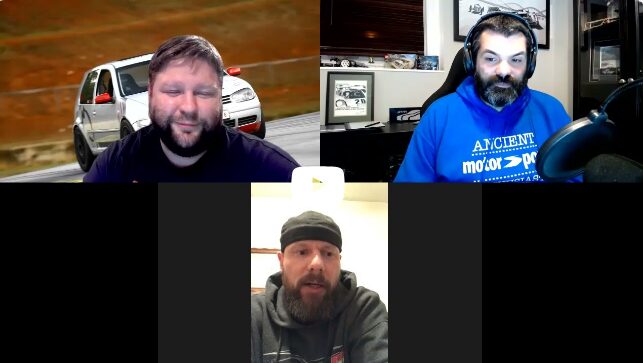
Crew Chief Eric: Hey everybody, Crew Chief Eric here, and filling in for Brad tonight is my special guest co host, Crutch.

Mike Crutchfield: Hi everyone. Luxury, sophistication, simplicity, and above all, safety. Those are the adjectives you might use to describe our feature vehicle tonight. Mike, what are you on about? What else? Volvos. Excuse me, what?

What if I told you Volvo made a hot hatch? A Volvo only known to a few as the 480. And what’s with us tonight to unpack this mystery car are my friends Emily and Nate.

Crew Chief Eric: Oh, a pleasure to meet you both. Welcome to Brake Fix, Emily and [00:01:00] Nate.

Emily Fox: Thanks for having us. Hi

Crew Chief Eric: Eric. Hi Mike. Alright, so let’s get into this.

Let’s talk about your vehicle history. Let’s drive to this Volvo. Let’s not run straight for it yet. So tell us a little bit about your vehicle history.

Nate Burton: It took quite a while for me to become kind of a car head. So in high school, my parents had an old 1985 Toyota Tercel hatchback.

Crew Chief Eric: I’m sorry.

Nate Burton: Baby

Crew Chief Eric: blue.

Nate Burton: Uh, it was a really crappy car, but it was six shift.

So I learned, learned on a six shift, which was nice. All my friends used to joke that it was, uh, the poke mobile. Cause it’s a big, like tall boxy thing. And the poke vehicles are always like these big boxy bulletproof glass things. And they would joke about that. So I had that and then one day going to high school, the, uh, the front axle broke, um, and, uh, we’re,

Crew Chief Eric: we’re very accustomed to that around here.

Nate Burton: [00:02:00] Um, and so the next car I got after that was a, oh goodness, it probably was a 1993 Ford Escort. Wagon hatchback thing, like the, the teal green Ford Escorts. It’s a very, uh, common color. If you’re familiar with that genre of the Ford Escort. So that was good car. And then going off to college and needed my own car and not just one that I was borrowing from my parents.

I ended up getting a 1990 Acura Legend. Which is pretty cool. Uh, V6 also standard transmission.

Crew Chief Eric: Those cars are very sought after these days. Cause there aren’t very many of them left.

Nate Burton: Yeah. I wish, I wish I still had it. Um, it was nice driving it home from work one day on 95 South and the timing belt went, Oh, so that, that kind of died a death.

After that, I had a really crappy Mazda protege. [00:03:00]

Crew Chief Eric: I’m starting, I’m starting to sense a theme here.

Nate Burton: So my early, my early car history was basically any car that’s like 2, 000 or less that I can just drive into the ground until it dies. And that pretty much describes a lot of them. The protege was interesting in that at some point in my ownership, this was also, again, before I got into maintenance and taking care of cars on my own.

Protege, you see a pretty good gas mileage, about 30 miles per gallon. At some point, what I know now is the water pump started failing and I started losing coolant through the water bump. And it kept getting worse and worse. And at some point I was getting 30 miles per gallon of like water that I would go out to the car, put a gallon of water in the car, drive to work, I’d have to have another jug in the trunk.

To top up to get home. And then at some point it just got so bad it was like falling out as quick as I was pouring it in. Then I had a, [00:04:00] uh, Volkswagen VR6 Passat. I think it was a 90, 95.

Crew Chief Eric: The one that has no grill.

Nate Burton: Yeah, um, it was a really cool car, but I only owned it for seven days. I, I bought it. You are all in Maryland.

So, you know, the Maryland safety inspection process, which is kind of rigorous and nitpicky.

Mike Crutchfield: No, it’s

Nate Burton: not. So, so I, I, I looked at all the nitpicky things that they were going to catch me on. I ended up, this is where I started to get a bit into cars. I ended up going to, uh, Crazy Rays when they were still called Crazy Rays.

Out in Hawkins point one. So I got some parts, was on my way home to go shower before going off to work. And I was going over the key bridge there, I guess on 695 a, uh, a waste management garbage truck, uh, on the crest of the bridge had just blown out its drive shaft and it was sitting [00:05:00] there in the middle of the road in front of me.

And I didn’t see it until I came up over the crest. And there was a car on my left and a K Rail and the water on the right. So I drove right over it, uh, and it caused the airbags to go off and it sheared part of the oil pan off and, uh, basically totaled the car. So that was fun. Um, but that’s kind of where my story with cheap cars ends because of the accident with waste management.

They were at fault. There was an insurance settlement, which gave me, I think I paid about 1400 for the Passats, and then they gave me about 3000 for the car, and then 5000 pain and suffering. So I had a decent chunk of money to get a car, and here’s where I start getting into weird Swedish stuff, aside from like Swedish metal.

You bought a Saab. I bought a Saab. God, how did I

Crew Chief Brad: know? [00:06:00]

Nate Burton: I grew up in New England, uh, in New Hampshire. My parents, uh, were still in New Hampshire at the time I was, I was down here in Maryland. So Saabs were very, were very popular up in New England. I heard you get your driver’s license and keys to a Saab in the same day.

I think they also do a moose test or something. They like crash a, crash a Saab into a moose or something. And as Crutch mentioned, Swedish and Volvos are notoriously safety minded. So yeah, I got a Saab 9 5. Unfortunately it was GM era. It was a 2003 Saab 9 5 ARC. So it was the V6 and it was, it was a turbo, but it was like super underpowered.

Low boost. It was a giant like beast of a, I think old GM engine that they threw in there that had no, no room in the engine bay. That car, I got it with like 100, 000 miles on it. It, it lasted pretty well. Um, I [00:07:00] put like another hundred thousand on it, but it always had like weird electronic issues. Like it wouldn’t want to start up every once in a while.

One point I hit a deer in it being a sob. It survived the deer hit pretty well, but there, there must’ve been like a hairline crack in the radiator that the insurance company never caught when they, they, they replaced like the headlight and things.

Crew Chief Eric: So you were back to a gallon of water every day. So you were used to this.

Nate Burton: Yeah. So I had a friend who was more interested in cars and, uh, had more history than I had, and he and I talked and we’re like, yeah, we should try to fix it. Let’s try to replace the radiator. Which, on a normal car, replacing a radiator is pretty simple. On this Saab, it was a nightmare. The front grille, uh, area has this big metal lip that comes up over it.

And the, the radiator’s tucked way up under there. And then there’s the intake manifold, and like some turbo pipes and stuff all in the way. So you have to like [00:08:00] disassemble half of the front of the engine to be able to get the radiator to be able to pull it towards the engine and up and out. It was, it was a disaster.

It took two days, but I did, I did get it done. That was interesting. Um, and that, that was kind of my real first foray into doing anything other than like an oil change, uh, or, or brakes on a car.

Crew Chief Eric: Let’s pause there as Emily has been patiently waiting, and I hear that you have a history, uh, your family history of being petrolheads.

So let’s, let’s talk about that and unpack a little bit.

Emily Fox: Oh, geez. You’ve been talking to my mom way too much.

Mike Crutchfield: Yes, I have.

Emily Fox: So my parents are both retired Navy and they are very much into muscle cars. So I’ve been around muscle cars for a while. Um, my mom loves them. My dad loves them. Like American muscle has been like what I was.

kind of born and raised with, which is really strange. So my very first car was a 96 Isuzu Rodeo and it was [00:09:00] black and it was lifted and had mudding tires on it. It was, It was a very redneck country, which was fabulous. I mean, like if you come from an American muscle car family, you have to have redneck country cars as well, but I loved it.

It was a wonderful car. It was a stick shift. So I learned how to drive stick. I actually learned how to drive stick in my mom’s. Little tiny blue Nissan truck. And I still remember her yelling at me, don’t squish the shampoo bottle when you shift because we had just come back from the hair salon. So I loved that car.

I was not working on cars myself at that time. I still remember my dad writing in like paint pen on the battery like make sure you’re putting water in the battery so it runs and like this is the positive and this is the negative. I also changed the spark plugs on that, like myself once, that was an accomplishment for me.

I did take it to a place that does oil changes. And being really young and very naive at the time, they were like, Oh, well, you have to change your [00:10:00] transmission fluid. We have to change all this stuff. I’m like, okay. Cause I just had gotten the car. I didn’t know that much about it. They ended up draining all of the oil out of the engine and not putting it back in.

So I was on my way to college on 50 headed to two. Cause I was going to Anne Arundel community college at the time and the entire engine decided to weld itself together on the bridge during rush hour traffic. And then, After that ensued like a four week battle over my poor rodeo about who’s going to get to do work on it because I had it towed to my shop and then that the oil place decided to have it towed overnight to theirs.

And I had it towed back and we went back and forth for a while. Eventually I got a new clutch, I got a new transmission. I got a lot of new stuff and it worked out really great. And then I made a really dumb decision to trade it in. So my significant other at the time could get a new car. And then I inherited my parents Mitsubishi Diamante, [00:11:00] which was a 2001, which are lovely cars, unless you ever have to change the brakes or the rotors on them.

And if you do, you have to do it every six months because they’re crap and it’s very expensive. So I eventually got rid of that car because it was just too much. The value of the car wasn’t in it for every time I had to get new brakes and new rotors. After that, I borrowed a car from someone. It was a horrible little tiny white car, but it drove.

I actually happened to take it to work one day when my house had flooded, so I saved the car from a flood. After that, I got a 2003 Volkswagen Passat, which at the time I didn’t know had significant electrical failures.

Mike Crutchfield: It’s German.

Emily Fox: Remember, young, naive, I’m still kind of young and naive with cars.

Mike Crutchfield: Well, you’re talking to people that the three of us own Volkswagens.

So [00:12:00] we know the Germans have electrical problems. We just don’t.

Crew Chief Eric: It’s a given if the check engine light is not on, there is a problem. It’s

Crew Chief Brad: burned out.

Emily Fox: Well, I took it to a German mechanic who was like, You have a problem with your ECU. It needs to be replaced, but it might not be that. It might be this other thing.

And I’m like, well, I don’t have that kind of money right now. I’ll just get a new car. And as I was on my way to go get the new car in Virginia that I already had a loan for, it was just for this car. The entire power on the vehicle failed on 4. 95 and I was able to get it off onto an exit ramp and it was like 95 degrees outside and I couldn’t get the windows to go down.

It was a very bad experience, so I had to get my parents to get a vehicle, tow that one to a junkyard, get rid of the title, and then figure out how to go buy the car that I was supposed to get. So I ended up getting a 2016 Hyundai Accent because it was affordable, it was [00:13:00] super cheap. And it had a undisclosed front end collision,

Mike Crutchfield: which I’m pretty sure my, my current facade has the same.

Cause there’s overspray all over the place in the front end of that car.

Emily Fox: Well, so it wasn’t the overspray that gave it away. It was the inside wheel liner was missing. So I was like, Oh, that’s a little weird. And then I went to replace it. And then I found a tire rub. And then over time I’ve started to notice other parts.

Problems we actually just did the brakes and the rotors on it and find out the rotors were warped not horribly But bad enough that it would you could feel it pulse when you were braking So I still drive that car Because I was gonna

Crew Chief Eric: say that the indicator for me would have been the white bumper and hood and the rest of the car was fuchsia But you know, hey, whatever

Emily Fox: No, it’s all the same color.

They did a good job painting it. But that’s, that’s kind of my car history. I still like American muscle cars. My parents have a GTO, and my dad used to have a Catalina. Um, I took the Catalina to prom, actually, when I was in high school, [00:14:00] so. A

Nate Burton: convertible

Emily Fox: Catalina. A convertible Catalina. That thing drove like a glorious boat.

It was wonderful.

Crew Chief Eric: But what our listeners may not know is you’re a blogger for Garage Riot, which we’ll talk about in a little bit. So you, I think you’re being a little bit modest in terms of your car aficionado status. I think you’re more of like a secret clandestine car enthusiast, right? So Emily, we mentioned earlier that you blog for Garage Riot and we recently established a partnership with them.

And so in my understanding, you’ve been with them for a very long time and I hear your member number is quite low. So I wanted to get a perspective from you on what it’s like, what it’s about and why you joined.

Emily Fox: Yeah, so I actually joined GarageRide, it was our first time at the Vintage. They usually have like a pre Vintage party, and they, it was Donovan and one of the other guys, Andy.

They had a booth, and nobody was going up to them, and I had just come off of a major recruiting trip. I was [00:15:00] still very friendly and outgoing with people. I approached them and they were like, we’re giving away stuff. I’m like, Oh, you mean you’re just going to give it to me? No, you have to enter and join online.

So I ended up joining online. So I was trying to get into cars at the time. We were still dating and like, I started hanging out in, um, Garage Riot. It was a small social media platform for car enthusiasts. And there was like a couple of members. I think there were less than 20 at the time that I had joined.

It was nice because I got to start reading articles about cars. Like I started learning about cars, learning about Formula One racing. There was a lot of cultural aspects to it. of car ownership. Some of the stuff that I’ve talked to Donovan and the rest of the folks on the channel about is like women in cars and like that aspect of the industry.

And what does that look like? And so they, they’re good at pulling in articles. There’s quite a few female members within Garage Riot that talk about their experience with cars and some of the stuff that they do. Some of them [00:16:00] work on them. Some of them just like staring at them and driving them, which is totally cool as well.

But it’s a community of car enthusiasts, people that either. Just buy cars and take them to shops and get the fixed or do the work themselves. And think of it like not necessarily Facebook for car people, but more like the Facebook and any other social media platform for them. And they’ve got a presence on a couple of other sites, but they allow, uh, members to write articles and share them, have photo galleries, engaging discussions.

There’s vendors on there as well. So if you’re looking for coupons, they have a nice hookup with vendors. I’ll post funds for a couple of those sites. It’s a good community. Uh, the folks on there are very friendly. They’re very open. They ask questions, they’re engaging. We post bad videos of car crashes.

It’s very welcoming. They’re doing a lot of changes to the site. So I had talked to Donovan and company, uh, about a year and a half ago. It feels like about a potential new project that they could embark on. So I’m hoping. [00:17:00] Sometimes soon that they will have it. That should make, uh, managing your mods to your cars a lot easier, but they’ve got a bunch of coming changes and it’s.

It’s a great community to be a part of. Very

Crew Chief Eric: cool. And we’ve enjoyed the time that we’ve been spending with the team from Garage Riot. So we’re looking forward to expanding that partnership and doing some crossover episodes with them as well. So that’s also a discussion, but I think we’ve now gotten to the point where we need to talk about this mystery Volvo that, you know, two people on this planet know about, and we’re talking to them right now.

So how do we get to this Volvo 480? When did this happen and how did it happen and why? Why? Um,

Emily Fox: well, I’ll start. I have the luxury of working in a place that allows me to do travel and learn about new technology that’s going on. So I had the opportunity to go to a conference overseas and he decided to.

Tag along and go explore the Swedish countryside while I was in Denmark. Let’s be fair. He had spent [00:18:00] probably about two months before this trip, researching Volvo for eighties and reminding me every single day, like I’ve always wanted a Volvo. Wait,

Crew Chief Eric: wait. So let’s unpack that. Yeah. How did you find the thing in the first place?

Because, I mean, when Crutch brought it to my attention, I was like, Wait, what? Excuse me? It’s a hatchback? I mean, you think hatchback Volvo, and you’re thinking, You know, C 30. Right? And that’s pretty modern, which they kind of style it after a a couple of Italian cars. That’s the front end of the S 40, stuff like that.

There’s certain Volvos that people know. You know the shit Brown 800 series from the eighties, you know, diesel two forties, you know, those kinds of things. Turbo. Turbo bricks. Yeah. The eight 50 TUR turbo. Turbo bricks. Yeah. The turbo bricks. The eight 50 sedans. The V seventies XC nineties. You know, everybody knows these cars.

And then obviously if you’re an old schooler like I am and you like classic cars. The P 1800 is like the car, it is the Volvo, right? And I happen to be a fan of the C 70 and there’s a whole backstory with Audi on that one, but we’ll save that [00:19:00] for another time. But the four 80, it’s not something that you go, you know, when you’re talking about cars with your friends over a beer, you go, Hey, the four, what?

It’s not a car that comes up in conversation. So how do we get there?

Nate Burton: So, uh, so certainly I’m kind of a quirky person. I mean, I’ve got, I’ve got no, no. No drains and things like that. So I’ve, I’ve always had somewhat quirky tastes to rewind a little bit. After my horrible experience working on a Saab, I was interested in, in working more on cars.

So I’m like, I need a fun car to, to, to learn on my requirements where it needed to be cheap. Like under a thousand bucks. ’cause I didn’t have much money. It needed to be 20 years old or older. So it would be exempt from like Maryland safety and inspection stuff. Uh, so it could qualify as a historic car and it needed to be kind of simple.

So no, no, OBD two, no computers, none of that. So I actually ended up finding a Volvo, Amazon for 750 bucks in Catonsville that didn’t [00:20:00] run, that I bought. And then, uh, got trailered to my house.

Emily Fox: We still have it.

Nate Burton: And has it ever run? It has run. Well, the engine has run.

Emily Fox: It has not moved. It

Nate Burton: has moved on its own power at some, at one point.

But it did not stop on its own power. And then that’s where I got stuck. Cause like, as I dove into the brakes, I found a bunch of rust and then the rear brakes were drum brakes and trying to pop the rear drum brake off when I popped it off, it cracked the hub and it was just one thing after another. And like, they don’t sell parts for some of these things.

So like finding replacement parts became. Problematic. And so instead of replacing the drum, I found a whole nother rear axle, but that’s a, that’s a whole nother story, but getting into the old Volvo Amazons, I started getting that appreciation for cars like the P1800, because I came across those after I got the Volvo, Volvo Amazon.

Um, and was researching more of the history of Volvo’s around that time. I was actually on a work trip in Germany at one point, and [00:21:00] I was walking around the town and came across it, a white 480 in Germany there, and I’m like, Oh, that’s a really cool looking 80s style, like straight lines and everything.

And I remembered it at that point in time. And when Emily and I were going to Denmark and I’m like, okay, well, I should look for cool cars in the area. While, while I’m in Denmark on vacation,

Emily Fox: there was no cool cars. It was, I should look for a Volvo for 80 while we’re on vacation, but wait, let me look at it before we go on vacation.

It was

Nate Burton: always in the back of my mind as a cool car that was never sold in the US.

Emily Fox: Slightly, slightly obsessed. Only, only a little. What do you think about this one, honey? Does this look good? What about this one? I don’t know. I still like this one. That was almost every day for two months. There

Crew Chief Eric: had to have been a conversation in there that goes, Ooh, look, it’s rare in this color.

Emily Fox: No, no, the rarity was not a thing. It was about whether or not the. Finish was good. How the [00:22:00] interior look, did it have the original parts on it? Um, was the interior 1980s enough? I think we had that conversation as well. Do they have

Mike Crutchfield: like pastel stripes in the seats on some of them?

Nate Burton: Yeah, mine has like, it’s, it’s like a velour cloth interior.

It reminds you of a Greyhound

Crew Chief Eric: bus. With like rainbow, rainbow like stripes.

Emily Fox: Greyhound bus. You

Crew Chief Eric: know, you just, you just put a thought in my head. You know, when you say, is it eighties enough? I mean, you went all the way to Denmark to find this car when you could have probably gone down to a used car lot in B.

C. and picked yourself up an IROC Camaro, which screams 1984, right? He has the wrong hair.

Nate Burton: So unlike Emily, I don’t have any sort of love for American muscle cars. My parents were not car heads, so I didn’t get anything from, I didn’t inherit any of that from them. I’ve always just had, like, European cars.

Mike Crutchfield: And 80s Aeroth is not a muscle car. It’s a Malaysia Aeroth. [00:23:00] It’s not a muscle car. It’s

Nate Burton: just, it’s

Crew Chief Eric: just a car.

Nate Burton: I guess maybe the clarification

Crew Chief Eric: is I’ve never really liked American cars. All right. This one’s special too. So for our listeners out there, here we are, picture yourself. Denmark 2000 something, right?

I feel 18. I feel like we’re having a golden girls moment here, but what people don’t realize Volvo has changed hands over the years, right? It’s original ownership being built based in Sweden, et cetera. Ford bought them. Now they’re on by Tata. They’ve changed hands a couple of times in between there, but a lot of cars were built in Sweden for the general EU market.

Except for the 480, which was built in Holland and is comprised of a lot of French parts, which has its own issues and in its own right. So here we are, we’re lusting after this 480. You’re in Denmark and black is best, which I’ve, I’ve seen pictures of this car. So how do you get it back?

Nate Burton: So I have done a lot of research.

I found one online looking at all the European [00:24:00] car sites. And I arranged to meet this guy who was selling it. He owned a, a small little classic car shop in Sweden. So it was about two hours away from Denmark. So she went off to her conference in the morning. I get on a train. I go up to the Across the water and go to a small little town up there, then have to get on a bus to get to the car shop and then have to walk about half a mile, but eventually get there.

And this guy’s got this really eclectic. Collection of old European cars. He’s got an old Mercedes Benz. He’s got a Renault, like four CV. He’s got a Morris or an Austin minor 1100 or something like that. He’s got an old BMW and then he’s got this Volvo 480 turbo. He didn’t speak very much English, but he had a friend who did.

Uh, so he called his friend over. His friend drove over and then his friend and I got in the car, went for a test drive, drove it around for uh, 20 minutes or so, brought it [00:25:00] back. He had a lift in his shop, so I was able to actually get it up on a lift to take a look at the underside of the car, which was nice.

Check out the quality of the

Crew Chief Eric: condition of rust and things like that. Are those bodies galvanized? Are you, are you have to worry about rust a lot on those? I, I think so. I

Nate Burton: think I need to worry about rust. Okay. Especially being a Swedish car and, and having snow and stuff up there. It checked out and the, the price was pretty good.

It was about, it was only about 4, 000 American, uh, after, after the You are breaking that budget, aren’t you? But there was a few problems. So I was there in May of 2018. Yeah. In Sweden, yet the car was produced

Emily Fox: in

Nate Burton: November of 1993. And so it wasn’t yet 25 years old to be able to be imported based on the 25 year D O T import loss.

Crew Chief Eric: And that’s at the tail end of the four eighties production run. If I remember [00:26:00] correctly,

Nate Burton: so this was manufactured November, 1993, I was there in May. So it wasn’t 25 years old until November. Until November. So

Crew Chief Eric: billed in 93. Was it sold as a 94?

Nate Burton: No, it was sold as a 93. Okay. But the problem is the DOT laws for the 25 year rule are based on the production date, not the model year.

So I agreed to buy it, and thankfully, uh, the, the seller said he could just hold onto it for, for six months. So I agreed to buy it, uh, we signed a contract, I wired him the money through a cool app called TransferWise, which does kind of foreign currency conversion and easy money transfers.

Emily Fox: And then we came home and had to figure out how to get in here.

And then I had

Nate Burton: six months to try to figure out how the hell am I going to get a car that I bought in Sweden to the U. S. because I’ve never done that before. And like none of this process is really all that well documented anywhere.

Emily Fox: We spent probably like four months researching like vehicle import [00:27:00] services.

We got to a point where we were talking about, well, maybe we can buy another car and put them both in a container and have, have the entire container come over, how many cars can we fit in a container to bring it over to get the most value

Crew Chief Eric: when you say cars, you mean another four 80 for spare parts.

That was actually in my mind because

Nate Burton: like

Emily Fox: getting,

Nate Burton: getting parts is awful. And like, it’d be nice to have, like, a parts car I could just steal off of if I needed it.

Emily Fox: Or my own, but okay.

Mike Crutchfield: No, no.

Nate Burton: We’ll get to that, though. So it would be nice to have one to, like, keep. Original and period. Correct. And then one to like

Emily Fox: play with

Nate Burton: modify and play with,

Emily Fox: but so we spent like four months trying to find places and the quotes that we were getting were ridiculously astronomical and he’s a part of, and I think I’m a part of the group now, um, uh, BMW group on Facebook, right?

It was BMW and

Nate Burton: it was the vintage.

Emily Fox: Yeah. The vintage. Um, and he just [00:28:00] decided to push in the question, how do I get it to the state? And like, what were all the responses? It was like one person. This is the person that you go to.

Nate Burton: Like half a dozen or more people all replied with the same person. So they’ve all, they’ve all used this guy in the past.

Hans Gruber. Yeah. We know a guy. It was, it was essentially that we know a guy, everybody knew a guy. They’ve all in the BMW community used him. Um, well known in, uh, importing like E, uh, E28s. And things like that. And, uh, so I contacted that guy and he seemed, uh, really reasonable to work with. Uh, it was a little touch and go shady at the beginning.

It was

Emily Fox: shady the whole way. It was super shady because like between contacting him and like occasionally hearing back from him, there was no conversation of costs. We were just moving full on full steam ahead with getting this car. No conversation about costs.

Nate Burton: Well, I, I brought up costs in every [00:29:00] single interaction with him.

It’s just, he never answered those questions. You are in good Hans with Hans, right? But like, he’s like, yeah, I can do that. And like, he sent a guy with a tow truck all the way. So this guy, this importer base in Netherlands, the car is out in Sweden. He sent a guy with a tow truck all the way out to Sweden to pick up the car on my behalf.

To tow truck it like a thousand kilometers back to the Netherlands. The battery was dead when they got it. He replaced the battery for me. He did all the cleaning and everything you need to do to ship a car.

Emily Fox: Sent pictures of the whole thing.

Nate Burton: Sent pictures of all the stuff. Right, right before I was about to get on a ship he emailed me the bill which was Thankfully, very reasonable.

I was, I was worried because up to that point he had gone all the way to get my car. He had the car in his possession. He had all the paperwork about the car.

Emily Fox: We were starting to worry whether or not there would be white powder in the vehicle when we got it out of port

Nate Burton: or if he would try to hold the car [00:30:00] ransom.

Yeah. Um, no, he was completely professional at the end. Very reasonable in terms of costs. And then, uh, uh, he, he put it on a boat in the Netherlands. It shipped to the Baltimore port. I think it shipped at the end of November or beginning of December of 2018. And it showed up like the day before new year’s took about a month.

When I got the actual notification from the shipping company in the U S that it was ready for pickup,

Crew Chief Eric: then you’re faced with another challenge. So you’ve got this car now in the port of Baltimore, and it’s a car that won’t be in Maryland’s DMV database. Because it was not a car that was built nor manufactured for the U S.

So where do you go from here? I’m birdie.

Emily Fox: Like Nate said, the process for bringing in cars like this are, is very much undocumented, not really much of anywhere. And there, even when you go through, like we got it to the port, there’s no documentation for how you get it out of port. Really. You kind of have to like call around and ask questions.

Crew Chief Eric: So there’s another guy that knows a guy. Yeah.

Nate Burton: Yeah. I mean, another guy that was, that was [00:31:00] interesting. To get it off of port, you can’t just drive on there with a normal tow truck or, uh, with a trailer or anything like that. Now, in my benefit, I did have a, uh, a CAT card being a former government employee.

So I, I was able to get on base with my CAT card. Otherwise you need to be escorted while you’re on the port grounds. Otherwise, you need to be escorted by somebody with a TWIC card, a Transport Worker Identification Card. Uh, normal civilians, normal people can’t just drive onto the port by themselves.

They have to be escorted, except in my case, uh, having a government ID. The shipping company just said, go to trailer number whatever. And so I, I find that trailer on the, on the port property, I drive up there, apparently I was supposed to have been wearing like a high vis vest because they have all these signs that say you must wear a high vis vest and I wasn’t.

Your hair

Mike Crutchfield: wasn’t enough?

Nate Burton: Maybe that’s how I got away with it, I don’t know. But I went up there, I had, the [00:32:00] shipper had emailed me copies of the import certification and some of those forms that were necessary. I showed them to the folks at the trailer and they said, give me five minutes, I’ll have somebody drive it out.

And then they drove the car out of their, uh, of their lots. And, and then I had the car, but then I needed to get the car home, uh, cause I can’t just drive it cause it’s got no plates or anything like that. And not just any tow truck driver can just drive onto the, onto the port property and, and tow it home.

So I needed somebody with a TWIC license who was also a tow driver. Thankfully, one of the, uh, companies that I called had somebody who didn’t work for them. Who was a friend of theirs who had a twit card who happened to have a trailer. So that guy eventually showed up like an hour later.

Emily Fox: We got it loaded and it came home and we drove it down the driveway and it sat for what almost a month, two weeks to a month before we, we got the

Nate Burton: paper.

No, I, I had the paperwork right away. I think like the next day [00:33:00] or later that week we went to the MVA.

Emily Fox: So later that week or the next day comment is we had to spend several hours translating Swedish to English and finding the right parts of the form that Maryland would care about because you can’t just go to the NBA like you said with this car that’s not going to be in their records.

You have to, you basically have to do their job for them and just make it as easy as possible so they could just like type in or punch in the right information. So we,

Nate Burton: it was certainly like government bureaucracy at its finest. Um, so leading up to all this, we had done a lot of research about the process.

So I felt like I knew the process fairly well about what the steps were and what I needed to do. The Maryland import process says that if you have a title or registration. That’s in another foreign language. Oh yeah. That you need to have it trans. You can’t just translate it on your own. Yeah. You need to have it translated

Emily Fox: by the embassy.

By an

Nate Burton: embassy from [00:34:00] the country of origin. So I call the Swedish Embassy in DC . I’m like, Hey, I have a car title that’s from Sweden that I would like you toran, uh, translate for me. And like on official, like embassy letterhead or whatever. Is they like, it needed to be official from the embassy and they’re like, no, we don’t do that.

Call somebody else. We don’t, we don’t do that. So I was stuck with, okay, what the heck? Maryland law says you got to do this. And then the embassy says, no, they don’t do that. So we essentially did our best. We went to Google translate, looked at all the fields and said, oh, that’s, that’s odometer. That’s like make and model.

And we kind of like translated it ourselves on a separate document.

Emily Fox: To be clear, we both have, like, some exposure to foreign languages, so, like, it was slightly easier in that we, we can understand based off of other languages we know what they were getting at, but it was still painful. We’re talking about, like, Small text fields [00:35:00] with mobile phones trying to scan and figure out what it’s actually saying.

But eventually we got it, and he had all the paperwork, and he went to the MBA, and you were there, what, almost two hours?

Nate Burton: Two or three hours. Two or

Emily Fox: three hours walking through the person at the desk. This is where I need you to put this in your database, and this is the next form that you need to fill out, and I put them in order for you.

Nate Burton: The wait time wasn’t three hours of telling them that it was the normal, like two and a half hour wait at the MBA. Plus 30 minutes of doing the actual thing. But of course they don’t get this often. They don’t get somebody who walks in with a weird Volvo with a weird title that’s in Swedish.

Mike Crutchfield: But they have a desk devoted to it.

I’ve been to the Lombardi MBA. I’ve seen the, the, the. The gray market title desk that’s like off in the corner. Yeah, but he

Crew Chief Eric: had all the boxes checked. Swedish. Imported. Historic tags. That haircut. I mean, it was just like, they didn’t know what to [00:36:00] do with them.

Nate Burton: So I think because I went in there kind of knowledgeable of the process, kind of like determined and sure of myself, I really felt like I knew way more about the Maryland import process than the poor lady behind the counter did because she kept telling me like, Oh, well, we.

Uh, we need a title and in my case, I didn’t actually have a title because Sweden doesn’t have titles. They just have registration certificates. And so there’s somewhere in the Maryland policies that says if you have a foreign vehicle and it doesn’t have a title Then you need registration and something else and so or bill of sale and registration certificate or something like that So I had those I knew the law I was able to explain to her what she needed to do and we were able to eventually get through it all.

And she, she didn’t trip up on the, uh, not having a official translation from the Swedish embassy thing. So she was very patient with me walking through [00:37:00] my Google translated version of the registration certificate.

Crew Chief Eric: Did you also find it a challenge to get this card insured? So are you going through normal insurance?

Are you doing like a Hagerty specialty car insurance? What do you, what do you have to do there for what we would consider a gray market car? Yeah. So I, I didn’t

Nate Burton: even try to go through normal insurance cause I didn’t know of one, how they would handle it at all. And two, like certainly if they were to handle it, I don’t think they would give it much value in terms of replacement or, or damage or repair or anything like that.

So given the number of cars that we have at the time, uh, I’ve looked into Hagerty. Um, and we’re going, we, we have Hagerty now and I have the E30 on the Hagerty plan as well as the 480. Nice. So I’ve got those two with Hagerty and I’ve got the rest of the cars that we kind of more daily drive on, on just normal.

Emily Fox: Yeah, it worked out well. We got it licensed and well, we got it tagged. But yeah, three,

Nate Burton: three nervous hours sitting at the MVA wondering if I’m going to be able to leave with Maryland plates. [00:38:00] And a Maryland title, and I did, and it was, it was a very happy, successful thing. Until

Emily Fox: he brought it home and decided to try to put plates on it, and then found out that the U.

S. tags are ugly on European cars, and we clearly needed to have a European style plate on our car.

Nate Burton: I really like in Europe how, um, you can get American sized plates if you’re in Europe for American cars. Like they have kind of that dual size thing, but we don’t do that in the U. S.

Mike Crutchfield: So, so I have to ask, did you do what all the Stansbros do and buy the stretched out Maryland tag that has the Maryland tag printed on it, but it’s changed?

Into the European format.

Emily Fox: About it. I,

Mike Crutchfield: I, I really

Nate Burton: considered that.

Emily Fox: But decided if you were going to spend the money on a Euro sized tag, we should make it fun. Which is why it doesn’t have that.

Nate Burton: Yeah, so we, we ended up going to a few car [00:39:00] shows with the stupid Maryland tags on the front, uh, poking out like a

Emily Fox: And took them off.

Like a,

Nate Burton: like a buck tooth on, on like a Beaver or something. That’s exactly

Emily Fox: what it looks like. Like a

Mike Crutchfield: BMW M4.

Nate Burton: And then I decided what I really need is like show plates. So I ended up getting some fake Euro plates that say, uh, daft punk

Emily Fox: or daft

Nate Burton: punk, sorry. Oh crap.

Emily Fox: You’ve ruined it.

Nate Burton: So, so I got some fake European plates that say daft punk because, uh, as you mentioned about the, a bit about the history 80, it was built in Holland in the Netherlands.

At what was previously the old DAF factory.

Crew Chief Eric: We actually talked about DAF vans on another episode. They were actually quite familiar. So it’s

Nate Burton: kind of this Volvo car that’s built in the Netherlands. So it’s kind of a punk. And then Daft Punk being a French band. Kind of gives it’s ties to it’s French roots.

with the [00:40:00] Renault engine and the Renault drivetrain.

Crew Chief Eric: We’ve talked about some of your early challenges with the car. And you kind of dabbled a little bit here in the tech specs. Let’s deeper dive into the tech specs of the car, because most people aren’t going to know really what it is. And you’ve alluded to some of it, but let’s explore that a little bit.

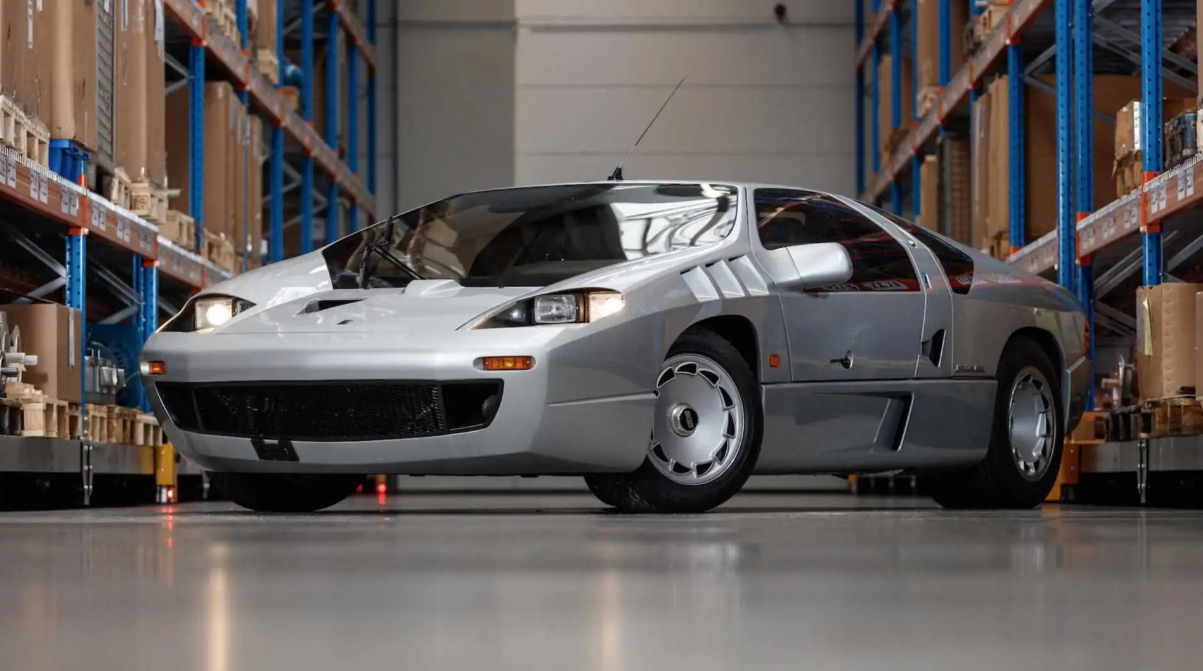
Nate Burton: It was a, uh, unique car for Volvo in a, in a few regards, it was. It’s their first front wheel drive car. It’s a front wheel drive 1. 7 liter inline four turbo, in my case, it’s a 1993. Transverse,

Crew Chief Eric: correct?

Nate Burton: Yes. It’s in there sideways. Yep. And, uh, it’s, it’s a fairly light car. It weighs about 2200 pounds. The 1. 7 liter turbo gets about 120 horsepower at the crank.

Stock, uh, 129 pound feet of torque. So rumor was that when it was being developed, cause it’s kind of this weird mishmash of Volvo and Renault parts, they actually supposedly sent [00:41:00] the engine and the car to Porsche to do tuning. It actually has like a Porsche throttle body on it. And supposedly the rumor is that Porsche tuned it up to about 170 horsepower.

And then when they gave it back to Volvo, Volvo was like, Oh, wait a minute. We’re, we’re kind of a safety family company here. Can you detune it a little? So that’s how it ended up rumor, uh, at least, uh, down at about 120 horsepower. But that meant that the engine, uh, and, and boosts and things were capable of getting up to that higher horsepower.

So there’s actually, uh, some folks still in the, in the Volvo four 80 community that I found on, on Facebook and, and European forums that do modifications of the ECU to actually restore some of that original kind of fuel map and things. And up the boost. Supposedly, that’s supposed to give you about 150 horsepower, um, at the wheels, but I have not dyno’d it or anything like that.

And I’m pretty sure my clutch is at its last legs because, uh, when I do get high on [00:42:00] boost, I can, I can feel and smell the clutch slipping.

Crew Chief Eric: High on boost. That’s like five pounds at Volvo speed, right? I

Nate Burton: think the stock boost is about seven or eight pounds with the modified ECU that I actually have. I actually ordered, I got one from one of the folks on one of the forums.

It goes all the way up to 14. Oh, wow.

Mike Crutchfield: And what are we running on workforce?

Nate Burton: Pretty big difference.

Mike Crutchfield: 19, 20.

Crew Chief Eric: Yeah, something like that when they’re modded, but, you know, stock boost on the original KO3s is like eight or nine pounds. It’s nothing.

Nate Burton: Yeah, so being a fairly light car with that kind of power, it’s actually a really fun peppy car to drive.

Crew Chief Eric: Nice. Well, yeah, and the power to weight ratio is what really comes into play there. And that’s normal for cars of that era, right? They didn’t really start getting heavy. Until the late nineties, when they started introducing things like pro content, a lot more of the airbags and all of these more, you know, advanced crush zones and things like that.

The cars of the [00:43:00] eighties and early nineties were still built the old way. You know, they’re economical, they’re super lightweight in comparison. That’s heavier than a Scirocco, but it’s still lighter than an Audi coupe, which weighed in at about 2, 400 pounds. And it’s a much larger car, but all those cars of that era, it’s like, man, if you were above 2, 500 pounds, it was a tank.

Yeah. Cars, like you

Nate Burton: said back then, you could see out of them so much more easily, like the, the A pillars and everything were smaller, thinner,

Mike Crutchfield: which is great until you roll over.

Nate Burton: Yeah, I think my, my year is actually the last year before they added airbags. I think they added airbags in, in 94.

Emily Fox: Which I often have to remind him about whenever we go have fun in the country with the 480.

Mike Crutchfield: I mean, you know, our track cars, most of us, for those of us who even keep them street legal, the airbags are gone.

Crew Chief Eric: Yeah, for the most

Mike Crutchfield: part. Because, you know, especially the Volkswagens, the stock steering wheel is like a ship wheel. Well,

Crew Chief Eric: that and if they were made by Takata, they didn’t work in the first place.

So it doesn’t really matter. [00:44:00] Well,

Mike Crutchfield: then they’re Claymores,

Crew Chief Eric: not airbags. So, you know, the 480 styling wise, it’s definitely an acquired taste. It reminds me of a couple of Dustbuster. Well, yeah, it reminds me of a couple of other cars, but I got to give it Matt props for having pop up headlights because that is period appropriate.

You know, you look at some of the design cues, it really still looks pretty modern. I like the fact, you know, we have one here in the background. It’s got that little, you know, kind of weighing up over the hatchback glass. And this one in particular has wheels on and whatever. It also reminds me of some of the Mitsubishis of the period.

Like if I look at it with one eye crossed and I’m half drunk, it reminds me of the Starion a little bit, like, like a miniature version of it. So I can see design cues from other cars, but the question is who actually designed it? Did Volvo design it or did like Bertone have their, their hands involved?

Who was involved in designing the, the 480? I’m

Nate Burton: going to kick myself. Cause I, I do know the person’s name and I can’t remember it. Um, I believe it was somebody from Volvo. I [00:45:00] think it’s John DeVries. Is the stylist who did it back to, uh, the pop up headlights. That was, that was another, uh, unique characteristic of the 480, especially for Volvo.

It was the first and only Volvo to ever have pop up headlights. And, and the interesting thing about that is they did that to meet American safety laws at the time in the eighties, because headlights had to be a certain height off the ground. And they were planning on actually selling the 480 in the US to compete with all the other hatchbacks and hot hatches starting around that time in the late 80s.

Unfortunately, it turned out that the economy and kind of exchange rate with the US didn’t work out in Volvo’s favor and they scrapped plans to bring it to the US.

Crew Chief Eric: How big is the 480? Let’s talk about like wheelbase and overall length.

Emily Fox: It’s not big. It’s tiny. It’s so small.

Crew Chief Eric: It’s,

Mike Crutchfield: it’s really small. How’s it compared to your E30?

Because E30 is something a lot. Exactly.

Emily Fox: It’s smaller than the E30.

Nate Burton: It’s definitely shorter [00:46:00] in length than the E30. It’s

Emily Fox: narrower too. By a

Nate Burton: good distance.

Emily Fox: I would say it’s narrower by like what? Six inches? It’s not much. It’s just enough.

Mike Crutchfield: So, so you’re saying it’s not a car for Brad or I?

Nate Burton: Nope. Um. I don’t know.

It’s actually quite roomy. There’s a lot of leg room. I’ve been told that it’s actually a very good car for tall people.

Emily Fox: It’s because of how, how the seats are. They’re what bucket seats in the front, right? They’re

Nate Burton: bucket, yeah. It’s a two

Emily Fox: by two. And so they’re, it is got bucket seats. But the way that the seats are positioned is it, it’s very much that you’re very lean back.

It reminds me of probably closer to like a, a modern race car where you’re, you’re lean back, you’re kind of stretched out a little bit, and then, so there’s a, there’s a lot of room and you don’t have a lot of the obstructions that you get with modern cars. Um, like you don’t have this big console in the middle taking up a ton of space.

You don’t have a huge armrest in the door. The armrest is very narrow. There’s a lot of good room on the inside of [00:47:00] the car.

Nate Burton: The 2 plus 2 layout is really interesting because the back seats are also bucket seats. And they’re really comfortable.

Emily Fox: It’s still pretty tight in the back. It’s,

Nate Burton: it’s, it’s, it’s a, it’s a coop, so the back is kind of small, but it’s, it’s much more rear leg room.

Yeah. I, I could comfortably sit back there, probably not for a long, a, a really long time, but Doug, Doug Demaro could certainly do his, get in the back seat test and probably fits.

Crew Chief Eric: So it begs the question then. What’s it like to drive?

Emily Fox: I wouldn’t know because I’m not allowed to drive it yet.

Crew Chief Eric: You’ve had it for two years and yet you can’t drive it yet.

Shots fired. Shots fired.

Emily Fox: The only car of his, besides the XC90 that I’ve been allowed to drive was the E30. And the first time I drove, that was the first time I drove a stick in almost 15 years and we were on a mountain in the dark in a huge fog bank while it was, what, raining?

Nate Burton: Uh, [00:48:00] it was certainly

Emily Fox: 80 percent fog.

Mike Crutchfield: I will say you actually blogged about that experience. I know you blogged about that one

Emily Fox: because I’ve actually read

Mike Crutchfield: that post.

Emily Fox: Yeah, the photo is scary. You have not seen it. There’s nothing but clouds. Is that Skyline Drive? That was Skyline Drive. Oh, that’s a wonderful road. You could see their beady little eyes along the side of the road waiting to jump out at you.

Nate Burton: Well, I had driven, we had gone down to North Carolina and Asheville for the BMW show. Vintage. Vintage. And I had driven all the way down and I had promised her that I’d let her drive on the way back. And then on the way back, it happened to be super shitty weather. We had like almost complete fog. But

Emily Fox: I drove really well.

And I didn’t ruin the clutch. That was the first time I learned about engine braking. I didn’t know that was a thing at the time. I was all proud of myself and I still haven’t driven the 480 yet.

Mike Crutchfield: I will say the other reason you haven’t driven most of Nate’s cars is cause a lot of them don’t move.

Emily Fox: That’s true.[00:49:00]

Also true. I have probably pushed his cars. It was further by myself than I would have driven them. But the 480, that’s got some fun stories too.

Crew Chief Eric: Well, well, yeah, so go ahead.

Nate Burton: So, oh gosh, where were we? We had mentioned the E34,

Crew Chief Eric: the Crutchet Help Me trailer. Right. So I had, I had posed the question because I was kind of following my, my, my train of thought here.

What’s it like to drive, right? That was, that was my question. We kind of segued from there, you know, went to New Jersey and back. So now we’re back. So what’s the 480 like to drive?

Emily Fox: Fun?

Crew Chief Eric: Of, of all the cars that I

Nate Burton: currently own, and we haven’t gotten through all of them yet, but all the cars I currently own, I think the four 80 is actually one of the best cars, if not the funnest car to drive because it’s just so light and nimble.

And

Emily Fox: handles well.

Nate Burton: Handles well. Like the steering is, is responsive, really responsive.

Crew Chief Eric: And that would [00:50:00] be a car with no nannies and no assist. Like you said, it’s probably an OBD one car. If not, it’s a Medtronic car. It’s somewhere on the border there. Yeah,

Nate Burton: it’s, it’s, it’s Medtronic. Okay. Um. Definitely doesn’t have any OBD ports or anything like that.

Emily Fox: It helps the road really well, especially around the corners.

Nate Burton: No ABS,

Crew Chief Eric: it should have power

Nate Burton: steering. Actually, it does have ABS. Really? It does have ABS and power steering. Oh, nice. But no, no airbags, no traction control or anything like that. I

Emily Fox: will say that it drives better now than it did when we got it.

We’ve done Chuckle. It drove like a boat when we got it. To the point where we had it at the compound and we got in, he’s like, I want you to tell me if you think it’s like a boat. And we drove down the end of the driveway and hit the brakes. I think

Nate Burton: boat’s the wrong analogy. I think it was like, is it like an airplane?

Emily Fox: Because

Nate Burton: when you got on boost, like the front nose would just lift up because the front shocks were completely blown. And it would just like lift [00:51:00] the car up by almost a foot

Emily Fox: because

Nate Burton: of how, how bad the shocks were.

Emily Fox: So we, we ended up replacing the shocks. We ended up putting new springs on it. We found, which

Nate Burton: was a huge surprise because when I went to take the shocks off one, I found out how blown they are.

Cause I could just extend and collapse them by hand. Um, as if I was using like a

Emily Fox: slinky.

Nate Burton: It was like a

Emily Fox: slinky. That’s how bad they were.

Nate Burton: What was worse was on the driver’s side. The spring was like two coils longer than on the passenger side. So somebody had gone in there at some point and it also had a aftermarket shock in it.

And replace the shock and spring on the left hand side. So, what

Emily Fox: we think happened is that at some point in its history that it must have been in a front end collision because the bumper doesn’t quite align correctly. And there’s been modifications to where the bumper and the nose cone mounts. To the vehicle.

And

Nate Burton: you can see some slight blending of the paint. Yeah, the

Emily Fox: paint is blended. Um, the mounting points for the [00:52:00] bumper, one of them is almost two inches higher than the other. Maybe not too much. It’s more like an inch. It’s definitely not right. And we’ve, it looks like somebody has been in there already. But for the driver’s side, when we were doing all that work, we found what the axle was.

Nate Burton: To take the front suspension off, you kind of have to pull the half shaft out of the transmission to be able to get enough room to like free the, free the suspension components. And what I think happened It was probably prior to me when somebody did these shenanigans of installing an aftermarket shock on just one side of the car and a different size spring on that one side of the car.

They probably screwed with the, the inner roller bearing that’s on the inside of that half shaft that goes into the transmission. That then is the bearing that that whole axle rides on inside the transmission. And they knocked one of the cups off. So when I, when I did this, I found out [00:53:00] that that cup was actually sitting inside and all the bearing needles were sitting inside there.

Uh, but not all of them.

Crew Chief Eric: It’s a tripod axle then. The way it’s a tripod. For most of us, that’s a really common part. We run down to, you know, advanced auto and go pick one up for, you know, 60 bucks and call it a day. And then that’s another challenge of owning an imported car. So where are you getting parts for the 480?

Yeah. So, um,

Emily Fox: Netherlands,

Nate Burton: Florida, Florida. Yeah. So, um, Because, uh, Volvos are us shares a whole bunch of parts with the Renault.

Crew Chief Eric: It’s funny you keep saying the Renault, like there’s only one in existence, so , is there a particular one like the R five or the R 21, or, or, or is it It shares a lot of parts with. I think the second

Nate Burton: generation Clio.

Crew Chief Eric: Okay. I could

Nate Burton: see that. And yeah, I had done, uh, when we first got the car, like did it, took a test drive, found the horrible suspension liftoff [00:54:00] problem. I did a survey of all the stuff that I wanted to do maintenance on and replace and made a big parts order from two or three different places in Europe.

Scandix is a, uh, a parts company in Germany that makes and remanufactures a whole bunch of, uh, Polo and. saw car parts. So I got some stuff from them. And then, um, there’s, there’s a handful of just big superstore car parts places in the, in the, uh, Europe. Uh, so like auto, auto dock, I don’t know if you’re familiar with them.

Uh, I think I made a big parts order with them and then found, uh, The suspension bits that I needed, like the, the strut bearing on the top for the front struts, the, the bilstein struts and lowering springs all in, um, either the UK or Netherlands. I placed a bunch of orders from, from Europe. They arrived from three or four different places.

I did all that work in preparation of going to Radwood. [00:55:00] And in New Jersey in 2019, so the story of me replacing the front suspension, finding all these weird suspension problems that were there, finding this inner, inner roller bearing, uh, tripod bearing, uh, on the axle was six days before I was supposed to go to Radwood.

So I’m like, Oh shit, I’m not going to be able to take the 480 to Radwood. I’ve already emailed them and said, Hey, I’ve got this Volvo 480 that I want to bring to Radwood. Can I get into, uh, Is it royalty? There’s some like higher tier of Radware where you can bring in special cars and pay more money to bring in special cars.

They were all excited for me to bring the 480 to them. And then 6. 8 for Radware and I found this problem. I’m like, oh crap. I’m not gonna be able to bring it because I’m not gonna be able to get it on the road because I’m not gonna be able to find the part. So I spent like a day. Doing parts interchange and cross reference search and found that somebody on eBay in Florida was like the North American and South American [00:56:00] distributor and reseller, reseller for Renault parts in kind of this region.

And he just happened to have one that like cross matched to the Volvo 480. So I ordered that and thankfully was able to get the car back together and uh, make it to Radwood.

Emily Fox: It was an interesting experience putting that back together. We still have part of it. It’s actually on the key ring, isn’t it?

Nate Burton: Yes, I use one of the outer bearing races from that tripod bearing as a key ring for the Volvo 480.

Crew Chief Eric: Very cool. So other than car shows and whatnot, what have you guys done with the 480? Have you done any sorts of, you know, let’s say motor sports events with maybe done an autocross, maybe a D E. I mean, outside of the, you know, the standard cars and coffee, maybe some touring, as you guys mentioned, have you done anything?

Emily Fox: That’s, that’s about it. I think he’s probably slightly too paranoid about his cars, doing some racing stuff with them. I mean, like, we, we are very much a house that there are no garage queens at all allowed, but I think he’s still a little sensitive to some of these [00:57:00] things, especially for the 480, because it’s so hard to get parts that if something bad were to happen, we would be in a weird spot.

spot, trying to get pieces for it to get it back together and get it up and running, especially when it’s just fun to drive around, like the weather here is glorious right now. We don’t need to have air conditioning so we can drive through the country and see all the fall leaves right now. We’ve got all the hills and there’s.

The roads out here are just so nice, and we don’t exactly have a lot of really good performance cars. I think the 480 Turbo is the closest thing that we have to one that could potentially do good on a track.

Nate Burton: I think it’d be fun to drive somewhere where you could kind of test it out and put it, put it at its limits a bit.

I don’t know if I would do autocross.

Crew Chief Eric: But well, I mean, I always bring up D. E. And Mike and Brad and I, you know, we’re coaches, so you’re never, you’re not out there alone. It’s not door to door. There’s no bumping and grinding. So it’s always a good experience and summit points not very far from us. And, you know, it’s a true way to really open it up, clear out the carbon, as [00:58:00] we say.

Say and what it’s made of. Right. But you know, you’re, again, you’re not alone. You have somebody parroting in your ear what to do and, and you know, it’s a note, it’s a non-contact sport. So something to think about and, and for, and, and in terms of cost, you know, we talk about this on, on previous episodes, it’s cheap and affordable.

Right? It’s an easy way to get in. I mean, for. Five, six hours of track time. If you want to use all of it, it’s a couple hundred bucks, right? Why not? It’s probably the most fun you’re going to have for that kind of money. Right. And

Nate Burton: you don’t have to put a roll cages and things for those.

Mike Crutchfield: You know, for your E 30, you would need a roll bar.

Nate Burton: Oh, cause it’s a

Crew Chief Eric: convertible. Oh yeah, yeah, yeah.

Mike Crutchfield: But, and you’d have to pass the broomstick test.

Crew Chief Eric: And just as an aside, we were talking about the track stuff. There is so locked in another insurance company, actually one of the largest insurance companies, probably in North America, you know, locked in affinity.

It has a very large reach, but they also have a division called locked in motorsports, and they’re going to be on a subsequent episode here, uh, in the near future and they offer track insurance. [00:59:00] And it’s kind of a, no questions asked full value declared value policy. So if you walk up and say, based on my mods, based on this, based on rarity, that Volvo is worth 50 grand, they’ll insure it for 50 grand.

And if something happens, they’ll cut you a check. That’s pretty good. Yeah, it’s pretty cool. So

Mike Crutchfield: it’s a X percent deductible, depending on how much you pay. 10

Crew Chief Eric: percent with a minimum deductible of 2, 000. So we, I just went through that. It’s all fresh in my head still. But if you guys want to learn more about that, I mean, this is totally an aside.

It’ll, it’s going to be on a episode coming up very soon. Did you, did you learn that because you had to go through it? Actually, actually, one of our members did go through it. We wrote an article about it back in 2018, right about the time you got your, your Volvo. And he went through it with a Mustang that he hadn’t had for very long.

And his significant other ended up having a really good off. We’ll call it that kiss the cement barrier and crunched up the left front of the car and he had track insurance on it. They took care of everything. It was no questions asked. Unlike dealing with a standard [01:00:00] insurance company, they’re used to dealing with track incidents and track cars and things like that.

And, you know, if you walked up to John’s car today, you wouldn’t know the difference. Very cool.

Emily Fox: Very cool.

Crew Chief Eric: So my next question for you guys is, you know, outside of that, what are the plans for the car? Because, you know, as we all have these special cars in our garages, there’s like calibers of Like, is it done?

Is it done done? Or is there just something more on the list to check off? What’s the future?

Emily Fox: There’s always more, so like So the Volvo Parade came with two interiors. It came with a leather interior and then it came with that lovely 1980s pristine, uh, bus fabric interior. Which, which is what we have in it and you just can’t beat that feeling with it.

But the door cards Don’t laugh that loudly. This is a painful experience for us both. The door cards The original vinyl that covers them is vacuum formed onto it, which they’re very, um, modern cards that are plastic door cards. Even in [01:01:00] BMWs, the cards don’t have as significant of a profile. As the 480 does, it’s got some deep pockets in there.

So when they vacuum formed it, the glue over time naturally breaks down. So you get these bubbles of air and you ruin the form and the shape of the door card because you’ve got that pocket underneath it. Well, on the driver’s side, the door was. really bad to the point of you couldn’t use part of where the door handle was.

Nate Burton: Like you go to grab the door handle and like, there should be a gap there for you to wrap around the handle, but the vinyl had come up and you would just hit this bubble of vinyl every time you check.

Emily Fox: So we had made the decision that we did a lot of research. We watched a bunch of videos, um, that we were going to pull the vinyl off and put a new vinyl leather look covering on top of it.

So I am a, uh, I do a lot of sewing. I do a lot of craft work. I do a lot of building stuff, and I do custom patterning. So I had created a custom pattern for the door card with nice [01:02:00] stitching detail to piece in that, that high profile that the door had. But we did not have the. Expertise in laying down the glue or stretching the material correctly.

Nate Burton: Upholstery is hard, especially if you’ve never done it before

Emily Fox: and only

Nate Burton: watched YouTube videos.

Emily Fox: Yeah. So it was one of those. So I had, I had it mocked out in muslin and I had it fitted and it, and it laid well, it was just a matter of the vinyl that we got was a

two way. It was a two

Emily Fox: way stretch, not a four way.

So two way stretch vinyl means it only moves. side to side or up and down and not both. So you have to pay attention to how you’re cutting and stitching your pieces together to make sure that it stretches in the orientation that you want it to. So I spent all this time making sure that it could stretch and form to that high profile door card.

And even that with the glue that we got, wasn’t enough. To get it to fit. We got most of the wrinkles out, but it just, the look wasn’t quite right. It was hell of a lot better than the air bubble that [01:03:00] was originally there. But now that we had pulled the vinyl off of one door card and we had the other one in place, by the way, this was what, two weeks before Radwood when we,

Nate Burton: it was, it

Emily Fox: was Radwood.

Cause it, yes, it was Radwood. So it was like two weeks before Radwood where we had found out that none of this was going to work. So we ended up pulling the vinyl off of both of the door cards, including the one that I had made, scrubbing as much of the glue off as we can, and experimenting with different paint and texture compounds.

So the Volvo does not have vinyl door cards on it. It looks like it does. until you touch it. And it’s because this guy with the paint master skills of spray paint and texturizer, it looks like vinyl. It’s got the texture of vinyl. As long as you don’t touch it, that’s the only thing that that would let you know that it’s not it.

Nate Burton: So from about a foot away, the door cards look pretty original, but if you touch them, you’ll know that they’re not original. Especially I use like two [01:04:00] different types of truck bed liner and then Color match the spray, spray paint to get the right color to try to match it to the interior. It’s really, really close, but it’s not final.

So that’s one of the things I’d like to get fixed. I think the only real way to get it fixed is to actually get somebody in the Netherlands who has spare door cards to mail me some. And I’ve found some people who have some. We

Emily Fox: also had it priced out how to do the vacuum form on the door cards and it was astronomical.

Because it would, it would have been custom for it. We also looked at pricing up custom up poultry for the door cards. And that was like way, way, way too much. Fixing the door cards on the interior is one of the things that we definitely want to do

Nate Burton: with the upgraded ECU that I got that updates the fuel map and ups the boost to 14 PSI have certainly noticed that the clutch slips when it’s really on high boosts.

So, uh, unfortunately Volvo, this is actually, uh, On top of parts being really [01:05:00] hard to find for the 480 because they’re never sold here, a lot of the parts aren’t even made anymore because there were never really all that popular cars. The parts are even hard to find for folks in Europe who have them, of which the turbo was produced in much fewer numbers than some of the other models of the 480.

Uh, they had a naturally aspirated 1. 7 liter and they also had a 2. 0 liter, uh, also naturally aspirated. But, uh, so the turbo was produced in fewer numbers. So there’s. Fewer parts for them. And it uses a different size flywheel and clutch this, uh, than the other ones. And they don’t make it anymore. And none of the aftermarket parts suppliers make it.

So I spent a good part of my quarantine time during, uh, during COVID. cross referencing and researching SACS and SACS parts and Renault parts and finally finding a part number that I think is going to work as a replacement uprated clutch that won’t, that hopefully won’t slip, but I have no idea if it’s going to fit.

So it

Crew Chief Eric: sounds to me like in this case, [01:06:00] And don’t take this the wrong way. It sounds like you’re a bit of a purist, right? Because we come at it from the motor sports world and getting a custom clutch made is not really a big deal. You take your stock clutch, you send it out and somebody makes you one. Like there’s companies like center force and Kennedy and a lot of others that’ll do that.

So I guess it depends on your level, but I respect it. Right. Because I look at it from the perspective of. You know, this is a really interesting like concourse car where you want to keep it period appropriate. You want to keep it as original as possible. You want to do all these kinds of things that somebody doesn’t come back and say, wow, you have this other thing in there, but.

For those of us on the other side of the fence for like blow up a clutch, whatever, we’ll get another one. We’ll get one made, you know, that kind of, it’s not a big deal. It’s kind of the same with the axles too. It’s like, well, those inner bearings probably the same as a Volkswagen. It’s like, just go swap them from something else.

But, you know, I understand it’s part of that. I don’t want to call it the obsession, but it’s part of the passion around this car. And I really. I really appreciate that. And I really sympathize with it because I’ve been through it [01:07:00] with some other cars myself. I mean, I had an original Audi Quattro and I nerded out on that thing forever.

And I had a coupe Quattro, not a, not a 4, 000, right? So those cars extremely rare, only 627 and brought to North America, not just the U S but North America. So talk about finding rare parts and stuff like that. But, you know, we’ve talked about this on other episodes. We have members in GTM with, uh, We have a Renault R5 turbo too.

We’ve got some Packards, we’ve got all these other cars. And it’s like, you know, we talk about scarcity and rarity of parts. And a lot of people have come to the conclusion that no, you’re not going to find a part for 1927, you know, super eight, you’re going to have to have somebody make it for you. It’s just, it’s gotten to that point.

Right. But, but there’s some allowances there. Right. And if you are a hardcore concourse person, they they’re allowing that nowadays, and it’s stuff that you can’t visually see. But it helps the operation of the vehicle. Right? So, but I get it. It’s a struggle overall. It’s super interesting. It’s so unique. I mean, so by [01:08:00] your research, are there any other four eighties in the United States, or are you kind of in a, in a group by yourself?

I, I know of at least

Nate Burton: one. Maybe two. I think in early days of bring a trailer, there was a white one listed before they started the auction site on bring a trailer a while back. That was somewhere down in Florida, but that’s all I’ve ever seen of that one. And then I did, I did come across somebody on one of the European Volvo 480 forums, who I think is involved with like the Volvo club of America.

Who’s out in California who actually has one. He has a earlier, I think it’s an 88. Naturally aspirated, and I think he was in one of the Volvo Club magazines with his P1800ES hatchback from the 70s next to the 480 Turbo hatchback. And so there’s some styling cues there shared between the P1800ES. And the, the four 80 [01:09:00] as kind of the, the follow on to that.

And then the C 30 is kind of a follow on to the four 80. Absolutely. I could definitely see that. So

Mike Crutchfield: I wanna ask, and the C 30 always looked fun, ,

Crew Chief Eric: except for that back. Except for

Mike Crutchfield: that big window. Yeah. Well that

Crew Chief Eric: back, that back glass they borrowed from launcher. But you know, we won’t, we’ll leave that alone.

But any rate, because the, the Y 10 or the ypsilon dhi as they called it in Italian, the, uh, they had that same rear trunk. And obviously those rear lights are from the SUV. I mean, that’s kind of, it had a weird backend to it. It’s very strange, but I wanted to ask, you know, because this is still kind of fresh for you guys.

I mean, we’re talking 2018 timeframe. We’re only two years, let’s call it three. As we, as we move into 21, would you go back and do it all over again? Or would you slap yourself silly if you had a time machine? I would go back and do it all over

Nate Burton: again in a heartbeat and maybe buy two, two more of them.

Emily Fox: I was going to say for the 480, yes, we would do it all over again.

Probably definitely get a second one if we could, maybe three [01:10:00] depending. Like, we were in a weird situation where we had like one extra parking space at the compound so we could have, Had the extra car. If we were in a better situation, we would have had more spots, probably could have bought over more cars.

We looked at other cars. We talked about buying more than just the 480, but that was the one that we brought back.

Mike Crutchfield: At one point you even asked me if I had anything I wanted to add to your trailer or add

Crew Chief Eric: to your

Emily Fox: shipment. We did, yeah.

Crew Chief Eric: Wow. So I think we covered a lot of interesting stuff here. This is a very unique car.

I think you guys are in a really unique position, but it’s also interesting to hear all these things. And as I said, kind of in the pre show, there’s so many different types of car enthusiasts out there. And there’s so many different stories that just aren’t shared. And when you walk by a car like yours at a car show, you look at it and you go, huh?

What’s that? But you know, you got to take that extra step to get the story out. So I thank you guys so much. I can’t thank you enough for coming on the show and sharing this with everybody and getting us to know a little bit more about something as [01:11:00] unique as the Volvo 480, and for all of our listeners out there, we’re going to post some pictures and extra information about the car, specifically Nate’s car on our website.

So gtmotorsports. org, and we’ll probably repost that on Garage Riot. And that way you guys can go. See the visuals as you’re going through this particular episode. So again, Nate and Emily, thank you so much for coming on the show.

Emily Fox: Thanks for having us.

Nate Burton: Yeah. Thanks. Thanks for letting me talk about the 480.

Um, it’s really fun, uh, taking it out and letting people, uh, see it as, as we’ve talked about, it’s a bit quirky and most people just kind of pass it by. But for that one person who’s like a weird Volvo head. that sees it and is able to see it in the U. S. It’s like it makes me so happy.

Crew Chief Eric: So I’m gonna I’m gonna put this out there and I know it’s gonna make Emily mad, but I gotta get a chance to drive it.

That way can write a test drive article on it. What do you think?

Emily Fox: I that would be fine. I will eventually get to drive it. Let’s be clear one way or another, it’s going to happen. It’s going to have to move [01:12:00] across the parking lot or move across something. And he’s going to be in a boot or unable to do it.

Crew Chief Eric: You’ll spike his drink,

Nate Burton: injured

Crew Chief Eric: myself working on

Nate Burton: the

Crew Chief Eric: Mercedes again.

Nate Burton: Well,

Crew Chief Eric: on that note, thank you again.

Nate Burton: Yeah, thanks. Thanks

Crew Chief Brad: If you like what you’ve heard and want to learn more about gtm be sure to check us out on www. gtmotorsports. org You can also find us on instagram at grand tory motorsports Also, if you want to get involved or have suggestions for future shows, you can call or text us at 202 630 1770 or send us an email at crewchief at gtmotorsports.

org. We’d love to hear from you.

Crew Chief Eric: Hey listeners, Crew Chief Eric here. Do you like what you’ve seen, heard, and read? Great, so do we, and we have a lot of fun doing it, but please remember, we’re fueled by volunteers and remain a no annual fee organization, but we still need help to keep the momentum going so that we can continue to [01:13:00] record, write, edit, and broadcast all of your favorite content.

So be sure to visit www. patreon. com forward slash GT Motorsports or visit our website. And click in the top right corner on the support and donate to learn how you can help.

Highlights

Skip ahead if you must… Here’s the highlights from this episode you might be most interested in and their corresponding time stamps.

  • 00:00 Introduction to Gran Touring Motorsports
  • 00:22 Meet the Hosts and Guests
  • 01:05 Diving into Vehicle Histories
  • 08:18 Emily’s Car Journey
  • 14:23 Garage Riot and Car Enthusiast Community
  • 17:19 The Mystery of the Volvo 480
  • 23:54 The Quest to Import a Volvo 480
  • 37:10 Navigating Gray Market Car Insurance
  • 38:06 The Struggle with License Plates
  • 40:01 Volvo 480 Tech Specs Deep Dive
  • 42:35 Driving Experience and Handling
  • 50:26 Challenges with Parts and Repairs
  • 01:00:09 Future Plans and Modifications
  • 01:10:25 Conclusion and Final Thoughts

So how does one go from a string of American muscle and German electrical nightmares to a rare Swedish hatchback built in Holland with French parts? Enter Nate’s obsession with the Volvo 480.

After a trip to Germany where he spotted one in the wild, Nate became fixated. He researched for months, scoured European car sites, and finally found a 1993 480 Turbo at a small classic car shop in Sweden. The car had velour seats with rainbow stripes, pop-up headlights, and just enough 1980s charm to make it irresistible.

But there was a catch: the car wasn’t yet 25 years old, meaning it couldn’t legally be imported to the U.S. under DOT regulations. Nate struck a deal with the seller to hold the car until it qualified, then spent months navigating the murky waters of international car shipping.

  • 1.7-litre Renault 4-cylinder Turbo - making 120hp stock; chipped to about 170!
  • All that trunk space!
  • Popups!
  • Radwood, NJ - 2019
  • Split rear seats
  • Emily (left) and Nate (right) with their Volvo 480 at the GTM DMV HH at Linganore Winery in 10/2020.

Importing a Dream

After dead ends and astronomical quotes, Nate found his way to a legendary importer recommended by the BMW vintage community. This mysterious Dutchman sent a tow truck across Sweden, replaced the battery, cleaned the car, and shipped it to Baltimore – all without ever quoting a price until the very end. Miraculously, the bill was reasonable, and the car arrived just before New Year’s 2019.

Getting it registered in Maryland was another adventure, given that the 480 was never sold in the U.S. and didn’t exist in the DMV database. But Nate and Emily prevailed, adding one more chapter to their shared car saga.

Why It Matters

This episode isn’t just about a rare Volvo. It’s about the journey – through breakdowns, bad decisions, and bureaucratic red tape – to find something truly unique. It’s about the joy of learning, the pain of wrenching, and the thrill of driving a car that turns heads because no one knows what it is.

And it’s about community. Whether it’s GarageRiot, Break/Fix, or the vintage BMW crowd that knows a guy who knows a guy, the car world thrives on connection. Emily and Nate’s story reminds us that behind every quirky car is a tale worth telling.


Guest Co-Host: Mike Crutchfield

In case you missed it... be sure to check out the Break/Fix episode with our co-host.
Listen on Apple
Listen on YouTube
Listen on Spotify

This content has been brought to you in-part by sponsorship through...

Righteous Ride & Radwood

I’ve seen all the Vintage Prep jokes and statuses online.  Everyone working up to the last minute to get their classic BMWs ready for the trek down south.  I honestly believe the same thing must happen for Radwood – at least it worked that way for us.

Radwood is a car event dedicated to highlighting the pure 80’s and 90’s automotive and fashion styling that has yet to be seen in modern day.  There are different categories of tickets for the event: spectator, show car, and royalty – reserved for those extra special cars.  The Radwood show is held across the country at various locations and times. We were lucky enough to go to the one scheduled with Hooptiecon in nearby New Jersey.

Originally planning to go to the Radwood Pennsylvania event scheduled for October, we figured we had enough time to leisurely prep the Volvo and get it in top notch shape.  If you recall from a previous article, we imported the Volvo from Sweden via the Netherlands and had just gotten it home and parked.  Keeping with our normal procedures (normal since the mishap of acquiring the unseen Mercedes), we gave the vehicle a once over and began our Google Keep list of projects to get it where it needed to be.

We slowly began working through them, tracking down parts to have shipped from the Netherlands, looking for compatible parts here in the States, and as parts began to arrive life got busy.  Then last month we heard the Radwood Pennsylvania event, originally scheduled for October, got replaced with one in New Jersey.  Our prep date got moved up by a few months – crunch time!

What was supposed to be a typical suspension refresh and upgrade turned into a much larger project than planned.  Our first indication of this should have been when we removed the front springs and the driver’s side spring was about four coils taller than the stock spring on the passenger side.  Someone had clearly been in there before mucking around.  We chugged along and had everything replaced when our test drive revealed a bad knocking, squeal, and strong pull from the drivers side.  We put the Volvo back on the stands and began to look at the issue.

inner CV

The inner CV joint had a loud knock and play.  We pulled the inner CV joint and in the process discovered that the boot is actually responsible for holding all the transmission fluid in the Renault-made gearbox!  After catching all the transmission fluid that poured out, we discovered one of the bearings on the spider tripod joint had come off and was bouncing around inside the boot along with some needle bearings.  The cap and c-clip which should have held the bearing in place was all still attached.  We cannot explain how this could have happened and likely coincided with the “spring lift-kit” previously discovered. With two weeks until Radwood it didn’t look like we would make it (not to mention the door cards project that was not going well).  Shockingly we were able to find a replacement part on Amazon, since the Volvo shares the gearbox and axles with many 90’s Renaults like the Clio and Megane. The parts were installed, transmission fluid flushed, and filled.  The test drive revealed we had fixed the problem, and aside from needing a driveway toe alignment we celebrated success.
interior mid swap

retro seats

Once the car was deemed roadworthy we refinished the door cards, cleaned and swapped out the entire interior, and fixed up everything on our “must do” list. All the minor nit pick issues would have to wait as we were running out the clock. We worked up until the late hours of Friday night before Radwood finishing up the Volvo, cleaned and polished the car, and then immediately hit the road tires still wet with shine just before 11pm for a two and half hour drive to our hotel near the show.

dashboard at night

Royalty arrival was scheduled for 8am so we were up early in our 90’s finest – Hubby wore his Ace of Base shirt in honor of the Swedish roots of the Volvo, step-son in his Africa by Toto shirt, and I in my London grunge.  Grabbed some ice for the beer cooler and made our way to the New Jersey Motorsports Park.

As we rolled up to the gate, the looks and ogling started.  We were in a car most people had never seen but only heard of in whispers.  Some didn’t even know it existed.  The mythical Unicorn of the 80’s and 90’s car scene.  It’s hard to describe the feeling of being the one with the car that everyone loves unless you’ve been there before.  It’s like the neon glow of a secret club in an alley, hard to see in the daylight, but all the cool kids know its there.

The cars we passed and parked next to were of equal, enviable style.  Pure classics of the 80’s and 90’s. Bedroom wall poster material in the flesh  – BMWs, Audis, Lancia Delta Integrales, Mercedes, and Porsches; even some rare and interesting domestics like a Dodge Shelby Turbo.

  • Lancia delta
  • mercedes
  • toyota
  • radwood horizon

We were directed by Art, CEO of Radwood, to a perfectly positioned spot amongst the other Radwood Royalty.  Royalty was definitely the right word for it.  Some of the most gorgeous cars of the era, and other unicorns as well were around us. We got out, wiped down the car, repacked a few things under the roller cover to give the Volvo a finished look.  We popped the headlights (disconnecting the battery so the lights wouldn’t be on all day and we could drive it home) and took a look around.

volvo 480 turbo

Then it started.  The roar of engines in the distance, the crash bang of rapid gear shifts, and then the squealing of lemons rounded the curve.  24 Hours of Lemons had begun.  We walked to the fence and watched the Lemons cars pass us by. Some very strange cars, some clearly sketchy cars, and some that just looked at home on the track. I’ve never been to a race and what initially started as worry for my poor ear drums turned to delight as I realized the roar and hum was somewhat hypnotic and soothing to my soul – later mixing with the 80s and 90’s hits from the DJ booth and blending into a perfect soundtrack for Radwood.

Throughout the day the Volvo basked in the sun and all the attention it received. We were greeted by swaths of enthusiasts.  “What kind of car is it?”  “I’ve never seen one!”  “It’s so rad.”  “Is that what I think it is?”

480 Turbo

Hubby was approached by Mike Spinelli to be interviewed for /Drive.  Super flattered and trying hard to not to nerd out about all the YouTube videos he’s seen, he of course said “Yes, absolutely”.  He handed me his beer and we walked over to get him mic’d and start the interview.  I stood there, two beers in hand, grinning stupidly but super excited and proud for my husband (also equally nerding out).   The interview went well, after the initial awkwardness of random questions and giggling, they shook hands and we returned to wander the show grounds and check out the other cars.

Mike Spinelli

Around noon a breakdance competition began.  In true era fashion, cardboard and checkered mats were laid down to give the b-boys the room and floor they needed to show off.  And show off they did.

We walked over to HooptieCon, and wandered around to check out the pit lane, paddocks, and cars in various states of repair including a rare Volvo 262C Bertone getting something mig welded back together.

HooptieCon

At 3pm the Radwood awards were announced.  Not a ton of awards to be handed out but the winners of each were definitely my picks to win.  We both felt the winners of each were well picked and perfectly suited to the awards they received.  The crazy Citroen BX 4TC won the Raddest in Show and the Porsche Koenig won the Raddest Import. Each recipient was invited up to provide a brief story about their car.

The Volvo was not a recipient of an official award, but it did receive special recognition during the award ceremony as the people’s choice (I’ll call it “Righteous Ride” to stick with the theme) as a special car worth the attention and buzz. Once the awards were over, we made the decision to head home, instead of staying for the parade laps around the track, as both we and the car were worn out from suffering the full blast of sun and attention all day.  Click for the full album to include additional photos and videos from the event.


The following content has been brought to you by GarageRiot. The Social Media Network for Vehicle Enthusiasts.

What Should I Buy? Wagon Edition: GTM’s Ultimate Long Roof Debate

Welcome back to another raucous round of What Should I Buy? – the GTM crew’s favorite game of vehicular matchmaking. This time, our GTM Northeast Region Chief, Harry, is on the hunt for a wagon. But not just any wagon. He wants something that says “I’ve got class, but not money,” turns heads at Cars & Coffee, and survives the wrath of Pennsylvania potholes and his wife’s rim-destroying driving habits.

Tune in everywhere you stream, download or listen!

Listen on Apple
Listen on YouTube
Listen on Spotify

The Mission: A Wagon That’s Stylish, Sensible, and Slightly Offbeat

Harry’s current fleet includes a beat-up work truck, a beloved 1999 4Runner (third gen, best gen), and a 1974 Alfa Romeo. He’s replacing a leased Mini four-door – “good car, not a great car” – and wants something bigger, newer (ideally just off-lease), and road-trip ready. Budget? $30K–$50K. Flashy? No thanks. Flashy-but-frugal? Yes, please.

Before the panel dives in, a critical clarification: wagons must have a D-pillar. That means no hatchbacks or liftbacks like the VW GTI or Subaru Impreza. Sorry, enthusiasts – this is a long roof purist’s game.

Highlights

Skip ahead if you must… Here’s the highlights from this episode you might be most interested in and their corresponding time stamps.

  • 00:00 Introduction and Challenge Overview
  • 00:43 Harry’s Car Requirements
  • 03:03 Panel Introductions
  • 03:41 Defining a Wagon
  • 04:13 Available Wagon Options
  • 05:33 Buick Regal Tour-X Discussion
  • 06:26 Volvo and Subaru Alternatives
  • 07:20 Subaru Outback and Other Options
  • 14:46 Classic and Used Car Considerations
  • 15:22 Panel’s Final Thoughts
  • 35:06 Debating the Best Wagons
  • 35:54 Nostalgia and Personal Stories
  • 37:49 Fantasy Wagons and Dream Builds
  • 40:08 Modern Wagons and Practical Choices
  • 42:34 The Ultimate Wagon Decision
  • 45:57 Final Thoughts and Recommendations
  • 01:01:31 Conclusion and Listener Engagement

Transcript

Crew Chief Brad: [00:00:00] Our panel of brake fix petrol heads are back for another rousing. What should I buy debate using unique shopping criteria? They are challenged to find our first time collector the best vehicle that will make their friends go Where do you get that or what the hell is wrong with you at the next cars and coffee?

What’s up everyone, it’s your host brad and with me as always is my co host eric So GTM Northeast Region Chief Harry is looking for a new car, specifically a wagon. So we thought wouldn’t it be fun to rally the troops and play another round of what should I buy? Wagons edition.

So Harry, why don’t you tell us why you’d like to become a member of the long roof society by telling us what you’re replacing and laying out your shopping criteria.

Harry Brill: Okay. So currently the only vehicle my wife and I have is a 99 four runner. Third gen. Best gen. We’re [00:01:00] replacing a mini four door that we leased.

Good car, not a great car. Definitely looking for something a little bigger. My requirements are kind of unique because my wife is really hard on rims. Something with a big sidewall is really important, which is hard to find in nice cars. The higher you get in the model, the bigger the rim, the smaller the tire.

So, looking for some big tires, not big rims. Looking for something that says I’ve got class, but not money. Oddly enough, going to customers houses and being seen around town, being in the small business. It’s important to not be too flashy, but not looking like you’re broke. So that’s where the mini came in last time.

That’s also really important to us. Normally I like the lease cars because I don’t like to get committed to anything outside of my wife. I like three years, maybe two years and change it out for something else. All right. So those are pretty much for our requirements. I don’t really have anything else.

Don’t need four wheel drive. I got, we got the four runner. I’ve [00:02:00] got a bunch of trucks. Yeah, that’s about it.

Crew Chief Eric: Do you have a dollar requirement, Harry?

Harry Brill: So looking like you have class, but not money, that is the dollar requirement. So it’s probably somewhere in that 30 to 50 range. Anything more than 50 to me would be, you know, I’d love to own a Merck wagon, but it’s just too much money.

Crew Chief Eric: Is there a age? Does it have to be within the last five years, seven years, three years, 10 years? Are you looking new, used, any of those types of requirements?

Harry Brill: So the current fleet is my work truck, which is new, but beat, it’s already got 33, 000, the 99 forerunner, and we have a 74 Alfa Romeo. So that is the current fleet.

So something that is new in the last, maybe just off lease would be as old as I’m willing to go. So basically I’m looking for a new car

Mike Crutchfield: and

Harry Brill: we’ll be really comfortable on road trips. A parameter that I didn’t mention earlier, like, Being able to do five, 600 [00:03:00] miles at a pretty good clip.

Crew Chief Brad: All right. All right.

All right. Now that we’ve properly chummed the water, the piranhas, I mean, the rest of tonight’s panel of GTM members, we’ll submit some cars for you to consider. But before we get into it, I’d like to introduce Crutch, Mike Crutchfield. We’ve got his lovely wife, Chrissy, definitely the better half. We’ve got hazmat.

We’ve got Tanya hailing from Texas. We’ve got Andrew Mason. We’ve got our newcomer to the show, Rob Lors, and then of course you’ve met our Northeast Region Chief, Harry. All right, who wants to chime in first? Who’s got a card for Harry? I’ve already got three or four, but I want to hear what the peanut gallery

Crew Chief Eric: has to say.

Before we start, there’s one thing I have to point out. There’s been a long standing internal debate, well, let’s call it what it is, it’s an argument, within GTM about the differences between a wagon, a hatchback, and a liftback. While some might lump all of these cars together, we don’t. Therefore, for tonight’s purposes, to be considered a [00:04:00] wagon, the vehicle must be built with a D pillar.

Vehicles like the VW GTI or the Subaru Impreza, though wagon like, are considered hatchbacks and therefore disqualified. And with that, let’s get into it.

Mike Crutchfield: Given that criteria, your suite of available wagons has gotten very small over the years. We’ve got, really, the Buick Regal Tourex, which is I think it’s, it’s actually a very, a very attractive car.

The golf sport wagon, which ended production in 2019, which is still available, new on dealer lots, as well as the all wheel drive version of that, which it’s, you know, a neat little gimmick for them to sell more. But the problem I have with the newer Volkswagen wagons is they shop the roof line on those wagons so much with the mark sevens that it makes putting anything large in the back of that lift gate.

Uh, really difficult. I have a feeling the Buick has a similar problem, but I’m not sure it’s as pronounced as the Volkswagen.

Crew Chief Brad: Are you saying I don’t fit in the back [00:05:00] of the Volkswagens? You do in pieces.

Mike Crutchfield: You might not fit in the mark 7s in the back seat But and the mark 6 has just ended too far too long ago for the criteria, unfortunately

Harry Brill: I guess another criteria that I didn’t mention is the fact that we own a fleet of trucks, and I also own my pickup truck, so Capacity of a wagon isn’t really, like, we don’t have to put shit in it.

We have other trucks to do most of the heavy hauling. I do like just having the gen the space in general for grocery getting and whatnot. Like, I like having the space versus having a grocery getter. And the Buick Regal X is currently leading the charge, and I can’t believe it. I’ve never ever. Owned, actually I owned one GMC, but I’ve never owned a GM vehicle before outside of that one piece of crap truck.

Mike Crutchfield: Well, I mean, we, we actually have, we’ve had wagons and we have a Passat sedan right now, because unfortunately the U. S. was, was cursed to not getting the wagon. But we actually have found that the trunk in the Passat holds a similar volume to what the [00:06:00] back of our Jetta wagon held. Because the trunk is just massive while it’s nice to have the larger opening if having that big empty cavernous space that fits large items isn’t as big a deal, you know, looking at one of the sedans with a larger trunk for a grocery getter could still solve your problem.

Crew Chief Brad: All right. So I’m going to throw it over to Chrissy because I want to hear what the, the, the other half of the Crutchfield dynasty has to say.

Chrissy Crutchfield: I feel like he sold a lot of my stuff. So I think that under that 50k mark, especially if it’s like an end of a lease, you can probably look at a Volvo, like a V70, which are nice, and they’ve updated, they’ve gotten away from the boxiness of it, which is nice too.

I do like the Buick, but at the same time, it’s a little expensive for a Buick, in my opinion. And I do like the Golf Wagon, but like Mike said, the roofline’s lower. However, you and Justine are shorter than Mike. So I don’t think that that’s a problem. [00:07:00] Sorry, hon.

Crew Chief Brad: Rob, you’re new. You’re fresh meat. Let’s go for it.

Rob Luhrs: The Regal Torax actually only starts at like just under 30k. So price wise, it sort of fits right in there. I was also going to say the only counteract to the sedan is I saw obviously that you have a dog and dogs don’t like trunks, dogs, love hatchbacks and wagons. So I know for like, for my family, we had a Jetta that my wife loved and we finally got rid of it and got her a Subaru Outback, which.

I would not suggest only because they switched all the CVTs, and that’s a pile of crap. But our Outback is a manual, so it’s actually a ton of fun. And the dog loves being in the back of that thing, and the kids love sliding around in it too. But yeah, I’d say the Buick should be the leading contender. I think if you go to the Volvo, it starts edging into that.

Like you have old money sort of feel as opposed to just looking nice. It looks like you loaded a close friend. Classmates, parents recently got rid of their Mazda three and picked up a pre owned, you know, V [00:08:00] 70 wagon. And literally the first joke on the first camping trip was like, Oh, who died and left you a pile of money?

Because it just seemed like that was the joke to make when you got a Volvo wagon. So the Buick wagon, we saw it at one hiking trip and it is gorgeous when properly outfitted. Like, we walked up to it and my wife and I literally stopped in our tracks and both of us were like, what is that? Because at a distance across the way, it actually has a little bit of a look of the, uh, the Jaguar wagons they made for a while that were pretty sweet looking, even though they, I wouldn’t necessarily want one, but they were pretty sweet looking.

So it has a tinge of that Jaguar wagon look, a tinge of that Volvo wagon look, but it’s a Buick. So no one thinks that you’re rolling in dough. And it looks pretty fly and has meets all the criteria. So it’s tough to beat that option.

Mike Crutchfield: Is the Volvo an old money look or just an old look? That’s

Harry Brill: what does fly mean?

Mike Crutchfield: If you have to ask, you are not,

Harry Brill: you’re pretty fly for a

Rob Luhrs: white guy. Exactly. It looked pretty pretty awesome. I’ll put it that way. It looked sleek and Futuristic even [00:09:00] I would say so bigger guys. It was in it was pretty awesome

Crew Chief Eric: So I I would agree with you there rob. I really thought the the regal was a handsome car until I saw it in person And the photographs of it Were much better than when I first saw it at the DC auto show a couple of years ago when it debuted.

And the reason I say that is the concept Regal Torex was different in the rear. And what really turned me off is I didn’t like the chrome and I didn’t like the way it felt like the artist pencil broke as he got to the D pillar. And it’s like, well, I don’t really know what to do here. So I’m just going to continue this chrome from the front all the way to the tail lights.

And if I owned one of those and my wife considered one, as a matter of fact, And we ultimately ended up with a Cadillac instead. The first thing she said was, that needs to go away. Meaning, make that black, right? Because it’s just a little bit ostentatious, because the rest of the car doesn’t have any chrome, except for that large arch from the A pillar to the D pillar.

Andrew Mason: That’s, that’s a GM thing. Just throw too [00:10:00] much chrome everywhere. You buy a GM car if you want to look good. You gotta, gotta get rid of the chrome. GM

Crew Chief Eric: loves the chrome. Styling is, is a personal thing. It’s very subjective. I still think it, at the right angles, it is a good looking car, but it is deceivingly large, and I think that’s another thing that I didn’t realize from the photographs until I saw it.

It’s a very, very big car.

Rob Luhrs: Yeah, I think, I think it’s similar length to the V70. Which is not a small Volvo either. No, it’s bigger than the V 70. It’s huge. Is it? Yeah. Yeah, definitely. It was. It had been backed into a spot so that that front threequarter view, it is a gorgeous vehicle. Like, I mean, it’s one of those, you definitely, you know, you stop yourself in a parking lot to look at it, which is.

Amazing to see, let’s call a spade a spade. We’re saying this about a Buick, which is kind of ridiculous for a Buick made in the last 20 years. Like that’s the car that your grandmother happened to have bought that you kind of laugh at. That’s about it.

Crew Chief Eric: It’s a Vauxhall. Let’s yeah, let’s be serious, right?

Yeah, you mean an

Andrew Mason: Opel, right? Yeah, right. It’s made, it’s made in Germany. So [00:11:00] checks that box.

Crew Chief Eric: Other than the aesthetics of the Regal wagon, the other downside to the Regal, why we didn’t get one was when we looked at it from an economy standpoint, right? Regal is so big and heavy and it’s powered by a two liter turbo.

Like everything is nowadays, the mileage was worse than the Cadillac we had. And so at that point, Jess, what was the

Rob Luhrs: mileage?

Crew Chief Eric: It was. So the Cadillac, the best they could ever do was like 24 and the Regal was worse than that. So it’s not great. But if you don’t care about fuel economy, then enjoy yourself.

Harry Brill: I would own a Mazda 500.

You get bigger tires on it. Like, everything’s an 18 and it goes to a 19 and that’s why it’s disqualified. Like, I’d own a hatchback. You can’t get bigger rims on it. I have to immediately swap out.

Crew Chief Brad: Okay, Andrew. So what else do you want to say other than Buick?

Andrew Mason: Well, I was going to say, I was going to say Outback.

I didn’t know about the CVT. I was not familiar with that, but up until hearing that, I mean, a Subaru is definitely not [00:12:00] ostentatious. It definitely blends in. And if you need someone to work on it, it’s a Subaru. They’re like Legos. So that was going to be my out of the box pick, but yeah, I mean, just, While Robin and uh Crutch were talking I was looking up that Buick and yeah, it’s a good looking car And I don’t know.

I’d definitely get one get a driving one, but no, I don’t have anything else

Harry Brill: We went to the local Subaru dealer and he’s been bothering me for probably about six months now like borderline harassment That guy put a bad taste in my mouth.

Crew Chief Eric: Was he sending you care packages full of granola and Birkenstocks too?

Harry Brill: It was pretty close. If he knew where I lived, he probably would have. During the pandemic, like the, the heat of the moment, he’s like, we’re still open. You can come in and order a car from the parking lot. I was like, Dave, I don’t want your car. Thank you. I

Rob Luhrs: mean, the, the Outbacks are, are, I mean, we love ours and everybody who owns one loves them.

I mean, there’s a reason everybody who has an Outback buys another Outback because they’re great. And just in the last, Eight months or almost a year, you can get the, [00:13:00] whatever they call it, the XT model that has the turbocharged motor. So instead of dealing with that 178 horsepower, you get the 268 horsepower one and it’s only like a three or four mile per gallon hit.

And so it’s actually gets out of its own way. But the, the one complaint from anyone who’s driven one, and I’ve had them as rental cars a few times ’cause I’ll, I’ll seek them out ’cause they feel familiar, which is nice. And they’re much better than most of the crap you can get is just that CBT drives you insane.

I mean, you just, you’re driving it and you’re like, everything about it just annoys me as I’m driving it.

Matthew Yip: The biggest thing about Subaru is I have a shop down the road from me at a friend of mine, it’s a Subaru tuner. The beauty of those cars is if you haven’t done a head gasket, wait, you’ll do one soon.

That’s been the biggest problem with Subarus is they are just notoriously unreliable in that respect. They don’t have the durability. And a lot of them that I see for whatever reason, they just They rot, you know, which really surprises me. I know that’s probably less of an issue for Harry [00:14:00] because he’s not, you know, not probably not keeping it for 20 years, but those things rot and it’s not, not a good thing.

Rob Luhrs: Ours is a 98. We’ve had zero problems with that. The valve cover gaskets I’ve had to do, but I’ve done them myself because as Andrew said, like they’re a joke to work on. I drove up a pair of ramps and half an hour later they were both replaced. In a week I’m replacing the power steering pump and mine’s got 170, 000 miles on it.

And that’s like the first three things I’ve had to replace are those things.

Harry Brill: I should also say that the requirement for this car is about 5, 000 miles a year. My wife works from home and doesn’t leave the house. That’s kind of where the leasing comes in because we can get a 10, 000 mile lease and be okay.

She doesn’t drive. Worst case scenario we just start driving my truck at the end.

Matthew Yip: Why don’t you just go, why don’t you just go old school and buy some, uh, classic station wagon?

Crew Chief Eric: Yeah, you need a, you need a late 80s grand marquee with wood paneling on the side.

Harry Brill: Actually, what I really want is one of those old Merc diesel wagons.

[00:15:00] That’s what I want in the driveway. Nice 300 TD.

Matthew Yip: Well, the nice thing about those is you can do those with veggie oil. Yeah, because

Harry Brill: I have so much veggie oil laying around, I’m just gonna be able to fill up all

Crew Chief Eric: the time. Let’s throw another choice out there. So, I mean, there are some old school options and I think we’ll get to that, but let’s, let’s stay on this in the last two years, potentially be able to lease it or off lease type of car.

Does anybody else have anything in the hopper? I have a few, but continue.

Crew Chief Brad: I want to hear from Tanya because she is, she’s against wagons. She’s anti wagon. She’s, she’s perfect for this. I want to hear what she has to say.

Executive Producer Tania: Not anti wagon. I’m anti people that pretend like wagons are the savior to, to everything when in fact wagons have unfortunately gone to the wayside because SUVs have become more popular.

So there’s been people that are like, Oh, I need a wagon because how could I possibly fit my groceries in a Camry? And it’s like, [00:16:00] you can fit your groceries for like six months in your Camry. Let’s be real here. That’s not why you want a wagon. Just admit that you like the styling and the aesthetics and the performance that a wagon brings you versus something like an SUV.

Because unfortunately, I’m not in a station in life where I need an SUV, and I don’t want one. An SUV is, they’re kind of ugly, they’re really big, they’re fuel inefficient, they’re not performance vehicles. You’re not going to go trundling down mountain roads, really taking turns. You can still do that in a wagon, because it’s an SUV.

It’s a really long car and my, my problem with wagons is just people that aren’t honest about why they like a wagon. It’s like, they’re embarrassed to say they like a wagon. Just admit that you like the styling of a wagon. It’s fine. I don’t hate all of them. I mean, some of them are ugly, like, like the old ones.

Okay. Who’s out there trying to get one of those, those Partridge Family wood panel style wagons? I would

Harry Brill: love a Buick [00:17:00] Roadmaster!

Executive Producer Tania: No, no, I don’t want no Oldsmobile whatever they were, okay? But, you know, a nice tastefully lowered A4 wagon with big rims and tinted windows? I mean, yes, please, I would definitely drive one of those if you gave it to me.

Am I gonna go choose one? No. But I mean, there, there you have it. At the end of the day, depending what your use case is, this day and age, unfortunately, an SUV trumps. Out wagons and that’s why they’re disappearing because you get the same cargo space if not more Have more than the small tune in 2. 5 nuclear family You know you get third row seating and granted the third row isn’t necessarily comfortable But for small children they can fit back there and you can still carry some things in the trunk You get all that space you get four wheel drive.

You can also not get four wheel drive You got ground clearance so you can go up into the mountains and the dirt roads and all that stuff and honestly You’re not going to take your low riding [00:18:00] wagon over tree trunks. Uh, that’s an exaggeration. You’re probably not going to take your SUV either. Maybe a Bronco, but you know, whatever, but it’s not as, it’s not as practical anymore and, and, and they’re just disappearing.

So my biggest gripe again, is just people that aren’t forthright with why they like wagons. For us, it’s

Harry Brill: very unique. Cause like we want to be the, the ideal wagon owner just for the aesthetic. I just don’t like sedans. They don’t take my boxes

Crew Chief Eric: and I don’t rev my motor.

Executive Producer Tania: I appreciate you saying that.

Crew Chief Eric: But to Tanya’s point, I did some fact checking with respect to wagons because, you know, as she stated, a matter of factly SUVs are taking, you know, they’ve been taking over for 15 years now.

Right. And so as I was doing my research in 2010, so going back just 10 years in the United States, This doesn’t include like, you know, as Rob said, there were some Jaguars and some one off wagons that they sold all of three of in the United [00:19:00] States. But in 2010, there were

16

Crew Chief Eric: wagons available that you could choose from.

That’s pretty decent considering the number of manufacturers that actually bring cars to the States. In 2015, that number reduced by 50%. Five years later, we’re down to eight wagons available. In 2019, six and one of those six, I actually don’t even consider it a wagon and we’ll go over that later. So your choices are getting slimmer and slimmer and slimmer every day.

But Harry hit on something with the sidewall thing with the tires, right? And I’ve heard the stories about the bent wheels, and I bought a set off of you, and yeah, they were, they were rough. I would say, if that’s a major thing, then maybe the wagon isn’t the right choice, and something like a Grand Cherokee, or the new Bronco, or something else is the right choice, because it’s the same size.

The

Harry Brill: Bronco is in the works. When I can get a Bronco, the Bronco is something I do [00:20:00] want. Put a down

Crew Chief Eric: payment on one today.

Harry Brill: Yeah, and get one in 2022, but I need a vehicle today. Like I’m ready to buy next week.

Crew Chief Eric: Gotcha.

Harry Brill: I have my sales guy from work all primed up. I think his dealership owns 42 different marquees.

So I basically can get whatever I want. I just need to text him and say, this is the car I want. Please have it ready for me on this date.

Executive Producer Tania: Are you limited to your manufacturer? Because If you don’t want to go full SUV, there’s obviously the small compact crossover type SUVs, the HRVs, the Honda HRVs of the world, if you will.

Harry Brill: So we were right before COVID like really shuts it down. We were about to buy a CX 5, really close. It’s still probably the clubhouse leader for us. That really red CX 5 is just a really nice car. It’s a lifted wagon, as Tiny kind of alluded to, didn’t all out say it, but with that unibody chassis on those cars, those [00:21:00] crossovers, they’re just lifted wagon.

So that’s kind of where we were leaning towards actually staying down range in that CX 5, so we didn’t get the bigger tires, specifically. I mean, she is literally brutal. So I found out why though, my wife is only five foot two, maybe she actually can’t see the potholes in rural Pennsylvania. So she hits them because she’s so short.

It’s like a little old lady driving, so she can’t see the potholes and she just runs into them. And then I think of the TDI, we had a Volkswagen TDI for years. She, she went through four or five rims in a year. I bought her 16s. To make it through the rest of our uh,

Mike Crutchfield: I might have a better suggestion leave pennsylvania

Matthew Yip: Yeah, the problem is there’s just not a lot of choices out there right now for wagons and you’re right you know, I think your better option is to find a small to mid sized crossover Because it fills all the [00:22:00] same needs without having to get yourself stuck in a niche, which is the wagons right now.

You know, as Eric was saying, you know, they went from, what, 18 to nine wagons in 2019. But, you know, if you look at my favorite kind of cars, which are coupes, and particularly three door coupes, You know, they don’t exist. Volkswagen doesn’t sell those anymore.

Crew Chief Brad: So crutch, man said a Regal or the Buick Regal Rob said the Buick Regal, Mr.

Mason, I believe said the Buick Regal in a bunch of other words, uh, has Matt. Hasn’t said anything. Tanya said, don’t buy a wagon. Chrissy said, Mike stole her thunder. Eric, do you want to chime in or should I go?

Crew Chief Eric: Well, I have a legitimate answer and then I have some other alternatives, but if we’re sticking within the last two years, no, I don’t want the alternatives for sure.

We’re definitely going to get there because they’re good. Let me tell you, if we’re [00:23:00] sticking within the last two years, if you want something that isn’t too bougie, that is going to be a great all around car, doesn’t suck fuel, like it’s going out of style, can handle the weather up in Pennsylvania. I would tell you to look at the A4 Allroad.

It’s a better looking car than the Regal. As good looking as the Regal is, like Tanya said, you tint the windows and put a set of wheels and tires, if you were doing that, on an A4. Great car. Great handling car. Excellent all wheel drive. Yeah, and the A4 doesn’t say you

Harry Brill: have a ton of money. It just says that you wanted that car.

It’s like owning the Beamer Wagon. Maybe exudes a little money, but just says you really wanted a wagon.

Matthew Yip: The, the all roads were always big money. They rivaled the, uh, the S four is in certain respects because, you know, the S four was slammed on the ground station wagon. The all road was up in the air station wagon.

The, the, the terrifying thing about those cars is it’s an Audi. And I have a friend, he bought an S [00:24:00] four wagon. He has so far sunk 30, 000 into it. And it still isn’t done. Because it needed turbos and it needed a motor and it needed, there’s a laundry list, you know, and, and that’s, that’s kind of the problem with those cars is,

Crew Chief Brad: well, see, I think Matt is talking about the a six all road, which the older all roads were notorious for having all kinds of issues, mechanical issues, electrical issues.

That’s back when Audi was junk. Now, Audi is just a little junky, but they were real serious junk back then. I think Eric is talking about the new a four based all road, which is supposed to be a much better car.

Crew Chief Eric: And it uses a two liter turbo GTI motor. So it’s a commodity engine, which is much cheaper. And if something does break, it’s a couple hundred bucks instead of a couple thousand dollars.

And I’m not exaggerating there, but it is a. Decent price differential. If you look at what the A6 was and the A6 doesn’t make my list for that very reason. And it’s also massive. I mean, it might as well be a yacht in [00:25:00] comparison to the A4 and they did make a newer version of the A6 all road, but again, it’s just too big for me.

And when you start comparing lengths and you’re getting up above, you know, 195 inches, I mean, you’re, you’re, You’re starting to get into, you know, explorer territory, you know, in terms of sizes and, and vehicles that are bigger than a Jeep Grand Cherokee. I mean, stuff, it just, at that point, why do you need the wagon?

Just, just buy an SUV. It’s just too big, you know, in my opinion, but to each his own, right. Just to continue on that thought, if we go back to 2015 and you were considering something just a little bit older, maybe picking it up, use something from CarMax. I would tell you. Out of the list of the eight cars, or maybe ten cars that were available in 2015, knowing the criteria now that you have, I would actually lean you towards the Honda Crosstour.

Because, again, a soft car, big car, lift back, with big puffy balloon tires, comes in all wheel drive, Same [00:26:00] old k motor that was like in the tsx and and that kind of thing also came with a b6 And it’s cheap. It’s a honda Acura made one too.

Crew Chief Brad: Yeah, I was going to touch on to add the class factor You would get the acura zdx, which is essentially the cross tour In acura trim and it’s a little bit better I think it’s better looking it’s more angular more I guess they were a lot more expensive than the cross tours, but I think that would be a similar alternative.

Matthew Yip: They didn’t sell.

Crew Chief Brad: No. So they’re harder to find.

Matthew Yip: Our old bookkeeper had one. I haven’t seen any of them other than that.

Rob Luhrs: Yeah. The cross tour. I got a neighbor with a cross door and that has not aged. Well, looks wise. I agree from a, from a usability standpoint, it’s perfect, right? It’s balloon tires. It’s it’s, they use it to putz around, you know, a few thousand miles a year at most in it.

And. You know, they have, uh, they have a dog and a daughter. So like the, that, like the tiniest point, right. The difference in my brain for a wagon is if you have a dog that’s [00:27:00] bigger than a shih tzu, a wagon helps a ton because then you can actually have a passenger and a dog if you want to go out camping and stuff, or keep at least your interior slightly clean, but yeah, that’s the, the Crosstor, it’s a very usable functional vehicle, but it’s, it’s looks have not, I mean, I see it every day when I walk my dog outside and it’s, It hasn’t aged well.

I find it interesting as a car guy, but it’s definitely more car guy interesting than traditional decent looking car. The Acura looks pretty solid though.

Harry Brill: I’m absolutely anal when it comes to cleaning my cars. All the vehicles get maintained outside of the Miata. You guys have seen the Miata. The Miata is beat.

It’s currently sitting outside. Hasn’t been started in four months.

Crew Chief Brad: I think Harry’s Miata is still carrying the same mud from 2018’s Summer Bash, shouldn’t it know?

Harry Brill: It is! The rest of my vehicles are all maintained. I really, really love detailing cars when I get to take Saturday and Sunday off from work.

That is what I do in my free time to enjoy myself is, uh, [00:28:00] detail cars. So I really love it. That’s why we bought the forerunner just so I didn’t have a car that I, my wife could drive it as much as she wanted and ruin it and not wash it and take the dogs out and not have me freak out. So,

Crew Chief Brad: Eric, what else is on your list?

Crew Chief Eric: I’m not getting into the good ones yet, but if I go back another five years, into the 2010s, there’s some really interesting stuff there. Now, I know it’s out of Harry’s criteria, but I want to dive into the used car market just a little bit, just for fun.

Harry Brill: Yeah, me too. I want to dive in too. We could maybe own one of those and a new car.

Crew Chief Eric: So, when you go All possibilities. When you go back to 2010, you have all sorts of weird one-offs, like the Lexus, you know, wagons and the, the Mazda sixes and all that kind of stuff. But you also have some enthusiast cars. In 2010, you’ve got the three series BMWs, the five series BMWs, the Mercks, you know, the eClass, all that kind of stuff.

You’ve got a plethora of Volvos V 50 [00:29:00] 70, XC 70, which is still a wagon before it became an SUV. But you also have stuff like the Cadillac CTS station wagon, which I mean if you’re a car guy, that’s the holy grail of wagons.

Matthew Yip: Good luck finding one of those. Knew they were 60 grand, used their 70.

Crew Chief Brad: But you don’t have to get the V.

Matthew Yip: That’s true, that was my point. But they’re also tiny.

Rob Luhrs: Knew they were 60 and used their don’t exist. Itty bitty cars. They’re teeny weeny cars inside. They’re They’re normal size on the outside. Every auto show I would go sit in those things because I was excited as an enthusiast to get in one. Even the passenger seat was too small and I’m barely six feet tall.

It’s a tiny, tiny car.

Crew Chief Eric: It really depends. But in the, speaking of the Cadillac, I would tell you having owned one, the SRX is not that much bigger. It actually isn’t really bigger at all than the CTS wagon. It’s up higher, bigger sidewalls. It drives like a Cadillac It’s got a [00:30:00] GM engine that’s been around for a hundred years.

The gas mileage was the only deterrent on the SRX. So I like the angular style looks, it looks like an elongated kind of stretched out CTS and you can have one of those any day of the week. I will tell you, do a 2015 or a 2016 the last year. Uh, like we had, because that’s when they improved the Q system and a lot of the interior stuff.

It’s a lot better than the early ones. They just took care of some of the problems and those cars are relatively inexpensive. If you wanted to go into that crossover and have a little bit more posh, I would, I would tell you that as an option.

Harry Brill: I’m 5’10 just for the record. 5’10 I fit in every vehicle. I’m 5’11 I’ve instructed, I’ve instructed in Lotuses, I fit in every

Rob Luhrs: vehicle made.

Yeah, no, and I normally can squeeze, I mean, I have a Miata, it is what it is, but like, that car just felt claustrophobic coming out of any other vehicle I sat in. Including like a Boxer or Cayman like you sit in that CTSV and it’s like you’re in you’re in like this weird little shell It’s [00:31:00] the weirdest.

It’s it’s too small. It’s comically small

Crew Chief Eric: So what I will say though is I mean if you take all the you know The Kia Rondos and the Hyundai Elantra Touring and all that garbage and throw them away They scream

Crew Chief Brad: money

Crew Chief Eric: Elantra

Rob Luhrs: Touring I have a friend with they actually like that car a lot.

Crew Chief Eric: I do too and she raves about it But what I’m What else is in there is what Mike was getting at is if you go back to 2010, there is a Passat wagon, right?

So if you’re looking for a bigger Volkswagen, stuff like that. But I think you just, there’s some other cars in that mix that I think we’ve forgotten about. And again, I was looking at, at these just block years to say what car was sold in that year. I don’t know when they ended. I didn’t do that much research to say, okay, they, they, they made the forever.

I mean,

Matthew Yip: When did they stop making the TSX wagon? That was actually a good looking car.

Crew Chief Eric: If I look, if they made the Crosstour through 15, I think they just sunsetted the Crosstour a couple of years ago. So it would probably be at the same time.

Executive Producer Tania: It looks like 2014 was the last. [00:32:00] Okay.

Mike Crutchfield: You mean the European Honda Accord Wagon?

Matthew Yip: It was a pretty decent, as wagons go, it wasn’t bad. It wasn’t nearly as weird as the, uh, was it the mid 90s Honda Accord Wagon? It was the weird, angular, you know, flip up headlight front end, and this modern, rounded rear end that didn’t match the front at all.

Rob Luhrs: If you go back to that 2010, I haven’t researched this, like you have, Eric, but Like my favorite looking wagon of sort of that 2000 or 2000 2010 2015 world is the sob wagons 9 5 wagon

Crew Chief Brad: would be pretty good 9 5

Rob Luhrs: wagons are really attractive cars.

They drive pretty well You can still get them with a stick if you wanted you don’t have to But they had tons of space They have like a little bit of the quirkiness with the key on the floor and stuff And they drove drove really well and most of those sobs came with pretty big side walls that you would have any problems You know getting the smaller tires and those things And those SOB wagons are, I think, really, [00:33:00] really attractive.

Andrew Mason: Harry, did you consider that the essence model of the TourX comes with an in vehicle air ionizer? Oh God. So God, I mean, I dunno if any sobs have that

Mike Crutchfield: air up to it. Make it air

Andrew Mason: ionizer so it cleans the air as you’re in it. So Harry, no matter how funky you are, it’s just,

Crew Chief Brad: that sounds like something I need.

Harry Brill: Does it kill Covid? So my wife, we we’re driving around and my, my at one 50 today, my wife’s complaining about my body odor the whole time . ’cause I work outside.

Crew Chief Eric: I mean, I want to go back to what Andrew said. Now, Andrew, you said that there’s an air ionizer. Is that in the Buick or is that

Andrew Mason: built into the essence level trim of the Buick?

Crew Chief Eric: Okay. So I have a much cheaper solution to this problem of air ionization. I heard the windows

Crew Chief Brad: down.

Crew Chief Eric: I heard recently that you can put a scented candle in your center console. And that takes care of the problem.[00:34:00]

Executive Producer Tania: You look at the opportunity right now, because if they market this the right way, and let people know there’s an ionizer, but maybe modify it to kill COVID.

Andrew Mason: How about, how about it, it cleans up its own carbon footprint as you drive it. How about that?

Crew Chief Eric: I’m not a big fan of the, the, the, the old like 1920s robber headlights.

It looks like a raccoon on those. They’re weird. I thought they were

Rob Luhrs: fly cars. I love. I’m trying to look up what years they had those wagons, but those the sub 95. What does

Crew Chief Eric: fly

Rob Luhrs: mean?

Crew Chief Eric: But harry harry, I I mean i’ll sell you i’ll sell you my gulf estate, you know It’s got a it’s got a six cylinder. It’s a wagon.

You know, it’s all good. It’s a 2003 though

Crew Chief Brad: We know of another one coming down the pipe. That’s, that’s

Crew Chief Eric: true. Yeah, I

Harry Brill: think, I’m trying to convince, well actually, she wants old cars, but she can’t handle old cars. Every time she drives a 4Runner, she’s like, oh it made a clunk. I go, yeah, it’s old, it makes [00:35:00] clunks.

That’s what they do, they’re old cars. You just have to deal with it. Shuts the door of the Alfa, like, oh it made a noise. Yeah, that’s what it does, it’s old, it makes noises. Just have the deal with them, so she’s really a new car girl.

Crew Chief Brad: All right, Tanya, this 2009, by the way, for the SOB nine five Wagon, Tanya, you said you had another one

Executive Producer Tania: not in the 2010 to 2015 range.

Oh,

Crew Chief Brad: I, I don’t even care about his criteria. I’ve got a whole bunch of stuff that I like. Harry B. Damned, his criteria means absolutely zero to me, and I’m about to lay into it, but I want to hear what you got.

Crew Chief Eric: It’s

Executive Producer Tania: on like Donkey Kong! Come on! So, so Rob stole a little bit of my thunder there, because if we’re gonna go older, 9 2 X Arrow, what a good looking wagon.

Crew Chief Brad: It’s a Subaru

Executive Producer Tania: looking sob. I don’t care. It looks better as a so than a Subaru.

Crew Chief Brad: Yes, it does. Yes it does.

Executive Producer Tania: And I saw one, like when I was in uh, Colorado the last time, there was a lady just trolling down the [00:36:00] highway and I was like, bam, that looks good.

Harry Brill: I’ve always really liked the sabers.

Crew Chief Brad: One of my favorite cars in sedan form is the last 9 5 Arrow that they made.

It’s just a slick looking car. I had a buddy who bought one

Rob Luhrs: of those when he had his first kid and like got it like one year old but brand new on the lot sort of thing. stick. And I was like, if you saw that the next two years, you better call me first. It’s a phenomenal car. He didn’t, he still has it and he still loves it, but that’s a good looking car.

Crew Chief Eric: I will say the, this, I have worked on a lot of cars over the years and I have never used so many expletives. As when I work on a Swedish car, well, and it’s just one of those things that as good looking as they are and whatever, I just can’t. Right. And it’s

Rob Luhrs: the old ones were so easy to work on though.

Like I remember like driving somewhere with a buddy and an old 900 and like the shift link it broke and we nursed it in third gear to some like truck [00:37:00] stop and bought like literally I think a string. a couple things of bubble gum and some paper clips and we rigged up the shifter so we could get like three or four of the gears for the rest of the way home and we did it from inside the car like you take off one panel and you’re like there’s the whole linkage we’ll just fix it i mean it’s so easy to work on

Matthew Yip: the problem with sobs was at that time period socialized medicine because you got six months of time off so You didn’t feel like coming in tomorrow, you didn’t come in, but Joe, who normally builds transmissions, is putting interiors in.

You know, and then Joe doesn’t feel like coming in, so the guy who normally mounts tires is building engines. I’m trying to remember when GM sold them.

Crew Chief Eric: Ten

Rob Luhrs: years ago at this point, almost. 2009, I think, was the last year you could buy a, like, the last model year of

Harry Brill: an actual Saab. Saab Vegan is really high on my list of fantasy cars, though.

I think it’s a, I

Crew Chief Brad: think it’s a Viggen, though. It’s, it’s, it’s not plant based.

Harry Brill: Viggen. Viggen? [00:38:00] Vigov?

Crew Chief Eric: It only, it only runs on biofuel. You can’t use regular gas.

Matthew Yip: You know, if, if you forced me to drive a station wagon, there’s, there’s only one I drive. 90 95 impala ss wagon, which doesn’t exist But you buy a caprice and you put all the impala stuff on it and those cars are badass You can fit I don’t know 12 of your best friends and a keg of beer

Crew Chief Eric: I think i think mike’s got one of those too, right?

You got a favorite wagon

Mike Crutchfield: Oh, yeah, you just take the magnum and buy a hell crate bolt right in

Matthew Yip: I I rented a magnum and With luggage in the back and there were four of us it would wander down the road. I it was You Yes, but how did it do it in autocross Matt? Oh, that would that would have been the Sebring convertible.

I rented. Thank you very much

Mike Crutchfield: I have instructed on track in a magnum wagon It’s a big vehicle, but I’m not buying that for a track toy. I’m buying it [00:39:00] to put to shame to everyone with their sports cars off the traffic light while I’m hauling four by eight sheets of plywood.

Crew Chief Eric: See, and that’s the other upside to a wagon.

It’s like the ultimate sleeper. Especially if you don’t do anything fancy, but you got something juiced up under the hood, and you just rip off from a, from a, from a light. It’s like, did I just get pulled by a wagon? You know, it’s, it’s, it’s like a matter of pride, you know? I got

Harry Brill: my door split off by a Buick Roadmaster.

Crew Chief Eric: Yeah, right?

Crew Chief Brad: I think I’m gonna kick it off here with some Crazy Town. I’m ready. I’m ready. So before I get into it too crazy, I think the Buick Roadmaster is the only Buick Harry should consider, for sure. With a 350, a crate motor, maybe an LSX motor in there somewhere, you know. I agree, also. I saw a Caprice wagon, which is the equivalent, tow in a car hauler with a Camaro on the back of it, and I was in love.

That thing was amazing. Does he get to change, does he

Crew Chief Eric: get to

Crew Chief Brad: [00:40:00] change

Crew Chief Eric: his last name to

Crew Chief Brad: Griswold? Yes, yes, yes, yes. Yeah,

Matthew Yip: but you put the Impala SS stuff on it and the thing’s badass.

Crew Chief Brad: Yeah, exactly. So my next crazy town car is not too terribly crazy, but I mean, I would consider it’s a pair of cars. Either the E63 wagon, Because everybody needs, you know, a 600 horsepower wagon or the RS six Avant.

I think, I think either one of those, I mean, the

Crew Chief Eric: fact that it’s called an Avant just brings it up to that next level of prestige. One of

Harry Brill: my employees just bought a B5 Avant S4 for 500 with. Like 70, 000 miles on it. The guy wanted to sell it to someone who would love the car. This kid has been looking for the cars up and down the eastern seaboard for the last four or five years.

He just finally got one. It’s leaking oil and fluids out of every orifice that you can leak fluids out of, but he has it.

Matthew Yip: As I always said, most [00:41:00] honest car ever sold, resale value right on the hood.

Crew Chief Brad: All right, next it’s, it’s been touched on, but the V90 Volvo, or if you want to go something with bigger tires, you can do the cross country version, the V90 regular wagon, at least when it first came out had to be special ordered.

They were only bringing the cross tour, you know, to deal with a lot. So you had to special order the, the non cross, I mean, cross country version. Next I’m going to say a Stelvio and you’ll lower it. And you’ve got an alpha Romeo wagon.

Crew Chief Eric: I give you that. That’s a major points right there.

Crew Chief Brad: The two of my favorites, uh, Mitsubishi Galant VR four, if they made a wagon version and you can get one right hand drive, I would bring one of those here.

Matthew Yip: Maybe, maybe in Japan, but I’ve never seen one. Yeah. So you’d

Crew Chief Brad: have to bring it here. I’ve seen the Evo

Rob Luhrs: wagon, but I haven’t seen the.

Crew Chief Brad: Yeah. So yeah, like an old nineties galant VR for, [00:42:00] then I’ve got two more. One, my all time favorite is the Chevy Nomad.

Matthew Yip: It’s the worst looking wagon ever made because you can’t put anything in it.

Crew Chief Brad: You can, you can put horsepower in it and that’s all that matters.

Matthew Yip: Yeah, I know.

Crew Chief Brad: You can put all kinds of horsepower in it. You can put a lot of stereo in it too. And you can fit airbags in it. That’s a lot, that’s a lot of stuff.

Crew Chief Eric: That’s

Crew Chief Brad: a lot of stuff. You can fit a lot of things in it. And then That’s the,

Harry Brill: all the most important things that you can fit in a wagon.

Crew Chief Brad: Yes, horsepower, power and stereo. That’s all you need. And then lastly, is something semi serious. Have you thought about a Mach E? It’s not a wagon. It’s more like a lift back and it’s raised or whatever, but I think it would give you that, that class that you’re looking for, cause it’s brand new, you know, and there aren’t, I mean, nobody’s got them on the street and I just, I think they’re kind of cool.

Harry Brill: Yeah, it’s definitely a consideration. We actually have. access to the Ford fleet program, which gives us premium pricing on all of Ford’s products. So Ford is [00:43:00] definitely in there. It makes everything more attractive because everything’s cheaper for us. Sure. Not a lot cheaper. Just, just a pinch.

Executive Producer Tania: Just get a wait for the VW buzz.

Really?

Harry Brill: I’m just waiting for Peugeot to make it back to America. So I can get the Gary

Crew Chief Brad: Busey.

Crew Chief Eric: What? So you could get a 405 station wagon like back in the 80s. This is what I’m waiting

Harry Brill: for. I got a Peugeot pepper grinder. What one to match?

Crew Chief Eric: You could have got a model. You could get a model X there, Harry, with the gullwing doors and all that.

Harry Brill: Yeah,

Crew Chief Eric: possibly, probably not, but yeah, maybe,

Crew Chief Brad: Hey, is the, is the Reliant Robin a wagon or is it just a hatchback?

Crew Chief Eric: That’s a mistake.

Andrew Mason: All right. I was going to say, I don’t think Harry has any choice, but to find a crossover. No choice. No. As far as my car, I’d, I’d take the wagon version of my car. If I could, I got a 2016 SS and in Australia.

They just make one [00:44:00] platform, apparently. And they’re like, you can get it however you want it. You want it two doors, four doors, pickup truck, wagon. You want it LS3 or you want it LSA with a blower. Like, they don’t care. They’ll make it for you. So that would be probably my ultimate wagon. But those aren’t here.

And I’d say the more realistic option, the one that I’ve been noodling with Brad for a while, is Find some mid sixties wagon, something like Mopar A Body, GMX platform, something as small as possible. Which those things were actually like curb weighted under 3, 000 pounds. Find something with a dead six in it that I can get for 500 and throw 30, 000 worth of parts at it.

And just have some kind of pro touring slash track something. So, that’s my fantasy wagon.

Mike Crutchfield: I saw A Holden HSV wagon when it was in New Zealand. Yeah. And I just, I just stared at it for a while. ,

Andrew Mason: full size wagon. Full send

Matthew Yip: the wa the wagons I liked were from the mid seventies. I had a, uh, I had a Chevy Kingswood wagon, [00:45:00] full size wagon.

I paid $50 for it. Best car I ever bought for 50 bucks. And the coolest thing about it was. You put the key in the, in the back, and you turned it, and if you, you held it, uh, just a little bit, and the window went up into the roof. If you held it, turned it further, the tailgate went into the, uh, sunk into the body.

And it was awesome, and it had the third row, it had the third row. We had 14 people in it one night. You know, and it was, you couldn’t hurt it. I hit a building in Georgetown and set off the burglar alarm.

Crew Chief Eric: It’s like that scene from Lost Bullet and you guys all were those 14

Harry Brill: people dead or alive. We’re not sure

Rob Luhrs: Next podcast has to just be stories from Matt by the way

Harry Brill: Is the title of next week’s podcast, Y’all be Yippin

Chrissy Crutchfield: We touched on all the ones that, [00:46:00] like, I mean, we talked about, like, the BMW 5 Series wagons when they existed, the 3 Series, which they finished making last year or the year before. The Volkswagens, what I like that’s coming out but not going to be available here is the Arteon Shooting Brake Volkswagen.

That’s pretty. But also along those lines with the little bit higher price range is the R6 Avant. So, it’s the same difference, I imagine. Yeah, and I like my CTS V wagon, but then I was sad to hear that it’s actually small inside. So

Crew Chief Eric: So Mike, you got anything else you want to add to that? Because I think you and I share a similar unicorn that we would appreciate as a wagon.

I already

Crew Chief Brad: know which one it is.

Mike Crutchfield: Well, I have a kind of an off the wall one that’s that hasn’t been made for a few years Is basically an old school wagon that they call an suv because of the platform, which is the ford flex

Crew Chief Eric: Oh that was on my list. I was gonna bring it [00:47:00] up because a lot of guys really like the flex I mean think of that harry.

Harry Brill: I love the flex. My wife said no fuck you That’s actually her exact words. You can you can go marry someone else. I

Crew Chief Brad: I agree. I agree with justice

Harry Brill: That’s ugly. She said that Tim was ugly.

Executive Producer Tania: I agree with you. What a smart woman you married.

Mike Crutchfield: Well, I mean, if you want ugly, you just get an HHR. Is that a wagon? I think the HHR is a wagon.

Crew Chief Brad: We found, we found an episode where the HHR is appropriate. Well it is. Then the PT

Matthew Yip: Cruiser’s the same thing, right? Yeah.

Crew Chief Eric: So, oh my God, you’re stealing ’em all. Because the third one in that mess is the PF 500 L, all these. Oh yeah.

Harry Brill: These

Crew Chief Eric: travesty Doesn’t

Harry Brill: the PT Cruiser turbo share the same motor as the SRT

Matthew Yip: four?

Crew Chief Brad: Yes, it’s the SRT four four neon. It’s a neon wagon.

Matthew Yip: And it’s called the GT Cruiser. Thank you very much. Correct. With sticker wood paneling.

Crew Chief Eric: Yes. Man, I was gonna, I was gonna [00:48:00] end with the HHR. You stole my thunder, Mike.

Matthew Yip: Barry, you know, that might be the perfect car for you. The Chevrolet Malibu Max. Oh, I forgot about that gigantic turd.

Rob Luhrs: That thing is ugly as sin.

Executive Producer Tania: Also, light it on fire with a candle.

Rob Luhrs: Seriously, I’d rather an Aztec.

Harry Brill: Right, I’ll take two Aztecs. And you can have that thing. And a V Cross! What the fuck was that thing called? The V Cross?

Mike Crutchfield: The V Cross is awesome! The Max was actually the same chassis as the Pontiac G6, even the Coupe.

Because Pontiac was doing their whole wider is better thing still. So they were still doing their whole wider is better, so they wanted the longer wheelbase on the G6. So they took the Malibu Max’s wheelbase rather than the Malibu’s wheelbase for the G6. The

Matthew Yip: other nice thing actually, and it’s [00:49:00] kind of the dark secret, is that was in the period where Chevrolet was selling everything as an SS.

So you could get a Sonic SS or a Malibu Max SS. Yes. Cavalier SS. What the fuck do you do with a Malibu Max SS? I’m not sure. It’s a Cobalt and it does the quarter mile

Executive Producer Tania: faster than a GT3.

Matthew Yip: Yeah, until you started.

Crew Chief Eric: Don’t be talking smack about that HHR. That is a high quality vehicle, people.

Rob Luhrs: That chat went on so damn long and that was horrible. Everything about that whole, the entire thread was

Mike Crutchfield: horrible. That was the era of so much SS that they made the SSR. I’ve got

Crew Chief Brad: a question for you guys.

Did they ever make the SSR? A panos wagon.

Mike Crutchfield: Well, so I had to bring up the hhr because it’s sitting behind brad right now

Crew Chief Eric: Uh, well, that’s a nomad. But yeah, oh [00:50:00] shit

Crew Chief Brad: He he’s just fired. He’s just talking trash, but he knows not to come across my nomad

Crew Chief Eric: But yes by by our rules I was going to bring it in as an exception because it does have a d pillar It is actually considered a wagon when you look it up And that’s in that 2010 range along with the pt cruiser and the fiat 500 l You quickly replace that.

And if you want to be environmentally friendly, you can always go with the Ford C Max Energy.

Matthew Yip: Oh yeah, yeah.

Crew Chief Eric: Is that, that’s actually a wagon? It’s not a hatchback? It is considered a wagon. It has an extra window and a d pillar, so yes.

Crew Chief Brad: It’s a, it’s a, it’s a wagon. I think so does the Mini

Rob Luhrs: Clubman too, but

Crew Chief Brad: Yeah, the Mini Clubman’s a wagon as well.

I think they’re done, I think they’re done with Mini’s. The Clubman’s actually

Harry Brill: actually, The Mini Clubman’s actually, I could lease it again until I could stay over until I could get my Bronco.

Rob Luhrs: Cause the Clubman does have that D pillar, I mean, it’s a [00:51:00] pseudo wagon.

Mike Crutchfield: And barn doors.

Rob Luhrs: I mean, my holy grail of wagons is still like a, I’d rather have like a Volvo 850R.

Yeah. You get one of those tinted up and nice wheels and tires. That thing is phenomenal looking

Crew Chief Brad: brown with a manual.

Rob Luhrs: Exactly. I mean, you’ve got a manual, brown or that weird blue color.

The weird blue color,

Rob Luhrs: that’s all you get money. Like you can get the, what’s the other one? The V 70 R or something is the other one.

That’s like the six speed and 300 horsepower.

Matthew Yip: They made the Camry with the dual, had the dual wipers on the back window.

Crew Chief Eric: Oh, I know what you’re talking about. Yeah, yeah, yeah. That’d be great. It looks like a hearse from behind. It’s terrible.

Harry Brill: The Magnum looks like a hearse. The Magnum always looks like it’s always in silver or black or some other monotone

Crew Chief Brad: color.

Some other color.

Matthew Yip: The Magnum is actually, I think, classified as an [00:52:00] SUV. Because SUVs, you know, the manufacturer classifies them as SUVs. But if the floor is it’s an

Harry Brill: SUV because it’s on a dodge truck platform like every other dodge ever made No, it’s on a mercedes b class

Crew Chief Eric: platform Yeah, it’s the same as a chrysler 300 which I was gonna say you can put the 300 front clip on them I’ve seen them converted over

Crew Chief Brad: and it still looks like ass Tonya, you got something?

Executive Producer Tania: If we’re going for Hearst like

Crew Chief Brad: The Ghostbusters!

Executive Producer Tania: Well, yes, but no. We want Hearst like and also modern within the last five years. Lincoln M. K. T. Talk about, oh

Rob Luhrs: God.

Executive Producer Tania: Like a hearse. What the hell? I have

Rob Luhrs: one of those that lives on the street behind me. There’s an older couple that has one of those. I see it every day.

Matthew Yip: I’m trying to remember which one that was.

Crew Chief Brad: It’s the hearse. The hearse. You gotta look

Crew Chief Eric: it up. The mark t Yeah, the MKT. Oh, Google it. It’s, it looks like a hearse. If

Mike Crutchfield: it’s, if it’s not the hearse, it’s the vehicle escorting the hearse. Yes. I thought that was

Harry Brill: a Feuderholm

Rob Luhrs: exclusive. [00:53:00] I

Harry Brill: didn’t know you could actually buy that.

No.

Rob Luhrs: I just love the, the logo. Like the Mark T was like wedged together funny. So it’s like little M, little tiny K, the T over the top. Like, it tried to look stylish and it’s just

Crew Chief Eric: dumb. The best part is when you can get the Mark T Blackwood edition with the pinstriping. Oh my god! Like who thought that was a good idea?

Matthew Yip: Come on. Did you did you ever see the old money

Rob Luhrs: man?

Harry Brill: Old

Rob Luhrs: money loves

Harry Brill: that shit

Rob Luhrs: You need to get it with the the boston top the sort of fabric top across the back three quarters of it Even though it’s like not That’s good, right the boston top right I think that’s what it’s called

Mike Crutchfield: Oh shit. My first car was a cutlass supreme coupe That had the back half, the back, just back over the back seat had vinyl over the roof.

Matthew Yip: Yep, Landau. I think, I think it’s

Rob Luhrs: called the Boston Top. I think that’s what they called it. Oh, fuck me. That’s so good, sure.

Crew Chief Brad: It’s, it’s the Boston Top.

So the Landau

Matthew Yip: Top.

Rob Luhrs: The Baston.

Mike Crutchfield: Have you ever seen a CTS, a [00:54:00] CTS with one of those? Because I have.

Crew Chief Eric: Oh, God. So I, you know, I, I’ll let Tanya go after me. Cause I got to steal Mike’s thunder since he stole mine for the HHR, which where we can revisit as many times as we like, uh, I, as much as I’ve sworn off BMWs and there’s, there’s, there’s two, I would.

Own in my, in my lifetime. If, if I, you know, could find, well, one is not a wagon. It’s the Z4M coupe. I like the Z4M coupe is something about that car, but the other one, the other one would be that late, uh, kind of early two thousands Five series wagon. I thought they were very handsome cars that was pre bangle getting his hands on them and ruining them.

You know, they were still kind of classy BMW, especially in black with some big, you know, HRE wheels or something like that. Or even

Harry Brill: M wagon. How nice would that be? That

Crew Chief Eric: would have been awesome.

Rob Luhrs: Wasn’t that the last time you could get, you actually could get an M5 touring?

Crew Chief Eric: Correct. [00:55:00]

Rob Luhrs: In that, in that style. In that, in that, yeah, generation.

They’re

Crew Chief Eric: super rare, but they look fantastic. You know, again, I’m not, I’m not super into BMW camp, but I would definitely check that one off the list, Mike. So I

Mike Crutchfield: like, I actually like the E60 with the little cat eye taillights that was available as a 550. And that is basically an M5 wagon without some of the M bits.

It is a stunning car and I always loved one.

Crew Chief Eric: But there is one car if literally money was no object and I had all the time in the world to turn wrenches on it with spare engines and parts and everything else.

Crew Chief Brad: Can I steal your thunder? I’m going to steal your thunder. I

Crew Chief Eric: get my thunder stolen all the time.

Crew Chief Brad: Go ahead.

Crew Chief Eric: No, go ahead. The

Crew Chief Brad: Passat W8 Wagon?

Crew Chief Eric: Yeah, with six speed

Crew Chief Brad: and

Crew Chief Eric: all wheel drive. You better believe it. I looked for one. I looked pretty hard because I was going to get that instead of the Golf Estate. I just think those cars are super cool. I don’t mind 4 liter [00:56:00] W8. If it blows up, you put a 4. 2 Audi motor in its place, it bolts right up.

You know, it is two VRs together. You know, that motor sounds odd. And it’s just it’s cool. It’s different. It’s very subdued and in the right color scheme with the right wheels It’s a very attractive car. So I don’t know that that’s just me I I guess I like euros and and i’m sure tanya’ll back me up on this you go Travel in europe enough, especially over the last decade Wagons were everywhere.

It was the hot commodity. It was the thing that everybody had And all diesel Yeah, and if you didn’t have a wagon, you had a hatchback. I mean, a sedan and especially SUVs, that was not a thing.

Rob Luhrs: Even recently that like my dad was over there with, on a trip with my parents with other set of parents and they had rented a Tiguan with the diesel and a six speed, and my dad was, would kill for one.

He came home and he’s like, why can’t I have a car that gets. 40 miles to the gallon, perfectly drives up hills all over the place, easily fits four adults with all the luggage in the world, and was awesome.

Crew Chief Brad: Because it kills [00:57:00] people, allegedly.

Rob Luhrs: Yeah, but he, he was like, I wish they would sell it over here.

Instead he bought the final generation Forester that you could get with a stick. So he has a six speed Forester that he loves. He’s driven it down to Florida and back up. He lives in Massachusetts. So he loves his Forester wagon, but he bought like, the final year he could get a stick on it is what he bought.

That one. Because he refuses to ever own a car that has an automatic. So only manuals for him. Good.

Good.

Rob Luhrs: He’s got an A4 manual, like a newish A4 manual on the Forester, and then he has his 1989 11SC from Europe.

Crew Chief Eric: So Tanya, do you have anything you want to add in there? Wagon you would own? Just like a fantasy thing?

Well, first of all,

Executive Producer Tania: I already own a wagon. It just doesn’t have a D pillar.

Matthew Yip: That’s

Executive Producer Tania: kidding. I’ve got a Golf. But I want to mention a terrible wagon, just for the fun of it. The HHR. No, I’m going to go further back in time and suggest that the Plymouth Reliant [00:58:00] Wagon. Oh, come

Matthew Yip: on, what’s wrong with the

Executive Producer Tania: Plymouth

Matthew Yip: Reliant?

Executive Producer Tania: Definite choice on anybody’s wagon list. Let’s not forget that. Low blow. Dishonorable mention right there. But if, I mean, I, Yes, but was

Crew Chief Eric: it used by a Florida man?

Executive Producer Tania: Probably. Let’s be real. Next week there’s going to be something. The Saab, the Aero that I mentioned earlier, I mean, that’s beautiful, honestly, as a wagon.

I would very much enjoy that car. I would also very much enjoy a 2000s vintage RS4 wagon. I particularly like that RS4. Style of the A4s and S4s and done well or done right with the correct body package and wheel choice, et cetera. I mean, to me, they’re very good looking. If I was buying today and what’s currently available the last couple of years, I, I don’t, I [00:59:00] don’t know.

I’d probably go look or an Audi, but I don’t know for Harry.

Rob Luhrs: I’m leaning towards the idea of just keep the Mini and wait for the Bronco to come out is probably the right decision. Dream Wagon, I want like

Crew Chief Brad: Tomas I believe Rob is talking about the A6 Allroad with like 1500 horsepower that, that can get through half a session on track before it overheats and needs to come off.

But in that half a session,

Rob Luhrs: no one can keep up with it. I mean, he’s exactly fair, but That thing just hauls. That thing is a freaking rocket ship and sounds amazing at full chat and you got to get rid of the doll back stickers to get some level of sort of sleeperville. But that thing is just on a different planet of awesome.

Crew Chief Eric: Well, with that, let’s get back to what do we think? What do we think Harry should buy, right? That is the premise of this particular episode. What should I buy? So what are we thinking for Harry? Do we have a vote? I mean, just we’ll go around the [01:00:00] horn real fast and just knee jerk. What do you think he should buy?

All right, let’s start with Mike.

Mike Crutchfield: Uh, I mean, if he’s sticking wagon, I’d still say Torex. Chrissy? Matt?

Matthew Yip: The Regal is probably the way to go.

Rob Luhrs: If it’s new, it’s gotta be the Regal. If it’s old, go Saab.

Andrew Mason: GMs aren’t that bad. So yeah, the Regal.

Executive Producer Tania: A crossover. You have to be a wagon. Fine. I would go seriously consider the

Crew Chief Eric: Buick.

I’m gonna go with the A4 Allroad. I’m the oddball out. And then Brad.

Crew Chief Brad: Uh, if it’s old, I’m going Chevy Nomad. If it’s new, I’m going Stelvio lowered.

Crew Chief Eric: Because you got to be a true petrol head at some point in your life.

Crew Chief Brad: Exactly. Well, he’s already got an alpha. He’s already got an alpha now. Yeah, he doesn’t need

Crew Chief Eric: that.

I have an alpha.

Crew Chief Brad: He’s already got that. He needs an alpha that doesn’t run on Monday and an alpha that doesn’t run on Tuesday.

Crew Chief Eric: Nice. So Harry, is there anything else, anything else you want to talk about? No,

Harry Brill: I think you guys hit [01:01:00] everything, uh, way more thorough than I thought you were going to. This was nice.

Well, very good. I, I’m definitely going to look at the Buick Regal. I have not seen it yet. It was in the leader house just because. It fit all my criterias, being a wagon, and that’s what I wanted. I didn’t want to own an SUV.

Crew Chief Brad: And the listeners are going to tune in next time when we can hear all about Harry’s new HHR.

Crew Chief Eric: And on that utter disappointment, I think it’s time. It’s time to end. So thank you all so much for joining us tonight. I hope the listeners out there enjoyed it. We never really do come to a decision or a consensus. I think this is the closest we’ve ever gotten. And I guess Harry, the answer is Buick. So let us know how that goes.

Roadmaster. I’ll let

Harry Brill: you know how the Buick is. I’m going to go lease one tomorrow. And don’t forget your golf clubs.

Crew Chief Eric: In full disclosure, our high level assessment of all the cars on this list is really based [01:02:00] on our members and our owner experiences. We urge you to do your own research and fact check everything before committing to any one of these vehicles. GTM and Brad and I specifically, we’re not responsible for your satisfaction, your happiness with whatever vehicle you choose.

So make sure to visit, you know, vehicle specific online forums and or owners clubs for highly detailed firsthand information on any vehicle you might be interested

Crew Chief Brad: in. If you like what you’ve heard and want to learn more about GTM, be sure to check us out on www. gtmotorsports. org. You can also find us on Instagram at GrandTouring Motorsports.

Also, if you want to get involved or have suggestions for future shows, you can call or text us at 202 630 1770 or send us an email gtmotorsports. org. We’d love to hear from you.

Crew Chief Eric: Hey listeners, Crew Chief Eric here. Do you like what you’ve seen, heard, and read from GTM? Great, so do we, and we have a lot of fun doing it.

But please remember, we’re fueled by volunteers and [01:03:00] remain a no annual fee organization, but we still need help to keep the momentum going. So that we can continue to record, write, edit, and broadcast all of your favorite content. So be sure to visit www. patreon. com forward slash gtmotorsports or visit our website and click in the top right corner on the support and donate to learn how you can help.

Learn More

What else should you buy? Check out other What Should I Buy? Podcast episodes for more car buying “advice” 😉 And remember: the debate never ends – it just shifts gears.

With the wagon market shrinking fast (from 16 models in 2010 to just 6 in 2019), options are limited. But the panel comes prepared:

  • Buick Regal TourX: Surprisingly stylish, German-built (it’s a rebadged Vauxhall), and priced just under $30K. It’s got the right vibe – Jaguar-esque from some angles, Volvo-ish from others, but unmistakably Buick. Downsides? Chrome trim overload and mediocre fuel economy from its 2.0L turbo. Still, it’s the clubhouse leader.
  • Volvo V70: Chrissy suggests this for its updated styling and understated elegance. But Rob warns it might scream “old money” a bit too loudly for Harry’s taste.
  • VW Golf SportWagen: Compact and capable, but the chopped roofline on newer models limits cargo flexibility. Still, it’s a contender – especially for shorter drivers like Harry and his wife.
  • Subaru Outback: Great for dogs and kids, but plagued by CVTs and head gasket issues. Rob loves his manual Outback, but Harry’s had enough of aggressive Subaru sales tactics and rim-bending experiences.
  • Audi A4 Allroad: Eric’s pick for understated luxury. It’s handsome, practical, and doesn’t scream wealth. But it’s still an Audi, and that means potential repair bills.

When wagons fall short, the panel gets creative:

  • Mazda CX-5: A lifted wagon in disguise. Harry nearly bought one pre-COVID and still considers it a top contender.
  • Honda Crosstour / Acura ZDX: Balloon tires, usable space, and quirky styling. Rob’s neighbor has one – it’s aged poorly, but it’s undeniably practical.
  • Classic Merc Diesel Wagon: Harry’s dream driveway addition. Veggie oil optional.
  • Detailing Zen: Harry’s passion for car care means whatever he buys must look good and clean up well. His wife’s driving? That’s what the 4Runner’s for.

Tania, our resident wagon skeptic, drops some truth bombs. Wagons aren’t disappearing because they’re impractical – they’re fading because SUVs offer more space, ground clearance, and versatility. Her advice? If you love wagons, own it. Don’t pretend it’s about cargo. It’s about style, performance, and identity.

After rounds and rounds of debate, our overall winner: the Buick Regal TourX

As the panel wraps up, the Buick Regal TourX remains the frontrunner. It’s handsome, affordable, and ticks most of Harry’s boxes. But the debate isn’t over. With used markets, off-lease gems, and crossover alternatives in play, Harry’s journey to join the Long Roof Society is just beginning. Stay tuned for possible Part 2, where the crew dives into older wagons, enthusiast picks, and maybe – just maybe – a few wood-paneled classics.


Thanks to our panel of Petrol-heads!

Guest Co-Host: Mike Crutchfield

In case you missed it... be sure to check out the Break/Fix episode with our co-host.
Listen on Apple
Listen on YouTube
Listen on Spotify

Guest Co-Host: Rob Luhrs

In case you missed it... be sure to check out the Break/Fix episode with our co-host.
Listen on Apple
Listen on YouTube
Listen on Spotify

Guest Co-Host: Matthew Yip

In case you missed it... be sure to check out the Break/Fix episode with our co-host.
Listen on Apple
Listen on YouTube
Listen on Spotify

Don’t agree, let’s agree to disagree? Come share your opinions and continue the conversation on the Break/Fix Discord!


This content has been brought to you in-part by sponsorship through...

Demystifying Track Day Insurance: A Deep Dive with Lockton Motorsports

When it comes to motorsports, safety is always the top priority – but what about financial protection? For many track day enthusiasts, the idea of track insurance is still a gray area. Some drivers take the risk, especially if their cars are relatively inexpensive. Others, with more valuable or sentimental vehicles, can’t afford to walk away from a wreck without serious consequences.

Image courtesy of Ryan Staub, Lockton Motorsports

In this episode of the Break/Fix podcast, we sit down with Ryan Staub from Lockton Motorsports – the original and largest provider of track day insurance in the U.S. – to unpack the ins and outs of HPDE (High Performance Driver Education) coverage.

Tune in everywhere you stream, download or listen!

Listen on Apple
Listen on YouTube
Listen on Spotify

Ryan’s journey into motorsports began with a 1995 BMW E36 M3 (above) and a chance encounter with the BMW Car Club of America in Kansas City. What started as a hobby quickly escalated into a full-blown passion. Within a few years, Ryan was instructing at HPDE events and eventually became the chief instructor for his local BMW club. He also dove into club racing and worked with organizations like PCA, Audi Club, and NASA.

But how did he end up in the insurance world?

Around 2005/06, Ryan noticed a troubling trend: friends who had on-track incidents were suddenly finding their claims denied. At the time, most street insurance policies excluded coverage for timed or competitive events, but HPDEs – being educational – had previously flown under the radar. As insurers caught on, drivers were left exposed.

Ryan, already working in insurance, saw an opportunity. He pitched the idea of a dedicated HPDE insurance product to Lockton’s executive committee. After hearing a lot of “no’s” from underwriters, he finally found a partner willing to build a policy tailored to the unique risks of track days. Thus, Lockton Motorsports was born.

Spotlight

Notes

**Note: This episode was inspired by true events in 2018; Check out my original article  about John R and Erin K – and their experience with Track Insurance.

  • How Lockton first formed their HPDE Insurance solution and Ryan’s involvement in HPDEs since 2002.

  • How does someone sign up for Track Insurance? What are the costs/plans? Are there packages? How do you determine “declared value?”

  • What does the policy cover? The car, the driver, or both?

  • What about an incident in the paddock? What about in transit? Is the trailer covered? What if something happens while the car is on the trailer?

  • How much personal liability insurance is provided when track insurance for a vehicle is purchased?

  • Common types of incidents and claims – what are the common causes? How does the claims process work?

  • Q&A session with questions from our GTM members and more!

and much, much more!

Transcript

Crew Chief Brad: [00:00:00] Grand Touring Motorsports started as a social group of car enthusiasts, but we’ve expanded into all sorts of motorsports disciplines, and we want to share our stories with you. Years of racing, wrenching, and motorsports experience brings together a top notch collection of knowledge and information through our podcast, Brake Fix.

Safety is always paramount in any sport, and motorsport is no exception. However, for many of us, track insurance is still a hit or miss idea. There are a number of us who drive cars cheap enough that we feel we can take the risk, and then there are others who drive expensive cars that would financially and emotionally tear them apart if something bad were to happen.

Some of our more senior members will tell you, Don’t drive something on track that you can’t afford to walk away from. Well, not everyone shares this viewpoint.

Crew Chief Eric: That’s right, Brad. Insurance is a funny thing. And in most cases, it’s a necessary evil. It’s something that we all pay for, but we also hope to never have to use.[00:01:00]

And in the world of motorsports, especially high performance driver’s education, HPDE, there are a few companies out there that may offer track insurance. But on this episode, we’re going to focus on one specific company. HPDE. Lockton Motorsports, the original and largest track insurance provider in the United States.

And joining us tonight from Lockton is Ryan Staub to educate us on all the intricacies and details surrounding track day insurance.

Crew Chief Brad: And as always, I’m your host Brad and

Crew Chief Eric: I’m Eric.

Crew Chief Brad: So let’s roll

Crew Chief Eric: welcome to break fix ryan.

Ryan Staub: Thanks guys. Glad to be here

Crew Chief Eric: Let’s talk about how you’re involved in motorsports What’s your background is and kind of lay it out for folks if we get to know you a little bit better

Ryan Staub: Yeah, sounds good.

Uh, so I’d say, uh, you know, the the sickness has always been there. Uh, you know the love for cars the you know desire to do things fast in cars and Castro was 22 years old got my first car First, uh, I’d say kind [00:02:00] of real performance car at E36 M3. Uh, that would have been 2002, you know, when my young kids stumbled into a, uh, BMW car club gathering at my, uh, kind of in my area and Kansas city and a whole bunch of these guys started talking about these HPDE track day events, which I had never heard of before, you know, the, the hook, you know, went in pretty hard at that point.

Heard a little bit more about this stuff and decided to, uh, to really get engaged and involved in it. So it was a slippery slope from that point. I think I did my first, yeah, I did my first HPDE event before I did any autocross the first couple of years. Well, it was a pretty good mix between the two. But, you know, doing on track events as opposed to autocross, uh, kind of really excited me, you know, kind of played more to my passion.

So did that a whole, whole lot over the next three years. I think, uh, those first couple of years I was doing [00:03:00] eight, nine, 10 events a year and, uh, about 2005 started instructing. About two years after that, still relatively young, 28 years old at that point, and the local BMW club, the chief instructor decided to resign, got my shoulder tapped as kind of a up and coming instructor to be the chief instructor for my local BMW club, uh, right around that time, started club racing.

And since that point, I’ve continued to race, continued to act as chief instructor for my local BMW club, and also do quite a bit of instructing with other organizations, whether it’s. You know, PCA, Audi club, NASA, so on,

Crew Chief Eric: right? So let me ask you this question, because we’ve all heard the jokes. We’ve all seen the movies and the sitcoms, you know, the, the insurance adjuster.

It’s not the most exciting personality in the world. It’s not the most exciting job in the world. So how do you go from tried and true petrol head to working for an insurance company?

Ryan Staub: [00:04:00] Yeah. So kind of in that progression. Around 2005, I want to say 2006, uh, you know, I had friends that had had on track incidents prior to that, but no one really ever had any issues with claims.

They’re, you know, you always heard the stories of the, the people that, The claim to their insurance company and insurance company basically gave them, you know, no hard time about covering the claim since it was an educational events and most insurance policies had timed or competition event exclusions.

For the most part, people didn’t have issues. We also heard the stories of, you know, people that. Drove the, the, the car or towed the car away from the track, put it in a ditch and then tried to, you know, you know, explain the situation, how they lost control and somehow the car ended up in the ditch and got damaged on, you know, three different sides of the car that looked like they hit.

That would never,

Crew Chief Eric: that would never happen. [00:05:00] Never, never, never.

Ryan Staub: It’s also great that

Crew Chief Brad: they do it two miles from the track too.

Ryan Staub: Yeah, exactly. So, so about, I want to say 2005 2006, I had my first couple of friends that all of a sudden reported claims and, You know, claims weren’t covered at that point in time. I was in the insurance world, but not in the motorsport insurance world.

So, you know, really, uh, a and an opportunity, but be an industry that really needed an insurance solution to, to really be sustainable because, uh, I think to Brad’s point earlier. So a lot of folks that have cars that, you know, frankly, they can’t afford to write off should the worst happen and they need some sort of financial protection through insurance to be able to do that.

So, uh, you know, essentially went to the executive committee of locked in. So locked in where the largest privately held insurance brokerage firm in the world. And the role that I’m in is that of a producer, essentially producers at locked in. You know, build a [00:06:00] business and whatever sorts of industries they want.

Motorsports, obviously being my passion, I, you know, found a way to do that. So I got their approval to do it and it went out to the market and I heard a whole, whole lot of no’s from various different insurance companies that we tried to engage, to provide this sort of solution. Eventually, you know, found an insurer that was willing to listen to us, uh, to actually go to an event and see the structure and a typical HPDE event with classroom and in car instructors, you know, designated passing zones, so on, so forth.

And I really launched the, the first viable insurance program to cover participants in HPDE events at that point.

Crew Chief Brad: So how does someone sign up for track insurance? What are the costs, the plans? Are there different packages?

Ryan Staub: So, uh, we do this all online. Of course, we’ve got support available via phone. If, if any individuals need help with it, but it’s really pretty straightforward.

You know, our [00:07:00] customers go to locked in motorsports. com click on each PDE track, the insurance from that point, they’ll put in details of the event that they’re going to. So, event organizer name, the track, the event dates, they’ll put in details of their vehicle. We have made some changes to that, which I think from the viewer questions you shared, we’ll get into more details on kind of how you determine the value.

But from that point, they put in a value for the vehicle, hit the quote button, spits out a quote. If they want to buy it, they put in, you know, details of payment information and a policy sent to them. But then. Okay. You know, a handful of minutes following that. So today we only offer single event policies.

Previously, we had done multi event policies. Be honest, the way that it was structured with insurance companies, uh, we, we had six, nine, 12 and 15 event policies. What we ended up finding is the policies were kind of a use it or lose it structure. So say you buy a 12 event [00:08:00] policy, it’s an annual term and you have a catastrophic engine failure, life gets in the way you get a work reassignment, work gets too busy, you can’t go to events, whatever the situation might be.

We had quite a few customers that were not utilizing all their events. So the discount that we were able to offer on the multi event policies was actually not benefiting them. So about a year ago, actually a little over a year ago, we moved away from those multi event policies. So it’s just the single event structure today that honestly is what we came out with in 2008.

Crew Chief Eric: Single event, multi event versus what we’re used to with our actual automobile policies where we’re paying by the year or paying by the half year or monthly or whatever it might be. Why not move to a structure like that?

Ryan Staub: Yeah, so, so, you know, I think the big difference here is, you know, law of large numbers doesn’t help us quite as much in the HPDE track day insurance world where there’s just a, You know, use your typical street insurance policy as an example, where, you [00:09:00] know, you’ve got millions of drivers covered throughout the United States.

Your insurer will ask you basic information about your use of the vehicle and how many miles you do a year. Some of them will actually audit you based on that mileage, but instant frequency rates. When it comes to street insurance, it’s easier for those insurers as they have this massive scale of individuals they’re insuring to spread that risk and kind of come up with appropriate rates based on the use, the mileage, the value, so on, so forth in our world where instant rates are a little bit higher than they are on the street.

A and B, where there’s a pretty huge range in the activity of individuals ranging from, you know, your very, very casual HPDE track day person who does one or two events versus your very active person who does 18 or 20 events. The risk changes so, so significantly to, to the point where, you know, there, there’s really just not a good way, at least at this [00:10:00] point in time, with the number of individuals participating in the sport and also utilizing insurance solutions that, you know, the, the true annual coverage, regardless of events is really practical

Crew Chief Eric: to a point, right?

Because say I have an annual policy and my car breaks down halfway through the year. I’m still paying to cover the car, whether it’s driving or not or say an incident occurs and I have to total it out. I guess it’s the same as the multi car policy like you said to your to your use case. If somebody moved away or they can’t go to an event, if the policy is already prepaid for at that point.

So. I don’t know. I guess in my mind, it’s a peace of mind thing because when I pay my normal car insurance, I’m covered for X amount of time period and then I don’t think about it. So I think then it doesn’t matter if I do three events back to back or if I do three events over three months, right? It’s, it’s a weird, I guess, dynamic there, but I understand where you guys are coming from.

But I think that also leads into the question about, you know, what does the policy actually cover when you do sign up for that single event now?

Ryan Staub: You know, essentially what the policy covers [00:11:00] is. Essentially, any physical damage that occurs to your vehicle once you enter the grounds of the racetrack that you selected between the effective and the expiration date, so the dates that you selected for your event.

So, You know, driving your car to the track for a street license car, uh, that vehicle would be covered on the road, obviously, as you’re driving to the track by your street insurance policy the moment you hit the grounds of the racetrack facility, coverage kicks in. So if a hailstorm comes through while your car is parked in the paddock, if a low speed collision occurs in the paddock, you know, five, ten mile an hour, but not Actually on the track surface itself, something like that would be covered very, very broad coverage from that point that you enter the track, but it only covers you between policy dates.

A and B. Once you actually enter the racetrack facility, and it is unlike street insurance [00:12:00] where, say, you know, person a hits person B and person a is at fault. And person A’s liability policy covers the physical damage to the other person’s car and their comprehensive and collision coverage cover their car.

This policy is regardless of fault. You know, from the moment that we designed this insurance package, a lot of it was built upon a lot of the risk management practices and insurance practices in place by event organizers that put on events. And by that, I mean, We all sign these waivers when we enter the facility.

A lot of people have never read those waivers, but essentially what you’re doing is waiving your rights against the event organizer, against the track, and also against all participants, uh, to seek some sort of recovery from any damages that you might occur that could be, quote, their fault. So our policy is designed in that way to where As an example, you’re going through turn one at VIR and, uh, someone totally missed the [00:13:00] brake zone, slams into you right as you’re turning in your policy that you bought still covers that.

Crew Chief Brad: I was going to ask about the declared value since you touched on it a little bit. So for example, I’ve got a 2003 GTI with a little bit of money put into it, but Do you have safeguards in place that prevent me from saying that my car is worth 75, 000, you know, for example?

Ryan Staub: Brad, you’re a smart guy. I wish I met you a lot of years ago.

But for the longest time, we had a set up where you declared the base value of your vehicle, and then we had you input details of the modifications that you have, kind of specifying, I’ve got these coilovers, these wheels, this intake, blah, blah, blah. And, you know, basically the base value of the car plus all the modifications was your agreed value.

And for a good number of years, we had no issues at all with that. And to be honest, we had a little string of some fraudulent claims with some cars that were probably worth [00:14:00] about a third of the value that they declared. And a lot of the modifications that they said that they had on those vehicles might have not been there.

So, so to to a protect for that situation, but be still make the policy purchase process very simple and easy. We moved about a year ago to a different structure where when you buy a policy, you list the value, the agreed value that you want to ensure the vehicle for within the policy terms. There’s now a provision.

That if you have modifications in excess of 10, 000 of modifications, that you’re required to provide some documentation for those modifications should you have a client. So that’s our kind of protection against that situation. It makes it way easier to buy a policy because, you know, as an example, if I take my race car to an event and ensure it, you know, for the event, the list of modifications would take me 30 minutes to input on our old website versus now I can just list a value.

I’ve [00:15:00] got all the documentation on the modifications to it that I can provide should I have a claim.

Crew Chief Eric: Yeah, so this is a really good segue here because it can go one of two ways, right? In the old days, especially if you’re dealing with an insurance company, let’s say like for classic cars like a Hagerty or something like that, not to call them out, but they have their specialty as well.

You had to get an appraisal. So, yeah. Yeah. You had to say this car is worth X because of its age, because it has modifications, or it doesn’t, it’s original, it’s been restored, etc. And then you come up, you know, and the appraiser, I always felt that they were super subjective, right, in the way they looked at things.

And it’s like, well, I have to compare it to another 1962 Maserati that three people own, right? And it’s kind of weird, and it’s just how it is. But in this case, and this is a, this is really a reach back to a previous episode we did with the guys from tuner log, where they’re trying to capture this information to better quantify the value of a car because they want to capture all those receipts in a system that you would have, let’s say digitally or whatever.

And so you’re going in. to a tuner shop and you’re getting those BBS rims and you’re [00:16:00] getting those Bilstein coilovers. That’s all there. And it’s like now I could turn that over to locked in and say, Hey, hey, look, here’s my proof. This is what I spent. Yeah, I spent it 10 years ago, but I spent it on that particular car because that’s also the sticky situation you get into with all this is depreciation.

Well, those shocks have 10, 000 track miles on them, which is like, you know, 900, 000 street miles. And so what are they really worth at the end of the day? Well, it’s, it’s the cost to replace them in full, right. Is what we’re getting down to here. So I can see where these staggering full value numbers come out from.

And I, I agree with Brad. I don’t think it’s, I don’t think his GTI is worth 75 grand, but it wouldn’t be unreasonable for him to say, Hey, I need a declared value policy of 15, 000 to cover. Everything that I’ve done to this, including labor hours and everything else over the years, right?

Ryan Staub: Exactly. Yep. Uh, you almost sound like an insurance guy.

Uh, so, so the depreciation is the actual cash value, which is what your typical street insurance policy would have. And they, you know, try to [00:17:00] devalue a lot of the parts on your car based on that. So doing the agreed value structure and you’ve got the opportunity to provide receipts for those things.

Cause yeah, I mean, the, the reality is you’re not going to find, well, it’d be very difficult to find. You know, those PBS wheels, those NCS dampers or Bilstein, I think you said, you know, are you going to find the exact setup that you have used with the same number of miles that you can, you know, replace exactly the condition that you had?

No, there’s no chance of that. So you’ve got to replace it.

Crew Chief Eric: Well, it’s time to upgrade to Olin’s at that point, right? Yeah. That’s the way

Ryan Staub: you think.

Crew Chief Eric: If you’re going to do it right, we focused a lot on the car. We keep talking about the car, the car, the car. And I think one of the bigger things that people think about, you touched on earlier about the automotive insurance policies is there’s that liability part of it that covers the person, right?

And then there’s the comprehensive part. There’s multiple pieces to the automotive insurance policy. When you talk about track insurance. All you hear about is the [00:18:00] car. And I know as we get into the Q and a session later, there’s a lot of questions about what does the policy really cover? And I think we’re going to unpack that as we continue the conversation, but let’s focus a little bit on the driver.

Does the driver play into this equation at all?

Ryan Staub: From a coverage standpoint, it’s really just covering the car. And to your point, uh, I think some of the questions that you shared, you know, really step into that liability. While the typical HPDE track day insurance policy that you find in the market does not provide coverage for any third party liability, there are some protections in place in some areas.

So we can, again, unpack that a little bit, but again, your typical HPDE insurance policy is just covering the vehicle itself. Not the, not the driver.

Crew Chief Eric: All right. So let’s talk a little bit more about the car and I’m going to, I’m going to steal a question out of the Q and a pile here, because I think it’s important to the conversation we’re having.

So you talked about driving the [00:19:00] car to the track, crossing the gate and crossing that threshold onto the compound. Once you’re on the compound track insurance kicks in. What if I brought it in on a trailer? And I know there’s trailer insurance, right? So now we’re quadruple stacking insurance here, right?

We’ve got the life insurance for, to cover me at the track. We’ve got the automobile insurance to get me there. I’ve got trailer insurance to cover the trailer. And now I got track insurance for the track car. Oh my God, this is getting a little complex here. So. Does track insurance, as you said, once you cross the gate there, does it cover the car on the trailer?

Ryan Staub: Technically, if the car is on the trailer and insured for the event, once you cross those gates, your HPDE insurance policy would cover that. We do offer, and there are other providers of this, we call it off track insurance. It’s sometimes called storage, transit, and paddock insurance. For a Non licensed vehicle.

This is essentially insurance that covers the car anytime that it’s [00:20:00] not on the racetrack and not being driven the exception to that. We’ve got a carve out on our policy while the car is being driven on and off a trailer. It’s actually covered. So this is intended only for, you know, vehicles that are not street licensed and.

The policies are, in my opinion, kind of dirt cheap compared to, you know, your typical street insurance policy. So for the guy with a dedicated track car or race car that they utilize in HPD events and or races or time trials, whatever it might be. They, they can buy these policies. That’s annual coverage.

You can list the car, you can cover the trailer under that policy, you can cover any parts and equipment that you might have that are related to your HPD events. And you can also cover any tools and spares that are special, you know, kind of specialized to, uh, your motor sports type activity. So the, you know, the intent of it is to [00:21:00] be.

Your one specialty policy that covers the vehicle and all your race related equipment everywhere except for when the car is being driven or driven on the track.

Crew Chief Eric: So parked in my driveway on my trailer, let’s just say, or in the street, getting ready for an event, the car and the trailer are covered at that point.

Ryan Staub: Interesting.

Crew Chief Eric: That’s also in transit to the event or not?

Ryan Staub: Correct. Yeah, the vast majority, and there’s a reason why the rates are so low on this. You know, people don’t tend to have nearly as many claims on an off track policy as an on track HPD insurance type policy. So the rates are very low. The vast majority.

Of claims that occur are theft or like a trailer overturn type situation, you know someone gets into a big sway condition towing their their trailer to the track and Have a trailer overturn something along those lines

Crew Chief Eric: I want to put a little asterisk there. We’re still talking about [00:22:00] covering the car though, because I’ve heard stories of guys, man, I was trailing out the road, Atlanta, and my wheel passed me at 60 mile an hour.

And it came off the trailer, right. Went across the median. Like you hear those stories. Next thing you know, the thing’s dragging across the pavement and the trailer’s busted, broken axle, whatever it might be. So kind of pulling these fine threads out, does it cover the trailer or does it cover the car on the trailer?

Right. So. Is it comprehensive in that respect?

Ryan Staub: Yeah, it covers the car for sure because you have to buy that policy. You have to cover the car. If you elected to have coverage on the trailer, it would cover the trailer in that situation. But to take your little scenario a step further, let’s say that wheel that just flew off, which I might’ve had happen once or twice over the last 20 years.

So I have had that, that, that exact situation. Uh, if that tire, uh, or wheel and tire. were to, say, you know, cross into oncoming traffic and hit another vehicle, your tow vehicle insurance provides a [00:23:00] liability coverage for that situation. So, any third party damages that would occur would be under your primary auto liability coverage that would be on your tow vehicle.

Going back to one thing, it gets a little bit complicated with street license cars, not street license cars. So, so in your situation of towing the car to the track, if you’ve got a street insurance policy for a licensed vehicle, and you’re towing it to the track, your street insurance still should cover the car in transport, and then your HPD insurance policy wants to enter the grounds of the racetrack, that’s when that would kick in.

Crew Chief Eric: Okay, well, we’re covering all bases here because even within GTM, we have a huge mixture of folks that are driving to the track driving car or trailer and cars with tags on to the track. And then there’s those of us that have unlicensed cars that are going to the track or rather untagged cars going to the track,

Ryan Staub: you know, 1 of the.

People really never ask about and they, I hope most people [00:24:00] understand this, but, you know, as far as what the policy covers, uh, any auto related policy is going to have something called a mechanical breakdown exclusion. So this is. Kind of the insurance company’s way to protect themselves for covering kind of wear and tear items and or things that on a newer vehicle would be covered under a warranty.

So obviously, I think everyone understands, oh, my, my brake pads and my tires got very damaged at my HPDE as I was, you know, driving my car fast around the track. You don’t expect You know, the quote damage or the wear on those types of items to be covered under an insurance policy where, you know, I’ve only had a couple people not understand this, but I just want to make sure people understand if you money shift your car for those with manual transmission cars, you’re doing a four to five up shift and you accidentally go four to three and zing the motor.

It’s done. It’s dead. Our insurance policy [00:25:00] would not cover something like that, but let’s use a situation where. You money shift the car back in checks up real bad as you’re going into the corner, you spin off the track and hit the wall. Any resulting damage from a mechanical breakdown, whether that’s, you know, grenading your engine by doing a money shift, or you’ve got a suspension failure, whatever that might be.

Any resulting damage that occurs after a mechanical breakdown would be covered. I will use the example of the suspension failure. If say you’ve got a left front control arm that that breaks as you’re going into a right hand turn and car goes straight ahead straight into a wall. You know, I’ve yet to encounter a situation where we’ve had a, you know, the claims adjuster tried to fight a claim saying, Oh, we think this control arm broke before it hit the wall.

So we’re not going to cover that control arm that, you know, that, that type of thing I’ve never encountered [00:26:00] and, you know, to be honest, we’ve never encountered an issue over, What’s it been 12, 13 years of there ever being a question of did the engine get damaged after the incident or before the incident?

But technically, if the, you know, by the way, most insurance policies are written, if the damage occurred prior to the instance, and it was a mechanical breakdown type of situation, it would not be covered.

Crew Chief Brad: So I’ve got two things here. One. So this past weekend I was at V. I. R. and I had a wheel hub failure and you put you’re saying essentially is had my wheel come off and all kinds of damage would have been caused to the car from being dragged across the ground across the track.

Then you’re saying that would be covered.

Ryan Staub: Yeah. So all the resulting damage and, you know, by the letter of the policy, uh, The hub itself wouldn’t have been covered, but that wheel, if it smacked into something, the wheel, any damage that occurred to it wouldn’t be covered. So you’d be out, I don’t know what it runs on your GTI, but [00:27:00] uh, whatever, 150, 200 blocks, you’d be, you’d have that part of it not covered, everything else would be covered.

Crew Chief Eric: That’s only if he made contact though, right?

Ryan Staub: No, no. Uh, well, I mean, he’s going to make contact with the ground after he loses a wheel. Uh, you know, that that is contact any other damage that would occur associated with it would be covered whether it hits something or not.

Crew Chief Brad: So, with modifications, you can either install them yourself, or you can go to a mechanic to have them installed.

Is there anything in the policy, any provisions against the shade tree mechanic and the people that are doing their own DIY? Is the policy say anything about that

Ryan Staub: says absolutely nothing about that. So that type of situation, you know, let’s use the total loss scenario. So an individual that hasn’t done their own work on their car that has paid a performance shop to perform modifications when they’re coming up with their agreed value.

They should be taking the base value of the vehicle and then adding the invoice for not just the parts [00:28:00] that they put on the car, but also the labor associated with it. So, you know, I do think we get some people that underinsure that, uh, you know, no sense of how to modify the car themselves and, you know, to put themselves back in a whole position.

Really should include the labor as part of that modification cost. But Brad, to your question, you know, if you’re doing the, the work yourself, in the case of that total loss, you add the mods to your value. If you’ve got a total loss, you know, no question. That’s, um, you know, that’s, uh, those modifications are gonna be covered subject to the, the value that you selected.

If it’s a partial loss, the, the only risk that you’d run in that situation, if you’re the DIY guy that’s put all the modifications on yourself. Is your car could come closer to being totaled as the adjuster, you know, as they’re adjudicating the claim, kind of going through the process of handling the claim, they’re going to come up with a higher repair cost [00:29:00] because they’re always going to use a repair facility to come up with the estimate to fix the vehicle.

And then there’s a, You know, calculation essentially that’s going on in the background to say what repair cost gets to the point where it makes more sense to total the vehicle

Crew Chief Brad: regarding a total loss. I think, in my experience with a traditional insurance company, the insurance company pays you for the total loss.

They retain the vehicle, but then you have the option to buy the vehicle back. Is that the similar process or the same process through the track insurance?

Ryan Staub: Every customer gets the opportunity to buy back the salvage. I’d say, you know, the The majority of our customers that end up buying back the salvage probably come out on top as, you know, performance vehicles with a lot of modifications and or higher performance vehicles don’t tend to attract as much money through the auction sources as they probably should.

And, uh, you know, as a result, I think a lot of clients end up coming out pretty [00:30:00] well, uh, when they buy it back so that you’ve always got the opportunity and, you know, essentially the way that it’s done is, you know, once they determine what the salvage value for the vehicle is, what’s expected that it would be able to get at auction, that dollar amount is offered to you should you not take it, you get your it out.

Agreed limit of insurance minus deductible. Should you decide to keep the salvage, you get the agreed value minus deductible minus salvage value and you retain the vehicle and if you’re listeners or either of you are thinking about it, unfortunately, they, you know, they’re kind of required. To go through the process and put a, you know, a salvage title on the vehicle through that process.

So it’s not by buying it back. You can sidetrack having that salvage title. That’s going to live with the car forever.

Crew Chief Eric: That’s okay. 90 percent of all Miatas already have salvage titles.

Ryan Staub: Good point. Very true.

Crew Chief Eric: So that leads me into the next question, actually, since we’re still on this big topic about [00:31:00] How the policy works, what it covers, what it doesn’t.

I think we missed a big point here in defining what a vehicle is. And so in our minds, we’re thinking production based cars. We’re thinking streetcars. Does this cover, we’re talking track insurance now. Does this cover motorcycles? Does this cover, you know, dirt late models? Does this cover formula cars?

What kind of, what is a vehicle? Is it ATVs, ski, you know, boats? I don’t know. So, because we’re multi disciplined, right? And we’re going to, I’m going to get into that in a minute as well. So it’s important to, I think, step back and define what’s a vehicle.

Ryan Staub: Yeah, so so one thing that we skip and I think it’s important from a context perspective from the moment that we launched our insurance program took a very different approach than I think anyone would typically take and the approach that we’ve taken is we approve particular event organizers that put on events as opposed to, uh, Approving or underwriting drivers, in other [00:32:00] words, you know, you go through a process of buying a policy from us.

We never asked for your driver’s license number. We’re not checking on your driving history. Honestly, we feel that the group that you’re going to their event and he’s running the event as the passing rules as the instruction has the classroom instruction, so on so forth is far more important in evaluating the risk than uh, If you’ve had two DUIs 10 years ago, because at the end of the day, you’re, you know, if you’re a beginner novice level driver, you’re going to have an instructor in the car.

And once you move up to the, you know, ranks where you don’t have an instructor in the car, you should have already passed all the quote tests of the prior instructors to be able to drive solo. So with that, yeah. We only cover HPD and track day events for vehicles. I’ve really wanted to and looked into doing motorcycle track days.

Honestly, as I’ve, as I’ve kind of looked at the market, I’ve found that the majority [00:33:00] of motorcycle track day type guys that I’ve talked to, Are not really that concerned about the financial loss, but they feel like if they lay over the bike, and yeah, I’ll answer your question in a moment. But the feedback I’ve gotten is if they lay over their bike, you know, most of the stuff’s relatively small.

The big 1 is, you know, you’ve been a fork and all of a sudden it’s totaled or, or very, very expensive. But honestly, just kind of the feedback that we got was there’s not enough. Interest or demand on that side to offer it. I want to answer your question, but to answer the prior part of the question, you know, production based vehicle.

No problem. Production based vehicle turned into a track car. No problem. Production car turned into a full race car. Not licensed. No problem. Purpose built type race car or vehicle used in HPD and track day events. No problem. Whether it’s, you know, uh, something like a spec race or Ford, uh, [00:34:00] Formula car.

Yeah, we both have the same thought there. Um, so, so any of that stuff, uh, no problem at all. Uh, snowmobiles, no, uh, because we don’t approve any HPD organizers that allow snowmobiles, but so, so essentially any vehicle that the event organizers allow, and I’d say, you know, there’s probably less than five percent of event organizers that we’ve reviewed that we haven’t approved.

Crew Chief Eric: Okay, so this is, this is a really good segue because now we define what a vehicle is. So now we have to define what a track is, and you brought up about HPDE specifically. And so I’ve been thinking about this, and I think HPDE has grown over the years, because you could make an argument that when the motorcycles are on track and they’re doing their school to get the novice riders, they’re in a DE.

For instance, if you go to Tim O’Neill and they do their their ice racing up there and off road rally stuff, You’re in a D E. If I go to do a lead following formula cars, right? For training, I’m in a D E there’s [00:35:00] many ways to define D E. It doesn’t, it’s not just grounded in production cars. So I wanted to kind of just separate there to figure out like, how are you guys defining what is a track?

Because there’s, there’s educational aspects to off roading, there’s educational aspects to rally cross, there’s educational aspects to auto cross. So you could say that all of those are high performance. Driver’s education, because none of it relates to the street. It’s all high performance driving. So how do you guys deal with that?

Ryan Staub: Yeah. So I’d say we don’t have too many, I don’t know what I’d say. Non traditional tracks that are eligible for HPD insurance, New York safety track. If you’re familiar with that as one that’s on our approved list, that in a lot of ways, it doesn’t kind of look like your typical racetrack there’s, um, Oh gosh, there’s one in North Carolina that’s kind of a training type facility that we cover.

Yes. Yep. That’s kind of a non traditional one. You know, the O’Neill’s [00:36:00] of the world or Dirt Fish is an example in the Northwest, a rally school. Those, for the most part, the vast majority of the activity that occurs there is in their own vehicles. They’ve got kind of their own self insured programs that they utilize to, you know, Cover those.

I’d say that’s something that we could do. It’s just not really an opportunity that’s presented itself

Crew Chief Eric: as an asterisk. Their Audi club back the old days when it was the quattro club and based out of like, Minnesota and stuff like that, they would do, they would do ice racing like with it. People would bring their cars like they’re going to the track and they would go race in the snow and on a frozen lake somewhere.

So again, and I know that’s still very popular in North Central, you know, we’ll call it Southern Canada, uh, to do that type of racing. Right. So again, to me, it’s, it seems like there’s more. To what D E is, then what we just know on circuit racing.

Ryan Staub: Yeah. Yeah. Um, you know, one that I don’t know, you know, we, we should get more interest on this than, than we have.

We, we do [00:37:00] offer autocross insurance. It’s actually sold as kind of a. A bolt on to our off track insurance policy. You don’t have to have a non licensed vehicle to get the autocross part of the coverage. So but it again, I I think it’s dirt cheap, you know, like a 30, 000 car for season long annual coverage unlimited number of events is like 300 bucks.

So it’s it’s pretty darn cheap. It’s counter to what I shared with you about. Why don’t we just do the unlimited annual policy on HPD policies? The the big difference there is outside of cones You’ve got your odd light pole here and there if the the course was not designed quite right or you had a you know Kind of unforeseen catastrophic failure that sent you to a curb.

But, you know, the damage that we’ve seen occur in autocross is from all the kind of intelligence that we’ve gathered of autocross incidents tells us that the frequency is extremely, extremely low. And my personal experience has that as well. RallyCross is an interesting one. [00:38:00] RallyCross is frankly one that, that honestly I’ve overlooked.

It’s been. Building really, really, really quickly. And, you know, I think it’s one that we probably should take a harder look at. I will say my handful of buddies that do rally cross seem to not be phased by any sort of damage that occurs. Um, they just, you know, tend to be the types of guys that, you know, they bang this little thing up or this little thing up here.

I don’t know. For whatever reason, all my rallycross buddies are, you know, very much guys that would never buy an insurance policy. We’re just going to roll up our sleeves and fix it.

Crew Chief Eric: We call that the send it mentality.

Ryan Staub: Yeah, exactly.

Crew Chief Brad: And, and to touch on that point as well, I think the off road market and the off road courses and stuff like that is an untapped market because there are a lot of 60, 70, 80, 000 jeeps and off road rigs out there that break all the time.

Crew Chief Eric: Well, look at Roush Creek. I mean, they have a whole educational program behind off roading. It’s a cross [00:39:00] between track DE and autocross because they got to do one, one truck at a time type of deal. But yeah, if a tree falls in the forest and it landed on your truck, what happens next? Right. So, but again, it’s on all under the guise of education.

And, you know, I think Again, when programs were built, let’s say 20 years ago, there was D. E. and not a whole lot of anything else. And the guys that went vintage racing and the guys that went rally cross, it was, you know, a bunch of buddies in the six pack and they went driving in the woods and they didn’t tell anybody about it.

But now. We have a lot of sanctioned events and we’re fortunate. You’re talking about rally cross in the DMV that, you know, summit point is back hosting rally cross for the WDCR CCA now, and that’s got a huge draw, right? So again, it’s right there on compound. You cross the gates of the summit point motorsports complex.

You’re again, does the track insurance cover me at that point? Because I am on property. I am doing, it’s not like I’m on my buddy’s farm, you know, but we don’t need to belabor the point, but it is definitely something that people should think about. [00:40:00] And, you know, what can I cover? How could it be covered?

Does locked in cover me? You know, these are the questions you should be asking yourself as we have multidiscipline listeners out there.

Ryan Staub: It’s a great point. You got me thinking a lot. And I think rally crosses, uh, is one that, that we need to take a harder look at.

Crew Chief Eric: All right, let’s move forward a little bit and let’s talk about after the oops moment, after you’ve thrown the flag, you’ve had your code brown, how does this whole claims process work?

Ryan Staub: Yeah, unfortunately, you, uh, one, need to go to our website, you fill out an incident report form, kind of, uh, going through the painful details of what happened, so on and so forth. The only kind of additional required documentation needed at claim time. Is a report from the event organizer that the, you know, about the incident.

And, and this is purely, you know, it kind of acts like a police report does for your accident on the street, just as confirmation to the insurance company [00:41:00] that here’s what happened. And from our perspective, it’s that this incident did occur on the track. And we tried to collect some good and helpful details of.

Gosh, we’re having a whole lot of claims that, uh, whatever uphill us is to add V. I. R. Um, is there, you know, we’ve seen a big wave of them recently that there’s some sort of pavement issue that, you know, should be addressed with track management. Um, I’m just making up something there, but, you know, a number of different things, but main thing is that it’s confirming the incident occurred at the event that you said that you were at past that you take the vehicle to or have the vehicle towed.

To the, to the shop of your choice, we do not take the typical Geico progressive state farm, whatever giant insurance company name you want to use, where there are particular approved repair facilities. We find that, you know, most track guys have a certain shop that they’re comfortable with, or they know who they want to take their vehicle to.

And [00:42:00] honestly. They probably have a better idea of who’s more familiar with their car in their area than we do. So, uh, you take the car to shop of your choice. A jester comes out pretty quickly at that point to do an inspection of the vehicle. And their real job there at that point is to just get like a real baseline on You know, what parts of the car damaged, you know, just trying to get the very basics together of what parts would, you know, most likely be needed, what sort of labor would most likely be needed.

Then they work with the body shop to, you know, essentially come up with the estimate. The adjuster is, you know, their information that they’re collecting is really just to keep the body shop and check the repair facility and check to make sure that they’re not. You know, at that point, the insurance adjuster is then in touch with you, the person that got in the accident to, you know, talk about where you move forward.

If it’s a smaller dollar claim, pretty straightforward. It’s getting the, the repair invoice [00:43:00] approved and moving forward with that, you know, as it approaches and it depends on the cars, it approaches 60, 70, 80, 90 percent of the value of the vehicle to repair it. That’s when they start looking at, hey, what’s the salvage value of this thing?

Does it make more financial sense to total the car if essentially repair costs plus salvage costs are going to exceed the value of the vehicle?

Crew Chief Eric: The question about the adjusters, are they just, you know, regular old adjuster? Are these handpicked people that know cars and know race cars a little bit better that you can actually have a conversation with?

I think some of our listeners would be at ease to know that, hey, The guy that’s going to come out, if I tell them it’s got this, this, and this, or it’s built like that, or, you know, whatever was done, they might actually understand what was going on, right?

Ryan Staub: Yeah. So, so there’s, there’s kind of two sides of this.

One is the primary adjuster that’s, that’s, you know, really technically titled the claim representative, which everyone calls everyone adjusters that’s involved with [00:44:00] the claim. And so the claim representative. Deals with track guys all day every day. Uh, that’s that’s the claims that they have Uh that the claim representative team Has a number of adjusters that they work with given, you know The you know wide geographies the whole united states that we provide insurance for There are, you know, different adjusters in different regions of the country.

We have found and developed some that are, you know, more familiar with race cars over time, but I’ll be honest with you, you know, there are certain segments and parts of the country or John, who’s our normal guy in Florida. is on vacation. It’s not always going to be someone who knows the cars in and out.

But the key is the claim representative, who is really the guy that makes the ultimate call on the repair invoice being approved, all the ins and outs of actually processing the claim. Those guys actually deal with track guys all day, every day. So they’ve got a good [00:45:00] familiarity. Are Going to be as knowledgeable about your car as you are.

No, but, but they can kind of speak the same language.

Crew Chief Eric: So, so let me throw a use case out there. And it’s, I think it’s, it’s not a special one in the sense, but I think it’s one, it’s probably pretty common. So let’s just use Brad’s car. As an example, we got this GTI really isn’t worth a whole lot because you can buy one off the street for two grand.

Right? So his value is all in the parts. It’s all in the labor. It’s all in the setup. So say he hits a wall, bends the frame. Autobody shop goes, that’s a 2, 000 GTI from 20 years ago. Total it be done with it. Right. I’m not, it’s not even worth straightening out right there. You have the split second where you go, well, let’s just say it hit, but really didn’t break major components.

Trans is good. Motor’s good. Suspension’s good. Wheels are good. Yeah. Or maybe it made a side impact with another car or something like that, where you can still salvage a majority of it, but I don’t want the chassis. Right. So can I go in and say, let me strip it. Because I’m going to get another donor [00:46:00] for two grand on my own.

After the payout, you take the carcass, I keep my parts. Is that a scenario, a real scenario that could play out?

Ryan Staub: I’d like that, but unfortunately, no, um, you you’re going to have to total off, let’s say Brad insured it for 15 grand. Uh, you mentioned that number earlier, so I’m just going to use that number.

Uh, you insured it for 15 grand. They look at it. No way. We’re going to be able to salvage this thing Your buyback on that thing is probably going to be like 500 or a thousand bucks So you’re going to take 15 000 minus deductible minus 500 bucks You’re going to buy it back. The only expense that you’re going to take on is once you get the car script You’re going to have to tow it to the scrapyard or pay someone to pick it up to take to the scrapyard And you know what?

You’ll get a little bit of money back when you take it to the scrapyard for the, for the, for the, you know, metal scrap value. So

Crew Chief Eric: that’s true. So you mentioned guys anyway, so you’ve brought up this infamous term deductible. So how high are the deductibles on these policies?

Ryan Staub: So we offer a [00:47:00] 10 percent deductible and a 15 percent deductible option to be clear.

Most people get this, but, but I would like to specify that deductible is based on the value of the vehicle, not the value, not the amount of damage that you have. Scenario would be 30, 000 car, 10 percent deductible selected, 3, 000 deductible applies, not, if you had a 10, 000 claim, it’s a 1, 000 deductible.

Uh, there is a minimum that applies, and, I want to say the 10%. It says on our website, so I’m going to put the disclaimer that what our website says is right. I want to say it’s 2, 000 minimum and there is no maximum. So. So if it’s 10

Crew Chief Eric: percent on a 2, 000 minimum, you’re at least insuring the car for 20 grand.

Ryan Staub: Yeah, um, you theoretically can insure the vehicle for 15, 000 and you will pay a lower rate but your deductible is still going to be 2, 000.

Crew Chief Eric: Okay, interesting.

Ryan Staub: So if you’ve got a car where it’s in that [00:48:00] 15, 000 to 20, 000 range and you’re questioning whether you should insure all your modifications. Probably worthwhile to kind of think through that cost benefit analysis of well, I’m still going to play it, pay the 2, 000 deductible, but the difference in premium is X something to think about.

Crew Chief Eric: So let’s flip the coin the other way now, because I mean, I, I get, I get hyper focused on, you know, untagged cars that you can walk away from as, as Brad talked about in the intro, because I haven’t driven a tagged car on track for many, many years and much because A, I’ve grown out of it and B, I was convinced that that wasn’t the way to go.

You know, if you have a car that Brad said in the intro, if you’re that attached to it, it’s that expensive. It’s maybe it’s not the car to go to the track with. And one of our members always says, if I can’t walk up and put a boot in your door, you brought the wrong car to the track. Right. But all kidding aside.

Let’s flip the coin and talk about a car that was on the street. Now, from what you described, it sounds like once everything is said and done, you know, determining the claims process, the adjuster comes out, that all sounds very normal, like a, like a [00:49:00] standard insurance policy and the work gets done in a body shop or whoever you take it to.

However. Your standard automobile insurance policy is still kind of sitting in the background. And if you’ve got Geico or Allstate or Progressive, wherever you haven’t reported it to them, which you shouldn’t because you’re filing it through track insurance. But what happens in that process? Does the auto body shop, you know, some of them are required to let’s say updated car facts.

Now, all of a sudden your car is reported to being an accident. Your standard insurance company might go back and look at that and see that and things don’t line up. It gets really crazy. It would be good to talk about that for the listeners out there that still have cars with tags on them.

Ryan Staub: You know, first things first, I’m not going to say there is never any possibility of this, but I’ve yet to experience and we’ve had.

Thousands of claims over the years. We have never had a situation where person that was driving a street license vehicle had a claim and it either a somehow hit their driving record because it wouldn’t be a, [00:50:00] you know, unlawful type situation. That’s on private property. You wrecked your car. It’s not like, uh, You get a ticket from the police that would hit your driving record.

So I think that one’s kind of obvious, but I’ve been asked it, uh, one and then two, the, uh, I’ve yet to encounter a situation and I’m sure I would have heard of it where it was reported or caught by any personal insurers to hurt you on your insurance rates, on your personal auto policy. In other words, that you had a claim under our policy and then somehow it, Hit whatever system that Geico and Progressive and all the the big street auto insurers fall from and then you pay the consequence on that side from their perspective.

Think about it. This is not something that affected them. So, you know, why? Why would they look to increase your rates on the Carfax side? You know, it all depends on what the body shop does. I do think the majority of them, uh, with the tracking systems that they utilize, [00:51:00] you know, report to some standard databases.

So I don’t think you’re going to sidetrack the Carfaxman, you know, showing the damage that occurred to the vehicle.

Crew Chief Eric: feel worse if they didn’t report it because now you have an unreported accident on the vehicle, right? And then the next owner, let’s say you turn it in, you trade it into the dealer, car max, or some guy buys it privately, the car’s been in a wreck and he has no records of it.

Right? But it also makes me wonder because the insurance, the major insurance companies do keep track of. Zero fault accidents. Let’s say you skid off the road and hit a tree or, you know, whatever. But let’s say it was an incident on track where two newbies hit each other. You know, some guy ran out of brakes, plowed into the back of you and rear ended the car.

I mean, that’s the guy that hit you is at fault. Let’s just say in the normal world, he would be at fault. Your car, you didn’t it, but you were hit by another vehicle. So in the standard Insurance world. It’s an accident like any other accident. Didn’t matter where it occurred. So somewhere [00:52:00] along the line that has to get filed away.

You can’t just kind of dismiss it and say, well, you know, Geico doesn’t care about it. So how does that all play out? Or it just maybe it does. Maybe it doesn’t.

Ryan Staub: So, so I’d say the, the track insurance world and the street insurance world are just so far separated. I don’t see any ways that they interact. So, but the focus on the track insurance world, and I can speak to the approach that we’ve taken.

It’s different than the traditional auto insurance market where. You have that one claim, nowadays you’ve got certain companies that advertise different, but, you know, it used to always be, you had a claim, you see, you know, a 10, 15, 20 percent increase at your next renewal, that was pretty much kind of standard fare.

We’ve taken the approach really since the beginning that you have that first incident, just to be 100 percent clear, no rate increase, no change in eligibility, you can still buy policies that cost you the same as everyone else. No hoops to jump through. It’s just, it is what it was [00:53:00] before. If you have a second claim within a three year period, technically you’re not eligible for our insurance.

You have to commit insurance fraud to do that. We have a question that we ask that says, have you had more than one claim in three years with us? So if you lie on that, you could buy a policy, but it would probably catch up with you. We have had to make, I think only two. Exceptions over the years to, you know, provide documentation to someone that they can answer that question that they haven’t had more than one claim, essentially two claims or more because of a situation like you mentioned, where.

You know, they, they were at, uh, involved in an incident where they were not at fault, something along those lines. So we’d essentially, we handled those on a case by case basis. But if we run into a serial incident, have her, um, in that situation, you know, they just become ineligible if they’ve had two claims in three years.

Once that three years is up, good to go again.

Crew Chief Brad: Does your system [00:54:00] talk to some of your competitors to where They can see if somebody’s had a couple claims with you all in three years and they can’t get insurance through you, but maybe they can go to one of the competitors like Hagerty or OpenTrack. We’re going or some of these other companies, do you all share information among the other insurance companies?

Ryan Staub: There’s nothing today. I, you know, I’m not going to say it’s never going to happen, but it’s, it’s never a conversation that’s occurred to my knowledge.

Crew Chief Eric: You know, I think what we’re seeing here is like, we’re talking about maybe some trends too, right? You were talking about drivers having repeat offenses and you’re, you’re building patterns.

That’s also part of insurance. Like you mentioned, does it seem to be that turn five at VIR is a high area for wrecks? Maybe that’s a problem with the track. It’s not a problem with the drivers, right? There’s a lot of things you can do from an analytics perspective to really see what’s going on there. So there’s a lot of number crunching going on, not just, you know, Hey, I had a wreck and please Cut me a check.

So let’s talk about trending in the DE world. What are you, [00:55:00] what are you seeing out there? Um, are there certain cars that are maybe more prone to having claims than others? Is it high horsepower? Is it, is it Miata’s? What are we talking about?

Ryan Staub: I’ve seen more of a trend over the last handful of years toward more newer, more higher horsepower vehicles.

For the longest time, it seemed like the instructor and advanced drivers at Almost any event that I’d go to anywhere across the country, guys used to always drive, you know, E36, M3s, 944s, Miatas, you know, it was like the 10, 15, 20 year old cars. And, you know, they very much viewed them as. Not disposable, but to your earlier point, you know, cars that they wouldn’t be too worried about damage.

And gosh, you know, if I go to an HPDE event at CODA, Circuit of the Americas in Austin, the instructor group is typically comprised of, you know, 60, 70, [00:56:00] 80%, you know, 9, GT3s, Cayman GT4s, so on and so forth. And, and it’s not everywhere in the country, but it’s a lot of parts of the country seems to be going more that direction.

You know, I’d say with higher horsepower, I’ve had a lot of concern that instant frequency would go up as, you know, there, there are more high horsepower, faster cars out there that people would get. Over their head over their skis and more likely to have incidents. I’d say instant frequency. I haven’t seen that big of a change.

The biggest trend that I’ve seen in this, you know, fortunately, we haven’t had to make read adjustments for a while, but I’m concerned that we might have to sometime down the road. The cost of repair vehicles is going up and up and up with these newer cars. First kind of examples of that, that I saw Nissan GTRs with all the electronical voodoo in that car.

And the number of sensors behind the bumper, you know, I think we had had a [00:57:00] claim when I say five, six, seven years ago, I’m probably off on that where a GTR had a light. Front end tap into a tire wall didn’t look like that much damage, but all the sensors that they, you know, damaged on the front of the car made it like a 25, 000 loss.

Uh, you know, something that 10 years ago, if you would have shown something like that to me, I would have said, eh, two grand, three grand bumper cover paint done. Not anymore. There’s so much more, especially, you know, the more exotic ends. Uh, a lot more carbon fiber, even in the not so exotic end, a lot more aluminum, a lot more airbag sensors, other sensors that can get damaged that can really drive up the cost of claims.

So I’d say the biggest thing that I’m seeing is the hits are sometimes harder because when you go faster and you have a mistake and have an incident, you hit the wall harder. Uh, so you’ve got that A and then B, it’s just more expensive to fix newer cars.

Crew Chief Eric: Well, isn’t that the joke? Horsepower is how fast you hit the wall.

Torque is how far you push it. [00:58:00]

Ryan Staub: I like that one. Yep. Yep.

Crew Chief Eric: Is there anything in the policy, talking about newer cars, newer cars are just laden with nannies. Is there anything to say that, well, you’re at a DE and you shouldn’t have touched that little red button that all of a sudden put it in air incentive mode.

And that’s the reason you wrecked. So is there anything there that that would mitigate the coverage to say, well, you did something you weren’t supposed to, because you shouldn’t be in full on track mode. If you’re at a D E

Ryan Staub: I totally understand. Um, you know, that’s, that’s a balance I’d say if the insurance company.

So I think I’d. kind of alluded to this, but just to be clear, we are the insurance broker and program administrator. So basically, the insurance company that we work with, AIX, a division of Hanover, Hey, you guys know what you’re doing in this space. You administer the program. We’ll have a third party that would, you know, adjust the claims, but essentially day to day operation of the insurance program.

You guys run it because you know what you’re doing. But they will review the results [00:59:00] of the insurance program and the profitability of it is, you know, are we losing money? And some years they do lose money. Some years they make money, you know, left to their own devices. Sure. They would put stipulations that you had to have all nannies on, uh, so on and so forth.

That’s kind of part of what we being on the consumer side of, of Protecting our clients and looking out for their best interest fight. Same time. I’ve had that exact thought across my mind a number of times, and a lot of it’s through direct interaction with students that inevitably, uh, you know, that first time or second timer out on track really, really wants to turn the nannies off and I’ll go ahead and give it to them at the slowest corner where there’s nothing to hit off track and tell them I’m going to turn it off at that corner.

And the first time. 80 percent of the time they spin it as soon as they, uh, you know, uh, get it, get on the gas. So I, you know, I do think the higher horsepower cars, I’d really encourage outside of insurance just for, [01:00:00] you know, learning and developing and, you know, your safety I’d recommend until you’re a high level, intermediate, close to advanced driver, leaving that those nannies on use the lights that flash up on, on the dash as an indicator that you’ve Exceeded some limits in some ways and slowly over time start turning some of those off.

Crew Chief Brad: It seems to me like you guys are adhering to the principle of keeping it simple because the more you start getting into adding writers about or disclaimers about you’ve had, you have to have this nanny on or this, then you’ve got to take into account the driver’s experience. And then you’re underwriting the driver as well as the car.

And I think your approach works best for, I guess this situation, declare your value, you know, we’ll trust you to a certain extent. We’ll take care of it. Whatever happens, happens.

Ryan Staub: Yeah. Yeah. We’ve very much taken that approach. I mean, uh, you know, the reality of this type of insurance program in the world in which I operate, never dreamed I’d end up in insurance, but at least I get to [01:01:00] do it with motor sports.

So it’s kind of fun, you know, the amount of red tape that there is in the insurance world compliance that we have to deal with. So on so forth, you know, we sell 500, 600 policies to some higher value cars, but we saw a lot of. 200 policies. And frankly, if we didn’t take the keep it simple approach from an administrative perspective and controls and underwriting perspective, frankly, we wouldn’t be in this business because we’d be losing money.

So, so we, we’ve got to find efficient ways with proper controls in place to prevent fraud claims as an example.

Crew Chief Eric: So Ryan, this has been great up until now. So what we’ve done is we actually polled our membership and a lot of our VIPs and people on our mailing list. So say, Hey, right into the show and ask your questions about track insurance.

We’re going to have locked in on here and now’s your chance to get all those questions answered. So we’re going to kick off this Q and a session, and I’m going to start off with an actual locked in customer who has gone through this whole process. We wrote an article about him and his better half.

We’ll call her [01:02:00] that where they’d had an incident and they walked us through the whole process. It’s on our website. If anybody wants to look that up, go to gt motorsports. org and search track insurance. But John asks as a clarifying question. What drivers are covered under the policy? When I’ve called, I’ve been told that anyone that drives the car is covered, but when registering an event in the policy on the website, I must list drivers and I can only add two.

Ryan Staub: So, technically, as the policy is written, the policy covers the car. We used to require individuals to list any drivers that we’re going to drive the car. As I mentioned, we changed our website, our application process a while ago. To where the person buying the policy is obviously listing themselves as a driver.

And we do not require you to list any other drivers that are going to drive the car. I think that answers the question. Again, it covers the car.

Crew Chief Brad: Alright, so we’ve got a [01:03:00] question from our member Anthony. It’s about fire damage. And Anthony asks, When is fire damage covered by track insurance? He’s heard that a car that catches fire is only covered if the fire happens in connection with the collision.

Ryan Staub: So I’m going to try not to get insurance nerdy on you on different types of policy forms. I guess this would be like talking to LS engines versus coyote or whatever. So traditional auto insurance policy. For a collision type of claim to kick in the there has to be a collision to cover like a fire damage situation.

Those things as an example, we from the outset, I wouldn’t say we’re the only ones that do it this way, but I think there are some others out there that My answer is not going to apply to you. So whatever provider you’re working with, I’d make sure you understand their stance. Ours is, you know, a policy that covers, you know, various different perils, perils being things that cause losses, such as fire, regardless [01:04:00] of triggering event like a collision.

Actually had two Lotus Elise’s that are, uh, pretty well known for having fuel related issues that can cause fire suddenly and, you know, can very quickly toast one of those cars where it’s no longer usable. No collision involved work up or no issues there.

Crew Chief Eric: Andrew Bank, if you’re listening, that’s an important thing to remember.

So track insurance on your lease. All right, but expanding that. So, in the case of fire, flood, act of God, natural disaster, et cetera. On any of the cars, but specifically cars that are non tagged because they’re not covered by a standard automobile insurance policy. They would be covered on the trailer.

Like we talked about earlier. So all those conditions, let’s say you live in Louisiana and we get another Katrina, your car’s on the trailer, getting ready to go to NOLA, it should be covered by the track insurance policy. As long as, as long as you bought it for that particular time period or whatever.

Ryan Staub: Yeah. Well, while it’s at the track. Yep. Absolutely. If you bought a HPDE track [01:05:00] day insurance policy, if. You bought the off track insurance, the, you know, trailer car, so on coverage, it’d be covered in that situation away from the track as well.

Crew Chief Eric: So Anthony also expanded his question and he asks, if a car has a declared value that is higher than Kelley Blue Book, And it is totaled.

What is the maximum payout? Would it be the full declared value or the Kelly blue book value plus the value of the replacement costs, modifications, et cetera.

Ryan Staub: So it’s going to be the full declared value subject to some documentation being provided on the value. I’ve always used this as it’s one that Kelly blue book does a terrible job with e30 M threes.

So. You know, your late eighties, early nineties and threes are pretty notorious for being pretty drastically undervalued by Kelly blue book and others out there, there’s a ton of information that you can provide. Uh, if, if Kelly blue book is way off on determining the base value of the vehicle, multiple different ads, whether it’s cars.

com, auto trader, [01:06:00] whatever it might be, even though they’re not even sold cars, they’re just list prices. You can use documentation like that to account for the base value of the car. You know, as far as we kind of covered the modifications, if it’s less than 10, 000 in modifications, you don’t have to provide any documentation.

If it’s greater than 10, 000, you need to provide some receipts and documentation on that.

Crew Chief Brad: So Mike asks how much personal liability insurance is provided when track insurance for the vehicle is purchased.

Ryan Staub: There is 0 of liability coverage provided under our policy, and I’m not aware of the of a traditional HPD insurance policy that does.

I’ve seen some supplemental liability policies that I’ve seen out there that I’d encourage people to really read the fine print and really truly understand what it is that they’re doing. You know, I’ll tell you a lot of organizers out there Have pretty broad policies that do a good job of not just protecting [01:07:00] themselves, but they often extend coverage to any participants, workers, officials, registrars, so on, so forth, to where their liability policy as you sign up for their event can extend to participants should they be named in some liability suit.

And a lot of the reason behind that is, you know, they’ve got overall control and structure of the event. They’re the ones that are having you sign those waivers. They’ve got all the risk management procedures in place. And, you know, they’re incented to protect individuals from suing each other for what might occur.

So, I mean, there’s everything from their liability coverage in place, which is typically anywhere between 5 million and 10 million per event in liability coverage. And that’s Usually dictated and required by the track. And, uh, you know, from there, they typically also have something referred to as participants accident insurance, and it’s essentially like a benefit that applies to any participants in the event where it can kick [01:08:00] in to cover medical expenses.

Or should there be accidental death or dismemberment? There’s a schedule will pay out for individuals that are harmed at an event.

Crew Chief Eric: So this is a really great topic, even though we kind of knew the answer going into that was going to be zero. It is an important thing to unpack because there’s always one extra variable in this that we kind of brought up early on, but we don’t ever address.

And all three of us on this particular call are coaches, right? Or instructors, depending on your vernacular. And the coach is always innocent bystander in the right seat. They’re not covered by anything. We’re at a huge risk. We’re at a huge disadvantage, and we kind of go, I always joke that we go into it like, you know, the cling on battle cry.

Like, today’s a good day to die, right? But in reality, there’s really nothing covering the instructor. So if something happens, the car’s covered, you know, the guy’s covered, it’s driving, you know, the whole liability thing with the track and the waiver, it all applies to the driver. Or the car, but never the coach, right?

And the coach is the odd, is the odd man out [01:09:00] here. So say you got two cars with track insurance, one hits the other, they’re taking care of each other. But that door just came into my side of the car as a coach trying to tell this guy, you know, what to do. Where do we go from here?

Ryan Staub: So this is something I’ve been really involved with personal interest as a instructor coach.

And you know, I’ve got a lot of friends that do the same thing and I want to make sure they’re protected too. I will say this, you know, we probably. And sure, 60 to 70 percent of HPD or track day events put on by event organizers throughout the country. And every client that we work with, we’ve tailored the policy for HPD ease or track days, whatever, whatever term you want to use.

And the big thing that we’ve had to change is. The motorsport insurers that operate in the world typically have something referred to as a driver to driver exclusion. It makes sense why they have it. The driver to driver exclusion is put in place [01:10:00] because, you know, what most underwriters think of when they think of quote motorsports, they think oval track racing, You know, John bumping into Jim and getting into each other and, you know, trying to spin them, you know, before the finish to win the race.

Well, our HPDs don’t look like that at all. And the reason that they do those driver to driver exclusions is when John hits Jim, they don’t want the, you know, uh, Jim to be able to file a claim against the event organizer to say, Hey, this happened under your watch. Therefore, your liability policy should pay for damage to my car and my injury and so on and so forth.

So what we’ve done for the HPD world is eliminate that driver to driver exclusion. The key important aspect to that is if the driver to driver exclusion were in place and you really have any incident involving the instructor being blamed for something where he is a quote driver. He’s an instructor, but he’s also a driver at the event.

Being sued [01:11:00] by another driver. Then it wouldn’t be covered. So striking that is critical and it makes, uh, that combined with we write the policies in a way to where instructors are considered event officials and event officials are treated just like an employee would like, you know, if you’re operating in your capacity as an employee for your employer, should you do something wrong, the liability policy of your employer kicks in to, you know, cover that off.

Crew Chief Eric: You have to be very careful of that in states like California, because being an employee, right, it gets really, really dark and dirty and very muddy at that point. So I, you know, verbiage wise, you guys have got it all figured out. But that that makes my ears perk up right in your particular use case. This is really important.

And it hits close to home for a lot of the people that are listening to this on the other side is that what you described is true. But there’s one more. There’s one more thing here. I’m in the right seat, two cars collide, they’re covering track insurance, whatever. Let’s say the guy hits my [01:12:00] side of the car hard enough, buckles the b pillar, and now all of a sudden I’m being medevaced out, I need a new hip, and now I’m out on PT, and yeah, granted, my disability will cover it and all that kind of stuff, but I’m out of work for a while.

I got to do all these other kinds of things. I got medical bills. I wasn’t expecting. Yeah. My medical insurance is going to go so far, but I’m still the odd man out. And the guy driving the car just went home with a new Corvette or a new Porsche because track insurance covered it for him. So I hate to say at the end of the deal, the coaches are getting the raw end of this.

So how, how do we fix this?

Ryan Staub: Yeah. So, so that participant accident insurance I referenced earlier applies to instructors just like it does any other participant. You know, I’ll tell you, there are some of these accident policies where, you know, they’re, they’re doing the very bare minimum amount. They’ve got 10, 000 in participant accident insurance that’s available to help cover medical expenses and so on.

There’s some disability income as well. It’s very small in that type of situation. Thank you. That’s one end of the spectrum. The other end of [01:13:00] the spectrum is there’s event organizers that carry a million dollars of participant accident insurance that in that exact situation that you described, the medevac bill, the hospital bills, there’s some disability income included in there as well.

All of those could kick in. So, you know, it’s not something comfortable to ask, uh, your event organizer, but. At the same time, if you’re volunteering your time to, you know, instruct with this particular group, I think it’s valid to bring that up to them. Ask them what their participant accident insurance is and make sure that you know and understand that.

And it might change who you’re willing to coach or instruct for.

Crew Chief Eric: So that participant insurance does that also cover in the unfortunate incident? We’ve seen this and it’s less and less over the years, but it still happens periodically where we lose a coach, right? It was some of these events that are a little less.

Organized than others where we’ve lost a coach, do those participant policies cover the [01:14:00] family in case of death or anything like that?

Ryan Staub: So in that participant accident policy, there is a accidental death and dismemberment portion of it, which, you know, basically any one who’s eligible, which would be instructors, coaches, participants, event officials, corner workers, so on and so forth.

They are all covered and the accidental death benefit would be paid out in the event that they make that claim. Again, I’ll say wide range here. Uh, you’ll find everything from 10, 000 of accidental death coverage to a million dollars of accidental death coverage. So it really, really depends on who the group is and what, what insurance they’ve opted to buy.

Crew Chief Brad: And just for the, for the listeners, I know there are some organizations that we run with. SCCA is one in particular where they post. Their insurance binder at the event. So you can go through and you can read at least a summarized version of it. I highly recommend that you read that next time. You’re in an event [01:15:00] or if you’re in another organizers event, ask them about it and make sure you understand the policy because you need to protect yourself.

Crew Chief Eric: Absolutely. And you need to know. And that’s where we’re bringing this up because A lot of people might not know in the case of an extreme accident or just, you know, a fender bender on the track, whatever, that all of these things exist, people go there and they’re, they’re kind of unaware. So it’s really good that we’re talking about this, but you know, let’s get kind of back on track for lack of a better pun.

And I think this dovetails right back into where we were going. And Brett and Anthony asked, does track insurance cover the driver’s liability for damage done to the track? And the example is, will Lockton pay for a tire barrier, or wall repairs, or any sort of track cleanup, which as we know, a lot of tracks have started doing.

I’ve seen it at VIR, I’ve seen it at Watkins Glen, you know, some of the big name tracks, and there’s big bills. It’s the most expensive kitty litter I’ve ever seen, right, or some of the stories I’ve been told. So how do we handle this [01:16:00] situation?

Ryan Staub: There’s a multiple kind of considerations here. Um, I guess 1st things 1st, I’m kind of disappointed with the way things went in this area.

I think for the longest time. It was considered standard operating procedure if you owned a track, that if there was oil spilled, you’re going to have to put oil dry down. If there was armco damage, you’re going to have to, you know, repair armco. If a tire wall gets destroyed, you’re going to have to restack it.

There was a shift, I’d say about, 10 or 12 years ago, and I’m not going to pick on the track, but maybe a track in the southeast that has immaculate grounds that kind of started a trend that a lot of other tracks picked up on. Our policy does include pollutant cleanup and removal. Uh, there’s a carve out for it and, you know, the oil dry, you know, anything associated with a cleanup following an incident would be covered.

Granted, it’s going to be subject to the deductible. So if you just blow your oil pan off and dump eight quarts, you know, [01:17:00] right on the track and they send you a bill for that, but you didn’t hit anything. And it didn’t, you know, the total damages, the kitty litter and the costs associated with that didn’t exceed your deductible.

It’s not going to kick in. We do not, and I’m not aware of anyone under HPD insurance policy, provide coverage for other damage to the track. If you damage arm code, get a bill for it. If you, I’ve heard of maybe a track that will send people side bills. If they go off sideways and, uh, uh, you know, really hurt the grass, uh, you know, through their four wheel slide off track, that’s not going to be covered.

You’re, you’re on your own on that side.

Crew Chief Brad: I would owe people a lot of money for going off track. If that was the case,

Crew Chief Eric: landscaping as a side business.

Crew Chief Brad: The next question comes from Brett, and he he’s asking about competitive events like time trials, club racing, things like that, which [01:18:00] are often held. DE events or in conjunction with DE events, you know, and we talk about SCCA and NASA events.

They’re often combined de and some sort of competitive aspect.

Ryan Staub: So, uh, time trial insurance. We were the first ones to do that. Gosh, I wanna say we did it three, four years ago. Um, it’s basically. You go to the same spot to buy an HPDE insurance policy. You fill out the same application. There’s just a button, a question that’s required for you to answer.

Will you be participating in any time trial sessions? If you click yes, you have coverage. It’s not a requirement. Noted on your policy. If you click no, you’re not covered. You don’t have coverage for it. It is an upcharge for time trial, as you probably would expect. It’s competition in nature. So that’s definitely available.

It’s easy to get corporate side of things. Um, we, we made an attempt to do that, uh, probably 3 or 4 years ago and, you know, frankly, just did not get enough interest from the [01:19:00] market. A. And B had some pretty high dollar claims that made it not very appealing for the insurer to continue to do. They tend to not like getting very little money and having to pay out big substantial amounts of money.

And so that deal kind of fell apart. I’d like to believe we could do it again down the road. The challenge that we run into there is in the HPD insurance world, you get a lot of beginners, people that are getting into this sport and HPD insurance has been around for a while. Uh, and before that, Street insurance policies used to cover you on track.

So different world versus in the race world, you know, most people that have been racing for a while, they’ve come to terms with the fact that if I wreck, wreck it, uh, if it gets destroyed, I got to fix it. And I’m on the hook for it. And you know, you throw it through a dollar amount out there. You stick a thousand dollar policy in front of them and it’s thousand dollars for insurance versus.

1, 000 to upgrade this part of the car. That makes me go faster and make me win more plastic trophies. The plastic [01:20:00] trophies tends to win.

Crew Chief Eric: All right. Well, you know, that kind of wraps up our Q and a, a lot of the other questions that were provided to us by our members were actually covered in the talk track that we had earlier in this episode.

So I think we’ve done a really good job of exploring. it. But I want to give yo between you and some of t there that brad talked ab open track, we won’t list what makes locked in diff

Ryan Staub: Yeah, I appreciate that. Um, you know, I’d say probably more than anything is, you know, involvement in the sports. You know, I touched on it at the very beginning.

Uh, this is something I’ve done for a very, very long time. I think, uh, we really revolutionized the HPD insurance offering. And, you know, in a large part, you know, kind of played a role in the sustainability of this industry. Uh, there’s a lot of people that without an insurance option, I don’t think would ever participate in the sport.

So, I think we’ve played [01:21:00] a pretty important role for the industry. And, you know, I think, The other big aspect that I’d, I’d mentioned is through the involvement, I’ve got a high level of ownership and kind of protection for, you know, my, my brothers and sisters that participate in the sport. Um, I can’t tell you how many times there’s been a little claim issue here, or maybe even a big claim issue where there was a little bit of a dispute where.

You know, I’m leading our motorsports practice, this division within Lockton that I’ve built over the last 12 years, where, you know, I’ll throw our weight around with the insurance company and make sure that our clients come away, uh, with, you know, what they expect, what’s fair, what’s right, so on and so forth.

So I’d say that for, for kind of the why Lockton side, the other components, and we, I think, largely touched on this. is event organizer insurance. I think I mentioned we cover probably 60, 70 percent of HPD or track day events out there, you know, [01:22:00] there’s two sides of this equation to the sport doing well.

It’s one on the participant side, having participants that do events. And I think insurance plays a role on that. The other side is event organizers that are needed to put on events and making sure that they’re properly insured, that we’re negotiating with insurers that really recognize. How much lower the risk is in an HPD event compared to that oval track race, compared to that drag strip race, so on, so forth, that as we can have influence and help them get the right insurance package at a lower cost, it decreases their operating cost.

Helping them drive down participant costs, which helps them fill events, which helps them be more profitable. And it’s this big circle. And, you know, again, like insurance is, is a topic most people don’t want to talk about or don’t like to think of as a good thing, but I think we’ve been very effective at positively influencing this industry on both sides [01:23:00] of the equation to, to help it succeed.

And, you know, at the end of the day, I don’t want to be a guy that sells insurance, but I sure like being a guy that can try to help our industry. Be more successful and sustainable in the longterm.

Crew Chief Eric: So Ryan, I think this has been an awesome conversation. I have a whole new perspective on track insurance, you know?

And like you said, nobody’s a fan of insurance, you know, like nobody’s the fan of the Spanish inquisition. But I think in this case, for all of us that are in this particular sport, this is more of a need to have than a nice to have. And it makes complete sense. And I think the package that you guys are offering is fantastic.

So for all of our listeners out there. To learn more about Lockton’s track insurance program, be sure to visit www. LocktonMotorsports. com or reach out to Ryan at rstaub at LocktonAffinity. com. R S T A U B at LocktonAffinity. com. So Ryan, I cannot thank you enough for coming on the show. This has been absolutely [01:24:00] fantastic and uh, looking forward to seeing if you had a rally cross.

To the policy options there

Ryan Staub: Sounds great. Thank you guys. Appreciate it.

Crew Chief Eric: Pleasure

Hey listeners, did you enjoy this particular episode? Did you know you can learn more about what we just talked about by visiting the gtm website? If you want to learn more or just review the materials from this episode, be sure to log on to www. gtmotorsports. org today and search for this particular episode.

From all of us at GTM, never stop learning.

Crew Chief Brad: If you like what you’ve heard and want to learn more about GTM, be sure to check us out on www. gtmotorsports. org. You can also find us on Instagram Also, if you want to get involved or have suggestions for future shows, you can call or text us at 202 630 1770 or send us an email at [01:25:00] crewchief at gtmotorsports.

org. We’d love to hear from you.

Crew Chief Eric: Hey listeners, Crew Chief Eric here. Do you like what you’ve seen, heard, and read from GTM? Great! So do we, and we have a lot of fun doing it. But please remember, we’re fueled by volunteers and remain a no annual fee organization. But we still need help to keep the momentum going.

So that we can continue to record, Write, edit, and broadcast all of your favorite content. So be sure to visit www. patreon. com forward slash GT motor sports, or visit our website and click in the top right corner on the support and donate to learn how you can help.

Highlights

Skip ahead if you must… Here’s the highlights from this episode you might be most interested in and their corresponding time stamps.

  • 00:00 Introduction to Gran Touring Motorsports
  • 00:22 The Importance of Track Insurance
  • 01:09 Introducing Lockton Motorsports
  • 01:34 Ryan Staub’s Motorsport Journey
  • 04:03 The Evolution of Track Insurance
  • 06:42 How to Sign Up for Track Insurance
  • 08:26 Understanding Track Insurance Policies
  • 10:50 Coverage Details and Scenarios
  • 19:42 Off-Track Insurance Explained
  • 31:03 Defining Vehicles and Tracks for Insurance
  • 40:16 The Claims Process
  • 45:48 Discussing Salvage Scenarios
  • 46:49 Understanding Deductibles
  • 48:47 Street vs. Track Insurance
  • 49:36 Claims and Coverage
  • 54:56 Trends in the DE World
  • 01:01:34 Q&A Session
  • 01:20:01 Final Thoughts and Contact Information

Learn More

Lockton’s HPDE insurance is designed to be simple and accessible. Drivers can visit LocktonMotorsports.com, select their event organizer, track, and dates, input their vehicle’s details and declared value, and get a quote in minutes. If they choose to purchase, the policy is emailed almost instantly.

Currently, Lockton offers single-event policies only. While they previously offered multi-event packages, they found that many customers weren’t using all their events – due to mechanical failures, life changes, or scheduling conflicts – making the discounts less beneficial. The single-event model offers more flexibility and better value for most drivers.

What’s Covered—and What’s Not

The policy covers physical damage to your vehicle from the moment it enters the racetrack property until the end of the event. That includes:

  • Hail damage in the paddock
  • Low-speed collisions in the pits
  • On-track incidents – regardless of fault

Unlike street insurance, which differentiates between liability and collision, HPDE insurance is no-fault. That means if another driver hits you during a session, your policy still covers your car. However, there are some important exclusions:

  • Mechanical failures (e.g., a blown engine from a money shift) are not covered
  • Wear-and-tear items like brake pads and tires are excluded
  • Damage that occurs before entering the track property is not covered (unless you have additional coverage)

Declared Value and Modifications

One of the most common questions is: “How do I determine my car’s value?”

Lockton uses an agreed value model. You declare what your car is worth – including modifications – and that’s the amount you’re insured for. If your mods exceed $10,000, you’ll need to provide documentation (receipts, photos, etc.) in the event of a claim.

This system replaced a more cumbersome process where customers had to itemize every modification during the quote process. Now, it’s quicker and easier to get coverage, while still protecting against fraud.

Off-Track and Trailer Coverage

For those trailering their cars or running non-street-legal vehicles, Lockton offers off-track insurance. This annual policy covers:

  • The car while in storage or transit
  • The trailer (if added to the policy)
  • Tools, parts, and race-related equipment

It’s a great option for those with dedicated track cars, and the rates are surprisingly affordable. Just remember: this policy doesn’t cover on-track driving – that’s what the HPDE policy is for.

What About the Driver?

It’s important to note that HPDE insurance covers the car – not the driver. There’s no liability coverage for injuries or damage to others. However, most events require waivers that limit liability between participants, organizers, and the track itself. Still, drivers should be aware of their personal risk exposure and consider supplemental coverage if needed.

Track day insurance might not be the most glamorous topic, but it’s a critical one for anyone serious about motorsports. Whether you’re a weekend warrior or a seasoned instructor, understanding your coverage options can save you from financial heartbreak.

As Ryan puts it, “Don’t drive something on track that you can’t afford to walk away from.” …but with the right insurance, you might not have to.


This content has been brought to you in-part by sponsorship through...

GTM’s Holiday Shopping List! – 2020

In this episode of The Drive Thru, sponsored by various automotive-related organizations, hosts Brad, Eric, and Tania provide a comprehensive holiday shopping guide for car enthusiasts. The discussion ranges from dream car wishes for the holidays, such as the GT 500, Z400, and Alfa 4C, to practical gift ideas like the Ryobi portable air compressor, QuickJack car lift, Brush Hero Pro for wheel cleaning, and TPMS systems. They also feature luxury and novelty items, including DeLorean-inspired watches, vintage racing posters, and Momo design household items. Additionally, they recommend various memberships, subscriptions, and services, such as the petrol box subscription, hooked on driving track days, and Crashield.com. The episode wraps up with their thanks to sponsors and supporters for the year, urging listeners to support GTM Motorsports through donations and swag purchases.

Tune in everywhere you stream, download or listen!

Listen on Apple
Listen on YouTube
Listen on Spotify

Get Discounts using our Kit!

Other Gift Ideas!

For Your Garage

For Your Ride

For You

Past Gift Ideas

Special Promotions


Consider supporting the IMRRC!
Enter the IMRRC sweepstakes and enter for a chance to win a 2020 C8 Corvette ZR1. Enter code: KIP25 for bonus chances. - Available on IMRRC


High Performance Driving - GIFT CERTIFICATES
Some driving organizations offer promotional discounts during the winter months, or you can buy "track time" for someone else. Click the logos for more info. - Available on CHIN Track Days


High Performance Driving - GIFT CERTIFICATES
Some driving organizations offer promotional discounts during the winter months, or you can buy "track time" for someone else. Click the logos for more info. - Available on Hooked On Driving NE


Hurry - while supplies last!
20% off all close out items (includes all SA2015 helmets). Apex Pro - 10% all in-stock part numbers. OMP - 15% Off all Sport items (Sport will be in the name of the item). B2 Helmets - Apex @ $199.95 / Vision $179.95 (thru Dec. 31st). Special thanks to Mark Francis (All sales Nov. 20th thru Dec. 7th)  - Available on OGRacing


Let's go KARTING!
If you’re looking to get into the sport or need to upgrade your gear, the friendly folks from RaceFactory USA (check out the Break/Fix Episode) are extending a 15% off complete karts for anyone who uses code: GTM15 on their orders until January 2021.  - Available on RaceFactory


Sign up for GarageRiot
Become a member of Social Network for Car Enthusiasts! - Learn More at GarageRiot - FREE - Available on GarageRiot.com

TRANSCRIPT

Executive Producer Tania: [00:00:00] The Drive Thru is GTM’s monthly news episode and is sponsored in part by organizations like HPTEjunkie. com, Hooked on Driving, AmericanMuscle. com, CollectorCarGuide. net, Project Motoring, Garage Style Magazine, and many others. If you are interested in becoming a sponsor of the Drive Thru, look no further than www.

gtmotorsports. org. Click about, and then advertising. Thank you again to everyone that supports Grand Touring Motorsports, our podcast, BrakeFix, and all the other services we provide.

Crew Chief Brad: Hello, and welcome to another edition of BrakeFix. I’m your host, Brad. With me, as always, is Eric and Tanya. Heyo! And this is the DriveThru November edition. As you all know, the DriveThru is our monthly recap where we put together a menu of local, racing, and random car jason news. Now, let’s pull up to the window number one for some holiday shopping news.

That’s right. This month we’re taking our traditional holiday shopping article and [00:01:00] bringing it to you in podcast form.

Executive Producer Tania: That’s right, Brad. It’s that time of year again to answer the age old question. What do you want for the holidays? Most of the time we’ve already bought what we’ve needed throughout the season, but your loved ones really want to get you something.

So what do you get for the enthusiast that already has all their toys?

Crew Chief Eric: But before we get deep into gifts this time of year, I’m often reminded of those commercials you see on TV with the Lexus in the driveway, a big bow on the roof and an unsuspecting new owner shedding tears of joy. Or that car hauler full of silver Mercedes and that one red one driving alongside that you just have to have for your loved one.

I’m pretty sure plenty of people do buy new cars for the holidays. So that got me thinking, let’s play a round of what car should I buy holiday edition. What do you say guys?

Crew Chief Brad: Well, you know, one car I would love to see in my driveway, even though it’s probably got too much power is the [00:02:00] GT 500 that we talked about on a previous episode.

It’s got more power than the GT 350 and sometimes more power is too much power, but. Not in this case. Give me a GT500 and I’ll be a happy man.

Crew Chief Eric: Since somebody else is buying it for you, what color should it be?

Crew Chief Brad: There’s no other color in the world but black, my friend.

Crew Chief Eric: Dark blue? Black with

Crew Chief Brad: black racing stripes.

Crew Chief Eric: No, no dark blue with white Shelby stripes? What’s wrong with you?

Crew Chief Brad: The hell’s wrong with you? Dark blue? No, no, no. Do you know me?

Executive Producer Tania: You don’t want red stripes on your black? I

Crew Chief Brad: want black, black on black with black leather, red piping on the leather, and maybe red strips on the racing stripes. Very thin pinstriping on the racing stripes.

Crew Chief Eric: I will have to see if Hot Wheels makes that for you, but we’ll talk about that in a little bit. So I think if we have to go back over previous cars we talked about, I’d love to see a brand new Z400 in my driveway. That’d be a car I’d love to have for Christmas. Can you imagine that? I don’t think I would go for yellow or that poo brown, but a [00:03:00] nice silver would look pretty cool.

Crew Chief Brad: With racing stripes or without?

Crew Chief Eric: Uh, you know, I’m thinking maybe the old school Datsun livery, you know, the blue and the red, but I just, I’m not a big fan of stripes. So for me, I like it just in its natural, natural look. It’s like, it’s like. Highlighting your hair. You know what I mean? It’s just, it doesn’t do it for me.

You don’t want a car with

Crew Chief Brad: frosted

Crew Chief Eric: tips? No, no. I think I could do with that only in my five. Oh, so Tanya over to you. What do you think?

Executive Producer Tania: Uh, alpha anyone,

Crew Chief Eric: even the four C.

Executive Producer Tania: Sure.

Crew Chief Brad: I mean, who wouldn’t want a 4C?

Executive Producer Tania: I mean, if there’s some rich European entrepreneur that just wants to give me a car, I’ll happily take their custom designed bespoke Ferrari.

Crew Chief Eric: What, only in red though, right?

Executive Producer Tania: Of course, why not? Is there any other color a Ferrari comes in, or should come in?

Crew Chief Brad: Ferraris are like Ducatis. They come in ketchup and mustard. That’s it. That’s all they should come in. If you

Crew Chief Eric: were shopping for a car this Christmas, and it had to be a 2021 model, [00:04:00] What would you be looking forward to?

Crew Chief Brad: For me, my answer is going to be the same as for your next question. Uh, so I’m going to reserve that until we answer the next question.

Executive Producer Tania: Yeah, I, that’s really hard. Unfortunately, I like small hatchback vehicles, which are dying. So if, and when I eventually need a brand new car in the future, I’ll probably have unlucky one choice.

So what you’re saying is

Crew Chief Eric: the Mark 8 GTI really doesn’t do it for you right now.

Executive Producer Tania: I don’t even remember what it looks like.

Crew Chief Brad: It looks like a Corolla Hatchback.

Executive Producer Tania: No, actually, you know, honestly, the Corolla Hatchback is not that

Crew Chief Brad: looking

Executive Producer Tania: terrible looking. I’ve seen several on the road. Yeah. But I don’t think I’d want one.

Crew Chief Eric: What about the Veloster N, since you like hatchbacks? No?

Crew Chief Brad: No. If you want me to answer this question, so I am changing my answer a little bit, not that I even gave one, but so if I had to buy a brand new 2021, I’d, I’d be looking for something. And I talked to somebody earlier today about this. I’d [00:05:00] get one of those lifted, you know, hatchbacks, maybe like a McCann turbo or something like that.

Um, because I would want to lower it and then use it as my track car because those are some of the only things I fit in. Transcribed

Crew Chief Eric: That is some sound logic right there, but since we’re talking about SUV like vehicles, a car I would rather enjoy for 2021 and I was surprised to still see it available for sale today.

So if anybody’s listening, I wouldn’t mind if a Lincoln Continental showed up in my driveway all as well. But in addition to that, if I was an Impala, that’s what you

Executive Producer Tania: in the car. All right,

Crew Chief Eric: all right, all right, you get Will Willis from Forged in Fire instead. No, no, Matthew McConaughey, but no, I think, uh, in all honesty, though, if I look at the rest of the Lincoln lineup, I’ve seen the Corsair on the road a few times.

I really liked the way it looks. I think it’s a nice compromise between the Mark C and the Mark X. [00:06:00] It’s a really good looking car. And now they just introduced. The Nautilus, which is going to be in between, you know, what used to be, you know, the big old navigator and what was the mark C to kind of replace the mark X.

And I like the way it looks and profile really nice seven seater SUV. So again, if I was in that market as a family man, I would kind of steer my eyes towards Lincoln if I had to buy a new car for 21. So good on them. It’s making some really cool looking cars these days.

Executive Producer Tania: If money is no object, and this is all fictitious, I would definitely go look at an Audi RS5.

But having driven a previous year S5, or A5, I don’t even remember now, it’s been a couple years. That was quite an enjoyable car to drive.

Crew Chief Brad: 21 model year RS5, there you go.

Crew Chief Eric: If you had to buy an EV for Christmas, knowing what we know now, and Tanya, our resident EV specialist here, what would it be?

Executive Producer Tania: This year?

So, for Christmas we’re buying one?

Crew Chief Eric: Let’s say you could buy one now. [00:07:00] None.

Executive Producer Tania: There’s no choice in America.

Crew Chief Eric: She would buy a DC Toyota.

Executive Producer Tania: Tesla, and then like Chevy Bolt or Volt. I don’t even know which one.

Crew Chief Eric: So let’s say hypothetically of the ones that we talked about this year, if you could buy them now for Christmas, which one would you pick?

Executive Producer Tania: Does it exist? It has to exist? Can’t be um… You

Crew Chief Brad: can, you, you, so I, I’m, I’m qualifying this as it doesn’t have to be delivered by Christmas, but you can put a deposit by Christmas.

Executive Producer Tania: I like that. I like that. What if it’s just the concept?

Crew Chief Eric: That’s fine too. It exists in some form. I want

Executive Producer Tania: my Fiat Panda Retro EV.

Crew Chief Eric: I’m with you there. I’m with you on the Fiat side. I really like that 126 concept that we talked about. We’ve been interviewing a lot of other people lately and we’ve gotten some interesting feedback on the EV market and I think Brad was probably going to go there as well. But somebody actually brought up the Lucid Air and I thought that was really interesting.

So people are definitely diving into all these different models of the [00:08:00] hypercars, I’m not really interested in. I think I would have a tough choice on what I would buy as an EV, but I’m with you on the fiat side of the house. I’m still waiting to see how the Volkswagens turn out. There hasn’t been the right car yet for me.

What about you, Brad?

Crew Chief Brad: For me, it would either be the Audi, I guess it’s the e tron or whatever, the Q7 looking thing. I’ve seen a couple of those on the street. I think they’re pretty slick. And if I was putting a deposit down on something, it would be a Mach E.

Crew Chief Eric: Yeah. You know what? I take that back and you’re right.

I do like the Mach E. I want to drive one. I mentioned the other day to somebody I drove by the dealership yet again, and I haven’t seen one outside happens to be a Ford and Lincoln dealership. That’s why I’ve seen the Corsair so many times, you know, it’s not out yet. So I’m kind of disappointed in that, at least in our area, it’s not available yet to test drive, but I agree with that.

The Mach E is a good choice. And I think in addition to that, since I’m still kind of on this weird Ford kick right now. I’m kind of holding out for that E 150 pickup truck that we talked about. I really want to know what that’s all about. I want to know some more specs. I mean, that’s [00:09:00] definitely on maybe my Christmas list a year or two from now, but I’m still very excited to see where that goes here in the near future.

Good on Ford. Some interesting stuff for a change. I got, I’m usually pitching the Chrysler flag all over the place, but yeah, I know

Crew Chief Brad: your, your Mopar gods are very angry with you right now. You’re going to go outside and your jeep’s not going to start.

Crew Chief Eric: I’m going to be smoted momentarily.

Executive Producer Tania: Fossil fuel drum too.

Pun intended.

Crew Chief Eric: New year, new you. Okay. That’s what it’s all about. You got to embrace the change, I suppose.

Crew Chief Brad: New year, new fuel. What kind of skidder car would you buy? All right, moving on. So we’ve got next, we’ve got Tanya apparently wants to talk about an electric Bugatti. Tell us about it.

Executive Producer Tania: So I like the news article title that I saw.

Bugatti is selling a 35, 000 electric car. For kids and I read that and just said, what are you kidding me? I think an [00:10:00] alternative title might’ve worked here. They could have used Bugatti rich people doing rich people things again. Cause I, I, I, what happened to the couple hundred dollar, you know, pow, pow, power wheels.

As a kid, I remember seeing, you know, Oh, they have a power wheels. They must be rich. They got a lot of money in hindsight, those poor destitute people. I mean, I don’t know how they got by with the plastic power wheels. So, but this article is about the Bugatti Baby 2. And yes, two, it means there was a one before it.

So Mr. Bugatti, he made the baby one for his son, his eight year old son at the time. I mean, sure, you’re Bugatti, why not, right? But the baby two, this is geared towards teenagers. And so we heard it starts at that modest 35, 000. It doesn’t look like a Chiron or a Veyron or anything like that. It’s a replica [00:11:00] of the 1920s.

Type 35 Bugatti, if you’re familiar with that, same Bugatti blue and everything, right? And you’ve got that base model that’s at 35, 000, but there are two upgrade versions that you could choose. Starting at 50, 000 or up to 68, depending on the article you read. And they come with the Speed Key. Now, if you’re familiar with the Chiron, the Chiron has a speed key, which unlocks the pow pow power.

So the models are the Vitesse, French for speed, and the Pursane, pure blood. And when you engage the speed key, these pre learners permit drivers. Can get up to 42 miles an hour and drive it in the driveway because they’re not street legal. So I’m not really sure where these people are going, but I’m gonna suppose that if you have $70,000 to spend on your child’s toy, [00:12:00] that the grounds you live on probably are pretty impressive.

So there’s space to go driving. I don’t know. There’s a lot of, I have a lot of questions here. I don’t know about you guys. Mainly mine are why? And the only thing I could come up with was rich people, rich people things.

Crew Chief Eric: Well, my immediate answer was it’s French and I was just going to leave it there.

Crew Chief Brad: I would need to buy two of them just so I can wear them around the shoes.

I

Crew Chief Eric: think it’s cool. And let’s just say you have the budget and you’re like, man, I want the coolest go kart. That I can buy and it’s a replica Bugatti type 35. I mean, yeah, that’s pretty slick, right? Go karts

Executive Producer Tania: could you buy for 35, 000 and go

Crew Chief Eric: faster? You can buy legitimate shifter carts for less money than that.

That’s it. But

Crew Chief Brad: here you go. You can buy your Bugatti go kart for 68, 000 or you can buy your little shifter cart for 15 grand and dump, you know, 50 grand into it. And completely blow it out of the water [00:13:00] for half the cost.

Crew Chief Eric: Since we were talking about kids and motorsports and electric vehicles, if you don’t want to spend all that money on the Bugatti BB2 or the Aston DB5 Jr.,

you should consider getting a go kart. And Brad has said that probably more than once. So if you’re looking to get into the world of karting or need to upgrade your gear, the friendly folks from Race Factory USA, who we had on the show a while ago, are extending all of our listeners. A 15 percent off promotion on complete carts for anyone who uses the code GTM 15 on orders through January of 2021.

So you’re looking to gear up for next season or you want to get your kid into carting and not have to spend 68 grand on the hyper key and all this kind of thing. Get yourself a U S built and designed go kart from race factory.

Crew Chief Brad: Do they have a DE cart because I don’t race

Crew Chief Eric: it’s the DK cart for you. The Donkey Kong [00:14:00] edition.

Executive Producer Tania: All right. So moving on from that. So we haven’t talked about motorcycles very much at all. And apparently there is a Texas startup that is going to be building an electric motorcycle called the Vulcan grunt.

Crew Chief Eric: All right, let’s, let’s stop there. ’cause the names are getting really, really good these days.

Executive Producer Tania: I, I don’t make the names up.

I just read the names

Crew Chief Eric: of vol. So let me get this right, the Volcan grunt.

Executive Producer Tania: So not Volcan. Volcan not, and not

Crew Chief Eric: Voltron.

Executive Producer Tania: Not Voltron.

Crew Chief Brad: Voltron vol. And not gr grunt.

Executive Producer Tania: Exactly. Now you’re with us here, brought to you by the letters. So the Vulcan Grunt is going to be a super affordable EV motorcycle. It’s going to be priced at just under 6, 000.

So 5, 995 and it’s going to be ready allegedly in spring of [00:15:00] next year, spring 2021. The motorcycle is going to have 50 horsepower, 75 foot pounds of torque. And it’s 60 mile an hour top speed and 100 mile range. Now I just heard everybody keel over going, what the heck? My understanding is I don’t think this is at all intended to be a street legal bike.

So I don’t know much about bicycles, but there were some comments talking about how this bike is very similar looking to a Rokon. And even similarly named, I guess. So for people, motorcycle enthusiasts and, and kind of off roading vehicle enthusiasts, you might know what, what that is. So the intent is, this is more of a hobbyist or worker bike.

So if you had, you know, your, I guess it makes sense in Texas, you’re on your ranch and you want to get from one side to the other, you hop on your little electric bike and you scoot across the ranch, or maybe you’re going to go out hunting or something, and, and this is your bike. It does it. It’s basically a electric dirt bike.

Crew Chief Eric: I [00:16:00] mean, if you think about it from that perspective, I can see the appeal. I can see the use I can see sneaking up on wild animals much more easily because you don’t have that going on where, you know, you can hear them from half a mile away. So I kind of liked the idea. I could see this being very popular in Asian countries, like, especially like Vietnam and places like that, where motorcycles are extremely popular.

And they have a lot of bikes that. over here, we would consider not street legal. I could see something like this working out really, really well. I’m really shocked by the numbers though, because when you tell me, you know, a hundred miles of range and 60 mile an hour, I’m thinking moped on steroids, not motorcycle.

So, I mean, neither here nor there, but you know, I’m still holding out for the Tron light cycles. So when those become available, please sign me up.

Executive Producer Tania: Yes, and apparently this company too, they also do like electric ATVs, or they’re going to be doing electric ATVs. So they’re very focused on this off roading, hobbyist, not street legal, running down the highway market.

[00:17:00] So, interesting. So if you’re in the market for anything, uh, look out for the Volcon Grunt.

Crew Chief Eric: At your local grunt dealer, head on down. Alright, so we talked a little bit about cars and I think it’s important we get back to holiday shopping. Today is Black Friday, so let’s talk about deals that are out there.

Crew Chief Brad: Today is Tuesday, my friend. Shut up.

Executive Producer Tania: Today is Gray Tuesday.

Crew Chief Brad: It’s Burgundy Tuesday.

Crew Chief Eric: So, our holiday shopping guide is traditionally divided into three categories. for your garage, for your So let’s talk about some for this holiday season.

Crew Chief Brad: of carrying around an air

Look no further than this Ryobi portable air compressor, lightweight, no larger than your average impact gun. I have to say, I’ve got one, Eric’s got one. I think he’s burned out one of them using it so much. I’ve got an actual air pump that connects to the battery of the car. And I find myself using that 5 percent of the time in the [00:18:00] Ryobi 95 percent of the time because it’s so convenient.

So it’s a good piece of kit.

Crew Chief Eric: Yeah. And it uses the same batteries that all the other Ryobi tools do. So you’ve, if you’ve already invested in Ryobi on your shelf, you know, the green brand versus red, yellow, blue, and the rest of them. Yeah. It’s 18 volt one plus system, and you can quick charge it in 30 minutes and be out there and inflating all sorts of tires, bicycles, you name it, even basketballs for your kids.

Right. And it’s available on Amazon for as little. as 30 bucks. One of our favorite things and it’s a recurring item on our holiday shopping guide is the QuickJack. The QuickJack is the world’s first and only portable car lift to truly meet the needs of wrench turners and professional techs in any situation.

It was designed to be taken to the track. It is a portable lift. It’s also known as the RangerJack if you search for it on the web. It is able to lift various weights. They make three different models, [00:19:00] a 3, 500 pound, a 5, 000 pound and a 7, 500 pound model. They’re very low profile when they’re closed and it’s modular and easy to move around.

And it fits under just about every vehicle. It’s ideal for tight situations where you don’t have head height in your garage. And for very low cars where a typical two post or four post lift won’t be able to get under the car without putting it up on blocks first or something like that to be able to lift the car the rest of the way.

I’ve had mine for over five years now. I’ve had very minimal issues with it. A couple silly things, you know, like O rings on the quick connects that have to be replaced after tons and tons of use, you know, changing fluid, which is cheap, you know, five bucks for some ATF, you know, things like that. But if you’re searching for one right now, BendPak, the manufacturer of the QuickJack RangerJack is offering a 150 off if you order through them, or you can buy it through Costco and the Black Friday sale for the QuickJack is 250 off.

So thanks to Brett and John Richter for [00:20:00] bringing that to our attention

Crew Chief Brad: and for anyone out there that has a home and you’ve got a furnace in your home and you need air filters, K and N has filters for your furnace. They are lifetime warranty, washable, reusable. You, you buy one K and N filter instead of one box of the throwaways and you’re set for life.

So check it out. They’ve got them on Amazon right now. They’ve got a number of sizes to fit your needs. So go get one.

Crew Chief Eric: Absolutely. And these are supposed to be hyper allergenic, Merv 11 rated, a bunch of other stuff. I have one, Tonya has one and a few of other, other members jumped on top of it. I really liked the quality of the K and N HVAC.

filter, it’s an aluminum frame with their typical washable filter material. Like you’re used to on your car that you would put in the car’s air box. So I saw it as a plus and for the price of what I was paying for 3m or other brands at that same level or higher Merv rating, one K and N was the same price.

And it’s going to last me probably a lifetime. So something to [00:21:00] consider next time you got to change your, your furnace filter,

Crew Chief Brad: and you’re also forgetting the most important fact. Every K& N air filter gives you plus five horsepower.

Crew Chief Eric: Oh, I put that sticker on my furnace. So you have to

Crew Chief Brad: for when the tech comes out, he doesn’t just toss it away.

This is a reusable filter. Don’t throw away my K& N.

Crew Chief Eric: That’s exactly what it is. Perfect. So speaking of that, you want to spruce up your garage now that you’ve got it all nice, warm and toasty and running with fresh air. Check out the vintage racing posters available at allposters. com and varying sizes from different eras of racing from Le Mans to World Rally to IndyCar to Formula One, you name it.

There are tons of color prints as well, but they’re black and white prints are exceptionally beautiful. I have a lot of them hanging around my house and obviously prices vary. So it’s a great way to bring some motorsport into the house and have an artistic twist on it.

Executive Producer Tania: And if you’re busy working in the garage, tucking your.

Possibly race car away into a deep slumber for the winter, or maybe [00:22:00] doing some tune ups to your daily driver. Perhaps you’re getting thirsty with all the hard work you’re doing. And if you are nostalgic for the old VW camper vans, then this refrigerator might be for you. It’s a retro VW fridge inspired by the old VW camper van.

So when you look at it from the front, it essentially looks like the front of a VW camper van comes in two colors and comes in a light blue. Uh, like a turquoise or a burgundy color. It’s not the largest fridge in the world. They’re about two by two by five foot tall. It’s a very large mini fridge, but it’s slender and sleek looking.

And I do not know if you can get it in the United States, because it’s sold out of the UK. So I have yet to find the price, because it… about three clicks in. I still wasn’t at a price. If you’re interested in it, it might be possible to get it here stateside and keep yourself hydrated this winter. So if you’re hungry and you’re looking for something different, little known fact is that Volkswagen actually [00:23:00] has part number one nine nine three nine eight five hundred dash a currywurst.

Which apparently is specialty sausage made in house at the Wolfsburg factory by about 30 employees that are trained in the art of making the sausage slash part time butchers, etc. And the majority, unfortunately, of these sausages are sold directly within the different VW plants. But then you can actually find them in grocers across Europe and VW dealerships will also give some away.

So if you find yourself in Europe anytime soon, get over to Germany specifically, find yourself a VW dealer or go try and get to the factory and get yourself some currywurst. They do not, unfortunately, ship it to the United States,

Crew Chief Brad: but if any of our German listeners are listening, please be sure to send these to us.

Reach out to GTM on our website and we’ll give you an address to send them to. We’ll pay for [00:24:00] them. Everything. Well, we. are dying to try these sausages.

Crew Chief Eric: Yeah, I didn’t realize they’ve been making these sausages for 47 years. This is not something new. This has been around for a long time.

Executive Producer Tania: 73.

Crew Chief Brad: The people’s sausage.

Crew Chief Eric: The people’s sausage. So to round out things you should get for your garage.

Executive Producer Tania: Do you remember? The Bugatti Baby 2.

Crew Chief Brad: That’s my pair of shoes.

Executive Producer Tania: No. But. Aston Martin. Doesn’t want to be outdone by Bugatti. And they too are offering an electric kitty version of one of its iconic cars. The DB5.

Crew Chief Eric: James Bond.

Executive Producer Tania: It’s Jimmy

Crew Chief Eric: Bond Jr.

Executive Producer Tania: So, it’s not for your everyday person, okay? This is rich people stuff again, alright? So let’s just…

Crew Chief Eric: She’s like, [00:25:00] I… You get it? Rich people doing rich people things, yet

Executive Producer Tania: again. Let’s just calibrate here for a second, okay? Because 60, 000 for your child to have an electric car.

Crew Chief Brad: Now wait a minute, that outspends the Bugatti.

Wasn’t the Bugatti 58 or something like that?

Executive Producer Tania: The actual cost range, because of course, there’s different models.

Crew Chief Brad: Right.

Executive Producer Tania: You get one as low as 47, 000 or as high as 60, 000. Now you’re absolutely right. The starting price of the Baby 2 was 35, 000. But it’s top of the line speed key blah blah blah was 68, 000.

Crew Chief Brad: Ooh, 68, 000, that’s what it was.

Executive Producer Tania: So they are in line with each other. Okay. And not only that, so there’s, so there are two models of the DB5 Electric Junior, and its top speed is 30 miles an hour with a 20 mile range. And then there is the Vantage model. Which goes faster. [00:26:00] And that’s all they said, so I don’t know how much faster it goes, but it goes faster.

And if you recall, the Baby 2 also had a 30 mile range. And then its expert mode would go 30 miles an hour, but then the speed key is what brought it up to 42 miles an hour. So I could only assume that the DP5 is going to be something on par with. you know, the Bugatti and be around 40 miles an hour as well.

The real question is, is there a James Bond version that has like, I don’t know, oil slicks to come out of it or something?

Crew Chief Eric: That’s way better than the speed key. I need all the booby traps and grenades and smoke, smoke screens.

Executive Producer Tania: But yeah, I mean. Get that on your Christmas list.

Crew Chief Brad: Well, before we move on, a little note on the Bugatti and the Aston Martin, the little Baby 2 and the BB5 or whatever.

Those aren’t for your garage. Those are for your kid’s garage. Don’t you have to have like a separate structure for your kids to park their little toys too?

Crew Chief Eric: Yes, but more often than not, they’ll [00:27:00] probably live in my garage taking up space and I get to trip over them and curse at them constantly. Not if you’ve

Crew Chief Brad: got enough money though.

Your kids are going to have their own little garage. They’re going to have their own little driver of their own little DB2 or DB5 or whatever. Can

Crew Chief Eric: we, can we get baby butlers?

Crew Chief Brad: Yes. A little bit of others.

Executive Producer Tania: Those count older children.

Crew Chief Brad: Yeah. The, the, the younger, you’re gonna have multiple kids and then the youngest one is gonna be the little baby butler.

Crew Chief Eric: I can just imagine this baby in diapers, like detailing their Bugatti. Wax on, wax off, Miyagi style. Fantastic.

Crew Chief Brad: Like Biff from Back to the Future. It’s all signed up for you, boss.

Crew Chief Eric: But if you’re looking to put something extra special in your garage this year, you are still in time to help.

us support the International Motor Racing Research Center by entering to win a brand new C8 Corvette through their sweepstakes. If you don’t want the [00:28:00] C8, you can also opt for 50, 000 in cash as the first prize option there. The sweepstakes have been extended to the end of December. So December 28th is when the sweepstakes end and the drawing will begin.

They’ve also extended us a great promotion code. So if you want to up your chances of winning that Corvette or winning the cash, use the promotion code at checkout. K. I. P. 25 to get bonus tickets when you make your purchase. All proceeds from the event go to helping fund the International Motor Racing Research Center.

And please be sure to visit the episode that we recorded with them previously. And you can find out all the details about the center and everything they do and how they provide and give back to the motor sports community. So great cause great people. Best of luck if you’re trying to win that Corvette and get it in your garage this winter.

Crew Chief Brad: So to continue on with the, what should I buy? Eric, what would [00:29:00] you buy for your garage for you? Or what do you want somebody to buy you for your garage? You know what I really want? That alignment machine? I want,

Crew Chief Eric: no, I want that set of every size of 10 millimeter socket that exists. You seen that thing going around?

I mean, for the love of God, I have lost every 10 I can think of. I know exactly. Where they are. I know where mountain man Dan’s are there in the woods because I dropped them there. I bought every 12. I don’t know why, but

Crew Chief Brad: cause you can’t find the tens in the store. You can find the twelfths.

Crew Chief Eric: Exactly. So yeah, I really want that mix match set of sockets.

So that that’s definitely got my name all over.

Executive Producer Tania: It’s not exciting, but I actually would like a set of really nice, really nice. Whatever. I would like a set of. The, uh, like jewelers, screwdrivers, those type of really thin, but also long that you could reach, like, if you had several inches that you need to reach, but you need a very fine Phillips or flathead, I [00:30:00] would like a set

Crew Chief Brad: of

Executive Producer Tania: jewelers.

Crew Chief Brad: I’d also like a set of, uh, nut drivers, the, the multi size. Yeah. Cause I’m tired of using. Like a socket and a wrench. It’s, it’s a pain in the ass. I’d rather just have some, you know, some nut drivers.

Crew Chief Eric: I know something that Tanya would like that was on a previous holiday shopping article. Those are the indexed wrenches from gear wrench, those dual pivot ratcheting wrenches.

Those have come in super handy on multiple jobs where it’s very difficult to reach and very difficult to turn

Executive Producer Tania: the wrench. Those are the ones that were such a gigantic lifesaver when we changed the steering rack on that. Yeah.

Crew Chief Eric: They’re super awesome.

Executive Producer Tania: Those, those turned a fricking six hour job into. 45 minutes only hours.

I think if it takes you that long to reach the frickin bolt,

Crew Chief Eric: yeah, you’re moving an eighth of a turn at a time. Those index wrenches were a lifesaver and I’ve used them for multiple jobs. You set them where you want. I mean, you’re talking, you know, very severe degrees of angle where you can set that thing and then you have all this motion or you leave them wide [00:31:00] open and you literally pump it.

Like a train piston moving a wheel. And I mean, it’s so awesome. The ability to reach with those things. So I could see that on Tanya’s list for sure.

Crew Chief Brad: And another thing I need is new blades for my Dremel because cutting the hole in my, for the insert on my bumper, I broke about four. What’s those stupid blades?

Those stupid little wheels?

Crew Chief Eric: And if Mountain Man Dan’s listening right now, he’s, he’s yelling at his speaker going, you need an angle grinder. That’s what you really

Crew Chief Brad: need. I was cutting plastic. I wasn’t cutting anything serious.

Crew Chief Eric: Hey, you could still cut with an angle grinder.

Crew Chief Brad: Yeah, yeah, yeah. I need his plasma cutter to cut plastic.

That’s what he’s saying. I’ll fix it right up. So let’s

Crew Chief Eric: move on to gifts for your ride. Keep your eyes out on the Garmin Catalyst driving trainer, which is now being sponsored in part by Ross Bentley, who many of us know through speed secrets and as many webinars, and he’s come to personally coach some of us through the motorsport safety foundation, and he [00:32:00] makes guest appearances at many clubs, you know, chin and HRD, et cetera, et cetera.

He is involved in a. Aim like device, which looks like a old school Garmin that you’d have up on your dashboard GPS base. And it’s designed to coach you through a lap, make you faster, work with you eliminates the human factor, but it uses a bunch of AI to analyze your laps and make you go faster.

Crew Chief Brad: Before we move on though, I want to say about that Garmin, I pray.

That the person giving guidance and, uh, advice and stuff, the computer, the AI that’s talking back to you is Arnold Schwarzenegger. It’s gotta be him.

Crew Chief Eric: Dude. I, uh, I still want to get to

Crew Chief Brad: the chopper. If you do not take the turn and get the apex.

Crew Chief Eric: Hey, apex is out. You must track out. Oh my God. That’s where’s my tortilla.

Anyway,

Executive Producer Tania: I will say the price tag is hefty on this thing and if it wasn’t for that Boy, does it look gorgeous the user interface in it and [00:33:00] everything like that? I mean, it looks like it would be a high quality product, but outside my budget

Crew Chief Eric: I think we all gasped at the price, but it is price competitively against the AIM Solo 2 and especially the Solo 2 DL, the ones that offer the OBD2 services and things like that.

So I don’t think it’s too far off. It’s a little shocking because a lot of us don’t think you bought your AIM so many years ago and it’s one of those tried and true devices that you’ve made the investment and it pays for itself over the years. This is the next generation of a tool like that. Now what I’m really excited for is what’s AIM going to come up with.

In retaliation to this device from Garmin, because Garmin’s the new kid in this space, right? So maybe they’ll send Garmin back to making fitness watches and, uh, AIM will come out with something even better.

Executive Producer Tania: Garmin makes more fitness watches. They’ve been making, you know, they’ve got the bicycle huds and everything.

So, especially when you’re going off trail and things like that, they’ve got a lot of hiking, um, It’s true. GPS [00:34:00] watches and things of that nature. So, I mean. They clearly can do the GPS function. Oh,

Crew Chief Eric: absolutely. Absolutely. I was, I was just poking a little fun at Garmin, right? As seen in our GTM article, the battle against brake dust, which is a multi part article that I wrote about trying to keep your track wheels clean.

I found this nifty little tool that’s made our shopping guide more than once. It’s known as the Brush Hero Pro. And basically the way it works is it is a water rotary. And a lot of people online, if you go read about it, and I’ve done a couple of reviews in the positive light for this tool, we’ll say, Oh, this is going to scratch your wheels.

And Oh, my God. And these are really the car show purists that, you know, they want to rub everything with a diaper and that’s totally fine, but for everyday use with the right soaps and everything, the brush hero is an amazing tool and it’s. saves a lot of time, especially if you have multi spoke wheels, older wheels, basket weaves, you know, things like that that are just a pain in the neck to clean and never really come clean with the traditional [00:35:00] brush or rag.

The brush hero again is a water rotary. It is not electric. It is powered by your water pressure. It spins the brush brush while also using four jets. To inject water into the cleaning area that you’re looking at. It turns at low speed. The bristle brushes are of different types, and it comes with four of them.

When you buy it, they’re all pretty soft. There’s just more bristles on one than the other, so it’s kind of a coarse clean versus a detailed clean. I’ve been using mine now for a couple of years. I love it. And I, I don’t want to go back to cleaning wheels the old way. So if you want to learn more about that and how it works, go to our website, gtmotorsports.

org and search for battle against brake dust. You can read out all about it and about the chemicals we used and we tested on the various wheels along with this tool. If you’re interested in buying the brush hero, you can find it on Amazon for 45 bucks and you can buy replacement brushes. in a multi pack for about 10 to 15.

So, and also check out our YouTube channel for a [00:36:00] review of the product as well in action.

Crew Chief Brad: This next product is designed to help you not be left on the side of the road with a flat tire. These V Safe Universal Solar TPMS Wireless Tire Pressure Monitoring System has four external cap sensors, real time display.

I use it on my trailer. It works really well. I haven’t had any issues with it. It’s great to know. With my trailer tire pressures are at, you know, as I’m going down the road, because I mean, you can only look back and see him, you know, so often. So it’s available on Amazon. 72 99. Get it.

Crew Chief Eric: I agree, man. It’s great to have that early warning system and an ability to monitor my trailer.

And I’m with you. I can’t see it. I mean, if the wheel flies off, I might be able to catch it. But at that point, it’s too late. Or if I’m dragging a flat, It’s really hard to tell with it being that far behind me. So having a TPMS for the trailer is, in my opinion, crucial hardware for your ride, for your rig.

If you’re, if you’re using trailers a lot, and even if you’re not going to the track, maybe you’re just pulling a [00:37:00] landscaper or you’re, you’re pulling a tractor or even horses. This would be great for any trailer application or anything where you just want to put a tire pressure monitor on a wheel and tire, and you don’t want to have to get the onboard ones like you would have on your car.

But since we’re talking about tire pressure monitoring systems, you know, a lot of us spend time at the track, worrying about our tire temperatures, worrying about our pressures and what’s ideal. And when we can really give it the beans in a corner, you know, are my tires hot enough yet? Or am I getting that heat in the rear that I was looking for?

Well, there’s a company out there named. Orange, not to be confused with the formula one team for many years ago, they make a universal tire pressure monitoring system. It comes with four internal sensors that you have to have mounted to your wheels. And then it gives you a real time display that you can mount on your dashboard, you know, permanently affix it or Velcro or whatever you want to do.

It’ll give you different alarm functions for if the tires are too cold. The tires are too hot. It gives you internal temperature of the tire. It also gives you pressures as they’re changing. And there’s a couple other [00:38:00] different modes you can use on that same display. I personally have this device. I think it’s absolutely awesome.

It’s been a lifesaver at the track, especially doing time trials and other things. Cause I’m getting real time data from my tires as I’m out there on track. And then I know, Hey, my three warmup laps, their warmup laps. My tires are ready to go. Let’s go for it. Let’s let’s put some hot laps down. So for. You know, the 130 bucks that this unit costs, I think it’s well worth it.

The other thing is the tire pressure monitors themselves are probably the most expensive part. And oddly enough, I did a little research and it seems like they’re using Ford off the shelf TPMS sensors. So if you blow one out, you can always get more. And they also say that you can buy more sensors and link it.

To the one head unit that you have, so you could have multiple sets of wheels with TPMS is on them. So I think it’s a valuable tool. It’s a great time saver. Don’t have to worry about parameters and all that kind of stuff. And it’s giving you that functionality that a lot of [00:39:00] the modern cars have for. So for those of us with older vehicles, this is a great plus and a great little gadget that will help you when you’re out there.

Crew Chief Brad: And if anybody from my viewership is listening. This probably would have helped me not spin in turn one in BIR if my tires were actually up to the right temperature. So, uh, anybody that’s worried about my safety, wink, wink, nudge, nudge. All right. I’ll continue on with the what should I buy? How about for your ride?

Oh, thanks for my ride.

Crew Chief Eric: I’m weird because I’m still trying to get parts for the Wookiee wagon from Europe. And so I think one of the things I really want. are the center caps for those ALMS wheels, the VW style ones instead of the Audi ones. I’ve been looking for those forever, so that’s on my wishlist right now.

And hopefully I’ll be able to find them. I know it’s a UK thing or European thing, but hopefully I can track a set down. I’ve been asking people all over the place. I’ve been scouring all over the web, looking for them.

Executive Producer Tania: I [00:40:00] too would like a set of center caps, oddly enough, because I lost one, unfortunately, off the Mille Miglia wheels that I have on my daily driver.

And then a second one broke, which I have it, but one of the, it’s missing two of the pegs now, so I don’t trust it to stay on anymore. So I have two out of four. So another set, which I know are available, I think on the grand eBay’s.

Crew Chief Eric: So what about you, Brad? What about for your car? What are you looking

Crew Chief Brad: for?

Well, you know, I’m not as, uh, my cars aren’t as close to being done, I guess, as your guys cars are. So there’s huge things on my list, but, you know, it’s nothing that I would ask anybody to get me. But if Santa was listening and feeling generous. I need a roll cage for the GTI, uh, which means I also need fixed back seats.

Anybody that wants to go down to OG and, and test fit me, you can get me some seats. I’d like a new stereo for the Tundra because the stereo that I got, the [00:41:00] junkyard stereo doesn’t have Sirius XM for some stupid reason. So I need to get a new stereo for the Tundra and, uh, Yeah, that’s what I want for my rides.

Crew Chief Eric: Maybe a gift certificate to crutchfield. com, right? The, uh, the audio, uh, superstore there, right? That might be something to think

Crew Chief Brad: about. Not to be confused with our crutchfield, but yeah, crutchfield. com.

Executive Producer Tania: I do need that. Well, I don’t need it, but…

Crew Chief Brad: We don’t need any of this stuff,

Executive Producer Tania: any of this stuff, but if Santa were just magically dropping stuff off the adapter for the aux cable on the older style radios, it doesn’t have that.

So you don’t have to use a car cassette adapter, which still works flawlessly, which a member actually recommended the exact unit for the. component to, to buy.

Crew Chief Eric: That is some retro stuff right there.

Executive Producer Tania: Hey man, that car cassette adapter still works.

Crew Chief Eric: So let’s talk a little bit about GIFs for you, not necessarily Brad, but for you, the automobile.

No, no, no, I

Crew Chief Brad: need, I need all the GIFs. [00:42:00]

Crew Chief Eric: Many of you may or may not know the DeLorean Motor Company still exists. It is based out of Texas and they are still working on developing a new version of the DeLorean, and we wrote about this in an article earlier this year that Mountain Man Dan put together, because he’s a big fan of the DeLorean, unbeknownst to most of us.

But, you can now own your own time machine. And I’m not talking about a gull winged stainless steel car. No. Texas based DMC Motors has licensed the rights to DMC logos, uh, style, patterns, etc. to the UK based Charlie Foxtrot Watches to release a line of DeLorean inspired DMC watches. And so the website is dmc watch.

com. They have seven different styles and they clock in, ha ha, pun intended, between 130 and 150 US. So they’re really affordable. They’re actually very [00:43:00] stylish. All of the bezels are stainless steel and you can check them out on the website. Really cool stuff. So yes, you can now own your own DeLorean at a very affordable price, unlike the DeLoreans that are going to be coming out of Texas, which will probably have a sticker price.

well above 100, 000.

Crew Chief Brad: Do they come with a line of coke?

Crew Chief Eric: One of the things that’s come across our desk and we’re actually trying it out this year with much success and much enjoyment is a subscription service known as petrol box. It’s the number one automotive enthusiast subscription box. Each box contains handpicked items, including tools wearables, garage gear, detailing supplies, magazines, collectibles, coupons, and more.

Every box is different. Every month is different. Every month is themed. There is no contract. You can cancel at any time. Boxes do range from 20 to 40 a month, and there are discounts if you go with a full year [00:44:00] subscription. I’ve had PetroBox now for about six months. I’ve been happy with every box that’s come.

It’s been a great thing to have. Lots of really cool stuff I probably wouldn’t have bought myself or have known about. So it’s, you know, new products to try. Some really unique tools. Really cool gifts and potential giveaways.

Executive Producer Tania: Speaking of boxes, Road and Track actually has a Road and track kids club, basically kind of a similar thing where you get a box maybe a month or at some frequency and it’s, it’s car related things geared towards kids.

So there might be little hot wheels cars in there. There could be comic books that are car themed. They’re specifically made. And then like, I think there’s even little trading cards that have cars on them. So we’re trying to get kids engaged and excited about motorsports. If you have any little kids of varying ages, maybe it’s something you could look into for the little ones, not you, but you’re you juniors.

Crew Chief Eric: I think I’m going to sign up for this service myself. Hey, you said Hot Wheels. You have my attention. The post office has released for the first time [00:45:00] Hot Wheels inspired stamps. So you can start using those on your Christmas cards as you’re getting prepared. But in addition to that, if you’re a Hot Wheels collector or Matchbox, which is owned by Mattel as well, and you like collecting that scale of vehicle, be careful while you’re out there.

I happen to do this myself. There are collectors out there who are spending. thousands on limited and rare additions of Hot Wheels cars. This is not new news to really anybody that’s in that space. A lot of those old red line Hot Wheels from the 60s and 70s, things like that, they’re worth a mint. But this is also the reason why when you go to your local Target, Walmart, Walgreens, whatever, you can never find the Hot Edition cars of the year.

And little trick to people to do collect or you’re looking, look in different states and different areas because Mattel distributes different paint schemes, different models to different parts of the United States and hope that the collector network distributes that almost like coins being minted in Denver [00:46:00] versus being minted in Philadelphia and how they, you know, make it from one coast the other.

So Mattel implements a similar strategy and they also do limited quantities and limited batches of certain vehicles, paint schemes, etc. So not to diverge too far on that, but since we’re talking about the post office a little bit.

Executive Producer Tania: We also issued a small matchbox size postal jeep that you can buy for 5.

99 and I think they have a larger semi truck option which is about 30 bucks. And the money goes to helping USPS out. So if you’re into, again, collecting the little Matchbox Hot Wheels type cars, you could add a USPS postal truck to your collection.

Crew Chief Eric: Very cool. But speaking of collectibles, auto art. For those of you that might not be familiar is probably one of the number one brands when it comes to making replica die cast vehicles and models, they range from, you know, [00:47:00] 1 18 scale 1 43rd and so on.

But they’ve also gotten themselves into making. automotive related household items. And as an example, they have a Weber carburetor, salt and pepper shaker. It looks just like a two barrel Weber or two barrel Delorto. If you’re into Italian carburetors and they also have a Camaro muffler spice grinder.

They have towel racks in the shape of upper stress bars. All sorts of interesting cutlery and cups and dishes and things like that. Really cool stuff. And the prices are actually quite reasonable considering how expensive the models can be from, from time to time. As an example, the carburetor salt and pepper shaker retails for around a hundred dollars right off of their website.

And remember auto art is top quality replica. So all things coming from auto art are going to look. Like the original item and we’re very close to so really cool stuff. Very unique talking piece. Somebody comes out and goes, why the heck do you have a carburetor sitting on your [00:48:00] kitchen table? Well, here you want some salt.

You want some pepper? Have at it.

Crew Chief Brad: And for many of us enthusiasts, when it comes to fashion, socks are the new tie. Everybody check out heel tread and there’s collection of motorsport and racing inspired socks. They’ve got other things too. A couple of those little things, but mostly socks. Anybody that follows me on Instagram, uh, knows that I got all my groomsmen, these socks.

Uh, I’ve got probably 10 to 15 pairs. So I’m, I’m all in with, uh, with heel tread and I love them. So, uh, go get you some.

Crew Chief Eric: Yeah, you started a whole nother collection problem for me. Now I got, I got watches, I got cars, I got socks. As long as nobody buys me ties, we’re okay. Cause I think ties are out. You’re right.

Socks are the new tie.

Crew Chief Brad: And what, and what motor or what a heel tread is doing now is they’ve actually got some inspired. I think earlier in the year, they had some that were inspired by tanks and now they’ve got some that are inspired by airplanes. Uh, it’s like the world war two era, like the mustangs.

Crew Chief Eric: Yeah, exactly. Yeah. So

Crew Chief Brad: they’ve got a really cool collection. The way [00:49:00] they tie into the vehicles, they don’t have pictures of cars on them. They’re inspired by these vehicles and the designs and everything. And they’re really slick the way they do it really retro, really cool. I like them all.

Executive Producer Tania: And act now because they are having a black Friday sale and you could get up to 50 percent off select styles.

Crew Chief Eric: That’s actually really good. Considering the MSRP on the socks ranges from nine to 12. So you’re talking about a high quality pair of dress socks for like four and a half bucks to six bucks. That’s really, really good. And to be perfectly honest with everybody that’s listening, they’re one of the most comfortable dress socks I’ve actually worn because I would wear them to work every day.

I didn’t get the hole around my calf where the elastics biting into my biting into me or they’re falling down all the time. Like you buy a brand new pair of socks. Always yanking them up. They’ve been great. And I almost don’t even realize I’m wearing them. And to be even more transparent, I have a pair in my track bag that I wear with my Sparko booties because they are, you [00:50:00] know, not a hundred percent synthetic, they are cotton based.

So I can wear those, you know, underneath my racing suit and stuff like that. And I like the fact that they’re thin and they gave me that feel and I don’t have to worry about yanking them up all day.

Crew Chief Brad: But I think over time they’ve kind of developed it. It’s almost like a hybrid dress kind of sports sock.

They’re a little bit thicker, a little bit more comfortable. They don’t wear through like, like other dress socks do. Uh, so I, I think they’re, they’re a great piece of kit.

Crew Chief Eric: And I’m still looking to try out their sport socks. I just, you know, I kind of wonder, cause I do like low cuts, but I’m like, are you really going to see my Lotus or Porsche golf livery inspired low cut socks?

If they’re low enough in my shoe. I mean, so for me, I’m, I’m still on the fence about that. So he’ll try the

Crew Chief Brad: GTI ones.

Crew Chief Eric: So he’ll, so he’ll tread. If you’re listening, I’ll take us, I’ll take a pair to try them out.

Crew Chief Brad: They actually did send me a pair of free socks.

Executive Producer Tania: It’s more for you to enjoy as you have your feet up on your Ottoman or your table, enjoying some Netflix or Hulu or Amazon prime.

Crew Chief Brad: Yeah. When you’re watching the latest, [00:51:00] uh, car inspired, you know, Netflix documentary, and you’ve got your, your auto art. Salt and pepper shaker eating your, your dinner or whatever, and you can watch yourself having

Executive Producer Tania: a drink out of your VW fridge as you stare across your toes.

Crew Chief Brad: Yeah, you’re enjoying your VW sausage.

I’m

Crew Chief Eric: watching my baby butler buff. My baby to

Crew Chief Brad: try saying that 10 times fast.

Crew Chief Eric: So speaking of apparel, what else is on the list? Brad?

Crew Chief Brad: I’m wearing one now. Everybody’s got a shirt from blip shift pretty much nowadays. I think I think everybody in the in the North America’s has a blip shift shirt to speak of.

I’m wearing the G. T. I. 1. I’ve they’ve got many different styles. They’ve got the thicker ones. They’ve got long sleeve. They got short sleeve. Mine, I’ve, I’ve started getting the tribe blend because I found that they don’t shrink, uh, as much, uh, the, the thick ones, the heavy duty ones were a little too much, a little too thick for me, especially for summertime and stuff.

The, the fitted ones, I liked them, but they shrunk really quickly. [00:52:00] Uh, the tribe blend seemed to be the way to go for me. Uh, and they’ve got all kinds of different styles. Every single day, they come out with a new design every once in a while. I don’t know if they’re doing it now or not, but they, they roll out.

past designs to have like a huge sale, I guess, to clear out inventory. Uh, you don’t have to get a t shirt or a long sleeve shirt. You can also get a poster of the designs. So yeah, go to Blipshift and get some of that cool stuff.

Crew Chief Eric: So since we’re still talking about apparel, our friends at OG Racing. Are doing closeouts on various brands of helmets.

So there are some really great deals out there on 2015, right? And as, as we learn on the safety as a system episode, there’s a reason to update your helmet more often than the 11 year expiration period would suggest. Remember that 2015 helmets. are good until 2026 and a lot of the 2020 helmets are just now starting to ship and you may not be able to get them until next year.

So [00:53:00] honestly, if you’ve got a 20 10 right now and you’re trying to get into something else, uh, because they expire next year and maybe a little later because of COVID and not having the track time, you know, getting into a 2015 and helmet that’s five years newer, it’s going to have newer hookups in it.

Radio hookups are becoming standard now. You’re not allowed to drill your helmets anymore. So, you know, as we learned, you know, the posts are going to be there, all that kind of stuff. The black Friday sales for OG racing are running from November 20th. Through December 7th, and they’re taking 20 percent off all closeout items, including SA 2015 helmets.

That’s all brands, your ruse, your sparkles, your steelers, your bells, and so on down the line. Apex pro you’re looking at 10 percent off all items that are in stock. And 15 percent off all O. M. P. and that would be all O. M. P. sport items. And so sport will be in the name of the item. So 15 percent off those [00:54:00] and B.

2 helmets apex running at 199 95 and the B. 2 helmet known as the vision running at 179 95. through December 31st. So there’s an extended sale on the B2 brand of helmets. So if you want to find out more about those particular sales. Hop on over to www. ogracing. com or reach out to Mark Francis, who was on the show earlier this year at mark at ogracing.

com as well, I believe the showroom is open again, but I would definitely call OG Racing. To make sure you don’t need an appointment, uh, if you want to run down there last minute and see what they have on the shelf or try something on, but you can call them. Their staff is super knowledgeable and they’ll be able to virtually fit you as well, based on some criteria as we learned on that previous episode.

Crew Chief Brad: And if you’re looking for Mark, he told me before that he’s there pretty much every Thursday.

Crew Chief Eric: Perfect. Even better. So thanks to the [00:55:00] guys at OG for extending those, uh, promotions and letting us know about it.

Crew Chief Brad: So moving on to talking back about the OG and the, all the stuff that you can buy, you know, for safety for you and your car.

You need that stuff when you go to the track and hooked on driving or one of the, you know, the many organizations out there that provide track events and track days and stuff like that. They have what’s called a frequent driver program. They offer it two times per year. And it works out on a sliding scale.

I think basically you spend a certain amount of money. The more you spend, the extra bonuses you get. Um, there’s two levels. There’s the gold and the silver level. If you’ve got any questions, you can surely reach out to Hooked on Driving. You can reach out to Mona directly if you’re here in the Northeast, uh, and she’ll hook you up.

They’ve got, uh, also gift certificates as well. Somebody gave me one as a wedding gift that I was very happy about. So if you yourself want to go to the track or, you know, some people that you want to. Send to the track, reach out to Hoked On Driving and get, get yourself a frequent driver program or some gift certificates.

Crew Chief Eric: And speaking of [00:56:00] gift certificates, Mark Hicks, who was on the show earlier this year, also mentioned to us that Chin Track Days has online gift certificate sales as well. So you can actually go to their website, ChinTrackDays. com and purchase gift certificates for Chin Track Weekend as well. And again, these are just Two of the many clubs out there to offer this kind of service that people don’t realize you can buy a track day for someone else.

So gift your petrol head, a track day, probably heard over the years, you could get all sorts of Cadillac cologne and Jaguar driving gloves and

Crew Chief Brad: Volkswagen sausages, Volkswagen

Crew Chief Eric: sausages, and Porsche designed sunglasses. But did you know? A name that’s synonymous with motor sports, that being Momo has a website devoted to apparel and accessories and motorcycle gear, et cetera.

It’s known as Momo design. You can check it out by using the link that’s in the follow on article to [00:57:00] this episode, but they carry a full online store with his and hers apparel, motorcycle gear, sunglasses, watches, accessories, and more. And it’s all reasonably priced and is made and ships from Italy. So right from Momo, really cool stuff.

One of the other things you might be able to get for your loved one is Something that’s actually free right now, and that’s a membership to one of our new partners, Garage Riot. Garage Riot is the car enthusiast social network. It’s a great place for petrolheads, motorsports fanatics, anybody that’s into cars, even casually.

It’s a great place to share ideas, share stories, pictures, events you’re going to, et cetera, with like minded people. It’s a great down to earth environment. It’s not like anything you’ve probably used before. It’s not like your Instagrams and your Facebook groups and things like that. It’s really geared for petrol heads and motorsports and car enthusiasts alike.

A great environment. Brad and I are on there along with a bunch of other GTM members. So head on over to Garage Riot and [00:58:00] check it out. So that’s www. garageriot. com and stay tuned for an upcoming episode where we dig in deep with the CEO and founder of Garage Riot so you can learn all about the service in more detail.

Crew Chief Brad: What about for you? What is something that Eric wants, not for his car, not for his garage, or Tanya, not for her car, not for her garage?

Crew Chief Eric: You know, Jess would cringe at me saying this, but… I could go for another motorsport or car inspired watch, to be honest with you, because like the DeLorean watch is fantastic.

It’s a really gorgeous watch in person, but there’s some really cool ones out there. There’s some Porsche watches, BMW motorsport ones, even though I’m not the biggest BMW fan, but some other Their kit is really cool. The Momo watches are pretty neat. If you’re looking at those, I like stuff like that. I will say one thing just for me that I think I would like to have, and this is because I recently [00:59:00] posted about this on Garage Riot and I watched a video on motorsport.

tv, I would like to have a model. Of the first Jaeger liveried car. And that happens to be a nine 14, six,

Crew Chief Brad: that’d be a good yet,

Crew Chief Eric: right? They just got to find it. That’s the, that’s the thing. And if you don’t know what I’m talking about, head over to motorsport. tv and search for Jaeger Meister. Uh, there’s a 30 minute video on there, uh, talking about the history of the Jaeger cars and one of the largest collections, single owner collections of Jaeger liveried cars, et cetera.

And he happens to also in his showroom have a. The largest collection of Jaeger models. Uh, there’s about 144 of them total. He’s got them in one 43rd scale, but I thought it was really cool that he owns car number one Jaeger livery, number one, and the final Jaeger livery car, which happens to be a Opel touring car V8.

And the first one is a 914 six. And then he’s got a ton of cars in between really good episode, really cool stuff, [01:00:00] definitely worth checking out. So what about you, Brad? Just for you?

Crew Chief Brad: Uh, just for me. Well, you know, you’re, you’re talking about Jaeger and everything. I’m actually getting a little thirsty. So a new bottle of Jaeger would be great for me and in my freezer.

Uh, also to go with that,

Crew Chief Eric: to go with that case of rich energy you have

Crew Chief Brad: and my Haribo

And then I also I used to have 1 and I don’t know what happened to it. I thought I gave it to you. I had a 1 18 scale mark for G. T. I. and I do not know what happened to it. I’m so furious that I can’t find it. Um, but I want 1 and then I want to sand it down and kind of paint it. Like my car and essentially just do a replica.

Now there is a company on Instagram that I follow, but they actually make wooden models of anything you want. You send them pictures. I’m sure it’s super expensive, but someday I feel like I will have, I will have one of those.

Crew Chief Eric: That’s actually really cool. Especially 118 scale [01:01:00] cars. Those are harder to come by anymore.

Everybody seems to have shifted to 140 third. I have a problem moving to that, right? I mean, we talked about this about, you know, the model Jeep and the Hot Wheels and stuff like that. It’s hard to transition to a whole new collection. I mean, I started with 118. And I have a lot of them and they’re, they’re really cool, but then it’s like, you look at a hot wheels, you know, one 64th scale, I believe they are.

And it’s like, you can get them for 70 cents when they’re on sale, 50 cents, you know, 94 cents at Walmart, stuff like that. It’s hard to say, Hey, here’s a four inch car. And it’s, it’s 80 bucks, you know what I mean? Um, that kind of deal. So, so I haven’t been able to transition into that market. That, and if we are talking about model cars that we’d love to have, I mentioned this to somebody the other day.

If I could have any one, one 18 scale car right now, there’s actually two I would have one is the hunch took Audi 90 ITU car. Like I saw walk ins Glenn back, you know, in the eighties when, when they were running there and Trans Am with SCCA. And I think the other one I [01:02:00] would love to have is like a 88, 89 Sauber C9.

Mercedes LMP car. Those are going to be super hard to find. I don’t even know if, you know, auto art or, you know, Maisto or any of those guys make those, but that’d be, that’d be really cool. Again, that’s, that’s a, for me thing, but since we’re talking about for ourselves, you know, that, that’d be super cool as well.

So I

Executive Producer Tania: think I’m going to take advantage of the sock sale.

Crew Chief Brad: Somebody else has to take advantage of the sock sale for you, Tanya. This is Christmas time.

Executive Producer Tania: The list is going to be long. And then I’m going to have to decide how many socks is an appropriate amount of socks. She’ll

Crew Chief Brad: be ready by December 2021.

Executive Producer Tania: There’s that many socks to choose from is the problem.

Crew Chief Brad: They have a huge selection. It’s great, isn’t it?

Executive Producer Tania: I would definitely have alpha ones. I haven’t decided which one yet. I’d like both.

Crew Chief Brad: My favorites are the, the Mercedes, the Wynn Mercedes, uh, GTD car. The ones [01:03:00] that I wore at the wedding, those are my favorite by far because they really pop underneath like a dark suit or something.

My second favorite, I call the Wynn socks, my good luck sock. My second favorite of the, the Ferrari. 250 GTO inspired socks. Those are fantastic too.

Executive Producer Tania: Yeah. See, I’m going to be more of the enjoys the socks as she looks over her feet at the TV.

That is perfectly

Crew Chief Brad: acceptable. But wait, there’s more! If you want to get more holiday shopping ideas, head on over to www. gtmotorsports. org and search holiday to pull up this article and previous year’s suggestions and check out all of our recommendations.

Crew Chief Eric: To help support the club you love, think about picking up some GTM swag.

And thanks to one of our members, we recently released a new online store. The URL is Swag, which is spelled S C H W A G. So that’s swag. gtmotorsports. org or jump onto our [01:04:00] main website, gtmotorsports. org and click on store. So all the remaining goodies we have in stock. Are listed on the website, the full inventory.

And then we have some new items coming for 2021, which we will release probably sometime in December or closer to the new year as we’re still developing that stuff for next year. But we do have a new store. It’s pretty cool. There’s a lot of different things you can do there. And we’re also going to be doing some cross selling and cross promotion with some of our other partners through the store site.

Crew Chief Brad: And remember, GTM is fueled by volunteers, and we need your support to help keep things going. And during this time of giving, consider helping us out by subscribing to GTM through Patreon. We’ve always been a no annual fee organization, but we do rely on donations and pledges to help us to continue to deliver awesome content, publish articles, and keep our developers on that strict diet of Fig Newtons, Monster, and Haribo gummy bears.

For as little as 2 and 50 cents a month, you can show your support. Become a patron today by visiting www. patreon. com [01:05:00] slash GT motor sports.

Crew Chief Eric: We definitely wouldn’t be able to do any of this if it wasn’t for our sponsors, our members, our listeners, our audience, everybody. So we want to give a big shout out as we start, begin to close out this season to our sponsors and our supporters.

For everything they’ve done for us this year, and we look forward to great things with all of them in the 2021 season. So let’s give a big round of applause to Chaz’s Used Auto Parts. Hooked on Driving.

Executive Producer Tania: AutoFab Race Cars.

Crew Chief Eric: OG Racing. Battery Warehouse.

Executive Producer Tania: Radial Tire Company.

Crew Chief Eric: RLC Automotive Industries.

Crew Chief Brad: Crutchfield Decals and Numbers.

Executive Producer Tania: Brian Schad Photography.

Crew Chief Eric: Ultimate Outlaws. Breach Tech Solutions. TLC

Executive Producer Tania: T Moto Works.

Crew Chief Eric: Fontana Web Designs. HPDE Junkie.

Executive Producer Tania: And Garage Riot.

Crew Chief Eric: Again, thank you all so much for all the help this year, and we can’t wait to do great things [01:06:00] with you guys next year. So in closing guys, we can’t thank you all enough after 30 some odd episodes that you’ve been hanging in with us and listening all the downloads, you know, we’re seeing the uptake and viewership on the website and uptake on the podcast and all that, again, we can’t thank you enough for supporting us and keeping us motivated to continue doing this.

So I guess it just leaves us with one thing to say, which is happy holidays. So, from all of us at GTM, thank you, be safe, and have a great holiday season.[01:07:00]

Crew Chief Brad: You can call or text us at 202 630 1770. Or send us an email at crewchief at gtmotorsports. org. We’d love to hear from you.

Crew Chief Eric: Hey listeners, Crew Chief Eric here. Do you like what you’ve seen, heard, and read from GTM? Great! So do we, and we have a lot of fun doing it. But please remember, we’re fueled by volunteers and remain a no annual fee organization.

But we still need help to keep the momentum going. So that we can continue to record, write, edit, and broadcast all of your favorite content. So be sure to visit www. patreon. com forward slash gtmotorsports or visit our website and click in the top right corner on the support and donate to learn how you can [01:08:00] help.

Highlights

Skip ahead if you must… Here’s the highlights from this episode you might be most interested in and their corresponding time stamps.

  • 00:00 Introduction and Sponsorships
  • 00:52 Holiday Shopping News
  • 01:46 Dream Cars for the Holidays
  • 06:45 Electric Vehicles Discussion
  • 09:44 Bugatti’s $35,000 Electric Car for Kids
  • 17:09 Holiday Shopping Guide: Tools and Gadgets
  • 24:22 Luxury Kids’ Cars: Bugatti vs. Aston Martin
  • 31:41 Gifts for Your Ride
  • 32:51 Garmin’s New Device: A Game Changer?
  • 34:09 Brush Hero Pro: The Ultimate Wheel Cleaning Tool
  • 36:02 V Safe Universal Solar TPMS: Never Get a Flat Again
  • 37:29 Orange TPMS: Real-Time Tire Monitoring
  • 39:24 Holiday Wishlist: Car Parts and Accessories
  • 42:00 DeLorean Watches: Time Travel on Your Wrist
  • 43:22 Petrol Box: The Ultimate Subscription for Car Enthusiasts
  • 44:57 Hot Wheels and Matchbox Collectibles
  • 46:44 Auto Art: Die-Cast Models and More
  • 48:03 Heel Tread: Motorsport-Inspired Socks
  • 51:26 Blipshift: Unique Car-Themed Apparel
  • 52:26 OG Racing: Black Friday Helmet Deals
  • 55:10 Track Day Gift Certificates
  • 56:43 Momo Design: Stylish Motorsport Apparel
  • 57:14 Garage Riot: The Social Network for Car Enthusiasts
  • 01:03:40 GTM Swag and Support
  • 01:05:01 Thank You to Our Sponsors
  • 01:06:01 Happy Holidays from GTM

Rich People Thangs!

    Ghosts of Holiday Specials past


    Be sure to share this list with others, add to it by commenting below or check out last years compilation as a jumping off point.

    ~ Happy Holidays from GTM! 

    This content has been brought to you in-part by sponsorship through...

    Inside the Center: A Deep Dive into the International Motor Racing Research Center

    Nestled in the heart of Watkins Glen, New York – a town synonymous with American road racing – the International Motor Racing Research Center (IMRRC) stands as a living archive of motorsports history. In this episode of Break/Fix podcast, hosts Brad and Eric sit down with Kip Zeiter and Rick Hughey, two of the Center’s passionate stewards, to explore the origins, evolution, and treasures of this remarkable institution.

    IMRRC Vintage Formula Racing
    Watkins Glen circa 1960s; photo courtesy IMRRC

    The IMRRC was born in 1998 as a tribute to the 50th anniversary of post-WWII road racing in Watkins Glen. What began as a modest collection of motorsports books in the public library blossomed into a full-fledged research center thanks to the vision of Gene Argetsinger – wife of Cameron Argetsinger, the man credited with founding racing in the Glen. With support from motorsports luminaries like John Bishop and John Saunders, the Center was dedicated in 1999 by none other than Sir Jackie Stewart.

    Tune in everywhere you stream, download or listen!

    Listen on Apple
    Listen on YouTube
    Listen on Spotify

    Today, the IMRRC houses nearly 5,000 books, 250 magazine and newspaper titles, and countless race programs, posters, driver files, and club records. But it’s not just about the printed word. The Center also holds trophies, artwork, racing helmets, and even a start/finish line sign from the original Watkins Glen circuit.

    Among its prized possessions is a handwritten letter from Sir Stirling Moss, penned on Glen Motor Inn stationery in 1961, outlining his terms for racing in the Mexican Grand Prix. It’s these personal artifacts – often donated by racers, fans, and families – that make the Center a treasure trove of motorsports lore.

    Spotlight

    Transcript

    Crew Chief Brad: [00:00:00] BrakeFix’s History of Motorsports series is brought to you in part by the International Motor Racing Research Center, as well as the Society of Automotive Historians, the Watkins Glen Area Chamber of Commerce, and the Argettsinger family. The International Motor Racing Research Center, or IMRRC, collects, shares, and preserves the history of motorsports, spanning continents, eras, and generations.

    And race series, the Watkins Glenn based I M R R. C. S. Collection embodies the speed drama and camaraderie of amateur and professional motor racing throughout the world. The center welcomes serious researchers and the casual fans alike to share stories of race drivers, race series and race cars captured on their shelves and walls.

    The center’s collection documents the history of racing and more than 4000 books along with 250 different motor sports magazines and newspaper titles. The archive also includes club and sanctioning body records, race results, programs and posters, papers from motorsport journalists and scholars, correspondence [00:01:00] between race organizers, and more.

    Crew Chief Eric: It’s knowledgeable research and archive staff, like our guests, Kip Zeider and Rick Huey, assist hundreds of scholars, journalists, authors, documentary filmmakers, Drivers and race car owners from all over the globe with inquiries about motorsports history every year. And Kip and Rick are here to tell us all about it.

    Crew Chief Brad: And as always, I’m your host, Brad, and I’m Eric. So let’s roll.

    Crew Chief Eric: So welcome to break fix Kip and Rick. Hey, how

    Kip Zeiter: are you?

    Crew Chief Eric: Thank

    Kip Zeiter: you very

    Crew Chief Eric: much, Eric.

    Kip Zeiter: That was a great intro. I, I really don’t have anything to add, Eric. Thanks so much.

    Crew Chief Eric: So let’s, let’s dive into this. Let’s unpack International Motor Racing Research Center.

    It’s a mouthful. So tell us about your history. Where did this whole thing come from? What’s the, what started this?

    Kip Zeiter: The IMRRC, and I agree, it is a mouthful, whether you’re trying to say the whole thing or just trying to get the initial straight. was actually kind of a town’s gift to itself in celebration of the 50th [00:02:00] year of motor racing at Watkins Glen.

    I’m sure most of your knowledgeable listeners are aware that the first post World War II road race took place right here on the streets of Watkins Glen back on October 2nd, 1948. So as the village was coming up on the 50th celebration of this, In 98, talks were beginning among some of the town leaders as to what could we do to have a permanent example of that the public library to which we are attached over the years had amassed quite a nice little collection of motorsports books.

    So, 1 of the ideas that was floated was to take those books and kind of use them as seedlings to open up an archival library slash research center. One of the chief proponents of that, and there were lots of other people interested in and that did a lot of work on this, but certainly one of the chief proponents of that was Gene Argettsinger.

    This is kind of a come full circle type of thing. Gene is the wife of Cameron Argettsinger, and Cameron is widely acknowledged as the founder of [00:03:00] racing here in Watkins Glen. Gene, who had served on the library board for years and years and years, was very intrigued with the idea, was a real proponent of it.

    As I say, there were many other people, John Bishop from IMSA, John Saunders, who at that time, I believe, was the president of WGI, all of whom showed interest in this. So I’m going to fast forward here a little bit. The money was raised, the building was started and completed in 1998, in time for the 50th anniversary.

    It was actually dedicated, I believe, in June of 1999 by some fella named Sir Jackie Stewart. So yeah, nobody knows

    Crew Chief Eric: who he is. No, no, no,

    Kip Zeiter: no. You know, a name from the past in keeping with our historical impact here. So that’s really how it all came to be. And, well, it, it, it makes sense. The, the birthplace of American road racing, post World War II, over the years, over the last 20 plus years, we’ve probably morphed into one of the world’s premier archival institutions.

    And we have, [00:04:00] you know, from that very small bunch of books that we took back in, in 1998 or so, we now have a library that’s pushing 5, 000 different volumes. But in addition to that, and we can touch on this as we go on. We have many, many, many more things here apart from just a absolutely astounding motorsports library.

    Crew Chief Eric: Let’s dive into the collection a little bit more. And I have, I have some questions about it. So, you know, we want to answer the question. What is the, at the library, right? Well, we’ll call it that. Cause it’s easier to say than the IMRRC. So what’s in the library, but I have a few kind of pressing questions.

    What’s the oldest thing in the library? What’s the rarest thing in the library? Like let’s, let’s quantify some of these things.

    Rick Hughey: Gosh, we have a lot of trophies through the years. It’s driver information, it’s artwork, it’s books, it’s a magazine, uh, racing programs from, uh, all over the world. Those kind of things in the Sports Car Club of America collection, which we manage for, for the club.

    We received two tractor trailer loads [00:05:00] of boxes that we’ve gone through. Harry Handley collected all of that information for S. C. C. A. Back in the fifties and sixties, kept it at his home. Then eventually it went to Peter Hilton, who was in the Indianapolis region of S. C. C. A. And he worked through the archives and it was at a storage facility.

    And he had worked with some college kids and they’d got it sort of organized. And then the situation there changed. And so they were looking for a place to put it. They contacted us and they worked out an agreement where it’s here now. We, uh, have got it into working order, if you will. So I can go to a box and look for, uh, race information from, uh, you know, 1957 at, uh, you know, someplace Sebring or wherever.

    and come up with the answers. It now is a working archive. That’s, that’s the big key point.

    Kip Zeiter: I, I [00:06:00] honestly can’t answer your question as to what would be the oldest thing here. I do know we have a start finish line sign from the original circuit. So presumably that’s one of the oldest things as it would pertain to Watkins Glen.

    Although I do know we have archives here and I know we have earlier things in that we have publications. that date back to probably the early 1900s. You know, race write ups and things of that nature. I was going to point out some of what I think are some of the more interesting things. Early on in my tenure here, I had a husband and wife come in on a Saturday afternoon, and the lady was particularly intrigued with Sterling Moss.

    So she was wondering if we had anything here from Sterling Moss. We had a number of different books. In the library, so they pulled out some of those and we’re leafing through those. Meanwhile, I was going through the archives and found that we actually had a letter. written by Sterling himself on Glen Motor Inn stationary to the organizers of the Mexican Grand Prix, I believe back in [00:07:00] 1961, stipulating his conditions for participating in that year’s Mexican Grand Prix.

    And it included, I think, payment of something like 7, 500. There were various other things involved. All bets were off if there was a coup or something like that to upset the government, but it was a page and a half literally written out by him, signed by him on Glenn motor in stationary. Now, for those people that came here in the 50, 60, 70s, kind of the golden era of racing, as I.

    Put it the Glenn motor in at the time was where all the team owners, all the drivers stayed. I mean, it was the place to stay for the racing community and Watkins Glenn. So I got this letter out. I showed it to them. They absolutely just flipped out and come to find out one of the reasons she was so intrigued by Mr.

    Moss was her father was one of his financial advisors during his racing. I thought the irony of that is would that happen in today’s. legalistic society. You would need a team of [00:08:00] 15 lawyers and 3, 000 sheets of paper and co signers and, you know, notarizers and everything. And this was a page and a half written out by Mr.

    Moss himself. Pretty fascinating deal. So,

    Crew Chief Eric: and I can say I have had the distinct pleasure of staying at the Glen Motor Inn many, many, many years past its golden days, but it is, it’s an iconic place there along the lake. If you’ve never been there before listeners, I would definitely recommend checking it out.

    It’s worth staying at once kind of getting the ambience looking around, seeing all of the memorabilia that’s there. So it is definitely a piece of Watkins Glen history, but the whole area. I love coming up to the Glenn. It’s it’s enriched. It’s entrenched. It just exudes it’s quintessential racing, right?

    It’s just everything about the town. You can just feel it when you get there. It’s, it’s unlike anywhere else you’ve ever been. It often reminds me, you know, I go somewhere else and I don’t want to name names of racetracks, but they’re in the middle of nowhere. And they’re. They’re generally in the middle of nowhere for [00:09:00] very good reason.

    And it’s very rare to be at a racetrack that where there is civilization, there is beautiful scenery. It’s nestled, you know, high up on the hills, overlooking the lake. I mean, it’s just gorgeous. Everything about the Glen. So if you’ve never been there, I highly recommend it. But we’ll move on and we’ll talk again about the collection.

    I guess in my mind, and maybe in some of our listeners minds too, you kind of envision it as not just a library, but maybe like a museum. So maybe, maybe I have this. fantasy in my head. But do you guys see yourself moving in that direction or always staying as an archive?

    Kip Zeiter: I think that depends on who on the board you ask at any given point in time, because everybody seems to have a different vision of our future.

    Some would like to see us become more of a car museum, which we’re clearly not. We were never designated that from the beginning. We always like to have one or two interesting cars on the floor.

    Rick Hughey: Eric, I want to interject something about about the center. is our executive director, uh, Dan DeRusha. Is a [00:10:00] car guy and we are so thrilled to have him, uh, leading the center the last couple of years.

    And this, the pandemic of course, is sort of, uh, you know, taking us off at the knees here on a couple of things, but, uh, uh, we have great plans, we have wonderful leadership. We have a wonderful governing council who, uh, are, uh, A lot of them are vintage racers and so we have a good foundation here to make sure this moves forward.

    That’s the key thing is getting people to become members and in moving it forward into the next generation. For more programs for kids and just, uh, more opportunities to have a room here to display things. So when someone comes to Watkins Glen, they can not only learn about the racing history here, but maybe there’s a display on Indianapolis or sports car racing or drag racing.

    [00:11:00] So you come to the International Motor Racing Research Center and you leave with a pretty comprehensive chance to understand the different types of motorsports. Uh, and uh, so that’s the, that’s the big goal here is to move this forward. Our main

    Kip Zeiter: problem at the moment is simply space or lack of. We have so many cool things and this is why it’s, it’s very difficult to quantify what’s our oldest, what’s our most valuable, what’s our, you know, most interesting because we have such a wide variety of different things.

    I was going to speak to programs for just a second. I know we were talking at the beginning before this went live, so to speak, how you kind of morphed from an Audi club into much, much, much more over the years. Um, But for your German fans, we have nearly every program from the Nürburgring, arguably the most famous track ever built in the world, dating back from 1927 to 1996.[00:12:00]

    Almost every program for every event run during that 70 year history at the Nürburgring. Is that one of our more valuable things? Are we really set up as a museum? Candidly, I can make a case to a degree that we are. We don’t have a lot. We, we don’t have a lot of room for freestanding displays, which is why when you come in the car is usually the most important thing that gets people’s attention right off the bat.

    That leads to conversations about what kind of racing they’re interested in, so on and so forth. We just really don’t have the room. At any given point in time, we have some interesting posters or things hung on the wall. We do have several, we have models all over the place, so we have some very cool models.

    Racing helmets. Yeah, we have helmets periodically. If we were to pull everything out of the archives, we literally wouldn’t have room to actually display it all here. So we kind of try to rotate things around. And a lot of times that’s dependent on if we’re having a program coming up, one of our center [00:13:00] conversations, or, you know, we have a group like perhaps your group is coming in, a Porsche group is coming in, a Corvette club is coming in, we’ll try and get stuff out that pertains to that and their level of interest.

    So it’s kind of a rotating, display type of thing. How does the collection grow? It used to be pre COVID. People would knock on our door two or three times a week. That has since slowed down. Now we get phone calls. We still get the periodic knock on our door, but the collection grows by people that perhaps they are downsizing.

    Their, their father, their grandfather was a racer or was a race fan later generations in the family interested in something else could care less about racing. So they have a basement full of old programs or they have trophies or they have helmets or, you know, whatever ticket stubs before they just toss it.

    They give us a call. And they say, ask us if we’re interested in it. Now, I don’t want to say that we’re at critical mass, but we’re kind of approaching it. As our space has become more limited over the years, we’ve [00:14:00] had to get a little bit more discretionary in what we take. For example, if somebody calls and says, I have every issue of Road and Track since 1950, I can literally say, we have three issues of Road and Track from 1950 on.

    So I don’t need Road and Tracks or Car and Drivers. It’s always nice to add new books to the library. With a library that has 5, 000 volumes, that becomes increasingly rarer because we have so many books, but it’s always cool to be able to add a new edition. People come to us with old photographs, which are just gold, whether they’re sports car racing, road racing photographs, or circle track programs.

    I have always considered myself the token short track. which is not true because Rick enjoys it as well. But I spent a lot of time at tracks like Shangri La Speedway in Owego, New York and Oswego Speedway in Oswego watching the roundy rounders go around. And I still love that. That I think is what also makes us a bit unique is that we’re not Watkins Glen [00:15:00] centric by any stretch of the imagination.

    We are indebted to the founders of racing here. To Cameron Inger and the family, we are indebted to the heroes that ran those streets from 1948 to 1952 and the current wonderful facility at the top of the hill. But we have much more here than just Watkins Glen stuff.

    Rick Hughey: Yeah. The National Speech Sport News Archives are here.

    We have Chris Mackey’s, typewriter, , and one of his tape records when he passed away. We were able to receive that through, uh, a gift from, uh, the uh, Dyson Foundation. who purchased it at auction, and they’re just invaluable to research work. Area Auto Racing News, uh, one of the last publications of that sort of newspaper style.

    In, uh, in the Northeast, uh, we have their whole collection. So we cover everything from, as Kip says, roundy round racing, to, uh, rallying, uh, Runs the whole gamut.

    Crew Chief Eric: Yeah, and that’s good because multidiscipline is important because I think a lot of people often align [00:16:00] themselves with a discipline and we call them disciplines here, right?

    Whether it be road racing, circle track, round around rally, autocross, whatever, motorcycles. I mean, if it has a. If it has an engine and you’re racing against somebody else for us, it’s considered motorsport. You know, motorsport is larger than people realize because again, there are so many disciplines, whether it be off roading, drag racing, road racing, et cetera.

    So I’m glad that, you know, you guys are all encompassing because it’s, it’s good to walk in and see more than just, well, this is the history of Watkins Glen under the guise of international racing. And it’s actually just well beyond that. And that’s really, really cool. Would you say the collection is more locally focused?

    I mean, it’s obviously nationally focused, but does it go, does it go into the international side?

    Kip Zeiter: Yeah, I think you could make a very strong case that it is truly international in scope. A lot of the books that we have in our annuals or reference section of our library are truly worldwide in scope in terms of they cover F1 and rallying [00:17:00] and, you know, sports car racing here in the States and NASCAR and everything.

    And, and I think our collections run the gamut of that too.

    Rick Hughey: Uh, I just had an email from a guy in England who has a 1965 Corvette. Who has a friend in Spain who has a 1966 Corvette, and he’d like to have us look into its problem. So, uh, we truly are an international motorsports research center, England, France, uh, gosh, there was a car that was found in a garage in Dallas, Texas.

    And a gentleman in the Netherlands bought it on auction. He wanted to know about this car. Well, we found a picture of that car in 1982 at Texas Motors, Texas World Speedway. Which I drove.

    Crew Chief Eric: I went to one of the last events before it closed.

    Rick Hughey: There you go. What a facility. What a facility. And the story about this car is that it was, it didn’t, uh, it only ran twice.[00:18:00]

    And then the sponsor, a young gentleman, put it in his garage and it stayed there for 25 years. He passed away. The family put it up for auction. So it didn’t really have a lot of racing history, but we were able to track down the driver who had the whole backstory. The car had been in a fire on the street.

    They made it in like a GT3 car and they ran it twice. The guy who sponsored the whole thing. Uh, took it and put it in his garage and it disappeared until that auction. So, uh, the guy in Holland was very pleased to get all that information.

    Kip Zeiter: Well, again, the Nürburgring program collection, for example.

    Rick Hughey: Autosport, Motorsport, Grand Prix International. We have all of those publications. Track and traffic from Canada that are, uh, Long gone. Some of them, they have such complete information in them about race events. It’s all solid gold stuff. Nice.

    Crew Chief Eric: So do you find yourselves also collecting or having [00:19:00] people donate what I consider motorsport adjacent or at least car related or maybe vehicle related publications as well?

    And what I mean by that is there’s a lot of coffee table books out there about Porsches and Ferraris and all sorts of cars that also include. The race cars, right? So do you find yourselves people donating that as well?

    Rick Hughey: Oh yeah. If it’s connected to motorsports,

    Crew Chief Eric: automobilia, we’ve got it here. The complexity of a library most people don’t realize anymore because we’re so used to the digital world is I can walk up to Google and ask it anything or Bing or whichever service you use.

    But a library, it’s important that it’s organized in such a way And most people don’t realize it. Libraries aren’t necessarily organized linearly. They’re basically a matrix, right? Because you have to know this is the topic. This is the cross section. This is the genre, you know, and you start looking at it from different angles.

    So is it about. Give me all the stuff that’s Ferrari, or is it organized by the driver? Is it organized by the [00:20:00] country? And every library is different. I mean, obviously general public libraries have the Dewey decimal system and it’s a very standardized, but in your guy’s world, you probably had to literally write the book pun intended on how to organize all this data.

    So when I walk into the library, how would I find myself? How would I navigate all the information that’s there?

    Kip Zeiter: Well, first of all, you’d have to tell us what you were looking for, because in terms of categorizing the books, we do have a marks section and it starts with alpha and it runs the gamut to Volkswagen and you know, you mentioned Porsche, I couldn’t even begin to tell you how many books we have on Porsche.

    Porsche and Ferrari are far and away the most volumes. If you’re interested in biographies, we have a biographical section. We have a annuals or reference section where we refer to Indianapolis 500, not program so much, but like the old Floyd Clymer yearbooks that really runs the gamut of the whole month, the [00:21:00] Speedway.

    We have those dating back to the probably 30s or 40s. Everything is categorized in, in slightly different Order. And I’d be totally disingenuous if I were to tell you, if you walk in and give me a book title, I can find it in about 30 seconds. Cause that’s kind of rare that that happens.

    Crew Chief Eric: But I could come in and ask you, Hey Kip, I want to do some research on Lee Iacocca.

    How can you help me?

    Kip Zeiter: Yeah, of course. I mean, at first, what we do is we would look into our biography section of books and find what we had there. And then we’d go into the, into the collection database itself and see if anybody had given us. anything pertaining to Iacocca over the years.

    Crew Chief Eric: And I bring that up and it’s a bit of an inside joke because I’m a bit of an Iacocca fan, you know, genius ahead of his time and all that.

    And he did some wonderful things for Ford, especially, you know, basically birthing the Mustang, even though he didn’t design it, he did, you know, position that and bringing Chrysler back from the grave twice. Right. So, but he’s also influential and a lot of people [00:22:00] realize, Oh, you know, Ford versus Ferrari, that whole movie came out, but I bring it up only because it’s.

    One of those motorsport adjacent things where it’s like, I want to come in and do research on that. What can you tell me that I don’t already know from the mainstream or can look up on the internet? And I think that’s really the key of coming into a library like the IMRRC is to say, I want to, like you said about that story about Sterling Moss.

    I want to dig in a little deeper. I want to get personal. I want to know about these off the cuff things that just aren’t out there. If I punch it into Google.

    Kip Zeiter: One of our greatest resources in that regard would be our historian, Bill Green. Mr. Green has just turned 80 years old a couple weeks ago. He’s lived in this town his entire life.

    He’s missed two years of racing here and that was when he was in the service and he was in Europe trying to get in as many races as he could get in when he was in the service in Europe. But Bill Green can tell you stories about almost Anyone related to racing and I don’t care how far back you go. He is a walking encyclopedia of racing [00:23:00] knowledge, more so on road racing.

    Obviously you grew up here as a kid and, uh, you know, that’s really his, his bailiwick, but he’s awfully good on Indianapolis. style racing too. So that’s really in terms of stories that you don’t know or never heard of before. Bill Green is the walking talking encyclopedia on that one.

    Crew Chief Eric: So let’s talk more about research, right?

    Because that’s part of the, one of the core competencies of a library is you’re going there to do research. So how are the items in the library used, let’s say on a daily basis?

    Rick Hughey: The, uh, SCCA archive is set up with the race results section. We’ve got driver files going back into the forties and, uh, then all of the sports car magazines from, uh, before it was sports car magazine, it was sport wagon, and it was three pieces of paper stapled together.

    And so we’ve got all of that to, to go through the club newsletters. It’s probably [00:24:00] the most important thing. Because we get a driver’s name. All right. We may have his file, may have some results in his file, photographs, that sort of thing. Then we are looking at the years that he competed. So then we would go to sports car, see what we can pull out of there, as well as, as the actual race results itself.

    The most interesting thing. recently was a gentleman who had a raw RT1 Formula Atlantic car in England trying to research. He knew the professional history of it, but then wanted some background history of it in its later life in southern California. So we go to the Cal Club newsletters. And start digging through, uh, through there and getting race results for the gentleman who owned it in Southern California in, uh, the late seventies, early eighties, and, uh, uh, come across in a gossip column.

    That this car was a prop in an adult film, [00:25:00] which was not what the gentleman in England expected to find out about his car, man. But I knew he

    Kip Zeiter: was going to slip

    Rick Hughey: that in. You just never know what you’re going to turn up. When you’re digging in information here,

    Crew Chief Eric: I’m assuming you guys are on every mailing list that is imaginable too, because they’re sending out results and stuff like that.

    And probably collecting things a lot more digitally these days. So your, your digital storage must also be humongous. So we won’t dive into too much details on that as an example. Do you guys, as, as a lot of the racers that are still out there, some of them are still competing well into their, into their old age, are you guys doing profiles on them when, if maybe something tragic were to happen or if they were to pass, are you involved in the OBIT process when people are coming back?

    To find out about them. And I’ll give you a prime example. Part of our drive through series. We, we have a motorsport section in there. We call it going behind the wall, which actually was inspired from our trip to Salem’s a couple of years ago at Watkins Glen, where Brad was behind the wall with the Aston Martin team [00:26:00] reporting from there back to us, which is pretty cool.

    To go back to this drive through episode last month, we talked about Ralph Hudson, who is a very famous world record setting motorcycle rider who died. Uh, you know, now it’d be about a month ago at 69 years old doing 252 mile an hour on a motorcycle. He’s still competing, right? So I wonder if people are coming back to get that type of information, to build out, you know, these legacies or these, these.

    Rick Hughey: We have such an association with S. C. C. A. That when some of their key personnel through the last five or six years have passed away, they call, they want photographs, they want articles that detail part of their work with S. C. C. A. So, yeah, we’ve participated. In that process. Yeah,

    Crew Chief Eric: we mentioned in the intro, you know, you guys are also involved with documentaries and filmmaking and things like that, where people are coming in to gather that information.

    That makes sense because you don’t want to tell a complete fairy tale. You want it to be grounded in some sort of reality. And [00:27:00] also last month, we discovered that Netflix through an article in variety, Netflix is putting out a drama based on the life of Ayrton Senna. So you guys probably can or can’t talk about it, but I was wondering if anybody’s come a knockin Looking for information like that.

    Kip Zeiter: I do know, uh, several years ago, I don’t think it was, it wasn’t a Netflix thing. It appeared on one of these motor racing show things. Uh, there was a multi part series on Patrick Dempsey when he was going to Le Mans. And I do know that we helped quite a bit with that on footage and background information and stuff like that.

    Rick Hughey: Uh, we got a request once to host the video production for part of the California Ferrari launch. And, uh, so we had, uh, California Ferrari on the floor. And, uh, Robert Herjavec was here that weekend, the Shark Tank, uh, entrepreneur, uh, racing his Ferrari at Watkins Glen with the National Ferrari Club. And, uh, so he came down, uh, [00:28:00] They moved everything in the place here, uh, set up all these incredible lights and, uh, uh, shielded, uh, windows and everything.

    And, uh, spent the day, uh, uh, filming, uh, his part of that, uh, that launch. And, uh, it was, it was really cool. He’s a, he’s a very neat guy. Then they took the car out and we showed them where the old circuit was and they drove around the old circuit and they had a drone. And, uh, they, they got some incredible footage from that.

    And, uh, a couple of days later, a friend of mine said, there was this guy in this red car kept driving up my road, and then he pulled in my driveway, and he turned around, he raced back down the other way through the cork fields. And he says he did that three or four times. What was going on? And I said, Oh, I said, you’re, you’re going to see that online someday.

    But, uh, so yeah, it’s, uh, behind the scenes a little bit on that production.

    Kip Zeiter: I’d forgotten that. Yeah. We help authors. We help film [00:29:00] people and, you know, do that deep background search.

    Rick Hughey: Going to, uh, racingarchives. org. You can submit. research requests through the website, and then it goes right to our head archivist, Jenny Ambrose, and then it gets in the queue from there.

    So that actually

    Crew Chief Eric: brings up a really good question. How big is the staff? It sounds like you got a really good sized team. We multitask like crazy.

    Kip Zeiter: No, it’s a pretty lean, it’s a pretty lean crew, Eric. Actually, there’s only what, there’s eight of us, I think, five of us. here that work full time and Rick and Joe Calley, who is the other SCCA technician, kind of split their time throughout the week working on the SCCA stuff.

    Yeah, I mean, so there’s only eight of us here all together. It’s a pretty lean group. The only thing I would say, Eric, is to your point of researching and coming in here to do research work, we’re always happy to be able to help people in that regard. The best thing is if you know you’re coming, [00:30:00] shoot us an email, give us a phone call.

    Whatever and give us a heads up as to what it when you’re going to be in town and what specifically you’re looking for, because quite honestly, to just knock on the door and come in and say, gee, I’d like to spend the afternoon researching a can be a little bit difficult for us to we can ultimately find the stuff.

    It’s just it’s much better from both sides of the equation. If we have a heads up and kind of a notice that you’re going to be in town next week. And here’s what you’d like to look at. We can pull it out.

    Crew Chief Eric: Absolutely, I’ll have it waiting for you. So I tell you what, if there was an opportunity for me to get a master’s in automotive history, I’d probably be there every day.

    So sounds like the right place to be. So moving on from the research, you guys have something known as on the grid and we talked already about how the IMRC was never really intended to be a museum. But you do showcase a car and it seems to revolve throughout the year. So tell us a little bit more about that program.

    Kip Zeiter: When I came here, I’ve been here eight years plus. And when I first came here, there was a [00:31:00] tremendous gentleman by the name of Michael Argensinger. Cameron and Jean Argensinger’s background had nine children all together. They had six boys and three girls. So Cameron and Jean did more than just racing and library stuff.

    They were all wonderful kids, just wonderful human beings. Actually, Michael raced for a number of years in Europe, wrote any number of different books, has a tremendous book here on the 20 year history of the Grand Prix at Watkins Glen. Wrote books on Mark Donahue, Walt Hanskin. Opened a PR firm in Chicago.

    Tremendous guy. So everybody in the racing universe knew who Mike Gargettsinger was and Mike was Largely responsible for getting the cars here. And it became a question when Mike called you, it was pretty much, yeah, Mike, I got that when you want it and how long you want to keep it. Michael unfortunately passed away four years ago, maybe now thereabouts.

    And, uh, so that job of, of, uh, getting cars kind of felt to me, which is fine, except nobody knows who I am, but fortunately I can tread on the reputation of the [00:32:00] IMRRC. So. So what we try to do is we try to get cars here that are relevant to what might be happening at the track. If it’s IMSA weekend, we want to have some interesting sports car.

    If it’s NASCAR weekend, we want to have a big Vulcan, Hulken stock car on the floor. Or if we’re doing a particular center conversation and maybe we’ll Focus on that a little bit later in the talk, we want to have something that’s relevant to that. Then there’s just stuff that were no particular relevance at all.

    But candidly, I think it’s cool. I had a super modified in here very early on in my tenure here, and it was one of the winged jobs. So we had to basically take the car apart to get it through the doors to get it in here and then rebuild it. But the look on people’s faces when they would walk through the door and here’s this.

    You know, big block Chevy engine canted over to the left, big wing on the, on the cage, they had no idea what this car was. It looked like it was dropped down from outer space. And then of course, I would be able to talk about the wonders of Oswego super modified racing. So even when we say [00:33:00] our, our resources here run the gamut from, you know, circle track racing to road racing, so do the cars that we have on display.

    We’ve had numerous Formula One cars here. We’ve had a 917 Porsche just several years ago, and we were celebrating the 20th anniversary of this place, but we had actually the, uh, Maserati that led the first competitive lap here in town in 1948. And then we had the Asuka that took the last. checkered flag that was flown on the street circuit in 1952.

    We had those two cars side by side. And, you know, the Maserati actually came to us from the Saratoga Auto Museum. The Asuka came to us courtesy of a gentleman out in Vancouver, BC, who had the car restored. Wanted to show it at the vintage festival and it just all happened to work out. It took about a year for all of that to be planned out and worked out.

    But so even our cars, and again, like I say, we weren’t ever envisioned as a car museum, but that’s the first thing people see when they come in. [00:34:00] So that lights their eyes up, you know, 5, 000 books, uh, bookshelves are impressive, but kind of like just a big library. So having an interesting car or two on the floor, that’s what gets people’s.

    attention. That’s what kind of gets people’s juices rolling a bit. And then, like I say, we can segue into what kind of racing they’re interested in, and then the conversation goes from there.

    Crew Chief Eric: Are you guys familiar with the Simeone Foundation out in Philadelphia?

    Kip Zeiter: Oh, yeah, we ran a, we ran a bus trip down there, uh, six or seven years ago.

    He’s just a, he’s a tremendous guy.

    Crew Chief Eric: Absolutely. So, so we went to visit Dr. Simeone as well earlier this year before everything shut down. And so that was, uh, some of our members had gone before and we did the same thing. A bunch of us got together and decided to go to Philly for the day. And what an incredible museum that is, because if you think about it, it’s a private collection that’s open to the public.

    And he is a very. Kind of strict or particular, I guess, is the word I want to use about what’s in the collection because every one of those cars, maybe people don’t know this, every one of the [00:35:00] cars in the collection has motorsport pedigree. Right. So I, I joked that Dr. Simeone doesn’t buy any losers. Right.

    But, but, but everything, you know, there’s no street cars in there. They all have some sort of history and some sort of, uh, background to them. So I think it’s an interesting crossover overlap there where I could see you guys doing something together in the future. And it’d be kind of neat. And he does have a ton of space.

    Kip Zeiter: Yeah, no, he invited our group in actually, uh, our historian, Bill Greenwood. And, uh, we went on one of his demo days. I don’t know if you’ve been there for his demonstration days, but those are definitely, I mean, the place you’re absolutely right. It’s a fabulous place, but it’s really cool to go on a demo day because they’re all geared to actually getting three or four cars out in the back parking lot and running them around so you get to hear them and smell them and, you know.

    So after he had done his demo day stuff, he took us upstairs to one of the conference rooms and he just. You know, we just talked to our group for probably an hour easy. He had Bill Green [00:36:00] identify some photographs that he had in his collection. He’s an awesome guy.

    Crew Chief Eric: And I was also wondering if they had ever called you to figure out some history on the cars that they have there.

    Cause again, all of them have been in races of some sort, right?

    Rick Hughey: Yeah. A couple of years ago, they had, uh, the Greenwich car show. And I took Mr. Green down because the feature was, uh, the Cunningham cars. I ran into, uh, Dr. Simeone there and reminded him of our group had been down to his, uh, his museum. And he says, Oh, how’s Bill Green?

    I said, he’s right over there. I brought him down here. He says, where is he? He says, I got to get him back down because I’ve got more things I need to have him identify.

    Kip Zeiter: You’re right. I mean, the cars on display are fabulous, but it’s, it’s really cool going on a demo day when you get to hear them. I’m a big sensory, you know, guy.

    I mean, I, I, what turned me on from racing right from the get go was the sound of it and the smell of it and all the visual stuff that, that it entails. So give [00:37:00] me, give me a night of smell of methanol on Oswego Speedway, and, and I’m a very happy camper. So what’s on the, what’s on the grid right now? Well, unfortunately, nothing’s on the grid right now.

    The last cars we had in here were actually two electric.

    Rick Hughey: Yeah, they were spec racers.

    Kip Zeiter: Spec racers, but

    Rick Hughey: electric

    Kip Zeiter: engines. Because we had those in here in conjunction with the Green Grand Prix, a very cool event. As its name would indicate that it’s held at the track once the world changed completely. And unfortunately we had to shut down.

    It just, it obviously just made no sense to have anything on the floor here if we weren’t going to be having visitors. So this has been in, in any number of different ways. This has been the year that we’d all like to just move on and move immediately to 2021 hit

    Crew Chief Eric: that reset button, right? Yeah, for

    Kip Zeiter: sure.

    That’s for sure. Uh, one more, one more thing on the car. If I might add, when I said originally that when Michael called It was usually just a question of what car do you want? I am always on the lookout for cars. So if I could just tell [00:38:00] your, well, your viewers, your listeners, your

    Crew Chief Eric: audience, okay.

    Kip Zeiter: That if they have anything that they think might be interesting and are willing to part with it for a month or two, I mean, depending on the tow involved, unfortunately, we’re We’re a struggling nonprofit.

    We don’t, we can’t pay money to have, you know, cars brought in and stuff. So I really have to work off just the good nature and, and, uh, wonderfulness of people that are willing to do that. But I, I am always on the lookout for interesting cars. So if I could just throw that out there. I think this is a

    Crew Chief Eric: great segue into talking about how the center raises money.

    And right now you guys currently have a sweepstake for a Corvette. Is that correct? That is totally correct. It’s the

    Kip Zeiter: brand new C8. Well, anyway, this is, this is the mid engine Corvette that Chevy has been promising for, you know, easily 20 years, uh, if not more. You

    Crew Chief Eric: mentioned going back to about 20 years or so, but I think you guys would be probably shocked to realize Corvette has been working on a mid engine version since 1964.

    [00:39:00] And I actually wrote an article about this on our website, uh, gtmotorsports. org. And if you search mid engine, it’ll come up. Uh, the title is the C8 is not the first mid engine Corvette. And I go through the history of the number of trials and errors that they went through developing the mid engine Corvette.

    So if you have some free time, check out our website as well.

    Kip Zeiter: Oh, definitely. Well, and actually. Rick, you can speak to this, I’m sure better than me, but isn’t it, is it legend or fact that the idea for the Corvette kind of originated

    Rick Hughey: in Watkins Glen? An American sports car, the idea came out of Harley Earl’s visit to Watkins Glen in the, uh, in the 50s.

    And he, uh, you know, looked at the Allards and with the big American engines, in these small, uh, British sports cars and said, we’ve got to have something like that. And he spent a lot of time with the local Chevrolet dealer because they had brought the, uh, uh, Lesabre show car [00:40:00] here for, uh, the concourse event.

    And, uh, they had, uh, Chance to talk about cars and, and here’s all of these Allards and, uh, such going by. And, and he proclaimed on, uh, the, uh, gentleman who was the uh, dealership owner that there needs to be an American sports car. We’re going to get to work on that. And, uh, so, you know, uh, wasn’t many years later that, uh, a Corvette came to Watkins Glen to be part of that car show.

    Kip Zeiter: But the groundwork was laid here at Watkins level.

    Crew Chief Eric: Very cool. Man, I, every day I wish I lived closer. Let me tell you.

    Kip Zeiter: And, uh, we have one. Ours is a 2020 model. My understanding is the assembly line shut down at some point in time in the spring or, or, uh, Early summer, sometime mid pandemic and everything that was coming off the line after that is now a 2021.

    Ours is a true 2020. It’s the base ZL1 [00:41:00] with the Z51 option package. The Z51 package gets you Brembo brakes, Pirelli PZero tires. I think it’s upgraded rubber all around. Uh, some suspension tweaks, some cooling tweaks, front splitter, uh, rear spoiler and a multi stage. driving setup, basically, where you can go from mild to wild.

    It opens the exhaust system up. It changes the shift points. It’s one of these digital dashes. It’s very cool. Every time you change to a different mode, the dashboard reconfigures. It’s very cool. That is first prize. But there’s also, in addition to that, You get an hour’s worth of track time here at WGI with a driving coach.

    You get the three day, two night Ron Fellows Corvette driving experience in Vegas. Transportation to Vegas not included, but the course is included. You win admission for two to, for next year’s season at the Jack Daniels Club, which is the real upscale place here at WGI to watch races. And when you come to pick up your car, you get an overnight accommodation at the Harbor [00:42:00] Hotel.

    Which is literally the, you know, the greatest, nicest hotel in Watkins Glen right now. So you win all of that, if for some inexplicable reason you didn’t want that, you can take 50, 000 in cash instead. It’s not bad. Our main source of revenue is we are a membership based organization. So you can become a member for as low as 25 a year up to whatever your checkbook and your enthusiasm level and your wife or husband will allow.

    Our second biggest fundraiser of the year is as you say, uh, we always raffle off a car. Uh, this year we’ve gone to a bit of a, in lieu of the traditional raffle, where we set a finite number of tickets and do it for six months or whatever the length of time is. This year we’ve gone to a sweepstakes model, which means we are going to sell tickets until December 3rd, which is the drawing date.

    And you can buy tickets in increments of 25, which is the minimum price, [00:43:00] up to 2, 500, which is kind of the crazy price. But depending on, I think it goes 250, 500, 1, 500, something like that. And of course, the bigger the contribution, the more tickets that you get. So all people need to do is, is get on our website.

    Which is racingarchives. org. When you go to the homepage, if you go over to the right, there’s a little thing that says support the center. Click on that. There’s a dropdown menu, which takes you right to the page. And for your listeners, when you actually reach the page, there’s a little blank to put in a promo code, put in KIPP, K I P, like Peter 25, KIPP 25.

    That gets you an additional 25 percent more tickets. For example, if you, if you want to contribute a hundred bucks, that gets you 16 tickets. With the KIPP 25 promo, you get 20, and it works that way on up the line. So

    Crew Chief Eric: that’s, that’s a heck of a discount code. I like that.

    Kip Zeiter: That’s our second biggest fundraiser.

    And our third biggest is our Argettsinger dinner, which unfortunately was a victim of, you know, the pandemic this year. [00:44:00] Hopefully next year we will get back into our Argettsinger dinner where we honor a true mover and shaker in, in motor sports.

    Rick Hughey: So this is our main fundraiser for the year, and we’d like to invite people to get involved with the sweepstakes, but to become a member of this organization, it’s founded for the motorsports person.

    If you need some information, we’re probably the place to come,

    Crew Chief Eric: but let’s go back and let’s talk a little bit more about what you guys do. And let’s talk, uh, something that Kip hinted to, which are the center conversations. And I hear that these are held about six weeks Six times a year, every two months or so.

    And what is that all about?

    Kip Zeiter: Center Conversation is kind of considered our, our true outreach to the community. The actual conversation itself is held literally right across our parking lot at the junior high school auditorium, which when I first started here, had really hard, very uncomfortable seats, awful to sit there for any amount of time has subsequently been renovated.

    It’s beautiful, very nice, comfortable seats, all kinds [00:45:00] of, you know, the latest audio visual equipment. Center Conversations can range from an author with a new book. It can be the history of a particular series, a racetrack, a car, a driver. Some of the ones that come to mind that I actually had a hand in putting together one month after the Syracuse One mile dirt track, the Syracuse fairgrounds, which had run races since probably the early 1910 1930s was deemed unnecessary by the politicians in Syracuse.

    And we won’t go into that because I’d be going on for another half hour. But anyway, one month after the Syracuse fairgrounds ran their final race, we had a program on the history of the Syracuse fairgrounds, and we had a doctor professor of history, but he went back and did a in depth research of the history of the Syracuse mile.

    We had a half a dozen drivers who had driven on the Syracuse mile, but we had a car on the floor called the Batmobile, which in 1980, driven by Gary Ballew, New [00:46:00] Jersey guy, totally blew away the competition at Syracuse to the. To the point where they outlawed it, it ran one year, it cleaned house. That was it.

    You never saw it again, but we have that on the floor here. And that was basically an all day thing. We’ve had a program called the men behind the microphones, where we’ve had announcers from various disciplines, from road racing, from short track racing, talk about their experience. history. Rick and Bill and another gentleman do a program that normally kicks off our year talking about the people that are enshrined in the driver’s walk of fame in Watkins.

    To your point earlier about coming up to Watkins Glen and the whole ambiance of the area, Hollywood has their walk of fame, Watkins Glen has our walk of fame, and the stipulation being that You had to have driven at the track. So Rick and Bill and Jim normally key off our series of conversations at the beginning of the year by each taking, Oh, I don’t know what is it, Rick, three or four or five gentlemen, and doing a background information on their career.

    That kind of sets the tone for the year, but [00:47:00] the Syracuse mile thing was an all day thing, but normally they’ll last a couple hours. Uh, we’ll have, you know, maybe some coffee and light refreshments over here before. And after, and it’s very informal. After the program is done, people come back here and you, and you have the time to chat with the speakers.

    And it’s just, I mean, it’s a very cool way to spend a few hours on a Saturday afternoon. Doesn’t cost anything. It’s to the purpose of our mission of preserving and sharing, uh, the history of motorsports.

    Crew Chief Eric: So one of the challenges we have, which I’m sure you do as well, is engaging the younger audience, engaging the younger drivers, keeping people interested in motorsports.

    And so our charter or our challenge is to continue to spread motor sorts, enthusiasm and educate people on organizations like yourself and all the different groups that are out there and all the different disciplines. Right? So we have a, we have a long road ahead of us and a lot more episodes to come.

    And so you’re, you’re a chapter in this larger book, but I wonder from the center’s perspective, what are you doing to engage? Yeah. Children [00:48:00] or younger drivers, you know, all the way down or, and even women, right? Because we, we’ve talked a lot on this show sometimes too, that motorsport is male dominated, unfortunately, and we’ve seen a change in the last 20 years for sure.

    But how do you engage that fringe audience that it doesn’t have gas that they need to burn off of their chest?

    Kip Zeiter: That’s a, that’s a great question. Let me, I’ll, I’ll just throw in one thing and then I’ll let Rick go. You’re absolutely right. in terms of getting the younger audience. We desperately need to get younger.

    I mean, your audience can’t see us, but I’m an old guy. Rick’s not as old as I am. One of the, one of the things that we do, which is not necessarily considered a conversation, but we do it on an annual basis as we have a model car show. And two years ago, we invited and they participated and they were absolutely Tremendous.

    The Rochester Lego user group came down with a bunch of cars that they had built out of Legos. They built a track. Uh, they had parts bins where kids could build cars and race them down the track. These people were just phenomenal. We really had reached [00:49:00] out to the various elementary schools in the area.

    And that one day in particular skewed our average age down considerably because we had kids probably from five years old. On up just running around the place all day long. But to your point of trying to encourage the younger crowd or the staff members. What 1 thing that was discouraging this year with, you know, the way the year panned out is our chief archivist.

    Jenny Ambrose as Rick had mentioned earlier. This being the hundredth year of women’s suffrage has a exhibit, two exhibits, actually one, which I believe is still, it’s a photo exhibit from a photojournalist, Kathy Meredith, who worked for, uh, Cananda Paper. Canand was, I don’t know, 40 miles up the road here and was a photojournalist back in the, again, I keep harping on the golden era of racing sixties, seventies.

    So she has a lot of wonderful black and white photographs from Watkins Glen, uh, which is currently on display at the AR art Museum in. I’m sorry, in Elmira, and then we have a, uh, a banner [00:50:00] display. That’s going to be around for a couple more weeks. And then we’re going to move it over here on women in racing, both from a driver standpoint, a photography standpoint, and a kind of behind the scene standpoint, meaning timing and scoring and things of that nature.

    We were disappointed. We had probably at least two center conversations that were simply going to revolve around women in racing, which let’s just say they were, they’re postponed. I think we’re still going to do them next year, Lord willing. But, uh, but yeah, we are reaching out to that. You’re right. It’s not just all guys, all that stuff.

    There’s many

    Crew Chief Eric: of us that love to go fast and love the sound of an engine, right?

    Rick Hughey: Very true. When folks are here in Watkins Glen, uh, the Chamber of Commerce is where the Women in Motorsports banner display is. And, uh, we’ve also got a, uh, Formula, Rena Spec Racer in there on display from the collections.

    Crew Chief Eric: There’s a couple things left I guess to talk about on the list. You’ve got the Arting Symposium and you also have the Arts Inger [00:51:00] Awards and all that kind of stuff. Do you guys want to kind of dive into that a little bit and explain to the audience again, these are some, uh, uh, more things that the Center does for all of its members and, and, and the interested public.

    Kip Zeiter: Let me, I’ll talk about the dinner and then I’ll let Rick talk about the, uh, the symposium. The dinner was started, I believe six or seven years ago, quite candidly as a fundraising project. Cameron Argersinger, again, being the founder of racing here and the founder of post World War II racing in the United States.

    Uh, we honor him with this award and I always find myself catching myself when I say we give it to a motor sports personality because yes, they are personalities, but the list of people that we have honored with this award And by the way, they all show up. This is not just an honorary thing. Started with Chip Ganassi.

    Chip, you know, raced here both in sports cars, as well as had a nice Indy career and of course has, you know, morphed into a team owner of sports cars, Indy cars, NASCARs. So Chip held

    Rick Hughey: a lap record here in Formula Ford for quite a few years.

    Kip Zeiter: So Chip was the first, Richard Petty [00:52:00] was the second. Roger Penske, some guy named Mario.

    I can’t think of his last name. Yeah, Italian last name. Mario something. Yeah. Um, Jim France and the France family and, uh, Bobby Rahal. Now I can’t tell you, or I guess I’m not supposed to tell you. So I won’t tell you who we were going to honor this year, but it would have just kind of continued that same vein.

    So anyway, the dinner itself has always been held at the Corning Museum of Glass. It’s a 250 a plate dinner. A lot of industry insiders attended because we always try to, depending on who we’re honoring, we have it in conjunction with either NASCAR weekend or the IMSA weekend. So there’s a lot of people in town anyway, but it certainly is open for, you know, Joe fan.

    Clearly the year that we honored Mario, we had more Joe fans in the house than, than anybody because who doesn’t love Mario Andretti? It’s a very, upscale evening. It’s it’s business casual for dress, but Corning Museum of Glass always did a great job with it. We were very disappointed. We were actually going to move it to [00:53:00] Watkins this year.

    We were going to have it at the Harbor Hotel. We were all excited about that next year. It’s a terrific evening. You get to see a lot of guys kind of Semi up close and personal, I guess, depending on what table you’re sitting at. But they’ve all been terrific. I, I’ll preface it by saying that they’ve all been just wonderful.

    Richard brought Kyle and the two of them bantering back and forth on stage. It was very clear that it wasn’t just some show that they were putting on for the audience. It was very clear that there’s true love and of. Affection there in that family, the, the fellow that kind of surprised me was Mr. Penske.

    I always thought of him as kind of the, the captain, you know, the cold taciturn guy. And he couldn’t have been more delightful and friendly and signed autographs. And, I mean, just totally my conception of him just totally disappeared. He was just wonderful. So it’s a terrific evening again, hopefully back on the schedule next year, hopefully Back here or, or here for the first time in Watkins Glen.

    And, uh, kind of a stay tuned type of thing on that. So I’m definitely going to be paying [00:54:00] attention. Yeah, no, it’s, it’s a fun night. We have, uh, show cars and stuff that are outside. Uh, the Corning Museum of Glass is always hugely busy with tourists. The interesting thing is because a lot of the people that attend the dinner are, are, are industry insiders.

    You know, what do they care about a show car? They see this every weekend. Okay. It’s the people getting off the tour bus that all come over and take pictures of the, the IndyCar, the NASCAR stock car, the, you know, whatever it is we have on the floor, we have Mario’s 79, uh, world championship winning F1 Lotus on display at one, yeah, well, actually it was the year.

    Duh, that Mario was here. Here. So, uh, uh, so yeah, we even get some cool cars that we have positioned out in front of the, uh, out, out in front of the place as well.

    Rick Hughey: Now the, uh, symposium is, uh, wide ranging topics in, uh, in motor sports. We’ve had, uh, authors, bloggers from all over the country and Europe have been here to go through the list of topics, [00:55:00] gosh, just very wide ranging.

    We’d have to go back and really pull out some, some notes to be honest with you on, uh, on the range of topics. But one gentleman was here with, uh, uh, dirt track racing. In southeastern Alabama, and then another gentleman’s here talking about, uh, Formula One in, uh, in the fifties, Formula V racing in its infancy, we had,

    Kip Zeiter: and let me just interject.

    These are all academic.

    Rick Hughey: Yes,

    Kip Zeiter: people. This is, you know, as opposed to our conversations where. Yeah, we’ll have authors for stuff and a lot of fans. These are all academic people in large part talking to other academics. I mean, I, I was surprised that, I mean, I think one year, Rick, didn’t we have somebody fly in from New Zealand or something to attend this?

    It’s like, really?

    Rick Hughey: So it’s wide ranging and, uh, they’re, uh, very detailed, uh, PowerPoint presentations for the most part. Just, uh, people that have spent. Maybe a year [00:56:00] or two creating this presentation. I mean, you’re, you’re riveted when you’re, when you’re sitting there. Uh, we’ve been holding those at the media center at Watkins Glenn International the last few years.

    They have a excellent, uh, audio visual set up and, uh, and hospitality set up there. So they’ve been very nice to, uh, to host that for us.

    Kip Zeiter: And normally we would now be getting ready to host that. Again, because it’s been held traditionally in November, but, you know, again, I hate to keep throwing this up, but it’s, that’s another thing that we lost this year.

    But again, hopefully next year. But that’s a, it’s a very interesting thing. I’m not an academic. I’m an enthusiast and we approach things at two different levels. And it’s interesting to hear the academics. How they approach it as opposed to just a enthusiastic guy like me approaching it. But yeah,

    Crew Chief Eric: I, I think they, they desensitize themselves.

    They also strip away any loyalty, right? They look at it purely as [00:57:00] data facts, statistics, all that kind of stuff. So, I mean, as a student, You always have to kind of stand back and look at the bigger picture. And I always view history as links in a chain, right? So certain events occurred, which caused other events to occur.

    And it’s a whole ripple effect from that point forward. But yeah, but being an enthusiast, that’s where the passion is. That’s where the excitement is. So that’s where people, uh, you, you can spread that enthusiasm and get other people interested in that particular topic or subject or whatever it might be.

    And that is how you continue to propel this forward. And again, I think it takes all types and I think you guys are doing a great job of that. And so having the academics and the enthusiasts, everybody in the same room. That’s what keeps this going. That’s what that’s what keeps it moving.

    Kip Zeiter: And to your point about being younger, Alfred State University, which is what, 90 minutes up the road here, probably has a tremendous automotive technology department.

    And we routinely have I don’t know, 15 or 20 of their kids come [00:58:00] down to listen to this. So in addition to the older, again, academic people in the room, we have, uh, kids that are involved in automotive technology, be it because they want to go on and be a service tech, be it they want to go on and become something to do with a race team.

    So that’s, so that kind of helps us. skew that age thing down a little

    Crew Chief Eric: bit as well. And I think there’s, there’s a lot to look forward to in 2021. I mean, I, I’m going to definitely make it a point in my schedule to see which of these events, which I didn’t know about until now that I can attend. I mean, I come up to the Glen very regularly.

    So for not this year, but so for me, it’d be easy to say, Oh, on this particular weekend, I’m already going to be there anyway. Or, you know, I’m going to go up. Do this instead because it’s, it’s interesting and it’s something else that we can talk about maybe on a subsequent episode. Hey, what was the topic this year at the Arts Inc.

    symposium? Let’s, let’s break that down. Let’s unpack it, you know, that sort of thing. But I do have a couple other questions. I think this question I could only ask you guys. We talk about it a lot because we’re prepping for 2023 [00:59:00] and there’s a significance to that. And here comes the question. In your opinion, what’s more important, the hundredth running of LeMans or the hundredth anniversary of LeMans?

    To me,

    Rick Hughey: it’s the running of it, the event itself, you know, to be, uh, uh, reading, uh, in history here about Pete Lyons crawling through the woods, uh, in, uh, you know, 1970, creeping up to the guardrail to shoot some photographs and hearing a mantra come up through, uh, the Mulsanne Strait, it’s all about the action.

    Kip Zeiter: I think I would probably agree with Rick on the 100th running, but just to throw in yet something else we have in the collections. A guy sent us a VHS tape several years ago of a Ford GT40. This is an in car thing. There’s no dialogue. The guy just starts out and he runs the whole course. And this is way before guardrails and all this stuff.

    And you are just along for the ride as this GT40 thunders down the Mulsanne Strait at 210, 220, 25 miles an hour. And the [01:00:00] trees are literally feet away from you. I mean, it’s just incredible. It’s, and there’s, as I say, there doesn’t need to be any narration. It’s just this in car camera with this car, uh, from probably the late 60s.

    Okay. That’s when the GT40 was, was dominant there. Unbelievable. Um, spectacular. Unbelievable. Mesmerizing. How many years difference is there between the 100th anniversary and the 100th running?

    Crew Chief Eric: Well, Le Mans started in 1923 and there were years in there because of the war and everything else where Le Mans didn’t happen.

    Yeah, so the hundredth anniversary of Le Mans is in two years or three years. Well, let’s call it two years, right? We’re not that far away. So this year marked the 88th. Running of Lamont. So that puts us 12 more years out to reach the hundredth running of Lamont. And that’s why we asked the question hundredth anniversary versus hundredth running.

    Do you want to wait till 23 or do you want to wait to 32? It makes a big difference for the enthusiast at that [01:01:00] point. So does that change? I think it would also depend on

    Kip Zeiter: how old you are at the time. Now I might have to change my answer to the anniversary.

    Rick Hughey: Yeah, good, good point. But, uh, yeah, it’s, it’s still, uh, it’s still about seeing it.

    And I’m hoping that We’ll see, uh, more interest in, uh, more teams because it’s, uh, it’s the big companies are, uh, finding other ways to spend money,

    Crew Chief Eric: unfortunately. So, right. And we talk a lot about that, uh, on, on different episodes where, you know, the, the dawn of. The two door sports car is gone, right? A lot of sedans are disappearing.

    We’re moving to electric. I mean, there’s, but it’s what people don’t realize. Yes. Cars are appliances in some respect, depending on how you use them and trucks for their purposes, et cetera, but sports cars, racing, motor sports. Has done so much for engineering. It trickles down into so many [01:02:00] other industries, things that were invented at the racetrack.

    And what people don’t realize is not by doctors and scientists in the old days, by guys that went, that didn’t look right. It didn’t work. That broke. We need to fix it. And that ended up trickling down into other things. And so I always viewed racing as. pushing the envelope of engineering, especially Formula 1, right?

    And Formula 1 is on the grand scale. It’s, it’s right up there with soccer and other stuff like that. But a lot of other disciplines don’t get the same kind of recognition. I, I like the fact that IMSA has really come up again in the last, you know, Like decade or so where it kind of fell off for a while.

    You know, it had its heyday in the Can Am, uh, you know, seventies and eighties, as you talk about the golden era of racing and things like that. And it’s kind of ebbed and flowed, but I’m glad that it’s coming back. But IMSA is very tightly coupled with Le Mans, even though Le Mans is WEC and FIA and all that kind of stuff, but you’re right, the P1, especially the prototype cars, that’s where you’re looking at cutting edge technology that will be in your street car 10 [01:03:00] years from now.

    And as we move away from that and people. If we don’t continue to spread the enthusiasm or get people engaged in racing, then, then you’re right. The big companies are going to pull out. They’re like, well, I’m just going to go build something that moves people around all day long. Cause that’s what people want.

    So it’s, it’s, it’s, it’s a bit bittersweet, but I hope that, you know, having conversations like this continue to reinvigorate that continue to kind of churn the water. And people look at the older technology and go, that’s still ahead of its time, you know, that car from 1980 or 1970, they were doing that back then.

    I mean, I don’t want to go into deep, specific engineering details, but there’s still things that you’re like, wow, I can’t believe they were doing that 40 years ago. Right? So you got to look at motorsport. Not just as a sport, because it is, but also as chemistry, engineering, physics. I mean, it’s all gamuts of STEM at the end of the day.

    I

    Kip Zeiter: mean, look at, look at how many manufacturers, Audi, I think for one, got out of endurance racing and went formula [01:04:00] E racing. Now I have to, I’m going to show my age here. And I just told you what turns me on about racing is all the visceral stuff. I’ve never been to a formula E race. I watched one briefly.

    It was like watching paint dry to me. I understand I’m probably in the minority, but if there’s no sound and no smell apart from a burnt condenser or something, right? I, I don’t know. I would find myself feeling it. I don’t know. Yeah. I don’t know.

    Crew Chief Eric: So another question for you. If you guys had to pick one manufacturer that was maybe the most, not maybe the most prominent, not the most winning, but the most influential in changing motorsport, who would you say that is?

    Kip Zeiter: You didn’t tell me I need to study for this trick questions here. Wow. Are we talking somebody along the lines of Ford Chevy? Are we talking along the lines of like a McLaren? Could be anybody.

    Crew Chief Eric: It’s, it’s your personal opinion. I have my vote, but I’ll reveal [01:05:00] that at the end.

    Kip Zeiter: Well, going back to my era of racing, I guess I would say.

    I would probably say either McLaren or Porsche because I grew up in the era of the Can Am. And of course, the McLaren was the dominant car in the early years of the Can Am. But then when the killer Porsche 917 came out or whatever it was, I mean, you know, the 1100 horsepower Porsche just completely obliterated the competition.

    But McLaren was also very strong in F1 racing at the time. Not so much now, unfortunately, but, or Ferrari. I mean, Ferrari has been like a thread through so many years of racing sports cars, F1, I don’t know. So Rick, Rick,

    Crew Chief Eric: what do you think?

    Rick Hughey: Uh, I’d have to say in, uh, the big three in this country, I’d have to say, uh, probably General Motors bringing along motorsports.

    And then having to drop out yet, still bringing the, [01:06:00] uh, the technology through the back door, if you will, and, uh, working through a smaller race teams and, uh, probably I’d have to go with GM, although I’m kind of a Ford guy, Edsel Ford took me home from the racetrack one time, that’s a story for you. Did he take you home in an Edsel though?

    No, he took me

    Crew Chief Eric: home in his own

    Kip Zeiter: car. He dropped him off. He dropped him off a block before his house. Cause he didn’t want to see him pulling up in front of his house. And then Edsel for God’s

    Rick Hughey: sake. No, we were, we were at, uh, at the Grand Prix here and, uh, Edsel Ford Jr. was there. I was with some friends with the Tyrrell team and that’s where he was a Jackie Stewart fan, of course.

    And so I’m walking home from the racetrack. And. I’m just down the road and I hadn’t had a chance to meet him in the garage area, uh, but all of a sudden this cougar pulls over and Michigan plates and he says, Hey, you need a lift? And I had a material jacket on [01:07:00] and he says, hop in. So I hop in the back.

    He’s got his girlfriend in the front and he says, you live here, right? And I says, yeah. And he says, well, He says, good. And he says, I need to know how to get out of here on Sunday. So he hands me a piece of paper. I draw him a couple of maps and, uh, he dropped me off at, uh, my house, which was right across the road from Seneca Lodge.

    And, uh, uh, so I can say that Edsel Ford took me home and dropped me off in his personal car, which had a little plaque on the dash that said, This car built especially for Edsel Bryant Ford. Very cool. So that was a, that was a cool event.

    Kip Zeiter: Well, I don’t have anything to top that. Nah, I don’t either. But, uh, all right.

    So what’s your, what’s your verdict?

    Crew Chief Eric: So growing up in the group B era, Right. So I’m dating myself now in the eighties, right? So I was a big Audi fan. I grew up in a Volkswagen Porsche family and, you know, Honstock is my hero. I got [01:08:00] to see him race at the Glen on TV, uh, things like that, you know, with the, with the ITU cars and all that, but Audi is not my pick.

    When I look at the history of motorsport and I look at. One of the most influential in terms of breaking the rules, changing the rules, pushing the boundaries of engineering, having some of the top notch race car drivers of all time. I have to tip my hat to a company that started in a shed in England, and that goes to Colin Chapman and his crew at Lotus.

    Oh,

    Kip Zeiter: okay. That’s a good choice. I can’t find a fault with that.

    Crew Chief Eric: No. My listeners are going, oh, yeah. Well, my listeners are gone. Oh God, he’s talking about Lotus again. Here we go. So Kip and Rick, I can’t thank you guys enough for coming on the show. This has been extremely educational and I think our listeners are really going to enjoy learning more about the IMRRC by visiting your guy’s website, which you can visit by [01:09:00] going to www.

    racingarchives. org or if you’re like me and happen to be In Watkins Glen at some point during the year, head down to 610 South Decatur Street in downtown Watkins Glen to check out the facility for yourself. Obviously nowadays it’s not open to the public like it used to be, but you can always reach out to Kip at kipatracingarchives.

    org, set up an appointment, come in and check it out and learn more about what they have to offer. So again, guys, I can’t thank you enough for coming on. This has been really cool and a lot of fun.

    Kip Zeiter: Yeah, I had fun. Yeah. It’s been a pleasure. Thanks so much. Thanks, Eric.

    Crew Chief Eric: Hey, listeners, did you enjoy this particular episode? Did you know you can learn more about what we just talked about by visiting the GTM website? If you want to learn more or just review the materials from this episode, be sure to log on to www.gt motorsports.org today and search for this [01:10:00] particular episode.

    From all of us at GTM, never stop learning.

    Crew Chief Brad: If you like what you’ve heard and want to learn more about GTM, be sure to check us out on www. gtmotorsports. org. You can also find us on Instagram at grandtorymotorsports. Also, if you want to get involved or have suggestions for future shows, you can call or text us at 202 630 1770, or send us an email at crewchief at gtmotorsports.

    org. We’d love to hear from you.

    Crew Chief Eric: Hey, listeners, Crew Chief Eric here. Do you like what you’ve seen, heard, and read from GTM? Great. So do we, and we have a lot of fun doing it, but please remember we’re fueled by volunteers and remain a no annual fee organization, but we still need help to keep the momentum going so that we can continue to record and Write, edit, and broadcast all of your favorite content.

    So be sure to visit www. patreon. com forward slash GT motor sports, or visit our website and click in the top right corner on the support and donate to learn how you [01:11:00] can help.

    Highlights

    Skip ahead if you must… Here’s the highlights from this episode you might be most interested in and their corresponding time stamps.

    • 00:00 Introduction to Break/Fix’s History of Motorsports
    • 01:37 Origins of the International Motor Racing Research Center
    • 04:17 Exploring the IMRRC Collection
    • 06:04 Unique and Rare Items in the Library
    • 09:16 The IMRRC’s Role in Motorsports Research
    • 11:17 Challenges and Future Plans for the IMRRC
    • 16:40 The IMRRC’s Global Reach and Contributions
    • 20:13 Research and Archival Processes at the IMRRC
    • 30:39 On the Grid: Showcasing Iconic Cars
    • 37:15 Electric Spec Racers and the Green Grand Prix
    • 37:47 Call for Interesting Cars
    • 38:30 Fundraising with a Corvette Sweepstakes
    • 38:48 The History of the Mid-Engine Corvette
    • 39:20 The Origin of the Corvette at Watkins Glen
    • 40:39 Details of the Corvette Sweepstakes Prizes
    • 42:15 Membership and Fundraising Events
    • 44:28 Center Conversations and Community Outreach
    • 47:26 Engaging Younger Audiences and Women in Racing
    • 51:01 The Argettsinger Dinner and Symposium
    • 58:56 The Significance of Le Mans Anniversaries
    • 01:04:30 Influential Manufacturers in Motorsport
    • 01:08:45 Conclusion and Contact Information

    Learn More

    The IMRRC isn’t a static museum. It’s a dynamic, working archive. Thanks to partnerships like the one with the Sports Car Club of America (SCCA), the Center manages vast collections of race results, driver profiles, and club newsletters. Whether it’s tracking the history of a Formula Atlantic car or uncovering a surprising connection to an adult film prop, the Center’s research capabilities are unmatched.

    Requests come from around the globe – from England to the Netherlands – and span all disciplines of motorsport, from rally and drag racing to motorcycles and short track. The Center’s scope is truly international, with collections that include nearly every Nürburgring program from 1927 to 1996.

    A Vision for the Future

    While space constraints limit the number of physical displays, the IMRRC rotates its exhibits to match visiting groups and upcoming events. Executive Director Dan DeRusha and a dedicated governing council of vintage racers are working to expand programming, especially for younger audiences. The dream? To offer visitors a comprehensive motorsports experience – from Watkins Glen to Indianapolis, from sports cars to dragsters.

    Tune in everywhere you stream, download or listen!

    Listen on Apple
    Listen on YouTube
    Listen on Spotify

    Research, Legacy, and Storytelling

    The Center’s staff, including historian Bill Green, plays a vital role in preserving motorsports legacies. Whether supporting obituaries, documentaries, or Netflix dramas, the IMRRC provides the deep background that brings racing stories to life. Their website, racingarchives.org, offers a portal for research requests, connecting enthusiasts and scholars with the archive’s rich resources.

    The IMRRC is more than a repository – it’s a celebration of motorsports culture, community, and history. It honors the past while inspiring future generations to explore the stories behind the speed. Whether you’re a casual fan or a serious researcher, a visit to Watkins Glen isn’t complete without stepping into this living archive.


    Other IMRRC episodes you might enjoy


    This content has been brought to you in-part by support through...

    Motoring Podcast Network

    From Autocross to Off-Road: Dan Rao’s Journey with his Silver Monster

    At Gran Touring Motorsports, we love stories that take unexpected turns – especially when those turns lead off the beaten path. In this episode of Break/Fix podcast, we sat down with Dan Prasada-Rao, whose motorsports journey spans from Autocrossing Volkswagens to rock crawling in custom-built Land Rovers. And yes, he even starred on History Channel’s Truck Night in America.

    Tune in everywhere you stream, download or listen!

    Listen on Apple
    Listen on YouTube
    Listen on Spotify

    Dan’s motorsports story begins with a 1981 Volkswagen Scirocco S, affectionately nicknamed the “Slow-Rocco” after a friend consistently beat Dan’s times in his own car. Like many GTM members, Dan cut his teeth in autocross, learning the value of suspension tuning, tire pressure management, and left-foot braking – skills that would later prove invaluable off-road.

    A Land Rover Legacy: From Africa to Appalachia

    Dan’s fascination with four-wheel drives traces back to childhood memories of Mutual of Omaha’s Wild Kingdom and his family’s Land Rovers in Africa. That nostalgia turned into reality when he purchased his first Land Rover – a four-door model that now sports a Cummins 4BT turbodiesel, upgraded axles, and oversized tires. It’s still with him today, and it’s trail-ready.

    Spotlight

    Notes

    • How did you make the transition from AX to Offroading?
    • We talk about the 1971 Landy Rock Crawler build known as “The Silver Monster”
    • And we take a behind-the-scenes look at the making of Truck Night in America, as well as the episode Dan was featured on (Pictures Below).
    • Learn more about Truck Night in America.
    • Check out Dan’s Episode “Beware Sharp Edges” – Season 1, Episode 5.

    and much, much more!

    Transcript

    Crew Chief Brad: [00:00:00] Grand Touring Motorsports started as a social group of car enthusiasts, but we’ve expanded into all sorts of motorsports disciplines, and we want to share our stories with you. Years of racing, wrenching, and motorsports experience brings together a top notch collection of knowledge and information through our podcast, Brake Fix.

    Crew Chief Eric: Tonight, we take the road less traveled. Heck, there isn’t even a road. We’re getting down and dirty with special guest Dan Rau, who is a British car owner. Avid off roader and was even on history channels truck night in America back in 2018. And we can’t wait to explore his journey from autocrosser to off roader.

    Welcome to the show, Dan.

    Dan Prasada-Rao: Hey, thank you. It’s been looking forward to it. It’s going to be a fun evening.

    Crew Chief Brad: And as always, I’m your host, Brad. And I’m Eric. All right. Looks like the winch is secured, so let’s get ready to pull ourselves out of this

    Crew Chief Eric: So Dan, we go way back. [00:01:00] I met you a long time ago in a much younger state of my life, and you were an avid autocrosser.

    Dan Prasada-Rao: Yeah, I used to, I used to have a lot of fun autocrossing. I enjoyed that a lot. Volkswagens was what I used to autocross. Oh yeah, well ask him why he has that

    Matthew Yip: email address. Oh,

    Dan Prasada-Rao: man. There is a story behind that.

    Crew Chief Eric: The Slow Rocco, right?

    Dan Prasada-Rao: Yeah. I used to autocross the 1981 Scirocco S model.

    Crew Chief Eric: Yeah, I was jealous you had your Scirocco.

    I’ve always been in love with those

    Dan Prasada-Rao: cars, so. And it was a fun little car. It was all suspension, no tweaks to the motor or anything. And I thought it was pretty slick and I thought I was okay. But there was this guy that used to hop in my car, and every time he hopped in my car, he’d beat my time in my own car.

    And so he started calling it the slow knocko. That person was Matthew Yip.

    Crew Chief Brad: What’s funny about that is I too have a similar story [00:02:00] about showing up to an autocross with a Volkswagen. 2001 gti and the person that introduced me to autocross would always get in my car and beat my time Every single single time and that person was mr.

    Eric

    Crew Chief Eric: It’s a Volkswagen thing nobody else gets it that’s

    Dan Prasada-Rao: That must be it.

    Crew Chief Eric: So dan let’s talk about that. So you started in autocross. So what happened between then and now And getting into Offroading, how did, how do you make the transition there?

    Dan Prasada-Rao: Well, you know, I, I had always wanted a four-wheel drive vehicle since I was a little kid.

    Well, I don’t know if you guys rem Well, Matthew might remember an old show called, I don’t remember. Mutual of Omaha’s Wild Kingdom. I used to watch that show when I was a little kid and there was this guy, Marlon Perkins, I think was his name, and he used to ride around in this old 1963 Land Rover all over the world.

    And, you know, I was born in Africa. My dad and [00:03:00] his brothers had Land Rovers there. And so this ad for an old Land Rover popped up, and the bug just bit me. So I went and talked to the guy and ended up buying it. He gave me this long, sad story about how he’d apparently pissed off his dad, and his dad had pulled his college funding out from under him.

    And so he had to sell this thing to get money to pay for college. Now, whether it was true or not, apparently it worked on me.

    Crew Chief Eric: I had the opposite reaction to Land Rovers. My parents subjected me to the movie, The Gods Must Be Crazy, and I saw what that guy went through, and I was like, no way, no how, it ain’t happening.

    Matthew Yip: Ironically, I watched that movie

    Crew Chief Brad: last night. This will come up later in the show, but did the Land Rovers you had in Africa, Also have a small block Chevy because that makes them infinitely more reliable.

    Dan Prasada-Rao: No, they did not. They were the standard old Land Rover four cylinder with a whopping 75 horsepower.

    Crew Chief Eric: So the Land Rover you have [00:04:00] now, is that the same one you’re talking about? It had the, you’ve had for this whole time, or is this multiple land Rovers later and, or is it multiple British cars later?

    Dan Prasada-Rao: Actually, it’s all Land Rovers. I do still have the first Land Rover that I got, and I’ll be taking it out on the trails this weekend.

    That one is no longer stock either. It’s got bigger axles and bigger tires, but the first one I got was a four door, and so that’s what I’m taking this weekend. That thing, instead of a small block Chevy, it’s got a Cummins turbodiesel in that one. Oh, wow. A little four cylinder Cummins.

    Crew Chief Brad: The 4BT? 4BT.

    Dan Prasada-Rao: Yes, exactly.

    The 4BT. Basically, the same motor that was in the early Dodge diesel truck.

    Crew Chief Eric: Between autocross and off roading, was there anything in there?

    Dan Prasada-Rao: Yeah, pretty much. Went from one to the other, and I was tinkering around with the Land Rover more and more. And, uh, I moved down to the southern part of Maryland, down near Pax River.

    And that put a lot of the autocross [00:05:00] locations farther away from me. I kind of figured, you know, for the same amount of work that I do on stuff, I could spend a whole weekend driving, or I could spend about five minutes driving. So, yeah,

    Crew Chief Eric: exactly.

    Dan Prasada-Rao: So let me ask

    Crew Chief Eric: you this. Did anything from the autocross discipline translate over to off roading, respectively a different discipline?

    Dan Prasada-Rao: That

    Crew Chief Eric: carries over.

    Dan Prasada-Rao: Yeah, that’s probably the most common, but yeah, there were there were some other things, you know, things like watching tire pressures and monkeying around with tire pressures to get vehicle to do what you want to do and handle the way you want it to. Discipline and you know, watching your feet and what you’re doing with your feet

    Crew Chief Eric: and

    Dan Prasada-Rao: being able to control.

    Clutch and brake and gas at the same time. And, you know, one of the things that I’ve used consistently off road that I learned in autocross was left foot braking to set yourself up for different kinds of [00:06:00] situations. Uh, that whole left foot braking thing was a tough one for me to learn. The first time I tried it in autocross, you know, I was coming around the autocross course and I thought I was doing pretty good.

    And I went to shift and forgot my left foot was still on the brake. Oops.

    Crew Chief Eric: Autocross requires quick reaction time. It also requires you to maneuver the steering wheel very quickly to have what they call fast hands. So I also wonder if shuffle steering and some of the other techniques translate over to off roading as well, where you have to maneuver, you know, very quickly because of obstacles and things like that on the trails.

    Dan Prasada-Rao: It depends on what kind of off road stuff you’re doing. So most of what I built my Land Rover for and the Land Rover that was on the show, both of those were built for rock crawling, which is generally a very low speed event. So you’re probably working the pedals faster than you are the steering wheel, typically.

    to try and, you know, maintain momentum or stop momentum or, you know, those kinds of things. [00:07:00] But steering is probably one of the slower things, unless something starts to go wrong and you need a quick recovery to keep something from going really wrong.

    Crew Chief Brad: Do you miss autocross at all?

    Dan Prasada-Rao: I do. I do man on a regular basis.

    I look around at cars and I think man I’ve always had this fascination with mid engine vehicles And I saw a porsche 914 the other day that just looked real pretty and I was like, oh man, that would be fun That would be a blast to autocross.

    Crew Chief Eric: So this is a good segue. Let’s talk about your build. Let’s talk about the quote unquote Silver monster.

    Dan Prasada-Rao: Well, I helped build it. The silver monster actually belonged to a buddy of mine and he passed away. And when he passed away, I ended up with the truck and it’s always tough for me to change anything on that truck. Cause for me, it belonged to my friend, Mike Van Curen, and it’s always tough for me to change anything because I kind of want to keep it the way that Mike had it, the way that Mike set it [00:08:00] up.

    But. You know how vehicles are, they need stuff. And at some point you got to change things and you know, you got to modify things to make it continue to work or to work for you better. Cause you know, everybody, ergonomics are different, different driving styles and that sort of stuff. But the silver monster originally, when he started building that, he pulled the front part of the body actually came out of a buddy’s farm and had a tree growing up through it.

    They had to cut that off.

    Crew Chief Eric: Okay.

    Dan Prasada-Rao: The back half of the body, the body tub, actually Mike bought for me. Oh wow. And that was an old Land Rover that I saved from the wrecking yard. It was named Kalua Kate. It had the Kalua logo and the Kalua script on the tub and it said Kalua Kate. And when I was trying to sell that tub, somebody came to me and said, you know, I actually knew her.

    So she was apparently a real person. Oh, wow. With a fondness for Kalua.

    Crew Chief Eric: So on the show, they gave a brief overview and they gave a clip of you talking about the [00:09:00] silver monster. You said the name was bestowed upon it by your daughter. So there’s a backstory there. And they gave us some technical specs, right?

    71 Land Rover with a small black Chevy. I thought I heard you say there was an Allison trans in there, but it was really kind of Blurred in the conversation because I think pistol Pete was talking over you a little bit I could tell it was a manual from the video And on the spec sheet that they put up as a graphic They said it had 450 horsepower with an 88 inch wheelbase

    Dan Prasada-Rao: The stock wheelbase on that short two door body style would have been 88 inches The wheelbase on it as it stands is probably closer to 100.

    Maybe just a maybe 150 I think it’s about 102 is what the wheelbase is. So the wheelbase has been stretched.

    Crew Chief Eric: And for our listeners out there, if you want to compare it to something, that is the wheelbase, uh, 104 inches is the wheelbase of a mark four Volkswagen GTI. So that’s a pretty significant stretch, uh, to get up to that size.

    Matthew Yip: Trying to think what else is 88 inch wheelbase. I [00:10:00] think the Miata is pretty close. Isn’t it?

    Crew Chief Eric: Yeah, exactly. So you’re going from Miata size to GTI size. That’s a big stretch, but anyway, continue.

    Dan Prasada-Rao: Yeah. So the, um, the frame was built from scratch using rectangular heavy wall, rectangular tubing. It’s got a small block Chevy, but it’s been stroked.

    So instead of a 350 cubic inch, it’s a 383. The transmission is. It’s an old Chevy transmission, the SM420. Old Chevy four speed transmission, which you really drive like a three speed because first gear is this really low granny gear. It’s like seven to one in first gear. Oh wow. Then behind that, it’s got what’s a real popular transfer case in the off road world is the Atlas transfer case.

    There it is. Axles are one ton Chevrolet. truck axle. So it’s a Dana 60 in the front and what’s a corporate Chevy 14 bolt rear end. That’s kind of the drivetrain and the tires on it [00:11:00] are 39 and a half inch iROC tires on beadlock wheels. Completely not

    Crew Chief Eric: street legal car. Yeah. I saw it had a tow bar on the front.

    Did you flat tow it all the way down to Georgia?

    Dan Prasada-Rao: No, no, actually that’s not a tow bar. It’s what a lot of folks in the, uh, in the off road world call it a stinger. Okay. So it’s a, it’s tied to the roll cage and comes up off the bumper tied back into the roll cage that, where if you’re tipping, over forward.

    Sometimes that can keep you from going all the way over. And if you do roll, say if you roll over sideways, a lot of times that’s a higher pivot point that between that and your roll cage, it will keep from smashing your engine, your hood all in. That’s what he saw, it was not. I put it on a trailer to take it down to Georgia for filming.

    Nice.

    Crew Chief Eric: So let’s talk about the name. It is Silver, and it is, does kind of look like a monster, so maybe it is pretty obvious, but you know, how did your daughter get the honor of naming the girl?

    Dan Prasada-Rao: So [00:12:00] a little more personal history here that maybe you guys aren’t aware of, but After Mike, who built the truck, passed away, I was spending so much time with his wife, Wendy, and his daughter, Maddie.

    You know, one thing led to another. We ended up just spending so much time together and really enjoying it and getting really close, so. Now I’m married to Wendy and Mike’s daughter is now my stepdaughter. It’s like a

    Crew Chief Eric: Hallmark movie all of a sudden. I like this.

    Dan Prasada-Rao: Yeah. So when we were prepping the truck for the show, she had called it the silver monster well before that.

    And well before I owned it, you know, before I got it after Mike passed away. So she had already been calling it the silver monster. And mainly just because it made so much noise. It’s a loud truck. It’s got a couple of really. It’s got a single muffler on it, but it’s wide open.

    Crew Chief Eric: And I tell you what, when you came around the corner for staging on that hill climb, I was like, what is that?

    I [00:13:00] mean, it was outside of that 2000 horsepower diesel, which we’ll talk about later on. I mean, it was, it was like, what is

    Dan Prasada-Rao: coming around that corner? Holy cow. Yeah. It’s a fun truck. You can hear it coming. That’s for sure.

    Crew Chief Eric: And I don’t want to call it practice, but But where do you go off roading on the regular?

    Where do you take the Silver Monster to get acclimated to driving it and putting it in extreme conditions?

    Dan Prasada-Rao: Yeah, you know, that’s, that’s always the hard thing here on the east coast. Two places I go most often just west of Winchester and, uh, uh, there’s a little town called Gore and not far from Gore, there’s the, uh, the Cove campground.

    And at the Cove Campground, they have miles and miles and miles of trails. And I’ve been going to that place for, oh man, it’s gotta be over 20 years I’ve been going there. I know the owners real well. They like people to come off road, but they like people to come for organized events. But, you know, I know them well enough that I could pretty much call them up any weekend and say, Hey, can I just swing by and [00:14:00] and play, and they’re usually pretty good, not letting me do that.

    But on the East Coast here, pretty much anywhere you go, you have to pay. So when I go to the Cove Campground, I pay them a land use fee, or I pay them for camping, that sort of thing. There’s, uh, the other place I go most often, a property that’s been set up as an off road park. It’s called Roush Creek Off Road Park up in Pennsylvania.

    So Roush Creek is old coal mining property and the property owners, once they mined the coal, they were trying to figure out how to bring in revenue. So they said, look, you know, they built an off road park and they have a section for full size vehicles, they have another section for ATVs and that sort of thing, side by sides.

    Crew Chief Eric: So for our listeners, we have a few members in GTM that are big into off roading. And so the places you mentioned, they also have participated at or in events at those locations. And what’s interesting is, if you go to our website, And search things like Toyzuki, or you search Red Clay Rally, or Roush Creek, [00:15:00] articles will come up where we’ve covered events where even Brad has gone to Roush Creek with one of our region chiefs, Harry, uh, one of our members out of the Aberdeen area built a Toyota 4Runner Suzuki Samurai, he calls it the Toyzuki, and he was at the Cove last year in Gore, and we covered all that, and it’s really interesting, so, Common stopping grounds for everybody.

    So that’s, that’s good to know. And, and that these places exist, especially on the East coast, where we continue to develop and to develop and to develop, and there’s not gonna be any trees left anymore, you know, by the time we’re done, so the science of off roading, I mean, you’re talking slow speeds, granite gears, things like that.

    But. What are you most worried about? What are you looking at? You know, we’re always talking about look at the apex and you got to track out. You got to position the car in a certain place because of weight transfer. A lot of those things apply to off roading as well. So what’s the driving style like,

    Dan Prasada-Rao: you know, I think one of the things you asked me, what are you most worried about?

    And I think the one thing that most crawling that are most worried about is rolling, flopping, or rolling, or because [00:16:00] that’s where you’re going to get hurt. That’s where you’re going to do a lot of damage, and I think that’s what people are most worried about. I mean, there’s some hardcore guys with full on tube rigs that they can care less if they roll.

    They might be more worried just about breaking stuff, you know, high dollar stuff. For me, I love being in the woods. I’ve been camping since I was a little kid, and so for me, one of the, one of the attractions of Off road versus autocross is I’m out camping for the weekend. I’m out in the woods I’m running around in the woods all day And you know if you get stuck you’re doing a lot of hiking up and down hills to get recovery gear and pull winch cables you know, but I love the whole outdoors and out in the woods aspect of it, and typically every night you’re sitting around a campfire.

    We’ve got to the point now where some people bring smokers or fryer setups. We eat good when we’re out there.

    Crew Chief Eric: If you were given advice. to somebody that was just starting out in off roading. What would those tips [00:17:00] be?

    Dan Prasada-Rao: My tip, and I think you’ll get this from a lot of off roaders, is bring what you got and learn how to drive it and figure out what’s what before you start just throwing money and buying stuff that looks cool.

    You know, before you spend, you know, 1, 700 on the fancy worn winch, you know, learn how to drive first before you spend 2, 000 on a lift kit, another 2, 000 on huge tires and wheels. Learn your vehicle because every vehicle is going to be a little bit different. You know, even on the track, every vehicle you get in is going to handle a little bit different.

    It’s going to have its own quirks. So learn your vehicle, learn what works for it. Talk to other people that have the same kind of vehicle. And you got to figure out what you want to do with it too. You know, the scope of off road motorsports ranges from, you know, a quarter mile or eighth of a mile an hour doing rock crawling to high speed desert racing like Pistol Pete used to do.

    [00:18:00] Expedition kind of off road stuff where it’s more about traveling long distances and camping overnight So you got to know what you want to do And get out there and experience it a little bit first before you start throwing money down the drain

    Crew Chief Eric: In your opinion or maybe in the off roading community that you travel with is there a good starter off road truck?

    Like something you would recommend somebody starting out.

    Dan Prasada-Rao: It’s so budget dependent, to be honest with you, in my opinion, probably the best deal going right out of the box is the Jeep Rubicon, you know, they’ve gotten more and more expensive. Now find a good used Jeep Rubicon in good shape with no rust.

    It’s got low gearing. The low gearing is a big. And then lockers in the differential lockers front and rear right out of the box. There’s nothing else in its price range that you’re going to get that.

    Crew Chief Eric: Is there a type of truck that you’d say, no, stay away from, don’t even don’t do that. Land Rover.

    Dan Prasada-Rao: Yeah, absolutely.

    Land Rovers. [00:19:00] Don’t get me wrong. I love Land Rovers, but you know, for off roading, I take the old Land Rovers, you know, 70s and earlier, maybe early 80s. When they still had what were called the series land rovers were all the older leaf sprung land rovers. Even a Defender is great off road, but when you get to the Defenders, the price of entry goes way up.

    Starts getting really expensive. The coil sprung land rovers, like the Discovery and Range Rover, they’re great. Actually, if somebody has really got their heart set on using land rovers, I’d suggest finding an old Range Rover or an older Discovery before they got. As fancy as they are now,

    Crew Chief Eric: yeah,

    Dan Prasada-Rao: the new ones are pretty capable vehicles.

    But when you break them, you’re going to pay

    Matthew Yip: well. And so they’ve got so much electronic glitz in them.

    Crew Chief Eric: Yeah. I mean, I don’t see anybody taking an evoke to the cove and going off road like you do. So I’m not going to happen.

    Dan Prasada-Rao: You’d be surprised that you show up at [00:20:00] some of these Land Rover rallies and there are people will show up with, you know, less than a year old brand new Range Rover.

    Take them on the trails in the mud. And you know, some of these guys aren’t afraid to get them dirty.

    Matthew Yip: Wasn’t there a study or a survey that said as a percentage, more Land Rover owners went off road than anybody else.

    Dan Prasada-Rao: Yeah, it was probably paid for by Land Rover.

    Crew Chief Eric: You never know, right? So these new vehicles are extremely capable compared to, you know, we talk about that a lot with the cars where a piece of crap that you buy today, subcompact is better than a GTI from 30 years ago, you know, just hands down.

    But, but I, I digress in our world, we have coaches in the right seat that are teaching drivers how to, you know, refine their skills in a particular discipline in our case. It’s driving on the track. Is the same true in off roading or are you on your own to just sort of figure it out?

    Dan Prasada-Rao: We talked earlier about Roush Creek Off Road Park.

    They actually [00:21:00] offer training courses at Roush Creek. So you can pay your money and it’s not an exorbitant cost, but you can pay the fee. You can go to Roush Creek and take their 101 off roading 101 course and then I think they have more advanced courses. So that’s what I would recommend.

    Crew Chief Brad: Yeah, that’s what Harry did.

    So what’s your biggest? Oops moment.

    Dan Prasada-Rao: That’ll lead

    Crew Chief Brad: into my question.

    Dan Prasada-Rao: Biggest oops moment? Man, that’s a tough one. Embarrassingly enough, probably my biggest oops moment was in my first Land Rover. And it wasn’t even off road. I used to drive this thing to work and back. You know, I had the top off of it. It’s a four door.

    It wasn’t really made to drive around with the top off, but it unbolted, so I took it off anyway. But I would drive this thing. I have a whopping 15 minute commute to work. So it’s fun to just drive it into work on the base, on the military base down here, and drive home. And on the way home, the neighborhood was still being built up.

    And so every day on the way home, I’d drive through where the construction was going on just to see what the progress was. [00:22:00] One day, I’m on my way home and, uh, we had a summer thunderstorm and it was all dirt roads back where the construction was going on. I’m coming along and there’s a road that I knew to be nice and level and flat and well graded and packed solid.

    What I didn’t account for was that it was a bunch of clay that had got saturated.

    Crew Chief Eric: I

    Dan Prasada-Rao: got out in the middle of what should have been only a couple of inches deep mud puddle, but it was probably a foot and a half of saturated clay. Couple inches of water and I got about the middle of it and I can just feel the whole truck sinking

    Crew Chief Eric: My

    Dan Prasada-Rao: dress clothes nice shoes, you know good slacks on and you know I’ve got probably 10 15 feet of mud on each every side

    Crew Chief Eric: of me Took

    Dan Prasada-Rao: my shoes off rolled up my pants, which still got muddy anyway Walked home, which was probably just a couple hundred yards around the corner.

    Walked home and had to get [00:23:00] my neighbor with a Ford Excursion to come over and pull me out. And, you know, as payback, I had to wash his car for him. I had to wash it in my driveway, so I ended up with all the mud.

    Crew Chief Brad: Speaking of oops moments, I mean, they happen all the time on track. They happen in autocross.

    They happen in off roading. I mean, oops moments are everywhere. What is something you recommend, uh, a couple items that you recommend or good safety gear that someone just starting out should, should take with them? Safety or recovery gear, whatever.

    Dan Prasada-Rao: I would recommend a couple of both. So, anybody going out, number one, for off roading, you know, one of the basic rules that you’ll hear from most people is don’t go out alone.

    Um, don’t go off roading alone because there, there are just so many nightmare stories, you know, of, you know,

    Crew Chief Brad: It’s not a solo sport.

    Dan Prasada-Rao: Yeah, no, it really isn’t. You know, it’s just so easy for something to go wrong or for you to get injured that the number one rule is don’t go alone. But as far as equipment, even for a beginner, [00:24:00] always have a couple of D rings or what people call them shackles or D rings and A couple of toe straps or at least one toe strap and a d ring for each end of that toe strap.

    Do not get the toe straps with the hooks that are already sewn into them. I’ve seen more of those fail than anything else. So get a good quality strap with just loops on the end and then use a couple of d rings or shackles at each end. And that’s, you know, that’s your most basic recovery gear. That and a jack.

    Crew Chief Brad: Yeah, whenever I go off roading, I always make sure I take a shovel with me too.

    Dan Prasada-Rao: Yep, so those, those kind of those three things are just great recovery gear, just the most basic, um, as far as safety, personal safety, some people actually, especially if you have roll cages, some people wear helmets, they’ll just use like even a bicycle helmet will keep you from cracking your noggin on the roll cage and a good pair of gloves, I’d say probably the best thing.

    Crew Chief Eric: Are there any websites or books or anything that you recommend for people that are starting out that they should check [00:25:00] out?

    Dan Prasada-Rao: One of the guys that’s pretty active. There’s a guy named bill burke He has a website and he does off road instruction. He’s based out west bill burke If you don’t recognize the name He was one of the american drivers for the camel trophy if you remember the camel trophy events that were all you know Heavily sponsored by land rover.

    He has some books out Very common sense guy, very focused on safety and the environment and doing it in a manner that’s, you know, not damaging. If you’re looking for an author, if you’re looking for a guy to find or follow, I would say Bill Burke’s one of those kind of guys. Any forums or anything that you recommend?

    Crew Chief Brad: Whatever manufacturer you have,

    Dan Prasada-Rao: yeah, whatever manufacturer their brand specific forums. I’m on a lot of the rover based forums or, you know, Facebook pages now where a lot of things are going. There is a website called pirate four by four dot com heavily trafficked by a lot of four wheel drive folks, but it’s kind of Sketchy at [00:26:00] times and depending on which of the sub forms you’re in people can be just downright rude or you know In some cases really helpful.

    It’s hard to make a good solid recommendation for one specific form one that I used to like Even though i’m a land rover guy was uh called. I hate mud. I h eight mud And it was a Toyota form, but the guys on the forum were really helpful. Um, you know, even, even for a non Toyota guy, they put up with me, but that was one of the forums that I never, you know, a bunch of forums, you walk away, they kind of, sometimes you just have a sour taste in your mouth.

    I’m like, I’ll stay away for a while. I never got that on the, I hate mud form. Um, they were always pretty decent. So that, that, that might be a good one to recommend.

    Crew Chief Eric: And any places you’d recommend for parts? I know it’s, it’s very much more specific for the Landys, but. Yeah, you

    Dan Prasada-Rao: know, to be honest with you, wherever I can find them at an affordable price, [00:27:00] I use most of the major suppliers.

    I, I was just at AutoZone today buying stuff, you know, and so I go to local places. I go to Napa. If I can find common part crossovers. that I can easily find in local stores, I’ll go buy it in a heartbeat rather than, you know, pay the high prices for a Land Rover part number. So, and, and online, you know, I tend to use, uh, some of the online car places as well, you know, Rock Auto and some of those places.

    I mean, I use all the same standard stuff everybody else does.

    Crew Chief Eric: Perfect. Let’s move on then a little bit. And let’s talk about truck night in America, because this is the thing that has me the most excited about this episode to talk to somebody that’s been on this show. Let’s talk about how you got on the show.

    What motivated you to do it?

    Dan Prasada-Rao: Well, you know, somebody put a bug in my ear. Actually, they posted something on one of the Land Rover forums or one of the Facebook pages. I can’t remember which it was. But I saw a [00:28:00] post from somebody saying they knew about this show and that they thought that the producers really wanted a Land Rover, a built Land Rover, because they didn’t have one yet.

    Nobody had applied yet, you know, yada, yada, yada. There’s a company that does all, you know, casting calls for all these contest shows, you know, ranging from cooking shows to truck night in America. So I found the casting call and I put all the stuff together and sent them, you know, a bunch of pictures, sent them the story of the truck and, you know, all that kind of stuff, little human interest stuff.

    And I sent it in to them on, I think it was like a Monday night, about less than 24 hours later, I got a phone call. and a voicemail that said, Hey, give us a call back. We want to talk to you. Wow. You know, it went from there. I called them back. We did a Skype interview. Then I think we followed it up with another Skype interview.

    But, um, after the second call, I said, well, so, you know, what’s the deal? [00:29:00] And that was told, well, pretty much, you’re, you’re in. Wow. So it was just, it was just like that. I mean, it just happened, that part of it happened quick, and then all the rest was working out the details of where to be and when to be there, and, you know, all the logistics kind of stuff.

    In the initial concept, you had to have a driver. So I had a buddy of mine. He was, uh, he was a retired Marine that works here. He’s really good with his hands and phenomenal fabricator. He drove down with me. In fact, we used his truck to trailer it down. And it wasn’t till after the first day of filming, they were just doing like interviews and you know.

    All the kind of filler material. And at the end of that day, they said, Oh, by the way, co drivers are out. We’re not using co drivers. Wow. The episode I was in, although it showed up as like, I think maybe the fifth episode in that first season. We were actually the second episode that they filmed. Oh, wow.[00:30:00]

    And they were on the steep end of the learning curve, and they determined just on the fly, and I think part of it was History Channel. You know, pulling some punches. They determined on the fly that now we don’t need co drivers. So they’re out.

    Crew Chief Eric: Interesting. They had already figured out the idea of the coaches as well.

    And we’ll talk about that in a minute. There are a lot of stuff going on behind the scenes. Obviously you’re on the hook to bring your truck down there, get it prepped. How much time from that initial conversation to when you started filming? Was it months? Was it weeks? Was it days?

    Dan Prasada-Rao: Oh, it was months. It was months.

    I think my first discussion with them was early summer, and I don’t think we filmed till August or September. I’d have to go back and look at notes, but I think it was initially supposed to be in August, and then it moved, and we were in the beginning part of September when we finally got told, here’s when you need to be there.

    Crew Chief Eric: Wow.

    Dan Prasada-Rao: And they were really good about covering expenses and that sort of stuff. So, you know, they asked us to get medical [00:31:00] exams and a doctor’s release. They offered to pay for the doctor’s exam. They offered to come pick the truck up and send us plane tickets to fly down there. So they were covering, you know, because they were doing this for people all across the country.

    One of the guys in my episode, the guy, Eric. Peterson and I believe he may be related to the family that owns the Peterson Automotive Museum.

    Crew Chief Eric: Oh, wow. He’s the guy with

    Dan Prasada-Rao: the, with the Dodge. Yeah. Yeah. So Eric Peterson, uh, the guy that won is a cop from, uh, I think Albuquerque. So those guys, they ship their vehicles cross country or, you know, they gave them the option of shipping it.

    Crew Chief Eric: And one of the things that they didn’t do on the episode is actually say where you guys were from. So, I mean, I knew that it was being filmed in Georgia, but I don’t know if the audience had any clue where anybody was from. So it sounds like everybody was from four corners of the U. S.

    Dan Prasada-Rao: Yeah, yeah, they were.

    There was, there was, uh, Albuquerque, California, or, uh, no, actually, it was Albuquerque [00:32:00] and Arizona. I think Eric Peterson lived in Arizona. Uh, Rob Wozniak, he lives in Baltimore.

    Crew Chief Eric: Oh, wow.

    Dan Prasada-Rao: Yeah, and then, uh, Avery Abbott, the guy in the Toyota pickup. Yeah. Um, he was a local, actually, he, he knew, he, he knew where that Off Road Park was.

    He knew all about it. He, he was a local from the, uh, from Georgia.

    Crew Chief Eric: A lot of these, what’s called in reality shows, whether it be, you know, food Network or Discovery or, or, or on history. I’m watching you on TV for, let’s say a third of the episode, but you’re probably there for the better part of a week. How long did it take to do all this?

    Dan Prasada-Rao: I believe our episode they did of day one was show up and get fitted for helmets and all that kind of stuff. They interviewed us about the vehicles. They took us around the site to different locations. And that’s where you see some of the interview stuff when we were solo. They actually took video. I mean, you know how it goes.

    They probably shot 10, 20 times more videos. video footage than what was actually in the show. They [00:33:00] actually had people in the car riding around with us, shooting while we drove around. They had us drive down the local roads and had a car in front, a car in back, doing video on the roads. They didn’t end up using much of that footage.

    So that was the first day. Then the second day was actually starting the competition stuff. Oh, interesting. But on that second day. They said, you need to wear the same clothes you were wearing yesterday. So it looks like it’s still the same day. For consistency. Yeah, yeah. Consistency. Although we were all bitching about having sweated our asses off in those clothes the day before.

    And not being given a warning so we could at least wash them. But oh well. The second day was the first three events that you saw in the show. So it was the um, the hill climb.

    Crew Chief Eric: The slag heap, they call it. It

    Dan Prasada-Rao: was the tug of war.

    Crew Chief Eric: The silo pull down, yeah.

    Dan Prasada-Rao: Yeah, and then it was, what do they call it, four soldiers or something?

    Yeah, where they have to come down the

    Crew Chief Eric: steps, yeah.

    Dan Prasada-Rao: So [00:34:00] that was all in one day. So first day was set up stuff, all the fluff material. Second day was those three events. And then the last day was that final competition and event, I guess if you want to call it that, going through green hell and all that stuff.

    Crew Chief Eric: The way the show is edited, it’s edited. Any one of you could have potentially won or put down the fast lap through the green hell. And I was wondering if, if you got a chance to actually do a lap of that obstacle course, or they said no, because if you break your car and you can’t do the other exercises, how did those logistics work out?

    Dan Prasada-Rao: Well, actually the way the show played those things was the order in which they took place. So although it, the show takes place over an hour, filming was three days worth of filming for one episode. The events actually occurred in the exact order. And it was an elimination as you saw it on the show. So Avery and the, in the Toyota, when we did the slag heaper, that hill climb, that very first challenge in the show was the first challenge that we [00:35:00] actually did.

    Avery actually got farther up the hill than I did.

    Crew Chief Eric: Yeah,

    Dan Prasada-Rao: I was having issues. I actually, they didn’t show it on the show, but you know, this is a throttle body fuel injection is on that, on that small block Chevy, uh, it was, uh, an older system made by a company called retro tech. Well, the two guys that were retro tech split.

    One of them went to work for Holley on the sniper program, and the other works for Fitech. So, you know, those are both aftermarket fuel injection systems that are pretty common. But in any case, I was having problems with the fuel injection system, and every time I put a load on it to go uphill, it would start stalling.

    It was acting like a carburetor, and so I turned around, and I just figured, well, let me try it backwards. So I got it. Halfway up the hill backwards, I actually ran over one of their cameras that was buried in the middle of the dirt. Avery got farther than I did, but since he was not able to drive away from it [00:36:00] and needed a bunch of repair work, and I could, I could just simply restart it and drive away.

    They said, well, he’s out here.

    Crew Chief Eric: Was that all shot in one take then, or did they have to restart that climb?

    Dan Prasada-Rao: No, it was all one take.

    Crew Chief Eric: So then in your case, when we see them cut away, obviously we don’t see the backup part. That would be the director’s cut, which I, I would totally wanna see, especially running over the camera.

    But , so did you just basically go down and come up the side of the hill or something because you never made the full climb then?

    Dan Prasada-Rao: That, that’s exactly what I did. I went down, went out the way that you saw the vehicles coming in to begin with and met them up by the silo for the, for the tug of war.

    Actually, what happened was, uh, we went back to, to the trailer and in between those two events. So they took us back. They fed us some lunch, I think, and, uh, then they staged us up by the silo area after a little break.

    Crew Chief Eric: So had you guys already done the round table interview thing with the whole crew at that point with the host of the [00:37:00] show?

    Dan Prasada-Rao: Yeah, we did.

    Crew Chief Eric: Okay. So, yeah, again, this is all the magic of editing, right? And, and having. Things just all spliced together after the fact in the cutting room floor. So let’s talk about that. Let’s talk about the host of the show. So you got to meet everybody. You got to meet pistol Pete. May he rest in peace.

    Right. He passed away last year. They did the whole, you know, you hate it like dodgeball in elementary school. Yeah. You got picked last, you got partnered with Glenn. So what was that like?

    Dan Prasada-Rao: Oh, I, we had a blast actually, you know, the whole filming part was a load of fun. They had us all in the same hotel, but we weren’t supposed to know each other.

    We were told, you know, don’t fraternize with the enemy kind of thing. You know, we were all in the bar together after hours. We were eating breakfast together. But as soon as the producers would show up, we’d just kind of clam up and act like we didn’t know each other. But when we first met the hosts of the show, I don’t know about the other guys.

    I think they were kind of in the same boat as I was. And I finally said, well, tell us about you guys because we don’t know who you are. [00:38:00] You know, but it took us prompting them to do so to figure out who they were. You know, Glenn was, Glenn was awesome. He’s a good guy. He’s very, very laid back guy. It was a fun thing.

    Very cool. And I

    Crew Chief Eric: mean, Pistol Pete Sorenson, he is a nationally recognized, you know, Baja champion. All those rallies and all that kind of stuff. And I mean, he, he’s a, is he as tall as he looks on TV? I gotta ask.

    Dan Prasada-Rao: He is, yeah, he was a tall dude, yeah, they must have

    Crew Chief Eric: specially built those vehicles for him.

    Dan Prasada-Rao: They had to, yeah, he was a big guy, but all those guys were wonderful.

    I mean, one of the guys, uh, Abe Wine, he’s actually somewhat local. He lives out. Manassas, Winchester. He’s one of the

    Crew Chief Eric: master fabricators, if I remember correctly.

    Dan Prasada-Rao: Yep. I believe his family runs a truck repair business and stuff out there, and he’s setting up shop, doing some of his own stuff now, fabricating.

    I’m still in touch with a bunch, with most of the guys from the show.

    Crew Chief Eric: They assigned [00:39:00] you a coach. What does that exactly mean? Cause you, you, we only get little snippets of that and, and, you know, you’re supposed to be paired up, you know, so they eliminated the co driver. So they, they give you this coach and said, what’s that all about?

    Dan Prasada-Rao: You know, there wasn’t at least in, you know, early on, like I said, we were the second episode to film. There really wasn’t much by way of coaching. I think after the second challenge, when you get some actual shop time. Before you do Green Hell and all that, you actually get some time in the shop, which, you know, I think is where you got to know the coaches a little better.

    So, for the length of time that I was on it, the only time you saw the coaches was when you showed up on set. And, you know, most of that was just quick suggestions. When I was prepping to do the, uh, the silo pulldown, Glenn was, you know, making suggestions as to tire pressures. You know, he, he actually suggested that set up.

    It was him. He would just let all the air out of the tires and run them with the tires flat, [00:40:00] because that would create a lot more drag for the other guy. If he was trying to pull you backwards, I guess that was his theory. He said, just run them as flat as you dare. We were busy, uh, right before we filmed that.

    Just trying to lower the tire pressures as much as I could.

    Crew Chief Brad: Did you get to run the green Hill just for fun? Like I know you didn’t get to compete in that part of the competition, but were you able to get your truck working and everything to run that just for fun while you were down there?

    Dan Prasada-Rao: No, I did not.

    I would love to have been able to, but pretty much once you were knocked out or eliminated in the show, they didn’t want you around at all. They didn’t want you on on the set. They didn’t want you. Yeah, it was. It was kind of you’re out of here, you know, pack your stuff get your stuff loaded and get on out That’s a shame.

    At least give

    Crew Chief Eric: you time to play on the on the course, you know,

    Dan Prasada-Rao: I think they were Really, you know and as they should be they were concerned about liability issues for one But they also didn’t want you interfering at all in any way with the The [00:41:00] filming that was going on and if you were out busy doing that kind of stuff, you would have showed up in the background of shots that they were filming and they didn’t want that kind of stuff happening.

    Crew Chief Eric: Would you have had the opportunity to stay down there and get time on the course just through the facility itself?

    Dan Prasada-Rao: Yeah, once the filming was completely done, what History Channel did, they locked this place up. They paid, I think it was called Sunshine Off Road, RV and Off Road. They locked this place up for the duration of the filming.

    Oh, wow. They paid enough to get exclusive use. And when you pulled in there, you could see that they’ve spent, you know, hundreds of thousands of dollars. On designing a course and building the obstacles and they didn’t want people just kind of running around willy nilly damaging the facilities. They had a significant investment cost.

    Crew Chief Eric: So were you able to watch the other competitors like make your car disappear? But were you [00:42:00] able to watch or did you have to just basically vacate the premises?

    Dan Prasada-Rao: You had to vacate the premises. They wanted me to load, load that thing on the trailer and get it out of there as soon as possible. So I think what they did was they had you, they had us all in a hotel and they would load us in a van.

    They would drive us every morning from the hotel to the set. They would throw us in a trailer for the cast members. And if you even wanted to go to the bathroom, you had to get one of the staff members there. to escort you to the port a potties and then back to the trailer.

    Crew Chief Eric: Wow.

    Dan Prasada-Rao: So they were really tight lipped about anything else that was going on that you didn’t have to be directly involved in.

    Crew Chief Eric: So the slag heap, right? They tout that as a test of speed and acceleration while climbing a hundred foot vertical. I mean, steep as all get out, right? So do you think If the landy had been running right you would have been able to make it all the way up Where do you think where do you think you would have fared out compared to the other the other trucks?

    Dan Prasada-Rao: Oh, I think [00:43:00] i’d have done really well the motor in that um, I think when mike built it he bought that motor from patriot performance and they He got the dyno sheet with it. So the dyno at just over 500 horsepower, just motor at the flywheel. Wow.

    Crew Chief Eric: So in the second exercise or event is the silo pull down and they call that a test of strength and torque.

    What kind of torque numbers is the silver monster putting down? I mean, we know your horsepower specs.

    Dan Prasada-Rao: I actually have no idea. I’ll have to see if I can find the old dyno sheet and see if they even gave him the torque specs. I really couldn’t tell you. Okay. But you know, with rock crawlers and things, a lot of it’s in the gearing, you know, you just gear those things so low that you could have a small motor and still go rock crawling really more about the gearing than it is about the power.

    Crew Chief Eric: So I wondered about the silo pull down, which is, you know, a giant tug of war. And in the first round you went up against a JK Wrangler, right? The one [00:44:00] dubbed the nightmare JK. Yep. I mean, the guy said it’s not your average mall crawler. He did a lot of suspension work, all that kind of stuff. But from a motor perspective, sounded like a six cylinder didn’t seem like it was anything really outside of the ordinary that didn’t come from Chrysler.

    It wasn’t like he had a, a Hellcat motor under the hood all of a sudden, you know, what happened there on the first poll, was it cause he had an automatic and it just dropped all the power in one shot and that was the end of it, or what, what happened there?

    Dan Prasada-Rao: Yeah, it took me by surprise how quickly he got on it and just, I mean, he just yanked me backwards in a heartbeat.

    You know, he had quick reactions, maybe quicker reactions than I did. And once I started moving backwards, that was it.

    Crew Chief Eric: Yeah.

    Dan Prasada-Rao: Um, you know, he got the better of me really quick. Yeah. I

    Crew Chief Eric: noticed too, that the Landy did a lot of hopping as it was being dragged backwards. That had to be not the most pleasant ride for you.

    Dan Prasada-Rao: Yeah, I’m used to that thing bouncing and hopping, so it didn’t bother me. But I think in that first round [00:45:00] with him, I think the tire pressures were A little bit higher than what they should have been, but even when I lowered the tire pressures and went up against the, uh, the Ford pickup, it still ended up hopping a fair bit.

    Crew Chief Eric: Yeah, I noticed that as well.

    Crew Chief Brad: How disgusting was that stuff in the silo

    Dan Prasada-Rao: when it dumped all

    Crew Chief Brad: over the truck?

    Dan Prasada-Rao: That was nasty. And I got it dumped on me twice. It was probably a foot and a half deep in the back in the bed of that. Oh my God.

    Crew Chief Brad: What was it? Was it crickets or beetles or something? It was

    Dan Prasada-Rao: crickets.

    It was crickets and wood chips, wood shavings. I actually, I actually saved a big bottle of it just so people that want to come by and see what it smelled like.

    Crew Chief Eric: So I wondered about that. Did they even offer to clean your car or clean your truck after it was all said and done?

    Dan Prasada-Rao: Oh no, they

    Crew Chief Eric: didn’t offer anything.

    It

    Dan Prasada-Rao: was pretty much get the guy out of here and [00:46:00] send us receipts. We’ll pay for your gas on the way home kind of thing.

    Crew Chief Eric: That’s your consolation prize. Yeah. So let’s talk about round two. And I was like, thank God they didn’t put you up against that dodge. Because I mean, the size of that turbo is probably as big as I am around.

    And I mean, it was, it was massive and he’s putting down astronomical numbers. I noted, uh, what did they say? 1946 horsepower and 2888 torque. I mean, was anybody ever going to win that tug of war out of the, out of the rest of you? I don’t think so. That thing was just a monster. You got chained up to that 94 Ford F 150 X farm truck, which, by all intents and purposes, it just looked like a regular old farm truck.

    Except, he Frankensteined that thing and he was running a 7. 3 liter power stroke under there. Going back to those torque numbers, I’m like, I felt for you, because I’m like, he’s got a Chevy in there, he’s got big bucks. power numbers, but he’s going against diesel. And if this guy could put the [00:47:00] power to the ground, even though his all wheel drive was busted, he’s got a leg on you.

    I thought, cause they kept saying, Oh, I think the Land Rover is going to get them. And I’m like that F one 50, he’s got double the, the, the wheel base on top of it all and everything. I mean, I don’t know. Yeah.

    Dan Prasada-Rao: Well, So, you know tv being what it is and editing being what it is There’s stuff that wasn’t readily apparent when you watch the show

    Crew Chief Eric: So in

    Dan Prasada-Rao: the first challenge everybody flying up that hill the big dodge the four door jk And the ford those guys went screaming up that hill and They were excited and they had the pedal to the metal.

    So you saw how, I don’t know if you remember how much air that Ford caught when he came off the top of that Hill. He busted his front axle and they would let us work on stuff overnight, but he busted that front axle and you know what, now that I’m thinking about it, I just remembered there was actually a dead day between some of [00:48:00] the stuff and they let us work on the trucks a little bit, but.

    And I think it was between the first day when we filmed some of that fluff stuff, you know And then there was a overnight and the next day was free. Then we started filming the actual show Um, but that night after he came flying up that hill and jumped he realized he busted his front And uh, so he was trying like hell that following night to get spare parts the show producers Set somebody running a couple hours away to try and find front axle shafts and parts for him to get his truck going

    Crew Chief Eric: So they addressed that later in the episode they split it into two Almost like on like a rally stage where you get the time to fix and they say it’s an hour in the garages And they tried to address the fact that he broke the front axle and they’re shown and work on stuff and he’s got parts all over the floor and And I’m saying to myself, did he really drive around with a busted front axle the whole time?

    Or did he try to fix it right away? Or so was that scene in [00:49:00] the garage actually filmed that night while he’s trying to fix it and not after, you know, whatever event or whatever happened?

    Dan Prasada-Rao: No, it really was filmed later. The scene in the garage. Yeah. But what happened was he busted the front axle and then we ran the silo pull down.

    But he knew he had a busted front axle. The axle shaft snapped. Um, so when we did the silo pulldown, you know, everybody, a bunch of people tell me it was such an unfair matchup. But what I know Is he was down to two wheel drive and I still had four wheel drive, right? So it wasn’t as unfair a match as you might have thought

    Crew Chief Eric: I thought you were gonna get him actually because you had a good leg on him if you watch especially from the drone shot I’m, like dan’s got him and then all of a sudden it’s like I don’t know if he hit boost or what and it was like he just yanked you straight back and it was like well That was that was quick

    Dan Prasada-Rao: No, so the problem I was having was with that retro tech fuel injection system You [00:50:00] It kept stalling on me when I, when I’d get too much of a load on it, it would stall.

    And it was giving me fits for that whole show. Uh, incidentally, when I came home, I spent a day just going over everything. And when we were there, I kept popping the hood and looking around, seeing what I could figure out, trying to figure out what the problem was. I finally did figure it out when I got home.

    When Mike built the truck, it was essentially like four barrel carbs. So it’s got primaries, it’s got secondaries. Mike had taken and put a extra throttle return spring on the secondaries to hold them closed more. When I was working on the truck before the show, I had disconnected that. extra throttle return spring on the secondaries and never did hook it back up.

    I, you know, I, I could have shot myself in the foot by not having done that. Cause when I figured that out and I reconnected that spring and I had to know if that did the trick, I hooked the silver monster to my Dodge truck in the street, out front of the [00:51:00] house and had my wife. Climb in the Dodge and I said, just stand on the brakes.

    So I was pulling against the Dodge with the silver monster on the street in front of the house. And I had all four tires smoking in the street and you know, it was just pulling like crazy. So I think that’s what the problem was, was that one lousy 50 cent return spring.

    Crew Chief Eric: Sometimes that’s all it takes. So there’s other shows like Truck Night in America.

    And one of them in particular that I watched, my daughter’s very much enjoyed Truck Night in America. So we got through all that. And then I found myself kind of wanting more. And I stumbled upon Alaska Off Road Warriors. Have you seen that?

    Dan Prasada-Rao: I

    Crew Chief Eric: have. It features two Land Rovers. What did you think of that show?

    Dan Prasada-Rao: Oh, I love that show. I got hooked on that one too. In fact, uh, Jason Beard, the guy that owned both of those Land Rovers, because he broke one, left and then came back with the other one.

    Crew Chief Eric: The diesel, which was even better.

    Dan Prasada-Rao: He, uh, he [00:52:00] friended me on Facebook after truck night, you know, I’ve kind of stayed in touch with him a little bit.

    Yeah, that was a fun show.

    Crew Chief Eric: That was a very different exercise in the fact that they drove the bottom of Alaska to the very, very top, completely off road, off the grid. I mean, obviously they’re just like Top Gear and a lot of other shows. There’s always some. Support vehicles going with them. And I often wonder what those support vehicles are on top gear.

    It’s always Range Rovers, oddly enough. But you know, that was, I have to say, a hell of a journey for them and, and I was hooked on that show and I was surprised when the first Landy died. I was like, oh man, here we go again. But you know, he came out. With another one I was like, this is awesome. Oh, yeah, he did really really well, even though they basically Dequeued him from winning, but you know still he did really really well All the other competitors hated the fact

    Dan Prasada-Rao: that he came back

    Crew Chief Eric: to oh heck.

    Yeah

    Dan Prasada-Rao: producers were setting that up Just looking for some juicy conflict in the show

    Crew Chief Eric: I mean, but those guys with that franken jeep that they built that thing was I don’t know. That was crazy Yeah, it was a nightmare too, you know [00:53:00] It did all the right things, I suppose, in the end. It leads me to my next question.

    Would you do it all over again, knowing what you know now?

    Dan Prasada-Rao: Yeah, in a heartbeat. In fact, one of the producers, their quote, four wheel drive expert was a guy named Cody Smith. Really nice guy. You know, he and I stayed in touch a little bit after the show. And he told me, he said, you know, if you didn’t have that problem, he said he was, he was convinced I’d have done really well in the show.

    Maybe. You know, had a good chance of maybe winning. This truck would have done really well in the mud and, you know, the green hell and stuff. It would have done really well,

    Crew Chief Eric: especially being smaller, lighter and more maneuverable. And some of those places like the deep swamp and that the Kaelin, which is that that’s almost like quicksand.

    I think it would have just floated over that stuff compared to the other trucks, but it’s like, they’re just burying themselves in it. You know, it’s. I guess that makes me wonder because we know the show is still on hiatus after Pistol Pete passed away because they haven’t found anybody to replace him with.

    And I, [00:54:00] I heard stories about, you know, the cast being, you know, distraught about it and all that. And it’s true. He’s, he’s a larger than life individual and he’s a hard person to replace because you’re kind of rebuilding the show at that point. But I often wonder if it would be like other history channel shows where there’s like a redemption episode, like Forged in Fire is famous for doing that.

    And then some of the other ones, so. I honestly would love to see the silver monster on a redemption episode of truck night in america and get your chance to get out there and do it man

    Dan Prasada-Rao: I’d love that too. In fact, i’ve told them as much multiple times as you need to do a redemption show I told him I told him right from the start i’d come back any day.

    It was so much fun

    Crew Chief Eric: So is there any indication as to the show is coming back? Have you heard anything from them?

    Dan Prasada-Rao: I had heard that, you know, for a while there was chance of a third season. I think it was more than Pistol Pete that was the issue for them not continuing. I think this show was really expensive to produce compared to a lot of other shows.

    A lot of [00:55:00] machine and equipment time and building those obstacles and, you know, construction costs. I think they just weren’t seeing the kind of numbers that they wanted to see for the investment that it took to make the show. And I think it was more about that than anything to do with Pistol Pete.

    Crew Chief Eric: Oh yeah.

    It’s never going to beat the ratings that Forged in Fire or Curse of Oak Island or Ancient Aliens or any of those shows are going to bring in, which are probably much lower in budget. But you know, as a motorsport enthusiast, this was really cool. It was something different. It really got people engaged and I think motivated and hyped roading, which I think oftentimes gets overlooked as just a bunch of guys in the woods playing with their trucks.

    It’s more than that. There’s a lot of technique. There’s a lot of science, a lot of really, really strong engineering because unlike us that are, you know, running on road course where we’re worried about a millimeter of suspension travel, you guys are like, I got to climb a boulder that’s as big as your house.

    And I got to figure out how to get this Land Rover [00:56:00] to do it. I think it’s super cool. I mean, it gets me really excited and I would, honestly, I would love to come out to the cove or one of the places where you’re going to be with the silver monster and see what it’s like, you know, I mean, I don’t want to, I don’t want to drive your car, but I would love to ride shotgun sometime.

    Dan Prasada-Rao: Oh man, you should drive it. I’d let you drive it. That’d be fun, man.

    Crew Chief Brad: I’d like to go to the cove if I can get my Tundra through it.

    Dan Prasada-Rao: You’re only going a half or a quarter mile an hour, so.

    Crew Chief Eric: Yeah, yeah, that’s that’s even how bad could it be, right? What’s the future look like for the silver monster? What do you have planned?

    What’s up next?

    Dan Prasada-Rao: Well, you know, that’s an interesting question because Wendy, my wife and I have been talking about it because I have two built rigs that are built for rock crawling and the silver monster was fun when our daughter was much younger. I had this Little jump seat. So it was perfect for Maddie when she was young, when she was five, six, seven, and still small enough to squeeze in between the two of us.

    And it sat up high so she could see out [00:57:00] really good. But you know, now she’s 12 years old, and she’s just got too big to sit in that little tiny seat and too big to squeeze between the two of us, the three of us would be killing each other. So we’re talking about whether we’re gonna, you know, just bite the bullet and, uh, yeah.

    Between my Land Rover, the four door one with the Cummins and the silver monster that has the Chevy small block, trying to find a way to maybe combine the two, get the long wheelbase with four doors and the additional seating, but maybe keep the Grieman small block Chevy and, you know, the high dollar transfer case and stuff, mash the two together somehow.

    It’s actually feasible that I could maybe just stretch the wheel base on the silver monster a little more and then put the four door body on that chassis because that’s a stout chassis. It’s really heavy.

    Crew Chief Eric: So Dan, I can’t tell you how excited I was to do this episode. This has been really cool. It’s been a long time coming.

    Dan Prasada-Rao: We’ve covered a lot. [00:58:00] Pretty much everything we’d planned and then some,

    Crew Chief Eric: As we were talking in the pre record, you know, I couldn’t believe when I saw you on TV and I was talking to Matt and we all are connected through the autocross world. And I was like, man, we got to make this happen. We got to have Dan on the show, get the inside scoop on what it was like off roading, being on truck night in America and everything.

    So I cannot thank you enough for coming on the show. This has been fantastic. This has been a lot of fun. And hopefully for our listeners out there, They get a new perspective on this and maybe a newfound interest in off roading. So again, I can’t thank you enough

    Dan Prasada-Rao: It was fun. Thanks for having me on the show, man.

    I appreciate it

    Crew Chief Eric: Until next time.

    Crew Chief Brad: If you like what you’ve heard and want to learn more about GTM, be sure to check us out on www. gtmotorsports. org. You can also find us on Motorsports. Also, if you want to get involved or have suggestions for future shows, you can call or text us at 202 630 [00:59:00] 1770, or send us an email at crewchief at gtmotorsports.

    org. We’d love to hear from you.

    Crew Chief Eric: Hey listeners, Crew Chief Eric here. Do you like what you’ve seen, heard, and read from GTM? Great. So do we, and we have a lot of fun doing it, but please remember we’re fueled by volunteers and remain a no annual fee organization, but we still need help to keep the momentum going so that we can continue to record and Write, edit, and broadcast all of your favorite content.

    So be sure to visit www. patreon. com forward slash GT motor sports, or visit our website and click in the top right corner on the support and donate to learn how you can help.

    Highlights

    Skip ahead if you must… Here’s the highlights from this episode you might be most interested in and their corresponding time stamps.

    • 00:00 Introduction to Gran Touring Motorsports
    • 00:26 Meet Dan Rao: From Autocrosser to Off-Roader
    • 02:32 The Land Rover Journey Begins
    • 07:32 Building and Modifying the Silver Monster
    • 13:13 Off-Roading Adventures and Tips
    • 27:35 Getting on Truck Night in America
    • 30:32 Behind the Scenes: Prepping for the Show
    • 31:15 Meeting the Competitors
    • 32:33 Filming the Challenges
    • 33:40 The First Day of Competition
    • 35:07 Technical Troubles and Triumphs
    • 37:09 Interacting with the Hosts
    • 43:16 The Silo Pulldown Challenge
    • 49:35 Post-Show Reflections
    • 56:27 Future Plans for the Silver Monster
    • 57:50 Final Thoughts and Farewell

    Learn More

    The centerpiece of Dan’s off-road adventures is his “Silver Monster,” a custom-built Land Rover with a deeply personal backstory. Originally constructed by Dan’s late friend Mike, the truck features:

    • A 383 stroker small-block Chevy engine
    • SM420 4-speed transmission with a granny gear
    • Atlas transfer case
    • Dana 60 front and Chevy 14-bolt rear axles
    • 39.5″ IROK tires on beadlock wheels
    • A custom-built rectangular tube frame

    The Silver Monster’s name was coined by Mike’s daughter Maddie – now Dan’s stepdaughter – who was captivated by its thunderous roar and imposing presence. Dan honors Mike’s legacy by maintaining the truck’s original spirit while adapting it to his own driving style.

    Off-Roading East Coast Style: Trails, Campfires, and Community

    Dan frequents two main off-road parks: The Cove Campground near Gore, Virginia, and Rausch Creek Off-Road Park in Pennsylvania. Both offer miles of trails and a welcoming community. For Dan, off-roading is as much about camaraderie and campfires as it is about technical driving. While autocross and off-roading may seem worlds apart, Dan sees clear parallels:

    • Tire pressure tuning for terrain response
    • Left-foot braking for control
    • Situational awareness and quick recovery techniques

    In rock crawling, steering may be slow, but pedal finesse is critical—especially when avoiding rollovers or navigating tight obstacles.


    Advice for New Off-Roaders: Drive What You’ve Got

    Dan’s top tip for beginners? Don’t rush into mods. Learn your vehicle first. Whether it’s a stock Jeep Rubicon or an older Range Rover, understanding your rig’s quirks and capabilities is more valuable than flashy upgrades. Recommended starter gear includes:

    • D-rings/shackles
    • Quality tow straps (no hooks!)
    • A jack and shovel
    • Gloves and a helmet if you’ve got a roll cage

    And above all: never go off-roading alone. Dan also recommends checking out:

    • Bill Burke’s off-road training and books
    • Forums like Pirate4x4 (with caution) and IH8MUD for Toyota enthusiasts
    • Local parts suppliers and RockAuto for affordable gear

    Truck Night in America: Behind the Scenes

    Dan’s appearance on Truck Night in America came after a casting call specifically seeking a Land Rover. His application—complete with photos and the Silver Monster’s story—earned him a spot almost immediately. Though co-drivers were cut from the final format, Dan trailered the truck to Georgia and tackled the challenges solo. Full Episode available here: https://youtu.be/OOFAHTHlwY4

    Biggest “Oops” Moment

    Dan’s most memorable mishap? Getting stuck in a foot-and-a-half of saturated clay on a construction site—while wearing dress clothes. He walked home barefoot and had to wash his neighbor’s Ford Excursion after the rescue.

    Whether it’s autocross or off-roading, Dan Rao embodies the GTM spirit: passionate, persistent, and always ready to share knowledge. His journey reminds us that motorsports isn’t just about speed – it’s about connection, legacy, and the thrill of the terrain.


    Guest Co-Host: Matthew Yip

    In case you missed it... be sure to check out the Break/Fix episode with our co-host.
    Listen on Apple
    Listen on YouTube
    Listen on Spotify

    This content has been brought to you in-part by sponsorship through...

    The future of HPDE is electrifying

    0

    As many of you have probably realized by now between the recurring EV sections of the Drive Thru on our Podcast Break/Fix and a few articles we’ve put together on EVs and Hybrids, I’m on the slower end of EV adoption… and being an IT nerd by profession that seems 100% counter-culture, but I always align myself as a Petrol-head first and that’s a hard habit to give up.

    Going to a track day, you always seem to see the same cast of characters: Porsche, BMW, Corvette, Miata… and every once in a while, a brave soul brings out a Tesla. People generally seem to have two sides of the same reaction “whoa! look at that.” (for better or worse). But even more rare than seeing a Tesla at the track, is one driving on track (and not just for parade laps). And if we scale that down a bit more there’s very few coaches that have had the opportunity to experience and/or talk about what it’s like from the right seat in a Tesla.

    This weekend, I got that chance!  My student, Mark, was originally listed as “Blue – VW Golf R” and I will admit, I wasn’t too excited about being typecast yet again as “the VW instructor” – lets just say… it gets boring. I spent the better part of the morning roaming the paddock looking for said VW, and it was nowhere to be found. Hmm… Making a long story short, Mark had just recently traded in his VW for a Tesla as his new commuter car. And I said to myself… ok, this ought to be interesting. #whereistheVW

    For this particular HPDE event, we started the day off with some braking and slalom exercises rather than the traditional orientation laps, classroom and #sendit recipe. Remembering what Tania M had told me about her experience with a Tesla Model 3 on track at last year’s Summer Bash 5; I recalled some advice about turning off all the nannies and emergency driving assists so that the vehicle would perform more like any other car. Mark and I agreed that it was in the best interest of both of us to disable everything we could.


    Shenandoah Circuit

    For those of you that have never been to Summit Point’s Shenandoah “Shenny” Circuit, it’s a modest 2.0 miles, with about 18 turns. To say that it’s a “busy track” is an understatement. It’s touted as Summit’s most technically challenging track, but also has a reputation of breaking cars. More importantly, it reveals the true nature of a vehicle and proves just how “good” your setup really is. The running joke is that if you can make a vehicle perform well at Shenny, it will be AMAZING anywhere else. More than being just technical, it’s also a challenging track for new drivers and even more so for the coaches. That being said… this was not my first rodeo and I have more laps on Shenny than I’d like to ever publicly admit – so the Tesla was really the only new variable here.

    After Mark had finished with all his exercises and classroom sessions, it was time to get out on track for a full lap. I would be remiss if I didn’t mention (and make a shameless plug for) Paddock Pal, which is a tool we’ve developed here at GTM to augment the classroom. Most people use/view it as a way to have an up-to-date digital schedule available on their phone, but there’s more to it than that… especially in a Tesla. With the large center console, we pulled up the Turn-by-Turn for Shenandoah and used it as a teaching tool while waiting on grid and debriefing in the paddock. This allowed us to look at the map, discuss corners and even watch videos about the lap. Mark said he found it “extremely helpful” as it was his first time on a Road Course.


    Engage!

    Having driven a Tesla 3 last year, I already knew the car was “quick” … but the 0-60 braking exercise proved how unbelievably fast this long-range DUAL MOTOR Tesla 3 was. I’ve never experienced sub-4 second 0-60 times, but now I have… WOW!  And when it came to the slalom part, the Tesla started to show some of its true personality; which we’ll get into momentarily.

    Our first couple of laps kept us bunched up with other cars (aka “a train”) under full course yellow for 3 laps. Once we broke free from the pack, the Tesla transformed from mundane daily commuter to attack weapon… in a hurry. Compared to other vehicles that were at the event like Z06 Corvettes, ZL1 Camaros, V8 M3 BMWs and other cars that would be a struggle to catch on any given Sunday, the Tesla makes quick work of those cars. Admittedly, I did feel that even though the 0-60 is incredible and it definitely gets to 100 mph just as quickly, once you’ve crossed the 100mph threshold, it does seem to hit a speed wall and struggles to get to 120. I could see that as an Achilles heel on larger tracks with more straightaway. #whereisthatcamaro

    Going fast in the Tesla isn’t a problem, but its #1 limiting factor is the OE brake pads and tires. As many Tesla owners have said before – and I’ve experienced myself – the steering is a bit numb; but partnered with the Michelin Primax tires and massive amounts of understeer (dialed in for safety) the car tends to push quite a bit in corners. The chassis however is extremely rigid and you feel no flex or body roll. In my road test of a Tesla 3, I felt that for everyday conditions the suspension was taught and stiff, similar to coil-overs. However, once you put it through its proper paces, you start to realize that the suspension is quite a bit more “marshmallow-y” (we’re going to use that word) than expected.

    Even though the Tesla has the ability to slow down via regenerative braking, on track there aren’t many instances to use it unless you “lift” in a corner. As we know, braking in a corner upsets the vehicle and it’s something else to work around. No regenerative “engine braking” to help slow the Tesla down means you’re forced to use the Brembos to the MAX! And the Tesla 3 is without-a-doubt HEAVY and the OE street pads fade almost immediately if you’re going deep into a braking zone. We chuckled a few times as warnings popped up on the console alerting the driver, “Brake temperature too high – Braking performance has been degraded”gee, thanks.

    Outside of all this, the number one question people asked us about the Tesla surrounded “consumption.” During the exercise sessions – which were relatively short – we didn’t use too much power. During a full 25 minute session, starting at 100% charge, the Tesla used about 33% of it’s long-range battery. The power charts (below) showed max power output for the entirety of the session which equated to about 1100w/hr!

    By our simple math, we figured if you started the day with 100% charge you *could* run about 3 sessions before draining the system completely on a track like Shenny, but going somewhere like VIR or WGI would drop down to 2 sessions at most. So if you’re planning on going to the track with a Tesla be sure to recharge between sessions to get the most out of your day. Thankfully, Summit Point has Tesla charging stations in their paddocks for that quick refill of electrolytes. #staythirsty


    The digital learning curve

    As I mentioned earlier, this is a DUAL MOTOR Tesla 3, which in petrol-terms is relatable to AWD (All Wheel Drive). However, this really isn’t AWD in the same way many of us have become accustomed to. There is no mechanical link between the front and the rear of the vehicle. The best way I can explain how the system reacts on track – and not how it works – is like the early AWD systems you would find on a Porsche 964 or 993. The Synchro system VW devised back then was rear-wheel-biased (which the Tesla is), and once you’re about to have a code-brown moment, the front end catches up. This is true of the Tesla, as well, but it’s even more exaggerated by the way the front/rear motors talk to each other through the multitude of computers in between and the lack of driveshafts and LSDs.

    So let me try to best describe how this all plays out… The Tesla is both unpredictable and awkward at the same time. You can take the same corner, the same way, at the same speed every lap… and one lap the front end will wash out, next lap the rear end will step out, the 3rd lap the front/rear motors will fight to keep the car under control. And it’s all very quick, disconnected and digital. Unlike a traditional vehicle where you can feel the engine slowing/accelerating the car and feel power being distributed through the drivetrain and the LSDs, none of that exists. And in some ways, as fast as the computers are, they’re still slower than human “feel” when you’re on track. #buttdyno #sphinctometer. And there are many “well, I didn’t expect that” moments in a lap. There is also another factor that plays into the handling of the Tesla and it’s all about how it accelerates. I mentioned earlier that the Tesla accelerates using warp speed…  As member Drew A would say “it’s got all the Torquems” and more importantly they’re delivered all in one shot, unlike a petrol-engine where you ramp up to peak torque. “The pedal” (not to be confused with “the gas” or “the throttle”) is about as responsive as a light switch. It’s either on or off, so making subtle speed adjustments when cornering is difficult.

    Needless-to-say, our first session was a learning experience for both of us. And thankfully, Mark, having a background in amateur Rally and AutoX, really showed off his skills a few times, keeping the Tesla pointed in the right direction. And I would be lying if I said that I didn’t yell “yeeeee-haw” a few times during that first session. All kidding aside, each debrief became a strategy session – I had no issues with Mark’s ability to drive the car. What we had was a problem in our ability to put down a consistent lap. After all of our experimentation, we did land on something that seemed to really work and play to the Tesla’s strength. I suggested to Mark that we try and drive it more like a Front Wheel Drive. Some of you might be scratching your heads right about now going “excuse me, wha?”

    If I’ve said it once, I’ve said it 1000x – there is an art to driving FWDs fast on track and it’s not for everyone; but we can get into those finer details at another point. What we discovered with respect to the Tesla however, is that it worked! We gave up speed on entry, used slightly earlier apexes and what I like to call “anticipated understeer” to let the car track out where we wanted and once we felt that polar-moment settle, mash the throttle and let it pull us out of the turn… just like a FWD! Our laps suddenly became much faster, more predictable, smoother and much more fun! I have to admit that the right tire/brake combination, driven using this style… the Tesla is a force to be reckoned with.

    As a coach, a vehicle is a vehicle whether it be a VW, a Corvette or a Tesla. “The line” is still the same and the physics of driving doesn’t suddenly change when you switch from Petrol to EV. What does need to adapt is the way you understand the nuances of any vehicles handling dynamics. As a coach, you need to be flexible and adapt to the vehicle and not just “teach by the book” because in many cases, like a FWD or a Tesla, the age old “this is how we’ve always done it because all true sports cars are Front Mount – Rear Drive” doesn’t apply.

    Would I coach in a Tesla again? – Knowing what I know now, absolutely!

    Is it my next track weapon of choice? – The jury continues to deliberate on that… 😉


    THANK YOU!

    A quick and special thanks to WDCR SCCA and the folks from VETmotorsports.org for putting on another spectacular Helmets Off to Heroes event; and for Summit Point Raceway for hosting us. It’s always a favorite event for GTM’ers to attend and participate in and we can’t thank everyone enough for the work they put into it. And to our veterans, and folks like my student Mark, we can’t thank you enough for your service – and we hope that we made your weekend a great one and look forward to seeing many of you again at a future HPDE. And an extra special thank you to VETmotorsports for presenting me with this Challenge Coin! It is definitely the highlight of my collection. Thank you again, great event, even greater cause!

    Be sure to take a moment and express your respect to friends, family, co-workers, etc this Wednesday as you celebrate the day. Happy Veterans Day! –  Thank You for Your Service. Be sure to follow us on Instagram @grantouringmotorsports for updates from this event.

    #adaptandovercome #neverstoplearning

    Like what you're reading? We rely on your financial support. For as little as $2.50, you can support Gran Touring Motorsports by becoming a Patron today.  Become a Patron!

    Four Films, One Panel: GTM’s Movie Mixed Bag Review

    0

    In a special episode of Break/Fix, the Gran Touring Motorsports crew gathered to dissect four car-adjacent films spanning decades, genres, and continents. From the quiet intensity of Scott Dixon’s biopic Born Racer” (2018), to the original cult-classic “Gone in 60 seconds” (1974), then to “No Man’s Land” starring Charlie Sheen and D.B. Sweeney (1987), and finally “Lost Bullet” (2020) a French film that debuted during the pandemic on Netflix. The panel: Brad, Eric, Crutch, Chrissy, Mountain Man Dan, Tania, and Jessica – offered hot takes, deep dives, and plenty of laughs. Here’s a recap of their cinematic road trip.

    Tune in everywhere you stream, download or listen!

    Listen on Apple
    Listen on YouTube
    Listen on Spotify

    First Up: Born Racer (2018), Scott Dixon

    The episode kicked off with Born Racer, a documentary centered on IndyCar legend Scott Dixon. While the film aimed to showcase Dixon’s dedication, training, and family life, reactions were mixed. Some praised its behind-the-scenes look at the Ganassi team and the emotional toll of racing, especially following Dixon’s 2017 Indy 500 crash. Others felt the pacing dragged and the storytelling lacked punch.

    Highlights included:

    • Emma Dixon’s candid reflections on the racer’s lifestyle
    • Fascinating glimpses into training tech and pit crew dynamics
    • A tire engineer with a résumé that includes Senna and Andretti—who arguably stole the show

    But for many panelists, the film’s muted tone and flashback-heavy structure made it feel more like “Board Racer” than Born Racer. As Tania noted, “It would have been nice to see more of his youth and career progression.” And while Dixon’s driving speaks volumes, his limited screen presence left some viewers wanting more.

    Notes

    Below are some links we referenced during the episode:

    and much, much more!

    Transcript

    Crew Chief Brad: [00:00:00] Grand Touring Motorsports started as a social group of car enthusiasts, but we’ve expanded into all sorts of motorsports disciplines, and we want to share our stories with you. Years of racing, wrenching, and motorsports experience brings together a top notch collection of knowledge and information through our podcast, Brake Fix.

    What’s going on everyone, and welcome to another installment of Brake Fix. I’m your host, Brad, aka The Triple Six. With me, as always, is our co host, Eric. On

    Crew Chief Eric: today’s episode, we’re going to do a movie mixed bag, a review of four different car adjacent movies, Board Racer, the biopic about IndyCar legend Scott Dixon, the original cult classic Gone in 60 Seconds from 1974, No Man’s Land, starring Charlie Sheen and D.

    B. Sweeney from 1987, and finally, Lost Bullet, a French film that debuted during the pandemic on Netflix in 2020. With us tonight is a panel of GTM members, Crutch, Chrissy, Mountain Man Dan, [00:01:00] Tanya, and the first lady of GTM, Jessica, to join us tonight to discuss all these different films. And with that, let’s get into it.

    So first up, we have Born Racer.

    Mike Crutchfield: Well, one, it was a fitting timing to watch that since Scott Dixon has actually won the first three races this season for the, uh, the pandemic season. But I think it actually did a really good job of balancing the The commitment that’s involved in being a professional race car driver and the risks that are involved and how their family deals with those risks because they touched on some of the tragic incidents that have happened in the past and Scott Dixon’s horrible crash in the 2017 Indy 500.

    Just the initial, initial response that his wife had when that accident happened and how everything came together after the fact. So it was, it was a nice behind the scenes look from that point of view, in my opinion.

    Crew Chief Eric: And I don’t know about you guys, but I picked up on a couple hidden messages there, like Tony Kanaan at the end, you know, he kind of wrapped up some thoughts and he mentioned something about like, you know, people just [00:02:00] have to adapt to the racer’s lifestyle.

    And if you don’t like it tough, I mean, that was really the gist. There was something else that Emma had said. You know, Scott’s not happy unless

    Mountain Man Dan: he’s winning. I thought it was more than stating the fact that he’s not happy unless he’s going fast, unless I picked up in a different spot because they did hit on that a couple of times, like her speaking about that competition as are just like the thrill type aspect, I guess, is what they were trying to point out about what a lot of race car drivers do.

    I’ve mentioned before, especially with the motocross type stuff. I relate to that because that’s more thrill seeking than, you know, some other aspects of motor sports. Sure. Going 230 mile an hour in a open cockpit car is rather intense. I’ve never experienced it, but who knows? Maybe I will one day.

    Crew Chief Eric: And they did focus a lot on his wife.

    And I agree with Mike that you saw the more personal side of it with his daughters and all that. But there were certain scenes that I didn’t feel like they were a value add. They followed her running for a while. And I’m like, okay, yeah, she was an Olympic runner. I get it. But I mean, do I need to see her putting on her shoes and [00:03:00] getting ready to go for a jog?

    I mean, it just didn’t provide anything. And it, it felt like filler.

    Mountain Man Dan: I don’t know, Mike. I also liked how I gave the background of when he was a youth and was out carding and stuff like that, and how he got into cars. And racing in general and how even I like how they even had members of his pit crew that used to do carting and stuff as they were growing up, grew up and became pit members, and it shows how he was one of the fortunate ones that started out and actually made it to a professional driving position.

    But there’s so many of us that never make to that professional spot. There’s that ability we can get onto a crew for a professional spot, which would say there are guys that you know, aspire to do that, that never make it behind the wheel. Even just being part of a big team like that, it makes it on a professional level, it’d be an amazing thing.

    So Mike, are there posters of Scott Dixon all over

    Crew Chief Eric: New Zealand since you spent some time?

    Mike Crutchfield: No, I did not see it, but he is, he is mentioned when you’re watching Australian supercars, because they talk about the New Zealand and Australian drivers that have made it big in other international series. But yeah, it was, it was [00:04:00] interesting seeing his time back in, back in Auckland and, and hearing his family talk about the sacrifices that they made for, for him to be able to.

    Proceed with his career as he, as he was growing up, it was also kind of interesting when they started doing the training regimen stuff and when he was sitting in the SIM and the other guy was sitting there with, with the device attached to his head to simulate G forces while he’s in the SIM on his neck to stress his neck muscles in preparation for being in the car.

    So, so some of those just short little snippets were actually just kind of interesting behind the scenes look to things that you don’t think about.

    Mountain Man Dan: To touch on another thing that Mike was saying is like with the training with the guy yanking on his head and stuff or G forces in his neck, I remember growing up and seeing like NASCAR guys, they would be sitting in a chair and it would be a steering wheel hooked to basically a shock where they would be turning it and that would be the force that they’d be working their arms to try to build up their muscle strength in their arms.

    We’re constantly doing the left turns. So seeing the fact how they were using all the concepts, like, you know, touching the different things on the screen to [00:05:00] get his neurological feed and responses, I thought was very interesting in that aspect of the training stuff they do. I’ll get that on Forza. What are you talking about?

    Mike Crutchfield: The other interesting, weird little thing that was touched on was when they’re talking to his tire engineer and his tire engineer is talking about having worked for Mario Andretti and Encina and, and saying, you know, I see in Scott Dixon, the same type of Drive that I saw in these other drivers. And it makes you want to give even more than a hundred percent of yourself when you’re trying to support them as a, as a team member.

    Crew Chief Eric: So I think you, you’ve got a great segue for me and Tanya on that one, because I wanted to rename it board racer. Because, I mean, I struggled to get through this film. And it’s not very long. It’s, what, 88 minutes?

    Crew Chief Brad: Did you say Bourne Racer or Board Racer? Oh, I said Board Racer earlier.

    Crew Chief Eric: I don’t know. It was a chore.

    There wasn’t a lot of dialogue. I did feel like I was watching another film from the 70s. You [00:06:00] guys are

    Jess M.: not selling me. I’m going to go watch

    Crew Chief Eric: it now. Just, I don’t know. That tire guy was more interesting than Scott Dixon was. I want to know about that dude. I want to know about his history. I mean, he worked with Senna.

    He worked with Andretti. I mean, wow. Right. I mean, it was just more interesting than what I saw in the film.

    Executive Producer Tania: Yeah. I mean, I, I was captivated for the 10 seconds of the tire guide, but it wasn’t a biopic about Senna or Mario Andretti or the tire guy. So I understand why he didn’t go into his. But

    Mountain Man Dan: so to add one, I took his speaking in a different route because I was watching the different things he was doing, prepping tires and stuff like that.

    Now, like in one, one of the scenes, he’s actually measuring the diameters of the tire afterwards. And the scientific curiosity in me is like, okay, what’s he doing that for? How often does he do it? You know, I’d be interested in like the scientific mathematical aspect of that sort of stuff as well, just for that.

    Side of me that’s always intrigued by that sort of stuff.

    Crew Chief Eric: Again, that tire guy needs an entire movie to [00:07:00] himself. He is super interesting, like what he does. Actually, if they had done a whole aspect of the Ganassi team, that would have been an interesting take on the whole situation. Because I think focusing an hour and a half on Scott, it just left you kind of like, meh.

    Is it just me or did the Quote unquote, associate engineer, Kate Gundlach. Did that make any sense to anybody? Why we were focusing so much attention on her when we weren’t talking about Scott? Like, I don’t understand what she did for the team other than obviously she was a part of the team, but why were the documentary makers so fixated on bringing her in every time they couldn’t fill the scene with.

    Something with respect to Scott,

    Mountain Man Dan: I don’t know why they turned to her for that stuff. But as I mentioned earlier, She was the one that brought out the fact of like she carded and everything when she was younger never made to being in the seat of a professional car But she was part of that team because everybody aspires to be the person driving the car But there are plenty of positions other than that growing up through the motorsports world that you [00:08:00] can fill I think it may have been a way to pull people into You know, all those important roles to help out the actual driver.

    I mean, I’m jealous. I’d

    Crew Chief Eric: love to work on the race team. So, I mean, I, I aspire to be her or that, uh, the tire guy, right. That we’ve talked about. I just, I don’t know. It just felt like it was overplayed in a way. It’s just like, we kept going back to her. It’s like, let’s talk to somebody else on the race team.

    There’s other people here. And I don’t know, it’s just odd.

    Mike Crutchfield: I mean, she was the assistant engineer. She is the person sitting next to the crew chief on the pit box during the race. So it’s not like she was just an inconsequential random team member. The footage they had of her at the track was her sitting on the pit box next to whoever the crew chief was monitoring telemetry and, and doing that kind of stuff.

    So she, she has a more critical role than random crew member A who works air gun that keeps jamming. On every pit stop

    Crew Chief Eric: Well, what’s that guy’s name they kept saying focus on whatever his name was i was like, oh my god [00:09:00] So that’s something we got to bring up talking about born racer, dude Scott dixon has the worst pit crew in the world I mean, I don’t know what to say like the longest pit stops the most calamities.

    I’m surprised a wheel didn’t fall off

    Executive Producer Tania: We didn’t see a lot of his awesome driving maneuvers passing people on track, but we saw a lot of messed up pit stops, unfortunately.

    Crew Chief Eric: Yeah, I didn’t know if they were trying to pass the buck or place the blame, but it was like, oh, that pit stop was 28 seconds. I’m like, yeah, well, half, half the motor fell off, of course.

    Like, I don’t know what we were looking at sometimes. I’m like, why is this relevant, right? So, I don’t know. They could have done better.

    Mountain Man Dan: For the long pit stops I’m thinking maybe they focused a little on that to put more focus on how good a driver he is for the fact even with these slow pit stops. He is great on track where it’s making up for that time that they’re losing in the pits.

    Despite being

    Mike Crutchfield: kneecapped at every turn, he almost won.

    Crew Chief Eric: Yeah, but that, that, that theme gets old too after a while. I

    Executive Producer Tania: mean, in [00:10:00] general, the movie, the way they, or the documentary, the way they shot it was very slow, which maybe speaks to Scott himself since, I think several people mentioned how he doesn’t talk a lot and he’s a pretty quiet guy.

    And if they were trying to reflect in through the documentary, I think that came out, because I’m not sure if he spoke for more than five minutes. total for the whole documentary. I mean, you saw a lot of shots of him and there was dramatic music, but

    Crew Chief Brad: I was just going to say, I can’t remember Scott actually saying more than 20 words throughout the entire thing.

    Like, I don’t, I can’t, I’m sitting here thinking about it as you all were talking. About how he’s quiet and everything. I understand his wife did most of the talking during the documentary. I don’t remember him saying anything at all. It was, everybody was talking about him. I don’t remember him actually speaking.

    Mike Crutchfield: And when he did talk, it was like teller. He was always talking in a voiceover.

    Executive Producer Tania: [00:11:00] Himself speaking. There were, there were, there were a couple of moments. I mean, five minutes is an exaggeration, but it wasn’t as, as much as it could have been, it would have been. Maybe nice to hear a little bit more about his youth because he was carting by the age of seven or eight.

    And he, he was the youngest person to get a provisional driver’s license at 13 in New Zealand, which was a big deal so that he could go race. You know, and Nissan Centro, I think it was, or whatever. It would have been interesting to see a little bit more about his youth progression and how he came into, you know, Indy.

    I, I mean, I learned a lot in terms of him and wasn’t very familiar with him, quite honestly, before the documentary. So, but in, in terms of the pace and, and everything, the, it was a little bit slow.

    Crew Chief Eric: I, I would agree with that and I share all those same sentiments, but one thing I didn’t like was that his past Was done as a flashback versus a lot of other documentaries about race car drivers are done chronologically.

    So there’s something to be said about that [00:12:00] particular style of documentary. For me, I didn’t like the, okay, we’re going to talk about what happened at, you know, Indy, and then we’re going to flashback to New Zealand and then we’re going to jump forward to the next race. And then we’re going to flash back to New Zealand.

    It kind of got tiring because I wanted to know the progression like you did. But I also feel like it gave them an excuse to skip over a lot of stuff that might’ve happened in his formative years, because all we did was talk about carding and then IndyCard. And there’s a sub story there about him going to Williams to try out for formula one and stuff like that.

    And it all kind of got left on the table. And I think those are important turning points in his story. And then some of the races, you know, we only got to see like two corners of Detroit and like, show me the track or even mid Ohio. I recognized it because I’ve driven there and I was like, Oh my God, they’re a middle.

    And then it was just like, okay, we’re in the pit box again. Let’s move on to the next thing. And the same thing with the Glen. You know, the most exciting thing there was when Newgarten parked it in the wall coming out of the pit, and then [00:13:00] the rest of it was just like, uh, okay.

    Executive Producer Tania: Yeah, I wasn’t really sure what they were trying to get at with, with the whole biopic, because it didn’t go into, it would have been like other ones you watch, the son of documentary and things like that.

    It’s like, You see a lot of footage of races and, and, you know, awesome passes, and this, that, and the other, and I don’t know, they showed one or two clips here and there, and they just moved on and would, you know, have silence and pretty music in the background. What did they want the viewer to get out of this documentary?

    I mean, I learned something about him, but I feel like there was more that they could have portrayed.

    Mike Crutchfield: Yes, it would have been nice if, if Scott Dixon was, was more vocal. And I think it’s just, as Tanya, I think said, I think it actually does just represent him. Even when he was talking to the reporters, when he got out of the med center at Indy, very brief, whereas a lot of other drivers will, will hold longer conversations with him.

    people as they go along and even the announcer, the clip of him racing the next race at Detroit, [00:14:00] the answers are saying, well, Scott didn’t want us to talk about his leg. So it’s almost like he doesn’t, he doesn’t like being talked about and doesn’t like talking about himself, but then they made a biopic about him.

    Crew Chief Eric: Right. So that, that leads into one of the questions I had going into this conversation, which is. A couple of times during the film they refer to Scott Dixon as the greatest of all time. I don’t know how you guys feel about this or whether you agree or disagree or the listeners agree and disagree to that statement, but does he really have the same appeal as a Senna or a Schumacher or a Fangio?

    I mean, I understand it’s not the same level. Does that really matter at the end of the day? From a fandom perspective, does he really have the same appeal to you or I as Senna does or Schumacher?

    Mike Crutchfield: I’d say as a personality, no. As a skilled driver, yes. And there’s, there’s a lot of people that, that fall down that hole.

    As a personality, I can’t stand Kyle Busch. I have to admire him because he’s a great driver. I just hate when he wins. Especially when he wins in the minor leagues and racks [00:15:00] up 90 some wins. You know, it’s exciting to watch him drive. It’s exciting to watch him race. And then once he gets out of the car, I could care less.

    Mountain Man Dan: I’ll say I can definitely agree with crutch on that and aspect of especially like how they are in the car. And as for personality, he doesn’t seem to have much. He’s very subtle personality, not very flamboyant like a lot because a lot of race car drivers are very flashy. He’s the exact opposite of that.

    He doesn’t talk about himself and things like that. So In a way, many race car drivers are much like the military. We had our fighter pods and they were very cocky, very egotistical guys, and very full of themselves. And a lot of drivers are like that, but he doesn’t seem to be. He’s more low key,

    Mike Crutchfield: but that is a Kiwi tree.

    That is a cultural trait of New Zealand where. They try not to shine and stand out. So that might be just a product of, of being from New Zealand and having that upbringing. It’s very strange when you’re an American meeting a bunch of Kiwis and they just, they won’t talk about themselves. They don’t, you know, boast about their accomplishments or anything.

    They’re just like, whatever. I, [00:16:00] I showed up and I did this and I’m done. And

    Mountain Man Dan: I can, I can admire that as a trait in people. I can admire the fact he lets his driving speak for itself.

    Crew Chief Eric: That’s the other thing about this film. It just hit Netflix. And the content was three years old. So I don’t know if they’re just kind of scraping the barrel here, just trying to put something out to keep people interested.

    Same thing with Gentleman Driver and some of the other stuff that’s come out.

    Jess M.: But Netflix buys stuff from other places. So it could have been on any like speed channel or any one of those other kind of services. And then finally Netflix

    Crew Chief Eric: bought it. And now you see it. Any other final comments on Board Racer before we get to the good stuff?

    Executive Producer Tania: I would say if you’re not a IndyCar fan or a Scott Dixon fan, probably pass on it. It’s not going to be done in such a way that’s going to be very intriguing or have you kind of at the edge of your seat as a non car or maybe a lesser car enthusiast.

    Crew Chief Eric: I’m going to speak for Sam. He thought it was awesome and none of us know what we’re talking about.

    Crew Chief Brad: I think Bored [00:17:00] Racer or Born Racer is the, the documentary equivalent of watching an IndyCar race.

    Mike Crutchfield: No, no. An Indy race is much more interesting than this documentary. It was like watching Formula One.

    Crew Chief Eric: Officially unsubstantiated. I wasn’t trying to sell it. Sorry. No, thank you. All right. Well, I think we’ve covered that ad nauseum at this point.

    So let’s get to the good stuff. Let’s go. Back in time. Let’s go to 1974. Ohhhh. With the cult classic, Gone in 60

    Crew Chief Brad: Seconds. I got my notes.

    Crew Chief Eric: Go for it. You start us off.

    Crew Chief Brad: Start you off? Uh, it was like the, how long was it? 90? 90 minutes? 200 hours. I don’t know, but it was like a porno. Seven years. Never, never got to the good stuff.

    It was just like the porn music and everything. I had to feel it had the same acting level, but then it never got to the, there was no money shot. It never got anywhere. Trash the [00:18:00] whole time. I

    Crew Chief Eric: got to add something there because since you went there. As, as the film progressed and we get to that epic jump scene towards the end, which I’m sure we’ll talk about more.

    Crew Chief Brad: It was like 15 minutes long.

    Crew Chief Eric: That slow motion burnout was like behind the green door. And if you’ve seen that, you know exactly what I’m talking about. So it got there, Brad, it definitely got there. So anyway, go ahead.

    Crew Chief Brad: I mean, I, I open it up to comments. I’ve just got a couple of questions. About the movie.

    Like how come in the beginning, the, when they were looking for recruits for the crew, the black guy was like, Oh yeah, I saw him in playgirl magazine. Why was he reading playgirl magazine? Why would he know that that guy was in playgirl magazine? I don’t know. Maybe,

    Jess M.: maybe they’re free thinkers even. What? 50 years ago.

    This is good. This is progressive.

    Crew Chief Brad: Maybe, maybe. And then why was there a tiger in the parked car at the golf course or wherever they were?

    Executive Producer Tania: What? Yeah. [00:19:00] Tiger wasn’t there in the remake of Gone in 60 Seconds. There was a snake or something. Snake in the Hummer. Snake

    Crew Chief Brad: in the Hummer, yeah, in the parking garage.

    Yep.

    Crew Chief Eric: I think that’s a euphemism, the snake in the Hummer.

    Jess M.: I would actually like a hot water heater, like document hider. That was cool.

    Crew Chief Eric: That was really James Bond

    Mike Crutchfield: for that movie. But move too slow. The cops are knocking at the door.

    Crew Chief Brad: How many of you have seen both versions of this movie now? There were two scenes that were almost identical.

    Mike Crutchfield: The drugs are in the Cadillac.

    Crew Chief Brad: Yeah, and then the jump scene was, it’s not identical, but it’s, it was probably taken, inspiration was taken from that scene. I think the newer one did it a lot better, although not as realistic.

    Yeah, the old one,

    Mike Crutchfield: the old one was a little more realistic. Except that whole, Burnout scene, but

    Crew Chief Eric: we’ll get into that. So I want to, I want to go gut reactions on this [00:20:00] movie from everybody. So we’ll start with Mike, what your gut reaction on the film.

    Mike Crutchfield: Oh, it’s horrible. It’s like a train wreck. A lot of this has to do with how they actually filmed this.

    You have all this action going on on screen and then they, they dialogue it all by voiceover. Cause they couldn’t get a microphone out to the boat that was next to the airplane. Like there’s this whole conversation going on. You’re seeing things happen, but. That conversation is not actually happening there.

    They’re just changing money, but the conversation is being played over dialogue mistakes that they could have taken two seconds to rerecord either. They’re trying to portray them as fumbling idiots, or they need to do more reshoots. Just all the voiceovers, the collect call to the wedding.

    Crew Chief Eric: There’s so many things, right?

    Mike Crutchfield: The scene where they’re walking and talking through like the park, but everything is out of focus.

    Chrissy Crutchfield: So, Chrissy,

    Crew Chief Eric: Chrissy, what about

    Chrissy Crutchfield: you? What did you think? I wasn’t sure what was going on. Like, the movie [00:21:00] starts. And it’s like a construction scene. And you’ve seen like the footage from like Sesame Street, like back in the seventies when they were like, go out in some parks with like big construction equipment and crap.

    I thought, like, I was like, what is this? And then like the wedding thing happened. And like, I mean, the cat thing made me laugh. And, but I was just like, I don’t know. And I said to Mike, I, it’s like, this guy produced the film with his own money. But he apparently had never seen a film before.

    Mountain Man Dan: I always take into consideration, A, it’s from the 70s.

    So, filmatography at that time wasn’t the greatest to begin with. So, I have to always factor that in. As for storyline, it really was long and drawed out to me. It was very difficult to watch it the whole way through. But I can imagine that back then, because there were no movies very common like that, And I guess that would have been considered huge action at [00:22:00] that time.

    Because if you compare it to other movies, you didn’t have that sort of scenes going on. So, the concept for it was maybe possible, the follow through wasn’t there. I don’t think the cameras had the ability, definitely the audio stuff wasn’t at the ability needed. I’d say it’s like this, it’s Hollywood. I can’t, you can’t take anything they take as serious, it’s out there for, Entertainment.

    Was the old one entertaining? Eh, kind of. But it’s, I’m, it’s not on my top ten list to watch. Jess.

    Jess M.: When Eric told me that that movie was shot without a script, I was never less surprised in my entire life. It was so bad. I mean, it was one of those, like, the movie ended credits and Eric and I look at each other and we’re like, Well, that was, pardon my language, fucking awful.

    Like, he was so angry, like, I cannot express to you, like, I know it’s his turn soon, [00:23:00] but like, I cannot express to you how angry Eric was until he fell asleep that night. And he was angry when he woke up in the morning, for the record. He was still like God damn it. That movie was awful. It was awful. I can’t believe it even made it.

    Terrible. Absolutely terrible. But like, I guess if we watch it again, because we know it’s terrible, it would be really funny. But for our first time watching it was so bad. And the voiceover, Mike, you’re so right. Like, I was like, do you think they just didn’t have boom mics? Like, why do you think they had to do this?

    Like,

    Mike Crutchfield: I will say, that is the second time I watched it, because I watched it a long time ago, but I had to re watch it to refresh my memory of just how bad it was for this. It does not get better on the second watch.

    Crew Chief Brad: No. Well, to Jess’s point, I’m wondering if it would have been better as a silent film, like no dialogue, but just Just the car sounds, [00:24:00] even if like when people are supposed to be talking, just like car sounds, it would have been great.

    It would have sounded just as good. So my next point, I’m halfway through the movie and I’m trying to figure out what’s going on, why they’re stealing these cars, where’s the drama, like in the, in the remake, there’s a lot of drama. His brother gets in trouble with the wrong guys and he’s got to go save them.

    And then finally we get halfway through and it’s a David and Goliath story. It’s the little guy versus big insurance. Oh my God. They’re going after Geico. Now this is something I can get behind. So they tried stealing that one car from the dealership. It was like a challenger or a Cuda or something. This movie was shot in 74.

    The Eleanor Mustang was a 73. Why not just walk down to the local Ford dealer? Take one for a test drive and never come back. I don’t understand why they had to go through all this rigmarole. They looked for them. How many did they find that they couldn’t steal like 17, 000 before they could actually take one?

    I [00:25:00] mean, what the fuck this, this was like a one year old Mustang. This is not, this is not like the, the GT 500 or GT three 50 or whatever from the remake, it’s like a, this rare, rare classic that you can’t find. You can walk down to the fricking. Piggly wiggly and find one in the parking lot.

    Crew Chief Eric: And it’s a terrible

    Crew Chief Brad: mustang too.

    It’s one nobody wants. Well, apparently he wanted it.

    Mike Crutchfield: It was the last real mustang according to them.

    Crew Chief Brad: Until the next one turned out. And then the two of my favorite quotes from the movie, the first one was the little old lady talking to the police and I ruined my perfectly good umbrella.

    And then that was 25 percent of the dialogue. That was, that was, that was the best line of the movie. The second best line is during the Eleanor chase. On the voiceover, there’s this couple that says, Sounds like it’s finally over. And then the woman says, Finally? That’s how I felt at the end [00:26:00] of the movie.

    It sounds like it’s finally over. Finally, it’s over.

    Crew Chief Eric: You didn’t like the quote at the end? See ya later,

    Crew Chief Brad: Billy. Okay, so, to touch on that, Why, why is it whenever they show, like, young African American kids, They’re always smoking pot and dubbing it up, And this like giant Cadillac slow rolling down down Crenshaw Boulevard, but why why do they always have to?

    I don’t understand that. That’s just a little tangent that it kind of hurts me a little bit, but

    Crew Chief Eric: I was gonna make the same tangent because I didn’t understand and we went back to them. What? Not once. Not twice, but three times and they were the part of the ending too, and I’m like you have got to be kidding me I mean it provided zero value to the movie whatsoever, right?

    Mike Crutchfield: Well, so I want to I want to fix a couple things They were stealing the car for a drug kingpin, but you probably missed it because it was in a voiceover

    Crew Chief Brad: I muted the, I muted the movie partway through. I turned it into a silent film.

    Mike Crutchfield: And, [00:27:00] yeah, that scene where they’re stealing back the car that they’ve vinslapped from a dealership in their town.

    I mean, that’s just bad car, car stealing right there. I mean, you, you vinslap a car and then, Put a vanity tag back on it and try and sell it locally, you know,

    Crew Chief Brad: but they do it all during the day. Do they not have nighttime in California?

    Crew Chief Eric: Okay. Since we’re talking about that, what about the scene at the airport where they’re literally standing on the curb at arrivals and they’re like, Oh, here comes that burgundy rolls.

    And the dude walks away and leaves his keys in it. And it was like the third car they did that to until they tried to quote unquote steal the first Eleanor. And I was like, okay. You gotta be kidding me. This is not how this movie is gonna go. We got 48 cars and we’re gonna literally stand here on the curb and just wait for him to drop them off like it’s Hertz rental?

    I was like, what is this?

    Mountain Man Dan: So to highlight on Brad’s comment about no, uh, nighttime in Los Angeles, You saw how bad the filming was during the day. Do you seriously want to have tried to see what it would have looked [00:28:00] like at night? It could have been like Cloverfield.

    Executive Producer Tania: There was one night time scene. They stole, he stole the one Eleanor, I think, from the guys who were out there at night.

    He borrowed

    Crew Chief Brad: it.

    Executive Producer Tania: And then they returned the car because

    Jess M.: Because it wasn’t insured.

    Crew Chief Brad: Do you

    Jess M.: remember that whole scene though? I was like, What is happening? All you see are really dim headlights. Like, they could be anywhere. They could be driving around a parking lot. There is no, you see nothing. It was so bad.

    Crew Chief Brad: It’s because they were driving around the parking lot for like 15 minutes before he took the car home.

    Mike Crutchfield: With a camera they borrowed from the library with 1970s headlights.

    Crew Chief Eric: God, so, so to Dan’s point earlier about being a 70s film, there’s no other films before that. I will, I will correct you there. The Seven Ups had long car chase scenes, Bullitt had long car chase scenes, but what I felt Herbie.

    Herbie, yeah, Herbie. What I felt was a ripple, was a scene [00:29:00] towards the end of the movie where he’s got 93 Chrysler police cars of every shape and form that existed. Chasing him down that what six lane highway all of a sudden and it was like Vanishing Point which came out three years before Gone in 60 Seconds and I felt like he kind of ripped that scene off a little bit from Vanishing Point because if you’ve seen the original one he’s in the Challenger he’s headed towards the bulldozers with the cops behind him and then you know boom the movie kind of ends so I felt like it was a Kowalski moment there and I was like man I’ve already seen this before.

    Mountain Man Dan: I’m just going to say, for massive amounts of cop cars chasing a vehicle

    Crew Chief Eric: down the highway, OJ did it best. I will say, the scene, very much towards the end, with the car wash, I mean, talk about, like, you knew they ran out of ideas at that point, right? And you’re just like, they don’t know how to end this thing, because it’s been 45 minutes that he’s been driving around like a maniac.

    But I nearly fell out of my chair. When the lady came out and he did this like terrible [00:30:00] car swap and the wrecked Eleanor comes out of the car wash and then she just faints into the dude. It’s like you have got to be kidding me. You know, I thought that was probably the best comedic part of the movie in my opinion, but otherwise, God, what a dumpster fire.

    Executive Producer Tania: But it’s a brilliant dumpster fire. when you understand the backstory

    Crew Chief Eric: of it. But let’s let Dan get his

    Mountain Man Dan: comment in it. Well, I’m just going to say, it’s somewhat of a cult classic, but how many cult classics are really like, Phenomenal movies. They normally aren’t that great. Yeah, but you could say rocky horror is a cult classic And there’s ones like reefer madness.

    Crew Chief Eric: That’s a cult classic and that’s a train wreck and a half Mall rats and clerks called classics. They’re all not that as bad as this Okay, I gotta say any of the skew view films i’m fans of so I think it’s the only person that now is on the other side of the argument. We all think this is You A flaming [00:31:00] bag of dog food that somebody left on our doorstep that we were somehow obligated to watch.

    So she’s actually, surprisingly, in the camp, has flipped overnight from raging dumpster fire to epic movie, and she’s going to explain to us why.

    Executive Producer Tania: More, more, more, more, more, more! I mean, it is a raging dumpster fire that you just want to stand next to and bask in the glow and the warmth of those flames.

    Okay. When you understand what went into this movie or didn’t go into this movie, for me, it completely changed my perspective and appreciation for it. I went into it completely agree with what I was saying and I went into it fully aware that this is a 1974 movie, which means it was going to have terrible dialogue, very little dialogue, poor acting skills, [00:32:00] cinematography wasn’t going to be there, and it was going to be long.

    Because in the 70s, that’s kind of how a lot of the movies were. But Chrissy mentioned it earlier, the Henry Halecki, known as Toby, the car crash king, as he’s been, uh, come to be known as. Yes, he did direct, produce, fund, star in this movie. It was his baby. All the cars basically were his, so he wrecked his own vehicles in this movie.

    As Jess said, there was no script. There was barely a script. There was a few Swishes of dialogue just to kind of guide things, but there was no script and it was obvious. The dialogue was lacking. There really were no professional actors. The other actors were his friends or family members. Okay.

    Crew Chief Eric: So it’s a GTM movie all of a sudden, see?

    That’s what I’m taking from this.

    Executive Producer Tania: But this man, we talk about Send it. This [00:33:00] man is full send, okay? That is how he lived his life. He didn’t get permission to make this movie. The pedestrians were real pedestrians, okay? The car crashes were all real! People almost died. People not of the movie were getting into accidents.

    People were watching, thinking a real life police chase was happening. He didn’t tell anybody. For all we know, the umbrella woman, that was real. He probably was upset about her umbrella. I mean, my mind is blown when I knew that. And it’s a 40 minute car chasing, the longest car chasing in the was the only car.

    to be in that scene. It was 40 minutes of that one car. It took all that beating and it still runs today. He installed a NASCAR roll cage in it. It was a really good [00:34:00] drive tribe article that that outlines a lot of this. You can find more information on Wikipedia where they pulled a lot about, I guess the DVD has some backstories in there that you can get if you own the DVD.

    Crew Chief Eric: And we’ll post some links to this stuff for the list. He

    Executive Producer Tania: installed a NASCAR roll cage to protect himself. The transmission got chained to the body so it wouldn’t fall out. There’s like three inch thick steel plates underneath the thing to keep everything inside. He apparently MacGyver individual locking rear brakes.

    I think he tweaked the engine so he even had more power. I mean, he drove the thing that whole 40 minutes. It took that beating. The scene, if you recall, he’s going down the highway and he’s going to do what most people do on the highway. Take that exit from the left lane and he spins out. Was unplanned.

    That was an accident. He hit that telephone pole at over 90 miles an hour. He bit it, folks! He for real bit it! Okay? And he got hurt, and we had to pause. [00:35:00] But they had the footage, and they used it, and they picked back up when he was feeling better. From that scene, they kept down telephone pole, and they kind of picked it all back up and started going.

    The car still ran. They had to fix it up a little bit, but it still ran. That scene was real. Okay? All the other wrecked police cars, all that stuff, real. They were actually crashing them. The Cadillac seen at the dealership. Supposedly, the, the dealership owner? That was the dealership owner. His face of upset when the cars got crashed?

    It’s cause they accidentally got crashed. He put two of his own Cadillacs at the front line of the line of Cadillacs at the dealer, and when they T boned the first cars, According to the information, it was only supposed to impact the first two cars, which were his, except they put some oil underneath the cars to make them stop, except they kind of hit it too much force, a little too much, uh, oil, and he totaled McFeeler’s cars, and he had to buy [00:36:00] them.

    I mean, this is some of the epicness, and I turn around, and I’m like, Oh my god, I mean it was the most authentic car chasing that you’re ever gonna see. Because Fast and the Furious can’t compete with that. CGI, this, that, and the other car, flipping and barrel rolling. No! He, he launched Eleanor off that ramp.

    It was like he made a 30 foot high, I think, almost 130 foot in distance. He compacted 10 vertebrae on the landing. He legit launched that car without any gas catapult turbines like they do today. No, he drove it. He sent it. 40 minutes of full send with the, with people not even knowing it was real. I mean, at one point I thought like it’s red asphalt.

    I mean, they had people crashing right on the bridge and all this stuff. And I was like, Oh my God, people are getting hurt in this. This is chaos because it was [00:37:00] people, it was legitimate chaos. And for that reason, The dumpster fire is amazing.

    Crew Chief Eric: So, with that being said, with this newfound knowledge, does it change your opinion of the movie?

    Mike Crutchfield: It gives me a question. When he’s stopped in the park, surrounded by the cops, and there’s that one guy lying on the sidewalk in front of him, blocking the car’s path, and he crawls back, did that guy know what the hell was going on?

    Executive Producer Tania: I wondered that after reading some of this. Because there’s another scene, I think that was near the car dealership, where the blue Belvedere was, they were trying to like do the police blockade, and he was supposed to brake and then do like a, like a turn, except he missed the brake marker, and actually T Bone, like he almost killed the guy that was there, like the dude bailed, because he’s like, I think he missed the brake zone, and like, apparently in the movie, it’s all the real footage, like the dude dived out of the [00:38:00] way.

    And all those guys clobbered. I mean, it was just full send. Full send. So were the cop cars real cop cars? No. So he bought all, so all the cars in there, he bought off, Uh, I forget where they were like a couple hundred bucks each or something So they weren’t like legitimate like the actual police cars, but representative of the

    Mike Crutchfield: police She’s probably got away with being 40 minutes because all the other cops said there’s other cops chasing him.

    He’s fine

    Crew Chief Eric: So I read they’ve read 93 cars in that movie total but tanya’s got another little fun fact for when we go on who wants to be a millionaire This is a trilogy You

    Executive Producer Tania: Yes. Well, it’s a trilogy in the sense that he had three kind of movies. So he had another one that was called, um, Junkman, which I think he totaled something like over 200 cars or something ridiculous like that.

    But there’s also [00:39:00] something very weird about how he took footage from Also Gone in 60 Seconds and reused it in this movie, etc, etc. But then he was actually going to make a second Gone in 60 Seconds. Which unfortunately he, because he is full send in his life, he actually passed away during the movie ’cause he was doing all his stunts.

    He had some crazy stunt of this water tower that was gonna fall over when he pulled it with this dump truck. And unfortunately, um, as the story goes, some, there was a cable that prematurely snapped. And when it snapped, it cut a telephone pole or some sort down and it actually hit him. And so he basically died from the impact of that telephone pole hitting him.

    Um, so who knows what that movie would have brought us. So what they ended up doing, I believe, is the third movie, kind of in his trilogy of movies, was Deadline Auto, which takes a lot of footage, I think, from what was going to be Gone in 60 Seconds 2. And does a whole other compilation of stealing [00:40:00] footage from Junkman, and then the first gone in 60 seconds.

    I don’t know, it’s completely ridiculous. He died at, I think, 48 years old. So, in my head, this guy, I’m like, I wonder, if he had not passed away, like, how would car chase scenes been different today? Because he was very, obviously, authentic about it, and not safe. So clearly somebody would have came down on him and there would have been, you know, changes in the way he does things, but I, I really wonder now having seen that and learned a little bit more about him, how modern day car chases and car movies would have probably been completely different with his type of cinematic take.

    Mountain Man Dan: With all the, uh, authentic reactions from people not being aware of what was going on. The thing that pops out to me is this was the 1970s automotive version of Blair Witch.

    Crew Chief Eric: It was rough. It was rough. But no, I mean, now that we’ve gotten that information, I think I have a, like Tanya, I have a different [00:41:00] appreciation for it.

    Crew Chief Brad: I’ve got two points. One, I’m impressed. I’m a little less impressed because I was holding on for Tanya to say that they actually stole the cars. I’m impressed.

    But that, that, that didn’t come because it is authentic as she made it sound. Maybe they actually did steal the cars. Maybe this was just a documentary on how ridiculous all these people were. It was jackass in the seventies. My second point is I still stand by the silent film idea, but I think it would be better if Tanya narrated like March of the Penguins and Morgan Freeman.

    I think Tanya should narrate Golden 60 Seconds.

    Executive Producer Tania: I mean, there was the first 40 minutes and then there was the second 40 minutes. You just had to get past the first 40 minutes. You

    Crew Chief Brad: just have to skip Jar Jar Binks.

    Executive Producer Tania: I mean, it was terrible, but uh, knowing everything I know now, I’m just like, wow.

    Crew Chief Eric: So see you later, Billy.

    Now, we’re gonna pop our collars, we’re gonna put on our leather cropped jackets, and fast [00:42:00] forward into 1987, with No Man’s Land, starring Charlie Sheen and D. B. Sweeney. Most of you know who Charlie Sheen is, you know, he was obviously very famous later on, uh, was it Two and a half men. Or

    Jess M.: he’s famous for a lot more than that.

    Crew Chief Eric: DB Sweeney. Some of you may not recognize him right away until you see him. He was the, the co star on the movie, the cutting edge, which was pretty, pretty well known movie in the eighties. And when Tanya recommended this movie, she came to me and said, Hey, did you see this movie that’s on voodoo about stealing Porsches?

    And I said, well, you had my attention in Porsches, so I got to go check this thing out. Little did I know what it was going to turn into.

    Executive Producer Tania: And I will say recommended is a very strong word I probably didn’t

    Jess M.: use. I think the appropriate term is she

    Crew Chief Eric: So, well, let’s do gut reaction on this movie. I’ve got some interesting little tidbits for this one as well.

    Crew Chief Brad: So, [00:43:00] I thought it was interesting that they didn’t steal any non Niven Porsches. I mean, this is the 80s. There were plenty of other Porsches out there to steal. They don’t want a 924? What the hell’s wrong with them? That’s the one I’d go for.

    Crew Chief Eric: But I agree with you, Brad. I mean, I would have expected to see, especially in the, in the repair shops, some 944s, a 928, you know, something else.

    It was just all 911s, which is, you know, neither here nor there.

    Executive Producer Tania: I wanted to see a 914, at least in the garage shop.

    Crew Chief Brad: And then I was, I think I talked about this a little bit on Slack, but

    it’s essentially the same story as Point Break, as The fast and the furious, I mean, undercover police officer infiltrates. Falls in love, becomes best friends. Ted Verrick is a very 80s, you know, cocaine snorter name. So Ted is essentially Dominic Toretto. Oh, it’s not, he’s not a killer. He wouldn’t do it.

    It’s not [00:44:00] his fault. No, no, no. And then Brian Spilner or, you know, Brian O’Connor or whatever. Who I thought, by the way, the actor who played him, what was it? B. Sweeney. Yeah. I thought it was John Cusack. They kind of have a very similar look. Because I was like, I didn’t know John Cusack was in this. No, no, no.

    It was But yeah, it’s essentially the same movie as The Fast and the Furious. Basically when you break it down,

    Crew Chief Eric: it’s, it’s funny you bring that up. So that’s a major point. There’s a lot of articles about that. There’s, there’s some that we’ll post links to that people can read about. Obviously this came out 20 years before The Fast and the Furious that if and the premise is the same.

    That scene with Randy Quaid in the diner when he is telling him about stuff and the beginning where he is working on the 3 56, which by the way is one of the inconsistency problems I have with the movie. ’cause that wasn’t a 3 56, it was some chopped up beetle. Kit car thing. And it was the only non 9 11 that we got to see.

    And thankfully, we only really saw it one other time. And it was a rotting pile of mess. But that whole thing played out exactly like Fast and the Furious. And you can see where FNF [00:45:00] got its inspiration from now. At one point, as I’m giving Tanya the play by play watching the movie, she’s like, Oh, just wait, it turns into gone in 60 seconds.

    And then it’ll come back to the Fast and the Furious. And I saw some of that in the film. And there’s a ton of inconsistencies. But the dialogue was pretty good. It had a decent story. And there’s a reason for that. It’s because it was written by Dick Wolf. And I don’t know if you guys are familiar with him.

    He’s the longtime writer from Law and Order. In addition to that, the executive producer of the film, you may come to find also as a surprise, was Ron Howard. So Apollo 13, and then there were other famous people, actually a part of this movie. So as low budget. And, and funky and cut up as it was, it had a very large backing to it.

    So this could have been the fast and the furious of the eighties. And maybe we were just too young to realize it when it came out. We just never heard about it. And it went to the archive and now was that?

    Jess M.: Oh, the moment I was. [00:46:00] Seeing the fashion, I really stopped paying attention to the movie.

    Crew Chief Eric: It is straight 80s down to the aquanet and the gel and the, you know, the multiple pink shirts and the whole nine yards.

    Like, it’s like an episode of Miami Vice.

    Jess M.: The one woman with the really wide shouldered suit that when she turns around the club, there is no shirt. And it’s like taped on. I just, I, I was, yeah, that was it.

    Crew Chief Eric: That was during the obligatory band scene, which is very typical in the 80s movie. We started to crack up.

    We’re like, Hey, it’s jam out time. Huey Lewis in the news is going to come on next. I mean, it’s like, Well, I mean, it had so many tropes in it, but to Brad’s point, the sister was Toretto’s sister. It was the same storyline we’ve come to know now, but we didn’t know about this little gem from 1987.

    Mountain Man Dan: I’ve not had the pleasure of seeing it, so I’m interested to see what the rest of the review has to say.

    Crew Chief Eric: God, you know, I had a lot of fun playing spot the car in the background, so I’m going to start with that. So there’s

    Crew Chief Brad: a [00:47:00] cabrio. It’s all cabrio.

    Crew Chief Eric: There was a, there was a mark one Jetta. There was a 16 voucher Rocco. They use three times in the movie. It was bright red. I found a Audi GT coupe. There was all sorts of stuff in the background that it was just like, Oh, look at that.

    Oh, look at that. I even sent some screenshots to Tanya, you know, about it and whatnot, posted one of them on, on Instagram, as a matter of fact. And so that was kind of fun to see all those cars or some, you know, piece of junk Renault in there, a bunch of other stuff.

    Executive Producer Tania: It was, it was fun to see the Porsches and it was fun to play, you know, I spy and see, you know, the older eighties cars and whatnot.

    Chrissy Crutchfield: You

    Crew Chief Eric: know,

    Executive Producer Tania: you don’t see in modern day movies and that aspect was fun and I mean it.

    Crew Chief Eric: But there’s one other comment I want to make on the I Spy. The, by today’s standards, half a million dollar Ferrari 512 BB that showed up multiple times in the background of this movie was beyond anything I could comprehend because the first time you see it in the police impound garage underground, Randy Quaid like, Just walks by it nonchalantly.

    I’m like, there’s a half a million dollar Ferrari sitting there [00:48:00] basically in hock. And I was like, this makes no sense. They use the car again in another scene while they’re looking across the street at a black slant nosed 930. And DB Sweeney turns to Charlie Sheen and he goes, Why don’t we just take the Ferrari and Charlie Sheen’s like, ah, that’s Italian trash, right?

    And then he’s got his eyes on, eyes on this, this 930. And I’m like, I just didn’t understand. I wanted to know whose car that maybe that’s Ron Howard’s car or Dick Wolf’s car or something like it just didn’t make sense to have such an expensive vehicle in the scene. It just was out of place with the rest of the cars.

    I had an issue with the inconsistencies started with the first driving sequence after he goes to rescue Charlie Sheen from the top of like, I don’t know, Mulholland Drive or something, right? Cause it takes place in California, like everything else. And it’s in the middle of the night and it’s a cabrio.

    This was the first time I noticed that they switched cars midway through the scene. Being a Porsche guy, you kind of tell these things with the headlights on a 911. There’s three different styles of headlights. [00:49:00] There’s this like really small kind of six inch round with this big surround around it. And that’s a U S spec headlight.

    The early cars had a chrome surround and then the European cars had nothing. It was a big glass lens that makes the bug eyes look really, really big. And so you notice that they, they use three different gray cabrios and they’re just from different eras for some reason, and they keep switching them up.

    But that wasn’t the big problem. The big problem is they’re going down this road and Charlie Sheen is literally goading him much like some of the scenes with Toretto and Brian, where he’s like, go faster. You can go faster. Just push it. And they’re driving kind of crazy down this windy road. And then they pan to DB Sweeney’s feet and he goes into a corner and he pops the clutch and hits the brakes.

    And I’m like, What is going on? You’re in a 9 11 and then the scene, they’re completely sideways. And I’m like, was this on purpose or this is ridiculous. Right. And it’s like, just some of the driving stuff was just, just nutty. And I’m like, I get it for a [00:50:00] fact, but it just, it didn’t look good. Is that my favorite being cell phone rings right after they steal the slant nose 9 11.

    And Charlie Sheen goes to go pick it up, and you hear the audio as he’s kind of blip shifting and shifting gears, but you’re looking at the stick shift and it’s not moving. And I’m like, this is so messed up, right? It’s just so bad editing, bad chase scenes, just bad consistency with the cars.

    Executive Producer Tania: But we haven’t touched on

    Crew Chief Eric: We’re getting

    Executive Producer Tania: there.

    The car chase scene.

    Crew Chief Eric: The one and only car chase scene in this movie.

    Executive Producer Tania: Unfortunately, I was hoping for more and there was only that one. And I know we all had special reactions to the realism of that car chase scene. Because unlike Gone in 60 Seconds, where the cars were actually doing the carnage, you know, we had the blue bus.

    School bus just launched and catapulted through [00:51:00] the air. And then we had the Camaro that launched through the side of a Pepsi tractor trailer truck. And, and, and what, what came out of that truck, Jess?

    Jess M.: Uh, nothing. A conveniently empty. Pepsi tractor trailer.

    Crew Chief Eric: We believe that the budget wasn’t enough that they could put soda cans in there to just hit them and explode them.

    I don’t know that the budget was very high on this film outside of the Porsche’s. But to Tanya’s point that there is one chase scene, it lasts maybe a total of seven or eight minutes of those eight minutes, four of them are spent. Watching Charlie Sheen and DB Sweeney have a dialogue while they’re hiding in a, basically in a warehouse.

    And they’re talking about some girl and she’s so pretty. Meanwhile, the Camaro is like lurking, like Knight Rider, just kind of like looking for them. And it’s these two dudes, like one’s this like greasy, like Eastern block guy. And the other dude is like some random Guido from New York. And they’re like totally irrelevant to the story.

    You never [00:52:00] really see them again. And they’re actually confused with one of the major bad cops And the chasing is horrendous. The Camaro is a dog and this nine 30, you can hear them like short shifting it. And just like, they’re doing like 30 miles an hour and they’re doing a one wheel burnouts with the Camaro.

    And then the best part is when they go in to the warehouse, Camaro’s like shiny and new looking or whatever. And they’re just literally driving around there at five miles an hour. Looking for this Porsche, which is actually really easy to see because it’s silver and everything else is black. You know, just dark.

    They drive right by him. You’re like, okay, this is weird. And then there’s this whole kerfuffle, and they pull out, and as soon as they pull out, which they go out the door they came in, the Camaro is completely bashed up in the front. Like, it’s already been in 12 accidents. You’re like, what the heck is going on here?

    Then, they T bone a Lincoln, that basically destroy it. Bus goes into the air, and I mean, I had seen the scene on YouTube, cause Tanya sent it to me, which is what really piqued my interest about this movie. When [00:53:00] Jess saw the bus, go basically into orbit. She just busted out laughing. And then I was like, all right, we’re good.

    We got another, you know, 35 minutes to go. We’re going to make it to the end here. What a disaster that was. I mean, they could have cut the chasing out and it made no difference.

    Executive Producer Tania: Well, the chasing killed me too. Cause I’m like, come on, really? This Camaro was up the tail. It was nine 30. Like it couldn’t

    Crew Chief Eric: shake

    Jess M.: him.

    Crew Chief Eric: And I know Dan’s going to tell me, Well, it could have been a Z28, an iROC, and blah blah, and a 350, and 900 horsepower. Dude, it was an RS base model, two tone, T top turd. I mean, I can’t get enough T’s in there. This car was bottom of the barrel, off the used car lot. Like, there was nothing redeeming about this car.

    There was no way in hell. It was catching this 9 11 in real life.

    Mike Crutchfield: From the era of 200

    Crew Chief Eric: horsepower V8s. Yeah, yeah. You never heard the audio from the Camaro. You just heard the 9 11s. [00:54:00] And that’s one thing I will give them credit for. There are many movies that use the sound of a 9 11. And you guys have heard this on the, the name, that tune episode that we did.

    It’s a very distinct sound. I hear it all the time in movies. And I just cringe when they show a Honda civic and it’s got a nine 11 sound or something. I’m just like, Oh God, this movie was legitimate sounds. When they fired up a nine 11 in the background, you heard it. It was the actual sound when they were using it in a scene.

    It was the actual car. And you can tell that sound and it sounded good, but yeah, that was a disaster and we’re gonna post the link To the chase scene as part of the show notes because it’s available on youtube So you can check it out for yourself and have a good laugh It’s definitely worth it and obviously check out the film.

    It’s still available on voodoo if you’re interested But any final comments?

    Executive Producer Tania: I chose to watch it because I apparently had nothing else to do in my life at that moment. You know, it’s kind of typical Zadie, 80s movie, um, so I wasn’t going into it expecting too much. It met those [00:55:00] expectations, so I wasn’t neither pleased nor overly displeased.

    I will say, I got all the way to the end, and the end scene,

    not to give spoilers away, because there’s people who haven’t seen it, and they might want to go watch this movie, but it kind of just ends, and I’m, and I sat there, and I’m laying on my couch, and I’m like, did this just end like this? And then it goes black, and the credits come up, and I literally sat up.

    And said to no one, what a trash movie. It was, it was special. It, it at least had a plot, whether it was a good one or not. It had one, unlike the gone in 60 seconds, which the plot was just to have a 40 minute car chase scene, but at least there was a plot here. The acting was. It’s probably on par for the timeframe.

    I mean, I wouldn’t say either of them are truly, you know, [00:56:00] Golden Globe Academy Award winning actors, clearly. I mean, you don’t see D. B. Sweeney doing too much after Cutting Edge and whatnot, and well, we all know Charlie Sheen, so.

    Mike Crutchfield: Well, I’ll just say, I didn’t have the displeasure of watching this, but if you want a movie with Charlie Sheen and a good car chase, go for it.

    You need to watch the chase from 1994. That’s a like OJ Simpson style, slow highway chase.

    Mountain Man Dan: So since I haven’t seen the movie, but you guys have referred to it as possibly an older concept of Fast and Furious, it makes me wonder for the fact car culture wasn’t as big, but when Fast and Furious came out, the whole import tuner scene was starting to grow and becoming a big thing.

    It makes you wonder if there would have been that car scene at that time. Would there have been more of it? Would it have grown? Would it have become a franchise much like Fast and the Furious has?

    Jess M.: Well, if you’d seen the last scene, no. Yeah, that’s true.

    Crew Chief Eric: I don’t want to spoil it for you, so you gotta watch it.

    You can watch it for free on Mubu, and [00:57:00] you can let us know about that. But I will say, in closing, there is something special about 80s movie and TV. It’s something my dad used to call the obligatory toilet scene. And for whatever reason, there’s always like a toilet or bathroom scene, like in movies from the 80s.

    And I don’t want to spoil it, but there is one in this movie and when I saw it, I busted up laughing I was just like

    Mike Crutchfield: well They need they need to shoot a scene somewhere where they can do their coke and not get caught They need to be able to clean up easy And that’s the only way they get through those movies

    Crew Chief Eric: All right, so up next is our final film, which is The Lost Bullet, another recommendation from Tanya.

    I’m going to continue to use that word if she doesn’t like it. It is a newer film from 2020, available on Netflix, and the upside is you can watch it in the original French with subtitles, which we did, and I know Tanya did as well, but it is actually dubbed in English, so you can watch it in just without having to deal with the subtitles or learning French or anything like that.

    I think the first [00:58:00] question about this movie, if you watch it, is, is it really a car movie? And I’d like to argue yes, and we’ll, I think we’ll get to that.

    Mountain Man Dan: For a second, I thought you were going to throw the recommendation blame on me, because I remember sending you a message about it. I recall your response being, well, I guess I have to now, because the reason I watched this movie was a friend of mine had watched it, and threw the question out there being like, hey, all my friends that weld, have you watched this movie?

    So I was intrigued. I’m like, okay, well, let me have a look at this. Within the first, like, 30 seconds of the movie, you see some really horrible welds. And it’s like, Okay, and then you see what those welds on the car are supposed to hold up to later and you’re like, yeah, that wouldn’t happen. Although I am intrigued by the design of how he uses the stuff to hook vehicles and everything, but is it a car movie?

    I would say yes, in a sense it does have like some chase scenes and things like that. The storyline is not so much car based in a sense. But it is for the fact that, like, the Citroen or whatever it was, I don’t even know. Renault. [00:59:00] Okay. Anyway.

    Executive Producer Tania: R21 Turbo!

    Mountain Man Dan: Yeah, so.

    Jess M.: 2 liter! 2 liter!

    Mountain Man Dan: Yes. So, obviously, it was a very key vehicle for the characters in the movie.

    For me, not being a fan, I was like, okay, it’s just another square car. Right up your alley! Another square car! No, no, no. Square bodies and square cars are different. And that was why I sent it to you, because I know you’re into, like, European cars, so that’s why I asked you if you’d seen it. Because I was curious, I figured you’d hit me back, like, yeah, this is the significance of this car.

    But, so, I’m sure there’s some history to that car, and it’s, it being as pristine in that movie, and why it was such a possession of the owner of it. But, as a car movie, I would say, yeah, but it also had a storyline that went away from car stuff.

    Crew Chief Eric: I’ll put my two cents in there. I felt it was a modern take on a Statham movie, with all French cast.

    I really like the main actor. I thought he did a good job. I like the fight scenes I thought they were really raw Compared to some of the overly produced action movies we see these days. I like the way [01:00:00] it was filmed. I thought it had a good story. It kept me interested the entire time. You know, I didn’t start to snooze halfway through it.

    It was, it was just good. It was inviting. I will add a piece of color for the anime fans out there. I thought Shiraz played by Ramzi Badia. I thought he would be a good casting choice for the Golgo 13 movie. So if you’ve ever seen that anime, Uh, GoGo13 is what they based the professional off of. So he’s an assassin, all this kind of thing.

    He looks exactly like him. So I thought that was kind of cool. I was sad to, you know, see his character removed from the story, but it was important that, you know, to, to progress it.

    Executive Producer Tania: I, I saw it on Netflix. And the cover art, which I think they’ve changed recently, so when I saw it on Netflix, the cover art was the R21, with like this, uh, demolition rug end on it, in what seemed to be a chase scene of some sort, and I think I actually, like, Googled, and like, YouTubed And then I caught like a glimpse of the chase scene.

    I was like, all right, I’m, uh, gonna watch [01:01:00] this, um, all the way through. Um, and I wasn’t sure what I was going to get because, okay, it’s a French movie, blah, blah, blah. But I thought it was a actually pretty decent action movie, which I think is car adjacent. Maybe it’s not in the same way as Fast and the Furious, but I feel like it has the potential.

    To sort of generate sequels that they take it in that direction. Cause there were parts throughout the movie where it was very suggestive that there could be more to having the cars involvement in the storyline. There was a scene in the, in sort of the end of the first half of it. Where they kind of go into that little garage, and there’s just a line of, I don’t know, a dozen Renaults of, you know, every color of the rainbow sitting there, and you’re like,

    Crew Chief Eric: salivating.

    Megan R. S. ‘s to be very, very particular about. I was super geeked about that scene. I was like, where are we going now? I will take the black one. And the red one, thank you very much.

    Executive Producer Tania: Exactly. I was like, ooh, this is going to get really [01:02:00] good. We’re going to have like this chase scene down the highways with all these cars zipping back and forth.

    And they didn’t do anything with it. And it’s like, oh, okay. But it left, I feel like they, they, they used it in its potential for maybe a sequel. And there’s a Forbes article. that talks about this movie and kind of reviews it. And it gave it a fairly positive review, and at the end, uh, they were saying that the main, the main actor there, Alvin Lenoir, so according to Alvin Lenoir, Lost Bullet was written with sequels in mind.

    So maybe A future sequel will have more cars in it.

    Crew Chief Eric: You, you were, you were reminding me of something. Cause there is one part of the movie that I didn’t understand. And maybe Tanya read more about it and she can fill me in. Do you guys remember the scene where he’s kind of in the dark and he asked to work longer in the police, uh, the motor pool there.

    And he’s building a motor and you never see the car that he’s putting it in, but you can tell he’s building a race engine. Cause he’s got independent throttle bodies and a bunch of other stuff. And it’s up on the engine crane. Yeah. He kind of rolls it away and then [01:03:00] they pan away and they go somewhere else and you never see it again.

    And I thought that he was building this R 21, but in reality that was, you know, Shiraz’s car or whatever. So I’m wondering if that’s gonna be a thread that they pull through into the next movie. Or we were just supposed to ignore that as just something that didn’t get put on the cutting room floor

    Mountain Man Dan: So with that engine when he’s asking to work longer that was so if I recall the timeline correctly That’s when he was still on kind of like the work release from the prison and they’re like, okay Yeah, we’ll buy you some more time to do this Then like they were saying like the whole romance aspect with him and the one character It’s out of the blue that I go for nine months So who knows what happened to that engine during that nine months?

    So it may have wound up in one of those cars for all we know But It would definitely be interesting. That may have just been their filler, but it’s hard to tell. It

    Executive Producer Tania: possibly does lend itself. There’s different aspects, just like the scene where they go into the garage with the 10 or 12 Magallans that are sitting there.

    It’s like, Ooh, [01:04:00] this is exciting, but we didn’t do anything with it. Is that also another thread that’s going to, you know, they’re setting the scene here. They set a scene in this first movie to develop later movies, maybe. I don’t know. We’ll have to see.

    Crew Chief Brad: I would love to see that motor in their Ford Mondeo.

    Crew Chief Eric: So we talked about movies. It feels like I thought it also gave me a little bit of handsome Rob from the Italian job. So if you remember that the original movie or the remake state them played handsome Rob, who is the mechanic that was souping up the mini Coopers. So it had also that a little bit of tribute to that in my mind with him working in the garage and all that kind of stuff,

    Jess M.: because that’s the whole premise, like the whole setup at the very start, which is why I was a little mad at it.

    Was that like he’s some kind of genius? You know, he can make a, a Renault Clio that can go through four concrete walls.

    Crew Chief Eric: Oh my God. You

    Jess M.: know, like, you know, he’s an absolute genius fabricator. And so, yeah, like they show that whole room, you’re like, Oh my God, how [01:05:00] is he going to trick these? Oh. And then like, Okay.

    But of course the hooks on the front of the two liter. I’m just going to keep calling it the two liter. That was amazing. And when it like yanked, the back axle, I was like, I was just like, Oh my God, I love this. But like, yeah, there’s a lot of potential for them to like, showcase the talents of that. Um, and they, They removed all the other people in his storyline.

    So it’s pretty clear to ask whoever the hell they

    Executive Producer Tania: want. My opinion, we left the door open with, with how it ended is, you know, the storyline he he’s, he’s got his sordid past and he ends up, you know, busting through this jewelry store for walls of concrete. He overshot, he didn’t even spring his wrist. He was perfect.

    I mean, he wasn’t a harness. Um, he mistricked out Cleo and then he, the harness gets stuck so he can’t get out of the car and he gets arrested and he goes to jail. But [01:06:00] then the police recognize this detective on this drug task force recognizes the potential in this guy. In these cars. And they’re in this task force that are these drug sellers are constantly getting away and really fast BMWs and other cars.

    And so they’re always having to do chases. And so they want him to utilize his skills in beefing up their cars to be able to chase the go fast.

    Crew Chief Eric: They called them the go fast, but that was similar to the fast and the furious at that point.

    Mike Crutchfield: I was going to say, I mean, at that point, aren’t you, isn’t that like saying, Hey, you were really good at dealing drugs on the street. Why don’t you be a pharmacist?

    Executive Producer Tania: Well, they pulled him in while he was still basically incarcerated and they were having him do side work.

    And then they pulled him out. Um, basically they, they said, if you come work for us and you’re our personal mechanic, essentially, we’re kind of going to levy the rest of your charges here and reduce your, your sentence. And then the whole thing happens, and then he’s accused [01:07:00] of, of murder, basically, and then the rest of the movie, and he didn’t do it, and the rest of the movie is him trying to prove his innocence.

    Marvelous things with the, the two liter ensue towards the end of the movie, and there’s, there’s a nice chase scene at the end with it, et cetera, et cetera. But basically that leaves you all the way to the end, it all gets resolved and you’re like, well I can see this, the sequel opening up, okay, he’s proven himself, he’s the fabricator, the driver, etc.

    This task force expands, they get new people on it, they’ve got him, they’re running around doing Fast and the Furious stuff, but with cars, I mean, there’s potential here, let’s, hopefully they do something with it.

    Crew Chief Eric: It’ll be season two of The Viper. So I felt it had the same grit as the Transporter. Like, to me, it felt more like that than it did the Fast and the Furious.

    And I’m okay with that, because in the same way that the Transporter was car adjacent, so was this movie. So, the car, you know, that seventh series that Statham drove in the first one, it wasn’t the star, but it got your attention. And so did that Renault [01:08:00] 21, and we’ll talk about that in a minute.

    Mountain Man Dan: So, I’ll definitely agree with you with it having more Transporter vibe than Fast and Furious vibe.

    Now On the storyline though, one thing that I found disappointing is the go fast. You never really see any chases going after them. You hear them talk about them, but you never see them. You know, it’s like they’re this huge issue, but you would think there would have been more chase scenes involving that.

    You know, even if they are being outran, it would have been cool to have shown where they’re being outran some. So there

    Crew Chief Eric: was the one scene where he’s chasing the five series BMW. And that they were part of the go fast. That was the only time there was kind of a real chase scene with them. But the scene that they did with the, with the Renault 21, with the hooks on the front of it, those were dirty cops.

    And so you started to, as you went through the movie, you started to realize that the cops are part of the go fast syndicate as well. So I think we got to go fast chase scenes out of that at the end of the day.

    Mountain Man Dan: Well, it could have been budget stuff [01:09:00] too, because like when I, when I watched it, There’s a lot going on in the storyline.

    And, and it’s, it’s hard to follow a little bit at first. And then, a couple of pieces, when a couple of the cops turn out to be dirty, then a lot of the pieces fall into place and a lot of stuff makes sense. Like I said, my, my initial purpose for watching it was just for the first 30 seconds. And then somehow I watched it for the rest of it.

    And it was all over the really lousy welds in the first 30 seconds of the movie. But as I watched it, I really was liking the idea of the stuff he was welding and building and it gave me ideas. I wouldn’t mind building something like that.

    Crew Chief Eric: I mean, let’s jump back to that Clio for a second. I mean, it was the ugliest generation of the Clio hands down.

    I mean, it looks like just, I don’t know, it’s awful, but he sticks a V10 Lamborghini engine mid ship. Right. And you’re like, this is ridiculous. Like I was like, man, you’re going to lose me about five minutes into this movie if it’s going to be like this. And when he blows through the wall, the walls, plural, and just starts cracking up.[01:10:00]

    I’m like, Oh man. Okay. Where are we going to go from here? I’m giving you one last shot. And the car stalls, he gets locked up. I was like, Oh, thank God we didn’t go on some 20 minute ridiculous, you know, blowing flames and lights under the car chasing. So I was like, this is a little bit more realistic. It’s like completely absurd.

    But then that was like some levity right up front to get me engaged. You know, it finally tipped the, tipped me over and then I was like, all right, where are we, where are we going from here? And it got super interesting. So i’m glad to see that even the later stuff when he modified the r21 Wasn’t totally out of the realm of possibility You could tell there was definitely weight on the front end of that car It was picking the picking the rear end up and stuff like that and none of the driving was anything absolutely ridiculous like, you know, somebody’s jumping jersey walls and You know, flying over cars and buses are going into orbit and stuff like that.

    It was, it was pretty low key, but that’s what I think kept it interesting and kept it exciting.

    Mountain Man Dan: I’ll say it was closer to realistic. Although I [01:11:00] think the amount of steel on the front of that car, the front suspension would not have held it in reality. So I’m going to say those old mattress

    Crew Chief Eric: springs, they used to suspension back then.

    That was not, not, not high performance stuff.

    Mountain Man Dan: It wouldn’t, it wouldn’t look like, uh, you know, the guys that do the stunt stuff on street bikes, have the metal plates on the bottom of their shoes and kick off all the sparks flying up when they’re dragging their feet. That’s what the front end of that car would have looked like going down the road with the amount of weight from all that steel on it, in my opinion.

    So, you know, since we’ve brought it up, let’s

    Crew Chief Eric: talk about this car. Like, nobody, you just, like you said, you look at it, you’re like, Eh, it’s a box, you know, with, it looks like a box from the 80s, like all the rest of them, you know. It happens to have wraparound headlights, so it might be from the late 80s. And you look at it, it’s nothing special.

    And when Tanya sent me the picture, I said, Rawr! That’s a Citroen. And she’s like, no, look closer. And I had to like kind of zoom in. And then I saw the Renault Diamond on the hood. At first glance, you know, the Citroen BX is a similar looking car. And that’s what I thought it was. And most people that aren’t into French cars aren’t going to know that either.

    But [01:12:00] what they are going to know is, And he 30 M three, they’re going to know the Ford Sierra Cosworth. They’re going to know the Mercedes one 90 E the alpha one 55 and cars like that. They’re all of the same, same generation. And the Renault R 21 was France’s answer to especially the Ford Sierra Cosworth.

    And so for the French people, it’s a sports saloon, right? It’s a sports saloon. It’s a sports car that unfortunately was overshadowed by the R5, and by the Clio, and some of the other, you know, hot hatches of the same era. But, you’d probably be surprised to know that that little two liter Puts out 175 horsepower.

    So for that time period, for a car that was built 1986 and only ran to 1994, that’s pretty good power for back in those days, especially in a front wheel drive. You know, looks can be deceiving. I was kind of hoping it was a rear wheel drive. Cause that would have made it a little bit more special, especially trying to compete with the E30 M3 and a lot of those other cars.

    Apparently it was built all over the world in [01:13:00] Argentina. It was built in the United States and Canada and Turkey and down in Columbia as well. And I mentioned the United States and Canada. And would anybody like to venture a guess what the Renault 21 was sold as in the United States?

    Mountain Man Dan: I’m intrigued. It’s on Cintra?

    Crew Chief Eric: No, not today. Yeah, yeah, it would be today.

    Mike Crutchfield: I was trying to find the photo of it again. So I could look at it. It’s a Panaz. Oh, no, I’m staring at it. Like it, it’s familiar, but I’m not, I’m not seeing it. Okay, so,

    Chrissy Crutchfield: Would have been probably a Chrysler, like, uh, Very good.

    Crew Chief Eric: your cloud car. Very good. Very close to the money there, Chrissy.

    Mid year production, 1989, it was sold in the United States as the Eagle Medallion. So they changed the front clip and the badge, you know, headlights were basically the same and all that, and sold it, sold the Renault 21 here with a lesser motor, non turbo, eight valve, [01:14:00] in the United States for like one year.

    And that was it. So. If you are really in love with that car and can find one in your local scrapyard, you too can, can build the car from the movie. But

    Executive Producer Tania: with that being said, you’re telling me it’s some weird twisted cousin to the eagle talent.

    Crew Chief Eric: Yes, just for you. Absolutely. You know, nothing to write home about from our perspective, especially it’s Fort saloons of the day, but you know, to the French people, it was their version of the Sierra Cosworth.

    Right. And it was up there. It was the underdog. And there’s tons of articles about it. I think Jalopnik did one and a bunch of others about this unsung hero of, you know, French automobiles, et cetera. But I think it was cool to see something different featured in a film. It wasn’t the same Porsche, Ferrari, Mitsubishi, BMW that, you know, you always see in every action movie.

    It was. It’s a French car for a

    Mountain Man Dan: change, multiple French cars in the movie. One thing you were saying how this car in particular wasn’t some flashy, you know, Porsche, Ferrari, or anything like that. I think that helped the [01:15:00] storyline because it made you pay more attention to the storyline because for me, the car didn’t, it was no bells and whistles for me.

    So the car was like, okay, it’s just a car that something special is about it. But it made me pay more attention to the storyline instead of paying attention to the car.

    Crew Chief Eric: I think Jess brought up something really important as we watched the film, which was there were a ton of station wagons. They were all over the place.

    Executive Producer Tania: The, uh, the female detective, she was, the car chasing at the end, she was in a BMW wagon, right?

    Jess M.: Like half the, the, the vehicles for the police staff were wagons. I was like, what?

    Crew Chief Eric: So Detective Moss drove an E46 station wagon, and not the wimpy one that we got for like a couple of years here in the U. S. It was actually a legit E46 station wagon.

    It’s very cool, all black. And then Julia, Ends up driving it in one of the last sequences. And I also a quote from Jessica, uh, we got, what, halfway through the movie and you were like, is she ever going to talk other than the word? No, because she only said no, like during the first half of the movie. And that was it.

    Like, I didn’t know what was going [01:16:00] on. And I think the love interests between our main character, Lino and Julia was kind of interesting. They, they unpack that in a weird way.

    Jess M.: I will just say it is unclear. For too long that nine months have passed, they’re just sort of like fast forward. There’s no little like nine months later and like a full like 15 minutes.

    It’s like, so in these past nine months, I was like, thank you. Thank you. Exposition. Otherwise I have no idea what’s happening because they literally let him see the picture of his like new team. And then it’s nine months later and they’re having like a lover’s quarrel. And they’re not talking to each other.

    We have nothing to fill that in.

    Crew Chief Eric: Now, I will say Jess also asked me at one point, we’re talking about the claw, she was like, is, is that legit? And I said, well, technically the other car was a Ford Mondeo, it’s front wheel drive. Yes. If the claws are long enough and you grab the rear axle, you Basically could do that.

    I thought it was hilarious when they pushed it into the police barricade. That was really cool. I [01:17:00] mean, again, it was more authentic than a lot of other chase scenes and, and, and things like that, where there wasn’t the big, massive, big budget explosions. I thought the fact that it was more low key gave it just more grit and more realism and more credibility as a movie.

    I enjoyed that. And I thought it, I thought it was really fun. So I like the cast. I thought they worked well together. I mean, they’re no name to me, but in the same way I enjoyed Money Heist, I kind of very quickly became comfortable with them. I enjoyed them. I want to see more of the cast, even Moss, who was kind of a, like, she was really hard nosed.

    I want to see more of all these characters working together. I was really disappointed to see Shiraz, uh, die. I mean, that’s a spoiler there, but it kind of wraps us into the end of this talk track about whether or not it’s a car movie. And for me, I really thought it was a car movie because the end scene when Lino builds basically that funeral pyre for Shiraz with the car covered with the flowers, you know, [01:18:00] post the burn and all that ridiculousness that happened, it was really touching.

    And the way they finished it, where they zoomed in, On the picture of Shiras in the car, kind of doing like the what’s up peace sign, you know, it was, it was kind of touching for me. I mean, it didn’t bring a tear to my eye, but it was like, as a car guy, I was like, I got you. I was like, I get this. Like there, he had that love affair with the car and there was a slight tie in because it was a staple in the French police force.

    And Lino made a comment about how his dad had one. So that was the first insight to his backstory and to how his dad was a police officer. But they never touched it again. So for me, it kind of brought it all together. And I don’t know, I thought it was just really sweet and touching and it turned it into a car movie.

    Mountain Man Dan: It definitely showed his appreciation for the car, especially when the main character was trying to see if he could drive it. And the guy’s like, no, you’re not driving. I truly understand that. My sister to this day is mad the fact I won’t let her drive a couple of my vehicles. I’m like, sorry, you’re [01:19:00] not driving.

    So, but that’s just how I am. Certain vehicles people don’t drive are the ones I don’t want. I can appreciate that.

    Crew Chief Brad: I was just going to say that I really enjoyed the movie. I thought just from a, as a whole, I just thought it was a good movie. It had a good story. The only thing that I didn’t like about it or that was a little too Hollywood was beating up like 20 police officers and the police station to try and get out.

    I mean, that was a little. I don’t even know if Jason Statham could have done that, but other than that, I thought it was a very good movie. I would watch it again. It was very entertaining. I’m looking forward to seeing more. I think you all mentioned earlier that this is, there are plans to bring it back, bring the group back, or do another sequel or something.

    I would definitely watch that. And I like the fact, as you all were saying earlier, that they’ve got all these, all these non flashy cars. Like these are enthusiast cars, like people, it’s like us in the Mark Fours, like people get enthusiastic about the Renault Clios and the Megans [01:20:00] and he loved his little two liter turbo.

    You know, you can’t look, you can’t touch the hood, anything under the hood of my two liter turbo. You better leave it alone. That’s how I feel about my GTI. That’s how you feel about your TT. I know we all feel that way about our little crap boxes. You know, other people on the outside don’t get it, but it’s not for them to get, it’s for us to get it.

    So I kind, I connected with them because of their love for their cars and the love that I, and I assume that we all have, you know, for our own vehicles. I thought it was a good movie, though. I, I enjoyed it.

    Mountain Man Dan: So all in all, my initial purpose to watch it was for the first 30 seconds to critique the lousy wading.

    I was impressed by it. It was a decent movie. I was intrigued the whole way through. It kept me interested, and it’s definitely something I’d potentially watch again.

    Executive Producer Tania: Like I mentioned, the cover art is what initially drew me in, and then watching the preview further drew me in. And I thought it, I wasn’t, didn’t know what I was going to expect, and I listened to it in the need of the tongue.

    Um, the [01:21:00] movie was great. Was made in and I thought it was going to be something that was just kind of, you know, even though I got to read the subtitles, I was like, I’ll just have it in the background and jump in and out of it. And I found myself completely like, drawn into it and just watching it the whole way through it being way more entertaining than I thought it was going to be.

    And I actually, Brad, I like the, the, the action scene, the police fight in the police station of him trying to get out because it. Cause he’s actually, he’s actually a stunt man. So he’s done stunts in some other, um, I’d have to look it back up, but there’s actually some movies that we would all recognize that he’s done stunt man work in.

    So like, he’s really fighting in, in those scenes. Like they’re not cutting and doing CGI and all this other stuff. So like, it felt, it felt real. It felt more interesting.

    Crew Chief Brad: I understand your point that it was a good scene, like movie wise. I just, as real to me as the rest of the movie felt. I just, I find it hard to believe that even if he is a stuntman, unless [01:22:00] he’s special forces or or something, he’s not going to get away from 20 armed police officers inside the police precinct.

    like that. Granted, it wasn’t easy. He had to sneak out the back door after almost getting caught, but still it felt very Chuck Norris to me.

    Crew Chief Eric: Dude, they’re, they’re French police officers. All right. I’m just going to lay it out there.

    Crew Chief Brad: I will, I will give you that. I’m surprised they didn’t run the other way.

    Crew Chief Eric: They’re

    Crew Chief Brad: going to yell,

    Crew Chief Eric: let’s stop. Let’s stop. No, and I have a great appreciation for all of my, you know, European neighbors, you know, being Italian, whatever. It’s fine. But you know, all jokes aside, Jess, take us home.

    Jess M.: Me? I mean, I just, I agree with Tanya. You know, I thought, having watched the previous two movies, I really did think it was going to be a car movie.

    So imagine my delight when they start the fight scene and I was like, Oh, snap. Okay. Totally different kind of movie. Here for it. Absolutely here for it. So, and much like [01:23:00] everyone else has said, I would happily watch that movie again. I really liked that actor. It turns out he’s actually super famous. He’s even been nominated for the French version of an Oscar.

    So he’s pretty legit, but I was a big fan and the car scenes that were in that were what I was hoping the prior two movies completely failed to

    Mountain Man Dan: So I will add I know you guys said you watched it with English subtitles. I didn’t realize that it was originally in French and had subtitles, because I must have got the version of it where the audio overrun it.

    So, it was actually in English, but I could tell, like, I thought the audio track was off a little bit, so that makes sense if it was originally in French. as to why some of their mouth moving didn’t line up with the words being said. I thought it was just like, maybe my stream service wasn’t that good at that time.

    But, you know, it is available to listen to in English if people don’t want to read. Yeah, that’s how I watched it. It was dubbed.

    Jess M.: The English, it defaults to the English or the audio.

    Crew Chief Eric: So I’ll say of all the four movies we talked about tonight, the one that we can [01:24:00] solidly recommend a consensus is the one we least expected to be good, which is a French film about an ex con driving a Renault.

    And on that bombshell, I think it’s time to end. Thanks everybody for being on. We’ll do another one of these soon, promising to bring you an episode where we don’t just talk about cars. Talk about all sorts of things. So stay tuned for the next one. Thanks.

    Crew Chief Brad: If you like what you’ve heard and want to learn more about GTM, be sure to check us out on www. gtmotorsports. org. You can also find us on Instagram at GrandTouring Motorsports. Also, if you want to get involved or have suggestions for future shows, You can call or text us at 202 630 1770, or send us an email gtmotorsports.

    org. We’d love to hear from you.

    Crew Chief Eric: Hey listeners, Crew Chief Eric here. Do you like what you’ve seen, heard, and read from GTM? Great, so do we, and we have a lot of fun doing it. But please remember, we’re fueled [01:25:00] by volunteers and remain a no annual fee organization. But we still need help to keep the momentum going.

    So that we can continue to record, write, edit, and broadcast all of your favorite content. So be sure to visit www. patreon. com forward slash gtmotorsports or visit our website and click in the top right corner on the support and donate to learn how you can help.

    Highlights

    Skip ahead if you must… Here’s the highlights from this episode you might be most interested in and their corresponding time stamps.

    • 00:00 Introduction to Gran Touring Motorsports
    • 00:29 Movie Mixed Bag: Overview of Car-Adjacent Films
    • 01:08 Born Racer: The Scott Dixon Biopic
    • 17:23 Gone in 60 Seconds: The 1974 Cult Classic
    • 20:01 Gone in 60 Seconds: A Critical Review
    • 31:05 Behind the Scenes of Gone in 60 Seconds
    • 41:53 No Man’s Land: Stealing Porsches in the 80s
    • 44:09 Spotting the Similarities: Fast and Furious vs. 80s Classics
    • 44:33 Inconsistencies and Iconic Dialogue
    • 45:19 Behind the Scenes: Dick Wolf and Ron Howard
    • 45:57 Fashion Flashback: Straight Out of the 80s
    • 46:53 Car Spotting Fun: Hidden Gems in the Background
    • 47:39 The Ferrari Conundrum
    • 49:25 Chase Scene Critique: Realism vs. Ridiculousness
    • 54:46 Final Thoughts on the 80s Car Movie
    • 57:16 Introducing ‘The Lost Bullet’
    • 58:50 Is ‘The Lost Bullet’ a Car Movie?
    • 01:11:23 The Renault R21: An Underrated Classic
    • 01:23:54 Final Verdict: A Surprisingly Good French Film

    Gone in 60 Seconds (1974): A Cult Classic or a Cinematic Catastrophe?

    Next up was the original Gone in 60 Seconds, a film that left the panel both baffled and amused. Shot without a script and filled with voiceovers, continuity errors, and inexplicable choices (like a tiger in a parked car), the movie was described as “a train wreck” and “the porno that never got to the good stuff.”


    Memorable moments:

    • The infamous 40-minute car chase featuring the 1973 Mustang “Eleanor”
    • A hot water heater used as a document safe (James Bond meets DIY)
    • A collect call to a wedding and a Cadillac full of drugs- because why not?

    Despite its flaws, the film’s raw stunt work and DIY charm earned it a strange sort of respect. “It was like watching Sesame Street construction footage with a burnout finale,” joked Chrissy. And while the remake with Nicolas Cage may be slicker, the original’s chaotic energy is hard to forget.


    No Man’s Land (1987): Charlie Sheen, Porsche Theft, and Moral Gray Zones

    The third film, No Man’s Land, brought the panel into the neon-lit world of 1980s car theft. Starring Charlie Sheen and D.B. Sweeney, the movie follows an undercover cop who infiltrates a ring of Porsche thieves – only to get seduced by the lifestyle.

    Panel reactions:

    • Praise for the film’s stylish portrayal of LA’s car culture
    • Recognition of its moral ambiguity and character depth
    • Nostalgia for the era’s fashion, soundtrack, and turbocharged drama

    While not a masterpiece, No Man’s Land offered a compelling blend of action and introspection. It raised questions about loyalty, identity, and the allure of the outlaw life – making it a standout among the four.


    Lost Bullet (2020): French Engineering Meets Pandemic-Era Action

    Rounding out the episode was Lost Bullet, a French Netflix thriller that debuted during the pandemic. With a plot centered on a mechanic framed for murder who must recover a modified car to prove his innocence, the film delivered high-octane action and inventive stunts.

    What the panel loved:

    • The gritty realism of the car chases and fight scenes
    • The protagonist’s MacGyver-like ingenuity
    • A refreshing international take on the genre

    Lost Bullet proved that you don’t need a Hollywood budget to make a gripping car film. Its lean runtime and relentless pacing kept the panel engaged, and its sequel (already released) promises even more turbocharged thrills.


    From Pit Boxes to Parking Lots

    This eclectic mix of films sparked lively debate, laughter, and even a few existential questions about what makes a great car movie. Whether it was the understated elegance of Born Racer, the chaotic charm of Gone in 60 Seconds, the stylish grit of No Man’s Land, or the raw energy of Lost Bullet, each film offered a unique lens into the world of motorsports and car culture.

    As Brad put it, “We went from the slow burn of Dixon’s documentary to the burnout of 1970s chaos – and somehow ended up in a French garage with a nitrous-powered Peugeot.”

    Stay tuned for more episodes where the GTM crew continues to blend storytelling, technical insight, and community spirit- on track and on screen.


    This content has been brought to you in-part by sponsorship through...

    Making Track Days a Household Name: The Story Behind HPDEjunkie.com

    If you’ve ever wondered how to get started in high-performance driving events (HPDE), or even what they are, you’re not alone. According to Dave Peters, founder of HPDEjunkie.com, most sports car owners have no idea that track days exist – let alone how accessible they can be. That’s exactly why he built a platform to change that.

    Dave’s motorsports journey began in 1970 at Watkins Glen, where his father took him to a Formula 1 race. Like many enthusiasts, he dreamed of becoming a race car driver but quickly realized the financial hurdles. Instead, he became a lifelong fan, attending races at VIR and Road Atlanta, always yearning to get behind the wheel.

    It wasn’t until 2013 that Dave finally participated in his first track day. The experience was transformative. “One here and there wasn’t going to be enough,” he recalls. That hunger led to a lightbulb moment: while struggling to find and compare track events online, he saw an opportunity to create a centralized calendar for HPDE events. Thus, HPDEjunkie.com was born.

    Tune in everywhere you stream, download or listen!

    Listen on Apple
    Listen on YouTube
    Listen on Spotify

    Launched in 2015 with co-founder John Marsh, HPDEjunkie.com started as a manually curated calendar of track events across the U.S. Dave scoured Google, club websites, and motorsport calendars to compile listings. Over time, the site expanded to include over 200 organizations – ranging from PCA, BMW, and Audi clubs to for-profit track day companies.

    The site now lists 1,500–1,600 events annually, and Dave is constantly updating it. “Every two months, I go through all the schedules,” he says. He also monitors Instagram and email newsletters for changes. While the site doesn’t yet offer automated alerts or self-service portals for organizers, Dave is open to expanding its features as time and budget allow.

    Spotlight

    Notes

    and much, much more!

    Transcript

    Crew Chief Brad: [00:00:00] BreakFix podcast is all about capturing the living history of people from all over the autosphere, from wrench turners and racers to artists, authors, designers, and everything in between. Our goal is to inspire a new generation of petrolheads that wonder, how did they get that job? or become that person.

    The road to success is paved by all of us because everyone has a story.

    We here at GTM are always amazed to discover that most people have no idea that track days exist. Sports car owners and driving enthusiasts are missing out on the best part, driving their cars fast in a safe and controlled environment. Well, we aren’t alone. And the folks over at HPDE junkie. com decided something should be done to promote high performance driving events.

    So they created a website with the goal of turning HPDE into a household name. And Dave Peters, director of HPDE junkie is here to tell us all about it. And as always, I’m your host, Brad and I’m [00:01:00] Eric. So let’s roll.

    Dave Peters: Hey fellas. How are you? Good. How’s it going,

    Crew Chief Eric: Dave? Real good. Real good. Thanks for having me.

    All right, Dave. Well, welcome to break fix. So from what we know, HPDE e junkie was started in 2015 based out of North Carolina. But that can’t be the whole story, can it? Let’s unpack the who, what, where, when of HPDE junkie.

    Dave Peters: So I started it with another guy. His name is john Marsh, and I guess it was after our first track day and we both were car enthusiast and road race enthusiast.

    Pretty much our whole lives. I mean, my dad had me at Watkins Glen in 1970 for a F1 race. So it started early for me. You know, thought maybe I’d get into go, go cart racing, but some things changed in, in our lives and that didn’t really happen, but I basically grew up like wanting to be a race car driver and was smart enough to realize that my family, nor I had the money to be race car driver.

    So it [00:02:00] just kind of, yeah. So it kind of just remained a dream for me. And. I, you know, was going to a lot of races at VIR and rode Atlanta with my dad. And, you know, loved it. We always had a good time. Had a big group of guys that would go, but still I wanted to drive. And I, at that point, I think track days were already going on.

    I just had no idea. So, I guess it was around late 2000s I heard about it and I knew that was the thing for me and I could afford to do it every once in a while. So finally got to do my first one in 2013 and I knew right away one here and there wasn’t going to be enough. John and I had tried to find businesses in the motorsport field that we could start up and literally this kind of came to me sitting at the computer trying to find our second event.

    And I had, you know, five, six tabs open, clicking back and forth and comparing prices and times and which track we wanted [00:03:00] most. And, and the light bulb went off and I was like, this is the business we start. So neither one of us were, Really computer experience in the it sense or website sense. We knew you could pay someone to do that, at least, at least build it.

    That’s kind of what got it going, but it was also, we loved it so much that we wanted everybody to know about it and know you could do it, but I, I all adamantly wanted to be giving back. something. So, you know, I think that kind of sums it up why it started, how

    Crew Chief Eric: it started. What type of information is HP junkie collecting?

    How are they updating this information and how are you getting it out to your visitors?

    Dave Peters: As far as collecting, you know, the first couple of years, it’s pounding Google and search and track days and HPDE in any way, shape and form I could think of. And You know, looking at all the tracks websites and on their calendars, there would be track [00:04:00] day companies and locked in website.

    I got a lot from there. And so basically it was, you know, just collecting it myself with help from my partner at the time. But Yeah, it’s, you know, kind of manually searched every year and, you know, every year I get a little better at it, I guess you’d say, more efficient. So, you know, I have my list of all the companies and usually they’ll start releasing calendars.

    Some, they should be starting to come out. In fact, wow, this has gone by so fast, I didn’t even, it dawned on me that. I need to start looking at 2021 calendars and start putting them up, but they’ll start coming out around October and then it’ll kind of trickle all the way into kind of late February.

    Crew Chief Eric: So was the idea to evangelize high performance driving or was it to correlate all the schedule information?

    Which came first?

    Dave Peters: Actually, they came together. I mean, you know, right off the bat, the schedule was part of it. I guess I [00:05:00] didn’t really feel like you could put enough together as a website to get people out there if you didn’t have something a little more. And, and actually at the beginning, we had worked a deal with a safety equipment supplier, you know, selling it through the site and we’re drop shipping.

    We had some merchandise and stuff. I think we thought we were going to get rich selling t shirts and stickers, but That doesn’t really happen felt like not only did people need to know about track days But they needed the stuff to go and mainly the dates and the places so they kind of came together at the same time as you know after a couple years I realized that Selling safety equipment wasn’t doing us any good and I’m fortunate enough that I don’t have kids and a wife so I have a little more time on my hands and he has kids and a wife so it was just getting a little bit too much for him and he graciously backed out.

    Still does my taxes for me though. You know, we sold a helmet here or there, but you know, So we made different [00:06:00] arrangements with that same company, which is Apex performance, great folks, kind of a small mom and pop, but they’ve been with us since before we went live, just really good, good folks.

    Crew Chief Eric: So are you scouring the, let’s say different calendars nationwide?

    Are you regional?

    Dave Peters: Absolutely nationwide and actually somewhat expanded into Canada for 2020 COVID kind of, I don’t want to say made it impossible, but I was playing catch up with everything else so much that I didn’t get to do the due diligence I wanted to do with that in Canada. I don’t see why in 2021 we wouldn’t have all of Canada up.

    But there are some of the tracks there, and I basically ended up listing those events from PCA groups that were American, but doing a Canadian track day here or there. So, so there definitely are some Canadian, uh Well, it’s probably pretty slim now that it’s getting cold, but I mean, I feel like I’ve got [00:07:00] everybody, every PCA region that does a DE, the BMW clubs, the Audi clubs, but I’m always eager to find new ones and they’re popping up all the time.

    So yeah, anybody out there that’s got a new track day company or knows of one, we’re not listing, please shoot us an email through the, through the website. We would love to have it. The other thing I kind of wanted to mention is how many groups and how many events there are a year. And if you count, which I do, PCA and the Audi clubs and the BMW clubs as separate groups, I mean, I think they should be since they all have their own schedules.

    And there’s about a hundred of those. And then there’s also about a hundred for profit companies in the U S which. I guess I wanted to mention it because it surprises people that ask. And typically the past three years has been right in the 15 to 1600 events a year. Which kind of is telling me that we’re kind of capped out unless somebody can [00:08:00] make more days happen in a year or build more racetracks, there’s not a whole lot of opportunity tracks are booked.

    Crew Chief Eric: I don’t, they’re booked, but I don’t know that we’ve met saturation yet. Right. So that’s a whole nother, that’s a whole nother thing. So let’s say. You could have 200 cars in a weekend. Yeah, so the calendar days are full, but the number of participants is not. You got 80 cars on track for three days. It’s like, well, okay.

    Dave Peters: No, I agree. I don’t think every event is filling. I mean, I know every day that’s not filling.

    Crew Chief Eric: If we’re going to talk about scheduling, it poses a whole nother scenario there because I’ve preached for a while that groups that are, that continually complain that they’re suffering, that their numbers are down.

    There’s another group the next weekend also complaining that their numbers are down. And I know that everybody wants to be able to make a profit and whatever it might be. I’m not here to dictate how they do business. It would make a lot of sense if those two groups got together, pooled their resources, be it the coaches, be it the investment, whatever it might be.

    And then, to [00:09:00] make that event successful. But what ends up happening by doing that is now we don’t have two events that failed where the calendar is full. We freed up a weekend at VIR. We freed up a weekend at the Glenn or wherever it is for another group to come in. So then to your point where the calendar can’t grow because it’s basically maxed out by consolidating events and making the events more popular and more successful, you have basically opened the calendar up.

    Dave Peters: Yeah, I, I agree with you. Um, if, if there’s a couple groups that aren’t what we would call filling an event. Now, I sure don’t like when a group overfills an event. Um. And that happens. And, and, I mean, that to me is, that’s just not fair to the drivers. You know, it, it just becomes a completely different thing when you’re at VIR running with, uh, 3035 cars versus 60.

    It’s different. Makes it a less experience. But what you’re saying, I agree. You know, there’s a lot of groups that are not selling out and they probably, you know, maybe someone, but [00:10:00] they don’t want to swallow their pride and partner with someone else. I don’t really know. It would be good for the whole hobby and industry if that happened more often.

    Crew Chief Eric: I mean i’ll give an example right because I came up through the autocross world and it got to a point there too Where as lots were drying up the calendar got full immediately, especially in the in the dmv, right down Where you are in the carolinas might be a different story I know still in the southwest and in the south like places like texas There’s still an opportunity to have big autocrosses and stuff like that.

    But here as You Things changed and open oceans of asphalt started disappearing. It meant that clubs had to band together. And you started to see it early on, especially in the late 90s, early 2000s, where you would all of a sudden have the Porsche Corvette challenge, and you would have the BMW Porsche challenge, and you’d have these groups cross pollinating because their events were suffering.

    And the lots, it was a scarcity, right? So it became a game of commodities. And at that point it made sense to merge together, get that weekend, get it full, keep the [00:11:00] excitement of autocross going so that the sport wouldn’t die. Now in our area, SCCA capitalizes on autocross. I’ll just say that they own it.

    Flat out, there are still other clubs out there that do stuff. And we partner with them, you know, the Corvette club, et cetera, but it’s not the same draw as going to FedEx field. And you’re still waiting around all day. And there’s 250 cars waiting to get their turn to do the solo thing. I don’t know, again, it’s economies of scale, but I see it in the track world with the smaller driving organizations, where it would make sense for them to pull their efforts together and put on better events.

    And again. I would rather come away from a big event as a newbie and say, man, this was awesome. All these cars, all this stuff, the math works out right. 20 cars per mile, 24 cars per mile at VIR. You’re right. That’s 60 cars. That’s easy to do though. You still don’t feel like you’re driving around the beltway.

    So again, I’d rather go to an event that was full and full of energy than like, man, yeah, it was a VIR and basically I drove around all day by [00:12:00] myself.

    Dave Peters: No, I’m with you, man. I don’t like driving around by myself. It just, there’s just one lap and I’m good. You know, I, I wanna, and not that I have to pass anybody, but at least have somebody that I can see in front of me.

    Am I gaining on em? You know, are they gain? And same thing letting people by, but man, I gotta tell you, when too many cars, it’s not that fun at BIR.

    Crew Chief Eric: That’s true. I give you, that mean’s the same at Summit Point. I mean, you get 40 cars in Summit Point, it’s a traffic jam,

    Dave Peters: but and then being in the Miata and there were a lot of high horsepower cars, and I, I had a sore arm.

    I literally had a bruise on the bottom of my arm from the windowsill from putting my arm out the window all day so much. But all those

    Crew Chief Eric: point buys the Miata, you know,

    Dave Peters: yeah, well, no, it’s exactly, but yeah, I mean, I want it to grow and I agree with you. There’s room and there are some clubs doing that and some groups doing that.

    I know Daytona has a couple, but offhand, you know, I don’t really remember. Listing [00:13:00] any this year that were a dual event except for some PCAs or some BMW and even some of those were, you know, not necessarily PCA and PCA, but there were some PCA and BMW and. PCA and Audi.

    Crew Chief Eric: This year, 2020 has been a challenging year for everybody across the board.

    And I’m, you know, I got to tip my hat to all the organizations that have come back out to play when the tracks basically reopened in June. They’ve been hitting it hard, you know, every weekend since, and I think turnout has been good. But Let’s face it. Turnout is has also been scaled down, right? So I don’t want to get into the politics of how all that’s working, but I’m hoping that 21 will be a better year for everybody.

    And we’ll be looking forward to that new schedule coming out here. Maybe in the fall. Right?

    Dave Peters: Absolutely. I mean. I would think within the next month that we’ll have actually, I know I have one or two 2021 events already on the site, but I would think, you know, the regular schedule should be coming out starting in October is typically when it happens.

    And, you know, most of [00:14:00] the established groups, like hooked on driving and, you know, They relatively are going to have the same schedule that, you know, the date number just changes by a day or two because of, you know, it’s a new year, but so they’re all relatively at the same places. Yeah. Even the newer guys, I mean, once they’ve get date under their belt, they kind of hold on to it.

    Crew Chief Eric: How often is the data updated? Like how often are you getting in there?

    Dave Peters: I go through about every two months and just check everybody’s schedules, and you know, I’m on a lot of their mailing lists, so I’ll catch stuff that way and just change it instantly, and I find a lot on Instagram that they’ll post they had updates or changes, so, you know, it’s really just paying attention, and again, about every two months, I’ll just go down the list of all of them and double check the schedules.

    And usually they’re, you know, there might be one or two every time I check, but it stays pretty consistent.

    Crew Chief Brad: Do any of them reach out to you or do they come to you versus you having to look it up and everything other than the email [00:15:00] newsletters and stuff like that that come out? Do they come to you asking for your help, I should say?

    Dave Peters: Yeah, I mean, obviously in the beginning, I would say in the first three years, not so much. I mean, a few did. But now We definitely have them reach out to us. They’re always very humble asking, well, how, how do we get, and I’m like, you just give me your list, give me your list and where you want it linked.

    And, uh, I’m happy to do it.

    Crew Chief Eric: Which actually leads into my next question. Are you linking through or are people clicking through to motorsportreg or clubregistration. net or directly to, let’s say, Chin’s website? How does that work? You know, what’s the process like once you’ve landed on HPDE Junkie’s website?

    Dave Peters: I link to all of the above. Basically, each event listed, which you can look at on a calendar form, or you can look at it through what I call the track search, which will have every event for each track for the year. And whichever situation you can click on, and it is going to send you to either, you know, for instance, Chin has their own registration.

    That’s where I send you. [00:16:00] If someone uses Motorsports Reg or club registration. I know that when I’m looking at stuff online, I want it to be the least clicks as possible. Why not just send them

    Crew Chief Eric: where they need to go? Let’s talk about chin as an example. We had Mark Hicks on here not too long ago, and he told us all about their registration process and how, you know, they’ve got it basically time gated.

    You know, X amount of weeks away from when the event is going to occur. The registration actually opens up, but a lot of us forget that. Right. And even though we’re reminding our listeners of that right now, it’d be nice to get an automated alert to say, Hey, there’s an upcoming chin event in my area, have you thought about signing up?

    So is that a function of HPE Junkie?

    Dave Peters: It is not at the moment that, and probably a hundred other things that I would love to do that I either don’t have the budget for or the time for, and again, I’m not an IT guy, so it’s not like common knowledge to me. To me to you know, this is out there that you could be doing that’s really easy, but i’m learning and you know I’ve [00:17:00] got friends here and there that kind of will help me out occasionally with that kind of stuff So, you know as it grows these things will happen and and uh will expand but bottom line It’s a it’s a small budget business and I have a I have a day job so Yeah, hopefully someday it’ll take you to the track itself.

    Crew Chief Eric: Well, you know, it’s very fortunate because it often seems that in the motorsport world, there’s always a sect of either engineers or IT professionals. And so, you know, our listenership, there’s a lot of IT folks out there. So maybe there’s some people that are interested in helping out, right? And writing some code and whatnot.

    I’m not volunteering myself yet, but I’ve got plenty of code to write on my end too. But let’s talk about the kind of traffic that’s coming through the website. What are you seeing on average? Like how many visitors are you seeing per month?

    Dave Peters: Yeah, about 9, 000 a month. I would say it’s like 100, 120 a year last year.

    I can’t quite remember, but this year has been kind of weird. It was definitely [00:18:00] slow through the COVID. People just weren’t looking. You know, I, I, there was no real reason to, you know, and it did start to pick up once things were relaxing. Yeah. On the average it’s, you know, two 50 to three 50 a day. I think that works out to around nine, 10,000 a month.

    Crew Chief Eric: So for the organizers that are out there, you know, the Mark Hicks of the world and, and you know, the David Rays of HOD, et cetera, and the guys over at CCA that we talked to not too long ago as well, is there an opportunity for them to go in on a self-service portal and start adding the information themselves to HPDEE junky, or is it.

    It’s still something that you have to do.

    Dave Peters: It’s still set up where I have to do it. You know, actually it would be great to have it that way. But quite honestly, I think we’d end up with less events on the website because you know, some of the groups are great about giving me their schedules before I ask, but some of them, you know, I don’t mean this in a bad way, but some of them don’t really care that much.

    I don’t think so. I don’t know that they would actually send them to me or, or, or upload them. So [00:19:00] I’m kind of cool with doing it myself. And I guess it is what it is for now.

    Crew Chief Eric: Understood. So the scheduling part of HPE Junkie is just one facet of the website. What are some of the other draws of coming to the website?

    Dave Peters: I wish I could woo you with something, but. You know, it really, I’ve actually simplified it since the beginning because I don’t know, I just felt like that’s what most people want. And that’s what I would want. If I were a driver using the website, I would want it to be as easy as possible to find my event.

    And so I’ve really tried to focus on that. And even to the point of advertising, I don’t want, you know, people are like, well, you should do Google ads and you should do this. And I don’t. I don’t like going to websites and seeing that. So I don’t want to do it. So anything that’s on the site, I want it to be related to the site and something that I would use.

    So I guess that’s a bit of one is if you see somebody’s link on my site, I recommend using them or going to them. And I’m sure if it grows, like I’d like it to, and like, I think it [00:20:00] will, I’ll continue to do more features and such. Very cool. So

    Crew Chief Eric: one of the things I noticed, you know, coming around the site, And checking things out.

    One of the big mottos on there is drive fast, safely. So how does HPDE Junkie promote safety?

    Dave Peters: You know, I think I should tell you that when we started the website, it probably had a slightly different meaning than I kind of see it now. When we started out, I, I think we both thought we would be attracting, you know, the new drivers and, and that was kind of a don’t go out driving on the back roads.

    I, I really get bummed out by, you know, street drag racing because to me that it’s even more dangerous because there’s so many other people around. But it really, it, the start of it was that. And I guess that still comes into play because, you know, that’s kind of how I see an HPDE is it’s the safest way to drive your car fast, like, and really get the potential out of it.

    And I just see driving on the back roads now is [00:21:00] really dumb, but I guess it also, now that I’ve done it for a while, I see it as. Put your stuff on, on jack stands when you get back from the track and go underneath and you know, check as many bolts as you can touch and bleed your brakes often. And you know, that’s how I kind of see it now as, as well is, is literally be a safe driver on the track for yourself and everybody else.

    Crew Chief Brad: So what is something you wish you knew as someone starting out in HPDE? Something that, you know, looking back on it now. No, I’m glad you,

    Dave Peters: I’m glad you asked that. Don’t do anything to your car. Um, go out there bone stock and you know, I, I didn’t do it. And I just, I don’t think, you know, any better until you’ve done it or unless you’ve really done some research.

    Yeah. Cause I mean, everybody shows up. With coil overs and exhaust system and a cold air intake. And, and I did in my Z, I mean, you know, you see all the newbies showing up like that and then do your brakes first, because that was the first [00:22:00] thing that I, I, um, butt puckered on second track day at Carolina motorsports park in the Z.

    In the rain coming down the straightaway and pedal went to the floor and turn one is a 90 degree left hand. I’ll never forget it. And I was, I felt pretty humiliated. My instructor was like, so, um, what have you done to your car like mods? And I said, I call air intake and exhaust system and lowering springs and, you know, It was like, you do anything to your brakes?

    And I was like, no, it’s got big Akebono four piston brakes. They’re fine.

    Crew Chief Eric: So let’s go back to one of the things that you mentioned earlier, which was you’re talking about value for dollar. And the fact that there’s a price comparison you can make on HB88junkie. com. So what do you think if you’re starting out and you’re looking at this, track days are expensive.

    I mean, let’s call it what it is. Let’s call it spade a spade. What do you think is the sweet spot in terms of track time for dollar? What should consumers be looking for?

    Dave Peters: To me, it’s all [00:23:00] based on the track because you know, VIR rental for the day is three to four times what? A track like Ebing Road or CNP cost.

    Coda, for example, is like $80,000 a day I think it is. Daytona is $50,000 a day. You know, obviously the more it’s a pro track, the more you got to expect to pay for it to me, what’s a really good deal is if you’re getting more than four hours total a day, you’re getting a lot of track time that would kind of be my best judge of it.

    But pricing really, I think is pretty close between the different groups at the same track. You know, you’re going to find some that are drastically higher and maybe one or two that are drastically low, but they’re all pretty close. It’s just probably more of a personal preference, you know, because some guys will like 20 minute sessions and you typically get six of those.

    Some guys like 30 minute sessions and, you know, a group will do [00:24:00] four of those. So it kind of, you know, it depends on what you like, you could sit there with a few tabs open and compare one to another and well, this one’s more expensive, but I’m going to get five hours. Track time and this one’s a little cheaper and I think it really boils down to minutes per dollar It’s kind of what you would break it down to our hours per dollar

    Crew Chief Eric: What do you think is a good starter track for people that are getting into this and getting addicted to HPDE?

    Dave Peters: Wow, I mean, I think any and it really is based on what’s the closest one to you I think if you’re starting and I guess I look at it because if you’re starting out Probably not pushing your car to anywhere close to its limit You You’re likely going to have an instructor in the car with you to keep you safe.

    So it’s at least going to give you the chance to see if you like it, which you will beware. But yeah, I think any really any track and I mean, unless it’s full of potholes, but they probably don’t have an events anyway.

    Crew Chief Eric: As a track junkie or HPDE [00:25:00] junkie, you’ve been in this now for seven plus years. What has kept you going on top of just your love and passion for driving?

    Is there a piece of advice you could give a newbie to say, Hey, Don’t do 27 events a year. Pace yourself. This is how you keep the magic alive. This is how you keep it going. Do you have any advice there to say, you know, this is really how you should space out your calendar?

    Dave Peters: I guess the advice I can give is what I’ve kind of come to for myself.

    That I feel is comfortable. There were a couple of years I was trying to do spring and summer every two weeks. And it just wore, just wore me out. Um, but it wears the car out too. And you know, then you’re, you’re tired. You’re going through tires and brake pads and oil and brake fluid faster. So what’s been kind of the magic for me is once a month.

    And I like to start around March or early April and then quit late November. And part of that is towards the end of the season, I get a little burned out. I kind of feel like the [00:26:00] car needs kind of a good overhaul. And I shouldn’t say overhaul, but it needs to be checked thoroughly. You know, all the fluids need to be changed, checking your ball joints and all that kind of stuff.

    But. And, you know, maybe I get a little more burned out because I, I’m really busy at the track. I really try to get around and meet people and talk to people and, but by November I’m, I’m kind of ready for, for it to be done. And then it takes a couple, two, three months and, and then I start itching again.

    And usually that’s about when my car’s coming close to being back on the garage floor. And

    Crew Chief Eric: yeah, there’s, there’s something known as like the three year hurdle. Oh,

    Dave Peters: and you’re talking more in a long term. I haven’t hit that yet. So I can’t really speak on it. I’ve been hitting the once a month for probably a solid four years and I haven’t hit it yet, but I hope it doesn’t happen.

    Crew Chief Eric: Yeah. Well, maybe again, it’s, it’s because of a matter of convenience, you know, life changes, but you know, we seem to go through these cycles of every three to four years, especially in [00:27:00] motorsport where people. Kind of like you just see new faces and the long timers. Those of us that are extremely addicted to the sport.

    We hang around forever. It seems like so Dave, is there anything that we didn’t cover that you want to go over or is there any thing new coming out that people might be interested in for the 2021 season and also, you know, here’s an opportunity for you to thank your sponsors, shout out to different people, et cetera, as we get closer to the end of our segment here,

    Dave Peters: you know, next year.

    I will have Canada added. The only thing I can promise is we’ll have every track day in the U. S. that we can find listed. And, you know, hopefully something else will grow from it. And I do, I would like to mention a few people that have, you know, really helped us get the ball rolling. Apex Performance, which I mentioned earlier.

    Great folks, and they’ve got some really good deals right now. You know, it’s kind of close out. I kind of prefer to buy the five year old helmet and keep it for five years cause it’s going to stink like hell anyway and get a new one cheap. So I just got a [00:28:00] 2015 helmet at a great price. I know there’s some other ones available.

    And if you mentioned HPDE e junkie to them. That will give you at least 10 percent off, probably not the close out stuff, but anything else really great people. I can’t say enough about them. Another guy that’s kind of been really cool and helped me out a lot is Jim Tramitano. He runs with NASA Northeast.

    He’s got a blog called no, no money, motorsports blog. And to me, it’s like the perfect. Track day blog, especially for the newer crowd. I mean, he hits all of the really cool, you know, things you need to know, the tires, the little triangles on your tires, why they’re there. Latest one came out today. It’s like 17 things to know about your brakes.

    And I scanned through it, all great information. G Lock brakes, been good to us. Lockton Motorsports has been really good to us. Another one that I don’t think a lot of people know about is tracklapse. com. There’s a link at the bottom of our, our [00:29:00] homepage. It has all the, it’s just data of different guys track times across the country and all the different tracks.

    So you can either like compare what you’re doing or post yours and watch videos of other people that track. I think it’s a pretty cool resource. And, um, you know, he, he’s kind of been one of those guys that’s been with me since the beginning and just a really nice guy. Yeah. Visit the partners. They’re at the bottom of the homepage.

    I wouldn’t have them there if I didn’t think they were worthy of, um, an HPDE reader.

    Crew Chief Eric: So what else about HP junkie? Do you want to tell the audience or tell us

    Dave Peters: the floor is yours. Wow, you kind of caught me off. This must be the trick question. Those are

    Crew Chief Eric: coming, don’t worry.

    Dave Peters: You know, I guess I just want people to know that, you know, we’re trying to give an honest thing back to the sport.

    You know, we don’t really get a lot from the website. We get some perks. We’re not getting rich by any means. It’s finally where we’re not coming out of pocket for it. Again, you know, it’s kind of like back to the [00:30:00] advertising and the ease of using it. I just really want to provide Trackday HPDEE World with an easy way to find events and Be as comprehensive about having everything that’s out there.

    And, and I get a lot of emails that, Hey, thanks for, for what you do. And so for now I feel like I’m doing what I can and just trying to do the best I can at it. Absolutely.

    Crew Chief Brad: I was going to say, we hear a GTM fully approve of what you’re doing because we often say all the time that this sport is a sport of convenience and you’re not looking to, Oh, I have to run with PCA or I have to run with.

    With HOD or chin or whatever you’re looking for, who’s going to be at this track at this day, and then I’m going to run with them. So I think what you’re doing fits exactly with what a lot of the people that do HPDEs are looking for. And I think it’s going to help, or it has helped bring new people in just because you’ve simplified it so much for us.

    I mean, it’s simple to go to your website, pick a date that you want to run. And that’s, who’s running on that date. I think it’s perfect. I [00:31:00] think it’s great.

    Dave Peters: Thanks, Brad. And, you know, I, that was my goal. You know, I looked at it like everybody knows the tracks they want to drive, so we have that option of, I want to go to VIR this year.

    Well, here’s 30 options, you know, and you can click on each one of them and compare the prices and, you know, whatever makes you happy, how much run time you get, whatever it might be. Then I also looked at it like, well, there might be a guy that is really busy and he finds out he has this particular weekend open and he lives on the East coast.

    What’s going on on the East coast. So, you know, at least you got the two options of, you can check it either way.

    Crew Chief Eric: So Dave, I can’t thank you enough for coming on. It’s been super educational and I’m hoping that, uh, HPDE Junkie. In the future to correlate all that scheduling information and get their schedule planned out for the year, because like we say, and we’ve said often register early and register often.

    And the [00:32:00] easiest way to get to that information is through a site like HB junkie. com. Where you can check out what is close to you. And it is a really unique way of searching out those track events that are close by to you. So again, Dave, I can’t thank you enough for putting that type of service together for the community.

    It’s a huge give back and it is definitely something that everybody should be checking out if they haven’t already.

    Dave Peters: Well, thank you very much for saying that. Thank, thank you as well for having me on your, uh, podcast. It, it’s been great talking with you. Something I wanted to add really quick when you said about register early is I, I couldn’t agree more because the more the hobby grows, the faster they’re gonna fill and there’s so many, only so many racetracks and so many days in the year.

    Crew Chief Eric: Exactly. And you know, that’s that’s been part of our mission since 2014 is to continue to spread motorsports enthusiasm. And that’s in all facets and all disciplines, right? Because if we don’t continue to spread all these tools and all this knowledge and the enthusiasm [00:33:00] behind motorsport to the next generation or to people that just didn’t know and they got cars collecting dust, not being driven the way they were intended or the way they were built, Yeah.

    Yeah. Yeah. Then the sport dies, right? So it’s very important that we continue to evangelize all of this.

    Crew Chief Brad: And I don’t want the sport to die because I hate golf.

    Crew Chief Eric: I need something to

    Crew Chief Brad: do on Saturdays and Sundays. And I, I don’t like golf. It’s boring.

    Crew Chief Eric: Me

    Crew Chief Brad: either.

    Crew Chief Eric: And on that note, I think it’s time to end. So thank you, gentlemen. We will talk again soon.

    Dave Peters: Thank you.

    Crew Chief Eric: Hey listeners, did you enjoy this particular episode? Did you know you can learn more about what we just talked about by visiting the GTM website? If you want to learn more or just review the materials from this episode, be sure to log on to www. gtmotorsports. org today and search for this particular episode.

    From all of us at GTM, never stop [00:34:00] learning.

    Crew Chief Brad: If you like what you’ve heard and want to learn more about GTM, be sure to check us out on www. gtmotorsports. org. You can also find us on Instagram at GrandTouringMotorsports. Also, if you want to get involved or have suggestions for future shows, You can call or text us at 202 630 1770, or send us an email gtmotorsports.

    org. We’d love to hear from you.

    Crew Chief Eric: Hey listeners, Crew Chief Eric here. Do you like what you’ve seen, heard, and read from GTM? Great! So do we, and we have a lot of fun doing it. But please remember, we’re fueled by volunteers and remain a no annual fee organization. But we still need help to keep the momentum going.

    So that we can continue to record, write, edit, and broadcast all of your favorite content. So be sure to visit www. patreon. com forward slash gtmotorsports or visit our website and click in the top right corner on the support and donate to learn how you can [00:35:00] help.

    Highlights

    Skip ahead if you must… Here’s the highlights from this episode you might be most interested in and their corresponding time stamps.

    • 00:00 Introduction to Break/Fix Podcast
    • 00:27 Discovering HPDE Junkie
    • 00:52 Interview with Dave Peters
    • 01:09 Founding and Early Days of HPDE Junkie
    • 03:36 HPDE Junkie’s Mission and Operations
    • 05:18 Challenges and Growth
    • 06:11 Nationwide and Canadian Expansion
    • 08:30 Event Scheduling and Collaboration
    • 20:12 Safety and Best Practices
    • 21:28 Advice for New HPDE Enthusiasts
    • 27:07 Future Plans and Acknowledgements
    • 31:40 Conclusion and Final Thoughts

    Learn More

    More Than a Calendar: A Mission to Drive Fast, Safely

    HPDEjunke.com isn’t just about dates and tracks – it’s about promoting safe driving. “Drive fast, safely” is more than a motto; it’s a philosophy. Dave emphasizes that HPDEs offer a controlled environment to explore your car’s limits, far safer than street racing or backroad antics.

    He also advises newcomers to resist the urge to modify their cars before hitting the track. “Don’t do anything to your car,” he says. “Go bone stock. Do your brakes first.” It’s a lesson he learned the hard way after a brake failure at Carolina Motorsports Park.

    The Economics of Track Time

    Track days aren’t cheap, but Dave believes value lies in minutes per dollar. “If you’re getting more than four hours of track time a day, that’s a good deal,” he explains. While rental costs vary – VIR might be $20,000 a day, Daytona $50,000, and COTA up to $80,000- most organizers offer competitive pricing at each venue.

    He also sees room for growth through collaboration. “If two struggling groups pooled resources, they could free up calendar space and make events more successful,” he suggests. It’s a model borrowed from autocross clubs that merged to survive shrinking venue availability.
    Looking Ahead: Growth, Community, and Canada!

    Despite COVID-19 setbacks, Dave is optimistic about the future. He plans to expand HPDEjunkie.com to include Canadian events and continue refining the site. With 9,000 monthly visitors and growing interest from organizers, the platform is becoming a vital tool for the HPDE community.

    Dave credits much of his success to partners like Apex Performance, G-Lock Brakes, Lockton Motorsports, and Jim Tramitano’s “No Money Motorsports” blog. These collaborators share his passion for making track days accessible and safe.

    For those just starting out, Dave recommends pacing yourself. “Once a month is the magic for me,” he says. It keeps the car fresh, the excitement alive, and the burnout at bay. Whether you’re a seasoned driver or a curious newcomer HPDEjunkie.com is your gateway to the track – and to a community that lives for the thrill of driving fast, safely.

    This content has been brought to you in-part by sponsorship through...