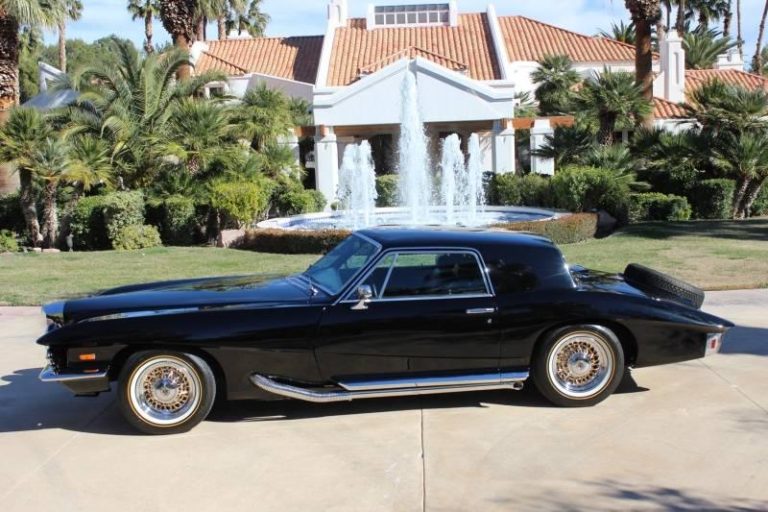
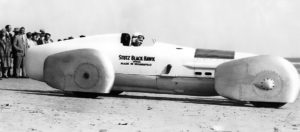
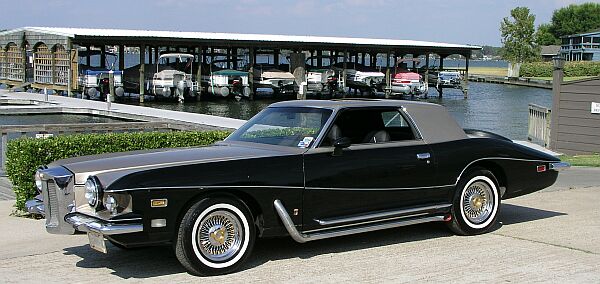
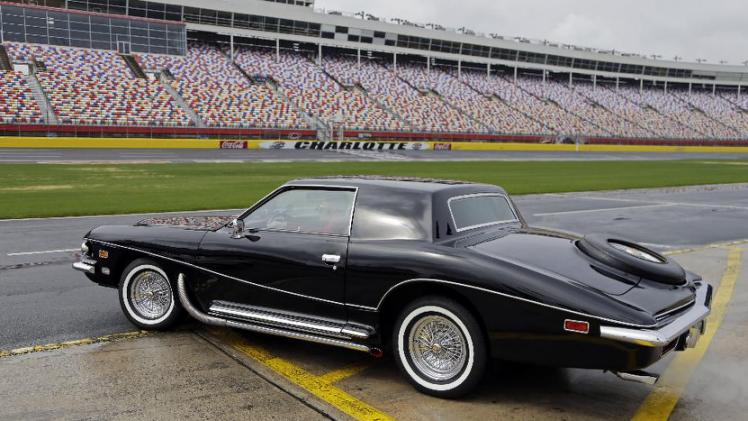
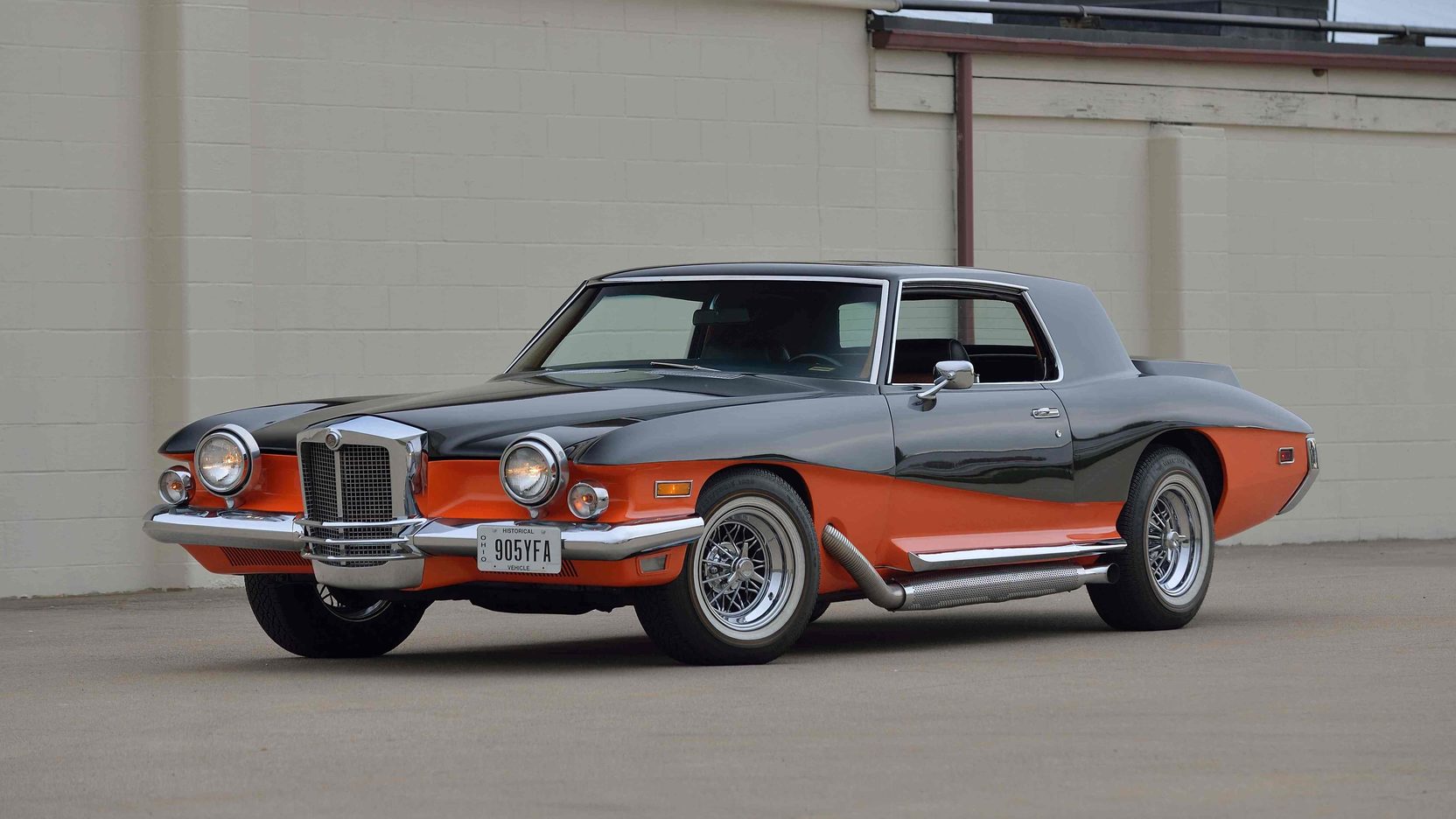
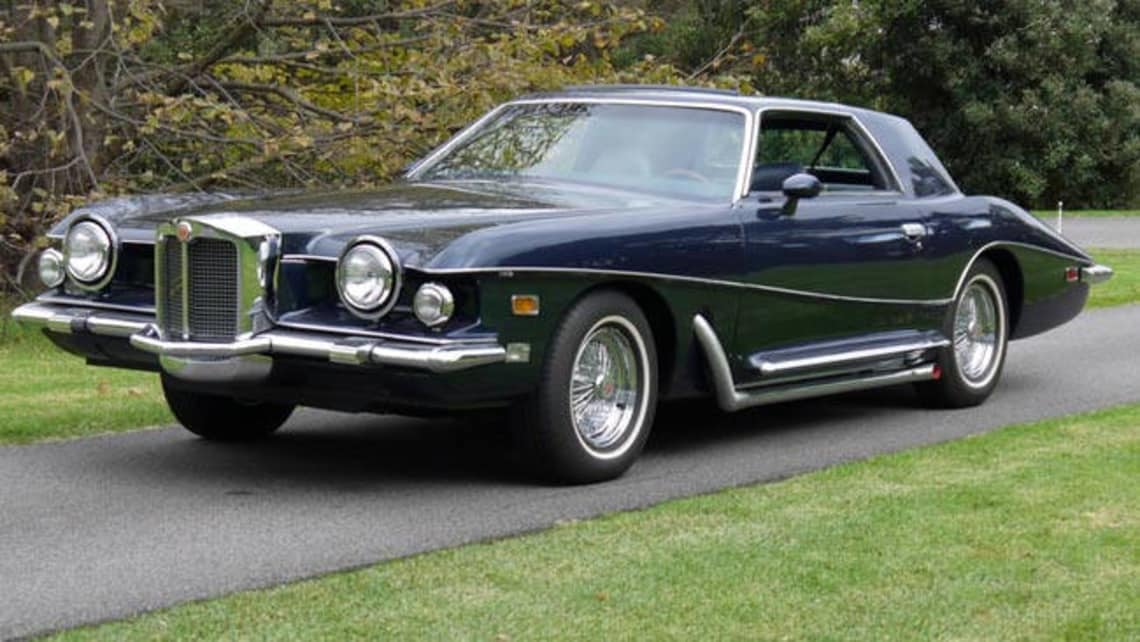
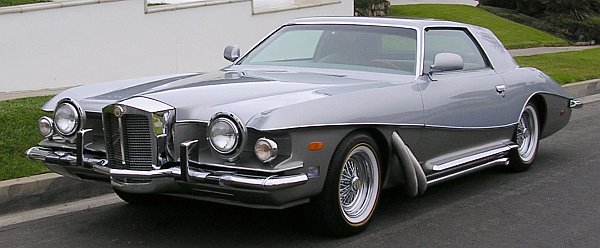
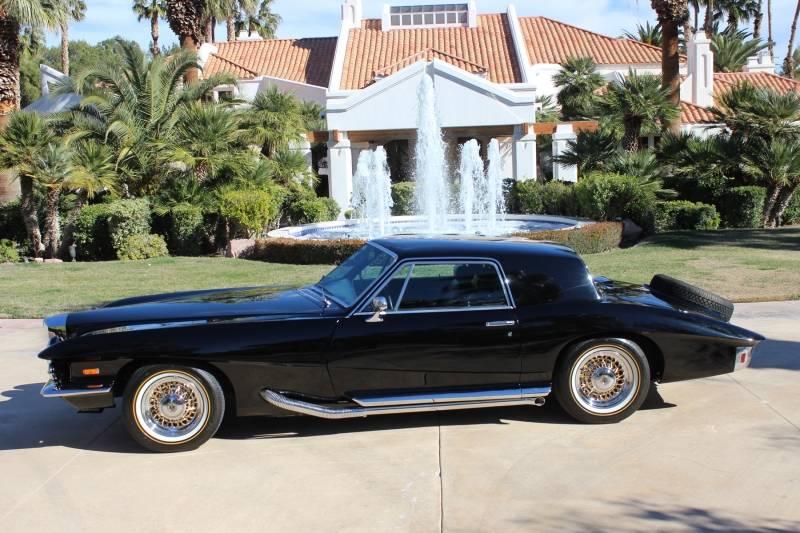
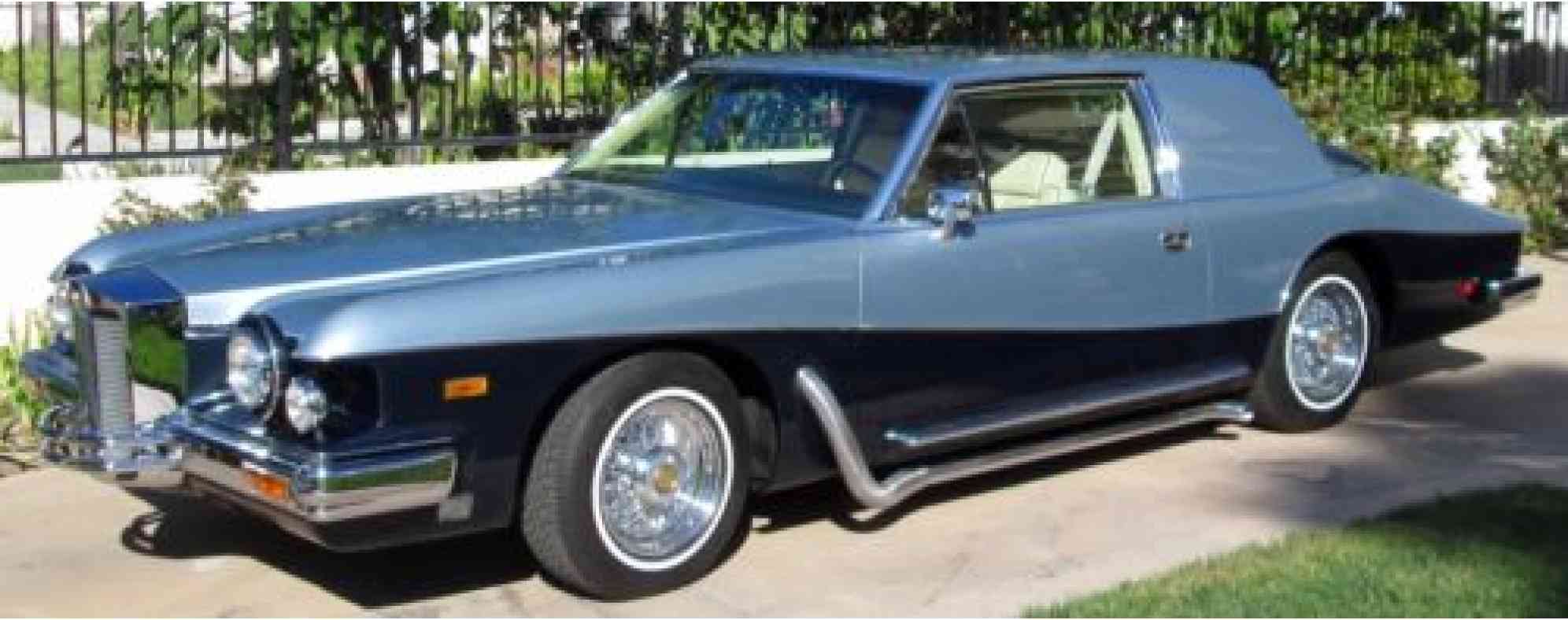
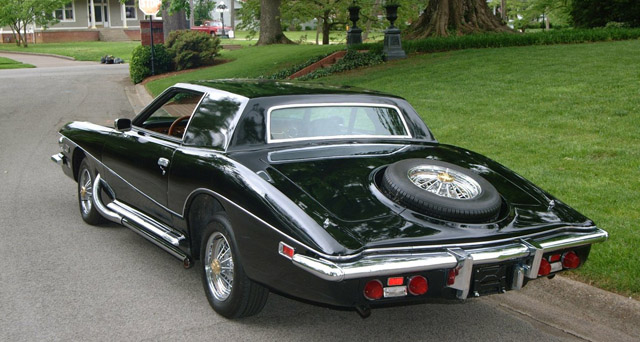
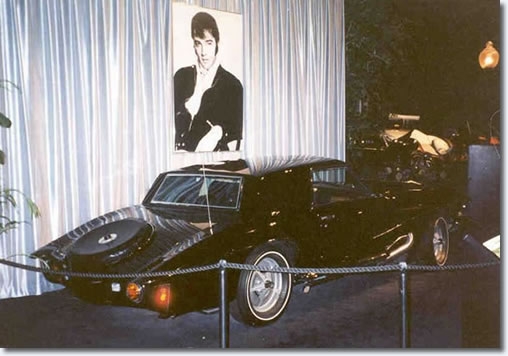
The Blackhawk, carries the legendary brand name of the early 1900s manufacturer: Stutz Motor Company, but it’s more of a concoction than an “official Stutz.” The Stutz Motor Company ran its production line in Indianapolis, Indiana from 1911 until 1935. They are best known as “America’s first sports car” and even set a land speed record of 160.1 mph in 1928.
The body styling for the Blackhawk was prototyped by Carrozzeria Ghia in Turin, Italy in 1970, and sold to GM with the intention of being placed on a G-body chassis (i.e. the Monte Carlo, Grand Prix, Grand National, Regal, Cutlass and others). #badgeengineering. This reborn company was brought back to life by a partnership between James O’Donnell (a New York banker) and Virgil Exner (auto designer who had worked with Studebaker and Chrysler). Exner who helped design the Blackhawk, passed away 2 years after the launch of the Blackhawk in 1971.
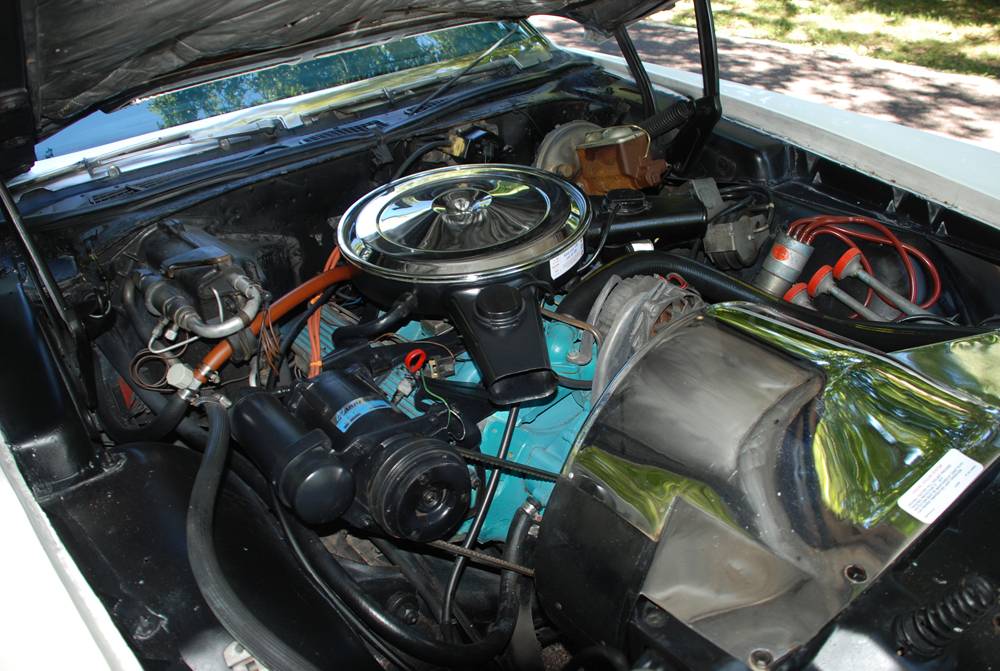
Assembly of the Blackhawk was actually performed in Modena and Torino, Italy from 1971 to 1987 using the Pontiac Grand Prix as its parts bin, later borrowing from the Bonneville, Delta 88 and LeSabre models. The Blackhawk was offered with a variety of engines, not all of them GM, including: the Ford 302, 351 Windsor, 429 Cobra Jet, or 460 Big Block or you could select from: the 307 Oldsmobile, 350 Small Block, Pontiac 6.6 liter 400, the Big Block 454, Pontiac 455, Cadillac 425, 472, or 500 and more. #toomanyoptions. Being hand-built meant that total time to complete a Blackhawk would require about 1,500 labor hours. Imagining how to make all those different parts and configurations interchangeable in a G-body is quite the challenge. That being said, less than 600 Blackhawks were completed.
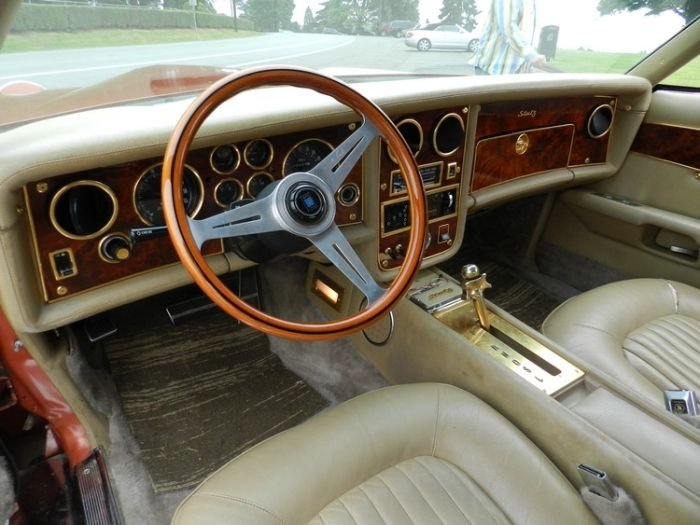
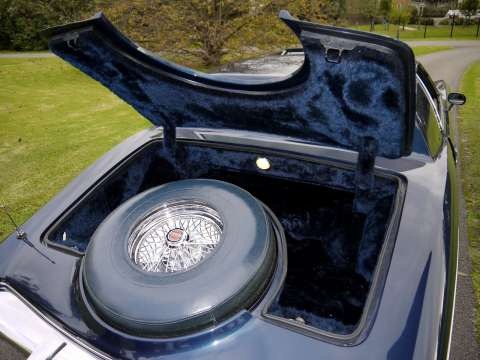
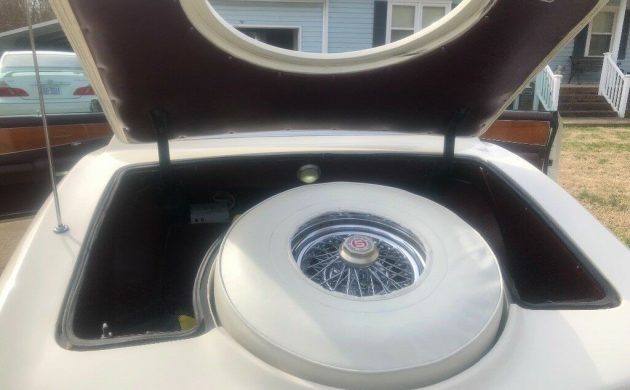
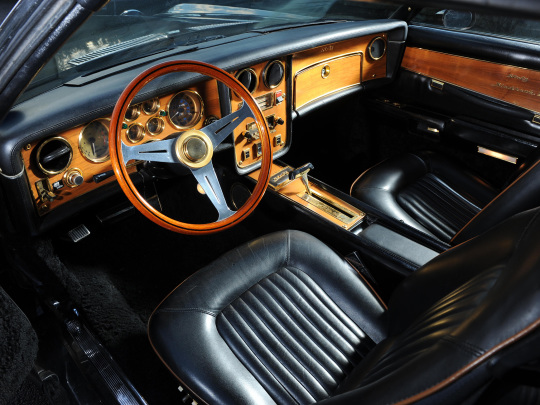
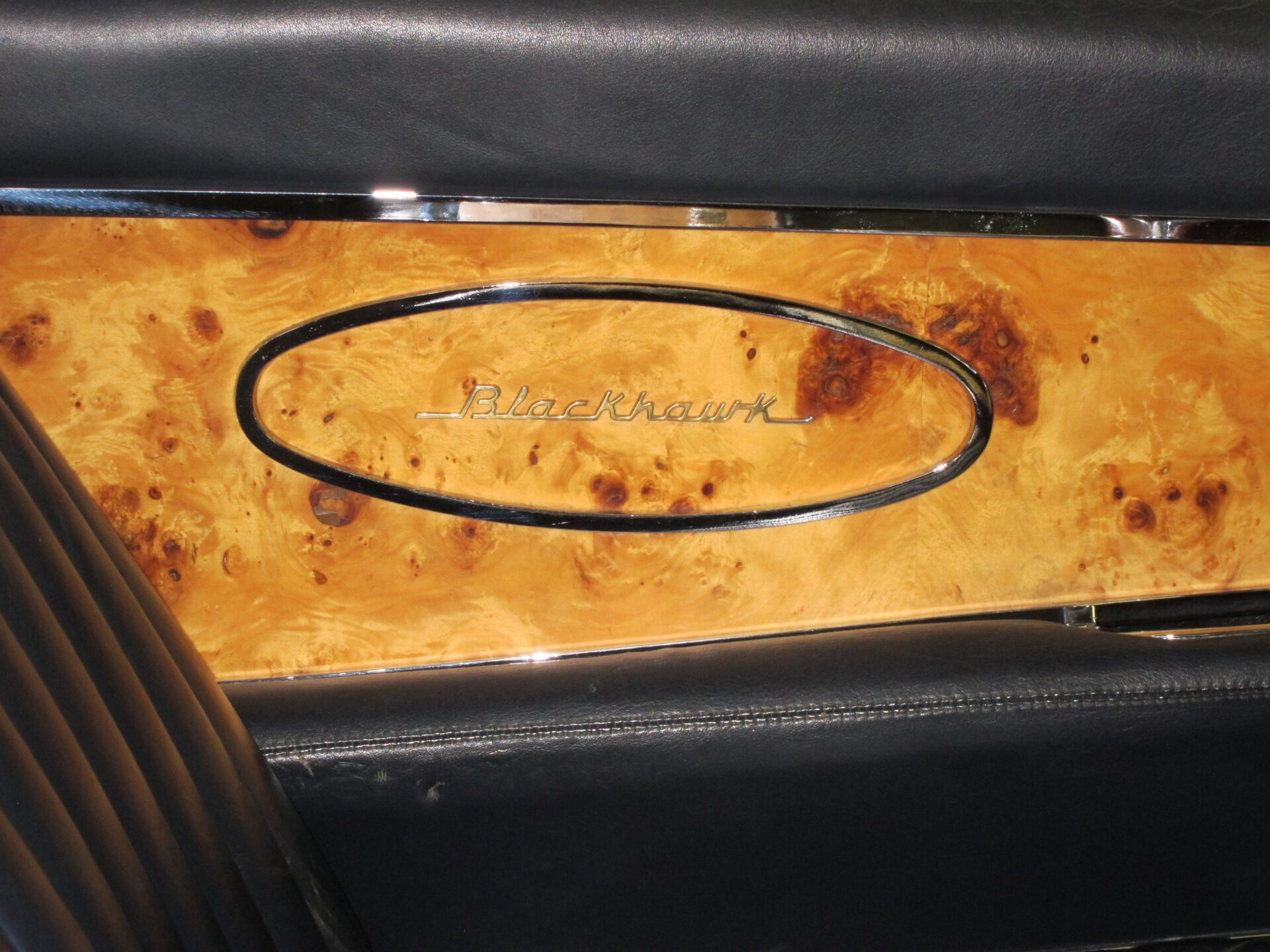
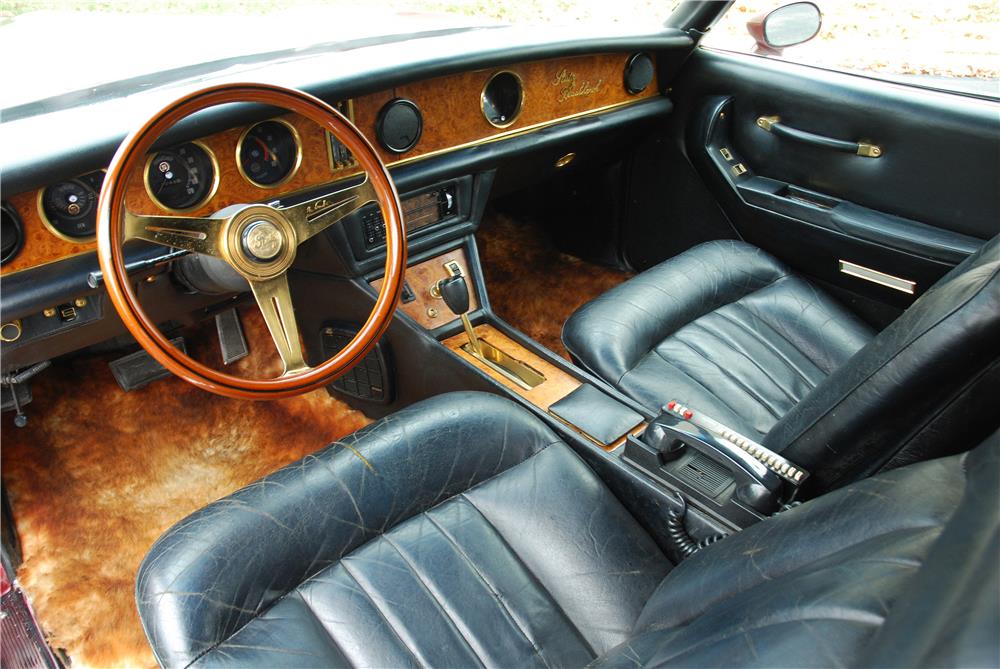
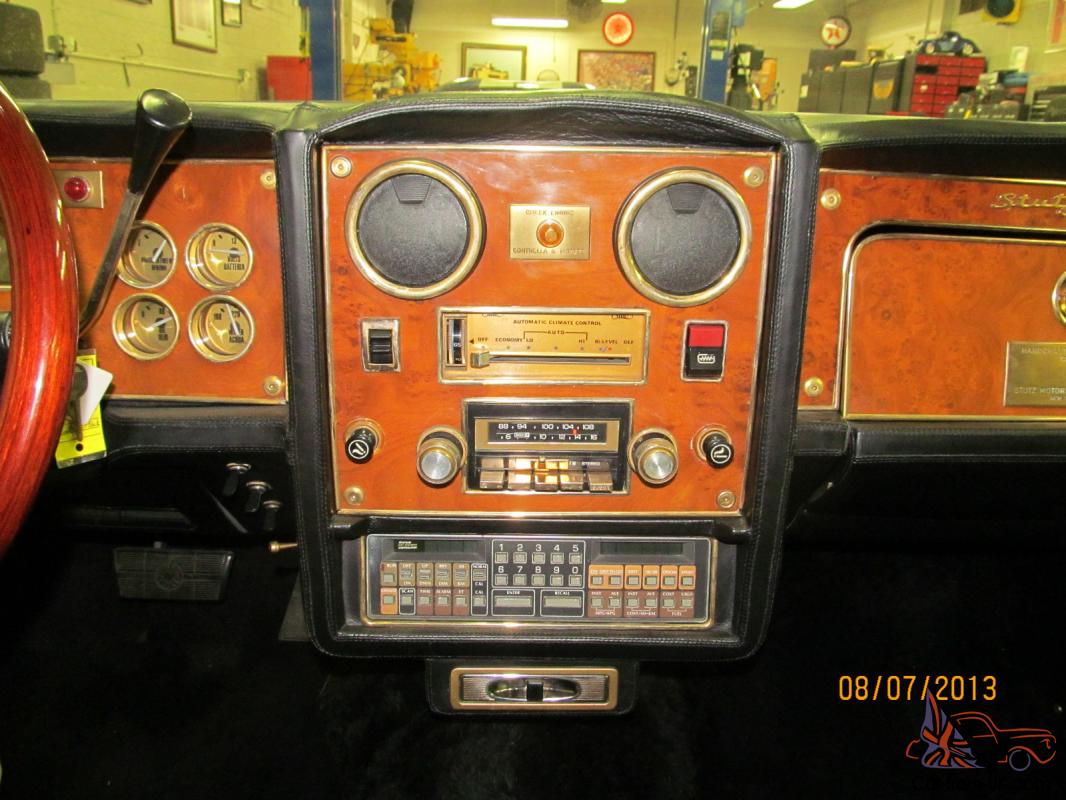
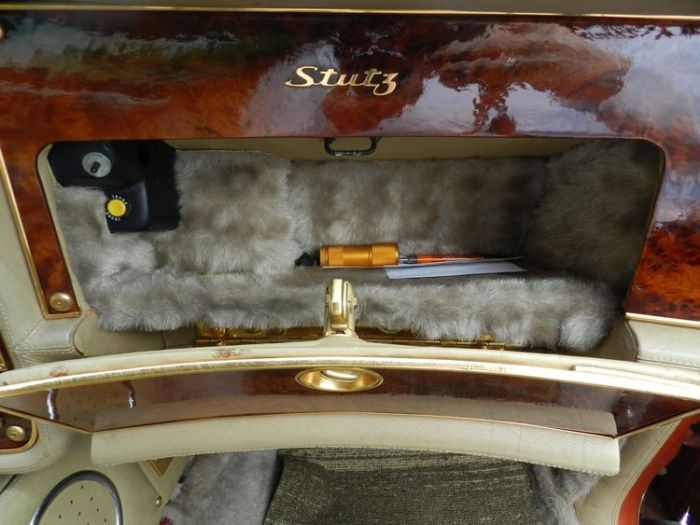
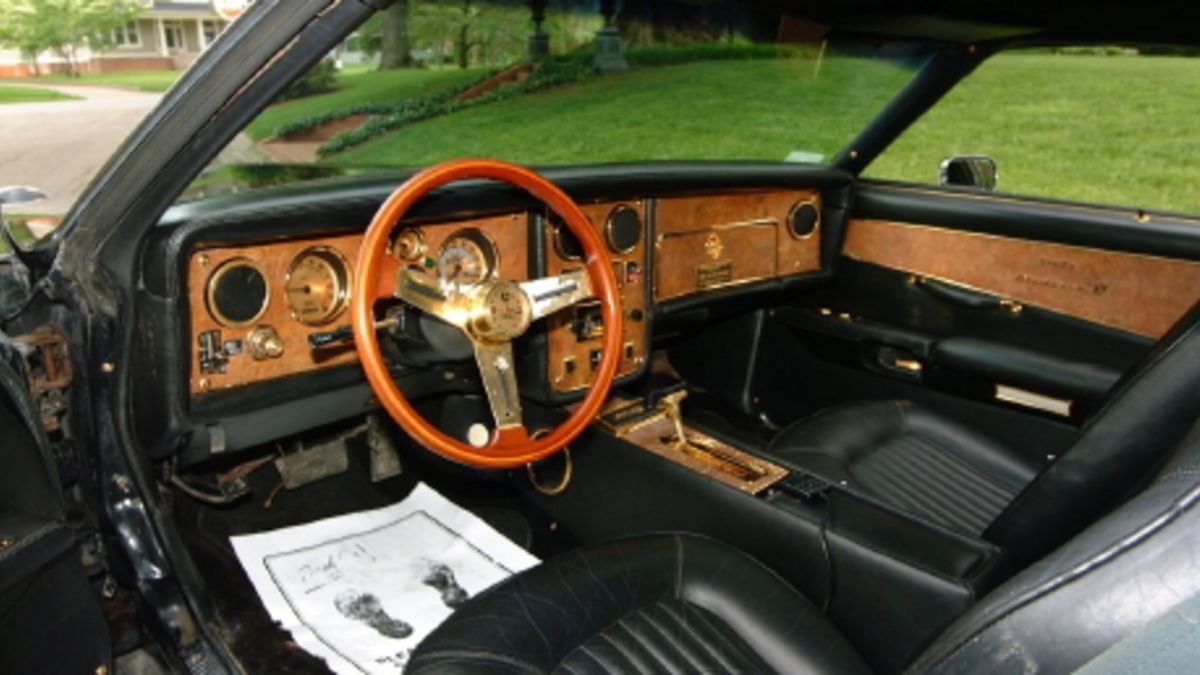
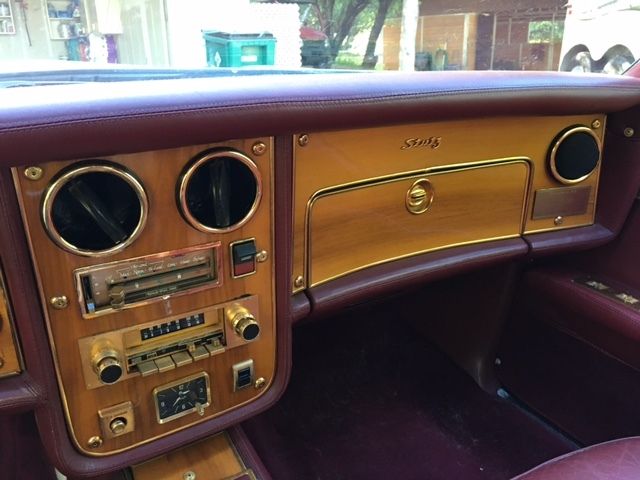
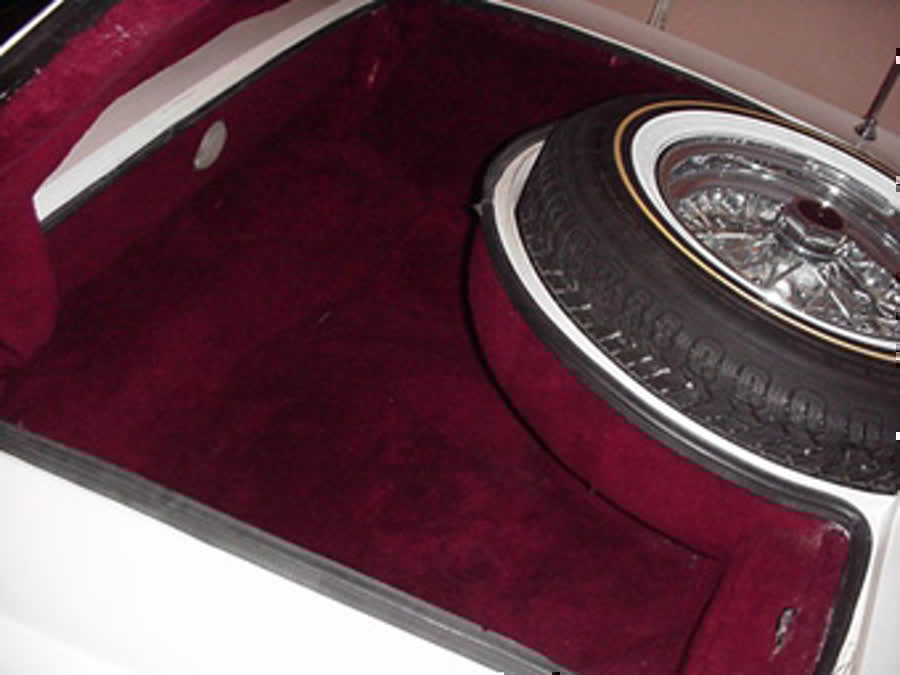
Unlike the original Stutz’s, the reincarnated Stutz Blackhawk was by no means a sports car but was intended to be a high-end luxury car. Although the Blackhawk shared parts from many other manufacturers it had some key things that made it stand out including: freestanding headlights, side exit exhaust, and a spare tire protruding through the trunk lid. Inside it had: leather seats, gold plated trim, bird’s eye or burled wood trim. Uncommon features for the era included in the Blackhawk build were items like: central locking, bi-level automatic air conditioning, burglar alarm, twilight sensing automatic headlight controls, cruise control and even 17 inch run-flat tires. Passengers also enjoyed the cigar(not cigarette)lighter, built-in liquor cabinet and quadraphonic sound system, similar to what you would find on a Lear Jet! – This car definitely made a statement for the elite few who could afford to own them.
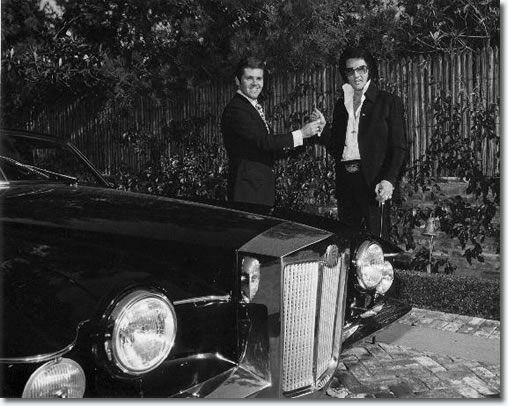
The MSRP of a Blackhawk reached as much as $84,500 with options and many celebrities owned them. Elvis Presley purchased the first one made available to the public for $26,500 on October 9th, 1970. Frank Sinatra wanted that same car but refused to allow it to be shown at the L.A. Auto Show or take publicity photos with it like Elvis who agreed to those terms in order to get the first purchase. Other celebrities you might have heard of that owned one or more Blackhawks would include: Lucille Ball, Dick Martin, Sammy Davis Jr., Dean Martin, Johnny Cash, Jerry Lewis, Willie Nelson, Isaac Hayes, Erik Estrada, Muhammad Ali, George Foreman, Barry White, Al Pacino, Billy Joel, Tom Jones, Paul McCartney, and Elton John. Ownership is easily verifiable because all Blackhawks included a dash plaque with its original owners name on it! #johnvoightslebaron.
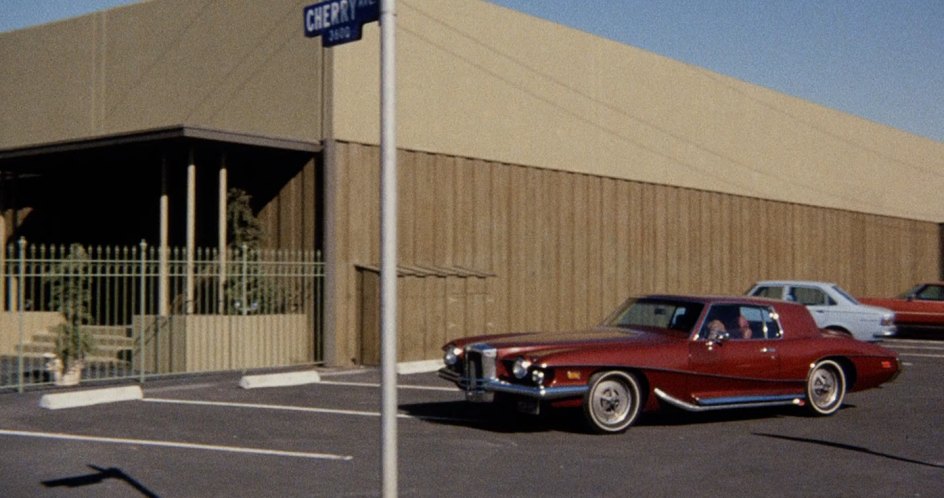
It is said that the Shah of Iran owned 12 Blackhawks! With such celebrity and notoriety, the Blackhawk was now famous. Famous enough to make its way onto the big screen… code named “Karen” in the original “Gone in 60 Seconds” (1974) movie. Another Blackhawk appeared in the movie “8MM” (1999) starring James Gandolfini. Another Blackhawk was used in the 2004 film “Never Die Alone” where DMX’s character is driving a Blackhawk prior to his untimely death. The Blackhawk played lesser roles in episodes of Columbo, and its “likeness” was used in the anime series Dragonball GT. The most recent appearance of a Blackhawk was just this year (2019) in the Netflix biopic “The Dirt” which tells the story of Motley Crue, and driven by the Nikki Sixx.
I have never seen one of these cars in person but the times I have seen them on screen I always wondered what they were. After all my research, I wasn’t sure if I was disappointed or surprised to find that it wasn’t a modified car, kit car, or hot-rod-custom but designed using many existing parts that were available at that time. I can respect the Blackhawk, in a way its a symbol of America, it’s a melting-pot, and very fitting of our culture and the luxury of its era. #murica. Despite its initial backing and celebrity appeal, I think we all knew it was destined not to last, but I applaud the effort just the same.
Racing is a sport of seconds, milliseconds even. As a racer, you do whatever you can to save as much time as possible. Even in an HPDE, you can walk around the paddock and hear countless drivers arguing over (for SHAME!) who had the better lap times and advising each other on where they could shave off a few seconds. I have been told that one way to save time during a race is at the start.Getting a good start could mean the difference between winning and losing, whether it be a 20 minute sprint or a 24 hour marathon, timing is everything. For the sake of this article, there are 3 main methods to starting a race.
The Standing Start – occurs when all of the cars are lined up in a grid format (typically in order of their qualifying lap times). The engines are running and the drivers are buckled in and secured by their safety equipment. They wait as a series of lights flash, prompting the drivers to get ready, and ultimately to take off.
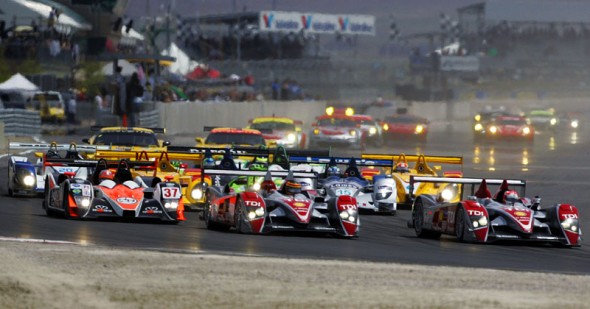
The Rolling Start, in which the cars drive around the track in a formation lap, again lined up typically in order of their qualifying lap times, usually led by a pace car. After they round the last turn heading on to the main straight, the pace car exits the track via pit lane and the racers mash the throttle as they cross the start/finish line, starting the race.
Now you are probably thinking to yourself, “but Mr. Viking Line, that’s only two starts, what about the third?” – Well my friends, the third type is the main subject of this article, The Le Mans Start!
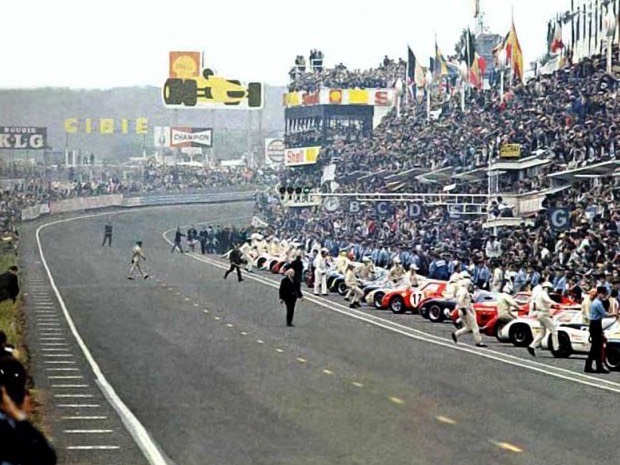
In the summer of 1923, the little town of Le Mans, France decided that it was going to put on a race. It was going to be a nice 8-ish mile drive through the beautiful French countryside all the while behind the wheel of some of the most amazing automobiles in the world. But it wasn’t supposed to be just any race, they were going to host a 24 hour endurance race, delightfully named the “24 Heures du Mans”, which is French for the 24 hours of Le Mans. Not only were they going to have a 24 hour endurance race through the streets of their little town, they were going to make it even more interesting, by having the drivers run to their cars at the start! Huh?!? – This peculiar method of starting a race would be dubbed the Le Mans Start.
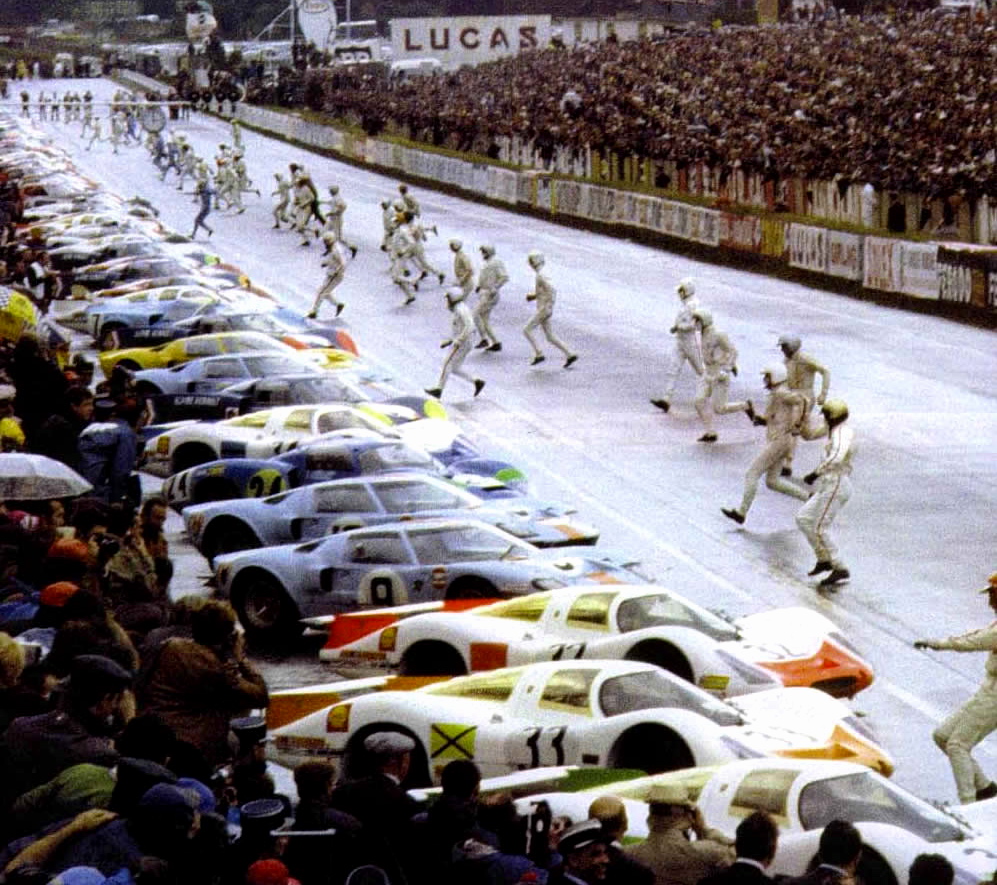
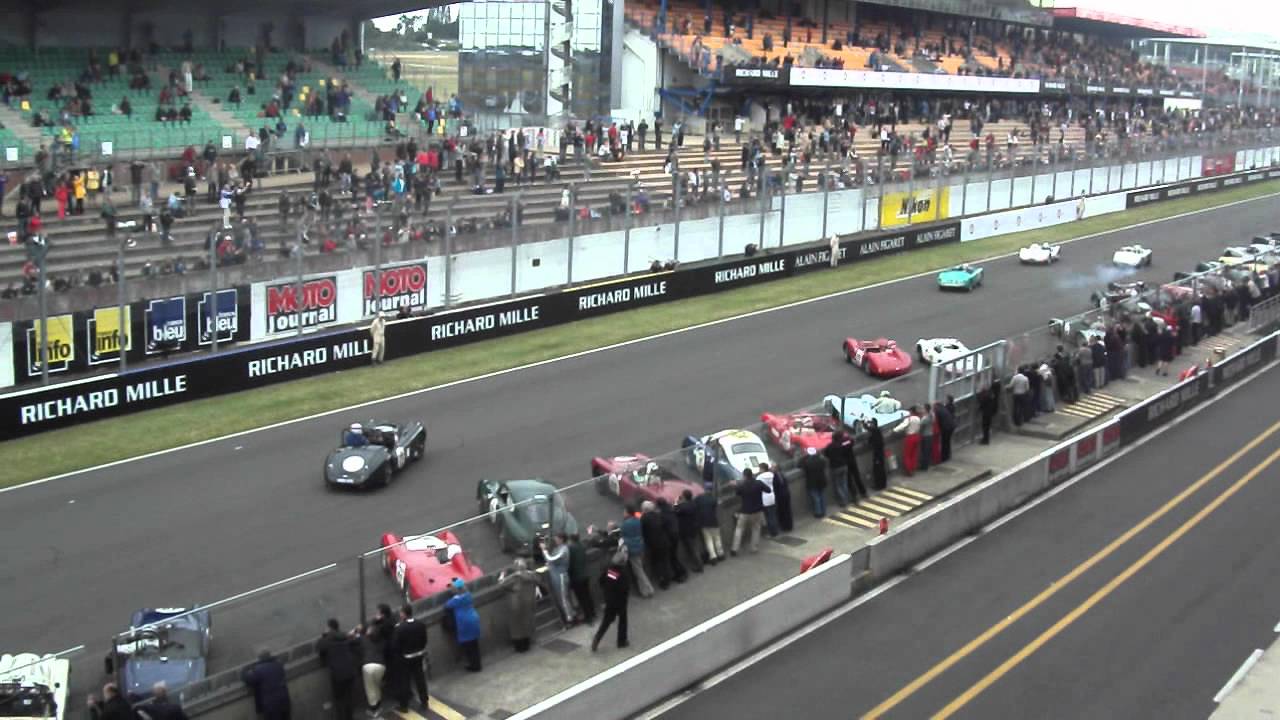
…and it goes something like this: cars are parked diagonally down the side of the track (pre-1962 they were lined up in order of engine capacity, post-1962 the qualifying times determined the order). Drivers are placed across the track opposite their cars.At the green flag, the drivers would run across the track as fast as they could, hop in the car, buckle all the necessary safety gear, start the engine, put the car in gear, and then speed off! – Well, at least in theory that’s how it should have gone.
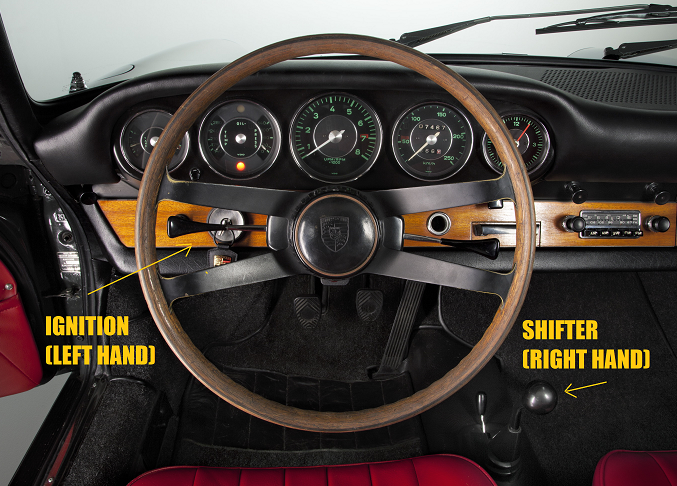
Trivia: Did you know that some cars – Porsche’s come to mind – have their ignition key on the left-hand side? (above) – This design feature was found on cars that were destined to run at Le Mans. This design allowed the driver to enter the car and start the car with one hand while simultaneously putting the car in gear with the other, saving precious time. #themoreyouknow.
In reality, many drivers would skip some of the essential steps, like say, securing their safety belts, in an attempt to get out on track ahead of the field. Many drivers would drive off before completely fastening their safety gear, some of them traveling several laps in the fastest cars in the world, before attempting to even buckle up. Let’s think about that for a minute… professional race car drivers, the best and fastest in the business, were skipping the simple task of securing themselves into the car (or even strapping their helmets), for the sake of a few second’s head start on the competition. As you can imagine, this caused a lot of problems, some idiotic and some funny, (such as drivers jumping into the wrong cars by mistake, or jumping over the car, only to have done so with such force that they missed entirely) and some more dangerous. 1969 in particular is an important milestone for the Le Mans Start, as it was the final year this start was used (at least in Le Mans). Trivia: There were only 10 deaths** during Le Mans races between it’s inception in 1923 and 1969. **There were other deaths during testing and practice and even one death of a driver heading to the track itself on public roads.
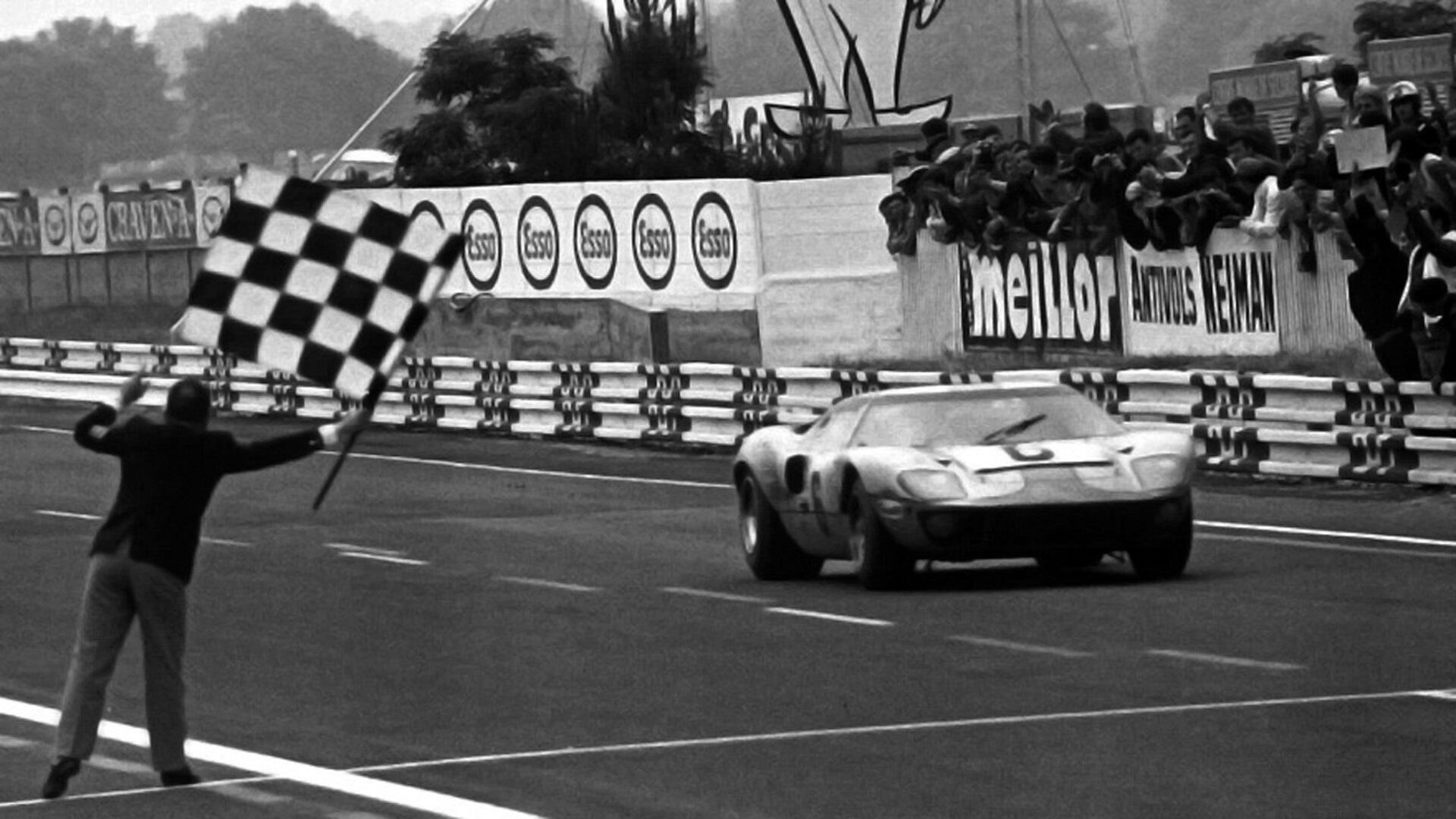
Enter Jacky Ickx, driver of one of the Ford GT40s in the 1969 race. A brief history on Jacky’s career: he participated in the Le Mans race 15 times, he raced in Formula One (with 116 starts, 13 pole positions, 8 wins, and 25 podiums), he won the World Endurance Championship both in 1982 and 1983, and he raced and won in Formula Two and in the Paris-Dakar Rally. To say Jacky was a real “pro” is an understatement. But despite all of his success as a racing driver, there is one thing he is remembered for the most in his career, and that’s his 1969 Le Mans race (and start). Jacky was a huge spokesperson for Motorsports safety and very outspoken about his feelings on the dangers of the Le Mans start. As racing officials were not too keen on changing rules in the name of safety, Jacky decided to stage a protest of the Le Mans start. As the green flag dropped and the drivers ran to their cars, Jacky walked slowly and precisely to his car (see the man walking in the feature photo above). As other drivers sped off, maybe buckled in, maybe not, Jacky took his time and secured himself into his Ford GT40 before starting the race. Now, it is here where I will mention that on the first lap of this race, a driver by the name of John Woolfe was driving his Porsche 917 when he lost control and wrecked. Because he did not secure himself into the car he was tossed from the vehicle and was killed. On the first lap. This was the very reason Jacky was protesting the Le Mans start.
Fast forward to 24 hours later and Jacky Ickx, the racing driver who protested the start of the 1969 Le Mans by walking to his car while other drivers ran, ended up winning the race. Thus proving that the Le Mans start was far more dangerous than it was necessary to be successful.
The following year, 1970, the Le Mans start was modified once again. Although cars were still lined up along the side of the track, the drivers were already in the cockpit securely buckled in with engines running. Finally, in 1971, the Le Mans start was completely abolished in favor of a more traditional rolling start.
As exciting as it must have been to see drivers running across a race track at full speed, jumping into their cars, starting their engines, and speeding off… driver safety was paramount and the rules changed in the name of driver safety. If you are wondering if the Le Mans start is used in Motorsports at all anymore, the answer is, kind of.Trivia: There are some motorcycle and bicycle races that still use it and there are some off-road and dirt track races that use a variation known as the Land Rush start.
On a recent business trip with my boss and fellow petrol-head, he always asks me questions like “if you had to buy a car today, something sporty, but can still take the kids to school – what would you buy?” – I usually pause for a moment and my answer is always the same “to be a master petrol-head, it is said one must own an Alfa” – and until recently, family-sized Alfa’s weren’t something readily available in the US. Growing up with a huge crush on the GTV-6, I’ve always wanted an Alfa but figured no way, no how. That being said, thanks to the merger between FIAT and Chrysler in 2013, we have started to see Alfas return to the US for the first time since the early ‘90s.
Tune in everywhere you stream, download or listen!
Expanding on my answer to my boss, I add “and more specifically, the Giulia”. Its such a handsome car, some would say too masculine, but very Italian. Usually, my boss will smile at my response and we spiral into all sorts of other alternatives, because as I’ve mentioned before, he’s 6’7” which makes “fitment” a real challenge. His current daily is a supercharged Land Rover Discovery LR4, last of the line, and perfect for his Scottish heritage and Viking stature.
Unlike previous rounds of “what car should I buy?” this time he responds “funny you mention the Alfa again… we saw one on the road the other day and my wife turns to me and says ‘honey, what is that?’ – to which I replied ‘an Alfa, very chic’ – and she returned with ‘is it an Irish car?’ – To which I replied (with gusto) ‘no, its Italian!’ then she says ‘then, if its Italian, how come it has a shamrock on it?’”#noncarpeople – We shared a laugh and moved on with the conversation.
It did have me thinking, What’s in a name? – I’m sure many of us recognize the insignia but do we really know the backstory? Therefore, lets spend a couple minutes talking about the Alfa name, the logo and why an Italian auto maker chose a 4-leaf-clover to represent their brand.
Alfa Romeo
Alfa Romeo (pnn: “Alpha Row-may-oh” ) was founded by Frenchman Alexandre Darracq originally as Società Anonima Italiana Darracq (SAID) in 1906 and morphed into A.L.F.A. (“[Società] Anonima Lombarda Fabbrica Automobili” which roughly translates to “Anonymous Lombard Automobile Factory”) on 24 June 1910, in Milan, Italy. 5 years later entrepreneur Nicola Romeo, would take control of A.L.F.A in 1915 and graft his last name to the new merger. Like a marriage where both parties want to keep their names, the new company would be known from then on as “ALFA-Romeo”. And contrary to petrol-head belief, Alfa has been associated with FIAT for many years, but didn’t officially become a subsidiary of FIAT until 1986. Today, Alfa is officially known as: Alfa Romeo Automobiles S.p.A.
The Cross and The Snake
Now that we know the simple history of the name: Alfa Romeo, what of this cross/snake logo? Is this some reference to St. Patrick ousting the snakes from Ireland?
Actually, the Alfa logo is comprised of pieces of the coat-of-arms associated with Milan. The red-cross (easily mistaken for the flag of St. George) represents the flag of Milan
and the biscione (right bottom, pnn: “Bee-show-neh”) is a crowned viper swallowing a Moor, which is part of the emblem of the House of Visconti who ruled Milan from 1277 to 1447.
The logo was designed in 1910 by a young engineer in the Alfa office named Romano Cattaneo.
Still nothing Irish here… So what’s with this 4-leaf-clover?
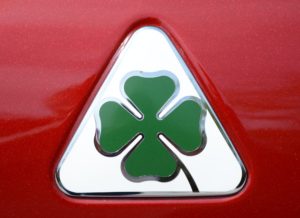
The quadrifoglio (also called the ‘cloverleaf’, pnn: “Quad-ree-foe-leo” ) has been used on Alfa Romeo race cars since the death of Ugo Sivocci in 1923. Sivocci was hired by Alfa in 1920 to drive in the four-man racing team – known as Alfa Corse – with included drivers: Ugo Sivocci, Antonio Ascari, Giuseppe Campari, and Enzo Ferrari.
Legend has it, Sivocci was thought to be very experienced, but often followed by bad luck. His counterparts, like a lot of race car drivers, were a bit superstitious and decided to banish his bad luck by painting a white square with a green four-leaf clover in the center of the grille of his car. Sivocci had immediate success, crossing the finish line first! And so, the quadrifoglio became the symbol, the lucky charm, of the racing Alfa Romeos after that victory at the Targa Florio. Since WW2, the quadrifolio has been used to designate the higher trim models in the Alfa offerings. The first non-racing Alfa to carry the quadrifolio was the ’63 Guilia TI Super and today, the quadrifolio can be found on the front fenders above/behind the wheels of these special models. So there you have it… everything you needed to know about the famed Alfa logo and the quadrifolio!
The most recent use of the quadrifolio can be found on the wings of the Alfa Romeo Giulia, which FIAT unveiled in 2016 (below). The Giulia has quickly gained traction against rivals at Audi and BMW in the luxury-sports-sedan market, and is said to be excellent to drive. Unfortunately, we still haven’t gotten the chance to get behind the wheel of this awesome Alfa, and maybe we should start wearing quadrifolio tee-shirts to bring us better luck 😉 – All kidding aside, we hope to follow up this article with a Test Drive of this beautiful machine! In the meantime, we’ll leave you with this…
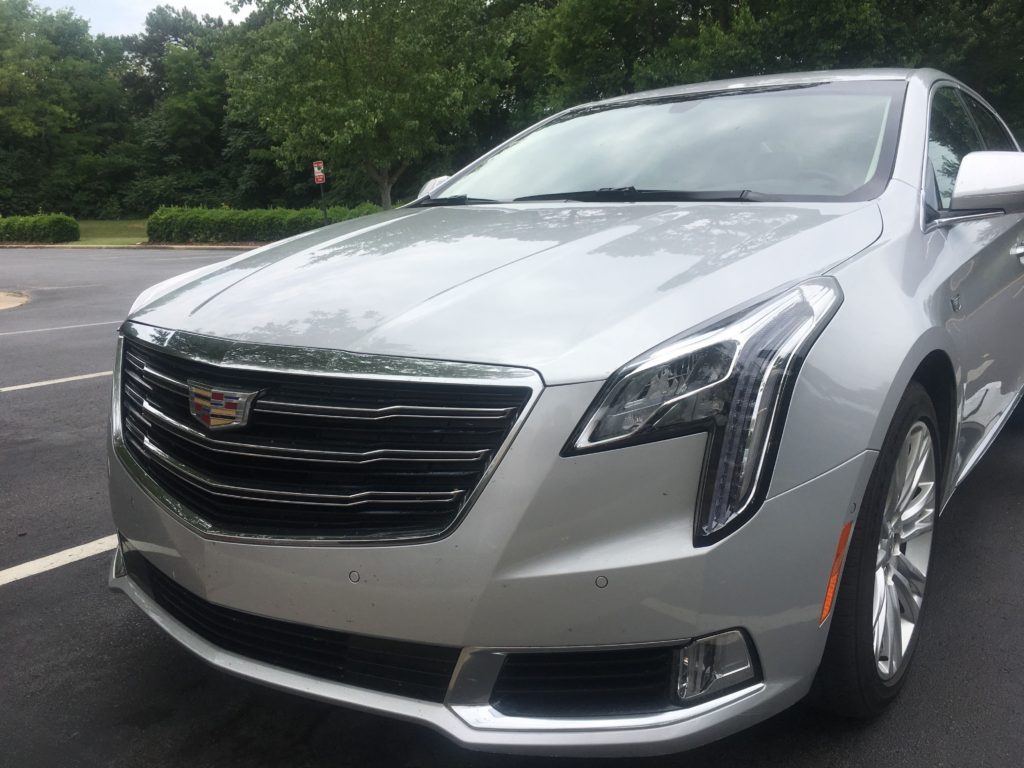
I have to put blame squarely on member Matt Y for taking me for a ride in his BMW 740iL many years ago and introducing me to the world of the luxury sedan. That peaceful backroad drive was the beginning of a guilty pleasure to seek-out and experience more of these land yachts. Over the years, and usually on business trips, I’ve been fortunate (or maybe unfortunate) to have colleagues accompany me that are rather tall… and by tall I mean… 6’4″, 6’5″, and my latest co-worker topping the charts at 6’7″ – needless-to-say, they don’t fit in the company approved intermediate class Nissan Sentra or Hyundai Elantra. The rental clerks see these guys coming and it’s Christmas in July – instant upsell! – and this trip was no exception. With an added shortage of vehicles due to a large conference in the area, this 2019 Cadillac XTS was just what we needed for this trip.
The XTS is a striking car; really aggressive looks for such a large vehicle, angular but also sweeping… much like the A-12 Oxcart Article-127 pictured with it (cover photo). And like the A-12, it’s smooth, stealthy and fast.
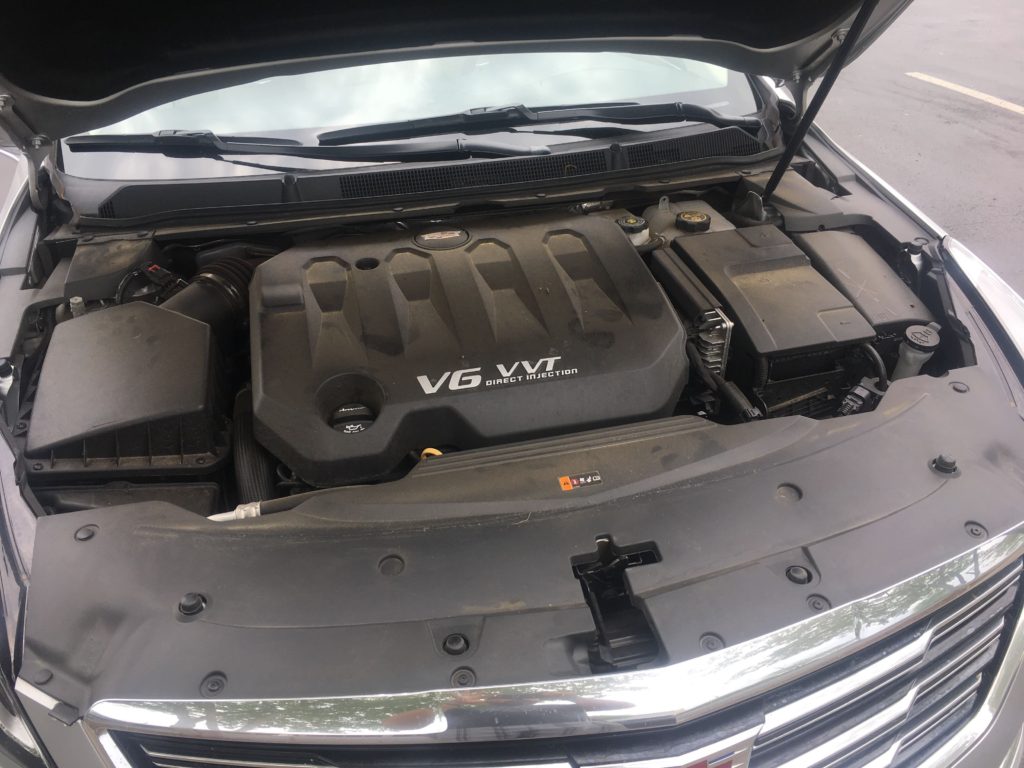
The 3.6-litre VVT direct-injection V6 is once again carried over from the Camaro. Its as docile as you need it to be because of the gearing, but step down on the skinny pedal and its lift-off time, with 305 hp and 264 torques pushed through the front wheels. You heard me right, in order to achieve the massive “people space” in the XTS, this Cadillac has the V6 transversely mounted and strapped to a 6-speed front-wheel-drive automatic transmission. Note: There is a XTS-4 all-wheel-drive version available as an option.
Since Huntsville is a city that still enjoys building lots of off-ramps and cloverleafs, once I had the car to myself for a while it was an opportune time to test the braking and handling. This Caddy has about 30K miles on it, so it’s well broken in at this point, but late braking into turns didn’t leave me disappointed – the brakes are firm and responsive. Expecting some front end “push” by aggressively late apexing, the factory equipped 245/45 19″ Goodyears didn’t complain one bit and the car stay planted even accelerating out of the ramps. The ride is comfortable, but isn’t the squishy “old-mattress” feel of older domestic luxury vehicles. The suspension is tight and the car feels firm and planted at all times.
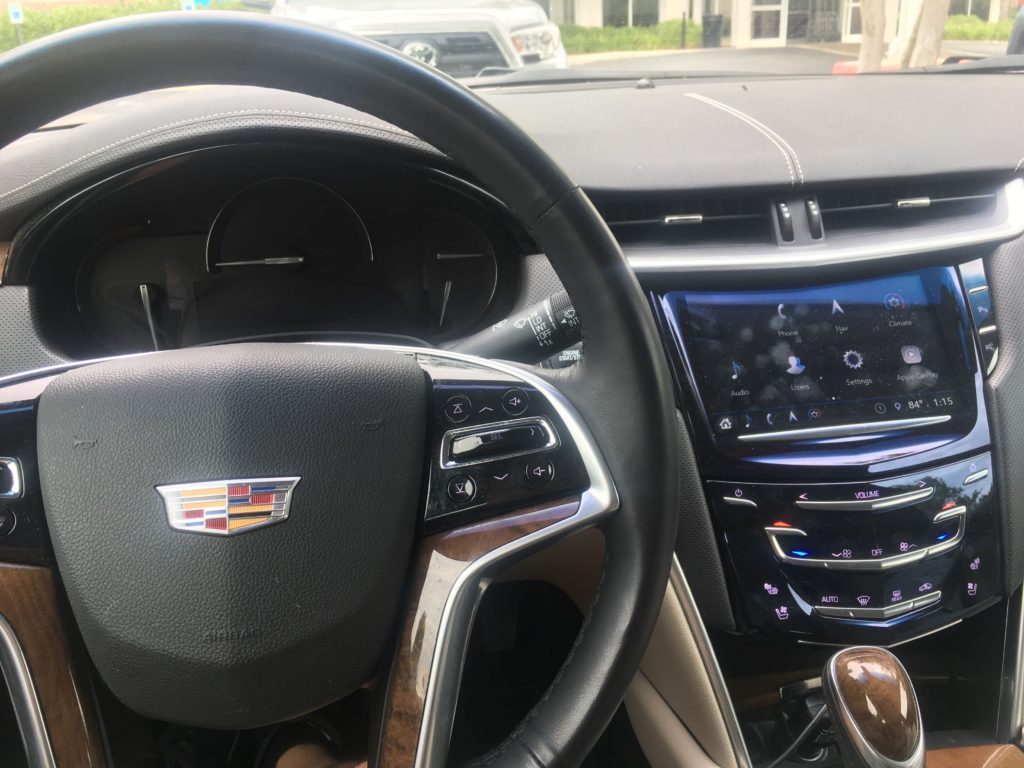
Having some previous experience with modern Cadillacs, my wife owned a 2015 SRX-4 w/ Performance Package for a number of years, I had an idea what to expect. I would be lying if I told you that Cadillac has completely redone the living space in the XTS compared to the older models. I was disappointed to see that it was just more of the same. The CUE (Cadillac User Experience) Infotainment System has been updated with an even more difficult to use UI, and most everything else in the interior is actually the same as the SRX including the buttonless haptic feedback HVAC system. Cadillac continues to supply the BOSE audio system which has a very rich sound with good speaker placement.
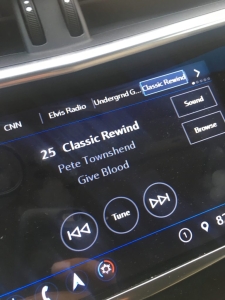
Take a moment to enjoy the song we decided to test the system with: Peter Townshends “Give Blood.”
Now that the E in E-brake stands for Electronic, I was amused by the placement and size of the button. Compared to other Caddy’s I’ve driven the button moved from the center console to the left extreme of the dash near the door and is about the size of a window switch. It took me a minute to find it before I was able to pull out of the rental lot without dragging the rear brakes. LOL. I’m hopeful that this is the “end of the line” (it’s going on 6+ years) for this interior design and maybe something newer is on the horizon for future Caddys.
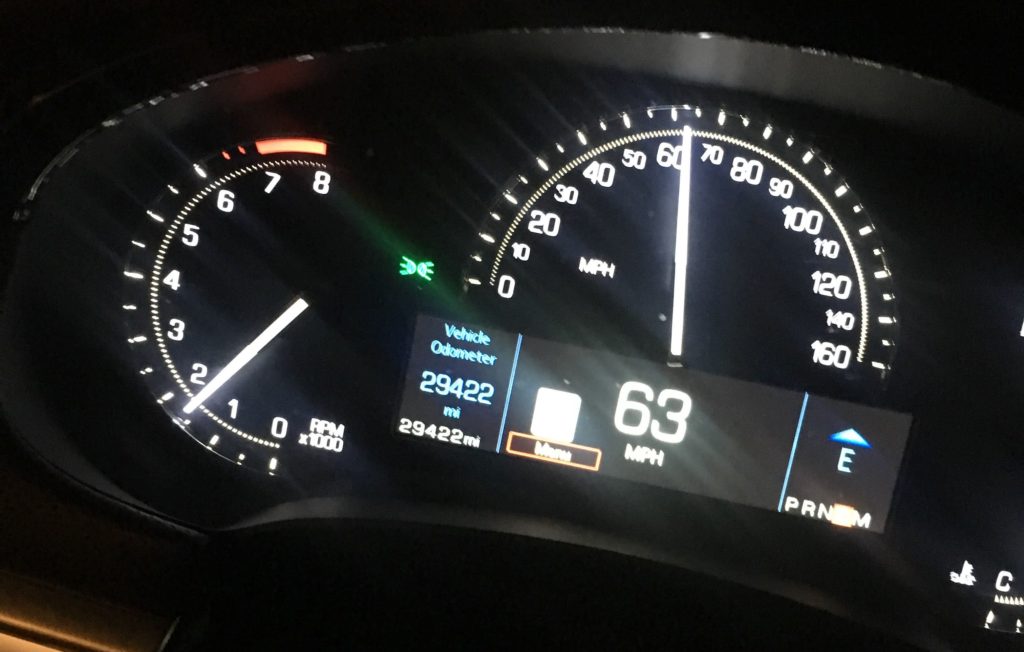
Like other Cadillacs I’ve driven with this power plant and drivetrain, the shifting is seamless and the revvs are ultra low. At 63 mph (100 kmh) this engine is barely over idle in high-gear at 1600 rpm. However, the gas mileage was similar to that of my wife’s SRX which means low 20’s combined average, and because it’s a 6-cylinder, there is no cylinder cut off like in a V8 nor does it have engine auto start/stop when sitting at a traffic light.
The biggest downside to the XTS is the visibility; with the low slung roofline like offerings from Audi & VW (A7, Arteon, CC) and others like Mercedes, you end up with massive blind spots. The B-pillar always seems to be in the way no matter how you adjust the seat. I tried adjusting the mirrors every which way as well, they’re big – but not big enough. You really must move around in the seat and look over your shoulder to make sure you’re not going to side-swipe traffic while merging. I’ve been tagged more than once as a “geezer” for still parking a car without using the back-up camera. To me, the ability to park a car “the old fashioned way” plays a huge part in judging the vehicles visibility. Parking the XTS was awkward, I actually found it easier to back into a spot than pull forward; this has a lot to do with the way the front edges are shaped and how low you sit because of the roof line. Taller drivers didn’t seem to have an issue, +1 for those guys 🙂 — All that, and let’s face it … it’s huge!, clocking in at 200″ its 3″ shorter than your average mini-van.
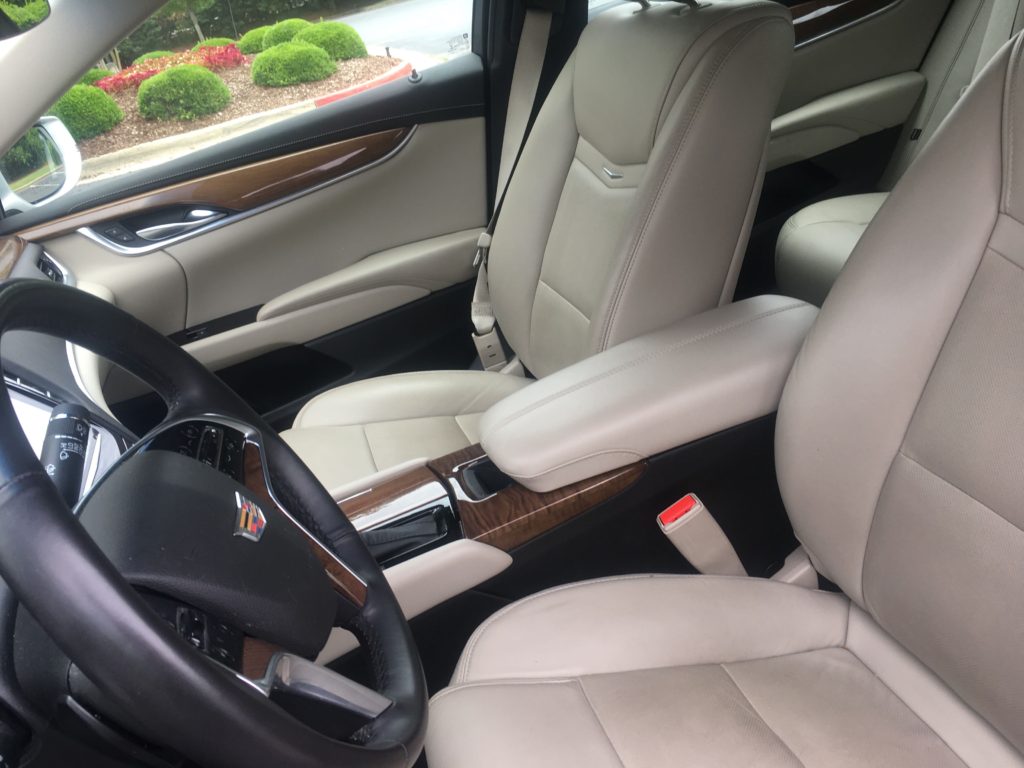
The upsides to the XTS are abundant. Plenty of room for my 6’7″ companion, massive trunk (“fits a full coffin” as Matt Y puts it), plush interior and tight build quality. Nothing outrageous or obscene about the car – a very clean and sleek design inside and out. And to be totally honest, I’m generally not a fan of beige (tan) interiors in any car, but I like the combination of two-tone and faux-wood in this car. Does it come in black?
The biggest concern for me if I was considering an XTS would come down to value. Taking the MPG completely off the table, the $52K price tag puts this car into a category with many other well equipped vehicles and even some sports cars. This makes it a tough sell. But like all car reviews on GTM, be sure to do your own homework and go test drive these cars for yourself. For full specs on the Cadillac XTS you can find them on Edmunds.com or visit Cadillac.com for details or dealers in your area.
There’s nothing like getting into a hot car on a summer day… But there’s nothing worse than jumping into a hot car that was built between the late ’90s and mid-2000s, reaching for any piece of trim that was covered in that faux-leather-look rubberized plastic and getting your hand sticky. You know the stuff I’m talking about, that molten-tar that immediately leaves you with a black smear of melted rubber residue on your hands and clothes. YUCK!
From our experience the Germans went gonzo for this new interior styling technique and seem to have dipped their entire interiors in this mess, leaving us with mobile La Brea Tar Pits on 90+ degree days. We’ve seen this “schtuff” (that’s the technical term for it, btw) appear across all brands we’ve come in unfortunate contact with during this build period – to include Ferraris! And if you’re a VW owner, you know EXACTLY what I am referring to, its everywhere.
Who is to blame for creating and selling this nightmare product to the automotive masses? – well, that remains a mystery. But maybe the value prop during the sales pitch went something like this: “Its an affordable way to plus up your injection molded items to make them (air quotes) ‘feel-like’ higher quality leather items found in more expensive vehicles. It’s textured, cool to the touch and UV-resistant. You’re going to love it, and your customers will too.” — Whomever it was, this person, this group of sadistic mad scientists, or dreaded bean counters … they signed off on a seemingly cheap and innocent solution not thinking (or legitimately long-term testing) the kind of gift they were going to bestow upon the automotive community in the near future. There’s no doubt looking back 20 years, they laughed all the way to the bank while our cars continue to seemingly melt in car parks across the world. (sigh) </rant>
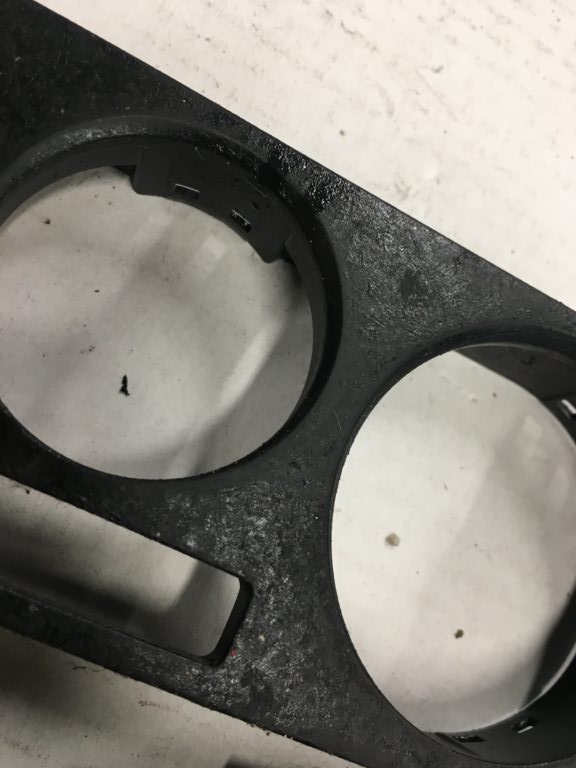
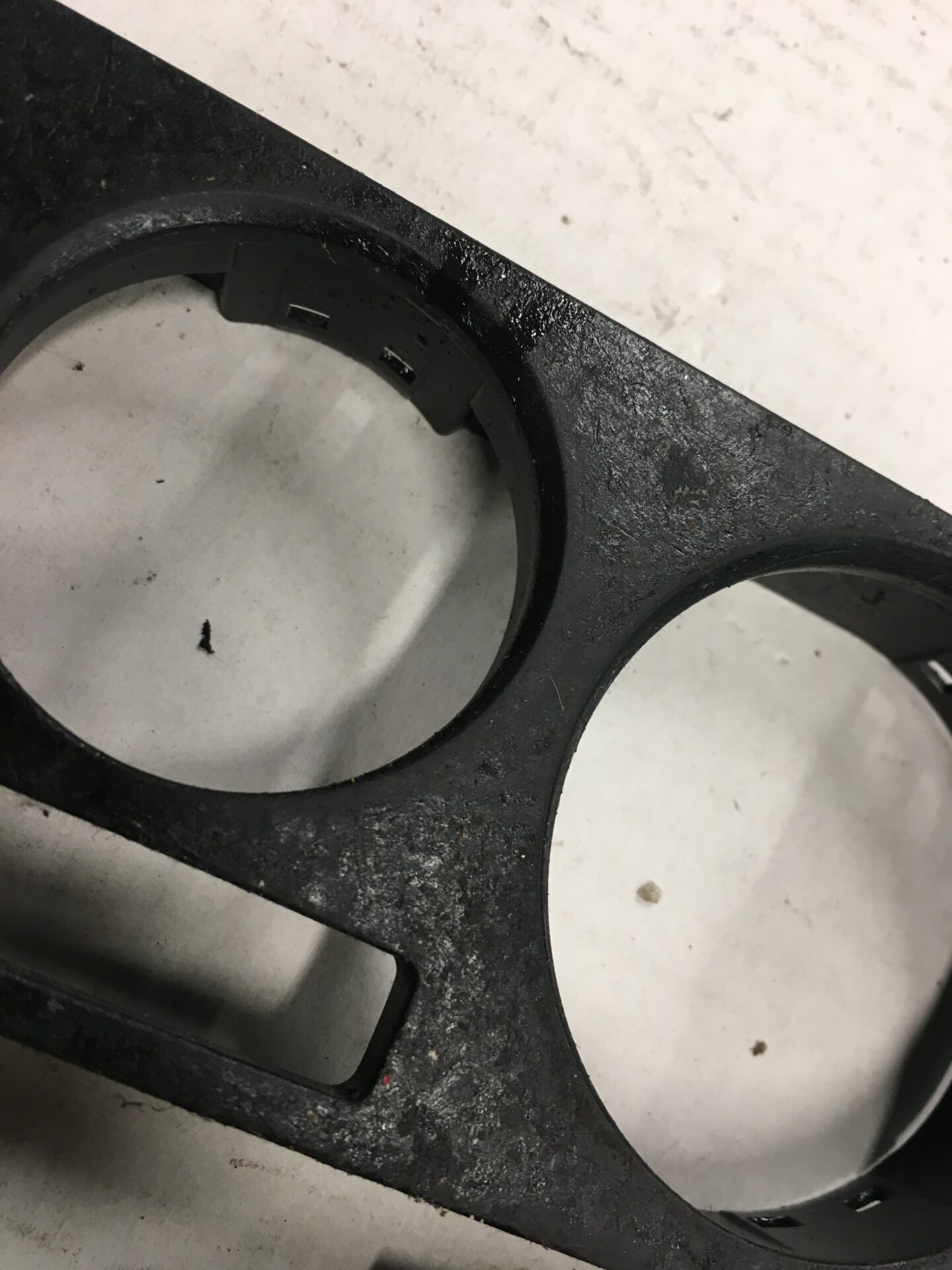
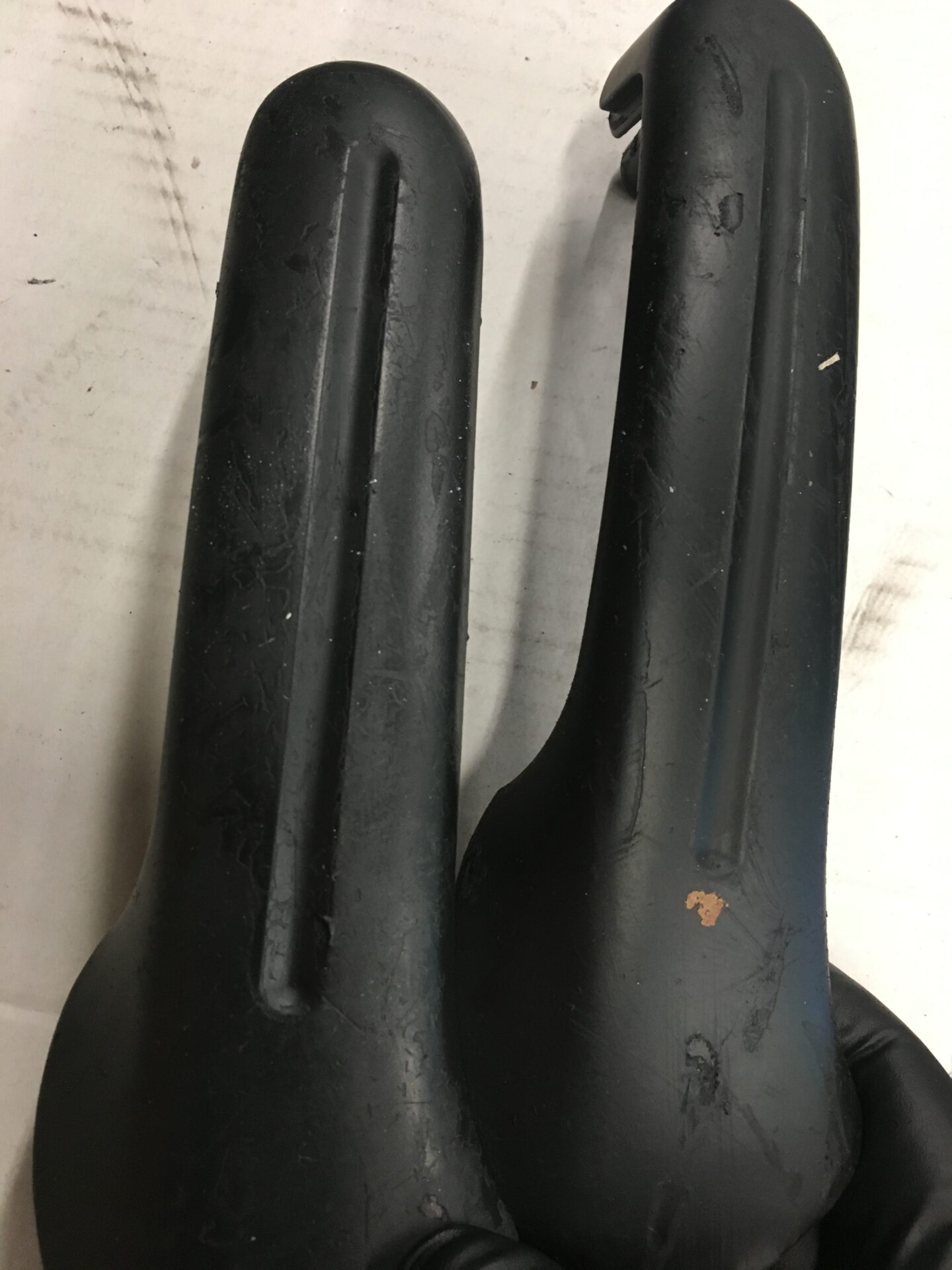
This HVAC trim looks like it has a disease.
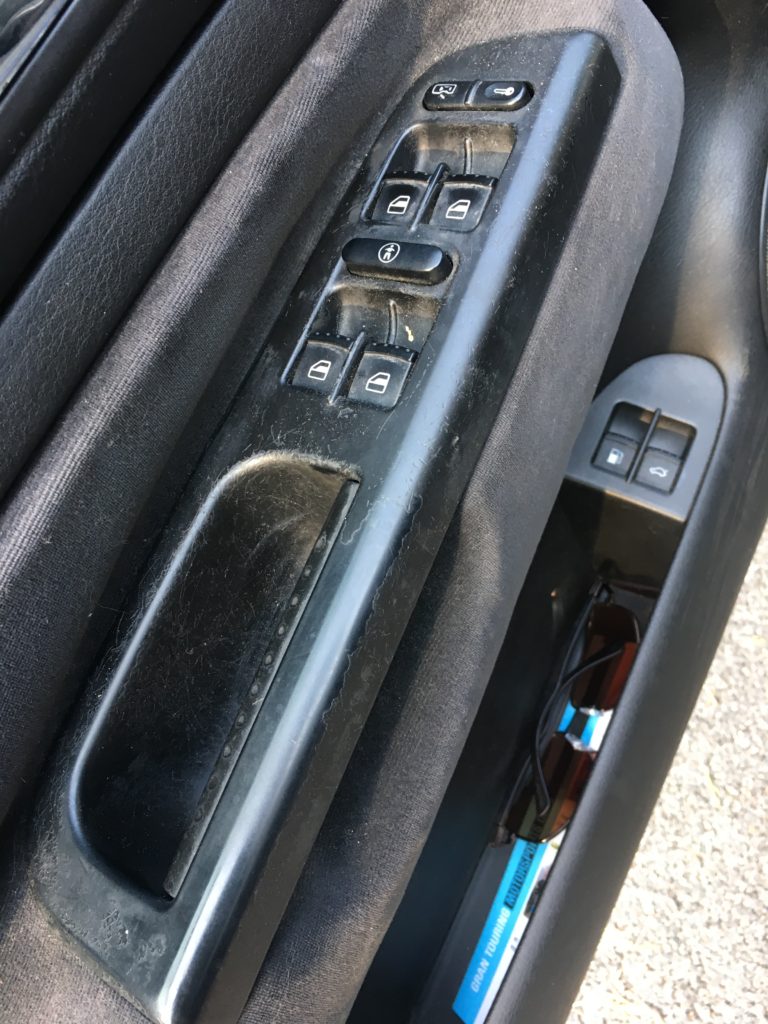
These rubberized door handles are all scraped up and sticky like bubble gum!
Would you touch this? There are public toilet stalls with nicer handles!
OMG – EWW!
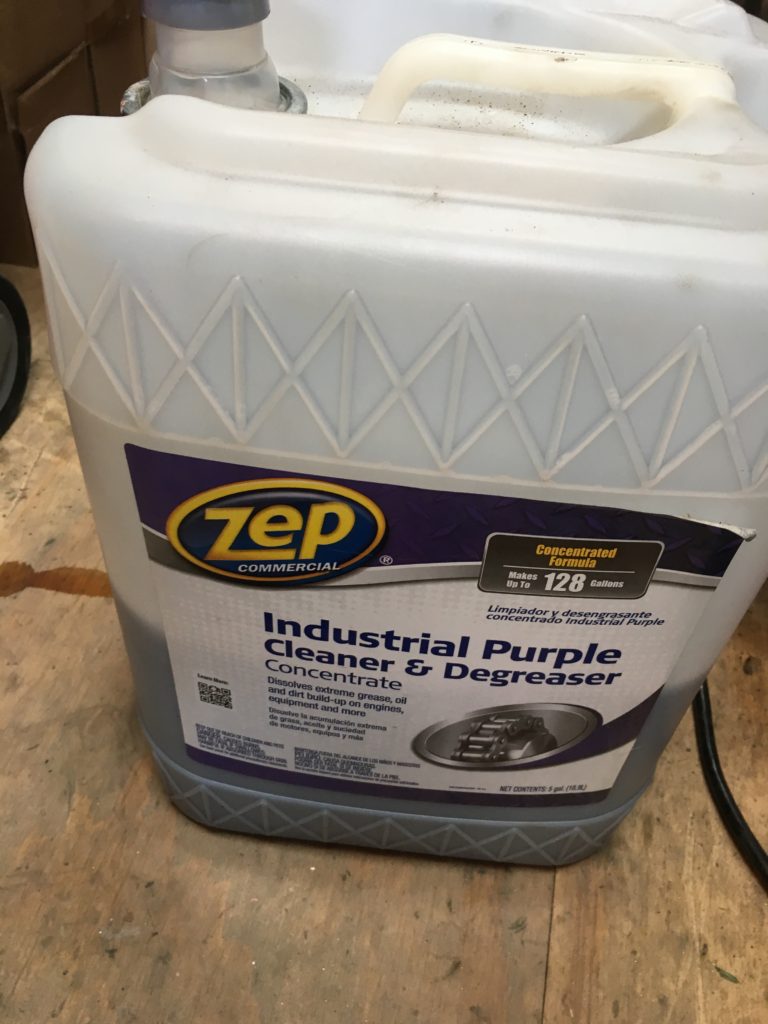
I’ve heard stories of people selling perfectly good cars and throwing away clothing because of how bad these interiors can become. But being a bit of a mad scientist myself, more like MacGyver – and still enjoying cars from this era – I’ve been looking for a way to combat this “goop” in my interiors for years. I’ve tried all sorts of solvents, balms, salves, cleaners, detergents, acids, heck even Carb-&-Choke cleaner (aka Acetone) and straight Gasoline. Nothing seems to work, nothing seems to make it better, only waaaaay worse. Up until recently I had just given up, figuring it was near impossible to rid an interior of this plague, and replacing the parts just meant delaying the inevitable. But like Archimedes (who figured out buoyancy while in the bath tub) solutions often come to me during the oddest times. Earlier this week, I literally tripped over a 5-gallon jug of ZEP’s (water-based) industrial parts wash and degreaser in my shop. Cursing its existence as a waste of money, I moved it to the side and carried on with my work. My EUREKA! moment came to me in the middle of the night and the next morning I decided to head up to our favorite salvage yard: CHAZ’s Used Auto Parts and go dig up some melting specimens and test out my hypothesis.
Like all great ideas, they start off simple. For this to work you need something that is strong enough to loosen the rubber finish without damaging the part. Any solvent, acid or petroleum based liquid is too strong, and also tends to make the rubberized eczema react and become molten toxic waste, ruining the underlying plastic. You can’t sand it down and you can’t paint over it. As mentioned earlier, the water-based ZEP cleaner I nearly discarded, is just “okay” for washing heavily greased tools and parts. Classic mineral spirits are way more effective, that being said, I’d been ignoring it for a while. I’ll say it again, this time with meaning: it’s a water-based degreaser, this means it might be less caustic to the entire part. So what if…
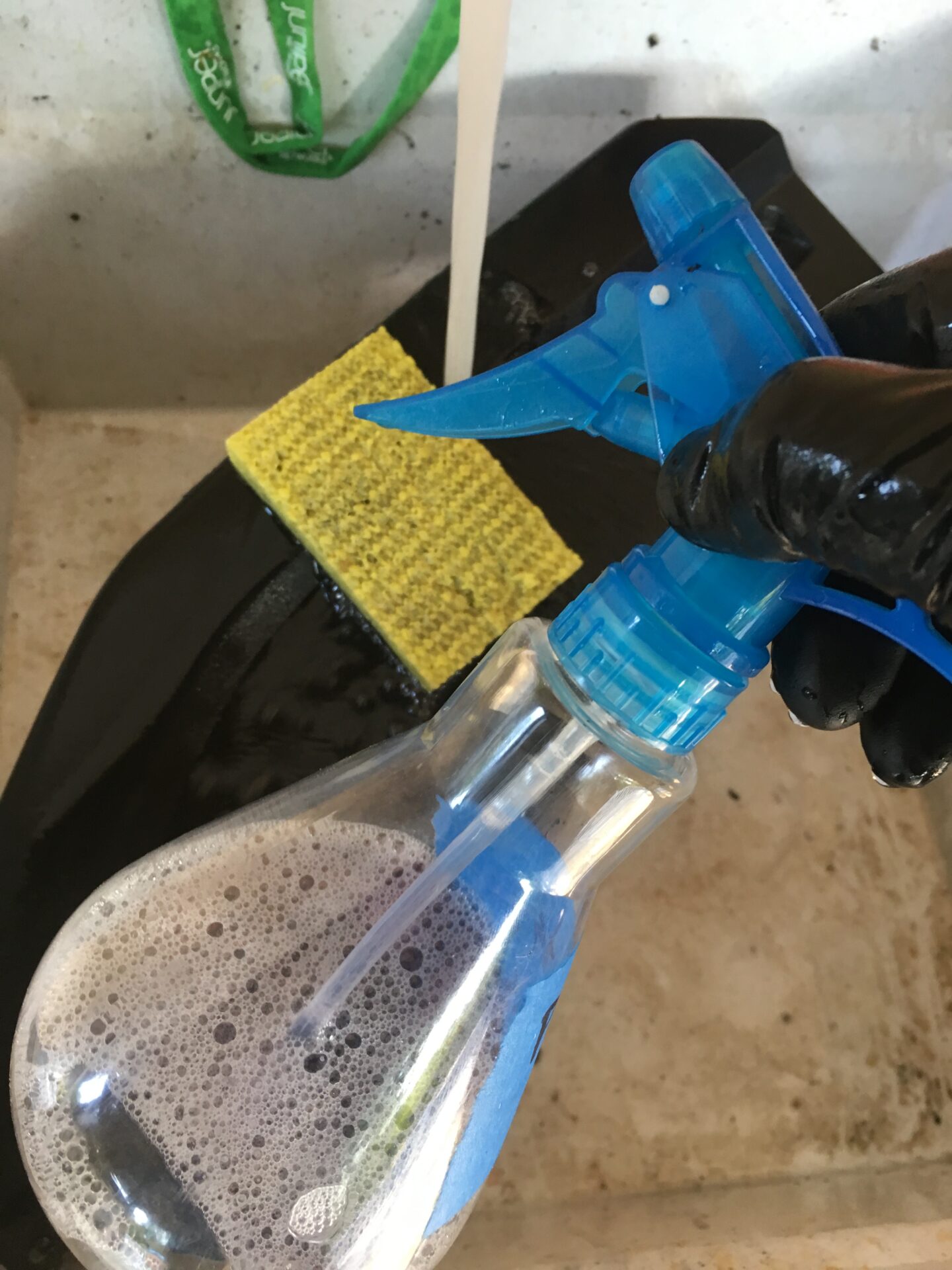
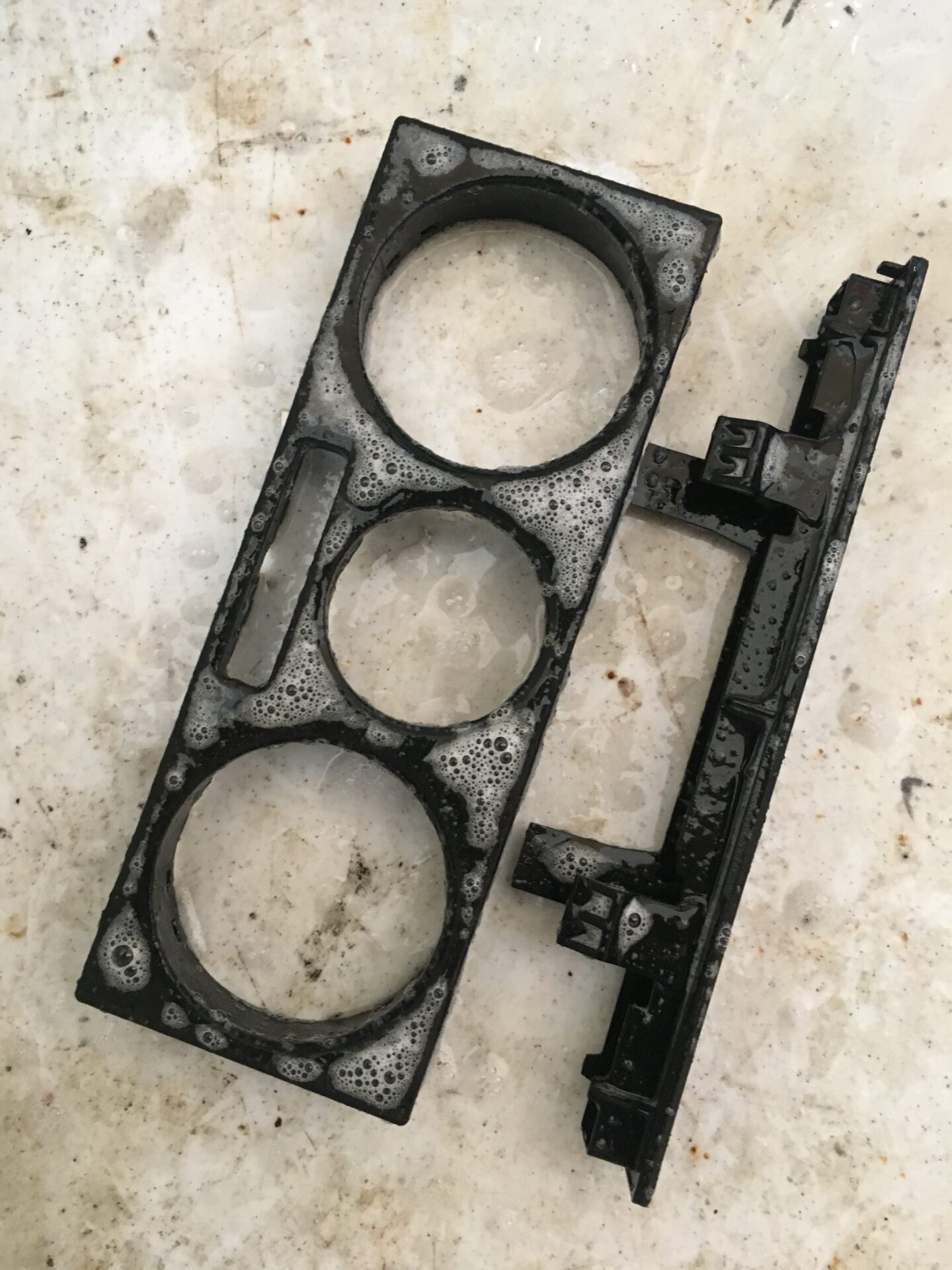
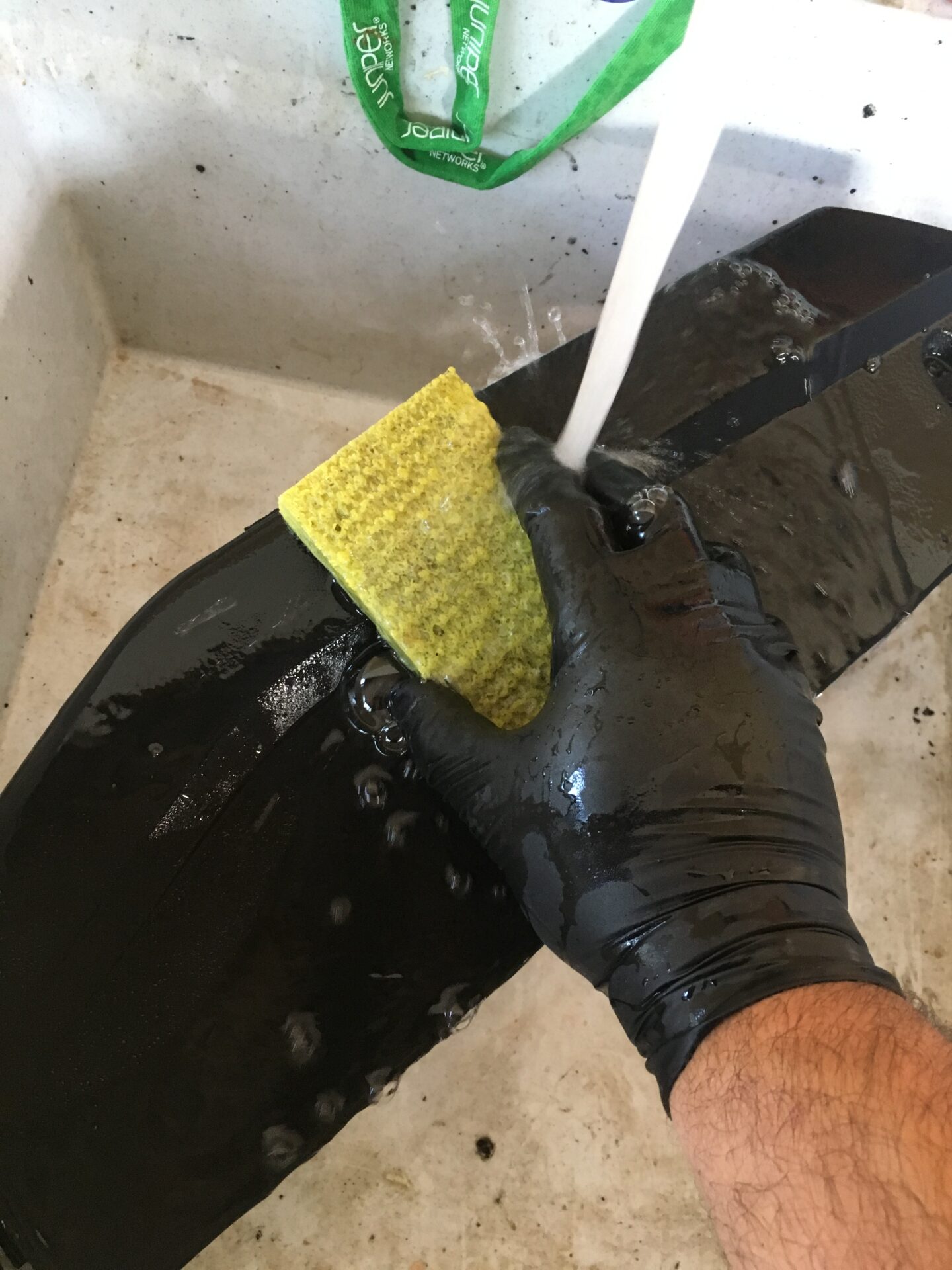
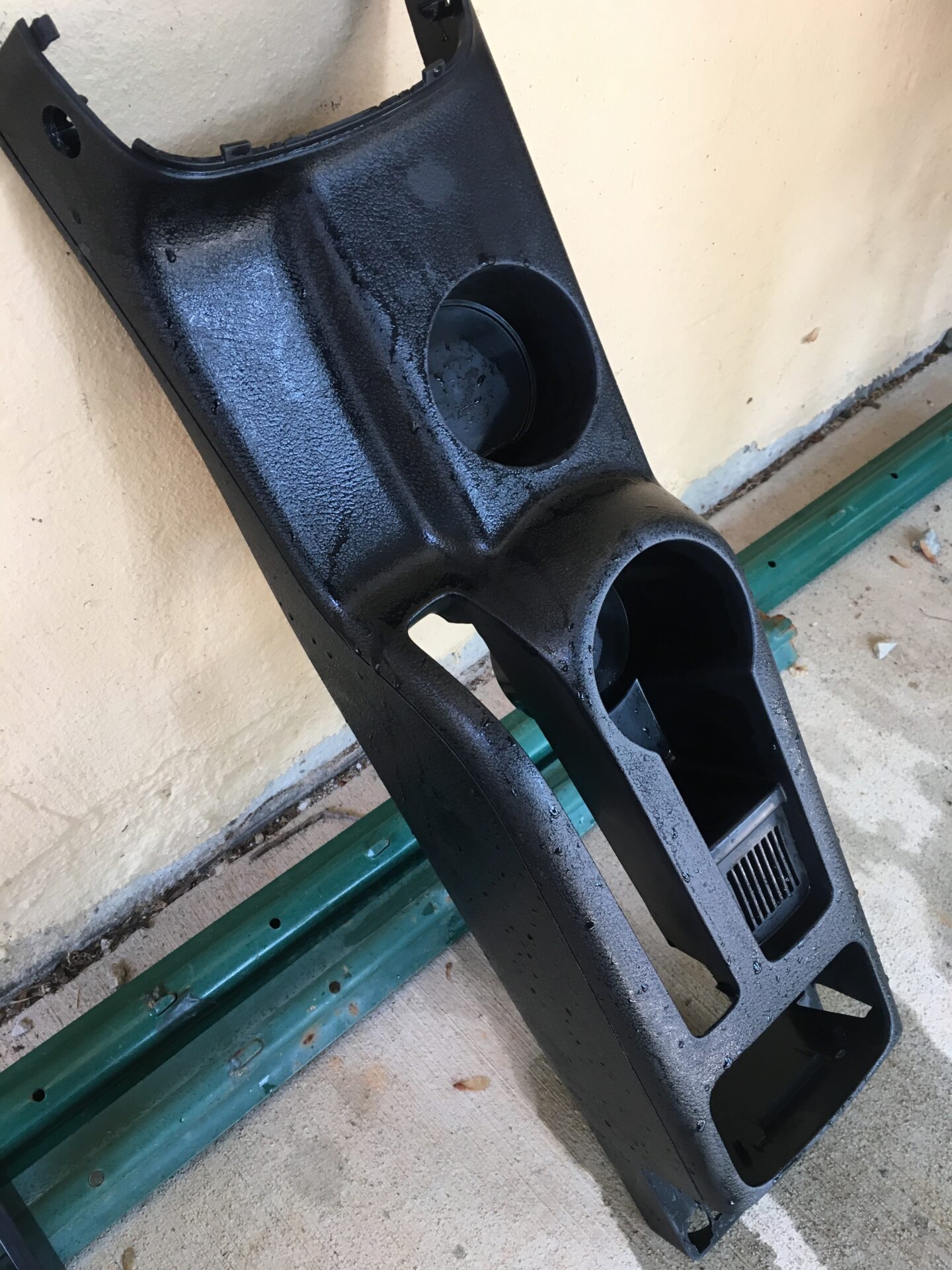
I poured the un-diluted ZEP‘s into an an empty spray bottle to make distribution of the detergent more even across the parts. I decided based on the type of part they would have to “soak” for different periods, this really has to do with the overall thickness of the rubber coating. For small parts (like the center picture above) 2-5 minutes was more than enough. For larger parts like my center console the ZEPs needed to work for at least 20-30 minutes. I could tell right away that the ZEPs was working on my test part (the HVAC trim). Even with plastic gloves on, the “schtuff” was just rubbing off with a cold water rinse. WARNING: always wear gloves when working with this cleanser. I also recommend a paper mask when using the spray bottle so as to not breath in the fumes. Top-Tip: Member Tania M suggested I try a worn out scouring pad from the kitchen to make the job easier, and it sure did!
This center console was left to sit for about 30 minutes; and then rinsed and scrubbed; the results were shockingly good!
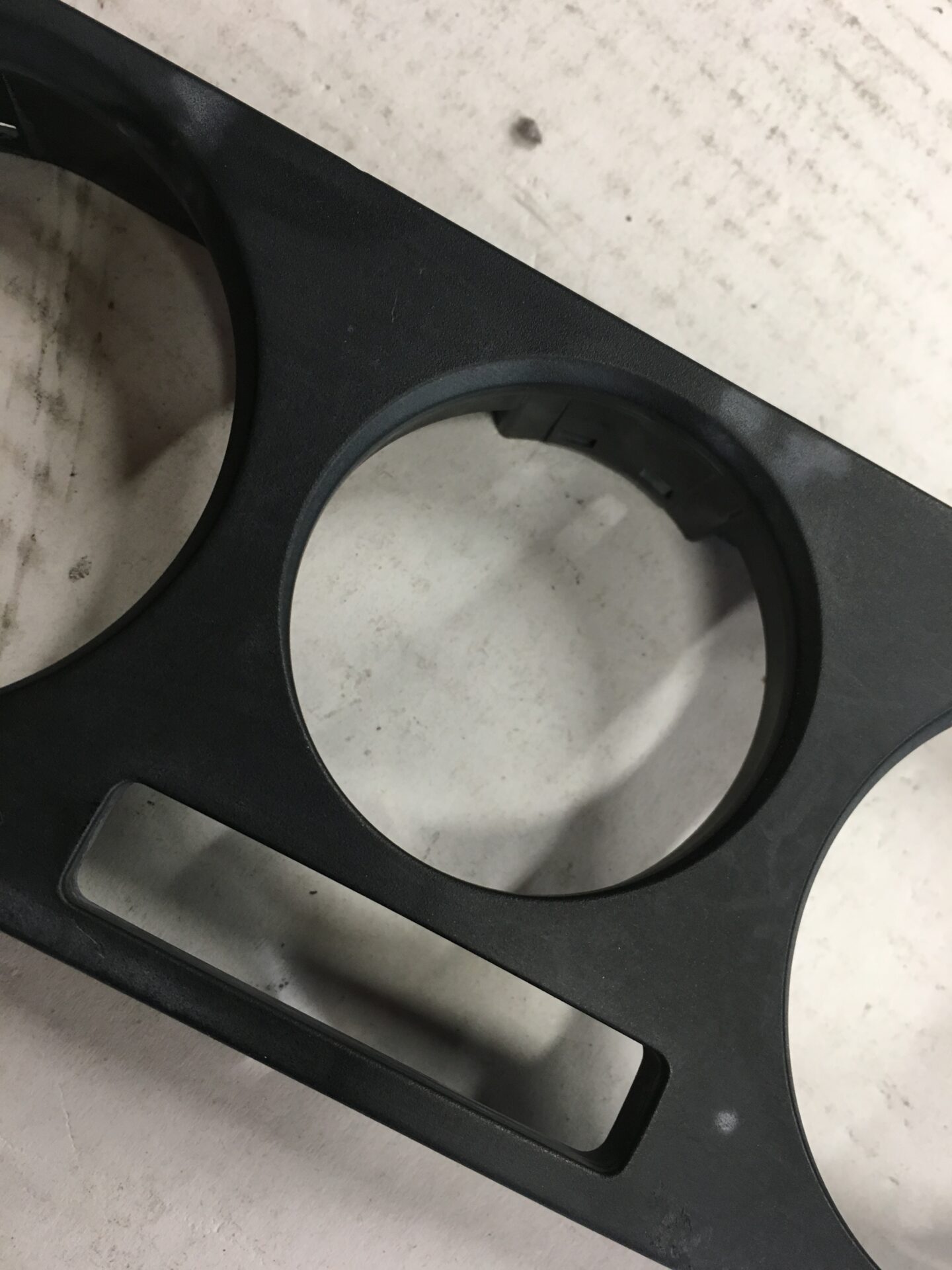
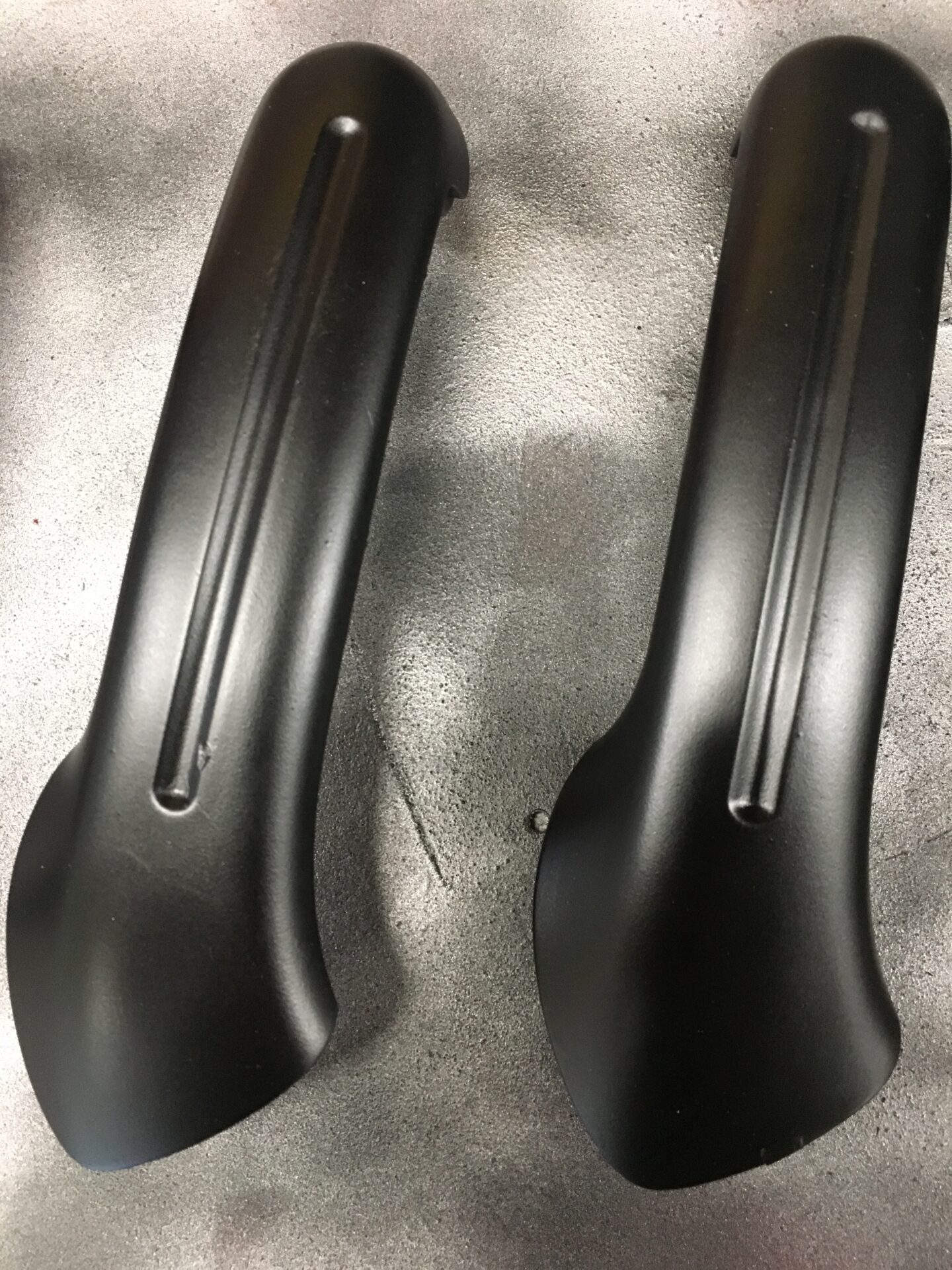
Here is the same HVAC trim seen earlier, after removing the rubberized coating and old coffee; very raw, but a clean and smooth surface for our next steps.
I let all the parts air dry in the sun and had to do some touch up scrubbing, but over all I was happy with the results. A word of warning: don’t expect the plastic to come out one solid color after cleaning, from my experimentation I learned that different parts were made different ways and with slightly different plastics. More importantly the rubber coating was also used to hide imperfections in the molding. Additionally, each piece reacts differently to the degreaser. Some pieces stay black, others end up with a satin finish, others can have a milky-white haze. There are no guarantees how the pieces will react.This got me thinking… did I just make things worse?The stickiness is completely gone, but some of my trim looks super faded! At this point you really have two options: #sendit. Repaint with something that is designed for plastics or wrap in a high quality vinyl.
Option 1: Repainting
If you decide you’re going to paint the pieces to complete the refinishing process, no matter what color you chose, make sure it’s designed to work with plastics, or has a primer in it that will also help bond the paint to the object. Years ago, Valspar (usually found at Lowes) made a “for Plastics” line of paint which came in all sorts of outdoor furniture colors like maroon and hunter green – not ideal for this application, but they did also make a satin black. This paint was amazing and I’ve used it on all sorts of plastic parts. Figuring I would get some more, I was disappointed to find that none of the hardware stores in my area carry any sort of “for plastics” paint. This lead me to 2 alternatives.
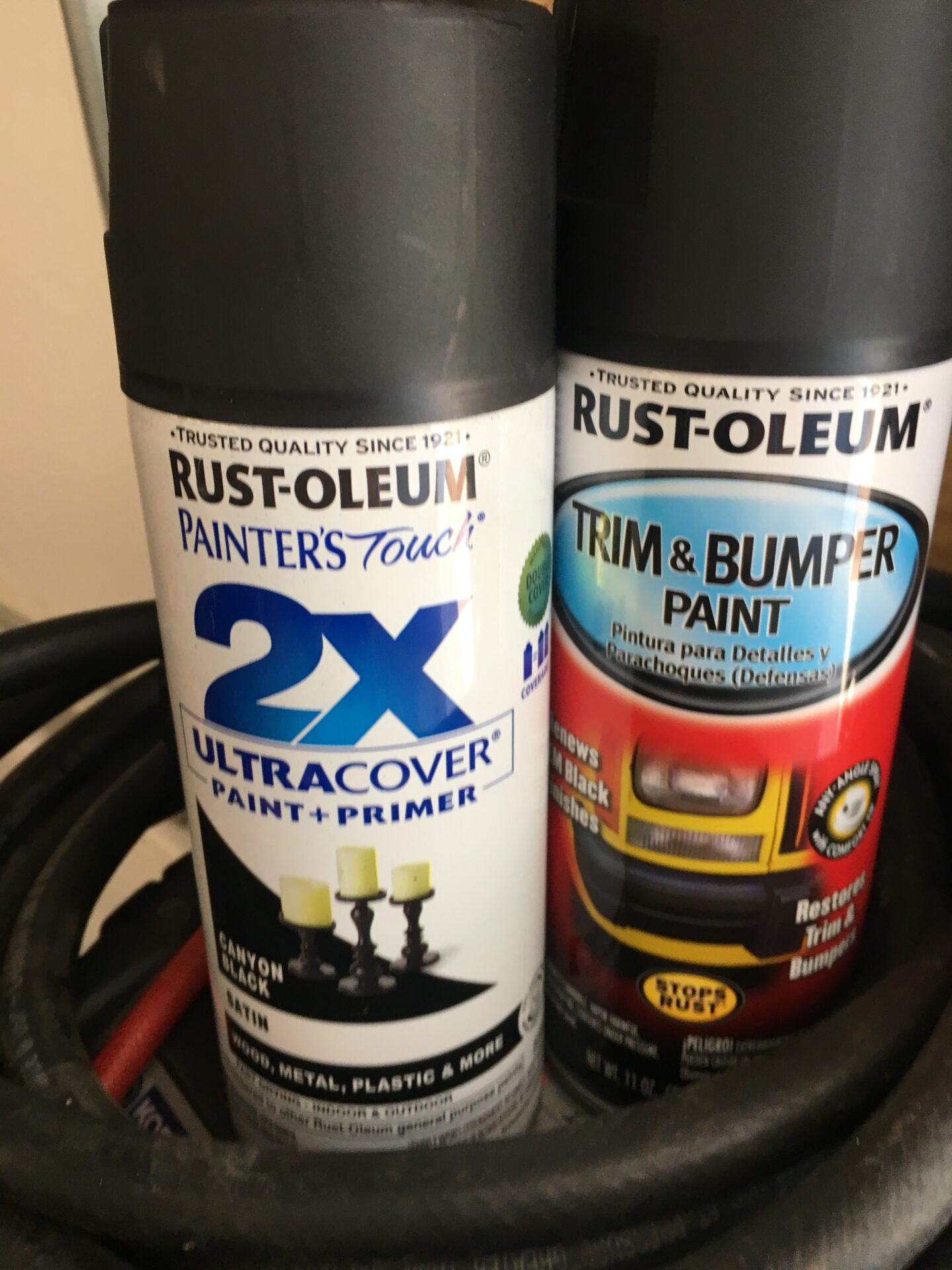
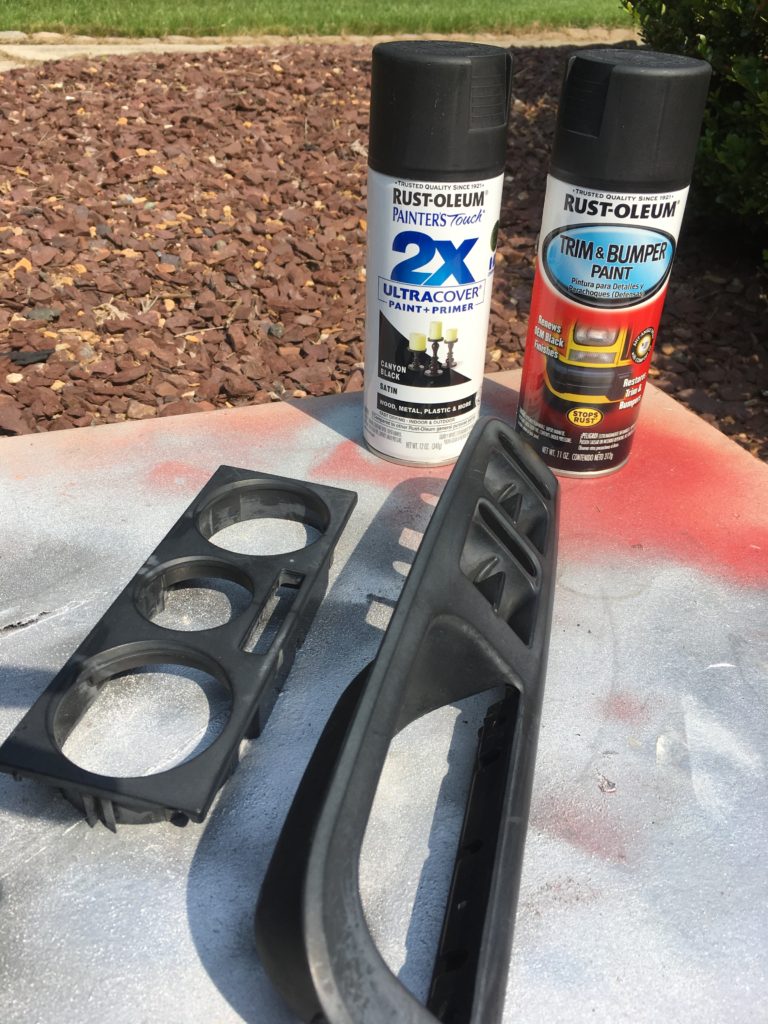
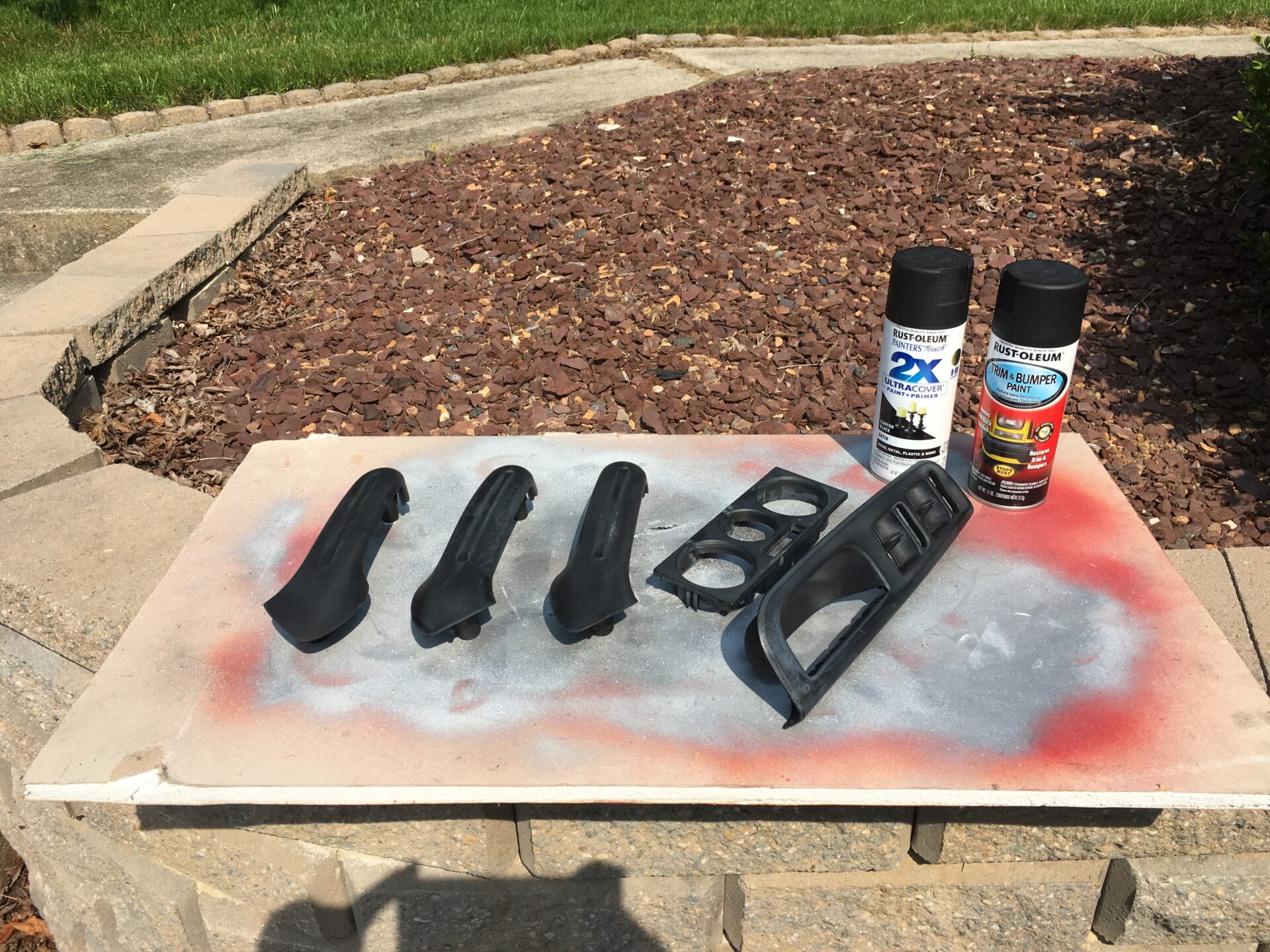
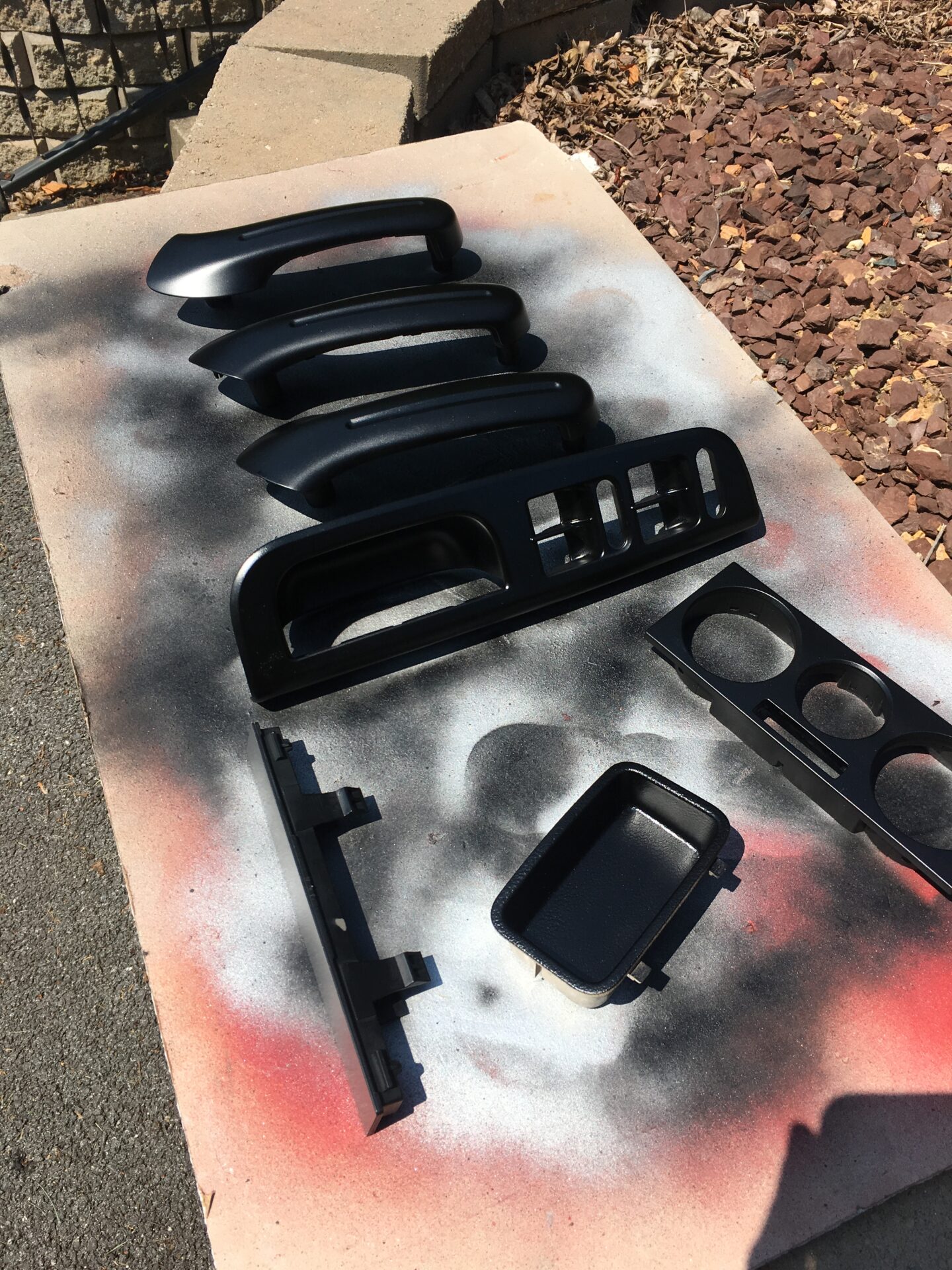
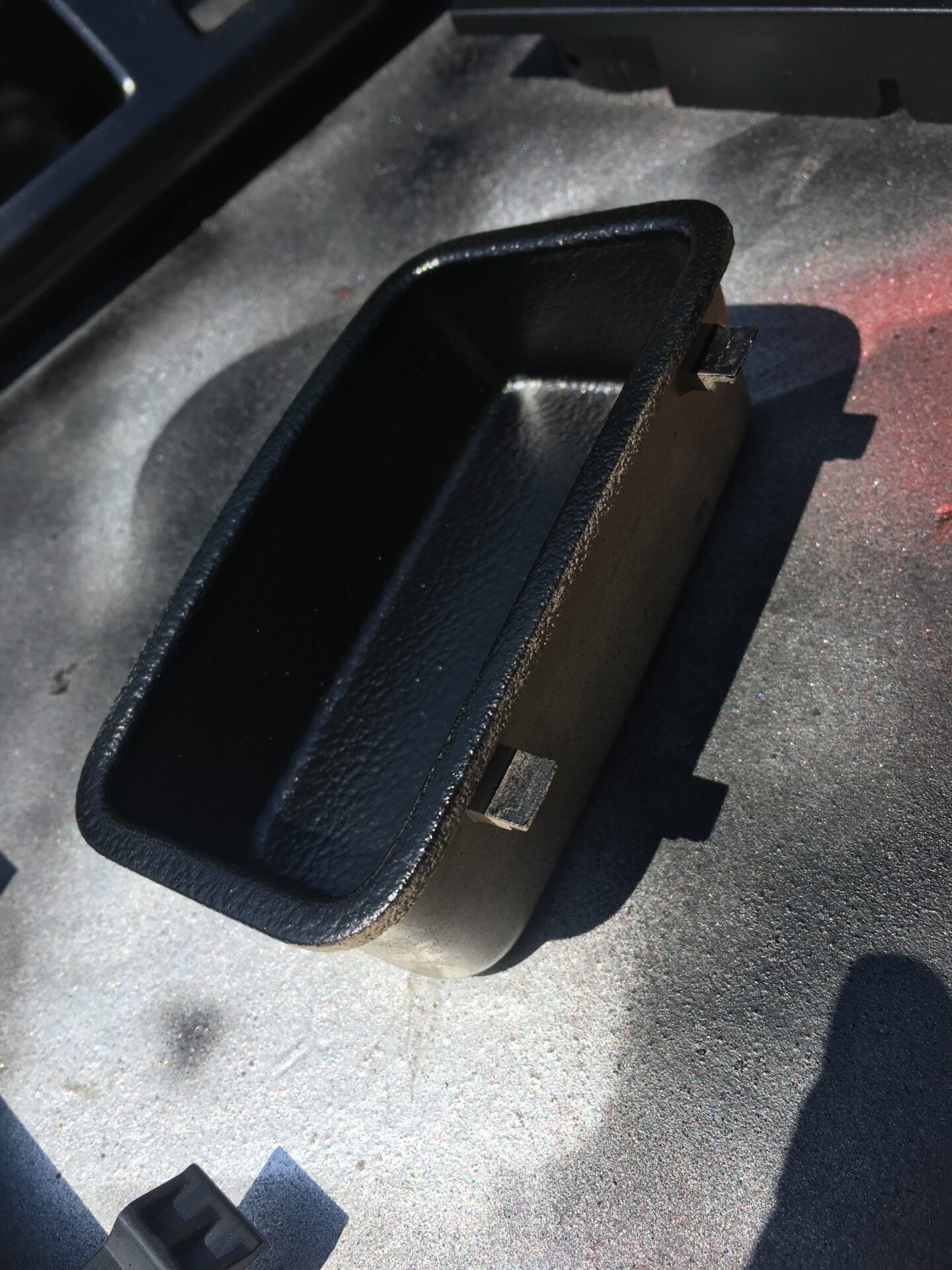
The rattle can on the left is a 2-in-1 paint and primer in “Canyon Black; Satin Finish” from Rustoleum. Doing some quick research on the paint, I discovered that it’s a quick drying paint designed to work with all materials, especially plastics. I recommend multiple thin coats from different angles to achieve that OEM look. And remember, satin isn’t going to be shiny, it’s between flat/matte and gloss, which is very similar to the look of the original rubber coating. But if you want to go extreme and accent your interior in lime green, go for it, this paint comes in about 30 colors. The can on the right is designed for metal and plastic bumpers, it only comes in satin black finish, but it DOES require an additional primer before application. I choose the easier and “new to me” path by using the “2X” paint instead of something I knew. The results were pretty awesome, after two coats, the parts are looking amazing! (below). Note: I got both of these cans at a local Home Depot and spent about $8.
I even cleaned up this beige interior piece and turned it black to match the other trim pieces!
Option 2: Wrapping
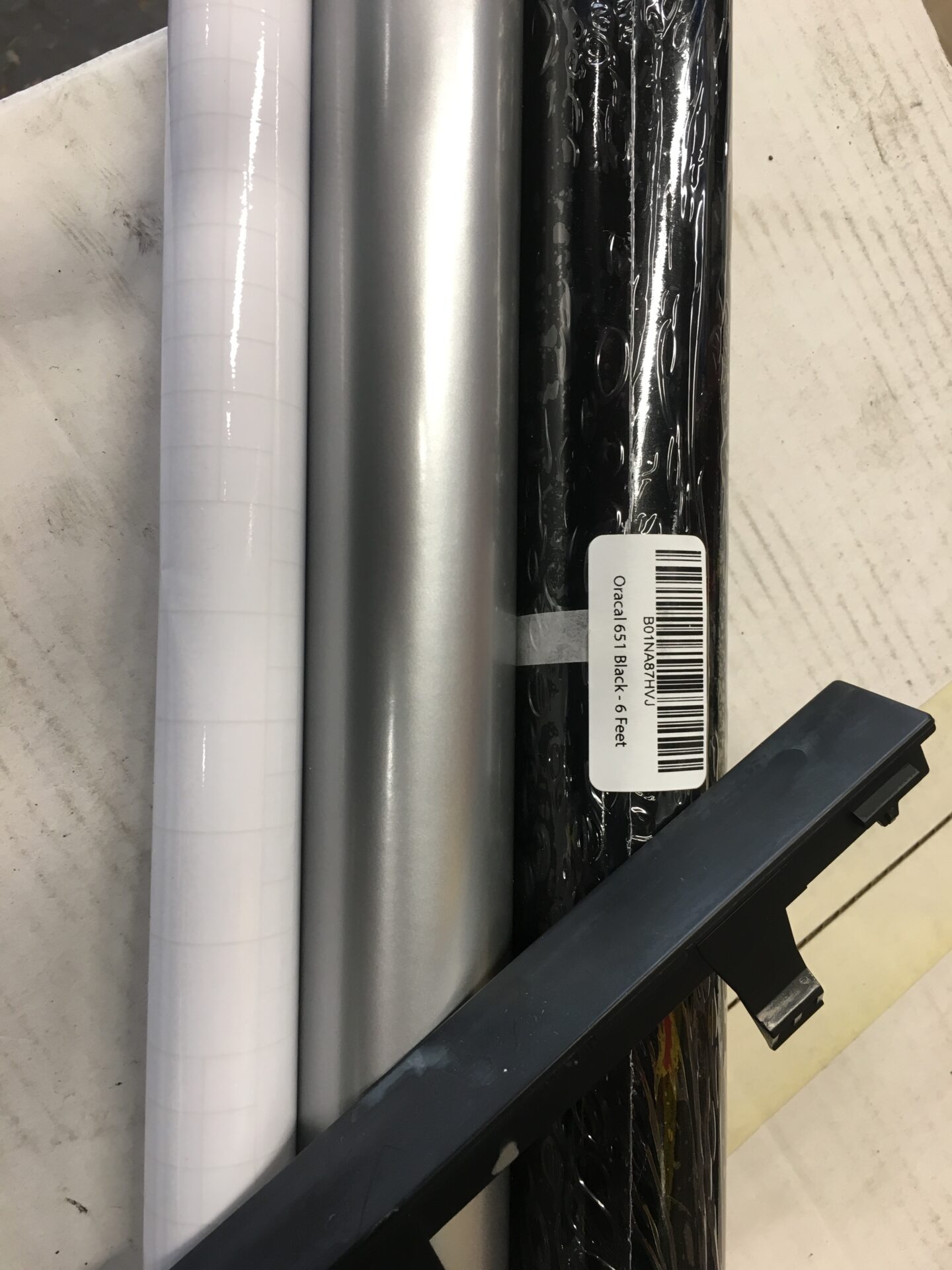
If you don’t like painting, you’ll hate wrapping. It’s very delicate, patient work and requires a wet or heat (gun) based approach. Vehicle wrap is different than the vinyl you are a probably accustomed to, like the thinner materials used for numbers & decals. Wrap vinyl is significantly thicker, stronger and better for shaping and stretching. Wrapping is really #WYSIWYG. If it looks terrible, there’s a good chance you will have to start over… many… many times. Bubbles are frustrating to say the least. Luckily, with a wrap like ORACAL, the vinyl can be relaid, stretched and formed a few times before you have to scrap it and start over. Be patient, work on smaller items first until you get comfortable working with the material, or ask for help from people in the business. Top-Tip: speaking with member Al A (hobbyist car wrapper) lead me to find the ORACAL products, which can be picked up on Amazon in small quantities and in varying colors. Feel free to reach out him for advice if you need additional help.
ORACAL 651 comes in all sorts of colors, and Amazon sells it in limited quantities making it super cheap!
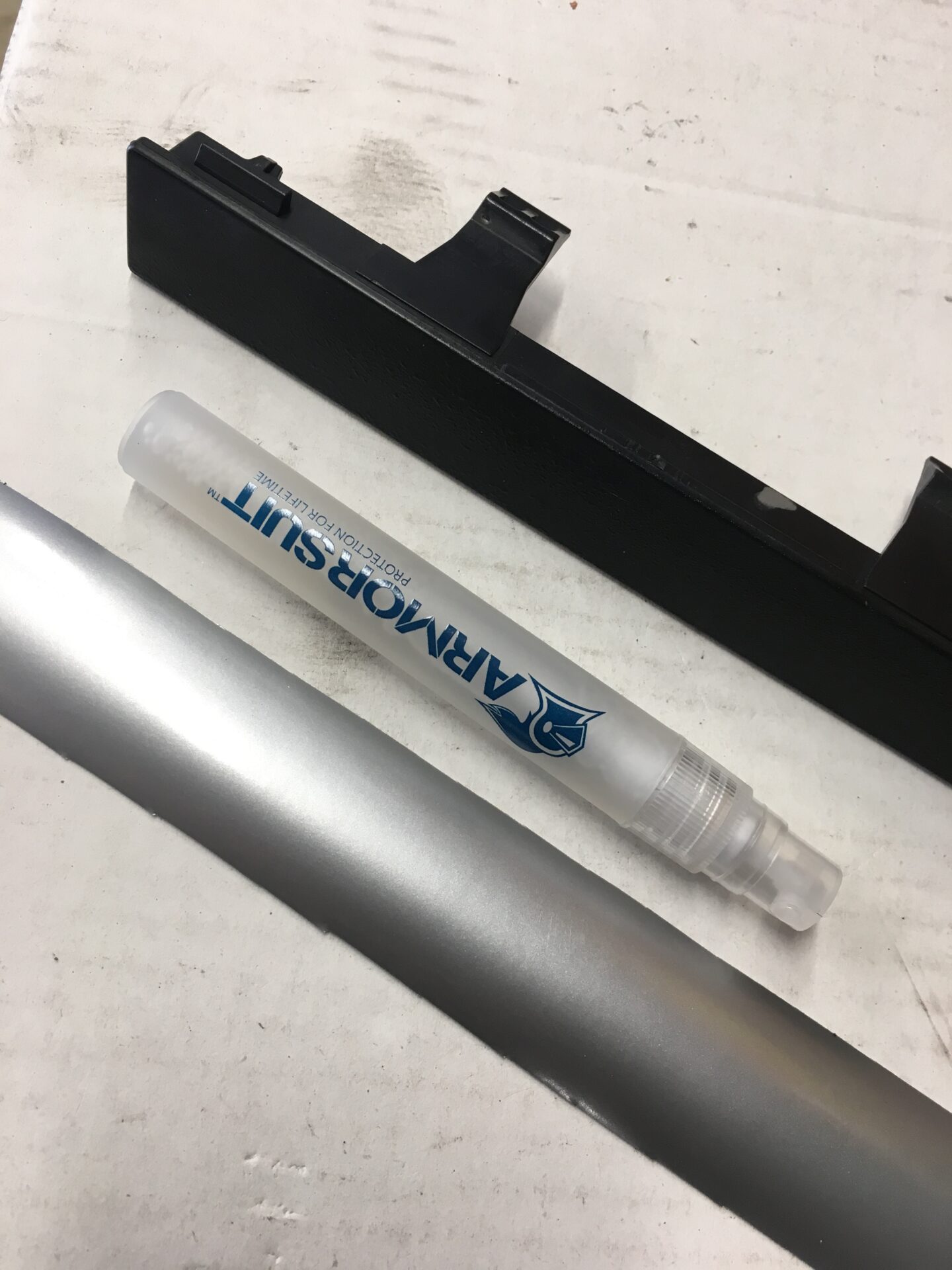
I find that using an old mini-spray bottle (for applying cell phone screen protectors) with only-water not slip fluid works well to allow the smoothest finish with this type of vinyl.
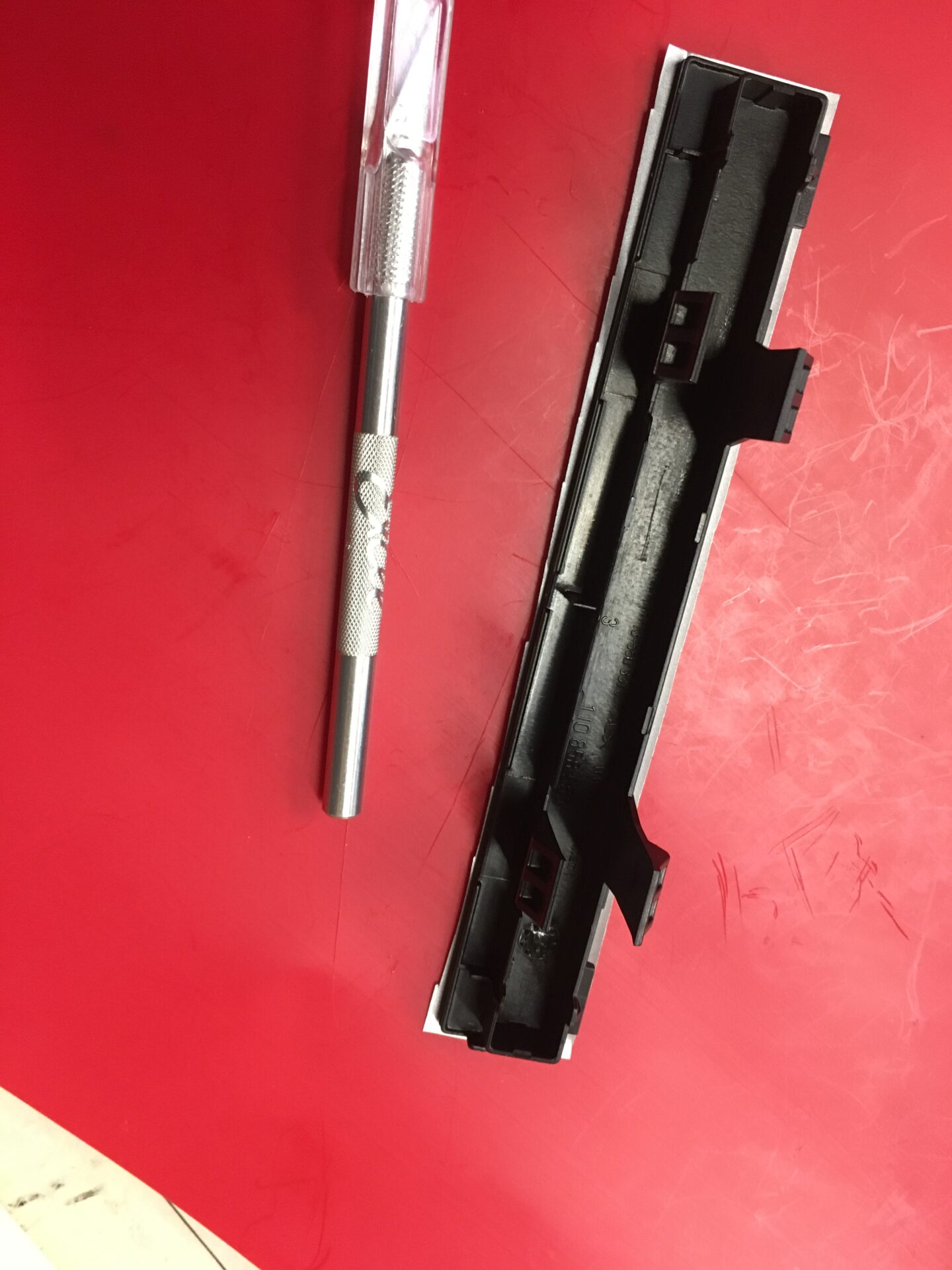
A little excess is okay; use a sharp exacto knife to slice off the extra vinyl.
Option 3: The Quick’n’Dirty
Don’t have time for any of this… No fear! There is a last resort, don’t even clean the “schtuff” – just respray with Plasti-Dip and have a nice day; or burn the car to the ground and collect any remaining insurance money. Your call. LOL. But… in all seriousness – below are some more before/after pixs that might have you considering the previous options.
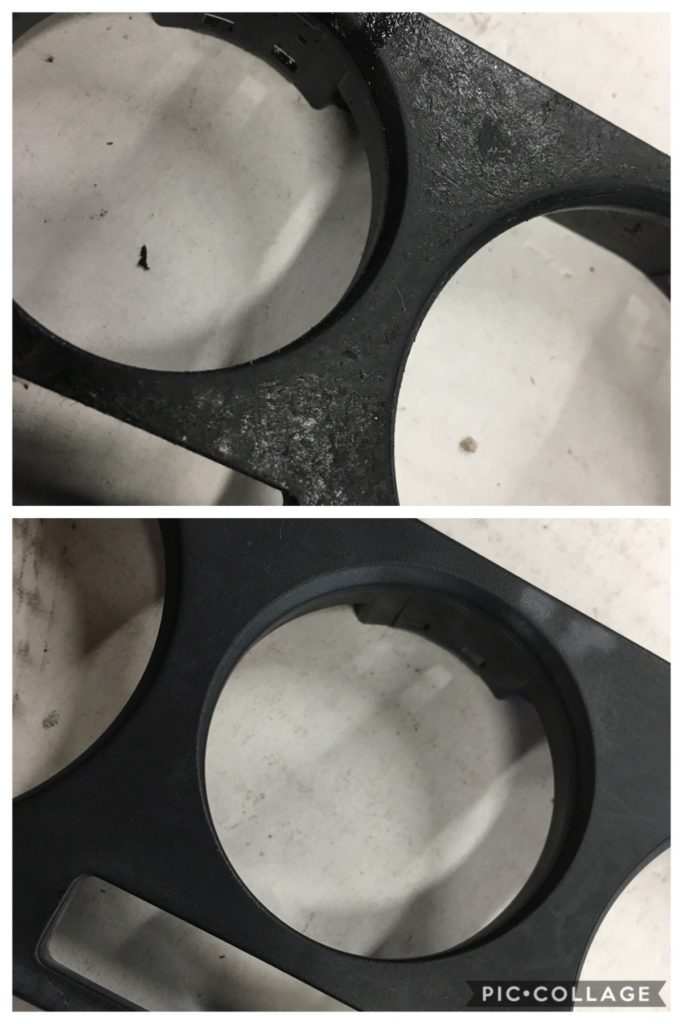
HVAC TRIM: Top: before cleaning. Bottom: Raw plastic - so smooth!
DOOR HANDLES: Left: before cleaning, Right: after painting.
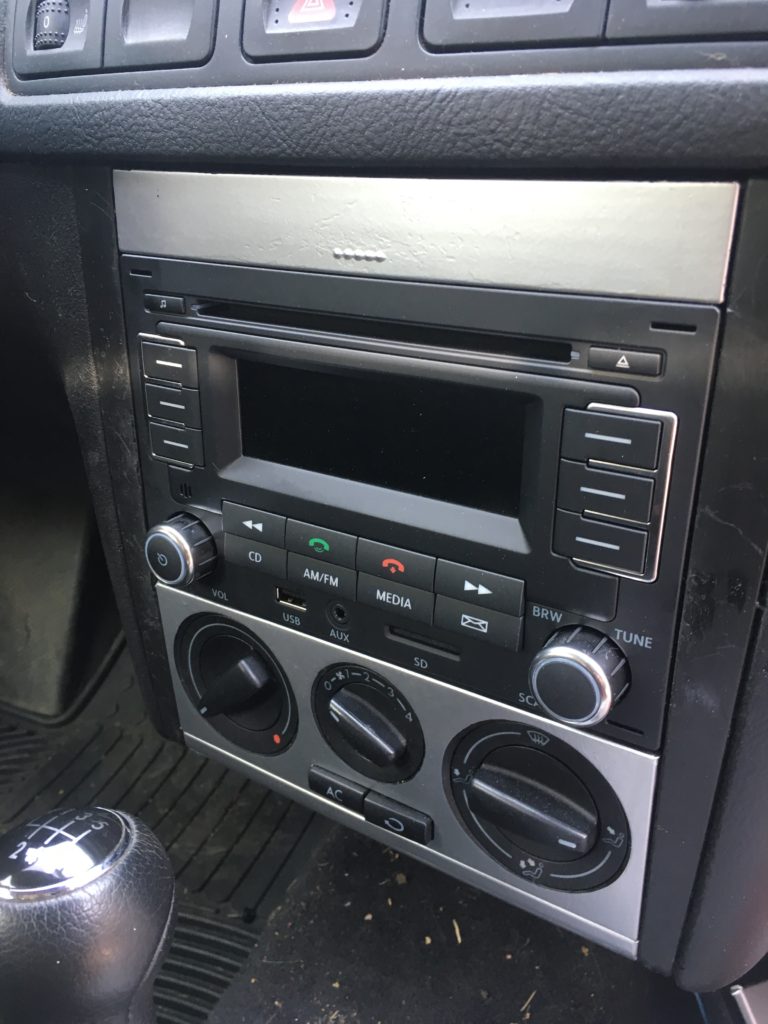
Using some other trim pieces, I repeated the process and wrapped them in silver ORACAL for a stainless steel effect. - Note: still a work in progress.
Like any resto-mod project, all of this takes time and patience. Many of these pieces are old and brittle to begin with and need to be repaired once they are carefully removed. After that, this reconditioning process is pretty easy and best of all – CHEAP. The results speak for themselves. We hope this new method will give your car a fresh-new look/feel, getting you away from that sticky petri-dish – and making it an enjoyable place to live inside again. If you’re not interested in giving this DIY a try on your own time, we do plan to make some more of these mods for folks if there is interest, so please don’t hesitate to reach out!
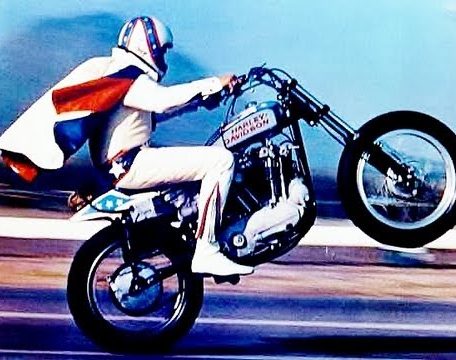
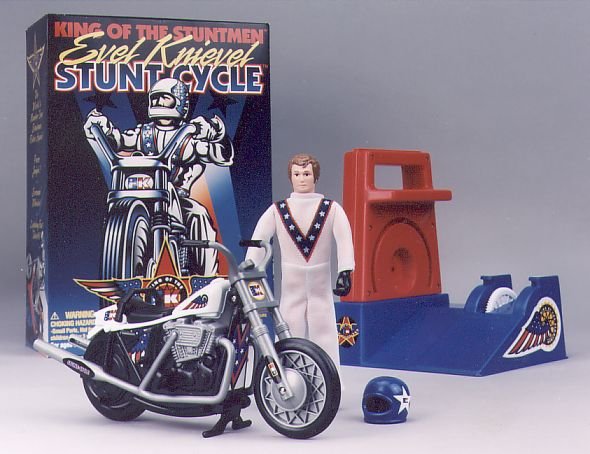
There was never a better time to be a young motorcycle enthusiast than being a kid in the early ’80s. My brother and I would make ramps and jump our bikes to feel like the famous Robert Craig “Evel” Knievel.
Evel Knievel was an icon, he was my hero, he was one of a kind, even people who were not into motorcycles, stunts, or daredevils knew of his celebrity. Evel Knievel became synonymous with any “crazy or impossible” stunts and became a household term many adults used to describe us youngsters and our antics.
As kids we latch on to ideas and icons and are often times unaware of the full story and impact of who certain people or things are. As a child we rarely even gave a second thought to any of the details or origin stories of our heroes. They just existed. As we get older, curiosity (disguised as nostalgia) tends to get the better of us as we tend to wonder: who was that masked man? – Despite being a couple years old, I stumbled upon a 2015 documentary titled “Being Evel” which got me excited to learn more about this man, this myth, this legend.
The film is about 1:42 in length and briefly touches on Knievel’s childhood but focuses on his rise to fame, his fall from the spotlight, and his return to glory in his later years thanks to the extreme sports champions that he had inspired.
One thing I did want to highlight from the film: By the end of 1975, Knievel was said to have broken every bone in his body. The Guinness Book of World Record says he holds the record for “most broken bones in a lifetime” at 433 bone fractures.
Back when Knievel was performing there wasn’t the internet, social media and other outlets, so self-promotion was extremely challenging. The stunts were expensive and outrageous, and to pay for all those follow-on medical bills he had to get creative and use his larger than life persona to market his name – his brand, raise ticket sales and also develop memorabilia, toys and games for people to collect. Very forward thinking for the ’70s!
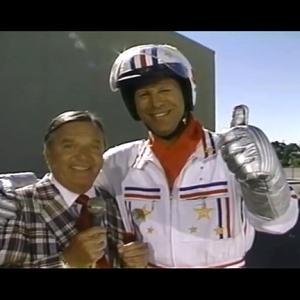
There have even been parodies of Knievel, in particular one you might remember from later in our childhoods: Super Dave Osbourne!
Super Dave was played by comedian Bob Einstein, and was a bungling optimistic stunt man who looked a lot like Knievel and 100% of his stunts went wrong. Some might consider this an insult to Knievel, but I view it as a tongue-and-cheek homage to Knievel’s work. Check out Super Dave on YouTube. But without going into a ton of additional detail, I’ll leave you to do your own research. You can learn more about Evel Knievel through wikipedia and also his career through IMDB and the documentary. There is a large collection of clips and interviews available on YouTube as well. The film “Being Evel” is currently available through the Amazon Prime streaming service. Enjoy!
As DIY’ers and Wrenchturners we can never have enough tools! Sometimes we have to get creative and buy every 12mm available on the shelf at Sears and customize them for a specific job. And other times, we get very clever and/or creative in how we make working on vehicles easier. Which got us thinking… how many items in our arsenal are actually from the home goods aisle of Walmart – and why? We hope the list below will inspire you to share some of your ideas with us (comment below) or just make your next #diagnoseandrepair job that much easier!
Baby Syringe
Despite having kids, which would have made this glaringly obvious, I actually learned this trick from member Greg B. Using a “baby feeding syringe” is a great way to extract excess brake fluid from the master cylinder when changing pads. This also allows you to accurately measure how much to remove. I’ve learned on my cars that 25ml is the perfect amount to pull from the system when the pads are near worn and I have to push the pistons back in. These syringes can come in 5ml and 10ml sizes; I use both.
Condiment Squeeze Bottles
Who knew that those 24-hr Diner bottles would be the perfect dispenser for Grease or Oil? – Easy to fill, includes a small point and you control the flow and amount of fluid you want to use. This is the perfect low-cost alternative to an Oil Can or Grease Gun.
Piping (Icing) Bag
Not just for bakers anymore! – You can use a “piping bag” as an alternative to the Condiment Bottles; depending on your style and access to the area you’re working. Piping bags have different tips, and you’re probably not going to be making pretty flowers or decorations but it does effect the flow of the grease. I use these when rebuilding axles and need to fill CV boots quickly.
Aquarium Air-line Tubing
Ok, maybe not in the home goods aisle… but definitely close by is Aquarium Air-line tubing, which is great for repairing broken windshield sprayer tubing, but also works well for bleeding brakes. This silicone tubing is just resistant enough to brake fluid that it holds up for quite a while, but also soft enough to make a great seal on the brake bleeder valve.
Ice Tea Jug / Olive Oil Bottles
Now that you have the proper tubing to bleed your brakes, you’ll need somewhere to catch all that old fluid. Turns out, most plastic Olive Oil bottles, as well as Chik-fil-A 1-gallon Tea Jugs, are made of some heavy duty plastic that holds up really well to the corrosive properties of brake fluid. Using a screw driver (or drill) tap a hole just smaller than your Aquarium tubing in the cap, slip the line through the cap, and now you have an end-to-end seal for bleeding your brakes. Note: Where do I dump my used brake fluid? – Please never put it directly in the trash, sink drain, or the ground. Most oil recycling facilities have additional places for fluids like used Anti-Freeze, Brake Fluid, etc. Also know that if there isn’t a specifically marked area for brake fluid, most facilities recommend mixing it with Anti-Freeze (not OIL!).
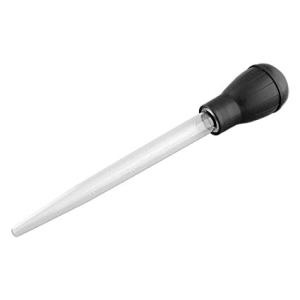
Turkey Baster
I never thought I would be using a turkey baster while working on a vehicle. In my case, this dollar-bin tool comes in handy on vehicles with “upside-down” (top mounted) cartridge oil filters. In the case of my Jeep, it takes what seems like forever for the Oil to escape the filter housing so I use the baster to quickly remove the Oil and speed up the job.
Strainers
Fine-mesh kitchen strainers are perfect for taking larger particulates out of relatively clean fluid, or catching that nut that dropped in the waste oil pan while you were working.
Funnels
I always seem to have that one “go-to red funnel” in the garage – you know which one I am talking about – the one you picked up at the auto parts store, the one that doesn’t really fit anything, and is super hard to clean because it’s not a smooth design. Oh, and because it was from the auto parts store it must be “safe” – well, I’m here to tell you, a 4-pack of kitchen funnels is really what you need. The varying sizes makes them easy to use (and can be labeled) for different jobs. Think: Oil, Coolant, DEF, add some tubing… Transmission, etc.
Cutting Boards
I’m not sure if these should be sold as “cutting boards” so much as “cutting sheets” these are the thinnest of the thin and usually sold in packs of 3 for $2.00. But, if you’re into car setup and perform your own (string) alignments, adding a 50-cent sized dollop of grease between two of these cutting boards makes for excellent: SLIP PLATES! We recommend these over the cheap 1/4″ thick white boards because there is little to no change in ride-height since these are paper-thin. Note: You’ll need 2 per wheel.
Mason Jars
Granddad, why do you have all these jars in your shop? In the old days, plenty of shade tree mechanics used jars to store extra nuts, bolts and screws. We’ve gotten more organized since then, but Mason Jars are on the come back! You can’t beat glass when it comes to storing liquids and greases. Yes – you have to be more careful, you can’t just throw these around the shop floor, but Mason Jars are pretty tough and have great seal (even when not pressurized);
Heavy Duty Kitchen Shears
We’ve all heard the jokes about how Kitchen Shears can cut through Pennies… But I’ve found having a set in my toolbox is useful. Unlike standard (paper) scissors, Kitchen Shears are designed to cut through tougher materials, including bones. Which means they are perfect for cutting wires, zip-ties, or anything else where dikes or knives can’t reach. Kitchen Shears are usually sharp all the way to the tip, and can be re-sharpened when they become dull.
Blue Dawn – Liquid Detergent
Who needs a parts washer when we have Blue Dawn? This “mysterious formula” that the folks at Proctor & Gamble have been supply for decades is the ultimate-degreaser. And for whatever reason, maybe it’s a placebo, the “Blue” version is the recommended one. Soak your dirty parts, tools, etc in a tub with Blue Dawn – lather, rinse, repeat. And your item comes out sparkling clean!
Have some household items you use that aren’t on this list? Be sure to share them below in the comments section!
As we all know, racing comes in all shapes and forms. It started when we were kids running to be the first to the table for dinner or first to call shotgun on a long trip. That sense of competition stays with some of us … forever. Some people prefer to use their body as their vessel for racing (Cycling, Running, etc). As for me, it was always going to be something mechanical! What can I say, there is something about the smell of race fuel that puts a smile on my face! – And as I’ve gotten older and learned to appreciate more forms of racing, I also realized there are different ideologies and demographics that go along with each discipline of Motorsport that make up the larger “car culture” we at GTM are a part of. So let’s talk about that and get ourselves a little more familiar with other forms of Motorsport.
Drag Racing
We all had those moments where we “raced” someone on foot or a bicycle, and those “light-to-light” races in high school which eventually made their way onto the back roads, or in some cases Richie Highway in Glen Burnie or Lily Pons Road in Adamstown. It’s not uncommon to place wagers on a drag race, and in some extreme cases “racing for pinks” (in the old days, vehicle titles were pink). With the high stakes (and prize purses) associated with drag racing it can get very interesting as the driver’s push their car to its physical limits. I have seen plenty of engines blow or other serious damage from pushing the cars so hard to win.
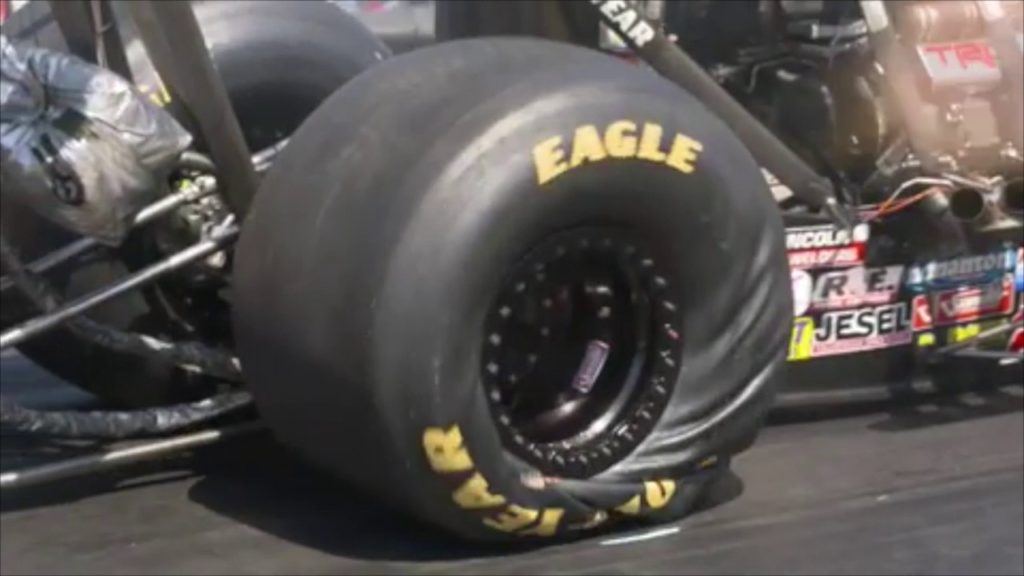
In drag racing the idea is to time the lights (aka “christmas tree”, seen above left.) perfectly so you can get “from point A to B” as fast as possible. A-to-B in most races is measured in lengths of 1/8, 1/4, or 1/2 mile. Setting up a car for drag racing has its own preparation style and includes add-ons like wheelie bars, big wide slicks for traction, and a parachute to make sure stopping from high speeds is possible. In professional drag racing they even go so far as to rebuild engines between runs. To make drag racing more interesting they also gather metrics which deal with “reaction time” and “60-ft times”. Drag racers like to tell other racers that if you can turn you aren’t going fast enough!
As a kid I spent a majority of my weekends at the drag strip. In the ’80s going to the drag strip was amazing, professional drivers would walk right by you and even stop and talk, unlike today where many of them are roped off from the masses. There was a camaraderie among them, a fraternity like GTM, and if a guy broke down anyone available would help get him fixed before the next stage. At some drag strips they even began allowing a Jr. Dragster class (starting at 5 years old) to race. In the ’80s they required a small Briggs & Stratton powered rail style dragster which could get costly, but in recent years some tracks have began to allow these young drivers (ages 13-16) to use actual cars for the 1/8 mile only.
4-wheelin’ and Off-roadin’
Since the cost of Jr. Dragster cars was more than most families could afford, we resorted to less costly racing such as 4 wheeling, Karting, Motocross, and Dirt Track. Many of these forms of racing could be held on someone’s property or local parks that would charge a minimal fee for the day.
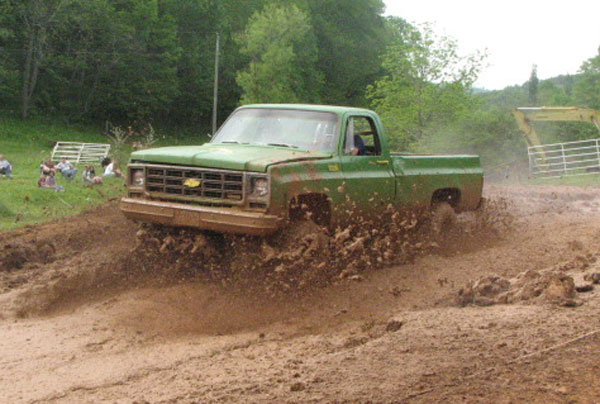
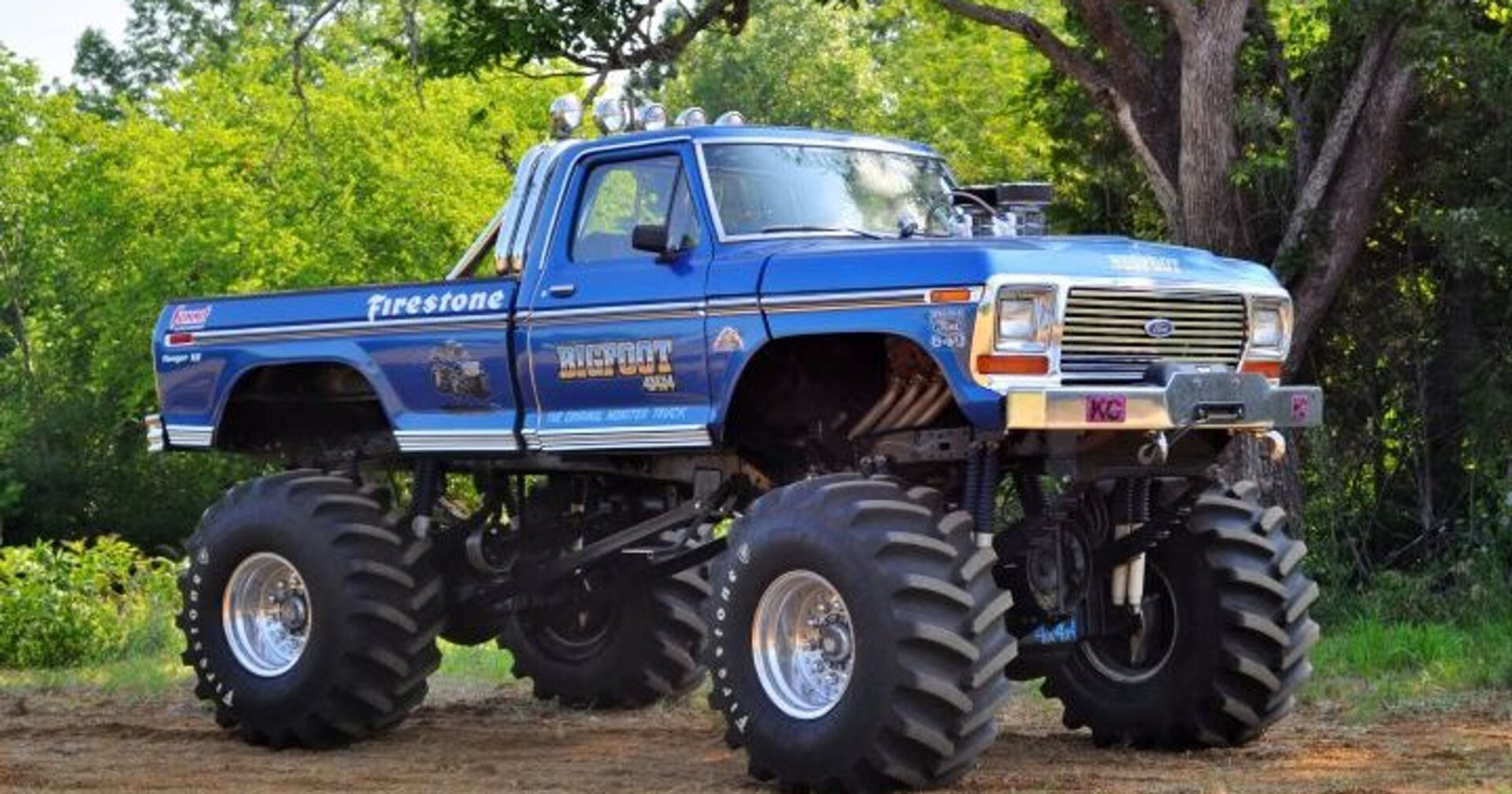
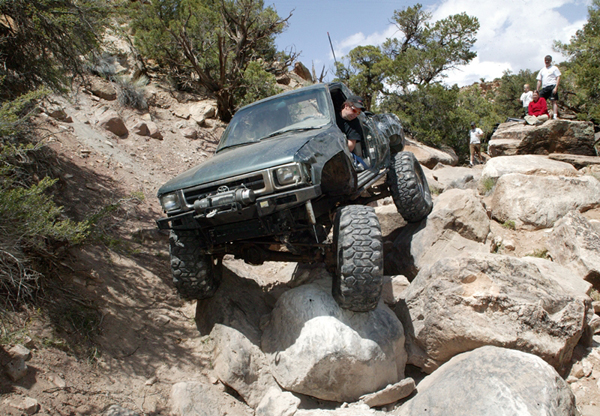
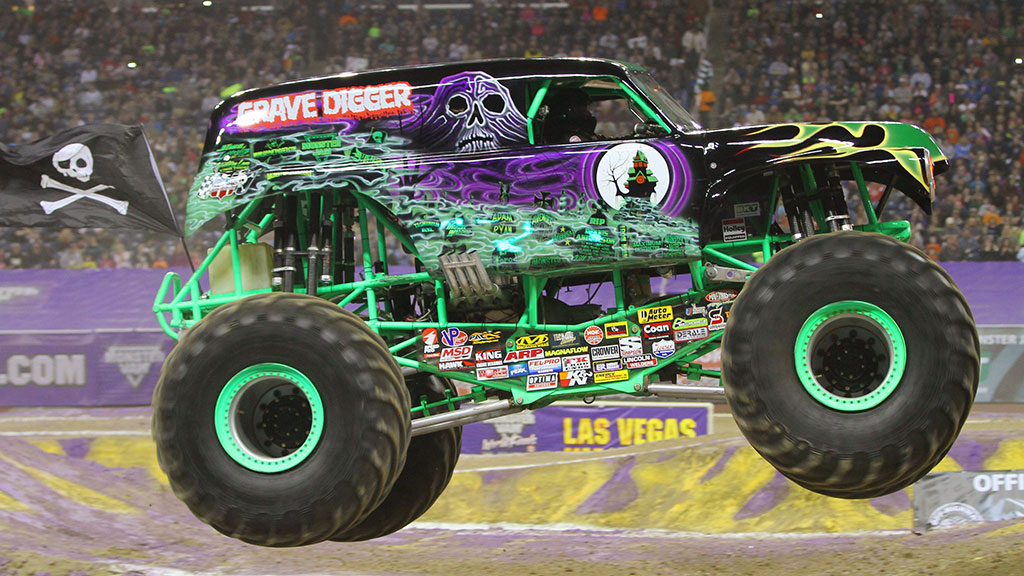
In the world of 4 wheeling, you can’t take your average street vehicle (a low sitting vehicle with street tread tires) to competitions – trust me, you won’t get far. You need some ground clearance and cleated tires. ATV’s, mud bogs, off-road trails, rock crawling, and monster trucks are all perfect for this sport. And let’s not forget about those crazy Europeans with their “Rallye” (WRC) driving (on Dirt, Tarmac, Snow, you name it). Note: If you want to learn more about serious off-roading, remember to check out GTM memberCorey T‘s article on her experience with the Red Clay Rally.
For me, the thirst for the rough terrain started with my first 3-wheeler riding through the woods and streams. That grew to playing in mud holes and going to mud bogs. Seeing the infamous “monster trucks“ was the ultimate off-roader, even if they mainly crushed cars! I can’t tell you how many people I’ve met that will lift and run off-road tires but never even touch grass – and to the 4 wheeling community these are known as “mall crawlers” (since the mods are only installed for looks). Much like the quiet of the woods they run in, there tends to be off-roading groups that keep to themselves. But no matter what group you may fall into or associate with, if you are going to go off-road, you know at a minimum you are going to get dirty. It is common to see these vehicles dented up and muddy and generally owners do not care about the cosmetic appearance of their vehicle nearly as much as its abilities.
Motorcross
For those of us that rode things like the 3 wheelers and ATVs and wanted to feed that need for speed more than the trails and mud bogs would satisfy, many of us got into sports like motocross and hare scrambles. Using “dirt bikes” we learned to assess terrain and deal with the physical abuse the machines would impose on us. These types of races would be elbow-to-elbow with no cages to protect us and bruises and sometimes accidents being a common side effect. I honestly feel that this built up our courage or insanity depending on how you look at it. Over time, confidence that no harm would come to us, our fear levels dropped and we wouldn’t be afraid to bump another rider to gain a position even when we were 15-20 feet in the air and moving upwards of 60-70 mph. Racing dirt bikes forced you to “feel your machine” and know what every vibration meant, and became one with it… one wrong shift of your weight during a hare scramble could put you into a tree. Unlike other Motorsports in this discipline you have to be more willing to sacrifice your body for that win.
Note:Need help with your Motorcross setup? – check out T7 motorsports.
Karting
If you had that desire to go fast but wanted to “stay flat” you could get into karting and dirt track racing. Karting is always a great lead up to other forms of racing, it builds “race craft” and exposure to some “drifting“. Drifting has become so popular over the years it is now considered an official motorsports discipline but it does have it’s roots on dirt! Since karts have little-to-no actual suspension, you learn quickly how “weight transfer” works, shifting your body to get the kart to react and corner more easily. Karting is all about “maintaining momentum” to keep your average speed high and lap-times low – which translates 100% to driving a Miata.
Even as adults, GTM members still love going wheel-to-wheel in karts since karting is a great equalizer. Be sure to check out some reviews of our previous events: Winter Karting Showdown and Electric Enduro.
Dirt Track & Ovals
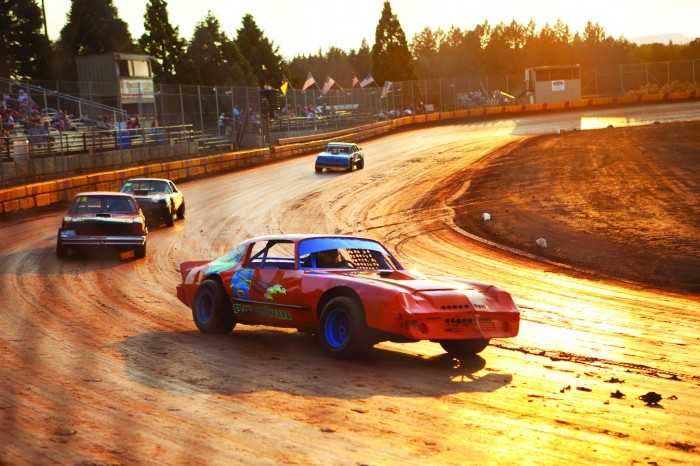
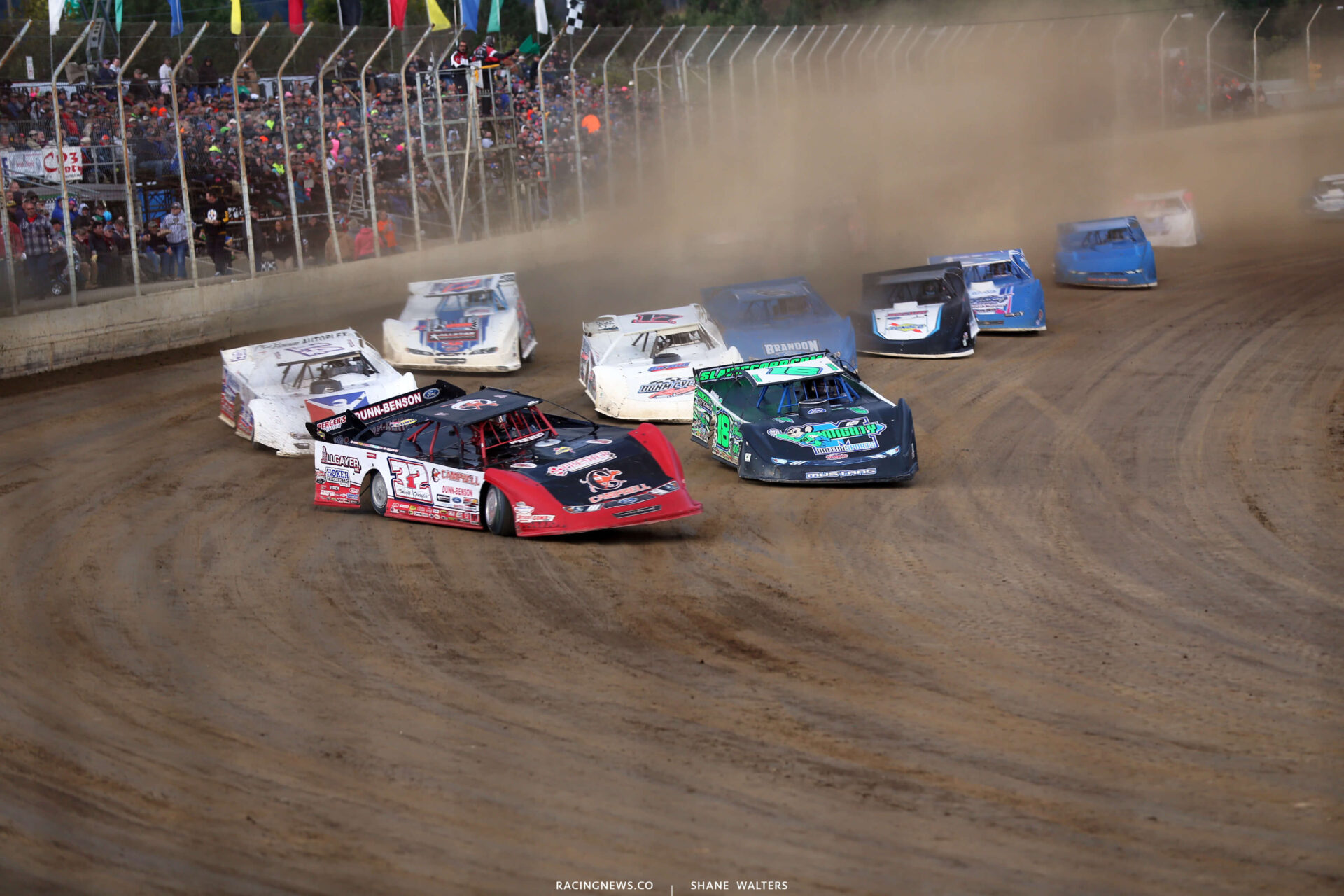
Dirt track has deep roots in our country and was the birth place for NASCAR. It was used as a way for moonshiners to race each other and claim the title of being the fastest. Unlike NASCAR, dirt track racing in my opinion is a blast and still has a great grassroots environment. It is generally a bunch of hard working guys that scrape up a few extra dollars and throw a beat up car together and push it as hard as they can for 20-30 laps. Dirt track is truly a sport where “rubbing is racing”. Good luck finding a car with straight panels on it! Much like the off-roaders, cosmetics are the least of their worries. This type of racing can be taken to the extreme, something you might have referred to as: demolition derbies. The rubbing can sometimes cause tempers to flare among the drivers and often leads to “interesting interactions” after a race. Even though they may get in each others faces, they are right back out racing side-by-side the following week.
Road Racing: Oval, Road Course and Motorcycles
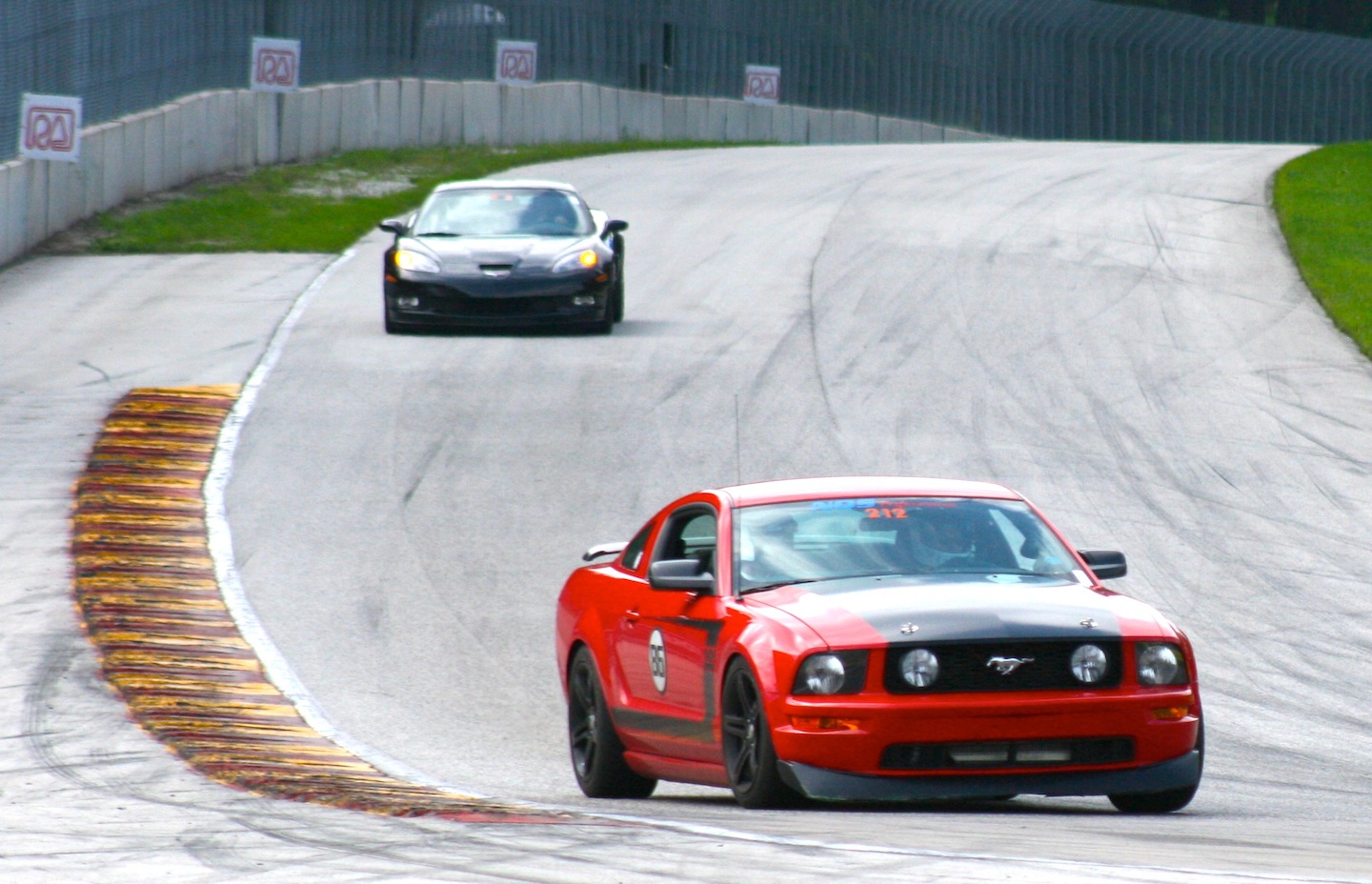
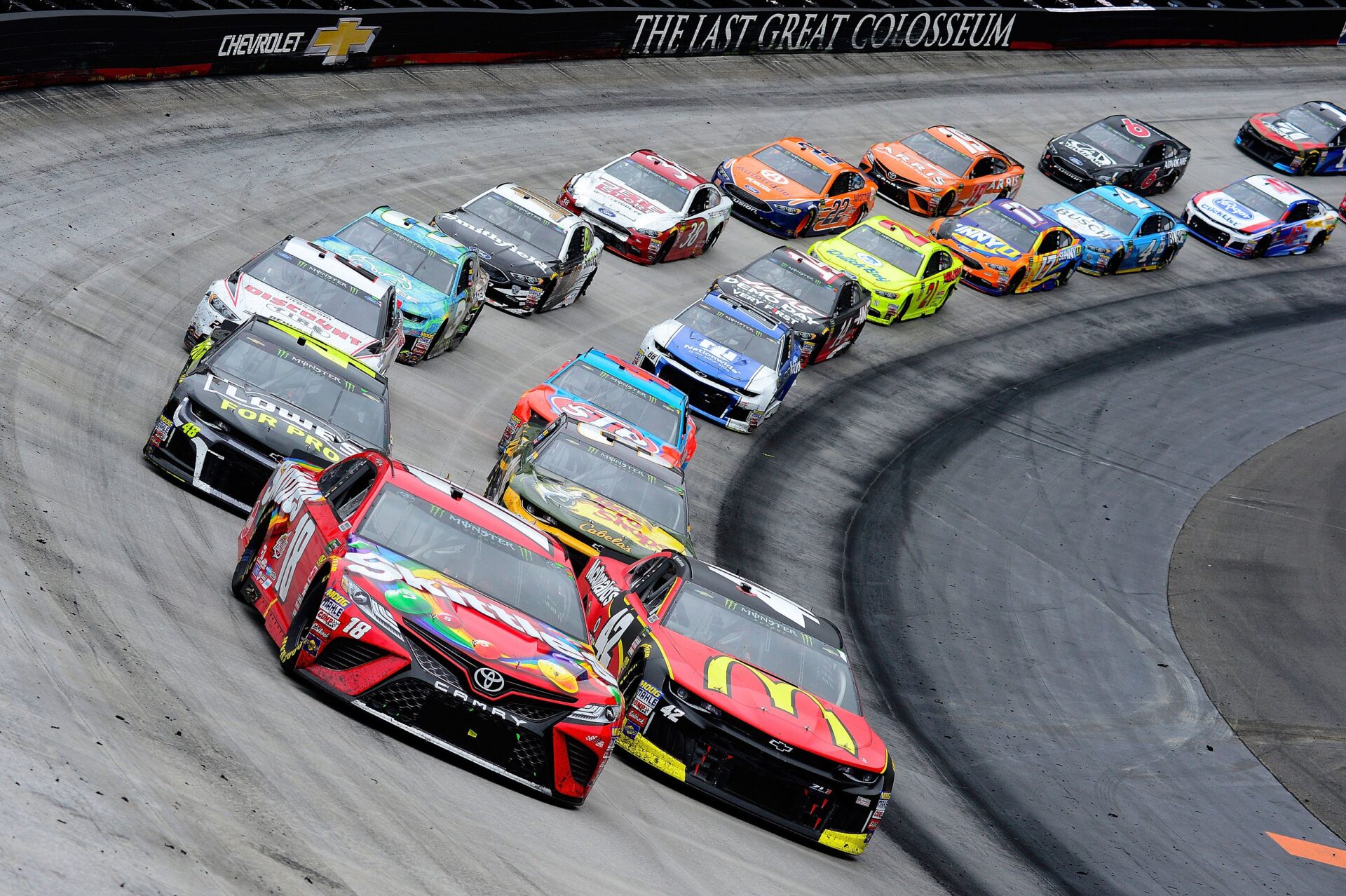
And finally we have the “smooth surface” disciplines most of the folks at GTM are familiar with: NASCAR, Road Course (ALMS, Prototypes, etc) and Formula 1 (F1). Since I am newer to these sorts of disciplines I’ve learned that there are a lot of different details to learn about and to take into account. Note: You can check out some past GTM adventures where we reviewed these types of events in more detail: Rolex-24, Formula 1 at COTA, etc.
Unlike the previous disciplines I mentioned, in these types of Road Racing, aerodynamics can be vital to your performance. Event the slightest dent in your fender can cause drag and change the handling of the car. Much like off-roading, traction and suspension have key roles to play as well. Road Course cars aren’t delicate, but they are sensitive and require stiff, low sitting, suspensions and tire compounds with grippy, smooth surfaces to be able to handle the extreme G-forces while cornering.
Because of the higher speeds the aerodynamics work with the tires and suspension to make these cars have razor sharp handling and look magnetized to the road. These forms of racing tend to have a more technical / scientific emphasis where other racing does not. They are often the cradle in which manufacturers experiment with new technologies that eventually end up in our daily drivers. I even categorize FIM / MotoGP with these types of cars because the style of racing is closer related to F1 than motocross even though both are on 2 wheels.
Whatever discipline immediately appeals to your interest, feel free to get out there and spectate if you aren’t able to participate! – Try other motorsports disciplines, appreciate them for what they are – an extension of the “car culture” we all love. Get your children involved in these motorsports with you. Even if we may dislike other types of motorsports or the types of people commonly affiliated with them, we are all still those kids foot racing in our backyards, and it is up to us to build the motorsports world so that future generations will be able to also enjoy these great experiences. If you are interested in any of the different disciplines that we mentioned or even those not mentioned (I’m sure I missed some, feel free to comment below!) – many of our members in GTM span across varying aspects of motorsports. Feel free to contact us about upcoming events you may have an interest in. Only YOU can keep motorsports Alive!
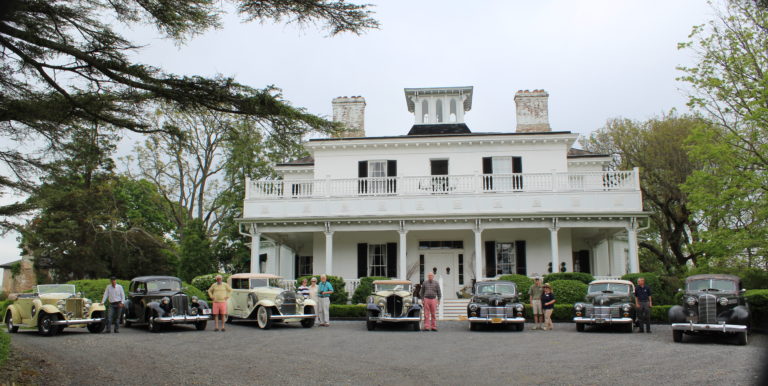
As we wrap up Classic Car Week here at GTM, some of you might be wondering why a group of petrol-heads like us decided to follow the Classic Car Club of America – Colonial Region, on their 5-day Spring Tour. I can hear you all now: “That’s not a motorsport! It’s not racing!” – well… you’re *wrong.* SCCA actually defines what these folks do as “Road Rally” and it is a sanctioned Motorsport. #classiccarweek
Photo by Crew Chief Eric (GTM)
Road Rally is “a scenic drive with a purpose, a chance to enjoy a day with a friend, the least expensive form of motorsport,” according to the website. And I will tell you, it has to be one of the most intense types of Motorsport I’ve ever participated in.
Photo by Crew Chief Eric (GTM)
So what makes Road Rally a Motorsport?Aren’t these folks just driving around the countryside and stopping to eat at fancy restaurants? Not quite. As a kid growing up in PCA, my parents used to participate in Road Rallies, and I never appreciated how difficult they can be until now. The rally organizers spend countless hours finding interesting stopping points and test driving the route. There are meticulous calculations going on to keep the route and drivers safe and using as little of the highway as possible. The drivers themselves use all sorts of “gadgets” to help them track time, distance, speed and even fuel consumption – even though the cars are equipped with gauges, they aren’t always 100% accurate. It’s all pretty stressful.
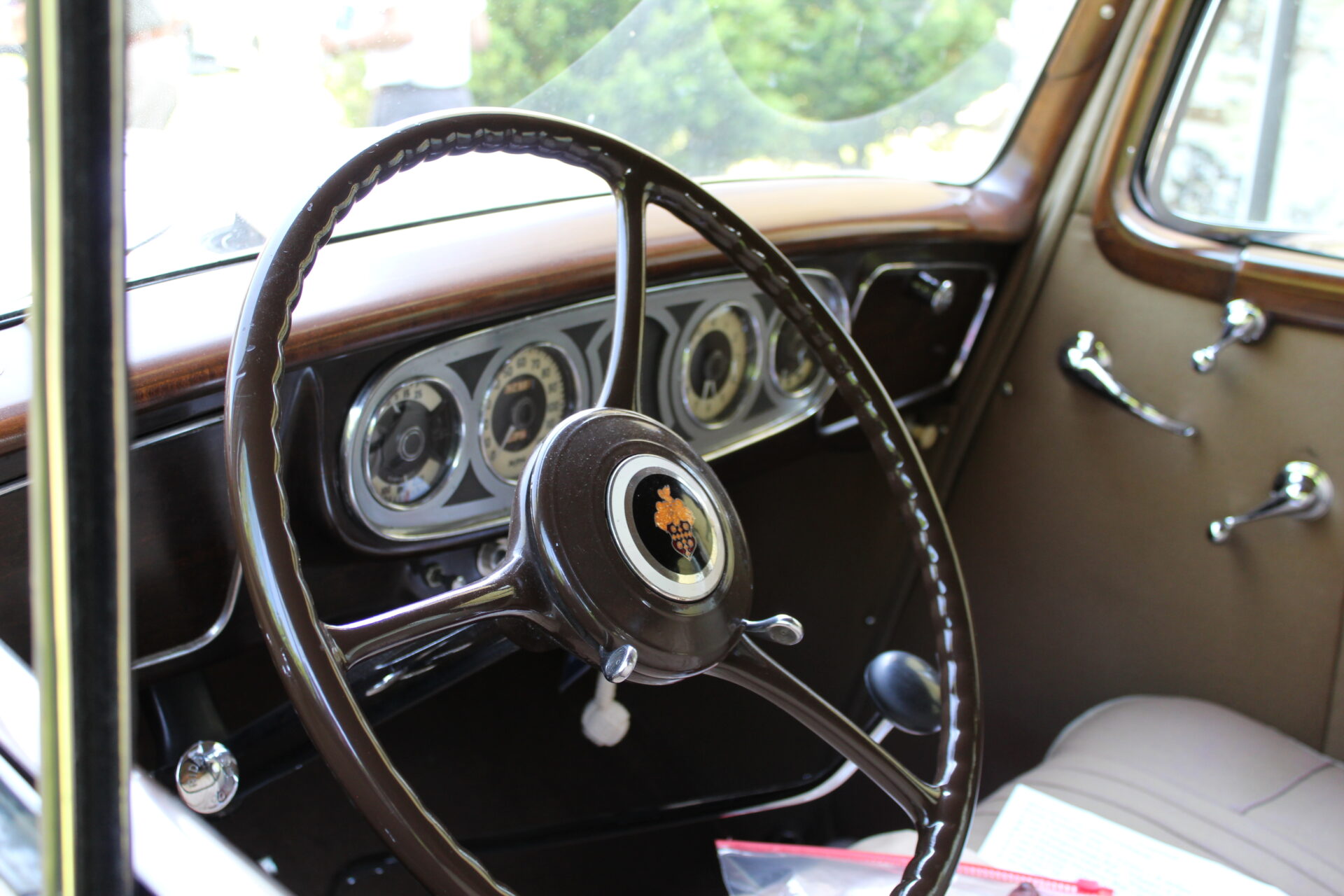
Even though these cars seem simple by today's standards they're actually quite different (major changes from year-to-year) and technically sophisticated for the era, which means the members of the CCCA have to be very knowledgeable and mechanically savvy when it comes to operating and maintaining their vehicles.
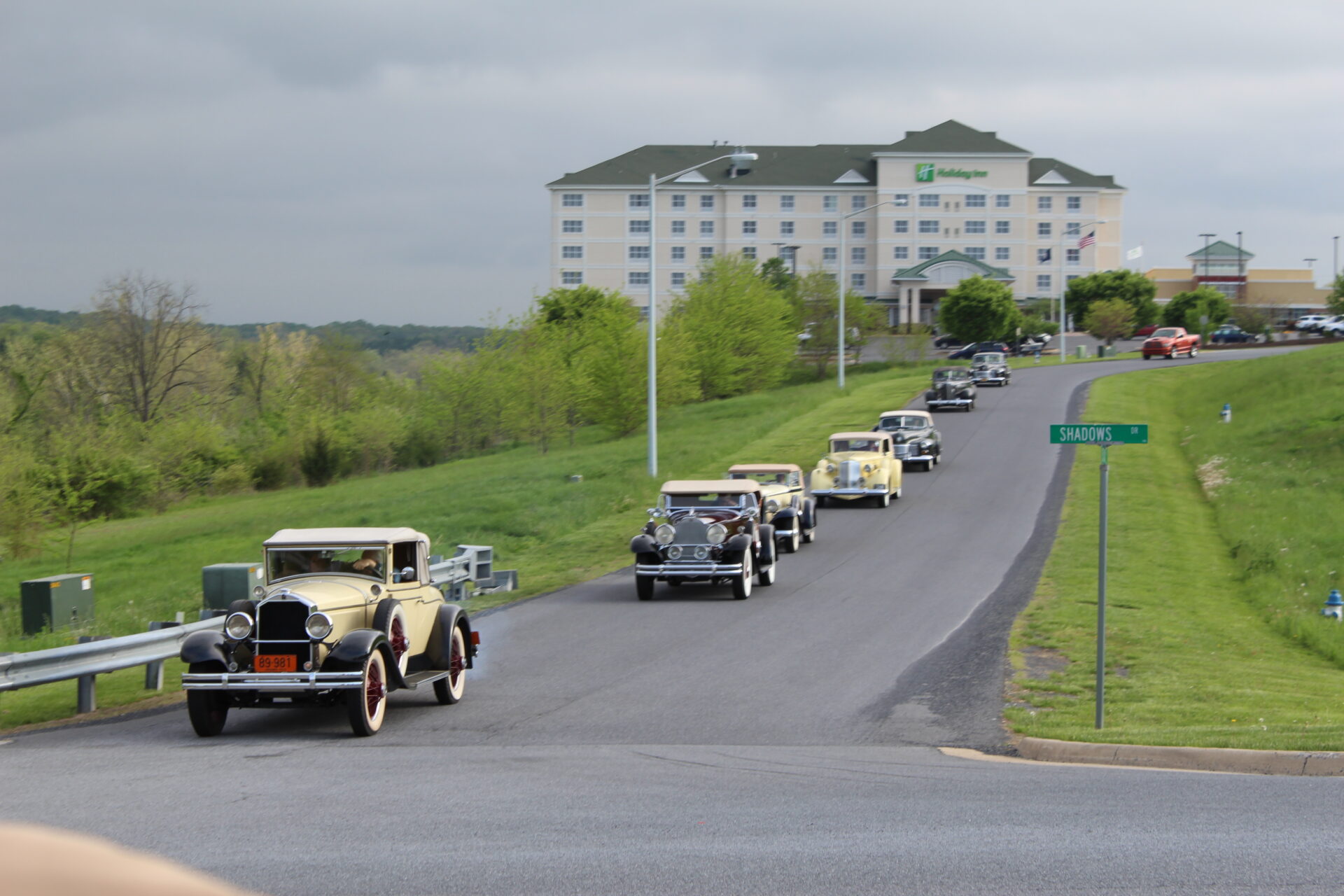
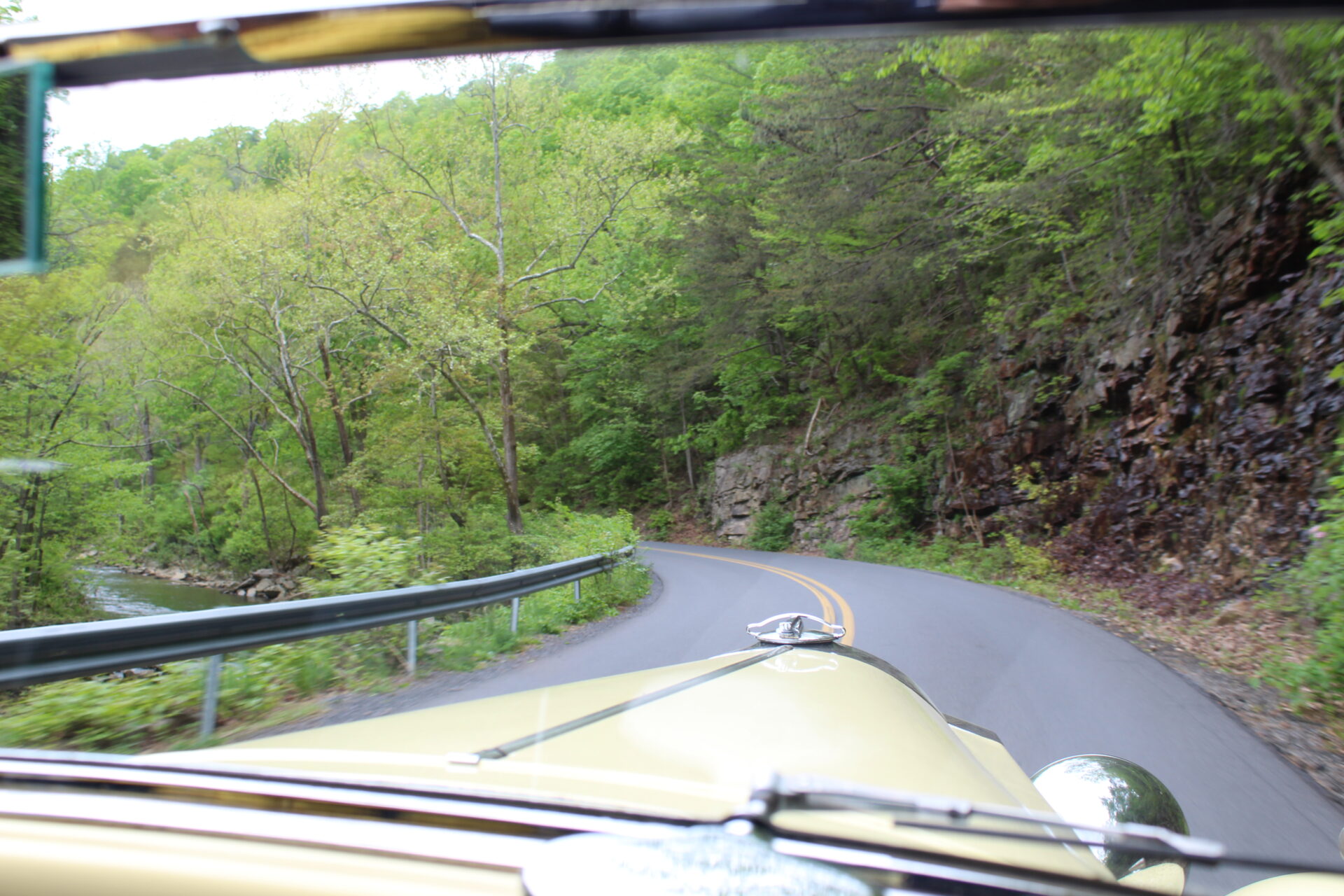
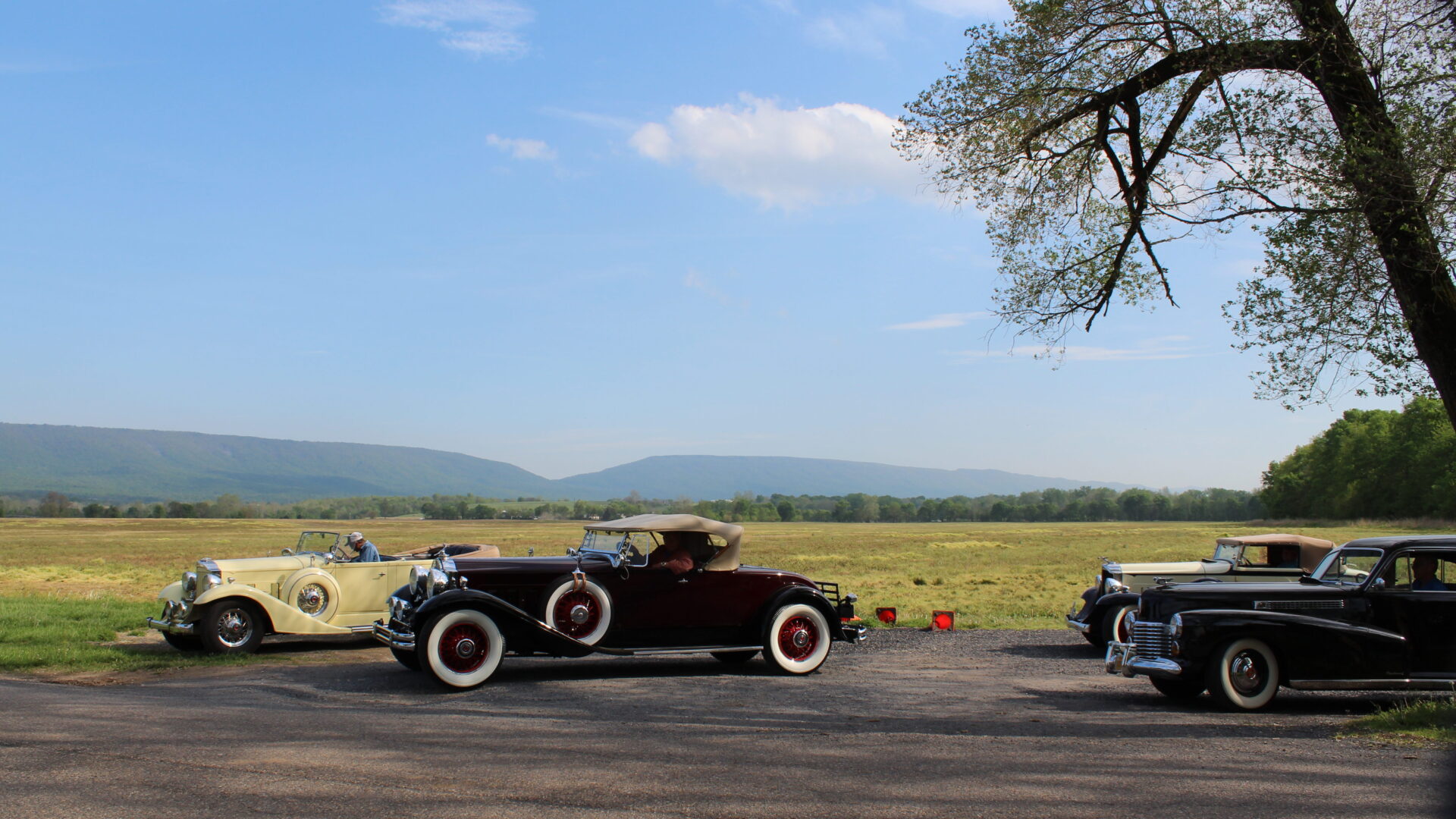
On any given day, drivers are up early prepping their cars and getting ready for an 8:30am start time. The cars line up together and set out for a 10-12 hour trek. This rally was designed as a “hub and spoke” (instead of a “point-to-point”) where a base hotel was used as headquarters and all drivers would return there each night. Thankfully the weather was in our favor with very little rain and cooler temperatures which these cars prefer and which kept everyone from having overheating issues. We averaged somewhere in the neighborhood of 125+ miles per day; which, for cars from the ’20s, ’30s and ’40s is a lot!
If you were following us throughout the week on instagram @grantouringmotorsports #ccca2019springtour you will see glimpses from all the places we stopped along the tour. But as a recap, here is the list of spots we traveled to:
Classic Auto Sport Refinishing
Motion Promotions – Piper Private Collection
Virginia Museum of the Civil War
Southern Kitchen
Shenandoah Caverns
Route 11 Chips
Meems Bottom Covered Bridge
Backroom Brewery
Mt. Pleasant Farm – Private Collection
Boxwood Estate Winery
Middleburg Tennis Club
Mt. Defiance Cider Barn
National Sporting Library & Museum
The Red Fox Inn & Tavern
“Peace and Plenty” and other fine Southern Homes
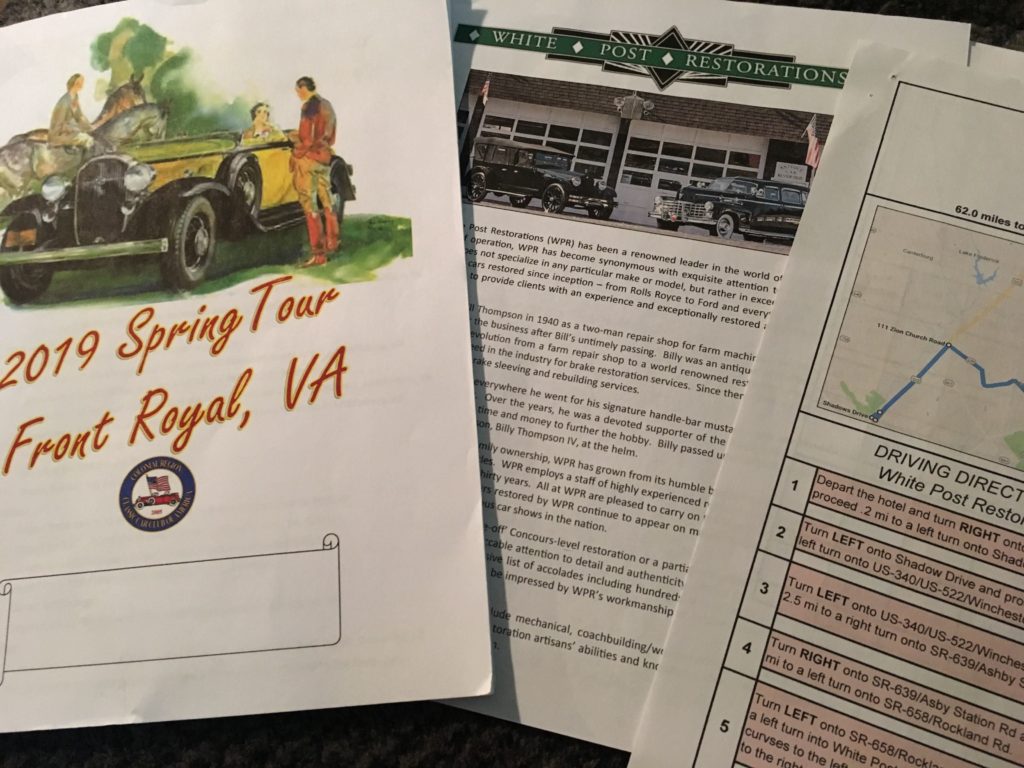
White Post Restorations
Burwell-Morgan Mill, Carter Hall & “Bunny” Mellon’s House
Hunter’s Head Tavern
Milldale Farm – Private Collection
Region’s 117
Early American Auto Repair
Photo by Crew Chief Eric (GTM)
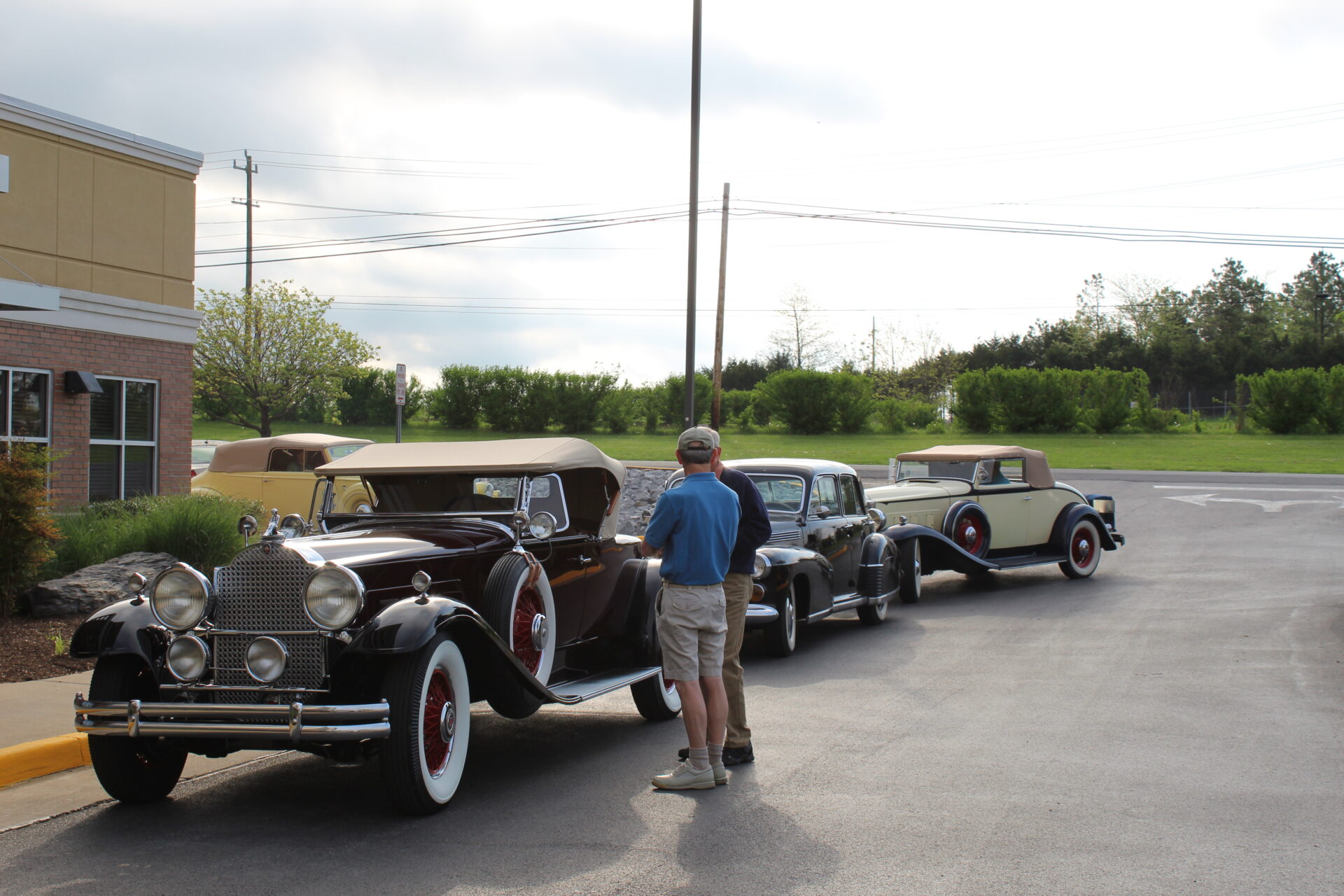
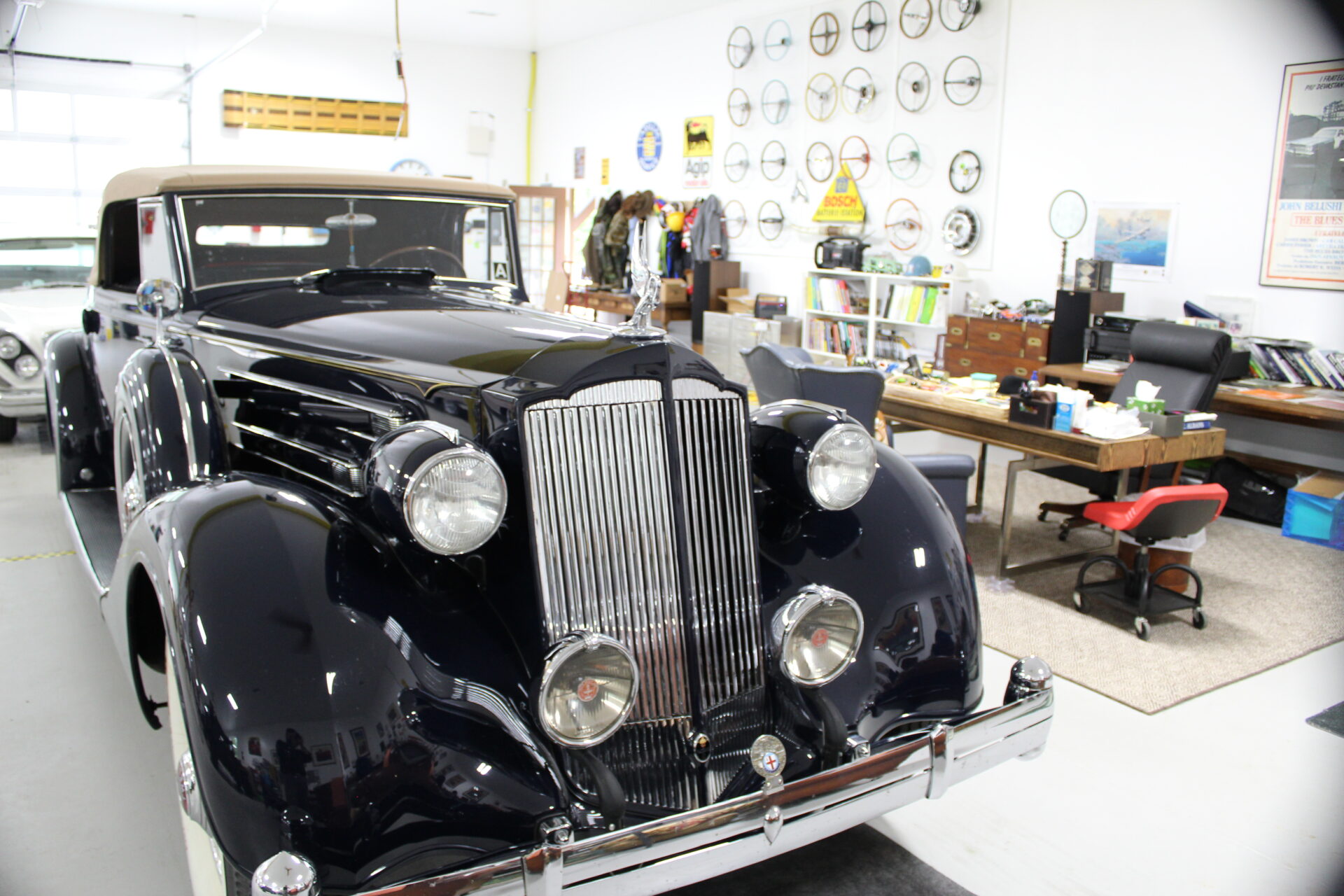
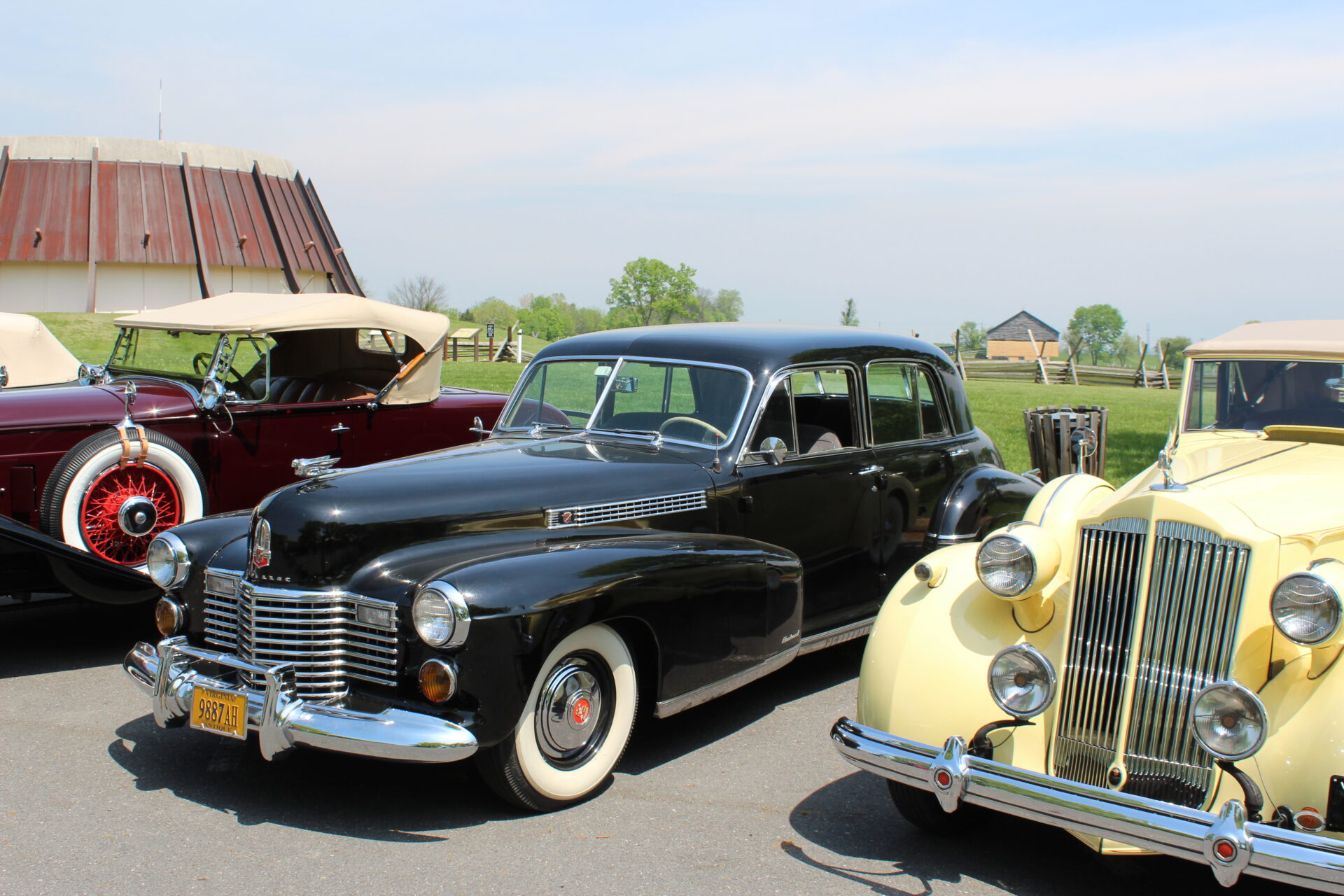
Admittedly, modern Road Rally events are considerably easier than what the CCCA does because of the types vehicles being used. Participating in this sport using Classic Automobiles is akin to going to the track with vintage formula cars from the ’50s and ’60s. These cars aren’t race cars, these are luxury vehicles made of the finest materials and craftsmanship of the time. As Matt Y’s recent article summarizes, these manufacturers were the leaders of the world at that time. Struggling to reach 60-mph on the larger roads – unless you have “a real hot rod” like Allen R’s ’33 Packard Phaeton or Gunther H’s ’37 Packard Super 8 – it makes the rally a bit more challenging. Most of the cars on this tour were more comfortable cruising at 35-40 mph – which is close to the speed limits of the roads on the route – and means lots of time on the road. Having been given the opportunity to drive Gunther’s Packard, I learned *quickly* that even though the mechanics of driving a car with an 82 year old manual transmission wasn’t much different than my modern daily, the steering and brakes were something else! #savethemanual.
Photo by Crew Chief Eric (GTM)
By the end of the first day I realized that the parallels between other kinds of motorsport and Road Rally are grounded firmly in the “car culture” we all appreciate. The similarities between these adventurers and the trackrats is closer than you’d think. Road Rally’ers are constantly worried about how the car will hold up, weather conditions, making sure the vehicle is in top shape before, during, and after a trip, and knowing which tools and spare parts to have on hand or what stores might carry something they need. Since ethanol-free gas is getting harder to find, even fuel consumption becomes an issue. And if something does go awry (and this week was no exception) the drivers come to each others’ aid in an instant. #fellowship – Where does one go to get a “inner-tube tire” serviced?
Photo by Crew Chief Eric (GTM)
Tune in everywhere you stream, download or listen!
So, I heard you’re running out to buy a Classic now? …Ha! – As many of you know, I am of the VW/Audi/Porsche clan, so maybe a vintage Karmann-Ghia or 356 is in my future, but that doesn’t mean I don’t appreciate the sophistication and luxury that brands like Packard and Cadillac provide. I did ask many of the folks on this trip why they chose what they have (some with multiple classics). Bob Montague said it best: “People drive what they remember”. But when asked, “What’s a good starter classic?” the answer always seemed to be “get a Model-A Ford“ – even though technically it’s not considered a classic, it is a gateway to other vehicles.
Photo by Crew Chief Eric (GTM)
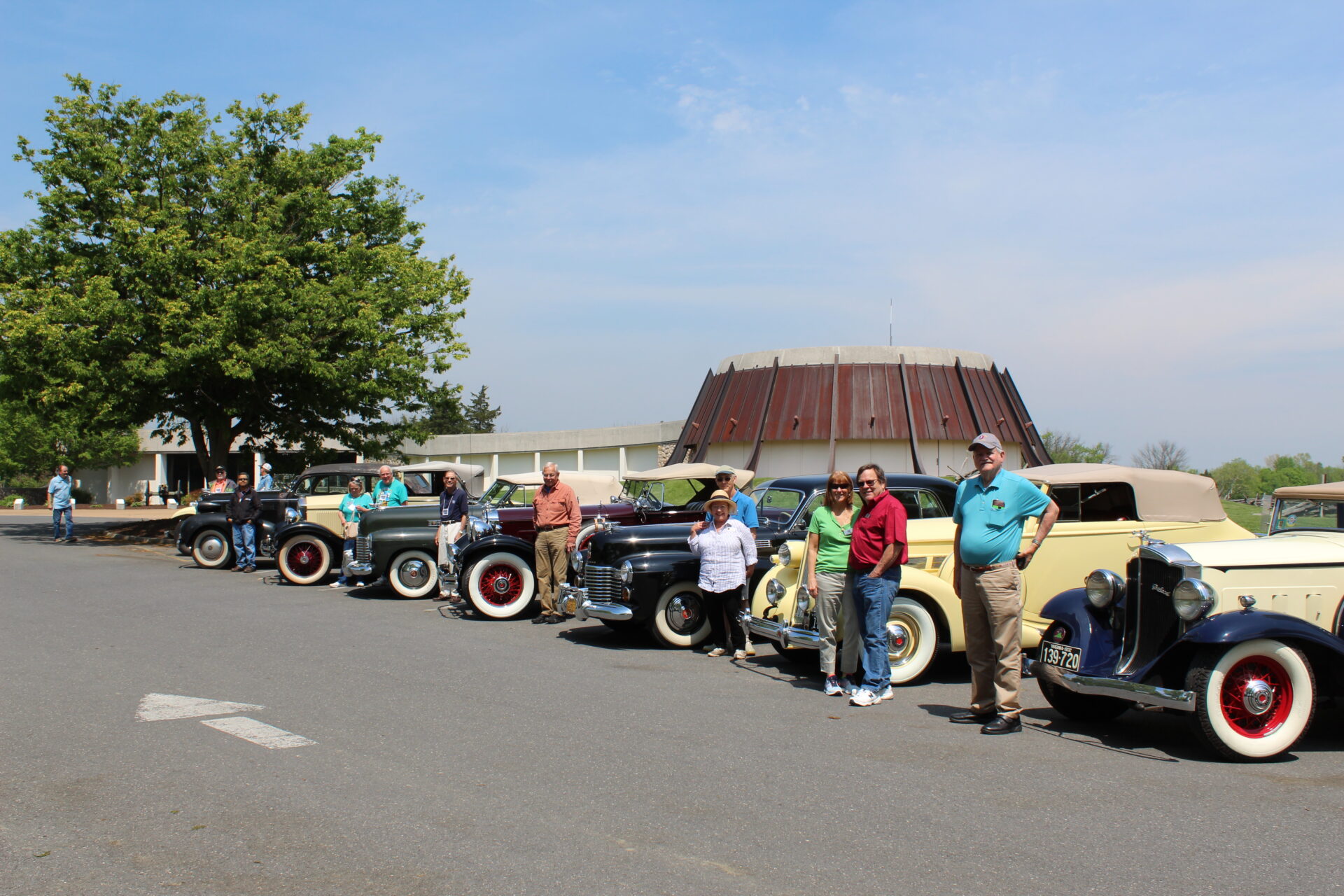
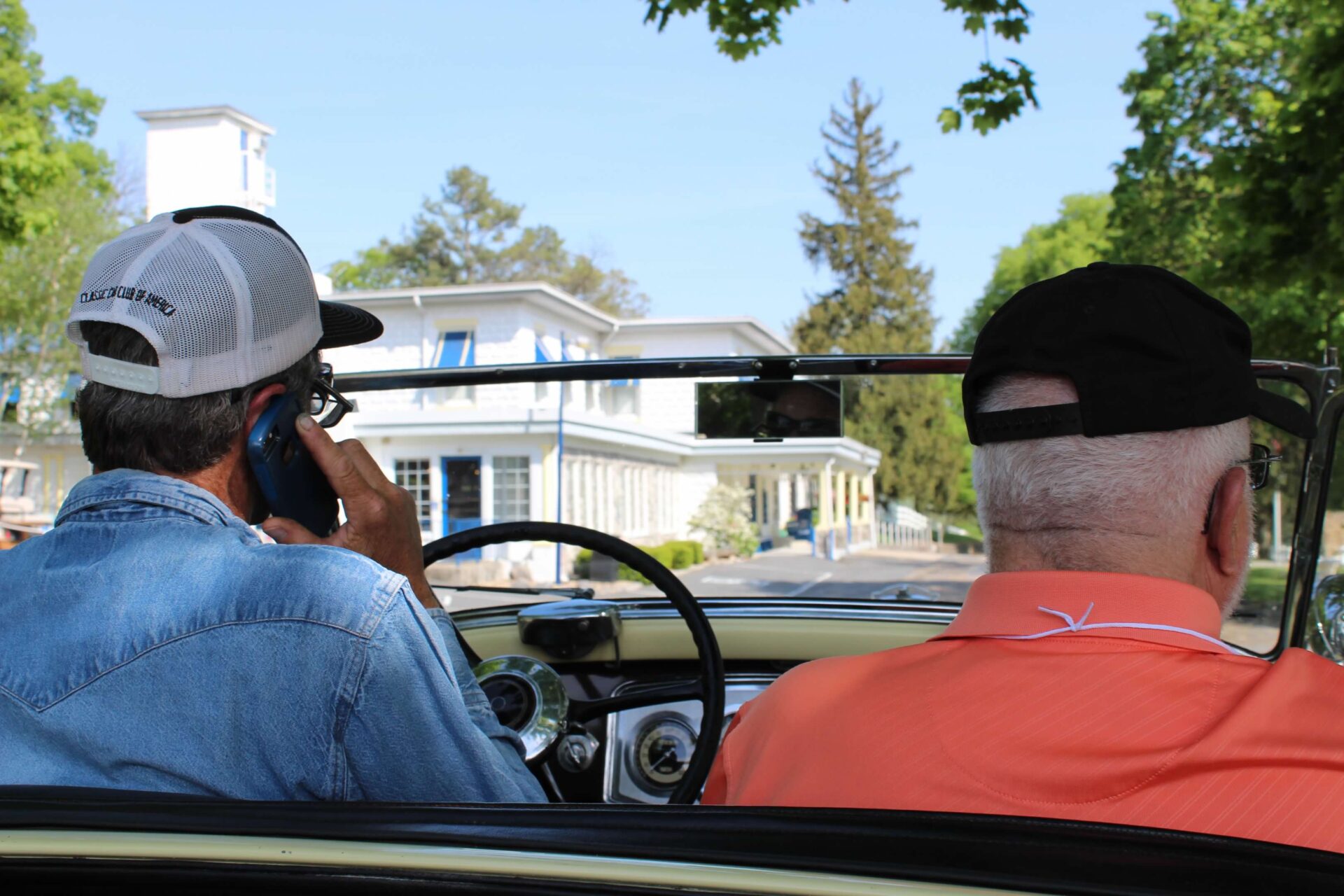
I was fortunate to be able to ride with almost all the drivers and learn their stories: some tragic, some romantic and everything in between. Yes, compared to our normal audience, the demographics of the Classic Car Club are much higher than we’re used to. But their love for automobiles, enthusiasm, the stories and the jokes made it all feel like one of our events. #foreshadowing. This trip did include “some new blood” (people under 60) and was a great opportunity for all of us to share and learn from our respective motorsports disciplines. The CCCA folks were just as interested in HPDE, Time Trials, and Club Racing as I was in their restorations and Road Rallies.
Photo by Crew Chief Eric (GTM)
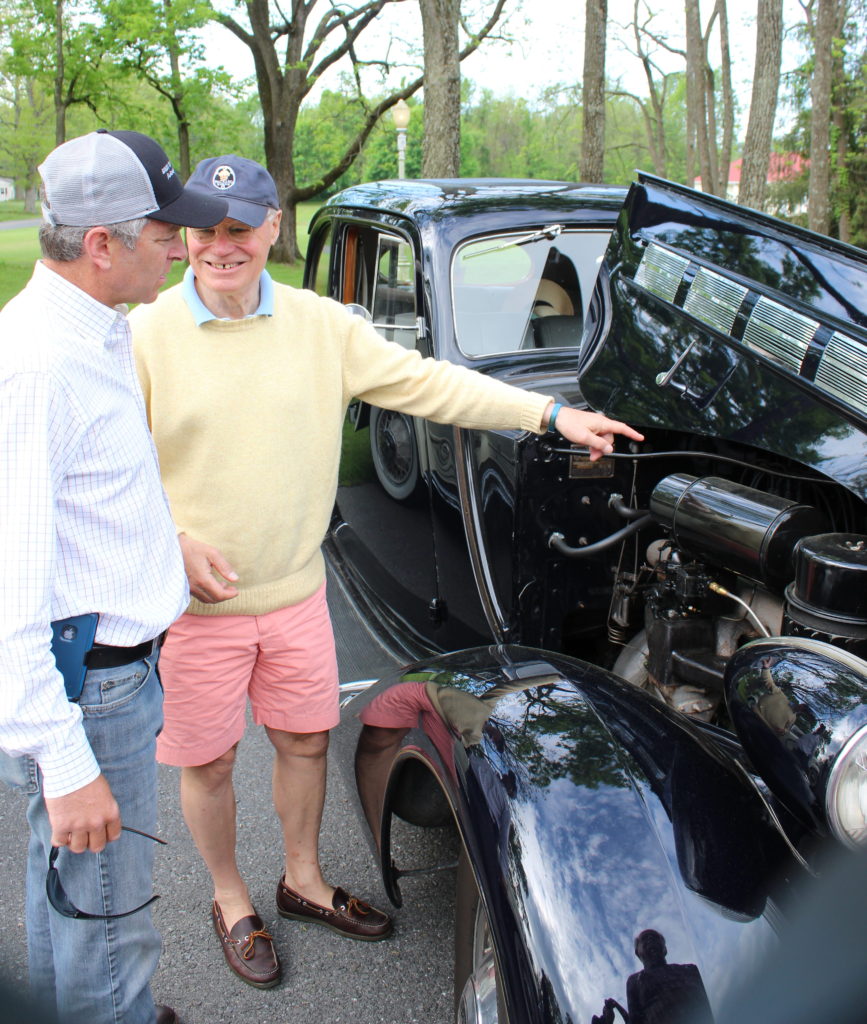
Spending nearly an entire day with Colonial Region president Gunther Hoyt (above) was enlightening as well as entertaining – so many laughs! #getoffmylawn. Alan Becker was a treasure trove of information about the club as well as the history of Packards. I enjoyed chatting with Bob Powell and finally seeing his near complete Powell Pickup. The Perrin’s educated me on the “Knight Engines” and Bob Montague helped me to better understand the significance of many of the places we were visiting in middle-Virginia. Being able to sit with Alan Merkel and listen to him recount the passionate 25 year journey it took to personally restore his gorgeous V16 Cadillac was as awe inspiring as the car. I loved the enthusiasm that the Duke’s brought to every place we visited and how regal it felt to ride with Myles White in his V12 Packard. Thanks again to the Anderson’s for opening their home to us for a tour and brunch. And to Allen “wild man” Richards who was a great bridge between the past and the present. I could go on-and-on and my notebook is full of anecdotes and memories which I will cherish. I certainly can’t capture the entire tour in just one article, but you can definitely learn more by browsing through all the pictures from the event & a handful of videos
Photo by Crew Chief Eric (GTM)
I can’t thank all the members of the Colonial Region CCCA enough for being so welcoming, and letting me spend time with them and capture all the different aspects of the tour. We at GTM wish all the drivers the best and here’s to more terrific tours! We hope to see many of you again soon!!
Photo by Crew Chief Eric (GTM)
And lets not forget that a special round of applause is definitely needed for GTM’s Mountain Region member Matt Y for putting in so much time/effort into organizing, planning and making this tour a huge success.Thank You again Matt!
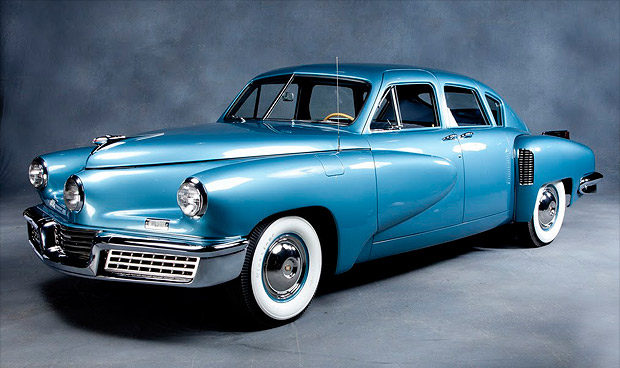
The pace in which automotive technology and innovation has leap-frogged since the first car was invented in the late 1800’s is astounding! Often times, there are vehicles that don’t make it past the concept stage, or are purpose built racers, or just die off before getting a footing in the community (*cough* Edsel) – and there are some that seem to linger forever. History and popular opinion seem to make those decisions in the end. However, in my latest series, I thought it might be nice to bring to light some vehicles that changed the automotive landscape – some for the better and others not so much, some you may know and others, well… that brings us to the story of “the Tucker ’48”.
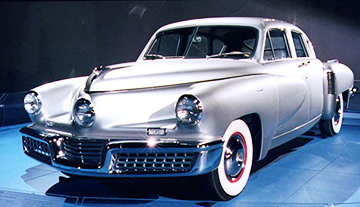
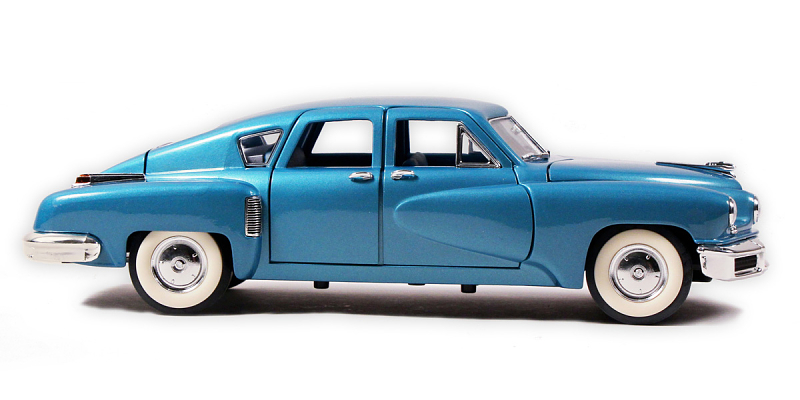
Let’s face it, many people may have no idea what a “Tucker ’48” is or that it even existed. Our grandparents might have heard of it referred to as the “Tucker Torpedo” – although it was never officially named that since it was believed people would have had too many fresh thoughts of WW2 on their minds. But looking back, the ’48 was a fleeting dream.
Preston Tucker (1903-1956)
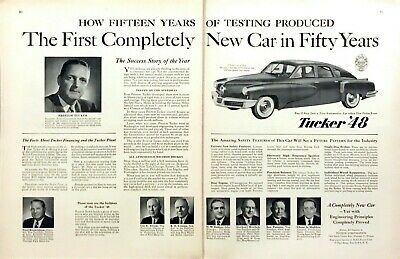
The Tucker ’48 was the creation of Preston Tucker. Preston grew up fascinated with cars and worked for companies like Cadillac, Ford, Chrysler and Dodge. Preston, much like Ricky Bobby“wanted to drive fast” and would eventually join with Harry Miller (famous Indianapolis 500 winning engine builder). And together, in 1935, they would form “Miller and Tucker, Inc” working on race car development until Harry’s death in 1943. Heck! – They even built race cars for Henry Ford! Later, Preston ventured into producing vehicles for the military and aviation in support of WW2 prior to designing the ’48.
>back at the ranch<
During World War II the major automobile manufacturers had shifted their focus on war support which did not allow for development of new automotive designs and very few people were buying. But when a freshly returned G.I. hit our shores, what was the first thing he wanted to do with his money? – “Buy a New Car!” – That being said, when the war came to an end this was an opportune time for small, what we would consider today “boutique” manufacturers, to break into the market. And so, Preston decided to start his own automobile company, The Tucker Corporation.
Another manufacturer you might have heard of: Studebaker was also starting to blossom and like Tucker was the only other manufacturer offering new car designs and fresh ideas, ones the public hadn’t seen since 1941.
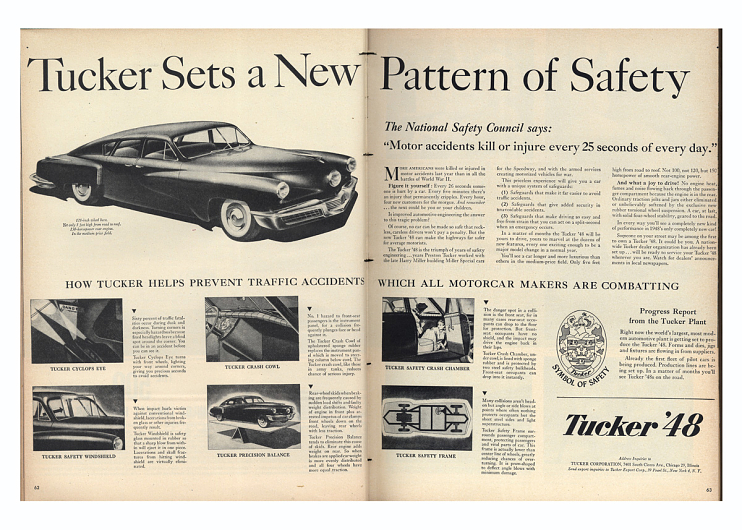
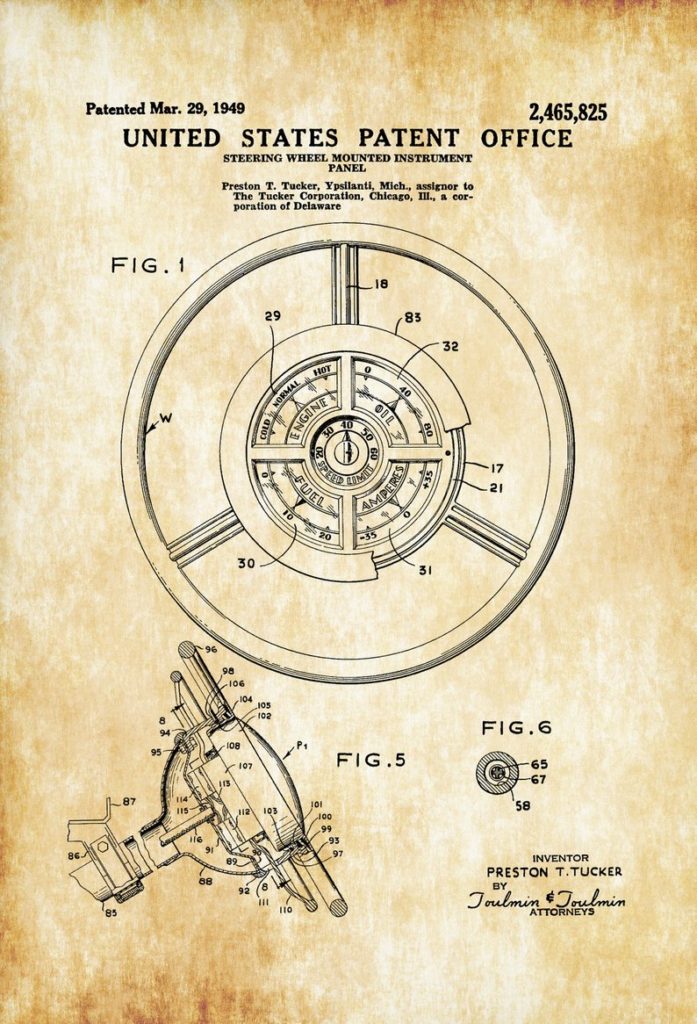
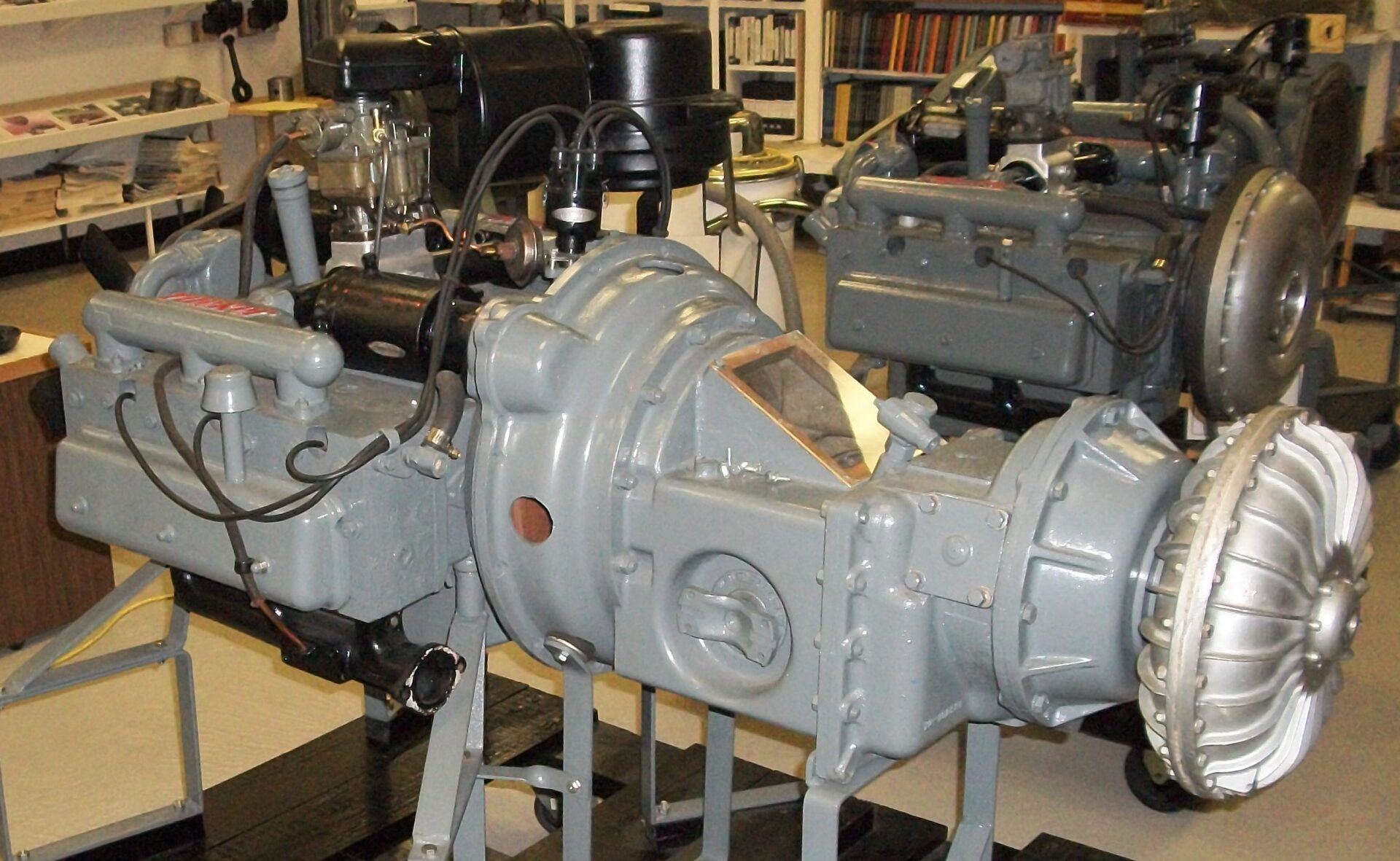
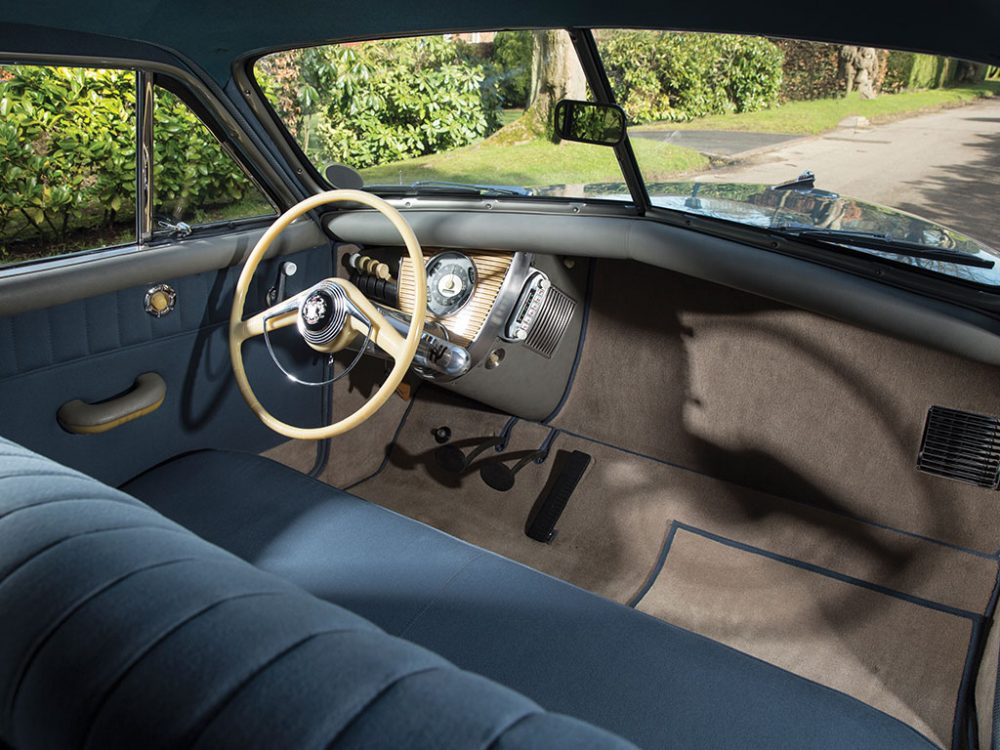
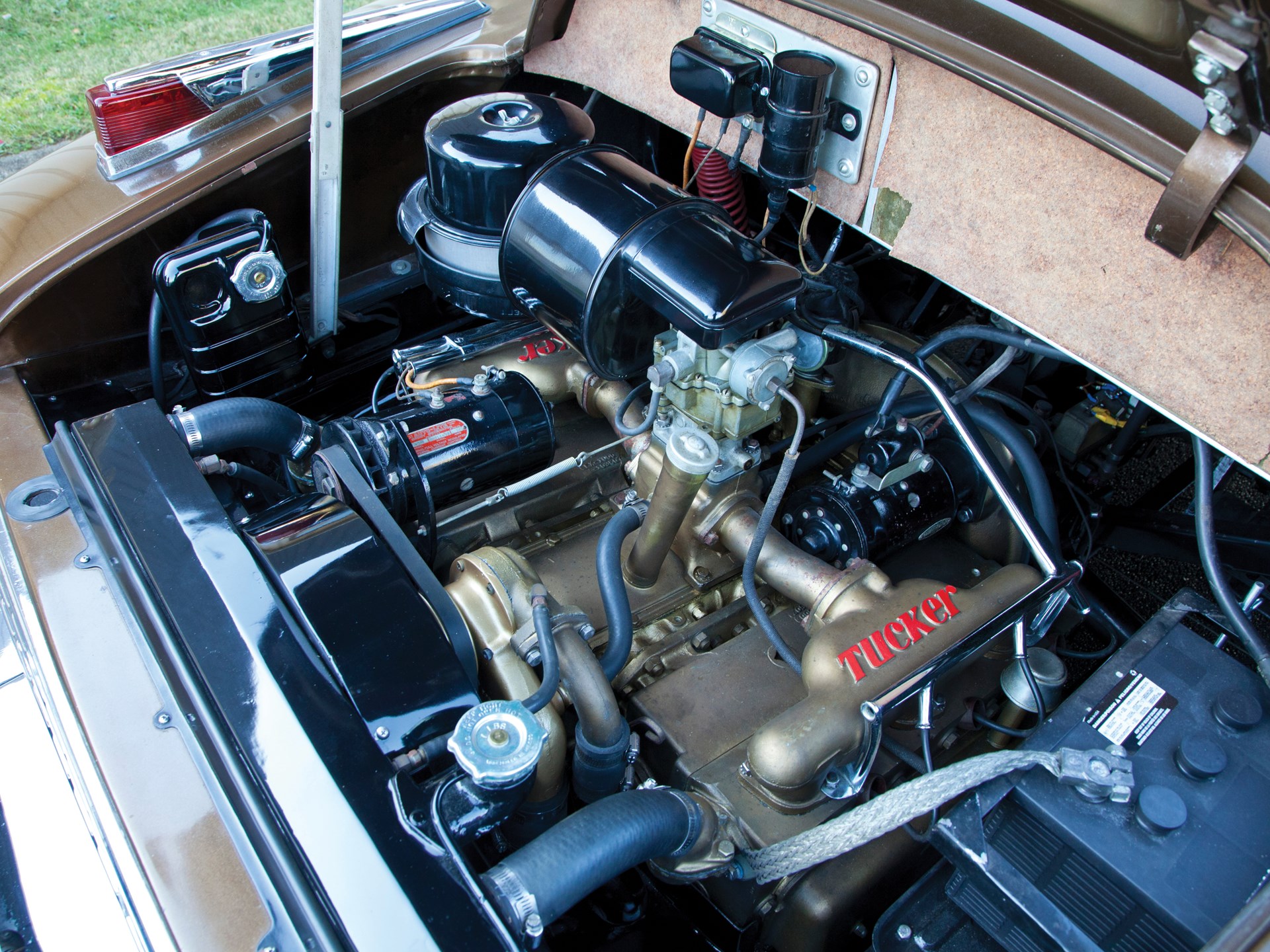
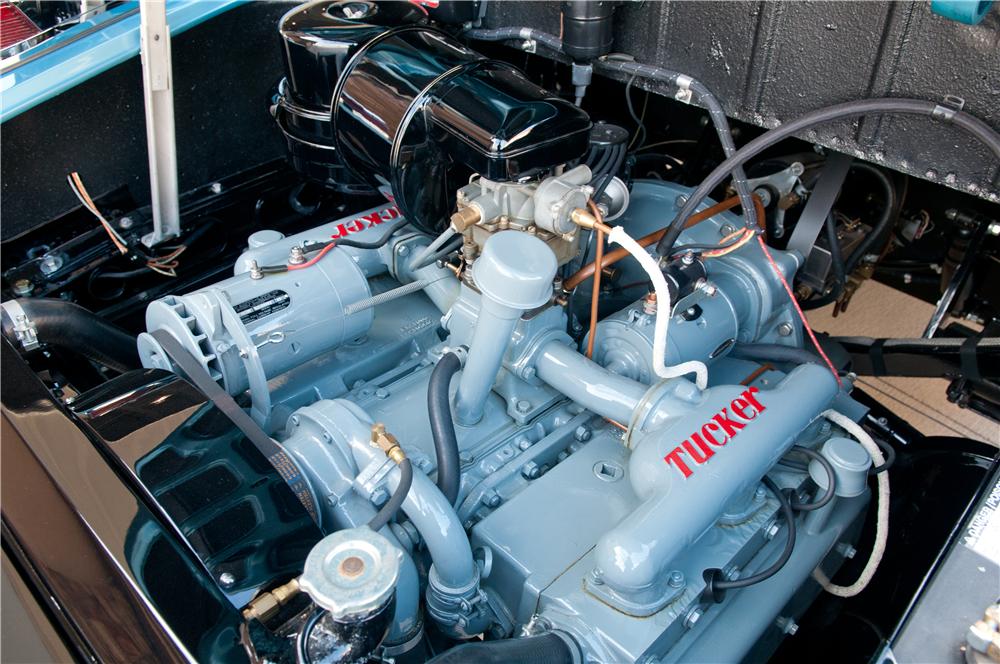
Preston designed his vehicles using a “safety first” approach and introduced what people considered then “futuristic concept features.” In his design it called for a fuel injected flat-6 rear mounted engine and transmission with a water cooled aluminum block, four-wheel independent suspension with disc brakes all the way around, instruments within reach of the steering wheel, a padded dashboard, and seat belts! (which were not fully adopted in the automotive industry until President Johnson made them mandatory in all vehicles in 1968).
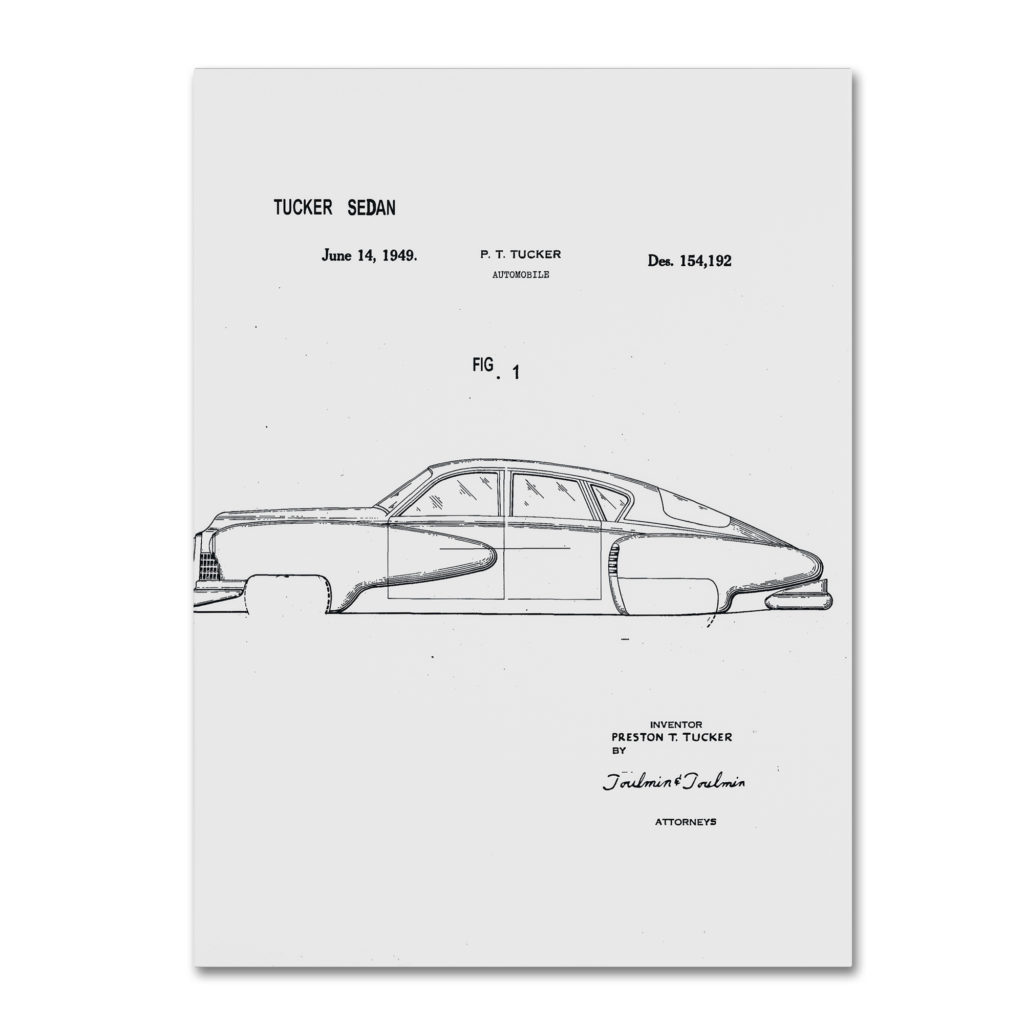
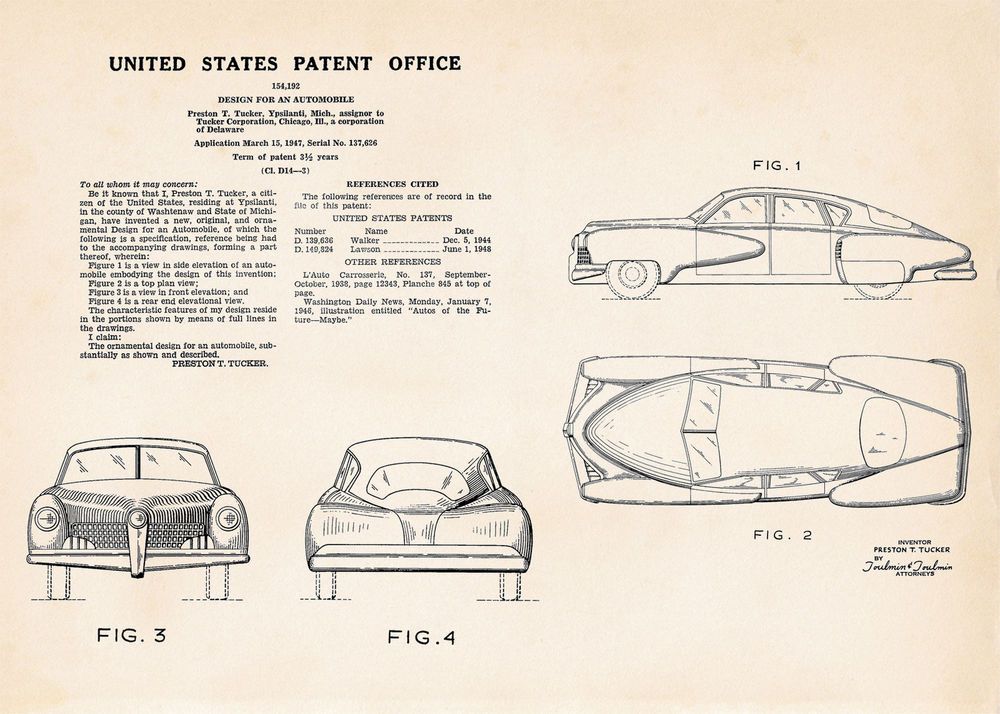
The birth of the Tucker ’48 was not an easy one.Preston hired car designer George S. Lawson to work on the design for over a year and a half prior to the initial public concept debut (somewhere between February of 1946 and March of 1947). Due to disagreements and various other challenges with the layout, multiple other designers were brought in before the first ’48 rolled off the assembly line. To make matters worse the U.S. Securities and Exchange Commission brought about an investigation into the Tucker Corporation and the Tucker ’48s designs… nothing major, just something about fraud and embezzlement. Eventually all the charges against Preston and Tucker Corp were dropped, but the damage was done and public opinion of the company was tarnished (before they even made their first sale!).
[editor’s note] more Tucker-48 photos available in our Shutterfly vault.
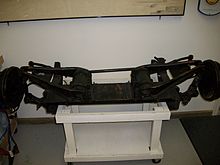
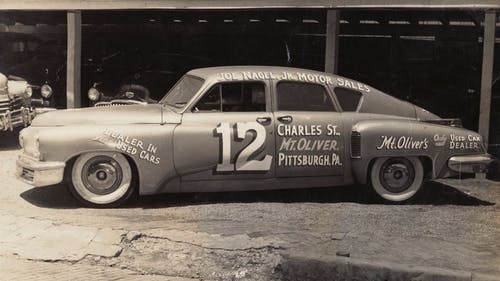
The final product was a very unique and distinguished car for the time. The suspension, for example (above, 2nd row, center), was not like a common car of the era with steel springs but was technology carried over from Preston’s racing days with elastomeric (rubber) independent suspension. The center headlight was known as “the cyclops eye” (above, 1st row, left) and would shine in the direction the car was being steered if the turn was greater than 10 degrees, aiding the driver to see around corners at night. Since multiple states had laws at that time making more than 2 headlights illegal, he fabricated a cyclops eye cover for vehicles that would be sold in those locations. Tucker offered transmissions that were also unique including a primitive Continuously-Variable Transmission (CVT) called “the Tucker-matic” which included options that used electro-vacuum shift controls and even an updated version with 2 torque converters.
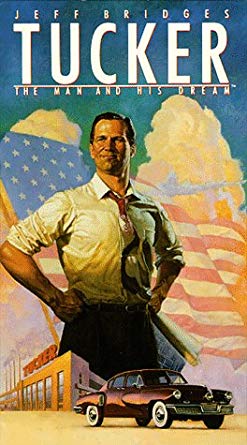
I could go on-and-on about the Tucker Corporation and the ’48, I find it absolutely fascinating.Meanwhile, in that TL:DR / Cliff Notes way, you can skip all my rambling and watch the Francis-Ford Coppola directed movie starring Jeff Bridges from 1988 detailing Preston and the Tucker ’48 called “Tucker the Man and His Dream“. The movie summarizes Preston’s origin story and focuses on the hardships of making the ’48 and goes deep on the SEC investigation and court cases. For anyone that is interested, the movie is currently available (FREE with Ads) on the VUDU streaming service.
In the end, it was disappointing to see that the Tucker ’48 never made it, and in my opinion most of what happened to the company was a witch hunt inspired by jealousy from the Big-3 because of how different and advanced Tucker’s car was in comparison to the standard / mass produced vehicles at the time. I really appreciate the ingenuity and tenacity of Tucker, and I believe that his car was way ahead of its time. Sadly only 51 (50 road going cars was the legal limit to be a viable manufacturer back then) of these cars were ever officially made, although remaining parts were used to piece together a few others afterwards. A part of me still wants to see one of these up-close, maybe at a Classic Car show, but until then… #neverstoplearning