spot_img
Home Blog Page 18

The Trouble with Howard and the Triumph of Lee Anne Patterson

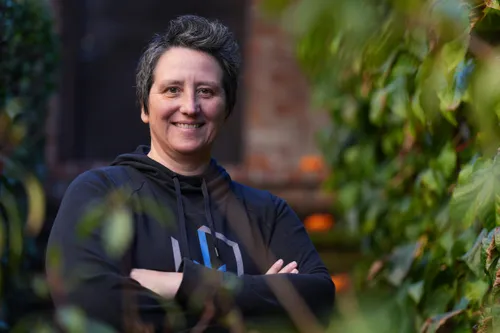
In motorsports, the roar of engines often drowns out the quieter stories – the ones built on grit, humor, and a whole lot of heart. But Lee Anne Patterson’s journey from rock radio to race director, team owner, and now children’s book author is anything but quiet. It’s a full-throttle tale of breaking barriers, building brands, and raising a pet skunk named Trouble at the track.

Photo courtesy Lee Anne Patterson

Lee Anne didn’t grow up in racing. Her early career was in Atlanta’s rock radio scene, voicing ads and wrangling promotions. But love – and a leap of faith – landed her at Sears Point Raceway (now Sonoma), where she introduced NASCAR Winston Cup to the Bay Area. Her Southern charm and storytelling chops earned her credibility in a garage she’d never set foot in before. Michael Waltrip’s hug sealed the deal.

Tune in everywhere you stream, download or listen!

Listen on Apple
Listen on YouTube
Listen on Spotify

Her next chapter? Working directly for Carroll Shelby. As series director for the Dodge Shelby Pro Series, Lee Anne found herself in McKinney, Texas, surrounded by chili-scented part boxes and legendary cars. Shelby’s office was equal parts museum and prank zone, and Lee Anne held her own in a world where few women had ever run a racing series. She even gave Chris Economaki a pace car ride – after surviving a wildly inappropriate comment with grace and grit.

Lee Anne’s move to IndyCar came with marriage and a new role as team owner. She was one of the few women in the paddock, often the only one in the garage on move-in day. But she wasn’t alone for long. She met Anita Milliken, the first licensed female IndyCar mechanic, and documented the lineage of women who turned wrenches, built composites, and engineered winning cars. From Eloisa Garza to Kate Gundlach, Lee Anne helped shine a light on the unsung heroines of the sport.

Photo courtesy Lee Anne Patterson

Lee Anne’s soapbox moments are legendary – and necessary. She’s a fierce advocate for understanding sponsorship not as charity, but as ROI. “Your race car is the ultimate promotion vehicle,” she says. “It’s not the promotion.” Her insights into why female athletes are undervalued – and how brands miss out by ignoring women in motorsports – are both sobering and inspiring.

Spotlight

Synopsis

In this episode of Break/Fix podcast, the focus is on Lee Anne Patterson, a notable figure in the motorsports industry with over 25 years of experience. Lee Anne has served in various high-profile roles such as promotions director for Sonoma Raceway, series director for Carroll Shelby, and a team owner and manager in IndyCar, including running the prestigious Indy 500. The discussion covers her unique path into motorsports, beginning with her unexpected transition from rock and roll radio to becoming the promotions director at Sears Point Raceway. Lee Anne shares enthralling stories including her interaction with NASCAR, her work with Carroll Shelby’s Dodge Shelby Pro Series, and managing a small IndyCar team. She also delves into the challenges women face in motorsports and emphasizes the importance of marketing and sponsorship in the industry. Additionally, Lee Anne talks about her latest project, a children’s book titled ‘The Trouble with Howard,’ based on a true story involving a rescued skunk that became part of the racing team’s life. This episode provides an insightful look into the intricacies of motorsports, the strides made by women in the field, and the significance of effective sponsorship and marketing.

  • Like all good break/fix stories… there’s an origin: The who/what/where/when/how and why of your entry into the Motorsports World – how did you get wrapped up in all this?
  • Working for Carroll Shelby?
  • The Indy Car Team – The good/bad/indifferent; and after a decade at Indy Car, what came next?
  • You’re friends with one of our previous guests, Anita Millican – how did that come to be?  
  • And because of your relationship with Anita, you put together a book about her adventures, tell us more about your new book “The Trouble with Howard” – what’s it about?
  • One of the questions that comes up often is “how do we make racing (real or virtual) more diverse?” – If a little comes up to you today, and says “why racing?” what do you say? 
  • What’s next for Lee Anne? Any other books in the works?

Transcript

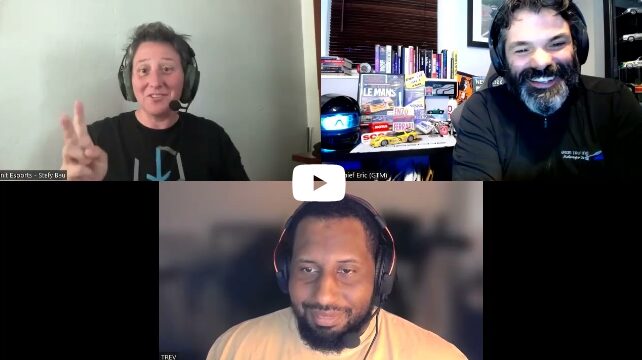
Crew Chief Brad: [00:00:00] BreakFix podcast is all about capturing the living history of people from all over the autosphere, from wrench turners and racers to artists, authors, designers, and everything in between. Our goal is to inspire a new generation of petrolheads that wonder, how did they get that job? Or become that person.

The road to success is paved by all of us, because everyone has a story.

Crew Chief Eric: With over 25 years of experience in motorsports, our guest has worked on projects like being promotions director for Sonoma Raceway, series director for Carroll Shelby, and a team owner and team manager in IndyCar, running full seasons for many years at the famed Indy 500.

Lauren Goodman: Lee Anne Patterson now owns a boutique promotions agency. Working with select clients that have stories to tell, but she’s also produced her first children’s book, the trouble with Howard, based on the real life story of Howard and [00:01:00] Anita Milliken. And she’s here to tell us all about her automotive and motorsports journey.

Let’s welcome Lee Anne to break fix.

Lee Anne Patterson: Hi everyone. Thank you so much for having me on today. I appreciate it.

Crew Chief Eric: And joining us tonight, returning to Break Fix is my cohost, Lauren Goodman, supervising producer of media and exhibitions from the Revs Institute. So welcome back, Lauren. Good to be back. Well, Lee Anne, like all good Break Fix stories, there’s a super heroine origin story.

So tell us the who, what, when, and where and why of how you got mixed up in the world of motor sports.

Lee Anne Patterson: I did not grow up in racing. I actually grew up bicycling in the Southern Bicycle League. So racing was not in my purview, but rock and roll radio was. And so I got my start actually through rock and roll radio.

I was working for 96 rock in Atlanta and most Atlantans will go, Whoa, that was like a huge number one rock and roll station in the country. And I was the continuity chick and then I was responsible for all the commercial air, which group copy did a lot of voiceover and got paid to say things like super shops because everyone deserves [00:02:00] performance.

It’s really fun. Anyway, from there, I fell in love with a promotions director, and the place that gave me a shot was at Sears Point Raceway, now known as Sonoma, and so I became the promotions director, and it just happened to be Motorsports that gave me the shot. And my very first job was to introduce NASCAR Winston Cup to the San Francisco Bay Area.

It was their very first job out there. And I remember going and having to tell the DJs that milk was a two syllable word from the South and that moonshine was no longer an appropriate question. But there was a guy named Bob Weeks who worked for Bill France Sr., had been working for him since the 50s.

Because one of the things I had to do was actually give garage tours in a garage I had never been in. Two days prior, I had helped the PR staff. With the media day, you know, it always is an embroidery was a new thing back then. And there’s a guy wandering around. I’m like, can I help you? And he goes, Oh, I’m Michael Waltrip.

I’m like, great. I’m Lee Anne. Do you need anything? He’s like, no, no, no. I’m one of the drivers. I’m like, Oh, okay, great. Do you need anything? I mean, I was just there to [00:03:00] do a job, right? And then Bob Weeks took me on a garage tour and gave me some stories about Smokey Eunick and Richard Petty and he goes, these stories, your accent, you’re going to be fine.

And so I did, I took all these people and how y’all doing? Welcome to Sears Point. They all elbowed each other and said, listen, honey, she said y’all. We took him on a tour and when we got to the haulers who walked out, but ladies and gentlemen, this is driver Michael Waltrip, who looked at me like you were so full of it.

And then he came over and gave me the hug of credibility. It was great. And that’s how I started a career in racing.

Crew Chief Eric: Did you live through the many name changes of Sears Point? Cause I actually still call it that even though it’s Sonoma and there was a brief period where it was Infineon. Infineon.

Lee Anne Patterson: I was just there for about two and a half seasons.

And it was, it was always Sears Point at that time. When it went to Infineon, that was slightly after my time. Of course, now it’s just Sonoma. So I still have stickers since I get to the point.

Crew Chief Eric: So how do you get involved with Carroll Shelby?

Lee Anne Patterson: One of the first things I did when I was at Sears [00:04:00] Point. Not only did I launch a race I’d never seen before, but I helped liaison to a film crew, which was Tim Conway’s Dorf Goes On.

And Budweiser had paid for the movie so they could have the commercial footage of the Budweiser car going around Sonoma Raceway. There’s a producer named Michael Collier, he’s a Brit that lives in California. I mean, I was living with the crew in the hotel, so it was great. Tim Conway got all the dailies, just, I mean, like a ton of fun.

But after I had left Sears Point, I moved back to Georgia and I made the decision, really wanted to stay in racing. So I was at Atlanta Motor Speedway. I’d done pre race ceremonies for them that day. After the race started was walking down the middle of the infield road. Nobody else is on the road except Michael Collier.

From California who really shouldn’t have been there and the races started were the only two people on earth in the middle of this infield road. He’s like, what are you doing now? I’m kind of looking for my next gig. He goes, have I got the job for you? And he called Don Landy and told him he’d be an [00:05:00] idiot if he didn’t hire me.

And Don Landy was Carol’s guy. So I got an interview and I became the series director for Carol Shelby’s Dodge Shelby Pro Series.

Crew Chief Eric: So did that require you to head back to

Lee Anne Patterson: California? The Shelby Can Am series was based in Texas. It was actually in McKinney, Texas. And you walked into this ranch style house and there was a big pot of chili in the front lobby because of all the Carroll Shelby chili.

And then right next to it was one of the Daytona Coupes and everybody’s like, what the hell do you people do here?

Lauren Goodman: I got to tell you, that makes so much sense because Carol Shelby said the best thing about winning Le Mans, it helps you get deals together. And McKinney, Texas is a little more where my people are from.

Yeah. That’s what you do out there in the middle of nowhere, Texas. You get deals together. How else are you going to get by?

Lee Anne Patterson: And the packing plant for the Shelby chili was in the brown paper baggage at the time with little seasoning packages. Every Shelby can and part box of parts that we sent out to all the special vehicle reps and the teams smelled like chili.

I mean, you would open up the box, you’d be like, woof, you know, cause the little chili parts were [00:06:00] everywhere. So, also a little known secret, every single one of Carol’s cars that was in the collection at McKinney, including Cobra 001, Smells like chili. When the Daytona was going across the auction block and Bob Bondurant was going to drive across the block, like, I wonder if that was the one at Carol’s, you know, because there’s a couple of them, right?

I’m like, all I have to do is sniff the inside and if it smells like chili, it really was Carol’s, right? But in order to do that, it would have looked like I was trying to kiss Bob. So I just, I didn’t know, Bob, you don’t understand. Yeah, they did have the car completely wrapped in plastic, but we had this little Dodge Omni that you had to drive Carol around in.

And literally you’d stick your head out the window and take a deep breath and then put that piece of drum a little

Crew Chief Eric: bit. So Dodge Omni GLHS Turbo Shelby edition. It’s got to be right. He’s got to drive in his own stuff.

Lee Anne Patterson: Yeah, that was it is. And I was out in Carol’s office. big L shaping California at one point.

And we were just, you know, just too in the bat one day about stuff. He had just kind of put the heart recipient, heart fund in [00:07:00] place. And so we were talking about his heart and we were talking about Lamont’s and at the time, nobody really knew that he won Lamont with a nitroglycerin pill underneath his tongue.

And that story’s kind of gotten out then, but nobody seemed to know that at the time. But we were talking about the GOHL and it goes like hell. Oh, okay, that’s what it stands for. How’d you come up with the number? How far is it to that telephone pole? Okay,

Crew Chief Eric: 50. Let’s go. Wasn’t it the GLHS was goes like hell some more?

Lee Anne Patterson: Probably. He was just so matter of fact.

Crew Chief Eric: So that puts us basically square in the early part of the 80s when those cars came out and they were being campaigned and there was a coupe version like a Charger slash Daytona coupe GLH and then the Omni GLH and all that. So that was part of that Shelby in conjunction with SCCA type of racing series.

Right. And I heard from people like Cindy Lux who got started racing those cars when she started her career. Right.

Lee Anne Patterson: This is later 80, early 90s. The Shelby Can Am series actually got its start in 1992. [00:08:00] They had a abbreviated season in 92 and I stepped in as a series director in 93. So it had a very short run.

It was a gift from Lee Iacocca, the Carol, the Dodge sponsorship. Got three years, buddy. We’re not going to renew. You got three years, make the most of it.

Crew Chief Eric: Because at this point he was involved in the quote unquote skunk works project, which was the Viper.

Lee Anne Patterson: Yeah. And so the Viper was our pace car. In fact, we had it at Road America.

And we usually had the red one, but at one point we had the first black off the line that was brought to us as a pace car.

Crew Chief Eric: Oh, the one that Jay Leno argues about all the time, whether it’s his or

Lee Anne Patterson: I don’t know that story, but they tossed me the keys and said, have fun. I’m like, yeah, yeah. But I offered a pace car ride to Chris Akanemaki at the time.

Because I got to pick a media specialist and he had already been very, very kind to us. But can I say on air what he said to me? Probably not. Absolutely. He said, Oh, are you offering to take a ride in your ass? Welcome to the chauvinism of the nineties, right?

Crew Chief Eric: You know, a lot of us [00:09:00] only got to experience Carol Shelby through that last film that was produced.

It shall be American, right? Where he’s doing the voiceover, he’s telling the story, he talking about all the different cars and the projects. And he does talk a little bit about Lamont in the early days, like you were mentioning. So what was it like working for Carol?

Lee Anne Patterson: You heard him come in the room or the office before you ever saw him.

He was very loud, very boisterous, very much a prankster, very much a jokester, which was great fun. You had to hold your own with him though. And mind you, at the time, I was the only second woman to run a series. Vicki O’Connor, she’s the blueprint, you know, with the Toy Atlantic series. The most successful support series ever in motor sports.

And that was all Vicky. And she gave me some sage advice and said, see if you can hold your own. Right. When I first went to work for Carol, somebody had arranged a Boy Scout breakfast for him to attend. Bobby Rayhall was the keynote speaker and Carol was just supposed to make an appearance. So I had to go along and manage Carol like, haha, anybody’s going to manage Carol, right?

I’m pretty young at this [00:10:00] time. I’m still not quite 30 yet. So way too young to be doing the job that I’m doing. So we go into this Boy Scout breakfast. We’re in the backstage and the guy comes in, Mr. Shelby, we’re so glad to have you here. Thank you so much for being here. And he’s like, great. He goes, we’ll get you up.

We’ll say a few words and then just have a seat, you know, to the left. And Carol’s like, okay. And the guy walks up and he starts turning to me, cussing me out like a sailor. I am unprepared. How dare you put me in this position? I don’t have your remarks, blah, blah, blah. I actually tried to give Carol Shelby talking points.

Yes. You may laugh at that. So, I’m like, but, you know, dah, dah, dah. And Sig says, I’ll be fine. And he goes on up to stage and I take my room at the back at one of the tables. Now there’s 700 little Boy Scouts in this room. Carol gets up on stage and proceeds to give the 20 minute funniest speech I’ve ever heard in my life.

Everybody’s holding onto their belly. We were laughing so hard, tears running out of our eyes. And when it came Bobby Rahal’s turn, he spoke for two minutes and sat down. And I watched. 698 little Boy Scouts run to Carroll for an autograph afterwards. [00:11:00] And two chased Bobby Ray Hall out of the conference room.

Then when we got to the little Omni, we get in the car and we belt in, we stop. And before I turned the key, I turned him and went speechless. Really? And we both started laughing. So that’s how my relationship with Carol started. You know, the words, I can take the joke. I can take the hit. It was really funny.

I mostly worked with Don Landy. I worked there for full season and we took the car count from, not that it was credit to me, it was certainly a lot of momentum. But by the time we got to Road America, we had gone from 20 cars to over 48. And counting. So it was explosive time and we did a lot of things right.

But then I received an offer to get married and go to Indy. And that’s a team that was running Shelby Can Ans. And then when the IndyCar IRL split happened, we were one of those little teams that could. And we took advantage of that opportunity and became a small team in the IndyCar that, frankly, one of those that supported the IRL didn’t have to get going.

Crew Chief Eric: We will [00:12:00] come back to that, but I think there’s another question Lauren wants to ask before we transition off of your Carol Shelby part of your story.

Lauren Goodman: I think it’s super fascinating. I, you know, I’m a car history nerd, and whenever I see these adaptations in film, right, about some of these characters, by the way, I don’t beat up on Hollywood.

I have an MFA in screenwriting. I I know sometimes the screenwriter has to do what they have to do.

Lee Anne Patterson: That’s right. To read the

Lauren Goodman: story forward. You gotta fudge some things. And we have a few GT40s at our museum and the tour guides always say, well, that’s not what really happened, what you saw on Ford versus Ferrari.

And I want to say, okay, we know, but it was a good movie.

Lee Anne Patterson: Yeah.

Lauren Goodman: I’m trying to imagine what it would be like to see my own former boss on film and to see Matt Damon. playing my former boss on film. That must’ve been kind of weird.

Lee Anne Patterson: I was skeptical that Matt Damon wouldn’t be able to pull it off because he’s short.

He’s a little New Englander. No offense to Matt, but I think he actually did a great job. He got lost in the characters. You didn’t see Matt, in my [00:13:00] opinion. I think he did a pretty good job of getting the essence of Carol. His pace, his walk, his intensity, and his sense of humor. Would he have thrown lug nuts out on the track?

Abso friggin lutely. You know, he absolutely would have done that. There are other stories I’m not sure I can tell, but he was a guy because as Carol told me, look, I spent every single day of my life, not expecting to live to the next day. Okay. That’s how bad the heart was. And so every five years long, modern medicine would come along and do something and kept him going.

He didn’t expect to grow old to 80. He didn’t expect to make it to 40. And so he truly lived his life as what are you going to do to me? Kill

Lauren Goodman: me? I think that’s actually kind of almost endemic among that generation of racers because it was so deadly. I think so, too. They just said, I may not be here next week.

So you know what, tonight, my friends and I are going to get so drunk after the race. We’re going to have to maybe roll back into the hotel room, not remembering how we got there. I [00:14:00] just thinking about some really good stories I’ve heard from some folks who drove in the 60s and 70s. I won’t name any names because they’re guilty.

They’re not protecting the innocent here. I went to the motel room and I tried to get out the next morning and my crew had nailed me into my hotel room, had just nailed the whole door shut and I had to get out naked from my motel room window. And run down to my car. Yeah. And that was just a normal weekend.

Lee Anne Patterson: Yeah. There, there was the guy who took the girl back and the roommate got tired of it. And it was at the motel, you know, where it opened up to the outside parking lot. Mm-Hmm. . So he just opened up the curtains, turned on the light, shut the door, and locked it. And they were both sprawled out, naked on the bed, passed out.

You know, everybody’s Googling and you know, but those were the racing of the really fun eras when there weren’t any cell phones to get anybody in trouble.

Lauren Goodman: Not that they weren’t athletes, but it’s not like. Quite like it is today. We’re like, they’re all on a special diet and have 20 trainers helping them.

Well, we could die tomorrow. Let’s have a cigarette and then go driving. Well, they also stayed in shape

Lee Anne Patterson: [00:15:00] just by doing it because not only were they driving, you know, IndyCar or stock cars, but they were driving the late model on Wednesday night and they were driving a Sprint car race on Thursday. And they stayed in shape physically just by driving the cars.

But Carol would have, I think, loved that movie. Mostly because it honored his friend and I think it did do a really nice job capturing two things one his sense of humor which is Epic. And two, I think the editing of the musicality of The Perfect Lab elevated driving to an art form in a way that we’ve never seen before.

I went to see the movie by myself, I didn’t want to be distracted, and I listened to the crowd around me and there was a young mom and a daughter who said, you know, I’ve never really gotten racing, but I get this. This is an art form. And I thought, yeah, I thought they nailed it.

Lauren Goodman: I was not a car person until the pandemic.

Like you, I didn’t grow up in a car family or a racing family. I was a film student. I love movies and I saw Ford versus Ferrari. And that was my reaction too. I said, I grew up learning how to play music. Oh, I get it. Now a car is an instrument and a track [00:16:00] is like a piece of music.

Lee Anne Patterson: And

Lauren Goodman: so you play it.

What’s really fun about the way you play this. Somebody wins or somebody

Lee Anne Patterson: loses.

Lauren Goodman: And then it just adds to the drama. Now, of course, there would have been plenty of sexism going on at the time, but they conveniently leave it out of the movie because they realize women are going to watch it, too. And they want women in the audience and I’m seeing that a little bit, too.

And honestly, I really like what Liberty Media has done with Formula One. They said, instead of it being Bernie Eccleston’s, uh. Little fantasy, why don’t we put women in the engineer seat? Why don’t we promote that instead? Which I got to tell you, if I had come upon formula one earlier, I would have been really turned off by its approach to using women as decoration, which still happens in some forms of racing, some categories, and it’s changed a lot, not completely, but it’s changed hugely.

I’m sure you’ve seen it from day one. Oh,

Lee Anne Patterson: yeah. I mean, when I was in the garage in the IndyCar days. There were still literally days, and this is in 1995, this isn’t the dark ages of the [00:17:00] fifties or the sixties, and there were times on move in day, I was still the only girl there, and the ladies restroom was locked, you know, and I had to go find a key.

I was also the only female owner in the group at that point. And so we’d have owners meetings and under 30, you know, here I am actually, I was right at 30 at the time, but obviously very young compared to Leo Mel and, you know, some of the other guys that are there. Okay. And yeah, there was a lack of understanding, but I’ve documented, which is how I got to the whole Anita thing when I met Anita.

But we started understanding, and Marshall Pruitt from Racer Magazine, he was my data guy at the time. And we were just talking about, because I came into the garage area eight years after women had first been allowed in the garage area. 1980, before then, women couldn’t even go in the garage area and hand the guy a sandwich.

Couldn’t even hand them the car keys, right? And so in 1980, this all changes when they need it. And by the way, the threshold that made that possible was the media gals. Media always is the first in, because the gals can come in and say, I’m covering this, I’m reporting this. And that’s [00:18:00] exactly what happened.

The Indy 500, a reporter female. Came in and said, I want to be at the driver’s meeting and she sued and Tony Coleman said, okay, let’s have a conversation. And so he acquiesced to any official licensed journalist, female could come in and get credentialed. And so that’s why she got in. And when the Indianapolis star covered that women wants to get into driver’s meeting, they posted a photo of Mario Andretti telling Johnny Rutherford a joke and they’re laughing their heads off.

That’s the photo underneath the caption. And I’m like, okay, this is kind of horrible. But I also know that it took less than 12 hours for non credentialed women to suddenly get a pass. And I once asked Tony Holman’s gal, who was his secretary, I said, so what’s the deal? Chauvinist, what was up with the women?

Why didn’t he like us? And she goes, it actually had nothing to do with that. I’m like, okay, I’m listening. She goes, it had everything to do with, he didn’t want the garage to turn into a party. And there were some men that didn’t need to be in there either. [00:19:00] People’s lives are at stake. One of the reasons why you had to wear sleeves and you had to wear long pants and things like that in the garage wasn’t necessarily for insurance and protection, because the girls were so scantily clad that the guys were dropping wrenches and making mistakes on cars, ogling the girls.

They need the girls to cover up. You know, there’s that aspect to it. I once asked one of the wives who was divorced from one of the big time guys, the era, and I said, how did they put up with it? She said, but you need to understand back then hundreds of women were throwing themselves at them. Why would they respect us?

Excellent point. There’s a lot of girls, their only way they thought to get in was to sleep their way in. And certainly there are tales of the girls that went around this circuit and went up and down the pit lane until they got to a driver or crew member or whatever that went up to the next level and then they slept up and down that pit lane until they finally got to the top level, right?

So that’s happening and yet there’s girls that want to do the job. can do the job, or capable of doing the job, but we’re being compared to the girls [00:20:00] that are not doing the job. This is part of the battle, but I started trying to figure out, okay, well, who got here first? Because I had met Anita, and I started asking the right questions, and that’s when we went through and documented the fact that Anita was, in fact, the very first woman ever licensed as an IndyCar mechanic.

Lauren Goodman: And when she came in, she kept her head down because there was no diversity executive watching out for her.

Lee Anne Patterson: No, no, or intimacy specialist on the film set. I mean, that didn’t exist. And some of the women were not happy with her being there either. Why do you feel like you have to go to your husband’s office?

I don’t go to my husband’s office. And they called her names and people tried to pull her crew shirt off of her. And they tried to steal her heart card. And, you know, Howard really defended that. So in the book, The Trouble with Howard, which we’ll get to, the dedication is to Anita for the first to walk through the gate, and it’s to Howard for holding the gate open for her, because for every rat jerk face there was that was trying to keep us out or trying to sleep with us to do a [00:21:00] deal or whatever it was that was a me too moment of du jour, there’s also the guy that said, know what?

You can do this. I think you’re gonna be great. Let me help you. And open up the door. And you have to acknowledge that, and you can’t say, you know, only women should be doing this either. We need men to be men. But we just need everybody to be able to do what they are passionate about doing regardless of gender.

Crew Chief Eric: That’s the goal. We’ve stepped back into your IndyCar era. And you’ve mentioned Anita. So if you’re listening to this the first time and you didn’t listen to the episode that Lauren and I were on that Lee Anne helped get organized with Anita Milliken and Caitlin Brown, I highly recommend that you go back and listen to Anita’s story to kind of put the context and the reference back into what was just discussed because it’s extremely important to motor sports, especially women in motor sports in North America.

That being said, as we bring the audience back into sequence here, we’re talking about your IndyCar time. And so you said Anita predated you for about eight years, but she worked in the IndyCar [00:22:00] world for many, many years. She said she retired in the mid 2000s or so. And so she had a good long run there. So did you encounter her as part of like the shock support that she was giving or working at Penske and that as a team owner?

Lee Anne Patterson: Yes, we knew Howard at the time too. He was very sick at the time, but by that time they had opened up their shock shop, say that three times fast, in Danville. And she was handling shocks for us for the Can Am cars. And she was caring for Howard at the time. And then I didn’t get really close to her. She ran the shock business by herself for a year or two.

So she was just down there working her tail off. And then Jeff Ryan, who had founded Penske Shocks and had been kind of a son to Howard and Anita, inventing the first two way shock, the first three way shock, and asked them to do the shock dyno, pulled her up to Penske. And so she went up there for a couple of years, but when she came back to Indy, that’s when the women that were part of our racing sorority just really absolutely embraced her.

And that’s when I actually [00:23:00] got to know her.

Crew Chief Eric: But she was still doing shocks at the time, Fred. So as a team principal, you get to see a lot of different angles of how the motorsports world works, not just from the drivers out there competing, but from the business side behind the lines and in the pit boxes and everything else like that, you’re there in the late eighties, early nineties, as you said, you mentioned the media teams coming in and kind of breaking the barriers and opening the doors for women to be allowed at Indianapolis.

And I remember the first time I interviewed Lynn St. James, she talked about being one of the female journalists in the middle eighties period. And her goal was always to get behind the wheel of an Indy car. And that happened in the early nineties. So that would have overlapped with your time as a team owner.

Yeah.

Lee Anne Patterson: Lynn raced when I was there.

Crew Chief Eric: What was that like? I mean, she was the first woman behind the wheel to win rookie of the year.

Lee Anne Patterson: I met Lynn actually at Sears Point. She was in the Trans Am series and we ran a women’s racing 101 day with the Bondurant school. 60 winners on the radio station got to come [00:24:00] up and get behind the wheel with the Bondurant cars and they got hot laps with Lynn, which was great for Lynn because she basically got to drive a Trans Am car around the track.

A whole lot of track time but in front of the race. But that’s when I first met her. And then obviously she came in and she was running at Indy while I was there. She was running for Dick Simon. In fact, she and my driver got tangled up at one point. So I’ll defer that part of the question. Lynn has done an incredible job dealing with women drivers, but there was a void in supporting the girls in the pits, you know, the ponytails in the pits and in the fire suits.

That wasn’t happening. This is where we went and documented. Anita is P1, 1980. Right on top of her was Eloise Agarza. Eloisa Garza built the chaparral car for Jim Hall, Dale, the carbon fiber work. That was Johnny Rutherford’s car in her first race ever. She got flown in a private jet to the Indianapolis Motor Speedway on Jim Hall’s team.

And believe it or not, Eloisa was the first woman paid. Anita just got a portion of [00:25:00] Howard’s check. So she didn’t actually get a paycheck. Eloisa was the first woman actually hired and paid as an appropriate crew member. And then she ended up opening up her own shop, E. G. Composites, in the most inventive era of all of IndyCar, and she’s doing all the composite work.

So she’s P2. We think P3 is Linda Connie. Linda Connie went to small engine block GM school, and then she went to the Russell Mechanics School, and A. J. Foyt hired her on her crew. There’s a whole lot more to that story, but she ended up going into Simpson Helmets and getting to know all the drivers and all the helmets, but she could disassemble a small engine block in a pair of chinos looking dapper.

Faster than any man I know and then from there, you end up, I think, with Rosella, who was the engineer at Indy lights. There’s 1 or 2 other girls in there that don’t quite know their name. They were rubbing on body work over here. And there’s a couple of others in there. That’s a little bit sketchy at that era.

Right after Rosella, you get Kate Goodlock, and of course, Kate’s now a championship winning engineer, but understand that [00:26:00] by the time Anita starts in 1980 and you get Kate, it’s almost 15 years, so you’re talking about five, maybe seven women that are working on cars, turning wrenches on cars in a 15 year period.

I’m management, so I’m not making any executive decisions about performance. I’m doing all the team stuff and marketing and hospitality and PR and paying the bills and transportation and all that kind of stuff. I once figured out that Michael Andretti had six people doing the same job I was doing. I’m like, Oh, I should get some help.

But I was tired and there were a lot of PR chicks, polite term, respectful term, because that’s a hard job too. There were certainly ones that made their way up into the upper echelons of the media. May was there when no other girls were there. There was some girls working, uh, hospitality in Penske that were doing just fantastic work.

But that engineering squad was a really, really, really small number. And it didn’t explode really until the last five years.

Lauren Goodman: I was at the season opener for IndyCar at St. Pete. And you know, I got a pit lane pass. If you’re [00:27:00] coming from European Grand Prix racing, you go to IndyCar race. And it’s like, wait, it only costs me how much, and I can just walk around.

I spent that on beer at the Miami Grand Prix. This is amazing. So my sister and I are just like walking around. We almost get run over by Mario Andretti on a scooter. That was worth the whole price of admission. Everywhere I looked on the pit wall, in the engineer’s chairs. I saw women and I was like, well, that’s how it should be.

It shouldn’t be a, like a little example. Like it should just be like, well, why wouldn’t a woman want to do this? And that wasn’t historically I know the way it was.

Lee Anne Patterson: Yeah. But now it’s gotten cool. Now it’s gotten popular and the women are doing the job. And I will say from the girls back in our era, we were women that didn’t really want to be singled out as quote women.

Now it’s cool to talk about it. Right. But back then I just wanted to be able to do the job. Because I love the work. Racing was my sport too. Okay. And so that’s what everybody forgets. [00:28:00] It’s like, why do you want to be there? And because I love this job, I’m good at it and I can balance it and it’s competitive.

I mean, out of all the jobs I had, promotions director, series director, team, I’m actually one of the few people that’s worked in all three of those components, which is what racing has. You got to have a track, you got to have a sanctioned body and you got to have a team. Some people have gotten two, I’ve had all three.

By far, the hardest was the team, but it was also the best because you got to compete. And I know that I made decisions and I put drivers in seats that held their career, put us in a winning position, got us a poll at Richmond. We outperformed Penske that day and we were a little team. It’s very cool to do that.

It’s a thing where we just wanted the chance to do the job. We weren’t there to prove that women could do it. We weren’t there to flirt. We were there to get a job done. Once you get that credibility and you’re not dubbed a Pit Popsie, that’s what they’re called in California, then it’s okay. You get a lot of big brothers and uncles [00:29:00] that are going to defend you and take care of you and help.

Lauren Goodman: Having experienced motorsport in all of these different areas, these three main legs of motorsport, you’re dealing with sponsors. At every single level, even though I like historical racing, I’m very interested in women’s participation in the history because once you look into the history, you realize, oh, wait, women have been here since day one.

Lee Anne Patterson: Oh, 1895.

Lauren Goodman: They invented the car. They built the second car. They went racing and a woman showed up and said, Oh, I could do that. That’s not that hard. What I find really interesting is, I think for a while, it seems to me, like if you’re talking about the 60s and 70s, you are talking about women having to prove they could even do it.

Men saying their brains and their wombs make them too unstable to drive a car. No, I know. Okay. Hold on, their hysteria has calmed down. I feel like now they can drive a car effectively. But now I think the big discussion, and I’m, you know, I’m talking about WMNA, I’m talking about our friends at Shift Up Now, I’m talking about our friends at More Than [00:30:00] Equal, the sponsorship dollars have to be there.

Lee Anne Patterson: Now you’re in my wheelhouse. Sponsorship is my bread and butter. And here’s the big thing that people miss. If you go in and sponsor a female driver, let’s say like when Sarah Fisher was knocking this out of the park, why can’t we get Sarah more money? And why can’t we put her in a female program? And like Secret came in and did Danica Patrick.

In order to back a female driver, you’re not just talking about the money that you’re going to put on the car. Let’s just talk round figures. I don’t care if you’re talking IndyCar or NASCAR about the time, six to eight million, okay? In order to activate that sponsorship, you’re going to put another 10 million, 20 million in it.

So this is a 25 million decision to now make your sponsorship a female based centric program. Taglines, marketing, colors, comprehension, product, et cetera. It’s all going to be female oriented. What happens if Sarah gets hurt? There’s no female at that time to back her up. There was no other female that could step into the seat.

And now you’ve got a 30 million dollar campaign [00:31:00] and no female driver that can actually do what Sarah did. That was the problem.

Lauren Goodman: So Tampax can’t sponsor a car. Their driver gets hurt and Jeff Gordon steps in and says, Hey, why don’t you try Tampax?

Lee Anne Patterson: That’s a huge problem. It doesn’t work. And understand this happened with the boys.

The example here is Texaco Haviland. It’s Davy Allison. Texaco Haviland came in and wrote a check for 2. 5 million. We were at Sears Point at the time. Huge money. Nobody spends that kind of money. That’s crazy, right? Davy Allison was killed shortly after that. And they had centered everything around Davy Allison and suddenly Davy Allison isn’t with us.

Now what do we do? So Texaco Haviland changed their marketing message to Team Yates and suddenly it was about the team and while there was a little focus on the driver, suddenly it was about the team. It wasn’t just about the driver. They had to pull. So here’s the other soapbox. NASCAR’s audience has usually been 50 percent female.

Has been for years. But the machismo of the sport never wanted to acknowledge that. [00:32:00] And if you don’t have cute drivers in the seats, you lose market share and you lose viewers. And you can see that in some of the classes as they’ve come along. The cuter classes of rookies puts the ratings up. But NASCAR themselves, up until, gosh, maybe this year, treated females as eye candy.

Do you remember when we had the very first beer commercial where a woman came home, kicked her heels off and grab a beer out of the fridge? It was only like three years ago. Up until that point, women had only been eye candy in a beer commercial, short shorts, make them guy look good, all that kind of stuff.

They had never actually done a beer commercial where a girl comes in, you can see the bandaid on her heel. She pops off her bra underneath her shirt, goes and grabs a beer out of the fridge. She’s suddenly the target of their beer commercial. That’s the first time we had that. Okay. That changes everything because at this point, MLB national football league and stuff have groups of women in their ads in football jerseys going to the game as a group of women.

NASCAR [00:33:00] doesn’t even acknowledge that. So if NASCAR isn’t talking to 50 percent of its fan base, if IndyCar is not talking to 35 percent of its fan base, why would a sponsor come in and try to talk to that audience? Because the sanctioning bodies aren’t, which is so stupid because guess what? How many sponsors with women who decide the consumer spending dollar, by the way, we decide who drinks what beer at home.

Women choose that, not the men. We decide everything at the home. Why would you not gear your campaign toward the women and 50 percent of that audience? It doesn’t have to be cosmetics. It doesn’t have to be beauty products. It doesn’t have to be a skirt product marketed to a female. You should talk to females about all your products.

Lauren Goodman: When I was at WMNA last year, you know, you hear from racers, you hear from owners, you hear from sponsors, but I love especially hearing from people who study the marketing. This is probably my background in TV commercials. I’m like, show me the money. Where’s the money? The research they’ve been doing at places like More Than Equal to be like, hey, guess what?

[00:34:00] People who are fans of female athletes and women’s sports, spend more money, are more likely to change their buying habits based on an endorsement from the sports they follow. And women athletes are incredibly undervalued. You’re getting more from the sponsorship. Way more

Lee Anne Patterson: bang for your buck.

Lauren Goodman: This is the best deal on the planet.

How are people missing out? But you’re right. It’s exactly the people in the big leather chair saying, well, it doesn’t appeal to me. So it wouldn’t appeal to other people. And that’s true in Hollywood too. This isn’t, I’m not just pointing fingers at sport.

Lee Anne Patterson: Yeah, absolutely. So now you have Elf that’s come out for Catherine and they actually did a marketing deal that was geared toward women at the racetrack.

The booth actually looked like something women want to go in, but it made a couple of assumptions. It assumed that all women wanted to look pretty and have their nails done and have their makeup done. Okay, that’s kind of a wrong assumption. You know, there’s girls there that, you know, are perfectly happy, not worried about having their nails done, and they’re beautiful [00:35:00] and they’re powerful and they’re smart just because they’re not worried about their hair product.

So again, we’ve backed ourselves into a corner thinking that the only people that should sponsor women are actually female products. No, you know, BMW should really not just put Jamie Chadwick in commercial. They should put their damn logo on her car because she’s brilliant and she’s technology savvy and you need female people to have diversity because we know that a board of directors with diversity is a more profitable company.

We know that statistically. You got to get yourself out of the thinking that the only sponsor I should go look for is a female sponsor. We used to talk about with the girls that if you were going to actually have a female sponsor, when you took Sarah Fisher and she was in the middle of IndyCar, she’s kind of your standard racer, but the minute you took Sarah Fisher and put her in Cosmo, put her outside the racing world, now she was an enigma, right?

And something interesting. And that’s how some of the sponsors looked at it. But again, if their only thing was, [00:36:00] hey, we should only have her talk to women. I once asked the Gatorade lady, I said, so were you going to put Propel on Sarah’s car? Because that was a more women’s centric product. She goes, Oh no, she’s an athlete.

She actually needs the Gatorade. I was like, Oh my gosh, I love you. That was the right answer because you needed to treat her like the athlete that she was. So we need to, Stop pigeonholing our women and recognize that they are powerful for any product, not just the feminine. Sorry, that was a bit of a soapbox.

Lauren Goodman: I could go off on a tangent and I won’t. There’s so much I want to know about what it’s like to run a team. What do you wish you had known before you ran a team that you would tell yourself? Going into it. I

Lee Anne Patterson: mean, we were a small team. We were nine guys and we bloomed up to 16 on a weekend when we ran Sam Schmidt and helped Sam Schmidt become Sam Schmidt Motorsports, which is now Aaron McLaren.

We had 1 car, we had an engine and a half and the backup car on the track was a car that we put [00:37:00] together. Dallara allowed us to carry it for all the teams, but nobody could use it till they wrote a check. That was the backup. for all the small teams that couldn’t afford a, a backup, there really wasn’t the opportunity for me to go get help.

You’re running 18 hour days and you’re working seven days a week. You take Christmas and Easter off ’cause nobody will talk to you. I mean, it was a lot and you run very, very hard deadlines. Green flag will drop at noon on Sunday, which means the truck to get to Texas has to leave at 10:00 AM. Doesn’t matter that you didn’t get your uniforms back to the dry cleaner until Monday at 8 a.

m. They still have to be locked and loaded and on that truck at the end of the day as a small team It would have been nice to have a bigger knowledge of having people that could help manage that But i’m not sure we could have done it any differently because we were small So I took care of everything that didn’t have to do with putting the performance of the car on track literally everything else So whether it was PR or marketing or hospitality or whatever, I think the other thing that would have been nice is there were no [00:38:00] girls doing marketing at all.

That just didn’t exist. There were no girls on any marketing department of any track, any team, any corporation. There were no females in marketing. There were girls doing activation, in other words, asking as hostesses for hospitality, but there were none in the boardroom, none making decisions. And so I can literally go in the boardroom and if I had an intern that was male, they would ask the intern the questions and not me, even though my title was director.

It was very difficult because I would go in and pitch an idea and they would literally stop about five minutes in and go, Oh, you know what you’re talking about? I’m like, would you like for me to start again? Okay. I actually did a lot of work laying out strategies and proposals, but because I couldn’t play golf with the CEO of Home Depot, what I pitched to Home Depot ended up being the program that they ran, but Mr.

Joe Gibbs got that program. So I laid it all out and explained it to everybody at Home Depot, and now they understood how to do it and how to make money out of it and how to turn an ROI out of it. But I didn’t get that because I was really a [00:39:00] nobody. And so that was probably my most frustrating deal is that I couldn’t get into the boardroom.

I once asked the former CEO of McDonald’s, Ed Renzi, really, really nice guy. He was from an Abish program at the time. And we were just talking and said, how does a gal like me get to a guy like you? Because you don’t. And he was really nice. He said, you would do much better if you were selling for the LPGA for ladies golf.

But I was the, to the best of my knowledge at the time, the only woman trying to actually sell and market sponsorship for racing at the time. And that I don’t think has changed a whole lot, but we now have women that are in the heads of boardrooms and, and are marketing managers and communication with self, because there’s now a female on the other side, which there was none.

And if I had known going in that I had that big of a barrier to go through, I probably would have done something differently to change my position so that I could have had more success. I didn’t know that. I didn’t fully get that.

Lauren Goodman: I think it’s an astounding thing to think about. I think anybody who’s coming from any kind of [00:40:00] minority in a business will experience this, is that as much as we tell ourselves, Oh, we live in a meritocracy and cream rises to the top.

That’s actually the biggest lie in Hollywood. I can’t tell you the number of times I have been to some God awful. Ugh, some panel and some producers get up there and say, well, if you’re having trouble as a writer, you should submit to some screenplay competitions because then you will win them. And then we will find them, because of course, good screenplays get found.

First of all, I know as many great screenplays that will never get made as, you know, great drivers who will never get to a top series, who will never have a

Lee Anne Patterson: shot. Yeah,

Lauren Goodman: and I remember at one of these panels, I got up and said, how many screenplays have you purchased? Based on a screenplay competition and they go, Oh, well, then there’s usually some nonsense about, well, my assistant looks at those.

I said, is your assistant also a writer? Why would your assistant slip in a great screenplay and not their own screenplay? If this is the deal, if what you do is you hire these struggling writers to be your [00:41:00] assistant. This was also true at some panels about women’s sponsorship in motorsports and women have gotten asked, Hey sponsor, How many women do you sponsor right now?

And they go, Oh, well, well, well, it is a lot of talk. Talk is cheap. It’s almost like, well, if we don’t see any women here, it’s because they didn’t work hard enough as opposed to it being like, I love that CEO was so honest with you. You would just never get in the door.

Lee Anne Patterson: The funny thing is, is that I then pitched him an idea and he looked at me like, Oh, well, that makes sense.

Can I set you up? And I ended up getting a meeting with the McDonald’s people who I presented things that they hadn’t thought about. Did I get the work? No, I did not. Did they make changes internally in the house? Yes, they did. That’s a piece of it. The other thing that you have to remember, a lot of racers also don’t get sponsorship.

So I remember sitting on a panel when I was working for Carroll Shelby, and it was an SCCA panel, and it was like me and the tire guys. I mean, that was kind of who they brought in. They were asking questions and everybody said, well, how do we get money? And we present this and we present that. And you should do this because I’m a great [00:42:00] driver and blah, blah, blah.

And I kind of heard enough of it one day. And I finally stepped up, ma’am. She was a driver in the back. I said, you’re missing the point. It’s not what we can do for you. It’s what you can do for them. It’s how many tires can you help them sell? It’s how many distributors can you grow the product for? It’s how much exposure can you get them in a newspaper?

And the guy who was at Goodyear at the time, it turned out we became really great friends, came up, give me a hug afterwards and goes, Oh my gosh, somebody that finally gets it. Because a lot of racers don’t get that. I remember being in the head office of the guy from all of this major beer companies office, and we were talking about it.

He opened up a cabinet door, 500 proposals fell out on the floor. And that was just like the last 3 weeks worth. And every last 1 of them had a bill. pretty picture of a race car on the cover of why they were a great race car driver and you should sponsor them. Not one of them said how I’m going to help you sell more beer.

And so a lot of racers miss that. And so that’s where, you know, when you get to these upper echelon levels, you got smart marketing people that understand [00:43:00] that kind of stuff. But kids coming up from the grassroots that are trying to get into this sport, they’re not getting that. Because nobody’s had a conversation.

In fact, you can’t even find a sponsorship class in any of the universities. Nobody talks about it. They talk about marketing, but nobody talks about sponsorship. And sponsorship is the ultimate promotion vehicle. I try to tell people and I tell for any racer out there that’s trying to understand what sponsorship is, Understand that your race car is the ultimate promotion vehicle.

It’s not the promotion. So if you buy Radio Time and now you have this Radio Time and you’ve paid for it, now what are you going to say with it? Well, the race car is the same thing. You’ve bought the car. Now how are you going to leverage it to get more distributors, retain your employees, build your PR?

How are you going to use those toolboxes to get that ROI? So the car is the promotion vehicle. It’s not the promotion. If you can get that in your head when you’re pitching a sponsor. Then you’re going to do so much better. It’s what you can do for them. It’s not what they can do for you. So if you flip that conversation, you’ll be much better off.

But most drivers [00:44:00] don’t understand that. I’ve seen so many people at the upper echelon that still didn’t get that. And I thought, Oh my gosh, you’ve been in motorsports for 30 years. How do you not understand how this works? But a lot of people really just don’t understand the psychology involved there.

And therefore they end a lifetime of trying to chase sponsorships, but all they’re trying to do is say, Hey, I’m great. Give me money. As opposed to how can I help you sell more products? And that’s really key to help some of our gals and guys get that right sponsorship. So to all those women raisers out there, first, understand you’re the promotion vehicle, not the promotion.

And two, quit trying to go down the rabbit hole with finding something pink. We like orange, too. Go find a company that needs women in their sport. Did you know that if you use a female voice in the automotive promotion spectrum of commercials and stuff, you will increase sales by 40%? Girls, go after that automotive market because you will increase their sales by virtue of your femininity.

Go find products that, you know, you think the men should only be male because [00:45:00] they need girls, too.

Crew Chief Eric: After a decade. What came next? And you alluded to this earlier, your new book that just came out. So fill in the gap. How do we get to the trouble with Howard? What happened after IndyCar?

Lee Anne Patterson: Okay, so I ended up managing drivers after we stopped running a team.

I helped a lot of drivers make their way on the road to IndyLadder System. Getting them into the right teams, the right placement, finding their sponsors, managing their media. I had three or four drivers that I was working with. The key is that Anita retired. And she moved to Costa Rica and when she moved to Costa Rica, she left me with a giant crate filled with all of their memorabilia, press releases, photos, personal photos, stories about their life, et cetera.

And I’m going through this scrapbook of Polaroids, you know, you got to shake it to make it kind of thing. There are all these Polaroids of a skunk. And I’m like, Anita, what’s up with the skunk? She goes, Oh, that’s trouble. I’m like, yeah, it’s a skunk. And she goes, no, no, no, that’s trouble. He’s our pet skunk.[00:46:00]

Like, you’ve got to be kidding me. And then she told me the story about how they really rescued Trouble on the way to the racetrack and found a little baby doll bottle and started feeding them at the track. Well, because they were running sprint cars every single weekend, they raised Trouble at the racetrack.

And I sat there and went, The Trouble with Howard, that would be a great children’s book. That’s where the seed gets to.

Crew Chief Eric: So what is the book about for those of us out there with little kids that might want to read the story to them? Or maybe, you know, they’re old enough to read it themselves. What’s the premise of the book?

Lee Anne Patterson: So the premise is based on the fact that we use a kid version of Howard and Anita. Howard. gets punted off the track by Jack. It’s a very bully kind of tacky move. And he gets punted off so far he’s in the shrubs and there he hears a little whimper and he gets out of his car to explore. The racetrack is done, it’s quiet, sure enough there’s a whimper and there’s a little baby skunk in the weeds and he needs help.

And so he puts him in his driver’s suit and he brings [00:47:00] him back and introduces him to his very best friend and awesome mechanic Anita. And they end up taking care of Trouble and having him at the racetrack. And of course he lives up to his name. He dug in coolers and jumped into toolboxes and got into Trouble.

And not everybody liked Trouble, which was actually true of the real Trouble too. Jack the Nemesis decides to come into the Hauler one night and starts messing with their things and instead he finds Trouble. The double intenders will never end. And from there, trouble gets lost. That’s where he ends up finding his cozy place to sleep, his favorite place, which he thinks is in Howard’s car, but he’s actually in Jack.

And this is the night before the race. After that, we get a big finish and there’s a happy ending, but Jack does get sprayed in the end. But it is based on a true story and we cover themes of sportsmanship. And we cover some themes on how to deal with bullying and taking the high road. And I don’t shy away from racing terminology.

We talk about sanctioning bodies and officials [00:48:00] and being online and inline and pits and paddocks and all those kind of things. And then the illustrations are done by Roger Warwick. He was an extraordinary illustrator. He does all the cartoons for Marshall Pruitt. And he did those posters for Seneca Lodge and Seepkins of all the Last Call stuff, which is so great.

He really brought this book to life. But the race cars look like race cars. And inside the hauler, you see fuel jugs and bungee cords and coolers that say Gurney for President. So we got a lot of Easter eggs on it too. And so when Roger stepped up, it just made it a magical thing because he understood the racing.

He’s a racer too. So it’s really a book created by racers about racers.

Crew Chief Eric: You’re the first children’s author that we’ve had on the show. When I have other authors on, I usually ask them, when you set about a journey of 80, 000 words, you know, how do you get off the blocks? What’s your first step? You know, how do you put it all together?

But a children’s book is very different. Had you written any books before this? Was this the first book you’d ever written? And what kind of [00:49:00] challenges did you face? Did you find trying to distill down the motor sports world in a way that kids could ingest?

Lee Anne Patterson: Well, first off i’ve been telling stories to vintage children for a long time in the paddock area I mean i’ve probably given more garage tours than anybody I know i’ve probably talked to more fans than most drivers You know, I understand how they think and the things that they like but for me it was It’s taking reality and creating something fun out of it.

I am a visual person, so I too have written some treatments in movies and videos and things like that. And so when you visualize the story almost as an animation first, then it was much easier for me to then to go into a children’s book. So I actually wrote it as an animated story, and then I actually paired the language down to a children’s book from there.

But we made some calls and we broke all the publisher’s rules. If you want to publish a book today you’re supposed to only have two and a half sentences per page and if you’re supporting STEM the book’s supposed to be pink. They wanted me to cut the story in half and I’m like, uh, no [00:50:00] because I wanted to do a real racing book.

I mean it needs to look like a race car. An oversimplified race car doesn’t really help us, does it? With this book, you can actually say and see this is the roll bar and this is a chassis. You can explain that to a younger kid. You can see shop images. Everything about the racing experience in this book is very authentic.

And that was important to me. That’s how we did it, just one step at a time. Went from an animation to the children’s book,

Crew Chief Eric: and then I self published. Because that seems to be the craze these days, especially with providers like Amazon, where you can bend the rules of publishing and get something to develop the way you want it to.

Is that the route you’ve gone down? And if so, how do you go about getting a copy of The Trouble with Howard?

Lee Anne Patterson: We did go the self publishing route because we got to control Our art and the length of the book and the story and all these kind of things. I even have a brief bio of Howard and Anita in trouble, the real trouble in the back of the book, again, to just inspire those ponytails in the pits and encourage the boys to [00:51:00] be encouraging too.

And if you want to get it, you can go to the trouble with howard. com. So it is on the website and we’ve had some fun. We actually have an official trouble team t shirt that is, uh, an H and a hot. Racing and it says Danville, Indiana, which is where their actual shop was. So again, lots of Easter eggs and troubles hanging off the back of that shirt.

We also did a trouble car air freshener because why would we not?

Crew Chief Eric: What does that smell like? The sweet smell of victory. Glad you didn’t say skunk.

Lee Anne Patterson: It doesn’t smell like it’s gum, but we have some stickers and we have all that kind of stuff on too because, you know, this is, this should be fun. We’re getting into trouble together.

Crew Chief Eric: Let’s say one of my daughters reads the book and stumbles across you in the paddock and says, Lee Anne, why racing? Why should I get involved? What do you say to them? You have to

Lee Anne Patterson: only decide that from your own heart. What I will tell any young girl is that don’t be afraid to dream big. It doesn’t matter what you dream.

As long as you’re passionate about it, and you’re excited about it, [00:52:00] and it comes from the heart. All the really good things come from within. If you try to do something just to prove a woman can, you will fail miserably. But if you decide you want to go racing because you’re a driver, or you have a perfectionist attitude toward a car prep, or you love sponsorship because you’re a dork like me, then as long as you’re passionate about it, and you want to just dream big and go for it, but it has to come from your heart.

It doesn’t matter what it is, but it has to come from the heart.

Lauren Goodman: So with ground effects marketing, what’s next?

Lee Anne Patterson: If this is successful, if it catches on, I do have a way to expand the series so that I can bring in other different jobs and different types of racing that trouble can get into and we can introduce other different types of jobs because gosh, we need people in all different kinds of jobs.

We just don’t need drivers. We need mechanics. We need engineers. We need PR people. We need marketing people. We need people that just. Love the sport showcasing all the different jobs. Like, you know, I’d love to bring in a little Eloisa [00:53:00] character. I’d love to have different characters to that are all centered off.

Somebody very likely that, you know, really did something kind of cool that maybe somebody hasn’t heard about and bring in the different types of jobs. So we’ll see if it takes off so far. All the feedback has been great. And a lot of kids have already sent me videos of themselves reading it, and it was a great story.

There was one mom who bought the book for her daughter who was sitting right there, and she showed her the book and she studied the cover. And the minute she found trouble on the cover, she went, Oh, and she got super excited. And another lady told me that her daughter loved it so much that she had to go buy a stuffed skunk.

By the way, we will have a plush trouble available in about 35 days online. So you got to have a stuffed skunk, right? And he’s adorable and he looks like trouble and quality’s really nice. My designer was Alex Guiadas of Castaway Design. He’s been my partner in design crime for 30 years in racing. He was the first to actually do an autograph card.

Happened for the longest time. Photographers sold pictures. They printed off the black and white pictures, [00:54:00] and then they would sell their pictures. Alex is like, well, why don’t we put information on them and print them? It really hurt the photographers because they stopped selling photographs, but that’s where the autograph card evolved from.

So he did the design work on the book and really brought things to life, just really made Rogers again, leap off the page. And it’s been a wonderful, wonderful project to work on.

Crew Chief Eric: Talking about the future and what’s next for Lee Anne and things like that. You know, we talk a lot about diversifying the paddock, and we mentioned some of that throughout this episode, but Lee Anne, if you were queen for a day, and you could change one thing about motorsport right now, what would that be?

Lee Anne Patterson: You know, I think the biggest in my world, the thing that I found that I could change and make the most impact and difference with is helping the parents understand what it takes to get your kid there. If we can help the parents understand that you’re going to put your kid in a quarter midget at age 5, and what it’s going to take to get him all the way there, and to be honest with you, explain the [00:55:00] darn business model.

I can’t tell you how many parents call up and say, hey, can you just kind of give me some pointers? I’m like, great, hit play on the recorder, and an hour later I explain how sponsorship works and I’m like, oh, can you just do it for me? Probably the most difficult job in the garage area outside of battling 33 guys into turn one at the Indy 500, in finding the money, because so many people actually don’t understand how the ROI works, how you actually fund it, and now you have managers that change every year and a half, and the average lead time of sponsorship is 9 to 18 months.

So you have to be racing to find sponsorship. And you have to be looking for your sponsorship in the spring for the following year, you’ve got to have so much lead time and you got to make sense when you do it and you have to take care of your sponsor. It’s a service. It’s a job. First and foremost, parents of younger drivers need to understand that and younger drivers need to understand that.

And until you understand that, I don’t care how fast you are. You’re not going racing. [00:56:00] Not today’s world, you’re just not. And so Queen for the Day says, you got to help these people get educated, and you got to help even the sponsors. Companies today who do sponsorship, a lot of them just chunk it off and say, okay, go get that social media.

I remember when social media started, and we had girls doing social media, and they didn’t even know where the media center was. And at that time, the Atlanta General Constitution still had a million people. So there were still more people in the media center to reach than just your driver who’s got 10, 000.

So now you got some drivers that are at 400, you know, like the Chase Elliott’s of the world and Coase Junior’s got a million and the Atlanta Journal Constitution only has 300, 000 readers. So technically Chase Elliott is more powerful than the Atlanta Journal Constitution. And so you got to keep up with those numbers and you got to keep up with that and how you make that happen.

But. I think that’s probably the biggest fault we have in the whole system right now is most people generally don’t understand how sponsorship works. Well, with that, Lee Anne,

Crew Chief Eric: I always like to invite our [00:57:00] guests to share any shout outs, promotions, or anything else we haven’t covered thus far.

Lee Anne Patterson: In the back of my book, I have a dedication and in it, I thank Roger Warwick for his fabulous and inspired illustrations.

My designer, Alex Boyadis, who owns Castle White Design, he’s my longtime business partner and it’s intelligent work is always amazing. I also want to send a personal note of thanks and gratitude, not only to Anita Milliken, but to Eloisa Garza. Linda Connie, Marty Humphrey, Alexis Liras, Linda Mansfield, and Vicki O’Connor, because these are the shoulders that I stand on.

These women, a handful of others, truly open up the garage gates for all the women that are enjoying career racing today. And while it’s always hard being the first, it doesn’t mean it isn’t great.

Lauren Goodman: Lee Anne Patterson’s expertise includes designing and building turnkey programs, Developing visionary business networking strategies, designing results oriented marketing programs, and coordinating activation with measurable results, including good cause marketing elements.[00:58:00]

The Trouble with Howard, Lee Anne’s first children’s book, a book created by racers, about racers, and for racers. is now available for sale, and you can pick up a copy at troublewithhoward. com. To learn more about Lee Anne, be sure to follow her on Instagram and Facebook at Lee Annepatterson. author, or you can follow her on LinkedIn, or reach out via email Lee Anne at BgroundEffects.

com

Crew Chief Eric: Lee Anne, I can’t thank you enough for coming on BreakFix and sharing your road to success story with all of us. And I have to say you are a prime example of the type of individual in motor sports that when you see you walking down the paddock, stop, say hello. And ask, what do you do here? Because there’s so many folks that make this autosphere turn and you’re one of them.

And not only that, an agent of change that I think we get lost in the moment and we need to learn these stories. And your story is super [00:59:00] important and an inspiration to other women out there that might be going, how do I do what she does? So thank you for what you’re doing and continue to do for motorsports.

Lee Anne Patterson: Oh, thank you. We really delved in deep on a lot of fun subjects. You put me on my soapbox a couple of times, so that was great fun to do because you don’t really get to do that quite a bit. Again, it’s a passion. It’s my sport, too, and I’ve loved it and it’s been very, very, very good to me. So I’m happy to help any woman or anybody that wants to actually get involved in the sport because it’s a good ride and it’s good people.

Fact is, people in racing are really good people.

Crew Chief Eric: We hope you enjoyed another awesome episode of Brake Fix Podcast, brought to you by Grand Touring Motorsports. If you’d like to be a guest on the show or get involved, be sure to follow us on all social media platforms at GrandTouringMotorsports. And if you’d like to learn more about the content of this episode, be sure to check out the follow on article [01:00:00] at GTMotorsports.

org. We remain a commercial free and no annual fees organization through our sponsors, but also through the generous support of our fans, families, and friends through Patreon. For as little as 2. 50 a month, you can get access to more behind the scenes action, additional Pit Stop minisodes, and other VIP goodies, as well as keeping our team of creators Fed on their strict diet of fig Newtons, gummy bears, and monster.

So consider signing up for Patreon today at www. patreon. com forward slash GT motorsports, and remember without you, none of this would be possible.


Highlights

Skip ahead if you must… Here’s the highlights from this episode you might be most interested in and their corresponding time stamps.

  • 00:00 Meet Lee Anne Patterson
  • 01:20 Lee Anne’s Early Career in Motorsports
  • 02:02 Transition to Promotions Director at Sears Point
  • 03:55 Working with Carroll Shelby
  • 07:55 Challenges and Triumphs in Racing
  • 16:08 Women in Motorsports
  • 21:21 Lee Anne’s IndyCar Era
  • 28:40 Breaking Stereotypes in Motorsport
  • 29:52 The Importance of Sponsorship
  • 31:49 Challenges and Misconceptions
  • 36:34 Running a Motorsport Team
  • 45:01 The Journey to Becoming an Author
  • 46:23 The Trouble with Howard: A Children’s Book
  • 51:38 Advice for Aspiring Racers
  • 52:27 Future Plans and Final Thoughts

Bonus Content

There's more to this story!

Be sure to check out the behind the scenes for this episode, filled with extras, bloopers, and other great moments not found in the final version. Become a Break/Fix VIP today by joining our Patreon.

All of our BEHIND THE SCENES (BTS) Break/Fix episodes are raw and unedited, and expressly shared with the permission and consent of our guests.

Learn More

“The Trouble with Howard,” A Children’s Book Based on a Real-Life Racing Story

What could possibly go wrong if a skunk was in the pits at an auto race?

“The Trouble with Howard,” a children’s book based on a real-life story about auto racers Howard and Anita Millican and their pet skunk, is available now through the website TheTroubleWithHoward.com and at select retail outlets.

The 48-page hardcover book is a collaboration between author and motorsports veteran Lee Anne Patterson, a native of Atlanta, and acclaimed racing illustrator Roger Warrick of Hamilton, Ohio.

The story is based on the experiences of driver and mechanic Howard Millican and his wife, Anita. The latter became the first woman licensed IndyCar mechanic in 1980. She was also the first woman to go over the pit wall during pit stops at IndyCar races as a pit crew member. She was the jack “man.”

The book promotes gender equality and encourages girls to tackle STEM careers. It also suggests how to handle bullies and ways to display good sportsmanship.

In addition, it inspires compassion towards animals. A portion of the proceeds will go to animal rescue operations.

Patterson wrote the book for children who are 5 to 8 years old. Each page carries Warrick’s colorful illustrations like a picture book. It is sure to resonate with auto racing fans of all ages as well as others with no knowledge of the sport.

The book chronicles the story of an injured wild skunk who was treated and adopted by Howard and Anita Millican before they were married. They named him “Trouble.” He travels with the couple from race to race, but never sprays anyone. Most of the racers learn to like Trouble with the exception of Jack, a driver who uses not-so-nice moves on and off the track.

One day Jack scares Trouble out of the tractor-trailer the Millicans use to transport their race car to events, and Trouble becomes lost. Scared and tired, he eventually finds a hiding place in the cockpit of Jack’s race car. He’s still hiding in it when a race starts.

On the last lap Jack gives Howard’s race car a shove in an effort to win. Terrified, Trouble runs up Jack’s chest. Jack loses control of the car and they crash.

Howard wins the race. Trouble and Jack are both unhurt, but Trouble sprays Jack.

Howard, Anita and Trouble celebrate in victory lane. Showing good sportsmanship, Howard gives Jack several cans of tomato juice to use to try to alleviate the odor from being sprayed.


Now Available Online and at Select Retail Outlets!

The book is available to ship now. It carries a suggested retail price of $18.50. Retailers who would like to carry the book are encouraged to contact M.L. Padden at REV Branding in Louisville, Ky., at mlpadden@revbranding.com or by calling (502) 727-4226.

“The Trouble with Howard” is published by Ground Effects Marketing, Inc. Its ISBN number is 979-8-9902067-0-0. For more information visit TheTroubleWithHoward.com.

To learn more about Lee Anne, be sure to follow her on Instagram and Facebook @Lee Annepatterson.author, or you can follow her on LinkedIn, or reach out via email at Lee Anne@thegroundeffects.com.

Lee Anne’s latest venture is a children’s book based on a true story: Howard and Anita Millican raised a pet skunk named Trouble at the racetrack. Illustrated by Roger Warrick and designed by longtime collaborator Alex Boyadis, The Trouble with Howard is a love letter to racing, sportsmanship, and the joy of getting into a little trouble. It’s packed with Easter eggs, real racing terminology, and a plush skunk on the way.

If Lee Anne could change one thing about motorsports, it would be educating parents and young drivers about the business model. Sponsorship isn’t just about speed – it’s about strategy, service, and storytelling. And she’s here to help anyone who wants to learn.

Lee Anne closes with gratitude for the women who came before her: Anita Millican, Eloisa Garza, Linda Connie, Marty Humphrey, Alexis Liras, Linda Mansfield, and Vicki O’Connor. These pioneers opened the garage gates for generations to come.

To learn more about Lee Anne Patterson and The Trouble with Howard, visit www.troublewithhoward.com, or follow her on Instagram and Facebook at @Lee Annepatterson.author.


Other Recommended Reads

Reading List

Don't miss out on great book like this one, or other titles we've read and covered as part of the GTM Bookclub on Break/Fix Podcast.
My Travels On Racer Road: Can-Am and Formula 1 in their golden age
DeLorean: The Rise, Fall and Second Acts of the DeLorean Motor Company
A French Kiss with Death
Driving to the Future: Living life following Formula One racing
Tales From the Garage
Geared for Life: Making the Shift Into Your Full Potential
Ultimate Garages
Fenders, Fins & Friends: Confessions of a Car Guy
Racing While Black: How an African-American Stock Car Team Made Its Mark on NASCAR
The Last Lap: The Mysterious Demise of Pete Kreis at The Indianapolis 500
James Dean: On The Road To Salinas
Performance Thinking: Mental Skills for the Competitive World...and for Life!
The Other Side of the Fence: Six Decades of Motorsport Photography
Racing with Rich Energy
Little Anton: A Historical Novel Complete Series
Lone Rider: The First British Woman to Motorcycle Around the World
Iacocca: An Autobiography
Colin Chapman: The Man and His Cars: The Authorized Biography by Gerard Crombac
Paved Paradise: How Parking Explains the World
Shipwrecked and Rescued: Cars and Crew: The


Gran Touring Motorsports's favorite books »

Goodreads

Gran Touring's book recommendations, liked quotes, book clubs, book lists (read shelf)

Guest Co-Host: Lauren Goodman

In case you missed it... be sure to check out the Break/Fix episode with our co-host.
Listen on Apple
Listen on YouTube
Listen on Spotify

This content has been brought to you in-part by sponsorship through...

Motoring Podcast Network

Hot Rod Dreams and Le Mans Realities

In the pantheon of endurance racing, few names evoke the blend of grit, ingenuity, and storytelling quite like Jim Busby. His path to Le Mans wasn’t paved with privilege – it was forged in body shops and street races.

Photo courtesy Jim Busby; ACO USA

A self-described “hot rod guy,” he grew up modifying cars in Southern California, dreaming of European circuits like Mille Miglia and Le Mans. That dream became reality in 1978 when Erwin Kremer invited him to drive a Porsche 935 at Le Mans. Busby’s response? “Do I leave tonight?”

Tune in everywhere you stream, download or listen!

Listen on Apple
Listen on YouTube
Listen on Spotify

Jim’s Le Mans debut was more than a bucket-list moment – it was a calculated leap. He insisted on assembling a team that could win, recruiting Rick Knoop and Chris Cord, and securing sponsorship from Andial Computers. Their Group 5 Porsche wasn’t just fast – it was resilient. “You don’t win Le Mans unless you bring the car back alive,” Busby emphasized.

Spotlight

Synopsis

This episode of Evening With A Legend features Jim Busby, a race car driver noted for his participation in the prestigious race. Busby discusses his debut at Le Mans in 1978, his enduring relationship with BFGoodrich, and his notable win in the 1989 Daytona 24 Hours. Hosted by David Spitzer, Busby recounts various experiences and stories from Le Mans, highlighting the mystique and dangers of the race. He shares technical details, collaborations, and anecdotes about his career, relations with team members, and the motorsport culture. The episode also touches on Busby’s views on modern racing politics and technical advancements in hypercars.

  • Hosted by David Spitzer of ACO USA, Jim took fans on a vivid journey through his racing life – from hot rod beginnings in Pasadena, California to the high-stakes drama of the 24 Hours of Le Mans.

and much, much more!

Transcript

Crew Chief Brad: [00:00:00] Evening with the Legend is a series of presentations exclusive to Legends of the Famous 24 Hours of Le Mans, giving us an opportunity to bring a piece of Le Mans to you. By sharing stories and highlights of the big event, you get a chance to become part of the Legend of Le Mans, with guests from different eras of over 100 years of racing.

Crew Chief Eric: In 1978, Jim Busby debuted at the 24 Hours of Le Mans in a Porsche 935 from Crema Racing and finished in 6th position overall. His enduring association with BFGoodrich began with the 1982 Le Mans 24 Hours when his Porsche 924 Carrera GTR won the GT class using BFG’s road specification tires and they remained his sponsors and tire suppliers during [00:01:00] his 1984 return to Le Mans with a Group C2 Lola Mazda.

In subsequent seasons he concentrated on managing the team and perhaps his finest victory came in the 1989 Daytona 24 Hours when John Andretti, Bob Wallach, and Derrick Bell shared the win in the Miller Hi Life Porsche 962. Jim sold his team in 1990 and moved on to other projects and racing. Busby himself may not admit it but he’s regarded as one of the world’s best Porsche specialists for the 1970s and 80s.

Jim now spends his time in Newport Beach, California with his wife. This Evening with a Legend was hosted by David Spitzer, a member of the ACO USA and who you might recognize as one of the Pitt reporters from the 24 Hours of Le Mans.

David Spitzer: Welcome to everybody and an exciting night and this has been quite a series that David has helped put together already with multiple esteemed guests tonight.

We’re very honored to have Jim Busby. I’ve spoken to Jim several times now, and I know that tonight my job is probably the easiest job in all of motor sports. All I need to do is kind of get him started. Jim. You’ve got such wonderful stories [00:02:00] and I’m looking on the backdrop right now on my screen is David Lowe and some of the artwork that was done by Eric for different cars.

You’ve been involved in so many amazing cars over the years. So many memories for us. For me growing up around Watkins Glen and going to sports car races every year. And so I’m sure I speak for all the fans that are on the line to say, thank you for your time. And let’s start you off with a question just to kind of get you rolling.

Tell us about the first time going to Lamar. Tell us a little bit about how it felt as you got ready to go over there and then arriving there for the first time. It’s such an experience. A lot of our ACO members are dreaming or are going to Lamar. And so tell us about your first time and a little bit about how all that felt.

Jim Busby: To sort of give a little background to how that happened, I always dreamed of Lamont and Lamont to me was the kid’s dream because my uncle was fascinated by sports car racing and in particular the Mille Miglia and Lamont. He had a Cat Allard, which he raced at Pebble Beach down south at Torrey Ponds. I didn’t really have an opportunity to do [00:03:00] that.

I was a hot rod guy. Because I could afford to do that. I worked at a body shop in Pasadena, but I always dreamt of going to Le Mans. And then I started sports car racing, had some success in IMSA right away. I’d raced in Europe before that, which I think gave me a leg up on a lot of guys and began winning races in IMSA right out of the gate.

Well, I, I built a 9 35 conversion of a 9 34 for a felony. Hal Shaw, who he owned the OR house, and Hal said, Hey Jim, would you drive a Daytona with me? And I said, well, sure, but you know, we don’t have a factory 9 35 engine. We’re gonna run your 9 34 engine. But we re bodied the car as we did for Rick when he first went to Seabring.

And it was, it was a mid packer, and with some luck, it could run near the front. So after my second stint, I got outta the car and I was walking across the paddock at Daytona. And up walks Erwin Kramer. And I’d met him through John Fitzpatrick and a couple of guys. And of course their focus was Le Mans, Monza, and the big stuff.

And he walked right up to me and he [00:04:00] said, Jim, would you like to drive our car at Le Mans? Are you kidding me? I said, Tim, do I leave tonight? Do you want me to not stay? And he said, we’ve watched you. We want you to drive our cars at Le Mans. And I said, well, okay, but I’m going to level with you. I raced really hard and I want a chance to win.

You know, Lamar is a very dangerous race and part of the mystique of Lamar, whether we like it or not, is the fact that it’s very high speed and very dangerous. And that myth and that truth Have carried Le Mans as far as it’s gotten today, and it remains high speed and dangerous today. Somebody said, well, they put in the chicanes.

Well, we raced non chicane. Rick Newp and I did that. We get it. It’s still a high speed dangerous place, and that’s half of the mystique of the race, and it needs to stay that way. People need to understand that this is the real deal. This is not your little backyard game, and that’s what people are so fascinated with.

So I said, well, who would I drive with and they shall remain [00:05:00] nameless. And they told me, and I said, look, I’m so flattered that you’ve asked me to come in and I would like very much to do that, but I want a chance to win. And I don’t think that’s going to happen. And he said, well, what would you do? And I said, well, what if we could find a couple of guys in America that I think are really good, that can give us a chance and we’re racing in the group five category, which is harder than the IMSA category, but different size fuel tank, different length pit stops, it’s a tough race to win.

And so I thought about that and I, and I walked over to Fred New. Rick’s dad. And I said, Fred, do you think Rick would like to go to Le Mans? Of course, Rick had never been to anything like that. He was at Daytona. I think I saw a Carrera with maybe Howard Meister or somebody like that. Good team. And, and I’d seen him race.

And best part was, is he was quick enough as a beginner. But he brought them back alive. The cars came back alive. And if you think you can win it in the mall without bringing them back alive, you’re dead wrong, [00:06:00] especially

David Spitzer: in that era, you know, I mean, nowadays may be a little bit more tolerant, but certainly in that area, the danger and the keep the gearbox going, you know, keep the darn thing on the track.

Jim Busby: So Fred looked at me and he said, well, if we could put that together, that would be wonderful. I said, we’ve got to replace the money that these other drivers are bringing with money that we can find, because that’s going to supply it. And frankly, I’m a paid driver and we got to find money to run our guys.

And so he said, what about Chris Cord? And I said, Chris Cord is a really quick guy. I’ve raced him in both Trans Am and in IMSA and his moms, and he’s very quick. Chris Cord was that guy that you didn’t expect him to be. And then you looked in your mirror and there he is. Stuck up your tailpipe. So you got to press on a little bit.

So I thought Chris is a real winner. He’s mature. He’s quick. He’s good. So I called the Kramer brothers and said, what about these guys? If we can round up some money. Well, Chris found Amdahl Computers, which is a film about Le Mans that was done, [00:07:00] narrated by Bruce Meyer of the Peterson Museum. You’ll see that we were sponsored by Amdahl Computers.

We weren’t buy a ride guys. We got the sponsorship. So I call it Kramer Brothers. And I said, we got it. We’ve got 20 grand from Amdahl Computers. Chris Kord’s the driver. They say, wow, he’s great. We love him. And we’ve got Rick Newhart. It went silent on the other end of the line. And then Irwin or Manfred Kramer.

Their English was a little questionable and probably designed to be so because Amdahl Computers. They don’t want to be too committal, but anyway, here was the question. Has Rick Newt ever driven a turbo? My answer was, has Rick Newt ever driven a turbo? Like it was the most incredulous thing I’ve ever heard in my life.

Preposterous question. Yeah. And they never, ever said, well, what do you mean by that? They said, okay. So we get there and one of my first memories when we got to Le Mans, we had some car trouble with some vibrations. We sent Rick out for a couple of laps. After he did the most flat chat and high gear, man, he had [00:08:00] eyes the size of sauce.

When he arrived back in the pit lane, they’re going to try something. They put some, something over the air and let’s to try to stop this vibration. Put me back in the car and I took off again and didn’t fix it. And so on and so forth. Then we’d put Ricky in and then we’d. You know, the moment, the practice is really great because it starts at four in the afternoon and then it morphs into darkness, but darkness is very late.

They’re 10 30, something like that, depending a little bit in the day and you run a lot at night and it’s wonderful. And so Rick took well to that. And after that, it was just no problem. He was in like a little pro and he was a kid at the time for Chris recently passed away, but he was a vet. At the time, a veteran at the time, and I was not a veteran of Lamar.

That’s for sure. But I’d done some long distance racing.

David Spitzer: Was it everything you thought it was

Jim Busby: going to be in terms of, uh, it was more. And I think the nighttime racing on the most on straight and rich Quebec, this up was the most incredible thing I’ve ever done, and it was, More difficult than I ever imagined.

I’d run [00:09:00] Daytona, gosh, I can’t even tell you how many times the 24 hour and been on the podium and finished second, third, fourth, second, so on. Never won that one myself as a driver, but we did win as a team, but it was everything that I imagined and then some much more dangerous, much more risky. And it was everything that I had hoped it would be.

Remember that when people see what Lamar was in the day and they saw Steve McQueen’s movie and the huge accidents, that’s the real deal. Those cars do flip over backwards. They do hit things at very high speeds. And while the terrible 1955 Mercedes accident will always be tagged to Lamar, Lamar will always own that accident.

People still show it. Why? Because it’s part of the scenery at Lamont and it’s huge and it had an enormous impact on the popularity of racing, tragically in both directions. And why do people go to Lamont to see the danger and people lose their lives? No. [00:10:00] they go to see them escape doing that. They want to see that they’re right on the ragged edge of being in that awful fire, but not in it.

Almost. And that’s what they want to see. And as soon as there’s too much, I don’t want to say safety, but too much emphasis on not making it risky, it loses its mystique. I’m sorry. That’s just the way it is. And it will always be the race. It’s not a race. It’s not a great distance race. It’s the race always will be.

And you can win the farm into one world championship. But boy, when you get done with that, you better get a ride at Lamont. That’s you notice they’re all doing that because that’s the one they left out. And it’s still the most exciting, the most dangerous and the biggest thrill to win. It’s incredible.

Incredible. And the helicopter’s going over the top of the pit lane with your name on it. That doesn’t happen at IMSA in mid Ohio, but it’s a hell of a hard race in mid Ohio, but the reality is that it has a mystique in and of itself. [00:11:00] It’s not the same as anything else. The Daytona 24 hour is a wonderful 24 hour race, but it’s not Le Mans.

It never will be. And it’s still just as tough to win in some ways. It will never have the mystique and the thrill that not only the drivers get, but the spectators get. Spectators are on their toes all the time. You know, in the middle of the night, you walk out into the pit lane and you stare across. And when the race started, there was 150, 000 people in that grandstand.

Standing on

David Spitzer: those concrete little steps that are at a weird

Jim Busby: angle. Yep. And then you come out at 1130 or 12 o’clock at night. And then you come out at three in the morning and they’re empty. There’s not a single person in the grandstands. What do they do? Well, whatever French people go off into the forest and do, and then come back and they start trickling in.

And by morning time, there isn’t an empty seat anywhere. I had a really fun experience in my first daylight session after we’d run all night. And Chris had witnessed a horrible accident on the Moulson street, and we thought it had [00:12:00] killed Bob Gerritsen. But. I thought it was Brian Redmond because I’d been following Brian and then I lost track of him, I think I got around him or something.

Anyway, I, he wasn’t, we weren’t together anymore. And then I came around and I saw this wadded up red 935 in the middle of the street and they were cleaning it up after Chris. Had witnessed the accident. It was turbos and engines flying through the air and everything jumped. The Kramer brothers had the foresight to say, don’t pit for new tires.

We were running over debris. Chris called in and said, you want me to come in and get new tires? This is a really bad accident. It’s going to take a while to clean up. They said, no, don’t come in. Why? Because you’ll put new tires on the car and go out and puncture them. And then we’ll put another set on.

Plus you don’t pit because when I asked Phil Hill, when he came in right before the start, after my first session, before the start of the second section, which would have been Chris, I said, Phil, give me an idea how you win this thing. And all he said was after his decades of racing there and five wins or whatever his overall win record was, he looked at me and he said, [00:13:00] stay out of the pits.

So I said, great wisdom entailed. And all I said was stay out of the pits and the pits is Rick will recall. We ended up also winning, not just the group five category. We won what’s called the Francis Afrique trophy. You ask, what is that? Well, I don’t know, to tell you the truth, they give you so many trophies.

They all take that too. And we’ve got them all lined up here. When was the last time you got over to Lamar? Have you been

David Spitzer: over recently?

Jim Busby: No, I went to race and never went back for any other reason. I went three

David Spitzer: times and we went three times. Tell us a little bit about the lodging and the experience. Just the whole ambiance, you know, seeing people at dinner and the whole experience of being in France was that extra special beyond the racetrack.

It was

Jim Busby: equally important because I’d never done it and I went with Chris and his wife. Rick, his brother and Rick’s dad, and we got a little, I’m going to murder this town, but I think it’s good. It was called Allen song. Your pronunciation is excellent. It’s on the signs right around the mall. That’s right.

Yep. So Rick’s [00:14:00] dad rounds up this hotel in Allen song and a cool little restaurant. So that’s good enough for me. And we’re staying there and we commute back and forth daily. So here we are sitting in this tiny little town. It’s not known for racing. It’s known for making beautiful lace. And a very sophisticated population.

And I’m really thinking this is cool. And yet we’re a few miles away from the circuit, which is remarkable in itself. But mostly when I get there, I find out that the technical inspection is in downtown Lamont. So somebody says to me, who’s going to drive the car on the racetrack from the tech inspection?

I said, I’ll do it. I’m your guy. And then somebody says, no, they quit that last year or something. So they don’t do that anymore, but they did in the day. And I imagine myself going down some Boulevard and breathing nine 35 headed for the racetrack down the Mulsanne highway, which then leads you in the Indianapolis corner, all incredible legendary stuff.

That’s going to happen to me as a young man, [00:15:00] none of it happened. They trailered the car over there and we got going. And that was that.

David Spitzer: But it was by the plaster Jacobon with the big, beautiful Gothic church and

Jim Busby: everything right there in the center. Absolutely. Yeah. Every tech inspection I ever went through.

All you can think of is when am I going to get out of here? Do I really need to be here? Please look at my helmet and tell me it’s okay. And let me get out of here. You could have stayed there for two days and enjoyed the ambiance and the photograph. The fans were so excited to be there and they’re locals.

You’d think that if you lived in Ramon that you would ignore the race after a while. It would become blasé. I grew up in Pasadena and I eventually ignored the Rose Parade, which was two blocks from my house. Park cars and make money. No, if you live in Lamar, you go to tech inspection, the entire city turns up for that.

And so you get to meet people that are thoroughly excited to be there and want to meet you and so forth. So once again, the experience of Lamar, it isn’t just the challenge or the danger, it’s Lamar itself. It’s an [00:16:00] unusual city full of wonderful people. And the idea that French people can be difficult to get along with is something that’s generated here.

I’m sure because they weren’t, and they were wonderful to us and treated us like princes and princesses the entire time we were there, my wife and I went a couple of years later, there’s another. A movie that was done by BF Goodrich for the Porsche clubs, which you can also find next to the Le Mans movie.

David Spitzer: Let’s talk about BFG. So you mentioned that you started out on street tires and then you kind of put together a deal that allowed you to take them to Le Mans. Is that right? Can you talk us through a little bit of that journey?

Jim Busby: Well, really what happened. It was sort of the reverse of that. What happened was as a friend of mine from sports car racing back in the day, when I was racing in Europe and I’d won a race at Le Châtre in central France, which had been won by Jack Brabham and some big shots.

The only reason I won is I was a kid from America. I didn’t come in in the rain. I didn’t know about rain tires. I’d never raced in the rain in my life. So I just stayed out, slid through the grass. And they [00:17:00] finally called off the race with a couple of laps to go because it was too dangerous. And I won it because everybody else stopped for rain tires and I stayed out.

So I’d gotten a reputation for being this crazy American guy, which wasn’t intentional, didn’t occur to me that I’d want to stop. And I didn’t, I had gotten to know Duncan Nearpatch, who at the time was running the FIA and had run BMW when I drove for BMW factory, he hired me, I sadly replaced. Ronnie Peterson at BMW after he died, and Jochen Nierkash was my boss.

He came up to me at a race in America, and he said, you know, we’re happy with what you’re doing here in America, but do you think BFGoodrich would be interested in ever going to Le Mans? And I said, well, I don’t know if they would, but I sure would. He said, well, we’re going to start the C2 category, which is going to be very competitive.

Do you think they’d be interested in participating in that? So I went to Gary Pace, who was running in the BFGooders program at the time. And I said, Gary, I know you’ve mentioned that you like the idea of Le Mans and we’d [00:18:00] already been in the 924, which was basically a factory effort of a Brumos car, and we had done it on street tires, which was outrageous, but BFGooders had had some experience at doing that by shaving their tires down almost to slicks.

So they’re pretty sketchy in the beginning and they never get to be a race tire, but they get managed. And we did it in the 924 turbo, which was a factory effort, which has a whole bunch of fun Le Mans stories about Porsche rebuilding the engine in the rain and so on and so forth. And we went. So when Nearpatch suggests that we go again on street tires, VF Goodyear goes for it.

I go to Japan and meet with the The people from Mazda, because they’re going to supply the engines and we know that they’re good 24 hour engines and I take a look at their stuff. And when I, I said to one of the engineers, I said, well, maybe you want to have a human transmission, not a synchromesh transmission.

Maybe you want to have a little different chassis than what you’ve been running there for a couple of years. You haven’t had the success that you like. If you send me to Lola, we [00:19:00] can get a really good chassis built, use your running gear and so on and so forth. We’ll be good to go. So the guy looks at me and the greatest honor in Japan is when you’re getting ready to go to the ma, you get to take a bath with the president of the company.

So naturally I’m thinking, well, maybe that’s not my first idea. I guess I’ll do that. So that night I taught the president of Toyo Kogo, which is Mazda in Hiroshima. I talk them into going to Le Mans with a Lola chassis, a Hewlin gearbox, and their power plants with BF Goodrich tires, which BF Goodrich is convinced are going to be street tires.

I’m not, but that’s a fight for another day. What ends up happening is I fly backwards that night around the world. To London, meet with Eric Bradley, who I’d driven for in the sports car championship in Europe, of Lola fame, could you build us a car that would do something unique and win it in Le Mans? He said, sure.

Is that’s for your passion’s new C2. I said, it is. He said, okay. And they had their Le Mans car there, which was a [00:20:00] 610. I looked at it and I said, well, that’s a big car for a small engine in the C2. And he said, well, why don’t we make it smaller? Isn’t your sponsor a tire company? And I said, of course it is.

He said, good. We need 13 inch tires, just like on the front of a Formula One car. And we’ll squeeze that body down to nothing. And that was that really flat body that looked like it got squashed. That’s exactly right. And it came out really pretty. And I’ve got pictures of it all around here. Rick and I, our first race in Europe was Monza.

Rick and I won it

David Spitzer: in that C2 car

Jim Busby: and the C2 car. Then we went to Lamont and one there. The reason was that car. Wouldn’t accelerate like a rocket, but it had high speed because it had no wind resistance. If you look at the pictures of the actual Lamar car, as opposed to the one we ran here, wing is down behind the car.

It’s a trimming device. It’s not a real wing and there’s no wind resistance. So by doing that, and then ultimately through tire testing, convincing BF Goodyear that they need to make slick tires [00:21:00] with real radial street construction, which was more challenging than you can imagine, because I can remember the first test I did, it shook the fillings out of my teeth because they were trying to use a street construction that has all sorts of lifelong tendencies of a street tire, but with the traction of a racing tire, but they did it.

And we won, I mean, we didn’t screw around with that car. We led races and we won to win at Monza on our way to high

David Spitzer: speed. Also, right.

Jim Busby: There was only one thing that they liked better than looking at our cars and that was looking at our 18 wheeler. They’d never seen one. There was a hundred thousand people watching the race and 40, 000 of them.

Every time we’d pull in and our 18 wheeler would come and stand around the truck and wait for it to be unloaded. That was the whole story of the race was the BF Goodrich 18 wheel truck. And they loved it. And that thing got stuck in some old lady’s house, went around a car and got wedged into a wall and the president of BF Goodrich had to romance her, write a check for a man to come and remove her fence, get [00:22:00] our 18 wheeler out of this little town and put the fence back up and write a check for the whole thing.

David Spitzer: Any of our fans that have been to Le Mans or been to France know exactly what he’s talking about. You get to these. Old medieval towns and you’re lucky it wasn’t two buildings that just couldn’t be taken down. But I did a lot of work for Cadillac back in the day. And I mean, we’d get over there with a Cadillac street car and there were places you just couldn’t go.

I’m imagining with an 18 wheeler. Now, one of our fans asked a very interesting question. The question related to the 1986 event. Apparently there’s a rumor out there in the world that you were racing with BF Goodrich sponsorship on a car that actually did not have BF Goodrich tires. Is there any truth

Jim Busby: to that?

You’re smiling already. First of all, every story takes on its own truth, and that’s not what happened. And it wasn’t 1986, it was 1982. Porsche wanted to win both categories, which they were pretty sure they were going to win the overall with X and Bell in the 956. Yeah, 962 [00:23:00] shorter wheelbase, 962 with a four valve twin turbo engine, whereas in America, we’re in the 62 longer wheelbase with an air cooled motor, single turbo, which ultimately we managed to hop up here with Ed Pink and Alvin Springer.

And I’ll to make more horsepower than the factory four cam motor, because we had 3. 2 liter motors. They have 2. 4. I know Alvin very well. He’s been a part of racing for many,

David Spitzer: many years.

Jim Busby: Alvin and I started to get, what happened was this Porsche was convinced that in order to race, you must qualify. BF Goodrich agreed to allow us to qualify on Dunlop tires without any ID on them, because the truth is, is that there’s a limit.

You have to cut within a certain limit to make the show. You don’t just go because you’re in a class. My drivers, two of the guys that I raced with. Francois Mignot, who was a great guy, great driver. He didn’t get enough in the time in the car and they didn’t let him race. And he was French, which is [00:24:00] just unheard of.

They’d make some new rule or something and change that, but they didn’t. And so they stick to their rules and God bless them. And the poor guy was a great driver. He just never got enough time in the car and they didn’t let him start. So doc Bundy had to do that race with me. And there was just two of us and we did the whole race, which I was used to.

Cause at the Daytona 24, we did two driver races leading up to Nowadays, when there’s six drivers or whatever it is, I never quite understood that why there’s more drivers on the podium than mechanics, it’s how they get it

David Spitzer: paid for Jim. Come on. You know, the answer to that. I

Jim Busby: didn’t want to bring that up, but that’s how it is,

David Spitzer: by the way.

I got to dial back to the fact that you guys came up with 20 grand and that was enough to go to Lamar. That blows my mind. 20 grand. Wouldn’t even pay the fuel bill at Lamar. There’s a little

Jim Busby: sidebar that the Kramer brothers will go on any. Right. They went every year and they were a top lot flight team.

They won overall the next year because they didn’t have the group six class. And I hooked them up with the guys who raced in that, the Whittington brothers, basically the same car, which is now owned by Bruce Meyer, who’s the founding [00:25:00] director of Peterson museum owns that car. And I hooked the Whittington brothers up with the Kramer brothers.

And they won again, both in group five, we were five previous year. And they won overall because there was no group six anymore. So anyway, BFGoodrich agreed to do that. We did qualify. And that car was so fast down the street. I remember in qualifying that little 924 with this hot rod motor in it. I could catch a toll off Derek Bell in the 956 and he wouldn’t get away from me.

As soon as we went over the kink, down through the kink and over the hump and get on the brakes, he’d disappear. Right. We didn’t have the downforce or the braking capability in our car waiting. Anyway, the factory set it up. So I got a tow with the 924 from the 956 in qualifying and we did well. I would catch a tow from him occasionally during the race.

And I, Doc did too. And it was Doc Bundy and I, Doc had never been to Le Mans. I’d never been, I’d been to Le Mans in 78, but I’d never been in a stock 924. Well, guess what? We had a lot of engine trouble leading [00:26:00] up to the start of the race and poor Francois didn’t get into the car and Doc and I are now starting this race alone.

So the night before the race, we find out that the reason the engine isn’t running well is something is wrong and Porsche decides to rebuild the engine. Now this will tell you why, if I ever go anywhere to a serious race, go with Porsche, because you got a real good chance of doing well, they always come back a lot.

I say, what are we going to do guys? And they said, we’ve got it figured out. So two guys show up. You ever seen a Volkswagen? Flatbed truck where the full sides fold down. It’s a dual cab, like a Volkswagen bus, but with folding down rear sides into a flatbed truck. And they pull one of those things into the paddock.

It’s raining. Remember this isn’t the glorious pits that you have at Le Mans. Now, these are concrete bunkers with steel pipes full of gasoline running over the top. So I say, well, what are you going to do with that thing? They pull an engine stand off, stick it in this hole in the back of this truck. And pull the 924 [00:27:00] motor out of the car, which is in trouble and rebuild it in the rain to portion mechanics in red jumpsuits, like you’d see in the factory water from the rain, dripping off their noses onto parts.

And they build the engine that we will run in the 24 hours in the rain outside on the back of a truck. And what had happened is one of the gears on the crankshaft was incorrectly indexed. Oh, they took a flat file for lack of a better term was a flat bastard file, a new groove in it and put the gear on the other way off.

We went to the new motor and we ran 24 hours with that motor flat chat the entire time and missed a lick, except it pushed out a head gasket with about 3 laps to go. And doc was in the car and we called him in. And they would pack ice bags on top of the cylinder head and send them back out. And they did that for the last three laps.

Every lap he pitted, we had a big lead over the Chevy Camaros, and we could give up time and by God, we ended up winning the race with ice steaming off the top of the [00:28:00] cylinder heads on this Porsche. And it still goes down the street as fast as it did in qualifying. And it still wins the race. So that.

That’s why you always want to go with Porsche. I used to kid Kirby and Hodgkiss. They always went to Le Mans because they love Le Mans. And one day I went up to him and I said, let me ask you guys, why you always come here in a Chevy Camaro? They don’t have the reliability. Don’t seem to have the reliability that you’d want.

It’s a lot different than the GM of racing today. These homemade guys with their Camaros and Corvettes. And their answer was really simple. We have dinner reservations on Saturday.

And we’ve got this great place where we’re staying and they got dinner and everything else. So remember that part of the reason to go to the mall is the dinner in the hotels and that’s why they went eventually. I think they did finish in one and we’re great. I’m quite disappointed they had to go to breakfast, but anyway, there’s so many wonderful stories about this thing.

And don’t anybody get confused about Lamar and all the other [00:29:00] races in the world. There aren’t any. This is it. This is the race in the place with the people. And that’s why I’m so happy that I went there three times and I’m so happy that I won as a driver twice and finished third. Second or third the other time, but on the team that time, that was the first time I’d ever gone as the team owner.

David Spitzer: One of the things that’s really interesting with this centennial edition of Lamar this year, we’re all so excited to go and be part of it because IMSA and the FIA through the world endurance championship and the ACO of course, have gotten together and worked really hard to hammer out a set of equivalency that creates a premier category that allows the Yankees to come over and race for the top honors.

Of course. You and I both know there’s a long history of politics at Lamar. There’s all the group Sierra and there’s all the stuff that happens. So many chapters that we can go through. So I’m interested in your perspective today. First of all, are you excited for Lamar 2023? Is that on your radar screen?

And then maybe if you want to dial that back and talk about. Politics, you know, [00:30:00] you were an American person with American co drivers, you’re with Kramer, which that’s good. That gets you a check mark of Euro that gives you entree. But how did that feel back then? And what’s your observations on the politics between big old America and little France that wants to rule the roost?

Jim Busby: There’s a couple of different answers to that. First of all, I’m very excited and I really want to see Hendrick’s car do well, and that’s garage 54 or whatever it is. And Jeff Gordon is a friend and a wonderful guy and Jimmy Johnson’s going to go and the whole deal. And don’t you count that car out.

That’s going to be a fast car. That’s going to open a lot of eyes. That’s a real state of the art current NASCAR. Which is really built by Dallara, I think the chassis. So that’s a serious company in Europe. That’s not in North Carolina, which I don’t mean to downgrade North Carolina, but they do stock car racing in North Carolina.

They race Dallara’s there now and they’re fast and the drivers are really. Really good. There’s no [00:31:00] slouches in NASCAR.

David Spitzer: I know Jean Paulo Dallara very well, been there many times and worked with him on a lot of programs for sure. Right? That’s a pretty stout car. They made a lot of modifications to to get it to run 24 hours, but it’s going to be stout.

They

Jim Busby: needed to also get downforce in the car, which is restricted by NASCAR. Sure. And downforce is going to be the key. And then you trim your down course out to get qualifying speed, but you prefer it in the race, particularly if it begins to rain. So I’m very excited about that. And let’s also remember that like anything on earth, There’s almost no politics that can’t be cured with a checkbook.

And so I got to go to Le Mans with one, the Kramer brothers and to BF Goodrich, which is an enormous company that has great sway and dealers all over Europe. You know, we did it one in one country. We’d have the Italian dealers come. We’d go to France and have the French dealers come. We’d go to England and all the British dealers would come.

When we came up against some [00:32:00] question that May turn out to be somewhat political. It tended to get solved at a different level than mine. So I was never really crushed by politics while I was going to the mall. And frankly speaking, no matter what you think about politics at the mall, they’re racers and ultimately the politics go out the window for the love of the race.

Yep. And they did it every time and they’ve done it every time. And you show me a series that runs in America or anywhere else in the world that doesn’t have political upheaval. We’re looking at Formula One right now. It’s almost a fistfight every race. It always gets cured when you light the motors up.

You know, it’s like you say, have you ever been frightened? Sure, I guess so. What stops it when the engine starts? You don’t think about it anymore. It doesn’t, nothing happens. There’s no

David Spitzer: politics, there’s no nothing. Then the focus comes. Have you had a chance to work with Jim France over the years? Have you gotten to know Jim at all?

Jim Busby: I got to

David Spitzer: know big

Jim Busby: bill France and that’s an experience. And I [00:33:00] didn’t realize the garages at Talladega closed at five o’clock at night. And everybody got their lunch pail and went home. I just thought it was like sports car racing in America. You pull the motor up 6 30 and three in the morning, you put it back in the car and wake up in the morning, groggy and go race.

We decided not to go home. Garage people told us to go home and the next thing I know, I’m sitting in Bill Francis’ office staring at him. That was a very imposing man. It didn’t take very long at all before I saw it exactly his way, . And so I think that like we all deal with politics of different sorts.

And let’s face it, when you’re going to LA Mall, you’re going to a foreign country. It’s their soil. Yeah. They call the shots.

David Spitzer: Give us your thoughts on hypercars, this current generation of premier class at Lamar, a couple of characteristics that I have noted and shared with the fans. I think it’s really unique the way they take all the cars, the wind tunnel now to try to get them all in the same window for downforce, and they’re using half shaft torque sensors to be able to measure the power output to try and get them equal, maybe talk a little bit about [00:34:00] hypercar, where that category is and any of your thoughts on that.

Jim Busby: When Tesla came out with the S model. I bought one. I still drive it today, 10 years and 80, 000 miles on that car. And it’s never missed a lick. The company on the other hand makes great spaceships, but their service is questionable in their automobile industry. And then we’re comparing it to companies have been in business for a hundred years.

So the car is a wonderful car. I still drive it today. I love it. A flip side of that. My favorite car that I own is a 2015 Corvette front engine, big V8. I love the feel of that car. And it’s a great road car for me and my wife. I’ve had it all. And I’ve driven wonderful Porsches and Porsches loaned me cars over the years when I was driving their cars.

And I just think it comes down to a particular model of car from a particular manufacturer. So if you say. The new rules are going to be predicated on dyno runs and torque shaft sensors and all that kind of stuff. So be it, whoever gets that right, it’s going to win. If [00:35:00] you think you’re going to even up the field by giving everybody the same drive shaft and all that, it never happens, Roger Penske always wins.

David Spitzer: Even

Jim Busby: at Indy

David Spitzer: with all the same cars and the same engines, Roger always

Jim Busby: wins, right? Right, so I was asked one time, because the big question for an American racing car driver is, when are you going to go to Indy? Have you ever wanted to go to Indy? Sure, but I won at Riverside twice. Got a podium too. And I lived in Southern California.

That’s like a kid from Indy winning the 500 because I lived in Southern California and I had seen Phil Hill and Lance Raventlow scarab there when I was a teenager sitting in the grandstands with my father. So I was a fiend for that. And when I won there, it was bigger than a kid from Indy for me winning the 500.

I was asked one time, so what do you think about this class or that class? Or did you ever want to go to Indy? And so on so forth. My answer was always the same. I never went to Indy because Roger Penske never called me. So that was the end of it. If you ever sit on a [00:36:00] porch in Ohio in the middle of summer with a bug zapper on the porch next to you, I think of Indy as zzzzzzz.

Just like, cause man, those concrete walls stop you really quick. And they hurt a lot of people. So if you’re going to go there and hang around a bug zap, you better be pretty sure you’re not going in it. And that best way to do that is to be in the best car. And I wouldn’t go to Indy. I had some offers to go to Indy.

I didn’t want to go without Roger Penske and he never called me and I never went to Indy. So the answer to your question is. If you’re going to do an equivalency formula where you decide who’s got this and who’s got that, and you try to equal them up, it doesn’t matter. Wayne Taylor and Roger Penske are always going to win.

I don’t care what the equality formula is. It doesn’t work that way. The best team wins, and that is the best part of motor racing. The best drivers and the best teams always win. Because the best teams read the rule book and figure out the equivalencies and do it right. And the best drivers bring them back [00:37:00] a lot.

David Spitzer: So tell us about a few other of your co drivers that you’ve worked with over the years. I started thinking about Roger Penske and some of the larger than life figures that you’ve been around. Certainly the Kramer brothers are very famous. In fact, we had doc Bundy on this program, Vern Schupan, Pete Halsmer, Jochen Mass.

Any stories you want to share on some of your co drivers?

Jim Busby: You did your homework. I have had the benefit and the joy. Uh, driving with some of the best drivers in the world. My wife would say, well, what do you think about this? And think about that? I said, well, I think he’ll make me look good. Cause that’s all I ever thought about.

I’ve been a teammate of Bob Wallach’s. I’ve been a teammate of Derek Bell’s. I’ve been a teammate of Rick Newbs. I never drove with Pete Halsmer, but he was on our team. So I never had a direct experience teaming up with him, but Jokin Mass is as good as they get. And when Jokin Mass and I drove together, I’m six feet tall with Seven foot legs.

My wife, who’s five one in a theater, I’m shorter than she is. So with mass and I, we were very quick [00:38:00] and we led a lot of races, even at the time, difficult BF Goodrich tires and almost won a few and should have won the Daytona 24 hour three times. I couldn’t see over his steering wheel and he couldn’t reach my pedals.

So there’s more to it than, is he a great driver? Does he fit or do you fit? And so he would wear a pad taped to his back so he could reach. So you didn’t have seat inserts. You could slide in during a pit stop piece of foam and sit on it. So I could see over the steering wheel. Right. He’s all body and no legs.

So that was always difficult with me because of the length of my legs. And that came up with lots of different people. When I drove the historic formula one cars for the last eight or nine years of my life, including a Ferrari, I had to cut the toes off my shoes and tape my toes. In order to sit in the car,

David Spitzer: fit your feet down in the foot.

Well, right down

Jim Busby: jammed up against the cowl and they had to move the steering wheel back with the paddle shift Ferraris in the formula one cars. There’s not a lot of room in there. And Schumacher was a couple of inches [00:39:00] shorter than me. And we usually drove the same cars. So we kind of melded together in those cars, but with any other drivers, look about a lot.

It was a great test driver. Ferrari was a different size than me. And so we struggled in the same cars. Eventually what happened is I just did all my own testing at Ferrano when I was working with Ferrari. But with Porsche, remember that in the very first 956s and 62s, those were adjustable seats, pull up a lever.

And slide it forward and back. Yeah. That didn’t help that I was so short in the body that I couldn’t see over the steering wheel. Right. So we’d use a smaller steering wheel, which took more effort. Remember, this is pre power steering. That was a little bit of a problem, is finishing a long race without arm fatigue.

Rick Newp and I had an interesting experience. They decided to race these big German sports cars, which are really fast, believe me, at Charlotte. On the Roval? On the Roval, pre new Roval, this was old Roval, this was old Roval, where the [00:40:00] transition would just about bash your brains out. And so Noop and I go out at Charlotte in this 962, which is much, much faster around that oval than a NASCAR.

That’s for sure. I come in and I’m bashing my brains out. The top of a 956 or 62 doors is plexiglass. It’s not fiberglass. So I’m bashing the window out of this thing with my head, because when I go up on the banking, the g forces are so heavy, there’s no possibility you can hold your head up. I don’t care how long you worked out at the gym, it’s not going to work.

Noop and I are talking, and we decide to go get surgical tubing in a hardware store in downtown Charlotte, and lo and behold, they’ve got it. And when we start that race, I’m starting the race and I’ve got this surgical tubing tied to the side of my helmet, down under my left arm. We’re going backwards around this oval.

And so my head, I’m leaning over in the car, like waiting for the rest to start praying because I’m about to get a terrible cramp. As soon as the race started, your head would just go up straight and we ran the whole race. [00:41:00] I think we finished second there and new people remember that story because we both suffered from the same problem.

David Spitzer: Once your neck muscles give up, you don’t get them back. That point you’re along for the ride.

Jim Busby: Yeah. I can remember thinking of that. It’s funny. You brought that up because one Indy 500 that I remember, you remember Jerry Grant drove for Dan Gurney? Jerry was a great guy and I knew him right up to the end.

Great guy. Anyway, Jerry was not a guy who lived at the gym. It’s a very gracious way of saying it. Yeah. Right. But he was a hell of a good race driver, but he was a. Enormous guy, and he stuck out of an Indy Eagle like a foot and his head was higher than the roll bar and so on. So at the end of the 500, Jerry Grant is leading the 500.

He’s going to win it. It’s clear he’s in the fastest car and he’s run the smartest race. And Gurney’s put together a good program. I, at the time, was working at Gurney’s, so I knew Jim. I’m watching it on TV. And pretty soon he comes out of turn four, his head might as well have been laying over on the fuel filler.

Poor guy was leaned over. He couldn’t hold his head up anymore in the [00:42:00] 500 and he’s going to win. So at the last minute, he can’t do it any longer. He pulls in and they tug his head over and put the strap around and send him back out and he finishes sick. in the race. And he of course argued that it should have been over on the previous lap and everything, but he lost, but that was where I got the idea.

Well, why don’t we just pull our heads the other way with a rubber band and have a rubber band? But we did find surgical tubing and we invented these things under our arm and attached to the side of the helmet and pulled us over. So as soon as you’re up to speed, your head’s up straight. Perfect.

Perfectly. And now everybody’s got those things. They’ve got Hans devices and all this stuff we never had. And even the Hans device now can be adjusted to give you stability too. And then the padding on the side of the cars, the later Ferraris that I drove 2003, four or five, they had big padding. And if you got uncomfortable, you could lean up against it, but the vibration would hurt your eyesight.

So you didn’t want to do it all. Great stuff.

David Spitzer: Do you have any one last story that you wanted to [00:43:00] try to work in? We got to wrap this up. If you got one more. More that’s tickling around in there. I know you mentioned you had a couple of real gems that you were going to hold out. I think those have probably come through, but anything else that comes to mind?

Jim Busby: I’ll tell

David Spitzer: you

Jim Busby: a little piece that’s fascinating to me. And it’s why Portia wins them all the time. When they decide to Portia is a hot rod company. I’m a hot rod guy. I grew up in Pasadena. I watched the guys come home on the GI bill and take a 32 Ford and pull the fenders off and put a modified flat in it.

I watched him take a Harley Davidson and strip the fenders off and turn it into a Triumph. It looked like it had the buddy seat on it and so on and they’d lower them and do everything. I’m a hot rod guy. I still am today. I love 32 Fords. I got a 32 Ford that’ll smoke most of these cars. I love Porsche because think about it.

If you go to Daytona this year, or Lamont this year, what will you see? You will see a 1963 Porsche nine 11 with fat offenders in the engine turned around and a different [00:44:00] engine which has more horsepower and the suspension lowered. It’s still a 63 9 11 mm-Hmm rear engine car that’s been modified. It’s a hot rod and I’m a hot rod guy and I love doing it.

And look, the very first nine 62s we got had 625 horsepower. And so people didn’t get killed when they’d hit things, they’d get hurt. We got banged up a bit pretty soon. We killed people and we killed them at Lamar. We killed them at Daytona. We killed them. Poor Manfred Winklehock was killed at the most port.

Why? Because the car was supposed to have 625 horsepower. They

David Spitzer: turned it up to 900.

Jim Busby: We had two qualifying motors, one from Ed Pink and one from Alvin Springer at 910 horsepower on the dyno and one that we turned up for qualifying at Daytona that had a thousand horsepower. It was a hot rod motor. It had an aluminum

David Spitzer: chassis, man.

That’s the recipe.

Jim Busby: So what did we do? We here, if you could be here, you’d see one away. Eric has done the beautiful drawings of this car. 108 C2. What does C stand for? [00:45:00] Chapman. Jimmy Chapman built chassis for Indy cars and he was here in Orange County. When I folded the tub up over me at Miami and broke my shoulder and two ribs and had to be back the next week to race, we sent the car to Dave Clem up in Atlanta.

He rebuilt the car, sent it back. It’s still a sheet metal chassis. And we’ve got all this horsepower. Well, I ended up doing is building a honeycomb tub, which we made Chapman tub numbers and Portia was so happy with it, that if you look in the Porsche record of the nine 62s, you will see C’s after certain ones.

And those are the Cassies we built right here in Laguna beach and race them out.

David Spitzer: Well, that is a perfect place to stop. It’s so hard to stop. Cause I know Jim, we could go on and on. I am going to do my very best to come and visit you. I think we’re left savoring those last bites. And just that notion of you as a racer and a hot rodder matches your Southern California history.

It matches all the stories and it really ties it together. So I want to thank you for the extraordinary pleasure of spending this hour [00:46:00] with you on behalf of all the fans that are here, I look forward to more people getting a chance to see this with the recording that David prepared and we get this laid down.

It’s quite a nice time, Jim. Thank you.

Jim Busby: My pleasure for sure.

Crew Chief Eric: This episode has been brought to you by the Automobile Club of the West and the ACO USA. From the awe inspiring speed demons that have graced the track to the courageous drivers who have pushed the limits of endurance, the 24 Hours Le Mans is an automotive spectacle like no other. For over a century, the 24 Hours Le Mans has urged manufacturers to innovate for the benefit of future motorists, and it’s a celebration of the relentless pursuit of speed and excellence in the world of motorsports.

To learn more about, or to become a member of the ACO USA, look no further than www. lemans. org, click on English in the upper right corner, and then click on the ACO members [00:47:00] tab for club offers. Once you’ve become a member, you can follow all the action on the Facebook group, ACO USA members club, and become part of the legend with future evening with the legend meetups.

This episode has been brought to you by Grand Touring Motorsports as part of our motoring podcast network. For more episodes like this, tune in each week for more exciting and educational content from organizations like The exotic car marketplace, the motoring historian, brake fix, and many others. If you’d like to support Grand Touring Motorsports and the motoring podcast network, sign up for one of our many sponsorship tiers at www.

patreon. com forward slash GT Motorsports. Please note that the content, opinions, and materials presented and expressed in this episode are those of its creator, and this episode has been published with their consent. If you have any inquiries about this program, please contact the creators of this episode [00:48:00] via email or social media as mentioned in the episode.

Highlights

Skip ahead if you must… Here’s the highlights from this episode you might be most interested in and their corresponding time stamps.

  • 00:00 Introduction to ‘Evening with the Legend’
  • 00:34 Jim Busby’s Early Racing Career
  • 00:44 Jim’s Association with BFGoodrich
  • 01:04 Jim’s Notable Victories and Team Management
  • 01:32 Introduction of Host David Spitzer
  • 02:22 Jim Busby’s First Le Mans Experience
  • 04:18 The Mystique and Danger of Le Mans
  • 05:13 Building a Winning Team for Le Mans
  • 07:47 The Unique Experience of Racing at Le Mans
  • 12:51 The Importance of Staying Out of the Pits
  • 13:35 The Le Mans Experience Beyond the Racetrack
  • 16:27 BFGoodrich and the Journey to Le Mans
  • 17:54 The Challenges of Racing with BFGoodrich Tires
  • 22:49 The 1982 Le Mans Controversy
  • 24:41 The Kramer Brothers’ Racing Legacy
  • 25:11 Qualifying Drama and Engine Troubles
  • 26:06 Rebuilding the Engine in the Rain
  • 27:31 Winning Against All Odds
  • 28:07 The Importance of Porsche
  • 29:42 Le Mans Politics and American Teams
  • 30:17 Excitement for Le Mans 2023
  • 31:27 Challenges of Racing at Le Mans
  • 32:50 Reflections on Racing and Politics
  • 37:00 Co-Drivers and Racing Stories
  • 43:10 Innovations and Hot Rod Culture
  • 45:36 Conclusion and Final Thoughts

Bonus Content

Learn More

Evening With A Legend (EWAL)

We hope you enjoyed this presentation and look forward to more Evening With A Legend throughout this season. Sign up for the next EWAL TODAY! 

Evening With A Legend is a series of presentations exclusive to Legends of the famous 24 Hours of Le Mans giving us an opportunity to bring a piece of Le Mans to you. By sharing stories and highlights of the big event, you get a chance to become part of the Legend of Le Mans with guests from different eras of over 100 years of racing.

Jim’s recollections of night racing on the Mulsanne Straight are electric. “It was more dangerous than I imagined… and more thrilling than I ever dreamed.” He described the eerie emptiness of grandstands at 3am, the return of fans at dawn, and the visceral tension that defines the race. “People don’t come to see drivers die – they come to see them escape.”

One of the most jaw-dropping stories involved qualifying a Porsche 924 Carrera GTR (above) on BFGoodrich street tires. When the engine faltered, Porsche mechanics rebuilt it—in the rain, on the back of a flatbed truck. “Water dripping off their noses onto the parts,” Busby recalled. That rebuilt engine carried them to a GT class win.

Busby navigated the politics of Le Mans with strategic alliances—BFGoodrich’s global presence and Kremer’s European credibility. But he insists that racing always wins out: “When the engines start, politics disappear.”

At heart, Busby remains a California hot-rodder. He praised the 2023 Garage 56 NASCAR entry as a bold evolution, blending American muscle with European precision. And he sees Porsche’s legacy as a testament to modification and performance. “A 1963 911 with fat fenders and a turned-around engine – that’s a hot rod,” he said. His own Chapman-built C2 chassis, raced under Porsche’s banner, exemplifies this ethos: innovation born from necessity.

Jim Busby’s career spans victories at Daytona, Monza, and Le Mans. He’s raced with legends like Derek Bell, Bob Wolleck, and Jochen Mass. But his stories aren’t just about speed – they’re about survival, strategy, and soul. “Le Mans isn’t just a race,” he said. “It’s the race. The place. The people.”


ACO USA

To learn more about or to become a member of the ACO USA, look no further than www.lemans.org, Click on English in the upper right corner and then click on the ACO members tab for Club Offers. Once you become a Member you can follow all the action on the Facebook group ACOUSAMembersClub; and become part of the Legend with future Evening With A Legend meet ups.


This content has been brought to you in-part by support through...

Screen to Speed: Bel Wells (@stormmalina)

In Episode 13 of INIT Talks, host Elz Indriani (@elzindriani) welcomes Bel Wells (@StormMalina), a passionate sim racer and streamer specializing in iRacing. Bell shares her journey into the world of competitive sim racing and how she’s built an engaging online presence while mastering one of the most realistic racing simulators.

This episode delves into Bel’s experiences in the virtual racing community, from honing her skills on iRacing to connecting with fans through her streams. She discusses the challenges and rewards of balancing competitive racing with content creation, offering insights into how she keeps her audience entertained while pursuing her racing goals.

Whether you’re an iRacing enthusiast, a streamer, or someone inspired by stories of passion and perseverance, this episode is packed with motivation and valuable tips. Don’t miss this exciting conversation with StormMalina, as she shares her love for racing and her vision for the future of sim racing.

Watch the livestream

Tune in everywhere you stream, download or listen!

Listen on Apple
Listen on YouTube
Listen on Spotify

Highlights

  • 00:00 Introduction to Screen to Speed
  • 00:34 Meet the Hosts: Els and Belle
  • 01:31 Technical Difficulties and NASCAR Chicago Recap
  • 02:30 Sim Racing and Streaming Journey
  • 05:07 Pets and Personal Life 07:19 Racing in iRacing and Favorite Series
  • 24:59 Porsche E Cup Experience
  • 32:28 Balancing Streaming and Personal Life
  • 42:54 Passion for Racing and Gaming
  • 43:29 iRating and Track Challenges
  • 46:00 First Wins and Racing Experiences
  • 56:48 Streaming and Community
  • 01:06:12 Learning and Practicing Tracks
  • 01:09:58 Favorite and Least Favorite Tracks
  • 01:12:24 Real-Life Racing Aspirations
  • 01:21:59 Nervousness and Confidence in Racing
  • 01:25:05 Different Streaming Styles
  • 01:26:40 Nostalgia for the Past
  • 01:27:05 Global Connections
  • 01:28:27 League vs. Official Races
  • 01:29:18 Screen to Speed Events
  • 01:42:44 Building and Learning from PCs
  • 01:45:51 The Fun of Sim Racing
  • 01:52:22 Drifting and Dirt Racing
  • 02:01:52 Wrapping Up and Social Media

Transcript

Crew Chief Brad: [00:00:00] Welcome to Screen to Speed powered by Ennit Esports. In this podcast, we dive into the journeys of remarkable individuals making waves in sim racing and bridging the virtual with the real. From the thrill of digital circuits to the roar of real life racetracks, we explore the passion, Dedication and innovation that drives the world of motorsports.

We’ll hear from athletes, creators, and pioneers sharing their stories, insights, and the powerful ways sim racing is connecting communities and creating pathways into motorsports. So buckle up. Screen The Speed starts now. Hello everyone! Hello

Elz Indriani: Yvonne! Hello everyone! Welcome to the 13th episode of In It Talks with me, Els, and my dear friend here, Stormalina, [00:01:00] Belle. Hi! Belle! Finally, we made it. We made it to the talks. Guys, I’ve been, I’ve been wanting to invite her into this innie talks because I really love her vibes in the stream. Like, I really love you, Belle.

You’re the best. That

makes me so happy.

Elz Indriani: Hi, by the way! Oh my god, Pepsiman! Yes! Oh my god, Pepsiman, you got stuff to do, so you’ll be lurking.

Bel Wells: I do love the lyric, yes.

Elz Indriani: Oh wait, I’m on the wrong microphone, let me see. Hold on. Okay, is it better now? Is it better now? Oh my god. Belle, I even messed up the audio on the screen.

Bel Wells: I understand. It’s probably because I’m here, I’ve cursed it. No, you’re not. The psychological difficulties have passed to you.

Elz Indriani: You’re, you are, you are a blessing in this community, Belle. Seriously. You want me to

Bel Wells: send my husband over? He’ll fix it.

Elz Indriani: Your husband is the [00:02:00] technical. guy behind everything. Oh, is it better?

Okay, awesome. So I was using, okay, so guys, long story short I just come back from Chicago for the NASCAR Chicago, so this is my first day turning on my PC. So if something mess up, please understand. Okay? I just don’t know. So by the way, Val, how you doing today?

Bel Wells: Very good, very good.

Elz Indriani: Very

Bel Wells: good.

Elz Indriani: Have you had a good day?

So, how’s it going? Like, how’s SimRacing? And, how is streaming?

Bel Wells: Uh, pretty good. It’s pretty mellow. I actually like streaming a lot more than I thought I would. Especially for being, like, quite shy. I enjoyed it a lot more than I ever thought I would. And the community that it’s made. Very nice.

Elz Indriani: So how long you’ve been doing this?

Streaming and SimRacing.

Bel Wells: I’ve been doing it since about [00:03:00] 2020, almost, maybe? I took a break for like six months in the middle there, but right around 2020 is when I started.

Elz Indriani: Oh wait, so you’ve been streaming since 2020?

Bel Wells: Yeah, it’s been a while.

Elz Indriani: A

Bel Wells: COVID streamer, COVID iRacer,

Elz Indriani: COVID pride. High five. We are the COVID generation of simracing.

Hi Sharksboy, Bell is so kind and funny, hacker for Razer. I completely agree with you on that. By the way, Sharksboy, hello. Yes, Bell is one of the best. Like, I’m watching your stream sometimes. Like, when I’m working, I’ll be lurking on your stream. Like, I don’t know, like, everyday you’re doing random stuff.

Like, sometimes you’re doing IMSA, sometimes You did the IMSA Vintage, I think, when I was watching you. And then you do, I don’t know. Yeah, that’s my favorite. I do

Bel Wells: love Oval, yeah. I don’t do as much Oval as I used to, but I still like the [00:04:00] Draftmasters a lot.

Elz Indriani: Why do you like the Draftmasters?

Bel Wells: Oval is so fun, and Dirt Oval is also really fun.

I like those in the sprint cars.

Elz Indriani: Oh yeah, Dirt Oval is so fun, but I never got into it. I don’t know why.

Bel Wells: It’s really fun, it’s like a complete different, I started in ovals, I was intimidated by roads, and I couldn’t, I had a hard time memorizing tracks, there’s so many left turns and right turns, and the oval was just like left, left, left, left, I could do that, I could start there, because there’s people all around you, and I was worried about touching everybody.

Small.

Elz Indriani: Yeah, oval, I feel like in oval you don’t need to memorize the track, but it’s more like you’re focusing on your race. Yeah, and like

Bel Wells: momentum more.

Elz Indriani: Yes, momentum.

Bel Wells: It’s definitely different.

Elz Indriani: It’s, it’s a different road to road racing, but I feel like you can bring what you learned in OVO into, into road racing.

OVO.

Bel Wells: [00:05:00] Yeah. Definitely.

Elz Indriani: Uh huh. Fluffy A5. And it’s like vice

Bel Wells: versa, I think, too.

Elz Indriani: Yeah. So, um. Belle’s cat would like to be interviewed too. Hi! Belle’s

Bel Wells: cat! This is Ivan.

Elz Indriani: Ivan! Oh, that’s Ivan. Hi! Oh wait, you have a dog too, right? So you have a cat and a dog. Oh my god, here’s your dog. Can we see your dog? Oh my god, guys.

We have specially

Bel Wells: summoned him. Timmy!

Elz Indriani: Timmy!

Fluffy Ivan. Yes, Ivan is so fluffy. And I wanna see the doggo too now. Belle, I’m sorry I put you into work in this interview. It’s okay. It’s okay.

Bel Wells: This

Elz Indriani: is

Bel Wells: Timber.

Elz Indriani: Timber, hi! Hello! Oh my god. Oh, got a treat. Hi, Timber. Hi, Ivan. Oh wait, they get along together? Like the cat and the dog?

Bel Wells: Um, now, kind of, yeah. For the most part. [00:06:00] They didn’t before. It took about a year.

Elz Indriani: Oh. It took about a year for Ivan and Timber to get along. So, yeah.

Bel Wells: The cat is still really mean, but Denver is

Elz Indriani: fine.

You’re so

Bel Wells: mean. No.

Elz Indriani: Even your profile picture, I think. Your profile picture on Twitch. Yeah, it’s

Bel Wells: Ivan.

Elz Indriani: My new cat. Sorry about the Dutch team. Oh yeah. Wait, what’s happening in Europe right now? Guys, can you guys give me a little explanation about what is happening right now in Europe? Like, is it like the Euro?

Bel Wells: I don’t know what’s happening.

Elz Indriani: Oh,

Bel Wells: soccer? Or football?

Elz Indriani: I

Bel Wells: do believe, yes. I actually was just playing, um, I don’t think they call it FIFA anymore, but I was playing the soccer game on. Oh

Elz Indriani: yeah? Oh yeah? I came

Bel Wells: past with my husband.

Elz Indriani: So I [00:07:00] think it must

Bel Wells: be.

Elz Indriani: The European Championships football. Right, right, right.

Yeah, it’s so Every time I’m checking on social media, like Twitter or something, like, we won’t have someone talking about it, like, to the point, like, what is happening here? Like, I thought there’s, like, a World Cup happening. So, Belle, by the way, um, so, you said that you started streaming. Since 2020, so that is pretty much during the pandemic, Emma, and what was your first game back then?

Was, were you like, got into iRacing directly, or? I

Bel Wells: think it was F1, we probably started with, I don’t remember if it was F1 2018, or 2019, was there a 2019? Or if we started with 2020, but it was definitely the F1 game.

Oh.

Bel Wells: And we had our driving lines on and everything, and we were just playing with the controller.

Mhm. And then we saw, uh, I think Jimmy Broadbent and, like, Matt Malone on [00:08:00] YouTube. My husband likes to watch YouTube videos of people and, uh, saw them racing with the actual wheels and he was like, Oh boy, I think we should try this.

Elz Indriani: I think we should get a wheel.

Bel Wells: Yeah, I think we should try this and I was like, okay, but you have to put it away every day because it takes up a lot of room

Yeah, and I don’t

Bel Wells: think we put it away ever We bought a new one, a bigger one, moved it into the middle of the room

Elz Indriani: That’s my biggest problem with simracing, cause simracing takes a lot of space, like I don’t need a lot of space I think that’s the downside to me speaking about simracing, but other than that, I never regret my decision about getting into simracing, like, really.

Bel Wells: Same. So much joy has come from it. Mm

Elz Indriani: hmm. Yeah, it is. So much

Bel Wells: fun.

Elz Indriani: It is. And, were you, like, I don’t know, like, [00:09:00] How did you get into iRacing at some point? Because you’re starting from F1 game and you said like I

Bel Wells: think just watching the other streamers on YouTube. My husband found the game and Oh I think we just tried it.

Mm hmm.

Bel Wells: He had an account just for himself and I was like, Oh, this kind of looks fun. And eventually had to get it for myself.

Elz Indriani: Uh huh, you got your own subscription, and

Bel Wells: then you just, uh Uh huh, which was kind of nice, he knew all the things I already, like, the tracks that I liked, and the cars I like to practice in, so We bought all that stuff at once and got him at, like, I can’t remember, the 50 piece club or something of iRacing?

Elz Indriani: Oh! Yeah, we

Bel Wells: committed.

Elz Indriani: Wow, you’re fully committed to iRacing. Yeah. I just found a resale. You just wanna race, huh? Interesting, and it got me to another question. So, were you coming from, like, a motorsport family, like, family who’s into racing?

Bel Wells: Not at all. My family is, like, not into [00:10:00] sports at all, not into racing.

Uh, my dad would play video games with me when I was little, but, really not into sports anybody. I really like video games. I think I’m probably, I just played volleyball in high school and that’s really, I’m not that into sports either. I like to participate in them.

Elz Indriani: That’s the only sport that you do?

Bel Wells: Yes, I did track and field, but yeah.

Volleyball really was the main sport I

Elz Indriani: did.

Bel Wells: Racing.

Elz Indriani: Right, right. And what makes you love racing? Like, what makes you really into sim racing? What makes it fun?

Bel Wells: It’s like really adrenaline y. It’s so fun. You race with other people, but it’s also against yourself, which I really like. I love beating my old times.

I like besting myself. I also like seeing, um, how all the people, like different people around the world, you can race with all of them. iRacing is just so [00:11:00] cool like that. I was thinking about the old games that I would play on the Xbox with my dad and you just play like, Side by side with your friends and stuff and now you can play with people across the world and like 30 different people Real people, not AI.

It’s crazy. It’s still hard for me to believe that they’re all real They’re all real? Yeah, it’s so cool

Elz Indriani: Well, Belle, if we are on the same split one day racing, you will see me racing like an AI. Don’t worry, you will meet your first AI ever

Bel Wells: We’ve all been there

Elz Indriani: Hi, by the way, Aaron! Aaron! Transmission! Oh my god!

Ash! Hi, guys! Hi! Welcome to the 13th episode of In It Talks with me, Elf, and my dear friend, Belle. So, we all know it’s just one of her many personalities. Brian. So, Brian is the other personality, I see. Hi, guys. How are you

Bel Wells: doing?

Elz Indriani: Love you, guys. [00:12:00] Thanks for hanging today. Finally, I’m back. So, yes, last week, we didn’t have, we didn’t have an in it talk last week because it was the 4th of July.

I was literally inviting Belle, like, Belle, let’s do it on Thursday. And Belle was like, like, cool.

Bel Wells: Cool. That’s a really great

Elz Indriani: idea, Els. And I look into the calendar and I was like, Jesus, okay, 4th of July. We had to postpone the interview because everybody’s going out, you know. When

Bel Wells: did you get back from the NASCAR in Illinois?

When was that?

Elz Indriani: Um, yesterday.

Bel Wells: Oh my gosh.

Elz Indriani: Yeah, I literally just got back. So I kinda extend my stay in Chicago, like meeting people and stuff, so yeah. But it was so fun. Have you ever get into the NASCAR race before? Never? Never.

Bel Wells: Uh uh. I thought about it, we looked into it, and we just never pulled the trigger.

I [00:13:00] would definitely Yeah, I think I would go see something smaller maybe to start, but I just don’t know. Something closer would probably be better, and closest to me is Vegas, I think.

Elz Indriani: Is it Vegas or Phoenix, the closest to you?

Bel Wells: Um, pretty equal, really. It’s probably about six or seven, eight hour drives. It’s not that bad.

Elz Indriani: That’s pretty Well, it’s very

Bel Wells: warm.

Elz Indriani: Yeah. But, I mean, if you want to go to Vegas, I can, I can take you to Vegas. There will be another race in Vegas, like, in October, I think. NASCAR. Yeah, I

Bel Wells: think that’s when it was last year.

Elz Indriani: Yeah, so.

Bel Wells: That’s when it’s not super hot also.

Elz Indriani: No, no, no. I would never go to Vegas like during the August, July.

It’s

Bel Wells: so crazy. Yeah, in the summer.

Elz Indriani: Yeah, summertime is hot.

Bel Wells: Too hot to be outside.

Elz Indriani: Do you get a heatwave in Utah? Oh, by the way guys, Belle is from Utah. Uh, right

Bel Wells: now, yes I am. Right now, for sure, it’s definitely hot, like a [00:14:00] hundred degrees, I think tomorrow’s gonna be a hundred and one, and the next day, and then it cools down.

Oh,

Elz Indriani: Jesus, that’s crazy.

Bel Wells: Yeah, it’s hot. It’s like being a body of water or inside.

Elz Indriani: It feels like you’re like simracing in the oven, like crazy hot.

Bel Wells: Yeah, sim racing in the summer feels much sweatier than the winter. I’m ready for the winter to come back.

Elz Indriani: Yeah. I’d

Bel Wells: say that’s a downside of sim racing too. True.

It’s very hot in the summertime.

Elz Indriani: I just, I just noticed that when I moved to California. Because in Chicago we don’t really have that. Like, it’s not really hot in Chicago. So, I never got this kind of struggle in my life. And then I moved to California. Now you’re like

Bel Wells: dripping.

Elz Indriani: I was dripping so bad. Every time I’m streaming, like, dude, this feels like sitting on a real race car and you’re like, I don’t know, just sweating.

Okay, it’s our practice, Belle. It’s our practice to become a race car driver for one day.

Bel Wells: Yeah, I was sweating. I can’t [00:15:00] imagine wearing like a helmet and full gear and stuff. I can’t even wear gloves. It makes me too sweaty just thinking about it.

Elz Indriani: Yeah, like those Race car drivers are crazy in my opinion, like, yeah, those suits and everything, helmets, balaclava.

And you’re sitting in a race car, it’s not like you’re having an AC inside. You don’t even have an audio player. Adjusting

Bel Wells: your vent to blow on you. Yeah.

Elz Indriani: Adjusting. That’s why I’ve said like, one day if I become a race car driver, I just want a CD player on my car. Please let me listen to a song when I’m racing.

Bel Wells: I do love that. Some people don’t like listening to music when they race. I have to.

Elz Indriani: Yeah, me too. I have to.

Bel Wells: It distracts me in a good way. Do you

Elz Indriani: play music sometimes in your stream?

Bel Wells: Um, I don’t play it over my stream now. I know you can do like a There’s a way you can do it so that you don’t get the copyright strikes, but I’ve never troubled to find it out.

Elz Indriani: Ah. [00:16:00] Yeah, I played sometimes and sometimes my thought got muted. Like, in the middle of the stream or something like that, but at this

Bel Wells: point,

Elz Indriani: I don’t care. Like, if you

Bel Wells: want to be Yeah, right, if you don’t reach the limit, you’re fine.

Elz Indriani: Yeah, as long as we’re not reaching the limit, we are fine. Oh wait, 106 two days ago for you?

That’s crazy! I was like, 101 and I already like, you know what? I’m gonna turn on the stream now, end the stream, and I’m gonna Time

to go. Yeah,

Elz Indriani: time to go. I need to get a fresh air. I’m so crazy. All right, so, Val, bye. Elves only listen to gangster rap when she drives. Yeah, so I can become more brilliant in Dwarf Masters, you know?

Bel Wells: It gets you in the right mood. Yeah, the right music for the right race. See?

Elz Indriani: See? As I always Gives you the

Bel Wells: right mood, the right zone.

Elz Indriani: Good music, good mood, good mood, good race, good race, good stream! So, [00:17:00] yes!

Bel Wells: You understand.

Elz Indriani: I understand the assignment here. Don’t worry, Ash. So, by the way, Belle, So, were you like, struggling getting into Irising at the first time?

Or were you like, instantly loving it?

Bel Wells: Uh, I pretty much loved it right off. I didn’t love it Like, as much as I love it now, it was a slow growth, but I definitely was fascinated with it, and I loved, I kind of like crashing, but it’s kind of a fun thing to do. You can’t do that in real life. I like that you can just be reckless, like, recklessly fast and try stuff, but then also, in the races with people, it’s like, you just tone it down.

I tone it way down in the races. I go from, like, wrecking all over the place in practice to, like, Just following people very slowly, but I like that you can try all of it there and iRacing and it really all feels so real and now with the rain, it’s even better. Do

Elz Indriani: you like it, [00:18:00] rain? It’s

Bel Wells: all so different.

Elz Indriani: Yeah, it is. I don’t know. I still struggle. I don’t, I don’t feel confident driving in the rain in all visuals, yeah? Cause, I don’t know, like, it’s

Bel Wells: weird. It is scary. And it’s different in every car. Like, I was just in a Mazda race the other day and I didn’t expect it to be raining. It was not what I remembered the other cars feeling like in the rain.

The Mazda felt completely different.

Elz Indriani: Very

Bel Wells: spinny.

Elz Indriani: I love that it’s

Bel Wells: also different.

Elz Indriani: Belle is the happiest I’ve ever seen when she wrecked or got wrecked. Were you happy? Like, super happy? Do you like actually enjoy it? Because some people kinda, not like afraid, but they get stressed out when they’re losing eye rating, safety rating.

Yeah,

Bel Wells: I don’t get stressed out about the eye rating loss. If I like reckon to another human person and they’re mad, or if it’s bad and I feel bad. [00:19:00] Really murdered them, makes me feel bad, that’s when I don’t feel good. But if I’m just like, wrecked myself or made a mistake, no biggie, I can try again. I learned my lesson.

That’s the best way for me to learn lessons, is crashing my car.

Elz Indriani: Yeah, sometimes you have to take a risk. Like, yeah. I think my problem is like, I don’t really Brave enough? I don’t, I’m not brave enough to take risks. That’s how I

Bel Wells: feel in races. I’m too scared to take risks in the races because I don’t want to upset anyone.

I don’t want to break the car.

Elz Indriani: Exactly. I don’t want to upset everyone or I don’t want someone to report me to sign a report. Yeah.

Bel Wells: Or like ruin somebody’s day. I don’t want to ruin anyone’s day. I want everyone to have fun.

Elz Indriani: Yeah, me too, but sometimes accidents happen, so I ruin someone’s day sometimes. Oh

Bel Wells: yeah, they pulled me before.

Days have been ruined.

Elz Indriani: I only got mad on the internet. Yeah, I mean, of course, Belle, I [00:20:00] was racing in IMSA, okay? We were in the formation lab, okay? I, I was pretty confident with my result. Like, oh yeah, I got this. And I got disconnected! Like Oh no! Of course I’m mad, Ash. Of course. It’s a good one. Of course.

It’s like, oh my god. So, what’s your favorite series in iRacing? Like, I saw you doing a lot of Insa, so I’m assuming you, the Multicars. I’m

Bel Wells: actually, I’m really afraid of Multiclass. But that’s a new love of mine, the fast cars and Multiclass, because it’s very exciting. It makes the races go by super fast. I also love P Cup.

Probably. That’s my favorite car, so maybe my, I don’t know if it’s my favorite series, but I like to drive that car. I really like all the series. I like to do Draftmaster, Ringmeister is, oh, I love it. Yes. I feel like that was made for me. I love, I love it. It’s so fun. It’s really fun this week too. Have you [00:21:00] ever, speaking of Rally.

And crashing. Have you ever tried the Mount Washington track on iRising?

Elz Indriani: Yes, I did. I did a dirt, like, yeah, like the softbox race kind of thing, like with the skidder. You’re just going downhill, like, oh my god, that’s super fun. That’s super

Bel Wells: fun. I’m very obsessed with that right now. For some reason, I like crashing down the mountain, like,

Elz Indriani: Crashing down the mountain, because, I

Bel Wells: get it.

Just going as fast as you can, and sometimes you don’t make the corner, but when you do and you, like, hit the apex, it’s, It’s so fun. It feels so fun.

Elz Indriani: It’s super, super fun. Yeah, there’s a lot of things you can do in Andersen. Like, you’re not just doing the GT3 race, like the sports car, in road course. You can do a lot of things.

Even just going down the mountains. Like, you can do that.

Bel Wells: And the time attacks and stuff. Sometimes I like to just drive as a ghost in the top splits and follow the fast people and see how fast it takes me to, [00:22:00] right? Trying to keep up.

Elz Indriani: Right, I mean, so you did some practice sometimes, like, you’re driving as a ghost in the top split, and how did you see yourself, like, if you compare yourself to the boys, to the guys in the top split?

Bel Wells: Uh, I feel way slower. I feel way slower, and I can, like, kind of mimic what they’re doing for a little bit if I’m right behind them, but I think there’s a lot of stuff I don’t I don’t understand, like, the techniques, and I don’t know, the, like, details of racing, it takes me a longer time to grasp. I feel like my husband understood Apex a lot quicker than me.

I’m still looking for him. Your husband understands Apex

Elz Indriani: more? I mean, sim racing, I feel like sim racing is not easy, as in like, it takes a lot of time for you to actually learn. Yeah, there’s a

Bel Wells: lot of details like trail breaking and stuff that took me a long time to understand and like oversteer and [00:23:00] understeer and all the little like lingo and It’s just bit by bit as you learn it.

It’s very a slow growth.

Elz Indriani: Yeah Do you see yourself as a fast learner like you’re fast at learning some things in synthesis or?

Bel Wells: Do you feel

Elz Indriani: like it takes more time for you to learn new things? Uh,

Bel Wells: I think it depends on the, it depends. Some things I’m faster at learning, and some things it takes me a longer time to grasp.

If that makes sense, like, Like, uh, it takes me a long time to memorize the left and rights of a turn, but, like, the feeling of a car and having it, uh, like, I cannot describe this. Like, the weight transfer, I feel like I understand that in my, in my body more. And I just, the logistics of, like, left and right of a track and when to accelerate, that’s a little bit harder.

Elz Indriani: Yeah, um, for me But, like, some things

Bel Wells: are much easier to grasp.

Elz Indriani: [00:24:00] Memorizing the track can be a challenge for me.

Bel Wells: That’s so hard for me. Yeah.

Elz Indriani: Like, but I just think it makes everything feels natural. Speaking about driving, that’s how I feel. Like, you can actually feel your tires. And that’s what I like in a sim.

Bye. I need to feel my tires, and sometimes in other sims I don’t really feel it, so it doesn’t feel natural to me. Like, I need to try harder in other games, but in iRacing, I need to try sometimes. I can be a tryhard, but iRacing the sim itself really help you to understand things, that’s how I see it.

Bel Wells: Mhm.

Elz Indriani: Oh, by the way, Luka! Hi, Luka. Hi, welcome in. Welcome to Indie Talks. And yes, Tor Malina is the one who raced in the Porsche E Cup Superstars All Stars. Oh my god! Oh my god, we need to talk about it. I got the, I got the topic in my mind. Like, we need to talk about it. Bel, [00:25:00] how was it? The Porsche E Cup. Like, you were racing with a lot of big streamers, a lot of

Bel Wells: pro gamers.

That still makes me nervous just thinking about it. That is crazy. It made me a lot better though. Talking about sponging people, I felt like I sponged some of them. It helps to watch good people race.

Elz Indriani: Which

Bel Wells: makes sense. It’s like learning.

Elz Indriani: So, how was it? How was the race? And, tell me more about it. Like, how did you get into the Porsche?

Like, did like, uh, contact you? Or like, how on earth? Yeah.

Bel Wells: They con I think they had somebody, a couple people drop out before the season started. And then they contacted a couple streamers to fill in the gaps. And I was one of them. Surprisingly. I was like, are you guys sure? Have you seen me race? I’m like, I could be a 600 iRating, I could be a 2000 iRating, it depends on the week.[00:26:00]

It depends on the

Elz Indriani: week. It depends on the week. And, but, you took the, you took the opportunity. Yeah,

Bel Wells: I’m so glad I did. It made me so nervous. I think it’s good to do things that scare you, though. This thing makes me nervous, too. It’s not that bad. It’s not as bad as the

Yeah, I mean The

Bel Wells: Portia All Stars, but it still makes me nervous.

But I think it’s good for you to I like doing things that scares me.

Elz Indriani: You like doing things that scares you. That’s a really good point, like, yeah. You like to decorate, basically, though. Yes,

Bel Wells: I feel like that leads to growth, usually.

Elz Indriani: Cause, seeing you, I see you as a unique girl. I don’t know how to put that into words, like, I can see that you’re a bit shy, like, Shy in a cute way, okay?

Like, I see you, like, every time I’m watching you streaming, like, Oh, she’s so cute. Like, you’re like shy, but on the other hand, you’re also like brave enough to [00:27:00] crash to take a risk. So, I don’t know, for me, you got the personality that what every streamer got to have. Like, you’re having fun in your stream.

It doesn’t matter whatever they’re doing. Yeah, I feel like

Bel Wells: fun matters.

Elz Indriani: It is. It is, like, really, like, you’re amazing just the way you are, Belle. Like, really. You’re so nice.

Bel Wells: That’s why I feel when I come to your stream, you’re just having fun. I swear you’re always in Draftmaster when I read you.

Elz Indriani: I’m kind of avoiding it now, Belle.

I got traumatized by Draftmaster.

Bel Wells: I’ve been there. I took a break.

Elz Indriani: It’s just, well, Draftmaster is great if you want to learn how to drafting. Like, yeah, okay, the race is not long, 20 laps. But

Bel Wells: Yeah, it’s like trial by fire. You’re like, you gotta learn this, and you gotta learn it quick. There’s no yellows. It’s all, you gotta go now.

Elz Indriani: Yeah,

Bel Wells: go.

Elz Indriani: Don’t use your brain, otherwise you’ll get busted. Yeah, never

Bel Wells: live.

Elz Indriani: Never

Bel Wells: live. [00:28:00] What is a yellow?

Elz Indriani: What is a yellow? Yellow doesn’t exist. But, right now, I’m getting more into the A class phase, I think. I’m getting into NIS a lot. Have you

Bel Wells: heard? Oh, fun. I used to love those. With the pit stops, it really can like change the strategy, especially with the, like, I’m not as aggressive like we were talking about, and uh, that helped with my oval a lot.

That was like playing into my strategy of gentle, gentle tire wear and no wrecks.

Elz Indriani: No wrecks, yeah. It really teach me about taking care of my tires. Like you really do it when you’re like. Killing your tires. Yeah. And the

Bel Wells: ovals. Yeah. And you’re like drifting up towards the wall . Oh yeah. So this

Elz Indriani: car never turn.

This car doesn’t like to turn like Yeah. It really teach you about driving a broken car. That’s how I feel. Oval. Like my cars. Oh. I also

Bel Wells: like doing that. I don’t mind driving with a meatball. Sometimes it’s fun to see like how the cars break and the ones that are completely undrivable. [00:29:00] Yeah. You’re not gonna drive a broken car in real life, but it’s weird to.

I wonder, I’m curious how realistic it is, feeling like artful to the right, when you smash into the wall and get wheel damage.

Elz Indriani: Oh wait, um, you’ve got to change an alternator in my charger. Ooooooh. Good luck have fun, by the way. Good luck have fun! Thank you so much for hanging. Thank you. And, well, by the way, ah, just, so, how is it like back again to the Porsche, to the Porsche event?

When was it? Uh, I think that was Was it like, beginning of the year?

Bel Wells: That was like, I think it ended around February, maybe? Or March? Oh! In the winter, maybe? And then there was like, Twitch Rivals. A lot happened all at once for me there. It all kind of blurred together. Mm hmm, mm hmm.

Elz Indriani: And Wait, [00:30:00] um, so you were racing with Love46, Matt Brody.

Yes, yes,

Bel Wells: and Emery.

Elz Indriani: Oh yeah, Emery too, oh my god. She’s, she’s crazy. It’s kind

Bel Wells: of like, both of them is like, they’re so good. They’re so good. They’re so fast.

Elz Indriani: Emery, Emery is so good. Like,

Bel Wells: she’s so good. She’s good at everything. She knows a lot about cars. I don’t really know anything about cars. I just like to drive them.

Elz Indriani: Huh, yeah, me neither. I don’t know a lot of the cars, but I think Emery, Emery is like, I think she’s racing in real life too, like sometimes. Is she?

Bel Wells: Yeah, she is. Oh, that’s so cool. Uh huh. That is, oh, that’s so cool too about iRacing, like Swaleo. Oh. And he, how he made the transition to real life racing and watching him do that.

Mm hmm. It is so fun. I’m like, proud of him. I’m so proud watching him.

Elz Indriani: And he’s doing really great.

Bel Wells: He’s doing so good.

Elz Indriani: Jesus, like, every time you see him, you see his race [00:31:00] result, like, on social media, on everything. You will see him in the podium, or he will be I know, it

Bel Wells: surprises me when it’s not a podium.

It’s, yeah. It’s just the guy racing now.

Elz Indriani: Yeah, I’m, Swellio, he’s really good. I got his He’s really

Bel Wells: good.

Elz Indriani: I got his online course, like, I bought it, like, last

Bel Wells: year. Yes,

Elz Indriani: yes. And it really helps. It’s,

he

Bel Wells: got a really good It really does. He has like the details that I was talking about that my brain just I don’t even think about that stuff like opening corners and

Yeah, he

Bel Wells: talks about it.

Very helpful. There’s all kinds of YouTube videos and

Elz Indriani: There’s

Bel Wells: all kinds of weird resources To help you learn how to drive

Elz Indriani: Yeah, so, um, I feel like you can see a lot of sim racer going fast But it’s not like everybody knows how to teach people And Zoelio can do it He knows how to teach people how to coach people.

I would love to book his coach, like the [00:32:00] one-on-one coach one day, like just to see if he notice something on my driveway. Uhhuh

Bel Wells: and what to I’m sure he would.

Elz Indriani: Yeah.

Bel Wells: I’m sure he would.

Elz Indriani: Ah, he will see. He will see something that I never seen in my life. Like, yeah. Oh, by the way, transmission motorsport, thank you so much for something to storm Melina.

Yes, guys. If you guys got a lot of free time, on the weekdays, you should turn into Stormalina’s Twitch channel. So, are you streaming everyday, Phil?

Bel Wells: I actually only stream Friday, Saturday, Sunday usually, when my husband’s at work.

I

Bel Wells: used to not even, we actually started streaming together like way back in COVID started and we would be like side by side doing ovals and uh he stopped and went back to work and I used to be a nanny and I just never really went back to my nanny jobs because the moms were there now and I just started raising more.[00:33:00]

Elz Indriani: I just started raising more. So like it’s Streaming is like your full time job, or are you still like

Bel Wells: No, I’m a pet sitter and dog walker.

Elz Indriani: Dog walker? That’s my main

Bel Wells: job. Yeah, I do kind of odd jobs all over, but that’s my main job.

Elz Indriani: Ah, I see. Animal lover. Oh my god, you really like animals, like, you love them.

Bel Wells: I do.

Elz Indriani: I see.

Bel Wells: Yeah, I would do that for free, I’m I would do that for free? I’m willing to do this.

Elz Indriani: Oh my God. I mean, I love pets. I really love dogs and cats, but with my schedule, like travelling and stuff, I feel like I just don’t wanna live.

Bel Wells: Yeah.

Elz Indriani: My baby behind,

Bel Wells: they tie you down.

Elz Indriani: Yeah. .

Bel Wells: If I go camping for like one night and I leave Ivan, I’m like, we should go home.

We should go home. Yeah. I gotta go home.

Elz Indriani: That’s make it, that’s what makes it hard for me, like to actually commit to having a path. Because, [00:34:00] yeah, I travel a lot to a racetrack, and I don’t think it’s wise to bring your pet to a racetrack. Like,

Bel Wells: I don’t know if they’d enjoy that. Maybe a dog.

Elz Indriani: Can they actually bring a dog to a racetrack?

That’s the question. Probably. Probably. Probably. But yeah, that’s still my biggest concern about getting a pet, getting a new family member, new addition to the family because I travel. I’ll be your pet sitter. Oh my god, I would love to. If I knew you live in Utah, I should have visited you during my trip from Illinois to Cali because I literally passed Utah.

I was thinking about maybe I should stay, like me and my family thinking like that. Maybe I should stay like, one or two nights in, in Utah, because I love Utah. Utah is really

Bel Wells: pretty. Southern Utah has all the national parks too, like Zion and Bryce. It’s so pretty.

Elz Indriani: Utah is pretty. Like, even one day if I’m old, [00:35:00] and I got this retirement money from the government, I’m gonna move to Utah.

Like, I’m gonna move to Utah and actually enjoy it. Like, so pretty.

Bel Wells: It is really pretty and it has snowboarding. I love it. It has all the seasons of sports and all the fun stuff. Oh, no big masks or tracks. I actually think they do have a Utah motorsport campus or something which has really fast go karts, which I should try.

Because I’ve tried the slow go karts at like, uh, family fun centers, but I’ve never done, like, I think these are really fast go karts.

Oh! I

Bel Wells: can’t remember how fast they go, but I think you have to get maybe a license or pass a test. Which sounds like fun.

Elz Indriani: I think you, I, I’m not sure if you need like a certain license for it, like I’m not sure, but I think if you want to do it like casually or for fun, you can like, you can just go, right?

I mean, karting, with karting.

Bel Wells: I’ll look into it, that would be really fun.

Elz Indriani: Yeah, have you tried karting [00:36:00] before?

Bel Wells: I’ve never done super fast karts. I’ve just done like at mini golf centers. I think they probably top speed is like 30 miles an hour. I’m not sure.

Elz Indriani: Right, right. But do you want to get into it one day?

Bel Wells: Um, I’ve never really like had that be my goal, like into real life racing. Kind of more go with the flow. I wouldn’t say no. But

Elz Indriani: I’ve never really,

Bel Wells: I’ve really never even thought about racing until COVID and we were racing in the Sims like this.

Elz Indriani: Yeah, cause, again, as you said before, like, I didn’t even know it was a thing.

Yeah, like, your family is not into motorsports, not like making you into a race car. Same as me. Yeah.

Bel Wells: Yeah, are you the only one into motorsports in your family?

Elz Indriani: Mm hmm. The first one, in both sides, my mom and my dad’s side, like, I’m the only one who got into sim racing, got into, [00:37:00] um, motorsports, and I would say doing a modern job.

You know what I mean? Like streaming, content creation,

Bel Wells: and stuff. Yeah.

Elz Indriani: I’m the first one in the family, so most of the time, I have to explain what content creation is to my big family.

Bel Wells: Sometimes it’s probably a little rough. Yeah. I tried explaining, like, streaming to my grandma, and she was just like, I don’t think I understand it.

And I was like, okay, we’ll try again next time. Yeah,

Elz Indriani: we’ll try again next time. We’ll try again. It’ll

Bel Wells: sink in eventually.

Elz Indriani: Yeah, so that’s my job right now. Streaming, making a content, and working full time in esports, in gaming industry.

Bel Wells: That’s really so cool. Do you love it?

Elz Indriani: I love it.

Bel Wells: Cause it’s

Elz Indriani: really so

Bel Wells: fun.

Elz Indriani: Right now, you’re not just learning how to play games, or how to be good in video games, but You’re learning a lot. It’s more like you’re [00:38:00] doing your job as a professional like you’re going into the meeting every week Yeah, you have like a day job to do like basically it’s like a not like another job But it’s in gaming so you know like

Bel Wells: and you love it, and you’re like passionate about it, which makes it feel less It doesn’t

Elz Indriani: feel like

Bel Wells: working,

Elz Indriani: you know?

Like, it’s more like, you’re having a fun project every week. Like, oh, we’re doing this! Oh, we’re doing that! Oh, we’re doing something cool!

Bel Wells: A fun project, when you’re interested in doing what you’re doing, learning what you’re doing, it’s great.

Elz Indriani: Yeah, that’s I like learning, after all, maybe. Like, I don’t mind struggle, like, in simracing or at my work.

Okay, just It’s kind of torturing my soul, but I love it. You know what I

Bel Wells: mean? I understand. It’s satisfying.

Elz Indriani: Yeah, it’s satisfying. Like, super, super satisfying. Like, [00:39:00] I love it. I love my job. Until now.

Bel Wells: That’s so great. What did you do before?

Elz Indriani: I was a graphic designer. A UI UX designer. I work in UI and graphic designer.

And then, during the COVID era, I switched my job, I switched my career into a gamer.

Bel Wells: Wow.

Elz Indriani: So we are the pandemic baby, very much.

Bel Wells: Yeah, that’s a huge change. It’s

Elz Indriani: a huge change. Especially back then, like, you know, like, a lot of people like losing their job and stuff during the COVID era. And, I was the one who switched jobs.

So I quit my job. Like, I quit myself. Nobody fired me.

Bel Wells: That takes bravery. That takes a lot of bravery.

Elz Indriani: Yeah, but, but then when I started, like, I didn’t know the way. I didn’t know how to get into where I am right now. I just hit the like button with five viewers per day. Uh huh. [00:40:00] At that moment. Yeah, just doing it.

I don’t know. If you ask me, like, how I got into it, like, just press the live button, like, almost every day. I think that’s what I do. Hitting the live button and rising, getting into championships, and stuff, so, yeah, like, I don’t know. It is what it is. But my mom started to understand. My mom started to understand, yeah.

Like, she likes to tell everyone, like, at her church, and something like, Oh yeah, that’s my daughter, she went to NASCAR, and,

Bel Wells: like, That’s so cute.

Elz Indriani: That’s so cute, but again, like, a lot of her church friends, they’re really like, Oh wait, oh, the racing. They’re like, what’s that? Racing, oh, driving cars? Oh, is she like driving cars?

No, she’s not driving cars fast. Driving cars fast? Like, what? Yeah, I was like It’s kinda, it’s kinda unique. Trying to explain what’s My job, [00:41:00] what I do to my big family, like, they’re like, Oh, you have a very cool job. We don’t understand, but that sounds very cool. I was like, oh yeah, that’s cool.

Bel Wells: That’s pretty much the response I get if I tell people I stream video games.

Like, I don’t get it, but that’s neat. Yeah, I don’t get it, but

Elz Indriani: that’s neat. Yep.

Bel Wells: I was like, I feel the same way.

Elz Indriani: I feel the same way. I don’t know what I’m doing. I don’t get it,

Bel Wells: but it’s neat.

Elz Indriani: But it’s neat. I don’t get it. So, Belle, are you? Thinking about maybe one day you want to get into it, like, as a full time, like, do you ever think about gaming as your full time job, or as your career?

Cause you’re shiny, really bright.

Bel Wells: Totally would. I would totally stream more. I probably still would Petsit forever because I like to be around the animals and that really doesn’t take too much time. But usually on the weekdays it’s My husband and I will go snowboarding if it’s the winter or [00:42:00] in summer we’ll go camping or paddle boarding or really I just go do other things right now.

But I would definitely, I probably would stream more. I don’t know. I’ve never, I haven’t thought about it too seriously because it kind of just like sporadically happened this whole time. Just going with the flow. My mom thinks about it like that a lot more, and she’s like, Maybe you should, she like wants to make little emotes and stuff.

She’s so cute. She thinks about the, she thinks about my stream more than I do sometimes.

Elz Indriani: More than you do. Yeah, I mean, aww, that’s so cute. So, you’re coming into Twitch, you’re coming into streaming with, let’s say like, zero plan, like, go with the flow and see how it goes?

Bel Wells: Yeah, pretty much, pretty much. I do, I really like racing a lot and I’ve never thought I would, I don’t know.

Now it’s kind of like changed my plans. I would definitely do something in racing. [00:43:00] I really, really do enjoy it.

Elz Indriani: Yeah. I mean, I can tell you really love playing games, you know, like build up games. When you, when you say like, I love playing games. I can feel it, and I believe, like, Mekis and everyone who’s watched your stream can feel the same way.

Like, yeah. She, she loves video games. She likes to play

Bel Wells: them. I like to play. I like to have fun. Yeah, I like to play games.

Elz Indriani: I like to play games. Yeah, so what’s your, what was your highest I rating in Road to Hell?

Bel Wells: Oh, I don’t know, maybe 2. 5. I honestly don’t remember. There’s a chance it’s gone up to 2. 7, but that might be my imagination.

And then it almost always comes like plummeting back down. It’s always a track specific combo, like car track combo that I just We’ll repeat over and over and over that I really really like and then I’ll get a skewed eye rating and the tracks change and I go somewhere I [00:44:00] don’t know and I’m like don’t even know if the track goes left or right and then it all equalizes and I come back down.

It’s kind of fun to look at my eye rating graph. It’s very like a mountain range.

Elz Indriani: I think I said that we had this conversation like in the previous info. I forgot, was it with Sierra, or was it with Jamie, or was it with Cleo, but we were talking about you back then, like, yeah, Stormalina, Belle, I mean, you will see her, like, rising up, and then tomorrow, she will, like, drop down, but don’t worry, she’ll get it back, she will get it back, once,

Bel Wells: yeah, she’ll, it’s not time to worry yet.

I like it. I feel like I don’t want to go into a track or the next week and have my iRating be like 2. 7 and then I’m in the top split. I like when it comes down because I don’t know what I’m doing. I don’t know the track. I need to learn it. Put me back in with like the 1k people before you put me in with the top split because that’s scary.

Elz Indriani: Yeah. How was it? I need to learn [00:45:00] it. Never, or I barely got into the top split. It really depends on the time. Were you like hating it, like, in the top split, or?

Bel Wells: I’d get in the top split with weird races. Like, sometimes if I couldn’t sleep, I’d do a Ringmeister late at night. And it would be like single split or something.

Or P Cups at a weird track. Or, um, the Cleos in the PCC are usually top split. Or the Mustangs used to be top split. You really

Elz Indriani: do. I was scared.

Bel Wells: I’m I, I do like to do everything. Everything.

Elz Indriani: Like, don’t, here’s the correct example of using this, using your Irising subscription in the right way. Do everything.

Don’t just do one.

Bel Wells: Try everything. Wreck everything. Yeah, everything. Win everything. And win everything. Yeah. . So that’s a slope. Progress ,

Elz Indriani: I feel. But you’ve got your first win [00:46:00] in Irisy, right? You’ve got it, yes. Yeah, my

Bel Wells: first win was on Nords life. I think it was maybe either in an NEC or just, uh, the life itself, Nords life itself.

And it was in a peak up, I think it was an NEC. It took me a long time to win a road race.

Elz Indriani: Yeah, me too. I just, I just won mine like one week ago, so I think I like Oh really? Yeah. Were you driving? Yeah,

Bel Wells: that’s like how long it took me to get my road one.

Elz Indriani: Yeah, my road, I don’t even know back then when I just bored, I cannot sleep.

So I just turn on my PC and see how it goes. Oh, oh, what’s this? A new track? Okay, I’m gonna try. And then, um, and then I was like bleeding by two seconds. I don’t even know how did I? Like, I was leading the quali by 2 seconds, started in pole, winning it. I mean, I was like, oh, is this even real? Is that even me?[00:47:00]

So I was that good on the stream? Like, maybe I should stop streaming and focus on my race more. If you’re not ranking, are you even trying? That’s a good question. That’s a good point, Ash. That’s a good point, Ash. I mean, if you’re not crashing it I mean, I don’t I’m not encouraging everyone to crash in the race, but sometimes you have to.

That’s how I

Bel Wells: learn in practices, and that’s how I learn my worst lessons. I’m like in first or something, and you go around a corner too fast, and then you bend it, and you’re like, okay, let’s not do that again. I’ve learned my lesson. Learning from our mistakes, yeah.

Elz Indriani: I’ve heard this else person is like a professional driver.

Yes, I do, Matthew. Hi. Welcome. Pro, pro NASCAR driver. I don’t know if you guys see it, but yeah, I was playing a NASCAR video in the background. But, it’s on pause. It’s on pause. I need [00:48:00] to turn it back, but who cares. Hi, by the way, Matthew. Hi. I think that Stormalina person has the most laughs around Lords.

Yeah, she does a lot of Lords.

Bel Wells: You don’t know. I’ve only been here for a short time. Some people have like, 14 years. I can’t believe iRacing has been around that long.

Elz Indriani: Oh yeah, they are. Like, since 2008, something like that. I was,

Bel Wells: yeah, uh huh. I was still in high school.

Elz Indriani: I don’t even know, like, back in the day when you, when iRacing is just released to the market, like, do you guys even play with a steering wheel?

Yeah,

Bel Wells: were they playing with wheels? I was just wondering that. When I was playing on the Xbox, like, Need for Speed and stuff, I had the Mad Catz steering wheel that was, like, this big and it was tiny. And you’d, like, bolt it to the table. It was so small.

Elz Indriani: Uh huh.

Bel Wells: Yeah. Don’t force feedback, but it was entertaining.

Elz Indriani: Yeah, I mean, that’s how we all I got introduced [00:49:00] to racing games, to city racing, from the arcade game, from Need for Speed, from Forza, from Gran Turismo. I think I

Bel Wells: started from

Gran Turismo.

Bel Wells: Is that what you started in? I’ve never had a Playstation, so I’ve never played it. But it sounds really, people love it.

Like, very dear to their hearts.

Elz Indriani: Gran Turismo is like, one of the

Bel Wells: The gateway game.

Elz Indriani: Like, yeah, that’s That’s how most people got into racing games, either from Forza or Gran Turismo. Like, the console people play Gran Turismo. It’s like the I must say, like, Gran Turismo is like the main game, like the official game.

So every time PlayStation is, like, releasing the console, we will have, like, this Gran Turismo game, like the official. So, yeah, that’s how I got into it. But, now I don’t know how to play Gran Turismo anymore.

Bel Wells: Like, I dunno how to play anymore.

Elz Indriani: Like

Bel Wells: do you just do iRacing for the most part now?

Elz Indriani: Yeah, I do. And a bit of F1, like right now I’m [00:50:00] competing Inri speed Summer Cup.

So in speed. We are now having it in iRacing in, um, I saw that.

Bel Wells: Yeah. And Grand Tomo.

Elz Indriani: Yes, in grand too. So we’re trying our best to cover every platform, so, you know, because. Yeah, we have a, we have a loyal fan base in iRacing, like, we have a bunch of people, like, a bunch of girls racing in iRacing, but in Gran Turismo, so we are, we want to, you know, get into it, like, finding more girls, and hopefully they can grow, get into iRacing, and hopefully put her in, in a real race car one day.

Yeah,

Bel Wells: make the transition.

Elz Indriani: I would love to put you in a race car one day.

Bel Wells: That would be so crazy, I can’t even

Elz Indriani: imagine. Oh my god, I wish I knew you, like, a lot earlier than now. Cause, one or two years ago, I think it was like, two years ago? No, one. So, Screen2Speed, the first Screen2Speed, we [00:51:00] were having it in Las Vegas more speedily.

Oh yeah, it was like,

Bel Wells: crazy big, with Pennzoil, and it was

Elz Indriani: like, I think they made a

Bel Wells: documentary about it.

Elz Indriani: Yes, and we were on the front page of Twitch, also the broadcast, everything. That’s so

Bel Wells: crazy. And

Elz Indriani: the winner got a chance to drive the Porsche in real life. Oh my god! That’s your favorite car, right?

That’s your favorite car, right?

Bel Wells: I think that probably is my favorite car.

Elz Indriani: Yeah, so we really hope that one day we will have another event like that, like during the NASCAR event or even during IMSA. So I would love to have you back. You have to wait it out. Yeah, just let me know.

Bel Wells: I’ll let my pet sitting clients know.

Yes,

Elz Indriani: I mean, I would love to see you, like, actually racing a real race car. If you like the course, maybe one day you’ll drive the course. And I would love to hear it from you, like, is there anything that [00:52:00] you learned in the simulator that I mean, that’s the feeling that I want to, I want to feel one day. Um,

Bel Wells: I don’t know.

I feel like, honestly, the thing that I’ve taken from sim racing is accident avoidance, which is like I mean, just, like, someone’s parked or a mail truck will swerve out in the middle of the road and you’re just like, With, like, natural reactions, you don’t even, like, even notice, and I was like, That felt like Draft Mastery.

And, like, moments like that in real life can be scary because it really just takes one second to, like, I don’t know, someone’s texting and you don’t see it, and then you get in a big car accident, and so sad. But, I feel like, Iracing has helped me with reactions to stuff like that. Even just like, on my feet too, I notice things.

Like, I notice accidents that maybe could happen. Like if I’m walking dogs and I see, uh, cars driving weird, like I saw a tire fall off of a car. I just feel like I notice weird things now. I pay attention to cars more than I’m used [00:53:00] to. I see cars that are like, I didn’t even used to look at cars. I’m like, ooh, that’s a cool car now.

I, I recognize cars now from the service, like little touring cars. Oh, I also love touring cars. Those are fun to drive.

Elz Indriani: Oh, you like it? Huh. I got the car, but I never really got into it. Is it like super fun?

Bel Wells: Yeah, they’re really fun. They’re different, a whole different thing. Yeah. The Clios are fun too in that way.

Elz Indriani: I don’t have the Clio. I don’t know, like, cause if, I was thinking like, if I wanna drive the Clio, I already, I already got the touring cars, like. The Honda and everything so I feel like Yeah, I was like

Bel Wells: I like the Elantra

Elz Indriani: Oh, you like it, huh I got both of them but I never really like got into it

Bel Wells: I actually end up driving those for endurance races a lot with, uh Some of my chat people from Twitch that I’ve become friends with [00:54:00] And I like the, the touring cars are fun for endurance because you’re the slower class, you know It’s less Press for me because everyone’s going around you.

Elz Indriani: Yeah, you’re just waiting for everyone to pass you. I think that’s Hopefully. Hopefully they make it into the corner. Hopefully and not

Bel Wells: rear end you.

Elz Indriani: Yeah. Hopefully the faster class will pass. Yeah, I think for me, after I’m getting into the multi class, uh, racing, I’ll pick the slowest car because I haven’t got any experience driving, like, the prototype.

Bel Wells: Yeah. I

Elz Indriani: just don’t want to kill anyone.

Bel Wells: I know, it’s a bad feeling. I don’t like that feeling. I like to avoid it as well. Yeah,

Elz Indriani: me too. What do you mean I’m causing the chaos, Ash? I never cause a chaos!

Bel Wells: She would never.

Elz Indriani: The real OG will remember the Mario Kart split screen battle mode. Oh my god, I kinda miss Oh

Bel Wells: my god, Mario Kart.

Elz Indriani: I kinda miss having like, that [00:55:00] feeling, you know? Like, playing video games with a Playing a racing game with a split screen.

Bel Wells: I love

Elz Indriani: it. I love the online competition right now, but sometimes I just miss the old days.

Bel Wells: I know, like local co op and yeah. Sitting side by side with your friend holding a controller.

It’s a fun feeling.

Elz Indriani: Yeah, yeah. That’s what I like. Sometimes I feel like racing games, you have to enjoy it. And sometimes you want to enjoy it for yourself. And sometimes you want to enjoy it with your family. But

Bel Wells: yeah,

Elz Indriani: yeah, yeah. Have

Bel Wells: you had your mom try or any of your family try your rig and stuff like try and drive any?

Is it hilarious?

Elz Indriani: Yeah, I, my dad, um, I, my dad tried out my sim setup, so he was like trying to drive. But what I noticed sometimes, like, when people driving, like, when people who doesn’t come into racing games and they try to drive a simulator, they will turn their wheels, like, in real life, you [00:56:00] know, like,

And

Elz Indriani: sometimes it’s like, no, you have to like, Put it like minimum.

Oh, this is minimum? No, no, that’s still a little bit too much. Oh, you know, it’s so fun to watch like people trying out their sim setup. It’s so fun. Like, oh yeah. It

Bel Wells: really is. Like, is this what I used to look like when I tried?

Elz Indriani: That looks like me in the beginning. So, okay. Yeah, it’s okay. We got hopes.

Everybody got hopes in sim racing as long as they’re

Bel Wells: trying. It’s easy to get hooked. It’s a fun thing to get hooked on.

Elz Indriani: He wants to use all the nine hundred, yeah, ten eighty, more like ten eighty, decreased rotation, Ash, more like driving the truck. So, by the way, Bells, um, I got another question for you. So, you get into streaming, you’re streaming since the pandemic era, have you ever got into, like, some kind of awful situation?

For example, like, [00:57:00] getting into, I don’t know, some toxic people, getting touched? Um.

Bel Wells: When I, I think actually one of the first multi class races I did, I, I definitely wrecked somebody. It was a bad move. I said sorry. But they found my stream after and they definitely weren’t nice.

Elz Indriani: Uh,

Bel Wells: my moderators were quick.

They left. No big deal. And that was it. Honestly, that’s like the worst thing that’s ever happened to me on Twitch and it wasn’t that bad.

Elz Indriani: I’m

Bel Wells: honest. I’m so shocked that it has been So much more positive than I ever expected it to be. I’m very pleasantly surprised.

Elz Indriani: Yeah, I mean, I, if you look into some, I don’t know, some articles, some videos on internet, on YouTube, you will see like a lot of streamers getting like, An awful experience on Twitch.

Something like that. Yeah. I’ve

Bel Wells: seen, yeah. I’ve definitely seen it happen to some streamers and like, [00:58:00] it doesn’t matter if you’re a big streamer or a small streamer.

Yeah.

Bel Wells: I’ve seen it happen to a lot of people. Mm-hmm . I don’t think anybody’s immune, yeah. Happened to me. It hasn’t, like I really am surprised that it hasn’t been more issues.

Like I think I can count on one hand the number of mm-hmm . moments of people coming in my chat. Right. Really, people are very nice. I’m quite glad.

Elz Indriani: Awww. Mekis, do you hear that? Mekis, Ash, thank you so much to all of you here, who’s tuning to InidTalks and also to our stream, Belle and mine, like, yeah, thank you for keeping us happy and safe on Twitch.

Like, thank you for creating a, thank you for being nice

Bel Wells: to

Elz Indriani: us. Right.

Bel Wells: It’s nice to have a good chat.

Elz Indriani: It’s nice to have, yeah. It’s nice to have a good chat. My chat

Bel Wells: will, like, cheer me up and just spend four hours telling me jokes. It’s really just a fun time, usually.

Elz Indriani: Haha, yeah. Yeah, there will always [00:59:00] be a negative person online where they can hide behind a keyboard.

Yeah, true. I mean, you cannot control people in the end. Like, you cannot expect everyone to behave nicely or

Bel Wells: Someone with kindness.

Elz Indriani: Yeah. But, I don’t know. Most of the time, I’m just like

Bel Wells: Don’t

Elz Indriani: care. Like, okay, it’s something negative, but you know, there’s a button, there’s a report button. I live it.

Bel Wells: Right, yeah.

Like, I know who I am. I know, I know who I am. Yeah.

Elz Indriani: It’s more like, I know who I am, I know my values, so I’m

Bel Wells: good.

Elz Indriani: You know, like, yeah. But yeah. So, by the way, Belle, um, what’s your goal in life in Sympathy? Like, this year or maybe in five years from now? I don’t know how I would do that.

Bel Wells: I don’t really have like a numbers goal or anything.

I just want to get faster. I want to get better. Hard to like Can’t really put a number on that. I want to get faster. I want to get better. I would love to race everything. The things that I [01:00:00] haven’t raced yet. I know I’m missing some. And I also really, really want to work on like, confidence when I’m racing.

But I know I have to, I have to like, practice a little before I do races, which is weird for me to get the confidence when I’m racing. But I want to be more confident when I’m racing. Because usually people come up behind me and I’m like, Oh my god, they’re so much faster, I gotta let them go. I should just lift right here and just let them go.

Like, no, they’re faster than me. Even, like, they might not be faster. I just get very intimidated. Yeah, I They flash their lights at me, I’m like, You’re right, you should go.

Elz Indriani: No,

Bel Wells: I let you go.

Elz Indriani: Yeah, I mean, building your confidence, building confidence, also my kind of struggle in sim racing, like, it’s easier for you to catch someone than Defending your position from someone behind you.

Bel Wells: So bad at defending.

Elz Indriani: I’m so bad at defending. I

Bel Wells: like chasing people down and then when I get to them, I’m like, I don’t need to pass you, I don’t want anyone to pass [01:01:00] me, let’s just hang out right here.

Elz Indriani: Let’s just hang out right here, yeah. I need to practice more on that. Like, yeah. I think most of the time, every time I want to get better at something, I will go to low 46 too.

Like, I will watch a racing like, Ha! That’s how you do it. That’s how you become a racer. Yeah, or overtakes

Bel Wells: and stuff. I need to learn how to do overtakes from a Whenever I watch people who I’ve had a little bit more practice with driving like Quirk or Malone or Dan Suzuki Sam Soyed, you watch them overtake people or Casey Kirwan I was watching the P.

E. S. T. All Stars back and you watch him like go through the reverse grid and

Yeah, yeah, yeah He’s like, he gets super

Bel Wells: dickered He like predicted my slowness perfectly. I was just, everybody is such a good driver. I want to, I want to sponge all of them.

Elz Indriani: Jesse is like, I don’t know, he’s like different. He looks different.

That’s how I, that’s how I describe him. I bet

Bel Wells: his brain just computes it different. I think everybody computes it differently. [01:02:00] That’s what’s so fun is everyone’s so different and unique. Like we’re all gonna race differently and make different mistakes. It’s, it makes for an interesting race every time.

Elz Indriani: So I was. I was racing with, um, so I did the Six Hours of the Glam back in the day, like I don’t know, it was like a month ago probably? I forgot. It was fun, but I was like racing with someone with, yeah, 5k, I don’t think, basically. And I was asking him, like, how does it feel racing in the top split? Like you racing against someone at your level.

And he said, like, Basically, once you’re in the, in that split, in the top split, everybody can read everybody’s mind. So, it’s more like, driving is not really an issue anymore, like, everybody knows how to get fast at this track, so It’s like

Bel Wells: a lot more mental than physical.

Elz Indriani: Yes, it is. So Yeah. It can be tiring sometimes, but people read each other mind in the top split.

It seems like everybody’s like connected, their brain is like connected to each other. They can, like, [01:03:00] actually predict, like, Oh, you’re slow at this corner. I will take you out. I will take you out. That’s what I

Bel Wells: noticed in the PESC. I kept thinking, like, I should just lift for, because everyone was so much faster than me, I would almost get, like, lapped by the end.

So, one of the races, I almost got lapped. And I was like, I should just lift for the leader. And my chat was like, you don’t need to lift. I can’t remember who it was. I think it was Casey. And we were like, he knows what to do. Like, you don’t need to baby him. You’re gonna wreck him if you do anything weird.

Just behave normally. He knows what he’s doing. He’ll drive around you. He’s a pro. They

Elz Indriani: are pro. They know what to do if they want to, yeah. But, you can actually tell a player in iRacing, like, if they, if they got like, I don’t know, like, 5, 10 years into the service, and you can tell, like, why he got, like, why people got, like, such a high iRacing.

And, I can say, like, iRacing kind of tells you where you are, where, yeah, like, where you are standing in the scene. Like, [01:04:00] Okay, like 5K, I know, like, okay, these people can get his 5K, I don’t think, like, well, 46. She’s like 5K right now, and she drives different than me, the one that is

Bel Wells: below 2K, you know? Uh huh.

Everyone’s 5K is different.

Elz Indriani: Yeah. 2K, probably. Probably. The 2K, probably. I

Bel Wells: don’t know. I go from like, I have no idea because mine just goes all over the place and it will be me from feeling like I feel really confident in races and I’ll like race really good and then my I rating will go up and then even if I’m not feeling, if I still feel good, my I rating will come down.

It doesn’t really matter.

Elz Indriani: It goes

Bel Wells: up and down.

Elz Indriani: It didn’t. It doesn’t really matter. As long as you’re still learning. That’s what I learned from Jamie. Jamie Derrick. I don’t know if you know her. Like, Jamie is my favorite. It’s

Bel Wells: fun to watch learn. Yeah. This is how I felt at the beginning. [01:05:00] I was like, what’s the yellow flag?

What’s the yellow flag? What’s to do here?

Elz Indriani: Jamie is so fun. Like watching her, like you’re just vibing with her in the chat. Like, Oh yeah. Okay. She is learning. And Oh yeah. She’s fun. She’s hosting a lot of, uh, a lot of like practices. I like that. Yeah, I like to join. I like to join sometimes, but every time she starts streaming, I would, I’m still working, I’m still at work, so I’m, I cannot like actually like join every time.

Bel Wells: Uh huh.

Elz Indriani: In my opinion, I feel like you could get any ID, you just gotta work for it. That’s true. Same. Yeah. I mean, uh huh. Your practice kinda determines how your race will go. That’s how I feel. Like, I need to get into one level of confidence. That’s

Bel Wells: definitely how it is for me. Maybe it’s different for other people, but that’s how it is for me.

I have to feel like I have to feel confident. I have to practice a little bit. I can’t just go in [01:06:00] there and, like, pretend to be confident.

Elz Indriani: Yeah, yeah. I won’t be on the

Bel Wells: track.

Elz Indriani: I need to do, like, at least 50 laps of just driving in solo. And then after that, I’ll throw myself into the public practice sector.

So, how do you practice?

Bel Wells: Um, I either, I call them practice races. Like I’ll do a race on Monday or something or Tuesday when they first change and people haven’t really done a bunch of them, or I’ll do a ghost race. Like I was talking about if I don’t have very much time or can’t do a full race. Cause I don’t mind doing a race.

I’m like trying to find, follow people and losing eye reading being at the back.

I don’t

Bel Wells: mind doing that as long as I kind of know the track I can. I actually like learning like that, following other people. That’s probably my favorite way to learn.

I used

Bel Wells: to follow my husband around the track, because we have two separate rigs now, because we have the Logitech, and then he bought the, this, direct drive, nice one.

So we can race at the same time [01:07:00] from time to time. And I like to follow him around the track and learn from him. Or my Twitch chat, I’ll follow them around the track. They’ll teach me the line.

Elz Indriani: Yeah. Practicing with other people really

Bel Wells: It’s more fun for me.

Elz Indriani: Yeah. I find it boring right now, if I just do like a solo, when I really need to do solo as well.

Bel Wells: Yeah. It’s

Elz Indriani: boring. Like, you

Bel Wells: know. I’m trying to. It is boring. I’m trying to do like a time trial face off with some people from my chat, and it’s like I hate learning the tracks by myself, but I feel like it’s teaching me a lot too. They’re definitely way faster than me. I was like, whoa, I lean on you guys a lot.

I can’t do this without following you guys. But it’s helping me learn it in a different way. I feel like it will help long term with other, like, learning different new tracks. Quicker too. And I definitely like to start in a slow car when I’m learning tracks

like, oh yeah,

Bel Wells: Mazda or epr RI try an [01:08:00] MP two.

Sometimes we go, whoa, too, too fast. That’s too

Elz Indriani: fast. Yeah. Faster than, I don’t even know the track. Yeah. Yeah. I, I think that’s the reason why I don’t really drive a lot of. Cause that character is so fast, like, I need more time to react in every corner, like, give me some time. I like to do it. They are

Bel Wells: fun though.

Have you tried the LMP3?

Elz Indriani: Oh, I like it.

Bel Wells: It’s a

Elz Indriani: good gateway one. Yeah, I like it. I like the LMP. Oh, you do like it, okay. Uh huh. I like it. At least, at least that character kinda makes sense to me. I don’t get, I don’t know, like, I’m not a fan of LMP2. I don’t know, I feel like I’d rather drive the Super Formula.

Bel Wells: I’d

Elz Indriani: rather drive the open wheel, like Super Formula, I think. Oh, are you, are you into open wheel?

Bel Wells: I don’t, that’s probably the car I drive the least. I do F3s and I do F4s fairly frequently.

Uh huh.

Bel Wells: [01:09:00] And I used to do the F1. Back and they did a new release of it, and I never bought the new version, so I haven’t done that for a while

Mm

Bel Wells: hmm.

Oh and the super formula lights I did a little bit in the rain, but mostly I’ve been doing road cars of recent like since the rain came out But I do go through phases of depends on the track combo Yeah,

Elz Indriani: I’m looking

Bel Wells: more into that

Elz Indriani: I haven’t gotten into like fully committed to one series You know like in iRacing we have our There’s so many options.

Yeah, like, it’s hard for me to commit to one series. Like,

Bel Wells: I want to do

Elz Indriani: this, but next week Cause I look into the race based on the tracks. If I like the tracks, I will do it. More than the money. That’s how I do it. That’s

Bel Wells: how I am.

Elz Indriani: Yeah.

Bel Wells: I’m trying to force myself to do tracks I don’t like. Which, sometimes I’m like, oh, I kinda like this now.

And sometimes I’m like, yep, don’t like it.

Elz Indriani: There’s one track that you will always hate it.

Bel Wells: Do you have a track you don’t like? Oh [01:10:00] yes, I do. I

Elz Indriani: hate the Barcelona. What about you? I don’t love Silverstone.

Bel Wells: I’m trying to like it. I like it more than I used to. But I still don’t love it.

Elz Indriani: Yeah, Silverstone is quite a challenging track for me.

I liked

Bel Wells: Silverstone in the F1 games. I remember loving it in the F1 games, but in iRacing, I don’t know what it is. I don’t know what it is. I just don’t like it.

Elz Indriani: Yeah, yeah, yeah. I’m not, I’ve never been a big fan of Silverstone, but it’s an okay track for me. Like, I, uh, oh, but I cannot say that because I don’t have it in iRacing, but I have it in another game, so I cannot judge it.

So you know what it’s like. I know pretty much. I used to race it in ACC like two years ago, but the Maggots, Becketts, um, I forgot the other one. Uh huh, it was like

Bel Wells: trick corner. Yeah. I remember liking that one.

Elz Indriani: I I struggle with that in [01:11:00] Silverstone, I think. And also like the chicane. Not like a chicane, like, you know?

Bel Wells: Oh yeah, that’s a hard one too. I

Elz Indriani: forgot the name.

Bel Wells: The walls are so close.

Elz Indriani: Yeah. I’ve never been a fan of it, but Yvonne, um, our community manager, she raised in Silverstone in real life. I don’t know, maybe like two, three years ago, like, yeah. Oh, that’s so cool.

Bel Wells: Yeah,

Elz Indriani: she was raised in Cyprus. I think,

Bel Wells: I thought her partner too, Sophie, also did, um, I think she got to raise brands.

Brands hatch in real

Elz Indriani: life.

Bel Wells: That’s so cool.

Elz Indriani: Wait, wait, is it? Wait, Sophie, were you? Ah, wait, Sophie was in chat. I forgot to say hi. Gran Turismo is the gateway drug. Yes, it is a drug. By the way, Sophie! Were you raising in brands? I know, I know, you fall. I thought

Bel Wells: I remembered you saying that the momentum on that hill that you go down is like, pushes you against the seat like a roller coaster.

I

Elz Indriani: think that’s what I like about real racing and karting. Like, you feel the G force like

Bel Wells: Oh, I can’t [01:12:00] even I love roller coasters. I would probably I think that’s why rally in real life probably feels so crazy. I can’t even imagine.

Elz Indriani: I bet, I bet. Oh, you were Oh, it was just your race license. Oh, oh, were you Were you getting your license back then and you were like testing it at brands?

Oh, that’s so fun. I would love to get my license one day. Like, if I really wanted to get into real racing, I would start thinking about, you know, like, getting my license and So you

Bel Wells: have to get a race license to participate in, like, race races? Yeah,

Elz Indriani: I believe And you do that

Bel Wells: by track days?

Elz Indriani: For track days, I don’t think you need, like, a specific racing license for that, but once you want to get into racing, like, from the different, from the lowest class, you, I believe you already need to have, like, a racing license, something like that.

But karting, as a start, I don’t think you need [01:13:00] a racing license for karting.

Bel Wells: I want to go racing.

Elz Indriani: Yeah.

Bel Wells: So you should join

Elz Indriani: the screen to skip. I would love to have you in Scrinters Pit next time, because I saw you, you were in it. Yeah, the summer

Bel Wells: series. I’m pretty sure I’m going to be out of town for the later ones in August, one of them for my brother’s wedding.

The other ones, there’s a chance I’m working, but I’m not positive yet. I see.

Elz Indriani: I see.

Bel Wells: But yeah, if I’m available, I’m totally in.

Elz Indriani: Mm hmm. I would love for you. What was your last race in Scrinters Pit? Was it the Woman’s Day?

Bel Wells: Yeah, it was the International Women’s Day. Oh yeah. Which was fun.

Elz Indriani: That’s New Phoenix.

Was that in Phoenix?

Bel Wells: Yeah, that was in

Elz Indriani: Phoenix. That’s Phoenix. I

Bel Wells: was not on the simulator even.

Elz Indriani: Hahaha. I was, oh yeah, when that event, when that event is happening, I was on my way to California. I was on a road trip.

Bel Wells: Oh,

Elz Indriani: [01:14:00] wow. So, yeah, yeah, yeah. That was so fun. Normally for crack days, you can’t get like, Oh, a license for five days.

Okay. I see. Huh, interesting. So

Bel Wells: like drive, drive, drive, like a race car driver. Uhhuh, . Otherwise you have to drive kind of normal. Normal. I have no idea. I

Elz Indriani: have no idea. Like

Bel Wells: So have your own car. I’d be afraid.

Elz Indriani: I would love to do a tech day. One day, like, um, I live very close to Sonoma. Sonoma Raceway. I live like, very close to that track.

Yeah,

Bel Wells: are you by like, Laguna Seca? Or, what else is Sonoma is in California? Yeah,

Elz Indriani: Sonoma, uh, Laguna Seca, we have Baton Velo. But Baton Velo is not on Irizing, so, yeah. I, I don’t know the track. But, the closest one to me [01:15:00] is the Sonoma. So, I would love to. That’d be a fun one. Yeah, that would be fun. From my place to Laguna Seca, it still take like, Three hours I think?

Two hours? Three hours? It’s

Bel Wells: still pretty far. That’s a lot of California. Like half of California.

Elz Indriani: California

Bel Wells: is big. So long.

Elz Indriani: Oh yeah, the Long Beach also. I mean, Long Beach is technically not a permanent track. Not always

Bel Wells: there. It’s not always

Elz Indriani: there. Just like the Chicago street course. I

Bel Wells: do love Long Beach.

I think the GR86s, or the GR86s are there right now.

Elz Indriani: Oh my god. I gained a lot of irony doing the GR86 at Long Beach. Super fun. I love fun,

Bel Wells: I love those. I don’t know why, but they’re very entertaining.

Elz Indriani: Yeah, I love it. I think I just think kind of makes me loving in the strict, the strict course. I don’t know.

’cause I used to hate doing the strip course ’cause Yeah, because the walls

Bel Wells: are so close. Yeah,

Elz Indriani: yeah, yeah. It’s like a narrow track and Yeah. But [01:16:00] I dunno, since I’m getting into the Long Beach, I feel like, oh, it’s pretty fun. Being close to the wall is fun. Like, oh, I

Bel Wells: agree. I haven’t fallen in love with Belle Isle yet, but I really like Long Beach quite a lot.

I’ve never done Detroit. We have Detroit on iRacing now, don’t we? Yes, we do. Or Chicago?

Elz Indriani: We have Chicago, Belle Isle, and Long Beach as a street track. So, I think my last street track that I need to buy, guys, is the Belle Isle. I don’t have that. I don’t think I own that track. So that will be the last street course that I need to buy.

It is a fun one. Oh yeah, and Willow Springs! Ah, is that not

Bel Wells: free?

Elz Indriani: I thought

Bel Wells: that was free. I might be wrong.

Elz Indriani: Oh wait, was it

Bel Wells: free? Something’s there this week. I think Imza Vintage is there this week. Oh yeah?

Elz Indriani: Ugh. I like the track in Gran Turismo, but in Irising, not really my favorite, honestly.

Bel Wells: Yeah, I don’t think [01:17:00] I own it, maybe.

If it’s not free, I don’t think I own it. I don’t know what it looks like.

Elz Indriani: Yeah. It’s like Do you have Sonoma?

Bel Wells: I do have Sonoma, yeah. So Cause I used to do just the, like, NASCAR. Uh huh. And that was one of the, one of the few road ones that they would do. That and COTA. Oh yeah. I actually liked it. It’s so small, but, but I like tracks with elevation.

Like, Bathurst and Nordschleife.

Elz Indriani: Oh yeah. I love it. I love track with elevation things. Cause it really teach um, how you break it. But it’s, you know, like, the trans compression kind of thing, I learned that from Surilio. Yeah, going up the hill or

Bel Wells: down the hill, I was like, no, I’ve never thought about that.

Elz Indriani: Yeah, how you brake, when it’s going up, when it’s about to go down.

Bel Wells: Do you think about those things in real life now? I never used to, but now I do.

Elz Indriani: I do now. I do now.

Bel Wells: Like, driving in real life, I’m like, oh, I’m going up the hill, maybe, you know, change the braking.

Elz Indriani: I’m going

Bel Wells: down. It kinda works. [01:18:00] Why am I thinking about this?

This is so weird now.

Elz Indriani: Yep. And it makes me kind of feel smarter on the road right now, like, you have a faster response about everything than other drivers on the street. That’s how I feel. I can, I can like yapping, like, ah, this guy is so slow at this point. Like, ah, I don’t know.

Oh wait, Willow Spring is for sale. Oh my god, go buy it. Yeah, okay, I will work hard so I can buy the track and I will host, I will host, um, a screen to speed event in Willow Spring if I own the track.

Bel Wells: For practice.

Elz Indriani: Yeah, for practice.

Bel Wells: A warm up. For the real life.

Elz Indriani: In North, you can go around without a license, but it costs.

Oh, wait, even if you want to race the Nordschleife, you need a special license for that. So even if you already have like a racing license, if you want to race in the Nordschleife, You [01:19:00] have to

Bel Wells: get Nordschleife specific?

Elz Indriani: Yeah, like additional license. That would be my,

Bel Wells: that’s probably my dream location. If I could pick a track to go to, that’s where I’d go.

Elz Indriani: Nordschleife?

Bel Wells: Yeah, definitely.

Elz Indriani: So, do you actually know the track? Like, do you actually like remember the whole track or not?

Bel Wells: Uh Probably, yeah. I think I could safely say yes. I remember it.

Elz Indriani: I don’t, I don’t remember the time. I still get lost in Nordschleife.

Bel Wells: It took me a long time. That was probably, it was more like a self challenge.

I was like, can I learn this? I was like, I don’t know. And then I, turns out I can and I love it. It’s so fun. Very satisfying.

Elz Indriani: How did you learn the Nordschleife?

Bel Wells: Did you actually,

Elz Indriani: like, Maybe we’re

Bel Wells: on a traffic

Elz Indriani: coordinator? Probably doing

Bel Wells: races and being like, I’m gonna make a lap and then I’d crash like right before the final thing and just learning the hard way.[01:20:00]

I was in a very low I rating land for a long time, kind of going through some growing pains, learning how to drive. And definitely following people has helped so much, like following, um, Most of my chat, most people on iRacing, I feel like, are better than me. And so just following them around would teach me a lot of things.

And that’s really, like we were saying, so much more fun to learn. And they, my chat has given me lots of tips. They, like, can see what I’m doing wrong much better than I can. I’m not watching myself. And they’ll, like, adjust my breaking or tell me when to shift. And sometimes I’ll fix it. It definitely helps me a lot.

Become a lot faster, a lot quicker.

Elz Indriani: And is there any like struggle, not like, not like a struggle, but challenge, more like a challenge. Like what are the biggest challenge that you’ve got in

Bel Wells: Simracing? Uh, [01:21:00] probably technology. Probably when I try and turn on my stream and it’s like not working or it won’t load in, something’s wrong with the triple monitors.

It’s really just technological difficulties and probably that I’m. Well, that doesn’t matter with simracing, that’s with streaming, that I’m shy. Simracing is really, I’m just kinda, I don’t know, I don’t know what the struggle’s been. That I’m a little bit nervous, maybe, but that kind of helps. I feel like it’s good to be nervous.

You can use the nerves if you can. You can harness them. Sometimes I feel like they’re just gonna make me throw up.

Elz Indriani: That’s really true. That’s really true. Like, nervousness is good. I think I learned that also

Bel Wells: from Like a good stress. There’s a good stress and there’s a bad stress. And sometimes I can like, harness my stress and sometimes my stress is just like It makes me want to throw up.

I can’t control it at all. Yeah, yeah, yeah.

Elz Indriani: I was really on that. But now I feel [01:22:00] like, I’ve been racing for two years now. This is my second year. And I still feel that nervous every time I’m trying to, I’m getting into a race. But it kinda, it’s more like something that I can control now.

Bel Wells: Yeah. Yeah, it’s like a free, like, sport excitement now.

It’s less like, I’m gonna vomit and die, and

Elz Indriani: Like, when I first started doing, say what is it?

Bel Wells: Yeah, I could barely breathe when I first started racing. I don’t know, I was, I was so afraid of wrecking other people or having other people be mad at me. I really don’t like upsetting other people.

Elz Indriani: Yeah, me too. I don’t want to ruin someone else’s day, but yeah.

Bel Wells: Yeah, exactly. I would much rather wreck myself because I can get in another race and be like, eh, no big deal.

Elz Indriani: Yeah, yeah. You’re so mean, but now I’m starting to get somewhat, not like ignoring, but things can happen to everyone. [01:23:00] So if I made a mistake, I’m sorry. I’ll be like that.

Bel Wells: Yeah, I’ll say sorry.

Elz Indriani: Yeah, if we made a mistake, we say sorry in chat.

We say sorry. My number

Bel Wells: one used quick text. Sorry.

Elz Indriani: Sorry. Sorry. I have that on my wheel. I have

Bel Wells: that. I should probably put it on my wheel.

Elz Indriani: Oh yeah, it really helps. Cause I don’t like to get into the voice chat. I never, I never. No,

Bel Wells: I don’t either. I never have and I don’t want to. I

Elz Indriani: don’t wanna, like, you know what, sometimes every time I’m getting into the race, I treat myself like, guys, I’m just a ghost.

Yeah,

Bel Wells: nobody sees me here. I’m just an AI racing. Just another AI in the race.

Elz Indriani: Yeah, I’m just like, I never talk in the voice chat. Like, Sierra, she’s so bubbly in the voice chat. Like, she can be in the officials and, Hi! I was like, oh look, you’re so brave. I was like, [01:24:00] oh no! Or when somebody

Bel Wells: crash.

Elz Indriani: She will be like, yo, why are you crashing into me?

I was like, wow, she’s so brave. I want to have her braveness in my life. Like,

Bel Wells: she’s so funny. I love how different everybody’s personalities are. I love it. I love all the different collection of, like, iRacing streamers. It’s such a eclectic bunch, but we all have the same love in common. You can tell we all love iRacing.

Elz Indriani: Mm hmm. Yeah, that’s That’s what I like, like, I’ve been interviewing, like, a lot of streamers here on this Init Talks and I feel like, yeah, every girls are different. So, the way you talk and everything is like, Huh, that’s how, oh, that’s how my friend behave. Oh, that’s really cute. Oh, that’s so fun. You know, like, it’s so fun to meeting, like, a bunch of different girls who got into sim racing.

Like, we have the same hobbies, same passion, but our characteristics. [01:25:00] are different. That’s how I see, like, we’re so different. Like, for example, like, me and Love46, our energy is like a totally different person. Yeah, completely different. I’m more like a clown, and Liu, Liu is more like, okay, I’m getting into the race, I’ll be serious, like,

Bel Wells: yeah.

So serious. Cheers. Love to watch you both, and it’s like a totally different experience, both of the streams. I love it.

Elz Indriani: Yeah. So, I feel like if I wanna hang out, like chilling, I’ll be going to this streamer, but if I wanna learn something, I will go to Love46 and Emre, like that, you know?

Bel Wells: Yeah, it’s like what you’re in the mood to I Twitch is so cool.

I was thinking about what a different like when I was a kid, I’d get home from school and like turn on one of the 12 channels I had.

Mm

Bel Wells: hmm. And now it’s like you could come home from school and turn on the internet and there’s so much stuff. It’s so crazy. Yeah. I I don’t even know what I would be doing as [01:26:00] a teenager now.

I think it would be so different.

Elz Indriani: I mean, I love it that now the internet is Keeps, how do you say, like, the internet world, social media, everything is like growing so fast and you have a lot of options to do right now, like, if you’re bored, I can just hang out on Twitch, like, learning, or watching,

Bel Wells: in like numerous different channels or streams, there’s always something going on, it’s like there’s a party somewhere,

Elz Indriani: there’s always a party somewhere, and there’s always something happening, like, if you turn into Madmelon’s stream right now, and you’re still You’re tuning it like later, you will see like something like different.

So it’s like an endless entertainment, but I kinda back again, I kinda miss the old times when you’re like having this local one event, playing with your family, I kinda

Bel Wells: miss that. Like that schedule, you’d look up the TV schedule in the newspaper.

Elz Indriani: Yeah, the [01:27:00] old times, I must say. Kinda miss the old times, like, yeah.

Bel Wells: Yeah, it’s changed a lot. It’s fun, it’s really unique how much we can connect now across all, like, so far. Like, I have a friend in France, I have friends in Germany, friends in England, friends everywhere. Yeah. Friends from, like, sim racing that I’ve met in Utah now. Oh! It’s crazy.

Yeah.

Bel Wells: And it’s like, I never, my friends, when I was growing up, none of them even liked video games.

I didn’t have any girlfriends that would play video games with me.

And it was

Bel Wells: like me and my brother and I could get my dad to play with me. Mm-hmm . So it’s really cool that you can just make these kinds of easy connections and like screen to speed has the whole, like a whole collection of awesome female sim racers, andrs look up too.

And it’s so I really love the Twitch is cool.

Elz Indriani: Did you, did you enjoy your time raising script to spend?

Bel Wells: Yeah, definitely [01:28:00] because it’s like, it’s chill. It’s mellow, but I also, it’s like, it is, uh, what’s the word, it’s like real, much more real than an official race and Yeah, yeah. Uh, iRacing, like I get nervous for that too, but Oh yeah?

From the screen to screen, there’s like broadcast and stuff, my heart is like, It’s a lot, just, uh, league races make me feel like it’s a lot more serious

Elz Indriani: Mm hmm,

Bel Wells: mm hmm. Than official races.

Elz Indriani: Yeah, I feel like, I do more of league races than the officials, no? Oh, I do a lot

Bel Wells: more officials.

Elz Indriani: I don’t know, I feel like, right now, I learn a lot in a league race because I got into this league race in Oval and most of the guys are like 5k, 3k, so I feel like I learn things in a hard way.

Bel Wells: So, don’t worry guys, you’ll be fine with me. It’s hard not to learn. Yeah, beat me real hard.

Elz Indriani: So I can learn something, I can bring that to officials. I think that’s my practice right [01:29:00] now, do a lot of race in, in the league race and then Getting to the officials so I can like, beat everyone in the officials.

Yeah, then you

Bel Wells: go in with confidence in the officials. Yeah,

Elz Indriani: yeah, yeah, yeah, yeah, yeah, yeah. That’s the thing. So, I’m thinking like, maybe? It really depends, but if I got the time, I will get into the screen to screen iRacing, because we are racing in F4 this season. The open world, finally. I was

Bel Wells: I saw you doing, um, time attacks too, I think?

Yeah,

Elz Indriani: we did. We did the time attack. So you can go to iRacing, look at the time attack, and we have the script to script. So, yeah, basically we do the time attack before the race. and that the result in the time of night kind of determine like where you stand on the grid so that’s like oh

Bel Wells: fun that’s cool i like that

Elz Indriani: yeah so if you’re free sometimes on this on saturday feel free to join though really i will give you the link after this if you want to [01:30:00] join and i would love to have you racing with us

Bel Wells: yeah send it my way and if i’m free i’ll definitely participate

Elz Indriani: or if you want to get into this uh the upcoming summer party that’s also welcome you’re also welcome Oh, the time attack is separate from the race, right?

So the time attack is separate from the race. But you can do the time attack. I’m pretty sure you

can do.

Elz Indriani: Like, you can score. Just to see, like, just to see, you know. Like, the upcoming one is far.

Bel Wells: Oh, wait.

Elz Indriani: We’re on maintenance right now. Bam! I racing. Bang, bang. We’re on maintenance. We cannot play. Oh, no. Yeah, we cannot read this right now.

Whatever will we do? What we gonna do?

Bel Wells: I’m not going outside.

Elz Indriani: So, on the top 5 ladies in Time Attack, um, will get like a bonus coin. Bell, you should do it, Bell. You can do it, Bell. Guys, do you guys think that Bell can be the fastest on [01:31:00] the grid? So you get, like, an extra point, basically, from the time attack.

And I like it, which is very cool. Like, you know, like, we have our brands, um, We have our brand, the Screen2Speed in iRacing UI, and I don’t know, I just look into it, and I’m like, wow, this is so cool. You know, like, yo, Screen2Speed, so cool in the time attack, yo, let’s go.

Bel Wells: It is cool. I think I’ve seen it when I, um, scrolling down to my mountain time attack.

Elz Indriani: Oh, to your mountain time attack. Right, right. Yeah, it’s on top, so it’s not hard.

Bel Wells: Uh huh, and I saw the little logo. Woo hoo!

Elz Indriani: The logo, the summer, the summer logo. And, yeah, we will have this upcoming, um, screen to speed, I call it screen to speed summer party, because it’s summer, it’s hot, so we’ll be doing, like, a showcase, like I’m, I’m planning to invite all my streamer friends, and I, I invited you.

I will give you more details about it later after this interview, and I would love to have [01:32:00] you race with us, Belle. Please. Please, please, please race with us. Because you’re so fun to be around, and I don’t think I’ve raced with you.

Bel Wells: I don’t remember. Did you do, I feel like you did maybe one of the, was it the Spring Cup I did before International Women’s Day?

I can’t remember what I did before that for Screen to Speed, but I feel like you were maybe in one of the races there.

Elz Indriani: I

Bel Wells: just never saw you.

Elz Indriani: Yeah, yeah, yeah. I, I, I can’t remember. Because I don’t think I did the Spring Cup. Because the Spring Cup was not on iRacing. Maybe

Bel Wells: it was the fall cup. It was a long time ago.

Elz Indriani: Yeah, yeah, yeah, yeah. I’m planning to get into the iRacing. The iRacing one. Yeah, it really depends because normally, like, the NASCAR thing and stuff, the racetrack, and yeah. I’m so happy actually, like, finally the pandemic is over, [01:33:00] we can go to a racetrack, we can travel, that’s the fun

Bel Wells: part. That is fun.

You’re probably tired from all the travel and fun.

Elz Indriani: Yeah, I’m still not feeling well, but I don’t know, like, every time I hit the stream, start streaming button, it’s just like, I cannot, not like I cannot forget about something, but I just become like, ah! And then when I Shut it off. I’ll be like, Oh God, I’m so tired.

Bel Wells: You’re like, Okay, alright, I need a nap.

Elz Indriani: Yeah, I need to rest. Okay, my bad. Especially after like 5 hours stream, like racing and stuff, like You’re like, I can’t sit here anymore. Yeah, yeah. Do you like that also? Like, after streaming, like, Oh God, I’m so tired. Yeah,

Bel Wells: and I don’t usually notice. And then I stand up and I’m like, Ooh, my knees, my hips,

Elz Indriani: my back.

Yeah, yeah, yeah, yeah. You won’t notice that until you get up. From your SimRig, like, okay, my bad.

Bel Wells: But then I also get up and I’m like, oh, I want to sit down and [01:34:00] race more. Just like, one more.

Elz Indriani: Yeah, yeah. Just one more race. Just one more race. When you’re in the hype on that, you don’t want to stop, you know? And then once you’re like, okay, the race gone bad, okay, this is, um, a nature call.

The nature calling me to stop. Like, yeah, no.

Bel Wells: You can’t till the adrenaline runs out.

Elz Indriani: Yeah. And Matthew, Matthew, he said, like, you get more nervous in, um, you get more nervous in the league racing. For iRacing. I think I do.

Bel Wells: I felt like I did, because you see them every week. You’re like, you really don’t want to wrong them then.

Elz Indriani: Yeah. Maybe from

Bel Wells: your buddies, kind of.

Elz Indriani: You don’t want to cause any problem with someone you race every week.

Bel Wells: I don’t like drama. I like drama free, chill, nobody be angry, everyone have fun, that’s all I want. Yeah, everybody

Elz Indriani: have fun. Everybody wins in my race. Yes.

Bel Wells: I want everyone to win and everybody to have fun.

Everybody’s a winner! Oh my god,

Elz Indriani: so [01:35:00] funny! Screaming Cheese! Oh my god, you missed it, no? Hi! Yes, and we are with Stormalina. I know, right? She’s so amazing. We are talking a lot about things, and we were talking about, um, how she got into simracing and stuff, but don’t worry, Screaming Cheese, if you missed it, you can follow us on social media at EnidEsports, so you can see a bit of the interview.

Cheese!

Bel Wells: Beauty. It’s all recorded.

Elz Indriani: It’s all recorded. So don’t worry if you miss it, you will see the clips on our YouTube and also on our social media. Don’t worry. You can watch the vlog too. But don’t worry. Don’t worry. I got you covered. By the way, Belle, I remember I had to ask you this question. But I forgot!

Now I remember. So I got to ask this before I forgot again. So what’s the story behind your name? Why Storm Malina?

Bel Wells: Oh! It’s my childhood nickname. Oh! From, like, being a toddler. [01:36:00] My I used to throw a lot of tantrums. I love to yell no and throw stuff. I was a little bit of a problem child. And my parents would say, here comes Stormalina.

Because my middle name is Malina. So like, Hurricane Malina, you know, Stormalina. Come through. Come through making messes, throwing stuff around, crying, wailing. And it stuck kind of my whole life, so when I was being like, annoying as a teenager, my parents would be like, don’t be Stormalina. Don’t

be

Bel Wells: Stormalina.

And I

Bel Wells: don’t know, when I was signing up for my Twitch account, I was just like, this kind of fits. And it’s not my real name, really, it’s just my middle name, so. Right, right, right. It’s Maureen Cognito, which I like. You’re having

Elz Indriani: a Like, Love4T6 also, right? Like, Love4T6. Her name is like, Liu, but Love4T6. I wish I could be more creative on finding a pseudo name for my channel.

Now I’m kind of stuck with Elsinreani. [01:37:00] That’s my real name.

Bel Wells: I think so. It’s, it works. It’s perfect. And you can call you El or Elsie. It really just, it works.

Elz Indriani: I like to make it short because a lot of people kind of, not like hard to say my name, but people kind of like Just say it differently. So I’m just gonna l that’s it.

L. L. Sure.

Bel Wells: Keep it simple.

Elz Indriani: Yeah, keep it simple. Just L keep it simple. L. Can’t mess it up. Yeah, you cannot mess it up. If you’re still messing up, then I dunno what to do with you anymore. Like, okay, we’re working on it together. , LZ. Oh my God. Yeah. Lz. Like L and z. Yeah. Sometimes I like it like that way, like lz, like lz, rowina, rowina.

I like mal. But Stormalina is like, I don’t know your name, like your brand name, Stormalina kind of stuck in my head right now, so every time I’m talking to someone like, for example like, I’m about to interview Belle, but I wouldn’t say your name Belle, I’ll be like Stormalina. Yeah,

Bel Wells: [01:38:00] Stormalina, yeah some people don’t know what to call me, I’m really fine with anything.

Elz Indriani: I mean, if We don’t have to put our real name in iRacing, you can just put your name StormMalina in the race, you know what I mean? I think you

Bel Wells: can. I don’t have my actual, like, government name. I have my, my husband’s name. Like,

Elz Indriani: Felwolf isn’t

Bel Wells: my government name.

Elz Indriani: Oh, yeah, yeah, yeah. My husband’s

Bel Wells: name is my last name.

So I don’t think they, I think it used to be much more strict with the, I can’t remember how they used to do it. Like, I had to be a name on a credit card, but I know they let you make some adjustments.

Elz Indriani: Yeah, yeah, especially if you’re like a streamer, you can like change it a

Bel Wells: little bit.

Elz Indriani: Yeah, maybe I should contact Iris and be like, just change my name, I don’t know.

Cause it’s just like, I don’t feel comfortable, like, to use like a full legal name. You know Like, I, you know, like, I just like to keep it like, if it’s gaming, just keep it on gaming. Like, I don’t really like to associate.

Bel Wells: Yeah, I like to blend in, [01:39:00] in my little world. Yeah,

Elz Indriani: yeah, yeah, yeah.

Bel Wells: Yeah,

Elz Indriani: I don’t know.

Maybe I will contact Aisling after this. Can I change my name? To my streamer’s name? That’s it. We’ll see. I hope they’ll let me. Nah, they won’t. I hope. I hope. But they would. Yeah. And by the way, Belle, down to the last question. It’s been really nice, by the way, chatting with you and sending you, like, a big hug.

I love you. I finally made it. I’m super happy. Because yeah, your name is like everywhere. We, everybody like, not like everybody talking about you, but we always have a topic about you. Like you’re the one who’s having fun on the stream. And yeah, you, you really enjoy simracing. And that’s what we love about you.

And I wish, I wish I could be like you more. Like actually enjoy it. If I crash, I crash. You know, like, if I crash, I crash.

Bel Wells: There’s definitely moments where I’m like, [01:40:00] ugh. There’s definitely moments where I’m a little upset. But usually, for the most part, it’s just very fun. That’s what’s so great about iRacing.

Like, there’s another race in half an hour. All week. It’s all, it’s there all week. It’s great. Try again later.

Elz Indriani: Yeah, I mean, I should be more chill like you, I mean. Cause, again, I started to become a tryhard. Like, argh, I want this. I want that. I want this. Yeah,

Bel Wells: I’ve been through that. I was like, I want this podium.

I’m gonna have to kill you. I don’t know how to overtake, so I have to kill you. I have to, I’m sorry I don’t

Elz Indriani: know how to overtake you safely, but I will do it the hard way for now. I will learn the soft way. Yeah, the hard way.

Bel Wells: We’re practicing, I’m sorry, you have to be part of the struggle.

Elz Indriani: Yeah, you have to be a part of the lesson.

Bel Wells: A part of the lesson, yeah.

Elz Indriani: You’ll become a part of the lesson, though.

Bel Wells: A casualty.

Elz Indriani: So yeah, since you’re like really fun to be around, you love streaming, and [01:41:00] yeah, you have that regular stream schedule, basically, like on the weekend.

Bel Wells: Yeah, I’m kind of all over the place. It’s for like when I’m free, really.

Elz Indriani: Yeah, so is there any streamers or sim racers or Old that you look up to

Bel Wells: your inspiration. Well, I love, love 46 and Emory. Those are like, I would love to be as fast as, they’re just so good. They’re very talented.

Mm-hmm .

Bel Wells: They’re probably the first ladies I noticed. And then the iron dames in real life, they’re always winning stuff.

Like they’re impressive.

They’re, it’s so

Bel Wells: cool to have like an all ladies team and they’re just doing great out there. Mm-hmm . I like when my cat keeps me up to date of them. And then, I also just like the streamers that are having fun, like Matt Malone and Quirt. I feel like I learn a lot from Dan Suzuki.

Every time I break something on the triples or the display, my husband has to watch a Dan Suzuki video to fix it, so. He’s been very [01:42:00] helpful.

Elz Indriani: Yeah, Dan Suzuki, some sort of, like this year, or about the triple spin

Bel Wells: tip, something like that. Very helpful. Yeah. Even I have learned how to like adjust triple settings and like, whoa!

Oh yeah,

Bel Wells: yeah, It’s fun to learn all this stuff. Iracing has taught me a lot about computers, accidentally, because you kind of have to, I don’t know, sometimes troubleshoot some stuff. Right. It’s good though. I feel like I should know more about computers by now.

Elz Indriani: Yeah, I don’t think, well, simracing in general is more technical, that’s all I’d say.

Bel Wells: It’s so technical, like you at least have to know how to plug in a USB.

Elz Indriani: As simple as that.

Bel Wells: My mom struggles with that.

Elz Indriani: Yeah. Before I get into simracing, I don’t think I know how to build a PC or how does the PC work. Like, inside the case, like, I don’t know how it works. It’s more like a magic for me, but Yeah, after I’m getting into sim racing and iRacing, I build [01:43:00] my own PC.

Like, I feel like I’m proud of myself. That’s so

Bel Wells: cool! Well done! I wanna build one. I’m gonna take this one apart and try and put it back together. Try and put it

Elz Indriani: back together, like a Lego. Yeah.

Bel Wells: If I don’t stream on Friday, we know what happens.

Elz Indriani: I’m planning to build another PC, like, for streaming. Probably, like, next Friday.

Oh, that’s so cool! So, everything is, like, cheap, on discount. Maybe I’ll get Uhhuh, you know? But Yeah. ’cause building a, building a pc and I don’t know, like

Bel Wells: I would love to do that. I just wanna know. I can do that.

Elz Indriani: It’s fun. It’s really fun. It’s really fun. It’s like, if you know how to build a Lego, you’ll get the logic.

Yeah. It’s like Legos. Yeah. Mm-hmm . You’ll get the logic off building it, I mean. Yeah, well, testing it, turning it on after you put everything is the scariest part of building a PC. And

Bel Wells: then waiting for it to like register on the desktop when it comes to the screen.

Elz Indriani: I need to see the Windows logo. [01:44:00] It’s

Bel Wells: probably such a good feeling though when it turns on.

Yeah,

Elz Indriani: yeah, it is. Like, when I, when I succeed building my PC, building my sim setup and everything, I feel like that is like the biggest achievement for me in sim racing. More than winning the race.

Bel Wells: That’s cool. That’s hard to do. I have no idea how to do that. Did you just learn through YouTube videos or how did you learn?

Oh,

Elz Indriani: trust me. I learned from YouTube University.

Bel Wells: That’s how I learned how to be a plumber. Yeah,

Elz Indriani: that’s how I learned. And also I read some articles on Reddit. Like, yeah,

just reading articles on

Elz Indriani: Reddit. I don’t really like dive deep into it, but just look

on

Elz Indriani: the surface and just to see a little review about what you want.

Bel Wells: Yeah, and then you’re like, here we go, let’s try it, and you did it.

Elz Indriani: Like, yeah.

Bel Wells: That’s awesome.

Elz Indriani: I think to build a PC, you should know what specs do you want in your PC. If you know what you want in your [01:45:00] PC, then finding the piece of it, like going to Micro Center, or like Best Buy or something like that, it’s not that hard, you know.

As long as you know what you want. What you want to maximize in your PC. I think that’s how I do it. For me, when I build this PC, I want to, I don’t care about the rest, because I was focusing on my GPU, my graphic cards. So, for my graphic cards, then I will start like, finding the guide about which motherboard, what RAM, CPU, and everything.

Bel Wells: Nice. Yeah. Build it around there.

Elz Indriani: Uh huh, yeah. That’s how I do it. That’s how I do. Building my PC and learning from YouTube Universe.

Bel Wells: And we go from there.

Elz Indriani: Yeah, we go from there. If we made a mistake, we learn something from there.

Bel Wells: Yeah, we’ll learn from the mistake. I’ll take it. It’s just like iRacing.

Elz Indriani: Just like in iRacing.

Yeah, I mean, after all, like, iRacing is really, like, teaching us about a lot of things. Not just iRacing.

Bel Wells: It’s so good. It [01:46:00] teaches you, like, to fail and keep trying. You’re like, okay, you didn’t win. Let’s try again. It’s not the end of the world. It’s still fun.

Elz Indriani: And it really teach you like, oh yeah, and it’s time for you to actually learn this thing.

Because if you’re not learning, you’re not like, you’re not progressing, you’re not improving, so. Yeah. Yeah, that’s why I’m like, okay, it’s time for me to actually go fast at least, right? Especially like Yeah, definitely.

Bel Wells: If you ever find yourself in like, autopilot days, and you’re just like, what am I doing?

Yeah.

Elz Indriani: I don’t know, am I driving? Am I driving or am I not driving? Who’s

Bel Wells: driving?

Elz Indriani: Yeah. Iron Dames for the win. Yeah, they’re, they’re exceptionally good. Like, yeah. I think they won the Imola. Wait, were they on podium? I think they did. Were they winning the Imola? I forgot, but you will always find her, find this Iron Dames in podium, winning the race.

Oh yeah.

Bel Wells: It’s so impressive. It’s, like, inspirational. I want to be [01:47:00] fast. I want to beat the boys, too.

Elz Indriani: I want to beat everyone. I want to beat everyone, yeah. I want to be fast. I want to be fast and beat everyone.

Bel Wells: I really like to beat myself. I think that’s why the rally has been so fun lately, because it’s just yourself on the mountain and you’re just, like, trying to beat your old times.

It’s very fun.

Elz Indriani: I think you mentioned also earlier, you like the, you like the Richard Burns movie.

Bel Wells: Yeah, that was really fun. I just barely, my husband just barely installed that for me, and it’s, it’s like, oh my gosh, there’s so many different rally cars, so fun, different rally tracks, I would love to get more rally tracks on iRacing.

I was wondering, as I was driving up the canyons by my house, uh, it would be so fun to get, I wonder if you could make canyons, like, how do, how do they make the tracks on iRacing, how do they make the tracks for, Like Pike’s Peak. I want to make the track by my house so I can race them. I wonder how people do that.[01:48:00]

Elz Indriani: Yeah. It got me wonder also. But iRacing did such a fantastic job. Scanning the car and the track. I know for a lot of people iRacing can be pricey because you need to pay the subscription you need to buy the content but I feel like you get what you pay. Like, I feel like okay you need to spend like a certain amount of money and Yeah, you have to, like, pay for something, but you don’t actually get what you pay, so yeah.

Yeah,

Bel Wells: they have options too, like, I love that they do the participation thing if you do. It’s eight races out of the season. You get credits like seven bucks or eight bucks for a class. Yeah, yeah, yeah. I do that every season. So it’s like free car. I love it. Mm hmm. Mm hmm. I like that they have that. Very cool.

Elz Indriani: Yeah, the participation program. I love it. Like, yeah, I wish I could be more committed to one series instead of like keep on jumping to every.

Bel Wells: Oh, leapfrogging [01:49:00] around.

Elz Indriani: But my problem is like, I cannot race every race. Like, yeah, that’s That’s my biggest issue with

Bel Wells: commenting. Flavor of the week for me. Not every, I can’t do everything.

Elz Indriani: Yeah, yeah, that’s what I wish. We’ll see, we’ll see. Maybe I will get into more simracing when I’m not traveling after the NASCAR season done.

Bel Wells: When is NASCAR season over? November?

Elz Indriani: The final will be at Phoenix, so I might go to the final. I would love to have you! On the track, let me know if you are planning to go, if you wanna go, seriously, let me know.

Bel Wells: Yeah, if I end up doing my first race, I’ll let you know. I’m gonna do one eventually. I’m like intimidated by the crowds. I really don’t like large crowds and loud noises.

Elz Indriani: I will take you to somewhere nice on the track, don’t worry. I’ll take you somewhere nice at the track where you can sit, there’s not many people around you, [01:50:00] because I don’t like being around a lot of people, like, you know, in the middle of a concert.

Bel Wells: Uh huh, yeah, exactly.

Elz Indriani: Why are you standing so very close to me? There’s the unbreathed air. Yeah. Don’t take my oxygen. Not like that but, Don’t breathe in my air. Don’t breathe my air. That’s my air. Give it back. It’s more like, I love being around a lot of people, but if it’s too crowded with music, people talking, people chatting, like a lot of things happening in one time, in one area, it really stress me out.

I think like

Bel Wells: overstimulated, like the baby. Yeah. .

Elz Indriani: I dunno what

Bel Wells: to

Elz Indriani: look at. . Yeah. And Oh, oh yeah. Sophie said you could make a track on Aceto Ora. We don’t mop. Oh. Do you get into Aceto Ora or not? Not really. Uh,

Bel Wells: I’m pretty sure we have a CC. I don’t know if we have just a set of corset, but I know we have a CC.

Elz Indriani: Ah, [01:51:00] AZA is crazy. Like the community. That’s

Bel Wells: one. Build it on.

Elz Indriani: Yeah. The community is like.

Bel Wells: It’s not usually. I feel like it’s only five bucks on Steam sale usually.

Elz Indriani: Yeah, yeah. Assetto Corsa is like a perfect sim to start. If you want to get into the PC, sim racing on PC, you should go to Assetto Corsa like the best of the best.

I should try more of them.

Bel Wells: I like to see the differences between them all.

Elz Indriani: You should try. You should try Assetto Corsa like one time. ACC, I like it, but ACC is quite limited because most of the time you’re only driving the GT2, GT3, GT4, um, in the track that is like racing in SNO, motorsport event, like, yeah, ACC, I like it, but it’s quite limited, that’s how I describe it.

But in Assetto Corsa, the sky is the limit, well, really. The sky is the limit, like, you can

Bel Wells: find I don’t know, look into that, I love [01:52:00] freedom. I love

Elz Indriani: freedom. You can find lots of freedom in Assetto Corsa, like,

Bel Wells: really.

Elz Indriani: Oh,

Bel Wells: lovely.

Elz Indriani: You can do drifting, if you’re into drifting. Oh, fun. Have you tried drifting? Uh, like, not on purpose.

Not on purpose, but by accident, yeah, sometimes. Going around

Bel Wells: some corners, and you’re like, ooh, that felt fun.

Elz Indriani: Yeah, if you’re interested to get into drifting, I think, um, yeah, I think in screen to script we will have like a drifting coaching program with, uh, ESDA, so.

Bel Wells: Oh yes, I think I saw something about that in the chat.

Elz Indriani: Yeah, so if you want to get into it, like, I don’t know, just try and find out if you like it. Let us know. Yeah. Like we will have coaching. Yeah, we’ll have coaching and stuff, so. Feel free to join if you’re interested, like, let us know if you want to join. If you want to join, yes. Yeah, and for all of you guys also in the chat, [01:53:00] Ash, Cheese, everyone, if you guys want to get into some drifting, we will have a coaching, we will have a coaching program and yeah, let us know.

Maybe I will get into it. I think I never got into it. You haven’t

Bel Wells: gotten into the drift yet?

Elz Indriani: No, not yet. Early in drifting?

Bel Wells: No,

Elz Indriani: I haven’t yet. Spend so much time, so much time into it.

Bel Wells: Yeah, it’s like a whole different, they could have a license for that on iRacing. Yeah.

Elz Indriani: Oh, by the way, have you tried, um, dirt roads?

Bel Wells: Uh, Dirt Road I’ve done a few of, like with the rally jumps and stuff. I went through a phase of that with the jumpy trucks, those are really fun. And then I kind of, I lost interest with those, I stuck with the dirt ovals more. And the sprint cars, the 305s, those are so fun. Oh god, the

Elz Indriani: 305s are so fun. They sound like little

Bel Wells: mosquitoes.

Elz Indriani: Yeah, yeah, yeah.

Bel Wells: Matthew,

Elz Indriani: Matthew is the dirt oval driver, like he drives in real life. Um, Window TV. He was in the [01:54:00] chat. And yeah, he drives the micro, wait, uh, Matthew, I forgot. Were you driving the, uh, the micro sprint? Like the car in rookie class, you know, the new car in rookie class? There’s like, one of them is

Bel Wells: wingless and one of them

Elz Indriani: has a wing.

Yeah, yeah, yeah.

Bel Wells: The wingless one is really hard for me to control.

Elz Indriani: Ah, the wingless is. I don’t know how to describe

Bel Wells: it. A wild ride.

Elz Indriani: But the wing is super fun. Like, that guy likes to scream.

Bel Wells: It’s

Elz Indriani: so fun. And you’re just going in circles. But everybody can, I don’t know, I saw a lot of airborne in the movies.

Bel Wells: Yeah, they roll. They’re fun.

Elz Indriani: Yeah, that’s super fun. Yeah, I used to do a lot of Dirt Oval, like when I got burned out from Oval, from Ruth, I would throw myself into Dirt Oval. Yeah,

Bel Wells: it’s a nice change, it’s fun. They’re really fast too, they are over in like 15 minutes.

Elz Indriani: Oh

Bel Wells: yeah. Some of them [01:55:00] can go longer.

Elz Indriani: Yeah, it’s like 15 20 minutes of freeze, I think, most of the time.

So it’s like, I never got serious, like really serious, into third level. I’m doing it for fun. So, I’m, I’m literally just throwing myself with zero practice and just doing it.

Bel Wells: Yeah, that’s how I feel with all of it. Maybe I want to try and take it all just a smidge more serious. I still want to have, like, all the fun, but I do want to be a little more serious.

Yeah.

Bel Wells: I feel like I understand a little bit more now that it, I can, before it’s, it’s like, I don’t even know what a green flag was, I didn’t know what a yellow flag was, I knew what a checkered flag was.

Elz Indriani: Yeah, all you know is the checkered flag.

Bel Wells: Blue flag, I was like, what’s that, what’s a meatball, I don’t know any of this.

I just understand so much more. I feel like I want to, like, try harder. So I can get better.

That makes sense. Yeah,

Elz Indriani: well, it really depends. Maybe like one day if you got into the, like a league race or something that [01:56:00] is like high competition, high level, then you wanna start to get serious, but in my opinion, as long as you’re doing like officials on daily basis and you are doing it for fun, don’t lose it.

Like, don’t do it. Yeah.

Bel Wells: Yeah. I, sometimes I’ll be, like, racing and I’m like, this isn’t fun, and then I have to take a break for, like, the rest of the day, and then I go back to the next day and it’s fun again. Yeah.

Elz Indriani: Sometimes you have to, like, take a break.

Bel Wells: Like Just need a breather.

Elz Indriani: Yeah. Take a step back, touch some grass in real life, and,

Bel Wells: you know, like,

Elz Indriani: yeah.

Bel Wells: Go pet my dog.

Elz Indriani: Meatball flight means you’re hungry inside the car. Yeah, now I’m hungry. I’m

Bel Wells: hungry, I need a snack.

Elz Indriani: I need a snack, I need a meatball. Oh my god, my first time learning the meatball flight, I learned it in a hard way. So, I was like, doing the GT3 endurance, I think it was at Sebring, I crashed. I got the mid move flag, but I feel like I still can drive this car, so it’s [01:57:00] fine.

I did three laps, I got disqualified. Now I know. No! Oh, no! My car was fine! So funny. I can drive the car!

Bel Wells: This is soft, people! Not that bad! Not that

Elz Indriani: bad! I can drive on it! My wheel wasn’t even I don’t know, my wheel was straight! I got the meatball, I know. But, I was like, what is that? I got that kind of

Bel Wells: meatball.

Nothing’s wrong with it.

Elz Indriani: Just irising. Like, I can do this irising. Take out that meatball flag for me, please. Don’t doubt me. Don’t doubt me. Do not underestimate me at driving a car. There’s nothing different with a car. I learned it in a hard way, so

Bel Wells: That’s so rough. That’s funny though. A good rough memory, but a funny one.

Elz Indriani: Yeah, but at least I learned it. Now, every time I’m getting a meatball, I’m back to pit. Like, yeah, bro, I will fix it. Like, yeah, bro, I will fix it. Okay. Meatball Marinara shop, yeah. Meatball Marinara. Oh my god, [01:58:00] by the way, oh, Jesus. See, I’ve spoken, it’s two hours, I keep on saying it every week to everyone, it will be a quick interview, one hour, we’ll be chatting, and it’s down to two hours now, and my record was with Jamie, I think?

It was like, there was like one talk that is like almost hit three hours mark. What? Time flies. Time flies, I know right. And by the way, before we end the stream, I don’t know if you can see this well and everyone, but this is what I got from Chicago. What is it? Can you

Bel Wells: describe it to me? I

Elz Indriani: got sunburned, Belle.

I got sunburned. Oh, you got sunburned? So bad. This is what I got coming back from Chicago. Ash. A souvenir. A souvenir from Chicago. Like, I was this white and now I am this tan. Like, from two days. It’s two days trip to a racetrack, I

Bel Wells: believe. So I think I’m slightly [01:59:00] sunburned from paddle boarding. Can match.

Ahaha.

Elz Indriani: So next time, if you go to a racetrack, don’t forget to bring your sunscreen. Always sunscreen.

Bel Wells: Always sunscreen.

Elz Indriani: Yeah. Yeah, it’s a 10. Yeah, I know, Ash. Yeah, This is like a milk and a coffee. That’s how my mom say it. Like, you, you look like a milk coffee. I was like, what milk? What? What, what, what? What is milk?

Coffee. You know the white one is milk. This one is coffee. I was like, haha. So funny. It hurts. It hurts. It’s burning right now. I put burn. I put a lot of olive. I touch grass. I touch grass, I touch the McDonald’s bridge, I touch the Nascar Chicago walls, I touch everything last weekend. I’m touching everything.

Oh, it’s so fun. How fun. I touch the tires. I always want to, I, I can obsess with tires, so every time I see tires on the pit lane, I will touch it. I don’t know, I will touch it for no reason. [02:00:00]

Bel Wells: I feel like that makes it more real, more tactile too, when you’re seeing all this stuff on the, the sim in the game, and then you can like touch it in real life.

It’s a pleasure.

Elz Indriani: Yeah, every time I’m going to a racetrack, I got that feeling in me, like, I wanna drive that car. Probably for

Bel Wells: real, like a dream. Mhmm.

Elz Indriani: Like, I wanna drive

Bel Wells: this car one day.

Elz Indriani: That’s what I keep on saying, like, when I was in Chicago, like, Bro, these bro are driving so fast, like the sound of this cop car are so brutal, like brr, brr, brr, you know the sound of

Bel Wells: a stop car.

Like you can feel it in your, in your chest. Yeah,

Elz Indriani: and I want to be a part of that, you know, it gives me that feeling, so hopefully one day I’ll be able to. I’ll be able to, yeah, drive in real life hopefully one day. Yeah, we’ll see about that. Alright, anyway, Belle, thank you so much. Yes, my pleasure. Thank you so much for hanging.

Thank you so much [02:01:00] for, yeah, spending your time with us here in Innitalks. Thank you so much. It’s been really nice to have a chat with

Bel Wells: you. Yes, it was. Not that bad at all.

Elz Indriani: Not

Bel Wells: bad at all,

Elz Indriani: okay. I hope you, I hope like, the question list and everything that I gave to you earlier kind of helps you, like, guiding.

Bel Wells: Totally. It chilled me out. I was actually more mellow about it than I thought I would be. Oh yeah? But I think that helps that it’s you, too, because you are mellow. You’re chill.

Elz Indriani: Yeah, I’m, like, I’m doing my best to, you know, like, make my guests feeling, like, comfortable in the interview. You

Bel Wells: definitely do. I feel like I’m a hard person to make comfortable, and I feel comfy.

You did great. She’s

Elz Indriani: comfy, guys. She’s comfy. Belle’s comfy. I’m comfy. I’m

Bel Wells: comfy.

Elz Indriani: Thank you so much, Belle. Oh my god. Thank you. Thank you so much. And by the way, before we end the stream, before we end the interview, so if anybody wants to follow you on social media [02:02:00] or, yeah, any social media if you have, feel free to, yeah.

I just have

Bel Wells: Twitch. I think I have TikTok, but I don’t put anything on there. It’s really just Twitch and YouTube.

Elz Indriani: Oh, just Twitch and YouTube. I see. So, she’s like, you’re like a real streamer. The channel that you go to. I’m

Bel Wells: not really on that. Like, I don’t do Facebook for my personal account or Instagram.

I’m not really on those. My chat made me make a Discord. I’m a forced social media for Twitch. But I’ve grown to love it.

Elz Indriani: Yeah. But it’s okay. I mean, Twitch is more than enough for now. It is. If you’re focusing on streaming, Twitch is like the best. Like, yeah.

Bel Wells: Yeah, I feel like it’s exactly the realm I need.

Mhmm. Perfect.

Elz Indriani: Later you can move to Instagram. Like you can start posting if you are thinking about Yeah.

Bel Wells: Small steps. We’ll start here. . Yeah.

Elz Indriani: Because it’s not like streaming is not for everyone and

mm-hmm .

Elz Indriani: It’s hard to manage [02:03:00] streaming and content creation at some point. So I’m, I would love to have you on social media, like I would love to see your presence on Twitch.

I dunno, I mean on Instagram, but when, only when you’re ready.

Bel Wells: I’ll let you know when I’m there.

Elz Indriani: Sure. Please let us know once you’re making an Instagram or Twitter, whatever. Let us know and we will give you a follow. We will give you like, Oh my God, Belle is here! You know? So yeah, Belle. Thank you very much.

Once again, it’s very nice to have you and. To everyone here in the chat, thank you so much for hanging, and we have to end the stream for now. We have to end the interview, but don’t worry. If you guys want to see something more from today’s talk with Storm Arlina, don’t worry. We will put it on our socials, so make sure to follow us on Instagram at initesports and at screen2spit.

If you want to know more about the competition, you can go to screen2spit. If you want to see what’s going on on [02:04:00] INIT. So, yeah, you can follow us on Innit Esports. And also, don’t forget to follow Stormalina Belle on Twitch, because she’ll be streaming on the weekend. So, yeah, Belle, I will see you when I see you!

Yes, I’ll see you around! Bye! Bye, everyone! Thank you so much for hanging, and we will see you next week with a new guest. So, yeah, don’t forget to follow us on Twitch also. Tidaki, bye, guys! We love you! Keep up the good workout! Ah, thank you so much, Belle! Love you! Bye. Bye.

Crew Chief Brad: In it, eSports focuses on sim racing events and digital tournaments. They bring eSports content to fans and sponsorship opportunities to brands while maximizing audience reach across multiple sports, industries, and platforms. In it, eSports is a woman led company where diversity, equity, inclusion, and [02:05:00] accessibility is in their DNA.

And their platform aims to combat bullying and cheating to help make the e sports world as safe and fair as possible to learn more. Be sure to log on to www. innitesports. gg or follow them on social media at Innit Esports. Join their Discord, check out their YouTube channel, or follow their live content

Crew Chief Eric: via Twitch.

This episode has been brought to you by Grand Touring Motorsports as part of our motoring podcast network. For more episodes like this, tune in each week for more exciting and educational content from organizations like The Exotic Car Marketplace, The Motoring Historian, Brake Fix, and many others. If you’d like to support Grand Touring Motorsports and the Motoring Podcast Network, sign up for one of our many sponsorship tiers at www.

patreon. com forward slash GT Motorsports. Please note that the content, opinions, and materials presented and expressed in this episode are those of its creator. And this episode has been published with their consent. If you have any inquiries about this program, please contact the creators of this episode [02:06:00] via email or social media, as mentioned in the episode.

Copyright INIT eSports. This podcast is now produced as part of the Motoring Podcast Network and can be found everywhere you stream, download or listen! 


More Screen to Speed…

Dive into the journeys of remarkable individuals making waves in sim racing and bridging the virtual with the real. From the thrill of digital circuits to the roar of real-life racetracks, they explore the passion, dedication, and innovation that drives the world of motorsports. They hear from athletes, creators, and pioneers sharing their stories, insights, and the powerful ways sim racing is connecting communities and creating pathways into motorsports.

INIT eSports focuses on sim racing events and digital tournaments. They bring eSports content to fans and sponsorship opportunities to brands, while maximizing audience reach across multiple sports, industries, and platforms. INIT eSports is a woman-led company where Diversity, Equity, Inclusion and Accessibility is in their DNA, and their platform aims to combat bullying and cheating to help make the eSports world as safe and fair as possible. To learn more, be sure to logon to www.initesports.gg today or follow them on social media @initesports, join their discord, check out their YouTube Channel, or follow their live content via Twitch.

At INIT eSports, founder and CEO Stefy Bau doesn’t just settle for the ordinary. She creates extraordinary experiences by producing thrilling online competitions and real-life events that transcend the boundaries of the eSports universe. And she’s here with us on Break/Fix to share her story, and help you understand why you need to get more involved in the world of eSports. 

Tune in everywhere you stream, download or listen!

Listen on Apple
Listen on YouTube
Listen on Spotify

The Sound of Speed: A Weekend at Road Atlanta

What does racing sound like?

Not just the engines – but the atmosphere, the anticipation, the chaos, the reverence. In this special episode of the Break/Fix podcast, we journey through a full race weekend at Road Atlanta, exploring how sound shapes the motorsports experience – and what might be lost in a future of electric silence.

Ask any motorsports veteran what first drew them to racing, and you’ll hear it: the sound. The visceral roar of a V12 Ferrari, the bark of a turbocharged boxer six, the thunder of a big block Chevy. These aren’t just noises – they’re symphonies. One fan recalled the unforgettable harmony of Porsche six-cylinders and Ferrari V12s echoing through the trees during a Can-Am race. “It was like a symphony,” they said. “I’ll never forget it.”

But what happens when the soundtrack fades? As electric motors creep into the paddock, many wonder: will racing still feel the same?

Tune in everywhere you stream, download or listen!

Listen on Apple
Listen on YouTube
Listen on Spotify

From the moment you arrive at Road Atlanta, sound surrounds you. The low rumble of idling V8s. The buzz of golf carts and generators. The announcers calling out lap times over the din of pit lane. Even the train to Newport seems to hum with anticipation.

Each car has its own voice: Corvette, Ferrari, Lamborghini, Mercedes, Cadillac, Acura. You can pick them out by pitch alone. Flat-plane cranked V8s scream. V10s wail. Muscle motors thump. And the 911s? They crackle and pop on downshifts, their exhaust notes trailing off like punctuation marks.

Synopsis

On this special Break/Fix episode, we delve into the significance of sound in motorsports, exploring how audio elements like engine roars and car noises enrich the race experience. Featuring perspectives on how the future of motorsports might change with the advent of electric vehicles, the episode narrates a full race weekend at Road Atlanta, complete with detailed descriptions of the auditory landscape. The podcast also highlights the juxtaposition between traditional combustion engines and emerging electric technologies, while emphasizing the irreplaceable sensory appeal of classic race sounds. Additionally, it includes reflections, prayers, and national anthem renditions as preludes to the main race event, adding to the emotive ambiance of motorsport gatherings. The episode encourages listeners to consider how the absence of traditional race sounds could alter the essence of motorsports in the future.

Transcript

[00:00:00] Grand Touring Motorsports started as a social group of car enthusiasts, but we’ve expanded into all sorts of motorsports disciplines, and we want to share our stories with you. Years of racing, wrenching, and motorsports experience brings together a top notch collection of knowledge and information through our podcast, Brake Fix.

Can you imagine a world where ladies and gentlemen start your engines? doesn’t have the same meaning as it used to? Many of our guests, when asked the pit stop question, what would be different once the evolution has taken hold, their overwhelming consensus is the lack of sound, which begs the question, what if there was no sound in racing?

What attracted me to racing, one of the things, is the sound. The sound! I don’t care if it’s a Super Dos Wigo, a V12 Ferrari, something in between. It’s the sound. And there is no sound with [00:01:00] electric. Now, Van Donley’s developing some electric sprint cars, I guess, to run at his, uh, track up in Syracuse and maybe that’ll be cool.

But again, if you take the sound away to me, that you’ve taken away a very large portion of what we’re all learning in the tower now to go.

That’s sound I’ve ever heard. What’s up during the six hours in the K and M series where the two classes were allowed to race together, Porsche six cylinders, Ferrari V12s. Big block Chevys, small block Chevys, all resonating off the trees coming into the boot section. It was like a symphony, I’ll never forget it.

One of the best things I’ve ever heard. In this special episode of Break Fix, we take you, the listener, on a journey through an entire race weekend at Road Atlanta and explore all the different ways that sound influences the race experience. The[00:02:00]

50, 000 for winning this championship, and yes, I’m sure you can do it with 50, 000. For second place, you get 80 grams. And 80 grams is enough to run a few seasons in these cars, but it’s still not that true, is it? Well, yeah, I don’t mind. Remember, you could take [00:03:00] it as I’ve said before. Alright, that’s it. Our place will be here very soon.

We’re about to take the train to Newport, We’re about to take the train to Newport, Newport Newport will be going to Newport. Newport will be going to Newport. my video.

The announcers will always be there, with the hustle and bustle of the paddock and pit boxes, with small engine generators, golf carts, and equipment always in the background. Do you hear that low rumble of idling V8s? And what about that lap after lap buzz of the pack rushing by? Oh, Carderly, straight for the championship.

[00:04:00] Jarrett Thomas, in second position, third, Salim[00:05:00]

Ullam, fourth, Freshwater, fifth, 57th, then, the, rookie, of, the public, that’s up there, in the background. The storm is coming, and there is this crescendo before [00:06:00] the start of any race. You don’t just hear it, you feel it.[00:07:00]

And what of the distinct sound of the 9 11s during a cup race? The[00:08:00]

crackle and pop of downshifts and unburnt fuel backfiring, with exhaust notes trailing off in the distance.[00:09:00]

The sounds of preparation probably won’t change. But what is there to warm up when electric motors are ready to go immediately?[00:10:00] [00:11:00]

Excitement begins to mount as your favorite driver and their vehicle make their debut on pit road, heading out on the track for practice. You can almost single out each brand from Porsche to Corvette, Ferrari, Lamborghini, Mercedes, Cadillac, Acura. And everything in between.[00:12:00] [00:13:00]

The reverberation of engines at full song. Flat plane cranked V8s. Turbo boxer 6s. High strung V10s. And monstrous ground thumping muscle motors. Each with their own distinct pitch. What does the engine of the future sound like? Will you be able to tell them apart?[00:14:00]

There’s something comforting about the racetrack. And after a long day, many of us sleep really, really well. But it’s finally race day. There’s always the sobering quiet compared to the previous days. Less chaos as the teams and drivers are getting more serious in preparation for qualifying. Moto has brought a lubricant analysis machine machine, 24th annual Moto Lamont to both help competitors.

Finish line and provide free oil analysis to racing fans. Racing lab is a state of the [00:15:00] art mobile laboratory capable of analyzing the lubricants running in your engine. Now, what will these analyses bring to you? Well, this predictive tool will allow you to organize your vehicle’s maintenance schedule.

The Motul Racing Lab can also Search for metal elements present in the lubricant to detect premature or accelerated engine wear and thus know if it’s necessary to carry out replacements of parts. You will analyze the composition of the lubricant in use to highlight any coolant leaks or fuel dilution that may damage the engine and limit its performance with a pre oil analysis.

The remote racing lab in the fan zone. You can follow the evolution of these factors daily and recognize the development of lubricant agents and degradation due to extreme conditions of use from

the outside. Everybody seems to be scrambling to be the first ones out. The first one’s with clear track. The first one’s with clean air. The sound of the [00:16:00] track has changed. You can hear it all around you. It’s time for best and final laps.[00:17:00] [00:18:00] [00:19:00]

Teams frantically practice and repeat pit stops, refueling, as well as tire and driver changes. During the race, there’s no second chances. Every second counts. And you have to be as close to perfect as possible.

Staying in one place might give you the best vantage point for viewing the race, but does it evoke the same feeling? This next clip is taken from the [00:20:00] Road Atlanta start finish bridge as the cars pass underneath. It’s intense, and more so when you’re standing there as the sound of each car echoes through your chest.[00:21:00] [00:22:00]

Multiclass GT and prototype racing is one of the few disciplines of motorsport where you can get up close and personal. With the cars, the drivers, and the entire experience. It’s not circus and pageantry from a distance. You are shoulder to shoulder with thousands of other petrolheads, on grid, before the start of the main event.[00:23:00]

There’s always this constant hum and movement throughout the paddock. Even during opening ceremonies. Maybe in the future, that background noise won’t be there. Brothers and sisters, I love you today. Would you please just quiet your hearts and pray with me. Heavenly Father, we thank you so much for this glorious and beautiful day, sunshine, this awesome weather, and us all here together.

Lord, I pray today on this Veterans Weekend that you would bless and [00:24:00] honor our veterans, that you would strengthen them, help them, give them everything that they need. Thank you for their service. And may their families be encouraged today. I pray that your glory would be here in this entire vicinity and should bless each and every each and every driver, every crew and everyone here today.

May your warrior fighting angels surround and protect on every side. Strengthen these drivers to race their very best today. Let them feel the life of God at every turn. And we thank you and we praise you in the name of the most high God. Amen. Yeah, thank you. Please welcome the report. Of today’s French national anthem, Jeffrey La.[00:25:00]

Please remain standing for the singing of our national anthem, performed today by Amanda Athens. [00:26:00] Oh

What so proudly we hailed at the twilight’s last gleaming? Whose broad stripes and bright stars through the perilous fight O’er the ramparts we watched were so gallantly streaming? And the rocket’s red glare, the bombs bursting in air Gave proof through the night that our flag was still there[00:27:00]

And

now, ladies and gentle listeners. It’s time for what we’ve all been waiting for. It

is the final of the [00:28:00] four most famous words in motorsports. Welcome back our Grand Marshal, Joey Camerota, from Motutal Technical Support, as he gives today’s command. Drivers, start your engines! And with that, ladies and gentlemen,

it’s the engine spring to life for this 24th running of the MotoGP Le Mans at Michelin Raceway World Class in the season finale of the 2021 IMSA WeatherTech Sports Car Championship. Thank you for the call for the next 10 hours, please. Welcome back in progress. Call from Kipsa radio with John Heindock, Jeremy Shaw and Kay Adams.

Welcome along.[00:29:00] [00:30:00]

As the safety car pulls into the pits to release the anxious drivers, just when you thought the noise around you was at its climax, It all seems to break loose. The race is on. Just 12 short hours to go until the checkered flag.[00:31:00] [00:32:00] [00:33:00] [00:34:00]

Even as the sun sets and the temperatures drop, there is no shortage of [00:35:00] fans. Watching, waiting, camping, and celebrating at nearly every corner of the track. The area between turns six and seven at Road Atlanta is a great place to be, but the sound is near deafening, albeit amazing, as the cars pour on the speed down the back straightaway.[00:36:00]

Surrounded by darkness, The drivers soldier on, fighting for every second, every lap, every position. Oddly enough, the darker it gets, the louder the track seems to become. There is no sleep for the fans. The[00:37:00] [00:38:00]

race is reaching its end, and you can hear the drivers pushing harder in those last moments. The engines straining, the brakes screeching, tires squealing, exhausts rumbling and popping. Take a moment and ask yourself, does this exist in the future?[00:39:00] [00:40:00]

And just like that, it’s all over almost as quickly as it began. A somber silence and calm has returned to the track. The results are in, and all that you hear now are the low mumbles and murmurs of fans making their way home from this spectacle of speed. And as we take a moment to reflect on this race, or any race you’ve been to, imagine a future where these sounds aren’t part of the experience.

Does that matter to you? How will it change the way you look at racing events in the future? Are you more or less likely to be there in person? Unfortunately, we don’t know what the future holds, but we can hope that motorsports will continue to have a place in it. And as we’ve said before, There’s a very good chance that the last petrol powered car to be driven will be a race car.[00:41:00] [00:42:00]

We hope you enjoyed another awesome episode of Brake Fix Podcast brought to you by Grand Touring Motorsports. If you’d like to be a guest on the show or get involved, be sure to follow us on all social media platforms at GrandTouringMotorsports. And if you’d like to learn more about the content of this episode, be sure to check out the article at GTMotorsports.

org. We remain a commercial free and no annual fees organization through our sponsors, but also through the generous support of our fans, families, and friends through Patreon. For as little as 2. 50 a month, you can get access to more behind the scenes action, additional Pit Stop minisodes, and other VIP goodies.

As well as [00:43:00] keeping our team of creators fed on their strict diet of fig Newtons, gummy bears, and monster. So consider signing up for Patreon today at www. patreon. com forward slash GT motorsports, and remember without you, none of this would be possible.
Bonus Content

Motul’s Racing Lab adds another layer to the weekend’s soundtrack. Their mobile oil analysis station hums in the fan zone, offering predictive diagnostics for race teams and fans alike. It’s a quiet revolution – searching for metal particles, coolant leaks, and fuel dilution – all through the chemistry of soundless lubricant.

Race day dawns with a sobering quiet. Gone is the chaos of practice and qualifying. Teams are focused. Drivers are serious. The paddock hums with purpose.

Opening ceremonies bring reverence and reflection. A prayer for veterans. The French and American national anthems. And then, the moment we’ve all been waiting for:

“Drivers, start your engines!”

The command echoes across the track. Engines spring to life. The safety car pulls in. And just when you think the noise has peaked – it breaks loose. The race is on.

As the sun sets, the sound intensifies. Fans camp between turns six and seven, where the back straightaway becomes a tunnel of thunder.

The darker it gets, the louder the track seems to become. There’s no sleep – only celebration, adrenaline, and the relentless push toward the checkered flag.

As the race ends and silence returns, we’re left with a question: what if these sounds disappear?

Would you still come to the track? Would racing still stir your soul?

We don’t know what the future holds. But we do know this: the last petrol-powered car to be driven will likely be a race car. And we hope motorsports will always have a place in that future.

Want more behind-the-scenes action, Pit Stop minisodes, and VIP goodies? Support Grand Touring Motorsports on Patreon for as little as $2.50/month. And remember – without you, none of this would be possible. Follow us on social media @grantouringmotorsports and stay tuned for more!

Living Loud, Living Fast: When Musicians Take the Wheel

What do Marty Robbins, Vince Neil, and George Harrison have in common? At first glance, not much – one’s a country crooner, another a heavy metal frontman, and the third a Beatle. But dig a little deeper and you’ll find a shared passion that transcends genre and generation: motorsports.

Photo courtesy Mark Howell

In a riveting presentation at the International Motor Racing Research Center’s symposium, motorsports historian Dr. Mark D. Howell explored the fascinating overlap between music and racing. His talk, “Living Loud, Living Fast,” traced how musicians have not only admired motorsports from afar but, in many cases, strapped into the cockpit themselves.

Tune in everywhere you stream, download or listen!

Listen on Apple
Listen on YouTube
Listen on Spotify

One of the earliest examples is Johnny Clay, a British jazz trumpeter who left music behind to race professionally in Europe. Between 1948 and 1956, Clay made 23 Grand Prix starts and even won his class at Le Mans in 1954 before illness cut his career short.

Spotlight

Mark Howell is a professor of Communications at Northwestern Michigan College. Prior to NMC, he was a visiting assistant professor in the Department of American Thought and Language at Michigan State University.

As a Motorsports historian, Dr. Howell has published numerous articles and two books: From Moonshine to Madison Avenue: A Cultural History of the NASCAR Winston Cup Series (1997) and Motorsports and American Culture: From Demolition Derbies to NASCAR (2014).

Since 2011, he has been a Senior Writer for frontstretch.com, where his essays appear every Wednesday during the racing season. Dr. Howell also spent three years (2001-2003) as a part-time crew member with Brett Bodine Racing in the Monster Energy NASCAR Cup Series, and has worked closely with drivers Hut Stricklin, Kenny Wallace, and Todd Bodine.

Synopsis

This episode of The Logbook, our History of Motorsports series, is a presentation by Dr. Mark D. Howell, a communications professor and motorsports historian, exploring the connections between musicians and motorsports. The presentation highlights well-known musicians who became professional race car drivers. Figures like Marty Robbins, Vince Neil, and John Oates are showcased, along with others who have blended their music careers with competitive racing. Howell narrates their stories, emphasizing the parallels between the disciplines, such as public performance, high levels of coordination, and exhibitionism. The presentation also touches on the influence of motorsports on some musicians’ creative works and the reverse – racing drivers who engage in music. The detailed recounting of these musicians’ ventures into the racing world highlights both successes and failures, connecting historical anecdotes with contemporary reflections on the symbiotic relationship between these two fields.

Follow along using the video version of the Slide Deck from this Presentation

Transcript

[00:00:00] Brake Fix’s History of Motorsports series is brought to you in part by the International Motor Racing Research Center, as well as the Society of Automotive Historians, the Watkins Glen Area Chamber of Commerce, and the Argettsinger family.

Living loud, living fast. Connections between musicians and motorsports by Mark D. Howell. Mark Howell is a professor of communications at Northwestern Michigan College. Prior to NMC, he was a visiting assistant professor at the Department of American Thought and Language at Michigan State University. As a motorsports historian, Dr.

Howell has published numerous articles and two books, From Moonshine to Madison Avenue, a cultural history of the NASCAR Winston Cup Series in 1997, and Motorsports and the American Culture, from Demolition Derbies to NASCAR in 2014. Since 2011, he has been a senior writer for French stretch.com, where his essays appear every Wednesday during the racing season.

Dr. Howell also spent three years from [00:01:00] 2001 to 2003 as a part-time crew member with Brett Bodin racing in the Monster Energy NASCAR Cup series, and has worked closely with NASCAR drivers, Hutt Strickland, Kenny Wallace, and Todd Bodine, Dr. Howell’s presentation for this year’s symposium. Living Loud and Living Fast will explore the connections between musicians and motor sports.

The presentation highlights how several well known professional musicians from diverse genres took their interest in high performance vehicles to regional, national, and sometimes international levels of motor racing competition. Our next topic, living loud, living fast, connections between musicians and motorsports by Mark Howell from Michigan, a frequent presenter here at our events.

Mark, delighted to have you here. It’s all yours. Thank you, Bob. And I will echo everyone’s sentiments that it’s nice to be back in person. We’ve missed getting together here at the [00:02:00] Glenn, and it’s nice to, to be enjoying some time together. Just as kind of an introduction to this topic, I’ve been working on a manuscript the last couple of years.

Looking at the connection between motor sports and the manned space program. And not so much in the technical aspect. I think that’s been covered in quite enough detail. But I’m looking at the personalities. Looking at the connection between astronauts and drivers. A lot of astronauts who were hobbyist drivers.

Some who became professional drivers later in their careers. Um, And, uh, and in doing that research, I stumbled across occasionally names of musicians who sort of fell under the same category as hobbyist racers or, um, in many cases, uh, actually competitive racers. And so that’s where this presentation sort of took shape.

And, uh, so, I will [00:03:00] share some of my most recent findings with you. It might seem challenging to find a direct correlation between country music legend Marty Robbins and heavy metal frontman Vince Neil, but one needs to look no further than an asphalt speedway. Despite their differences in musical genres, clothing styles, and their respective eras in entertainment history, these two outwardly unrelated personalities are more similar than one would think.

That’s because both escaped the demands of the music business by climbing behind the wheel of a race car. Note that I am not focusing on musicians who dabbled in novelty races like the Toyota Pro Celebrity Race held in Long Beach, California between 1977 and 2016. Ted Nugent won the celebrity class in 1983, and Donny Osmond took the celebrity [00:04:00] win in 1991.

But I am not classifying those events as competitive pro only races. And this will be the only time you see these two together in a visual, probably ever in your life. Although as a pro, Ted Nugent did compete in the Baja 1000 on a couple of occasions, as did Mike Nesmith. monkeys. Uh, my focus is on the handful of professional musicians who have spent their leisure time as professional race car drivers.

The two occupations enjoy somewhat of a symbiotic relationship, a unique relationship highlighted by the need for participants in both of these audience oriented, public performance based disciplines to demonstrate numerous essential qualities, including patience, timing, and, uh, uh, uh, uh, uh, uh, uh, uh, uh, uh, uh, Memory recall, teamwork, hand eye coordination, and control.

[00:05:00] While it is the accumulated wealth that, of most professional musicians, that enables them to collect specialized automobiles, it does not, by any means, require them to drive those exotic cars competitively. Motorsports are not for the faint of heart. Racing cars is not only inherently dangerous, but it is prohibitively expensive and both physically and mentally challenging.

Perhaps it is these last two demands that link motorsports to music. Both activities tend to be performed before a paying audience, and both require the participant to be something of an exhibitionist. Any fear of failure must be overshadowed by prodigious confidence. A musician who makes a mistake will recover from their error by staying calm and pushing onward through the song.

A racer who makes a mistake, on the other hand, will hopefully recover enough to, enough control to stay on [00:06:00] course and avoid wrecking their car. One of the first professional musicians to climb behind the wheel of a race car was Johnny Clay, a jazz trumpeter and band leader from England who gave up the music business entirely and moved to Belgium to drive competitively.

Clay made 23 Grand Prix. Starts between 1948 and 1956, scoring his first career victory at the 1950 Grand Prix de Frontier in Sheme, A race. He won again in 1951. In 1953, clay won the Rome rally, and in 1954 he managed to win his class in the 24 hours of lamont. Unfortunately, Clay’s racing career was cut short when he was diagnosed with TB in 1955.

The musician turned racer died the next year at the age of [00:07:00] 39. Johnny Clay transitioned smoothly from a career in music to a career in motor racing. But it’s important to acknowledge that not all musicians who enjoy racing see themselves on a starting grid. Some musicians utilize their creative gifts in admiration of motor racing achievements and history.

The late George Harrison, for example, was a close friend and admirer of Jackie Stewart. Stewart wrote a book in 1972 titled Faster, A Racer’s Diary, which chronicled his 1970 racing season, a year that was scarred by troublesome race cars. Unreliable sponsors, and the on track deaths of two fellow drivers, one of whom, Jochen Rindt, was Stewart’s best friend.

Harrison, who had a collection of racing photographs, spent 1977 traveling the circuit with Stewart. His experiences resulted in the song, Faster, which [00:08:00] reflected on the trials and tribulations of Formula One as seen from Stewart’s perspective. The song appeared on Harrison’s self titled solo album in 1979.

Another musician who put his fascination with motor racing into song was Mark Knopfler. His single, Speedway at Nazareth, which is from 2000, used the challenges of an IndyCar season as a metaphor for life. And in 2010, Mark Knopfler released The car was the one, a single commemorating the life and legacy of the late Mark Donohue.

Mark Knopfler read Donohue’s 1975 autobiography, The Unfair Advantage, and was intrigued by Donohue’s story of being an up and coming racer who wanted a chance to drive the new Shelby Cobra. Ackar Nafler referred to in his song as the one. Mark Nafler borrowed, quote unquote, Donahue’s story from the opening [00:09:00] paragraph of chapter six.

It’s located on page 27 of the second edition, published in September of 2000, and used it for the song’s lyrics. The song is like the book in that the narrative is from Donahue’s perspective. Mark Donahue himself is never mentioned. Knopfler’s song, instead, is all about a young driver’s admiration of a successful peer, the young driver’s desire to win, and the car that helped shape the young driver’s career.

For many other musicians enamored with motorsports, the allure of competition is too powerful to ignore. Sadly, for these aspiring champions, ignoring their urges would have been a better course of action. As in the case of Andrew Ridgely, one half of the famed pop duo, Wham!, he’s on the left in this photograph.

After his tenure with the group, Ridgely took [00:10:00] his money and his energy and chased his dreams of motor racing glory. He took up residence in Monaco and began racing in Formula 3 competition. Ridgely’s overall racing career was pretty much a failure right from the start, enabling the pop star to experience Wham!

from an entirely different, more literal perspective. Another musician motor racing hopeful was the Grammy winning singer songwriter Christopher Cross. The yacht rock icon met Ferrari F1 driver Patrick Tambay while on a European promotional tour. Cross experienced the high performance supercar culture in Modena, had lunch with Enzo Ferrari, and suddenly felt inspired to pursue an entirely new career.

Cross raced Formula Super Vs briefly until he suffered serious injuries in a wreck at Willow Springs Raceway in 1984. Following months of [00:11:00] recovery, Cross tried to drive again, this time as part of the video for his 1985 single, Charm the Snake. The video features Cross behind the wheel. This time of a Formula Atlantic car, supposedly chosen because he thought the car looked a lot cooler because it had wider tires.

Christopher Cross aspired to drive in the American Racing Indy Lights series, but he accepted the fact that he wasn’t skilled enough to ever 500, which was one of his dreams. His physical size had racing insiders suggesting that he try driving stock cars. But Cross’s motorsports career effectively stalled, pardon the pun, after a handful of Formula Super V events.

That’s not to say there haven’t been musicians who’ve managed to try motorsports and achieve some level of success. One great example would be Sweden’s Carl, Edward, Tommy, [00:12:00] Slim, Borgud. who combined his talent as a jazz rock drummer with his love of racing to achieve a respectable driving career across a variety of European motorsports classes.

Borgud developed an interest in motor racing as a teenager when he saw Sterling Moss compete in a Formula 2 race in 1959. He bought a Lotus Formula Ford from Dixieland musician and amateur racer, Chris Barber, who not only raced his own Lotus, but also owned motorcycle and bicycle teams during the late 1960s.

Tommy Borgud began competing regionally, he enrolled in the Jim Russell Racing School, and started winning events shortly thereafter. During the 1970s, Borgud matured as a racer and climbed the competitive ladder. In 1972, he finished second in the Swedish Touring Car Championship, and in 1973 he won the Scandinavian Formula Ford Series.

[00:13:00] His career path led him to Formula three in 1976 through 1977 and eventually to Formula One in 1981. His first points paying finish was sixth place in the 1981 British Grand Prix. After his Formula One career ended in 1982 due to team politics, Borgud competed only occasionally until he began racing a Formula 3000 car in 1985.

After struggling in Formula 3000, the drummer drove a Ford Sierra to win the 1989 Will Hire 24 Hour Touring Car event. On the heels of his European truck racing championships in 1986 and 1987. In 1994, Slim Borgud won the Nordic Touring Car Championship. And in 1995, he won yet another truck racing title.

During [00:14:00] his time in F1, Borgud used his ties to the Swedish supergroup ABBA to attract potential sponsors and the media. Borgud played drums in bands like Made in Sweden and Solar Plexus, but he also played on many of ABBA’s biggest records. Through his friendship with ABBA, Borgud was able to put the group’s name on his Ford powered ATS Formula One car for free.

This method was used by another rock drummer with ties to motorsports. John Bonham, of Led Zeppelin fame, blended his love of cars With his star power to help Kay Griffith’s McLaren M8E qualify for a Group 7 race at Silverstone in 1974. Other musicians merged their music money with motorsports as well.

The legendary Johnny Halliday, the French Elvis as he was known, raced in the Paris to Dakar rally on occasion, and [00:15:00] Shane Lynch from the Irish boy band, Boyzone, found success in both British GT and drifting competition. Each of these efforts was financed solely by the musicians themselves. One act to market itself through automobile racing was the British pop group Atomic Kitten.

which formed a professional alliance during the early 2000s with the MG Factory Team and the British Touring Car Championships under the banner of Atomic Kitten Motorsports. The group’s interest was so high that Jenny Frost, one of the Atomic Kittens, from 2001 through 2004, enrolled in a racing school in hopes of becoming a driver herself.

Just like Tommy Borgud and Jenny Frost, other musicians have embraced their interests in motorsports. In 2010, the British jazz trio Curios released an album titled The Other Place. Two [00:16:00] singles on the record, written by pianist and F1 fan Tom Cawley, honored the achievements of fellow Brit Jensen Button.

One cut was titled Belief, and the other, 2009 World Champion. Previous works by Curios have also commemorated Button’s motor racing exploits. Nick Mason, another Brit, and the drummer for Pink Floyd, is widely recognized for his vast collection of historic racing cars. Vehicles he continues to drive in vintage celebrations like the annual Goodwood Festival of Speed.

And Brian Johnson, the lead singer for ACDC, owns an eclectic assortment of exotic high performance race cars that he also occasionally enters in vintage competitions. Yet another musician who made a name for himself as a racer was Dick Smothers. Smothers earned a reputation as a versatile driver while playing concert tours and performing on [00:17:00] national television.

Even as the Smothers Brothers Comedy Hour was denounced by conservatives for its criticism of American politics and the Vietnam War, Dick Smothers was racing all sorts of high performance vehicles, including SCCA Formula Vs, NHRA dragsters and endurance type sports cars. Smothers raced Porsches at Sebring and co drove Chevrolet Corvettes at the 24 hours of Le Mans.

In the 1980s, Pennsylvania native John Oates of Holland Oates. He’s the one with the mustache in this picture, enjoyed a second career in motorsports, having grown up around sports cars near the shops of Porsche legends, Bob and Al Holbert, Oates developed a keen interest in road racing. John Oates started out racing go karts on Long Island during the late 1970s, then learned to drive Formula Fords while on [00:18:00] tour in Europe.

Upon his return to the United States, he attended the Bertle Ruse Driving School at Pocono Raceway as a classmate of the late John Andretti. I actually saw John Oates race a Formula Ford at Pocono back in the early 1980s. He spun the car a lot. He would go, he would go into the first turn, loop the car, come out of the dirt, and then he’d come around, he’d loop the car again, but, oh well, he was having fun, so, that’s all that counts.

Oates also competed in the SCCA’s Sports 2000 class for two seasons. John Oates met Jackie Stewart through George Harrison, and he followed the racing career of Richard Lloyd, a British driver who had worked six years, For DECA records in 1983, Lloyd put Oates behind the wheel of a Porsche 924 GTR in an IMSA race at Lime Rock Park in Connecticut, and he finished 10th out of 37 cars.

An accident at [00:19:00] Road America ended Oates competitive racing career. He now lives in Nashville, Tennessee, where he’s active with community efforts in hopes of bringing both NASCAR and IndyCar events back to Music City. In 1992, the aforementioned Vince Neal, frontman for the heavy metal band Motley Crue, pursued his interest in racing and competed in four Indy Lights events.

He drove the Say No to Drugs. Isn’t that ironic? March Buick to an average finish of 12. 75 and a career best finish of 10th in a race at Milwaukee. Now, we should acknowledge at this point that the music motorsports continuum goes both ways. Formula F1 driver Damon Hill and IndyCar veteran Kenny Brack are both accomplished guitarists, while Elio DeAngelis and the late François Sievert were classically trained pianists.

[00:20:00] Sievert supposedly performed an impromptu concert at Seneca Lodge the night before his death. In the Grand Prix in 1973. Any of you local folks are aware of that or can confirm that. Supposedly, that’s part of his lore. In NASCAR, Cup Series driver Bubba Wallace plays the drums for relaxation and has performed on stage with various bands during race weekends.

And Kyle Petty, son of NASCAR Hall of Famer Richard Petty, has enjoyed quite a lengthy side gig in country music. Petty, who had eight wins during his 30 years in the Cup Series, has also recorded albums, filmed videos, and performed shows all across the country, including at the Grand Ole Opry in Nashville.

Kyle Petty has continued to perform his music since retiring from driving in 2008. Perhaps the most recognized motor racing musician in the United States was country music [00:21:00] legend Marty Robbins. He recorded a catalog of more than 50 albums and scored 17 number one singles during his music career. But there was more to Marty Robbins than white sport coats and pink carnations.

There’s a little reference for some of you old timers out there, uh, myself included. Robbins grew up in Arizona, where open wheel competition was the main form of motorsport. While living in Nashville as a singer and songwriter during the late 1950s, he began driving micro sprints, eventually graduating to regional late models, modifieds, and stock cars.

As his music and racing careers grew, Marty Robbins interests evolved into a tradition at the Grand Ole Opry. Robbins would be put last in the lineup. That enabled him to race at Nashville Fairgrounds Speedway. Then, when he was done, run over to the Ryman Auditorium to play the final set at the Opry.

[00:22:00] Marty Robbins drove 35 Grand National or Cup Series events between 1966 and 1982. His magenta and chartreuse dodges, although he also drove Plymouths and Fords, Chevrolets and Buicks, were hard to miss. Robbins tended to find a car roughly as fast as his own and follow that driver throughout the race.

During his Grand National career, Marty Robbins scored one top five and six top tens and led a total of three laps. But that’s not to say he didn’t get significant attention for his on track exploits. At Talladega Superspeedway in 1972, Robbins thrilled the crowd by passing cars all afternoon, turning laps quicker than all the other drivers.

After getting up to fourth place, Robbins suddenly quit. He was going to be named Rookie of the Race when he suggested that NASCAR officials take a closer look at his Dodge. They discovered that [00:23:00] Robbins had removed The legally mandated restrictor plates from his car’s engine, which led to his immediate disqualification.

When asked why he cheated, Marty Robbins said that he, quote, just wanted to see what it was like to run up front for once. End quote. And on lap three of the National 500 at Charlotte in 1974, Marty Robbins purposely drove his Dodge into the retaining wall at about 160 miles an hour when he came up on Richard Childress number three Chevrolet.

sitting broadside across the track. Robin suffered multiple injuries, including a black eye and cuts to his nose and forehead in the mishap. Took 32 stitches to patch him up. But it’s widely believed his actions saved Childress life. Given such reasoning, it’s been suggested that Marty was personally responsible for Dale Earnhardt’s Hall of Fame career at Richard Childress Racing.

[00:24:00] Marty Robbins drove his last race at Atlanta in the fall of 1982. On December 8th, Robbins died following his fourth heart attack. He was 57 years old. When news of his passing was announced, Marty Robbins was remembered as an award winning musician and songwriter, but he was visually depicted in the media as a NASCAR Cup Series driver.

The connections between music and motorsports are many. Both pursuits epitomize the spirit of show business. Both require highly focused concentration and impeccable coordination. Above all, both activities challenge participants to push beyond expected limits. In motorsports, just like in music, success is measured by one’s ability to transcend supposed or expected norms.

Being a musician means being a student of technique, tradition, and the benefits of practice. The same can be said of racing. [00:25:00] Performance in both endeavors is measured by the quality of your achievements. And with that, I thank you for your time and your attention.

Oh, and if I had waited just a little bit, I would have got the photo of, um, Ross Chastain sliding against the wall right behind Christopher Bell here, but, uh, that photo wasn’t available when I was putting this together, so. Thank you, Mark, your usual riveting presentation. Are there any questions? Do you have any interest in record album covers that depict automobiles?

Because when I get home, I’m going to go through my collection and pull out every one that has a, uh, an automobile on the cover. Well, Marty, Marty Robbins, uh, had at least two albums. He has one for his album, Devil Woman. Where on the cover it’s his modified, which he called affectionately Devil Woman, so it’s a [00:26:00] nice picture of his car, kind of in profile.

And then in a later album, he put a picture of his, uh, I think it was one of the 72 Dodges that he has on the cover of that, sort of as a commemorative kind of a thing. Yeah, I’m always, I’m looking for all kinds of stuff. Like the Curios album, that’s, that has nothing really to do with any of the songs, it’s just It’s a cool photo of, they think maybe that was Jensen Button behind the wheel of that sports car there for that, for that jazz album cover.

This has taken a life of its own, so I’m, I’m always looking. So yeah, if you find anything, I’ll give you my email. You can send me the images and the publication credit that you want and go with that. Hard not to get into this subject without thinking about the Beach Boys as well. They basically made a whole kind of a career out of the California car culture with 409 and, uh, Little Old Lady and, uh, et cetera, et cetera.

Right. Which is, it’s fascinating because they Well, and I came [00:27:00] across them. I was, at one point in this research, I came across some information about the Smothers Brothers and the Beach Boys co sponsored an NHRA Top Fuel dragster back in the late 60s. And I thought, this is really interesting to have these two bands that are so sort of at the peak of popular culture coming together to co sponsor a car.

It turned out that neither group had anything to do. with the team. It was people within the team who had very, very limited connections. Like, you know, they knew the cousin of a brother of somebody who was a part of the record label, and they thought, Wouldn’t this be cool to put these two bands on the car?

And there are tons of photos, and there’s tons of information. But neither group will take credit for saying, Yes, we sponsored that car. It was just kind of a, sort of a vanity project. I don’t think the beach parties had anything to do with racing either. I mean, they were surfing and other things like that.

Right. But still, there was that California car [00:28:00] culture that they were Promoting very much and and connecting to some definitely nice. Definitely. And primarily drag racing time for one more buzz. The very first Cup series road race took place in 1954 at Linden, New Jersey Airport. And there was a guy you’ll see on the race results named J.

Christopher. That was one of the finishers. Well, J. Christopher wasn’t his real name. His real name was Conrad Janice. And if you remember the Morgan Mindy TV show, he was a bald headed guy that played Mindy’s father. And he was also a jazz musician out of New York City. That’s right. He was a musician. Yep.

And if he had used his real name, he would have lost his amateur standing with his race car club. He went ahead and he ran that one race and I was able to track him down and I asked him about it. He said, Oh yeah. He said That was quite an experience for me because we were gentlemen racers, and those NASCAR guys were a bunch of ruffians.

Now, and where did he finish? Do you know? He finished like 27th or something. He only lasted a handful of laps, and he had [00:29:00] his little XK120, and he was really afraid he was going to get it dinged up, so he pulled in. Half the field was sports cars, and half the field was stock cars. You can’t trust those NASCAR guys.

They’ll stuff you in the fence as soon as they get a chance to. Alright, one of our online viewers, Darren Tahara says, Tell Mark that Brian Johnson competed at Watkins Glen in the historic race in the early 2000s. Very cool. That’s good to know. I’ll have to find a place around here that has archival information about Watkins Glen.

See if I can find some photos or some track records or something. So if anybody knows of a place, let me, let me know. Time for just one more quick. Yeah, Mark, one of the earliest musicians I know of getting involved in motorsport was band leader Guy Lombardo. He was a well known boat racer back in, oh, I guess the 30s to the early 50s.

And at one time, I believe he held world water speed records. Guy Lombardo did. Yeah. Oh my gosh. Okay. That’s I haven’t even looked into other [00:30:00] kinds of motor sports, but you know what? Yeah. In my NASA research, Gordon Cooper and Gus Grissom were boat racers. They would team up and they would do essentially like offshore hydroplane type things.

There is kind of a boat racing theme, but I’ll definitely have to track that down because that’s that’s fascinating. Paul Whiteman, the big band leader, was instrumental in the development of Daytona International Speedway. Uh, he was one of the, sort of the movers and shakers behind that. The deeper I dig, the deeper I go.

There’s a lot going on here. So, I appreciate all the feedback. And that goes for anybody. Any kind of information you have, please feel free to share it with me. Mark, thank you very much. Thank you. Applause

This episode is brought to you in part by the International Motor Racing Research Center. Its charter is to collect, share, and preserve the history of motorsports, spanning continents, eras, and race series. The center’s [00:31:00] collection embodies the speed, drama, and camaraderie of amateur and professional motor racing throughout the world.

The Center welcomes serious researchers and casual fans alike to share stories of race drivers, race series, and race cars captured on their shelves and walls and brought to life through a regular calendar of public lectures and special events. To learn more about the Center, visit www. racingarchives.

org. This episode is also brought to you by the Society of Automotive Historians. They encourage research into any aspect of automotive history. The SAH actively supports the compilation and preservation of papers. organizational records, print ephemera, and images to safeguard, as well as to broaden and deepen the understanding of motorized, wheeled land transportation through the modern age and into the future.

For more information about the SAH, visit www. autohistory. org

We hope you enjoyed another awesome episode of Brake Fix Podcast brought [00:32:00] to you by Grand Touring Motorsports. If you’d like to be a guest on the show or get involved, be sure to follow us on all social media platforms at GrandTouringMotorsports. And if you’d like to learn more about the content of this episode, be sure to check out the follow on article at GTMotorsports.

org. We remain a commercial free and no annual fees organization through our sponsors, but also through the generous support of our fans, families, and friends through Patreon. For as little as 2. 50 a month, you can get access to more behind the scenes action, additional Pit Stop minisodes, and other VIP goodies.

As well as keeping our team of creators fed on their strict diet of fig Newtons, gumby bears, and monster. So consider signing up for Patreon today at www. patreon. com forward slash GT motorsports, and remember without you, none of this would be possible.[00:33:00]

Livestream

Learn More

If you enjoyed this History of Motorsports Series episode, please go to Apple Podcasts and leave us a review. That would help us beat the algorithms and help spread the enthusiasm to others. Subscribe to Break/Fix using your favorite Podcast App:
Listen on Apple
Listen on YouTube
Listen on Spotify

Consider becoming a Patreon VIP and get behind the scenes content and schwag from the Motoring Podcast Network

Do you like what you've seen, heard and read? - Don't forget, GTM is fueled by volunteers and remains a no-annual-fee organization, but we still need help to pay to keep the lights on... For as little as $2.50/month you can help us keep the momentum going so we can continue to record, write, edit and broadcast your favorite content. Support GTM today! or make a One Time Donation.

Not all musicians raced. Some channeled their passion into music. George Harrison’s “Faster” was a tribute to Jackie Stewart’s turbulent 1970 F1 season. Mark Knopfler penned “Speedway at Nazareth” and “The Car Was the One,” the latter inspired by Mark Donohue’s autobiography, “The Unfair Advantage.”


When Fame Fuels the Need for Speed

Others couldn’t resist the thrill of competition. Andrew Ridgeley of Wham! tried his hand at Formula 3 in Monaco, while Christopher Cross pursued Formula Super Vee racing after a lunch with Enzo Ferrari. Both careers fizzled, but their enthusiasm was undeniable.

Swedish drummer Slim Borgudd had more success. After playing with ABBA, he climbed the motorsports ladder to Formula One, scoring points in the 1981 British Grand Prix. He later won touring car and truck racing titles, blending musical fame with racing prowess.

John Bonham of Led Zeppelin helped a McLaren qualify for a Group 7 race. Dick Smothers raced everything from Formula Vees to Le Mans Corvettes. Pink Floyd’s Nick Mason and AC/DC’s Brian Johnson still compete in vintage events, while Kyle Petty and Bubba Wallace have musical careers of their own.

Perhaps no one embodied the music-motorsports crossover like Marty Robbins. With 17 No. 1 singles and 35 NASCAR starts, Robbins was a fixture at both the Grand Ole Opry and the racetrack. He famously removed restrictor plates at Talladega “just to see what it was like to run up front,” and once crashed intentionally to avoid hitting Richard Childress, possibly saving his life.


The Rhythm of Racing

Dr. Howell’s presentation underscored the parallels between music and motorsports: both demand precision, performance under pressure, and a flair for showmanship. Whether behind a mic or a steering wheel, these artists pushed boundaries and chased adrenaline.

As Howell concluded, “Success is measured by one’s ability to transcend expected norms.” In both music and racing, that’s the mark of a true performer.

This episode is sponsored in part by: The International Motor Racing Research Center (IMRRC), The Society of Automotive Historians (SAH), The Watkins Glen Area Chamber of Commerce, and the Argetsinger Family – and was recorded in front of a live studio audience.


Other episodes you might enjoy

Michael R. Argetsinger Symposium on International Motor Racing History

The International Motor Racing Research Center (IMRRC), partnering with the Society of Automotive Historians (SAH), presents the annual Michael R. Argetsinger Symposium on International Motor Racing History. The Symposium established itself as a unique and respected scholarly forum and has gained a growing audience of students and enthusiasts. It provides an opportunity for scholars, researchers and writers to present their work related to the history of automotive competition and the cultural impact of motor racing. Papers are presented by faculty members, graduate students and independent researchers.The history of international automotive competition falls within several realms, all of which are welcomed as topics for presentations, including, but not limited to: sports history, cultural studies, public history, political history, the history of technology, sports geography and gender studies, as well as archival studies.

The symposium is named in honor of Michael R. Argetsinger (1944-2015), an award-winning motorsports author and longtime member of the Center's Governing Council. Michael's work on motorsports includes:
  • Walt Hansgen: His Life and the History of Post-war American Road Racing (2006)
  • Mark Donohue: Technical Excellence at Speed (2009)
  • Formula One at Watkins Glen: 20 Years of the United States Grand Prix, 1961-1980 (2011)
  • An American Racer: Bobby Marshman and the Indianapolis 500 (2019)

This content has been brought to you in-part by support through...

Motoring Podcast Network

B/F: The Drive Thru #46

0

The Drive Thru’s 46th episode, hosted by Eric and Brad, features automotive and motorsport news for the month, presented with humor and personal anecdotes. The podcast is sponsored by several automotive enthusiast organizations and portals. They delve into topics including Cybertruck updates, the 24 Hours of Le Mans, and new product launches from various car manufacturers. The hosts discuss current market trends, vehicle prices, and the impact of electric and hybrid technology on the automotive industry. They also cover rare car collections, auction results for classic cars, and quirky news stories from Florida. The episode ends with promotion of the Motoring Podcast Network and upcoming events within the automotive community.

Tune in everywhere you stream, download or listen!

Listen on Apple
Listen on YouTube
Listen on Spotify

Showcase: Forza Ferrari at Le Mans, Again!

How about... Dinner and a Show!

We go to the premiere of "Blind Logic: The Ralph R. Teetor Story" in Detroit!  ... [READ MORE]

Le Mans Ultimate: Time Trials!

Which HY car is the fastest in the newest Sim on the block? ... [READ MORE]

EyesOn Design Concours d'Elegance at The Ford House

How'd you spend your Father's Day? ... [READ MORE]

Brisket & Beer at Ford's Garage

Comfort Food and Craft Beer set in a 1920's service station-themed eatery featuring vintage Ford vehicles, gas pumps & fixtures. How could you go wrong?  ... [READ MORE]

Activation ACO!

ACO Members get together for 1st Annual Le Mans Viewing Party and Simulator Show Down! ... [READ MORE]

Spotted: Cadillac Celestiq! Our Thoughts?

We got a personal tour of a new CyberTruck!

**All photos and articles are dynamically aggregated from the source; click on the image or link to be taken to the original article. GTM makes no claims to this material and is not responsible for any claims made by the original authors, publishers or their sponsoring organizations. All rights to original content remain with authors/publishers.


Automotive, EV & Car-Adjacent News

For a list of all the articles and events referenced on this episode check out the show notes below.

Domestics

EVs & Concepts

Japanese & JDM

Lost & Found

Lowered Expectations

News

Rich People Thangs!

Stellantis

Tesla

VAG & Porsche

TRANSCRIPT

Executive Producer Tania: [00:00:00] The Drive Thru is our monthly news episode and is sponsored in part by organizations like HPTEJunkie. com, CollectorCarGuide. net, Project Motoring, Garage Style Magazine, The Exotic Car Marketplace, and many others. If you are interested in becoming a sponsor of The Drive Thru, look no further than www.

MotoringPodcast. net. Click about, and then advertising. Thank you again to everyone that supports the Motoring Podcast Network, Grand Touring Motorsports, our podcast, Brake Fix, and all the other services we provide.

Crew Chief Brad: I’m all tangled up in cords. You weird news music. Welcome to drive through episode number 46.

This is our monthly recap where we put together a menu of automotive, motorsport, and random car adjacent news. Let’s pull up to window number one for some automotive news. Eric. There wasn’t anything at all car related that happened this weekend. Was there

Crew Chief Eric: not at all? The month of June is devoid of car things in general.

Crew Chief Brad: Yeah, this will be a pretty [00:01:00] short episode,

Crew Chief Eric: but welcome back, Brad. We missed you last month.

Crew Chief Brad: Yeah. Yeah. I had family stuff going on and I could have tried to make it, but it would, it would have been a disservice to the fans. All two of them.

Crew Chief Eric: Well, big shout out to William, big money Ross for stepping in and filling in for you is great episode last month.

So thank you again, William, if you’re listening. It wouldn’t be a drive through episode if we didn’t just kick it into high gear right away. So let’s talk about some Cybertruck updates. Brad, I know you still haven’t got ready of your allotment, but we are seeing more and more of these on the road.

Crew Chief Brad: I’m walking away from it and I have actually seen one in person in my neighborhood.

Crew Chief Eric: I’m going to see your, I’ve seen it in person and I’m going to up you to got a private tour from an owner. So here’s how it played out. Was driving with my eldest daughter. We were going somewhere and I spotted it in the distance up on a hill. And I just. Slammed the brakes, turned in, I was like, I gotta see this thing in person.

Crew Chief Brad: Was it stuck?

Crew Chief Eric: It looked like it was. My daughter goes, Dad, there’s one of these at school now. It’s so ugly. Yeah, I just want to see it in person. So first impressions, right? And I’m in my station wagon, [00:02:00] which by the standards of 20 years ago was huge. But compared to the cyber truck, it’s like pulling up next to a semi truck.

I mean, it is as big. It’s like an F250. It is enormous. Okay, fine. So then I bump into the owner and I’m like, Hey, is this your Cybertruck? He’s like, yeah, he’s an older guy. And he starts telling me about it and how long it took to get it and how long he’s been waiting. He’s got two other Teslas and he just loves it and how fast it is and this and that and the other thing.

And I’m like, Oh, okay. And I’m looking at it for all the things that we’ve critiqued it. Panel gaps and the finish and the ripples in the stainless and just everything that people have made fun of or mentioned are 100 percent true. But he continues on. He’s like, let me show you around the truck. So he’s super excited.

He’s so stoked, right? I’m like, Hey, I mean, good for you. You’re a proud owner of a cyber truck. I’m going to start with that tonneau cover. Should we even call that a tonneau cover? Sure.

Crew Chief Brad: Yeah. It’s a tonneau cover. Okay,

Crew Chief Eric: not the roll up weird IKEA garage door thing they use to cover the trunk.

Crew Chief Brad: Okay. It’s not a [00:03:00] Tigre cover.

Truck owners know what I’m talking about. The Tigre brand. Oh yeah.

Crew Chief Eric: So get this, the buttons to operate said tonneau cover because it does retract into that rear firewall there, the beginning of the truck bed. The buttons are all long that I don’t know what to call it. Cause there’s no pillars in the Cybertruck.

So let’s say where the D pillar would be, you know, the back of the truck bed, the button is there exposed to the elements. And I was thinking to myself, can I just walk up to any Cybertruck and open the tunnel cover? Cause the buttons are right there.

Crew Chief Brad: You probably need the key,

Crew Chief Eric: which

Crew Chief Brad: isn’t

Crew Chief Eric: a key.

Crew Chief Brad: It’s a credit card.

Well, proximity, whatever. If you’re close enough with the credit card key, Bob, whatever it is. It probably acknowledges, okay, this is the owner. Okay. To unlock.

Crew Chief Eric: I was like, all right, cool. And you know, he’s showing me about how it’s got electric charging. He’s like, I can charge my other Tesla from this one.

If I were to run out of juice and I’m kind of like trying not to smirk because I’m thinking about the Ford F one 50 lightning and some of the other trucks that, you know, have the built in [00:04:00] generators and this, that, and I’m like, wait a minute. So you in emergency will rescue your Tesla. With your Tesla.

I’m like, I guess that’s doable. Sure. Fine. So we make our way around to the front. So the frunk is ridiculous. What I didn’t know is the whole front end basically opens up and those lights that we discovered that are underneath kind of in between the stainless steel and the bumper that are there, the actual headlights, not that wraparound led running light thing that’s there.

That whole clamshell is one piece. And I was like, okay, well, it’s a decent size frunk. And so then we get to the interior and I just cannot help myself but stare at the A frame that is the side of the Cybertruck and like how they designed the window and the door seals and how it all comes together and I’m just like, it’s a marvel of engineering to make a circle fit inside of a triangle and not leak.

That’s what I kept thinking the whole time I looked at this, but when he went to go open the door, which has no door handles, you know, it’s a funny Tesla, put your palm up against and add more fingerprints to the stainless [00:05:00] steel, and then the door suddenly like pops open like magic, but I noticed that the window drops down like two and a half inches.

To be able to clear the angles, you know, how like on a challenger, the old Audi TT, some of the Porsches where they have like frameless doors, you get up to the car, you pull the handle, the window drops down. Well, it does the same thing, but it’s like two and a half inches. It’s absolutely nuts. And I was thinking to myself, so it’s raining outside.

This thing has no gutters. For the water off the roof. The roof is like a ski jump and it’s got to open two and a half inches. It’s going to flood inside the car every time it rains. And guess what’s right there. You know, the limited controls that it has are right there where water would hit it. So I was like, this is genius.

So I start looking around inside of it because it’s so big. The bed is short to me. It looked like a six foot bed. Maybe it’s an eight foot bed. People could correct me, but it looks short. The backseat is huge. But it’s awkward to get in and out of. You know, he’s about six foot tall, the owner of this Cybertruck.

And I said, do you mind getting in? Cause I didn’t want to get in his car. And he gets in and he’s like kind of contorting his neck because of, again, this [00:06:00] church apex that it makes for the two doors to come together. I was like, that just looks weird. And I asked him about visibility and this and that, and there is no back window, again because of the roll up tonneau cover and the firewall that’s back there, but it does have the glass roof just like a Tesla Model Y, which I recently rode in one when I was in Tampa.

So I was like, okay, I’m starting to see some of the design language from the other Teslas in this, this, and that, and the other thing.

Crew Chief Brad: So I’m assuming it’s a two piece roof. To come to a point like that, it’s not molded as a triangle.

Crew Chief Eric: It’s a whole lot of stuff. And when you see it up close, you start to really understand how it’s put together.

And I’m like, okay, fine. The interior reminded me of the Honda.

Crew Chief Brad: Civic

Crew Chief Eric: now the element reminded me the element I looked like I could take a fire hose and just clean it all out whenever I wanted. So it was very rubber made and you don’t need to

Crew Chief Brad: do that because the windows go down,

Executive Producer Tania: but you can’t do that because it’s short circuit.

The whole thing. Exactly.

Crew Chief Brad: That’s true. It looked

Crew Chief Eric: really cheap. Not to say compared to the other Teslas, but [00:07:00] just in general, it wasn’t even like, okay, well, we got those hardened mats and Rhino lines and monster this, and you know, like all pickup trucks have where they got that kind of everything sort of plastic and rugged.

It just felt cheap and old. And I don’t know, I didn’t really like it. But I did key in on something and I had pictures of all this stuff in the show notes. It has a rear view mirror. So hold on a second. We can’t see out the back. How does the rear view mirror work? He goes, Oh, it’s fake. Is it

Crew Chief Brad: an actual mirror?

Is it? It’s not digital. Like the, so the Corvettes, the new C8s have the digital mirror with the camera in the back.

Crew Chief Eric: That’s what they did on the Cybertruck. It’s just a camera. It’s a screen. It’s not a real mirror. So I was like, okay, well, that’s fair because a lot of the ones that we’ve seen don’t have rear view mirrors at all.

Yeah. Can confirm the transmission buttons are the middle piece above the rear view mirror, which is even more awkward with the rear view mirror and the visors attached to it and all that whole kind of thing that we talked about last month. So I was sort of like scratching my head on that. So far, I’m not impressed.

Okay, that’s cool. I’m sucking it all and he keeps [00:08:00] showing me stuff and showing me stuff and check this out, check that out. And then finally, the one thing that got me and that I got to give it props for, it’s a big truck and it’s heavy. We know that it’s on air suspension. I didn’t know. And he’s like, check out how high and how fast this air suspension works.

And I’m like, all right, it’s a button. It’s like, whoosh, it’s up 6 inches. And then it’s like, whoosh up. It goes again. Another 6 inches. Like, it can get up really high. Really fast. And I was thinking, okay, my Jeep’s got air. It’s the old Mercedes air suspension. It’s 10 years old. It wasn’t fast when it was new, but I’ve never seen anything move that fast on an air suspension.

I was like, that’s really cool. Granted, how long is that going to last? I don’t know.

Crew Chief Brad: So questions for how useful is the speed of the air rise, the air suspension elevation, because first of all, can you do it while in motion?

Crew Chief Eric: I don’t think you can. Cause I asked him about that and he sort of diverted his answer to talking about how it rides so [00:09:00] smooth and the adjustments and it’s like a Cadillac.

And I was with you on that. I’m like. In my jeep, I have to be stationary in order to change the height. Now, granted when I’m going down the highway, it will adjust. It goes into aerodynamic mode. He did say that it does have an aero mode where it lowers itself going down the road. I was like, I don’t think it lowers itself more than stock, but yes.

To your point of laughing, I’m like, it’s a brick. I don’t know how aerodynamic it is. How

Crew Chief Brad: does a skyscraper have aero mode? Yeah,

Crew Chief Eric: I was like, whatever. I thought that was cool. I will say the one armed polka dotted purple people eater that is the windshield wiper, man, that thing is nasty looking. That single armed, Monstrosity.

It’s huge. It’s like six feet long. Cause that front glass is enormous.

Crew Chief Brad: The truck is 12 feet wide. So it needs a six foot long windshield. Unbelievably big.

Crew Chief Eric: At the end of the day, I was like, you know what? This was great because I got to see one in person and I didn’t have to deal with a salesperson or listen to a bunch of BS.

And I got it straight from an enthusiastic owner. Now does it change my opinion of the [00:10:00] Cybertruck? Hell no. Oh God. What a farce that thing is. So don’t feel bad that you got to get rid of your allotment or walk away from it, Brad. I don’t think you’d like it. Although I think you’d fit in it. I don’t feel

Crew Chief Brad: bad.

How would I fit in it? Because I mean, you said the guy was the six feet tall, but he still had to scrunch himself to get in.

Crew Chief Eric: In the back.

Crew Chief Brad: Oh, in the back. But in the front, you see your

Crew Chief Eric: head would be in the cupola, the steeple of the church. So you have plenty of room there. And then when that leaks, it’ll drip right on your head.

Well, yeah, yeah, it might collapse like Notre Dame too.

Crew Chief Brad: You just get more Home Depot caulk to reseal it, just caulk it up.

Crew Chief Eric: Well, speaking of the French, as you said, you know, June is a boring month when it comes to motorsports. Because, you know, we got no racing happening in June, nothing iconic whatsoever. No, no, no.

Yeah, just, you know. Totally terrible. So let’s talk about France. Shall we? Great country. Love it. 101st anniversary, 92nd running of the 24 hours of Le Mans. So what do we think? Did you guys watch it? [00:11:00]

Crew Chief Brad: I got to watch probably two or three hours of it. I got to watch the start. I got to watch about an hour of rain delay.

And then I got, and then I got to watch the final hour.

Crew Chief Eric: Oh man. Okay. So my viewing of Lamar was really broken up because we did the ACO viewing party in Detroit at M1 concourse. And so we watched it from start to dark European time. So we got kicked off at 10 in the morning. We ran until about 5 PM us time.

And so we got to watch the race. There are big screens and we had a lot of things going on and we’ll kind of dive into that more as we go along here. And then, you know, we had to take a break. Kind of catch it a little bit later. Then it was like, Oh, we got a dinner with these people. This, that, and meanwhile, you’re like, kind of, you know, staring at your phone under the table, trying to keep track of positions and the race and stuff like that.

But to your point, although it’s not new, they implemented it last year, the new safety car protocol, that first hour long, we were like, well, we’re going to dinner as they try to get the dog off the track. And it took them like an [00:12:00] hour with the reformation and the re gridding and all this stuff that they’re doing, which IMSA implemented a couple of years ago, as we noted, when we went to Rolex.

On a track that’s nine miles long and you’ve got three groups of safety cars and all this NASCAR push to the front, we’re going to get around these people and get back on loop or whatever. It was like, it’s nuts. It takes forever. But that big rain delay in the middle of the night, David Middleton and I were together for the race.

And that rain delay was insane because. We both looked at each other and said, you know what? It’s time to go to bed. It ended up being over four hours of safety car. So can you imagine being behind a pace car doing, I don’t know, they’re trying to push it in the rain, but let’s just say they’re doing 80 mile an hour at night at Le Mans for four hours.

Put in every bronze driver on the planet. And let them get all their seat time, at least that way they can’t damage the car when you go back green again, but four hours of rain delay. I mean that really, really put a damper on the situation.

Crew Chief Brad: I think you just answered the [00:13:00] question for me then because it was strictly a rain delay.

It wasn’t because of a big off or a big shunt or anything. It was just a rain delay. It

Crew Chief Eric: started with one of the Cadillacs going off. In the rain and then it just continued and the rain got worse and worse and worse. So they just kept the safety car out. But like I said, there was an hour safety car delay earlier that evening for a dog that had wandered onto the track that they were trying to get a hold of.

And it was just like, okay, so we got five hours of safety car in total, not including a lot of the other yellows that they had, but it was like, Oh God, this is bad. You know, you watch the replays from last year in the rain, and you’re seeing cars spinning off and doing this and doing that, and I’m like, okay, you know, shit happens, but you guys have the most expensive rain tires on the planet, and you want to tell me you can’t get out there and turn laps?

I mean, what are they going to do, be like NASCAR next and just park it if it starts raining?

Crew Chief Brad: Yeah, I don’t know. I was wondering the same thing. It was like just having a rain delay. I mean, was there lightning? I mean, what’s the context? What is there [00:14:00] more to the story? Heavy rain, not even like

Crew Chief Eric: a torrential downpour, but just heavy rain.

And they were like, all right, we’re going to put everybody behind the pace car. And because I slept through the safety part and we kind of set an alarm once we heard that it was going to be hours of this, and they were tracking the radar. I kept thinking to myself, In four hours on a track that long, I guess the safety car has to come in for fuel.

How does that work? So I missed all that. Like, I’m wondering, like, if they had to switch safety cars and stuff. So I, you know, I’ll go back and not

Crew Chief Brad: watch the replay. They probably had a team of safety cars and they just, it was like a relay race. They just passed the baton to the next car. Had to be.

Crew Chief Eric: But let’s talk about how Le Mans

Crew Chief Brad: ended.

Well, first of all, I got a question. Speaking of Ferraris, what happened to the 83, the yellow Ferrari? It was in first place when I first saw it, it was like jockeying with, with that in the Cadillac and then all of a sudden he’s out of the race. The Cadillac was just like weighed down. Electrical gremlins.

So

Crew Chief Eric: I had an electrical failure and that was the end of that. So whether it was in the hybrid unit or in the system itself, it took the car out, which brought the [00:15:00] 50 and 51 car back into the fray, but it could have been a Ferrari one, two, three had the other car, the yellow car stayed in, but instead it was a good battle there for a while.

For a while, even Cadillac was in the mix for potentially being at the front. Everybody had high hopes on the nine 63, but I keep saying it’s a turd. Yeah. Porsche was no, would they come in fourth? Yeah. By the end they were in fourth, but there was only one. The other Porsches were way further down and it’s, it’s another bad hand for Penske.

But still I’m like, dude, this nine 63, I don’t think it’s going to make it another year. They got to replace this car. People keep saying, Oh, it’s so good in the rest of the season, but it sucks at Le Mans. So Ferrari one in three at the end, taking the podium first and third. I thought that was pretty awesome with Toyota sandwiched in the middle.

Toyota tried to make a push there towards the end, but again, it was beginning to rain again. It was pretty gross weather conditions compared to last year. They just didn’t have it. It just wasn’t there.

Crew Chief Brad: You’re missing one of the most important parts, or one of the most [00:16:00] dramatic parts. That

Crew Chief Eric: Peugeot put a wing on their car?

Crew Chief Brad: The number, what was it, the number 50 Ferrari, almost practically coasted across the line. Yeah. Because he was so low on energy and fuel.

Crew Chief Eric: And what was really annoying was, and we were getting the broadcast The, uh, the Euro sport feed directly from France and then also HBO Max was carrying the same feed.

So we’re sitting there and they kept showing the virtual energy tank. I’m like, I don’t care. This is make believe numbers. Show me the gap. I want to know if Toyota is closing in on the Ferrari and we’re going to have a situation where suddenly it’s a second and a half behind and he’s going to pass him in the last turn.

Luckily that didn’t happen, but I was like, Damn it. Show me some legitimate telemetry. That virtual energy thing is such garbage. Like, I can’t stand it. Just get rid of it.

Crew Chief Brad: It’s the monster energy graph, the monster energy gauge, how

Executive Producer Tania: much monsters on

Crew Chief Brad: board.

Executive Producer Tania: I was disappointed to hear that. Valentino Rossi didn’t get to do much since his teammate wrecked the car.

Crew Chief Eric: Yeah, I had really [00:17:00] high hopes for Valentino as well. I was pretty excited. Now, granted the Beamer is not the fastest in GT3. Honors went again to everybody else but BMW. But, you know, same thing is true in, in hypercar BMW brought out their LMP one car and it was looking good. It was looking promising, especially in qualifying and all that kind of stuff.

But then at the end of the day, Alpine ended up looking better than BMW. They were in the top five for the longest time. And then they suffered some issues with the car.

Crew Chief Brad: And what happened to Lamborghini? Lamborghini didn’t look good either. No,

Crew Chief Eric: they were having some issues. They kept spinning the car off and stuff like that.

But the iron links Lamborghini hypercar. Looks really cool. I’m really excited to have something else in the mix compared to maybe the Glicken Haases and the van wall from last year that really didn’t belong in LMP one. That Lamborghini belongs there. And I think with some refinement, some evolution in that program, we’re going to see Lamborghini closer to

Crew Chief Brad: the

Crew Chief Eric: top

Crew Chief Brad: next year.

I will say [00:18:00] aesthetically, I was very. Happy to see the Toyota in black. Yeah, it looks really sharp. It looked like a, like a Knight Rider type.

Crew Chief Eric: Okay, so what did you think of the BMW art car then?

Crew Chief Brad: No, no. The Toyota in black and then of course the Ferrari in red. Just nice looking car. And the Ferrari in yellow too.

I mean, ketchup or mustard, which, what’s your pleasure? Of course. They all look good.

Crew Chief Eric: So, Le Mans wasn’t a total waste. It was a little ho hum compared to last year, but for every negative in the negative column, there were some positives, right? So, I’ll bring up two that I think are especially important into going into next year’s Le Mans.

23 LMP1 cars started. That’s the biggest field in LMP1 for years now. I mean, that was awesome to see all those manufacturers. You mean hypercar, GTP, whatever they’re calling it. I’m gonna stick to LMP one. All right.

Crew Chief Brad: They’re hypercar. Now in, in prior years, the only cars I cared about, I mean, this is like two years ago when it was really just Toyota running against Toyota and then the [00:19:00] Gibsons, all the, yeah, the

Crew Chief Eric: rebellions.

Yeah.

Crew Chief Brad: I only cared about the GT three cars. Now I don’t even know who’s running in GT three. I only care about the hypercar. Now ,

Crew Chief Eric: glad you bring up GT three because that’s the other positive. When you looked at the GT three field this year. You thought you were at an IMSA race. You had Corvette and Lamborghini and Ferrari and Porsche and BMW and Lexus, just to kind of name a few of the entrants in GT3 GT3 was looking at me.

I was like, Lexus at Lamar since when, since right now. And that’s exciting. And that’s what we’ve been all hoping for when WEC and IMSA started to get closer and closer together. So those GT cars from IMSA are able to come over and compete at Le Mans. I think that’s awesome. And now granted, Lexus didn’t do great, but who cares?

They were there. Yeah, exactly. And you had the BMWs there too. And it wasn’t the M8 that’s the size of a school bus. So I thought that was really cool. And so again, for every negative that this race was, it’s a positive. Going into next [00:20:00] year’s race. So I’m really stoked for 2025 and more importantly about 2025.

And we’ll talk about this later. You got to double down next year. You’ve got Lamar and you have the Lamar classic. And we’ll talk about that a little bit later. We also have the 24 hours of the Nürburgring, don’t forget that. But we also did an activation for the newest and latest and greatest in the simulation world.

It’s the officially licensed product from the WEC. That’s the governing body behind the series that Le Mans is part of and the ACO itself. We did an activation of Le Mans Ultimate. So we did a competition there with some really cool giveaways that William from Exotic Car Marketplace put together from the new Velari collection and from Tazio Magazine, which, so we had a lot of fun.

We actually live streamed the whole activation. So if we could. Stop in and people would send us chats and we would respond back to them. William kept jumping in and doing these funny, like little commercials and give them play by plays and stuff. And we did a couple of shootouts. I mean, it was a lot of fun and it was cool that we had motion simulators there.

We had stuff that people could divert themselves, you know, when we were waiting for safety [00:21:00] cars or whatever. So that was a lot of fun. I really enjoyed it. You know, we put a lot of effort into researching. Lamont ultimate doing our own time trials, you know, the calibration, we tried to make it as enjoyable for people as possible.

And we’d interview them as they came off the machines. They’re like, wow, I’ve never done anything like this. This was really cool. You know, how do I get more into this? And mad props to David Milton and MIE racing for sponsoring that and putting it all together. And we look forward to doing more activations like that in the future.

So pay attention to our calendar and to other things going on where Lamont’s ultimate might be showing up. But that wasn’t the only thing we did in the good old city of Detroit. We were in Motown running around. When we got there, we actually got together with another guest of the show, Jack Teeter. He’s the great nephew of Ralph R.

Teeter, the blind automotive engineer that created the cruise control, something that we take for granted in every everyday car these days. We were invited to the premiere of his film, Blind Logic. Which covers 134 years of history, starting from when Ralph [00:22:00] Tito was born in the late 1800s up until when he died in his 90s and how things continued on from there.

So really well done 90 minute film. If you missed it, or you missed any of the screenings that had happened up until the premiere. Have no fear. There will be a version coming out available that you’ll be able to stream and check out. So Jack’s still working on all those details. So I can’t say too much more on that or like which service it’s coming on, but it’s definitely worth the watch.

You’re going to learn a lot. And I think it’s a hidden gem in the automotive world. And it’s a great story to understand like where this tool that we use every day in our cars came from the reasoning behind it and how it was designed and how long it took to get into production too, which was kind of mind boggling.

Very, very cool. So blind logic. And then while we were there, we also met up with two time guests at the show. And little birdie’s telling me maybe three time guests at the show here. Lynn St. James. We met up with her. We actually got her to sign one of her books as she’s promised that she would do in the past.

We had a great conversation with her and some interesting stuff going on there. Maybe some. Other stuff [00:23:00] that we can do in conjunction with women in the future. So looking forward to seeing Lynn again in the fall, wink, wink, nudge, nudge. And then we also got to sit down with evening with a legend and legends liaison of the ACO USA, Rick Newp.

He won at Lamar. 40 years ago in 1984 in a Kremer Porsche 935, very cool to hear his stories. He had been to Lamar one other time before that really nice guy. Looking forward to seeing Rick again later this year. So we got to sit down with other legends of Lamar. When we were at Detroit, we got to sit down with, you know, Indy 500 rookie of the year, Lynn St.

James, also Trans Am winner, all those kinds of things. Got to meet up with Jack Teeter. So we were busy. And then. That wasn’t enough. We ran into guests of the show, Bill Warner, formerly of Amelia Island at the eyes on design, Concord, elegant at the Ford house there on the lake gross point, Michigan, and which is the oldest state of Edsel Ford.

And so they do a annual concourse there every year and it’s based on car design. And this year actually [00:24:00] featured a lot of the Italian greats, the Bertone’s, the Pininfarina’s, the Gandini’s, the Giugiaro’s and things like that. And what’s cool about the Concord is. They pick the designers, they pick the types of cars to bring in and then owners bring their cars to the show.

And there’s one of each of a certain type of the designer in the category. And then they bring the cars up and they talk about them in a very pebble beach sort of way. So that was a lot of fun, took a ton of pictures. There’s actually an article in the clubhouse website where you can check all that stuff out.

But more importantly, it brings us to a. EV and concept car that we talked about in the past. One that we made fun of and I think Brad has changed his mind on. Do you guys remember the Cadillac Celestique?

Crew Chief Brad: Yes, I’ve seen one in person.

Crew Chief Eric: What

Crew Chief Brad: did you think? Yeah, there are a few pretty high dollar electric cars roaming around and the Celestique is one of those.

It’s along with the Cybertruck and God knows how many of the Porsche, the Taycan and Rivians. I mean, you can’t throw a stick without hitting a Rivian. I like it. It’s smaller than I thought it was going to be though.

Crew Chief Eric: Really? Cause I thought [00:25:00] it looked bigger than I thought.

Crew Chief Brad: But in the pictures, I thought it was like the size of a Suburban, but in person it’s more the size of like

Crew Chief Eric: a Suburban.

It’s no,

Crew Chief Brad: it’s like a Volvo V90 on steroids kind of thing. Size wise to me.

Crew Chief Eric: Yeah. It’s big.

Crew Chief Brad: Big.

Crew Chief Eric: So you know how they say when you like look at a dog, they say you can kind of judge how big it’s gonna be when it gets older based on its paws when it’s a puppy. Mm-Hmm. . Well, the paws on a Celeste, two 80 fives on 23 inch wheels and they look small.

So it’s deceiving how large it is. I took pictures of it from different angles and it was in sort of a, I’ll call it a tomato color. A lot of black accents and this and that. So compared to the pictures, the pictures make it look like a yacht. So I get your point that it looked smaller in person, but compared to some of the stuff that was parked around it, I was like, dude, this thing is huge.

Crew Chief Brad: Yeah. I saw it just by itself on the road and there wasn’t much close to it. So I didn’t really get it. To see it parked next to a Miata or anything like that.

Crew Chief Eric: It is [00:26:00] unique looking. I mean, if, if I was you and I saw it going down the road, it would stick out like a sore thumb because it is just that back three quarter angle.

I’m still not sold. The front looks like any other Cadillac in some ways. The

Crew Chief Brad: Citroen

Crew Chief Eric: back end. For sure. And that’s what kind of sets it apart from everything else. You’re like, what the hell am I looking at? Exactly. Maybe that tomato red isn’t the right color for it, which I don’t think it is. The only photographs we’ve seen are of that kind of electric blue.

I think all black though, murdered out. Ooh, that could be interesting. Or like a dark gray or something like that. But yeah, I don’t know. Good on Cadillac, you know, whatever, you know, that’s the end of our showcase. And we should probably get back to our regular ranting and regularly scheduled raving. So before we do that, I want to ask you guys, have you noticed the shift?

Especially in the TV commercials lately, like I’ve noticed over this month, Ford and Mercedes, I noted the Ford one and it wrote the quote down, your choice, gas, electric, or hybrid, something for everyone. And I’m like, [00:27:00] what in the heck is going on? I mean, nobody’s buying cars, which leads us into our first article talking about Volkswagen, Audi, Porsche news.

I thought we were all EB and the ID buzz and the this and that we’re going to get rid of the everything and no two liter turbos and

Executive Producer Tania: they’re saying the same thing everybody’s saying they’re sort of doubling down on EVs they’re all going back just kidding we’re going to keep making combustion engines.

Called

Crew Chief Brad: it, right? So it didn’t Volvo, one of the ones leading the charge. Yes. We’re going to be all EV by 2023. Not really, but like all you’d be by 2030 or something like that. They spun off pole star and now they’re just, they’re letting pole star die because they didn’t, they don’t want to. to hitch their horse to that wagon anymore.

And then the same, I think Jaguar said the same thing. They were going to be all EB. I think the municipalities and then the authorities are pulling back on it, realizing, Oh, maybe this isn’t the solution. Maybe we’re being dumb, a little

Crew Chief Eric: [00:28:00] too

Crew Chief Brad: aggressive. A lot of things happen in the U S politically too. I mean, Obama instituted all those EPA rules and carb rules and cars had to be, had to meet a certain.

Mile per gallon threshold across the industry. And you see, they were all in on the EBS and then Trump rolled some of that back. And then Biden is kind of floundering a little bit.

Crew Chief Eric: I think you’re onto something. I think they were chasing the dollar in the beginning because it was a fad for lack of a better way to put it.

Ooh, Evie, I’m going to save the world. And you know, I think a lot of people. finally kind of woke up and said, we’re making it worse because of the rare earth metals that are necessary to put these batteries together. The way we have to harvest them, Elon’s plan of getting the lithium from Mars and bringing it back to earth.

Isn’t really panning out, you know, all that kind of crazy stuff that we’ve heard in the neural net and everything else. I said it a long time ago, hybrid is the answer, despite the death of the manual transmission. Although there’s some rumors out there, Toyota was working on that too, right? Where you could have a manual and a hybrid and all those kinds of things.

There’s like three big factors and correct me if I’m wrong, the [00:29:00] price of EVs, which makes sales down, range anxiety, which keeps sales down. And then this last part, which is the environmental impact of the EVs. That keeps sales down.

Crew Chief Brad: I would almost replace range anxiety with charging infrastructure, period.

Yes.

Crew Chief Eric: And that is definitely in that swim lane. So too much, too fast, too little, too late. First of all, what are we going to do with all these EVs? How long are they going to go? What’s the recycling plan? I don’t think we have a definitive answer on those, but if we roll back and go to hybrids. Okay. We’re getting it right.

Not that it really matters to us, the layman, but how much money has these companies actually lost

Crew Chief Brad: on this investment? You say it doesn’t matter to us because we’re the layman, but it does matter to us because they’re not going to operate at a loss for long. They’re going to pass down those costs for those losses by increasing their prices on the cars that are selling.

Yeah. So we’re, we’re going to end up paying for it eventually, or they’re going to get a government bailout, which is our money anyway. [00:30:00] So one way or another, we’re going to pay for it. To your point, it seems like you say they’re doubling down that it seems like it’s just a rehashing of what happened in the late nineties, early two thousands with the gas crisis.

I guess it was around the, the Iraq war and then everybody was making hybrids. There were hybrid everything’s there was a hybrid Tahoe. Oh, that was a big seller. That was a piece of crap. And they made all these small cars because the gas was so expensive, but then gas prices started coming down. People stopped buying them because ultimately we want.

Crew Chief Eric: What’s the right answer then? Is it keep the gas prices high to force you to buy a hybrid now, but then again, the price of the vehicles are insane because as you know, being on the money side of the house, the price of things go up. They never really come back down unless we’re clearancing and getting rid of something, or it’s extremely cheaply made.

The price of a new car now is 50, 000. Let’s just say the average. Entry level, whatever Impala we’re talking 50 grand. I mean, that’s [00:31:00] insane.

Crew Chief Brad: Which is why a car loan is seven, eight years now because the income levels have not increased with the, at the same level that what a mess

Executive Producer Tania: you can get cars for less than 50, 000, the caveat is, yeah.

The car any of us would want is not going to be something that’s less than 20, 000. You can get a car that’s

Crew Chief Eric: basic transportation,

Executive Producer Tania: 23, 000, 20, 000, whatever. And people are going to be fine with that. They do exist, right? There’s Chevy’s, there’s Kia’s, there’s whatever’s, but an enthusiast isn’t going to want that car.

And that means they’re starting at at least high thirties into forties. Yeah. Whereas. 10, 15, 20 years ago, you were starting at least in the twenties for a GTI or something.

Crew Chief Brad: Yeah. To Tanya’s point, we are the minority, like the, the enthusiast market. I mean, you see it with everything, you know, when it comes to cars, like the enthusiasts, we’re the loudest ones.

Yes. We need a manual coupe. We need a Toyota super to come back. We need the Nissan 350 Z to come back and we’re going to buy it. You just make it and we’ll [00:32:00] buy it. And then they sit on dealer lots and then they don’t sell any of them because the enthusiasts, we like to talk shit, but we all already have the cars that we want.

So we’re not buying a majority of people aren’t buying those types of cars.

Crew Chief Eric: I would agree with that to an extent but if they made the cars palatable and I continue to argue that the 400z Is in that category, especially with nissan basically having a fire sale on everything including the ultimas to get him off the lot That car is worth fifty thousand dollars all day You Is it a 90, 000 car?

Like the Corvette suddenly became no, but at 50, 000, you can have a sports coupe, a grand tour, whatever you want to call it. It’s good value for money, but nobody’s looking at Nissan right now, but I’m going to put a pin in that because to your exact point, Brad and Tanya talking about the price of cars and what we want as enthusiasts, the GTI has a cult following, but more so than that.

A lot of people buy GTIs. I don’t even know if you can buy a base level Golf anymore. [00:33:00]

Executive Producer Tania: Here’s a better example. Toyota Corolla hatchback. You can get one for 22 grand. That’s not the one that you should want because the one you should want is starting in the high 30s for the same car. Granted for power blah blah blah, but it’s the one you want.

So you’re probably by the time you’re done looking at a 40, 000 Corolla.

Crew Chief Eric: Let me blow your mind here for a second. So according to British sources, the GTI Mark Eight and a half because the mark nine isn’t here yet and we’re doing these half things now Seven and a half and eight and a half and whatever so the mark eight and a half is coming Would you all venture a guess let’s play what should I buy for a second little price is right?

How much is the new gti going to cost?

Crew Chief Brad: Uh, so it’s dsg because they don’t make manual anymore. It’s four doors four doors only front wheel drive And it still doesn’t make 300 horsepower. But see, the Golf R is 40 plus. So I would say the base GTI is probably 32, 33.

Crew Chief Eric: According to British sources, 40, 000 British pounds [00:34:00] sterling.

Do you want to know how much that translates to in U. S. dollars?

Crew Chief Brad: More than that. 45 or something like that.

Crew Chief Eric: At 27 percent uplift, we’re at 50, 800 U. S. dollars for base GTI. And there’s a moment of silence there and I’m looking at Brad’s face because now he’s running the numbers, you know, can you imagine 50 grand for a GTI

Crew Chief Brad: in 2001 granted, you know, I’m going to date myself here and it’s just, this is just the way inflation works.

But in 2001, I bought a brand new 2001 Volkswagen GTI 1. 80. I splurged a little. It had cloth interior, but I got the manual and I got this 17 inch wheels that nobody had seen before because they weren’t available in the car yet. It’s a 17 inch wheels and the monsoon sound system. And that car was 20, 000 on the road.

Tax tags, title, everything. We’re 23 years into the future now.

Crew Chief Eric: What is 20, 000 today’s dollars?

Crew Chief Brad: We got to go back from that. So 40, 000. You said 50, we’ll call it [00:35:00] $50,000 in US dollars, which I do not believe that I’m flabbergasted. $50,000 in US dollars. What does that equate to in 2001, you’re basically buying a Mercedes S class, I would think.

Crew Chief Eric: Alright, so the inflation calculator online says $20,000 in the year 2000 in today’s dollars 2024. 36, 477. 25. That makes sense. But 50, 000.

Crew Chief Brad: Well, I think the British people have their numbers wrong. I think they’re wrong. 40, 000 for a base GTI? That’s really bad. Right

Executive Producer Tania: now on Volkswagen’s website, a Golf GTI.

Build your Golf GTI. Starting MSRP, 31,

Crew Chief Eric: 965. Starting!

Executive Producer Tania: 241 horsepower, 273 foot pounds of torque, Speed manual or a seven speed automatic dsg.

Crew Chief Brad: So you’re saying there’s gonna be a nine thousand dollar price jump from the current car to the new car. That’s fucking absurd. There’s no way. Do not believe. Does not [00:36:00] compute.

Executive Producer Tania: And now I’ve gone down a rabbit hole to build my gti. What are these trims? There’s the s. That’s the starting one at 31. 965. There’s the 380s. Then there’s the SE. Then there’s the 380 SE. There’s the Autobahn and the 380 Autobahn trim. What happened to the trim levels?

Crew Chief Eric: That’s like Audi with the prestige and the premier and the blah, blah, blah.

What the hell is

Crew Chief Brad: 380

Crew Chief Eric: 380? Not 380 horsepower, that’s for sure. Because that would have been cool if it was. Yeah, no kidding. So click on that last one, because I’m sure the last one is the most expensive one. What does that jump you to?

Executive Producer Tania: So the 380 Autobahn is 40, 000.

Crew Chief Eric: Boom, we’re already there.

Executive Producer Tania: It’s only 300 more than the regular Audubon.

Crew Chief Brad: What do you use the comparison on the site for the models?

Executive Producer Tania: So you get a black painted roof and side mirror caps on the 380 both with nine inch alloy wheels. You’ve got the 12 way adjustable seat, climatronic, vented seats, [00:37:00] heated first and second row light assist high beam heads up. So the only difference there.

So you’re paying the extra 300 plus for the black painted roof and side mirror cap.

Crew Chief Brad: That’s the 380. This package is 380 more.

Executive Producer Tania: You’re right. Yeah. Oh, shit. Sorry. I’m getting my mind blown here. It only has 240 horsepower.

Crew Chief Eric: Yeah. You said that before.

Executive Producer Tania: No, but this is the three 80 Autobahn.

Crew Chief Brad: Yes.

Executive Producer Tania: It’s still only has that much.

What?

Crew Chief Brad: But then a thousand dollars in a chip and a tune, and you’re looking at 375 foot pounds and almost 300 horsepower.

Executive Producer Tania: Yeah. But 20 years ago, you could guess.

Crew Chief Brad: I have one. I have a 250 horsepower GTI, which also weighs a ton too,

Crew Chief Eric: with all the driving or anything, but that’s not the point. It’s not that much.

3, 500 pounds. That’s a lot.

Executive Producer Tania: It weighs 3, 100 pounds.

Crew Chief Brad: Lies.

Executive Producer Tania: Curb weight. Lies.

Crew Chief Brad: Lies. That’s dry weight. [00:38:00] Then you add fuel and you add oil. 3, 100 pounds.

Crew Chief Eric: There’s no way unless they’re making them out of tin foil that that thing weighs 3, 100 pounds. The Mark fours weighed 3, 000 pounds. They must be getting body panels from Honda.

Gotta be like they’re acid dipped and that’s just it. And it weighs. 4, 500 pounds now, and it’s as slow as your 2001 1. 8 turbo. Whatever.

Crew Chief Brad: So then that begs the question to roll into the next article. How much is the GTI club sport cost?

Crew Chief Eric: So they debuted that at the 24 hours of the Nürburgring, because again, nothing happens in June.

You know, outside of the funky paint job that they have or wrap or whatever it is at the Nürburgring, here we go again. Okay. It’s a Golf R. It makes 315 horsepower. So what? So does the current golf art? Like who cares? Like what’s so special about the club sport other than the funky paint job? Like, I don’t, I don’t understand what’s so important about it.

Crew Chief Brad: Well, the previous club sport, the mark seven club sport. I don’t think it had back seats. It had a roll bar and [00:39:00] scaffolding in the back. It was front wheel drive only. I don’t think the rear doors opened. It was designed to take racing kind of like the Hondas that we saw when we went to that SRO race. I think it was kind of in that vein, although you can only get it in Europe.

Crew Chief Eric: To add another 10, 000 of insult to injury on top of, let’s say what we’ve already been talking about, I wouldn’t buy this, like, I don’t care. I’ll go buy a used. Golf R and put a chip on it and I’ll have the same thing. If not better.

Crew Chief Brad: See, this is the age old question. Do you buy something built from the factory already?

Or do you buy the base model and put the money into it yourself? I mean, Jeep people and Camaro and Mustang guys talk about this all the time. Do I buy a ZL one or do I buy the base model? SS and put all the money into it to make it, you know, what I want, do I buy the Rubicon or do I buy the sport Wrangler, put the wheels, lockers and all that shit on it?

I guess it all just depends on how mechanically inclined you are, if you know a good mechanic or if you feel like you could do it better than the factory and [00:40:00] a lot of times. I’d rather just have it from the factory

Crew Chief Eric: to that point because the scene, you know, air quotes around that the scene has changed in the last five years, especially where the EPA started to crack down on the tuners.

It’s getting harder and harder to get, let’s say, the Volkswagen’s and some of the Japanese cars chipped. You know, Volkswagen always had an open ECU, non encrypted, you know, there were plenty of tuners out there, APR, and, and you could suddenly, you know, turn up the wick on these things. And Volkswagen proper didn’t really seem to care.

They almost invited it from the third party from the aftermarket world. But, you know, the government’s gotten in the way of doing that because obviously there’s ways to defeat, you know, emission systems and a lot of other things by doing that kind of stuff to get more power out of these motors. It’s been.

I think it goes back to your point, Brad, where it’s like, it’s cheaper to buy it from the factory and you’ve got a warranty, you know, you’re within the EPA specifications and all that kind of stuff. But I never thought I’d see the day. I read this headline like 10 times. The 9 11. It’s gonna be a hybrid.

Executive Producer Tania: Mean it’s [00:41:00] better than hearing all electric,

Crew Chief Eric: but let that soak in like the nine 11. All the purists right now are probably keeled over vomiting into their shoes going. The nine 11 is never supposed to be. It’s like, I don’t know how I feel about

Crew Chief Brad: it. But see, not all hybrids are created equal. There are hybrids they’re designed to have the much smaller gas motor and rely on the battery power for fuel efficiency.

But then there are the hybrids like the McLaren P1 and then the Ferrari LaFerrari.

Crew Chief Eric: Or even the C8 Corvette.

Crew Chief Brad: Yeah, the stingray is the e ray. Yeah. Those are hybrids of a different, they’re not replacing the gas. They’re complimenting, augmenting, supplementing with electric to get, squeeze out more performance.

I don’t have a problem with this.

Crew Chief Eric: Well, I do, because I think there’s a point of diminishing returns. You’re trying to squeeze out all this performance by adding more weight. Because the batteries are not light, the hybrid system is not small, and it is not [00:42:00] light. The 911, I remember when finally adopted all wheel drive into the 911s, it’s like, okay, now we’ve added all that.

Just get more performance out of the 911. The Porsches, especially the 911s, were kind of the Lotus principle. It’s like, add lightness first. And now they’ve become heavier, they’ve become bigger. Are

Executive Producer Tania: they trying to make the ultimate performance machine by going hybrid, or are they just trying to offer People in alternative fuel source.

Crew Chief Eric: If this is like I read it and it’s similar to the Corvette E Ray, it’s 100 percent for performance. It’s not for fuel economy.

Crew Chief Brad: Yeah, it’s, it’s for performance.

Crew Chief Eric: But you already have all wheel drive available in like the Turbo S and all those things. What’s the hybrid really giving you other than electric all wheel drive?

So you can maybe eliminate some of the drivetrain, but then you’ve got this funky Rear wheel drive bias, nine 11 with an electric upfront. I mean, it’s, I don’t know, to me because of the nine 11s configuration, any other car, you could kind of make it work, but the nine 11s, the nine 11 to me, I don’t [00:43:00] know, it’s just something’s not right about this equation.

Crew Chief Brad: It adds about 187 pounds. That’s a lot to your point. What’s the point of the hybrid Corvette?

Crew Chief Eric: So the Corvette makes sense because. Mid engine all wheel drive is a very difficult thing to achieve. So if you look at how complicated a Lamborghini all wheel drive system is, you know, where the motor’s sort of sitting on top of the transfer case and, you know, the shaft goes through the oil pan and all this kind of crazy stuff like they had in the old days.

With the C8 being mid engine, adding the hybrid to the front wheels to give them four wheel drive makes sense. But the 911, basically being a backwards longitudinal front wheel drive with, you know, six reverse gears, it doesn’t add anything. They already had all wheel drive available. They already designed the chassis to accept it.

And to your point, it’s heavier than the previous 911. So to me, it just doesn’t add up. It almost feels like a gimmick. To say, well, we’ve got a hybrid two and then I love it because [00:44:00] Corvette did it or because Ferrari did or whoever did it, but

Crew Chief Brad: I don’t think it works. I mean, it’s no different than adding a turbo or it’s just a different kind of power adder.

They’ve done their market research. Somebody out there wants to buy one, so they’re going to make one. They’re just trying to make something for everybody.

Crew Chief Eric: Talking about making something for everybody and staying on this theme of backpedaling. We need to talk about Stellantis. Just when you thought the Fiat 500 was dead, it’s back with a gas engine.

I don’t really care. They kind of gave it the 500e look in the front and everything, and the wheels, and granted the shape of the 500 hasn’t changed much. They updated the interior a little bit. I think it’s cute, but I’m glad it’s going back to gas. So when’s the Abarth version coming?

Crew Chief Brad: The Abarth will be a performance hybrid.

Crew Chief Eric: See, see, see, that works. That makes sense. It’ll still only make like 150 horsepower, though. Meanwhile, in Stellantis land, Brad, explain this to me. Everybody’s going gaga over the Wagoneer S. Isn’t this just the [00:45:00] Grand Cherokee?

Crew Chief Brad: Let’s take a look. No, it’s very reminiscent of the previous generation Durango to me.

Crew Chief Eric: Which was a Grand Cherokee.

Crew Chief Brad: Yeah, but this is still based on the Wagoneer flat. Okay, so what? What? I see it now. Okay, yeah, I see what you’re saying.

Crew Chief Eric: Now they’re competing against themselves. Like, are they trying to make Wagoneer its own brand?

Crew Chief Brad: This is a real revolutionary tactic they’re doing here that Range Rover did about 15 years ago.

Crew Chief Eric: Uh huh.

Crew Chief Brad: They’re giving it the Wagoneer name. Like Land Rover gave the Range Rover the Range Rover name, but it was the sport model built on the LR3 chassis.

Ah, so this

Crew Chief Brad: looks like the Wagoner Sport built on the, I guess the Grand Cherokee chassis. That’s my theory. It’s also an ev,

Crew Chief Eric: well, there’s the Grand Cherokee four XE as well.

So that’s no different.

Crew Chief Brad: It’s badge engineering. It’s no different than ES line or. M sport or F [00:46:00] sport or AMG sports AMG like somebody wants a Wagoneer, they can’t afford a Wagoneer. So they buy a grand Cherokee with a Wagoneer badge,

Crew Chief Eric: but it’s got a

Crew Chief Brad: Wang. Do you see that Wang? I see it. What do you think?

Because if it didn’t have the Wang, it would look like a Celestique.

Crew Chief Eric: Yeah, that back end is wrong.

Crew Chief Brad: It would have this, it would have the same

Crew Chief Eric: angle as a Celestique. No, that wing is goofy though. They call it the R Wing. Okay, like it’s Star Wars or something? Good job, Stellantis. Well, staying on the French theme, and since you brought up the Celestique again, and we’re still talking about Stellantis, you can’t say it any other way now.

It’s kind of like Integra, right? It’s Stellantis. So, Citroën, my favorite French car company, part of the Styliantis group, is dropping its small cars and large cars to focus on profits, and that’s in quotes, to focus on, so I said to myself, what in the hell does that mean? You got no cars equals no profit in my [00:47:00] book, what the hell are they selling?

Crew Chief Brad: They’re going the way of Mitsubishi.

Crew Chief Eric: So terrible, small, crossover SUVs then.

Crew Chief Brad: I love this quote. The C5X won’t be replaced because its segment is deemed non existent. We’re making a cars for a segment that does not exist.

Crew Chief Eric: Oh, this sounds like brilliance. I mean, at this point, just kill Citroen or rebadge something else.

But this is pathetic. I mean, what is the point? But you know, hey, great job there guys. Excellent work. Keep it up. But you know, the DS is going to come back too. Just makes my skin crawl thinking about it. All right. Well, moving on with other domestic vehicles, Ford and Chevy have differing opinions. So we know what Ford says.

What does Chevy say? The quote reads, Ford sees hybrids as a long term play, but rival General Motors says they’re not the end game. Okay. So what is?

Crew Chief Brad: Diesel

Crew Chief Eric: Chevy’s bringing us back to the tornado. We’re going right back to like 1978.

Crew Chief Brad: I mean, [00:48:00] Chevy brought about the entire trucking industry and put the locomotive industry almost out of business, you know, with their deals and their trucks and everything like that.

So they’re doubling down on the diesels. We’re going to get an Impala diesel

Crew Chief Eric: and we’ll call it the Toronado. I remember last year we did a whole GM showcase where we’re like, what the hell are these guys doing? They’re so far behind the curve. And now they’re not even in agreement. Not that they’re ever in agreement with Ford, right?

They’re always sort of at odds. But in this case, it’s like, guys, you don’t have very many options. If I read between the lines. Ford, and we saw their commercials this month, you know, there’s a choice for everyone, gas, electric, or hybrid. Mercedes is doing the same thing. You’ve seen it with the black SUV, the white SUV, and the gray one, you know, pick your poison and all this stuff.

But GM is basically saying, you know what guys, we’re going to stick with the push rod V8 till the end of time. And that’s that screw hybrids. And the bolt is playing the hokey pokey, as we know, one minute it’s gone, it’s on the death list and it’s [00:49:00] being resuscitated. And I mean, I just don’t get it.

Honestly, I know competition is good, but I really think the big three need to get their act together and figure out what the direction is going forward and start to lead rather than try to constantly catch up with everybody else.

Crew Chief Brad: Which is a better run company, Tesla or General Motors?

Crew Chief Eric: I think Tanya needs to answer that one.

Executive Producer Tania: General Motors.

Crew Chief Brad: General Motors is a better run company.

Executive Producer Tania: They don’t have an asshole, narcissistic, egomaniac. So

Crew Chief Brad: if you remove Elon Musk, which is a better run company,

Executive Producer Tania: I don’t know what’s their car sales.

Crew Chief Brad: Well, apparently they sold 16, 425 EVs, which is down 20 percent because apparently the Bolt EV that they phased out made up 20 percent of their EV sales.

That’s a big hit.

Executive Producer Tania: Well, there might be an answer for you.

Crew Chief Brad: I feel like General Motors is doing what General Motors does. We’ve got this great new [00:50:00] product. It’s called the internal combustion engines.

They’re doubling down and they’re going all in on hydrogen.

Crew Chief Eric: I don’t see that happening at General Motors either. Like I really think General Motors. Is taking the same approach I take at work sometimes if I stand still figuratively long enough while management is running around with their hair on fire, it’ll all come full circle.

And I don’t have to do much. Right? And I think GM is doing the same thing. Literally waiting for the merry go round of Evie to stop. And then they’re going to be like. Well, you fools got rid of your internal combustion engines. We’ve got the

market corner.

Executive Producer Tania: Well, there is a strategy that is last man standing.

So their strategy could be the last person with the internal combustion engine.

Crew Chief Brad: Who’s their CEO? Barra.

Executive Producer Tania: Mary Barra,

Crew Chief Brad: maybe she’s a genius and she’s like, these fucking idiots in Congress can’t figure this [00:51:00] shit out. We’re not going to do a goddamn thing. And when the dust settles, we’re going to be right on top or General Motors is quiet quitting.

You know, you heard about that phenomenon. They’re quiet quitting. There’s bowing out. There’s like, you know what?

Executive Producer Tania: There’s another term too. What was it? It’s something. Retirement

Crew Chief Brad: retired in place. I don’t remember.

Executive Producer Tania: No, there’s a new term I just heard the other day, something like with retirement.

Crew Chief Brad: General Motors is the equivalent of the employee that sits at their computer and moves their mouse every 10 minutes.

So it looks like they’re active, but they’re not actually doing a fucking thing.

Crew Chief Eric: I think that’s why Matt always used to call them general morons. You know, it’s a gross generalization for General Motors, but it is very strange what’s going on over there. That’s for

Crew Chief Brad: Because what’s going on is nothing. The lights aren’t on, but let’s all run out and get an Impala, shall we?

Crew Chief Eric: Speaking about running out and buying new cars, which is not at the front of everybody’s list. Last time we got together, we talked about the Maverick [00:52:00] and how there’s just none available and people want to test drive them. So you can go down to your local U Haul for 20 bucks and try one out. Now they’re saying the Maverick is going to be coming with all wheel drive and a hybrid.

So, let’s head on down to U Haul and

test one out!

Crew Chief Brad: You know what? I like the Maverick. I would never own one, because it’s not, I’m not the market. But for companies like Napa, and like these small delivery people that, they don’t need a full size truck. Get a Maverick and just put around town dropping off parts and doing your little deliveries and shit.

I think it’s perfect for that. I think civilian Mavericks are silly.

Crew Chief Eric: The Ford Transit was perfect for that. I don’t know about the Maverick. Well

Crew Chief Brad: true, because you could get a 10 foot tall Transit.

Executive Producer Tania: Well, you can also do your deliveries in the rain and not have all your stuff get wet.

Crew Chief Brad: That’s true. That’s true.

I stand corrected.

Crew Chief Eric: The Maverick is perfect for everybody that made a mistake buying the Ranger and the folks that don’t want the new F 150, which is the size of the Cybertruck.

Executive Producer Tania: But still need to move mulch.

Crew Chief Eric: Right, exactly. I think the Maverick is a [00:53:00] good size because it’s the size of what the F 150 used to be.

It’s a reasonably sized truck. I think it’s easier to maneuver, especially in the city. If you want to drive a truck, it’s easier to park. Yes, it’s got a shorter bed, but it’s four door. It sort of checks all the boxes. The problem is they can’t keep up with demand for the Maverick and hence going down to U Haul to test drive one.

I like it. I like the way it looks. Like if I needed a truck and I didn’t need to tow, see, that’s always the thing. They’re not going to give the Maverick enough chutzpah to do what we really want it to do. Well, that’s not what it’s for, but the old F 150 of that size you could tow with because it had a V8 or it had this or it had that.

Crew Chief Brad: I don’t think the Maverick is body on frame either. I think it’s a unibody, which contributes to that as well.

Crew Chief Eric: Yeah.

Crew Chief Brad: So it’s not designed for that type of work.

Crew Chief Eric: But still better than the Ranger though. I mean, if you gave me a choice between the two, I’d pick the Maverick all day long.

Crew Chief Brad: I just think it’s better looking than the Ranger.

Crew Chief Eric: And the Ranger, unfortunately, it suffered from [00:54:00] legacy problems where the old Ranger was a four cylinder. So they said, you know what, we’re going to put the focus slash Mustang motor in the Ranger and then, you know, D cam it and all that other stuff. And it’s like, dude, that’s pathetic. The thing is heavy.

It’s big. And it can’t get out of its own way. I went and tester of one when they debuted, I went with Tanya to a thing in Texas where they had them and they had like a little test of it and course and go off road with them and all this kind of stuff. And I was like, yeah, it’s great. It’s wonderful. It drives awesome.

Except for the fact that it’s a four cylinder turbo. And I’m like, no, thanks. Good job, Ford. Still better than Chevy.

Crew Chief Brad: I mean, they’re competing with themselves. A hundred percent. I don’t know why. Not something I would buy, but good on them.

Crew Chief Eric: Well, this next one, as we move into Japanese domestic news, is anybody surprised by this?

You said it earlier about how we were begging for cars like the Supra. Well, guess what? By 2026, The Supra will be gone. Is anybody surprised? Do you

Executive Producer Tania: see any?

Crew Chief Brad: No! I see one every once in a while. I’m a little sad. But again, I’m not in the place in my life where I could buy one. Also, I’m not in the size [00:55:00] of my life where I could fit in one.

So it’s just, it’s a car that was cool to build and I’m glad that they built it. But it’s not something I would ever be able to own.

Crew Chief Eric: And I agree with some of the comments about the Supra. Because I said it from day one and I still call it the Zupra because as we know as enthusiasts, it’s a BMW underneath and I hear all the justification about how Toyota retooled the engine and it’s not actually the stock BMW straight six and it’s not this and it’s not that and the Toyota had its hands all over the car blah blah blah blah blah blah blah.

Okay, great. But you know what? I think Toyota missed the mark. It’s not a Supra. It’s not a 2JZ. It doesn’t have any relationship with the fourth gen car. Toyota could have made this. They could have borrowed from Lexus and said, we’re going to build a Supra and we’re not going to build a tank. That they have over at Lexus, but they could have built something awesome.

They could have built something with a Lexus V8 and it could have been a monster and people would have gone. Hell yeah. And okay. Put the gazoo racing badge [00:56:00] on it and maybe it costs a little bit more, but it could have been a hundred percent pure Toyota. When I look at this, it doesn’t even look. Japanese.

It looks German.

Executive Producer Tania: How much more can it cost in 46,

Crew Chief Eric: 000? That’s pretty cheap. The Lexi are, what, 70, 000, 80, 000? I mean, they could have gone up a little bit. It could have been a 55, 000, 60, 000 car.

Executive Producer Tania: It needed to have the Lexus badge then at that price.

Crew Chief Brad: I feel like this should have been like the RC F. Yeah, they should have rebadged the RCF, changed the looks a little bit, and it made it a grand tour because the original Supra was big.

It wasn’t a sports car. It was, it was bigger. It was more of like a grand tour. That’s what this car should have been. But because they built it in conjunction with BMW, who doesn’t really make those types of cars or just not at that price point.

Crew Chief Eric: Well, if BMW had done it that way, they would have built it upon the six series.

Crew Chief Brad: That’s exactly what I’m saying, which would have cost significantly more money.

Executive Producer Tania: You could have just put the three cylinder in it.

Crew Chief Eric: 300 horsepower out of the Corolla or the Yaris. And not have it

Executive Producer Tania: cost 70, 000. [00:57:00]

Crew Chief Eric: There is supposedly a four cylinder turbo version of the Supra. I’ve never seen one. I don’t know anybody that bought one because apparently you could get a manual Supra with a four cylinder turbo.

Executive Producer Tania: The 2024 comes either as a two liter four cylinder or three liter six cylinder.

Crew Chief Eric: Both BMW powerplants because BMW makes a two liter turbo in the 320. Or whatever it is, that makes sense. But I think there’s too much German DNA in the Supra right now. And I’m not sad to see it go. Granted I’ve coached one and I thought it was fabulous, but I got out of it and I was like, it’s still a BMW despite the body panels.

And with everything, to Tanya’s point, that’s going on at Toyota right now, this seems like they just missed the mark. They could have designed this car themselves. Take the BRZ and put a real motor in it. Instead of that thing that’s in there that’s underpowered for the size of the car. Because the BRZ is just basically a slightly smaller version of this.

I rest my case. Well, Tanya, I guess it’s time we switch gears and talk about EVs and [00:58:00] concept cars. This time we seem to be loaded up with some French stuff. I think that’s a coincidence since we’ve been talking about Le

Executive Producer Tania: Mans.

Crew Chief Eric: So what’s on the docket here?

Executive Producer Tania: Renault is coming out with some interesting EVs with an interesting partner for an interesting price.

They’re bringing back the Twingo. Yes. Yes. For under 20, 000 euros with the Chinese partner.

Crew Chief Eric: Because VW backed out of the project. I like it. I like the original Twingo. It’s so cute.

Executive Producer Tania: This weird. Percentage gauge on the outside of the hood is interesting.

Crew Chief Eric: I have a feeling this might be AI generated because it’s like little weird things like that that just don’t make sense But it says ev concept whatever that means.

Yeah, I like it. It’s got the happy little just accents and flavors and design language of the Twingo. I don’t know if this is Renault’s rendering or if somebody generated it on, you know, ChatGPT or [00:59:00] something like that. But at the end of the day, I would enjoy seeing this on the road. I mean, again, I’m weird and I like the original Twingo.

So this is cool to see something like this come in black.

Executive Producer Tania: That’s cool. But would you want that? Or would you rather have? Oh,

Crew Chief Eric: yeah. An

Executive Producer Tania: Alpine, A two 90 gt.

Crew Chief Eric: Well, I mean, there’s no question I want the Alpine A two 90. I want anything that says Alpine on the bonnet. This thing is the R five turbo reimagined and it is just fire.

This thing is awesome and we’re never gonna get one, unfortunately.

Executive Producer Tania: Oh, of course not. I mean, we’re never gonna get anything Rene over here. So they’ll have to keep their single 217 horsepower electric motor. 6.4 second zero to six two. Time a battery that lasts 203 6 miles.

Crew Chief Eric: This is square body heaven right here, man.

This is so cool. Sorry, I like little French hatchbacks. I think this is awesome. I’ve said it

Crew Chief Brad: before,

Crew Chief Eric: but

Crew Chief Brad: it reminds me a lot of the Abarth. So just get an Abarth.

Crew Chief Eric: Yes, you could buy a Fiat and have something similar. But if you’re going for [01:00:00] that R5 turbo look, this is it, man. I mean,

Executive Producer Tania: yeah,

Crew Chief Eric: it’s pretty awesome.

Now, granted, the hips are not nearly as wide as an original R5, but it has all the design language of the old car. And I think this is. Absolutely fantastic. And I think they also did a good job of sort of picking up on the Renault Williams Clio that came out after the R5. And so it has a little bit of that in it when I look at it, because again, it’s slightly narrower and a little bit more upright.

I mean, if you’re a fan of those groupie homologation cars, And you’re lucky enough to live in Europe. I would get one of these. I mean, granted I want an A one 10 GT as well. I would drive one of those every day. That’s the throwback to the seventies. Alpine one 10 kinda looks like an out ETT. I think everything that Alpine is putting on the road or Alpine is putting on the road right now is really pretty cool.

So for those of you in Europe, you’re very fortunate. So, uh,

Crew Chief Brad: enjoy just for my. Education. What is Alpine? Is it a standalone company? Is it a branch [01:01:00] of Renault? Like what, what exactly is it

Crew Chief Eric: Alpine? You have to think about it sort of like roof or any of those type of tuners. Okay. So they’re now part of Renault.

And so basically Renault has said, we’re going to spin up our separate line of cars as Alpine. And then they’ll go from there kind motorsport heritage.

Executive Producer Tania: They were their own company. Our company back in the day, like they were their own mark.

Crew Chief Eric: Yeah. Yeah. If you go back to the early, early, early times, but they were using Renault power plants and stuff.

And then they became like a tuner after that.

Executive Producer Tania: Right. And then it became like, it’s like GR.

Crew Chief Eric: Exactly. All good stuff though. I’ll take it all day long. You know, we’ve been talking about buying new cars, Brad, if you had to buy a new car today, what color would you pick? Well, it depends on the car, but red

Executive Producer Tania: really does depend on the body shape of a car because there are some cars like Mercedes that are atrocious when they’re red.

The majority of Mercedes look so bad in the color red. It would depend on the car. [01:02:00] I would like something metallic ish. I know that it’s boring, but like a pewter, not like a silver or something like that, but like a rich pewter that even changes color. light to dark in the, in the color, or I like the color I have, which is like this weird blue that changes between blue and gray, depending on the lighting conditions.

Crew Chief Eric: Well, would you guys be surprised to know that all the colors you mentioned are basically on the way out? Yep.

Executive Producer Tania: How do you replace gray?

Crew Chief Eric: Well, according to a new study in vehicle color market share, Grayscale colors are in white, black, gray, and silver, but silver has seen a 52 percent reduction in cars being painted in silver over the last 20 years, from 2004 to 2023.

So they’re down to 9 percent of the cars on the road are silver anymore. Red is 7%. And then you got some bottom of the barrel colors after that green, orange, beige, [01:03:00] brown, yellow, gold, all

Executive Producer Tania: less

Crew Chief Eric: than 1%. The majority of the cars on the road are white

followed

Crew Chief Eric: by black. There’s not a huge color palette anymore.

And I remember, especially, you know, in the old days where you were like excited to see what the new colors of the cars were going to be and what’s Volkswagen coming out with and what colors are they carrying over and Porsche with all their M and M colors and Chrysler the same way with the Barracudas and the challengers and stuff like that.

But nowadays it’s like, wah, wah. I mean, for how many years was it, would you like your Accord in gold? Gold. Gold.

Crew Chief Brad: Or gold. I would like to see this broken down further to color. By model because majority of the cars being sold, I would argue 80 percent of the cars being sold are going to be cars that only look good in gray scale, like your Camrys and your Corollas and your shit, Paula’s and your Nissan Sentra or whatever, and [01:04:00] things like that.

But if you drill down further by model, I guarantee you 80 percent of Mustangs are not gray scale. Right. 80 percent of Challengers are not grayscale. 80 percent of Camaros, Corvettes, 911s.

Crew Chief Eric: Majority of Ferraris are going to be red,

Crew Chief Brad: right? I mean, that’s sort of a given. The lower volume cars aren’t grayscale.

I think the numbers are skewed. Because of the models like that are being purchased.

Crew Chief Eric: And I agree, especially with white, how many commercial vehicles are included in this?

Crew Chief Brad: How many fleet vehicles? Yeah.

Crew Chief Eric: Yeah. All the Ram vans that are sitting on the mall parking lot here where we live, there must be 200 of them right now.

And

Crew Chief Brad: they’re all white. A lot of that, especially for like construction trucks and like blue collar vehicles, they’ll get their wrap put on whatever color their marketing colors are. They’d start with a base, whatever the cheapest thing the dealer has on the lot, It’s probably white if they’re selling 80 percent of them, you know, they just slap on whatever, whatever their marketing colors are, you know, in their wrap because it’s [01:05:00] cheaper and then just go from there because then they can take that shit off and sell the vehicle when it’s met its useful life.

But I want to see these numbers based on model.

Executive Producer Tania: Oh, but they do. They break it down. If you go. Down. They have a sports car, color market share breakdown,

Crew Chief Eric: and the truck market too.

Executive Producer Tania: And it’s still gray, white, and black. However, then red is 22%, but that’s down. So in 2004 was 22%. Now it’s down to 14% and blue is right there with it.

13. And then all the other colors are just like, I mean, they

Crew Chief Eric: call it arrest me red for a reason. Right. I think less people want red. Who the fuck is buying gray sports cars? There’s a lot of gray sports cars if you think about it. Those charcoal grays, those gunmetal grays, silvers and whatnot that they come in.

Executive Producer Tania: There are no purple SUVs. Zero percent. Thank god.

Crew Chief Eric: Zero percent gold sports cars. The color palettes are pretty boring.

Executive Producer Tania: Why are they just saving money?

Crew Chief Eric: I think so, and they’re probably all using very similar paint, and they [01:06:00] call it different names. Like, I remember it was a 944S2 in its last year. They had champagne, rose gold, metallic, and I looked at it and I’m like, it’s pink.

Like call it whatever you want it. It’s metallic pink, you know? And then I think that came available on like the Cadillacs or something. Right. You’re like, all right, you know, you’re getting all your stuff from PPG or whoever it’s coming from. I don’t really care. We won’t get into those details, but I think with the globalization, there’s less paints available.

They’re all coming probably from one source, like the glasses coming from one or two places. You know, your dark blue Tesla might be the same color as a dark blue BMW at the end of the day. It’s probably coming from the same can.

Crew Chief Brad: I think this also kind of points to something we’ve seen over the automotive industry just as a whole over the last decade or two or three last generation or two is just the lack of art in automotive design.

Colors play a lot into the arts of the vehicle. Where’s all the fun? There’s no fun in the design. There’s no fun in the colors.

Crew Chief Eric: I will say when I was at Eyes on Design though, [01:07:00] every Ferrari, except for one, but all the other ones were black. They were sexy. Oh my God. Black Ferrari. That’s nice. That’s real nice.

Real, real nice. So before we close out EVs and concept cars, did you guys hear the news? Did you hear about Fisker? Everybody’s so excited about the ocean. They’re going to make three more models, all this stuff. Hype, hype, hype, hype, hype, hype, hype. Bye. Bye bye. Fisker gonna Fisker? Fisker’s gonna Fisker by declaring bankruptcy and they stopped making cars.

Crew Chief Brad: How many times has Fisker filed for bankruptcy? It seems like every couple years they just file for bankruptcy, wipe out their debt, and then start over. They should just stop.

Crew Chief Eric: And sadly, and ironically, I saw a brand new Fisker Ocean with temp tags while I was in Detroit, and I kept thinking to myself, I wonder how that’s going to play out for you.

Crew Chief Brad: That guy will be driving a Tesla next.

Crew Chief Eric: Let’s move on. Brad, it’s your favorite section, Lost and Found, where we find the newest old supercar on dealership lots.

Crew Chief Brad: Yeah. I actually wasn’t going to do that this time. No, [01:08:00]

Crew Chief Eric: we can skip

Crew Chief Brad: it. I feel like that segment’s kind of beat. It was fun when we were talking about Chrysler 200s and Dodge Darts, you know, from 2016, they were still being sold in 2020.

It’s

Crew Chief Eric: funny you bring that up because we might start having to do that again. Did you hear about the Fiat 500X? I think that’s our new Dodge Dart. I did not hear about it. Fiat claims they have enough inventory of the discontinued Fiat 500X to last through next year.

So you’re going to be sitting here going in 2028.

So I got a brand new 2024 Fiat 500X for

Crew Chief Brad: sale, 16, 000 available at Gray Chevrolet. I feel like that’s optimistic. The actual number is they have enough to last them until Armageddon, because nobody’s buying these fucking things. I don’t know that I’ve ever seen one sold.

And what did we say? Like the last time Fiat sold like 600 cars last year or something like that?

I mean, [01:09:00] it’s pathetic.

Crew Chief Brad: Didn’t they sell a negative car one quarter or something like that? Who sold the negative car?

Yeah, that was Chrysler. Yeah, negative one Chrysler 200s. I feel like this

Crew Chief Brad: is going to be one of those situations.

So let’s do this. We’ll put a pin in trying to

Crew Chief Eric: find the newest old car dealership lots until the 500Xs start to appear.

But there’s some other things that we’ve discovered and lost and found. And you’re a Volkswagen guy. So what do you think of this next one? Oh, I love it. This comes as no shock to me. Secret Volkswagen VR6, 463 horsepower and a Mark 6 and all this blah, blah, blah, blah, blah. Okay, great. This is literally, literally at the same time Volkswagen put out that W12 mid engine Mark 6 GTI that was on top gear that Jeremy Clarkson was hooning around in.

So, To put a 400 horsepower VR6 in a GTI, that’s not a stretch of the imagination. Why Volkswagen didn’t want to produce something with, let’s say only 300 horsepower is beyond me because [01:10:00] I’ve seen it time and time again, in a tuner space, people were taking the 3. 6 liters out of the Cayennes and throwing them in golfs.

I mean, it’s doable. The factory could have done it if they wanted to.

Crew Chief Brad: I love this car. And see, this is why I love Volkswagen. They’re like playing a round of golf. Majority of the time it’s complete shit. But every once in a while you’ll hit a, a long drive straight down the fairway. Volkswagen will make a W 12 rear engine, all wheel drive GTI, with 500 horsepower.

They’ll make a VR six powered. What is this, a mark six. The motor didn’t even come in the Mark 6. Hans and Franz were just sitting around the factory floor one day. They’re like, what is that over there? That looks like a VR 6. What is that over there? Well, that Mark 6 needs a motor. And I was like, well, let’s put them together and see what the fuck

Crew Chief Eric: happens.

Pretty much. And that’ll be buried in a museum somewhere that no one will ever see as some prototype, you know, mule or whatever.

Crew Chief Brad: Is the real travesty to me.

Crew Chief Eric: It is, and maybe because they’re backpedaling now, as we mentioned earlier, [01:11:00] the whole EV movement inside a Volkswagen is what killed the VR6, because I think the VR6 would still be around today, and I was hoping to see, they got up to 3.

6 liters, where’s the 4 liter VR6?

Yeah.

Crew Chief Eric: A VR6 turbo from the factory? Sign me up. My goodness.

Crew Chief Brad: I love that they listed out all the mods for the car because this gives me a blueprint for how to complete my car many years from now.

Crew Chief Eric: With the Lamborghini wheels and all that stuff? Yeah, it’s pretty cool.

Crew Chief Brad: RS6 brakes and Lamborghini wheels and a big old turbo.

Crew Chief Eric: And this next one hit a little close to home for us. So the headline reads, Man’s collection of old Alfa Romeos is forcibly scrapped after a battle with the city. Dozens of old Alfa Romeos landed in a Michigan scrapyard after a mechanic claims the city forced him to junk his parts collection.

Crew Chief Brad: This is where I feel people with too much time on their hands and a little taste of authority think that they can come in and just tell somebody what to do with their shit.

[01:12:00] Who is this guy hurting with his 2000 Alfas?

Crew Chief Eric: It’s not like they were on the mountain, you know, in the middle of the front lawn. These were in a parking lot at a U S auto supply. And the guy, I guess either shares the lot with them or whatever, but he runs an Alfa Romeo specialty shop. So he’s got to have parts cars.

He’s got to be able to harvest from them to service the other ones that are running. And I’m, I mean, I look at these pictures and I’m like, it just looks like a car lot with Alfa Romeos in them. Like Big deal. And there’s some fencing up. So to your point, who’s he bothering?

Crew Chief Brad: So here’s what happened. What happened was?

This is my running theory. He didn’t own the land that the cars were parked on. It was probably leased. And the owner of the land was selling the land for a profit to a developer who’s going to come in and build townhouses because we need more housing. And so the developer was like, well, you got to get this shit off my land so I can start building.

That’s our theory. I guarantee it has something to do with money. Yeah. Money is exchanging hands at some level. And his stuff is in the [01:13:00] way. I don’t know if you’ve been to Montgomery County. They did all that development and everything in Montgomery County, Maryland. And there was the guy who owned the old cider barrel house or whatever, the cider barrel.

All the land around it was sold. That person refused to sell. So they built a huge development. around him, but it was sitting there on the corner at three 55 and now he, he didn’t get any business or whatever. And you know, I don’t even remember. Wow. This money is exchanging hands. Somebody needed that land for something.

And this guy got fucked.

Crew Chief Eric: Well, speaking of that, I guess we would be remiss. We didn’t talk about Tesla.

Executive Producer Tania: Oh, didn’t we talk about him enough already?

Crew Chief Eric: I love how it’s all inclusive. It’s the car, it’s the man, it’s the company just all rolled up into one.

Crew Chief Brad: There you go. There’s their new slogan, the car, the man, the company, Musk.

They should just drop Tesla. They should just be Musk. Are you driving your God? I [01:14:00] can’t even say, are you driving your musk? Yes. I’ve got my musk riding in my musk.

Crew Chief Eric: What was the name of that perfume in Anchorman where you like Jaguar bottle and you would open it up and it would like, smell like hell. Like that’s exactly what I’m thinking here.

Executive Producer Tania: Sex Panther. Was that what it was?

Crew Chief Brad: Musk.

Crew Chief Eric: I wonder if we’re going to look back in 20 years, 30 years when we’re all relaxing on our lazy boys and we’re doing drive thru number 537 and we’re going to look back and say, do you remember that Bernie Madoff level Ponzi scheme that was Tesla?

Executive Producer Tania: Which one? Which, which story?

What specifically? I

think we have about six of them in our lineup right here.

Executive Producer Tania: Yeah. Is anybody surprised again? And there’s been other reports around this too about that they fluff their range and the base case yada

Crew Chief Brad: yada. Elon Musk is a fluffer.[01:15:00]

Executive Producer Tania: The latest one here is that the batteries only deliver 64 percent of the EPA range after three years.

Crew Chief Brad: Wow. They’re on the same mandatory obsolescence or mandatory upgrade that like Apple phones and Samsung phones

are on.

Crew Chief Brad: It’s called battery technology where you use a product with a battery, the batteries degrade over time and you have to replace them.

Do they swell? You

Crew Chief Eric: know how the

Executive Producer Tania: apples like tend to swell. Cause that’d be really bad.

Crew Chief Brad: Oh, they just combust.

Executive Producer Tania: The title is somewhat misleading because you have to look at the data and the graph shows them all not starting at a hundred percent battery life. So they’re really, they’re not degrading almost 40%.

They’re really only. degrading 10 to 15%, which is still seems like a lot in three years when apparently Tesla claims that you’d still have 70 percent of original health after eight years or a hundred thousand miles.

Crew Chief Brad: So why are they not [01:16:00] starting at a hundred?

Crew Chief Eric: So that is a problem even with other smaller scale rechargeable batteries.

You get a hundred percent charge the first time, and then they get this weird, I guess, recharge memory or muscle memory kind of thing going on. And they can only really charge up to like 80 percent of their original charge capacity or something. And then they do start to sort of fall apart after that.

So you can translate the consumer batteries and upscale them to the car. So that sort of makes sense. Even in your phone on the Apple side of the house, there’s some gaming going on there too, where. 100 percent is really 80%, you know, or whatever it is that it’s charging up to and it goes from there, but we can put a pin in that.

What’s interesting about this article is it’s a bit of a fish hook in the sense that it’s bringing you in because, oh, here’s some more Tesla stuff, but it actually applies to all the across the board.

Executive Producer Tania: Yeah, it’s, this isn’t a Tesla specific issue. It’s battery issue.

Crew Chief Brad: No, no, no. This is an EV industry problem.

Crew Chief Eric: Yeah. And they use the Tesla’s as an example because there’s a lot of them on the road. So I [01:17:00] was like, okay, cool. I was glad to see that as you go through this and read this pretty long article that they pointed out that it does apply to just about everybody. You know, what doesn’t degrade to 64 percent of its capacity, unless I put bricks in the bottom of it is my gas tank.

Just want to point that out. If it holds 13 gallons, I put 13 gallons in, that can always put 13 gallons in it. Just want to point that out.

Executive Producer Tania: Yeah. Contest that fact.

Crew Chief Eric: Meanwhile, I was listening to NPR and they were chatting with some folks. That bought into that whole SpaceX ride share Ponzi scheme. And so, you know, they were talking to this gentleman from Asia that had bought not one, but eight seats on the loop around the earth’s moon trip that Elon was selling, you know, in his Tesla timeshare package.

And needless to say that individual invested a ton of money. The numbers are supposedly like on the low end, 300, 000 per person. So for a billionaire, [01:18:00] you know, what’s a couple million bucks. Granted, Elon’s getting what, a 55 billion paycheck now or whatever it is that they’re saying that he’s going to get out of this latest boom.

Well

Crew Chief Brad: earned. Yeah. Well

Crew Chief Eric: deserved. So another scam there too. But now this guy is tired of waiting because like the Cybertruck, he’s been waiting since 2018 for his lap around the moon that he was promised, which I don’t think is ever going to happen. So he asked Tesla for his money back and Brad, how does that work again?

It doesn’t happen. It

Crew Chief Brad: doesn’t happen. Okay. Just checking.

Executive Producer Tania: I mean, yeah, that money has been spent.

Crew Chief Brad: Yeah. So this is the Tesla model. We’ve got this great idea. We can’t afford to build it. So we’re going to sell it now. And then we’re going to use the funds from the sale to build it. And then we’re going to come up with another idea and we’re going to sell that.

We’re going to sell the idea and then use those funds to build this other idea. Like Eric said, the Ponzi scheme,

Crew Chief Eric: all of its vaporware. So how many

Crew Chief Brad: Tesla roadsters are going to get built? Do you think? Well, the Tesla Roadsters are [01:19:00] funding the Cybertruck.

Crew Chief Eric: Can you put your deposit down yet? A thousand people or something put down deposits on those things.

And how many years ago was that? We’re talking about the lasers and the cannons and it’s going to be zero to 60 in 1. 9 seconds. It’s going to be that. You remember that episode we did? Was it season one, Brad, like five years ago with Bobby Parks. And he was talking about how they were going to go drag racing with the Tesla Roadster.

And I’m like, yeah, okay. I didn’t believe it then. We’re all cautiously optimistic, but it’s literally been five years. It’s

Executive Producer Tania: never going to

Crew Chief Eric: happen. Well, we said the same thing about the cyber truck. So

Executive Producer Tania: yes, but it’s also a piece of your rife with problems.

Crew Chief Eric: Yes.

Executive Producer Tania: Speaking of problems of the cyber truck, that wiper blade keeps giving them issues.

Something so

Crew Chief Eric: basic.

Executive Producer Tania: And remember I said blade, not blades.

Crew Chief Eric: It’s that six foot windshield wiper.

Executive Producer Tania: They’re delaying Cybertruck orders because the windshield wiper doesn’t work.

[01:20:00] Well, it also takes 37 menu clicks to turn it on. They don’t want you to use it. That’s why it’s buried so far down in the menu.

Executive Producer Tania: Just the supply chain quality issue on the wiper motors.

They’re failing. No big, well, you have to

Crew Chief Eric: imagine the torque. Put on that wiper motor with a single arm. That’s like six feet long. And then the air resistance, how big is that motor? That’s got to move that thing.

Executive Producer Tania: I didn’t do the engineering calc.

Crew Chief Brad: It’s a 2. 3 liter EcoBoost

Crew Chief Eric: just to move the windshield wiper.

It does remind me having seen it in person. If you remember the one 90 E. And some of the other Mercedes of that time period in like the late 80s, early 90s. The scissor wiper. Some of them had like that big scissor wiper.

Executive Producer Tania: Honda Civic had that.

Crew Chief Eric: Yeah, but they also had a single wiper blade on the Mercedes and it was massive.

It worked then, I guess, you know, history, I guess has a tendency to repeat itself. Speaking of history repeating itself, guess what? No stupid drag race. But this time the Tesla loses. [01:21:00] Loser! Loser. Was this an off-road drag race? It was between an F-150 lightning and a cyber truck. And the lightning leaves the SA truck in the dust.

I mean the sand.

Executive Producer Tania: I was gonna say he dusted them. Yeah,

Crew Chief Eric: he dusted them. Good. Real good. Yeah.

Executive Producer Tania: Oh well, you know the tires, all the problem. Supply chain, the manufacturer of the rubber.

Crew Chief Eric: That Tesla got a head start, but that lightning came up quick. It just called it a day.

Executive Producer Tania: Maybe it’s just the way because when you video wheels and stuff, it almost looks like the rear of the F 150 actually locks up and he’s just dragging the rear wheel.

Crew Chief Eric: It’s the camera. I could watch this video all day long and repeat. It is just fantastic. I love the guy. With the American flag, like,

yeah, yeah,

Crew Chief Eric: I absolutely love it. Oh, that’s good

Crew Chief Brad: stuff. Which is a better run company, Tesla

Crew Chief Eric: or General Motors?[01:22:00]

Notice that there was not a Chevy Silverado in this drag race. It was a Ford. That is true. Wrapping out some Tesla news. Our favorite internet idiot, Whistlin Diesel.

Executive Producer Tania: I don’t even know why we’re giving this person any airtime. We say like, oh, how do these people get murmur? And then it’s people like us that are like, helping him.

I don’t want to help him. I’m not going to talk about this. You can talk about it. I’m going to stay silent.

Crew Chief Eric: All three of our Arbitron rated listeners. But yeah, I mean, this guy, I bring it up only because he’s beaten cars to death and now he’s got his hands. On a cyber truck. And so there’s no video footage yet.

Just some pictures on Instagram with the hype and all this kind of thing. So I want to see what he does to it.

Executive Producer Tania: He’s going to explode it because he’s probably going to get it into some like benign accident. And the thing is just going to like go into a million pieces.

Crew Chief Eric: And maybe that’s the end of whistling diesel as we know it.

Executive Producer Tania: It’s Okay, what would be more interesting [01:23:00] is we know how Ilan Takes the shit like this.

Oh, yeah

Executive Producer Tania: What is the retribution here because he’s not just gonna like is he really just gonna sit back?

Crew Chief Eric: I don’t know.

Executive Producer Tania: But if this guy goes and like brutalizes his baby cybertruck here Makes a mockery of it, basically.

That’s a lot different than somebody trying to give you an artistic tribute. Yeah, I can’t

Crew Chief Brad: wait. I’m kind of looking forward to this.

Crew Chief Eric: I am too. Yeah, for once. I hate his stuff in general. I think he absolutely just abuses cars for all the wrong reasons. And a lot of the cars are like, man, I wouldn’t, I wouldn’t driven that.

That’s like a nice car. Abusing a Cybertruck? I want to see how this turns out.

Crew Chief Brad: In the one picture, there is a tank in the background. Oh, dude, this is going to be great. Bulletproof glass? How about missile proof glass?

Executive Producer Tania: Excellent. That’s probably accurate. That’s going to be awesome.

Crew Chief Eric: Well, now that I’ve thoroughly lowered Tanya’s expectations.

Lowered expectations. [01:24:00] Zah! Zah!

Yeah!

Crew Chief Eric: Yeah! Miracle! I got one more bit of Tesla news for you. You remember the infamous, we’re gonna build a sub 30, 000 scheme, but 25, 000, air quotes, Tesla Model Y is too much for you. How about a Chinese knockoff for two and a half grand?

Executive Producer Tania: Is it actually a car or is it like a model car?

Crew Chief Eric: You

Crew Chief Brad: don’t know

Crew Chief Eric: what

Crew Chief Brad: this is. Looks terrible though. You get inside and you pedal like a Flintstones car?

Executive Producer Tania: That’s what I’m wondering.

Crew Chief Eric: The body panels are straighter than the Cybertruck.

Executive Producer Tania: But the front wheels look like reverse camber, like they’re, they’re out, you know, On the top and in on the bottom.

Crew Chief Eric: They do not have a stance problem here.

Okay, we got a reverse stance. This thing is terrible. I think it’s a death trap. 13 horsepower, 10 kilowatt, 6 foot pounds of torque. I mean, this is a golf cart with a Tesla Y body on top of it. It is awful. But

Crew Chief Brad: two and a half grand, although it looks like it gets about the same range as the [01:25:00] That’s perfect, I

Executive Producer Tania: mean I’d say that’s an expensive coffin, but actually coffins cost about that much

Crew Chief Brad: It’s a creative coffin

Crew Chief Eric: Meanwhile, we do have some rich people firing Sponsored in part by Garage Style Magazine, highlighting all the wonderful things that we can put in our garages, because after all, what doesn’t belong in your garage?

So let’s talk about some things you could put in your garage. Tanya, you brought this one to us. What do you got?

Executive Producer Tania: Oh yeah, I did. It might be sold now, because I don’t know, it’s already been a couple weeks. However, if you are interested in a little piece of history here, I guess, with an iconic female artist.

You could turn back down. You, too, could drive Cher’s 1972 Ferrari 246 Dino GTS. I mean, I’m actually kind of impressed by this. I’m like, wow.

Crew Chief Eric: Cher had good taste. All

Executive Producer Tania: right.

Crew Chief Eric: It was the cheap Ferrari, though.

Executive Producer Tania: Her 1972 Ferrari apparently [01:26:00] showed up on Bring a Trailer.

Crew Chief Eric: Really nice. I don’t know if it’s the photograph, or that Dino is a slightly darker red, but it looks really good.

Executive Producer Tania: Ah, the auction did end on June 10th.

Crew Chief Eric: And?

Executive Producer Tania: Alright, any guesses? How much did this sell for? It did sell, sold on 6

Crew Chief Brad: 10. Eric, before you answer, I will tell you, there is another Dino. Oh. 246 GT set no reserve right now on bring a trailer. The auction has 10 days left. Current bid 127, 500. The share bid is over.

And this one was not shares. This is the GT, not a GTS.

Crew Chief Eric: And that GT did not have shares, but cheeks in it or Sonny’s. I’m gonna say it sold for 357, 000. No. Which one?

Executive Producer Tania: His or mine?

Crew Chief Eric: Shares.

Executive Producer Tania: 350, 000?

Crew Chief Eric: Yeah.

Executive Producer Tania: Higher.

Crew Chief Eric: What? 500,000,

Executive Producer Tania: a little bit higher. [01:27:00]

Crew Chief Eric: Really? What did it come in at?

Executive Producer Tania: 568,000.

Crew Chief Eric: Wow. To have Cher’s butt cheeks on the leather

Executive Producer Tania: Cher’s butt cheek, and three other people’s butt cheeks, ,

Crew Chief Eric: or five and a half cyr.

I take this over five and a half Cyber.

Crew Chief Brad: Oh, yeah, of course.

Crew Chief Eric: Wow. Okay. Dino’s have gone up in price. Holy smokes.

Crew Chief Brad: Yeah.

Crew Chief Eric: Cause they were sort of like 308s in a way, well the predecessor to the 308 and they were always considered like not Ferraris, right? They’re the Dino’s commemorated after Ferrari sun and all this kind of thing, but it’s sort of like, you know, they were the cheap Ferrari, but yeah, obviously they’ve climbed quite a bit in the market space.

Crew Chief Brad: There were 271 Dino, 246 GTs, both of them sold for over 300, 000 current market for a regular Dino. Not shares Dino is between three and five hundred thousand.

Crew Chief Eric: All right, 246, 308, or 328. What would you buy?

Executive Producer Tania: Which would I buy? Oh god, that’s hard. Shit, it would have to be between. Who am I kidding? It’s Magnum’s car.[01:28:00]

Crew Chief Brad: Yeah, it’s the

Crew Chief Eric: 308. You know, I’m starting to walk away from the 308. I’ve kind of re engaged the 328. I got a chance to drive a 328 QV many, many years ago. After I saw that black one at eyes on design, I really liked that car. I liked the squarishness of it. And I think it’s underappreciated. Yeah, it’s heavier, but it’s got the bigger motor and all that kind of stuff.

But I kind of liked the 328 and the right color. It’s pretty cool.

Executive Producer Tania: I mean, I wouldn’t give it away if someone gave it to me, right? But also Magnum’s car. Yeah.

Crew Chief Eric: Well,

Executive Producer Tania: yeah. Okay. All right.

Crew Chief Eric: How much are Tom Selleck’s butt cheeks worth?

Crew Chief Brad: Probably

Executive Producer Tania: a lot

Crew Chief Brad: more than 568, 000. Easily 10 times shares butt cheeks. How much is Tom Selleck’s facial hair worth?

The mustache ride. How much is that worth? Oh

Crew Chief Eric: my god. Next up in Rich People Things, and this is destined for our holiday shopping guide, have you all seen the new Nuvelari collection? It’s a line of apparel designed by Andres Graf [01:29:00] out of Europe. It’s commemorating the famous Formula One driver and Ferrari driver Tazio Nuvolari.

Kind of goes along with the Tazio magazine as well. I think the stuff that they have, it was really sharp. And actually, not really too rich people thangs. I think it’s pretty appropriately priced for what you’re getting. It does throw back to the old Tatsuya Nuvolari logos and using, you know, file footage and old photographs and things like that to get inspired from the way he dressed and bring that type of style forward into the 2024s.

So you’re talking like a hundred years. into the future, bringing Tazio Nuvolari back into the scene. I think this is going to be pretty cool, and it’s going to make a really interesting gift for people this coming holiday season.

Executive Producer Tania: Not bad.

Crew Chief Eric: I don’t have any thoughts about it. We have a link to it in the show notes, so you can check it out.

I

Executive Producer Tania: mean, it’s all primarily male centric, though, so

Crew Chief Brad: I’m looking at it, and I still don’t have any thoughts about it. I am not its target market. True.

Crew Chief Eric: But I will say now that [01:30:00] Lamar is over, check out the Lamar official store and you can get a lot of this year’s gear on sale. So you can clean up now that the race is over with.

If you’re an ACO member, especially an ACO USA member, you can get a pretty good discount anywhere between 15 to 25 percent off of the list price, even on top of things that are already on sale. So I was doing a little shopping myself the other day going, Hmm, I think I need some. It’s more Le Mans gear in my wardrobe.

So that’s something else to add to the list. And then if that’s not enough, I know it’s a little late for Father’s Day, but you know, we don’t celebrate anything in June. So if you go back to Garage Style Magazine, Don put together a list of Father’s Day items. You might’ve missed it. So check it out.

There’s something basically for you, for the car or for your garage. On the list. So check out the father’s day shopping guide over in garage style, and maybe use that also as some inspiration for your holiday shopping. If you’re like me and I like to shop early in the year and not wait till the last minute, all ideas are good [01:31:00] ideas.

Crew Chief Brad: I love where his head’s at. Anybody looking to get me a father’s day gift, please use the first one on here. The Mecham auction site and go and get me something from Mecham. That’s what I want for father’s day.

Crew Chief Eric: Well, guys, if that wasn’t enough. Would you like to buy a racetrack?

Executive Producer Tania: Would you like to buy a racetrack?

Crew Chief Eric: How about Willow Springs? A little far.

Executive Producer Tania: Who’s trying to build apartments here? What?

Crew Chief Eric: Willow Springs is the middle of nowhere. It’s where the dirt people live.

Executive Producer Tania: It’s boring to get rid of. Isn’t it iconic? It

Crew Chief Eric: is. It’s been around since the early 50s. It’s one of America’s quote unquote oldest racetracks. Older than that would be Watkins Glen and a few others.

But yeah, it’s been around forever. It’s iconic. You know, you look at Ford versus Ferrari, they filmed it at Willow Springs because races like that took place at Willow Springs where they were testing iconic cars like the GT 40 and things like that. So it is up for sale. Would you guys like to guess how much for millions, right?

I think it’s on the cheap side for an iconic historic racetrack. 5 million.

Executive Producer Tania: That’s too cheap.

Crew Chief Eric: 5 million. Let’s do this. Let’s get it [01:32:00] done. 75 million. A little too high there. So they are offering it up right now. You can own. Classic Willow Springs for the low, low bargain basement price of 30 million. That’s with an M 30 million.

That’s really not bad. Yeah. Let me just go ahead and dip into my coffers, sell your Volkswagen and it’s worth something because used car prices are still insane and you can buy Willow Springs. I would need to sell a few thousand. That’s a lot of shares, butt cheek, to buy Willow Springs.

Yeah.

Executive Producer Tania: So it’s been family owned this whole time.

Crew Chief Eric: Yeah.

Executive Producer Tania: Who’s gonna, I mean, I guess some rich person, maybe.

Crew Chief Eric: That’s why it’s rich people things, but granted, if you had the money or if you had a bunch of people to go in together to buy Willow Springs, I mean, it’s an active racetrack. Rick Newt, Le Mans legend, he coaches at Willow Springs. It’s not like it’s an inactive track, like it’s dead, like you’re buying lost speedways or something like that.

Crew Chief Brad: It’s Willow Springs. It can’t be [01:33:00] making money. They wouldn’t be selling it if it was making money. What big races do they have there?

Crew Chief Eric: Well, it’s not even that. It’s the other side of the argument, which is 62 years of family ownership. And if the family wants to get out, they just want to get out. Loss leader or moneymaker, it doesn’t matter if you’re done with it.

Crew Chief Brad: That’s true. But to me as an investor. I would need to see the financials and like how much money are you making on this racetrack for my 38 million dollars or whatever.

Executive Producer Tania: That’s gotta be a long payback term before you’ve gotten a return on your investment.

Crew Chief Eric: With the prices of HBEDs now, it’s like two seasons.

You’re done. Yeah, but nobody’s going. Hooked on driving will be there. Trust me.

Executive Producer Tania: Bad investment.

Crew Chief Eric: It is a bad investment, but it’s also, it’s Willow Springs. You could own a racetrack. Come on. Ah, you know, it is what it is. Rich people thangs. Let’s talk about not rich people thangs and go down south and talk about alligators and beer.[01:34:00]

Executive Producer Tania: Yeah. Oh man, which one do we start with?

Crew Chief Eric: Florida man.

Executive Producer Tania: Well, maybe we should do a Florida sandwich, so we’ll go out of order.

Crew Chief Eric: What does that taste like? We’re about to find

Executive Producer Tania: out. We’re about to find out, so.

Crew Chief Eric: Beer and tears.

Executive Producer Tania: All right, so there’s a high speed chase in Florida. 100 mile an hour chase that this man sends the deputies on.

What do you think he was driving? You’ll be surprised. Altima.

Crew Chief Eric: Because we don’t open these. These are all reactions, right? I’m gonna say Chrysler Sebring convertible.

Executive Producer Tania: I’ll give you a hint. It’s not domestic, but it’s also not a JDM.

Crew Chief Eric: It’s not domestic, but it’s not a JDM.

Executive Producer Tania: Only

Crew Chief Eric: leaves you

Executive Producer Tania: with

Crew Chief Eric: Something German, right?

So, oh, 100 mile an hour. So it’s gotta be something with a little bit of engine in it.

Crew Chief Brad: Does he have turn signals?

Executive Producer Tania: I don’t think he used it when he made the [01:35:00] illegal U turn, probably, and sped past the deputy. I got

Crew Chief Eric: it. 1984 Mercedes 300

Crew Chief Brad: diesel. 1995 BMW 318 Ti. Oh, that’s a good choice.

Executive Producer Tania: We’re getting way too specific.

They didn’t go into that level of detail. Okay, it was German. It was a

Crew Chief Brad: BMW.

Executive Producer Tania: They did not specify other than it was a red one.

Crew Chief Brad: Is there a video? Let me see if there’s a video.

Executive Producer Tania: I don’t think so. That’s like a compilation video of other stuff. But anyway, the man, he does this U turn, speeds past the cops, cops chase him.

He starts weaving in and out of traffic. He gets up to almost a hundred miles an hour. Da da da da. Hits a curb, goes into a dirt embankment, comes to a stop by a retention pond, gets out of the car because it’s Florida and that’s what you do, and you go swim into the retention pond to evade the police.

And then when the [01:36:00] police have set up a perimeter around a retention pond, He’s swimming back and forth. He’s going to outsmart. He’s going to go to one side and you know, the cops, they’re all going to run to that side. And while they’re running, he’s going to turn around and swim to the other side. And then they’ll have to run to the other side and then he’s going to stop and swim.

Yeah. Keystone cops. 20 minutes. He let him swim for 20 minutes. 20 minutes. To get him out of the pond.

Crew Chief Brad: If I was one of those police, I would have got out my track chair and just sat on the side of the pond. And we would just set up every five feet, a police officer sits there with his little chair. You get your beer, you sit there and watch this jabroni swimming around in this fucking gator infested pond.

Crew Chief Eric: Yeah, I was gonna say, was he swimming like that because the gators were chasing him? Like, little did they know he wasn’t trying to evade them. What’s really important about this story is, If you’re tuning into the drive through for the first time, which I don’t know where you’ve been, but every time you bring up a [01:37:00] story about Florida men evading the police, they either there’s a swap involved, there’s water involved, they’re disembarking from their aqua vehicle, and then they’re running naked off into somewhere.

Is this just like in the playbook for criminals? In Florida, like, I’m gonna abandon my vehicle and I’m gonna go swimming. It happens

Executive Producer Tania: more often than not. I don’t know what it is. Something about the water down there.

Crew Chief Eric: Gator

Crew Chief Brad: piss that they keep drinking when

Crew Chief Eric: they’re swimming.

Crew Chief Brad: He was charged with fleeing and eluding, reckless driving, resisting law enforcement without violence, leaving the scene of the crash.

I have an issue with leaving the scene of the crash. He didn’t technically leave the scene.

He was the scene. Putting in laps.

Crew Chief Eric: So what’s the meat in this sourdough Florida sandwich that we’ve created here? It looks like Michigan meat. Does this happen while I was there? This better not have happened while I was there.

Executive Producer Tania: No. And a bizarre story that the first time I read it, it like took me a couple of times because it was like, I’m about Michigan man, never had a driver’s license. He’s on a zoom court meeting, driving in a [01:38:00] car to get a driver’s license reinstated, but he doesn’t have a driver’s license or something ridiculous like that.

Then he’s like driving on a suspended license, but then not on a suspended license because he didn’t have a license. It was a weird story and now I’m rereading it and not finding it in the same way, but

Crew Chief Eric: Okay, all of that aside, when did we start going to court by Zoom?

Executive Producer Tania: I don’t know, because that also is like, really?

Is that a COVID thing? How does that

Crew Chief Eric: work,

Executive Producer Tania: exactly?

Crew Chief Brad: I like how he had to spend two nights in jail. Did they put a computer in a jail cell?

He just can’t leave his seat? He’s just gonna sit there in like, virtual jail? This is the fucking Sims? What the hell’s going on

Crew Chief Eric: here? Oh my god, there’s multiple people on the Zoom, too. And he’s in the car. The whole time. Wow. So the bailiffs, like, all rise and then everybody in the house stands up.

Crew Chief Brad: Does he stand up in the car?

Crew Chief Eric: To make it a right turn into [01:39:00] the 7 Eleven.

Crew Chief Brad: Did he wave at the end of the Zoom call?

Executive Producer Tania: Yeah, I mean, that’s the real point of the story is, like, how are you doing a traffic violation Zoom call?

Crew Chief Eric: It’s funny because I heard from somebody recently that said they got a speeding ticket down in Kentucky or Tennessee or something like that and they live like way far away and they’re like, the only way they want you to be there in person.

I’m being like, man, now you could do it over zoom, get it done. You don’t have to drive back down there and get your ticket taken care of and hire a lawyer to go in for you and all that stuff. Just do Zoom. Set it up. Get it done.

Executive Producer Tania: But then how does that work? Because like, isn’t like part of actually showing up in court is you hope that the officer doesn’t show up?

Because if the officer doesn’t

Crew Chief Eric: No! The

Executive Producer Tania: officer’s sitting at Dunkin Donuts with the laptop and the password, he just brings up Zoom. And so I’m saying like in the old days, the whole thing was like, Oh, I’m going to go into the I’m not going to pay. I’m going to go to the court thing because Yeah, because the

Crew Chief Eric: cop doesn’t have time to come.

Yeah. He doesn’t

Executive Producer Tania: show up and then it gets thrown out. But now he can just be [01:40:00] like, Like you said, driving down to the local whatever, you can just doot, doot, doot, zoom it in. Yeah, I’m here.

Crew Chief Eric: All jokes aside, that’s actually a scary reality. In some ways it’s a good thing, but in other ways, you’re not going to be able to beat the system if that was your intention.

But times are changing. They are changing. I never thought you’d be going to court over Zoom.

Executive Producer Tania: Oh, man. Alright, let’s put the bread back on the other side of the sandwich. Put a

Crew Chief Eric: little mayonnaise, a little mustard on there too.

Executive Producer Tania: And let’s go back down to Florida. Florida man intentionally drove into a jail, dropped several rubber snakes on the ground.

That’s not it, okay? That’s not even it. That doesn’t even cover everything. You read it and you’re like, you know, oh, he wanted to threaten to kill everybody and all this stuff. And you’re like, whoa, this is getting dark and deep. Then you gotta layer on all the,

Crew Chief Eric: the Florida

Executive Producer Tania: condiments here, because he intentionally drives into the jail.

The rubber snakes thing, I don’t know. But he drops them. He also [01:41:00] pours motor oil on the lobby floor and wants to set it on fire.

Crew Chief Brad: And then he yelled,

Crew Chief Eric: oh, Doyle rules. Do you remember the scene in the transporter where he pours the oil and then he puts the bicycle cleats on his shoes and he is like round house kicking everybody.

That’s where that’s what he was trying to do.

Executive Producer Tania: So he is threatening everybody. Florida you may have already guessed it.

Crew Chief Eric: Oh boy.

Executive Producer Tania: He wasn’t wearing no pants And not that there’s anything wrong with this He was wearing a woman’s blouse. He was poo bearing it up in the jail.

Crew Chief Eric: You remember what I said You evade by leaving your, abandoning your vehicle and you strip down.

But in this case, there was no body of water involved. So he had to pour the oil to simulate the water evacuation.

Crew Chief Brad: And the snakes are the gators.

The

Crew Chief Eric: rubber snakes are the best part of this. [01:42:00] Wait a second. Wait a second. He’s not wearing any pants. Where did the snakes come from? They

Crew Chief Brad: weren’t trouser snakes.

Executive Producer Tania: But he pulled them out from somewhere and threw them on the ground. They must have been in the car.

Crew Chief Eric: Wasn’t there another story about a Florida man that was trying to dress as a woman and he got on a boat?

Executive Producer Tania: Yes. Yes. That might have been the last one. Where he disguised he had put the wig on and everything in a woman’s dress and he was stealing Yeah, yeah,

and he had the beard and the pit viper sunglasses. This must be his cousin Maybe it’s him

Crew Chief Brad: He’s got a book bag that says girl power

Crew Chief Eric: Wow, what a mess But he intentionally crashed into the jails.

It’s like Monopoly. Do not pass. Go do not collect 200 book. Um, Dana, Florida never disappoints.

Executive Producer Tania: See, there’s always that lull at the beginning of the year. Haven’t quite gotten out of hibernation mode yet, but it’s like when the heat starts coming and the swampiness starts, it’s like

Crew Chief Brad: the clothes start [01:43:00] coming off.

Well

Crew Chief Eric: guys, it’s time we go behind the pit wall and talk about motorsports news. Drama Llamas of Formula One, what’s going on? We had Montreal.

Executive Producer Tania: We had Monaco, which

Crew Chief Eric: Was super boring, oh my god.

Executive Producer Tania: We would not have covered that at the last drive thru because it would have been right after it. So we had Monaco, which was a parade lap yet again because the top 10 Drivers all finished in the same spots they started the race in, which means finally Ferrari, Charles Leclerc, gets a podium on number one.

Crew Chief Eric: It’s a hollow victory though, I’m gonna say that.

Executive Producer Tania: He still had to qualify for that position, so he outqualified everybody to get that.

Crew Chief Brad: Is he the first Monogasp? to win at Monaco. I

Executive Producer Tania: think so.

Crew Chief Brad: He was either the first or the first in like [01:44:00] a really long time.

Executive Producer Tania: So it was a pretty big deal for all of them. So good for him.

Carlos Sainz also ended in third. Piastri was second. So good for him.

Yeah.

Executive Producer Tania: And then Verstappen was in sixth place. He was unable to do anything heroic and make any sort of passes.

Crew Chief Eric: Because his car is shite now that Adrian knew he’s gone.

Executive Producer Tania: Well, there is something to be said about that because no longer are there 20 second, 40 second gaps at any of these races between him and the next person.

The Canadian Grand Prix, this was a little bit bigger than when they were in Italy, which was less than a second between him and Lando Norris at the very end with Lando making huge moves to try to get into first, but didn’t make it. The Canadians. Under four seconds. I mean, that’s nothing when it used to be 40 seconds

Crew Chief Brad: when they were cheating, you mean balancer performance.

Executive Producer Tania: So that race saw a number of DNFs. I didn’t watch the race. So don’t even know exactly. Both Ferraris ended up out, both Williams ended up out Perez ended up [01:45:00] out. It rained, so I think maybe at least Charles perhaps got sent out on the wrong tires. I don’t know, at any rate.

Crew Chief Eric: Such is life in Formula One. More to come though, but then they go on break in August, right?

There’s like no racing in August, and then they’re back in the fall.

Executive Producer Tania: It’s like a triple header in Europe, so I think they go Spain, Austria, and then Silverstone. And then there’s a bit of a break, end of July, they’re in Hungary. And then once they’ve gone through Spa, then there’s kind of the month break before the next race.

Is that what

Crew Chief Eric: it is? I’m worked in Holland. Yeah. Well, we’ll keep up with all that stuff as we go along. I am still getting caught up on stuff. I talked about it a little bit the last time just to give you guys a pulse on what’s going on. There’s tons of action in this year, which is actually pretty cool.

And like I said before, it’s. When and not if TK wrecks. So I’m always looking forward to that at every stage. That said, we already covered WEC news IMSA this past weekend. If you’re listening to this on Tuesday, when it airs, [01:46:00] there was the Watkins Glen, Salem six hours, which is one of our favorite races to be at.

And there was also some activity in mid Ohio going on as well. And so lots of action in the IMSA world, lots more to come on the IMSA schedule, hoping to get out to an IMSA race this year. That isn’t just petite Lamar. That’s coming up in October, but in that same world, there is a sort of adjacent event to the 24 hours of Lamont.

There’s the last in person evening with a legend event, which is going to be blown away to that’s in San Diego on August the 24th. It’s going to be a three hour tour starting from the San Diego yacht club on the American. Because cup sailing yacht with a plated dinner and a chance to chat with legends of Lamar.

So if you check out the show notes, you can see all the details about that event and how you can register. There’s still plenty of seats at the table available for that event. I’m going to be there as the host for evening with the legend. It’s sort of appropriate that I’m there for an evening with a legend event.

And we actually added another Evening with a Legend guest at the last minute for [01:47:00] the month of June. You can sign up to come and listen to Rob Dyson, that’s team principal of Dyson Racing, and you might be familiar with the Dyson Porsches, who’s going to come on and tell about not only his personal attempt at Le Mans in 87, Behind the wheel of a Porsche 956, but all the subsequent returns that they’ve had with Dyson racing to Lamar over the last 40 years.

So really excited to be behind the mic with Rob Dyson. And then in August, we’ve locked in Andy Pilgrim. Who’s going to come back and talk about his times at Lamar behind the wheel of Corvettes and Porsches and other cars. He’s been on the Lamar podium many times great guy and great driver and we’ve had him on the show in the past.

So check out his previous episode and I’m not going to spoil some of the other guests that are coming on the rest of the year. But those two are coming up real soon here in the summer. So look forward to more information on the Evening with a Legend series. That said our Motorsports News is brought to us in partnership with the International Motor Racing Research Center coming up in September.

You can still buy tickets for the Cameron Argensinger [01:48:00] award for outstanding contributions for motor sports. This year, the honoree is Zach Brown. Yes, that Zach Brown, the CEO of McLaren formula one can still buy tickets to attend the event. So hop over to racing archives. org and click on store to purchase your seat at the table on September the 12th, November the 1st and 2nd.

Is the eighth annual Michael R. Argett Singer symposium on motorsports history. I’m looking forward to being there again this year with the team from the IMRRC live streaming the event. I believe we’re going to have 20 different speakers. I just got word of who the keynote speaker is going to be. So I’m looking forward to seeing them in the fall.

And I don’t want to spoil it just yet because it’s not public information. We’re still trying to nail down all those details, but the cast of characters. And conversations this year are going to be really, really good. I’m also looking forward to John Summers, the motoring historian presenting at the Argus Singer Symposium again this year.

So catch up with all of his episodes on the motoring podcast network. So lots of good things to come yet this [01:49:00] season. And as a

Crew Chief Brad: reminder, you can find tons of upcoming local shows and events at the ultimate reference for car enthusiasts, CollectorCarGuide. net.

Crew Chief Eric: That’s right. The track season is not over yet, and HPTJunkie.

com is your source. For track day, high performance drivers, education, and high performance drivers, clinic events all over North America to include the U S and Canada, you can filter by location and find the perfect HPD event for you. And be sure to keep an eye out on our motor sports calendar, which we’ve actually updated.

We have a more robust motor sports calendar now. At the GTM clubhouse. So check out club. gt motorsports. org forward slash events to learn about all sorts of things going on in our area and beyond in the motor sports world. And we still are maintaining a separate motor sports calendar for big, big national events.

At gtmotorsports. org as well. So sort of splitting up regional versus national between the two sites, lots of great information between both [01:50:00] websites. And remember, we’re also keeping track of other special events and happenings in various different disciplines of motorsport, but on our main calendar, we’re also going to be linking out to concourse.

We’re going to be linking out to other events like that, that are available through our partners at gtmotorsports. org.

Executive Producer Tania: We just crested 355 episodes of Brake Fix while you’ve been listening to this episode. But more importantly, we’ve expanded our catalog as part of our new motoring podcast network, where you can enjoy programs like The Ferrari Marketplace, The Motoring Historian, Evening with a Legend, The History of Motorsports Series, Brake Fix, and others.

Search for Brake Slash Fix or Grand No D touring everywhere you download, stream, or listen. And be sure to check out www. motoringpodcast. net For reviews of the show’s new episodes, bios of our on air personalities, and descriptions of the services we offer.

Crew Chief Eric: Well, we’ve got some special announcements as we close out this episode.

Rocks and Revs, which is the newest automotive festival in the country, put on by our friend William Big [01:51:00] Money Ross at Exotic Car Marketplace, is kicking off in November. July 28th weekend in Cleveland. If you are in the Cleveland or in the tri state area there between Michigan, Ohio, and Pennsylvania, and you want to come out and show off your car and be part of the automotive festival, rocks and revs, cleveland.

com that’s rock in revs. So R O C K N R E B S Cleveland. com for more details. Not only that, guys, I mentioned it earlier. Next year is a big year. Let’s start thinking about Le Mans Classic 2025 because the Le Mans Classic does not run every year. It’s like the Olympics, which are going on this year in France.

It only comes every so many years. So next year, 2025, 4th of July, week and weekend, Le Mans Classic. Let’s go!

Crew Chief Brad: Did you know you can sign up for our Patreon for free? Lots of great extras and bonuses, even on the free tier. But if you’d like to become a break fix VIP, jump over to www. patreon. [01:52:00] com slash GT motor sports and learn about our different tiers.

Join our discord or become a member of the GTM clubhouse by signing up at club. gtmotorsports. org. Drop us a line on social media or visit our Facebook group and leave us a comment. Tell us what you like, dislike, and send us ideas for future shows.

Executive Producer Tania: And remember for everything we talked about on this episode and more, be sure to check out the follow on article and show notes available at gtmotorsports.

org.

Crew Chief Brad: And as always, thank you to our co host and executive producer, Tanya, and to all the fans, friends, and family who support GTM and the Motoring Podcast Network. Without you, none of this would be possible. Outro.

Crew Chief Eric: And on this episode of The Drive Thru, No one says a word. Welcome to the quiet place.

Crew Chief Brad: I feel like that would be a good NPR episode.

Welcome to the drive through.

Crew Chief Eric: Would it be any less boring than some of the NPR episodes? I mean, if they just 45 minutes of silence,

Crew Chief Brad: we need a break, fix NPR tiny [01:53:00] desk moment.

Crew Chief Eric: Oh, that’d be pretty good. Who would be our musical guest?

Crew Chief Brad: Well, I mean, I think it would be us. I play saxophone and sing in the shower.

Crew Chief Eric: Oh, I was expecting like, I don’t know, Gwen Stefani or Dua Lipa or, so gotta be somebody, right?

Crew Chief Brad: I’ll just call up Dua Lipa on my Nextel and say, Hey, yo, we need you on the show. Is she your five

Crew Chief Eric: now that you switched to T-Mobile?

Crew Chief Brad: She, she, she, she’s in my five now that I’ve switched to T-Mobile. She’s in my five.

Crew Chief Eric: Charles Barkley is always the first one in the five,

Crew Chief Brad: not that Iggy Hoe .

And on that bombshell. We did it! We done did it! Yee haw!

There’s some idiot in a white sun behind me, I lean out the window and scream, Hey, what you trying to do, blind me? My wife says maybe we should[01:54:00]

Crew Chief Eric: We hope you enjoyed another awesome episode of Brake Fix Podcast brought to you by Grand Touring Motorsports. If you’d like to be a guest on the show or get involved, be sure to follow us on all social media platforms at GrandTouringMotorsports. And if you’d like to learn more about the content of this episode, be sure to check out the follow on article at GTMotorsports.

org. We remain a commercial free and no annual fees organization through our sponsors, but also through the generous support of our fans, families, and friends through Patreon. For as little as 2. 50 a month, you can get access to more behind the scenes action, additional Pit Stop minisodes, and other VIP goodies, as well as keeping our team of creators Fed on their strict diet of fig Newtons, gummy bears, and monster.

So consider signing up for Patreon today at www. patreon. com forward slash GT motorsports, and remember without you, none of this would be [01:55:00] possible.

Highlights

Skip ahead if you must… Here’s the highlights from this episode you might be most interested in and their corresponding time stamps.

  • 00:00 Introduction and Sponsorships
  • 01:21 Cybertruck First Impressions
  • 10:52 Le Mans 24 Hours Recap
  • 21:35 Detroit Adventures and Blind Logic Premiere
  • 26:41 Cadillac Celestiq and EV Market Trends
  • 38:24 GTI Club Sport: Is It Worth It?
  • 40:58 The Hybrid 911: A Purist’s Nightmare?
  • 44:23 Stellantis Surprises: Fiat 500 and Wagoneer S
  • 47:40 Ford vs. Chevy: The Hybrid Debate
  • 51:56 The Maverick: A Perfect Fit for Small Deliveries?
  • 54:36 The Supra’s Farewell: A Missed Opportunity?
  • 58:09 Renault’s EV Revival: Twingo and Alpine
  • 01:02:23 The Color Conundrum: Car Colors on the Decline
  • 01:07:24 Fisker’s Bankruptcy: The End of the Ocean?
  • 01:09:22 Lost and Found: Volkswagen’s Secret VR6
  • 01:17:36 Elon’s Moon Trip and Tesla’s Business Model
  • 01:18:55 Tesla Roadster and Cybertruck Delays
  • 01:19:39 Cybertruck Wiper Blade Issues
  • 01:21:04 Tesla vs. F-150 Lightning Drag Race
  • 01:22:09 Whistlin Diesel and the Cybertruck
  • 01:25:42 Cher’s Ferrari Auction
  • 01:31:13 Rich People Things: Buying Willow Springs
  • 01:33:51 Florida Man Adventures
  • 01:43:06 Motorsports News and Events
  • 01:50:49 Closing Announcements and Special Mentions

UnCOOL-wall

VOTE NOW – VOTE OFTEN for all your (un)favorites!

Now is your chance to rate some of the best of the worst from our Drive Thru NewsParking Lot Gold and What Should I Buy? series. Vote early and often!


Would you like fries with that?


There's more to this story!

Be sure to check out the behind the scenes for this episode, filled with extras, bloopers, and other great moments not found in the final version. Become a Break/Fix VIP today by joining our Patreon.

All of our BEHIND THE SCENES (BTS) Break/Fix episodes are raw and unedited, and expressly shared with the permission and consent of our guests.


This content has been brought to you in-part by sponsorship through...

Motoring Podcast Network

David v Goliath, Porsche 914 & 917 at Le Mans in 1970

As we celebrate the 101st anniversary of the 24hrs of LeMans we #tbt and geek out with Rick Barnett from the Concours at Pasadera about how the Porsche 914-6 GT took on the infamous Porsche 917 during the 1970 LeMans 24 hours.

Tune in everywhere you stream, download or listen!

Listen on Apple
Listen on YouTube
Listen on Spotify

Spotlight

Transcript

Crew Chief Brad: [00:00:00] We always have a blast chatting with our guests about all sorts of different topics, but sometimes we go off the rails and dig deeper into their automotive and motorsports pasts. As a bonus, let’s go behind the scenes with this pit stop mini sode for some extra content that didn’t quite fit in the main episode.

Sit back, enjoy, and remember to like, Patreon.

Rick Barnett: So I’ve got a, I’ve got a 914 two liter. I’ve got a Bentley Arnage. I’ve got, you know, I’ve got a variety of cars. MGB GT. Those were all cars that were important to me as I was 16 years old and thinking someday I’m going to end up with a cool car. From that point forward, I started collecting the cars that I really like to drive.

And so, uh, those are the cars that I have in my collection.

Crew Chief Eric: You can’t see over my shoulder.

Rick Barnett: There you go. There’s a cool nine 14

Crew Chief Eric: wide body. That’s been in the family since 86. Is that an

Rick Barnett: authentic GT?

Crew Chief Eric: No, that was a 1. 8 SC out of [00:01:00] Florida with air condition and much of the stuff. It’s in the nine 14 registry, but it’s a full on wide body car is a former pro solo nationally recognized winning car belong to my dad.

He passed away. It was in storage. I have it, it had a six in it at several sixes in it at one point, and now I’m converting it back to a four cylinder. I’m going to put it that way. The car is still in the family. It’s at the point of it can’t be turned back original. So I’m tastefully restomodding it is what I’m, what I’m saying.

So that’s one of many in our collection. It’s been around forever, but yeah, it’s sitting in my garage right now waiting for me. So we’re, we’re kindred spirits in 914. How about that?

Rick Barnett: Yeah, no, I I’m like a big, big fan of the 914. I think what’s what a lot of people don’t know. And as long as we’re talking about the 914, there really is a David and Goliath story that goes back to Lamar in 1970.

So here we are, if we can close our eyes for a moment and remember the first time we saw the Steve McQueen [00:02:00] movie and what an impact that movie had on us. In 1970, the 917 comes in and absolutely is a behemoth. On the racetrack dethroning Ferrari’s 512, which, you know, if you remember the history of it, Enzo was absolutely committed to make sure that Porsche did not win the 1970 race and he pulled out all the stops on the 512 s and brought in a great racing team.

Sam Posey was racing 512. It was just unbelievable. The 512 was like this major monster and Porsche comes in with a 917 with very little, what should I say that, you know, they didn’t have an awful lot of time to build this car. They come in with a 917. And so, as we know, based on the movie Le Mans by Steve McQueen, the 917 and the 512 battle out to the very brutal end.

But what most people don’t know is that. In that same race, the 24 hours, the most grueling automobile race [00:03:00] ever in the history of automobiles, I believe, in 1970, the Porsche 914 6 finished sixth overall, ahead of the 908s, ahead of the Ferrari 312s, ahead of the 911 S’s, the 914 6 GT finished sixth overall, so it was amazing That the car finished the race at all 24 hours, that’s a group.

I mean, there were a number of cars. If you go down the list, a number of cars and a number of manufacturers that couldn’t finish the race, but the nine 14 six finished sixth overall, absolutely unbelievable. So a real David and Goliath story. So yeah, I’m a, I’m a huge nine 14 fan.

Crew Chief Eric: And I believe they repeated that with a triple podium at the Nurburgring 24 in that same year.

Maybe then it was the next year, 71.

Rick Barnett: Oh, I don’t know that. Yeah. Yeah. The poster’s

Crew Chief Eric: on my wall. Uh, 22nd of August, 1970. It looks like they took the top three spots in class with 914 sixes. So there

Rick Barnett: you [00:04:00] go. Yeah.

Crew Chief Eric: I have to read it in German. It’s halfway across the room.

Rick Barnett: Yeah. Amazing.

Crew Chief Eric: Yeah, 914 is an underappreciated, ugly duckling, call it whatever you want, but it’s actually a great car and it’s always been the big battle between the 911 right?

They had to, I hate to say, neuter that car, handicap it, to keep it from beating the 911, because as a platform, it’s a… Better handling vehicle, but you know, you got the flagship, you got the 911 and the same is true today, right? They introduced the Boxster as the, let’s say the heritage 550, the evolution, and then the Cayman, it’s not too far off.

They’re basically 914s, right? I mean, come on,

Rick Barnett: you put the right guts in the Cayman and it is going to give the 911 a real run.

Crew Chief Eric: That’s right. But they’re always, they always want to keep it just slightly shy of the 911, right? That’s why there’ll never be a Cayman Turbo, not from the factory. You know what I

Rick Barnett: mean?

No, that’s for sure.

Crew Chief Eric: So we talked earlier about your posters and you [00:05:00] mentioned the war, the rivalry between manufacturers and drivers and the spirit of competition and all that that’s exemplified in those posters. I want to ask you this pit stop question, which we’ve asked many guests, but I’m going to frame it appropriate to our discussion.

There is one rivalry outside of the many driver rivalries that we know, you know, Hunt versus Lauda, Senna versus Prost, things like that. There’s another one that’s in the modern times, and it’s probably one of the most epic rivalries still between Porsche and Ferrari. Let’s say you’re deciding on the next year’s theme for the concourse, and it comes between choosing between exhibiting in center court.

The Porsche 959 or the Ferrari F40, which do you choose?

Rick Barnett: Well, yeah, it’s going to be, that’ll be a challenge because next year’s center court is Corvette and it will be, you know, erasing Corvettes that have an incredible pedigree in history. And of course the history of Corvettes, again, dating back to C1’s [00:06:00] all the way through the 2022 Z06. It’s hard for me to put myself into that.

Thought process for next year. However, when we think about the rivalry between Porsche and Ferrari, I will tell you that the history of automobile racing between those two marks is such that they are for me, a bloodbath. Rivalry, there’s no love lost between the two. There is anger and focus between those two marks.

As soon as you see those cars get on the track, whether it’s the driver or whether it’s the manufacturer, whether it’s the supplier, the vendor of the parts that are in the car, the teams that support it, pit crew, there is an anger that exists between those two manufacturers. And when you think about that intensity.

showing up within the same proximity of each other. I don’t know. I [00:07:00] don’t know. I don’t know how, I don’t know how you point to one or the other. It is just such an amazing competition, a war between two, you know, it’s, it’s core. I mean, if you were an Oregon football player, it’d be like the difference between the ducks and the beavers, you know, it’s just like, they’re just going to come after it.

Crew Chief Eric: So if you had to pick up the keys. off the table and drive one home. Which would you choose?

Rick Barnett: Well, you know, I, gosh, I, if I could only have one car and it was mine personally, I think probably tipping my hat to this year’s mark, it would probably be the Ferrari.

Crew Chief Eric: You are in good company with that answer. Let me tell you.

Porsche is not winning this battle in the long run.

Rick Barnett: Well, and I don’t have a Ferrari. I mean, I’ve got a 914 down in my garage, which I absolutely love. And I just sold my 2012 Spider back to the dealer. They wanted it so bad, but I’ve got to tell you that, that I think [00:08:00] tipping my hat to this year’s market would have to be Ferrari.

Crew Chief Eric: Absolutely. Absolutely. And, and, you know, the, the arguments we get are fantastic. A lot of people will agree. The nine 59 was technologically more advanced. It was the super car of, of, of super cars at that time. But there’s something about the F 40 that everybody just gravitates towards. It’s amazing.

We hope you enjoyed another awesome episode of break fix podcasts brought to you by grand Torrey motorsports. If you’d like to be a guest on the show or get involved, be sure to follow us on all social media platforms at GrandTouringMotorsports. And if you’d like to learn more about the content of this episode, be sure to check out the follow on article at GTMotorsports.

org. We remain a commercial free and no annual fees organization through our sponsors, but also through the generous support of our fans, families, and friends through [00:09:00] Patreon. For as little as 2. 50 a month, you can get access to more behind the scenes action, additional Pit Stop minisodes, and other VIP goodies, as well as keeping our team of creators Fed on their strict diet of fig mutants, gumby bears, and monster.

So consider signing up for Patreon today at www. patreon. com forward slash GT motorsports, and remember without you, none of this would be possible.
Highlights

Skip ahead if you must… Here’s the highlights from this episode you might be most interested in and their corresponding time stamps.

  • 00:00 Introduction and Behind the Scenes
  • 00:25 Guest’s Car Collection
  • 00:49 The 914 Wide Body Story
  • 01:45 David and Goliath: 914 vs. 917
  • 04:56 Porsche vs. Ferrari Rivalry
  • 05:39 Choosing Between 959 and F40
  • 08:28 Conclusion and Call to Action

Learn More


This content has been brought to you in-part by sponsorship through...

Motoring Podcast Network

The Underdog Champions of Le Mans 1959

At the Simeone Museum in Philadelphia, history roared to life during a special demo day honoring one of motorsport’s most improbable triumphs: Aston Martin’s stunning victory at the 1959 24 Hours of Le Mans. In a world dominated by racing giants like Ferrari and Jaguar, this modest British team defied the odds and etched their name into endurance racing legend.

Le Mans isn’t just a race – it’s a proving ground. As Dr. Simeone often said, winning Le Mans is like winning the Super Bowl. It’s the kind of victory that sells cars, cements legacies, and turns drivers into icons. In the 1950s, Jaguar knew this well. Bill Lyons didn’t chase championships – he chased Le Mans wins. And he got them.

Tune in everywhere you stream, download or listen!

Listen on Apple
Listen on YouTube
Listen on Spotify

Visitors to the museum were treated to a rare sight: three of the most iconic sports cars of the era, each with its own story and engineering marvels.

1956 Jaguar D-Type (above; left)

  • Cast iron inline-six, twin overhead cams, originally 3.5L (reduced to 3.0L post-1955 tragedy)
  • Monocoque construction by aircraft designer Malcolm Sayer
  • Four-wheel disc brakes—a revolutionary advantage over Ferrari’s drums
  • Dry sump oil system for lower engine placement and better aerodynamics
  • Passenger car engine roots, proving you didn’t need exotic tech to win

1958 Ferrari 250 Testarossa (above; center)

  • V12 thoroughbred with downdraft Webers and outboard spark plugs
  • Drum brakes, still reliable despite Jaguar’s disc innovation
  • Tubular frame with hints of space frame geometry
  • A symphony of engineering and sound, built for speed and endurance
  • 1958 Aston Martin DBR1
  • Alloy body so light it dents with a fingertip
  • True space frame chassis for strength and weight savings
  • Inline-six, 3.0L, 250 hp with a five-speed gearbox
  • Aircraft-inspired cockpit and layout
  • The car that would carry Carroll Shelby and Roy Salvadori to victory

1958 Aston Martin DBR1 (above; right)

  • Alloy body so light it dents with a fingertip
  • True space frame chassis for strength and weight savings
  • Inline-six, 3.0L, 250 hp with a five-speed gearbox
  • Aircraft-inspired cockpit and layout
  • The car that would carry Carroll Shelby and Roy Salvadori to victory

Synopsis

This live episode of Break/Fix discusses the 1959 Le Mans victory of Aston Martin, an underdog team, at the Simeone Museum demo day event. The event highlighted Aston Martin’s unexpected triumph against larger, well-funded teams like Ferrari and Jaguar. Key discussions include an in-depth look at the featured cars, such as the 1956 Jaguar D Type, 1958 Aston Martin DBR1, and 1958 Ferrari 250 Testarossa, as well as the competition and challenges faced during Le Mans races. The narrative details the meticulous planning and teamwork of Aston Martin and the driving expertise of Roy Salvadori and Carroll Shelby, leading to their remarkable win despite numerous challenges. The episode also covers the broader historical context of racing, the technical specifications of the cars, and the personalities involved in the 1959 race.

  • Footage and Photos were taken during the 2023 Demo Day leading up to the 100th Anniversary of LeMans on-site at the Simeone Foundation/Museum by the GTM/MPN crew.

Transcript

[00:00:00] Brake Fix Podcast is all about capturing the living history of people from all over the autosphere, from wrench turners and racers to artists, authors, designers, and everything in between. Our goal is to inspire a new generation of petrolheads that wonder, how did they get that job or become that person?

The road to success is paved by all of us, because everyone has a story.

Le Mans 1959 The Underdog Champion. The Simeone Museum in Philadelphia, Pennsylvania is proud to present Le Mans 1959 The Underdog Champion, a demo day event celebrating the unlikely and impressive victory by a relatively small and underfunded Aston Martin team. At the time, the 24 hours of Le Mans was dominated by larger, highly financed organizations such as Ferrari and Jaguar, who had access to more advanced technology and greater resources.

Despite this, Aston Martin managed to pull off a stunning [00:01:00] upset victory at the 1959 race with their DBR1 piloted by drivers Roy Salvadori and Carroll Shelby. During this demo day, visitors had the chance to see three of the most popular cars in the museum in action, learn from the team of experts about their design and engineering, and discover more about the intense competition and challenges of Le Mans during the late 1950s.

The featured exhibition included cars like the 1956 Jaguar D Type, 1958 Aston Martin DBR1, and the 1958 Ferrari 250 Testarossa. All car racing in the world, you could argue Le Mans is the biggest race in the world. Indy 500, that could be a challenge, but Le Mans, it’s right at the top and it’s certainly beyond any other sports car race, even though there are tremendous sports car races.

The Mille Miglia is the first one that comes to mind, a thousand miles on public roads in Italy. But Le Mans. If you won, as Dr. Simeon liked to say, it was like winning the Super Bowl. Winning Le Mans, the [00:02:00] drivers names went down in history. Everybody knows, you know, the drivers of these cars. You know the marks.

And that’s why Bill Lyons, all he cared about was winning Le Mans. They didn’t enter many of the other races. They certainly didn’t go after the championship. But they won Le Mans, and they did it consistently in the 1950s, and that sells cars. So, it’s a very big deal to win Le Mans. So, let’s see what we have here with our underdog champion.

Well, our underdog champion, we’re talking about Le Mans 1959. Espin Martin in this case. So, if you’re wearing green today, you’re with the underdog. You’re clearly got it now. Let’s take a quick look at our cars here, and that’s what we call scrutineering. It’s just a little technical look at, at our metal of the day.

Start with, uh, the Edward D Type. Exciting, wonderful car, favorite of many of ours. Cast iron block, six cylinder, in line, twin over cam, three and a half liters. However, after the 1955 Le Mans, tremendous accident, and 80 people killed, the, uh, [00:03:00] organizers reduced displacement down to three liters. They changed, you know, the rules.

Sir, 1956 and in fact 1956 Lama wasn’t even on the sports card championship count where Lama was a race if he won on the sports card for the championship account for double points. So here’s in 56, not even on the count, it was still a race, but not on the sports card championship. four speed gearbox. Of course, it’s a monster gearbox.

Not four wheel independent suspension. It’s a live axle in the back. Keep in mind that this car is built for Le Mans. They almost didn’t enter other things. They never went after the championship. They were after Le Mans. Winning the championship is great. Ferrari was the master of it, but if you just won Le Mans, you took all the press.

You, the win, right out of the sails of the champion, the Le Mans winner got it. The news of the Le Mans winner sold cars. So, Bill Lyons from Jaguar, he was after Le Mans, not much else. And the cars were both for Le Mans. Alloy body. And of course, that’s important thing about this body. [00:04:00] It’s monocoque, the tubular chassis in these cars.

And over there, we actually have a monocoque. So that’s big news in a sports car. Remember Mercedes in the early 50s, and they’re giving us space frame. and fuel injection, and full independent, and some pretty hot stuff, and you can buy that in a road car, 300SL. But going to a monocoque is really, that’s jumping into the future.

Malcolm Sayre, he’s an aircraft designer out of World War II, comes on with Jaguar, and he’s not just going aerodynamic, but he’s going aeronautic, airplane technology, with that kind of construction, light, rigid, strong. 350 horsepower, that sounds high, I think it’s more like 270, 280. As we moved along, they start out around 250.

As we travel along and we get, we have three Webers, you know, the CJAG starts with two Webers. Ultimately, fuel injected, the Lucas fuel injection, they’re snickering how it’s going up and up all the time, and on the RD Jaguars. Tension independent front [00:05:00] of course, by ARH, we see it’s rack and pinion, you see the bellows on the steering rack.

But the big news there that you’re looking at is the disc brake. Four wheel disc brakes, Jaguar of course, M51 at Le Mans are running disc brakes. Ferrari. We’re still on drums right up to about 1960. Big news. They’re running the brakes. And what’s the advantage? Well, as you’re running a race and brakes are getting hot as they heat up, brakes are gassing and that actually lessens the contact with the brake to its Yes.

friction surface and braking phase. Some of us are old enough, if you had drum brake American cars, and you raced them around back in the day. Guys with the drum brake cars, they’d be pulling off and saying, I’m done, I have no more brakes. I had an MG. It’s like, what are you guys talking about? I don’t know if brakes went away from you, but guys, we had to stop horsing around.

The brakes were done. So Jaguar on those brakes was a big deal. I think we see the, uh, oiling system. We have an oil cooler. And, the important thing on the D type is we want a low car. Malcolm Sayer is an aerodynamicist. He wants a low [00:06:00] car. Get that engine down low. You can lean it over a little bit. Took the sump off the bottom.

Now we have an oil tank remotely, so we have this dry sumped engine. We’re pumping oil to the engine from a remote tank, getting a lower car. And you’ll even see that the bump on the hood is offset to one side. It’s all about aerodynamics on that car. The rear differential and the body is the center section that is our monocoque and we have a rear section bolted on, a front section bolted on, holding the suspension, holding the engine.

So there’s just added to it when you see the hood up and you see some struts running out, it’s not because it’s a tube chassis, that’s a bolted on attachment to hold the engine and front suspension. And here’s that wonderful engine. And why wonderful? Why do we point out this engine so much? Because it’s a passenger car engine.

Jaguar comes out of this engine in 1949 with twin air brake cam and line six. And it’s just tremendous that you’re racing in Le Mans or winning in Le Mans with basically a passenger car engine. Ferraris is out there killing it. They’re winning the [00:07:00] sports car championship. But that’s a special purpose-built engine that would cost a fortune to put into a passenger car.

You’d have to have a very high, high price car, which of course, Ferraris when you could buy a passenger car. Ferrari, they were very pricey. Jaguars were cheap. You could buy Jaguars for the price of, uh, Corvette and such. So they weren’t like a high priced car. Of course, buying a, a race car like a Ctech or a d defect, that’s different.

But the factory wasn’t gonna sell a URI one of those, they, they went to races. And then moving on to the Testarossa. So, there’s the beauty. Has that body by Scaglietti with the cutaways. And, uh, they only made a few of those. And they went to a more normal looking design. That’s looking for maybe more air flow around the brakes.

Let’s see what our specs are. Well, there we see the drum brakes, as we point out the difference from the D Type, which is already running on four wheel disc, and we’re running on four wheel drum. It, uh, sounds maybe backward, but when you perfect something, and it’s working, and they do work well, the other guy has an advantage, but there’s also a [00:08:00] disadvantage to new technology.

Sometimes it fails, so Ferrari sit back, let them prove it out, let it get developed. They have a well developed drum brake system, and Ferrari sticks with it. So, we have three layers. That’s pretty hot, but Ferrari had attention for the V12. Okay, the board stroke there, 4 speed gearbox, and 300 horse. Really exquisite car, and you love how they sound when you have all those cylinders humming.

Of course, it’s all very lightweight. This is not a passenger car engine. The Ferrari engine is a thoroughbred piece of work. We see the sump down below, all thinned in aluminum for cooling. Up on top, super cool, we have that row of Weber carburetors downdraft and in fact on these cars, they’ve moved the spark plugs outboard so they could have that interesting and efficient carburetor setup.

Now the spark plugs are on the outside with the exhaust manifolds. And we see even the gearbox that’s beautifully made with cooling fins. And, uh, there we see the chassis. So, big news in Monacock and the Jaguar. The Ferrari is on not a space [00:09:00] frame, but a tubular frame. I see a little bit of, uh, stepping towards space frame with the triangulation and such.

A space frame is when all of your, uh, angles are very carefully, uh, Figured out to not have anything but tension on the tubes, you know, have the tube under pressure where it can bend and so on and tension, sometimes maybe compression, and that would be a spaceman. So, moving up to the DVR 1, does it get prettier than that?

Not for a British car. Specs. Alloy body. Super lightweight, uh, with this car, uh, we like to say if you lean on it with your fingertips, you’re gonna have 10 dents in that car. So super lightweight. I love the wheels. We’re on alloy wheels here as we are on the other cars, Jaguars case, uh, alloy disc wheels and then’s here.

Look how light that looks. I think one person could carry that. It’s, uh, all small diameter tubes. And they’re arranged in a way for maximum strength, and that’s when we start calling it the Space Chassis, the Space Frame. [00:10:00] And then, of course, the beautiful lightweight body. So, uh, Tubular Space Frame, where all of our frame is carefully constructed with engineering behind everything, and tubes are in tension during the process.

Pressure or avoiding bending forces on the two, make it stronger and lighter. If you really do things correctly, you can see a tremendous amount of weight and make it stronger or stronger. So a three liter in line, six cylinder, similar to the Jaguar whenever it can, five speed gearbox. In this case, they don’t use it in their brace by that LA off.

That’s a useful thing. You want 250 horsepower. David Brown, of course, is the director and uh, there’s a little. diagram of the cockpit. You look in there, it’s pretty aircraft looking with all the switches and study that. There’s that beautiful engine. Webber carburetors on one side flowing across the cylinder head to go out the exhaust.

Just super lightweight, very rigid and then moving on to the 250 GT Ferrari three liter in 1959. It’s a three liter race for the class. 12 cylinders, three worth of [00:11:00] carburetors, drum brakes, of course, five speed gearbox, and 240 horse pictures here from the brochure. But what do we see in this picture? We see a pretty simple chassis layout.

It’s tube frame, but nothing like a space frame and of course, one full engine V12. That’s kind of our technical look at the cars. We’re looking at some real pure racing machine right here. P type, 250 TR. DBR1 and a, uh, 250 GT. So cars that we love leading up to 1959, Le Mans 24, team managers know this is tough.

The manufacturers tend to know this is tough. Everybody knows it’s tough except Henry Ford. He found out Aston Martin has been going after it. David Brown, who takes over the company. He’s very serious about competition and he wants this Le Mans win. David Brown, he builds tractors and what have you. I think he’s a lot in the mold of Bill Lyons.

He knows. If he can win Le Mans, not only is it a huge boost to your [00:12:00] personal ego and such, but he’s a manufacturing guy. He can turn that maybe in some ways to his advantage commercially as well. They’re running the DB3S. It’s a beautiful car. It looks very much like this, especially when you see them in the Aston Martin green.

It’s a metallic, soft green, that’s Aston Martin green. They get lost on the moor, they’re just not doing it though. They’re doing okay, but they’re not getting the job done. They’re not winning Le Mans, they’re not directing the championship. The DB3 is a wonderful car, but we have Eberhorst’s assistant. He kind of goes around his boss, to John Maher, and suggests that we redesign and come out with a new car, a lighter car.

So, actually the DB3S just doesn’t do it at Le Mans. They go back to the drawing board and come up with a DDR1. That’s Jaguar bragging. That’s what Jaguar puts out after winning Le Mans again. And what they had in 1951, 1953, 55, 6, 7, that’s really doing the job. We have Mercedes [00:13:00] winning in 52, and from the throw from the Jaguars.

End up DNFing, you know, they have oiling problems and overheating problems, and Jaguar takes that win. Ferrari right in the middle there with a win in 1954. Which is also a championship win for them. As we said earlier, Le Mans, you could have double points in the championship from Le Mans. So 1958, we have a car you want to have Jaguar clean it up to the 50s.

Jaguar actually kind of equips the handover cars to teams that are competing at courier costs. Notably, it wins Le Mans with them. Cunning hand team or run the knee Jaguars, but Jaguar is now sitting this out. It’s a very expensive thing. They were in it to accomplish something, which they did at Lamont repeatedly.

Ferrari is in the game for different reasons. He’s just a competitor. Win or lose, Ferrari’s gonna be in the battle forever. Talk about getting outta the battle. One of our heroes, Ian, who has teamed up with Phil Hill, they went in 58. They teamed up again [00:14:00] for 59, even though Ian’s wife. He’s had two dozen acquaintances, friends, co competitors that have died just in his time of racing.

Two dozen, that’s insane. And he has children and the wife wants an acquaintance. But he’s in our game from 1959. Jumping on the tires after four Le Mans wins. Okay, so there we go. Now we’re looking at the championship. Championship is Ferrari’s world. 1953 is when the World Sports Car Championship begins and it’s won by Ferrari.

And they repeat. Breaking 55 with Mercedes. Moss wins the Mille Miglia for Mercedes. The cars are amazing. Technically superior. They win the championship, but after that Le Mans accident, they retire. So Mercedes gets out of the picture and they’re not in a race for 1959. 56th championship. 7th, 8th. It’s Ferrari all day.

They also go on. They win the 62, [00:15:00] 63, 64. Finally in 65, the, uh, Shelby Coupes win. The GT championship in 1965, first time for an American car. That’s another story. Here we have Ferrari coming along to repeat the 1958 win. Of course, hopefully the championship as well. That’s, I would think that’s more important to Ferrari than even the Le Mans win.

But the Le Mans win is important to the championship. So they’re there and they’re serious. So, Phil Hill, Jim Yen, again, our team. And how about Aston Martin? Well, they fall short of a couple of Le Mans, almost, second place. Second place in the championship as well, behind Ferrari, of course. By the way, the cars that are winning the championship Ferrari are like the 375 Mille Miglia, you see it right in TR, these cars win 54.

Who do Aston? We have Reg Parnell as team manager. John Meyers is on board with them. And, uh, they are serious about Le Mans. It’s, uh, an even grand scheme. Reg had, uh, been a driver. He [00:16:00] was with Vanwall before Aston Martin. 1955 Wood Trophy. 1955 Silverstone. Funny thing with him, he went into Formula 1 when Formula 1 was brand new and they had the first Formula 1 race and Parnell’s in it, 1947.

And it’s a, uh, clean sweep for the British. Three ERAs went. ERA, English Racing Automobile. They’re the only three that didn’t even finish. So, clean sweep for the Brits. And their chief rivals, the French, where were they? They’re stranded on a ship, stuck in ice. So that was an easy day. Easy day for the Brits in their first Grand Prix race.

But he’s, uh, team manager of Aston Martin in 1959. John Wyer, uh, we know him much later with, uh, four GTs. The Jaguars. He just had a great career as well. So, 12 hours of Sebring. We have, uh, Ferrari, beginning their championship season with a nice 1 2 finish at Sebring. Keep in mind, when you finish second, finish third, these are more points.

You don’t just get points for finishing first. Having [00:17:00] cars get through the field are very important for a championship. Aston Martin, they did well at Nürburgring. 1, 000 kilometers in Nürburgring, with loss in 59, winning for the second time, and it’s the third time in a row for Aston Martin to win. at the Nuremberg Ring, 1, 000 kilometers.

It’s on the championship calendar. They actually keep in the running by taking this one. 1959, we have Le Mans coming up after Nuremberg Ring. It’s just a few weeks later, of course, Aston Martin is all excited after a win, beating a heavy opposition to go and try to do it again in the big show. One of our heroes, Sterling Moss, on the Aston Martin.

Moss is also driven for Jaguar, he’s driven for Mercedes. Remember, he won the, uh, Mille Miglia for Mercedes in 55. This is typical of the era. Now we’re used to, uh, certain names being attached to certain marks because they race with them so, so long. You know, you can say Schumacher, who, Ferrari, right? These guys, they stay with, with teams.

Now, [00:18:00] Christensen, you only think of one car when you think of our Haman heroes and our champions, but in Moss’s day, these guys bounced around whoever offered them the best deal, the best ride, whatever, excuse me, their desires and whatever deal they could make. So Moss is now he’s with us and Martin is, of course, he’s Really, uh, as a young man, with Jaguar, really showed the way.

So he’s with Jaguar for 51 and 54. Mercedes, Maserati, past the market, goes on the Lotus. And he drove for anybody and anything. He drove every weekend. If you had a Formula 2 race, he’d jump in. If you’re racing saloon cars, he’d jump in. Definitely, we want to say two times winning with Heston Martin and the Newberg rating.

And that’s the third win for Heston. So, Moss is competing also in formula. One of his main competitors, another Brit, might fall for him. You know, it’s all about points. And they’re in a points contested championship race and Hawthorne spins out, he’s facing the wrong way on the course, the [00:19:00] car is stalled, and Moss can’t perform as a competitor, but he’s shouting over to Hawthorne, he’s like, You know, just roll down and bump starter.

And there are various kinds of rules about what you can do out on the track, but Hawthorne, that’s a car, always bumps starts, it’s back in the race, and he’s flagged for this, after the race, there’s a penalty, and Moss defends him about what happened, and Hawthorne gets the points. for whatever he finished in the race.

Hawthorne ends up winning the championship over Moss. Moss had won four races and Hawthorne, I think, had won one. Moss had won plenty more races. But, Hawthorne was ahead by one point and he got the championship. And another part of that story is they’re in the race. And Hawthorne leading, and they, Moss’s pit shows a sign saying what Moss needs to beat him.

Moss needs to set a fastest lap to get Jax for championship points. He misreads the sign, and he doesn’t go for fastest lap. Hawthorne had [00:20:00] the fastest lap. So Moss loses that championship. A championship he never achieved. Of all the great drivers, something like all the great British drivers, he’s the one, the number one in championship that we consider him to be champion.

So there’s Jack Fairman. He’s co driving with Moss in this race, the 59 Camargo. But they’ve co driven together at other events, uh, Durburgring. And Fairman is like Mr. Steady. He’s reliable. He doesn’t get in trouble. In Moss you have the speed, with Fairman you have reliability, and so they make a fine team.

And Moss wins also with him in the tourist trophy. So they team up well together. One thing sometimes is personalities can be a problem in racing. You might have one guy in the car, but you have two guys sharing a car in these endurance races. And personalities can lead to issues. There’s, of course, Carroll Shelby, our own American Texas chicken farmer.

And Lloyd Salvadori teamed up with Shelby. So, uh, Shelby, Salvadori. Racing with Aston. Shelby has a little bit of a thing with Ferrari. [00:21:00] They’ve spoken about Shelby maybe coming on the Ferrari team and there are some issues. Shelby already has a little bit of a drudge. A little chip on his shoulder regarding Ferrari.

But he’s in the car. They’re hoping to compete well. And Roy Salvatore partnered with Shelby. So they’re receiving with a greater cost and less to market. Uh, interesting thing with both of these fellas, they’ve both passed away within, I think, a month of each other. Okay, Maurice and Vincent Young. Also on our teams are, here we have them winning the 54 Tourist Trophy, 55 and 85 Monaco, I don’t know about that, and 1953.

54. He’s at Lamont’s. He’s with all kinds of great outfits. He’s with Maserati, Ferrari, Martin, Porsche has been seen in this time. These guys move around. The one thing, he had a, a nickname, his, uh, nickname was Le but to let, and he got that because he owned a, a Bugatti, he raised on his own, stored in the barn.

And after the war was prepping his Bugatti for, uh, the coup delivery. It’s like the first big race after the war. [00:22:00] And he has problems with the car, the fuel filter is plugged with rat droppings. And so he gets this nickname, he’s like, Petulant means the rat droppings man. How’d you like to carry that with you?

But that’s, uh, Maurice Quintanilla. And there’s Paul Ferrer. And he runs in the championship. He has, uh, eleven Formula One points. We have him with Porsche in the fifties. That’s the Martin Jaguar. That’s the Martin Ferrari. So he’s all over and he has a 1960 Le Mans win in the future. And then let’s talk about the Jaguar team.

We have a Jaguar now dropped from three and a half liters to three liters. The factory is out. The cars are with private teams at Currier Cross, notably who had won Le Mans with them previously. And Lister. Now we have some special body Jaguar engine cars. So Frank Costin designing. Some, uh, very slippery and fast Jaguar engine cars.

We’re looking for Jaguars to be very fast on the most sounds, faster [00:23:00] than ever. And, of course, we already know they’re reliable. You can’t win Le Mans with a Jaguar. You do win Le Mans with a Jaguar. Okay, there’s the Ferrari team. So that’s the Ferrari factory team, but we also have privateers. We have like five privateers in the race as well.

So Ferrari is looking very strong. Why so strong? They’re reliable. They finish races. Zesta Martin has had problems in the past. Ferrari finishes races and they’re the fastest car in the race. They are fastest in practice and Moss with Aston’s in his book, he says, I think this is going to be Ferrari’s race, but Aston is there to fight.

Three 250s are the factory team for Ferrari. Also, as we say, the privateers, we have a North American racing team. That’s Luigi Canetti running the NARC and Canetti, he’s one of our heroes. Drive. 12 consecutive 24 hours of Lamont’s incredible three times for Alfa Romeo in the thirties [00:24:00] and then again for Ferrari in 1953 with the 166.

So, Luigi Canetti, definitely one of our heroes here at the Simeone and this car is owned by his son, Luigi Canetti. Thank you, Mr. Canetti. Aston Martin, they are an efficiently run team. They’re very professional. They’re small, but not climaxed that great. Like Ferrari, they’ll put everything. into it. So financing, whatever nickel he’s got is going into it.

Jaguar, you know, they’re selling cars are doing healthy and they did well, but they’re smart enough to get out because of financing and Aston Martin crew doing the best they can. And one thing they can do that is just be efficient, plan ahead. And they do this very thoroughly. Richard Parnell leading the way and they have notes for everybody, instruction for everybody.

What we don’t know, but there’s rumorings of a Ferrari. They have problems. You have some of these So Jean Pierre, he’s on the Ferrari team, and he has a little bit of a bug about how they’re doing things. He’s already miffed before the [00:25:00] race even starts, and he stalls on the line. He’s upset because of the kind of racing line he wants to run, and the management is telling him, no, this is how you’re going to do it, and such.

So there’s maybe a little, uh, ruffling of feathers up in the Ferrari team. The Aston team, Moss says, gave along famously. He says, all the drivers are easygoing, he likes being on his team. If anybody There could be a prima donna, could be him, but he says, no, we don’t have any issues among the drivers with the management, nice and calm over investments and with good planning by Rich Barnell, who’s a part of the plan.

Rich Barnell is like, Moss, your job, you have the fastest car, they’ll give him a higher power car, you can make a LeMans car higher power. And why? Because LeMans is a 24 hour race. You do not go for ultimate power when you build your car, you go conservatively, less stress. You need to finish this. However, you can get more power out of these cars.

And Moss’s Aston is, uh, a little higher on the [00:26:00] power end. Not only that, his instructions, he is told he can run as high as 6, 100 RPM. The others are held back a little under that. Maybe 5, 800, 5, 900 RPM and top gear on the Moss hat. Moss installed Brum 6, 000. If you get a draft behind a Ferrari, they’re the faster cars.

You get up to 6, 100. And, why is that? Why do you have the fastest guy and the fastest car? Let’s get those Ferraris running hard. Because the, uh, Aston team, they kind of look at, like, the really only chance to beat Ferrari is to break Ferrari. So they want these Ferraris to race amongst each other. They know they have very competitive guys in there.

There’s some issues between the drivers that don’t want to race each other. Anyway, let’s throw a fast Aspen in there too and egg them on. So that’s a plan for our Aspen team. Here we see the Le Mans star. What do they do? If you, if you see an earlier picture in the book, this is how it goes. Moss is very often the first guy in the car, and the first car away.

He left me eight cars back. Many races, he’s the first car [00:27:00] down the stretch. He’s a healthy looking guy, he’s only about my height. Later days, quite a bit shorter. Not a big guy, but he’s, he’s well built. He looks athletic. He works out. He’s good in the sprint, whether it’s on his feet or in the car. So often the first guy into the car.

So here they are running for the cars. That was Moss closest to us. And who gets away first? Number four, that’s Moss, right next to him, Enos Ireland and Jaguar number three. Moss away, right away, doing his job, putting that ass in out front. These guys are racers. You can’t tease them like that. They have to chase that rabbit.

He stalls on the line, and everybody’s gone. They’re halfway around before he even gets into the race. However, what’s he do? He’s gonna make that up. So he is really pushing hard. And there we have Trintignant and Berra in number 6. And that number 6 is sideways. They didn’t crash out, but another Aston did crash out.

I think at the White House, but Berra. He sets fastest lap, passes Moss on the Mulsanne, keep in [00:28:00] mind he’s in a Ferrari, he’s got a faster car, just at it no matter what. He’s ignoring team instructions, whatever they may be, and he’s running 9000 plus RPM on the Mulsanne. And what does that do from starting out at the back of the pack, tears his way through the pack, passes the leaders.

He’s going to help them, and that’s exactly what Reg Parnell running Aston team wants to see. And by the time that we get to our first allowed driver changes, which is 30 laps in, we have Barrett already with overheating problems in his fast, bleeding Ferrari. Gregory in Ireland moving up to second place in the Curios across Jaguar D, where they chase him and Barrett in that fast Ferrari.

So three hours in, and we have Gara, Garnet, Tino, and Ferrari leading 40 seconds over Moss, the second now, and the Jaguar moving up. 9 p. m., they have a Jaguar in second. Tojiro, another Jaguar engine car, is in fourth. So the Jaguars, who, of course, had been [00:29:00] winning Le Mans in the fifties, are still a potent rival.

What do we have by 10 o’clock? Seven minutes lap in, and Ireland, Gregory, Jaguar in second place. And Moss and Fairman and the Aston in third place, both go out engine problems, lose the second and third place cars to attrition. Then third, we have the DVR one of Shelby and Salvador. They’re playing back.

They’re playing by the rules. They have specific directions. How many RPMs can you run? So they’re not running full out. They’re sitting back, waiting to see what happens because they know if they go head to head to Ferrari, how can they go head to head to the 58, one of the champions? Their cars are durable, their cars are faster.

You would have to exhaust yourself running against them and only praying that they break. The only thing you went head to head. So, uh, second place tag is out. So, Phil Hill and Jean Bien laying back a little bit. Letting things clear out. Let some of these cars overheat and get out of the way. And they take into Aston Martin.

They’re now in [00:30:00] second and third behind, uh, Phil Hill. One thing happens now, it’s late at night, 2 AM. Aston Martin, the second place car with Shelby Salvadori. Salvadori’s driving, and he gets a terrible vibration in the car. Not sure if the transmission’s coming apart. blowing up, something bad pulls into the pits, let like get out there and do because you have to do yo and then you come in, we change the driver.

We’re one on the car. It’s a pr A couple of slow laps in this heavily vibrated car, gets into the laps at his designated time. And all it is is a tire. They have no trouble with tires, but here it is, a tire. It was throwing its tread pieces, the tread were all jammed up in the car, and it’s shaking itself to pieces.

It’s kind of funny, because they come into the pits, inside the door, it’s like, the transmission’s blowing up, this or that, it’s coming apart. Mitch Barnell hops in the car, they have it jacked up, he starts it, and says, Change the left tire. [00:31:00] So. Sometimes you don’t really want the drivers telling you what’s wrong, you just want them giving you the symptoms.

Don’t interpret it, give us the symptoms. Occasionally you’ll have your drivers, uh, proper engineers. Sometimes you’ll have good engineers who are drivers. And they might do better, but you typically don’t want a driver telling you what’s wrong. He just wanted to tell you what it feels like. 19 hours of racing and it looks like Ferrari’s day because we have 14 teamed by Jean Millan and Hill leading the way.

The field is down to only 23 competitors down to point and Ferrari’s just doing it and pulling away. Holding the next four spots after the second place, SA Porsche, that’s a small displacement car. These guys are 1500 ccs and two liters. They are running hard and like a train behind the wheel. And then after these very fast Porsches, so we’re probably running beyond where they should be because then we have four Ferrari, this car included, and the next spot after that, we have the, the [00:32:00] Ferraris running in the GT class.

And if all, all the leaders break out, they’re gonna make a charge. So it’s looking pretty strong for Ferrari. We have a lot of Ferraris still competitive. One thing happens with Porsche, we have Bonyang in fourth and goes up to clutch problems. Then another team car, Works Porsche, goes out with a busted gearbox.

Then we have the Dutch Porsche moves up in the fourth and they break their engine and then we’re down to one Porsche in no time. Now suddenly we have an American entered Porsche back and forth. 20 hours in. Shelby’s closing the gap on the Ferrari a bit, but what do you do when you’re leading? You don’t have to keep pushing.

Jumping in the hill, they can run a little bit easy. So it doesn’t mean that Aston has gotten suddenly faster. It probably means the leaders are conserving their car. 24 hours, you need to be there at the end. As we said at the beginning when we were talking about the management, Rich Barnell and Aston Martin.

It takes some luck, takes hard work, certainly at the mom’s 24 hours. Look, it’s a nice thing, [00:33:00] sometimes bad. So here we are. We’re on Sunday and a bit before noon and the lead Ferrari is slowing down and sputtering down and then takes off again. You know, what is this fuel supply? It’s obviously having some issues.

They’ve been leaning for nine hours. They have a three lap lead. Le Mans is a long course. What is it? Seven miles back then. Ferrari leading three of those laps should be in the bag, but there’s some problem with the lead Ferrari. After overheating, Jiang Yan hits the lead Ferrari and Aston Martin, or it would make up those three laps, make up that deficit and go into the lead.

And the last Porsches also go out at this time. That’s the way it goes at Le Mans. You have to be there to finish. It looked like it should be a Pilot, Chambion, Ferrari, a repeat of 1958. And they’re there on Sunday. They’re looking at the finish line. It’s only got a couple more hours, and their car overheats, and they’re done.

They’ve been running too hot a pace. The essence of being [00:34:00] conservative, losing seconds on every lap, losing those seconds, but they’re running more moderate race, easier RPMs. So we have Shelby and Salvadori coming in and winning for Aston Martin. It’s an incredible thing for Aston Martin. This has been David Brown’s dream for 10 years.

Let me give you an idea about those laps. Moss have been doing four minutes and a second. That was his lap times. Remember, he’s in the hot car, he’s putting in the fast laps, and the other Aston’s are running four minutes and 20 seconds, so they’re running 19 seconds slower. That doesn’t sound like a lot.

Add that up over 24 hours, and you see that those cars are running easier. That was Reg Parnell’s direction. They conserve the cars a bit. Aston takes the lead. We have Salvadori, drops his speed down to four minutes and 50 seconds each lap, because he’s going to threaten them. The Ferraris are well back in the field.

They finish on a fairly easy pace, Assassin 1’s finest hour, David Brown in his Sunday best, hops into the winning car and goes around on the parade lap, [00:35:00] jumping for joy. This guy is just ebullient, totally overjoyed, he can’t believe it, finally a Le Mans victory. He’s riding in the victory lap, better if we see him with Salvador holding champagne, that’s a good sign.

Shelby. Take it easy. It’s definitely it’s an iron victory for assets. They put in years of hard work, planning and disappointments, but they kept the race strategy and Ferrari was just all over the place. Just go for broke. So that race strategy probably made all the difference getting this win. So we have the two outstanding 1959 tribes, Nuremberg ring 1000 with Moss and now Shelby and Salvadori taking Le Mans.

Could it get any better than this? Ferrari finishes third, fourth, and fifth. This car here finishes sixth. So there’s a team of Ferraris going around both of the GT cars. They’re a little bit off of what the limit would be. Third car home, 26 laps behind. We have Aston Martin, Aston Martin, and 26 laps, 7 miles per lap.

[00:36:00] We have a bunch of privately entered Ferraris coming in. So all these Ferraris finish. Ferrari is a finisher. If they didn’t get into this mad rush. They probably would have had a lead car there. Hill and Jambien did a pretty fine job, but ultimately they did not make that finish. And so, Le Mans 59 goes to Aston.

Not only that, but Aston wins the world championship. They win the world sports car championship in 1959 as well. But how about the Shelby team? Shelby’s sick for the whole race. He’s racing with metroglycerin under his tongue. Team management, they don’t know that he’s a heart patient. Salvadori is sick with the flu.

That’s his teammate. It’s sick with the flu. Trenton Yonth, driving with a burnt foot. These cars are so hot, all the drivers in this book are saying, Accelerator pedal will get so hot on this long race, that Trenton Yonth has a barely burnt foot. He didn’t want to give up, he didn’t want to go out and let his co driver Ferrari come in late, because he had more driving time than he [00:37:00] had, and he was in the rhythm.

Aspen team. Does not as well as the cars. There we go, Shelby drives in electric glycerin, but he still maintains enough energy to celebrate. There he is with Miss Europe. And so, we have Aston Martin’s Only Will Moms Win Only Sports Car Championship. This is Stanley. Aston Martin is our hero. He’s our I’m the dog hero today.

You bet. How about Ferrari? Nine times Le Mans wins, 15 sports car championships. Aston Martin, they quit sports car racing right after this. They decided to concentrate on the Grand Prix, and they quit that too. It’s just too tough, it’s expensive. Ferrari is the ultimate competitor. I’m talking about Enzo Ferrari.

He is the ultimate competitor. We’re going to give today to Aston Martin, but if you’re in for the long haul, Ferrari’s got to be, uh, your horse. Fifteen sports car championships, and all those Le Manses yet to come. Very remarkable for all our teams here. Jaguar with the fifties. Pass the button with their one.

And Ferrari, really the leader in this [00:38:00] whole game. Of course, Dragon Race, we have a little publication here. The UR1 success story. This was also, um, John Berra’s last race. He got fired from the Ferrari team. He hammered his car so hard, he’s running. And, you know, Ferrari was going to take that Berra, unfortunately, dies just a couple weeks later in the sports car racing.

It was unfortunate. Also, it’s one of the last races for, uh, Webb, who was, uh, a double Le Mans winner and he was killed in, uh, one race. And the story there is, that triumph and that tragedy, that is truly sports car racing. for having me. If you’d like to learn more about

the Simeone Foundation Museum or schedule a visit, be sure to check out www. simeone. org. Museum. org where you can find upcoming demo days, as well as ways to support the museum and keep racing history alive. More videos and information can be found on [00:39:00] gtmotorsports. org and our YouTube channel at Grand Touring Motorsports Media.

If you like what you’ve heard and want to learn more about GTM, be sure to check us out on www. gtmotorsports. org. You can also find us on Instagram at Grand Touring Motorsports. Also, if you want to get involved or have suggestions for future shows. You can call or text us at 202 630 1770, or send us an email at crewchief at gtmotorsports.

org. We’d love to hear from you. Hey everybody, Crew Chief Eric here. We really hope you enjoyed this episode of Break Fix, and we wanted to remind you that GTM remains a no annual fees organization. And our goal is to continue to bring you quality episodes like this one at no charge. As a loyal listener, please consider subscribing to our Patreon for bonus and behind the scenes content, extra [00:40:00] goodies, and GTM swag.

For as little as 2. 50 a month, you can keep our developers, writers, editors, casters, and other volunteers fed on their strict diet of Fig Newtons, Gummy Bears, and Monster. Consider signing up for Patreon today at www. patreon. com. patreon. com forward slash GT Motorsports and remember without fans, supporters and members like you, none of this would be possible.
Bonus Content

Learn More

About the Simeone Foundation/Museum

Simeone Foundation Auto Museum members and corporate donors enjoy many extraordinary benefits including exclusive access to exhibits, programs and much more. In addition, all memberships designated NARM will include the North American Reciprocal Museum benefits entitling you to member benefits at any of the over 500 reciprocal museums, including their respective gift shops and stores. Support The Simeone’s non-profit mission to explore and expand “The Spirit of Competition”. When you become a member, you will join men and women across America and around the world in celebration of the men and machines that make up our one-of-a-kind collection. All membership plans include the following benefits.

  • Free yearly admission to Simeone Foundation Automotive Museum including all Demo Days and regular admission priced events
  • 2 extra tickets to give to your friends
  • Subscription to our “Spirit of Competition” newsletter
  • 10% discount on gift shop merchandise
  • Invitations to special “member only” events

Aston Martin’s journey wasn’t easy. David Brown, the tractor magnate turned racing visionary, knew that winning Le Mans could elevate his brand. After years of near misses with the DB3S, his team – led by Reg Parnell and John Wyer – went back to the drawing board and built the DBR1.

Ferrari, meanwhile, was the reigning titan. They dominated the World Sports Car Championship, winning in ’53, ’54, ’56, ’57, and ’58. Their cars were fast, reliable, and backed by a deep bench of privateers and factory support.

Jaguar had bowed out of factory racing, but their legacy lingered through private teams like Ecurie Ecosse and Lister, still fielding potent D-Types.


The Drivers: Grit, Glory, and Grudges

  • Stirling Moss: The fastest man in the field, tasked with pushing Ferrari to its limits and hopefully into mechanical failure. His DBR1 was tuned for higher RPMs—6,100 vs. the team’s conservative 5,800.
  • Jack Fairman: Moss’s co-driver, known for consistency and reliability.
  • Carroll Shelby & Roy Salvadori: The duo who would ultimately take the win, driving smart and steady.
  • Jean Behra & Maurice Trintignant: Ferrari’s firebrands, fast but fractious. Behra ignored team orders and pushed his car to 9,000 RPM—leading to overheating and early retirement.
  • Luigi Chinetti: Ferrari’s North American ambassador, fielding privateer entries and carrying a legacy of 12 consecutive Le Mans starts.

From the start, Moss did what Moss does – he sprinted to the car and was first off the line. But drama followed. Behra stalled, then charged through the field, setting fastest laps and pushing his Ferrari to the brink. By lap 30, overheating issues began to plague the red cars.

Aston Martin’s strategy was clear: let Moss bait Ferrari into self-destruction. Meanwhile, Shelby and Salvadori played the long game, sticking to their RPM limits and conserving the car.

By 10 PM, Moss and Fairman were out with engine trouble. But the DBR1 of Shelby and Salvadori was still running strong. As the sun rose over the Circuit de la Sarthe, the underdog Aston Martin crossed the finish line first – victorious over giants.

Le Mans 1959 wasn’t just a race. It was a masterclass in strategy, engineering, and teamwork. Aston Martin didn’t have the fastest car, the biggest budget, or the deepest bench. But they had vision, discipline, and heart.

And that’s what makes a champion.


This content has been brought to you in-part by sponsorship through...

Motoring Podcast Network

A Life in the Fast Lane: From Ranch Roads to Le Mans Glory

In the world of endurance racing, few names evoke the blend of grit, grace, and global adventure quite like Rick Knoop. Rick’s story starts in a Volkswagen Beetle at age eight, learning to drive in a parking lot under his father’s watchful eye. By springtime, he was firing up Caterpillars and hauling hay. That early exposure to machinery laid the foundation for a driving style defined by mechanical empathy and precision.

Photo courtesy Rick Knoop; ACO USA

His first car? A Porsche 356 SC. His first race? A hill climb at Willow Springs in 1974. From there, Rick’s trajectory accelerated—regional wins, pro racing in an RSR, and a lifelong friendship with Jim Busby that would take him to the world’s most iconic tracks.

Tune in everywhere you stream, download or listen!

Listen on Apple
Listen on YouTube
Listen on Spotify

Rick’s debut at the 24 Hours of Le Mans came in 1978, at just 24 years old. Driving for the legendary Kremer Racing, he joined an all-American team in a twin-turbo Porsche 935. The experience was visceral: the Mulsanne straight without chicanes, the roar of spooling turbos, and the surreal sensation of flying through the French countryside at nearly 200 mph.

Despite never having driven a turbo before, Rick’s adaptability and smooth driving earned him respect. “I love to explore,” he said, “but I don’t get crazy.” That philosophy helped him finish sixth overall in his first outing – an extraordinary feat for a rookie.

Spotlight

Synopsis

This Evening With A Legend features Rick Knoop, a distinguished endurance racer. Knoop recounts his journey from humble beginnings learning to drive on a ranch to competing on the world stage at Le Mans. He discusses his early experiences, including his first track time at Willow Springs, his entry into professional racing with Jim Busby, and his notable performances at prominent tracks worldwide. Knoop reflects on his first race at Le Mans in 1978, detailing the challenges and learning experiences, such as driving the infamous Mulsanne Straight pre-chicane, the intricacies of handling turbocharged cars, and the multi-class competition. He further discusses the physical and mental demands of endurance racing, his personal rivalries on track, and the evolution of technology in motorsports. The episode concludes with Knoop expressing gratitude for his career and his ongoing involvement in the racing community, including mentoring young drivers and participating in prestigious events like Goodwood.

  • Rick, you also come from humble beginnings, what was your road to Le Mans like?
  • Rick – you’ve got Mazda, Porsche and Lola’s among others in your background, what were they like to drive?
  • What do you feel is the most challenging part of driving at the 24 hours of LeMans?
  • What’s the biggest (or most important) take away from Le Mans?
  • If someone asks you today, “Why should I go to (or watch) the 24?” What would you say?
  • You’ve seen a lot of change in the last 40 years; what are some of the best “new” things to have come to LeMans since you started there?

Transcript

Crew Chief Brad: [00:00:00] Evening with the Legend is a series of presentations exclusive to Legends of the Famous 24 Hours of Le Mans, giving us an opportunity to bring a piece of Le Mans to you. By sharing stories and highlights of the big event, you get a chance to become part of the Legend of Le Mans, with guests from different eras of over 100 years of racing.

Crew Chief Eric: Rick Knoop’s driving record at le mans is a testament to his enduring skill and dedication to the sport of endurance racing Throughout his career, Rick has participated in multiple auditions of the prestigious 24 Hours, showcasing his prowess behind the wheel on one of motorsports most demanding stages.

His driving performances have often been marked by a combination of speed, consistency, and adaptability as he navigated the challenges posed by the track alongside of [00:01:00] some of the world’s finest drivers. And with that, I’m your host, Crew Chief Eric from the Motoring Podcast Network, welcoming everyone to this evening with a legend.

Rick, welcome to the show.

Rick Knoop: Thank you.

Crew Chief Eric: Every legend has an origin story, so let’s start with yours. Rick, you come from humble beginnings. What was your road to Le Mans like?

Rick Knoop: Well, it was interesting. My father taught me how to drive when I was about eight years old in a parking lot in a little Volkswagen Beetle.

That summer, I was driving pickup trucks at the ranch, sitting on a pillow and propping myself up. As I was getting older, my job in the springtime was to start all the equipment up. The D4 Caterpillar, the water wagon, the loader, hauling hay and, and that. I’ve driven a lot of different utility cars. I got my driver’s license.

My first car, and it sounds grandiose, was a Porsche. I bought a 64 SC, which was the last, as you know, the 356s. But it was [00:02:00] 2, 200 back then, which was a lot of money. Fast forward, I went to college and I had a BMW 2002 TII. My first time on the racetrack was 1974 and I did a hill climb at Willow Springs International Raceway.

Little did I know that I’d be teaching there and became one of the foremost test tracks for me in my affiliation with Jim Busby. Then I ran an Alfa Romeo in 1977. I got my regional license. I was fortunate enough to win the B sedan regional. The next year I went right into pro racing, driving an RSR, which was 1978.

Jim Busby racing was preparing the car. Lo and behold, I meet Jim Busby and 48 years later, he’s a dear friend of mine. And. We went to Daytona, to Le Mans, to Monza, to the Nürburgring, Watkins, all the major tracks.

Crew Chief Eric: How did you get to Le Mans?

Rick Knoop: 1978 was my first year, 24 years [00:03:00] old. I had finished six overall with Bob Aiken and Steve Earle.

Steve Earle, you might know as being the moderator of historic car races. We figured if we were vintage racing, we could probably keep a car alive at the Pepsi Rolex 24 hour. We finished six overall. We went to the mobile one, 12 hours of Sebring. Then we were fifth overall. Now I’ve got WEC points and Jim Busby had watched over the shoulder and said, this guy new is consistent and I won’t speak for him, but said, you know, he brings these cars home.

And I think being smooth, consistent, and concentration in the background of driving various cars, trucks, and private’s license and all, I have eye to hand coordination. Now, Busby says to me, would you like to go to Le Mans? And I think I was third in the world championship. I was 24 and I said, go to Le Mans.

How does that work? He said, well, Manfred and Erwin Kramer are going to do three cars. We’d like one car to have American [00:04:00] drivers. There was two other drivers that were willing to buy a ride type format. I guess Buzz really wasn’t too keen on them. So he said, Rick, you have anybody that might be able to help in this?

And I said, Chris Cord. Chris and I had been, uh, running at Steve Earle’s events and he’d been driving a 365 Daytona with John Morton, Milt Mentor. Lo and behold, Manfred and Erwin Kramer said, that’s a good idea, we just don’t know about this new, has he ever driven a turbo? That’s sort of how it came to happen and the next thing I knew, we were an all American team.

All from California, driving for a company in Cologne, Germany called Kramer Racing. And we had a fantastic run there.

Crew Chief Eric: So when you look at your entrance into Le Mans, you’re actually coming in at about the midpoint. It had already been about 50 years old, celebrating that anniversary. Was that your first European race?

And if so, what was it [00:05:00] like when you got there? How did it compare to racing in the United States? What kind of emotions were you going through turning your first qualifying laps at Lamont?

Rick Knoop: Well, I’d been to Europe a couple of times. My mother was nice enough to get us a little bit of a, on a sightseeing, but first time you’re very correct was racing in my wildest dreams, the nine seventies, the John wire cars, the Porsches, the GT forties.

I was a big fan of. Really had a lot of respect. I knew I’d really have to ante up to my game. I had to have the integrity, had to earn the trust to be responsible. And we went out there and I had a lot on my shoulders. I guess you could say it’s a natural ability I was born with. And that is to swing a backhoe correctly and to load and unload.

And I had a hand. And when I was asked to get into the car for the first time, And Eric, as you know, this is pre chicane, so the Mulsanne is approximately just a little short of four miles. Before I got [00:06:00] into the car, Manfred Erwin Kramer asked Busby, uh, has Newt ever driven a turbo? Busby says, has he ever driven a turbo?

That was the answer. So that wasn’t yes or no. And I’d never have, but I’d been driving some McLaren, some big, big, fast cars at Monterey at Steve Earl’s been driving those since 1975. I still to this day, drive them. So the shock wave or the power to wait, wasn’t going to just say, Oh crap. The spooling up of the, not one, but two turbos, all that sound almost like indigestion and the marvelous flames on the overrun.

And I got to tell you my first lap there, just trying to be smooth. And I was earning a reputation, anything I left, I’d get the equipment back to the barn, the vintage races. I would go out there and gradually start rolling the volume on in terms of its potential. I love to explore, but I don’t get crazy.

I do a little bit of sprint car stuff. I just have a knack, [00:07:00] I guess, and this isn’t a self assessment, but I love going in and explore a little bit, a little bit more. And most of the time, at the end of the day, I do a pretty darn good job for never been to the track before, and that’s indeed what happened at Le Mans.

But the first time going down that Mulsanne, and we didn’t have simulators then, we had to rent a car the week before, and I just started to hear the whistle, and both of them starting to feed me and going back under the accelerator. Four speed, aluminum cage. open face helmet and you knew that if something was to happen, it probably wasn’t going to be good.

But gosh darn it, with the two drivers, Jim Busby, who really said you can do this, but the butterflies were real.

Crew Chief Eric: And what’s funny about that is if anybody’s ever gotten the opportunity to drive an original 930 turbo, which I have, you feel like you’re getting hit in the chest. It’s incredible the amount of power that those cars could put down with a single turbo.

So I can’t imagine what it’s like behind the wheel of a [00:08:00] 935. I’ve also heard that the 935s can be visceral and vicious at the same time. So what was the biggest learning moment with those cars at Le Mans?

Rick Knoop: That’s a great way to describe it. When the 930s came out, you’d count to three and then they’d get with it.

It’s called lag. The twin turbos, it takes a bit, it’s half sprint car, it’s a very physical car to drive, and I’ve driven NASCAR as well, I, I almost exaggerate my steering wheel way up front, because when you start getting spirited in them, and mind you, bringing it back and exploring, you know there’s a whole chapter of this book on what this car will do, but you better learn to dance with not only Integrity don’t put it through the fence.

You’ll lose all your momentum. So I explored very carefully. And then we started to rotate it. But you got to be careful tire management. This is a track with a 4 mile straight away. And my God, I came into the pits after the 1st session. My father said [00:09:00] I looked up to him because he was standing up and my eyes were the size of a plate.

And he said, Rick, let’s go for a walk. It’s the most amazing feeling. I knew I could do it, but I had no idea. The reflective signs saying that where the track, where the kink is, they had a way of illuminating a track that I had not seen at Daytona. But mind you, I’d only been to Daytona for the first time.

I went to Sebring for the first time. Now, baby, we’re at Le Mans. Even in 1978, they had a way of really guiding you through that black forest. Because as you know, a small part of Le Mans is actually a racetrack. You’re flying through a countryside. No, you try not to fly, but you know what I’m saying, you’re just zooming.

Crew Chief Eric: One of the things I’ve heard about Lamar is one of the toughest times to drive isn’t necessarily at night. It’s when the sun is coming up, you know, on those dawn hours, but also the weather is super random at Lamar. It could be raining on one side and not on the other. There’s other tracks in the United States are like that too.

Watkins Glen, which you’re familiar with, is like, that could be [00:10:00] raining in the boot and sunny on the other side. What did you find to be challenging or not so much compared to some of your competitors? Did you have an advantage at night or in the rain or anything like that?

Rick Knoop: You’re very accurate in saying one place I’ll tell you is spa.

It has a whole different weather system as well. Watkins Glen, what we were talking about earlier, has the kind of topography that the water actually drains. Mid Ohio, it puddles. Lime Rock, it puddles. The biggest plus in all that, I’m not trying to be negative, there’s a lot of variables here, but the one thing that is neat, there’s so many neat things about Le Mans, and Busby told me this, Le Mans isn’t a race, it is And boy, if that doesn’t get you before you go out and you know, you’ve got a world audience, but what I’m getting at is the one plus is that the nighttime, as you know, is shorter, it gets dark at about 11, because that place at nighttime when you’re a freshman, like I was, and I saw some things [00:11:00] that weren’t too pretty there in terms of cars getting air.

The consistency, which I’m noted for, and my concentration was at an all time high because we get into wake turbulence there. We get into the overruns of the Renault that won that year. Once you get out of the throttle, it’s like a flamethrower, and you can almost use that to your advantage. I’ve driven with the Angaisses, the Foytes, all those guys, and we used to giggle at the end of just loading that turbo up, you get out of it hard.

And you have a flamethrower, very much so at Le Mans. Your eyes have to readjust from your pupils going large and small. And the rain there, you’ve got to be very mindful. That’s a big word in my life. You don’t want to come home on the hook, but you want to keep exploring, but have a baseline to keep the consistency going.

And God, you can’t believe how many people are there. Jesus. I mean, they’re everywhere. They’re camping the Peugeot Club, the Maserati, the Fiat [00:12:00] Topolinos. I mean, it is just a complete woodstock with cars going over 200 miles an hour. I mean, it’s something else.

Crew Chief Eric: So let’s switch gears and talk a little bit about competition and in some respects, rivalries, because that’s an important part of racing, right?

We’re not out there just turning laps. We’re trying to win. And at Lamar, as we know, it’s a multi class situation. And so people are trying to win their class. They’re trying to win overall. There’s a lot of. Traffic out there and things like that. But when you went there the first time in the late seventies and into the early eighties, the nine 35 was an extremely popular car.

I think we can rattle off other names that drove nine 35s, whether it’s Garrison, Ray Hall, Redmond, and so on down the line, what was it like being out there with the other nine 35s? And did you have any rivals on the track?

Rick Knoop: Oh, yeah. And I’m glad you brought that up. It was almost an Iraq series with nine 35s.

Dick Barber racing had three cars, Paul Newman, Brian Redmond. You got a squadron of all of these nine 35s. You got the nine [00:13:00] 35 Moby Dick with Jochen Moss and Jackie X. So that was basically the prototype version. Of course, the index set performance or power to weight was very, very similar in the nine 35s.

And Porsche’s always had a gaggle or a squadron of cars out. So in order to run in the top 10%, you know, you’re crossing your T’s, you’re dotting your eyes. You’re being quiet and you’re just trying to be a blue angel on the asphalt. You have to keep your formation with military discipline. You have to keep your smoothness like your water skiing.

And you just are very aware. Now, Judy Stropas, before we had transponders, I was always so honored that I was on teams that Judy was on because she came from where. Roger Penske and Mark Donahue. So I knew that these teams that I was so honored to be a part of departmentally, we had a Rover that would Jack the cars up in the list and that, but in the specific fields, we had the other nine 30 flies.

That’s a brilliant point because it was like an Iraq. [00:14:00] Like I said, all the cars. Power to weight were the same, but you want to take a little wing out of it because it’s a four mile straightaway, Rick. And that’s how Jim Busby and I have worked with race cars. We look at the straightaway first, not only for gearing, but should we take some wing out and make it cleaner?

Well, you know, what’s going to happen. It gets looser, less. The grip comes on at 170 on. So there’s some variables there, world audience, and what an honor to be selected all California team running for Cologne, Germany, the Kramers. And you’re darn right. We had categories group five that year and group six and the group six cars.

And I think we qualified at Jim Busby at a 209. Okay. So we ran some boost up. I’m going to give you an accurate number. I’d say we were going 193 to 195, not one lap, every lap. And we get into vibrating the steering wheel and holy cow, and then you look in the rearview mirror and you see boom, boom, the [00:15:00] blinking of the lights, and it’s a 936 going by.

And you look at it going by. And it’s a crown road and you say, I wonder if my body work is kind of, it was like a piece of binder paper, not dangerous, mind you, and not like an accordion, but it has some wiggle room in it and you’re going, man, god, this isn’t doing solo one in a parking lot. We’re doing the real deal here.

Crew Chief Eric: Warren also writes, who was the toughest guy to pass among the various 935 drivers we talked about earlier?

Rick Knoop: Oh, yak and moss for sure. Hell of a driver. And I’ll tell you another guy that was just absolutely unreal and it tore my heart out was Stephan Beloff. Sheer speed, but he ended up getting killed.

When I had earned the right to get into the GTP prototypes with the tunnels and everything, in the 956s in Europe that Beloff was killed in, and then the 962s. I raced with Beloff prior to his accident, but y’all can Moss. There’s no not nonsense. AJ Foy doesn’t have a lot of [00:16:00] patients and there’s a little bit of I’m AJ and that’s okay.

But you know, I learned to know if we’re going to bring the goods home. Just get over it. Count to five, even though you’re going 190. Let them have the track, because gosh darn it, any entitlement in endurance racing normally doesn’t bring you, you know, a trophy. You have to really cool it. You don’t drive like you’re in a parade by any means, but you drive with absolute 100 percent focus, concentration, and smoothness.

Crew Chief Eric: So let’s do a little myth busting here. Since you’re talking about modifying your 935s, were you one of the fortunate teams that had one of these experimental limited slip differentials? I’ve heard these wives tales about pit crews that would push the 935s through the paddock through scrutineering and scrub their feet on the ground.

So it sounded like there was a locker in there and not an LSD. So were you fortunate to have this new technology?

Rick Knoop: Oh my God, if it happened, I would hope to hell it had a limited slip. I boy, that way you describe that is classic because you can’t [00:17:00] push those through the garage area and the tennis shoes chirping.

I honestly can’t answer that for you. Now, as the years came on and I drove other nine 35s, they were full lockers. That’s why you really commit yourself in those. If you start losing track after, you know, you’re tracking in. Apex and middle and whack it. And if you don’t get it to rotate, you’re going right through the fence.

So I can’t answer what we had at Lamar, but I have to tell you it was enough for me. I like that word exploring don’t crash, but explore a little bit. And then after a while, you are going faster with more rhythm, more consistency. It’s like a water slide. And a lot of the students I have, it’s water skiing on the pavement.

And it’s a beautiful thing to watch. And you watch this enough in slow motion, a car at Lamar or any track that’s got speed, the cars are actually drifting unless you’re on the banking with force grip at Daytona. But the rest of the time, if you’ve got the car set up pretty well, it’s [00:18:00] pretty neat entire management and all that.

But that’s a long answer. But I’ll tell you what, there was a lot of nine thirty fives and I was proud to win the group five.

Crew Chief Eric: As you mentioned, you’ve driven a lot of cars in your day and a couple other brands that you’re associated with are Mazda and Lola’s. So how do they compare to the Porsches? And of all the other cars you’ve driven in your racing career, what’s your favorite or maybe least favorite?

Rick Knoop: Well, I think I’d have to go on my favorite memory and we’re going back to what we’re talking about tonight, Le Mans. That was the big world coverage. I think in terms of what got me recognized, I don’t really need my ego to be fed, but just to showcase. What happened to me, I always have a special, special place in my heart for a 935.

Now I’ve driven the M20 McLarens, I’ve driven sprint cars, I’ve driven for the Mazda factory, you’re correct. I drove for Mazda North America. I’ve always loved to have had manufacturer, they call it brands now, support and couple it with a tire [00:19:00] manufacturer. Been driving Can Am cars since 1975. They really get with it.

My memories when I was a kid prior to my racing licenses, when that green flag came out at a Canadian American gold cup race, the world shook and it was not only visually unreal, but the audio grandstands would shake and I don’t need to be ZZ top when I go somewhere, but you know, something’s happening when you drive a Can Am car.

What happened later is I developed the Ferrari 512 with Lee Dykstra. Because we were having trouble with camber changes, but I would say Porsche has never failed me and I’m damn fortunate to tell you I’ve never put them into the fence either. If they were to go out, we’ve had a mechanical problem and I take a lot of pride in being able to say that.

But the nine 62s. Obviously, another Porsche, as you were mentioning, almost an IROC type category. Been very fortunate to have not just equipment, but tried, [00:20:00] trued, and fresh equipment. Cold starts and drive train warm ups really pays off in the long run. And the day before paddle shifting and sequential boxes, they would match us who’s nice in the car that is crisp, accurate, and has traffic management.

And traffic management’s a big one. You don’t just fly like a funnel and to turn one, you don’t do it halfway through at 12 hours. Sometimes you give away, so you’re going around and like, where’s that car? It’s in the fence because he felt entitled. There’s a lot of things you do behind the wheel. And now that we developed the in car cameras.

Yes, people can see now, but you really got to be pretty grown up about it. Cause I was young and I knew that. Yeah, well, he’s just 24. He’s at Le Mans. He was over his head because I take a lot of stuff personally.

Crew Chief Eric: So Warren writes, do you think the modern Le Mans WEC IMSA cars are harder to drive than what you had back in the day?

Rick Knoop: No, you have both hands on the steering wheel all the time. You don’t have to [00:21:00] take one hand off to shift. I believe the accuracy of downforce or ground effects, the ability to concentrate totally on a car that is more durable. Matching the revs and all that is all done for you. I’ve been in both worlds, not the newer ones, but to answer your questions.

No, the cars that I was driving were much more physical and much more demanding on having drivers matched correctly. If one guy isn’t shifting correctly, your whole race is gone. So the short answer is. The cars are easier to drive. The loads are heavier, but the seats are better and the Hans is better.

It’s kind of a multi edged sword, but I would say for driver, the accuracy is promoted on the downforce, the grip, and the ability to keep your hands on the wheel.

Crew Chief Eric: As you know, coaching high performance driver’s education and things like that. Some of the modern hypercars are better than the race cars from 40 years ago, and they’re on the street today.

So there’s a lot to be said about the evolution of technology as well.

Rick Knoop: Many of the [00:22:00] cars, the GT3 RSs, the GT2 RSs, and you’re very accurate on that. I’m instructing With cars that have the driver aids, the ABS and the traction control. But I got to tell you what, they are all business and they are built.

Porsche’s always had the ergonomics that you loved. A Lola’s a Lola, a March’s a March. When you get in a Porsche race car you go,

Crew Chief Eric: Tim, by way of Scott, writes, Is there a car that you wished you could have driven at Le Mans, either contemporary or from the past?

Rick Knoop: I’ve driven some from the past. Series 2 GTO Ferrari, which was just beautiful.

The 3 liter Colombo V12. And not because of the cost of them, but because I’ve driven one of those. I’d love to drive a 936. That would be the Jackie, X, and Jock and Moss car. And that’s exactly what I did a couple of months ago at Rentsport. I got into a 962. I looked to the left, looked to the right. I’d love to answer that question in another Porsche, but a 936 Longtail, [00:23:00] for me, it gives me chills.

I love them.

Crew Chief Eric: Lamar was your first race outside the continental United States. It wasn’t your last race in Europe or outside of the U S your subsequent returns to Lamar. How did it change? And how did Lamar’s change you?

Rick Knoop: Well, I went back in 1984 in the Lola chassis with my involvement with Mazda. Jim Busby flew to Japan and the Lola six one six was conceived at Eric Brodley from Lola.

It was originally a car that was gonna be produced for the DFV for Cosworth. I was part of Mazda and Jim. I’d done more races with him since our victory at Lamont, and now it’s 1984. And we ended up striking a deal, or Jim Busby racing did with Mazda. And we did a world effort putting a Mazda motor, which is very minimal on the torque characteristics.

It doesn’t really hurt the drive shafts and compression and rebound and all [00:24:00] that. It comes on almost like a turbo, as you know, a rotary engine. So then we were able to put together a package that we were going to go for the group C2 championship. Lo and behold, we debuted the car with BF Goodrich. I drove with Boy Hia from the Netherlands, Jim Busby, and myself.

The other car was Parosh Yashada from Japan, John Osteen, and Pete Halsmer. So we’re prepping ourselves to see if it will run where? At Le Mans. So we indeed had a problem at the 24 hour race and we decided to miss Sebring, but now I’m back at Le Mans with the two car team. And how did it change with still no chicanes?

I’ve got a softer engine than the brute power of my first win there. I hate to say brute with Porsches because they’re such a lovely surprise all the time. It isn’t a big jackhammer going off. It just keeps going and going. It makes marvelous sounds, those turbos. So now we’re there in the [00:25:00] Mazda. How did it change?

Well, I’m back there now, six years later. I’m starting to reap some of the benefits of when I was 24, and the word was getting out about me, and I was an endurance racing specialist. That wasn’t a self title, but I would bring cars back. We’re now going to not only go to Le Mans, but we’re going to go to Monza, we’re going to go to the Nürburgring, we’re going to go to Mount Fuji.

Just prior to Le Mans, Jim and I won at Monza, Italy, so we knew the cars were good. It was a thousand kilometers, but at Le Mans, same crowd, got three to four hundred thousand people, or whatever it was, were riding the tail of an awful lot of public relations now. Mazda has been gracious enough to not only have me transfer again with my longtime friend Busby and there we are with two cars, beautiful livery.

The one thing about Busby Racing is the cars are almost like a Peter Max poster, but damn it, they can win Pebble Beach or Amelia, but they really, uh, You’ve got the [00:26:00] reliability when you get out of the car and your co drivers, you know, you’re in good hands. Remember this is before paddle shifts. Obviously you have to be crisp in your shifting.

You don’t power shift. You have to be nice because this isn’t one hour. It’s not six hours. It’s not 12 hour, it’s 24 hours and you’ve got your cards on the table. You’re at a race that the world knows about and we’re out there. It’s such an honor. We ran damn well, two car team. We were first and third in group C2.

So what happened there? Lola was showcased, Mazda was extremely happy. And we’re on a DOT approved tire. To me, that’s the best menu a guy could have is to have a car manufacturer, and then you’ve got a tire manufacturer. So you could run the crest of the wave, if you will, of two global marketing and public relations.

You can’t miss it, Le Mans. Um, But you really take it seriously because you can get hurt there.

Crew Chief Eric: In our final segment, I want to talk about the future of [00:27:00] Le Mans. I want to talk about why more people should be interested in watching it, going to it, attending it, and continuing to spread motorsports enthusiasm.

Looking back on all the years that you’ve been involved with The 24 Hours, what’s one of the most important takeaways from the race? And also, if someone were to walk up to you today and say, why should I go to or watch The 24, what would you say?

Rick Knoop: It’s such a spectacle. Yes, a race is going on, but it’s its own infrastructure.

It’ll exceed anybody’s expectations, and I’m not trying to bundle it up, but I could describe it as the Ferris wheel, the car clubs, the wicker baskets, the picnics, the tents. The complete rivalries, God, you know, Porsche against Ferrari and the various gradients of classes and the public relations people just oozing with releases every 10 minutes, every hour, you can feel a real energy there.

And you [00:28:00] just know that you’re probably doing something that a lot of people aren’t, even though a lot of people are. But on a global basis, it’ll surpass your wildest imagination. And I’m not just talking to road and track car driver people that have trade magazines or watch trade shows on cable. This is something that’s awfully hard to explain the sheer depth, the texture of it.

It’s something else, and it’s been a while, and I’m just so honored to be going back again with my wife and to represent the ACO USA. It’s pretty emotional, I’d say, because it was a childhood dream to maybe go there as a spectator, and there’s no entitlement in me. I gotta tell you, we’re all a gift in this world, but I just happen to have exceptional respect.

And responsibility in just building irrigation ditches in herding cattle. I like to autograph my work through my actions. I don’t over process it but I get into a whole [00:29:00] different thing inside when you mention it because to think that I had earned it or they gave me an opportunity and my god I just didn’t know I would feel this way even now.

I’m a pretty versatile guy but this is an emotional race and gosh darn it we did well. There’s so many people to thank, and I don’t want to sound like a guy on the podium, but I mean, I gotta tell you, there was a lot of people that endorsed my ability to do what I say I’m gonna do. It isn’t like, what in the hell happened to Rick?

The car’s not back. And I’d probably just go into a complete cardiac arrest if I did something, because I’m representing All the blueprints before the CAD drawings, I’m representing all the wind tunnel tests. I’m representing compression to rebound, pitch, yaw, roll, all these things. And I’m taking their Mona Lisa down the hot pit lane.

And I’m a damn fool if I screw up. So I hint at this, but I like to explore, but I have a good baseline. At the end of the day, man, I’ll be [00:30:00] getting with it and not over my head because I explore. And it’s a volume switch. I just go at about number six of the card’s potential. Hey, Rick, come on. We got to get with it.

You wait. At the end of the day, I normally configure stuff out.

Crew Chief Eric: So as we mentioned earlier, you came in basically at the midpoint of Lamont’s story. At the 50 year mark, let’s say right around there. In the last almost 50 years since then, you’ve seen a lot of change at Lamont. What would you say is one of the best new things to have come about?

Rick Knoop: Clearly the pit lane. The pit lane there when I was there that what they have done at the start finish complex is absolutely like Star Wars because I got to tell you there was no first gear 3200 cutout. We come in hot at the old Le Mans and I’ve been there twice and I podium twice but gosh darn it that pit lane there was the width of a golf cart path at a golf course and if you want to see Peroni come in with and the French [00:31:00] they won that year.

1978, dammit, the French are going to win this race, dammit they didn’t, but these Germans are going, no, the Germans are going to win the race. And you’d see Jock and Moss and Jackie X going about the same speed on the pit straight in the pits. And I got to tell you, it’s like breaking down on the freeway and you’re changing a tire and you’re almost in the slow lane.

It’s not a nice place to be. But I think the ability to be so specific in the caliber of driver then, there was no cutouts, there’s no paddle shifting, and I’m not the guy old back in the day, I’m not that guy, but I gotta tell you, the most significant, without a doubt, there’s no fog on this comment, is clearly what they have done in the grid, the garage area, it was almost like catacombs when we were there, there was gravel around, and kind of old fuel tanks, that was part of the romance of it.

But boy, the new Le Mans, exquisite, haven’t been there, but yippee, I’m going in June. But what I’ve seen in the pictures, and I’ve heard from guys like me that were in the old pit [00:32:00] lane, hot pit entrance and exit, that was a mind blower. And mind you, at all the tracks, we didn’t have pit speed. We come off the turn forward Daytona with both whistles turning, called turbos, and we come in hot.

Now they’ve got radar guns and everything else, but at Lamont, different deal. I’m pretty accurate on this. It’s the width of a golf cart, but you’re not going 18 miles an hour. You’re coming in at 140.

Crew Chief Eric: Your journey is far from over. So what’s next Rick? What’s next?

Rick Knoop: Well, I’ll tell you what I am fortunate enough.

To pass on some of my experience and strength to driving schools, and I’m just tickled. I’m a head instructor at DK Driving in Willow Springs here with Timothy McGrain and the M1 concourse. I get to go to Pontiac, Michigan, weather permitting, obviously in the spring, and I guest instruct there. And I also, I’ve got some pretty interesting plans for 2024, which I’m going to be doing some racing [00:33:00] as well as farming, as well as it’s awfully refreshing to know that I’ve always wanted to be part of something.

It’s a long journey being a race driver, so I’m pretty diversified, but I will be going around with some pretty special cars and really looking forward to it. I’m doing a little mentoring with a wonderful young man. That’s 16 that I think the world will probably hear about later. I’m doing a lot of personal coaching with him.

We’re getting him prepped. He’s doing fantastic. I’ve been speaking with the Porsche club and I’m not going to call it motivational speaking, but I do those PowerPoint to share some of my racing experiences. The Road Racing Drivers Club is a big part of my life, and I’m honored to be a part of that. You don’t get sponsored there, but you get sponsored by Ray Halls and the Andrettis and the guys in the industry, and I’m proud to be a member there for about 40 years, and I’m very, very active.

We’re going to be going to Goodwood this year. They’re having a tribute [00:34:00] for the shadows cars that were not only Formula one, but Formula 5, 000, of course, the Can Am out of Marina, California, Don Nichols, Jim Bartel has got two containers that left about four days ago. We haven’t really made a major announcement, but you’re asking what’s going on.

I’m just tickled to be able to go to Lamar. And then the next month I go to the Goodwood festival of speed. If this was a restaurant, I have a menu that’s being developed that I’m being a bit careful in terms of saying too much now, but I really am honored to be asked and to be part of it, some of these teams, it really makes my world go round and the people around me.

It’s a wonderful, I’m not going to say it’s a reunion. I never really left. I’ve had an FIA license for 46 years, even though I’m not running for points, but I’m just awfully, um, full of gratitude, Eric. Full of gratitude.

Crew Chief Eric: While specific details of Rick’s Le Mans driving records may vary across the different years and teams, his presence on the [00:35:00] grid has consistently been synonymous with a competitive spirit and a relentless pursuit of excellence, a respected figure within the Le Mans racing community.

And his enduring legacy is at the pinnacle of endurance racing defined by an unwavering commitment to excellence and an enduring passion for the sport. And on behalf of everyone here, and for those of you listening at home. Thank you for sharing your story with us, Rick. And I hope that everyone enjoyed this presentation and looks forward to more Evening with a Legend throughout the season.

Rick Knoop: Thank you so, so much.

Crew Chief Eric: This episode has been brought to you by the Automobile Club of the West and the ACO USA. From the awe inspiring speed demons that have graced the track to the courageous drivers who have pushed the limits of endurance, the 24 Hours of Le Mans is an automotive spectacle like no other. For over a century, the 24 Hours of Le Mans has urged [00:36:00] manufacturers to innovate for the benefit of future motorists, and it’s a celebration of the relentless pursuit of speed and excellence in the world of motorsports.

To learn more about, or to become a member of the ACO USA, look no further than www. lemans. org, click on English in the upper right corner, and then click on the ACO Members tab for club offers. Once you’ve become a member, you can follow all the action on the Facebook group, ACO USA Members Club, and become part of the legend with future Evening with the Legend meetups.

This episode has been brought to you by Grand Touring Motorsports as part of our Motoring Podcast Network. For more episodes like this, tune in each week for more exciting and educational content from organizations like The Exotic Car Marketplace, The Motoring Historian, Brake Fix, and many others. If you’d like to support Grand Touring Motorsports and the Motoring Podcast Network, [00:37:00] sign up for one of our many sponsorship tiers at www.

patreon. com forward slash gt motorsports. Please note that the content, opinions, and materials presented and expressed in this episode are those of its creator, and this episode has been published with their consent. If you have any inquiries about this program, please contact the creators of this episode via email or social media as mentioned in the

episode.

Highlights

Skip ahead if you must… Here’s the highlights from this episode you might be most interested in and their corresponding time stamps.

  • 00:00 Introduction to Evening with the Legend
  • 01:11 Rick Knoop’s Early Beginnings
  • 02:09 First Steps into Professional Racing
  • 02:55 Journey to Le Mans
  • 04:58 First Experience at Le Mans
  • 09:42 Challenges and Rivalries
  • 16:29 Technical Insights and Car Comparisons
  • 23:02 Return to Le Mans and Later Career
  • 26:56 Reflections and Future Plans
  • 34:53 Conclusion and Acknowledgements

Bonus Content

There's more to this story!

Be sure to check out the behind the scenes for this episode, filled with extras, bloopers, and other great moments not found in the final version. Become a Break/Fix VIP today by joining our Patreon.

All of our BEHIND THE SCENES (BTS) Break/Fix episodes are raw and unedited, and expressly shared with the permission and consent of our guests.

Learn More

Evening With A Legend (EWAL)

We hope you enjoyed this presentation and look forward to more Evening With A Legend throughout this season. Sign up for the next EWAL TODAY! 

Evening With A Legend is a series of presentations exclusive to Legends of the famous 24 Hours of Le Mans giving us an opportunity to bring a piece of Le Mans to you. By sharing stories and highlights of the big event, you get a chance to become part of the Legend of Le Mans with guests from different eras of over 100 years of racing.

Le Mans is notorious for its unpredictability – rain on one side of the track, sun on the other, and dawn hours that test even the most seasoned drivers. Rick’s consistency and concentration became his calling card. He navigated wake turbulence, flamethrower-like turbo overruns, and the psychological warfare of multi-class racing with quiet discipline.

Rick’s love affair with the Porsche 935 is well documented, but his career spans a kaleidoscope of machinery: McLarens, Mazdas, Lolas, Ferraris, and sprint cars. He’s driven Can-Am monsters that shook grandstands and developed rotary-powered prototypes that defied convention.

His favorite? The 935, for its balance of brutality and beauty. His dream car? The Porsche 936 Longtail – “It gives me chills,” he confessed. “You have to be a Blue Angel on asphalt,” Rick said, describing the military-like precision required to survive and thrive in a sea of 935s.

Photo courtesy Rick Knoop

Rick returned to Le Mans in 1984 with Mazda powered Lola, helping pioneer Group C2 racing with a two-car team. His reputation as an endurance specialist grew, not through bravado, but through reliability. “I like to autograph my work through my actions,” he said, reflecting on the responsibility of representing manufacturers, engineers, and fans.

Today, Rick mentors young drivers, instructs at Willow Springs and M1 Concourse, and prepares for appearances at Le Mans and Goodwood. His journey continues – not just as a driver, but as a steward of racing’s soul.

Asked why people should care about Le Mans, Rick didn’t hesitate: “It’s a spectacle. A complete Woodstock with cars going over 200 miles an hour.” From Ferris wheels to flamethrowers, Le Mans is more than a race – it’s a cultural phenomenon, a proving ground, and a celebration of human and mechanical endurance.


ACO USA

To learn more about or to become a member of the ACO USA, look no further than www.lemans.org, Click on English in the upper right corner and then click on the ACO members tab for Club Offers. Once you become a Member you can follow all the action on the Facebook group ACOUSAMembersClub; and become part of the Legend with future Evening With A Legend meet ups.


This content has been brought to you in-part by support through...

Screen to Speed: Lyubov Ozeretskovskaya

In Episode 9 of INIT Talks, host Elz Indriani chats with Lyubov Ozeretskovskaya, better known as LoveFortySix, a talented sim racer, streamer, and content creator. Lyubov shares her passion for sim racing and how she’s built a vibrant online community through her engaging streams and creative content.

This episode explores Lyubov’s journey into the world of sim racing, her approach to balancing competition with connecting to her audience, and her love for all things motorsport. With her unique style and dedication, she inspires others to dive into the racing world, whether virtually or as fans of the sport.

Whether you’re a sim racer, a budding streamer, or simply someone who loves motorsport stories, this episode is full of insights, inspiration, and Lyubov’s infectious enthusiasm. Join the conversation and get to know the woman behind the nickname LoveFortySix!

Watch the livestream

Tune in everywhere you stream, download or listen!

Listen on Apple
Listen on YouTube
Listen on Spotify

Highlights

Skip ahead if you must… Here’s the highlights from this episode you might be most interested in and their corresponding time stamps.

  • 00:00 Introduction to Screen to Speed
  • 00:50 Meet the Hosts
  • 01:12 Guest Introduction: LoveFortySix
  • 02:07 LoveFortySix’s Real Racing Journey
  • 03:43 Transition to Sim Racing
  • 05:37 Technical Difficulties and Greetings
  • 06:30 Sim Racing Experiences and Challenges
  • 33:57 Multiclass Racing Tips
  • 39:07 Favorite iRacing Series
  • 43:49 Challenges of Staying Close in Racing
  • 44:11 Spectacular Crashes in Draftmasters
  • 44:47 iRacing and Improving Your iRating
  • 46:30 Advice for Aspiring Sim Racers
  • 49:09 Choosing the Right Car and Practicing Effectively
  • 50:47 The Importance of Analyzing Your Practice
  • 53:09 Fun and Challenges in Sim Racing
  • 53:30 Encouragement for Women in Sim Racing
  • 56:54 Q&A Session with Lyubov
  • 01:09:42 Memorable Real-Life Racing Experiences
  • 01:13:45 Upcoming Streams and Events
  • 01:23:57 Final Thoughts and Farewell

Transcript

Crew Chief Brad: [00:00:00] Welcome to Screen to Speed powered by INIT eSports. In this podcast, we dive into the journeys of remarkable individuals making waves in sim racing and bridging the virtual with the real. From the thrill of digital circuits to the roar of real life racetracks, we explore the passion, Dedication and innovation that drives the world of motorsports.

We’ll hear from athletes, creators, and pioneers sharing their stories, insights, and the powerful ways sim racing is connecting communities and creating pathways into motorsports. So buckle up, Screen to Speed starts now!

Elz Indriani: Hey everyone, hello! Hi Sophie! Hi Yvonne! Hi everyone! Welcome to Initalks with Love46. [00:01:00] Hello! Hi Liv! Oh yeah, I have this. Cup also. Coffee. Hi!

Lyubov Ozeretskovskaya: Yeah. Hi everyone. Welcome.

Elz Indriani: Oh my god. Finally. Finally it’s happening guys. So I’ve been wanting to interview her for a long time and now the day has come. Oh my god. I’m so happy.

We had, we had some chat before we started streaming right now. Like during that opening, opening scene, we have like, we were like having a chat about iRacing and stuff. Oh my god. Hi Liu. How are you doing today? How’s everything? How’s life and everything?

Lyubov Ozeretskovskaya: Yeah, doing really well. Thank you so much for this interview, for this opportunity to be on the stream.

I’m so happy to talk about simracing, racing, and yeah, and everything with you. Yeah,

Elz Indriani: oh my god. I was, I was having a little chat with her and I feel like I’m learning already. So I’m so excited to have more a deep talk about simracing and Some stuff with [00:02:00] Love46. Hey, by the way, Sophie, Yvonne, if you have questions, feel free to drop it in the chat for Love46.

Alright, so, Liu, so, um, you are, you’re starting from Real Racing before you got into SimRacing, right? If I’m not mistaken.

Lyubov Ozeretskovskaya: Yeah, that’s right. I started when I was nine years old from karting. Then I won four times championship of Kazakhstan. Uh, then hopefully we had the circumstances which, uh, give me opportunity to get into open wheelers.

And, uh, I spent two seasons. Uh, in open, open, open wheelers, there was a formal masters, uh, Asia cup series in, uh, Malaysia. Um, and yeah, then I took a part in W series selection event in 2019. And then I did, uh, formal four in 2019 as well. Uh, there was formal four South Asia. Uh, we race two rounds at [00:03:00] Spank.

Um, unfortunately in 2015, when I finished, uh, Formal master. So finish a P4 in championship, uh, with, uh, some podiums. Um, unfortunate Sonoma to sports. That’s my team who sponsored me and supported me in my way in racing. Uh, they decided to shut down, uh, the racing program in Kazakhstan. Uh, so yeah, that’s the reason why I just stopped racing.

Um, so yeah, this, this is how it happened. Um, so grateful that I had this, uh, in real life experience and, Uh, met a lot of, uh, nice people also, and, uh, some people, uh, helped me to get into sim racing. So yeah,

Elz Indriani: so then when, when, when was your, like, when was the time when you’re like deciding to, okay, I’m sim racing.

Lyubov Ozeretskovskaya: Uh, that happened by, I think, by [00:04:00] accident, so I, uh, so I’m from, yeah, I’m from, from Elmwood.

Elz Indriani: Yeah, so how was it, like?

Lyubov Ozeretskovskaya: Yeah, I just, uh, so I was living in Almaty in Kazakhstan, uh, then I moved to Moscow, uh, because, uh, people suggest me to work here as a coach, uh, racing coach on the, on the racing track. Um, and, uh, then one of my friends, uh, just suggest me to go to some racing club, uh, to have fun in sim.

And um, I just said like, yeah, let’s go. Why not? Uh, so, and then after some months, uh, I started to work with them as a coach, uh, as a manager of, uh, this location. Uh, started to get into simulators deeply. Uh, had I think one moment with, uh, sim racing before that. So I was practicing the track, which I, uh, had to, I see, had to.[00:05:00]

Had to race, yeah. So my first simulator was race 07. Um, I practiced track for the formula race. And, uh, yeah, and then, uh, fully diving deep into SimRacing 2017. So, I was working as a coach on this simulacation. We had, uh, Seto Corsa, uh, with, uh, motion platforms, with, uh, DD wheels. And, uh, so we had everything.

And also, I raced on Dirt Rally. Oh,

Elz Indriani: what? In Dirt Rally?

Lyubov Ozeretskovskaya: Yeah. Yeah.

Elz Indriani: Okay. And then? Okay. So, yeah, casting up my microphone in the meantime, by the way. All right. . I’m a pro streamer at this point. Wait, guys is better. Oh. Oh, good. . Is it better now? Hi, Nina. Nina. Hi. Welcome. Welcome in. Oh my God, Nina. Hi, Nina. Mac. Hi Sophie.

Oh my God, guys. [00:06:00] So a bit better. I think this is like the maximum. Yes, okay. Okay, if it works, it works kids. Okay, so I don’t know why because I just got back from Dallas So basically this setup has been like yeah I don’t know and by far when I was like like testing it before it was fine. But Yeah, okay, well, it works now.

So, by the way, hello everyone. Hello Nina, hello guys. Welcome to Init Talks with Love46. So, we were having a chat with Liu at this moment, at this moment, not like at this point, at this moment, like, about how did she get into simracing, and also, like, her story. Experience racing in real life. And that was like really cool because, Oh, I know the track by the way, Sepang, because it was like pretty close from where I live.

But then like, I live in Indonesia and Malaysia and Indonesia is like very, very close. So yeah, I heard a lot about that track and I wish I knew you back then so I can fly and [00:07:00] actually watch you racing. How is it like racing in real life? Like, yeah, you feel the G force, right? Like you feel, you feel like more details than when you’re like, Raising in the same, of course, right?

Or, is it like, close enough, like

Lyubov Ozeretskovskaya: Um, for me, it’s close enough. You, so you, you, you’re not having this, uh, G forces. Yeah. Uh, in some racing, but overall, uh, the, like the excitement and, um, how you focus on racing and, uh, how you close to your opponents on track. So that’s the same. And I think. That’s my opinion, uh, but, um, I think that sim racing more competitive than some in real life series.

So of course I’m not talking about like maybe super cop, uh, or formal one or super, super eight. Yeah. Or something like that. I know that this series is really competitive, but when I race, uh, Asia cup series or formal [00:08:00] four, uh, we didn’t have, um, you know, that really close battles, which I’m getting. So you just jump into a daily race and you get in, uh, really competitive, uh, people around you.

That’s really cool.

Elz Indriani: Um,

Lyubov Ozeretskovskaya: so yeah, I, I just. So you, that’s a, I was using raise your seven. That’s really old, uh, seam, which is, uh, basically as I remember a factor, not, not second, that’s a first or factor. Um, uh, then I did some, I said, of course, so I didn’t know about, uh, I racing at all, so I just, uh, worked in a sim racing center, then moved to the different, uh, sim racing company.

Uh, and here. Uh, we had a guy who had, I think he, he’s got like 5k iRacing or something like that. So he was [00:09:00] really into, uh, GT3, Blimp R series. Uh, so he, yeah, he tried to get into, uh, the pro series. Uh, these days there was 2012, something like that. Uh, so he first time showed me iRacing, but Uh, I was not really excited about it.

I don’t know why. So maybe I just, uh, wasn’t that, uh, um, you know, we wasn’t exciting about some racing, uh, so it was, uh, busy with some other stuff. Um, yeah. And then when I met Vlad, uh, this is my husband, uh, he also, uh, come to work in the, into this company. So we met, uh, met each other here and, uh, he just showed me a racing.

And I remember he. He put me, so, like, let’s, let’s get a count in iRacing and you, you’re going to RaceMix 5 today because it’s Summit Point, that’s a great track.

Elz Indriani: Oh my god, so basically Flat [00:10:00] was the one who introduced you to iRacing.

Lyubov Ozeretskovskaya: Yes, he, he really, like, put me into a simulator with iRacing and, um, Just show me everything.

He showed me also all those real likes. So I did some street stock races at Charlotte So yeah, that’s how I get into iRacing that happened because of him and into streaming That that’s also because of him and we’re working on this on our channel Love heuristics channel together So, yeah, yeah, it’s really fun

Elz Indriani: Yeah, you guys like working together like you’re so basically flat is pretty much like coaching you sometimes or Yeah, how did you like learn or get better in in iRacing?

Lyubov Ozeretskovskaya: Yeah, he teach me a lot of stuff. Also, as this friend who tried to show me a racing, he also tried to get into Blimpo [00:11:00] Pro Series. Unfortunately, these days, they had like team, team racing to get into Pro Series. So sometimes he had issues with his teammate. That’s, I think that’s the reason why they didn’t get, uh, into the series.

So either way, they’ll be in the pro racing series and race GT freeze. Yeah, that’ll be a really cool. Um, so yeah, he, he just, uh, teach me a lot of stuff in streaming, uh, how to set up everything, uh, how to set up iRacing, um, how to, you know, Like fight better with people on track. Um, because no matter that I, I had my in real life experience, that’s.

Not really, uh, big experience, which I get, uh, because we were really, really limited with the financial side and everything. So I just didn’t get a lot of time on track, a lot of races as [00:12:00] some other people, like if we, uh, go into look at, at Max first up and he did a lot of in real life races, like four more free.

And, uh, he just. Spend all his life on the track. So I didn’t do in this way. Um, so yeah, and I think that during this four years of streaming and, uh, of racing in iRacing, I, Learn a lot, uh, like I’m better on track, I’m, I understand better how to, uh, fight with people, how to improve my lap times and everything, yeah.

Elz Indriani: Yeah, so basically like sim racing is giving you like unlimited sit time, unlimited experience you can get. Because yeah, it’s, it’s not like, even Max Verstappen like, yeah, he race a lot in real life, but he’s not doing it like full. Yeah. 12 hours a day or something like that. Meanwhile in simulator, we can like keep on practicing, keep on improving and Yeah, [00:13:00] I think that’s how I see it.

Like sim racing is giving you like accessibility to to well to improve yourself in racing in terms of getting faster or also like practicing your racecraft and Yeah, gaining experience of many tracks basically Because you don’t need to fly to Australia to learn butter. You know what I mean? Like you can just stay at home and actually like practicing it or you know

Lyubov Ozeretskovskaya: Yeah, that’s the main thing.

So If you raise a new series and you didn’t have opportunity to Just go for it practice. Yeah, because it’s so far away and it’s expensive. So you just jump into the sim Uh learning the track here at least when you arrive for for the real practice you’re going to You Going to know the track and all you need just to adapt to the car and adapt your driving to the track Which you got for practice.

So yeah sim racing [00:14:00] just incredible and nice tool for racing drivers and really fun thing overall

Elz Indriani: Right. Yeah, I don’t know why, Sofie. So basically this is like the maximum of my microphone that I can get right now. I gotta check it, but yeah, it’s right behind my setup. I will try to speak louder then, I will try to speak louder then.

By the way, Bickel is here. Oh my god, uh, Liu, let’s get out of here. Bickel is here.

Lyubov Ozeretskovskaya: Bickel, hello.

Elz Indriani: Bickel! Hi, welcome, welcome in. Oh my god, thank you so much for the follow. Bickel, how are you doing today? How are you doing? Hi, by the way, wait, wait, I think Dina said something here in the chat. Vertical Gs always weird me out.

Vertical Gs.

Hi, by the [00:15:00] way, hi, Jacob. Is it fine? Okay, so it’s confusing for some people. It’s like my voice is totally fine, but for Sophie and Maki’s I think my voice is a bit too low. Huh. It’s so confusing. My microphone is right here By the way, hi guys. Hi

Alright, right, right. How about this?

All right, so Liu, all right, so we’re still having, like, an audio issue moment.

Lyubov Ozeretskovskaya: All right, I hope I’m not, I’m not too loud now.

Elz Indriani: No, no, no, no, it was from my aunt, so I turned off your volume on the call, so you know what I mean.

Lyubov Ozeretskovskaya: Hey Sophie, hi, welcome.

Elz Indriani: Hi Sophie! Oh wait, were you guys racing together in MFR?

Which season was that?

Lyubov Ozeretskovskaya: Oh, we raced, I [00:16:00] don’t remember what season that was, I raced with Vlad, this one, and we raced Lamborghini Super Trofeo ST, so that wasn’t like GT3 car, it was special Trofeo thing, and, uh, We were struggling to set it up. I remember this and I was really pissed when we, uh, we raised like overall top five, we were in pro am I think, uh, us and I peed it for tires and changed the driver and we, we get this, uh, really nasty bug and I said, of course competizione was, uh, uh, so we had locked controls for two minutes.

So we were absolutely out of fight, out of everything, yeah.

Elz Indriani: That was sucks. Oh my god. Yeah. Yeah. That sucks. What? Huh. So, I didn’t know you guys were racing in MFR. Because, well, I was a newbie back then. I joined in Season 4. [00:17:00] So, um, were you back on MFR back then for Season 4 or not?

Lyubov Ozeretskovskaya: Uh, no, we did only this season.

Uh, then we had emotional damage with the set, of course.

Elz Indriani: So she got emotional damage because even low 46 emotional damage. So, okay, everybody can get emotional damage in a sim race. And just

Lyubov Ozeretskovskaya: get really, uh, complicated relationship with a set course competition, unfortunately.

Elz Indriani: So you’re, you’re the most Don’t ask her about R Factor. Oh my god, the R Factor is like my emotional damage sim, by the way, because What’s up with R Factor, by the way?

Lyubov Ozeretskovskaya: Air Factor 2, I really like to, I really like to race in it, but when we race with Virtua Liman, I raced it two times, first time that was with the W [00:18:00] series, we didn’t even get on the grid, so we just get into grid, and for my teammate, Air Factor 2 just completely shut down, and we couldn’t return back, That was really weird because, uh, you know, we waited, uh, some time for someone to join the session.

And then when this bug happened to us, so organizers said that. Okay, race is over for you, and we can do anything from our side. So that was really weird for me, um, that this has happened. Yeah, because they could just, you know, maybe restart the server and, um, give opportunity. Because, uh, our car disconnected, and I think, uh, two cars at least, uh, disconnected as well.

Oh, so you are not

Elz Indriani: the only team who got disconnected.

Lyubov Ozeretskovskaya: Yeah, yeah, we’re not, we’re not only one team. Uh, we, yeah, so this thing happened to [00:19:00] us. Yeah, that was weird.

Elz Indriani: Right. So, and then, uh, second time when,

Lyubov Ozeretskovskaya: yeah. Second time when we raised virtual Leman, Uhhuh, uh, Bo, both of my teammates, they had, uh, , uh, wheel bases.

Mm-hmm . And, uh, the same as Max first. He race also Simco this year. And, uh, their wheel just, uh, you know, disconnected in the middle of the sane straits. Oh. So when car, um. Went fully to the left and crashed.

Elz Indriani: Uh huh. Right, right, right. And of course it’s damage and stuff. Yeah,

Lyubov Ozeretskovskaya: and two times that happened to us.

That was really sad because we were

Elz Indriani: That was really sad. Yeah. Yeah. Yeah, I mean, you cannot even finish the race in RF.

Lyubov Ozeretskovskaya: Yeah, hopefully, absolutely no issues from my side, from my, like, SimReek and everything. So rFactor 2 was really kind with me. I don’t know what, [00:20:00] what happened with guys.

Elz Indriani: And Sophie also said that she couldn’t make, get the RF to work properly.

Like, what? I don’t know. I mean, I, I only raised in rFactor like one time, one time, and I can’t remember any of it. But I think as far as I remember, I feel like it was fine, but I just don’t understand the UI and everything. I think the problem was more like on my end. Hi, by the way, Steve, thank you so much for the follow.

Thank you. Thank you. Enjoy your time here. You guys. Very awesome. Oh my God. That’s a really cute emotes. Lost. That’s cute. Yeah. So, so basically mostly like you’re racing in, I racing mostly in like special events, like In Screen2Speed also, you were in Screen2Speed Holidays, right? [00:21:00] Wait, yeah, Screen2Speed, we were having it in iRacing, and then you were in Porsche also, right?

And then what else did you join, like, some big events?

Lyubov Ozeretskovskaya: Um, some big events, you mean what I did in racing, yeah?

Elz Indriani: Yeah, yeah, in sim racing, like in iRacing specifically.

Lyubov Ozeretskovskaya: There was the Porsche All Star Series, uh, so race for the second season, uh, with them, with other streamers. And, uh, also we were part of, uh, EVRA, uh, club sports series. We finished P5 with Olympus Sports in Porsche Cup, uh, class, uh, and our second team in Porsche Camp, uh, finished P6, so we had really strong season.

Um, and previously, uh, also race, uh, Alpine sports, uh, as trimmer, uh, in the set of course, we had, uh, some races in GT force that [00:22:00] was, I think, uh, the most fun experience in the set of course. Because I really enjoy, uh, GT4s in this simulator. Uh, they’re really fun to race, uh, especially in rain. They’re so fun.

Um,

Elz Indriani: so yeah. What else we

Lyubov Ozeretskovskaya: did?

Elz Indriani: Oh,

Lyubov Ozeretskovskaya: yes. Uh, VCO. ProSim. Uh, we did this, uh, two or three times. Yeah. So two times we did Infinity. Uh, first Infinity I did with my own team, Love46. Um, Previously, we race, uh, ProSim, uh, like two times before that and two VCO Infinity events. Yeah. And then two times, uh, Virtual Le Mans, uh, which, uh, first time I did was W Series.

Uh, second time there was, uh, uh, Graf by ATRS Sports. Uh, there was, uh, Absolutely [00:23:00] amazing team and a unique experience for me because I was driving LMP2 car, uh, it was also fun and nice. Even, even we finished, uh, not on really good position, uh, in virtual Le Mans, I enjoy, uh, driving with team, uh, with, uh, pro drivers.

Also, we had, uh, um, driver who race, uh, LMP2 in real life and race 24 hour of Le Mans. So, yeah, that was, that was really, uh, nice. Yeah,

Elz Indriani: and the VCO, uh, wait, so, um, wait, VCO, the last VCO was the Infinity, I think. I think it was like last month? Last month, I think. Yeah, like a

Lyubov Ozeretskovskaya: month ago or two months ago, yeah.

Well, we race with, uh, Olympus sports. That’s my main team. Uh, also got good, uh, story about this team. So we actually [00:24:00] met with my manager, Charles Bushell, uh, before in Instagram. So he’s following me, uh, from my racing career. Then again, Get into, uh, sim racing and streaming, uh, he appear on the channel. And, uh, then like in one year or so, he started, uh, Olympus eSport team.

And now we got huge team with a lot of drivers. Uh, we started only like with three or four drivers. Now that’s a, uh, good eSport team with a really fast, uh, and. Nice people. So I’m so proud to, to be a part of it, Uhhuh, because I was like in the beginning of the team and I’m still racing with them, uh, from time to time.

So some Endurances, uh, and, uh, some events like, uh, YA club sports series, uh, and we having fun together,

Elz Indriani: so, oh yeah. By the way, Nina and Yvonne were also racing in, in the physio Infinity. [00:25:00] How was it by the way? How was the competition? This is the question also for you, Yvonne and Nina. How was, how was the VCO?

Lyubov Ozeretskovskaya: VCO was incredible. I really like, uh, so we decided that I’m going to drive, uh, Xfinity car, Xfinity event, Xfinity car. Yeah,

Elz Indriani: yeah, yeah. I always get confused, like, infinity, Xfinity. I keep on saying VCO, Xfinity, and I was like, oh man, that was wrong. B

Lyubov Ozeretskovskaya: class NASCAR car. So that will be easier for people to understand.

Yeah. So maybe, uh, some people not familiar with, uh, Xfinity. Uh, so that’s, that’s like a previous gen, uh, NASCAR cars. Um, and yeah, we race them at road courses. That was really fun. I, I get a lot of new experience and new emotions. Uh, I really like it. I race, I race more. No, no, no, not really. I [00:26:00] really, yeah, I enjoy in this car at road courses.

That’s, that’s really challenging and rewarding at the same time, because even if you get to the finish line, you’re like, wow, I did it. I

Elz Indriani: tried to drive it, I think a few weeks ago in iRacing, we were having the Xfinity at Road America. So basically I was like trying to driving that car in road course. And.

Oh my God, that was hard. I think the Xfinity is like harder than driving the cup car in road course. It’s like scary. Thanks, Glenn. I can drive, I don’t mind, like, I don’t mind and I’m so happy to drive the next gen in road course, but once I tried driving the Xfinity in road course, I got emotional damage because, like, that was like challenging, but I bet it’s so rewarding, like, once you know how to drive it.

Lyubov Ozeretskovskaya: It was really hard because you, uh, when you get out of the, of [00:27:00] the turn, you have to, uh, keep the throttle like on 70%, you can go to 100 because every time you go to 100 directly, you’re just spinning the car because it’s just too much power for, for this road courses. Um, so you have to keep like 70 and then as you feel that okay, car straight, you then can.

Elz Indriani: Then you can go

Lyubov Ozeretskovskaya: for 100%. Yeah. So that was really cool. We race. So race Monza, road Atlanta, and I don’t remember. I think I raced another one track. Oh yes. Phillip Island. And I raced Monza with a super formal lights. Yeah. That was really fun.

Elz Indriani: The super formula is a fun car to drive. I haven’t like got into the official, but yeah, that was fun.

I only do it like one, two times in fast rush. You cannot wait for the Corvée in the Six Hours of the Glen. Oh my god, oh yeah, when [00:28:00] is it? Is it next month, or is it this month? Uh,

Lyubov Ozeretskovskaya: that, that’ll be, I think, next week, so people tell me that it’s going to be 14th, uh, 15th.

Elz Indriani: Oh my god, is it, is it this week? And next week, I mean, is it?

Wait, wait, wait, wait, wait, let me Google it. I didn’t see. Six Hours Glen, oh my god, so I’m planning to do it, guys. Liu, I’m planning to do the Six Hours of the Glen. And is it, I thought it would be like next month, you know, like, okay, I just got back from Texas.

Lyubov Ozeretskovskaya: No, no, this month. Yeah. Hi,

Elz Indriani: Steve! By the way, welcome!

14 to 16, oh my god! Hello! Hello, Steve! Welcome, welcome to Welcome to Indie Talks, and I’m Els, I’m your host for today, and I got panic attack right now. Your host got panic attack. Oh my god. Alright, and by the way, are you doing the six hours, Leo?

Lyubov Ozeretskovskaya: Uh, I think so, I have to, uh, ask my Olympus Esports [00:29:00] friends, uh, for the teammate.

Elz Indriani: Huh, why don’t you race with us? If you’re, if you’re thinking about it, like, if you’re looking for a teammate, maybe you wanna do it. I wait, but that will be like such a different or such a huge gap of irating between us. I need to reach you first, I think, before we can read. Do it solo.

Lyubov Ozeretskovskaya: Do it solo, yeah. Can

Elz Indriani: we?

I wait, can we do solo without getting disqualified? Uh, not

Lyubov Ozeretskovskaya: really sure about this event, but you can do VRS Endurances, uh, without getting disqualification now, so you can do 3 hours Endurances and GT3s solo.

Elz Indriani: Huh, so you can do IMSA and the GT3 solo then? Yeah, yeah,

Lyubov Ozeretskovskaya: right.

Elz Indriani: Oh, interesting. Maybe I should try to do it sometimes.

Huh. Oh my god. Yeah, some androids you can all check. Thank you. Thank you, Steve. Oh my god. [00:30:00] Oh my god. Oh wait. Um, Liu, by the way, did, did you, did you do the Coke 600 a few weeks ago, two weeks ago? Or were you doing the Indy 500? Yes,

Lyubov Ozeretskovskaya: we did Coke 600, I think we finished P7. Yeah, P7. Yeah, it was good because it was a quite competitive split.

Uh, so we did, didn’t get into crashes, uh, had a lot of, uh, green flags during this race. Yeah, Indy 500, unfortunately, uh, didn’t go as expected, uh, we crashed on lap 57, uh, that happened on restart, so just the cars ahead of me slowed down, I slowed down with them, so I had a really small gap to the next car in front of me, uh, and, yeah, just the person behind didn’t react in time, uh, crashed into my rear, and, uh, spawned me, I get into the wall, get the wheel damage, [00:31:00] and, um, Uh, we get like, uh, five minutes required repairs, and unfortunately car was, uh, undriveable, so decided to, uh, to stop, unfortunately.

Sorry for the

Elz Indriani: spectacular crash. Yeah.

Lyubov Ozeretskovskaya: You know, I wanted to fly over the Indianapolis or something like that, but that was the ridiculous crash which happened.

Elz Indriani: Oh my god, that sounds like Me in Talladega, Bicol, if you remember. What happened to Liu was like exactly what I did to someone accidentally in Talladega, if you remember.

Oh my god. Okay, it appears to be minimum of two drivers. 46 hours of the Glen. I see, I see. Yeah, okay, I’ll try to do it. Like, two drivers, maybe. It’s gonna be multi class, right? The Glen.

Lyubov Ozeretskovskaya: Uh, Glen? I think that should be GT Freeze only. [00:32:00]

Elz Indriani: Oh, Glenn is YouTubers only. Oh, I see, then. I think so. Is there a problem, then?

Indoor trauma. At least the Yeah, I got trauma, be cool. I got traumatized. Oh, wait. I thought, I thought six hours off with Glenn is like multi class. I was, I’m dumb. I’m so dumb. No, it’s IMSA, six hours.

Lyubov Ozeretskovskaya: Ah, IMSA. Okay.

Elz Indriani: Oh. Oh. Yeah,

Lyubov Ozeretskovskaya: then multi class will be, yeah.

Elz Indriani: I

Lyubov Ozeretskovskaya: just remember that previously we did Glint 6 hours and we had only GT3s.

Elz Indriani: Oh yeah, sometimes you can get like the GT3 only split. I don’t know how did that happen, but I think when I was racing in Daytona 24 with Ash and Sierra, I think we were like in GT3 only split. Daytona should be multi class, right? So it was like, okay, it’s better, I think, if it’s not multi class because sometimes I’m afraid of, of the GTP drivers.

I don’t know why. [00:33:00] Ah, so scary. Your first NEC, you had the GT3 only. Right, right, right, the GT3 only. Hi! Oh my god. I think, I don’t mind doing a multiclass race, but if I have a, if I have like, um, like a spotter, I feel like, okay, I’ll be fine. But if I don’t have a spotter, I’m a bit afraid of some prototype drivers.

Do you like it, by the way, the multiclass race, or not really? Not really a big fan of it?

Lyubov Ozeretskovskaya: I’m a big fan of multiclass racing, because, uh, you just Basically, you have to stay out of troubles. You should be fine. And, yeah, sometimes you can get a lot of positions because people hurry. GT3 is not paying enough attention if you’re in GT3’s class.

So, sometimes that’s some freebies for you. Some

Elz Indriani: freebies. Oh, right. So, any tips for [00:34:00] slower class car, like the faster class car? Any tips for it? Oh, I get this. Thanks.

Lyubov Ozeretskovskaya: Yeah, I get this question a lot in my streams, uh, when we raise some multiclasses. Um, so main thing will be that for me you have to try to raise And you have to try to race at least an LMP2, uh, for the one race, just to understand where to, um, like where prototypes can jump in and, uh, like overtake you as a slower car class.

Uh, and for slower car class, you’re also going to understand where they can jump and you’ll be more careful in these places. Um, so yeah, you’re just watching for the relatives, um, like if car 1. 5 away from you, you have to be ready that any time on the right, on the left, so here is a prototype can be. [00:35:00] Uh, and just.

Trying to escape from the situations where, like, you got, like, two G3s, maybe two wide, and here is another prototype, so you just have to let go situations sometimes. Yeah, you just let go people. They crashing and you just continue the race

Elz Indriani: So your tips is You have to try at least driving in different cars on that series.

So you yeah Yeah, you get how it feels to be the to be the prototype and to be the GT3 car

Lyubov Ozeretskovskaya: Yeah, I think so because that you’re going to understand how to behave and Faster car class and in slower car class also, um, I think my dream to make it mandatory for everybody to, you know, to race both classes, uh, before joining like maybe big events like six hour of Glenn or something like that.[00:36:00]

Elz Indriani: Maybe if I want to get into insight at some point, I will try to like practicing the way you do it. Like practicing like the different class of that session, like, yeah. Interesting, that’s very interesting. Driving the faster cars will help you learn to help them get by. This is a very big word. Slowing down.

Right, right. That and being able to adapt to any situation is perfect. Right. Because in the end, like, um, In the end, like, yeah, you cannot, like, keep on, like, blaming or pointing finger to someone in the race when something happens. Like, you know. And the slower class in multi class because, uh. Because I sometimes try to do it faster, probably because I have to watch myself to get around everything.

To be that slower class, right, right. Because sometimes when I see, like, okay, [00:37:00] back in the day I used to do some IMSA, like, I don’t know, it was like one or two years ago, probably, like, yeah. So I was like, I don’t know, like, in, in IMSA, every time. Every time, like, I don’t know, every time I’m getting into a decision, it’s always a chaos, like a big chaos, and everybody just, like, I don’t know, like, blaming each other for the crash.

I don’t know, it’s just so absurd back then. At least for the faster class, in my opinion. In my split, in my split, by the way. Because I About,

Lyubov Ozeretskovskaya: uh, slow

Elz Indriani: Uh huh, what’s that?

Lyubov Ozeretskovskaya: Yeah, about, uh, slower class, I can add that, uh, you have to be predictable. So the best way to be predictable for fast cars that just stay on the racing line, even, uh, so when you see someone jumping and doing dive bomb, of course you’re leaving space on the inside.

Yeah, but before that moment, you’re not moving from the racing line because that’s the, Uh, how you can be predictable for [00:38:00] everybody because I saw a lot of crashes when, uh, just GT3 tried to let go the prototype in, in the line where prototype like shouldn’t be. And this is where the crash happening. So, uh, the best way just stay on the racing line.

Uh, just be ready that any moment a car can jump into inside or can be on the outside. Uh, and yeah, that’s it. I think you should be fine and should be safe on track.

Elz Indriani: Because in the end, it’s like the faster class car job to overtake you safely, right? Like, to pass you safely. As long as, like, you’re being predictable, you’ll be fine.

Like, stay in the line. Yeah, sure. Yeah. Yeah, must make the pass safely. Yes. The slower traffic should be predictable. Right, right. I got into the habit of looking into my mirrors before every turn in the braking zone. Oh, yeah, that one. [00:39:00] Use your mirror at the right time, I guess. Use your mirror at the right time.

Oh, by the way, Liu, what’s your current favorite series in iRacing? Speaking of Because we were talking about the multi class The multi class racing, and now I got into this question. Like, what’s your favorite series in iRacing right now?

Lyubov Ozeretskovskaya: Uh, if we’re talking about, uh So we got a few licenses. Yeah, we got like sport cars now, formulas.

And some ovals and some other stuff. Uh, so if we talking about GT cars, sport cars, they’ll be Porsche cup for me. Uh, if we’re talking about formulas, I really like to race a formal one 600 because here’s a like pure racing and a really fun races, uh, because you, um, staying in draft, you side by side with everybody, uh, all the time, uh, because this car is not [00:40:00] really fast.

Um, so they’re really fun to, um, to fight on the track and about ovals. I think I got a few favorite series here. Uh, there’ll be a Draftmaster. She

Elz Indriani: likes Draftmasters too, guys.

Lyubov Ozeretskovskaya: Okay,

Elz Indriani: what else?

Lyubov Ozeretskovskaya: Uh, Draftmaster, and I really like Gen 4, as that’s really fast car, and on some tracks you can save tires, you can also do some different strategies compared to other people and gain some positions because of that.

And I think Xfinity is really good in B class, uh, people usually really polite. In this series, I don’t know why, so you’re getting into C tracks, here’s the most toxic people all over iRacing. They’re here, but yeah, in B [00:41:00] class, in Xfinity, really polite and nice people, and I really enjoy racing here. Yeah,

Elz Indriani: I just got my a license by the way, so thanks to the coke 600 I gained so much safety rating after my second try So i’m in a class right now, and i’m so excited to try out the a class So how is it by the way in a class?

I mean, I I love oval, but I never got into any official session in next gen. So Um, you got your a license already right in oval. So can you share something a bit for me about the a class race? If you’re doing some,

Lyubov Ozeretskovskaya: um, next gen cars, uh, the most, the most important thing to stay in the draft, because when you, uh, like on tracks, Daytona or Talladega or something like that.

If you, uh, further away than 0. 3 tenths from the car in front of you, you’re just losing the draft, like, [00:42:00] massively. You’re just, you’re going to be so far away from the train, and you’re going to lose opportunity to, um, gain positions. Yeah, and back in the draft as well. Um, So the most important thing just to stay in draft and usually people when they race Daytona and next gen, uh, they just, uh, racing really close to the on the outside line.

So you have to learn how to be close to the wall on the outside line also. Yeah, that’s it. And, you know, just as always, trying to be a ninja in crashes.

Elz Indriani: Right, right, right. So, basically, in next gen, you cannot lose the draft at all. Like, don’t lose the draft. I see. And I can practice that in Draftmasters.

Steve also loves the Draftmasters, only when people cannot crash me. Sometimes, like, trying to avoid the crash in Draftmasters is fun. I don’t know, it feels so rewarding because, yeah, people is like just crashing everywhere. So, here’s the pattern that I [00:43:00] realized in Draft Monsters. So, at the first one or two laps, there will be a crash, and then, seven going to ten, normally, you will have another crash.

And, I think the most incident happens in lap 18 or 19, something like that. I think that’s the pattern of Draftmasters that I realized. Yeah. Like, at the start, in the middle, and at the final. At the final lap. Or the last two laps. Like, yeah, that was crazy. But yeah, I’m, I’m so excited, honestly, getting into the A class next season.

Because yeah, I wanna learn. Not like I wanna learn, but I wanna get better in drafting the next gen. It’s, it’s not my favorite in overall. Maybe because Yeah, maybe because in Superspeedway, for example, you need to like actually like sending it, keeping it on the draft. Like, keep it close to everyone. I think, yeah, that’s like, that’s like my challenge for now.

Like, argh, it gives me anxiety sometimes, guys, to stay [00:44:00] close, to stay close to each other. Well, I, I enjoy it, but yeah, I still need to, like, practicing on it, like, get better at it. Do you forget the most important things? If you’re going to crush, make it spectacular. Yeah. Did you have, like, so much, so many spectacular crush?

In Draftmasters?

Lyubov Ozeretskovskaya: Uh, well, I think I had a few spectacular. It was like, rolling around the track many times, yeah.

Elz Indriani: That’s crazy. Yeah.

Lyubov Ozeretskovskaya: Yeah, I think that’s typical Crash for Draftmasters.

Elz Indriani: Yeah, the typical, what do you expect from Draftmasters?

Lyubov Ozeretskovskaya: Yeah.

Elz Indriani: That’s crazy. Oh my god. And by the way, since you’re like, You’ve been streaming for four years and you’ve been doing a lot of race in iRacing, so I’m assuming you have like a pretty high iRating, not like super high, high, high, [00:45:00] 12k, 15k, but I mean, you’re, you’re considered as a pro in iRacing, right?

Or at least that’s what I’m thinking about you.

Lyubov Ozeretskovskaya: Uh, well, uh, in Rhodes, we had 5k a little bit, so it’s a 4. 5 right now for formulas and for GTs. And, uh, as I’m aware, 5k, that’s like top 1 percent of all iRacers. So, yeah, I think that that’s really good iRating, which I’m having. Yeah, and in all, um, in all, my rating is really struggling, but we were, yeah, we were really close to 3k.

I was, uh, 2970 or something like that, but then I just dropped down and, like, maybe four races in Draftmaster or something like that happened.

Elz Indriani: Oh my god, you lose a lot from four races. Oh my god, what happened? Crash, we crashed, spectacular crash, haven’t we?[00:46:00]

But that’s that’s also very high like So i’m working on my way to get into the 2k at least I want to get it like in two weeks I think it’s very doable. Like i’m very close to it So any advice for me and everyone here in the chat who wants to improve their rating to get the 5k in the end? What if, uh, okay, what if my goal is 5k eye rating?

Quit signing up for the posters! Ha ha ha ha ha! So, yeah, Liu, so basically, what are the advice that you can give to me and everyone who wants to improve their eye rating? That’s either good or awful.

Lyubov Ozeretskovskaya: Uh, if we’re talking about road races, yeah, let’s talk about them because I still struggling how to, uh, you know, gain a rating and, uh, you know, I understand that, you know, once you have to do maybe tracks, which, uh, you good [00:47:00] at, maybe that there’ll be short tracks, maybe that tracks like, uh, Kansas, uh, where you have to save tires, uh, this is how you can overtake a lot of people and gain a rating and, uh, Uh, for ovals, I think open, um, open races with open set, uh, will be better to gain a racing, um, about road racing.

Uh, you just have to think about, um, practicing the track, improving your mistakes, uh, to be able to gain like 5k, you have to be at least, uh, like maybe 5 tenths from the fastest lap times on track. Um, you have to qualify really good. So if you’re qualifying. Um, top five or top seven, you, um, you’ll get more opportunities to get positions and to get a rating as well.

And the most important thing I noticed that if you qualify in [00:48:00] top five and wrote a series like maybe Porsche Cup, GT3s and, um, some formulas as well, you just escape from all this, uh, bad crashes, which happened and usually, um, you know, like close to top 10, top 15. Um, So, yeah, you just have to focus on your lap times, how to improve them, uh, get really good qualifying, and then clean, clean race, uh, without crashes.

Uh, but if crash happen, you lose, like, some high rating, you just, uh, have to jump to the next race and, uh, do this once again, because that You know, that means nothing if one crash happened, that’s nothing because you then can gain a rating in the next like five races or something like that. So it doesn’t matter if you’re going to lose like 100 rating in one race, so then you can just return back everything in the next races.

So yeah, basically just think about racing. Think about your driving instead of thinking, are you gaining [00:49:00] a rating or not?

Elz Indriani: Right, right, right. So focus on your race craft and everything and yeah, put aside the irate in first, in the first place. Stick with what, with one car also help, but that’s not fun. Yeah, that’s my thing.

Cause sometimes I’m like trying different, different car every week. Like, I don’t know, this week I want to do this next week. I want to do that. I don’t know. So do we really need to stick in one car? If we want to act well, if you want to improve, of course, you have to focus on one car. So we had this conversation before, before we started the stream, right?

Lyubov Ozeretskovskaya: I just, uh, suggest all people who’s coming to my stream, they asking me, uh, like what GT3 to try on this track, on that track. I just telling that you have to choose the GT3 which you best with. You feeling comfortable, you feeling, um, Confident in this car on the track. So that’s the most important thing because we got like, and if we talking about G freeze, [00:50:00] here’s the like 40 minute races, that’s quite a long time.

Yeah. So, uh, here’s a tire wear effects on the lap times on driving as well. Uh, and you really have to be confident in the car and comfortable on the track to be able to finish this race and to gain positions and yeah, finish then. Uh, so just. If that’s your first season, G3, second season, uh, you don’t have a lot of experience, uh, back then, just, yeah, focus on one car and, uh, um,

Elz Indriani: yeah, focus on

Lyubov Ozeretskovskaya: one car, just take your time to learn tracks, how to be better with them and, uh, correct your mistakes.

Also, the most important thing, uh, just not put Four hours, six hours for the practice. Yet, uh, you have to practice, um, how I’m doing this. I’m just, uh, [00:51:00] trying to, um, watch the video, uh, where I can see the breaking points, uh, from the other fast person. Uh, you can find them on YouTube. You can use Garage 61, which is free.

Uh, here’s some, uh, data from other people. So you can compare it on the website, and it’s really easy to use. Um, it’s going to help you to find your mistakes. Uh, and also, usually I’m starting from learning the breaking points, entry points to the corners, exit points. So I’m trying to use the whole track, trying to, like, improve my breaking points, and, uh, just be focused on this.

And You just jumping to the session doing some labs if you see that you’re consistent enough you then go into Like garage 61 compare your data to faster people See your mistakes where you’re losing and you’re trying to focus on this like exact T1, [00:52:00] T2 or T5, yeah, and you’re doing that for like maybe 30 minutes, then you, um, taking the break, then maybe return back for another one hour practice or so, uh, because it doesn’t matter if you’re going to be like four hours.

Uh, without analyzing. Yeah. So just talking that, uh, you have to analyze. So if you’re doing like one hour practice, but you analyzing and you’re trying to improve and correct your mistakes on track, that’s going to be better practice overall, then instead of you, you’re just putting four hours on the track, you’re just racing.

It’s because you’re just going to race the same mistakes for four hours. That’s not going to lead you anywhere to better lap times.

Elz Indriani: Isn’t it two laps of quali enough practice? No, Bickel, if you want to survive the race, or go faster, you need more than two laps of practice, Bickel. Yeah. And you need to get into more races, Bickel.[00:53:00]

Like, you’re, like, subscribing to iRacing, yet you only do, like, one race in a year. Like, wow, Bickel, that’s crazy. But never forget to have fun. That’s true. Never forget to have fun. I’m having so much fun guys still in iRacing Well, I got some emotional damage, but that was more because of my internet but not specifically on iRacing No It doesn’t give me any emotional damage.

Just my connection I hate it All right. So by the way Liu any advice for the girls out there? For everyone, like every girls out there who wants to get better in simracing. Or who wants to start getting into it. If you know what I mean.

Lyubov Ozeretskovskaya: Well Just can give advice here for everybody for everyone if you want to get into sim racing and Like if you got friends who’s telling you all that sim racing not for you Just say goodbye to this friends.

[00:54:00] You’re going to find new better friends in sim racing

Yeah, I think that’s if you want to start something You just have to, you have to go for it, follow your dreams, yeah, if you want to start sim racing, you just have to jump and start sim racing, we also got, uh, Nice opportunities right now, and I think in many cities, so we got like some racing centers where you can just Take take a rick yeah for our and try it.

Yeah, if you Kind of thinking if you want to get your own rick yet at home So maybe you just want to try it you can you got this opportunity and how to improve that’s once again Uh, put more time to, uh, practice with analyzing your data, analyzing, uh, your labs and, uh, analyzing other, other people labs, yeah, which, [00:55:00] uh, who faster than you.

Uh, this is how you can. Be better and be faster on the racing track, in sim racing and, uh, in real life racing that’s working the same way. So yeah, just, uh, the main thing, follow your dreams and, uh, no matter what, uh, people around you going to tell you, you, uh, if you want something, you have to take it.

Elz Indriani: Yeah, true. Well, yeah, when someone said like, you, you cannot do it. You can’t do it. Sim racing is not for you. And yeah, Liu was right. Find a new friend. Find a new friend. So yeah, we, I think we have to say goodbye to Bickel. Liu, you and me. We say goodbye to Bickel. Bye, Bickel! I’m just, I’m just joking, Bickel.

By the way, hi! Transmission motorsport! Tasha! Tasha, right? Okay, correct me if I’m wrong, but hi, by the way. Hello. Welcome. Welcome. And of course you can ask question In the init is in the init discord. Yep. Yep. Sure. You can where where do you [00:56:00] shoot the questions? By the way, yes, you can, if you have any questions for me or for Liu, you can, you can drop it in the chat or you can drop it also on our discord.

So if you haven’t joined our discord, feel free to join by typing the comment discord and you should able to get, to get the link. Okay, hold on. Let me see. We can continue the conversation on discord you guys Yep. All right. So Leo by the way Yeah, so basically, thank you so much for joining Today today’s interview.

I had I learned a lot from you and also like well, thank you so much for coming in today I really appreciate you. Thank you so much But I’m struggling on the next steps. What’s up with that? What’s up? What’s up? Yeah, so by the way, Biko, Jacob, Makis, and everyone, if you guys have [00:57:00] a question for Liu, we can drop on the questions.

You can drop on the questions right now Before we end the stream. So this will be the Q& A session Q& A session for everyone. What’s up, by the way, Tasha? Struggling on the next step? Where did you, uh, ask the question, by the way? Is it on? Wait, is it? Hey, by the way, how was the screen to speed? How was the screen to speed spring cup, by the way?

Yvonne! Sophie, how was the screen to speed spring cup? I saw the, um, I saw the replay that Sophie shared to me, like, a few days ago, I watched it and I was, like, working on the clips and everything. The Suzuka was crazy. The Suzuka was crazy rain back then. Elio, by the way, do you play Gran Turismo or not?

Not really.

Lyubov Ozeretskovskaya: Uh, no. No, because I don’t have PlayStation. I always had [00:58:00] PC. So, yeah, I never tried Gran Turismo. Yeah.

Elz Indriani: Yeah, but you did some Forza sometimes, right? Like Back in the day. Yeah. Forza, because it’s

Lyubov Ozeretskovskaya: available on pc.

Elz Indriani: Yeah, yeah, yeah. How was Forza? Was it fun or because nothing looks really good. Not what?

What,

Lyubov Ozeretskovskaya: what Forza do you mean? Do you mean the horizon five? No, not the horizon or motor sport.

Elz Indriani: Motor sport. The motor sport.

Lyubov Ozeretskovskaya: ModaSport 1, it was fun, uh, we did some TCR races, I think in it, uh, it was really fun. I love it. But I don’t really like ModaSport 7. It was a bit weird. So I think the new one, uh, a lot better with, uh, how car feels on track, especially TCR.

Don’t know about other cars because I tried road cars, uh, in Forza and not really familiar with road cars on racing tracks. So, yeah. I really like the TCR

Elz Indriani: here. The TCR, I see. [00:59:00] Uh, you’re still, you’re still working with Purple to help her learn to be predictable. To learn how to be predictable when, when being lapped.

Yeah, I think, yeah, just as Liu said, like, be predictable when you’re like, yeah, being the, being lapped by people. Like, doesn’t matter which team. Are you, are you guys playing? But Liz, advice earlier, you can like apply that in every game. Everything, if you know what I mean. Oh, are you going, are you going to have a s in cafe?

When is, where is it going to be? The s in cafe? Still working on for some more support for screen to speed. Oh, I see. Good luck by the way. So Sophie Sophie is the one who’s um working on the calendar on the schedule and everything for the screen to speed. GG Sophie. GG. So for the upcoming screen to speed.[01:00:00]

For the upcoming screen to speed summer cup we’ll be having it in iRacing, F1, and so on. Uh, GT, in GT also, or correct me if I’m wrong, but one thing for sure, we’ll be back on iRacing. Finally! I’m so excited. So, by the way, Liu, in the upcoming Scream 2 Speed, we’ll be having like a championship kind of thing, like a championship for women, so we’ll be I’m planning to have like all the girls, all my friends, racing together.

In this championship and well, we’re still working on it and we’ll be racing in F four. So for you as a pro, um, I have this question, what do you think if we are having a championship? A screen to speech championship and we’ll be driving the F4 and I’m talking about some technical track like in butters Let’s say or we put you guys in road Atlanta.

How how is it? How is it going to be? Prediction prediction. Is it going to be fun or is it going to be like what [01:01:00] a spectacular well

Lyubov Ozeretskovskaya: I think, uh, Formal 4. Yeah, you, you, you tell me about Formal

Elz Indriani: 4. Yeah.

Lyubov Ozeretskovskaya: Um, Rolls Royce should be fine for this, for this car. About butters, I think they’re going to be a disaster.

Elz Indriani: Yeah, because I think I’ve had, I’ve seen you, like, doing the F4 butters. Like, back in the day, in your stream. Like, I was working back then, right? So, how was it? We’re doing butters, butters. Oh, I don’t

Lyubov Ozeretskovskaya: remember. It was refreshing. Wait, I think I didn’t do butters with Formal 4. I saw that this combo happened like two weeks ago or something like that, but I didn’t do this.

Uh, but I think the butters is really, you know, complicated track, uh mm-hmm . Even for GT cars because wolves are real close and, uh, a lot of fast and blind corners here. Mm-hmm . Uh, so yeah, for foremost, they’ll be really hard track, uh, to drive .

Elz Indriani: Yeah. I think I remember like [01:02:00] we had, we had a GT three race.

Like, we had a GT3 race in a, um, but it was like a fun race back then, remember? Like, where we had, like, three race. First one is Mote Rallycross, second one is GT3 at Butters. I forgot which one was that, but I remember like we raced together in that time, and first lap at Butters in GT3, I remember there was like a big parking lot going uphill, like that was so crazy.

Like once, once someone crashed, once someone spun and hit each other, and it’s just a parking lot scene for me. Butters, that’s so crazy, oh my god. I feel bad for putting these girls into Butters, because that was my idea. But it’s gonna be fun, it’s gonna be fun.

Lyubov Ozeretskovskaya: Like one car spawned in top 5, here’s the rest of the field just a parking lot, yeah.

Yeah,

Elz Indriani: just stuck, just crazy. Yeah, so I will be a beginner on iRacing trying to drive the [01:03:00] F4. I think in my opinion F4 is, I’m not saying F4 is beginner friendly, but um, it’s so fun to drive. What do you think by the way, Liu?

Lyubov Ozeretskovskaya: Well, I think all formal is they Quite friendly with beginners. Uh, I mean like Formula 3, Formula 4.

Yeah, because a lot of downforce in this car. So it’s, uh, Forgiving in some places so where like GT cars You know, we can see some mistakes with your driving. Formals, they’re more forgiving, uh, because they’re faster. They got downforce, so it can rely on downforce of this car. So yeah, why not? So if you starting that racing, you can try Formal 4 or Formal 3, uh, but.

Yeah, it has to be, um, a very open code, which can happen because these cars are really fast and especially when you go in with a bit different lines for the corner, uh, side by side with someone, you have to be aware of this and just leave enough space for the [01:04:00] car next to you. Uh, and also, yeah, just leave enough space because every touch can give you big damage to the car.

So if you damage the front wing, you’re going to lose a lot of speed. Yeah. This is a really important thing for Formulas.

Elz Indriani: Yeah, I feel like in Formula, it really teaches you about giving space to everyone. I think. Yeah, really. That car is so fragile. Like, yeah. One little touch, you’re losing your front wing or your rear wing.

Like, yeah, that. So be careful, but it’s a fun car to drive still, by the way. Tasha, if you want. I had a crash on Butters. One car spun, I hit him, and I went so high I got reset back to Yeah, I think the best so when when there’s like a parking lot scene and you are stuck in it Like I think it’s better to just hit the hit the escape button, right?

Because you’re you’re cause you’re causing a well you’re causing a scene right there and you cannot go anywhere So [01:05:00] yeah, what would you do by the way if you’re like stuck in the parking lot, for example, like okay crash You cannot go anywhere. Did you just hit the escape button back to the plane or you’re like trying to like Well, it depends on the situation, of course, but what if, like, there was, like, a total parking lot, like, yeah, you cannot go.

Just, you just hit the escape button, and

Lyubov Ozeretskovskaya: I don’t know, if car is okay, I would just, uh, would just wait till they go, go ahead. Ah, I see, so you’re just like Make a space for

Elz Indriani: me. Coming through,

Lyubov Ozeretskovskaya: choo choo! Yeah. So yeah, if car is okay, you just can stay and chill with everybody till people going to move, yeah, and they going to move anywhere.

Anyway, so yeah

Elz Indriani: Just go. Oh here. Uh, okay steve got a question So leo as you have driven f4 in real life How does the iris in one drive [01:06:00] compared to the real one? Is the real that sleepy in real life? Okay How is it?

Lyubov Ozeretskovskaya: Well that depends on the You know, set up, uh, because in the racing got open set and real life.

We had a fixed set also for everybody. I drove it at spunk. Um, and it’s a punk. We had a really high temperatures on track. So track temperature was around like 58 Celsius. Uh, so tires warm up. Pretty fast, but also you could overheat them a little bit and rear, um, become a little bit slippy. Um, so I can tell that, uh, formal for which we got in a racing as that’s the same chassis, which I drove in, uh, formal for Southeast Asia.

That’s Mugel, uh, French chassis, uh, for formal for they really close. Yeah. To what I’ve felt with this car in real life and how it just, uh, driving and [01:07:00] how it feels on track. So yeah, I think iRacing did an amazing job with this car, definitely.

Elz Indriani: Huh, so it’s close enough. Close enough to how it feels, and Huh, I see.

I see. Huh, interesting. They crash well in iRacing, just like in real life. Wait, do you guys like crash a lot? Not like crash a lot, like a lot. I mean, this sounds like a dumb question, but Okay, the type of crash in real life, was it like Quite absurd like what happened in simulator or it could be like that upset I mean, I saw some crazy video crazy crash on youtube.

Yes. So some of them can be like pretty spectacular, but I think you mentioned it earlier, right? Like the crash in real life like people don’t really like crash like crazy that much people people like more careful like not Not like careful, but it’s not like people like, you know, like it’s different of [01:08:00] course

Lyubov Ozeretskovskaya: I think that for formal three and formal four, uh, Kind of the same situation as in iRacing because, uh, these people, they just come from karting.

Um, I know they’re really hot and, uh, they just, uh, really young. Also, you, uh, able to race Formula 4 at 15, 15 years old. So that, that’s really, um, you know, young people. So yeah, I think a lot of spectacular crashes happened in the Formal 4 and Formal 3. The really dangerous, uh, I had one crash in, uh, Asia Cup series.

There was Formal BMW. So guy, he was like, Maybe 0. 6 behind me, 0. 7 on the last lap. He just, uh, uh, did a dive bomb, locked up, uh, on brakes and, uh, crashing to me, pushed me out of the track. Yeah, this is how it happened. So that was crazy. That

Elz Indriani: was crazy. [01:09:00] Oh my God. Yeah. I mean, I saw some videos like the karting, the karting crash, something like that on YouTube, on Instagram.

Steve just said, said right thing.

Lyubov Ozeretskovskaya: Just you, you touch tire a little bit and you just flying over the car or something happened and it, you know, Formula is really dangerous.

Elz Indriani: Yeah, it’s very dangerous. Can we do the same like in video games? Oh my god. Oh my god. Often wheel crashes are crazy, especially when the tires just, yeah, the tires touch just, wow.

Yeah, I saw that. Yeah, that’s crazy. Oh my god, what was the most? Okay, this is a question from me to you, Dio. What, okay, what was the most memorable race in real life, the IRL race that you had in your life? Any mem the most memorable one.

Lyubov Ozeretskovskaya: Oh, I remember one race that was, uh, in Formal Masters, we race, uh, Sochi Autodrome, um, [01:10:00] that’s Formal 1 circuit back in days, um, and it was going, uh, P3, I know what happened, uh, because, you know, uh, the curbs, uh, on this track, they had curbs, and then some, like, sausages, the Uh, so maybe when I cut curves, I just touched them a little bit and damaged my front wing.

Uh, so I was going through the DRS zone that was last lap of the race, uh, was going P3 and, I remember that front wing just fell down a little bit and for a moment I lost, completely lost the grip from my front tires because they didn’t touch the, um, the tarmac at this moment, yeah, because here is the front wing, uh, just broken in front of the car.

And I was breaking, um, after the DRS zone, that was the longest straight on this track. Uh, and I was just [01:11:00] praying that, uh, you know, car going to steer into the corner or if, if it’s not going to steer into the corner, I would just go directly to the wall on the last lap. And hopefully. Hopefully, hopefully in the last moment when I was braking, uh, car started to lose the speed and maybe some vibration, uh, returning back the, the front wing to the car and it just started to steer into the corner and I got a really fun picture.

I just crossed the start finish line and, uh, you know, car looks like, uh, I’m trying to get away the snow in the winter time.

Elz Indriani: With the wrong

Lyubov Ozeretskovskaya: wing.

Elz Indriani: Oh my god, you should share. I have to make this funny after this. I wanna see. Yeah, I

Lyubov Ozeretskovskaya: can share it. I can share it, yeah.

Elz Indriani: Formula Plo. Oh, by the way, I didn’t see your supercar.

Yeah, that was really fun. Yeah, that was memorable. Oh my god. Oh yeah, [01:12:00] I know the Sochi Autodrome. That was the, yeah, the formula. The formula circuit. Oh my

Lyubov Ozeretskovskaya: god. Yeah.

Elz Indriani: F4 didn’t have Halo when you were racing them, right? Or were you? Did you get the hello?

Lyubov Ozeretskovskaya: No, we didn’t, we didn’t have hello. We also informal masters.

I raised in 2015, so that’s a taters if a zero 10, you can raise this car in a set of course. Um, it has a stick gearbox, so that’s a like sequential, but with the stick, no, with the pedal, pedal shifters. It was like, really, really cool. Yeah.

Elz Indriani: That’s really cool. Yeah, yeah. But you didn’t have the Halo. Right.

That’s scary because the Halo. Yeah, I

Lyubov Ozeretskovskaya: didn’t, didn’t have, yeah.

Elz Indriani: Yeah. Because Halo really saved your life, right? Yeah. Ah. Ha. I see. And, by the [01:13:00] way, be cool, and Steve, if you have another question, and also Tasha, if you have another question, feel free to drop it here in the chat because, um, I’m going Because we are, we’ll be done in about two minutes from now.

So we’re, we’re giving you guys two more minutes for few last questions before we end the stream. I need IRL Halo, yeah, because I need it. And I need helmets also, because when I’m driving my small cars, yes, I need it, because Hey, by the way, guys, I don’t know if you can see it, but I have new Pokemon.

That’s a sneak peek over there. I got new Pokemon. And I even have a Pokemon car in iRacing. Oh my god. Oh my god. So, by the way, Leon, um, Are you streaming? Are you going to stream anytime this week for the rest of the week or not? Feel free to, feel free to promote your upcoming stream here in the, in the stream.

In, in the talk [01:14:00] so we can like, yeah, we can hop on on your chat sometimes. Thanks.

Lyubov Ozeretskovskaya: Oh, Saturday and Sunday I’m going to stream 100%, so I’m starting usually at 3 4pm GMT. So you can find me, find me on my Twitch channel. Yeah, I’m Love46 on my Twitch channel.

Elz Indriani: Yeah, so guys, this weekend if you guys got nothing to do while you guys waiting for the upcoming Screen2Speed Summer Cup broadcast every weekend, you can hang out in Love46’s stream this weekend from 3 4pm GMT.

Between 3:00 PM or 4:00 PM GMT. So are you going to do the some, I don’t know, with 13 race or what you gonna do in this room? I

Lyubov Ozeretskovskaya: think we’re going to race, uh, just week 13’s crazy races.

Elz Indriani: Oh yeah, like what you did yesterday. I was hanging in your chat like yesterday, right? Like I was like, yeah, putting back my camera and everything back in place.

And yeah, so, oops, I dropped [01:15:00] my keyboard. That’s so dumb. All right, we got it back. So I put my. So I put my keyboard here on top of my P818 like this. And it’s like Question. Masang or dekorfer? I haven’t tried it, but it’s on my card, so I haven’t tried it. So Liu, which one?

Lyubov Ozeretskovskaya: Yeah, we tried them yesterday and I can tell that, uh, the Corvette for me, because I’m feeling more confident, comfortable on track.

Uh, we did some testing at Rolls Royce with a Mustang. I did one minute, 20 seconds and zero, uh, with the Corvette for the second lap, I did 19 and two. And then we did 19 and zero. So I’m just like one second faster with this car. Uh, it feels really, uh, balanced on track. I really like it. So for me, if we put a scale, so here’s like a Ferrari and here’s a Porsche 911.

So [01:16:00] Corvette will be somewhere here, uh, closer to Porsche 911, uh, which is really good, so it’s a, uh, really predictable car. You, you, you know, Just rear really, um, you know, not really sensitive to make you spin. It’s really balanced so you can put car into the corner in the right way. And yeah, you can be fast and this car is really predictable and nice.

Elz Indriani: So it handles better for something. Right. And Bickel, you like the Mustang more? I got both of the car on my cart, so I don’t know, I’m just gonna buy both and see which one that I like, but

Lyubov Ozeretskovskaya: yeah. Yeah, about Mustang, so we can place Mustang, I think, alongside with Mercedes and BMW, and this car definitely will be, um, On the first place for me, out of these cars, because I’m not really, um, [01:17:00] confident in BMW every, I don’t know, is it me, is it only me, or maybe you’re feeling the same, but every time getting into BMW, that’s like you, um, I know you’re jumping from the Porsche cup car to BMW GT3, and you’re like driving the big American track.

Elz Indriani: Oh, I see, I see, I get what you mean, right, right.

Lyubov Ozeretskovskaya: Yeah, just really weird, maybe, sitting position, or just how the cockpit builds, so just, uh, yeah, give me the feeling that I’m really high in this car, sitting, and, uh, that’s Uh, completely like turned around all my feelings of the tracks and everything.

Elz Indriani: Ah, I see.

Right. But we could like it there. We could like the Mustang more. I feel like I love the BMW. Don’t get me wrong. I like the, I don’t know why this is so weird, and it’s just my thing. I think I, I like the BMW in a CC, it’s super fun, but I [01:18:00] am not a big fan of BMW in everything yet. For me, it feels like drafting a book.

American classic, better sound than handling. Better sound than handling. And we also got some new tracks, right? How many, how many new tracks do, do we got?

Lyubov Ozeretskovskaya: Uh, we got, uh, One Speedway, Navarre Circuits, and I think another one, Circuit. Yeah, Navarre is, uh, kind of fun. I really like this, uh, this track. This track is free in iRacing, um, which is also good because many rookie people, uh, new people in iRacing go on to drive this track.

Uh, it has really a nice flow, reminds me of, uh, Fuji together with maybe Suzuka and, um, so yeah, it’s, it’s more like Suzuka for me. So this track is really good.

Elz Indriani: I see. Uh uh. [01:19:00] Yeah, I, by far, I’m only planning on buying cars. I’m not planning to get some track, I don’t know. We’ll see. Cause, I don’t know, lately we’ve been having like so many new tracks, we had, I only raced like, I don’t know, three weeks in total in iRacing this season.

I feel like season two is like my kind of part time iRacer era kind of thing, you know what I mean? Yeah.

Which is the MotoGP track? Which one is the MotoGP? Question for you.

Lyubov Ozeretskovskaya: Um, Navarro Circuit, so that’s Spain, uh, Spain track, yeah. So they race, I think they race MotoGP here. I think, as I’m aware, yeah.

Elz Indriani: Oh, yeah,

Lyubov Ozeretskovskaya: Zaxxon Ring, we also got Zaxxon Ring.

Elz Indriani: Oh, yeah, I’m looking at it now. Ooh, what track is that? Oh, in German.

Oh, [01:20:00] okay, okay. Yeah. Have you tried this one?

Lyubov Ozeretskovskaya: No, I didn’t try.

Elz Indriani: Oh, I see. Huh. Interesting.

Interesting, huh. But as I’ve driven it more, I do like the handling. I don’t like how loose the rear car can get though. I see.

Okay, is it worth it to buy a Bicol? Are we going to have like so many race at this track next season? Because I don’t mind doing some road, you know I don’t mind doing some road especially if we are having nis in road course like 10 out of 10 i’m doing it Rico I’m doing it I’m doing it So are you doing some nis?

Or not really you’re not really into it the nis

Lyubov Ozeretskovskaya: Oh, what sorry

Elz Indriani: the are you doing some nis the nascar iracing series [01:21:00]

Lyubov Ozeretskovskaya: Ah, Nascarra Racing Series, uh, well, maybe, maybe we’re going to do some of them. Yeah, because I really enjoy, uh, Coke 600 and, uh, probably we’ll do some other races as well.

Elz Indriani: Oh, I see. But you’re not like, want to do it like every week, every week.

Lyubov Ozeretskovskaya: Uh, no, no, definitely. So I’m just, uh, you know, I’m doing Arca, Gen 4, Xfinity, Next Gen sometimes, sometimes that’s Nascar racing series. So yeah, I’m basically doing everything. I want to really want to do street stocks because we got Two additional Street Stalks, which looks really, really cool. I want to try them.

Elz Indriani: I saw that one. I saw that one yesterday. Yeah, that’s same like me, like, I do whatever I like. You know, for like, this, this, this, this. Not like, not like, I want to do NIS. Every week, I don’t know, I can’t. I’m working too, sometimes I’m like, [01:22:00] gone for the weekend. So it’s not like I can do like a lot, a lot of NIS.

The Super Stalks are great. Oh, is it? I haven’t tried it.

Lyubov Ozeretskovskaya: Yeah, just trying to do, you know, races, which I enjoy, which I’m where I’m having fun. Yeah. If, if that’s a like championship, uh, which I’m doing. So this is for example, either a club sports series. Yeah. Here’s, we got like, uh, races every two weeks. So yeah, I’m doing the whole championship here, but, uh, for officials, um, that’s more to have fun, to have fun with the chat on the stream and on the racing track as well.

Elz Indriani: Exactly, that’s what I’m doing in every official. I’m just having fun. I’m just having, I cannot, I cannot wait to get back on streaming, really, like, chilling, doing some silly officials. But, I don’t know, so, Beagle, by the way, I’m having a dilemma. So, this weekend I’ll be streaming. So, I’m planning to stream this weekend, but, [01:23:00] On the other hand, I also want to go to Sonoma because we’ll be having the NASCAR at Sonoma this weekend.

I really want to go, but I cannot stand the heat in California. That’s so crazy. Week one you will find you in the rain at Porsche Cup.

Lyubov Ozeretskovskaya: Yeah, definitely.

Elz Indriani: Oh yeah? Oh my god, it’s gonna be fun. Oh wait, so you can have rain in Porsche Cup. Is it new? They just added this season? Yeah, they

Lyubov Ozeretskovskaya: just added this season the Porsche Cup rain.

Yeah.

Elz Indriani: Laughing welders. Yeah, because I’m going to drive, we call like yesterday I got like, oh my God. It was like a hundred degrees here in California. Super crazy, bro. Super crazy. Yeah, the heat sucks. I live in California, Steve. Oh my god. I Cannot stand it. I cannot stand it. But don’t worry guys. I bought an air conditioner So my gaming room is very nice right now.

In fact, it’s a bit little it’s a bit [01:24:00] cold, but I solved the heat problem on my own gg Oh my god, I by the way Liu Okay, it’s almost like one and a half hours. We’re having this chat Thank you so much for your time today. What time is it right now for you?

Lyubov Ozeretskovskaya: Uh, it’s 11 30 p. m right now. Oh my god

Elz Indriani: 11 30 Okay, guys, we need to send liu back to bed because it’s 11 30 On her time right now on her where she lives right now.

So i’m going last question for you liu How are the puppies? Okay, one last question before we end the stream How are the puppies?

Lyubov Ozeretskovskaya: How’s my, how’s my, how’s my dog?

Elz Indriani: Yeah?

Lyubov Ozeretskovskaya: Yeah, she’s doing really well. So we she’s she’s also like I’m sim racer. She’s a racing dog as well She’s doing agility. She’s a really fast and really smart She [01:25:00] is living her best life, definitely.

Elz Indriani: Oh my god, she is, she is so lovely. Ashley is so lovely, so cute. And even the dogo is racing. So, racing dogo. Dogo 46. Yeah. Dogo 46. Both are racing. Thank you both and it was great. Thank you so much. Thank you so much Thank you so much guys for watching and hanging out with me and liu today. It was really fun and i’m learning Something from this stream like okay, I will try to do better less Well more circus, but less mistake on season three, but we’ll see no promises

That’s fun. No Okay for okay for for the record we only got one dog, okay only one dog

Lyubov Ozeretskovskaya: Only one dog.

Elz Indriani: Yeah, only one one Thanks for another fun episode. Thank you so much my kids. [01:26:00] Thank you. Yeah.

Lyubov Ozeretskovskaya: guys

Elz Indriani: Thank you so much guys, thank you so much, and I will see you guys next week, because next week we’ll be, we’ll be having Sierra, Sierra CC my dear friend, next week joining us.

And yes, don’t forget to join our Discord if you haven’t, and don’t forget to follow us on social media at initesports and screen to speed. And yes, thank you so much, thank you so much Liu. By the way, bye guys, thank you so much.

Lyubov Ozeretskovskaya: Bye bye guys, see you.

Crew Chief Brad: Innate eSports focuses on sim racing events and digital tournaments. They bring eSports content to fans and sponsorship opportunities to brands, while maximizing audience reach across multiple sports, industries, and platforms. eSports is a woman-led company where diversity, equity, inclusion, and accessibility is in their DNA and their [01:27:00] platform aims to combat bullying and cheating to help make the eSports world as safe and fair as possible.
To learn more, be sure to log onto www.initesports.gg or follow them on social media at init eSports. Join their discord, check out their YouTube channel, or follow their live content via switch.

Crew Chief Eric: This episode has been brought to you by Grand Touring Motorsports as part of our Motoring Podcast Network.

For more episodes like this, tune in each week for more exciting and educational content from organizations like The Exotic Car Marketplace, The Motoring Historian, Brake Fix, and many others. If you’d like to support Grand Touring Motorsports and the Motoring Podcast Network, sign up for one of our many sponsorship tiers at www.

patreon. com forward slash GT Motorsports. Please note that the content, opinions, and materials presented and expressed in this episode are those of its creator, and this episode has been published with their consent. If you have any inquiries about this program, please contact the creators of this episode via email or social media as [01:28:00] mentioned in the episode.

Copyright INIT eSports. This podcast is now produced as part of the Motoring Podcast Network and can be found everywhere you stream, download or listen! 


More Screen to Speed…

Dive into the journeys of remarkable individuals making waves in sim racing and bridging the virtual with the real. From the thrill of digital circuits to the roar of real-life racetracks, they explore the passion, dedication, and innovation that drives the world of motorsports. They hear from athletes, creators, and pioneers sharing their stories, insights, and the powerful ways sim racing is connecting communities and creating pathways into motorsports.

INIT eSports focuses on sim racing events and digital tournaments. They bring eSports content to fans and sponsorship opportunities to brands, while maximizing audience reach across multiple sports, industries, and platforms. INIT eSports is a woman-led company where Diversity, Equity, Inclusion and Accessibility is in their DNA, and their platform aims to combat bullying and cheating to help make the eSports world as safe and fair as possible. To learn more, be sure to logon to www.initesports.gg today or follow them on social media @initesports, join their discord, check out their YouTube Channel, or follow their live content via Twitch.
At INIT eSports, founder and CEO Stefy Bau doesn’t just settle for the ordinary. She creates extraordinary experiences by producing thrilling online competitions and real-life events that transcend the boundaries of the eSports universe. And she’s here with us on Break/Fix to share her story, and help you understand why you need to get more involved in the world of eSports. 
Tune in everywhere you stream, download or listen!

Listen on Apple
Listen on YouTube
Listen on Spotify