spot_img
Home Blog Page 20

Senna – The Movie & The Devine Right to Win

As the thirtieth anniversary of Senna’s death passes ( May 1 ) it seems the great man’s life has been immortalized by a film, released in Europe and the US during the summer. I think the first thing to say is that all the reviews are saying that the film itself is good, enjoyable for Senna fans and people who have never heard of him. Remembering the great motoring films – Grand Prix, Le Mans, Two Lane Blacktop, Vanishing Point – usually the plot/character is dodgy even while the car footage is fantastic. It is exciting if the Senna film truly does carry both specialist and broad appeal, because it means Senna will be accessible to people now and in the future who aren’t Formula 1, or car people. So how should posterity remember Senna?

I feel unusually qualified to comment; you see, Senna, or more precisely the way he drove the black and gold John Player Special Lotus Renault in the summer of 1985, turned me onto motorsports as a 13 year old, and at 21 his passing marked my transition to manhood. As a teenager, on a Sunday morning, if there was a Grand Prix, I would read the paper to learn the grid and practice news, do my homework ( ! ) and then watch the race on Sunday afternoon. I still use the Senna criteria – fastest, feistiest – to decide who to follow in motor sport now. In my twenties, he symbolized a balls out no compromise flat out no fear full throttle approach to life – I’d tell people his influence was stronger than it ever was whilst he was alive.

Tune in everywhere you stream, download or listen!

Listen on Apple
Listen on YouTube
Listen on Spotify

My favorite Senna story concerned the Peralta, in Mexico. It is a long, 180 degree right hander. It was acknowledged to be a 5th gear corner – above 150mph. One year, Senna tried in 6th. He crashed, heavily. The following year, he tried again.

That he crashed again isn’t the point. I simply hadn’t ever witnessed that sort of courage, sheer self belief before. At Monaco in 1988 Senna was 1.5 seconds faster than anyone else; in Formula 1 terms, that just as well be a year and a half. As he went faster and faster, Senna later described it as an out of body experience – he was above the car watching it. I didn’t realize until years later was what was going on inside his head. Senna was deeply religious, and I believe he felt his speed was a gift from God – almost like a medieval King, who believed he had the Divine Right to rule, a mandate from God, Senna felt his gift endowed him with a Divine Right to pass, to win.

The qualifying format of the 80s/90s showcased the Senna gift most spectacularly; he would wait in the garage until the final seconds of the session, until everyone else had given their best, and then go out and be faster. From somewhere down inside, or perhaps outside, he harnessed the skill to be fastest. 65 times – his ratio of race starts to poles is unmatched. Often, it was the best spectacle of the race weekend. It was completely unlike the clinical Michael Schumacher would be in later years – Senna was turbocharged with passion – Holy Gasoline – he simply had to be on pole.

Monaco is a street circuit, and uniquely almost unchanged since the racing first tool place there, in 1923. Driving 1000hp+ turbo charged eighties Formula 1 cars there meant it was, to quote Nelson Piquet, “ ..like riding a bicycle around your living room…” – demanding great precision, forgiving no error. Senna shone here, and the clip here illustrates just how:

The self belief, the divine right meant that Senna had a will to win unlike anyone else in the sport. He introduced an over-taking technique common in Formula 1 now, where in order to pass, you position your car on the track in such a way that it is up to the other driver to either let you by, or crash into you. “Unsporting” people used to say, but as a teenager I loved it. Twenty years on, watching deliberate crashing, and the “win at all costs even if it is dirty” attitude which is standard practice in F1 now, it is the Michael Schumacher era we blame for the change; infact, these sort of tactics are something MS learned from AS. It is also something for which the sport cannot but be the worse for.

After Imola ’94, I remember feeling not so much upset, as conscious it was the end of an era, and that was very sad; also that Senna had always been on a razor edge, and he who lives by the sword….

Perhaps the best postscript is to watch those last few seconds of onboard footage; during practice and qualifying Senna had been deeply affected both by Ratzenberger’s death, and his countryman Barichello’s serious accident. Senna had made a point of advising Damon Hill, his young team mate: stay off the bumps on the inside of Tamburello, since they unsettled the car and could cause it to toboggan off track; yet the onboard footage shows him placing the car right on the bumpy inside line. Eyes open, fully conscious of the danger, up to the end, he was doing everything to achieve the fastest possible line through the corner.


This content was originally featured on JonSummers.net, reposted with permission. 


30 YRS since SENNA: The beatification of a racing driver

Its now 30 years since Senna’s passing, and 10 years since my visit to Imola. Thinking the whole experience through resulted in this paper, titled St. Ayrton: The Beatification of a Racing Driver, a Commentary on How Attitudes to Ayrton Senna have Changed, which I presented at the 2018 Historic Vehicle Association Drive History Conference. The audience was small but compelling, and included the brother of one of Senna’s pit crew during his time at Lotus.

Ayrton Senna – Lotus Renault by Artem Oleynik

On May 1 1994 Ayrton Senna da Silva was killed at Imola, crashing out of the San Marino Grand Prix while leading the race.  Ruthless and aggressive as a racing driver, sensitive and introspective as a man, Senna inspired polarized emotions during his life. Since his death he has captured the imagination of people who never saw him race, while his approach inspires those with no interest in motor racing just as Muhammad Ali inspired those with no interest in boxing.

Tune in everywhere you stream, download or listen!

Listen on Apple
Listen on YouTube
Listen on Spotify

This paper sets out to examine a clear, documented example of a flesh and blood human becoming a cultural icon in the vein of Elvis Presley or Marilyn Monroe. Not twenty-five years after his passing, Senna has already achieved legendary status, illustrated by his position as the Number One driver in most polls of The Greatest Formula 1 Driver of All Time. The Daily Telegraph, Skysports and the BBC each show Senna as Number One, as does the Grand Prix history website 8W and the motoring journalists polled by Autosport Magazine. This sits in contrast with contemporary polls; when Senna was racing in the eighties five journalists were asked to name their Top 10 Formula 1 drivers and only one even mentioned Senna. More statistics based approaches by Sheffield University scientists and Forbes place Senna’s hero, Juan Manuel Fangio at Number One due to his 46% wins to starts ratio.

It is notoriously difficult to try to compare Formula 1 drivers from different generations, however comparing contemporaries, especially if they were driving the same car gives a more level playing field. Senna’s arch-rival Prost scored four world championships against Senna’s three. He won more races, 51 to 41, and in a longer, more consistent career scored more points. Only in pole positions does Senna out stat prost – 65 to 33.

The statistics lead us to question the nature of Senna’s greatness.  Could it be just hype, because he died young and good-looking? If he really was greater than Prost, that greatness has to lie in something more than sheer on track dominance. What might that have been? A good place to start might be his sheer speed over a single lap. Sixty five pole positions was untouched at the time and for two decades after his passing, and suggest that while he may or may not have been the greatest, he might well have been the fastest.

Image thanks to Motorward

In NASCAR there is an adage the “rubbin’ is racin’”, that is to say that a little bit of gentle contact between cars is part a parcel of the sport. In Formula 1 the attitude has always been different simply because the implications of contact are much more serious with open wheeled cars: contact usually sends one car airbourne risking drivers and spectators alike. Senna broke this taboo; he overtook by placing his car such that his competitor either yielded the place or caused an accident. The first World Champion, the fascist-era Italian Guiseppe Farina had also been ready to force his way past competitors but until Senna there had not been anyone as ruthless as Farina. Part of Senna’s attitude must have been realpolitik; the cars and tracks of the eighties were hardly safe, but they were far, far safer than those of the fifties, sixties and seventies; one could get away with bad behavior. At Suzuka in 1990 Senna deliberately hit Prost in the first corner of the race, removing both of them from the race, and ensuring he, Senna, won the Championship. Senna’s willingness to risk or even deliberately cause accidents appalled contemporary journalists and drivers, and must influence our attitude to him and his greatness or otherwise today. One of the great tragedies of Senna’s premature passing was that we were deprived of the duel between the mature, rounded, cerebral Senna, and the young German pretender, Michael Schumacher. Schumacher would dominate the sport to a far greater degree than anyone ever before, the standard to which every other driver aspired for well over a decade, and, like Senna, he would crash on purpose on more than one occasion, each time more cynically, more obviously, than Senna. But the poor precedent had been Senna’s. Part of human experience is that we tend to gloss over the unpleasant elements of our past, dwelling instead on our positive memories, and this must work strongly in Senna’s favor in the polls discussed above.

Part of Senna’s aura is due to the way he over-shadows contemporary Formula 1. The bends on older racing circuits are often named for great drivers of yore, but Senna’s overhang is greater.  Formula 1’s current dominant driver, Lewis Hamilton, was a Senna fan in boyhood and today often wears helmets with designs inspired by Sennas. Hamilton also shares Senna’s Christian faith. For them, racing is about more than statistics, tire wear and pit stop times, it has a deeply spiritual element. Both believe their talents were God given. Devout racing fans see something in Hamilton they hadn’t seen since Senna – the speed, the astonishing self-belief, the charisma and the childish petulance in defeat. Certainly, both share the ability to do things which others believe cannot be done with a racing car, and it is this which makes motor sport a compelling spectacle.

Lewis Hamilton’s 2008 helmet

A new generation is discovering Senna second hand, because he was and remains Hamilton’s hero. The manner of Senna’s passing – crashing out of the race while leading and expiring before our very eyes in the name of entertainment – and the person he was out of the car make for an enthralling story. Facilitating this process enormously is the excellent 2010 film, Senna. The Senna movie stands out because while it is a documentary, it dispenses with talking heads in favor of previously unpublished footage which was shot in period by Bernie Ecclestone’s Formula 1 management company. This enormous resource is completely separate from the world feed coverage which race fans watched and now appears on youtube or on contemporary DVDs. For those who know the story, because they watched it live, it is hard to underestimate how contextually rich this new source makes the film. For those who do not already know the story, footage of the protagonists speaking in Driver’s Meetings makes a documentary pacey and watchable like a feature film. “Senna” has the limitations of any film, in that a neat story has to be told in a reasonable time. Unsurprisingly, Alain Prost was unhappy with the way he was depicted: one of the tragedies of Senna’s passing was that after bitter rivalry, in the last months of Senna’s life he and Prost had become friends, a nuance which the film makers dispensed with. Senna’s other great rivals such as Nigel Mansell, Nelson Piquet and Martin Brundle barely have cameo appearances. Perhaps Senna’s immediacy in the twenty first century is best illustrated by the Google doodle which appeared twenty years after his death.

In May 2004, ten years after Senna’s passing, there were no special events at Imola and nothing to mark the date as significant. In May 2014 there was a weekend of events on and off the track, with many of the great cars Senna raced on hand and a spectacular photography exhibit. A track walk took place, with a crowd of a few thousand waiting to be allowed onto the track, and then making the short walk down to Tamburello, where Senna met his end, for a series of tributes by Ferrari Formula 1 drivers and a minutes silence, led by a Catholic Priest. A short distance from the circuit, on the outskirts of town, the hotel where Senna used to stay when racing at Imola hosted a Senna book launch. The suite where Senna spent his last night was open, with a visitors book on the desk awaiting entries. When prompted, Hotel staff mentioned that guests “often request to sleep in the actual bed”.

While signing the visitor’s book, a Spanish TV News crew arrived. I moved to step aside, but they asked to film me writing my entry. I had attended as an observer, but by my sheer presence became a participant and part of the Myth of Senna.

  • The Suite Where Senna Spent His Last Night
  • The Guest Book

The existence of the odd shrine which the hotel suite became, and the religious format of the events at the track suggest that institutions like the Church are adopting Senna. By coming to Imola, and leading a minutes silence, the Roman Catholic church confirmed Senna was someone special. Just down the road from Imola, in Modena stands the Ferrari birthplace museum. In the gift shop they sell a graphic novel telling the story of a fictionalized 1995 Grand Prix season, a season with Senna at Ferrari.

There is an enormous, ever-growing canon of Senna literature, more than a dozen biographies just in English. As is often the case with motor racing literature, many of these are coffee table or Christmas stocking stuffer in character. Some focus specifically on his passing: there are various competing explanations of the cause. In the case of the book launch mentioned above, the focus was the strange and macabre series of events in Senna’s life which culminated in his death. Like most motor racing biographies, Senna’s biographies can be sycophantic, however there is plenty of substance in this literature to draw Senna in contrast not just to other Formula 1 or racing drivers, but other sports people too. The spiritualism, faith, adrenaline and skill which he channeled so single mindedly is clear, and the circumstances of the final days and weeks do have the feeling of the hand of fate.

Supplementing and predating the literature are the magazine articles which tend to function as academic journals regarding motorsport history. These sources depict Senna’s arrival on the British and International racing scene with clarity. In the pages of Motor Sport and AutoSport, a growing, grudging, admiration of Senna’s sheer speed and determination can soon be detected. Many early articles make reference to Senna effecting people like Senna pods do!

McLaren-Honda for 1988: Ayrton Senna, Alain Prost and the MP4/4

More compelling than any secondary sources is the existence of thorough primary sources. All of Senna’s Formula 1 races are on youtube in their entirety, albeit often with non-English commentary and sometimes poor resolution. Selecting races from his decade long Formula 1 career, it is striking just how much Senna’s differentness stands out: often, his car is visibly more on the ragged edge between the very highest speed through corners and leaving the track. So obvious is the skill and passion it is impossible not to see what contemporaries saw thirty years ago. Victory or defeat, glory or ignominy, the Senna difference is glaring.

In conclusion, it is clear Senna was something special, and anyone can see it. Events at Imola taking place after twenty years but not after ten suggest there is something special about a two decade time frame. Perhaps this is due to the stages of our life: twenty years is from boy to man, from middle to old age. By this rationale, attitudes to Senna have changed because we ourselves have changed.

Senna and McLaren at Monaco, 1993

Had Senna’s passing not taken place in Italy, or if he had not been a devout Catholic the process of change might not have the overtones it has. Because what seems to be happening is that a man is transcending his humanity to become something more. The change is taking place not because he drove well and won races, or that he was handsome, or that he was a philanthropist, but because he was so thoroughly committed, so much more on the edge than anyone else that to watch him drive was to watch an artist at work. It was awe inspiring and poetic. Perhaps it was God.

Recognizing how magical and inspirational Senna was is important, because it shows us a path to immortality: Senna’s transformation shows us how an icon is born. It is not about the substance of achievement, but about the style. Lewis Hamilton would be the first to admit he may have more poles than Senna, but Senna remains the standard by which he measures himself, tail light he follows around the curve and into the darkness of the Monaco tunnel.


This content was originally featured on JonSummers.net, reposted with permission. 


B/F: The Drive Thru #44

1

The GTM monthly news episode ‘The Drive Thru’ features sponsorship acknowledgements and a wrap-up of the month of April. The hosts discuss various automotive and motorsport news, including the launch of the 2024 Prius Prime and its performance at the Green Grand Prix, rumors about Tesla’s struggles, and amusing April Fool’s jokes in the automotive sector. They also touch on the evolving state of Formula One, the complexities of the IndyCar windscreen, bizarre finds under racing tracks, and unique car collections. Featured content includes conversations with notable figures in motorsport and teasers for upcoming events at the IMRRC. The episode concludes with discussions about rich people’s automotive extravagances and safety enhancements in various racing leagues.

Tune in everywhere you stream, download or listen!

Listen on Apple
Listen on YouTube
Listen on Spotify

Showcase: It’s a slow news month… but we’re still gonna #sendit! 

2024 Green Grand Prix (20th Anniversary)

Go on-board with Crew Chief Eric from Break/Fix Podcast and Jeremy Neil from Toyota as they embark on the 20th Anniversary Green Grand Prix at Watkins Glen International in a 2024 Prius Prime ... [READ MORE]

Mercedes-Benz Is Killing Its 'EQ' Badge

The 2025 G-class debuts Benz's new EV naming convention. Instead of being called the EQG, the electric G-wagen is the G580 with EQ Technology.  ... [READ MORE]

Italy Says Its Illegal To Build The Alfa Romeo Milano Anywhere But Italy

Government officials say the car's name is too "Italian sounding" not to be built in Italy.  ... [READ MORE]

Stellantis Sold Negative One (-1) Chrysler 200 Sedan Last Quarter And I Just Want To Know How

 ... [READ MORE]

Dealership Employee Reportedly Wrecks Ferrari F40 in Tunnel

The 24-year-old employee was reportedly driving the $3 million supercar to a car show when he crashed in a tunnel.  ... [READ MORE]

Integra Convertible?

Acura neither confirms or denies the possibility ... [READ MORE]

BMW reveals color changing car

What could go wrong? ... [READ MORE]

**All photos and articles are dynamically aggregated from the source; click on the image or link to be taken to the original article. GTM makes no claims to this material and is not responsible for any claims made by the original authors, publishers or their sponsoring organizations. All rights to original content remain with authors/publishers.


Automotive, EV & Car-Adjacent News

For a list of all the articles and events referenced on this episode check out the show notes below.

EVs & Concepts

Formula One

Lowered Expectations

Motorsports

Literally drove the wheels off it...

Indy Cars get a new Aeroscreen

News

Model Car Collectors Rejoice! - Mattel makes VR6 Corrado casting.

Rich People Thangs!

Tesla

TRANSCRIPT

Executive Producer Tania: [00:00:00] The Drive Thru is GTM’s monthly news episode and is sponsored in part by organizations like HPTEjunkie. com, Hooked on Driving, AmericanMuscle. com, CollectorCarGuide. net, Project Motoring, Garage Style Magazine, and many others. If you are interested in becoming a sponsor of the Drive Thru, look no further than www.

gtmotorsports. org. Click about, and then advertising. Thank you again to everyone that supports Grand Touring Motorsports, our podcast, Brake Fix, and all the other services we provide.

Crew Chief Eric: Well, I guess that just about wraps up April and I have to give a big shout out to you, Tanya, for helping us get through this April episode here.

And as Brad likes to say, unfortunately, he couldn’t be with us here tonight.

Crew Chief Brad: That was set up pretty well. That was, that was set up pretty well. But

Crew Chief Eric: I thought we were going to get a good April fool’s on you, my man.

Crew Chief Brad: No.

Crew Chief Eric: Well, I guess we should probably kick this thing off. Shouldn’t we?

Crew Chief Brad: Maybe I got to get to it.

Pop the

Crew Chief Eric: clutch.

Crew Chief Brad: Let’s do [00:01:00] it. Welcome to drive through episode number 44. This is our monthly recap where we put together a menu of automotive, motorsport, and random car. Jason news. Now. Let’s pull up to window number one for some automotive news.

Crew Chief Eric: Well, you know, in the spirit of April fools, we seem to do this every year, kind of flip flopping between herb day, earth day, April fools for April.

It’s such a slow news month. And I got to bring something up that you brought up before Brad, that you don’t like to hear. It’s the mid year already for 2024 vehicles. And I think that’s why the news is so slow because we should be talking about those 20, 25 models that are right around the corner.

Crew Chief Brad: I can’t say that I’m excited about any new cars, really.

Crew Chief Eric: I found a good one for you. And in the spirit of, of upcoming father’s day of April fools, I found the perfect. Dad joke for you. You know how many, many times on this show you will kick off and go, you know what really grinds my [00:02:00] gears?

Crew Chief Brad: Yeah. The old family guy bit. Yep.

Crew Chief Eric: Yeah. You know what really grinds my gears?

Crew Chief Brad: Uh, what’s that? Clutch

Crew Chief Eric: failure. Yeah, I’d

Crew Chief Brad: have to say that is probably the number one cause of grinding gears.

Crew Chief Eric: I thought that was good. I read that. I laughed out loud. I was like, that is the perfect petrol head dad joke. If I’ve ever heard one, that’s, that’s fantastic. Yes. It is unfortunately a slow news month.

We aren’t kidding about that, but we do have some things to cover here. Wanted to kick off just a little bit of Earth Day stuff, talking about the 20th anniversary of the green Grand Prix. If you missed it, I’m sorry you missed it. We live streamed it again this year on our Twitch channel, and we were posting about it on our new Instagram.

So if you’re not following us at Motoring Podcast Network. Please do so that’s where we’re posting all the updates about the shows, about the drive thrus, about everything we’re doing, especially with our partners and other folks that are participating in the motor and podcast network. So 20 years, the green ground pre I got [00:03:00] to ride a shotgun with one of the folks from Toyota corporate in a brand new 2024 Prius prime.

I learned a ton about it. There’s a nearly. Hour and 45 minute video of us going back and forth, talking about the Prius, talking about Toyota, the history of Toyota motorsport, as we’re driving around the track, so you get a perspective of Watkins Glen while we’re driving this Prius and, you know, debating back and forth and stuff.

So shout out to Jeremy from Toyota. Fantastic time. Excellent driver has done the green Grand Prix a ton of times. The autocross was a little lackluster this year. We have recap footage of that as well out on our YouTube channel. The weather wasn’t great. And I’m thinking maybe that’s what kind of put a damper, ha ha pun intended on the event.

It did start to clear up throughout the weekend, but I will say some of my favorite cars, as you saw, we posted some pictures on our social media on at grand touring motor sports, Instagram channel, the veggie powered rabbit diesel pickup truck was definitely a favorite [00:04:00] for me. And then the Autocross killing Geo Metro, AKA Suzuki Swift was back and all EV built by one of the universities.

Fantastic car. Good to see that back out there again.

Crew Chief Brad: And I’m assuming they explain how the ruling works or the scoring and everything. So what is it? It’s the greatest distance in the amount of time you have to run it or something?

Crew Chief Eric: It’s a trophy bearing event because it’s a SCCA sanctioned Road rally.

So you actually score SCCA points, you get a trophy. It’s a legitimate, it’s not just some gimmicky thing that they’re putting on. It’s very professionally done. I mean, obviously after 20 years, they’ve got their act together. This year they did try some different timing software, which is pretty cool. And the most important thing, you know, obviously the autocross is scored like a traditional SCCA autocross and all that kind of stuff.

Crew Chief Brad: Yeah. Oh my God. The Sienna at the autocross. That’d be fun.

Crew Chief Eric: They, uh, and they do break it down into classes, which is cool. So the Sienna Pride be in its own class as a van, just like my Jeep was in a diesel only class, you know, that kind of thing. So it’s not closed [00:05:00] to just EVs or hybrids. It’s alternative to gasoline.

So there’s a whole bunch of options there. There’s homegrown, there’s SAE cars, all sorts of stuff at the Green Grand Prix. So at the end, what you hang your hat on, what you can boast about is those MPG numbers. And I’m surprised you guys didn’t ask me, how did the Prius do?

Crew Chief Brad: Is the Prius Prime a plug in hybrid?

Crew Chief Eric: It is. What I’ve learned is all the prime models are plugins.

Crew Chief Brad: Okay. So that, that’s what makes it prime.

Crew Chief Eric: Exactly. We managed to squeeze out by playing with the hybrid system because what’s cool about the prime is you can actually force it into gas only mode or full EV mode or hybrid mode.

Crew Chief Brad: You can hypermile it.

Crew Chief Eric: You can, you can. So we were able to stretch the 40 miles of all electric that it can do.

Crew Chief Brad: 49.

Crew Chief Eric: Yeah. Throughout the 80 miles. Of the green ground pre and we clocked in 99. 9 miles per gallon. It was insane. So we barely used a gallon of fuel during that entire, like two hours that we were on track. [00:06:00]

Crew Chief Brad: Something tells me that the E46 M3 that Clarkson ran against the Prius on the top of your track would not be able to see those same numbers.

Crew Chief Eric: No,

Crew Chief Brad: not even close.

Crew Chief Eric: The Green Grand Prix is a lot of fun, hoping to see it grow maybe in its 21st year. Here’s some rumors about things that are changing. So really looking forward to that coming up next year at Watkins Glen. So if you can make the trek, check it out. But if you want to see what it’s been like over the last couple of years, check our YouTube channel for all the different live streams.

I guess they wouldn’t be live streams anymore. They would be Just videos, right?

Crew Chief Brad: Streaming. Yeah. Streams. I guess you’re

Crew Chief Eric: streaming it. Yeah.

Crew Chief Brad: Before you move on for those of us, wink, wink, nudge, nudge me who are interested in possibly running with my, now that I’m a hybrid owner, Toyota Sienna, maybe next year or in years to come, where can we go to get more information?

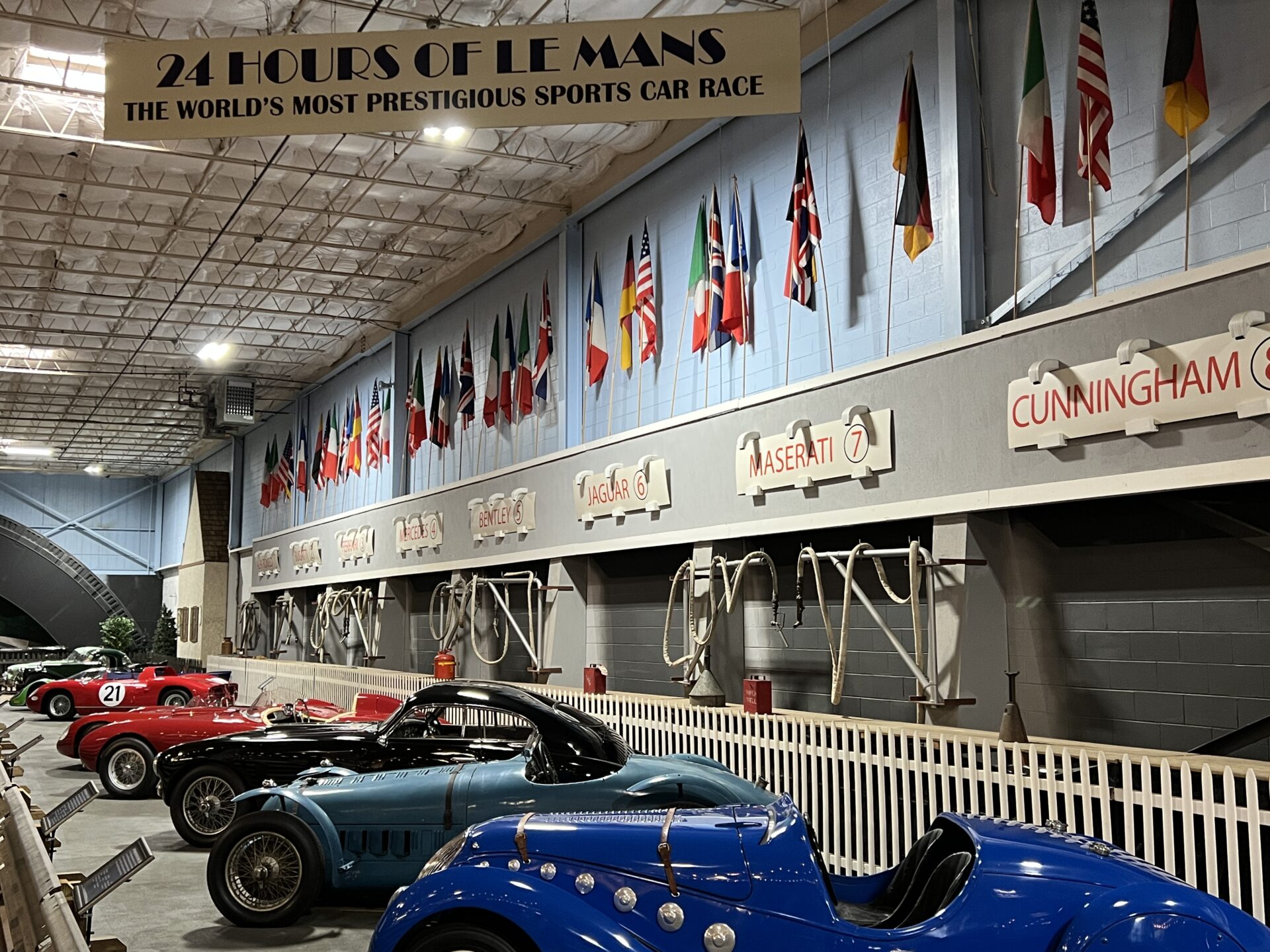
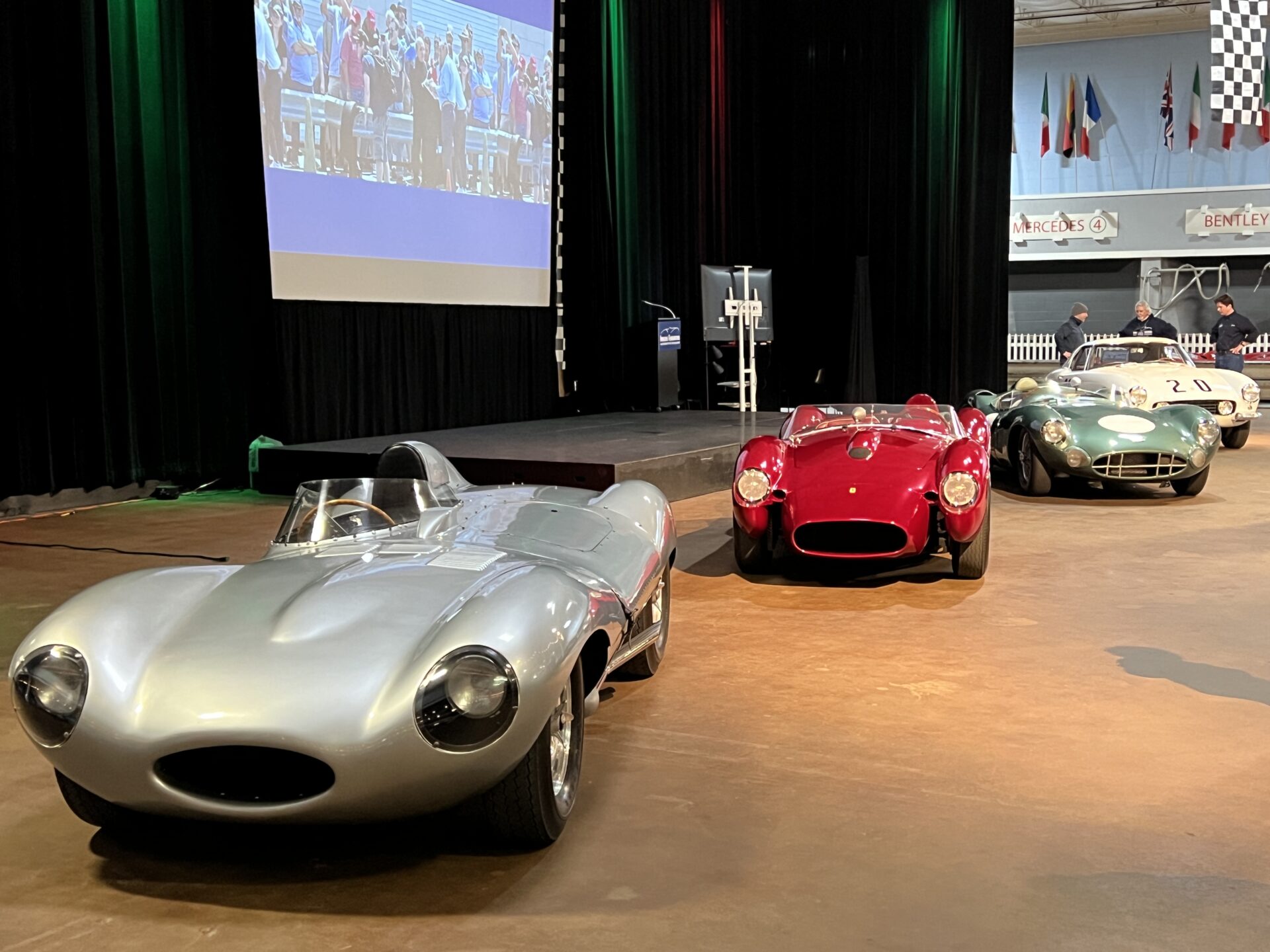
Crew Chief Eric: www. greengrandprix. com. That’ll have all the rules, regulations, details, costs. It’s not a very expensive [00:07:00] event, but yeah, everything you need to know is on greengrandprix. com. Well, other big news for the show, we advertise this. On the motoring podcast network, Instagram, and a bunch of other places. As you know, we have a partnership that’s been building with the ACO for the American arm of the automobile club of the West, the sanctioning body of 24 hours in Lemans.

So I took over as the MC for evening with a legend. And I was looking back over the calendar, you know, kind of reminding people, Hey, you know, check out these episodes and things that we’ve done in the past. And almost to the day, the serendipity of this, right. And I hate that word almost to the day. I got to sit down and do round two with Mario Andretti.

What an unbelievable, just legendary driver. Hell of a guy for almost 85 years old. He is in top physical shape. He’s all there. Amazing storyteller. We specifically talked about his not one, not two, but nine attempts. Winning Lamar over [00:08:00] basically a four decade period. And so lots of really interesting stories.

I mean, there’s one point when you listen to the interview, we’re just cracking up because he’s talking about breaking zones at night. And he tells a story about this church and he kept using it as a reference point. At one point he goes, I just kept thinking that I hope the church doesn’t move. What? So it was a lot of fun.

It was good to get back together with Mario again. And we’re going to re release the episode here in the next coming week. So stay tuned to break fix podcast, where you’ll see the evening with a legend series coming out. We’re actually kicking it off with a reprise of Ben Keating’s episode from late last year.

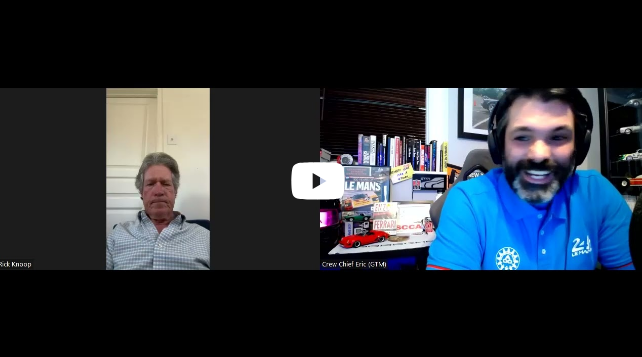
So that’s going to come out and then we’re going to go to leapfrog. Some of the episodes. So we’re going to be bringing that onto the motoring podcast network, obviously sponsored by the ACO. So really looking forward to that. I also did Rick noobs a couple of months ago in February. That’ll be coming out here in the summer.

And then we’ve got some other guests lined up, so I don’t want to spoil anything, but if you’re not an ACO USA member, check it out. You can get access to the [00:09:00] private Facebook, get access to some of these legend. We actually recorded the Mario episode. In front of a live audience and people are sending me questions and managing the chat.

And so it was a really, really good time as super geeked to see him. And again, you know, just focusing on those Lamont stories. I mean, so much good and so much bad and so many learning experiences for him. I just was like absorbing as much as I could from the storytelling. So absolutely fantastic. And it is available right now on our Patreon for our VIPs.

So you can get it uncut raw, exactly the way it was recorded today. Patreon. com forward slash GT motor sports.

Crew Chief Brad: Sweet. So what do you have planned for Mario next year?

Crew Chief Eric: I know, right? We got to do an anniversary special with Mario and Dreddy. I think that’s going to be awesome. Well, that’s the end of our showcase.

Crew Chief Brad: Shortest episode ever.

Crew Chief Eric: So why don’t we move on to automotive news?

Crew Chief Brad: I feel like we should just start making shit up.

Crew Chief Eric: Well, you know, that’s what some other shows do, but we’re going to stick to the facts.

Crew Chief Brad: Volkswagen [00:10:00] announced this month. The new W24 VR motor going into the GTI.

Crew Chief Eric: So what you’re saying is it’s Volkswagen with a T, right?

Remember that?

Crew Chief Brad: No, it’s, it’s Volkswagen.

Crew Chief Eric: Volkswagen, ah.

Crew Chief Brad: They’re from Minnesota. Volkswagen from Minnesota.

Crew Chief Eric: We’ll power it with eggs. That’s our new alternative fuel. We’ll call it the Yolkswagen.

Crew Chief Brad: No, they should power it with potatoes. What would that be? The Spudwagen? Yes, the Spudnikwagen.

Crew Chief Eric: All right. Well, we got no Volkswagen news, no Audi news, no Porsche news.

We got nothing from Mercedes because I don’t know what they’re doing over there, building the EQS. But we have some news sort of by way of BMW. Do you guys remember the color changing car that they were kind of throwing out there, but it wasn’t really color changing. It was monochromatic, like a Kindle body, and you could do all this kind of stuff.

And then they talked about patterns and, you know, making the car chameleon to the background, all that. You remember, we talked about this a couple of times.

Crew Chief Brad: Yeah, but I thought it was [00:11:00] actually towards the end there. The latest variation was actually color changing.

Crew Chief Eric: It was official in April. I don’t know if it’s April fools, but the headline reads.

BMW unveils the world’s first fully color changing car. What could go wrong?

Crew Chief Brad: Cool idea. I guess.

Crew Chief Eric: Breaker, breaker. I’m in pursuit of a blue, I mean, green, uh, uh, yellow BMW.

Crew Chief Brad: I guess the question is how long does it take? Yeah. First of all, do you have to swipe your credit card to download the subscription so that you can change the color?

And do you have to buy new colors through microtransactions? Do they use the BMW slash EA subscription model? Yes. All of them.

Crew Chief Eric: I don’t know. I think the idea is cool. I mean, you’re going to see some crazy stuff. To quote Tanya from the last time we talked about this, I believe she said some asshats going to run around with dick butts all over their car.

Crew Chief Brad: Shout out to Sam Harrington.

Crew Chief Eric: Yeah. Right. I don’t know what the limit is on the capability or the [00:12:00] technology. It was just sort of a headline in a picture of a not so attractive BMW in a not really Harlequin, it was a very price is right looking seventies layout.

Crew Chief Brad: I feel like you didn’t need to say not so attractive BMW.

I feel like you say that anyway, when you just say a BMW, you

Crew Chief Eric: know, the grills are small on this particular one.

Crew Chief Brad: That’s the news right there. BMW grills have gotten smaller, small grill, small grill.

Crew Chief Eric: I like the idea of a Harlequin. I want to change it up. I want my car black today, tomorrow, Navy blue. I want to do something crazy.

Cause I’m going to a car show. I think that’s cool. But having owned a BMW in the past, and you’ve heard me say this before, overcomplicated and not made of the best materials. So sort of wondering how long before this breaks, it’s going to be expensive to replace.

Crew Chief Brad: Yeah. Is it Sherwin Williams paint or is it bare?

It’s Kindle. It’s Kindle paint. Yeah. Is it, do you flip a switch? I bet in order for it to work, the car probably has to be in park or it has to be [00:13:00] in some special mode. Yeah. You can’t do it while driving down the road.

Crew Chief Eric: Well, it looks like I stand corrected. Our resident Mercedes aficionado has found an article for us.

What is this all about?

Executive Producer Tania: This is the most interesting thing happening right now. I mean, it’s pretty sad. What is this fossil that you have

Crew Chief Eric: presented us with? What are you talking about? The G Wagon. It’s like a Tyrannosaurus Rex. They’ve been making this thing for a hundred years. How is this news?

Crew Chief Brad: And now they’re making an electric one.

Executive Producer Tania: Well, yes, it’s not even about the G Wagon. Per se, but yes, they’re making an electric one, but what they’re doing is alphabet soup badge engineering, again, dropping the whole EQ, EQE, EQ, whatever nomenclature, and they’re going back to the more traditional letter and numbers,

Crew Chief Brad: God,

Executive Producer Tania: even though the numbers when it’s EV really don’t mean anything anymore, but

Crew Chief Brad: the points don’t matter 100

Executive Producer Tania: percent don’t matter

Crew Chief Brad: the EQG what get out of here.[00:14:00]

How do you pronounce that? Equi Equigee. E Egegee. I got, I got a Egegee. A 2005 Egegee. So it

Executive Producer Tania: won’t be the EQG anymore. It’ll just be the G580.

Crew Chief Brad: It’s just the guh. The guh. It’s the guh.

Executive Producer Tania: But who knows what the 580 actually has anything to do with.

Crew Chief Eric: Brad, I get your point. It’s sort of like the Volkswagen. How do you actually pronounce Touareg?

Is it twarg? It’s Torg from Borg. Yeah, right. I never really Glommed onto the whole EQ idea, the EQE and the EQS. And I mean, I looked at them and I went, that’s an A class, that’s an ML, that’s a G wagon. Why reinvent the wheel? You know, I guess we went through the same thing with Audi, although it’s been 30 years where they dropped the Audi 80 and the 90 and they became the A4 and the A5 and all this kind of thing.

And they leaned into that, but Mercedes had already established their nomenclature. And when they went to this EQ idea, it just didn’t make sense. Now, as far as this. Fossil is concerned. It should be in a museum at this point. This is unbelievable that it must be super popular. They can continue to sell the [00:15:00] G wagon with basically almost no revisions.

Crew Chief Brad: Well, I mean, news about the G wagon, you know, a little side tangent, two players that were just drafted in the WNBA on the same day, both bought G wagons for themselves. So they are popular with the affluent people.

Crew Chief Eric: Bought or given? Uh,

Crew Chief Brad: the article I read said bought, but you know,

Crew Chief Eric: I don’t know. I don’t think Lewis Hamilton has bought any of his Mercedes.

That’s all I’m saying.

Crew Chief Brad: Oh,

Executive Producer Tania: of course not.

Crew Chief Brad: Well, I mean, they’re drafted by the WNBA. I don’t think they’re getting much from Mercedes.

Crew Chief Eric: I’m just saying Mercedes sponsors, some of the stadiums and sports events too. I mean, I see it out there every now and again. That’s

Crew Chief Brad: true. That’s true. I wouldn’t be surprised if they got some sort of sponsorship anyway, to tie into the G wagon.

You know, they are still popular. We’ve got a club member or a friend of the show who has one as well. Although he kind of beats the crap out of his cause he actually off roads it. They still float around

Crew Chief Eric: and I want to hate on it, but I actually, I liked the G wagon. I think it’s cool, but it is a fossil fossil.

They still [00:16:00] make, I know, I know,

Crew Chief Brad: but you know what? You’re a fossil. So of course it makes sense that you would like it. Everything you own is fossilized. Here’s the thing. Even the Jeep is, isn’t that old, but it uses like old, old, old fossil fuel. That’s true.

Executive Producer Tania: Let’s be real to Brad’s point. This is. A vehicle for the affluent.

The 2024 G Class, the AMG G63.

Crew Chief Brad: We’re going to do a pricing guess.

Executive Producer Tania: Is 183, 000. What?

Crew Chief Eric: There’s a lot of other cars you can buy for 200 grand.

Executive Producer Tania: There’s a class of people that are supporting the purchase of these vehicles.

Crew Chief Eric: Having ridden in a G Wagon, they’re not that nice. Compared to the other Mercedes, like an S Class.

They are

Crew Chief Brad: military vehicles. Why the fuck would it be nice? People are delusional. The people that buy this, yeah, I’m going to stereotype here. The rich, white, blonde ladies that get this to [00:17:00] drive around to the shops on Rodeo Drive, they think they’re getting some luxury vehicle. It’s the same middle class version that buys the Jeep Wrangler, four door or the Bronco.

They think they’re getting something super special. No, it’s a turd.

Crew Chief Eric: Dude, you got it all wrong. It’s sort of like when all the BMW drivers started buying Audis. All the G Wagon soccer moms now drive Land Rover or Range Rovers or whatever they are. Evoque. Partially designed by Beckham. No, I think

Crew Chief Brad: they’re driving Cayennes.

Crew Chief Eric: Well, there’s that too. Anyway. If you’re not driving a Puro Sangue, I don’t know what you’re doing, right? That’s the new hotness right now. Come on.

Crew Chief Brad: Yeah. Yeah.

Crew Chief Eric: Well, since we’re in mainland Europe and I just brought up Ferrari, we need to talk about Stellantis, don’t

Crew Chief Brad: we? Yes. Let me get to

Crew Chief Eric: my caviar. Count Stellantis.

It’s like the count on Sesame Street. Like that’s how serious I could take it. All right. Get this. Italy says. It’s illegal to [00:18:00] sell the Alfa Romeo Milano outside of Italy.

Crew Chief Brad: Build. What? Not sell, build.

Executive Producer Tania: Yes, they have a law that prohibits this.

Crew Chief Eric: Okay, explain it to me.

Executive Producer Tania: Not the Milano specifically. But there is some sort of law, apparently, that an Alfa Romeo cannot be built outside of Italy, cannot entirely be built outside of Italy.

So there’s a little loop there, and it depends how they designate, at what point do the components come together. Make it the car because they can probably do some assembly

Crew Chief Brad: you see you build a rolling chassis

Executive Producer Tania: Right some part of it bring it back in and finish it

Crew Chief Brad: But when you give it the alpha heart, you got to give it the alpha heart in Italy the alpha soul Yes, the heart in the soul.

Crew Chief Eric: I imagine walking in to Alfa Romeo behind the receptionist. Is this wall? Explaining the gestation period of an Alfa Romeo, but when is it

Executive Producer Tania: Alfa and Alfa? What?

Crew Chief Brad: When is [00:19:00] it life?

Executive Producer Tania: Oh, wait. So I am misinformed here. So it actually is the fact of the name of the car. So a car called Milano can’t be produced outside of Italy because it’s Italian sounding and it would be false advertising essentially.

Crew Chief Brad: If I, can I just say this sounds like the most Italian law I’ve ever heard. This is Italy, this whole article and just the whole situation is 1000 percent Italy.

Crew Chief Eric: It’s so stupid. It’s real, right? And that’s the convoluted nature. And this is what drives me nuts. Every time I go over there, people are like, I don’t understand, you know, your heritage, blah, blah, blah.

And I’m like, ah, it’s stuff like this that drives me nuts. Like who thought this was a good idea and who wasted the time to make it a law? I mean, I can understand if it’s part of like the ethos of Alfa Romeo to be like, we’ll call it something different. Sort of like the whole Alfa [00:20:00] Romeo Tonale is sold here in the United States as the Dodge Hornet, which it makes the hairs on the back of my neck stand up because that drives me nuts because it has nothing to do with the Hornet, blah, blah, blah.

We won’t, I won’t get on my soap box and rant about that. But the point is it’s that kind of Idiocracy that exists.

Executive Producer Tania: I mean, it really would be the first Alfa Romeo not built entirely in Italy, though. I wonder if that’s part of their issue, too. How does the Giulia not sound Italian?

Crew Chief Eric: Because we misspell it here.

We spell it with a J, so it’s all good, right?

Executive Producer Tania: Okay. I mean, I guess Milano, the city.

Crew Chief Eric: Well, they sold the Alfa Romeo Milano here in the 90s when Alfa was trying to Do its thing again and failed miserably. So it’s not like the one 64 was also known as the Milano. So it’s like, whoop dee doo. So maybe it’s that it’s tying back to a failed launch of a car.

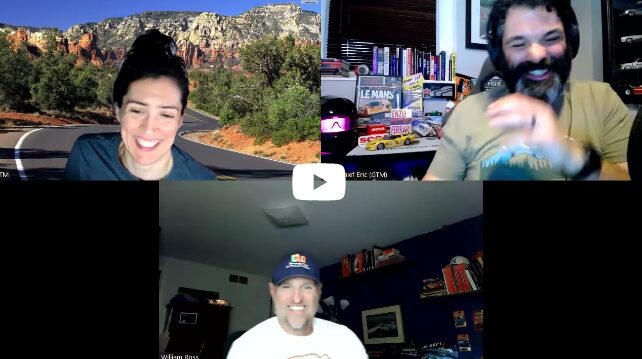
They don’t want to do that again. Who knows, you know, they’re superstitious. They’re silly, you know, whatever adjective you want to use, whatever. But speaking of [00:21:00] Italian cars, you may or may not be in the investment portfolio to buy one of these vehicles. But William Ross. from the Ferrari marketplace who has become part of the motoring podcast network shares his views most recently on the subtle differences between the 550 Maranello and the Ferrari 575.

And it is a deep dive. It is encyclopedic. William is a wealth of information. I found it fascinating and I actually learned a lot. Now, if I go to a car show or if I go to car week and I see one of these, I might more readily be able to tell the difference between the two at first glance. And he points out some things even cosmetically that I thought were really interesting and things to look for.

Crew Chief Brad: It’s one of my favorite Ferraris ever. Oh,

Crew Chief Eric: well, I know. And that’s why I bring it up. Such

Crew Chief Brad: a beautiful car.

Crew Chief Eric: Absolutely. And you know, one of the things that got me talking about the styling, because the 575 and 550 aren’t that different. It came down to like little things, like, like you mentioned before, like the little turn indicators.

But also like the fog [00:22:00] lights, just these little changes that they made. And that’s what made the difference. Now, obviously the five 75, the big giveaway was the color matched headlights to the body that immediately is not a five 50. So I’m like, Oh, okay. That’s cool. So there’s these things to like look out for, but I’m with you as a front engine V12 rear drive Ferrari.

One of the best looking cars still to this day. I don’t, I don’t think the five nine nine and some of the later ones are as good looking as when the five 50 hit the shelves. Yes. But what really blew my mind and I didn’t know was that the five fifties were all manual, right? I was expecting certain percentages would be flappy paddle and all this kind of thing.

And so he dives into all these details and then talks about buying them as an investment, all those kinds of things. So if you’re interested in those cars, Check out the episode. It’s the most recent Ferrari marketplace. It’s on our platform while moving right along, we don’t have any other domestic news.

And that wasn’t really domestic news either. Cause we talked about Italian cars owned by a [00:23:00] conglomerate that owns American cars. So we’re going to move right across the globe into Japanese and Asian domestic vehicles. And this next one has to be an April fool’s prank because otherwise it is headed directly.

Do not pass go. Do not collect 200 to the uncool wall. Thoughts on the cabriolet version of the Integra. Um.

Executive Producer Tania: This person’s probable rendering doesn’t even look that bad, honestly. This was put out on April 1st. It has to be an April Fool’s thing. There’s different posts here and there. There’s nothing definitive from Acura saying it’s true.

There’s also nothing saying it’s not true. There’s no like, oh, it’s just an April Fool’s thing.

Crew Chief Brad: This is the modern day. Chrysler Sebring.

Crew Chief Eric: Yes. I see it now. You’re right. Oh my God. That is just, but I’m still not sold on the Integra. You’re not saying you’re right. It’s

Crew Chief Brad: Integra.

Crew Chief Eric: It that’s [00:24:00] Integra. It’s so large.

And so I’m like, uh, it’s an accord because the Integra and the civic and even the civics gotten bigger and blah, blah, blah, blah, blah, blah, blah. But the other day, and I think Tonya and I were together when we saw this brand new Acura. TLX.

Executive Producer Tania: Was it TLX or TSX?

Crew Chief Eric: Whatever it was. It’s got hips like a Audi RSS four or RSS six.

Avan. It was low. It was wide. I don’t care how long it was. Big wheels, you know, tinted windows. I was like, that is hotness right there. I was like, and I. I see that a lot about Hondas, especially the more modern ones. I’m like, ah, they’re okay. Couldn’t stop looking at, especially those hips that they put on that car, those flares.

And I’m like, it’s all factory. And I’m like, damn, that’s a good looking car. So I would give that a second thought. If I was thinking about a sports sedan right now,

Executive Producer Tania: I guess it is a TLX. I don’t think they make the TSX anymore.

Crew Chief Eric: No, I think they discontinued that, that whole, and then wasn’t there an ILX for a while, which was.

Yeah. The [00:25:00] precursor to the trash. Yeah.

Crew Chief Brad: Frickin trash. It was based on the civic.

Crew Chief Eric: Well, skipping right along to new EVs and concepts. I want to call back our discussion about Fisker from last month. Remember how they were having issues and the ocean is having problems and all these recalls and blah, blah, blah, blah, blah.

Crew Chief Brad: Fisker always has issues. That’s just like their natural state.

Crew Chief Eric: And the three people that bought them,

Crew Chief Brad: I feel so bad,

Crew Chief Eric: right? And again, I don’t know, is this Jalopnik having some fun with us or what? But you’re hearing about, you know, three new cars. And then there’s an article on the other side saying Fisker is running out of options as all stock trading halts.

And I’m like, wait, what the

Executive Producer Tania: hell is going on? Apparently they’re going to be possibly claiming bankruptcy soon. So,

Crew Chief Eric: and that’s just it. And that’s where it was like. Wait, they’re going to come out with three new cars. They can’t get the ocean right. And the company’s basically falling apart. A lot of misinformation.

So I have a hard time believing anything that comes out in April. Maybe that’s why it’s such a slow news month because some of it’s just so unbelievable right now.

Executive Producer Tania: Well, according to Business Insider, there’s four [00:26:00] automakers in talks to buy them out.

Crew Chief Eric: Really? Who’s on the docket? General Motors is always on the docket.

Executive Producer Tania: Does not indicate.

Crew Chief Eric: They’ll buy any losing company. Was that Nikola? Remember that one? Yeah. Oops. Whoopsie. Well, I wanted to take a moment to talk about wheels and our friends over at ESC Carbon have recently released pictures of the fully formed E3. We’ve been waiting a while to see, so they’re able to put that into production.

When you look at it, it’s a multi spoke wheel, kind of reminiscent of a early 2000s, uh, wheel. BBS type style, like an RKRX, that kind of thing. And that’s a cool wheel for an all one piece carbon fiber wheel. But it got me thinking about wheels on cars these days. You know, we had this whole fad for a while where as we know, Tesla puts the covers on some actually decent looking wheels and there’s a lot of, I’m going to call them air quotes, interesting wheels out there, wheel designs out there right now.

I kind of wanted to look at this from the other perspective and ask your guys opinion. Who do you think has the ugliest wheels on their car right now? Which

Executive Producer Tania: automaker?

Crew Chief Eric: [00:27:00] Yeah, which automaker? All of them. Brad, have you seen some ugly wheels? Man, they just keep nailing it. Thousand percent

Crew Chief Brad: ugly wheels. I don’t know about now, but if we go back in the day, I have to say Those stupid double three spoke came on the SN 95 Mustangs.

Oh yeah. You could always tell it was a V six Mustang because it had those stupid wheels on them. Anything three spoke is just complete track.

Crew Chief Eric: Except for the

Crew Chief Brad: steering wheel, except for the steering wheels, the drive from the legendary R 32 Nissan. Well, I was

Crew Chief Eric: also going to say, I have a sweet spot for the three spoke.

Not three bolt, like the smart car, the three spoke wheel from the original Viper. I thought those wheels look cool, but they’re very nineties, right? They’re very in period appropriate and they look good on that.

Crew Chief Brad: They’re very ugly.

Crew Chief Eric: You’re blasphemy.

Crew Chief Brad: No, they’re three spoke. Any wheels that are wrapped in tires [00:28:00] are ugly.

I stand by this statement. You know, it really grinds my gears. Three spoke wheels blind my ears.

Crew Chief Eric: Um, maybe I’m pointing out the obvious here. I think the winner right now, take a look at the cars on the road. The new cars on the road. I mean, the EVs are trying some really weird stuff, whatever, but ugliest wheels on the road right now.

I’m going to give the award to Kia. They’re all heinous. I actually like some of them.

Crew Chief Brad: Some of the wheels that come on the Telluride, I’ve seen some pretty wicked stuff and the wheels that come on the Hyundai Genesis, I know it’s not Kia, but some of the wheels that come on the Genesis models are pretty wicked looking to

Crew Chief Eric: one or two, but I think in general, the regular line of wheels that they’re putting on like the EV six and you know, whatever that sob thing is that’s running around, they’re just all kind of funky and what everybody’s doing right now is these sort of GTI style.

Lag in the wind, hyperaluminum with a black inset. Like they’re just [00:29:00] funky looking. They don’t look good when they’re spinning. They don’t good look when they’re still, they’re always a kind of dirty. And I’m just like, Oh, these wheels are gross.

Crew Chief Brad: I get it. They almost look like steel wheels that they painted to make look like they’ve got spokes.

Exactly. They do this for aerodynamics.

Crew Chief Eric: For a million reasons. Yeah. I think we need to pay closer attention and maybe start thinking about. Ugly wheel ranking system like who’s second place who’s got the second ugliest wheels out there And there’s some humdingers in the old days to use an old timey term.

Oh my

Crew Chief Brad: god the wheels on the aztec Oh god, complete trash. They had branches like little sprouting branches off the spokes Oh,

Crew Chief Eric: they were awful the ronald teddy bear. I know there’s people that love those. There’s some those

Crew Chief Brad: are awesome Those are fantastic.

Crew Chief Eric: The daisy that they had on the beetle.

Crew Chief Brad: Oh, the daisy was pretty.

Crew Chief Eric: There’s some winners. There’s some winners out there for sure. The

Crew Chief Brad: teddy bear was awesome

Crew Chief Eric: though. Stop it. That was making a comeback too. Well, Brad, it’s time we move on to lost and found [00:30:00] your favorite section where you scour the internet looking for the newest old piece of junk on dealership lots.

Crew Chief Brad: If I had to guess the Ford GT, I guarantee the Ford GT still out there.

Crew Chief Eric: Don’t give us any of these, more of these Jetta’s and stuff, man. You got to give us cool cars.

Crew Chief Brad: That’s what I was going to say. Those are the cars that are going to still be out there. No max price, unless Daniel bought them. I don’t know what he’s got up at the mountain. Yep. Those two Jetta’s. One diesel, one VR6 are still for sale at Alexandria Volkswagen.

Nope. No, thank you. Yeah, the rest of this is trash.

Crew Chief Eric: Well, I love this next one, Brad, because you know how we talked about Dodge Darts for so long. We’ve talked about Vipers that are still for sale. You can pick up an NSX or two every now and again. But this next one, just read the headline.

Crew Chief Brad: What? How is that possible?

Sold negative What the fuck? How do you sell a neg So they bought one back. So I’m guessing it was a lemon. I haven’t read it yet. Well, let’s bring our listeners up to speed. Negative one. Chrysler 200 [00:31:00] last month. Stellantis sold negative one. Chrysler 200s. So they sold two and bought back three. How did they do

Crew Chief Eric: this?

This is brilliant.

Crew Chief Brad: That is the burning question. How does an automaker sell a negative car?

Crew Chief Eric: Maybe this is like that Karen moment where it’s like they bought it. They drove it about 10 feet. They said, I need to speak

Crew Chief Brad: to the manager. They sold a negative car. How does it want to make yourself less than zero cars?

Maybe it’s just clickbait. Well, it’s the Autopian. So of course it is. Yeah, it’s bullshit.

Crew Chief Eric: Yeah. I think this is my April fool’s thing.

Crew Chief Brad: Get this trash out of here. Clickbait go away. The story is stupid.

Crew Chief Eric: Well, we do have a legitimate uncool wall nominee. I present for your consideration the 2003 Kia Sedona GT Cabriolet.

Crew Chief Brad: This was ahead of its time.

Executive Producer Tania: It’s a three row.

Crew Chief Brad: If this came out when the Nissan Murano cross cabriolet [00:32:00] came out, they would have sold Tens of them,

Crew Chief Eric: tens of

Crew Chief Brad: them, tens of them, they would have sold more than negative one. I can say that. Oh, I love the suicide doors on this too,

Executive Producer Tania: right? So somebody did this in their backyard. How unsafe is this vehicle?

Crew Chief Eric: There’s some structural integrity lost in this vehicle. Is this an e

Crew Chief Brad: prepared car? Is that what this is? Now you got to cut the windshield off a lemon’s car. It’s got to be, it’s got to be,

Crew Chief Eric: but you know, I really, really liked the fact that we went retro with this and put a hood ornament on the key. Poke them horns.

Oh man, this is terrible. Terrible.

Crew Chief Brad: I love how they mounted the hood ornament.

Crew Chief Eric: They’re turbo clamps.

Crew Chief Brad: Yeah, they got it from Advance Auto. I bet they hit the steer and killed it. And they’re like, well, what are we going to do with his horns? Let’s

Crew Chief Eric: mount it on the car. It’s a Kia and the wheels are ugly. Am I wrong?

Crew Chief Brad: Yeah, I didn’t even notice the [00:33:00] wheels. I have to go back to that. They’re so

Crew Chief Eric: ugly. You don’t pay attention to them.

Crew Chief Brad: I couldn’t get past the convertible.

Crew Chief Eric: What do you think, Tanya? Would you drive this stellar piece of automotive design?

Executive Producer Tania: Yeah, I’d drive it right off the side of a cliff and jump out of it in a second.

Crew Chief Brad: I love that they put. Music to this, R. Kelly’s bump and grind.

Executive Producer Tania: That makes it better.

Crew Chief Brad: Yeah.

Executive Producer Tania: I wouldn’t get in this death trap.

Crew Chief Eric: Well, would you get in this or our next vehicle? Because of its recent recalls, because we would be remiss

if we didn’t talk about.

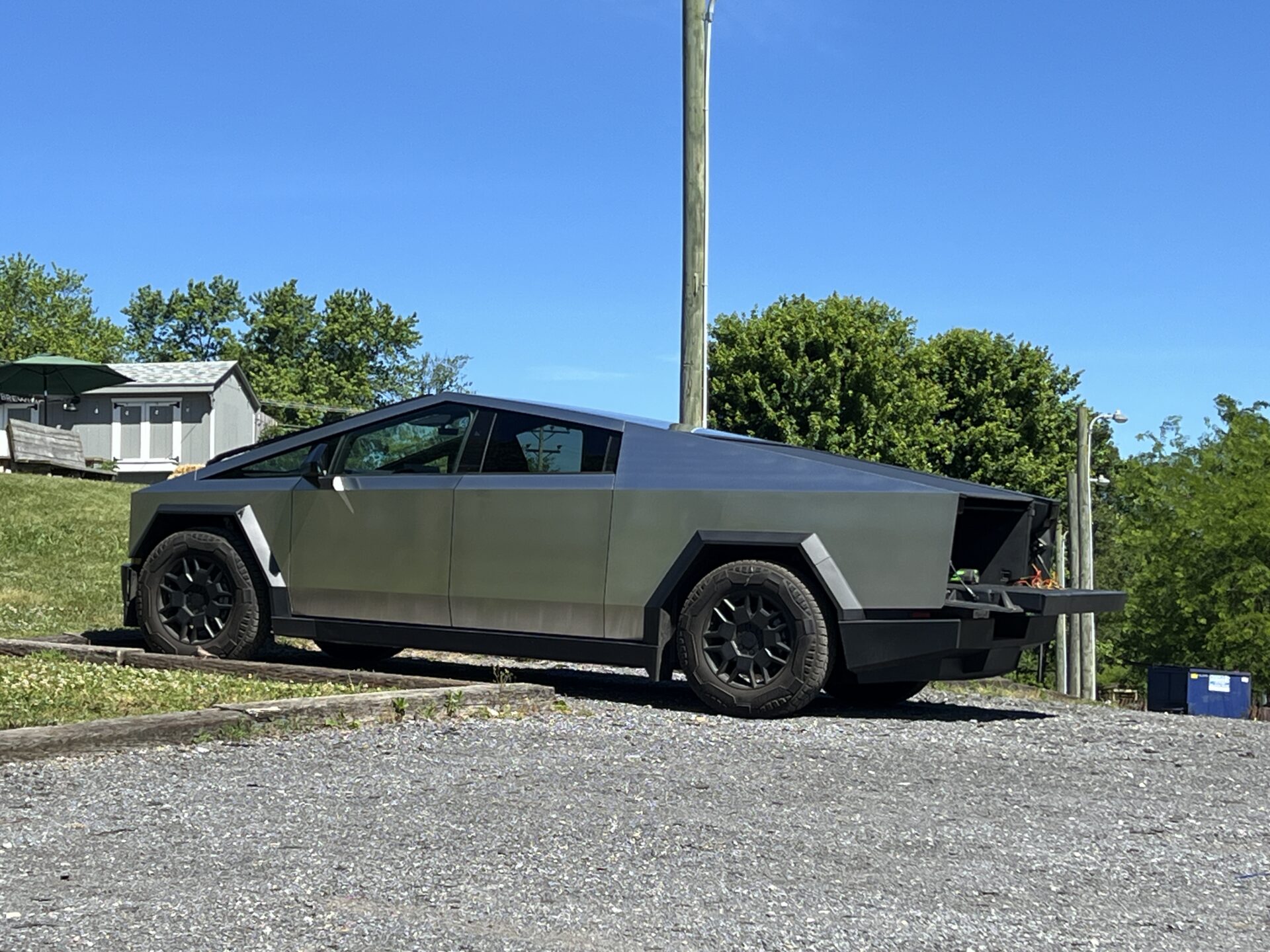
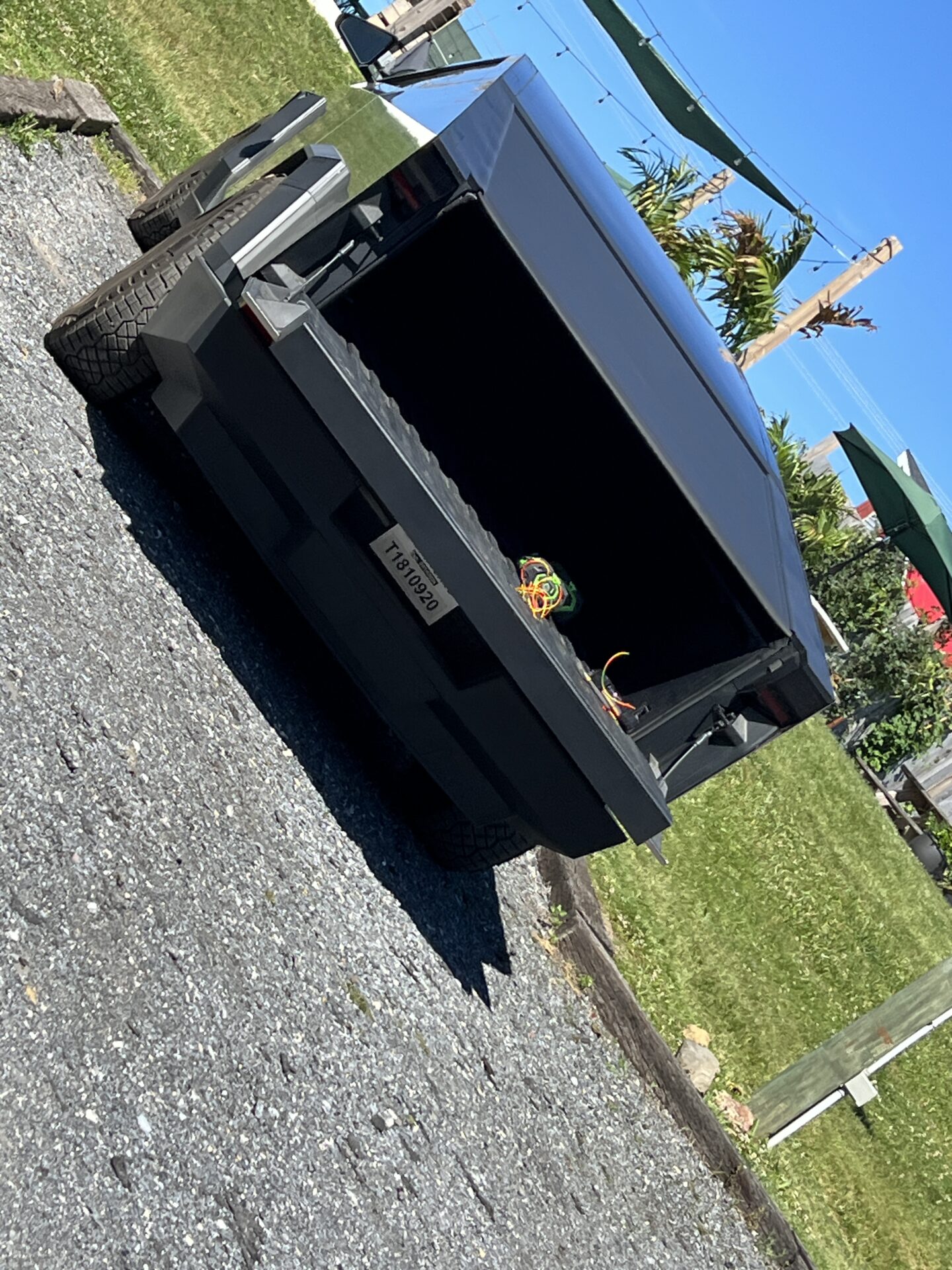
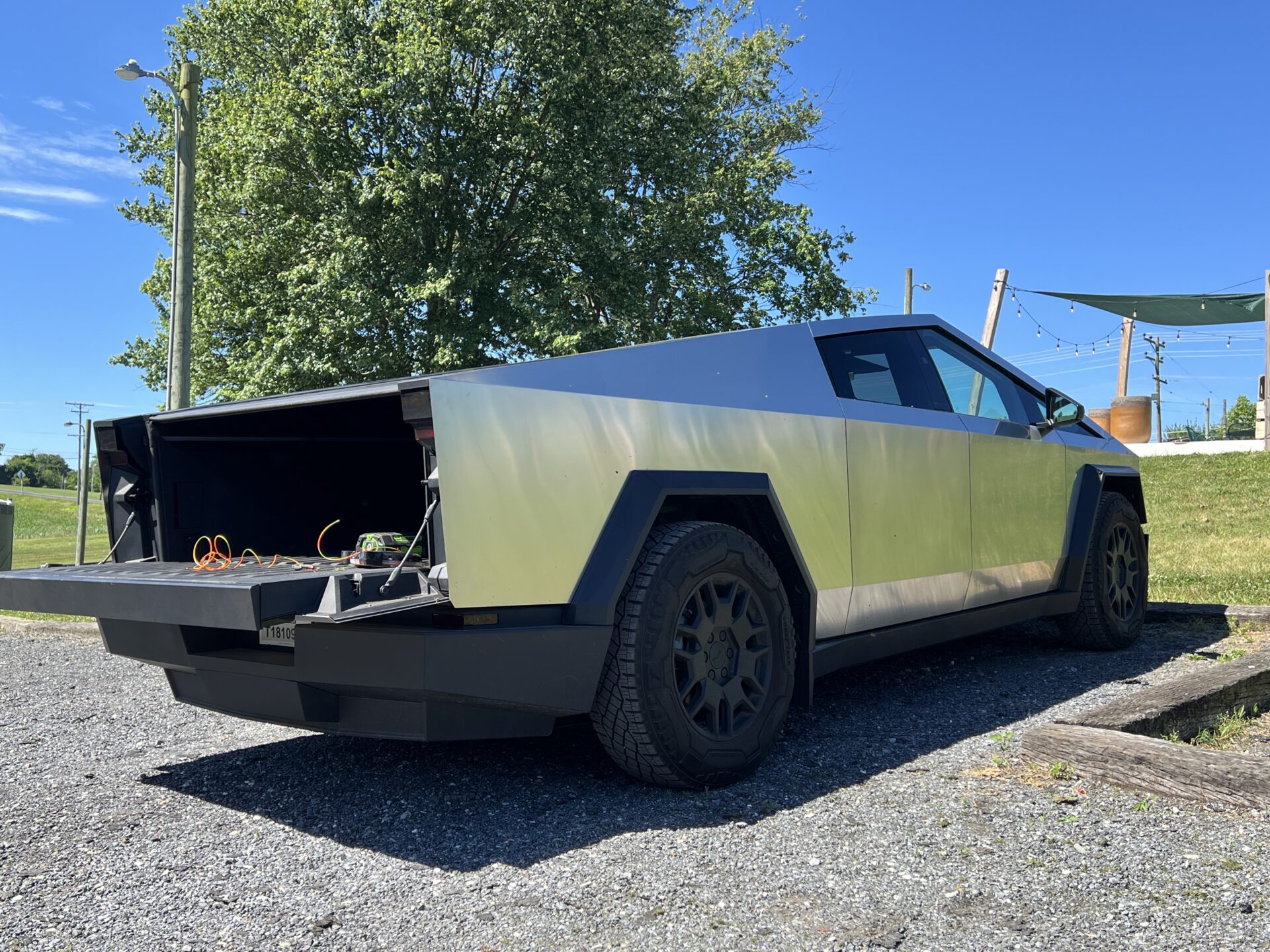
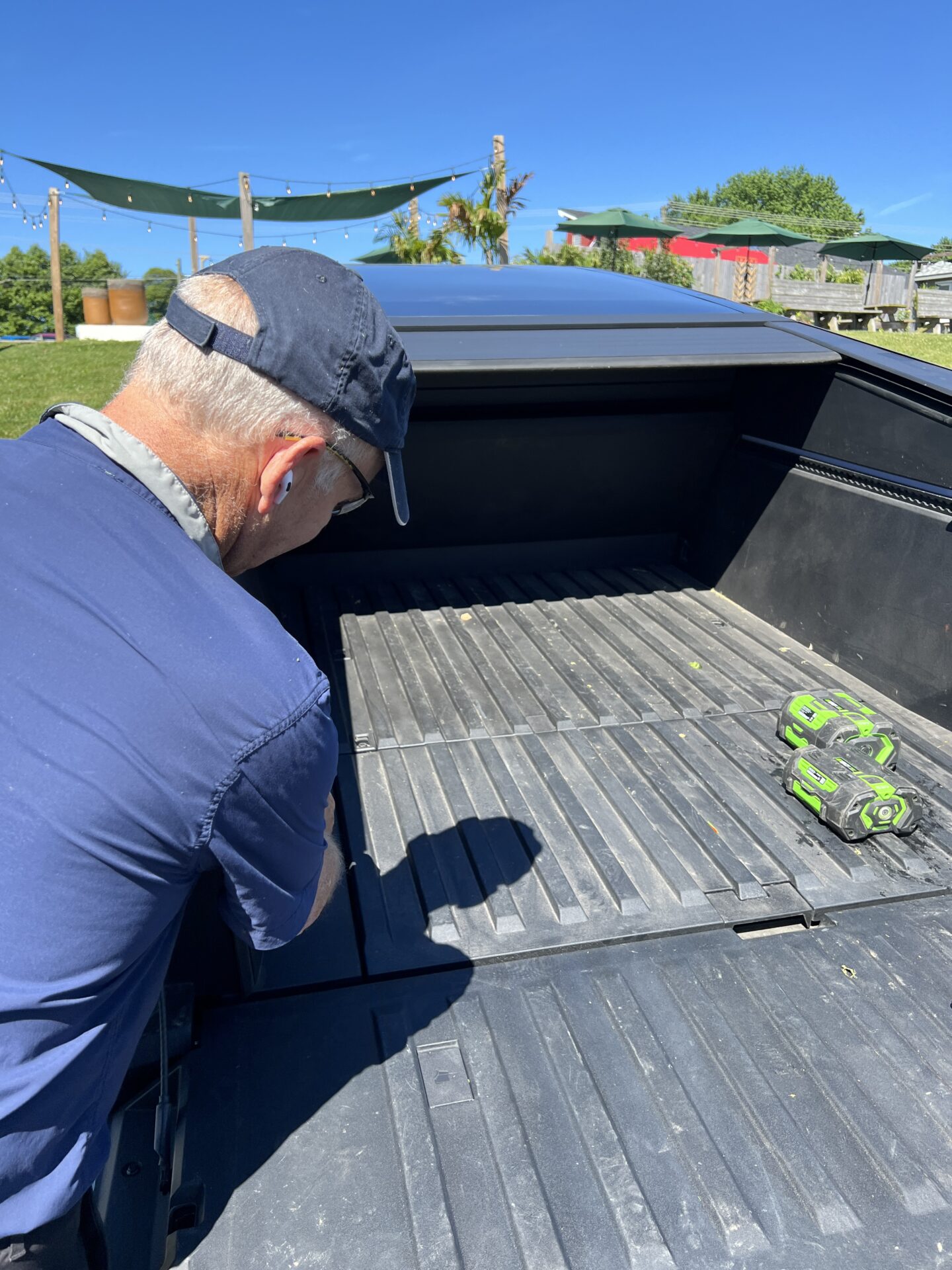
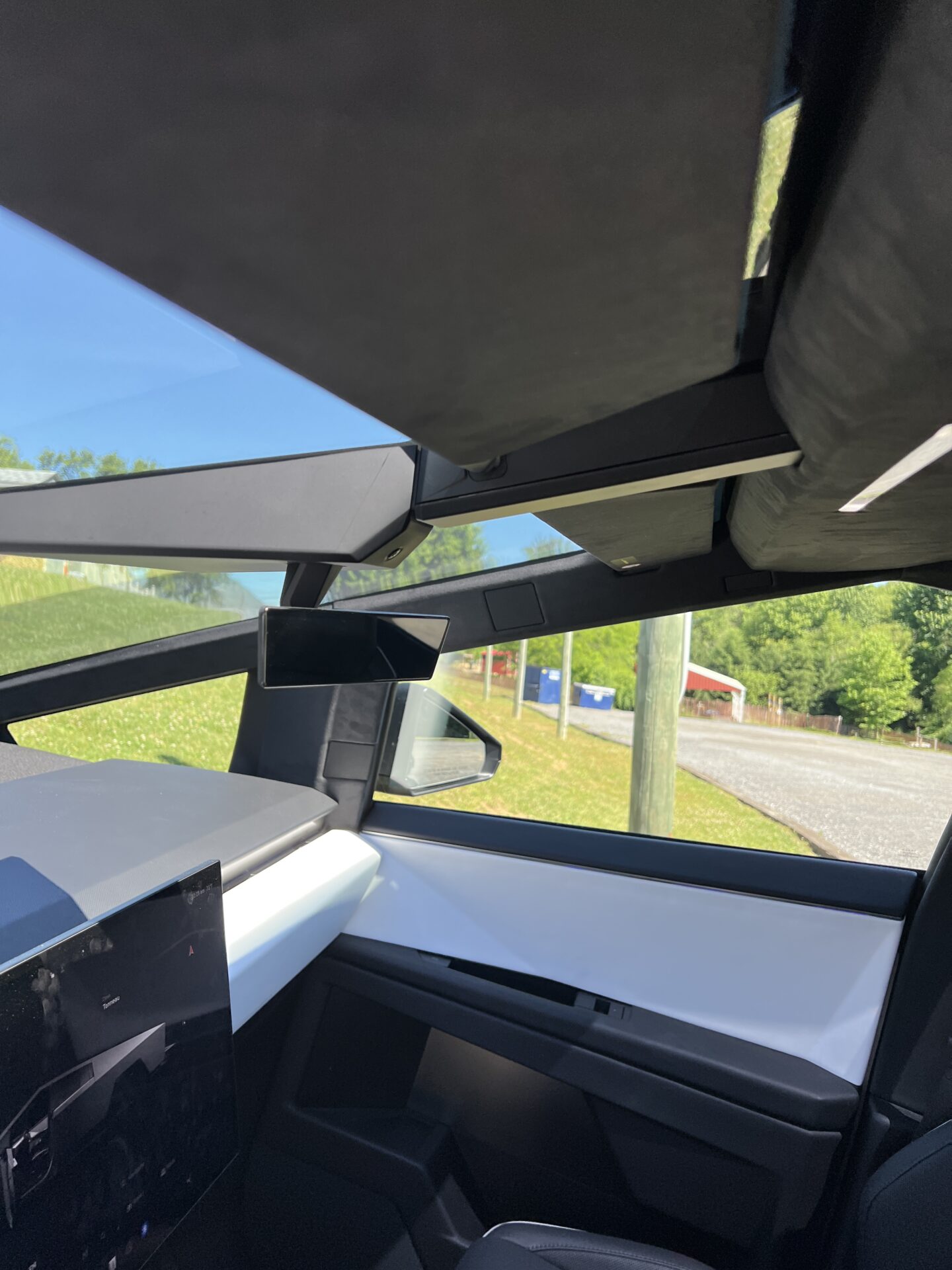
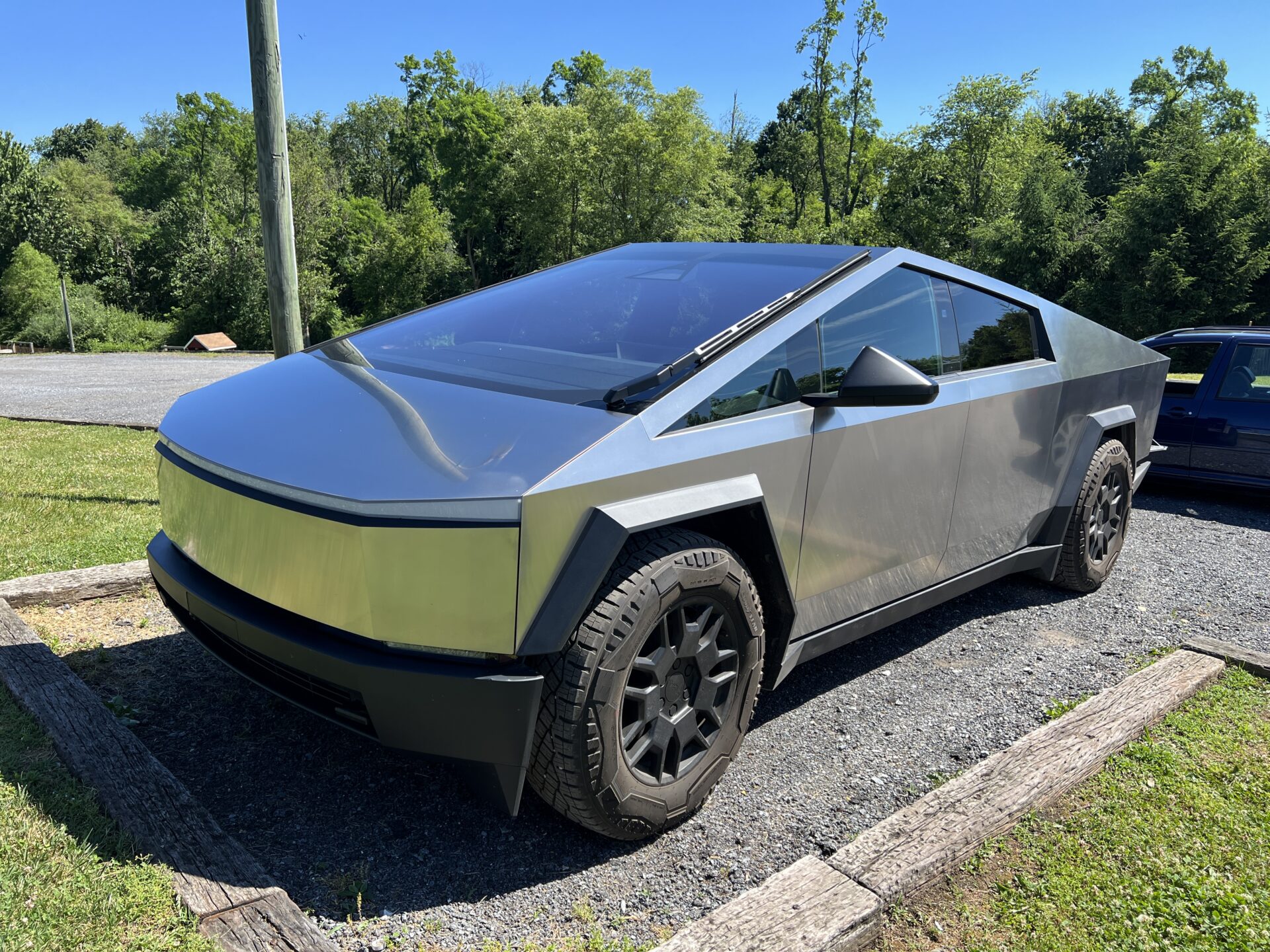
Before we jump into Tesla, have you noticed after 44 drive thrus that we have begun to really split hairs on Tesla? Tesla has become its own segment on the show. I remember when it was just, we would be remiss. And then it became Teslagate, and then it became stupid shit that Elon does, and now the Cybertruck has its own segment by itself, [00:34:00] because it is a spectacle.

Executive Producer Tania: Well, there’s some other non Cybertruck stuff in here.

Crew Chief Eric: Lies.

Executive Producer Tania: But the Cybertruck is obviously the new, quote, hotness, so it’s top of mind. Finally, after 16, 000 years, it’s in production. 16 minutes after being in production.

Crew Chief Brad: Oh my God.

Executive Producer Tania: It’s already recalled.

Crew Chief Brad: Oh my God, this is so fucking stupid.

Executive Producer Tania: And you know, it’s like a silly recall.

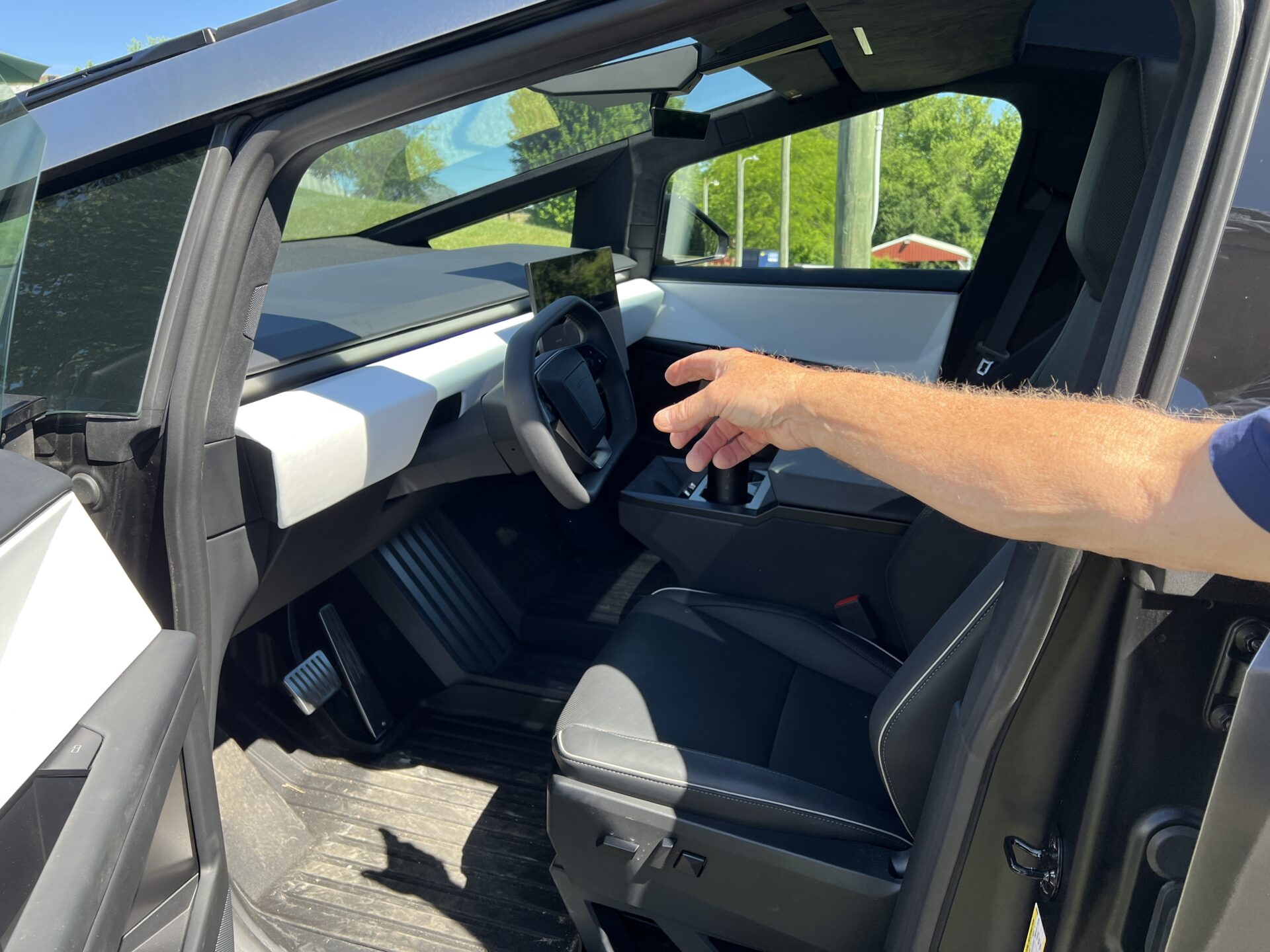
I mean, it’s a serious thing, but it’s also silly at the same time. When we’ve gone through this, we’ve seen this before. It’s the reason why. All cars now have the little clips on the floor mats. It’s because unfortunately Toyota had to learn this painful lesson of what can happen in the footwell if something lodges and gets the accelerator pedal stuck.

The car keeps accelerating.

Crew Chief Eric: But Tesla marches to the beat of their own drum. Just want to point out the Germans had carpet [00:35:00] clips in the nineties. It’s not new.

Executive Producer Tania: Yes. But it wasn’t until there was a problem. Yeah, but their carpet, their carpet

Crew Chief Brad: clips cost 15, 000.

Crew Chief Eric: Well, it’s the little nubs underneath the carpet that have been, you know, solidly holding carpet in place for ages.

They’re bolted

Crew Chief Brad: in from underneath the car. And then the only way to get them out is engine out.

Crew Chief Eric: Yeah, a hundred percent.

Crew Chief Brad: Service position for your format is engine out.

Crew Chief Eric: Well, in a beetle, yes. Everything is engine out

Crew Chief Brad: in a

Crew Chief Eric: beetle. Well,

Executive Producer Tania: the sad thing is you’d think that the little things like this. And this isn’t a format issue yet.

Crew Chief Brad: If this is worse, this is much worse. No, this is an accelerator pedal falling off. It’s not the whole pedal though. Just the cover,

Executive Producer Tania: just the slide on cover. And apparently it’s a glue issue, but the glue, the temperature, I think something, I don’t even remember.

Crew Chief Brad: Elmer’s that’s what’s wrong.

Executive Producer Tania: Yes.

Crew Chief Brad: They left home Depot.

Cause shit was too expensive. They went to Target [00:36:00] and bought Elmer’s from the school supply section, and then they’re using that on this pedal.

Executive Producer Tania: It was back to school sales at the beginning of the year. It was discount, no tax on the glue.

Crew Chief Brad: Yeah, they bought out the entire, like, Southwest region.

Crew Chief Eric: It literally says on the bottle, Elmer’s Blue All.

It’s pretty straightforward. It glues all right. Barely

Executive Producer Tania: not your, whatever this accelerator pedal is even made of. I don’t even know. Probably plastic, maybe a little bit of stainless steel left over pieces that they reformed.

Crew Chief Brad: There’s no wood in there.

Executive Producer Tania: No wood in this one. I know I read somewhere that they were attributing it to in the production line, something with the temperature, the adhesive wasn’t right.

And then,

Crew Chief Eric: so it

Executive Producer Tania: didn’t set or something. So basically when you’re mashing down the accelerator pedal, you end up sliding the cover off and then it jams into what would be,

Crew Chief Eric: hold on a second. What kind of troglodyte. It’s [00:37:00] pressing the accelerator pedal like Donkey Kong.

Crew Chief Brad: Hey, hey, hey, some of us have big feet and we can’t control it.

Executive Producer Tania: No, no, no. Okay, because to the point of the Toyota incident, I am using the inappropriate rubber floor mats in one of my vehicles. Meaning that they don’t clip in to the clips, and I am constantly actually pulling the floor mat back sometimes while I’m driving just by virtue of my feet being there. I’m not even doing anything, but by virtue of my feet being on top of it, there’s enough.

I’m not pressing down on it, but it does slide forward constantly. So I could see. that a loose little bullshit cover on the pedal, especially it’s the type of pedal that’s on the floor, then you kind of have that weird motion of you making your foot go up anyway. So I think it would be easy to have that cover come off and then it jams into what would be the transmission tunnel if it had one, right?

So that center console piece like jams in there and it keeps [00:38:00] Accelerator depressed and somebody apparently had it happen to them and they hit a pole. I thought

Crew Chief Eric: they called that ludicrous mode.

Executive Producer Tania: I don’t know if the cyber truck has ludicrous mode, but that was ludicrous to have happened.

Crew Chief Eric: Well, I love the fix.

Can we get to the fix?

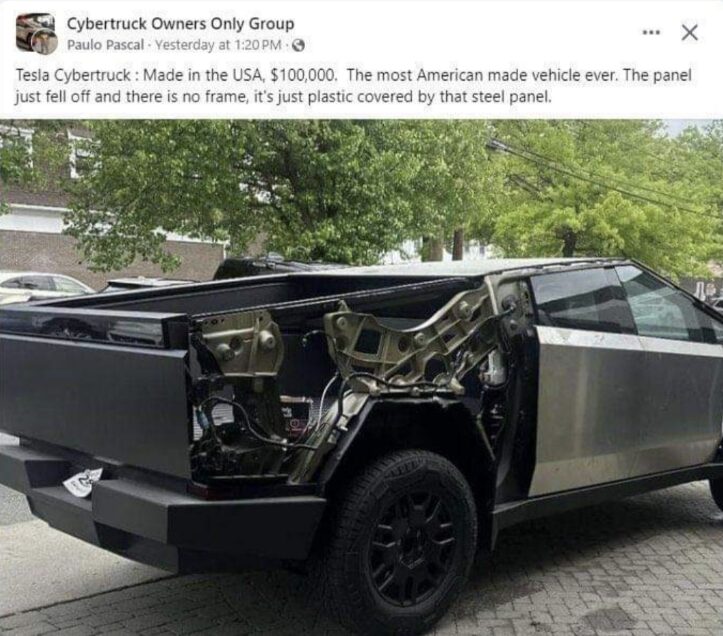
Executive Producer Tania: The fix. Is on par with everything, right? I mean, I personally would love to spend 100, 000 on a car to have the glue not set correctly and then have the fix be a fricking rivet.

Crew Chief Eric: I would like to point out, I did research just like the Model Y. You can go to your local Home Depot, aisle 13, bay 26 and buy a packet of rivets for like a couple

Executive Producer Tania: dollars.

Home Depot! Does a rivet work? Sure. Is it aesthetically pleasing anymore? I mean, not to say that it was to begin with without the rivet. The rivet could be an improvement. I don’t know. Or

Crew Chief Eric: for the course with the Cybertruck, but you know.

Executive Producer Tania: You just spent a hundred thousand dollars on a car and that’s how they’re gonna fix it?

They’re just gonna be like, oh yeah. [00:39:00]

Crew Chief Eric: I mean, not to open this can of worms again, but this is what I keep saying. Everybody oohs and ahs over these vehicles. And the. Build quality is variable from car to car, and it is not on par with the hundred year old manufacturers. Pick one. Chevy, Ford, Fiat, Audi, Volkswagen, Porsche.

It doesn’t matter. You can’t

Executive Producer Tania: get these wet. Let’s talk about build

Crew Chief Eric: quality. Jesus.

Executive Producer Tania: So they keep focusing on car washes or washing your car. But I’m like, so what happens when it rains and the car gets wet? It’s shorting out the electronics temporarily. And you gotta like wait hours for it to reboot.

Crew Chief Eric: Doesn’t rain that often in California where they build the Cybertruck?

Executive Producer Tania: Well, no, they built it in Austin, didn’t they?

Crew Chief Eric: Again, does it rain in Austin?

Executive Producer Tania: Yes, it rains in Texas.

Crew Chief Eric: Lies, lies, fake news.

Executive Producer Tania: In the hill country, actually, where it’s quite green, they do get some water. Lies! And when the hurricanes come through, they get the remnants of the rain from those. At any rate, I couldn’t [00:40:00] find it.

I thought I saw something going into the whole car wash thing. Where it’s like, don’t take it to the car wash. And make sure you take it to the car wash that it has to be some sort of like, no drive mode or something. And it basically like, shuts down. It like, locks the charge port. It disengages. It disengages.

The wipers apparently like what is what and then it like locks the doors and all this stuff and then there’s like a role mode. So it’s distant. I don’t know. Anyway, but the article was a guy I think who washed out the bed and then he ended up like bricking the truck for a while and turned back on. And I thought I saw something going into that.

Where they showed, I guess water was going under the bed somehow and then getting like stuck in like frame rails or something like that. And then I guess whatever, wiring maybe? I don’t know, don’t quote me. I saw it briefly and I didn’t, I closed it and I don’t remember how to find the article again. But I’m just like, that’s wild!

To your point, it’s like, There’s so many other cars on the road that can get wet. [00:41:00] It’s not a problem. Like, I think we’ve figured out how to send a car through a car wash and not have it be catastrophic. What again? You spent a hundred thousand dollars on a car that you can’t get wet. You can’t drive after men like, Oh, is it a Gremlin?

Crew Chief Brad: You don’t, you don’t. Get it wet after midnight and

Crew Chief Eric: not the AMC. Yeah. The eighties movie, the gremlin. Oh my God.

Crew Chief Brad: Two is taking their cyber truck to the car wash though, because do you just wash stainless steel? I thought you just kind of wipe it down with a diaper or something.

Executive Producer Tania: Well, no. So if you go on Tesla’s website, there’s a whole like.

Page scrolling of how to clean the exterior of the thing. And it’s like, don’t use this. Don’t use that. Don’t do it in the sunlight. Don’t do it after you’ve eaten. Wait 30 minutes.

Crew Chief Brad: You can only do it on the day of the full moon. [00:42:00] In Feb tober. Yeah. Like

Executive Producer Tania: what? There’s like wild notes in here too. And this is. From the Tesla website. Okay. This is legit stuff. Don’t use alcohol on the headlights. I’m like, why? What are the headlights made out of? Alcohol evaporate.

Crew Chief Eric: Because your beer will rust the stainless steel.

Executive Producer Tania: Ah, okay. Wrong alcohol. There was also a thing in here that was like, Oh, if I could find it again, it was like, yeah, yeah, here it is. Do not aim water hoses. Okay, so like if you’re washing your car and you have the garden hose, right? It’s like, don’t aim the water hose directly at the windows.

Crew Chief Eric: Wait, aren’t these those indestructible bulletproof

Executive Producer Tania: things?

Windows? I can’t aim a garden hose at? Like what? Now I don’t think it’s the glass itself because then it’s The door or the hood seals.

Crew Chief Eric: I think they leak.

Executive Producer Tania: So don’t get it wet, basically.

Crew Chief Eric: There’s a higher probability of Apex seals in an RX 7 sealing better than those window seals in the Cybertruck.

Executive Producer Tania: Apparently. And then it killed me at one of the things, like, the [00:43:00] recommended way to, like, to clean the stainless steel. Again, this is from Tesla.

Crew Chief Eric: Unreal.

Executive Producer Tania: I know you’ve written some articles about how to clean your car, and we’ve had the wax people on. I feel like even if you’re not the most into detailing, you know this.

And given it’s stainless steel. It said that you use a circular motion. And I’m like, have you ever cleaned a stainless steel pot? If you have anything abrasive, a circular motion. Oh my God. I mean, even on a painted car, you don’t really want to use a circular motion in case there’s something gritty there because you will leave swirl marks.

You always go. Quote unquote with the grain, so it’s less noticeable. Oh my God.

Crew Chief Eric: You know, since we’re talking about cleaning, I included an additional article here. It goes back to the, you know, why the trucks are rusting because it’s from February and it’s [00:44:00] not about that. I included it because I wanted you guys to see these pictures.

I don’t know if somebody urinated on this vehicle, vomited on this vehicle or what. But this is why they look terrible. Like, all the pictures in this article from Wired, oh my god, this thing looks so bad. Awful. Oh yeah, no, no, no. Absolutely awful.

Executive Producer Tania: It looks like your appliance is in your like, this was the first thing I said.

Do you not know when you have water splashing, like, the front of the dishwasher or your stove? Because it happens, people. You go reach for the towel that’s either hanging on your dishwasher or, you know, bar or on the stove. Oven door bar. Water hits the surface and it looks like garbage after two seconds.

Crew Chief Eric: I will say this. Now, this is an argument for something that I just recently tested. So if you go back into the April catalog, you’ll see that Don from Garage Style and I did an episode with Dan Williams from Owner’s Pride and their Eco Wash. Is designed for low water conditions and [00:45:00] all this kind of stuff.

And I was like, you know, I’m going to try it until I understand it and get a bottle and read it and kind of mess with it. I’m not going to really understand how it works. I tell you what, I think that soap is perfect for the Cybertruck. And here’s why. I did it on two different vehicles and I was absolutely astounded by the results.

Literally a capful, and I’m talking about like a Pepsi bottle capful that you would get on like, you know, out of the 7 Eleven case, full of this soap to three gallons of water. Rinse the car if you want, don’t, it doesn’t matter how it comes out the same. I washed our van and I washed the Jeep. using the eco wash with only three gallons of water.

I didn’t rinse the car before, did the whole thing, used up all three gallons of water that I had, didn’t rinse it afterward. It looked as clean as if I had done it the traditional way or went to the car wash. Unbelievably good. One of those things that until I tried it, I wasn’t convinced, but in the case of the Cybertruck, I could see something like eco wash.

being perfect for it.

Executive Producer Tania: There is a section on waterless [00:46:00] wash. You got a hand wash using a non ionic pH neutral waterless wash with a high quality microfiber towel.

Crew Chief Brad: It sounds like that waterless shampoo.

Crew Chief Eric: And I was thinking the same thing again, three gallons of water to a cap full of soap. I did both cars, three gallons a piece.

But I was thinking about it. If you’re in a situation in California where water conservation is important, you know, they have drought conditions. Don’t water your lawn. Don’t use a car wash. The eco wash is perfect. But then obviously taking it to the next logical conclusion, if you really can’t get the cyber truck wet, sort of like washing a cat, I suppose this is perfect.

This is something I would recommend in all seriousness to cyber truck owners to use. I recommend getting rid of the truck.

Executive Producer Tania: Or you could just. Spot clean using a glass cleaner and microfiber cloth. Spray the glass cleaner and wipe in a

Crew Chief Eric: zigzag motion. Oh my god.

Executive Producer Tania: So

Crew Chief Eric: many rules with this truck. It’s wild.

Executive Producer Tania: And basically this and the other rules are [00:47:00] immediately clean the surface.

So bird poop’s on it. Pull over. Get your glass cleaner and zigzag it off. Don’t want to create scratches because it’s going to scratch. Now there is a solution to this problem.

Crew Chief Eric: Don’t buy a cycle. It’s called paint.

Executive Producer Tania: It’s called the 5, 000 clear coat.

Crew Chief Brad: Oh my god.

Executive Producer Tania: Why? It’s not standard.

Crew Chief Brad: You can’t rattle can it?

Executive Producer Tania: You could, why not? You could paint it. Although it might short out. I don’t know what happens with the paint.

Crew Chief Eric: Well, I would say paint over the glass too, just seal everything in and call it a day. Prevent any future leaks.

Crew Chief Brad: I think the best solution is to trade your Cybertruck in for a Rivian. A Fisker.

Executive Producer Tania: I don’t know.

But in other non Cybertruck related news, do you remember when they talked about how we’re going to make the people’s car? Let me guess. The Tesla 2. The Model 2 at 25, 000 for everyone. Electric Chargers for all.

Crew Chief Eric: Lies.

Executive Producer Tania: In fact, it is lies. Because now they’re basically [00:48:00] apparently abandoning it or quote putting it on the back burner.

Crew Chief Eric: That’s code for we’re not doing it anymore.

Executive Producer Tania: In order to focus on their robo taxis using the same platform.

Crew Chief Eric: Okay, yeah, whatever, sure. Meanwhile, the price of all the rest of the Teslas went up again, and next month they’ll put them on sale and then they’ll jack them back up again and all that hokey pokey.

Executive Producer Tania: Well, they are going through something at the moment because they just laid off 10 percent of their global staff.

That hurts.

Executive Producer Tania: The worst is, and there’s quite a lot of, I think it’s like 14, 000 people.

Wow.

Executive Producer Tania: Lot of people. And because it’s Elon and he’s, I’m sorry, total ass hat. I wouldn’t want to be under him.

Some people found out that they had been laid off when they arrived at work, and their badge didn’t work.

Crew Chief Eric: Wow, that is a bold move, Cotton.

Executive Producer Tania: And got escorted away. That’s how you let you’re an asshole. But we already knew this when COVID [00:49:00] happened and the whole you can work from home and then you can’t and then the ultimatums that these people that move they had to move back and all this crap that he did and then they handled it like a total jerk, you know, in the communications with the people.

I’m like, okay, I’m not surprised by this, but what a D move. Can you imagine? Suddenly it’s like what? There’s a layoff? And it’s me? What? Yeah,

Crew Chief Brad: I could see, yeah, I could see you coming up to the door with your co worker, talking. It was like, man, did you hear about those layoffs? Man, I’m so glad that I still have my job.

Hey, that’s weird. My badge doesn’t work. Hey, try yours. Does your badge work? Oh, yours works. Oh, just let, let me in. Oh, they won’t let the, why, why can’t I get

Executive Producer Tania: no tailgating?

Crew Chief Eric: Tesla’s like the weirdest reality television show I’ve ever seen. It just every day, something

Executive Producer Tania: it’s weird. It’s all two sided too. It’s like, Oh, record sales. We’re selling so many. We’ve built so many. And then you lay off all your people and then you’re lowering prices and your stock. It’s going down, but that’s [00:50:00] because you’re doing so well.

I, I don’t understand. It’s not usually in good times of economic prosperity that people go, you know what? Let’s just cut 10 percent of the workforce for funsies. Although who knows, maybe that is what happens.

Crew Chief Brad: He’s probably sitting around in a bar with his executive buddies. Just like, you know, it’d be really good.

You know how we could like really help the bottom line. You know, they say that like HR and salary and stuff is your worst expense. Let’s just cut half or 10 percent of the workforce. Oh, yeah, that sounds great. Let’s do it. Let’s do it. The end.

Executive Producer Tania: I mean, I feel bad for those people. Of course. Hopefully, they’re able to move on to something bigger and better.

Crew Chief Eric: Well, you have, once again, successfully lowered my expectations. Lowered expectations. Oh my

Executive Producer Tania: god. I’m watching this video, and it’s pretty good. Couldn’t do this with a Cybertruck.

Crew Chief Eric: Nope, you sure couldn’t. And since we’re talking about washing cars, I thought this was appropriate. This is a great April Fool’s prank.

She’s getting pissed. So we have a link in the show notes to this. It’s [00:51:00] a video of these guys. Basically just messing with this lady who’s washing her Range Rover at a self car wash place and they keep throwing milk on the car and she thinks some birds shitting all over it. I mean, is it milk? It’s milk.

Yeah, it is a riot busted out laughing watching this thing. And normally I don’t go for this kind of stuff. I was like, Oh, this is lame, whatever. But I actually thought this was super funny.

Executive Producer Tania: I get it now why they have to. Because my cars are old, I don’t have all this fancy technology. I didn’t think about it on the Cybertruck.

Why they have to disengage the wiper blades, because it probably, because just like her Range Rover here, she keeps setting the windshield wipers off. It’s got the auto sensing windshield wipers. The Cybertruck could probably blow the whole thing up.

Crew Chief Eric: I was wondering what would happen if you poured milk on a Cybertruck.

Would it just melt?

Executive Producer Tania: You’d have to wipe it real quick to not mess up the stainless steel.

Crew Chief Eric: How gross would that look? It would look like vomit. Well, switching gears, I got to ask you guys one more time.

Executive Producer Tania: No.

Crew Chief Eric: Did y’all watch the Ferrari [00:52:00] movie?

Executive Producer Tania: Not yet.

Crew Chief Eric: There’s a Ferrari movie? Oh, man. All right. So here’s the plan.

You guys aren’t going to watch it. You’re not going to take it seriously. I’m

Executive Producer Tania: going to watch it.

Crew Chief Eric: You’re not going to answer my question. Who is this movie about? I’m going to take it to higher authorities. You know what I’m going to do? I’m going to call up John Somers, the motoring historian, maybe my friend, William Ross, and see if we can review this movie.

How about that?

Executive Producer Tania: Oh, I didn’t know you wanted to review it in the middle of this segment.

Crew Chief Eric: I wanted your opinion. That’s good enough.

Executive Producer Tania: Okay. Well then we have homework for the next month.

Crew Chief Eric: Speaking of Ferraris. This could have gone anywhere. This could have been in Stellantis News. This could be Florida Man. But I think it finds its home here in Lowered Expectations.

Executive Producer Tania: I mean, this is a brickin tragedy.

Crew Chief Brad: Right? This is a crime. This is a capital crime.

Executive Producer Tania: The guy should be thrown in jail.

Crew Chief Eric: Headline reads, not that a headline has never started this way before, dealership employee.

Executive Producer Tania: 24 year old. Dealer employee,

Crew Chief Eric: I repeat. Dealership employee reportedly wrecks a Ferrari F 40 in a tunnel.

Who [00:53:00] in their right mind gives the keys to a $3 million low production Ferrari. To a 24 year old.

Crew Chief Brad: Lawrence Stroll.

Crew Chief Eric: Yeah. I don’t care that the driving laws in Europe are stricter and more this and more that than they are here in the United States. Nobody in their right mind is going to give a 20 year old, unless they’re a YouTuber, that can afford the car, the keys to an F 150.

40! I mean, come on!

Executive Producer Tania: Imagine a dude’s like, Hell yeah, I’m gonna let it rip! I’m gonna hear it through the tunnel!

Crew Chief Eric: Meanwhile, it stepped out on him, didn’t know what the hell to do with 500 horsepower in a car that weighs nothing, and put it in the wall. Sounded hella good! For the gram. Yeah. This is criminal because this car is trashed.

Executive Producer Tania: They say they’re going to repair it.

Crew Chief Eric: At whose expense? The deal is sure.

Executive Producer Tania: They must have a massive insurance policy on it.

Crew Chief Eric: He had to have spun. Look at how it bent the door. Remember this is a carbon Kevlar tub. The whole car is like specialty, you know, whatever the rear wheel is [00:54:00] cocked in like reverse stance, bro.

He must’ve been going quick. And he spun and hit

Crew Chief Brad: hard. This car is no longer three million dollars. No, this car is 30 bucks. So what the dealership is going to have to pay a lot more than just fixing the car, they’re going to have to make this guy whole.

Crew Chief Eric: It’s going to cost them the value of the car to rebuild this.

And I love the comments. V8 Ferrari in the tunnel. Who could resist? I’m like, okay, man, let’s be a little bit more mature

Crew Chief Brad: about this for a second. Wait a minute. You’re looking at the comments and expecting maturity. Your first mistake.

Crew Chief Eric: I know I couldn’t help but scroll down. It’s that morbid curiosity. You know, it’s like, what are the trolls saying?

Executive Producer Tania: Here’s another question. So this car was going to go for sale or something, right? It’s three plus million dollars. Why are you driving it to the

Crew Chief Eric: trailer? You make a very good point, Tanya. Even in Europe, this car would have been on the back of a lorry in a closed compartment, completely cleaned, ready to go.

Crew Chief Brad: [00:55:00] Yeah.

Crew Chief Eric: Something’s fishy here. Maybe this was an insurance payout deal. You know,

Crew Chief Brad: like the guy who drove the Veyron into the, in the lake. Yeah. And the Everglades.

Crew Chief Eric: I’m not saying it was that, I mean, that’s all just conjecture, but to your point, yeah, if this car was being transported to auction in the States, this would have been in a closed vehicle.

Under lock and key.

Executive Producer Tania: You would never want to risk this happening or somebody else hitting you, right? Yeah. It’s wild.

Crew Chief Eric: Unless he stole it and went for a joyride.

Executive Producer Tania: I don’t know.

Crew Chief Eric: Could be. Un reeking believable is what it is. So another one bites the dust, unfortunately.

Executive Producer Tania: We’re gonna fix it.

Crew Chief Eric: I got to bring up this next thing because it has come up on our discord is come up in conversation.

I have decided there’s a new category of car and it’s called the ultimate highway hooptie. And maybe this is a phenomena on the east coast. Let me correct me if I’m wrong. You’ve driven the beltways. You’ve been around the metropolitan areas. And my wife pointed this out to me. Are all the hoopties on the beltway, always a Nissan.

There’s actually a montage video.

Executive Producer Tania: [00:56:00] It’s amazing.

Crew Chief Eric: Oopty Nissan’s on the byways and they’re all like flapping panels and just hoods. They’re bent and crab walking. They’re garbage.

Executive Producer Tania: Every Nissan is just an Ultima. It’s like, it’s the regular, you have the regular Ultima. Tima, you’ve got the Altima, the pickup truck, you’ve got the HVAC in Altima, ,

Crew Chief Brad: you’ve got the Paul Walker Altima,

Executive Producer Tania: you’ve got the Jarret’s Altima,

Crew Chief Eric: They’re all trash. It’s sort of like the PT Cruiser spotting. And then there’s those, the other Camry corners where every Camry has a bashed in left rear bumper, you know, kind of thing. And to your point, it seems to be ultimas more than anything, maybe. ’cause that’s the only car that Nissan actually sells these days.

But they’re all trash. We spotted two on the road

Executive Producer Tania: the

Crew Chief Eric: other day.

Executive Producer Tania: They’re still out there. Look at that underlying quality. They’re still out there. Such rugged, rugged, they are [00:57:00] abused and they’re still out there. So they are rugged.

Crew Chief Eric: They’re so terrible. Rental car agencies won’t even pick them up. When was the last time you saw a Sentra at

Crew Chief Brad: like Alamo?

No,

Crew Chief Eric: no.

Crew Chief Brad: Didn’t we rent a Nissan Murano when we were in Texas?

Crew Chief Eric: But that was like a decade

Crew Chief Brad: ago. No, it wasn’t. It

Crew Chief Eric: was like

Crew Chief Brad: 2017.

Crew Chief Eric: It was 2017. Yeah. It was a long time ago. You

Crew Chief Brad: are correct,

Crew Chief Eric: sir. Not a decade yet, but getting close. I’ve decided. Ultimate Highway Hooptie spotting, we want Nissan pictures, send it to us on our Facebook group.

Not only that, I’ve also decided, argue with me, tell me I’m wrong. Nissans are the people of Walmart of the highway.

Crew Chief Brad: You know what’s funny? It used to be Kia.

Crew Chief Eric: Well, they had that whole USB hacker thing, right? Steal a Kia. The Highway Hooptie used to be Kia’s. Well, I’ve got some rich people thangs to tell you.

Before we get into the actual rich people thangs news that Tanya has here for us, I found something super cool [00:58:00] and I gotta give mad props to Tanya. A little show and tell if you’re watching the video version of this. I finally added a LMP1 Mercedes C9 to my collection and it is the gorgeous. This is my now prized jewel in my collection.

Yes! Yeah, it’s my precious. I gently buff it with Zyma and stuff at night. We stopped by this in your old neck of the woods, Brad, where your dad lives. There’s like a toy exchange. They call it there in a shopping Plaza. And we popped in just to see what they have, because online they advertise like vintage toys, and I was like, Hey, let’s go see if they have any model cars and, you know, Legos or whatever else, just to see what they have in there.

So we happened to be in that area together. We stopped in and in this glass case, a bunch of just absolutely gorgeous, gorgeous one 18th scale model cars. And I got a soft spot for that size model car, you know, the nine, 10 inch cars. Behind me, you’ll see I’ve got Andy Pilgrims, PF Goodwrench, number three, Dale Earnhardt, C5 Corvette, also picked that up at the same place when I picked up the Mercedes.

In the case, he had Porsche [00:59:00] 956, you know, Rothman’s car, Steve McQueen 917, the Ferrari Daytona that actually sold at RM Sotheby’s last year at Le Mans. I saw that car in person. He had the model of that, some muscle cars. There were probably about 20 cars in the case. And if I could have taken them all home, believe me, I would have, but a little bit on the pricey side.

So I had to settle. I almost passed on the Mercedes again. I’m going to show it here because it is just so amazing. What’s so cool about this. I’ve never bought one of these racing legends models, and this is by Exato. I have some auto art. I have some other stuff. That’s really nice. This is a cut above like the materials that are used on here are almost watchmaker quality.

There’s little hinges with these tiny screws. And when you open the engine compartment, it’s got wires and hoses and fittings. Fabrics and just unbelievable amounts of detail, actual springs in the suspension. And I mean, it’s just really, really wild. I sort of guffawed at the price when he told me what he wanted for it.

And I was like, ah, you know, well, I’ve [01:00:00] spent about that for some other stuff. We negotiated because I’ve got the Corvette and I got some other things while I was there, so he came down on the price. Super happy to have this. It’s not exactly the livery I wanted because I wanted the factory, basically Silver Arrows C9, you know, with the green patch over the brake light.

This is the Yves Saint Laurent car. So it’s navy blue and white. It’s still absolutely gorgeous. It’s super heavy too. I wanted to make sure that I got a good deal. So I went online. I want to ask you guys as our resident price guessers here on The Price is Right Rich People Fangs. How much do you think that C9 is selling for?

Don’t look it up on places like eBay, et cetera. If you can get it, I’m going to preface this by saying I paid a fraction of what it’s worth right now,

Crew Chief Brad: like on eBay. So I have an idea of what I think you paid. So I got to multiply that up. Okay. What do you think I paid? I think you paid about 250. I actually paid less than that.

So then I think it’s worth. Or people are asking on eBay, probably 1500.

Crew Chief Eric: Ooh. Okay. You’re [01:01:00] double over. So on the high end, it’s half that it’s about seven 50 to 800. And on the low end, it’s about six.

Executive Producer Tania: Yeah.

Crew Chief Eric: So I got a really, really good deal on it. Now, granted probably worth more if it had the box, but even then, what was he going to charge me for the box?

I mean, come on, it’s a, it’s a freaking box, right? So all the cars were out of the box, but still, if I wanted to turn around and sell it, it’s actually a really good investment. You know, we did that episode a while back with Patrick strong before the holidays, talking about investing in model cars and looking at the higher brands and stuff like this.

This was a great opportunity because this came off an estate sale. So I’m sure he got it at a good rate. There’s a decent markup there that he obviously made on the car, but little did I know bringing that home. I’ve made money on the car. If I decide tomorrow, you know, I want to get rid of it. So I think that’s actually really kind of cool.

So don’t shy away from the model cars. If you’re looking for an investment, I’m not saying do that instead of buying a five 50 Maranello, if you can afford it, but think about that

Crew Chief Brad: to diversify your motor sports portfolio.

Crew Chief Eric: You got it, my man. You got it. [01:02:00] Super proud of this by super proud.

Crew Chief Brad: Do they make one?

That is the silver arrows livery that you,

Crew Chief Eric: yes, it costs about the same. So the livery doesn’t make a difference

Crew Chief Brad: because you know where I’m going. If you could find one that you actually want, you could flip that car into whatever you want.

Crew Chief Eric: Exactly. So just like real life, buying cars, flipping cars, blah, blah, blah.

Meanwhile, more rich people thangs.

Executive Producer Tania: Oh, rich people thangs. So HANU, we remember them, those futuristic looking utilitarian little bands. Yeah,

yeah.

Executive Producer Tania: Their CEO is also an asshat, apparently, and spent double the annual revenue on his own private jet.

Crew Chief Eric: Out of the company funds.

Executive Producer Tania: That’s how you do it.

Crew Chief Eric: That’s how you run a business.

That’s how it’s done. And they expect this company to be profitable.

Executive Producer Tania: Not at that rate.

Crew Chief Eric: How did these people not go to jail? That’s what I want to know.

Executive Producer Tania: They do. They just go to a fancy jail.

Crew Chief Eric: The ones with the tennis courts, right? [01:03:00] We’re at this high point. In what I call boutique manufacturers and we’re seeing Fisker with problems.

We have the Rivians and we have the canoes and we have all this stuff. How many of these companies are actually going to survive?

Executive Producer Tania: Not this one.

Crew Chief Eric: Not at this rate. That’s for sure. Again, I will be amazed if even Tesla. As air quotes, good as they’re doing, doesn’t get absorbed by somebody in the future. And I think that’s always been part of the plan, right?

Is to sell patented technology, license it to somebody else to use, which is the Toyota model. Right.

Executive Producer Tania: To your point of them being a software company now there’s, and we didn’t talk about it, but there’s also rumblings about them licensing their full self driving BS. That’s

Crew Chief Eric: not

Executive Producer Tania: full self driving. So they’re

Crew Chief Eric: going to sell negative one of those two, right?

Oh man. Well, I guess it’s time we go south and talk about alligators and beer.[01:04:00]

Executive Producer Tania: We’re going to go south and talk about this poor man.

Crew Chief Eric: Was he a poor mountaineer, barely keeping his family fed?

Executive Producer Tania: No, but this poor man, he had his 2023 limited edition Dodge Charger SRT What? Apparently that’s a thing. Stolen. The kicker on this was, I don’t know, apparently he bought the cars and it was an homage to his late mother and all this stuff and yada yada.

Well,

Crew Chief Eric: well, well, well, pause, pause. How is a Dodge Charger Hellcat Redeye jailbreak An homage to your mother.

Executive Producer Tania: I don’t know, but it was like

Crew Chief Eric: Was his mother a trapeze artist for Cirque du Soleil? Because that’s the only thing that makes sense here. Like what, what are we Well,

Executive Producer Tania: homage might not be the right word, but he said to quote, that the main reason I got the car, Because of her to represent her

Crew Chief Eric: again, I [01:05:00] ask.

Executive Producer Tania: So whatever that I don’t know, but somehow a limited edition purple Dodge Charger SRT Hellcat red eye jailbreak with some vinyl graphics in the paint or something.

Crew Chief Eric: What is on the side of the, is that our lady of Guadalupe?

Executive Producer Tania: I think it’s the statue of Liberty, maybe, or it could be. I’m not really sure. Or it’s somebody, something completely different.

I don’t know. Is that his

Crew Chief Eric: mother wearing a tiara?

Executive Producer Tania: Or maybe that’s a picture of his mom. Oh, I don’t know. It has a

Crew Chief Brad: mustache. It’s got a goatee. That’s a guy. I think that’s jesus.

Executive Producer Tania: It could be jesus in the thorn of roses on his head I don’t know. There’s words too. Maybe I can’t tell that’s not the point It’s entirely the point No, no, no, no wait because the point is he got this for his mother Represent his mother i’m using the word homage Apparently this man had a deep relationship with his mother so deep that he kept the cup of her ashes In the car.[01:06:00]

They were stolen with the car. But, as he said, the person might not be right, but they had a good heart. Because they came back and they put the ashes in his mailbox, kept the car, but they returned the ashes. Thankfully, the mind’s messed up.

Crew Chief Brad: He did his due diligence and he’s investigated work and he worked to preserve the evidence

Executive Producer Tania: by

Crew Chief Brad: using a shirt to close the lid of the container, holding the ashes.

Yes. Very smart. Very smart. Mr. Carter.

Crew Chief Eric: Okay. Colombo to have made the distinction between quote unquote, the urn. I don’t know how these ashes were kept in the vehicle, but I’m going to assume that they weren’t kept in the ashtray. So telling the difference between the cup holder, again, I say cup holder.

They were in a

Crew Chief Brad: Carl’s jr. Cup.

Crew Chief Eric: My point. How do you know that it wasn’t just cigarettes? So what I’m saying is. Collusion to use Brad’s [01:07:00] term.

This is an inside job Nobody would know unless it was one of his friends relatives or otherwise. I think this was an inside job

Executive Producer Tania: I don’t know it only happens in Florida See

Crew Chief Eric: that’s why the point of this is about the graphics on the side of the car and the homage to his mother and not About the ashes.

That’s what I’m saying This is ridiculous. I don’t know. I’m convinced. That’s like Jesus in the toast. That’s what it’s right there.

Executive Producer Tania: I don’t know. I can’t tell. It’s hard to see the angle. The picture’s not good. That’s a really dark purple with the black graphic. It’s hard to see. Nice car.

Crew Chief Eric: Jesus in the toast.

Executive Producer Tania: All right. Now we can go up north middle ish of the country to the delightful Yellowstone National Park.

Crew Chief Eric: Yogi Bear lives there.

Executive Producer Tania: Where some sort of Karen created

Karen of Yellowstone, I [01:08:00] apologize to all the good Karens out there getting a bad rap. Apparently this woman exited her vehicle and it was an SUV, so it fits the Karen stereotype.

Crew Chief Brad: Was it a Rage? Was it a G Wagon?

Executive Producer Tania: No, no, it was not. I think it was a Ford.

Crew Chief Brad: Bronco.

Executive Producer Tania: Anyway, if you’ve ever been to Yellowstone, most of the areas through the national park, Yep.

One lane each way, and there’s really not a shoulder in anything, and there’s only wilderness there, right? Preserved area. Anyway, so she decided to just, you know, park it, leave it running, because that’s environmentally friendly for the National Park, and then get out to go do some National Geographic photography.

No, she’s not part of National Geographic. She was going to go take a picture of a little bear, because not only, A, what you don’t do is leave your car running in the middle of the road. You also B, don’t try to approach a bear cub because C, mama’s probably around the corner and you don’t want to F with her.

Crew Chief Eric: This is you again using the Vulcan logic. I’m going to start calling you Tuvok in a minute. Bears are [01:09:00] cuddly. They’re warm. They’re fuzzy. They’re friendly.

Crew Chief Brad: They have giant teeth and claws. They’re hungry. We’ve heard other

Executive Producer Tania: stories out of Yellowstone.

Crew Chief Eric: You’re right. We’ve heard about Winnie the Pooh and we’ve heard about the Bernstein bears, all of them.

Executive Producer Tania: Like I’ve been there. I’ve gone through Yellowstone, the Grand Tetons, all that stuff. And like the wildlife is real. The bison, they are literally there on the side of the road and you might actually have to stop for them because they’re in the middle of frickin road. But you don’t want to stop for them, you really want to keep going.

That’s all real, and the people that get out of their car to approach them, the stories of them getting gored, or like, catapulted through the air, also real. Public service announcement! Do not approach the wildlife! Do not feed the wildlife! Stay in your vehicle at all times. Have you seen Jurassic Park?

Don’t get out of the Jeep.

Crew Chief Brad: Please win that Darwin award. Thin the herd, come on. Survival of the fittest. If these people are stupid enough to get out of their [01:10:00] car and get killed by a wild animal, then

Executive Producer Tania: Nothing happened with the animal or anything. What she did was apparently It was high season, so it caused a huge backup of people that just sat there

Crew Chief Eric: behind

Executive Producer Tania: her.

I’m surprised that somebody with the thing running didn’t just move the car out of the way and just park it down in the ditch and keep going.

Crew Chief Eric: This is like the Church of Petrelhead. Can I get a do doy? It’s like an amen. Can I get a do doy?

Executive Producer Tania: I mean, it’s one thing if it, like, she took the keys with her, but the thing’s running?

Like jump in, just push it off a cliff.

Crew Chief Brad: Then Karen would call the cops and accuse you of grand theft auto.

Executive Producer Tania: Yes, a hundred percent. Just make sure the ashes aren’t in it.

Crew Chief Brad: I’d like to speak to the manager. What you do is you get in it. You don’t actually get fully in it. You put the emergency brake down and you put it in neutral and you let it go.

Wherever it goes, it goes. Not

Crew Chief Eric: full brick move. Ferris Bueller on the

Crew Chief Brad: accelerator. No, you can claim, Oh, she, she must’ve left it in neutral. I don’t know what happened, [01:11:00] Ossifer. Yeah, that’s true. Well, it’s

Crew Chief Eric: time we go behind the pitfall and talk about British sports news. And we have some NASCAR news this time.

You know, it’s one of these moments where truth is stranger than fiction.

Executive Producer Tania: But it’s not surprising.

Crew Chief Eric: Not at all. Headline reads, Moonshine Cave found underneath North Wilkesboro Speedway grandstands, track officials say.

Executive Producer Tania: I mean, sure.

Crew Chief Brad: I mean, there’s nothing more NASCAR than this story.

Executive Producer Tania: Exactly.

Crew Chief Eric: 700 square foot still shine operation that was basically buried under these Submit grandstands for decades.

Executive Producer Tania: I think it’s a pretty cool find.

Crew Chief Eric: It is kind of cool. I’m sure Dale Earnhardt Jr. will do something on Lost Speedways about it soon enough. But the point is, it does hearken back to stock car racing’s original history. We had Buzz McKim give a presentation about this, about the ties back to moonshining and the origin of NASCAR.

It goes back and forth. The races on the beach at Daytona, blah, blah, [01:12:00] blah. You know, there’s some revisionist history happening here where it’s like, well, we don’t want to talk about the Shiner days and all this kind of thing. But like you guys, I think this is kind of cool to see. I wonder how many other NASCAR tracks might have hidden treasures like this.

I recently discovered a story about another track. Where it was said that at one point, I think it was Henry Ford had commissioned, you know, the celebration for like 4th of July, the race, they had stored fireworks under there. And thank God it was made out of cement because somebody threw a cigarette that was still like, sort of lit and it sell the fireworks off and like exploded underneath the cement.

I mean, this was way back in like the 1910s, 1920s kind of thing. So I mean, crazy, crazy stuff like this. To your point, not a surprise that there’s a still under there or, you know, illegal alcohol production facility, let’s call it that. I mean, cool fines, right? Lost history. Speaking of things that are lost, I don’t know about you guys.

I don’t often get the time to watch the craftsman truck series. But you had to have heard about this race at Coda [01:13:00] quote, the driver drove the wheels off of it. Mechanical failure. That is a big one. Basically the whole rear end of the truck fell off and went into the middle of the track as the car careened into the corner.

So truth sometimes is stranger than fiction. So if you watch that race and you saw it. Maybe tell us about the details. I still have to go back and watch the replay, but I found it extremely amusing. And, you know, unfortunately stuff happens, stuff breaks, but to have a whole rear differential axle, it looks like they just purposely took it off.

The truck, that’s a big failure. So somebody, yeah, someone’s getting fired. Exactly. Well, let’s switch to open wheel racing for a little bit. Would this be considered open wheel? You know, that’s a good one. That’s very true. So before we get deep into IndyCar and Formula 1, did you guys hear about the debut of the F1 Arcade in Boston?

Crew Chief Brad: No, I had not heard of that. I’ve seen stuff about it on Instagram and everything, but I never really paid much attention [01:14:00] to it.

Crew Chief Eric: So I thought it was going to be maybe an extension of F1 Boston, if you guys remember that. That’s the go kart track that became really, really famous. Back in the early 2000s in Boston, we’ve been there a bunch of times.

It’s a heck of a lot of fun. They got multiple courses. It’s really big for indoor complicated, multiple floors, all this kind of stuff. And so I was thinking, Oh, they finally expanded, you know, trying to be back in the news. Well, no downtown Boston F1 arcade. It’s a bar

Executive Producer Tania: Dave and busters.

Crew Chief Eric: Yeah, it’s me. Yeah, exactly.

Executive Producer Tania: Formula one themed simulators.

Crew Chief Eric: So the Toto and Christians. Toto and Christians, exactly. I had some friends that are in the sim business kind of check out these videos that are out. I happened upon the one from Two Girls, One Formula outside of their kind of preliminary stuff of getting into Boston. They did an interesting tour of the facility.

So I watched that. It was a great way to digest it in quick order and get a feel for, like you said, the Dave and Busters of Formula One. So I think if I was in town, I would check it out. What about you guys?

Executive Producer Tania: I would, but it’d probably be a ridiculous amount of people. Maybe in a little while when things calm down.

Crew Chief Eric: Definitely, I would check it out the next time I’m in [01:15:00] Boston. IndyCar has been at the forefront of safety in open wheel racing. They were the first ones to kind of introduce the halo and some of the other stuff. And, you know, we could debate, uh, Formula One, the pinnacle of technology, but really IndyCar sort of adopted that in Formula One.

Came later IndyCar changed to the windscreen and halo setup, which they’ve used for the longest time. And now it looks like they’re getting a whole new windscreen setup for it looks like next season. So they’re making additional modifications to the IndyCars. And I guess that will translate through open wheel racing, probably into formula one here in the near future.

Possibly.

Crew Chief Brad: So IndyCar is not governed by the FIA, is it? No, it is not.

Executive Producer Tania: I don’t know that Formula One would adopt this similar.

Crew Chief Brad: Why are they making this change?

Crew Chief Eric: Well, I think it has a lot to do with the episode that we did with Penske’s aerodynamicist, Lauren Sullivan. And so because of the speeds that are sustained at the Indy 500 and some of these other oval events that they do, [01:16:00] They need to find every possible way to make the car as slippery as possible, but maintain the safety.

And so the new quote unquote arrow screen is designed to improve the aerodynamics and the airflow going around the driver. So it looks a little odd. It’s kind of tankish when you look at it. I

Executive Producer Tania: mean, they added vents and they put a lid on the top basically, because the current windscreen is really like an open wheel windscreen.

So it just comes up and it’s open over your head. Looks like they put a top on it, but then obviously, so you don’t Frickin boil and suffocate. There’s two huge vents. Yeah. Push air in.

Crew Chief Brad: So basically if they put fenders over the wheels, they’ve got a prototype.

Crew Chief Eric: Gee, I’m glad you brought that up. Hmm. Funny how that works.

It’s all going to be in dirt’s cars soon enough. Well, let’s talk about formula one. What has happened here over the last month?

Executive Producer Tania: Still the Mac show won four out of the five races. Missed that one because car broke. Yes. Carlos won that one, I [01:17:00] think, instead. So good for him.

Crew Chief Eric: Let’s clarify, didn’t Verstappen’s Red Bull catch on fire?

Executive Producer Tania: Yes, there was a brake issue on basically lap one. The rear brake was stuck, so it was constantly riding the brake and then obviously he was having handling issues, didn’t realize, or they didn’t communicate what it was, and he came into the pit lane and it got to the point that it literally exploded into a burst of flames because it got so hot.

And that was it catastrophic failure that put him out of the race on like lap two or three or something.

Crew Chief Eric: Awesome.

Executive Producer Tania: And otherwise I think all the other races he’s been, you know, 45 seconds ahead of the next car and like lather rinse repeat from last year. How exciting.

Crew Chief Brad: How fast was he during the sprint race?

He was like 20 seconds ahead in a, or no, like 10 or 15 seconds ahead in a. 20 minute race or something ludicrous.

Executive Producer Tania: Yeah, I

Crew Chief Brad: mean.

Crew Chief Eric: Cheating.

Crew Chief Brad: I don’t know.

Crew Chief Eric: There’s something going on. The thing I don’t understand is

Crew Chief Brad: he’s so

Crew Chief Eric: much faster than [01:18:00] even Perez. Not to spoil an upcoming episode, but we’re doing a tribute to Ayrton Senna.

And so it commemorates 30 years since his passing, tragic passing at Temporello at Ipola. And one of the comparisons that we made on that episode was Verstappen to Senna. If you look at Senna’s 1988 season, he had the perfect run. He missed all but one. And that was the event at Monza because that was sort of like giving the nod to Ferrari because Enzo had passed.

And so Ferrari wins it at Monza and the whole thing, right? Kind of thinking about it, drawing this parallel between Max And Senna, which you can make, especially if you extrapolate all the data that exists and all this kind of stuff. But the one thing that kept coming up, and I’ve said this before, and you guys told I want to put Max in the Haas and see what he does.

Executive Producer Tania: Why are you saying? I don’t disagree with you. I’ve never said the contrary. A lot of people have. I don’t think Brad has either.

Crew Chief Brad: Shout out to Sam Harrington. [01:19:00]

Crew Chief Eric: No, but a lot of people have that’s so stupid. That’s what I want to see him in another car. The same argument was made with Senna. You put the best driver in the best car.

He’s always going to win. Is it the driver? Is it the car? If you want to make the decision, put him in a lesser car and see how he does. If he kicks butt 20 seconds ahead in a Ferrari or in a Mercedes, which we know is slower or in a Haas, you know, to make the joke, okay, it’s for stopping. He’s that good.

You’ve got to take the Red Bull out of the equation.

Crew Chief Brad: But the only way to really prove that is to have everybody driving the same car. Oh, that’s called spec racing. Oh, that’s cool.

Executive Producer Tania: Well, I mean, to Brad’s point, he’s miles ahead of his own teammate in supposedly the same car, which they’re not exactly the same, right?

Crew Chief Eric: So that goes back in the history books. And it’s something that we talked about even with Senna, you know, with all these different teammates outside of Prost, they would make these negotiations. Like when he was at Lotus, Now, I’m not saying Red Bull doesn’t have deep pockets because they all sort of do, but back in [01:20:00] those days he would demand my car gets the best parts.

The cars are, yes, in look and feel, they are equal, but they are not. The other car, the backup driver, the number two driver, basically got all the leftover crap and it met spec and it met qualification and whatever, but the lead car got the better parts. I’m not saying it’s exactly the same, you know, maybe the tuning is different.

I mean, so many different things in a modern formula one car, but I’m wondering a, if some of that is happening or B, like I’ve said before, maybe they’re cheating and nobody’s been able to prove it yet.

Executive Producer Tania: I don’t know. I mean, I think there’s a consistency in him, no doubt that he can consistently. Just lap after lap hit the same freaking mark exactly the same way.

When you’ve seen some of the races where he passes the other cars as if they’re parked, and I know there’s the DRS and all that stuff, but some of the gap closing is just extraordinary, and it’s like this car is in a league of its own. It’s not even

Crew Chief Eric: Again, is it the car? Is it him?

Executive Producer Tania: Well, in a straight line, it’s the [01:21:00] car, because what is his talent?

Pushing the pedal down

Crew Chief Eric: corner exit speed makes a huge difference. I mean,

Executive Producer Tania: yes. Yes. In that regard. Yes. The corner exit speed, but on some of the traps was a really long straights.

Crew Chief Eric: But here’s the thing. 10 years from now, 20 years from now, we look back. We might. Be talking about Verstappen as the second coming of Senna.

I want to put it under a different lens and I know I’ve been hating on Verstappen for a long time, but I’ve come into this new way of thinking. Maybe I’m not hating, maybe we are seeing something. Just like we saw it in the 80s when Senna was coming up, because if you watch some of those races, he was ballistically fast compared to everybody else.

His closing rates, his exit speeds, it was like he was driving a space shuttle and everybody else was driving Cinquecentos. Again, I’m wondering if this is sort of the second coming of Senna.

Crew Chief Brad: Did anybody make that same comparison when Lewis Hamilton was winning all his championships?

Crew Chief Eric: No, Lewis Hamilton was constantly compared to Schumacher.

He was in Schumacher’s shadow. And even though [01:22:00] Hamilton wanted to be Senna, you know, that whole attitude and this facade that he put on, that I’m not here to make friends, and he wanted to emulate Senna. Senna, he was more like Schumacher. He cold and calculated and precise and consistent. Not that passionate driving.

Not that just on the ragged edge lap after lap. Senna was that way. He drove at the ragged edge, 13 tenths, every lap, the same. Just ridiculous with complete disregard for everybody else and the thing is granted more Formula One drivers come up through karting than ever before but back then it was super rare and Senna was a karter before he was in Formula One he went Formula Two and moved up the ranks but Max also comes from a big history and practice of karting and when you watch him drive.

Executive Producer Tania: They all do though everyone. In the grid right now does.

Crew Chief Eric: Well Lance

Crew Chief Brad: Stroll comes from Mario Kart.

Crew Chief Eric: But my point is, it’s hard to take the Carter out of the boy, you know what I’m saying? And we’ve seen some of that behavior with Verstappen, so I’m just [01:23:00] telling people, for the haters out there, I think in a couple of years, we’ll be looking back going, Damn, we were here for the beginning of something amazing.

Executive Producer Tania: But in the moments where the car hasn’t been good, he hasn’t done shit. Very few races. Where, like, the car was having problems, like, he couldn’t, I don’t know if he got into a Haas, because the Haas is inferior, that he could win, and definitely not by 45 seconds or something ridiculous like that. I don’t think anybody could.

I think what will be more telling, and the jury is out on the car versus him and all that stuff, because everyone claims the car. is because Adrian Newey, he designed it. Well, guess what? He’s leaving Red Bull.

So

Executive Producer Tania: if he builds the same car somewhere else and now suddenly that gap closes, now you know it’s the car, right?

For sure.

Executive Producer Tania: Now if he has to fight somebody for that first place constantly, and there’s real racing going on, because he’s out by himself doing time trials. He’s not under pressure to make a mistake. He doesn’t have to make a mistake because he’s [01:24:00] got somebody breathing down his neck.

Crew Chief Brad: Yet he always has something to complain about.

Executive Producer Tania: Right? So that’s a whole different dynamic too. When you’re out there just doing hot laps by yourself, the dynamic’s different. So who knows? So it’ll be interesting to see. We don’t know, allegedly. So it’s kind of breaking news today. Where knew he’s going? It says he wants out and he’s gone. He’s gonna even break the contract that he has, I think, to get out.

Because I think technically his contract goes till the end of next season. But he can, I think, break it and get out so that he could be with a new team starting next season.

Crew Chief Eric: And ready.

Executive Producer Tania: Be interesting to see where Well, there was, I think, rumors a while ago about, Oh, if Hamilton moves and Adrian, like, goes with him, would he go to Ferrari?

Or did daddy wore bucks? Pony up some big cash to bring him to Aston so his son can look good. I don’t know.

Yeah,

Executive Producer Tania: that’ll be interesting to see because if he clones a red bull for somebody else

Crew Chief Eric: or let’s say he doesn’t sign with a team at all that reeks of suspicion that maybe they were on the verge of getting caught for doing something, you know, Lotus esque [01:25:00] in this modern time and he doesn’t want to be associated with it.

Conspiracy

Crew Chief Brad: theories! What? That’s a very NCAA collegiate sports theory there. Just saying, it could happen. I suspect he’s trying to get out because of the whole Christian Horner drama, and there’s probably more going on there.

Executive Producer Tania: That’s supposedly the impetus for it, is the whole Horner allegations thing.

He’s like, nope, I’m done with this.

Crew Chief Eric: Well, let’s just cross our fingers and hope he goes to Audi, and I mean Sauber, and the Germans is coming to destroy everybody, it’d be perfect.

Executive Producer Tania: Oh my god, that’d be amazing. Which, speaking of Audi, apparently they’ve signed their first driver and it’s not Harlow Sines. Uh

oh.

Executive Producer Tania: Even though there’s rumors about that, that they’re courting him and this, that, and the other, but they have Nico Hülkenberg.

What?

Executive Producer Tania: Like, okay, he’s sitting there backmarking in Haas right now. Like, cool. Really? You could’ve brought Vettel back out of retirement, I don’t know.

Crew Chief Brad: Probably would’ve been better.

They still might.

Executive Producer Tania: There’s a rumor about that too.

Crew Chief Brad: They could get bonus out of retirement.

Executive Producer Tania: Out of his green state car. What [01:26:00]

Crew Chief Eric: is there anybody else on the list with a German last name? Let’s start there.

Executive Producer Tania: Uh, there are no other German drivers on the grid right now.

Crew Chief Eric: That’s why they chose Hulkenberg. It’s very simple.

The way Volkswagen works. They’re gonna start there. Just gonna leave it alone. But couldn’t they still get in Mick Schumacher?

Crew Chief Brad: That’s not possible. He’s not doing anything right now.

Executive Producer Tania: Could. I don’t know who any of the reserve drivers are. If there’s any German ones there might be. But the next F1 news is Miami.

Welcome to Miami. Thousand dollars for three days. Get your uh, wallets open. I’d rather not. So May 5th I believe is that race. Another spectacle.

Crew Chief Eric: Well, if that’s all we got, we will tune in next month for more Formula One recap. But for now, our motorsports news is brought to us in partnership with the International Motor Racing Research Center Watkins Glen.

So I just want to let you guys know the raffle closed and we do have a winner of the 2024 e ray that they were raffling off. Apparently it is going to a man in Florida, so we may see this car show up in the news soon [01:27:00] enough. The rumor on the street is they’ve already selected the next raffle car. So spoiler alert, it’s going to be another Corvette.

This time it will be a Z06. So I don’t have all the details on that yet, but look for an upcoming announcement on the next raffle car for the 2024 2025 season. And by the way, if you do buy a raffle ticket, And you win, you do have the option to take home the car or a cash prize option instead. But please note that every ticket you buy goes to continue the work being done at the IMRRC, which is a non profit organization celebrating its 25th year of existence this year.

So through your help, it keeps the lights on, keeps things going, keeps research going. And it’s for a really great cause because they are at the epicenter of a lot of things in the motorsports communities really appreciate the work that they’re doing and your help by participating in these sweepstakes and other things very much goes a long way.

So that being said, teasers for upcoming events at the IMRC on May 11th, there is going to be a center [01:28:00] conversation called. Oswego Supers, a legacy of speed at the Steel Palace, which includes the Purdy Deuce, one of the legendary super modifies that’s run at Oswego, and it’s currently on display at the center.

If you look at our Instagram, if you look at theirs, all the social media stuff, we have some special articles about the Purdy Deuce. We recently sat down with Camden Proud, the PR director from Oswego, to talk about the history. Kip Zyder came on and did a short, what we call TLDR, too long, didn’t read about the importance of the Purdy Deuce, lots of stuff around that.

They’re going to be recording the session and we’ll be able to bring that to you later in the season. And then again, on June 22nd, there’s another center conversation. This one, even more important, it’s called the greatest Corvette story ever told. It’s about the Camarotti Corvette, which has multiple wins under its belt to include.

Really, really awesome car. It’s the tail end of the C1 Corvettes. So first generation Corvettes, again, they’re looking to record that. We’ll get that out and remastered later in the year. And then on September the 12th, there will be the Cameron R Argett Singer [01:29:00] award for outstanding contributions to motorsport.

I am privy to who is getting awarded this year. It can’t say yet. The official press release will be coming out any day now. So stay tuned to that. And I think a lot of people will be shocked. And tickets are on sale for the Argettsinger award dinner right now. You can get those from the IMRRC website by clicking on store and then going to awards dinner.

And then don’t forget November 1st through the 2nd, mark your calendar. The 8th annual Michael R. Argettsinger symposium on motorsports history is going to be held at Watkins Glen international. And we will again, be carrying it on the motoring podcast network and live streaming it for you on our Twitch.

So stay tuned for that. And we are re releasing remastered. Presentations from throughout last year’s symposia out on break fix and out on the motoring podcast network throughout the year. So stay tuned for some really interesting and educational episodes throughout the rest of the season. Well, guys, we’ve hit the wrap up, so it’s time to bring it home.

Crew Chief Brad: As a reminder, you can find tons of upcoming local shows [01:30:00] and events at the ultimate reference for car enthusiasts. So

Crew Chief Eric: I want to remind you if you’re still planning your track season, look no further than hbdejunkie. com for an update list of events from all across North America on their website. You can filter by location and find the perfect HPD event for you.

And be sure to keep an eye on our motorsports calendar on gtmotorsports. org forward slash events to learn about other special events like autocrosses, rallycross, go karting events, and other various disciplines of motorsport that you shouldn’t miss.

Executive Producer Tania: We just crested 335 episodes of Brake Fix while you’ve been listening to this episode.

But more importantly, we’ve expanded our catalog as part of our new motoring podcast network, where you can enjoy programs like The Ferrari Marketplace, The Motoring Historian, The History of Motorsports Series, Brake Fix, and others. Search for Break Slash Fix or Grand No D Touring everywhere you download, stream, or listen, and be sure to check out www.

[01:31:00] motoringpodcast. net for reviews of the shows, new episodes, bios of our on air personalities, and descriptions of the services we offer.

Crew Chief Brad: Did you know you can sign up for our Patreon for free? Lots of great extras and bonuses, even on the free tier. But if you’d like to become a break fix VIP, jump over to www.

patreon. com slash GT motor sports and learn about our different tiers, join our discord, or become a member of the GTM clubhouse by signing up at club. gtmotorsports. org. Drop us a line on social media or visit our Facebook group and leave us a comment. Tell us what you like, dislike. And send us ideas for future shows.

Executive Producer Tania: And remember, for everything we talked about on this episode and more, be sure to check out the follow on article and show notes available at gtmotorsports. org.

Crew Chief Brad: And, as always, a special thank you to our executive producer and co host, Tanya, and to all the fans, friends, and family who support GTM. Without you, none of this would be possible.

Otro.

[01:32:00] Otro.

Crew Chief Brad: And we’re out.

Here we are in the eyes in front of us, cars in back of us, all just waiting to order. There’s some idiot in a Volvo, with his bright son behind me. I lean out the window and scream, hey, whatcha trying to do, blind me? My wife says maybe we

Crew Chief Eric: should We hope you enjoyed another awesome episode of Break Fix Podcast brought to you by Grand Touring Motorsports.

If you’d like to be a guest on the show or get involved, be sure to follow us on all social media platforms at Grand Touring Motorsports. And if you’d like to learn more about the content of this episode, be sure to check out the follow on article at gtmotorsports. org. We remain a commercial free and no annual fees organization through our sponsors, but also through the generous support of our fans, [01:33:00] families, and friends through Patreon.

For as little as 2. 50 a month, you can get access to more behind the scenes action, additional Pitstop minisodes, and other VIP goodies, as well as keeping our team of creators Fed on their strict diet of fig Newtons, gummy bears, and monster. So consider signing up for Patreon today at www. patreon. com forward slash GT motorsports, and remember without you, none of this would be possible.

Highlights

Skip ahead if you must… Here’s the highlights from this episode you might be most interested in and their corresponding time stamps.

  • 00:00 Introduction and Sponsorships
  • 00:53 Kicking Off the Episode
  • 01:15 April Fools and Automotive News
  • 02:29 Green Grand Prix Recap
  • 07:11 Evening with a Legend: Mario Andretti
  • 09:58 Automotive News Roundup
  • 29:57 Lost and Found: Unusual Car Listings
  • 33:35 Tesla Troubles and Cybertruck Issues
  • 45:00 The Perfect Soap for Cybertruck
  • 46:17 Eco Wash: A Water Conservation Solution
  • 46:40 Cybertruck Cleaning Tips
  • 47:39 Tesla’s People’s Car Abandonment
  • 48:29 Tesla Layoffs and Controversies
  • 50:53 Hilarious Car Wash Prank
  • 51:58 Ferrari Movie Review Plans
  • 52:45 Ferrari F40 Wrecked by Dealership Employee
  • 55:39 Nissan Hoopties on the Beltway
  • 57:53 Model Car Collection Showcase
  • 01:02:33 CEO’s Extravagant Spending on Private Jet
  • 01:04:13 Dodge Charger Hellcat Theft and Ashes Return
  • 01:07:40 Karen’s Yellowstone Adventure
  • 01:11:16 Moonshine Cave Found Under NASCAR Track
  • 01:15:06 IndyCar’s New Windscreen Setup
  • 01:18:05 Verstappen vs. Senna: A Comparison
  • 01:25:31 Audi Signs Nico Hülkenberg
  • 01:26:40 IMRRC Raffle and Upcoming Events
  • 01:29:53 Wrap Up and Thank You

UnCOOL-wall Nominee! 

For your consideration we present the 2003 Kia Sedona GT “Cross Cabriolet!” with Special Edition hood ornament and 3rd row seating.

VOTE NOW – VOTE OFTEN for all your (un)favorites!

Now is your chance to rate some of the best of the worst from our Drive Thru NewsParking Lot Gold and What Should I Buy? series. Vote early and often!


Would you like fries with that?


There's more to this story!

Be sure to check out the behind the scenes for this episode, filled with extras, bloopers, and other great moments not found in the final version. Become a Break/Fix VIP today by joining our Patreon.

All of our BEHIND THE SCENES (BTS) Break/Fix episodes are raw and unedited, and expressly shared with the permission and consent of our guests.


This content has been brought to you in-part by sponsorship through...

Motoring Podcast Network

Steel, Speed, and Storytelling: The Living Legacy of Oswego

Nestled in Oswego, New York, a legendary racetrack has been roaring since 1951. What began as a humble horse track has evolved into one of the most iconic venues in American motorsports: the Oswego Speedway, affectionately known as the Steel Palace.

Photo courtesy Oswego Speedway

In a recent episode of the Break/Fix podcast, host Mountain Man Dan and guest Kip Zeiter from the International Motor Racing Research Center (IMRRC) joined Camden Proud, Oswego’s Public Relations Director and active supermodified driver, to unpack the track’s rich history, its transformation, and its enduring legacy.

Tune in everywhere you stream, download or listen!

Listen on Apple
Listen on YouTube
Listen on Spotify

Originally a dirt oval carved from the Wine Creek horse track, Oswego Speedway was paved in 1952 and expanded to its current 5/8-mile configuration in 1961. Though it began with modifieds and B-mods, it quickly became the home of supermodified racing – a class of open-wheel cars known for their blistering speed and radical design.

Camden Proud explains, “This is the only place in the world where big block supermodifieds run weekly. They’re the fastest short track cars anywhere.”

Spotlight

Synopsis

This Break/Fix Podcast episode captures the rich history and evolution of the Oswego Speedway in Oswego, New York. The track, which started as a horse racing venue in 1951, was quickly converted to a dirt and then asphalt auto racing track. Guests Camden Proud, Public Relations Director for the Speedway, and Kip Zeiter, a longtime attendee, discuss the dynamic history, changes in venue, and the various classes of racing such as the supermodifieds that the Speedway hosts. They share stories of legendary drivers, safety improvements, and the significant community around the venue. The episode also highlights the unique aspects of racing at Oswego, including the challenges of transitioning from dirt to asphalt and back for events like Super Dirt Week. With a nostalgic yet analytical perspective, the guests provide insights into past notable racers, the impact of historical figures like Roy Sova, and the dedication to maintaining the legacy and allure of Oswego for future generations.

  • Let’s talk about The who/what/where/when/how of Oswego Speedway? How did it all get started, what’s the historical significance, etc. 
  • Evolution & Growth of Oswego, and Oval Track Racing. Why do they call it “the Steel Palace”? 
  • Roy Sova mentioned in another interview that – Oswego once had a reputation of being one of the “most violent” tracks around, due in part to its Steel Walls surrounding the circuit. How has safety changed, and has the reputation of the track changed as well? 
  • Any significant events in the schedule or long-running traditional events?
  • These days many of us might default to thinking about “Late Models” when it comes to short track racing. Oswego is known for its “Supermodifieds” – what’s the difference, and what are the different types of cars that run at Oswego? 
  •  If someone was planning a visit to Oswego (for a race, or maybe a tour) what are some things they should know before coming? Fees, Amenities, Restrictions, etc. 

Transcript

Crew Chief Brad: [00:00:00] Break fix podcast is all about capturing the living history of people from all over the auto sphere, from wrench turners and racers to artists, authors, designers, and everything in between. Our goal is to inspire a new generation of petrol heads that wonder. How did they get that job or become that person?

The road to success is paved by all of us because everyone has a story.

Crew Chief Eric: The Oswego Speedway located in Oswego, New York was built in 1951 when original owners, Harry George and William Caruso converted the one time Wine Creek horse track into a three eighth mile dirt auto racing facility. The track was then paved during the 1952 season and remained a three eighth mile track until 1961, when it was enlarged to its current five eighths mile size.

The Oswego Speedway has been a continuously run weekly racetrack since it opened in August of 1951.

Mountain Man Dan: And joining us tonight is Camden [00:01:00] Proud, Public Relations Director from Oswego Speedway, to talk to us about its history, importance, and evolution in the world of motorsports, and especially super modified racing.

Crew Chief Eric: And with that, let’s welcome Camden to BreakFix.

Camden Proud: Thanks for having me, guys. Looking forward to being a part of it tonight.

Crew Chief Eric: And joining me tonight is one of our regular co hosts on BreakFix. You know him well. It’s Mountain Man Dan, who heads up our Mountain View division, all things dirt, off road, trucks, and bikes.

Welcome back, Dan.

Mountain Man Dan: Good to be here. We also have a special guest with us tonight. Let’s welcome back Kip Zeider from IMRRC, who’s been going to events at Oswego for over 50 years.

Kip Zeiter: Well, thanks, Dan. And God, does that make me feel old?

Crew Chief Eric: Let’s go back in time to when Kip was young and had long hair. And let’s talk about the history of Oswego Speedway.

Mountain Man Dan: It started out as a track for horses. Do you guys know how many years horses ran on it before it got transferred over to automobiles running on it?

Camden Proud: I do not. No, I’ve actually seen maybe one picture ever of horses up here on the track and I don’t know when that started. [00:02:00] All I know is when the Crusoe’s bought it in 1951, that was when the conversion started and that was the reason that it was left dirt because that was the easiest thing for them to do in the first season was leave the dirt surface down because that’s what it was used for with the horses.

1952, they jumped right into asphalt racing and that’s the way it is today still.

Mountain Man Dan: I’m sure at that time, leaving a dirt wasn’t uncommon because in the infancy of racing back then, a lot of tracks were dirt. I’m assuming that it wasn’t out of the norm for it to be a dirt track at that time.

Camden Proud: Exactly. And what they did in 52, it took some time before the supers were brought into the speedway on a weekly basis.

That was. In the early sixties. So for a while they were running a mods and B mods kind of older coops, things like that, that most of the dirt tracks around here, that was what was being run broadly across New York state. I think they did the easiest thing to kind of get their feet wet as track owners initially.

Crew Chief Eric: So who won the inaugural season at Oswego?

Camden Proud: I know quite a few of the names back then. And one of them was John Treacy senior, who was the father of [00:03:00] John Treacy jr. That still owns the track today. He raced in the first ever season here, but our records go all the way back to 1951 and we do a good job updating those.

It’s always fun to take a trip down memory lane.

Crew Chief Eric: Camden, you came to Oswego way later than Kip did, but Kip, you also came in during the asphalt generation. So do you know of a time or were you aware of when Oswego was run as a dirt circuit?

Kip Zeiter: Yeah, but only from the history books. I mean, it was only a dirt track for the first year and then it’s been paved ever since and not to fast forward the story.

Cause I’m sure we’ll get into it. The interesting thing, and Cameron can talk about this after Oswego’s normal season is over with the international classic Labor Day weekend, it becomes a dirt track again for super dirt week. The whole year is I’ve been there apart from going to super dirt week every year.

It’s asphalt. Keep in mind that back in those days, there were probably more dirt tracks, as you point out, but it was easier to convert and run a dirt track one night and an asphalt track the next. The first super dirt week, which was held on the Syracuse mile one mile dirt track [00:04:00] in 1972, I think. The guy that qualified third was Jerry Cook, who was a multi time NASCAR asphalt modified champion.

Basically, all you did in those days was switch tires, so it was easy to convert back and forth. Obviously, over the years, it’s become much more specialized, and now a dirt car is a dirt car, and an asphalt car is an asphalt car, so there’s not that changeover that there used to be in the early days.

Crew Chief Eric: But that’s a changeover in the car, but as you mentioned, the changeover of the track surface itself has got to be pretty.

Difficult. That’s not as easy as just changing tires on your car. So how do you bring in the dirt? How do you change the surface of the track? Does it mess up the asphalt? I’ve heard it happen a couple of years ago. They did that at Bristol. They were going to run NASCARs on the dirt surface. You guys are used to doing this, but how does exactly does that play out?

Camden Proud: They did do NASCAR on the dirt Bristol for a few years and. Basically same type of process here. They just truck in loads and loads of clay. Some of it is stored right behind the turn to wall here. And it’s kind of just sits there all winter and track crew with dirt car does a [00:05:00] phenomenal job getting the surface in shape every year.

Not an easy task. The place is pretty beat after every super dirt week. And we’ve had to patch certain sections of the asphalt and repair the walls, paint, and just give the place a little love every year after super dirt week, usually more than that, what would be required, but it’s a great event. It’s honestly helped a lot to put this track on the map even more than it already was with the supermodel sites.

Mountain Man Dan: Yeah, imagine clean up afterwards is an undertaking in itself because asphalt, you might get some debris from the tire and rubber kicking up to the sides, but dirt, we go out and have to wet it down or solvent so it doesn’t get too dry. So it’s coating the walls with mud and everything and then kicking it up into the stands as well.

So I’m sure it’s very interesting mess to clean up when it’s done with.

Camden Proud: It is. We have a really hard working maintenance crew and They do a great job and I actually just walked the tracks the best that it’s looked after Super Dirt Week that I can remember and they’ve been doing it since 2016 here. So I think we have a couple spots to patch, but the surface is in surprisingly good shape this year.

It’s just a lot of mud and all sorts of fun stuff [00:06:00] to clean up. I

Kip Zeiter: think one of the pluses of Super Dirt Week coming to Oswego, Super Dirt Week ran on the Syracuse Mile from, I think, 1972 to 2015. Goofy politicians wanted to get rid of it, extend the midway and all that stuff, which still pains me. But they wanted to keep the event in upstate New York.

But Oswego was the only track that really had seating capacity anywhere close to what Syracuse held. So they moved it to Oswego. There was a huge influx of money associated with it. And with that, they were able to basically get the rear grandstand, which was getting pretty shabby in a lot of sections.

They basically redid the entire rear grandstand completely, made a lot of other, you know, improvements. Improvements to the track. So the fact that you’ve got dirt money helping to keep the asphalt track alive and in and in fact increase a lot of the facilities, I think is kind of interesting. And we’d never seen Oswego as dirt, obviously.

So the first time they announced super dirt or Week was moving to Oswego, it’s like, oh my gosh, we gotta be there to see that. You [00:07:00] already talked about putting the surface down, but it is a real science to keep a dirt track. Drivable regardless, but it’s even more of a science to put dirt down on an asphalt track and basically have a month before you’re going to run your big race.

And so much is contingent on mother nature and all of that stuff. But they’ve done a remarkably good job most of the years and making it a very good competitive race, but a lot of money came in with that. And to their credit, I think they used it to improve the whole facility, which is a good thing.

Crew Chief Eric: So as as we go has evolved and more high profile events.

Have happened there. Dirt week happens, all these kinds of things. How has the track evolved? What has changed from a safety perspective? What has changed about the facilities itself?

Camden Proud: Just like the whole of motorsports, the Speedway is always working hard to improve the safety of the cars. And Of course, the phone blocks that started at Lancaster back in the 90s have been here ever since also, and we have a phenomenal track safety crew, in my opinion, best in the country, of course, I’m biased, but there’s been accidents, fires, things like that, that have happened here that I [00:08:00] firmly believe if they happen anywhere else, short track wise, be looking at a different outcome.

Uh, our track safety crew consists of EMTs, Swiggle firefighters. They are really great group of guys. And I wouldn’t want to race anywhere else on a weekly basis for that reason. And great tech crew as well. Safety officials, very thorough doing everything they can to continue to evolve these race cars.

And as the speeds get higher, I think we improve our safety as well.

Mountain Man Dan: Original owners, like we brought the opportunity for the current owners to buy it from the original owners bought it and converted it from a horse track to a car track.

Camden Proud: Yeah. The Crystal family. Owned it for a while, and then it was Pat Furlon and Steve Gioia.

Pat being the father of Greg Furlon, who’s won six classics here. One of the most successful drivers of all time. And Steve Gioia is one of the most successful drivers of all time here in his own right. So, The Tracy’s same deal. They’d been involved in racing here for the longest time with Johnny and Eric’s father being one of the original competitors here, Johnny and Eric, both race supers [00:09:00] themselves, and once they heard that Pat and Steve wanted to sell the track, I think it was 2000.

They’re great businessmen. They’re into farming, trucking, and they have a new concrete business. The opportunity presented itself and they took advantage of it. And when they first bought this place, they’ve put a lot of improvements into it, and certainly very appreciative of all they’ve done to keep the place alive.

Mountain Man Dan: That tells me the fact that they’ve raced everything. Buying it wasn’t just some purchase. I mean, they had, their heart was in it when they did that. So that’s, that’s awesome. Knowing the owners of it are into it.

Camden Proud: Exactly. As long as the Tracy’s own at this track will not. Ever be anything other than a weekly super modified venue and kind of puts my mind at ease.

Their hearts are very much invested into super modified racing and the history of this place and just preserving that for years to come. That’s awesome to hear.

Crew Chief Eric: So on another episode, we heard tidbits of the Oswego history through Roy Sova, who’s been the voice of Oswego for many years. We’re going to talk about him a little bit more as we go along.

Oswego has this nickname, the Steel Palace, but it’s also had a [00:10:00] reputation over its long history of being one of the most violent tracks around, and even Roy said that during his interview. That’s due in part to the steel walls that surround the circuit. So you mentioned some of the safety changes, but for those of us that are unfamiliar with that, can you kind of expand upon more about what that means and how Oswego is broken?

It’s reputation for being a violent track.

Camden Proud: I still think it can be very violent, but still steel walls down the straightaways. And once you get past the foam, I know all too well, the feeling of hitting the steel and it’s not pleasant. It doesn’t move. I can tell you that. I think it’s more so the evolution in the race cars, seats, seat belts, Hans devices.

The way the cars are built to withstand a wreck like that and impact like that. So steel walls haven’t gone anywhere. I just think the cars have become that much stronger and that much safer.

Crew Chief Eric: So how does, as we go compare it to other tracks, how are some other short tracks built? Are they using steel as well?

Are they using cement? Do they have some sort of arm co something else?

Camden Proud: Depends on where you go. There’s some. Tracks that [00:11:00] Supermodified’s race had out in New England that have only walls on the straightaway and just grass embankments in the corners. There’s Evans Mills. We go and race our small black car up there and that’s no walls in the corners, but concrete down the straightaways.

So it really depends. Shangri La too, for example, which is reopening. Has concrete walls all the way around, but foam in the corners. Yeah, it depends on where you go, but the vast majority of short tracks don’t have a NASCAR Safer Barrier. It’s primarily concrete or steel.

Mountain Man Dan: With Oswego, what sort of banking do you guys have at the track there?

Camden Proud: We’ve always just referred to it as semi banked. It depends on who you ask, what the angle of the banking is, is degree wise, but semi banked is probably the best way to describe it. There’s a big debate on how long the track is too. We call it a five eighths. If you walk one way, it’s a half. If you walk around the outside of the track, it’s, it’s the five eighths mile, so it’s a debate between all of us Oswegonians up here, I guess.

Crew Chief Eric: So we mentioned Super Dirt Week. Are there any other significant events or? events that people should recognize that are being held at Oswego throughout the [00:12:00] year. You know, we said in the intro, weekly events, the track is always busy. How many events a year does the track hold?

Camden Proud: We’re going to have 12 race weekends in 2024.

It isn’t what it used to be as far as the number of events, but I think what’s really cool about Oswego now is that every weekend is A special event, so to speak. We have the classic in September Labor Day weekend, 68th season this year. Something I think is really cool is we’re having what we’re calling the Stock Car Spectacular on Friday night.

That’s the Dave London Memorial for the Super Stocks and then the New York State Compacts. On Saturday we do Modified Madness with the NASCAR Wheel and Modified Tour and the XMR Sportsman Modifieds. And then on Sunday is Super Sunday and we have the Big Block Swig of Super Modifieds. The SBS Small Block Super Modifieds and then the Wayne 350 Small Block Super Modifieds.

So if you don’t want to hang out all weekend, if you only, you know, like one of those divisions, one of those days, you pay more than another, I think we have something for everybody variety wise on Classic Weekend.

Crew Chief Eric: Coming from two different, let’s say, [00:13:00] generations of Oswego, Camden and Kip, can you guys agree on who the greatest of all time to turn laps at Oswego is?

Kip Zeiter: Oh, wow.

Crew Chief Eric: Well, how about top three?

Kip Zeiter: Well, okay. So I’ll take a shot at this first. And again, keep in mind, I’m viewing this from the grandstand now in recent years, Camden’s viewing it from behind the steering wheel. So that may temper our feelings a little bit, but I guess I would say. Probably Jimmy Champagne, the great Bentley Warren, who I’m, little plug here, I’m desperately hoping to have at the center a little bit later on this year with one of the more iconic cars that ever raced at Oswego.

And from a longevity standpoint, and Cam may agree with me on this, I would say there’s a fellow named Joe Gosek. Joe’s been running at the Oswego Speedway for 40 years. And he’s still getting it done. Those might be my top three.

Camden Proud: I would agree with you, statistically wise, at least on Jim Champagne and Bentley Warren.

I think you have to say Jimmy’s the best ever. Obviously, I never got to see him race. And when I started coming here, Bentley was towards the end of his career, right? So [00:14:00] I know statistically, they’re far and away ahead of everybody else. And then, I’ve always said from 3 to 10 or whatever, if you’re ranking drivers, it’s kind of an open debate.

Eddie Ballinger Jr. sits at 52 wins. Joe Gozic has 45 and is still racing and competitive enough to win today. Otto Sitterly with 44. Nolan Swift with 41, Greg Furlan with 36, Doug Hevron and Doug Diderot at 33, and Mike Ordway at 30. And that’s just your top 10. There’s guys today that are still racing right now.

You’re Michael Barnes, Dave Danzers, people like that, who I think will continue to expand on their accomplishments so far. Dave just winning the International Classic for the first time this past season, and then went out and won the big Open Wheel Showdown in Las Vegas. I’m big on the history here, and it’ll be interesting to see how the record books change here in the seasons to come.

Mountain Man Dan: So other than drivers that you guys have raced there on a regular basis, are there any, like, NASCAR or Indy drivers that have come out there to run the track?

Camden Proud: Mario Andretti raced here back in [00:15:00] the 60s in a USAC sprint car, which is pretty neat. We had Mark Martin come and run here in ASA competition back in the mid 80s.

And there’s also a super cool YouTube video where Daryl Waltrip got behind the wheel of one of the Bowley Flyin 5 Supers and did an exhibition lap with Bentley Warren. More recently, I think in 2011 or 12, we had Casey Kane come in and do an exhibition with Otto Sitterly in one of the Nocotra Supers.

So there’s been a lot of NASCAR, IndyCar guys that have come out. And one of the coolest parts about the history of this place is that it’s sort of bridged the gap for some of these short track open wheel guys like Joe Gozic. Doug Diderot, Bentley Warren have all gone out and raced Indianapolis and been successful in IndyCar competition.

So another reason they call it the Indy of the East.

Crew Chief Eric: You’ve already mentioned a couple of different car types in here, but first Camden, tell us about your superhero origin story and how you got into motorsports.

Camden Proud: Well, I definitely have to thank my dad for that. He was racing supers in his rookie [00:16:00] year, actually the year I was born back in 1998 and continued to race super modified through 2002.

And then as soon as he sort of semi retired, I get in a quarter midget, ran that for a while. And first thing I wanted to do when I graduated to a full size car was get up racing here at Oswego.

Crew Chief Eric: And Kip, what about you? How did you get tied up in Oswego?

Kip Zeiter: I’ve never been an actual racer, but I’ve been a race fan my entire life.

We really started out at Shangri La Speedway in Owego, New York, not to confuse the two, but watching weekly asphalt modified races, the greats like Richie Evans and Dutch Hoag and Jerry Cook and Jeff Bodine. Shangri La was an every Saturday night for us for a couple of years. And then we discovered Oswego Speedway.

And I, I remember the first time we went up there. We were sitting at the McDonald’s, which is right at the entrance of International Drive. This is back when nobody had an enclosed trailer. Everything was out in the open and most of the Oswego Supers were cut down Indy Roadster cars. So we’re sitting at McDonald’s and we see Todd Gibson and the Flintstone Flyer from [00:17:00] Ohio tow in, go by, headed up to the track.

And we all looked at each other and said, Oh my goodness. Is that what a super looks like? And from then on, we were hooked. And that was probably in the. Very late 60s, early 70s. I’ve just been a fan ever since.

Crew Chief Eric: Kind of interesting how oval track racing is different in different parts of the country. New England versus the Southeast versus out in California and things like that.

And so for us here in what we would consider the DMV or the Mid Atlantic, I think we’re most familiar with late models or World of Outlaws cars, right? The sprint cars. So you mentioned super modified and there’s actually. A news article from a couple of years ago, where Proud Motorsports, your last name, you guys purchased the super modified operation at Oswego.

So I wanted to pull that apart first, talking about the different types of cars, but also talking about how do you buy the super modified operation? And how does that work?

Camden Proud: Not easily. The car we have right now is a former Doug Diderot car. It was built in 2018. Doug raced it for a couple of seasons and then [00:18:00] retired.

And. Honestly, the operation we have right now is top notch and if it wasn’t for Doug giving us such an outstanding deal on it, I wouldn’t even have this opportunity. It’s honestly always been my dream to race the super modified. And prior to that, I had run on the small block class here for five years and it has always just been a lot more affordable.

And I didn’t really feel like I’d ever be able to move up to the super modified class just due to lack of funding and things like that. And we have the best financial backing between the sponsors that I’ve ever had. And The deal that we got from Doug to go ahead and do this really made it all possible.

So they’re a unique race car, fastest short track car in the world. This is the only place they’re run weekly anywhere in the world. It’s very special to be able to be a part of that, but it’s an enormous financial undertaking too.

Crew Chief Eric: What is a super modified compared to some of these other cars? And there’s different stages of super modified that come to understand as well.

Camden Proud: Maybe the best way to do it would sort of be explain what each class we have is here. It gets a bit confusing, but since 1992, we had what was formerly known [00:19:00] as a limited super modified. Now they call it a small block super modified or SPS. And it’s not a true super modified frame. It’s more of like a IMCA modified frame, like on the dirt, but they’ve been a great feeder 92.

That’s when my dad started in and myself as well. So that’s the small block super modified. They’re run by a Chevy 602 crate motor. Independent front suspension, about 400 horsepower. Then we have the 350 super modified class, which just was introduced here on a weekly basis in 2019. Most of them are older big block, super modified frames with the big top wing over the top of the roll cage and thinner tires all the way around.

Also using a Chevrolet crate engine, this one being a 604. So that’s kind of one step down from the big block class and then the big block super modified. About 850, 900 horsepower, 18 inch right rear tire. We’re averaging about 138, 140 mile an hour laps. Average speed goes around the track five eighths of a mile and 15, three seconds is the track [00:20:00] record.

So very fast, very

Mountain Man Dan: powerful race car. Doing the laps there in the 15 second range and hitting speeds of like 150 miles an hour. I was reading online, they’re saying you can generate up to like 4 G’s of force in the turns up there. So that’s, that’s a good bit of force that the drivers are feeling going into the turns on that track.

Camden Proud: Yeah, it is. The G force is really something. I actually wasted my first couple races in a big black super because I was uncomfortable in the seat. The G force was throwing me around so much I couldn’t even drive the car until I got more comfortable. So yeah, it’s, it’s really impressive. When I get in the grandstands and sit back and look at those cars, I look at the people around me and say, I can’t believe I actually do that.

They’re just an incredible machine.

Crew Chief Eric: So when you look at them in picture and you take away that sort of World of Outlaws style wing on top, they really look like a late 60s, early 70s era Formula car, Indy car. So is that about right?

Camden Proud: Yeah, they do have very similar suspension to Indy car, Formula 1 cars with the independent front now.

That was. Illegal for a while. And then I think 2012, they allowed the independent front suspension. They [00:21:00] are sort of like an Indy car. And we also call it the Indy of the East. That’s not for nothing either.

Kip Zeiter: For your listeners who really can conceptualize it, it’s all open wheel stuff. It’s not a closed cockpit, like an asphalt modified.

The cars are just wicked looking. Sitting still and they’re even more wicked looking when they’re going 140 miles an hour around the track. Big block, methanol, every year I go there I sit under the big covered grandstand because after about two laps all that methanol fumes comes wafting up into the grandstand and I’m telling you guys if I get home at one o’clock in the morning and I still smell methanol and my ears are still ringing from the sound it’s been a good night at Oswego.

Crew Chief Eric: So what are they like to drive? I mean you said 130, 140 miles an hour. Are they Pretty well planted. Are you sliding them the whole time? What’s the driving style like, and how do you manage a machine like this?

Camden Proud: Just all depends on the handling of the car, obviously. And I think the track here changes so much, but right now we have more downforce in the super modified than we’ve probably ever had with the rear wing behind the roll cage, they were shoveled tails for a while, [00:22:00] just a lot of sheet metal around the roll cage.

Then we moved to tell sections, which was again, just kind of a big wing wrapped in sheet metal. And now we have the tail wing, which sort of looks like a copper classic Phoenix wing back on the supers of the nineties that they had running out west. So there is a lot of downforce right now. We’re going to be taking some of that away this season, actually, but they are very planted compared to what the tail section cars were when I first started racing supers.

Crew Chief Eric: Kip, you have a obviously longer vantage point when it comes to super modifieds and you’ve seen them change. a ton over 50 years. So tell us about some of the older cars and the improvements you’ve seen and changes that you’ve witnessed.

Kip Zeiter: For the longest time that we went during our early days there was simply one class of car and it was the super modified and you’d run heats and semis and a feature and there weren’t three different classes of cars like there are now which is great because it does offer a lot of variety and I enjoy that.

But there was just one class of car. So it started when we were there with the Indianapolis [00:23:00] roadster bodies, which were cut down and all cobbled up. The cars look totally awesome. They got a little bit more aerodynamic just hearing Camden say they’re going to take a little of the downforce away this year.

I’m wondering how they’re doing that. Are they going to make the rear wing smaller or what they’re going to do there? Well, we’ve been part of that whole evolution and for a period of time, the. Rulebook at Oswego was almost microscopically thin because we went through the era of actual rear engine cars.

I remember one season when Jeff Bodine raced a rear engine car, and pretty successfully. Jimmy Champagne, who was probably one of the most Innovative drivers and competitors ever in the history of the Speedway was the first guy to come out with the offset approach where the engine and the drivetrain is all hung out on the left because all the car does obviously is turn left and Jimmy made a rear engine super modified that was banned I think after one season because it was just so dominant.

So we’ve seen the evolution of the cars, the evolution of the design of the cars, at least from those of us that sit in the stands, when they went to the [00:24:00] fixed wing that Camden’s explaining now here, four or five years ago, there was mixed feelings on that because it didn’t look like the traditional super modified that we had all become used to watching.

My thought was, I don’t want to be the last guy sittin in the grandstand watchin the last super modified race at Oswego. So if this is what it takes to keep the class going, I’m all for it. It’s been fun seeing that whole evolution from the indie roadsters to the open body work.

Crew Chief Eric: With these cars being so specialized, where do the chassis come from?

Where do the parts come from? You know, if you’re in the NASCAR world, everything comes out of like, Morrisville, right? I mean, it’s all based in one sort of area. So how does it work for supermodifieds? Where’s all this stuff coming from? Or are people still building these things in their barns and their sheds?

Camden Proud: I’ll let Kip talk about how that was back in the 60s, 70s, 80s. That’s probably a better question for him more so than me, but now the cars are mass produced by Joey Hawksby at Hawk Junior Chassis here in Oswego. But I’ll let Kip jump into [00:25:00] what it was like back in those days.

Kip Zeiter: It was much, much more backyard pull parts out of the junkyard, all that kind of stuff.

I mean, when we first started asphalt modified spectating, I dare say that almost every car that rolled in there was built by the owner out of his garage, out of the local garage downtown, something like that. The first guy to get into mass production. Of asphalt modified chassis and stuff was a guy by the name of Mayer Troyer, who is one of my favorite modified drivers of all time.

I had a friend who was modified racing, and depends on how you look at this, either Troyer destroyed the sport or opened it up to more people, because once Troyer came out with his cars, if you needed one of those to be competitive, and if you crashed it, you had to call Troyer by a front clip or a rear clip or something like that, instead of going to the local, Junkyard and finding parts so racing in general obviously has become much more specialized regardless of what kind of class you’re talking about Be it grassroots or the top of the thing [00:26:00] But yeah back in the early days when I was there Everybody built their own car for the most part and like cam says now Hawk builds all of the chassis or at least the vast majority of the chassis that run at the speedway

Camden Proud: The vast majority are Hawk Chassis, Joey Hawksby, and then Paul Kaloka of Oswego built several Extreme Chassis, he calls them.

There’s not as many of them left racing at Oswego anymore. If you go through the field, it is mostly Hawk Chassis and Extreme Chassis. And then there’s a couple of One off cars. Chris Ick, who actually works at the Aerodyne Wind Tunnel down in Morrisville, North Carolina, designed and built the defending track champion Dave Shul Jr’s car.

His brother Brian Oeck also races the team car to that. And my car was designed by Doug Dro and built by John Kka Wiggo. So there’s a couple cars that won last year that weren’t Hawk chassis. Then again, every other car in the field that was victorious this past season. Was a hot car. Another one that stands out to me is the Ableds.

Pat Ableds still [00:27:00] built his own piece for his son, Jeff. And they’ve been very competitive with that car as well, winning the classic a few years ago. And this year winning the Sandusky Speedway High Miler Nationals as well as the Evans Mills. Classic. So there are a few home built one off cars that can very much still get the job done.

Although the Hawk chassis is taken over locally

Mountain Man Dan: when people decide to build them on their own. Is there like a template that’s used? Cause like NASCAR, for the most part, there’s like the template where the outline of the car is the same, no matter what the manufacturer is. Is it similar with these cars or is it kind of.

More open to interpretation of the builder to design it how they want it a

Camden Proud: little bit of both. Obviously, there’s a rule book you have to follow and anybody can bring that up online on our website and check that out. But my car, Doug sent the blueprints of the car that he designed on a computer program.

to John Koloka, who built my car. And then John took a look at the blueprints and just kind of made that come to life from there. So it depends on the design of the car. My car actually has a tip roll cage. Not every car here has that. That’s [00:28:00] for aerodynamics. It is pretty cool that when you see these one off cars still nowadays, the.

The modern day interpretation of what one’s own creation would look like. And I, I wish we could get back to more guys that have the knowledge and the resources to be able to build these cars out of their own shops, because unfortunately, I think a lot of that has to do with the price and the cost of things nowadays that we’ve gotten further and further away from that.

Crew Chief Eric: There’s the other argument to be made that that’s where the real racing is. It’s that ingenuity, it’s that stick to it iveness and it’s. That perseverance of somebody trying something new, or at least, you know, in the ways of Lotus until you get caught. So you keep pushing in a lot of other racing, you see balance of performance.

You see more spec series. And basically as Dan said, templated chassis. And what I like about this and what’s exciting about this is you still have room for that dark horse and you kind of laugh at that guy going, man, he’s never going to stand a chance. You know, Hey, maybe he made his body out of bailing wire and cardboard, but you know, he’s the fastest guy on the track as long as [00:29:00] he met the rules.

And that’s still for me, that homage to classic racing. And I think that’s fantastic

Mountain Man Dan: talking about the different things, vehicles. You mentioned independent suspension wasn’t allowed for a while that caught my attention. I was curious as to why that was. You know, somebody did that and the car was performing better.

So it was decided that that wasn’t allowed. Or was it for safety reasons? What was the reason for the independent suspension not being allowed for a while?

Camden Proud: Both more so that some of the independent front suspension cars had an advantage over some of the ones that were not, I had a straight axle car. To start my super career a few years ago, I know just from experience that driving an independent front suspension car, I think that that’s a lot easier, a much bigger advantage.

And I don’t know, there might only be one or two straight axle cars left. One of them being Jeff Abels. So straight axle cars can work very well too. Jeff’s one of the top guys. I certainly prefer the independent and I know a lot of other guys do as well. Again, the problem with that is it costs more money to get that installed.

And I do think, unfortunately, over the last decade, it has made things even more [00:30:00] expensive because everybody’s been sort of racing over to Joey Hawksby shop or whoever building their independent front suspension that they didn’t have before. So with every upgrade or rule change. Comes more cost.

Unfortunately,

Mountain Man Dan: do you think any of that comes down to like driver purpose? Cause you said the one guy is still running solid front axle. Cause a lot of the older guys, I mean, you look back in the forties, fifties, sixties, where that independent front suspension wasn’t very common throughout various types of racing.

So those guys got used to that. Like power steering wasn’t an option for most of those things and stuff like that’s where they had to learn how to manhandle the cars. Do you think it comes down to them? They spent some years driving it that way, and it’s harder for them to adapt to the newer style.

Camden Proud: I think that’s part of it, uh, definitely drive for preference, and also just finding the right balance in your car, like any race car.

The Ables struggled terribly with this car. There’s still a straight axle for the first few seasons they had it. I think we’re ready to throw it out and just Kept testing and running the track and logging laps. And they finally found the perfect balance with the straight axles. I also think it’s about just building your [00:31:00] notebook and figuring out what the answers are between balancing the aerodynamics on the front or rear of the car, that’s a lot of it as well.

The biggest thing is getting the car to turn and turn smoothly. And I think the independent, it kind of tricks you because it makes you feel like your car is handling better once you switch from a straight axle to an independent car, but you also need to be able to get the car to turn and cut the corner as best as it possibly can.

So there’s advantages and disadvantages to both sides of that, I think.

Crew Chief Eric: If you’ve been doing short track for a long time, running super modifieds, and you decide, you know what, I want to do something different. Where do you go from here? And I know some people take some drastic left turns, pun intended, maybe to other disciplines of motorsport, but if you want to continue along this path, where do you go from here?

Camden Proud: For me, that’s a tough question because this has always been a ceiling for me as far as what I personally would like to accomplish in racing is getting here back in the day. I think it would be easier for people like the guys I mentioned to catch the eye of an IndyCar owner and get themselves an opportunity at one of the top [00:32:00] echelons in motorsports at this point.

Financially, I think that’s next to impossible for most of the guys who race here. So. I think that pretty much every guy in the Supermodified class here would tell you that this is what they’ve always wanted to race and this is the class for them that they’ve always wanted to work their way up to.

There really isn’t anywhere to go from here. I think everybody feels that when you’re racing a Supermodified at Oswego Speedway. It’s one of the coolest opportunities that anybody who loves racing and motor sports could ever ask for to get behind the wheel of one of these cars.

Kip Zeiter: Camden’s totally on point, and he would know this better than I would.

I think when I first started going to Oswego, there were competitors that would tow in on a weekly basis from Michigan and Ohio and you know, all over the place. I mean, they would never call a show because of rain. We’d stay there till one o’clock in the morning and they’d get the tractor ride and they’d run because all these guys had to tow back to Michigan and Ohio and wherever the next day.

Gordon Johncock, Nolan Johncock ran there. It was a much easier progression to go from Oswego to Indy. Everything is [00:33:00] all relative, obviously, but money has become such a factor now that you can have all the talent in the world, but unless you’re bringing half a million bucks with you, they’re going to look at the guy standing beside you who maybe doesn’t have the talent you do, but does have the half a million bucks in his pocket.

From Camden’s standpoint, it has become a bit more regionalized now. Most of the guys that run there on a weekly basis are from Oswego and upstate New York area. Classic still draws in guys like Davey Hamilton, who’s run Indy any number of different times. So it still has a draw. I totally agree with Camden that if your goal all along was to race a super modified, because it’s such a unique Car, they don’t run these things all over the country.

They run some out in the West coast and they run it out. So we go and a couple of tracks in the Midwest, but not on a regular basis. This is the pinnacle of your sport. If you’re a super modified racer. And I think it’s a shame that I’m sure there are guys that could get it done. At Indy or, you know, other tracks like that.

It’s just such a money game now. It’s just priced guys out, unfortunately.

Crew Chief Eric: And that’s [00:34:00] fair. And I think it’s interesting that Supermodified was seen in the past as a feeder series into IndyCar and other disciplines. But it also makes me wonder, what’s the feeder series into supermodifieds. I know there are people out there to just sort of start in disciplines and they just full send and they go for it, but that’s not usually everybody’s progression path.

Even in road racing, it’s like, well, I started in dirt or I started in go karts and then I did some autocross and then I did some club racing. And then, you know, you kind of worked your way up through the system. What’s the system like to get into supermodifieds?

Kip Zeiter: Small Block Super, then the 350 Super, and then you go up to the Super Modified, but I’ll, I’ll let him discuss that.

Camden Proud: Exactly. We have a good feeder system here with the Oswego Cartway, which is right behind the big track here. And also the Oswego County Quarter Midget Club, the Syracuse Quarter Midget Club are all close by. I’m kind of looking at the point standings in the Super Modified class this past season. And almost every single driver raced either a quarter midget or a go kart.

Most started in the SBS or 350 class, [00:35:00] or it’s very generational. And there were guys like Dave Schulich Jr, Brandon Bellinger, Daniel Connors, Jeff Abeld, who all had their dad’s racing supers at one point or another. So that helps as well when the family ties are so deep here. And like I said, the generational aspect of super modified racing, that sort of helps a lot for guys that haven’t been around the car.

Cars too much or wouldn’t normally have the experience to be able to rely on their dad or their uncle or their grandfather’s experience to get in a car and sort of have a mentor right from the jump. We have a special system in place here with all that stuff being said, as well as the local quarter midget and carting tracks.

Mountain Man Dan: So you mentioned they were coming out there like log and laps. Do you guys have practice nights throughout the week before the events on the weekends?

Camden Proud: Every week during the season, we have what we call fast Friday and it’s 200 a car capped at 10 or 12 cars for any driver in any division to come up and practice single car, 10 laps at a time.

And I guess the running joke is us asphalt guys, [00:36:00] especially super modified guys always need our practice. And we get plenty of that around here.

Mountain Man Dan: Do you guys have any sort of like youth bracket where you guys allow youth racing there, or is that something that the cars are too fast for kids that age? And you guys.

So,

Camden Proud: yeah, we do have an age limit in order to race a super, you have to be 16. You can practice at 15, the SBS, they allowed 15 year olds to get behind the wheel of those cars. And I actually got special permission to practice mine when I was 14. So if you have extensive go kart or quarter midget experience, things like that, the owners have been willing to work with.

certain drivers about at least getting seat time by themselves. They are pretty strict on the 15 year old age for the SPS and 16 for the big black supers. Makes sense.

Crew Chief Eric: You know, we mentioned earlier in the conversation, there’s probably very few people still hanging around Oswego that have been there longer than Kip has.

And one of those is Roy Sova, the voice. He’s been there for over 50 years. So I want to talk [00:37:00] about how he’s helped to grow the track. And I hear that he’s still announcing there today.

Kip Zeiter: I hope so. I mean, Cam, he’s going to be there this coming season, right? As far as you know. Yep. Guys, I will tell you, honest to God, the first time we went to Oswego, which as we’ve all determined was a long time ago, Roy Sova sounds the same today.

That he did the very first time I went to Oswego 50 some odd years ago. And my understanding for a very long period of time, Roy Silva lived in North Carolina, flew up or drove up every Saturday night. I would dare say Roy Silva has probably not missed five races at best in the whole 50 year plus career he’s had up there.

He gets excited. Obviously he’s extremely knowledgeable. I think he’s a tremendous representative for the sport and his sidekick, Joe Murata has been there almost as long as Roy has. We all have tracks that we go to and you have announcers that just have a rhythm and they work well together. That’s Joe and Roy at Oswego.

But honestly, Roy has not missed a beat in 50 years. He’s just tremendous ambassador for the [00:38:00] sport.

Camden Proud: Roy Sova and Super Modified Racing are synonymous. I think that he has the best voice out of any announcer in the country. And to be able to continue to hold that title as the lead track announcer, he moved up to the booth in 1980.

And he’s been the super modified announcer ever since. So that’s 43 years going on 44 this season, but he started as a pit reporter here in 1966, 58 total seasons this year. That’s just remarkable.

Crew Chief Eric: That means Oswego might be headed to the Guinness book of world records, right? Do you know who’s ahead of him?

Camden Proud: I can’t imagine anybody is. I’ve had that conversation with him a few times and. Yeah, I just think the world of him. Listen to him growing up, obviously. And when he does decide to retire, which I hope he never decides to retire, this place will not be the same. I can’t imagine sitting in the grandstands here or strapped into the car on the front straightaway and not hearing Roy Silva announced the starting lineup.

Phenomenal ambassador for the sport. And. People don’t realize how lucky we are to have him here

Mountain Man Dan: for us. We go. Do you guys have future plans to [00:39:00] build like a area for visitors? Come see the history of it, such as a museum to be able to have some of the older cars and stuff on display or anything like that.

Camden Proud: It’s been talked about for a long time. I wouldn’t say there’s any active plans right now, but. I will say the history here is so rich. We have a lot of restored race cars from the seventies, eighties, more in the works, and few of them are displayed at the Weed Sport Museum out by Weed Sport Speedway. You know, I think that there’s certainly a interest in that for the track owners, the fans, a lot of people.

It’s just, again, coming up with the funding. It’s something I would like to see happen for sure. And there’s plenty of memorabilia, photos, trophies, race cars to put in there from over the years. That’s something that I would love to see happen for the Swiggle community down the road.

Crew Chief Eric: Does that mean that maybe Roy’s announcements are being captured?

Videos? Is the track already kind of stacking up that sort of, not just memorabilia, but those archives?

Camden Proud: Yeah, again, I’m a crazy history buff, [00:40:00] so I spent my winters and my downtime going back and watching races from the 70s and 80s and. In nineties, we actually just had our former pit reporter, uh, Norris McDonald passed away, unfortunately here recently, we went back and grab some video from Norris announcing in the eighties and Roy working with him.

And if there’s anything I want, as far as video audio between Mike Gibson and county video, uh, Thomas video productions, and then way back to Don Bartlett when he started in the sixties and seventies, and he’s still filming for Thomas video today. I can get my hands on. Pretty much whatever I want. We have great record keeping and statistics here.

Thanks to Dave Rice and some others. And I try my best to keep those updated today. Awesome track photographers that have been here since the sixties and are still shooting today. The vast majority of them, actually, they’re all fantastic. If there’s anything I need or anything we wanted to put in a museum or something like that.

They would be all for it. And I agree it

Kip Zeiter: would be awesome to have a Oswego Speedway Museum there because of the length and breadth [00:41:00] of the number of years the track has run and the number of famous people that have been on that surface. But in the interim, we have the IMRRC and Watkins Glen that’s always looking to add to our archives.

I mean, we have a tremendous program collection, and while I do not have every Oswego program ever printed, I’ve probably got 60 or 70 percent of them that was ever printed. Wow. Keep us in mind for that until you guys break ground on a museum.

Camden Proud: We’d love to. And you guys had the Sweet Sixteen down there, I think, too, and maybe one of the Champagne cars?

Am I right?

Kip Zeiter: We did. We had Steve Miller’s car that had won the King of Wings. It was really early in my tenure there, so it’s got to be about ten years ago. I hope this isn’t the kiss of death, but Camden knows what I’m talking about. There was a very iconic car that ran there in the early seventies called the Purdy Deuce because it was number two, kind of a short wheelbase car.

Looked really pretty different from everything else that was running. The cool thing about that car is almost everybody that got in the car won in the car, Bentley, almost more than anybody. There was another guy, Jimmy Winks, who actually won more features. For [00:42:00] years, it had disappeared. It was in a warehouse in Buffalo.

Everybody thought it was just going to rust away. Nobody’s ever going to see it again. Through a series of whatever happened, it has been restored and Camden can speak to this better than I can because it was on the track. Bentley Warren was behind the wheel, but I’m hopeful that we get the pretty deuce on display at the center.

Cause I’d love to do a program before the Speedway opens up like first or second weekend of May before Oswego opens up on the whole history of the pretty deuce and have Bentley there and Dick O’Brien and Roy Sova, and just talk about the whole history of this race. Truly, truly iconic car.

Camden Proud: That would be very cool.

And just kind of a moment that just gave everybody here goosebumps. I think when Bentley took that car out on the track at classic weekend here back in September, and that won the classic in 1966 and to have it back on the track, classic weekend, After sitting in a barn for 40 years, I think that’s how long it was, still in the hands of the Purdy family who owned it originally.

An incredible job done by Doug Holmes and everybody involved in the restoration of that. It [00:43:00] was done in a very short time too, less than a year, and they modernized it, did the research, got all the right parts that they needed to make this happen, and To see Bentley come down the front straightaway in that car, I’m still pretty speechless about it.

It’s something I’ll never forget.

Kip Zeiter: Well, and keep in mind, Bentley Warren is what, 82 or 83 years old, I think?

Camden Proud: Yeah.

Kip Zeiter: I mean, Bentley was running and running competitively at Oswego well into his 60s. If you were to see Bentley now, I mean, Bentley was lapping that thing pretty good when he had it there for Classic Weekend.

Camden Proud: Yeah, he was. I still think that he could get in a car and be competitive. It’s just certain things that it. Kept him shied away from that, but to think that he started out in that car and then drove the Indy Roadsters and the first offset cars and then got into an Aero Super there with Extreme Chassis at the end of his career.

Actually won his first and last wins at Oswego Speedway are 40 years to the very day. Uh, he last won here with a Top Wing in 2006 and his first win was September 17th [00:44:00] of 1966. So he’s had his story. It’s amazing. Yep. So

Mountain Man Dan: for events such as this that you mentioned, do you guys record them and put them online afterwards or have an option for viewing live for people that aren’t in the area?

Camden Proud: Yeah, we have an agreement with flow racing going into, I believe our 4th season with flow now for a 150 yearly subscription. You can watch. All of our events live and then play back the full evening replay for many of our shows from 2021 forward. They do a great job. I think it’s the best value in motorsports pay per view, that’s for sure.

Kip Zeiter: I’ve always felt this in recent years, especially as it’s become more of a presence. Does being able to have access to things like Flow Racing and Race Vision or Dirt Vision, whatever, Does that keep more people home or does that entice people to actually go to the track and hear it and feel it and smell it in person?

I think you can make arguments on both. I agree with Cam that it’s 150 bucks for the whole season is cheaper to go in there, but

Crew Chief Eric: you [00:45:00] don’t get that methanol smell. Yeah.

Kip Zeiter: There’s nothing like that. That’s for sure, man. If I go to bed after watching a night of flow racing, I don’t smell methanol and my ears aren’t ringing and I need that.

That’s a fix. I need it. I’m sorry. Years later, I still need it.

Mountain Man Dan: You gotta turn the volume up on the TV. It gets louder.

Crew Chief Eric: He just puts the subwoofer under the bed. That’s all.

Kip Zeiter: Honestly, if I could bottle that methanol smell up on nights like this, just kind of uncork it a little bit and just get a couple breaths of it.

It’s a great smell.

Crew Chief Eric: See, we talked about this on the flying tiger motorcycles episode. He needs some of their candles. I

Mountain Man Dan: have to put them in touch with them and see if they can do a meth long cause they do. Was it the two stroke one?

Crew Chief Eric: Yeah. The Motul one. They got a bunch of them.

Mountain Man Dan: I’ve got to do a meth and I’ll send a candle now,

Crew Chief Eric: but anyway, getting back on track, unintended.

Mountain Man Dan: Okay. So you guys have any intentions to like repave in the future or just leave it as it is because it’s holding up well, or, you know, expanding it. What plans are there?

Camden Proud: I don’t think there’s going to be any plans to repave the entire surface. Everyone here is in agreement that if we do [00:46:00] that, it would just end up a bit too fast.

Kip Zeiter: I’ve always been curious as to when the last time the track was entirely repaved. The drivers say it’s better when the track is older and there’s more age and grippier and all that stuff, but do you have any idea when the entire track was last repaved?

Camden Proud: I’ve been told the early 70s. So it’s been a long, long time.

It’s got a lot of patina.

Crew Chief Eric: So that’s kind of interesting because tracks don’t stay static. I mean, even road courses go through evolutions. The IR just got repaid. New Jersey motorsports getting repaid. Watkins Glen got repaved a couple of years ago. Eventually it just all sort of breaks down and with repays come changes.

Sometimes in the configuration of the track, the IR specifically when Oak tree came down, they decided to widen the turns because it made it more inviting for IMSA to come there and run.

Camden Proud: That being said, if super dirt week continues to be held here for many years to come, we’ve laid down so many patches at this point that before it’s over with the entire track, Is going to be repaved [00:47:00] over time and not all at once.

So I think the good thing is our new patches that we have put down, and there’s been some really large areas of the track that have been repaved, they’ve held up perfectly and some of the older pavement continues to come up. And again, some of the patches are really big. A half of the front straightaway is completely repaved.

I don’t know if people realize that, but it’s funny how it’s worked out with super dirt week and everything. I think it’s actually worked out in the best way possible because I don’t know if. There was any other answer as far as repaving it, other than to patch it, because I just think if you did it all at once, it would be quite frankly, deadly fast, just too fast.

So it’s kind of working itself out.

Mountain Man Dan: So if someone’s planning to come visit us, we go for a race or a tour, what are some things they should know before coming like fees, amenities, restrictions? One of the coolest things that we do

Camden Proud: here and have done for a long time is that kids 16 and under free with paid adult.

I think that’s great. We need to continue to get the younger audience involved and interested in these cars.

Mountain Man Dan: I think it’s amazing you [00:48:00] guys allow 16 and younger and free with an adult because most places they have to be like 8 or 10 to get in for free. So I really commend you guys for doing that to allow the teenagers and

Camden Proud: We have camping available every weekend.

You can pay a weekend fee or a season fee, full electric hookup down, right on Albany street in front of the track. And other than that, no crazy fees or restrictions. We do have a lot of cool amenities. I feel like here at the racetrack, we have a tiki bar where you can sit inside there and enjoy the live broadcasts of the race, all of our concessions are.

leased out to local restaurants. We try to go with the local favorites and food here is great. It’s very affordable for regular race night admissions anywhere from 15 to 20. We also had a 5 night last year. We’re working on some specials perhaps with some of the local businesses that are going to offer discount tickets for 2024.

All good stuff to keep in mind there.

Crew Chief Eric: So Kip, how are the hot dogs?

Kip Zeiter: It’s been Hoffman hot dogs since day eight. Started going up there, and [00:49:00] mercifully, they’re still there. Love Hoffman hot dogs, and tremendous Haddock sandwiches, which are my new favorite. You don’t go to the races looking to cut calories, but I agree with Canada.

The food’s great, very reasonably priced. Gotta get a Hoffman hot dog. That’s part of the whole thing. You sit there, watch a couple heats, watch practice, watch qualifying, whatever. Go down, get your food, come back up, watch the features. That’s the whole evening. People got to go.

Mountain Man Dan: How many people can you guys see for an event?

Kip Zeiter: Probably somewhere between 10 I wanted

Camden Proud: to say grandstands

Kip Zeiter: are full?

Camden Proud: If both grandstands are full, I do believe it’s around 10, but I don’t want to just throw a number out there. We’ve never been at capacity for Super Dirt Week yet. We’ve had very good crowds front and especially the background stands have been nearly completely full

Kip Zeiter: back in the old days when I was going for classic weekend, the Canadians all set in the background stand us folks at the front grandstand, they play the Canadian national anthem.

Everybody would sing. Obviously, the background there was louder than the front. Same thing when they play the US national [00:50:00] anthem, great days racing in general, doesn’t draw those. Crowds because there’s many more things for people to do now, but in those early days, when we were going, the place was more times than not, especially for classic week on the, which is the big final event, the place was packed.

It was so exciting. They’d run a 200 lap modified race on Saturday night and then the 200 lap super race on Sunday. And it was just, I mean, for the race fan like me, it was just heaven. Just great.

Mountain Man Dan: You mentioned like the heats and then the main event. For those are of our listeners that aren’t familiar with it, that are used to other disciplines, like how many laps is a normal heat race, and then what does your main event last For?

Camden Proud: For the SBS Small Block super class, we typically do 10 lap heat races and a 30 or 35 lap feature. The three 50 wing super heats are also 10 laps and then a 30 lap feature. The super modified 12 lap heat races and a 50 or 75 lap feature depending on the program. And then our international classic on Labor Day weekend is actually 200 laps.

So that’s our big long distance [00:51:00] race.

Crew Chief Eric: Camden and Kip, we’ve reached that part of the episode where I like to ask our guests any shout outs, promotions, or anything else you’d like to share that we didn’t cover thus far.

Kip Zeiter: Just to show you how much I love this track, when I first met my now wife, I had tickets for the classic, she was in Hawaii, she was going to come home, but her plane was going to arrive in time so we could go to the classic.

Well, things got messed up, six hour time difference, her plane wasn’t going to arrive until after the classic, so I found myself standing in front of the, uh, Grandstand as they’re warming up for the classic selling my classic tickets. And I’m thinking to myself, gosh, I’ve never gone with anybody I would have sold classic tickets for.

So I guess I really must be in love with this woman and it’ll be 44 years this year.

Crew Chief Eric: Congratulations.

Kip Zeiter: That shows you how much I love my wife. Does that show you how much I love us? We go. That’s kind of a weird thing, but anyway,

Mountain Man Dan: so for all of our listeners, that’s a sign when it’s the right for you. I

Camden Proud: appreciate you guys having me on and, and giving us the opportunity to talk all things of Swiggo Speedway and Super [00:52:00] Modifieds and just the Tracy family for continuing to keep this place alive and allowing me to come here and Do the PR stuff and have fun with that, but also very fortunate to be able to race here on a weekly basis and love to come back on any time and do this again.

Kip Zeiter: I’m so happy that you gave us the time to do this. I’m really not kidding here. I loved Oswego the very first time I went. I’ve been going there for 50 some odd years. I still get excited on the drive up and I have a two hour drive each way to get there and come back. It’s just one of my favorite places and For your listeners or viewers, if you are a road racing fan, you got to come to Oswego and try a short track super modified race sometime.

If you’re a short track fan who has never been to Oswego, then you can’t call yourself a short track fan until you come to Oswego. I just think the place is magical. I say that in all. Candor. And I’m just very happy that you guys are giving us the time to talk about it. Camden, thanks so much for carving out the time to do this.

So happy we had a great [00:53:00] representative like yourself for the Speedway.

Camden Proud: Thanks, Kip. I appreciate it. We want to see

Kip Zeiter: those grandstands filled every week.

Camden Proud: Yes, sir. Absolutely.

Mountain Man Dan: Oswego Speedway is now in the hands of the Tories family, which have a long history of both owners and drivers. The biggest weekend of racing during the year at Oswego is the Budweiser International Classic held annually on Labor Day weekend, arguably the most famous open wheel short track event in the country.

The race began in 1957 and annually brings together the best in open wheel asphalt racing to compete for thousands of dollars in prize money and the right to be called classic champion. To learn more about or plan your visit to Oswego Speedway, be sure to log on to oswego. com. OswegoSpeedway. com or follow them on social media at Oswego Speedway on Facebook and X.

Crew Chief Eric: Camden and Kip, I can’t thank you guys enough for coming on Brake Fix and sharing your stories of Oswego Speedway, educating us on the history. And you know, what’s gotten me so excited about this is I love learning about new disciplines of motorsport. And this is another stone that [00:54:00] we’ve turned over.

And now I’m going to have to do a deeper dive on, but like Kip said earlier, I got to get me some of this methanol and ear ringing and hot dogs and all sorts of stuff. So next time I’m in the area, Kip, we’re going to Oswego, man. This is going to be fun.

Kip Zeiter: I’m going to take you up on that. I’d love to take you up there for Saturday night.

Seriously.

Crew Chief Eric: I think that’s a plan. With that guys, thank you so much.

Kip Zeiter: Thank you. Thank you guys.

Crew Chief Eric: We hope you enjoyed another awesome episode of brake fix podcast brought to you by Grand Touring Motorsports. If you’d like to be a guest on the show or get involved, be sure to follow us on all social media platforms at Grand Touring Motorsports. And if you’d like to learn more about the content of this episode, be sure to check out the follow on article at gtmotorsports.

org. We remain a commercial free and no annual fees organization through our sponsors, but also through the generous support of our fans, families, and friends through Patreon. For as little as [00:55:00] 2. 50 a month, you can get access to more behind the scenes action, additional Pit Stop minisodes, and other VIP goodies.

As well as keeping our team of creators fed on their strict diet of fig Newtons, gummy bears, and monster. So consider signing up for Patreon today at www. patreon. com forward slash GT motorsports, and remember without you, none of this would be possible.

Highlights

Skip ahead if you must… Here’s the highlights from this episode you might be most interested in and their corresponding time stamps.

  • 00:00 History of Oswego Speedway
  • 00:58 Interview with Camden Proud
  • 01:44 Oswego Speedway’s Dirt and Asphalt Evolution
  • 03:32 Super Dirt Week and Track Maintenance
  • 07:40 Safety and Track Improvements
  • 08:23 Ownership and Legacy of Oswego Speedway
  • 09:55 The Steel Palace: Reputation and Safety
  • 15:46 Supermodified Racing at Oswego
  • 24:26 Building and Maintaining Supermodifieds
  • 28:42 Templated Chassis and Classic Racing
  • 29:07 Independent Suspension Debate
  • 29:53 Supermodified Racing: Costs and Preferences
  • 31:25 Pathways in Motorsports
  • 32:31 Oswego Speedway’s Rich History
  • 34:38 Feeder Systems and Youth Racing
  • 35:38 Track Practices and Announcers
  • 38:58 Future Plans and Amenities
  • 47:38 Event Structure and Personal Stories
  • 53:06 Conclusion and Final Thoughts

Bonus Content

Learn from Kip about the importance of this legendary race on this TL:DR “pit stop” episode provided by The Motoring Podcast Network.

Tune in everywhere you stream, download or listen!

Listen on Apple
Listen on YouTube
Listen on Spotify

The car was competitive throughout the eras of upright supers, the sleeker, Indy roadster style bodies, and even when rear engine supers were running. The historic Purdy Deuce will be on display at the IMRRC thru our May 11 Center Conversation “Oswego Supers: A Legacy of Speed at The Steel Palace”

Learn More

Legendary Oswego Supermodified: The Purdy Deuce 

When Howard Purdy and Bob Hodgson chalked out the frame for the Purdy Deuce on the floor of his parent’s home in 1964, little did they know that the car would be one of the dominant cars to compete at the famed Oswego Speedway from the mid 1960’s thru 1974…as well as ultimately become one of the most iconic supermodifieds in the history of the sport.

The car debuted late in the 1964 season but was plagued by “new car” issues. The 1965 season however was a revelation as driver, Ron Lux, won 5 features in a row and 12 of the 16 races held, easily winning the track title. In several of those wins, Lux used an alias as he was afraid of losing his USAC sprint car license. That year, the car also made its first – and only – race ever on dirt, racing in the National Open at the Williams Grove Speedway. Lux was running 5 th when he hit a rut and spun out. Sadly, Lux was fatally injured in a sprint car crash in July 1966 in Tulsa.

The winter before he died, Lux had suggested a young, New England driver, Bentley Warren as a candidate for the ride. Purdy wanted a more experienced driver, but after trying several veterans with no success, he put Warren in the car. Warren drove the car from 1966 – 1969, winning 7 features in that span, including the 1969 International Classic, the biggest race of the year. Canadian Warren Coniam was behind the wheel in ’70 and ’71 winning 2 features and the final driver was the late Jimmy Winks, who won 5 features including the car’s final race in 1974.

Small block and big block injected Chevy motors have powered the car over the years. The current restoration carries a 1960’s small block Chevy. In its time at Oswego The Deuce racked up 25 wins – 11 seconds – 5 thirds with 1 track championship and 1 win in the International Classic.

Check out this recently discovered footage from the early 1970s from the Oswego, NY area, comes a look behind the scenes with the legendary super-modified race car “The Purdy Deuce” – learn more at our Center Conversation in May. Video courtesy of the International Motor Racing Research Center, by way of its creator Robert Syrell. 

To learn more about or plan your visit to Oswego Speedway, be sure to logon to www.oswegospeedway.com or follow them on social media @OswegoSpeedway on Facebook and X. 

While Oswego is known for its asphalt roots, it undergoes a dramatic transformation each fall for Super DIRT Week. Kip Zeiter recalls, “They truck in loads of clay and turn the whole place into a dirt track. It’s a massive undertaking, but it’s helped put Oswego on the map even more.”

The event, which moved from the Syracuse Mile in 2016, brought not only prestige but also funding – leading to major facility upgrades like the rear grandstand rebuild.

Oswego’s nickname, the Steel Palace, isn’t just poetic – it’s literal. Steel walls line the track, contributing to its reputation for violent crashes. But Camden is quick to credit the track’s elite safety crew: “We’ve had fires and major wrecks here, and I firmly believe the outcomes would’ve been worse anywhere else.”

From foam blocks to EMT-trained firefighters, Oswego’s safety infrastructure is as robust as its racing heritage.


Legends of the Palace

When asked to name the greatest drivers in Oswego history, Kip and Camden offered a who’s-who of supermodified royalty:

  • Jim Shampine – The innovator behind the offset chassis
  • Bentley Warren – A fan favorite with national acclaim
  • Joe Gosek – Still racing after 40 years
  • Otto Sitterly, Eddie Bellinger Jr., Greg Furlong – All with dozens of wins

Even NASCAR and IndyCar legends like Mario Andretti, Mark Martin, and Casey Kane have turned laps at Oswego.


Camden’s Origin Story

Camden Proud’s journey began in a quarter midget, inspired by his father’s racing career. After years in the small block class, Camden now pilots a former Doug Diderot supermodified—thanks to a dream deal and strong sponsor support. “These cars are wicked,” Camden says. “They look like old Indy cars, and they drive like nothing else. The G-forces are intense. I couldn’t even control the car at first.”

Photo courtesy Camden Proud

What Makes a Supermodified?

Oswego hosts three classes:

ClassEngineFrameSpeed
Small Block Supermodified (SBS)Chevy 602 crateIMCA-style~400 HP
350 SupermodifiedChevy 604 crateOlder super frames~500 HP
Big Block SupermodifiedCustom-builtHawk Jr. chassis~900 HP, 140 mph

These cars are purpose-built, often by Joey Hawksby in Oswego, though Kip remembers the days when racers built their own machines in backyard garages.


Events That Define Oswego

Oswego’s calendar may be leaner than in decades past, but every weekend packs a punch. The crown jewel is Classic Weekend, featuring:

  • Dave London Memorial (Super Stocks)
  • Modified Madness (NASCAR Whelen Tour)
  • Super Sunday (Big Block Supers, SBS, 350s)

Camden sums it up: “Every weekend is a special event now. There’s something for everyone.”

Oswego Speedway isn’t just a racetrack – it’s a living museum of speed, innovation, and community. Whether you’re a lifelong fan like Kip or a rising star like Camden, the Steel Palace offers a place where history and horsepower collide.

As Camden puts it, “As long as the Tracys own this track, it’ll always be a supermodified venue. Their hearts are in it.” And that’s what keeps Oswego alive – not just the roar of engines, but the passion of the people who call it home.


Guest Co-Host: Daniel Stauffer

In case you missed it... be sure to check out the Break/Fix episode with our co-host.
Listen on Apple
Listen on YouTube
Listen on Spotify

Guest Co-Host: Kip Zeiter & Rick Hughey

In case you missed it... be sure to check out the Break/Fix episode with our co-host.
Listen on Apple
Listen on YouTube
Listen on Spotify

This content has been brought to you in-part by support through...

Motoring Podcast Network

Screen to Speed: Nina Hahn

In Episode 3 of INIT Talks, host Elz Indriani (@elzindriani) sits down with Nina Hahn (@downforce_girl), a skilled sim racer and Screen to Speed Dream Team driver, to discuss her exciting journey in the world of racing. Nina shares her experiences on and off the virtual track, offering a behind-the-scenes look at her rise in the sim racing community and her passion for motorsport.

This episode delves into Nina’s involvement in the prestigious VCO x Infinity race, highlighting the challenges and triumphs of competing at such a high level. From her dedication to refining her skills to her role in inspiring other women to join the racing world, Nina’s story is both motivating and relatable.

Whether you’re a sim racing enthusiast or simply curious about the fast-paced world of motorsport, this episode offers an engaging conversation with one of the Screen to Speed Dream Team’s standout drivers. Tune in for insights, inspiration, and an insider’s look at the future of racing!

Watch the livestream

Tune in everywhere you stream, download or listen!

Listen on Apple
Listen on YouTube
Listen on Spotify

Highlights

  • 00:00 Introduction to Screen to Speed
  • 00:54 Meet Nina Hahn
  • 01:41 Nina’s Recent Racing Highlights
  • 02:28 The Formula Woman Championship
  • 02:39 Nina’s Journey into Sim Racing
  • 03:17 The Winter Cup Experience
  • 05:50 Strategies and Challenges in Racing
  • 10:45 The Importance of Consistency
  • 40:22 Real Racing vs. Sim Racing
  • 48:23 Experiencing Real-Life Racing for the First Time
  • 49:01 Sim Racing vs. Real Racing: The Fear Factor
  • 49:58 The Physical Demands of Racing
  • 51:00 Adapting to Real-Life Racing Challenges
  • 55:45 The Journey to the Top 15 in Formula Woman
  • 56:45 The Importance of Media and Fitness Training
  • 59:35 Navigating Tricky Track Conditions
  • 01:03:52 Future Goals and Aspirations
  • 01:07:27 The Role of Trust in Racing
  • 01:17:31 The Art of Racing: Different Disciplines
  • 01:30:50 Unexpected Finds in Gaming Rooms
  • 01:31:23 The Emotional Impact of Crashing
  • 01:32:21 Teamwork in Racing
  • 01:33:27 The Cost of Motorsport
  • 01:35:18 Sim Racing Insights
  • 01:40:17 Preparing for VCO Infinity
  • 01:46:52 Q&A Session
  • 01:47:35 Future Goals in Racing
  • 01:55:14 Exploring Other Racing Disciplines
  • 02:03:16 Closing Remarks and Social Media Plugs

Transcript

Crew Chief Brad: [00:00:00] Welcome to Screen to Speed powered by INIT Esports. In this podcast, we dive into the journeys of remarkable individuals, making waves in sim racing, and bridging the virtual with the real. From the thrill of digital circuits, to the roar of real life racetracks, we explore the passion, Dedication and innovation that drives the world of motorsports.

We’ll hear from athletes, creators, and pioneers sharing their stories, insights, and the powerful ways sim racing is connecting communities and creating pathways into motorsports. So buckle up, Screen to Speed starts now. Hello

Elz Indriani: everyone, and hello. Welcome to the third episode of Elite Talks. And today we have a special guest joining us, Nina Han. Hi, Nina. [00:01:00] Hi, how are you doing today? How are you doing today?

Nina Hahn: Yeah, I’m doing quite well. Fine. Um,

Elz Indriani: it’s very nice to have you here today again, because yeah, yesterday Nina was in the Uh stream to speed dream team practication and now she is the guest star for the init talks episode 3 Hello, by the way, hello jamie.

Hello sharon. It’s very nice to have you here today. Hi How are you doing guys? Happy almost weekend. Happy almost weekend. It’s almost the weekend So nina, so what are you up to lately?

Nina Hahn: Um, yeah, I mean, uh, in terms of racing, there has been quite some things. Uh, I guess, like, if you start all the way back by the Winter Cup, um, I did, I did win, uh, the Screen 2 Speed Winter Cup, which was, uh, amazing.

And really close fight was [00:02:00] really, really cool. And then, um, I had the Women’s Day Invitational again with Screen 2 Speed, uh, which was also quite successful. We’ll talk about it later and then also like last week I went to the, um, to England. To be part in a, um, what’s it called? Like a competition, uh, from Formula Woman.

Right. And yeah, I managed to get into the finals there as well, so.

Elz Indriani: Oh, nice. We’ll talk more about the Formula Woman championship later. But first, before, before we get into this kind of question about the winner mentality as the title of this dream. So could you tell us a bit about your story? How, how did you get into sim racing and motor sports?

Nina Hahn: Yeah, I mean, I think we touched on that yesterday already. Um, and I guess I’ll give the rough rundown again. Yeah. Uh, when I was thinking about it, I really think my [00:03:00] base motivation about like all racing and cars started with the movie Cars. Mhm. Uh, from, um, I don’t know what year that was released, but like, I was reasonably young.

I was really very

Elz Indriani: small back then, when we had the cars. Yeah, that really made

Nina Hahn: me go, um, oh, cars are cool.

Elz Indriani: Mhm.

Nina Hahn: And, um, Yeah, and then I, I went karting here and there, like, I say here and there, it was like two or three times, I feel like, and I did quite well, especially for my age and not being into racing or something, but my, my parents aren’t into cars and no one really, my family is, and so it kind of never really bothered me.

Yeah. lived up to, um, like a hobby. Yeah. So I kind of forgot about it until I, um, drove with a, with a neighbor who was driving me to a friend’s place. And his car was just like all like, um, kind of like, kind of like a small rally car with like a roll cage and a four point harness and he sent it through a [00:04:00] roundabout when he was driving me and that really like reignited this like passion i was like oh cars are still cool and it’s really fun to drive fast and then i then i kind of started like um Like racing games again, like when I was younger, I did like a couple of Need for Speed titles, but didn’t really like, you know, it didn’t really catch on, and then I was like, I don’t know, 16, 17 at that point, where, um, yeah, I was just really enjoying it again, and, uh, started with, I think, a set of Corsa and Project Cars, a Dirt Rally, and those kind of games, more like casual, and then after a while, Um, yeah, I got onto, I racing with like proper wheels and pedals and now having like a full rig.

And I racing is my main r full setup simulator full.

Elz Indriani: Yeah, a full setup. And soon you will get your, um, sim rig from Bel, I think. Also, yes. So you can’t [00:05:00] wait to see your home and you’re like the only one driving it. So good luck and have fun.

Nina Hahn: Yeah, I mean, I can’t, I can’t wait for that. And maybe there will be some social media, um, stuff attached to this.

Yes, please. Um, we’ll, I don’t know how much I can say and how much is like fixed. Right, right. It’s gonna be cool.

Elz Indriani: It’s gonna be cool. Like, it’s going to be like, very cool, very nice. And especially because you earn it, like, you win it. Because I watch, I watch your race in the International Women’s Day. And I saw it like, for a long time, you were like, in B6, something like that.

Like, going into the final portion. And then I was like, wait, Nina, Nina won? Nina won the race? I was like, she was in six or something all the time. And how? Yeah, like, Could you tell me a bit about the story behind it?

Nina Hahn: Yeah, of course. I was, um, running, like, P3 or P4 for, like, a long [00:06:00] part of, like, the race. And then, um, I had, like, a slightly different strategy to the others, though.

So, um, towards the end, I was running in 6th and 7th, I believe. Yeah. Yeah. Yeah. And I was really like, um, on, like on the radio with my team boss who was like, you know, watching over me and like giving me call outs and everything.

Elz Indriani: Right.

Nina Hahn: Uh. I was telling him, Oh, I don’t know. It’s, I guess the strategy didn’t work as we planned and there’s no way we’re going to get a caution in the last two laps or something.

But then we did get another caution and like, I think some people pitted and everything. I just stayed out. And, um, also, um, I got a bit lucky, but that’s also part of it. With Athena getting a time penalty. But yeah, I was in a prime position at the end, and then just, um, restarted the race, kept the lead, and, uh, yeah, [00:07:00] crossed the finish line first.

Elz Indriani: Yeah, I was like, wow, is that caution flag a miracle for you?

Nina Hahn: Yeah, I mean, it kind of like, um, in Ovals, you always have the risk of like a late caution, but, um, it, it really, like, it came out at the perfect moment for me, and I’m really happy that our strategy did work, uh, as intended. Right. That was like one of the reasons why we went with that strategy.

So we would be at the green white checker, we would be in the prime spot. And that’s exactly what happened. And, um, yeah, it’s still a huge thanks to Charles for, uh, helping me with all of that.

Elz Indriani: Thank you for helping Nina with the strategy and stuff. Because yeah, I feel like in OVAL, sometimes you have to take the risk, like gamble your luck.

Waiting for the helping that there will be like another quotient and you took that and it gives you a win Like congratulations for that. So I was like dina is the back to back [00:08:00] winner From winter cup straight to the international women’s day. So, um Will you join the screen to speed another screen to speed if we are having it like probably in summer?

Nina Hahn: Like another season cup.

Elz Indriani: Yeah. Another season. Yeah. Will you join?

Nina Hahn: Like if I, if I have the time, uh, definitely I’ll have to see. How like some real life stuff pans out, but I think I would have to time again I would definitely want to join because especially the Winter Cup was like so much fun because it was over these couple of weeks and I was fighting with Bianca in there quite a bit It was like the battle

Elz Indriani: between you and Bianca all the time, like the close.

Yeah, we were always

Nina Hahn: very close and I was never like leading the championship until like the very last race when I like won the whole cup. Um, so like, yeah, we were always very close. We had some great fighting and everything. Yeah. So to [00:09:00] come out on top was also like, Really, really cool, and, uh, was like some tricky math, um, connected to it during the last race, and I didn’t know exactly where I had to finish, where she had to finish, so I just, like, gave it my best, and won by one single point at the end of it.

So, yeah, it was exciting.

Elz Indriani: That is like a really close championship battle between you and Bianca. Like, yeah, I think for, I think as far as I saw, it’s always like, Bianca always like won the race. Not like always, but I think like, she won the race, like the, in few rounds, right? So, yeah.

Nina Hahn: Yeah, like, we,

Elz Indriani: um,

Nina Hahn: both of us had like a lot of wins.

Uh, we weren’t the only ones winning, but, um, I, I think, if I recall correctly, Uh, if I hadn’t, in the last race, if I hadn’t got the fastest lap point, then it would have been decided on, I think, the, most amounts of fourth place finishes because we had equal [00:10:00] sets of wins, equal second place, equal third places.

And I believe I had one more fourth place. It was like really, really close racing. Really, really close. Yep.

Elz Indriani: Oh my God. I think if I were you, back in the Winter Cup, I was so, like, stressed out with the points and stuff. Because, back in the day when I was, like, winning a championship, it was, like, a pretty big gap between me and the second place.

Even though that I finished last on my final race, I still win it because I’ve already collected the points from the previous round. But for you, this whole championship is all about battling, battling, close battle, close battle, close for win. Wow. Do you ever like get stressed out about that? Like, you know, like you want to win, but

Nina Hahn: yeah.

I mean, obviously, um, I was always like looking at the points. I always wanted to go for the win, obviously. But, um, [00:11:00] In the second to last round, so we always had like two races per round, right, per weekend. So, um, in the, uh, second, second last, uh, round, yeah, in the third to last race, um, I did end up in like a lap one crash and, um, was really like pretty, pretty much at the back of the field.

So, um, yeah. And I really thought, oh, that’s it, um, Bianca’s gonna get it now. Uh, but with, like, the, the way that the points worked and everything, it wasn’t impossible, but it was, like, quite difficult to still win it. And then, um, On the last round, on these two races, I just like, had the perfect weekend. I won both races.

I think, I’m not sure if I got the fastest lap on the first race, but I did get it on the second lap, on the second race and everything. So, [00:12:00] um, it was exactly what I needed. And, yeah, I was giving my all and I was really happy that it worked out that way.

Elz Indriani: So the fastest lap, the fastest lap points really helps you with that.

So even though that you’re not always winning as long as you’re in the finishing in the podium, but then you score the fastest lap in every round, the point will quite help you to be on top of the standings, I guess.

Nina Hahn: Yeah, definitely. Like the points are like the fastest lap points are also part of it.

And I didn’t get it every time. Every race, like Bianca also had it a couple of times. I think Sarah Dove also had it, uh, one or two times. So, um, yeah, it was really cool. And every, every single point counts, and that’s what helped me.

Elz Indriani: Oh, anyway. Hello, Sophie and Yvonne. [00:13:00] Hi, how are you doing? And happy almost weekend chat.

Happy almost weekend. So we are having a talk with Nina right now. So Nina, so Nina and I are talking about the winter cup. So the screen to speed winter cup, because all this time I see from the clips from the broadcast, but I haven’t really heard about the competition itself inside the, in the, in the winter cup, if you know what I mean.

So But then, I think in the Winter Cup, the first round, you, you start based from where you qualified in the race. But on the second one, it’s like a reverse grid kind of thing, right? I think?

Nina Hahn: Uh, yes, it was, uh, always like, um, we had like a qualifying and then we had the reverse grid for the second race.

Yeah, the reverse one. Didn’t make it interesting. Um, Although it, it was like sometimes a bit stressful to weave, uh, through the, like, uh, slower cars. [00:14:00] Mm hmm. Right. Especially when, when you’re still fighting, um, because usually, Mm hmm. Bianca and me, we were, like, quite far up front in the race finish. Mm hmm.

And then for the next race, we would be like together again, but at the back. So we kind of like, we’re fighting each other, but also trying to get like, to lose like as little time as possible to, you know, overtake other people on track. And on some tracks that was easier, on some tracks like Laguna Seca, I remember that was really difficult.

And yeah, it’s, um, it gave a new challenge to it. It’s, I don’t know if I prefer it to like, uh, some other version. Um, Yeah, because it was a bit tricky and sometimes, I don’t know, I also didn’t want to, like, ruin anyone else’s race, obviously, because they’re also racing and if I come through just because I’m faster, I [00:15:00] didn’t want to, like, hit anyone, I didn’t want to spin anyone out, obviously, because they’re in their own race and I don’t want to ruin anything for them, so it was tricky sometimes.

Elz Indriani: Right. So running, like, the reverse grid, the gameplay and the strategy is, like, totally different than starting in front. Like, yeah, in a reverse grid, you want to make overtake as fast as you can, but you want to make it safe. And then you have to, um, how do you say, like, you have to face other drivers with different pace than you, so Like, you have to predict also, right?

Like, okay, how is this driver gonna do if I do this, if I do that? So, I assume that the reverse grid can be hard. Like, can be, like, really hard. Because if you start in front, you know, like, for example, like, you’ll be battling with Bianca all the time. And then, like, you’ll be pulling off the gap with the car speed.

Behind you at some point, like you’re running fast. Both of you, you’re battling you, you go in [00:16:00] front, but in the, in the reverse grid, you’ll be like, okay, I’ll start like from the very, very back. And then like, you have to deal with the T1 carnage most of the time. Cause the, the first lap can be like crazy for some people.

Like, yeah, that’s how I see.

Nina Hahn: Um, yes, but we had, I think a total of eight races. And there was only like one race out of them that had like a, sort of like a bigger incident in the first, um, lap. So, I think the driving standards were pretty good. So, um, of course we had like a bit of like a pace difference here and there.

But I think the racing standards themselves were quite, quite good. And that also helped, um, because I do have like some experience in like the multi class races or something. Mm hmm. Right. So, um. I kind of, like, was thinking about, okay, if I have a card that is, like, significantly slower than me, then [00:17:00] I kind of would just, like, approach it like a multi class.

Ah, right. If I’m just, like, a little bit faster or something, then I would just, like, try to battle for a position as normal. And it makes for different overtakes, kind of. Okay.

Elz Indriani: Yeah, the way you like trying to overtake someone, it, it can be different because especially in winter cup, like we have so many drivers coming from different background, different experience.

So it makes the competition. It’s like, More complex sometimes because you have to deal with a very experienced and I’m not saying like, uh, the other one is not good or not, not having experience, but it can be different because, because of things, you know, like this and that. And also like, maybe there are some people who get used to different seem and something like that, you know?

So for me. I don’t know, for me sometimes starting from the back and try to get [00:18:00] the wind in front can be like really really hard than starting in front and running away from from the back behind you. It made some, for some great racing. Yeah, it is obvious. I want to join the Winter Cup too. I wish I joined.

Nina Hahn: Yeah, so like, obviously if you’re, if you’re already in front, um, then you kind of have like a different type of race where you don’t have to, if you, if you have the pace, let’s say, then you can just focus on like running away and just not get overtaken by second place. But like when you start from the back, then you kind of have to, yeah, you’re going to lose some time in the, in the start just because you have cars in front and you need to overtake if you are faster.

Right. So It makes for different types of races, I’d say.

Elz Indriani: Yeah, and the different types. But which one do you prefer more? Starting in front or starting from the back? Like last to first challenge?

Nina Hahn: Uh, it depends on the [00:19:00] level of competition, I would say. If, if there are drivers that are, um, like, really, really, like, good and, like, above my level or something, I would technically want to start, like, a bit further ahead.

I would. Because I think my race craft in terms of defending and keeping a position is quite good. But like, um, for like the pure fun of it, obviously if I, if I am one of the faster cars in the field, it’s obviously fun to have this challenge of overtaking people. And, um, yeah, just, um, trying to like, um, Trying different things to like, really overtake, see what works, what doesn’t, where you have to like, go for a move and then realize, ah, okay, it doesn’t quite work, and, um, then you kind of have to use a bit more tactics, which is a lot of fun, but, um, yeah, it’s, it’s just gonna slow you down, so, obviously, [00:20:00] the further you go.

Part ahead, um, the better.

Elz Indriani: The better, right. Because when you’re battling someone, both of you like, technically losing time because you’re battling. So, there’s like some, something that you have to, what do you say, like you have to compromise, I must say, like when you’re battling someone. At least for me, I don’t want to keep the battle for a long time because I’ll, I’ll be losing time and, I feel like at some point, someone behind me will eventually catch up if I keep on battling, like, trying, trying to make overtake, but not sure about it, so, you know, like, I’m losing time, and the gap to the car behind me is getting closer and closer, so I was like, okay, enough playing, let’s go.

I’ll be like that.

Nina Hahn: Yeah, um, it depends, I guess, again. Like, if you, if you’re just really far ahead and, um, I don’t know. For example, with Bianca in the Winter Cup. Sometimes we found [00:21:00] ourselves in a race where we were either like us two or maybe like a third or fourth car in the mix as well. But we were kind of like running away from like the rest of the pack.

And then, then you can start like battling a little and really like, especially towards the end of the race, really start to try to be in the optimum position for the finish. Yeah. But, um, if you either have, like, still, like, um, a leader in front that has build, build up a gap to, like, second place and go in third, then it would make sense to not battle too much, um, because then you both can just, like, catch up to the car in front, and then you can make it, like, a three way battle instead of making the two way battle, and as soon as you’re, uh, eventually manage to get ahead, then P1 is just like so far ahead that you’re never going to catch up.

Uh, same goes to like if you’re, um, two cars fighting in the front, [00:22:00] and position three and four for example are with a bit of a gap behind, but you don’t want to start to fight too early so they don’t like start mixing in until the finish. you kind of want to have enough of a gap to when you start fighting and you both lose a bit of time that you kind of can both keep their position and not not lose more than you could gain

Elz Indriani: right right right so even battling someone you have to have a strategy you must have a strategy and like you have to think like if i battling this guy or whoever if we battle And then like, you will see like, okay, we, we made it like, okay, we made the overtake, but then the gap to the car in front of you is already like 17, 20 seconds.

And I don’t know, for me, if I see the gap above 10 seconds, it’s quite impossible, especially if the race is about to end, like, nah, not gonna make it.

Nina Hahn: Yeah. I mean, [00:23:00] again, uh, it kind of depends on how long your race is. If it’s a 20 minute race, then that kind of gap is. quite hard to close without the other person making a mistake.

But if you’re doing endurance races or something, and there’s still an hour to go out of 24 hours or something, for example, that gap might seem quite big, especially if it’s been like, the same over for the last three hours or something. But a lot of stuff can happen within one hour. So, um, just never give up.

I mean, obviously don’t go for stupid moves. think that like you, you don’t really can catch up. So, you know, sometimes it’s also good to just keeping your position, but I would never give up and just say like, Oh, I’m never going to catch it because you never know. Sometimes stuff happens and then maybe every second counts.

Yeah,

Elz Indriani: true. Because sometimes like [00:24:00] we are too afraid to make a mistake, but We forgot that someone else can make a mistake too. Like you’re not the only one on the track and yeah, anything can happen.

Nina Hahn: And especially if you, if you do have this like 10 or 15 second gap after a long race. Or like towards the end of a long race that can also make the other person in front a bit nervous You know if if they see like hey, okay I really hope my tires are still holding up and that person behind me has been like 10 seconds The gap has been 10 seconds for the whole race so sometimes that can cause like thoughts of like Oh, I hope I don’t mess up because if I spin i’m gonna lose a win And they spin because they’re thinking too much about the spinning.

So you really have to be strong in your mental game as well, and not let these thoughts get to you when you’re in that position, but also maybe try and induce those kind of thoughts in your opponents to [00:25:00] gain an advantage.

Elz Indriani: Then, how do you train your mental for that? I’m down to the question like that.

Like, how do you like train your mental? Like, yeah, this is a race I want to win no matter what happened. I, I won’t give up, but sometimes, you know, like, not gonna lie. Sometimes we, as a human will be like, you know, God, I’m tired of this. Oh my God. Did this guy catch me? It’s catching me. So how do you like train your mental?

Like to be. To stay positive in the race like to stay like keep your heads up no matter what happened. We do it We finish the race

Nina Hahn: Um It’s sometimes it can be difficult. That’s true. But uh I I’ve seen it like with a friend sometimes who would like every time that um, He made a mistake or he spun out or something.

He would just like quit the race You And, um, Oh, I’m not going to win [00:26:00] it. I’m not going to win it anyway now. But he’d like lost so much eye rating doing that because like, instead of finishing like fifth or something, he just like quit and, and like finished last because he didn’t like recover from his spins.

And, um, I noticed that when I started on eye racing, I also had like one or two races where I was like, huh. I don’t know. I don’t, I don’t know if that’s worth it, but I just like continued the race and saw that others make mistakes as well. And in a race with, I don’t know, 20 people where I was running P17 and I thought like, oh, this race is over.

Within a couple of minutes, I managed sometimes to get back to like into top 10 or top 5 even. So it’s, it’s really like a mentality that pays off. And, um. I would say, like, really, like, actively try it. Even, [00:27:00] even if you think it’s, it’s not going to work and you’re not going to improve, finish the race and see where you end up.

You might be surprised at, like, how good you will be doing at the end of it.

Elz Indriani: That’s That’s beautiful, right? Because sometimes like yeah, people will be like giving up like I’ve seen like I did some official session in iRacing and yeah Of course, we know the chat the voice chat and everything and I did mostly awful in iRacing and you know Like after that big crash you will see like some people will get disconnected right away.

Like, you know, like They crash, they back to the pit, and they quit the game, go to the other one. But yeah, I think for me, no matter where you finish, you have to finish the race. That’s the mentality that I got in my head, like, maybe I don’t have the mental, the winner mentality yet, as in like, you know, those kind of mentality, but for me, as a start, you have to finish all the race.

Like, no matter where you [00:28:00] finish, you try to finish. That’s the first step for me.

Nina Hahn: Yeah, and also just like, I think what goes with that is to just stay out of trouble. You don’t have to be the fastest, especially when you’re starting out. Like, I was, um, think like, like starting out on, especially on iRacing, on like a sim where, you know, at the end of the day, it doesn’t count.

It’s, it’s a piece of software. There is no like real racing, like racing, yeah, but like no real cars attached to it. So, um, Really just like finish it and be like consistent in the terms of like don’t spin and just keep it on track. You don’t have to like immediately be, um, Setting pole laps. It’s it’s like going to the gym where like when you when it’s your first day in the gym No one expects you to lift the heaviest weight So am I racing as well?

Like if you’re just [00:29:00] starting out or also if you’ve been on there for a longer time, but only now start taking it more seriously No one’s expecting you to be like an eSports pro, you know, all of that The people who are really, really good at the game spend thousands of hours in it. True. So, that’s something that people often forget, I feel like.

Because, um, if you, it’s easy to like look at the top times and see them going. I want to be

Elz Indriani: there. I want to be on the top, you know, like.

Nina Hahn: Yeah, like looking at the fastest times and then you’re just like, oh, I can’t, I can’t do this. And like, they’re just born better or something. Yeah. Mm hmm. Well, most of it is down to just practice and just like sitting down also like analyzing your telemetry or like your lines and like, just like looking at what you’re doing after you’ve done it.

And yeah, just like analyze where you could improve and what the difference is [00:30:00] to the people who are doing faster lap times than you.

Elz Indriani: Right, right. Like always analyze, like, like always analyze your performance in the race. I think most of the time, like, uh, at least for me, based on my experience, like people like saying like, yeah, you need to use more of the track.

And then I feel like when I was in the cockpit view, I feel like, Oh, I use the track. I use all of it. I touch the curb. I went off the grass. That’s how I feel. But then I look into the replay from the, from the, uh, not the cockpit, the chopper view. So you can see like. how you go in the track. I was like, yeah, no, I haven’t used all the track yet.

I haven’t used it. So how do you practice? Like, how do you like practicing for driving at certain track with a certain car?

Nina Hahn: Um,

Elz Indriani: like, how do you watch the replay? Yeah. Or like,

Nina Hahn: uh, it depends on the type of racing [00:31:00] I’m, I’m going to be doing kind of if it’s like an endurance race or like a sprint race. Mm hmm.

But in general, in general, it does make sense to really like do a couple of laps just to get like a baseline in. It doesn’t matter what lap time it is. It really doesn’t. And to then just like, you know, do it like consistently. See that you can do like the same lap time, I don’t know, let’s say for the starters, within one second and always doing like the same lap time and then you, you go back to your replay and you look at your car from the chase and you say, on every corner, I’m like, I don’t know, still half a meter away from the edge of the track.

And then you can like. Really like sit in there again and just like also like drive down like a straight slow and just go to the More and more to the right hand side and just here When your tires touch the grass and then like notice, okay [00:32:00] How wide is my car? How much space do I have to the edge of the track to then be using all of it for the next time?

You’re trying to improve

Elz Indriani: driving slow bring your car more to the edge So you can actually see or feel, okay, this is the edge of this corner. Like, okay. Yeah, like in,

Nina Hahn: in real life racing, you obviously have these like time constraints of like, it costs money to, to get the car on track. The track has only, you know, Limited hours where you can just be on track.

You’re also just like you can’t like really like go out there and stop with the car and like go really really slowly and try out stuff, but in sim especially during like test drive sessions where you’re alone on track you can do whatever you want and You should absolutely use that and try to improve that way because you’re not going to be in the way of anyone It’s not going to cost you anything.

It’s available [00:33:00] 24 7 And, yep.

Elz Indriani: Right. So, always practicing the limit of the track, of the car, like no matter where you, like, um, which track you are in. So, that is like pretty much your method of practicing.

Nina Hahn: Yeah, and also just like, um, look at my lines, look at, uh, look at the delta obviously at a certain point, but, um, also with the delta.

It’s important, in my opinion, to sometimes turn the delta off and just do the same thing over and over and over again without the delta. And it, it might not be your fastest lap time, but I oftentimes notice that if I turn it off, I improve because I stop looking at the delta and I just stop, I start looking at the track and my braking points, my turn in points.

Right, right. I’m focusing more on the driving and I stopped chasing the Delta because at [00:34:00] the end of the day, the Delta up there, if it’s green or red, doesn’t matter. It’s the way you drive around the track and how settled you are and how focused you are on it. So you can do it like, yeah, one lap after the other and just get the consistency up.

And with consistency, you then can build speed because if you’re, I don’t know, losing, you know, Half a second in the in this one corner every lap, but you’re doing the same thing every lap Then you can like look at it and be like hey I could break 50 meters later and suddenly you gain a lot of time and because you practice the consistency You then can do it like every lap after that Consistency is

Elz Indriani: key Everybody said that.

Yvonne also said that like sometimes I talk to Yvonne like I’m sorry, like I’m nervous, not like nervous, nervous, but you know what, I’m, I don’t know what, [00:35:00] how am I going to do in the race? I think I remember I told Yvonne about that, like back in the day, and she just told me like, you know what, keep your car on the track, be consistent, and you’ll be fine.

Cause yeah, sometimes like you see that fast driver like scoring a fast lap, but then he or she crashed, got damaged, and the race is pretty much done. Right, so keep the car on the track and be consistent.

Nina Hahn: Yeah, I would say especially in like the quote unquote lower I ratings, um, so definitely anything under 2k and I would even say like between 2 and 3k, I would say like that is the by far most important thing to just keep it on track and don’t crash.

Right. And just by doing that, just by not crashing, you should see, like, an immediate improvement in your rating, and also in your driving, per se, because [00:36:00] you, you start being more comfortable in the car, you trust it more because you don’t spin out. Right. And once you’re decent at keeping the car on the track, speed will come automatically, and anything after that is not a problem.

To me it was a reasonably automatic progress to then just go and like, okay, I’m consistent. I’m okay fast But now I want to go faster and be consistent

Elz Indriani: Then you will find a way like to be faster once you pass the consistency lesson like okay first I gotta be consistent keep the car on the track and then for you it’s like the speed comes automatically like after I mean After a while, of course not like it doesn’t come instant like in one night.

No Eventually, I

Nina Hahn: spent a lot of time in sim.

Elz Indriani: You spend a lot of time in sim like How long you spending you’re spending your time like let’s say weekly You Um,

Nina Hahn: It fluctuates. [00:37:00] Um, currently I don’t drive every day. I kind of want to do it every day again. Um, so I couldn’t, I couldn’t say it. It really depends a lot on my real life stuff, what’s going on and everything.

So it’s, it’s different each week, which is, I really want to do it more consistently and really like get like a plan on how much. Yeah. Racing I do per week to just have like a really consistent way of practicing, but um, I’m, I’m working on that to find like a plan that works.

Elz Indriani: Like finding the right time to start the regular stream, not the, I mean, not the regular stream, the regular drive.

Like driving, trying to Yeah, I mean, who

Nina Hahn: knows, maybe I’ll be streaming in the future.

Elz Indriani: Maybe you should, maybe you should start streaming. Maybe, maybe I’ll try it. You know what? Because I think for me, like, you are like one of the best iRacer that I met here in this community. Like, honestly, like, I’m being [00:38:00] completely honest with you, like, I adore you.

Like, okay, Nina is great. So, I mean, if you’re streaming, I will, I will tune into your stream and learn in your way. Because I think for me, most of the time, I’m learning about simracing by watching other people driving on the stream. Bye. Okay, that’s how you do it. Okay, I will try that one, you know, so maybe yeah, I will support you if you’re streaming one day Anyway, hello everyone Lieber Lieber Lieber lars.

Sorry lars. Hi. Hello. Welcome to init esports. Welcome to init talks We are having nina han the back to back winner of sprint to speed winter cup and international woman’s day Joining us in the chat. Hi everyone. Hi. Hi All right, where were we? I was saying hi to the chat Yeah, speaking of the routine and practice I realized that A lot of pro driver like spend the whole time in the [00:39:00] scene practicing So I look into myself like i’m not doing enough practice yet.

I haven’t spent enough time in the practice So no wonder I haven’t got into that level yet, you know

Nina Hahn: I mean, it’s, it depends where you want to end up, I guess, because for like bigger races, for example, like league races or that kind of stuff. Um, if it’s like big races, then I would spend like, I don’t know, I would say like on average, like 10 to 15 hours practicing for one race.

So like, that’s like just in practice. Um, it depends. Like, um, for, for the Winter Cup, I wasn’t quite able to do that much. Um, but, um, yeah, it, it always depends on, like, how much is going on. I really try to maximize the amount of practice I get in. Because not only for, like, the result in [00:40:00] that race, but also just to improve as, like, A driver overall right?

Yeah, because also for for like real life racing i’m really Try to get like as much practice as I can basically.

Elz Indriani: Oh yeah, you’re doing some aerial racing too. We will talk about it. Oh my god.

Nina Hahn: I’m trying. Yeah.

Elz Indriani: Do you, uh, like, do you just started to get into real racing or you’ve been doing this for a while?

Like your main, your main priority is in real racing and you’re doing sim racing in the meantime, or how does it work?

Nina Hahn: No, it’s mainly sim racing, but I have raced in real life. So I was, um, like the first time I would really like call myself a racing driver was in the formula student. I was fast enough to be selected as one of two main drivers for the 2019 season in my team.

So during that season, [00:41:00] I was racing our self built formula car against other universities throughout Europe. Which was great fun. That was amazing. And I I still think like that is probably the most insane car i’ll ever drive in my life It was like 85 horsepower on 180 kilos So that thing was really really quick with like a huge arrow package on it You can actually I don’t I don’t know if you can see like the calendars back there Um,

Elz Indriani: no, I don’t really see it

Nina Hahn: Yeah, okay, okay, okay.

Um, but those are the type of cars, um, that we were racing. Oh, wait, the one

Elz Indriani: behind, the one behind you? Like,

Nina Hahn: not, not the big one up there. That’s like an old F1 car. Yeah, of course. I was like, wait, is that the one? Wait, actually,

Elz Indriani: I can Oh, thank you so much. There we go.

Nina Hahn: Okay, so We are making

Elz Indriani: the guest start doing some work.

Nina Hahn: So that was, uh, I’ll try to like put it in the center. Sure. Um [00:42:00] That was, uh, one of the cars. That’s actually me in the car on that picture. Oh, wow. That is really cool. Oh, um, that is the type of cars, uh, that I was racing. That I drove a couple, a couple different ones, um, during, during some, uh, Testing and everything, but that car on, on there, that wasn’t like me driving against other universities there.

Elz Indriani: Driving against other universities, right, right. Yeah, and,

Nina Hahn: um, after that, I was also, um, fortunate enough to have a opportunity to be, In an fully electric Formula 4 at a driver selection in Zolder in 2022, end of 2022. And that was great fun. That was amazing. It was all thanks due to Racing Pride, who, um, yeah, where I sent like a, Um, a little, like, uh, text there because they had, like, a sponsorship, um, available.

But I was one of six who got to [00:43:00] go there and be on the test day and, uh, that was really, really fun. It was great. Yeah. Overall, a really great day. And, yeah, and then last week, Yeah, and then last week I also went to, um, or like maybe let’s do it the other way around. Start of this year, I finally got like my real racing license.

So I’m now allowed to race, like race cars.

Elz Indriani: Great. Congratulations. Congratulations. Oh my God. Congratulations.

Nina Hahn: And then, um, Last week, actually, I was in, um, in England and doing a competition with Formula Woman, where I managed to get like all the way to the finals. I didn’t quite win it, but I got a little, um, I say a little, I got a beautiful glass trophy here.

Oh

Elz Indriani: my

Nina Hahn: god, yeah. For like being in the finals. Congratulations. You make

Elz Indriani: it to the final round, right? Like the final top [00:44:00] 15? Was it like top 15? Yeah. Or top 20?

Nina Hahn: It was top 15, yes. Top 15. I see. Uh, so we were, I think, was it 70 or 80 girls there? Mm-Hmm. . And you managed to be like, on, on, on venue, I think. And then, um, out of that I managed to get into like the semi files, which was like top 30.

And then. another step into the top 15. And yeah, I learned a lot. And I got to drive a couple of laps at Cadwell Park.

Elz Indriani: Yeah,

Nina Hahn: great racetrack. It’s so fun. Um, so yeah, like if you, if you get the chance, like definitely go. It’s, It’s amazing.

Elz Indriani: I see. I will, I will look into the track map and see, like, how is the catwall park looking.

Yeah, like,

Nina Hahn: it’s, the track map, yeah, but like, look at the elevation, look at, like, onboards or look at the motorcycles that race there. They even, like, sometimes jump over that one hill. Like, it’s absolutely crazy. It’s so cool.

Elz Indriani: I love it. [00:45:00] Honestly, in the racetrack, I like the racetrack that has like an elevation change, you know, because I’m learning about the press and compression from that thing, you know, like, okay, you cannot, I think you cannot break like right at the top of the hill because wait, I may be wrong on that.

But I watch like,

Nina Hahn: um, I mean, you can, you just can’t break as hard because the car is going to lift out of its suspension. So you have less force downwards. Right.

Elz Indriani: Oh, so. Push your car to the ground, kind of thing. I don’t know if that makes sense. Yeah, and

Nina Hahn: it’s kind of, the more force you have, like, downwards, the more grip the tires have, kind of.

Ah, right. Um, that’s why aerodynamics work, because they push the car in the ground and then you have more grip.

Elz Indriani: Right. The aerodynamic to push the car to the ground. Right, right, right. But then you told us earlier that you actually mainly doing sim racing and that you now you’re doing some IRL stuff. [00:46:00] So I assume that you’re not having like so many experience at the track because, um, comparing to the sim racing, I assume that you do more sim racing than real racing.

Is that correct or not?

Nina Hahn: Yeah, definitely. But I think that’s like, at this point in time, that is most people who do racing. Because as I mentioned earlier, racing on the track is always dependent on how long the track is open, what are like the hours where you can go on track, it also, it costs like money to, you know, every lap costs money in fuel and tires and everything.

True. And every lap that you can already do on the sim is going to help you doing better in real life. So. everyone who’s driving like a real race car probably does like way more time in sim as well just to yeah to to like learn the track learn all the bumps learn um how to approach different corners and everything and if you [00:47:00] already know all of this and you then sit in the car for real then it’s way easier to really know how to like handle the car around this track because also sometimes with cars that are a bit more nervous on throttle, for example, and you know that on the exit of this one corner, you have like a little dip or a little bump, then you know how to put down your right foot in terms of so you don’t spin, but you can get like the maximum acceleration out of it and not be surprised by the bump being there.

Elz Indriani: Right, right. Because I was just about to ask you this question, because you spend more time in sim, and You’re now that you’re doing some IRL race IRL driving then How do you feel like? Sitting in the race track race car going to race in real racetrack, and I don’t know like Because for me, I did some karting.

So I did some karting sometimes, like try to get used to it, you know, [00:48:00] learning about it. Because for me in the sim, I, I was more brave in the sim, because I know it’s not real. Like if you crash, you won’t feel anything. But then once I get into karting, I feel like, okay, this is fun. There is like some sense that I can gain in, in real life than when I was in the sim.

But I was shocked. When I was like having this, doing this carting, I was shocked because, okay, the engine sound is so loud on my right ears. Because then back then I remember in iRacing I turned on the engine volume so I can hear the tires better. But in real life, you cannot custom that sound. So I was like, Oh no.

And everything just like blurry in my head. Like, Oh my God, I feel like a noob back then. I know I did some racing, sim racing in, in the sim, but. This is everything is new to me. So how did you like even manage to be in the top 15 in a real car like [00:49:00] Tell us a bit about it. Like

Nina Hahn: um Yeah, like obviously sim racing I think is reasonably close to real life at this stage But it does have its limitations.

So one thing that we also Talked about yesterday, for example with ByteSkiVisir in our test session Uh, is that, especially at high speeds, uh, you’re going to start to get the fear factor. Because in a, in a rig, if, I don’t know, someone who knows the track tells you, okay, turn three is just flat out, then you’re just gonna, in the sim, you’re just gonna do it flat out.

And it doesn’t matter. And if you spin out or something, then, you know, it doesn’t really matter. But if you, if you are racing a real race car, and you’re suddenly going, I don’t know, Um, two hundred kilometers an hour or something. They are quite different to what you expect, like, what you have in normal cars.

Right. Especially when I was doing [00:50:00] the, um, Formula Student. Because in there, with all the aerodynamics and the car not being very heavy, we had up to like, um, Certainly above 2. 5 G and I think the highest I saw on one of my own boards was like 3. 0 G’s, naturally. So that is quite a force that acts on your body.

And especially also on your legs. Like for me it was always the legs that were the most like flopping from left to right to be honest.

Elz Indriani: Yep, yep, yep. Cause I think here right, in real life we have that fear factor. Of course like, Before I get into, I mean, I’m not even driving a fast car. I’m just driving like, um, what do you say?

Driving in the car, like doing some karting for fun, you know, at the racetrack. I already have that fear factor, like, by, I told you, like, listen to the sound. Like, okay, it’s louder than when I was playing games. It already give me like that kind of sensation. Like, you know, like, you know, yeah. [00:51:00]

Nina Hahn: And like the, I feel like the sound is something you, you get over quite easily because it’s, it’s loud in the first moment, you know, usually race cars are quite loud, but you, after being in there for like, I don’t know, a couple of minutes, then you’re, you’re hearing just adjust to it.

And it’s, it’s loud, but like, it’s, it’s just there at some point. But the, the G forces are like coming and going all the time. So, um, and also the, the faster you go, the higher the forces get. And what you said about like the tire volumes that you would turn down the engine noise or something. I, I do the same in sim just to hear what the tires are doing, but in real life you feel it because like, um, in terms of like aviation, um, terms, you have like the, the pitch, uh, the, the role, and then also the yaw, which is kind of like how, how much you’re like drifting, quote unquote, [00:52:00] it’s not drifting, but like, it’s how the car rotates around its own axis.

And, um, you feel that and after doing a bit of racing and if you, or like also just if you have like a good natural feel for this, you can feel like how much the tire is supporting underneath you and where you should like, where you can push a bit more and where you should really like don’t push more or even like push less.

Elz Indriani: Right, right. I think that’s what I I cannot say that, uh, which one is better, but in sim and real life, it has its own difference as in like in the same, you can, you can adjust the volume. Like, I want to listen more to the, to the sound of tires so I can actually feel the limit of the, of my tires. But, um, again, um, I was like, in real life, we have that, um, you know, You know, [00:53:00] like we cannot adjust the volume of the sound that we hear on the track, but on the other hand, I feel like I don’t really need to listen to the tires because I get the feeling that I didn’t get in the scene.

Like, for example, based on my experience, I can feel when I’m going like a little bit too fast, going into the corner, like I feel it directly. Meanwhile, in the same, I was. I really need to rely on my eyes to see like if I’m going fast or if I’m going too slow. So yeah, like do you, do you like, not like agree with me on that, but is it like technically true speaking about the difference between road racing, uh, between real life racing and in the sim?

Like you can feel the g force in real life, like you can feel that. Well in the sim you can, you can have like a motion sim. So, you know, like you can feel it like. You know, like when your car accelerating or braking.

Nina Hahn: Yeah, like I’ve driven a motion [00:54:00] sim once for around like 10 15 minutes. And, um, it does help a little, but it’s different.

So, um, you do kind of get the same hints at it, but you don’t really, um, It’s not the same sensation, because even though you get maybe like a little bit of yaw and like a little bit of like pitch or something, it’s, it’s different if your car just like climbs like 30 meters up the track because it’s going up a hill, because you can’t really like get these forces without actually doing the motion in space.

Elz Indriani: Right, right, right, that makes sense.

Nina Hahn: Yeah, so, um, it’s close and it’s, it’s nice to really like feel a bit more, but it’s not exactly the same.

Elz Indriani: Not exactly the same, I see.

Nina Hahn: Yeah, and also like, um, one thing that you will feel if you really like race a car fast is [00:55:00] like, um, the inside of your body gets like squished a little in, in all the different directions, which is something you never have in sim.

And that can be a bit like. That’s the thing that makes people sick sometimes on racetracks, if they go for a ride along or something, right?

Elz Indriani: Right, right. I heard about that sometimes. Yeah, so, um, and I,

Nina Hahn: there’s, um, you know, no shame in that, because, like, I also think, like, driving in a passenger seat is always, like, way scarier than actually driving yourself.

Um, but, like, yeah, the forces are just, are quite different. It’s, it can help to have, like, a motion rig or something. But, um,

Elz Indriani: They’re still like feeling that

Nina Hahn: yeah,

Elz Indriani: it’s it’s a bit

Nina Hahn: different.

Elz Indriani: It’s a bit different true but then like tell me a bit about You managed to make it to the top 15 in the in your formula woman Event like last week.

So [00:56:00] yeah, how did you manage to be like? fast and make it to the top 15 like you just floored it send it and You Go? I mean, Going fast, like,

Nina Hahn: how? I mean, it wasn’t, it wasn’t just the driving. Uh, we had other challenges attached to it. So we had, for the first, uh, to get into the semi finals, we also had like, for example, a written test about like some theory of like, okay, what do you do with a yellow flag?

Um, what is the optimal line? Like what is an apex? That kind of thing. Um, which is, which was reasonably easy for me because I only took my, um, My race test like last year, so that was still very fresh and everything, right? But then we also had like media training Where we had an interview and yeah, we just had to like Get through that interview, okay And i’m generally not scared of interviews or cameras.

So that [00:57:00] was fine. That

Elz Indriani: was fun for you. Like, okay, I can do this Yeah, definitely. Like

Nina Hahn: I I just like Try to really like put out this confidence and just be there and like be Be this cool personality because I also just like love talking about it. It’s just like the passion that just lives up in me Sharing your

Elz Indriani: passion, right, right.

Yeah And then, yeah, I understand that feeling, like, telling someone about something And then, um, what else?

Nina Hahn: We had a fitness test that was, uh, that was quite exhausting. It’s, um, I don’t do like fitness that regularly. I do work or like I did work as a car mechanic. So I have like some body strength or something, but I didn’t do like too much, um, fitness itself.

So, um, that was like reasonably hard for me. But also, um, I set myself the goal to just not give up whatever. Stuff we have to do and it was also hard for a lot of [00:58:00] the others But like whatever exercises we have to do I will not give up and I will pull through with it until the end and I did and I’m really proud of myself And that is one of the biggest things that I was proud of because it was it really wasn’t an easy fitness test And then being in the top 30 we had to do another fitness test Right like the next morning after already having like sore muscles you So that was quite exhausting, but it was also fun.

Um, yeah. What else do we have? Um,

Elz Indriani: we had some driving

Nina Hahn: on like, like just the line. So not every driving we did was about like pure speed, but also just like finding the line and we had an instructor with us who was, um, telling us like, okay, this is your breaking point. This is your turning point and all of that.

And then you had to like replicate that and just like. And, um, have like smooth steering, smooth pedals and everything. And once you did [00:59:00] that, then you like moved up to like the bigger car and was, were actually driving like a, like a fast car. And, um, yeah, and yeah, I think I got everything. I don’t know if, oh, we also had like a reactions test.

Um, which you probably have seen on like F1 or something where you have like two little like just balls that um, a trainer would like let go of and you have to catch it or like catch both at the same time before they hit the ground. Yeah, so like we had a couple of different, um, exercises that we had to pass in order to get to the finals.

And then, uh, yeah, the finals were in quite tricky conditions as like, you know, common, uh, British weather was striking again. Um, it was constantly like, it was drizzling and then stopped and then was raining heavier and everything. So when I went out on track, it was really like, Slippery and just like greasy the track was really like you were constantly dancing with the car a [01:00:00] little Um, and i’m so happy with my um results, even though I didn’t win it because I just learned a lot that day I um talked to an amazing, um race driver and like he did Uh, he was an instructor at like a ferrari Facility.

I don’t know if I’m not a hundred percent sure But like his name is Ray Grimes and he also looked at some on boards with me and we talked about it And how I can improve and everything. So I was really informative. I learned a lot and Overall, just an amazing event

Elz Indriani: It’s more than driving on the track because you have to go through even the interview like Huh, you you have that media training also from that program, which is really great because Wow, you learn a lot and there’s like so many things to learn I guess in few days I think how long was that? Yeah the program like [01:01:00] throughout the weekend or Was it?

Yeah, so

Nina Hahn: it was it was uh, three days in total um one day at like a um near the National Motorsports Academy, I think it’s called. Um, and then, uh, like around Nottingham or in Nottingham. And then, um, the last two days were at Cadwell Park. So that’s a bit more to the

Elz Indriani: east, if I’m not mistaken. A lot of drive, like, all the way.

Nina Hahn: Yeah, it was like, I think, one and a half hours. It wasn’t too bad. It wasn’t bad, yeah. It’s fine. Yeah, it was fine. Hmm. Um, yeah.

Elz Indriani: Wow, that’s a lot. Like I’m happy for you. Like you’re going through this program and you managed to be in the top 15. So we had this conversation before, like I see you as a pro driver, but you say like, I’m, you know, I’m good, but it’s not that good, but okay.

I’m, I’m decent. Okay. Let’s say that if you are decent [01:02:00] in sim racing, where do you put yourself in real racing? Which level are you on, if you’re talking about real life driving, let’s say?

Nina Hahn: Yeah, it’s a bit hard to say, because I, I don’t have much in terms of, um, experience in really, like, comparing myself to others in the same type of machinery.

Because in Formula Student, for example, where I have, like, arguably the most experience on track, Um, every university had their own car. And so it was like similar to like NF1, you can be like the best driver, but if your car is just not quite up to it, then your results are not going to be as good. So it’s hard to really like compare how much is like the driving, how much is the car and um, and all the other events.

I also don’t have like a really good basis of comparing my [01:03:00] times to the others. So, Obviously, getting to all these like, um, to, yeah, also like when people who race for real and look at my own boards and give me tips or something, I know that I’m not, not too bad. You know, I think I’m decent again, but, um, especially in real life, I know that I still have like quite some things to learn, but that’s also good.

That’s cool. Because that means there, there’s new stuff, um, Yeah, and like the excitement that comes with it, because there’s so much still out there to, to be learned. And I think it’s absolutely like valid to say that you don’t know everything yet. And you don’t have to be like the best driver already.

Um, but yeah, my, um, I, I don’t know if you mentioned this yet. I don’t think so. But like for my big goal to be racing in the 24 hour race of the Nordschleife in like, Let’s say the next [01:04:00] 10 years is kind of my goal. Um, I still have like some things to learn and but I think I’m on a good track with that.

Elz Indriani: Yeah,

Nina Hahn: and I obviously hope that that’s gonna come true at some point.

Elz Indriani: I’m into that because I was just about to ask you like, yeah, you’re doing this IRL stuff. Like what are your goals? And then you told me like you want to be, yeah, NERP 24, like doing it in real life, like driving, competing. Yeah, that is obviously

Nina Hahn: like that.

That’s the big dream. Because I, I always loved that race. That was, um, when my passion for racing, like, reignited, that, that was one of the first, like, Great that I really like watched and like followed it was like the 24 hour race of Nordschleife because I’m also from Germany and Partly as well on the side was DTM back then In current and like in the past couple of years.

I I haven’t really watched DTM too much to be honest Mm hmm, but [01:05:00] the Nordschleife is just always like I just love that racetrack. It’s amazing. And I’m also going to go there this year, um, to meet up with, um, a couple of friends online, like, especially like, um, my, my team that I drive with, like, usually Olympus Esports.

And, um, yeah, I can’t wait to meet all of them. I didn’t meet them in real life yet. So I meet them at the track. It’s such a special track for the event of the 24 hour race.

Elz Indriani: Hi,

Nina Hahn: Charlie.

Elz Indriani: Hi, hello, by the way. Very nice to have you here today. We have Nina joining the Init Talks. We are talking about Nina being the back to back winner.

And also I’m asking some questions about sim racing, real racing. Hi, everyone. You will manage that. I keep my finger crossed for you, Nina. Thank you so much. Sharon, thank you. Thank you so much for supporting Nina. Thank you. And [01:06:00] I, I’m really rooting for you, Nina. Like, I really hope one day you will reach your goal, like racing in real life.

Like, you know. Nina is awesome. Yes, she is. I’m rooting for her, like, in the Winter Cup and also, like, in the International Women’s Day Race. I was like, wait, Nina won the race? Like, in OVO? She just won in road racing and now she’s Yeah,

Nina Hahn: like, like, he, he was, um, that’s my team boss. Like, he’s on the, um, he was my supporter.

Like, he was with me in that race. He was, like, the one that I was talking to while winning. Yep, yep, yep. It was so cool.

Elz Indriani: Yeah. Wow. It’s so nice to have you here. By the way, Charlie, welcome. Welcome. Happy almost weekend. Oh my God. What? It’s so nice. Like, you know, like having a spotter in, in your race is really important, especially in awful.

Like, at least for me, awful. I really need a spotter and I have to trust my spotter. I [01:07:00] think that’s my thing, you know, like if I have like someone new spotting me, I’ll be like. You know what? You join on Discord. Don’t you ever get into my server? Because if I have someone spotting, I cannot hear my AI spotter.

Something like that.

Nina Hahn: Yeah, like there’s a setting for that. Oh, there’s a

Elz Indriani: setting for that? Oh yes, you should tell me about it after this. Yeah, we can talk later about it. Because I think for me, I have to build the trust between me and the spotter. Like, build the connection. If that makes sense to you, like, I have to trust him.

Like, when my spotter said like, okay, go left, I was questioning him at the start. Like, why should I go left? Because I need to reach the level of trusting someone. Because I feel like when I have like this human spotter, I’m giving my race to this spotter. Like, yeah.

Nina Hahn: Yeah, I think, I [01:08:00] think it’s important in that case to Less, like, view it as, like, your race, but in the sense of, like, you, singular, and what, like, view it as your race in the sense of, like, plural.

You know, it’s like a team effort. It’s, um, yeah, it’s, it really comes together if you trust someone or not. Uh, similar to, like, how Rally works with your co driver, who’s just calling out stuff. And if your co driver in Rally says, like, Okay. Flat over crest, like, keep to the right, then that’s exactly what you’re doing.

And if I’m racing ovals and my team boss on the, on the radio tells me like, yeah, clear, move down. And I do that. I don’t question it because I fully trust them.

Elz Indriani: Right. Yeah, that’s the new thing that I learned. Because, yeah, since I’m getting into oval, like, yeah, okay, I will, I will. I’m starting to learn about having a spotter and stuff because in road racing, I can just rely on AI, but for [01:09:00] some race in oval, I need a human spotter for me.

So yeah, like building the trust to the point that you listen to the sound, you follow it right away. Like I need to reach that certain of level of trust, you know, if you know what I mean? Like, yeah, I need that.

Nina Hahn: And it’s maybe not always going well, but that’s where. You learn from both of you

Elz Indriani: right right and if you look into the replay of a big crash You can you always think like, okay, I should have gone this way.

I should have do that. But yeah,

Nina Hahn: it’s

Elz Indriani: like

Nina Hahn: it’s it’s easy to like put like the fault on somebody else, but like Maybe maybe not immediately after when you’re still like all worked up about it But maybe a day later or something look at it and just really look. Okay, you know I have done something better.

Even, even if you might be made, sorry, if you might’ve been even like in the right to move up and the other person [01:10:00] was doing something wrong, but maybe you could have seen that. And maybe it wasn’t like the right move from the other person, but you could have avoided the wreck there. That’s also something to learn, because at the end of the day, if you’re right or not, if you crash out, it doesn’t matter because you crashed out.

So.

Elz Indriani: It happened. Like, yeah, it already happened. Like, you already crashed. And I think for me, like, I barely put a blame on someone else if something bad happened in the race. But I focus more on On what could I’ve done in this situation? Like I look into the replay, I focus on, okay, this is the crash. I should have gone that way.

Like I’m focusing on what can I do better in the next race? Instead of like putting someone like pointing finger on someone, like it’s your fault, I’m reporting you like that. You know, like I’m, Oh, I’m more like, yeah. Okay. Next time I’ll do better for this. No, you know what? It’s fine. You know? [01:11:00] And by the way, Nina, like we are talking about having a spotter, winning the race and everything, right?

Like, yeah, we all know that you’re the winner, back to back winner. And also like, yeah, you managed to be in the top 15 in the Formula Woman. Speaking of your dream goal, you want to be in the Nurburgring 24. Which car do you want to drive? If you get a chance, driving in real life. Anything.

Nina Hahn: Yeah, well, most people would probably go for like the GT3s or something.

But actually, I would love to drive the Dacia Logan. I don’t know, it’s like, it’s such a cool concept to be like in like, the slowest or like one of the slowest cars. I don’t know, I just like, I really enjoy like, low powered cars because with, you know, With cars that have, like, amazing horsepower and everything.

Right. If [01:12:00] you, if you mess up your corner, and you step on the gas on the exit, you’re already, like, quick. Massively. Um, but if you’re in a slow car, with, like, just very little Low power. Oh no. It is quite Yeah, are we are we fine

Elz Indriani: I think I think we are fine so for a bit It’s like okay

Nina Hahn: on my end the stream just started to buffer.

So I wasn’t sure Yeah, as I said like in the in the fast car if you go on throttle you’re immediately fast again But in the slower car, it’s really important that you keep your line smooth and effective to get all the speed like throughout the corner So you’re not slow on exit because then this just like amplifies.

And to me that’s like a special kind of challenge to just have like a slower ish car and trying to preserve the speed during a corner. Instead of just like having insane amounts of [01:13:00] power. I mean, you still have to do the same thing, but like in slow cars, at least for like the start, that’s kind of like That sounds really cool.

And also you’re on the same track as the big guys, you know, so how cool must it be if you’re already sending your car down there and going as fast as you can and then there’s just like gt3 is just flying past. That

Elz Indriani: must be insane. Yeah. Oh, I get what you mean now. Yep. Because it’s quite new to me, like to listen to, like I’m doing this interview, like Quite some time and then like yeah, you know, like some people want to drive the fast car wanna be f1 and Now I have you here and saying that yeah, I would like to drive a slow car

Nina Hahn: Yeah like I mean there are plenty of cool cars, you know, of course the gt4 class is amazing, especially like the Um the team that um by skill from yesterday is in actually like the the girls [01:14:00] only team It’s a team that i’ve like watched like all the years and everything.

It’s it’s just um It’s so cool to see that like a girls only team, you know, drivers are all females, all the mechanics are girls and everything. So obviously that would be a dream as well to be in that team and to not, to like just be visible for, for all the women out there to inspire them maybe to, yes, you can do racing as a girl.

And that is obviously also something that screen to speed does to really like. Show anyone to be like, hey, you can do sim racing as a woman. There’s nothing against it. You can absolutely do it. You can race as a girl. It’s, it’s not a boys exclusive club. And yeah, yeah. So I, I really, I’m happy if I even manage one person, um, if I can change one person’s mind in that sense.

Elz Indriani: Right. [01:15:00] Yeah, that’s what we want to do. Like, you know, I know that there are female sim racers like we are not the only two or the only 20 girls in this world who does sim racing, but I feel like it’s kind of hard to meet up with other girls, especially if you’re doing official session in iRacing. You’re not gonna lie.

Like, most of the time I’m the only one. Like the only girl on the track. So, it’s kinda hard to find another female sim racer. Like, yeah. So, I’m so happy to have Screen2Speed. Like, yeah. We meet a lot of wonderful girls on the track. Or even like in the race. Like, you know.

Nina Hahn: It’s a really cool community. And, um, especially when I was doing all my, like on iRacing you have like the different license classes.

Yeah. Or like safety rating for all the different types of racing, right? Right. So at some point I was like, hey, it would be cool to have a license in every class. So I set myself that goal and also like reached it. [01:16:00] But, um, especially in disciplines like, um, dirt ovals, it is. Apparently incredibly rare to have like girls in there So, um, I was always like the kind of like standout account in those lobbies And I haven’t done much like dirt oval since then to be honest.

I should I should do that again It was quite fun

Elz Indriani: I did a lot of there was a moment where I did a lot of dirt oval and I don’t even know like I didn’t I literally just realized at the start of season two. Like how did I get Uh, promoted to C class, like I barely do the dirt. Awful. But dirt awful is so fun.

Like you are like staring. Yeah. It can be quite fun. Like your will is like more to the right. Like you’re turning, you’re turning. Yeah. I mean it’s, I mean it’s,

Nina Hahn: it, it’s kind of like drifting in a sense.

Elz Indriani: Yeah. That’s how I feel. I

Nina Hahn: also enjoy drifting a lot on a set of coa as like a way of like winding down.

Sometimes if like a race can go my way or something, I [01:17:00] turn on a set of coa and just like drift from there. And that’s kind of my, my way of like, just relaxing. I’m, you know, again, I’m like, okay at drifting, but I’m not like, um, drift pro, you know, I can, uh, I can do like 360 entries now. So like, I guess I’m all.

It

Elz Indriani: can

Nina Hahn: do with their cars. It’s, um, racing is so beautiful because you have all these different types of disciplines. Yeah. Every discipline has its own beauty to it. If it’s rally or drifting or drag racing or circuit racing, ovals, anything has something special. So that’s pretty cool.

Elz Indriani: Yep. That’s how I see like, yeah, in road racing, you want to go fast.

That’s how I feel and then in awful you want to survive the race [01:18:00] But when you talk about drifting, it’s drifting is more like art instead of like going fast It’s like a total different thing.

Nina Hahn: I would I would argue that both is a type of art because To go faster on the track also requires your car to be very stable and um to just do it like to this like perfection.

Obviously the best example to that is Formula One because they are like so close to the edge and like so like perfect every single corner. And there’s also a beauty to that it’s a it’s a different type of kind maybe because drifting is also like to the, to the centimeter, like next to walls all the time.

So close here and so close there. So it’s not all too different in that sense. If you want to call it art, [01:19:00] it’s just a different kind of art. Like the one is maybe like classical painting and the other one is, um, expressionism or something. I don’t know my art too well. So I think

Elz Indriani: that, I think that works that way.

That’s, that’s a good point. Cause Yeah, I mean, you, not like you change my mind, but you give me like a new perspective speaking about art in racing, like, hmm. That’s, that’s, that’s a good point, right? So

Nina Hahn: And also, especially like if you’re doing wheel to wheel racing, you know, overtaking is also a form of art, obviously.

Elz Indriani: Yeah, I love watching the long battle, like, you know, battle in every corner. I think I saw that between you and Bianca, I think. We had

Nina Hahn: a lot of those and it was so much fun because also after, after a while with Bianca, I knew that I could trust her. Like she’s also a really good driver. So I know that I can make it tight and I can like give her, her space, [01:20:00] just her space and not a centimeter more.

I really have this very close racing. And And, um, that made for some great onboards. I still have, like, I think all of the replays saved. So, um, there are, like, a lot of scenes where we are, like, centimeters apart through a high speed corner. And we both knew exactly where the other one is and how much we can, like, push them or can’t push them.

So that was really, really fun.

Elz Indriani: That is so satisfying to watch. Like. I, I’m the one like making and editing for the clips on screen to speed it down. So I was like looking into your battle, there was like a really like hard battle between you and Bianca. Well, it didn’t end up well, if, uh, if I’m not mistaken, as in like, not like well, well, well, but.

The battle was so satisfying to watch.

Nina Hahn: Yeah, I mean, obviously like you have like incidents here and there and like [01:21:00] there are absolutely no hard feelings, you know. Um, like I, at some point, like I think one time I got spawned by her, but I watched it back and I was like, hey, okay. It was a slight mistake, but I can absolutely see why you went for this gap.

So like absolutely no hard feelings at all. Right, right. Um, It was, it was still like so much fun. Yeah. And um, yeah,

Elz Indriani: and the fact that he finally can’t way to do that

Nina Hahn: again in like the next bit more build

Elz Indriani: the trust. I know, right? Like the fact that you’re building the trust between, there’s like a level of trust between you and Bianca to the point that you guys can like, having that long battle all the way throughout the season, you know, like, I’m really looking forward to see you.

Racing in the next screen to speed like I want to see and maybe I will join depends on the schedule, of course, and I really hope that we’re gonna use another GR86 because I like driving that car in iRacing.

Nina Hahn: Yeah, it’s a really fun car. Again, it’s low [01:22:00] power. You know, yeah, and you and you have to really like get the speed throughout the corner to be fast.

Uh huh. Oh, yeah.

Elz Indriani: Yeah. Yeah.

Nina Hahn: Yeah. And that’s what I enjoy like, um,

Elz Indriani: and it’s quite anyone can

Nina Hahn: drive. I say anyone, but like, Driving fast in a straight line isn’t all that difficult, but being fast throughout the corner, that’s where like the beauty for me personally. Yeah,

Elz Indriani: I did a lot of drive in. I think for my road racing mostly I did F4, GR86, and Porsche Cup.

Like. Those, those are three cars that I drive in route, but mostly I drive the GR86 because yeah, again, that car is not as quick as, especially the super formula car. But I realized that when I made a mistake with that car, with the GR86, I got time to like, you know, more time to react to the situation and to fix it.

Like, [01:23:00] I don’t know, because sometimes with a fast car, if you’re too fast, you got panic. You will spun, touch the wall, something like that.

Nina Hahn: Um, yeah, like it’s, um, in general, formula cars are just overall a bit harder to catch due to the nature of what the cars are. But, um, I also really, every time I drive a formula car and every time I spin or something, um, I always try to catch it.

And I think it’s also one of these things that’s really important to just learn. Like if you spin out, don’t just like let go of the wheel and be like, Oh, I spun and whatever, but try to recover it. Try to build that muscle memory of how to catch even formula cars. And also very importantly, how to keep it out of the wall, because if you’re ever doing real life racing and you’re going to end up in situations that you can’t control.

That’s part of racing. But [01:24:00] in these moments, it doesn’t matter, you’re already losing time. So, that’s out the window. But, it’s important to not lose the car as well. To really not hit anything with the car. And, um, that is actually one thing. that I was very happy about, like, practicing when I did the F4 test in Zolder.

Because after, like, pushing the car more and more, I did get a spin into turn one, one of the fastest points of the track. And I, for like half a second, like, going backwards at like, you’re just doing like, what was it, 160 or something? And you’re just like, um, suddenly you’re backwards in a formula car.

That was kind of scary, but then also like, Um, my brain went like, Hey, you can catch this. You practice for this. And then like my muscle memory set in and I whipped it around again, did like a beautiful 360 and just kept it on track and just continued. I didn’t even stop. [01:25:00] But like, yeah, it’s really helpful to practice those things.

Elz Indriani: Practicing the car control is like really important. I think I learned that from driving the oval car, because especially I did a lot of race in the Arco and that car is like. You know Arca in iRacing, what’s gonna happen in the crash. I learned a lot about car control and I reached the point like, okay, it’s about to crash, but you know, I can, I can catch it.

I can do countersteer. I can keep this car out of the wall. So yeah, practicing the car control is really important rather than just focusing on going fast, scoring a perfect lap time, like yeah. Practice for when something bad happened, because at some point you will have that moment coming to your life.

Like, yeah, you will crash, like you will spin and you have to catch it. Don’t break your car. Yes, Sophie. I mean, if we break the car in real life, I don’t know how much we [01:26:00] need to pay. Like in simulator, if we crash, we can hit the escape button back to the garage. But yeah, and yeah, I mean, do you? build your muscle memory through the sim racing.

Like you’re doing a lot of sim racing driving and like you have that experience. Then when that happened in real life, you have that muscle memory in your head, like, this is how you catch the car. This is how you catch the spin. Does it, does the sim racing like really helps you to develop that muscle memory?

Nina Hahn: Yeah, definitely. Um, so. Yeah, it’s just like a good way of, um, knowing how the car will react or like the type of car. It’s, it’s different if you have like a street car, also like if you have front wheel drive or rear wheel drive. But in general, practicing these like, yeah, how to keep a car out of the wall is definitely [01:27:00] applicable in real life as well.

Elz Indriani: Appliable in real life as well. That’s amazing to hear. So, I mean, I drive a lot in Oval. I know this car spin a lot, so I should have that muscle memory in my head right now. Oh my god. But the difference is like in real life you have that fear factor and you felt afraid. Like you were afraid for a split second when you were backwards, right?

Um, yeah, I mean, it’s

Nina Hahn: It’s not a sense. It wasn’t a sense of like being like scared for like being hurt or something because like I always say like If I’m especially in like a formula car with like all the straps on and everything to me personally, that’s the safest place on earth Because like the chassis is literally made for I don’t know going into a wall at 200 kilometers an hour so I I wasn’t scared [01:28:00] about, like, being hurt too much.

Um, but I was kind of just like, Oh, I can’t mess this up because, like, this is, like, my time to, like, show what I can do behind a wheel. And, um, crashing the car would obviously have been, like, the worst possible outcome.

Elz Indriani: Yep, I bet. Yeah, it doesn’t give you a good impression.

Nina Hahn: Yeah, so like I, I sadly do know what breaking carbon fiber sounds like.

I did, um, I did crash like the front wing of our Formula Student car once. Um, luckily it was only the front wing and it was already damaged before I did it. Right. So, um, we would have needed a new part anyway.

Elz Indriani: Yeah.

Nina Hahn: So I got away with like a blue eye kind of. But like, um. Yeah, so, uh, I don’t know if that’s a saying, actually.

If you get away with the blue eye. That’s a German saying. That is a German saying. We should

Elz Indriani: ask Sharon, I guess. Sharon.

Nina Hahn: Yeah, it [01:29:00] kind of means that, like, it’s, something happened, but, like, you didn’t break anything. Yeah, at least you,

Elz Indriani: look on the bright side. At least we didn’t break anything, I guess. Yeah,

Nina Hahn: actually.

Wait. Oh, I’ll just, I’ll just get something.

Elz Indriani: Okay. Oh, I wonder what she’s going to show us. Anyway. Hello, chat. Welcome to AmyTalk. I know the connection is bad.

Nina Hahn: I forgot that I still have this.

Elz Indriani: What? The wing? What?

Nina Hahn: Is that the front wing that you,

Elz Indriani: uh, that you’re Yes, that is,

Nina Hahn: that is the front wing that I, that I broke in half.

Oh, wow. I think you can see it.

Elz Indriani: But it’s really cool. Yeah, it’s really light.

Nina Hahn: Is it? Yeah, it’s like actual carbon fiber.

Elz Indriani: Oh, wait, I think I have that. Wait, wait.

Nina Hahn: I’m gonna show you. Guys, be right back, guys.

Elz Indriani: Wanna show her something? I have a couple of

Nina Hahn: like, um, carbon fiber parts laying around from my time. So this is another, uh, flap.

Oh,

Elz Indriani: wow. That is really cool. Here’s what I wanted to show you. Unidirectional

Nina Hahn: [01:30:00] carbon. And then on here it’s like forged carbon that we did on that ear. Wow.

Elz Indriani: That is really

Nina Hahn: cool.

Elz Indriani: You have, uh, you have a front wing and I got this one from the NASCAR. Alright, show me. This one. Oh, oh, that’s cool. That is, this is from the Xfinity car.

So, my friend worked as a mechanic in a NASCAR team, NASCAR Xfinity team. And then, I think one of his car crashed. Okay, I give you a little piece of NASCAR. I was like, oh, thank you. But this looking really cool. I like to collect like this part of the car. This part of the car, like every time I see someone crash on the track, I will start like collecting this part.

That’s really cool. Yeah. Yes. Sharon, like look at Nina, like she even still has the front. I see someone that has like a complete [01:31:00] front bumper in, in his gaming room, something like that. And I was like, yo, where did you get that? I need that one too for my gaming room. Oh, well, no, but that was really cool.

Like, not gonna lie. I didn’t expect to see that in two days in a talk like in two days. I didn’t expect to see a front wing.

Nina Hahn: Yeah. But like, to come back to the topic, like, um, when I, when I was spinning, I was like, really just like, um, I hoping not to crash it because like Yeah. The sound of you being in a car and being the reason why the car crashed is like a terrible feeling.

Like that was, it was really like, uh, it’s absolutely like gutting because you feel like you let not only yourself down, but like the whole team. Right. And, um, yeah, so crashing is really like a, a thing to avoid at any cost. So at

Elz Indriani: any cost. Right, right.

Nina Hahn: Don’t

Elz Indriani: [01:32:00] crash. Yeah, Sofie and everyone, don’t crash in real life.

Like, yeah, because you have the whole team working. Well, sometimes, you know, yeah, but if you still can save it, you have to save your car. Yeah, because, yeah, it takes the whole team to build the car for your race weekend, something like that. So, yeah. It’s a

Nina Hahn: team sport.

Elz Indriani: I just realized about that. Yeah. Lately because when I I’m quite newbie here in sim racing, but at the start I feel like I can do this by myself You know, like I can do this by myself.

It’s a it’s a solo race. It’s okay You know, you don’t need a team, but the more I get into it I realized that there’s like engineering involved in this or you have spotter you have mechanic you have everyone you have pit crew So it’s teamwork instead of like doing it solo So it’s like something that I realized lately, like the more I get into it, I see like the whole team [01:33:00] working together to build the car for you.

So when you win, you win as a team. When you lose, he also like everyone take the loose together. So I think that’s the beauty of racing that I just realized. I guess like we are in this together. I never broke a cool car, so I don’t have a souvenir.

Nina Hahn: You know, it’s also probably good that you didn’t break one because most of the time it’s quite expensive.

Elz Indriani: I bet like, yeah, small damage can cost you a lot of money. Like even if, well, no, I must not say that, but every kind of damage cost you money as a team. Yeah.

Nina Hahn: And motorsport is already, like, one of the most expensive hobbies there is, you know, so.

Elz Indriani: I realize that, like, yeah. I check on the price, like, if I want to get karting [01:34:00] competitively, like, okay, where’s the step? Where is the next one? And I look into this page on the internet, and they’re giving you, like, The detail about what do you need to pay to get into karting competitively and it already starts to get pricey even on the karting level so I cannot imagine like in GT class or even in Formula like, well, that’s all up.

So, yeah. It can happen. I had a little panic moment due to my disability. I apologized to the team. When you got released from the hospital. I still have the onboard video. Not great to watch. Oh my God. If you don’t mind sharing it with us, sharing it with us, Yvonne, you can share, but I bet it’s not a great feeling.

I mean, Yvonne already

Nina Hahn: had her talk, right?

Elz Indriani: Yeah, yeah. The first episode. The first one. Yeah. Yeah, the first, I wasn’t sure

Nina Hahn: if it was like the first or um, if I was mistaken, but like Yeah, yeah, yeah, yeah, yeah.

Elz Indriani: VO was [01:35:00] the first, first, second Victoria. And you are the third . The third guest here.

Nina Hahn: Yeah. Yeah. And like also by the way, since we’re had it, thanks for having me, like of course’s.

So fun. So, um, I’m glad, really enjoying it here, so, uh, fun. I really enjoy having with

Elz Indriani: you. I’m learning a lot from your experience and you know, like you explained it to me, like starting in front and starting from the back, it has its own challenge, which I mostly start from the middle of the pack. So my gameplay is different than yours.

Of course, like, if you start in front, the strategy is different than when you’re starting in the mid part of the grid. Yeah. You give me a vision about. Okay, this is what’s gonna happen if you start from the back. I was like, huh, yep, that is right. I feel like after I’m having this talk with people, this in a talk with people, I feel like I’m 20 percent smarter every week I got.

Nina Hahn: Yeah. I mean, every, every [01:36:00] day you should learn a little thing. That’s, that’s how I try to do life, you know, every day learn a little thing and that’s just going to make you better.

Elz Indriani: Yeah. I mean, one step at a time, I think. Yeah, definitely. And, yeah, the speed will come, the wind will come, and, yeah. It’s

Nina Hahn: actually, like, for me, I’m also in a weird spot in sim racing currently, where, um, I do mostly Formula Fours, and I’m usually, like, almost always, I’m in top split.

Um, so, I’m, I’m decent, but, like, I’m usually not really, like, fighting for the win. So I don’t, I don’t remember when the last time was that I won an official race. It’s been forever. It’s been forever, right. Yeah, actually, like, I also don’t do that many, um, officials currently. I often do, like, league races and that kind of thing, but not really a lot of officials.

But [01:37:00] that’s also one thing that I sometimes have to remind myself about, is that I do it for fun. And, um, if you lose the fun, then you also, like, drive bad. You know, if you, if you, if you just go in there and be like, Oh, I don’t know, quote unquote, only P5 again or something, then that’s just really not going to be great for the future.

Because if you think about it, if there are 20 people, then you were faster than 15 other people, which is a great achievement. But as a racer, I feel like you often tend to like, look at the people ahead. Obviously, you know, like overtake the next car and then the next and then the next, even though you’re already overtook 10 cars, maybe.

And you need to like actively really cherish those moments as well. Of course, there’s room for improvement, but you’re already doing well if you if you finish fifth.

Elz Indriani: Right. So no matter where you finish, it’s already a [01:38:00] progress of of you learning things here in sim racing. And also like, yeah. Finish the race.

I think Even even my friend. Um, he’s a real race car driver and he won a race in sonoma last year and kota I think I forgot or probably nola new orleans So I asked him like you working in a team like you are the driver of a race car race car team do is Um your boss or your team principal like expecting you to win every race.

That’s the question that I asked And he told me like No, that’s not how it goes. You know, your job as a driver is to drive and finish the race. That’s your job as a driver. So, I mean, it’s good if you can win it, but that’s not the, that’s not like the, or how you like measure yourself in a race or measure your performance, because yeah, as long as you finish the race, it’s fine.[01:39:00]

There is like always room for improvement. So yeah, I try to get better next time. Finish the race, try to finish better and keep on doing it. So yeah, I guess you’re right. Like, yeah. Even if you finish fifth among 20 people, it’s, it’s a high, it’s a high point, I guess, like being the top five, right?

Nina Hahn: Definitely. Yeah.

Elz Indriani: The next car is the next car behind you. Right. Oh, by the way, I just realized that we almost two hours got into this talk, but I didn’t feel like it’s been two hours, almost two hours because I really enjoy like having this talk with you and listening to how you passionate about this thing.

Like, that’s the beauty of it. Thank you. Yeah, I mean,

Nina Hahn: I’m always like, always. feel so, um, passionate when I, when I get to talk about these things because, um, in like real life, okay, I [01:40:00] have like kind of my friends and everything, but, um, it’s, yeah, sim racing is kind of a niche hobby at the end of the day. So to, to have the chance and to really like Talk about this like openly and like have people in chat who are interested.

So thanks for everyone stopping by by the way it’s just such a cool opportunity to really like share these moments with others and

Elz Indriani: Yeah And I think we are down to the last question Speaking about this any thoughts. I have a very very important question to ask for you Are you ready? Are you ready? Yeah.

So speaking about the dream team. Congratulations for making to the dream team. Yay. And you’ll be competing in the VCO. So we are talking about the competition. Like, yeah, you’re winning. You are battling with people and [01:41:00] something like that. Okay. And now that you are, you’ll be competing in the VCO. In the VCO infinity and you are in the team full of female sim racer.

How do you feel about it?

Nina Hahn: Yeah, it’s it’s really cool. Like I can’t wait. It’s gonna be probably a huge challenge. It’s Like the field is gonna be like very tough. Um But I’m gonna try my best and as soon as like we know finally like the tracks as well. We already know the cars But I um, I can’t wait to know about the the tracks so I can really start like practicing Specifically the stuff that I need to be practicing for this event, right?

And yeah, maybe should I maybe give like a short rundown to everyone who doesn’t know about it?

Elz Indriani: Yeah, sure share it with us

Nina Hahn: Okay, so it’s called the VCO Infinity, um, and it’s a 24 hour event with 24 races in there. So each [01:42:00] race is about like an hour, I think like 45 minutes with like quali in between and that kind of stuff or something.

But in general, it’s 24 hours of racing with one race each hour of like, um, there are five different cars and five different tracks. And then you just have the combination of those, so you have, um, the, the MX5 Cup, the IndyCar, the NASCAR Xfinity, the Ferrari GT3, and the Super Formula Light as cars, and then five tracks that we don’t know yet.

Yeah. But, uh, yeah. Then you’re gonna have these cars on all of these tracks, switching every hour. So, yeah, come and watch it. It’s going to be entertaining. It’s going to be very, like, different each time you’re going to tune in. And, yeah, it’s going to be quite the challenge to, um, switch between all these cars and tracks back and forth.

So every driver in the team has to drive, I think, at [01:43:00] least two cars. So, yeah, um, can’t wait for

Elz Indriani: it. Good luck with that, Nina. And yes, Yvonne, you’ve got this, Nina. Yes, both of you girls, you’ve got this. Okay. I’ll be, I’ll be hanging on the chat, like, see how you girls are doing in the track. I’m wishing you all the best, but again, don’t forget to have fun.

Like, enjoy. We’ll be meeting a lot of like top team, I believe. Yeah. And it’s also,

Nina Hahn: it’s also, um, I don’t, I don’t think we’re going to be like anywhere close to the win. Um, but that’s also not really the goal here, in my opinion, ties into like the, um, what we just talked about, like a P5 and 20 people, like a 20 car race.

It’s also great achievement. Um, I think it’s like a very great thing to just show off. That, um, we as like a girls team, like we’re there and, um, to [01:44:00] anyone who might be watching it. It’s like, like a great opportunity to just show off this whole community and everything. To show everyone like, hey, um, if you are a girl interested in racing, you can, you can join this and you can, you can be part of this community.

And you don’t have to, like, be all alone in, like, uh, a big community of, like, a lot of, like, men and boys. Right. But, like, there are, um, other girls as well. You just have to know where to look, kind of. Where to

Elz Indriani: look. Right, right. I mean, yeah, we are here. Girls, we are here. So all you need to do is just join our Discord and hang out with us.

And yeah, come race with us sometimes in the screen to speed. Cause we, well, we are planning to have more event in different sims. So it’s not just gonna be in iRacing or Gran Turismo. We really hope that we can cover a lot of games. So, you know, like we can meet a lot of girls, new girls joining the community.[01:45:00]

I really hope that we will have another event in iRacing and also possibly in ACC or even Forza. Like, we want to have it, like, everywhere because, yeah, like, we are everywhere. And it’s, um, you know, like, sometimes some girls playing in other games and, you know, like, it’s our, uh, not like our, um, Our is not like responsibility, but we want to see you like we want to meet all of you.

It doesn’t matter which game you play. So yeah, if you, if any one of you here in the chat know that you have friends or family and yeah, she likes to play sim racing. Go invite her to the screen to speak so we can meet each other. Cause it’s a different feeling when you’re battling with your friends.

With your friends like yeah, okay For example, like Nina Nina been driving with Bianca to the point that she can trust her like, okay I give you [01:46:00] space but not too much just enough for you But no feeling on it like you practice battle. So I think that’s the one of the Benefit of getting into a league race I’m I must say like you you racing with same person same people over and over to the point that You You’re building your racecraft, you’re building the thrust, you learn about how to battle throughout the race.

Cause normally in official session, because you’re racing with strangers, let’s say, like someone that you don’t know, you haven’t met before, you have that, you know, like you have to predict where he’s about to go or something like that. Meanwhile, like when you are, when you were like having a battle with Bianca, you were like, yeah, okay, I can trust her.

We’ve done this many times. So that’s the benefit of getting into a licorice, I would say. And by the way, um, guys, Sharon, Yvonne, we will run a real quick Q& A. So, um, if [01:47:00] Yvonne, Sharon and, um, Charlie, everyone in the chat have a question for Nina, feel free to shoot it in the, in the chat. We are waiting. So, yeah, if you have questions, don’t forget to shoot it.

Don’t be shy, like, just type it in the chat and we would love to answer. All right. any kind of question related to sim racing and motorsports. So I’m gonna start first, Dan. I’m gonna start first for this Q& A. If you have questions, sure. Of course, I have a lot of questions for you, actually. Okay. So. I’m here.

I’m here. So if, speaking about your goal, you said that you want to be in the Nordschleife 24, the NURB 24, that’s your goal, that realistically you think you can achieve in 10 years. And what’s the next step after that? Like, okay, let’s say you make it happen. You get into the 24 hours of nerf and yeah, so, um, think about [01:48:00] your next plan after that one.

Nina Hahn: Like after, after that race or like what are my steps to that race? Yeah,

Elz Indriani: the next step after, after. Yeah.

Nina Hahn: Okay. So, um, obviously what’s going to be like. in the background all the time is practicing on the sim because It is a very long track and a very difficult track And that’s also the beauty of it. But that also means that you need to prepare a lot so, um That’s always going to be running in the background always practicing with different cars and everything on there but um I have taken like the first couple of steps with for example my race license So, um, to actually be able to race in the 24 hour race there, you need like a special permit for the track, because the track is so long and difficult that everyone who wants to race there needs to do like, um, certain races to [01:49:00] really familiarize them with the track.

Right, right. The driving standards are, you know, as high as possible. Right. Because it is such a narrow and difficult track. So, you need like the Nordschleifen permit, is what it’s called. Kind of like your little driver’s license for that track.

Elz Indriani: Oh, yeah. Uh huh. It’s a special license for that track, I believe.

Like, a special one. Yeah, yeah, exactly. Like,

Nina Hahn: usually you just have your race license, and then you can like, For me, it’s like a national race license. So I can do like races that are within one country, you know, for example, like a German race series that only races in Germany, I can race that. But since Nordschleife is so difficult, um, a couple of years ago, they started having like a special permit for like, especially like the longer races, like the NLS and the, um, the 24 hour race.

All right. So, For that I need to do like, um, I would have to [01:50:00] read up because they also changed it over the last year or two, a little, um, so you have to do like a certain amount of laps, you have to do like I think at least two races on there within the last two years to be allowed on there, and so I would need to find a way to, yeah, to just do that, and then also, um, Ideally, I would already have, like, a reasonable shot.

a race, um, like a driving position in some car for the 24 hour race at that point, because then it’s like this goal that I can work towards. And yeah, obviously, like the financial aspect is also a thing. So either you’re going to work with like, um, I don’t like the word sponsors, but like, you know, like some companies or individuals that partner with you in some way and Like, I don’t know help you [01:51:00] with travel or Equipment or all that stuff speaking of equipment.

I would need to buy. Um, My own like race suit probably and like my helmet and all that stuff. I already looked Decide on something yet because i’m just not entirely like about to race yet. Still has like a little bit of time, but it’s also something that can be just like bought recent, reasonably quickly and in the worst time you can usually like borrow it from somewhere.

So that’s not like the biggest concern, but it’s something that you also have to, to remind yourself to buy. So like, I expect that as well. So like just like all the equipment and everything would be another like two grand Around. At least, yeah, true. Um, and, and, yeah, and that’s like, sort of like, not really like getting for, getting all the expensive stuff.

So that’s really like a moderate price point. Right. [01:52:00] And, yeah, there are a lot of regulations with this. So, um, depending on what I’m gonna do, like what types of races, um. Right. They can already tie into like the requirements for the permit. Right. Then obviously like getting the permit would be a thing and then finding a team to race with in a 24 hour series,

Elz Indriani: right?

So that race that even is somewhat like your long term goal, let’s say. And what about in sim racing? This is the question from Yvonne because Yvonne asking like, what do you want to achieve? What would you like to achieve more in sim racing and in real life? I guess we talk about the real life part. So what about the sim racing?

Like, what do you want to achieve at least this year,

Nina Hahn: for example? Well, that’s a good question. Um, in sim racing, I guess, [01:53:00] uh, like the next big thing that’s on VCO Infinity. I want to do like my best there, the best that’s possible. At, um, I guess also, like, the seasonal cups that are coming up is also a goal, kind of, that I would love to take part in everything.

But, yeah. And apart from that, I kind of just, like, um, I want to drive officials a bit more often, because, as I said, I really don’t do a lot of officials currently. And I, I kind of, I kind of want to get back into that habit and do other stuff apart from, like, league races to also just, you know, Yeah, like, get more, like, my eye rating up a little.

I don’t care too much about it, but, um, always, like, looking at it, I feel like, ah, it could be definitely higher if I just put some more time in it. Right. Uh, so, yeah, that’s definitely a goal. I also have, like, my, um, A [01:54:00] licenses on every, uh, Class as I said, and it would be nice to also have like the A license and but also the rating at 4.

99 So that would also be a fun goal.

Elz Indriani: A fun goal. So doing more officials and doing your best in Infinity so I really hope that everything will goes well in the infinity like yeah I hope like we will finish all the race like those 24 race. Yeah, definitely.

Nina Hahn: I’m not giving up any of my races That’s a good mentality.

It doesn’t matter how often I, I, I don’t know. I have some problem with the car or something. Uhhuh, , I’ll, I’ll finish every race that I’m part of. Definitely.

Elz Indriani: Yeah. That’s a good mentality to f mm-Hmm. . I mean, in order to win the race first you must to, you have to finish the race, right? So

Nina Hahn: yeah, to finish first you have to.

Finish first. I guess it’s the same. Something like that. To finish first, you have to

Elz Indriani: Yeah,

Nina Hahn: something like that.

Elz Indriani: Yeah. Yeah, I [01:55:00] believe that. Yeah, you have to finish. I mean, how can you win it? To finish

Nina Hahn: first, you have to finish. Yeah, to finish first,

Elz Indriani: you have to finish. Oh, I got

Nina Hahn: it.

Elz Indriani: And here’s the question from Sharon.

So, which thing would you like to drive if iRacing didn’t exist? That’s also a good question.

Nina Hahn: Uh, yeah, it is a good question. Um, it probably depends on the type of driving again. So for drifting, I love Assetto Corsa. Um, I haven’t tried too many of like all the different, um, stuff, at least not in detail. But for GT3 racing, I heard that ACC, so Assetto Corsa Competizione, uh, is quite good.

I did play it for a couple of hours, but not to the extent that I really have an opinion on it. Uh, I think Rensport was still quite a top, but I [01:56:00] don’t know if you, if you can get in that easily. I don’t know. Uh, what else is there? Uh, R Factor? I haven’t really tried R Factor. So, um, I would definitely pick something that has, um, nice physics over graphics.

Same as iRacing. iRacing arguably doesn’t have the best graphics, but the physics are just really really good. And um, especially if you see like a huge field of cars going over a bumpy track. I always think on iRacing, the way that the cars go over bumps and like the whole way that the chassis moves and everything.

It’s just um, You Yeah, that’s just it looks real and um, not all the other games but on some of the other games It still looks a bit like a like a game I get what you mean, especially with like iracing’s new rain system Like the way that they put [01:57:00] in the rain is just amazing. It’s not just like a A slippery surface or something but it’s actually like calculating where the puddles are and like all of that stuff and redistributing the water if it gets thrown out by the cars.

It’s like a whole weather system, not just rain, and that’s also like a really really beautiful thing and I hope we’re going to see more of that in the future also in other games.

Elz Indriani: Yeah, I think they kind of nailed it making the rain release like yeah, it takes time for them to develop the rain I guess the rain system the weather forecast and everything, but I guess it turned out pretty well like from yeah Based from what I heard from people who drive in the rain like yeah, it’s good.

Like yeah, it’s fun Like good fun or bad fun. Like I was like, okay fun Yeah,

Nina Hahn: it depends.

Elz Indriani: Yeah, but I believe You I, not like I believe, but I assume that they have like the best system for the rain so far among all the sim, probably.

Nina Hahn: Yeah.

Elz Indriani: [01:58:00] Yeah. And this is the question from your boss. From the boss. So, which non German race do you want to see, and which one would you like to race in real life?

Nina Hahn: Non German. Yes. Um, okay, so like, um, to see or like to watch in real life is definitely NASCAR. I want to see like, um, a race like, I don’t know, something like Talladega, for example. Right. That must be insane to have like a super speedway with all these like NASCARs going there like as fast as possible. Mm hmm.

It’s just like, that must be insane. I really want to see that. And, um, yeah, uh, another one Which

Elz Indriani: one do you wanna race in

Nina Hahn: real life? Yeah, I guess it’s also a non German race. Yeah. Um, yeah, that’s also tricky. I feel like, like one track that I really love on [01:59:00] iRacing is Road Atlanta. Racing, pretty much any Like if I can choose a car I would probably want to drive like a, like a prototype, like an LMP2 or LMP3 or something.

Right. That sounds like so much fun. Yeah. Yeah, like,

Elz Indriani: Yeah, I love the sound of the prototype, but I haven’t driven it a lot in the sim, but the sound is so amazing, like really amazing. Yeah,

Nina Hahn: especially in real life. I’ve seen them in real life at the Hockenheimring.

Elz Indriani: Oh, wow.

Nina Hahn: Oh, um, yeah, but they sound amazing. I would love to drive them.

Like the LMP3s I saw. Yeah,

Elz Indriani: you would love to drive it in real life one day. I hope you’ll, you’ll get a chance to drive it in real life. Like maybe I will see you in some American series. Like, I don’t know.

Nina Hahn: I mean, of course, if, if, if, if it would be an option, I’d love to. [02:00:00] You will

Elz Indriani: take it like, yeah.

Nina Hahn: With pretty much, pretty much any series.

Um. I just like, I just love racing and, um, it doesn’t matter too much what types of cars it is, as long as it has four wheels and a roll cage. I love it. It’s like, seem like

Elz Indriani: me, like yeah, as long as it has four wheels

Nina Hahn: engine actually, actually thinking about it, I’d also love to do rally. Like I feel like that could also be like plenty of fun.

I don’t know how well I would do.

Elz Indriani: Right.

Nina Hahn: I think I would be all right, but like, um. Yeah, like, I’m probably not gonna be fast. I think I’m faster on like a circuit than on rally. Mhm,

Elz Indriani: right.

Nina Hahn: But, um, yeah, it’s, that must be crazy.

Elz Indriani: Right, at some point. If you get a chance to do some rally, you will take it? Like, 10 out of 10?

Yeah, probably, probably. Hm. Interesting. I [02:01:00] would love to see you. Like, it will be a big surprise if I see you and, um, doing some really at some point, like, uh, posting a picture on Instagram. Yeah. I’ll be doing really, I’ll be like, okay, now what? Now she’s gonna do it. Really? Yeah. Like what? It’ll be like super, super.

Yeah.

Nina Hahn: As I, as I said earlier, like every, every single discipline has its own type of like art. Mm-Hmm. . And I just love racing. So anything has like, um. It’s beauty to it. I would also love to try oval racing at some point. Mm-Hmm. . Even though that must be like quite scary, going that fast at like the edge of grip,

Elz Indriani: uhhuh,

Especially with the car around you. Like everybody, like very close. Yeah. I, I, yeah. It’s gonna be fun. I, I

Nina Hahn: just, yeah. I imagine that it must also be so much fun. Yeah. In general.

Elz Indriani: That’s how I feel like when I see, uh, when I went to my first, uh, NASCAR race in Las Vegas, uh, for the first screen to speed [02:02:00] back then.

I think that’s the moment where I’ve, I’m in love with NASCAR because everybody goes so fast and they are very close to each other. And, you know, like you just hear the sound go and I think that’s the reason why. And also like

Nina Hahn: feeling the air that the cars like push around must be crazy. Yeah. Yeah. The TAVI race that Sharon just like said in chat.

It’s like a, the, um, like the East German car. Oh, from, for the unification. That was like the staple of that. Um, from race. Huh? I just heard about that. They’re like cute little cars, but like, probably not the best cars, but like, it’s like, yeah, you can race those. Um, sure. It’s a cute car. It sounds like Plenty of fun.

Elz Indriani: It’s a cute car. It’s like. No, it’s not a mini Cooper. Did

Nina Hahn: you just Google it?

Elz Indriani: Yeah, I just Googled it now. It’s a cute little car. And I bet it’s gonna be like so much fun. Like, it can be [02:03:00] fun driving this car. Disposable cars. Disposable cars. It’s a disposable car. I just know about this, by the way, Sharon.

Thank you for mentioning that now that I Googled it. And I am learning something new today. Oh, my God. Nina, by the way, I think we have to end the stream and the thoughts because it’s already, um, two hours more. I mean, I would love to have more chat. Maybe we can have some, I don’t know, some fun session together.

So, you know, like maybe we can drive and have a chat and, you know, like we can share. Yeah, we can, we can

Nina Hahn: definitely drive together at some point.

Elz Indriani: Yep.

Nina Hahn: That sounds fun. Let’s do that. Please,

Elz Indriani: please, please. Please. So the plan is once I get my sim setup ready, I’ll be pretty much ready to hit the track, hit iRacing.

So I send you, I’ve sent you a friend request on iRacing. So, you know, like, maybe like we can do some drive together and like, I can tell you like, oh yeah, we are making this lobby. So come join, [02:04:00] come drive with us. And maybe we will have. Um, we will have, that’s the point, super backup. Maybe we will have any thoughts, but this time it’s not like having this kind of interview, but having this hose and the hose and the gas driving on the track.

How about that? I mean, I think I’ll

Nina Hahn: struggle with like, um, speaking coherent sentences.

Elz Indriani: Otherwise we can, I don’t know, maybe we can do some drifting and stuff. Like, you know, once my SIM set up ready, I can do a lot of different types of racing. Like I made a promise to myself. So yeah, it’s been like months for me waiting for my sim setup to be done.

So I made a promise to myself like, you know what? Once I get my sim setup ready I will push myself to the limit as in like I’m chasing for the win because It feels sad not having a sim setup when this is what you like to do, [02:05:00] you know Like this is I understand

Nina Hahn: that I also didn’t have it for like a period in my life

Elz Indriani: Yeah, like,

Nina Hahn: yeah,

Elz Indriani: don’t take away something that I like, you know, you know, that feeling like, I just want to drive at this point, you know,

Nina Hahn: yeah, I can episode with Nina when, yeah, I don’t know.

Elz Indriani: Yeah. Maybe, maybe we will have more episode with Nina. We can have a talk. Because for example, today we are talking about Nina’s journey in sim racing, real racing, and also, um, her plan and stuff. Maybe next time we can Start talking about something more technical, speaking about car setup, everything, strategy in the race.

That will be great. And yeah, I really hope that you guys will tune in on the next In It Talks, probably for the second episode of Nina coming in soon. Coming in soon. Thanks for everyone who’s watching. It was a blast. I had plenty of fun. Thank you so [02:06:00] much, by the way, Nina, for, um, for your time, um, to be here in the INIT Talks and I finally got a chance to have a chat with you, like, talking with you.

Because, yeah. Thanks for having me. Of course, it’s my pleasure. Our pleasure, actually, like me and the whole INIT team, not just me. I’m super, super happy. Guys, don’t forget to follow, give a follow for Nina. Nina, could you share your social media with the chat?

Nina Hahn: Uh, yeah, sure. I’ll, I’ll, uh, put in my Insta, right?

Yeah. Um, so Nina is on

Elz Indriani: Instagram and you have Twitter or not? Just the Instagram?

Nina Hahn: Uh, just Instagram.

Elz Indriani: Right. So don’t forget guys to give a follow to Nina Han. Does it work like this if I put it down? Yeah, right? Yeah, it works. It’s okay. So don’t forget to follow Nina on Instagram and also follow us at Enid Esports and Screen2Speed to stay [02:07:00] updated with our upcoming event, upcoming activities, competition and everything.

And also don’t forget to follow Nina on Instagram to see more updates. Simracing and IRL content because yeah, he posts some content about rail racing and that is really cool. So if you want to see, don’t forget to hang out in downforce underscore girl, downforce girl. And yes, by the way, thank you so much everyone for watching, for tuning in, for hanging in the stream.

It means a lot. It’s so nice to have you here today nina and yeah, I really hope to See you or have you in the in the next unit talks and guys for next week We’ll be back with the new guests for the third episode of init talks So we are on episode four next week and today we are on episode three super happy And yes, So next week we will have new guests joining.

So yeah, don’t forget to tune in next week, same time, [02:08:00] um, 9 p. m. CST and yeah, I will see you guys next week. Thank you so much for tuning in and yeah, bye. Take care guys. Take care. Take care. Bye bye. Thank you. Bye.

Crew Chief Brad: In it, eSports focuses on sim racing events and digital tournaments. They bring eSports content to fans and sponsorship opportunities to brands while maximizing audience reach across multiple sports, industries, and platforms. In it, eSports is a woman led company where diversity, equity, inclusion, and accessibility is in their DNA.

And their platform aims to combat bullying and cheating to help make the e sports world as safe and fair as possible. To learn more, be sure to log on to www. initesports. gg or follow them on social media at init esports. Join their discord, check out their YouTube channel, or [02:09:00] follow their live content via Twitch.

Crew Chief Eric: This episode has been brought to you by Grand Touring Motorsports as part of our Motoring Podcast Network. For more episodes like this, tune in each week for more exciting and educational content from organizations like The Exotic Car Marketplace, The Motoring Historian, Brake Fix, and many others. If you’d like to support Grand Touring Motorsports and the Motoring Podcast Network, sign up for one of our many sponsorship tiers at www.

patreon. com forward slash GT Motorsports. Please note that the content, opinions, and materials presented and expressed in this episode are those of its creator, and this episode has been published with their consent. If you have any inquiries about this program, please contact the creators of this episode via email or social media, as mentioned in the episode.

Copyright INIT eSports. This podcast is now produced as part of the Motoring Podcast Network and can be found everywhere you stream, download or listen! 


More Screen to Speed…

Dive into the journeys of remarkable individuals making waves in sim racing and bridging the virtual with the real. From the thrill of digital circuits to the roar of real-life racetracks, they explore the passion, dedication, and innovation that drives the world of motorsports. They hear from athletes, creators, and pioneers sharing their stories, insights, and the powerful ways sim racing is connecting communities and creating pathways into motorsports.

INIT eSports focuses on sim racing events and digital tournaments. They bring eSports content to fans and sponsorship opportunities to brands, while maximizing audience reach across multiple sports, industries, and platforms. INIT eSports is a woman-led company where Diversity, Equity, Inclusion and Accessibility is in their DNA, and their platform aims to combat bullying and cheating to help make the eSports world as safe and fair as possible. To learn more, be sure to logon to www.initesports.gg today or follow them on social media @initesports, join their discord, check out their YouTube Channel, or follow their live content via Twitch.

At INIT eSports, founder and CEO Stefy Bau doesn’t just settle for the ordinary. She creates extraordinary experiences by producing thrilling online competitions and real-life events that transcend the boundaries of the eSports universe. And she’s here with us on Break/Fix to share her story, and help you understand why you need to get more involved in the world of eSports. 

Tune in everywhere you stream, download or listen!

Listen on Apple
Listen on YouTube
Listen on Spotify

Lost Tracks and Found Stories: Unearthing the Forgotten Glory of Bay Area Midget Racing

In the quiet corners of San Francisco’s Geary Boulevard, where shiatsu massage parlors now stand, once roared the engines of Curtis midgets and big cars. Between 1945 and 1951, the Bay Area was a hotbed of grassroots motorsport – an era now largely forgotten, but vividly resurrected through the Lapuchette Archive, a treasure trove of racing magazines gifted to the Society of Automotive Historians.

Jonathan Summers, an independent automotive historian and Stanford lecturer, stumbled into this world by chance. Tasked with cataloging the archive, he found himself immersed in a post-war racing scene that was as vibrant as it was ephemeral. The magazines – filled with pit passes, handwritten race results, and gritty race reports – offered a portal into a time when midget and sprint car racing dominated local culture, long before television became a household staple.

Tune in everywhere you stream, download or listen!

Listen on Apple
Listen on YouTube
Listen on Spotify

In 1948 and 1949 alone, midgets raced on nine different tracks within a two-hour radius of San Francisco. Indoor and outdoor, paved and dirt, banked and flat – these venues hosted nightly spectacles. Today, not a trace remains. The land has been swallowed by Silicon Valley’s real estate boom, erasing the physical legacy of a sport that once defined the region.

Summers likens the rise and fall of midget racing to cultural phenomena like disco or Netscape: explosive, ubiquitous, and then suddenly gone. But through the archive, the drivers, cars, and culture come alive again.

Spotlight

Jon Summers is a teaching assistant and guest lecturer at Stanford University. He’s an independent automotive historian, podcaster, and Pebble Beach Docent.

Synopsis

This episode of The Logbook, our History of Motorsports series, covers Jonathan Summers’ exploration of midget and big car racing in the San Francisco Bay Area from 1945 to 1951. The research was sparked by a magazine archive gifted to the Society of Automotive Historians. Summers discusses how this grassroots racing scene, which featured prominent racers like Curtis and Vukovich, rapidly rose in popularity post-WWII but vanished within a decade. The archive provides a detailed glimpse into the racing history, highlighting races, personalities, technological advancements, and the socio-cultural context of the era. The script also touches on the preservation efforts of motorsports history by various organizations and the importance of historical documentation.

Follow along using the video version of the Slide Deck from this Presentation

Transcript

[00:00:00] Brake Fix’s History of Motorsports series is brought to you in part by the International Motor Racing Research Center, as well as the Society of Automotive Historians, the Watkins Glen Area Chamber of Commerce, and the Argettsinger family. Midget and big car racing in the San Francisco Bay Area from 1945 to 1951.

Learnings from the Lapuchette Archive by Jonathan Summers. John Summers is a teaching assistant and guest lecturer at Stanford University. He’s an independent automotive historian, podcaster, and Pebble Beach docent. The chance gift of a small magazine archive to the SAH led Summers to research midget and sprint car racing during the immediate post war period around his adopted home of the San Francisco Bay Area.

This grassroots history charts the rise of great names in racing such as Curtis and Volkovich, and yet was over in under a decade. Less than a century later, no trace of the tracks remain. And John’s presentation offers a glimpse into this already lost world. [00:01:00] Jonathan Sommer, he’s going to talk about midget and big car racing in the San Francisco Bay Area, 1945 to 51.

It’s learning from some archives that he came across. Jonathan, whenever you’re ready. The Society of Automotive Historians was gifted a remarkable archive of magazines collected by a San Francisco Bay Area based racing fan. I picked them up on behalf of the Society and I asked Bob Barr, S. A. A. ‘s predecedent, What should I do with these?

Tell us what’s in them, he replied. The archive is a snapshot into post war racing in those few years before there was a TV in every home. It primarily covers midget and big car racing in the Bay Area. There are national titles too, early editions of Hot Rod Magazine and Motorsport, where in fact the first article in their very first edition is a report on the 1950 Watkins Glen Grand Prix.

In these early editions of Hot Rod, the customs, which are built for looks, mingle with the lake races, which are built only for speed. There’s an assumption of the reader as a [00:02:00] skilled or aspiring artisan. To draw value, careful reading and the time, inclination, and skill to be fixing or fiddling with cars is required.

This was an era when hot rodding was perhaps a little like drift culture is today, with a younger anti authoritarian demographic and sideshow like street takeovers for racing. This archive is the lens through which a car enthusiast in the late 40s and early 50s appreciated cars and auto racing. Dr.

David Lusko and others have examined the early history of hot rodding. Instead, my focus will be on the bulk of our archive here. The Bay Area Racing Journal Speed and the annual yearbooks put together by the same publishing team. These magazines aren’t just repositories of information, they’re artifacts in themselves.

The programs show that Mr. Lapichet was actually at the event and he’s even filled in the results. There’s one magazine that’s got a pit pass stuck on the cover of it that I’ve got a picture of. So I’m not a Sprint or [00:03:00] Midget historian, and so for me the research has been a pretty steep learning curve.

I’ve lived in the Bay Area for 18 years, although I’m not a Bay Area native, I’m English, if my accent was hard to place. The notion that a place like San Carlos, with its four, five, six million dollar houses now, should be somewhere Where you could race seems really quite strange, certainly race in a dirt oval kind of a way.

I’d heard a lot of the names before because I did a project 10, 15 years ago about the Carrera Panamericana and Lincoln’s team for the Carrera included Bill Vukovich, Johnny Mann, Chuck Stevenson, Walt Faulkner, these kind of guys that crop up a lot of the time when you’re reading about sprint and midget car racing in this period.

Key written sources which deserve special mention are Dick Wallen’s series of comprehensive histories of oval racing and Tom Motter’s work on the history of the Bay Cities Racing Association. Earl Motter was a midget racer. Tom, his nephew, has become a leading historian in the area. The [00:04:00] literature, Wallen in particular, gives the minutiae covered in the archive some sort of proper context.

In 1949, a movie called The Big Wheel was released, and it shows how much midget and sprint car racing was the zeitgeist of the age, or at least especially so in Southern California, Los Angeles movie town. It starred Mickey Rooney in, well in my opinion, a rather unremarkable plot and not really very good racing scenes, but the pit scenes do in fact feature a Silver Arrow pre war Mercedes Grand Prix car, so I didn’t feel as if my time was entirely wasted in watching the movie.

I also visited the Woodland Auto Display in Paso Robles, which is about four hours south of San Francisco. It includes four midgets from our period, and a Ford V8 Roadster, or jalopy, in addition to various big cars. The midgets are of different marks. So there’s one that’s made by a company called Solar.

They made planes as well, and it has a stainless steel chassis. shape the frame rails, those stainless steel. I found the museum very useful in [00:05:00] terms of showing the evolution of the cars from the late 40s to the early 50s. Terms like big car, jalopy, and roadster become much clearer to understand when the cars are there in three dimensions and you’re looking at them instead of them in some kind of grainy two dimensional image where the car’s two inches long.

My favorite exhibit was Bill Vukovich’s midget. It’s a drake. He used it in the 30s. They had wider tires and were a bit lower by the 40s and into the 50s. They really looked more like 50s and 60s sprint cars. Want to draw attention to this, those of us who’ve been around racing cars are quite familiar with this, but if you’ve not, it’s really a shocking thing.

The shift levers between your legs. And I wonder if you were meant to change gear whilst keeping the thing in the drift. Your right hand was on the shift lever and your left hand was holding it in the drift. Or did you just get it up in top gear and did you just slide it and have both hands on the wheel?

I, I don’t know, but I thought that was worth highlighting as a way of making these vehicles come alive. And I guess what I wanted to say is that the TLDR is that midgets [00:06:00] and jalopies were around before the war, but the scene really exploded in popularity immediately after World War II in the late 40s.

And the jalopy seemed to have given way to the midgets, which in turn gave way to big car strokes, what became known as sprint cars and hard tops, which of course leads us towards NASCAR and that kind of stock car racing. The Lappachet archive covers a five year window with this general sort of evolutionary trend.

There’s adverts in these magazines, and they tell you where you can go and buy Hot Rod Parts. You’ve got Edelbrock’s Place in Hollywood, advertised the same place as a plumbing supplier in Daly City up here in San Francisco, advertised on the same page as this address here, 4720 Geary Boulevard, which is about, I don’t know, three minutes drive from where I’m sitting here in San Francisco.

This is where you could buy a Curtis midget. This is probably where Vuki came to buy his midget in the post war period. Shiatsu massage is, is what takes place there. And [00:07:00] the reason why I’m emphasizing this is that the most striking thing about investigating this archive is where the racing took place has completely changed.

Racing tracks tend to spring up on the edge of town where land is cheap. As the town grows, that land is no longer on the edge of town or cheap, and pressure grows for it to be repurposed. This is what happened to Riverside in Los Angeles. Tom Motter’s book on the Oakland Stadium shows in detail how this process happened in the Bay Area too.

Taking just the midgets, the variety and sheer number of racetracks was enormous, with indoor and outdoor quarter mile or five eighths of a mile tracks, banked and flat, different surfaces paved and dirt. Old venues disappeared and new ones sprang up regularly. In 48 and 49, the midgets raced on nine tracks within a two hour drive from San Francisco.

So that’s racing every night. Nine tracks within a couple of hours of where I’m sitting in at the moment. Today, no trace of any of those tracks remain because, of course, it became prime [00:08:00] Silicon Valley real estate and those multi million dollar homes got built on the spot. So I guess what I’m saying here is, is that many of us will remember Netscape, Nokia, those of us who are a little older may even remember the era of disco.

This was the midgets. There was nothing. Then they came. They were enormous. They were the talk of the town. And then they went, all in quite a brief period. The drivers and their world really come alive through this archive. There are a surprising number of photos of drivers, and it’s true that this kind of magazine was the only media for the audience to get to know the drivers.

So no TV, no radio, nothing like that, only these magazines. Newspapers, but not this level of detail. A contemporary British magazine such as Motorsport in this period, published few photos in this way. And in an era of Drive to Survive like docu series. It’s interesting that the BCRA and Speed were really plugged in.

They knew 70 years ago what drew fans in. The other draw played upon in the archives are what are [00:09:00] referred to as the thrills and spills of racing. I mean, that’s to say it’s the crashes and the injuries and the fatalities that we’re talking about here. And some pretty unflinching, even salacious reporting of these incidents.

It’s a very noticeable feature of the archive, and one which is quite jarring to 21st century eyes. In one May 1949 edition, a leading driver in a race is flung from his car onto the track, and narrowly avoids being run over by the field. In another incident, a driver is described as having his throat cut.

In one 1949 edition, a fatality is mentioned on the cover, juxtaposed with the race winner. So you’ve got like, this dude won the race, this dude, he didn’t make it. These incidents were frequent because the small, tight tracks led to very close racing. Midgets could easily roll over and none were fitted with roll bars.

It was seen as very much part and parcel of the racing spectacle. This is a blood sport and the drivers are eulogized in gladiatorial terms. Despite this attitude, there are some concessions to safety. Helmets were [00:10:00] compulsory. However, the contrast with British attitude is striking. When Mike Hawthorne, the first British Formula One world champion driver, was killed in a road accident a few months after he retired, the story and his obituary were buried deep in the pages of motorsport.

The run of speed is nearly complete, and each issue lists championship standings, race results, lap times, the car owner, the chassis, and the engine. And as such, it’s possible to really drill down on individual drivers and answer questions such as, Was Driver X underrated? Overrated? When did Offy Motors take over from the Ford V860 or the Drake V Twin?

The rise of Curtiss is documented in lap times and individual race wins. Lap times 10 seconds inside the previous lap record are not unknown and that speaks to the pace of technological development in the midget series. It also probably speaks to the fact that the circuits were changing all the time so that banking may have been higher this week than it was last week or it may have been [00:11:00] that you decided to run discovered nitromethane and were running it and the other guys weren’t.

This was the kind of technological development. So my research wasn’t that thorough, but it did reveal that there are pretty significant differences between an Ed Normie or a Jerry Piper, a regular frontrunner at the BCRA local series, and somebody like Fred Agabashian, who was a constant winner. In this local BCRA series, he was major champion in 47, 48, and 49.

Significant difference between them and the traveling celebrities, guys like Johnny Mance and Bill Vukovich, who raced all over the country. And I’ve just, I’ve tried to do this like a medieval. Piece of stained glass, right? Where the important guys and the big names, they’re biggest. So here’s Jesus, Bill Vukovich.

So he’s the biggest guy. And then, you know, the bishops and so on the traveling celebrities. We’ve got Johnny Mance and Johnny Parsons up on the top left. And then in the bottom, right, we’ve some guys that maybe would win when they came to the area. There’s Raho Jack in the bottom [00:12:00] left and Edgar Elder in the middle there, who was a local guy who built cars as well as race them.

The BCRA yearbook talks about fans having to decide whether to cheer or jeer Bukovic on to yet another win. The archive, therefore, provides a real sense of the pyramid of racing, with Indy at the top and the local racing that we’re talking about here as a rug on the ladder. A spectator at a Bay Area track would have known that success here was a stepping stone to the biggest motor race in the world by birth.

In an edition of Speed from February 1951, it’s reported that there were so many happenings that the timekeeper gave up, reminding us that this is still a young sport, an amateur endeavor. Yet a scan of the entry list over the page shows that about half the entrants have sponsors, and some of the names, Bardald, Offenhauser, Curtis, sound ready for Indianapolis.

The reader can feel just how much the sport is on the cusp of professionalism. Equally, the traveling celebrities, Buki, Mance, Parsons, were obviously able to make a living by traveling in this [00:13:00] way, even as the dominant local driver, Aggie there in the bottom left, still had to have a day job selling Cadillacs, or at least that’s what he did according to the advertising in Speed.

Turning to Speed Magazine itself, its very existence reveals the nature of racing in the Bay Area in the late 50s. There was racing in the Bay Area every night of the week so that even the dedicated race fan could not hope to make every meeting. The frequency of races meant that Speed had to be produced weekly, with fans needing to take the magazine to learn what happened at other races that week before the circus arrived back at their local track once more.

For Context Travel from San Francisco to tracks in Lodi or San Jose was two hours each way. Race reports follow the same structure. A sum up and results in the first paragraph, crashes and incidents in the second and a detailed race descriptions spread over paragraphs three and four. Early editions have a section entitled Goggle Gossip, full of tidbits of information about the driver’s personality, their [00:14:00] superstitions, their favorite food, the names of their wives and children.

Surprisingly, the tone is similar to a 21st century gossip rag, the ones that you find at supermarket checkouts, you know, Us Magazine and People Magazine, those kind of things. Editions from mid 1949 asked for volunteers to quote Cover the races in your town or vicinity if, quote, you have a secret yen to be a writer.

And in that sense, it’s almost like a modern interactive blog or forum or Facebook where readers are asked to contribute content. Later editions have coverage of auto racing in the Los Angeles area and stories about the sport nationally, especially Indianapolis. As content developed, the number of staff involved in producing the magazine grew and the quality of paper it was printed on improved.

BCRA yearbooks give far more detail, providing necrologies of the top drivers, pictures of them in their car, headshots, and the kind of details which imply that face to face interviews must have taken place. One of my undergraduate tutors was [00:15:00] Dr. Ian Wood, a leading thinker about the early medieval period.

In trying to explain the sources he worked with, he used the metaphor of a plane flying above clouds on a summer’s day. Where there is a cloud, we in the plane cannot see the ground at all. However, where there is a break in the cloud, the sun shows the fields, the hedgerow, the crops, the farmers at work, all in perfect detail.

For him, medieval history was like this. For me, this archive has been that break in the cloud, a moment of perfect illumination of a period of racing history I knew nothing about previously and which has been largely forgotten. Vukovic is of course the name which is most memorable from my research, but really the biggest story of the archive is the detailed documentation of the early days of Curtis.

Whose cars will win the Indy 500 with Johnny Parsons in 1950, Lee Waller in 1951 and Bill Vukovich in 1953 and four, and Bob Schweiker in 1955. I’ve [00:16:00] explored this very rapid development in the use of land when looking at other elements of racing and motoring history, for example, many of you will have heard of the Yanko Kamara.

You probably don’t know, but Dana Chevrolet in Los Angeles were fitting 427s to Camaros before Don Ianco in Pennsylvania. My wife is Dana. It seemed only natural to visit Dana Chevrolet, except there’s no trace. Not only has the dealership gone, but so has the building. In fact, as far as I could discern, As of 2015, not one of the buildings on the four way intersection where Dana Chevrolet stood in 1968 in Los Angeles, not one of those buildings remains.

And much of this is a function of California and the West Coast. We have earthquakes, we build from wood and stucco, not bricks and mortar. However, it’s a phenomenon which I’ve seen elsewhere. Some years ago, I presented a paper at this conference about Mike Hawthorne, British Formula One world champion who was killed in that car crash in southern England in January 1959.

In the years since the accident, [00:17:00] not only is the exact location of the tree that he hit now impossible to discern, but the road direction has been reversed, then the carriageways have been split, and the whole landscape has been gently remodeled. But what does that mean? Well, the people are dead and gone.

The land has changed beyond recognition, but the cars and the magazine archive, they remain to tell us their story. Luckily, the magazines are accessible, the stories are dramatic, the photos are compelling. The cars with their noisy smelly motors and the gear shifting conveniently between the driver’s legs and the visceral driving characteristics that they have, that all sits dormant in a museum.

And that Plus this archive that ensures that this brief era of racing history will keep its place in posterity despite this new, safe, televised, electrified future which we are rushing towards. Thank you very much. Let me know if you have any questions please. So where do [00:18:00] those magazines reside and are they being digitized and available on the internet?

They’re sitting on a shelf about six feet away from where I’m sitting at the moment. The guy’s daughter was going to throw them away and contacted the S. A. H. and I was local, so that’s how I acquired them. So, no, no plans to digitize at the moment. John had a, uh Rendezvous in a hospital parking lot, right?

Where she worked? Yes. In fact, the park at the hospital is on Geary Boulevard, so I drove past Frank Curtis’s Northern California location on the way to go and pick up the magazines. They’re in safekeeping. Was Danny Foster Sr. a part of the San Francisco midget racing scene at all? That is not a name that I’ve run across in the archive.

I’ve limited myself what we were given. And it seems to me as if Lapachat, it seems to me as if he was really into it for the late 40s, and then by 51 or 52, he [00:19:00] wasn’t collecting anymore. Thank you, John. Pretty fascinating what you’ve done with that collection. Uh, Pat Young says you really look like you’ve gone hippie on us now.

I mean, I told her it was just the bikes. Thank you, John. We appreciate it always. You’re always welcome.

This episode is brought to you in part by the International Motor Racing Research Center. Its charter is to collect, share, and preserve the history of motorsports, spanning continents, eras, and race series. The Center’s collection embodies the speed, drama, and camaraderie of amateur and professional motor racing throughout the world.

The Center welcomes serious researchers and casual fans alike to share stories of race drivers, race series, and race cars captured on their shelves and walls and brought to life through a regular calendar of public lectures and special events. To learn more about the Center, visit www. racingarchives.

org. This episode is also brought to you by the Society of [00:20:00] Automotive Historians. They encourage research into any aspect of automotive history. The SAH actively supports the compilation and preservation of papers. Organizational records, print ephemera and images to safeguard, as well as to broaden and deepen the understanding of motorized wheeled land transportation through the modern age and into the future.

For more information about the SAH, visit www. autohistory. org.

We hope you enjoyed another awesome episode of Brake Fix Podcast brought to you by Grand Touring Motorsports. If you’d like to be a guest on the show or get involved, be sure to follow us on all social media platforms at GrandTouringMotorsports. And if you’d like to learn more about the content of this episode, be sure to check out the follow on article at GTMotorsports.

org. We remain a commercial free and no annual fees organization through our sponsors, but also through the generous support of our fans, families, and friends [00:21:00] through Patreon. For as little as 2. 50 a month, you can get access to more behind the scenes action, additional Pit Stop minisodes, and other VIP goodies, as well as keeping our team of creators Fed on their strict diet of fig Newtons, gumby bears, and monster.

So consider signing up for Patreon today at www. patreon. com forward slash GT motorsports, and remember without you, none of this would be possible.

Livestream

Bonus Content

If you enjoyed this History of Motorsports Series episode, please go to Apple Podcasts and leave us a review. That would help us beat the algorithms and help spread the enthusiasm to others. Subscribe to Break/Fix using your favorite Podcast App:
Listen on Apple
Listen on YouTube
Listen on Spotify

Consider becoming a Patreon VIP and get behind the scenes content and schwag from the Motoring Podcast Network

Do you like what you've seen, heard and read? - Don't forget, GTM is fueled by volunteers and remains a no-annual-fee organization, but we still need help to pay to keep the lights on... For as little as $2.50/month you can help us keep the momentum going so we can continue to record, write, edit and broadcast your favorite content. Support GTM today! or make a One Time Donation.

Learn More

Seventh Annual Michael R. Argetsinger Symposium on International Motor Racing History

The International Motor Racing Research Center (IMRRC), partnering with the Society of Automotive Historians (SAH), presents the Seventh Annual Michael R. Argetsinger Symposium on International Motor Racing History. The Symposium established itself as a unique and respected scholarly forum and has gained a growing audience of students and enthusiasts. It provides an opportunity for scholars, researchers and writers to present their work related to the history of automotive competition and the cultural impact of motor racing. Papers are presented by faculty members, graduate students and independent researchers.

The history of international automotive competition falls within several realms, all of which are welcomed as topics for presentations, including, but not limited to: sports history, cultural studies, public history, political history, the history of technology, sports geography and gender studies, as well as archival studies.

  • Michael Argetsinger at a book signing at the IMRRC
  • Michael Argetsinger driving his brother, J.C. Argetsinger, around the original race circuit in Watkins Glen, New York.
  • Michael Argetsinger speaks at the Revs Institute
  • Michael and his teammates catch up on the racing world during a break at the 24-hour Longest Night endurance race at Moroso Motorsports Park on Dec 28-29, 1997
  • IMRRC on Break/Fix Podcast

The symposium is named in honor of Michael R. Argetsinger (1944-2015), an award-winning motorsports author and longtime member of the Center’s Governing Council. Michael’s work on motorsports includes:

  • Walt Hansgen: His Life and the History of Post-war American Road Racing (2006)
  • Mark Donohue: Technical Excellence at Speed (2009)
  • Formula One at Watkins Glen: 20 Years of the United States Grand Prix, 1961-1980 (2011)
  • An American Racer: Bobby Marshman and the Indianapolis 500 (2019)

The magazines chart the careers of local champions like Fred Agabashian – BCRA titleholder in ’47, ’48, and ’49 – alongside national icons like Bill Vukovich and Johnny Mance. Summers paints a stained-glass metaphor: Vukovich as the central figure, flanked by traveling celebrities and local stalwarts. These racers weren’t just athletes; they were gladiators in a blood sport, eulogized in dramatic, sometimes salacious detail.

Crashes and fatalities were reported with unflinching candor. Helmets were mandatory, but roll bars were not. The thrill of danger was part of the draw, and the magazines didn’t shy away from it.


Speed Magazine: The Social Network of Its Time

Published weekly to keep pace with nightly races, Speed Magazine was more than a race report – it was a community hub. “Goggle Gossip” sections revealed drivers’ quirks, superstitions, and family lives. Readers were invited to contribute content, making it an analog precursor to modern blogs and forums.

As the sport edged toward professionalism, sponsors like Offenhauser and Curtis appeared alongside plumbing suppliers and hot rod shops. The magazines documented not just races, but the evolution of the sport itself—from jalopies to midgets to big cars, eventually leading toward NASCAR.


A Break in the Clouds

Summers compares the archive to a break in the clouds on a summer’s day – an unexpected moment of clarity in a largely obscured history. The magazines, the cars, and the stories they tell are all that remain of a vanished era. And yet, they endure.

From stainless steel Solar midgets to Drake V-twins, from pit passes to championship standings, the Lapuchette Archive ensures that the visceral, noisy, smelly world of post-war Bay Area racing won’t be lost to time.

This episode is sponsored in part by: The International Motor Racing Research Center (IMRRC), The Society of Automotive Historians (SAH), The Watkins Glen Area Chamber of Commerce, and the Argetsinger Family – and was recorded in front of a live studio audience.


Other episodes you might enjoy


This content has been brought to you in-part by support through...

Motoring Podcast Network

From Crab Shack to Ceramic Coatings: The Owner’s Pride Story

What do a Rolex watch, a crab shack, and a million-dollar detailing business have in common? For Dann E. Williams, partner and president of business development at Owner’s Pride, they’re all chapters in a remarkable journey from restaurant server to industry innovator. In this episode of Break/Fix, Dann joins host Don Weberg of Garage Style Magazine to share how passion, persistence, and a little bit of marketing savvy helped build one of the most trusted names in vehicle protection.

Photo courtesy Owner’s Pride

Dann’s detailing career began with a simple goal: buy a Rolex. Working two days a week while waiting tables, he quickly realized that detailing could be more than a side hustle – it could be a path to independence. Inspired by a neighbor’s mobile detailing business and armed with products from AutoZone and Pro Products, Dann dove into the craft, eventually launching SoCal Detail Supply and becoming a distributor for OptiCoat.

Tune in everywhere you stream, download or listen!

Listen on Apple
Listen on YouTube
Listen on Spotify

But it wasn’t just about polishing cars. Dann immersed himself in the F&I (Finance & Insurance) world, attending trade shows, networking with industry leaders, and building programs that bridged the gap between detailing and dealership services. His strategy? Ask smart questions, take selfies with the big names, and post them online to build credibility.

Owner’s Pride was born just three weeks before the COVID-19 shutdown – a risky time to launch a new company. But thanks to the resilience of the detailing industry and a strong foundation built by Dann and his co-founder (who grew a shop in Omaha to over $1M in revenue), the brand flourished. Today, Owner’s Pride offers a full suite of detailing products developed by detailers, for detailers, with a focus on high concentration, eco-friendliness, and professional-grade performance.

Spotlight

Synopsis

This Break/Fix podcast features Dann E. Williams, Partner and President of Business Development at Owner’s Pride and host of the Owner’s Pride podcast. The discussion spans the evolution of the auto detailing industry and the story behind Owner’s Pride. Dann began detailing to afford a Rolex and evolved into a business owner and industry leader. The conversation includes the development and advantages of various detailing products like ceramics, sealants, and coatings, the durability and application processes involved, and the warranties offered by Owner’s Pride. Dann also shares his insights on the product’s effectiveness on different surfaces, including stainless steel and vehicle wraps. The episode further explores product recommendations for both professional and DIY users, and Dann’s role in coaching new detailers to grow their businesses.

  • History of Owners Pride; You’ve been in the car care business for a long time – how did it all start?
  • Is there a keystone product that set all this in motion?
  • What products does OP offer?  
  • Ceramic – Graphene – Sealant – Wax – Polish Let’s talk about the differences!
  • Looking over your website, there are a lot of products with unique names.  Slick, OP X Lite, Decon X, Spotless, Super Wash, Eco Wash, Ultra Wash – some seem very similar to each other, what are the differences?
  • Let’s look at all the automotive and motorcycle products – OP offers products as well for marine and aerospace, which is cool, but for a novice just starting to try OP, what would be a good starter set, which products would you recommend?
  • Dann, you also host/produce “The Owners Pride” podcast, what’s that like? Who are some of your guests? How can someone get on your show? Where can it be found / how often are episodes released? 

Transcript

Crew Chief Brad: [00:00:00] Break fix podcast is all about capturing the living history of people from all over the auto sphere, from wrench turners and racers to artists, authors, designers, and everything in between. Our goal is to inspire a new generation of petrol heads that wonder. How did they get that job or become that person?

The road to success is paved by all of us because everyone has a story.

Crew Chief Eric: For over two decades and across two generations, owner’s pride has been at the forefront of protection technology for all types of vehicles. Founded by detailers who have worked for, and within dealerships, body shops, and direct to consumer auto care studios, Owner’s Pride has never stopped listening to their clients, which means they’ve never stopped innovating their products and services.

Don Weberg: With us to discuss the evolution and story behind Owner’s Pride is Dann Williams. Partner and president of business development at owner’s pride, as well as the host [00:01:00] of the owner’s pride podcast.

Crew Chief Eric: And with that, let’s welcome Dann to break fix.

Don Weberg: Hey, how are you guys doing?

Crew Chief Eric: And joining me tonight is returning voice and co host of break fix.

Don Wieberg from garage style magazine. Welcome back, Don. Thanks for having me back. Like all good break, fix stories. There is a superhero origin. So Dan, take us. Back in time, 20 plus years. And let’s talk about the who, what, when, and where of owner’s pride. How did this all get started?

Dann E. Williams: I was a waiter and I was in my early thirties.

It just did not seem hip for me to go and be a manager in a restaurant. My family was really pushing me to do that. And I always had wanted a Rolex watch. However, working at Joe’s Crab Shack, I could not afford a Rolex watch. So one of the catalysts that started my detailing business was to get this watch.

And I realized within two months of starting this, and I was just doing it on my two days off a week from the restaurant, that I could indeed afford this Rolex watch. And this is literally the exact watch that I bought. And so it’s [00:02:00] always been a very big part point of pride for me and something that I’m really proud of and an accomplishment that I made.

Don Weberg: So you sound like you’ve been doing this for a long time.

Dann E. Williams: So when I first started, I would just go to like an auto zone or a Kmart or Walmart, or I think I might have just dated myself there and grab, you know, whatever they had off of the shelf. And it was what it was. My friend had a next door neighbor that had a mobile detailing business here in San Diego.

And I just bought a new truck and he put a sealant on there for me. He actually let me ride along with him for a couple of days and took me to the store. When I started professionally detailing, it was all with Pro Products, Buford Pro, that company. And from there, I went to a Mobile Tech Expo, which is one of our industry trade shows.

And this was probably in about 2007. I had gone to a seminar for Dr. Gadoosey, who is the CEO of a company called OptiCoat, which is where I used to work before here. And I told my two employees that I had with me, let’s start a secondary business called SoCal Detail Supply. I still have that business to this day.

We went in to become distributors for that company. When I was at OptiCoat, the [00:03:00] company before here, and how I learned about all this stuff was the CEO of that company wanted a dealership F& I program. And all I could see was money signs when he talked about that. And so I headed up that project and what I did to build that program out was I noticed that they had industry trade shows for the F& I world.

They have industry summit, agent summit, NADA. So I started asking for him to send me to these shows and I didn’t know anybody in there or really anything about that industry. But what I would do is I would watch the speakers on stage. And in between sessions, I would go up to people that asked good questions of the speakers and I would say, Hey, you know, that point you made about blah, blah, blah, blah, blah, blah.

And so I started meeting a lot of people in that industry. My second power play in there because I didn’t know anybody I was from detailer world was I saw all the big swinging dicks in the room and I went up to those people over the course of every time I’d go to these shows and I’d be like, Hey, can I get a selfie with you?

You then I’d start posting those on social media, which made it look like [00:04:00] I was in cahoots with all the bigger people in the industry. And it worked out really well. Nice, great marketing there. I really focused on that line of products very hard until I made the switch over to this one. And the main founder partner of Owner’s Pride, he’s been in the business for about 27 years.

He came from having a bumper repair and going to dealerships, doing that kind of work, mobile business. And in the last seven years, he has grown a detail shop in Omaha, Nebraska to gross a million dollars, have two managers, six employees. And then he’s been able to take his time and focus on growing the secondary business.

I was his rep when they decided they wanted to have their own chemical line and their own detailer program. They tapped me to come and be a part of it. We launched this company three weeks before COVID shut the world down. So it was a very scary trying time to start a brand new company, but we’ve just had exponential growth right through and the resiliency of the detailing industry.

Amazing because most of the people that are detailing cars made more [00:05:00] money over the past few years than they’ve made in their entire life.

Crew Chief Eric: So that makes Owner’s Pride, let’s say about four years old as we’re talking about it today. Yeah. With your extensive background in detailing and your co founder’s background in detailing, were there certain products that were in your bucket?

Things that you relied on that you went to? Did any of those spawn the keystone product at Owner’s Pride? What was that thing that launched the brand?

Dann E. Williams: Detailers are very much shiny new object syndrome havers. So they’re always wanting to jump to the next polish, the next rinseless wash, the next polisher, the next polishing pad.

And the best piece of advice that was ever given to me in this industry was by Joe Fernandez, who owns Superior Shine in Covina, California. And he told me, find a company that you like the people, the products, and the culture, and make yourself the best you can with that. He had done that with himself, with Meguiar’s.

I would imagine he still uses that product to this day. I did that with Opti for my time there. And you know, now I’m definitely bleeding owner’s pride. I start all my podcasts and I say my name is [00:06:00] Dann E. Williams and the E stands for EcoWash, the drought tolerant, eco friendly way to wash your car with just a little bit of water.

That’s my favorite product. That’s my jam. It’s a rinseless wash. It’s dilutable at 512 to 1. You can use it on the inside of your car, the outside of your car. It’s pH 7, so it’s not going to hurt anything. You can bring it in your house, use it on your floors, on your stainless steel appliances. So, so, so many things.

So that’s kind of one of the flagship things for me. But we put together a really synergetic line of detailing chemicals. Because they’re all made by detailers. Well, not like the detailers are the elves making them. We have them produced, but we had a heavy hand in developing them. So we made them very dilutable, very concentrated.

So for having them in your business with the detailing suppliers, these days, ceramic coatings are kind of the pinnacle of. Protection that somebody can get for their car. And we have a line of ceramic coatings that come with the industry’s most compliant comprehensive warranty program.

Crew Chief Eric: You mentioned a couple things.

Ceramic [00:07:00] coatings. Waxes, polishes, sealants, and now graphene. Can we dissect those a little bit? Can you tell us the difference? Because you see all these labels, you know, the shiny new thing on the shelf at the big box store or even online. What are you supposed to buy anymore?

Dann E. Williams: These days. The term ceramic has kind of been bastardized because you can’t go through a drive through tunnel car wash or walk through a Walmart without seeing something ceramic.

Everything is ceramic.

Crew Chief Eric: In the big box stores, you’ve seen kind of a turnover in product, but you are seeing some newcomers. You go to an end cap of Walmart and suddenly everything is Chemical Brothers, and then you see Adams polishes, and then you see Jack’s Wax, and then you see Jay Leno’s Garage, to name a few.

Dann E. Williams: If you’re going to sell your products on big box stores and shelves. You need to dilute that product down so people go through it really quick, and they come back and buy some more. Our products are very concentrated. Our EcoWatch is dilutable at 512 to 1. That’s one little capful in three gallons of water.

So that’s one of the main differences. We say we have [00:08:00] professional products without the professional problems. Everything is really concentrated and just ready to go.

Crew Chief Eric: Ceramic is really a term to kind of cover the science behind all this. We think about ceramic, we think about our coffee mugs, We think about plates and vases and you’re kind of thinking more of dinnerware than I’m putting ceramic on my car, right?

You’re not putting your car in a kiln. You’re not baking it.

Dann E. Williams: We have two different kinds. We have a silicon carbide solvent based ceramic coating and that formulation is a ceramic that’s inside of a solvent carrier that you put onto the surface. So you put it on your substrate on the paint in this scenario, all of the ceramic makes a silicon carbide cross link to the substrate.

And then the solvent carrier just beads up on itself and you wipe that off. It’s very easy to install. Some of the coatings are more of a resin based. Coating. A lot of times you might hear Tio O2 or SIO two, and those are gonna be some of the substitutes that are added into it or grafted onto the backbone of the, the [00:09:00] chain.

And those resin based coatings are more of a, if you were to think of a thin layer almost of honey that was spread over the surface. And inside of that layer, there’s little nanoparticles of either the titanium or silicon dioxide. And that kind of a coating you wipe on, then you wait for it to flash, it kind of makes a rainbow, and then you chase high spots.

Now we do have a coating that is that kind of coating that we have as a self healing coating. And by our three, five and seven year warrantied coatings are the solvent based coatings. And then I have O-P-X-O-P-X light that you can buy and do your own car with. And then OP select, which is our premium nine year warrantied self-healing ceramic coating

Crew Chief Eric: out of that phrase and that hype around everybody suddenly had ceramics, then you had sealants.

So what’s the difference between a coating and a sealant? Before we move on to something even more complicated, like a graphene quote unquote shield.

Dann E. Williams: These are very interchangeable terms. Ceramic is more of a inorganic, more so than like a pottery piece. But [00:10:00] I know that that’s kind of what your brain just automatically goes to.

We’ve tested with graphene coatings too and we’ve really not had very good results. I think one of the things with that kind of a coating is usually you’ll see them in the liquid that the graphene particles will settle to the bottom and you have to shake it up which the chemistry of a solvent based coating or even a resin based coating is going to be superior to that because it’s more cohesive and not something that you have to shake up that’s not as interconnected to itself and a lot of the sealants like we have ceramic sealants They’re just not as long lasting.

Our ceramic detail spray, the pink sauce we call it, that is a very long lasting ceramic coating, and it’s based on the same chemistry as our solvent based coatings. However, it’s in a detail spray carrier form as the solvent, if you will, instead of the solvent itself.

Crew Chief Eric: The missing link that a lot of people don’t realize is how porous your clear coat and your paint really are at the end of the day.

And when you look at the molecule size of these different chemicals that you’re putting out there, whether the [00:11:00] ceramics, the sealants, the graphenes, et cetera, they need to be able to Penetrate those pores in the paint, and that’s how they bring back that luster and that feel and that look the science behind this is really, really interesting.

And I think we take for granted to the old school thinking. I got my Meguiar’s gold class paste and put it on with a sponge and it’s thick as butter. And you’re not really thinking about well, was that just sort of taking care of the surface or was it penetrating

Dann E. Williams: underneath? A really big misconception that a lot of people have, and I hear even detailers talking about this all the time, is that the paints now, with environmental restrictions on them, have become water based, and that they’re a lot more fragile than they used to be.

And I’ve spewed out this nonsense myself multiple times. I did a podcast interview with a guy from Sherwin Williams Autopaint, and I did one with two reps from PPG. And they really kind of set me straight on this whole thing. The color coat of the paint is indeed a waterborne paint now, but the clear coat is still a urethane, so it’s really not any more tender.

One of the things I also see detailers [00:12:00] do that, it just drives me crazy, is they sell a ceramic coating as it’ll stop rock chips and meteor strikes and car accident impacts. And it’s really not like that. For the guys that say your paint is not gonna scratch, they’re measured on a hardness scale, which is actually a pencil, a lead scale.

Essentially, if you were to think when you were back in school and you were taking your little Scantron test and you had your number two pencil, they test as the lead number goes up, I believe it goes up to 10, that the lead is harder. So what they do is they take a substrate, the paint in this situation, and they put a load on it.

And they drag it across until the lead is hard enough to scratch it. So a lot of the coatings will say that they’re 9H and on a hardness scale. But they’re kind of implying that it’s on the Mohs scale, which is a mineral hardness scale. And that would be mosanite and diamond. First of all, none of the ceramic coatings are as hard as mosanite and diamond.

Second, it’s a very, very thin layer that’s, you know, measured in microns. On top of [00:13:00] a substrate that’s about four on a pencil scale. So if you were to take a piece of tin and put it onto a sidewalk and step on it, you’re going to kind of take on the characteristics of that cement that’s underneath of it.

But if you put that same piece of tin onto, say, some grass and walk on it, you’re going to adopt the characteristics of the softer substrate. The reason that ceramic coatings don’t get as much marring and scratching over time is because they release dirt easier and everything just kind of releases off of the paint.

I’m glad that we’re saying that in front of a lot of people because it really just drives me crazy and I think it sets a lot of people up for failure when they get a product like this and it is a costly product.

Crew Chief Eric: And the care and maintenance of a ceramic coated or sealed vehicle is different than, let’s say, your general wax or polish type of setup, right?

I’ve heard of things like Ceramic crackers. You go back to the classic powder tide and that will break apart the quote unquote seal that the ceramic creates. Is that fact?

Dann E. Williams: Is that

Crew Chief Eric: a myth?

Dann E. Williams: If you polish the car, it’s going to remove the coating. That’s the only way that these ceramic coatings come [00:14:00] off is via abrasion.

We’re 15 plus years into ceramic coating. So there’s a lot of great ceramic coatings out there. Well, one of the things about them is they’re made to absorb impacts from acids and enzymes, you know, be it higher or lower on the pH scale, and to seal the paint up so the UV rays aren’t fading it out and your color’s dying.

As far as washing the cars, the safest way to wash your car. Always is going to be to take it to your professional detailer and have them baby it for you That’s like going to the salon and getting your nails and your hair done That’s the way to go second is going to be to wash it yourself in your driveway with some owner’s pride eco wash That’s how I do my own and some ceramic detail spray.

That’s literally how I wash my own

Crew Chief Eric: You see a lot of guys using either aerators or filters foamers, some sort of spray system for the soap. Does the eco wash sud up like that? Or is it more like a traditional soap?

Dann E. Williams: We have the only rinseless product that it’s just jam packed with emulsifiers. So if you put it into a foam cannon at a little higher concentration, it actually does make a [00:15:00] really thick foam that you can foam onto the car.

And I believe it’s the only rinseless watch that does that.

Don Weberg: I get my foam can and I put your product in it. I blast my car. I walk away?

Dann E. Williams: Well, then you’re going to take something and wipe over it because the emulsifiers are going to loosen all the dirt and its foam is going to start dripping down. Take your towel and wipe it, then you can just dry the car off.

Do you have a specific formulation as a wheel cleaner as well? I would use DeconX on my wheels. Traditionally, people have used like ammonium bifluoride acid on the wheels, which is a derivative of hydrofluoric acid. And it’s really kind of dangerous. I’ve struggled with some arthritis problems myself.

being it’s not genetic necessarily. I think it’s because in my younger days of detailing, I was a little bit willy nilly with the acid and that could possibly be a thing. So if you’re going to use a stronger acid like that, then for goodness sakes, make sure that you wear something over your face and your eyes and your hands, but Decon X is going to be 6.

and it’s going to be very safe. Also, back in my detailing days, I could not tell you how [00:16:00] many Mercedes brake calipers I stained with acid. DeconX will not do that.

Crew Chief Eric: It’s a definite contender for our next battle against brake dust competition that we do every year. The difference in the way we carry on that competition is we’re using battle tested race wheels where the brake pad material is way more caustic than anything that’s on the street.

The wheels are running at higher temperatures, things like that. It oxidizes almost immediately. God forbid it rains. Because now you’ve got stuck, just baked onto those wheels. So it’s really cool. Every time we get new products in, we battle them against our previous champions is up when there’s been some surprise turnout.

So I’m really looking forward to bringing in some deconnects and seeing how it does against a lot of the other products that we have stacked up for this year’s

Dann E. Williams: competition. Well, gosh, I am too. So let’s make sure that we get that in there. I did really kind of a fun experiment four or five months ago. I had seen somebody make a post that using the acid on the brakes itself would deteriorate the brake pads and the metal on that.

So what I did is I went to the auto parts store and I [00:17:00] bought some little motorcycle brake pads because I just wanted something cheap because I was going to do a test. And I took one glass Pyrex dish with some decon X in it and I put it in there and it indeed turned purple. And then I took ammonium bifluoride and I put the other Brake pad in there kind of wore all the paint off of the brake pad that had the ammonium bifluoride side, but it did not degrade it.

Like I thought it was going to, I really thought that the brake pad itself would start to crumble. And I left that in there soaking for a week.

Crew Chief Eric: What happens when you apply heat? That’s an experiment for another day.

Dann E. Williams: I would pass off on saying, I would say go to a touchless car wash. Because a lot of times if you go through the tunnel car wash with the brushes, even though they use almost like a wetsuit material now, and it’s not like old school nylon brushes, but still stuff can get in those and it can mar your paint a little bit more over time.

Don Weberg: You have products as well for marine and aerospace, which is very, very cool. But for a novice or just starting to try OP, What would be a good starter set? Let’s just say, okay, I’m a mother’s man, or I’m a [00:18:00] McGuire’s guy. I want to try OP. I want to take a walk on the wild side. Dan, what would you say? Okay, Don, I want you to use this, this, and this first.

Just try this. What would be your starter kit?

Dann E. Williams: I often say on my podcast, if I was stranded on a desert island with my car and only two products, it would be eco wash and ceramic detailer. I would be lonely, but my car would be on point. So that’s answer number one. That’s literally what I use to wash my own cars.

Fantastic. I can’t express my love for EcoWash enough, but it’s real. It’s real. And then if you wanted to like really try our products, we currently have a sale right now on like a box kit that has seven products in it and it has everything that you need to take care of your car. And I’ve kind of mentioned this before, we have the only compliant comprehensive written express warranty in the detail aftermarket.

And because of that, we have to follow a little bit of rules that a lot of companies can duck under because we have this compliant warranty program.

Don Weberg: So your products are backed by a seven year warranty. Is that right?

Dann E. Williams: We have a three [00:19:00] year, five year, seven year, and nine year warranty program. So you have different tiers for it.

Yes. And then for RVs and boats, we have a five year warranty program. Same we have for power sports. We can put a warranty on a side by side or a snowmobile. We have a paint protection film warranty that we’re getting ready to launch very soon, and it’ll come out with our paint protection film. And that will cover any road debris that comes up and strikes the vehicle, breaks through the paint protection film.

Damages to paint will pay up to 2, 500 to pull the film off, retouch up the panel and refilm the car.

Don Weberg: I’m going to take my car. I’m going to take your product, slap it on my car. The warranty is in place. How do you know I applied it properly? Tell us about the warranty and how it works. What does it take to accidentally deactivate the warranty?

What does it take to activate the warranty?

Dann E. Williams: So only the warranties can be sold through our authorized installer network, and we have about 350 in the United States authorized installers right now. And once they do it, they input it into our portal system and you have an actual hard [00:20:00] card that is the warranty itself.

And being that it’s a compliant warranty, it has things listed on there because it’s a written express warranty. It really lists everything that’s covered, everything that’s not covered. An insurance company who backs it, 1 800 number to call in case you have any warranty claim. An aggregate that you’re working towards if you have any warranty claims.

And here’s what’s really, really cool about it. What gives me a lot of confidence. If you were, say, in Florida, and you got your ceramic coating from somebody in Florida, and that detailer went out of business, what are you going to do? Well, with Owner’s Pride, you’re going to call this 1 800 number, and we’re going to take care of you.

What if owner’s pride went out of business? It happens. Businesses do go out of business. Well, even if we went out of business, we have an insurance company that backs all of our warranties. So you’re going to call 1 800 number. You’re going to get taken care of. Here’s another scenario that people don’t really think about.

What if you get your job done in Florida and you move to the middle of Montana and there’s not an owner’s pride installer for 500 miles in any direction? Well, I think you guys see where this is going. You’re going to call that 1 800 number and we’re going to find [00:21:00] somebody to take care of you.

Don Weberg: The guarantee is really, really cool today.

Like you’re saying, I don’t think I’ve ever heard of that before from a wax and polish company. But how do you guarantee them for that long when most waxes only last three to six months on the outside? How are you guaranteeing it for that long? And what do I need to do to make sure I don’t void what you’ve done?

Dann E. Williams: A wax and a sealant, that’s a lesser time of a product that goes on a car. Like if you think of a wax, when it gets hot, it just kind of melts like a candle. So that kind of technology doesn’t stay as long. A ceramic coating is just a much longer lasting, because it actually makes a chemical cross link to the substrate.

As far as the warranty itself, because it’s a compliant warranty, there’s really not a whole bunch of hiccups in there that are going to get you. We know that there’s going to be a one to three percent warranty rate claim. That’s just kind of the industry standard, and we’re going to pay some of them out.

As a matter of fact, if there’s a company that is selling a warranty, and some of them do use the word warranty, if they were to switch it over and use the word guarantee, like you’re [00:22:00] saying, that would make them absolutely compliant and okay. But the word warranty comes with a different set of rules. But really the only things that would mess you up in there, again, if you have damage on the car, I believe it gives you 60 days of noticing the damage that they want you to report that now there’s really no way that if it was a hundred days, they would, nobody would ever really know, but it’s on there for that.

But there’s not a whole bunch of gitches because it’s an actual compliant warranty. We’re really trying to do business a little bit different.

Don Weberg: We’re really talking about ceramic

Dann E. Williams: coating. We’re not talking about waxes. Correct. And as a matter of fact, we don’t even have a wax. I literally have not one single wax product in our line.

Don Weberg: Let’s go back to what you were saying though. You ceramic coat a car, the customer goes out two, three months later, four months later, whatever, either the owner or they hire someone, a detailer to polish it, wax it, bam. They’ve just pulled your ceramic coating off there. Now the ceramic coat is gone. They call you for a warranty.

How do you know that it was polished and removed?

Dann E. Williams: We’d never know. We would just pay it out and move on.

Don Weberg: [00:23:00] No kidding. Yeah. And when you say pay it out, do you mean reapply it or give a refund or whatever the customer wants?

Dann E. Williams: Every warranty that we have has an aggregate. So say our seven year warranty has a 4, 000 aggregate.

We’re the only company that actually would compensate the detail shop who is doing the repair. We’ll pay them a 70 an hour labor rate to do any repair plus give them product. And the customer will get whatever problem they have taken care of. Very

Crew Chief Eric: nice. So like a car warranty, where you have to take it in for scheduled maintenance and things like that.

Do you have to do the same thing for the owner’s pride products? Do you have to have it reapplied to basically stay within spec?

Dann E. Williams: In the Magnuson Moss Act and the federal trade commission who regulate warranty sales in the United States, you can’t tell somebody if they pay for a warranty for a ceramic coating, that they have to do anything that’s like out of the ordinary.

or extraordinary to maintain it or their warranty will go to waste. And some companies do indeed say, if you go through a tunnel carwash, that it’ll avoid your warranty, or if you don’t come back and give them money to do a [00:24:00] reapplication once a year, legally can’t do that. It’s kind of the wild, wild West out here in the world of detailing though.

Once you sell somebody a warranty in the United States, you cannot legally ask them for more money to keep that warranty in force. Once you have it, you have it,

Don Weberg: Dan, looking over your website. There are a lot of products with unique names, slick, OPX light, Deacon X spotless superwash. Look, I was a valet and a bouncer for years.

And I’ll tell you something. A lot of the guys I work with had names just like this. Okay. But a lot of them, when you get into them, they sound very similar to each other. You could read everything about what the differences are, but what are some of the differences highlight us on that?

Dann E. Williams: Product like slick ceramic detailer and ceramic plus are all sealants.

They have a little bit of ceramic component to them. We use ceramic plus mostly as a drying aid. A lot of people, when I say we use a drying aid, they’re like, I have a towel, buddy, what do I need a drying aid for? And there’s a great answer for that. So if you’ve ever like dried off a, maybe a dark [00:25:00] colored SUV or a big vehicle, and by the time you get all the way around it, you got to go back around with the detail spray and catch all the snail trails.

While the car is still wet, put a shot onto the panel and just dry it off as you go. It makes a nice little glow on the paint and you don’t have to go back. So it does make you more efficient. Slick is a ceramic detail spray, and then so is ceramic detailer. The difference in those is about four percent.

40 in price for a 16 ounce bottle. The difference is the amount of the raw ceramic material. There’s a whole bunch in that pink sauce.

Don Weberg: Some of those bottles are the size of a thumb and you’re looking at like 40, 50 bucks. I mean, it was pricey to say the least. So that little bottle does not look like it would get around my entire vehicle.

Dann E. Williams: This one little bottle, because it’s just this really thin layer of ceramic coating that goes on your paint. This is enough to do a big old SUV. 29 milliliters or 1 ounce.

Don Weberg: No kidding. How do you do that? How do you take that and apply it all over? Let’s just take a Range Rover.

Dann E. Williams: We use an applicator pad.

Okay. That’s a sponge wrapped in some sort of cloth and like a microfiber [00:26:00] kind of cloth. You just put a nice wet layer onto the side of it and then just rub it onto the paint. And like with the three, five and seven, these solvent based coatings, again, it’s just lay it wet and let it sweat technology.

Don Weberg: No kidding.

Dann E. Williams: Some of our self healing coatings are a little bit more tricky because they’re a lot thicker and it’s a very different application,

Crew Chief Eric: but all of those are not DIY products. Those are to be installed by a professional, right?

Dann E. Williams: Yeah, and I do have a couple of DIY ceramic coating products, which is my OPX light, which is the self healing coating.

And that’s a solid two year coating on the consumer level. But the tricky part when somebody does their own car is getting all of the prep work done prior to putting the ceramic coating on. That’s where all of the hard work. The coating itself, not that tough, but typically to put ceramic coating on a car, we’re going to decontaminate the car, both mechanically and chemically.

So we’re going to get the car wet and wash it. Whether you use eco wash and don’t rinse it at all, or you use traditional, get it wet with a hose and rub some soap suds around on it and then rinse it. After that, we take our [00:27:00] DeconX product and DeconX is a thiol base. Thiol is a derivative of sulfur. So it stinks.

It smells like farts, cherries, and feets. It’s pretty stinky and money because it’s a really cool product. But what it does is you mist it onto the car and it attacks all of the ferrous oxides that are embedded into your clear coat. So if you were to think about you’re driving your car down the street and you hit the brakes and it smashes against those calipers and then brake dust forms, this vacuum is behind your car.

You stop and all the dust. Falls down onto your car and then it just embeds in your clear coat. And some people, I don’t know if you’ve ever done this, but if you feel your paint and it feels like it has bumps, it feels like you’re reading a Helen Keller novel, that’s fallout that’s embedded in the clear coat.

Decon X just melts it away. So as soon as it hits it, it starts turning red. It just makes it look like the car’s bleeding. We use that in tandem with a clay towel or a clay bar. A clay bar or a clay towel will shear all of the fallout off. So if these little nubs on my fingers were pieces of fallout, it’s going to kind of shear [00:28:00] everything off.

But you’ll still have the stuff that’s in the pores, kind of like the pores of your skin. So if you use it in tandem with the DeConX, you’re shearing everything off and you’re melting it out of the pores and getting your paint as bare as possible, even prior to polishing it, before you put a ceramic coating on it, is imperative.

So after that step, we’d rinse that off, and even though it’s stinky and it turns color like that, it’s pH of like 6. 7 to 7. 3, so it’s very neutral, you’re not gonna do any damage to anything with it. Also works great for wheels. You see like a lot of, especially the European cars, they throw off so much brake dust and they just turn black.

Well, this’ll do the same thing with that and just kind of turn red and dissolve it all off. Use a little brush on there. Looking good. Looking good. So the next thing I do is I rinse the car off and then you’re going to want to use spotless. Spotless is a very light acid and that is a mineral deposit remover.

If we think of the scenario, maybe you don’t have big chunky water spots all over your car. But, in that scenario that we talked about a little bit ago where we dried the car off with just a towel and we had water remnants [00:29:00] on there, over time, if that’s how you’re washing and drying your car, you can really build up minerals on the outside that you can’t even see.

And I would argue before I polish a car, I want to make sure that I get all of the metal pieces off so they don’t get stuck in my polishing pad and my compound, as well as any minerals that are on there, because I don’t want those to be mixed in either. You can schmutz it around with a brush or just let it dwell and then rinse that off.

And then the last step that you’re going to do before polishing a car is if there’s any oily or greasy dirt or anything like that on there, we’re going to use some of our Grime or Clean. Grime is a heavy duty degreaser, so if you have a big road tar or something on there, it’ll move that off. And Clean is about 11 on the pH scale and it’s an all purpose cleaner.

I would rinse that part off too, dry the car off, now you’re ready to polish.

Crew Chief Eric: So do you guys carry a polisher? Do you have a mid size? step before you go to the coding.

Dann E. Williams: Oh yeah. Oh yeah. So what we have is owner’s pride compound and we’ve kind of simplified the process. A lot of things that we look at is trying to make everybody efficient and profitable [00:30:00] and run a business as well as protect the cars.

Owner’s pride compound is a one step. All in one compound and polish. So it’s pad dependent. So you can use it with our foam cutting pad or our foamed wool pad, and you’re going to get a lot of cut the maroon pad. You can do a lot of cars on a one step, some of the darker color vehicles. You’re going to have to do a second with a softer pad, but the cool thing that makes it so efficient is you don’t even have to wipe the compound.

off of the car, you know, use one pad, then switch pads, use a little more product and go right over it

Don Weberg: with all these steps. This is why we probably just want to hire somebody like you or one of your people to take care of the car. Cause it sounds like the days of dishwash, soap and turtle wax are over.

Dann E. Williams: Yeah. And that’s what I was hoping that we would highlight. Like we do have the products and for those. Auto enthusiasts who love doing their stuff. This would be really great. As a matter of fact, we do training classes. You can call our 1 800 number and I’ll walk you through it. If you’re a consumer, I absolutely love talking about this stuff.

I do it all day long, but as far as ceramic coating the car, [00:31:00] there’s a lot that goes into it. And not only that, Don, back when you were polishing cars with your DuPont number seven, you were using a rotary polisher and a wool pad. I already know the answer to this because that’s what they had then. Right?

He’s like Mr. Miyagi. Oh, those old rubbing compounds. gotcha.

Don Weberg: Yeah. I was raised up in the day when you used a polisher and the compound or polish, whatever you’re using, you had this very, very high chance that you were going to burn the paint. Back then the paints weren’t as good as they are. Say what you will about water based paint.

Honestly, I see no trouble with them. I really don’t, but yeah, those machines were so fast and they were so powerful. They would just burn right through the paint. So I never trusted myself with one and I never trusted those machines. So yeah, I basically young, dumb and all muscle, no brains. Let’s just.

Polish it out and we got it done. It wasn’t until years later that I literally was taught how to use a buffer by the McFlyers wax company of all people, they literally brought me in to do a photo shoot. And okay, Don, let’s get the buffer. Oh [00:32:00] God, do we have to use a buffer? Oh, how do you do it? My hands, you know, right here.

And, oh, no, no, no, come on, we’ll show you how to use a buffer. You’re never going to burn paint with this buffer. It’s a brand new type of buffer. Oh, really? And yeah, they showed me that buffer technology, like everything else, had evolved. And that was what gave me the confidence.

Crew Chief Eric: You know, Don’s not alone in this camp.

And he found out recently that I still don’t use a buffer, and went out of his way to get me one. And then I got to learn how to use it. But I still do it the old fashioned way, but I also grew up and still use products that require that more genteel approach where it’s like, you need to do it by hand.

You need to spend time with the car. It is a system. They do work together. Things like that. My fear too is with some of these other products is man, the minute I put the buffer on there, I’m going to end up burning the paint or someone to have some sort of adverse reaction. So it’s sort of like, I learned how to do it a certain way and it works and it comes out great.

So I’m going to keep doing in that way till maybe I switched to a different product. You

Dann E. Williams: guys are. Fun. This is just a fun conversation. My gosh. Okay. Polishers. So back then we had rotary polishers, right? [00:33:00] And you’re right. Those are more dangerous of a polisher because it’s just going in a forced rotation and it creates a lot of heat.

You sit in one spot for too long. You could burn right through there. Also body shops. They still use those predominantly. So they’ll do a body repair. They put paint on the car. They use their 3m in the purple bottle, which just. Fills everything and it looks magical when you leave the body shop, wash the car twice, and it looks like a tiger stripes all over the car.

And those are called holograms. Your paint is supposed to be a very flat surface. So if that polisher head gets turned up to the side and it’s kind of cutting a little divot. And so as you move your head around in the sun, that’s what those are. But gosh, they’ve come a long ways with polishers. Now, when I started there was Porter cable was kind of upgrade and there was something called cyclo.

So the cyclo is the two little pads. They made those for polishing aluminum trailers originally back in the, I believe the late fifties, then the Porter cable came into play as an [00:34:00] orbital polisher, I think it’s like 24 is the model and it’s a little sander, but it has about a seven millimeter throw. So it has a very small throw.

I bought a Fez tool, R O F E Q one 50, which is both a forced rotation. And an orbital. Later Flex came out with a similar polisher that’s a lot more known in our industry. Woodworking tools. But that Fez tool is an army tank, I’ll tell you what. That is a really cool machine that I have. Fast forward a little bit more.

Jason Rose was one of the big people from Aquires. I don’t know if that’s who taught you to polish, but he’s at Rupes now. I’m doing a training class with him in Colorado in a couple months.

Don Weberg: Yeah, they have a beautiful facility up there.

Dann E. Williams: They came out with like a really big game changer in the entire world of polishing.

The 21 millimeter long throw polisher. So now it’s not a forced rotation, but that orbit is 21 millimeters, which really has a lot more travel and you can get a lot more correction done. And it’s a lot safer. [00:35:00] I venture a guess you could put that polisher in a brand new person’s hand. And, you know, as long as they don’t have something that they’re going to run into or go over trim, maybe really anybody could polish for that thing.

It’s really, really nice. And you’ve got to try to hurt the paint with it.

Crew Chief Eric: As we’ve talked about the evolution, not only of polishers and equipment and gear, but the chemicals themselves, we’re also starting to see an evolution. In the way we paint cars, and there’s one company in particular that is taking a step completely away from paint and going to wrapped cars from the factory, and you’re seeing more and more wrapped cars on the road because of the porous nature of paint, which we already understand.

Wrap is even worse. Then you get a chemical that gets underneath of it, maybe starts messing with adhesive. Has owners probably taken into account wrapped cars? Have you developed products specifically for them? And again, your warranty, because wraps are so much more sensitive than paint is.

Dann E. Williams: We don’t sell a vinyl wrap product ourself, so we certainly couldn’t put a warranty on it.

[00:36:00] Plus, I don’t think other than whatever comes from the manufacturer of those is going to be viable. If I had a car that was vinyl wrapped, instead of putting a ceramic coating on it, I would just wash it regularly and use some of the ceramic detail spray and you would be really good and protect and just use it every time you wash it.

Don Weberg: So you can use a ceramic coating on

Dann E. Williams: Yeah, you can. I’ve seen a lot of guys put it on like rally stripes on some of the cars, you know Even like a matte finish it doesn’t add an extreme gloss to it It just keeps a nice sheen maybe makes it a little bit darker in color a little bit richer But it does still offer some protection on there for you It

Crew Chief Eric: offers some UV protection from fading and a lot of other things I was alluding to the one manufacturer that is now starting to wrap their cars from the factory and that’s the Tesla.

And so that invites us into a conversation about EVs. And both Don and I have heard that there are some unique properties to EVs, especially non hybrid pure EV vehicles, where they’re actually doing some advanced body and chassis grounding. And so it has these [00:37:00] interesting ionization properties where people are claiming that wax actually doesn’t adhere to the bodies of these EVs.

So I’m wondering there, Have you come across this? Is this myth? Is this fact? Are there challenges with EVs, especially with the owner’s pride products?

Dann E. Williams: I’ve not heard anything about this. Kind of makes me think of like, if you have a boat that’s sitting out in the ocean, you have that chunk of zinc that sits on the back of it, you know, in the water.

But I, I don’t really know. I’ve got, I haven’t seen any Teslas. Clang it around a chunk of zinc behind it. It would

Don Weberg: be a good solution though, wouldn’t it? Now that you

Dann E. Williams: mentioned it, we’ve

Crew Chief Eric: myth busted that. Thank you, Dan.

Dann E. Williams: I have heard however, on airplanes, because we have some guys that do airplanes and I have heard that there are some components on an airplane that you don’t want to put coding on.

I have never coded an airplane personally, never even actually been involved in detailing of an airplane. So I don’t know that. And as far as a wax sticking on some kind of a surface. I would imagine it’s going to sit on top of a surface until it melts [00:38:00] off. It doesn’t just magically get pushed off. I wouldn’t think.

I wouldn’t think. But I think a ceramic coating is going to be superior over a wax every time.

Crew Chief Eric: And it’s an interesting dilemma that Tesla is specifically faced with, because as we know, they’ve had issues where the paint is literally falling off the cars, which is why they’re going to wraps. And you know, there is a cheaper side to that from a cost perspective too.

I mean, there’s a lot of speculation of what the heck is really going on, It does lend itself to a very interesting question about, well, do other EVs suffer these problems? You know, what are we faced with now as we’re starting to change the way cars are built? And the paints of today, as you already said, are different than the lacquer paints of a Packard of the 1930s.

I mean, those paints will stand the test of time, and then some. So, It’s really interesting how all this is changing and playing out.

Dann E. Williams: And then, okay, Elon. So he wants to be putting wraps on cars for goodness sakes. Now he brings out his truck and it’s like you’re DeLorean. It’s a, you know, all stainless steel.

Crew Chief Eric: You guys are going to have to make a product for that. I

Don Weberg: know. I mean, obviously the end caps [00:39:00] of a DeLorean are a urethane product with paint. I mean, honestly, DeLorean people for the most part use household products. They use Bar Keeper’s Friend is one of the biggest ones that they grain the DeLorean with it.

There’s one guy out there who uses. Pledge of all things. He literally grabs his pledge and sprays it on there and he wipes with the grain and he says, it looks great. The trouble with him is he’ll pledge up his car wherever we meet. And then we go to destination B and by destination B, his car is just completely.

Slathered in dirt and dust and grime because that pledge of just attracting everything to it. I

Dann E. Williams: guess at least it smells lemony fresh.

Don Weberg: Yes, that’s true, but we try to avoid lemon references to DeLoreans. We try to get away from that, you know, we have enough problems already.

Crew Chief Eric: This is an interesting dilemma. It maybe wasn’t a big deal 40 years ago, but If Cybertrucks are going to be as popular as people think they are, now we got an issue of carrying and [00:40:00] feeding for a stainless steel finish.

Don Weberg: But is there anything you recommend either from your product line that would be good or the stainless that maybe we don’t know about?

Dann E. Williams: My wife uses EcoWash on our stainless steel appliances and it works really, really great. So I’m going to say EcoWash for one. Number two, What the heck do you put on a stainless steel?

That’s a great question. I had an interview with Carlotta Champagne and she was talking about hers and I think she said that she uses oven cleaner.

Don Weberg: Yeah.

Dann E. Williams: And I just saw a really interesting discussion about this in a detail forum and they were talking about because these things are stainless steel, it’s such a hard metal, we have a metal coating and I don’t really know how viable it’ll be if it can really grab onto that really hard surface.

Maybe paint protection film is the way to go on these things.

Crew Chief Eric: So you’re basically wrapping it at that point.

Dann E. Williams: Yeah.

Crew Chief Eric: You know, what’s interesting is I think the stainless steel of the DeLorean 40 years ago is a different caliber and quality of stainless steel of what’s being put out today, because I’ve been around Don’s car, I’ve driven his car.

You know, we were. Tooling around and hooning in it, but the difference [00:41:00] is that when you would open and close the doors, you touch it. It didn’t have that marring effect. It didn’t leave a lot of handprints. You know, you look at a modern appliance in your kitchen and the minute you touch your dishwasher, my hands weren’t dirty.

Why does it look like this? And so people are saying the same thing about the quality of the stainless on the cyber trucks. The ones that are running around the day one additions that are out there. What we really need is that anti marring, anti fingerprint protection more than anything, because stainless clean, dirty, or otherwise, it’s really hard to tell.

Don Weberg: I’ll tell you one product that everybody wants, or they try to get from their appliance cleaning stuff. Are those little wipes that come out of the plastic baggie? My God, we could sell those all day long to DeLorean people because then they’ve got their little wipe. They just wipe it and they’re done.

They throw away the little cloth versus, Oh my God, I gotta pull out the Windex. I gotta pull out the paper towels. I gotta make sure the graining is right. If some company out there would develop that, I guarantee it would sell pretty well. Especially, like I say, with Cybertruck coming out, if it’s really [00:42:00] stainless, yeah, you’re going to have more interest in it.

Dann E. Williams: Writing down the note right now.

Don Weberg: Yeah, I see that. Yeah. One thing I was wondering, Dan, coming from a detailing background, OP offers the opportunity to become an installer. Tell us about that. How do we become an OP pro?

Dann E. Williams: We have a network of authorized installers to become an installer. You have to have a business license and insurance, you know, be running a legitimate business because we’re selling a compliant warranty program.

We reach out and Have a phone interview, get a feel for what they need and what they’re looking for and what problems they’d had before and see how we can fix it. And if we’re a good fit, if it’s a good fit, both ways, they have to buy a starter kit and they get listed on our installer map and they have a private group and we offer business coaching.

Inside of our network, which is really cool.

Crew Chief Eric: You obviously wear many hats at owner’s pride and one of your other jobs is the host of the Owner’s Pride podcast. Now tell me, for those of us that are hearing about this for the first time, is this show just about like waxes and polishing? Like are you going off the deep end [00:43:00] talking about this kinda stuff or what’s the show all about?

Dann E. Williams: So with Owners Pride podcast, and I’ve been doing a podcast essentially since about 2017. When I came to this company, they wanted me to do one here as well, instead of just. Being four detailers and like staying in a really small niche group. I have a lot of connections to people and I I’m able to bring in, you know, I’ve had Alan Sir, Jr.

On Paul Page, who’s the voice of the new 500. I’ve had Mike Michalowicz, Joey Coleman, Marcus Sheridan. These are all authors. A couple of Playboy models have been on here that have really neat car collections. So we’ve kind of expanded and opened this thing into more of all things, auto enthusiasts. The reason that we do that is we can touch different people and it puts our name and brand right in front of their face.

Gosh, stories of people who are successful and have done really great things or written great books. They’re just incredible guests to have.

Crew Chief Eric: Well, then we’ll treat this as an unofficial crossover and maybe you’ll see us on one of the Owner’s Pride episodes in the future.

Dann E. Williams: Oh my goodness. [00:44:00] Absolutely. I would love to have that happen.

Crew Chief Eric: When we look at this, this movie, Long journey that you’ve had in the world of detailing and now with owner’s pride and the business development side of things and the podcast and everything’s going on. You got a pretty full plate. So what’s next, Dan? What’s next for you? What’s next for owner’s pride?

Anything you could share with us? Some spoilers maybe?

Dann E. Williams: I’ve been working really hard on building a structured coaching program in owner’s pride. And um, I got certified with Mike Michalowicz fix this next. It’s just such a great system. And all of the people who do coaching in our space, kind of like the podcast, they do it in a group where you maybe watch videos or you go to a group thing.

And they’re really just pushing marketing stuff and trying to take people’s money. You know, we charge a very fair price. And what we do is we use a tool to assess. And find the most vital need of a company. And then we work together to set a plan that we can measure and nurture and follow through to repair whatever that problem is.

And then we move on to the next thing. All the [00:45:00] while, you know, we’re still putting all of the components in the business, but it’s very focused on fixing one problem at a time. Because I think a lot of business owners Biggest problem is they don’t know what their biggest problem is.

Crew Chief Eric: Well, Dan, we’ve reached that part of the episode where we like to ask our guests any shout outs, promotions, or anything else you’d like to share that we haven’t covered thus far.

Dann E. Williams: Out of everything that we do, my favorite part of it is I get to really help a lot of them, younger people who are newer in business, start to realize their true potential and actually grow and scale a business and take care of their family. Because this is such a blue collar industry, a lot of people start, if you have a bucket and some soap and a towel, you can have a detailing business.

Essentially. A lot of the guys focus so hard on becoming the best polisher and being the technician that they really skip over the business side of it. And we can come in and we help these guys realize the business. And then they actually scale their business. And there’s not a lot that’s more rewarding for me out of this industry than that.

If you do have a small business and you’re interested in any of that side, you can go to [00:46:00] ownerspride. fixthisnext. com and you can take the assessment and we can either work together or you can just find out what’s going on with your business. Second, Owners Pride podcast. It’s available on YouTube and everywhere that you can listen to a podcast.

Please do check it out. Ownerspride. com is our website. You can go there and get products. You can find an authorized installer. You can apply to become an installer. I think that’s about that.

Don Weberg: Owner’s Pride carries a comprehensive line of professional finish care products for owners who want to protect their investment, maximize value, and maintain a lasting impression.

With decades of scientific research combined with a field experience in professional auto detailing, they have developed the ultimate in cleaning, protecting, and maintaining the finish of your vehicle, boat, motorcycle, RV, or ATV. A better than showroom shine with ten times the surface resilience and owner’s pride finish will outshine and outperform your expectations, guaranteed.

Shop their entire line of [00:47:00] interior and exterior detailing kits, ceramic coatings, rinseless wash, and more. Professional wheel and tire brushes, microfiber edgeless towels by visiting www.ownerspride.com or following them on social media at Owners Pride Club on Twitter, at owners price Care, on Facebook at Op Care on Instagram, and be sure to check out their YouTube channel as well as the Owner Pride Podcast.

Everywhere you stream or listen.

Crew Chief Eric: With that, Dan, I can’t thank you enough for coming on BreakFix and sharing your story and educating us on owner’s pride. I’m actually really excited to try out some of the new products that I’m learning about here. I have a new way of thinking about things. I’ve got some things I want to experiment with.

So this has really been exciting to take a deeper dive into the world of car care. And I really thank you for sharing your knowledge with us and with our audience. Absolutely. Thank you so much. I had a blast.

Don Weberg: Good to meet you, Dan.[00:48:00]

Crew Chief Eric: We hope you enjoyed another awesome episode of break fix podcast brought to you by Grand Touring Motorsports. If you’d like to be a guest on the show or get involved, be sure to follow us on all social media platforms at Grand Touring Motorsports. And if you’d like to learn more about the content of this episode, be sure to check out the follow on article at GT Motorsports dot O R G.

We remain a commercial free and no annual fees organization through our sponsors, but also through the generous support of our fans, families, and friends through Patreon. For as little as 2. 50 a month, you can get access to more behind the scenes action, additional Pit Stop minisodes, and other VIP goodies, as well as keeping our team of creators Fed on their strict diet of fig Newtons, gumby bears, and monster.

So consider signing up for Patreon today at www. patreon. com forward slash GT motorsports, and remember without you, none of this would [00:49:00] be possible.

Highlights

Skip ahead if you must… Here’s the highlights from this episode you might be most interested in and their corresponding time stamps.

  • 00:00 Meet Dann Williams of Owner’s Pride
  • 01:28 Dann’s Journey into Detailing
  • 04:42 The Birth of Owner’s Pride
  • 06:40 Understanding Detailing Products
  • 08:05 Ceramic Coatings Explained
  • 18:55 Owner’s Pride Warranty and Maintenance
  • 24:14 Exploring Owner’s Pride Product Line
  • 25:45 Applying Ceramic Coating to a Big SUV
  • 26:22 DIY Ceramic Coating Products
  • 26:41 Prepping Your Car for Ceramic Coating
  • 27:11 The Importance of Decontamination
  • 28:40 Rinsing and Spotless Application
  • 29:41 Polishing Before Ceramic Coating
  • 32:56 Evolution of Polishing Tools
  • 36:43 Challenges with EVs and Wraps
  • 42:05 Becoming an OP Pro Installer
  • 42:46 Owner’s Pride Podcast and Future Plans
  • 45:10 Conclusion and Final Thoughts

Bonus Content

There's more to this story!

Be sure to check out the behind the scenes for this episode, filled with extras, bloopers, and other great moments not found in the final version. Become a Break/Fix VIP today by joining our Patreon.

All of our BEHIND THE SCENES (BTS) Break/Fix episodes are raw and unedited, and expressly shared with the permission and consent of our guests.

Learn More

Shop their entire line of interior and exterior car detailing kits, ceramic coating, rinseless wash, professional wheel and tire brushes, microfiber edgeless towels by visiting www.ownerspride.com or following them on social media @ownersprideclub on Twitter, @OwnersPriceCare on Facebook, @OP_care on Instagram, and be sure to check out their YouTube channel, as well as the Owners Pride Podcast everywhere you stream or listen.  

Dann’s personal favorite? EcoWash – a pH-neutral, highly dilutable rinseless wash that works on everything from car interiors to stainless steel appliances. It’s the product he swears by, and the one he’d take to a desert island (along with their ceramic detail spray, of course).

EcoWash isn’t just versatile – it’s also the only rinseless wash that foams in a cannon, thanks to its emulsifier-rich formula. That means you can spray, wipe, and dry without rinsing, making it ideal for drought-conscious car care.


Ceramic Coatings vs. Sealants vs. Graphene

The detailing world is full of buzzwords, but Dann breaks down the science behind the shine:

  • Ceramic Coatings: Owner’s Pride offers solvent-based silicon carbide coatings that chemically bond to paint, providing long-lasting protection. These coatings are measured on a pencil hardness scale (not the Mohs scale), and while they won’t stop rock chips, they do resist marring by releasing dirt more easily.
  • Sealants: Less durable than ceramics, sealants like Owner’s Pride’s “pink sauce” offer a quick shine and protection, ideal for use as drying aids or maintenance layers.
  • Graphene: Despite the hype, Dan’s tests showed inconsistent results. Graphene particles tend to settle, requiring shaking, and don’t offer the same cohesive protection as ceramics.

Modern automotive paint isn’t as fragile as some detailers claim. While color coats are waterborne, clear coats remain urethane-based and durable. Ceramic coatings protect against UV rays, acids, and environmental damage – but they won’t make your car bulletproof.

And yes, polishing will remove ceramic coatings. But Owner’s Pride stands behind their products with a robust warranty program.


Warranties That Actually Work

Owner’s Pride offers 3-, 5-, 7-, and 9-year warranties backed by an insurance company. These warranties are only available through their network of 350+ authorized installers and come with a physical card detailing coverage, exclusions, and a 1-800 number for claims.

Even if the installer or the company disappears, the warranty remains valid. And if you move to a remote area, Owner’s Pride will find someone to honor it. That’s a level of service rarely seen in the detailing world.


Getting Started with Owner’s Pride

For newcomers, Dann recommends starting with EcoWash and Ceramic Detail Spray. These two products offer a simple, effective way to experience the Owner’s Pride difference. For those ready to dive deeper, their seven-product starter kit provides everything needed for a full detailing regimen.

And for the racers and collectors out there, DeconX – Owner’s Pride’s safe, non-acidic wheel cleaner—is a must-try. It’s already being considered for Break/Fix’s annual brake dust battle, and Dan’s own experiments show it’s tough on grime but gentle on components.

Whether you’re a weekend warrior, a concours-level collector, or a dealership looking to elevate your offerings, Owner’s Pride delivers professional-grade protection with a personal touch. As Dann says, “I’d be lonely on a desert island, but my car would be on point.”


Guest Co-Host: Don Weberg

In case you missed it... be sure to check out the Break/Fix episode with our co-host.
Listen on Apple
Listen on YouTube
Listen on Spotify

This content has been brought to you in-part by sponsorship through...

Motoring Podcast Network

Ralph Teetor: The Visionary Who Invented Cruise Control Without Sight

In the heart of Hagerstown, Indiana, a young boy named Ralph Teetor suffered a life-altering accident at age five. While prying open a chest of drawers with a knife, the blade slipped and pierced his eye. Within a year, Ralph was completely blind – a victim of sympathetic ophthalmia, a rare condition where trauma to one eye causes the immune system to attack the other. But Ralph’s story didn’t end there. In fact, it was just beginning.

Photo courtesy Jack Teetor

Ralph’s parents refused to let blindness define his future. They raised him as if he could still see, encouraging him to explore the world through touch, sound, and memory. He never learned Braille, but he mastered typing and developed an extraordinary sensitivity to vibration and sound – traits that would later fuel his engineering genius.

Tune in everywhere you stream, download or listen!

Listen on Apple
Listen on YouTube
Listen on Spotify

By age 12, Ralph and his grandfather had built a gasoline-powered car from scratch. It was rudimentary – three horsepower, iron wheels, and a top speed of 12 mph – but it was a car nonetheless. They drove it in the early morning hours to avoid spooking the horses in town. The feat made headlines across the Midwest, though none mentioned Ralph’s blindness.

Spotlight

Synopsis

This episode of Break/Fix focuses on Ralph Teetor, a blind engineer who invented the cruise control. Born in 1890, Ralph lost his sight in a knife accident but went on to achieve remarkable feats in automotive engineering. The podcast features his great-nephew, Jack Teetor, who shares Ralph’s story and discusses the forthcoming documentary ‘Blind Logic,’ which he is producing. The episode also includes the co-host Enrique Rodriguez, who is visually impaired and hosts another podcast, highlighting how personal adversity can lead to remarkable achievements. The script details Ralph’s early interest in engineering, his contributions to automotive technology, and his posthumous recognition, including his induction into the Automotive Hall of Fame. The episode concludes with insights into the documentary’s production and its intended impact on inspiring visually impaired individuals and others facing challenges.

  • Let’s talk about The who/what/where/when/how of Ralph Teetor – Jack please takes us through Ralph’s early life, the accident, and how that didn’t stop him from creating/inventing.
  • Ralph also went off to war – there is mention that he worked on NAVY ships? How was he able to do that as a blind person? 
  • Cruise Control [speedostat] – Where did Ralph get the idea? What was his inspiration? (Something so simple, we all take for granted now).
  • Since he was born at the turn of the 20th century, what type of archival footage are you using? Is it a dramatization/reenactment?

Transcript

Crew Chief Brad: [00:00:00] Break fix podcast is all about capturing the living history of people from all over the auto sphere, from wrench turners and racers to artists, authors, designers, and everything in between. Our goal is to inspire a new generation of petrol heads that wonder. How did they get that job or become that person?

The road to success is paved by all of us because everyone has a story.

Crew Chief Eric: Born in Hagerstown, Indiana in 1890, Ralph Teetor had normal vision until one day his hand slipped while working with a knife. The blade penetrated his eye, and within a year he was completely blind. However, Ralph never let his condition define him.

He quickly developed a highly refined sense of touch, a trait that would benefit him greatly throughout his career. In

Enrique Rodriguez: 1945, automotive engineer Ralph Teetor was responsible for creating the technology that we now know as cruise control, [00:01:00] one of the first steps towards autonomous vehicles. He accomplished this and many other innovations without the benefit of his sight.

And now we have his great nephew, Jack Teetor, joining us tonight on this episode of break fix, and he has taken on the task of retelling this lesser known story of engineering.

Crew Chief Eric: And with that, let’s welcome Jack Teetor to BreakFix.

Jack Teetor: Thank you both very much for having me.

Crew Chief Eric: And for those of you tuning in, you’re hearing a new voice.

Joining me tonight is my co host, Enrique Rodriguez, who also became visually impaired later in life, and hosts and produces The touch the grass podcast, sharing his experiences about striving and surviving after life changing events like his. So welcome to the show, Enrique.

Enrique Rodriguez: Yes. It’s a pleasure to be here.

I’m actually very excited to be more in like the car space. You know, I grew up kind of a Jeep person, so being able to be here and not only talk about medicine, which is what part of my interest was. But then also being able to talk [00:02:00] about vehicles and like the history of automotive, your tagline for brake fix is every car, except you scratched out car.

And every one has their story. Is that correct? Yeah, that’s right. Yeah. And that’s something that I really try to promote, like on my podcast as well, you know, is that. That everyone’s got these stories. And the fact that Jack is here to be able to share with us one of the stories that seemingly put on the back burner, you know, so being able to share with the world, not only the challenges that Ralph has overcome, but also would love to hear more about Jack.

What even brought you into the ability to be able to have the opportunity to tell this story?

Crew Chief Eric: Well, Enrique, I think you hit the nail right on the head. So Jack, like all good break fix stories, there’s a superhero origin story here. So we need to talk about how this story of your great uncle came to be.

So why don’t you walk us through Ralph’s life and explain to us what this is all about?

Jack Teetor: Let’s talk about at age five, when uncle Ralph had his accident and he was [00:03:00] prying open a chest of drawers with a knife and he slipped and a knife penetrated one of his eyes. You know, back in that time, the medical profession wasn’t near as advanced as it is today.

Enrique Rodriguez: Definitely before the age of modern medicine, you know, like when penicillins and stuff started coming around and antibiotics like in the 20s. Back then, really, there wasn’t much to even do for someone who was able to perforate their eye, you know, other than either evisceration, where you remove all the insides, or enucleation, which is removing of the entire eyeball.

Jack Teetor: That’s exactly right, Enrique. In fact, the infection went from one eye to the other. So within that year, he was totally blind.

Enrique Rodriguez: It’s a condition called sympathetic ophthalmia. What Ralph had happened to him. Doing some research, I found out that Louis Braille, the guy who invented Braille, he had a very similar experience to Ralph Teetor.

When he was a child, he was doing some woodworking, like some carving or [00:04:00] something, and caught himself in the eye with a knife. Just like Ralph did. He had basically the same thing happen, which was the sympathetic ophthalmia. Your body recognizes an uninjured eye as a foreign entity and needs to be like rejected through your immune system.

You know, these days we have immunosuppressant drugs and stuff to be able to hopefully keep the non perforated eye from starting to reject. But I really found it fascinating that not only did Louis Braille, who went on to Braille and many other incredible things for the blind community. But Ralph also, even with the same sort of injury and disability was able to go on to be able to still do like all of these amazing things.

Jack Teetor: I did not know that story about Louis Braille. That is quite fascinating and a whole story altogether. After he was blind, his parents decided to, on a philosophy of living their life as if Their young [00:05:00] child, Ralph, could still see. In other words, they taught him to look at things with his hands. Ralph chose not to learn Braille.

And to this day, I don’t really know why, but he learned to type. My guess is, is that that’s where he developed his senses of vibration, of feel, of hearing. He had a very keen sense of memory. And so he developed. All these senses by 1902, at the age of 12, he built a gasoline motor car with my grandfather machining each part by hand.

It was pretty a rough car because it was a three horsepower and actually went forward only 12 miles an hour and it only had flat rimmed iron wheels. But the fact was. It was a car and they could drive it, but they had to drive it at the early morning hours before the horse and buggies came out because it bothered the horses, [00:06:00] actually took the car out and drove it and had their fun before the horse and buggies came out in the early hours.

This made news throughout the Midwest. And even I believe it was a New York Herald. It made the news in, in New York City, but they failed to mention the fact that he was blind. They had the article about here’s this young boy who built a car, which was fascinating by itself. In addition to that, he had a love for speed boats.

He had a summer home up about an hour north at Lake Wauwesee where he had speed boats. That’s another whole story too, where he built and tinkered with speed boats with my grandfather.

Enrique Rodriguez: That’s exactly the kind of, like, extra stuff that I would want to know about him, you know? What else does a blind guy who works on engines get into, you know?

Oh, bigger engines that go on the water, you know? That’s, it’s awesome, man.

Crew Chief Eric: So what’s interesting about Ralph, when you kind of think back to the beginning, born in [00:07:00] 1890, right at the precipice at the dawn of the automobile, and let’s just say jumping forward to when Henry Ford really put everything into motion right at the height of the industrial revolution, all these things in the early 1900s.

He’s about 10 years old. He’s seeing all black Fords coming off the assembly line. Was he immediately attracted to that? Was he interested in that? Was engineering something he wanted to do even before he became blind?

Jack Teetor: His interest in automobiles dated back to the early days before Henry Ford even came up with mass production.

So his passion for engineering became probably two, three, four, five years old before he had his accident because his uncle’s had a machine shop and a company and they were building railroad inspection cars. So he was around mechanics. He just had this passion for machines, tools, and engineering at an early age.

Don’t forget he was near [00:08:00] Indianapolis. So Hagerstown was about an hour southeast of Indianapolis. Indianapolis was actually the car capital of the world before Detroit was. So he would go to the Indianapolis Speedway pretty much every year since it was a dirt track. Well, as his engineering skills developed and his reputation developed, he was going up to the Indy 500.

And meeting with the race car teams and the race car drivers of the early days, like Eddie Brickenbocker and some of the other fellows of those days, and he would tune their engines to the highest performance possible. And he would get a kick out of, well, let’s make the fastest race car possible.

Crew Chief Eric: I bet that made Harry Miller mad.

Oh

Jack Teetor: yeah. He was providing piston rings to all their engines up to the 60s and 70s. And they had a very good relationship with Indy 500. He was in fact a named chief [00:09:00] steward one year, and then he was named track official one year. And to this day, no one really understands how a blind man can be a track official.

Now I can only think about his. Teen senses of hearing vibration or something, but this is all covered in the documentary to more detail. But the Indy 500 was a place that he’d love to go every year.

Enrique Rodriguez: How does someone so young and who is unable to Read to do math, didn’t even learn how to do braille math because braille does allow you to be able to do math.

Being able to do math is like one of the more important parts of being an engineer. Did Ralph ever talk about how he was able to overcome those challenges or was he more of just an engineer who just kind of felt it out?

Jack Teetor: I learned that from Ralph’s grandchildren, all four of them I’ve interviewed and are in the film.

And one of my cousins mentioned that he was read to, he enjoyed having [00:10:00] people read books to him, but mostly not school books, books of inventors, books of leaders, Benjamin Franklin and Thomas Edison. And he was a sponge listening to stories. About these great inventors in terms of mathematics and some other things, he would have books read to him when college came.

This was not very easy, but he wanted to go to engineering school. He went to the University of Michigan 1st. But they turned him down because they did not know how to teach a blind person engineering. Well, he was terribly disappointed. And his older cousin, Neva Deardorff, was going to the University of Pennsylvania on some sort of a scholarship.

And she said, why don’t you come along and we’ll go to the engineering school and meet with the dean. Well, he said, He packed enough clothes for the whole [00:11:00] semester because he was pretty determined to go in. So he met with the dean, Henry Spangler, put his case forward and said, basically, I know most of the mechanics.

I need to learn the theory and other things. And with a little tutoring, I’ll be able to make it through. Dean Spangler had to meet with the faculty and said, come back tomorrow at 10. I’ll give you an answer. The dean met with the faculty And of course, none of them felt that he could make it through beyond two weeks.

They didn’t have the heart to tell him that they couldn’t accept him. So they accepted him. The next morning, uncle Ralph went back and Dean Spangler said, we’re going to accept you and of course, not thinking he would last beyond two weeks, but in any event, he did graduate and he was the first blind student who graduated from the University of Pennsylvania and further.

He was the first blind engineer on record in the United [00:12:00] States. And then years later, he came back and got his master’s in mechanical engineering. So he had a lot of books read to him throughout the college process. Tutors, his cousin, Neva. One of the stories, he had to put the mechanics together with his hands, and he convinced them to say, okay, I will put this engineering model together with thread and needles.

And he put it all together by hand. And I guess that quite impressed the faculty. So anyway, that was in 1912, he graduated. That was just a few years before World War I broke out.

Crew Chief Eric: So it begs the question, so who got a degree at the same time he did, right? Because he had to dictate back to somebody because again, he didn’t know braille and weren’t equipped really to handle a visually impaired student.

So how did that work? How did writing papers, like you said, that he’s doing engineering projects by hand, and that’s all well and good, but he’s going to have to submit something. Or was it all oral [00:13:00] testing? Like, how did that work?

Jack Teetor: Ah, well. As I mentioned, he learned to type and I suspect that probably was in high school.

So he ended up typing a lot of papers and reports in college. In fact, he was the engineering editor for the Whitney engineering club on campus. So he did a lot of typing. And in fact, he wrote a lot of papers. Two that were published, I believe. One about the internal combustion engine. So he did a lot of typing and I suspect that he did a lot of oral repeating of certain things to professors.

Enrique Rodriguez: Oh yeah, engineers know all about giving presentations, man. A lot of what they do is giving presentations.

Crew Chief Eric: Now, I mean, we have things like PowerPoint and all these kinds of tools at our disposal, but back then in the early 1900s, somebody’s got to be shadowing Ralph the whole time. Now, I can imagine he moved around with a walking stick, feeling his way through even the campus.

That had to have been quite [00:14:00] the task to overcome in and of itself.

Jack Teetor: Well, and you would think that he would have a cane. He did not have a cane. Wow. The reason is this. Growing up in Hagerstown, it was a little village of 2, 000 people. He would get about town by counting steps, feeling bushes, hearing where the buggies were, hearing people’s voices, counting steps to a certain store, the restaurant, the barbershop, across the street.

And this is where his incredible senses come in and his keen memory. I can only imagine. How he got around campus without a cane. He did have his cousin Neva to help him, and I suspect some other of his classmates helped him before he could learn to count the steps to certain classes. So he probably did have some help, but he never had a cane.

And once he could determine where his dorm room [00:15:00] was to a certain class, probably wouldn’t need much help because he would touch things, he would hear, he would count steps and get around okay. And in fact, he did that throughout his adult life in Agar Sound when he built the company. So it is quite amazing.

Crew Chief Eric: You’ve taken us up to 1912, right at the edge of World War I. What happened next? The automotive industry still wasn’t really where it is, let’s say, in the 20s, 30s, and 40s, and especially post war. So that was still a burgeoning enterprise. We’re on the precipice of war. What is Ralph doing from 1912? Up through World War One and beyond

Jack Teetor: came back and he started working at the family business, which had moved from railroad inspection cars to actually building internal combustion engines became the Teetor Hartley motor company.

And at that time, Ralph had a real keen [00:16:00] interest in engines. He spent the next few years working on the engines until the war broke out when the world war one broke out, like many young men throughout America, he wanted to serve his country. But the question was actually how, what is the blind man going to do?

Well, he was accepted for civil service. At the New York Shipbuilding Company as a engineering advisor based in Camden, New Jersey. So he was given a desk, but they didn’t know what to do with him. So he kind of sat there, he listened keenly to what they were talking about, and they had received a contract to build torpedo boat destroyers.

And they were driven by Steve Turbine engines. And they had a problem. And the problem was the turbine rotors had to be balanced [00:17:00] perfectly or the boats would break apart at high speeds because they were supposed to be going at 35 knots. That was a pretty good clip for ships those days. And the naval engineers at the shipyard could not solve the problem.

Ralph had already balanced a lot of crankshafts in his days working on the engines. So he had a keen sense of how to balance them by the feel of vibrations and listening. And he suggested to him that, um, He had a way to solve their problem. And of course, they kind of dismissed them, put up an argument, said, Look, you have nothing to lose.

Let me try to balance these turbine engines for you. And so, okay, they let him try and he Balanced them by rotating the rotors in the opposite directions and therefore balance could be achieved and he could [00:18:00] feel it by vibration and his keen sense of listening by the time they got the problem solved.

And he fixed it for him. And the boats built and ready to go. The war was winding down and the boats weren’t used in service. However, They were used extensively in World War II. And so he did solve their problem for him. And as a result, he was hired as the foremost naval engineers for other military shipyards.

But then he went back and worked for the family company again.

Crew Chief Eric: But you had a lot of things going on in the late teens and early 20s, and you had so many what I consider nowadays boutique brands, which have been merged into things like Ford and General Motors, names like Cadillac, Studebaker, and Packard, and so on down the line, there were so many different brands, and it’s almost like that today, With EVs where you turn around and there’s a new brand popping up, whether it’s Rivian or Tesla or Lucid or whoever, right?

And eventually they’ll all sort of merge together and we’ll get the big three in the EV world [00:19:00] too. What a time to be alive. What a time to be interested in cars and be an engineer because you had the opportunity to go work for some of the most interesting brands out there that, pun intended, were feeling their way through the industry.

But it was a hot time to buy a car.

Jack Teetor: It was an incredible time. What Ralph and his uncles found about their building engines was the critical component of the combustion and the importance of the piston ring. So they actually moved the company. From these custom built engines to piston rings and the reason being their company was not set up for mass production.

So when Henry Ford developed mass production, the whole industry changed. So all the handmade car companies, there were hundreds in Indianapolis. And Megan, they went out of business because they weren’t set up [00:20:00] for mass production. It would take a long time to gear up for mass production. So the Teetor family’s company recognized this and got out of building these handcrafted engines very quickly into manufacturing piston rings.

Because of the importance of the piston ring. And so they started producing piston rings and became the leader of piston rings. And at that time, Detroit was becoming the capital of the automobile world. Because as you say, there’s Cadillac, there’s Chevrolet, there’s General Motors, Ford, there’s Chrysler, there’s Studebaker.

Oh my God. There’s all kinds of brands. So Detroit, because of their capital and the resources. That shifted to the automobile capital of the world and Ralph’s company was then producing for Detroit.

Enrique Rodriguez: It sounds like the whole family is pretty adaptive would be a good way to put it adapting to the changes, not only like in Ralph’s life, but also to the [00:21:00] changes that are happening, like in the whole world to be able to maintain that sustainability.

Jack Teetor: That’s the operative world and yeah, they were adaptive.

Crew Chief Eric: That and also. Either some sort of foresight to look ahead and say, we need to adapt. You know, the saying, right? Adapt or die. And in this case, some people, they get stuck, right? It’s that analysis paralysis, but that forward looking as the Italian say, sempre avanti, always ahead.

That’s a great position to be in. And if you can be fortuitous like that, to be in a position like that, that’s amazing. So we won’t call it luck. We’ll call it. At least that sense of genius to be like, Hey, we need to adapt. We need to keep moving with the industry rather than just being stuck here, building engines and disappearing into the dust.

Jack Teetor: I would take that one step further. You know, Ralph was a visionary. He could see the need for various things. And so. He would come up with a solution, you know, the cruise control, the automatic gearship, the list goes on when he recognized the [00:22:00] importance of the piston ring. I thought that’s kind of cool.

Who thinks about piston rings? Piston rings are really critical to internal combustion engines.

Crew Chief Eric: Something we take for granted these days, like a lot of the Teetor inventions too, which we’re going to get to here. And so I want to explore cruise control or the speedostat back then, you know, more technical term for it or the automatic gear selector, things like that.

What inspired him to think about these? Solutions to what would be back then seemingly complex problems. Things that we take for granted today. I mean, every car comes with cruise control and automatic transmissions and things like that. So where did this all come about? Was this another by product of the war or being involved with the military or some of the other engineering that he was doing?

Jack Teetor: In 1924, he came up with this. Idea about an automatic gear shift and he filed a patent his manufacturing friends told him that no one is going to pay for the luxury of an automatic gear shift. Well, [00:23:00] history is proved otherwise, so his patent was used for the next 40 years on automatic gear shifts. Then we move into the thirties with the cruise control being blind.

Ralph had a lot of different drivers. He rode with a lot of different drivers. He had many trips to Detroit developing piston rings for every new engine coming out of Detroit. One driver in particular was his patent attorney, who was a jerky throttle brake kind of driver, couldn’t hold a steady speed, and that was very annoying to Ralph, and this was sometime in 1936, he thought, I’ve got to invent something that will keep the car at a steady speed, so for the next Eight to ten years, he tinkered in his basement workshop, and then by 1945, he filed for his first patent on the cruise control, which he called the trademark name Speedostat.

I’m

Enrique Rodriguez: bringing back the Speedostat. I think that’s an [00:24:00] incredible name, man.

Crew Chief Eric: I love things like that. Tell you what they are right up front. And it’s a play on the Rio stat, which is the electric dial that you can adjust voltage and things like that. So in this case, it’s a dial that adjusts the speed of the vehicle and then locks it in place.

So in a very German way, again, it tells you right up front what it’s all about.

Jack Teetor: From there, it was followed for his patent and then kind of tinkered with it over the next few years or so. It was a slow development process because he had a company that he was responsible for. They were piston rings, it was World War II that he had to deal with.

There was. Unions that he had to deal with. It was all kinds of other things.

Crew Chief Eric: And somewhere in there, he started a family too.

Jack Teetor: Well, yeah, well, that was, uh, 1932, uh, he Ralph and my aunt Nellie had daughter, um, my aunt Marjorie, their one and only child.

Crew Chief Eric: How did the original cruise control work? Have you dived into the [00:25:00] technologies?

Jack Teetor: I’m not an engineer. I’ve looked at these cruise controls. I’ve looked at diagrams. I’ve looked at the drawings and the blueprints of them. I know the early ones were with cables. Most people don’t really understand the technology of it. In 1954, popular science came out with an article about the speed of stat and they included diagrams.

So this was the first publicity of the Speedostat. It got some recognition and on the heels of that publicity, Uncle Ralph made a couple of samples for the trucking industry to try out and use, but interest was really slow. It was just kind of non existent. A couple of years later where things were really starting to kick off.

He kept developing and refining the engineering of it to the point where he was putting them on engineers cars in Detroit. In [00:26:00] 1957, Chrysler, Chevrolet, and Ford were all testing his speedostat. They had a big press conference in Anchorstown, and they had journalists and articles about it. So there was a lot of publicity about it, and It was finally Chrysler who decided to be the first ones and introduce it on their luxury brands in 1958.

Then 1959, Cadillac followed, and then a year after that, other brands followed as well, and then it just Kind of kicked off, but he kept refining it.

Crew Chief Eric: And it’s really funny that something he invented in the thirties, it took 25 years for it to come to fruition and be adopted by the automotive industry. And now looking ahead 70 years, it’s on every car.

Now it’s evolved a lot since those early days. I mean, when I first encountered cruise control, turning wrenches for myself, it was. Late seventies, early eighties technology [00:27:00] was vacuum based semi electronic solenoid. Now it’s completely digital because we’re all fly by wire. So that one idea, and it’s the progression of many engineering ideas back then it was physical, electromechanical, whatever.

And now we’ve gotten to the point where it’s cruise control in name. But not necessarily harks back to that original design that your great uncle came up with, but what an impact on the automotive industry, much like the intermittent wiper story that we heard about, you know, was it 10 years ago, but you know, things like that, that again, we take for granted.

It’s fun to get that origin story

Jack Teetor: after Chrysler introduced it, they called it autopilot. Then there were naysayers about this device being a dangerous. So Uncle Ralph and his engineers had to educate the safety commissions, law enforcement, and politicians about this device. And in fact, invite him down and show him how to use it.

The naysayers, of course, had [00:28:00] never driven one. They were spouting off before really educating themselves on it, just saying it was a dangerous device. But actually, it was an educated device because there was a warning back pressure on it, so it couldn’t lock in. So there was nothing dangerous about it.

Then after Chrysler, Cadillac introduced it, and they called it Cruise Control. Now that’s the name that Stuck and became the name that everyone is used,

Crew Chief Eric: but cruise control is fun. It’s easy to say, and everybody remembers it, right? It looks better on an ad campaign on some big Madison Avenue agency that, you know, it’s putting it out there.

Jack Teetor: It’s interesting about this device because the automotive hall of fame stated that Ralph Teter’s device was the first step towards autonomous vehicles. And I believe in that argument because it really is the first step before we are today, and you look at Tesla, and you look at Google and the technology today, and of course, [00:29:00] we all take cruise control for granted.

Every car pretty much has one. Not only a safety device, but it saves gas for cars

Crew Chief Eric: again. The kicker here is designed by a gentleman who didn’t drive a car, was being driven around, and he was visually impaired. The irony of it all, but it’s absolutely just amazing.

Jack Teetor: And his passion for engineering, his mindset to always look for solutions to help.

The passenger experience, if you will.

Crew Chief Eric: But we do need to switch gears. And you came here to also share with us the story that you’ve put together inside of the movie, Blind Logic, which is your retelling of Ralph’s story as we’re talking about it here. So, Tell us about that process. What was

Enrique Rodriguez: that like?

Where does Jack’s story start? What were your beginnings? Like, how did you even get to the point to where you could have this opportunity to tell your uncle’s story? You know,

Jack Teetor: I’m very inspired by my great uncle Ralph, because essentially he inspired [00:30:00] everyone who he met. I remember Uncle Ralph has a child going down to Hagerstown in the 50s and 60s.

And he would take my brother and I down to his workshop and give us a tour of all of his machines and out to his garage to his two or three Cadillacs and show us every little dial in each one and what was different with each Cadillac. And he had a big. Impact on me in the sense that he was very modest, very kind, humorous man at that time when you’re young, you don’t realize the significance of the accomplishments of this man being blind at such a young age.

So, flash forward to 1995, his only daughter, my Aunt Marjorie, wrote a book called One Man’s Vision, The Life of Automotive Pioneer Ralph R. Teter. All the family members, of course, read it, and when I read it I thought, This is an incredible story and it’s going to [00:31:00] make a great movie. Being in the film business back, starting in the eighties, I thought, well, I got to bring this story to the forefront because as you mentioned, Ralph Teetor is pretty much unknown, except in the circles of the automotive business.

And even then he’s unknown except for the old timers. I’m very proud to bring this story to light and tell the story accurately and the way it should be told. And I shared it with some of my filmmaker friends throughout the years, and they concurred, this should be on film. But I wasn’t really ready in my career to make that step until there was a family reunion in 2013 at Lake Wallasey, when my father was still alive, and my Aunt Marjorie was still alive.

They were very Close cousins. And it was wonderful. We all got together in the cousins and the idea of this film came about. So we talked about it [00:32:00] and they kind of looked at me and said, well, where do we go from here? And I said, well, I have to start with writing a script and adapting the book into a script.

And then I have to research. And go through that process, that was a eight, nine year process before I was ready to roll the cameras with something of a game plan to start production. But I really had to have a good idea that, okay, this is going to look good on a script, but now can I bring it visually that presented another problem or a challenge, I should say, I didn’t know what we had in any archives.

I had a few pictures from my aunt’s book. I had some from my father from childhood, but other than that, I really had no idea that I had the vigils to put together a movie. But I went ahead anyway, and I went to [00:33:00] Hagerstown, Indiana. I took drone footage of the town, took a camera crew and we interviewed my four Indiana cousins, all grandkids of Ralph Teetor, in the Hagerstown Museum where they have the perfect circle display.

I started with that. And my cousin, Ralph Meyer in Indianapolis, he laid out all the pictures that he had in his archives on his grandfather, and they were pretty extensive papers, patents, photographs, going back to the 1890s and throughout life. Then we stumbled upon some audio recordings when we came across some 16mm home movies.

I felt that I had a bit of a bonanza here to start with.

Crew Chief Eric: Was there ever a moment when you were accumulating all the artifacts, that you opened, you know, a drawer or a box and you found something and you go, Wow, I didn’t know my Uncle Ralph was working on that. Was there ever an [00:34:00] invention or a project or something that he left unfinished?

Other than your movie project. That you feel needs to be finished.

Jack Teetor: Oh, he had a lot of inventions and there was a lot of wow moments when I spent a week with my cousin Ralph in Indianapolis, going through the archives, he had a couple of very interesting inventions. One was a pistol grip fishing handle, and one was a.

Very interesting doorknob that was kind of a push and pull lock system. And he also had this very interesting suitcase, especially designed for suits. And none of these really made it to the marketplace, but it didn’t matter with uncle Ralph. He wanted to make things better. He made a better suitcase and a better fishing handle, but he had something like 50 patents from 1919 to 1946.[00:35:00]

So he was always inventing things.

Enrique Rodriguez: When you find so many, like, archival things, what are some of the processes that you go through that, well, like, what makes the cut? You

Crew Chief Eric: read my mind, Enrique, because I was thinking on similar lines in the sense that nowadays, the word documentary is a loaded term, and there’s different ways to approach it.

If we use a automotive parallel for folks that maybe binged a lot of movies during COVID, you could look at File footage like what Jack is talking about in the sense of like Bongio’s film where there’s some original footage of him driving back in the day and photographs and then some interviews with him right before he died.

Then you have things like Shelby American where it was Carol Shelby narrating the whole thing and they used, you know, All these photographs and whatnot. And then you have things like dramatizations, like framing John DeLorean, where you had big actors coming in and reproducing what was in John DeLorean’s book and things like that.

So I was thinking the same thing. And I’m wondering where did Jack take all this archival [00:36:00] footage and how did you make a movie out of it?

Jack Teetor: 2021, when I decided to start. Filming my cousins that I was not going to do a reenactment type documentary with actors because that was going to be cost prohibitive for me, and I felt that I wanted to do it with archival pictures footage.

To bring a better sense of reality in a historical context, because don’t forget this starts in 1890. It’s a 90 minute documentary covering 134 years of history. So we’re going through quite a few years. I did start with a lot of archives, and then I came back and we digitized everything, and then I had quite a few other challenges, like every image has to be dealt with individually, with the right pixelation, the right ratio for the big screen.

That’s where I called my brother [00:37:00] Dan. Because his skill set is as a photo editor. So I brought him on board from basically day one when I came home with hundreds and hundreds of images, but that was still not enough. So I started storyboarding and realized I had to license some additional image, some footage to really tell the story properly.

And exciting and entertaining, I would use every archival image that I had that was going to be appropriate for the story that was right for the script. Now, interestingly, I wrote a 1 hour script because I was thinking of PBS 1 hour. Or history channel one hour, that would be enough of Ralph Teetor. I could tell the story appropriately, but as I was getting into it, I kept adding more because I found these incredible stories that had to be in the film.

I couldn’t leave them out because they were so [00:38:00] incredible to me. I thought that they’re going to be incredible for an audience experience. I actually added another half hour throughout my two and a half year process of editing this and putting it together because I also realized I needed more people to interview more credible people from the automotive business who would be able to share their insight.

And related to Ralph Teter. So, in other words, I just couldn’t have family people, because the audience would say, oh, well, look at that. All he got was family.

Crew Chief Eric: And some of the people on that list, one of which has been on Break Fix two seasons ago, is Lynn St. James. Legendary race car driver, rookie of the year in 1992, the Indianapolis 500.

You had Franz von Holzhausen, who’s the chief designer at Tesla. You had Sarah Cook, who’s the president of Automotive Hall of Fame. Mark Kendall, chief historian of the Peterson, things like that. I mean, you really reached out to a lot of folks and then you extrapolate that and you’ve got [00:39:00] big Hollywood names narrating this thing.

Jeff Daniels, Barry Corbin, Rick Zeif, Mike Rowe. How’d you do it?

Jack Teetor: Well, the celebrity voices came at the last part of the process because I hired temporary voices so I could edit the film and put it together. And the reason was, then I could go back and re edit and re edit and add, cut and add more and get it before I committed to getting celebrity voices because once you get the celebrity voices, and you record him, you can’t get him back.

You have to have everything in place beforehand. Getting Mike Rowe took a matter of four months. Getting Jeff Daniels was two or three months. When you’re a filmmaker like myself with no name or reputation, you’re not Steven Spielberg calling his agent and saying, Hey, we’d like to have Jeff Daniels. You gotta really put a [00:40:00] case forward.

You gotta convince them that, It’s a small documentary, but it’s really worthwhile. And here’s why I want Mike Rowe. Here’s why I want Jeff Daniels and Barry Corbin. You just have to build your case and be persistent. They all responded in due time. It takes, you know, the gatekeepers, but they were all very excited about this story.

Once they got involved, they got very excited about it. They were all great to work with. They were all wonderful people to work with. I’m glad you had Lynn St. James on your podcast. She’s such a terrific lady. She is so wonderful in the film and I’m blessed to have been able to get her. And she brings a whole new perspective to the Indianapolis.

Motor Speedway section in the film,

Crew Chief Eric: your background in Hollywood on the production side. You said, you know, as I’m putting the film together, as I’m editing this, did you do the work yourself or did you have a team of folks that [00:41:00] help you produce the film?

Jack Teetor: Well, I wrote the script directed and I produced, I had a vision from day one.

I wanted to have complete control. And I had a couple of other producers that said, well, we’ll get involved. We’ll help finance. And I said, thank you, but I really want to control everything. I had a couple of script consultants review the script professor and an Indiana historian, because I talk about some things in Indiana.

That happened in 1995, particularly with the UAW. And I wanted to get my facts straight to see if I was neutral enough. My sister, Wendy is very talented and extremely good with the writing word. And she reviewed it and gave me a couple of tidbits to work with. As I say, my brother is a very skillful photo editor.

who is very responsible for all the images that you will [00:42:00] see in the film, probably 400 or 500, that we had to collaborate together on each one. And that was over two years working on that. The editor was based in Indianapolis. He actually was the head of the film crew that I hired. When I first went to Hagerstown, his name is Derek Toe.

He was an excellent cameraman, cinematographer. He knew about independent films. And at the end of our day, I was really pleased and happy with his crew. And I went up and I said, Derek, are you an editor too? And he said, Oh yeah, I edit all kinds of things. And So I, I asked him on the spot, I said, would you want to edit this film?

And he said he’d love to. By that time, he had a sense of the story. And I kind of liked the fact that he was Indiana based. We just got along very well. And I thought, well, why not? You know, I’m in Los Angeles, but we can send files back and forth and I can review [00:43:00] and then give them my notes. And I would storyboard.

and get all the images ready and send him like the first act and the second third fourth and so on and so forth and then we would go by act so we kind of just plotted through over the several years

Crew Chief Eric: the film covers 134 years of history What we didn’t cover in the first segment of this episode is the end of Ralph Teetor’s story.

And what I think a lot of people don’t realize is how long he lived. He lived until 1982. So he was well into his 90s before he left us. And what a long and incredible life. And where we left off in his story is what happens next. He did all these amazing things in the early days, especially in the thirties and the forties, and he became the president of the SAE, all this kind of fun stuff.

He developed the perfect circle company, as you mentioned, which developed piston rings and things like that. And we fast forward to the 1960s, the height of the hot rod era, car [00:44:00] manufacturing is changing and he sells the company to Dana. Yeah. A name that jeepers like Enrique would be familiar with because they build all sorts of parts for off roaders, which eventually then got sold to Mali, which is a German company that’s still around today.

So from the 1960s to the 1980s, the last 20 some years of Ralph’s life, you’re around, you know, you mentioned spending time with him and his shop and all that. What were his golden years? What was his retirement like when he finally sold the business in the sixties and said, you know what? I’m done. Well,

Jack Teetor: he wasn’t done.

In fact, when Dana came at that time, Ralph was chairman, they were talking up with Dana and they liked the fact that they had similar goals. Dana was heavily involved, as you say, in automotive parts. And it seemed to be with the board that this would be a good marriage. And at that time, the board of directors, they were all in [00:45:00] retirement age.

They felt that this would be good for the company, and that Perfect Circle brand would remain intact, and the factories would remain intact, because Uncle Ralph was very concerned and loyal to his employees, and he wanted them to have a future. And so, the company sold in 63. He regretted that decision for several reasons.

First of all, uncle Ralph thought that he would be kept on as chief engineer, the speedostat because he still had things to do with the speedostat and improve it. He was kind of forced out and the other board of directors retired and Dana came in and a whole new culture took place in that small Indiana town.

And there was three other factories and other small towns nearby. Bye. But the culture changed, they were corporate people that came in and [00:46:00] they didn’t have a sense of responsibility to the small communities like Ralph did and the company did and they built libraries and they did things for the town and they did so much for the communities.

And if something was needed in town, Ralph and Perfect Circle would give it to them. But Ralph didn’t want to retire and he formed another company called Tedco to foster his inventions and developing his other things. So he worked on that. He wrote papers and he still was heavily involved with his educational scholarships that he started at SAE, Indiana Tech, and another university.

He also donated. Earlham College in Richmond, the Joseph Moore Museum needed a planetarium. He donated money and they built a planetarium. So he did a lot of philanthropy. That was sort of what he was doing as his [00:47:00] retirement. He was giving back.

Enrique Rodriguez: So it really sounds like a man of the community. And especially when you’re so reliant on so many other people to just, like, have your everyday life be so, quote unquote, normal.

It really makes me happy to know that he was someone who was so willing to give back to this community, who was able to not only provide, like, such a good environment for him to be able to do the things that he wanted to do, then was able to allow the community to also be lifted up in that way, even without the company.

Crew Chief Eric: So outside of the film paying tribute to Ralph, did the town bend at some point, turn around and dedicate a monument to him? Or is there a museum in his honor and his name, or is it just the names on the side of the buildings because the endowments that he made?

Jack Teetor: The town went through a few phases. The final perfect circle piston ring factory closed.

In 1995 in Hagerstown, 100 years [00:48:00] after the company started, there is now a monument there to honor what Perfect Circle did for the town. They also had a factory in Richmond, Tipton. They had four factories all together. But they do have a monument there. There is another plaque that was recently put in this year for Ralph Teetor.

What also happened after Ralph died in 1998, he was posthumously inducted into the Automotive Hall of Fame. Today, he has an exhibit there. At the Automotive Hall of Fame Museum, and that’s where we filmed Sarah Cook, the president of the Hall of Fame. And it’s a wonderful exhibit. They have a cruise control and they devote the whole section to Uncle Ralph.

So his legacy lives on there. He is being inducted into the National Inventors Hall of Fame. He’s in the National Science and [00:49:00] Space Museum. They have a cruise control there. His legacy does live on, but Ralph Titor is still unknown, and I’m hoping this film will expose his story to a new audience about what this man has done and was able to accomplish.

He was a very modest man. He would be happy that I’m doing this. I know Aunt Marjorie, who has since been Passed away in 2019 and my dad passed away in 2016. They both would be thrilled that this story is coming to light now because they believe that this story should be told, and I’m happy that I’m the one to bring it to the forefront now.

Enrique Rodriguez: It seems like he was very much about making the world a more accessible place to others. So I was wondering what kind of like accessibility you’ll be bringing into the film at all. Narrations for stuff or any sort of other sorts of accessibility options for watching the film?

Jack Teetor: I do want to have something [00:50:00] for the blind and I believe it’s an extra audio track.

Enrique Rodriguez: Yeah, that’s usually what people have accompany any sort of like visual medium. I know that you can go to museums and you just like plug in your headphones and it’ll be an audio description of whatever you’re looking at. So I was wondering if like your website is going to have some descriptions of any of the pictures or anything that you’re going to be using during the film.

Or is it a documentary much like where not like planet Earth where I can sit down and listen to it? And just hear the entire thing and get the full story just through the audio. Or are there other ways that I’m other people who, myself included, who are visually impaired and blind to fully appreciate the art that you’re creating in your film?

Jack Teetor: In my website, I have a page devoted to blind institutions. I’m hoping that people that come to my website see that page, who know people that are visually impaired, that they might be able to direct them to the resources I [00:51:00] have. And I’ve been also reaching out to blind institutions because I want to have some charity screenings.

I believe in Washington, the National Institute of the Blind. I reached out to them a couple of years ago. They’re aware of Ralph Teetor and I’m hoping to do something with them. The answer to your question is I’m definitely moving this direction and I want to do the right thing and make it available and accessible.

Enrique Rodriguez: That’s fantastic. And thank you for telling this story. I know that when I became blind, it was very much a crisis of identity and I really didn’t know how I was going to be able to continue to go through and continue to live my life despite my difference in ability. And especially with something as severe as going blind, like in your late 20s, it’s a huge change to your life.

So it is stories much like Ralph’s that are the ones that helped me get through the hardest of the times when, you know, everything was just [00:52:00] not looking great. I was in a bad place mentally. It was stories a lot like Ralph’s and other visionaries who have been able to create. a life that works for them, no matter what sort of obstacles come through.

So I do think that this is a fantastic film that you are creating and like, not that I’ve seen it yet or anything, but I do want to just express my appreciation for sharing such a beautiful story.

Jack Teetor: I’m making this film in large part for people like yourself. The inspiration to make this film was overwhelming because how inspiring Ralph was.

And from day one, I wanted to make a film that at the very least is inspirational and brings inspiration to people on many levels. But like yourself, visually impaired, it means more to me than anything if I can help inspire people in their lives to see [00:53:00] what this man has done and what Every individual is capable of doing if they really work hard at it and they concentrate.

And one of the things that Ralph Teter had was mental vision that was beyond what we can really fathom as ordinary people. But we all have strong mental vision if we really put it to use and use And hopefully this story will inspire people. To maybe make the world a better place, maybe make their lives a little better or work harder and give back to the community.

If this film does that in any little way, then I have done my job well.

Enrique Rodriguez: Mission achieved.

Crew Chief Eric: Jack, we have reached that part of the episode where I always like to remind our guests to share with us any shout outs, promotions or anything else you’d like to share that we haven’t covered thus far.

Jack Teetor: I’ve been working with the [00:54:00] Hollenbeck Youth Center in East LA, where we help kids from gangs and broken homes through athletics, through educational programs and mentoring.

We help them achieve a better life. I’ve been doing this for 25, 30 years.

Enrique Rodriguez: That sounds really fulfilling, man.

Jack Teetor: It is. So I’ve been giving back that way. I’m also on the board of advisors for Artists for Change. Where we make media that has a statement to help social services and so on and so forth. So I do try to give back and that brings me a lot of pleasure helping kids and I am going to be having two premieres, one in Detroit and one in Los Angeles.

But the dates and the venues to be determined, I know the Automotive Hall of Fame wants to have a series of educational screenings. Clemson University is going to be having a screening, likely in May or June or in the fall. [00:55:00] This month, April, we’re going to be having a screening at Earlham College during their events around the total eclipse.

And we’re going to have a screening in Hagerstown as well. And all these dates will be on my website.

Crew Chief Eric: And before we sign off, Enrique, I want to give you the opportunity to tell our audience a little bit more about your show, Touch the Grass.

Enrique Rodriguez: So my name is Enrique. I go by Ike on the internet. And I’ve just recently started my own podcast, The Touch Grass Podcast, where we focus on where people are overcoming their everyday challenges in life and what they do to make them happy, just to be able to have a happier life.

So, you can check out more episodes of The Touch Grass Podcast on my YouTube channel, youtube. com slash at. Ikemedia, I Q U E, media. And I also have a website as well where you can find all the rest of my socials. That’s I Q U E dot me. M E, as in the first two letters of media. [00:56:00] You know, I hope to see you on the internet sometime soon.

Crew Chief Eric: Known primarily for his invention of the cruise control, Ralph Teetor, also served in World War I, was a crusader for his workers rights, and posthumously inducted into the Automotive Hall of Fame. Ralph Teetor’s life spanned the entire development of the American automobile industry. He was granted 50 patents from 1919 to 1946.

And to many Indiana families, Teetor is remembered for his generosity, respect, and loyalty to his employees. The documentary film of Ralph Teetor’s life is currently in post production and scheduled for release in 2024. And you can learn more about it by visiting www. blindlogicproductions. com Or following at Blind Logic Film on Twitter and Instagram, or reaching out to Jack Teetor directly at jack.

Teetor on Facebook. And with that, I have to thank you both for getting together with me here on another awesome episode of Break Fix Podcast. [00:57:00] And what’s most important about this is it’s not even really about. The automotive part of this, which is an interesting corner case in the many stories of what we call the auto sphere.

It’s another stone that we’ve turned over to find something that we didn’t know about before. It’s been an education, but I think the moral to the story is that of adapting and overcoming. Challenges and adversity in life. And if there’s anybody, especially as an automotive and vehicle enthusiast to be inspired by, as Jack said earlier, it’s his uncle, Ralph.

So watch the film, read his aunt Marjorie’s book, learn as much as you can about Ralph Teetor. And at the end of the day, be like Ralph.

Enrique Rodriguez: Definitely.

Jack Teetor: That’s fantastic. Oh my gosh.

Enrique Rodriguez: Thank you for having me, Eric. It was, uh, really just a pleasure to be here. And thank you for talking with us, Jack. I cannot believe that I even got the opportunity to be able to hang out with you and just learn more about such an incredible person.

Jack Teetor: Well, let’s meet in person someday. And I thank you both for [00:58:00] having me, Eric. Thank you so much. For this opportunity, I enjoyed it immensely.

Crew Chief Eric: We hope you enjoyed another awesome episode of break fix podcasts brought to you by Grand Touring Motorsports. If you’d like to be a guest on the show or get involved, be sure to follow us on all social media platforms at Grand Touring Motorsports. And if you’d like to learn more about the content of this episode, be sure to check out the follow on article at gtmotorsports.

org. We remain a commercial free and no annual fees organization through our sponsors, but also through the generous support of our fans, families, and friends through Patreon. For as little as 2. 50 a month, you can get access to more behind the scenes action, additional Pit Stop minisodes, and other VIP goodies.

As well as keeping our team of creators fed on their strict diet of fig Newtons, gummy bears, and monster. So consider signing up for Patreon [00:59:00] today at www. patreon. com forward slash GT motorsports, and remember without you, none of this would be possible.

Highlights

Skip ahead if you must… Here’s the highlights from this episode you might be most interested in and their corresponding time stamps.

  • 00:00 Introduction to Break Fix Podcast
  • 00:27 The Remarkable Story of Ralph Teetor
  • 01:07 Welcoming Jack Teetor and Enrique Rodriguez
  • 02:55 Ralph Teetor’s Early Life and Challenges
  • 06:54 Ralph’s Engineering Prowess and Innovations
  • 09:26 Ralph Teetor’s Academic Journey
  • 15:40 Ralph’s Contributions During World War I
  • 19:17 The Evolution of Teetor’s Family Business
  • 22:42 The Invention of Cruise Control
  • 28:39 The First Step Towards Autonomous Vehicles
  • 29:54 Ralph Teetor’s Early Life and Inspirations
  • 31:01 Creating the Documentary ‘Blind Logic’
  • 32:56 Gathering Archival Footage and Interviews
  • 36:02 Challenges in Documentary Production
  • 43:17 Ralph Teetor’s Later Years and Legacy
  • 49:40 Making the Film Accessible
  • 53:47 Promotions and Upcoming Screenings
  • 57:00 Conclusion and Final Thoughts

Bonus Content

There's more to this story!

Be sure to check out the behind the scenes for this episode, filled with extras, bloopers, and other great moments not found in the final version. Become a Break/Fix VIP today by joining our Patreon.

All of our BEHIND THE SCENES (BTS) Break/Fix episodes are raw and unedited, and expressly shared with the permission and consent of our guests.

Learn More

Update: Los Angeles, CA – April 17, 2024

Blind Logic Productions announced the association with Video Caption Corporation for the creation of an Audio Description (AD) track for their documentary film, “Blind Logic: The Ralph R. Teetor Story.”

“We are being proactive in making this film accessible to millions of blind and visually impaired individuals,” stated Jack Teetor. Video Caption Corporation has been providing high-quality audio description services since 2010. Tiffany Thomas, SVP Sales & Customer Service, further stated, “Ralph Teetor was an inspiration to all, and it is only fitting that this film is made accessible to this significant audience.”

Gary Wunder, Editor of the Braille Monitor, the flagship publication of the National Federation of the Blind, commented, “The story of Ralph Teetor is certainly one which our members would be interested in learning more about.” Wunder further stated, “The National Federation of the Blind is a group of blind and sighted people who have come together to improve the social welfare of the blind and to further our integration into society.”

The upcoming documentary follows the extraordinary journey of Ralph Teetor from childhood blindness through his life of fierce determination and distinctive mental vision to become an inventive, insightful leader, and philanthropist. Ralph Teetor’s life spanned the entire development of the American automobile industry.

Emmy Award winning host and narrator Mike Rowe is providing the narration and Emmy Award winning actor Jeff Daniels is voicing Ralph Teetor, among many other extraordinary actors voicing characters.

This film features renowned trailblazers Lyn St. James, legendary race car driver and 1992 Indy 500 “Rookie of the Year,” Franz von Holzhausen, the visionary Chief Designer at Tesla, Inc., Sarah Cook, the remarkable President of the Automotive Hall of Fame, and the illustrious Leslie Mark Kendall, Chief Historian at the Petersen Automotive Museum.

Credits include award winning Editor Derek Tow, Composer Jim Andron, Photo Editor Daniel Teetor, and Sound Editing, Effects and Design by the award-winning team of Darren King, Nikola Simikic, and Amanda Roy. Written, directed, and produced by Jack Teetor, this documentary is based on the book “One Man’s Vision – The Life of Automotive Pioneer Ralph R. Teetor,” by Marjorie Teetor Meyer.

Blind Logic Productions is in the planning stages for Detroit and Los Angeles premieres to be announced. This film is scheduled for release in late 2024.

The documentary/film of Teetor’s life is currently in post-production and scheduled for release in 2024; and you can learn more about it by visiting www.blindlogicproductions.com or following @BlindLogicFilm on Twitter and Instagram or @jack.teetor on Facebook 

Growing up near Indianapolis, Ralph was immersed in the early automotive scene. He frequented the Indy 500, even when it was still a dirt track, and eventually became a trusted engine tuner for race teams. His company supplied piston rings to Indy cars well into the 1970s, and Ralph himself was named chief steward and track official – a role few could imagine a blind man holding.

His passion for machines extended to speedboats, which he built and raced at Lake Wawasee. Whether on land or water, Ralph’s engineering instincts were unmatched.

Photo courtesy Jack Teetor

Ralph’s academic journey was no less remarkable. Rejected by the University of Michigan, he was accepted by the University of Pennsylvania thanks to the advocacy of his cousin Neva and the open-mindedness of Dean Henry Spangler. Despite skepticism from faculty, Ralph graduated in 1912 as the first blind engineer in the United States – later earning a master’s in mechanical engineering.

He navigated campus without a cane, relying on memory, sound, and step-counting. He typed his own papers, built models by hand, and absorbed knowledge through oral readings of books about inventors like Edison and Franklin.

War Efforts and Turbine Solutions

During World War I, Ralph served as an engineering advisor at the New York Shipbuilding Company. Faced with a critical problem – balancing turbine rotors for torpedo boat destroyers – Ralph applied his expertise in vibration analysis. His solution, rotating the rotors in opposite directions, was ingenious. Though the war ended before the boats saw action, his method was adopted in World War II.

Back in Indiana, Ralph’s company pivoted from building engines to manufacturing piston rings, recognizing the shift toward mass production. His foresight kept the business alive while others folded.

In 1924, Ralph patented an automatic gear shift – decades before it became standard. But his most famous invention came from frustration. Riding with a jerky driver, Ralph envisioned a device to maintain steady speed. Thus, the Speedostat was born – the precursor to modern cruise control.

After years of tinkering, Ralph filed the patent in 1945. By 1958, Chrysler introduced it as “Autopilot,” followed by Cadillac’s “Cruise Control.” Despite early skepticism, the technology became ubiquitous – a stepping stone toward autonomous vehicles.

Ralph Teetor’s story might have faded into obscurity if not for his great-nephew Jack Teetor. Inspired by Ralph’s humility and brilliance, Jack embarked on a decade-long journey to bring his uncle’s legacy to life through the documentary Blind Logic. Drawing from family archives, interviews, and Ralph’s daughter’s biography One Man’s Vision, Jack crafted a tribute to a man who saw the future – without ever seeing the road.


Special Co-Host

Joining us tonight is co-host Enrique Rodriguez, who also became visually impaired later in life, and hosts and produces the “Touch Grass” podcast sharing experiences about striving and surviving after life changing events like his.

“My name is Enrique, I go by ique on the internet. video creation has always been a hobby of mine while i focused on getting into medical school. in 2021 I went blind. it was really hard but i put the same dedication i put into medical school into learning how to be blind. during this time i decided that i should use my platform to help people. i want to create a community that focuses on kindness, empathy, respect, and love. everywhere i go on the internet there is so much negativity (lookin at you YouTube comments) and i want to provide a space where we all can just hang out and have a laugh. so please, check out all of my channels, join the discord, subscribe, check out the patreon etc. and i hope to have created something that brings you joy. have a beautiful day!” – Enrique Rodriguez.


This content has been brought to you in-part by sponsorship through...

Motoring Podcast Network

Bonneville, Bikes, and the Battle for Legacy: A Conversation with Jon Summers

What happens when a lifelong petrolhead trades tech sales for teaching, swaps Cortinas for GSXRs, and dives headfirst into the dusty archives of motorsport history? You get Jon Summers – a British-born, California-based automotive historian whose passion for cars and bikes is matched only by his curiosity about how stories are told, preserved, and mythologized.

Photo courtesy Jon Summers, The Motoring Historian

We caught up with Jon on the Break/Fix podcast to explore his journey from Hot Wheels to Bonneville, from sales rep to symposium speaker, and from fanboy to philosopher of motorsport greatness.

Tune in everywhere you stream, download or listen!

Listen on Apple
Listen on YouTube
Listen on Spotify

Jon’s origin story is refreshingly relatable. Raised in a non-car family in suburban England, his early obsessions were shaped by syndicated episodes of The Dukes of Hazzard and the unmistakable allure of American muscle. By his twenties, he was clocking 60,000 miles a year in company cars, eventually collecting a trio of rust-prone Ford Cortinas that taught him the holy trinity of speed, affordability, and fixability.

Photo courtesy, Jon Summers, The Motoring Historian

But it was his move to California – and a lucky win in a Suzuki GSX-R essay contest—that launched him into the world of land speed racing. With a brand-new GSX-R 750 and a friend’s supermoto in tow, Jon headed to the Bonneville Salt Flats for the BUB Speed Trials. There, he experienced the surreal sensation of closing his eyes at 125 mph and the terrifying thrill of wheelspin at 180 mph. That moment, immortalized in a photo that’s become his professional calling card, marked a turning point in his relationship with motorcycles and motorsport.

Spotlight

Synopsis

This Break/Fix episode presents a deep dive into the motoring world through the eyes of Jon Summers, an independent automotive historian. Summers shares his journey from England to California, his love for cars and motorcycles, and his varied career as a blogger, presenter, podcaster, and teaching assistant at Stanford University. The conversation covers his personal experiences, including his passion for racing, the Bonneville Salt Flats, and his special relationship with Suzuki GSXRs. Summers also discusses his role as a docent at the Pebble Beach Concours d’Elegance, his views on historical storytelling in motorsport, and his plans for future projects, including a focus on Group B rally history. The episode encapsulates Summers’ dedication to inspiring the next generation of automotive enthusiasts through education and storytelling.

  • How did you get involved in the autosphere? What drew you in?
  • Your profile picture is of a motorcycle on what looks to be the salt flats – let’s unpack that?
  • You’re a member of the SAH – what drew you to that organization?
  • You’re at Stanford – is there a tie into the autosphere? And what are you working on? 
  • I ran into you at Car Week, and you were a docent at Pebble – how did you get that gig? What does it entail? Responsibilities? How/What do you study for the tours? 
  • You started a podcast called – The Motoring Historian – what’s that all about? 

Transcript

Crew Chief Brad: [00:00:00] Brake fix podcast is all about capturing the living history of people from all over the auto sphere. From wrench turners and racers to artists, authors, designers, and everything in between. Our goal is to inspire a new generation of petrol heads that wonder. How did they get that job or become that person?

The road to success is paved by all of us because everyone has a story.

Crew Chief Eric: Our guest is an independent automotive historian. He loves cars, bikes, and all things motoring. He’s a blogger, presenter, podcaster, and doubles as a teaching assistant and guest lecturer at Stanford University. Jon Summers is a lifelong car and motorcycle enthusiast. His most recent works have focused on alternative histories in motor racing, delving into not just what happened, but how those stories were preserved, and by whom.

And why, and he’s here to share his road to success story and a [00:01:00] little bit of knowledge with you on this episode of break fix. And with that, Jon, welcome to BreakFix.

Jon Summers: Thanks very much, Eric. When you position me up like that, I sound pretty impressive, even to myself.

Crew Chief Eric: Like all good BreakFix stories, there’s a superhero origin.

So tell us the who, what, when, and where of Jon Summers, the little lad who became a petrolhead.

Jon Summers: I should position myself really by saying that I’m an Englishman who lives in California, and I’ve been here about 20 years now, so the accent hasn’t faded, but a lot of the lifestyle and stuff has changed.

My family weren’t into cars at all. I always was, from Hot Wheels. And that kind of thing, if I think about the BBC in suburban England, syndicated the Dukes of Hazzard when I was 11 or 12 and learned about the Cold War, it was clear who was right. The jumping orange Dodge Charger, one side had Mustangs and Camaros and the other had half the market Fiat’s with race suspension and less horsepower.

[00:02:00] Like it was obvious. I always like cars. Pivotal times. I remember when my first girlfriend dumped me thinking, well, who am I, you know, crisis of identity. And part of that answer was cars and motoring. I miss the. com boom really, but I was a tech salesman for a lot of my twenties in England. This was the era where they would give you a gas card and a company car.

Crew Chief Eric: How was that Ford Cortina?

Jon Summers: Ah, you know, it’s funny you say that. So it was Cortinas, but I missed Cortinas, but my first Three count them one, two, three. My first three cars were Ford Cortinas that were by then very, very cheap and very, very rusty, but the correlation between what I could fix, what was fast and what was cheap, that led me to Cortinas and, uh, Over the years, I’ve had tons of cheap fast forward.

So yeah, so it was the sales rep stuff and that was the company car. And, you know, so when I was selling tech products, I was doing 50, 60, 000 miles a year in somebody [00:03:00] else’s car. So I sort of reached 30 and was like, gosh, still single, got the fast car, got the fast motorcycle, what am I going to do now? I sold everything.

I went and lived in Rome. Total change of life. Do I need the cars? Do I need the motorcycles? Do I need this whole lifestyle? And I decided that whilst I didn’t need really the whole lifestyle and all of that, I did love the cars and bikes. So when I washed up in California, which is the same 18 years ago now, I applied myself to doing some tech sales stuff enough to satisfy my then girlfriend, now wife.

And have collected cars and motorcycles and vintage books and not very much else since that time.

Crew Chief Eric: The first time you were on Break Fix was part of your presentation that you gave with the IMRRC Symposium last year. And the cover art that was given for your bio and that we used for the episode shows you with a motorcycle at what looks to be the Bonneville Salt Flats.

You’ve done some racing in your time, but let’s talk about this bike. Passion for bikes. And [00:04:00] how did you end up doing some land speed work?

Jon Summers: I realized I was a good but not great salesperson. I was always a round person in a square hole so I could generate the funds to do the 150 mile an hour car, but not really more than that.

In my mid twenties I decided I’d learn to ride a bike, so I came to bikes quite late, always with an intention of doing sports bikes. ’cause sports bikes were the thing. Then in, in Europe in particularly, I bought my first bike in 2002. It was a Suzuki. GSXR that was the beginning of a really special relationship with the brand.

Love that bike at home. When I came to California, didn’t have the bike didn’t really have meaningful income. Suzuki were running a competition. It was 20 years, 2005 of the Suzuki GSXR. There was an essay competition. If you Google now my name and Suzuki GSXR, you’ll find the entry that I wrote for the competition.

The prize of the competition was a. 2005 Suzuki GSX R 750, and I won the bike, which was awesome. I’d [00:05:00] only just gotten engaged. So out home in England, I’d read about Bonneville. So a friend and I went out to what was then an event called the BUB Speed Trials. So it ran just before proper Bonneville speed week.

And it was motorcycles. It was some cars as well, but it was motorcycles. And the year that we went, it was windy. In fact, I remember seeing a streamliner car get turned over at 300 miles an hour. And we were a long way away. And I remember seeing the gap between the surface of the salt and the car is it rolled, but this is the insane thing about Bonneville is they will close the track to cars, but you can still run on bikes and be, you’d be at this class, run what you brung.

So I had this brand new straight from the Suzuki dealership. GSXR that I hadn’t even paid the tax on, and my friend had a supermoto, which is the last thing you want. It was great for commuting in LA, but it’s the last thing that you wanted for, you know, thrashing. that. Because of this accident, [00:06:00] they closed the salt.

We did something that I don’t think you should do, which is like set off, like blast it off across the salt. I did one of those things that you never think you’ll ever do, which is I not only shut my eyes at 125 miles an hour on a motorcycle, I shut my eyes for the count of 10 at that speed. Because out of Bonneville there is no impression of speed whatsoever, because there’s no other objects around.

So you can tell you’re doing 125 miles an hour, the bike’s doing that, there’s the wind and all of that, but there’s none of the experience that I felt comfortable doing that. The other thing that I remember about Bonneville, and a sort of metaphor that I’ve tried to carry with me through life, is that The problem that you have is traction on the salt, so the air resistance gets so great that the bike will wheel spin at 170, 180 miles an hour.

Now until you’ve experienced the back of the bike moving around like you’re on a dirt bike coming out of a turn. But you’re like hunched over the tank of a sports bike, you know, until you’ve experienced that it is [00:07:00] something that you like, yeah, that’s my other takeaway from that particular Bonneville experience.

And we did that for a little bit. And then he was like, let me take pictures. And that photograph that I’ve used as a profile picture was taken right there. And then, so the picture’s great. So it’s really old colleague at the university of Virginia who said to me, Ah, Summers, you’re still using that picture when I was using it at a conference.

And I was like, you know, yeah, I am. This was the time when everyone had like given up on privacy and everyone’s LinkedIn profile was their actual face. And I was still resisting that idea of that, even though at the time I was doing TV work. So I had had professional headshots taken and that kind of thing.

Anyway, long and short. When my feet were held to the fire by a colleague mocking me over the professional headshots, I was like, I’m going to stick with that picture forever. So that picture has been my sort of calling card for 15 years now.

Crew Chief Eric: It begs the question, do you still have the Suzuki?

Jon Summers: Yeah. It’s sitting about 15 feet away from where I’m sitting at the [00:08:00] moment.

Crew Chief Eric: That’s awesome. Yeah.

Jon Summers: From that, I developed a sort of special relationship with Suzuki GSXRs. I have about half a dozen of different years and models and academics will tell you that collectors it’s about connoisseurship. And connoisseurship is about appreciating the difference between this model and that model.

And I never thought I would get like that with SportsBase because I came to them as just being a like, let’s go fast. Aged 50, 50 is different from 20. Looking at them now, I just love the nuance. And I sit in the garage and look at them. It’s absurd.

Crew Chief Eric: So during the symposium, I’ve heard you banter back and forth with some of the other presenters.

And even your presentation from last year was focused on changes in media with football. Formula One. You obviously have a passion for racing and motorsport in general, but I wonder, does that also extend to the FIM, to Supermoto to a MA, things like that. Are you as invested in the motorcycle disciplines of motorsport as you are with the cars?

Jon Summers: Traditionally? I always say to people, try and be broad with my [00:09:00] love of cars and bikes, but obviously over the years there are particular silos that I’ve sort of fallen into. I had an interest in MotoGP for probably about a decade from when I started riding about 2002 through until about 2012, that kind of period, I stopped following contemporary motorsport when I had the opportunity to do historic research in a thorough kind of way.

And that was in 2012. So that’s when I stopped following Formula One in a very religious kind of way. Most races that I’ll take time out to watch now would be Le Mans and the Isle of Man TT. Partly because they’re one offs and they don’t represent this huge time commitment at the weekend. You know, my son’s 10 and I was very involved in the early years of him growing up.

So I made a decision at that time that, you know, I wasn’t going to go and judge and host as many car shows as I used to. And I, I wasn’t going to spend every Sunday afternoon through the summer watching a Formula One race [00:10:00] and then throw my beer can at the TV because Lewis Hamilton had lost. I suppose that’s a roundabout way of saying that I’m not that invested, but at the same time, have I been to Laguna Seca in the last decade and watched some AMA racing?

Yes, for sure. You know, did I make a point of getting my motorcycle serviced at the same dealership where the guy that was winning the races was?

Crew Chief Eric: And I bring it up because we’ve had many other motorcyclists on the show in the past and it comes up oftentimes where we talk about the goat in the form of motorcycle racing.

In Formula 1, it’s easy. You’re in certain camps. Are you Senna? Are you Prost? Are you Hunt? Are you Lauda? Are you Hamilton? Are you Schumacher? Are you Verstappen fan? Like there’s, as you say, these silos and they’re really slices of time where it’s like, this is the greatest. Based on, you know, there’s still people going, Oh, Faggio is the best ever.

But in the motorcycle world, there’s one name that always comes up and that’s Valentino Rossi. The reason I’m talking about him now is he’s made a transition from the two wheeled world to the four wheel world. So I wanted to get your [00:11:00] take on his entrance into sports car and endurance racing, since you’re a fan of Lamar, he’s running an LMP two car now.

So I wanted to get your take on his progress and where he is.

Jon Summers: My time following MotoGP followed his career. And really until Mark Marquez came along, there was nobody to touch him. And I feel like very much like Michael Schumacher in Formula One, you know, for a minute, Hacken could touch Schumacher, but only for a minute, you may or may not know that Rossi was a huge fan of the little Italian fellow whose name began with L and that guy had a Richard Petty of a career.

You know, everyone said you should retire, but you didn’t because it was who you were and it was how you were made. And then you had some wins again, and the sponsors stayed with you because it was petty, Bob Rossi, you know, and with Rossi, there was still talent there right at the end. And even bringing it with the young guys, I feel even later in, in his career.

I’ve got to say, I’ve spent a lot of time and energy reading about the history of motorsport. I really struggle with this whole notion of [00:12:00] the greatest ever. I did a piece for the IMRRC about Senna, because Senna was my boyhood hero. The reason I stopped following Hamilton was because it became so like my teenage years, where if he won, I was happy.

And if he didn’t, I wasn’t, and it’s bored the whole weekend. And I was like, why am I living this way? So I had this special sort of feeling about Senna, but in period. I recognized, and I felt that journalists recognized, that Prost was the better driver, right? Senna might have been faster, but Prost was more complete.

That was the feeling at the time. When Senna was killed, he was a little bit like Dale Earnhardt. People didn’t like him. People didn’t like the guy. Afterwards, everyone was so shocked by it, and then the sport made all these changes, and now five or ten years have gone by, and we look back and we’re like, Oh!

Actually, the sport is a little bit more like tiddlywinks and a little less like mountain climbing now. We kind of liked it when we had open cockpits in Formula One and when Senna said to Hill, stay off the inside [00:13:00] at Tamburello, and then went on the inside himself anyway. And when we listened to Dale Jr.

‘s podcast and we hear stories of how Dale Sr. really was, they almost have the feeling of like a Roman fable, don’t they? Such a hard man. But with this like soft inside. So now all of a sudden Senna is the greatest ever because what, because that movie came out 10 years ago that told the story from that perspective.

Alan Prost has been a pretty mellow guy about it, but let’s not forget three world championships versus four world championships and like Jackie Stewart, when Prost retired, he’d won more races than anybody else out there. I’d all the while without doing things like deliberately crashing into other people along the way.

And I say all of this. As a absolutely committed Senna fan. So I think the people who decide who’s great are the people who are in middle age and the young’uns, the people who have, they’ve just watched drive to survive, and I read an article in Vox or Salon or [00:14:00] something, the girl had written it was saying that gray beard Formula One fans remember when Michael Schumacher won everything.

And I’m like, wow, I’m only 50. And I remember Michael Schumacher’s first drive. When he qualified amazingly and then burned the clutch off the light where he was driving the seven up sponsored Jordan, I think it was, wasn’t it? So I think greatness is based on the perspective that we’re looking at it from today.

And my conclusion with Senna was that the greatness was predicated. On how the things were achieved rather than what was achieved. So in other words, Prost achieved more, but because Senna did it with this sort of Muhammad Ali, like flourish, and I’m not saying that therefore it’s fake, I’m not saying that therefore it’s real, whatever Senna had, it reached out of the TV, it reached through the helmet, it reached out of the Lotus Renault, it reached into suburban England, and it gripped me, absolutely gripped me.

I lived in Italy for a bit. I went up to Mila 20 [00:15:00] years after Cent had been killed because of my personal feeling for it. And, and I rented an Nepr sports bike, an RSV, millet Sports Bike. And when I arrived in the car bike at Mila, I parked up, got off the bike and there was a guy in like a hot rod, little fear.

And he acknowledged my helmet. ’cause my helmet was a custom painted center replica, which I had done in England when I was earning lots of money in. Well since then, you know, you can buy replicas. But when I went to the track, there was nothing there. There was no ceremony. There was the statue though.

There was nothing that 25 years later, well, I’d just become a dad. I went again and there was like a big festival there. And there was like a last rights given at Tamburello and, you know, Gerhard Berger came and spoke. Yeah. In Brazil, there’s this sort of. Mixing him up with Jesus thing that goes on. We’re in Italy, right?

I stayed at the same hotel where Ser fell his last night. I arrived a couple of nights early and the receptionist was like, would you like to [00:16:00] see the room? And I was like, if that’s not too weird. And she went, yeah, right. We went up to the room, we are looking around, it’s like a motel room. She’s like, people often ask, is that the actual bed?

I’m like, Hmm. She’s like, we are not sure. I’m like, oh. She’s like, would you like to sign the guest book? Um, all right. It’s a hotel room, but I’m signing a guest book. Okay, I’ll sign the guest book. So I’m signing the guest book. A Spanish TV crew coming. Can we film you signing? So I had arrived to observe this weird beatification of Senna, and yet now I’m part of it.

Now, did I appear on Spanish TV? I have no idea. They were with like one of the big news stations, but they told me afterwards, they weren’t sure whether they were actually going to get aired. You know, if it was a big news day, they were going to be on the cutting room floor, but if not much happened in Spain that day, you know, I was going to be reported.

So I guess what I’m saying is I’m uncomfortable with this notion of the greatest of all time. It’s very easy to say the greatest Formula One driver of all time, or the greatest NASCAR driver of [00:17:00] all time, because that conveniently allows us to forget all the people who did all that crazy board track racing stuff, or that city to city races and all of that stuff in the first half of the last century.

I feel like the more I read and learn, the more frustrated I become with the whole question of the greatest of all time, particularly. On the motorcycles, Harold Daniel rode a Manx Norton around the Isle of Man track at an average of 95 miles an hour. You or I could get on a whatever sports bike we fancy.

BMW Adventure Tourer we fancy. We could probably lap the Isle of Man TT track at that kind of speed. But not on the roads in the condition that they were in in 1957. Not with The suspension, the tires, the brakes, and Bray Hill is still, you’ve got the most cycle on the stop and you’ve leaned it over and now it’s going to go through the stop and you’re going to get full [00:18:00] suspension compression.

And Manx Norton is good for 125 miles an hour. And you know, nowadays, you know, my son knows his way around Spa because he’s played Gran Turismo. You know, I didn’t know my way around Spa until I visited it. It wasn’t televised. Measuring greatness is very, very hard to do Rossi’s place because of the duration and the volume of talent that’s come along.

I do feel like Rossi’s place is quite hard to

Crew Chief Eric: contest.

Jon Summers: Yeah. But how are you comparing with somebody like Stanley Woods? I have no idea. And you know, Fangio, I particularly rate Fangio because I feel that Fangio sits right in the middle of the century. His experience in South America was with those crazy thousands of mile road races, where he chewed those leaves with coca in.

So it was like, he basically had like a cocaine, like high to keep himself going. He had, he had an accident where his co driver was killed and he only learned that the co driver had died when he was on the road [00:19:00] himself. So it’s on the road through the tears that he makes the decision. I’m never going to stop.

Daniel wouldn’t have wanted me to stop. So now there’s no fear. There’s no going back after the war. When Maserati come, obviously you give your all because that first summer in Italy, he came to Europe in the summer of 1950 and of eight races, like one, six of them, you know, when you think about the.

Bombshell arrival. That was why he had the reputation he did. That was why he had the seat at Alfa Romeo in 1950 and had the Formula One career, but it all came from these kinds of massive endurance road races that feel far more like rallying to us. So I feel his greatness was that he could flip from the long distance stuff to the Grand Prix stuff.

Is it as hard to drive those cars as it was to drive the car Senna drove? 1500 horsepower with a short wheelbase, no traction control, and two super wide tires. You know, that feels to me like a huge challenge. So [00:20:00] arguably the greatness lies there. For my money, Senna or Rossermeyer, the fastest ever.

Crew Chief Eric: The audience is getting a taste of what it’s like to get together with John Summers.

I love this. This is great. So before we transition to the next part of your story here, I want to take a pit stop. And as an Englishman, I feel obligated to ask you this question. If you’re in the pub, who would you rather have a beer with? Clarkson, Hammond, or May?

Jon Summers: Clarkson, because I’d need to know whether or not he was real.

I’d need to know how real he was. I feel that he’s real. I’ve met Alan Decadene. I’ve met Mike Brewer. And what they do really well is convey who they really are. on the TV. I’ve done that kind of stuff. It’s very hard to convey who you really are. A lot of what Clarkson was, was persona. So I’d want to know how much was real.

I’d want to know whether he really regretted saying those things he said about Meghan Markle, for example. As a car guy, James Met is clearly the most interesting of them. And as a motorcyclist, You know, I might be interested in having a conversation with Hammond about that. But [00:21:00] many years ago, it was right after the Wilman Clarkson duo were taken over.

I had a friend of a friend who was dating, was married to, I think divorced now, but was married to a girl who was high up in the BBC and she knew Andy Wilman. They were both producers. I flew back from Italy and I was meant to meet Andy Wilman in a pub in West to discuss an internship. But potentially being involved in the creativeness long and short.

It came out the months or years later that Wilma was having an affair, split up with his wife over it. There’s going to be people on the internet listening to your podcast. Now, I was actually going to research that and I’m going to be found out to be talking out of my hat, but I met somebody called Michelle in a pub.

It was meant to be Andy. He never showed up. The conversation with her was really odd. There was clearly something afoot. My contact afterwards was like, there’s something weird about that. And then some months went by, nothing happened. And then it came out that she was having it away. So, uh, it was a boys club.

It was very [00:22:00] exciting whilst they did it early on. It fundamentally changed journalism. And when you see this next crop of who V and Boleyn and to virus, when you see these guys coming along, car track is not, is a pastiche. They’re recreating really what the top gear guys did 20 years ago. When I would take my hat off to Jeremy Clarkson because before Clarkson, nobody was ready in the British press at least to talk about cars in an irreverent way.

You know, everyone had to talk about fuel economy and the size of the trunk, like that wasn’t how I wanted to talk about cars and Clarkson didn’t talk about cars like that.

Crew Chief Eric: No, and it’s a very valid point because when Clarkson, Hammond and May got together, I always call that Top Gear 2. 0 because the Top Gear before that was very much like our Motor Week hosted by John Davis, who was also on the show last season.

It was that reporting on the car, to your point, the fuel economy and features of the car, and I remember Jeremy Clarkson going out and reviewing some of the most boring cars on the planet. When I’m asked this question, who would you have a beer with? I answer Tiff [00:23:00] Needell because Tiff was more interesting at that time than Jeremy was because he was doing all the crazy drifting and the racing and those stunts.

And so Jeremy sort of took the torch from Tiff. In the second generation of Top Gear. And ever since the Grand Tour is what it is, it hasn’t been the same. And I bring this up, especially now because we are literally on the advent of the, the canceling of Top Gear. It’s the end of an era now.

Jon Summers: Yeah, it is the end of an era.

And I saw a survey saying sort of, was it ready to go? I had not watched the sort of more modern seasons with the cricketer and rugby player and so on. And also, it’s quite a British thing. I am still British, but I’ve not lived in England for a really long time now. I almost feel like it’s like I’m an American watching Monty Python for the first time as I watch it, that I just sort of, I’m not in tune with, you With what it’s trying to say, that was the modern top gear.

And obviously the punching of the producer, Clarkson punching that producer in Scotland, which led [00:24:00] to leaving the BBC, something that I think Americans do well to remember with the BBC is it’s government funded. It’s state funded. Your taxpayers money was going towards funding this. So it may have been the BBC’s biggest export.

But you can’t behave in this kind of way. And if you look at some of the things they did, the episodes, 10, 15 years ago, our society’s changed. And what was acceptable then seems misogynistic now. And I don’t want to make any kind of a comment on that. I just like to exist in a world where I’m not offending people.

So, you know, so has it run its course? Yes. I suppose it has. There was a moment when I was first involved with working with the university about sort of 2012, 13, 14. One of the things that’s very noticeable working with the university is they’re interested in your ability to communicate with people who are in lots and lots of different silos.

And what I mean by that is, If I’m in the [00:25:00] pub with some people who do BMW E30 chump car racing, I’m going to have a really interesting conversation with them, even though I’ve never owned a BMW E30 and I marshaled one chump car race when everybody, when you mentioned you worked with cars, everybody was like, have you seen top gear?

Everybody in America, at least, have you seen top gear? So what it did incredibly effectively. In Britain first and then globally was it introduced the way that we car guys like to talk about cars to people who weren’t car guys. The other example I’d give off of that is when Metallica did the Black Album, you know, us traditional heavy metal fans, there was a feeling that maybe they’d sort of somehow sold out.

The record was still a great record. Now with hindsight, you can perceive that they’d somehow kept their roots whilst becoming U2 at the same time. And that was really a, an awesome thing that they’ve managed to achieve. And Top Gear for a minute, it had that feeling of being able to do that. But I think like anything, that’s the [00:26:00] media creation.

It dates, it ages, it becomes stale. It’s a victim of its own sort of fashion. I mean, one of my favorite YouTubers now is a guy called Johnny Smith. He does a YouTube channel called the late break show and people know him from fifth gear and fifth gear was a straight rip off of top gear. I mean, there were four channels in Britain and when we got a fifth TV channel, which is only about 25 years ago, they were full of rip off content and fifth gear was a straight rip off of top gear and you know, and he was one of the presenters on that.

And so was Tiff. Okay, but see, with Tiff, he has actual credibility because it doesn’t matter how theatrical and silly the environment that you put Tiff in. The guy drove Formula One cars in the 1970s, he raced Group C cars in the 1980s. Like, respect is due. He’s the real deal. So yeah, so I feel like that about him.

I like that Vicky Butler Henderson. as well. And something, a thought that I’ve had was [00:27:00] back 30 years ago, when I was at Leeds University, I remember a female colleague of mine saying that this whole thing about women’s history, which was the big thing then, you know, women’s history is everywhere if you really look for it.

And I always think of this every time I encounter another like Lynn St. James or Elizabeth Ewneck. Any branch of motorsport you look at, if you look closely, you’ll find a woman who thought, I’ll challenge the men. I’ll do it. I almost feel like there’s something waiting to be written about the kind of women who’ve done that because it’s almost like Wendell Scott.

I feel like Wendell Scott has got the recognition that he deserves because when he was first inducted, into the NASCAR hall of fame. My thought about Wendell Scott was, did he really race as well as the other guys who he’s in there with? He doesn’t have the win record of it, but at the same time, I was hauling a track car over California and I realized that when you do motor racing in the way that NASCAR was in the fifties and the sixties, most of the time, you’re not on the track in the [00:28:00] race car, most of the time you’re in the truck.

toeing from one place to another in the segregated South where you can’t even stop for sandwiches or get gas properly. That’s when you realize the challenge that somebody like Wendell Scott had that recognition has made me feel like, well, that societal social barrier must have existed. across all kinds of motorsport for women as well.

And I’ve only thought quite recently that would be quite an interesting topic to look at that the women’s history is everywhere if you look for it.

Crew Chief Eric: Our listeners are probably wondering where in the heck is Crew Chief Eric letting John go to off a field wandering around in the pastures. But no, the reality is As a motorsport historian, you’ve got such a wealth of information and it comes through in such an almost poetic way, but it’s also part of the premise of your show, the motoring historian, where you get on there with a friend of yours and you talk about these different scenarios, these stories come delving back into the past.

And so it’s almost like an unofficial [00:29:00] crossover at this point, people are getting a taste of what your podcast is all about. So I think this is a lot of fun, but I do want to turn this around a little bit. You mentioned a couple of times working at the university. And in the introduction, I said how you’re at Stanford.

And so you’ve sort of hinted at how you’ve tied your time at the university into the autosphere. So I wanted to dig a little deeper in that and let you talk about what you’re doing there, how you’re using that for your research, and what’s going on at Stanford.

Jon Summers: I’ve been a teaching assistant on a class called Tales to Design Cars by.

For if it runs this year again, and I think it probably, well, I think it would be the 12th year that that class has run. Officially sits in the school of mechanical engineering, but the professor who I teach the class with is a psychologist by training. The class sits in the Stanford design school. So it has all of these sort of different transdisciplinary kind of elements.

To it, the way that I became involved with the university was about [00:30:00] 10 years ago when I was at a time where I was not interested in doing technology sales anymore and interested in thinking, could I make my passion and enthusiasm for cars, something more than what it already was. I was also conscious that it’s changed in the decade since then.

Partly as a result of electrification and autonomy and all of that, but 10 years ago, journalists talked about cars in a certain way and journalists talked about motor racing in a certain way. There were biographies published of Michael Schumacher. There were history books there, but nobody was really looking at automotive history in the way that a historian.

Looks at it. Everyone was looking at it in the way of an amateur looking for a good story. So frame that in a super simplistic way. When you restore a car, you can either restore it to be original or you can restore it with all of the options that it would have been nice to have, but it didn’t have originally.

And when we look at a fifties car now, many of them have all [00:31:00] the options on that they wouldn’t have had. So that’s a historical. Is it a historic car? Yes it is, but it’s ahistorical. A lot of the history, a lot of the stuff that’s written about cars has that feeling of not quite being truly historical. So for example, third best selling car in Britain all the way through the 20th century was the Hillman.

There was some where it came and went. There was nothing written about Hillman for decades. I interned at the National Motor Museum. Did I want to write something about Hillman? I remember thinking, well, maybe, but the Marx generally described as dull and worthy, and I’m not a dull and worthy kind of person.

So I never wrote about Hillman. Now there’s a little book. I actually bought it because it’s a slim book written by some noble fellow who’s no doubt earning a pittance, but loving the work that he’s doing writing. Whereas there are hundreds of books published about Ferrari every year. So what I’m saying is that the actual history is not getting written, and it’s coffee table crap telling us with nice photographs of Charles Leclerc [00:32:00] and, you know, some grid girls with Marlboro logos on their butt.

So I felt there was an opportunity to do something that was more historical. And I approached the university at a time when people in the old car space were looking to do the same thing. The Revs Institute in Florida, Which is led by Myles Collier, Revs and Myles were looking to do something with the humanities university.

They were looking to make an endowment, give a lump of money in return for cars being placed front and center in some kind of curriculum in return for the being more in most university libraries about cars than simply about Ford, that being some kind of recognition for Myles, these are the pinnacle innovation of the 20th century.

And they’re not looked at in that kind of way he wanted. To do something like that could have gone to his alma mater, MIT chose instead to come to Stanford because it’s the humanities organization. So when I was first speaking with the university, the two sort of groups, wealthy old car guys and the academics were walking around each other, trying to [00:33:00] figure out what a collaboration might look like.

Now, one of the car guys in the room was McKeel Haggerty. And if you think about where Haggerty have gone in the last 10 years, McKeel perceived the vacuum that there was. Now, one particular key staff member died unexpectedly, right as the thing was getting off the ground. That meant that what REVs at Stanford looked like, wasn’t quite what revs in Florida had expected or hoped, and it might have looked different if Cliff had survived.

But as it was, the endowment lasted three years. It’s span up a large number of classes, two or three of which have survived. And by that, we mean that after the endowment faded, students still signed up, there was still funding to continue the class. For me, I’ve continued to do it because The students have been extremely interesting, that’s what’s continued to engage me.

And by that I mean that at first, [00:34:00] most of the people doing the class identified as car guys, and they wanted to listen to me prattle on about the difference between the Ferrari 312 T1 and the Ferrari 312 T2. They were interested in that. A lot of the other people in the class were content with me showing some film of Ron Howard’s Rush movie with, you know, hunky Chris Helmsworth.

So I was able to deliver something that was engaging for car people and for non car people. But the creative element of the class was them telling their own stories. And what that evolved into is over the years, it’s clear that car people tell good stories, right? We love disappearing down a rat hole of your first Porsche when you got the flat tire, you know, we love that.

kind of thing. Non car people, car stories they tell tend to be much more about their lives. They’re about coming of age. They’re about a road trip that they took. And a lot of really important life takes place in the car. I did a thing about Mike Hawthorne years ago. He was [00:35:00] killed in a Jaguar accident.

saloon car. He not only raced the car, he used it as a road car. He died in it. He proposed in it. Do you think he had sex in it? I think he probably did, right? The whole of life was in that car, not in the house. Because for car people, the house is unimportant.

Crew Chief Eric: What’s beautiful about this is You’ve been a lifelong petrolhead and you have found a way to bridge the gap.

And there’s many of us out there listening to this still trying to figure out how to do that. So you found your place in academia, and I’ve heard you say before that you don’t label yourself as an academic, not officially, but this is great. You’re fueling the future generation, which actually is a premise that we subscribe to here at BreakFix and at Grand Touring in that we’re Trying to pass on and pass the torch to the 20 something year olds.

These college students, they’re on the fringes. They don’t know how to do what John Summers does and some of the other folks that we’ve had on the show. And so this is an opportunity and you’re at the front line, inspiring them. In these [00:36:00] ways with these classes,

Jon Summers: the guys that I’ve engaged with, the numbers are small, you know, I have 15 or 20 people and it’s 10 years.

So you know, it’s a hundred, the class tends to attract postgrads. We have undergrads, but it tends to attract postgrads. But you know, when the students look you in the eye and say, you know, I want to be CEO of a car company. You’re thinking to yourself, you’ve just been interning at BYD. You’re about to start a job, Honda R& D, you know, you might be tomorrow’s, you know, and that makes it talking a moment ago about how the class has changed.

It moved far more towards people who want to tell human stories and it’s moved far more towards people who are really thinking seriously about transport solutions for the future. So it’s things like the girl in the class who all four of our grandparents were alive. And all of them are dependent upon meals on wheels.

So for her, the car, it’s not how we’re thinking about cars with, you know, racing and spoilers and all of that. She’s thinking about it in terms of the autonomous car [00:37:00] being a way to deliver her family food, and if it can move them around as well. So for her, it was much more about community and society.

And that made the tails to design cars, bikes. Much, much broader than just the racing thing. The reason that I talked about racing in that context is that designers will tell you when they design the Ford Mustang, they’re not thinking of the six cylinder rental car that you’re picking up at the airport.

They’re thinking of the dark horse. They’re thinking of the Shelby, the designers thinking of the ultimate iteration of it. Formula one is this. Ultimate iteration of cars and motoring. And that’s why this design extremity was relevant and interesting for product design and that kind of marketing students see what I get in my class.

Crew Chief Eric: So you mentioned before that in some ways, automotive history coincides almost with revisionist history. You never really sure who’s telling the right story or the real story. And it’s always retrospectively is other than Cromback who journaled He did leave [00:38:00] some things out of Colin Chapman and his machines, but he chronicled the entire struggle, the strife and the success of Lotus from the very early days, because he was very close with Colin to have something like that is very, very rare in comparison to things that are out there.

So I wonder. Will there come an opportunity, are you seeing a change where automotive history will be accepted in the discipline of historical studies in universities and things, or is it still going to be left up to organizations like the SAH, who you’re a member of to kind of fill that gap?

Jon Summers: I think it’s up to us.

I don’t think there’s ever going to be a time where it’s going to be accepted. And I say that based on whilst Revs was at Stanford. Everything that revs did at Stanford was outside of the history department. The history department didn’t really want anything to do with it. And I asked historians this, and they said it was because real history has to have agency.

So in other words, you can’t write the history of Ford because the car doesn’t have any agency. But you can write the history [00:39:00] of Henry Ford because the person has agency to be making history. And that’s why he’s about the only example of the automotive figure as Sloane’s the other one that gets talked about in business school.

So there was a panel in the history department with the question, did guns make the modern world? Now it’s a standing joke amongst historians that only. Amongst historians, if there’s four people on the panel, there’ll be four different opinions about any given question. Only in history are you able to disagree with all of your colleagues and still have professional credibility.

I mean, if I’m a doctor and I diagnose a heart attack and you diagnose a broken leg, one of us is right and the other one’s wrong. Whereas in history, both of us have an interest in perspective and both of us can be right and we can argue our case and there’s no patient dying in the process. Guns make the modern world.

That’s where I was going, right? Well, all four historians on the panel, they all agreed guns make modern world. Nobody disagreed amongst historians. Nobody disagreed. Everyone accepted that. Yes, guns did make modern world, but hang on a minute. A gun doesn’t have agency. Does it? Oh, [00:40:00] but you just said that it did.

So what does it come down to? I think it comes down to the fact that most historians just basically don’t like cars very much, you know, and as a historian, you study what you like. And my challenge, certainly at home in England, you know, where there’s lots of other things that you can be studying as history, they don’t even seem to be real history.

In America, certainly out West, if you look down a street in California, If there’s a 55 Chevy on that street, that’s probably the oldest thing you can see if there’s no people, whereas that’s simply not the case in other places around the world. So therefore that 55 Chevy is easy to perceive that as history.

If that’s the oldest thing you can see, it’s easy to accept that as history. So I feel like out West, it’s easy to get people to see cars as history. Your question about whether or not it’s going to be accepted by academics, you know, I’ve an archaeological colleague at Stanford who has this word quiddity, quid, it’s a Latin word for what, but [00:41:00] it’s like the sort of at the essence of the thing, as everything’s electrically powered.

The roar of the muscle car is going to be that much more epic. The roar of the muscle car is already pretty epic in comparison to the whoosh of the Tesla. So the Tesla’s faster. Well, so what, you know, it’s the microwave versus the real oven. And we can look at diesel locomotives and we can look at steam engines and it’s easy for us to see which is more epic, right?

If we properly. convey the quiddity, the thingness, the essence of the vehicles, it’s going to be an easy thing to sell to younger generations. So what do I mean? If you traipse kids around a museum and the cars don’t move and they make no noise and the kids have never ridden a motorcycle, they’ve never skied, they’ve never done anything like that, they’re going to die.

If you can somehow translate the thrill of skiing or the excitement of the Playstation game to the static motorcycle in the museum there, and I feel like with VR [00:42:00] we’re increasingly able to do it. So what am I saying, you know, is this as simple as when you go to the museum, there’s a Norton, and then there’s a photograph of There’s film of the Norton going down gray Hill.

There’s a game that you can get on and ride it and you get to feel what it was like to be. Yes. I feel like that’s where we’re going with it. And that’s the way that we can communicate the future. And you and I bumped into each other at pebble beach. I remember talking there about the JDM cars. I’d seen at Pebble Beach and how I felt that the JDM stuff was really being accepted by collectors.

And yet that has to be as a result of PlayStation and Gran Turismo. And I’ve noted the same with Roof Portions. I feel like when I first Noted that roof Porsches had gone up. I was expressing surprise about it. And my friend on the podcast was like, well, it’s cause they were on Gran Turismo, the original Gran Turismo Porsche.

I hadn’t licensed the name, but roof had. So they appeared and the muscle car guys, they all dreamed of. What they wanted when they got back from Vietnam, or it [00:43:00] was, you know, their girlfriend’s brother’s car or their elder sister’s boyfriend’s car or something like that. That was what the muscle car guys dream of.

This PlayStation generation, they dream of the GTR that they specced when they were 13. That’s the car that they want when they’re 35 the money to do it.

Crew Chief Eric: That’s why I like the original Viper. It’s the same argument, but I’m glad you brought up. Pebble beach, because one of your other hats that you wear outside of academia, volunteering, writing for the SAH and doing the podcast and all the other things is you’re actually a docent at Pebble beach.

And that’s an interesting role to take on because it’s a way to express, but also pass on knowledge as a historian. And so I want to dig a little deeper into what it entails to become a docent, what the responsibilities are for somebody that might be interested in doing that. You know, what is the prep like what’s involved in being a docent.

Jon Summers: They’re volunteer programs. That’s the first thing to say. Pebble Beach is a volunteer program. The Peterson program is a volunteer. And I think by definition, a [00:44:00] docent is a volunteer. You know, how did I get involved in it? When I first came to California, I love car museums and I got involved with the Blackhawk museum over in Danville and Don Williams was a big supporter of.

Pebble Beach always brought cars, so there was always a relationship with Pebble Beach. I first went to Pebble Beach as a normal punter the first year I was here, and certainly I went two or three years as a guest before I had any involvement with the Concorde. A colleague at the Blackhawk Museum approached Pebble, about perhaps running a docent program at Pebble.

At first, there wasn’t much interest, but there was some interest because the museum was known because of Don and because at the museum, we had a program of training docents and then doing tours of people coming around the museums. And that was something that I felt comfortable doing because I’d worked as a tour guide when I worked in Rome.

I was like the guy with the mic from the front of the bus. I used to show people around the Coliseum and all of that kind. When you’ve stood in a dusty building site [00:45:00] and tried to get people excited about how this is the spot where the Roman Emperor Domitian was stabbed by his man boy lover. When you’ve done that, it’s fairly easy to stand in front of something as impressive as a Maharaja Rolls Royce or a sports racing Maserati and talk about those kinds of things.

So that’s how I got involved in doing the docenting. My colleague, Wayne is involved in running the Ironstone Concourse up in Murphy’s in the gold country. He engaged with the organizers and sort of docents or tour guides that work the La Jolla Concourse. We have some people who were from Peter Mullins museum, the Bugatti museum out in Oxnard.

I was doing Hillsborough and I was doing Ironstone with Wayne, and then because that had gone successfully, and I think what had been successful about it was, it was a nice thing for sponsors to be able to offer guests that there were going to be guided tours of the show [00:46:00] field. Because the big challenge that you have, and my archaeologist colleague at Stanford said to me, this is when we were at Pebble Beach, I need you to come with me so you can tell me what we’re looking at.

You know, it’s not like an art gallery where they say who did what it’s like. I need you to tell me what we’re looking at and why it’s here. It’s funny. I did that with him for a year. Then he had moved from somebody who basically didn’t know any type from a Bentley, he moved to somebody who could have a conversation with a collector about why they collected what they collected, even though he didn’t know an Alvis TD from an Alvis TE, he could engage with that collector and understand why they were interested in that.

So in terms of what sort of. Preparation we do we see the car list early, but only a little bit early and that’s a big deal because if the car list gets out, there are some contestants who even on the night of the event will pull their car from the event and you will think, well, how petty is that? The reality is if the car wins Pebble, it’s worth three to four million dollars more than it was [00:47:00] before.

Like, just that hard number. If you thought you were maybe going to stand a chance to win and then that other guy’s bringing the car that you know is better than yours, so it’s a privilege to get that car list early and to be able to read up on that.

Crew Chief Eric: Rumor has it people also do that because if you’ve entered pebble, you go through the whole rigmarole that’s involved in that you cannot reenter pebble for almost 10 years.

Is that right?

Jon Summers: Something like that. Yeah.

Crew Chief Eric: It makes sense to pull the car out because if you don’t think you’re going to win, you’re not going to win for another 10 years. That’s your next opportunity to show the car.

Jon Summers: Of course, if you do that business of pulling it out, everybody. On the committee knows that it’s a fairly small community, really, you know, when push comes to shove, but obviously, you know, the class is in advance.

So in the months in the run up, it’s fun. We do reading, there’s like a string, we share information. Wayne’s over in Lodi and I have a warehouse with some crappy cars over there as well. You know, I’ll go over and have lunch with him over in Lodi and we’ll talk about what we’ve [00:48:00] read and learned. And that’s good fun.

Then Concourse is on the Sunday, but on the Thursday morning, there’s a driving event, and if you participate in the driving event, if there’s a tiebreaker on the lawn on the Sunday, your participation in the drive means that your car wins, so there’s an incentive. For you to participate in that event. I personally feel like that’s the best opportunity to see the cars.

It’s certainly the best opportunity to network. I’m a terrible networker, but I always feel like if you do that event at the beginning of the top of the PTA golf course, where the cars are driving off that the cars that are going to appear on the lawn pebble, the beginning of the. Tour de France, they call it.

So that’s your first chance to see the car. So I’ll use that to get a sense of what I really want to talk about, because it’s all very well to read about what the cars are. It’s only when you see them, and you see the colors, and you maybe get a sense of the owners, then it’s easier to start to think about, well, what do I actually want to talk about?

The last couple of years, they’ve given a Schofield map. That’s quite critical. Because when you’re planning what you talk about, [00:49:00] you might feel to yourself, well, there’s Can Am cars. I love Can Am cars. I love Can Am cars. I love Ferrari. So I’ll talk about Ferrari and Can Am cars. Well, if they’re right down at the far end of the lawn and you’re meeting points.

is right at the other end of the lawn, but you need to pick cars that you want to talk about, but you need to pick them strategically located on the field so that you’re talking for a little bit, and then you’re walking for a little bit, and then you’re talking for a little bit, and then you’re walking for a little bit.

The other thing to think about with it is Everything on the lawn at Pebble is of such incredibly high caliber that you could probably stand and talk about just that car. Any car at Pebble is going to win any normal car show. So in that sense, it’s not hard to find stuff to talk about. It’s harder if people want to learn about one particular thing.

And you know, that’s not something you’d learned about because you can’t be an expert on absolutely everything. The way that we try and cover that off is informally one of the other docents who I’ve known from the Blackhawk for [00:50:00] years. He’s at the Blackhawk. He was the go to guy for Duesenbergs and the Blackhawk traditionally had a lot of Duesenbergs and so he’s great on the American interwar classics.

He’s pretty good on the brass era stuff as well, but has no interest in the post war stuff. But obviously it’s Pebble, so he has to be able to talk about Ferrari a little bit. So we just do a exchange of which Duesenberg should I talk about? Oh, the Whittle one. How will I know that? Oh, it’s the big silver one with the boat tail.

Oh, all right. That’s the one I’ll send. And which of the Ferraris should I stand by? You know, I can do the same thing for him to cover that off. So that sounds as if You’re almost giving people short shrift, you know, they’ve come all the way to Pebble Beach, and I’m barely going to know the difference between one Duesenberg and another one.

But you have to understand, I had a group from Mercedes Benz last year. There were 20s, 30s, 40s, mostly younger people. Had never been to Pebble Beach before. Had never been to a car show before. The stuff that I was asking at the [00:51:00] beginning, did they know the format of the deck? No, they didn’t. Did they know that the judging had taken place in the morning?

Did they know that in order to win the overall event, in order to be best in show, you have to win your class first. When they’ve won their class, they’re going to drive up to the front and you’re going to be able to see the top three and then they’re going to be announced and drive over. If you’ve been to a Concorde before, all of that’s pretty obvious, you know, it’s soccer and there’s two teams of 11 people and you know, they’ve got to kick the ball in the net.

But, If you’ve not been there before, and as my colleague at Sanford says, it’s not written down, you need somebody to tell you that stuff. So by the time I’ve told them all that, am I going to stand even longer in front of this Mercedes SSK that I’ve just been in for? No, I’m not. I’m going to walk and we’re not going to learn about that.

Mercedes SSK, something that I find works well, even with people who know who are experts is if you talk about things like the headlights sitting free, but post war being integrated into the fenders, you know, that’s something [00:52:00] that a lot of car guys haven’t thought of it in those kinds of terms before and recognize that that’s a great way to introduce non car people into it.

And of course. When you’re at Pebble Beach, you’re not really talking about six cylinders and 12 liters and 140 horsepower. Really what you’re talking about is, does that color combo go? Well, it is a Concours d’Elegance, right? So you are looking at. The proportions of the car, how artistically pleasing is it?

And for me, the great satisfaction in actually going to the event is that what the cars look like in pictures and what they actually look like on the lawn there in front of you is different. And I really enjoy. Going and doing that. And I really enjoy sharing my passion with other people. And what I should say is as so often in the world of cars, people will say to you, Oh, you know, you’re such an expert, you’re an encyclopedia and you always feel like, no, you’re not because you always know somebody within the space who knows far, far more than you.

I did this tour for this Mercedes group, and I was [00:53:00] able to. At one point standard in one place where we were looking at Mercedes Vanderbilt cup cars, Mercedes limousines, and Mercedes sports racing like Le Mans, all from more than a hundred years ago. I could see how inspired these Mercedes designers who the company had flown over to do.

I could see how inspired and excited they were by what they were looking at by their own companies. Heritage and that’s exciting. That’s a cool thing to be part of

Crew Chief Eric: talking about tales to design by. I mean, that’s exactly what you’re doing there at pebble. You’re telling the stories of the cars so much as the aesthetics and their history, and in some cases, the spec and all of that, but it all really comes full circle and it suits your personality too, and you can really let your passion shine and.

It leads into the big question. You teach, you write, you research, you’re doing a podcast with some rumors that you’ll be contributing to the halls here at grand touring motorsports and things like that. But what’s next for John Summers? What’s your next project? You’re writing a book. What’s [00:54:00] going on?

Jon Summers: You’ve stumped me because I’ve actually spent all day sitting here, looking at all these non functional motorcycles, been thinking to myself, I need to get these wretched things fixed. So the only thing I can think of on my mind is getting these motorcycles that I’ve got working properly. I want to evolve the pod format.

The pod at the moment is very rambling, and I’m going to try and focus what I do to make it less rambling and make the nuggets of information easier to find. And yes, if there’s some scope here on Breakfix for that, that would be awesome. I feel like the pod represents a different way of storytelling we were talking about a little bit.

I want to continue with the learning and teaching about cars. You know, something we’ve not talked about really, but I do really try and prioritize my family over the history and the writing and their history and the writing fits around these things. So I want to continue to do that. I’m happy with that stat ranking of the family first and the history next.

And then my own cars and bikes floating around after that for the [00:55:00] IMRRC. I’ve been thinking this last year, I really tried to go back to basics and talk about sprint car history. And we decided automotive historians was given a big stack of magazines and I sort of looked through it and tried to package up some thoughts.

And then that was the presentation that I did last time. I am struck by this idea that we tend to think about the race and the racing driver and the car. Yet, I always feel like there’s the race and the racing driver and the car and also the journalist, the reporter, the person who’s telling the story, who’s recording it for whatever reason.

We talked earlier about Senna and about my ideas about how perspective changes. You know, one of the changing perspectives that I’ve been very struck by, and I feel it’s a little bit, I’d say, sort of understudied, not that any of these areas are properly studied, but Group B rally cars. I was there when it happened, and I think it’s as a result of the 25 year rule.

Now, all of a sudden, they’re everywhere. If I had said Lancia Delta S4, [00:56:00] To American car guys in the year 2010, nobody would have known what you were talking about. Audi Quattro, we knew that. Whereas I was at RM, Pebble Week, the ones that were at the Portola. They had one of those Citroën. BX turbo thing. The 4TE.

See, you even know the model name, right? In period, I watched everything on TV and I took every magazine that I could. This was in the 1980s. And all I knew about that car was a line drawing in one auto sport that I picked up. Because the whole, like, the whole thing crashed and burned before that car was even Properly developed.

It was like the Metro 6R4. It just never properly came up. Metro 6R4, my friend that I do the podcast with, he does tech sales. He went with a value added reseller partner of his. The partner’s lad came along as well. And they were like, are we going to see a 6R4? We want to see a 6R4. I’m like, where did that come from?

I mean. So, I want to look [00:57:00] closely at Group B history and really try and examine where that hype came from. I read Ari Vartanen’s biography. That is one of the most remarkable, I, a lot of motoring biographies are kind of boring, they kind of formulate in a way. Always wanted to be a racing driver. Saw my first race, climbed up the fence.

You know, that’s sort of NASCAR drivers, particularly. I can’t think of a NASCAR driver who didn’t decide he wanted to be a racer after he looked through the fence without paying kind of thing, which is probably true, right, for NASCAR drivers. I don’t want to be, uh, but the fact is that racing drivers are not writers.

Therefore, their books are written by journalists. Therefore, they’re often pretty boring and formulaic, not Harry Vartan. That really is a book that I would recommend. So I feel like I’ve enough original sources to go back and look closely at group B. And I think for the IMRRC next year, if they accept my submission, of course, I’m going to try and do something about the history of.

Group B. And there’s a lot of things that I want to unpick. So for [00:58:00] example, the Delta S4 doesn’t look anything like the normal Lancia Delta. So why was it even allowed? Maybe because the Peugeot 205 T16 was allowed, but you know, Ferrari was always allowed to bend the rules with how many homologation exams.

I feel like there was that kind of thing going on there, but I want to look at that a little bit more closely. I suppose the particular thing that I am thinking about, and I do need to read more about this, is Ari Vartanen was mentored by Hannu Mikkola, and you may remember, both of them are blondes, or Mikkola was, was a blonde.

And they were from the northern bit of Finland. Whereas my guy, Markku Ahlen, the actual guy who coined the maximum attack phrase, I just love Markku Ahlen. Ahlen And Toivonen, they came from Helsinki, I can’t remember which one of them, their dad was like an ice racer. So this was like oval racing, a little bit like dirt track racing in America, but it’s cold there, so they do it on there.

Although I presume I’m not an expert on that kind of sport. [00:59:00] So I feel as if, and I’m not sure about this, and I need to do more thinking, but I feel that there’s a sort of division between these like southern Finns and northern Finns and the Northern Finns. Remember, these are the ones who did repulse the Russians in the second world war.

And I suppose I’m just fascinated by this culture of people where the roads are all these like dirt roads for miles and miles, and you need to be able to drive the car like the Dukes of Hazzard. You have to be able to control the car in a slot before you get a driving license, at least according to the top gear watched all those years ago, just to reference top gear there.

I feel like there’s more to dig into with these Flying Fin. It all ties to this idea of how the story’s told, because if you go onto YouTube and you look at early rallying in the early eighties, a lot of the programs are British. It’s clear that the BBC loved just couldn’t get enough of this psychotic driving juxtaposed with.

These laconic, perfectly [01:00:00] spoken Scandinavians, how will you be driving Marco maximum attack?

Crew Chief Eric: My mechanic is fantastic.

Jon Summers: So the ones with him when he was with Lance, if you watch how he communicates with the Italians, it’s like he’s half Finnish and half Italian communicates with the Italians in the Italian.

That’s so bad, but I can understand it. I love those.

Crew Chief Eric: But also enter, even at the time, the elder Statesman, you had stick Bloomfist. And then you get in from the other side, Balter Rural coming over from Opal to join Audi. And then the mystery woman, the queen of group B, the queen of rally. If you ask my opinion, Michel Mouton and Fabrizio Pons all woman team running for Audi and upstart in this arena, because Lancia had already set the standard.

Many, many years prior, you’re like, wait, what? And it was such drama and such theatrics in the world of rally as a fan. I’ve, I’ve attested to many times on the show. I feel like I’m on a loan and I still follow WRC today, but it was a time [01:01:00] in motor racing that cannot be repeated. It was attempted when they went to the group, a cars, the Mitsubishi’s and the Subaru’s and all those that were slower by half of the horsepower.

Yes. You had great drivers. You had the Colin McRae’s of the world and things like that, but it wasn’t the same. There wasn’t the magic. There wasn’t that unbridled wild west that was group B and the demise of group B. There’s been so many different stories told about it. And in reality, it was a rookie driver in a Ford RS 200 that was overconfident, not knowing the car.

And just botched it for everybody in 1987, turning the world on its nose and changing rally forever.

Jon Summers: You know, the center thing made me think about this is that these brands that spend all this money on motorsport, they want to be associated with something cool and exciting. And that’s great as long as it’s exciting.

And it’s not great when spectators are being killed. You don’t want to be associated with that rallying. As it was [01:02:00] this whole business that particularly the continentals would do where they’d stand in the road until the car came and then they’d step out of the road at the last minute and try and touch the car until you’ve actually been there and had that running of the bulls in Pamplona.

Kind of feeling about it in the group B era, I went and watched our AC rallies. So the British round, it was 1985. It was the year our land led in the Delta S four and then crashed out.

Crew Chief Eric: That’s also the race where the Audi lost the wheel and the co driver got on the back corner of the car to offset the weight.

Jon Summers: So I saw that stage. I was at that stage with my family. We’d gone out, it had rained of course. It was a country house stage, like Tatton park or somewhere. And my mom and sister were like, this is terrible. We’re going back to the car. And I remember standing with my dad. We didn’t see the Audi bar. I remember watching the early cars come through and then it being cold and raining.

But this is the thing that I’ll always remember about that day. And this is the thing that you should take away from rallying [01:03:00] is that most of the field, Ford Escort Mark twos. And so that howl of that BDA 16 valve at. 9, 000 RPM. That is the sound of rally. And what I remember from that night in 1985, not the Lance’s, but so I went that year, I also went another year, this would have been 2000, something like that.

When the friend that I do the podcast with, we were living together, doing tech sales jobs, and we were like, let’s just take a day off. And instead of doing the Mickey mouse stages, let’s drive down into Wales and see one of the real stages. I did all the research, so I worked out so you could see one stage and then drive to another stage and see the other stage.

And, you know, I planned it so we could see three stages, but it was raining, roads were blocked everywhere because loads of other people had the same idea. We walked into a stage, saw three cars come through, like Colin McRae threw stones at us. I remember us being on the outside of the turn and him coming through more aggressively and throwing stones and us being like, we’ll cross the road.[01:04:00]

misjudged how hard it was to climb up the bank. Bruno Sabe in his Escort Cosworth nearly ran us over. Car was like three feet away from us sliding through the kerb as we were like scrambling up the bank. And then no other cars came. Now it’s dark and raining and we’re like, what? We’ve driven four hours to get here.

We missed the first two stages. It’s dark now and there’s no other cars coming through. So we walked back to where we’d got into the stage and there was like emergency services, blue lights, a little bit further up the stage. So we walked further up the stage and maybe the fifth car through. So one of the like group A Subarus or something had end over ended off the road.

They closed the stage. The ambulance was there waiting and they were there with the crane to crane the car. Back up onto the road. And at that point you’re like, well, we could stand here and watch cause that’s what everyone else was doing. Cause that was the only thing I just hope that people are all right.

But then we got in the car and drove home. So that was my actual experience of spectating.

Crew Chief Eric: Well, John, we’ve reached that part of the episode where we like to ask [01:05:00] our guests, any shout outs, promotions, or anything else you’d like to share that we haven’t covered thus far.

Jon Summers: I interned at the national motor museum, Beaulieu in Britain.

It’s a really wonderful institution. They have four land speed record cars there. One of them, the 1, 000 horsepower Sunbeam, it’s the first car to 200 miles an hour. It did it on Daytona Beach in Florida. The driver was a guy called Sir Henry Seagrave. He was half Irish, half Canadian. That car has not run in years.

And they have a project to rebuild both of the 22 liter V12 motors. They’re going to rebuild both of those, take it to Daytona beach and run it again on Daytona beach. Now I definitely want to be there, but they’re raising money for that. So I just want to encourage people to go to the National Motor Museum website and make a donation and see that thousand horsepower sunbeam live again.

Crew Chief Eric: English automotive historian John Summers loves to talk about new cars, old cars, [01:06:00] motorbikes, motor racing, driving, and motoring travel. He was a company car thrashing technology sales rep in the 90s, and later a fairly inept sports bike rider, as he says. John now lives in California and collects cars.

Cars and bikes with plenty of cheap and fast and not much reliable. And if you’d like to learn more, you can follow him on social media. You can find them on LinkedIn, or you can check out his podcast, the motoring historian, everywhere you listen, and be sure to look out for other articles by John through the IMRC, the SAH and Grand Touring Motorsports.

And with that, John, I can’t thank you enough for coming on the show, sharing your immense amount of stories. You know, we could be on here for a couple more hours. It’s always a pleasure to get together. And most importantly, thank you for what you’re doing, inspiring young petrol heads to pick up the torches and continue the enthusiasm that you have and that we all share for the autosphere.

Jon Summers: Thank you, Eric.

Crew Chief Eric: We [01:07:00] hope you enjoyed another awesome episode of break fix podcasts brought to you by Grand Touring Motorsports. If you’d like to be a guest in the show or get involved, be sure to follow us on all social media platforms at Grand Touring Motorsports. And if you’d like to learn more about the content of this episode, be sure to check out the follow on article at gtmotorsports.

org. We remain a commercial free and no annual fees organization through our sponsors, but also through the generous support of our fans, families, and friends through Patreon. For as little as 2. 50 a month, you can get access to more behind the scenes action, additional Pit Stop minisodes, and other VIP goodies, as well as keeping our team of creators Fed on their strict diet of fig Newtons, gumby bears, and monster.

So consider signing up for Patreon today at www. patreon. com forward slash GT motorsports, and remember without you, none of this would be [01:08:00] possible.

Highlights

Skip ahead if you must… Here’s the highlights from this episode you might be most interested in and their corresponding time stamps.

  • 00:00 Meet Jon Summers: A Lifelong Enthusiast
  • 01:21 Early Influences and Career Beginnings
  • 03:38 Racing Adventures and Passion for Bikes
  • 05:01 The Bonneville Salt Flats Experience
  • 09:29 Reflections on Motorsport Greatness
  • 20:15 Top Gear and Media Influence
  • 29:28 Academic Pursuits and Automotive History
  • 33:47 Engaging Students with Car Stories
  • 36:30 Human Stories and Future Transport Solutions
  • 37:44 The Intersection of Automotive and Historical Studies
  • 43:21 The Role of Docents at Pebble Beach
  • 55:39 Group B Rally Cars: A Deep Dive
  • 01:04:56 Concluding Thoughts and Future Projects

Bonus Content

There's more to this story!

Be sure to check out the behind the scenes for this episode, filled with extras, bloopers, and other great moments not found in the final version. Become a Break/Fix VIP today by joining our Patreon.

All of our BEHIND THE SCENES (BTS) Break/Fix episodes are raw and unedited, and expressly shared with the permission and consent of our guests.

Learn More

Catch the Motoring Historian on MPN!

English automotive historian Jon Summers loves to talk about new cars, old cars, motorbikes, motor racing, driving and motoring travel. He was a company car thrashing technology sales rep in the 90s, and later a fairly inept sports bike rider.

Jon lives in California and collects cars and bikes with plenty of Cheap and Fast, and not much Reliable. And if you’d like to learn more, be sure to check out his website www.jonsummers.net or check out his podcast The Motoring Historian, everywhere you listen. To hire Jon for research, writing, or editing work mail him at: js@jonsummers.net

Today, Jon owns half a dozen GSX-Rs and revels in the subtle differences between models. “Connoisseurship,” he explains, “is about appreciating nuance.” It’s a sentiment that extends to his academic work, where he lectures at Stanford and contributes to the International Motor Racing Research Center (IMRRC). His focus? Alternative histories – those overlooked narratives that challenge conventional wisdom and elevate the unsung heroes of motorsport.

Photo courtesy Jon Summers, The Motoring Historian

When asked about Valentino Rossi’s transition to endurance racing, Jon offers a nuanced take. He admires Rossi’s longevity and charisma but resists the urge to crown any one driver or rider as the “greatest of all time.” Instead, he argues that greatness is contextual – shaped by era, media, and the stories we choose to tell.

Take Ayrton Senna, for example. Jon recalls the visceral impact Senna had on him as a boy, the pilgrimage to Imola, and the surreal experience of signing a guestbook in the hotel room where Senna spent his final night. Yet he also acknowledges Alain Prost’s technical superiority and questions the posthumous beatification of Senna. “Greatness,” he says, “is predicated on how things were achieved, not just what was achieved.”

Photo courtesy Jon Summers, The Motoring Historian

In a lighter moment, Jon chooses Jeremy Clarkson as his hypothetical pub companion – not for his car credentials, but to probe the authenticity of his persona. He reflects on a near-miss internship with Top Gear producer Andy Wilman and critiques the show’s evolution from irreverent car banter to cultural artifact. “Top Gear introduced the way car guys talk about cars to people who weren’t car guys,” he says. “But like any media creation, it ages.”

Photo courtesy Jon Summers, The Motoring Historian

Jon closes with a compelling observation: women’s history in motorsport is everywhere – if you look for it. From Lyn St. James to Elizabeth Junek, he sees parallels with Wendell Scott’s journey through the segregated South. The barriers were different, but the grit was the same. It’s a topic he believes deserves deeper exploration, and one that aligns perfectly with his mission to uncover the hidden layers of motorsport legacy.

Jon Summers reminds us that the road to greatness isn’t just paved with trophies and lap times – it’s built on stories, struggles, and the people who dare to challenge the status quo. Whether he’s racing across the salt flats or dissecting the myth of Senna, Jon is driven by a singular passion: to preserve the soul of motorsport, one story at a time.


This content has been brought to you in-part by sponsorship through...

Motoring Podcast Network

Screen to Speed: Yvonne Houffelaar

In the premiere episode of INIT Talks, host Elz Indriani (@elzindriani) sits down with talented sim racer and disabled racing driver Yvonne Houffelaar (@Yvonne_Houffelaar) to explore the inspiring world of sim racing and motorsport. Together, they discuss Yvonne’s journey, from overcoming challenges as a disabled driver to impacting both virtual and real-world racing.

This episode dives into the barriers women face in motorsport and how Yvonne is paving the way for inclusivity and diversity. Her story serves as a powerful example of perseverance and determination, encouraging other women to step into the exciting realm of sim racing and motorsport.

Whether you’re a fan of racing, a sim racer yourself, or someone looking for inspiration, this episode will leave you motivated to chase your dreams, no matter the obstacles. Watch now and join the movement to inspire more women to break into the racing world!

Watch the livestream

Tune in everywhere you stream, download or listen!

Listen on Apple
Listen on YouTube
Listen on Spotify

Highlights

Skip ahead if you must… Here’s the highlights from this episode you might be most interested in and their corresponding time stamps.

  • 00:00 Introduction to Screen to Speed
  • 00:49 Welcome to INIT Talks
  • 01:46 Introducing Yvonne Houffelaar
  • 03:25 Yvonne’s Journey into Motorsport
  • 04:32 From Karting to Racing License
  • 09:49 Sim Racing vs Real Racing
  • 15:40 Challenges and Accessibility in Motorsport
  • 18:32 Favorite Tracks and Memorable Experiences
  • 32:29 Endurance Racing and Community Management
  • 46:53 Words of Wisdom for Aspiring Racers
  • 47:40 Creating a Safe Space for Women in Sim Racing
  • 48:57 Q&A Session Begins
  • 49:23 Real Racing Experiences
  • 50:44 Learning and Improving in Sim Racing
  • 51:58 Favorite Racing Series and Cars
  • 53:30 Sim Racing Equipment and Preferences
  • 57:08 Getting Started in Sim Racing
  • 01:02:08 Gran Turismo Movie Discussion
  • 01:19:36 Future Goals and Ambitions
  • 01:31:25 Conclusion and Final Thoughts

Transcript

Crew Chief Brad: [00:00:00] Welcome to screen to speed powered by INIT eSports. In this podcast, we dive into the journeys of remarkable individuals, making waves in sim racing and bridging the virtual with the real, from the thrill of digital circuits to the roar of real life racetracks. We explore the passion. Dedication and innovation that drives the world of motorsports.

We’ll hear from athletes, creators, and pioneers sharing their stories, insights, and the powerful ways sim racing is connecting communities and creating pathways into motorsports. So buckle up, Screen to Speed starts now.

Elz Indriani: Hello everyone and welcome. Welcome to the first episode of init talks and I’m else, and I’ll be your host for this init talks. It’s very nice to have you [00:01:00] all here today. And Sean Antonia, I see that you just following us on Twitch. Welcome. Welcome. Welcome. Enjoy your time here. And yeah, so this is a new program.

On init esports, normally we are broadcasting a race like the screen to speed, for example, right? And now we are going to have this kind of talk show, or should I say a podcast? So yeah, every week we will be interviewing a female in sim racing or motorsports. Well, basically everyone who has patience in, um, in motor sport and sim racing, so happy to have this.

And please welcome our first guest of today. The InnoTalk episode one Yvonne, hi.

Yvonne Houffelaar: Hello everyone. Happy to be here for the first InnoTalks.

Elz Indriani: Right. How are you doing today, Yvonne?

Yvonne Houffelaar: [00:02:00] I’m okay. And how are you?

Elz Indriani: I’m doing good. I mean, I’m nervous for this talk, but I’m so excited, like it’s finally happening. I always wanted to have this kind of show on any channel and we are making it happen.

And guess what, guys, if you haven’t follow us on social media, you should follow us on social media at init esports. Because we literally just announced a big announcement on social media. It’s like the biggest thing ever for init esports. So yeah, basically we are we just announced the dream team By init esports and Yvonne is a part of the dream team.

Congratulations Yvonne

Yvonne Houffelaar: Thank you, and thank you for being part of this. I’ll be driving the Screen2Speed Dream Team, Accelerated by Male, uh, together with Seradov, Nina Ham, and And Victoria Mello. I’m really [00:03:00] looking forward to this. This will be the VCO infinity.

Elz Indriani: Oh God, that will be so awesome. I mean, competing in VCO, I mean, I feel like it’s like everyone’s dream to compete there in high level of competition and congratulation for making your way to the dream team.

I’m so looking forward to have you, to see how you’re doing in the race. But before we talk about the VCO and Dream Team and more, uh, why don’t you introduce yourself to the audience, Yvonne?

Yvonne Houffelaar: Yes. Well, I’m Yvonne Aufflaer, 30 years old, originally from the Netherlands, but living in Austria now. And, uh, I am, uh, the community manager from Energy Sports.

I’m also a disabled sim racer and a racing driver. I’m Um, yes, it is.

Elz Indriani: Right, [00:04:00] right. So I feel like you’re doing a lot of things like you’re sim racing. You are racing in real life and also you are the community manager of Innit Esports. That sounds like a lot of job to do. Don’t you think so?

Yvonne Houffelaar: It is, but I have the passion for it.

So if you have the passion for it, it doesn’t feel like working. Right. That’s great. Yes.

Elz Indriani: Right. Right. And before, before we talk more about this, um, would you mind to explain it to us? Like how did you get into motorsport or sim racing?

Yvonne Houffelaar: Well, I was a little girl, seven years old. I was already watching Formula One with my dad.

And we were on holiday in the south of France. And there was a go karting track, an outdoor one. And I said to my parents, I said, Oh, this is cool. I want to do this. So I went there and went some go karting. And, uh, yeah, I [00:05:00] loved it and, uh, Emily’s one as well. So back in Holland, we were looking for a go karting club and, uh, that’s where it all started.

Elz Indriani: Right. So you went to this, you, uh, you, you’re watching this Formula One race with your dad and you were like, I want to race too.

Yvonne Houffelaar: Yes.

Elz Indriani: And you started finding a karting club?

Yvonne Houffelaar: Yes. Yeah, and Zootermeer. Uh, it’s now, uh, way more improved than it was back then, which is great to see, because I keep following them still.

And, uh, they are coaching youth to get better and to go karting and, uh, go to races. It started with indoor, now it’s also outdoor.

Elz Indriani: Yeah,

Yvonne Houffelaar: it’s great.

Elz Indriani: Right. So speaking about karting, cause sometimes I ask my friend, the real driver, like, how do you get into motorsport? How do you get into real racing? And they always recommend you to [00:06:00] start from karting.

Yvonne Houffelaar: Yes.

Elz Indriani: It’s

Yvonne Houffelaar: good to learn.

Elz Indriani: It’s like the start of everything.

Yvonne Houffelaar: It doesn’t have to be, but most are starting with karting, because you can learn very well the basic, and it’s still expensive, but a bit less expensive than a motor racer. So, um, Yeah, especially when you’re younger, like I was seven years old, uh, from sim racing I never heard back then.

Right. So, uh, for me, go karting was the first step, uh, into this. And, uh, when I was fifteen years old, I, uh, got my racing license.

Elz Indriani: Oh, wow. When you’re 15, when you were 15, you already got your racing license.

Yvonne Houffelaar: Yes, I wasn’t allowed to drive on the road, but I could drive on the circuit.

Elz Indriani: Yeah, I heard about that from some of my friends.

Like, they started go karting from a very young age. And all of them [00:07:00] saying that, yeah, I didn’t have my race, uh, driving license back then, but I can race in the tracks. So you’re saying that if you want to be a racer, you can start from the young age and you don’t really need to worry about driving license because driving license and racing license are two different things.

Yvonne Houffelaar: Yes, it is.

Elz Indriani: Right. And you’re mentioning before that, uh, you started from indoor karting, then go to the outdoor karting. Is it like everyone should start from the indoor karting or they can just straight to the outdoor? Yeah.

Yvonne Houffelaar: You can also start from the outdoor, but I found a nice, uh, club to learn and I wanted to learn and I wanted to get better and I wanted to win a lot.

So that’s where I started and grew from

Elz Indriani: there. Right, right. And what’s the difference that you, that you see between, uh, indoor karting and outdoor karting? Is it like much of a difference? Um, [00:08:00]

Yvonne Houffelaar: The level is higher outdoor. So I was very happy when I came from Indore that I could build up the experience, the learning curve.

I knew everything I needed to do. I knew all about racing lines, uh, in the weather because it’s like to rain here in the Netherlands. So we drove in a lot of rain. Uh, I knew exactly what to do, uh, with the cards, with the setups, uh, and so on. So, it’s very good to learn the basics for me, indoor, and then make the step outdoor with another team, and, uh, go further there.

Elz Indriani: Uh, now I, no. Or now I can tell the difference, like, yeah. I mean, if you’re doing an outdoor car thing, you have to deal with the weather, the changing weather. When, meanwhile, when indoor, you can focus on learning how to drive, how to race.

Yvonne Houffelaar: Yes. And most of the times outdoor is going a lot quicker as well. Or, uh, the indoc [00:09:00] cots are usually slower than an outdoor cot.

Mm-Hmm. .

Elz Indriani: Right. So, for everyone here watching the INIT Talks, we just learned something new today. So, if you want to get into rail racing, you can start from indoor karting. So, it’s like the best way to learn. Like, it’s a great way. It is the

Yvonne Houffelaar: best way. Everyone does what they prefer. But I really like the option to learn and be prepared because I like to be prepared.

Mm

Elz Indriani: hmm.

Yvonne Houffelaar: And then Go to the other track and go from there.

Elz Indriani: Right. And now down to the next question. You’re talking about karting. It’s, it’s something that we are doing in real life. We’re not playing games in karting, right? No. And now that you are also doing a lot of race in the sim, Can you tell, like, what’s the difference?

Like the first thing that you notice, okay. It’s the, [00:10:00] it’s so different between sim and real racing. So yes.

I

Yvonne Houffelaar: don’t think it’s good. There are sim racing now, because back then when I was seven, we never heard about sim racing and maybe there was something on a console or something, but not like iRacing or a set of calls.

I can teach on a ground. So this was Ava. Uh, And so on and it’s a lot cheaper than carting. That’s for sure. And especially with a playstation you plug it in the tv You can sit on a chair or in the couch and you can sit with a controller and you can already race So there isn’t much needed if you Want to do some sim racing on the console.

The pc is a little bit more expensive but still is nothing compared to Go karting and it’s a good preparation because I can learn the tracks For racing [00:11:00] in the same so I know how the track goes

and then

Yvonne Houffelaar: I go to the the in real life track Then you already know. Okay, the Sun is going right is going left That’s the turning point and it can be a little bit different in a racing car But at least you know how the track goes so it makes it easier

Elz Indriani: Right.

Cause, um, I live very close to Sonoma Raceway, and I race a lot in that track on the sim. And when I went there, when I went to the track, I arrived at the track. I can actually tell that, okay, that’s my breaking point in the games. I see that sign, I need to brake right there. And for me, like, by looking at it, between sim and real life, it looks similar.

Yes.

Elz Indriani: Like, you can actually learn the track from the sim. You don’t need to spend a lot of money doing a track test, track day, whatsoever. You can learn that from the sim, right? Yes. So, simulator [00:12:00] giving you a really big access to real racing. Yes. And

Yvonne Houffelaar: I wish I had it back then, because the first time I drove at Sunforce, But they have a different layout there, like the national track, the GP track.

It was before some sports cars rebuilt for the F1s, that was way before then.

But then we

Yvonne Houffelaar: came for another track day, and I didn’t have the simulator. So I didn’t know all the other layouts. And we go on the track, and I had a coach next to me. And we didn’t know, and he didn’t know either, that there was a chicane built, and there was gravel.

So So I came there way too quick, and I was like, oh no, this is not good. But I knew if I would break, I’m stuck in the gravel, I can’t go anywhere, and it was just a little bit. I think 10 meters or something. So I just floored the throttle in, and then fingers crossed I’d come out. And we came out, so we were lucky there.

But if I had a simulator [00:13:00] back then, I would have known.

Elz Indriani: Right. Yes. Right, right. So back in the day, you don’t have irising or any kind of simulator? No. How did you learn the track back then?

Yvonne Houffelaar: Uh, YouTube watching a video. Mm-Hmm. and, um, yeah, some draws there were draws of the track. Mm-Hmm. so you could know how it goes.

Mm-Hmm. .

Yvonne Houffelaar: And, uh, then just go on the trek and, uh, see how it goes.

Elz Indriani: Basically. That sounds like a challenge, because I just started doing sim racing, like I just four years into it. And when I got into sim racing, we already have iRacing. It’s so easy for you to find a wheelbase of pedals. You can just go to Amazon and get a new set of wheels.

It’s very easy in my era, but I imagine in your era back then, you don’t have a sim racer. Europe

Yvonne Houffelaar: as well, yeah.

Elz Indriani: Yeah, it must be like [00:14:00] really, really hard. So do, but honestly, I really adore the, I’m not, I don’t want to say the old razor, but razor from the older era, like when they didn’t have simulator, when everything is still limited, like all the source are limited, learning how to raise can be like really, really hard.

Like there’s a lot of things you need to learn on the track. And I feel like you need to learn and adjust everything on the fly.

Yvonne Houffelaar: Yes, especially back then. But it also made it a challenge. It was very cool.

Elz Indriani: Yeah, exactly. Oh well, hello Yukino Suzuka! I remember your name. Ah, Mika. From the sprint to speed winter cup on Gran Turismo.

Right? Hello. So you did an BMX in my younger, younger years and drivers like Alexander, we and Colonel Brothers, you learned the racing lines and defending Li [00:15:00] defending defensive lines too. In BMX. Honestly, I’ve. BMX is super, super new to me. I have no context about the BMX. So Yukino, if you don’t mind sharing your experience with that, feel free to share in the chat and for every one of you stay tuned.

Don’t go anywhere because after having this talk with Yvonne, you can ask questions like any kind of question as long it’s related to sim racing and motorsport. Okay, Yvonne, let’s get back into our conversation. Speaking of accessibility and, um, pathway to get into motorsports. Um, do you have any experience on that?

Like from getting it, like how, how do you manage to make it? To real racing because um, you’re doing some racing also. So if you don’t mind sharing with us like, um, What are the experience you [00:16:00] got from? Getting into real motorsport. What are the challenge in motorsport in real racing speaking about sponsorship and stuff?

Yvonne Houffelaar: Well, it is a challenge I have a scoliosis which means I had a surgery, uh, Okay when I was 13 years old. So my back got fixated. And, um, yeah, for me it was a challenge because I can’t walk very well. So if they see me coming, uh, you think, Oh, well, she can’t even walk well. How is she going to drive a car?

That’s already the first thing. And especially when I was younger, it wasn’t as much, um, Racing with a disability. It wasn’t much known. Uh, there were a set of hand controls, but it was very expensive to drive. And, uh, at some point, uh, I needed to stop because, uh, because of my disability, it’s come backwards.

I [00:17:00] couldn’t feel what I was doing with the pedals. And, uh, yeah, I was just getting lost basically. So, uh, then I stopped and due to sim racing, I got the, The chance, uh, by Team Red to race with them with the hand controls.

So,

Yvonne Houffelaar: uh, I’ve raced on Silverstone, uh, Alton Park, uh, Anglesea, a few other tracks, and, um, with hand controls.

Right. And, uh, They are specialized in racing with a disability as well. And yeah, that was a great experience. Unfortunately, I am now having a year of a break because my health has gone backwards a lot. So I need to recover first and, uh, see some doctors more. And then, uh, we’ll see from there.

Elz Indriani: Right. So you’ve got a chance to do that.

Drive in real life, edit Silverstone. One of the [00:18:00] most legendary tribe in the world. What a great experience. Oh wow. I’m so jealous of you now. I want to race in real life too.

Yvonne Houffelaar: I’m

Elz Indriani: sure you can get there. I’m into that. I’m in. I really hope that one day I can race in real life just following your path, getting into real motorsports.

That’s wow.

Yvonne Houffelaar: Will be great. We will cheer you on.

Elz Indriani: You’ll be in the paddock like watching me. . Okay, so speaking of the real track, Silverstone and stuff, Alton Park, what, which one is the most memorable track for you? I, which, or should I say which one is your most favorite tracks to drive in real life?

Yvonne Houffelaar: That’s difficult.

After 10 years, the first time I was back in a racing car for a test was Silverstone. Which was already great.

But it’s

Yvonne Houffelaar: not my favorite track to race on [00:19:00] because I really love Brent’s Hatch. It’s going up and down, blind corners, and uh, yeah, I love that. And Anglesea as well. It was beautiful. On one side you had the mountains, on the other side you had the lake.

It was going up and down. And, uh, there was also the corkscrew was in there. Only just the other way around, so it was laguna. Uh huh. So, uh, yeah, it was great.

Elz Indriani: That’s like an interesting track. I wish we had that in iRacing. Like, iRacing, please, scan that track. I wanna see the lake and the mountains.

Yes,

Yvonne Houffelaar: it’s recommended.

Yes. And I remember our coach saying, Don’t look too much when you go the first time on track. Only in your in lap after the practice we were allowed to look around. So the in lap were very slow because Um, we needed to cool the car down but also have a Have a look around

Elz Indriani: Brands hutch is the best. Hello sarah.

Oh my god, sarah and girza. Welcome to [00:20:00] any talk Welcome to the first episode of any talks. It’s very nice to have you here today Girza the winner of screen to speed winter cup on gran turismo the first winner on gran turismo Welcome, girza. Welcome. Welcome and sarah also agree that brands hutch is the best I think

Yvonne Houffelaar: Sarah Hawkey is an instructor at Brands Hatch.

Or another track. I’m not sure. She probably can tell more about it soon.

Elz Indriani: That is really cool. If you are the instructor in Brands Hatch, please, when I go to UK, please educate me. Please coach me. It’s like one of my favorite track back in the day when I was racing in ACC because The first corner, I feel like the first turn is very, very technical, like it’s going downhill and the breaking point, like if you miss the breaking point, you will end up in the grass or not the grass, the sand kind of thing over there, the gravel, right?

Why do I call it sands? [00:21:00] Yeah, so Brands Hatch is very, very interesting. And I saw that on social media. I think Elisa Seville, the girl who raced in the screen to speed. I think she raced in, um, International Women’s Day, if I’m not mistaken. And in the Invitational back in December 2023. She just had a race in Brands Hatch, I believe, in the MX 5, and wow.

I want to see that track in real life one day.

Yvonne Houffelaar: It is recommended, it is good.

Elz Indriani: I’m an, I’m a super car instructor at Brands Hatch and few other tracks. Oh, wow. Sarah. Wow. That’s really, really amazing. Wow. Wow. Sarah, one thing for sure. I will contact you when I go to any rest track in the UK and maybe you can coach me next time, me and Yvonne.

And Girza said that people who race with disabilities are a [00:22:00] badass. It makes me so happy to see. I mean, I personally, I really adore you. I really adore you, Yvonne. Like from the very first time I met you in the more female racers, you were in the pro class. And back in the day I was in the AM class. So I’m still a newbie back then.

And I really look up to you. Like you’re fast. You’re fast. Like, I really look up to you and I’m so happy that we become friends now and we did some race together. Yes, we did. In iRacing,

Yvonne Houffelaar: yeah.

Elz Indriani: Yeah, that’s

Yvonne Houffelaar: good fun.

Elz Indriani: You

Yvonne Houffelaar: are a lot quicker now than you was back then, so that’s good.

Elz Indriani: Thank you very much. I’m trying my best to keep on improving.

Like, you know, honestly, I’m Every time I’m seeing the girls racing in the screen to speed I watch the broadcast sometimes and You can tell these girls are so fast and really really competitive I mean, especially if you look into the Winter Cup, the battle is always like full of [00:23:00] Bianca and Nina like I Learned how to take a defensive line and I learned how to okay.

That’s how you do a race from that series Like wow, I want to be like you girls one day like Being fast compete like start in the front row and keep on competing like wow So if any one of you want to compete in the screen to speed Congratulations, we just opened the registration not like we just open it.

We already open it since last week something like that So if you’re looking for a competitive league for female feel free to join the screen to speed You can register on screen to speed. com and i’ll see you on the track Oh my God. Yes, Sarah. Oh my God. And even speaking of real racing, let’s talk a bit about real racing.

Um, I did some carting back in the day in North America and I, what I notice, [00:24:00] uh, the difference between simulator and real life is that when I’m entering the one corner, I can tell if I’m going too fast in real life. Meanwhile, I don’t really feel that. in simracing is how do you what do you think about that is it like quite accurate or not

Yvonne Houffelaar: i think it’s also depending on the equipment you have if you have a direct drive you can feel a lot more

and

Yvonne Houffelaar: especially a lot more in the details uh of from the car what it’s doing um if you don’t have a direct drive

Then

Yvonne Houffelaar: you feel a lot less.

It’s, uh, you just feel like this, but you don’t feel what, what the car does.

Mm-Hmm. .

Yvonne Houffelaar: And, uh, I think with a, a dd it comes a little bit closer to real racing, but real racing, you can feel it with your back, uh, with your, but yeah, you can feel it more when you sit it in and in a simulator or you have a full [00:25:00] motion, but.

Well, I don’t have a full motion. I think most of the people don’t have that. Yeah,

Elz Indriani: true.

Yvonne Houffelaar: Um, you don’t feel exactly the same what’s happening in a, in real life and the uttering and everything that comes with, uh, it’s,

Elz Indriani: I think the difference that I feel when I was like doing this carting kind of thing is that, yeah, I can really feel on my back and on my butt when I’m going too fast.

Okay. I can feel it like, okay, it’s too fast for me. Okay. Or if I’m going too slow, I can feel it like, okay, I’m too slow. I can get back on throttle like really quick. Meanwhile, in simulator, I feel like I really need to depend on my eyes on this, like eyes on the screen to see if I’m going too fast or if I’m going too slow.

And what I like about real racing is that you are feeling more details than in the simulator. Like, yeah. Yeah, Yukino, Road [00:26:00] America. It’s one of my favorite tracks in United States. It’s like one of my, one of the most beautiful place in America is Road America. And Yvonne, what about you? What, is there any favorite tracks?

That you like is there any tracks that you like in the simulator? Let’s talk about semen Oh

Yvonne Houffelaar: in in the simulator. Yes bizarre I love it. Um now it’s also my racing so i’m very excited to race at bizarro But on ACC, I have many and many hours on that track. You can cut everywhere and it’s just a lot in the details.

And if I had the speed that I have there on that track, on every track, that would have been amazing.

Elz Indriani: And what makes you like that track?

Yvonne Houffelaar: Just that it flows well. Just when I drive it, I get in the flow and then, uh, [00:27:00] it’s, uh Yeah, it’s just a great track.

Elz Indriani: Huh, because I think for me, uh, Misano the first, uh, the first turn is like going There’s like a small chicane kind of thing like

Yvonne Houffelaar: right left Yes, but you can cut a lot and little tap on the brake in the middle cut again Yes

Elz Indriani: I think your type of favorite track is totally different than my type of favorite track Maybe because our driving style is different Mine is Road America and Sonoma.

Yvonne Houffelaar: I thought you were going to come with a cute oval.

Elz Indriani: We are talking about the road track. We are talking about the road track. We will talk about the oval, maybe later. But I really want to get back into road racing because road racing has its own challenge. The way you break, the way you like, I don’t know.

It’s just quite different for me. And

Yvonne Houffelaar: [00:28:00] yes, it is

Elz Indriani: Yep, especially because in road racing you have more corners than when you are racing in oval I mean oval is just oval Like this, right? Yeah, but

Yvonne Houffelaar: you say it’s just oval, but oval racing, there comes a lot with it. It’s still difficult with the brake and, and if you apply too much brake, uh, the wheels just looks up and you have all kinds of flat spots and, uh, yes, uh, then it’s going to be a long stint if you need to drive a stint.

Yep. And I like also the tactics because, um, um, yeah, I like the tactics in a race. Uh, which side should I take, uh, the strategy, uh, when do I stop, uh, I want to get back in the lead lap. That was really invitational. I was getting the lap back, so I came back into the race and, uh, yeah, it’s what I like about, um, overall racing is, [00:29:00] uh, totally different than road racing.

Elz Indriani: I feel like oval is like a different world than road racing.

Yes.

Elz Indriani: Like the way you drive and you really depend on the draft and the way you make a pass is totally different than when you’re trying to make a pass in road racing. It’s not like you can just take different line and hoping that you will make a pass, you know, like it’s, it’s a different way to race in my opinion, like within oval and road racing.

And even yes, it is for you as European. How do you see awful racing? Oh, I love it. It’s a bonus person, by the way. . .

Yvonne Houffelaar: I love it. I hope I can do it sometime in real life because I really like it. Uh, we have had a nascar, uh, we first only had a Cup series, and now I think since one or two years ago, we can also see the Xfinity series and the track series.

Mm-Hmm. . So every weekend nowadays we have nascar IndyCar. [00:30:00] On TV and yeah, I love to watch it. It’s most of the time it’s late evening, so when the Gran Turismo 7 is ended, the races, as we are done, then we go watch the TV, watch some good NASCAR and then go to bed.

Elz Indriani: Imagine like watching the NASCAR race before going to bed.

Yes. Oh, wow. I mean, not like this is the first time I’m seeing someone who actually loved doing oval, my European friend that actually loving oval. Welcome to the club.

Yvonne Houffelaar: Thank you. Thank you. Oh, I would love to.

Elz Indriani: Wow. We should do some. Yes, it is.

Yvonne Houffelaar: It isn’t a race. That’s because you really need to have a lot of practice.

Uh, to be fast in the whole stint, in the whole race, instead of over one or two laps and then you get a drop off, uh, it takes a lot of practice to, to get there.

Elz Indriani: True. And I feel like in oval, let’s talk [00:31:00] about racing oval in the simulator. It’s um, I feel like every time I get into the oval race, it’s all about surviving.

Like you go on survival mode. Yes. Absolutely. Like, you have to learn how to survive, make it to the end. I think, I think that’s when I learned that racing is more than, um, trying to push, trying to be fast, trying to be in front as much as you want. Yes. But sometimes you have to, like, wait in the mid path and read your opponent.

Like, it’s a different game.

Yvonne Houffelaar: Yes, it is different and it’s surviving. And then the last, uh, 20 laps or 30 laps, it’s all goes out and goes for the win.

Elz Indriani: Mm hmm. And I feel like in Oval, you are racing the drivers. Especially in iRacing, because I believe between Toyota, Chevrolet, and Ford, they are running the same machinery, like in iRacing, so basically everyone is driving an equal [00:32:00] car, not like you’re having like an OP car that fast at the straight, meanwhile the other is not really fast.

So, for me overall, it really teach me how to race. Yes.

Yes.

Elz Indriani: Yeah, and Yvonne, is there any memorable event in sim racing for you?

Yvonne Houffelaar: What I remember

Elz Indriani: from the past, you mean? Like any memorable event

Yvonne Houffelaar: I did a lot to be honest, a lot of series, a lot of endurance racing, uh with Sophie and uh, Sarah Dove Sarah Johnson, Alatea Uh, we drove a lot together and, uh, yeah, we still do endurance racing because it’s what I like the best.

Elz Indriani: Endurance. Endurance. Yes. That’s interesting. You like the endurance. You like a long race.

Yes. Rather [00:33:00] than doing like a heat race, really fast, 10 minutes, 15 minutes. Hmm.

Yvonne Houffelaar: I like when a bit of strategy comes involved and the weather changes and, uh, you know, Well, just driving with a team is also great. We help each other, we spend a lot of time together. Uh, yes, it’s, I like it. It’s something special.

Elz Indriani: Right.

Yvonne Houffelaar: Oh, yes. I, I remember you, Maika. We, we meet each other for the first time with the Diamond Drive Cup.

Oh.

Yvonne Houffelaar: And, um, and then I heard her talking, I think during the briefing or something, I think. Oh, she is dutch, that’s great. So we connected right away because that’s good. Another dutch writer That’s good.

And uh, I I saw sophia also for the first time due to that diamond life So diamond drive cup

Elz Indriani: Right. Hey

Yvonne Houffelaar: sharon. I

Elz Indriani: think it was like [00:34:00] back in 2020 2021 I think, yeah, or something like that before. Hi Sharon. Oh my God. Another one. Another GT seven drivers. Hi Sharon. It’s very nice to have you here today.

Welcome in. Welcome. Welcome in your time here. You’re very awesome. 21. Right. I feel like time flies so fast. Like I started fundraising. Yeah. It’s pretty fast. In 2020, I got into the more female racers. I think we met in more female racers back in 2021 or 22, and now it’s like 20, 24. Like time flies so fast.

Yeah. I think you joined in season three, I think four. Season four. I was four. Yeah. I was in season four and it was like, back in the day, it was like a one hour race. I think we did like a one hour race with teammates. Yeah. Ah, yes. Yeah. Yep. I think that was my first, [00:35:00] um, experience. Competitive simracing event for female like first time I get I’m getting into the female Simracing league and honestly right now I’m super super happy because now here in in it eSports We are having a regular screen to speed event I can say like it’s regular because every time this show is done The event is done we straight into the other one.

We straight to the next one. Keep on doing it You know,

yes,

Elz Indriani: and I feel like we need more Um, sim racing event for a woman, because at least for me as a woman, I feel like I feel kind of awkward to get into, um, a new league and full of strangers. And for me, I prefer to talk with girls, like, you know, So, I think what we are doing right now here in Innit Esports, here in Screen2Speed, we are doing a really great job to meet more women, to invite more women, to get [00:36:00] into the competition because, again, not everybody wants to throw themselves into the race, like high level, straight into it, right?

So yeah, everyone, once again, if you, if you are looking for a sim racing league for female, join the screen to speed spring cup and learn more on www. screen2speed. com. And don’t forget to follow us on social media at init esports and screen to speed, because we are working, we are cooking on a lot of fun things on social media, and hopefully we can Keep on, you know, like bringing more women into more sports.

More endurance. Should we do a screen to speed endurance series? How about that? Would you join, Yvonne?

Yvonne Houffelaar: I would like to. Yes, I love some good endurance racing.

Elz Indriani: Yep. What? Okay. I think I can ask you this question. What are the [00:37:00] challenges in the endurance race? Other than changing weather and stuff like that?

Yvonne Houffelaar: Staying consistent. It’s a challenge. I’m good with that. That’s why I like the endurance race. My pace is sometimes not as quick as the quickest.

But

Yvonne Houffelaar: because I’m driving very consistent. It levels out, basically.

It’s

Yvonne Houffelaar: getting ego, a bit more ego. I don’t know how you say that well in English. But, uh, yes, I think that’s the key.

Consistency is the key. Keeping the car on track.

Elz Indriani: Right. And stay

Yvonne Houffelaar: consistent.

Elz Indriani: So, in the endurance race, because sometimes when I’m asking, A question to someone, to the pro player, like, how, how to be good in simracing? Yeah, you have to be fast, you have to keep on pushing. Meanwhile, it, that thing doesn’t always work in the endurance, right?

Yvonne Houffelaar: No, if, if you are very [00:38:00] fast, and one of the fastest on track, but you in, you’re in the wall two times and have a 15 minutes repair on iRacing, then you have no chance to win. Then you can be the fastest all race, but the longer you spend in pit lane, the more you’re losing time.

Elz Indriani: That’s a good point. So endurance and sprint race is like two different things.

Meanwhile, I think in sprint race you can keep on pushing because the race is a lot shorter. It means that you need to push if you want to gain position.

Yvonne Houffelaar: Yes, then you need to push. Yes, it is.

Elz Indriani: Right. And by the way, speaking of your other profession, other than being a sim racer and IRL driver, you’re mentioning earlier that you are also a community manager and based on the list of experience that you gave me, [00:39:00] you are also the team manager, right?

Can you tell me a bit about your story as a team manager?

Yvonne Houffelaar: Well, I’m a co founder with Sophie from United Sim Team. And, uh, we rebranded E Team Brits back then, basically. And it’s great to give our drivers the opportunity to race, to learn from each other, to basically have the USC family. And, uh, Yeah, it’s great to do and share our passion with them and they are also sharing it further out.

So that’s great. And yeah, eSports has started before the Las Vegas event, I think in the end of 2022. And yeah, it’s great. My health went backwards. And yeah, I just wanted to help and share my passion and Stephie gave me this opportunity. amazing [00:40:00] opportunity and I’m still doing it every day and it’s great to do.

Elz Indriani: Is there any challenge or any obstacle that you got as a community manager? As in like, what are the challenge on handling people or managing people? I mean, you don’t have to be like, uh, very brutally open on that, but just telling me like in general, like, Because I assume that handling people can be a challenge sometimes.

Yvonne Houffelaar: It sometimes is, but you get also so much back from it. Uh, a lot of the drivers are very grateful and very exciting. Uh, so having the opportunity to get the highlights and, um, yeah, that, that’s where, why I want to do this. I want to help them and help them grow further into sim racing. Um, And also to be [00:41:00] there for them and show what is possible.

And that’s the same with my disability. I love to help people. If I, if my, uh, telling my story help for others, even if I can just help one that will be already great. Of course, I want to help a lot more. That’s step by step. And, uh, yes, that’s the, the goal. How about us? Be there for them, give them the chance to shine.

Elz Indriani: You are doing a great job, like, in this community, like, you’re helping a lot of people, you are encouraging a lot of people, because I was driving with you in one event, and I remember that the way you taught me about track, you sent me the track guide. I remember that in the MFR, like you sent me the track guide, and also that when I was like having a really big issue with my PC, you decided to, okay, I will take over this car.

I will drive. I know that our car is broken, but you [00:42:00] keep on driving. I think that is one thing that I learned from you. Like, no matter what happens, you have to keep on going. You have to finish your race. You have to commit. Like, you are in this race. You have to finish it. No matter what are the challenges is.

Yvonne Houffelaar: Yes. Never give up. Inspiration, but also in life. Never give up. That’s the key.

Elz Indriani: Yeah. I’m honestly. In my sim racing journey, I must say that I wouldn’t be here without you. I mean, I know that I, I don’t normally say this and maybe you don’t hear this from me all this time, but I wouldn’t be here competing, keep on competing if, I mean, thanks to you, really.

Thanks to you.

Yvonne Houffelaar: Well, thank you. I’m happy you’re still competing because it’s great to watch you and you have a lot of passion for it and, uh, you show it on your face as well very well. And if you watch your [00:43:00] streams, they are, uh, getting also that passion you can feel with and that’s good. I like that.

Elz Indriani: Yeah.

I mean, thanks to you. Cause I remember that you are the one approaching to me. On discord. I still remember that like three four years ago. You text me like hey, do you wanna drive with us? Do you wanna this that and it means a lot to me back then as a newbie in simracing I feel so accepted in the community.

Yeah, but

Yvonne Houffelaar: that’s what I like, especially when you’re new in simracing You’re not sure how it all works where to find series Like Sharon I found her on Twitch Uh, for the Winter Cup on Gran Turismo 7. She never drove an online race before. Uh, we’ve practiced with her and now she is gonna do the Spring Cup as well.

And she’s getting better every week. Wow. And that’s just great to, to see.

Elz Indriani: Yeah, I think it’s beautiful to see [00:44:00] people

Yvonne Houffelaar: grow.

Elz Indriani: You know? Giving them the

Yvonne Houffelaar: opportunity is the best way I can do.

Elz Indriani: Mm hmm.

Yvonne Houffelaar: Wow.

Elz Indriani: I cannot, I don’t know. I cannot thank you like thank you is not enough to me because you push me to keep on doing it like you want to race with me.

Do you want to race with us in the 24 hours of spa? That was our first endurance. Oh,

yes.

Elz Indriani: And after that, um. Um, you invited me to race in the VCO 10 hours of Suzuka and that were, that moment it was only two of us racing in 10 hours race. So each of us driving five hours, right?

Yvonne Houffelaar: Yes. It was good fun.

Elz Indriani: It was such an honor for me to drive with you, Yvonne.

Because I see you as my senior in sim racing and to be driving with someone that I adore most is like wow wow I keep on telling my friends and my family back then that I’ll be racing with her she’s my [00:45:00] senior in the competition like that right I mean oh wow I feel like you whatever you do you’re doing great in this community and we need more people like you Yvonne Because there’s a lot of people who want to drive, but not a lot of people want to be the community manager, you know, not everybody having a passion on that, I must say.

Yvonne Houffelaar: Well, to be honest, for some time, I liked it even more than driving in the sim, because my health went so much backwards and, uh, Uh, Just wasn’t well enough to race in the same, and that I could do this and give odys the opportunity, that was the best thing that I could do.

Elz Indriani: Mm-Hmm? . Oh, wow. Yeah. I mean, I cannot, I don’t know.

Thank you. Is not enough, you know, but [00:46:00] again, it is, it’s, it’s all good. . I’m so grateful. To get a chance to actually know you in person, we met, we met in Detroit back then, and now we are here having a talk, sharing about your experience in rail racing, sim racing, and I know from your perspective about, uh, being a community manager, because I don’t think I can do that, to be honest.

Yvonne Houffelaar: I like to help people and talk with them. So, uh, it’s great.

Elz Indriani: Yeah. And here, um, Maika, I think. Yukino is Maika, right? Yes. That’s what she did to me too in Diamond Drive Co op. See? You’re helping a lot of people. You’re not just helping one person. That’s right.

Yvonne Houffelaar: I try. I try to help everyone. That’s

Elz Indriani: right. And, um, before we get into the Q& A session, is there any message that [00:47:00] you want to share with everyone out there who got, who has disability and they want to do sim racing or they want to do like real racing?

Is there any words of wisdom? Please,

Yvonne Houffelaar: please message us because we can help you. I can eSports as well. And, um, There are many possibilities to go into sim racing, into racing, uh, I can invite, uh, advise what you need, or, uh, if you just want to have someone to talk, uh, talk about your disability or something like that, feel free to send a message.

Elz Indriani: Right. So we are creating a safe space for a woman in sim racing. We need more, we need more people. To get into sim racing more female. So if any of you guys here watching the stream and you know, some girls who like to drive in [00:48:00] simulator and they might be thinking, but is there any, uh, sim racing league dedicated for a woman?

You can, you can share the screen to speed. com. You can share the event to your friends, to your family. So hopefully we keep on seeing new faces in the, in our series. Right. Cause I feel like regeneration is really important. Like, um, keep having new people joining, you know, and by the way, speaking of the safe space, I would like to share you our discord link.

So feel free to join everyone. We are, um, Oh, I cannot share the link here. Okay. I can share. Okay. Could you share the link? In the chat, so everyone who wants to join can click on the link and I will see you on discord Hey, by the way, Micah and Sharon and everyone here. If you have question to [00:49:00] simracing and motorsports, feel free to Feel free to send it in the chat All right, here we go So, um, Yvonne, while we are waiting for anyone in the chat to ask questions, I think I will have a few more questions for you.

Okay. Right, so, um, speaking about real racing, uh, which car did you drive in real life? Uh,

Yvonne Houffelaar: I drove in the, um, In the Volkswagen Scirocco

Elz Indriani: and

Yvonne Houffelaar: also, uh, in the Citroën C1.

Elz Indriani: Citroen C1. Right, right. Have you tried, um, because I’ve seen this, uh, on the, on the story here. Um, you’re saying that, uh, back in the day you did the testing with the BMW E30 and the Suzuki.

Yes, that was

Yvonne Houffelaar: the, The first car that I [00:50:00] version on Trek was A-B-M-W-E 30. I loved that car. And the same car is now on grand charisma seven. So Sophie made me a beautiful united, same Ry

Oh

Elz Indriani: wow. For that car,

Yvonne Houffelaar: see? Yes.

Elz Indriani: Wow. Yes. It’s

Yvonne Houffelaar: race

Elz Indriani: and the Suzuki Swift. Uh, I, I had that car back in the day when it was really, really hype and I must say that it is a good car to drive.

Like really, really good car. Fun car to drive.

Yvonne Houffelaar: Yes, it was good fun.

Elz Indriani: Yep. Wow. Well, I mean, honestly, you got so much experience in drill racing and sim racing also. Like, wow. Are you still learning new things until today?

Yvonne Houffelaar: I, I learn every time I learn new things. And that’s what I like about it as well. You can learn so much.

And I always like to learn, so, uh, [00:51:00] yeah, that’s good, and every little bit that you can learn, it can make you just that little bit faster, or just a little bit more, uh, uh, Oh, I’m losing it now, consistent, sorry, um, just a little bit more consistent, that’s good.

Elz Indriani: Right, so everyday you’re learning, doesn’t matter if you’re already doing simracing for 10 years, 5 years, or even

Yvonne Houffelaar: 20.

I’ve started simracing in 2015, so 9 years this year. So, you never, uh, learn, uh, learn enough, basically. You never stop learning.

Elz Indriani: Right. Oh, cool. There we go. Michael got a question for both of us. Question to both. Uh, you mentioned before One [00:52:00] Mix Race. Which series, not NASCAR, would you like to race? Yvonne knows mine.

Okay, Yvonne, you answer first.

Yvonne Houffelaar: Well, I would love, uh, the 24 Hours at the Nordschleife. It’s definitely something I would love to race. Uh, also the 24 hour NMR, of course, as well, uh, the, the WEC season, uh, WEC series, W E C. It’s also amazing. I like the endurance racing, so yeah.

Elz Indriani: Wow. You are really the endurance queen.

You are the endurance queen. Okay, for me, Maike, which series, not NASCAR, series other than NASCAR that I would like to

do?

Elz Indriani: Hmm. It’s a hard question because I put all my love in NASCAR, even if I want to race in real life one day. I want to race in NASCAR when I get into the Arca series as a start. But maybe if I become a road racer, [00:53:00] maybe.

Maybe I will take the MX 5 Cup. It’s so fun to drive. It’s always close racing. And, yeah, my goal in road racing is to race the MX 5. Like, compete in one full season of the MX 5 Cups. I like driving a short, uh, like a slow car. Cause for me, one thing for sure, GT3 car will be like too fast for me. If you put me in the GT3 car in real life, I would crash.

You know? You know? And Sean, is there any sim racing game that feels more like real life racing to you? Yvonne, a question for you.

Yvonne Houffelaar: I’m using a direct drive wheel, so in my opinion when I have everything set up perfectly, iRacing comes the closest. But I really love the graphics on ACC or Gran Turismo. If you look to Gran Turismo streams, the broadcasts of our events.

It looks [00:54:00] perfect. So, yeah, if they could combine it in some way all together in one game. It would be perfect. That would be amazing, yeah.

Elz Indriani: So, iRacing is still your sim of choice? Speaking of the realistic.

Yvonne Houffelaar: The feel, with the base in the

game.

Yvonne Houffelaar: Mm hmm. The, the, the feel, what you get back in the steering wheel.

Mm hmm. It feels for me more realistic than Frontierismo or ACC or Aerofactor 2. But it also depends on which equipment you’re using.

Elz Indriani: Right, right, right. RaceRoom has the best sounds. RaceRoom. I never tried RaceRoom. Have you tried RaceRoom before, Ethan? I

Yvonne Houffelaar: tried it before. I can’t remember when it was. It’s quite some time ago.

But I don’t think I still have it. I think the base one is for free, I thought. I need to have a [00:55:00] look.

Elz Indriani: Right. I think for me, uh, Yvonne and Chad, I think most of the time I only race in iRacing. A bit of ACC back in the day when I was still active competing, but now I’m more like in iRacing. And I don’t think it’s like, still my sim of choice until now.

Speaking of, I can feel the tires, even though that I’m not using a direct drive, I can feel. And, yeah, maybe the second one will be ACC for me. Speaking of the PC games, okay? But, I think for console games, I think I’m still loving the Gran Turismo. Again, because of the graphics, it’s so beautiful, and I think sometimes people like, yeah, you don’t have to play Gran Turismo, we learned that, uh, we heard that sometimes, right?

Like, yeah, you go to [00:56:00] iRacing, straight to it, you know? But I think for me, Gran Turismo is the best game, or sim, to start doing sim racing. Yes. Yes. Yes.

Yvonne Houffelaar: Yes, Gran Turismo or Forza

Motorsport,

Yvonne Houffelaar: that’s especially to start with sim racing, it’s a lot less cost to get racing. So, you need a console and a controller and you can just sit in front of your TV or a screen, what you’ve got.

You plug it all in and you’re good to go. Right as you can already race you can already compete if you want to and of course you can have a rake and a And a great wheel as well for forza motorsports or grand turismo 7 but Um, it’s not needed. It’s not necessary as for pc racing It’s just possible with a controller, but to be [00:57:00] good, especially in endurance races, to be consistent, that’s so much better on the wheel.

Elz Indriani: So if anyone here want to start getting into sim racing, is it like a requirement to get a set of wheel and a rig as a start, or are you saying that starting with controller is fine?

Yvonne Houffelaar: If you start on the PlayStation or Xbox with a controller, you can start, you can race in our series on the Gran Turismo 7, and we can help you, uh, and you can get experience into racing, you can practice with all of us, uh, who are there,

Elz Indriani: and,

Yvonne Houffelaar: uh, yeah, it’s great.

Elz Indriani: Right, right, right. So. Guys, it’s not a requirement to get a fancy set up if you want to start doing sim racing. Cause again, you can just start from the PlayStation using a controller, [00:58:00] uh, learn about the line, learn how to ride, how to drive. Then if you are into it, then you can start making an upgrade on your setup.

Gran Turismo is especially good if you find a small community with friends and weekly races. That’s how I got into it about 15 years ago. Wow. Uh, wow. A lot of senior here. I feel like a newbie here. You’ve been doing seam raising for 15 years. That’s amazing, Micah. That’s really amazing. Team motion controls right here.

Wait, are you still, uh, are you racing with a controller in, in the, in the winter cup is

Yvonne Houffelaar: She showed me how to do it. You have the controller in your hands and you’re steering like this. Like an, I’ve tried it as well.

Elz Indriani: Oh, wow. You are amazing. [00:59:00] Cause I watched the replay of the broadcast and I saw you sometimes in the race and I can’t believe you’re racing with controller.

See another controller player that can actually compete. Wow. Yes. So, again, you don’t need a fancy wheel to start simracing. All you need is passion to start doing it. And even Another question. Anyway, guys, feel free to ask questions, feel free to ask questions. So Yvonne, our guest of the day, but again, before we, while we are waiting for, um, questions to come in the chat, I want to ask you here, since we are talking about getting into sim racing, if someone wants to get into sim racing, want to learn how to drive, what do they need to learn first?

Yvonne Houffelaar: Well, it [01:00:00] also depends on the game. Let’s say you are

Elz Indriani: very small.

Yvonne Houffelaar: Uh, you need to learn how the controller works. Because, uh, when I held the first time a controller in my hands, I thought, okay, nice. And now? So, you need to learn how the button’s working, uh, the joystick, I think you’re saying. Yeah. And, uh, the throttle and the brake, I have it then on the back.

Yep.

Yvonne Houffelaar: Um, You need to learn how it all works, and then just start on a track maybe that you already know that’s possible, you see it in real life, you know how the tracks roughly goes.

You

Yvonne Houffelaar: put the racing line on, put the assist on in the beginning, and just learn how the track goes. You don’t have to, uh, be quick right away.

You can build it up. Practice is key. So, you start slowly and practice and build up the speed. And then you can go into races if you like, or with a community, or just with some friends, it’s all great to do. [01:01:00]

Elz Indriani: So, I think for learning how to compete, how to start competing in simracing, you’re recommending us to start from a small community race?

Yvonne Houffelaar: Wow. It, it depends what you want. Uh, I sometimes throw myself into the deep and just do it, and we’ll see how we, you, how I get on.

But

Yvonne Houffelaar: I can understand that some, uh, ladies or, or drivers thinking, well, start small, learn, get a bit of the groove, uh, experience how it is to race in the sim, and then we go to something bigger.

Uh, I understand both sides.

Elz Indriani: Right. So it depends on, um, how, how are you learning things? If you are the type of person who likes to, okay, just throw myself into the competition, then do it. But if you feel like you don’t have enough confidence on [01:02:00] the track, starting from the community league is a great way to start.

Yes.

Elz Indriani: Right. And Sean asking a question. Have you seen the Gran Turismo movie? If so, what did you think of it? Yvonne, have you watched the movie?

Yvonne Houffelaar: To be honest with you, I haven’t watched it. Luckily, Soph said today it is on Netflix. So, we need to watch it sometime. When we have some time in the evening, we’re gonna watch the movie.

Elz Indriani: Yeah, same here, Sean. I haven’t got a chance to watch the Gran Turismo movie, but I watched the NASCAR Full Speed on Netflix, the documentary, and The Drive to Survive. Maybe I’m more like, I prefer watching a documentary than watching a movie, I think. What about you, Yvonne?

Yvonne Houffelaar: Yes, it’s shorter.

Elz Indriani: Yeah. I think, yeah, I think for us, it’s shorter.

I must say for us, we prefer watching a documentary than watching a [01:03:00] movie. But it doesn’t mean that we are not going to watch the Gran Turismo, but We are gonna

Yvonne Houffelaar: watch it when we have some time. We’re gonna sit down and watch it.

Elz Indriani: Yeah, I just haven’t got a chance to watch it because I just moved to California.

We are still, like, I’m still, like, cleaning stuff. I haven’t, I haven’t got TV here in my gaming room. It should have a TV right there So maybe I can watch the grand turismo in the gaming room, but it’s just that I haven’t got a chance to do it You have seen it but you’re not a fan of it And oh a mix a mix review on the chat one One person likes it one person saying that not a fan of the grand turismo movie But I think it’s like based on the true story, right?

I I mean, I read a bit about the movie preview on the internet somewhere. I think it’s, it’s like based on a true story about a sim racer who wants to be a real [01:04:00] racer. So by the movie, I’m assuming that, um, it’s, you can find your way to motorsport from sim racing. Hey, hello! UnitedSim Team Andre. Andre, welcome to the first episode of Initalks.

It’s very nice to have you here today. Hi, how’s it going? So, we are chilling right now. Like, um, we are, if anyone in the chat have a question for Yvonne, feel free to ask one. And any question related to sim racing and motorsport, feel free to ask anything in the chat while we are having a chat, me and Yvonne.

Now we are talking about the Gran Turismo movie. We are talking about someone who wants to get into real racing from sim racing. I think that will be me because I started from sim racing and I want to get into real racing. While Yvonne, she [01:05:00] already did a lot of drive. Back in the day, in karting, sorry I’m a little late doing a GT7 daily race.

Oh, a daily race, interesting, interesting. And you can learn a lot from the daily race too, right? Like, you can learn how to drive from the daily race, I believe.

Yvonne Houffelaar: Yes, but the driving standards are sometimes a bit interesting. So, I haven’t done much dailies. I think I’ve got a B license and that’s it. Yeah.

Elz Indriani: Right, right. So, um, is it like a total requirement for someone who wants to get into real racing from sim racing to get into the PC, PC games?

Yvonne Houffelaar: I think it’s, it’s, um, possible to, to, to do it with Gran Turismo as well. I think in the [01:06:00] PC, uh, they achieved a little bit more also with events for going into, to racing as well.

Uh, so, yeah, it’s, it’s possible.

Elz Indriani: So it’s possible, but maybe, um, when you’re getting into the real track, maybe there are still something that you need to learn because you didn’t get that in the sim.

Yvonne Houffelaar: Yes, you always need to learn. It’s, uh, you can learn a bit of the basics in the sim, and then you go to the track, and then it’s going to get real, so people getting nervous or something like that.

It’s, uh, There are a lot of other things coming with that you don’t have in the sim or don’t have as much in the sim.

Elz Indriani: Right. I think when I was doing a carting, one thing that makes me shocked back then is that I hear the sound of other car right next to me, and it makes me shocked like, oh wow, that’s [01:07:00] so loud.

Cause back in the day when I was racing in iRacing, I turned down the engine volume so I can hear the sound of the tires better. While in reality, you cannot. choose which which sounds you want to hear more so you hear everything even though that you already wear a helmet you can still feel the engine like really loud like and it makes me kind of yeah

Yvonne Houffelaar: but back in the days i’m not sure if they still allowed now but back in the days when i was Racing outdoors.

We were also sitting on the engine and putting the choke, I think you call it a choke or something in English, I’m not sure. Putting it in, to just get a few kilometers an hour faster. I’m not sure, I’m still alive now, but back in the days it was a good trick. To get a few kilometers an hour faster. On

Elz Indriani: the

Yvonne Houffelaar: straights or just out of the corner, just a little push.

Elz Indriani: Push, little push. And, oh, Sean, what about [01:08:00] Formula Woman for ULs? Would you ever consider joining that? I would love to, but I think it’s in Europe, I think, yeah. Cause

Yvonne Houffelaar: It’s in England now, but I’m not sure if something is like that in America.

Elz Indriani: Yeah, because I’m Fiona Antonia, I live in the United States, and honestly, I’m still finding my way to start getting into motorsports.

And what I’m thinking right now as a start is I want to try indoor karting. Because Yvonne said it earlier, like, yeah, indoor. And a lot of my friends recommends me to try out from indoor karting. So, um, yeah, maybe as a start, I will get into karting, learning how to drive in real life, race in real life.

And then after that, maybe I will start finding my way to get into motorsport, real racing. Cause it’s the thing that I really want to do in my life, in this lifetime, racing [01:09:00] in real life.

I want to know if she still has ambience for, uh, for real racing. Is it for E FON? I assume it’s for E FON. I

Yvonne Houffelaar: don’t think so. Yes. Yes. Yes, André. I still have it. I haven’t lost any of it, uh, the passion for racing or whatsoever. Fortunately, my house has gone a lot backwards. Uh, the last year. So, uh, I need to recover.

And, uh, see a few more doctors. Um, to get recovered afterwards. And then hopefully next year we can look back and to, to get racing again.

Elz Indriani: Right. I really hope that one day, or not one day, next year. Make it next year. Next year you will be back. Oh yes. So sparkling.

Yvonne Houffelaar: Mm hmm. Let’s feel back. Well, I hope the Nordschleife, huh?

I really hope that will be the goal, the 24 hours [01:10:00] of Nordschleife in a couple of years.

That will

Yvonne Houffelaar: be a great goal to get with Sophie, of course, to do that together. That’s great.

Elz Indriani: Well, we must say, like, don’t be afraid to dream big, right? Yeah. Don’t be afraid to dream big. It’s free! You don’t need to pay for Dream Big.

So, yeah. Dream Big, put, put your, uh, put your time and energy. Try to do it, like, one step at a time. I think, yeah, one step at a time.

Yes.

Elz Indriani: First for me, I’ll get into karting. Trying to follow your path. When you were young, you started from karting. So, I will try to follow that. I got some basic knowledge from sim racing, then maybe time to step up into karting, and hopefully one day I will make it to NASCAR, because, okay, I didn’t get into the NASCAR.

Yvonne Houffelaar: Oh yeah, some good, some good NASCAR racing. I would [01:11:00] love to have some, someday a track day or something in a NASCAR. And then on the high speed ovals. Oh, that’s so great. Yep. Yes.

Elz Indriani: Because when we were in Las Vegas, I think that was the first time I fell in love with motorsport because I went, we went to the Las Vegas motor speedway and I still remember that, uh, we walked down the bridge, like we tried to cross the bridge, like the basement tunnel part of it like that.

And that was the moment when all the cars passing the, the bridge and I can feel the, the road is like rumbling really loud. I think that’s what makes me love the oval race. And I think since that day, I said to myself that I want to race in oval one day because, oh, the ground is shaking. It’s so cool.

Like, wow.

Yvonne Houffelaar: Well, you have that also with road racing. It’s on foot, you have it as [01:12:00] well on the, on the straight to start finish line straight. You can walk on that and then On the bridge basically they’re racing on and you have the same feeling as well.

Elz Indriani: Yeah Well, maybe I mean I just in the end. I just want to race in real life So if I got the opportunity to drive in real life doesn’t matter if it’s awful or road racing I will take that I will take every opportunity So I’m not gonna choose, like, I just want to do oval.

I will take everything to learn about rail racing, then maybe later I can choose my preference. When I drove in the wet on ZI didn’t understand the wet lines. Now we have rain in I racing. I get the basics I learned in real life for sea racing. Hey, Sean. How? Uh, no, I, no, that is, uh, Michael. Mike, Michael. I thought that was John.

I’m sorry. Then Michael, um, you are saying that [01:13:00] you got the basic that you learned in real life. And you apply that to sim racing. Um, do you see any difference? Do you feel any difference driving in the rain between real life and in the sim, of course, other than the other is game. The other is real life, but can you actually bring whatever you learn on the track in real life to sim racing?

That’s the question for the chat. Aren’t there, aren’t there NASCAR course on several Oval? Especially Las Vegas should be the place where you can buy day in one or multiple cars. NASCAR course on several Oval. Oh wait, what do you mean by that?

Yvonne Houffelaar: I think she meant like track days on, uh, on Ovals. Uh, different levels, uh, in America, especially Las Vegas should be a place where you can buy a day, so a track day in one or multiple [01:14:00] cars.

I think that’s possible, yes.

Elz Indriani: I think it’s possible, but I just haven’t got a chance to take a look into the driving experience or the track day experience. But I know that some road tracks has the track days, you can drive around the track, but I’m not sure about the off road track. Like, I’m not sure about the Oval Trek, if they’re having that Trek Days experience.

I’m pretty sure they have it. Hi! PrangisDesignTV! Hello! Welcome to the first episode of Innit Talks. It’s very nice to have you here today. Enjoy your time here. You’re very awesome! We are having a chat with the one and only Yvonne Ouvillard, the sim racer, IRL driver, and also the community manager of Innit Esports.

So if you have any questions related to sim racing and motorsport, feel free to ask in the chat. It was very accurate to be honest. So iRacing is doing a great job with the rain, Dan. [01:15:00] I haven’t tried driving in the rain since since it’s released because I haven’t got my setup ready but have you tried driving it, Tiffan?

Yvonne Houffelaar: Uh, yes, one time. Uh, I’ve tried it. I think it’s good. I like some good rain.

Elz Indriani: Hmm, because I think some drive in the rain but it was in the ACC, I think. But in ACC, I forgot. But in iRacing, it’s like almost rule of thumb that you need to take a different line when it’s raining. Yes. You cannot take the bottle.

I think in ACC you can still take the Wait. You can still take

Yvonne Houffelaar: the racing line. Yeah. Oh,

Elz Indriani: but in real life,

Yvonne Houffelaar: well, a c, c in I racing, you do in, I racing you, you do a little bit wider, make sure the car’s straight, and then you accelerate again. Basically that works better. And in a CC, that’s not needed and you can just do the normal racing line.

Elz Indriani: Yeah, that’s, I think that’s [01:16:00] all I reme all I remember in a CC, you don’t have to take like a different line in when it’s raining, but you have to break like early, of course, because of. Yes,

Yvonne Houffelaar: reduce the speed a bit.

Elz Indriani: Right, right. So that’s what you guys do in real life when it’s raining. Yes, and because we are

Yvonne Houffelaar: Dutchies, we know about some rain.

Elz Indriani: We have a

Yvonne Houffelaar: lot of rain.

Elz Indriani: We have a lot of rain. So both of you are very well trained in the rain. So rain is not a problem. Meanwhile, it could be a problem for me because we don’t really have much rain in California.

Yvonne Houffelaar: I’ll help you. Don’t worry.

Elz Indriani: How are you, Yvonne? I wanted to stop in and see what you guys were up to.

Been missing all of you over here at Enid. Missing you too. Yvonne, how are you doing? How do you feel? How’s life and everything?

Yvonne Houffelaar: [01:17:00] Yeah, I’m okay.

Elz Indriani: Yes, and hopefully, Trangis, hopefully in the future we will have more shows on Enid’s channel. We’re starting from Enid Talks, having this little chat talk show, and hopefully, maybe, one day we can have, I don’t know, a community session, or something fun, like a game show, or anything.

You know, like we are open to any kind of ideas. So if you have any fun ideas that we should bring to the channel, feel free to put it in the chat, or you can message us on Discord, on Enid’s Discord. I believe Yvonne already shared the link to Discord. So yeah, feel free to join, or you haven’t. Hold on.

Yvonne Houffelaar: I have fun ideas, but I can’t see it back.

Join

Elz Indriani: our Discord. Don’t worry, I will type it up for you. There we go.

So, I think you should be [01:18:00] able to see the link, guys, on Discord. There we go. Right, so, um, Ifon, I think that will be all the Um, all the question from me and, um, Michael here’s, uh, and everyone in the chat, if you have, um, some questions, um, feel free to ask in the chat, any kind of question you want to know, even asking a question about the grand turismo movie, we accept that because it’s still related to sim racing and real racing.

Yvonne Houffelaar: I remember your name. I’m not sure if I say it right, I’m sorry if I

don’t.

Yvonne Houffelaar: Um, but I think he is the one that’s also raised on ACC, with the United Elite Esports Slavery. If I remember correctly.

Elz Indriani: Right, right. I think, I think Trangis sometimes stream [01:19:00] on Innit Esports back in the day. So, I think I hang out a bit back in the day, in the chat.

So, of course I remember you. I remember every, I feel like I remember every names in simracing. Like, most people in simracing. I don’t know, maybe because it’s a small world. Like, it’s, it’s Everybody knows everybody and it turns out that I met someone on the track right before I know her or him. Like, it’s a small world in sim racing so I feel like everybody knows everybody.

And anyway, Yvonne, um, is there any um, future goal for you? Before we end the talk for today, Is there any goals that you want to achieve other than racing in real life?

Yvonne Houffelaar: Well, I would like to help as many ladies and drivers [01:20:00] getting involved into, to sim racing, uh, coach them, help them to get better, uh, and, uh, Get more women involved, basically.

Elz Indriani: Get more women into sim racing, right? Because I feel like in sim racing, we are driving with the same, not like same equipment, but all of us racing with a wheel and pedals, so for me, um, it doesn’t matter if you’re like a girl or a woman, a girl or a boy, I mean, sorry, so if you keep on doing it, if you keep on doing it, Keep doing it, right?

Like, don’t be afraid just because you’re a girl or something. Just do it, and let the results speak,

Yvonne Houffelaar: right? Yes, but not only in simracing, also in real life, in the daily life. Don’t give up, keep pushing yourself. Keep [01:21:00] fighting. Keep fighting, it will make yourself happy. If you can achieve what you want to achieve.

So yeah, I hope also in real life to help as many people with, for example, a disability, uh, to show them what you all can do, even with a disability or wheelchair. It doesn’t matter. You can do everything. Just maybe a little bit slower or a little bit adjusted. I race adjusted in the sim and it works very well, so it’s nothing that, uh, can stop you.

Elz Indriani: Nothing can stop you from doing what you love.

Yvonne Houffelaar: Yes, indeed.

Elz Indriani: Cause, I remember back in the day when I just started doing simracing. So, my background in social media is, I started as a beauty blogger. I’m doing makeup. I’m giving a makeup tutorial, it’s not like I’m giving you a simracing tutorial. I think you can give me a makeup

Yvonne Houffelaar: [01:22:00] tutorial, then I’ll give you the simracing tutorial.

Elz Indriani: Yep. Right. I can give you some tips about makeup and you can coach me about simracing. Yeah, so back in the day when I started doing simracing like everybody will everybody said like she wouldn’t survive in this gaming world she she will never making it to the top because again, my background because I’m a beauty blogger and also that this This world is full of, um, men, so back in the day, having a female sim racer back in my home country, it’s like something new to everyone.

Like, okay, a female sim racer, what’s that? I don’t think you will survive. But yeah, keep on doing it, cause I never I thought that I could be here having a chat about simracing and wanna get into real racing. So yeah, I mean, if I stopped, if I gave up like back then, I wouldn’t make it here. [01:23:00] Ow! Oh my god, Linda!

Hi, Linda! How’s it going? Welcome to the first episode of Innitalks. I’m Els and I’ll be your host for the Innitalks and for the first guest of the day of the Innitalks, we are having Yvonne O’Fleur. I’m a proud disabled sim racer and driver and I’m so proud of you. I’m so proud of you, Linda, and I’m I’m super, super proud of you, Yvonne, because after having this talk, I feel like, yeah, don’t let anything stop you from doing what you love.

Yes. Wow. I should push myself even more as in like, thank you for giving me like extra fuel to myself. Yeah. You know, after having this talk, I feel so motivated to get back into simracing. Cause sometimes I’m losing it because I’ve been busy with works and [01:24:00] stuff. Sometimes I’m questioning that, do I still wanna stream and doing simracing?

But then today we are having this chat. I don’t know. It kind of reminds me of something that I like. I don’t know if that makes sense to you.

Yvonne Houffelaar: Yes, it does. Well, due to my health, uh, I can’t race much in the sim now. So, uh, I do, uh, one league on Gran Turismo with a controller. Uh, and that’s already difficult enough because I’m not a controller driver at all.

But, uh, I just like to compete a little bit and practice some in the sim. I’m gonna practice a lot with the Dream Team for the VCO event. Yeah. And, um I’m not racing much anymore in the scene, but to help others is also great to do. So, that’s what I’m doing more now.

Elz Indriani: Yeah. And last question, because we’re about to end the talk for today.

[01:25:00] What are your preparations? Getting into the VCO event with new teammates, the Dream Team girls?

Yvonne Houffelaar: Yes, we, uh, we are going to practice, all four of us together. Once the cars will be announced, uh, we’re gonna decide who is driving which car. And then, uh, we’re gonna practice for those cars only. Because I’m not gonna practice with all the five cars, if I don’t have to drive all the five

cars.

Yvonne Houffelaar: And, uh, when the tracks are announced, we’re gonna practice with the cars on the tracks. Uh, I’ll be hosting sessions, uh, some coaching sessions. Uh, and so on, to be on fire when the race weekend comes, the 20 and 21 of April.

Elz Indriani: So it’s like in less than one month from now. Yes.

Yvonne Houffelaar: Yes.

Elz Indriani: So is there any expectation going into this event?

Yvonne Houffelaar: Well, I think if we [01:26:00] can get in, in the top 10 as a team, that will be amazing. We have two top drivers, Sarah Dorff and Nina, I’m a bit in between. And we have Victoria Miller who is coming from the Sim4Sam program into iRacing last year. And we’re gonna coach her and she’s gonna do great. A very young talented lady who’s very motivated to get everything out of it.

So, uh, I’m looking forward to that.

Elz Indriani: I’m looking forward to see her

Yvonne Houffelaar: race. In the FEC area as well.

Elz Indriani: I’m really rooting for you girls. eSports team! Full of female like all female members competing in VCO. I’m supporting you. You got my support like me and my family will supporting this dream team like for real.

I mean for me, I mean honestly for me as a viewer of this event I mean, I’m of [01:27:00] course I want to see you girls on the top, but for me Take the journey, enjoy the journey, especially for Victoria. I don’t know if she’s here or watching, but for Victoria, take your time. Learn one step at a time. I’m rooting for you, and I’m rooting for all of you.

Nina, Sarah, Yvonne. Sarah, I remember that she really loved driving in the rain back in the day when I was racing in 24 Hours Spa with her. So I’m really looking forward to see All of you driving in the VZO, like, really, I cannot wait. I’m so excited. I’m so happy. When I’m posting the announcement, I’m so happy.

Like, oh my god, we make it happen. You know? Yes. I’m so happy. Oh, wait. Shouldn’t we have a weekly practice session with the Screen2Speed Discord? That’s a really good idea, Meika. We can have like, I don’t know, like a weekly, in it weekly race, maybe like a community [01:28:00] race, like every Thursday or every Friday.

Just a community race, everyone is just like hosting a lobby. We drive together, we get to know each other more, and we learn how to drive. That’s a good idea, I will put that on the list, and maybe we will make it happen. Cause we keep on trying to make everything happen. Make the impossible possible, basically.

Cause, when I just started getting into simracing, I don’t think that it’s possible to have a female simracing team. And, here we are now, in Innit Esports, we are making a simracing team. So, um, Maybe in the future, in the near future, we will have an in it weekly race, like a hosted lobby, we can drive together, have fun, and we can make a content, or maybe me, I’m a content creator, in gaming, so maybe, Uh, here on Init Talks, we can have, um, I don’t know, a talk show talking about how [01:29:00] to start, uh, being a content creator in gaming.

If you guys interested, I’m down for it. Like, we can have, um, how to start, um, making a content, how to start being a content creator, if you guys interested. Cause, I feel like sometimes people asking, like, Aya, how do you make a clip? How do you make a fun clip like that? And I learned that. So, maybe now it’s my job.

To share my knowledge with you, all of you guys, like, help me in the conversation. I’ll be standing

Yvonne Houffelaar: first row, because I really like what you’re doing with the social media, and I already learnt a lot, because, uh, compared to you, I’m just a rookie, uh, into social media. So, uh, I really like what you’re doing, and I learn still every day.

Elz Indriani: Yeah, maybe? On for the next next episode, maybe we will have like a like a What do you say like a class like not like an online class But it will be free for [01:30:00] everyone, but you guys can ask question about content creation on how to grow your uh social media channel what what works and what’s not works in on social media So maybe in the in the near future we will have that so we might have uh a weekly race and other than that we will we might have um A session, a learning session, I must say, a learning session on how to be a content creator.

Or maybe in the future we can have Ash Vandele, because she’s a woman in motorsport. She’s like doing a really great job. Her content is so good. Chef kiss, you know, so maybe we can have Ash, we can learn from her also. Or maybe if you have any other recommendation about who should we invite for the next IndyTalks, feel free to let us know on the chat or on Discord, because we would love to highlight every woman in [01:31:00] motorsport and sim racing.

It’s our goal to give you girls, uh, a spotlight here in sim racing because everybody is different. Everybody has its own specialty and every one of you is unique. So share your story to us. All right, then I think we are approaching the end of the stream. Yvonne, thank you very much for being the first guest.

And finally, I got a chance to share my thoughts with you. And thank you so much for helping me and everyone in the community. Thank you very much. Well,

Yvonne Houffelaar: thank you. And thank you, everyone, for all the support. Uh, I would love to see, uh, all of you back in the next couple of seasons, or videos talk, or whatever.

I really enjoy it, so thank you all. And, uh, thank you Enid Esports, [01:32:00] uh, Steffi, UL, Soph, Fred, everyone that works in the background very hard. Male, as well, VCO, as well. And then next week, I think it’s Victoria, who has the interview on the same time, I think.

Elz Indriani: Same time. Same time, every Thursday at 1 p. m pacific time, we’ll be having the dream team member!

First episode is Yvonne, and next one will be Victoria Mello, the girl who came from the Sim4STEM program, getting into the screen to speed event, and now she is racing with the pro in the VCO. So, moral of the story, keep doing it, don’t give up. If you, if you can see it, you can be it. Yes. And don’t forget to follow us on social media at init esports and screen to speed because we’ll be posting a lot of clips, a lot of clips, a lot of announcement, a lot of [01:33:00] things gonna be fun, gonna be amazing.

So don’t forget to give us a follow. And if you guys want to join the screen to speed spring cup, feel free to join because we’ll be having another race in the Gran Turismo. Maybe I will see you on the track. Maybe I will. I will get into the race. Maybe but we’ll see So, yeah, thank you very much everyone I’ll see you next week on the init talks We’ll be having a chat with Victoria Mello the youngest member on the dream team MSA So, yeah, I

Yvonne Houffelaar: think, yes.

I think I’m one of the oldest or maybe the oldest in

Elz Indriani: drinking and Victoria. Oh wow. It’ll be so fun and interesting. ’cause again, she came from the program. She’s still young and you can, oh God. I don’t wanna spill anything. That’s a lot. I don’t wanna spill anything. But yeah. Guys, turn in next week on Any thoughts, episode two.

Yes. [01:34:00] Makeup lessons. Oh my God. Guess what? We will do a lot of things. A lot of fun on Innit Esports Twitch channel. Yes, Maika, I can give you some makeup tutorial, makeup tips while driving. It’s like a challenge. Sounds like a content. Sounds like a content You know what stay tuned I might I might see you guys on this court in it is first Discord channel and how what about we discuss what’s next?

What’s next on in it is forward So what that super excited super super excited? All right, let’s and in it off for today. so much guys for watching. Thank you for your time today

Yvonne Houffelaar: You’re welcome. Thank you.

Elz Indriani: Don’t forget to follow us one more time. Don’t forget to follow us and expect to see more clips from today’s stream on our social media.

Don’t forget to follow us one more time. [01:35:00] Follow us on social media. All right, guys, have a great day. Have a great evening for all of you. Bye bye. See you. See you next week. Bye bye. Bye bye. Thank you so much for watching. See you guys. Bye bye. Thank you, everyone. Bye.

Crew Chief Brad: In it, eSports focuses on sim racing events and digital tournaments. They bring eSports content to fans and sponsorship opportunities to brands while maximizing audience reach across multiple sports, industries, and platforms. eSports is a woman-led company where diversity, equity, inclusion, and accessibility is in their DNA and their platform aims to combat bullying and cheating to help make the eSports world as safe and fair as possible To learn more, be sure to log on to www.initesports.gg or follow them on social media at init [01:36:00] eSports.

Join their discord, check out their YouTube channel, or follow their live content via switch.

Crew Chief Eric: This episode has been brought to you by Grand Touring Motorsports as part of our Motoring Podcast Network. For more episodes like this, tune in each week for more exciting and educational content from organizations like The Exotic Car Marketplace, The Motoring Historian, Brake Fix, and many others.

If you’d like to support Grand Touring Motorsports and the Motoring Podcast Network, sign up for one of our many sponsorship tiers at www. patreon. com forward slash GT Motorsports. Please note that the content, opinions, and materials presented and expressed in this episode are those of its creator, and this episode has been published with their consent.

If you have any inquiries about this program, please contact the creators of this episode via email or social media as mentioned in the episode.

Copyright INIT eSports. This podcast is now produced as part of the Motoring Podcast Network and can be found everywhere you stream, download or listen! 


More Screen to Speed…

Dive into the journeys of remarkable individuals making waves in sim racing and bridging the virtual with the real. From the thrill of digital circuits to the roar of real-life racetracks, they explore the passion, dedication, and innovation that drives the world of motorsports. They hear from athletes, creators, and pioneers sharing their stories, insights, and the powerful ways sim racing is connecting communities and creating pathways into motorsports.

INIT eSports focuses on sim racing events and digital tournaments. They bring eSports content to fans and sponsorship opportunities to brands, while maximizing audience reach across multiple sports, industries, and platforms. INIT eSports is a woman-led company where Diversity, Equity, Inclusion and Accessibility is in their DNA, and their platform aims to combat bullying and cheating to help make the eSports world as safe and fair as possible. To learn more, be sure to logon to www.initesports.gg today or follow them on social media @initesports, join their discord, check out their YouTube Channel, or follow their live content via Twitch.
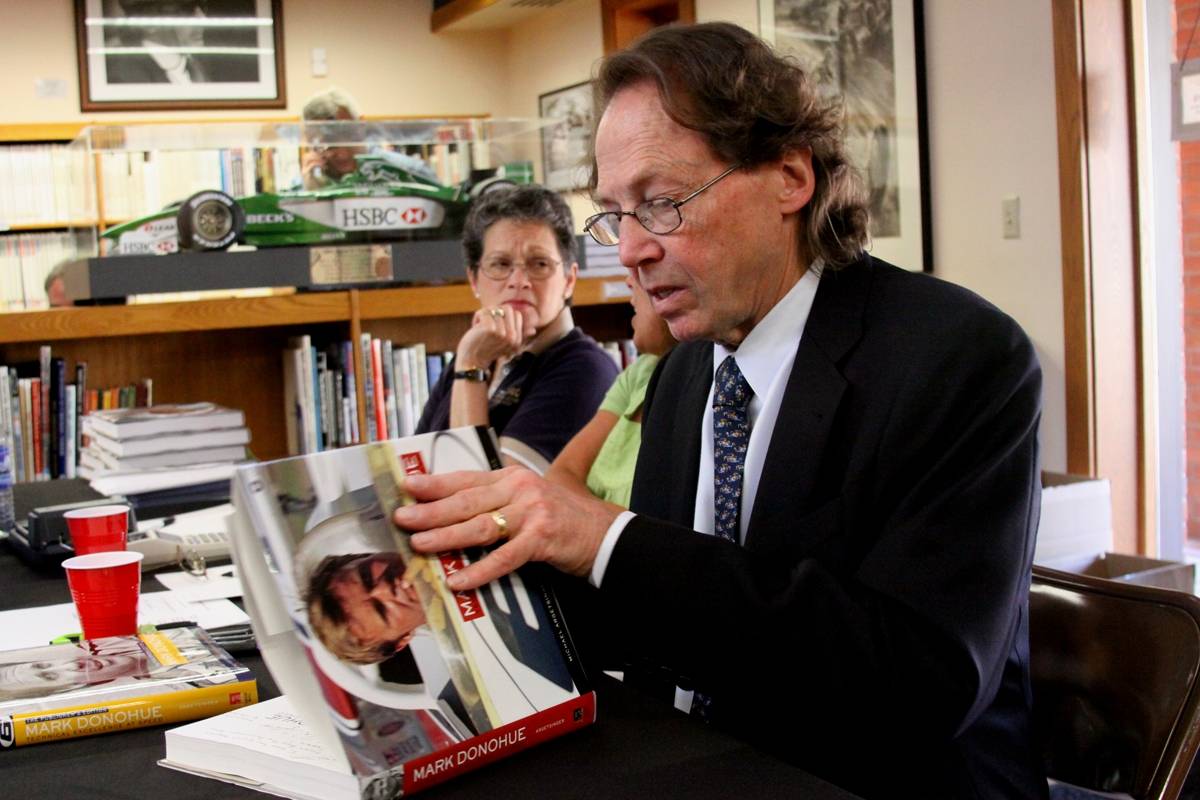
At INIT eSports, founder and CEO Stefy Bau doesn’t just settle for the ordinary. She creates extraordinary experiences by producing thrilling online competitions and real-life events that transcend the boundaries of the eSports universe. And she’s here with us on Break/Fix to share her story, and help you understand why you need to get more involved in the world of eSports. 

Tune in everywhere you stream, download or listen!

Listen on Apple
Listen on YouTube
Listen on Spotify