
spot_img
Home Blog Page 32

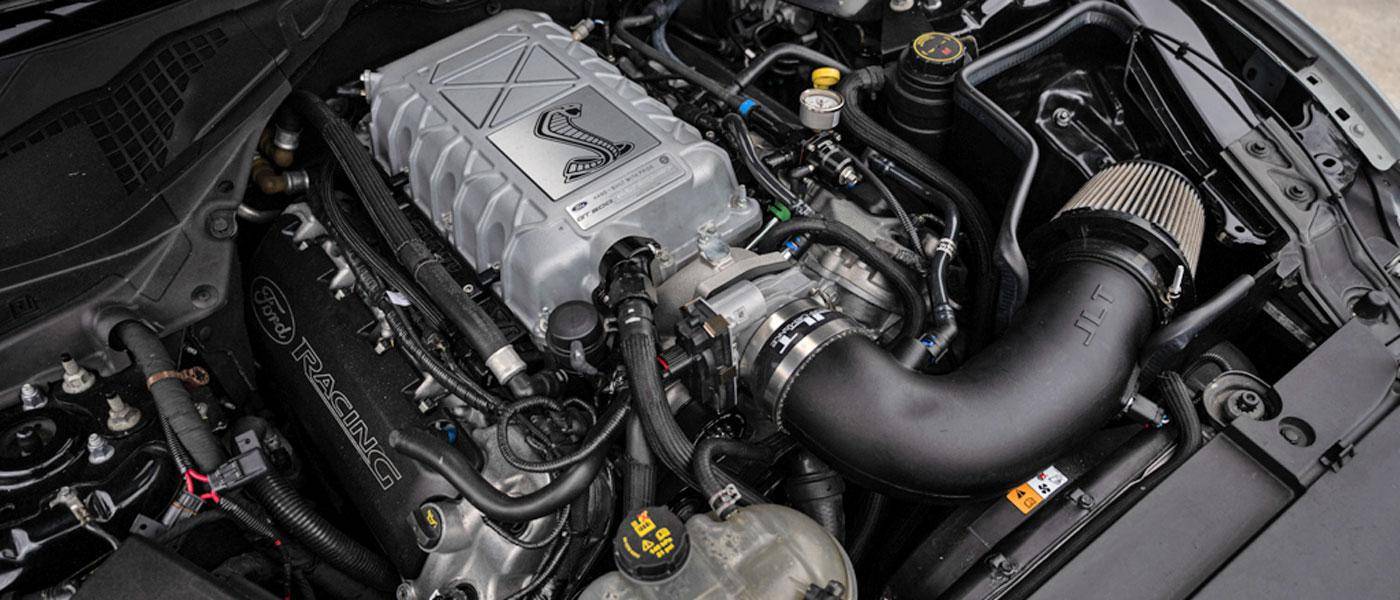
Happy Birthday, Mustang!

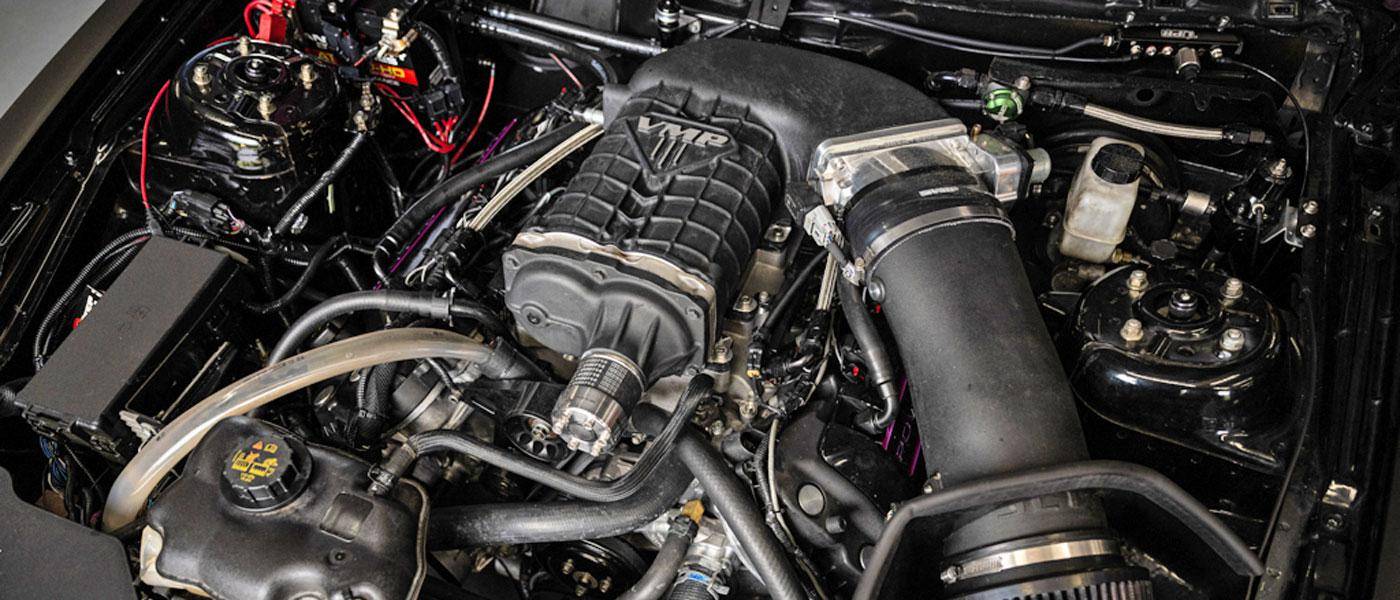
On March 9, 1964 the first production Ford Motor Company Ford Mustangs began rolling off the assembly line. Nearly 700,000 were sold by the time the 1966 Mustang entered production, and some 22,000 were sold on the first day of availability. For 1966, over 600,000 would be sold. Today, Mustangs of all variety continue to be of high interest with people in all walks of life.

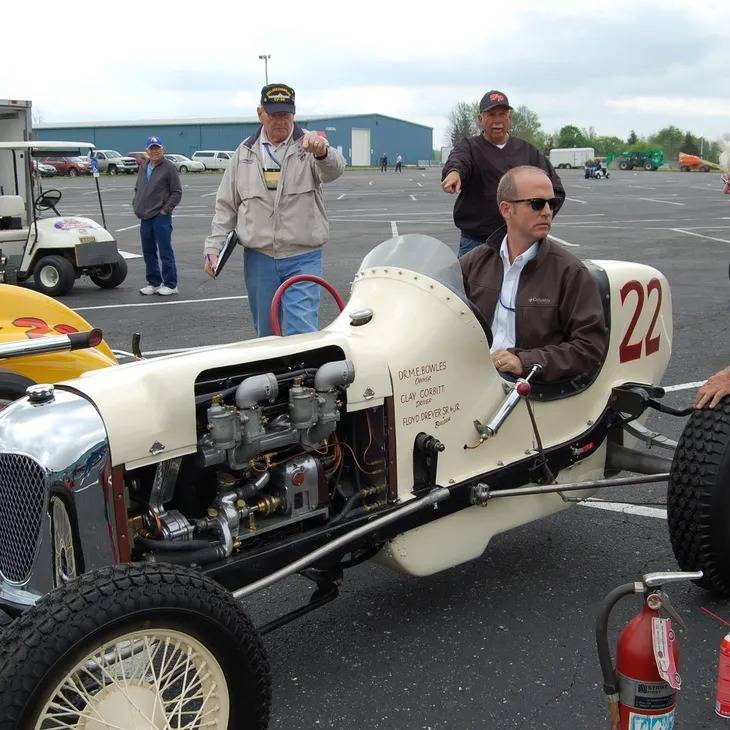
Interestingly, the first concept Mustang, Mustang I, was a two-seat, open-top, mid-engine sports car meant to fill the void between a go-kart and a Corvette. At least, that was the command at Ford HQ, who wanted something remarkably athletic, tunable, and attractive to racing sanctions and drivers, and it was delivered, making its debut at Watkins Glen Raceway in New York on October 7, 1962. Dan Gurney piloted the car around the track supposedly achieving speeds of 120 MPH, spurring the media to promote that Ford was building a car to compete with Corvette. This, of course, drew a lot of attention to Ford, exactly what they needed.

Mustang I would tour the country and work in consumer focus groups, including groups at colleges, to gain the public’s insight and opinion. By the end of the day, it was confirmed that Mustang I would have only limited public appeal, something Ford knew would be the case from their experience with Thunderbird and watching Chevrolet struggle to sell early Corvettes but also struggle to keep Corvair and Chevy II in supply. Die hard sports cars don’t succeed in sales, but an inexpensive, stylish four seater was poised to rule the world.
But the Mustang I was awesome as a publicity tool, and showed the world, again, what Ford could do.

Mustang II was introduced in 1963, and looked infinitely closer to what would be put into production. The long hood, short deck body design seemed to appeal universally, while the Falcon’s traditional front engine/rear-wheel drive platform worked perfectly as the basic underpinning for the new car. The press was having a ball scooping one another, and Ford marketing worked seemingly ‘round the clock, feeding reporters scoops and secret information to keep the name before the public eye. The whole world was having a ball and couldn’t wait for Mustang to be available. And, by the time Mustangs were in showrooms, buyers were ready to burst.

By 1973, the Ford Motor Company Ford Mustang had become roughly the size and weight of a midsize family sedan. While it handled beautifully and rode exceptionally well, many felt it had lost its way. Sustaining that notion were buyers, of which only 134,867 could stomach buying a 1973 Mustang. The writing was clearly on the wall by 1971, buyers wanted smaller, sportier, more efficient cars, and Ford’s new president, Lee Iacocca, was going to make sure they got what they wanted.

The Ford Maverick was selling very well, the Pinto likewise, and for a brief moment, Ford toyed with the idea of a Maverick-based Mustang, but ultimately decided a Pinto-based Mustang would appeal to more buyers and sell better. Dick Nesbitt began design work in 1971 creating a car that he said was less Pinto than the original Mustang was a Falcon. Examining the Mustang II more closely shows how different it was compared to a Pinto.
Mustang II was the first American car with power rack and pinion steering, it had unibody construction, an engine-mount subframe, and an isolated front suspension, none of which was on the Pinto (except the unibody), but all of which gave Mustang II a remarkably tight feel. It was nearly 500-pounds lighter and nearly 18-inches shorter than the outgoing ‘73 Mustang, which spelled nimble maneuverability and fuel efficiency. Available in two-door notchback or three-door lift back, the convertible was dropped as consumers sought safety over open-air motoring. The lift-back offered substantial cargo access and interior space, which also spoke loudly to buyers. So loudly, that over 385,000 were sold during the first year, with 1.1-million sold between 1974 and 1978. Needless to say, Iacocca’s vision of a little jewel with high build quality and exceptional efficiency was indeed the right car at the right time.

So, here’s to one of the most successful car models ever, the Ford Mustang. Happy birthday.


Thanks for stopping by!
Don Weberg - Editor-Publisher-Founder, Garage Style Magazine

EVs, Hybrids, and Heated Seats: A No-Holds-Barred Debate on What to Buy Next

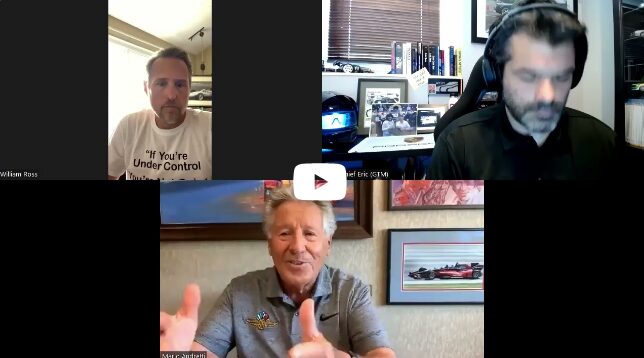
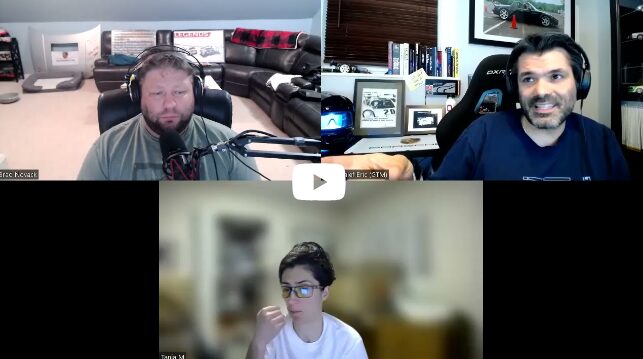
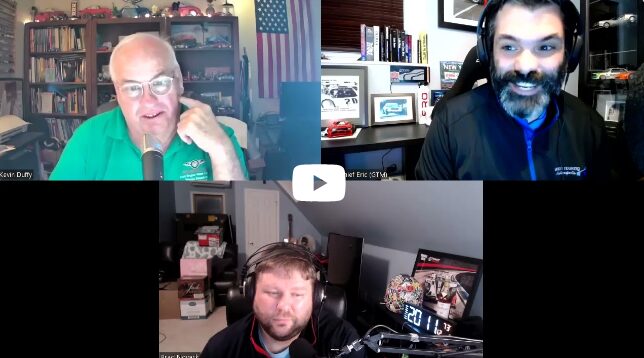
Welcome back to another rousing episode of What Should I Buy? – where our panel of Break/Fix petrol heads tackle the car-buying conundrum with humor, honesty, and a healthy dose of skepticism. This time, we’re diving into the EV market from a woman’s point of view, exploring what it means to be a first-time buyer, a seasoned collector, or just someone trying to make sense of the modern car landscape.

Photo taken at DC Auto Show 2023

Our guests range from vintage car lovers to EV owners, each bringing a unique perspective:

  • Sara Lacey (A Girl’s Guide to Cars) drives a Tesla Model Y and owns a 1982 Porsche 911 SC.
  • Carolyn Ford (Tech Transforms podcast) is EV-curious but skeptical.
  • Emily Fox (GTM Sports Club) daily-drives a Volvo XC40 Recharge and restores a 1967 MGBGT.
  • Chrissy Crutchfield owns a VW ID.4 and a new Toyota Tundra.
  • Kat DeLorean (DNG Motors) is a vocal critic of EV policy and a champion of open-source car design.

Carolyn (above) wants to be a good global citizen – but she’s impatient, hates waiting at charging stations, and needs a car that can handle Utah’s snowy mountains and desert drives. The group quickly pivots from “What should I buy?” to “What should I NOT buy?” – and EVs take a hit.

Tune in everywhere you stream, download or listen!

Listen on Apple
Listen on YouTube
Listen on Spotify

Kat doesn’t hold back: “If you brought me on here to convince you to get an EV, you called the wrong guest.” She raises concerns about battery replacement costs, grid instability, and the environmental impact of lithium mining. Emily and Sara counter with practical use cases, but even they acknowledge the limitations.

Shopping Criteria

In this episode, a panel of female petrol heads and EV owners, including Sara Lacey, Carolyn Ford, Emily Fox, Chrissy Crutchfield, and Kat DeLorean, participate in a lively discussion aimed at helping a first-time car buyer choose the best vehicle. The group explores the pitfalls of the car buying experience, highlights the complexities of modern car choices, and debates the merits of EVs versus hybrids. The conversation includes the panelists’ personal car ownership experiences and addresses concerns related to EV infrastructure, environmental impact, and technological advancements. The participants also examine practical considerations for potential EV buyers, such as home charging setups and the cost of car maintenance. Ultimately, the episode offers valuable insights and practical tips for anyone looking to navigate the ever-expanding automotive marketplace, especially from the perspective of environmentally conscious consumers.

  • Carolyn – has been considering a new car, but cost is a factor; she even went and test drove a Tesla recently – thoughts?
  • Let’s address the elephant in the room – is anyone here suffering from range anxiety? Is this even a “thing” anymore?
  • Living with EVs today; what did you choose and why? What are the positives and negatives of owning an EV (pun intended)
  • Let’s talk about “the car buying experience” in general. Do you prefer going to a dealership or car show or some other venue to check out new cars? Are dealerships still relevant? Should we move to online ordering?
  • Kat – building her own supercar – how tough is the decision right now, petrol, hybrid or EV. Which direction are you taking the JZD in? 
  • Cost is always a huge concern… Thoughts on what EVs are going for? Are they priced appropriately? Should they be cheaper?
  • TESLA vs The World 
  • Thoughts on EVs – which one, why?

Highlights

Skip ahead if you must… Here’s the highlights from this episode you might be most interested in and their corresponding time stamps.

  • 00:00 Introduction to the Panel and Debate
  • 00:19 The Car Buying Experience
  • 00:55 Diverse Perspectives on Car Ownership
  • 02:59 Challenges of EV Ownership
  • 06:30 Environmental Impact and Future of EVs
  • 13:53 Technological Innovations and Maintenance Issues
  • 25:23 Exploring EV Brands and Options
  • 39:58 EV Tires and Efficiency
  • 40:33 Volkswagen ID4 Experience
  • 41:05 Adaptive Cruise Control Debate
  • 43:00 Volvo EV Insights
  • 43:51 Considering Plug-in Hybrids
  • 45:27 Navigating Car Dealerships
  • 49:58 Evaluating Classic Car EV Conversions
  • 58:10 Charging Infrastructure Challenges
  • 01:02:57 New Car Features and Tech
  • 01:11:21 Final Thoughts on EV Purchases
  • 01:14:04 Dream EVs and Closing Remarks

Transcript

Crew Chief Brad: [00:00:00] Our panel of break fix petrolheads are back for another rousing what should I buy debate. Using unique shopping criteria, they are challenged to find our first time collector the best vehicle that will make their friends go. Where’d you get that? Or what the hell is wrong with you? At the next Cars and Coffee.

Executive Producer Tania: Oh, the dreaded car buying experience. No matter who you are, it’s probably a safe bet this isn’t your ideal way to spend your weekend. In and out of dealerships, the hassle, haggling, the decision making. When confronted with car buying in today’s modern world, there are just so many more choices besides make model and what color do I want.

Now it’s which power source do I want? To what level does it drive itself? Which creature comforts and gizmos are available for subscription? Am I Apple or Android? Even before so many choices, men and women have traditionally approached this experience differently for a multitude of reasons, some spanning use cases, from the mom van to car enthusiasts.

Today, we will be diving deeper into what should I buy from a lady’s point of view, [00:01:00] focusing on the new car buyer versus car collector demographic, and even more specifically, EV buyers. Our group of extraordinary Petrolhead panelists range from veteran car reviewers to prospective buyers, as well as ladies already living with EVs.

We’re here to explore what to look for in today’s EV car market. Joining us tonight, we have some returning Brake Fix guests. Please welcome Sara Lacey from A Girl’s Guide to Cars, Carolyn Ford from the Tech Transforms podcast, Grand Touring Motorsports. Sports Club members, Emily Fox and Chrissy Crutchfield, as well as special guest Kat Thelorean from DNG Motors.

Welcome to the show, ladies.

Emily Fox: Hello. Thanks for having me. Hello.

Executive Producer Tania: Thank you. Hi. We’re here to talk cars. Where are we in our car journeys? So I’ll start. I am not an EV car owner. That’s what our main focus of discussing is tonight. I am, in fact, not even a new car owner. All my cars are aged. [00:02:00] If you will,

Chrissy Crutchfield: for historic tags, right?

Executive Producer Tania: Yeah, I got one on historics already. Another I could put on historics this year and my daily driver, I can’t put on historics, but it would be ready in two years. So

Kat DeLorean: I’m right there with you. I don’t have an EV or any real new cars. I think my newest car is 2017. I’ve owned a hybrid before, but all of my cars are internal combustion.

Emily Fox: I own many cars. I actually own a new car. I own a 2022 XC40 Recharge, smaller size SUV, and I freaking love this thing. This is my daily driver. And I also have a 1967 MGBGT, which has the interior pulled apart, so I’m currently in the middle of year two of redoing it. But, Buying the SUV EV was perfect for me.

I’ve got two girls. I need to carry all their soccer stuff around and all their girl scout stuff everywhere, all over Maryland every weekend. And it works perfectly for that. Going to the grocery store, whatever it is that I need. It does take a while [00:03:00] to fill up, but for a daily task car, and you’re only going maybe an hour, an hour and a half out of your.

Regular charting area. It’s not too bad.

Executive Producer Tania: So Emily’s winning our oldest car prize. I was winning until Emily spoke. So

Chrissy Crutchfield: Chrissy, we have the Volkswagen ID for first edition and we just got a new Toyota Tundra, but obviously that’s off topic and we have two others, mostly older cars. I’m excited to share and make suggestions even because there’s a few that I’m actually interested in.

Carolyn Ford: I am not a new car owner either. My car is a 2016, but I did buy my son for his first car, a hybrid. He’s still driving it right now. It’s a 2005. I’ll have to ask him how many miles. I feel like it had almost 150, 000 miles on it when I bought it. And I live in Utah. We just got dumped on with snow like 15 inches.

Like, he gets to where he needs to go in this little Prius, which always shocks me.

Kat DeLorean: That was my hybrid. It was a [00:04:00] Prius. I loved it. It was my fun little clown car.

Carolyn Ford: Yeah, he loves his and I drive a CR V because I do a lot of outdoor things and like, I’m going up the mountain to ski. So I need room for my skis and everything.

And I’m always worried that I won’t be able to get to where I need to go, but he doesn’t seem to have a problem. He snowboards, he’s taken it up into the mountains. So I’m very interested. In a pure EV and I’m lazy and impatient, and I don’t want to have to wait at a charging station for 45 minutes. So I can’t wait to have you guys help me get over these big hesitations for an EV because I want one.

Executive Producer Tania: Sara, round us off.

Sara Lacey: Okay. I have a 2021 Tesla model Y and I have a 1982 Porsche 911 SC.

Executive Producer Tania: Oh, as we dive into this outdoors. You want to take it into the mountains, you want to load your ski or snowboard gear in it, you’re lazy, you’re [00:05:00] impatient, you don’t want to wait three hours at the charger station.

Carolyn Ford: Well, and I go to the desert, so my runs like to the desert from my house, it’s a three, three and a half hour ride.

I’m going to have to stop and charge halfway there, right? And how long is that going to take, Emily?

Emily Fox: Uh, a while, depending on what kind of car you buy. And depends on what year it is. Because if they actually do anything about the EV charging grid across the continental United States, it might get a little bit better.

But right now, it’ll take you a really long time if you can find a charger on your way there and back.

Executive Producer Tania: Exactly. So ladies and gentlemen listening, we are quickly devolving into what should I not buy and that’s an EV car.

Carolyn Ford: That has something to say

Kat DeLorean: here though. Talk me into it. You’re shaking your head. No, I’m shaking my head because if you brought me on here to convince you to get an EV, he called the wrong guest.

No, I think

Carolyn Ford: I wanted you to convince me because I want to be a good global citizen [00:06:00] and do my part.

Kat DeLorean: My question is, is with all of these requirements and concerns and your experience thus far with a car that was purchased with 150, 000 miles on it, why are you going EV and not hybrid? That’s

Carolyn Ford: what I want to ask you guys, like right now.

I just heard a story on NPR that totally crapped all over the hybrids and said, we got to do better and go into the full EV, but I agree with you. Like the hybrid seems like a really good way to go.

Emily Fox: It’s not for everyone.

Kat DeLorean: There’s a lot of things that go into EVs being greener. And there’s a lot of things that are going into what’s happening with EVs right now.

While you may want to get an EV eventually, that’ll meet all the needs that you have, you’re not necessarily a bad global citizen for going hybrid because an EV right now doesn’t meet your needs. Also, in order for the electricity that’s charging your EV to be greener, it has to come from a greener source.

than the [00:07:00] gasoline or in some way. That

Carolyn Ford: was another big question of mine.

Kat DeLorean: How do you know that what you’re charging with isn’t doing just as much damage? If you want to be a good steward of the environment, work to offset the carbon you use until you can get something that can be a fully neutral vehicle.

Don’t try and change your entire life just because you want something that everybody else will look at you and go, Ooh, look, she’s doing great for the environment.

Sara Lacey: It’s a great way of putting it. Well, and I think that that speaks to the idea that there’s a discrepancy between what is available and what people can manage in their daily lives.

And there is something to wanting to speak via your wallet. You know, I’m going to purchase an EV because I know that maybe everything I want in an EV isn’t there yet, but I want to push that forward by purchasing an EV or a plugin hybrid at this. Stage of the game, there’s a lot of gray area to consider for this.

[00:08:00] And I do think that your feelings are valid that yes, you do want to be a global citizen and recognizing that it’s not maybe a hundred percent the right choice for you right now, but it doesn’t mean that you can’t also find something that bridges that gap. Day to day, we’re just seeing so many more models.

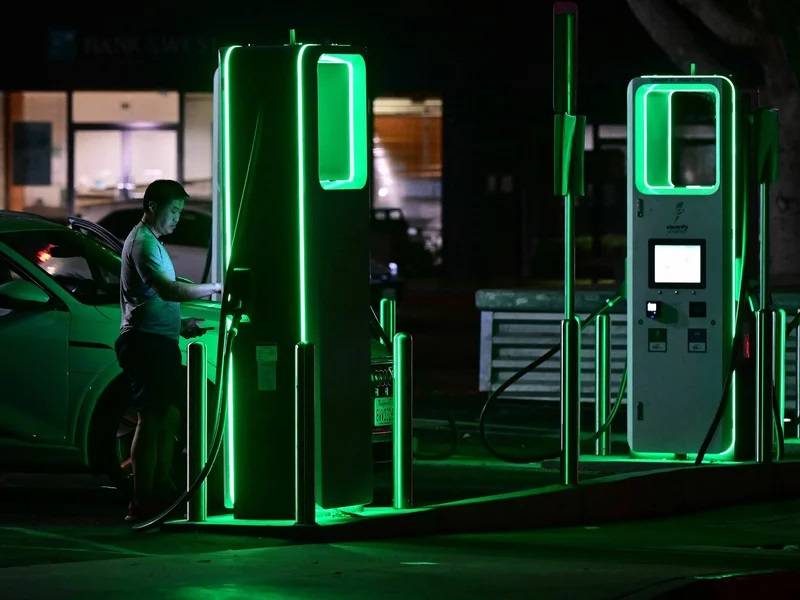
We’re seeing so many improvements in infrastructure, but there’s still a lot of work to be done. Charging stations are tough. Understanding and being a consumer in this environment is tough. We all have to become electrical engineers all of a sudden. It’s a very early time in the life of EVs. So you have to be patient with yourself.

And unfortunately, you have to do a lot of homework. I don’t want you to, uh, lazy shame yourself. It’s just a lot of information to take on right now.

Kat DeLorean: Yeah. I have a question about the environmental impact of EVs. So I buy an EV. Let’s say I buy, I think it was a Chevy Bolt, which is about 20, 000. And in [00:09:00] eight years, With an internal combustion engine, I would have turned around and sold that car or a hybrid with 150, 000 miles on it, and it would have continued to live on.

But in eight years, it’s going to cost somebody who spent 20, 000 on a car 15, 000 to replace the battery. So you’re creating a bunch of throwaway cars. while harvesting all of the lithium from our planet and these toxic chemicals that create death napalm when they catch on fire to save the planet.

You’re who I needed to talk

Carolyn Ford: to.

Kat DeLorean: I feel

Carolyn Ford: better

Kat DeLorean: about myself. I’m telling you that I am not the person to convince you to buy an EV. Also, our electric infrastructure can’t support our air conditioning. Do you guys know what happens when you bring three electric Cadillacs into a dealership at once? You can’t plug them all in or the whole dealership goes dark.

It’s not just the charging stations. We don’t currently make enough electricity to support every single person plugging car into their house. So we can’t push EVs for every single [00:10:00] person when there are other options that we had available to us to put our research towards and They’re not available for us to buy now.

And I have feelings about the fact that they’re going to be delaying

Sara Lacey: them. Because I feel like too, that is yet another piece that’s moving along. You know, it feels like a snail’s pace for a lot of us, but when I was at the Chicago auto show and there was a woman there from Con Ed speaking, and she was talking about how, what we have to remember is that every single person isn’t going to plug in every single night.

And crash the grid, granted, she’s in the Midwest. She’s not speaking from the standpoint of someone in California, where you have to manage things like brownouts and whatever. And one of our writers on our website, she just bought this really cool solar generator. In the event of a brownout, she’s still going to have the option to charge her car from the solar generator.

So it’s yet another piece. That we’re seeing a lot of development taking [00:11:00] place. I think it’s important that we recognize too, that that kind of information and those things change on a month to month basis, things are changing. They’re figuring things out. We still don’t really know for sure how recycling these batteries is going to work, and we don’t know for sure what that cost ultimately will be.

We’re facing a massive, massive phase of early adoption. We just really haven’t seen that on this scale. So it’s hard to know

Kat DeLorean: we’re not creating throwaway batteries. We’re creating throwaway entire cars. That’s my problem with it. It’d be one thing if we were just causing an issue with recycling the batteries, but it’s causing the cars to be something we just toss away.

I don’t know how much people on this call. No. There is an existence, a hydrogen peroxide engine that was developed and quashed because of EV policymakers. So again, I have very, very strong feelings about what’s happened in the EV world.

Executive Producer Tania: You mentioned people probably aren’t going to plug in every night. I don’t know if [00:12:00] that’s true or not.

Chrissy Crutchfield: I plug in every night.

Executive Producer Tania: I would, I do. I don’t have to. But I do, you know, they’re pushing the trend toward, you know, everyone’s no longer building internal combustion engines by the year last year, you know, and it’s Evie or die, you’re going to have multi Evie cars in your home. Someone’s going to be plugging in every night.

You’re right. The grids can’t handle it. We’ve seen this in the last couple of years, the huge outages in Texas where everyone was freezing to death because the grids couldn’t support it. And they’re their own special case of owning their own infrastructure and electricity. So we won’t go there, but nonetheless, there’s always brownouts and blackouts in California and this, that, and the other, that is a big problem.

And Kat, to your point, what’s always seems to be missed as a life cycle analysis. which is literally from

the

Executive Producer Tania: very beginning of the smallest component that goes into the car to what happens when it is put in the crusher at the landfill and put back into the earth. I still haven’t gotten a good read on what that is [00:13:00] versus your traditional ice engine car.

I mean, a lot of the components are the same. You’ve got the frames and the body panels and all that, but you just have so many more electronics that are specialized that we know aren’t Great to just throw out into the oceans, right? I’m not necessarily convinced either that 100 percent way that the future should go.

I think there’s room for them, and I think they have great use cases, and there are great times they should be applied. But just like your finances, you don’t put all your eggs in one basket. You need to diversify. So there’s still room for our hybrids, even more than regular ice engines. And there’s also homes for EVs as well as hydrogen engines.

Hopefully if they can, you know, solve the impending Hindenburg issues and whatever other, you know, technology Dutch are trying to put solar panels on the tops of cars and you can run them for an hour a day or whatever. There’s all this going on. It’s a complicated answer.

Emily Fox: It is, but you bring up a really interesting point that I don’t think a lot of people actually [00:14:00] think about when they’re talking about what kind of car should I buy is the ability of you to maintain or work on your own car.

We’ve had gas powered motors. For such a long period of time, decades upon decades, culturally, in that era of growing up, there was a reasonable expectation that you as the owner of your car were responsible for the maintenance of it. And it wasn’t until you got mass market production of all of these kinds of vehicles in like the 1980s and the 1990s that you started to see this, as Kat put it, this throwaway kind of mentality associated with cars, you go to a specialty shop to do a repair on it.

You’re not necessarily doing it. Yourself, you’re not being taught those skills. The next natural iteration of that, as you modernize engines to be more efficient, to do more, to do amazing things of whatever anybody wants it to be in saving the environment, you’re taking away the ability to be self maintaining on your own vehicle.

You’re abstracting that. And you see that today in a lot of technology concepts, going from writing on something with a paper, pen and [00:15:00] pad to actually scribbling on your iPad with it, and how many layers of extraction and tactile difference. You’re losing over the course of that. And when that happens, there is no life cycle assessment because we’ve not been around long enough to say that there’s somebody that can actually work on EVs and recycle those batteries and reuse those parts and rebuild those parking sensors by themselves.

Executive Producer Tania: And then when it’s an uphill battle, because there’s. For years now, actually, I think there’s been groups that are trying to advocate the anti right to work. You’re not allowed to work on your car. You have to go bring it to a service station or auto dealer, whoever it is. I hate

Emily Fox: that. I hate that so much.

Kat DeLorean: That’s terrible. I hope that never passes. That’s actually something that we’re working very, very hard on in the design of our car. I love working on my car for Many reasons, my car is one of the best engineered cars ever. That C7 is just beautiful. And the weight distribution, it’s an incredible car. I can’t get in there.

It’s too tight. My husband and I have been talking about this loss of a design. 50 percent of kids today, they don’t [00:16:00] want cars. And we believe part of it is because you have that loss of tactile relationship with it. You can no longer work on your cars. And so one of the questions I said to my technology engineers was, can we Minecraft the car or Linux the car?

Make it open source, take it to somewhere where we can open source, right? Start to actually work on our cars. Because not only do you have this battery obsolescence, you’ve planned obsolescence in the technology. You’re not going to have these cars supported their computers on wheels. And so what happens when windows goes end of life and it’s no longer supported, you can’t get updates and the what’s going to happen to these cars.

There is a throwaway. Whereas you can still buy a 64 GTO today. There is an absolute death point on these cars where they will not be able to be revived, no matter what you do now with hybrids, you have an interesting situation where if this hybrid dies, you can actually rebuild it. With a mid engine internal combustion engine.

[00:17:00] So there is an opportunity for at least some of these cars to be repurposed. And I do believe that if you start to think about that in these EV cars, okay. When it dies, it’s going to die. How do we create something that can be turned into something else?

Carolyn Ford: Is the throwaway thing true with all EVs or just the lower end?

Like Sara’s Tesla, is it going to die in eight years? You’re going to have to pay tens of

Kat DeLorean: thousands of dollars for a new battery.

Sara Lacey: The question becomes, do you, at the end of that, however many, 120, 000 miles, do you want to spend 000 to get a new battery pack? Or do you want to let the car go and get something different or a new one?

Whatever you decide you want to do at that point. But one of the things I wanted to touch on about that was that there’s a debate going on right now too about technology and cars. And this goes a little bit beyond the EV discussion, but in Germany, BMW [00:18:00] is creating subscription based features. Yes.

Executive Producer Tania: Mercedes

Sara Lacey: too. Yes.

Carolyn Ford: What do you mean subscription based features like radio?

Emily Fox: You want to go faster? You pay.

Executive Producer Tania: You pay a monthly fee for your heated seats.

Kat DeLorean: What?

Carolyn Ford: No.

Kat DeLorean: Uh huh.

Executive Producer Tania: That’s just one example.

Kat DeLorean: I’m curious what the real return on investment of that is, because the infrastructure to support that Has to be massive.

Are you really making that much money? I guess. I don’t know.

Executive Producer Tania: People have gotten so hooked in the last, I don’t know how many years you want to call it, with this pay to play. And the younger generation is like addicted to that, because all your video gaming systems, it’s no longer I go to the store and I just Spend 50 bucks, I have a game, and I have the entire game.

No, it’s, I spend 50 bucks, and I have a quarter of the game, and then like, every two months, I have to pay 25. [00:19:00] I can level up. To get like, the next 10 minutes of playtime. And then, on top of that, like, 1. 99 here, and 1. 99 there. And the same thing on your cell phones. Like, Candy Crush and all this stuff. And it’s like, they keep tempting you and teasing you with these little bits of features that you want for, you know, little amounts of money and As you do it little by little, it desensitizes you, and then they’re shifting that now into cars.

It’s like, yeah, you want heated seats? It’s an extra 9. 99 a month. You want to turn your radio on and actually hear a channel broadcast? Another 10 a month, and so on. It’s ridiculous. Yeah. Kind of doing this one to ourselves because we’re allowing it to happen. Even with streaming TV. It’s like, we all complained about cable TV.

We don’t, I don’t have what I want to watch. I wish I could a la carte it. And now we can a la carte it cause there’s 15 streaming services and we’re unhappy again.

Carolyn Ford: I want to go back to what, something you said though, about the gamification. I’m labeling it now that you didn’t say gamification, but you put something in my head about the kids working on their cars.

Like I totally had [00:20:00] an Iron Man vision. of them able to like, really, are

Kat DeLorean: you going there? Yeah, it’s something that I would like other people to adopt that’s part of our whole model is yes, I want kids to be able to interact with their cars again. And I’m not necessarily going to be able to get them to be able to interact with it the way I could.

So instead of trying to give them the experience I had, how can I take it to their level. And if you look at how profoundly successful anything open source is that allows them to get creative. That’s the whole thing. Everybody wants to get back to using their hands. I not only want to create something that they can interact with, that they could 3d print parts for, and that they can program their own little updates for.

Whatever. I want to create something that will last forever. I want them to have a lifetime warranty on their car and I’ll just build it into the price of the car and put away a savings that goes with it until they. Sell it and then it goes away, whatever. But we have this cost of maintenance, this cost of ownership that is stifling.

Now, when my [00:21:00] dad built cars, the thing that drove him crazy was the two biggest expenses you have in your life or your house and your car. Why are we paying for the second one forever? Literally forever. Soon as you finish paying for the first car, either you’re paying as much as a new car payment to maintain it, or you have to go buy a new car because it just died for whatever reason.

Why aren’t we investing a little bit more in making something people can actually own and afford to own? My dad was a car guy too and he always said that it was designed that way on purpose. It doesn’t have to be that way. That’s exactly why my father quit General Motors. He wrote a whole book about it, got him in a lot of

Chrissy Crutchfield: trouble.

There’s no money in keeping cars.

Kat DeLorean: Yeah. He said, why are you doing this? I don’t agree. And testified before Congress about it. It’s a big thing that has been in existence forever. And it’s time that we do something to stop the bleeding. And it terrifies me that we’re not thinking about the fact that we might be creating fast fashion with cars.

by not thinking about the life [00:22:00] cycle of these EVs. I’m not anti EV. I’m anti rushing EV all overnight without actually thinking about the implications of our future. That’s all.

Executive Producer Tania: Yeah. I can’t wait to see the pendulum swing back to, Oh, we’re doing research on ice engines again. This isn’t panning out how we thought like the

Sara Lacey: return of vinyl,

Kat DeLorean: what people don’t understand about internal combustion engines is it’s internal combustion.

That’s not internal oil burning engine. You can do a lot of different things. What if you use some of the new carbon capture technology? There’s carbon capture technology that now prints carbon fiber. Stick it on your tailpipe and spit out carbon fiber and print a new car. I mean, like, there’s so many

Carolyn Ford: different things.

Kat, you’re blowing my mind because now, I’m sorry, I’m thinking about Back to the Future. Your dad’s car and the

Kat DeLorean: professor put garbage in it. Yeah. Go. Okay. So did you know that there’s an acid that if you put an aluminum can in it, it turns to hydrogen gas. And I [00:23:00] literally said to my husband, there you go, Mr.

Fusion, build it, make it happen. But that’s what we should be looking at is alternatives, not just. The one we should be looking at what are different fuels that we could use that could maybe balance things out. Also, my father, when he was building his car, he was investing research into a sterling engine, which is fascinating.

Are we looking into flywheels and kinetic engines, gyroscopic technology, different batteries, all sorts of different, right?

Carolyn Ford: Which that brings up a question for me. Here’s going to show my full idiocy with the hybrids. Why can’t the kinetic energy of just moving recharge the engine? Why do we even have to have

Kat DeLorean: a hybrid?

That’s a fascinating, wonderful, amazing question. It has a lot to do with the energy required to actually push the car forward in different situations. A great way to answer that question would be to drive with your son in his Prius. Because they have a screen that I was obsessed with. [00:24:00] If I could watch all the time, you can coast and watch it recharge your battery.

Yeah. We haven’t quite gotten to the point yet where we can generate enough power, but we’ve done a lot of research into that. And that’s one of the things that my father and I were developing an engine that was based on the Stirling engine concept that would go from New York to California and a teaspoon of gas.

It was hybrid, but it would only use a teaspoon of gas if you never shut the car actually off. It’s possible up until this point, it was a lot more difficult because in order to do a lot of that, the computer efficiency, the programming, the timing has to be so specific and powerful that we hadn’t quite gotten there yet.

But technology has gotten to a point of where we’re probably going to see some of those engines coming in the near future, if we don’t. Spend all of our research dollars on Eevee.

Carolyn Ford: See, I thought you were just going to say, because Carolyn’s science, that’s why you can’t do it. No, you can, you can do it.

Kat DeLorean: I

Executive Producer Tania: would be [00:25:00] remiss if I didn’t speak for Eric since he’s being very good about not interjecting.

He’s dying. Alternators on all the wheels.

Kat DeLorean: Yes, yes. That’s actually part of what is in the design of the engine we were working on. Because that’s important is the four independent alternators in the wheels generate the power.

Executive Producer Tania: Alright, so let’s circle back a moment. So Carolyn, how familiar are you with all the different brands of EVs out there on the market right now?

You know Tesla, you know the hybrid that’s the Prius, but full electric vehicles. Do you have knowledge around what your options are when you’re trying to make this decision?

Carolyn Ford: Not really. I mean, I googled, I test drove a Tesla. It was really pretty. I liked the lights. I did not like when I would take my foot off the gas.

It was like stepping on the brake. Didn’t like that.

Emily Fox: Oh, that’s the best. Okay. Well, I guess you get used to it,

Carolyn Ford: Emily. It really, I was like, wait, what’s happening? It was fun to drive and I drove a Genesis, but I [00:26:00] forget who, what’s the, what kind of car is that?

Sara Lacey: That’s the brand. Hyundai. It’s the luxury arm of Hyundai.

Correct.

Carolyn Ford: There you go. Okay. Also fun and very pretty. I liked the little ball thing in the middle. That’s about all I know. There’s a lot. The year

Executive Producer Tania: 2023 available and I didn’t fact check this number, but at least have a list of 43 different. I’m not surprised. EVs that are available and it spans. And probably you don’t want a GMC Hummer, but nonetheless, there’s Hummer, there’s Ford, there’s Rivian.

Those are going to be pickup trucks. You’ve got various different Audi models. You’ve got the outrageously priced Porsches. You’ve got Jaguar has an entry, Volvo, Emily has one, Cadillacs, BMWs, you know the Genesis already, Tesla, of course, the Nissans, because Nissan Leaf has been around for a while, right?

They’ve got a few other. Models as well. You’ve got Kia has entered the fray for a while now. And VW got the ID four, the new ID seven, all that stuff. Toyota obviously [00:27:00] is in the mix.

Carolyn Ford: I’m really impressed with the Prius. Like I said, my son’s Prius is almost 20 years old. And he’s driving it in Utah, cold and Utah snow.

And it’s still going the same

Kat DeLorean: battery. When they first came out with it, my dad told me to go buy one. That’s why I ended up buying one. He said, they are selling this car for less than what it costs them to make, to get this technology out there. And he was really impressed with how the, I loved that car.

I loved driving it every day. It was so much fun. Very well made. So what’s

Carolyn Ford: the hybrid I

Kat DeLorean: should buy? You should do what works for you. So you like to go to the cold. That’s another thing about EV, your battery drains. Think about when you take out your phone or think about ghosts or is like, Oh, it gets colder.

And my battery drained in my thing. So you have to consider your life right now. And when it comes to what you buy, feel good about what you buy. So you’re asking what hybrid. You should buy that should be based around what is it that you like to do and what’s going to fit your needs. [00:28:00] And also you can consider how the hybrid functions when it comes back to the charging back of the battery and different things, because there are different ways you can drive the car to get a lot more gas mileage, different ways you can feel better about it.

The question I would have for you is you described that you want to be going. Skiing and making these long drives, what’s more important to you having a lot more space so that if you have more stuff to take with you, you don’t have to worry or the ability to zip around and not have to worry. Do you want something a little more fun to drive or something that can fit all your stuff?

No matter what, that’s where you start.

Carolyn Ford: Yeah, I would consider the Toyota hybrid just because I’ve been so impressed with the Prius. That’s the one that I would lean towards. But it would need to be bigger because I got an 85 pound dog that takes up half the car and then I got the rest of my gear. Have you seen

Kat DeLorean: the bigger Priuses?

Yeah, they have new, bigger Priuses. They have like little mini SUVs and the new one is so [00:29:00] beautiful. Like it got all kinds of press coverage for being just really

Emily Fox: cool

Kat DeLorean: looking. How much? It looks like they start at 27, 000 and the XLE, the bigger one is about around 40. That’s all.

Executive Producer Tania: What’s your price range, Carolyn?

Where do you live in your mind? Where would you want to be? Because that’s going to exclude a lot of your choices. Yes, it is. Straight at EVs.

Carolyn Ford: Honestly, Kat, what you just said about the Prius is shocking. I paid for my CRV and I got like the top of the line brand new, like no miles on it. And I paid 48 for it.

Now that was in 2017, so to get a Prius hybrid, I’m surprised that it’s about the same price. What do I want to pay? Like, I don’t know, 5, 000 or something. 5, 000, nothing. Is

Executive Producer Tania: there a radio shack around still? Get you a little remote control car for bad reasons. Duracell Energizer. Again,

Carolyn Ford: I paid 8, 000 for it, but used.

But yeah, no, I expect to pay about 50, 000 to get, like, all the comforts. And I don’t want to [00:30:00] pay a subscription for my heated seats. That’s not here yet. Right? So the heated seats, super important to me. Like, these are the things I look for. Is the heated seat kind of thing.

Executive Producer Tania: You have narrowed my field of 43 significantly by saying you want to be, we’ll call it between 40

and 60.

Executive Producer Tania: There’s a chunk of cars that sit there. And then I think the next question has to be based on your passions and hobbies and use case. How far do you want to go on a charge? Because that’s going to narrow your window even further.

Carolyn Ford: There’s a place in the desert that I go to fairly often. It’s about three and a half hours from here.

So it’s not fair because I do stop for gas halfway. I don’t want to stop and charge. If I could stop and charge as fast as I could fill up with gas, no problem. But I’m not going to stop and charge for 45 minutes.

Executive Producer Tania: So let’s say you need to at least hit a 300 mile mark. Yeah. In the 40 to 60, 000 range. We’ve narrowed it down.

That’s a small group. The seven cars. [00:31:00] And it will fit my dog.

Carolyn Ford: There’s seven that will fit the criteria.

Executive Producer Tania: I’ve got the Mach E, the Ford F 150. That’ll fit your dog in the back. The Cadillac Lyrik, the BMW i4, which I don’t think would fit your dog. I’m not sure which size that one is. That’s the little one or not.

The Ioniq 5, which is small, probably won’t fit your dog, but it’s a nice car. The Ariya, which is the Nissan, and then the larger Kia EV6, which apparently we just learned costs less than the Ioniq 5.

Carolyn Ford: Well, but I’m also very concerned about what you’ve brought up, Kat. If these cars are really only gonna last eight, ten years, that makes me sick to my stomach.

That feels worse than burning fossil fuel right now, to me.

Kat DeLorean: We haven’t gotten there yet, but there is no plan for what’s gonna happen to these cars. If we’re not talking about it, we should be, because yeah, that’s it, if we’re creating a bunch of throwaway cars. What’s going to happen to them? Are we recycling them?

Are we reusing the parts? By the way, the [00:32:00] 40, 000 included a 5, 000 markup. So the highest MSRP is only 35, 000, which is kind of mind blowing. I want to go buy a breeze

Sara Lacey: now. I do too. There’s so many pieces to this. It’s bonkers. But basically you have the federal tax credit. It used to apply to any EV. That you bought.

And then as of this summer, it became any EV that was made in America. And so a lot of these credits are being shifted away from the Hyundai’s and the Kia’s and all this. And I think that it has provided incentive for those manufacturers to start wanting to build back in America. I think that’s. The lofty goal there, but it’s also important to be mindful that you cannot take that credit for granted.

You have to determine whether or not the car that you are looking at is eligible for that. And then you might have some state incentives and whatnot. Again, it’s not as black and white as [00:33:00] we’re used to everything being just a regular internal combustion car purchase.

Executive Producer Tania: There are more factory options. BMW is building in this country, Volkswagen, Toyota.

They

Emily Fox: actually are going to be building EVs in a Kentucky plant, I heard.

Executive Producer Tania: Breaking news. Mercedes have plans. I think there’s even plans for more manufacturers to do that because it is. More beneficial to be near your market.

Emily Fox: Michigan actually just started a whole initiative to try to get more manufacturing in state from some of these automotive manufacturers.

They’re not the only ones either. This is a whole big push that’s happening across the industry.

Kat DeLorean: That’s actually the entire business model we have is to rebuild Detroit. It’s all built around bringing manufacturing back and providing jobs and taking the hit so that the manufacturers who want to keep making their own money.

And I’ll just do my not for profit thing over here.

Carolyn Ford: See, but there again, I will go back to the whole maintenance thing. Like if I blow a tire, if I crack a [00:34:00] windshield.

Sara Lacey: My Tesla, my husband was driving it and got in an accident. So I am also the current owner of a 2022 Nissan Rogue Sport as my rental car.

Carolyn Ford: Okay. So Sara, you just brought up some stuff like when you get in an accident or blow a tire, what the hell do you do? Or even crack a windshield. Aren’t they like super expensive and even hard to replace? So, this is actually the

Sara Lacey: second time that my car’s gotten hit. Neither time has been our fault, so the other people’s insurance paid for it.

The second time is definitely going to be more because the impact ruined some parking sensors and some other sensors. And it was just more extensive. Before that, did not have a whole lot of repairs on my old car. So, when I did have repairs, it was Very inexpensive. So I would have sticker shock if I were to be paying for this repair myself.

The problem that I’m experiencing currently, and I’d be [00:35:00] curious to know, I haven’t done a whole lot of homework about it, is taking an extraordinarily long time, even to just get into the shop. The administrative piece of it, it’s been frustrating once it’s. In the shop, like the first time it took them about a month and a half.

And it was just basically a bumper and a new lift gate repair that took a significant period of time. I think that was six and a half weeks.

Emily Fox: Isn’t that usually just because Tesla is the only company that’s manufacturing those bumpers and those parking sensors. They don’t have sources that can manufacture it for them after market.

They’re so tightly held on that. It’s not surprising. It’s taking that long.

Sara Lacey: I think there are more of them out on the road now. So there’s just more volume of cars to be repaired. Yep. So I think that they’re having a tough time keeping up now. The caveat to that is that we did want to go to the Tesla shop and not to one of their approved vendors.

So I was being very picky about that just because I’m so nervous. [00:36:00] Because there’s sensor damage here. I was feeling like, Ooh, I’m just really not sure. I want to navigate that and worry about whether or not that’s going to be a repair that’s not up to snuff.

Carolyn Ford: So when you say sticker shock, like how big of

Sara Lacey: a

Carolyn Ford: sticker shock?

Sara Lacey: My current estimate, just what the insurance estimate the damage to be before. Even getting in the shop and having them get in there and look at it. It’s already at 4, 800

Chrissy Crutchfield: and estimates tend to be low ball

Sara Lacey: as well, right? And it is not a car you can work on yourself. I mean, maybe there’s somebody out there who could, I am not someone who would feel confident.

Doing that. And of course, then there’s more MT issues.

Executive Producer Tania: There’s too many cameras and sensors

Sara Lacey: probably

Executive Producer Tania: requires special Tesla proprietary computers to hook up and disable this, that, and the other to unlatch the bumper screws or something ridiculous like that. I had a former coworker that had a similar experience in the before times.

So there was no chip shortage or things like that, supply chain issues. And he had just bought a [00:37:00] model three or whatever. I think he had it two days essentially, or a week at most. And he got rear ended by like a city Metro bus. It was at very low speed apparently, but still the rear end bumper damage. It was months that he was back on a rental car.

And it was just like, wow, if it was a Toyota, you’d have been in and out and you know, eight days on your way.

Emily Fox: I heard from someone they had something wrong with one of their Tesla doors and it took them months and months and months of trying to source one and get it painted and they ended up buying a busted up Tesla out of a junkyard or off of a towing company and ended up reinstalling the door that way and they got it paint matched, but that was the only way that they were ever going to get a door for it because doors are going towards New manufactured cars.

You have to buy one that’s totaled to get them.

Carolyn Ford: You guys are totally talking me out of an EV.

Sara Lacey: No,

Carolyn Ford: no,

Sara Lacey: no. There’s so many options. A certain brand. Yeah, Tesla’s not the only one. Tesla’s

Carolyn Ford: not the only one. Am I six weeks [00:38:00] out like Sara? No.

Executive Producer Tania: These days, you’re paying an arm and a leg if you crack a windshield, no matter what it is, because these windshields with the fancy sensors are like ridiculous.

Chrissy Crutchfield: Speaking of windshields, back to Caroline’s question, is that not covered under your comprehensive deductible? So like 250 or even zero deductible?

Carolyn Ford: Yeah,

Chrissy Crutchfield: that’s

Carolyn Ford: a good point.

Chrissy Crutchfield: Yeah, so it’s like, that seems sort of moot.

Carolyn Ford: Well, other than getting it in.

Chrissy Crutchfield: And so I want to say it was within a month, we had to replace the windshield on the ID for because a truck kicked up a rock and took it out

Emily Fox: while

Chrissy Crutchfield: safely claims they can repair it and do the programming they couldn’t.

Right. So what had happened was we had to take it to Volkswagen. They had to reprogram it. We had to pay 700 for them to reprogram it, and then we sent the receipt for that back to Safe Flight, and they reimbursed us.

Carolyn Ford: How [00:39:00] long did that whole process take, though, too? Again, lazy. It was about a month.

Executive Producer Tania: Yeah, I think everything’s just going to take longer with EVs because the tech is so much deeper.

And there’s just not an abundance of it.

And

Executive Producer Tania: then there’s not an abundance of workers or shops to go to that are certified or understand the technology and can do all those replacements. So at this juncture with it’s still being so new and sort of in its infancy, it’s just going to be a lot harder than my Toyota Corolla, blah, blah, blah, Honda Civic.

And I, you know, a week later, I’ve got it fixed with parts from advanced auto.

Chrissy Crutchfield: A lot of the new cars, it’s all like the. Distance control, whatever other crap that’s in the windshield, they’re all taking just as long to get that stuff. And they’re probably going through that same process. So that’s not exclusive to EVs.

Carolyn Ford: Well, my CRB just has plain glass.

Executive Producer Tania: Yes. I like that. Mine do too. They

Sara Lacey: don’t sense the weather. Yeah. Your tires are going to be regular tires. Yeah. You might want to get like [00:40:00] a low rolling resistance tire, but you can do regular tires. And especially since you’re in Utah, you can put on all weather. A winter tire.

Now you’re not going to be as efficient with a winter tire and all of this, but you can do that. So some of the basic things you’re okay on and that is the benefit of going with an EV from a known manufacturer and an established manufacturer. So those parts are going to be much easier to come by and much easier to replace.

Versus something new like a Rivian or a Tesla or Alpha or Fisker or Lucid.

Executive Producer Tania: So Chrissy, cause you’ve had regular Volkswagen’s we’ll call them gasoline powered, and now you have the electric Volkswagen. Do you feel like you’re in a Volkswagen when you’re in the ID4 or was it something totally different?

Meaning to say Volkswagen’s a Volkswagen. So you can have that comfort and know what you’re getting.

Chrissy Crutchfield: It’s a Volkswagen. Absolutely. It’s comfortable. We like it. I still have problems with. Getting used to the things that the car wants to do for me. I still like to have [00:41:00] control. The worst part. Yeah.

Carolyn Ford: Wait, what do you mean?

Chrissy Crutchfield: What does it want to do for you? Well, to conserve energy, you’re supposed to use like adaptive cruise control. And so it’s spaces. The vehicles for you based on whatever the camera’s telling you. My CRV does that too, and I don’t like it. And I hate it because even though Mike has it sort of like as close as it can be, because we might be a little bit of the tailgaters, but People can still cut you off.

Well, and that too. And so it’s like, I don’t want to drop five miles per hour because I’m just getting ever so slightly too close to a car. So I hate that.

Emily Fox: I love my adaptive cruise control. It took a lot of getting used to and it was terrifying for a while, but it’s much nicer. I will say though, just generally the adaptive cruise control technology, even in EVs or whatever kind of car it is, has a long way to go before like some of that gets smoothed out so that the experience as a driver [00:42:00] is a little bit more friendly and less.

terrifying and an association with whatever your kind of like principles are, but your point, Carolyn, about somebody cutting you off, that is the most irritating thing. And my dad has made comments about how much he loves cutting off EVs that have adaptive cruise control on because the driver gets all frustrated and flustered.

It is what it is. But you can certainly disable those things.

Sara Lacey: I don’t drive with really any of that enabled because I don’t like cruise control on an internal combustion engine. I mean, it makes me crazy. I don’t like to not feel like I know exactly what the car is doing at all times. There’s a lot that you can work on that with, but that would be something that you would want to pay attention to when you do a test drive.

What can I turn off? What can I adjust so that I feel comfortable and confident?

Executive Producer Tania: I love cruise control. I cruise control through traffic.

Carolyn Ford: I do too.

Executive Producer Tania: It’s amazing. Again,

Carolyn Ford: lazy. My ankle gets tired, but also I will get a ticket if I don’t cruise control. [00:43:00]

Executive Producer Tania: Emily, same question, because you’ve got the Volvo EV right now and I believe you have past history with regular Volvos.

So

Emily Fox: we have a lot of Volvos.

Executive Producer Tania: Are you getting the same Volvos of all those same experience? You’re comfortable, you’re, you’re recognizing that you have, or is it something totally disparate?

Emily Fox: So let’s be clear. A Volvo is not always a Volvo. We have a Volvo 480 turbo and that looks nothing like any of the other Volvos that exist in the market.

It is a nice interior. It’s well made. It meets kind of like my style expectations on the interior. I don’t look like somebody super glued an iPad to the dash and it doesn’t look like I’m sitting in the middle of a cockpit with just glass everywhere that you see with the Mercedes EQS, it’s a little insane, but it’s nice.

It’s comfortable. I definitely get the safety features that one would expect from Volvo and they’re very noticeable and I enjoy them.

Sara Lacey: I wanted to say and emphasize that a plug in hybrid might really be a nice middle ground for Carolyn to consider. [00:44:00] It’s kind of the best of all worlds. You’re going to have an engine, so you’re going to have the safety of not having range anxiety.

That a lot of people perceive as a hurdle towards EV ownership, you’re going to have the regenerative braking. Even when you drive and your battery depletes, you can charge it up again. You can plug it in at night. It’s going to be a small amount of charge, but you can plug it in just to a regular outlet and get a few miles each night and, you know, enough to maybe get a couple of errands done and get out on the road.

So I would. Really advise you to consider that if you kind of feel like the full EV may not be right for you But you still want to consider something Different and kind of new frontier ish

Executive Producer Tania: sort of a stepping stone to EV if you’re not fully ready to commit yet Go that middle ground where you’re slowly kind of getting into that EV range without fully committing yet [00:45:00]

Sara Lacey: Right and like Kat said if you have these long trips that you’re taking all the time and you don’t want to be Sitting at a charging station for however long during those trips.

It’s really potentially a good option.

Executive Producer Tania: All right, so we’ve narrowed your field down considerably.

Carolyn Ford: I’m sorry, but Kat’s already convinced me I’m going for this. All right, so. We’re done. We’re

Executive Producer Tania: done. Switching gears. So now on to What Should I Buy? Hybrid Edition. How can carolyn’s go about starting this journey, this process, any recommendations?

I mean, obviously if you’re looking for new, new, you’re going to a new car dealership, but these days, is that still have the same relevancy as it once did? Are there other means?

Chrissy Crutchfield: When we bought the Tundra back in July, they’re not taking custom orders for Toyotas. And that may have changed since then, but it’s basically go to the dealer.

You tell them what you want. And they’ll try to get as close as they can with it. Like they took what colors we wanted, what features we [00:46:00] absolutely needed. And it’s like, Hey, we’ve got this coming in on the truck. And then next couple of weeks, does this work for you? That’s how Toyota did it.

Emily Fox: Very similar with mine.

I ended up placing two orders for the same car through two different dealers to try to get the car I wanted because Volvo shut off the ability to build your own custom car with whatever package options you wanted in extra features. So I was. Talking to two different dealers to see which one was going to get here first off of the boat.

And one of them, I had an order in with Volvo USA. And that was the one that happened to come in like just a few weeks early. It was incredibly frustrating. It took 68 weeks after I placed the order, but some people, they were waiting six months. At least

Executive Producer Tania: so just like shopping for anything else, go to the store to look at it, then go home, get online and buy it off Amazon.

Sara Lacey: Yeah, that’s about right. That’s not uncommon for any car right now. It’s just been that way. But I would say that because you are looking at making a change from [00:47:00] your current Car to potentially a hybrid, some type of EV. I do think auto shows are still good for that because you’re going to find that the cargo space and the seating space is going to feel a little different because you know, how you use your space is not always a thing where you can say, Oh, this car has.

Such and such cubic feet of cargo, you know, maybe you’re carrying a dog kennel, maybe you’re carrying skis, all of those different pieces, they to me that maybe an auto show would be a good fit for you and you could walk around and you may not be able to order that car just yet, but at least you can have a sense of how that’s going to work differently for you.

Kat DeLorean: I agree. That’s a great way. When I’m looking for a new type of car and it doesn’t matter the manufacturer, the auto shows the first place I go. You said you drive a CRV. Yes. So the hybrid CRVs it’s 40 grand. There you go. You can just go with the same car you drive.

Carolyn Ford: Ta da sold. [00:48:00] I finished my last payment on the CRV maybe six months ago.

It’s been so nice. Cause I don’t have maintenance fees yet. And no car payment has been just like so nice. So the idea of getting a car payment again kind of makes me sick to my stomach. And that

Kat DeLorean: was my father’s point. Why is this a thing that we are married to? Why is this normalized? Why is your second biggest payment something you just accept making for Ever.

Forever. Until the end of death. Yeah. I’m

Carolyn Ford: enjoying no car payment right now.

Kat DeLorean: So screw the planet? No, I’m sorry.

Executive Producer Tania: Basically, yes. Hashtag team dead dinosaurs all the way.

Kat DeLorean: No. I’m actually looking at how to convert my diesel to like used cooking oil. Save the planet and you know, save my car.

Executive Producer Tania: The other problem in all of this that always gets glazed over too is The big bad oil, you know, oh, [00:49:00] we hate them, blah, blah, blah.

Well, the problem is gasoline and diesel, especially nowadays are byproducts of all the other stuff that everyone’s not willing to give up in life. Plastics, makeup, all sorts of adhesives. The asphalt on the road that we drive our cars on, that is all a result of crude oil transformation in a refinery.

And I don’t believe there’s a world where you could possibly never have gasoline and diesel because you could keep destroying those down into smaller components that then could be chemical feedstocks to make all our plastics and stuff like that. But there’s a cost associated with doing that. It doesn’t make sense at a certain point.

So then suddenly my pen here is going to cost me. 30 because my raw material goods is so expensive, right? So that goes back to this balance of don’t put all your eggs in one basket. We can significantly decrease volumes of things, but I don’t see where you’re ever going to get rid of it entirely.

Emily Fox: Has anybody [00:50:00] considered evaluating whether or not their older classic car is worth an EV upgrade?

Executive Producer Tania: Eric’s very happy with that.

Carolyn Ford: What do you mean an

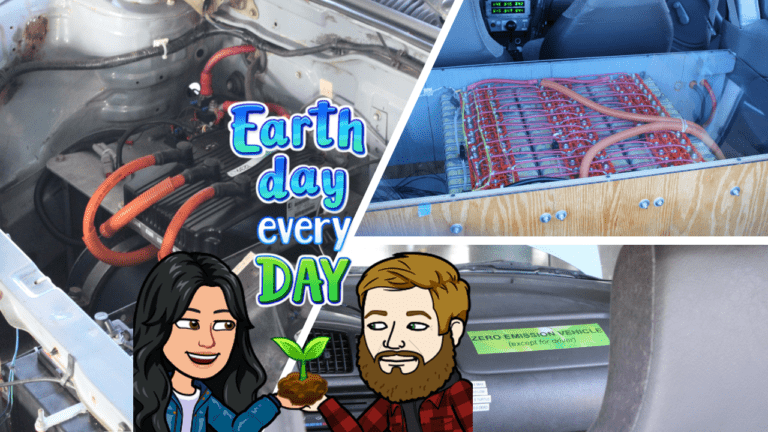
Executive Producer Tania: EV upgrade? You can do that? Yeah. Have been some people that have taken older like Jaguars and things like that. And they’ll go buy a Tesla battery pack, motor, whatever. And they’ll stick it in there. Or there are people that are crazy enough to do that.

Chrissy Crutchfield: I just saw an article about, I forget what it was he was converting, but I just sort of, I was like, Oh, cool.

Emily Fox: It’s a neat way of getting it back to that tactile and still being able to work hands on on your car, because if you’re the one that’s actually doing the work and putting it in, you’ll know those systems very well. Ideally, they’re ones that you designed or ones that you worked with a company to make sure that you had all the parts for.

That market is so young. I know that there’s a shop EV West in California that will take some. Classic older cars and they’ll convert them to EVs for you. I think they’ve been popularized with Volkswagen bugs from a really long time ago

Executive Producer Tania: doing [00:51:00] torches for a while.

Emily Fox: Yeah It’s a neat alternative if you can get over how you’re getting that electricity to the car to charge it in the first place But for some of those smaller cars, you can get great performance out of them.

Kat DeLorean: There’s also a new three wheeled EV coming out Made by Malcolm Bricklin, that’s a whole lot of fun to drive. You know, you should check that one out too.

Executive Producer Tania: All right. So now that we’ve solved Carolyn’s next purchase debacle, have we, have we, I don’t know, I don’t know. I’m probing, I’m probing the Honda CRV hybrid that does exist.

So that there’s already 2023 models for that. So that might pique your interest, but I guess would that satisfy what you’re looking for? It’d be. more of the same of what you already have. It’d be very comfortable. Or are you looking to further branch out?

Carolyn Ford: Actually, that feels really good to me, other than the car payment.

Maybe I’m just really justifying my part in screwing the planet.

Kat DeLorean: Think about all of the carbon that went into manufacturing the new car. And you’re keeping your old car on the road. So you [00:52:00] can’t say I’m being a bad steward of the environment because I’m not doing this thing. There’s also other things you can do to get better gas mileage out of the car that you’re driving.

And again, other ways to offset the carbon that you create, just drive responsibly and respectably do the best you can with what you have. Understand that it’s not all black and white, there’s return on investment in intangible things in corporate world. So if you think about people equate things to dollars and cents, this iPad costs a certain amount of money.

And if I break this iPad, or if something happens to it, I can put A dollar amount on it, but people don’t think about if my system goes down, I also have people hours for every person that I pay 15 an hour, whatever that adds up. Just like, I wonder what it costs for BMW to charge people for those heated seats.

They have to pay people to support them and to charge people and the infrastructure. People don’t think about those dollars and cents. So it’s not all black and white. I have felt

Carolyn Ford: really guilty [00:53:00] about driving the car that I’m driving. It’s kind of a gas guzzler. I checked it today. It averages 25 miles to the gallon.

I don’t feel as guilty. All of your points. I’m hearing you guys. It’s not black and white.

Sara Lacey: I want to let you off the hook a little bit about that too. Cause to Kat’s point, there’s a lot that goes into this. And as you move forward through this process. Maybe the right thing to do is to keep your car that you have right now and either just proceed as normal or figure out if your driving habits can create more fuel efficiency.

You can also determine a threshold for you as you learn. For example, I went to the launch of a Toyota BZ concept, and they were talking all about Zero emissions and their new goal of being carbon neutral to the cat’s point. We want every piece of this car to be something that will either be reused or will be offset in some way, shape, or form.

They [00:54:00] obviously don’t have a timeline for that yet. Kind of the lofty goal, but you can also decide as a consumer to do your homework and figure out how important that is to you. And when you’re ready to pull the trigger on a new purchase, you can make that decision a part of your purchase. You know, when I bought my car, it was only in 2021, but it felt like there were no other options.

And the luxury of this right now is that you do, including the option not to buy. You can move forward in this process, thinking about what is the thing that makes me feel the worst? Is it. The perception that I’m a horrible person. Yeah, that’s the one gas in my car, or is it really that I’ve never taken care of the car and there’s a big black cloud coming out of the back or whatever.

I think you need to understand that it’s okay to maintain status quo. And even if you decide that you want an internal combustion engine that is more efficient for your new [00:55:00] car, that’s a good thing too.

Carolyn Ford: Yeah. You guys have made me feel really good about myself. I’m not going to lie.

Kat DeLorean: You know, what’s amazing is, is there’s so much in our lives that we do, decisions we make and choices, the way we treat ourselves that are based on these ideas we have in our head about what other people think about us.

I had this really profound experience with this lately, where I was struggling with something at work, and then I heard my curriculum director describing her struggles with the same exact thing. And then I said, you know, it’s really nice that you shared that with me because I felt a little less alone.

And she said, You know, I said to myself, If this badass hacker who did this for 20 years is getting stuck on the same thing, maybe I’m not so bad. I said, Wow! I said, If my badass curriculum director who can learn all these things is getting stuck, maybe I’m not so bad. So here both of us were beating up on ourselves, thinking the other one was the coolest thing on the planet.

It was all in our head. You’re making decisions based on what you think is outside of your space. Examine your whole life. I guarantee you that there are things in your [00:56:00] life that you’re doing that are causing far more damage to the environment than driving your car, that you can actually take action on now to feel better about what you’re doing and then take this.

in stride. Make a decision based on what’s good for you. Understand the implications of changing car that you have. Maybe buy a used CRV hybrid that has a lower car payment and is something that somebody already had the carbon that went into developing it and now you’re just swapping one for the other.

There’s a lot of different things and you have to first forgive yourself for what’s in your own head. That nobody else is thinking about you. Absolutely.

Carolyn Ford: Cause I have done some research, but to listen to each one of you who actually are pretty passionate about this, have experience in this, you’re experts in this area and to hear the different angles and to hear all the considerations that each of you have taken has been very helpful.

You know, you can rat hole on the research and looking at the different cars and then I’m like, I don’t know, is the CRV hybrid good? I don’t know. But [00:57:00] it’s been really helpful with listening to all of you and your experience.

Executive Producer Tania: Since we seemingly solved her car debacle, going back to EVs in general, and we’ll take your criteria off specifically and use the criteria of kind of a general everyday car, what would we recommend to somebody?

Looking for a pure EV that kind of meets your going to work every day, whatever we want to call a normal mileage commute is. I go to the grocery store and a couple extra things during the week. I’ve got 2. 1 kids and a dog, maybe, maybe not. What would be that all around? Is it the Volvo? Is it the ID4? Is it something else?

Is it the Tesla?

Kat DeLorean: I think it all depends on your price range and what you need to do with it. How big does it need to be? Really give me a lucid air. Right. I know. Oh

Emily Fox: my God. Have you seen the alphas too? Those are gorgeous. The Fisker Ocean. That looks like a fat beluga whale. It’s so adorable.

Sara Lacey: Okay. So I [00:58:00] think what I would say the other significant question is.

And it’s so counterintuitive, but how are you going to charge? I think the answer is different. If you are going to be able to charge at home, it’s not wildly different, but you are going to have a different experience of EV ownership if you are charging out in the world. And it’s a serious part of the EV conversation right now, because so many people don’t own their homes and they may not live somewhere where they can just plug in when they get home at night.

For me, that would be. A number one thing you have to ask yourself.

Emily Fox: I would add on and say, do you enjoy driving? I think driving is one of those things that everybody can fall in love with, with the right car and with the right time and the right set of things off of their mind. I love my XC40 recharge and I would buy another one because I enjoy the experience, but as of late, I’m looking at whether or not a Polestar is.

In my future at some [00:59:00] point or an alpha or a lucid or something that’s newer cutting edge to kind of push the envelope of what EVs could be in America 20 or 30 years from now, because I want to see the market do well. And I want to see us to be more economically responsible with how we’re developing and building these cars for consumers.

Kat DeLorean: When you say Alfa EV, what are you talking about? The

Emily Fox: Alfa Motors Ace and the Wolf that they have. Those are some pretty awesome things. They also have the Saga.

Kat DeLorean: I want to see that.

Emily Fox: Oh yeah. They’re classic retro designs. They’re beautiful.

Executive Producer Tania: Not talking about Alfa Romeo, unfortunately.

Emily Fox: No, probably not.

Executive Producer Tania: Oh, look at that.

Emily Fox: Aren’t they cool? Yeah.

Executive Producer Tania: They’re the ones that have the pickup truck that looks like the one from Back to the Future that Marty drove. Yes, yes, yes, yes, yes. I’m not a pickup truck person, but that one’s. Pretty cool. That is really neat. I like it. If I don’t bring this one up, Eric will be very sad because his current answer is Machi Machi Machi.

What do people think about Ford’s [01:00:00] Machi value for money? It’s fully loaded. I think it’s more closer to the 50, 000 range. So you’re somewhere between 000 for this. You get a little bit over 300 miles of range. It’s a Ford that could deter you. That could make you happy. I don’t know.

Kat DeLorean: I will never date somebody who drives the Mustang period.

End of conversation.

Oh,

Kat DeLorean: that’s just it. My girlfriend, she would never speak to me again. So, I mean, it’s an F body thing. However, I met the guy in charge of the new Mustang launch and on my board is a key chain because he was a fabulous man. So there is that, but that’s my response to the Mach E.

Executive Producer Tania: Ladies and gentlemen, the only Ford cat will own that key chain.

Kat DeLorean: That’s actually not true. Cause I drive a Ford F 250. I love my Ford truck. I love Ford trucks. So I just can’t drive specifically a Mustang or date anybody who drives a Mustang. It goes back to my first car was a Z28 in the [01:01:00] nineties. And that was the, the heat of the Mustang Camaro shootout. It’s like ingrained.

in my teenagerdom that I can’t, I must hate all mistakes.

Emily Fox: I think the Mach E isn’t a bad purchase. It’s not like my taste. Ford is Ford. If you like Fords, go with Mach E. If you’re trying to look for an EV, they have a good range. They’ve got some good pep seen that they handle well, but I have not personally driven one.

Carolyn Ford: I’m looking at one right now. It says it’s 80, 000. Like there’s a range. Of course you find the 80,

Executive Producer Tania: 000 one.

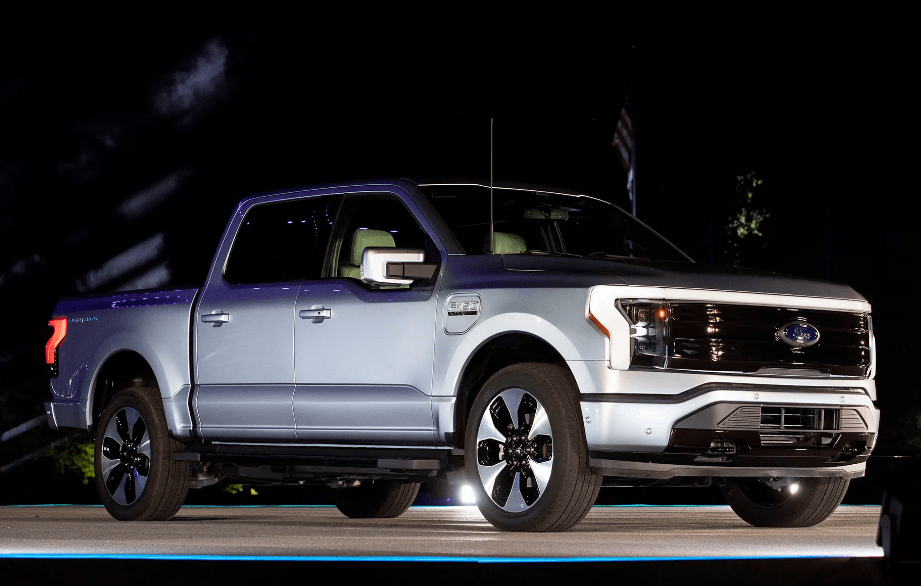
Kat DeLorean: I personally really want the F 150. The lightning? I just passed one on the

Executive Producer Tania: road the other day.

Kat DeLorean: I got married in a lightning version. So the Harley Davidson F 150, it was a lightning edition F 150. So that has a little bit of something to do with it.

But that’s the one EV that sparked my interest. True interest. So no Cybertruck. No, no. Making cars out of stainless steel is stupid.

Emily Fox: I just think the Cybertruck is stupid.

Kat DeLorean: Little known [01:02:00] fact, it was because he couldn’t afford a paint factory for three billion dollars and he knew somebody who could actually forge the stainless steel and then his genius was making it seem intentional.

Oh,

Executive Producer Tania: and who knows if that figment of Musk’s imagination will ever actually.

Kat DeLorean: I can tell you from trying to actually make one car out of stainless steel, there’s no way. When my dad made it out of stainless steel, stainless was actually cheaper than aluminum because aluminum was only provided to the aerospace industry.

So he would have made it out of brushed aluminum. If he could have, it just was way too expensive. Making something out of stainless today, especially when it’s so much harder to come by when all appliances are made by it, I can’t even get a sheet of it. So how he’s going to build many cars. I don’t know.

Executive Producer Tania: That’s a great question. Nobody knows. Already four years behind. Allegedly it’s this year, but probably not. They still haven’t figured out the laser beams for the windshield wipers yet. So they can’t, you know, go to production yet. To start closing out, and I’m going [01:03:00] to point at Sara, so are there any new features that are really cool that people should be looking for in their new car, EV or otherwise, really?

And, you know, what are some tips and tricks or do’s and don’ts about going on this journey?

Sara Lacey: People are looking for new cars every day from anything from two years ago, you know, beyond. That’s what I’m thinking of when you’re thinking of new features. I came back to this world of actually buying a car after owning my car for 10 years.

And I had stepped away from riding for a while. So I was just really surprised at how tech heavy everything was. You know, new features that you should look for in a new car that might help ease that transition to me are something like Apple CarPlay or Android Auto. Pat had kind of mentioned this a little bit earlier, but every manufacturer has their own kind of in house multimedia system.

Some of those are easier to use than others. [01:04:00] So I find that using something like Apple CarPlay and ease that transition. If not be something that I use completely, depending on the car that I’m driving.

Carolyn Ford: I would really like, have they solved the problem of using my nav on my phone, putting it on my display in my car?

Sara Lacey: That’s what Apple CarPlay will do for you. The only caveat is that if you are driving somewhere where you’re going to lose coverage, like where your phone would drop off or where you don’t have service. You’re not going to be able to see that navigation happening. So the benefit of it when it’s in the car system is that it’s usually a downloaded map that’s in the system.

So you can go through the desert and still get the directions directly from the car.

Executive Producer Tania: More advancements in that particular feature set because Mercedes just. Revealed that they’re joining a partnership with Google and specifically to use their navigation technology in their new vehicles. Yeah, that’s right all that.

Carolyn Ford: Right. It’s the interface that I don’t like [01:05:00] in my car. It’s just enough different than what I use on Google Maps.

Sara Lacey: Right.

Carolyn Ford: I have never used the navigation system in my CRV because I can’t figure out how to use the damn interface.

Kat DeLorean: See, that’s really funny because that’s one of the things that I asked when trying to design our cars.

I said, why does anybody put all this tech in the car anymore? Nobody uses it. Why don’t they just create something that will magnify your phone screen?

Sara Lacey: Absolutely.

Kat DeLorean: Hello? Because I don’t know anybody who uses the navigation in their car, especially since it goes. Like, you have to update it after a while, so what’s the point?

Why do we spend all this money on navigation nobody uses?

Sara Lacey: I will say a lot of cars now will have a wireless charging pad for your phone, and I’ve seen a lot of innovative ways of doing that. In the new Corvette, there’s like a vertical charging pad back here, which is so nice. So sometimes it’s vertical.

So if there’s a space saving issue, you can use it that way. But [01:06:00] oftentimes it’s a flat pad, but it creates a space for your phone. And then you can connect via Bluetooth and have everything talking to your phone, which is really fun.

Executive Producer Tania: So is there anything unique to EV car buying when you walk into the dealership and you just feel like you’re going to get swindled every time you go into those places sometimes, is it the same, same, doesn’t matter.

That’s an internal combustion engine. It doesn’t matter that it’s. running off pixie dust? Or are there certain things they try to trap you with? Things that can be confusing that a first time EV buyer should be more mindful of than maybe what they’re used to?

Emily Fox: Depends if you talk to the dealer. If you just go online, like you just go and try out the car at like an auto show and then go buy it

online.

Emily Fox: I would say it’s the same last minute add ons that they get you for anything else that you walk into the dealership with. I don’t think that there’s anything I recall from my buying experience. That was unique to the EV. They wanted to give me the fancy extra paint protection.

Chrissy Crutchfield: Did they try to sell you the oil change kit or something?

Emily Fox: Yeah, like all those

Chrissy Crutchfield: [01:07:00] stupid

Emily Fox: add on features.

Chrissy Crutchfield: Yeah, you know, the guy who’s doing the financing, it’s like, well, if you get this for an extra 700, and it’s like, yeah,

Emily Fox: it’s an EV, I don’t got to change that.

Kat DeLorean: That’s all ice crap. What about home charging stuff, though? I would think that would be different because they’ll try and sell you a home charging station, right?

Emily Fox: So I didn’t get that with mine. I got a package of like credits with Chargepoint or whatever the other one is, like one of the popular ones, like a free year of charging, anything like that, like a 50 gift certificate off of Chargepoint, whatever it was, I had taken the time to figure out what kind of charger I wanted to install in my house.

I watch YouTube videos based off of temperatures and how those cables wrap mine sits outside that I was going to be able to plug it in and like zero degree weather outside when it’s snowing and not fight a cable that’s stiff. And being

Sara Lacey: aware of those types of programs, like most manufacturers right now are partnering with Electrify America.

Emily Fox: That’s the one.

Sara Lacey: There might also be some with EVgo, but it’s like. [01:08:00] Get three free years of charging. So you want to be sure that if you do purchase that car, that you are getting those kinds of services.

Kat DeLorean: Are you able to finance your home charging station when you buy your car with the car? I don’t

Chrissy Crutchfield: think so.

Or at least it wasn’t that way with Volkswagen. Separate, but then we got a tax credit for the state for the purchase of the charger and install 40 percent back from the state just for the install cost.

Kat DeLorean: That is such a terrible barrier entry point to EV ownership. That is so discriminatory. And like, how much is a charger?

Tens of thousands of dollars. Are you serious and you can’t finance it with your car, you are automatically shutting out an entire segment of our population that cannot afford to do the upfront cost of that. I am so do not. That’s

Sara Lacey: true. You can get a home charging kit. It totally depends on the manufacturer.

So the prices are different per manufacturer. [01:09:00] So they’re usually around 2, 000 give or take. But then you also have to consider whether or not you have the electrical foundation. Like you have to make sure that you have the ability to power that charger. So you need the right kind of amp. You have to have your

Kat DeLorean: house redone by an electrician, which is a cost that I already assumed you had to absorb, which is a significant because I had to do it when I wanted to install a kiln.

It’s also one of the cost barriers. If you want to look at how much it might cost. There’s a lot of information on installing the tankless water heaters. They also require the same type of power to your house. So you can estimate how much it’ll cost. And it’s significant because they have to actually run the power from the power line.

You’ll pay more money from the power company.

Carolyn Ford: Yeah. So it’s not the charger itself. It’s getting the infrastructure to be able to use the charger.

Sara Lacey: Yeah. Usually the only exception to that is if you already have like a two 40 volt outlet in your garage, you can. Retrofit that to make it work with your [01:10:00] charger.

Executive Producer Tania: So now that we’re tacking on an extra 10, to your EV purchase, you have now moved your choice option to still hit a 50, 000 target to the Chevy Bolt.

Kat DeLorean: Actually the Chevy Bolt has a really high satisfaction rating, probably because it’s a 20, 000 EV.

Executive Producer Tania: Your standards are down here. You could also get a Nissan LEAF, a MINI or a Mazda MX 30, but you’re getting 150 mile range at best.

Chrissy Crutchfield: And the thing about the LEAF is depending on where you live, as the infrastructure, especially with Electrify America builds out. They’re not doing the EV charger that’s compatible with the leaf anymore. They’re eliminating the chatty. Good call.

Kat DeLorean: So we’re talking about like an Apple Android charger situation here with these EV infrastructure pretty much.

Chrissy Crutchfield: Yeah. Wow. Most are CCS then there’s the Tesla network and then there’s Chatimo, which was [01:11:00] Mitsu and Nissan. There’s usually one at each of the Electrify America stations I’ve ever been to. And some jerk parks in front of it in their whatever and they block it and then the poor Nissan Leaf pulls up and it’s just like, well, I’m going to wait because I have no choice any

Executive Producer Tania: closing thoughts for our intrepid EV purchasers out there.

Carolyn Ford: You know, I started considering some of the things that all of you guys were throwing out. It’s an important consideration that I even consider keeping my car right now, because like, I looked at the CRV hybrid. I Googled it while we were talking the gas mileage. I don’t know if the gas mileage on the hybrid justifies getting a new car.

It’s not that much better. It’s better. It’s not that much better than the one that I’m already driving. So do I,

Executive Producer Tania: my viewpoint on that is you will never justify a new car purchase. If there’s nothing already wrong with your current car, your current car died, then you have full justification. Everything makes sense.

[01:12:00] You need a new car. But if your car is still going to go another 10, 15 years and your car’s paid for and all you’re doing is regular maintenance and you go turn around and you go 60, for a car. I don’t care what the fuel economy is on that thing. It’s going to take you years. To break back even. It’s

Carolyn Ford: such an important point to consider and I hadn’t thought about that.

So I’m just keeping my CRV.

Kat DeLorean: Take the money that you save on the car payment and invest it in supporting climate science. Yeah, I like that. Just do something that makes you feel better. Also, I would do the math. Because I think if you looked at the numbers and saw exactly how much extra damage you as one human would be doing by not buying a new car.

Now again, I’m all for saving the environment, like I’m all for EVs, I’m all for it, but it has to make sense for you. We can’t make decisions based on what we think other people think of us or what’s going on in our own heads that isn’t reality. So just examine what the reality of the situation is and [01:13:00] if you’re making up things that aren’t real.

Yeah, you’ll be a lot happier if you keep your current car and then just go plant some algae. And it’ll suck up all the CO2. Definitely.

Executive Producer Tania: Just put a pond in your backyard. That algae will come all on its own. No worries. Don’t do it. Okay.

Resounding hybrid is the answer. Hashtag dead dinosaurs. It’s

Emily Fox: entirely Based off of like how you would buy a normal car, you need to consider all of the things that your lifestyle needs, the things that you can afford and what you’re willing to put up with. Maybe an EV is part of that category. Maybe you just don’t want to deal with that headache.

So filter it out of your next internet search.

Kat DeLorean: I agree. I think they’re great for the everyday day to day and you have access to your charging station for the situation we presented. Going on long trips and not wanting to stop. Definitely [01:14:00] not an EV. But there are situations where they work. Unique to everybody.

Depends on who you are and what you need. So last question. Money’s no option. You

Executive Producer Tania: sleep on piles of cash. What EV would you buy?

Chrissy Crutchfield: When they may come out. One of which you stood up next to that technology show.

Executive Producer Tania: Yes, yes, the buzz.

Chrissy Crutchfield: So cool. No, the other one. Oh, which

Executive Producer Tania: other one?

Chrissy Crutchfield: Wasn’t there the ID7? Oh,

Executive Producer Tania: yeah, yeah, yeah.

I went

Chrissy Crutchfield: inside

Executive Producer Tania: the reveal booth. Yep.

Chrissy Crutchfield: That’s what I want.

Executive Producer Tania: Nice. E Ray, Corvette, E Ray. Lucid Air, I think was Emily’s answer, but, or do you want to change it?

Emily Fox: Lucid Air or the brand new Polestar. One of those two.

Executive Producer Tania: Polestar 1 would be really

Carolyn Ford: fun.

Executive Producer Tania: Yeah.

Emily Fox: The new Polestar is amazing.

Carolyn Ford: I’m Googling all of these. I don’t even know.

Are

Executive Producer Tania: you happy with your model? Why

Carolyn Ford: Sara, would you

Executive Producer Tania: upgrade?

Sara Lacey: I would say I am happy with the EV experience. My problem that I’ve had with my Tesla is it’s. All screen based and I realized that more and more [01:15:00] as I got out and started testing other cars again, a lot more, I need more than just a screen. So I’m stuck in this space where the Tesla charging network is great and super reliable and fast, but the car itself.

It’s such a frustrating situation. I don’t know that I would buy that car again just based on my in car experience. Especially since there’s so many choices now.

Emily Fox: Good news! Apparently the U. S. government made a deal with Tesla to open up 7, 500 chargers on their networks.

Sara Lacey: I know it’s exciting. And now we just have to

Emily Fox: wait

Sara Lacey: to see how that plays out.

So good point, Emily, for sure. I’m excited about that. And I think obviously it opens a ton of options up for, for me going forward. But if money was no object, what would

Executive Producer Tania: you buy?

Sara Lacey: I feel like I. I had a really great experience with the Mercedes [01:16:00] Benz EQS. Like if I just didn’t have a care in the world and I could drive whatever.

It was beautiful. It was customizable. It was. The frontier of Eevee everythingness, but I’m also super curious about the F one 50 lightning. I’m in Colorado, so I feel like I would love to have a truck experience and see what that’s all about. I also drove. The B-M-W-I-X-M 60, so that’s a performance version of their ix, kind of an SUV.

It was really interesting in that I always thought like a performance version of an EV is ridiculous ’cause like really is, is it diminishing returns, the power and the speed. Could you really tell? And that was a yes . But it’s also an EVs, it’s still not the same as driving a super [01:17:00] powerful internal combustion engine cars.

Executive Producer Tania: Since money is no object, I’m going to go a different route and I don’t want any of the cars listed on my, uh, lists that I curated and I’m going to build my own cars. And I am going to create a retro Fiat Panda EV. Because Fiat Panda is always my answer.

Emily Fox: If you do that, you have to sell schematics and make parts for everyone else to do it.

Executive Producer Tania: I’m just putting that out there into the universe. Love it. I love it. We hope you enjoyed our What Should I Buy Ladies and EVs edition, and if you’re excited for more, well then, keep up with all the latest car trends and vehicle reviews, and not just EVs, by visiting agirlsguidetocars. com, where you can catch all of Sara’s latest car news.

Fire up your favorite podcatcher and tech out with Carolyn while listening to tech transforms. Learn more from folks like Emily and Chrissy by joining the Grand Touring Motorsports Club. And finally, hop over to dngmotors. com to check on all of Kat’s progress in starting up her very own [01:18:00] car company and peruse the online tribute museum to her father at deloreanlegacy.

org.

Crew Chief Eric: Ladies, I gotta say, this has been a stellar episode. It’s been awesome to watch you guys debate EVs. And you know what? I have to say, I think it did a better job than the guys normally do, where we get up on our soapboxes and pontificate about spending other people’s money in cars that are absolutely unobtainable.

But you know what? I learned a lot from this, and I hope our listeners did too. And if I can just add one little extra thing, I think if money was no object and I had to buy an alternative fuel vehicle, there’s two on my list. One of which keeps playing the hokey pokey on me, which is the Hyundai concept.

And then I think I might just wait for this new supercar that’s coming out and we’ll see when it becomes available as an EV. So I’ll just leave it there. But thank you all for joining us yet again.

Chrissy Crutchfield: You know, the difference between the male and all female is that I believe we were all sober.

Crew Chief Eric: He makes a huge difference. [01:19:00]

Carolyn Ford: This was really fun. Thanks you guys. And thanks. Thanks for all the advice. It was very helpful.

Crew Chief Eric: No. Thank you all for coming. It’s been a pleasure.

Carolyn Ford: Thank you.

Crew Chief Brad: If you like what you’ve heard and want to learn more about GTM, be sure to check us out on www. gtmotorsports. org. You can also find us on Instagram Also, if you want to get involved or have suggestions for future shows, you can call or text us at 202 630 1770 or send us an email at crewchief at gtmotorsports.

org. We’d love to hear from you.

Crew Chief Eric: Hey everybody, Crew Chief Eric here. We really hope you enjoyed this episode of Break Fix, and we wanted to remind you that GTM remains a no annual fees organization, and our goal is to continue to bring you quality episodes like this one at no charge. As a loyal listener, please [01:20:00] consider subscribing to our Patreon for bonus and behind the scenes content, extra goodies, and GTM swag.

For as little as 2 and 50 cents a month, you can keep our developers, writers, editors, casters, and other volunteers fed on their strict diet of fig Newtons, gummy bears, and monster. Consider signing up for Patreon today at www. patreon. com forward slash GT motorsports, and remember without fans, supporters, and members like you.

None of this would be possible.

Bonus Content

There's more to this story!

Be sure to check out the behind the scenes for this episode, filled with extras, bloopers, and other great moments not found in the final version. Become a Break/Fix VIP today by joining our Patreon.

All of our BEHIND THE SCENES (BTS) Break/Fix episodes are raw and unedited, and expressly shared with the permission and consent of our guests.

Learn More

What else should you buy? Check out other What Should I Buy? Podcast episodes for more car buying “advice” 😉 And remember: the debate never ends – it just shifts gears.

Buying an EV today means becoming an amateur electrical engineer. From charging infrastructure to battery degradation, the homework is real. And while the market now offers over 40 EV models – from the Chevy Bolt to the Porsche Taycan – figuring out which one fits your lifestyle is a challenge.

  • Tesla Model-Y
  • Ford Mach-E
  • Sony Vision S
  • X-Peng
  • Lightyear One
  • Hyundai Ioniq-5
  • The New Dodge Charger EV
  • Chrysler Airflow
  • HUMMER EV
  • Rivian
  • ALPHA Motors
  • Bollinger
  • The Tesla Cybertruck
  • Nissan Electric Pickup
  • Mercedes EQXX
  • Hyundai N74 Concept (Hydrogen)

Carolyn test-drove a Tesla and a Genesis EV but found the regenerative braking jarring. She’s intrigued by hybrids, especially the Toyota Prius, which her son drives through Utah snow with ease.

The Right to Repair and the Death of Tactile Car Culture

Kat and others lament the loss of DIY car culture. EVs, with their sealed systems and proprietary tech, are harder to maintain. Subscription-based features – like paying monthly for heated seats – add insult to injury. “We’re creating fast fashion with cars,” Kat warns. “There’s a death point where they can’t be revived.”

She dreams of open-source vehicles, lifetime warranties, and cars kids can mod like Minecraft. Her vision? A future where cars are built to last, not to be replaced.

Photo taken at DC Auto Show 2023

The group agrees: being a responsible global citizen doesn’t mean blindly buying an EV. Hybrids, hydrogen engines, and even carbon-capture tech deserve attention. “Don’t change your entire life just to look good for the environment,” Emily advises. “Offset your carbon use until you find something that truly fits.”


So… What Should Carolyn Buy?

She needs space for skis and an 85-pound dog, reliability in snow, and something that doesn’t make her feel guilty. The consensus? A hybrid SUV – maybe a larger Prius or a Toyota RAV4 hybrid. Stylish, practical, and less likely to leave her stranded at a charging station.

Whether you’re a die-hard gearhead or a tech-savvy commuter, this episode reminds us that car buying is personal, political, and deeply emotional. The future of mobility isn’t just electric – it’s diverse, adaptable, and hopefully, a little more fun to drive.

Want more debates like this? Subscribe to the Brake/Fix podcast and join the conversation.


Thanks to our panel of Petrol-heads!

Guest Co-Host: Sara Lacey

In case you missed it... be sure to check out the Break/Fix episode with our co-host.
Listen on Apple
Listen on YouTube
Listen on Spotify

Do you want to keep up with all the latest trends and vehicle reviews? Then, be sure to check out www.agirlsguidetocars.com where you’ll find more articles by Sara.

Guest Co-Host: Carolyn Ford

In case you missed it... be sure to check out the Break/Fix episode with our co-host.
Listen on Apple
Listen on YouTube
Listen on Spotify

Get techy with Carolyn over at Tech Transforms podcast. Catch up with Emily and Chrissy by learning more and joining the team at Gran Touring Motorsports Club.

Guest Co-Host: Kat DeLorean

In case you missed it... be sure to check out the Break/Fix episode with our co-host.
Listen on Apple
Listen on YouTube
Listen on Spotify

And be sure to check out all the progress that Kat is making starting her very own car company at www.dngmotors.com as well as her online-museum as tribute to her father at the DeLorean Legacy Project.

Guest Co-Host: Nate Burton & Emily Fox

In case you missed it... be sure to check out the Break/Fix episode with our co-host.
Listen on Apple
Listen on YouTube
Listen on Spotify

Guest Co-Host: Chrissy Crutchfield

In case you missed it... be sure to check out the Break/Fix episode with our co-host.
Listen on Apple
Listen on YouTube
Listen on Spotify

Keep the debate going – join our Discord!


This story was sponsored in-part by A Girls Guide to Cars


THEIR GOAL: EMPOWER WOMEN TO BE SMARTER, HAPPIER CAR OWNERS
Women think about cars differently than men. Why should we talk about them, read about them and evaluate them the same way men do? A Girls Guide to Cars brings a natural and engaged conversation about cars to you, pairing it with empowering information, tactics and strategies to ensure you make a smart and comfortable decision. We also empower the auto industry to develop a closer, more meaningful relationship with their female customers.

B/F: The Drive Thru #31

0

GTM’s monthly news episode, The Drive Thru, recaps the Rolex 24 hour race, exploring its accessibility and the broader experience of attending the event. The episode highlights the differences between attending endurance racing events and other types like Formula One. The hosts express their experiences and insights on various aspects of motorsports, including new automotive releases, upcoming and recent motorsport events, and industry news such as the end of Volkswagen’s VR6 engine, Mercedes’ design changes, and Tesla’s ongoing corporate drama. The episode also includes humorous and bizarre headlines from Florida and other locations, discusses notable auction finds, and reviews upcoming local events. Special emphasis is given to rally racing with a focused discussion on the Rally Monte Carlo and Rally Sweden events.

Tune in everywhere you stream, download or listen!

Listen on Apple
Listen on YouTube
Listen on Spotify

Showcase: Season-3 Finale! 

See Every Super Bowl LVII Car Commercial

The car-themed ads will include Ram's new electric pickup truck, a pacifier emoji for Kia, and Will Ferrell loving GM EVs. ... [READ MORE]

The VW VR6 Engine Is Officially Dead in America

The VR6 has officially come to an end in America. It powered more cars than you may know. ... [READ MORE]

A $2 Billion Loss Spells Trouble in Dearborn

Ford’s continuing cost problems—and chip supply—are to blame, but inventory is high, too. ... [READ MORE]

Honda issues 'Do Not Drive' warning for 8,200 U.S. vehicles over air bag risks

HOW IS THIS STILL A THING?!? ... [READ MORE]

The Door Isn’t Closed on a Hyundai Supercar Just Yet: Report

A potential $150,000 price tag makes it a tough sell but Hyundai might still be considering a mid-engine supercar. ... [READ MORE]

Lotus Moves to Float Its EV Division

Lotus Technologies—not Lotus Cars, the division responsible for the Emira and future sports cars—is going public via SPAC and will build electric vehicles in China. ... [READ MORE]

DC Auto Show 2023 Review

Executive Producer Tania M, Crew Chief Eric and Jon from Project Motoring share their thoughts on the kickoff to Auto Show Season in the DMV ... [READ MORE]

2023 Rolex-24 Review

 ... [READ MORE]

Get a discount on your next track event with HOD

Use promo code Break/Fix23 at checkout to receive a discount on all your events this season with HOD ... [READ MORE]

**All photos and articles are dynamically aggregated from the source; click on the image or link to be taken to the original article. GTM makes no claims to this material and is not responsible for any claims made by the original authors, publishers or their sponsoring organizations. All rights to original content remain with authors/publishers.


Automotive, EV & Car-Adjacent News

For a list of all the articles and events referenced on this episode check out the show notes below.

Domestics

EVs & Concepts

Formula One

Ford returning to F1 with Redbull?

Ford Announces Return to F1!

Netflix reminder - Drive to Survive Season 5 starts Feb 24, 2023

2023 F1 “car launch” - did ANYTHING really change?

Lost & Found

Lower Saxony

Lowered Expectations

Motorsports

News

KIA “Binky Dad”

Will Ferril is back with GM EVs

Jeep “electric boogie”

RAM premature electrification

Fast & Furious X (10)

Anti-Tesla FSD

Honorable mentions - Weathertech

Honorable mentions - Uber One Jingle

Honorable mentions - Travola T-Mobile

Tesla

VAG & Porsche

TRANSCRIPT

Executive Producer Tania: [00:00:00] The Drive Thru is GTM’s monthly news episode and is sponsored in part by organizations like HPTEjunkie. com, Hooked on Driving, AmericanMuscle. com, CollectorCarGuide. net, Project Motoring, Garage Style Magazine, and many others. If you are interested in becoming a sponsor of the Drive Thru, look no further than www.

gtmotorsports. org. Click about, and then advertising. Thank you again to everyone that supports Grand Touring Motorsports, our podcast, Brake Fix, and all the other services we provide.

Crew Chief Brad: Welcome to drive through episode number 31. This is our monthly recap where we put together a menu of automotive, motorsport, and random car adjacent news.

Crew Chief Eric: After some minor Technical difficulties. Are you guys ready for this?

Executive Producer Tania: Yes. I can now fully concentrate on my unpreparedness that my technical difficulties are resolved.

Crew Chief Eric: All you did was buy [00:01:00] time. So Brad could read the articles this month. And you know how many articles I read?

Executive Producer Tania: Zero. How many more is that than usual?

Crew Chief Brad: Bingo. Now let’s pull up to window number one for some news. Just news. Just news. That’s it. All we have is news. Well, we’ve got news about some of the stuff we’ve been doing.

Let’s talk about Rolex. Oh yeah. Let’s

Crew Chief Eric: do that.

Crew Chief Brad: I’m not talking about the watch, although the watch is involved. I mean, like the actual race, the Rolex 24 hour race in Daytona.

Crew Chief Eric: It has been five years since we have been to Rolex in person. Although we religiously watch it every year, regardless of what’s going on.

This is the first time we’ve been there on purpose, right?

Crew Chief Brad: In

Crew Chief Eric: person.

Crew Chief Brad: This is also Tanya’s, if I’m remembering correctly, her first official professional race attendance.

Crew Chief Eric: Endurance race, sports

Crew Chief Brad: car race. Not

Executive Producer Tania: professional because I’ve been to F1 twice.

Crew Chief Brad: That’s true. Endurance. That’s right.

Executive Producer Tania: Endurance specifically.

Crew Chief Eric: And?

Executive Producer Tania: And? [00:02:00]

Crew Chief Eric: Let’s get her thoughts.

Executive Producer Tania: Florida side. No, just kidding.

Crew Chief Eric: They’ll be talking about Florida, man.

Executive Producer Tania: No, it was fun. I think it’s more accessible, is probably the first word that comes to mind, more accessible to someone versus having had the experience multiple times of going to a Formula One race where now the tickets are even way more expensive than when I ever went.

And then you’re there for such a brief time. You don’t get access to anything. This is the complete opposite, where basically, if your feet can take you there, you can go there, and it’s way more affordable in terms of ticket price and what that’s granting you access for, and even if you went all out on everything that you could get access for, it still pales in comparison to a Formula 1 ticket.

I don’t know how that compares. To NASCAR or other forms. I’ve never been to a NASCAR race either, but it was definitely an interesting experience. I will say what I didn’t expect was [00:03:00] the car show that was happening at the same time.

Crew Chief Eric: Oh, in the paddock

Executive Producer Tania: in the paddock parking lots and even like the parking lot outside of the venue.

It was like everybody. Came from somewhere, tons of different out of state tags or, you know, different specialty place. They pulled their garage queens out of the garage and took them for a stroll to Daytona. That’s aside from marks that had specific corrals, like the Porsche Corral, BMW had a Corral, and et cetera, et cetera, where they’re showcasing You know, members cars and whatnot, but still, like, if you’re just walking around the parking lots, people had some pretty cool stuff.

And so I wasn’t expecting that. I didn’t know that was a thing, but that was pretty cool. So there’s a whole other experience of not just watching the race, but car watching as you walk through the infield and around the outside.

Crew Chief Eric: I always feel like events like Rolex, petite salons, other ones that we’ve been to, it’s more family feeling because even when you wander around the infields or the outfields, like places like Rhode, [00:04:00] Atlanta, there’s people everywhere.

They’re camping all over the place, bonfires parties. I mean, the longer the race, the more chaotic it is. You don’t get that same experience. Like you said, in an F1 race, that’s 90 minutes and it’s over. I mean, there’s other races that happen, you know, headliners and things like that, that go on at those other races, but it’s very different in that endurance IMSA setting.

Executive Producer Tania: Yeah. There’s other races. Cause I don’t really have like Porsche cup races or vintage races, blah, blah, blah. And like the Saturday before formula one and, or in the morning, those go by really quick too. Yeah. 45 minute hour races or something. It’s like, okay. By time you’ve found your seat and sat down, it’s like half the race is over.

This is a lot harder. Well, at least the Austin track is a lot harder to kind of navigate around.

Crew Chief Brad: You know, Tanya mentioned how the track was very accessible, much more accessible than. Say Austin, but dare I say it wasn’t really from a walking standpoint, it was kind of one way in one way out to get to the infield, which is kind of frustrating.

Basically, if you’re on one end of the [00:05:00] track, you’ve got to basically walk all the way around. The entire infield to get to the outfield or to get to the stands and vice versa. So if you do decide to go to Rolex, Daytona, make sure you bring your walking shoes with you. Cause you’re going to need them

Crew Chief Eric: or take the trams

Crew Chief Brad: or take the tram with 15 million other people that are doing the exact same thing.

Executive Producer Tania: That’s pretty simple to navigate around Daytona and it’s a 24 hour race. So there’s always something going on. So there’s always something to see. And the visibility of the track is pretty good. Multiple spots, you’re always with the action. So to speak,

Crew Chief Brad: that helps. So there’s zero elevation change at Daytona.

Executive Producer Tania: Yes,

Crew Chief Eric: you are the elevation change. When you’re in the grandstands,

Executive Producer Tania: the elevation change was like walking through the tunnel to like, go under the oval and come back out the other side.

Crew Chief Eric: From that perspective, you’re right. Daytona plus the infield. It’s a pretty simple configuration compared to something more challenging like the Glen or road [00:06:00] Atlanta, but still the experience when you go to those other tracks is very similar.

Though those races are shorter. The support races are quite long. I mean, well, let’s take Watkins Glen as an example. The official race is six hours long, but the Tioga downs race is four hours. So you’re there in the day for 10 hours of GT racing. Even though it’s, you know, they’re not consecutive, it’s just different groups running throughout the day.

And then there’s the other support races and headliners that go with that. So IMSA events are just action packed from sunup to sundown in some cases, multiple times over.

Crew Chief Brad: You can’t knock the value for money. No, it was like what?

Crew Chief Eric: 75 bucks for the tickets.

Crew Chief Brad: 75 for how many hours of actual legitimate racing.

Yeah, it’s ridiculous

Crew Chief Eric: on top of that this year was the biggest field in Rolex history and like the longest time 61 cars started on grid amazingly enough. Daytona is so big it didn’t feel like we were watching cars on the beltway running around and getting in each other’s way. And obviously [00:07:00] traffic splits up throughout the day and throughout the evening and conditions change and things happen in cars break.

But. It was pretty exciting to see everybody mixing it up. And obviously we have new classes, new cars, new everything. I felt the racing personally, it was like a long test weekend because there were so many breakages, so many new cars, some of the cars, I think we’re a little disappointing and maybe they’ll get better throughout the season as, especially as we get closer to Lamont’s

Executive Producer Tania: I’m not as familiar with that whole balance of power thing or balance of performance, excuse me, whatever you want to call it.

It was just. Often frustrating to watch, because to watch lap after lap of Go Iron Dames, the all female team driving the Lamborghini Huracan, to watch that car lap after lap not be able to get around a 911, I’m like, you’ve got to be kidding me.

Crew Chief Eric: When in real life, that Huracan would destroy that 911.

Crew Chief Brad: After other conversations, Tanya was very disappointed in the lack of a manual transmission in any of the vehicles.[00:08:00]

Crew Chief Eric: That’s been a while since they’ve had manuals in those cars.

Crew Chief Brad: What the hell kind of race cars are these? What’s the point? They don’t even shift their own gears. Exactly. We need another point of failure. Maybe we should throw some amateurs out there.

Crew Chief Eric: It would make the racing more interesting. You miss a shift.

I mean, you’ve blown that lap, right? And somebody gets around you. That is frustrating. And that’s what we complain about a lot. Complain is a strong word, but I have an issue with it. I mean, some people like it. Balance of power is great for television, but I feel as though, you know, interviewing drivers over the course of this last season and talking to other people, the consensus often seems to be that, you know, a it’s out of their control, the sanctioning bodies make all those decisions, but It’s not racing as racing was intended to be years ago.

It’s like, if your car can’t compete, build power to weight or whatever, build a better mousetrap when it comes down to it,

Crew Chief Brad: it hampers innovation, the technological leap. And I guess that’s where racing series like [00:09:00] F1 and IndyCar come into play because they do have those less restrictions and they don’t have a balance of performance or something like that.

It’s a

Crew Chief Eric: giant BOP because. They’re basically spec races. All formula cars are the same. We’re going to talk about them more when we talk about the unveiling of the 2023 cars and stuff and the Indy cars are the same. It’s like, it’s 2 chassis and you know, 2 motors and everybody basically drives the same car.

So sports car is always been grounded in the manufacturers are coming to the table to do battle with one another. But as soon as balance of power became what it is today, I think we lost some of, to your point, Brad, that ingenuity, that imagination. Like I’ve joked before, you don’t see the six wheel TRLs and the chaparrals with the fans on the bottom with the

Crew Chief Brad: front wheel drive Nissan.

Crew Chief Eric: Exactly. All that stuff is just gone. You know,

Crew Chief Brad: watching the Corvette C8. I’m not really impressed with that car. I’m a Corvette, a team Corvette fan, but I’m not really impressed with the C8 R bring back the C7 R although I will say. The pit crew was doing a [00:10:00] phenomenal job. The car would get passed two or three times by the Aston Martin, kept getting around them.

And then they pull into the pits at the same time. The Corvette was consistently out in front of the Aston Martin, every single pit stop. So the pit crew was on point, but the car itself just could not. Hold it. Disappointing. I will say it’s more fun to watch on TV with a group of friends sitting around smoking and joking, as they say.

But one thing I do love about the EMSA series is the speed differentials between the classes, the prototype one, the prototype two cars, the fact that they’re after, what is it, three or four laps, they’re lapping the GT cars is insane. And they’re all out there racing together. It’s just.

Crew Chief Eric: Coverage on TV is better, right?

They’re giving you all the angles, but you can’t really. Fathom the closing rates, you know, the breaking speeds into the corners, things like that, when you see it live and the sound itself, we’ve talked about that before, a totally different experience.

Crew Chief Brad: Speaking of the sound, something was missing [00:11:00] this year.

And I think, you know, exactly what it was.

Crew Chief Eric: Yeah, it was the other Corvette and the Corvettes old motor.

Crew Chief Brad: Yes. The C seven are the sound of the earth ripping itself apart. Trying to stay together when it’s Corvette pounds down the road. It was just. Gone. We used to say that the Lexus sounded as good and the Mercedes sounded as good.

Crew Chief Eric: Correction. The Mercedes sounds bad.

Crew Chief Brad: No, no, no, no, no, no, no, no, no, no, no. You see, that’s where you’re wrong, but I digress. So the C7R was missing. I think some of the LMP, whatever the top class

Crew Chief Eric: LMDH, the GTP cars,

Crew Chief Brad: some of the, the LMDH cars sounded really, really good, but they still didn’t have that. Pounding on your chest, really throaty, nice growl.

So I missed the C7R sound, which is a big part of going to these races. That as you mentioned, the auditory feelings and everything you get. The faster cars. Yes. The speed differential is insane. The flashing of the lights when [00:12:00] you’re coming up on traffic, so

Crew Chief Eric: annoying.

Crew Chief Brad: If I was a GT car driver, I would purposefully sit in the middle of the road and make you fucking go around me at the worst part of the corner.

You can sit there and flash me. The restarts. For no reason in the last two hours of the race, three hours of the race.

Crew Chief Eric: That’s new too, right? The way they’re doing restarts now where they’ve adopted the whole NASCAR idea. SRO does this too, where they’re re gridding. Dude, we lost how many laps watching them re grid up and then go to green again.

And then it was like, Oh, we have not any action for a while. Let’s throw a yellow.

Crew Chief Brad: Well, not even that. It was also because the Porsche, uh, LMDH car was trying to catch up. So, I’m sensing a bit of Porsche and IMSA collusion.

Crew Chief Eric: Forever unclean.

Crew Chief Brad: One of my favorite parts of the race was after every yellow, and after every restart, the safety car, Coming around out of the bus stop would floor it and you can see it just kind of take off and it was like, God damn, that McCann [00:13:00] has some legs on it.

Holy shit. So I was pretty impressed with both the CT, the black wing and the, uh, the McCann or whatever the McCann turbo or whatever it was, they were ripping coming out of the final turn. That was always fun to watch. The checkers outside the track was greater than the concessions inside.

Crew Chief Eric: It was good value for money, actually.

That was good. Eats great value

Crew Chief Brad: for money. Yeah, the weather was phenomenal. I think this is the first year that the weather was clear, the entire race,

Crew Chief Eric: and warm too. It was actually very, very pleasant.

Crew Chief Brad: I don’t think you got any lower than 55, 50, 55 even at night. It was really nice.

Crew Chief Eric: Would you do it again and if the answer’s no.

Would you consider a different IMSA race?

Executive Producer Tania: Both. I would do it again, and I would go to a different one.

Crew Chief Eric: Maybe VIR, the Glenn, mid Ohio?

Executive Producer Tania: I’m hoping to go to VIR myself, with my car. I need a new shirt!

Crew Chief Brad: As you mentioned, there were way more people than 2018, so that did kind of, you know, Take away from me [00:14:00] from the experience because we didn’t get to do as much as we had in 2018 because there was just too many people to wait through.

I did say that it’s better to watch on TV with a bunch of friends, but I do want to go again and actually stay in the infield and camp just once. Yeah, I think that would be like that could add to have a home base. actually in the infield to go to and from, I think would make the experience a little bit better on site.

Crew Chief Eric: Do you see the appeal of endurance sports car racing now that you’ve seen it in person versus on TV?

Executive Producer Tania: I don’t know that I needed to see it in person, right? It’s not that I was unaware of this discipline of racing or have never seen it before. Road racing tends to be far more interesting sometimes because the top prototype cars aside, it’s The lower class, it’s like, it’s an 911, it’s a Mercedes, it’s a Lexus.

I can relate to these cars. Like, even a Huracan, technically you could relate to it, but that’s a little bit out of my price bracket, right? That’s what makes road racing a little more interesting, because it’s like, ooh, look at that Audi A4. Yeah, [00:15:00] I have an Audi. I don’t, but I have an Audi A4. I have this BMW, right?

Versus like, Formula 1, it’s like, I don’t have a fucking Formula car. You know, and it’s like NASCAR is like, okay, yeah, and I don’t have a NASCAR and okay. Cause it says Camry on the front ain’t no Camry.

Crew Chief Eric: That’s like that Supra that they have in NASCAR. Now I don’t, that has no relation to the real thing.

That’s all I’m saying. But yes, I hope that as more people, you know, maybe shift their attention or maybe getting bored of other disciplines that they. Turn their eyes to endurance sports car racing, because to your point, it is really relatable and it’s really exciting too. I look forward to the rest of the season.

I mean, obviously I’m looking forward to Lamont’s I’ll be recording from France and things like that while I’m there. So I’m super excited to be at the crown jewel of sports car endurance racing this year. So looking forward to more on that, but we do have to move on. We have to talk about some other things that happened in the last month.

I know we’ve covered this in a another special episode that people can tune into on our [00:16:00] Patreon, but some quick thoughts on the DC auto show.

Well, that

Crew Chief Eric: about wraps that up. And if you want to know the full report, you can check it out for free on our Patreon.

Crew Chief Brad: I just want to say, I went to the Richmond international auto show this weekend.

Oh man. Because we’re kind of in the market for a larger vehicle to replace her pilot. If the DC auto show womp, the Richmond auto show was The

Executive Producer Tania: DC auto show to retract my statement was actually the Toyota auto show.

Crew Chief Eric: Yeah, 100 percent.

Executive Producer Tania: Oh, nice. If you were looking for a Toyota, you needed to be At that show, they had every model possible and then some on display.

Crew Chief Eric: And if you were tired of Toyota, you could go look at all the Hyundais.

Crew Chief Brad: Toyota had probably 20 percent of the entire area, which unlike the DC convention center, the Richmond convention center is one floor.

Executive Producer Tania: Toyota had 50 percent of one whole convention room area.

Crew Chief Brad: Yeah, that’s crazy. So I did try and sit [00:17:00] in a Supra.

And one thing that really grinds my gears about these auto shows is they disconnect the batteries. So all these vehicles with power seats, they have them set to someone, Eric or Tanya size, the person that moved them into the arena. So someone like me who wants to put the seat all the way back and, you know, get in and fiddle with things.

Every car in the place is uncomfortable because I cannot adjust any of the seats.

Crew Chief Eric: I thought there was a solution to this. It’s like police Academy. You just come up and rip the seat out and you sit in the backseat. Isn’t that how you do it in every car? I

Crew Chief Brad: totally think I broke the third row seat of this Toyota Sienna that was allegedly sold to somebody.

So if you’re listening to this, you know, I hope it’s covered under warranty. I’m sorry.

Crew Chief Eric: Speaking of Hyundai’s, we got to see a new one that we actually wasn’t even on our radar and they call it the Ioniq 6. And so we had some choice. opinions about it. Maybe some choice words if you want to really summarize it down.

It looks like a Saab. It looks like a Saab 900 from the 80s, and you’ll never convince me otherwise. But [00:18:00] what was shocking was the other day I spotted a commercial with all people, Evan Bacon, talking about how he loves his Ioniq 6. And it includes his daughter, but I don’t know what her name is. But the punchline of the commercial was, you know, Ev, like Kev.

What?

Crew Chief Brad: Yeah, I don’t understand. You know what this car looks like to me? It looks like the Oldsmobile Aurora

Crew Chief Eric: with that

Crew Chief Brad: giant swooping cabin.

Crew Chief Eric: At first glance, Jon Capisci and I from Project Motoring, we came down the stairs and we said, what is that 9 11 looking thing? And then when you saw it in profile, you’re like, That’s a Saab 900 Turbo.

But no, the reason I bring up commercials is because other things that happen in parts of the world where they don’t care about things that go vroom, vroom, vroom, they go Omaha, 43, hut, hut, hut. We’re talking about the Super Bowl and the commercials they’re in. So let’s get your guys recap on the 2023 automotive Super Bowl commercials.

Crew Chief Brad: I have to be completely [00:19:00] honest with you. I watched exactly 15 minutes of the Super Bowl before I was asleep.

Crew Chief Eric: Was that the Rihanna part?

Crew Chief Brad: So I missed the halftime show completely. So I watched one possession for each team and that was it, then I was done. That’s all you needed. So I can’t really speak to any of these commercials.

Crew Chief Eric: So there was a bunch, I mean, obviously there’s lists out there that have every commercial that was designed for the Super Bowl that aired before, during, and after, but they’re specifically car ones. We’ve tried to highlight some of those. They come from Kia, Jeep, et cetera. So why don’t we run through some of these really quickly, Tanya, and get your thoughts on the commercials.

Executive Producer Tania: It felt like there were less car commercials in general than in past years, or maybe they were not quite as impactful in general. I don’t know. They felt different. The main hitters that are usually there were missing. So maybe that’s what kind of made the whole thing feel different. A little off in terms of the commercial experience when watching the Super Bowl.

Crew Chief Eric: Last year was the one with Eugene Levy and the Nissan

Executive Producer Tania: [00:20:00] Z, yeah, and

Crew Chief Eric: you always get the Audi ones, which you think is like the next transporter movies coming. Like there’s these just kind of epic commercials out there.

Executive Producer Tania: No. And this time we had Blinky Dad with Kia and Blinky being the little child’s baby’s pacifier.

And this family that’s gone somewhere in the mountains and then gets to the hotel and realizes that baby’s missing Blinky and dad takes off in the Kia Telluride X Pro all terrain edition super all wheel drive SUV and he’s tearing through the mountains and I forget if he’s going across dirt snowed roads and hills and all this stuff.

And

Crew Chief Eric: at the bottom there’s a disclaimer that says Professional driver on a closed course. Do not attempt at home.

Executive Producer Tania: No, the disclaimer says don’t drive your Telluride off road. It will break. Like, is this actually meant to be some Bronco, whatever, or Jeep Wrangler that can handle all this? I don’t know. I mean, they had it shooting out of a cement,

Crew Chief Eric: like the Italian job or

Executive Producer Tania: pipe launching out of it.

I’m like, yeah, launcher Keo. See what happens. It

Crew Chief Eric: is a [00:21:00] cool looking truck. Don’t get me wrong, but yeah, I don’t think it’s marketed as like trail rated rugged off roader, you know, substitute for other brand here. But yeah, the binky dad thing, I don’t know. Will Ferrell was back again for like the third year in a row, peddling.

Some EV from General Motors. He

Crew Chief Brad: was peddling all the EVs from General Motors.

Executive Producer Tania: I like this commercial because it was the GMC whatever version, because that’s how much I pay attention to GMC pickup trucks. I thought it was funny because it was GMC EVs and Netflix. And so he was driving through different Netflix TV shows.

So there was The Walking Dead, there was Squid Game, there was Bridgerton, there was Stranger Things, there’s like characters, actors, actresses from the actual like episodes that are like cameoing in here because in the beginning he gets bit by a Walking Dead zombie. In the end, he is a zombie driving the EV.

Crew Chief Eric: Are they trying to tell you something? Cause I’ve said that about driving Hondas for a long time.

Executive Producer Tania: Did you become numb?

Crew Chief Eric: Yeah, exactly. [00:22:00] They followed up with the Jeep electric boogie commercials. They’ve got variations of that for the 4XE platform. You see them now all the time. The Wrangler and the Grand Cherokee and, you know, snow up to their door handles doing 80 miles an hour.

Executive Producer Tania: Yeah. This one wasn’t bad. If this one was going through a safari, going through the forest, Going up the mountain, things like that. It was an upbeat commercial. It had the electric boogie woogie music playing. So you were happy. It had fun animals, smiling, that whole kind of thing. So it was a different tone than some of the other commercials.

And it was just, you know, Hey, look how much fun you’re going to have in our electric Jeep. You too can smile with giraffes.

Crew Chief Eric: I will say the 4XE commercials, the new hybrid Jeep platforms do have my interest. I am curious to go test drive one to see what the torque is like. How it puts down the power, how it uses it.

I mean, obviously we’re accustomed to the Pacifica hybrid and how it functions. I am really curious how the Jeep works and that kind of stuff. So you got my attention. Stellantis.

Crew Chief Brad: Speaking of Stellantis, the premature electrification [00:23:00] commercial, it’s like one of those pharmaceutical drug commercials for, yes.

Yeah. But having these couples talk about how they bought electric trucks and they’re always running out of juice and everything, it looks like it has the potential to be an excellent commercial.

Crew Chief Eric: But does it have our disclaimer? If you suffer from Stellantis for more than four hours, please consult your nearest physician.

Probably not.

Executive Producer Tania: This commercial is all about the new Ram 1500 Rev, which they debuted at CES earlier this year and whatnot. So it’s like how much better the Ram Rev is going to be in your life versus You know, everything else. It was a pretty good commercial. So definitely go back and watch it.

Crew Chief Eric: If it’s not named after a prehistoric lizard creature, nobody’s going to buy it.

And then there was 10.

Executive Producer Tania: Okay. The only good thing about this movie was the scene of the alpha. And I was like, okay, it’s another one. I don’t think I saw nine. I don’t know if I saw eight. I can’t remember. And 10 going to be two parts, so it’s really 10 and 11.

Crew Chief Eric: Just like 5 and 6 were.

Executive Producer Tania: And if you don’t know what we’re talking about yet, [00:24:00] Fast and the Furious.

Crew Chief Eric: Yes, I’m excited.

Executive Producer Tania: Now that’s what I call Fast and the Furious 137.

Crew Chief Eric: Oh yeah, it is going to be like those now CDs. They’re just going to go on forever.

Executive Producer Tania: It’s going to be Fast and the Furious 20, and it’s going to be that scene from Days of Thunder where they’re racing in the wheelchairs, except there’ll be geriatric racing in the wheelchairs.

Crew Chief Eric: Well no, now they’re bringing in Jason Momoa to replace it. God knows who. So we’ll just keep adding action heroes. It’ll become like the expendables after a while.

Crew Chief Brad: I think he’s replacing the rock because the rock has not been back. The

Crew Chief Eric: rock’s too

Executive Producer Tania: busy making turds like black Adam. So come on. That’s because the rock and Vin Diesel can’t work together.

That’s

Crew Chief Brad: yeah. That’s the real reason. The rock and Taye Diggs, they got into an argument.

Executive Producer Tania: Then there’s multiple people. Cause there was definitely a beef with the Vin Diesel.

Crew Chief Eric: I think it all centers around Vin Diesel.

Executive Producer Tania: All I’m going to say is. I haven’t watched Slumberland, okay, which also stars Jason Momoa, which is based off of the cartoon or comic strip Little Nemo.

[00:25:00] Yes. The kid on the flying bed or whatever. There was an original Nintendo game based on it too. Blah, blah, blah. I don’t know the full story. care. He’s in that. And when the first scene of him sitting in the car, I swear to God, I was like, Oh my God, it’s slumberland. Except he’s like, gonna race a car.

Crew Chief Eric: That other movie slumberland that you mentioned the little Nemo story, that’s going to end up like the Aladdin Sinbad movie from the 90s.

I had that thought. It’s the Mandela effect. Like we all know it exists. It happened. It was a real thing. There’s a trailer for it. And yet there is zero evidence. that it ever existed. If you ask Sinbad, he’ll tell you. I don’t know what you’re talking about. It’s lies. It’s a conspiracy.

Executive Producer Tania: The evidence is here.

And now we’ve said it. There was a movie slumberland with Jason Momoa.

Crew Chief Eric: You heard it here first,

Executive Producer Tania: based off a little Nemo and the flying bed.

Crew Chief Eric: There was a commercial that spoke to you. Did you get up out of your chair? Were you cheering at this kind of laughed

Executive Producer Tania: and not because it’s funny to see what was being depicted, but [00:26:00] it’s just like, funny because of all the troubles that they’re facing.

Crew Chief Eric: And who are we talking about, pray tell?

Executive Producer Tania: Tesla.

Crew Chief Eric: Oh, shucks.

Executive Producer Tania: So the thing about this commercial actually is it did not air across all states. So this was Maryland and like I think two or three other states that this actually aired in. So the majority of people commercial. That’s

Crew Chief Eric: okay. We have a YouTube link for it.

Executive Producer Tania: And it’s this dawn project and it’s basically the anti a false self driving some sort of advocacy group probably based out of California since California is actively trying to sue against the false naming of that. And they put together this whole video and they’ve got like little dummy toddlers and children that are like are walking across the street and just get run over by Teslas that aren’t stopping.

So. Now, I didn’t make the video, so I am skeptical. I can be. Were they really in full self driving and didn’t see them? Or is there a little bit of BS going on here to paint them in a bad light? I’ll give them the benefit of the doubt. There has [00:27:00] definitely been other videos of Tesla’s doing safety drives and whatnot where they have hit objects that have gone in front of them because they haven’t seen them.

So it’s not out of the realm that this is possible. But then on the other side of the camp, you have all the Tesla people. There’s been reports of people literally putting their own children in front of the car and letting it stop. And I’m like, you’re a psychopath because you must not love your child.

Cause I wouldn’t trust anything right now to like not run my kid over. Like how dumb are you? But anyway,

Crew Chief Eric: that’s intense.

Executive Producer Tania: I was not expecting this commercial.

Crew Chief Eric: You rejoiced. I’m sure of it.

Executive Producer Tania: I don’t like that it’s advertised as something that it’s doing something it can’t do.

Crew Chief Eric: Oh, yeah. Like, just

Executive Producer Tania: change the name.

Crew Chief Eric: Oh, our fans know. I mean, there’s a whole retrospective episode about this exact topic that you can review. But

Executive Producer Tania: no, I am not

Crew Chief Eric: part of the Dome Project. But send her some leaflets. She’s definitely interested. All kidding aside, there are some other honorable mentions on this list. We got to tip our hat to [00:28:00] weather tech.

Obviously they sponsor IMSA and other racing series out there. So it was one of those, Oh, that’s sweet moments where they talk about, you know, the factory and made in USA and all that kind of fun stuff. So great support weather tech. They make good stuff and they support racing. So. Awesome. The next one was the Uber one jingle.

I very much enjoyed this. I thought it was cute, similar to the YouTube short. That’s floating out around there about the windows theme song and how Microsoft got it right. If you’ve seen that it’s like a Microsoft Azure type of commercial, but there was one other one that was pretty awesome and it goes back to one of our crossover episodes from season three and that’s the T Mobile John Travolta.

Musical commercial. Garbage. Hot garbage.

Executive Producer Tania: I heard about this commercial like there was going to be some John Travolta thing and I don’t know why I had it in my head from what I misheard that it was going to be Saturday Night Fever and I was totally confused when this commercial was going on because I’m like, what?

This is not Saturday Night Fever.

Crew Chief Eric: What’s the two dudes [00:29:00] from Scrubs, right? And then Travolta shows up.

Executive Producer Tania: Yeah, Donald Faison and Zach Braff. Because those two are in a bunch of T Mobile commercials recently together. Yeah. As neighbors in this neighborhood that they’re showing. And then suddenly, randomly, John Travolta’s here.

I don’t know why.

Crew Chief Brad: Isn’t he moving in

Executive Producer Tania: and then they bust out in Greece song.

Crew Chief Eric: It made me smile because it made me think of Steven Izzy and the review of trade and paint that we did back earlier in this season. So I’m not sure where his spray on hair went though. He was bald. Well, he was bald and trade and paint.

That was a weird hat. He didn’t have hair, like a bad toupee. Did he?

Executive Producer Tania: Yeah.

Crew Chief Eric: I’m going to pull it up. We’re going to pull it up as part of our season three retrospective.

Executive Producer Tania: You’re right. You’re right. You’re right. You’re right. There was hair. It’s right on the cover art.

Crew Chief Eric: So as we wrap out our showcase, let’s talk a little bit about season three highlights.

This is the first time you’re dialing in to the show. I want to let you guys know, this is the last episode of season three officially. And it’s. Episode number 82 for season three. That’s not counting all the bonus [00:30:00] material that went out on Patreon that won’t come out way later, maybe in season four at some point.

So record setting number of episodes for us, you know, more than one a week. For sure. We doubled down and tripled down some of the weeks throughout the year. Just to get content to you guys as fast as we could. And there’s some really great stuff left to come. And I’m sure you guys have some great memories from season three as well.

I want to start off with one that Tanya and I did together, which was the Zymal episode with Chuck Bennett. Talk about an incredible storyteller and what an epic journey his career has taken.

Executive Producer Tania: Yes. That was definitely a very fun episode to listen to. The man has a wealth. Of knowledge and experiences, and it’s interesting to have heard a story of like where he started in his career and his life and how he switched to Zymal and everything he knows about it.

Crew Chief Eric: And you got to flex your technical skills too, especially the episode we did with Rick Lee from Evolve and other things like that. So you get invested in different ways in the show too. So it’s always a lot of fun. I like the bonus [00:31:00] content when he started talking about Ralph Lorenz, Bugatti and Einstein’s car and all this kind of these other projects that he worked on.

Those are really, really cool too. I mean, just fascinating guy. Again, to your point, wealth of information and again, a great storyteller. I was really fortunate. I did a one on one with Barbie the welder. Her life’s journey is another one that is just like. You just sit in awe and you’re like, wow, how she pulled herself up from her bootstraps and how she’s become this noted artist in the community.

And she is related to the motorsport and vehicle community. She’s done work for SEMA. She’s done things for Harley Davidson and things like that. So if you’ve missed that episode, what a great and inspiring story that she told about her life’s journey. We were really fortunate this year, just by chance, we met Don Wieberg from GarageDom Magazine, and he introduced us to the world of auctions, classic cars, private collections, this whole idea that he’s got that he calls the Garage Lifestyle.

In general, I have to say [00:32:00] Don’s been a great addition to our team, and he brings some immediate comedy to every episode that he’s on, especially the What Should I Buy episodes.

Executive Producer Tania: Those are always fun. And that is a group of folks that have been in some of the more recent at a lot of color too. So what should I buy?

Crew Chief Eric: I mean, the collector car one, I was telling everybody, it’s pretty crazy episode. You’re going to have a lot of fun. You know, Don’s doing impersonations and Chris and Mark are going at it and there’s, you know, it was great experience. And I know, I know Brad enjoys getting together for each one that we come up with, but the Italian episode, I’m telling you guys right now, if you haven’t listened to it, All I gotta say is crack pipe and it literally starts from that point and it goes downhill very, very quickly.

Absolutely insane episode. I mean, on the other side of that, we had some real superstars.

Executive Producer Tania: We have some big names that anyone, you know, remotely tied into motor sports probably would recognize. Andy Pilgrim, Lynn St. James, Randy Lanier, Dennis [00:33:00] Gage, John Davis from Motor Week, Kat DeLorean. Bill Warner from the Amelia Island.

They all shared their own personal stories. And it’s very interesting.

Crew Chief Eric: And very inspirational. A lot of people wonder, they know these people by name. Well, I know so and so. Yeah, you’ve seen him on TV or, you know, John Davis. We’ve known him for 42 years. He’s been on the air for that long. Dennis Gage for almost 30.

But do you really know them? And when you get to hear their stories and how they became who they are and the steps and missteps that they made along the way, I mean, it’s really, really quite amazing. So hopefully that shed some light for other people. And there’s some other stories out there that they’re just like that even more tragic in some ways.

If you look at the. Epic coming of age stories of pro driver, like Andy Lee, and then of SRO driver, Joey Jordan, the fourth, who’s related to Jim Jordan, who was also on the show. They take us through their life and Joey, especially he goes on this 29, 000 mile journey from LA to the tip of South America, you know, looking at [00:34:00] Antarctica in a van.

The he bought sight unseen from Japan, just incredible

Executive Producer Tania: wild buck wild. I mean, that’s top

Crew Chief Eric: gear level stuff right there.

Executive Producer Tania: The journey through South America was just buck wild.

Crew Chief Eric: And he did it mostly by himself, which was risky, but just amazing too. When you listen to everything that he went through on that trip.

So Brad and I were super fortunate this year. We got to do something pretty cool, right?

Crew Chief Brad: Yeah, I mean, we were on a crossover episode with Mark Green from Cars, yeah. We double crossed with Mark. He

Crew Chief Eric: came on our show.

Crew Chief Brad: We went on his show. I have to say the crossovers are probably some of my favorite. Episodes that we do.

We had on another podcast, Kate and Nicole from two girls, one formula. They’re bringing formula one to the masses. Very popular. Uh, I think more crossovers should be in our future. I think there’s some of my favorite those in the what should I buys for sure.

Crew Chief Eric: Our listeners might not know, but we also do a quarterly with Steven Izzy from everything I learned for movies where not only do they review [00:35:00] bad movies, they’re willing to review.

bad car movies with us.

Executive Producer Tania: I was going to say Trading Paint, our EILFM crossover with Steve and Izzy. Crossover episodes with them are always quite enjoyable. They’re a fun bunch. If you haven’t checked out their podcast episode, it’s everything I learned from movies. So it’s always a good time with them. The movie itself was kind of a bitch.

Spoiler alert. Consensus of that review. But check it out. It’s on Netflix.

Crew Chief Eric: We look forward to getting together with them. Be on the lookout for more between us and everything I learned from movies. But we have to congratulate ourselves. We broke the record. The record was held by Chuck at Zymal for the longest episode it took to get recorded, but that was defeated by the guys over at the Pontiac Aztec owners club.

Yes, folks, we did it. We said we were going to do it. We finally got Aztec owners on the show to talk about why they love the car. What’s so great about it. And Mountain Man Dan and I actually had a lot of fun recording with Paul and John and that episode turned out fantastically. So if you haven’t [00:36:00] tuned in for that, I highly recommend it.

Executive Producer Tania: That was a good episode. I did learn a lot.

Crew Chief Eric: More than you probably ever wanted to know.

Executive Producer Tania: More than I thought I needed to know.

Crew Chief Brad: But I gotta say my favorite episode is the next episode because our episodes just keep getting better and better. We’re getting great guests, great stories. Yeah, I think the next episode is always going to be our best episode.

Crew Chief Eric: You know, that’s a good way to put it. I like that. That’s very, uh, forward thinking, you know, it’s

Crew Chief Brad: the thing that gets us to the next thing.

Crew Chief Eric: Absolutely. On that note, one of the other things, as I look back over season three, which actually takes us into season four without giving too much away is our long standing partnership with the international motor racing research center.

And now In partnership with the society of automotive historians, we’re bringing you a new mini series every month. We’re going to put out episodes surrounding the history of motor sports. These are coming from different sources, academics, X racers, you know, things like that. And it’s very fascinating material.

A lot of it. [00:37:00] Older things that you were like, I always wondered about that. And so we’re really, really fortunate to be partnering with both the IMRRC and the SAH to bring you that kind of content and kind of mix things up from our standard fair. So look forward to more of that. And a lot of other surprises as we go into season four.

If you want to leave us feedback on any of the 82 episodes from season 3, or anything from prior seasons in our catalog, you can join us very easily on our Facebook group, or on our new Discord. All those links are available in the show notes, on our website, it’s all over the place. We’re pretty easy to find.

So, if you Also have ideas for stories that you’re interested in us exploring, please don’t be bashful. If you have a great story that you want to share, come on the show really easy. You’re just sitting down and having a conversation with friends. So if you enjoy what we’re doing, let us know we’re not fishing for compliments, but it’s always good to hear from our fans, you know, what they’re interested in so that we can dig a little bit deeper.

And as always, if you really, really enjoy the show and you want to help [00:38:00] us out, drop us a cup of coffee over on Patreon.

Crew Chief Brad: He’s talking to you, Mark Hewitt.

Crew Chief Eric: That said, it’s time we move on to Volkswagen, Audi, and Porsche news. So what’s on the docket this month, or should I say, who’s no longer working there?

Executive Producer Tania: Apparently their design chief got the boot. Oh, you’re out of here.

Crew Chief Eric: He designed one of your new favorite cars, as you told us about from CES.

Executive Producer Tania: I don’t know what they’re thinking.

Crew Chief Eric: Well, obviously they’re thinking that the ID buzz isn’t all that great. The buzz right now, but Tanya wants one. Everybody I’ve talked to that’s seen it says the same thing.

That’s super cool. I want to buy one.

Executive Producer Tania: It was really cool to see in person. I hope to see them on the road.

Crew Chief Eric: Feel like Volkswagen does this every time they tease us with something. And then everybody goes, that’s really cool. I will line up like it’s the Apple store in 2005 for the next iPhone to buy this thing, and then they never produce.

The thing that we want. Then we get the next Passat that [00:39:00] looks like it was made from cardboard and ex rental cars.

Executive Producer Tania: Exactly, because the headline of this article from Haggerty is Volkswagen design chief ousted over retro designs replaced by Bentley design lead. So he was fired because he’s trying to do retro redesigns?

Hello?

Crew Chief Eric: That’s what sells. That is the thing right now.

Executive Producer Tania: That’s what a lot of us now who maybe are in a better financial position to buy another car or something kind of want, because you’re going back to stuff that we wanted to obtain

Crew Chief Eric: in the first place,

Executive Producer Tania: in the first place when we were first starting to drive, but it was like, Oh, you can’t because they’re on obtainium or they’re going to be, you know, piles and rust buckets and pieces of crap that you guys think a lot of money into.

And it’s like, now I could have like this kind of modern day, all the bells and whistles retro. feel to it, but we’re going to get rid of that. Cause again, I’m saying, how dumb are you? The beetle again, which is like every time it’s just a retro of itself, I guess. I don’t know, but like an electric [00:40:00] beetle.

Oh my God. How easy is this?

Crew Chief Eric: We’re going to replace that with the guy that brought you the Bentayga. A stupid car with a stupid name.

Crew Chief Brad: And a stupid design.

Crew Chief Eric: Right? How could you ruin a Q7? I mean, it’s like

Crew Chief Brad: Looks terrible.

Executive Producer Tania: I feel like there’s a space for the retro stuff. It doesn’t all need to be vanilla that they all just look like passats.

Crew Chief Eric: Even Toyota is taking a step away from that. The new Prius is actually starting to look like a normal car. Then they have the crown and some other EVs and things like that. It’s like if Toyota is making them look more normal.

Executive Producer Tania: Well, I know that’s a stretch to say, look more normal. I’m not sure some of those design lines are all that new.

Great, but they are definitely differentiating, like that crown did not look like a Corolla.

Crew Chief Eric: Definitely not.

Executive Producer Tania: You know, even them, they’ve kind of gotten into like the Camry and Corolla. It’s like until it passes you on the road, you’re not sure which one it is sometimes from like the front end.

Crew Chief Eric: We had that period in Volkswagen too, where the Passat [00:41:00] and the Jetta and the Golf, they all just looked the same.

I believe it was the Mark V period. And the Mark IV period. No, the Jetta was square in the front. Yeah. The Jetta looked nothing like the Golf. Although you could interchange all the parts. They look nothing like each other. It is a sad day in Volkswagen history because this month signifies the end of an era.

As Volkswagen moves deeper into electrification, that means there is no more room for motors like the venerable VR6. My heart is broken, let me tell you. Did you know that the VR6 has now officially been around for 30 years? Started in the early days as a lowly 12 liter and now exits with over 300 horsepower out of 3.

6 liters naturally aspirated. A hell of an engine, a hell of a sounding engine. It’s been in just about everything. When you look at the article that we’re talking about here, that was put together by the drive, it’s astounding. The number of cars that they put the VR six in some of them carrying badges, like Horsha.[00:42:00]

So you think, Oh, I got this mighty six cylinder in here. And it’s actually a VR six in your Cayenne or whatever it is. The VR six great engine, sad to see it go. I understand why they’re sunsetting it, but maybe in the future, who knows? Maybe the VR six will come back. It is a engineering Marvel in the fact that you can put an engine that big in such a tight space.

Crew Chief Brad: I’m just glad to have been able to nab one.

Crew Chief Eric: Oh, the price of all VR six is just went through the roof. Now they’re 2 Bob. 52 I got 50 well, we talked about this before and I feel like we’re in the middle of this weird grateful dead Rolling Stones unending farewell tour. Here we go. Lamborghini. Once again, we have another car.

It is going to be the ultimate final car with a V12. It was supposed to be some other Aventador, this, that, and the other thing. I can’t even keep them all straight anymore. And now we [00:43:00] have Invincible and Autentica. Yes. And I’m like, no one cares. And I don’t like the way it looks.

Executive Producer Tania: How is this different than a Huracan?

Crew Chief Eric: I feel like we’re back to the 80s where they only make one car for 20 years at a time and then, you know, the next one will come out.

Crew Chief Brad: How many years has it been since Jeremy Clarkson did that vignette? One, the Aston Martin that he drove, where he said, this is the end of an era, the end of the big V12.

Crew Chief Eric: Yeah. I mean, like I said, this feels like a farewell tour. That’s never going to end. Everybody keeps talking about the last of the V12s and all this kind of stuff, especially the Lamborghini. Here we are all over again.

Crew Chief Brad: And it’s never going to end because people keep buying them. Yeah, exactly. They keep trying to find ways to sell them.

Crew Chief Eric: And offset their carbon credits

Crew Chief Brad: and no better way to stir up buzz and get people interested than to say, this is it. This is the end. This is the last one we’re going to make until the next one we make. Then that’s going to be the last one we’re ever going to make.

Crew Chief Eric: Yeah. It’s, it’s a terrible sales paradigm there.

I [00:44:00] don’t care about this car. All I care about from Lamborghini right now, and usually I don’t resonate with his designs is the Magnus Walker redesigned Kuntosh. It looks so good. He put out another rendering the other day with a Marlboro livery on it from like the old school formula one days, not the Marlboro F1, which was, you know, Senna has anything to do with Lamborghini, but he looked good.

So I mean, whatever Lambo you do you. That being said, it’s time for some news from lower Saxony.

Crew Chief Brad: Why? Why not? I don’t care about either of these brands. Let’s move on.

Executive Producer Tania: Wow. Well, which is really

Crew Chief Brad: sad because I used to love Mercedes.

Executive Producer Tania: Some of our listeners might still care.

Crew Chief Eric: I mean, I care a little bit. Does it have two doors?

And a swooping rear end. I mean, then you have my attention, Mercedes.

Crew Chief Brad: Or is it a wagon?

Crew Chief Eric: What? Yes. Mercedes is good as those two things. The SLS GT model series there, the coupe and the wagons a hundred percent. [00:45:00] Yeah.

Executive Producer Tania: Well, anyway, the latest Mercedes news, aside from whatever their latest model is going to be EQ, this, that, and the other, I think they’re even actually changing their platform names and dropping that whole.

eqs thing. I’m not sure what they’re going with

Crew Chief Eric: because it’s dumb.

Executive Producer Tania: I mean, it was weird, but it’s fine. Their cars are getting more techie. Essentially, of course they have to, to compete against the Teslas of the world. And also probably to work out all their subscription models that we’ve

talked about in the

Executive Producer Tania: past.

That’s not what this is about. You know, this is about higher computing power in the electronics. I think they’ve already been partnered with NVIDIA for a while, but the latest partnership that was announced, which isn’t all that new for this entity because they’ve already partnered, I think, with the likes of Ford and others.

Google is coming to a Mercedes near you. No. Wop, wop, wop. Specifically, it’s their navigation that they want to embed in, in the navigation [00:46:00] system. So Google Maps for you.

Crew Chief Eric: Because Audi and BMW have the lock with Garmin. So we got to go with somebody else, right? I mean, that’s how that works.

Executive Producer Tania: I mean, I trust my Google overlord, so fine.

Crew Chief Eric: No, thank you.

Executive Producer Tania: It never driven me into a lake. So, although I did hear a report of apparently some dude’s driveway got labeled as a road and people are legit turning on it like navigation systems.

Crew Chief Eric: Must’ve been in Florida. That’s awesome. And then there’s some news from BMW.

Executive Producer Tania: Which might be some good news.

They’re already talking about their 2024 models, specifically the new X5M and X6M. And they’re kind of expanding their hybrid models a little bit, because right now they only have like four. So they’re going to add the hybrids to these as well. So that’s kind of exciting. That’s good. Hybrid compromise between gasoline and being full electric.

But I think the more interesting thing is the facelift or rather nose job that these [00:47:00] two have gotten. Because the grills are not as monstrous, so they’ve toned them down a little bit.

Crew Chief Eric: They’re still pretty heinous.

Executive Producer Tania: I think the other ductwork that’s going on in the lower part of the bumper now is distracting, maybe?

Crew Chief Eric: Have you seen the guy that mounted, like, the X7? Grills to an E36. He redid the whole front end. It looks ridiculous. Let me

Executive Producer Tania: guess. It’s taller than the height.

Crew Chief Eric: No, it’s literally the whole height of the front end

Executive Producer Tania: to the bottom of the balance.

Crew Chief Eric: It looks insane. I got to give him props for one thing. Massive cooling.

There is no excuse for getting air into that radiator at that point. Well, you know what guys here we are closing out season three. We have to just bask in the awesomeness. of this next segment, complete silence from Stellantis. Let’s take a moment.

Executive Producer Tania: I mean, that’s not true.

Crew Chief Brad: Not necessarily.

Executive Producer Tania: We had the electric boogie woogie.

[00:48:00] That doesn’t

Crew Chief Brad: count. We had the premature electrification. Doesn’t count. No, it does count.

Executive Producer Tania: You know what the recent news is though? Their stock price has gone up and they’ve had record profits most recently. So that is actually the latest. So they’re doing quite well.

Crew Chief Eric: Well, we can shift to what’s left of our domestic news, brought to us by AmericanMuscle.

com, your source for OEM performance parts for your Mopar, Ford, or Chevrolet product. Did you guys know that a Camaro is less expensive to lease right now than one of Tanya’s least favorite cars on the face of the earth? The Malibu. Would you do it?

Executive Producer Tania: If my choice is anything with a Camaro or Malibu, Camaro.

Crew Chief Eric: Are you sure? I

Executive Producer Tania: mean, if my choice is anything other than Impala versus Malibu, it’s going to be anything.

Crew Chief Eric: Brad, would you lease a Camaro?

Crew Chief Brad: I’m not really into leasing [00:49:00] period, but. To Tonya’s point, anything is greater than a Malibu. I would lease a Camaro versus renting a Malibu.

Crew Chief Eric: But when I read between the lines, what this says to me is the Camaro is not doing well.

Don’t they get

Crew Chief Brad: rid of it? Yeah. Isn’t this the last year?

Crew Chief Eric: Ding, ding, ding to try to get them out the door. Now we have to lease them because we can’t unload them quick enough. And also like we saw the DC auto show, they were really touting the Camaro convertible, which seemed. Not necessarily a first for that body style, but it just seemed like we hadn’t seen the Camaro convertible in a while.

And the same is true of the challenger, right? Dodge is putting out a convertible now in the last set of the production run, which sort of boggles my mind because it costs extra to get that through safety and the tooling for the convertible and all the extra stuff they had to come up with. And I’m like, this is craziness.

So what I lease Camaro, why wouldn’t lease anything? I’m with you, Brad. I mean that reasons and seasons for doing that. Right? [00:50:00] But if that was my only choice, maybe just maybe

Executive Producer Tania: is walking an option?

Crew Chief Brad: walking is always an option.

Crew Chief Eric: I mean, it seems to be the option at Ford. ’cause they just reported $2 billion.

That’s billion with a B. Like the show with Paul Giamatti. Billion dollar loss. Because chips.

Executive Producer Tania: That’s not a good thing. I did pass a lightning on the road today, but they do exist in the wild. Although I was wondering if something was wrong with it. Cause I swear it had like his hind legs were up. I was like, what is this thing doing?

Crew Chief Brad: It was raked.

Crew Chief Eric: My wife passed a Rivian today and she texted me and she goes, what is a Rivian? And then that led to an explanation, which ended with her going, huh.

Crew Chief Brad: That should have led to a question. Why do you not listen to the show?

Crew Chief Eric: Season three is full of Rivian. Full of Rivian.

Crew Chief Brad: It’s the Rivian season.

Crew Chief Eric: Because Chips, like we’ve been talking about for over a year now, there’s still supply chain [00:51:00] issues. There’s still this and that. But the Mach E, as cool as it can be, despite the name, it is a pretty cool car. Prices! Are the problem 50, 000 for an entry level vehicle is a hard pill to swallow for most people.

So I can understand why sales are down. And then if you’re not in the economy car market, you’re interested in buying the latest F one 50, you know, not even talking about the lightning. I mean, these trucks are out of control. Who’s got 70, to spend on these trucks.

Crew Chief Brad: You can’t think of it like that though.

You got to think of it more like who’s got 1, 200 to spend on it a month or 1, 500 a month, because you can get the financing for any of that stuff.

Crew Chief Eric: Well, that’s true. I mean, we got a letter in the mail, even today where Chrysler was like, if you trade in your car for a brand new one, your new payment is only 121 more than the last one.

And I’m like, are you out of your freaking mind? It’s already bad enough as it is.

Crew Chief Brad: I do like the way that the article [00:52:00] starts out by saying that General Motors and Tesla both recorded record profits in 2022. Well,

Crew Chief Eric: Tesla’s been reporting record profits for years now, and I still don’t understand how that math works, except for the carbon credit part that we’ve already covered several times.

Right, right, right.

Crew Chief Eric: Chevy’s on the up. Maybe it’s the truck divisions that are really where the numbers are coming to play, because other than the Camaro and the Malibu, As we saw at the auto show, they don’t have anything, right? So they’re not selling cars, the Corvette. I mean,

Crew Chief Brad: the Corvettes are 30 to 40, 000 more than they used to be.

Crew Chief Eric: So let’s talk about that for a second. I want to go back to our special DC auto show episode where we talked about this and we speculated about even last month, the Corvette SUV in the four So here we go. Cadillac Blackwing becomes the Corvette sedan. And the blazer SS becomes a Corvette SUV. Although you guys saw the latest spy pictures that lifted [00:53:00] Corvette SUV thing.

And I was, it

Crew Chief Brad: was a rendering. It wasn’t,

Crew Chief Eric: yeah, whatever. It wasn’t a real car, but still I was just like, it’s still a blazer with the Corvette nose and tail on it. What’d he do?

Crew Chief Brad: It looks like a bowler Bobcat or whatever. The

Crew Chief Eric: exact, exactly, exactly. Beat across. In reality, what General Motors is going to do is rebadge those other two cars, the blazer SS and the black wing.

And those will have Corvette badges and a Jake on the side and the whole nine yards. And that’s the end of that. Fine, whatever. But overall, I think the car market is just down. We’re in a weird transition period. New cars are what they are. Like Tanya said, the design language right now, when we look back 20 years from now, I don’t know what we’re going to think.

Executive Producer Tania: Well, the cost of everything’s up. You shouldn’t be out buying a car for the sake of buying a car unless you absolutely have to because your current car does no longer function or it’s irreparable, right? Like, to just willy nilly be like, I feel like a new car today. Sunny. Hey man,

Crew Chief Eric: that was the [00:54:00] 2000s when the stock market was strong.

Those days are gone.

Executive Producer Tania: That is not the days right now. So these EVs cost significantly more than a Kia, Toyota Corolla. And like, what are you getting for that? Fool to say you have an electric vehicle. If you’re going out to buy a car just for For no reason, but I’m going to just replace my car that still runs that I paid for blah, blah, blah.

I don’t know that you’re ever going to break back even spending 80, 000. I don’t care what the cost of the electric ferries is to fill the pixie dust in your car. That’s a huge chunk of money to break back even on. The price of gasoline has to go astronomical.

Crew Chief Eric: Well, the price of electricity has also like basically doubled because of everybody, you know, consuming more electricity and it costs more to generate more.

So it’s a lose lose situation the way I look at it, you know, without getting into all the details, it’s like, is it cheaper to produce fuel than it is to produce [00:55:00] electricity? But then obviously there’s the, you know, the environmental impact of all that. I mean, it’s just, it’s craziness. I still hold true.

And I’ve said it throughout the course of this season, hybrid is the way to go. Hopefully we’ll see more of that as we go along, you know, maybe the tides will turn synthetic fuels. You know, we talked about it earlier this season with Porsche, you know, things like that. So, you know, the sky is still the limit from a technology perspective, but what we’re still missing is standardization.

We don’t have that model T of EVs and maybe. Maybe Ford will come up with that car. You know, they can regain that title, but who knows? They

Crew Chief Brad: better want to stay in business. They better

Executive Producer Tania: you need a mixed bag. They say, if you’re doing your financial investments, it’s good to diversify. Right. Don’t put all your eggs in one basket.

Well,

Crew Chief Brad: first of all, my portfolio,

Executive Producer Tania: why we all have to. It’s either light switch, gasoline, diesel, or electric, one or the other, nothing in between. Well, it depends on different strokes for different folks. There’s times if you can afford an 80, [00:56:00] 000 EV and you live in the city and you go three mile commute or barely use your car, that might make perfect sense.

And you have charging stations everywhere. If you’re out in rural America and you’re driving 70 miles to go to work, it probably doesn’t make sense, but a hybrid or a traditional ICE. We’ll see how this all plays out. Maybe they, the powers that be have it right and there is only one to rule them all. I don’t think so.

Crew Chief Eric: I don’t think so either. There was another article that came across my desk that made me pose the question yet again. How is this still a thing? Honda? Is still dealing with Takata airbag recalls, and these aren’t on the old cars. These are a newer cars. How have they not nip this in the bud yet? It feels like this has been going on for

Crew Chief Brad: forever.

The problem is, so if this was GM, they wouldn’t have this problem because their cars don’t run that long. But this is Honda, where they made the mistake of making a vehicle that can run for longer than 20 years. So now the vehicles are [00:57:00] outliving the useful life of their components, AKA the, uh, the death airbags, the mortars, the claymores.

Yeah. The claymore mines. Yes.

Crew Chief Eric: What you said reminds me a hundred percent of that meme that was floating around about all the Camry owners from like 1996, how Toyota was recalling them because they’d been on the road for too long by something else. They’re unstoppable. And to your point, they’re just so under stress.

Not necessarily that they’re well built, it’s that they’re under stressed, those cars are. And so they just last forever. But there’s the neglect side of that, right? They run forever. Nobody takes care of them. You don’t have to. Yeah, because you don’t have to. It’s like a lawnmower. As long as it starts, it cuts your grass.

You even sharpen the blade. I mean, what the hell’s wrong with you? So that’s a waste of time. The grass is cut. In this instance, I mean, this Takata thing is just, Man, but they issued a do not drive warning to 8, 200 owners. I mean, that’s pretty severe. Now that seems to be the growing trend with recalls these days.

Everything is do not drive. [00:58:00] Park it in a target parking lot and run away. Throw a Molotov in the window and just bolt. No, just light a candle. Yeah. Like that Florida man. Whatever. Speaking of how is this still a thing? We’re going to talk about this freaking Hyundai again, for like the sixth or seventh month in a row.

The N 74 concept, they are playing the hokey pokey one minute. It’s in one minute. It’s out. It’s a rolling lab. No, it’s not. It’s a concept, you know, it isn’t here. We are. Again,

Executive Producer Tania: well, they didn’t say they’re going to make it. They just said that they’re not possibly going to

Crew Chief Eric: put a

Executive Producer Tania: price tag

Crew Chief Eric: on it.

Executive Producer Tania: They’ve estimated what they think this hydrogen hybrid electric, whatever this thing is,

Crew Chief Eric: nearly had an.

And your ISM, when I saw the price tag

Executive Producer Tania: and it will not be affordable by anybody.

Crew Chief Brad: Yeah. What, what they did is they threw out an FU number. So they’ve been listening to critics. The critics have been saying, Oh, you got to make it. You got to make it. You got [00:59:00] to make it. And they’re like, all right, all right.

We’re going to make it. And if we make it. This is the cost you MFers want this car. This is what it’s going to cost you.

Executive Producer Tania: You know what? This might be a bold strategy cotton. Cause I bet there’s going to be some rich people that are like, hell yeah. Sign me up. We’re in car pre order. And then, and then they should just be like, hell yeah, here, here’s three of them.

Crew Chief Eric: And then it’ll depreciate faster than a Veloster. So the rest of us can afford one.

Crew Chief Brad: Yeah. So, so what they’re doing is they’re doing the Tesla model where they take on what’s called. All these deposits. And then they’re like, then we’ll produce a car for you in five years. You can have it in five years.

Crew Chief Eric: 150 G’s is a big pill to swallow for anything, but I think it’s even harder to swallow on a Hyundai.

That would be the most expensive Hyundai.

Executive Producer Tania: Ever. All they have to do is just take the body and put it on like a Genesis Coop, a Genesis or something. It’s built on top of a stinger. The stinger’s on its way out. Who cares? Put that [01:00:00] body on a stinger and people will buy it. Okay. It doesn’t need to have NASA propulsion in it.

Crew Chief Eric: No, it doesn’t. It’s like Mr. Fusion in that thing, right? So,

Crew Chief Brad: uh, factory five, stop making replica cobra registers and start making replica in 75 cars.

Crew Chief Eric: If it was 50 G’s, not 150 G’s, if it was 50 grand. And out now with the Nissan, which we’re not sure if that’s out yet either. And the Supra and everything else, I would really consider it because it is so cool because everything’s so expensive, that 50 grand price point, you can kind of make it work for a sports car.

If you’re dedicated and you’re an enthusiast, but 150, 000, you’re in Porsche territory at that point, or low end Ferrari territory. I mean, you better have a killer car. It can’t be all looks. That’s all I’m saying that it looks damn good. Well, what about other. Evie’s and concepts, Tanya,

Executive Producer Tania: our friends at Volvo [01:01:00] Polestar.

Crew Chief Eric: Oh, okay. I was confused.

Executive Producer Tania: Yes. Well, you know, Polestar, Volvo, technically. Yeah. So Polestar is unveiling its next model for next year, the Polestar two, and they’re going to be adding even more power and 300 miles of range. And these things are cool.

Crew Chief Eric: Are they though?

Executive Producer Tania: I think so. Are they? Polestar one. Whoa. Eat you up.

That was the one that was at the DC Auto Show, and its numbers are just like ridiculous in terms of performance.

Crew Chief Eric: But it still looks like an S 60 though, right. Which I don’t have a problem

Executive Producer Tania: with. I don’t have a problem with that. I don’t have a problem. It’s, it’s always

Crew Chief Eric: the price tag. It’s always the price tag.

Executive Producer Tania: Well, and that’s the problem. Like I can’t afford a Polestar. You can’t afford the Polestar 1. 000. I think it’s up there in that neighborhood.

Crew Chief Eric: Yeah, 150, 000 to 180, 000, I think you were saying.

Executive Producer Tania: I mean, it’s ridiculous.

Crew Chief Eric: But I have seen more regular, let’s call them entry model Polestars on the road lately, and they kind of catch me by [01:02:00] surprise because at first you’re like, Ah, this is a Volvo.

And then you see, That symbol right on the back. And you’re like, that’s, that’s a pole star. And at night they’re more obvious because of the way the lights are shaped. They’re kind of, they really do stick out, which is kind of cool. They’re not offensive looking because they do hark back to the Volvo that they’re based on.

But again, it’s like, uh, you know, maybe, maybe we could just got to drive one. The problem is where do you go to go check one of these cars out?

Executive Producer Tania: I don’t know. I’ve never looked into it. I. Were they the ones that basically like you do everything and they like show up with the car for you?

Crew Chief Eric: I think so. And that’s a growing trend now.

And actually segues into something I wanted to talk about, which is another article I read the other day. I believe it was from a grassroots motorsports or one of them. And they were talking about dealerships being a thing in the past. Why do you want to go to the dealership spend all day when you could just fill out the forms online, you can get the credit pre applications now for just about everything online.

And you could order the card the way you want it. So then the dealerships just become service centers, [01:03:00] which people choose not to go to, like we talked about with the Takata airbags. You have your choice. Do you want to take it there to get service? You want to go somewhere else, whatever. But I am personally done with dealing with dealerships and you know, no offense to the sales guys, everybody’s got to make a living.

I’ve said it before. I want what I want. And it would just be nice to use the configurator online. I want those wheels. I want that color. I want that trim. Send it. And it’s not necessarily here. Run my credit card like it was in the nineties. You know, people are putting houses on their credit cards because it’s getting the points and stuff.

It’s not that kind of thing, but all the loan application stuff can be done online now. I don’t get it. So if Polestar is in fact doing it that way, I don’t have a problem with it. Now I had a wha, wha. moment when I saw this next one.

Executive Producer Tania: Why? What do you mean?

Crew Chief Eric: Who’s Lightyear? Why do I care? And they’re suddenly out of business.

Executive Producer Tania: What? We’ve talked about them before on a previous episode.

Crew Chief Eric: Who?

Executive Producer Tania: Well

Crew Chief Eric: Buzz?

Executive Producer Tania: Lightyear? I mean, they’re like [01:04:00] a Dutch company that was trying to do the whole solar panel on the whole top of the car and all that stuff. And it was going to be the solar powered EV.

Crew Chief Eric: How did that work out for them again?

Executive Producer Tania: Apparently not very well, because I would imagine their cost of manufacture was way too high and unsustainable.

Crew Chief Eric: Ah, so the bigger question becomes who will absorb their technology, their patents and all the factory that they were using and all that kind of stuff. So that’s the thing I want to pay attention to.

It’s not necessarily the fact that light year is going out of business or.

Executive Producer Tania: Well, and there’s all the whole, that whole bankruptcy whole scene is all bright just because they’re bankrupt. Doesn’t mean the company closes and who knows how they restructure. And then suddenly they’re still there. And I don’t know, cause they talk about building cheaper solar EVs than like this Buick size, like limousine length, late year one, it looked like, so I don’t know.

I have no idea.

Crew Chief Eric: Well, since you brought up restructuring and bankruptcy, and we’re not sure how it all works, that leads us to Lotus. If you look into [01:05:00] the history of one of Britain’s finest engineering companies with a long racing pedigree, I mean, all jokes aside about Lotus, there’s some interesting stuff in their past, but now they made the announcement.

That they’re going to move to EVs as well, because I was sort of wondering what was going to happen to Lotus. Lotus has always sort of said, I kind of don’t care what everybody else is doing. We’re going to build sports cars or race cars or whatever. They’ve always been focused really on the enthusiasts and motor sports.

And here they come with the Electra. Because everything has to start with E at Lotus for some weird reason. It used to be numbers, you know, type this, you know, Lotus 7 and all that kind of stuff. Now we have all E names since, you know, the Eclat and the early cars and the Esprit and all that. So the Elettra.

It’s Elettra. Boogie

Executive Producer Tania: woogie.

Crew Chief Eric: Boogie woogie. I mean, it’s built in China.

Executive Producer Tania: It’s ugly.

Crew Chief Eric: Yeah, that’s all I got to say. It looks like a really bad Urus.

Executive Producer Tania: I was going to say it looks like a Urus and that’s not a good thing.

Crew Chief Eric: No, it doesn’t look like a Lotus. It just. Doesn’t. It’s [01:06:00] probably a Geely or whatever they’re called underneath.

Executive Producer Tania: It is by the Geely group. Geely bought Lotus six years ago.

Crew Chief Eric: Wow. Has it been that long? This thing is awful. If somebody out there buys one, I’d be curious to take a ride in it, but not so much.

Executive Producer Tania: So speaking of other random EVs and going back to our Dawn project and self driving, maybe there’ll be a PSA on this too.

But however, Amazon and it’s been going on for several years that they’ve been trying to do small little robo taxis, full self driving yada yada, apparently in whichever this Sub branch of Amazon, Zoox, that it’s called. It’s developing these driverless taxis for use on the road. They have done it.

Crew Chief Eric: Done what?

Executive Producer Tania: They’re on the road. These things don’t have steering wheels, no controls, and they’ll drive you around. Right now they’re only driving you around like a mile back and forth on campus.

Crew Chief Brad: Are they utilizing a tunnel under the road?

Executive Producer Tania: No, [01:07:00] I don’t think so. It’s kind of like a moment where it’s like, Oh, cool. We did this, but it’s like, well, they’re getting closer.

Maybe they really just have like a beta test here with humans.

Crew Chief Eric: Johnny cab, Johnny cab. And if it. If it works anything like their streaming service, I’m not convinced.

Executive Producer Tania: I mean, that’s where the future is going. So, you know,

Crew Chief Eric: not my future.

Executive Producer Tania: The real question is, are they able to make the technology work? Cause if they could beat, you know, who, and actually have something that works reliably, it doesn’t mow down small children or animals.

Crew Chief Eric: There’s other variables at play at the other manufacturer. Cause there’s a whole tailspin going on there too, which we’ll cover here in a little bit.

Executive Producer Tania: Well, it’s an interesting, like these, like a little robo taxi. I don’t know, like how big this thing is. Cause there’s been some other ones that like Pizza Hut or Domino’s or like delivery services have been trying.

Crew Chief Eric: You’ve got the canoe and the postal service is using Oshkosh, my gosh.

Executive Producer Tania: So canoe is still coming out. They haven’t gone under, unlike some of the [01:08:00] other ones. You see, there’s a place for everything. If you’re at like a large. Distribution center, maybe like an Amazon or any other big manufacturing plant that would require people to like move from one end to the other.

At any point, if you had like this little robo taxi, one, two seater, three seater, I mean, that’s a pretty efficient means of transporting your people around without having a lot of downtime and waste. I don’t know if it would work in the city streets of New York City yet, which is. Likely the end goal for people, but there could be applications where it could make sense.

Crew Chief Eric: I sometimes think moving sidewalks in New York City would be faster than taking a cab.

Executive Producer Tania: Well, there is a company that has moonwalkers, I think they’re called, something like that. It’s like these bizarre roller skate bases that you step into and it speeds up your walking.

Crew Chief Eric: Why can’t we just have the hoverboards like they promised us in Back to the Future?

Executive Producer Tania: Get this. It senses like your body motion. So like, if you pull back a little bit, it like, it’ll slow down. Like that’s how you stop. But then I was like, how the hell do you go up like stairs [01:09:00] or downstairs with these things? Right.

Crew Chief Eric: You just bounce your way up.

Executive Producer Tania: No. So what you do is when you approach the step and I forget which way is which, but you click your heel out to like lock them and then you click your heel in to unlock them.

So imagine bicycles where you have clip ons. I’m just thinking, like, the number of people that are gonna, like, fall over at the top of a staircase with this. But we digress.

Crew Chief Eric: They can’t all be Crocs, that’s for sure.

Executive Producer Tania: Don’t give him any ideas. Healy

Crew Chief Eric: Crocs. It’s time to move on to Brad’s favorite section, Lost and Found.

Executive Producer Tania: Mm hmm.

Crew Chief Eric: Did you tally up how many Dodge Dart we found over the course of Season 3? That’s an important statistic for our listeners.

Crew Chief Brad: I believe it’s zero, but if there is a joke in there for the longest running car, not sold, there is a 1988 Cadillac DeVille base still for sale, a gray Chevrolet.

Crew Chief Eric: Oh my God.

Crew Chief Brad: Somebody buy this thing, please. And report back. We would love to have you on the show. The Ford GT is [01:10:00] still out there and then there’s a brand new 2008 Scion XB. Scion is not a company anymore, but you can still buy a brand new Scion XB for 4, 800 at VW of Clarksville.

Crew Chief Eric: You can buy a Toyota at a Volkswagen dealer.

It’s brilliant.

Crew Chief Brad: And obviously the joke is that these dealers, they put so many cars on these websites, they don’t pay attention, new use, whatever, so. It’s definitely not a new vehicle, but also I was looking at bring a trailer. Oh, trying to see what’s going on. Our

Crew Chief Eric: favorite outrageously priced shopping place.

Yes.

Crew Chief Brad: Right now, current bid ends in 15 hours, a 37 mile 2021 McLaren Elva, which is a car I didn’t even know existed. Right. Current bid is 1. 6 million.

Crew Chief Eric: Ooh. I’ll get two,

Crew Chief Brad: but if that doesn’t tickle your fancy also closing in 15 hours, a 1993 Volkswagen Corrado SLC VR six five speed

Crew Chief Eric: that just went up in value because [01:11:00] no more VR sixes exist.

The current

Crew Chief Brad: bid is 7, 600.

Crew Chief Eric: You know, if it’s in really good shape, Actually not bad for a Corrado.

Crew Chief Brad: It has to be in really good shape to be on bring a trailer. So now the

Crew Chief Eric: disappointing part about the Corrado is, and believe me, I’m a fan. So I can throw shade and we’ve owned one of these cars is everything that isn’t the body because it’s a Mark two underneath it’s a 12 LVR six gear boxes, whatever, with the stupid seat belts, very nineties interior.

I mean, it is a cool car for a period. I wouldn’t. Throw one away if somebody gave one to me, but you’re faced with all those early 90s Volkswagen stuff. The other problem with the Corrado is it’s super specific. Everything about that car is for that car. There is some interchangeability with other stuff, but whatever.

The bigger point here, 7, 600. I actually feel like the values come down because Corrado’s were almost untouchable at one point for less than five figures. And to see one under that low mileage and great [01:12:00] condition, that’s a steal. Grab that thing.

Crew Chief Brad: Get your checkbook ready. 2004 Volkswagen R32 bidding ends in 15 hours.

Current bid is 11, 000. That’s really low. Well, it’s, it’s not stock mod and it’s got a Magnaflow exhaust, the aftermarket intake, Alcantara headliner, KW variant, three coil overs, 18 inch BBS wheels, so it’s got some tasteful mods done.

Crew Chief Eric: We have a barn find in the mix too, right?

Crew Chief Brad: For our resident car enthusiast, car flipper, Andrew Bank, have we got a car for you?

1967 Chevrolet Corvette, 67 custom Stingray. That is the title.

Crew Chief Eric: No, that is not the title of this car. It literally says, quote, The Boomer special .

Crew Chief Brad: That’s what the meme says. But the Craigslist ad says 67 Chevrolet Corvette 67, custom Stingray 67. 67 67.

Crew Chief Eric: It, it has 6,700 miles,

Crew Chief Brad: 6,700 miles on a 67 body on a [01:13:00] 2010 chassis.

Crew Chief Eric: This thing looks terrible.

Crew Chief Brad: It looks disgusting.

Crew Chief Eric: I mean, it’s supposed to be a C two, but the roof line is completely wrong. The roof line is C six, right? And the worst part is. Despite the way it looks is the cost. I mean, I get it. It’s modded, it’s custom. It’s this, it’s that, blah, blah, blah. If it suits your fancy fine, but 125, 000, no low balls.

Crew Chief Brad: I know what I have,

Crew Chief Eric: but on the other side of that, there was a 79 Firebird Trans Am that showed up in a barn find. It only has 37 original miles on it. It’s up for auction.

Crew Chief Brad: Yep. That is a production. Beautiful car.

Crew Chief Eric: Mountain Man Dan found for you this month. Your next race car, Brad.

Crew Chief Brad: What’s that?

Crew Chief Eric: Danica Patrick’s old Arca car.

Crew Chief Brad: You know, if I ever get back into tracking, like I used to, maybe when the kid gets older, I could see picking up something like this. Although I wouldn’t do a car. I’d probably do one of those craftsmen series pickup trucks. Yeah,

Crew Chief Eric: those are pretty slick.

Crew Chief Brad: Wow. This thing’s sold for 5, 000.

Crew Chief Eric: That’s cheap, right?

Crew Chief Brad: This is back in her go daddy days. Well, there’s [01:14:00] no motor. It’s just a chassis.

Crew Chief Eric: I mean, you can pick up a motor for like 200 bucks. Come on. It’s just a 350

Crew Chief Brad: trans. Yeah.

Crew Chief Eric: I mean, that’s cheap stuff though. Still now, like we’ve done throughout various drive through episodes this season, we have yet another candidate for our uncool wall.

Executive Producer Tania: I don’t know. Is that actually how it came or someone just Retrofitted, uh, tarp on the back of it.

Crew Chief Eric: No, Don Wieberg sent us this one as a candidate this month. It is a 1978 Pontiac Phoenix with the camping package.

Going

Crew Chief Eric: back to our friends in the Aztec community, it looks like the Aztec was not the first Pontiac with a add on camping package for their vehicle.

But what boggles my mind is how you access this.

Executive Producer Tania: It’s considered. A hatchback lift back that this thing is like 150 feet long. It

Crew Chief Eric: used to be a four door and they turned it into a two door hatchback. So it’s [01:15:00] 11 million feet long.

Executive Producer Tania: The Phoenix was available as a two door coupe, a four door sedan with a three door hatchback that was available in 1978.

Crew Chief Eric: All in the same chassis. So there you go. It’s huge.

Executive Producer Tania: So they literally just. Took the rear doors off and then put a tent on the trunk lid.

Crew Chief Eric: This is Aztec level engineering.

Executive Producer Tania: And the tent is secured by pulling the bungee cord into the door and shutting the door on it, apparently.

Crew Chief Eric: I mean, how do you think the Aztec one works?

It’s the same stuff.

Crew Chief Brad: It’s actually not terrible. Look, it’s terrible in that color.

Crew Chief Eric: It’s like a bigger version of that citation X 11 and all those cars from that era. They all sort of looked the same before we move on from

Crew Chief Brad: lost and found. I don’t know if you all saw Doug DeMuro started his own trading site, his own auction site called cars and bids.

Crew Chief Eric: Yeah. That’s been for a while now.

Crew Chief Brad: Yeah. Well, he just got a multimillion dollar [01:16:00] cash investment from some firm that I saw on his post on Instagram. What are we doing wrong? We’re not selling cars. That’s it. No, you

Crew Chief Eric: had to have started on YouTube when you were like five years old. And then, you know, just We would be remiss.

Executive Producer Tania: Oh, is it that time again?

Crew Chief Eric: It is that time again. Do we have any Tesla news? Or is it just Elon Musk news? Do we have to separate now after 31 episodes? Yeah, Tesla doesn’t exist anymore. It’s just Elon Musk. It’s just the Elon Musk circus.

Executive Producer Tania: Twitter still sucks. There’s no Cybertruck. Those are the highlights, yeah.

Next. In seriousness though. Didn’t use Twitter before. I’m sure as hell not going to use it now. Well,

Crew Chief Eric: even less people are going to be using Twitter soon because now they’re going to start charging for API integration, which means everybody that was, let’s say, orchestrating or automating anything with Twitter dead.

All that stuff’s gone.

Executive Producer Tania: Really?

Crew Chief Eric: Yep.

Executive Producer Tania: Oh, I hadn’t heard that. [01:17:00] Yeah. I don’t know what he’s going to do when he fires. Everybody keeps firing the engineers and the people doing the work.

Crew Chief Eric: Is he Willy Wonka? Like he just comes down to the door.

Executive Producer Tania: Fire!

Crew Chief Eric: And out you go.

Executive Producer Tania: I don’t know, because the latest firing was like, employee mentions how the polling results say that you’re unfavorable, and he’s like, you’re fired!

Don’t know if that’s how it really went down, but

Crew Chief Eric: Sounds like a Simpsons Mr. Burns thing. Oh, get it

Executive Producer Tania: in that vein. They’ve literally like just announced engineering headquarters is moving from Austin.

Crew Chief Eric: Wait, wait, hold on. Didn’t pump the brakes a second. Didn’t they just get there? They just displaced like tens of thousands of people.

Crew Chief Brad: Yeah. Well, isn’t, isn’t it kind of expensive to move your headquarters?

Executive Producer Tania: Not only did he just displace a bunch of people in 2021, in the middle of the pandemic, they also gave. People in Ultimatum, after they went to fully remote work, where it was like, you’re going to show up in Austin in the next two days or you’re [01:18:00] fired.

Crew Chief Eric: So there’s a theme.

Executive Producer Tania: And now they’re moving the engineering headquarters back to Palo Alto, California. California. Yes,

Crew Chief Eric: and people say this guy is a business mastermind. Tesla is going to be the company to rule them all with stuff like this.

Executive Producer Tania: Seriously. It makes you scratch your head. I don’t think the true answer of why this is happening has been revealed.

Crew Chief Eric: Is it all part of the

Executive Producer Tania: Well, here’s the thing. One source or whatever is questioning, is it because we’re moving it? So he’s now closer to Twitter, but then this whole Twitter thing, he’s like, I’m going to find a new CEO by the end of 2023. Like, blah, blah, blah. Like, are you really? You said that two weeks after you joined the company.

Hook it over that you were going to replace yourself and you still haven’t. So I don’t know, like, why are you moving back and forth, back and forth? You just built this whole giga Austin corporate headquarters, I think is still going to stay there, but everyone in engineering is going to go to Palo Alto, which, cause we want to be back in [01:19:00] the.

Tech Silicon Valley, California version.

Crew Chief Eric: Womp womp. about that. Womp womp. But

Executive Producer Tania: maybe we’ll learn more about the reasoning and the rationale on March 1st at the Tesla Investors Day, where he will unveil his part three to his master plan.

Crew Chief Brad: Is he going to do it with like a mini version of himself next to him?

Crew Chief Eric: Well, the way he’s spending money, it’s like who needs billions? When you could have millions. Who is the CEO

Crew Chief Brad: of WeatherTech? Who is the CEO of any number of successful companies? We have no idea who these people’s names are, yet their companies are still massively and wildly successful. Can he just go to Mars, please?

Just hop on one of his stupid little SpaceX penis missiles and go to Mars. I’m so sick of this tool. Give me back my hundred dollars for my Cybertruck.

Executive Producer Tania: That’s what you’re really bitter about. There it is. There it is. The promises, the bait, the bait and switch. [01:20:00] All that

Crew Chief Eric: dogecoin.

Executive Producer Tania: At the earliest, we might see, reports are saying, the Cybertruck at the end of this year.

At the earliest, but probably not. I love those headlines.

Crew Chief Eric: Haslam will be out of business and they’ll still be promising people that Cybertrucks are coming. I mean, come on.

Crew Chief Brad: The Cybertruck is becoming the new Chinese democracy album from Guns N Roses. It’s coming. It’s coming. Didn’t it come out like 20 years later?

It did

Executive Producer Tania: eventually come.

Crew Chief Brad: Yeah, you’re right. It

Executive Producer Tania: did. It did. Because everyone’s speculating that the production level model will unveil. And well, there’s one really crappy video that someone took. Of I guess a Cybertruck running through Austin. Is it the one with the

Crew Chief Eric: mirrors or without the mirrors?

Executive Producer Tania: Got the mirrors on it, baby.

Does it have

Crew Chief Brad: the lasers?

Executive Producer Tania: Big sad mirrors. And I also noticed something as this person was filming on like freaking Nokia flip phone from I don’t know when.

Crew Chief Eric: It’s like the NASA videos, right? We have these high intensity. High [01:21:00] definition cameras. And every picture of the moon is grainy as all get out. Like it was taken in 1986.

Executive Producer Tania: I don’t know what camera this was

Crew Chief Brad: really bad. They were taken in 86. They just are just now getting back to us.

Executive Producer Tania: But what struck me as it was like. Cybertruck was passing in front of this person, the reflections in the side panel, I was like, what kind of glare blinding in your eyes is this thing gonna do on the road on a sunny day?

Crew Chief Brad: Were the panels straight? No. The sheet metal from Home Depot is not very straight. You gotta like really bang it out and everything to get it nice and perfect.

Crew Chief Eric: So I’ll say this, to its credit, if it’s stainless, Like the DeLoreans were back in the day. It’s actually not that bad in the sun. It won’t completely blind you.

It is very noticeable, but yeah, I don’t know.

Crew Chief Brad: The DeLoreans didn’t have giant sides for the sun to reflect off of. It was very angular and kind of more, it makes sense [01:22:00] that the DeLorean wouldn’t. This thing is just a giant. And if anybody’s driven through a city on a nice sunny day, all those windows and everything, you’re blinded.

You can’t drive through the city. You’re going to hit the pedestrians with your fully autonomous car or not because you can’t see. And the cyber truck is the size of the empire state building. It’s going to do the same thing. It is very, very, but with lasers,

Executive Producer Tania: let me lower your expectation fully. And I haven’t even gotten there yet.

So they’re expecting to see the latest version rolled out at the investors day, March 1st. The thoughts are there’ll be several tweaks to it. Don’t know yet about if a windshield wiper is getting put on there or not, or if it’s lasers, but the sides will be How is that even possible? Thank you. That was my first reaction.

I was like, how do you make a box more square?

Crew Chief Brad: Cardboard.

Crew Chief Eric: Ikea proves that every week with everything they make. So I guess it’s doable.

Crew Chief Brad: You know, it’s going to have so many changes. They’re going to roll it out and it’s going to be a [01:23:00] Silverado with a Tesla badge.

Executive Producer Tania: It’s going to roll out. It’s going to look like an F 150 lightning.

Crew Chief Brad: It was the, here it is. Here’s the cyber truck. Thank you, Ford, for doing all the work for.

Executive Producer Tania: You’re going to have a Model Y front end, and this is going to be a pickup truck.

Crew Chief Brad: Yeah, it’s going to have that platypus front end. It’s going to be duct taped on, because you can get the duct tape pretty cheap at Home Depot.

Quack, quack.

Executive Producer Tania: Buy two, get one free rolls.

Crew Chief Eric: That’s terrible. I mean, that Thoroughly lowered my expectations. Lowered expectations. We’ve gotten there. And you know what? I’m going to finally grind this one into the ground. Thank you. Thank you. Last month, there was all this speculation about Jeremy Clarkson’s latest.

Childish temper tantrum. And we said, well, it’s about time that we close the chapter on this. And you know, all the excuses aside, I feel like the drama it’s sort of played out similarly to the way it did on top gear, it got old. And so we had to create this thing. And then Jeremy [01:24:00] Clarkson and team left top gear and did the grand tour and the grand tour, a bunch of drama, and we punched people in the face and then we canceled the show and we went to the long format movies and now, because the movies are sucking.

We’re going to create some more drama and we’re finally canceled for real. This time, Amazon has said we’re done. It’s it it’s over. We are now in the post top gear era, which whatever. I thought we were already there like 10 years ago,

Crew Chief Brad: but did it say anything about some of the offshoots, some of the other shows, not related to top gear, like Clarkson’s farm and stuff like that, because season two just came out.

Crew Chief Eric: Yeah, but that was already filmed a while ago. And I think with his latest just idiocy, there’s been threats about canceling Clarkson’s farm as well. So we’ll see how that goes. I mean, he’s doing nothing but pissing off his neighbors. That’s for sure. If you watch the show, I mean, it’s entertaining enough.

Crew Chief Brad: Well, the first season was really good, but it wasn’t about. Him just making his neighbors mad. It was him actually trying to learn how to farm. I guess now that he’s done that,

Crew Chief Eric: I don’t see that lasting very long, long term. [01:25:00] not like a top of your thing. It’s like, all right, cool. Two seasons, max. So season two is done a third, but you’re stretching it.

What’s he going to do? Right. True. He’s going to retire. Credit where credit’s due, he’s getting up there in age. They all are. It’s like, fine, bow out gracefully. You could have gone out on a high note when they exited top gear. Cause I think some of that whole publicity stunt was staged to bring in a new crew and all that kind of stuff.

I mean, whatever, maybe he is a megalomaniac. I don’t know, but I’d like to believe maybe not maybe a little bit. There’s a little bit of a human in there. I don’t know. My point is. Okay, I’m just glad. I don’t have to hear about it again.

Crew Chief Brad: So who’s a worse human at this point? Jeremy Clarkson or Elon Musk?

Both of them are basically

Crew Chief Eric: man children.

Crew Chief Brad: So Jeremy Clarkson just has a big mouth and doesn’t know when to shut up, but Elon Musk actually believes the shit that he says. I

Crew Chief Eric: feel like we’re watching Boiler Room every time we talk about Tesla news.

Crew Chief Brad: We’re watching Wolf of Wall Street. [01:26:00]

Crew Chief Eric: Moving on. This next one speaks to also why I think the days of dealerships are over with.

Apparently a dealership made a woman right in front of them. That was, you know, buying a car, filling out paperwork, basically prove that she was a human.

Crew Chief Brad: Can confirm this happened to me when I bought my Tundra. No, swear to God. They had the little electronic things. Like we have to make everybody do this.

Just sign. You are not a robot. I’m right here in front of you. I am not a robot. I can’t even do the robot. I am not a robot.

Executive Producer Tania: They’re just preparing us. For the future of androids

Crew Chief Eric: or the cyber crime that will ensue when you can order your car online and somebody has your identity and your credit card and suddenly, yeah,

Executive Producer Tania: they just bought it.

150, 000 Hyundai.

Crew Chief Eric: I mean, if that showed up and I didn’t have to pay for it and I’m just kidding.

Executive Producer Tania: Drive it around the block once or twice and then

Crew Chief Brad: how many different screens the capture you would have to go through to buy a car on. [01:27:00] Oh, I just

Crew Chief Eric: realized something. What if it was like Amazon’s return policy and it showed up and you said you didn’t actually order this.

And so they said, keep it and they refunded you the money.

Executive Producer Tania: No, they would never do it on that. Such a big purchase.

Crew Chief Eric: Seen weirder things happen with Amazon. And then some of the cheapest thing, you’re like, got to go through hoops to return it. Another thing that I don’t understand, and we know it’s become sort of an epidemic in the car community.

And maybe this is why we need to move to EVs, which is catalytic converters being stolen from vehicles. You know, you hear these stories about guys sliding underneath trucks, cutting them off with the sawzall. They’re in and out of there and, you know, 90 seconds. And the end of their time. Turn it in catalytic converters for, you know, whatever they’re worth in precious metals.

But I gotta say, you gotta be pretty ballsy to steal the catalytic converter off the Oscar Meyer Wienermobile.

Executive Producer Tania: I mean, who does that?

Crew Chief Eric: A delinquent.

Executive Producer Tania: Who does that?

Crew Chief Eric: It was Vegas. And what happens in Vegas, [01:28:00] apparently gets sold on the black market.

Executive Producer Tania: Apparently, if it’s a catalytic converter, it doesn’t stay in Vegas.

Crew Chief Eric: I want to know how big the catalytic converter is on the Oscar Mayer Wiener Buffalo because that thing is huge. I

Executive Producer Tania: think

Crew Chief Brad: it’s just like a school bus or something. So it’s whatever the catalytic converter would look like on a school bus. Big. It’s worth a lot of money. They fitted the truck or the wiener with a temporary cat.

Executive Producer Tania: So in November, the FBI in Las Vegas arrested two men on charges of conspiracy. commit interstate transportation of stolen property in the resale of 71 catalytic converters for more than 16, 000. That’s

Crew Chief Brad: good money. I think I found my new side job.

Executive Producer Tania: 225 a catalytic converter. Is that good money? Is that a good use of your time?

Crew Chief Eric: It is for 90 seconds with a sawzall. I mean, the blades don’t cost a whole lot. I guess. I mean, if you’re highly sophisticated, you got a creeper so you can roll out. Yeah. Under the car, roll out the other side with your catalytic converter. Who are you, [01:29:00] Slender Man? Or are we rolling under,

Executive Producer Tania: like, a

Crew Chief Eric: Haven’t you seen these trucks?

They’re stealing them from pickups. You can get under there and do all sorts of stuff without getting them off the ground.

Executive Producer Tania: All right, if it’s a truck, sure. But there’s been plenty, like, Hondas that have had their catalytic converters taken out.

Crew Chief Brad: Somebody come take the catalytic converters out of my car, please.

So I can So I can get insurance to pay the 5, 000 or whatever

Crew Chief Eric: it

Crew Chief Brad: costs to put in

Crew Chief Eric: new ones. Straight pipe it. Well, you know what else is crazy? Our favorite rental company hurts. Well, maybe not our favorite because it usually hurts my wallet to rent from them. They have to pay false arrest claims.

Executive Producer Tania: So this is them renting a car to someone and then thinking that that person stole it.

Crew Chief Eric: Top quality service.

Executive Producer Tania: So they were using the same computer system the Southwest uses.

Crew Chief Eric: Yes.

Crew Chief Brad: Yes. I was going to say, when did Elon Musk become CEO of Hertz?

Crew Chief Eric: Well, didn’t they have a relationship with Tesla?

Executive Producer Tania: They are buying a bunch of Teslas.

Crew Chief Brad: So he clearly has a hand in [01:30:00] this. And you’re

Crew Chief Eric: fired. You’re fired.

Crew Chief Brad: And you’re fired.

You brought the car back. You’re fired.

Crew Chief Eric: It’s like an episode of The Apprentice.

Executive Producer Tania: NASA employees operating government rented vehicles were some of the victims by Hertz.

Crew Chief Eric: See? I’m telling you, collusion! SpaceX conspiracy. You can’t get to work. Yes. You’re fired. You’re fired. Telling you, Elon Musk is the devil.

Executive Producer Tania: Well, there you have it.

Crew Chief Eric: Well, you know what? They say the devil goes down to Georgia, but in our case, we’re going a little further south and talk about alligators and bear.

Executive Producer Tania: You know what? We’re going to start up north. We’re gonna start in Michigan. This is a cute one. It’s called Holy Cow, Michigan Man Rides Cow Across Woodward, meaning like a street. Oh, not

Crew Chief Brad: Dave Woodward?

Executive Producer Tania: No, no. No, Will the Cowboy and his pet heifer [01:31:00] Hope were caught crossing the intersection together. On

Crew Chief Brad: cowback.

Who was riding who?

Crew Chief Eric: Why did the cow cross the

Crew Chief Brad: road? To get away from his owner.

Executive Producer Tania: In fairness, I believe he works for like a farm that does sort of like petting zoo type stuff. So he was actually trying to train the cow.

Heavy petting.

Executive Producer Tania: To be rideable. I’m, you know, I, I don’t know. Maybe that’s what he was doing. To be what? I missed it.

Crew Chief Brad: I love hearing the headlines before I click into the article. This is my new favorite game.

Executive Producer Tania: So that was a little bit of light hearted humor. So now we can take a trip down south to Florida, man, where this one is This one’s a public safety announcement. You know, don’t do drugs.

Crew Chief Eric: We’ve been fighting that war since the Bush administration.

Executive Producer Tania: You know, don’t drink and drive. Don’t do drugs and drive. And don’t do so many drugs that you drive through a [01:32:00] cemetery mowing down all the tombstones and headstones and then exit the cemetery and drive into somebody’s house.

Crew Chief Eric: Wasn’t that a scene in like Evil Dead? Like, I feel like this is like a Bruce Campbell film.

Driving a Delta 88 through a cemetery knocking over tombstones. So what?

Executive Producer Tania: Florida man drove through cemetery, damaged headstones. Crashed into house.

Crew Chief Eric: Oh, that’s the best part. Was it the undertaker’s house? ?

Executive Producer Tania: I don’t know. But he cleared the cemetery, crossed the street, went through a fence, and then into somebody’s house

Crew Chief Brad: you hear the owner of the house thought the neighbors were quiet.

Executive Producer Tania: I wanna know what he was driving. He mowed down some cement blocks.

Crew Chief Eric: It was a 78 Pontiac Phoenix, lit back,

Executive Producer Tania: went through a fence, and wasn’t stopped till he went into a house.

Crew Chief Brad: It was a Kia Telluride, AX4 Pro. You know what it

Crew Chief Eric: was? That person’s driveway was on his GPS and they say it was a road through the [01:33:00] cemetery.

Meanwhile, the NecroComicon was on his back seat, but we’ll leave that for another episode.

Executive Producer Tania: Meanwhile, he stole that car so it wasn’t even his. So we’re going to stay in Florida. I couldn’t decide who was better, Florida man or the Washington woman.

Crew Chief Eric: Oh boy.

Executive Producer Tania: But since we’re in Florida, let’s stay in Florida.

This

Crew Chief Eric: reminds me of our early drive thru episodes and the lady that set her boyfriend’s Jeep on fire.

Executive Producer Tania: With the Wiccans. Yeah, I’m having,

Crew Chief Eric: I’m having flashbacks.

Executive Producer Tania: So Florida man doing donuts at intersection allegedly hits patrol car before crashing his own car.

Crew Chief Eric: Two questions, cars and coffee. Tesla must Mustang.

Executive Producer Tania: No, this appears at least by the photo to have been late at night. He was found driving recklessly ahead of this drove over a raised median went into a slide. I don’t know at some point then I guess said, Let’s do donuts

Crew Chief Eric: in his Chrysler Sebring. [01:34:00]

Executive Producer Tania: It actually says he, he got stopped and then he reversed backed into the police car.

So he knew it was there

Crew Chief Eric: while he yells out the window.

Executive Producer Tania: I drive a Dodge Stratus. I don’t know. I’m thinking he was driving this pickup truck.

Crew Chief Brad: It’s a Dodge Ram.

Executive Producer Tania: He rammed it.

Crew Chief Brad: Yeah. So he hits a patrol car before crashing his own.

Executive Producer Tania: It’s a little confusing the order of operations.

Crew Chief Brad: Wouldn’t hitting the patrol car constitute a crash?

It was rubbing. Because he was driven was

Executive Producer Tania: racing. I didn’t even think they said he was under the influence of anything. So go figure.

Crew Chief Brad: He was under the influence of Florida. He was hooning. It’s called

Executive Producer Tania: So I don’t know what to do with this last one. I think it takes the cake. It’s not I don’t know if it’s as good as is casting a spell on your boyfriend’s car and lighting it on fire with candles, but passenger suspected DUI driver calls 911 On the Washington State Patrol.

Crew Chief Eric: Wait, what?

Executive Producer Tania: The [01:35:00] driver argued her constitutional rights were being violated by the pursuit. So a drunk driver is driving a car, and they’re being pursued by the state patrol, and they call the police, on the police, that their constitutional rights were being violated.

Crew Chief Brad: That’s a bold

Crew Chief Eric: strategy. Like they’re, they’re calling to say they’re being harassed by the police.

Crew Chief Brad: You’re driving illegally. How do you know that? You don’t know that I’m drunk. I may be driving on the wrong side of the road sideways with a kid hanging out the back, but you don’t know that I’m drunk.

Crew Chief Eric: It’s like that tater salad joke, right? I wasn’t drunk. In public until you put me there.

I want to hear the 911 recording of that. Like, it’s gotta be absolutely insane.

Executive Producer Tania: It’s got to be because the person was in an F 150 doing like over a hundred miles an hour.

Crew Chief Eric: They can go that fast?

Executive Producer Tania: Apparently. We’ve been in and out [01:36:00] and stuff. And this is like at midnight 30. And then the other passengers. Call the cops on the cops because they thought the law had changed that the cops can’t pursue you anymore in high speed

Crew Chief Brad: 911.

What’s your emergency? Yes, I’m being followed

Executive Producer Tania: my drivers. Uh, under the influence. He’s had a couple of 10 beers and the cops are after us.

Crew Chief Eric: But it’s just like the sound rules, you can’t make noise after 10 o’clock and the cops can’t chase you after 80 miles an hour. Like, what the hell is that?

Executive Producer Tania: Well, there has been some of that,

Crew Chief Brad: right?

Yeah, the police aren’t allowed in some cases, they’re not allowed to enter into a They should

Executive Producer Tania: really back off because all it does is endanger the officers and other people if they go on these crazy high speed pursuits. But there’s caveats to this. It’s like when we know you’re driving drunk, we follow you.

Crew Chief Eric: It’s like Need for Speed Hot Pursuit.

Executive Producer Tania: You don’t get a free pass. We deploy the spike strips on you.

Crew Chief Eric: You know what I learned from this article? When you said the truck [01:37:00] did a hundred miles an hour, it proves a very important point that sometimes. You need to haul lumber and haul ass truck life,

Crew Chief Brad: gas or grass.

Executive Producer Tania: Don’t be that person either. Public safety announcement.

Crew Chief Eric: Well, folks, it’s time we go behind the pit wall for some motor sports news. This next one is actually really interesting because we saw this car in person while we were at Rolex and that’s the Hendrick built and sponsored garage 56 LeMans. This car is going to do NASCAR and the 24 Hours of Le Mans.

I think this is super cool. And entering a Camaro in the GT class? Interesting to see how it all plays out in June.

Crew Chief Brad: I think it’s cool. I can’t wait to see it race at Le Mans.

Crew Chief Eric: And last month, we also spoke about Travis Pastrana returning to NASCAR. And I’m sure a lot of people were probably thinking who, what, where, I mean, you know, he’s took over doing tricks and whatnot for Subaru and, you know, Global Rallycross and [01:38:00] all that kind of stuff a while ago.

But. We have some results information for you. And I’m happy to report that Travis did a lot better than probably any of us expected. He ended up 14th in this month’s Daytona 500.

Executive Producer Tania: I guess he did better than Kimmy, right? Who didn’t finish.

Crew Chief Eric: He never made it to the 500.

Executive Producer Tania: That’s true. I meant just at a NASCAR race in general.

Crew Chief Eric: Yeah, not so good. Kimmy, try again. Let’s talk about open wheel racing. So where are we at in Formula One?

Executive Producer Tania: We are just a few short days away from the season opener in Bahrain on March 5th. Pre season testing is about to start.

Crew Chief Eric: Formula One’s kicking off, but like every year we have to have the big reveal,

Executive Producer Tania: the

Crew Chief Eric: cars, oh my god, so many memes.

Crew Chief Brad: I have to agree with Eric. This year is a little different, but in years past, yes, the reveals. of the new liveries. I would get so excited [01:39:00] just to see the McLaren that looked exactly like the McLaren from other McLarens.

Crew Chief Eric: But stickers, brah. Stickers.

Crew Chief Brad: This year’s reveals were actually quite a bit dramatic.

The Mercedes car went back to black. You know, cue the Amy Winehouse song, you know, that everybody’s playing everywhere and on their memes. The Mercedes looks amazing though. I really like it. I’m team save. You know why they did

Executive Producer Tania: that?

Crew Chief Brad: Because that was the last time you won.

Executive Producer Tania: No, because apparently it saved them grams of weight.

Crew Chief Eric: Yeah, I heard that too.

Executive Producer Tania: So they did it as a weight savings to just like flat black or whatever. Raw

Crew Chief Eric: carbon fiber or whatever. Yeah.

Executive Producer Tania: That’s fine.

Crew Chief Eric: So that’s some Mercedes trickery there. So they’ll get penalized for that.

Executive Producer Tania: I don’t think there’s a rule that says you have to paint your

Crew Chief Eric: car. But like, I watched the Ferrari reveal and I watched these two guys doing their podcasts.

So that told you

Executive Producer Tania: nothing. That was like fanboys salivating over the Ferrari, which honestly, I think I liked last year’s better. I think the red was nicer. I liked that it was all red. I don’t [01:40:00] know. A fan of how they like splotched black chunks, not even accents.

Crew Chief Eric: It looks more like the Alan Prost, Nigel Mansell era of Ferraris.

They were darker red. Oh, they put Ferrari on the spoiler and the spoiler is black. And I’m like, yeah, all that stuff existed like 40 years ago. Okay, big deal. To me, I couldn’t tell the difference between the previous car and this car. And

Executive Producer Tania: if you look at the two cars side by side, there’s a lot of differences.

Actually, the front nose. End cap is shaped differently. The wing on the front nose actually extends further from the nose itself. The side pods are very different how they’re channeling the air, how they’re venting the air, all that stuff. I think the wing looks slightly different. The louvers all on the sides are flowing the air differently.

So they made a lot of engineering changes. So hopefully. Make a better performing handling car.

Crew Chief Brad: Yeah, they appear very subtle. Uh, I guess if you

Executive Producer Tania: just saw it by itself, you go, okay, it’s a different paint job on the [01:41:00] same car. But if you look at them side by side in the same front view, side view, top view,

Crew Chief Brad: quite a bit different.

Executive Producer Tania: There’s a lot of changes.

Crew Chief Brad: Yeah, it looks like the wing is smaller too. It’s narrower

Crew Chief Eric: like they were on the old cars. In the old days, they had those skinny boxy wings. It’s so what’s old is new again in some respects. I mean, whatever. And next year it’ll be something else. The different, you know, shade of red or whatever.

Crew Chief Brad: Yeah, that’s what happens.

Crew Chief Eric: But there’s some other news. Lance Stroll is out.

Executive Producer Tania: Well, he’s out of preseason testing, apparently had a bicycling accident. He’s a reserve driver is now at the helm, Felipe

Crew Chief Eric: Drogovic. Do we have high expectations for him?

Executive Producer Tania: I have no idea, honestly. But he’s about to have a job interview, so he better do well.

Yeah, right.

Crew Chief Eric: So there’s been a lot of other rumors flying around the F1 paddock in the last month, and that has to do with A four letter word.

Executive Producer Tania: It’s not a rumor, it’s been announced.

Crew Chief Eric: I know, but there’s other rumors that go along with the announcement, because there [01:42:00] were rumors before, then they were announced, and there’s rumors again.

And we’re talking about Ford, F O R D, Ford. Returning to formula one. And the first question I have is they just lost 2 billion in passenger sales. How the hell are they going to afford to run in formula one? This is where it went. Ah, Oh, got it. Okay. So I’m seeing things like partnerships with Red Bull.

Ford is supplying the power plants like they used to do back in the, you know, the sixties and seventies for like Lotus and stuff like that. So it’s not the first time Ford has been in this level of racing in the past. Good to see them come back with everything else that’s going on. I’m just a little curious.

Crew Chief Brad: Maybe we’ll have another rich energy fiasco.

Crew Chief Eric: And

Crew Chief Brad: then it’ll give Elizabeth Blackstock and Alanis King opportunity to write another

Crew Chief Eric: book. The Ford saga.

Crew Chief Brad: Yes. Fixer repair daily.

Crew Chief Eric: Speaking of sagas, Hollywood is dipping their toe. [01:43:00] In the pool

Executive Producer Tania: talked about this before because I believe it is still untitled is Brad Pitt’s new venture of this formula one movie.

Nobody knows exactly what this is going to be. Then he’s working with Lewis Hamilton in terms of directing, producing. Apparently he’s been listening to the auditions of whoever is going to be Brad Pitt’s co star. Shooting is supposed to start later this year for whatever this Formula one drama movie is

Crew Chief Brad: it’s called drive to survive and it’ll be out on netflix.

Executive Producer Tania: Apparently they are going to be taking footage live at race weekend. So maybe it’s the traumatization.

Crew Chief Brad: It’s just driven. It’s just the movie driven again.

Executive Producer Tania: Probably

Crew Chief Eric: seems silly to take live footage at a race when live footage is already being recorded for. For you,

Executive Producer Tania: it depends what footage they’re trying to take, but also if you’re bringing your actors in to like stand in the garage while nothing’s going on kind of thing.

Right? It wouldn’t be the same [01:44:00] footage.

Crew Chief Brad: They also need to get footage of the cars shifting gears 15 times.

Crew Chief Eric: Yes, with a stick shift in this case, like all American drama movies, you have an obligatory toilet scene and that is not usually recorded during the live broadcast. So they’ll have that too, right?

Yes. You brought up drive to survive. And I swear to God, Netflix is taunting me every time I log on. It’s the first thing I see. Is a reminder for drive to survive, which kicks off February

Crew Chief Brad: 24th. I’m going to coordinate with your wife and you’re just going to walk into the room one day and it’s going to be on and you can’t do it.

We’re going to a clockwork orange. Yeah,

Crew Chief Eric: no, not going to do it. Not going to happen. Meanwhile, in open wheel news, our last little bit here, Tony Kanan. Is finally retiring from IndyCar. That’s great. Doesn’t mean he gives up his seat in any of the other racing series he’s in, like IMSA or WEC or anywhere else.

He’s got a seat.

Crew Chief Brad: Yeah. It’s like, okay,

Crew Chief Eric: [01:45:00] we’ll be due.

Crew Chief Brad: We’re, it’s not like we’re never going to see you again. He’s retiring from IndyCar so he can do more of the e sports that he’s been doing.

Crew Chief Eric: I racing champion, Tony Kanaan.

Crew Chief Brad: It pays better, I guess,

Crew Chief Eric: right? It’s that monster energy sponsorship there. But speaking of energy drink sponsorships, let’s switch over to Red Bull TV and talk about WRC news.

Now, if you want to skip all this, go right ahead. But here’s the brief, just like Rolex is the kickoff to the season and the Daytona 500 and all that rally Monte Carlo kicks off the 13 event schedule in the WRC series. And they’ve added two new races this year for anybody that’s really interested rally Chile, and they returned to Mexico as well, but they’ve also added rally EU, which will be held in Germany.

I enjoy watching the recaps on Red Bull because it’s an easy way to digest the race, because otherwise, if you try to watch it in real time, it would be absolutely [01:46:00] mental. It takes four days and you know, usually it’s like 18 to 20 stages. Rally Monte Carlo was won by Sebastian Ogier. This makes him the most winningest rally driver in Monte Carlo rally history.

He was so excited. He didn’t even show up for rally Sweden, which was the next event two weeks later. But overall the whole. Race was pretty interesting. There’s a lot of back and forth between some of the old timers. So I think might be on the edge of actually needing to get out of WRC and making way for folks like Elvin Evans and Oi Tanik, the end result of Rally Monte Carlo was that Toyota took a one, two right out of the gate, which was pretty awesome for the madman of Latvala, who is now a team owner.

You know, principal, as they call them in formula one for gazoo racing Toyota. So that’s pretty awesome. Not a lot of snow this year in Monte Carlo, because as we’ve seen, even here in the United States, it’s been a pretty mild winter. So Europe, the [01:47:00] same thing, a lot of tarmac that they were running on. So that made running Monte Carlo very different than usual.

And the other thing that was pretty cool is we saw the debut of the new Ford Puma put out there by teams like M sport and so on. They’re having issues with the car. The drivers are trying to learn it. It’s a different chassis, obviously than the Fiesta that it replaces. And Hyundai was also having problems with their new hybrid system.

All the rally cars this year are actually hybrids. And turbocharged makes for an interesting power delivery system in the race cars. If anybody watches Monte Carlo, I think Elvin Evans is hilarious to watch. He is so hyper focused on everything he does. He leans forward, like he’s playing a video game when he’s driving and he has this look of complete.

Terror and bewilderment all at the same time. It’s super comical when you watch the in car view. And unfortunately, the support races like WRC2 and WRC3, they don’t get as much airtime as the WRC1, the big guys, the pros [01:48:00] do. But in WRC2 right now, Skoda, AKA Volkswagen is kicking ass with their new car. And there are some American drivers in WRC too.

So I’ll be keeping an eye out for them and checking out their progress. Cause it’s been a long time since we’ve had Americans running in WRC. So that’s pretty cool to see. Now I know Brad, you took some time to engage in WRC in the last couple of weeks, so you caught up on Sweden, didn’t you? I did.

Crew Chief Brad: I don’t know exactly what I watched.

Um, it was a recap of some sort. I have to agree that if you’re a Rally fan and you want to know what happened, yes, the recaps are fantastic because they do condense Four days worth of racing and drama into a short, like one hour episode of drive to survive what I don’t like is I, I, sometimes I just want to log in.

I don’t care that I’m not going to see the whole thing. I just want to see a rally stage from start to finish. Like, I just want [01:49:00] to see the driver. Like, I just want to see the racing. I don’t know. I feel like you miss a lot.

Crew Chief Eric: Well, it’s sort of like watching an autocross though. Do you really want to watch every driver make a run?

Because they are offset. They are by themselves, you know, all that kind of stuff.

Crew Chief Brad: Yes. It’s something about just watching because how long are the stages?

Crew Chief Eric: They’re super long. Like it takes all day. They run from sunup to sundown. I mean,

Crew Chief Brad: for, I mean, for one driver, one run, how long is it? I didn’t pay attention to the times.

Crew Chief Eric: I got on the simulator after Sweden and ran some of the segments on my setup. And some of the stages are six minutes full bore because they’re short. Some of the other ones, like a 21 kilometer section, which is like a longer power stage, you’re on track for. Easily 10 to 15 minutes. If, depending if you have any mess ups or things like that.

So you’re out there for quite a while.

Crew Chief Brad: I would totally watch a couple people making a complete run of the stage or whatever, I don’t need to see the whole stage. I [01:50:00] don’t need to see four days of rally. Yes. The recap would help me there, but just to see some action. I feel like the recaps don’t show enough action.

Crew Chief Eric: We’re on different ends of the pendulum swing. I’m so used to watching it that I just want that bite size. Give me what I need so I can keep track of what’s going on versus watching Esa Pekka Lappie do his full power stage run. Like, I don’t need 12 minutes of him driving. Just show me what he did and we’ll kind of move on with life, right?

Crew Chief Brad: Well, yeah, because I’m a new to rally.

Crew Chief Eric: Yeah, you’re learning.

Crew Chief Brad: We’ve been talking about this for three seasons. Now I’m trying to give it an actual legit chance. I would do the same thing for NASCAR, but I’m choosing to do it with rally right now. I want to give it a chance, but it’s just, I don’t see enough in the recaps to actually make me care.

Crew Chief Eric: So what I think would benefit you and maybe any of our listeners that are interested in exploring the world of rally is to check out another program they have on Red Bull TV. It’s [01:51:00] about an hour long and they call it the ABCs of rally and actually walks you through the different sub disciplines of rallies.

There’s WRC that, you know, we’re talking about now, which is like sports car racing, right? Versus T1 Raid, which is like all the big trucks. And then there’s Dakar and there’s all these different. Types of rally from the buggies up through the cars and whatnot. So it’s cool to like, start with that and get your one on one down.

And then once you’ve watched enough of how it works and you can always go back into the vault and watch the runs, but they’re a little bit more raw again, having watched this for years, I like the condensed version. When you get to that stage, you’re like, man, I watched all of Sunday. In 37 minutes, I’m good because I didn’t need to watch 18 hours of content to kind of figure out what was going on.

Crew Chief Brad: Right.

Crew Chief Eric: I do like that Red Bull this season has deliberately included content from the special stages, which are the two on two. Overlapping kind of road courses that they develop. You saw a lot of that in [01:52:00] Sweden. It was totally iced over. It was really, really cool to see the cars go head to head. And if you kind of want a mind bender is try to follow the track and how it, you know, runs over itself and how the cars don’t end up hitting each other.

They’re really running. The same lap, it’s a two part lap. It’s not like a, a pro solo where it’s mirror image courses. They’re on the same track at different points and they’re chasing each other, basically. So it’s pretty cool. And I’m glad they’re showing more of that because that used to be like bonus content that you had to go find versus now they’re including that in the recap.

So that was pretty cool. But so you watch Sweden. What’d you think?

Crew Chief Brad: I thought it was comical what was going on with Craig Breen and Derry Neuville. Yeah. I thought that the last stage, what was it, stage 18? Yeah. Where, where they, uh, Neuville, he was fighting for points, you know, in the standings. Because he’s what, he’s like second or third, isn’t

Crew Chief Eric: he?

Right. But it’s only the second round of racing anyway, I know,

Crew Chief Brad: but, but still, like, they made like all kinds of like strategic changes and then he still crashed [01:53:00] out. Like he finished the stage, but he still backed into the snow drift and slowed him down and up. And then his teammate beat him anyway.

Crew Chief Eric: Well, here’s the best part about all of that situation, which I love the fact that they actually brought this to light and they didn’t cover it up.

Formula one is not the only one with a bunch of politics kind of dictating the outcome of the race. It was all team orders, but the other thing is Tiri Nouvelle, the whole time was just complaining about how much his I 20 was understeering, understeering. It won’t turn. It won’t do this, blah, blah, blah, blah, all this stuff.

And he was just pitching a fit. Then I don’t know if you paid close attention, but they forced them to switch cars. That was the bigger thing that Craig Breen got screwed.

Crew Chief Brad: Yeah, so he did the same thing that Mazespin was trying to do to Schumacher. It was like, ah, you got the better car, let’s switch cars, I’ll beat you in your car.

Crew Chief Eric: Exactly, and then to your point, he still screwed it up. So was it the car or was it the driver? Because Craig Breen was [01:54:00] flying. And he got his first stage win like ever. I mean, he’s not a newbie either. He’s been around for a couple of years. I’ve been keeping eyes on him. All the new guys, Oytanik, Esa Pekka Lappi, Elvin Evans, Craig Breen, all those guys, I mean, they’re the up and comers in WRC right now, obviously they’re running at the higher ranks, Terry Neuville.

Multi time champion, whatever, not as many as Seb and some of those guys, but he’s sort of the old dog in this fight. And so when they did the car switch and the team where I was just like, this is ridiculous. And then when he couldn’t pull it off, I

Crew Chief Brad: mean, even, even in the last interview, Craig Green had just finished his run and the, and the reporter was there telling him what happened and he just kind of smirked and it was great.

I was loving it. It was so good. So, so that was fun. I could, you’re getting me. Interested, and I’m seeing on here on our notes a quote from Tanya, and it actually makes a ton of sense. So watching WRC is like watching the Olympics. I think that is 1000 percent true. You know, you [01:55:00] need the recaps because there’s just so much.

Content to digest. You need the recap, but still sometimes when I watch the Olympics, I just want to log in and see,

Crew Chief Eric: you want to watch the figure skating. Yeah. I know how, I guess

Crew Chief Brad: I want to see the speed skating.

Crew Chief Eric: There were two other things that came out of Sweden that I thought were pretty cool, and I hope you picked up on this, that rally is really volatile, like one minute.

A guy’s eight seconds ahead going into a stage and suddenly he’s 20 seconds behind. And the guy that was like in sixth place is suddenly first. It’s really, really crazy. And that’s why you got to hang on and sort of keep track until the end. And those last couple stages are important. Now the special stage versus the power stage, those are points games versus the overall time.

So it gets a little complicated. Kind of like IMSA and stuff. There’s multiple races going on, right? Are you racing for points? Is it for manufacturer? Is it for personal time? You know, all that kind of stuff. So it becomes interesting. But the other big thing about [01:56:00] Sweden was Takamoto’s rollover. That was bonkers.

And he’s in the Yaris, he catches the back end and the thing goes ass over teakettle like four times or whatever. And then they’re in the car and the snow comes in through the window. The, this, the navigator just gets nailed. Right. And then I love when he puts it in gear and he tries to take off and keep going, but he can’t see.

And the freaking car’s turtle, I was like, it couldn’t get more comical than that. That’s rally right there. You just never know what’s going to happen.

Crew Chief Brad: The stage is constantly changing, especially in, uh, on a snow stage or something like that. I mean, every car that goes through there is on a completely different track than the car coming behind them.

Crew Chief Eric: That bit Craig Breen and like stage 16 or whatever, because they did the reverse grid because he ended up winning the previous one. And then he was like at the back and he goes, I’m dealing with ruts that, you know, are up to the door. And it’s like, the car wouldn’t do anything for him. I mean, he did the best he could, but that one was a [01:57:00] stage they had already run.

He’s like, I got this and he had killed it. They ran it again. And it was just like, he couldn’t do anything with it. So you start taking those times and you averaging them out and it gets really complicated from a scoring perspective, but it’s what makes it exciting because it’s not. Well, he was a 10th of a second off of his last lap, right?

It’s super variable.

Crew Chief Brad: No, no, everything changes then. That’s why they need 18 stages.

Crew Chief Eric: Yeah. Yeah, absolutely. I

Crew Chief Brad: can totally see why you like rally because of all the scoring. It’s super complex. You totally nerd out on that shit. I’m sure.

Crew Chief Eric: You know what else I nerd out on and talking about things that are constantly changing alpha Romeo.

Part of Stellantis. If we haven’t forgotten.

Crew Chief Brad: It looks so good.

Crew Chief Eric: Well, they’re getting out of formula one, as we talked about throughout season three, how Audi is going to take over the Sauber team, which Alfa Romeo currently heads up. Now, the interview given with the race director at Alfa Romeo is saying that they’re going to take a gamble and head into endurance sports car racing.

So you [01:58:00] may see an Alfa Romeo at Le Mans. In 2024 and beyond.

Crew Chief Brad: I will totally root for this car.

Crew Chief Eric: It’s pretty sick looking.

Crew Chief Brad: Yeah. Alpha grill is just

Crew Chief Eric: something about it. Right? Yeah. Yeah. Maybe it’s the Ferrari that’s supposed to be out at Le Mans this year, rebadged and good for them. They get to keep the investment going in the car that they built because Alpha and Ferrari do share a lot, but I’m excited to see Alfa Romeo coming to the big stage.

That’d be really, really cool. It’s been a long time since there was an Alpha at Le Mans. Well, in other racing news from the virtual world.

Executive Producer Tania: There’s still no definitive release date for the latest installment of Forza Motorsport, which, I wish they would just call it Forza Motorsport 8, because whenever you search Forza Motorsport release date, you get the original Forza Motorsport.

So you still have to, like, Google search Forza Motorsport 8 to find anything related to this latest installment. It alleges sometime this year

Crew Chief Eric: before or after the cyber truck,

Executive Producer Tania: it’s a race. Which one? Well, that’s a, that’s a [01:59:00] good

Crew Chief Brad: one. What comes out first? Cyber truck or Forza Motorsport, whatever.

Crew Chief Eric: It’s becoming like Gran Turismo where it’s like, they promise a new one every year, and then it takes 10 years for it to release.

Meanwhile, somebody else has come along and, you know, usurped all the popularity of, That particular genre of game or whatever, you know,

Executive Producer Tania: they definitely have not been advertising Forza Motorsport eight until like the last two years, like Forza Motorsport seven didn’t come out and they weren’t like the next year, like eight’s coming.

There was silence.

Crew Chief Brad: We’re still seeing effects of the pandemic.

Crew Chief Eric: Well, the effect too, is that it’s going to cost a hundred dollars when it comes out and you’re going to have to buy a new system to run it, because it’s only going to be available in the series X or in your PC.

Crew Chief Brad: I have one. Oh, lucky you. It’s a hundred dollars anyway, because if you want to get the VIP pass or whatever, to get all the cars that come out in DLC months later.

You need to pay for the ultimate version, which is a hundred bucks anyway. So that’s nothing new.

Crew Chief Eric: As we close out the show, we need to [02:00:00] wrap up with all our local news and all that. So Brad, what’s on the docket?

Crew Chief Brad: So for upcoming local news and events brought to us by collector car guide. net, the ultimate reference for car enthusiasts.

So let’s see what’s coming up for March. Import Expo 23 is coming to the Washington Convention Center on March 12th. The Sugarloaf Mountain Region Swap Meet returns to the Westminster Maryland Ag Center on March 24th and 25th. BMW CCA kicks off a series of autocross schools on March 25th. And the Mid Atlantic Indoor Nationals, part of the Motorama Series of events, will be in Philadelphia on March 25th and 26th.

And tons more of events like this and all their details are available over at collector car guide. net.

Crew Chief Eric: That’s right. And it’s time for the HPD junkie. com trackside report. And as Dave promised, the database is full. It is the end of February. So you can figure out [02:01:00] where everybody is and wants to be this track season on tracks all across North America.

That’s the U S and Canada at HP junkie. com. So here’s some highlights and some interesting news from the track side. Summit point has brought back their off roading links on motorsportreg. com right now, where you can sign up for these off road events and off road courses, you know, run what you brung type of deal.

This is not to be confused with SCC rally cross or anything like that, which was brought back to summit point a couple of years ago now, pretty cool that they’re doing that. So now we have somewhere close to go off roading. Obviously there’s other facilities out there like Roush Creek, et cetera, where you can do this sort of thing as well.

But summit point. Joins them as a new facility to be able to go off roading with your Jeep or whatever. The SCCA WDCR region is hosting its first combined time trial and HPD event of the year, and that is set at summit point as well on March 4th, the 5th. The Audi club Potomac Chesapeake region has their [02:02:00] first event of the season.

Also at summit point. Hmm. I wonder that we got a theme here on March 11th and 12th. Meanwhile, Charlie striker, a spoiler alert for season four. He’s a guest on the show several times. He’s from max track time and they kick off their schedule with their first event at Carolina motor sports park on March 20th and 21st.

And you can get all the details about that at max track time. com and get a pre release of the episode we did with Charlie on their website. As well, the second annual death trap event, which is a free event for veterans and first responders. Saturday and Sunday, March the 5th is going to be held at Carolina motor sports park.

So come hang out at a great track with fellow veterans and first responders and enjoy an exciting session riding with veteran HPD drivers at speed. So those are always a lot of fun. That’s like what we have here, helmets off to heroes and other events through like that motor sports, et cetera, that you can check out throughout the season.

Also as a thank you to everyone for being a loyal supporters [02:03:00] of grand touring motor sports and fans of break, fix podcasts. And season three, Mike and Mona Arrigo from hooked on driving are offering a discount for the entire season of HPD events on their schedule. You can use code break, fix 23 to receive a discount on your event registration at checkout.

So thank you all again for being loyal supporters of all our efforts and tune out through the year for more promotions from our sponsors like this one.

Executive Producer Tania: In case you missed out, check out the other podcast episodes that aired this month. We closed out Season 3 with The Art of Chris Dunlop, a former Marylander who specialized in paint and body work for exotic and classic cars, now finds himself creating masterworks in the automotive and motorsports genre.

We went behind the scenes at DeLorean Next Generation and the DeLorean Legacy Project with Kat DeLorean to talk about her new initiatives and the supercar built from love. Everyone has a story, yes, but each of your vehicles has one too. Learn why you should tag all the [02:04:00] things with Katie and Paul from AutoBio.

Two more episodes launched from our IMRRC and SAH miniseries of motorsports history, both coinciding with the Daytona 500. The first is called Moonshine and Its Connection to the Automotive Industry by Buzz McKim. And the second, The Queen City and the NASCAR Hall of Fame by Hannah Thompson. There’s also a few pre release episodes out there such as The Green Grand Prix, Shipwrecked and Rescued, or Bob Garretson and the Apple 935.

Learn more about how you can access these through our Facebook group, Discord, or Patreon. Thank you to all the guests that came on the show this month. We hope you enjoyed Season 3 of Break Fix, and if you’re tuning in for the first time, you’ve only got 183 other episodes to catch up on. New episodes drop each week on Tuesday.

And don’t forget to sign up for our newsletter in the rear view or join us online to continue the conversation and share stories. We’ll see you again next month when we kick off Season 4 of The Drive Thru.

Crew Chief Eric: We don’t have [02:05:00] any new Patreons this month, but that doesn’t mean we don’t want more of them. So if you like what we’re doing, like we’ve mentioned before, sign up today, patreon.

com forward slash GT motor sports, every penny helps. We have all new plans and perks available. So check them out, review your current subscription, change tiers if you want to. And again, we want to thank you for all the support and all of it helps to keep us doing what we’re doing.

Crew Chief Brad: And for other shout outs, we’ve got a large list of anniversaries, or this is a big milestone anniversary for a few of us.

Crew Chiefs, Brad and Eric.

Crew Chief Eric: Hey, that’s us.

Crew Chief Brad: The Executive Producer, Tanya. Mountain Man, Dan, the guest that just keeps on coming back. And Portia Al are all celebrating nine years. With GTM, sadly to say there would be one other person on this list. Unfortunately, if he hadn’t passed away last year, Matthew Yip would have been celebrating nine years with GTM as well.

Crew Chief Eric: That is very, very true.

Crew Chief Brad: If you’d like to become a member of GTM, [02:06:00] be sure to check out the new clubhouse website at club. gtmotorsports. org to learn more. And special thanks to the guest host. We didn’t have a guest host this month, but if you would like to be a guest host, please reach out. We’re always looking for new voices to help make the conversation better.

Crew Chief Eric: And if you’re funnier than us, you definitely got to come on this show.

Crew Chief Brad: Well, that’s not hard for anybody. We’re not very funny at all. And of course our co host and executive producer, Tanya.

Crew Chief Eric: That’s right. And for everything we talked about on this episode and more, be sure to check out the follow on article and show notes available at gt motorsports.

org.

Crew Chief Brad: And all the members who support GTM without you, none of this would be possible.

Crew Chief Eric: Oh, true. That is a wrap. 82 episodes in the bag. Can you believe it? And we finished right on time. After 31 drive thrus, the tradition Remains the same. And what is that Tanya?

Executive Producer Tania: You’re never more [02:07:00] prepared than when you’re not prepared.

Perfect.

Crew Chief Eric: We’re getting better. Never better. Never worse.

Executive Producer Tania: After these messages, we’ll

Crew Chief Eric: be right

back.

Crew Chief Brad: If you like what you’ve heard and want to learn more about GTM, be sure to check us out on www. gtmotorsports. org. You can also find us on Motorsports. Also, if you want to get involved or have suggestions for future shows, You can call or text us at 202 630 1770, [02:08:00] or send us an email gtmotorsports. org.

We’d love to hear from you.

Crew Chief Eric: Hey everybody, Crew Chief Eric here. We really hope you enjoyed this episode of Break Fix, and we wanted to remind you that GTM remains a no annual fees organization. And our goal is to continue to bring you quality episodes like this one at no charge. As a loyal listener, please consider subscribing to our Patreon for bonus and behind the scenes content, extra goodies, and GTM swag.

For as little as 2. 50 a month, you can keep our developers, writers, editors, casters, and other volunteers fed on their strict diet of Fig Newtons, Gummy Bears, and Monster. Consider signing up for Patreon today at www. patreon. com. patreon. com forward slash GT Motorsports and remember without fans, supporters, and members like you, none of this would be [02:09:00] possible.

Highlights

Skip ahead if you must… Here’s the highlights from this episode you might be most interested in and their corresponding time stamps.

  • 00:00 Introduction and Sponsors
  • 01:21 Rolex 24 Hour Race Experience
  • 06:25 IMSA Racing Insights
  • 15:55 DC and Richmond Auto Shows
  • 18:54 Super Bowl Automotive Commercials
  • 29:41 Season 3 Highlights and Reflections
  • 38:07 Volkswagen, Audi, and Porsche News
  • 44:36 Mercedes’ Latest Tech Innovations
  • 46:30 BMW’s 2024 Models and Hybrid Expansion
  • 48:16 Domestic Car Market Insights
  • 50:54 The Future of EVs and Hybrids
  • 56:31 Honda’s Ongoing Airbag Recall Issues
  • 58:10 Hyundai’s N74 Concept: In or Out?
  • 01:00:55 Polestar’s New Model and Dealership Trends
  • 01:06:15 Amazon’s Driverless Taxis: The Future of Transportation?
  • 01:09:29 Lost and Found: Rare Car Finds and Auctions
  • 01:16:22 Tesla and Elon Musk: The Latest Updates
  • 01:24:18 Post Top Gear Era
  • 01:24:34 Clarkson’s Farm Controversy
  • 01:26:01 Dealerships and Human Verification
  • 01:27:26 Catalytic Converter Theft
  • 01:30:22 Florida Man Chronicles
  • 01:37:14 Motorsports News
  • 01:45:26 Rally Recap and Insights
  • 01:59:58 Upcoming Events and Announcements

Uncool Wall Nominee – Vote Now!

The 1978 Pontiac Phoenix + Tent Package was a compact car produced by the Pontiac division of General Motors. It was introduced in 1977 as a replacement for the Ventura model, and was based on the Chevrolet Nova platform. The Phoenix was marketed as a sporty and economical car that offered good fuel economy and handling.

It was available in two-door coupe, three-door lift-back and four-door sedan body styles. It was offered with a choice of four-cylinder and V6 engines, which ranged in output from 78 to 105 horsepower. The engines were paired with a three-speed automatic or four-speed manual transmission.


Would you like fries with that?


Other episodes that aired this month…


This content has been brought to you in-part by sponsorship through...

Motoring Podcast Network

Charlotte’s Glory: How the NASCAR Hall of Fame Cemented the Queen City’s Racing Legacy

In the heart of Charlotte, North Carolina – amid the hum of race shops, the legacy of red clay tracks, and the echoes of bootlegger lore – stands a monument to speed, grit, and Southern pride: the NASCAR Hall of Fame. But why Charlotte? And why did it take so long for NASCAR to build a hall of fame at all?

Cultural historian Hannah Thompson, speaking at a motorsports symposium hosted by the International Motor Racing Research Center, dives deep into this question. Her research reveals a rich tapestry of geography, politics, economics, and community that made Charlotte the undeniable home for NASCAR’s most sacred institution.

Tune in everywhere you stream, download or listen!

Listen on Apple
Listen on YouTube
Listen on Spotify

Thompson’s personal connection to NASCAR begins with her grandfather, Andy Thompson, a Coca-Cola sign painter who lettered stock cars at Charlotte Motor Speedway in the 1960s. His work adorned the rides of legends like Bobby Isaac, Buddy Baker, and Wendell Scott. His story is one of thousands – artists, mechanics, fans – who helped anchor NASCAR in Charlotte long before the Hall of Fame was even imagined.

Spotlight

Hannah Thompson is a cultural historian of the Carolina Piedmont and is new in the museum field with her current position with the Gaston County Museum of Art & History. Ms. Thompson also helps restore Coca-Cola “ghost signs” throughout the Southeast in her spare time.

Synopsis

This episode of The Logbook, presented by Hannah Thompson, delves into the rich history of motorsports and NASCAR’s relationship with Charlotte, North Carolina. Thompson explores why Charlotte was chosen for the NASCAR Hall of Fame, highlighting factors like the city’s central geography, economic growth, and cultural standing. The script sheds light on Charlotte’s early ties to NASCAR, particularly through the legacy of Andy Thompson, a sign painter for Coca-Cola, and the city’s subsequent role as the heart of NASCAR. The discussion includes the economic impact of the Hall of Fame and motorsports industry on the region, the Hall’s unique focus on NASCAR history, and its efforts to engage diverse demographics. Despite early financial struggles and visitor declines, Thompson emphasizes the Hall’s potential for growth post-pandemic through educational outreach and increased fan engagement.

Follow along using the video version of the Slide Deck from this Presentation

Transcript

[00:00:00] Break Fix’s History of Motorsports Series is brought to you in part by the International Motor Racing Research Center, as well as the Society of Automotive Historians, the Watkins Glen Area Chamber of Commerce, and the Argo Singer family Charlotte’s Glory. The NASCAR Hall of Fame in the Queen City by Hannah Thompson.

Hannah Thompson is a cultural historian of the Carolina Piedmont and is new in the museum field. With her current position with the Gaston County Museum of Art and History, Ms. Thompson also helps restore Coca-Cola ghost signs throughout the southeast. In her spare time, she examines the history of the NASCAR Hall of Fame from its inception in 2001.

Through the Global Pandemic, bringing into consideration why Charlotte was selected as the seat for the Hall of Fame and how the hall has affected NASCAR and its fans. Ms. Thompson suggests that Charlotte is often overlooked in Motorsport history despite its lasting impact on the auto racing world.

Charlotte’s Glory, the [00:01:00] NASCAR Hall of Fame in the Queen City. And here is Hannah Thompson joining us from South Carolina. Well, first I’d like to start by saying thank you to everyone in Watkins Glen, who made it possible for this symposium and this opportunity to present to you from Zoom. So it was race day in 1960.

The newly built Charlotte Motor Speedway was beginning to spring to life. Andrew Andy Thompson made his way to the pits with his paint cart in tow. He was there to paint the driver’s names and sponsorships onto their stock cars as a signed painter for Coca-Cola. Consolidated in Charlotte, North Carolina by trade.

Thompson entered the automobile racing circuit as both an artist and a race fan. As his reputation grew at the track, so did the number of cars he lettered on race day. Bobby Isaac Buck and Buddy Baker, fireball Roberts and Wendell Scott were all names intimately familiar to Thompson as his personal photos and accounts.

Document Thompson’s artistry was only one of [00:02:00] many ties NASCAR had to the city of Charlotte, also known as the Queen City. And his legacy of painting race cars continues to live on through those cars. On display in the Glory Road Exhibit at the Nucar Hall of Fame located in the Queen City. Andy Thompson, my grandfather was one of the thousands of people in the Charlotte area who helped establish the National Association for Stock Car Auto Racing nascar, and whose lives anchored the sport in the city that would become home to its Hall of Fame a half century later.

Despite its role in the development of Charlotte and in the lives of individuals like Thomson, NASCAR has attracted surprisingly limited attention from academic historian. Most of the literature written about the sport focuses on its origins for bootlegging illegal production, distribution, and sale of alcohol during the prohibition era or early organized racing efforts.

In contrast, there is little scholarship that examines the relationship between Charlotte and NASCAR specifically with primarily local historians such as Tom Chet or Heather [00:03:00] A. Smith, even briefly investigating the relationship. This lack of scholarship and attention to NASCAR within Charlotte is due, at least in part, to the simple fact that his historians, other than sports historians such as Dan Pearson, Markel, often marginalized sports history as a pop culture pastime rather than a rigorous academic discipline.

I in turn seek to play Charlotte as a key player in Motorsports and especially NASCAR history throughout the last half century. An endeavor to answer why it took so long for a NASCAR hall of fame to be built. Charlotte’s geography was a significant factor in the Queen City becoming a major racing hub, both through its positioning in the United States and through the abundant red Clay in the Piedmont area.

This geography factor in combination with Charlotte’s growing economic and cultural standing throughout the second half of the 20th century led to nascar adopting Charlotte as an unofficial racing hub by 1965, as well as NASCAR executives eventually choosing Charlotte to house the NASCAR Hall of Fame in the early two thousands.

[00:04:00] Solidifying the role of Charlotte in racing and NASCAR history. The NASCAR Hall of Fame position alone testifies to Charlotte’s impact on the racing industry and the racing industry’s effect on Charlotte as the queen city itself headed by Mayor Pat McCrory at the time was the group lobbying of hardest for the hall seat in Charlotte.

The hall in Charlotte is the only hall of fame completely devoted to and licensed by nascar, other halls of fame to vote themselves to motorsports in general, though they may discuss nascar. Additionally, the NASCAR Hall of Fame is the only Hall of Fame located in Charlotte. Further speaking to the importance of the motor sports industry to the queen city.

So Charlotte and the state of North Carolina have been dubbed NASCAR Valley by many Motorsports fans, journalists, and historians alike with over 90% of NASCAR teams as well as pable manufacturers such as Holman Moody, located within the greater Charlotte metropolitan area. It’s safe to say that Charlotte is the beating card of NASCAR now as a crash course.

For those who are unfamiliar with why [00:05:00] Charlotte in particular houses the majority of race teens. It mostly comes back to geography. When tracks were still dirt and races were just beginning to be sanctioned by one governing body, it was necessary to have red clay. This particular clay was perfect for motorsports as it compacts down into a hard lick surface that didn’t allow vehicles to sink, like the sandy white clay to the east, or the black spongy clay to the west.

It also allowed for drivers to take turns at faster speed. Red Clay can only be found in a small portion of the country, specifically in the Piedmont that runs through some of the eastern states, primarily Georgia, the Carolinas, and Virginia. Once NASCAR was found in 1947, it was only natural for teams and parts manufacturers to congregate in one city.

Daytona Beach, where NASCAR’s executive offices are located was too small and not central enough for teams to travel around the country easily for race. Auto racing was already a distinctly southern sport due to the abundant red clay, and it was therefore not likely for NASCAR Valley to [00:06:00] settle outside of the Piedmont.

Charlotte is directly in the center of the Eastern seaboard equidistant between New York City and Miami and houses 53% of the nation’s population within 650 miles. By the 1980s, Charlotte Douglas International Airport had grown into a large bustling hub, coupled with the numerous major interstates and highways through and around the queen.

City teens had no issues traveling for races, and it was easy to have parts shipped if the manufacturer wasn’t already located in the metropolitan area. There’s one fourth tiny detail that caused Charlotte to unofficially become the heart of nascar. Atlanta, which was the original unofficial center of nascar, made NASCAR leadership drivers and fans angry when Atlanta leadership decided to censor who could race at the city and raceway in the late 1940s in retaliation, nascar packed up and made its way to Charlotte, which had fewer qualms about having a stereotypically lower working class population.

Join it. Already a larger mill centered [00:07:00] city. Charlotte did not become a banking center, the second largest in the country, and majority middle and upper class until the 1980s after NASCAR Valley had already been well established. NASCAR is one of the largest industries in North Carolina. Despite not being a highly promoted sport by the general public in Charlotte, the greater Charlotte region and Carolinas in general have hosted some of the largest races on the NASCAR strictly stock series calendar, and have produced some of the largest sponsors and players in the sport.

Sponsors like Firestone Tire Rubber Company and STPA Motor Oil Company found a niche area to test and promote their products. NASCAR was able to create hundreds of jobs through the creation of more and more teams, while being able to put hundreds of thousands of dollars of revenue into local economies, each race weakened.

Many former NASCAR pros like Rick Hendrick also eventually make their way to owning car dealerships and the Charlotte area furthering the economic impact to the area. However, there are three main areas that NASCAR has an economic [00:08:00] impact on. Charlotte. Charlotte Motor Speedway, motor sport related industries in the Charlotte region, and of course the NASCAR Hall of Fame.

On May 11th, 2010, the NASCAR Hall of Fame opened its doors to the public for the first time seated almost at the very heart of Charlotte, North Carolina. The Hall of Fame remains committed to presenting the history of both competitive stock car and stock truck auto racing, designed by IMK Architect of the Glass Pyramid in front of the L and France in the Rock and Roll Hall of Fame in Cleveland.

The hall is a beautiful, modern building that contrasts with the rest of the queen city skyline of 1980s era high-rise buildings. In case you haven’t had the opportunity to visit the hall yet, there are two central exhibits, glory Road and the Hall of Honor with the rest of the hall focusing on the steam aspects of NASCAR with interactives built in throughout to test your knowledge based on the surrounding exhibits and even an opportunity to place your driving skills against other visitors.

So why is this matter? Why study the NASCAR Hall of Fame in particular when there are a multitude of [00:09:00] motor sports halls of fame? The hall is unique in that it is the only one devoted solely to the commemoration and promotion of NASCAR and not motor sports in general. It’s also an interesting case. It is not often that we can study a still young institution like the Hall.

The last decade has seen a large number of changes for NASCAR and the Hall of Fame, particularly to the induction process in the added emphasis on STEAM education, making it an ideal time to examine the hall and its progress since inception in 2001. When the NASCAR Hall of Fame was first proposed in the early two thousands, there was quite a bit of speculation surrounding where it would be placed.

The final three considers were Charlotte, Atlanta, and Daytona Beach. The Kansas City and Richmond were also considered in the early days compared to Atlanta and Daytona. Charlotte may not seem like the most logical place but the Hall of Fame. However, as I stated earlier, Charlotte had already been dubbed NASCAR Valley decades prior to this announcement due to the high volume of motorsports activity within the area.

The proximity of a large [00:10:00] international airport and major interstate roadways assisted in placing NASCAR within the Queen City back in the 1960s and earlier days of nascar. A 2006 New York Times article noted that Brian France, the chairman of NASCAR at the time, had stayed. Both Atlanta and Charlotte were ideal for the hall, but never mentioned Daytona Beach, most likely due to its limited fan traffic and being off the beaten path despite being the cradle of the NASCAR organization.

And within driving distance of other Florida traction, therefore leaving Atlanta and Charlotte as the last two possible locations for the hall. However, noted Motorsports and NASCAR historian Dan Pierce claims that Atlanta lost the bid for the hall in 1945 before a hall of fame was even imagined. The event Pierce references is when Atlanta city officials and religious leaders cracked down on who would be allowed to drive in races at Lakewood Park.

The city owned raceway following World War II when bootleggers were still prominent. Drivers, promoters, and mechanics. Additionally, the Atlanta Middle class, were trying [00:11:00] to distance themselves from anything reminiscent of the southern reputation of being poverty stricken and majority working class population.

Such stereotypes of NASCAR continued to play the sport, but this particular instance solidified the fact that Atlanta had, on some level, irreparably harmed its relationship with a NASCAR organization in the mid 19 hundreds. The attempted erasure of Atlanta’s bootlegging history by city officials in the 1940s by means of banning former bootleggers from racing led to Atlanta’s exclusion as the premier racing hub in the Southeast, as well as the seat for the hall of fame.

Comparatively, the historic aspect of the positive relationship between Charlotte and nascar, the public funding guaranteed by city officials. NASCAR leadership was looking for, and the fact that over 90% of racing teams are also housed in and around the city, all ultimately resulted in NASCAR officials choosing Charlotte toward the location of the Hall of Fame.

As the officials felt that these reasons spoke to the true history of nascar, which is a large factor of the [00:12:00] Hall of Fame’s purpose, one of the largest factors in choosing a final location for the hall was which city had the sustainability for the hall 15, 20, 35 years down the road. All three final contenders had the potential for that sustainability.

Making them all viable options. However, Atlanta and Charlotte have a slightly higher ability to support the hall long term as they constantly see new construction and new attractions that draw visitors from all over. The majority of fans interviewed at the 2006 Daytona 500 even said they would prefer Charlotte of the three contenders to have the hall, mainly due to the number of race shops in the area.

Luckily, for those particular fans and for Charlotte, the Queen City was chosen by NASCAR leadership later in 2006. The city of Charlotte owns the Hall and the Charlotte Regional Visitors Authority, not NASCAR runs it. While NASCAR does not receive any of the Hall’s direct revenue, there were major benefits to the Queen City owning an operating hall.

The Hall of Fame overall cost $189 million, which [00:13:00] included the Hall Ballroom and the convention center office space and a parking deck. Charlotte guaranteed public funding to take care of the entire cost by raising the hotel occupancy tax by 2% private bank loans, and through the selling of state help land parcels.

Though NASCAR did end up purchasing office space from the city and now run almost all of their media operations out of the Charlotte offices. NASCAR does, however, still receive the byproducts of increased fan activity within the city around races as there are at least two races in Charlotte every year, as well as getting younger demographics involved with auto race culture through school and extracurricular group field trips.

NASCAR also intended for the Hall of Fame to assist in increasing NASCAR’s fan base to what it was before Dale Earnhardt’s death. Though it is still difficult to gauge pure van base versus visitors to the hall, which includes school field trips, non fan base groups, people using I 77 en route to Florida, travelers coming through Charlotte Douglas International Airport, and visitors to the convention center in the [00:14:00] same complex as the hall.

Hall’s mission statement notes that the hall aims to drive economic impact for the Charlotte region. Honor the heritage and history of NASCAR and cultivate loyalty for both the NASCAR Hall of Fame and NASCAR through delivering a multifaceted experience that is interactive, entertaining, educational, immersive, and engaging.

While the statement is worded generally enough to address all audiences, it also aims specifically to create new fans through its third point to cultivate loyalty. NASCAR fan numbers have decreased for a number of reasons, including other more diverse ways of spending leisure time, growing costs of fuel, lodging, and accommodations, and an aging fan base.

Additionally, the tragedy of Earnhardt’s death in 2001 as well as other superstar drivers, retirements caused the fan base decline after its peak in 2005. The Hall of Fame attempts to supplement the fan base by appealing to those demographics typically not found within the sports fan base. The CRVA who run the hall were [00:15:00] gracious enough to give me access to the fiscal reports since 2017.

There was some data from 2015 included in the 2017 report. Despite CRVA claims that visitor numbers have grown over the years, the reports show that visitor numbers have continually been decreasing at a marginal rate. For reference, the NASCAR Hall of Fame had over 275,000 visitors during its first full year in operation, but the number of visitors coming in second only to the Baseball Hall of Fame in Cooperstown, New York.

In 2019, the last bull financial year on record for the hall, there were around 70,000 visitors. If my calculations are correct that the CRVA is not specific about visitor numbers past the first year or two of the hall’s operation, as a point of reference, other sports hall of fames see anywhere from over double to quadruple that number of visitors in a year.

However, the first 12 months after the NASCAR Hall of Fame reopened in September, 2020, saw over 90,000 visitors a roughly 35% [00:16:00] increase over 20 nineteens visitor numbers, and there is still room for that number to grow. There are almost 150,000 students in the Charlotte Mecklenburg School district alone, which is where Charlotte and the Hall of Fame are located.

For fiscal year 2021, the Hall of Fame saw just under 11,000 students, not exclusively from the Charlotte Mecklenburg District, but this number continuously declining for the last several years. The pandemic and subsequent innovations museums had to create because of the pandemic, provide potential for the hall’s educational outreach to grow exponentially.

Educational outreach and bringing in families as new visitors because of these students is vital to the ongoing sustainability of the museum. Which was discussed in 2006 when choosing a final location for call. The overall decrease in visitorship and educational programs could be from a multitude of factors, such as lack of inclusivity and diversity in honorees, the slow change in certain exhibits such as Glory Road, which only changes every three years [00:17:00] or other cheaper educational opportunities in the area.

The number of visitors to the NASCAR Hall of Fame has dropped off since the inaugural year. Despite the Hall’s staff increased awareness of Charlotte’s largely middle class population with exhibits designed with diverse demographic engagement in mind. Because the middle class population is not the primary demographic drawn to NASCAR as a sport, and by extension it’s other attractions like the hall spaces like the Hall are an instrumental way of growing both knowledge and the fan base of the sport.

More traditional NASCAR forum like Charlotte Motor Speedway are still a large factor of the economic and cultural impacts in Motorsport on Charlotte. The Hall of Fame reaches demographics that would not feel quite at home at the Speedway due to stereotypes surrounding the sport as a white, southern and lower class sport.

Continuing the original narrative of NASCAR as a working class sport as of 2004, when this graphic in front of you was printed. There were more than 400, almost 700 by 2012 motorsports related [00:18:00] businesses in the Charlotte region. 90% of NASCAR teams in the Charlotte region and 2,750 motorsports industry jobs in the Charlotte region, and then there were over 20,000 by 2012 exemplifying exponential growth of the motorsports industry in the Queen city.

The majority of these are located in Mooresville and Concord areas where teams are located. Likewise, the Motorsports industry and the state of North Carolina in 2003 had 12,292 jobs directly related to the motorsports industry. Created 24,406 new jobs in North Carolina and generated over $5 billion in revenue.

A steady figure for at least the last 20 years. With salaries for those in the motor sports industry in the top 3.6% of highest earnings. As the exponential growth of job opportunities in the industry continues to rise, so does the concentration of Motorsport businesses within the Charlotte area.

Despite this clipping before you being almost 20 [00:19:00] years old, there is still a high concentration of better sports related businesses, including NASCAR specific businesses and teams in the same general areas. Some of the teams have moved since 2004, though others have moved into the Charlotte area since.

Over the last five years, the economic impact of the hall was at a high with $72 million for the Charlotte area and $39.1 million in direct spending. As of 2019, the museum had a roughly $58.3 million economic impact on the city visitors traveling an average of 564 miles to get to the city. In addition, visitors averaged a three day overnight trip with approximately 37% of visitors coming to Charlotte with the primary intention of visiting the hall.

These visitors also averaged an expenditure of $830 per party in the city. Both the direct and indirect economic impact of the HU and Motorsports have decreased in recent years. While there is not a singular reason for this pandemic hit every industry, including sports and especially manufacturing card, [00:20:00] the next few years we’ll hopefully see a rise in the economic impact in the Charlotte area, as well as increased visitors and educational outreach, and we can get the numbers back up to what they were at the height in 2018.

The impact of the motorsports industry is still astounding and makes one question why Native shore audience do not LA NASCAR as much as other sports like the Panthers football team or the Hornets basketball team, while city leadership and media do. Part of the answer is the negative connotations in stereotypes surrounding auto racing and its origins while another is that there are simply other and potentially more engaging ways to utilize leisure time than there were when NASCAR started.

The Hall of Fame seeks to remedy these issues by engaging demographics other than those typically associated with nascar. By reworking the traditional auto racing and NASCAR narratives, they’re focusing on steam aspects of the sport rather than making the hall all about NASCAR’s history. The continuing issue, however, is convincing enough non-fans to visit the hall and promote NASCAR [00:21:00] as just as fun and engaging as other sports like football or baseball.

Back to our question of why did it take NASCAR so long to create a Hall of Fame for itself? Unfortunately, there’s not one perfect answer that I have been able to find. NASCAR has been represented heavily in other halls of fame, such as the International Motorsport Hall of Fame in Talladega, and a vast majority of teen shops have their own mini museums attached that fans are welcome to visit throughout the year.

Also possible that fans were so accustomed to having a dominant oral tradition in honoring their racing heroes and saw no real need for a specific place to LA them. The Hall of Fame, however, has provided a welcoming space. For fans and non-fans alike to learn about the steam aspects of NASCAR and motorsports in a more general sense, it’s also provided a space for teams to hold press conferences, unveilings and other sores.

With the whole hosting over 300 events every year. Has the hall lived up to its 10 year expectations? Yes and no. It’s difficult to gauge success though when two years of its [00:22:00] very short history have been odd because of a global pandemic the next 10 years and how the hall continues to evolve will really show the long-term sustainability of a NASCAR hall of Fame and whether Charlotte was indeed the best choice in location.

How the hall chooses to evolve following the COVID-19 pandemic and major social movements such as the Black Lives Matter and Me Too Movements that focus on inclusivity and diversity will also determine the hall’s future success as a major sports Hall of fame. And that is it. Thank you very much. Thank you, Hannah.

Thank you. I’m Tom Schmee. I was executive director of the National Sprint Car Hall of Fame in museum in Knoxville, Iowa for 19 years, and then curator for another nine. Our perception at the time that Charlotte was successful in getting the bid. Was that it was a low, absolute, low ball application, that there was no way that it was financially sustainable.

Just sitting here today, I brought up an article in the Charlotte Observer, October 16th, 2019 by Jen Roth [00:23:00] Hacker. The title is Everybody is Losing Money on the NASCAR Hall of Fame. It talks specifically about the dollars and the deals with NASCAR to waive, you know, some of the revenue. It says right in the article in the Charlotte Observer that the Hall of Fame lost a million dollars each year for the first five years.

You said that it’s hard to get those financials now pre pandemic. Do you know what it was losing in a year or what it was making in a. I do not know the specific numbers. CRVA has been very list lipped on all of their financial records. I do know that they promote the Hall of Fame as being one of their most successful take.

That how you will endeavors that they run. They run some of the major entertainment centers within the city. I do know that the earlier years they were losing money at the Hall of Fame. It’s continued to be a struggle. I think part of that is that it’s because the city itself is running the Hall of Fame and is not a NASCAR run entity.

Thank you. Okay, Hannah, I think you covered it all. Excellent. Thank you very much. [00:24:00] All right. You take care. Alright, thank you again. Mm, bye-Bye. This episode is brought to you in part by the International Motor Racing Research Center. Its charter is to collect, share, and preserve the history of motor sports spanning continents, eras, and race series.

The Center’s collection embodies the speed, drama and camaraderie of amateur and professional motor racing throughout the world. The Center welcome serious researchers and casual fans alike to share stories of race drivers race series, and race cars captured on their shelves and walls, and brought to life through a regular calendar of public lectures and special events.

To learn more about the center, visit www.racing archives.org. This episode is also brought to you by the Society of Automotive Historians. They encourage research into any aspect of automotive history. The SAH actively supports the compilation and preservation of papers. Organizational records, print ephemera and images to safeguard, as well as to broaden and deepen the understanding of motorized wheeled land transportation through the modern age and into the future.[00:25:00]

For more information about the SAH, visit www.auto history.org.

If you like what you’ve heard and want to learn more about GTM, be sure to check us out on www.gt motorsports.org. You can also find us on Instagram at Grand Tour Motorsports. Also, if you want to get involved or have suggestions for future shows, you can call or text us at (202) 630-1770 or send us an email at Crew chief@gtmotorsports.org.

We’d love to hear from you. Hey everybody, crew Chief Eric here. We really hope you enjoyed this episode of Break Fix, and we wanted to remind you that GTM remains a no annual fees organization, and our goal is to continue to bring you quality episodes like this one at no charge. As a loyal listener, please consider subscribing to our Patreon for bonus and behind the scenes content, extra goodies and GTM swag.

For as [00:26:00] little as $2 and 50 cents a month, you can keep our developers, writers, editors, casters, and other volunteers fed on their strict diet of Fig Newton’s, gummy bears, and monster. Consider signing up for Patreon today at www.patreon.com/gt motorsports. And remember, without fans, supporters, and members like you, none of this would be possible.

Highlights

Skip ahead if you must… Here’s the highlights from this episode you might be most interested in and their corresponding time stamps.

  • 00:00 Introduction and Sponsorship 00:17 Meet Hannah Thompson 01:17 The Early Days of Charlotte Motor Speedway 02:13 Charlotte’s Role in NASCAR History 03:31 Geography and Economic Factors 08:07 The NASCAR Hall of Fame 14:29 Challenges and Future of the Hall 19:13 Economic Impact and Industry Growth 21:04 Conclusion and Final Thoughts 24:03 Closing Remarks and Credits

Livestream

Learn More

If you enjoyed this History of Motorsports Series episode, please go to Apple Podcasts and leave us a review. That would help us beat the algorithms and help spread the enthusiasm to others. Subscribe to Break/Fix using your favorite Podcast App:
Listen on Apple
Listen on YouTube
Listen on Spotify

Consider becoming a Patreon VIP and get behind the scenes content and schwag from the Motoring Podcast Network

Do you like what you've seen, heard and read? - Don't forget, GTM is fueled by volunteers and remains a no-annual-fee organization, but we still need help to pay to keep the lights on... For as little as $2.50/month you can help us keep the momentum going so we can continue to record, write, edit and broadcast your favorite content. Support GTM today! or make a One Time Donation.

Charlotte’s rise as NASCAR’s epicenter wasn’t accidental. Its central location on the Eastern Seaboard, abundance of red clay ideal for dirt tracks, and growing infrastructure made it a natural hub. By the 1960s, Charlotte had become NASCAR’s unofficial capital. By the 1980s, its airport and highway network made it a logistical dream for teams and fans alike.

Atlanta, once a contender, lost favor in the 1940s when city officials banned bootleggers from racing—alienating the very roots of stock car culture. Charlotte, by contrast, embraced its working-class heritage and racing community, eventually earning the nickname “NASCAR Valley.”


Building the Hall

When NASCAR finally proposed a Hall of Fame in the early 2000s, Charlotte beat out Atlanta and Daytona Beach. The city guaranteed public funding, raised hotel taxes, and offered prime real estate. Designed by the architects behind the Rock & Roll Hall of Fame, the NASCAR Hall opened in 2010 as a sleek, modern tribute to stock car racing.

Inside, visitors find Glory Road – a rotating exhibit of iconic race cars – and the Hall of Honor, celebrating inductees. Interactive displays and STEAM-focused education programs aim to engage a broader audience, especially younger fans.

Despite its grandeur, the Hall has faced hurdles. Visitor numbers have declined since its inaugural year, dropping from 275,000 to around 70,000 by 2019. The pandemic offered a brief rebound, but long-term sustainability remains a concern.

Thompson points to several factors: NASCAR’s aging fan base, shifting leisure habits, and lingering stereotypes about the sport’s Southern, working-class image. The Hall’s mission – to cultivate loyalty and educate – requires constant evolution, especially in an era shaped by social movements and calls for inclusivity.

Still, the Hall and the motorsports industry remain economic powerhouses. In 2019, the Hall generated $72 million for Charlotte, with visitors averaging $830 per party. The broader motorsports sector supports thousands of jobs and billions in revenue across North Carolina.


A Living Legacy

Thompson’s research underscores the Hall’s dual role: preserving NASCAR’s past while shaping its future. It’s a space where oral tradition meets interactive exhibits, where fans and newcomers alike can explore the sport’s cultural and technical dimensions.

As Charlotte continues to grow, so too must the Hall of Fame – embracing diversity, expanding outreach, and proving that NASCAR’s story is as rich and resonant as any in American sports.

This episode is sponsored in part by: The International Motor Racing Research Center (IMRRC), The Society of Automotive Historians (SAH), The Watkins Glen Area Chamber of Commerce, and the Argetsinger Family – and was recorded in front of a live studio audience.


Other episodes you might enjoy

Michael R. Argetsinger Symposium on International Motor Racing History

The International Motor Racing Research Center (IMRRC), partnering with the Society of Automotive Historians (SAH), presents the annual Michael R. Argetsinger Symposium on International Motor Racing History. The Symposium established itself as a unique and respected scholarly forum and has gained a growing audience of students and enthusiasts. It provides an opportunity for scholars, researchers and writers to present their work related to the history of automotive competition and the cultural impact of motor racing. Papers are presented by faculty members, graduate students and independent researchers.The history of international automotive competition falls within several realms, all of which are welcomed as topics for presentations, including, but not limited to: sports history, cultural studies, public history, political history, the history of technology, sports geography and gender studies, as well as archival studies.

The symposium is named in honor of Michael R. Argetsinger (1944-2015), an award-winning motorsports author and longtime member of the Center's Governing Council. Michael's work on motorsports includes:
  • Walt Hansgen: His Life and the History of Post-war American Road Racing (2006)
  • Mark Donohue: Technical Excellence at Speed (2009)
  • Formula One at Watkins Glen: 20 Years of the United States Grand Prix, 1961-1980 (2011)
  • An American Racer: Bobby Marshman and the Indianapolis 500 (2019)

This content has been brought to you in-part by support through...

Motoring Podcast Network

Moonshine and its connection to the American Auto Industry

1

What do a school bus, a hearse, and a three-piece suit have in common? If you ask Buz McKim, the answer is simple: moonshine. In a rollicking keynote delivered at the Argetsinger History of Motorsports Symposium, NASCAR historian Buz McKim traced the bootleg roots of stock car racing, revealing how outlaw ingenuity laid the foundation for American automotive innovation.

Before NASCAR was a household name, it was a backwoods battleground. Scotch-Irish distillers in the Carolinas and Georgia brewed illegal spirits under cover of night—hence the name “moonshine” – and relied on modified cars to outrun federal revenuers. These “trippers” weren’t just thrill-seekers; they were engineers in denim, tweaking suspensions, souping up engines, and pioneering performance upgrades that would later shape the sport.

Tune in everywhere you stream, download or listen!

Listen on Apple
Listen on YouTube
Listen on Spotify

Junior Johnson, perhaps the most legendary of all moonshiners, epitomized this dual legacy. Known for driving faster on moonshine runs than on the racetrack, Johnson was never caught on the road but did serve time for operating a still. His presidential pardon from Ronald Reagan became his most prized possession – illuminated 24/7 in his home and even loaned to the NASCAR Hall of Fame.

Spotlight

Buz McKim, formerly historian at the NASCAR Hall of Fame in Charlotte, N.C., is a distinguished figure in the motorsports world and a much sought-after speaker at motorsports gatherings. Mr. Kim served as director of archives for International Speedway Corporation and as coordinator of statistical services for NASCAR. He is the author of The NASCAR Vault: An Official History Featuring Rare Collectables from Motorsports Images and Archives. 

Synopsis

This episode of The Logbook backgrounds the history of motorsports, particularly focusing on the connection between moonshine running and the birth of NASCAR. Delivered by Buz McKim, a prominent NASCAR historian, the talk details how the illegal distribution of moonshine led to the development of modified stock car racing. Key figures such as Junior Johnson, Lloyd Seay, and Raymond Parks are highlighted, showcasing their contributions to both moonshine running and stock car racing. It explains the early techniques and modifications made to cars to evade law enforcement, which later laid the foundation for modern NASCAR engineering and safety standards. The script captures anecdotal stories, technological advances, and the evolution of motorsports from its illicit beginnings to its present-day status, stressing the significant impact of moonshine trippers on American automotive history.

NO SLIDES WITH THIS PRESENTATION. 

Transcript

[00:00:00] Break Fix’s History of Motorsports Series is brought to you in part by the International Motor Racing Research Center, as well as the Society of Automotive Historians, the Watkins Glen Area Chamber of Commerce, and the Argo Singer family Moonshine and its connection to the American auto industry by Buzz McKim.

Buzz McKim, formerly historian at the NASCAR Hall of Fame in Charlotte, North Carolina is a distinguished figure in the motorsports world and a much sought after speaker at Motorsports gatherings. Mr. McKim served as director of Archives for the International Speedway Corporation and is coordinator of strategical services for nascar.

He is the author of the NASCAR Vault, an Official History featuring Rare Collectibles from Motor Sports Images and Archives. Mr. MCs presentation explores the origins of modified stock car racing in the illegal distribution of untaxed adult beverages or moonshine. He recounts the development of NASCAR in 1949 and its evolution in the [00:01:00] 1950s from a truly stock competition to a manufacturer supported testing ground for the advances in engineering and design of American automobiles.

Mr. Mc Kim’s talk describes the irony of how the automotive engineering modifications inspired by wild country boys led to all around improvements in automotive technology. It’s our very good fortune to have as our keynote speaker this year. The renowned NASCAR historian and original wild country boy Buzz McKim Buzz is well known throughout the racing world.

Uh, his radio show is a staple for Motorsports fans. He’s a much sought after speaker. He’s appreciated for his, uh, insightful and original sparkling charming presentations. And as indicated in the program, buzz was director of Archives for the International Speedway Corporation. Coordinator of statistics for NASCAR and author of the seminal work, the NASCAR Vault.

Let’s welcome Buzz. [00:02:00] We’re sure pleased to hit that. He made it to be here with us. Buzz. Alright, thank you.

Wow. I sure appreciate that. Thank you so much Duke. And I, uh, I thank the members of Symposium for allowing me to do my thing here, and I’m honored to be associated with the name Arge. This is, uh, the moonshine and its connection to the American automotive industry. First of all, you got moonshine. Now it’s a homemade untaxed adult beverage.

It’s illegal and brewed mainly at night. Hence the name Moonshine trippers, those who transported the moonshine, the whiskey, tripper, and revenues spelled with two O’S revenue. Federal revenue agents who chased the trippers. The act of distilling homemade whiskey came primarily from the fiercely independent scotch Irish citizens across the nation, but primarily for this paper, it’s the Carolinas and Georgia.

The business of illegal whiskey in America reached its peak in the 1920s and thirties [00:03:00] due to the fact that transportation and distribution of liquor was easily attained thanks to the automobile. It caused nightly jousting between the whiskey trippers and the revenuers with two O’s in a cat and mouse game of Catch Me if you can.

In order to keep one step ahead of the law, the whiskey men had to develop equipment and modify their cars in order to outrun the federal men. This coincided with the birth of what we know now as stock car racing, and now several tripper had their own way of transporting their wares. Junior Johnson, who’s perhaps the king of all moonshiners, believed that running full bore down a gravel and dirt road was the foremost way to move the hooch.

He, uh, often said that he never drove a car on the track as fast as he drove on a moonshine run. He said that if you lost a race on the track, it was no big deal, but if you lost to the revenues, you was going to jail in the, uh, southern vernacular. Johnson was never caught on the road, but he got his need for speed as a young boy.

He said I was plowing the field barefoot behind a mule, and I must have been about 13 at the time. The North Wilkesboro [00:04:00] Speedway was opening and my brother Fred came by. And asked him if I wanted to go to the races, and I told him yes, but we had to stop by the house first to get me some shoes. Now you just don’t get much more country than plowing a field behind a mule in your bare feet.

That’s the quintessential southern, uh, that’s for sure. So he said I was hooked that day. In 1957, junior Johnson was caught setting a fire under his father still, and spent nearly a year in federal prison at Chillicothe, Ohio in the mid 1980s. His conviction was overturned by President Ronald Reagan, and he was given a pardon.

For the rest of Johnson’s life. He called the document his most prized possession and displayed it in a place of honor in his home. And it was illuminated by a 24 hour light that he was pretty proud of that. Pardon? In fact, he loaned it to us for the NASCAR Hall of Fame and he said, don’t let anything happen to that.

He said, that’s my number one prize possession. And he said, okay. Uh, in fact, we were looking to see if he could build us a model of a moonshine. Still, we had a little area in the pre NASCAR section of the Hall of Fame. And we thought we’d put a shelf there and a little model of a moonshine steel. So we called [00:05:00] Junior to see if he’d be interested and he said, well, I’ll build you a real one.

So we said, man, we can’t beat a deal like that. So we went ahead and went back to the architect and cleared out an area to fit the dimensions of the steel. And just a few months later he shows up with a big trailer full of parts and pieces and he said, I got your still for you. We said, well, junior, we’re still about a year away from setting that area up.

He said, well, we’ll just put in storage. So it came time to put it together and me and my associate who was uh. A Yankee two college ated Yankee. We figured how tough could it possibly be? I mean, these hillbillies would do this all day long, you know? So after about a half hour, we realized we didn’t have a clue.

So we called Junior asking for little advice and he said, well, you know, I knew that you city boys were never gonna get it right. He said, I’ll just do it myself. So he shows up about a half hour later with a pair of bib overalls on, and he had the biggest pair of channel locks I’d ever seen. And he had a wrench that looked like you could build the Golden Gate bridge.

And so he goes ahead and he lays the pieces out. And he starts cranking away on these wrenches. And about half hour later we had us a moonshine still and he said it’s just like the one that his father used [00:06:00] back in the thirties. And he said, it will work, but we’ve not been able to, uh, convince the fire marshal would be a great science project for the kids.

We thought, yeah, here kids, lemme show you how to make some moonshine. But anyway, junior was great. He was just a wonderful person and a real fan of the hall and he was very, very kind to us. Johnson experienced some unusual situations while on his runs. Once he was on a, a run one night. Revenues were hot on his tail.

He noticed he was almost outta gas. So he went ahead and he shot down this side road and lost the, uh, the revenues. And then he saw tractors sitting out in the middle of the field. So he went ahead and stopped and checked it out. Sure enough, it was full of gas, so he got out his Georgia credit card or the siphon hose and he went ahead and siphoned the gas out.

And uh, he took a $5 bill and laid it on the seat of the tractor and put a rock on it. And a few days later, he was back in the same area and he saw the farmer. So he stopped by and told him what happened, and the farmer said, yeah, I wonder what that was all about. He said, hell, you gave me too much money, and the guy gave me $2 back.

That was fantastic. Junior’s heritage involved illegal liquor with [00:07:00] the largest moonshine hall in this nation’s history. Coming at the Johnson homestead back when Junior was a young boy, his father spent a third of his life in jail due to the manufacturer of booze. Now, junior tells a story that he was about seven and his brother Fred was about five, and one of the federal agents come by the house and they said, boys, where’s your daddy?

And Junior said, I think he’s up on the hill there somewhere. He said, well, you want me to, you wanna take me up there so I can talk to him? He said, no, sir. He says no. He said, I’ll tell you what. He said, I’ll give you boys each a dollar a piece if you take me up there and I can talk to ’em. Junior said, we want the money up front.

He said, why is that? He said, if we take you up there, you probably ain’t coming back. It’s a 7-year-old kid. He’s great. So another whiskey tripper that believed in going flat out was a young cheric looking Lloyd C. He believed in going flat out. It was said that he could cause a model A to climb a pine tree.

He was uptown behind the wheel. He, uh, was coming through Dawsonville, Georgia one night and he was pulled over, not for H moonshine, but for speeding. And the cop told him to find would be [00:08:00] 10 bucks. So Lloyd gave him 20. And he said, I’ll be coming through here in a few hours. You think you can look the other way when I come by?

And he was known as the greatest driver of his day, and none other than nascar founder and teammate of seas. Bill Fran Senior said he was the best driver he ever saw. Sea was shot to death at the age of 21 by a cousin over a load of sugar meant for moonshine product. Between 19 38, 19 41, Lloyd won most of the major races at places like Atlanta’s, Lakewood, Speedway, known as the Indianapolis of the South, as well as many events on the sans of Daytona Beach.

Now his cousin was a fellow named Roy Hall and he was the direct opposite of Lloyd C. He was Hollywood handsome, and he was the ultimate flashy dresser and the bravest driver among the brave and unlike his cousin, hall, had no regard for the law or the wellbeing of those around him. He drove with reckless abandon while C was calculated and almost scientific in his driving style.

Paul spent much of his life in prison, but his car owner, Raymond Parks, had a lot of pull in the Atlanta area. And frequently was able to get hall out of jail on a weekend pass in order to go race. That’s what you call [00:09:00] heaven pull. Once Hall arrived in Daytona Beach for the races and found there were no rooms available in town, so he decided that he’d start drag racing up and down Main Street.

So the cops caught him, hauled him into jail, and his plan was for free lodging. It worked real well until he started complaining about no bedsheets upon which the police chief turned hall back onto the cold hard streets of Daytona. So his plan didn’t work. He got arrested for drag racing, but uh, he wasn’t able to stay in the jail, so we had to go find another place to stay and like C Hall took up for C left off, but winning all the major races up and down the Eastern US and his career was cut short due to a head injury.

Suffered in the late 1940s, studious looking. Raymond Parks came outta North Georgia Mountains at the age of 14 when he ran away from his abusive father. Moved in with an uncle in Atlanta who owned a gas station, and by the time Raymond was 21, he had bought his uncle out, took over his moonshine business and was a millionaire.

He was brilliant. He’s now flush with cash. He turned to stock car racing with drivers C and Hall. They were related to Raymond. Somehow the team quickly became the most successful, the thirties and during parks tripping days, he had [00:10:00] another way of transporting his whiskey. The other guys were breakneck, you know, out there just running wide open.

Raymond would come outta the mountains early in the morning and stop by a preselected bridge where he hit a bucket, rags and items for cleaning his car, which would’ve been dirty from traveling the red dirt roads of North Georgia. After washing the car, he would change into a three piece suit, put on his fedora and his pinched nose glasses, and blend in with the morning traffic into Atlanta.

He looked more like a doctor than a felon, but he was never caught on the road In the 1930s for his moonshine efforts. Parks like Junior Johnson, spent a year in Chillicothe. Enoch Stanley, this is a trip. Yeah, there’s a lot of news about North Wilkesboro Speedway reopening, and Enoch was the guy who built North Wilkesboro.

He was a NASCAR pioneer, and he probably had the most unique way of transportation. He used a school bus. For haul and alcohol, the alcohol was loaded into special compartments in the floor of the bus on the North Carolina side of a local mountain. And on the Tennessee side, there was a fairground with a large cattle barn, which had massive doors at either end of the building, and a predetermined time was set up for the dumping of the load.

[00:11:00] And as the bus came onto the fairground, the one door was opened and the bus entered the building. The door was closed, the contents were unloaded, and the door to the other side of the building was open. The whole operation only took a few minutes and the bus was on its way back to North Carolina.

That’s pretty slick. Who would’ve ever thought of Holland Moonshine and a school bus? I thought that was pretty neat. And it’s been said that there were even a few early NASCAR stars addressed like undertakers and transported their load in a hearse. Their run would start in South Georgia and usually end up somewhere around central Florida area.

And the storage are endless. A large still was found under the Georgia race. In late 1960s, the middle Georgia Raceway in Macon, Georgia, a major NASCAR venue in the fifties and sixties was a site of the ingenious moonshine manufacturing operation. According to prolific NASCAR historian, Greg Fielden, quote, the federal and state officers located a huge moonshine, steel chuck neatly under the 0.534.

It was a half mile track is what it was. Yeah, under the facility. Peach County Sheriff Reggie Mulli called it one of the most well-built still [00:12:00] operations ever. Officials said that the still was located under the speedway to get these dimensions. Alright. The guy was in it for more than a hobby. The only dimension through the ticket booth at the north end of the track.

Mulli said that the agents climb down to 35 foot ladder. Uh, so you’re ground level. You go through the ticket office, you go down 35 feet from a trap door there. They found a 125 foot tunnel where the still was located. So they had to dig back another 125 feet. This is one of the most clearly run moonshine operations I’ve ever seen, said one federal agent.

Following an investigation, it was discovered that the steel was capable of producing 200 gallons of actual whiskey every five days. At the end of the tunnel was a 2000 gallon cooker, a 1200 gallon box fermenter, and a 750 gallon gas tank. And the operators had even installed yellow lights to keep the bugs outta the mash.

So I guess that’s not a good thing if you get bugs in your mash. So they put the yellow lights up there to keep everything copacetic. Authorities put the still outta business a couple weeks before the race, which was held on November 12th, 1967. Most of the 6,800 [00:13:00] spectators who attended the race were unaware that still was ever located at their hometown track.

Track President h Lamar Brown Jr. Was charged with possession of apparatus for the distillery of illegal liquor. What do you think? I’d say they got, they got him dead to rights, right? Well, the case came to trial on December 12th, 1968 with Brown being found not guilty after a two hour deliberation by the jury.

You think he had friends on the bench? Geez. 25 feet. 35 feet. 125 feet. Geez. Among the changes made to the tripper cars were several to the engine, multiple carburetors, aluminum cylinder heads, high lift, camshafts, special valves, and lightweight flywheels. For some of them, the cars of choice were 1938 to 1944 coop.

They were well balanced, had hydraulic brakes and were relatively inexpensive and had a large trunk area for carrying. Parts were also very easy to acquire, so it was the perfect car for running moonshine back in those days, most of the chases were held on dirt and gravel roads, and very few paved roads existed in the back country in those days.

And the [00:14:00] suspensions of the cars needed to be modified. Heavy duty shocks, oversized brakes. Modified springs reinforced wheels, multiply tires were incorporated into the whiskey tripping cars. The federal cars were stocked for the most part, with no high performance engine parts or suspension parts, and there was no budget to add the needed parts to their cars anyway.

As former NASCAR Hall of Fame curator, Dan Simone often pointed out many of NASCAR’s earliest stars were road racers, whether they realized it or not. They all had to learn how to turn right for the back. Roads of Appalachia were never exclusively counterclockwise. Unfortunately, NASCAR’s first road race in 1954 occurred when most of the stars had retired and were winding down their careers.

But it’s tempted to wonder how they would’ve fared at the inaugural Watkins Glen Street race in 1948 if they were put in high performance car. ’cause they probably could have outrun most of the quote unquote, stock car drivers of their day in the 1930s and forties, read votes. Shockingly not in the NASCAR Hall of fame, yet the first superstar [00:15:00] mechanic of NASCAR in the man who gave NASCAR its name had a shop in Atlanta where he worked on whiskey cars and federal cars.

He was asked. Whose car he did a better job and votes said The whiskey boys paid in cash and the government paid 90 days. You figure it out. Besides, I couldn’t make any money off of anybody in jail, so he supplemented his income by building and maintaining Raymond Park’s fleet of stock cars. When NASCAR was formed in 1947, the first series that competed was known as the modified ’cause.

They were highly modified. These cars were very similar to the whiskey trippers cars with their big engines and heavy suspension. The series we know now today as the Cup Series began in 1949 as the strictly stock division with the featured cars being totally stocked right off the showroom, no changes were allowed whatsoever.

Bill France, the founder of nascar, wanted fans to totally associate with the cars on the tracks. And the first race in the new division was run on a three-quarter mile dirt track in Charlotte, North Carolina on June 19th, 1949. Ironically, the winner, Glen Dunaway, was disqualified for adding helper springs to the rear of the car.

His [00:16:00] mount had been used as a whiskey tripper car. This was the first time Bill France had used his iron fist to run his show. The wind was given to a runner up Kansan, Jim Roper, who totally. Disassembled his car for inspection and all looked legal, but Roper was left with a big pile of parts and the locals were not happy that this outta Towner had won a big race.

And it was a classic case of Gotcha. So, uh, Roper’s car owner was a close friend of local Lincoln dealer who owned Roper car to get back home on the winning car was eventually reassembled. They didn’t like the outta town or taking all their money home. So they, uh, they had him disassemble his whole car and they say, oh, you’re okay.

Within a few years it became apparent that changes needed to be made as cars were faster. And the tracks were longer in length. NASCAR looked to the modifies for suggestions on how to fix this situation. Any part used in, uh, the Cup Series, then known as the strictly stock division, was to have factory part number attached to it.

The first example of this was the rear axle of the Hudson Hornet. These axles were likely to break with the rear wheel being caught under the low wheel opening on the rear quarter [00:17:00] section. The car would flip, causing injury to the driver, and in some cases death. Hudson developed a new, stronger axle as part of its severe usage package, and NASCAR allowed it to be substituted in place of the stock item.

It was not a performance item, but rather a safety item. Manufacturers realized through the exploits of the early trippers how heavy duty parts and components were viable to the total performance of their products. So they were already starting to look at the modified, and this is in the early fifties.

Carl King Kafer car owner of the mid 1960s. Was a brilliant engineer and his team was associated with the Chrysler Corporation and dominated NASCAR competition in 1955 and 1956. In order to get around the NASCAR rule about parts Indian manufacturing parts number, he kafer would design a part that he felt he needed for greater performance.

He would then give Chrysler the part which they would then bestow an official number and include it in their parts catalog. Pretty sharp way of getting around those pesky rules, you know. So he would say, here, you can just have this part, but I want one for my race car. And if they had a parts number on it, NASCAR couldn’t say anything about it.

The opening of the uh, mile [00:18:00] and a quarter asphalt, Darlington Raceway in 1950 speeds escalated, causing concern for safety. California and Johnny Mattz, who won that first race at Darlington, beat all those southern boys. He was the slowest car in qualifying, but he made no changes. Of tires, while other competitors used anywhere from 30 to 40 tires for the race.

Some of the teams even quote unquote, borrowed tires from spectators cars in the parking lots. By the mid 1950s, a four point roll cage was implemented for protection around the driver and heavy duty spindles, which were originally developed by the trippers, were picked up by the factories. In this case, Ford Motor Company, which used heavy duty spindles on their Lincolns.

It was one of the first examples of the factory using modified parts of their own design. These parts came about when Ford sent a team of Lincolns to the 1954 Mexican road race. In the mid 1950s, Ford and Chevrolet unveiled their overhead VA engines, which greatly jumped the speeds on the longer tracks.

With the increase in speeds, NASCAR had to ease the engine and suspension restrictions for what [00:19:00] became known as the Grand National Division. As heavy duty shocks, anti-sway bars, and improved brakes became common, they were incorporated into the manufacturer of the American automobile. Manufacturers had been using NASCAR as a research and development platform for several years.

Many of NASCAR’s greatest innovators came from the tripper days. Junior Johnson was one of the craftiest car builders, and some of his mysteries had never been found or explained. Ray Fox, just like his name was Sly in the NASCAR forest. He was years ahead of his time and when it came to innovation. His background was in the whiskey business in New Hampshire.

The great smokey eunuch was by far the slickest of all innovators. He usually read between the lines and the NASCAR rule book. Now, once he built a Chevelle that was declared illegal in 1968 at Daytona upset, he drove his car back to the shop some five miles away. And the one small detail was fact that the car had no fuel cell in it.

According to the rules, there was no restriction on how large the fuel line had to be. Uh, Euch installed a two inch line and he stated, I could have driven the son of a bitch to Jacksonville, which was 90 miles away. [00:20:00] Euch worked closely in the 1960s with John DeLorean when Eunuch and Fireball Roberts and their Pontiacs were tearing up the NASCAR circuit.

DeLorean was the father of the Pontiac muscle car. So to recap this paper number one, 1930s forties, whiskey trippers were modifying their cars to gain more performance to outrun federal agents. Number two, late forties, fifties, NASCAR’s first race cars were known as modifies using many of the parts and ideas incorporated into the whiskey cars.

Number three, early, mid 1950s. NASCAR’s top series was not allowed to use these parts for several years as the cars had to be strictly stock number four, mid 1950s and sixties, as the American automobile manufacturers began to produce higher powered products, the need for reliable high performance and suspension parts became necessary.

So through the early days of tripping. In the years of NASCAR development, today’s automobile have improved suspension parts and brakes, stronger and lighter metals, advanced tire technology, better aerodynamics, increased gas mileage, seat belts and [00:21:00] shoulder harnesses, and a rudimentary roll cage on many models.

And even today, the manufacturers turn to NASCAR for their RD program. And it all started out with the moonshine trippers. There we are about that. Thank you very much.

I appreciate that. Anybody got any questions? The Moonshiners Hall of Fame is part of the Georgia Racing Museum. Dawsonville? Yes, sir. Are you familiar with the administration? I mean, is that a legit hall of fame? Do they have a committee? Do you know how that works? Oh yeah. They’re a good bunch of people for sure.

It’s the unofficial official Georgia Racing Hall of Fame, and I think, uh, the city took it over, if I’m not mistaken, and they used it for their city offices, but it’s a really neat deal. They got great cars there, good administration and. Are you familiar with the administration of that Hall of Fame? No. No, I’m not.

Of course, NASCAR denied all of this for many years. Yes, they did. They did everything they could to suppress the idea that these [00:22:00] guys were a bunch of, uh, rumrunners. But I’m wondering if anybody has any sense of how much of this business still goes on. I would doubt that any of the, uh, professional drivers or teams are involved.

But is Moonshining still a, a major industry? Georgia and well the south. Would you have any knowledge of that data? Yeah, I think there’s still a little bit going on. There was a guy named Dean Combs who was the several time goodies Dash series champion. And it wasn’t too many years ago where he was nailed for moonshining within the last 10 years.

So there’s still some of those rugged individualists out there, you know? Yes, sir. Well, I, I think I add to that, um, in my dealings with moonshiners, a lot of them have gone now to growing marijuana. Oh yeah. And they’re using the same. Security techniques. Mm-hmm. To protect their crops that the bootleggers did to protect their stills.

Yeah. And they’re even getting into some more advanced things. I know one fellow told me that his family employed trip wires Oh. Around the [00:23:00] perimeter of their property, so that it was an added layer of protection. Interesting. But I just have kind of a comment. You’re talking about Junior Johnson. I had the good fortune in 1992 to spend a a day at Junior’s shop, and I didn’t realize I was, I was gonna spend a day with the team.

I ended up spending most of the day with Junior, oh boy. Uh, came in the office wearing overalls and a t-shirt and I just said, hello. And he said, well, if you’re gonna talk with me, he said, come help me. And he had two quarts of strawberries that he had just picked. Mm. So we went in the bathroom at the offices at his shop and we washed strawberries and we talked and he said that.

Most of the phone calls that he ever received came at this time he was running Fords, was from engineers in Dearborn at the Ford Motor Company. Mm-hmm. When they had a problem with something they were trying to develop, if they couldn’t figure it out, they would call him. Oh yeah. And say, can you have your people work on this?

Mm-hmm. So the guys in the shop would, they were actually doing [00:24:00] some like r and d work and design work for the Ford Motor Company. Yeah. So, yeah, junior was brilliant. And very little school education, you know, very little formal education, but he was just brilliant. He was a smart guy. Yes, sir. Buzz, we’ve all seen the movies of the moonshine chases and all that sort of thing.

Did they ever actually have things to dump oil on the road behind them or, yeah. Smoke or things like that? Or is that all Hollywood? Yeah, no, there, there was some truth to that. They had some moon generators, like when they did Thunder Road. They had some local moonshiners up there as technical assistance, and they showed ’em all the little tricks that they had.

Some of the, uh, moonshiners got killed too. Some of the federal agents too. Interesting. The, the agents and the trippers were usually away from the cat and mouse game. They were good friends. They would spend Christmas at each other’s house, you know, they knew the kids’ names and all this kind of stuff. And it was a like a little fraternity.

You know the one story I read, you know, it was in a life magazine back in the early sixties. [00:25:00] It said that they laid in, wait for this one guy they knew was coming and they shot out his radiator. Well, the only problem was the car just kept right on going because he’d installed the radiator in the backseat.

Oh yeah, yeah. There you go. There was a guy that came to North Wilkesboro, North Carolina. And he’s looking for moonshine. I, I guess it’s probably not too hard to find. He’s looking around and he sees somebody that looks like might know what’s going on and he said, uh, I’d, I’d like to find me some moonshine around here.

And the guy said, well, you see that building over there on the corner? He said, yeah. He said, well, that’s the post office. He said, that’s probably the only place in town you won’t find moonshine.

Yes, I have it on good authority from unnamed relatives that during the depression there was a couple of fairly high quality distillers in Elmira area. Oh, you could get good grain alcohol at a, at a reasonable price. Oh no. We darnt. I have two. Really for one of the facilities. No kidding. [00:26:00] Yeah. My mother and her siblings, they lived down in Swyers, Pennsylvania.

Mm-hmm. And to get out of the coal region in the summertime, two of my uncles would get kind of farmed out to whoever it was outside of Elmira. Mm-hmm. And their job was to sit out by the front of the road, and essentially they were like. Security guards, I’ll be done or something. But they had something to do with this operation.

Isn’t that something? Unfortunately, all everyone’s gone now. I can’t track down the specifics, but Yeah. Yeah. But they were right outside of Elmira, so. Oh, that’s cool. Yeah, I guess there’s no, no place around that. But there wasn’t moonshine. I will be talking about Vicki Wood here a little bit. And, uh, she was a lady race driver.

She set the fastest time through the measured mile on the beach at Daytona in, uh, a new Pontiac. And she was amazing. Lived to be over a hundred years old and her father and her five brothers were involved in moonshine up in Michigan. And she was a lookout. She’d get up in the, uh, attic when she was a little girl and she’d watch out for the cops, but I don’t think there’s any area that wasn’t touched by moonshine.

It seems like the better stories come out of the south though. Yeah. Or the, maybe the people are [00:27:00] crazier in the south. I don’t really know. Buzz. Can you fill us in on what was the overall response to when the hall of fame was getting going? Right. And you were starting to do, you know, the origins of the sport, right?

Was there any kind of pushback from any of the, like CVRA or any the towns fathers and leadership that kind of frowned upon? We want to downplay that part of it. No, not really. In fact, Winston Kelly, who was my boss, he’s still the director there. They really wanted him for the job. And he went to NASCAR and said This moonshine thing we’re gonna have to put to rest right now.

He said if we try to sweep it under the rug, we as a facility will never have any credibility. So he said, you know, make your mind up now because if you’re not gonna go along with it, I’m not gonna take the job. And that’s where we got a hold of junior and we got the still. And you know, it’s a big part of, uh, what NASCAR’s history is, and I think if anything, to see where it is today.

Coming outta those bare roots, I think it makes the story even more interesting. Oh, this has been a joy. I thank you so very much everybody. Thank you Buzz.[00:28:00]

This episode is brought to you in part by the International Motor Racing Research Center. Its charter is to collect, share, and preserve the history of motor sports spanning continents, eras, and race series. The Center’s collection embodies the speed, drama and camaraderie of amateur and professional motor racing throughout the world.

The Center welcome serious researchers and casual fans alike to share stories of race drivers race series, and race cars captured on their shelves and walls, and brought to life through a regular calendar of public lectures and special events. To learn more about the center, visit www.racing archives.org.

This episode is also brought to you by the Society of Automotive Historians. They encourage research into any aspect of automotive history. The SAH actively supports the compilation and preservation of papers. Organizational records, print ephemera and images to safeguard, as well as to broaden and deepen the understanding of motorized wheeled land transportation through the modern age and [00:29:00] into the future.

For more information about the SAH, visit www.auto history.org.

If you like what you’ve heard and want to learn more about GTM, be sure to check us out on www.gt motorsports.org. You can also find us on Instagram at Grand Tour Motorsports. Also, if you want to get involved or have suggestions for future shows, you can call or text us at (202) 630-1770 or send us an email at Crew chief@gtmotorsports.org.

We’d love to hear from you. Hey everybody, crew Chief Eric here. We really hope you enjoyed this episode of Break Fix, and we wanted to remind you that GTM remains a no annual fees organization, and our goal is to continue to bring you quality episodes like this one at no charge. As a loyal listener, please consider subscribing to our Patreon for bonus and behind the scenes content, extra goodies and GTM swag.[00:30:00]

For as little as $2 and 50 cents a month, you can keep our developers, writers, editors, casters, and other volunteers fed on their strict diet of fig Newton’s, gummy bears, and monster. Consider signing up for Patreon today at www.patreon.com/gt motorsports. And remember, without fans, supporters, and members like you, none of this would be possible.

Highlights

Skip ahead if you must… Here’s the highlights from this episode you might be most interested in and their corresponding time stamps.

  • 00:00 Meet Buzz McKim: NASCAR Historian
  • 02:20 The Origins of Moonshine and Stock Car Racing
  • 03:28 Junior Johnson: The King of Moonshiners
  • 06:15 Moonshine Stories and NASCAR Legends
  • 13:28 The Evolution of NASCAR and Car Modifications
  • 19:13 Modern NASCAR and Its Roots in Moonshine
  • 21:18 Q&A Session with Buzz McKim
  • 28:03 Closing Remarks and Sponsor Messages

Livestream

Learn More

If you enjoyed this History of Motorsports Series episode, please go to Apple Podcasts and leave us a review. That would help us beat the algorithms and help spread the enthusiasm to others. Subscribe to Break/Fix using your favorite Podcast App:
Listen on Apple
Listen on YouTube
Listen on Spotify

Consider becoming a Patreon VIP and get behind the scenes content and schwag from the Motoring Podcast Network

Do you like what you've seen, heard and read? - Don't forget, GTM is fueled by volunteers and remains a no-annual-fee organization, but we still need help to pay to keep the lights on... For as little as $2.50/month you can help us keep the momentum going so we can continue to record, write, edit and broadcast your favorite content. Support GTM today! or make a One Time Donation.

McKim’s storytelling painted vivid portraits of other moonshine-era legends:

  • Lloyd Seay, a driver so daring he was said to make a Model A climb a pine tree, paid speeding fines in advance to ensure smooth passage on future runs. Tragically, he was shot at 21 over a sugar dispute.
  • Roy Hall, Seay’s cousin and polar opposite, was a flashy dresser with a reckless streak. He often raced on weekend furloughs from prison, thanks to the influence of car owner Raymond Parks.
  • Raymond Parks, a millionaire by 21, disguised his whiskey runs with a suit and fedora, blending into Atlanta’s morning traffic like a gentleman outlaw.

Even Enoch Stanley, builder of North Wilkesboro Speedway, got creative—hauling moonshine in a school bus with hidden compartments and orchestrating drop-offs through cattle barns.


Engineering the Future

The moonshine trippers didn’t just evade the law—they engineered the future of racing. Their cars featured:

  • Multiple carburetors
  • Aluminum cylinder heads
  • High-lift camshafts
  • Reinforced suspensions and hydraulic brakes

These innovations transitioned into NASCAR’s early modified series and eventually into the Cup Series. Manufacturers like Hudson, Ford, and Chrysler took notes, integrating heavy-duty parts into production vehicles. Engineers like Carl “King” Kiekhafer and Smokey Yunick blurred the lines between rulebook and racecraft, pushing performance boundaries with clever loopholes and unorthodox designs.


Legacy in the Fast Lane

McKim’s talk wasn’t just a nostalgic romp – it was a reminder that NASCAR’s DNA is steeped in rebellion, resourcefulness, and rural grit. From the dirt roads of Appalachia to the high banks of Daytona, the moonshiners’ legacy lives on in every roll cage, sway bar, and horsepower upgrade.

As McKim quipped, “It all started out with the moonshine trippers.” And thanks to their outlaw spirit, American motorsports found its fuel.

This episode is sponsored in part by: The International Motor Racing Research Center (IMRRC), The Society of Automotive Historians (SAH), The Watkins Glen Area Chamber of Commerce, and the Argetsinger Family – and was recorded in front of a live studio audience.


Other episodes you might enjoy

Michael R. Argetsinger Symposium on International Motor Racing History

The International Motor Racing Research Center (IMRRC), partnering with the Society of Automotive Historians (SAH), presents the annual Michael R. Argetsinger Symposium on International Motor Racing History. The Symposium established itself as a unique and respected scholarly forum and has gained a growing audience of students and enthusiasts. It provides an opportunity for scholars, researchers and writers to present their work related to the history of automotive competition and the cultural impact of motor racing. Papers are presented by faculty members, graduate students and independent researchers.The history of international automotive competition falls within several realms, all of which are welcomed as topics for presentations, including, but not limited to: sports history, cultural studies, public history, political history, the history of technology, sports geography and gender studies, as well as archival studies.

The symposium is named in honor of Michael R. Argetsinger (1944-2015), an award-winning motorsports author and longtime member of the Center's Governing Council. Michael's work on motorsports includes:
  • Walt Hansgen: His Life and the History of Post-war American Road Racing (2006)
  • Mark Donohue: Technical Excellence at Speed (2009)
  • Formula One at Watkins Glen: 20 Years of the United States Grand Prix, 1961-1980 (2011)
  • An American Racer: Bobby Marshman and the Indianapolis 500 (2019)

This content has been brought to you in-part by support through...

Motoring Podcast Network

AutoBio: Giving Your Car a Voice in the Digital Age

What if your car could tell its own story? Not just the specs and stats, but the memories, the mods, the road trips, and the wrench time. That’s the dream behind AutoBio – a platform that bridges the physical and digital worlds of vehicle ownership. In this episode of BreakFix, we sit down with AutoBio founders Paul and Katie Rooprai to explore how they’re revolutionizing the way enthusiasts share their automotive journeys.

Photo courtesy AutoBio

Paul’s love for cars began in the garage with his dad, an engineer who could fix anything. Growing up in Milwaukee in the ’70s, Paul was immersed in a world of wrenches, Knight Rider episodes, and weekend car shows. A track day at Road America sealed his fate: cars weren’t just a hobby – they were a lifelong passion.

Katie’s story starts in Detroit, where both her grandfathers worked in the automotive industry. While she wasn’t a gearhead by birth, marrying Paul introduced her to the fun side of car culture. Her first car show – a British car club meet – hooked her for good. And yes, she could change a tire in the rain on the side of a highway, which Paul still counts as a defining moment in their relationship.

Tune in everywhere you stream, download or listen!

Listen on Apple
Listen on YouTube
Listen on Spotify

The idea for AutoBio was born in Stuttgart in 2017, during a whirlwind visit to the Porsche Museum. Paul found himself snapping photos of placards and cars, struggling to organize and share the experience. “Wouldn’t it be great,” he thought, “if you could scan a tag on a car and instantly access its story?”

Fast forward to late 2019, and that spark turned into a full-blown startup. With Katie’s marketing expertise and Paul’s entrepreneurial drive, they built AutoBio during the pandemic—without ever meeting their vendors in person. By mid-2021, they launched at Amelia Island, grabbing the last available tent and debuting their product to an enthusiastic crowd.

Spotlight

Synopsis

This Break/Fix episode explores the living history of car enthusiasts and their vehicles through stories powered by AutoBio Tags. Paul and Katie Rooprai, founders of AutoBio, join the show to discuss the origins and functionalities of their platform designed for car owners to easily catalog and share the stories of their vehicles using NFC technology. They address how the platform can be applied to various types of vehicles including cars, motorcycles, boats, and even planes. They also discuss how users can personalize, edit, and share profiles, and touch on future developments such as auction house integration and increased user interactivity. The discussion also delves into data security, ease of use, and potential expansions in the product’s applications. The show concludes with an engaging Q&A about the hosts’ favorite cars and a deep appreciation for the role of AutoBio Tags in preserving automotive history.

  • How was AutoBio formed/founded? What was the inspiration?
  • Did you have a vehicle that yielded “lots of questions” you got tired of answering at car shows?  
  • Explain Tagging: Why should vehicles be tagged? What’s included in your vehicle’s “Story”
  • Where should tags be displayed/mounted? 
  • Are tags associated with the car or the owner, or both? 
  • How do you set up the data? Phone app? Website?
  • How does someone interface with a tag? (QR code via Camera?)
  • What does AutoBio Tag cost? Is there a subscription fee? Are there discounts for collections, museums (some sort of multi-pack or group buy)? 
  • What happens if a tag is lost or stolen? Does the AutoBio tag expire?
  • What’s the future of AutoBio tag? Any #spoilers? 

Transcript

Crew Chief Brad: [00:00:00] BreakFix podcast is all about capturing the living history of people from all over the autosphere, from wrench turners and racers to artists, authors, designers, and everything in between. Our goal is to inspire a new generation of petrolheads that wonder How did they get that job or become that person?

The road to success is paved by all of us because everyone has a story.

Crew Chief Eric: Have you ever wondered what kind of story your vehicle could tell? If it could tell its own story? Seems a bit like sci fi, right? But with today’s technology, we can actually achieve this dream.

Crew Chief Brad: Whoa, we’re not going on some eighties inspired Knight Rider fever dream.

Are we talking cars? What are you on about?

Crew Chief Eric: No, Brad, even better. Tonight’s episode is about the next big thing to hit collector vehicles since Leno’s Garage. AutoBio is the only on vehicle platform of its kind to tell your vehicle story anytime, anywhere. [00:01:00] Using encoded technology, it allows you to be one of millions of enthusiasts who can tag, tell, and share your car’s story quickly and easily.

And with us tonight are AutoBio founders, Paul and Katie Ruprai, to explain how it all works. So welcome to BreakFix.

Paul Rooprai: Thanks guys, awesome to be here.

Crew Chief Eric: So before we jump into the technicalities of AutoBio, let’s talk about your Petrelhead origin stories. Tell us the who, what, where, and when, how you guys got into the hobby and what gets you so excited about it?

Paul Rooprai: Gosh, well, I think for me, it’s like most guys, goes back to the garage and the dad and, you know, holding the wrenches and, Doing all that good stuff. And, you know, back in the seventies, when I was growing up in Milwaukee, Wisconsin, I, I know my dad was just wrenching on everything that he had. He was an engineer, so there was nothing that he couldn’t do or couldn’t fix.

And I just picked up, you know, kind of a love of being around cars and just that idea that you can actually change something or tweak something and actually get a result. And then from there, we watched all the shows when I was growing up. Knight Rider, [00:02:00] absolute fan of Knight Rider. Before that was Duke’s a hazard, right?

I mean, generally that was pretty bad ass car. And then I just went to all the shows and everything like do with my dad when I was a kid. So growing up, doing all that. And then when I was in high school, my graduation gift was, you know, spend some time on the track. So I got a chance for a weekend up at road America, but you know, Hey, dream job would be to be a racer for sure.

That was always my dream job growing up. And when I got that gift for my dad to go rip his car on the track for a weekend. That just sealed the deal for the rest of my life. I’ll hold true to that. Despite all the corporate jobs and the endless stuff that I had to deal with in my career, now, at least I get to live vicariously through all these stories.

So that’s pretty cool.

Crew Chief Eric: So Katie, do you come by way of this through blood or by marriage?

Katie Rooprai: A little bit of both. Actually, I grew up outside of Detroit. Both of my grandfathers were in the automotive industry, worked for General Motors and for Spark Plugs. You live in Detroit. It’s in you, you know what I mean?

It’s just part of what you do. But I really married motor sports when I married Paul, because that’s when I got to know kind of the fun side of [00:03:00] things. Paul took me to my very first car show, which was a British car club and in a local group, and I was pretty hooked. I don’t have the knowledge and the repertoire that you guys do, but I can hang.

I mean, I, I like to just get in there and talk with people and hear what they have to say, and I just think it’s super fun. So

Paul Rooprai: there was a connection though, early on, before we got married, we. Both were traveling to Chicago for work. We had a rental car, got a flat tire on the side of one of the highways, and we needed to get to the airport in no time.

And it was raining. It was cold. We looked at each other and jumped out of the car and she like instantly know how to go to change the tire mode, which kind of sealed the deal for me. I was like, all right, this woman can, uh, change the tire. This is a really good start. 14 years later. I don’t think we’ve ever changed a tire since.

So

Katie Rooprai: I actually don’t think we have, but we should tell everyone what I was driving when you first met me, which is kind of part of our, our history as well. So a thing you should know is I actually don’t care what I drive. If it gets me there, I’m good. So I’m really not that picky. When I met Paul, [00:04:00] I was driving.

A 1989 Chrysler New Yorker. Can we picture it? I mean, you got it in your mind, right? I’ve

Crew Chief Eric: driven one of those.

Katie Rooprai: So I was like a 20 something young professional driving that car. Your

Crew Chief Eric: grandfather’s car, right? That’s the excuse.

Katie Rooprai: And Paul was like, what are you doing?

Paul Rooprai: And it didn’t get out of third gear. So we managed to get it over to like the CarMax and he traded it in.

Well, it had a

Katie Rooprai: short life after I met Paul. It actually just really kind of crapped out, and I was like, well, it must have been a sign I was ready to upgrade my life.

Crew Chief Eric: You know, we don’t often get couples on this show, so it might be time to ask one of our first Pit Stop questions, which is between the two of you, Can you agree on the sexiest car of all time?

Katie Rooprai: Yeah, that’ll be easy because I’ll just look at Paul and be like, what do you think?

Crew Chief Eric: Well, that answers the three car garage question too. Yes. Yes.

Paul Rooprai: Wow. Okay. Um, I’m going to pick one that I know we both would love Ferrari Dino. Yeah. [00:05:00] Yes.

Katie Rooprai: Agree. Agree. Yeah. And I would throw in there. I don’t know if this is of all time, cause that’s a pretty big bar to set, but I would throw in there maybe like a 60s or 70s Corvette.

Just for something a little classic.

Paul Rooprai: Okay. Convertible?

Katie Rooprai: Uh, no.

Paul Rooprai: No.

Katie Rooprai: He’s like thinking he’s like no wrong answer.

Crew Chief Eric: No. Split window though. She upped the ante on you. It’s gotta be a split.

Katie Rooprai: Yeah.

Crew Chief Eric: We can race. I’ll take the Dino out. It becomes like an episode of the Persuaders. The Aston versus the Dino. Yes. That’s right.

So the flip side of that question is always pretty obvious. Right, Brad?

Crew Chief Brad: Oh, yeah. What is the ugliest car of all time? I’m

Paul Rooprai: kind of going with that. Christ.

Crew Chief Eric: Yeah. Three box design on that one. Not too hard to draw the New Yorker from the 80s. That’s for sure. So let’s jump back in the timeline. You guys have been together for a decade and a half now, somewhere in this love story. You got the idea to start Autobio. So how was that formed? How was that founded?

What was the inspiration?

Paul Rooprai: Let’s see, I was [00:06:00] in Stuttgart on business and had a chance to go to the Porsche Museum. This was back in 2017 and ran through there with a couple hours to spare, taking pictures as we do of all the cars and all the placards. and trying to share those with friends back home. It was just a colossal mess to try and organize all that.

And I actually had that thought at that time, somebody should just make something that goes in the window of the car that you can just take your phone out and scan it and take the stories with you. That was kind of the seed of the idea, but I don’t think I mentioned it until late 2019 to Katie and one of her uncles who was a collector.

That might’ve been the first idea I’d come home with that she kind of said, yeah, that’s not too bad. For entrepreneurial stuff, none of them have really gotten off the ground, but that was late 2019. And then the pandemic hit and it was like, well, what are we going to do with our time now? We just decided to go for it quite honestly.

And there was really nothing in the market that was like it. Katie’s classically marketing trained and thought about it from the consumer standpoint. It kind of met a really good test at that point in time, in my opinion, because you’ve got somebody who’s. Been around cars, but isn’t really a [00:07:00] car person dyed in the wool who goes, yeah, no, that light bulb makes a lot of sense.

We spent the better part of a year really building out the idea and finding the people that could build the platform and finding the people that could build our tags, filing for patents, doing all that stuff. And then it all came together right around Mid 2021 is when we launched. Mid 2020 is when we actually started working on the idea.

Katie Rooprai: Paul is a serial inventor. And so throughout the years he’s come to me with a lot of ideas. What about this? What about that? And my litmus test is always, does the world need that though? Does anyone care? Because then you got to turn around and make people care about it. But when he came to me with this, I was like, That’s very interesting because you just can immediately see the need for it and see how people would use it in a variety of ways.

And so, yeah, I said, green light, go, let’s do it. And let’s not stop until we’ve really done it. But I thought for sure we would run into somebody who has already done this. To be honest with you. So we did a lot, a lot, a lot of research in there thinking that that was going to turn up and there’s nothing like it on the market, which made [00:08:00] us, you know, even more keep going, you know, keep driving this thing.

Paul Rooprai: It was kind of interesting that, you know, as an entrepreneur who has a vision, has an idea, when you’re on the backside of it, and it actually exists, it’s, Cause you’re like, how did that happen? You know, how did all those perfect moments happen where it all just kind of fell into place because there were a lot of barriers that came up along the way, you know, people telling us, Oh, we can’t get the technology to do what you want to do, and we can’t fire off a new webpage every time, you know, a tag gets registered and all this kind of stuff, but also the biggest complexity and all that was the fact that we never met any of our vendors in person during the pandemic.

So we’re working with people on both coasts and everywhere in between. Can you trust somebody? You never really met them, you know, are they going to just kind of take the money and run? I mean, all these things that have happened along the way and, you know, sure enough, perfect storm, it all kind of fell into place.

And the next thing you knew we were standing at Amelia Island in 2021, we grabbed their last tent to actually launch the product there just happened to be the next big car show. I remember we had kind of that pinch me moment where we’re like, holy cow, we did it. You know, now what [00:09:00] happens, you know, we had a really nice reception that time and things just kind of built from there.

So I guess your thought about will anybody care? We quickly got some validation around that, which was awesome.

Crew Chief Eric: So what was the first car to get a tag?

Paul Rooprai: The first car to get a tag was, it was probably a Trans Am actually. There’s quite a few Trans Ams on there, which is great. Cause that was one of my favorite childhood cars too.

And then shortly thereafter, it was really interesting to see first cars that came on really span the gamut. We had Muscle cars, we had really high end Mercedes, we had a ton of Mustangs that came on board, bunch of Corvettes. And then we started seeing like the hot rotting kind of guys get it. And then people started using it to list all their mods.

So we even had 20 somethings driving around, you know, whatever that they’ve souped up. It’s really just kind of exploded from there. We always like to say, we don’t care what you drive. We don’t even care if it runs. Yes. Probably got a story, you know, you might as well tell it with a tag. So how many cars in the system now?

Over a thousand tags out there. And there’s some collectors out there. We’ve got one that’s got like 35 cars on there. We just closed a [00:10:00] deal today with another museum. It’s got 65 cars. So they’re going to get their whole collection tagged. And then there’s, you know, there’s guys like you and me, who’ve got one car that they absolutely love.

That’s the one that’s tagged. So

Crew Chief Eric: I like how you mentioned that with the museums bringing in the 65 cars because that’s your original use case. And I love the fact that in today’s world where things are a little bit more automated or maybe we could say impersonal, it’s nice to go to the Porsche museum or whatever museum and be able to scan a car and then have the information right there in front of you.

Translated into your language of choice. Let’s say things like that. So that takes away maybe having that docent or that more personal experience, which you can still get. But this way, you’re not kind of going. Well, I wish I knew that this was more than just a 9 11, you know, so that that is kind of nice.

So that initial use case and we’re going to talk about it more as we go along here can be exploded into so many different things.

Paul Rooprai: Exactly. And, you know, I just remember having this vision, like, thinking about it being on the other side of the development of it. It exists today, what my vision was in my head when I walked through that Porsche Museum, where I could go down the line and [00:11:00] tap all these tags, because you can either tap it or you can scan the QR.

It’s got NFC in it as well. And then all those history, kind of like little digital baseball cards on my phone, so I can look at them at leisure. I can share them with friends. I can save them to my virtual collection so I can have a digital garage, all that kind of stuff. And that exists today, which again, it was one of those weird things.

I’m sure there’s plenty of other entrepreneurs out there who you kind of light bulb goes off and you just see the vision and maybe don’t act on it for whatever reason. Then whatever years later, there it is. And it looks just like what you’d envisioned the whole times.

Crew Chief Eric: So are you guys still the only ones on the scene or have other people jumped on the bandwagon?

Suddenly?

Katie Rooprai: Yeah, it’s just us.

Crew Chief Eric: There’s no

Paul Rooprai: competitor out there yet

Crew Chief Eric: that

Paul Rooprai: we know of.

Katie Rooprai: There’s been others who have tried various aspects of it, but no one who has done what ours does, which is a physical product on the car, which links to the digital life of a car lover, right? And I think that that’s a really important insight is that in the motorsports world, you live in two worlds.

You live online because you’ve got so much going on online, whether it’s auction houses or just [00:12:00] research or buddies swapping stories, but then you also have a physical product. Physical activity, you’re going to a track, you’re going to a show, you’re going to a meetup. And so what we’ve really done is kind of bridge those two worlds so that they can flow seamlessly.

Wherever you are, you can share your story and that allows you to talk with people and take the story with you.

Paul Rooprai: Probably the closest thing to it right now is the Instagram handle on the side of the car. Yeah. Where, where you can just bridge that digital and physical world. And that’s cool, you know, for people that use Instagram, but not everybody does.

Enthusiasts have different elements to their story. They’ve got maybe a social media element. Maybe they’ve got the history that’s in their head. They’ve got the pictures that they’ve taken, you know, last weekend or just today. This at least on our platform allows you to put all of it together in one spot.

Katie Rooprai: And I think what we hear a lot about frustrates people about trying to record or keep track of their automotive life on Instagram is yes, you’ve got your feed, but then you’ve got like, wait, where was that one photo that I’m scrolling through trying to find? I was at that track the one time. And so. It doesn’t really save your highlights in a good way, and [00:13:00] it doesn’t allow you to tell a story in a chronological order.

So we always encourage people, yes, still do that. You’re going to keep your social media, you’re not going away from that, but you can link all that to your autobio, and then just go straight to your autobio profile, and it’ll have your favorite photos right there, and it’ll have your story kind of all neatly laid out.

So we find that people really do want to do both of those things.

Crew Chief Brad: Well, we’ve already kind of touched on who this is for. You said cars, I’m assuming trucks, you know, anything people collect. Anybody in the boating enthusiasts or motorcycles? I’m assuming it’s small enough that it could fit on a motorcycle windshield.

Boats have windshield. I mean, also, what about ease of use? I know a lot of people in the collector car world, unfortunately, are technologically adverse. So how are you helping them?

Paul Rooprai: In terms of other uses, like boats, I’ve got a friend of mine who’s got it on a sailboat. We’ve got a couple of planes on there.

Actually, one guy that’s got this really amazing 1940s Waco. It’s a biplane. I’ve seen the plane before, and I know that it’s got like 135 page document that he pulls out of an air show in Northern California, people page through it, but [00:14:00] then there’s also like, Hey, you can join the 21st century and put all that up on a tag.

We’ve built him like a custom decal for the front of the engine sits kind of close to the engine. So when the plane is parked, you can walk up and scan the tag and there’s 135 pages on your phone. Now you mentioned motorcycles. Yeah, for sure. In fact, the museum we talked to today, it’s a dealership chain that’s in our local area that has a museum and they’re buying a motorcycle dealership.

And that’s coming with like, like you said, like 15 or 20. Like old Ducatis and kind of old, um, cafe racers and whatnot. And they’re actually interested in putting them on motorcycles too, which is great. So you can put it on just about anything. We have a couple of campers on the site, believe it or not.

People that are like, Hey, I can use this to document kind of my journey. So I can put on pictures and I can put captions in those pictures from when I went on vacation. Rocky mountains 2022, but they actually have also contacted us to get a blow up of their QR code to put on their tire cover on the back of the camper.

And so [00:15:00] rather than that map that we all like used to see back in like the 70s and 80s, you put the sticker on where you’ve been. They’re just like, Hey, scan my QR and you’ll see where I’ve been. So it’s kind of cool.

Katie Rooprai: We had someone last year who put one on a golf cart because the golf cart had a great story.

Sure enough. We also do other applications for people. Sometimes if you run into a motorcycle that doesn’t have enough tire cover, Space or doesn’t have a windshield for that matter. We’d get creative sometimes about where you can put it in a hang tag or a plaque or something like that. So sometimes your story can live, but it doesn’t have to live on the windshields.

Crew Chief Brad: Say I run into a car enthusiast and he’s got the same car at the grocery store parking lot. But I don’t have my car with me. I’m driving the grocery getter, but I want to badly talk to this guy and prove, Hey, I got one of those too. Here’s my key chain with my QR code. Yeah, we could do it. Katie

Paul Rooprai: did a t shirt the other day for a guy who shows is actually a trans am off quite a bit.

Katie Rooprai: He goes to shows. And so he now has his own custom one of one t shirt with his own autobiography are in the back of it. So when he walks around shows, people are just. Grabbing his story as he walks, which is kind of fun.

Paul Rooprai: One of the things that it [00:16:00] does for people that have multiple vehicles, it’ll auto catalog them all under your username and there’s an individual URL for that.

So we can build a custom QR for that. And like guys know those like challenge coins that military folks carry around. So you can laser etch a blank with a QR code. And now that person can have that in their pocket, pull it out. And you know, you scan my. QR and you can see my whole collection. So I guess for showing to friends and kind of like a brag tag moment point being, yeah, we can put it on just about anything.

Katie Rooprai: Brad, your second question was a great one about how are we integrating this technology with older clientele? That’s frequent in the hobby, quite honestly, and very valuable. I mean, because they have so much information, you know, that we all want to know and that we all want to preserve. One thing we do is we work a lot with people one on one when they need it.

And so some of our most gratifying customer moments, I think have been when we’ve been working with someone and then we walk them through it and show them how it works and they go, that’s so easy. I get it. You know, like they really have that realization moment that yeah, I can do this and this wasn’t as [00:17:00] hard as I thought.

So. We’ve had that quite honestly with people that span the ages though. I mean, like people constantly tell us, Oh, that was way easier than I thought. Or it was very user friendly, which is intuitive. We’ve made the program that way so that it’s kind of a plug and play situation. Yeah. It’s

Paul Rooprai: really like a fill in the blank.

So Katie will describe it to people when we’re standing there at a show or something like, Oh, I just don’t do technology. And she’s like, well, can you fill in a form online? Well, yeah. Okay. Well, then you can build an auto biotech. I mean, it’s that simple.

Katie Rooprai: Yeah. So we do try. Yeah. We do try to explain it to people that way.

Paul Rooprai: Make no mistake. There are people that are just like, no, not for me. Cause I’m just never going to do that. I’m never going to fill that in. Or

Katie Rooprai: if you walk up to me at a show and you have a flip phone, like we’re probably not continuing the conversation, which is fine. I mean, you’re still cool, but I, I can’t sell you a tech, so,

Crew Chief Brad: but those are the people that actually like to talk to other people and have those conversations.

You know, we’ve got the resident mountain man that can talk your ear off for hours and hours and days and days. Those are the people that enjoy that aspect of it. But for [00:18:00] me, I’m always in a hurry. I’m kind of an introvert. I want to learn about your car, but I don’t, I don’t want to talk to you. I just wanted to learn about your car.

Paul Rooprai: That’s me. So this

Crew Chief Brad: sounds like something perfect that I’d want to, you know, Oh, I just woke up, scan your car and walk away. Perfect. We don’t have to be awkward around each other.

Katie Rooprai: I don’t have to interrupt your conversation. You don’t have to get out of your lawn chair, like whatever it is. Yeah.

Paul Rooprai: Yeah. We, we have a funny kind of insight that it’s like 10 a.

m. at Saturday morning car show. And you’re done telling the story, point to the tag and tell people to scan it. Hey, take the story with you and you don’t have to get out of your lawn chair. I have a question for you, Eric. You built an auto biotech recently. How was that experience?

Crew Chief Eric: So I found it to be really easy.

It sort of just walked me through the process. Step one, step two, step three. I thought it was funny that I got stumped a couple of times where it was like, what’s the weight of my car. I had to go look it up like on Edmonds or somewhere else. Cause like, I don’t remember knew my mileage. I actually had my dino sheet.

So I knew my numbers. You know, that kind of stuff. I had to look up my length. I love the question about condition. I put low because that was a good [00:19:00] answer. Right. I didn’t know what to put. So some of it’s like, yeah, I need to refine it. I need to go back later. You know, things like that. Uploading the pictures was really straightforward.

I did it on my computer rather than on my phone. So I don’t know what the. But on the desktop, I can’t imagine it’s too different, but the end result was great once I kind of got it up and I looked at it from the person viewer side of it. It was immediately up on the front page. I was like, that’s cool because I didn’t know if I was going to get buried somewhere.

Like, Oh, you got a Volkswagen. You’re on like page 57, you know, cause you got to get all the way to the bees sort of deal. It worked out great. I mean, I really like it. I like the way it feels. I need to go back and personally refine my profile a little bit more, upload some different pictures and stuff like that.

Again, I put it together because I just wanted to know how it worked. But other than that, it was great.

Paul Rooprai: I noticed you also put some profile about GTM in there too. So you took advantage of that kind of user profile as well. So if you don’t mind me asking, how long did it take you from start to finish?

Crew Chief Eric: I have to say I cheated a little bit.

Because I had this already built for [00:20:00] a car show before COVID where I used a QR code. It’s on a page on our website. So I basically took that apart and I repasted it into my auto bio profile. And I’m like, this is much cleaner presents better than a piece of paper tape to my window with a QR code. But at the time, to me, that was a great idea because I will say all in all, if I go back and do this from scratch and I had to write it all in the same amount of detail, I mean, some stuff I did write from scratch.

I spent maybe 20 minutes, half an hour tops, but I’m sure there’s people that will sit there, reread it, reread it, read it, go over. Oh, I forgot about this. Oh, I added this part a year ago, you know, stuff like that. And that’s the evolution of the story of the car. But to your point, when I’m at a car show, or I’m in an event or an autocross, and I’m sitting there, chumming it up with people.

I go, Oh yeah, let me add this to my bio real quick or take a picture of it there. A new picture while I’m at the event. Super easy to do for my phone. If I remember my password, that’s the other trick of all of this is what password did I set it? I don’t know. You know, [00:21:00]

Paul Rooprai: right. That user experience was good.

Cause again, it’s like, we just want to get all the friction out of there and give people something that, you know, it’s hopefully a fun experience actually building it and kind of seeing the company.

Crew Chief Eric: I love the quadrant. Set up and all those lead in questions, I think for me, I would have liked to just taken my mods and had a mod sheet, right?

Sort of like a spec sheet separate from the story. Because if you look at features, I love that’s where I put all my mods. And I’m like, well, I don’t really love the features. This is just how I built it. So that spec sheet or that build sheet or that mod sheet would be great to be a tab. You could kind of click over.

To the builder view of the car versus the love story of the car. And for the people that really want to nerd out, then that’s where the, the torque and the diner sheets and the length of the car and the weight of the car, all that stuff could be there together, sort of as a dual profile. Right. Again, the technical side versus the story side.

That’s a great

Paul Rooprai: insight. And we’ve heard that from some folks like our weekend racers or race teams, even, um, that are looking at this. Cause. You know, initially they go, Oh, this is [00:22:00] great because we got a car in the pits and people can come down and see it and get a picture with us and all that while they can scan the tag and they can take the story of the race car and the race team and all that with them.

But that’s where that’s come up before. And I think that that’s a, another iteration that we can do. Some people put all those mods right up in the description, so it appears right underneath the photos. But yeah, the nice thing is you can play with it. Well, super I’m thrilled you built it. I was, I was really excited to see that it was one of those where I woke up.

Boom, there it was. And I was like, Oh, he’s been there playing now. Yeah,

Crew Chief Eric: now the problem is I need like seven more autobiotags, you know.

Paul Rooprai: Katie can hook you

Crew Chief Eric: up. Not a problem, Eric.

Katie Rooprai: That’s not a problem at all, actually.

Crew Chief Brad: Does the platform have the capability for audio files? If I wanted to dictate my story of the car, or for example, the museum rent for 25, the headset and walk around and do the guided tour.

Do you have that for like individual cars? It’s I could upload an audio file. I get Morgan Freeman to narrate it. And then we just talk about my 2008 R32.

Katie Rooprai: If it’s Morgan, we are going to alter the site just for that file, just so [00:23:00] you know. So we’re, it’s a great question that you asked this Brad, because we literally just had this conversation with the client we were talking with today, the museum.

The short answer is we don’t take audio files right now, but what I encourage people to do is just do that on a video recording and pop it on YouTube or pop it in Vimeo, wherever you’re going to put it. And then you can upload it that way. And so what we’re going to do with the museum is that they very much wanted their curator to tell all these rich stories in audio.

And they said, lots of our folks are older that are walking through the door. They want to listen. They’re not going to read the whole thing. So they’re going to record a whole series documenting the history of each vehicle. That video recording is going to live right at the top of their profile. So you can hyperlink anything in these text fields of your own profile.

So they’re just going to put that at the top, big, bold letters, Click here to listen and that’s going to be how they’re going to do that. And then they’ll have the rest of it all filled out so people can read. But yes, I think audio slash video is a great way to tell those car [00:24:00] stories.

Crew Chief Brad: Why should vehicles be tagged?

What’s included in the vehicle story? We’ve already touched on a couple of things. Why don’t you give us a little bit more detail about what is included. When you set up your auto bio,

Paul Rooprai: well, the first thing you do is kind of lock in your make and model and drop in the specs and hit save, and that builds the basis of your profile.

There’s a field in the specs. Let’s say you don’t know torque for instance, or you don’t care to put it in there, just leave a blank and it won’t show up. So it’ll keep everything looking really on the user side, pop in some photos and you can drag and drop, rearrange those or caption them again, hit save.

And then, you know, you’ve got the start of your auto bio. There’s four core questions that we ask. And it’s kind of like, I go back to what do I want to know when I walk up to somebody and there’s a history and kind of other details, like if you’d done modifications or how’d you come to get to the car or whatever, then there’s what it’s like to drive.

Cause I always want to ask that question. Chances are, I’m not going to be able to jump behind the seat of the car guy I’m talking to. So I like to ask that question and people have some fun with that one question around, like, why do you own it? People usually use that to talk about, well, I’m either [00:25:00] a passionate, whatever, firebird owner, or let me tell you the story about how I chased this sucker down.

Katie Rooprai: And each of those sections is an open ended, write as many words as you want sections. What’s fun is that we have people take that in different directions. Some guys like to list out all their mods. Right. And so they literally use it to list all those things. Some people like to really tell a narrative story.

You know, it came from my grandfather and people take it in different directions and whatever is special to them.

Paul Rooprai: Yeah. It’s the features I love. That’s the one I was thinking of. And that’s the one where, you know, some people list mods, but usually people kind of like say, well, I love how fast it is, or I love the smell of it or, you know, whatever it might be.

Those four elements, again, you can fill in whatever you want. You can leave them blank. And then you kind of finish when you go through the profile. So it’s photos, you’re making models, specs, and then these questions. And then when you get down to the bottom of the storybuilder form, it’ll ask you to kind of give it a title, your story, your title, and then just write a little brief description and that all renders itself into the actual auto bio.

So when you scan one of these, the first thing you get is the photos and a carousel, you’ve got [00:26:00] multiples. And then underneath it is that headline description. And then there’s the story elements and at the bottom is the specs and then any links to videos or social you’ve got. So it takes you through a narrative when you’re looking at it, eyes first, and then read.

And then click if you want to click to link to anything else.

Crew Chief Eric: So do you guys moderate every bio that comes through?

Paul Rooprai: No, we don’t mean there’d be no way to keep up quite honestly. Although my favorite part of the day is waking up and seeing who’s put one online overnight. That’s kind of fun to see what’s rolled on.

Katie Rooprai: We do filter for profanity. So we don’t want it to be a place where, you know, it’s uncomfortable to be there for people, but other than that, we don’t sanitize. No, we don’t moderate. We want it to be your raw story, which is. Super fun.

Crew Chief Eric: So then, are the tags associated with the car, the owner, or both?

Katie Rooprai: With the car, but through a user profile, which is the owner profile.

So by that, I mean each car has to have its own tag, and once you lock your year, make, and model to that vehicle, that part can’t be changed. Every other detail in your profile can be changed. And then as a user, [00:27:00] you can have as many tags or cars in your garage, you know, as you like. When you click on your name, then all of your owned cars are going to pop up in your garage.

Paul Rooprai: Yeah. Good example of that. We’ve got a user online called Dino. He didn’t want to be known. He wanted to be anonymous and he didn’t want his location to be known either. So he keeps all that blank and he used Dino as a, as a name, because that was his first collector car. But if you go on the site, And you type in Dino, you’re going to see a maroon Dino that’ll pop up.

Click on that one. That’s one of his cars. That’s his first car. And then if you click on his username, which is up in the top and yellow, it’s just going to blow out all the actual cars that he owns. I think he’s got 12 on there. So basically with one click. He’s got access or anybody’s got access to see kind of the full garage, which is kind of fun.

So yeah, he just registered all the tags to that one username and it auto catalogs it for him.

Crew Chief Brad: So how does that work with transfer of ownership? Because I know a lot of collector cars kind of change hands through auctions and just say, Hey, I really like your car. And you know, if you ever want to sell it kind of things.

So how does that work in [00:28:00] the system?

Katie Rooprai: That’s a great question. What we do tell people is when you are selling a car, Take your tag off the windshield and keep it with you. So sometimes we have people put it on their desk or in an acrylic frame or something like that, because now you can preserve having owned that vehicle, what we can do is if the new owner wants to buy a tag, we can link your story in the backend.

You need to call us and we do it. You know, we take care of you, but we can continue that legacy of that story on the new tag. But we say the new owner needs to start their own story, right? Cause they’re going to have their own chapter that they’re going to want to edit.

Crew Chief Brad: Are you all capturing the VIN number or no?

It’s an option. You can put it in there if you want.

Katie Rooprai: You don’t, you don’t have to. Yeah, it’s optional.

Crew Chief Brad: I know people are personal about their VIN numbers.

Crew Chief Eric: Right, right. It’s almost like PII and that begs a good question. So, if the VIN is in there, is it displayed or is it still obfuscated?

Paul Rooprai: It’s in there. Yeah, if you type it in, it’ll appear.

And I’m actually surprised. I mean, we got that as a request early on when we were doing kind of our beta testing and trying to figure out exactly which fields, talking to a number of enthusiasts. People overwhelmingly wanted that. Yeah. I’d [00:29:00] say it’s filled in maybe 20 percent of the time, and I’ll be honest.

It always surprises me that people put it in. You walk up to any car on the street, generally speaking, you can usually see a VIN, at least most relatively modern cars.

Katie Rooprai: The thought early on though, was that some people really like it because that’s verifying that you own the car or verifying that it’s legit or it’s what it says it is.

We’ve heard the argument on both sides, thus it’s optional.

Paul Rooprai: Yeah, it’s, it is really interesting to see the degree in which people use the platform. So I remember an early on question, like day one at Amelia, somebody walked up and said, Well, how am I going to know that the stuff that that guy writes about his car isn’t just total bullshit.

And i’m like i’m not in the truth business. I’m not here to pull the wool over anybody’s eyes But i’m here to give everybody a platform to share whatever it is They want to share fast forward a year year and a half into it We’ve got a collector out of fort lauderdale who has an amazing collection He’s the one with like 35 cars on there He documents everything even down to listing the car clubs and listing out Um all the accolades which are two other fields you can put in Stuff that’s one Cavalino, unbelievable the way [00:30:00] he uses it to document all of that provenance, including the VIN and then pictures inside and out and everything else.

It’s pretty amazing. There have been other platforms that you can capture car stories and there’s, you know, cool stuff like BinWiki is really cool. And again, using Instagram is actually really cool. It’s a great platform, but we weren’t trying to be any of those. And there’s other ways out there to kind of go and capture sort of that truth of that history.

And those folks do it really great. I mean, I linked to databases that’ll look up the VIN and pull all the specs. I mean, stuff like that, that yes, we’ve thought about doing some of that via APIs, but going back to the origin story, I love those stories, but I’m kind of like you, Brad, I don’t want to necessarily talk to every person whose car I see on the street, I kind of want to just go get it and deal with it.

And we haven’t mentioned this aspect of it, but there is. A way to chat with people on the actual site

Katie Rooprai: to comment.

Paul Rooprai: Yeah, you can comment, which, I mean, I guess you could facilitate a chat doing that. It would be public facing, but you’re a registered user, which doesn’t cost you anything. You just have to give an email and then find a handle that you want to be known as you can then go ahead and anybody’s profile and make a [00:31:00] comment under the discussion at the bottom.

It’s kind of like the least known feature that people don’t use that much right now, to be honest, but it’s kind of a cool way that can connect with folks online. And it just sort of encourages that. Enthusiast side of all of us.

Crew Chief Eric: Thanks to COVID, AutoBio got started, but we also all got accustomed to what a QR code is, even though they’ve been around for quite a long time, because as you go to restaurants now, nobody has menus anymore.

Scan the little QR code. So AutoBioTag, leveraging the same type of technology, bust out your phone, open your camera, and suddenly, boop, it appears there on your phone’s browser. Is it more complicated than that?

Paul Rooprai: No, it’s not. No, it’s not. There’s no app required. You don’t have to download anything. And if you like to use NFC and tap to pay, you know, you can just do the same thing on the tag.

You can walk up and tap your phone over the windshield and sure enough, that’s going to pop right up on your phone. So no app required.

Katie Rooprai: From the user front facing aspect of it, that was a happy accident. COVID for us was just like a lull in everything else we were doing, like for everybody, and it allowed us [00:32:00] the time to think and to process and to get this out to the world.

What we didn’t anticipate because QR was always going to be a part of the play here, but we didn’t have any idea that the restaurant situation that you couldn’t go eat at Applebee’s without a QR code was going to be a thing,

Paul Rooprai: right?

Katie Rooprai: That happy accident has definitely served us well in that, especially the older crowd now knows.

I don’t have to download anything. My phone does the work for me. I can do this. So that has been a great thing for us. What there is more to is the back end of getting every single person their own URL to fire off when I mail you a tag. That’s the complex back end part for us that we had to figure out.

So when you say, is there more to it? Yeah, there’s more to it in the backside, but not for what the consumer is experiencing. And that’s kind of the seamless beauty of it.

Paul Rooprai: It’s fun to watch people. It shows tag says this car has a story and there’s your QR and a little window where you can see kind of the NFC antenna people whip out their phone.

95 percent of the time they open up their camera and they scan it and you kind of get this moment to watch. Some people are kind of surprised it worked because you didn’t have to download an app and you don’t have to do anything [00:33:00] special. It’s just. Use the phone in your pocket. And that was the original vision was just make it dead simple.

Cause we’re all walking around with a phone in our pocket, take out all the friction and just make it a really user friendly experience. At the time I was in Stuttgart, I was there on business working in the NFC world and originally had thought of this using NFC as the predominant method. Like you said, COVID hit, we all got used to QRs, so we definitely decided to launch with both, and that’s been really great.

Katie Rooprai: One thing that people find really magical, we’ll often be standing at a show, helping someone with their profile, or showing them another profile, and you can change. Anything in your profile on the fly, you know, from your phone. So you’re standing out in the middle of a field. You’re looking at your car.

You’re showing your profile. You want to go on, go into edit, change a few words, upload a picture. You hit save and boom. Now the next time you scan it, you’ve got your updated profile. It shocks me, but I think it’s super fun that people still think that that’s like magic happening, right? Like, whoa, how’d you do that?

But you can instantly edit. Your whole story right there, which is fun.

Crew Chief Eric: We’ve [00:34:00] talked about two use cases so far. The museum. We’ve talked about the car show guy. But there’s another use case here that I see where autobio could be extremely useful. And that’s at an auction. You go to some of these events, there’s 750 cars.

How do you know the backstory? And it’s not always about provenance like it is at a concord. It’s what has been done to this car? How much money has been spent on it? Where are those records, you know, service information, restoration profile, all that kind of stuff. So you guys explained the four major quadrants of the profile itself, the what’s it like to drive, you know, what’s been done, but how is the profile going to be expanded for the future for somebody that really wants to kind of break this down and say, yeah, the history.

The restoration here are the receipts, you know, as part of that portfolio, if you were going to auction,

Paul Rooprai: we actually have users that are builders or restorers that exclusively go through like Barrett Jackson and they actually sell their product. And they’re using the tag already in its current form and the layout to achieve all the way you just [00:35:00] described.

You can use the platform to achieve all of that. And I think it’s actually a really great use case for it because all these emotions you’re there, you’re throwing the paddle in the air and you’re taking home your dream car. But that story is also something that you’re going to go and brag about when you get back home and something you want to have captured today in most auction houses, you get a lot of the details about the car that kind of prove its worth, but it leaves out some of that other more subjective stuff.

It leaves out a lot of that, quite frankly, the auto about tag allows people to actually. transfer that story and that knowledge. It’s not used right now to a large degree in the auction world. We’ve explored that a little bit. That’s probably the next iteration of business development for us is to go and talk with the auction houses themselves.

But we have users today that actually find it really useful to do that.

Katie Rooprai: Literally one of the strategic pillars for us for 2023 is like something that we want to figure out. We have not cracked the code on it. We haven’t had the right introduction yet. It’s the thing that everybody says to us consistently is what about auctions?

What about actions?

Paul Rooprai: The nice thing [00:36:00] about the platform, though, I will say this is like when we built it, we built it with those kinds of things in mind so that, you know, it can auto catalog, it can pull together all these details. It works without any apps, so it can work in any venue,

Katie Rooprai: quickly edited, you know, updated,

Paul Rooprai: but it is a really good use case for it.

And the guys that use it, that are builders, I’m thinking of the guys out of Florida that they bring in these old FJs out of Brazil and they’re selling them across the block at Barrett right now. And, you know, they’re going for like six figures. Well, they’re using it to document the whole bill. So the way they’ve described it is like, you’ve given me the ability to have a birth certificate for this truck.

And now I can put in photos, I can put in captions and I can show the process. And so at least that provenance and whatever story we find out from the thing we found on the farm or whatever, and now we put together with that. And I think there’s some people that story they’re really buying a little bit of that as well.

So I think there’s value in that.

Crew Chief Eric: So you hit on a keyword, which is transferable, and that’s where the use case changes, because when it goes to auction, I feel like maybe you don’t have to engage the auction [00:37:00] houses so much as though they should be tagging every car. In this instance, the onus is on the current owner to put the tag on the car, but then the tag.

In my opinion, sort of needs to travel with the car. So it needs to be transferable to the new owner. Is that something in the works in the future? Instead of what you mentioned earlier, Katie, about working it on the back end and this and that. If it doesn’t belong to the owner, let’s say, the car isn’t in my garage anymore.

It’s in Brad’s garage. That auto bio tag, I should be able to transfer it to him. And then he continues the story from there, right?

Paul Rooprai: You know, at the end of the day, the tag can always obviously go with the car physically. And it’ll still work, just won’t have the new owner’s story yet. And truth be told, I mean, we could do that as well.

We would probably just take the fee that we would have for somebody buying a new tag to do that. And just take that existing tag and be able to open it up, if you will, so that they could actually use it as well. But right now, what we’ve found is most people like to keep the tag that they’ve got for the ones that are actually selling.

And then the next guy will get, you know, a new one himself.

Crew Chief Eric: I agree with you. And [00:38:00] the reason I’m bringing it up is because Because having worked with auction houses and other folks through other parts of the show, you’ll learn a lot. And even in the conqueror world, it’s very similar, but I see the auto bio tag as being this thing that once the car is sort of branded, it’s got that QR code.

I want to know where it’s been and where it’s going. So for instance, if it started in South America. That’s where it started. Now it’s in Florida. It ended up in Colorado and then it went to Japan and then it was in France and then it ended back in Florida. If all of that movement, you know, that where in the world is Carmen San Diego could be documented as part of the tag.

Like, where have you been and where are you going? Then it means the tag is grounded with the car and that’s part of its history. So I feel like making it it. Stuck to the owner means that there’s going to be breaks in the story. There’s going to be gaps. And when you try to put it all back together, you know, for instance, James Dean’s car, if it had a tag on it, they could have stayed permanently with the car, you’d know exactly where it was and where it’d been and all these kinds of [00:39:00] things.

But now we’re trying to put that jigsaw puzzle back together. Why did that three 56 speedster end up in Europe when it started in California? It doesn’t make any sense, right? Yeah,

Paul Rooprai: super good insight. And the short answer is. It’s possible. It’s possible to keep that tag on a car and transfer that ownership rather than just issue another tag to a new owner.

It’s possible to do that. And I actually think it’s a really cool idea because on each tag, it’s got a seven digit alphanumeric that’s unique to that tag. When I built the database to begin with, we put a million of them in there to start, and there’s never going to be another identical tag while I can clone a tag, meaning I can issue a new one that has a different alphanumeric on it and link them.

So that you can have two tags, you know, for one car if you want to carry one in your pocket or something like that. I love the idea of what you’ve got. Yeah, I totally get that.

Crew Chief Eric: In today’s digital world, especially with an emphasis on cybersecurity, how is the data protected? You talked a lot about sharing, the opposite of that is protection.

So how is data protected in Autobio?

Paul Rooprai: I can’t talk about all the details, obviously, but everything’s housed here in the U. S. on servers that [00:40:00] are here. If you don’t want to put any personal information out there, it’s never going to appear on any one of your sites. And the only thing that we ask of you that’s any bit personal is an email address that we want to be able to contact you and to set up your user account.

Everything else on there is completely optional. And so where this typically comes up where people are sensitive there, I don’t want somebody to be able to look up my car, you know, by seeing it. Well, I Unless you have a picture of the vendor, you put the vendor in there. That’s not possible unless you have pictures of your license plate.

So we tell them, you know, just white out the license plate on the picture, you know, and, um, eliminate that or don’t shoot it from that angle where, you know, you’ve got your license plate in there. We aren’t asking really for any kind of personal information too. So even if. People were to be able to kind of figure out who you are.

It would have to be through some other means other than, you know, like something in the photo or something like that, you know, all the metadata from photos is stripped out, we take as, as many measures as we can to keep things as clean as possible and as secure as possible for any user.

Crew Chief Eric: So with all of the new data protection rules in place, for instance, GDPR [00:41:00] came about in the last couple of years, if somebody decides I’m done with my biotag, I don’t even have the car anymore.

I want to delete my account is everything purged.

Paul Rooprai: Yeah, everything is purged. Yep,

Katie Rooprai: it works. It clean. We do have people say to that. I don’t want people to know where my car is garaged, right? I don’t know. Want them to know where to come and find it. And it’s like, absolutely not. It’s not tracking you. No, the tag is not a tracker.

It doesn’t actually activate anything until you are within like. A couple inches of it to activate the little chip in it. Right? So it’s not tracking you. It’s not locating where you’re driving around. And even the

Paul Rooprai: NFC for folks that don’t know NFC, it’s, you know, it’s similar to tap to pay and the energy that’s coming from your phone is what wakes up the chip on the antenna and it chirps back a basically URL.

That’s all it chirps back. And it just tells you, I’m going to take your phone and I’m going to send you to auto buyer to this particular car. So it’s all passive and there’s no way to track anybody. But for those that don’t know it, they might be like, why is there a little antenna on this thing?

Crew Chief Eric: So you said data is shareable between users.

Can [00:42:00] you, as the sharer limit what the sharee or receiver can see, or is it just carte blanche? Here’s everything in my profile. It’s shared with you.

Katie Rooprai: Yeah. You can’t toggle on and off different fields. Like if you don’t want other people to see it, don’t put it in there. There may come a point where at somewhere down the road, we enable password protected profiles, like where people.

They want to catalog all their stuff, but they don’t want anyone else to see it. We might do that down the road, but that’s not a thing right now.

Paul Rooprai: That scenario comes up with high end collectors that are going, I’ve got millions and millions of dollars with the cars here. I love the platform. It allows me to do what I can do with my wine and my cigars and my everything else that I like to catalog, but I don’t want it publicly facing.

There’s an opportunity for us in the future to pretty easily just password protected.

Crew Chief Brad: I’m sold. What does Autobiotag cost? Is there a subscription fee? Are there discounts for collections, museums, maybe some sort of multi pack?

Katie Rooprai: Autobiotags are 49, and that’s a one time fee. It’s yours for life. You can edit it as many times as you want.

There’s not a [00:43:00] subscription. That is actually the most gratifying thing to share with people, is that you are getting your own personal webpage that you get to customize and you get to tell the story for 49. We do offer group discounts. So if you have a club or a, a large collection or something, and you want to call us, we’re happy to work with you on that.

Paul Rooprai: If we show up at a show, it’s always a buy two, get one. It’s a show special as well. They make really good gifts for the car lover and you, you know, you know, you’re going to give it to somebody who is not going to be afraid of the technology. They do make good gifts. So we used to say that’s less than the price of a tank of gas, which I guess still holds true.

Now it’s

Katie Rooprai: significantly less than the cost of a tank of gas. So there you go.

Paul Rooprai: Yeah. At the end of the day, I mean, to be able to, to have your own custom webpage and something that’s going to live there forever and be on a site that’s dedicated to enthusiasts. I mean, that’s the other thing too, is it’s one thing to kind of, to build a custom webpage and have a tag on a car, but.

What we’re really hoping for in the vision over time is that this community really forms around the world of people that have these tags and [00:44:00] a dedicated site where they’re going to go and they’re not going to get a bunch of other crap. It’s just going to be, you know, stories and people with passions of all different kinds.

And so we hope that that’ll just sort of start morphing into subgroups and all of that within the site.

Crew Chief Brad: What happens when a tag is maybe lost or stolen or something like that? What happens to me at that point?

Katie Rooprai: You email us or you call us, which is all on the website, and we can make you a replacement tag.

So we, you don’t have to rewrite your story. We’ll duplicate your tag and then send you a new one. Charge about 10 for that. So no worry, and you haven’t lost your story. Your story hasn’t gone anywhere. A common story is anyone who has rolled down windows, which is not a lot of people anymore, but if you do, you might roll it right down into that, into that sleeve of the side door and then it’s gone.

Paul Rooprai: Or the other story is like you take it in for a detail and they took the tag off the window, clean the windshield off and didn’t stick it back on. They didn’t realize until later and now it’s gone, but it is a cling and not a sticker. You know, being car enthusiasts, we didn’t want stickers all over the [00:45:00] windshields.

That was kind of key. Like if you take it on a weekend and you park it one way and you’re showing off your car or it’s in a museum in one position, I swapped into another position. You really need to tag on the other side of the car. You can just peel it off and stick it back on the window since it’s static cling.

So it’s repositionable, which is nice.

Crew Chief Eric: Race car drivers like stickers. We want the low budget option. We need 20 of them, one for every panel of the car. It’s all good.

Paul Rooprai: And they all come with sponsorship money. So it’s a hundred percent.

Crew Chief Eric: It’s all contingency. Exactly. But that’s actually a great segment. We talked a lot about futures changes to the products, things that you guys are thinking about is a UV sticker, a low budget option versus the cling NFC list, something I can stick on the exterior of my car.

Paul Rooprai: And we actually get that request more times than you’d think for like the QR. So what we do is we send you a high res file. And you print it in however, you know, whatever format you want it. So that actually came up on that WACO plane I was talking about, came up on that, one of those campers, and then actually probably the most common use is, um, one of two things people want the QR to be able to put on [00:46:00] their showboard.

So they’ve already paid three or 400 Well, now I got a digital version too, called an autobiotag. Why don’t I stick the QR on it? If. People can’t get up to my windshield, especially cause it’s behind the ropes or whatever, so we can give you a replica. You can actually put wherever you want with that QR.

The other place that pops up, people want to put it in print media because maybe their car has been featured somewhere. So all the great photos are there and a little bit of the story. But if you want the deeper story, there’s the QR, you can scan it and you can go right to the Autobot tag. So we’re kind of trying to bridge that print and digital world as well.

Crew Chief Eric: Is there a way to download your QR code from the website?

Paul Rooprai: Not today, but you can give us a call and we’ll send you the high res files.

Crew Chief Eric: Any spoilers, any other future applications for Autobiotag that you guys are thinking about?

Paul Rooprai: You’d be surprised what people want to tag. There’s some cool opportunities there.

One of the most commonly requested features is, can I sell my car? Imagine a make me an offer button. Because again, we’re not out there trying to compete with bring a trailer, all those other really cool sites that are doing amazing stuff, but we’ve got the everyday car or maybe somebody’s got a whole collection, whatever, but that’s [00:47:00] something that we’re playing with in the future where, you know, you could pay a little extra and toggle that on.

And then it’s how do you connect the buyer and the seller in a way that, you know, we don’t have to mess with it. But basically it allows you to do that via the tag. That could be a cool iteration that that’s in the works.

Crew Chief Eric: Or even a way to flag the car to say this car is currently for sale. It’s available here.

It’s at auction, whatever to notify people that say, Hey, this car is up for grabs if you’re interested.

Katie Rooprai: People would like to know how many times their tag has been scanned. So having a front facing, you know, scan counter type of thing, other than a thumbs up

Crew Chief Eric: or

Katie Rooprai: a heart

Crew Chief Brad: might be

Katie Rooprai: interesting to people. And so that’s something we’re

Crew Chief Eric: thinking about.

Crew Chief Brad: Like a rolling odometer.

Crew Chief Eric: I was thinking about that too. It’d be really cool to see how many times my car ends up in somebody else’s baseball card set.

Paul Rooprai: Yeah,

Crew Chief Eric: for

Paul Rooprai: sure. But again, those are kind of all the fun things that are coming out as we launch this into the marketplace. And we’ve iterated on this any number of times in the last year and a half, which has been fun.

Like I remember going to a couple of shows and we’ve met some builders actually when we were at SEMA last year. One, one of their contests, we were one of 15 companies that made it through to kind of [00:48:00] this thing called Launchpad. There were about 250 companies that applied. And there we were at SEMA, which was like absolutely bonkers.

A number of builders that came up to us and said, Hey, this is really cool. I want to use this sort of for that like birth certificate idea. But they wanted to be able to caption photos. And at that time we couldn’t do that. So we went back, got our developers on that and then launched captioning and then also drag and drop rear range of photos, make it easier.

And so we’re definitely going to iterate on this platform. We’re in it for the long haul. You’ll see some new things come along. I mean, the planes coming on board boats are another thing that are down the pipe. Motorcycles are closer in quite honestly, just with the enthusiast world and that’s all coming.

The biggest challenge to all of this is just driving awareness, quite honestly, that this thing exists and because there was nothing quite like it in the market, it’s just a little bit of education for people. And then as soon as they get it, they’re like, Oh, this is awesome. Why didn’t I think of this?

Right. Or why haven’t I done this before? And then the next thing you know, there’s 50 bucks and you know, they’re off to the races. So

Crew Chief Eric: what is the Autobiotag street team?

Katie Rooprai: So that is a [00:49:00] program that we developed over the summer because we had a lot of people come to us and say, I know a lot of car people.

Can I sell these? The answer is yes. Yes, you can. So if you want to work with us as, and be an authorized reseller of tags, you buy in a block and then you buy at a significant discount and then you can go and resell to your folks. Car people know car people, right? And the truth is, Paul and I can’t be everywhere, and there’s so many great events happening, and there’s so many awesome shows and whatnot.

Yeah, we want people to go spread the word, and this is a great way to do it.

Paul Rooprai: So we do an interview, and we kind of get, you know, a vibe, and you’ve got to be, you know, a user, and show us that you can write a story, and kind of speak about the platform. But people get it, and Katie’s right. I mean, we get calls to be places all the time, and there’s just, there’s no possible way to, Physically be there.

And there are shows of all kinds. I mean, it’s not just like high end shows like Amelia, it’s anything and everything. Our idea is get it out in the market, the more the merrier. And we just absolutely love those stories.

Crew Chief Eric: All right. One final pit stop question, which is one of my favorites because it tells me a lot about who you are as a petrol [00:50:00] head.

And even if you’re not a super nerdy technical petrol head, like a lot of us are, you know, these two cars and it comes down to the boardroom scenario and you two being entrepreneurs making decisions all day long and fielding new ideas. The two ideas on the table are in silver, the Porsche 959, and in red, the Ferrari F40.

Which do you choose?

Katie Rooprai: I don’t

Paul Rooprai: know.

Katie Rooprai: I know you do. I have to think this through. I feel like this is a life or death situation for me right here.

Crew Chief Eric: It’s the ultimate rivalry. Okay,

Katie Rooprai: I’m gonna go with the Porsche.

Paul Rooprai: F40 all day long.

Crew Chief Brad: No, no, you’re both wrong. The correct answer is the Ferrari F50.

Paul Rooprai: A little more analog on the F40.

Crew Chief Eric: We’ve gotten so many substitutions for this question. Oh, can we do the Enzo instead? Can I do this? No, no, no. Stick within the parameters.

Paul Rooprai: I’ve been in Enzo. I’ve been in F40. I’ve been in F50. I’ll still take the F40.

Crew Chief Eric: Katie, welcome to a very small subsect of Petrelheads that enjoy choosing the 959. [00:51:00] Most people do select the F40 though.

Katie Rooprai: See, I don’t want to get pulled over. There were other things going on in my mind for that decision. You know, there were. She does have more

Crew Chief Eric: things than I do. But see, it makes sense. It’s the 959 is very subtle. It’s practical, technologically advanced. The F40 just rips. It’s just a beast.

Katie Rooprai: Exactly.

Crew Chief Eric: I did have both posters on my wall as a child.

There

Katie Rooprai: you go.

Crew Chief Eric: Well, on that note, any shout outs, promotions or anything else you’d like to share that we didn’t cover thus far?

Paul Rooprai: Buy a tag. It makes a great gift. That’s all I can say. It makes a great gift for yourself and quite honestly, it makes a great gift for your family because a lot of times you get people that, Oh, my dad’s got this great car and he loves it and he buffs it with a diaper and he’s been doing it for 50 years and it’s like, you know what?

Capture that story. Sit down with your dad, capture that story so that your whole family has that forever. It’s got that much sentimental value to it, you know, hang on to it for sure.

Katie Rooprai: I’m not sure we told people where to find us, but you can find us at autobiotags. com and that’s where you can buy a tag or get in touch with us or [00:52:00] reach out or search all the stories you want.

Crew Chief Brad: Your car has a story. Give it a voice with Autobiotags. Your custom auto bio tag goes inside your windshield and allows anyone with a smartphone to be able to scan the tag to reveal the photos, specs and story of your car car. So life just got a whole lot easier to learn more about this revolutionary platform.

Be sure to log on to www. autobiotags. com. We’ll follow Paul and Katie on social at Autobiotags on both Facebook and Instagram.

Crew Chief Eric: That’s right, Brad and Katie and Paul, I cannot thank you both enough for coming on break fix, sharing your petrol head stories and informing the rest of the world about the existence of Autobiotags.

And I really have to say that with all the technology that we’re surrounded with, you know, everything that we talked about, it’s awesome that you guys are at the front end of this. And we’re able to capitalize on the technology available today to be able to put all these stories. In our pockets, be able to pull them up, share them with our friends.

If our cars are traveling around, be able to share and express our feelings about our beloved [00:53:00] ones, you know, these vehicles with everybody that’s out there. So what you’re providing as a service to the hobby and to the enthusiast community as a whole is absolutely amazing. And I can’t thank you enough for doing it.

Paul Rooprai: We love car enthusiasts and we love the stories that are out there and we wouldn’t be doing anything else. It’s just been a wild ride.

Katie Rooprai: Thanks so much guys. Pleasure to be with you.

Crew Chief Brad: If you like what you’ve heard and want to learn more about GTM, be sure to check us out on www. gtmotorsports. org. You can also find us on Instagram at GrandTouringMotorsports. Also, if you want to get involved or have suggestions for future shows, You can call or text us at 202 630 1770, or send us an email at crewchief at gtmotorsports.

org. We’d love to hear from you.

Crew Chief Eric: Hey everybody, Crew Chief Eric here. We really hope you enjoyed this episode of Break Fix, and we wanted to remind you that GTM remains a no annual fees organization. And our goal is to continue to bring you [00:54:00] quality episodes like this one at no charge. As a loyal listener, please consider subscribing to our Patreon for bonus and behind the scenes content, extra goodies, and GTM swag.

For as little as 2. 50 a month, you can keep our developers, writers, editors, casters, and other volunteers fed on their strict diet of Fig Newtons, Gummy Bears, and Monster. Consider signing up for Patreon today at www. patreon. com forward slash GT Motorsports. And remember, without fans, supporters, and members like you, none of this would be possible.

Highlights

Skip ahead if you must… Here’s the highlights from this episode you might be most interested in and their corresponding time stamps.

  • 00:00 Introduction to BreakFix Podcast
  • 00:46 Introducing AutoBio: Revolutionizing Vehicle Storytelling
  • 01:09 Meet the Founders: Paul and Katie Rooprai
  • 01:31 Paul’s Petrolhead Origin Story
  • 02:37 Katie’s Journey into Motorsports
  • 05:46 The Birth of AutoBio
  • 09:09 AutoBio’s First Tags and Expansion
  • 13:36 Integrating Technology with Classic Cars
  • 18:32 User Experience and Future Enhancements
  • 26:15 Moderation and User Profiles
  • 26:38 Tagging and Ownership Transfer
  • 28:32 VIN Numbers and Data Privacy
  • 31:11 QR Codes and NFC Technology
  • 33:59 Use Cases and Future Plans
  • 39:44 Data Protection and Security
  • 42:44 Pricing and Discounts
  • 48:55 Street Team and Reseller Program
  • 51:24 Final Thoughts and Promotions

Bonus Content

Learn More

Scan the Tag!

AutoBio is the award-winning digital showcase for vehicles. Place your AutoBio Tag inside your windshield (it’s a cling, not a sticker). Anyone with a smartphone can scan the Tag to reveal the photos, specs and story of your car. No app download required.

Easy to Use

  • Easy fill-in-the-blank story builder. Update anytime.
  • No subscription fees.
  • Car shows & collections just got a whole lot cooler.

Tell a Friend!

To learn more about this revolutionary platform, be sure to logon to www.autobiotags.com or follow Paul and Katie on social @autobiotags on both Facebook and Instagram.

AutoBio is a physical tag that attaches to your vehicle and links to a digital profile. Scan it with your phone, and you’re instantly immersed in the car’s story – photos, specs, mods, and memories. It’s like a digital baseball card for your ride, accessible anytime, anywhere.

Whether you’re at a car show, on the track, or just parked at the grocery store, AutoBio lets you share your vehicle’s history without saying a word. It’s perfect for introverts, multitaskers, and anyone who wants to preserve and showcase their automotive legacy.

Who’s Using It?

From Trans Ams and Mustangs to campers, motorcycles, and even planes, AutoBio tags are popping up everywhere. Museums are tagging entire collections. Weekend racers are cataloging their builds. One enthusiast even put a tag on a golf cart with a great backstory. And it’s not just for cars that run. “We don’t care what you drive,” says Paul. “We don’t even care if it runs. If it has a story, it deserves a tag.”


Bridging Generations and Technologies

AutoBio is designed to be intuitive – even for those who claim to be tech-averse. Katie often reassures hesitant users: “If you can fill out a form online, you can build an AutoBio.” The platform walks you through the process step by step, making it easy to upload photos, write your story, and update your profile over time.

For collectors with multiple vehicles, AutoBio auto-catalogs everything under one username. You can even get a custom QR code on a challenge coin or a T-shirt to share your digital garage on the go.

Click the picture to check out our AutoBio Tags

AutoBio is still the only platform of its kind, but Paul and Katie are already thinking ahead. They’re exploring audio and video integration, allowing curators and owners to narrate their stories. Imagine scanning a tag and hearing Morgan Freeman describe your 2008 R32 – AutoBio wants to make that possible.

They’re also considering new features like mod sheets and build tabs to separate technical specs from personal stories, giving enthusiasts even more ways to showcase their vehicles.

AutoBio isn’t just a tech product—it’s a storytelling tool. It honors the emotional connection we have with our vehicles and makes it easier to share that passion with others. Whether you’re a seasoned collector, a weekend warrior, or someone who just loves a good car story, AutoBio helps you preserve and celebrate your automotive journey.


This content has been brought to you in-part by sponsorship through...

Motoring Podcast Network

The DeLorean Legacy: Kat DeLorean on Family, Innovation & the Untold Story Behind an Icon

In a world of chrome, horsepower, and myth-making, few names evoke as much intrigue as DeLorean. But behind the stainless-steel silhouette of the DMC-12 lies a deeper story – one of family, resilience, and relentless innovation. On this episode of the Break/Fix podcast, we sit down with Kathryn “Kat” DeLorean, daughter of automotive maverick John Z. DeLorean, to explore the man behind the machine and the legacy she’s building to honor him.

Photo courtesy Angel Guerra, DeLorean Legacy Project

Kat’s journey begins not just with her father, but with her grandfather, a Ford employee and one of the first union leaders in the industry. She recounts chilling stories from her father’s childhood – goons ransacking their home, threats against the family – all part of the fight for workers’ rights. These formative experiences shaped John DeLorean’s grit and resolve, long before he ever set foot at Packard or Pontiac.

Tune in everywhere you stream, download or listen!

Listen on Apple
Listen on YouTube
Listen on Spotify

John DeLorean’s early career at Packard was more than a stepping stone – it was a launchpad. Kat shares how her father’s innovations in automatic transmission design were sparked by a tragic accident involving a stuck accelerator. His solution? A reengineered transmission that laid the groundwork for modern drivetrains. It’s a reminder that behind every patent is a story, often personal, always purposeful.

The DeLorean name itself is a story of reinvention. Originally spelled without a space or capital “L,” John modified it to sound more exotic – a marketing move that turned a surname into a symbol. Kat dives into the family’s Romanian and Hungarian roots, tracing the evolution of the name and its significance in shaping the brand’s identity.

Spotlight

Synopsis

This Break/Fix podcast episode features Kat DeLorean, daughter of the iconic automotive engineer John DeLorean. The conversation covers the DeLorean Legacy Project, her father’s revolutionary contributions to the automotive industry, and the development of the iconic DMC 12. Kat shares personal anecdotes about her father’s life, his unyielding spirit, and his influence. The episode also delves into Kat’s current efforts to honor her father’s legacy through eduKational initiatives and the engineering program aimed at inspiring future generations. Discussion touches on the impact of Back to the Future on the DeLorean brand, the DeLorean Legacy Foundation’s mission, and the upcoming new car model JZD. Kat emphasizes the importance of fostering innovation and the spirit of ingenuity that her father championed.

  • What is DeLorean Legacy? – Take us on a journey. Many people think the DeLorean story starts at Pontiac, but your grandfather worked at Ford? I’ve heard that the DeLorean name was actually changed at some point? Delorian vs DeLorean? Was this the result of an Ellis Island scenario?
  • Tell us about the JZD that we don’t know?!?
  • When someone visits the Delorean Legacy website for the first time, what should they expect to see there, is it a time capsule, a memorial and an homage? What is the experience like? 
  • Creating the John Z. DeLorean Foundation. What is that? 
  • What is the John Z. DeLorean Automotive Engineering Program, what are the goals for the program? Who will be the beneficiaries? (and/or qualifiKations). 
  • The future of the DeLorean name.
  • What’s next for Kat DeLorean? 

Transcript

Crew Chief Brad: [00:00:00] BreakFix podcast is all about capturing the living history of people from all over the autosphere, from wrench turners and racers to artists, authors, designers, and everything in between. Our goal is to inspire a new generation of petrolheads that wonder what’s How did they get that job? Or become that person?

The road to success is paved by all of us, because everyone has a story.

Crew Chief Eric: Starting as a book and growing into a movement, tonight’s guest seeks to accomplish the telling of the untold story of the maverick of General Motors who went on not only to inspire the American muscle car revolution, but to create one of the most iconic cars of all time, the DMC 12.

The DMC 12. Katherine, known to many of us as just Kat, DeLorean, yes, that DeLorean, started the DeLorean Legacy Project to help you learn all about the man himself with first hand information that expresses the joys [00:01:00] and trials of growing up a DeLorean. Kat interviews family and friends as part of the effort.

She shares stories, photos, and some of her father’s more intimate moments with his family, demonstrating how much of a loving and devoted father he was. And we are honored to have her here with us on Break Fix to give us a truly behind the scenes look at DeLorean. The man, the myths, and much, much more.

So welcome to Break Fix, Kat.

Kat DeLorean: Hello, thank you for having me.

Crew Chief Eric: So, like all good Break Fix stories, we usually ask people about their who, what, where, when, and why superhero origin. But in your case, I think a lot of people already know about that. So why don’t we talk about this DeLorean? DeLorean legacy project.

Why don’t you take us on a journey? Many people think that the DeLorean story started at Pontiac with your father, but your grandfather was also in the automotive industry, right?

Kat DeLorean: That is true. Actually, my grandfather, he worked for Ford and he was one of the first union leaders, which is pretty impressive back when it [00:02:00] was a lot more difficult to do.

So my father tells some really interesting stories in his book about what it was like growing up. The child of somebody who was a union leader in that time. One of the things that really touched upon me was the story of the goons that would come and threaten the family. And they would come and toss your house and look for anything that they could find that they could hold against you.

And he talked about hiding under the bed and how terrifying that was. And it just goes to show what people had to do to fight for these union rights back in the day.

Crew Chief Eric: So did they look like the 60s Batman goons with the bowler hats and the black t shirts that said goon or what?

Kat DeLorean: I kind of imagined something similar to that although I was thinking more Gangs of New York ish but big cartoonish sized men in the Gangs of New York ish style.

Yeah.

Crew Chief Eric: So your dad came by the automotive industry, honestly, then, you know, with your grandfather starting off at Ford, and then eventually your dad found his way to the story goes [00:03:00] Packard, right?

Kat DeLorean: Correct. Yes. He started at Packard and the accomplishments he had at Packard are what truly launched his career.

My husband was going through doing the research for the DeLorean Legacy Project, which includes researching his contributions to the automotive industry and his patents and things like that. And he was reading about his time at Packard and he stopped and looked at me and said, I think your father’s was so.

Responsible for how the modern automatic transmission works. And I said, yeah, he told me that story. It was because some old lady went off a causeway. And that’s actually an interesting story. I didn’t know that it led to the high dramatic transmission, but he did tell me the actual story of what led to that.

There was a woman who’s. Accelerator got stuck and she went off a causeway. He never wanted that to happen again. He went and he re engineered what he needed to, to prevent that from happening. My father is responsible for the way the original [00:04:00] modern automatic transmission, they’ve, the smart transmissions have been.

Come pretty far and pretty amazing.

Crew Chief Eric: So let’s talk a little bit more about your family legacy. Like a lot of us here in the States, many of us came over either pre or post war as immigrants. And there’s all sorts of stories about names changing and being changed by officials at Ellis Island and things like that.

And so I’ve heard some rumors about the DeLorean name. It wasn’t actually the way we’ve all come to see it. It changed at some point it was spelled with an eye or it was with an E and this and that. And then there’s Some special things about the space between the D. E. and the rest of the Lorian. So why don’t we talk about that for a moment?

Kat DeLorean: Yes. So I actually have learned even more about my family name recently when I posted what I knew already about it on Facebook. So what I do know is that the name never had a space. And no capital L. This is for certain. My father added the capital L in the space because he wanted the name to sound more [00:05:00] exotic.

Crew Chief Eric: And the space is very significant too, right? Because it’s not a full character space. It’s like a half a space. It’s got, it’s very specific.

Kat DeLorean: He wanted it to be DeLorean, so of Lorian. I believe that is actually a space. Spanish name now, but at the time, at least before the internet, I didn’t know of anything that was DeLorean.

It wasn’t a real word. It wasn’t anything at all. It was my father made it up to sound French. As time went on, I was contacted by family in Hungary and they told the story of what happened when our grandfather left Hungary, he. He kind of left all the family behind. They had a hard time tracking him down until my father became famous.

And then they were able to actually reunite the whole family. And at the time I was told that it was spelled with an I, I don’t remember the story very well about how this came to be, but I believed for a very long time. That our name was changed from an I to an E. [00:06:00] My cousin recently contacted me and said, No, no, no, I did all the research and I traced back our heritage and it actually has always been an E.

Because she remembered when I was told all this or when we found all this out. It was always with an E. The lineage is still very small. If you look up, The number of people in the world with this name, it’s incredibly small and most are still in Romania. But the spelling of the name with the space like that, that was my father’s invention.

And he created that name because he wanted it to be more exotic and fun. It was all about the marketing. So the space in the capital L is a marketing ploy.

Crew Chief Eric: If you did a 23andme or, you know, one of these antres3. coms on the DeLorean genetics, your genetics, where does it trace back to you? Does it originate in Romania?

Is it French? Is it Italian? What is it?

Kat DeLorean: It’s Romanian. It originates in Romania. My grandfather’s from Romania and my grandmother was from Hungary, but she’s from the part of Hungary that. eventually became part of Romania [00:07:00] after the war. Interestingly enough, they’re both from Romania, but technically she’s Hungarian.

And that was important because my father actually spoke Hungarian. But when I say he spoke Hungarian, he knew how to say, can I have whipped cream on my hot chocolate, please? That was what he counted as speaking Hungarian.

Crew Chief Eric: Why don’t you tell us about the John DeLorean that we don’t know? Let’s talk about growing up Kat DeLorean, John’s daughter.

We’ve heard things about the jackknife exercises and he had a fascination with shoes and all this crazy stuff. So what are some other untold stories that you’d like to share?

Kat DeLorean: Oh, this one’s hard. I talked to Jason about this before we came because I’ve shared a lot of the stories that I can remember.

There’s very few stories that I haven’t told. There’s some that were jogged by reading his book, so those are still public, but I wanted to bring a new one. This one’s kind of funny. It also, it just kind of [00:08:00] encompasses the guy my dad was. I had a birthday party in California. And I was in elementary school.

So I was 10 years old and he threw me a birthday party at this pizza place called regular John’s. It wasn’t quite Chuck E. Cheese, but it was a place where you had pizza parties and he hired, I remember a puppeteer. So we at least had entertainment, but he was hoping some of the moms would stick around and help him out with an entire class.

Cause you had to invite the entire class, which was 25 students, 10 year olds at a pizza restaurant and nobody stayed. It was just my dad and 25, 10 year olds running around, screaming and throwing things and pizza everywhere. But to his credit, he entertained. All of us only lost one. No, he didn’t lose any of us.

It was one of the best parties that my friends had been to. Imagine [00:09:00] being left all by yourself with a bunch of 10 year olds and your whole life as an adult with children, you’ve had help. And when I say help. Lots of help. Many people you have paid to help you deal with this situation. And he never got upset or frustrated.

He just went with it and was laughing and you never would have known how terrified he was. and upset he was about the situation that he made very clear telling the story much later in life because he was just somebody who rolled with the punches. Fast forward to my 16th birthday which was a giant bonfire on our property in Bedminster.

One of the kids got pulled over on the way to the party, told the officer where the party was. A few hours later, an officer shows up at my house, and I go to my father, and I said, Dad, the cops are here, and he said, So? [00:10:00] I said, Well, they want to talk to you. He said, Well, kid. You made it to 1. 30, I think it’s a pretty good party.

And he closes the door and he walks up to the field, he looks the officer in the face and he says, What the hell are you doing on my property? Just like that. And the officer looks at him and says, Well, sir, we got a noise complaint. He says, Really? We’re in the middle of a field and I own every piece of property within three and a half miles of this very spot.

I told all of my tenants what was going to happen. You can’t hear the music from your car. Who the hell complained? And the officer just looked at him and he said, I didn’t think so. So if you can’t tell me who lodged the noise complaint, you’re trespassing. And I’d ask you to please get off my property.

Now we won’t talk about whether or not there was alcohol and teenagers involved in this situation, but the officer did have to vaKate the premises because. The local Bedminster police were [00:11:00] there monitoring the whole thing. That was kind of the guy that he was. He was a little bit on this side of, eh, let’s have some fun, you know.

And he rolled with the punches, and he just was a good dad. A good dad. Never let you see, uh, Him falter, I guess, and through pretty good birthday parties.

Crew Chief Eric: So your dad from the outside, all of us see him as this strong striking figure, very assertive, very confident. Was he able to pass that on to you and instill confidence?

Raising daughters, especially many, many years ago was different than it is now, right? We treat all kids as equals. We want to give them all the possible opportunities, but we still want to maybe give a little extra to the girls out there. So. What did your dad instill in you?

Kat DeLorean: He never treated me differently because I was a girl, never allowed me to [00:12:00] believe that I should be treated differently because I was a girl.

He understood how difficult it was going to be in the world that I came from. And the world we still lived in to be able to have a mind like I did and be able to define yourself in science and technology and engineering. It’s a big deal. Women in STEM is a big deal. There weren’t a whole lot of us and there was a lot of things that I had to face.

that weren’t so pretty. One of the biggest things that he did was he never allowed me to be treated differently or feel different. He didn’t even compensate for it. You know, when you’re compensating for it and you can tell you’re compensating, he literally just treated me the same. He fostered a true, nothing is impossible, Mentality in me, there were no questions that couldn’t be answered or obstacles that couldn’t be overcome [00:13:00] if we just figured out a way.

Engineers don’t see walls or problems. They see puzzles that need to be solved the biggest thing he did. And so this is key. This is something that I actually believe that I failed in some way to provide to my Children in the way that he did for me. So I’ve reflected a lot on this exact question. He provided for me opportunities to succeed and to fail and to succeed from those failures.

He allowed me opportunities to make mistakes and to see that those mistakes were not life ending, that they led to new knowledge and understanding. He did this by exposing me to as many things as he can, as many opportunities as he could. Jason used to joke at me, you did everything. Like I was making up the fact that I did everything.

And then he realized, I was not just saying, I played the flute, and the piano, and the guitar, [00:14:00] and the drums, and ice skated, and played basketball, and played soccer, and did all of these things, no. I did all of these things because he got me voice lessons, and ice skating lessons, and horseback riding lessons, and tennis lessons, and Took me as many places as I could go and not everybody has that opportunity to pay for all these things that I had.

But what we do have is the opportunity to give our children a chance to succeed and fail on their own merit. You can go get them a little keyboard and allow them to learn an instrument and to face how difficult it is to learn how to read music. To instill the confidence in our women and our men and our non binary people, we have to give them opportunities to understand what it feels like, the intrinsic motivation that comes with hard work paying off, and the understanding, the support that when they fail, you’re going to be there to help [00:15:00] guide them, that they’re not going to Katch on fire, that the world is not going to end.

That’s what he taught me.

Crew Chief Eric: So your dad dreamed big. I mean, the DeLorean, the vehicle was a dream realized in some aspects, but for you, what were his aspirations? What were his dreams? Did he want you to go into the automotive industry or did he have other plans?

Kat DeLorean: He wanted me to do what made me happy, no matter what it was.

He taught me that same thing I told my kids. If you want to pump gas and that’s what makes you happy, I support you. I will support you till you can support yourself. If you wake up every single day, excited to go pump gas. Why? Cause you’re going to be successful in life and happy. You will wake up every day thinking about how to make your customers have a better gas pumping experience.

So you’ll invent a better gas pump or you’ll own a bunch of gas stations, but it doesn’t matter how much money you make, as long as you can live, you’ll You’re going to have a much more fulfilled life if you’re happy doing [00:16:00] what you want to do. He had a lot of things that he wanted for me. He really, really, really wanted me to be a famous actress.

Really badly and he supported that I loved acting. I had a lot of fun. I wasn’t so keen on the fame part of it. And so that was when I was like, yeah, you can’t do one without the other. So we’re just going to go ahead and not do that. But he was very, very careful to support anything I wanted to do. He wanted me to find my own way.

Unfortunately, he gave me so many experiences and so many opportunities and so much background and things I literally could have done almost anything I wanted to do and then that became a problem because you can’t decide what to do. And then I just kind of did what came my way, which was a pretty cool job in computers.

Crew Chief Eric: So let’s talk a little bit more about the DeLorean Legacy and the website that goes [00:17:00] along with it. So when someone visits the DeLorean Legacy project website for the first time, what would they expect to see there? Is this a time capsule? Is this a memorial? Is this an homage? What’s the experience like?

Kat DeLorean: It’s sort of like a digital museum and an homage is a good statement. What I wanted to provide to the community is a place that people could find the positive impacts that my father has had on this world. And that starts with the high dramatic and no more old ladies going off causeways. And it goes all the way through to the DMC 12, which Has this story of inspiration, which inspired the Zalorian Legacy Project.

What you should hope to find are the stories that inspired others, the accomplishments that my father has had. Throughout his life, we’ll have all of his patents, stories collected from myself and [00:18:00] family members that help show you the man we knew and the things that you won’t find anywhere else. And a place where you can hear the stories of the people whose lives he touched and inspired because the owners.

here. The owners are why I started this. Their stories about how when they first saw the car or heard his story right from Pontiac through the DMC, people’s lives have been changed and impacted in Drastic and dramatic ways that are incredible from people becoming humans who rescue other humans to finance managers to mechanics, art directors, you name it, they’re inspired by this car and their lives are changed.

And how amazing is that? Decades after he’s passed on, he still inspires people’s lives through what he’s done. So this is what that is. This is to help maintain that inspiration, to [00:19:00] share it, to collect it, to give it back to the people who kept this legacy alive for so long and give them what they’ve always asked for.

A place somewhere that people can find the truth, the real story, the positive impact, and what this car, his other cars, His whole story, what it means to all of the people who have been inspired by him over the years,

Crew Chief Eric: that’s a very powerful statement for sure. And visiting the website myself and looking at everything that’s there, turning pages, going, I didn’t know that was a thing.

I didn’t know that was the thing. That’s pretty cool. To be honest with you, your dad comes up more often than not, even on this show. And it’s almost surprising when you go back and listen to the 150 plus episodes that are out there, how many times DeLorean comes up in conversation. It doesn’t matter what you’re talking about.

It’s just absolutely amazing. So I think what you guys are doing and what you’re putting together and the pieces that you’re collecting, whether it’s from the family side, whether it’s From the fan base [00:20:00] from the archives, it’s an absolutely mammoth undertaking to collect all this stuff. But in addition to that, it’s something to your point that needed to have been done years ago.

Kat DeLorean: You know, it’s funny is that that whole, I didn’t know that I can’t tell you how many times that keeps happening to me during this whole project. So for instance, I don’t know if you know about. Grand Prix of America and Malibu Grand Prix. So my childhood was spent at the arcade. And Malibu Grand Prix was a huge part of my childhood.

We were there all the time. And I found out they stole that from him. That’s crazy. My father invented, that was his thing. Wow. Oh my gosh, I found this out because there’s a guy whose father owned one of the tracks and he’s restoring the cars and he’s reconnecting with his father’s story. And he reached out to me and he said, did you know this?

I went, no, I didn’t know this. Oh my gosh. And it ties to my cousin [00:21:00] and my uncle Jack. And so I contacted my cousin and she’s like, Oh yes, I have all that Grand Prix of America stuff. So now we’re on a whole journey of reconnecting. It’s incredible. Cool. 20 years after my father died, I get to relive his life in a way that you couldn’t even imagine.

It’s

Crew Chief Eric: incredible. Some people that aren’t as deep into it would probably be shocked to realize that your dad didn’t stop designing cars after the DMC 12. There were several prototypes and concepts and vehicles after that. And it’s just like, Wow. Like, did you know that? And those are the kinds of things that you do find on the website and lots of internal documentation as well that I found fascinating.

Kat DeLorean: Interestingly enough, there was a gyroscopic kinetic engine that my father and I designed together. I had a poor man’s patent on it. Might still have that somewhere. I do believe that it ended up having something to do with a whole mass purge when my daughter was born. But I do still know my patent [00:22:00] attorney, so I am going to get in touch with him and find out if he has it.

He was inventing engines and he had a car company right after his court case was over. Immediately after his court case was over, he and Fred Dulles had a new car company in Louisiana, had a whole factory to actually build cars. It was a done deal. Something happened, but he was just going and going and going constantly, always trying to bring back his car company.

He believed in what he wanted to do and he didn’t want to see it die. It wasn’t about him. It was about doing what was right. It was a little about him because he was pissed off that they just wouldn’t stop. He wrote a book called the GM Repair Manual. And it was all about how GM made the mistake of creating Saturn instead of investing in their existing line.

If they had just invested 25 cents more per truck in the [00:23:00] cloth interior of their work trucks, then the cloth would last the lifetime of the truck and they’d have better customer satisfaction. I remember I said to him, I said, why not do that? He said, 25 cents per truck times millions of trucks is a lot of money.

Still didn’t make sense to me because, I don’t know. Add the 25 cents to the cost of the truck, but that’s not the way it works. He was always trying to do something and reinvent himself and come back. And he never, never gave up. He never stopped dreaming until the very end. He was trying to create a golf course.

I have all the plans. We’re going to put them up soon for Lamington Estates golf course. The whole golf course was planned out. He invented soda pop and shoes and maglev trains and a tennis racket. Apparently my husband’s like, did you know your dad invented a tennis racket? No, I didn’t know he invented it.

He invented a tennis racket.

Crew Chief Eric: Apparently

Kat DeLorean: a whole new tire manufacturing process. All that stuff. Who

Crew Chief Eric: knew, right? Who knew? You know what you said about [00:24:00] His continued work after the fact and even some of that consulting back to GM, whether they wanted it or not, it’s rather ironic in the sense that his first book, which he didn’t write, but he dictated and we’ll probably talk about this on a subsequent episode.

I’ve read it on a clear day. You can see General Motors. I’ve said this before on a previous episode. There are nuggets of knowledge in that book that are still valid and very poignant. Even today, nearly 45 plus years later, he wrote that in the seventies. It was published in the eighties, all that, but it’s just an incredible read and the insight into his mind and how he saw not only the automotive world, but the American business world.

You sit there and you read it and you go, he’s right. He’s right. Nothing’s changed in 45 years. He’s still right. So I don’t know that, you know, he necessarily wanted to be right. You know, a lot of us want to be right. We all have that inner need, but he’s right up there, at least in my opinion, with [00:25:00] other visionaries like IACOCA, like Bob Lutz, like other people that stood back and said, look, guys, there’s another way to do this.

Just listen to me for a second. And sometimes that plays out okay, and other times, you know, we suffer silently and come up with alternatives.

Kat DeLorean: It’s very interesting because I haven’t actually read all of On a Clear Day yet. That’s what I’m actually reading now. I did just finish up to the Hoffman part of his book for the first time.

And when I read it, I realized something incredibly profound. My career has mirrored his. Only in information security, right up to retiring at 44 to go do my own thing. It’s been incredible to understand that I am my father in so many ways. And one of them was. I was a hacker at a Fortune 100 financial institution.

Pretty cool job. My whole performance plan had a [00:26:00] non management track. I had been a manager, I’d been a senior leader, and I had decided I no longer wanted to do that. And my stepfather had asked me, then, how do you succeed? I said, well, I woke up one day and I had four job offers in two days. One of them was my dream job.

I wake up every day, sometimes at 7 30 and decide I’m just going to go to work because I’m excited to do it. I think I have succeeded because I enjoy what I do. And I haven’t worked a day since I started my job. What happened after that was I was able to define myself in a specific way where I said, this is who I am and this is who I’m going to be, take it or leave it, because I was so sought after as an employee and what that allowed me to do was be the one people got to blame for doing the right thing.

I found a way to. Impact the change that I wanted to see by offering people an essentially a sacrificial lamb to blame for not [00:27:00] having to do the wrong thing to still behave in the way that things were always done, or to just be able to kind of get around some of these things that were always done a certain way.

There’s a new way to do it. Kat says so. And it made me very excited to read on a clear day for the very reasons that you were just describing it going, Oh my gosh, I can’t wait. I can’t wait. I can’t wait because I really do want to get into his mind after working, especially in the banking industry and seeing a highly regulated corporate environment.

And there are reasons why it functions that way. I believe that part of what was missing from his perspective. On business and how it functions in the way that he saw was so incorrect is the change management risk management process that exists that has to exist in order to prevent Katastrophic failure.

Now there are better ways to go about addressing it. A lot of his ideas. [00:28:00] Encompassed what would have brought us to the next level of corporate reform. And a lot of things that would have led to what is now in technology, like the ITIL processes, the things that allow us to function in a more dynamic way in corporate environments, in reality, a lot of his problems with what was going on in corporate America, aside from the politicking, Jason calls it.

Tiny peepee syndrome. Is it for everybody though? Like it’s just you feel smaller than everybody else and then you aren’t willing to give up whatever piece of your control that you have. He wanted that to stop. Where he failed in his approach is You’re not going to get it to stop. You need to stop trying to get it to stop and understand how to function within it’s malfeasance.

It’s malfunctioning. A lot of growing up John DeLorean’s daughter was being able to understand it. He was able to impart on me, even though he was taken from me when [00:29:00] I was just starting my career. So I was in my early twenties, mid twenties, late twenties, sorry. The whole birthday thing. That’s a funny story.

Asked me some time about how I didn’t know how old I was when I married my husband. That’s a good one. Um, yeah. Anyway, I was in my 20s when my dad died. You aren’t really an adult and have formed your whole adult life yet. But I was able to learn from him. He still allowed me to take what he had, his knowledge, and build upon it.

And I still was able to take it to the next level. And he did that because later in life, he understood that he wasn’t going to beat them at the game. And he taught me to let it go. He taught me to understand what I call knowing your animal. In the corporate environment, in the business world, you’re always going to come across somebody who’s going to upset you for whatever reason.

They’re going to be lazy, unreliable, angry, mean, all whatever. The thing is, is you can’t control that. You can’t control that they’re lazy or mean or uh, whatever. You can’t control [00:30:00] how it impacts you. As long as you know that maybe they’re not lazy, they’re just unreliable to you and you don’t know why.

Maybe they have like 18 kids at home and a sick mom and all this other stuff going on that you have no insight into and you just are angry at them because they can’t dediKate enough their entire life to sitting in front of a computer like you can. I learned to let it go and to look at what they were saying as to why they can’t meet my needs.

How can I get you to still meet my needs and not fight you anymore? That’s what I learned from my dad and his approach and how I was able to take it to the next level and where I see his fallacies in his approach were. But I believe he saw that too. And he taught me. To look at it differently than he did.

Very grateful to him for that. One of the best parts about growing up as his kid.

Crew Chief Eric: Well, our audience probably needs to take a deep breath after all this, right? So why don’t

Kat DeLorean: we

Crew Chief Eric: lighten the mood a little bit with some [00:31:00] break, fix, pit stop questions. So of all the cars your dad created, which is your personal favorite?

This could be going back to the Packard days, his time at Pontiac, the DMC 12, everything before, after, and during. Or is there something else that we don’t know about that you really, really liked? My car. Oh, that’s a Firebird WS6 from the look of it.

Kat DeLorean: Yes. 1998 WS6. My car. I fell in love with this car when I saw it in a magazine.

I saw the ad. It said to a bug, it’s a 350 horsepower blender. I lived in New York city. I couldn’t get one. He called an old Pontiac dealer of his to actually have one procured for me in black because that’s what I wanted. I couldn’t get a manual, but I did get black when I brought it home, he walked around it.

And gave it a look that only now I can appreciate as a father of this car. He sat in it and the driver’s seat looked at me and he said, I named this car, did you know that? He was so proud of this car. It was so beautiful to him. He [00:32:00] said they did a really good job with it. That’s my favorite. Next, 66 TriPower GTO.

Crew Chief Eric: So you brought up something interesting because it’s a thing in the enthusiast community to name one’s car. It’s very prevalent in the Volkswagen community that all Volkswagens have names. So I’m wondering, did your dad’s first DeLorean, it bears his name, your family name, but did he have a name for the first DeLorean?

Kat DeLorean: Hmm, I wonder. I never asked my father what the names of his cars were, but every vehicle I have has always had a name, and I want to say that’s because he taught me to name my vehicle. I will have to ask if anybody knows. I recently got back in touch with the caretaker of our farm growing up for 15 years.

His son was my best friend. He took care of my father’s DeLoreans. I posted the picture on Facebook so I can ask him, did dad have a name for his cars?

Crew Chief Eric: So that brings me to another all time favorite Pit Stop question, which [00:33:00] is, What’s the sexiest car of all time?

Kat DeLorean: The concept Mako Shark Corvette.

Crew Chief Eric: Oh, that’s a really good answer.

You’re the first person to bring that car up.

Kat DeLorean: I actually got to see the actual concept car once. My first car was a Morgan. My next car was a Mercedes, but the first car I picked out that was mine was a Z28. And there was only one guy who was allowed to work on it at the Corvette Connection in Van Nuys.

And one day, I was like, He called us up and he said he had the concept car to be worked on at the shop. And we got to go down and actually see it. And it is just as gorgeous as all of the pictures. That is why my Z06 is my favorite. That body style. Actually looks a lot like the Mako Shark and I have it in the gray.

Crew Chief Eric: Which generation Z06? C5? C6?

Kat DeLorean: C7.

Crew Chief Eric: So now I gotta ask you the opposite of that question, which is, What’s the ugliest car of all time?

Kat DeLorean: The Dale.

Crew Chief Eric: Oh, wow! You’re two for two tonight.

Kat DeLorean: [00:34:00] Well, it’s not even a real car.

Crew Chief Eric: So we can probably have a whole episode on what your dad thought about the Dale if he met Elizabeth Carmichael, like all that fun stuff.

I do have another question though, because oddly enough, a Pontiac product does come to the rescue of this question every time we ask it as an answer and that’s the Aztec. So I’m wondering, what did your dad think about the Aztec as a Pontiac man?

Kat DeLorean: I love the Aztec. Oh my God. I love the Pontiac. I wanted one so badly.

I can’t tell you what he really thought of it because I really liked that stupid car! It was the most ridiculous, terrible SUV, and I loved it so much because of the stupid camper that came with it. And I love camping, and that marketing campaign got me, and he Totally called me out on it. It was not a great car, and he was somewhat vocal on the fact that it [00:35:00] was not a great car because I did not get one.

Which means he very much convinced me not to get one, and I wanted one very badly. Unless there was a very good reason to not own it that was safety or reliability or something related, he would not convince me not to do something just because he didn’t like it. He had to have a good enough reason. It could have been poorly engineered, but still then he’ll just say it’s poorly engineered.

And leave it at that. He was very careful not to try and make us into the people he wanted us to be. He wanted us to be individuals.

Crew Chief Eric: If you visit the DeLorean Legacy website, there’s lots of really cool stories on there. You had a vlog for a while telling some really intimate backstory, some funny ones too.

And it reminds me of the story of the banana yellow NSX. That your dad had and being pulled over and fleeing the cops by pulling in the garage and all this kind of fun stuff. And it made me wonder, your dad was in the car world. He was the godfather of the muscle car, you know, with the [00:36:00] introduction of the GTO and all that.

And even the DeLorean, the DHC 12 itself is a sports car. My question is, did your dad do any racing, or was he in the motorsports world in any way?

Kat DeLorean: I actually had to ask Jason this question, because I assumed my dad raced around with us on motorcycles and in his cars and all this stuff. But it was something that I actually wondered not too long ago, and he’s been doing racing.

A lot of the background research, well, I talk to people because if I’m doing the research, I can’t talk to everybody. And yes, he did. He was very close to Smokey Unic. I’m sure he raced around with him quite a bit, but he raced with Roger Penske. He did cart racing. He started the Grand Prix of America.

That whole thing was his whole deal. I don’t think that he was necessarily a race car driver himself. However, I bet Roger Penske would know. He raced around in lots of different things. Whether or not he participated [00:37:00] officially in racing, not so sure.

Crew Chief Eric: I think the other question people would like to know, especially in the DeLorean enthusiast world, you know, they always start their emails or sign their emails.

Hello from, or signing off from VIN number one, two, three, four, or whatever it is. Do you own a DMC 12 and what’s the VIN?

Kat DeLorean: I. Don’t, but I am going to build my own first DeLorean. So I was going to have a DMC 12, Don Steger was going to build me an LS DMC. Unfortunately he passed away before I made that a reality.

Now there’s a few different ways that I might just come about my own DeLorean. My first one, however, is. Very likely going to be a JZD.

Crew Chief Eric: Oh, so let’s expand upon that. Why don’t you tell us a little bit more about it?

Kat DeLorean: So the model JZD came to me because of the DeLorean Legacy Project. [00:38:00] Angel Guerra contacted me and he told me, Hey, I designed this car as a tribute to your father.

It’s a 40th anniversary version. of the original DMC 12. He took Giugiaro’s original designs and documentation, and he applied modern day design principles to it. So he took the exact designs and said, If he were to design this car today, what would it look like? And then he had to change some things to accommodate the intakes for the electric engine and that sort of stuff.

So there are some things that were changed because it was a different type of engine in the car. Overall, the car that you see that was designed, the model JZD is intended to be an exact. Modern version of what the car would have been if she had designed it today. It came to be, I was going to be writing this book.

I was trying to figure out how to reconnect with all the fans and gathered their [00:39:00] stories. Angel came to me with this car and then said, by the way, I have this website, glory and legacy. com at the time I was trying to register the Lori and legacy. com got pretty upset because it was gone. It was parked, there was nothing on it, and I was told it was probably purchased to prevent it from being used by anybody else.

So as I’m being upset about this, Angel says, Oh, I have this website and I wanted to create a place where people could write letters to your dad and tell him what he meant to them. I said, Are you kidding me? Because that’s kind of what I’m trying to do. Let’s do this thing together! And he gave me the website, which Alan Portillo had designed the original one, and the renderings that were on the car.

And as we started to just connect with people and go through all of this, everybody said, Let’s build the car. I said, well, you know, I’m working on this engineering program and maybe we can build the car to promote this engineering program. What if we built the car? Maybe we [00:40:00] do a show where we record us building the car for the engineering program.

And all of a sudden, people started to come from all over. I have people in the automotive industry that, I love your dad, I have a manufacturing plant, let’s go ahead and let’s make it, I know how to make body dyes, let’s do it, I worked for your father and went on Tony V, he had a manufacturing at Chrysler, he wants to work with us, we’re gonna contact the original prototype house and work to build it there, and then I have Bill Collins, We Sending me people to work on the engines and the rest of it is being built with the help and the energy and the ideas of the fans, because all of this is because of all of you and is happening with all of you.

And I sort of am letting that be the driver of it. The car is being built to fund the engineering program. What is core to what needs to be done is that it must be something that [00:41:00] helps to Change the world in a positive way and keep the momentum of the DeLorean Legacy Project to provide these opportunities to people.

The engineering program is going to allow high school students to be a part of the car manufacturing and engineering process. It’s going to make kids excited about making cars, and it’s going to bring some of my father’s ideals and principles to life. To the automotive industry and help fund the research that allows everybody to make cars that are more reliable, fuel efficient, safer and more durable and the things that were important to him and because I want it to be a nonprofit car company.

It’s kind of happening in a way I never anticipated. Everybody, everybody wants to be a part of it. The JZD is this iconic representation of the inspiration that my father is to the world. And I’m going to use it to make my dream happen, which is to change the world one person at a time through mentorship and opportunity.

Crew Chief Eric: What you just described with the STEM program in [00:42:00] the high schoolers, that’s part of the John Z. DeLorean Automotive Engineering Program. And that backs into the John Z. DeLorean Foundation as well, the nonprofit organization that you were mentioning. What other components are inside of that and who are some of the beneficiaries of the nonprofit?

Kat DeLorean: We have a cool little mission statement. The DeLorean Legacy Foundation understands that everyone has a dream, but not everyone has the tools to achieve it. The goal of the foundation is to bridge the barriers to equal opportunity and access to fulfilling careers across multiple employment sectors through innovative and thoughtful approaches to eduKation and community support.

The idea is we’re starting with a teen center and this automotive engineering program. It’s going to encompass all of STEM. It’s starting with automotive engineering because that’s what’s available to us. That was what was inspired by my daughter’s boyfriend who had to choose between auto shop and engineering in the two voKational schools.

We hope to build this out. We want [00:43:00] to bring opportunity to communities that will allow people to have those dream careers. Be successful because they’re passionate about what they’re doing. Not every school district and not every system has the ability and the freedom to design these programs or the ability to partner with corporations.

We would love to partner with corporations. Major automotive brands who want to allow us to help fund their research and development through these high school programs. I’ve worked with these STEM kids when I was at my financial institution in these award programs that we sponsored. These students, they were 16 years old.

One was winning the National Intel science competition. Another was synthesizing a new protein at Cornell university. And another was graduating high school, owned her own app company and was making prosthesis for other people at 16. These kids can help design better cars and cut [00:44:00] the cost of research and development for the major manufacturers, as well as lead to rewarding careers in these fields.

We want to help provide these opportunities, preserve land that can be used to study, to create scientific nature preserve study, climate science, whatever we need to do to innovate in this world that we’re in now, that we can leverage this wonderful name. That my father gave me this incredible community, all of this inspiration to help people right now at a time when couldn’t we all just use just a little bit more of it

Crew Chief Eric: like us, your East Coast base.

So where is the foundation going to be headquartered out of?

Kat DeLorean: I want to say Greenville, New Hampshire, because that’s where our mill is. But I stopped because I currently live in Antrim, New Hampshire, and that was not a mistake. Antrim, I learned, when buying this house, a Googling the sign on the barn is where the car was built in Ireland.[00:45:00]

The Irish Times says the first 10 cars rolled off the line in County Antrim. So I’m kind of thinking, maybe It should be here. However, for now, it’s in Greenville. Anyway you slice it, it’s in New Hampshire.

Crew Chief Eric: Which is pretty cool because not only do you not see a lot of car companies east of Detroit, you definitely don’t see them in New England.

So that’s pretty neat as well.

Kat DeLorean: Well, that’s the foundation. There is a whole DeLorean back in Detroit. Aspect to this that we haven’t even got to that’s a whole thing. Jason’s working on. There’s a whole pitch for DeLorean’s back in the Motor City, which is so cool.

Crew Chief Eric: I hear the old Packard factory is still empty So you never know right?

Kat DeLorean: So Tony V was an apprentice at the prototype house. And the program we want to build will help high school students actually enter into these apprenticeship programs. We want to have a sponsorship for them. So the first year of entering into the apprenticeship program, we want to [00:46:00] offer them a sponsorship for cost of living.

So they have all of their basic needs met as well as provide them the support that they need. I call it a 1 800 adult so that they have somebody that they can reach out to, to ask for All of the silly questions about figuring out life. We want to give people the best opportunity for success in life overall.

Crew Chief Eric: So, I mean, all of this is absolutely, it’s unreal. It’s super cool. I mean, I can’t believe another car is coming to light, you know, everything you’re putting together. We get really excited about STEM programs here, especially more women in the automotive industry or in science and engineering, especially.

especially in the past. We’ve talked with other people that are doing lunar racing as part of STEM and bringing kids into that another facet of this world of engineering. Like we’ve talked about before it’s even more than STEM. It’s what somebody else referred to as steam. There’s a silent a in there and that’s the artistic side.

And I want to take that. is back to the beginning of this part of the segment where we were talking about [00:47:00] the concept car. Are you building that exact car or a car based on that car?

Kat DeLorean: No, we’re actually going to be building angels. So angel is going to engineer the car. For whatever we build the car for, what I mean by that is, as I mentioned before, the car is a modern design based on Jijaro’s original designs, and it was modified for the electric engine.

We might not be doing an electric engine. We’re actually exploring different options as far as different combustion, hydrogen, and electric options. So the car may be re engineered as. Far as adjusting the intakes and what needs to be adjusted for aerodynamics based on the type of drive train that we have in the car.

However, the car was designed by Angel as a tribute to my father. Changing it would not be correct. That’s his car. This project, this is all driven by the fans. It’s for the fans. I’m just here to be Spartacus.

Crew Chief Eric: That being [00:48:00] said, as a fan myself, of all the designs I’ve seen, Angel’s design is true to form.

Exactly what you’re saying. When I saw that first hit, and there’s other variants out there that exist, and some that are more recent than others, it’s When I see that car, I go, that’s the new DeLorean. And there’s just something about it. It does scream Giugiaro as well. And I do want to explore the relationship between your dad and Giugiaro in a subsequent episode, because there’s a lot of mystery around that as well.

How did that happen? Your dad’s a car designer, you know, those kinds of things, but we’ll put a pin in that for now. But it brings us to your point about doing this for the fans, doing this for the enthusiasts, bringing back the name, bringing back a car that pays homage to use the word from earlier to your father.

It really has to do with the future of the DeLorean name. What’s part of the DeLorean lifestyle? What’s the message there? And what are some of the awesome items that every DeLorean fan should probably have in your opinion? [00:49:00]

Kat DeLorean: So to me, the DeLorean lifestyle is To be who you are and be loud and proud about who you are.

My dad was the maverick at GM. He wore jeans and converse in his big corporate office because he wanted to be comfortable because that’s how he worked best. He was unapologetic for who he was. Being a DeLorean means as long as you’re doing the right thing, don’t apologize for who you are. Be who you are.

Be proud. Be kind. Thoughtful and considerate of others. My father didn’t judge other people. He didn’t look at anybody as flawed. He looked at everybody as simply needing just a little bit more help with different help or more support. Some people might need more tools. They might need more money. They might need more time, but they can still do it to write them off because they can’t do it as fast or as cheaply [00:50:00] without support is unfair.

You should allow people to follow their passions because they can innovate. It’s about believing that the people that you employ for the job that you employ them for are the ones that are the experts. In that field, trust in your team, trust in the people that you hire. It’s about inspiring others and always taking the time to say hello and have compassion.

And just listen. People say my dad encompasses this rock star life. That dude never left his couch. He was a shut in. But if you knocked on his door, like Ken Baker did once and said, Mr. DeLorean, I got your pizza. He’ll invite you in, eat it with him because he likes the company. It’s about random acts of kindness, just because you can’t.

That’s what it’s about.

Crew Chief Eric: Many of us love to sport all sorts of logoed kit. Even [00:51:00] myself on this episode, I’ve got my DMC t shirt on. I’m wearing my DeLorean watch by Charlie Foxtrot, which I’ve raved about in the past. It’s a gorgeous watch, by the way, reminiscent of the louvers on the back of the DMC 12.

And behind you, I believe, rumored, that picture is actually from your dad’s office of the DMC 12. So what should every DeLorean owner or DeLorean fan put on their Christmas list this year?

Kat DeLorean: They should put what they want. Okay. So that’s not a fair question. That’s not the way that I work. I work the way my father does.

And I’m going to tell you that you should support the person that you most want to. For me, I love Nick Patello and his wares. They were great to me. He gave me my wonderful sweatshirt that I’m not wearing. That says DeLorean daughter. But I don’t want to tell people what they should or should not have. I love how everybody gets really picky about the options in their [00:52:00] car like they had a choice.

I mean, everybody has their own thing that they love. What you should put on your Christmas list. This year is one thing that reminds you the most of the time you first saw the car and why it inspired you. That’s what you should put on your Christmas list this year. And for each person, it’s going to be different.

Crew Chief Eric: And then send that to you at DeLorean legacy. org so you can get it up on the website, right?

Kat DeLorean: Yes. Yes. And then send a picture and your story

Crew Chief Eric: for a lot of people. Seeing the car the first time was due to the Back to the Future franchise. So in our final Pit Stop question for this episode, what were your thoughts about seeing the DeLorean DMC 12 up on the big screen for the first time?

Kat DeLorean: When that movie came out, everything was still very not good. We never really talked about the car. We never really talked about what happened with the car. We didn’t bring it up. Just kind of like a. thing we [00:53:00] didn’t talk about. Oh, it came up later in life. As I got older and I turned into a teenager, we talked about it more in different ways.

Mostly what we talked about was how he felt about his workers in Ireland and how he felt about Ireland. He offered that up. a lot. It just never came up. So there wasn’t really an opportunity for a relationship with the car and merchandise. And

Crew Chief Eric: not even that it’s part of the legacy it gave. Yeah. It turned a lot of things around for the DMC 12.

And so I wonder, has anybody from Hollywood reached out to you as part of this project or anything like that? Are you working with them on anything?

Kat DeLorean: No, we have plans to get in touch with some of the people that I’ve spoken to and worked with over the years through the jewelry community, like Bob Gale. I love the Back to the Future franchise itself.

Not so much the movies as the franchise itself, which is weird, realize that? Because I’m one of the few people who’s not a super [00:54:00] fan. I don’t dislike them, I’m just not as much of I suppose I’m judging my fandom of the movies, my like of the movies, by the people I’m surrounded with in this community, which is probably Making me feel like I’m not a fan when really I do like the movie.

It’s a big deal because it did what it did for the cars for me, how I feel about back to the future and the DeLorean. And first of all, I would like to publicly say, please stop fighting over the time machine versus no time machine. My father wanted people to enjoy their cars. That’s their car. I know that there might not be a whole lot of originals left and yes, that’s very sad.

I love cars, but he wants people to love their cars and if that’s what they want to do to love their cars, please let them love their cars, but at the very least stop fighting with each other. We love each other. Thank you. But this movie helped bring this inspiration to so many more people. So to me, I love the fact that it gets to inspire so many more lives [00:55:00] this way.

That’s what it means to me. On top of that, It’s not a crappy movie. It’s a great movie. It’s a great story. My husband, when he met my father, asked him how he invented the flux capacitor. My father tells him he fell off the toilet, goes right into the story. It’s iconic in and of itself. What a great way to remember the car, to make it iconic.

It’s just a perfect marriage of the two, but the fact that they wanted to put a Mustang in the movie. And it was Bob Gale who said it, right? Doc Brown doesn’t drive an effing Mustang. They made that into a t shirt that day. It was said, I have it, I wear it, I love it, because Doc Brown, I won’t drive a Mustang.

I love Ford people, but I will never date a man who drives a Mustang. Sorry! I am an f body girl.

Crew Chief Eric: I was gonna say you’re a GM gal through and through.

Kat DeLorean: I drive f bodies, so I hate Mustangs. [00:56:00] My proxy is just the way it works. Sorry. What I love about what Back to the Future has done for the DeLorean, and my husband and I talk about this a lot, because of Back to the Future being the type of movie that it is and the type of fan that it attracts, You have a whole different type of car owner in the DeLorean.

They’re geeks, and yes, this is another one of those things that for some reason has become a division point. Please, stop. There are car people and there’s the geeks, and that’s what’s beautiful about the DeLorean owners, is they’re a unique group. Brand of people who are brought to the car community because of this movie.

Stop looking at it as some dividing factor. These are people who are brought into understanding things about combustion engines they would have never known because they weren’t computers or robots. But because of this movie. All of these IT people now love cars, not that IT people don’t love cars, no, a lot of my friends, they love cars.

So [00:57:00] let me make sure I’m clear on that. A lot of people who own the DeLoreans, they’re a different kind of a car owner. And that’s what makes them special. And that’s what makes getting their stories special. And that’s what makes going to these car shows so much fun. Fun. They’re amazing. Sorry. I get very excited.

Crew Chief Eric: You mentioned Ireland, your dad talking about that and everything as a result of the movie coming out, kind of in lieu of talking about the Back to the Future movie. Was it a British car? Is it considered an American car? Does it have a background? Like, you know, Volkswagen’s are German and Alfa Romeo’s are Italian.

So what is the DeLorean?

Kat DeLorean: My father would be proud to tell you it’s the first Irish car, but it is an American sports car. Because it’s American car company and it was an American competitor to the Corvette, but he will tell you it is an Irish car because the Irish built it and they earned it. It’s their car.

Crew Chief Eric: Sort of like the [00:58:00] Bricklin, built in Canada. I’ll leave it there. And I know him and Malcolm were buddies too. So that’s a whole nother thing. Let’s just shift gears one more time here. So what’s next for you, Kat DeLorean? What’s the future hold outside of all these things you’ve already talked about?

What’s, what else is going on?

Kat DeLorean: I retired after 20 years of a wonderful career in technology to focus on mentorship and teaching others and helping others. I was looking for a way to give back. I had a lot of different opportunities to do so. And you all came to me with a way to make my dream come true with my dad.

So what’s next for me is. This I am going to focus on changing the world one person at a time and living my dream, which is to create this engineering program, which will embody all of the foundation and the engineering program are going to encompass and [00:59:00] champion all of the efforts that my father actually had set out.

Started and wanted in his life, which I found out after I had already started to pick them up myself. I learned from all the people that I’ve been connecting with that the things that I’ve been working on are actually things he started when he was alive. So what’s next for me is continuing my father’s legacy and living my dream.

Crew Chief Eric: Kat, any shoutouts, promotions, or anything else you’d like to share that we didn’t cover thus far?

Kat DeLorean: Yes, I would like everybody to check out my friend Jay Ryan’s show as well, Cars and Comedy, please. And Ben, a sponsor of all of my efforts. And somebody whose family, to me, owns Alternative Medicine Brewing in Vernon, New York.

His name is Jordan Hahn, and he makes the most fantastic brews. You have to go try them. And then, of course, come check out our website. And if [01:00:00] anybody wants to be part of the efforts, please do reach out. We are looking for people who want to offer it. Connections to local people in your area that we can work with to help create some of our programs, people who want to sponsor or start the programs in their area, and anybody who wants to just go out and perform random acts of kindness in the name of the project.

Crew Chief Eric: The DeLorean Legacy Project is dediKated to extolling the positive impact of John Z. DeLorean and his creations on this world, and those that continue to this day through his fans and owners of his carves. The DeLorean Legacy Project’s mission is to change the world. One person at a time to learn more, be sure to check out www.

deloreanlegacy. org or follow Kat on social at Kat Delorean on Instagram, at Katherine. Delorean on Facebook or at Delorean Legacy on Twitter. That said, Kat, I can’t thank you enough for coming on this first of hopefully many. [01:01:00] DeLorean episodes here on break fix. And I have to say, this is a very humbling experience to be talking with you and learning all these things about your dad and about your family.

And I do appreciate you opening the doors and letting us take a peek inside to see what that’s all about.

Kat DeLorean: I love that. So for a long time, I had this really weird relationship with my place in this community. I didn’t understand it. Everybody wanted my autograph. Everybody wanted to talk to me. They wanted to shake my hand, take pictures.

And I was like, My parents had sex and I came out. Like, what did I do? Why is this a thing that I am like so Somebody came up to me at the Corvette Museum after the Kentucky show. She said, thank you for coming to these shows. You humanize your father. You turn him into a real person. You give us stories that show us he was a real human.

That’s when I understood my place in representing him. And that’s how I was able to really embrace my place in this community. And what I can offer to all of [01:02:00] you, these stories about who he was as a person and the insight into him as a man.

Crew Chief Brad: If you like what you’ve heard and want to learn more about GTM, be sure to check us out on www. gtmotorsports. org. You can also find us on Instagram at GrandTouringMotorsports. Also, if you want to get involved or have suggestions for future shows, You can call or text us at 202 630 1770 or send us an email at crewchief at gtmotorsports.

org. We’d love to hear from you.

Crew Chief Eric: Hey everybody, Crew Chief Eric here. We really hope you enjoyed this episode of BreakFix, and we wanted to remind you that GTM remains a no annual fees organization. And our goal is to continue to bring you quality episodes like this one at no charge. As a loyal listener, please consider subscribing to our Patreon for bonus and behind the scenes content, extra goodies, and [01:03:00] GTM swag.

For as little as 2. 50 a month, you can keep our developers, writers, editors, casters, and other volunteers fed on their strict diet of fig newtons, gummy bears, and monster. Consider signing up for Patreon today at www. patreon. com forward slash GT Motorsports. And remember, without fans, supporters, and members like you, none of this would be possible.

Highlights

Skip ahead if you must… Here’s the highlights from this episode you might be most interested in and their corresponding time stamps.

  • 00:00 Meet Kat DeLorean
  • 01:42 The DeLorean Family Legacy
  • 02:50 John DeLorean’s Innovations
  • 04:21 The DeLorean Name and Heritage
  • 07:18 Growing Up DeLorean
  • 16:55 The DeLorean Legacy Project
  • 21:18 John DeLorean’s Continued Work
  • 23:58 Reflections on John DeLorean’s Vision
  • 30:53 Break/Fix Pit Stop Questions
  • 32:11 Naming the DeLoreans
  • 32:56 Sexiest and Ugliest Cars
  • 34:09 The Aztek Debate
  • 35:36 DeLorean Legacy and Racing
  • 37:19 Building the JZD
  • 41:57 STEM and the DeLorean Foundation
  • 52:37 Back to the Future Impact
  • 58:08 Kat DeLorean’s Future Plans
  • 59:25 Final Thoughts and Shoutouts

Bonus Content

Learn More

The DeLorean Legacy Project is dediKated to extolling the positive impact John Z. DeLorean and his creations on this world, that continue to this day through the fans and owners of his cars. The DeLorean Legacy Project‘s mission is to change the world, one person at a time!

To learn more be sure to check out www.deloreanlegacy.org or @deloreanlegacy on Twitter. You can Katch up with Kat on social @katdelorean on IG, @kathryn.delorean on FB. You can learn all about new DNG Motors vehicle inspired by Angel’s design at www.dngmotors.com or follow the cars progress @dng.motors on Instagram/FB or @dngmotors on Twitter

Kat’s childhood was anything but ordinary. From a chaotic pizza party with 25 ten-year-olds to a 16th birthday bonfire that drew the local police, her stories paint a picture of a father who was hands-on, unflappable, and deeply devoted. More than just a party planner, John instilled in Kat a fearless approach to life – especially as a woman in STEM. He treated her as an equal, encouraged her curiosity, and gave her room to fail, learn, and grow.

The DeLorean Legacy Project: A Digital Museum of Inspiration

At the heart of Kat’s mission is the DeLorean Legacy Project – a digital museum that chronicles her father’s achievements, patents, and personal stories. But it’s more than a tribute; it’s a living archive of inspiration. From the Hydramatic transmission to the DMC-12, from Malibu Grand Prix to maglev trains, John DeLorean’s innovations continue to ripple through time, touching lives in unexpected ways.

Photo courtesy Angel Guerra, DeLorean Legacy Project

Kat reveals that her father never stopped designing. After the DMC-12, he launched new ventures, developed alternative engines, and even collaborated with her on a gyroscopic kinetic engine. She’s now working to recover the patent and share more of his lesser-known creations – including a golf course design, soda pop formulas, and a revolutionary tennis racket.

Kat DeLorean & Jason Seymour
Photo courtesy Kat DeLorean

Lessons in Leadership and Letting Go

Reflecting on her own career in information security, Kat sees parallels with her father’s journey. Like John, she challenged corporate norms, advoKated for change, and learned to navigate systems rather than fight them. Her philosophy? Know your animal. Understand people’s limitations, meet them where they are, and find a way forward.

When asked about her favorite DeLorean creation, Kat doesn’t hesitate: her own 1998 Firebird WS6. It’s a nod to her father’s Pontiac days and a personal symbol of the legacy she carries forward – not just in steel and speed, but in spirit.


The following content has been brought to you by The DeLorean Legacy Project and DNG Motors, Inc

Motoring Podcast Network

From Spray Booth to Sharpie Legend: The Jackknife Journey of Pinstripe Chris

What do you get when you mix Maryland grit, Ferrari finesse, and a Sharpie? You get Chris Dunlop – better known in the automotive art world as Pinstripe Chris. In this episode of the Break/Fix podcast, we sat down with Chris to trace his winding path from IHOP server to full-time automotive artist, and explore how a kid from Rockville became a West Coast creative force.

Photo courtesy Chris Dunlop

Chris’s story begins in the DC-Maryland-Virginia area, where he grew up wrenching on beat-up Chevy C10s and daydreaming over DuPont Registry supercars. His first real break came thanks to a family friend who ran a collision shop in Frederick, Maryland. With zero experience but a willingness to learn, Chris took a job as a painter’s helper – and that’s where the spark ignited. “I didn’t care about paint and body at first,” he admits. “But they let me play with crashed fenders and burn through paint materials at night. That freedom to experiment was huge.”

Tune in everywhere you stream, download or listen!

Listen on Apple
Listen on YouTube
Listen on Spotify

From Maryland to St. Louis and back again, Chris’s journey was anything but linear. He met his wife Caitlin in Frederick, reconnected via MySpace (yes, really), and eventually moved to Southern California together. Along the way, he partnered with a gruff Ferrari specialist named Robbie, learning the high-stakes economics of running a shop and the art of restoration. “I realized how expensive it is to run a shop,” Chris says. “You can care deeply about your work, but if you’re not efficient, it’s hard to make it sustainable.”

Despite getting accepted to an art school in California, Chris never attended. Instead, he credits years in the spray booth for shaping his understanding of color, lighting, and composition. His artistic evolution was fueled by trial, error, and a relentless drive to try new mediums – airbrushing, pinstriping, and eventually, Sharpie art.

Spotlight

Notes

This Break/Fix podcast explores the story behind Chris Dunlop, also known as ‘Pinstripe Chris,’ an automotive design and render artist based in Southern California. Chris shares his journey from an automotive painter specializing in custom paint and high-end restoration in Rockville, Maryland, to becoming a nearly full-time artist renowned for his Sharpie art on cars. He discusses his early inspirations, including drawing exotics and restored classics from the DuPont Registry, and his transition from Maryland to California, where he now runs his own paint and body shop. Chris dives into his artistic techniques, including airbrushing and pinstriping, and the challenges of working in the custom car industry. He also shares his views on car design trends, the differences in car culture between the East and West coasts, and his preferences for car colors and styles. Throughout the conversation, Chris emphasizes the importance of efficiency, quality, and staying true to one’s artistic vision.

  • We absolutely love the fact that you’re originally from the DMV, as Marylanders ourselves we’re immediately proud of your accomplishments. So let’s take a trip back in time, and talk about how you got into the automotive world. Why Paint & Body? Did you go to art school? If so, where? Or are you self-taught?
  • … After several years of mixing full time artwork with painting cars full time, Chris and his wife Caitlin opened up their own paint & body shop where they specialized in classic and exotic cars. Why the Sharpie Mustang and Sharpie Camaro – let’s explore the inspiration behind this. And “the why?”
  • What is “Robot #3” 
  • The big move … leaving the DMV for Southern California. Car Culture on the East Coast is strong, what led to the shift west? 
  • If you had to give advice to other (starving) aspiring artists, what would that be? Maybe some lessons learned?
  • You typically work in Traditional or “Analogue” media – but you’ve also made a shift into Digital Renders, why? Examples? 
  • How long does it take to create a “photorealistic” painting of a sports car?
  • How does one go about getting some Pinstripe Chris artwork?
  • What are you working on now? Any big projects you can share/reveal to our audience?

and much, much more!

Transcript

Crew Chief Brad: [00:00:00] BreakFix podcast is all about capturing the living history of people from all over the autosphere, from wrench turners and racers to artists, authors, designers, and everything in between. Our goal is to inspire a new generation of petrolheads that wonder How did they get that job? Or become that person?

The road to success is paved by all of us. Because everyone has a story.

Crew Chief Eric: Passion for vehicles comes in many different shades and colors. Custom cars, hot rods, and exotics. There’s always a variety of artwork to keep things fresh and never limited to one genre. Chris Dunlop is an automotive design and render artist based out of Southern California.

He started out as an automotive painter that specialized in custom paint and high end restoration work on classics and exotics in Rockville, Maryland. From there, he began airbrushing, doing Sharpie art, and pinstriping. Soon after, he was doing his artwork [00:01:00] nearly full time, And some of you might have heard of him.

He’s been dubbed pinstripe Chris, and he joins Brad and I tonight on break fix to share his journey from paint and body work to full time artists. So welcome to break fix Chris. And

Pinstripe Chris Dunlop: thank you for having

Crew Chief Eric: me, you know, like all good break fix. Episodes. There’s always an origin story. And we absolutely love the fact that you’re originally from the DMV from the DC, Maryland, Virginia area.

And as Marylanders ourselves, we are immediately proud of you and your accomplishments. So let’s take a trip back in time and talk about how you, how you got into the automotive world and why paint and body.

Pinstripe Chris Dunlop: Always nice to be talking to some fellow Marylanders. I feel like people from the Northeast coast, we have a way that we can understand each other when we talk that maybe isn’t as a language that we have that doesn’t exist everywhere.

Appreciate me being able to talk with fellow Marylanders. You guys are going to get it.

Crew Chief Eric: We got to ask a proper Maryland question, which is all right.

Crew Chief Brad: Which question is that Eric? What high school did you go to? [00:02:00] Oh, well, it was true.

Pinstripe Chris Dunlop: I went to Richard Montgomery. Hey, there you go. Yeah. Right down the road.

Yeah, exactly. Exactly. That’s where I grew up. Of course I love cars. I think everybody that really likes cars always as a kid, you always start out liking cars anyways. And you want to figure out how to do that as a work thing. And what I was doing the job right for paint and body was like, I was a server at IHOP.

It was just a normal crappy job, but I always worked on my own cars, just. So

Crew Chief Eric: I got to ask, since you loved cars as a kid, what was on your bedroom wall? What was that poster?

Pinstripe Chris Dunlop: The magazine that I tend to grab most when I was a kid was the DuPont registry. I always liked looking at either exotics or like really nicely restored classics.

As opposed to like the beaters that I drove my first vehicle out of high school was a 69 C 10. That I replaced with a 72 C10, none of which were in great shape, but they were good fun, but they weren’t like nice, but I enjoyed classics and wrenching on them. But anything that I had that was on my wall was pulled out of a [00:03:00] magazine and it would have been DuPont registry, something really, really fancy.

So it would have been like an F50 or an Jaguar XJ220, supercars of that era, McLaren F1, Hennessey Venom Viper. Stuff like that. Shortly after high school, a really, really close family friend, they owned and operated a collision shop in Frederick, Maryland. They happened to have a spot available as a painter’s helper.

Crew Chief Eric: What got you excited to do that? Why paint and body? Was there a draw there? Nothing.

Pinstripe Chris Dunlop: No, absolutely nothing. Paint and body was just sort of far out of my mind, but give that a try. It’s not something that I had thought of, but it sounded interesting. Sort of worked out and it worked as a helper for about a year there before I moved to St.

Louis. And then, uh, I was in St. Louis for a couple of years. And that’s where I started doing more full time as a painter. I was a helper in Maryland, but the owner of the shop there was super cool about letting me use crashed fenders and crashed hoods to practice like airbrushing on. They’re pretty casual about letting me burn lots of paint materials at nighttime just to play and have some fun.

Crew Chief Eric: So you went from Maryland to St. Louis and somewhere, somewhere in [00:04:00] this mix, you met your wife, Caitlin, and she’s also in this industry as well, right? Did you guys meet at work?

Pinstripe Chris Dunlop: It’s not exactly in the industry. She does help me as a, just stay sane in general, which is immensely helpful. When I met her, when I lived in Frederick and then we sort of went our separate way is when I moved to St.

Louis, I ended up moving back to Maryland after a couple of years in St. Louis, cause we reconnected on MySpace of all things. So we moved back to Maryland and we moved in together and then we moved here together a couple of years after that. Here in California,

Crew Chief Eric: and you opened up your own paint and body shop at some point.

Pinstripe Chris Dunlop: Yeah, that’s the cliff notes version. I couldn’t have done it without a partner, somebody who already had a space and was in Montgomery County and not in the air park. Thank goodness I had help with that. And he was already kind of established a little bit more in the Ferrari world. So he kind of had like the ideal job.

Guy’s name was Robbie. By the time I met him, he was already a really old guy. So he was just like sort of angry and direct, really enjoyed working with somebody that was a little bit more to the point. We had our space, this whole journey, just jackknifed all over the place. We [00:05:00] moved back from St. Louis to Maryland.

I worked at a bunch of shops before we worked on our own shop, but it was all, I was like a painter helper at a hot rod shop. And made some good friends there until I connected with this guy, Robbie. And we were working together on Ferraris and Classics there, which was great. And it was just also a great opportunity to learn that the cost of running a shop is so enormously expensive that the hopes of being able to make a lot at it, you have to scale so much or be really, really efficient.

It was a really good lesson to learn in, in what’s possible and what’s not possible, no matter how much you care about what you do.

Crew Chief Eric: So somewhere in this mix, Did you end up going to art school? Or if not, are you self taught?

Pinstripe Chris Dunlop: I’m entirely self taught. In fact, when I lived in Frederick the first time and I was at that collision shop, I applied to go to an art school out here in California.

It was my first trip to California and I got accepted, but it was too expensive for me to go. I never actually went. So I never went to college. I never went to art school. Everything is self taught, but I really have the years of being in a spray booth, for the way that I think about colors and lighting.[00:06:00]

Crew Chief Eric: I thought it was the fact that you’re from Maryland and like the rest of us, you were probably drawing those Stussy S’s in class instead of paying attention. You know what I’m talking about? I

Pinstripe Chris Dunlop: figured

Crew Chief Eric: that was everybody

Pinstripe Chris Dunlop: to be

Crew Chief Brad: honest.

Pinstripe Chris Dunlop: Seems like no matter where you go in the country, people did it everywhere.

It doesn’t matter.

Crew Chief Brad: So where did you draw your early inspiration from?

Pinstripe Chris Dunlop: It’s like this jackknife journey along the entire way in there. By the time that I got back to Maryland from living in St. Louis and when I was working in our own shop space, Each time somebody would come along and say, Hey, you should give airbrushing a try.

You should give pinstriping a try. So just try stuff. Just kind of muscle through learning it, which basically means screwing up a thousand times until you sort of kind of get it right. All that is just trial and error and practice. I got a lot more practice that when I lived in Maryland, but there wasn’t a huge aspect.

For stuff like that, the demand for stuff like that seems to really, really exist strongly out here. But by the time I got out here, I wasn’t doing as much of that anymore.

Crew Chief Brad: And then how did Chip Foose and Steve Stanford’s work influence you? A

Pinstripe Chris Dunlop: huge way. Well, I grew up watching [00:07:00] overhauling. So my favorite part of that show, and even still, I’ll pull it up on YouTube just to watch the clips of where Foose is drawing some of my greatest memories of watching the show.

It’s just watching the artwork grow. And then Steve Stanford, I’ve seen his artwork so many times in magazines and I’ve been lucky to call Steve a friend. Steve and Chip are local here to where I’m at. So I worked with Foose on a build pretty early on when I moved here at a shop that I was working at. I try to visit Stanford every couple of months and see how he’s doing.

Both huge inspirations.

Crew Chief Eric: Chris, did you happen to catch recently when Chip sat down, I believe it was on Haggerty’s YouTube channel and he did a at his desk redesign of the C8 Corvette.

Pinstripe Chris Dunlop: Yes. Oh yeah. I’ve watched a bunch of the Haggerty stuff there.

Crew Chief Eric: So what did you think of that? Do you think that was a good interpretation, a good take on the, on the C8?

And what do you think of the C8’s design right now as one of the newest sports cars to come out in the last couple of years?

Pinstripe Chris Dunlop: Oh man, I don’t know where your audience leans. So what I’m going to say is probably going to be a little bit controversial. My wife and I were thinking about getting one last [00:08:00] year.

So we borrowed one off of Truro to give it a really honest try. And we couldn’t wait to get out of that car. Really? Yeah. We rented it for the day, and an hour later, we called the guy back and asked if we could bring it back to him. Didn’t care about giving him his money back. No hard feelings. We just want to get the hell out of this car.

Crew Chief Eric: Is it because it’s uncomfortable? Or is it just It’s A step away from what we’re used to with Corvettes. So

Pinstripe Chris Dunlop: here’s where it gets really, really tricky. As a car, everything that you can measure. It is an amazing car. It’s fast. It sounds good. You could daily drive it. So those things are amazing. It looks okay.

It’s not my favorite looking car. It looks worse. I think in orange County than most other places, because it looks like a fake Ferrari, right? So you feel a little bit goofy when you’re next to people in McLarens and Maseratis and they’re like, eh, I think I’ll put the top back up. But I think the look of the car is growing on me a little bit better.

And I think over time, the look is going to get better. It’s not a bad car. It definitely did not suit us. The [00:09:00] thing that we did to really test the car is we did the thing that nobody really does when we go and buy a sports car or any type of car like this. As we just drove down the street, down PCH, a couple beaches down to go get coffee.

Just do something routine and see what the car is like. It was the dumbest car to try to park you’ve ever seen in your life.

Crew Chief Eric: Cause you can’t see out of it, right?

Pinstripe Chris Dunlop: You really, really can’t see out of it. And I’m not a tall person, maybe a taller person would have better luck, but the way that the doors come up over your shoulders and we’re in a stingray, it’s convertible.

So the way the pillars are, I like the look of it sort of, but just, I parked and then my wife couldn’t get out cause the doors are freaking huge. So I had to unpark, let her out, put the car back in. And by the time we walked back to the car, grabbing coffee, we’re like,

Crew Chief Eric: So if you could redesign one aspect of the C8 other than the pillars and the visibility, what would it be from an artistic standpoint?

Pinstripe Chris Dunlop: Interior, 100%. Really? Really stupid interior. I don’t know who crafted that thing. If you’ve sat in one, you’re in the driver’s seat. The console wraps around you, which is kind of [00:10:00] cool, but all your AC controls are on the outer edge facing away from you. Your passenger can hit all that stuff pretty easy.

I’m sure once you own one, you get used to it. It’s fine. But the interior also has this really bizarre, like layered stacked look of shapes. You think, wow, how much dirt and stuff is going to get stuck in there in no man’s land in some amount of time. I don’t think it’s gonna age that well, but I think the interior would really really help because most cars You don’t you enjoy from the inside not really from the outside If it had just a better just sitting being in it.

It looks good ish, but it was Ergonomically just not All over the map and the steering wheel, I think, is square. I think that’s just

Crew Chief Brad: the way with Corvettes in general, though. I think anything after the C2 does not age well, especially the C4 and the C5. They look like trash as soon as the next one comes out.

And I feel that way about all Corvettes.

Pinstripe Chris Dunlop: Like a lot of cars, just give it some time and they’ll kind of cycle through. That’s kind of what we’re seeing a little bit more of C4 and C5 as nineties and early [00:11:00] 2000s stuff are starting to become a little bit more flavorful. I’m not really a big Corvette person to begin with.

It’s really hard to sell me on a Corvette. The idea of the C8 is like this huge bang for buck proposition. I think at the time we were just getting out of a brand new Cayman GTS and they were considered comparable. They’re not comparable.

Crew Chief Eric: From an artist’s point of view and a car guy through and through, what’s the sexiest car of all time?

Pinstripe Chris Dunlop: Of all time? Man, that’d be really tricky. Naturally, I always lean towards Ferrari stuff, something like anything in the 250 series Ferrari, my Testarossa, my short wheelbase, those to me are just some of the best looking cars ever.

Crew Chief Eric: Nice. So speaking of Ferraris, and for our listeners that aren’t watching this on our Behind the scenes, Patrion episode, you have behind you a three 48 convertible.

So let’s talk about that just a second. If Ferrari, that doesn’t know what it wants to be, right. It’s got one day it’ll figure

Pinstripe Chris Dunlop: it out.

Crew Chief Eric: Yeah. The baby at 40 layout, the five 12 TR nose and the sort of Testa Rosa rear end. Why a three [00:12:00] 48?

Pinstripe Chris Dunlop: I’ve heard people say that you buy a 348 because you can’t afford to buy a 355, which is sort of a funny thing to say.

I actually really, really love 355s. I’ve done a lot of mechanical work in the past on Ferraris, having worked on them as part of paint and body. So I wanted something that I could work on a little bit more myself. By the time that I really got to looking for it, we said last year I sold two, I had a 911 and then I had the Cayman GTS and I sold both of them because the car prices were For stuff like that, I had just gone through the roof and I just thought I’m done paying Ferrari money for portions.

So I’m just going to go get the car that I want. And of course, I always look at three 55s as well. I actually really, really liked four 56s if you can find them in a six speed. But once I really kind of got down to a little bit more nuts and bolts research, I liked that the three 48 was kind of the odd ball.

I never liked what everyone else is going to like. I like to show up with something different and unusual. And the three 40 is definitely that to begin with as somebody like to go on really hard Canyon drives. At least once a week up in LA. So the car is no power [00:13:00] steering, no assisted brakes, no driver aids, nothing.

And even the top is manual. It’s the last flat tappet V8 that they made. It’s a really unique layout system and it is awesome. It’s also the last dog leg transmission. So it’s five speed with a dog leg. So it’s a really, really interesting driving experience and I love it. We’ve

Crew Chief Eric: kind of diverged a little bit.

We should probably get back to your timeline and talk about some of the things you’re noted for. And if our listeners are checking out your website, while we’re chit chatting here, they’ll notice that as we mentioned, you did some Sharpie art and you’re famous for both the Sharpie Mustang and the Sharpie Camaro.

So why don’t we explore the inspiration behind this? Why Sharpie? Why choose that medium?

Pinstripe Chris Dunlop: Kind of around the time that I was experimenting a bit more with airbrushing and pinstriping, one of the guys that I worked with at a hot rod shop, I was just a prepper guy there, one of the times that I moved back to Maryland, and he had shown me this article of the Sharpie Lamborghini, and this would have been like 2010 ish.

I thought that was really, really cool, giving it to me as an idea like, hey, [00:14:00] think about stuff like this. What’s the future hold for how we do artwork? On cars and stuff like that. And I just kind of went for it. I got really, really lucky in that the first Sharpie car that I got to do, a guy flew me out here to California and Northern California to do his car.

And it was like a 94 Eldorado and nothing really, really elaborate, but it was really cool just to have the opportunity to do, and that seems like a million years ago, but since I’ve done a 23 Sharpie vehicles. All over the world. And it’s one of my absolute favorite things to do.

Crew Chief Eric: Whoa, whoa, whoa, whoa, whoa.

Hold, hold on a second. That Eldorado is a huge car. That’s a lot of surface area. And then you did 23 cars. Obviously the Mustang and the Camaro are the ones that are most notable on, on social and stuff, but I got to ask this question. Cause I’m sure a lot of people are thinking it, how many Sharpies. Does it take to cover an entire car?

Pinstripe Chris Dunlop: Not as many as it would seem like. That’s of course one of the more popular questions. It really doesn’t take as many if you’re efficient and you’re kind to the materials. So at least these days, especially if you use something like paint markers, you could get around a car and probably [00:15:00] five or ten markers.

That’s

Crew Chief Eric: way cheaper than I thought it was going to be.

Pinstripe Chris Dunlop: Yeah. You’ll destroy the name of the marker long before you run out of ink.

Crew Chief Eric: Interesting. What do you do to make the Sharpies ink stay on the vehicle? Cause I mean, if you’ve ever used a Sharpie, yes, it’s permanent marker, but it doesn’t always bond to the surface that you put it on.

So do you have to prep the car a certain way?

Pinstripe Chris Dunlop: Yeah. I guess I was lucky in that my before life knew already that if you’re going to treat this type of thing as part of a paint job, prep first, do the artwork. So treat it like you would if you were doing a full paint job anyways. And that really gave me a leg up because there was a lot of people in the early times where that idea was kind of blowing up, but none of them were automotive painters.

So it was a different game of whose stuff was actually going to last. Of course, the earlier stuff that I did, it was actually Sharpie, like ink markers. They were industrial markers, but as time went on, I changed over to using the paint markers, which has a pigment and a binder. So it actually, it won’t fade as time goes on and you can clear it pretty [00:16:00] easily.

It becomes more of a paint process. It’s a lot more robust than just using ink markers.

Crew Chief Eric: So how long does it take to Sharpie a car?

Pinstripe Chris Dunlop: Not as long as it seems, and it certainly depends on the project, but these days I can get around a whole car in a weekend. Wow. Oh

Crew Chief Eric: my God. That’s craziness. Uh, I’ll let my daughters go at mine, I guess.

See

Crew Chief Brad: how that turns out. Let them go at your black car with a black Sharpie. It’s called touch up paint. Exactly. It’ll be just fine. Well, I got a question for you. What is robot number three?

Pinstripe Chris Dunlop: It’s kind of a spinoff series of artwork that I do every now and then. When the mood sort of strikes, it’s one of the few things that I do that actually has a character in it.

My wife and I were big, like comic book, cartoon fan. So it’s the only way to sort of bridge some of the interests together. Get to put a little bit more of a story or a mood into a scene with a car or something else happening. What kind of comics are you a Marvel or DC fan? Not deep enough to really be one or the other.

I just enjoy the aesthetic. See, he looks at the pretty pictures, right?

Crew Chief Eric: Yeah.

Pinstripe Chris Dunlop: I’m an artist. That’s all [00:17:00] I’m doing.

Crew Chief Brad: You know, there were words in them anyway.

Crew Chief Eric: Graphic novel doesn’t mean it has words in it. I’m just saying. No, it’s just, just graphic. So is there a robot number three liveried car out there? Have you done a full car?

Pinstripe Chris Dunlop: No, I haven’t. It would be cool to do that. The appropriate task hasn’t really come along for that. Oftentimes, like the Sharpie cars, a lot of them More in the last handful of years, or usually for like a corporate clients. So they have sort of a specific thing that they’re going for. So I can’t exactly shove exactly what I would like to do on an app.

Crew Chief Eric: Is there a bucket list car to either be a Sharpie car or maybe a robot three livery car?

Pinstripe Chris Dunlop: I’d have to think about what car would make a good robot. Number three car, but no bucket list car. I think anytime you get to turn the surface of a car into a piece of artwork, it almost doesn’t matter. I’ve done some pretty obscure, no name cars as art cars

Crew Chief Brad: before.

And it was just as fun. I think a Volkswagen Routan is the robot three car.

Crew Chief Eric: Very

Crew Chief Brad: specific choice.

Crew Chief Eric: I know where he’s going with that. [00:18:00] So what do you think about art cars? Since you’re from Maryland, you know, there’s a big art car festival in Baltimore every year, downtown. Were there any that got your attention over the years?

And you’re like, Oh my God, what is that? Or maybe when you were younger, they inspired you in any sort of way.

Pinstripe Chris Dunlop: You know, honestly, I didn’t know that there was an art car thing there.

Crew Chief Eric: Darn, you missed out. Yeah,

Pinstripe Chris Dunlop: I did, honestly. But it’s funny you say that because it reminded me when I was doing, the only Sharpie car that I had for myself was an 85 Fiero.

This was right after the, uh, Cadillac. This is a long time ago, so don’t, don’t laugh too hard.

Crew Chief Eric: Brad’s favorite car.

Pinstripe Chris Dunlop: It was a GT, okay. So, but I would only do the artwork at Jimmy Cone at the car meet there. If you guys have ever gone to that Jimmy Cone. The one in Mount Airy, not Exactly.

Crew Chief Eric: That car meet still exists.

Our partners Yeah, I’ve heard. Yeah, our partners over at Collector Car Guide list all of their events on their websites. That’s pretty cool. Did you mention Jimmy cone? Cause we see it listed there all the time, the Baltimore art cars. I mean, you see them, some people [00:19:00] driving to work, they’re nuts. I mean, they’re done in all sorts of different styles and either painted on or glued on stuff.

I mean, some are covered in bottle caps and some look like sculptures. They’re just absolutely crazy. I mean, I used to pass a couple of going to work every day. I’m like, you’re driving. There was even one that was reminiscent of the dog mobile from like dumb and dumber. I mean, there’s just no way. crazy stuff, but I don’t think you want to go off that deep end doing your art cars, right?

It’s more liveries. It’s more adapting the style to the body lines and all that kind of stuff.

Pinstripe Chris Dunlop: Yeah. What they’re doing is a little bit more abstract, more, maybe less abstract. I’m not sure, but yeah, we’re definitely coming at it from different points of view.

Crew Chief Eric: So have you ever done liveries like race car liveries or anything like that?

Pinstripe Chris Dunlop: Yeah, actually I did a huge art installation with a guy last year where we did 20 something Porsche parts and each of them we painted to match whichever livery and whichever car was on the list. So every livery you can think of from Porsche discography, actually we just painted tons of parts last year for a car collection here locally.

Crew Chief Brad: Have you ever done anything like a mural in the garage or anything like [00:20:00] that? Yeah, I used

Pinstripe Chris Dunlop: to do more of that when we first got to California. It’s not like a super common request. There’s people that, that specialize in that type of stuff. But actually I love large scale artwork. Graffiti stuff is some of my favorite.

You have to have the wall for it. Here’s really where it comes down.

Crew Chief Eric: Funny you mentioned that. I have this half wall in my garage that I’ve been saying for years. I can tell my wife it’s battleship gray. And I said, this thing is ready for some motorsports graffiti art. I just need to find somebody to do it for me.

Right?

Crew Chief Brad: Yeah, it’s perfect. So let’s talk about the big move and you leaving the DMV area for Southern California, the car culture on the East coast is strong, but what led you to shift West and tell us a little bit about the differences in the car culture from the two sides is massively different. I

Pinstripe Chris Dunlop: knew, or at least I thought I knew when.

We were done with our shop in Maryland and we’re coming over here. I’m had this feeling like if we’re going to do something substantive at all in the car culture Might as well go where it was bigger There is a big car culture on the east coast But it has a different [00:21:00] type of thing going on and the part that sort of bugs me is how seasonal it is If I can be so picky so routinely we have people in the motorcycle in the car world there that you know you have from fall till spring to do all the necessary work that you need to to be ready for spring and summer yet everybody will wait until and so the first nice day of spring before they’re like oh my god I gotta get my motorcycle or car ready I better go get it at the paint shop it’s like we all of us sat on our hands for three months waiting for work and all of a sudden everybody wants to come out of the woodwork and get everything ready for car show season wasn’t nauseous As a lifestyle.

And if you’re trying to run a business around stuff like that, here, it never ends. There’s a car show every weekend, at least one, the biggest cars and coffee in the United States is South Orange County down the street. And it’s every single Saturday. It’s sort of never ending, but it gives you a lot of possibilities and a lot of opportunities.

I wouldn’t say like better or worse. Even the Midwest has its own car culture. What was out here or what I thought would be out here seemed like it would suit least what my interests were a little bit better. And it did not disappoint.

Crew Chief Eric: So I think if we balance those [00:22:00] scales a little bit, having traveled almost every state in the country now experiencing different car culture all over the country, the left and right coasts obviously have the highest concentration of people.

You’re right. California car culture is, I hate to say it’s more showy, right? It’s all about the car show. It’s about polishing up your ride, having something unique. How can you make it more bespoke than the next guy? I think in the East coast, though, we have our car shows too, right? We have our bag fairs and our Honda meets and, you know, going behind the dairy queen and talking about cars.

But I think the motor sport culture is much larger on the East coast because we have a higher density of tracks than the West coast. So it’s sort of like. Same, but different because if you tilt the scale the other way, California has Laguna Seca and Willow Springs and other fantastic tracks, but the density is totally different.

Like you guys have to go a lot further. So I said, there’s less race cars and more Canyon bombers, and then I’m going to go get coffee. And hopefully Jerry Seinfeld shows up, right? That kind of

Pinstripe Chris Dunlop: [00:23:00] thing. It’s not that unlikely. What I really like about, especially coastal California is the kind of stuff that you see in magazines is what people daily drive here.

Yeah. It’s awesome.

Crew Chief Eric: Yeah, that’s very true. You don’t see that a whole lot on the East coast. I mean, obviously New York, Northern Virginia, Atlanta, stuff with the bigger cities. Yeah, absolutely. Wow. Check out that Bentley. But when you’re in Malibu,

Pinstripe Chris Dunlop: it’s

Crew Chief Eric: like Bentley’s like pedestrian. Whatever.

Pinstripe Chris Dunlop: To be honest, that’s why I ended up selling the last Porsche 911 that I had last year.

It seems like when you move to Orange County, they just give you a 911. I just thought there’s nothing. It no longer feels individualistic. It doesn’t suit me to have the same type of car as everybody else. The complex that we’re in is Porsche collectors, a Porsche dealer. Yeah. Another collection across the way.

Like everything is air cooled Porsche in here. That’s actually how we met. So there’s a huge community for air cooled here, which is awesome. But what the possibility of what you can daily drive here, my regular normal vehicles, I’m a [00:24:00] motorcycle and I have roads as my everyday cars.

Crew Chief Eric: So you can take the boy out of the East coast.

Is there anything that stays with you that you’ve tried to incorporate into the West coast car culture?

Pinstripe Chris Dunlop: Uh, no, there’s no reason for that.

I mean, we’ve been here a little while. So I think it was more of me trying to adapt and learn what happens here. But the type of shops that I’ve gotten to do work with, I work with shops all over the country. So I think that’s a better to get a little bit of taste of everything. Cause I don’t have like a California sensibility about what cars should look like or how they should be built.

California for me is just where I live. And I love being by the beach. That’s all that’s all. As far as car styles and builds, there’s so much variety across the country. And that’s what I like with working with different people is there’s different interests and different ways to approach everything. I don’t think that you need to add a sensibility from where you’re from to make something look good.

Crew Chief Eric: So Chris being an artist is gotta be tough and an automotive artist. Probably even more so in some respects, right? Many people say, and this is true of racing [00:25:00] as well, is failures breed successes. Sure. Are there still some projects that you look back on and go, man, the juice really wasn’t worth the squeeze, or maybe there’s still something out there that you want to get around to or hashtag around to it, right?

Pinstripe Chris Dunlop: That’s a good question. I think there’s such a long journey kind of get to this point right now. What I’m doing is exactly what I want to do. So I don’t really think much past. Just enjoying the moment where I’m finally getting to do the stuff that I really enjoy, you know, sharing the paintings and the videos on social media.

But if it took all the stakes and the failures and the weird job opportunities to get here, I can’t be anything but grateful for all that weirdness. I haven’t worked in the custom car industry for like 10 years before I switched over to artwork. It is a pretty volatile place. I don’t think most people from the outside realize what a mess the industry really, really is.

Being a full time artist is challenging, whether you draw cars or portraits or anything. What made the change really, really easy is working in a custom car world. I never knew if I was going to get paid from week to week anyways. [00:26:00] So switching over to artwork was no change right off the cuff. You know, at least your income is totally in your control.

At that point, you do what you can, you provide the work and you put it out to the world. Whereas working for other people in shops, it was, you’re going to do the work and cross your fingers that the check is going to clear at the end of the week.

Crew Chief Brad: That actually sounds like a great segue into our next question, which is, uh, if you had to give advice.

Two other starving, I mean, aspiring artists, what would that be? Maybe some lessons you’ve learned. Have you already given us a few examples? So what are the lessons would you give?

Pinstripe Chris Dunlop: I think true for anybody, no matter whatever type of creative thing that you’re in, even if you’re like starting out as a shop owner, realize that you can’t pay your rent.

with exposure. So don’t take it as a form of payment. It’s not a real currency, but don’t say no to opportunities that you think you can grow from. You got to know what to say yes to and what to say no to learning to say no to things is really, really, really hard when you start out with anything. Cause you want every opportunity to prove to yourself and to everybody else what you can do.

So you need to say yes to stuff, but you need to not get trapped in that [00:27:00] loop of whatever that can turn into. So learning to say no is really, really hard. Really, really, really important, but know that you can’t work for free forever. So if you start out working for free, it’s very hard to grow from that point.

Crew Chief Eric: You typically work in what people would call traditional or analog media, you know, like you’re talking about paintings and all that, but you’ve also made the shift into digital rendering. Why? What are some of those examples of some of

Pinstripe Chris Dunlop: the renders you’ve done? I mean, I like a little bit of everything. So here I’ve got like a small art supply store worth of stuff.

So if I want to paint in acrylics, Or oils or color pencil or marker or ink or airbrush or digital. I’ve got everything that I need, depending on whatever that task is. I think that I need to accomplish to change over to digital. There’s still so much in the digital world that I haven’t messed with because I’m not like a 3d model or anything, everything that I do digital, I’ll still do the same way, just hand drawn.

I just use slightly better tools for, and that really came out of the need for practicality. As time went on, builders became more interested in seeing color variations, wheel variations and [00:28:00] design change ideas. So the need to do a set of renderings, as opposed to here’s a concept meant that redrawing from scratch on paper was just totally impractical.

It would be worth the expense and the time to learn how to work digitally, just so you weren’t burning paper an hour. So it’s a much more efficient way to work. I don’t love working digitally because it doesn’t feel. Real and tactile to me, but I use it for what it is. Want to create art and paintings and use paint design work for a builder.

I’ll use whatever tools are going to get them the result that they’re looking for as quickly as possible. So one of the better things about digital is I can just send them a preview shot of the file right away. And they can tell me yes, no, and what to change. And we can work really, really quickly as opposed to if I did a marker airbrush rendering and they said, let’s move these things around that starts to make that process a little bit more difficult.

So it’s really more of the sense of practicality and make my life easier. And to give the builders that I work with something efficient and practical.

Crew Chief Eric: So we’ve seen in the past, like you mentioned, 3d modeling, where people will render cars in motion and stuff like that. And they look. Yeah. So real one in particular we talked about [00:29:00] in our drive thru episode.

You remember Brad, the Volkswagen SP2 wide body RWB inspired thing. We’re like, Oh my God, this is somebody’s building. This is unreal. And you’re like, bro, this is super Photoshopped. Yeah, exactly. Are you going in that direction as well? Is that something you want to do? Absolutely

Pinstripe Chris Dunlop: not.

Crew Chief Eric: Is that like the highest

Pinstripe Chris Dunlop: end computing you need?

It’s not that for me, that’s just not where my interest lies. One, there’s people that specialize in it. So why reinvent the wheel if you want that work, hire artists that specialize in that type of work. I’ve got enough stuff to do, so I don’t need to sit. And learn something else additionally to make things better in that way.

To me, there’s also a practicality element that sort of misses the mark a little bit with 3d model, digital rendering stuff. And, and there’s artists that I think accomplish this better than others. Once we’ve wide bodied everything and chopped the roof off it and put Toyo AAARs on everything, what else can you do?

Like that to me, it seems like this formula for 3d renderings that is put on everything. And you go, wow, that’s really, really cool as a 3d model execution. There is zero fricking [00:30:00] chance. Someone’s going to build that. Not a chance that someone’s going to cut up a kumtosh and turn it into this zero chance.

It just, it’s like, what is the purpose of this arc? What are we doing? If it’s to sell posters, I’m cool with that. But as like a form of, are we going to make good concepts out of this? You can make some really cool over the top stuff, but in the real practical build world, if you can’t turn it into something real.

Crew Chief Eric: But on the same token, I think. Some of us would argue that chopping up the real thing and trying to do it is worse, right? Taking a Kuntosh that there are very limited numbers of to begin with and bastardizing it for lack of a better term. I’d rather see it done digitally. There’s minuses to that, right?

Yeah.

Pinstripe Chris Dunlop: Yeah. Yeah. It can’t be all one way. You’re totally, totally right. If there’s a way to look at these concepts, you’d rather look at them in this way. I just think right now there’s a style to all of them. This is actually sort of my problem with realism and art in general. When they all look the same, it no longer has that artist identity to it.

It just has a look.

Crew Chief Eric: You’re right. And the other thing that I think would be cool as [00:31:00] a side effect of this, obviously what you’re doing with rendering is mock ups towards building the real thing, you know, setting that stage. Working with your client, all that, but with these digital 3d renders, I go back to the days.

And now I’m going to date myself of like need for speed underground, where you had this almost limitless customization and you can build these, you know, stance, bro cars and Kind of stuff. And then you could go out and race your buddies. Yeah. That’s for me is the cool part when you put it in a SIM, but it’s like, how do you get the rendering that these guys built into those platforms where you could actually enjoy it?

Because your point, you’re just looking at a picture, right?

Pinstripe Chris Dunlop: And I don’t mean to discount the amount of work that goes into doing this thing. I follow a number of these artists as well. And it is. Absolutely amazing work. More on the marketing side of me. Are we after entertainment here? Are we trying to inspire, build ideas?

I just want to understand what the purpose is. If someone says, Hey, this is just for entertainment. I can just clear the rest of the stuff out of my head and not worry about it. And I like that. There’s in the same boat. There’s plenty I do. That’s just meant for entertainment. That doesn’t land in the [00:32:00] practical.

So it’s certainly not up to me to preach it to people and say, ah, this, we need to figure a way to be practic that’s sort of misses the mark. I like the idea of this type of stuff as an art form. I just hope that it evolves past this formulaic look that it has right now.

Crew Chief Brad: You mentioned some competitors.

Who are the competitors you have in your space? Competitors?

Pinstripe Chris Dunlop: I guess, what do you mean by competitors?

Crew Chief Brad: Well,

Crew Chief Eric: I guess we’re always thinking about it in motorsports. Everybody’s a competitor. Everybody’s a rival. Yeah,

Crew Chief Brad: we’ve all got a competitive nature. We’ve all got people that we want to be better than.

Pinstripe Chris Dunlop: I see what you’re saying.

I really don’t look at anything as competitors. Not from the point of view of I’m better than anybody else. I look to a lot of other people for inspiration. There’s a lot of stuff that I really, really like seeing. You. a very, uh, East coast thing. I think to think things more competitively, it’s taken me years to remove that part out of my personality.

So I try not to be competitive about stuff like this. Cause I’ll be up all night working on paintings.

Crew Chief Eric: We’ll ask it in a proper West coast way then, which is who are the artists that [00:33:00] you look up to and that you are inspired by?

Pinstripe Chris Dunlop: Well, no, yeah, it’s definitely a better way to put it way more copacetic. I don’t know.

I’m happy to do what I’m doing and I hope that I get better at it. A lot of the artists that I follow that I really, really like aren’t even automotive artists. They’re more like portrait artists or landscape artists or oil painters. And a lot of these people, I just know they’re like Instagram handles.

So I actually don’t even know their real name, but for anybody curious, the type of stuff that I’d be interested in, that’s a lot of what I look at. It’s like portrait art and landscape art. I don’t look at a lot of other automotive artists. I love seeing other people’s artwork. I can’t not look at something and not like be sort of inspired by it.

So I try to limit my intake of stuff like that, so that I can kind of keep myself in my own lane, if that makes any sense.

Crew Chief Eric: After all this time that you’ve been doing this, Are you still self taught or have you gone back and gotten training or worked with other artists?

Pinstripe Chris Dunlop: Oh, I’m still very much self taught.

Never got a chance to take any classes. I’ve started teaching classes actually. And they’re kind of a cool thing about social media is [00:34:00] that artists can kind of share information together. So, you know, like I said, other portrait artists or cartoon artists that I follow might mention materials that they’re using, or even Steve Stanford when I’ve gotten time to talk with him, they might point out some materials that he tried just so I can go and point me in the right direction for some materials to try.

So that’s kind of the. Blessing of social media is a lot more information you’ve shared openly amongst artists, which is really, really cool, but I still haven’t gotten any formal training. Maybe one day.

Crew Chief Brad: Are there any of those artists that you would love to collaborate with that you haven’t collaborated with already?

Like not necessarily in the automotive. You know, sector, but more the, I guess the cartoon and comic graphic novels sector that you would like to collaborate with in some form or fashion.

Pinstripe Chris Dunlop: I think it would be a really, really fun idea. Uh, I always like the idea of artwork. That’s going to kind of take me out of what I’m doing now and go to the next thing.

I kind of go in and out of phases of artwork pretty quickly. So I like the idea of whatever’s coming next to be a big sort of change in the normal. Something like that would be really, really cool. I actually haven’t done a lot of artistic collaborations. That’d be a lot of fun. When I like to go through our work [00:35:00] really, really quickly, so other people can complicate

Crew Chief Brad: the process.

You do a lot of projects for other people, a lot of work like that, but are there some projects that you’re doing just for you? Most of what you see on social

Pinstripe Chris Dunlop: media,

Crew Chief Brad: I’m doing

Pinstripe Chris Dunlop: just for me,

Crew Chief Eric: which we’re going to get into here in a second. And

Pinstripe Chris Dunlop: so that would be, yeah, that would be like a paintings. Most of the stuff that I’m sharing more prominently to be perfectly honest, the build rendering, the design work, that stuff that I rarely post or share on social media.

So some of that stuff’s top

Crew Chief Eric: secret, right? It’s pretty obvious. for clients. Some

Pinstripe Chris Dunlop: of it’s secret, but the real truth to it is I don’t need more to do than I already have. So I don’t want to advertise. I don’t want people to ask me to do something that I’m just going to say no to. I have some great people that I work with already.

There’s always space to say yes to some really interesting projects. From practice, the stuff that you put out there is what people are going to ask you for. So I put less of it out there and put more artwork out there.

Crew Chief Eric: There’s kind of this expression in Italian that I know and in English, it translates to the artist’s hand.

There’s a certain just patience that you guys have this tendency. There’s [00:36:00] these strokes, you know, of the pen or the, or the brush or whatever, that a lot of people cannot mimic. They cannot imitate, right? And that’s what makes, You know, people, artists and makes them masters and whatever. So I’ve watched you and your videos on social media and they’re captivating,

Pinstripe Chris Dunlop: but they’re

Crew Chief Eric: the new form of art that’s come up, especially in the automotive sector of artistry, that’s this photo realistic.

Art, and I know it’s been around for a while. People did it, you know, in dots way back when, or, you know, all this kind of stuff and whatever, but nowadays it’s just gotten to the point where you can almost not tell the difference between the canvas and the photo and the real car. And so I wonder, and I’ve seen the technique you use, and I’ve seen the technique that like Mano uses and some other people and whatnot, boil it down for us.

How long does it take? It seems super involved, lots of layering, all this kind of stuff. Why photorealistic art?

Pinstripe Chris Dunlop: That’s actually a really great and funny question. To be perfectly honest, I’m not a huge fan of photorealistic art because I’m somebody that really likes comic books and cartoons and animation.

[00:37:00] I like a stylized existence. I already live in the real world. So the idea of creating art that just replicates it is pretty boring to me. So the only way that I could create pieces that were, this is like a few part answer, but when I do stylized pieces, a lot of the feedback that I get comes down to the way that I’ve stylized.

If you make a wheel out around, you’ve ruined the whole thing. So stylizing becomes this really delicate balance with cars. What can you get away with? What can you not? And I enjoy doing that push and pull. And I keep trying and just kind of seeing where it goes. At the end of the day, some basis of realism gives you a core strength for what the viewer is looking at.

The only way that I’ve found to kind of do my own thing within realism I don’t really don’t consider what I do realism compared to a whole lot of other artists. It might be like, uh, legible and believable, but I don’t think it has like this really high level in that way, but I do all my own lighting and color contour in all my art.

So I don’t use photo references for any of the lighting that I do. I make it all [00:38:00] up. So that for me is the way that I can create an individual style or look in all of the pieces that I do. Cause there’s no photo of any of the paintings I’ve ever done.

Crew Chief Eric: But you are starting from a base drawing the way at least I’ve seen it.

You’re doing that in like pen and ink, and then it’s kind of cool. Actually, you take a solid color. Like the Camaro video is an example. You did like a early seventies Camaro, right? Like the bumblebee exactly. And you just. Layered on this thick looking tempera paint on top of it, it looked like from the video and then started to peel the car out of this thick paint and then from there begin to add layer after layer after layer and then suddenly I’m like, holy smokes, you know, obviously that’s all, you know, fast forwarded in time, right?

Yeah, to some degree. Yeah. So how long does it take to put something like that together? And how do you see the vision? Why do you choose the cars that you choose when you do it?

Pinstripe Chris Dunlop: So there’s a practicality aspect. There’s a lot of things that actually I’m kind of thankful that it took away from working in the automotive [00:39:00] industry, both the collision, the custom car industry, and that’s efficiency.

To me, being able to work really, really fast. is everything. So most of the paintings that you see, I’ll do a la prima. It’s just one sitting. So an afternoon, an evening, so figure four to eight hours, something like that, depending on the size and complexity of the piece. So I jam through stuff pretty quick.

Cause I have an idea of where I want to go with each piece. And if you’re familiar with your own process, there’s less guesswork. And also because I’m not relying on a photo reference, I’m not comparing against anything else. It saves an enormous amount of time to go. This is the direction that I’m going to go.

And I’m going to stick with it versus compare, compare, compare, compare. That’s incredibly slow. So the way that I work just allows me to be. Pretty direct. There’s still a lot of guesswork and there’s a lot of back and forth. And then the way that I like to layer a lot of this stuff you’ll see is acrylic.

I’ll paint in oil as well. And that’s way more direct. But if you think about acrylic paint, same effect as if you’re spraying a car, if you were going to blend a yellow panel. And you’re going over primer, you’d either want to seal it a lighter gray or a [00:40:00] white. You wouldn’t want to seal it some other color.

And if you’re going to shoot a three stage in orange, you’re either going to shoot that over a white or a tinted yellow. Your under colors will affect every other color afterwards, just like it does on a car. So if you think about what color has Maximum opacity. So that yellow car, for example, that bumblebee Camaro, half of it ended being black at the end of the pain.

If I’d have based it black, that yellow would have never popped because it would take an inch of yellow over black to get that opacity instead. Start with a white ground, put some yellow over it. That’s going to give you the most vibrancy. There’s a GTO that I painted recently where I did something similar based, uh, yellow over white.

The yellow was dry. Red over the yellow. And a lot of people asked why because there’s no yellow left in the painting. Yellow is the undercolor for the red so the red could have more vibrancy in one coat. So there’s a huge practicality element to all this.

Crew Chief Eric: But then there’s all those other little details too that when you look at it, just like the headlights alone, it’s like, Oh, it has this little reflection.

I mean, where does that come from? Is that [00:41:00] just imagination or? Yep.

Pinstripe Chris Dunlop: Yep. The only thing I’ll use reference for is line work. I don’t want to be stuck to anything because I’m going to move around the lighting the way that I want. And after having done a billion paintings and drawings, you kind of go, well, this is what a headlight looks like.

This is what a taillight looks like. This is what lighting looks like over top of this curve when it’s red or blue or green. There’s a lot that you can learn to do intuitively. There’s certain types of headlight and taillight styles where you can go, yep, I better look at a photo to make sure. But I’m getting the ball where the light glow in the right place or the HID projectors, the right shape and in the right place, you know, as long as you’ve got a good basis for line work, the way that you fill that in should just be based on how you’re casting light.

And because I’m not using a reference for that, I’m just doing it all one time. I’m not thinking that many steps ahead. I’m just kind of going, I’m going to shoot. All the colors on this whole thing. And then as I get towards the end, I’ll tighten up the headlights. We’ll tighten up the tail light. So the phrase is loose to tight, do all the big areas, do all the messy stuff.

And then as it comes together, work on the details, because there’s no sense in working on details until you know that you’ve got all this big stuff, right? If something goes [00:42:00] wrong in the details and you have to start over, you’ve wasted all the time. So I always save all that detail stuff for the end.

Crew Chief Eric: You know, even in let’s say grade school and high school art classes, they teach you right up front about perspective and things like that, but it’s always in reference to, Oh, I’m drawing a house on like a farmhouse or something like that. And it’s always something like simple objects. I’ve always found cars to be the most difficult things to draw properly because it’s a 3d object on a 2d surface.

Right. And I get it. Houses are 3d objects too, but they’re square. There’s so many curves. Yeah, there’s, there’s so many curves and angles and just all these things to a car sometimes are even more complicated than drawing a human, right? The human face, you can lay out the ovals and all the circles and kind of get it going and you build around that.

But car is so multifaceted. What do you do to get started to get it right? To build that Camaro in the pen and ink part. So it doesn’t come out. The front looks right in the back end is, you know, squeezed like the Oscar Mayer Wiener or something.

Pinstripe Chris Dunlop: Fundamentals to being able to draw is really, really important.

And [00:43:00] not every drawing is going to happen on the first try. This is good for any artist to know it. It might take a half a dozen sketches or overlays before you kind of go, all right, I’m finally starting to make it make sense. But I start out with a pretty rudimentary way, you know, I’ll just draw a box in an angle that I think that I want to, the vehicle or the section to be in just a box, just something really, really simple.

And just start to break the box into pieces. You know, this is the windshield line. This is the fender arc. And these are all guest lines. I don’t know if I’m going to get them right, but I need reference. points. I need to guess. So whether the guess is right or wrong, I can decide, you know, should I move that line?

Should I, should I keep scooting around? Just the art of drawing is something all in its own. And I certainly still make plenty of mistakes. Drawing an obscure perspectives is difficult enough. I don’t like drawing normal angles of things. It’s pretty boring. So I always want to have an extra flavor, but having a unique take on perspective can add something so much extra to what you’re looking at.

You know, to be able to look at something from a view that people don’t see where there’s no photo of, it’s kind of a cool opportunity to [00:44:00] set the bar kind of high. You kind of go, man, I really need to get these details in the right place. So I might have to look at three different pictures of angles to compare details against, to place things before I get it right.

Crew Chief Eric: Then it becomes inception where we take a picture of your photorealistic picture that has no picture. And then it has a picture. Yeah, it’s a journey. It’s a journey. What was the hardest project you worked on? What was the toughest thing to draw or to put it all together finally? And you went, all right, I’m glad that’s over with.

Pinstripe Chris Dunlop: I mean, there’s always stuff that comes along. It’s pretty challenging. To be honest, I don’t do a lot of commissions and a lot of request stuff. Most of what I do is just kind of from the hip, you know, whatever I’m inspired to that day or, or however that works out, just because I don’t like the limitations of what other people’s ideas and perspectives are.

I just kind of want to do my own thing and hope that people enjoy that. I do do requests on occasion. It’s rare to agree to something that I think is going to work me to

Crew Chief Brad: death

Pinstripe Chris Dunlop: from experience to try to say no better and kinder.

Crew Chief Brad: Chris, since you’re an artist, we would be remiss if we didn’t ask you [00:45:00] some of our very specific Pit Stop questions.

We’ve already asked two of them, the poster on the wall and then the sexiest car of all time. What would you have in your three car garage? Three cars. That’s all you get. Money is no

Pinstripe Chris Dunlop: object. Money is no object. I probably still play pretty safe, man. Well, I definitely have to have a Ferrari 250 short wheel base.

Probably a Ferrari F50. And I have to pick some kind of Porsche to have in there. Maybe like an early 70s RS. Something air cooled for sure. Yeah, I’m pretty easy. I don’t need to spend a bazillion dollars on cars.

Crew Chief Eric: So let’s take the inverse of that. The ugliest car of all time. And is there such a thing to an artist?

Pinstripe Chris Dunlop: Oh yeah, because I’m not classically trained. I don’t have to pretend to be poetic about every single thing that’s made. I don’t have to come up with these lies about, oh, these key lines are from BMW. Everything they make right now. Freaking awful. Every single time.

Crew Chief Eric: Oh, that’s awesome. Is it because they’ve exaggerated the kidney grills?

It’s just gotten out of [00:46:00] control? Or is it something else? I couldn’t

Pinstripe Chris Dunlop: place one thing that would be like, I don’t know. The whole thing is just a how, how did we arrive here? A company that makes such good cars, even aesthetically, they’re very German, they’re very utilitarian, but they’ve started to lean this Let’s try to be a little bit Lamborghini and it just misses the mark.

It’s so dumb. It doesn’t mean the cars don’t perform great in most of these cars, you know. Well, I guess say maybe like the M2 definitely is a good looking car, but the M4, I don’t know, there’s something about the way that they’re going with their design. You’re just like, I don’t know where you guys are going.

I actually, I think if there’s a lot of contemporary stuff, that’s pretty hard on the eyes, you know, the electric EV Hummer. Not really sure where that’s coming from. If we’re all just going to like draw ideas with rulers and stuff, then people don’t need my help.

Crew Chief Eric: And a lot of these new cars are rendered.

They’re not drawn by hand anymore. I mean, I’m, I’m assuming here, but I mean, a lot of it is done in CAD. Tires are designed in CAD. A lot of things are done in CAD, 3D printed and otherwise.

Pinstripe Chris Dunlop: It’s true. That’s where a company like BMW is really, really confusing. They have a [00:47:00] really, really artistic take on why they do the things.

They still clay model. So does, uh, so does plastic. Porsche, but you get a very different sense of how Ferrari, Porsche, and BMW handle their audience and their target cars and, and who they’re trying to sell to. Same with Lamborghini. I mean, how many lines and slats and vents can you put on the same car over and over and over and over again?

Enough? No idea. Never

Crew Chief Eric: enough.

Pinstripe Chris Dunlop: Yeah. You know, maybe it’s just ’cause that See ’em all the time. It seems like if you’re a full-time YouTuber, you own a McLaren. And to me, they’re really not that interesting to look at.

Crew Chief Eric: That’s true. And they all kind of look the same. They’re hard to tell apart, but you brought up something interesting about BMW.

I think there’s certain brands that are iconic for certain features like the kidney grills. BMW is associated with that. BMW is, I think we all look back to the era of square bodies and round headlights, much like there’s a big craze of the pop up headlights, just like your 348 Ferrari there. Is there something in your take that is that iconic thing that you love about a car?

Maybe it’s the pop up headlight. Maybe it’s the Porsche whale tail or something. [00:48:00] Is there something that just, it’s that one facet that sticks out to you that maybe every car should have? That’s something that you really love.

Pinstripe Chris Dunlop: Maybe not on the nose in that way. I think each manufacturer, Or at least in some of the higher end models have done a really good job of keeping the heritage with where they’re headed.

The one thing that I can say about designs that I think are just a little bit sideways, like some of this BMW stuff is silver lining is you can only go up from here and you can only bring back the classic look and people will be stoked. Kind of like when Porsche went from the 996 to the 997 return back to round headlights, as opposed to the Friday, kind of giving the people what they want.

It’s sort of misled 996 is a great car, but if you go too far, you can return to Coke classic and people will be stoked.

Crew Chief Brad: We’re in an era right now where all cars are starting to look the same and it’s in the technologically and for the best aerodynamics for the most fuel efficient vehicles or whatever, but in your opinion, what is the best?

Best decade for the best looking cars before the accountants and the bean counters [00:49:00] got in and ruined the industry.

Crew Chief Eric: It’s the bangle BMWs. That’s what he likes.

Pinstripe Chris Dunlop: That’s a good question. I think most people are going to probably. Think about cars the same way they think about music, whatever influenced them most as a kid is probably where they would go.

And I would have never really guessed that mid to late nineties would be where I find a happy spot with design because we’re still like OBD one, tipping into OBD two cars, regulations are changing a little bit. There’s still some freedom of design. They might not be the best cars overall, but that’s how you end up with something like the E36 BMWs and threes that are just, you know, Become like this kind of great timeless classic, you know, the three, five, five Ferraris, uh, Porsche going from nine, nine, three to nine, nine, six to nine, nine, seven.

The early 2000s stuff is really, really cool too. But I think there’s so much design in there that also went too far, like for tourists, you know, once they turn all the headlights into these weird round shapes. Things went a little bit strange. So there’s good moments, I think, in every decade. Lately, something [00:50:00] about the 90s feels pretty comfortable because we’ll never get flip up headlights again.

We’ll never get non airbag steering wheels again. Cars at least have some shape to them, but they also don’t have to be purposeful. There doesn’t have to be a reason other than it looked good, and I like that. I mean, further back, everything just about from the late fifties and early sixties, you just couldn’t ask for a better era of just, let’s just make it look cool.

Crew Chief Eric: You know, that brings up a really good point, which is a couple of years ago, we did a sub series of articles called retro relativity, and it was all about the resurgence of the retro cars, right? Bringing back the mini, the Fiat 500, the beetle, the challenger, right? And so I have to ask you the question, who wore it best?

Which one of the retro reintroductions is your favorite?

Pinstripe Chris Dunlop: I guess favorite is going to be kind of a tricky one. I know which one is absolutely my least favorite. Well,

Crew Chief Eric: let’s let’s go with that.

Pinstripe Chris Dunlop: Anything that Dodge does. as a rebrand is awful. The Dart, the Challenger, Charger, whatever. Whenever you use your old badge [00:51:00] to sell a new trick,

Crew Chief Eric: you know,

Pinstripe Chris Dunlop: even Ford, their Mach E with their Mustang right now could have happily been called a Mach E.

It didn’t really need to be called a Mustang. Hey, I’m not the marketing department. So what do you know? But yeah, I’m not really a fan of how Dodge does their new classics. They’re not my favorite, I should say. Um, especially something like the Dart. You just kind of go, you used a really cool, like, identity, and you just stuck it on the little car, you know?

Yeah, it just sort of misses the mark for us. Because they

Crew Chief Eric: didn’t want to call it a Neon, but you know, hey, whatever.

Pinstripe Chris Dunlop: Honestly, it would have been cooler if they called it a neon. It would have been a little bit more honest, but I do got to give it to Chrysler. They’re like the last American brand that really knows what Americans want as far as like a minivan with 700 horsepower, because that’s what, yeah, that’s just what they do.

I was actually going to say, strange as it might seem, the new beetle, like that design, actually I think really worked well as far as like the new classic look to bringing something back. Strangely enough, you still kind of see him on the road and you go, yeah, it looks like a beetle.

Crew Chief Eric: The retro hasn’t stopped, right?

That’s true. [00:52:00] I’m sure you’re aware of the most recent re release. Let’s talk about the Alpha five by DeLorean. Oh, that’s not where

Crew Chief Brad: I thought you were going. Oh, where? Where did you think I was going? Where did you

Crew Chief Eric: think I was going?

Crew Chief Brad: I thought exactly. I thought you were doing Kosh. Oh, we can do

Crew Chief Eric: Kosh. We can do Kosh,

Pinstripe Chris Dunlop: I think we can all agree both of those examples are pretty awful. Oh no. I’m in love with the new Kosh. Yeah, I don’t think so. I

Crew Chief Eric: love it. I’m with you, Chris. It feels like an upgraded Aventador. It’s it’s

Pinstripe Chris Dunlop: just too, it’s a little too body kitty for me. It’s just a little bit like we put this body on an existing platform.

It’s, you know, it’s easy for me to be cynical. You guys know I’m a Maryland guy. That’s just the flavor of conversation. It’s not the worst thing that I’ve ever seen. Um, especially compared to, let’s say the DeLorean, the Kutosh thing is just kind of like Lamborghini has this habit of doing these kind of special models that you have no idea who they’re for.

I’m like, who’s buying these? Where are these going? Who’s signing up to get one of these? I mean, I have some really strange

Crew Chief Eric: allocations. I mean, Bugatti does the same thing. Look at the Devo. They made like 40 [00:53:00] of them. You’re like,

Pinstripe Chris Dunlop: yeah, there, there’s definitely some weird stuff in there, but I think Bugatti, you can say they have way more years of heritage to back them up, but Bugatti and then some higher tier McLaren’s and then Pagani’s on the, and Koenigsegg, these are just like way higher tier cars all the way up in the spectrum, Lamborghini in that world still feels great.

Very mid spectrum feels very sub Ferrari to me, but I don’t care.

Crew Chief Eric: So you partnered the Kutosh and the DeLorean together. What is it that turned you off about the new DeLorean’s reveal? I’m just curious.

Pinstripe Chris Dunlop: Man, people are just going to hate me because I’m so cynical about aesthetics and the way cars look.

And it’s not like my opinion is worth anything. It’s just an opinion, but if you ever follow me on social media, you’ll know. I never share opinions about this stuff. Cause I just sparing myself a headache. But, uh, uh, Welcome to

Crew Chief Eric: break fix Chris.

Pinstripe Chris Dunlop: Yes, yes. I don’t know. Yeah. I don’t know. It’s all fair game

Crew Chief Eric: here.

Pinstripe Chris Dunlop: We’re making awful automotive journals. I’m the owner of a 348 Spyder, so I’ve, it’s fair game, you know, so I get it. From my point [00:54:00] of view, it takes something like the DeLorean that already doesn’t look good. Different time period that I was born and raised. I had no nostalgia for the DeLorean to begin with.

So I have no want to see a reborn version, let alone the fact that you’re going to revamp something that seems like a pretty far departure from what the original idea, DeLorean is only one thing. There’s only one DeLorean ever. So if you’re going to rebrand and make something new. You really only have one vehicle to reference.

How can you mess that up so bad?

Crew Chief Eric: I’m with you there. And my sister said the same thing when we reviewed it on the drive thru episode twice, my departure from it, because I was super excited about it. I’m like some of the angles and the teasers. I’m like, Oh my God. There’s other perspectives that it does look really good.

That the front end is actually

Pinstripe Chris Dunlop: details.

Crew Chief Eric: Yeah, there’s that front end has some really cool features to it. Brad says it looks kind of like a lucid air. I’m like, I get that. I see that. What killed me were those doors. Yes, I get that the gull wing is iconic, but it’s a four [00:55:00] seater gull wing, which means if you look at the doors, they go from fender arch to fender arch and they’re just enormous.

And it drives me nuts, drives me nuts. I think we got some other questions to ask you, right, Brad?

Crew Chief Brad: Yeah. So what is the best color combination for a vehicle? Black, red, tan, black, reds and blacks. Are there

Pinstripe Chris Dunlop: some red or yellow to me that that’s it. But I like loud colors.

Crew Chief Brad: Are there some cars that only look good in one color, like red Ferraris or yellow Corvettes?

Well, nobody likes Corvettes. So

Pinstripe Chris Dunlop: actually a yellow Corvette makes a way better argument to me. I’m like one of the three people that actually likes yellow cars. Once it’s yellow, I’m like, all right, let me hear you out because the car listing says yellow. I better check this out. Cause you never know color is a personality trait.

Her vehicle, it can say a lot, whether it’s over the top or not enough, or in such a boring time for colors right now, there’s only a couple of manufacturers that are still sort of eccentric with color ideas and that that’s really the personality behind the way a car looks. You can really [00:56:00] kill something by painting it the wrong color.

Same with a custom build. You really do have to be picky about it and you should be because color and wheels and stance. These are just basic identity traits. of any car. So to do it wrong can throw the whole formula off.

Crew Chief Eric: You’re right about that, Chris. But there’s one car that has been said over and over again.

It looks good in every color and that’s the 9 11, especially a classic eighties, 9 11 wide body. You know, that 9 30 turbo look, is there a wrong color for a 9 11?

Pinstripe Chris Dunlop: Maybe not. I’ve had a few and I’ve enjoyed them in a few different colors and I see them every day. I think I’ve ever seen one where I was like, Why did they choose that color?

There’s better yellows than not. And there’s better silvers than not. But it is kind of this timeless shape that the light looks, you know, rolls over it almost the same way with any color. So they do look good in pretty much any color. That is true. Probably shoot any color on and be pretty happy

Crew Chief Brad: about that.

Wagon, sedan, convertible, or coupe? I think we know which way you’re leaning because of what’s behind you, but we’re going to ask the question anyway.

Pinstripe Chris Dunlop: Got a motorcycle, a roadster, and a convertible. So I like as much sunshine and [00:57:00] air as possible, but it depends so much on the car. Even something like the 348 the difference between the Berlinetta, Spyder is actually really big aesthetically.

So it depends on how the manufacturer approached each design, because there’s aspects like I thought, I feel like the three 48 spider looks better than the Burley Netta or feel like the three five five Burley Netta looks better than the three five five spider. It’s just the way that they handle the lines for each car is just different enough.

These days when I’m in a car with, with a roof, I feel very claustrophobic.

Crew Chief Eric: All right, Chris, this is one of my favorites. It tells me a lot about who you are as a petrol head. You’re the last one in the design room, your vote. is what swings this. It settles the debate between the Porsche 959 and the Ferrari F40.

Which do you choose? Man, that’s really interesting.

Pinstripe Chris Dunlop: Yeah, I think naturally I’m just going to go F40, but note that I did have to pause and think about it. You know, it wasn’t instant because the F40 is not my favorite flagship car of Ferrari, but I do quite like the 959. But you just, it’s hard to beat something as timeless as an [00:58:00] F40.

Crew Chief Brad: I think, I think you said the F50 and your three garage notes. Yes, exactly. Thank you. Thank you. Someone who finally agrees with me. It’s just you and me. Nobody else likes it. No. If that was the truth, then the prices would come down, but

Pinstripe Chris Dunlop: Oh yeah, I was about to say, they aren’t getting any cheaper actually, so maybe I’m wrong.

Crew Chief Eric: Chris, kind of switching gears, how does one go about getting some of your artwork?

Pinstripe Chris Dunlop: I post new stuff every week on Instagram, and usually the new stuff is also listed on the website at the same time, uh, artofchristianlop. com, and Pinstripe underscore Chris on Instagram, showing new videos as regularly as possible, new artwork.

And that’s usually the best way to get ahold of me, either contacting me through the website or straight through Instagram. I’m still one of those weird people that tries to respond to every message and every comment that I can.

Crew Chief Eric: Thank you for responding to us. Yeah, I think that’s how we got connected.

Yeah. Sometimes you do commissions. It’s very rare. I do that, but you will entertain [00:59:00] ideas, but you start with me. I’ll always hear

Pinstripe Chris Dunlop: somebody out. Yeah, exactly. Exactly. I, it’s just simpler that way. If. There’s not enough time in the day to say yes to everybody. I would like to, but for the time and the expanse, I want to make sure that artwork is going in the hands of people that are like, I realize they’re just paintings of cars, but for some people, this is like, is it part of their family?

Or it’s a really an important part of them. Or it’s an aspiration car. And it’s not always easy to find those types of people that are interested in artwork. But to me, there’s not one type of car person. I think there’s a lot of like passive people that enjoy cars, but there are some really diehard car people.

And I just really want to make sure that I’m putting the effort in. It’s for the people that are really serious about it.

Crew Chief Eric: I guess my request then is out the window. Cause I was thinking, you know, you make this photo realistic art. Why don’t we make a car look like it’s canvas and go the other way and texturize it, right?

That kind of thing. Very

Pinstripe Chris Dunlop: interesting idea. Yes.

Crew Chief Eric: Interesting ideas. What are you working on now? Any big projects or anything you can share or reveal for our audience, things that they should be looking forward [01:00:00] to.

Pinstripe Chris Dunlop: Yeah, anything that I’m working on design wise is either all completely related to SEMA, so I don’t even get to really share much about that stuff that’s really up to the builders to do the unveil on those things.

But the way that I work through the paintings and artwork here, I’m always working on something new, so I don’t even think that many steps ahead, I You know, wake up tomorrow and I paint that day and that’s what I’m working on. So it’s hard for me to look down the road beyond that, really, tomorrow’s painting, whatever that is.

Crew Chief Eric: So in closing, any shout outs, promotions or anything else you’d like to share that we didn’t cover thus far?

Pinstripe Chris Dunlop: Not a single one. No, I’m just kidding. I don’t have any sponsors, so, uh, except Raid Shadow Legends. They’re the greatest. YouTube. Really, really want to get into Ray Shadow Legends. Maybe one day they’ll sponsor me, but we’ll see.

GTM will sponsor you for 50 bucks.

Crew Chief Brad: Chris’s automobile was conceived like all true art to share a passion. His art includes exclusive works, including prints and originals themed in the automotive and motorsports world. And he offers pieces that [01:01:00] will fit virtually any home office, dorm, garage, or museum. And to learn more about Chris and his artwork, be sure to log on to www dot art of Chris Dunlop.

com or follow Chris on social at pinstripe underscore Chris on Instagram and add pinstripe Chris on Facebook.

Crew Chief Eric: That’s right, Brad and Chris. We can’t thank you enough for coming on break fix and exposing our audience to yet another corner of the vehicle enthusiast and motor sport world, the main. An artist, right?

I mean, who’d have thunk it? We talk about all sorts of stuff on this show. So we really do appreciate you, a fellow former Marylander coming on here and talking to us about cars and about art.

Pinstripe Chris Dunlop: Thank you guys so much for having me and weathering all my cynical responses towards car design. I appreciate that.

Crew Chief Eric: You’re in good company, Chris.

Crew Chief Brad: If you like what you’ve heard and want to learn more about GTM, be sure to check us out on www. gtmotorsports. org. You can also find us on [01:02:00] Motorsports. Also, if you want to get involved or have suggestions for future shows, You can call or text us at 202 630 1770, or send us an email at crewchief at gtmotorsports.

org. We’d love to hear from you.

Crew Chief Eric: Hey everybody, Crew Chief Eric here. We really hope you enjoyed this episode of Break Fix, and we wanted to remind you that GTM remains a no annual fees organization. And our goal is to continue to bring you quality episodes like this one at no charge. As a loyal listener, please consider subscribing to our Patreon for bonus and behind the scenes content, extra goodies, and GTM swag.

For as little as 2. 50 a month, you can keep our developers, writers, editors, casters, and other volunteers fed on their strict diet of fig newtons, gummy bears, and monster. Consider signing up for Patreon today at www. patreon. com. patreon. com forward slash GT Motorsports and remember without [01:03:00] fans, supporters, and members like you, none of this would be possible.

Highlights

Skip ahead if you must… Here’s the highlights from this episode you might be most interested in and their corresponding time stamps.

  • 00:00 Introduction to Break/Fix Podcast
  • 00:39 Meet Chris Dunlop: From Painter to Artist
  • 01:34 Chris’s Early Life and Career Beginnings
  • 03:11 Journey to Full-Time Artist
  • 13:23 The Sharpie Art Phenomenon
  • 16:28 Exploring Robot Number Three
  • 20:28 Car Culture: East Coast vs. West Coast
  • 27:11 Digital vs. Traditional Art
  • 31:56 Art as Entertainment vs. Practicality
  • 32:13 Competitors and Inspirations
  • 33:43 Self-Taught Journey and Social Media Influence
  • 34:23 Artistic Collaborations and Personal Projects
  • 36:09 Photorealistic Art and Techniques
  • 42:05 Drawing Cars: Challenges and Techniques
  • 44:56 Favorite and Least Favorite Car Designs
  • 50:23 Retro Car Designs: Hits and Misses
  • 58:23 Final Thoughts and Contact Information

Bonus Content

There's more to this story!

Be sure to check out the behind the scenes for this episode, filled with extras, bloopers, and other great moments not found in the final version. Become a Break/Fix VIP today by joining our Patreon.

All of our BEHIND THE SCENES (BTS) Break/Fix episodes are raw and unedited, and expressly shared with the permission and consent of our guests.

Learn More

To learn more about Chris and his artwork, be sure to logon to www.ArtofChrisDunlop.com today or follow Chris on social @pinstripe_chris on Instagram, @pinstripechris on FB

Inspired by the infamous Sharpie Lamborghini, Chris dove headfirst into the world of marker-based car art. His first commission was a Cadillac Eldorado, and from there, the legend grew. To date, he’s completed 23 Sharpie cars around the world, including the viral Mustang and Camaro builds. “It doesn’t take as many markers as people think,” he laughs. “Five to ten if you’re efficient. And I treat it like a paint job = prep first, then clear coat.”

Robot Number Three and Comic Book Vibes

Chris’s creative universe isn’t limited to cars. He’s also developed a character-driven art series called Robot Number Three, blending his love of comics and cartoons with automotive scenes. While no car has yet donned a full Robot Number Three livery, Chris says he’s open to the idea.

Corvette Controversy and Ferrari Love

When asked about the C8 Corvette, Chris doesn’t hold back. Despite its performance credentials, he found it ergonomically frustrating and visually awkward – especially in Orange County, where it risks looking like a “fake Ferrari.”

“If I could redesign one thing, it’d be the interior,” he says. “It’s just bizarre. I don’t think it’s going to age well.” Instead, Chris leans toward oddball Ferraris like the 348 convertible he owns—a car with no power steering, no driver aids, and a dogleg transmission. “It’s the last flat-tappet V8 Ferrari made. It’s raw, and I love it.”


East Coast Roots, West Coast Reach

Though he’s now based in Southern California, Chris hasn’t forgotten his Maryland roots. He fondly recalls sketching at Jimmy Cone car meets and wishes he’d known about Baltimore’s art car scene back then. Still, he sees California as the ideal canvas for his work. “Out here, the stuff you see in magazines is what people daily drive,” he says. “It’s not better or worse than the East Coast – it’s just different. More show, less motorsport.”

Chris’s journey is a testament to the power of persistence, curiosity, and creative risk-taking. From failed projects to corporate commissions, he’s learned that the juice is only worth the squeeze if you’re doing what you love. “I don’t think you need to add a sensibility from where you’re from to make something look good,” he reflects. “What I’m doing now is exactly what I want to do.”

Want to see Chris’s work up close? Check out his portfolio at www.pinstripechris.com and follow his latest builds on social media. And if you’re ever in Orange County, keep an eye out – he might just be Sharpie-ing a Porsche part at your local cars and coffee.


This content has been brought to you in-part by sponsorship through...

Motoring Podcast Network

B/F: The Drive Thru #30

0

In this episode of the Gran Touring Motorsports Podcast ‘The Drive Thru News’, hosts discuss a wide range of topics, including a recap of their winter break experiences, motorsports news, and notable events. They introduce Episode 30, which features updates on Christmas presents, including motorsport-themed gifts, and planned field trips and races for 2023, such as a highly anticipated trip to Las Vegas and the Consumer Electronics Show (CES). The episode delves into automotive industry revelations at CES, notable car models, and custom builds. Notable mentions include electric vehicle infrastructure challenges in the UK, the upcoming Grand National Roadster Show, revealing new sports cars and exotic vehicles, and a review of endurance racing including the LMDh cars. The episode highlights fun and quirky events like a DIY GMC Canyon conversion and bizarre criminal antics involving a PT Cruiser. Finally, the episode touches on the upcoming Formula 1 season and various 2023 racing schedules, wrapping up with intriguing automotive updates and news from across the world.

Tune in everywhere you stream, download or listen!

Listen on Apple
Listen on YouTube
Listen on Spotify

Showcase: What’s Hot! & What’s Not? in ’23 

Sony and Honda reveal their new car brand

 ... [READ MORE]

Every New Car You Can Still Buy with a Manual Transmission

The cars on this list keep the #SaveTheManuals mission alive. ... [READ MORE]

5 Cars Discontinued in 2022

Your favorite car might be near the end of its run. ... [READ MORE]

10 Best Cars of 2023

 ... [READ MORE]

All-New Giugiaro Hyundai Pony Coupe Will Go Back to the Future

Legendary designer Giorgetto Giugiaro recreates the lost 1974 Hyundai Pony Coupe that inspired the DeLorean DMC12. ... [READ MORE]

PHOTO VAULT: CES 2023

All of Tania's photos from CES 2023 in Las Vegas, NV ... [READ MORE]

**All photos and articles are dynamically aggregated from the source; click on the image or link to be taken to the original article. GTM makes no claims to this material and is not responsible for any claims made by the original authors, publishers or their sponsoring organizations. All rights to original content remain with authors/publishers.


Automotive, EV & Car-Adjacent News

For a list of all the articles and events referenced on this episode check out the show notes below.

Domestics
Formula One

Lost & Found

Lower Saxony

Lowered Expectations
Motorsports

Flatrock Motorsports Park!

Frankie Muniz heads to NASCAR

Take a tour of the new Cadillac LMDh

Rich People Thangs!

Stellantis

Tesla

VAG & Porsche

TRANSCRIPT

[00:00:00] Hello and welcome to the Gran Touring Motor Sports Podcast Break Fix, where we’re always fixing the break into something motorsports related. The Drive-Throughs GTMs monthly news episode, and is sponsored in part by organizations like H P D E junkie.com, hooked on driving American muscle.com, collector car guide.net, project Motoring Garage style magazine, and many others.

If you are interested in becoming a sponsor of the drive-through, look no further than www.gt motorsports.org. Click about and then advertising. Thank you again to everyone that supports Gran Touring Motorsports, our podcast Break Fix and all the other services we provide. Welcome to drive through episode number 30.

This is number 30, right? Mm-hmm. . This is our monthly recap where we put together a menu of automotive motorsport and random car adjacent news. Now, now let’s pull up to window number one for our winner recap. Oh, [00:01:00] goodness. Goodness me. I’m excited. It’s, it’s been a minute since we’ve done a drive through, right?

We got this nice winter break, so this is gonna be good. Yes. I like the winter break. gives us time to collect our thoughts, you know, was it a break? Yes. Did you get anything good for Christmas? Nope. Yes. Did you get anything off of our holiday shopping guide? No. What ? Yes, actually yes I did. What’d you get?

I got the Rally Nets Watch. How do you like it? Now that I’ve got a band that actually fits my giant arm, did I like it a lot? Very cool. I actually got a couple things off the list as well. My wife was paying attention. I got the new Proto Tepo RSS by Pilate. They’re excellent shoes. I cannot say enough good things about those.

And , it was kind of an interesting situation. I realized through Don over Garage out Pilate was also releasing their new line of coffee. So we had two deliveries coming from the same company almost at the same time. And we were like [00:02:00] not knowing each other at Goddess was like, which box is it? You know, this and that.

Checking the names, all this kind of thing. So we have the Pilate coffee and the shoes and both are excellent, by the way. So I’m super excited about that. So what you’re saying is you could have received shoes beforehand and gotten coffee for Christmas. That’s very true. And And vice versa. I don’t think she would’ve been happy with the shoes though.

Yeah. Are they pink? No, they’re red and black. So they’re pretty neat. Yes. Yes. That’s nice. Since it’s our winter recap, we gotta talk about what’s hot and what’s not in 2023. And this year is gonna be an epic year for us here at G T M because we got all sorts of field trips in store, all sorts of really interesting races to go to.

And Tanya set the stage by taking us to all places. Sin City. Sweet. You dig that? We’re going to Vegas. Mike Vegas. You think we get there by midnight? Money? We’re gonna be up 500 by midnight by Vegas. Vegas, baby Vegas. Actually, you know what? I can’t talk about what happened in Las Vegas because it was Vegas.

So there [00:03:00] really is nothing to recap here. I think we just move on to the next, uh, topic Lies. You got the opportunity and I’m so jealous to go to c e s. And for those that don’t know what c e s is, I don’t know where you’ve been this entire time. It’s the consumer electronic. show. So that was your first time going to c e s.

Tell us all about it. Yeah, work brought me there. Coincidentally, who knew first time being there? Obviously we’ve covered big reveals throughout the past years with c e s, you know, Sony and their electric car, which we’ll talk about cuz it was there again. But you know, it’s a huge convention. Something like over 110,000 people like in attendance.

I think over 3000 different vendors. Obviously the focus isn’t cars, but there’s a pretty big area in the convention center that’s dedicated to everything automotive related. It’s consumer electronics. So you’ve got, you know, LG there and Samsung and you know, IWA and RCA [00:04:00] and you know, Frigidaire and you know, people like that from everything from, you know, mini fridges to satellites in space.

There was even like a NASA booth showing off these really cool cameras that if you’ve got a million dollars they can do all this above earth photography. Which I think is, it sounded like listening to the guy a little bit. Going off tangent. It’s more for like movies. So like, you know, the next Top gun three Tom Cruise can pay the NASA satellite to take super amazing kind definition photos that can all be spliced back in together into the movie.

So you had the full gamut of things there. Towards the end of my stay there, once the business stuff was out of the way, I did take advantage and snuck back over to the convention center, um, and kind of perused automotive floor again, taking more pictures, taking in the sights and sounds again, the focus isn’t.

Necessarily, you know, the latest car from each of the marks. There are a few key brands there and it’s, you know, the focus is more on what the gadgetry is, what the electronics is, what the technology [00:05:00] is. So there was a lot more than, you know, Sony Volkswagen was there, Mercedes, there were even brands you’ve never heard of that are like can canoe level that are making these small little ba bizarre little trucks that are electric and you’re gonna ride ’em around in the forest or something, you know?

And there were tons of electric bicycles of all shapes and varieties, miniature motorcycles or mopeds. I mean, they had some, could envision them in narrow downtown streets, not America, but in foreign countries. And you know, they had racks on the side that, you know, they’re worker bikes and people have got two by fours on ’em and they’ve got a big tool chest on the back hanging off these bicycles that are elec electrified, right?

Y you put the two by fours. Perpendicular to the bike right now. Yes. And we have seen that that’s done. If you’re in Florida, that’s how you do it or whichever state that happened with the two by fours through the bag glass? Yes. No, when you’re in other countries, they run parallel with the, oh, bicycle

Those must be the countries [00:06:00] where they drive on the other side of the road. Okay. Yeah. Got it. , it’s a standard verse metric thing. Yes. . It’s a Florida verse. Everywhere else thing. No, but some of the cool things I will say Volkswagen was there and so Ooh, what were they unveiling? Unbeknownst me cuz I really wasn’t following anything leading up to the event.

So lo and behold, coming out the backside of the convention center, there was this pube outside all orange and purple colors and it had Volkswagen on the side of it and I was like, oh, interesting. Eventually made my way out there. Had a big ID seven sign on. There was a line of people, they were like waiting to go into this building and then like four minutes later you’d see the line of people come out the building

I was like, okay, let me go stand in this line. went in. It was a big reveal for the ID seven. It was a epileptic person’s worst nightmare. . It was actually like a seizure warning when you went in. They like briefed you before, like if you’re susceptible to like seizures or anything like that, like please.

Leave. It was this whole like light show in [00:07:00] a 15 by 15 foot box, essentially with the car in there. Music sounds, the car was spinning. You had took a video of it, which is included in our show notes. Yeah. But I said I couldn’t , so I, I filmed the whole thing. So if anyone’s interested, you can check it out.

It’s on the G T M YouTube site as well, and you can find it in the show notes. So the ID seven is bigger than the ID four. I would, I would think so because of the number, the ID seven’s a sedan. It’s a sedan. What the what? It’s like a giant Passat. The ID four is more like a, it’s crossover SUV V. It didn’t get to go inside the car or anything like that, but still, Ooh, the big unveil.

And you can find press lease info and all on it as well. The other interesting thing was, I was not expecting to see, but was very happy to see was the ID buzz and the ID buzz is at the van. So that’s the new microbus or the wannabe van again rather. Right. So it’s the retro re-imagination of the van again.

And it was there on display with the Audi Tron and the [00:08:00] Tecan. There was a reason all three of them were together. It wasn’t necessarily a bag thing, it was a technology thing of all of them. So, I mean, it was obviously the electrification of those cars, but they were open. You could sit in the ID bus. I sat in it.

I looked all over it. Took a bunch of pictures. Trunk was open. You could see how all of the storage and everything, I really liked it. Whoa, whoa, whoa, whoa, whoa, whoa, whoa, whoa. Whoa. Hold on. You like a van truck? S u v thing? That’s not possible. Van. It’s a van. Van. We’re gonna call it a van. It’s a large hatchback.

It’s a taller, longer hatchback. Mm-hmm. . I very much, I like the, the seats were super comfortable. , like I had really nice seats. You won’t get those in the US model. That’s prototype only. Probably not like the interior was like super clean, super simple lines. Had like a lot of good room in it, you know, it had big center console, center screen thing that like everybody’s doing.

But it still had like a center screen as well where your [00:09:00] typical gauges would go. I mean the color of it was like gorgeous. Like it was two tone obviously cuz that’s all how all they were. So it was this dark denim, midnight kind of navy color. And then it was white on top with the darker blue and it had like some black accents and the wheels were black and silver and the lights themselves had like black accents in them with the red taillights and all this stuff.

So overall it was a very nice package. I thought. I like it. It’s super cool. More importantly, yes. How many bags of mulch can you transport in the ID bus? You know, quite a few. Quite a few. It’s got some trunk space and I assume the seats in the back would fold down and so you could fit a lot of mulch back there.

So when we talked about the ID buzz before, we talked about the relative rear seating position to the door arch and all this kind of thing, making it seem like it’s smaller than it appears to be, but now that you’ve seen it in person, how big is it next to the e-tron? It wasn’t that, [00:10:00] I don’t know. Like it, it didn’t dwarf the e-tron.

This being the tron gt, right? The tacan based car? Yes. Which, how does that look in person? Right. I mean that was a gorgeous car as well. I didn’t get to go in it. The doors were all closed. I don’t think I saw did that in Taan. People might not have been going into, cuz I’ve never saw the doors open on them.

But people were allowed in and out of the id buzz. I mean, it would, it’s definitely taller, obviously, but I don’t know. It didn’t feel massive. It didn’t feel like, I think in terms of interior cargo space, like I, granted I’m a petite, I’m not short, but I’m not a sort of petite ish I guess. So like, I had plenty of room and there were other people like getting in in the back and I, I felt like they had plenty of like leg room and head room and things like that.

So, uh, actually to take a selfie myself, , I’m looking at it right now, sitting inside the front seat. I’ve got like , I’ve got like beetle head room in it. So there’s, there’s definitely probably acceptable for taller folks. did they tease the price yet? So there were no price tags. There [00:11:00] were like QR codes you could have scanned.

So maybe they gave you more information. I didn’t do that because it’s not a car show. Right. So they didn’t have any of those details on display. I haven’t seen anything saying what the price is either. As we were chatting back and forth while you were at the show, you also recognized another brand that we talked about on a previous drive-through, which was VIN Fast.

They had a huge display actually. They even were like tricky about it. Cause at one point I like came around a corner and like there’s. Avast. I’m like, oh, okay. Except then you like you came around another corner and then there was like five of them. And bicycles, apparently they make as well. I mean they had a huge display.

They had signs hanging like down from the ceiling and everything. I’m sure they spent a pretty penny to get there. But they’re all like sort of these compact de crossover minis U v looking things. I mean, they’re not horrible looking, honestly. They had the VF eight, the VF nine, pretty interesting. They all kind of looked similar.

They were an eye popping colors, emerald green and [00:12:00] this honey yellow kind of color, whatnot. I was surprised. I didn’t know they made bicycles. So they had quite a few of those on display as well. And then you got the opportunity to talk to the designer of the Mercedes EQ XX prototype. Right? So what happened was I was actually walking down the street from the convention center back to wherever the flow of traffic passing me.

I caught the rear end of a car and I said, that is not correct. That doesn’t belong here. And then had a European tag on it. And I said to myself, that’s the Mercedes concept, ev that can’t be here. And I couldn’t get my phone out fast enough, but unfortunately it was coming up to a red light in traffic.

But then the light had turned green and it disappeared and I never saw it again. And I was like, That’s interesting. Maybe I had a hallucination. . It is Vegas after all. I dunno. They pump in the air later, going back to the convention center came around. Mercedes has a huge booth [00:13:00] as well. Of course they do.

And boom, there it is. on display, everyone’s around it. And I was like, okay. And there was a gentleman, he had his badge hanging on it, Mercedes. And I said, okay, like, let me ask him . So I went up to him and I said, Hey, like, do you guys have one of these running around? Because I’m pretty sure I saw one on the street.

He’s like, oh yeah, yeah, we do. We just got it, you know? Yeah. It’s exactly just rolling around town, just getting it out there, testing it, driving it. And I was like, oh, cool, you know, blah, blah, blah. Anyway, we’re chatting, yada, yada. And then halfway through the conversation he was randomly like, oh yeah, I designed this.

I was like, whoa, wait a second. So yeah, unbeknownst to me, I was sitting there talking to the designer of this car, and I don’t know if that’s overall designer aesthetically, or engineering wise or what, or if he’s program lead, but nonetheless, had a little conversation about it. He was super excited.

Obviously geek to have his car there on display. The sad thing is, He said it, so I guess it’s [00:14:00] fine, is blah, this car’s never being built . Ah. It’s merely a research tool. So it’s got all this fun crazy tech in it for them to do their research. So it’ll be, I guess, interesting to see in the next couple years.

What of the technology trickles down into production vehicles or race cars or anything? Right. I mean this thing’s insane with its lowest coefficient of drag. I think of anything right now with its whole shape. Cuz I was like, oh, you know, it was really interesting. It was hard to tell in the photos. It looked like it was kind of gonna be like a small more coupe type car.

But you know, it’s a four door so it’s not, he’s like, yeah, you know, it’s five meters long and I. . Okay. And then an Audi eight L is actually longer . So this thing is long, but it’s not as long as an Audi A eight felt still a big, just to give you some perspective on how, but you know what? It didn’t feel that big in person.

So it still has that boat [00:15:00] tail to it. Oh, yeah, yeah, yeah. I mean it’s very Silver Arrows feeling. It feels like it’s a car from another time. Like it belongs back in early Aston Martin days or something. Like James Bond should be driving it. I don’t know. Maybe it’ll be in the next bond field. They gotta do something with that car.

I mean, that would be super cool. We know you have a special affinity for Mercedes anyway, so it was right up your alley. . We already heard about the Sony vision. That’s what they were calling it a couple years ago, unveiling all their super tech and they’re working with Honda to develop it. And we said back then, this is just Sony being able to put Dolby around nine point 11, blah, blah, blah.

surrounding the sound in their car. You know? And and yes, that that’s still part of it, right? But now Sony and Honda have, I guess, labeled the brand for the ev. So I don’t know that the car is called this, but it’s the brand. But the A feel is what they’ve come out and said, that’s spelled exactly how it’s being pronounced.

Ama feel like, [00:16:00] I don’t like this. I’m a feel like. I’m gonna forget how to pronounce this cause I keep saying aleia. Cause I, I want aleia away from this. Like, it’s just terrible. You know what, I’d have to go back and pull up a year or two ago when they first unveiled it. I feel like it looked better. It looks like a cheap lucid.

He is what it looks like. Yeah. I’m not too big of a fan of its styling. In in picture or or in person? Nope. Nope. Good for them. It’s got something ridiculous like 45 sensors on it. To do what? To sense 800 trillion operations per second with a Qualcomm trip because it’s gonna do one day autonomous level.

Wow. Three and four driving. Got it. Because yes, you probably do need like a hundred million sensors and not like one , no cameras. Or you can just make it up and say that it self drives itself. Right. We’ll get to that later. . I got super excited when you sent me the picture of the Lanis [00:17:00] keynote, so that was cool.

So I actually sat through the keynote of Lanis, didn’t know what to expect. Again, I didn’t go into this with any preconceived notions, had no idea that Kujo was going to be announcing or revealing anything, but they did. So they had like the vice president of Pojo and they rolled one of these out onto stage.

The allure, I guess is what they’re calling it, a much better name than afl, Fila, Adidas, whatever it’s called. I mean, yes, a hundred percent. Anyway, so they roll, you know, they rolled this thing onto the floor. Again, it’s another concept car. I don’t know that it would actually be built. It is probably not everyone’s cup of tea.

It is very angular. So French. So French, not a lot of sharp edge. Exterior and also interior. If you look at the interior, it’s triangles and squares put together. And I’m not trying to actually like be mean to it, but it does kind of remind me of like if you were a kid and you were playing with blocks and you stack [00:18:00] them

Oh, so it’s not starfox like the cyber truck. It’s the other way. I mean, this is so angular that it’s very N 64 polygon graphics like it. This would fit in also. But this is 10 times I thought, no, sorry. This is like a thousand times better looking than the cipher truck. . hands down. But on the other side of this, you sent me some pictures.

You got to see the replacement for the charger in person. What’d you think of that? Yeah, so they didn’t roll one of those out on stage, but they just had like a video playing and they had sound, it has sound, so they have fake sound on this charger. Like people were like oohing, ah, I’m like this thing, this is not what I should sound like guys.

You know that right? Like , like it was okay, but it was this weird like, I don’t even know how to describe, describe it. It was it. Yes, it was electrical sound, not electrical sounding, but it was like, yes, this isn’t a combustion engine sound. . They did all this revving and they had like kind of [00:19:00] obscure picture of it and they had like a little video, blah, blah, blah and that that’s what they, that’s how they revealed it.

But then in their display at the convention center, they had one sitting there like hermetically sealed. You couldn’t open the doors, nothing. It was pretty cool looking though. What about that front spoiler thing we talked about where they carved into the hood? Yeah, it has the reverse like scoops or you can’t see them when you’re looking at the front of the car, but the hood comes down like into the bumper and then it has that weird little, I guess I don’t know if they’re doing with that cause it’s not the Dodge symbol, but they have that weird like triangle rotary thing from back in the day.

It’s an old Chrysler thing. Okay. . Yeah, there’s a name for that symbol. I, I don’t remember it off the top of my head right now. But yeah, that’s the legacy thing. And the other car that they, or the other vehicle that they revealed was the ram, whatever they’re calling it, Ram concept electric five pickup truck.

And someone drove that out on stage as they revealed it with all the music and lights and blah, blah, blah. And I mean, as far as pickup trucks go, I [00:20:00] guess it’s pretty cool. It sounded like it had a lot of neat features. Sounded like some of them weren’t necessarily new, they were carryovers from previous models, but it sounded like there were some unique things that I haven’t heard being done on obviously the cyber truck or even.

F-150 Lightning or any of the smaller trucks, Rivian, et cetera, whatever it’s called, where the interior gate folds down the cab gate, whatever that’s called. So that folds down. So you could stick an item into like your back seat area. Right. But because there’s no motor in the front, you can actually like fold down all the passenger side seats and then like open up a door into the engine bay compartment and they said you could fit something the length of 18 foot with the rear lift gate closed.

That’s a worker’s truck. I mean if you’re buying 20 foot long, let’s say two by fours, that’s still a little too short. But you know, I think they come 16 is what I’ve seen at the hardware source. So that’s, that’s not bad or [00:21:00] conduit or piping or anything you have. Yeah, I don’t know. But I mean granted, I don’t know how many construction workers are really gonna be using this kind of like an electrified pickup truck, but nonetheless, no, we’re gonna put ’em on the roof, which is only two and a half feet long and then bungee cord them to the front grill and the tailgate like we’ve always done for like a hundred years.

I mean you can’t even like put anything in a cyber truck, right? It’s like a triangle in the back. . I’m not sure what you think. What perpendicular it goes. Perpendicular. Ah, that’s how it’s supposed to go. Yes. That says it creates down force. Yes, yes, yes. There were some other interesting things about them as well.

The charging feature is unique. So I don’t know if anyone’s heard about this yet, cause I hadn’t heard about this. So we’re familiar with most electric vehicles or you plug ’em in to charge ’em right. This has to have that also, because I can’t imagine if you’re somewhere doing a road trip how this would work, but when you’re at your home, there’s this whole charging robot system.

Imagine a Roomba, and that’s how you charge it. What? So the charger comes out [00:22:00] autonomously from its dock and goes under the car and it lines up underneath the chassis, wherever that point is, and then connects and charges the vehicle, and then it disconnects and then Roombas itself back into its. Little doc in, away you go.

So it’s funny you mentioned that, cuz I think that’s a new take on an old idea because when Don was on here on his first episode, I asked him about what the Garage of the future was gonna be like. And he talked about a concept that Rolls Royce had come up with many years ago where they had this plate that you would drive either over top of, or would come out and go underneath the vehicle and almost act like the magnetic charging that’s now available on cell phones sort of sounds like they’re going for a giant version of the Mac magnetic charger in, in this case.

So it’s, it’s kind of cool to see that they’re catching up with this idea that, you know, at the time nobody was really interested in, they’ve literally taken from robotic vacuums [00:23:00] and lawnmowers to do this. So it was, it was pretty interesting. I haven’t seen anyone else, granted Rolls Royce might have been trying something like that years ago, but modern day, I don’t think I’ve seen anyone else.

At least if they are doing it, they haven’t unveiled it and yeah, Ram has so very cool. Well, there’s one last little bit of your Las Vegas experience that you gotta tell us about. Yes. So I didn’t even think about this the entire time I was there that it existed. It totally escaped my mind. The Hyperloop system.

Oh, Tesla Time, which is no longer called Hyperloop, it’s just called the Vegas Loop. Again, it’d come out of the convention center and we were on the wrong side of it and there were a bunch of buses lined up and we’re like, oh, we’ll take the bus back to, you know, wherever. Except our bus wasn’t where we were.

One of the bus drivers was like, oh, just, you know, you can walk all the way around there, or, and, and then he is just like, or you can take the Tesla. It was right there, . [00:24:00] And I was like, oh shit. didn’t even see it. Walked right by it. Whoops. So yeah, so we, we all said, okay, yeah, sure, why not? I was expecting it to be a nightmare, to be like super crowded, to be lines.

It wasn’t, you walked over, you took an escalator down, kind of felt like you were at the Metro essentially. You came down into what almost felt like a nightclub, cuz there were all sorts of different color lights and there was I think music and there were big TV screens and crap. And there were just like people, not like guest people, but like worker people kind of everywhere.

And there’s just like Teslas everywhere. and, and what you do is you go down and there’s people directing you. Essentially there’s, I don’t know, there was like maybe 10, 12 different lines. You could go stand in and little cues to where there was like a little parking space that a Tesla pulled up into and then you know, a party of three or four could fit in a Tesla depending, right?

You can’t fit that. There’s three in the backseat and one [00:25:00] passenger, so you can’t fit that many people in. But they had like model threes, model Ys, whatever the SUV one is, right? Xs I think. I think they had a little variety of everything, smattering of all of them and they had like coming in and out and then you had people there at the car opening the door for you, getting you in and blah, blah blah.

It’s like cool, okay. I don’t know. It took like not no time at all. Our group had to split into two cars cuz we all couldn’t fit fine, but we didn’t wait that long. There was really, honestly hardly anybody there. You got in, there’s a driver, he backs out, he starts driving, he kind of do a quick loop around the pickup area and then we shot into a tunnel, very narrow tunnel.

I think we got up to like 27 miles an hour, which honestly kind of for a minute there I was like, this feels a little bit quick for this narrow ass tunnel where there’s like three inches on each side. But I asked the guy, I was like, so are you in full control? It autonomous in any way. Lane assist to make sure you don’t accidentally smash into the side of this tunnel.

And basically, no, he’s fully in control. They’re not allowed to use any of the nannies on it. And he literally [00:26:00] drove us, what did I say? It was like half a mile. , but it took like two and a half minutes. They dude the whole thing. And it was, yeah, I think like two and a half minutes, almost three. And so it was faster than I had.

We walked it according to Google Maps, that same walk, cuz it was from one side of the convention center down like to the other end of that same side of the convention center. Would’ve been like an 11 minute pedestrian walk, but it would’ve been a straight shot. You went on this crazy, we did do some weird shit underground.

When you look, knowing the route I took and then seeing the above, like where you would’ve walked, I was like, dude was a bit circuitous, . And I’m sure there’s reasons for that cuz you’re tunneling underground where there’s tons of buildings above you and streets and you know, yada yada and water lines and God knows what else, right?

So I’m sure they had no choice, but so technically it was faster, it was free. So there was that. I don’t think I would’ve paid for it. I would’ve used my free legs. I think I would’ve got to the other side, got on another one and went back and then got in another. It’s like being on a [00:27:00] roller coaster, amusement park.

I mean, I guess you could have, you could’ve just tried to get into like get every driver, collect them off. You gotta try every Tesla. They’re different. You could’ve gotten in the front seat on one of ’em in the back seat and another one, the middle seat and the, you know, you’ve just been there all day.

It’s different in the back of the rollercoaster than in the front. You gotta, and I sat in the back, I didn’t get this in the front, so you know what? I should’ve gone again and sat in the front. That being said, your whole adventure is documented either between videos and photos and we’re gonna make those available through the show notes and you can check out the vault.

There’s like hundreds of pictures from your trip to ces. So it’s super cool and we’re obviously gonna talk about more stuff as we go through this drive-through episode because we wanna talk about what’s hot and what’s not in 2023. So let’s transition to the next big thing we always talk about in every winter recap, which is every new car you can still buy with a manual trans.

Car and driver put out the list not too long ago, and there are what? No surprises on this list. There is a surprise on this list. Oh, they’re [00:28:00] the Cadillacs, right? No, it’s the number of cars on this list. I think it went up from last year. I counted these. There’s 28 of them, not counting the extra three SUVs that you have to click into a separate article to add to this list as well.

So 31 cars in total and the first one on the list is my favorite. Integra offered in a manual transmission, and you go from there. It seems like almost every manufacturer from Acura, Honda, Hyundai, Volkswagen, Porsche, you name it, everybody’s got a manual transmission. I think the most surprising one on this list is the Kia Forte.

Yeah, I, I would agree. Uh, no, it, it’s in the Conno box. I don’t know. I’m torn between the Nissan Versa needing a manual transmission and a Kia Forte. I think I’d rather have a Kia Forte with the manual transmission. No, you want the GR Corolla that’s on this list. We know that. Oh, well, I’m not surprised by that.

It’s fine. I think the biggest surprise, but I know somebody that owns one of these is the Hyundai Elantra [00:29:00] N. So that does come in a six speed manual. And I think that’s pretty cool for a full size sedan to still be available with a stick because cars like the bigger BMWs, the A four things like that, they ceased having manual transmissions years ago.

And it’s only the N that comes with the manual, isn’t it? Only the performance. Elantra N has a manual transmission. The regular Elantra N does not have it anymore. Yeah, I was just seeing, I was just seeing that too. Boohoo. So you give the very, very specific, I didn’t even know there was an Elantra in, what the hell is that?

See, that’s why it’s a surprise. Surprise. There’s Elantra N and it’s got a stick. How is that different from Elantra? ? It’s like the GTI version. Oh, is it the golf golfers gti. Oh, I like how they’re stealing golf livery colors. Yeah. The WRC Blue that they use. Yeah. I like it though. I think it’s cool. Yeah.

The only thing that’s, that shocks me on this list, and I wouldn’t even say it shocks me, I’m pleasantly surprised, is the Black Wing Cadillacs that you can get them with the manual. Well, it’s good to [00:30:00] see though, that there are still cars available this year with a stick shift if you wanna buy something new.

Yeah, but there are some cars that are leaving us. Oh no. Yes. As Eric has alluded to, there are five cars that were discontinued in the year 2022. The first one on the list is one that I’m sure everybody is heartbroken about the four gt. I thought they discontinued that like a couple years ago. , I thought it was a one year run.

I didn’t realize that they had continued making it. I thought 2016 was the only year they made it, but apparently I was wrong. Yeah, so the first two cars on this list are rich people doing rich people things. So the Ford GT and the Acura nsx, I’m actually pretty surprised that the NSX has already gone.

Although I think the NSX, again, like the four GT, has been around for six years. So I’m sort of like, wait, it’s already been six years. They were both unveiled at the same show. Right. But it feels like the Acura came out later and it’s one of these, like, here today, gone tomorrow. Like, I [00:31:00] feel like the N S X just didn’t get enough time with everybody and, and now it’s gone again.

Right. So I, I don’t know. I saw an original one on the road like couple days ago. I’ve seen a couple of ’em flowing around Maryland. We’re all sad that the Honda Insight is going away. You know, breaks my heart. Honda Insight, they still made that. Again, it’s no surprise they’re discontinuing it. Uh, the bigger question is people bought those.

I, I don’t know if I’ve ever seen one on the, no, I’ve seen one on the road, but I couldn’t tell you the last time. Dang, skip the stinger. I’m coming back to it, is I feel like the stinger got rebadged. Like you can’t buy a stinger, but there’s a new Kia N seven or Normandy or whatever the heck they’re calling it, the Shepherd or whatever it is.

Like they, they gave the stinger a new name and that’s what’s available as it’s replacement. Like I, I literally saw one the other day on the road and I’m like, oh, that’s the new Stinger. That’s pretty cool. Oh, the K five, it’s probably not rear wheel drive. One of the desirable things about the stinger or unique things about the Stinger is it was rear wheel [00:32:00] drive and you could get it with a turbo motor producing over 300 horsepower.

It was supposed to be very much an enthusiast car and enthusiasts did not flock to the dealerships to buy it because it didn’t come with a manual transmission. They missed the mark. Exactly. Isn’t that what Kia and Hyundai always do? I mean, not so much now with the end models, but they always kind of miss them.

They always go just up to the line, but they never fully make, but it doesn’t make sense because it has the running gear from the Genesis. So putting a manual transmission and it shouldn’t have been a big deal. So the 2023 Stinger, which is the last year they’re making it, is an all-wheel drive. Yay. And the K five is now all-wheel drive.

So if they were a rear wheel drive, they’ve already stopped making them. Making it rear-wheel drive. Yeah. The last one on this list, the charger and the challenger. We talked about it all last year and, and before then, you know the party’s over. We’re done. Good. The muscle car era is bending. Well not for that, but, but now we’ve got the electric charger coming out and all that kind of stuff.

Here’s the crazy. About this particular [00:33:00] car going away. The Challenger is a little long in the tooth. It’s built on a 900 year old Mercedes chassis, as we know, along with the 300, which is on its way out and all those kinds of things. But Dodge said, you know what? Just a mess with y’all. We’ve been making the Challenger the same way forever, and in its last year, we’re gonna do a limited run of convertibles.

Seriously, like you waited 20 years to finally reveal the convertible. Like we couldn’t have done the Barracuda five years ago, six years ago, when the Challenger, what is at its peak now on its way out, I guess they’re just trying to, to drum up sales. I, I don’t get it. Maybe they just had a lot of convertible tops lying around from what they literally had to engineer it.

It was never designed as a convertible. Come on, this is Dodge. Are they actually engineering anything? They’re taking the shit from the Jeep Wrangler and they’re slapping the fucking thing together with the saws, all with the saws, all Home Depot parts and zip ties, and it’s gonna sit on top of the Challenger.

But you know what’s funny about that? It’s not [00:34:00] the first time Chrysler’s done that because back in the Aya Koka era when there were no convertibles for sale in the United States, in his autobiography he talks about going down to the floor and the new LeBaron was coming out and he asked the guys to literally cut the roof off and just kind of slap something on.

And he wanted to drive it around and see what people thought about the potential of a new convertible. And I. So I guess they’re just following tradition. Yeah. Speaking of the GT 40 Florida man, and we’re not getting ahead of ourselves here cuz it’s not necessarily a funny Florida man but just happens to be a Florida man who had bought a brand new 2006 GT 40.

Ever since then he’s been trying to hold the record for Fastest Street legal car. He has been modifying it apparently forever. He held the record for a bit of time back in I think like 2012, but then he got beat out 2017 and then Covid and he was looking for [00:35:00] parts cuz Engine blew or something I think.

And lo and behold, finally hashtag chips. He got his parts and everything and he, I think has the record again for 310.8 miles an hour in a GT 40. Wow. And you, you know what’s awesome about that? From traffic light to traffic light, he still gets smoked by a stock. Tesla three just gonna put it out there. I think he said on that run.

And he wasn’t even trying, like you would think it was just like a shakedown run with like the new motor. Where in Montana? In like the flat land, salt land, something? I don’t know. I mean, there’s no Crown Vic on this earth that’s gonna catch him. He was on a um, A runway. Yeah, on a runway. Cause he said on that run, he, he’s got a parachute on it to help him stop and he skidded over 1100 feet and like barely like stopped at the end of the runway

So he is hoping, he thinks he can get 322 miles an hour out of it and then die because [00:36:00] he gets, and then like, I don’t know, I guess has he thought about this? Cuz if he couldn’t stop at 310, like is he gonna pave more runway insane. He’s gonna get an extra parachute reverse thrusters. I don’t know. Extend the runway in.

But here’s my thing. Why would you do it on a runway and not if you have that kind of money, just rent Daytona International Speedway and get up on the bowl. I don’t get it. I don’t know. I guess then risk your life and break the car. At least you can slow down in a controlled fa, I mean, I don’t know.

Whatever. Huh? But getting back to what’s hot and what’s not Car and driver has already put out the 10 best cars of 2023. and I saw that title come across my desk and I asked myself, how is that even possible? We’re only like three weeks into 2023. And then it dawned on me the 2023 models came out in September.

So they’re able to sort of make this claim of the best cars of the year before we’ve even made it through the year. It’s the best cars to look forward to in 20, let’s think about it that way. How about, yeah. Yeah. None of ’em are a surprise. But it was also like [00:37:00] mp, like this is what we have to choose from

Yeah. You’ve got the B M W I four, the Cadillac CT four, the Corvette, the Accord, the Civic, the seven 18 Cayman, the Burrs and the Furs, the GR Corolla. That’s the only one I went. Yeah. All right. And then the GR supra. So you got these 10 cars that we’ve been talking about for a couple years now, other than the Corolla, which just hit our shores in October.

The only one on this list. I’m interesting . I mean, the Cadillacs could be interesting, but I’m not, A above middle-aged man. So the interest only go so far. Can we talk about B M W for a second? Sure. That unveiling that they did, they had a huge social media campaign about it last week. I think it was while Tanya was at c e s.

What is the the car? The, the, the me too or whatever the hell. I don’t know where that car was. I didn’t see it. They didn’t have a booth. No idea where it went because it was allegedly there. Maybe it was on the road, maybe you couldn’t see [00:38:00] it cuz it was changing colors. That was the one that I found that Twitter video where they had a Herbie and they had it.

Michael Knight Kit Car. Yes. Were were going down the Vegas strip with whatever that B M W was. Yeah. It’s supposed to be an extension of your personality. Like it, it’s you, it, I can’t remember what it’s called. It was something stupid. The iVision d Yeah, the d d e e. Yeah. D e e. It’s D um and d e e stands or something.

Driver experience something or something? Yes. So is it like you upload a photo and it then mimics whatever it saw? Or what is it do or is it like a mood ring? . It’s a mood ring. Yes. ? Yes, actually, yes. It’s like a mood ring. I think like it’s like the minis. You can scroll through different interior lighting accents, right?

There’s like a thousand different colors except that’s on your interior and it’s just l e d lights. This is your paint changes color. . You plug it into your cerebral cortex and sing [00:39:00] and link it to your body. It’s straight outta cyberpunk. 2077 is what? It’s . I mean, in order for it to work like a mood ring, there has to be an orifice on the dashboard that you stick your finger into.

Do you own your finger ? No. I don’t know. It’s not, it’s not. Apparently there’s like 32 colors. That you can choose from, I guess. And then also you can harlequin it so you could do different patterns or body panels with with different colors they call it. I think E Ink Tech, straight outta Kendall sounds expensive.

Like what happens if you get a rock chip in this thing? I haven’t seen any videos of it actually working. The only videos I saw on social media were stupid animations. So does it even actually work? They’re releasing the car for sale in the Metaverse. . Second life you can get it. That’s an add off Second half life.

Yeah. Here’s my question. You go do something bad and Oh, where looking for a BMW [00:40:00] I for all blue color and then like you hit do do and your car’s like, I dunno, green . I mean that’s the opening of Cannonball Run with the Lamborghini, right? They just wash off the black paint and it’s white or whatever.

Exactly. It’s like every old movie trope where they’re like, oh, I’m gonna peel the paint off my car and suddenly no one’s gonna find me. so terrible. Now you can do it with your iPhone . I don’t know that the Gen Z people or whoever the hell this car is targeted to is actually pulling bank Heists. . So I don’t think that’s really a problem.

That’s more of like a Gen X kind of thing. I don’t know. I heard recently about somebody who stole a Kia to to steal an ATM machine, so. Is that a Florida man story coming up? maybe may have some foreshadowing here, . But speaking of things that are maybe working, maybe not working, and some foreshadowing, we have talked over and over again and we mentioned Hyundai earlier, the N 74 [00:41:00] vision concept.

And another article came out and remember we were so excited. And then the next month it was wa wa, they’re never gonna build it. It’s a rolling lab. And here we go. After the winter break, another article comes out where a gentleman interviews Gito Giro himself, and they’re like, yeah, yeah, the new car and this and that, and the Heritage of the Pony 74 and blah, blah, blah.

And I’m like, all right guys. I, I looked at the timestamps of this article, and it’s not old news, it was after they had already said that they’re never gonna build this thing. And here we are talking about it as if it’s going into production. So I’m a little bit. Pissed off at this point because I’m being teased.

I wanna know if it’s gonna be built right because I’m gonna save my pennies if it is, because it is super cool. This might be one of those things where the demand, the reaction from the public is dictating. Yeah, maybe, maybe we should make this thing. Maybe it wasn’t originally in the plans and then now, I mean, this would be like a Nissan Z killer.

Yes, a hundred percent. This thing is gorgeous. I’d take this over the Z. [00:42:00] Every review I’ve seen from random people on the internet and people I’ve talked to about this car are all like, where did this come from? This is amazing. Are they gonna build it? Da, da, da da. There’s like a lot of enthusiasm around this and I think it’s just foolish for Hyundai not to try to come out with this car shit.

At this point, they could build like three and probably sell them for like a ridiculous amount of money to some rich person. Oh, thousands of, but then they’re just gonna sit in somebody’s temperature controlled garage forever. The next classic car. Hi Hyundais. What should I buy? Eric will have to buy it off of, bring a trailer for like 2.5.

We do have some very important and very sad news to tell everybody here at the end of our showcase. It’s not necessarily hot or not, it’s definitely not. And that is the sudden and tragic accidental passing of legendary Jim Kana and Rally Driver Ken Block. So if you haven’t heard about that, it has been plastered from seed to shining sea on every social media platform out there.

He was [00:43:00] unfortunately killed in a snowmobile accident on January the second. People are still posting their memories and their tributes to Ken. We even have a special episode that we relaunched out of our vault where we sat down with one of his childhood friends talking about how they filmed Jim Kana one, two, and three and all that kind of stuff.

So our hearts and our thoughts go out to the block family and interesting to see what happens with Hogan in the next couple of years. And I guess what Audi does next, right? Yeah. At least he went out doing what he loved. I mean, it sucks. It’s terrible. Good for him doing what he loved until his last dying breath.

Absolutely. Well, with that sobering news, I guess we should move on to other things that are clinical and utilitarian. Let’s talk about Volkswagen and Porsche yet again. , so I’m not really sure where. This next article should fall, whether it’s JD M or Porsche, but somebody decided to take a nine 11 GT three and put a Subaru WX motor in it.

So how many laps are they gonna to get before they get [00:44:00] towed in ? This story belongs under Florida. Man, suppose the motor in the GT three was blown up. It’s pretty expensive to replace one of those. So how many Subaru motors do you have to blow up before you could. Bought a new GT three motor. Yeah. Why replace a blown up motor with a motor that’s going to blow up?

It’s not even that. It’s sort of like why would you put a four cylinder in that car? I mean the GT three motor’s making what, 300 8400 horsepower, whatever they make normally aspirated. They sound amazing. They’re designed to rev to 10 billion r RPM all day long because apparently it weighs 170 pounds less than the flat six and could be tuned to explode at 415 horsepower stock.

Yeah, that doesn’t make sense to me. Stock my ass. 415 at things gonna churn Noble about being like reimbursed with NASA metal. Oh yeah. It’s gotta be a completely built engine. I know all the Subaru people are crying right now, but we’ve seen it. Stock Subarus do run forever [00:45:00] because they’re built to do pedestrian things, but the high performance Subarus, when they’re stressed out, it’s not if it’s when.

I don’t wanna get into that debate, but what I wanna get into is you took a GT three and did this. Why not a base model nine 11 or or 9 96 or something else. You have a high end limited production Porsche. This thing’s worth nothing. Now guess worth something to somebody. I mean, it seems totally point.

Speaking of totally pointless. What about Porsche testing their Safari nine 11 on the side of a volcano in Chile? Where else would you test it? Bolivia, like top gear. Why do you have a Safari nine 11? Why don’t you have a Safari nine 11 after all these decades, , because that’s something people want. Of course, when you have a lot of money, isn’t that called a cayenne?

But I can’t take my wife’s cayenne to uses to pick up the kids and get the groceries. Ah, so take your daughter’s McCann. This is again where we get back to refining bad ideas. , [00:46:00] right? We’re gonna put all this research and development into building an off-road nine 11 perrera for us when you could just sell a cayenne or buy a tour egg or whatever atlas or whatever it’s called.

It’s nostalgia, right? Nostalgia for what? The factory never built the freaking first. Safari nine 11, but they did rally the nine 11 and it was an Audi underneath. It was, doesn’t matter. Nobody knew that. Nothing knows that. Nobody cares. They just see the emblem. Marsh . Aw, it looks like it’s so cute from the front.

It’s like a little frog. Got it. terrible. Tanya’s lost her marbles. , it looks like a Hot Wheels thing, right? Yes. I mean, I’d buy it for 94 cents at Walmart to add it to my collection, but other than that, forget it. Little bit of foreshadowing of the upcoming sports car season. Former Formula One driver groan is now driving for Lamborghini.

His stenton, uh, [00:47:00] Andy car didn’t work out. Nope, it did not. So he’s going to sports, car racing, so he’ll be at Rolex. Yeah. . So it’s time we move on. We actually have news this month from Lower Saxony. We wanna talk about a little bit more about BMW and Mercedes. I guess there’s an aftermarket company that claims to address the B BMW grill issues.

Nah, that looks like trash too. . All right, enough said . Uh, yeah, they’re smaller ish. Ah, man, dude, it’s been three years of b BMW owners and enthusiasts trying to justify this front end to everybody else. It’s really not that ugly. Guys, if you look at it after I punch you in the eye three times and you’re half drunk, it looks amazing.

Trust me, it looks great. I mean, it’s horrible. Un unpopular opinion. I think the, the redesign, this body kit or whatever looks pretty snazzy. I would totally do this If I had one of these fours, the car might [00:48:00] cost as much as the car probably. Yeah. I mean, why can’t the fact just do this to begin with? If this is what everybody actually wants?

And here’s the thing that just blows my mind and it relates back to these grills. I was in the DC area pretty recently. I was in traffic in my old car, which sits below everybody and all this kind of thing. And up in my rear view mirror suddenly appears, fuck tooth beaver. Yeah. Couldn’t identify what it was cuz it’s so big.

It just eclipsed me and I’m like, what the hell is this? You just saw grill in the back glass. That’s all there was. And I’m like, it’s a b m, but I couldn’t tell what kind of BMW it was because it wasn’t really a grill, it was a faux grill. So I got over a lane and let the guy go by and I realized it was the new ix.

So then I’m like, oh, I’ve never seen one of these in person. I’ve only seen how ugly it is in pictures, so I gotta get the close up. So I’m like, I’m buzzing around him. I’m kind of looking and at the same time, a dude with an a [00:49:00] brand new X seven merges onto the highway. And now I’m, I’m sandwiched between them and I’m like, holy cow, I, I’m totally dwarfed.

It was like being between two tractor trailers and the IX is really big. It’s not as long as the X seven, but they’re massive. But I tell you what, the grills who, between those two cars, I think they could have swallowed me and three other cars inside ’em. They’re just ginormous, absolutely ridiculous looking.

And I could identify more with the X seven, like, okay, it’s squareish. I’m not a big fan of the rear lights. There’s some design cues there that are carries over from the previous versions. I could live with it, but the ix, I didn’t understand what it was trying to be like. It has these things reminiscent of the Volkswagen, like Sportback atlas that they tried to do and like crazy angles.

And I, I just don’t get it. I don’t like it. Have you seen the new X seven? The one that’s coming out in 2020. The 2023 model. [00:50:00] So they’ve added, you know, like the football players, they paint the line under their eyes for the glare is got that now. Ah, is very bizarre. Which I think is, they’re pulling it off the I seven because I seven started doing that, where it’s got like this second row of headlights, I guess.

Weird. I don’t know. I’m not a fan to each their own. So more bmw. AC Schnitzer is back who? One of the mod houses like din and others that specializes in B M W. They were really popular back in the eighties and nineties. It’s sort of like the roof is to Porsche AC Schnitzer is to BMW schnitzel, but yes, Uhhuh.

Yeah, the schnitzel. The schnitzel is back Love schnitzel. We’re not being mean with a German bullied eye, but that’s the police pursuit vehicle. Ooh, I like it for the German Highway patrol. The lights on it distract you from the grill, so it’s good. D don’t they? They blind you so you can’t see the grill, so it’s all good.

Well, like all AC Schnitzer products, the car is [00:51:00] highly modified, makes a trillion horsepower, all that fun stuff. I just don’t see a police officer actually using this. Why would you go to ah Mod house to build a police car when you need them to be workhorse? You look at why the Crown Vic was so popular.

The motor is under stressed, it can run forever, all this kind of stuff, and then you want to give the police officers a high performance pursuit vehicle. I don’t understand why, because I heard rumor that they’re going to start implementing speed limits on the autobon. Is it to chase people down or is it just to have a lot of fun?

Hmm. Yes. There’s just cooler police cars in Europe, so I’m not even sure the relevancy of these comments. Watch any television show on the B bbc, Astra Diesel by Vox Hall, Volvo V 60 Cross Country. Those are the ultimate police cars in Europe. What are you talking about? Okay. Or Fiat PTOs or Lamborghini have seen those.

Those are so fake you’ve never seen. Yes, I have at the [00:52:00] airport, the ca do not drive Lamborghini. They’re parked . It’s like a police car shows. I took a photo from the plane of the Lamborghini in the airport. They park hard. Okay. It was stopped. . Exactly. I’ve never seen a police Lamborghini in motion. It doesn’t happen.

But you know what else doesn’t happen? Especially if you don’t pay for it. You don’t get the faster acceleration of the new Mercedes EVs. This is just a dirty, dangerous slope called it. Told you so knew this was coming a year ago when we started talking about even the BMWs putting stuff behind paywalls.

We’re like, they’re gonna start to limit the speed you want that ludicrous mode. You want that sport package subscription, subscription, subscription, and Mercedes being Mercedes, they’re throwing on $1,200 annual. If you want to get maximum acceleration and speed out of your ev, I mean, if you could probably afford a Mercedes [00:53:00] ev, I’m gonna guess the $1,200 annual a hundred bucks a month.

Well, well, well hold on. Let’s look at the demographic here. People that buy Mercedes, do they really wanna go that fast? Is that why they put it behind the paywall? They’re like, for the footballers, we’re gonna charge him. But for the retired podiatrist that has a Mercedes, does he really care to go zero to 16 2.9?

or maybe there’s people that’ll just feel special because like, I have a subscription for speed, you know, and the need for speed this month, or, look at this, I have the perfect Christmas present, honey, here’s a subscription. You go five miles an hour faster. Terrible. Did it specify which Mercedes models?

It was just the EVs. It’s the EQ series. Yeah. Remind me to never buy a, it says, according to Mercedes, the yearly fee increases the maximum horsepower and torque of the car, while also increasing overall performance. Acceleration from zero to 60 is said to improve [00:54:00] by 0.8 to one second. and overall characteristics of the electric motors are supposed to change as well.

The extra performance is unlocked by selecting the dynamic drive mode. If I’m in a street race and I’m trying to win some monies, I call up Mercedes cause I need to get this extra boost so I can go ahead , and then I start the race. Cause I’ve put down my credit card and then halfway through the race they’re like, sorry sir, your card is declined.

And then I lose that power and I lose that race and I lose the girl and I go and cry in a corner somewhere eating my tuna sandwich. Is that how that’s gonna happen? That’s fast. Furious 10. Yep. Yeah. They’re all calling on their cell folks to get more horsepower. instead of knobs. no more ludicrous with the speed shop.

Yeah. No, no, no. Ludicrous is, he’s the computer hacker guy too. Right? So he’s sitting there hacking into Mercedes to get you that unlocked power. Oh, that’s right. That’s right. Yeah. Yeah. There’s a whole cyber thing here going on. Yeah. Oh, now you got, yeah, there you go. I [00:55:00] forgot he was, yeah, he’s the hacker.

Since you brought up cyber, that’s actually a great segue into STIs, but we’re not gonna talk about anything dealing with STIs here in the United States, but we’re gonna bring up a name from the past, a company that hasn’t manufactured a car in quite a a while, and that’s Lancia. They are coming back as the ev arm of STIs, like Hummer.

I do not understand this concept Car. It’s a sculpture that is meant to preview some of the design language that future models will use. It is a sculpture that looks like a playschool pit bull car. Where I stick you in the hole. No, no, no, no. It looks like a mouse. It’s not like a, not like a rodent. It looks like one of those fancy ergonomic computer mice.

I was gonna say, it looks like the, the remote control from the movie. Click . No. So I, I think you’re supposed to use your side of the brain for artistic creativity and [00:56:00] look at that. And imagine sweeping lines. Curves clean and it’s got a rudder. . It’s a sailboat. It’s got a, it’s got a rudder . Because having just come off of the recently released, what should I buy?

Italian card episode you all mentioned when eventually Valencia did come, You mentioned, I believe both. Well, one of these two vehicles, and if you read this article, it says, the design language of this newlan shot will draw on the classic FLA mania and Aurelia models for inspiration as the brand plans new Ypsilon in Delta models.

So there you have, it’s, is the design language based on you hitting me over the head with a full bottle of Yeager? I don’t see the connection between this remote control made by Logitech and not long LA and those cars you just mentioned, like there’s nothing [00:57:00] similar. That is a, what are they called? Ink?

The Roshak Tech Ro Roshak Test Roach. Yes. Thank you. What, what do you, what do you see when you look at this ? I see a butterfly. All right. Well, as we dive deeper into the domestic news, brought to you by American muscle.com, your source for Forge Chevy and Mopar performance and OEM replacement parts. The winter break is quite long, so we have things going back to our very last drive-through episode in the October, November timeframe and things like the new 2023 Ford Super Duty can tow 40,000 pounds and has 1200 foot pounds, dork, and 500 horsepower and all this craziness.

And people are rejoicing about how they can tow trains and aircraft carriers and stuff with it. I’m like, great. I’ve never seen people do that at Home Depot. , as you dive into this, everybody’s rooting and roaring and hooping and hollering about how awesome Ford Truck is, and it’s powered by, of all things [00:58:00] a diesel.

Yeah, that’s all I’m gonna say. That’s how the full size truck market works. You know, you get the, the massive towing capacity from the diesels. Those are the, the bro dozers, uh, of the world that are out there. But my favorite part is the 8,000 pound available maximum payload. Think of all that mulch. 8,000 pounds of mulch.

You could redo the entire landscape of condo complexes down the eastern seaboard, probably . I don’t know. Some of these guys use a lot of mulch. They like to really pack it in thick . Oh, yes. My only question is why, why do I need to be able to tow a 40,000 pound? Locomotive engine because you need to tow your quadruple decker toter for your 18 race cars you’re putting in there.

Oh, I mean, that’s true. But aren’t you just gonna use an 18 wheeler? You’re gonna, if you have that kind of money, you’re just gonna hire a driver and you’re gonna have an 18 wheeler with a full [00:59:00] on trailer. Right. Where do you draw the line between just getting a Freightliner Renegade, something like that, or buying an older Kenworth or whatever and just, well, cause you’re not gonna drive the Freightliner to the grocery store.

Have you seen some of the things that pull up at the grocery store these days? You used to live in Texas. Of course you’ve seen some of this shit. Everything was a Freightliner compared to what I was driving when I was in Texas talking about being swallowed alive by shit. It’s the same thing as in like with the Dodge Challenger, Hellcat and everything, 707 horsepower.

It’s just because we can, it’s all, all bragging rights, it’s all this is. Nobody is ever going to use that. First of all, I think legally, D O T, regardless of what truck it is, it’s a weight restriction. Correct. You need a CDL to drive something. Which gross vehicle weight is the, actually, I don’t know what the actual number is, but there, there’s a weight requirements, which is by of all.

So yeah, if you’re gonna tow your 40,000 pound, if you’re just gonna take your home and you’re gonna tow it around the world [01:00:00] or around the back roads of Texas, then yeah, you’re gonna need a CDL to do it. I don’t care if you got a three 50 or a four 50 or what. Here’s the farce in all of this. When you read the article, I think somebody was confused because they, did you see the M S R P.

How is it? Only $45,000. Bingo. Thank you. Because I thought people have been saying like, oh, one 50 y’all, 70 grand for one of those. How the hell is this? 45,000 then? So you, the $45,000 is not for that. The $45,000 is for the base. Base. Base Super duty. It’s just for the tires. So you get the base super duty with the 6.8 liter gas motor work truck.

You can probably get a M S R P 45 7 and. $25,000 destination charge. That seems super low. The prices of everything are inflated right now, like this truck should be. I think there’s a one missing in there. Like it should be $145,000 based on everything else we’ve seen in the last year. Well, I don’t know why you’re poo-pooing on this.

How is this any different than like all the cars [01:01:00] where it’s like, yeah, we should have 900 horsepower. Why not? Cause can hell, yeah. Yeah, that’s what, that’s what I just said. Like they had the Hellcat and all that. This is just the truck equivalent of that. No, because all the haters come out and say, oh, you don’t need that diesel, blah, blah, blah, blah, blah.

Diesel is terrible. Ah, and all this stuff. And then here they are praising the ability of this truck, which is a hundred percent dependent upon that motor. I don’t think you’re talking about the same people. I don’t think the people that are praising this truck are the same people that are saying diesel’s bad.

I think they’re two different camps. There’s a whole ecosystem here. My man. My point is though, you hear the arguments all the time. You don’t need the diesel. You can do it with the gas motor and you can’t, you cannot tow these types of capacities without this type of engine. We’re like, we’re praising the dinosaur here.

And I’m all, I’m all four diesel, don’t get me wrong, but there’s a lot of things I don’t understand about this, and it all revolves around the price because. If it is 45 grand, well, shit, I’m gonna go get one because that’s a, that’s a [01:02:00] bargain for a diesel Super Duty guarantee you the 45 grand is for the base without the diesel, probably two-wheel drive work truck.

The diesel version, especially the high output diesel giving these amazing numbers is probably closer to 90 or more. Yes. Yeah. I like the fact that there’s still a diesel option available out there if you need it. That’s all I’m saying. And, and, and how about this, how much would you say one of the space shuttles weigh top of your head?

Tanya probably has a good idea. You’re telling me this thing can tow the space shuttle? No, I’m, I, I’m, I’ve got a point I’m trying to make you say you need the diesel to do this shit, to tow all these massive things. Toyota did a whole campaign where they towed the, a space shuttle around with their regular lowly little 5.7 liter v8.

So you don’t need this. You don’t need it. Which you didn’t see were the 37 tugs from the airport that were pushing the space shuttle. Like behind the Toyota, [01:03:00] there’s something to be said about something that’s on tires that’s rolling. In that example though, there’s almost zero tongue weight. When they were pulling that he was literally laterally pulling the space shuttle.

Cause I saw that video. It’s not that the space shuttle was attached to the gooseneck and then there was all that weight on the back of the truck. So that’s a little bit unfair to say that the tundra is capable of towing the space shuttle because it’s not towing the space shuttle the way it should be towing it.

It should be towing it the way Daniel tows a shed . It’s a hundred percent right on the ground. No trailer, no nothing, no wood, no nothing. I can pull your. Tundra with a Fiat 500. If we’re all on the ground flat with a tow strap. It doesn’t take much to tow you, but to load you up and tow you is a whole different ballgame.

It says there’s XL xlt, Lariat King Range Platinum in Limited. The XL is 45,000. The XL is the base model. But is that gasoline or diesel? I guarantee you it was [01:04:00] gasoline only. The standard equipment is gonna be the gas motor. Okay, so then, and then that’s not all-wheel drive cuz all-wheel drive apparently starts on X L T and Lariat.

The prices increase all the way up. The limited, the highest package is 97 99. Starting price before options I guess. And the diesel is considered an option. It’s always more drop another 10 grand or more on top of that. Cuz there’s a tax that you basically pay to buy that diesel. Yeah, because of the diesel and the trans and all that other bullshit that goes along with it.

Exactly. That’s $125,000 truck all day long. Good on Ford. I’m not in the market for anything like this. I don’t plan to tow my garage around. Okay. I’ll stick with my But you fit in it though, . I fit in my truck that I have now, so I’m good. Things that we probably don’t fit in, let’s talk about the new Corvette.

Oh, E ray. E Ray. I was wondering that was gonna be a joke, . Yeah, of course it is now. I [01:05:00] mean, . Cool. One thing that bugged me about this, the reference to the tires, the rear tires, these are the widest all season tires ever fitted to a production vehicle. And then I had to go back and I had to do some research because I distinctly remember that the Vipers.

Started with 3 35 s and they went to 3 45 s and they went to 3 55 s. But I couldn’t find anywhere that referenced that they were all seasons or summers. I think for the most part they were summers but had to be an option for all seasons at some point. Right. So I, I mean, I think it’s a stupid stat to be proud of.

We’re so proud. We’ve got the widest all season tires ever fitted to a production vehicle. I was a little perplexed by the whole front wheel drive, all-wheel drive. So I, I didn’t see that anywhere in here. I did not see where it said front wheel drive at all. So it can run in front wheel drive mode if it’s electric only.

Oh, cuz the mo Yeah, the electric motor’s in the front. I just saw that as you do. Okay. At the end of the day, [01:06:00] the co. E array is becoming more like the N S X that it was modeled after , at least jokingly. Mm-hmm. . So with that hybrid system, with all that, I just, I’d like to see the performance numbers of the e array against, let’s say the zero six or is some of its other base brethren like the, you know, the Z 51 Stingray, stuff like that.

Is it really worth it? The battery’s not that big. It’s not a car designed for commuting and range and all this other kind of stuff. So it’s really that curves electric turbo thing, you know, that we joke about. So it’s, it’s giving it the assist just like it does in the N S X. You know what this is, this is the gas crunch back in the mid two thousands when Chevy said, oh, we’re gonna make a hybrid, and they show out the 5.3 liter V8 with the hybrid whatever, stupid hybrid Tahoe.

Yeah. And some suburbans that they went out with. It’s basically just to say, you got it. It’s probably also to check a box for greenhouse this and reduction of that and, and all those kinds of things. Yeah, exactly. Exactly. Exactly. [01:07:00] They, this is so they don’t have to buy credits from Tesla or they don’t believe that they could sell a fully electric Corvette or they don’t know how to build one and so they’re compromising and going, well, let’s like get people interested but not get them a hundred percent there.

We’ll go hybrid, fully electric, Corvette, front wheel drive, all that. That was the Chevy Bolt. That being said, you hit on something Brad, that I’ve been thinking about that I’ve been kind of, you know, mulling over which. You mentioned that gas crisis era with the hybrid Tahoe, which was a complete failure.

I mean, they sold like all of three of those. I feel like we’re in another malaise period right now. If you look at the cars, they’re all just sort of like whatever. But we’re emphasizing the gadgets and the luxury. Granted, we have performance that we didn’t have in the malaise era with the electric motors and stuff, but the cars are just sort of just, nah.

And I wonder if we look back 20 years from now at the 2020s and we go, man, all those cars are just [01:08:00] junk. I’m glad we finally figured it out, or whatever the next evolution is that comes after this. The next evolution is gonna be no cars at all. Exactly. It’s gonna be Jetsons. . Yeah. We’re all gonna be working from home.

The next evolution’s gonna be ready player one. We’re all gonna hang out in the the metaverse and the metaverse, the peripheral . And maybe I’ll get my Hyundai N 74 vision that way. So whatever works, you’ll just need to accumulate 900 billion trillion, uh, Bitcoin credits to uh, purchase it. Yeah. I don’t know if this is April Fools or not, but along with the whole e ray conversation came this announcement.

Corvette to launch as its own brand in 2025 with a four door and an S U V. Didn’t we prove that was a spoof or something? I mean, there was a November car and driver article that says Corvette to launch as a brand in 2025 with a four door and an S U V. The next move from GM with its valued Corvette nameplate, will be to launch a Corvette sub-brand to include a [01:09:00] four-door coop and a sporty high performance crossover to partner with the upcoming two-seater Corvette ev.

So it sounds like the Tacan and it sounds like the Ferrari PK or whatever it is. Sure. Blood . This is one thing I disagree with gm, you got so many other cars, the lyrics and the this and the that and the whatevers and the Cadillac Black Wings. You don’t need this. Like I feel like you’re watering down Corvette.

Leave Corvette alone. They are in direct contrast with everything you just said recently. To quote the article, sports cars are useful image builders and sometimes very profitable. But as Porsche proved in the early two thousands with a Cayenne s u V, there’s a lot of profit to be made stretching the brand into other vehicle segments played intelligently and with authenticity.

The name Corvette should be a license to print money at a point in time when Ferrari and Mazara and Porsche are all offering one or more SUVs, the antithesis to the hardcore sports cars that [01:10:00] put them on the map in the first place. Why shouldn’t Corvette also consider building sedans, crossovers, or heaven forbid pickups because they shouldn’t.

Yeah. Oh, I don’t disagree with that. I, Ferrari has no business making an u v. This brings me to the first line of the car and driver ere article that says, this isn’t your grandfather’s Corvette. In fact, he’d probably decry this car using the nameplate in the first place. Eric, are you that grandfather, did they talk to you?

Did they interview you when they create with this article, because you are old man yells at cloud. Pretty much I see this as like complete sacrilege. And this is in a different way than the Mae was to the Mustang, right? The Corvette is the Corvette. The take hand and the nine 11 are not the same thing.

Let’s be real people. The take hand is an A eight. Nobody knows that. You think people know these things, but it’s not a nine 11. We’re gonna call it the nine 11 ee. It’s a different model. It’s the [01:11:00] Tacan. This is exactly the same thing as Mustang Machi. Okay, sorry. The Machi should never be called a Mustang.

That’s not a Mustang. So putting Corvette on anything other than a Corvette, a co. . It doesn’t make any sense, but I guess where are the people wrong? I don’t know. Well, I also see it as the new blazer, which by the way, the design cues that it provokes is a Camaro, S U v. When you look at it and it looks terrible, you mean the Equinox?

Same difference, right? But yeah, it’s the same thing. Again, here we have a proliferation of models. It’s all the same garbage, right? And you’re like, whatever. Okay, fine. It’s, except it’s badge engineering, a hundred percent different form. That’s all. They’re just relying on you to spend your money on the machi, because it says Mustang.

Ooh Mustang. We know what Mustang means. Well, it has nothing to freaking do with that compact crossover. S U V, right? Really tells you what they actually think about their product. It’s like we don’t think the product is good enough to stand on its own. As [01:12:00] the Mae, we have to market it this way to try and pilfer some of those buyers that want a Mustang.

We have to try and tap into that market because it’s not good enough to sell on its own. I don’t want to hate on the Mae because I do like the way it looks. I’ve seen a bunch of them in person. They’re great value for money, all those kinds of things. Their name is a debate unto, unto itself. But at the end of the day, those of us in the know know that the Mae is pinned on top of the Ford Escape and all that stuff.

It’s not a ground up. S eight 50 chassis unique like the Mustang is that with the new S seven 50 that just came out? So the Corvette, putting that badge on an S U V is an example. What I’m worried about is, to your point, Brad, is it’s an Equinox. It’s a blazer that they’re gonna slap Jake on the side of, and they’re gonna call it a Corvette, and that’s not a Corvette That’s watering down the brand and recycling stuff from one of the other [01:13:00] verticals, and then just saying, we have to have this because everybody else does.

Corvette should be left alone. Going back to the Machi for just a second. I saw something the other day, again, on my trip to the district. I didn’t know this was a thing and I didn’t know if somebody did this or if it came from the factory. It was a MA e g t and it had Mustang GT badges on it. So if you go to Ford’s website, they show a 2023 Mustang Mach E G T.

So then it was brand spanking new, starting at 69 8 95. Whoa. And what makes that so special? It has 270 miles of range, 3.8 second, zero to 60 in GT performance editions. Seating for five 20 inch machine, face aluminum wheels with high gloss Ebony, black painted pockets performance gray active seating material with unique miko, preferred reflective insert and metallic stitching.

Fixed position, front row head restraints, instrument [01:14:00] panel with aluminum apli, Magna Ride, registered trademark damping system. So does it have the same battery range and performance and all that? Because then it’s just a styling package to your point. It’s badge engineering. Okay, here’s the regular Mae.

Starting at 46 8 95 with an estimated 247 miles of range, so that’s slightly less and 5.8 seconds of zero to 60 miles an hour in the standard range battery with E all wheel drive. It has a drainable front. Ford Mobile Power Cord and a Sync four a, I don’t know. Those are the key features that list for this

Okay. Eric, let me ask you a question cuz you’ve purchased brand new vehicles before. Mm-hmm. Tanya, I don’t think has ever purchased a brand new vehicle. Not in 20 years, but no. . No, I never have. I’ve never bought a brand new car. I’ve never seen Tanya’s car. She’s never had a brand new vehicle ever. Um, but Eric, you bought a brand new GTI before you bought your R 32, right?

Right. How much did you pay? So back then, the VR six, with all the options and the leather and the quote [01:15:00] unquote, what was the moon roof at that time? I think with taxes and tags and everything, it was like 27, right? $27,000, which was kind of expensive for a car. Correct? Then, because who is, who is buying all these vehicles?

$45,000 cars and $70,000 cars? Why are cars so expensive now? Who can afford that? Can’t? I mean, I can, but I can’t. The first car I ever bought myself with a gti, you know there’s a theme here on the show. A and my gti, I was 20 grand out the door. Yep. $20,000 out the door. 180 and 2001. I don’t understand who can afford to spend $40,000 willy-nilly on a, on a car A, and that’s the best part.

That’s where the R 32 was a bargain because for 3,500 more dollars or four grand or whatever the difference was between my VR six, which was fully loaded with the winter package and all the options that I could get, the bigger wheels and all that stuff. When I went to the R 32, dude, I got 50 more horsepower.

I got all wheel drive, I got the Konik race seats, I [01:16:00] got, you know, all this really cool stuff that came specifically on the R 32, the body kit, the exhaust, all that for four grand, $32,000 in 2003 was a lot of money, but. It was just like, wow, what a car. I mean the performance difference was huge. This, you go from 46 grand to $69,000 and you’re giving me 25 more miles of electric range and a couple of seconds on zero to 60, which I’m never gonna use anyway.

It doesn’t seem worth it for a body kit. But you have aluminum aplique because if you talk to our parents, they’re like, oh, we bought brand new cars for less than 10 grand. The first vehicle I ever drove was a Honda Civic, and my father bought it brand new for $10,000. I understand inflation, you know, times are different.

Material costs and all that stuff. Everything changes over time. It still seems ridiculous. $70,000. I don’t see it. The math is not adding up. I guess longer loans this people are doing. And [01:17:00] that’s true. Cause we’ve talked about the Lending Auto, you know, lending Market, subprime Auto lending, . Yeah. This, this is subprime auto lending market.

No, it’s subprime is removed because it’s the whole market now. It’s just the auto lending, it’s market. It’s offset prime. Yeah. Everybody’s taking. You know, six and seven year loans and stuff like that. Why? Why? Why? I mean, I understand why because they have to have a vehicle, but that doesn’t make any sense to me what people are spending their money on.

We do have to move on from our raging debate about the history of names and cars and badge engineering. As this episode airs right after Rolex, there’s gonna be a whole bunch of aloo about the new cars and the L M D H and the prototype classes, and we’re gonna cover that next month as part of February’s drive through.

But there’s been a lot of testing. Over the winter months at Daytona and other tracks, and we’ve got a couple of videos in the show notes. One from Acura with a new L M D H card and one from Cadillac with a full technical review with one of the authors from [01:18:00] racer.com. The reason I’m bringing both of these up at the same time is there’s actually a third card that’s very similar to both of those, and that’s the B M W that we talked about last time, because at the end of the day, they’re all Dels underneath with different skin on ’em and their own unique engine packages.

If you wanna check out those tests, you wanna check out those reviews of the new L M D H cars if you don’t have the time to follow Rolex. But Brad, speaking of that, we’ve got a teaser for lost and found. Yeah, so I just got on my soapbox about 45 and $70,000 cars and who can afford this and all that. For those people that can afford those for a little bit more, you can pick up an Acura, A R X oh five d p I race car, the Konica Minolta Acura car from previous seasons.

My guess is it recently ran in December. You can pick this up on Bring a trailer. Right now. The current bid is 563,000. Dollars. That’s a steal. Is that Montoya’s car? [01:19:00] Uh, it’s the number seven. It might be either way. I mean, shoot 500 grand for a D P I car. Yeah, and you can go run that in H P D E, . You can go run it with Morgan Performance Group over in their prototype celebration class and stuff.

So that’d be pretty cool. Yeah. But for $563,000, I would want to take out a 30 year loan. Ah, yeah. It’s a mortgage. Uh, I’ll do a a five one arm for my Acura race card. , can I, can I get a f h a loan for that or what? You, you can get a Va . Since we stumbled backwards into Lost and Found. What else is going on before we get into this article?

I did search, I scoured the interweb. Mainly cars.com for new vehicles. Vehicles that they have listed as new. Looked for the oldest models for sale. There are two here. Let me guess that Cadillac and the GT 40 that have been on there for like a year. , before I get to [01:20:00] them, , there are two brand new 1965 AC Shelby Cobra Mark three s.

Ooh. And I say 1965 AC Shelby Cobra Mark three s. They’re not actually Shelby Cobras, they’re kit cars. Oh, okay. But as you mentioned, the 1988 Cadillac Deville base model is still out there looking for its bright and shiny owner, 17,988 at Gray Chevrolet. You can’t buy a brand new Ford GT anymore cuz we, we’ve already discussed that those are discontinued.

So what can you do? You can go on down to Lewisburg Ford and get yourself a 2005 Ford GT base yellow with black stripes for the cool price of $450,000. And then add another $450,000 so you can go 300 miles an hour. How many Dodge Darts? Uh, zero. Sadly I do not see any. Oh, there’s a Chrysler 200 so it’s close enough to a Dodge Dart.

[01:21:00] Boom. Found it. 2015 Chrysler 200 brand new 16,995. Get on down to Santa Monica Chrysler. But if you’ve got 160,000 ducks sitting in your bank account and you don’t know what to do with them, or you’re just an idiot, you could buy a Dodge Viper stretch limo. a what? I suspected the person that made this vehicle, or the group that made this vehicle saw the top gear episode where they created the limousines.

No. And they really, really enjoyed Richard Hammond’s sport limo. No. So they made themselves a Dodge Viper RT 10 stretch limo. Did we go to Florida? Man already? That’s terrible. Does it have a hot tub in the middle? Cuz it looks like you should have one. It does not have a hot tub in the middle. It also does not have the pole string with the little cart to get you to move between the front and the back.

The dumb waiter yes. Gives you the dumb waiter. . This thing is so terrible. I’m nominating it for our uncool wall and we’ll see what people [01:22:00] think. No, no, no, no. This thing is so terrible. I’m nominating it as our contender for what should I buy? Andrew Bank , because he did just sell his C eight Corvette, so he’s in the market.

He had it all of three minutes. I mean, come on. That’s a story for another episode. Yes, there’s something else on this list. We talked about towing and what we can tow with and upgrading our toe rigs and 1200 foot pounds of torque. So this one actually caught my eye because this is something I actually thought about doing.

I would never do it because I’m not a moron, but I have thought about it, and that is turn my regular pickup truck into a. . Now this person took a GMC Canyon. That’s right, folks. That’s the smaller of the pickup trucks and went ahead and just turned it into a dually, but he didn’t add upgraded axles or anything like that.

He literally just added wheel adapters, eight lug adapters and some wheels from eBay. Oh, [01:23:00] okay. Then he bolted on some vendors and stuff like that. So it’s doey conversion ish. It’s a doey light. So he has worst performance cuz now he’s got two extra rotating masses creating drag. Well, yeah, and when you say worst performance, this is already an anemic 2.5 liter four cylinder with a whopping 200 horsepower and 190 foot pound twerk.

This guy can’t tow 400 pounds, let alone 40,000 pounds. I was under the naive assumption that someone would do this properly, and that sounded like a lot of work. Like people that take front or real wheel drives and turn them into all-wheel drives. It’s like, why wouldn’t you just buy the all-wheel drive version?

Why wouldn’t you just buy a Dooly truck? Did you not read the title of this article? No, I didn’t. I was just listening it. It says, for our audience that may not read it either because it’s really not worth your time. This homemade G M C Canyon Dooly wasn’t a great idea. So now it’s for [01:24:00] sale. There are some homegrown people that, that know how to fabricate and do things.

To Tanya’s point, there have been people that have done this to Ford Rangers and to Chevy Suburbans, and I’ve seen it on Tahoes and things like that. It’s been done before properly. This is just total ass. Yeah. This person cut a lot of corners. He didn’t upgrade the axles like he should have. I don’t even know what the equivalent of this is.

He just strapped on two extra wheels and, and glued on some fenders. But to Brad’s point, none of this matters. Even if he did it correctly, you know, 73 bolt rear end and blah, blah, blah, and 9,000 pound, you know, leaf springs and all this stuff, it could still only tow two bags of mulch because it’s pathetic.

Well, that’s my point. Like, why would you go through the trouble and not just go buy a dually if you want a dually, I believe the word that Don Weiberg likes to use on what should I buy is. Oser. Oh yeah, that’s, that’s, this fits correctly. [01:25:00] Shocker. In the ad it says that the truck vibrates at speed, , but it also says that the truck vibrated before the conversion.

So it’s not the conversion’s fault. That’s because it had the Chevy Shimmy up front and now it’s got the dually wobble in the back. dumps like a truck, truck, truck. Guys. Like what? What , let me see. And since we’ve been talking about what should I buy is kind of throughout this episode as well, along with CES and all those other things, I gotta tip my hat to Mark Shank.

He is a soothsayer. That man is a prophet. Cause a new article came out from CNN that. Why some cars from the nineties are soaring in value. And why is that? Because those of us, as Mark likes to say, at peak earning potential, go back to the cars of our youth, which would be the nineties. And we’re looking to buy, restore, and do things with these [01:26:00] wonderful pieces of nineties engineering

Now, I will say, I’ve seen some really cool stuff lately where people are spending money on third gen Supras from the late eighties, early nineties, doing some wide body stuff reminiscent of that Hyundai we were talking about. Think that is super cool, but that’s our generation looking at those cars going, it’s time to buy the cars we couldn’t afford then we were too young, we weren’t driving, whatever.

But now, before they get too expensive, invest in those. So I think Mark’s right, but you gotta pick the right car. Just like we talked about on the nineties. What should I buy episode. I missed my chance because the Eagle talent has increased 45% in value. So now I can’t buy one because it costs $4,000 instead of like 2200

Get it while it’s hot. I guess we would be remiss. Is it that time again already? I mean, we’ve been on break. Is there Tesla News? Yeah, I mean there’s like a little bit of [01:27:00] Tesla news, I guess. Just a little bit, huh? Some news from the UK over the Christmas time holiday, people were upset. There was apparently chaos at some sort of Tesla charging station.

Dozens of electric vehicles forced to wait in three hour cues at charge stations across the uk. Can I quote Brad on this one, please? Uh, Dedo . Well, you know, and that’s the first reaction. Well, like, duh, it’s like, was it like super cold? And, you know, batteries hate the cold. Uh, Uhhuh, no one ever thought of that, right?

Except apparently, I don’t know, there’s a little bit more to the story. I don’t know what massive road closures were happening. There was like funneling people all down back roads, and it sounded like there was also an abnormally higher volume of people going to these stations and normal. And yes, they were waiting three hours in line because there were just so many people backed up.

And it’s not like a gas station where, oh, okay, after five minutes I’m full. And I go. It’s [01:28:00] obviously a lot longer than that. As also the component that the chargers were charging slower, given the colder temperatures. Is anyone surprised that batteries don’t like the cold? No. But the electrons, if anything, I guess it shows there’s more Tesla owners than infrastructure that meets that volume, and so they’re gonna have to increase.

Tesla stations? I don’t know. Well, I mean that goes along with that guy who was complaining about the EV that he bought and he is charging it on one 10 and he realized it was gonna take a week to charge it. Let me rig up some nine volts, string them together and try to turn my blow dryer on. Okay. Like

dry my hair faster. Just lazy. Look at Eric, it’s officially dying. the funniest version a while. Brad’s just like can, [01:29:00] uh, we keep going. So in other TUSLA news, couple months ago there was a headline for Reuters exclusive. Tesla faces US Criminal Probe over self-driving claims. Yes. And you know, that’s been brewing for a while.

States like California really getting under the gun, they do not like the false advertisement of fully autonomous Tesla vehicles, which is not true. We’ve talked about this over and over again at nauseum. Essentially, the US Department of Justice has launched probe at the time of this article into the claims that were made back in 2016 in marketing promotional material that touted the, uh, the autopilot capabilities and quote unquote, it drives itself and blah, blah, blah.

And they had this whole route through wherever in California, Menlo Parks was somewhere, something like that. They had the person in the car and, oh, but the person’s just there because they have to be there. The car is driving itself. You know, this was a couple months ago and the articles going on, all these probes, all this stuff.

Well [01:30:00] fast forward to present day from that article, and two days ago, an article was released regarding that 2016 promotional information video touting the autopilot, the headline being, Tesla staged 2016 self-driving demo. According to the senior autopilot engineer. Nice. Eric, what do I use? What do I say?

Uh, Dedo. So now the guy who apparently was involved in that whole thing has gone into the courts and said, no. In fact, I guess he did it. Whoever, someone actually pre-programmed the car to go on its little journey. So no, it was not self-driving. And I also saw something to say that on one of the attempts, the thing crashed.

like into a fence or something. So here’s what we’re gonna do. All right. Fans of the show, we’re gonna start trending a new hashtag cuz I think it’s justified in this case. Hashtag Tesla gate cuz that’s what this is. And this is [01:31:00] retribution for all the diesel bull crap. We went through Tesla Gate hashtag Tesla gate.

You better trend that hashtag put it. We’ll see what happens. Igate, I mean, it’ll be interesting to see what unfolds out of this, cuz those are big allegations for someone to come forward. In all this time, it self drives. You can sit in the back seat and watch yourself wrap around A Texas tree lies, blah, blah, blah.

And now, oh yeah, it, it was, it was fake. It was really just intended to show you what we could do. What you could do, what you could do was use a computer program to program a remote control card that didn’t prove anything, but they got all the other manufacturers into a tizzy up off their butts, trying to design all sorts of systems that also don’t work.

But all the other manufacturers have good legal teams and they’ve never claimed to be fully autonomous, self-driving. Go recline your seat, take a nap, and then have your Tesla drive underneath the semi truck. Well, continuing on hashtag Tesla gate, there’s also news regarding the gigafactory that they built in Texas [01:32:00] where there have been complaints filed to the Federal Department of Labor alleging wage theft and falsified safety training documents.

Basically fake OSHA certificates to construction workers who were building that plant.

the hole keeps getting deeper , so it’ll be interesting to see kind of how all these scandals, if you will, are gonna start to unfold. But I guess on the bright side, there was a post from some sort. Fan group. Well, Brad is super excited about this one because he might not have wasted his dogecoin, the quote unquote of this posting.

Tesla cyber truck design is ready. Production may start in mid 2023. Cor, the chief designer. Can you repeat that? Tesla cyber truck design is ready. Production may start. Wait, stop, stop right there. Back, back up. Production may, oh, stop there. What? What was that word? Production May. Oh, oh . Oh, okay. So [01:33:00] 2033. All right, cool.

Got it. So T b D. So you got that a hundred dollars deposit. You might be able to use it lies. Looking forward to my new cyber truck. You have thoroughly lowered my expectations. Brad doesn’t sing anymore. It’s 2023. He’s like, we’re done. We’re done with that bit. New, new year, new me. No lowered expectations.

I don’t even know what to think about this because I have a problem with most YouTube car reviews, hence why I don’t do them. But a YouTuber wrecked a brand new G M c Hummer ev after just nine miles. I mean, you’re an nashat. Good for you. Titted for the views, and that’s all one of these. They had one at ces.

They’re quite large. But are the grills as big as a bmw? No. Despite this thing being the size of like three stories of a building, no, they were proportional. . I love this article. I mean, what kind of an as hat. Are you? [01:34:00] Well, if you watch this, it’s insane because basically it’s your typical YouTube review video where it’s like, oh man, dude, let’s talk about all my car care products.

Talk about the car for three seconds. Oh, car care products, flame thrower, blah, blah, blah, craziness. Here’s my buddies. Let’s do some GaN crap. Right? And you’re like, okay, fine. So he’s doing zero to 60 launches to see if he can get the three second time or whatever, the watts to freedom acceleration mode or whatever, you know, ludicrous mode that they all have, and then decides at the five minute mark to go down a gravel road, a bunch of dips and jumps and whatever, and basically face plants the humer in a rut and destroys it.

But he does this with passengers. Yeah. What it did for me was not really critique his ability as a driver or as a YouTuber or just anything. What it did was it brought into question all the reviews and speculation about the competency. Of the Hummer as an off-road vehicle, [01:35:00] because if I can’t withstand a jump at 50 miles an hour, I like that the camera cut out.

So you didn’t even, or he cut out. Maybe in the video you can’t even see, like the crash just like goes black. You’re never going 50, 60 miles an hour off-roading. This isn’t the the car rally. Yeah. What, what else would you use this for? Baja, come on now. Trophy trucks. No. And then those idiots that bought the first Raptors did the same thing.

They went off-roading and then cracked the frame. Your morons, you, you don’t just go out in a regular production vehicle, start thinking that you’re Ken Block and Decar rally. No, that’s not how this works. What these vehicles are actually made for. Well the Raptor was marketed as that, so shame on Ford.

But this wasn’t marketed as something like that. This was marketed as like an off rotor like the Wrangler or the Bronco? No, this was marketed with cartoon crabs and LeBron James. So whatever. It’s a 9,000 plus almost they say weighs 9,000. This thing weighs closer to 10,000 [01:36:00] pounds. That’s a lot of weight at 60 miles an hour to slam into something.

Sorry. I doubt it’s designed, sustain that impact. No, no. It’s designed for slow off-roading. Slow rock crawling. Yeah. You’re, you’re going through the valleys just kind of rolling. Not like I’m, yeah, not like you said, I’m not on the car with reinforced suspension. Like this guy’s a hat. This guy is an ass hat He deserves.

He wrecked his car, did it for the views. I must drive flat out. Oh, what do you tell your insurance company? You don’t Because he’s a YouTuber and they probably gave him the vehicle anyway so he doesn’t actually own it. So it’s on loan from GM and now they gotta deal with it. No, no way. No way. GM’s legal team is like, yeah, this is a great idea.

Take it and just like crash it. That shows how great our vehicle is. To your point of people who would think like, oh it should be indestructible. It’s a Hummer. Well, speaking of cars jumping and not falling apart, we’ve talked in the past about movies like Gone In 60 [01:37:00] Seconds, A Seven Ups and others, but there’s also another famous movie with a car jumping through San Francisco.

I’m hearing that it’s about to be rebooted. Is that bullet? That is Bullet. Steven Spielberg is working with Bradley Cooper in a direct reboot of the Steve McQueen Classic bullet. I just don’t know what to say. Why we need to do this Is Beyond Me. Why not? Because the movie is so old that the new generation has never seen it.

So it’s a totally new movie to them. I don’t know anybody that’s actually seen the full movie. Anytime you talk to anybody, they’ve only talk about the car chase. So why not just recreate the car Chase? Why do you have to recreate the whole movie? Cuz the rest of the movie I’ve heard is trash. But isn’t that just become like those John Wu web shorts from like back in the day?

What’s wrong with them? They were great. That’s what I’m saying. But they were like a che scene and they were over. Redo those or just, uh, just do something like that. Well, speaking of a blast from the past, like you’re talking about, I mean, again, I don’t see why you can’t just go on any of the streaming [01:38:00] services and watch Bullet.

I mean, it’s there. It’s readily available in every catalog. Save yourself the trouble and just watch the Chase . Maybe they could make the movie better because the movies of those errors. Was there dialogue in that movie? No. That’s what made it fantastic. Movies with talking and cars are crap. You want movies of cars or movies of talking cars.

So you wanna watch a race? Yes. Yes. But not, but not a race. I don’t want, you wanna watch Laman? You wanna, you wanna watch Laman? You wanna watch the Daytona Rolex? Exactly That. The movie Lamonds McQueen’s Lamonds. For any normal human, it is three hours of absolute grueling medieval torture. But for those of us that are petrolheads and enthusiasts, it’s the greatest film of all time.

There’s about six minutes of dialogue. Do you think that the current generation of young folk would have the attention span to sit through a silent movie? It’s not silent. It’s not. It’s full of Ferrari and Porsche. Yeah. No. No. Dialogue doesn’t mean silent. Yeah, [01:39:00] but if I strap them down, clockwork Orange Style, , another movie that they’ve never watched.

They have no idea of any Kubrick movies too, I’m sure. But you know, whatever. But speaking of Blast from the past, I don’t know that any of us have ever proposed this question before, except for maybe in Forza, where Brad dries a cevo that’s highly modified, just to piss us all off. But somebody brought your fantasy Ciro in to reality, and took a B BMW motor rod motorcycle engine and powers his two CV and then takes it to the track.

Okay, here we go. Here we go. So this is a motorcycle engine in a cevo. Yep. I wanna say he’s haul ass, but he’s also not catching up to like, what is this? Is this like a Ford Escort but not the good ones? Oh, did you see the STA zero to 60 under nine seconds? That’s pretty good for Docebo. That is. Oh, here we go.

He’s coming up on an E 36 bitch. Get outta my way. Get out the way. Get out the way. Oh, he can’t. He can’t. Oh, he can’t. The E 36 can’t get away. [01:40:00] Oh, he’s out breaking him. Son of a bitch. This is epically good. Oh my God. . I finally gotta the outside view. Oh, that’s hilarious. Okay. That’s. Epically good. I’m seeing it not from the cockpit, from the third party angle.

That makes it all worth it. Look, he’s running down on that Miata Al breaks it too. Shit, it’s almost on three wheeling. I feel like I’m watching a Uhoh, a seventies like French getaway movie. Look at it all on the inside line around that remote Cat R Oh man, there’s two people in that thing. He needs the ballast or beyond the door handle.

Who? Wow, that rear-end drift. He almost like clipped that launch. I think it’s very useful. Anyway, that’s impressive. We’ll leave it to our listeners’ imaginations, or they can check it out on our show notes, but I thought that was a gem that I needed to share this month. So it’s good stuff. Speaking of gems and sharing and maybe sharing too much, Amazon is [01:41:00] reportedly likely to drop Jeremy Clarkson response to some stupid asinine comment he made about Angela Markle again.

So, wait, wait. About, about who isn’t it? What, what’s her face? German Chancellor, right? No, no, no. Megan Markle is, is Prince Harry’s or former Prince Harry wife. The actress suits . Angela Merkel. That’s Angela Merkel, isn’t it? Merkel. Merkel. Thank you. Angela Merkel. . Oh my God, whatever. It doesn’t matter if he made a comment about the deceased Pope or the astronauts.

It, it, it’s all, it doesn’t matter. Jeremy Clarkson is who he is. But my point is this. I don’t know when the last time you guys watched a grand tour or one of the movies or whatever, I do love old top gear, but even those are getting harder to watch because, you know, you’ve just been along the ride for 20 years.

is it to get attention [01:42:00] because nobody cares anymore are Clarkson Hammond and May even relevant anymore. I mean, may is being successful doing his other shows, but he always has something like that. Richard Hammond is, I don’t know, I watched half of the last grand tour with the, the Subaru and the Ebo and whatever.

Oh, the scan flick or whatever it was called, which I haven’t even Yeah, there’s a Scandinavian flick. Yeah, I, I saw half of it and I haven’t gone back to it cuz it’s, it’s more of the same just shit. It’s, it’s the same stuff over and over again. Like Top Gear was perfect as it was for a long, long time and they had to ruin it.

But even before they were kicked off Top year, it had started just becoming more and more the same. And the Grand Torch, it has not lived up to the hype. And what top year was they? Like Top year is one of those things. I think it’s just, it was great when it was, but it’s time to kind of move on. Yeah. And yeah, the [01:43:00] adventures that they went on, on top Gear were really original.

Like, you know, when they went to Bolivia and the North Pole and all that kind of thing. But then it’s like they just tried to replicate and replicate, replicate and then it got old because we all knew what to expect, you know? So yeah. I feel you. But you know what’s gonna be even worse than this? And I don’t understand why this is even a thing or why somebody’s spending money on this.

Please tell me why they wanna make a Grand Tomo movie. Because movies based on video games are highly successful. Didn’t you know that , look at all the Doom movies, , resident Evil movies, they, you know, they say that the last of us is breaking that trend. Maybe it’s also not in a movie. No, it’s a show now or whatever on hbo.

Yeah, that’s true. You’re right. It’s not a movie, it’s a series. That’s it. That we need a Grand Teresa series problem solved. It’s called Drive to Survive. But here, but here’s, here’s the thing, the last of us. If you played the game, like it’s like playing a movie. I dunno. [01:44:00] Yes. They’re redoing the footage that they already created for the game.

This is as dumb as the Need for Speed movie, and I never saw it. Oh, that was horrible. I watched it was really bad. What kills me about this is the new grid that had come out. Grid legends. There’s a whole cinematic in the career mode that’s actually quite good. They use real actors and they try to set up the drama of the whole thing or whatever.

I enjoyed that. It’s probably two hours long, but do I really want that to go pay for that in movie theater? No. If you wanna see the cinematics and the gameplay of career mode, by the way, it’s on our YouTube channel because I, I live streamed all of it, so it’s all sitting there in the vault. They did a good job, but Grand Teresa of the movie, there’s no story in Grand Tomo, so I don’t understand what they’re doing.

It just doesn’t make sense. It’s a fast and the Furious movie, but it’s stupid with a different theme. But it’s stupid. I’m not saying it’s not. I apologize for sounding like I’m justifying it, but, and and maybe it’s not what we think it is. I [01:45:00] originally thought, oh, this could be cool. This could be like a documentary kind of about how they had the grand charisma tournaments and stuff and they actually found drivers tried to give them racing careers.

I thought I would watch something like that. That could be interesting. I’ll give you that. But if this is some over-dramatized Hollywood bullshit based on the video game, which you’re right has no plot and no story, you’re not running over pimps and hose in that. I want to know, is the scooter Pike’s Peak or whatever car is that gonna be in it?

That should be in it. That would be amazing. That’d be the only reason to watch it if it was live video of that car. Yes. Well, we gotta move to rich people. Thanks. Something super cool. Probably cost more than the real thing. Somebody built a working life size Lego Chevy. V 8, 4 54. Big block. What’s it run on?

Uh, it runs on Legos. . Is it electric? I don’t know. It is running. They have it all moving. It’s use that little electric [01:46:00] brick. Yeah, yeah. Yeah. It’s very big though. I think it’s a little AC motor or whatever. But yeah, the whole thing spins. It works. The valve train, the cams, all of it. It’s got square pistons, which are kind of hilarious.

It’s a life size Lego Chevy 4 54 big block. It’s pretty cool. Why don’t they put this in the e ray? Right? . But now it’s time we go south and talk about alligators and bear.

Oh, we’re not only going south, we’re going Midwest. . Yes. There’s some nuggets in here. We’re gonna start across the pond, actually. We’re gonna go to Germany. Uh oh. A driver in Germany apparently had his license taken away. He was driving a Tesla on the Audubon at 70 miles an hour, which on the Audubon, that’s, that’s nothing.

I mean, [01:47:00] that’s slow. That’s, yeah. So it was Sunday drive. The kicker here though, was that it took 15 minutes for him to pull the vehicle over with the cops around him because he had reclined the seats tricked the autopilot with a weight on the steering wheel and was sleeping. I was just about to say, there’s no way this story is false because he wasn’t driving his Tesla.

Tesla drives itself. Was it bouncing off of the other police cars? You know what? Given all of the incidents where the Teslas have gotten confused with flashing emergency vehicle and police vehicle lights, it’s a wonder it didn’t crash. . All right, so now we’re gonna come back over to the States and we’re gonna go to the Midwest to O I O, where from the video footage.

Kind of funny, thankfully they weren’t hurt, but apparently some youths, 16, 17 year olds tried to dine and dash from an Ohio Buffalo Wild Wings. and somehow [01:48:00] one of the Buffalo Wild Wing employees ended up on the hood of this B M W as they’re speeding away and then eventually crash, I think to like a snowbank.

Is this the Ohio thing? . I mean, it’s comical from the video. Like luckily that guy’s not hurt, but also it didn’t explain how that guy got on the hood. He jumped or was they attempted to run over in one or the other. Right. I’m thinking probably the run over and he had no choice but to strap on and pray, , why does this look like the mall scene from Back to the Future?

Right? It does, right? Totally. Expecting a van again to run out and you know, like some terrorists or something like, what is this? I’ll tell you what, if I was employed by a Buffalo Wild Wings, I would tell them in the interview process, if someone dies in Dash, you can go get your own money. I’m not jumping on the hood of a car to get your money for a $30 check.

You can kiss last. . Yeah. Yeah, pretty much. Right? That was the Ohio man. Ohio people. Apparently, [01:49:00] in certain areas in Florida, you are prohibited from parking your pickup truck in your driveway. Maybe if you’ve got extended cab, big Horn, King’s Ranch, Quadro, whatever, that’s like larger than your driveway sticks out into the street.

I could maybe understand. However, this person has a Rivian, like that’s a little baby pickup truck, and it’s so cute and he’s not allowed to park it in the driveway. I think he needs to move. This is not exclusive to Florida either. People that live in Maryland are probably very familiar. Montgomery Village has very similar HOA laws where basically anybody with a pickup truck, you’re not allowed to have it parked in your driveway overnight.

You have to park it on the street because it’s considered, uh, it’s seen as like a contractor vehicle and they don’t want that type of. Image in their town. How is the image not there? If it’s parked in front of my house looking like it’s someone who [01:50:00] doesn’t belong there and is there to service my house,

So usually if somebody’s there to service your house, they’re not gonna be spending the night. So the truck’s not gonna be there overnight. You can have it in your driveway during the day, but it, it cannot be there overnight. But I can park my personal vehicle in front of my property overnight, not according to the hoa.

So then where the hell do I park my car? There are streets designated for parking trucks. This is why HOAs suck. Period. Now I think an argument could be made that a rivian is not decreasing the aesthetic appeal of a neighborhood. Nope. Pickup truck. It’s, it’s black and white pickup truck. Plain and simple, but whatever a quad druley is.

Yes,

That’s the future. That’s Tanya’s truck. When she designs what? That’s what that Ford is called. The Ford F three 50 Quadro. This is why I don’t have a pickup truck yet, because they haven’t built the pickup truck that I want. I don’t just want two wheels on the back of [01:51:00] each rear. I want four effing wheels, eight wheels in the back.

You want an eight wheel rivian? It’s quadri. You want four up front, four in the back, . That way it’s business and business. It’s none of this business and party nonsense. It’s just . I got loud mulch to hold. All right. I need my quad. Quad, quadri, Twilio. It’s the Alpo or male version. Lio

I will say that if I owned a hundred thousand dollars Rivian, I’ll be parking it in my garage. Right. Well, how else are you gonna charge it? You gonna run an extension cord out to your pickup truck in your driveway? Let’s go back. Gonna go back in time, a little northwest here and go to Indiana. I don’t think we’ve heard from Indiana before.

Nope. We should hear more from Indiana. Indiana man dressed as Pikachu ran from police on lawnmower. [01:52:00] Is he running or is he on a lawnmower? And you know, when you read the article, there are just puns. At this time. We believe Pikachu acted alone. No other Pokemon characters were involved in this incident from the police department.

However, we are not opposed to catching them all. . The police officer wished he had a poke ball in order to help him catch the wild Pikachu. The deputy attempted to pull the lawnmower over, but the man dressed as Pikachu responded with a shock by flipping off the deputy as he sped away best he could.

Police said the quote, pursuit of lawnmower. Pikachu went for a few blocks before the deputy broke off the chase. Due to the driving of the lawnmower becoming more erratic and dangerous, even at one point, attempting to hit the deputy’s vehicle, which high school creative writing class was this submitted for.

This article is awesome. It’s got, it touches everything. . There’s drama, there’s profanity intrigue, and there’s intrigue. . [01:53:00] We need to hear more from the people of the great state of Indiana. They, they got some winners there. So let’s go back down to Florida Now. I, I almost passed this one up because the headline said Florida men arrested driving with quote, stolen tag, written on cardboard plate.

And I had just glossed over it. I was like, okay, Florida men arrested driving with a stolen tag. Yeah. And big deal. No, no, no. You read on . It was a piece of cardboard hovering the license plate of this pickup truck with the word stolen tag written on the cardboard

Are you kidding me? This belongs in Woe. Was that, do they still do that in world’s Dumbest criminals or whatever? That was stupidest criminals file. Like, really? Why don’t you just like spray paint on the side of the car? Pull me over. And then the best part is, so they get pulled over dash cam on the cop cars is recording to everything every right.

And there’s two people in the car. So the guy trying to get his passenger falls [01:54:00] out, stop onto the ground. Another dame, wherever, only in Florida. Them, them people in Florida, they be different. They just do things differently. I saved the best for last. Oh boy. Okay. Just listen. Don’t click the link yet. The way it gets, it gets better than this.

No, no. Don’t click the link yet. Let me, let me take you on this journey and we go to Michigan. Here’s the headline. Michigan man gets drunk watching owls poops on his PT Cruiser tells nurses his blood is pure natural ice

What?

How many articles is this? I wanna unpack this a little bit. So he was watching owls, so is the comma in the wrong place? Was he watching owls poop on his PT Cruiser off ? Was he pooping on his PT cruiser? As the [01:55:00] officers were doing sobriety tests on the man, the Natty Ice apparently hit him pretty hard, and according to the report, he dropped his pants and began taking a dump on the bumper of his car.

On the dumper of his car, he severely improved the aesthetic of the PT Cruiser. So . Oh my God. So when he got to the hospital and the nurses were gonna take blood for more of the sobriety test work, he told them it’s all beer. Not gonna lie to you. Pure natural ice. Pure na. Yes. . Oh my God. The bigger question is how much Natty Bow do you have to drink to get that stupid?

I think if you’re drinking Natty Bow, you started out stupid . You’re in the Gordon State Gamer area in Kalamazoo County, Michigan, which your PT cruise. Listening to owls with couple [01:56:00] cans and Naty bows. Naty eyes. . What the hell does the owls at the, he was in the, he was watching the, he was watching wls. He was al watching at night.

Do you guys remember like season one drive-through? There was a terrorist group out of Michigan that used PT Cruiser. . Do you think this guy belongs to that? He’s the mastermind. I love the picture of the owl. That’s like the headline picture. The owl is just like, what the fuck? Owls are always like, what the fuck just happened?

Yeah, but he just washing grown ass man shit on his car. I be, he said to the owl, lemme show you how it’s done. beer, hold my beer. Wonder if that’s what he said to the cop. Hold my beer a second. , I gotta take piss. The police asked him what scale he was one to 10. He said, I’m at a five. I’ll be honest, I’m drunk.[01:57:00]

Daddy Bow didn’t really get to you Well on that. It’s time we go behind the pit wall. Talk about first horses. I need more floor. Man. The winter break did not disappoint. It did not, but at least nobody was throwing turkeys in the pool are beating each other with Christmas trees, so you know. Hey, that said,

In other interesting news, we talked about, you know, Bradley Cooper and Grand Tomo movies and apparently, what is it, Malcolm in the Middle Star or Frankie Moon? Is now trading his TV career to become part of a NASCAR race team. And I don’t think it’s actually like nascar. Nascar, I think it’s like a smaller division of nascar.

Yeah. Nonetheless. But he says quote, finally making my dream a reality. Well, and he’s been racing cars for a long time cuz he was doing like touring cars I thought for a while. At one point. Yeah. I think he had a medical condition that stopped him from racing for a [01:58:00] long time. I mean, good for him. If he’s over that and is able to get back into it, he still looks like he’s 15 years old.

thousand percent on that one. And you know, I, if he made the money in Hollywood to be able to do it, and that’s what he’s always wanna do. I mean, I’m, I’m not here to stop anybody. I think that’s awesome. I mean, good for him. There’s been plenty of other, I mean, look at Dempsey, right? I mean, he did his whole Grey’s Anatomy thing and now he owns a Porsche racing team.

So you know anybody, if you got the passion, you got the ability go for it. In the same family of people and same generation as the Ken Blocks and the Tony Hawks and whatnot. We have Travis Pastrana coming outta the motocross world and now he’s going to attempt to race the Daytona 500 here in February.

Cool. Apparently he tried to do it 10 years ago or so. It didn’t really get anywhere and nobody, I guess, was really paying attention or doesn’t even remember. So it’s, I guess the 10th anniversary of that attempt. And so we’re gonna try again here in 2023. I’m declaring right now. I’m going to try and run into Daytona 500.

Good for you. I will not be successful, but I’m going to try. You gonna run on [01:59:00] foot ? Yes. Okay. That. That’s one way to do it. So we closed out the year with our Formula One retrospective, our crossover with two girls, one formula. We even had a speech by Dr. James Miller about the evolution of Formula One in our Formula one Celebration week.

So you guys are our resident Formula One experts. It’s been a couple of months. Why don’t you get us caught up? Where are we? How’s the season looking? It looks great. , uh, I mean, we already talked about all the driver changes and who’s going to what teams and stuff like that of notes. We will again not have a Chinese Grand Prix thanks to Covid.

Yeah. They already canceled that. It’s not like four years in a row. It is four years in a row actually. I mean, why even announce that? It’s like who cares if it’s not gonna happen? It’s not gonna happen. Well, they announced it a while ago and now they’ve lifted all their restrictions on Covid. Mostly they’ve opened back up for travel, yada, [02:00:00] yada.

So why? I’m not sure why they would need to still have it be canceled unless they had like a five year deal and they have to cancel it every year. They, they’ve been going back and forth with their covid restrictions and they had a spike and then it would go down and they had another spike. And it’s, I mean, it’s been really inconsistent there where like, I think the rest of the world is kind of,

I don’t wanna say put Covid behind us, but Right. Covid is almost like an afterthought now in some places where I think China’s still very much dealing with the repercussions of what happened. Yeah, of course. For anyone paying attention to the schedule. So just to highlight that testing starts in late February, and the first race in Bahrain is on March 3rd through fifth qualifying practice, et cetera, et cetera.

I think the interesting thing, note in tying back to the beginning of the show, being in Las Vegas at one point, ended up in an Uber going around trying to go somewhere passed by the future site of Formula One. It was all taped off, had the [02:01:00] Formula One banners when everything the Las Vegas race is supposed to debut this year.

It is a late season race. It’s the second to last, so it’s November 16th, 18th. They better get working. Because that construction area, ain’t nothing happen. No, not there. They’re gonna do like the Baltimore Grand Prix and throw up some Jersey walls and fence and say here’s a racetrack. Oh, I know. I’m sure.

But they still have to build their facilities and whatever else. Grand stands here there in Paddock area. Right. Where are the cars? They do pit stops in Formula One. They’re just gonna pull into the casino now. Yeah. Oh, they’re gonna drive through the Venetia Underground parking. Yeah. Well they’re gonna drive through Pit.

They’re gonna take the Tesla tunnel. Oh, they should totally add that in. That would sound amazing. Can you imagine? Oh my God. They would probably These cars deaf. Yeah, that’s true. They don’t sound that great. But since you’re talking about Las Vegas, they said it’s basically sold out and if you wanna get a spot, would you like to guess how much it costs?

Gotta be worse than Miami. I’m sure [02:02:00] they’re saying seats at the wind are currently going for 1 million. What? Uh, that’s not, I mean, it’s kind of accurate, but not entirely accurate. The wind has put together a $1 million ticket package. You can still buy tickets for, for 500 bucks? No, not for $500. Cause those are all gone.

You can still buy a ticket for less than a million dollars though. There’s a large range between $500 and a million dollars. I know. Cause I’m closer to the $500 range And a bank account. I’m much further from the $1 million range. But the package. Is to include four nights in an encore, three bedroom duplex, a Jira of Dom Perol.

Exclusive access to opening ceremonies. Dinner for six at Delilah v i p. Access to exclusive WIN Race Week Events. Six Win Elite Tickets to Awakening Golf Spa [02:03:00] Treatments and Salon Reservations for six. Even though yeah, you can take up to five different. Airport arrival and departure to and from the F1 pad deck.

My guess is they’re gonna use the viper limo and then lifetime membership and private access. None of that seems like it adds up to a million dollars. Eric, I tend to agree with you. This looks like it should cost probably about $25, not $25 million thousand dollars maybe. Yeah. Yeah. I will say in terms of things being sold out immediately, if anybody was looking to go to France this year, you missed your opportunity in October.

Lamonds is completely sold out and they’re releasing some weird v i P packages for folks trying to tantalize people to come to the race still because what they’re left with is v I P packages for qualifying on Wednesday. Hmm. I’m like, I don’t wanna be v i P on Wednesday for qualifying. That seems just lame.

So yeah, Lamonds is packed. It’s gonna be [02:04:00] amazing. I’m very fortunate that, you know, I’m able to go super stoked, but racing this year I think is gonna be bigger than it’s ever been. Just like Rolex they said is the largest field in years. So here’s one other F1 tidbit that just got announced today. So KM Mag was due to be at the Daytona race.

I’m racing in the Mdk Motorsport, Porsche nine 11 GT three, and apparently he has had to pull out so he won’t be there. He had hand surgery and he’s been advised to not participate in the race. In other Formula One news, there are rumors, some Instagram posts from Andretti Autosport teasing a potential entry into Formula One with Andrei, as we know, and we talked about most of last year, you know, is he gonna buy Haas?

Are they gonna do this? Are they gonna do that? But it’s the other side of that coin that was a little bit puzzling to me. And they’re looking to partner with Cadillac. I mean, we talked about Corvette building an S U V in a four-door. Why can’t we have a Corvette formula car? Why Cadillac? , why is [02:05:00] Cadillac the racing division of gm?

Does that make any sense at all? I don’t think it’s what would be top of mind for most people. I mean, I know in the olden times, Cadillacs were raced and there’s a whole kind of pedigree there, but the way Cadillac has evolved the way it’s perceived, to your point, I just, I don’t get it. Maybe they’re trying to go back to their roots.

Meanwhile, the drama Lamas are all excited, drive to survive. Season five starts on February 20. On Netflix. I’m not gonna watch it New Year, you’re missing it out. Not gonna happen. In other racing news listed under the category of, I didn’t remember that this happened, I know that Codemasters bought slightly Mad Studios, which means they had absorbed games like Project Cars into their catalog alongside titles like Dirt and Grid and all those, you know, formula One and all that kind of stuff.

And we were all kind of excited when Project Cars three came out and then it was unfortunately a dud somewhere in the middle of Covid in [02:06:00] 2021, EA purchased Codemasters. So now that they’re under the design studios of ea, they’ve like a lot of different companies in the tech industry right now, they’re downsizing.

You’ve heard about this at Microsoft, you’ve heard about this at Google, you’ve heard about this at Amazon, et cetera. EA is kind of scuttling redundant, you know, developers and whatnot. And they’re downsizing. And they’ve said along with that, certain titles are not gonna be coming back and that’s gonna include Project Cars.

So I don’t know necessarily if any of the Codemasters titles are gonna get dropped, because I feel like F1 Dirt and Grid in some ways have been pretty popular. You know, they launched Grid Legends just after Project Cars, and I thought the new grid was way better than Project Cars. Was curious to see what happens in the virtual side of the house.

I’m still playing a set of Corsa competition, so whatever. I just don’t wanna pay $80 a game. That’s what I’m worried about with ea. Upcoming local news and events brought to us by collector car guide.net, the [02:07:00] ultimate reference for car enthusiasts. We have our first big field trip since Covid. Thanks to our new Northeast region Chief Marissa Cannon, we’ll be visiting the Semina Foundation Museum on Saturday February 25th.

Details on our field trip and happy hour available on club do gt motorsports.org. So let’s see what’s coming up for late winter. The Best of Britain event celebrating a hundred years of MG kicks off on February 11th through February 26th at the Semina Foundation in Philadelphia. Brian Redmond’s Target 66 event is scheduled for February 17th through the 19th spoiler.

We plan to talk more about this event with James Redmond in the near future Motor Ramo 2023 will be held at the Farm Show Complex in Harrisburg, Pennsylvania on February 18th and 19th. One of the largest indoor shows and even includes indoor racing events. And if you live on the West coast, the Zimmerman Automotive Driving Museum has announced their event schedule.

Starting with Sunday Sweetheart [02:08:00] rides on February 12th and the Muscle Cars show on February 18th and tons more events like this and all their details are available over at Collector Car Guide. Do. Thanks, Brad. Now it’s time for the h hpd junkie.com Trackside report. So let’s talk about what’s coming up here in early spring in our area, we got an announcement from our friends over a track shaker that a new racetrack is coming online In 2023, we get to welcome Flat Rock Raceway in Knoxville, Tennessee.

Can we go? Can we go? Can we go? Can we go? Can we go? Can we, can we, can we, can we, can we, I, I think we should. I, there’s no doubt that it’ll be on the chin schedule almost immediately and then followed by just about everybody else. So, flat Rock Raceway seems to have taken place of the proposed Oak Ridge Raceway we had talked about, about a year or two ago now.

So looking at the aerial view of the track looks pretty complex. Nice twisty sections, some nice long straightaways. I’m really, really interested to [02:09:00] check this out. They’re talking about potentially using this for professional races like IndyCar and Sports car. So we’ll see where that ends up. It exists on Google Maps.

Yeah, it is a real thing. News from Hooked on driving Northeast, they announced two new events for their 2023 schedule after posting their original official schedule. And they’re gonna be held at pit race. They’re both in the fall and we’ll be talking about them again later in the season. But details for those events can be found right now@hookedondriving.com.

I believe you can actually register for those events even now, many months in advance. Their first event of the season, however, kicks off at Virginia International Raceway on March 2nd and third. So we’re looking forward to that and hopefully favorable weather for that event as well. Emira, the Eastern Motor Racing Association has also announced their schedule that’s posted up.

You can find that on h hpd jackie.com and on collector card guide.net. And the Audi Club just released their track schedule on the 19th of January and they announced [02:10:00] that they’re running five events March 11 and 12 at Summit Point Main April three, four at V I R. They’re doing a high performance driver’s clinic on April 22nd at Summit Point, and then they’re running an advanced only on Summit Point, Maine on September 25 and 26th.

And then they return for their fall finale, which we may join them for at V I R on November 4th and fifth. I did speak with Dave Peters from H B D Junkie. He said the system is being loaded with events every day with an expected 2000 plus listings in for 2023. The database is completely dependent upon the organizers getting their data out into the wild and should be fully populated by the end of February.

So all the usual suspects, be it Chin, h o d, and so on, have already published their schedules and will be reporting on special events or schedule changes throughout the season. So stay tuned for more and you can find that information on h hpd junkie.com. . And there’s also some exciting news [02:11:00] for the folks that live in the deep South, especially that are close enough to drive all the way out to New Orleans Motorsports Park, or Nola.

For short, they’ve announced that there’s some big racing leagues coming to their venue this year. People like World Racing League, S R O, world Challenge Pan America Superbike, two Extreme Monster Trucks and many, many others throughout the season. So we will post that schedule in the show notes as well.

So if you live in that area or if you frequent Nola, all sorts of really great stuff coming to that racetrack this year. In case you missed out, check out the other podcast episodes that aired this month. We closed out December with Formula one week, which included three episodes, our drive through to survive 2022 retrospective, a lecture by Dr.

James Miller on the evolution of Formula One, brought to us by the International Motor Racing Research Center and the Society of Automotive Historians, and our crossover with Kate Nicole from Two Girls One Formula. January kicked off with Bill Warner’s story about transitioning his career from mechanics [02:12:00] gopher to photographer and writer for many major automotive magazines.

To the founder and operator of the Emilia Island Concore. We followed that up with a 42nd birthday celebration for Motor Week when host John Davis stopped by to share some memories. Elizabeth Blackstock from Jalopnik and A Girl’s Guide to Cars shared her journey as a writer and talks about her new book co-written with Alanis King about the 2019 Formula one rich Energy scandal.

Our panel of Petrolhead return for another. What should I buy this time covering Italian exotics. If you haven’t checked it out, buckle up because there’s some hilarious stories in that episode. As a bonus, we also re-released a Patreon exclusive pit stop episode with Chris Bright from Collector part exchange called Romeo Romeo.

Where Far Art Thou Alpha Rome. And lastly, we rounded out the month with former Rice President of VP Racing Fuels, now author, JK Kelly and his new series of books, deadly Driver and the Sequel [02:13:00] Spy Driver. Thank you to all the guests that came on the show this month. Season three is almost over wrapping up at the end of February right before the racing season kicks off, so you’ve only got roughly 185 episodes to catch up on.

Stay tuned for the next drive through as we kick off season four. We do have some new Patreons for the month of January, so we wanna give some big shout outs to our new supporters, G tmr, Romano Conti coming out of New York. A shout out to team D N G for supporting us as well, and the friendly folks at the Green Grand Prix based outta Watkins Glen.

Again, thank you all for your support. Every dollar helps keep the show on the road and we couldn’t do it without your support. And we have a couple other shout outs. Marissa Cannon and Sean Roberts are celebrating their second anniversary with G T M and Mike Pepitone is celebrating three years. And also, if you’d like to become a member of G T M, be sure to check out the new clubhouse website@club.gt motorsports.org to learn [02:14:00] more.

Special thanks. We did not have any guest hosts, so no special thanks to them. But if you would like to be a guest host, please be sure to reach out. We’re always looking for new voices to take off some of the load from all the work that we have to do on the show. That’s very true. And I wanna give a special shout out to one of our latest recruits.

We got Mike Carr coming on board. Team Break Fix to head up our golden era of sports car racing, where we’re gonna be interviewing folks from Imso, TransAm, camel gt from the heyday of sports car racing, running from the seventies through the early nineties. That’s really his passion. He loves talking to those folks.

He knows a lot of folks, and so we look forward to more episodes with Mike and interviewing drivers and teams and so on from that era of. . And of course we would be remiss if we didn’t thank our co-host and executive producer Tanya. That’s right, Brad. And remember folks, for everything we talked about on this episode and more, be sure to check out the follow on article and show notes [02:15:00] available@gtmotorsports.org and all the members who support gtm.

Without you, none of this would be possible. Vegas. Vegas, baby Vegas. Can I say deuces or is that a weird Florida man reference? That’s what the PT Cruiser guy said. No, that’s a Michigan man reference. Oh, the Michigan man. Yes, the, the Michigan. Michigan militia . And with that kind of motivation, you can feel my enthusiasm.

Another successful drivethrough. Peace.

Well, here we are in the drive-through line. Me and her cars in front of us, cars in back of us all. Just waiting to order. There’s a idiot in a Volvo with us. Bright son behind me. Hi Lena. The window and scream. Hey, watch. Trying Do blind me, my wife says Maybe we should park.

If you like what you’ve heard and want to learn more about gtm, be sure to check us out [02:16:00] on www.gt motorsports.org. You can also find us on Instagram at Grand Tour Motorsports. Also, if you want to get involved or have suggestions for future. You can call or text us at (202) 630-1770 or send us an email at crew chief gt motorsports.org.

We’d love to hear from you. Hey everybody, crew, chief Eric here. We really hope you enjoyed this episode of Break Fix, and we wanted to remind you that GTM remains a no annual fees organization, and our goal is to continue to bring you quality episodes like this one at no charge. As a loyal listener, please consider subscribing to our Patreon for bonus and behind the scenes content, extra goodies and GTMs swag.

For as little as $2 and 50 cents a month, you can keep our developers, writers, editors, casters, and other volunteers fed on their strict diet of Fig Newton’s, gummy bears, and monster. Consider signing up for Patreon today at [02:17:00] www.patreon.com/gt motorsports. And remember, without fans, supporters, and members like you, none of this would be possible.

Would you like fries with that?


There's more to this story!

Be sure to check out the behind the scenes for this episode, filled with extras, bloopers, and other great moments not found in the final version. Become a Break/Fix VIP today by joining our Patreon.
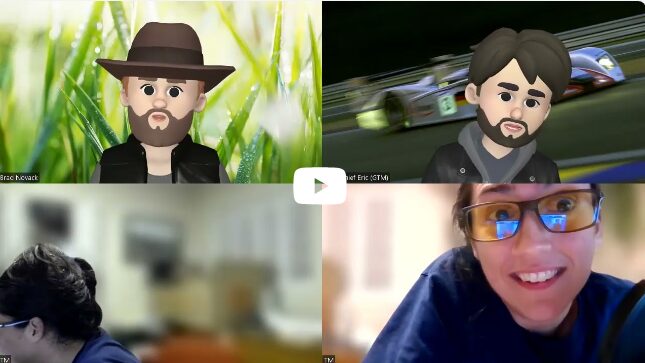
All of our BEHIND THE SCENES (BTS) Break/Fix episodes are raw and unedited, and expressly shared with the permission and consent of our guests.


Other episodes that aired this month…

This content has been brought to you in-part by sponsorship through...

Motoring Podcast Network

Fuel, Fiction, and the Fast Lane: The JK Kelly Story

What do funeral homes, drag racing hearses, and bestselling thrillers have in common? If you’re JK Kelly, the answer is: everything.

In this episode of the Break/Fix podcast, we sat down with author and motorsports insider JK Kelly at the Eastern Museum of Motor Racing in York Springs, Pennsylvania – just a stone’s throw from his home – to unpack a life that’s anything but ordinary.

JK’s origin story begins in a place few would associate with high-octane thrills: a funeral home. Growing up surrounded by big block Cadillac hearses and limousines, he found creative ways to turn those somber machines into street racing legends. Yes, you read that right – he drag raced a hearse. “I’d use the limo to impress girls and the hearse for racing,” JK laughed. “Until a local cop caught me speeding and told me to come clean to my dad.”

That moment led to a pivot: a station wagon with a souped-up engine and dual exhaust became his new playground. But the real turning point came when JK took a janitor job at Upper Darby High School and met fellow gearheads who introduced him to the world of NHRA and NASCAR.

Tune in everywhere you stream, download or listen!

Listen on Apple
Listen on YouTube
Listen on Spotify

Originally aiming for a career in law enforcement, JK’s eyesight disqualified him from the FBI path. So he pivoted to journalism, combining his love for storytelling with motorsports photography. His photos landed in Super Stock magazine, and soon editors were asking him to write the stories too.

That hustle led to a dream gig: a PR role with the Darrell Waltrip Gatorade #88 NASCAR team. JK spent a whirlwind year traveling to 34 races, soaking up the culture and chaos of big-league stock car racing. But when family health issues called him home, he returned to Pennsylvania – and fate had another twist waiting.

Spotlight

Synopsis

In this episode of the Break/Fix we interview author JK Kelly, delving into his rich history within the auto racing sphere. JK Kelly discusses his journey from studying journalism at Penn State to taking photos at auto races and writing features for magazines. His career included a significant stint with the Darryl Waltrip Gatorade NASCAR team and a 30-year tenure with VP Racing Fuels. Despite his ventures, Kelly’s passion for writing led him to author six novels, including his latest thriller, ‘Deadly Driver.’ Recorded at the Eastern Museum of Motor Racing in York Springs, PA, the episode explores his experiences, inspirations for writing, and his latest works. Kelly elaborates on his book ‘Fueling Around,’ recounting tales from his career, and delves into the creation of ‘Deadly Driver,’ explaining the protagonist Bryce Winters’ journey, which parallels his own experiences and those of famed racers. The conversation also touches on the competitive fuel industry, the future of motorsports, and the viability of electric vehicles. Kelly shares insights into his writing process, future projects, and the possibility of ‘Deadly Driver’ being adapted into a screenplay.

  • Recorded ON-SITE at the Eastern Museum of Motor Racing in York Springs, PA
  • Normally we would start a Break/Fix episode by asking people for their superhero origin story, the who/what/where/when and how they came to be the petrol-head that they are. But in your case, much of that is outlined in your first book “Fuelin’ Around” – so let’s rewind the clock a bit, and talk about your passion for cars. Was there something as a kid that got you interested? Did you come from a racing family? Was going to racing events a past-time? Was there a particular car that imprinted on you and attracted you to this world?
  • You went to Penn State for journalism, at that time, what were your career goals? How did you end up on the other side of the fence, finding yourself involved in photographing and writing about race teams? The journey from photography/journalism to VP Fuels 
  • Let’s talk more about writing a book as compared to journalism. Many people say “I’d love to write a book” but it all becomes very real when you sit down at the screen and start a journey of 85,000 words.
  • I’ve read Deadly Driver, it’s an arrive & drive, jump in, strap down and go! type of read. You’re thrown directly into the action on Page 1. Lots of fun and a great introduction to the world of Motorsports, especially Formula 1. It comes at a great time because of all the hype and interest surrounding shows like Netflix’s “Drive to Survive” 
  • Why Formula 1? Are you an F1 fan? Let’s talk about Bryce a bit – people might be thinking, how plausible is a F1 driver + Super Spy combo?
  • Throughout the book there are tons of twists and turns which keeps the reader waiting for the next apex… but there’s also many nods to VP fuels and others throughout the story, some obvious, others not so much.
  • The flow of the book grabs you right away, the first 3 chapters really set the stage and then about every other chapter for the next 12 or so, you interleave the exposition in there as flashbacks. It reminds me of how TV shows can easily do that to keep us engaged. Could you see Deadly Driver moving into a screenplay? 

Transcript

Crew Chief Brad: [00:00:00] BreakFix podcast is all about capturing the living history of people from all over the autosphere, from wrench turners and racers to artists, authors, designers, and everything in between. Our goal is to inspire a new generation of petrolheads that wonder How did they get that job or become that person?

The road to success is paved by all of us because everyone has a story.

Crew Chief Eric: While studying journalism at Penn state university, our guests traveled to auto races on the weekends where he took photos. He was able to sell to racing magazines. One of his editors suggested you’re taking the pictures. So write the feature stories that go with them.

After a stint with the Darryl Woltrip Gatorade number 88 NASCAR team, he spent the next 30 years traveling the world for VP racing fuels. But that passion for writing never left him. Following the advice of James Patterson, who said, give the readers what they [00:01:00] want, six novels later from his debut title found in time to his accounts on the road with VP in fuel and around through his latest thriller, deadly driver, author, JK Kelly has striven to do just that.

And we want to welcome JK to break, fix to share his story. And we’re here on site with him at the Eastern Museum of Motor Racing in York Springs, not far from where he lives. So he can share his story with us. So welcome to the show, JK.

J.K. Kelly: Hi, Eric. How are you?

Crew Chief Eric: So normally we would start a break, fix episode by asking people for their superhero origin story, the who, what, where, when, and how they came into the petrolhead world, what they’re all about.

But in your case, most of that is outlined in your book, Fueling Around. So let’s rewind the clock a bit. Talk about your passion for cars.

J.K. Kelly: It’s an interesting story for me, hopefully for other people too. I grew up in a funeral home. Not many people know that. And not many people can brag or boast or shabbily say that’s what happened.

But for me, I grew up in a funeral home, had all the strange [00:02:00] occurrences that everybody would always ask me about. What’s it like growing up there, et cetera, et cetera. But for me, the beauty of it was as I got older and I got into cars, I realized that what we had sitting in our garage were a couple big block Cadillac Hurses and Limousines.

Once I got my license, my job was to keep the cars clean, fueled up, ready to go. A lot of it was during one of the gas crises back in the day, so I’d always be sitting in the gas line with everybody else, sitting there idling with a big ol Cadillac Hurse. Then all of a sudden I found myself doing a little drag racing, street racing at night.

In the hearse? In the hearse, in the hearse. The beauty of it was, you know, as I got my license, I now could do a lot of good things where I would use the limousine, meet girls, pick up girls, they’d pull, they’d drive around, add a limo. So I’d use the limo for one thing and I’d have the hearse for racing.

And it wasn’t until a friend of the family, A local police officer caught me speeding. He said, you better tell your dad or I’m going to. So I did. My father said, look, two things. Take the name off the side of the hearse. We don’t need that name. Lights or red lights and crashing and doing any of that other stuff.

And also we don’t need any of the [00:03:00] bad negatives out from that. Just be safe. So I realized I can’t be tolling around in those. A couple of us thought that getting a 1973, 74 Plymouth Fury, old state police car, Pennsylvania, they had the four forties. Dual exhaust, they were badass as far as we were concerned.

Thought about buying one of those, and instead, talked my father into, Cato and Moisey’s station wagon, right? Limited, he bought that. All of a sudden, the two barrel was gone. New intake for metal rock, four barrel carburetor, dual exhaust, et cetera, et cetera. That opportunity afforded me a lot of cool things to do with cars.

But the beauty of this was, I got a side job working at Upper Darby High School after hours as a janitor. Met all these other guys, same mindset as I, and in time, they started taking me to races. Go to the NHRA race in Englishtown, New Jersey. I went to the NASCAR race at Pocono. And once I got to those, I fell for the sport.

Just fell in love with it. My original passion for law enforcement got shot in the head because I found that my eyes would not pass any of the eye tests. [00:04:00] We had friends at the FBI Academy. We had friends, police forces, etc., etc. To the funeral home, bottom line was, if your eyes can’t pass the test, there’s nothing we can do about it.

I always was into storytelling. I loved telling stories. I shifted from a law enforcement major to journalism major. That’s where you picked up getting, I wound up going to races, taking pictures as a hobby, and someone said, no, the photos are really good. Probably sell them. So I sent them a super stock magazine.

They said, yeah, we’ll buy two or three of those. And before you know it, they were giving me connections to go to the races. That’s when the one editor said, you know how to write, so write the stories that go along with it. That just played out. I was going to the races, doing what I did. But then I realized that freelancing is not going to pay the bills.

I fell in love with NASCAR, as I had said. My dream job would be to work in NASCAR. So I decided while I needed to get a full time job, I called Charlotte Motor Speedway. I said, are you hiring anybody in your PR, communications office? And they said, no. The key question that came up next was, [00:05:00] You know, anybody that is, and they said, we think Dygart is give them a call called Dygart.

Three days later, I was on a plane, flew down to Charlotte, had the interview. They were one of the first incursions of Yankees into the South Gardner brothers were from Connecticut. They actually started using Bill Grumpy Jenkins power to qualify at Daytona and do some other things. Another Yankee from where I run from in that area.

And they brought another Yankee in as their PR guy and I was there for a year, learned a lot. Went to 34, 35 races. Had a great time. And right at the end of that first year, Waltrip and the Gardeners were having a fight. He wanted to change his contract or he wanted out. It got weird in the shop. Some of the guys were pro Darryl.

Some of the guys were pro owner. That time, my wife decided I don’t like Charlotte. I miss home. Both my parents encountered cancer and said, we need your help opportunity or a sense of duty caused me to move back home, work in the funeral business for a little while. After a time, my [00:06:00] parents both passed away.

We’ve got this fight of VP racing fields for you, brand new company blood a few years old, and they asked me to run the office. It’s based in Chester quasi. Look that over and it’s thirty years.

Crew Chief Eric: So let’s pause there a second. Let’s go back a little bit, though. We ask our guests all the time. Did you come from a racing family?

Obviously you didn’t grew up in workshop. Funeral directors, whatnot. For many of us, when we were younger, we imprint on a certain car. I don’t want to say that the purse was the car that got you excited to go to the track and go to racing. Was there some sort of sports car? Was there something out there that you like, Oh my God, that’s the most beautiful car in the world.

J.K. Kelly: At the time I really fell for the Dodge Charger. I was very impressed with Richard Petty’s career. The first time I saw that car, person not on TV, that dig little orange that they had in the car, Petty blue, his track record, his performance, the king of the [00:07:00] sports, so to speak. And I was just totally impressed with that.

So I went out and bought a Dodge Charger too. From there, which sent me to the racing fuel end of things. Well, Englishtown. I had never seen a nitro funny car before. Jungle Jim Lieberman, who was from Pennsylvania, very close to where I grew up as well. He was there, Bruce Larson was there, all the local Pennsylvania heroes were there.

All the touring guys were there. Once they let a nitro car, I was done. Didn’t matter to me what car it was, just the nitro just got me going. Oval track racing, the sound, the smell, the excitement. It was, it was a three ring circus and I fell for it.

Crew Chief Eric: They often say that you only need to see something about seven times before it really sticks in your memory.

So back then, Richard Petty, sponsored by STP for almost forever, another fuel company, I think that was subliminal messaging, or maybe some sort of serendipity carrying you to VP.

J.K. Kelly: No, it’s interesting you say that though, because the VP logo, if you really look at it, if you take the outcroppings of the V and the P, cut them out, it looks like an oval shaped STP logo, the red, [00:08:00] white, and blue of the logo.

I don’t think at the time, I don’t know what was imprinted where, but after I left VP, I’ve still worked with them as a consultant for many years. And two years ago, they asked me to write 50 year history of the company. Company turns 50 in 2025. Interviewing the founder, who I knew very, very well for years, we talked about Where the logo came from, where the name came from, et cetera, et cetera.

So I don’t know about STP being a credit in my head, but I do remember in elementary school, somebody said, if you send STP, self addressed stamped envelope, they will mail you two STP decals. So everybody in the school did that. At the time Andy Granatelli was sponsoring the IndyCars. Everybody was watching wide world sports and the Indy 500.

And I could tell you that our school was blasted with STP logos. They were everywhere. 30, 40 years later, here I am making sure that the DP logo, similar logo is plastered everywhere in the world. We wanted to put it in front of anybody and everybody. Get it on as many race cars, get the fuel in as many cars, make the company famous.[00:09:00]

That’s what we did.

Crew Chief Eric: Let’s talk about your early days at VP. Now there’s many people out there that are familiar with the VP logo. We’re talking about logos and to your point, it’s everywhere. I mean, I personally have 12 VP cans in my own garage, different colors and styles, whatnot. Let’s start from the basics, kind of twofold.

A, what does VP stand for? But B. You went from journalist to now being in fuel industry. What was that transition like? And what did you do when you first got there?

J.K. Kelly: The question about what the VP logo stands for, what the name stands for. It came from volatile products. That was what Burns came up with many, many years ago, back in 1975 in San Antonio.

They actually named volatile products here on the very first design. Then after that. Company name was actually VP hydrocarbons. That was on the logo as well. And in time we removed that again. Here we are. As far as the transition from journalism to racing fuel, pretty drastic jump. That’s really a tough one.

I’ve always had an investigative mindset and that’s where the wanting to go into law enforcement came from. I didn’t want to be a beat cop and no [00:10:00] disrespect to those guys, but I wanted to go after white collar criminals. That was more of my interest. When I found out I couldn’t be in law enforcement. On that side of it, journalism gave me the opportunity to become an investigative journalist.

That’s where my mind went. I was so excited and so thrilled to be around racing. I really did put that off to the side. So once I got an opportunity to not so much leave the investigative journalism behind, because I did enjoy doing some stories, once I got to be in the circus, to be a part of it and not just sit in the grandstands, but to be.

delivering fuel and talking to Jungle Jim Lieberman or John Force or going out to Kruppy Jenkins shop in Malvern, Pennsylvania, shitting the brakes with him for a little while and sitting there while I did some dino pulls. That was cool. That was the coolest thing you could do. And at the time, what I found also was trying to find people to come and work with us.

It was so easy. If you told somebody who might have been a truck driver or a secretary or a warehouse worker, you get the opportunity to go to races on weekends, you get an opportunity to meet all these [00:11:00] different famous people. They just gravitated to it. At any given time at the VP Warehouse, whether it was in Chester or in the new facility we built in Newark, Delaware, you could have a pro circuit rig coming in to pick up fuel before they were heading to Southwick.

You can have a road racing team coming in that was headed for testing down at Summit Point or Daytona or wherever they might be going. It was just a cool environment to be in. So you wrote

Crew Chief Eric: Fuelin Around before you left, right?

J.K. Kelly: I wrote Fuelin Around after I retired. There was an ownership change. I just saw that as an opportunity to, it’s like I’d been a Philadelphia Eagle all my life, and the transition to what, to be a Dallas Cowboy was not necessarily in my mindset, it’s not in my blood, so to speak.

My daughter had just gotten pregnant with her first child, she had her hands full in need of my help. My wife had had some health problems, and it really curtailed some of the things we were doing. And so all the stars aligned for me the same way they did that day. I called Charlotte motor speedway decades before and said, no, anybody that’s hiring.

I think fate just said, it’s time for you to do something different. [00:12:00] So I was still able to maintain my relationship with VP as a consultant. It gave me the full time opportunity to work with my daughter. Help my wife as well. And then everybody says, well, you’re retired. What are you going to do? Play golf.

I have no time for that stuff at all. So I just said, you know what? I want to get back to writing for, you know, six months later, my first novel was cracked out, found in time. And then everybody had said. You know, such an interesting life, had a great time. We want to know more about it. So I thought it was a perfect opportunity to write a book about what I’d done.

Crew Chief Eric: Was there some events or something that happened at VP that inspire you to write Fueling Around or what is Fueling Around really based on somebody’s trying to figure it out for the first time and wants to pick it up and read it?

J.K. Kelly: In one sense, I had told people that are interested in the business side of things.

It shows people how we took a very, very small company, a company that only had about eight or nine employees when I started there. So where it is today, where it’s a global entity, there’s some business lessons in there on how to approach things, how to attack people, how to do a slot [00:13:00] analysis of the competition.

You have to be self aware. If you’re going to go to war with another company, you need to know where your strengths and weaknesses are, where your vulnerabilities are to a degree. It’s like playing chess. If this company is going to make this, take this series away. Or they’re going to entice an organization, change the fuel regulations, so the VP products aren’t legal anymore, which happened.

You got to understand how to deal with those bombs that go off, how to work around. In the book Feeling Around, I can tell you a quick story that’s in the book. Hell, everybody knows the off name. If you grew up watching the Formula One races, they’re a French based company. They have since changed the name to Total.

But they decided they wanted to get involved with motocross in America. BP was fueling everybody. We were winning all the championships at the time. We were the go to fuel for supercross motocross. They came over to the AMA and said, I’d like to sponsor. One of the series. The only thing we’d like to do in return for that is we’d like you to adjust a specific gravity regulations.

Can’t remember the numbers for sure, but at the time I think [00:14:00] RC 12, which is the most popular fuel on the planet, particularly in two stroke motor cross racing, I think the gravity was about 716 corrected at 60 degrees. They talked the AMA into jacking it up to 718. Which would accommodate one of their products, which happened to be auctioned at the time.

Ours wasn’t. And AMA took that deal. We said, alright. Hey chemist, what do you got to do to jack the specific gravity up? 716 to 718. A little tweak. A week later, our fuels are still legal. And we kept winning. Then when they brought the auctioned product, as I said, they turned around and spent six months developing a fuel.

In a week’s time, we had something better. They’d go back to Solace with the chemists. We need this. We need something better. They’d bring a new fuel to pro circuit and all these other teams, we’d see what they had done. All right, let’s go. We had asked the French to help us get away from the British back in 1775, 76.

And here we are, the son of a guns of France, it’s an incursion of our realm, so to speak. So we turned around [00:15:00] and went head to head with them. We beat them down and sent them home with their tails between their legs. And years later, I met the gentleman who was with Health at the time, who was running that organization.

And he said, what amazed me about your company was it was so proactive and reactive. And I’ve been to the lab there where they have all these chemists. They had more chemists than we had dock workers. And they said, you guys would turn around and make something better. One or two of you guys would make something better in a week’s time than we had been working on for months.

So I related some of those stories about how to overcome all obstacles. Now, some you can’t, sometimes you can’t just beat the money, you can’t do some of it.

Crew Chief Eric: But it’s wrapped in a work of fiction though, right? It’s not just autobiography or autobiography.

J.K. Kelly: Fueling Around is an autobiography. There’s not really any fiction in it at all.

It went over very well, it was a popular read, and a lot of people have asked me to write a sequel. And because I’m still doing what I’m doing, I’ve started something called Still Fueling Around, but I don’t think that would come out for some time because I’m so busy writing the other novels. Once you write one [00:16:00] novel and you get a good response to it, people say, well, it’s a sequel, I’m going to, it’s a sequel.

Thrillers appeal to a much broader audience. A motor sports book appeals to a certain smaller group where you might enjoy telling your story.

Crew Chief Eric: So I guess for most of us, we don’t realize how competitive the fuel industry is. There’s many other Pennsylvania based fuel companies as well. BP’s not the only one.

How did that play out? I mean, obviously you kind of ousted the French, but you still had Sunoco to deal with. You still have other people.

J.K. Kelly: VP is actually based in San Antonio. That’s where Steve Barton’s born and raised, that’s where HQ is. We opened, as I said, the plant in Chester, Pennsylvania. Right up the road, or actually a little bit south of us in Markershut, was the Sunogo Refinery.

It was so funny that we were so close. We were enemy combatants, we were right there. I actually would run into some of the Sunogo higher ups at the local Home Depots. We’d bump into each other while picking up lumber, plywood, or whatever we’re doing for home improvements. We always had a friendly rivalry.

If you go back into the 70s and early 80s, when things were a little bit different, [00:17:00] the people that ran the Sunoco Race Fuel Division had told some of their distributors, you’re not even to talk to. Don’t fraternize, don’t visit with them, don’t talk to them. As things have changed, we hang out, we can have a beer together at a bar, during a trade show, or during a race, and have a good time.

It’s a rivalry, but we’re still friends.

Crew Chief Eric: Let’s switch gears a little bit. Let’s talk more about what it’s like to write a book prior to journalism. Your background is steeped writing. Many people will say, like you have said, I, I would love to write a book, but it all becomes very, very real when you sit down at the screen and start your journey of 85, 000 words, right?

It’s very different than writing a blog post or a quick article for a magazine or something like that. So how do you make that transition? Stepping away from fueling around, which is more nonfiction based. How did you develop that wanting to write in thriller genre aspect of it?

J.K. Kelly: Well, thrillers always intrigued me, whether it’s movies, television shows, books.

A thrill is a thrill. It always intrigued me. I have a very vivid imagination. That genre appealed to me. The first book I [00:18:00] wrote was called Found in Time. It involved a select group of marine raiders going back in time to do some missions. Because I’m a history buff, the idea was, what would happen if you could send them back to do certain things?

Maybe you sent them back to be witnesses to history. With the idea or the understanding, they could not change it. If you know any Marines, if you put them in a situation where they see something bad going down, they really struggle not to help, not to get involved. Of course, that’s what happens. I set the guys back.

They saw something happening, they can’t just stand by, they get involved, of course, all hell breaks loose. Yeah, yeah, so the story, James Patterson, who I took his master class and I met him and he gave me some great advice. He was always big on, you must do outlines, and I’ve never outlined any. I just turned around and I’d start telling the story.

I’m, uh, they call him a pantser. That’s I, I ride by the seat of my pants. I’ll write a chapter. I kind of know where it’s going, but as the book evolves, if you might’ve had an outline, you might’ve wanted to go this direction, but sometimes it just takes a natural organic feel where now it’s going over here.

That’s where I go. I just [00:19:00] follow wherever way it takes.

Crew Chief Eric: Dream of consciousness, I believe they

J.K. Kelly: call it. Yeah, very much so. Yeah. So if you’re writing at two o’clock in the morning when you sat down at 10 o’clock, think I’ll put a half hour in. Now it’s two o’clock. Your wife’s looking at you like, what are you doing?

A laptop awake. It is what it is. Writers just write when they can. It’s something we do. It’s in our blood. You’re a writer yourself. You know what it’s all about.

Crew Chief Eric: I stare at that cursor blinking sometimes. Where am I going from here?

J.K. Kelly: But you know, it’s funny. A lot of people have said to me, I’d love to write a book.

I’ve got this story I want to tell. That’s great. Sometimes just writing something, whether it’s a paragraph, or an essay, or a short story, or a novel, can be very freeing for someone. You can channel a lot of things, download a lot of things that maybe you’ve been carrying around in your backpack for a while, even if it’s in the subconscious.

If you really want to become a writer, if you want to become a commercial writer and sell books and make money selling books, what you have to understand is who’s going to want to read this? Who’s going to want this story? Has this story already been told? If you’re going to [00:20:00] go out and talk about some secret agent that’s going to go do this or a marine who’s going to go do that, stories have been told a million times.

Guys like Jack Carr,

Crew Chief Eric: James Bond.

J.K. Kelly: Whole nother story. I’ve tried to tell stories that had not necessarily been told. I was interested in the time travel thing, so I did that, did a sequel to it called The Lost Pulse. They both did very well. Then I started into something else that involved an FBI agent who was disgraced, and get his mojo back.

But then came Deadly Driver.

Crew Chief Eric: Which we’re going to get into here in a little bit. You’ve created this whole world. And I think that’s one of the hardest things to do, especially when you’re putting together a disjointed series, you have some sequels in there and sequels that you’re working on, but how did you sit down and kind of flush out all the persona?

Do they come from your personal experiences or any of the characters based on people, you know, or based on yourself, let’s take Bryce winters as an example, the main character in deadly driver, which we’re going to expand upon a little bit more, or even, uh, Matt Christopher. Those two main characters in two of your books, where did that come from?

Where did those ideas come from? How do you flush out their [00:21:00] voice and the way they think and things like that?

J.K. Kelly: Well, a being a history buff that allows me to have studied people and study their, their stories, their biographies. There are certain elements of certain people that interest me and I just heck and choose what seems to make sense to me.

For instance, Bryce winner’s character in deadly driver. He is an American kid who grew up in Vermont. He was playing with rally cars in the woods of Vermont. Something happens in the book. He decides it’s time to go to track racing. He goes there. Something happens there. It was onto something else. But through that, I had always been an admirer of Mario Andretti.

I thought he was a spectacular racer. He’s done so many great things. He’s another Pennsylvania boy, transplanted from Italy, of course, having won Daytona Indy and then Formula One World Championship. In addition, all the other things that he did, I thought, that’s cool. There’s not many guys that boast about that, about doing that.

And so I came up with a character who would be this homegrown kid, would work his way up through motor sports and pursue his [00:22:00] idol, so to speak. Runs into some folks that are putting him in the right cars, the right opportunity. He goes to the top.

Crew Chief Eric: And, you know, there’s a lot of similarities between Bryce’s origin story and Mario Andretti’s, especially with us here at the Eastern Museum of Motor Racing, you see a lot of displays of Mario Andretti here, where he got his start in dirt track racing, sprint cars and whatnot.

So it’s kind of funny. Bryce started in rallying backwoods of Vermont and similar to Mario Andretti in that respect. So I think you’ve done a good job of encapsulating that, but. In some ways, I think the bigger challenge is in the auxiliary characters, the supporting cast, his father, his uncle, all these other people that he’s interacting with and how you paint those pictures.

And, and in talking to you offline, a lot of scenarios in the books actually come from true stories. And we’ll dive into that a little bit more as we talk more about the book. So I also want to ask, before we make that transition, outside of Patterson, who are some of the other authors that you admire that influenced you to develop your style?

J.K. Kelly: Going back a few years, some of my favorite writers have been Tom Clancy. But someone who [00:23:00] really got me turned on to books was Dan Brown. From the time he wrote The Da Vinci Code, he wrote about four or five books after that. I read every single one of them and I read fast. I just fell in love with the way he wrote, the way he did his characters, the way he developed his stories.

Just went for the ride. I started to read a lot of James Patterson. There was such a volume of books. There was too many to read of Patterson’s. He’s got a bazillion out there. Once I got the idea in my mind that I wanted to write, I encountered some editors that would do some work. I’d set up some chapters that’d show me where I had lost my mind, where I had wandered off the reservation, so to speak.

And they would show me how to come back in. Ryan Stack is one of them. He just came out with a book called Fields of Fire, which is getting great reviews. Ryan’s a great editor. Good friend. He taught me quite a way of developing my writing style. I

Crew Chief Eric: was always a huge fan of Michael Cray. I gravitate towards his work and I was very fortunate to meet him the year before he passed away.

And I’ve always kind of held other authors of, you know, that technical science fiction sort of world against his work. For me, that’s [00:24:00] always kind of the gold standard. I mean, you get the Dean Coombses and other people, you know, in that similar genre. But for me, that’s, what’s always influenced my writing is how do I a, the technical.

To the lay person. And that’s always, and I even have to do that in my day job. So I guess we all pull our inspiration from different places.

J.K. Kelly: And that was a challenge that I faced when I wrote deadly driver. Everything I’ve ever done in motor sports was always trying to entice other people who don’t know anything about racing to come, try it, come check it out, come to the races.

I had experienced carding for instance. All my friends had drag cars, they spent a fortune on their drag cars, a fortune on their motors, and a trailer, and at the end of the day, I would bust on them, Okay, you did all this, and you spent a total of 2 minutes and 12 seconds in the race. I spent 10 percent of what you spent, I spent all afternoon in the car, having a great time.

Quad wheel karting, having a ball with two stroke motors, on ovals, that was fantastic. The one thing I can tell you about different riding styles, if you enjoy fast paced action, that’s the way I rate. There are a [00:25:00] lot of authors that have to give you so much, a

Crew Chief Eric: ton of exposition.

J.K. Kelly: They tell you the color of the blinds, the color of the tile on the

Crew Chief Eric: floor,

J.K. Kelly: what color my shirt is.

So I can’t read Tolkien.

Crew Chief Eric: The first whole chapter is about the guy getting out of bed. Really?

J.K. Kelly: Yeah, to a degree. I write as if I’m Talonel Joe. If I say a monkey walks into a bar. I don’t waste time telling you what color the bar is, what color the chandelier is, or color of the beer bottles. I just go for it.

I’m also regarded as somebody who likes to introduce a lot of multiple threads into the book, and I wind up luckily being able to put them all together and then have a fitting conclusion.

Crew Chief Eric: Let’s talk about more specifically Deadly Driver. So I want to read a kind of synopsis here to bring our audience up to speed on what the book is really about.

Jetting off to Monte Carlo, Speeding through the tight turns of a mountain road en route to an evening at the casino. What could be more exhilarating? After racing in a Grand Prix, Bryce Winters boards a luxury yacht to bask in the limelight and mingle with celebrities, only to find a gun to his head.[00:26:00]

From the rolling hills of Vermont to some of the world’s most powerful cities, Winters is thrust into improbable adventure, riveting intrigue, and elusive romance. The question remains, can he navigate around the dead ends in a maze of CIA manipulation and entrapment? Or will he fall prey to the sinister forces of underworld intelligence?

So I’ve personally read Deadly Driver. To me, it’s an arrive and drive, jump in, strap down and go sort of read. To your point, it’s very fast paced. You are thrown directly into the action on page one. I feel that the book is lots of fun. It’s a great introduction to the motorsports world, as you said, especially Formula One, especially in today’s day and age of people watching, you know, Netflix’s Drive to Survive and being more interested in the motorsport discipline of open wheels, specifically Formula One.

Why Formula One? Are you a fan?

J.K. Kelly: I’m a big fan of Formula 1. I think it’s the ultimate bit in motorsports. And because I’m a travel bug and because I’ve traveled the world and attended so many different [00:27:00] events all around the world and enjoyed the cultures and the cities and the people and everything, if I was going to write a book about racing, I want to have a global audience.

I want to appeal to them. Obviously, if you want to sell books, you want to sell them all around the world. You still want to write something about NASCAR or IndyCar. You want to write something that someone in Buenos Aires will want to read. Somebody who goes to Or who goes to Hockenheim, Gerber, Silverstone, I want them to pick it up and relate to it.

Crew Chief Eric: So let’s talk about Bryce a little bit. We kind of mentioned him a couple times earlier. People might be thinking, how plausible is a Formula One driver and super spy combo? Does this imply something that has occurred in the past? Am I implicating something maybe we shouldn’t be talking about?

J.K. Kelly: The concept came to me and I just started writing.

It wasn’t until after I finished the book that I ran into some folks in Los Angeles. Who claimed that there were a few drivers way back in the day who might have been doing a few things overtly for their governments, whether it was for the United States government, British government, the German government, for that matter.

I think it’s very plausible. Price [00:28:00] operates in a world that’s super elite. There’s not that many F1 drivers on the planet. He gets to go to all these fancy galas. Meet all these fancy people, go places where a lot of people can’t go, he hobnobs to everybody, he’s partying on yachts, private jets, et cetera.

Something happens in the book that puts him in a vulnerable position. The CIA catches him at it and they force him to work for them. It’s pretty simple. You’re going to do this or we’re going to make this known. You’re going to be not in a world of trouble just with the United States, you’ll be in trouble in these other countries.

And so they force him to work for them. He doesn’t mind doing some of the jobs that they assign him. Because he believes he’s doing the right thing for his country. He doesn’t like having a gun put in his head. That’s what he really struggles with. So his dilemma is, trying to win a second Formula One championship, he wants to do better than Mario.

First his goal was, be as good as Mario and then rise to the occasion, go another step. So he wants to do that, he wants to do the job that the government’s asked him to do, but he also wants to break free of that. He’ll go to some [00:29:00] extreme ends to try and break free, but not he ever accomplishes that.

Reader’s got to find out for themselves. And then to add the other little element to this, he suffered a tremendous heartbreak in his younger years in Vermont. He’s never found love again. He’s never pursued her. And so he finally runs into a woman on a long haul flight, is totally taken by her. He decides to pursue her.

When she realizes what she’s gotten herself into, I’m not going to elaborate on that.

Crew Chief Eric: No spoilers here.

J.K. Kelly: She cuts loose, and his job is to try and win her back. And it gets very complicated.

Crew Chief Eric: So I really like the fact that Bryce is a simple guy. His upbringing is very relatable to most of the people that are problem with this.

It’s like you said, grew up in Vermont, backwoods, running cars, having fun, started in the lower leagues and worked his way up. It’s very similar to the stories of Andy Pilgrim and Andy Lee and other folks that we’ve interviewed on the show. Obviously the bigger overture is that Mario Andretti is one of his heroes or that he’s going to be, As good as, if not better than Mario, right?

A triple crown winner, all those kinds of things. So I wonder, [00:30:00] is Mario Bryce’s idol or is he more complex than that? I feel that there’s a lot of you in him as well. So how much of that comes through? Like the more in depth part of Bryce’s personality. How was he formed? What did you model him?

J.K. Kelly: Part of it probably evolves from the fact that I wanted to be in law enforcement.

He grew up in an environment raised by a cop. Adam Marie with those two influences in his household. And imagine what that by product is. Just like you have young people that are growing up in the Midwest. They’re homegrown. They have a strong work ethic. They believe in America. They’re very patriotic. So that’s what you got when you meet Chris layers.

As I wrote the book and put it out for reviews, there was a French journalist that came back to me and said, can’t really relate to him because rice. He’s not like formula one drivers. I said, well, he isn’t. He’s an American kid, grown up in rural Vermont. He didn’t grow up in the streets of Monte Carlo.

Thousand dollar watch on his wrist. Going to exclusive schools. Born into a family of fortune and fame. He’s worked for everything he’s gotten. And so it’s a different culture [00:31:00] lately. He’s not like the typical Formula driver, and I think that’s what makes him special.

Crew Chief Eric: So he’s got a car tucked away in Vermont.

He lives in Utah. But when he does go back to Vermont, he picks up his black Subaru WRX. But nowhere else in the rest of the book does it ever mention what he’s got tucked away in his garage in Utah. So what is in Bryce’s, let’s call it, and who car drive?

J.K. Kelly: Three or four car. I’m still working on that. But anyway, the Subaru WRX, so you know, comes to the fact that I love rally racing.

And I know a lot of the guys at Vermont Sports Car. And so in the story, Bryce befriends them. They have a working relationship with him. He started out with Team O’Neill, New Hampshire. That’s where some of the other history comes from. But when you do get to his home in Park City, up in the hills, after you go inside his garage, he’s got his Uncle Pete’s Toyota pickup, which is an old standby.

He has a Mercedes AMG GT Coupe that they’ve sent him, because he’s involved with Mercedes and racing. That’s a red one, by the [00:32:00] way. It’s a beautiful vehicle. He also has a Chevy Tahoe Z71 that he used to just cruise around. He’s an American guy, so he’s got mostly American cars. The foreign stuff that’s there was, was sent to him by Germany, by the Mercedes.

Crew Chief Eric: He’s got to have a bike in there too, right?

J.K. Kelly: Well yeah, that’s not American, that was not a Hurley, it’s a Ducati.

Crew Chief Eric: Red to match the Mercedes, right?

J.K. Kelly: Yeah, yeah, well that, yeah, that’s the funny thing too. If people were to take the time to study the cover of Deadly Driver, I had mentioned to you offline that there’s something about the cover that nobody’s picked up on that’ll come to play in the sequel that I’m halfway through right now.

And I’m just gonna leave it at that. I just mentioned Ducati, and I’m gonna mention the book cover for Deadly Driver, so you can study it and see what I planted there that nobody’s seen yet.

Crew Chief Eric: That’s the funny part about Deadly Driver. It’s a book where there are a ton of twists and turns, which keeps the reader waiting for, pun intended, the next apex.

And I noticed as I was reading it, there’s a ton of nods to VP Fuels. Obviously, it’s in your background, you were there for 30 years. Some are obvious and some not so much. Why don’t we stop and talk [00:33:00] about the PRI scene? Some of the nods you made specifically in that. It felt like a homecoming and it almost felt like you were Telling people, but not telling people, Hey, thank you.

Thank you. Thank you. And kind of name dropping and going there. So what was that all about? Why was that kind of in the middle of the book?

J.K. Kelly: Oh God, that’s very complicated. That’s very, very complicated. After I retired from VP, the SEMA show, the PRI show, the auto sports show in Birmingham, some of the other big shows around the country had always been something I had attended, always works with the VP uniform, et cetera.

I wanted to send Bryce because he’s American. Once the season’s over, he’s not spending his time on the slopes in Switzerland. He’s not in Belize. He’s back home in Park City or in Vermont visiting his family. So when he goes to the PRI show, it gives him an opportunity to say hello to the people that have helped him along the way, the friendships that he’s made, because as he worked his way up through Track racing at Stafford and Thompson and on the dirt track at Lebanon Valley.

A lot of people were friends, Anns crew members, et [00:34:00] cetera. For me, that was a journey. The first PRI went back to everybody was, Hey, you’re retired. What hell’s matter with you? What are you doing? You know, what are you gonna do? It was a way of having me go back through that. But in Bryce doing that, he got to thank a lot of the folks who had meant something to him in his career, but it also gave him an opportunity in the book to tease what he might be doing in the future.

In the book, there’s something critical that’s happened after the last race of the season. And so as he’s wandering around the PRI show before it opens, they let him in early to say hi to some folks. He stops by the NASCAR booth and he stops by the IMSA booth and the local media and some of the foreign press that are following him around are like, what’s this mean?

What’s it mean? And so he just says, you never know. Maybe I’ll go back to running cup. Maybe I’ll back in an IMSA car. Who knows? You’ll just have to wait and see what happens. But the last page of deadly driver will let you know what he’s up to.

Crew Chief Eric: No spoilers, but I do want to take yet another pit stop here and ask you a question because the PRI scene was also important in the fact that there were some other [00:35:00] undertones there and you make some hints about maybe your personal thoughts on EVs, electric vehicles in that particular scene.

So I want to ask you, what are your thoughts on the evolution coming from the fuel industry?

J.K. Kelly: That’s probably something that needs to happen on a grand scale. But there’ll always be a niche, always be just as there is today. Motorsports is not mainstream, not everybody on every street is involved with motorsports.

So there’ll always be cars, there’ll always be racing. Gasoline will always be around in some capacity, as will lubricants, etc, etc. But EV is coming, they’ll be here to stay. And just like as we’ve toured this beautiful facility today, as you see the evolution of sprint cars and all the other cars they’ve got here, the EVs will go down the same road.

Just like everything else. I remember the first cell phone I ever had came in a black box that was the size of a lunch pail. And now, you know, they’ve got these little itty bitty tiny things that connect you with the world. I feel like I’ve got a Dick Tracy watch on, you know, where I can talk to people, check the internet, order lunch, check the stock market and book a flight.

So EVs will probably go [00:36:00] down that same route, but. Us guys who love the smell of race fuel, all the other things that come along with that, the exhaust and nitromethane, they’ll remain for a long time, at least in our lifetimes, I would think. The only thing that concerns me the most about it all is I remember hanging out with the guys in high school where we were changing the carburetor, playing with the timing light, doing all the cool things they used to do.

In the garage, whether you’re doing it with your uncle, your brother, your father, best friends, whatever, there was a camaraderie that came about encircling the engine, so to speak. What are you going to do now? Am I supposed to sit on the curb with my grandson and show him how to change batteries? There will always be something about racing that will draw those of us who enjoy those competitive sports to it.

Of everything with EVs and racing that concerns me is the same. I was in Catalonia a couple years ago when somebody was testing a race kit electric motorcycle. What the? It was like, you know, when you go to the beach, you’ve got a mosquito or something or buzz around your ear. It’s like, what is that? If you go to an [00:37:00] NHRA national event and you stand at the starting line when John Force does a burnout and you feel your chest rattle, there’s a wow factor.

And electric’s just no. Unless they figure out a way of sending thunderbolts out to the people in the crowd to give sort of a static charge or something. I don’t see the entertainment value.

Crew Chief Eric: I can see that and a lot of people have said that and we say that even about different ice power plants when you compare as an example, you know, there’s nothing like the sound of a flat six or a Ferrari 12 or even the difference between the C7 and the C8s at IMSA races, right?

I mean, the C7 and the Mercedes SLSs, they’re ground thumpers to your point. You not only do you hear them, you feel them. And so we have gotten that response a lot from folks to say, What I will miss the most from racing is the sound.

J.K. Kelly: For me, the analogy would be watching a very passionate, hot love scene in a movie versus watching a silent movie.

That’s the difference.

Crew Chief Eric: A lot of folks have also said, and maybe this is how they justify it. There’s a high probability that motor [00:38:00] sport will become very equestrian. How do you feel about that particular state?

J.K. Kelly: The biggest frustration I’ve had in the last 20 years is seeing how racing has changed as far as attendance goes.

It was 2008 when we had the issues that caused everybody to stop spending. People stopped going to races. People stopped doing a lot of different things. What I’ve found was for the longest time, people didn’t come back. Scary things seem to be that they had gone away from races. They had found something else to do and they’d go back to the racetrack.

Promoters and series are struggling very hard to get some cases. You see that you go to the U S nationals. It’s a packed house. The special events are always going to have packed houses. And the 500 was sold out was 400, 000 people. I forget what the attendance is there, but you also have to model in the fact that they haven’t had full capacity allowed because of COVID for the last few years.

So sadly, it seems as though some people have found other things to do. Some people have gone to an NHRA race. They’ve [00:39:00] gone to see the nitro cars, but then they’ve seen it and they don’t come back. And that’s a sad thing. That’s why promoters and series and racers have to evolve. And you have to continue to reinvent themselves to give people something to Something to bring them back.

These phones, computers, and everything else are great, but they’ve caused so many people used to come out and see and feel and experience excitement are now sitting behind a screen doing all these other things, playing all these other games, and if they’re doing something related to motor sports, they’re driving the screen and I could tell you from racing in Baja course to almost going off a couple of cliff sides and all the other fun things that that involves.

It’s starting with cards, getting in somebody’s penthouse, doing some burnouts in the driveway. All those things are experiential. Nothing on the screen can replace that. Yeah, sure, you can go to Universal and your chair can vibrate when you’re seeing a scene with the Shrek thing, which I did with my grandchildren and stuff.

But there’s nothing like strapping yourself, get in a race car, fire that thing up and go [00:40:00] have some fun. And then if you’re competitive, doing it side by side, going on a turn with somebody that’s just as hungry, just as motivated as you are, you’re nothing like it.

Crew Chief Eric: So will Bryce ever sit and strap into a Formula E car?

If his series continues, is that a

J.K. Kelly: thought crossing? He might be involved with ownership, but he won’t drive one. Well, it’s the same thing we just said a few minutes ago. I had the opportunity to go to the Formula E in Brooklyn. And to be honest with you, there was something, I shouldn’t say this, but there was something more interesting for me to do, uh, in Montreal.

Doing something with the guys who run Fantabox. Which is the F1 store in the old city of Montreal. I understand what Formula E is doing, but when I’ve seen it on television, all’s ears is a squig of the tires. It just doesn’t excite me. I want to support the sport and get people to go out and give it a try.

But for me myself, nah, gotta make noise.

Crew Chief Eric: So let’s go back to the book a little bit talking about Bryce, his humble upbringings, and if you follow his career, you had him at Lebanon doing roundy rounds and things like that. And he works his way up in sports cars into formula one, but [00:41:00] there’s that team O’Neill part that sticks out growing up a WRC fan myself in the group era.

I’ve always wanted to do that. When I look at how expensive it can be to get into rally in the United States. That gave me pause when I read the book and I said, how did he afford, you know, how did that work out for him?

J.K. Kelly: Well, in Bryce’s case, book starts out at a young age when he’s, he’s late teens.

Essentially what he did was he fell in love with rally racing and he did a deal with team O’Neill where. I’ll put the hours in, I’ll work here, sweep up, I’ll do whatever, teach me some things, learn what I can. Let me take one of these out. You’re not talking about a WRC world class car that Travis Pastrana might be playing with for Vermont sports car.

There are some lower grade, lower level rally cars where you go out on the course and don’t need a lot of money to do that. Just got to sign up. You could go to the team O’Neill school and take their school. Guess what? You’re driving a rally car. If you’re good at it, and as our guide today at the museum said, if you got some balls, then strap in and go in something [00:42:00] faster and give it a try.

Crew Chief Eric: And you know, what’s funny about that part of the story, I relate that to pro driver Andy Lee’s story where he did the same thing. Never finished high school, found himself in Arizona, turned the wrenches at Bondurant and then worked his way up. So him and Bryce are similar in that way. Bryce is this really every guy in America race car driver, but on the same token, there’s so many facets of other famous race car drivers stories in his kind of more complex persona.

And that’s what I really enjoyed about this book is pulling those threads out and going, that reminds me of this former guest on the show or this driver that I know, things like that. And it makes it very relatable for us, at least our audience. And then the people beyond to your point is getting them out there to understand that.

There’s more depth to these drivers. They’re not just people strapping on helmets and going around in circles.

J.K. Kelly: Very true. Balancing act that I had to do though that was a struggle for me was some racers have told me there wasn’t enough racing in the book. And some people have said, ah, there might, for me, there might’ve been a little too much [00:43:00] detail in some of the formula and racing.

And so that was in the early drafts when I was getting people to my betas, as you call it, there’s beta readers. Give them a chapter, they give you the feedback, tell you if you’ve gone the right direction, if it’s interesting, if it’s not. But the balancing act that I worked with Deadly Driver and I’m working on in the sequel is giving people who are into motorsports enough to get them excited, but also giving someone who doesn’t know that much about motorsports, enough to be interested in it.

Not just in a thriller aspect because Bryce’s story could take place anywhere. I could have said this character not in motorsports. I could have had a little CPA in an accounting firm. I mean, there’s all kinds of folks that get stuck doing things for the FBI. Because they have to do a plea deal or something.

It was a good balancing act. I think I pulled it off. You seem like you liked it. So,

Crew Chief Eric: well, there’s one other part that I did appreciate. And you being from this area, from the East coast, especially especially Pennsylvania, for a lot of us, we call summit point home and seven point raceway is mentioned in the book, especially there at events of driver training and [00:44:00] things like that.

That’s also Grand Touring Motorsports home track. A lot of us, you know, pilgrimage there weekend after weekend for a CC a NASA races and et cetera. So I wanted to thank you for throwing that in there because. A lot of people forget about Summit Point, right? Used to be part of the Trans Am series back in the day.

You know, it’s kind of fallen down in the ranks, but they’re also seeing a resurgence now after 53 years of being open. So I really appreciated you doing that.

J.K. Kelly: That was my pleasure. I love Summit Point. I’ve been there many, many times myself.

Crew Chief Eric: So that being said, the flow of the book, it really does grab you right away.

Like I said, the first three chapters are really set the stage and then you start to interleave the exposition, right? For like the next 12 chapters or so. And it’s done in this flashback sort of way. It reminded me of how some TV shows and movies do it. It’s like, you’re thrown in the action. You’re going, what, what is going on here?

They’ve captivated you. They’ve drawn you in. And now let’s go and show you how we got there. And plays this bouncing back and forth again for like the next 12 chapters or so. So that led [00:45:00] me to my next question, which is, could you see Deadly Driver being turned into a screenplay?

J.K. Kelly: Oh, yes. Oh, yes. The beauty of that is, most of the reviewers, a lot of people that have read the book have told me, it reads like a movie.

It ought to be a movie. It ought to be a limited series. It ought to be something. I agree. When I write books, I see it as a movie in my head. I see it playing out in my head. I studied film. One of the side studies I did at Penn State was film courses, full circle, all the way back to the shitter lump, when I was in sixth grade.

My father allowed my brother and I and a family friend, a schoolmate, to make a video, make a movie essentially at the funeral. We had a casket, we had dry ice and buckets, we had all the spooky stuff going on. So I’ve always been a movie buff and I’ve always been interested in these that rotate around that.

Following everybody’s encouragement, I reached out to some folks in California. I met with some producers and directors who have given me notes on what I should do, what I shouldn’t do. They’ve encouraged me to talk to this guy, all this guy. There are people that. Claimed to have connections to Tom [00:46:00] Cruise and they’re trying to get the book in front of him because if everybody on the planet they could do something special, a deadly driver.

Cruz probably could. However, you’d have to read the book. I don’t see Cruz as Bryce Winters. I see him as Max Lerner.

Crew Chief Eric: I would agree with you on that. So Max, for those that haven’t read the book yet, is the person that really takes Bryce to the next level. He is the money behind the scenes, behind the team, the team owner, all that kind of stuff.

He’s, you know, he’s a German guy. I’d love to see Tom Cruz pull off the accent, you know, that’d be kind of funny.

J.K. Kelly: Well, remember though, he’s He did the Hatterboot. Well, I forget the name of the book, but Oh, Valkyrie. Yeah. Valkyrie. He did Valkyrie. And he didn’t lay it on too hard. Werner is true German, but he’s Americanized.

But he also has a dark side, comes out. And I think Cruise could really get his teeth into that. But there’s a million other people that would You can do a fantastic job as well.

Crew Chief Eric: I’d love to see the cast and call that like to see who they pick. I envision this Bradley Cooper type playing a Bryce, you know, the brown hair comb over boy next door sort of racer, [00:47:00] right?

J.K. Kelly: Well, there’s all kinds of things. When I wrote Uncle Pete, I pictured Sam Elliott. Everybody knows Sam Elliott most recently from ATV. That’s

Crew Chief Eric: the vision I got from him too. Yeah,

J.K. Kelly: Sam Elliott kind of character. But here’s a stretch that isn’t really a stretch. Chris Pratt and Arnold Schwarzenegger. Chris Pratt married Schwarzenegger’s daughter.

How about Pratt as Bryce Weiners, and Schwarzenegger as Weiner? He’s got the accent.

Crew Chief Eric: That could work. Although I don’t know how serious I would take it at that point because I’m a big Schwarzenegger fan, but every movie I watch, I consider them a comedy. So, you know,

J.K. Kelly: yes. And then, well, then you got to go to who do you cast as Kyoto?

Crew Chief Eric: Yeah. She’s

J.K. Kelly: a Japanese lawyer. I mean, who do you put in that role? There’s a tremendous amount of exquisite actresses that could play that role. But you know what happens when I’ve learned from visiting with these producers and people who have talked to me about the film either as a film or a limited series or as a regular series, once they buy the project.

They do whatever they want to do with it. If all of a sudden, Kyoto, they don’t want her to be from Japan anymore. They [00:48:00] want her to be Hungarian or Australian or whatever. Or Max.

Crew Chief Eric: Suddenly Bryce becomes English and he’s really Jason Statham. And it’s the transporter.

J.K. Kelly: No, that can’t happen. But Max Werner doesn’t have to be Max Werner.

It could be Max O’Malley. It could be, he could be from anywhere. There are certain parts of the world, South America, for instance. They are rabid formula love fans. So having Max be from Sao Paolo works. Yeah. What kinds of things you can do. If you remember the book starts out at Sochi, but what’s happened since Sochi first, Sochi lost its race and then Putin decided to go.

Apeshit in Ukraine. And so here we are. So as I’ve developed the limited series scripts, pilot limited series scripts for that, we’ve moved out of Russia. I have a lot of friends in Russia. I love the Russian people. They’re great folks. I’ve been there many times, but I don’t want to give any attention to those.

Crew Chief Eric: I can see you easily dropping the hungoro ring in its place, you know,

J.K. Kelly: no, we actually, there’s something with me and my French counterparts. And so we’ve gone, [00:49:00] we’ve gone, now we’ve gone to Paul Ricard.

Crew Chief Eric: Oh, nice.

J.K. Kelly: Yeah. So we’ll see how that goes because actually, if you know where Paul Ricard is, very, very close to Marseille.

And I don’t want to get shot if anybody’s listening from Marseille, there is a strong underworld in Marseille. There is a French mafia, so to speak, the same way there is in Russia, same way there is in South Philly. It’s

Crew Chief Eric: an easy conversion.

J.K. Kelly: Yeah. It’s so, it’s very easy to do some of the tweaking that I needed to do.

Crew Chief Eric: And it also helps too, because Bryce. And his third home is on the French Riviera. So him being in France makes it a little easier too for movement, probably for filming, things like that. So there’s a lot of upward possibility there.

J.K. Kelly: Yeah. He maintains a residence in Monte Carlo because, you know, the tax laws there, I think the rule is you have to have a residence six months in a day in order to get the tax breaks.

Crew Chief Eric: And there’s mention of that in the book too. He says, Oh, I got to be here for X amount of time.

J.K. Kelly: That’s what he does.

Crew Chief Eric: So that actually leads into the next question, you know, without giving any spoilers or talking about the sequel or anything that, what [00:50:00] is Bryce’s future? What do you think? What do you think?

What can you share with us?

J.K. Kelly: We know certain things happen in the book. We know there’s a, there’s a happy ending, so to speak. Despite his injuries, he will be able to come back and the following season, he’ll be trying some new things. I really don’t want to lay too much out there. I, I really believe that if people read Deadly Driver, they’ll care about Bryce.

They’ll like him. I want to follow his career. And then we’ll find out what happens to them next. They hang in there and they enjoy the first book. The other one will be out.

Crew Chief Eric: So outside of your own books, do you have any recommended reads for our audience?

J.K. Kelly: God, right now everything Jack Carr has written has been super hot.

Jack is a former Navy SEAL who worked for the government in a lot of other capacities after he left the SEALs. He’s been reading since he was fourth or fifth grade. Believe the story is his mother was a librarian. This guy fell in love with books at an early age. He’s read thousands of books and he took everything he learned from those books and has written the series that was turned into a limited series on Amazon called The Terminal List.

So anything [00:51:00] Carr’s done has been great. As I said earlier, Fields of Fire just came out. That’s Ryan Steck. That’s his debut novel. He’s an editor that I work with on a couple of my books. Great guy. The scariest thing that gets me is I run into people every day that say, I don’t read. I’ve read books since high school, and the only reason I read it in high school is because they told me I had to.

I get it. If you work all day and all night, you’ve got your other things going on in your world, you just don’t have the bandwidth or the time, you’re exhausted and you can’t do it. I understand. Some people say I don’t have time to sit there. I can’t sit there and read a book. I can’t pace through it, whatever.

There’s solutions. There’s audible books. Audible has opened up a whole new world to people who, truck drivers, somebody who works with their hands, somebody who can put it on their speakers, headphones, and just go for the ride.

Crew Chief Eric: And Deadly Driver’s Available is an Audible book as well.

J.K. Kelly: Yes it is.

Crew Chief Eric: And another top tip for folks that don’t have time to flip the old paper pages, you can also leverage your local library and apps like Libby as well [00:52:00] as Hoopla and be able to digitally take books out from the library.

So there’s no cost. So if you’re looking at it going, Oh man, some of these services are pretty pricey. I’m already oversubscribed my budget. So there are some free ways to get ahold of these books. So there’s some awesome resources

J.K. Kelly: there. There’s also Kindle.

Crew Chief Eric: Yep.

J.K. Kelly: Some people want to read on an airplane, but they don’t want to deal with the paper and the book, et cetera.

So you can read a Kindle. Something that everybody asked me for was 60 years old. My eyes are failing. How about large print? Guess what? We got deadly driver and large print. That’s available as well.

Crew Chief Eric: So JK, any shout outs, promotions, or anything else you’d like to share that we didn’t cover so far?

J.K. Kelly: Your podcast.

It’s great. Ever since I’ve met you offline, I’ve listened to a bunch of the shows. The most recent one I think was with Andrew Bilgrim, which opened up a whole new world for me, cause I didn’t know that much about him, but it was a fascinating interview. A pretty relaxed conversation. It wasn’t really an interview.

It was a conversation that you had. So I enjoyed the way you did that. If you’re looking for thrillers of The Deadly Driver, I’d say pick up Ryan Steck’s Field of Fire. Go to the races, if [00:53:00] you’ve not been, or you have been in a while. Go check it out. For us, it’s getting to be the fall, and the east coast, the leaves are starting to change already.

That’s probably because of the drought more than anything else. Races are going to close the garage doors pretty soon, so take it in the last races you’ve got. Enjoy yourselves.

Crew Chief Eric: Author J. K. Kelly lives in Media, Pennsylvania with his wife Lisa and continues a never ending pursuit of the next adventure. He has just finished another thriller, The Blood Compass.

All six of his books are available on Amazon in either paperback, Kindle, or Audible formats. And you can learn more about J. K. and his work by visiting www. jkkelly. com or following him on social at jkkellybooks on Instagram and Twitter, or by emailing me. It’s at author JK Kelly on Facebook, and you can always look him up on LinkedIn as well.

So JK, I can’t thank you enough for coming on the show and sharing your journey with us. I actually really am looking forward to the history of EP and some of the other books you have coming out, and I’m [00:54:00] really excited to know what happens with Bryce and if there’s some crossover with some of your other characters like Matthew Christopher and others that are in your series.

So the best of luck on your subsequent novels, and we look forward to reading

J.K. Kelly: them. Thank you. Really enjoyed it.

Crew Chief Brad: If you like what you’ve heard and want to learn more about GTM, be sure to check us out on www. gtmotorsports. org. You can also find us on Motorsports. Also, if you want to get involved or have suggestions for future shows, You can call or text us at 202 630 1770, or send us an email at crewchief at gtmotorsports.

org. We’d love to hear from you.

Crew Chief Eric: Hey everybody, Crew Chief Eric here. We really hope you enjoyed this episode of Break Fix, and we wanted to remind you that GTM remains a no annual fees organization. And our goal is to continue to bring you quality episodes like this one at no charge. As a loyal listener, please consider [00:55:00] subscribing to our Patreon for bonus and behind the scenes content, extra goodies, and GTM swag.

For as little as 2. 50 a month, you can keep our developers, writers, editors, casters, and other volunteers fed on their strict diet of fig newtons, gummy bears, and monster. Consider signing up for Patreon today at www. patreon. com. patreon. com forward slash GT Motorsports and remember without fans, supporters, and members like you, none of this would be possible.

Highlights

Skip ahead if you must… Here’s the highlights from this episode you might be most interested in and their corresponding time stamps.

  • 00:00 Introduction to Break/Fix Podcast
  • 00:27 JK’s Early Life and Passion for Cars
  • 01:29 From Journalism to Racing
  • 06:11 Journey with VP Racing Fuels
  • 11:22 Writing Career and Inspirations
  • 17:18 The Making of Deadly Driver
  • 25:32 Bryce Winters: The Formula One Super Spy
  • 28:23 Bryce’s Dilemma: Balancing Racing and Government Demands
  • 29:04 A Heartbreak and a New Love Interest
  • 29:29 Bryce’s Humble Beginnings and Racing Heroes
  • 30:35 The Unique American Formula One Driver
  • 31:04 Bryce’s Hidden Car Collection
  • 32:58 The PRI Show and Bryce’s Future in Racing
  • 34:50 The Evolution of Motorsports and EVs
  • 38:03 The Future of Racing and Bryce’s Career
  • 44:59 Deadly Driver: From Book to Screenplay
  • 50:29 Final Thoughts and Recommendations

Bonus Content

Learn More

Deadly Driver

Jetting off to Monte Carlo…speeding through the tight turns of a mountain road en route to an evening at the casino…what could be more exhilarating? After racing in a grand prix, Bryce Winters boards a luxury yacht to bask in the limelight and mingle with celebrities, only to find a gun to his head…

From the rolling hills of Vermont to some of the world’s most powerful cities, Winters is thrust into improbable adventure, riveting intrigue, and elusive romance. The question remains: can he navigate around the dead-ends in a maze of CIA manipulation and entrapment—or will he fall prey to the sinister forces of underworld intelligence?


THRILLER AUTHOR LAUNCHES THE LOST BIRD

Philadelphia, Pennsylvania (November 30, 2023)  Novelist Jim “JK” Kelly today announced the launch of his latest book, The Lost Bird, a crime thriller novella about a World War II B-17 that’s been taken.

“From the first time I watched the film Memphis Belle, I was hooked,” said Kelly. “I love writing thrillers, and I chose to use a vintage B-17 as the centerpiece in this one to honor the brave souls who manned them and to introduce readers who might not know anything about them to what was a vital part of winning World War II.”

The Lost Bird is Kelly’s seventh work of fiction, and it is the story of two modern-day families, criminals without conscience, and an awkward partnership formed in an attempt to find the missing plane. Kelly’s past works include the Formula One/CIA spy thriller Deadly Driver, The Export Series, Found In Time, The Lost Pulse, and the autobiography Fuelin’ Around.

“I believe readers will get caught up in this story and its characters,” Kelly continued. “Even before today’s official release, two Hollywood film producers requested the screenplay we’ve developed.”

For more information, to request a review copy or an interview with the author, please write to Info@JKKelly.com. To order a print or Kindle version of THE LOST BIRD on Amazon click here.

And you can learn more about JK and his work by visiting www.jkkelly.com or following him on social @jkkellybooks on IG and TW, or @AuthorJKKelly on Facebook or look him up on LinkedIn. 

JK joined VP Racing Fuels, a then-fledgling company with fewer than ten employees. Over the next 30 years, he helped transform VP into a global powerhouse. From delivering fuel to Jungle Jim Lieberman and John Force, to outmaneuvering corporate giants like Elf (now Total) in the motocross wars, JK was at the center of it all.

One of his proudest moments? Beating Elf at their own game when they tried to change AMA fuel regulations to favor their product. VP’s chemists responded in a week with a better fuel, proving that agility and grit could trump deep pockets.

Photo courtesy JK Kelly

Writing the Road: Fuelin’ Around and Beyond

After retiring from VP, JK returned to his first love—writing. His memoir, Fuelin’ Around, chronicles the wild ride of building VP from the ground up, packed with business lessons, motorsports lore, and behind-the-scenes drama. It’s not fiction—it’s the real deal.

But JK didn’t stop there. He dove into thrillers with Found in Time, a time-traveling Marine Raiders saga, and Deadly Driver, a motorsports espionage thriller starring Bryce Winters—a character inspired by legends like Mario Andretti.

“I write fast-paced action,” JK explained. “I don’t waste time describing the blinds or the beer bottles. I want readers to feel the adrenaline.” JK’s characters often pull from real life. Bryce Winters, for example, starts in the rally woods of Vermont and climbs the motorsports ladder, echoing Andretti’s dirt track roots. Supporting characters are often composites of people JK has met along the way, adding authenticity and emotional depth.

He credits authors like Dan Brown, Tom Clancy, and James Patterson for shaping his style, though he proudly writes without outlines – letting the story evolve organically.

JK Kelly’s journey is a testament to reinvention, resilience, and the power of storytelling. Whether he’s racing hearses, fueling champions, or crafting thrillers, he brings passion and precision to everything he does. As JK puts it, “Writers just write when they can. It’s in our blood.”

Stay tuned for more on Deadly Driver and JK’s upcoming sequel, Switchback. And if you’ve ever dreamed of turning your motorsports passion into a career – or a novel – JK’s story proves it’s possible.


Other Recommended Reads

Reading List

Don't miss out on great book like this one, or other titles we've read and covered as part of the GTM Bookclub on Break/Fix Podcast.
My Travels On Racer Road: Can-Am and Formula 1 in their golden age
DeLorean: The Rise, Fall and Second Acts of the DeLorean Motor Company
A French Kiss with Death
Driving to the Future: Living life following Formula One racing
Tales From the Garage
Geared for Life: Making the Shift Into Your Full Potential
Ultimate Garages
Fenders, Fins & Friends: Confessions of a Car Guy
Racing While Black: How an African-American Stock Car Team Made Its Mark on NASCAR
The Last Lap: The Mysterious Demise of Pete Kreis at The Indianapolis 500
James Dean: On The Road To Salinas
Performance Thinking: Mental Skills for the Competitive World...and for Life!
The Other Side of the Fence: Six Decades of Motorsport Photography
Racing with Rich Energy
Little Anton: A Historical Novel Complete Series
Lone Rider: The First British Woman to Motorcycle Around the World
Iacocca: An Autobiography
Colin Chapman: The Man and His Cars: The Authorized Biography by Gerard Crombac
Paved Paradise: How Parking Explains the World
Shipwrecked and Rescued: Cars and Crew: The


Gran Touring Motorsports's favorite books »

Goodreads

Gran Touring's book recommendations, liked quotes, book clubs, book lists (read shelf)

This content has been brought to you in-part by sponsorship through...
Motoring Podcast Network