

spot_img
Home Blog Page 34

From Dirt Roads to Podiums: Andy Lee’s Ascent Through Grit, Gears, and Go-Karts

When Andy Lee talks about his journey into professional racing, it’s not a tale of privilege or pedigree – it’s a story of persistence, passion, and a few well-timed plot twists. Raised in Colorado Springs by a single mom and an uncle who doubled as a father figure, Andy’s early exposure to motorsports came not from karting academies or junior formulas, but from the dusty slopes of Pikes Peak and the roar of motorcycles on TV.

Photo courtesy Andy Lee

Andy’s childhood was steeped in the raw, unfiltered thrill of motorsport. His uncle, a heavy equipment operator and motorcycle enthusiast, introduced him to the legends of MotoGP and the visceral spectacle of the Pikes Peak International Hill Climb. “I’d be covered in dirt from head to toe,” Andy recalls, “just waiting for the cars and bikes to scream past.” That mountain wasn’t just a backdrop – it was a proving ground, both literally and metaphorically.

Tune in everywhere you stream, download or listen!

Listen on Apple
Listen on YouTube
Listen on Spotify

Though he dreamed of racing, Andy’s early years were turbulent. He struggled in school, got into trouble, and eventually dropped out. But a summer spent wrenching on a junkyard Fox-body Mustang with a friend sparked something deeper: a sense of purpose. “It was the first thing I started and finished,” he says. “That car ran – and that meant something”

That Mustang led Andy to the Universal Technical Institute in Phoenix, where he trained as a mechanic and landed a job at the Bondurant Racing School. At first, he was just turning wrenches. But his enthusiasm, communication skills, and relentless curiosity caught the attention of instructors. Soon, he was helping with corporate events, then coaching, and eventually logging serious seat time in Mustangs and Corvettes.

Photo courtesy Andy Lee

Off-hours at Bondurant were a playground. “We’d race each other, bump fenders, and then patch the cars up before anyone noticed,” Andy laughs. It was chaotic, but it was also an education – one that would serve him well when opportunity knocked.

“Andy came up through the demanding ranks at Bondurant to become a top instructor for the School, he was one of those rare talents that I felt had exactly what I look for when I pick a champion… a real passion for racing. I can teach anyone to be a better, faster, smoother racer but I cannot give them the “heart”. With that, Andy will be one of those racers that will still be on the podium 25 years from now!” – Bob Bondurant

Spotlight

Synopsis

This Break/Fix episode features Andy Lee, a professional driver and coach with extensive experience, including over 100 starts and 29 podium finishes in series like Trans Am and IMSA. Andy narrates his journey from a non-racing family in Colorado to becoming a mechanic at Bondurant Racing School, where he transitioned into a pro racer with the help of mentors and his persistence. He shares insights from his racing career, experiences driving various high-performance vehicles including the Aston Martin and Lamborghini for Flying Lizard Motorsports, his perspective on balance of performance (BOP), and his aspirations. The podcast emphasizes the significant contributions of mentors, the importance of perseverance, and the evolving nature of motorsports.

  • Let’s talk about your petrol-head origin story? The who/what/where/when/how of Andy Lee? Did you come from a racing family? Was there a car, driver or race that inspired you? What was that poster-car on your bedroom wall as a kid? 
  • What led to getting a job at Bondurant? You started as a Mechanic? How did you transition to Coaching? 
  • Let’s pause and talk about something near/dear to my heart – 2008/2009 – Volkswagen TDI Cup!
  • The jump to Pro Racing – how did that happen, what was it like? What are some of the challenges?
  • You’ve been with World Challenge, now SRO for over a decade. What is sportscar racing like at the Pro Level? How has it changed? How do you see it continuing to evolve? Your thoughts on BOP (Balance of Performance)
  • You’re racing for the famed “Flying Lizard” team. People might recognize them from the 911s and the R8s. But there’s some other cool cars in the stables at FL. Let’s talk about “Princess Sparkle Farts” (and it’s return). Let’s talk about driving the Aston. 
  • You’ve also worked with OpenTrack (the HPDE / Track Day insurance group); What did you do there?

  • Doing some digging, we also came to find out you’re behind the group TRACK REKORD – for those that are unfamiliar what is that all about
  • What’s next for Andy Lee?

Transcript

Crew Chief Brad: [00:00:00] BreakFix podcast is all about capturing the living history of people from all over the autosphere, from wrench turners and racers to artists, authors, designers, and everything in between. Our goal is to inspire a new generation of petrolheads that wonder what’s How did they get that job or become that person?

The road to success is paved by all of us because everyone has a story.

Crew Chief Eric: The following episode is brought to you by SRO motor sports, America, and their partners at AWS CrowdStrike, Fanatec, Pirelli, and the Skip Barber Racing School. Be sure to follow all the racing action by visiting www.sromotorsports.comortakeashortcuttogtamerica.us And be sure to follow them on social at GT America, on Twitter and Instagram at SRO GT America on Facebook and catch live coverage of the races on their YouTube channel.

At GT World. [00:01:00] With over a decade of coaching experience at the Bondurant Racing School, our guest has worked with thousands of drivers. During every coaching session, his goal is to make you a faster and ultimately safer driver, with a variety of techniques that he’s picked up throughout his racing career.

With over 100 professional starts, 29 podium finishes, competing in Trans Am, IMSA, and SRO World Challenge. Coming up through the ranks at Bondurant, driver and coach Andy Lee made his move to pro racing in 2012 with the support from Chevrolet, Bondurant, and a Phoenix based IT company called Best IT. And he’s here to share his story with us.

On break fix. So welcome.

Andy Lee: Thank you, Eric. Thanks for having me. Appreciate it.

Crew Chief Eric: So like all good break fix stories, they start with an origin. So let’s talk about the who, the, what, the, when, the, where, and the, why of Andy Lee, the petrol head. Did you come from a racing family?

Andy Lee: Definitely didn’t come from a racing background.

I grew up in Colorado, [00:02:00] mostly in the town of Colorado Springs. I grew up there with my mom, single mom, had a little sister. We grew up with her brother, my uncle, and he was, he was, uh, It’s kind of like my father figure of sorts growing up. He was a huge motorcycle enthusiast, motorcycle racing enthusiast, and car racing too, but I grew up watching MotoGP, World Superbike, AMA Superbike, you know, Isle of Man, like to me those guys were gods, you know, and that was the dream when I was a really young kid to race motorcycles.

Everybody in my family drove for a living now. My mom, a lot of the jobs she had were driving jobs. She drove heavy equipment and dump trucks and school buses and stuff like that. My uncle drove heavy equipment. So I was always around people that did it for a living, just not racing.

Crew Chief Eric: Growing up in Colorado Springs, that’s home to the famous Pike’s Peak Hill Climb.

That was probably in your backyard. Did that have an influence on you wanting to be in motorsports?

Andy Lee: Yeah, I mean, that was one of my earliest. Motorsports memories. I’d say just sitting on the side, go up there with my uncle. I’d just be covered in dirt from head to toe, you know, cause [00:03:00] as a little kid, you got nothing to do while you’re waiting for cars to come and go by, you know, so you’re playing in the dirt the whole time that was certainly an influence for sure.

I haven’t done that race. That’s high on the bucket list of races. I’d like to do.

Crew Chief Eric: So were you more interested in the bikes going up to the summit or the cars? Both,

Andy Lee: everything that went by at that speed to me was awesome. I was like, Yeah, this is great. So back then it was all dirt, you know, they hadn’t paved any of it.

My uncle actually worked on Pike’s Peak. He plowed the road and maintained the road that went to the top. So we would always be on that mountain all the time as a kid, you know, up in dump trucks, riding with them and stuff. It was, it was awesome. It was a great place.

Crew Chief Eric: So what do you think of it now that they’ve paved it?

Andy Lee: I get the arguments to a degree why they paved it. To me, it just kind of changed the nature of it. It demanded a lot more back then on dirt. The chances of just simply sliding off the thing was a real possibility. And so I kind of miss the intensity of that or cars were just sideways the whole way up. I think the pavement has brought a lot more speed to the event.

Obviously it’s faster. It’s probably makes it maybe even a [00:04:00] little more dangerous, but I kind of miss the dirt days for sure.

Crew Chief Eric: And a different variety of cars too. Cause now the front wheel drive, I mean, front wheel drive guys can participate at Pike’s Peak as well.

Andy Lee: Yeah. Yeah, man, just one of those events, you know, it was cool and a part of my childhood and, and at one point, I guess I, maybe I could be wrong, but I think.

Think it was part of the IndyCar championship at one point, wasn’t it? The hill climb. And so how cool was that? You know, that was part of the deal. Like you had to do well at Pikes Peak, you know, on top of going to all these other tracks.

Crew Chief Eric: They still do that. I believe we talked about that on a previous drive thru episode where a couple of the IndyCar drivers were going up in those open wheel cars.

Still to this day, they’re doing that. It’s pretty incredible that that’s like tradition. It is. Yeah.

Andy Lee: It’s a great event.

Crew Chief Eric: Let’s talk a little bit more about little kid, Andy, the petrol head sitting on the sidelines of Pikes Peak. So when you got home, you know, covered in dirt after you got out of the shower, what was the poster on your bedroom wall?

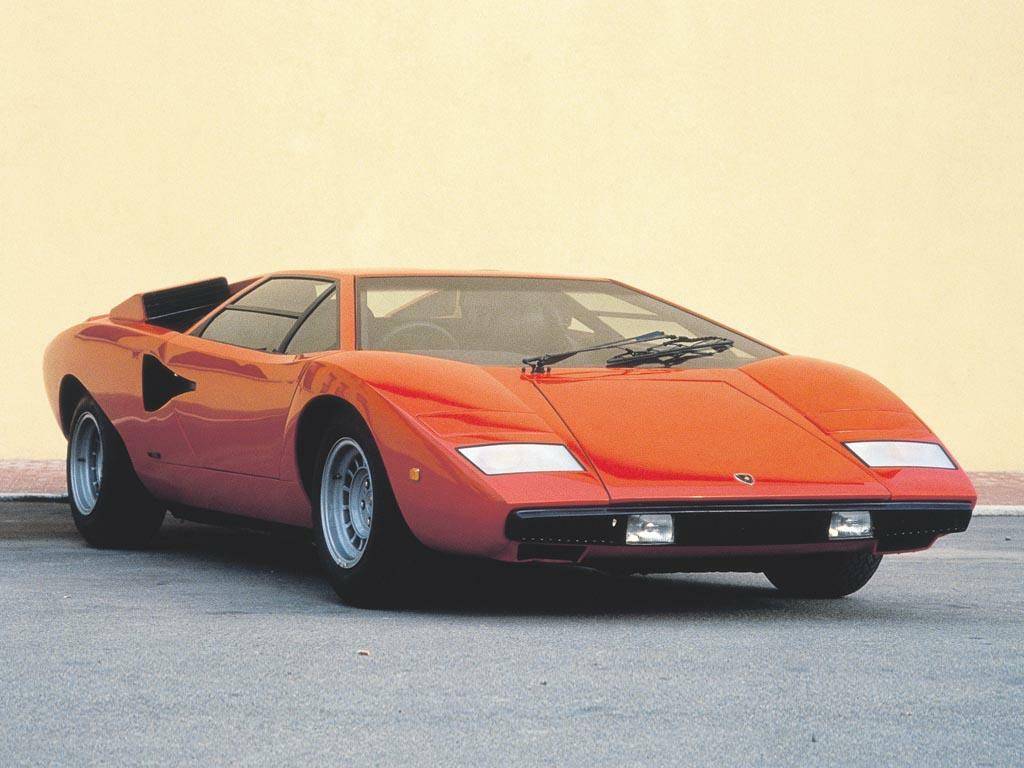
Andy Lee: I think when I was a little kid, I probably had a poster of a Lamborghini Countach, I bet, I bet that was probably the [00:05:00] car, you know, and as far as like racers or drivers. Of that nature, I, I remember a lot of the MotoGP riders back then, like Rainy and McDoon and those guys probably like the guys next to the Countach, you know, eventually I started to fall in love more and more with car racing too.

And my uncle would take me to racing events. So they built this track, Pikes Peak International Raceways, PPIR, when I was still a kid and Trans Am came there when Trans Am was still kind of at the tail end of that heyday, where it was like Tommy Kendall and Dorsey Schrader and all those guys. We went there for that race and just came down to the last lap, last couple of corners.

I remember rooting for Tommy Kendall cause he had this bright green all sport car, you know, it was like the coolest looking car. And he got taken out like one of the last corners. One of those races where I remember being on the edge of my seat, watching till the last minute. I hadn’t been engaged in a race like that ever before.

And when we left that event, it was like, I want to do that. I mean, that’s what I want to do.

Crew Chief Eric: That had to be tough growing up in Colorado too, because just like there’s a lot of beach and not a lot of ocean in the landlocked state, there aren’t too many race tracks. PPIR [00:06:00] and High Plains are the two that come to mind.

Yeah,

Andy Lee: that was it, man. I didn’t even know High Plains existed. I don’t think it did exist back then, but there was like some podunkey sort of tracks, you know, here and there we’d go to, you know, like. their cone tracks and stuff. But, uh, yeah, PPR just kind of brought the real guys pros to the state for the first time, but that didn’t last very long.

You know, that track held a handful of pro races and kind of deteriorated after that.

Crew Chief Eric: So Lamborghini Countach, we joke that that is the car for petrol heads of a certain age, right? If you grew up in a certain era and everybody had a Countach or a Testarossa up on their wall, and then there were the nerds.

like me that had a 930 turbo, right? Cause it was right there kind of along with those cars. But I wonder in your mind and in your imagination, or even today, is there still that car that you reach for that you go, man, that is the top of the summit. That’s at the top of Pike’s peak for me as a car that you’d like to own or drive.

What is that bucket list car or what is that sexiest car of all time?

Andy Lee: Oh, well, now you’re talking about nerd cars for sure. Because. You know, the car that I would love to own is very different than the car, [00:07:00] like, that I’d like to race or be on track. And you know, that car I’ve always wanted is like a Datsun 510 station wagon.

I just, I’ve always loved that basic 510 body style. It’s just, I love it. So that’d probably be the car I’d have, but that’d be very different. Few laps of driving that on track. I’d be like,

Crew Chief Eric: Yeah, the hundred horsepower that it makes, it doesn’t quite compare to what you drive on the weekends, right?

Andy Lee: No, no, I remember a little kid too, one of my uncle’s buddies had like a 240z with the sunken headlights and he had like racing harnesses in the thing.

And I just thought that was one of the coolest cars too. I wouldn’t mind, you know, one of those. Yeah, I guess closet dots and fan, I suppose.

Crew Chief Eric: So that money is no object car. What’s that

Andy Lee: money? No object, man. You know, it’d probably be when I think of cars from my childhood race cars, you know, like the camel GTP cars, money was no objects.

I know it’s not new. But I’d love to have like that Jaguar with the rear wheel covers. And that would be the car. Oh, the

Crew Chief Eric: XJ220. [00:08:00] Yeah.

Andy Lee: Yeah. Yeah. There’s a poster of it downstairs, actually in my garage. Love that guy.

Crew Chief Eric: Excellent choice. Excellent choice. So let’s talk about how you went from the motor sports enthusiast as a kid to landing a job at Bondurant.

What happened in between there? How did you end up at Bondurant?

Andy Lee: I had like a phase when I was growing up or I was. I was always getting in trouble. I was a really bad student, terrible grades, struggled for sure. And I kind of like fell in with a bad group of kids. I started getting into a lot of trouble.

I started getting suspended from school. Eventually, basically getting asked to leave, more or less expelled for lack of a better word, just because I had caused too many problems. And not like I was like, I wasn’t violent or anything like that. Or it just, I’d always disrupt class. A terrible class clown too.

And just, or at least I thought I was. And so I eventually just dropped out, dropped out of high school. And, you know, obviously there was no future of becoming some academic. There was no path going to college back then. I didn’t know what I was going to do. And during that summer, a buddy of mine, one of the [00:09:00] kids in that group, which wasn’t necessarily best kid in the world.

Like we were all kind of getting in trouble, but he had a garage and he was building his own car. He was building like a Fox body Mustang. And I was like, sounds fun. You know, I’m into cars and that’d be great. Let’s do that. I. Got a kind of a junkyard Fox body Mustang and we built these two cars next to each other and in his garage all summer and out of junkyard parts and scrap parts.

And when mine finally started, it burned more smoke and oil than it did gasoline, but it ran, you know, and that was kind of a cool feeling to take something. And at that time of my life, I wasn’t starting and finishing a lot of things, you know, and to take that car from nothing and build it and finish it.

And it ran and drove and. That was cool. So my buddy wanted to go to a mechanic school after high school. He also had dropped out of high school. We were both a couple of losers. And so, so I was like, Oh yeah, maybe I’ll go with you. I’ll go. So we both enrolled at the universal technical Institute in Phoenix.

That’s when we made the move to Arizona. I guess when I was younger though, even despite all that, like not doing well in school and really didn’t appear like I had [00:10:00] any kind of future, I still thought that I was going to do something in racing. I just, I love the sport so much. Yeah. Anytime I’d ever tell anybody that, obviously the state of my school and my terrible grades, they would always say, you’re not going to make it in racing.

Like, are you crazy? After a while, I just stopped saying it to people, but inside, like I knew, I don’t know, just something drew me to the sport. Something I just, I knew I was going to go, knew I was going to make it one way or another, it’s going to make it. And when I went to UTI, I did really well there actually finished that program.

And I got a job as a mechanic at Bondurant originally. And that’s how I got. Involved at the school. That’s kind of the beginning stages of how I got in just working on cars more or less.

Crew Chief Eric: So you’re there turning wrenches at Bondurant and suddenly somebody walks up and taps you on your shoulder and says, Hey kid, get your helmet.

Let’s go. Right. It can’t be that easy. So how did you work your way up through the system being there employed at Bondurant?

Andy Lee: I was broke. And I think back then when you, you were an entry level mechanic at Bondurant, I think my hourly salary was like [00:11:00] 7, 50 cents or something. An hour. Barely enough to pay my rent.

I always looked for like side job and working on people’s cars for extra money on the side. And there was a guy that was a chiropractor by trade. His name’s Barry and he had a group of racing enthusiasts. They all had their own racing go karts. It was like a little club that they had formed and he needed somebody to help him prep the cards, maintain them, get them ready for the next event.

And so I was like, yeah, I’ll help you out with that. After work, I’d go over to his house and help get cards prepped and work on them and learn about them and. And one day he was just like, Hey, you know, I can keep paying you to work on these carts. Or if you have any interest in taking one to the track and race in one, I’ll trade you, you know, your time and you can take one of the carts and go play.

Took me about a millisecond to say, absolutely. Yes. And after that, him and I just kind of formed a really close. Bond and relationship. He kind of became a mentor of mine and shepherd made from being a, just a very immature young adult and it kind of helped turn me into a full fledged, you know, functioning adult, a real person.

And when he took me under his wing, he introduced me to [00:12:00] the people in that group to the other members. And they were all mostly affluent guys, business guys own their own companies. And so when I started to do really well in the local go kart track in that go kart finishing well, some of those guys would come up and watch.

I’d hang out and next thing you know, they’re like, well, let’s see, you know, you’re doing pretty well here. Let’s see how you do at a big national event. They’d give me a little extra cash for some tires and fuel and entry fees and stuff like that. And then I do pretty well at the national event. See how you do for a whole season and just kind of kept snowballing from there.

But I really have to, Give a lot of thanks to Barry for opening that door and kind of helping me through.

Crew Chief Eric: And meanwhile, you’re still turning wrenches at Bondurant.

Andy Lee: Yeah. Yeah. Yeah. It’s still a mechanic at the time. It was like a dream job to me. I would call my uncle. I’d be like, you’re not going to believe I work on a car.

As soon as I’m done, I get to go test it. I get to go take it out on track and drive the thing. Like, you’re not going to believe this. I get to do that and I get paid for this. To me, it was just a dream come true.

Crew Chief Eric: And back then, what were they using for the school in terms of cars? Cause Skippy always had the Miatas and the Formula cars.

What was Bondurant using?

Andy Lee: I got there at the tail end of the Mustang [00:13:00] phase. They were just kind of transitioning from Mustangs to the Chevrolet contract at the time, to Corvettes. So, it was good times. And the Mustang days back then, because we got all those cars for free, you know, like Ford just gave them to us, hundreds of them.

The whole place was just covered in Mustangs. After hours too, things would just get out of hand. Other coaches and instructors that worked at the school and some of the mechanics, and we’d go out on track and race each other all the time. Bump each other and hit each other and then come back into the shop and try to patch it all up.

And you know, get ready for the next day so nobody would notice. I got a tremendous amount of seat time just learning from those guys playing around.

Crew Chief Eric: So at some point, somebody did tap you on the shoulder and said, Andy, we need you to coach. So how did that happen?

Andy Lee: Yeah, at the school, we’d have these big corporate events a lot.

And so companies would bring out 20, 30 employees or management teams, something like that. So those types of events, they always needed extra helpers. So there just wasn’t enough instructors to do the normal class load, and then also take care of this big group. And the type of drills that the groups would do are very basic stuff.

Autocross, [00:14:00] driving go karts. And so they’d always pull a couple of guys out of the shop to help just shepherd the guys, people around, move them around to one event to the other and, and give them little brief ground schools on how to get in and out of go karts and, you know, don’t hit cones. And this is how you buckle your seatbelt, like basic stuff.

So I started doing that a lot at the school. And eventually one of the instructors noticed that I could speak. Okay. Like I talked to a group. I wasn’t afraid to talk to people and my ability to get in front and talk to these groups of people allowed me to kind of get in the door as far as the coaching more and more and more.

We just kind of grew from that point on.

Crew Chief Eric: There’s something in this story though, before you became a pro that is near and dear to my heart. Growing up in a Volkswagen, Audi, Porsche family, I was looking at your resume and buried in there, it says Volkswagen TDI Cup. So how did you get absorbed into that?

Was that your first time, let’s say pro racing, or was there an opportunity before then?

Andy Lee: That was the gateway. Right before the series started, I just won a karting title. I’d won this, what they call the Florida winter tour, which is like this [00:15:00] big off season racing series. After I’d won that, I found out that Volkswagen was looking for people to send in videotape of yourself, kind of just explaining what you’ve done.

And they wanted kart racers and club racers, autocross racers. Like if you, as long as you didn’t have any pro racing background, they wanted you to kind of submit a video. About yourself. And if they liked you, they would invite you to do a big tryout. Eventually the faster drivers would get to compete in the series.

I did a video. And at the time, Bob at the school had this Volkswagen thing, and it was always parked in the little museum of the school. Cause the way he tells the story is he used this Volkswagen thing to lay out the track configuration for the school track when they moved the school from Sonoma to Phoenix.

So this thing’s just been sitting in this museum. I hardly ever even started. I got the thing started. Drove it up, put that in the background of my video. I was like, well, at least if I put this Volkswagen back there, maybe they’ll at least notice my tape. I guess it worked. And so they invited me out to do the tryout, which coincidentally enough ended up being right next door to Bond Run.

So there’s a couple of different tracks that are test tracks, if you [00:16:00] will, or like club racing tracks right next to the school. And they held the tryout at one of those tracks. I’ve driven that track a million times. I have. tons of laps on that track. So I was like, I couldn’t believe how much this is all just kind of falling into place.

Did the tryout of course, since I knew the track and I was quick and made it into the series. And so that’s how it all started.

Crew Chief Eric: Tell me what’s it like to drive one of these mark five based 1. 9 liter diesels on track that only turns to like 4, 000 RPM.

Andy Lee: It was actually really cool. The racing was. Very intense.

I mean, it was like spec me out of that level of competition and just super tight, always bumping each other. The cars were really quick. Actually that first 5, 000 feet out of the corner, all that diesel torque, the thing would launch off of every turn and then flatline, of course, then it just took forever to get to the next corner.

And car was so quiet. You would hear the wind noise. It’s going over the bodywork of the car, more so than the engine. So if you weren’t really paying close attention to the shift lights, you’d miss the shifts because you couldn’t hear the motor at all. So it was really unique. The other thing that was really cool about that car [00:17:00] is it had Audi R8 brakes on it and these massive slicks, which definitely didn’t need, I mean, the thing was never going that fast.

I mean, you could break so ungodly late into every corner. It was ridiculous. And the car had, you know, such a wide slick on it. Way too much tire. Instead of sliding, oftentimes it would just stand up on two wheels. You wouldn’t do a corner too fast and the thing would try to flip over. So you’d go up on two wheels and try to set the thing back down.

And so it was such a unique thing to do. To drive around. I love the series. It was great. Not too much lift

Crew Chief Eric: throttle oversteer there then.

Andy Lee: No, no, not at all.

Crew Chief Eric: But that being said, you know, that was an interesting series though, because like from the East coast, we had names like Tristan Herbert in the VWTDI Cup series, so I’m wondering, did you start to develop friendships during that time?

You know, names of folks that we now see in the paddocks almost every weekend.

Andy Lee: You know, there’s a few kids, I would say kids, uh, we were young back then. But probably about a handful of us that I still see about everywhere I go. Josh Hurley’s one kind of competes fairly regularly in like [00:18:00] IMSA and SRO. The Pombo brothers, Mark Pombo and his brother didn’t compete in it, but Mark competed in it.

You know, got used to seeing those guys around the paddock. I’m trying to think of anybody else that really rose to the top. There’s definitely a few others. I’m just blanking on some names right now, but it’s a tight little circle of People. And I guess the people that were most influential to me were the ones that were running it at the time.

It was, uh, Mark Miller was a really successful off road racer, raced the Volkswagen Touaregs with Red Bull and did like Dakar rallies and Baja and his partner, Ryan Arciero, which was another very successful off road racer. And then they hired Jan Halen, who was like our driver coach for the whole series.

So I’d see those guys still from time to time. And they really changed the course of my professional racing life. They taught me what it was to be a pro, how you handle yourself, not only, you know, when you’re out on the track, but how to look at your data and how to prep for an event and, you know, how to treat people around the paddock.

And it was just such a cool series for a lot of us. And that way,

Crew Chief Eric: well, that’s a great segue to talk about your transition into pro racing. So for those that are unfamiliar, we’re talking [00:19:00] about the TDI cup that ran from 2008 and 2009, but you didn’t hit the pro stage until about 2012. What did you do for those couple of years there?

Was it all prepped to go to the big stage where you’re already working on that? Was somebody mentoring you and bringing you up? How did that transition happen?

Andy Lee: Finished second in the championship in the TDI cup in 2009. And then It ran actually one more season in 2010, but I was too old to compete. Yeah.

I didn’t start racing go karts 20. The age range for the TDI Cup, I think it was 16 to 26. So after I finished second in 2009, I, I turned 27 and I couldn’t compete anymore. But Mark Miller and Ryan asked me to be like a coach for the series. So like a peer to some of these other guys and help them through the series.

And so I did that in 2010, but I don’t know, it was kind of a dark period because I thought, you know, I did, Really well, I almost won the championship and now I don’t have a ride. You know, I didn’t have a ride for several years and I thought maybe that was it. I thought I got a taste of it. It was great, but I thought, you know, now real life sets in and better start paying the bills.[00:20:00]

I just worked, I worked at the school and I coached and I still worked on cars from time to time and, and then, you know, right around 2011. Towards the end of 2011, the school took in a shipment of Camaros. And so there’s a good story here. So at the time I was coaching and we would do these hot lap deals for like big groups of people.

Like big corporate groups come like a hundred people. We would just do hot lap after hot lap after hot lap, just cycling people out of the passenger seat and giving them just a thrill ride around the track basically. One of the days when the new Camaros were delivery, we’re like, all right, let’s use the new cars.

Let’s get the new Camaros out there. Going into the very first turn with my very first passenger was like a 10 year old kid. I hit one of the apex curbs. And all the side curtain airbags went off in the car. Didn’t hit anything, you know, but just scared the crap out of both of us. And come to find out this became an issue with that first generation of Camaros.

If you go on YouTube, you can find guys that are drifting in parking lots and all of a sudden all the airbags go off in the car. Some sort of sensor in that safety mechanism in the car was really sensitive. And they sent out engineers. So I was the first one [00:21:00] that happened to at the school. So they thought I had done something wrong.

So they’re trying to blame me like, well, you must’ve done something. You must’ve done something. These things just don’t go off. A couple of weeks later, another one went off on one of the other coaches. And then a couple of weeks later, another one goes off and started to become a thing. So these cars just sat in the back lot of the school while they were waiting on Chevrolet to decide what they want to do with them.

And then after a while, Chevy’s like, yeah, you guys are gonna have to pay to fix them. You’re gonna have to fix them on your own. And so to replace all the airbags and replace all the interior, I mean, it was like, I don’t remember the exact cost, but you know, it wasn’t worth it really. They were going to sell them.

I was like, Hmm, I had met a gentleman that owned this it company that you mentioned in the intro. His name was Harry and he was interested in going racing. I just didn’t kind of know at what level he had bought a Baja buggy. And we went and did Baja 1000 together. And he’s like, I want to get into sports car racing.

I was like, well, there’s these cars they’re sitting out back. I think the school wants to part ways with them for pretty cheap. We could turn those into race cars. We could run them in world challenge, you know, And there was a couple other Camaros competing in the series already, so he’s like, yeah, let’s do it.

That was it. Myself and a couple other volunteer [00:22:00] guys from the shop, we stripped them down, we built them ourselves and then entered the series the next year.

Crew Chief Eric: When you got there, when you got to World Challenge, what did you realize? was different and people think, you know, that maybe they’re working through SCCA, they’re doing NASA, whatever.

I want to go pro. And when you go pro, what are the things you’re faced with right away that are maybe those culture shocks or those things you have to adjust to almost from day one?

Andy Lee: I don’t know if I was shocked as much as I was just so happy. I was so stoked, could not wait to get out on track with all these guys.

Cause I guess I was just blindly confident. And I thought if I can get out there, I think I can compete, you know? And I, and a lot of that confidence I think came from the TDI Cup. Been around a lot of guys in that series. And I’d watched what they had done in the years after that. So I was like, I think I can do this.

And I’d say the hardest part though, the part that you don’t think about is all the stuff that happens off the track. The amount of time that goes into prepping and getting the car ready and all the setup stuff and having the right people around. Cause once you start operating a team, it’s like operating a small company and trying to find the right [00:23:00] fit for everybody to get the most out of this world.

Car. Once it finally hits the track, that was probably the hardest part for sure. And really kind of not understanding how expensive it really was. You know, like I had a kind of an idea and I try to tell Harry and a couple of the other sponsors that we had at the time, you know, what I thought it was going to cost, but it’s always a lot more than that trying to raise money was I’d say the, Biggest challenge of it all.

Crew Chief Eric: You’ve been with what’s now called SRO. Many of us still refer to it more intimately as just world challenge. It’s gone through many name changes over the years, but you’ve been with SRO for, let’s say over a decade now, what’s it been like as it’s transitioned from Pirelli world challenge and speed and all these different kinds of things.

How has it changed? How do you see it continuing to evolve?

Andy Lee: In the early years when I competed, it’s still, even though it was considered pro racing, it kind of had a club feel to it, felt very modest. You go into the world challenge paddock and I’m sure you’d have real time. You’d have Cadillac, you’d have, you know, some real players in the paddock, but you had a lot of teams like us that were just [00:24:00] very low budget, single car trailer, you know, with everything set up.

Stuffed in there and a couple of easy ups, you know, and stuff. So back then it felt more of a relaxed sort of place, I guess. And it’s become a lot more serious and probably becoming more equivalent with kind of the way an emcee paddock feels as the years go along, it’s getting more professional, if you will, but also a lot more expensive to the budget that we were working on back then was a fraction of what it costs to do today.

So it was accessible back then for somebody like me, I could go out, you know, as a Bondurant coach, like I’d meet a lot of people on a weekly basis that were into it. You know, a lot of the people I would end up coaching at the school. I’d say, Hey, you know, if you pitch in 10 grand, you know, we’ll give you the side of the car for the weekend and you can come in and hang out with us.

And, and I had so many great sponsors that they just wanted to go hang out for the weekend, drink beer, smoke a cigar in the paddock and watch their car go around in circles. And it was very affordable for those kinds of guys to get in. But now it’s quite a bit more, it’s just different. The competitions I’d say is risen a level I’d say now for sure.

There’s a lot of guys. that are just [00:25:00] extremely fast. It’s getting harder. Yeah, for sure.

Crew Chief Eric: And there’s an interesting blend too, because a lot of the, let’s say bronze drivers that are in SRO or former gold and platinum drivers from other disciplines. Right. So now you’ve got this interesting mix of people in the paddock.

And I think what’s kind of funny about this is probably on both ends of the pendulum in your early days. Andy Pilgrim was there at the Cadillac and now he’s back with other cars 10 years later, but he’s still roaming around the paddock, hanging out with everybody, which is pretty cool.

Andy Lee: Yeah, it is. You know, it’s different back then.

There wasn’t any driver ranking system, the metallic ranking. It was everybody just writes against everybody, amateurs, pros. We were all in the same bag out there, all racing against each other. And it was cool. And I, I do miss that to a degree, even though now it’s kind of. More separated. It was a lot of fun.

It was a great place to be.

Crew Chief Eric: So you did some time with IMSA as well as Trans Am. So how do those compare and contrast to World Challenge?

Andy Lee: Done a little bit in IMSA. It’s weird. For whatever reason, I’ve always gotten funneled more towards SRO World Challenge. And I’ve [00:26:00] always wanted to do like 24 hours or 12 hours of Sebring and stuff.

And I’ve come so, so close. But just for whatever reason, it just never worked out. Those series are still on my Bucket list, if you will, like, I’d like to compete there more. I dabbled in Trans Am just for a short period. And those cars are a lot of fun to tested them more than I’ve raced them. But those are like hustling a big F 150 around on slicks.

They’re a blast, but I love those cars too. They’re, they’re a lot of fun to drive and I love them just for the nostalgic. Like, again, it just takes me back to my childhood and, and, you know, watching Kendall and those guys. It was fun for that reason.

Crew Chief Eric: What are your thoughts on balance of performance as a driver?

You know, I’ve heard different arguments for different people, but I always like to get people’s opinion on BOP.

Andy Lee: Yeah. You know, I don’t know. It’s gotten a lot better in recent years. I’d say in the early days when they first started back when we first entered the series in the Camaro, it seemed like it was, It’s a work in progress.

And every weekend it seemed like the scales would move drastically. [00:27:00] So you’d be super competitive and then all of a sudden you can’t even break the top 15 and then all of a sudden you’re back at the top again and you really just didn’t know what to expect. I guess the unpredictability of it in the beginning was a frustration, but it seems a lot better now.

I don’t know how you would ever make all these cars perfectly matched. There’s always going to be problems. Some car that’s going to be a little stronger somewhere. I think that’s kind of unavoidable, but at least in this year and maybe past couple of seasons, it’s not too bad. It’s not too bad now. It’s allowed some of the other manufacturers that maybe would have struggled with certain cars, enter the series and still be competitive.

It’s leveled the playing field a bit. It’s a frustrating thing, no matter what. The racer inside of you, like especially the mechanic inside of me, just wants it to be no rules. Build the fastest car you can build and let’s go line them up. And let’s see, not only who can drive them the best, but which team can build it.

The best,

Crew Chief Eric: like it was in the old days, here’s your power to weight ratio that you need to hit, you know, maximum amount of fuel and minimum weight and go build whatever you want.

Andy Lee: Yeah. Yeah. I missed that era of motorsports. I wish I had gotten a [00:28:00] chance to taste that. And

Crew Chief Eric: you know, what’s funny about that, we grew up in the same era.

So those are the old days of Can Am and IMSA and Trans Am. And you’re just seeing all the crazy stuff, the Mustangs, the Audis, the Buicks. I mean, you name it, they were all out there and everybody was building a different mousetrap. Some of the people that were competing in those series. The names alone are just in the halls of legend, right?

I mean, you’ve got Stuck and Haywood and Ribs and St. James and Pilgrim and down the line. And I mean, there’s a bunch of them and it’s just talk about an amazing time in racing.

Andy Lee: Especially the car that comes to mind of like that era is like the Audi’s. Right. They were just such an alien car compared to everything else that was out there back then.

And yeah, man, that must’ve been a pretty cool thing to be a part of back then. And maybe, you know, yeah, everything’s cyclical, maybe somewhere down the road. Maybe some of that will come back. I hope maybe during my lifespan and career and racing, but that would be the ultimate. I had my druthers, I would just say.

Here you go. Here’s your budget. I’d say maybe you have a cap on the budget. You can take any car you [00:29:00] want. We’ll see you on Sunday. Let’s go.

Crew Chief Eric: And talking about having been to so many tracks. I mean, if anybody follows you on social media, you’re somewhere and anywhere on every given Sunday. When you look at all the places you’ve been to, all the cars you’ve driven, what’s your favorite, what’s your least favorite track favorite, least favorite car so far?

Andy Lee: I don’t know if I have a least favorite. I guess maybe when I first started, I had tracks That I didn’t care to go to, but it wasn’t as much about the track. It was mostly the town they were in. Oh man, we got to go to that place again. But when it comes to the track, I find almost every track entertaining to some degree, they all have some little crux, you know, some little challenge that you try to figure out.

And mentally for me too, like anytime I go to a track, I try never to think of a corner of like, Oh man, I don’t want to go through this corner again. I always want to try to be as excited as I can about every corner. Like, what is it about this corner that I can figure out and make it better? Better and more fun to drive.

But I think sentimental wise, there’s tracks that rise to the top for me. Like Sonoma was a track that I did really well at early on. And so [00:30:00] Sonoma is one that that’s always been a sentimental favorite of mine. I like Watkins Glen a lot. It’s a great track. I always love street tracks. I always did well at street events.

So like Detroit, like Belle Isle was a fun one. Long Beach, you know, streets of St. Petersburg. I, I love those venues too. Those are. Those are great.

Crew Chief Eric: And Nashville is the newest one, right?

Andy Lee: Yeah, but they don’t let the pros go there. We don’t get to go there. It’s an AMS only. And now I’m like, come on, just let the GT4 America go there, please.

I’d love to race there, but not at the moment.

Crew Chief Eric: During this last 10 years, obviously you’ve continued to come up through the ranks and now you find yourself racing for the famed Flying Lizard Motorsports.

So

Crew Chief Eric: people might recognize Flying Lizard going back many, many years with their winning 911s and Audi R8s.

And they’ve got some other cool cars in the stable for sure. And we’ll talk about them, but how did you end up at Flying Lizard?

Andy Lee: This goes back to Bondurant either. There’s this kind of like this brotherhood of people that have been instructors at Bondurant. We’re everywhere. And every time you meet one somewhere, it’s just nothing but great stories and camaraderie.

[00:31:00] And Darren Law, one of the owners of Flying Lizard was. You know, he worked at Bondurant as an instructor and, and he actually, while I was still there as an instructor, he came back and became the general manager of the school for a short time, him and Johnny O’Connell, both I’ve always wanted to drive for flying lizard.

When I worked at the school and Darren was still racing full time for that team. I just thought that was just the coolest thing. It made it seem realistic. My dreams of becoming a race car driver. I was like. Well, Darren Law did it and you know, he worked here and he didn’t have much money and he was able to figure it out and he got to the high levels of pro racing, got to run at Le Mans and won 24 hours at Daytona.

So for me, it was always a dream to race for Flying Lizard back then. I just thought that was one of the coolest places you could ever land. My co driver Elias Sabo and I, we were just looking for a team this off season. Through my connection with the school and knowing Darren from way back in the day, I was just like, Darren, do you have any room for us?

And he’s like, yeah, I think I can make that work. And that’s how we got pulled over there.

Crew Chief Eric: So how long have you been driving for the Flying Lizard now?

Andy Lee: Just this season. [00:32:00] Yeah. Just this year. Congratulations. First year with the team. Yeah. And it’s been great. They’re a stellar operation.

Crew Chief Eric: You get to pilot a bunch of their cars.

Two in particular, we’re going to hone in on. One is the beige, I guess is the right color, Aston Martin. And the other is a. Hot pink, let’s call it magenta Lamborghini Huracan, which has a very cool nickname.

Andy Lee: Uh huh. Yeah. Yeah. We’ll talk about the Lamborghini, right? We’ll come back to the Aston. So we like to call the Aston color, like a tactical tan, right?

Cause it’s 511 tactical. So it sounds a little sexier than beige, but the other driver, I don’t get to race that car, but I’m, I’m coaching him named Slade Stewart. He’s had that livery on a few other cars he’s owned. I’ve coached him. You know, in those cars prior to joining Lamborghini Trofeo. And it’s just kind of coincidental that he ended up with Flying Lizard also.

But I don’t know where the name came from. So one day he’s just comes up to me. He’s like, we’re going to call the car Sparkle Farts. And I was like, okay, sure. I was in the room, I think when he told Darren Law this and Darren like kind of like, [00:33:00] like, I don’t know if that’s the right look for Flying Lizard, you know, like, because we’re this very classy, you know, well known team in the paddock.

Darren let him go for it. And it’s become a big fan favorite.

Crew Chief Eric: Very much is. And my daughter became an immediate fan of Flying Lizard because of Princess Sparklefart, she likes to call it. So, I mean, and it was a hit to watching her walk around the paddock with the pink tee on her. It’s like, Oh my God, you know, she’s like, She’s so cute.

She loved it and showing her other races online and stuff. And she’s hooked. And just like we were talking about with you sitting on the edge of Pike’s Peak, watching the cars go by, it’s the same for her now she’s a fan and she’s into motor sports. And sometimes it’s just that getting out over your skis that makes all the difference for the next generation.

Andy Lee: And once you have a rooting interest in any sport, once you’re attached to something, a driver, a player, whatever it is, I mean, it just changes the whole dynamic. And I mean, for your listeners that don’t know what the car looks like, it’s bright pink and it’s got unicorns on the side of it. I mean, it stands out.

The livery was designed by his [00:34:00] daughter. So Slade’s daughter came up with the look, you know, the way the story goes, like he was going to let each one of his kids design the wrap, you know, they would alternate every year. His daughter would design it one year. Then one of his sons would get to design the next season, but pretty sure that design’s not going anywhere.

I think that is going to stay. So I’ll let the kids design a wrap on something else later on. It’s a pretty popular car. The kids, I mean, they love it. And so at the last event, he did this really cool deal where he went and he bought like 40, 50 stuffed unicorns and some tiaras with unicorn horns on them and started handing those out to the kids too, and they come over to look at the car.

And he’s definitely doing his part in converting young kids to cars. to racing fans, which is what the sport needs desperately. It needs young fans to be attached to it.

Crew Chief Eric: Let’s talk about your tactical khaki beige Aston Martin. What’s it like to drive that thing? Tell us about the Aston.

Andy Lee: I love the car. I don’t know, recent years.

And this kind of goes back to our previous conversation where we were like, things have become very uniform. Like all [00:35:00] race cars are mid engine now. They’re all mid engine, Porsche’s rear engine, but everything’s got that same sort of setup. And there’s a Mercedes, I guess. There’s a few outliers. I’ve always been a huge fan of front engine cars.

I just, I love the way they drive, the way they handle. We switched from driving the Audi R8 GT4 last year, or last several seasons. To the Aston, and I was excited about that switch. I love the car. It’s probably one of the best GT4 cars I’ve ever driven. And I’ve, I’ve driven a pretty good number of them, but it’s, it’s a great car for an amateur driver also to really get comfortable the speeds that a lot of these tracks demand.

It’s cool, man. You feel like James Bond for sharing that thing. Just cool looking. Like, I just love the way it looks too.

Crew Chief Eric: And it sounds good. And it does all the things that it’s supposed to, but going back to our conversation about balance of power, let’s talk about the Austin versus the Mercedes. Cause there seems to be a pretty good rivalry there in world challenge between the two marks.

And I always feel like the Mercedes is just as massive torque monster. Like it’s got you on that low end grunt. Is that how you feel about it? Or Are they pretty close?

Andy Lee: You know, they [00:36:00] have the same motor, right? Both cars have the exact same motor, but the Mercedes has a different gearbox, different gear ratios, I believe too.

So it creates its power kind of differently. It feels like it almost feels like it doesn’t have the same engine. I’d say at least the way the World Challenge BOP is set up at the moment, it almost feels like the Aston’s a little stronger. And that just might be my perception. It feels like it’s a little torque here, but that may have more to do with the gear ratio difference in the cars than anything else.

It is a torque monster, which I love. And last year in the Audi, that thing had to be revved the limiter every gear, just had to strangle that thing to get a lap time out of it. Um, but this car, it’s a lot more fun, you know, that first 50 feet off the apex thing just lunges forward. It’s a great feeling.

Crew Chief Eric: Do you think there’s an Achilles heel or a shortcoming to the Aston?

Or you don’t want to let your rivals know what it is.

Andy Lee: I don’t know. You know, there’s cars in the series right now. Like I, I for sure feel like, you know, if you were to have like a category for horsepower or like straight line speed and a category for breaking a category for like [00:37:00] corner speed, apex speed, and you were to put everything on that chart.

I feel like the Aston is like an A minus at almost everything. There’s a few other cars that are like an A plus in a few categories where it’s a little bit stronger than us in places. We feel like the Porsche is a little better than us in a few spots. And lately the Supra has been really strong and really fast in a few places.

It feels like we just can’t quite measure up, but over the course of the whole season, it just feels like we’re pretty strong everywhere though. So it doesn’t actually have much of a weak spot, at least none, nothing that’s like, Glaring,

Crew Chief Eric: you know, I don’t see you turning wrenches in the flying lizard paddock, or although you maybe you do in the evenings, you know, behind closed doors or something, but I do want to ask about setup.

No secrets here. But, you know, nowadays you talk to a lot of drivers and everybody says, Oh, we’re driving off the front wheels of the car. Nobody likes to run them loose anymore. Like in the old days, you know, It’s kind of sliding, rotating through the corners. What’s your driving style? Do you run off the front?

Do you like it a little loose? Do you want to keep the car totally neutral? How do you tell your engineers how you [00:38:00] want the car to run?

Andy Lee: When I was moving up into racing full size cars, all of my seat time came at Bondurant. Primarily driving Mustangs and Corvettes and later on Vipers. So all front engine stuff.

And so I really got comfortable with a car that understeers and pushes. I don’t wouldn’t say that necessarily that it’s what I love. It’s just that I’ve adapted to it. I like a car that’s just slightly on that understeer side of the curve. But what that also allows you to do is really manipulate it a lot.

I want. The car to free up. If I want to rotate the car, I know what I have to do to do that. I can hold the brake a little longer. I can slow down the trail brake. I can grab the gear shift a little closer to turn in. I can get the car to rotate when it’s necessary, but I think over the span of a whole race, 60 minute race for us, just limiting mistakes is key, especially when I hand it over to Elias.

And so I think a car that’s just slightly on the pushy side can help you kind of limit making big, nasty oversteer mistakes and caused you a lot of time. Practically it works well for me, but you know, I also like going out and [00:39:00] Smoldering the tires off something to understand they’re screwing around.

Yeah, of course. Like I would love to just toss the car into a corner and just throw the wheel to the lock and just destroy tires. That’s fun too, but not as much when I’m right. To

Crew Chief Eric: your point there, it’s also a game of managing fuel and tires because you guys don’t have pit stops and world challenge. So you got to make that car survive on all of its consumables.

And sometimes I think the fans forget that, right? Well, why, why didn’t he take that pass or challenge that guy? And it’s not your age. It’s all a game, right? It’s a game of chess.

Andy Lee: It is. Yeah. And especially when you’re dealing with a co driving situation. Road America, I had a bad start. I lost a few spots and I made up a couple and I got to like fifth, you know, and I’m, I’m just kind of stuck there, guys in front of me are all pretty equal, you know, nobody’s making any mistakes, we’re all just kind of turning laps, but the cool thing now is Elias has risen to a level where I know which AMS he compares to.

And so I can look at the cars ahead of me and I can say, well, I know Elias I know Elias is faster than that guy’s co driver as well. So [00:40:00] I don’t have to take as many risks sometimes. So like you’re saying, like when somebody’s sitting there on the sideline, you’re like, why isn’t he trying to go for a move or something?

It’s like, well, I think the best bet for me is just to let Elias go out and beat some of these guys, because I know he’s better and not take the risk, you know, so it’s cool to play the strategy sometimes too.

Crew Chief Eric: Now that you’ve been with flying lizard for an entire season, why don’t we look back over the 2022 SRO world challenge season?

What are your thoughts going into next year?

Andy Lee: It was nice at the final weekend to get a win to finally get to the top, not only in our class, but to get an overall win, you know, even against some of the pro pro pairings.

Crew Chief Eric: Congratulations. Yeah.

Andy Lee: Yeah, no, it was, it was fantastic. Unfortunately, I followed it up on Sunday with one of the biggest mistakes I’ve made in my career.

And turn one on the race start. That’s something I’ll learn from of course, and move forward. But I think the season as a whole, we came away with nine podiums out of 14 races. And it seemed like every weekend we became more cohesive and just everybody just started to click on all cylinders. I mean, the car just got better and better and better and better.

And a lot of [00:41:00] that’s because of our extremely talented engineer, Owen Hayes. unbelievable guy and I tell him what I need and he just always figures out a way to give it to me. So that makes a big difference. It probably took us about half a season to really develop the car and catch up to the other teams that had had the Astons for numerous seasons.

It’ll be awesome to start the season with a car that we feel is pretty well developed set up wise. That doesn’t mean it’s gonna be easy. Of course, who knows who’s going to be on the starting grid next year. So certainly not expecting anything to get handed to us, but it’ll be nice to start fighting with a great car.

Crew Chief Eric: So when you take a broader brush approach as a retrospective to your career in pro racing, you look back over the decade plus, especially with world challenge. What have you seen? What has changed? What would you like to see change?

Andy Lee: I guess that’s one of the questions I want to ask you. I suppose. You know, I have my own opinion.

Sometimes I feel like maybe I’m too close to it. People ask me that all the time and I can never really give them a solid answer, but maybe that’s because I’ve been a part of it through the evolution of where it was when I started and where it is now. But I’m curious if you were handed [00:42:00] the keys to SRO tomorrow, Stefan Rittal is like, Eric.

It’s yours. What would you change?

Crew Chief Eric: That’s a great question, Andy. And I got to tell you, the one thing I like about SRO is that it’s so accessible. There’s a lot of motorsports organizations you go to that everything’s at arm’s reach and even further. And I’ll give you a prime example. When we went to Nashville, you could go to the Trans Am paddock.

You could go to the SRO paddock, but you couldn’t go to any of those. IndyCar. When you go to F1, there’s the whole village that keeps you there, dizzy and all that kind of stuff. NASCAR is the same way, right? They keep you in the beer line long enough that you don’t have enough time to go to the paddock.

SRO is very inviting. You can walk into anybody’s paddock, talk to an engineer and talk to a driver. It’s awesome to watch. It’s awesome to be there. I think what it lacks, you know, if I had to change something, it doesn’t have the same bit of circus that let’s say the other organization also known as IMSA, the sister organization or the cousin organization has.

IMSA has just a lot more fanfare to it. It has sort of that Olympic village feel like [00:43:00] F1 has, but it’s still inviting. You can still be there in the paddock, walking up and down 24, you know, things like that. Sports car racing as a whole is one of the best places to be. The multi class racing is awesome.

There’s just so many things going on in the day. What would I change? I don’t know. Maybe I’d like to see. more booths, more things for my kids to do while I’m there, you know, to keep them distracted or something, but also to just kind of break up the day other than just races breaking up the day. I think that would be the biggest thing.

Andy Lee: I appreciate that. And I’m curious also, like, you know, that’s kind of like the interaction part of it. Would you change anything on track as far as watching the races?

Crew Chief Eric: Yeah, I’m not a big fan of the restarts. Having sat in several of the drivers meetings this season, I was confused and watching it go on, I was even more confused.

I’m like, why do we have to re grid? Why do we have to have this separation? You look at a WEC race, or you look at an IMSA race or something else. You restart wherever you were when the flag dropped and you continue on with life. That whole [00:44:00] restaging of cars to me feels like you’re stealing time from the session, but you’re also taking away at least two laps from the fans as they’re watching you guys kind of basically grid up while you’re rolling.

It’s just really weird.

Andy Lee: I’d agree with that too. There’s another rule and I know that The race directors during our meetings have talked about wanting to change it over the off season. I hope they do. The other problem with the restarts and SRO is that you’re not allowed to overtake until you cross start finish.

Crew Chief Eric: Yeah, that’s true too. It’s a little strange.

Andy Lee: And I hope they change it. I’m in the mind. So they just let the green flags out. It’s go time. Like it’s racing. The flags waving, you can pass, right? Yeah,

Crew Chief Eric: exactly. We all learned that go kart racing. Yeah. Doesn’t matter how far back you drop it. You can see that flag drop.

It’s good to go.

Andy Lee: I think the other thing I missed too, and I don’t know if you remember it or watched a lot of racing back then, but I missed the standing starts.

Crew Chief Eric: You know, I’m used to those with SCCA and NASA, where it’s just like, let them rip, watch 43 Miatas, go for it right off the bat, you know, that kind of thing.

It goes either way. I mean, it depends on, I guess, where you are, where a rolling [00:45:00] start would be a lot of fun versus a standing start. I think it depends on the, on the track, like the standing start at national would be really cool versus a rolling start coming around turn 11 and walking. Lime is pretty impressive, you know?

So I think it really depends on where you are.

Andy Lee: I’d agree with that. Yeah. You know, the other thing I was curious of, you know, ways to like spice it up. And I guess that kind of ties into the question I already asked you, but, you know, I remember when IndyCar, when Pikes Peak Hill Climb was a part of the championship, where there was these different kinds of challenges that you had to deal with throughout the course of the season.

You know, dirt track or pavement or whatever it is, I’m wondering if there’s some way sports car racing can have a little bit of flavor like that, where just a different dynamic in some events.

Crew Chief Eric: The term world challenge has this interesting connotation to it. It’s kind of preloaded and you think to yourself, well, what exactly does world challenge mean?

For me, I immediately go back to the late 70s, early 80s, international races of champions, right? They were put on with the IROC IROC Z came from, you know, that you’re more than familiar with, right? [00:46:00] So I miss those days seeing Hans Stuck run with Danny Sullivan and all these people in just basically the same car.

And then they would do oval track and road course, and they would just mix it up. And to me, that was the real world challenge because you were pulling guys from F1, from NASCAR, from Indy, from rally, and you brought them to the big stage and say, let’s see what y’all can do with this Chevy Camaro. Let’s go.

Andy Lee: I love that format too. They kind of still do that, but it’s not the same. I miss those times too, man. That was really cool. No, I think it’d be cool to have some sort of like time trial competition or points, you know, for something that’s just different, like maybe night races or.

Crew Chief Eric: Yeah,

Andy Lee: that’d

Crew Chief Eric: be fun.

Andy Lee: Something to mix it up a little bit, but.

Crew Chief Eric: Or maybe a longer format, not the full 12 hour Enduros, but maybe like a four hour or two hour or something like that. Granted you now you have to bring in pit stops and pit strategy and all that kind of thing, but still it’d be, it’d be pretty cool. Now I will say there’s one thing I think the world challenge team.

Doesn’t get enough credit for and having worked with them behind the [00:47:00] scenes, the season, the press core, people like Dean case and public relations, the social media team, and the folks that are doing the televised races, the quality of the TV coverage is really, really good. The media team. At world challenge is amazing.

And again, I think they just don’t get enough credit and I can’t say enough that people should really tune in to the races and check them out. Even after the fact, they’re really, really good to watch. They’re on par with, you know, the big league television stations.

Andy Lee: I agree with that too, man. It’s gotten a lot better for sure.

I like the fact that you could just go in and watch the races whenever you want. The accessibility of just having them up on YouTube is just awesome to be able to share them with people and you don’t have to watch them live.

Crew Chief Eric: I still watch every second of them though, so

Andy Lee: You know, on the weekend, what are you most primed up to watch as like a fan?

Like for me, it’s been MotoGP.

Crew Chief Eric: I go, I go back and forth. I grew up in the Group B era and the Trans Am era because they were at the same time. And [00:48:00] so I would flip back and forth and I followed Group B. And then you saw a lot of Group B drivers move to Trans Am like Han Stroke and Walter Rural. And then suddenly they’re there running with Willie and Lynn and Hurley Haywood and all them.

And so it just became one thing to the next. And I go back and forth and I often say on the show, I’m one of the few people in our organization that is interested in world rally. And I’m like, it’s one of the hottest, probably most dangerous motorsport that there is out there. It’s amazing. And the drivers are extremely talented.

Granted, the cars are not the cars of 30, 40 years ago. They’re not even close to, you know, the group A cars that replaced the killer B cars and stuff like the Subarus and the Evos and stuff like that. They’re just, they’re very different. I flip flop back and forth because then suddenly you want to talk about petite or Rolex or Lamar’s, you know, any of that stuff, and I’m all about it.

All right. Sports cars or rally car. That’s where I’m at.

Andy Lee: I love world rally, man. I mean, I got a tiny, tiny, tiny taste of what it’s like, you know, doing a Baja 1000 years ago and just the level of commitment, just ever changing terrain and just people [00:49:00] standing around on the sides of the track in the line of fire.

And it’s just a crazy, crazy way to race. You know, there’s nothing quite like World Rally watching those guys, especially in the snow. So cool.

Crew Chief Eric: You know, you bring up Baja. I was very fortunate last year. I was invited by one of our guests, Matt Martelli, to join them at the Mint 400. And so I got to see Trophy Trucks and all this stuff.

The Mint 400 is one of the oldest and longest running off road races, even older than Baja, out there in the deserts of Nevada. And I tell you what, I was really impressed. That’s another motorsports venue event where, you know, you’re You can get really up close to the drivers and the cars. And I had told Matt, he’s like, what do you think?

What do you think? And I said, I gotta be honest with you. This reminds me a lot of being at an SRO event or being at an INSA event. And he goes, yeah, there’s a reason for that. And he just kind of laughed. Because he took the best of what he knew from other organizations. He’s like, I want to bring this to the off road world.

And they did a masterful job. And it’s a great event to go to.

Andy Lee: Yeah. I’ve been to that once as a, as [00:50:00] a crew guy, I was just a fuel guy for one of the teams, but the beginning of the event’s cool, you know, downtown, you know, Las Vegas, yeah. And all the cars coming through. It was really quite a experience.

It’s cool. And spectator wise, it’s tough. You see about a hundred feet of the race, but outside of that, it is such a cool deal. I love it.

Crew Chief Eric: We’re going to switch gears here. So I don’t think people realize how busy drivers are. I mean, there’s so much stuff going on during the weekend, especially you with the co driver.

I mean, you could stand there and your guys paddock and you guys are buzzing around, you know, Practicing driver changes, looking at data, all this kind of stuff. But when you’re not at the racetrack, you got other things going on. You’re volunteering your time. You’re still coaching things like that. And we did an episode.

Prior to this one with your friends over at OpenTrack and you were working with them as their pro coach, talking to folks like, you know, many of our listeners that are in the HPDE and track day world. So I wanted to get an idea of what you do when you’re working with people in the grassroots motor sports world, and maybe what are [00:51:00] some of your top tips for those folks?

Andy Lee: It was a cool experience getting to work with those guys. That kind of came up around during COVID a lot of the tracks were closed. And so I was sitting around my house a lot and they were like, Hey, we’d like you to coach our, our members virtually. So I was like, yeah, that sounds fun. I started to work with a lot of people that were just getting into HPD or track the events, most of which had only maybe done one event or two events.

Like most of them are very, very new. What was surprising to me is. These people are driving five, six, seven, 800 horsepower cars with no training, nothing. A lot of them had never been to a racing school. A lot of them had never had a coach other than like the one that’s provided at a track day event that’s kind of like somebody that’s had a few more track days than you have and they’re trying to help guide you around like the basics, you know, that was shocking.

I was like, wow. Okay. It was pretty cool to get a chance to give them some of the. The really important information, the things that can really keep them safe, prevent a big accident. And a lot of that stuff is pretty simple things. But until somebody tells you, just don’t know. Yeah, I think the biggest piece of [00:52:00] advice when I’m talking to somebody that’s new to the sport, it’s not a profound thing to say, but how much this all comes down to just, Your vision, how good you are with your vision.

I know that that’s so easy to say. And a lot of times I get eye rolls when I tell people that when I’m coaching them, I’m like, well, we’re going to focus on your vision. But you know, a lot of times it’s the determining factor between getting through that corner safe, getting through that corner fast or versus not making it at all and making really poor decisions.

You really always start there. That’s the tip of the spear, if you will. And then you kind of work your way from there.

Crew Chief Eric: So what about top tips for those of us been doing this forever and we just want to go fast?

Andy Lee: Uh, give me a scenario. There’s all these

Crew Chief Eric: little tricks and things you’ve learned, you know, being a pro racer that you could pass on to those of us that are, you know, still struggling through the lower ranks.

Andy Lee: Yeah. Brand new tires. It’s always a cheap, well not a cheap way, but an easy way to go fast. You mean those

Crew Chief Eric: 25 leftover Hoosier scrubs is not a good idea?

Andy Lee: No, that’s not necessarily going to improve your time every time, but. Let me put it this

Crew Chief Eric: way. What is one of the [00:53:00] things that you find that advanced drivers have been doing this for a while, maybe still need to work on or something that they’ve taken for granted that was fundamental from the early days.

And you go in and if you just did this and it’s not vision, right? It’s something else. Yeah. That they could probably work on, which would tidy up their lap.

Andy Lee: Well, there’s a couple of things. There’s one that’s off the track and one that’s on the track. Okay. I’ll do the one that’s off the track first. So as a mechanic, kind of know my way around a car for the most part, the prep jobs that I see at track day events on some of these cars, I’m like, my God, I’m shocked that you get around the track, you know, let alone trying to go fast in this thing.

I think a lot of drivers just don’t spend nearly enough time like in the garage, you know? And obviously it’s like, you know, when you’re doing this. For fun as a hobby, you got kids, you got work, you got, it’s hard to carve out a big chunk of time to go through your car properly. But I’d say a lot of drivers that I’ve worked with, I’ve gotten in their cars, I’ve driven them and I’d said, man, okay, we’re going to have to adjust that shock.

Okay. We’re gonna have to adjust that sway bar. Like that’s way off. Where’s the brake [00:54:00] bias knob? Like that’s way off. There’s all these little things that are just. Not set right. And they just got used to driving the car that way. I’ll go through and try to mix it up and change things. And they get in the car.

They’re like, Oh my God. Like, I had no idea that this car was, could be this good. I’d say that’s one trick, have somebody that’s got a lot of experience, like a really good, it doesn’t have to be a pro driver, but just, you know, there’s a lot of, Guys around the paddock, they’re savvy on setup. Have one of those guys drive your car, man.

You know, hand the keys to one of those guys. Let them go out, play in the car for a bit. You’ll learn a lot. And obviously we do too. Like when we’re racing at our level, when we have teammates, you know, we’re always learning from each other. And so if you’re just going out there trying to do it all on your own, sometimes you’re going to miss some things.

You want to have some way to bounce your ideas off of and see what they think. The thing on the track that I run into, even with really experienced drivers, Experience guys, guys that have been going to HPD racing club for years is braking. Most of the drivers I work with struggle with braking proper, like a braking technique.

I spend a big bulk of my time when I’m working with somebody for the first time, really just trying to break habits [00:55:00] around how to brake, you know, how to break properly.

Crew Chief Eric: In addition to all the things you’re doing and you’re extremely busy schedule, we did some digging and we also came to find out that you’re behind the group track record.

And for those that are unfamiliar with that, what’s it all about?

Andy Lee: Yeah. Track record was started by a friend of mine, Kai Goddard. And I, we came up with the idea based on input from people that were going to HPD track day events that were looking for a high level of coaching, but just didn’t really understand where to find that.

Kind of driver, driver, coach, you know, whatever you want to call us, somebody that has maybe experience in GT four cars, high level GT three cars, you know, race cars, if you will. We thought it would be cool to come up with a place where people could go and they could source, you know, a coach, they could vet them, they’d see their profile, their experience, everything they need to know about somebody, and they could hire them off the website rather than through a friend of a friend of a friend of a friend to get to somebody when it comes to driver coaching, it can be expensive to hire somebody like myself.

We wanted to have coaches all over the country just so that we could [00:56:00] minimize the travel expense to have somebody come out to an event and work with you. So yeah, it was, it was a part of starting it with Kai. I’m not as involved with it as I was at the beginning. Kai’s running that company now, but it was exciting to start it with them and I help out whenever I can.

Crew Chief Eric: It’s not an HPD organization. It’s more pro coach for hire. Is that what I understand?

Andy Lee: Yeah, it’s just basically a place to find, you know, pro level coach. And I think the industry needed it for quite a while. They needed somewhere to go to find it. So yeah, it’s been doing really well.

Crew Chief Eric: If somebody asks you to convince them to come into racing, starting at the HPD level, what would you say?

You know, what’s your 32nd elevator pitch? How would you motivate them to get up off the couch, get their car and cover the track and drive it the way it was intended to be?

Andy Lee: One of the things for me that’s important when I talk to, especially younger kids, people that have an interest in getting into the sport, I think there’s this misconception that you have to be rich, have to come from money.

You have to have all this stuff. And I didn’t come from any of that. And I know a lot of drivers that didn’t come from any of that. I like [00:57:00] representing for that group. If you want to get into this, there is a way to do it. And it may be a little harder pathway, but if you want to get into the sport, like the sport wants you, we need drivers from a diverse bunch of different backgrounds.

And so I think when kids come up to me, they’re like, Yeah. You know, I raised cards now, you know, I just think my family can afford it. We can afford to go to the next level. It’s always a bummer for me to hear. I always like to tell, you know, you’ll find a way if you’re persistent enough. If you dig around this paddock enough, you stay involved, like there’s opportunities out there.

And so just even beyond like the HPD driver, somebody that’s looking maybe to go to the next level and race. That’s something I always like to say. If you’re in the HPD level, you’re at maybe that tipping point where you’re like, should I go compete or should I just continue to do this? I would say go race.

I mean, life is short, man. The thrill you’re going to get from racing exceeds HPD driving like tenfold. And you know, like you line up and you compete, it’s a whole nother ballgame. It’s addicting, but it’s also like, it just, you feel truly alive, you know, when you’re out there like that. I’d say you got to do it.

[00:58:00] You just got to do it. Any level, just do it. It’s fun.

Crew Chief Eric: Just send it.

Andy Lee: Yeah.

Crew Chief Eric: So the big question, what’s next for Andy Lee?

Andy Lee: I thought about a few different angles on it. There’s always like the what’s next after, you know, cause you can’t race forever. Like there’s always going to come a time when you have to hang the helmet up.

I don’t know how long that’s going to be. But, you know, I, I think my passion, even since I was a little kid has always been motorcycles. I have three of them in the garage downstairs, much to my wife’s dismay. I’d love to do something in the motorcycle realm. Would be like my next move. I don’t know quite what that’s going to be, but I’ve always loved it.

I still watch MotoGP. It’s just my favorite thing to pay attention to. On the track, I’d say I would love to go to, to do the big events, like 24 hours, Daytona, 12 hours of Sebring, like the Petit Le Mans. You know, get the chance to maybe one of these days go do 24 hours at Lamont. I mean, those items are on every driver’s bucket list, certainly on mine.

And from a more sentimental side, Pikes Peak Hill Climb is also on that list. So getting a chance [00:59:00] to do that event would be great.

Crew Chief Eric: And I know I bring them up a lot, but if you get a chance to go back and listen to Eddie Pilgrim’s story, you know, he got his pro seat at 40. So you’re still in time.

Andy Lee: Still got a chance, man.

Yeah. And it’s funny because. Andy Pilgrim and I, so when I was racing the Camaros and we were doing really well, like we were, we were winning a lot of races in those cars and, and we got the attention of Chevrolet and GM and they invited me to test the Cadillacs alongside a few other drivers. We were all there to replace Andy and Andy was at those tests.

Even though we were all there to take his seat. He was probably one of the most generous pro drivers I’ve ever been around. He was there. He answered any question I had. He was there helping me every step of the way. Just like the best, one of the best people I’ve ever met in the paddock. So great guy and a motorcycle guy too.

I think motorcycle guys. Just tend to be good guys. You know, I don’t know. I’m in the water. He’s a big motorcycle enthusiast too. So when him and I get around each other, that’s usually what we talk about. That’s a great guy.

Crew Chief Eric: Yeah. It’s such an interesting fraternity and sorority [01:00:00] there in any of the paddocks you go to, whether it’s at the grassroots level, you know, at world challenge or IMSA and beyond.

I mean, the world of motorsport is just so different than a lot of other sports, right? You’re competitors when you’re behind the wheel, but when the helmets come off, it’s like a big family atmosphere. So it’s always. A lot of fun. So it’s one of the things I cherish the most about being in the motor sports world.

Andy Lee: Yeah, absolutely.

Crew Chief Eric: So that said, Andy, any shout outs, promotions, or anything else you’d like to share that we didn’t cover thus far?

Andy Lee: It’s difficult for me to list off everybody that’s helped me through the years. I mean, it’s a long, long list and I just don’t want to leave anybody out. There’s probably a hundred people that have helped me get to where I am now.

I’m just unbelievable, thankful and grateful for all those people. Every time I see these people, I try to tell them how much that they mean to me, but I just don’t want to risk missing anybody. So I’ll leave it at that. You’re getting into the sport. That’s the way it goes. If you want to. Get into racing.

You do need like an army of people that are kind of helping to push you up. I’ve been very fortunate to have that. So I’m very gracious for all these opportunities and the latest one this year, just getting the chance to [01:01:00] run for flying lizard, which for me was a dream come true when I was working at Bondurant as a mechanic, Darren Law was racing for flying lizard and doing 24 hour Le Mans.

You know, I just thought. Wow. That dude is such a bad ass, you know, I’d love to, to race for that team someday. And, and I can’t believe I’ve actually gotten the opportunity. Yeah. It’s been fun and I’m looking forward to more of it. Thank you.

Crew Chief Eric: Well, we’re going to close out this episode with a quote from Bob Bondurant.

And he said. Andy came up through the demanding ranks at Bondurant to become a top instructor for the school. He was one of those rare talents that I felt had exactly what I look for when I pick a champion, a real passion for racing. I can teach anyone to be a better, faster, smoother racer, but I cannot give them the heart.

And with that, Andy will be one of those racers that will still be on the podium 25 years from now. So to learn more about Andy Lee and to keep up with his progress on and off the racetrack, be sure to log on to www. andyleeracing. com or follow [01:02:00] him on social at Andy Lee Racing. And if you have some extra time, be sure to check out his YouTube channel as well.

So Andy, I cannot thank you enough for coming on break fix and sharing your journey with all of our listeners. And I got to say, you know, coming up from that kid on the sidelines there in Colorado Springs at Pike’s Peak, picking yourself up from your bootstraps, working through as a mechanic, and now being in the pro racing for 10 years plus, I mean, I can’t wait to see where this goes.

And if you land yourself a spot in MotoGP, that would be amazing as well. So all of us here are definitely rooting for you. For you, that would

Andy Lee: be incredible.

Crew Chief Eric: Well, all of us here are definitely rooting for you. And again, I can’t thank you enough for coming on and sharing your story.

Andy Lee: Yeah. Thanks man. I appreciate it, Eric.

Thank you. Thanks for having me.

Crew Chief Eric: The following episode is brought to you by SRO Motorsports America and their partners at AWS. CrowdStrike, Fanatec, Pirelli, and the Skip [01:03:00] Barber Racing School. Be sure to follow all the racing action by visiting www. sro motorsports. com or take a shortcut to gtamerica. us and be sure to follow them on social at gt underscore america on twitter and instagram at sro gt america on facebook and catch live coverage of the races on their youtube channel at gt world you

Crew Chief Brad: If you like what you’ve heard and want to learn more about GTM, be sure to check us out on www.

gtmotorsports. org. You can also find us on Motorsports. Also, if you want to get involved or have suggestions for future shows, you can call or text us at 202 630 1770. Or send us an email at crewchief at gtmotorsports. org. We’d love to hear from you.

Crew Chief Eric: Hey everybody, Crew Chief Eric here. We really hope you enjoyed this episode of Break Fix, and we wanted to remind you that GTM remains a no annual fees [01:04:00] organization, and our goal is to continue to bring you quality episodes like this one at no charge.

As a loyal listener, please consider subscribing to our Patreon for bonus and behind the scenes content, extra goodies, and GTM swag. For as little as 2 and 50 cents a month, you can keep our developers, writers, editors, casters, and other volunteers fed on their strict diet of fig Newtons, gummy bears, and monster.

Consider signing up for Patreon today at www. patreon. com forward slash GT motor sports, and remember without fans, supporters, and members like you. None of this would be possible.

Highlights

Skip ahead if you must… Here’s the highlights from this episode you might be most interested in and their corresponding time stamps.

  • 00:00 Meet Andy Lee: From Coaching to Racing
  • 01:48 Andy Lee’s Early Life and Influences
  • 02:38 The Impact of Pike’s Peak on Andy’s Passion
  • 04:46 From Childhood Dreams to Real Racing Aspirations
  • 08:06 Journey to Bondurant Racing School
  • 10:39 From Mechanic to Racer: The Bondurant Experience
  • 14:36 The Volkswagen TDI Cup Experience
  • 18:57 Transition to Professional Racing
  • 23:21 Challenges and Evolution in SRO Racing
  • 25:45 Comparing Racing Series: IMSA, Trans Am, and SRO
  • 30:27 Joining Flying Lizard Motorsports
  • 32:01 Introduction to the Team and Cars
  • 32:22 The Story Behind the Lamborghini Huracan
  • 34:44 Driving the Aston Martin
  • 35:44 Comparing the Aston Martin and Mercedes
  • 37:26 Racing Strategies and Co-Driving
  • 40:15 Reflecting on the 2022 Season
  • 41:40 Changes and Improvements in Motorsports
  • 50:18 Coaching and Grassroots Motorsports
  • 58:04 Future Aspirations and Final Thoughts

Bonus Content

Learn More

To learn more about Andy, and keep up with his progress on and off the racetrack be sure to logon to www.andyleeracing.com or follow him on social @andyleeracing – and if you have some extra time check out his YT channel as well. 

In 2009, Andy entered the Volkswagen Jetta TDI Cup, a spec series for up-and-coming drivers. He submitted a video application – filmed in front of a vintage VW Thing at Bondurant – and earned a spot. The series was intense: diesel-powered Jettas with R8 brakes and slicks, whisper-quiet engines, and razor-close competition. Andy thrived, finishing second in the championship.

Photo courtesy Andy Lee

Though he aged out of the series the following year, he stayed on as a coach and mentor. It was a bittersweet period – he had tasted the pro racing world but didn’t yet have a path forward. “I thought maybe that was it,” he admits. “Time to get a real job.”


Building a Team from the Ground Up

Then came the Camaros…

Bondurant had received a fleet of new Camaros from Chevrolet, but a quirk in the airbag system sidelined them. Andy saw an opportunity. He pitched the idea of converting the cars into race-ready machines to a new sponsor – Harry, the owner of a Phoenix-based IT company – and together they built a team from scratch.

Photo courtesy Andy Lee

With volunteer help from the Bondurant shop, they stripped the cars, prepped them for World Challenge competition, and entered the 2012 season. “I was just so stoked to be out there,” Andy says. “I knew I could compete.”


The Dream Garage

Photo courtesy Donovan Lara, GarageRiot

Despite his success, Andy’s dream car isn’t a hypercar or a modern GT3 weapon. It’s a humble Datsun 510 wagon. “I’ve always loved that body style,” he says. “It’s just cool.” But if money were no object? “That Jaguar GTP car with the rear wheel covers. The XJR-9. That’s the one.”


Lessons from the Paddock

Andy’s transition to pro racing wasn’t just about lap times. It was about logistics, leadership, and learning how to run a team. “It’s like running a small company,” he explains. “You need the right people, the right setup, and a lot more money than you think.”

Photo courtesy Andy Lee

Over the years, Andy has become a fixture in the SRO paddock, competing in Trans Am, IMSA, and World Challenge. He’s watched the series evolve from a club-like atmosphere to a polished, professional operation. Through it all, he’s remained grounded, grateful, and fiercely committed to helping others go faster – and safer – on track.

Andy Lee’s story is a reminder that the road to racing isn’t always paved. Sometimes it’s dirt, sometimes it’s duct tape, and sometimes it’s a borrowed go-kart and a second chance. But with grit, gratitude, and a little help from your friends, you just might find yourself on the podium.


The following content has been brought to you by SRO Motorsports America and their partners at AWS, Crowdstrike, Fanatec, Pirelli, and the Skip Barber Racing School.

MECUM On-Time

For decades, Mecum Auctions has been synonymous with high-octane collector car events, where vintage muscle and rare classics cross the block in front of roaring crowds. But behind the chrome and horsepower lies another booming market – one filled with neon signs, gas pumps, pedal cars, and racing memorabilia. It’s called Road Art, and it’s become a collector category all its own.

In a recent episode of the Break/Fix podcast, Melissa Smith, Director of Mecum On-Time, joined the show to share how Mecum is expanding its reach beyond the live auction stage and into the digital realm with its timed online auction platform, Mecum On Time.

Photo courtesy Melissa Smith, MECUM Auctions

Road Art is Mecum’s trademarked term for the wide array of automobilia and Petroliana that enhances personal spaces – from garages and barns to museums and man caves. Think vintage dealership signs, racing relics, antique gas pumps, and even collector-grade tractors. These items tell stories, evoke nostalgia, and offer enthusiasts a chance to own a piece of automotive history – even if they didn’t win the car of their dreams at a Mecum auction.

Tune in everywhere you stream, download or listen!

Listen on Apple
Listen on YouTube
Listen on Spotify

Launched in 2019, Mecum On-Time was born out of necessity. When the late Steven Giuliano’s massive collection needed to be sold intact, Mecum created a timed online auction platform to accommodate thousands of items that couldn’t fit into a traditional live event. Then came COVID-19, and On Time became a lifeline for collectors and sellers alike.

Today, Mecum On-Time is a standalone division with a full-time staff, a remodeled warehouse, and a growing base of nearly 7,000 active bidders. It’s web-based, free to register, and designed for ease – complete with email and text alerts for outbid notifications.

Photo courtesy MECUM Auctions

Spotlight

Synopsis

This Break/Fix episode features an in-depth conversation with Melissa Smith, the director of Mecum On-Time, discussing the evolution and offerings of Mecum Auctions. The episode covers the history and expansion of Mecum Auctions, particularly focusing on the Road Art and On-Time divisions. Smith explains how the On-Time platform was developed to handle large collections, especially during the pandemic when live events were paused. The podcast also highlights the upcoming Mecum Kissimmee 2023 event and discusses the different types of memorabilia and collectible items available for auction. Additionally, the discussion touches on the logistics of consigning items, the bidding process, and future trends in the auction space.

  • Tell us about Mecum Road Art and Mecum On Time.
  • How does Mecum Auctions differentiate items sold as Mecum Road Art and Mecum On Time?
  • What does Mecum On Time offer to customers that is different from buying auctions at a live auction-event? 
  • How did Mecum Auctions know that the Mecum On Time platform had growth potential and that it needed its separate staff?
  • Are collections  required to be from the automobilia arena? And, if so, what items seem to be most desired by collectors? 
  • How does the consignment process work for a person interested in consigning a collection with Mecum On Time? 
  • What are some of the highlight collections of Road Art items that are consigned to Mecum Kissimmee this year?
  • How many Road Art items are consigned to Mecum Kissimmee this year and how many will be offered on Road Art Monday?
  • What’s on offer at Mecum On Time and items to be on the lookout for?
  • How does Mecum go about consigning collections for Mecum Road Art and Mecum On Time?

Transcript

Crew Chief Brad: [00:00:00] BreakFix podcast is all about capturing the living history of people from all over the autosphere, from wrench turners and racers to artists, authors, designers, and everything in between. Our goal is to inspire a new generation of petrolheads that wonder, how did they get that job or become that person?

The road to success is paved by all of us because everyone has a story.

Crew Chief Eric: The following episode is brought to us in part by Garage Style Magazine. Since 2007, Garage Style Magazine has been the definitive source for car collectors, continually delivering information about automobilia, Petroliana, events, and more.

To learn more about the annual publication and its new website, be sure to follow them on social media at Garage Style Magazine, or log on to www. garagestylemagazine. com. Because after all. What doesn’t belong in your garage?

What started in 1988 [00:01:00] with little more than a few helpers around a family dining room table This company is now the world’s largest collector car auction company with the most auctions the most consignments And with more than 700 million in total sales In 2022, MECUM Auctions maintains its close knit family atmosphere with many team members who have been onboarded since the company’s inception and its first auction at the Rockford, Illinois Airport.

Don Weberg: MECUM Auctions continues to expand its catalog of offerings to include an even wider array of collectibles, encompassing entry level to investment grade classics. and collector cars, vintage and antique motorcycles, signs and memorabilia items like gas pumps, pedal cars and clocks, and even collector grade tractors and farm relics.

Crew Chief Eric: And to more effectively manage the growth of MECUM’s Road Art and Automobilia divisions, the company has expanded into Road Art and On Time. And joining us tonight is Melissa Smith, the new director of MECUM On Time, [00:02:00] to tell us more about MECUM’s Road Art and MECUM On Time programs. So welcome to Break Fix, Melissa.

Thank you very much for having me. Since we already described the origin of MECUM in the introduction, why don’t we just jump right in and talk about MECUM Road Art and MECUM On Time. Where do they come from? What are they about?

Melissa Smith: MECUM offers something for everyone that intends a MECUM auction.

MECUM Road Art is really an all encompassing Collectible genre. You know, and the word road art is something that MECUM has developed, has backed, and is really trademarked over the last few years. The term that’s exclusively used by MECUM Auctions. Everyone else is anything collectible that may enhance your personal space, accentuate a collector car garage, a motorcycle museum, or even your vintage tractor barn.

It’s everything that can be used to embellish a personal space and also offer a piece of history. It can be anything from vintage gas pumps, to dealership signs, to items from racing [00:03:00] history, but virtually it covers anything that has a past and even a story to tell. So Mecum Road Art is displayed at Mecum car auctions.

People can look at it, feel it, touch it, and give them a sense of what it would look like in their own personal garage. Gives them a chance to maybe take something home from a Mecum event. If maybe they didn’t get the car of their dreams, they may find a piece of road art that they can take home and add to their personal collection.

We offer lots prior to the car auctions every morning at our live events, and then also twice a year at the Kissimmee auction, as well as in Indianapolis, we have a standalone road art auction called Road Art Monday. So it’s everything you can think about. And different offerings that are available exclusively on that one day when the cars kind of take a break and road art gets to shine for the day.

Don Weberg: What is Meekum on Time? Is it something to do with road art? Are they interchangeable?

Melissa Smith: Meekum on Time has been [00:04:00] something we’ve been working with since about 2019. We took a wonderful collection from the late Steven Giuliano. You remember his collection. It was. And it was the family’s wishes to keep it all together.

There were thousands and thousands of items. Honestly, there wasn’t enough time to sell them across the actual car auction block. So we started Mikuman Time to allow us a chance to keep the collection together and sell all the little intricate pieces that went along with the collection. We were able to create a platform.

That accentuated the collection and then also gave us an opportunity to sell everything. The pandemic started in 2020. We did shut down live events for just a very, very brief time. Meekam on time really took focus at that moment and we ran quite a few auctions [00:05:00] during that time. Well, the live auctions just took a brief pause, so we’re seeing that people they want to be part of me come.

They want to be part of the experience and whether it is sitting in their home or a live event. We want to be able to give that me come experience to everybody.

Don Weberg: It was that one individual collection that was sort of the kickoff for on time. What did you do after the Giuliano collection? What was next after that, before COVID?

Melissa Smith: We had various auctions where we had an on time auction where we sold in Las Vegas. We did pull up various on time auctions, kind of testing the waters and see how really we wanted to tweak the system. What was really working best for us. Ultimately we wanted to master it. We didn’t want to. Be making any mistakes.

We wanted to do it right. So from then on, we’ve been able to take other collections privately and they were only sold through me come on time or they were in collaboration with a car collection or other road art [00:06:00] collections where we work together in order to sell the multiple items.

Crew Chief Eric: Well, we talked about the history of OnTime and its intersection with RoadArt, but let’s more clearly define what exactly is OnTime for our first time collectors out there.

Melissa Smith: MECUM OnTime is a timed internet auction platform. It’s sold strictly through the internet. Nothing crosses the actual auction block, but it crosses the virtual auction block, and it gives us a chance to sell to customers all across the United States as well as in the other countries, and it allows us to push more items.

through in another format. Um, it’s a free platform. You know, we don’t charge anything to become a registered bidder. We want everyone to have a chance to own a piece of these amazing collections that we’re selling.

Crew Chief Eric: Is OnTime specifically web based or is there a phone app as well?

Melissa Smith: We are web based. The only way to get on is through ontime.

[00:07:00] mecum. com. Registration is free. Bidding is very simple. We try to make it as easy as possible. As soon as you are outbid, you are able to get an email notification, text notification, so that if you are outbid, you can easily jump back in and set another bid to make sure you win that item.

Don Weberg: So is there a differentiation between MECUM auctions or items just sold as Rodart or MECUM on time?

Or can anything be sold through on time? How does that work?

Melissa Smith: Trying to showcase the larger, the bigger items through the Rodart division that can be displayed beautifully at the auctions. MECUM on time right now, we are taking care of The smaller pieces, but that’s not to say that we are going to only be selling smaller items through our platform.

We’re hoping that this opens our door to additional types of collections beyond the automobile world. And really just the difference is a timed internet auction platform [00:08:00] versus items crossing the actual auction block at a live event.

Crew Chief Eric: So when you compare the three, Between the Mecum Live Auctions, Road Art, and On Time, are they all displaying and selling different items, or is it more of a trickle down effect, where On Time is like, oh, it’s that second chance to pick up that Road Art item that you didn’t get the first time at the live event, or are they independent from each other?

Melissa Smith: You know what, they really are independent from each other. For example, the Jim’s Forever collection we’re selling right now. We have about 10, 000 items from him. We just don’t have an opportunity to take all the items, display it at a MECUM auction, tear it down, ship it out. Having the Meekum on Time platform allows us an opportunity to share these large collections.

It may be the smaller, more intricate pieces that we’re able to share with more people, and not necessarily take up the time and the valuable space at a live event. You know, we want to use that [00:09:00] for the cars. They’re the show, we want them to be the spotlight, but we also want to be able to sell these large collections.

Don Weberg: As the strength and sales of road art items been the driver to separate MECUM Road Art and MECUM On Time, or what was the driving factor for that?

Melissa Smith: You know, we are getting these large collections. A lot of times we see it’s the family’s wishes to keep everything together, to sell them as whole. The MECUM On Time platform does allow us to keep the collections together.

Keep the focus on our live events on the actual cars, and that’s what everyone does want to see, but really have an opportunity to sell thousands and thousands of lots and really keep the family’s wishes and the collectors wishes together to be able to sell it in its entirety.

Don Weberg: Sometimes you get collections that are As you know, they’re from someone who passed away.

You’re dealing with the spouse. You’re dealing with the family. Is there like a, for lack of a better phrase, [00:10:00] a handholding process? Is there some way somebody who doesn’t know what they’re doing can call you and say, hi, help?

Melissa Smith: Yeah, absolutely. You know, we have it. People that have worked with Mecum since, you know, they’re around that kitchen table on the beginning ends of Mecum auctions.

There’s an amazing staff here that knows how to make sure that in the end that we make the family, all their wishes come true. There’s a time when we really have to make those decisions on what’s best for the collection. And our team here at Mecum auctions, they’ve really got a sense of what the family wants.

And what we’ve seen before too, is. Before someone even passes away, it’s already in their wishes, they want MECUM Auctions to essentially take care of their prized possessions and share it with the world. So a lot of those details are taken care of right on the front end, if not before, and it’s really an honor to see the full circle of how that process works.[00:11:00]

Don Weberg: Nice, very good.

Crew Chief Eric: So let’s talk about the folks that are buying from both road art and on time. Are you seeing any trends? Is it more collectibles? Is it all just like you described supplementals to the vehicles that they’re purchasing or to the vehicles themselves? Is it some combination thereof?

Melissa Smith: You know what, I really think it’s a combination of both.

A lot of times people are buying things to add to their own personal collections. People are finding a piece of their past, and you know, something spikes their interest, may remember it from their childhood, their grandparents childhood, or whatever that may be. Sometimes we do see impulse buying, a lot of other times we do see just collectors really trying to enhance their personal collections.

And another note too, when we sell these large collections, we’re People really do want things from the Stephen Giuliano collection, or the collection we’re selling right now is Jim’s Forever out of Menden, Ohio. These people that have meticulously cared and [00:12:00] curated items for 60 some years, people want a piece of that.

They want to remember that, and they want to add that to their personal collection.

Don Weberg: Did it have to be a collection to sell On time, or can somebody just call and say, I have the XYZ gas pump. I need to get rid of it. Help me.

Crew Chief Eric: Or Melissa, can I just go on and list something by myself? Is that an option too?

Melissa Smith: Right now we don’t offer an option for you to personally list your items per sale. We do have possibility of listing personal items. We would create an auction, sell different lots, and we are able to utilize that with different consignors.

Don Weberg: Does it have to be a collection or can it just be one or two items?

Melissa Smith: As of right now, it would need to be a collection, but that’s not to say we can’t sell one or two items. Now that we are branching off in our own division and making new auctions, we do have the possibility of offering that to consignors where we would sell one or two items.

Don Weberg: And what’s your cutoff? In other words, what [00:13:00] constitutes a collection?

How many pieces does somebody need to come to the program with?

Melissa Smith: Ideally, we would like to say maybe 30 items would be a collection. We have the opportunity right now, the way our platform is set up, we sell one or two items every minute. So say you have 30 items, the auction itself would last about 30 minutes to close.

We can always adjust the time how everything would close, but we have one coming up that has 50 items, which is absolutely perfect. It’s very defined, and it’s going to be marketed in such a way that you’re going to want to own a piece of this.

Don Weberg: Let’s say somebody had a collection of die cast toys that are very popular these days.

Is that something on time would want to handle?

Melissa Smith: Absolutely. We have done that in the past as well, where we have sold die cast cars. You can look at MECUM’s website and you can see all of our results are always posted there as well. We do have a great team that’s able to do the research, the photography, [00:14:00] and able to describe the items.

So anything from die cast cars and up, and we’re happy to take that on.

Crew Chief Eric: What does on time offer to customers that’s different from the auctions that are live?

Melissa Smith: What Mecom on Time does offer, we don’t have to run an auction at the same time a live event is going on. For example, we just had an on time auction today where we sold over 300 lots and we did a Cyber Monday sale.

We’ve been trying to do auctions every Tuesday at least once or twice a week. We don’t have to sell them specifically at the live events. We’re able to continually run auctions weekly, bi weekly, you know, as we see fit, as we start to get these collections and consignors wanting to sell with us. It allows people to really have the comforts of their own home.

Be able to bid from their house, from their personal device, from work, wherever they may be.

Crew Chief Eric: So I can honestly say I was part of the eBay online [00:15:00] auction generation. The first go round when it first came out, when the race was who had internet fast enough to get on eBay, right? You know, back in the days of the AOL CDs and that.

And so online auctions have been around. For quite a long time, there’s all sorts of different types out there. Was the move from road art to on time, an indication that online auctions as a result of COVID, like you mentioned are really on the rise again, because facilities like eBay and others had kind of gone out of fashion, thanks to online shopping, like Amazon, et cetera.

So are you seeing a shift back into the online auction world where consumers are more interested in that type of medium?

Melissa Smith: We’re definitely seeing an increase. Our live events, if you’ve been to them, they are packed with people. People want to be there. They want to be involved and we’re seeing a huge increase with our absentee bidding from the live events too.

We did offer a 100 bidder registration fee if you want to bid on road art and vehicles for a live event. So we are accommodating to that [00:16:00] group of people as well. Absolutely. We’re seeing an increase with the MECUM on time. We’ve got almost 7, 000 active bidders right now. Giving them another place to purchase a piece of MECUM and a piece of these amazing collections we’re selling out of the comforts of your own home and your car at the baseball game, wherever you may be, you can be part of the MECUM.

Our auctions, and it’s also giving our consignors and our collectors a chance to share their huge collections with the public. We’ve got a chance to keep the collections together and sell them in its entirety. And we’ve got an amazing marketing and presentation department here at MECUM, where we’re able to get into everybody’s home, share these amazing stories, and give everyone a chance to bid and purchase something.

Crew Chief Eric: Let’s say I buy something off of MECUM on time. Are you guys involved in shipping it out? How is an item actually purchased? You know, what are the fees? How does it all really work?

Melissa Smith: So [00:17:00] when you start out with the bidding process, our platform right now, you’ll see everything starts at 1. Our bidding platform gives everyone a chance to play and the bidding increments go up from there.

We’ve got a team that’s on site. We’ve just remodeled a warehouse where we’re meticulously doing inventory, photography, describing the items, all the way until an item is purchased in one in one of our auctions. We have a team that they are facilitating all of the packaging and shipping. So once your item is packed, it is shipped right to your doorstep.

Roughly about 1 to 3 days by the time you win the item and then it’s on your front door.

Crew Chief Eric: You mentioned that the items are listed always starting at a dollar. Is it a system where there are reserves? Is it all no reserve? How does that work too from the mechanical side of the auction?

Melissa Smith: In the past, we have run collections where there were reserves on items, and that definitely is something that we’re able to do.

Right now, the collection that we [00:18:00] are selling is strictly no reserve, and that also rolls into the live road art from Jim’s Forever Collection. That, too, is no reserve. As well as his motorcycles that will be sold at the Las Vegas Motorcycle Auction this January. That entire collection is being marketed and sold no reserve.

Then we know everyone’s going to be going home with a piece of the collection. But if you do want to sell your collection and have reserves on it, that is definitely something we can do as well.

Crew Chief Eric: Are there fees for both buyers and sellers and percentages? Is it all based on how it ends? Can you give some insight into folks that might be interested in trying out on time for the first time?

Melissa Smith: So our consigning fee, we negotiate. It is really based on, you know, what kind of collection you have and how many items there are. So that is discussed on an as is basis. As far as buying from our MECUM OnTime platform, the buyer’s premium for MECUM OnTime is 25%. That includes the lot itself and all the [00:19:00] payments going, you know, directly to that lot.

Don Weberg: Mecum Kissimmee 2023, the world’s largest collector car auction, will take place this January 4th through 15th in Kissimmee, Florida. This is a 12 day auction featuring estimated 4, 000 consignments of vehicles, but There’s a whole day of road art sales that MECUM calls Road Art Monday. Melissa, can you tell us a little bit, what are some of the highlight collections of the road art items that are consigned to Kissimmee this year?

Melissa Smith: Everyone’s excited for Kissimmee. Who doesn’t love January, Florida, weather? And our road art team, they are excited. They are getting ready to showcase over 10 private collections that will be sold over the course of the 12 day auction. One of the major highlights of the collections is one of my favorite.

It is called the Sweet Street Collection. It’s a bright, fun collection of vintage candy neon signs. [00:20:00] Once these are displayed in Kissimmee, they are going to bring so much nostalgia back to everyone that has a chance to take a look at these beautiful neon signs.

Don Weberg: That sounds terrific. How many road art items are consigned to Kissimmee this year?

Melissa Smith: Every day before the cars start crossing the auction block, Road Art will take center stage. Roughly 60 to 70 lots will sell each morning prior to the cars. And in addition to that, as you touched on Road Art Monday, the cars get to take a break and Road Art really does shine that day. And we’ll be selling almost 600 lots of Strictly Road Art on Road Art Monday.

Don Weberg: Wow. So 600 alone on Road Art Monday?

Melissa Smith: Absolutely.

Don Weberg: That’s incredible. Going, uh, side by side, what’s on offer at MECUM on Time and items to be on the lookout for there?

Melissa Smith: We actually will not be selling any MECUM on Time lots during the Kissimmee auction because we [00:21:00] certainly want to make sure the focal point is on the cars and the road art during that amazing event.

But we will have a wonderful booth on just a few minutes. play in Kissimmee, where we will be showcasing the final lots of the Jim’s Forever collection. And in addition to that, we have two collections coming up. One which you can see now online, which is a Porsche Rennsport collection, as well as one that is not up yet, but it is coming in the days to come, the Sheldey American collection coming out of Southern California with some amazing pieces.

Don Weberg: How does MECUM go about consigning collections for the Road Art in Kissimmee?

Melissa Smith: We have a consignment form that you can find online or you can call to our office at any time and someone can walk through the process. All items do get reviewed prior to being entered into the auction. Like I mentioned, we are offering 60 to [00:22:00] 70 lots every morning.

So it’s not a lot of opportunity, but you know what we’re looking for is the really high quality, high dollar items that people are really going to be looking for in Kissimmee.

Don Weberg: Consignment procedure, the consignment process for road art. At Kissimmee or any other live auction you hold that’s different than me come on time, right?

Melissa Smith: Yes, it is. There is an entry fee based on what day that you would want your road art to sell in Kissimmee, and there are minimum sellers commission for each day as well. That is available. Online, all the details are there, and we’ve got an amazing road art team that is eager and ready to review any incoming consignments.

And if you can’t get it ready for Kissimmee, we do have other auctions coming up in 2023 that are going to be great places to sell road art as well.

Don Weberg: You know, we see all these auctions on TV. We see these auctions everywhere, expensive, expensive, expensive, kind of exciting. Are there even items there [00:23:00] that say just.

Your average show just getting into the collector hobby, they can go there and they might find something that will fit their budget. What advice do you have for people like that?

Melissa Smith: When we take on the large collections, you know, when they’re not only the cars, the motorcycles, the tractors, everything that’s used to display in these beautiful garages and Barnes.

There’s always little knickknacks and little hidden treasures. We’re able to take these collections and offer them to the public. It does make something available to everybody. It’s not always going to be the high dollar items. You may find the bargain of the day. We certainly try to get something that is available for everybody.

Crew Chief Eric: Since we’re talking about future events like Kissimmee 2023 and other MECOM auctions, there’s so many throughout the year. And obviously there’s the road art auctions and on time is kind of this perpetually turning wheel of things that are available for people to peruse, but it’s also been an evolution, right?

As you said, it started in 2019. Here we are approaching 2023 very quickly. In that four year [00:24:00] span, it’s changed a lot from its inception to today. But what does the next four years look like or the next 10 years look like in your mind? What do you see as the future of on time? And in addition to that, what are some of the hot trends that you’re also seeing right now and going into the future?

And where do you think the market is going?

Melissa Smith: You know, it has changed a lot in the course of the last four years, and I think what this is really going to do is open our doors to be able to offer different types of hidden treasures that maybe people have been holding on to for many years and not really sure what’s the best platform for them to finally part with them.

I feel like we are opening the doors where we can come in. You can trust us. We have a dialed in team that’s ready to really do the research, do the work, be able to offer these little hidden treasures to the public. It’s fascinating to see what people do collect, and you never know. There are so many opportunities out there for us, and I’m [00:25:00] really excited to see what the next four years look like, and beyond.

Crew Chief Eric: Do you think you’ll see a time in which on time is selling cars as well?

Melissa Smith: Well, not yet. That’s not to say that it won’t happen. You know, now that we do have our own division, you know, we may test the waters, we may do some new, fun, exciting things, we’ll see what is yet to come. We’ve got some amazing collections that are not cars coming up on the horizon.

And we’ll see, you never know. We’re hoping to expand our offerings, offer more things beyond the Realm, so to speak, and it just gives us a good platform and a good place to start now that we are expanding our MECUM on time division. We just recently remodeled a warehouse close to the MECUM headquarters in Wisconsin.

We’re really fortunate that we have hired a full time staff that we have working every day diligently doing the inventory. [00:26:00] Describing, we have an in house photographer and all the way up into shipping and sending it out to the buyers. We’re really an all inclusive place where everything is meticulously gone through research, taken care of, and just gives us an opportunity to take our time with it, offer more information to our buyers.

We just really want to gain the trust. In not only sellers with these large collections, as well as the buyers on the final end of it, the collection that we have right now, like I mentioned, was from Jim’s forever out of Menden, Ohio. It was over 10, 000 items that we picked up from Ohio brought to our warehouse.

Went through each item that this family collected for over 60 years, you know, and in the matter of just a few weeks, our team was able to really get in, dissect, and create an inventory and offer different auctions and different opportunities for bidders to own a piece of this [00:27:00] collection.

Crew Chief Eric: So I hear it all the time from friends.

Well, I’m going to hang on to this until the value goes up. There’s all this prospecting is the word I’d like to use when it comes to when they should consign an item. But in your professional opinion, looking at all these different auctions that happen, is there really a right time or should you just get it done before it’s too late?

Melissa Smith: Only, you know, when it’s the right time, but I feel like now is the best time if we have a chance to share these collections with a multitude of people. And what we’ve seen in the past too, as people decide, you know, they get older, they move on, their families may not want to take care of these big collections when something may happen.

And a lot of times people that have these large collections, they want to see themselves. They want to see their history, where these pieces have come and where the future is for them. They like to see the change of hands. They like to see that things that they’ve enjoyed for all these [00:28:00] years are now being offered to other people so that they too can enjoy them, treasure, share, and create the new stories and that they always continue to live on.

Crew Chief Eric: We’ve compared and contrasted both RoadArt and OnTime several times throughout this episode. So one more, as we talk about futures and trending. Are you seeing, or do you think there will be a swing in either direction? Are more people buying RoadArt right now, or they’re buying more from OnTime? Is it 50 50?

Do you see the two maybe sort of just blending together in the future? What are your thoughts on that?

Melissa Smith: I do think we will continue to blend together. The best way to do something like this is through a dedicated team and between the road art team, the on time team and everyone at Mecum Auction, working together is the key to making all of this work.

Personally, I’m super proud to be part of it, working with some of the most fascinating people I’ve ever worked with. We have a big overlap of [00:29:00] customers that are buying on all the different platforms. They want a little piece of kind of everything. We’ll continue to strive to be the best and continue to work together in order to ultimately make the consigner happy and be able to share these pieces of history with many people.

Crew Chief Eric: Melissa, we’ve reached that part of the episode in which I like to ask my guests, are there any shoutouts, promotions, or anything else you’d like to share that we haven’t covered thus far?

Melissa Smith: I’m really, really proud of the team that I’ve been a part of for all of these years and really looking forward to see the growth and the potential of everything that we have.

You know, our road art team, the on time team, they’re spending countless hours. Weeks, months on the road, curating, collecting these collections for us to really be able to share them with the world. They really do make us look good by all the hard work that they’re doing. Hats off to the team that is behind all of this and really doing the hard work because without them, we couldn’t make this [00:30:00] possible.

So it’s really exciting to be part of this exciting to be part of MECUM auctions and, you know, really looking forward to what’s in our future.

Don Weberg: Nobody sells more than MECUM. Nobody. MECUM Auctions is the world’s leader of collector car, vintage and antique motorcycle and road art sales, hosting auctions throughout the United States.

The company has specialized in the sale of collector cars for more than 35 years, now offering more than 22, 000 lots per year and averaging more than one auction per month. MECUM Auctions is headquartered in Walworth, Wisconsin, and since 2011 has been ranked number one in the world with the number of collector cars offered at auction and is host to the world’s largest collector car auction held annually in Kissimmee, Florida, as well as the largest motorcycle auction held annually in Las Vegas, Nevada.

MECUM’s Road Art and MECUM on Time divisions offer a wide [00:31:00] variety of collectibles for live and online auctions. You can learn more and follow MECUM and their upcoming events at www. MECUM. com or you can follow them on social at MECUM Auction on Facebook at MECUM underscore auctions on Instagram.

at MECUM on Twitter and at MECUM Auction on YouTube.

Crew Chief Eric: Thanks, Don. And with that, Melissa, I can’t thank you enough for coming on BreakFix, and I have to say, I wish I knew this was a thing sooner because it would have made Christmas shopping a heck of a lot easier. Is an awesome thing that MECUM is providing to the entire car hobbyist community and that we can pick up things that we like, whether it’s that memorabilia and that Petroliana and those collectibles through road art, or if we’re trying to even unload our massive collection of hot wheels and die cast that are taking a valuable space in our garages through the on time system or anything in between.

I love this interchange within the community, being able to make a [00:32:00] digital. Some of us are still cool. Let’s say participating in our own self imposed travel restrictions and getting to different places is tough and making this available digitally is awesome. So I appreciate everything you guys are doing and make them and especially the job you have at hand directing all of the work over at on time.

So again, thank you for sharing all this information with us and coming on the show.

Melissa Smith: Well, thank you so much for having me. I really appreciate it. Pack your bags, buy your flight. Get to Kissimmee. It’s going to be something you definitely don’t want to miss. We’re slated to have almost 4, 000 cars, if not more.

So, it’s going to be jam packed every day. You know, just make sure we can get everyone to Florida and spend some time in Kissimmee in January. Thank you so much. I appreciate it. Thanks. Thanks. Bye bye.

Don Weberg: The following episode is brought to us in part by Garage Style Magazine. Since 2007, Garage Style Magazine has been the definitive source for car collectors [00:33:00] continually delivering information about automobilia, petroliana, events, and more. To learn more about the annual publication and its new website, visit Be sure to follow them on social media at Garage Style Magazine or log onto www.garagestylemagazine.com because after all, what doesn’t belong in your garage.

Crew Chief Brad: If you like what you’ve heard and want to learn more about gtm, be sure to check us out on www.gt motorsports.org. You can also find us on Instagram at Grand Tour Motorsports. Also, if you want to get involved or have suggestions for future shows. You can call or text us at 202 630 1770 or send us an email at crewchief at gtmotorsports.

org. We’d love to hear from you.

Crew Chief Eric: Hey everybody, Crew Chief Eric here. We really hope you enjoyed this episode of BreakFix, and we wanted to remind you that GTM remains a no annual fees organization. And [00:34:00] our goal is to continue to bring you quality episodes like this one at no charge. As a loyal listener, please consider subscribing to our Patreon for bonus and behind the scenes content, extra goodies, and GTM swag.

For as little as 2. 50 a month, you can keep our developers, writers, editors, casters, and other volunteers fed on their strict diet of Fig Newtons, Gummy Bears, and Monster. Consider signing up for Patreon today at www. patreon. com. patreon. com forward slash GT Motorsports and remember without fans, supporters, and members like you, none of this would be possible.

Highlights

Skip ahead if you must… Here’s the highlights from this episode you might be most interested in and their corresponding time stamps.

  • 00:00 MECUM Auctions: A Family Legacy
  • 01:56 Introducing Melissa Smith and MECUM On Time
  • 02:07 Exploring MECUM Road Art
  • 03:58 The Birth of MECUM On Time
  • 06:15 How MECUM On Time Works
  • 07:18 Consigning and Buying with MECUM On Time
  • 09:07 Future of MECUM On Time and Road Art
  • 19:03 Kissimmee 2023 and Upcoming Events
  • 29:20 Final Thoughts and Farewell

Bonus Content

Learn More

You can learn more and follow MECUM and their upcoming events online at www.mecum.com or can follow them on social @mecumauction on Facebook, @mecum_auctions on Instagram, @mecum on Twitter, and @mecumauction on Youtube. 

While Road Art tends to showcase larger, high-dollar items at live events, Mecum On Time specializes in smaller, intricate pieces. But that’s not a hard rule. The platform is expanding to include diverse collections—from die-cast cars to neon candy signs—and may one day even feature vehicles.

Currently, On Time auctions run weekly or biweekly, independent of Mecum’s live events. Sellers typically need a collection of around 30 items, but the platform is flexible and evolving. Each item starts at $1, and buyer’s premiums are set at 25%. Sellers work directly with Mecum’s team to photograph, describe, and ship items – often within days of the auction’s close.

Photo courtesy MECUM Auctions

Road Art Monday and Kissimmee

One of Mecum’s most anticipated events is Kissimmee, Florida’s 12-day mega auction in January. Each morning kicks off with 60–70 lots of Road Art, culminating in Road Art Monday, where nearly 600 lots take center stage. This year’s highlights include the Sweet Street Collection—a vibrant array of vintage candy neon signs sure to stir childhood memories.

While Mecum On Time won’t be running auctions during Kissimmee, it will have a booth showcasing the final lots from the Jim’s Forever Collection and teasing upcoming auctions like the Porsche Rennsport and Shelby American collections.

Photo courtesy Garage Style Magazine

Looking Ahead: The Future of On Time

Melissa sees Mecum On Time as a gateway for collectors who’ve held onto treasures for decades but weren’t sure how to part with them. The platform offers trust, transparency, and a chance to share stories with a wider audience. As the division grows, it may expand beyond automobilia, offering new categories and formats.

And while cars aren’t yet part of On Time’s catalog, Melissa hints that the door isn’t closed. “You never know,” she says. “We’re hoping to expand our offerings and test new, exciting things.”

Whether you’re a seasoned collector or a newcomer looking for that perfect garage accent, Mecum’s Road Art and On Time platforms offer something for everyone. And with a dedicated team curating, researching, and shipping each item, the experience is as seamless as it is nostalgic. As Melissa puts it, “We want to gain the trust of sellers and buyers alike – and give these pieces of history a chance to live on.”


Guest Co-Host: Don Weberg

In case you missed it... be sure to check out the Break/Fix episode with our co-host.
Listen on Apple
Listen on YouTube
Listen on Spotify

The following content has been brought to you by Garage Style Magazine. Because after all, what doesn't belong in your garage?

Living the Dream with Dennis Gage: The Handlebar Mustache Behind “My Classic Car”

For over 25 years, Dennis Gage has been the face – and the mustache – of one of the longest-running automotive shows in television history. “My Classic Car isn’t just a program; it’s a cultural touchstone for gearheads, collectors, and weekend wrenchers alike. On this episode of Break/Fix, we sit down with Dennis to trace his winding road from farm kid to PhD chemist to global car culture icon.

Photo courtesy Dennis Gage; My Classic Car

Dennis’s journey begins in rural Northwestern Illinois, where he was tinkering with machines before most kids learned to ride bikes. By age 12, he had a 50cc Honda Cub. By 15, a 1959 Thunderbird – painted in a deceptively pink hue called “Flamingo.” That car taught him more than just bodywork and Bondo; it taught him never to buy a car at dusk.

And yes, he once hit a house with it. On the Fourth of July. Without a license. It’s a story only Dennis could tell – and survive.

Tune in everywhere you stream, download or listen!

Listen on Apple
Listen on YouTube
Listen on Spotify

Before becoming a TV personality, Dennis toured with bands, opened for legends like Waylon Jennings and Charlie Daniels, and taught himself pedal steel guitar after seeing it played live. His music career was vibrant, chaotic, and nearly fatal – —he made the decision to go to grad school while staring down the barrel of a .45 in Selma, Alabama.

Armed with a PhD in chemistry, Dennis spent a decade at Procter & Gamble, racking up patents and developing products. Later, he joined a Bristol Myers company as Director of Global Product Development. But a chance modeling gig – yes, modeling – led to a local commercial, which led to a camera test, which led to a pilot episode of “My Classic Car.”

The rest is history. Or rather, living history.

Synopsis

This Break/Fix episode features Dennis Gage, the host of ‘My Classic Car,’ as he shares his life story and passion for automobiles. Dennis’s journey begins with his early fascination with machines on a small family farm, leading to a lifelong love for cars and music. He recounts his experiences growing up during the muscle car era and his college years filled with band performances and car ownership. The conversation covers his educational background, detailing his transition from chemistry and physics to television stardom, and highlights memorable moments from his career, including meetings with Jay Leno and driving rare vehicles. Dennis also discusses the evolution of the car hobby, right to repair issues, EVs, and his thoughts on car restoration and modification. The episode concludes with Dennis sharing his current car collection and future aspirations, emphasizing his continued love for the automotive world and the joy of sharing it with others.

  • Let’s talk about the origins of Dennis Gage the petrol-head. Were any of your family members into cars? What attracted you to them? Was there a certain/specific make/model that got you excited about the automotive world?
  • You went to school at North Central College in Naperville, Illinois where you majored in both chemistry and physics. Then on to to the University of Idaho where you got your PHD in chemistry – What was your plan there?  How did you end up in the automotive world? And more importantly transition to Broadcasting?
  • Many people are familiar with the show, for some of us, it’s always “existed” there’s never been a time without My Classic Car – How/Why was the show born? How do you construct an episode? How do you know what or where to review?
  • For those that might be learning about My Classic Car for the first time, what is the show’s format, segments, etc
  • What are some of the “best of” memories from My Classic Car
  • You were inducted into the Specialty Equipment Market Association (SEMA) Hall of Fame in 2015. And you serve on the SEMA Board of Directors, as well as a number of academic and industry advisory boards. What are some of the programs and initiatives you’re working on? Preservation of Right-to-Repair? Preservation of Classics / Hot Rods
  • You’ve owned a variety of cars. What’s in your garage these days? What does Dennis Gage daily drive? Is there a bucket list vehicle (new or old) you’d still like to own or review?

Transcript

Crew Chief Brad: [00:00:00] BreakFix podcast is all about capturing the living history of people from all over the autosphere, from wrench turners and racers to artists, authors, designers, and everything in between. Our goal is to inspire a new generation of petrolheads that wonder How did they get that job or become that person?

The road to success is paved by all of us because everyone has a story.

Crew Chief Eric: Growing up on a small family farm in Northwestern, Illinois, our guests started tinkering with machines at an early age and purchased his first motorcycle, a 50 CC Honda cub by 12 years old, and his first car, a 59 Thunderbird at age 15. He’s played guitar and trumpet in a variety of rock, folk, and school bands.

He continued his automotive interest, and through the course of his college years, owned a number of muscle and sports cars. He also kept up his music, playing in local coffeehouses, and has opened for [00:01:00] acts such as Charlie Daniels, Waylon Jennings, and Dr. Hook.

Don Weberg: Now, you might be saying to yourself, my goodness, we have a rock star in our presence.

And in fact, you’d be right. We have the rock star of the classic car world with us tonight on Break Fix.

Crew Chief Eric: That’s right, Don. My Classic Car, hosted by the handlebar mustachioed Dennis Gage, premiered as a one of a kind weekly series on TNN January of 1997, and hasn’t been off the air since. The show captures America’s love affair with the automobile, and we’re here to capture Dennis story.

On this episode. So welcome to break fix Dennis. Hey man, it’s great to be here. And co hosting with me tonight is Don Wieberg from garage style magazine. So welcome back to the show as well.

Don Weberg: Thank you, Eric. Thanks for having me on board. Dennis. Glad to see you again. Glad you made it out here.

Dennis Gage: Yeah, good to be here, Don.

Crew Chief Eric: So like all good break, fix stories. They all start with an origin of who, what, where, why, [00:02:00] and when. So tell us about Dennis Gage, the petrol head.

Dennis Gage: Hmm. Uh, well, I started out as a child, kind of went from there. I’m a product of the 60s, you know, grew up in a muscle car era. I think if you were around back then, you couldn’t help it.

I mean, if you weren’t paying attention to cars, I don’t know what you were paying attention to. I mean, it was the first time that the big three had ever marketed to youth. They were looking to grow the category and they were looking for a new market segment. You know, the market segment they identified was youth.

And then you always have to have a consumer need in that segment. And the, the need was the need for speed. And so basically they slapped big engines into grocery getter sedans and poof, you had muscle cars and then they just marketed the living crap out of it. It was the thing, you know, we didn’t have the internet.

We didn’t have a cell phones. We didn’t have social media. Thank God. You know, what we did have was we had. And muscle cars, that was the cool thing. I mean, [00:03:00] that was, that was the iPhone 14. If you weren’t paying attention to that, I just don’t know what you were. And you know, I’m just a small town country boy.

We got three stations down in the valley, three television stations, and there were magazines and really, you know, Hot Rod magazine and Car and Driver, and even the cool like cartoons and kind of the outlandish stuff. And Big Daddy Ed Roth was, you know, coming onto the scene. And so, I mean, it was just, it was the thing.

I couldn’t escape it.

Crew Chief Eric: So were you like a lot of our other guests where you’re the black sheep of the family, you were the car kid, your dad and mom could have cared less about cars and things like that, or did you grow up in a car? Family?

Dennis Gage: Both my mom and dad liked cars and liked fast cars. You know, my dad was a Buick guy and uh, first car I remember it was a, a 50, uh, I guess it was a 54.

It had to be, I was always. It’s torn. Was it a 53 or was it a 54? But it was a 54 Buick Special, and it had to be. Well, I guess that’s not true, actually, because it had a straight 8, so it still could have been a 53. It had the straight 8 engine, which was a lot of engine for that car, [00:04:00] and Buicks were always, you know, torque monsters.

So the thing was, eh, the thing was pretty fast. And my mom, too, she always liked fast cars. There wasn’t a car hobby back then, per se. Muscle cars kind of started the generation that beget the car hobby. Back then there were people that drove point A to point B cars, and some people drove luxury cars, and then some people like fast cars.

And that was kind of my parents. But it wasn’t like they were big car nuts, they just dug cars that went fast.

Crew Chief Eric: So Dennis, you mentioned that 53 or 54 Buick special there. And you said, you know, that it was a torque monster kind of reminds me of the new Benz’s, right? Everybody says they’re torque monsters as well.

So was that the car that got you excited about the car world? Is that what lit you up, got you passionate or was there something else that was more attractive?

Dennis Gage: That was just my dad’s car. It was just pretty fast. What it was, it was, uh, it was Madison Avenue. It was marketing. It was, uh, crazy colored cars from these cartoon colored cars from Mopar.

It was the Ford [00:05:00] Mustang and the Mach 1s and the Camaros and stuff. It was really that stuff. The Buick Special with the, you know, the straight eight was a fast car and all that, but it was, you know, it was my dad’s car, you know, and then they came out with all these cars that were way more hip than that.

So it was really that kind of stuff. You know, almost to be cool, you had to kind of be into that scene, especially if you’re living in rural Northern Illinois, because there weren’t a lot of ways to be cool.

Crew Chief Eric: So in the intro, we talked about your 50 CC Honda, right? A lot of us started out with bikes cause they weren’t accessible.

They were cheap. It was, you know, it was a step up from working on your bicycle basically. But the Thunderbird at 15 years old, why that’s, and there’s gotta be a story there, right? Right.

Dennis Gage: You know, there is, but it’s, it’s not a, well, it’s, it’s an interesting one. Yeah, actually that just was a car I could afford.

I wanted a car. I’m only 15 years old and have a license even, but I’d lived in the country. So, you know, I’d been driving since I was eight and actually driving on the [00:06:00] roads since I was 12. I had a hundred bucks. I learned of this 59 T Bird. So, you know, I remember, I remember buying it. And it was like, uh, it’s a summer evening, you know, we, we work our brains off on the farm and everything.

So we’re finally done working and it’s still light out, dusk though. So I go look at this thing and it’s like, Hey, I had a hundred bucks and it was a car. You know, it looked good to me. Then I bought the thing, brought it home. The next morning I looked out the window and I was like, I wonder who’s Pink car, that is, out there.

Well, it turns out it was mine, because Thunderbird in 1959 came in a color called Flamingo, which was a really, really light pink. But it was pink. However, at dusk, it looked white. It looked kind of like an off white. But it wasn’t an off white. It was actually pink. I learned so much from that car in so many ways.

Probably the most important thing was never buy a car at dusk. It’s really hard to judge, but it’s true. color it really is. So it wasn’t pink for long. You know, I did paint it. I’m the Thunderbird guy. I’ve had like, I don’t know, seven Thunderbirds. And that was the ugliest [00:07:00] body style of all Thunderbirds, the square bird, 58, nine and 60.

But it was a car. And even though it was this kind of big square hulking thing from the outside, it had its own twisted appeal, but the interior was just incredibly cool. Leather buckets, buckets in front and kind of these formed buckets in back. As all Thunderbirds, this Ridiculously aviation inspired dash and a 352 engine that has turned out had not seen oil in the top end for who knows how long.

You know, I pulled the valve covers. It was just, there was just this black sludge in there. And it wasn’t even like, it wasn’t even like oily sludge. You could scrape it off with a putty knife and kind of roll it into a ball. Didn’t even get your hands that dirty. And boy, when I pulled the tappets off the rocker shaft, that rocker shaft looked like polished chrome.

Because it had just been, you know, sanded for a long time. I drove that thing like a madman. It was rusted like crazy. I had no idea what I was doing in bodywork. And I, I mean, Bondo was what you did, right? I mean, that’s what you did. I literally was buying Bondo in five gallon [00:08:00] buckets. Did you know they sold it in that?

They do. Cause after a couple of quarts, it was like, I’m going to need more Bondo than this. So it was largely a polymer car by the time I was done with it. And I eventually threw a rod on it. I bought it for a hundred. I sold it for 25. I did hit a house with it though. His thing jumped right out in front of me.

And I hit it and it was, this was like 4th of July in like 1967 or something like that, you know, and I, I didn’t have a driver’s license. I’m 15 years old, picked up my girlfriend, drove into town and, you know, all the back roads and stuff. And I don’t have a license, but the cops all thought I did. Cause I’d been driving so long.

So they left me alone. I’d had to change the starter that day. And that is a nightmare in that freaking car. Cause it’s got this big, long Bendix and you have to kind of like raise the engine to get, it’s just a nightmare. And when I put it back together, I forgot to hook up the coil wire. So I ground it and ground it and ground until the battery is absolutely dead.

We drug it around with the truck, you know, to get it started with an automatic transmission, you had to 35 miles an hour to get it to turn over. It wasn’t like a standard transmission. So we drug it around for a while with [00:09:00] the coil wire unhooked, and then we put it on and she did fire up. Battery was so dead that I got into town, parked it on a hill, but when it was time to leave after the 4th of July, it was dead still.

So we pushed this thing down the hill and it didn’t get it to 35. So it didn’t start. So this buddy of mine who gave me the push was driving a 63 Galaxy, 390 Galaxy push to the end of the street that then became a gravel road out into the country. And so he just, as you did back then was, Hey, I’ll give you a push with my car.

So he just comes up against it and, and off we go down this. We hit 35 miles an hour and boom, she starts up and I’m just rumbling away and stop. And he pulls up alongside me. I say, Hey, thanks, man. You know, it’s really appreciated. You want to race? And

Crew Chief Eric: he

Dennis Gage: says, yeah, so we’re on a gravel road for God’s sake.

Hit the accelerators are flying down this gravel road. And of course I had no battery and probably a bad generator. And my headlights were like two. matches in front. After a little bit, I see [00:10:00] him like falling back. I thought, man, this thing’s faster than I thought it was. I’m really kicking this guy’s butt.

Little did I know that he realized that we were coming to a T intersection and I didn’t. That T intersection wasn’t a complete T because what went straight was somebody’s driveway. So, you know, it’s like, oh crap, it’s a T intersection. And so I hit the brakes, which then of course kills the engine and I have no lights, no power steering.

I’m correcting to miss a tree and I missed it. Then I’m correcting to miss this massive. Corner fence post and I missed that and I’m correcting to miss the house and I didn’t miss that so boom You know kind of hit the foundation of the house and this little old lady comes out. Well, you know It was hard to explain.

Let me tell you it was hard to explain especially when this podium line then gives us a ride home because it had caved the bumper into the front tire and I couldn’t go Anywhere, even if I wanted to We drop off my girlfriend, we go down to the farm and he drops me off and everybody, 4th of July, the whole fam’s out on the, it’s like, you know, it’s probably 10 o’clock by now and everybody’s out on the front porch, you know, on a summer’s night and I get dropped off and, and then I had to explain where the [00:11:00] car was and I had quite a few experiences in that once pink 59 Thunderbird.

Don Weberg: After all of that reason that that car gave you never to buy a car again, I mean, really. Not only did you continue buying cars, you proved you fell in love with cars, and you continued to buy Thunderbirds.

Dennis Gage: I did, you know, I really did. Like I said, I’ve had a 59, a 63, 64, actually a suicide door 67, four door 67, that’s one I most recently got rid of.

Had a 94, and I’ve got an 02, still have an 02. Yeah, I don’t, I don’t know. I mean, that didn’t sour me on cars. It kind of soured me on drag racing on gravel roads, and I don’t think I’ve ever done that again, but I did keep doing the car thing.

Crew Chief Eric: Well, it’s kind of funny you told that story, because normally we ask the race car drivers, you know, what’s your biggest oops moment or code brown moments?

You answered that question. Oh, yeah, it does lead us into another pit stop question, which will foreshadow a later part of the conversation. [00:12:00] You’ve had the fortune of seeing so many cars in your automotive journey and being behind the wheel of so many cars. And I don’t think people realize that about my classic car.

Not only are you going to see cars, but you’re also driving other people’s cars on the show, which is fantastic. And some of the rides are epic, which brings us to one of our classic pit stop questions. Dennis, in your opinion, what’s the most beautiful car of all time?

Dennis Gage: You know, it’s the one with the four wheels and the internal combustion engine.

I am just absolutely nuts for that one, you know, I really am.

Don Weberg: Any particular color?

Dennis Gage: Well, you know, I’m kind of into green cars, it’s sort of a theme on the show. Not pink? Not pink, no, not pink at all. It’s weird, I am sort of a green car guy, and if you watch the show, I didn’t even realize what a green car guy was until I realized that almost every ep there’s some green car.

And not every green, by the way, but I do, I do kind of gravitate toward green cars. I don’t, I don’t know why. And I had, I had a green, uh, E type, E type coupe in that weird, it wasn’t British Racing Green. You [00:13:00] know, everybody’s like, I love Jaguars, of course it’s British Racing Green. Well, no, it wasn’t. They did one other green, which was called, uh, Willow,

Crew Chief Eric: Willow

Dennis Gage: Green, which is a real pale.

Crew Chief Eric: It’s pastel.

Dennis Gage: Yeah. Kind of. You know what it is? You know what Wedgwood Blue is, you know, in fact, they do a Wedgwood Blue, but Wedgwood is the China that’s got all this ornate stuff on it, but it’s this kind of baby blue. And, uh, it was like if Wedgwood did a green, it would be that. And in fact, as it turns out, I learned later, Wedgwood does do a green and it’s almost exactly that color.

It’s, it’s, it’s a very light green. Uh, and it was truly a love it or hate it color, but I really dig it. And I think on the E Type, it just looked great.

Crew Chief Eric: So is the E Type the sexiest car of all time?

Dennis Gage: Oh, the E Type’s a great car. Well, to this day, it is rated as like one of the top 10 most beautiful cars by automotive designers.

You know, uh, of all time, another one that’s in there that I find interesting that I think is absolutely stunningly beautiful because I’m also a Studebaker guy, but the 53 Studebaker Starlight Coupe is another one of the most beautiful designs ever. It’s a, it’s called the Lowy Coupe, [00:14:00] Raymond Lowy, but he didn’t really design it.

That was his studio. The guy that designed it was Bob Burke.

Crew Chief Eric: It’s

Dennis Gage: just a gorgeous car. So European, so ahead of its time. So I think that’s beautiful. E types are great. I think. I don’t know that Jag ever made a bad looking car. I’m not that nuts about the XJS. I’m coming around finally. But overall, I think Jags make beautiful cars.

I got an XK8 Coupe now. You know, it’s got E Type DNA in it. And it looks beautiful. A car that I lust after, oddly enough, these days, for some odd reason, I want an Aston Martin Rapide. Which is the four door Aston Martin. What are you thinking? But I think that’s just a great car.

Don Weberg: I can see your Aston Martin repeat, and I can raise you that 1980s Aston Martin Lagonda.

That thing gnaws at me. I want that car so bad. But I also love the 80s Quattroporte.

Dennis Gage: Yeah, I think that’s nice. I think that’s nice too. I

Don Weberg: love cars that say, I’m going to give you trouble, boy. I’m in trouble. You know, I love cars like that. I do. I really do. You know what I [00:15:00] like about the Rapide though? You see that car and if you don’t know it, you’re not quite sure.

Is this a coupe? Is it a sedan? What is

Dennis Gage: it? Exactly. And that’s

Don Weberg: it.

Dennis Gage: The other car, and I have one, the other car that is like that is the, uh, 2006, uh, Mercedes CLS, the teardrop. And that was the early, the first generation of that car. And that’s another one. Mercedes actually called it it. A four door coupe, which is like a contradiction in terms, but it’s just freaking gorgeous.

Don Weberg: Yeah. BMW had one too, didn’t they?

Dennis Gage: Yeah, they did it.

Don Weberg: The six series.

Dennis Gage: Was it six or was it one? They have one now that kind of looks like this in the eight series, but

Don Weberg: V

Dennis Gage: dub made one in that teardrop shape. Audi did, but nobody did it like the first gen CLS that, and that’s a cool thing. Killer car. The thing is, you know, great grand touring.

I driven that a couple of times up to Colorado. It’s just a wonderful grand touring car.

Don Weberg: But the bottom line is we’ve tried to get you to tell us what you think the most beautiful car of all times is. What are your thoughts [00:16:00] on what is the ugliest car or the worst car of all times?

Dennis Gage: Oh, that’s a, that’s the Yugo.

Oh, a new answer! How could that have not been the answer for everybody? I mean, I think, cause my show’s known, I’ve done this now, this is a production for the 28th year. I’ve been absolutely Guda Camaro Mustang’d to death. And not that I don’t love all those cars, and I’ve owned all those cars, but you know, you just can’t.

For 28 years, you can’t do that. My shows become known for kind of off the beaten path, oddball, boy, I forgot they made that, or I never knew they made that, or, oh yeah, isn’t that interesting? I always say that, you know, there’s something in virtually every car that I find interesting, except for the Yugo, and I’m sure it’s there.

I just have not found it yet. It’s gotta be there. But I certainly haven’t found it.

Crew Chief Eric: Well, Dennis, let’s get back to your origin story a little bit here. So you went to school in North Central College in Naperville, Illinois, where you majored in both chemistry and physics. And then you went on to the University of Idaho, where you got a [00:17:00] PhD in chemistry.

But here we are talking about cars. So how did this all play out? Take us on this journey from chemistry and physics to the automotive world.

Dennis Gage: I’m basically the most needlessly over educated person in television. Well, you know, I was always a car guy. I was good at chemistry and physics in high school and definitely knew I didn’t want to stay on the farm.

So I went to college, which was, you know, kind of the first generation to do that in my family. And in fact, I did major in chemistry and physics. I started with a triple major. I was actually chemistry, physics, and mathematics initially. But this was also, this was like the early seventies. And I always say I had a great time back then near as I can remember, you know, cause it was, let me tell you, you know, it was, uh, it was, it was pretty, uh, mind melting at that time.

I was driving a 67 GTO convertible and I was also, I mean, I was playing in bands and I was playing a coffee house circuit and stuff like that. Cause I was still doing all that. And after two years. It suddenly occurred to me, I was doing all this stuff academically, but I [00:18:00] had really no idea what a chemist, a physicist, or a mathematician actually did.

You know, near as I could tell, they went to class three days a week and did two labs a week. You know, my dad’s a farmer. You know, it’s not like, you know, you’d come home at the end of the day and I’d say, you know, so dad, how are things in the laboratory? You know, so I had no frame of reference. And so what I did was I quit college, went out and got a job as a technician in a lab at Amoco Chemicals, because Naperville at the time, and I think maybe still is, R& D headquarters for Amoco.

And it’s a huge complex and stuff. So it’s like, I was able to get a job. I hated it. I lasted nine months and, you know, realized that was not what I wanted to do. Not the chemistry part, but the technician part. I wanted to be in a position where, you know, I was calling the shots and not just executing somebody else’s ideas.

So fortunately I had still done a night course or two during that nine months time. I quit Amoco and I went back to North Central, and then just white lighted the [00:19:00] thing. It was just insane. And the other thing, I had this epiphany at the time. I had suddenly, and I don’t even know why or how, but I had suddenly learned how to learn.

It’s an interesting thing, and it’s a very special thing. But at that point, it was like I had figured out how to learn, and I could learn anything. I dropped the math major, slack dog that I am, and just went with chemistry and physics. I still finished in four years elapsed time, even taking that nine months off, I still did it in four years elapsed time.

I four o’ed the last two years, did this quantum physics research, got American Chemical Society awards for it, and I was supposed to go right on University of Wisconsin in theoretical physics, which was what my major professor was kind of into, but man was I crispy at that point. I was just. fried. And again, remember, this is still the early 70s.

So, you know, there was also all the other extracurricular activities that were going on. I just wasn’t sure I could do this grad school thing right away. I was just really, really fried. Some friends, uh, and I went into Chicago for an [00:20:00] Eagles concert near the end of my senior year and Eagles were great, you know, these guys are still touring, they’ll be coming out in walkers someday.

Welcome to the Hotel California. But we had like third row seats and this was before everything was like crazy. You go to the auditorium in Chicago. I mean, I saw Springsteen there, a tall, you know, in a 5, 000 seat auditorium, my God, you know, so in the third row, but it was the warmup band, which was a band called Fool’s Gold.

I don’t know whatever happened to him, but they had a pedal steel guitar player and I’m like sitting in front of this guy and this guy blew me away. I didn’t know what this thing was. It’s just like, Oh my God, that thing’s amazing. I got to get me one of those. I did. I literally the next day went out and bought one, taught myself to play.

And built a band around that and decided, I’m not going to go to grad school. I’m going to do this band thing. And my parents were so proud. But yeah, so that’s what I did. We put a band together and we were playing in the Chicago area. And these were people that I’d played with in college. And at that time, kind of that whole country rock thing was Eagles and these others were in.

And so the pedal steel, which is a classic sit down, slide country, you’re [00:21:00] cheating heart type instrument. But it was, it’s also a great rock instrument. I mean, Jimmy Page plays pedal steel. Jerry Garcia plays pedal steel. I’m doing that, struggling at that, but I was in the right place at the right time, which is largely the story of my life, picked up by another band that was opening for these bigger acts and all of a sudden I’m, you know, touring with this pretty cool band.

It was pretty clear early on that was going to shorten my life expectancy. Because I mean, we’re touring, that’s great, but when we’re not touring, we’re back in Chicago and we’re the house band at a strip club on Rush Street, back when Rush Street was wide open in Chicago. And the band that I left, interestingly enough, went on to be a pretty big band.

They merged with another band out of Chicago and it became a band called Jumpin the Saddle, which in the 80s had a pretty big kind of novelty hit, Curly Shuffle. And they actually became pretty big. I was down probably near the end of my second year with the band. I was down in Selma, Alabama, and I always say, I made the decision to go to graduate school staring down the barrel of a 45 in Selma, Alabama.

I said, you know, I don’t think I’m going to do this anymore. So I just kind of went back to Chicago and [00:22:00] said, I quit. And then, you know, started looking at grad schools. You know, I had gotten into outdooring and winter camping and cross country skiing and stuff like that. And really loved the West and loved the mountains.

And that’s so that I chose my graduate school largely to be in the proximity of. That kind of activity, you know, always say that I did was I went out and climbed almost every peak in the Pacific Northwest, a lot of in winter and got a PhD on the side. You know, so I’m out there every time I wasn’t in the lab, I was in the mountains, you know, I was doing some spectroscopic research and it was okay.

You know, it was going to probably get me out of there, but I happened to be out there when Mount St. Helens erupted. Again, right place at the right time, you know. And I had been dorking around with this esoteric, obscure laser technique just because it was cool. It had this big honking laser on it. Nobody knew what to do with it or anything about it, but I was fascinated by it.

So I’d been playing with this thing and then it turned out to be the only way to do a particular analysis to, to analyze that ash. for the crystalline silica content, which was [00:23:00] the thing that was dangerous to humans, because you could inhale it and it could cause this respiratory fibrosis called silicosis.

And, but it was only crystalline, not the amorphous stuff. And, you know, how do you tell apart? Well, you can tell them apart with that weirdo laser thing that I developed. And so that gave me national recognition, got me a PhD, and literally my PhD project fell from the sky. It literally Fell from the sky in the form of volcanic ash.

That whole scene being out there when that happened was one of the weirdest scenes of my life, just how strange it was to be around her. How often do you have a volcano erupt just when you want it? Show of hands, how many people show of hands?

Crew Chief Eric: Just you, Dennis. Just me.

Dennis Gage: Exactly. That’s I’m always the only hand in the room.

That was the moonshot for me to get me the PhD.

Crew Chief Eric: And then you found your way back to the Midwest and landed a job at Procter Gamble?

Dennis Gage: Kind of okay. I guess I need to get a job now and was interviewing and at different places at conferences and stuff and took an interview with Procter Gamble just actually for practice.

I’m like, Procter Gamble, they make soap, right? It [00:24:00] was the best interview I ever did. I mean, they just, they blew me away. It’s an amazing company and one that really is science based and supports. It hires a lot of PhDs, and particularly analytical PhDs, which is what I was. There’s a hierarchy in every company.

In Dow, it’s the organic guys. In 3M, it’s the inorganic guys. P& G, oddly enough, it was the analytical guys. I took a job there. That turned out to be great. You know, I was there for a decade, you know, I got a few patents there, and I developed several products there, and I had a great experience, and I’m still playing with cars, you know, I mean, I had the E Type before I left for grad school, because I was driving that E Type when I was in the bands, you know, so I mean, I’m driving an E Type, I’m playing in bands and everything, when you go to grad school, you don’t drive an E Type, because you’re broke and everything, so I drove from Chicago, I drove out to the farm, put the E Type in the barn, and my dad gave me his 1970 Ford Maverick, Which he had bought new because of the advertising and the advertising was the only car in America under 2, 000.

And he bought the absolute base [00:25:00] maverick. It has this molded vinyl on the floor that looked like carpet. It was just lumpy vinyl, you know, and he’d never, he had it for eight years and never, ever washed it in Northern Illinois with a salt roads, like crazy. And so it was pretty rotted out and everything, but loaded all my earthly possessions into it.

Moscow, Idaho. And it was like, it looked like, well, the first thing, you know, well, Jed’s a millionaire, you know, I mean, it’s so full of crap was down on the, uh, tires and everything, but I got out there. And so once I got back out of grad school and everything, I got back playing with cars, picked up another T bird and the like, I was still doing all that.

And then was. You know, made an offer. I couldn’t refuse to go to a Bristol Myers company, and I was a director of global product development for a Bristol Myers company for five years and traveled all over the world. I was like a lot in Asia, South America, Europe and doing all that. And it was just really a weird, weird chance meeting with this guy that turned out to be my business partner for about 15 years to [00:26:00] do this local commercial.

It was one of those things that was just a bizarre meeting, but every step that led to it had to happen for the next one to happen because it all had dated back to when I left Cincinnati, PNG and went there. My eldest daughter was like in first grade. She’s, you know, First semester of first grade and you wouldn’t think you’d have deep rooted friendships and have trouble leaving But she did and so she you know They kind of trouble adapting and all that and another daughter just a little younger than her and you know I was looking for something to grow their self confidence and poise and stuff And so I thought it you know, I’m gonna put him in modeling school Not that I ever want him to model even though they’re really cute But you know just for the poise and and self confidence and stuff And so I was interviewing modeling schools in Evansville, Indiana and believing out of time there were three You And I went to one of them, they go, Hey, you know, okay, you know, this is what we do.

And yeah, your kid’s really cute. And whether you use us or not, we’re about to shoot our head book for this year. I mean, we’ll shoot your kids and put them in there. You know, whether you use it or not, at least in the head book. I said, okay. And they said, yeah, you know, you’ve got kind of an interesting look.

I was even doing [00:27:00] handlebar mustache then. I was actually born with it. You should see the baby pictures. They’re hilarious. We don’t get many adult models and stuff and, you know, interesting look. And, and I’m thinking, way to get another 40 bucks out of me, but I was sufficiently vain. I said, yeah, yeah. Okay, sure.

So, you know, I was shot and then forgot about it. And then two years later, you know, I get this call and I’m the director of Global product development. I got a good day job, Bristol Myers Squibb, good day job, but I got a call from this modeling agency, which I completely forgot about, because I never did do that with kids.

I did something else that worked out better and yada yada. And I said, Hey, you know, there’s a, the local guy doing commercials here. He’s casting a commercial and he needs a, he needs somebody who looks like a turn of the century scholar. Well, you know, who, but me, it looks like a turn of the century scholar.

He saw your picture and would you, uh, you know, would you be interested in it? It pays 25. I’m like, Whoa, somebody stopped me, you know, 25. But I said, yeah, sure. What the heck? Again, I got a good day job. Okay, I’m going to do it. We’re going to meet at this old library and stuff. And I was at the theater department, you [00:28:00] know, getting fitted for this waistcoat and everything.

They had like one turn of the century outfit. It fit me off the rack like it was tailor made and I looked fabulous. The guy that produced the commercial comes in and we’re chatting, you know, as I’m getting pinned and fitted and all that, you know, we’ll meet Wednesday night at, yeah, yeah. He’s chatting me up and stuff and I’m, and as we’re walking out, suddenly the conversation turns to cars.

Yeah. Are you into cars or something? I mean, we’re walking out and at the time I was. My daily driver was an SHO. Yamaha powered, I’ve had four of those, by the way. They’re unbelievable. And I was driving an SHO and he said, you know, cars. Oh yeah, you know, I’m driving an SHO right now. Ever seen the engine?

It even looks scary, you know? So we’re standing there and pop the hood and it is a beautiful engine. My God, the thing looks great. And we’re chatting and chatting and he goes, you know, by any chance, are you into classic cars? I said, well, yeah, I just sold a 64 T Bird. Why do you ask that? I mean, did you see me driving around or something?

He goes, no, it’s just, so here’s the thing. He says, you know, I, uh, got this idea for a show. I’m doing these commercials, you know, I quit my job, the local TV station to [00:29:00] start this company. And I’m just doing the commercials to pay the bills because I quit the job because there’s a show I want to do. And it’s about classic cars and looked all over the country for a host.

And, you know, I can find all these commercials. TV guys that don’t know anything about cars or all these car guys who can’t string three words together into a sentence. You know, he says, you seem to know a lot about cars. You’re kind of a character. That’s a hell of a mustache. If we get through this commercial, would you want to do a camera test to see if that worked out?

And I was like, yeah, you know, again, sure. What the heck? I got to do a day job and whatever the commercial went well and was actually won a few awards and stuff like that. It was pretty cool. We went and did this camera test. I mean, he said, you know, with a car. And I had a guy, I knew a guy, a dentist that, I happened to know he had a 68 Shelby.

And he’d had it, like, from new. I call him up and said, Hey, Dan, would you mind if we came over and I interviewed you on camera for, you know, so that’s what we did. And this was like 1995. I just went over, had no freaking idea what I was doing. And in his garage, we threw it up and, you know, put a mic on each of us and we, we did it.

It was like, [00:30:00] okay, that looks good. You want to try and do an episode? We’ll put a pilot together and yeah, sure. Fine. And that’s what we did. We did, you know, we did a couple of local cars and we went down to the Corvette museum, which Bowling Green, not far from us, Bowling Green, Kentucky, and put this thing together because he had connections in local TV stations and stuff.

He got us an airtime. We had a Saturday, this was July 24th and 25th, Saturday and Sunday on two different stations. I’d spent 10 years at Procter and Gamble. And they’re total market research geeks. You know, I thought, you know, we ought to try and get some response, some reaction. It’d be great if we could pull a focus group together.

How would you do that? Well, maybe we could put a number on the screen. And we borrowed the 800 number of the station and we put that on and, you know, the thing aired. We’re kind of waiting in case somebody might call. I was hoping to get 10 people. We could put a focus group together.

Crew Chief Eric: Sounds like social media, Dennis.

Dennis Gage: Prior to the time the thing airs, the phones light up, we got over 300 calls that, you know, shut down the system. And, and I had put together because I’m a market [00:31:00] research geek, I put together this whole questionnaire. So we got demographics and we had direct questions. We had volunteers, everything, Procter and Gamble.

geek would do. People just, they just freaking loved it. And so it’s like, Oh, you know, and at a base of 300, you can actually do legitimate statistics. And by Procter and Gamble product development standards, this thing was a killer product. So it’s like, wow, you know, so we took that data and took that pilot and we went down to Nashville, TNN, the Nashville network, the network that started it all.

To this day, TNN was five days a week. It was country music’s MTV and two days a week, Saturday and Sunday was hunting. Fishing and cars. And to this day, the reason we all watch hunting and fishing cars on Saturday and Sunday is because that’s what TNN taught us to do. And this was in the early days of cable.

And they were like, Hey, that’s interesting concept. I don’t know who this gauge guy is, but you know, we’ll fund two more episodes. We’ll do a three episode pilot and see how it goes. So we did that and you know, I’m still [00:32:00] flying all over the world. And we’ve whipped together two more of these and then aired in January of 96.

And wanted to get response again, but we didn’t have an 800 number we could put on there. Well, we heard about this thing called the Internet. And if you think back in 95, 96. In geological terms, this was the equivalent of when the Earth’s crust was still cooling, when you think of the Internet’s development.

I mean, it was equivalent to when the Earth’s crust was still cooling. We actually had a website, we were actually online in December 95 before we even aired, so that we would have a, URL and we’d have an email address. We flash that up on the screen. We got like 2000 emails that we, you know, it’s like, holy cow.

We’re off to the races.

Don Weberg: Yeah. That’s great. That’s great.

Dennis Gage: TNN says, yeah, you know, let’s do a three year contract. Oh, three year contract. I dig that. Yeah, let’s do a three year contract, but I’ve still got this day job. Now we have to run off and produce a whole season of TV in between my regular work and so we launch [00:33:00] off and could get an SBA loan small business loan to do this because it’s expensive.

Yep. All we need is a signed contract. Okay, let’s, you know, it’s coming. So, you know, all the paperwork’s ready to go. We need to sign contract. I couldn’t get it and couldn’t get, couldn’t get, we still had to produce the shows. So we need money. And so what I did was actually second mortgaged my house to come up with that money to keep producing because the contract’s going to come, you know, it’s going to come.

Yeah. No, it’s coming in the mail. They said, no problem. Bank won’t give us the money until the contract does come. It finally came through late that year and we came to learn. That in fact, there had been budgetary problems at TNN, all these commitments they’d made, they’d had to back out on. And when the budget axe swung, it cleaved off everything below the rung we were standing on.

Yeah, because if it had gone one rung up, I would have had the most expensive home movies in the world. And no home to watch them in. We got the contract. We were able to get [00:34:00] the SBA loan. I paid my second mortgage back off. The show launched as a full weekly series in 97 and it just took off. You know, I was fried again.

It was kind of like back in the quantum physics days. Because, man, I was flying all over the world. The only time I slept in 1996 was on an airplane, you know, either going to Asia or going to California or going to, you know, South America, and I’d be gone for three weeks in Asia, come home, change suitcase, wardrobe, character and go shoot television.

And then it was just really, really insane. And I couldn’t keep going. And there’d been a lot of, uh, upper management strife at the company. And I’d, I’d had three different, uh, CEOs in, uh, in five years. Fine with the first two, but clash swords with the third one. And I was just, I was sick of it. And I was in Bangkok, Thailand.

And I said, screw this. I can’t do this anymore. I quit and I resigned in Bangkok, Thailand. Called my wife from Bangkok and said, by the way, honey, I quit my job. And she goes, Oh, okay. Well, [00:35:00] that’s good. That’s nice. Um, I didn’t even know I was getting back to the U S but I did manage to get back to the U S and the guy that I’ve resigned to said, look, look, I understand, you know, uh, but do the rest of this Asian swing, I had to go to Indonesia and Japan and Philippines and someplace else.

But I had to do all that. He’s do that. And when you get back, if you still want to resign, I’ll help you. I got back and I said, still want to resign. Okay. I worked it out and it worked out amicably, actually in my favor. I figured, you know, if this doesn’t work, I’ll just go back to R& D. You know, I got a good rep and, but it worked.

And I’ve never looked back.

Don Weberg: So I gotta hand it to you, as a storyteller myself, I’m not normally one to be caught off guard by another storyteller. You know, usually, honestly, usually by now I’m kind of yawning, wondering when the hell is this guy gonna shut up? But no! With you, it’s something different. I actually enjoy listening and

Dennis Gage: you’re too kind.

No, seriously. You’re too kind.

Don Weberg: No, but in [00:36:00] an Eric, if you’ll indulge me here for a moment, I don’t remember where you and I met. I know somebody introduced us and I interviewed you and it was probably for garage style, but I really, really don’t remember what it was for. But I remember hearing you in that interview and you talking about the second mortgage on the house, meeting the guy and setting things up with TNN and the second rung, you know, you were standing on that rung when the act swung.

I remember those soundbites, I really do. But as a guy who came into the scene with Garage Style, just speaking selfishly here real quick, you know, the end goal for me was always TV. And I think I talked to you about that a little bit, because as much as a magazine can do, a motion picture does much better.

And I got to tell you, you, out of the Jay Lenos, out of everybody else that I’ve worked with, Matt, you. Were the one who inspired me the most because you were the most down to earth. Yeah, yeah, yeah. You got a big brain up there. Okay. But aside from that, you took it to a [00:37:00] normal level that had nothing to do.

More or less with your big brain. It was your big ambition. It wasn’t even a goal. This for you, like that volcano going off, right? And then, oh, and there you are. You’re still your laser. It just worked. And you knew how to take that football and run it into the end zone. If that makes any sense at all. And that has always been big with me.

That really, really has. I thought, you know, if Dennis can do it. You know, there’s a way to do this, and I’ll tell you, the one soundbite that really kicks my turbo is when you say, you met up with the guy who had the Shelby. You just miked up and did it. You just miked up and did it. And you put it out there.

And that to me is the one that’s like, see? Go do it. It’s brilliant.

Dennis Gage: Well, let me tell you a little bit more about that, because it’s funny. You know, this was never a dream or a goal or anything. I mean, it’s just, I fell into it. It’s what I’ve done most of my life, just fall into things. I do something until I’ve got it all figured out.

And it’s like, gee, I’m not learning. I’m not growing anywhere. Oh, that looks interesting. And then I’ll take a 90 degree turn and go do something completely different. [00:38:00] Fortunately, that hasn’t happened here. I mean, usually I, you know, in a decade or so I get kind of maxed out and I’ll just do something completely different.

I’m still doing this, but the funny thing taking off what you said was part of it is just what you see is what you get with me.

Crew Chief Eric: You know,

Dennis Gage: I mean, it’s, I’m the same on camera as I am off camera. This is all I know how to be, take it or leave it. And I’m just lucky that. Who I am appears to work, but we recently, cause, uh, you know, doing this for over a quarter of a century and back in the days of videotape, you amass a boatload of videotapes, I mean, like thousands and thousands of videotapes and you run out of storage and that’s not the technology today and everything.

And so a couple of years ago, I spent a bunch of money and invested in technology that would allow us to digitize all that stuff, you know, now what took up Two rooms, you know, would fit in a briefcase and it’s all accessible and all this and that. But in doing that, you know, I mean, I watched everything because we also did these re edits and, you know, created this whole new thing.

But in doing that, I basically re [00:39:00] watched everything we ever did, including going back to that camera test. And I watched that. And I was sitting there going, Oh, wow, that was pretty good. Wow. You know, I didn’t know what I was doing. I was pretty good at that. Wow. And then it hit me. I’m exactly the same. I never got any better.

That was it. I’m still me. That’s, that was it. I was, I was, I was exactly the same Ben as I am now. That’s all I got. You know, it wasn’t any grand plan or anything. It’s just, that’s who I am. And I’m fairly, pretty consistent. You could actually slot that thing in with one of the shows now. And other than the stash isn’t white and I was wearing a floppy hat, it would fit.

I never got any better. What are you going to do?

Don Weberg: Thinking kind of selfishly here and just mining from the expert a little bit. How do you construct an episode? Watching your shows? You’re right. They are very much the same and kind of studying up a little bit for tonight. I watched a couple of episodes just to sort of bone up on the show a little bit, see where you’ve been, what you’ve done.

And, [00:40:00] and you’re right. It was one of those situations where you’re watching it. Like, okay, this is the same show. Fast forward to the next one. Okay. This is the same show, but I’ll tell you something. There’s an old publisher that I used to know, and he was terrific. He had a great saying, which is predictability is a wonderful quality.

It’s very comforting to an audience. Consistency. They love it.

Dennis Gage: Absolutely.

Don Weberg: Yeah, they really love it.

Dennis Gage: And honestly, Don, I can take, and we do. I mean, I could literally take stuff from over a decade apart and we’ll merge it into the same freaking episode. And you can’t tell. I mean, cause it is so consistent, you know, to your point, but it’s really the same thing.

It is. And in fact, it hit me one day, this rather pithy way to put it, and I even have it on my wall, but it’s my classic car. We do the same thing every time. And it’s always different, weird. That’s it. We do the same thing every time. And it’s always different, weird, because it is weird. But that is the [00:41:00] truth.

I mean, it’s the same thing, but everything we do is different. And that’s, that’s part of why, you know, again, if I was doing all Mustangs, you know, you can’t be different very long, but I do such weird stuff. I do it the same way. You talked about consistency and predictability. The comment’s been made, somebody made the comment to me, and it’s why this thing is so big.

I pull primetime ratings on weekend mornings. I mean, I literally do. And when I was telling a new network we were dealing with that, you know, look, the show pulls primetime ratings on weekend morning. They’re like, yeah, well, that they were very polite. So that’s nice. That’s nice. And then I’m on the network and go, damn, you pull primetime ratings on Saturday mornings.

I can’t believe it. But somebody made the comment, you know, the show is just easy to watch. It is. It’s just easy to watch.

Crew Chief Eric: I hate to say it’s a guilty pleasure for me. And I often, to your point, I’m part of those prime time ratings on the weekends. Cause I have it on in the garage while I’m turning [00:42:00] wrenches.

And the beauty part is because the show is so consistent, I don’t necessarily have to watch. You’re very descriptive. And so for me, it’s like talk radio a lot of the time. So I can be under the car or I could be polishing the car and whatever. And it’s just Dennis in my ear. The entire time that I’m out there enjoying my Saturday morning.

Dennis Gage: I’ll tell you the other place that works, the converse of that. And I’ve just got this great camera guy. He’s been on the road with me for 20 years. It, he started with the company as an unpaid intern in college. He’s got a great eyes, a great editor. He’s a great shooter. He’s a documentarian. He’s so good.

The other place this works, you can be under a car listening to it, or you can be in a bar and there’s all this din and you can’t hear a damn thing, but you don’t have to, it’s still, Because of the way the thing’s done, you can watch that thing without the sound. And it works just about as well. It’s just really, really weird.

What it is, guys, I mean, it’s, it’s lightning in a bottle. Sometimes you catch lightning in a bottle. I happen to. I know, Don, you talk about this, what I’d love to do. And you could be the best [00:43:00] in the world. You can work your ass off and still not make it. It’s just the fickle finger of fate, which like decided to point to me.

And it was just lightning in a bottle. I’m just the luckiest guy on the planet.

Don Weberg: For you, it’s not lightning in a bottle, though. It’s that volcano that went off.

Crew Chief Eric: Yes, it was. I was thinking the same thing.

Don Weberg: Yeah. Yeah. I mean, how do you put this together? Because, you know, I’ve been working with Eric. My daughter is doing the cinematography.

She and Eric put together the first episode. I guess you could call it that. We miked up, we went out there and we did it. That was very much the formula of the Shelby episode that was your first, you know, Hey, let’s try this. That was kind of what happened as we had an opportunity with RM Sotheby’s. They had an auction coming up and we talked to them and I said, you know, I want to get in that garage before you sell it.

That collection looks mind blowing. And it was the Gene Ponder collection. So if you want to look that up online, they connect with their Gene Ponder. I tell my daughters piping out there, you’re going to be running the camera and I’m going to be talking to Gene. Oh, okay. Okay. It was shocking to me, [00:44:00] the confidence of no problem, man.

You know, it’s like talking to Eric about the internet. He can tell you everything about the internet. And I’m like, so the typewriter has a ribbon, man. So what would you tell, not just me, but think of other clowns out there like us who want to put something together.

Dennis Gage: Production value is high. And that’s the other thing that’s been great about the show.

I mean, it’s always been a high production value show. It looks good. There’s a lot of the weekend morning shows that are pretty schlocky, and they’re schlocky on a technical side. You know, you can have a polished turd, too. Production value isn’t gonna do it alone. The other thing that makes my show work is that it really is just this everyman thing, and that’s the way people look at it.

I mean, they have a very personal relationship with me. You know, they’re like, man, I bet Dennis would like my car. And you know what? If I met that individual with that car, I probably would. I mean, like I say, there’s something in every car I can find fascinating. I’m an excitable boy.

Crew Chief Eric: I’ll give you a prime example of just that.

And it was 2019 beginning of that [00:45:00] season. You interviewed the gentleman. I think he was from the aerospace industry who spent nine years building the Pantera. And that came through crystal clear, especially Yeah, absolutely. You were driving it towards the end of the episode. And he just kept wanting to impress you.

Check out the cool stuff I did, Dennis. And you’re like, wait, you built this too. You did this thing. And he just kept going and going. And so that comes through. And it, for me, that’s very relatable as a wrench turner as a racer as well. That it’s like, yeah, I want to impress Dennis. I did something cool. Do you think it’s neat?

Dennis Gage: Yeah. The other thing is. I know a lot about cars now, but that’s really because I have a near photographic memory and I’ve learned from everybody I talked to. Nobody knows the stuff better than those cars.

Don Weberg: Not only do you have the photographic memory, you’re also very curious. I’ve seen that in shows.

Your turbo is always spinning. There’s no cutoff. It’s more like a supercharger. You’re constantly spinning. Question, question, question. The guy fires something. Oh, and I did this. Dan, you’ve got another question for him. I’m thinking, holy cow, how’d he come up with these questions? Well,

Dennis Gage: because I’m [00:46:00] a curious guy.

I mean, that’s just it. I mean, that’s why I was a scientist. That was, I’m just inquisitive, you know, I mean, I just love learning. Part of it is that people, you know, that’s the question I would like to ask. Or I hadn’t thought of that question. What a great question. You know, I’m not making this stuff up.

It’s like, that’s interesting. You know, how’d you do that? Oh, really? Well, then you did. You know, it’s funny because even in my science days, I drove people, especially at Procter Gamble, I drove them freaking nuts because Procter Gamble is really, you know, A, then B, then C, then, you know, just really buttoned down, you know, how you do things.

You know, what’s your experimental plan? You know, my experimental plan is always like go in a lab and do something, just do something, do anything, and then see what happens. And then based on what happens, you go, huh, well then maybe what if I did this? It’s really always been this Question. And then based on the answer, it just creates more questions.

I think a lot of people trying to make a show and I got, I could get into this collection or I could get into, you know, that collection or, you know, this museum. And you know, museums [00:47:00] suck on TV. They just do. Why? Cause it’s static. It’s sterile. It’s great to go to. I mean, I love going to them and I’m like, Oh God, look at that.

Oh my God. You know, what about this? What a killer. But to walk through a museum on TV is like,

Crew Chief Eric: you

Dennis Gage: know, you know, we do 26 episodes a year and nobody does 26 episodes a year anymore. I mean, back in the day you did. Back in the day, when, you know, TV had, you know, the fall season started and then you had the summer reruns.

26 and 26 equals 52. Boom. Even in 26 episodes, I did, at most, one Concorde d’Elegance per season. Why? Because I don’t want to piss people off. I mean, I love Duesenbergs, but I’ll never own one, so don’t rub my nose in it. So it’s back to this everyman thing. I can sprinkle that in, throw in a doozy every now and then, leganda every now and then, but that’s not The hobby.

That’s not [00:48:00] attainable to the average person. Everybody wants to play. Everybody should get to play. That’s my philosophy. And that’s why people ask me at a show, you know, so will you be one of our judges? I’m like, no. First of all, all I’ll do is make one person happy and piss a whole lot of people off. And then secondly, I’m not an authority.

I’ve worked really, really hard. To never put myself in the position of an authority. I am the ultimate enthusiast and the authority is the person that owns that car. And I’m going to learn from that person. I’m not an authority. I’m not worthy to judge anybody else’s car. I’ll pick a car at your show.

I’ll pick a car that I like, but I’ll guarantee you it’s going to be weird. It’ll be a car that probably hasn’t won many awards in the past. There you go. It ain’t that, but it could be

Crew Chief Eric: a Kaiser

Dennis Gage: Manhattan.

Crew Chief Eric: Speaking of that, you’re picking those oddball cars, going to all these fantastic concourse and locations.

And to your point, constructing these almost random episodes in a way, but that speak to all of us in a common way. [00:49:00] It makes me wonder, what are some of your best memories over the last 28 years of doing the show? What are some of the things that really stand out? Some of those episodes we should go back and rewatch.

Dennis Gage: You know, I mean, it’s all been great. This whole thing allowed me to get to know Jay Leno. I mean, Jay’s been a great friend to me and a great friend of the show. Jay Leno’s Garage is this big deal now. But there wasn’t one. Jay Leno started his automotive television career with me on my show. And it was great.

It was like, this was a few years ago. And it was a Wall Street Journal weekend style section and full page thing. Jay, you know, what are you doing on retirement now? Well, you know, he’s Jay Leno’s garage. And in this Wall Street Journal article, he gives me a shout out. So, you know, I was doing in the early 2000s.

I was doing this stuff. My Classic Car with Dennis Gage. That’s what they printed. My Classic Car with Dennis Gage. You know, it was a lot of fun and everything. And when you look back at those, because we still air the shit out of those shows. Pardon my French. But when you look at those shows, what you see, there’s just genuine joy.

And this innocence, even then he was Jay Leno, but it was like, there’s just [00:50:00] this innocence and this joy because he so loves this stuff. He’s so real. And he’s so into this, but he didn’t have an outlet for it.

Crew Chief Eric: I remember the episode where you went to visit him and he was telling you about the custom built Chrysler that was.

Yeah. No, not that one. It was the one, the tank motor that was gasoline. If you had turned that episode into a drinking game, every time he turned to you and said, do you know that this is air cooled? I mean, you would have just been wasted because he was so excited to just keep relating to you that you realize this

Dennis Gage: is air cooled.

He is, you know, and you, and you look at it cause these things, Eric, these things were shot. Like 20 years ago, they span a period of about 10 years, but starting 20 years ago, and you just see this joy in, and I mean, again, I just, I love Jay to death. He’s, he’s just a great guy, but you just see this joy to share this stuff with me.

And therefore with everybody. And he’s a freaking automotive encyclopedia. He has almost a savant like knowledge. [00:51:00] It’s like weird, great memories. I mean, just the times I spent with Jay, it’s always been fun. Cause the other thing was he always from the first time we, it was like the Shelby, you know, we just kind of put mics on and did it, but it wasn’t like, Oh my God, he’s Jay Leno or something because, Oh my God, he was Jay Leno.

We were just like peers. And I was never intimidated for some odd reason. We had fun. He let me drive everything? He started it all. I’m there early on in the show’s life and we’re gonna go out to do Jay Leno. That whole story is funny too, but he’s got a Duesenberg. This is really early in his collecting and stuff.

He had, he had a Duesenberg. He had actually a couple of them by then. But so we’re taking out the first Duesenberg you ever had and we’re driving this thing out on the Golden State Freeway. Jay looks over and he goes, you want to drive it? And I’m like, this car’s worth more than I am, but what are you going to say?

Yeah. In my heart and mind, I’m like, please God, no, no. Yeah, well, yeah, we pull over and Leno gives me his freaking Duesenberg, which I’m grinding the gears on. Cause they’ve got these truck transmissions and, you know, I mean, the trans on the things are terrible. I’m on a golden [00:52:00] straight freeway with a Duesenberg.

So it’s like, from that point on, it’s like, well, Leno lets me drive his stuff. So, so everybody, it just became this thing and everybody, you know, It’s not like I have to cajole people into a kind of kid on camera, Oh, can I please drive it? But it’s, you know, it’s a foregone conclusion. I’m going to drive it.

Honestly, I think that’s another thing about the show. It’d be one thing if I’m interviewing somebody as they’re driving a car, but yeah, and everybody’s living vicariously through me. I’m not just talking to this cat about how great his car is, and he’s telling me how great it drives. He’s letting me drive it.

And so I’m driving this and therefore all my viewers are driving it. You know, they’re like, Oh my God, you’re getting, Oh, this is so great. And Jay started all that actually. So those are great memories. You know, I mean, things like driving the GT40 that took the checkered flag at Lamont in 66. That was pretty cool.

Not Ken Miles, the one that actually took the flag, not the guy that really won. I mean, this was Bruce McLaren and Chris Amon, the number two car. That was pretty cool. Actually, the very first shoot, you know, the early on, we did this 427 Comp Cobra. I’ve never been around one of those things. And, you know, [00:53:00] it’s like, this is like the first freaking episode of the show.

And I’m down in Florida and, and, you know, we’re roaring around the track and it’s 427 comp Cobra, thunderously loud on retread tires that’s been on for 20 years and could have been killed. But at the end of it, it was just like, Oh my God. Oh my God. This was an incredible experience. So that was cool. You know, I’ve been up at stunt planes.

I mean, people let me do crazy stuff anymore. So, I mean, I’ve had. And like, what are the greatest memories? Oh, pretty much all of them, pretty much all of them.

Crew Chief Eric: So let’s bring the conversation a little bit more forward because you’re involved in things outside of my classic car as well. You were inducted into SEMA, the specialty equipment market association hall of fame in 2015, congratulations.

And you serve on the board of directors as well. And obviously in a number of academic and industry advisory positions and things like that. So I wanted to broach a couple of topics with you.

Dennis Gage: So am I Dr. Gage now? Am I now Dr. Gage? If you would like to

Crew Chief Eric: be, yes. There’s a couple of things that I think are [00:54:00] important to the younger collectors.

We talk a lot on this show. Don’s been on a few episodes where we talk about the first time collector. You know, some of the market is saturated. Like you said, I’m done seeing all these Camaros and Kudas and whatever. Where’s the oddball car that sets me apart at the next Cars and Coffee? So there’s a couple of things I want to bring up and those are Preservation of right to repair, preservation of classics and hot rods.

And your thoughts on what we call the evolution, right? That the EVs that are coming on board.

Dennis Gage: Uh, you know, I’ve been seeing for over 20 years, I spent, I think six years on a select committee of the Armo Automotive Restoration Market Organization sub council. And then I was seven years on the board of directors, kind of been through it all with them.

I think, you know, I mean, I think right to repair is important. It’s getting to the point where you can have the right to do it. And that isn’t going to matter. Because it’s just so freaking complicated that, you know, unless you’ve got 100, 000 analyzer, it’s still going to be tough. And I think we’ve won this, and I think we’ll continue to win it.

Hell, right to repair is an issue with iPhones. You know, it’s not just automotive. You can’t work on an iPhone. Well, [00:55:00] that’s already been kind of fixed. So, I think that’ll always be the case. And SEEM is an important part of that. I mean, they’re there to kind of keep an eye on, on, on, I, I believe in regulation, actually, I don’t believe in over regulation, but I believe in sensible regulation things.

There’s a lot of good in regulation, but sometimes regulations will be crafted without full understanding of the ramifications. That happens all the time. The unintended consequences. A regulation can be crafted and it can bar right to repair, and you don’t really realize the unintended consequences. And if you can point those out.

to your legislative officials in a, uh, professional and respectful manner, you can usually, uh, you can usually get things done. And we’ve succeeded in that in SEMA. And Mercedes is actually one of the worst because their stuff is so weird. And hell, a lot of mechanics, even if they have the right to it, won’t touch a Mercedes.

Like every time I work on a Mercedes, it costs me more than I make. Even my CLS goes to the dealership. I got some great mechanics. I’m not even going to burden them with a Mercedes. Just take it. The dealership does a [00:56:00] great job. The option and the ability to repair something should always be available. I do believe that it’s going to become moot at some point.

For God’s sake, my O2 T Bird has 27 computers on it. Count them! 27! It’s ridiculous. Unless you’ve got almost dealership level technology. Gear, there’s only so much you can do. Yeah. You know, you can swap out parts and I think, you know, that’s fine. But at some point, even if you have the right to it, you still have to have the equipment.

That’s going to be, I think the problem for the collector car side of it. I mean, first of all, it’s not even an issue, you know, that wasn’t an issue when it came around and nobody’s going to try and bar you from fixing a 69 Camaro. And that’s the type of thing that you can fix. I mean, it’s all nuts and bolts and a volt meter and by God, you can probably fix it.

Crew Chief Eric: I think the thing that people are scared of though, is. Forced obsolescence, right? There’s lots of planned obsolescence in the digital world, but with respect to the ice power plants, people are scared now what’s going to happen with fuel. You see the rise in cost, the EV revolution, which we’re going to talk about here in a second, [00:57:00] you know, things like that.

So they’re like, what do I do with my classic car? I’ve heard people say before, classic cars and even motor sports will become very equestrian.

Dennis Gage: A lot of hand wringing about being regulated out of existence and stuff like that, and it’s just not going to happen. And, uh, you know, God, kids aren’t getting into the hobby, you know, this is a SEMA thing.

You know, what do we do? We need to, you know, gotta come up with programs to get kids into the hobby and stuff. Man, you know, like you don’t educate people into this. This is a passion. It’s a lead a horse to water. You can’t make them drink thing. You know, the best way to get young people into the hobby, it’s make it look like fun.

That’s what I do. And I’ll tell you, this is going to get me in trouble. I’ll do it anyway. But I think street rodding is in the biggest trouble because that is the most clan ish part of the hobby. These people are really set in their ways. You know, if you ain’t one of us, you ain’t one of us. They’re not real welcoming.

And so what fun is that? You know, I mean, you know, he’s had a bunch of gray beards, you know, uh, sitting around and talking about their 36 350 in it and they all have. So somebody comes up and [00:58:00] says, Hey, you know, and it asks a dumb question. People ask dumb questions. That’s okay. And I’ve seen it happen many times.

These people just like, wow. Yeah. You talk about planned obsolescence. Well, that’s maybe unplanned obsolescence, but that’s going toward the obsolete. So I think that’s a problem. I think you got to make this look like fun. And when you do, people flock to it. I mean, hell, this is not off topic, it may seem like it.

But I mean, the car hobby 28 years ago, won what it is now. If you weren’t in it, you probably didn’t even know it existed. But TV, and in particular, my show, if I do say so myself, brought this to a much wider general population audience. You go to a car show now, pandemic aside, it’s packed. There’s young couples, kids in strollers.

You never saw that. 25 years ago. It was, you know, a bunch of gearheads that got together in this real insular, fraternal, almost cabal esque way.

Crew Chief Eric: I used to joke that [00:59:00] it was a gathering of anti social people pretending to be social.

Dennis Gage: Yeah, it really was. And now car shows are these big parties, you know, and, you know, families and everybody’s having a good time.

And I’m not too worried about it going away. I’m also not worried about these special interest vehicles going away. Are these going to be the things that, you know, are everywhere on the road? Uh uh. No way. Can you still buy gas? Yeah. Hell, you can still buy Turbo Blue. You can still buy 105 octane. You can still buy leaded fuel in special situations for special vehicles and stuff like that.

That’s what it’s going to become. But who’s daily driving these things anyway? Nobody. How many gallons of gas does somebody go through in their 56 Lincoln in a year? I can tell you, I had one. Probably about four tanks.

Crew Chief Eric: Not a whole lot.

Dennis Gage: Not a whole lot. Maybe I’m wrong, but I’m not that worried about it yet.

It’s like a steam car. Leno’s got plenty of them, he plays with them. You know, you don’t see them tooling around much. They don’t get used much. They didn’t go anywhere. You know, they’re still there. All of our cars, all these special interest cars that survive, are still going to be [01:00:00] there. And all these young kids that are only into their cell phones, you know, they’re only going to be young for a while.

And part of the reason they’re not into cars right now, or the car hobby, is because it’s so freaking expensive. It’s now gotten to the point where it’s not even, it’s almost out of the realm of the Actual hobbyists, you know, this happened in the eighties to the price has got so stupidly high that people that didn’t even care about cars were just buying these things as investments, Picassos, you know, but then the market crashed.

These guys lost their ass and the cars suddenly came back into the market, into the hands of hobbyists. We’re kind of in that same thing. Now the price is stupid. They’re unsustainable. They’re stupid, but young people don’t have any money. Yeah. We never did. Hotrodders did what they did, started the thing because they didn’t have any money.

So they pulled the car out of the junkyard, they found an engine that worked, they slapped it in there and, Hey, I got me a car, you know? Well, then the kind of muscle cars, they came from the factory, but they really weren’t expensive. You could scrape your money together and buy one. Try and buy a 69 Camaro now, [01:01:00] as a kid, forget it.

But these kids are gonna not be kids forever, they get older, they have money, and then suddenly, These cars, which will still be there, look pretty damn cool. And so, guess what? They’re going to buy them. I’m not that worried about the hobby. It is going to change. It’s got to change. Internal combustion is on its way out as a general mode of propulsion.

There ain’t nothing wrong with that. EV? Electric cars, yeah, it’s the thing of the near future. Beyond that, I still think it’s really a stepping stone, because I think hydrogen is beyond that. You know, hybrids, for Christ’s sake, McLaren makes a hybrid, Leno’s got one. It’s a badass car. EV cars will kick the ass of any muscle car ever made.

They’re faster, they’ve got almost limitless torque. Yeah, they don’t make a lot of noise. So if you really want to, you know, open headers, you’re going to have to have recording. It’s like, probably the steam aficionados. Doggone those internal combustion cars, you know. Internal combustion, actually the automatic starter, obsoleted steam.

Electric [01:02:00] slash hybrid will obsolete. Straight internal combustion and then I think ultimately hydrogen will obsolete that. It’s technological evolution. That’s what happens.

Crew Chief Eric: You mentioned earlier, you kind of stumbled backwards into things. So you stumbled backwards into another question, which I think is underlined here and very important.

So going back to the hot rods and the classics for a moment. I want to get your opinion on these over stylized over redone vehicles, right? I’ve heard people say before I like them a little bit more original, right? I want to see a little bit of orange peel. I want to see a little imperfection in the chrome.

I don’t want them to look better than they did when they were new when it comes to the restorations. But on the flip side, there’s also the folks that are going out over their skis and going, you know what? I can put a Tesla in an old Aston Martin DB5 or I can do this and I can do this kind of swap and make these compromises between keeping your cool old hot rod and then making it modernized.

And some people have used the word abomination around that. I [01:03:00] wanted to get your take on that because I think they do go hand in hand in terms of how people are approaching the hobby today.

Dennis Gage: Hey, everybody gets to play.

Crew Chief Eric: That’s fair.

Dennis Gage: I mean, that’s, that’s just it. That’s just my philosophy. Everybody gets to play, you know, it’s your car.

You want to do that? Do it. If you want it original, do that.

Crew Chief Eric: I guess what’s your preference, Dennis, if you had to like, pick a lane or you don’t have one?

Dennis Gage: You know, it all depends. They’re only original once, so that’s true. They’re only original once. You want it restored, and you can pay people a boatload of money to take a car, do a factory accurate restoration with all the flaws that came from the factory.

I know somebody that did that on a 427 Corvette. 67 427. This was 28 years ago. Spent like 100, 000 when nobody spent that. To have this thing taken back and poorly painted, orange peel and all, you know, miss the stuff under the sills because that’s, they did, you know, they didn’t get the, misfit the doors.

Because they were [01:04:00] misfit. And this was a real ace that was doing this. I mean, this is a guy that’s about as big a name as there is in Corvettes. Also about as obsessive as it gets. And this guy, you know, did all this research and, you know, came to the conclusion that the guy that painted it in the factory was left handed.

And so he painted it left handed. So, I mean, you can do that. That’s what you want. Fine. It’s your money. Got a big YouTube channel and everything’s up there, you know, a thousand or so videos, 28 years worth of stuff. And people comment on, yeah, geez, you know, you know, those are the most hideous wheels on that car.

And I’m like, Hey, It’s his car. He gets to pick. Beauty’s in the eye of the beholder. Street roggers? Well, like, cut up these cars! Well, you know, that’s what I do. Everybody gets to play. I’m not gonna pass judgment. I may think that’s a good execution. I may think it’s not a good execution. That’s not me to say.

It’s your car. What do you wanna do?

Don Weberg: Speaking about your car, when does Dennis Gage drive every day? What’s he got in the garage? What’s your garage like?

Dennis Gage: Well, it’s not like it used to be. I used to have a [01:05:00] kind of a stupid number of cars. And I tell you, you know, I mean, I love them. I mean, it’s just beautiful.

I’ve got to have one of those. Oh, jeez, you know, I’d go get it. I travel a lot. I fly about 100, 000 miles a year. I’m going a lot. You can’t just let them sit. They will return to the earth on their own. Cars just go to hell sitting, especially old cars. If you watch the original version of the show, there was always this, you know, this garage segment.

You know, kind of our product segment. We’d have somebody in National Parks Depot and they’d talk about this or that. And it was always shot in this garage setting. But that set was really my, that’s really my shop. It was my barn. 26 episodes, but we shot all of those segments in one week’s time in October every year.

That’s where all my cars and my motorcycles and stuff were. So every year, I had to spend two weeks moving out all these damn cars and cleaning the place back to the walls and turning it into a television studio. 10, 000 watts of lights and eh. But I had to find places for all these cars to live for two or three weeks until I could put them back in there.

When I realized that the last time I had started this particular [01:06:00] car was the previous year to get it the hell out of the way, then I knew that I had too many cars and they should be in somebody else’s hands. 56 Lincoln premier, a 63 Studebaker GT Hawk, a 63 Falcon convertible, 260 V8. It’s 63 T Bird, 67 GTO.

Did I mention the 67? Yeah, 67 suicide door. That was the last I sold that about nine months ago. So really all of my fifties sixties cars are gone now. And they’re in better hands. I loved them and I’ve had a great time with them, but I just couldn’t use them enough. I was hurting them by letting them sit.

That’s just wrong. Automotively, I’ve turned my attention really more to, and it is, and it’s not like I don’t collect, I have a grouping, but I don’t have a collection. As to what I consider future classics, like I said, I got the 99, uh, XK8 Coupe. That is a stunningly beautiful car. D type esque, beautiful, the 06 CLS Mercedes, beautiful car, will never be matched, [01:07:00] daily driver, what I just drove this afternoon was a 91 Lincoln Mark 7, Banker’s Hot Rod, that thing was so far ahead of its time, it was ridiculous, you know, air suspension and computers doing all sorts of stupid things.

Keypad entry. And, but I love that car. It’s a 60, 000 mile car. My Jag’s got 30, 000. My Mercedes has got, you know, 60. These are all low mileage. The O2 T Bird, I think that’s future classic in its own twisted way. That’s only got about 20, 000 on it. Do still have a 76 F 150 four by four beater done completely in bed liner, everything but the windshields and the headlights, you know, just cause it, I mean, it’s my work truck.

It’s just a. It’s just this animal. I got my wife, a 2017 Lincoln MKZ twin turbo, three liter, all wheel drive, 425 horsepower monster, very reminiscent of my SHOs. The thing’s just stupidly fast, powerful, quick. And I was like, why did I get you this car? What, what? I got another Lincoln. I got a MKT. I like Lincolns, but that’s really, and honestly, I probably do [01:08:00] more with motorcycles now than I do with cars.

I got eight motorcycles, mostly BMWs. I did a motorcycle series, TV series, where he rode through Europe and I rode with my son. And I mean, it was an awesome series, tripping on two wheels. And I also produced Corbin’s Ride On, which was sort of a conceptually, it was kind of like motorcycle version of my classic car, kind of, but it was still its own thing.

And that was a five year run on speed. But you know, the thing about motorcycles is you get more for your money. They take up less space. They’re beamers. They never break. They’re easy to work on. And if it’s a nice day, honestly, I’d rather be on a bike. else. A a and, everybody’s cars were always nicer than mine.

Why do I need these cars? I just go, I do the show and I get to drive all these other great cars, you know, and they’re way nicer than anything I ever owned my 63 T Bird perfect example. And this is also my philosophy. My cars were all 20 footers from 20 feet away. They look pretty good, but you don’t want to get much closer.

Was out in 63 T Bird and I was at this road house out in the country. And I just stopped by for a beer and pull up and get out of the car. And I was walking in and this guy that I know goes, you know, [01:09:00] yeah, you can use a paint job on that car. I said, well, yeah, but if I put a paint job on it, then I have to worry about where I parked it.

And I walked into the bar.

Crew Chief Eric: I love it.

Dennis Gage: And, and that’s, that’s the thing about over restoring them. They’re not fun anymore. Or, you know, having this, gee boy, if I had a real comp Cobra 427, hemi CUDA, hell, you’d never drive the thing. You’d be nuts to drive it. I don’t want that.

Crew Chief Eric: So speaking of things that you want.

Dennis Gage: Aston Martin, Rapide.

Crew Chief Eric: That’s on the bucket list.

Dennis Gage: Oh yeah. It is stupid. I don’t know why I want one of those. I was really hot for a Bentley Continental GT.

Crew Chief Eric: Until you realize it’s an Audi A8. No, nevermind.

Dennis Gage: The other ones that, I mean, cause I’m looking at, cause you know, they still got to be down in the realm of affordability, so they’ve got to be, you know, like 05s or even with the Rapide, they’re like, Which came out in 11, I’m looking at the 2011, you know, with the Bentley Continental, it’s like everything I’ve heard is you better have two of them.

Because one’s always going to be in the shop and that ain’t a cheap shop visit either. [01:10:00] I’m over the Bentley Continental GT, but I think an Aston Martin repeat would be cool to have.

Don Weberg: Yeah, these are much more reliable. It’s much cheaper to repair too. Yeah. Oh yeah. Oh yeah. Right. You know, yeah,

Dennis Gage: for sure. Yeah.

I was telling my, talking to my brother, he’s into cars, he’s got a Mercedes, two Mercedes, I think a Porsche, he had a Jag, and we were talking about some of the new Maseratis that come out and I said, you know, those things catch my eye. I think there’s some pretty good looking Maseratis that are out or that he had mentioned that.

And I said, yeah, but you know, Maserati is a car that makes Jags look reliable. That should tell you something.

Crew Chief Eric: So with that, Dennis. As we close out here, any shout outs, promotions, or anything else you’d like to share that we didn’t cover thus far?

Dennis Gage: Man, if we didn’t cover it, it must not exist because this was like a marathon.

No, I mean, you know, the show refuses to die. We’re still doing it. I was just shooting in Jersey. Last weekend. Those are some fun people. How you doing? No, how you doing? Are you doing okay? Yeah, I’m doing fine. So, you know, we’re still doing the show, Motor Trend, MavTV, it streams [01:11:00] on Pluto and just about everywhere else and big YouTube channel and it’s fun.

I think everybody should watch it. I’m just going to keep living the dream.

Don Weberg: With over 25 years on air, My Classic Car is one of the longest running shows of its kind in television history. And Dennis Gage has become an icon of the specialty vehicle and collector car hobby. In the course of creating over 500 episodes, Dennis has traveled the world and has gotten to meet and hang out with some pretty interesting people.

You can learn more about Dennis and My Classic Car by visiting www. myclassiccar. com or following him on social at My Classic Car. Dennis is also available for personal appearances and speaking engagements. If you’d like to have Dennis at your event, send your inquiry to madstache1 at gmail. com. That’s M A D S T A C H E 1 at [01:12:00] gmail.

com.

Crew Chief Eric: Dennis. I can’t thank you enough for coming on the show. Honestly, this has been an absolute education. And you know, many people are familiar with the show for some of us, myself included. It’s always existed. There’s never been a time without my classic car. And I can’t wait to see where it continues to go.

And like you said, You’re keeping it fun for all of us. Week after week, you’re bringing the classic car world and the hobby to each one of us in our homes and in our garages. And again, I can’t thank you enough for doing that for us.

Dennis Gage: I appreciate that, man. No, the nicest thing that was ever said to me about the show was I was out dinner with my wife once.

And, you know, a guy comes up to me and he says, Hey, to interrupt your dinner, but I got to tell you, I just, I’d love your show. I said, well, thanks. You know, appreciate that. He goes, no, I mean, really it’s the only show that my dad. And my five year old son and I sit down and watch together. And I said, wow, you know, that’s, I really do appreciate that.

You know, interrupt me anytime with something like that. But that to [01:13:00] me was the coolest thing that was ever said to me. It’s a, it’s the greatest gig in the world. It beats working for a living.

Crew Chief Brad: If you like what you’ve heard and want to learn more about GTM, be sure to check us out on www. gtmotorsports. org. You can also find us on Instagram at grandtorymotorsports. Also, if you want to get involved or have suggestions for future shows, You can call or text us at 202 630 1770, or send us an email at crewchief at gtmotorsports.

org. We’d love to hear from you.

Crew Chief Eric: Hey everybody, Crew Chief Eric here. We really hope you enjoyed this episode of Break Fix, and we wanted to remind you that GTM remains a no annual fees organization. And our goal is to continue to bring you quality episodes like this one at no charge. As a loyal listener, please consider subscribing to our Patreon for bonus and behind the scenes content, extra goodies, and GTM swag.

For as [01:14:00] little as 2. 50 a month, you can keep our developers, writers, editors, casters, and other volunteers fed on their strict diet of Fig Newtons, Gummy Bears, and Monster. Consider signing up for Patreon today at www. patreon. com. patreon. com forward slash GT Motorsports. And remember without fans, supporters, and members like you, none of this would be possible.

Highlights

Skip ahead if you must… Here’s the highlights from this episode you might be most interested in and their corresponding time stamps.

  • 00:00 Introduction to Break/Fix Podcast
  • 00:27 Early Life and Automotive Beginnings
  • 00:44 Musical Pursuits and College Years
  • 01:10 The Rock Star of Classic Cars
  • 02:00 Dennis Gage’s Origin Story
  • 02:08 The Muscle Car Era
  • 03:26 Family Influence and First Cars
  • 05:36 The Pink Thunderbird Saga
  • 16:45 From Chemistry to Cars
  • 25:50 The Birth of My Classic Car
  • 40:05 The Importance of Consistency in TV Shows
  • 41:17 Achieving Prime Time Ratings on Weekend Mornings
  • 42:18 The Versatility of the Show’s Format
  • 42:50 Lightning in a Bottle: The Show’s Success
  • 43:19 The Genesis of the Show’s Formula
  • 44:17 High Production Value and Viewer Connection
  • 49:00 Memorable Episodes and Celebrity Encounters
  • 54:15 The Future of Classic Cars and Right to Repair
  • 57:28 The Evolution of the Car Hobby
  • 01:04:50 Dennis Gage’s Personal Car Collection
  • 01:10:35 Closing Thoughts and Future Endeavors

Bonus Content

There's more to this story!

Be sure to check out the behind the scenes for this episode, filled with extras, bloopers, and other great moments not found in the final version. Become a Break/Fix VIP today by joining our Patreon.

All of our BEHIND THE SCENES (BTS) Break/Fix episodes are raw and unedited, and expressly shared with the permission and consent of our guests.

Learn More

Dennis’ most beautiful car of all time?

The 1953 Studebaker Starlight Coupe – Loewy Body

You can learn more about Dennis and My Classic Car by visiting www.myclassiccar.com or following him on social @myclassicar – Dennis is also available for personal appearances and speaking engagements. If you’d like to have Dennis at your event, send your inquiry to MadStache1@gmail.com

“My Classic Car launched on TNN in 1997 (Season 1, Episode 1 above) after a wildly successful pilot and a second mortgage on Dennis’s house. The show’s secret? Consistency. Predictability. And Dennis’s everyman charm. Whether he’s driving Jay Leno’s Duesenberg or a 20-footer Falcon convertible, Dennis brings curiosity, humility, and joy to every episode. “We do the same thing every time. And it’s always different. Weird.” said Dennis.

Dennis is no gatekeeper. He believes everyone gets to play. Whether you’re restoring a car to factory flaws or dropping a Tesla drivetrain into a DB5, it’s your car, your rules. He’s not a judge – he’s an enthusiast. And he’s spent decades making the hobby look like fun, which is the best way to keep it alive.

What’s in Dennis’s Garage?

His collection has evolved. Gone are the over-restored classics. In their place: future classics like a 99 Jaguar XK8 coupe, a 2006 Mercedes CLS, and a 91 Lincoln Mark VII. He’s also big into motorcycles now – especially BMWs. And yes, he still drives a bedliner-coated 1976 F-150.

Dennis sees electric vehicles as the next step, but not the final one. Hydrogen, he believes, is the true future. He’s not worried about the hobby disappearing – just changing. And he’s confident that the passion will persist, even if the propulsion evolves.

One of the most touching moments Dennis recalls is a fan telling him, “It’s the only show my dad, my five-year-old son, and I sit down and watch together.” That’s the magic of “My Classic Car.” It’s not just about vehicles – it’s about connection.


Guest Co-Host: Don Weberg

In case you missed it... be sure to check out the Break/Fix episode with our co-host.
Listen on Apple
Listen on YouTube
Listen on Spotify

The following content has been brought to you by Garage Style Magazine. Because after all, what doesn't belong in your garage?

Test Drive: Hello, from 3900!

Every car community has something unique about it and the VAG (VW/Audi Group + Porsche) folks are not alone in the ideology of “naming their cars” but, it is a forgone conclusion that if you meet a VAG owner, their car has a name. However, in the special sect of DeLorean DMC-12 owners, they refer to each other much like guests of Mark Greene’s “Cars Yeah” – by their number. In the case of DMC-12 owners, its more specifically by the last four digits of their VIN. And if you spend any time on their forums, you’ll see usernames and salutations as simple as, “Hello, from 3900!” 

Tune in everywhere you stream, download or listen!

Listen on Apple
Listen on YouTube
Listen on Spotify

For this particular Retro Test Drive, I found myself in the great state of Texas on business with some extra time to visit with friends. With a lot of hand-wringing on the part of Don Weberg from Garage Style Magazine, he relented and was willing to let me spend a few hours with his prized, all-original 1981 DeLorean DMC-12 VIN#3900. Don reminded me often that I was “one of the few folks that has driven this car in its entire 42 years of being on the road. Be careful with it.” I got this.

“No full send?” I asked.

“Good Luck.” He muttered.

“Challenge Accepted!” I grinned.


Driving a “Hero Car” is very different than just your ordinary Test Drive. 

What exactly is a Hero Car? These are the cars made famous on TV or in movies that are globally recognizable and often lusted over by fans and car enthusiasts alike. Some simple ones come to mind: The Porsche 944 from Sixteen Candles, The Ferrari 250 California from Ferris Bueller, Magnum P.I.’s Ferrari 308 Targa, Knight Riders’ 1982 Pontiac Trans-Am, the Smokey & the Bandit Trans-Am, the color changing Lamborghini Countach from Cannonball Run, the list goes on and on. But who doesn’t fantasize about wanting to drive “Doc Brown’s Time Machine?” #childofthe80s #moviestar #backtothefuture

I’m also reminded of an old saying “Never Meet Your Heroes…” and people usually stop there without thinking. But ask yourself: Why? Why Not? “… because you will surely be disappointed” – that’s what many people will finally settle on.

That said, I’ve had the privilege of being handed the keys to lots of hero cars. Some amazing, and some not so much. As I quickly jog my memory, a short list peeks out from the clouds: The Porsche 930, Ferrari 328 (in place of the Magnum 308), Porsche 944, 1977 Pontiac Trans-Am, 1985 Renault R5 Turbo II, Dodge Viper, Porsche 928, and countless others. But now, I get to add a DeLorean to that list.

I’d also like to point out that my test drives are more than just a quick lap around the block. I’ve gotten the opportunity to really test these cars, whether it’s at an autocross, on track, or hours and hours on B-roads. In this case, I don’t like the idea of meeting a celebrity, blushing like an awkward teenager, shyly asking for their autograph and running away idiotically star struck. I love getting to know these cars and their owners, studying them, debunking expectations, rumors, and misinformation.

“So where are we headed?” Don asks me after a cup of coffee and a delicious soft-baked cinnamon scone from a local bakery on a chilly November morning. Like I have a clue where anything is in Texas! “You’ve only lived out here for about a year, point us in a direction and let’s go explore,” I replied. “I know just the spot, a place we call ‘Blair Witch Road’.”


Where we’re going… we NEED roads.

The gullwing doors are one of the most iconic parts of this vehicle, bar none. Truthfully, I expected them to be medieval devices of torture and decapitation but was pleasantly surprised to find out that between the pneumatic shocks and the torsion spring assist they are quite easy to operate.

There are upsides and downsides to these doors. The are extremely compact in the sense that unlike a traditional door they don’t extrude from the vehicle, where tight parking spots can prove awkward. Instead, everything is confined to the perimeter of the vehicle. Getting in and out of the car is about as graceful as you’d expect from any low riding vehicle, but I find that with the gullwings, it’s more like sliding in and out of a caged race car, than plopping into your standard road car.

For drivers in skirts, the DMC-12 could prove a bit more challenging, dare I say, revealing given the awkward angle of egress. Being a “gym rat,” I can see why John Z. DeLorean liked these doors. The muscle motion required to open and close them is similar to that of a weighted pull down, using more of your biceps and shoulder than having to hunch out of the car, extend your back and pull towards your rib cage. One could argue, these doors are “healthier” than what we’re all accustomed to.

The door closes with a gentle thud akin to a bank vault closing, and you suddenly feel encapsulated in the DMC’s interior, which becomes very small, nearly claustrophobic, because of the curvature of the gullwings. This is one of its downsides, but not it’s major flaw. The number 1 issue with the doors is the glass, which many don’t realize is completely fixed, except for the powered “toll booth windows.” Even with today’s engineering skills, it would be quite the feat to figure out how to successfully recede that compound curve glass into the door. Compromises were made, and the toll windows were added.

The visibility is… different. I would put the DMC-12 up there with other exotics of the period where style was emphasized over function. Cars like the Lamborghini Countach, Lotus Esprit, and other “wedges” come to mind. All of which are spellbinding cars that are terrible to see out of. It shouldn’t come as a surprise that you sit very low in the DMC-12. And so, gauging where the outer corners of the car exist, especially the front, can be difficult. Having a rearview mirror is near-irrelevant (and Don doesn’t have one) because of the rear louvers, making the VW-style side mirrors your best friend while driving. Getting your eyes up and out across the A-pillar and the hood for corner entry really takes some getting used to. The front right corner of the car feels like it’s a mile away from the driver (much like a Viper with its long snout).

Getting behind the wheel of the DeLorean was very familiar. I’d never sat in one before, or even been this close up in all honestly. Even though it was marketed as an “American Sports Car” (built in Ireland), I found that as I inspected the cabin there were parts that distinctly came from FIAT, Renault, and the glass is from Sekurit/Saint Gaibon – the same folks that supplied glass for VW back in those days.

From the MOMO-like steering wheel, to the VDO-like gauges it all felt, well… very European. I credit this feeling to the work of Giorgetto Giugiaro, who had a large hand in designing the DMC-12, and who’s portfolio spans the gambit of names like: Maserati, Audi, BMW, Volkswagen, Lancia and many, many others. Having driven and owned other “Giugiaro Cars,” the DMC-12 was instinctual and that familiarity made the experience easier and more rewarding.

As I turned the key, the motor turned over with almost no hesitation. I detected a low bass rumble similar to the early flat-6 Porsche 911s. This is in part because many six cylinders, depending on their aperture angle sound similar. In this case the Peugeot-Renault-Volvo (PRV) 2.8-litre is a 90-degree engine. Having driven plenty of old 911s, that sound behind my ears was a pleasant reminder of “how things used to be.”

Blipping the throttle, the DMC-12 gave a slight chimed-whistle that VW Beetle owners might be familiar with. Opening up the taps the PRV-V6 does change its tone and distances itself from the 911 completely. While cruising, the DMC-12 is rather quiet – despite some road/wind noise from the doors – and having a conversation doesn’t require screaming over the RPM band at any point.

Below are some additional things I noted about the DMC-12 as I began to drive it around town before heading on our adventure to “Blair Witch Road.”

  • There is no dead pedal – your left leg ends up resting against the door most of the time; waiting for the next shift. But there is tons of leg room on both sides of the car. Don’t forget John Z. DeLorean was well over 6-foot tall! #bigmanlittlecar
  • The shifter is in an odd spot, its too high from the floor, and too far from the steering wheel unlike like a Porsche 944 where everything is very close and deliberately ergonomic. The act of moving your arm across the center console means quick shifts aren’t really possible.
  • It’s very hard to heel/toe downshift because of awkward pedal spacing. It’s possible, but requires a lot of ankle rotation and can’t be done quickly. Pedal extenders could be used, but the accelerator naturally sits higher than the brake making it even more challenging to adapt to.
  • The speedo only goes to 85 mph, because this was the common “gas saving” technique of the time. 55 mph was still the national average. Getting to 88 means pegging the needle!
  • The HVAC vents and switches in the door remind me of a 928. The car doesn’t pretend to be a 2+2 or have silly “jump seats” for purse dogs or two year old’s in the back. The parcel shelf is a nice touch and convenient for storing even a full-sized backpack, or flux capacitor.

Heading down Blair Witch Road

There’s never a dull moment with Don. His eagle-eyed view of the surroundings made for pleasant distraction and conversation not really talking about the car but more along the lines of, “I wonder what’s in that garage? and that garage?” He’s always thinking about his next story.

“Blair Witch Road,” as Don likes to call the stretch we were on, proved to be just the type of road I was hoping for. Heading completely out of town into nothingness, lined with trees and aged tarmac with no lines, as well as blind and tight corners, it allowed the DMC-12 to provide me with the feedback I needed to judge its handling prowess and to show me it’s true colors. Don is a very capable and smooth driver, and he’s turned many laps at racetracks all over the West Coast when he used to review cars for MotorTrend, but I could tell he was getting a touch nervous when I wanted to push the DMC-12. So I decided to take it to 11/10ths, instead of 13. #halfsend #turnitto11

Keeping in mind that the DMC-12 has a configuration and weight distribution similar to a 911, with all its engine hanging out past the rear axles and very close to the rear bumper of the car, I wanted to treat it with the same respect I would a spirited drive with a classic Porsche. Trailing-throttle oversteer is always the enemy of this layout. All shifting and braking should be completed in a straight line, which means no aggressive trail braking. “Being able to properly Heel/Toe would be great about now,” I kept thinking to myself as I set up the next corner, and powered out.

Don’s DMC-12 only has 22k miles, it’s been well maintained with little-to-no upgrades of any kind. He considers himself a “purist” and wants to leave the car as original as possible, but enjoys driving it whenever he can. The backbone chassis design is very rigid with little flex, but the suspension is soft due in part to age, but also due to the shock absorber technology of that time. A nice set of refreshed Koni’s or Bilstein’s would transform the handling of the car tremendously. Even without power steering, turning isn’t a problem at speed and you can be very exact with your inputs because of the feedback from the wheel.

For the time, the car was very modern, with Bosch electronics and ECU/EFI

At 2800 pounds, the DMC-12 was heavy in its day, but by today’s standards it’s a lightweight, and it doesn’t really have enough power to get itself into too much trouble. We did get some nice rotation out of it during one spirited corner attack. But just like a 911, the front end is light and darty. The DMC-12 turns in quickly, but you really need to steer it off the rear wheels to be fast in and out of any corner, and that’s a completely different driving style than most people are used to.

What the PRV-V6 lacks in overall power it makes up for in gearing. I’m still unclear as to whose gearbox/transaxle is strapped to the PRV but I’d argue that the gear pack, its spacing (ratio), and final drive are perfectly mated for the engine. Even with 130-hp, the motor feels torquey everywhere in the RPM band. Overall, the DMC-12 handles exactly like I expected… but would no doubt be a ton more fun with say… 250-hp (or a turbo). 


Wait… so is it really a sports car?

On our return trip back down “Blair Witch Road,” Don spotted a garage turned into a vintage filling and service station, so we decided to stop and chat with the owner. With some time to collect my thoughts and study the car more, I kept asking myself, “Is it really a sports car?” I came to the conclusion that it is NOT.

So, then, what is it? I would consider it a “Sports Coupe” or what many might also call today a “Grand Tourer.” And now that I’ve driven it, spent time with it and dissected it, to me… it’s more 928, than 911. And I’m okay with that! 

I’ve driven and autocrossed several 928s over the years, and I adore them. Is the 928 a better car than the DMC-12? – sure, but that’s not the point. I think the DMC-12 as a car (and not a movie star) has been mislabeled for years. Once I took the veiled expectation of “Corvette, 911, Nissan-Z, Ferrari 308” out of the equation and saw it for what it really is, it all makes way more sense what John Z. DeLorean’s goal was. It doesn’t do any one thing amazingly well, but it can do everything at the same time, and I can really appreciate that in a car.

When you look at the DeLorean DMC-12 closely, and you keep the “naysayers” out of your ears, you realize that for all its faults, it’s actually the work of two geniuses getting together. Both John Z. DeLorean (who’s name adorns the car), and Giorgetto Guigiaro who helped design it. They came together to develop a car that was almost 10 years ahead of its time. When you follow its development from the mid-1970’s until its demise in 1982/83, this car could have been held back easily until 1985 and sold alongside the VW Scirocco, Audi Coupe GT, Porsche 944, etc., and no one one would known it was designed at the height of the Malaise Era. More importantly, this car was “the beginning” of a dream that unfortunately was never completely realized. Who knows what a 2nd Generation DMC-12 would have been like, if they were ever built.


Would I buy one? 

That’s the question Don left me with after many hours driving his car, not “So, What do you think?” which is an easier question to answer. In the end, I couldn’t answer his question directly. It gave me pause, but I did decide, however, that as “hero cars” go, the DMC-12 is “the best of the worst,” without sounding too harsh.

Maybe I’m weird, but I actually think my least favorite part about the DeLorean DMC-12, even though it’s the second most notable feature to the gullwings, is the stainless steel. It was a cool idea (then) for rust prevention and preservation of the vehicle, but also a cost-cutting measure in the paint & body department. Much like Henry Ford’s Model-Ts “you can have it in any color you like, so long as it’s black.” In working with Kat DeLorean at the DeLorean Legacy Project, I did learn about the recyclable merits of stainless steel and can understand that angle. But… how cool is this? (Below). 

Delorean. In Black. : r/AwesomeCarMods (courtesy of Reddit)

In the end, the DMC-12 is actually a great driver’s car without all the pomp-and-circumstance that comes with owning other grand tourers. With only 9000 of these cars produced globally, and fewer still in existence, you’re sure to be the only person with one in your area, let alone at the next Cars & Coffee. So get ready for lots of stares, silly questions, and an undying admiration for a truly iconic car.

I really enjoy our “retro test drives” and I’ve been very fortunate to have conducted many of them over the years, not all of them fully documented, but experienced in just the same way as this one. I’m super appreciative to everyone who has lent me their keys over the years, and especially to Don for trusting me with his prized DeLorean. If you have a car you’d like us to test/review please don’t hesitate to reach out at crewchief@gtmotorsports.org.

B/F: The Drive Thru #28

0

In this episode of the Gran Touring Motor Sports Podcast ‘The Drive Thru News’, the hosts present the 28th episode of their monthly news segment. Sponsored by several automotive and driving organizations, the focus is on the holiday season with a special holiday shopping guide for motorsports enthusiasts. They discuss a variety of gifts, from car accessories and apparel to model cars and unique automotive memorabilia. Specific promotions, discounts, and special offers from past guests and sponsors are highlighted. The hosts also touch on relevant news, events, and humorous Florida man holiday stories. Additionally, the episode includes mentions of motorsports-inspired watches, upcoming motor shows, and some charitable organizations within the motorsports community. The episode wraps up by thanking sponsors, guests, and listeners for their support throughout the year.

Tune in everywhere you stream, download or listen!

Listen on Apple
Listen on YouTube
Listen on Spotify

Showcase: Holiday Shopping Guide ’22

So what do you get for the enthusiast that already has all their toys?  – want to add to the list? Comment below! 

The Ultimate Gift Guide for Car Lovers

No matter what kind of car lover you’re gifting, we’ve got you covered with these gift ideas. ... [READ MORE]

50% off ZYMOL Car Care Products with PROMO CODE: GSM

For GSMers, Zymol is offering a 50% discount on anything at www.zymol.com. Very cool indeed, at that rate, it’s much easier to buy some product for yourself and the fellow car enthusiasts in your life!  ... [READ MORE]

MotorsportCollector.com Gains a Cosmo

MotorsportCollector.com announced they would be receiving a limited number of 1/43rd scale models from TSM in the 1968 Marathon de la Route livery, it caught our attention. ... [READ MORE]

Book: Ultimate Collector Cars

It’s not cheap, but it’s an heirloom piece for sure. ... [READ MORE]

Bugatti... Smart Watch?

 ... [READ MORE]

2022 Lego Speed Champions Lineup Adds Lamborghini Countach, Mercedes-AMG F1

Seven awesome-looking new cars are coming to the Lego Speed Champions lineup for 2022. ... [READ MORE]

Ferrari Fantasy: New Lego Technic Set Lets You Build a 1:8-Scale Daytona SP3

For $399.99, you can turn 3778 Lego pieces into a red Daytona SP3 with various functioning parts. ... [READ MORE]

**All photos and articles are dynamically aggregated from the source; click on the image or link to be taken to the original article. GTM makes no claims to this material and is not responsible for any claims made by the original authors, publishers or their sponsoring organizations. All rights to original content remain with authors/publishers.


Get Discounts using our Kit!

Other Gift Ideas…

For Your Garage


Harbor Freight Essential 10mm socket set
This socket set includes 10mm sockets for every type of job, in drive sizes 1/4 in., 3/8 in., and 1/2 in. - Available on Harbor Freight - $16.99


Reproduction vintage looking metal signs
Our product line has grown to include many new reproduction vintage looking signs, from Hot Rod Signs, Old Gas and Oil, Cigar Signs to Circus and Magician signs, and everything in between. We can even do your own custom design. - Available on Reedyville Goods


TCS Off Wall Light
Press a button? Pull a fuse? Whatever it takes to be granted full control of your vehicle. Because now we can do slide-y things! - Available on Blipshift.com - $117


WeatherTech OutdoorMat
Add OutdoorMat to your entryway for a cleaner home. This product features semi-rigid cones to remove mud from footwear, plus vents to allow water to escape. All this means messes stay outside and will not cross the threshold of your home! - Available on WeatherTech


Your Garage Gift HQ!
Garage Art started in 2006 with the vision of providing Made in the USA, superior quality reproduction gas & oil signs from the early to mid century era. Based on 2 generations of automobilia and memorabilia collecting, we have developed and grown to offer more than just reproduction signs. We offer gas pumps, neon signs, personalized garage signs, racing inspired garage furniture, incredible automotive art from various world famous auto artists and more! - Available on GarageArt

For Your Ride


Detailing.com
Detailing.com is America's #1 source for professional auto detailing supplies, detailing equipment, and car care accessories. Our showroom and warehouse is conveniently located in Irvine, CA (Orange County) - just minutes away from the 5 and 405 freeways. - Available on Detailing.com


The Rag Company
The Rag Company is a privately held Idaho-based company founded in 1999. Our commitment is to provide the finest quality microfiber products to wholesale and retail customers alike. To ensure your satisfaction we guarantee our products and ensure excellence in value and service. - Available on The Rag Company


ZYMOL
A leader in the car car space for over 40 years. Zymol uses natural ingredients to achieve it's lustrous shine and protect your paint. use PROMO CODE: GSM at checkout for 50% off your order courtesy of Garage Style Magazine - Available on ZYMOL

For You


1988 Pontiac Fiero GT ONE24 by Automodello
As revolutionary as that new Vette seems, it is not GM’s first foray into the realm of composite-bodied two-seat sports cars with the motor mounted amidships. That honor goes to the Pontiac Fiero. - Available on Automodello - $249.95


Commission YOUR CAR in ART!
A range of artistic styles — photorealistic to impressionistic — in a variety of media. - Available on CAR ART


Crankshaft Magazine
Each 144-page issue is filled with compelling and informative in-depth stories by many of your favorite automotive journalists. - Available on Crankshaft Magazine - $59.95


Deadly Driver by JK Kelly
Jetting off to Monte Carlo…speeding through the tight turns of a mountain road en route to an evening at the casino…what could be more exhilarating? After racing in a grand prix, Bryce Winters boards a luxury yacht to bask in the limelight and mingle with celebrities, only to find a gun to his head… From the rolling hills of Vermont to some of the world’s most powerful cities, Winters is thrust into improbable adventure, riveting intrigue, and elusive romance. The question remains: can he navigate around the dead-ends in a maze of CIA manipulation and entrapment—or will he fall prey to the sinister forces of underworld intelligence? - Available on Amazon - $13


Limited Edition 1 of 25, 1:43 Bugatti Model Cars
Created by B&G / Euroline (EL-20) with EMC (1:43) model of the Bugatti Type 59 GP 1933, ch #59124. Was driven by Rene Dreyfus for the factory at five Grand Prix events during the 1934 season, winning the Belgian GP & 3rd place at the Swiss GP. Limited to 25 pieces, $495 +shipping. - Available on Contact Mikhail at 203-968-8550 or Email using this link - $495


Lion, Tiger, Bear by John W. Warner IV
The wild adventures of Lady Bea continue during the 1942 African Desert conflict... - Available on Amazon - $11


MOTUL Livery Hot Wheels Die-casts
Several MOTUL OIL livery cars out there, newest one is a M1 PRO CAR combo pack with ALITALIA Lancia Stratos. If you can find these, they retail for around $15 at your local Target or Walmart - Available on Target or Walmart - $15


PetrolBox
Each box contains hand-picked items including: Tools, Wearables, Garage gear, Detailing supplies, Magazines, Collectibles, and Coupons... woah! - Available on Petrolbox


Piloti Shoes
Piloti, our favorite everyday racing shoe company, is also having a 50% off sale for the holidays, so now is the right time to pick up a pair of Prototipo RS’s, Endurace, Drift or other new styles. Hot tip, if its your first visit to the site, sign up for their newsletter and get a bonus 15% off. - Available on PILOTI


Race Chick - Racing Gear
Designed by Women, for Women. Leader in flame retardant gear for female racers! - Available on Race Chick


Racing with Rich Energy
How a Rogue Sponsor Took Formula One for a Ride by Break/Fix guest Elizabeth Blackstock, and Alanis King - Available on McFarland Books - $29.95


RallyNetics Watches
The rotated dial is a homage to the true spirit of motorsport, where function drives form. It was common for old race cars to rotate their tachometers to position their shift point at 12 o' clock, even if this skewed the numbers at an angle. - Available on RallyNetics - $165.00


The Busted Knuckle Garage
No big, soulless corporation cranking out cheap goodies. Just one guy with a passion for ol’ cars and one lousy guy with a wrench. - Available on Busted Knuckle Garage


The King's Eyes by S. Scott Callan
Observations on Ferrari 1946 - 1966 - The King's Eyes takes the established editorial route of S. Scott Callan's publications by placing the characters and the company in the landscape of the time. Here the reader stands amidst the rubble of the immediate post World War II period and travels on to the height of the Mid-Century Modern era. - Available on Velocity Group - $500


The Last Open Road
Send someone on a wild rise through the 1950s. Give the ultimate gift of a signed, personalized copy of BS Levy's cult classic The Last Open Road. Only $50; includes personalized inscription, gift wrapping, holiday card, decal and USA shipping. Call 708-383-7203 - Available on Last Open Road - $50

Special Promotions


Apex Performance & GLOC Brakes
Dave Peters and the crew from HPDEJUNKIE.COM would like to extend some discounts to all their followers. Use code HPDEJUNKIE at checkout or call Linda and mention HPDEJUNKIE when buying from Apex Performance to receive 10% off, - you can also save 10% with GLOC BRAKES by mentioning HPDEJUNKIE when you call 1-844-9-BRAKES on your next order. - Available on Apex Performance & GLOC - courtesy of HPDEJunkie.com


AUTOBIO
We believe every car matters, stories of ownership add value and car culture has the power to unify us. SPECIAL B1G1 SALES STARTING BLACK FRIDAY THROUGH THE HOLIDAYS - Available on AUTOBIO - $49.00


IMSA
Did you know that IMSA.com is running BLACK FRIDAY sales? 25% off all sorts of IMSA branded merch and apparel. - Available on TEAM IMSA


International Motor Racing Research Center (IMRRC)
Win this 2022 IMSA GTLM Championship Corvette Convertible C8.R! - Available on IMRRC


Just Hands Racing Foundation
OUR MISSION: GET HAND CONTROL DRIVERS ON A TRACK - Available on Just Hands Racing Foundation


MCREY MOTOCROSS GEAR!
For the upcoming holidays, we will be running a promo for Black Friday weekend and a holiday giveaway in early December. Exact dates and details listed below: - Black Friday Promo: November 25th - 28th; 25% off our entire store - Holiday Giveaway: December 5th - 12th; winner will receive a $50 gift card to our store - Available on MCREY Motocross


Meet with CCG at East Coast Indoor Nationals!
East Coast Indoor Nationals, sponsored by Motorama Productions will be held at the Timonium Fairground on 12/3-4 - Available on Collector Car Guide - $20.00


Support the Women In Motorsports North American (WMNA)
A community of professionals devoted to supporting opportunities to women across all disciplines of motorsports by creating an inclusive, resourceful environment to foster mentorship, advocacy, growth, thereby ensuring continued strength and successful future of our sport - Available on WMNA


Two Girls 1 Formula
Shop their holiday collection - all sorts of Formula 1, Team, Personal and Podcast merch! - Available on Two Girls 1 Formula


VOLO Museum
Discounted memberships and gift card rates for black friday! - Available on VOLO Museum

TRANSCRIPT

[00:00:00] Hello and welcome to the Gran Touring Motor Sports Podcast Break Fix, where we’re always fixing the break into something motorsports related. The Drive-Throughs GTMs monthly news episode, and is sponsored in part by organizations like H P D E junkie.com, hooked on driving American muscle.com, collector car guide.net, project Motoring Garage style magazine, and many others.

If you are interested in becoming a sponsor of the Drive-through, look no further than www.gt motorsports.org. Click about and then advertising. Thank you again to everyone that supports Gran Touring Motorsports, our podcast Break Fix and all the other services we provide. Welcome to drive through episode number 28.

What’s that sound? I hear jingle bells. It must mean it’s Christmas coming. That means this is our holiday shopping guide, everybody. Are you all ready for these wonderful gifts that we have in GTM tradition? We do have [00:01:00] a action packed holiday shopping guide with all sorts of things for you, your garage and your ride.

So stay tuned throughout the episode for a promotions and other specials from some of our previous guests and sponsors. I, I do wanna say GTMs, eclectic list of holiday shopping. There are holiday shopping guides. It’s pretty much just stuff that you’ve purchased for yourself throughout the year, and you’re like, oh, other people might want this stuff too.

Wa why? You gotta get the secrets away, man. . Hey, let’s do some holiday shopping, shall we? Let’s get in the mood. Let’s get festive. Let’s spend other people’s money. . You know, Brad, in the old days, telling somebody you would give them a lump of coal was like a derogatory thing. You know this mean spirit. I’m gonna give you some coal nowadays.

That’s worth a lot of money. Do tell precious resources here. Have you priced out a lump of coal? Do you have a coal power plant that you’re gonna feed it? Yeah. Are you gonna refine this coal ? That’s how my EV’s getting power, right? [00:02:00] What I think the Hot Give this year is batteries . They’ve all turned into remote control cars now.

So let’s hit this thing off with some general gift ideas. The first one out of the gate, we didn’t even make it to Halloween and Auto Week, had already put out their annual shopping guide. I love how we’re starting at our shopping guide with somebody else’s shopping guide. This is like drive to survive.

Shop to survive. Yeah. Shop. Shop to survive. Shop till you drop. So they’re touting the ultimate gift guide for car lovers. It’s a interesting mix of items ranging from toys to cleaning products to apparel. Wait, Eric, did you put this list together for auto week? It looks like something you would put together.

It’s completely random, isn’t it? Like the bouncy 4G L t e, which is like phased out technology now. Car tracker. Available on Amazon for 77 bucks. Why would you want that? Is that like LoJack? [00:03:00] That’s what I was thinking. It’s for tracking your children, apparently. Oh. If you’ve got teenage drivers, if you’re worried, parent of a new driver or the concerned child of an older one, keeping tabs on the location of your loved one’s vehicle can bring priceless peace of mind.

Bouncy plugs into O B D two port in any car for just $8 a month. Updates a vehicle’s location every 15 seconds while a person is driving. Can we just get a set of air tags and hide it somewhere in the car and it’d be the same thing at the same time. You don’t necessarily need to spend a lot on a vehicle tracker or even sign up for a monthly data subscription.

Apple Air tags are great for iPhone users and very afford. You know what’s cool is being able to catalog them with an AUTOBIO tag. I’m sold. What does Autobio tag cost? Is there a subscription fee? Are there discounts for collections museums, maybe some sort of multi-pack or group buy. Autobio tags are $49 and that’s a one-time fee.

It’s yours for life. You can edit it as many times as you want. There’s not a [00:04:00] subscription. That is actually the most gratifying thing to share with people is that you are getting your own personal webpage that you get to customize and you get to tell the story. For $49, we do offer group discounts. So if you have a club or a, a large collection or something and you wanna call us, we are happy to work with you on that.

And around the holidays, we do offer a buy to get one free special. Which is very, very popular. So that’s a good deal there. Yeah. It’ll be coming up around Black Friday and running through the holidays. So people will buy one, like at a show if, if we show up at a show, it’s always a buy two get one as a show is special as well.

They make really good gifts just for the car lover and you who you know, you know, you’re gonna give it to somebody who is not gonna be afraid of the technology. Cause there’s really nothing to be afraid of. They do make good gifts. There was something on this list that I said, oh, that’s real Grand Temo, 25th anniversary edition that only took 15 years to come out.

I don’t follow Grand Temo anymore. Do people buy PlayStations? Well, you, you can’t find one now. Yes. , if you [00:05:00] can find one under the pros and cons. The Pros Classic Racing Fund, new update for 2022. Cons. Gaming console needed as opposed to, I’m gonna take my grand charisma and just start racing. Just, I’m just gonna start doing it.

I don’t know. Just hold the disc in your hand. It’s, yeah, it’s like a little, a little kid’s toy. . The only things that really jumped out at me, because again, it is super random. It goes from chemical guys, car wash kits to escort radar detectors to PlayStation games, and really anything in between. And Brad, to your point, that’s why it’s at the front of this, it’s very similar to GTMs eclectic blend of holiday shopping gifts that we’ve had in the past.

If you’re looking to do some stocking stuffs, the road trip inspired hits air fresheners if you’re into that sort of thing. Well, yes, because what’s interesting about this as sort of a gag gift is that the scents are things like burning oil, stale lunge, classic Volkswagen [00:06:00] crayon smell. So you have Big Sur after Rain or 85 diesel.

That’s pretty funny as a potential stocking stuffer Harbor Freight is now offering its version of the 10 millimeter Essential Socket Set made by Pittsburgh. It comes in at a great price of $16 and 99 cents and has deep, short swivel wobble and all sorts of different tens that you’re going to lose. So if you’d like, just burn the $17.

Don’t buy the sockets and move on with Life . Buy two socks while you’re there. The other one I really liked was the Honda Vintage Distressed Civic T-shirt. I kind of like that. I thought it was cute. Wish it came in a different color other than the light blue. I gave that a nod. I was like, that’s definitely going on my gag, gift stocking stuffer list.

The rest of this stuff. I mean, I don’t need a dust buster, you know, , I already got a vacuum cleaner. I did find something for your garage that I thought was really cool coming [00:07:00] in from blip shift for a low, low price of $119, you can get the T c s off L E d A warning light for your garage wall. Yeah, I’ve seen that for a while and I’m like, that’s some rich people thing.

Cause that’s about a hundred dollars more than I wanna spend on it, even though it looks really cool. . It does look really cool. And you’re right, 120 bucks for LEDs. That is just insane. Now, if it was true neon, like in the old days, all of that petro memorabilia, collectible stuff that’s like that, and there’s old school neons, they are pretty expensive.

They’re really cool. Obviously they suck down a ton of power, but 120 bucks for LEDs, that’s tough. But if you wanna kind of round out your collection, you gotta have it. It’s available over on blip. , did you know that? Our favorite custom fitting, super durable and easy to clean format manufacturer. Weather tech also makes outdoor mats for your porch entryway, garage mudroom, and plenty of other places.

Didn’t know that, but I guess [00:08:00] that makes sense. Well, in addition to those floor mats, they also make a plethora of pet products. That’s true. Pet gates, pet ramps, door protectors, seat covers, even high sitting pet feeding systems. I even bought an under kitchen sink mat made by them. It’s basically a giant monster mat that you cut to fit underneath your sink.

Absolutely. Awesome. Made for the same materials as the stuff they put in the cars, the outdoor mats that we’re talking about. They have their, you know, typical weather tech, semi lifetime guarantee, if you wanna call it. They come in a bunch of different colors and the price ranges are actually quite affordable.

I was thinking about replacing some of the mats around the house anyway, so for a 24 by 39 they’re 35 bucks and for something as big as a 30 by 60, $85, if you compare that to some of the other stuff at your local hardware store, it’s right in line. But you’re getting that weather tech quality material and things that you know to work as like a monster mat in your vehicle.

So I think it’s pretty cool. [00:09:00] Don’t forget that they’re all made in the USA and I’m a personal fan of Weather Tech because they are very big in sponsoring motorsports and you know the Motorsports community and they’ve got sponsored teams. They sponsor racetracks, so let’s keep them around a hundred percent.

They are the title sponsor of IM s A and the Rolex 24 hours. So yeah, that’s pretty cool and more fitting to the holiday season. They also offer Christmas tree mats. In four different colors. How heavy are those? They’re made from the same gerbil material as their bestselling floor mats. They’ll help keep your floors merry and bright this season.

On the other side of your garage, there’s probably a pile of cleaning materials because. . You know, some of us actually like to keep our cars clean, even if they are race cars. What better than being equipped with a proper stack of rags? It’s really funny, I’ve talked to a lot of people about this. They debate about the different pile and the thread count and the type of Terry cloth, and did you know that there’s.

Cloth that you’re only supposed to [00:10:00] use for the body versus the glass versus the the interior or something. I didn’t know you could get that detailed about detailing, but you can. Not all microfibers created equal. That’s very true. And sometimes you have to experiment with what Waffle Diamond Standard Weave works best for you.

But if you wanna dig more into that, check out the rag company, ww dot rag company.com. They got all sorts of interesting things and information that you can nerd out about, specifically around detailing. And more importantly, I also came to discover detailing.com, which seems to be the number one source for all sorts of detailing products from all over the world.

So if you’re looking to restock your shelf with like P 21, Maybe Xmal, maybe something else. You can get it from detailing.com. Since we mentioned Xmal, Chuck Bennett was on the show earlier this season. I wanted to mention, as part of a promotion through Garage Style Magazine, Don Weiberg reached out to us and said, so one of the great gift givers [00:11:00] that we have every year at Garage Style Magazine is Xmal the wax makers of fine wax made of all natural ingredients.

So zol.com is where Xol is offering 50% off with a promo code gsm. So simply hit zol.com, find some of their products that you, or some car lover, uh, you know, might be interested in. Use a promo code G S M and get 50% off the entire order. So wait a second, I gotta order some stuff. Exactly. So there is no limitations to that.

So order. Since 2007, garage Style Magazine has been the definitive source for car collectors, continually delivering information about automobile petro events and more. To learn more about the annual publication and its new website, be sure to follow them on social media at Garage Style Magazine or log onto www.garagestylemagazine.com [00:12:00] because after all, what doesn’t belong in your garage.

Well, you know what makes me happy, Brad? My monthly Petro Box subscription. We had John Sayer on here last season promoting Petro Box on the show, and he gave us some promos and things like that. But you know, it really is the gift that keeps on giving. I enjoy getting it every month. It’s been unique every month for the last couple of years that I’ve been receiving it.

I will say I go for the bigger box. It comes with the t-shirt, always comes with tools, some sort of cleaning material. Sometimes a rag from the rag company, which is great for me, adds to my collection, but there’s always something in the box and I look forward to it. So if you’re having a hard time picking a gift for somebody else, especially if they’re a petrolhead, jump over to www.mypetrolbox.com and check out their different subscription packages.

Just like when we transition on a regular drive-through episode. Now we’re gonna talk about model cars and Legos. For anyone who’s a fan of Lego, which, okay, I mean some Lego sets are definitely a rich people thing, but they have a speed champions line in the Lego brand [00:13:00] and they’ve come out with a new lineup in 2022.

So if you’re looking to add to your collection this year will be releasing the Lotus Aja, the Lamborghini Kuta in 1970. Ferrari five 12 M, the Mercedes A M G F one W 12 E performance. Alongside the Mercedes A MG Project one, I think that’s two in one set. And then the Aston Martin Valry, a M R Pro, along with the Aston Martin Vantage GT three in one set together, that’s a heck of a lineup.

These range about $20 for the single, but the, when they’re in the two pack, it’s 30 or $40. I forget the scale. Like they’re almost like one 24th, so they’re about six, seven inches long. Not as big as a one 18 scale car. So it’s actually a good size model if you’re not interested in, you know, die cast or anything like that.

And if you wanna play Legos or whatever, it’s, it’s pretty cool. I, I have a couple myself, I haven’t unboxed them yet. They are pretty neat. I’m glad to see that Legos putting some more attention and effort [00:14:00] into supporting the motor sports community with Legos. I think that’s pretty, So coming from motorsports collector.com, a partner of Garage Tile Magazine, they just added a bunch of new cars to their collection, including a Mazda Cosmo, the legendary Mazda that everyone seems to appreciate.

So if you jump over to motorsport collector.com, they announced they’re receiving a limited number of one 43rd scale models from T TSM of the 1968 Marathon Della Route delivery, and it is absolutely beautiful. So because of the limited availability, checkout, motorsport collector.com, they were taking reservations and this particular collector car was clocking in at 88 bucks.

So not too bad if that’s the size and scale of model car that you are after, I think I’m going to pick up a one 43rd scale Alfa Romeo Racing Orlin, C 41 Kimmy Reichen In’s final gp. . And you know what’s cool? About one 40 thirds, they’re extremely detailed for as small as they are, and it’s what everybody seems [00:15:00] to have transitioned to.

I’m still a huge fan of one 18 scale cars. There’s still people out there like soly do that are putting out new one 18 scale cars, you know, every day. But it seems to be this race to minimize the amount of space that all these model cars take up. So one 43rd has become the new standard, and I gotta say they’re absolutely exquisite.

Now, in addition to that, if you want to go even smaller and save more space, I still collect Matchbox and Hot Wheels cars because they’re cheap and their prices eventually go up over time because of some of the limited availability of the die cast themselves. And bear in mind that different deliveries come to different parts of the.

Somebody at Hot Wheels is paying attention because there’s been a lot of race cars over the last two years and some of these truck and trailer sets, now they’re putting out these twin A versus B type of sets. And more recently I came across a notice from our friends over at MO Tool. Yes, the oil company MO tool.

There are [00:16:00] actually MO Tool Oil livery cars out there licensed through Hot Wheels and specifically the BMW M one Pro Car combo pack with the Alitalia launch. Strados can be picked up if you can find it still on shelves at targets and Walmarts for right around 15 bucks. If you find one, let me know cuz I’m still.

Hey Brad, guess what? I found a model car for you this year. Do tell. Is it a Dodge Dart? Oh no. I wish. One 43rd scale, 2016 Dodge Dart. That’d be pretty cool Instead, what about a one 24th scale? 1988 Pontiac Fierro GT in Bright Red. Sign me up. Are you sure about that? Because this might get filed under rich people fangs.

You have my address. Just send it to me. So if you hop over to auto.com, you can check out this limited production 1988 Pontiac Firo GT model. Would you like to guess how much it costs? $2,576, [00:17:00] $400, Bob? Oh no, no. For the low, low price of 249 99, we were way off. But you know what? You could buy instead A real fi for 500 bucks.

Then you have the one to one scale model in whatever colors available in the used car lot. Yeah, but isn’t a Firo like a Monet? Like it looks really good from afar. So like the smaller scale’s gonna look better, but then you get the real normal size and it’s like, man, this thing looks like shit . Shout out to all of my Firo owners out there.

We gotta get some Fierro owners Club members on the podcast here. I think speaking of limited edition models, you remember when we talked about the Bugatti Baby two? That’s sort of like a model car. Remember that? That little gem? Yeah. I bought one for Henry . Did you get it with the speed key? Of course. Oh, excellent.

Nothing but the best for my little one. . Oh man. That’s, that’s fantastic. Well, obviously, you know, these exist, but Wyatt’s [00:18:00] back in the news is Bugatti was doing a celebration of its racing history and they were doing GP in an ice race and they brought, you know, a Type 51 Bugatti to, to do that, but they also brought the little ev baby two with them, and they, they outfitted it with a limited slip, studded tires, , I mean, they did some modifications to this and they went ice racing with it.

Nice. Well, that sounds pretty epic. That’s some spec racing that needs to happen right there on ice and snow or whatever those conditions were. If they were using the speed key version, I mean, they’re, they’re getting up to 42 miles an hour ish, miles an hour. So that’s on ice. That’s like on ice. You’re flying and that thing and that thing.

Thing’s like a little go-kart. I mean, it’s, it’s small. The question is did it beat the original? Uh, you know, I don’t think they talk about that, but that would be interesting. Well, that’s always fun. So if you have an extra, you know, 70 grand laying around for an electric go-kart and that’s the way to go right now.

We can’t wait for the Bugatti [00:19:00] Baby three to come out, so we’ll have to wait and see what that looks like. Well, guess what? Now you too can own a limited edition, one of 25 1 40 third scale Bugatti model cars. So it’s a model of the model of the baby two, and it comes in at $495. Plus shipping, plus shipping.

It’s not even free shipping. , you think at $492 they can just send to you? Nope, just make the price $800 and include shipping. stupid. Are you? But did you notice how the prices scale up on the Bugattis? So you start at one 43rd, it’s 4 95. You go to the baby two, which is half scale of a real thing and that’s what, $49,000?

Was it half scale or like one six scale or something like that? And then you go to the full scale car and it’s $495,000. So we just keep shopping zeros off the price. You know it’s perfect. That means a 1 64 scale car has gotta be $4 and 95 cents, right? Or $40 and [00:20:00] 95 cents . But for a mere $399 and 99 cents, you too can own this 3,778 Lego piece set of the Ferrari Daytona.

S P three to quote Donovan for garage ride on this one, it’s about damn time. Somebody at Lego was a motor sports enthusiast. , they got a lot of new sets coming out. That speed category theme if you will, they go by themes, the speed theme speed champions is what it’s called. It’s exciting to see that grow.

So can you actually buy this from Lego or with like every other Ferrari you have to sign up and get on Ferrari’s special waiting list and you have to buy it directly from Ferrari and then you don’t actually buy it, they just l lend it to you when you want to play with it. Then you gotta give it back when the new one comes out.

you gotta give it back when the new one comes out to stay on the good side. It is legitimately on Lego’s website coming soon, so it’s not up for pre-order or available yet, but it is there on their website along. [00:21:00] Ferrari. 4 88 G T e. Number 51. Yeah, that that one’s been out for a while. I’ve seen that one in person as well as the retired.

Unfortunately, you can’t buy this one. Ferrari F 40, now cart related as well. If you are a Transformer’s geek, Lego is also going to be revealing on June 1st. The Optimist Prime Lego sets. I am excited about that because if they make Optimist Prime, it means they have to make other characters like Megatron and Star Scream and Jazz and Wheel Jack and all those, right?

They gotta all be car related though, fortunately. Now, for a price comparison, the Optimus Prime, which does not bring the cab, which I’m a little bit disappointed with, oh, so for a hundred sixty nine ninety nine in 1500, 1000 508, 1500 pieces. One 70, so, okay. That’s about the size of the Voltron that they did, right?

It stands at in [00:22:00] truck mode. It’s five and a half inches tall, 10 and a half inches long, and four and a half inches wide. And when he’s standing, he’s 13 and a half inches tall. I think Voltron was about 18 inches tall. So yes, I’m very excited. I want this and then she shall have it. This is a truck. I shall have middle class people doing middle class things.

yes, still playing with their action figures. What’s up? We should probably talk about books. So Brad, what’s on your reading list this Christmas? I haven’t started it yet, but definitely over the winter break. I am going to dive into Guess Elizabeth Blackstock’s book she wrote with Alana’s King called Racing with Rich Energy.

I’m really looking forward to that. It’s the story of how Rich Energy sponsored Haas and the the huge drama surrounding that whole ordeal when I started the book with Alanis King on rich energy in Formula One and the Haas Saga of 2019. See Brad, as our listeners know, this is why I refuse to [00:23:00] watch Drive to Survive.

Why do I have to do that when I can read Elizabeth’s book, exactly. It’s all you need from 2019, like right there, distilled and some history too. Well, that’s not true. You also need a case of rich energy. Oh my God. The whole case. Look at that. That’s one of like two or three that he bought. We destroy.

Remember when we got together at Watkins Glen for his bachelor party? We destroyed a case of that stuff while we were there. Yeah, no, you, that’s right. I didn’t know you still had some Oh, mm-hmm. . The only time I’ve drank that is at a racetrack and it’s usually been because I’ve been drinking too much

Yeah. I’m I’m expecting it to be worth tens of dollars someday. Yeah. More than the dogecoin they gave you for your cyber truck. That’s all I’m gonna say. Okay. That’s so, that’s true. My cyber struck pre-order is still for sale people. Eric, I feel like this is our next big strategic plan. What is GT M’s.

Energy drink gonna be? It’s called Dex. Cool . I like it. Next time we run into you at a race, [00:24:00] I’d like to get the book signed. I’ve already pre-ordered it. Absolutely. I, on Amazon. Look at him. Nope. Nope. McFarland, I did it through the the link on her website. Thank you very much. Thank. Yeah. My book Racing with Rich Energy is coming out soon.

You can order that on McFarland publishers or Amazon, preferably McFarland publishers. I get more money that way. . Yeah. I’m gonna order a copy myself too. I gotta get that going. So, speaking of former guests who were on the show with a book, we also had Lynn St. James on earlier this year, and Tanya spoke to her about her book as well as her efforts within the Women in Motor Sports North America.

I would appreciate that you promote women in motor Sports North America, cuz that’s ongoing, you know, and, and obviously a lot of your listeners are probably women or young girls or females. And also appreciate the survey. You know, I do have a book out that’s been out for a while, so it’s not new. If people just go to my website, they’re in my garage and I ship them out.

And if you tell me you want me to autograph it, I’ll autograph it. Love going to the races. Just go to the races, man. Just [00:25:00] go to the races, have. I also have two others that I’m looking forward to reading by former guest, Dr. Jacque Daire. First one is performance thinking. The next one is Helping Kids perform.

For any parents out there that wanna learn how to help their children maximize their potential and get the most out of whatever it is that they want to do, highly recommend these books by Dr. Jacque Daire. His episode is fantastic. If you’re looking for a little motivation for next year, especially if you’re trying to clock in your New Year’s resolutions, maximize your performance, get over your mental sabotage, check out that episode when you get an extra moment.

Garage Dot Magazine is always full of different books and ideas. They had one posted earlier this year called The Ultimate Collector Cars. It’s a two-part series covering the top 100 most influential cars of the collector market today. From race cars all the way to the concourse fields, some of the rarest, most expensive cars on the planet.

The book covers the cars and the stories behind them and some of the most [00:26:00] mouthwatering photos you have ever seen. This two-part heart cover, almost coffee table series clocks in at 198 bucks, and you can pick it up today on. As some of our listeners may know if you are on our Facebook group, we pre-release many episodes throughout the year, and one of the ones that came out is an episode with former Vice president of VP Racings, JK Kelly and his new book Deadly Driver.

So I got a chance to talk with him when we went to the Eastern Museum of Motor Racing in York Springs, Pennsylvania. And so he tells us all about the book, what it’s about, some spoilers for maybe the next book that’s coming. So check out that episode, but also look for his book on Amazon on Audible, or you can order it directly from his website, www.jkkellybooks.com.

There’s another book that came across my desk called The King’s Eyes, chowed as a literary treasurer by s Scott Callen, and it’s a beautifully prepared and packaged book all about the [00:27:00] history of Ferrari. From its inception in 1946 through 1966, it’s Callan’s sixth book In his series of books, it’s a beautifully leathered covered book.

It has all the best inks and papers. It’s absolutely like top quality type of book. It does retail four, $500, but it does tell a lot of the untold stories of Enzo Ferrari. And the rise of Marinello and how it came up through the rubble of World War II and things like that. The book itself took 20 years to write on top of the 20 year span that covers so absolutely amazing.

If you’re a Ferrari fan and you want to add that to your coffee table this winter. Another book I have here recommended to me was Touted as a Wild Ride Through the 1950s. You can give them the ultimate gift of a signed personal copy of BS Levy’s Cult Classic, the Last Open Road for only 50 bucks. It includes a personalized inscription, gift wrapping, holiday card, and decal, including us shipping, and you can pick that up today [00:28:00] at www.thelastopenroad.com.

Also, on the must-read list, last year we talked about John W. Warner. The. Book series, little Anton. But just after our holiday shopping guide came out, the book Lion Tiger Bear Debuted, which is a sequel to the three original volume. So that is still available today. You can pick that up on Amazon or check out John W.

Warner, the fourth’s website. And if that isn’t enough, if you’re a fan of Garage Style Magazine, they are still taking pre-orders for their annual yearbook. So you can jump over to www.garagestylemagazine.com. Sign up for the yearbook now, and as soon as it’s ready, you’ll be alerted and get that shit to you.

So we’ve talked a lot about books so far on this episode, but now it’s time we hear from some of the creators that we’ve had on the show to include artists like Chris Dunlop, Samantha Zimmerman, and even our friends, Steve and Izzy over at Everything I learned from movies.[00:29:00]

There’s so many podcasts out there. How do I find the one for me? For so long. I’ve searched for podcasts all over, but none of ’em seem to fit my needs. Where’s my Nick Cage Pissing Fire podcast? Where’s my monkey tickling? I couldn’t find it anywhere until I found everything I learned from movies podcast with Steve Ni, and now I get to hear about all the monkey tickling.

I won Baby. So many podcasts out there are All Talk and no Congo. That’s why I listen to everything I learned from movies Greatest Living Actor, Nicholas Cage. Of course, that’s why I listen to everything I learned from movies, one-liners, plot holes, gratuitous boobies. Fun fact. That’s why I listen to everything I learned from movies.

See if everything I learned from movies is right for you at E I L F movies. That’s everything I learned from movies on Twitter, Facebook, or Patreon. Free on all the major [00:30:00] pod catchers. Chris, kind of switching gears, how does one go about getting some of your artwork? I post new stuff every week on, uh, Instagram and usually the new stuff has also listed on the website at the same time.

Uh, art of chris dunlop.com and Pin stripe, underscore Chris on Instagram, showing new videos as regularly as possible new artwork, and that’s usually the best way to get a hold of me. Either contact me through the website or straight through Instagram. I’m still one of those weird people that tries to respond to every message in every comment that I can.

Sometimes you do commissions, it’s very rare, things like that, but pe you will entertain ideas, but you start with, I’ll always hear somebody out. Yeah, exactly. Exactly. I I, it’s just simpler that way. If. There’s not enough time in the day to say yes to everybody. I would like to, but for the time and the expense, I wanna make sure that artwork is going in the hands of people that are like, I realize they’re just paintings of cars.

But for some people this is like, is it part of their family or it’s a really an important part of them, or it’s an aspiration car and it’s not always easy to find those type of peoples that are interested in artwork. But to [00:31:00] me, there’s not one type of car person. I think there’s a lot of like passive people that enjoy cars, but there’s some really diehard car people and I just really wanna make sure that I’m putting the effort in it’s, it’s for the people that are really serious about it.

So what we haven’t talked about is how does one go about acquiring some Samantha Zimmerman artwork? So for commissions, if you go to my website, you can hit a contact form and you can fill out all the information and send me an email with that. Or you can send me an email directly. It’s sam zimmerman art gmail.com.

If you’re looking at buying an original for me of my produce works, I have them all listed on my website as well. I do have prints of the majority of my work. Just get in touch with me and I’m more than happy to assist from there. And there’s a store coming soon, right on the website it says, yeah, for sure.

So there’s a store coming. It’s just a matter of technologically setting everything up to get it sorted out to make it easier for everybody to buy prints and originals and things to that effect. But [00:32:00] if you have any inquiries about things I have listed on the website or prints, anything to that effect, like I said, you’re welcome to get in touch with me.

I’m more than happy to answer any questions you may have. Hey everybody. Are you looking for the perfect stocking stuffer for the holidays? Do you like supporting the arts? Well, then you need to check out untidy venus.etsy.com. The top one stop shop that always pops her tongue. Oh, so are you a fan of dinosaurs?

Snacks, dinosaurs, made outta snacks. Movie monsters, unicorns, cats, dogs, rats, shrimp, Pokemon tie dye, Paraic, cord bracelets, Paraic cord dog leashes, enamel pins, coloring books, block prints, watercolor, pet portraits, buttons, magnets, stickers, bottle openers, artist trading cards, or really anything else. That’s awesome.

Then stop on by untidy venus.etsy.com. That’s a goddess who’s bad@housekeeping.etsy.com. New items are popping up all the time, so be sure to follow her on Instagram, Twitter, Facebook, or Patreon at untidy. Or visit her website@izzycreates.com for the latest. [00:33:00] Did I mention the snack of sos? How about Gary?

The unicorns on Heidi Venus on etsy.com, the goddess. We bated housekeeping. Check it out now.

Merry Christmas. Hey Brad, Tanya, look, we have a special guest with us. It’s Don for Garage Style with some of his hottest Christmas ideas. What do you got for us, Don? Thanks for having me on. I’ve got a couple of ideas for you. One of ’em comes from Car art.us. It’s a great little vendor. Been around for several years and right now they’re doing kind of a special, you can call these guys and have them custom commission your artwork with you and or your car in a custom background.

Pretty slick. It’s a real painting, et cetera. Car art has been around for a long time. They really specialize in investment grade automotive art. The guy who runs it is a former automotive designer, works for Aston Martin Mazda, DeLorean, great guy. Really fun to do business with. [00:34:00] So car art.us, that’s one of ’em.

Another one is garage art.com. They have lots of crazy things for the garage enthusiasts. Everything from tin signs to neon signs to reproductions. Even the old style garbage cans that are set up in the gas and oil delivery. That’s always kind of fun. Are those the Oscar, the Grouch style ones? Yeah, Oscar, you gotta get that one.

Yeah, with the little popup, you know. So garage art.com, and the other one that we got is busted knuckle garage.com. They have all kinds of custom branded things of their own design. Now, one of ’em that I’ve got a lot of ’em around here are their little pocket dives and their pocket knives are shaped like old gas pumps or hot rods.

Really a lot of fun. And actually having just moved into a new house, we’ve had a ton of boxes we’ve had to open up. And I gotta tell you, these knives, what look like little novelty knives, they’re actually really robust. We’ve opened up a ton of boxes with these knives. We just keep ’em clean, and we haven’t even had to sharpen ’em [00:35:00] yet.

They’ve actually been really, really terrific. So busted knuckle garage.com for that. Next to that, we would have reedville goods.com, Reedy goods.com. Really a, again, very, very similar to Garage art. They sell a lot of signs and a lot of hanging items. But the cool thing about Reedville Goods, if you have an idea of what a sign should look like, or you’ve got custom art from the old days that you want him to turn into a tin sign, they can do it for you.

In fact, when Garage Style Magazine puts on its garage tour up in Monterey, or we used to before Covid, they were the company that gave us the award signs. We used to give little award signs to all of our garage hosts for hosting us, and these were the guys who made these custom signs. They were designed here in-house.

I carry our designer as she uploaded it to reedville goods.com and. Printed them, cut ’em. They’re a wonderful company. Amazing, amazing stuff. So if you’re looking for something very, very personalized to give to some car lover in your family, it’d be good to [00:36:00] contact them and just say, Hey, look, I got this old picture.

I’ve got this old advertisement from some oil company, and I think it’d be fun to have this immortalized on tin. Can you help me with that? And I’m sure they would. Be happy to help you with that. So reedville goods.com. And then one more that we’ve got for you, Eric. It’s another magazine and rarely does Garage Sale Magazine promote other magazines, but this one is super cool.

It’s called Crank Shaft. It’s published by the former editor of Hemmings. Richard Lenton is his name. He’s had this magazine out for just about a year. It’s really high quality, a very nice book. So you might wanna check it out too by yourself, a subscription by your friends, a subscription. Check out frank shaft magazine.com, and I got a chance to meet him at Hershey.

I got to take a look at the magazine. Well, what a fabulous publication. Yeah, it really is. It really is. And that guy, you talk about, a knowledgeable guy, he knows a lot about card and a lot about publishing. So Don, that’s awesome. I really appreciate you bringing all these wonderful creators to the table and giving people some very personalized [00:37:00] experiences with their gifts this year.

Absolutely. Oh, oh, Merry Christmas. Well, Now it’s time. We talk about smart cars. I mean swatches, I mean watches. If you’re in the market for a watch car theme inspired, you could look for a Bugatti smartwatch, and we are just talking about the pricing pyramid of Bugatti. So a normal watch is what, anywhere from 5,000, 150, $200 maybe if you’re splurging, if you’re trying to get a time X for 30 bucks, 50 bucks, versus something a little nicer, maybe for 1, 1 50, even 200, there’s a Bugati watch for you.

Ooh. And it is a smart watch. Oh, so there’s the Bugatti Carbon Limited edition and the ceramic edition one. Does it come free with a Varon? With our scaling pyramid? If a normal watch, let’s call it 200 bucks for a. Fancy normal watch. How much do we think a Bugatti watch is 25,000 adjusting [00:38:00] for inflation and currency manipulation?

I’m going to guess 24,999 ? No. Uh, 15 grand. 14,999. So the carbon limited edition is a steel, guys, it’s $2,599, or you can get the ceramic edition one $1,299. I bet shipping’s not free. said Maybe the Charger’s an additional $49. I don’t know. I can’t tell. That’s still cheaper than the latest, greatest smartwatch from Garmin.

Those things are clocking in at almost five grand. I’m a big fan of the Garmin smartwatches. I happen to have one of the lower models myself. It’s a very elegant watch. It looks like a regular watch until a, you know, you twist your wrist and the, the screen lights up underneath the hands, but this bugatti’s a bargain.

I should probably get this thing. Well, there you go. Six axis combined accelerometer and gyroscope vibration motor, G p s. I don’t know that it’s doing [00:39:00] heart rate run splits and all that, because someone who’s buying a $5,000 garment watch is probably a pretty serious athlete. Yes, but you know what else they’re buying?

The standalone truck gps, which I said to myself for $800, there’s a free app on my phone that will do the same thing. That doesn’t mean that the catalyst, the driving aid by Garmin isn’t still on somebody’s Christmas list out there. Prices have pretty much stabilized around, I think 7 99, although I’ve heard if you reach out to John over a project motoring, he might be able to hook you up with a deal.

So give him a buzz and see if he can do anything for you over at Garmin. But Garmin’s got all sorts of really neat things in their catalog, not just watches, not just fitness gear. They even have GPS’s designed for off-road. So lots of things that are inspired for the motor sports community, not just for the active sport community.

There’s some other watches on our list and there is one that does clock in at 25 grand. That would be the tag Hoyer Mario cart edition watch. [00:40:00] There’s nothing Mario Cart about it except where it says Mario Cart and there’s like turtle shells on the band. There’s a little Mario in a cart. What? Oh, I see it now.

Wow. This is like the Mickey Mouse watches. You can still buy at Walmart for like 25 bucks. Yeah, so at the end of the day you’re paying for the brand more than anything else. But yeah, I mean, that’s it. It’s just a little Mario cart on the left side of the face. I would expect you to be able to shoot red turtle shells out of it or something.

Something. Oh wait, wait, wait, wait, wait. There’s an M on the main cog there for adjusting the time and stuff. Did you see that? Ah, yes. All of the accents are on this. That m is worth $24,500. The rest of the watch, 500 bucks. You need a, uh, jeweler’s magnifying eye piece to see all this stuff, though the watch is really, really busy.

I’m not saying it’s an ugly watch. There’s a lot going on. Does it make a sound? Do, do, do, do, do. I mean, again, if you’re paying this kind of money, that should be the alarm. Yes, you should set an alarm and it should [00:41:00] do that to you. Now you know who’s coming in with some really good looking watches added affordable fossil?

Well, you know, they make all the watches for everybody, right? All those Michael Coors watches and the Gucci watches, diesel, all those, they’re all fossil. At the end of the day, it’s turtles all the way down red ones too. That said, there’s another company kind of coming out of the woodworks that is creating more affordable watches that are motor sports inspired, and I’m a big fan of these rally.

www.rallynetex.com and don’t get all excited. I’m not talking about World Rally Championship here, that’s just their name. They have some really cool tachometer engage kind of retro video style looking stuff. The one that we have here in the show notes, the yellow one that’s sort of Porsche inspired, it clocks in at 165 bucks.

I like the fact that it’s slightly offset. Not a big fan of the band, but I get the way they designed it. It’s sort of that new casual chic kind of thing. It would look good with, you know, jeans and a t-shirt. You’re at cars and coffee and people go, what do you got there on your wrist? I got a rally nets.[00:42:00]

They got a bunch of different styles to check out. I think these are pretty cool. I know there’s different markets for people and watches, just like there are for cars. There’s some of us that appreciate the lower end of the scale. We wanna be able to change them out quickly and have like a hundred of.

you know, sort of like my personal car collection. And there’s people that want that $200,000 watch. So there’s something for everybody on this list. But check out Rally Netex. And another great place to check out motor sports inspired watches I found is importing special edition watches through eBay from Japan.

I know we get into quartz movement versus kinetic and Swiss movement and all these kinds of things, but there’s some really cool vintage saccos out there that were designed by like etal design and others that you can shop for nowadays that have become quite reasonable if you’re looking to add something unique to your collection.

You know, we reached out to a lot of our previous guests and they sent us all sorts of information, and in that list were things like promotions from the Volo Museum. So if you remember that Jim w [00:43:00] came on the show and gave us a virtual tour of the museum, you could still check that out on our Patreon, but he also sent us note that they are doing a limited time.

Black Friday gift card set for the museum. Buy a hundred bucks, get 25, buy 50, get 10. Buy 25, get five. You can get up to six free guest passes with a purchase of membership, so you can check that out@www.volofun.com. We also have some charities on our list that we’d like to mention. Obviously earlier you heard from Lynn St.

James about the women in Motorsports North America that she has spun up to help more women get into different parts of the motorsports world. If you get the opportunity to go to women in motorsports na.com, you can check out ways that you can contribute, become part of the movement and help out that cause.

Right on. I have a nonprofit called Freedom grow.org. We support cannabis prisoners non-violent. We have 178 of them. If you haven’t heard of us, check us out. Freedom grow.org. None of us take us [00:44:00] salary. We do it all through volunteer efforts on our time, and we support these non-violent cannabis prisoners and their families.

We do holiday gifting. I’ll give you an example. Last holiday was Easter that we had the funds. We do it all through donations. We made up 126 Easter baskets and we put little water bottles that sit. These are for the children. The 188 Cannabis prisons had 126 children, so we made 126 Easter baskets and we put little water bottles that said, you are strong, you are brave, and you are smart.

We put little Rubik’s cubes, we put activity. We put all the candy and the Easter bunnies and the chocolates, and we sent ’em to the 126 children. We do that all through donations, so please check us out, freedom grow.org. Two other organizations that we have on our list that you can help sponsor or donate money to include the International Motor Racing Research Center where you can [00:45:00] still enter to win a 2022 Co.

C eight R IMSA edition in that beautiful gun metal gray with the yellow stripes, just like the C eight IMSA car that you see on tv. So you can sign up for that@www.racing archives.org org. G. Moreover, we had Torston Gross on the show earlier this year from the Just Hands Racing Foundation. They are also looking to help offset the cost of getting disabled folks behind the wheel of race cars, specifically folks in wheelchairs.

And you can go to www.justhandsfoundation.org and set up a donation there. All the proceeds go to helping get people on track. It offsets the cost of tires and fuel and entry fees and all that kind of stuff as described on the episode with Torsten. So jump back into the catalog if you get a chance and wanna learn more about how you can donate to them.

Neiman Marcus always has, I believe, a holiday catalog every year, and they always try to incorporate one [00:46:00] automobile item in their catalog. And this year, It is a Maserati Gra, S u v barbed out. So Maserati and Mattel partnered to make this Barbie accented gre because Barbie is a gearhead. If you didn’t know, and this s u v has 530 horsepower from a twin turbo, three liter v6.

Yes. All of that. So aside from being interesting, shade of pink on the outside and various pink trim pieces on the interior, along with stitching on the seats and some sort of branding for Barbie also on the headdress of the cars, this car costs 330,000 whoa dollars, and there will only be two made, one available in the US and one available elsewhere in the globe.

Wow. , 10% of the cost will go directly to Mattel’s Barbie Dream Gap [00:47:00] project, a charity aiming to bridge the gap between make, believe, play and practical reality for young girls helping them to achieve their full potential. So at least that’s a very worthy call, Tanya. You always have the best rich people.

Things you know, you’re a rich person when. You can afford to purchase a 1996 V 10 Ferrari engine with the F three 10 exhaust for $86,400 to be an art piece in your home. Why wouldn’t you want a V 10 in your living room dining room man cave? Uh, you want one in every, it’s a vta. It’s a gorgeous piece of machinery from

Would want it in my car? No, because then it would explode and it would not be reliable. See, in a stationary configuration, it will last forever, unlike if it was running in your car. I see, I see. Well, you may also like a original valve set from the 2002 Constructors and Driver’s Championship Ferrari. [00:48:00] You might also like a Luigi Chinetti Ferrari 2 75 GTB aluminum engine block coffee table for the low low price.

Of 22 5. I feel like all of these should come with fire extinguishers just in case . So the other rich people, fang, which I definitely opinion rich people, fang or not, I think it is Cyber Quad for kids. What? Cyber what? Huh? Tesla? Yes. Cyber WA Quad, four Wheel atv and it’s cyber. So it’s got the look of the cyber truck.

So it’s the cyber quad and obviously it’s battery powered electric. It’s got the lithium ion battery has 15 miles of range top speed of 10 miles an hour. It’s the suitable for eight years old and up. These are no longer available. They’re out of stock right now. I think they just. in stock. They were, they were, they started shipping out the end of 21 in December, so I believe people have already started receiving them.

You can actually go on eBay. People are [00:49:00] already trying to resell them for more, but what do you think this costs? This Power Wheels. Power pow power wheels. How many Dogecoin do I need to spend to buy this? You say that, but the item number on this is 14 1 35 Doge . So then it’s, it’s 1400 135 Doge. That’s how much cost.

Okay. Well then I guess the equivalency in, uh, U S D is 1900. What. Actually for a quad. Is that right on par, Brad, what do you think? No, no. What’s a quad cost these days, Yamaha or something? What do they cost? So the top one to get the razor, I believe the razor dirt quad, which does also does 10 miles an hour is $700.

Wow, okay. And it’s an electric atv that’s a bit of a dealer markup there on that, so. So I’m not sure what you’re getting for $1,900 that you couldn’t get in the razor. Well, you’re getting the actual cyber quad . I mean, okay. You’re getting a [00:50:00] Tesla product for your kid. So I wanna know how the wiper blades work on this.

I don’t have wiper blades. Oh, perfect. Excellent. Excellent. Work doesn’t it? Doesn’t need ’em, it doesn’t have a windshield. As we move away from champagne wishes and caviar dreams to the complete opposite spectrum of stories, swamps and alligators, beer wouldn’t be a drive-through episode unless we went down south to ours, Southern neighbors, we talking.

Holiday, Florida man stories, holiday, Florida man stories and yes folks, the holidays have not happened yet, so we do not have fresh out of the oven holiday stories for you. So we are gonna go back in time. Ho, hold on. I gotta add more rum to my eggnog before we get into this. We’ll go reverse cuz Thanksgiving at the time of this recording is a mere two days away.

So we’ll start Christmas time and then we’ll work our way back to Thanksgiving. So headline alone, like to start with those cuz they’re always good. [00:51:00] Florida woman charged with assaulting sister with a Christmas decoration. Wait, what? What? And I got really excited cause I’m thinking there’s lots of kinds of Christmas decorations here.

Are we talking about like, you know, the big pieces outside Outdoor Decorat Rudolph Ru Rudolph’s Getting the beat down. I was a little disappointed when it’s merely. A beaded cone tree . So I guess it’s like a, a Christmas cone, like a little mini Christmas tree that’s shaped like a, like a ice cream cone.

It’s a, uh, stabbing device, . And she’s stabbed essentially her sister in the left side of the torso with the Christmas comb due to some sort of altercation that they had. And there was that. But then further kind of reading through the article, apparently there was another incident in Florida fights at Christmas time using Christmas decorations is a big thing.

This one’s even better. I think [00:52:00] they said a similar incident. A similar, okay. Well, and similar in that it’s a Christmas decoration, but this is the kind of decoration I was looking for. Florida woman hit her boyfriend with sections of her family’s artificial Christmas tree. Wait, wait. With sections of the Christmas tree, the woman’s last name is Graham.

Told the police, the couple began arguing because her boyfriend had set quote the TV volume on too high while she was sleeping. In response, she had quote squared up to the victim and was screaming in his face. She admitted to the police that she took apart an artificial Christmas tree and threw three sections of the.

At the victim. I mean, apparently in Florida you could weaponize anything. Wow. Wow. I mean, that takes, you had nothing else to go for. I mean, Christmas Street, was that, what was that guy doing while she’s dissembling the Christian? Or was it like rapid fire, like the Tasmanian devil? [00:53:00] Like was he just standing here?

And he is watching her like take apart the Christmas tree and then he gets chucked in his face. I mean, how much of a dunk can you be? I don’t know, because I mean, regardless of a pre-lit tree or not, I’m gonna go out on a limb , you have lights strung around it. And if they’re not pre-lit, well, even if they are, you gotta disconnect the, the strands.

If not, the whole tree is still like kind of together by virtue of the lights. And then you got the balls flying everywhere or whatever other hanging ornaments you have. I mean, What was that dude doing? He was, ma how do I don’t, I don’t understand. Please, folks, don’t let your Christmas turn into this disaster, if that’s for sure.

Please don’t get a misdemeanor jail time on your record for throwing Christmas tree parts at your boyfriend or girlfriend. How does that nine one one call go? Excuse me, operator. I, I’ve been a softed by Christmas tree. Like, seriously? Like I don’t understand. Oh, who did it? Santa , [00:54:00] right? I mean, how do they even keep a straight face?

Were were you naughty this year? ? It’s ridiculous. Oh God. Oh, but here we go. . Also saving the best for last. Let’s move to Thanksgiving. You don’t even need to read the rest of the, there’s not even anything else to the article. Okay. , honestly, cause it’s summed up in its entirety by the title Florida Man.

It’s a frost Thanksgiving, Turkey and swimming pool.

What y’all be worried about? Oh, snap. I haven’t taken my Turkey out of the freezer yet. Thanksgiving’s in two days. How old ever defrost? No. You got a swimming pool in Florida. Throw that sucker in there. Takes just a few hours. Apparently so does this. The salmonella only takes a couple hours too. I mean, add that little extra something.

Something. . Oh my god. Really? I mean in the hot tub, but then you’d end up cooking it, [00:55:00] right? Quote, we thaw our Turkey in the pool. That’s how you do it when you live in Florida. I didn’t know that. I’ve also never lived in Florida. I mean, we learn something new every month. Every year a different family member throws the Turkey into the.

I mean, that’s tradition. I mean, that’s almost a slam dunk. Throw it in. Most people wonder, doesn’t the chlorine get into your Turkey , ? That’s a little ex that’s just keeps it moist. He says, these bags are sealed by the factories. We’ve never had a leakage yet, and no chlorine is in our Turkey. All right? I mean, and it’s like a cide at that point, right?

So I mean, I get it. I get it. I mean, those Turkey bags are pretty thick, but so is the skull of the person doing this way, you know, Hey, whatever, , and please people, before you get any ideas, the United States Department of Agriculture does recommend that there are three ways to safely thaw your Turkey. One in the refrigerator, two in cold water, or three apparently in the [00:56:00] microwave.

That sounds like a lot of work.

Alright, well thank goodness I don’t like Turkey or. Well, now that we’ve spread a little holiday cheer, we have motor sports inspired gifts this year. Did you know that imsa? Yes. IMSA is in the sports car. Sanctioning body@imsa.com is running a Black Friday sale, 25% off all sorts of IMSA branded merchandise and apparel.

And you know who else? Is got merchandise and apparel on sale. Our friends, Kate and Nicole from Two Girls. One formula for the holiday is the two girls, one formula store that can be found at two girls one formula.com. We have a special holiday collection. Anything for your Christmas or your Hanukkah lists will be included.

We have sweaters, we have hats, we have mugs, we have baby clothes. We’ll also have a very special collection dropping to mark the end of the career of the legendary [00:57:00] Sebastian Vel. We have things for your teams, your drivers, your friends, your family, anything you could ask for at two girls one formula.com.

So as you guys know, I have raved about the gift that my girls gave me a couple years ago, which are my Pink Pilate or Pilate everyday driving shoes. I absolutely adore them. And over the last year or so, since I was given those as a gift, they have actually changed the styles of all the Pilate shoes and they’ve introduced.

More lines, more everyday shoes, using the technology from the past, from their legendary driving shoes, and now they are also having a 50% off sale through the holidays. Now is the right time for you to pick up a pair of Proto Tepo, RSS, endurance drifts, or any of the other new styles. And by the way, hot tip, if this is the first time you’re visiting the Pilate website, sign up for their newsletter and get a bonus.

15%. And [00:58:00] speaking of some other apparel items, if you’re a female in motor sports or just a fan in general and you’re looking for some lady centric gear, visit race chick.com. Apparently they’ve got the best selection at the moment of women’s flame resistant undergarments. However, if you’re not a fan of the color pink, you might be slightly disappointed, I suppose.

However, go there and uh, take a look at what they’ve got. That’s right. And speaking of women’s motor sports apparel, we got a note from Paige and Kelly McReynolds from McRay Moro. We’re ready to go. Our jerseys are in production, and the second that we get them in hand, we are launching them and we do have a promo for your audience.

So for the upcoming holidays, we’ll be running a promo for Black Friday weekend and a holiday giveaway in early December. Exact dates and details are as follows, our Black Friday promo, November 25th through the 28th, you can get 25% off the entire McRay mx.com store and the holiday giveaway December 5th through the [00:59:00] 12th.

A winner will receive a $50 gift card to McRay mx.com. My daughter’s gonna love that cuz. When Eric brought this podcast Tomy and mentioned it, I looked your guys’ website up and was going through it and of course I brought my daughter in to the office. I’m like, Hey, check this stuff out. What do you think of it?

And she fell in love with a lot of your guys’ apparel and she was like, I want one of their hoodies. Our next focus is gonna be youth kits because that’s a really the main focus for us. So yeah. If your daughters have any recommendation for print styles, styles that they’d like to see. I mean, cuz I’m not seven unfortunately, so I just don’t know what’s cool anymore.

I envision, you know, something with unicorn, like something cool. It might have like unicorn style. Yeah, Kelly’s probably gonna designer our youth. I, I like flowers and unicorns and things and I think as for like future, if women came up to us and we’re like, can you please make apparel gear for can AAMI four wheel, other stuff that we don’t know enough about?

I think we just have to wait until we do have a big enough company where we have employees and we can hire people that specialize in that [01:00:00] sport. Cause I feel like that’s. So important. If we were just to make apparel or gear for things that we don’t do, I feel like we wouldn’t be doing those women justice Anything to help women get involved in extreme sports.

We want to do. It’s in real insight on what women want for those sports. Well, folks, especially our lady listeners out there. As you’re tuning into this episode of Break Fix, I think it’s time for y’all to update your closet with the hottest new items in motocross gear. If you have any questions or wanna learn more about the McReynolds sisters or McRay motocross, be sure to tune into the episode we did with them earlier this year and log on to ww dot McRay mx.com for all the latest in off-road women’s apparel.

Many of us love to sport all sorts of logoed kit. Even myself on this episode, I got my D M C T-shirt on. I’m wearing. DeLorean watch by Charlie Foxtrot, which I’ve raved about in the past, is a gorgeous watch, by the way, reminiscent of the louvers on the back of the DMC 12. [01:01:00] And behind you, I believe, rumored that picture is actually from your dad’s office of the DMC 12.

Yes. So what should every DeLorean owner or DeLorean fan put on their Christmas list this year? They should put what they want. Okay, so that’s not a fair question, . That’s not the way that I work. I work the way my father does, and I’m gonna tell you that you should support the person that you most want to.

For me, I love Nick Patello and his wears. They were great to me. He gave me my wonderful sweatshirt that I’m not wearing that says DeLorean. But I don’t wanna tell people what they should or should not have. I love how everybody gets really picky about the options in their car. Like they had a choice. I mean, everybody has their own thing that they love.

What you should put on your Christmas list this year is one thing that reminds you the most [01:02:00] of the time you first saw the car and why it inspired you. That’s what you should put on your Christmas list this year. And for each person, it’s gonna be different. And then send that to you@deloreanlegacy.org.

So you can get it up on the website, right? Yes, yes. And then send a picture and your story. Well, guys, I guess it’s time that we transition to some local news for local news. We’ll start out with the events brought to us by collector car guide.net, the ultimate reference for car enthusiasts. Obviously, November, it’s the end of pretty much all motor sports and automotive seasons, at least over here on the East Coast.

There is one event, the East Coast Indoor Nationals sponsored by Motorama Productions, and it will be held at the Timonium fairgrounds just north of Baltimore on December 3rd. And, . That’s right. And those East Coast nationals are probably one of the biggest shows to kind of close out the year, but also look forward to kicking off next year’s swap meet car show scene.

[01:03:00] Especially if you’re used to going to some of the Carlisle events or Hershey or some of the others that we’re accustomed to here on the East Coast. Obviously there’s shows going on all over the country, but that’s a good one to go to. I was gonna say, and there are tons more events like this and all their details available over@collectorcarguide.net.

As Brad said, be sure to look out on collector car guide.net for other things that are upcoming like auctions with Mecu and Mecu on time, as well as other organizations that are already gearing up for 2023. It’s time that we give you the hpd junkie.com Trackside report and as Brad said, the season is coming to a.

In the colder parts of the United States, but that doesn’t mean you still can’t go racing on the left coast. But if you are planning to go to the track this winter, don’t forget to sign up for track insurance and check out the promotion from Open Track. I think our products are immeasurable in how they compete and what they can provide to our client base.

As far as promotions, I’ll hit it really high level. We [01:04:00] rolled out in December of 2021, a referral bonus program. So without getting into specifics on dollar amounts and things like that, anyone who is a member and I, I’m including daily policy purchasers and annual policy purchasers, any one of those members is eligible to participate in that program.

And so once they’ve enrolled into or purchased one of our products, they can go to their dashboard and they can find more information about that program. You can learn more about open track and their insurance policies@www.open track.com, or check out the episode that aired earlier this year. Be sure to check out hpd junkie.com for more information on events that are still going on throughout the winter months, December, January, February, and et cetera.

And we’re gonna be reporting on those as we go along. But Dave Peters and the crew from hbd junkie.com would like to extend some discounts to all of their followers and ours too if you use the code. H P D E junkie at checkout, [01:05:00] or call Linda and mention H HPD Junkie When you buy from Apex Performance, that’s www.apexperformance.com.

You’ll receive 10% off. You can also receive 10% off with Glock brakes for mentioning H HPD Junkie. When you call 1 8 4 4 9 breaks, that’s 1 8 4 4 9 b r a k e s. On your next order, you can save on safety equipment as well as brakes. So stock up for next year. And speaking of safety equipment, don’t forget to reach out to John Cfii over at Project Motoring.

He will get you fitted for a custom suit of your choosing with all sorts of different designs, graphics, logos, et cetera. And he’s selling all sorts of types of safety gear over there. So be sure to check out ww dot project motor inc.com. And in case you missed out, don’t forget to check out all the great podcast episodes that aired in the month of November.

Can you believe it when this airs? We have put [01:06:00] out almost 165 episodes and still climbing, so there’s a lot for you to catch up on while you’re unpacking your 10 millimeter sockets, heel tread socks, and your next month’s petrol box. This is the last official drive through for 2022 In December will bring us our best of episode and we’ll catch up with all the industry news starting again in January.

Thank you to all the guests that came on the show. We have some really exciting episodes lined up for the rest of season three. Don’t forget this season ends at the end of February, right before racing season kicks off. Tons of episodes still to come, so stay tuned throughout those holiday months.

There’s some whispers, there’s some hints. There’s people saying, where can we send you money? How can we help you? It’s always the same folks, patreon.com/gt motorsport. So if you’re getting into that season of giving, think about helping us out a little bit. You know, keeps the lights on, there are expenses to running these shows, running all the websites, all that kind of stuff.

Every little bit goes a [01:07:00] long way to help us continue to deliver quality content. You know, we are on an aggressive schedule. We put out what, 60 some odd episodes, uh, this year. So it’s, it’s just craziness and more great stuff to come. So we appreciate anything and everything, and thank you again to everyone that has supported us to this point.

So unfortunately, we haven’t had any special guests on this particular episode, but we would like to thank all of our special guests who came out this year, as well as our co-host and executive producer, and. Head woman in charge. Tanya. I, I can’t thank both Brad and Tanya enough for constantly being on here, putting up with the shenanigans of the drive-through.

Thank you. So with that, we’d like to thank all of our sponsors who helped us this season, American muscle.com, garage style magazine, collector car guide.net, hpd junkie.com, the International Motor Racing Research Center hooked on driving. Project Motoring SRO, world Challenge GT America, and [01:08:00] also with special thanks to Garage Riot Collector, part exchange, Kobe and Mike from Late Model Mafia, a girl’s guide to cars and the exotic car marketplace as well as many others.

As we look back over the year, many of us are still sort of coming out from underneath the extreme prices of tires and oil and everything else, getting ourselves geared back up. To get to the track. We always make available the previous holiday shopping guides on gt motorsports.org. So for everything that we talked about on this episode and more, be sure to check out our website and the show notes that go along with this episode.

Hopefully we gave you something to think about, something to shop for and make your petrolhead, be it you or your loved one, some sort of exciting gift this holiday. I wish you all the best this holiday season, and we look forward to hearing from you all again in the later part of the winter, and to all the members, families and friends who support us week after week after week.

As Brad [01:09:00] likes to say, without you, none of this would be possible. Well, folks, that’s it. That’s what we got. That’s a wrap for the year. Happy holidays. Happy Festivus. Is she the head elf or is she’s Mrs. Claus? She is Santa Claus because it’s the year of our Lord 2022, and if a woman wants to be Santa Claus, well god damn, she can be Santa Claus

Wow. Wow. Thank you. Wow. No, that bombshell. Yeah. On that note,

Well here we are in the drive through line. Me and her cars in front of us, cars in back of us all just waiting to order. There’s a idiot in a Volvo with us Bride son behind me. Hi Lena. The window and scream. Hey, watch. Trying Do blind me. My wife says Maybe we should park.

If you like what you’ve [01:10:00] heard and want to learn more about gtm, be sure to check us out on www.gt motorsports.org. You can also find us on Instagram at Grand Tory Motorsports. Also, if you want to get involved or have suggestions for future shows, you can call or text us at (202) 630-1770 or send us an email at crew chief gt motorsports.org.

We’d love to hear from you. Hey everybody, crew Chief Eric here. We really hope you enjoyed this episode of Break Fix, and we wanted to remind you that GTM remains a no annual fees organization, and our goal is to continue to bring you quality episodes like this one at no charge. As a loyal listener, please consider subscribing to our Patreon for bonus and behind the scenes content, extra goodies and GTM swag.

For as little as $2 and 50 cents a month, you can keep our developers, writers, editors, casters, and other volunteers fed on their strict diet of Fig Newton’s, gummy bears, and Monster. [01:11:00] Consider signing up for Patreon today at www.patreon.com/gt motorsports. And remember, without fans, supporters, and members like you, none of this would be.

Rich People Thangs!


Ghosts of Holiday Specials past

Other episodes that aired this month…


This content has been brought to you in-part by sponsorship through...

Motoring Podcast Network

Racing Toward Sustainability: How Evolve Lubricants Is Reinventing Motor Oil

In a world where performance and sustainability often seem at odds, Evolve Lubricants is proving they can coexist – and even thrive together. On this episode of the Break/Fix podcast, we sat down with Rick Lee, CEO and President of Evolve Lubricants, to explore how his company is reshaping the future of high-performance motor oils using plant-based technology.

Photo courtesy Evolve Lubricants, Inc

Evolve’s journey began not in a boardroom, but on the racetrack. Rick and his longtime friend and business partner Tom Kirkham – known for converting a Cold War-era MIG aircraft factory in Poland into a Cobra manufacturing plant—started out testing racing oils with Toyota engine builder Paul Hasselgren. Their goal? Maximize horsepower and longevity in Toyota Atlantic 4AG engines.

But Rick’s 25 years in the Chevron distribution channel gave him a unique vantage point. He saw the limitations of petroleum-based oils and the promise of biotech innovations. That insight sparked a radical idea: what if they could build a racing oil from renewable plant feedstocks that outperformed traditional lubricants?

Tune in everywhere you stream, download or listen!

Listen on Apple
Listen on YouTube
Listen on Spotify

Evolve’s breakthrough came from molecular modeling and sequencing. Starting with acetyl alcohol derived from soy, they developed a proprietary hydrocarbon molecule that mimics the performance of petroleum – without the environmental baggage. Unlike esters, which struggle under high heat, Evolve’s molecule is a true hydrocarbon with a thick carbon backbone that transfers heat more efficiently and resists breakdown under stress.

Photo courtesy Evolve Lubricants, Inc

This isn’t lab-scale tinkering. Their Richmond, California facility produces up to 20 million gallons annually, with full-scale rail and bulk capabilities. And the kicker? Their base oil has a certified negative carbon score of -0.52 LCA.

Spotlight

Synopsis

This Break/Fix episode delves into Evolve Lubricants, a company specializing in high-performance, non-petroleum-based lubricant solutions that have a positive environmental impact. CEO Rick Lee discusses the journey from conventional petroleum-based oils to sustainable plant-based oils, which outperform existing products in the market. The episode covers Evolve’s technological advancements, collaboration with Porsche, and their success in producing carbon-negative base oils. Rick also highlights the benefits of Evolve’s products, including longer oil change intervals, improved engine performance, and reduced environmental impact. The discussion extends to the company’s plans for expansion and its potential influence on the automotive and industrial sectors.

  • History of EVOLVE LUBRICANTS – the who/what/where/when of the brand. How did it all get started, and why?
  • Not all oils are created equal – What makes EVOSYN and ECORSA MOTORSPORT different? (elevator pitch). How would you compare your offerings for Motorsports applications to those of Mobil-1, Liqui-Moly, Motul etc?
  • Are you using similar additives and modifiers as you would see in a more traditional oil?
  • Your oil claims large ZINC contents, which is an excellent way to protect wear/tear items in the system. But they generally have a lower heat tolerance; how did EVOLVE come up with a “one size fits all” oil? #heatistheenemy
  • If we sent your product off to a facility like Blackstone Labs for testing, what would they expect to see in the results?
  • “Spec oils” – German manufacturers often have very strict requirements on what oil you should choose.  How do you find out if EVOLVE LUBE products are the right oil for your application? Are there cars (or manufacturers) that are being supplied with EVOLVE LUBE products?
  • Where can EVOLVE LUBE products be found? OTC? Dealer?

Transcript

Crew Chief Brad: [00:00:00] BreakFix podcast is all about capturing the living history of people from all over the autosphere, from wrench turners and racers to artists, authors, designers, and everything in between. Our goal is to inspire a new generation of petrolheads that wonder How did they get that job or become that person?

The road to success is paved by all of us, because everyone has a story.

Crew Chief Eric: Tonight’s Break Fix guests are dedicated to using advanced technology and scientific breakthroughs to bring high performance, finished lubricant solutions to market that provide a positive impact on the environment. This is unheard of within the oil and lubricants industry.

They were able to take the leap and produce products that are composed of primarily sustainable and renewable plant based oils while outperforming other petroleum based products. Utilizing new technology, they created a groundbreaking, unique [00:01:00] hydrocarbon molecule entirely based on plant feedstocks.

Executive Producer Tania: Evolve Lubricants is a green technology company that develops and manufactures high performance, non petroleum based, sustainable lubricant solutions for the consumer, commercial, industrial, and transportation sectors. And joining us tonight is Rick Lee, CEO and President for Evolve Lubricants to explain how all of this works.

Crew Chief Eric: That’s right. Thanks, Tanya. And welcome to Break Fix, Rick.

Rick Lee: Well, thanks for having me.

Crew Chief Eric: So like all good Break Fix episodes, we want to dive into the who, what, where, and when of our guests or the folks that we’re talking to. So let’s talk about the history of Evolve Lubricants. How did it all get started and why?

Rick Lee: Evolve Lubricants, you know, really began in both the lab and the bench testing of racing oils about eight years ago. My business partner is Tom Kirkham, who Went to Poland with his brother and they converted a MIG factory aircraft plant into making aluminum body Cobras. I read about

Crew Chief Eric: that years ago. [00:02:00]

Rick Lee: Yeah.

So Tom Kirkham is my business partner. He owns a significant portion of Evolved Lubricants. We’ve been good friends for 25 years. I raced his Cobras. I mean, I, I did it wrong. I started out with Cobras and then moved to Miata’s, you know, uh, so, and then, so, well, okay, maybe this isn’t really a good idea to be doing this in Cobras.

He was in the very front of things. He’s a mechanical engineer. They looked at what was happening in the Cold War and all these other things. And they were one of the first Americans over into Poland after the Cold War. So. You see things like that happening, and I see us at a very interesting point right now.

We were very interested in trying to make the very best racing oils we could, and we were testing with Paul Hasselgren, who was Toyota Engine Builder of the Year for about 10 years. We had access to his dyno and running those Toyota Atlantic 4AG engines at 10, And so we found ourselves trying to [00:03:00] perfect racing oils, basically trying to make those engines run as strong as they could.

And as long as they could

Crew Chief Eric: at that time, you were testing existing oils, not to name any brands, but we’re talking conventional petroleum based oils. So. What led you to make this move to develop your own?

Rick Lee: Well, you know, I was in the industrial commercial sector. I spent about 25 years in the Chevron distribution channel.

I had spent this time in the petroleum space. I saw some advances that were happening in the biotech world, particularly with molecular modeling and sequencing. I saw some products that, or molecules that were being developed really as additives to increase the performance of lower performing base oils, like Group 2 base oils.

Those additives were being used to meet OE specifications. Under a deeper dive into some of this technology or the molecular modeling, what I found was something that I thought might, with some work, make a very good racing oil. And that’s really how we [00:04:00] started.

Crew Chief Eric: So did you immediately take this new idea and test it on race cars or production cars?

Was it something in your stable or is it one of the race cars you were already working with?

Rick Lee: We actually did start testing and we did a lot of AB type of testing around additives and things like that. And, you know, we were using probably the best polyalpha olefin feedstocks group four and group five ester products in our development work.

We said, Hey, listen, let’s start slowly trying to replace the petroleum part of the base oils with this molecule to see results. What we get at the time we were doing more scientific types of testing, but it was really about trying to get more horsepower and torque out of the Atlantic motors.

Crew Chief Eric: I’m sure our audience is really curious to know what the base oil is made out of.

You know, people are probably thinking, you know, it’s plant based. So are we talking corn? Are we talking palm oil? Are we talking who knows? Right. I kind of harken back to an episode of Top Gear kind of reminded me as I was digging in and doing some [00:05:00] research on evolved lubricants, where they were. growing, cultivating, and harvesting in an attempt to make their own gas right out of rapeseed and things like that.

So is that the path that you guys went down where it’s like it’s a giant farm and then you guys are going through and then turning this into your base oil?

Rick Lee: The technology actually started off with sorghum and unique to the base oils, each of the continents seem to be good. With certain types of oil. So Europe is a really great source for grapee or canola oil and the us, particularly soy for the US markets.

And what we do is a conversion. Basically if you, you know, the soy plant, majority of that goes to the protein. We actually start from acetyl alcohol. There are oils that are derived from the soy. We begin that in our process relative to our base oils.

Executive Producer Tania: Most people are when they think of lubricants and motor oils.

Their heads probably go into big refineries, uh, things of that nature. But I mean, I, I would assume this is obviously much smaller scale, probably more laboratory [00:06:00] type. What’s your capacity look like?

Rick Lee: Yeah, actually it’s not. One of our joint partners started off with a biotech company and grew into an investment by our major oil refinery.

And the plant today is producing 20 million gallons. There was a refinery that was built at the cost of about 150 million. So this is not a benchtop laboratory type of project. We actually are manufacturing at full scale, the ability to do about 27 truck loads a day out of our Richmond, California facility that has both rail and bulk facilities there.
The technology has come a long way in the last. Eight years, we’re very fortunate to have good partners in building what we think is the highest performing engine oils in the world without question. And where we also have a great story to say, you know, we say, Hey, from the base oil process, we actually have a certified negative carbon score of a negative 0.

52 [00:07:00] LCA. We’ve come a long way. And being able to formulate and make products that were eventually then tested by Porsche AG in Germany this last summer. And those results were so successful. They agreed to publish the test results and have me write a paper and present that to the World Engine Congress in Baden Baden, Germany this last January.

Executive Producer Tania: That’s awesome. Congratulations on that.

Rick Lee: I guess so. That was a lot of stress. I spent most of my Christmas break locked up in a room writing a paper. So I guess it was worth it.

Crew Chief Eric: So let’s circle back to the Evolve Lubricant offerings, especially in the oils that we’re talking about here, engine oils. So there’s two, there’s EvoSyn and E Corsa.

What’s the difference? What is that all about?

Rick Lee: Sure. Primarily the EvoSyn lineup is really the commercial passenger car motor oil brand. And that brand is also carried into our heavy duty industrial lineup. So if you are a fleet owner, we’ve actually just completed our 15W40CK4 [00:08:00] spec diesel engine oils and our FA4 spec 10W30 diesel engine oils, a low sulfated ash product.

We’re not just doing passenger cars, but we’re doing heavy duty over the road. diesel engine oils and contained in the U. S. patent is actually a four percent miles per gallon savings, which is significant savings in fuel economy for those companies. And we’re getting a lot of traction and attention based on that, of course, because, hey, we have an alternative to petroleum and companies are looking at these things.

There seems to be a convergence of both. Public policy and demand for these products and companies are looking for ESG solutions, which we have,

Crew Chief Eric: and the e corsa is formulated specifically for, let’s call it high temperature, high abuse, you know, track use,

Rick Lee: right? So like our 2050 e corsa racing oil. We’ll find itself into the 917 Porsches of Bruce Canepa, the 935 Porsches that he has as well, we have a high temp, high [00:09:00] sheer number of 6.

3. That’s extremely remarkable having that kind of high temp, high sheer number for that particular product. So. In addition, what’s really special about these products is the ASTM four ball scar test in which, you know, our score is 0. 24 and the lower the score, the better our tests actually outperform every engine oil on the market on that ASTM test.

It’s a D 4172 if you’re curious.

Crew Chief Eric: When you compare and contrast EvoScent to E Corsa, obviously the base oil in this case is probably the same. So is the difference come into play with the additives that you put in for the motorsports oil versus the commercial?

Rick Lee: It does. We actually publish what the zinc and phosphorus and calcium content is and we brand it right on the bottle on the parts per million.

Something I don’t think any other oil companies are doing. We’ve done a lot of testing relative to where the precise additive is and really about performance. It gets down to the base oils and the combination of those base [00:10:00] oils and additives. So I describe it to a lot of folks, like, imagine a bunch of pendulums moving with targets on them, and you’ve gotta align up those targets and be able to thread that needle really, really accurately.

Executive Producer Tania: I mean, your focus right now is primarily on engine oils. Is there future expansion into other lubricants slash greases, bigger applications, EVs, there’s no engine there, but there are still other components that need lubrication.

Rick Lee: Yeah. And to answer that question, the answer is yes. We make a full line of hydraulic oils, 68.

We carry the eco label additive packages and the real difference. I guess I want to say this. There’s been a lot of biodegradable products in the past, but they really can’t take the higher temperatures because they weren’t hydrocarbons. They were esters primarily. So we make a product with a molecule.

that can really take the heat, and that’s the big difference is that this is a true hydrocarbon. So we have a lot of precise control over the alpha olefin chain length [00:11:00] and the average branching point. It’s that linear alpha olefin and the control of the double bond position and the oligomerization and isomerization process to be able to get this optimized final structure process.

And on the most simple terms, if you think about it like this, if you know how heat is transferred in a fluid through kinetic energy and conduction, this molecule has a much thicker carbon backbone. And because of that, the heat transfers through that backbone a lot more efficiently and the final product.

Is been really worked under a lot of precision to operate in those performance characteristics, which we’ve designed for the oil under a lot of contact pressure and shear. The base molecule really starts to self assemble, resulting in lower traction and power loss. It’s a pretty high tech solution and petroleum just can’t get there.

It’s just one of the great things about this new technology. Is that we feel very, very fortunate to be [00:12:00] able to bring this carbon negative base oil solution that we have and be able to apply that to both motorsports and commercial applications right now. And we’re testing in some of the largest fleets in the country right now.

Executive Producer Tania: And people might be wondering why can’t the more traditional oils get there or be the same and it comes down to you guys are using plant based versus crude oil. Crude oil is very dirty. It’s a lot harder to quote refine that. There’s a lot of bad things, impurities. They’re called sulfur, nitrogen, aromatic rings.

Things of that nature that are not good and require a lot of processing steps to get them out can never get them quite 100 percent out. But if you never start with them to begin with, then they aren’t there.

Rick Lee: So, you know, sulfur is a really interesting topic because, you know, we have no sulfur in this product, so we know in the.

The combustion process in the pan and things that the engines creating sulfuric acid. And so one of the challenges is that oil [00:13:00] being hydroscopic, you know, when you take your race engine and in the wintertime you eat it up for 10 or 15 minutes and you don’t boil all the water out, really essentially what you’ve got.

done now is you’ve coated your engine as you’ve turned it off with other acids. And, you know, that’s not what you want on your cam and tablet surfaces sitting most of the winter. So what we’ve seen in a lot of vintage racing engine applications is etching and other kinds of surface profile destruction that we see from acids.

And that’s a benefit of our oil is that we just don’t have that.

Crew Chief Eric: So vehicles that you’ve mentioned so far with respect to motorsport, they’re vintage, which is good. And somebody needs to cater to the vintage market, but how does the evolved lubricants products play in modern motors? You know, especially a lot of these turbocharged motors where heat is the enemy, right?

We’re always running up against that wall. So how does it perform in those types of applications?

Rick Lee: Well, I’m glad you asked that because. That’s exactly what Porsche wanted to know and the 2022 Porsche 911, the [00:14:00] MA203 turbocharged engine is the test engine in which Porsche took through the paces a couple hundred hours on the dyno in a fuel dilution scenario.

So I’m sworn to secrecy what the percentage is. They diluted the oil, you know, a little more than a third. You know, ran this through all different types of conditions from full race conditions to city stop and go all different kinds of conditions. At the end of the test, there were a lot of really cool takeaways.

And one of them was that the evolved products held their viscosity and we started with the zero 40. So we held our viscosity better than any reference oil they had ever tested. And that was significant. And we looked at all the different lines in the test. And to be able to maintain the viscosity under heavy fuel dilution and other kinds of stressors in a modern motor show that this not only performs for the 5 million vintage 917 Porsches of the world, but the everyday Porsche or luxury or sports car that you’d like to put this in.

Crew Chief Eric: [00:15:00] So a lot of that obviously comes down to the modifiers and the additives. that you’re putting into your oils as part of your formulation. But I want to look at it from the simplistic race car driver approach. When I’m in the car and I’m on track, you know, half an hour, hour, hour and a half at a time, all I have to go by are the gauges, right?

I can’t tell you what the dilution level is. I can’t tell you what the motor is doing, how much sulfuric acid is generating. What I know is. What my oil pressure is and what my oil temperature is, and those are the two most important things when I’m out there beating up on the car. So I’ve tested different oils in my race engine and mm-hmm.

Obviously when you look at the larger chart of petroleum based oils, heavy zinc based, or what we would call diesel oils are the enemy. You don’t want to use those ’cause they don’t withstand high temperatures very, very well. They’re great for rings and they’re great for protection and coating items.

But when you move to other manufacturers that have. Purely ester based oils. They can withstand more heat. They have a higher flash point, all these kinds of things. So where does the Evolv E Corsa product fall into [00:16:00] that scale? Is it in the upper right corner where it can withstand 300 plus degrees for hours at a time or where does it sit on that scale if you compare it with a petroleum based oil?

Rick Lee: So the Evolv product outperformed every petroleum engine oil on the market today. If you were to present it on the scale. Based on shear stability scores, based on NOAC scores for volatility and oxidation, we actually are extending engine drain intervals in the commercial side two to three times based on the ability of the product not to oxidize and its ability to resist heat.

You know, the results in our molecule is a critical control over the fluid properties of viscosity. Volatility, vapor pressure, traction, friction coefficient, freezing points, those things. So when you’re able to really model this molecule to perform, a couple things happen. One is that don’t get blow by that’s happening that a lot of engines will do.

You don’t have to top off. Those [00:17:00] are other kinds of things that you see on the racing front, at least in endurance racing. Last year at Le Mans, I see people pitting to top off their oil and I’m screaming at the television, you know, going, Hey, if they were just using our oil. They wouldn’t have to make that stop.

In general, the additives are very important. Yes. And it’s the balance of the additives, not just the additives alone. It’s how they’re balanced and such. So I think you’re right. You know, really the, the strongest characteristics of the oil is, is how it feels in the seat of your pants in a race car. And what most people tell me is, Hey, the motor runs smoother.

It seems to be happier. R. P. M. S. And horsepower gains. One of the takeaways in the Porsche test was a 12 horsepower gain. That was 12 metric. So roughly about eight U. S. Horsepower gain in this particular test.

Crew Chief Eric: So should we expect to see lower oil temperatures?

Rick Lee: One of our initial test subjects was arrow lane out in Arizona.

And, you know, we’ll They’re out in the heat and, you know, they had a number of years of [00:18:00] experience and the first thing they noticed is their oil temps dropped about 10%. A huge number. I mean, that’s just a great advantage. So in racing, sometimes, you know, you have to tape up the radiators to get the heat in there to get the power.

I mean, that’s something you can play with and work with. But essentially, if there’s less friction going on in this motor, it’s making more power.

Executive Producer Tania: Speaking about the additives, are you guys developing your own or are you going to companies that have already, you know, there’s companies out there to develop them?

Yeah,

Rick Lee: no, we’ve used just about every additive company in the past in the world. We didn’t use any particular. off the shelf kind of thing. You know, when we first started, I mean, it was all about things I had seen in metals tests and other things, different philosophies about molybdenum and how much to put in, how not to put in, you know, we saw filters being clogged with the stuff, tearing up motors.

We’ve seen all kinds of diminishing returns based on certain additives that were in there. In the early days, we made changes in, in this AB testing and it robbed power from 4, 000 RPM to [00:19:00] 7, 000 rpm. That’s not a good thing, right? So we always were looking for the absolute pinnacle of performance. And, you know, to your question about where we sit on the scale, that’s it.

We are a performance driven first company. It’s in our DNA. And the second thing that’s in our DNA is providing the world, the solution to get off of petroleum.

Crew Chief Eric: My next question is a bit of a twofold question, and I think it’s important for the folks that are listening to this that have been following along with other episodes we’ve done talking about cooling and motor oils and testing and things like that.

I’m wondering this. Are you guys in the process? of accepting samples? Are you polling the audience and saying, send us part of your next oil change? We want to see what the results are. And if not, and if folks want to send it to Blackstone or, you know, somebody else that has a testing facility, what are the expected results?

So these two questions go together, but can be answered separately.

Rick Lee: I’m glad you talked about oil analysis because it’s a big part of knowing what’s [00:20:00] going on in that engine, right? The answer is yes, you can send everything to Blackstone and they’ve seen our products. Southwest Research Institute, one of the premier labs in the country, has seen a lot of our products.

The best way to answer that, oil sampling is done for lots of different reasons. Obviously, it’s to trigger some sort of action or alarm. to pay attention to something based on a high metal count of something, or it could be used to truly know when you need to do an oil change. A lot of folks use hours or mileage to determine when an oil change is due, but it’s really about the intersection of TBN, total base number, and total acid number.

And the depletion of the total base number at about 65 percent or the doubling of viscosity in the product. Oil analysis is used for a lot of different ways. I think both metal analysis and oil drain intervals.

Crew Chief Eric: I guess I want to reframe the question in the sense that your test engines, we’ve talked a lot about plastic.

Porsche and the Toyota 4age motor, but every [00:21:00] motor is a little bit different as we’ve talked to Blackstone Joe at Blackstone Labs before he says, you know, BMW motors give off certain things because of the way their bearings are constructed. There’s certain things that they’re looking for when they’re doing that test or certain expected results.

So I’m wondering. Would it be worthwhile to send in an oil sample to say, if we’re running the evolved products, you know, this is what it looks like coming out of a diesel Volkswagen. And this is what it looks like coming out of a Jeep. And this is what it looks like coming out of something else to compare and see, do they end up being exactly the same?

the same as the Porsche test, or is that not a worthwhile comparison?

Rick Lee: I think in the interest of good science, sample size, and understanding the, what the duty cycle of each of the engine is. I mean, you would think, okay, I have a renewable, sustainable, carbon negative base oil with an additive package. And ultimately I have arguably the best renewable engine oils on the planet today.

And you think that would be a great match for the Toyota Prius, right? That engine actually doesn’t require such a good [00:22:00] oil. The duty cycle of that engine doesn’t need it in a sense. So it really is about, you’re right, about that particular engine. What kind of stressors it’s going to put on the oil, you know, whether it’s a flat tappet cam, Whether it’s turbocharger, all these things, whether it’s a hybrid with fuel dilution, all these different things.

So I’m a strong believer in, in oil analysis and creating a profile room or basic library of test results is kind of hard if you don’t have the first originating baseline and establish a baseline for each of the engines. And I think if you have that kind of data, And you say you want to, you know, make a change or a switch, as long as you starting with some sort of baseline, and then you have something to compare it against, then I think it’s pretty good, but I think it’s pretty hard to compare engine to engines or a family of engines without establishing first a baseline.

On that particular motor to understand where you’re starting from.

Crew Chief Eric: I think my concern comes in thinking about the conditions of the [00:23:00] racetrack and how all of us use our cars going. Well, if we do switch to E Corsa, then what’s my expected result? Does my oil service interval change? How do I know that in my big turbo car, I didn’t just torch this oil.

You know, if you break down all of them do in some respects. So you kind of wonder, how do I know if I’m doing it right? And I guess that’s the bigger question.

Rick Lee: We had a pro customer who has another oil company with a sponsorship all over this silver cup car, and he lost his water line along the track, and the car came in, and the engine was, you know, just crackling really hot.

The crackle and everything. He knew that he probably cooked the motor, and he thought, hey, I’m for sure burn the oil. He pulled the oil pan, he looked at the oil, and he says, hey, it looks He came to our dealer, Roger Kraus Racing Tires in Hayward, California, and promptly bought 10 cases of the product from him and said, Hey, this is amazing stuff.

I for sure knew I’d cook this motor and this oil [00:24:00] saved it. You know, for most of us, losing a race motor is an expensive endeavor. And so it’s not something we want to do. So we think of the oil in terms of really offering the best protection we can get. Well, that’s really what you have in the evolving course of products.

And it’s just backed by simple tests that are known in the industry. High temp, high shear tests, four ball scar wear tests. And ultimately, when you understand the technology, It all comes together and says, well, to answer your question, why hasn’t big refineries done this? Why haven’t they done it? And that’s because the petroleum model on a per gallon basis to get the oil out of the ground is relatively inexpensive.

And that infrastructure is already in place as opposed to building a new. Refinery, basically, we’re making a conversion to this. We see this happening in the fuels side of the business. You see renewable fuels being blended in at a 1 percent treat rate for the tax benefits. Then a complete switch to [00:25:00] renewable 99, for example.

Executive Producer Tania: It would be wonderful if we could go full. sustainable, not pulling crude oil out of the ground, but there’s so many products beyond just motor oil we’re talking about here that we derive from crude oil. And the reality is to make these other products that everyone uses every day, plastic, gasoline, diesel.

Um, Transcribed Lubricants can be byproducts essentially of the process to get these other products, you know, in the end, it’s not like they’re going out of their way and they’ve got dedicated. I only pull crude oil out to make lubricant. Well, it doesn’t really work that way. They’re making a bunch of other products at the same time.

So they’ve got that infrastructure.

Rick Lee: Exactly. The infrastructure is there, you know, they’re pulling out the jet fuel and the gasoline and the diesel based on its atomic weight and boiling point in that distillation column. So all the structure is there, you know, we have the same process in ours. The only difference is we’re set up to do a very clean manufacturing type of process.

We don’t have the environmental impact to the communities. And in [00:26:00] an ideal world, our technology would be adopted by States that want to have their own. Supply of fuels that come from renewables where the by product is this one decene molecule or cosmetic grade glycerin. In addition, we are on the move to build additional refineries and to really get this product well known out there in the industry.

You know, we’re really excited about our future.

Executive Producer Tania: That is very exciting, actually. So, I mean, good luck. To you and on those endeavors, hopefully you’ll be able to expand.

Rick Lee: It’s really interesting. If you start at the C level with a lot of the organizations on the big gallons, everybody is saying yes, especially when you have the performance gains on the industrial side of miles per gallon gains of three to 4 percent now with ESG concerns.

And corporate borrowing and such being the way it is, companies graded on its ESG scores relative to its ability to borrow and things like that on Wall Street, you know, we have a solution for companies, race teams, companies that supply the racing industry to actually show that they [00:27:00] can do something to be green today and our products swap in and replace petroleum and they intermingle and they can be recycled just the way that normal petroleum motor oil is recycled.

blended in the whole bit

Executive Producer Tania: circle back to what we were talking about just a little while ago, we were focused on the motor oils and that interval cycle, et cetera. But you mentioned the EvoSyn is good for passenger vehicles, your Jeep or your Volkswagen is taking it to work every day, every 3000 miles, take it into, you know, is the old adage.

And now you’ve got the 10, 000 mile fills and then the lifetime fills. So given that your oil is maintaining viscosity over time and temperature, and it’s not volatilizing as much or at all versus other oils, you’re not having to top off as. regularly. So what is your interval look like for somebody who wants to drive it to the grocery store?

Rick Lee: We’re telling folks that you can take that interval safely out at least two times, whatever the normal interval is for the over the road truck folks. And those kinds of things, we’re pushing out to 176, 000 miles on an oil change on [00:28:00] the diesel side of those things. We are looking at basically trying to give recommendations that are based on that formula.

Basically I gave you a TBN and TAN. So, it’s different for every vehicle. So, what we’ve done is, we’ve gone out three times safely with many of the vehicles, but for being conservative, we said, hey, you know, just try it at a two times interval. So, that means that you’re using quite a bit less oil. The world’s using quite a bit less.

You know, our technology is here where we’re going to be making fill for life applications. We have a small engine 10 W 30 non detergent small engine oil package. We have a group of customers, large manufacturers where they were only getting a hundred hours on an oil change interval. We have taken that out to 1500 without the need for being changed.

So pretty remarkable performance here.

Executive Producer Tania: So to piggyback off the passenger vehicle, a lot of car manufacturers and not to pick on Volkswagen, but I just, cause I can rattle off, you and 508 and [00:29:00] all these, you know, Specific engine specs that they recommend, does that matter anymore with your oil? Are you still able to spec out or

Rick Lee: all of it matters?

Because now you understand that American Petroleum Institute is petroleum, right? So we haven’t submitted our formulations for read across and for other competitors to get in the space from our perspective. Right now we have something completely unique. We eventually will work with American Petroleum Institute in new classifications for renewables.

What we’re going to see ultimately is a whole bunch of solutions coming to the automotive space. And you’re right that if we just took all of the solutions to replace petroleum in the automotive sector, that is only a very sliver of a much larger piece that petroleum plays in our world today for plastics and other sort of process oils and rubbers

Executive Producer Tania: and cosmetics, asphalt, the list goes on.

It is.

Rick Lee: It goes on. We have the ability to show CO2 savings [00:30:00] relative to using our products, and we’re showing companies what their metric tonnage savings in CO2 is doing for all the gearheads that are out there. We see the ban of fossil fuels for recreation happening in Europe. We see that in the fuels side, and I know that If our sport and our passion comes to the party with solutions, as we always do, that there’ll be taken seriously and looked at, evaluated and such.

And we have a model here. Don’t believe us. Don’t trust us, test us. We’re shipping products right now. You can get our products online with us. Pretty simple to get products, whether you’re a company or an individual.

Crew Chief Eric: So I want to go back because you guys were nerding out on oil change intervals and things like that.

But along with that goes the oil filters. So is there a recommended pairing there or because there’s not the same impurities that you would find in a petroleum based oil, the oil filter can go 2X, 3X, 5X, like you’re claiming in a lot of these cases.

Rick Lee: We have not looked at oil filters as a [00:31:00] limiting factor.

In any such way, however, like in anything, if you understand quality brands and quality reputations, there’s almost as much bench racing on filters as there is oil. I don’t have a recommendation for anybody yet.

Crew Chief Eric: You’re right. There’s different qualities of oil filters, even within the same brand sometimes.

So that’s really kind of pick your poison in that case. But I like what I’m hearing because it sounds like it’s. Basically a drag and drop replacement. You don’t have to change anything else other than the oil that you’re putting in your engine, and that’s probably going to take two full change cycles for your a hundred percent on the evolved product because of just the mixture and the residue and what’s left in the motor, or do you guys have some sort of flush that you recommend that should be done before switching over,

Rick Lee: you know, you don’t need to do a flush with our products.

You’ll see the gains right away, the residue completely compatible and we’ll blend with our products. It’s not material to what’s happening in that engine relatively to the total amount of liquid in the engines. I’d probably be a better salesman if I told you to buy one case of oil, plus your car with it, then [00:32:00] use it.

You know, but no, you don’t need to do that. Whatever you’re using now, just try us. You’ll be quite amazed, I’m sure.

Crew Chief Eric: You mentioned something earlier about how the oil can be recycled with traditional oils. And that’s great because you know, you stick it in the big bin, you take it to your local landfill that might have a oil recycling center or something like that, which is what we have a lot here on the East coast.

But I also dove into the website and it mentioned several times biodegradable. And my limited understanding of biodegradable is I can leave it out in the environment and it will just decompose and return to the earth. Are you saying I can take the evolved product and just kind of pour it in my lawn?

Rick Lee: Nope, you can’t do that. And we don’t want anybody to do that, of course. So, you know, I think there’s terms like readily and inherently biodegradable. So understand that a lot of the environmental remediation with fluids, anything that has hydraulics, like garbage trucks, any kind of farm equipment, things like that, where a hydraulic line either leaks or breaks.

And that’s what we know about hydraulic systems for the most part. [00:33:00] They either leak or eventually you have a line break and that fluid gets to the ground. Really, the benefit of the Evolv hydraulic oils is there’s no remediation necessary because the hydraulic oil meets all the fish toxicity tests and is biodegradable because there’s such a small percentage of additive in the hydraulic oil.

Now that changes a little bit as you get into the heavier and thicker viscosities, the ISO 68s and 46. The way that you can tell that is there’s a, either a radiocarbon test or an ASTM test that will say, Hey, did this product come from petroleum or not? What we look to do is to make the products as environmentally safe as we can, at the same time, being able to actually outperform petroleum products.

Crew Chief Eric: So that brings up a question. I’ve always wondered about lubricants and since you guys are. Basically starting from ground zero, is there the possibility to have a coagulant in an oil that would basically stop a leak if it contacts oxygen or something like that? So kind of mitigate that leak [00:34:00] scenario you were just talking about.

Rick Lee: I guess the best way to put this is viscosity improvers and viscosity modifiers at certain high levels really take away on the performance side. The answer is, I mean, you can put all kinds of things in oil. And, you know, certain esters help stop leaking, I think, in the early days of, of synthetic engine oils.

And so, yes, the answer is, you can do that, but can you do it and still have high performance, or the highest performance? And we like the engine oil in the engine, and so typically leaks are something that we need to fix or do whatever. So, yeah, that’s We try not to design the fluids around the engine builders, lack of lock tight on a seal or something like that.

So

Crew Chief Eric: no, and that’s a very valid point you bring up. And that’s actually what I was alluding to, which is some of the older engines for folks that, you know, haven’t torn into, they’ve got that numbers matching all original. And, you know, that car was designed to run. Quaker State, 1550 from 35, 40 years ago, that type of deal.

And you see that all the time. Somebody switches [00:35:00] to a synthetic oil and suddenly the whole motor leaks like a sieve. Obviously there’s a difference there, even in the chemical composition and like you said, those viscosity modifiers that exist between the conventional regular oils and the synthetics.

Have you guys compensated for that? That’s what I’m getting at is if you do make that switch in that vintage Ferrari or Porsche or, or Audi or whatever it is, that it’s not suddenly gonna cause a problem.

Rick Lee: I’m in more vintage race cars with engines over 1, 000, 000 at the Monterey Historics and such than I am in passenger cars at this moment.

Ultimately, what you want is the film strength thickness to protect the wear surfaces under very high heat conditions. You’re looking at the molecule not to shear basically and thicken up on itself and do these kinds of things and your additives fall out of suspension. From a perspective. Thank you. Of engine protection.

Most of our customers understand that the chemistry work has been done. The testing has been done by one of the best halo brands in the world. And we’ve really brought to [00:36:00] market something truly remarkable. If you put this engine oil, it’s not going to leak in your car. If it does leak, it’s not because of the oil.

Uh, so I can tell you that much.

Executive Producer Tania: You didn’t tighten something.

Crew Chief Eric: For the enthusiasts out there, especially in let’s say some of the late model world in the drag racing world where they’re still actually using leaded fuels. Now, like you said early on in the conversation, there’s always that opportunity for some blow by there’s some mixture between the fuel and the oil.

How does the evolved products interact or how do they interoperate with the fuel? A leaded fuel, if that is introduced into the system, for some reason,

Rick Lee: it operates great. Leaded fuel usually is all about the valve train, right? And the wear there. And our oils perform extremely well on these tablet surfaces that are, have DLC coatings, these flat tablet cams and other internal parts that have extremely high wear types of issues.

It’s the ability of this product to actually withstand the [00:37:00] heat. Where many of our other competitors just can’t compete, you know, based on the high sheer numbers. So the answer that, yeah, I mean, most of these race cars are using leaded fuel.

Crew Chief Eric: Rick, I got to ask you this. I am really curious to try the e corsa product in my race cars and probably the evo cinema, my street cars, but you know how us petrol heads can be, we’re brand loyal.

You get used to something. You like the way it works. You like the way the motor sounds, you’re getting the numbers that you think you’re supposed to be getting things like that. Yeah. People go all in on products. So you made mentioned earlier, you have a small engine product. You’ve used it in the aerospace or in airplanes before things like that.

So is there a line of evolved lubricant products that are designed for motorcycles, for boats? Like we talked about lawn equipment, two strokes, and maybe the occasional Mazda rotary. Is there something for everyone when it comes to the catalog?

Rick Lee: There is. And so just to correct you, we don’t do anything airplanes.

Although we could, typically the poor points or issues for aerospace are quite different in the design of those fluids because of cold [00:38:00] temperatures. Airplanes based on the insurance stuff is we’ve kind of stayed away from that. Although we have some stunt pilot friends and guys who are begging us to make oil for their Lycoming’s and other engines.

So, and to answer yes, we have one of the largest box stores. in the United States has completed their testing on our small engine oils and two stroke engine oils that we make will be going into their rental fleets across the country. So we’re pretty excited about those things. We’ll have lots of press releases and things like that.

Widescale adoption from some of the manufacturers that make this equipment for them based on these test results on the motorcycle. We do make a 10 W 40 motorcycle. Speck wet clutch racing oil and six or seven folks that are running, you know, our decals out there in the super bike races. I’m trying to think it’s MA2, Speck, Jazzo, Speck wet clutch formulation.

Crew Chief Eric: So you mentioned something sort of important there in terms of it’s going to be in a rental fleet. It’s going to be the big box store. So a lot of engine compartments these days, if you open the hood and you [00:39:00] look carefully, you open the hood of a mini, for example, and you see Castrol, or you open a Corvette and it says mobile one, like right from the factory.

So are we going to see evolve on the oil cap of a manufacturer coming up soon?

Rick Lee: I hope so. You know, it’s always the goal, I think, to see those things, but understand that those are large dollar placements. Generally, those companies aren’t buying oil from the oil companies. They’re taking money from the oil companies to be that factory fill.

So the factory fill business is quite unique. One of the things that take aways with this renewable product is we can help these OEs design tighter tolerances and actually get to better CAFE standards, the newer increased CAFE standards out there where they’re calling for 8 percent gain on the fuel mileage and things.

We can help them get halfway there. Just by switching to the lubricant, being part of the design of new engines and things like that is a goal of ours. We’re very fortunate that Porsche was willing to take a [00:40:00] hard look because they really do care about the environment and they really do care about keeping their cars on the road.

We felt very aligned with them relative to wanting to be a factory fill. You know, how can you blame the relationship they’ve had? That’s been a good one for so many years. With their current oil company. So we hope one day to enjoy those kinds of relationships with the OEs.

Crew Chief Eric: And you said, just to reiterate for our audience that are probably now scouring the web to figure out where they can get Evolved Lubricant products.

So you said right now you can order right off the website, have it delivered to your door. That’s the only way to get the E Corsa or the EvoSim at the moment, right?

Rick Lee: Right now we’ve been doing direct shipments. We have about 12 dealers in the country. We’re growing our distribution base. We have had discussions with larger distribution models and stores and things like that and are looking at the best way to make this available to the general public.

I would say we’re very, very close to these distribution deals and I [00:41:00] think consumers will see them in very convenient places where they can also get recommendations from folks that are good. But keep in mind that the internet’s been this wonderful thing for compressing the direct consumer space. It’s pretty amazing.

You can see something. On the internet and you just click a couple buttons and it’s on your doorstep in two days. So pretty cool setup and oil weighs about 25 pounds. So it’s great not to have to lug it around and the delivery will come right to your doorstep.

Crew Chief Eric: Are the oils priced by weight or just priced by the type?

Levosyn versus Ecorso. What’s the average, let’s say, price per liter? Or court, I guess, for those of us here in the States for a bottle of the product,

Rick Lee: we are priced about 20 to 25 percent higher than the top tier synthetic engine oil out there. And you’re going to see that price anywhere from about 18 and 19 a bottle per court.

When you start to even think about the fuel savings in a passenger car, it pays for itself with the fuel mileage savings using our products from the longer drain interval scale side of things. Certainly the products [00:42:00] lasting twice as long. So. We feel like we’ve got a great price point and, you know, it’s a binary choice where you don’t have to make a sacrifice to go green.

Basically, you get better performance than what you’re doing now. And Oh, by the way, Hey, you’re actually doing something to help the planet.

Crew Chief Eric: So curiosity, if we do order a couple of cases of this stuff, start running on the race cars. Does every case come with some stickers? Cause you know how us race car guys love stickers.

Cause

Rick Lee: yeah, we do. Yeah, we’re trying to put together a contingency program. I mean, we’ve sponsored race programs, open wheel racing in the past, formula racing, things like that. We have an interest in it. My son races formula Atlantic cars. You know, one of our board members is big in the Atlantic car world.

You know, I have a Porsche race car and we’re club racers, right? I mean, I raced in the Utah Grand Prix as a professional only because nobody else showed up and they called me, Hey, you know, this track really well come out. So, you know, I got my whole weekend of Pro racing and I can say, well, I’m a professional race car driver.

Now we’re serious club guys and, you know, racing is our life and cars are our [00:43:00] life and we wouldn’t want to make anything. What we, we went in our, our cars. And if I had a nine 17 Porsche that was worth 20 million, I wouldn’t put anything, but this oil on it.

Crew Chief Eric: And I bring that up because, you know, it’s always fun to be the guy in the paddock that people go, what are you running in that?

Is that how you got the advantage, you know, and then that actually starts to build that groundswell from a grassroots perspective too, you know,

Rick Lee: believe me with a 12 horsepower gain. I always tell every racer, I say, Hey, you know, if I gave you a 10th of a second, every corner, would you take it a

Crew Chief Eric: hundred percent?

Rick Lee: And everybody says, yes. Absolutely, everybody says yes. And I said, well, would you change your oil to do it? And they said, well, I got to ask my engine builder. And I’m like, really? There is a little bit of a concept of saying, hey, racing, sometimes it’s kind of migrated into renting the track with my six buddies who have McLarens and that’s racing, there’s different parts of where racing is, and then there’s other guys who, if that engine breaks, the second it crosses the finish line, First place.

It’s okay. As long as we won, you know, there’s a lot of different folks out there and most of the people [00:44:00] in our world, they don’t want to break their engines because it’s really super expensive to do so. So we built a product that first of all, protects number one, their investment grade vehicles, typically, and.

We think once the people get the horsepower gain, they’re going to kind of keep it to themselves. So that’s one of the challenges. Nobody says, Oh, Hey, I’m getting all this great new horsepower out of this oil. We just selectively go to the back of the pack and give guys oil. So that’s kind of fun for us.

Executive Producer Tania: Speaking of helping the planet and the recent evolution that’s been going on and then, you know, the scary things that we keep hearing in the news just recently, California, we’re going to ban the sale of ice vehicles by 2035 and, you know, bands in Europe of diesel and this, that and the other. Do you see that as an obstacle to your business or what are your thoughts on the evolution?

Sure.

Rick Lee: Shell Oil at the World Engine Congress talked about the percentage of battery electric vehicles by 2050 that will be completed and the percentage [00:45:00] was relatively lower than I thought. We still have a lot of years of working with the internal combustion engine. I can tell you that a combination of renewable synthetic fuels and renewable engine oils.

Now we have a solution to save the internal combustion engine. There’s an awful lot of people who actually do not want to see the internal combustion engine go away, and some of those manufacturers are eager to learn more about our products. I think the combination of those two products will help propel the internal combustion engine to have its role.

Electric vehicles have their role as well. There’s ups and downs. I mean, you could get into all of the carbon intensity arguments and discussions about it. I wouldn’t bet against Elon Musk. That’s my personal thoughts. I like the concepts, and he was right. Petroleum was a well executed, terrible idea a hundred years ago.

You know, there’s a lot of things that we can do to make a difference right now. You Today, and you can do it without sacrificing [00:46:00] performance. So why wouldn’t you do it? You know, from a cost perspective, it’s right in line with what you’re doing. Now,

Crew Chief Eric: I like that. A well executed terrible idea. Isn’t that the same thing I say about the nine 11, you know, whatever.

I’ll leave that where it is.

Rick Lee: I will not pick on that car at all. I just wish they weren’t twice with the sticker was on the GT three. That’s my only problem.

Crew Chief Eric: So Rick, I want to give you the opportunity for any shout outs, promotions, or anything else you’d like to share that we didn’t cover thus far.

Rick Lee: Well, I’d like to tell you that, and every one of your folks, it’s about eliminating fear, uncertainty, and doubt in this process.

And so. One of the things that we’ve done is we have a $1 million engine warranty program on every engine that our oil goes into. So peace of mind is really important. We’ve never lost an engine because of oil failures, and we don’t think we ever will, but just in case you have that coverage as a consumer, I think that’s important.

To at least let folks know. The other thing is to try it and we haven’t had anybody who’s tried it and has switched back. So that’s a great thing. We know that this is something [00:47:00] that I think a lot of people have interest in and they can do so knowing that the most expensive vehicles from the Ferrari that won pebble beach last year was running that oil with Patrick Otis as a dealer in the Bay area to Bruce Canepa, who runs these engine oils and all of his race cars and passenger cars.

To other large, iconic folks who sat down and looked at the very best and said, Hey, this is remarkable. This is really great. I want to be part of this.

Executive Producer Tania: Evolve lubricants is unlike any other oil company on the planet. While many other manufacturers continue down the road of using petroleum in their products, Evolve saw a different approach to better performance and sustainability, maximum protection, and more.

Zero guilt. Non petroleum lubricants for automotive and industrial applications, using renewable and sustainable plant based materials for outstanding performance. To learn more about Evolve Lubricants revolutionary offering for street and track use, be sure to log on to www. EvolveLube. com or follow them on social at [00:48:00] EvoSinOil and at E Corsa Motorsport.

Crew Chief Eric: Well, Rick, I cannot thank you enough. For coming on break fix and sharing your corner of the motorsport and vehicle enthusiast world with our audience. This is incredible stuff. This is revolutionary technology. And I can’t plead enough with our audience. Like you said, don’t think about it. Don’t try it.

We would say, just send it. You gotta get your hands on this oil, put it in the car and see for yourself what the results are. So I think I’m convinced. I think I’m gonna have to put an order in tonight.

Rick Lee: No problem. And the thing is, we got to that mentality just by. because there’s a lot of things out there, but everybody comes back after putting it in and says, Hey, I’m getting way better fuel mileage in my car.

And yeah, we told you so. And the racers, you know, come back and say, Hey, my operating temperatures are down a little bit and the car seems to be making more power. And well, it is, it’s working less hard. Your oil pump is working less hard as well. We have made something quite unique and we’re very, very proud of it.

Well, thank you. Thank you very much. Thank [00:49:00] you. Well, I enjoyed our discussion. Thanks for having us. Thank you. All right. Well, we’ll see you.

Crew Chief Brad: If you like what you’ve heard and want to learn more about GTM, be sure to check us out on www dot gt motorsports dot org. You can also find us on instagram at grand touring motorsports. Also, if you want to get involved or have suggestions for future shows, you can call or text us at 202 630 1770, or send us an email at crewchief at gtmotorsports.

org. We’d love to hear from you.

Crew Chief Eric: Hey everybody, Crew Chief Eric here. We really hope you enjoyed this episode of Break Fix, and we wanted to remind you that GTM remains a no annual fees organization. And our goal is to continue to bring you quality episodes like this one at no charge. As a loyal listener, please consider subscribing to our Patreon for bonus and behind the scenes content, extra goodies, and GTM swag.

For as little as 2. [00:50:00] 50 a month, you can keep our developers, writers, editors, casters, and other volunteers fed on their strict diet of fig newtons, gummy bears, and monster. Consider signing up for Patreon today at www. patreon. com. patreon. com forward slash GT Motorsports and remember without fans, supporters, and members like you, none of this would be possible.

Highlights

Skip ahead if you must… Here’s the highlights from this episode you might be most interested in and their corresponding time stamps.

  • 00:00 Introduction to Break/Fix Podcast
  • 01:15 Meet Rick Lee of Evolve Lubricants
  • 01:34 The Origins of Evolve Lubricants
  • 02:37 Innovations in Sustainable Lubricants
  • 07:29 Evolve Lubricants’ Product Line
  • 13:53 Performance and Testing of Evolve Products
  • 19:21 Oil Analysis and Real-World Applications
  • 26:12 Expanding Refinery Operations
  • 26:30 Motor Oil Performance and ESG Concerns
  • 27:46 Oil Change Intervals and Recommendations
  • 28:50 Compatibility with Various Vehicles
  • 32:06 Environmental Benefits and Biodegradability
  • 35:22 High-Performance and Racing Applications
  • 40:22 Availability and Pricing
  • 44:26 Future of Internal Combustion Engines
  • 46:18 Final Thoughts and Promotions

Bonus Content

Learn More

To learn more about EVOLVE LUBRICANTS revolutionary offering for street and track use, be sure to logon to www.evolvelube.com or follow them on social @evosynoil and @ecorsamotorsport. 

Evolve’s oils aren’t just green – they’re fast. Porsche AG put their 0W-40 EvoSyn oil through rigorous dyno testing in a turbocharged 2022 Porsche 911 MA203 engine. The result? A gain of 12 metric horsepower and unmatched viscosity retention under fuel dilution. That performance earned Rick an invitation to present at the World Engine Congress in Baden-Baden, Germany.

Evolve offers two distinct product lines:

  • EvoSyn: Designed for commercial and passenger vehicles, including heavy-duty diesel applications. Their 15W-40 CK4 and 10W-30 FA4 oils deliver up to 4% fuel economy gains and meet stringent OEM specs.
  • E Corsa: Built for motorsports and high-abuse environments. With a high-temp, high-shear rating of 6.3 and a four-ball wear scar score of 0.24 (ASTM D4172), E Corsa outperforms every petroleum-based oil on the market.

And yes, they publish additive content – zinc, phosphorus, calcium – right on the bottle.

Photo courtesy Evolve Lubricants, Inc

Real-World Results and Racing Resilience

Evolve isn’t stopping at motor oil. Their hydraulic oils carry eco-label certifications and withstand extreme temperatures thanks to their hydrocarbon structure. They’re also exploring greases and EV-compatible lubricants for components like gearboxes and bearings.

Rick shared stories of race teams switching to Evolve after catastrophic failures with other oils. One customer even saved a motor after a water line failure left the engine blistering hot – Evolve’s oil held up, and the team switched immediately.

In endurance racing, where oil top-offs can cost precious time, Evolve’s low volatility and high shear stability offer a competitive edge. And for everyday drivers? Expect to double your oil change interval safely, with some commercial fleets pushing past 176,000 miles between changes.

Why Big Oil Hasn’t Followed Suit

Despite the clear advantages, major refineries haven’t adopted this technology. Why? Infrastructure inertia. Petroleum is cheap to extract and deeply embedded in global supply chains. But Evolve’s clean manufacturing process offers a compelling alternative – one that could empower states and companies to build their own renewable fuel and lubricant ecosystems.

Evolve Lubricants is more than a motor oil company. It’s a performance-first, sustainability-driven movement. Whether you’re racing vintage Porsches or commuting in a diesel truck, Evolve offers a drop-in replacement for petroleum that delivers better protection, longer intervals, and a cleaner planet.

As Rick puts it, “We’re providing the world a solution to get off petroleum—and we’re doing it without compromising performance.”

Photo courtesy Evolve Lubricants, Inc

This content has been brought to you in-part by sponsorship through...

Motoring Podcast Network

From Passion to Provenance: William Ross and the Art of Collector Car Brokerage

In the world of high-end automotive collecting, few names carry the quiet clout of William Ross. From racing motorcycles at age five to brokering seven-figure Ferraris and Porsches, Ross’s journey is a testament to living life in the fast lane – literally and figuratively.

Photo courtesy William Ross, Exotic Car Marketplace

Ross’s origin story reads like a petrolhead’s dream. “Since I could walk, I had something with wheels and a motor,” he recalls. From motorcycles to karts to cars, his trajectory was always pointed toward performance. But it wasn’t just about going fast – it was about finding a way to make a living doing what he loved. “If you do something you love, you won’t work a day in your life,” he says, echoing the ethos that’s guided his career.

Tune in everywhere you stream, download or listen!

Listen on Apple
Listen on YouTube
Listen on Spotify

Ross’s passion centers on two marques: Ferrari and Porsche. “I love everything out there,” he admits, “but the lineage, the history, the passion – it’s tied to those two.” He reveres Enzo Ferrari’s wartime perseverance and Porsche’s transformation of a humble Volkswagen engine into a motorsports legend. And he’s quick to point out the rivalry that’s defined decades of racing: “There’s nothing nearly as wrenching as the wars between Porsche and Ferrari.”

Spotlight

Synopsis

This Break/Fix episode delves into the world of automotive history and car collecting with guest William Ross, founder of the Porsche and Ferrari marketplaces, and former sales director at Führerbach. The episode begins with William sharing his passion for cars, starting from his childhood experiences with motorcycles and cars. He discusses his journey in the automotive market, emphasizing the importance of following one’s passion and networking for success. The podcast then shifts focus to William’s expertise in selling exotic and collector cars, particularly Ferraris and Porsches. He elaborates on the challenges of the collector car market, the significance of authenticity, and the nuances of discrete transactions. William also introduces the Exotic Car Marketplace, a blending of his previous companies.. The episode concludes with insights into the future of car collecting, the impacts of the current used car market, and the strategic approach needed for buying valuable collector cars.

  • Everyone has an origin, and your automotive past is quite extensive – where did it all get started? What is Sixty5 Motorsports? What were the Porsche and Ferrari Marketplaces? Rocks & Revs?
  • Many people have contested “cars are a bad investment” – is this true? How have they not become a depreciating asset? How do you tell the difference between an investment and a money pit? 
  • There are many types of car collectors out there, many folks just jump on marketplace or AutoTrader or maybe through their local car club. But when and where does “discrete purchasing” come into play? 
  • Thoughts on the current collector market – thoughts on Bring-a-Trailer?
  • Tips & Tricks for buying collector cars (for the newbie and the veteran) 

Transcript

Crew Chief Brad: [00:00:00] BreakFix podcast is all about capturing the living history of people from all over the autosphere, from wrench turners and racers to artists, authors, designers, and everything in between. Our goal is to inspire a new generation of petrolheads that wonder How did they get that job or become that person?

The road to success is paved by all of us because everyone has a story.

Crew Chief Eric: A bespoke showcase, uniquely incorporating Porsche DNA at its heart. Authenticity and legitimacy due to the family position of the company’s founder and international car designer Christopher Reitz. Design and styling cues interpreted from iconic road and racing Porsches of the past combined with Feuerbach hand built craftsmanship and ultra low production creating for each owner a supercar that’s like no other.

With over 20 years of experience in the automotive market, our guests can source and sell that [00:01:00] specific exotic collector car that you desire. Some of you might know or have bought from William Ross, the founder of the Porsche and Ferrari marketplaces, but most recently he has taken on the role as sales director at Fuhrerbach Porsche.

And he’s here to talk to us about how you can purchase your first or maybe your next collector car. Welcome to Break Fix, William. Hey, thanks for having me. I appreciate it. Like we always say on this show, everybody has an origin story, but I had to start off with, well, who’s William Ross? You know, you have quite the extensive automotive past.

How did you get started?

William Ross: This sounds like I met my therapist. Who am I? I guess you’re going way back to the start, how this all got in my blood. Since I could walk, I’ve always had something to do. I had wheels and a motor, started riding and racing motorcycles at five. Then got into carts and still motorcycles, then moved into cars.

And as you get older, you know, you get stuff that’s bigger and faster. So it’s just kind of, I’ve always been in that aspect of it. [00:02:00] And it’s always been in my blood. I guess, you know, the petrol head in me through and through. So it’s just one of those things wanting to be involved somehow, some way to earn your living and be in part of it.

So it’s like finding that right way that, Hey, I can do something I love and also pay my bills with it. And I’ve just been fortunate enough to be, I don’t want to say the right place, right time, but you know, just, you know, you follow your passion and usually you can figure out ways to support yourself and have fun doing it.

The adage is, you know, if you do something that you love, you won’t work a day in your life. That’s kind of my motto and what I’ve usually just done pretty much my whole life. You know, you meet a lot of great people, the industry, the market, everything, the racing side of it, even much more so. It’s very family oriented.

Great industry and great thing to be a part of and be involved in. You’re very

Crew Chief Eric: right about that. I mean, you’re very passionate about cars and, you know, you look at your LinkedIn posts and things like that. You’re always posting something, you know, from the past, especially, but always inspiring and bringing us back into the heyday of motorsports, but always surrounding Porsches and Ferraris.

What’s the affinity [00:03:00] behind those two?

William Ross: It’s just the two marquees that I’ve always been just really passionate and attracted to. You know, I love everything out there. That’s also built Mercedes is great. You know, I’ve had plenty of BMWs in my life and Mercedes. The lineage, the history, the passion is tied to those two.

Enzo, what he did with Ferrari built for us. And then Ferrari did with Porsche, you know, and just coming up, it’s, you know, respectful of what they were able to accomplish, especially in the times that they started manufacturing and building those cars, Enzo basically started around the time when world war II was coming out and, you know, It was with Alfa Romeo, but then the war hit and he was doing spindles and that kind of stuff.

And then got into the cars and then very, you know, he unfortunately had to do some stuff for, we won’t mention anyone’s name. Got away from that, was able to build what he could, you know, under scrutiny. I want to say persecution, but you know, a lot of people didn’t want to deal with them. And the fact is just because of what his history was.

And it was unfortunate, but persevered and got through it. You know, the great thing about Porsche, you look at what he was able to do, in essence, a Volkswagen engine. It’s a little boxer engine, [00:04:00] air cooled, but then he took the car and light, fast, you know, and just made it what it is. You know, Enzo, his most important aspect of the car is the engine.

The body’s just built around it for the engines to go faster. If you want to turn, go do something else. You know, it’s just all about speed. Those are two brands I’ve always just been really drawn to. I just, their history, the lineage, just everything done, especially in motorsports. That probably is one of the biggest factors too, is just, you know, what they’ve done historically wise, you know, they conquered many, many of different types of racing.

So it’s, and me being the racer that I am, it’s just kind of respect, I guess.

Crew Chief Eric: And what’s ironic about that is it’s probably the one of the longest bloodiest feuds between two manufacturers in the motorsports world. If there ever was one, right, you see all the time. Oh, well, you know, Mercedes at the top of formula one and Toyota just won Le Mans again.

And then, and then that, but there’s nothing nearly as just Wrenching as the wars between Porsche and Ferrari, and it’s across all the different disciplines of motor sport. You know, Lamont’s 23 coming up here. We go [00:05:00] again. Porsche says, I’m coming out with the LMP, you know, GTP car. And Ferrari goes, so are we.

We’ll see you there, right?

William Ross: I told my wife that does it look, I go, um, plan our vacation next year as we’re going to Lamont. Cause it’s going to be unbelievable. I mean, not just those two marquees. I mean, you got all these other manufacturers come back and a shout out to Glickenhaus. I tell you what, they’re holding their own great to see a small specialist like that be able to hold their own again, especially, you know, going against Toyota.

I think they did well, you got some mega companies spending 500, 600, if not more on their racing program for that. And Glickenhaus comes in, they’re spending, you know, maybe 10, 15 million a year. Be able to do what they can and they’re just going to get better. It’s going to be awesome next year for that series.

I just love the fact that it’s taken so long for both sides of the pond to finally agree, look, let’s stop battling each other. Let’s make this work for both entities. So the manufacturers can do both instead of having to pick and choose, which is going to be the one where they want to focus [00:06:00] their marketing dollars on.

Is it going to be the United States and that market? Are we going to take, let’s go Europe. It’s awesome to see that they finally realize that, Hey, they need to play together.

Crew Chief Eric: The upcoming partnership between WEC and IMSA, I think is a long time coming, not only for the racers and the organizers, but for the fans as well, because it just got confusing with the classes and this car runs here and runs there, but it’s not the same, but it isn’t, you know, and I think that’s a good turn of the page looking forward, especially at the hundredth year.

anniversary of the first running of Le Mans being next year. But let’s step backwards into part of your career in both the Porsche and Ferrari marketplaces. What was that all about?

William Ross: It’s one of those situations where I was at a time on the restoration side. some fab shops, not so much doing the complete restoration, but actually handling specific metal fabrication of parts for the manufacturing side.

And so you start dealing with clients. They have one car, they got 10 cars kind of flows in the conversation. You get them to start talking and [00:07:00] then they say, well, I might be thinking about selling this. I think you might know anybody. Well, as a matter of fact, I do, because so and so over here, he’s working on this, but I know he wants to get that.

It’s just connections and networking, and it just kind of went from there, grew and grew, turned into a job, so to speak. And I hate calling it a job, because it’s not really a job, because I love what I do, but it just grew from that. It took a lot of time, but it’s just getting to know people and meeting people, and we’ll touch on it, you know, later in this conversation.

People don’t realize a lot of transactions, In the collector car world, especially the dollar marks, you hit, you start getting at that 500, 000 and up, or especially when you’re in seven figure ranging up 50 to 60 percent are done behind the scenes. If not, maybe a little bit more. It’s just done amongst people that know people because they don’t really want their business being put out there for public in the world.

And once you post something somewhere with evaluation to it, saying, Hey, I want X, that’s where your thing, you’re saying what the cars were. You know, same kind of thing, taking cars to auction, you’re kind of pigeonholing yourself to what the value could be. [00:08:00] You look at the history of the car ownership, racing history.

There’s so much you can tack onto a car that adds value to it. And this day and age, you know, the research you can do, and there’s so many individuals out there and companies that can get you that history and photos, everything, documentation. People want something that’s got that something to it, not just something that Bob down the street owned it for 20 years and just kind of drove it around the block and went to church with it.

That was it. They want something tangible. They want something that’s got some history to it because they love talking about their cars. Kind of going back to like why Porsche and Ferrari, those seem to be the ones that I dealt with the most when that seemed to be the cars seem to have the most action in regards to people moving them, selling them, trading them, doing all that kind of stuff.

So it just kind of went

Crew Chief Eric: that way. Folks that listen to this show have probably realized by now, you know, I’m a big fan of the nine 14 and there’s plenty of them out there, but there’s a difference between buying a nine 14, six GT, or even a replica nine, 14, six GT and buying the Duval Sunoco number five, or by the Jaeger Meister [00:09:00] nine 14, which by the way was the first Jaeger Meister liveried Porsche was a nine 14, six GT stuff like that.

The value it’s priceless. There is no value. And to your point, The minute you put, let’s say, the Jagermeister 914 up on the auction block, suddenly it becomes real. Suddenly, it has a limit. It has that glass ceiling, right? Versus, I guess, those behind the scenes sales are more like selling fine art. It doesn’t get talked about, but you know it happens, and they’re moving around, right?

William Ross: Oh, exactly. That’s it completely. You put it in an auction environment or you put it just selling wise, but in auction environment, you know, you got two people bidding on it. The one person that really wants it will just go that much higher that he has to than the another person. Whereas that guy that really wants the car would have spent 50 percent more or something, but if he spoke to someone new or reached out and find out, cause he wanted that car and just what it was.

And you know, a lot of these means something to a lot of people too. They have a connection to it. It really kind of helps regarding value wise and what it’s actually worth.

Crew Chief Eric: So as a broker of [00:10:00] fine automobiles, when you were dealing with the Porsches and the Ferraris, did you run the gamut or did you have to narrow your focus and say, no, I’m not going to sell 944s and 308s.

I’m only going to sell these types of cars, maybe air cooled Porsches or only 250 series Ferraris or something like that. How did you limit or was your scope very, very wide?

William Ross: No, it’s limited. If when I started now, obviously to be stopped, you’re going to start with everything, then you start really have to narrow your focus.

I want to say become that specialist, but you know, everything I deal in basically in the Ferrari side, it’s your fifties, sixties, early seventies. Now I’ll get into the two eight eight GTOs, F forties, you know, a lot of Ferraris and that kind of stuff. You have the higher dollar stuff, you know, that are very special collectible side.

Porsche, basically the same thing, all air cooled stuff. But I’ll get into some of the stuff that’s a little on the rare side. That’s a bit newer, but not a lot, very, very little. If I have a client that I’ve dealt with for a long time, and for some reason they’re looking for 2014 four liter or whatnot, okay, I’ll help.

Of course, [00:11:00] but it’s not something I’ll actively go out and pursue or do. I want to say they’re a dime a dozen, but you go through any of the books, you go through sports car marketplace, you can put any of the magazines or you go online. There’s so many miles there to deal. Hey, we just, whatever you want.

If it’s got a course badge on it, Hey, we sell it. You know, you really spread yourself thin. Yeah. You’re going to find one or two people out there that really know everything. Cause that’s all they did was immerse themselves. You want to know what you’re dealing with, the specifics, history, background. They only built X amount of these with that and everything along those lines.

I really narrowed my focus to those, uh, I can say years and models in both marquees. Yeah. So

Crew Chief Eric: let’s say you ran from the 50s up through almost the Malaise era or the beginning of the Malaise era, where obviously in the Porsche world, that’s where the 924s and 44s were introduced, the 930 turbos came on the scene, in the 928s you started to get these more almost commodity Porsches at that point, and the same with Ferrari, you had the 308 was on the main stage thanks to Magnum PI and all that kind of stuff, but if you look at the times ahead of that, from let’s say the [00:12:00] 80s forward, Are there some rare cars in there that would fit the mold?

And I’m going to throw an example out here for you. Something like the Carrera GT, which is so unique in the Porsche world, that it’s an instant classic that then runs right alongside of some of these vintage cars you’re dealing with. Are there other ones like that, that you’ve handpicked out of the modern era?

William Ross: Oh yeah, the GT one, the Carrera GT, definitely, you know, you get those special, and I think Porsche is kind of, I want to say jumped on that bandwagon, but they’ve started doing limited run on certain miles. Like that new sport classic they’re coming out with. Tried to get on the list for that thing, but that was just impossible.

That thing’s gorgeous. It’s a great car. They’re only doing 1250 of them, stuff like that. You start getting into where, yes, because you’re talking 1250 worldwide. All of a sudden you got a very rare marketable car, you’re going to have a lot of people clamoring for something along those lines. As soon as they announced that, my email box and phone was blowing up wanting to try and get one.

I [00:13:00] was able to help a couple people out. They paid the premium, but they wanted it. I want to say it’s a case by case basis. Going on the Ferrari side, say a 360 or especially a 430, manual, okay? The 360s, you know, you can find the manuals not easily, but relative easily. But the 430 manuals, now those are very difficult to hire.

You can pay a premium. They hardly build any in the 430. So you’re getting the kind of those ones, the rarity of them. And if there was such a limited build of them, I’ll definitely get into it. Because those are the ones that people are really starting to want, especially on the Ferrari side with the manuals.

If it’s got a six speed in it, you’re going to pay through the teeth on the newer stuff. It’s finding those ones. And it gets kind of fun with those, especially them being newer. You’re not afraid to drive them. It’s better ownership experience, especially for the person that that’s the only Ferrari, or that’s one that they’ll ever buy, or the first one they’ve ever bought.

It’s like, look, if you want something analog, you want to be part of it. Getting to the newer stuff, it’s pick and choose, but you know, there it’s got to be something special about it. To be involved in part of it.

Crew Chief Eric: So does that apply to the [00:14:00] newest of the new as well? And I’m referencing basically the EVs, right?

We have things like the Tecan and on the Ferrari side. I cringe every time I say the words, Ferrari, SUV, these things that are coming to bear to market. Now, are they gonna be collectible in the future or are they just gonna be commonplace? I don’t see ’em being collectible.

William Ross: I, I honestly don’t. Sorry. Uh, EVs, there’s so many manufacturers coming out with an EV, the herd will get thin who’s can last, but I just don’t see it because until they can create the battery for the car that can last and you can recharge it, you know, in five minutes, 10 minutes, what have you, I mean, there’s, I just don’t see it.

And. The car won’t last the battery, but those things will change so much in regards to design capability, you know, what the battery can perform. I just don’t see that being a clutch because it’ll be a paperweight sitting there. It’s unfortunate because like that Tican, gorgeous car. I love that the Sport Turismo is awesome.

I’m a big wagon fan. I love wagons. You know, I, I [00:15:00] think that’s gorgeous when I get one at two, yeah, but I mean, I don’t think I’d pay that much for it because you won’t be able to go on a road trip because I’m not a person who likes to sit somewhere for a couple of hours, charging up my car, trying to figure out something to do.

I just don’t see it being collectibles. I just don’t see it happening. I mean, will they hold value? Yeah, but they’re not going to be something 20 years from now, you’re going to be paying, you know, five times what sticker was or 10 times sticker. I just don’t see it happening. You said

Crew Chief Eric: you liked wagons.

What do you think of that Ferrari station wagon that came out a couple years ago? Cool. Cool. You know about the FF and the GT4 Lusso

William Ross: now? Yes, yes. Honest and butt ugly. Yeah, I’ll be honest, I don’t, I don’t like a whole lot of punches. When I drive one, heck yeah. It’s a great car because it’s all wheel drive.

You can put some all season or winter tires on it. Drive it winter, just eight. have some fun, but I just ugly. Well, let me ask yo

Crew Chief Eric: on, say you’re in the boa to decide between the [00:16:00] ven

William Ross: Oh, they have 40 all day long. I love that nine, five nines. Great. You know, I’ve driven one it’s phenomenal. I mean, just what you get out of it, but I’ve also had the opportunity.

This is some years ago, but I drove an F40 once, you know, it wasn’t very long. It wasn’t like I had all day with it, but God, the experience of that F40, it’s such a, just, I would say bare bones car. If you ever even sat in one, you get the feeling. So you just look inside, there’s nothing in that interior.

You got your engine right behind you, your two seats, you got your steering wheel, your pedals and the gear selector and go. I mean, it’s such a raw experience, man. It’s just phenomenal all day long. It’d be the F40. You

Crew Chief Eric: know, I’ve heard it described. Many times that the nine 59, it was space age technology in the late eighties and it was well ahead of its time.

And it still sort of is. And there’s a lot of things that newer Porsches take from it. It is technologically superior. It is an amazing piece of German engineering, but the F 40 is [00:17:00] like when fire was presented to the cave men for the first time. And suddenly like, You ignite and you’re lit with passion.

And it’s like, Oh my God, this is the ultimate vehicle ever built ever. It’s just, it doesn’t matter how good the 959 is.

William Ross: You said it right there in your comment. German engineering is so it’s buttoned up tight collar. I mean, everything’s to its nth degree engineered wise and stuff like that. Then you got the Italians over there.

Oh, just build it. We’ll go. It’s two completely different things. And you’re right. A hundred percent. Bruce Canavan, what he’s doing out in California with the 959s, upgrade them and do what he’s doing. No, he’s just making them that much better. They’re fabulous cars, but it’s just two completely different driving experiences.

And

Crew Chief Eric: it goes

William Ross: back to that

Crew Chief Eric: rivalry, right? If there was a rivalry for the modern times, it’s still those two cars. We can go back to that point in automotive history and go 959 versus F40. I mean, Ferrari versus Porsche all the way. Oh yeah, completely, completely. So let’s step back into your origin story just a [00:18:00] little bit.

So what is 65 Motorsports?

William Ross: That’s pretty much my umbrella company that I put everything under. The 65 is actually a number I raised. So I just created 65 Motorsports. I basically run everything under that, but I took that entity. kind of transitioned it into events and fundraising type stuff under that umbrella under 65.

Crew Chief Eric: We all know that Cleveland rocks and you’re from the greater Cleveland area, but a lot of people might not know that you were the chairman and founder of something known as Rocks and revs touted as one of the most exciting automotive concours in the country, combining cars and music and how they influence one another.

And we actually talked about this on several other episodes. So I want to get your take on why a concour, what influenced you to start it? And let’s dig into rocks and revs just a little bit more. Why not

William Ross: send it? You know, I go to all these events. throughout the years, all over the country. One day, I’m like, why do we not have [00:19:00] an event like that here in Cleveland?

The North Coast Harbor’s got the Rock Roll Hall of Fame, the Great Lakes Science Center, and the Browns stand right there. It’s all on the waterfront. Gorgeous area to host something. So I said, Hey, let me make a phone call to the Rock Roll Hall of Fame, see if they’re interested. Call them up. Yeah, that sounds great.

I’m interested. Call the Science Center. Yeah, that’d be great. Call the Browns. Oh, definitely. We’d like to be a part of something along those lines. Okay, so I think I might have something here. Call the city of Cleveland, set up a meeting, bam, they’re on board. Love the idea. Yeah, go ahead. Let’s do this.

Whatever we got to do to help you. Hey, put it all together. So it just kind of grew from that. It’s kind of say, Hey, look, you know, music influences cars, cars, influence music, both ways. Rock and roll, rock and reps just kind of came together real quick. The science centered aspect of it is we’re trying to create the history of the car where it went from where it came.

So it works out perfectly in regards to what we can have at the event. You know, we have miles ahead on board, they’re going to set up, they do a fundraising. What they do is they set up a track with electric carts, which is awesome. So we got them on board. So we have a couple of things come out. We’re raffling off a [00:20:00] 1972 Corvette.

That’s where one of the places we’re raising money for, for Island Safe Harbor Animal Sanctuary. The other entities involved, you know, Make A Wish and the Cleveland Clinic Pediatric College Department. And we’re pretty close. Hopefully we can get University Hospitals, Rainbow Babies Children’s Hospital also as one of the beneficiaries.

They’re all involved because I’m a wish granter and I work with Make A Wish. I volunteer at the Island State Harbor Animal Sanctuary. It’s one of those things where it just made sense. I always live life, it’s easier to ask. If someone says no, all right, hey, you gave it a shot. But everyone I spoke to and everyone I got to is, So enthusiastic about it and got to the point where I guess I got to do this.

So we’re on schedule for next year to have our inaugural event. And one of the other cool things I’m trying to get set up with the Model T club of Northern Ohio. We want to have it where we’ll teach you how to drive a Model T like over an hour. They’ll teach how to drive it. Cause I don’t know if you’ve ever driven one or been in those seats.

They’re fun. Once you get to figure it out or take it for a ride, we’re trying to have the events within the event to generate more money. In regards to that, that we can, you know, [00:21:00] donate to the entities involved.

Crew Chief Eric: So that being said, what do you think is the best pairing in terms of music era and car? Oh,

William Ross: that’s a tough

Crew Chief Eric: one.

William Ross: Obviously, I go into got with the beach boys, kind of get in the sixties. If you think of Janis Joplin and her Porsche, you kind of go in the seventies and I always go right to a lot of the guys, especially John Bonham from Led Zeppelin and the cars he had. He had some great cars. Outrageous stuff. And then you go into the eighties, the Jaguar calling over it’s always there.

So a specific one, I wouldn’t say like, Oh, it’s always gotta be this. I mean, I’m a big fan of music and I listened to all genres, you know, everything from the fifties, sixties, seventies, eighties, nineties. Oh, you see that influence there. And I don’t know if you ever had the opportunity. I wouldn’t listen to you on the rock hall.

You know, they have a lot of stuff in there. It kind of goes along those lines, you know, songs that were influenced by a car and. So is

Crew Chief Eric: there an ultimate music video car?

William Ross: Well, you’d have to go with the Ferrari, and I can’t drive 55 from Sammy Hagar. Oh, that’s a good one. You [00:22:00] know, that car was the focal point of the video, him driving, you know, everything.

It was, you know, it wasn’t kind of in the background. It didn’t have some woman crawling all over it. You know, it was the car, it was getting wrung out. In my mind, that was probably one of the ones I remember the most is that one.

Crew Chief Eric: Before we transition to talking about Fuhrerbach, one last Pitstop question for you.

What’s the sexiest car of all time in your opinion? Most beautiful, gorgeous, whatever adjective you’d like to use.

William Ross: It’s going to be probably a cliche or whatnot, but my mind is the 250 GTO. A lot of people say, Oh, you know, the E type, you know, Enzo, you said it was the most beautiful car you ever seen, that kind of stuff.

You go up on a GTO and you’re like right next to it. And smelling it and putting your head inside whatnot. I mean, that’s one I’ve never had the opportunity to drive or even go for a ride in, unfortunately. So fingers crossed one of these days, but you don’t realize how small it is till you’re standing next to it.

You see one person, it’s small. You look at the photos, you think, Oh, it’s kind of some big, long photos. It’s like, no, I think small. And again, it kind of just to the rawness of it. [00:23:00] That car, when it was built, there really were no drawings done. They just built it, put it together. And it started with the one designer kind of finished with the other, what they came up with was phenomenal.

And look, it’s racing history. I want to say unbeatable, but that thing was pretty close to it. To me, I think that’s just one of the most beautiful cars ever made. A long history

Crew Chief Eric: in the automotive world, and now you find yourself at Führerbach Porsche. Tell us, what is Führerbach? What do you do in there?

What’s it all about?

William Ross: I’d known one of the individuals for a little while, and he did work and stuff with Chris Reitz, who’s the designer. Anyone knows Chris or looks him up, he said he was head of design at Alfa Romeo and Nissan. He is a member of the Porsche family tree, so it’s got that DNA in it. When they show me the initial drawings of it, my jaw dropped.

I was like, this thing is absolutely stunning. But what he’s got, he’s got the homage to the 60s cars, the Abarths and that, taking the hood scoop, minimalized the interior. It was just a gorgeous, gorgeous car. And I [00:24:00] really liked what we’re putting together in regards to when you look at it and know what it is and what we’re building immediately, everyone’s going to think a Singer because they’re the big whale in the room.

They kind of started this craze, but you know, they’re taking, you know, The nine 64 series and that nicely three series. And I always say, yo, they’re basically tightening them up, cleaning up the lines and just taking the interior, going to the nines on them. They’re gorgeous cars, but that’s one of those situations where you see that going down the road.

It sounds good. Don’t know it’s a nine 11, but they’re not going to know it’s a singer. Less someone knows cars or loves cars with this. Yo, especially you’re taking a newer generation car, the nine, nine, seven series cars, turn them into a mid engine car, like the RSR race cars. And just changing all the body panels out because it gets stripped down to the shell.

And then it’s all carbon fiber body panels bespoke to the owner. And we’re only building 25 of them. It’s very exclusive regards to ownership. I really like that aspect of it because it’s not just like, Hey, we’ll just start taking as many deposits as we can. And when we get to it, we’ll build you a [00:25:00] car.

We’re limited what it was, you know, we’ll have subsequent models that also come out after this one. I love the 911. It’s a great car. What Chris was able to do with this car design wise, it just really took it to a different level. Everyone I’ve showed initial stuff to just rant and rave about it. It’s a fantastic car.

The entities we got involved that are doing the building of the car, manufacturing of it, all the components going into it, you’re picking the best of the best and putting them on the car and just making something that is going to be built wise, structure wise. Just performance wise, it’s going to be a fabulous, fabulous car.

We’re excited about it. And I’m really excited about it. Cause it’s not taking something brand new, building it from scratch. Like, Hey, we’re going to build a whole brand new car, but it almost is kind of along those lines. We’re taking a car and building a new car. It’s an exciting process to be involved with, especially from day one, going through the process in regards to, okay, getting everything put together, getting the manufacturing side of it, what are we going to put in it?

Okay. What’s our message? What’s our brain? I really enjoy [00:26:00] doing that. And it was something that I jumped in wholeheartedly with when they approached me about it.

Crew Chief Eric: So outside of becoming mid engine, is there any performance changes to the vehicle happening? Or is it still going to be whatever power plant was in the shell, whether it be a 997 normally aspirator or turbo or whatever you’re working with, or is it totally new engines?

If

William Ross: they want turbo put on it, but when we start, it’s going to be the GT three engine, but what happened is that they will get completely dismantled and gone through it, but it’s going to get rebuilt with Porsche Motorsport internals, camshafts and that, and just depending on what the owner wants to do.

Horsepower wise, big question. You ask them, what’s your intention with the car? Is this something you’re going to take Canyon carving on weekends, long distance road trip, Or is it a track day car? That’s the first question you ask. What is your intention with the car? What do you want to do with it? Then we build the car to what they want to do with the car.

You’re going to be no less than 560, 570 horsepower in the motor, you know, after it’s redone, but it can just go up from there. It just depends on what you’re going to do you want something that you’re going to be able to drive in traffic and not have to rev it out to [00:27:00] RPM to really enjoy it with the cam you got in it, all right, we built it that way.

It’s building a bespoke car for that individual. to what they want to do. Being able to have that opportunity is just fantastic. It’s a lot of fun too. A couple of people we’ve got, you know, spoken to they’re interested about getting a car. It’s a completely different experience starting basically from scratch with this car.

What do you want to do with it? Yeah, I asked that question to people though in other aspects looking for a Ferrari or Porsche or the classic side. What do you want to do with the car? But you know, this is completely different because, okay, now you’re going to do that. We can build this set up with this boat.

You know, it’s so fun. I mean, it’s just, it’s exhilarating.

Crew Chief Eric: This tradition of taking 9 11s and extremely modifying them goes back quite a long ways. You know, Singer wasn’t the first, right? They came in line behind Ruth and Gambala and other names that were doing the same thing for decades. And so it makes me wonder though, Why always the 911?

Is there no room for the next generation? Reimagine 928 or 944 [00:28:00] or something else that’s in the line? Why

William Ross: always the 911? I want to say the abundance availability of cars. Obviously, there’s quite a few 944s out there and stuff. You know, there’s a decent amount of 928s. I’m trying to remember the name. I just saw it the other day and I read an article about it.

Someone is doing a 928 and going along those lines. With the 911, you have so many different choices from model years that you can tweak it to what you want, pull that engine out, you know, people stuff an LS in them if they want. What you start with, what you have, it’s just, it’s open to so much interpretation by the designer.

I think it’s just, it’s an easy choice to go with because the flexibility to create your vision is that much easier. The 944, you’re not going to get much out of that four cylinder engine.

Crew Chief Eric: That doesn’t mean you couldn’t put a V8 in its place. I mean, you guys are putting a GT3 motor in a 997. You’re kind of losing what

William Ross: the 944 is, and you’re just creating this hot rod, so to speak.

911, you’re still using, That six cylinder is basically came with building it up to what this, I mean, so you kind of don’t lose that. It’s [00:29:00] always different when you look at a car that, you know, it came with the four cylinder, but it’s got a V8 in it now.

Crew Chief Eric: You do have the option though, with let’s say a 944 as an example to use the Audi or Volkswagen base two liter turbo, which is an excellent motor, makes tons more power.

You can get 400 horsepower out of it and it’s still a four banger.

William Ross: Maybe the thing is about though, if someone looks at the 944, see this, the poor man’s Porsche. Like the

Crew Chief Eric: 308 Ferrari, right? It’s like the 308

William Ross: Ferrari. As the years go on, especially as the transition goes from the gas, you know, EVs here, trying to keep the classics on the road more.

I think you’re going to start seeing more of those along the lines. They might electrify it. You know, look at Everati, what they’re doing. They’re doing a great job. Their cars are gorgeous. EV West, right? With all the old 556s and stuff. Exactly. I’m sure I’ve seen a lot more of them. Only time will tell. It takes someone that’s got that mindset and the vision for it, and creates something that people love.

Creates that demand. If you do it right, there’s always a buyer out there.

Crew Chief Eric: Maybe the real answer is you couldn’t really approve on the 968, so we just have to leave it where it is.

William Ross: No, [00:30:00] and you mentioned RUF. I was over in Germany a few years ago, and I went to their factory. What they put out of that was a gorgeous shop.

Not very big, but that new car that they came out with, where they created the shell itself and everything like that. God, that thing is absolutely stunning. If I had the means, I would get my hands on one of those in a heartbeat.

Crew Chief Eric: Which is actually a great segue into my next question about Fuerbach. RUF originally was doing what, you know, Singer is doing now, harvesting existing vehicles and modifying them and things like that.

But RUF eventually got to the point where they started building their own chassis. They were awful close to real 911 chassis, but they weren’t vinned from Porsche, right? They’re RUF cars now. So, and to your point, they’re bodying them. They’re doing all these kinds of stuff out of their small shop there.

So do you see the same sort of future at Furerbach when they move into maybe their future model lines and things like that, or will it always be based on something that came from the factory?

William Ross: I would love it. Cause somewhere down the road, we get to that point, but obviously that’s a long process to get there.

And my guess [00:31:00] is I’ll either be in the ground or I’ll be going around on my jazzy scooter, you know, down in Florida where I’m a lot of plaid. That’s where we want to take it and get it to that point, you know, obviously, Hey, you gotta, you know, take your first step and go, but that would be the plan and the path to take is to get to that point.

Then you have so much more control over what you can build and how you want to present it. Instead of taking an existing thing, you’re kind of stuck with regards to what you can do with what you’re working from. Unless you start hacking it up, re engineering thing and doing all this welding to it, then, okay, well, you might as well just build a whole new car anyways.

But again, when you’re at that point, where are we going to be at? Is it going to have to be electric or are you going to still harvest? I mean, I don’t know. I love what Porsche is doing in regards to make that push with that synthetic fuel. They make that affordable. That could be a game changer for the internal combustion engine, getting a second lease in life, so to speak, in regards to some more longevity to it.

Carbon emission wise, basically zero. Solves the problem, you know, the greenhouse thing was coming out of the car. I’m really [00:32:00] excited about that what they’re doing. I don’t know if you saw, you know, F1 race, but I know before Sam, you know, he had bought the red number five, Nigel’s old car. He did a demonstration run it and they were running the synthetic fuel in it.

Let that thing rip and there’s nothing like the sound of that V10. That’s just music. That’s just music.

Crew Chief Eric: In what you were saying there about, you know, building your own car, what do you end up with and all that, I think that’s a tip of the hat to what you said earlier about Glickenhaus. Kind of where do you end up?

You end up there with a unique vehicle that’s out there kicking butt, that’s designed in such a new, new but retro way. That’s the one thing I want to say about those cars. We kind of take a look at what you guys are doing at Fuhrerbach, the new car. I looked at some of the pictures that are in the press material and whatnot.

It’s a gorgeous car. It has to your point, the lines of a Barth and Zagato, and even some of the five 50 is in there and mixed in and things like that. It’s a beautiful car by no stretch of the imagination, but a lot of people are probably thinking, well, if you’re only going to make 25 of them, when are we ever going to see one or people buying these as a model car, or are we going to see the first [00:33:00] Fuerbach at Amelia or at pebble or some sort of event like that, what’s the future look like for the final product?

William Ross: It’s going to be a tight stretch to try and get for a million next year to have probably more than likely not a running, obviously driving car, but we could have a one to one scale model where we’d really have to get our ducks in a row, like right quick, like within the next month to be able to put it together, to do it, but more than likely it’d be at an event for her sometime in 2023, as for like seeing it now, like we’re just going to build a 25 some off and then, Hey, come across one.

In a blue moon. Hey, there you go. I mean, we’ll definitely have cars that we’re going to take out to events and shows. We really want to build the brand and Fuhrerbach name out there. Doing those 25, the subsequent cars that go along behind it that we’ll have and we’ll build. We want to be able to have multiple models going on at once also.

We don’t want to just build 25 and disappeared and also come back a couple of years later with something else, you know, we need to stay in people’s minds and out there. So we’re going to be hitting events, showing people the car. [00:34:00] Once we do have production ready car, we’ll have the one where we’ll send it around to all the online, you know, all the magazines, the publications, you know, driving or whatnot and get, you know, feedback and what have you.

Our intent is so people will be able to see the car. Cause we want to build up that brand and the name.

Crew Chief Eric: Yeah. And I

William Ross: want to

Crew Chief Eric: remind our listeners to, you know, 25 cars, 25 cars, that’s nothing, but these are hand built vehicles. There’s not a lot of manufacturers that are hand building cars anymore. Even if they are being harvested from existing chassis.

I mean, you look at like the story of Zampoli when he built the Susetta, he was cranking those cars out by himself. And he could only put out so many in a year. I forget what the number was. It was probably less than 20 in a year, but it was absolutely nutty. And to be able to do that and you guys have a team and you’re getting all this stuff done.

And 25, that’s a good number for something that, you know, you’re taking a car, tearing it down, re imagining it, and then putting it back out there with immense amounts of detail. I mean, again, it’s a gorgeous car and I can’t wait to see one in [00:35:00] person. And hopefully one of the big shows,

William Ross: especially for the owner, the people that are going to buy the car.

Our other goal was to make this an exclusive card. So to your point, like you say, when would you see one? You’re not going to run into one of these at a cars and coffee, maybe out Malibu or something like that on one of the days. But other than that, you’re not going to run into it down the corner. Sloppy Bob’s bar and grill, whatever, you know, it ain’t going to happen.

You know, and that’s what we want to build is, you know, you start getting saturation with the model and the car, then it just becomes, Oh, everyone’s got one of those. Now you see them all over. We want to make it and keep it exclusive for the owners. And make it something very special that they have in their collection.

Cause obviously the people that can afford to get the car are going to have multiple vehicles in their collection. We’d love to build a car that, Hey, it’s for 75 grand. So anyone almost could come out and get one, but it just way the world works, it can’t happen. And we just want to make this. Such a unique, valuable car to the owner, make it that special for them that they can say, I’m only one of the 25 that have one.

And that’s a rare club. I mean, [00:36:00] it’s like the GTO, people with the McLaren F1, you’re a member of a rather exclusive club. And those guys have a lot of cool events that go on that people don’t know about. Very secretive about, but they all get together and they all talk how they can make another billion dollars from each other and move on the next day.

I

Crew Chief Eric: could probably guarantee you two sightings of the vehicle. You said Malibu and it’ll either be Jerry or Jay driving it. And then, and then probably at the Goodwood Festival where they’re going to put a car like that on display for everybody in the world to see. So I’m looking forward to that. I’m excited about it.

William Ross: Exactly.

Crew Chief Eric: Yeah. If

William Ross: any of your listeners out there know how to get ahold of Seinfeld, get ahold of me, let me know. Get ahold of Eric, get ahold of me. We love to hit him up. It’s up his alley. Love the car. You don’t know until you ask,

Crew Chief Eric: right? That’s right. There’s a butt for every seat, they say. You know, we’re talking about collector vehicles, especially at this point, we’re talking about bespoke specialty vehicles.

Many people will contest that cars are a bad investment. Is that

William Ross: true? You hear all over the place. Everyone says, you know, never [00:37:00] buy a car thinking you’re going to make money on it. I guess it’s true to some extent. You can’t go into, you’re going to double your money in five years. It does happen. If you’re an individual, if that’s your only collectible, you have buy the car that you want to forget about, Hey, it’s going out in the valley, it’s going to hold its value by the car you want, be sure you buy the right car by the best car that you can afford, unless you have the wherewithal to be able to work on your car every weekend, every night of what have you and tinker with it.

That’s what you love to do. So be it. You’re more on the side where I just like to drive, enjoy my car, go to events on it, buy the best that you can afford. Spend that extra 10, 20 grand, whatever it is, you know, if you can stretch it to that point, do it. You’ll appreciate it that much more because nothing will turn you more sour on a car is when you go to drive that won’t start.

Or you go out there, there’s a big puddle of oil, you know, it’s gonna just drive you nuts. If you’re in the industry and the market and you follow it very closely, and that’s what you do, you’ll know what to buy and what to go after. You’ll see the trends. It’s just like the stock market. Get into that, you’re going to have your ups and downs.

But if you buy something [00:38:00] correctly, it will slowly grow. It’s going to drop a little bit here and there, but over a period of time, stick with it, it’s going to gain in value. You just got to buy the right car that’s going to do that. It’s just kind of looking at trends and looking where they go. You can never really go wrong with a sixties Ferrari front engine, V12 Enzo era car.

Those will go up the value by the right Porsche. It’s going to go up in value. You maintain it. You’ll add to it. You know, it’s going to go up. I don’t want to go up one or 2 percent a year, but it’s still going to go up in value. If this is the only car that you ever going to own or buy, take that out of the equation because you’ll just drive yourself nuts and you’ll piss yourself off.

There’s all set. If it loses value, it loses 10, 15%. Okay. The first couple of years you buy it, you know, you’re going to get angry. And if you told your wife that, Hey, that’s why you’re buying it. Cause it’s going to go up in value. That’s how you sold her on it. You’re looking like an idiot, but you know, if you got the means and you have multiple cars, you’re probably going to have someone that knows advising you.

There’s not a lot of guys out there that really buy a car because they know it’s going to go up in value. You got the gentlemen that [00:39:00] are fortunate enough, they’re on the Ferrari list and they can buy that new Ferrari that only X amount of getting, they can turn around and saw it. They’ll make money.

Crew Chief Eric: You don’t necessarily buy the newest car as a collector car.

I guess there’s a balance there. Granted, the guy that bought the 300 SL Gullwing Mercedes when it was new and everybody told him was a fool for buying it because, hey, that’s a depreciating asset. Why would you buy that stupid car with those goofy doors hold onto that car for 40, 50 years? And suddenly it went from, yeah, that was a 6, 000 car in the sixties.

And now it’s a 600, 000 car. You have to have, to your point, a little bit of a crystal ball, but you can’t just buy everything, right? Commodity vehicles. There’s even commodity supercars. There’s even commodity exotics. I mean, I hate to say, look at some of the Lamborghinis post Audi era, where they’re all basically R8s with different skins on them.

There’s a million of them because they became super popular and everybody wanted a Lamborghini again. But it’s that performante, it’s that, you know, whatever, super Leggera version that they [00:40:00] only made 12 of, like the Bugatti Divo, they made 41 of them. That’s the car to buy. Now that’s on the extreme end of this.

I mean, we have different levels of collector. The guy that bought the Viper, the original Viper when it came out, that’s a whole nother story. That car has also gained in value. So, Is it always sports cars? Probably not. Is it always the rarest of the rare? Probably not. But to your point, it’s what’s makes you happy, but I think you need to hold on to it in order to see that value over

William Ross: time.

It’s not something that you can sit in your mind and think, okay, I’m gonna buy this in three to four years. Now I’m going to flip it and make all this money on it or make something. It’s a long term investment where you need to hold on to it for 10, 15, 20 years and maintaining it. And keeping that a great level of performance and keeping that value there, you can’t just sit and go buy it, park it, and let it sit under a tarp in your garage.

Then all of a sudden, 15 years later, you to turn around and sell it for all this money. You got to maintain the car. You got to keep investing in that investment so it can get to that point. [00:41:00] It’s tough when someone comes at that question because they’re not buying a car for the right reasons. So how do you

Crew Chief Eric: tell the difference between an investment and a

William Ross: money

Crew Chief Eric: pit?

William Ross: One, if you’re going to Barney Rubble or Fred Flintstone the thing home, or if you can actually start it and drive it home.

Crew Chief Eric: So I guess, are there some collector cars though, that are just absolute nightmares where some people buy them anyway, and you’re just like, Oh, you kind of cringe every time you see it happen.

William Ross: I hate saying it, you know, E types, great car when they’re running great, but it’s a lot of work to keep them at that level to be able to drive them. In all honesty, you know, Alfa Romeos, they’re also kind of a nightmarish thing to deal with. That’s something if you buy, you better know how to work on a car.

When they run right, they’re awesome. They’re fantastic. It’s all about your commitment level to what you want to have. I guess the big question to ask yourself. Again, it kind of goes back. Do you want to be wrenched on that car every weekend? To be able to drive it that one weekend a month? Or you want something where you can buy it and you only got to wrench on it [00:42:00] once every six months and you’re driving it every other weekend to go to your events, stuff like that, and just doing your little things here and there, changing your oil, whatnot.

It’s all about how someone’s looking at it. It goes back to that question. What do you want to do with this car? What’s your enjoyment? What do you really want to get out of this car? Some people can look at something that’s been sitting out in the farm field for 40 years and pull it out and they see a diamond in the rough and you know, they’ll take five, 10 years to make it show car like it was brand new, where you got someone else that walks up to it, go that thing just should be hacked up and scrapped.

It’s all up to the individual and it’s all house looked at. Someone’s going to see a money pit. Someone else is going to see a diamond in the rough.

Crew Chief Eric: So you brought up a really fantastic point about the Jaguars. The running joke, at least that I know, has always been never buy a Jag with low mileage because you know it never ran.

Yeah, there’s a reason it’s got low miles. Exactly. Well, that being said, we’ve been kind of skirting around this to say there’s different types of car collectors out there. Many folks nowadays, they love the ease of the internet. You got this marketplace and that marketplace and auto trader and cars. [00:43:00] com.

And some people buy cars through their local car club, or it’s like, Hey, this guy’s getting out of this car. You know, he’s getting older. He wants to sell it, whatever word of mouth, but there comes a point. In which you need to cross the threshold and enlist the help of somebody like yourself. And in that discrete purchasing comes into play.

When does that happen? When in the collector life cycle, if you’re really committed to that part of the automotive world, when do you get there? When do you make that transition? One, when you can afford the car,

William Ross: that’s going to be involved at that level. But two, if you’re looking for something very specific, that’s where it helps to get someone like myself involved.

And again, even if it’s, Hey, this is going to be the only car you buy, but take, you got that 250, 500 grand to spend up, but you only want one, but you want this kind of specific one. That’s where you’re getting that involved because. You want to get the value for what you’re paying for, because it’s such a meaningful purchase.

If you’re finding something that’s very unique and hard to find, and you have to know people that know people that, hey, I can get my hands on one, but you’re going to have to pay the premium for [00:44:00] it. That’s where someone like myself gets involved. It kind of goes back into an earlier conversation when you asked, hey, you Is it every Porsche 4R remains?

No, it’s not. It’s very specific ones from specific eras that I’ll deal with. You can go online in the auto trader, all the other sites on there. Bring a trailer and all this stuff. You have all these cars in there. But bring a trailer kind of blazed the trail how these more simplified auction sites got set up.

You know, then they sold out, but then you had all these other cars and bids. You know, Doug DeMuro, you know, launching his. These, all these other ones came out and for 99 bucks, there’s somebody who now says they’re not even charging to list your car. Spring and Trail was at 5%, capped it at 5 grand. Then the next one came out, they capped it at 4 grand and it was free.

And everyone keeps undercutting everybody to make it cheaper just to get the listings and have the cars on there. I know they say, Hey, we try and weed some out, or we’re going to be picky about what we put on there. What I was down to, they got to make money. So they’re going to start putting whatever they can on there because they got bills to pay, they got employees to pay.

They’re going to start letting stuff slip [00:45:00] through, you know. That was a nice thing originally, bring a trailer was very, very particular about the cars they put on there. So you knew what you’re getting, who the owner was. It was a great person because they spoke to the owner, have all stuff. Now that they got bought out, they got to make money for the corporate entity.

They have to, so now they’re taking whatever they can.

Crew Chief Eric: So we joke all the time, at least on our drive thru episodes about how bring a trailer has basically ruined the used car market because everybody now has this false sense of what their car is worth because they go, well, I’m bringing a trailer, my geo Metro sold for 200, 000.

It must obviously be worth that. What’s your take on the current used car pricing market? Because you threw out some numbers. 250 500. You buy a new Corvette right now, not even fully option. Now you’re talking 100 grand. So that threshold has moved and used car prices are going up and everything is just like crazy town.

What’s your take on this bubble? Is it going to settle? I mean, he’s got a course. Correct.

William Ross: Definitely. How long? I think it’s still going to be [00:46:00] another couple of years that this is going to be, but you know, on the new car side and the manufacturers are salivating over this because especially, you know, how Tesla is their business model regards how they sell and they want to emulate that however they can.

Because they don’t want to have inventory. That’s money on the books. We want you to order the car on the internet, then it’s there. And we only have five cars at the lot. They can just test drive one. They really want to go that route. I mean, what’s happening now in the marketplace and the used car prices, it’s really going to define and change the course of how new cars and new cars are sold.

It’s really going to change up. It’s going to last a while. There’s a big hole. It’s not like all of a sudden they’re going to start cranking out all these new cars and, you know, fill these holes and people can go buy them. They got all these flooded used cars on it. I mean, it ain’t going to happen. It’s going to be a while before the ship corrects itself in regards to, it gets things balancing out.

And the other side too, is you could see the used car market staying where it’s at, absolutely crazy forever now. Because people can’t afford the [00:47:00] 100, 000 EV, but they can afford the 30, 000, 100, 000 mile car that’s sitting there as 10 years old. Well, I can afford that, but I can’t afford that. I just foresee that happening also.

It could just also be like, look, this is the new norm and it’s not going away. These EVs are priced so high, what percentage of people can afford it? So they’re going to be forced to buy the ICE engine cars. And you know, that edge goes, Hey, supply and demand. And you know, they’ll just

Crew Chief Eric: gouge the heck out of you.

We’re seeing that on new cars too, right? Where Ford had to step in and say, you can’t raise all these fake dealer markups and all this stuff that’s happening.

William Ross: Oh, I’ve seen, I’m sure you have too. You know, some of these photos I’ve seen online and videos, people go into new cars here to see what their market adjustment 8, 000 for this, Doesn’t cost anything going on these obscene numbers to jack it up.

And what’s unfortunate though, is they’re selling people coming to buy it. And it just

Crew Chief Eric: perpetuates the problem. And this goes back to something I’ve always said. There’s plenty of old cars to go around. So when [00:48:00] you’re looking to spend that kind of money, I mean, fossil fuels aren’t disappearing overnight.

Doesn’t make sense for them to suddenly shut off all the taps. Does it make sense to drive? a Ferrari California Spider like they did in Ferris Bueller every day as your daily driver. No, but there could be something older that maybe is a little bit more collectible. That’s a lot more fun. And if you’re looking to spend a hundred thousand dollars on a new Corvette, well, what about an older Corvette?

Like a C3, like you were talking about for the rocks and revs, you know, something like, or even a C2, a Stingray. What are they going for right now? Kind of do those mental gymnastics and then you enlist. the help of somebody like yourself, a headhunter for these classic cars, let’s just say, and go, William, I’m looking for this.

What can you do for me? I mean, is that as simple as the process is to get that ball started? How does it work if somebody looks to get

William Ross: your help? Yeah, that’s about as simple as it gets. It’s a, it’s a, It’s like, Hey William, I’m in the market for X. They could have a specific car model. They’re looking for say, Hey, I’m looking for a [00:49:00] 67 to 75 GTB four cam.

Okay. Now we’re getting very specific color wise. What I started getting to it. You want a class C certified? I’ll go, Hey, what do you want? I’m looking for a Ferrari. Okay. Then to start asking questions, what do you want to do with it? What’s your budget? You know, what do you plan to do with the car?

Everything like that, you start asking those questions, really start boiling down to what you really want to get out of the car. Now, like to your point, say with a Corvette, like a CSC2, you can find something out there relatively inexpensive, but are you happy with a non numbers matching car? But hey, do you want to be able to drive this thing out there?

So you want disc brakes on it all around? So you want to basically, you know, it’s a resto mod? Is that what you’re looking to have? You know, How extreme do you want it? It really boils down to what some of one, what do they want to do with the car? What do they want to get out of it? You know, what’s their budget.

And then you start bringing them down to reality, what they could afford. And that’s the other big thing is kind of getting them to see the light. Cause some people think I got 500 grand. I want a two 50 GTO. Well, you might want to add a couple of zeros to that. And sometimes, you know, you have that heart to heart with them.

And you bring them down to reality. Then they all say, kind of turn. So, [00:50:00] all right, you know, well, let me think about it some more. And I’ll call you back. Don’t let you call back and say, you know, they look more around at the internet or what have you. They kind of came to realization of what they can afford, what really would work for them.

So they put more thought into it. Then make a hasty decision. Some of you don’t hear back again. They take the money, they put a stock market or buy another vacation home or do something along those lines, you know, or buy a boat. And

Crew Chief Eric: I think you brought up a really good point with the American muscle. And I know some of us get scared when you see the prices coming out of like Barrett Jackson and Mecham and some of these other auctions, you’re like that Camaro sold for what granted it’s not Ferrari money, but it’s still like your eyes are bugging out of your head.

I think those cars are underappreciated in the sense that there’s going to be a lot more of them available here in the next 10 to 15 years, but the people that have taken care of loved for and maintained some of those classic muscle cars, you know, late sixties, early seventies, we can say almost to the malaise era.

They put a lot of really cool things into them, right? You talked about rest of mods, power brakes, air conditioning, modernize this, the [00:51:00] suspension, like all this kind of stuff. They’re actually better than they ever were intended to be. And they make good daily drivers now put that big. Cast iron V8 aside, they’re not the most efficient engines in the world.

But if you’re looking for something reasonable, cost effective, and a lot of fun that makes all the right noises, maybe divert your attention over there. Not trying to take anybody away from Porsches and Ferraris, a nicely redone C2 Stingray. I mean, I’m not looking for a split window here. That’s not a bad car, right?

William Ross: Oh, no, it isn’t. They’re great. That’s things you’re exactly right. That’s where you’re having the conversation with the individual and really getting down to brass tacks with them and really kind of making them see some things and have that honest conversation with them. My goal is to make them happy. I want them to be to have with that purchase.

Cause one, I want them with, they ever will come to sell it. I want to buy another card. I want them to come back to me. But two, I also want them to tell their friends, because they’re going to be involved in clubs area dance. Someone’s talking to them, saying, Hey, I’m still going to buy a car, you know, what’d you do?

Hey, you want to get ahold of William, you know, [00:52:00] he’s helped me out immensely. That’s my goal. The plus side is, yes, I get to make a living from it, but I want them to be happy with it. They need to have an honest conversation with regards to what they want to do with the car. You can have a lot of fun with a 60s, 70s, 80s car.

Look at the Fox Body Mustangs. I had one. It was a lot of fun. It was a great car. You just gotta look at what’s out there availability wise, because a lot of these guys get very narrow blinders on in regards to what they think they’d have fun with, what they want. But then when you talk to them or you start suggesting things and then they go, Oh yeah, I didn’t even think about that.

Oh God. Yeah. I remember that car. Oh, my buddy had one of those in high school. Yeah. That thing was great. It’s just having a conversation with them and just really getting them to see the whole market. What is out there and what you could do with something.

Crew Chief Eric: William is the living, breathing version of our, what should I buy episodes?

He embodies why we have those episodes and we’ll put a pin in that because maybe he’ll be a special guest on a future. What should I buy episodes? So stay tuned for that, but I do want to [00:53:00] ask you any tips or tricks for buying collector cars, both. For the newbie and the veteran collector from your experience, things that you’ve just learned that are gotchas that you want to pass down to folks

William Ross: by

Crew Chief Eric: the

William Ross: best thing you can afford is basically it.

I mean, going out there thinking you’re going to find grandma’s got her son’s car that was unfortunately killed in Vietnam. It’s been sitting there for 40 years. It’s got 1500 miles. Actually bought it right before he got shipped out. And those days are long gone. Stealing something from under somebody.

And to me, I don’t like that. I just think that’s just unfair. And it just does a disservice to the industry itself, you know, and it’s not fair to the seller. It’s not fair to the buyer. I’m a very honest, straight shooting person. If I approach someone about a car that I I’m looking forward to someone. And I think it’s underpriced.

I’ll tell them, look, you know, this is a great car. It’s great, but I’m going to tell you right now, you know, you should be asking a little bit more money for this. They appreciate that honesty and being straightforward with them about it. If you go to an auction, you’re looking through it. You know, you might be able to [00:54:00] sneak something out of there.

That’s like one of the last five cars going across and everyone’s left. Or it’s one of the first couple of cars got across and no one’s there. You might in a blue moon come across something like that. You’ll rummage through all the places you can find cars that are for sale. You might find something that’s a diamond in the rough.

You know, Hey, I bought it for five grand. If I put another five grand into it, Hey, it might be worth 15 grand. It just needs a little TLC. Needs a little engine work, just to tune up this and that. A solid, good detail job does miracles for a car. I tell people, I say, look, yeah, you can do it yourself, but if you really want it done, right.

Spend the 500, 800 bucks and have a professional do it inside out. The difference is night and day compared to what is getting all store marks or that it’s well worth it. Especially if it’s a car, you plan to keep it. You know, if you go up to say spending the two grand, getting a detailed ceramic coated PPF, the whole nine yards, maintain it and keep it.

It’s well worth that investment in that car, especially if you know, you’re going to keep it. The bar find days are gone. Find something along those lines. Internet, everything like that, you know, [00:55:00] those things came across all of a sudden, everyone was out there trying to look. You’re seeing the guys taking drones out, going in the middle of Nebraska, flying a drone around all the farms, trying to see if they see a car sitting somewhere, you know, those kinds of things.

Yeah, you might find something here and there, but this day and age, that person knows what they have in the garage. Unfortunately, so like you mentioned before, bring a trailer, made someone think a car that’s worth 10 grand, they think it’s worth 20. It’s like, oh, that just sold for this. It’s like, It’s not the same car.

Same thing with auction, a car goes through and then someone says, Hey, I just saw that go on Barrett Jackson, you know, in Arizona the other month. And I had that same car and I think it’s, no, you don’t have the same car. You

Crew Chief Eric: know, there’s a big difference between your Camaro and the Yanko Camaro that went across that

William Ross: auction

Crew Chief Eric: line.

William Ross: Yeah, exactly. Exactly. And sometimes the person won’t listen and it’s like, all right. Oh, I just wanted to help have fun. Go at it, but sometimes, you know, the personal listen to, so it’s kind of both sides of the coin.

Crew Chief Eric: Well, William, any shout outs, promotions or anything else you’d like to share that we didn’t cover thus far?

William Ross: Hit me up, check out the [00:56:00] Furibach course website. It’s very minimal in regards to what you can see, but hey, if you’re interested in some information, I can send it out to you. If you’ve got any questions, don’t just, uh, shoot me an email, William at furibachcourse. com.

Crew Chief Eric: Keeping transactions out of the public eye increases the value of your collectible so that you get the most value for the few and not the many.

That’s the world of bespoke car collecting. That’s the world that William Ross comes from. To learn more about Führerbach, Be sure to log on to www. fuhrerbachporsche. com and to get in contact with William, you can reach him via LinkedIn or email him at William at fuhrerbachporsche. com. So William, I cannot thank you enough for coming on the show and talking about your corner of the automotive and motorsports world.

I mean, we talked to all sorts of different people on this show. But it takes all of us to continue to keep these gears turning and you’re a part of that larger equation. So thanks for giving us some insight, some tips on collecting cars, and to come check out the [00:57:00] newest, hottest bespoke car on the market, if you’re a back Porsche,

William Ross: I really appreciate you having me on the show.

It’s been a lot of fun. And like you said before, you never know. You might hear from me again on the show.

Crew Chief Brad: If you like what you’ve heard and want to learn more about GTM, be sure to check us out on www. gtmotorsports. org. You can also find us on Instagram at grandtorymotorsports. Also, if you want to get involved or have suggestions for future shows, you can call or text us at 202 630 1770, or send us an email at crewchief at gtmotorsports.

org. We’d love to hear from you.

Crew Chief Eric: Hey everybody, Crew Chief Eric here. We really hope you enjoyed this episode of Break Fix, and we wanted to remind you that GTM remains a no annual fees organization. And our goal is to continue to bring you quality episodes like this one at no charge. As a loyal listener, please consider subscribing to our Patreon for bonus and behind [00:58:00] the scenes content, extra goodies, and GTM swag.

For as little as 2. 50 a month, you can keep our developers, writers, editors, casters, and other volunteers fed on their strict diet of fig newtons, gummy bears, and monster. Consider signing up for Patreon today at www. patreon. com forward slash GT Motorsports. And remember, without fans, supporters, and members like you, none of this would be possible.

Highlights

Skip ahead if you must… Here’s the highlights from this episode you might be most interested in and their corresponding time stamps.

  • 00:00 Introduction to Break/Fix Podcast
  • 01:21 Meet William Ross: From Motorcycles to Supercars
  • 02:44 Passion for Porsche and Ferrari
  • 06:31 The Collector Car Market
  • 17:57 Rocks and Revs: Combining Cars and Music
  • 23:16 Führerbach Porsche: A New Era of Customization
  • 30:00 Visiting the RUF Factory in Germany
  • 30:17 The Future of Fuerbach
  • 31:41 Synthetic Fuels and the Future of Combustion Engines
  • 32:47 The Exclusivity of Fuerbach Cars
  • 36:46 Collector Cars as Investments
  • 45:34 Navigating the Used Car Market
  • 45:59 The Future of Car Sales and EVs
  • 52:57 Tips for Buying Collector Cars
  • 55:53 Conclusion and Contact Information

Bonus Content

Learn More

Exotic Car Marketplace

Keeping transactions out of the public eye increases the value of your collectible so that you get the most value. For the few, not the many – that’s the world of bespoke car collecting.

The Exotic Car Marketplace founded by William Ross provides private client services to the discreet Ferrari and Porsche buyer and seller.  We provide our clients with the discretion that they desire.  With our experience and access to the most desired vehicles in the marketplace we can source that specific vehicle you require or sell your vehicle to one of our existing clients that is looking for that specific model. Learn more about Exotic Car Marketplace! 

To get in contact with William, you can reach him via LinkedIn or email him at william@theferrarimarketplace.com – or visit www.exoticcarmarketplace.com

Ross’s entry into the collector car marketplace was organic. Working in restoration and fabrication, he began connecting buyers and sellers through casual conversations. “It’s just connections and networking,” he explains. “You start dealing with clients who have one car, then ten, and it grows from there.”

He emphasizes that many high-dollar transactions happen behind the scenes. “Once you post something with a valuation, you’re saying what it’s worth,” he notes. “But behind closed doors, it’s more like selling fine art.” Provenance, racing history, and emotional connection all factor into the value of a car – and Ross knows how to navigate that terrain.

Ross doesn’t deal in dime-a-dozen models. His focus is narrow and intentional: 1950s to early 1970s Ferraris, air-cooled Porsches, and select modern rarities like the Carrera GT or manual-transmission 430s. “You want to know what you’re dealing with – the specifics, the history, the background,” he says. “Otherwise, you spread yourself too thin.”


EVs and the Future of Collectability

Despite the industry’s shift toward electrification, Ross remains skeptical about the long-term collectability of EVs. “Until they can recharge in five minutes and last like a traditional car, I just don’t see it,” he says. Even the Porsche Taycan, which he admires aesthetically, doesn’t make the cut. “Will they hold value? Maybe. But they won’t be worth five or ten times sticker in 20 years.”

When asked about the ultimate music-video car, Ross doesn’t hesitate: Sammy Hagar’s Ferrari in “I Can’t Drive 55.” And the sexiest car of all time? “The Ferrari 250 GTO,” he says. “You don’t realize how small it is until you’re next to it. It’s raw, it’s beautiful, and its racing history is unbeatable.”


Rocks and Revs: A Concours with a Cause

Ross’s passion extends beyond sales. As founder of Rocks and Revs, a Cleveland-based concours event, he’s blending cars, music, and philanthropy. “Music influences cars, and cars influence music,” he says. Set against the backdrop of the Rock & Roll Hall of Fame, the event supports Make-A-Wish, local hospitals, and animal sanctuaries.

Rock+Revs goal is to raise money to help support the Make-A-Wish Foundation, The Cleveland Clinic Pediatric Oncology Department, and Island Safe Harbor Animal Sanctuary.

From raffling off a ’72 Corvette to teaching attendees how to drive a Model T, Rocks and Revs is more than a car show—it’s a celebration of culture, community, and legacy. LEARN MORE


Enter Führerbach Porsche

Ross’s latest venture is as Sales Director at Führerbach, a boutique builder of ultra-limited, mid-engine supercars designed by Christopher Reitz – yes, that Reitz, a member of the Porsche family and former head of design at Alfa Romeo and Nissan. “We’re only building 25,” Ross says. “It’s stripped to the shell, rebuilt with carbon fiber, and completely bespoke. It’s not just a car – it’s a statement.”


This content has been brought to you in-part by sponsorship through...

Motoring Podcast Network

Randy Lanier’s Road Back to Racing

In 2015, Mike Carr sent a letter to a halfway house in Florida. The recipient? Randy Lanier – former IMSA champion, convicted drug trafficker, and author of Survival of the Fastest. What followed was a story of redemption, racing, and stone crabs that reads like a Hollywood script.

One day in 2015, I got an email from a stranger named Mike Carr, who lived in Pennsylvania. He told me he raced a BMW and that he’d read about my story in a magazine. He wanted to know if I’d team up with him for an endurance race at Mid-Ohio coming up. I stared at the words on my computer screen for a long time, wondering how to respond. My prosecuting attorney’s name was Michael Carr. So this stranger reaching out with the same name? I don’t know what to make of it. Finally, I typed the words: Is this a joke?” – Randy Lanier.

Photo courtesy Randy Lanier

Nope, not a Joke. 

Lanier had just been released after serving 27 years in federal prison. Carr, a Pennsylvania-based attorney and grassroots racer, had read about Lanier’s release and was inspired to reach out. “I sent him a letter,” Carr clarified, correcting Lanier’s book, which mentioned an email. “He was in a halfway house – I didn’t know what kind of access he had.” Lanier remembered: “Thanks, Mike, for setting the record straight. I was still figuring out email. It was like going from the Flintstones to the Jetsons.”

Lanier marveled at modern tech. “I was into beepers and payphones. Now phones talk back and give directions.” He also reflected on racing’s evolution: “Cars today have so much assistance – ABS, traction control. It’s amazing, but I prefer raw driving.”

Tune in everywhere you stream, download or listen!

Listen on Apple
Listen on YouTube
Listen on Spotify

Carr’s team, Rally Baby Racing, had evolved from humble beginnings in the 24 Hours of Lemons to a national championship-winning crew. By 2013, they were fielding 10+ cars and 40 drivers. When American Endurance Racing (AER) launched, Carr saw an opportunity- and invited Lanier to join. “I watched Randy race as a kid,” Carr said. “He was beating factory-backed Porsches in an unsponsored blue car. I had to meet him.”

Randy Lanier on Break/Fix Podcast
Photo collage courtesy Mike Carr

Despite tight parole restrictions, Carr negotiated Lanier’s travel to Mid-Ohio. “I told the parole officer Randy would be instructing. Technically true,” Carr chuckled. “He hadn’t driven in 27 years, but I had a BMW and a dream.”

Spotlight

Synopsis

This episode of the Break/Fix features an in-depth conversation with former race car driver Randy Lanier and attorney Mike Carr. The episode explores Randy’s transition from a renowned racing career marred by a major 1980s drug scandal to his redemption story post-prison, where he re-enters the racing world and becomes an advocate for cannabis legalization. Randy shares his fascinating life experiences, including his legendary racing feats, the impacts of his marijuana trafficking operations, his time in prison, and his profound journey towards mindfulness and teaching yoga. The dialogue highlights his recent achievements, including earning a cannabis cultivation license in New Jersey and plans for a feature film based on his autobiography “Survival of the Fastest.” The episode also touches on the challenges and triumphs of their renewed friendship, which began with a fortuitous email and evolved into a supportive partnership.

  • Mike you’re mentioned almost at the very end of the book, and the reader is left wondering… is the man who invited Randy to the track the same “former assistant US attorney” Michael Carr? If not, what’s your connection to Randy? Take us back to 2015
  • Back when you were racing, especially in IMSA, there were lots of folks that were also coming up through the ranks crossing between series like TransAm and CanAm and others. Who were some of your rivals? Who were some of your racing buddies? What was it like to race with/against Derek Dell, and Break/Fix guests like Lyn St. James
  • One thing that remains unclear is your driving ability/style. Where did you learn? Just on the backroads of southern virginia? Did you have coaching over the years? Or did you just #sendit and learn on the fly?
  • For me a lot of this story starting coming together at last year’s Petit LeMans, while I was down at Road Atlanta, i remembered that the Bill & Dale Wittington at one point owned Road Atlanta, and literally across the street is “Lanier Raceway” – I never really put 2+2 together, that’s not a coincidence, right?
  • In BAD SPORT they show you reuniting with Charles Podesta; do you still hang out with any of the “old crew” – what about Allan? What about Pam? 
  • You see sometimes in sports organizations when something like this happens, people are “stripped of their titles” – do your records, wins and championships still stand? 
  • What happened to the Blue Thunder, March Chevy GTP cars? Were they sold or seized? Are they in a private collection or somewhere people can see them? 
  • During your time away, you’ve become quite the artist. Where did that come from? Did you just pick up a brush and start?
  • What’s next for Randy Lanier? 

Transcript

Crew Chief Brad: [00:00:00] BreakFix podcast is all about capturing the living history of people from all over the autosphere, from wrench turners and racers to artists, authors, designers, and everything in between. Our goal is to inspire a new generation of petrolheads that wonder How did they get that job or become that person?

The road to success is paved by all of us because everyone has a story.

Crew Chief Eric: One day in 2015, I got an email from a stranger named Mike Carr, who lived in Pennsylvania. He told me he raced a BMW and that he’d read about my story in a magazine. He wanted to know if I’d team up with him for an endurance race at mid Ohio coming up. I stared at the words on my computer screen for a long time, wondering how to respond.

My prosecuting attorney’s name was Michael Carr. This stranger reaching out with the same name? I don’t know what to make of it. Finally, I typed the words, Is this a joke? Nope, not a joke. That’s a quote from the [00:01:00] 2022 book Survival of the Fastest Weed Speed and the 1980s drug scandal that shocked the sports world by Randy Lanier.

And with that, please join me in welcoming both Mike Carr and Randy Lanier to Break Fix, along with special guest co host GTMer Tom Newman to tell the rest of this incredible story. So welcome to the show, gentlemen. Thank you.

Randy Lanier: And Mike, uh, happy to be here with you. Uh, pretty awesome. Thank you.

Mike Carr: It’s been a fun, fun time.

Crew Chief Eric: So normally on this show, we would start off by asking, let’s get down to the who, what, where, and when of your origin story. But in this case, we can quickly and easily fall back on both the book survival of the fastest and an episode entitled the need for weed on Netflix’s documentary series, bad sport.

So let’s leave that to the side and talk about. Where is Randy Lanier now, starting from those last two pages of the book, where our introductory quote came from? Mike, you’re mentioned [00:02:00] almost at the very end of this book, and the reader is left, and myself included, left wondering, is the man who invited Randy to the track the same former assistant U.

S. attorney, Mike Carr? If not, what’s your connection to Randy?

Mike Carr: I’m an attorney, but I am not a prosecutor, worked for the public defender’s office for a while.

Wow.

Mike Carr: I think it was 2014, Jalopnik came out with a story about Randy getting released from prison. And I knew of Randy from when I was a little kid.

I’m from a town called Doylestown, Pennsylvania, which is the home of legendary racers, Bob Holbert and Al Holbert. My family was friends with the Holbert family and we would travel to places like Watkins Glen and, you know, different tracks around the country. To watch Al drive. Randy was kicking Al’s butt in this unsponsored blue car, you know, Al’s driving a Porsche factory, nine 62 and Randy is beating him.

I had heard rumors at the time. I’m [00:03:00] probably like maybe 14, 15 years old, that there was drug money involved with John Paul senior and John Paul jr. And that the lack of sponsorship might be a result of. Some, you know, sort of under the table type stuff. And I was fascinated as a teenager, I didn’t really follow Randy’s story until it came back 27 years later.

And Randy was getting out. Randy made a mistake in the book. That wasn’t an email that I sent him. I sent him an actual letter. On paper, he was in a halfway house. I had no idea what kind of access to email he had, but at the time I was racing with AER. Give you a little bit of background on the Rally Baby team that enabled me to bring Randy out.

We started racing Lemons in 2010. None of us knew what we were doing. I’m from a family that was into cars. You know, racing was always aspirational. And it seemed like there was a high wall to get over in order to get on the track. When lemons came along, we built a car [00:04:00] and then we built another car and then we built another car and then we built another car and we got a guy on the team who was a really good cage builder, which facilitated us turning into a big race.

In 2013, I think we were running like 40 drivers and maybe 10 or 12 cars that enabled us to win the 2013 national championship with lemons. And then AER came along and we’re like, well, let’s jump to there. And that’s where I met Randy. And I’m like, I want to take Randy to AER. And it worked out the way it did, which was pretty good.

Tom Newman: That’s actually how Mike and I met was through the 24 hours of lemons. I was a judge and this is not an exaggeration, but my first introduction to Mike was him groveling to get one of his cars out of the penalty box.

Mike Carr: Doesn’t make sense.

Randy Lanier: Legal expertise, Michael.

Mike Carr: We were heavily involved with road and track and car and driver and Jalopnik at that point, trying to get the series off the ground.

[00:05:00] And I said to the guys at Jalopnik, maybe I could do something with Randy. And they’re like, yeah, you know, we’ll work it. They didn’t really do anything. So I just took it upon myself to reach out to Randy and say, Hey, do you want to come drive? We got a race coming up in mid Ohio. I told him my story about having watched him as a kid.

I was astonished to get a letter back. It was so great when he said, if you’re not the, my car who prosecuted me, I wouldn’t be happy to come drive your car. So we set it up. I, it was some work. He had a parole officer who was. Looking over his shoulder pretty tightly. And I don’t want to say I made up that he was going to be working as an instructor.

I put out that there was an opportunity for people to get instruction from Randy. But I mean, to be honest, Randy hadn’t driven a car in 27 years. And so I wasn’t kind of certain that he was going to be a good instructor at that point, but I had an old BMW that, uh, we could haul out there and see what we could do, and it seemed like an opportunity.

It was too good to pass up. [00:06:00] Truth told, I was right. It worked out marvelously.

Randy Lanier: Mike, I want to thank you for recharging my memory because I was at a halfway house and I do remember the letter now and trying to set up an email because everybody was telling me you need to set up emails and I didn’t know nothing about emails.

Right after the letter, I eventually got my email service. hooked up. And I think I remember emailing you. It was like a big thing for me to get on the email. So thanks Mike, for setting the record straight with the letter.

Tom Newman: I imagine it was a lot like being part of the Flintstones and then dropped into the Jetsons.

Randy Lanier: Yeah, it was amazing coming out and seeing all the advances with the telephones. I was into beepers and pay phones back in the eighties. And then when I come out in 2014, everybody’s on these phones that Tells you directions and ways to go and talks back to you. That was a big change to hear phones talk to [00:07:00] you.

And with Michael, it was amazing because I was still at the halfway house and for my probation officer to agree to let me go out of state, they was giving me like 27 minutes from getting from my job to my halfway house, they would time me. I have to be from when I leave work, I have to be at the halfway house, but then 27 minutes.

They had my route figured out that close. They gave me like a few minutes of budget to get over, but they let me go. Mike, I see you’re a good attorney cause you negotiated that whale. So Do

Mike Carr: you remember I was down at the 24 hours of Daytona the year that you were still in the halfway house as a spectator and there was a big snowstorm up East.

My flight got delayed because they didn’t want to fly out on a Monday morning to this huge snowstorm. And so I had Monday free into Tuesday and I rented the worst rental car I’ve ever [00:08:00] rented in my entire life. And I drove from Daytona down to Lauderdale where you were. And you’re like, stop at this place and bring me some stone crabs.

I didn’t know how much stone crabs cost. I bought like a hundred dollars worth of stone crabs. And we sat with you and your daughter on that picnic bench outside the halfway house, and they kind of got to know each other and ate stone crabs, which was a really good experience. I’d never had them before.

And you looked at me and you go, what time’s your flight out? Daytona, you got to get in the car. I didn’t want to stop talking.

Randy Lanier: I remember that and didn’t you

Mike Carr: missed your flight? I didn’t miss my flight. Here’s what happened. I had time to either stop to pee or stop to get gas. And I needed gas, but I really needed to pee a whole lot worse.

I didn’t get gas and I drove that rental car up to the entrance to the airport and I was sitting in a red light and it ran out of gas. I couldn’t get into the airport, but I had all [00:09:00] kinds of cab numbers in my phone. And so I called a cab and they’re all right there at the airport. This cop pulls up and he’s like, I’d give you a ride, but look, I’m here on a motorcycle.

A cab shows up, runs me the quarter mile into the airport. And I’m sweating and I’m trying to get on the plane and I know I’m going to miss the plane. I don’t miss the plane. I get on the plane. I’m with this girl and the flight attendants know that I’m like stressed. They hand me a bottle of water and a paper towel to like wipe the sweat off my head and I’m on the plane.

So I’m happy. And this German who was driving at Daytona the day before is sitting behind me and he’s speaking German and he says in German, look at that fool. He about missed the flight, and I turned around and I go, Ich kann ein bisschen Deutsch. I let him know that I spoke German, and he quit making fun of me.

And I made it home.

Randy Lanier: What happened to the rental car?

Mike Carr: I threw the keys over the counter, and I said, Your car’s out there by the entrance to the airport, and I [00:10:00] never heard another word. Yeah, they didn’t charge my credit card. It was out of gas. I don’t know what they did. I never heard about it. It was great.

It was totally worth it though. Like to go have lunch with you. And stone crabs are one of my favorites now.

Randy Lanier: Yeah. Yeah. Stone crabs are delicious.

Mike Carr: You know, here we are. All right, we’re going to make this happen and friends of mine tow the car out on the trailer. I get you at the Columbus airport, and now we’ve got to drive up to mid Ohio.

We get there, we go to the hotel and it’s late October. So it’s dark out there in the morning. And. We get up in the pitch black at like six 37 o’clock in the morning, get to the track. And I have no idea what to expect at all their own track guys are there. And they’re like, you’ve got Randy Lanier.

There’s a driver’s meeting. And I say at the driver’s meeting on Friday, Practice day. I’ve got Randy Lanier here. If anybody would like him to hop in their car, [00:11:00] have at it. But you and I get in the car.

Randy Lanier: Was that the rainy day or was that the race day was rain, Mike?

Mike Carr: The race day was rainy. Like, the practice day was pretty good.

Randy Lanier: Yeah.

Mike Carr: And I don’t remember whether I drove first or you drove first. I might’ve driven first so that you could see how crappy a driver I am and, you know, try to help me. You might have driven first so that I could see whether or not you still knew how to drive. Either way, it doesn’t matter, but we took turns and we’re doing good.

It was really fun. And you started hitting your marks. We get into the weekend and the car and driver guys. Say we want him to, and they get you in their car. And so you’re in my car for hours. And then you’re like, I want lunch. You hop out of my car and they’re like, can you get in our car? And you do. And I’m like, you’re just driving all day.

This is a good time and you’re doing well. I’m doing better because of your help because you say here’s a wall where you need to get really close to [00:12:00] this wall because you’re going to come around to the second to last turn and then the last turn. You want to be positioned properly and it’s slippery over there and I’m feeling really good.

I think maybe this was the second time I’d been there and I felt so much better after we spent some time in the car together and I valued the experience that you gave me. It wasn’t BS. I mean it was real good instruction. I know that you were having a flashback. The garage is there haven’t changed in 35 years.

They’re exactly the same plywood, you know, those overhangs that you can look down into them and you were there with your IMSA car and you rolled in with my, you know, crappy, low budget race car, it seemed like you were having the time of your life. I don’t know. I, I’m guessing that’s the case.

Crew Chief Eric: You find yourself 2015 behind the wheel of that BMW.

And what were you thinking when you strapped in, popped the clutch and took off out the pit exit? Was it all coming back in a flash or?

Randy Lanier: Well, it [00:13:00] didn’t come back in a flash. It took a few laps. The first time I got in the car, we was having a blast, Michael. And I, I gotta tell you, I, I love that track. The camaraderie that we was all sharing with everybody from Road Track Magazine, Jalopnik.

Allow me to drive their BMW and then hopping back into yours. But after the race was over, we ended up at a bar,

Mike Carr: Casey prime, fantastic place.

Randy Lanier: It was an amazing night.

Mike Carr: I rented a karaoke machine and

Randy Lanier: we ended up having the time of our life. It was a crew there. I mean, the bar was packed. It was just such a big celebration.

I’m out with my freedom. Um, We’re doing karaoke with Smuggler’s Blues.

Mike Carr: Thin Lawyer’s Guns and Money. Thin

Randy Lanier: Lawyer’s Guns and Money and just all of us singing and having the big, I mean, it was just a huge party and it’s so much laughter and fun that [00:14:00] we didn’t want it to end.

Crew Chief Eric: What do you think of the cars of today, or especially since you’ve been out compared to when you left and maybe more specifically, the race cars, were you able to keep up when you were on the inside?

Randy Lanier: I watched some races, read a lot of magazines that I could get my hands on. Watching it on TV was difficult. I became a NASCAR fan and I’m not such a NASCAR fan now concerning. The chase point system. I’m not a real big fan of the way that’s structured with the chase system. The cause that I was instructing and has so much track assistance.

If you use those settings, it kind of takes a little bit away from it because of the ability of the car to correct itself is quite amazing. And, but then also if you use that, you can’t really stand on it. Because it doesn’t let you stand on it too much. I’d rather drive without the track assistant, but these cars are completely, they’ve changed so much with all the anti lock [00:15:00] breakings, the track assist and stuff.

With the technology of these cars these days, it’s, it’s got a world of difference.

Crew Chief Eric: So Randy, I got to ask you, because in reading the book, one of the things that remained unclear, I mean, the adventures that transpired in the book are amazing. And as it bounced between what was going on behind the scenes and what was going on track, what I was left wondering was, where did your driving ability and style come from?

Did it come from growing up on the back roads of Southern Virginia? Or did you have coaching over the years? Cause it seemed to me like you just got there and you sent it every time there was a race.

Randy Lanier: No, I didn’t drive in Virginia. I built little push go karts when I was a kid. These are go karts without motors.

We didn’t have the motors. So we just put skates on plywood and push each other around and stuff.

Tom Newman: So, uh, my family’s from a little town called Danville. No Danville. Well, I was born in Lynchburg. Oh, well, there you go. So where I was going with this is growing up as a [00:16:00] kid. Did you ever have an opportunity to visit Virginia international raceway?

Yeah. VR?

Randy Lanier: No, I did visit a track called Summit Raceway.

Tom Newman: Summit Point.

Randy Lanier: Summit Point.

Tom Newman: That’s in my backyard.

Randy Lanier: I went there to drive some Formula Fords.

Tom Newman: But I was just curious growing up in Southwest Virginia like that because for a long time VIR was kind of like the best kept secret in motorsports. You know, Paul Newman called it the paradise on earth and I was just curious if you ever had a chance to to race or if you’d ever be interested in driving that track.

Randy Lanier: I would love to drive that track. I haven’t never driven it. Oh, the only track in Virginia I drove was, uh, Summit Point.

Tom Newman: And Summit Point is actually in West, by God, Virginia.

Randy Lanier: Oh, it’s in West Virginia. Okay. It was

Tom Newman: just barely 1980 when I went to that track. So were you racing with Tom Cruise and Paul Newman at that time?

Randy Lanier: I was just starting out with SCCA racing and Paul Newman was driving in SCCA.

Tom Newman: Very cool.

Randy Lanier: But I think the driving came from early [00:17:00] on. I had gotten a little three, five, six Porsche and did some SCCA events here in Florida. But my biggest thing came back. I went to road Atlanta in 1979 or I met doc Bundy.

And he was a coach at Road Atlanta. I was there for one day and I ended up spending a day with him going around Road Atlanta. Then I went back the next day and spent a day on a skid pad. And the skid pad was really helpful. Learning car control, we would put oil and water on it and just go out and do different.

kind of circles and keeping that wheel on the circles, inside wheel, outside wheel until you can learn to shift gears while you’re doing these three sixties. And so I think that helped along with Doc Bundy, uh, giving me some tips. So basically a lot of seat time.

Crew Chief Eric: So it’s funny, you’re the second person to mention Doc Bundy on the show.

And so I’ve got to ask you this question back when you were [00:18:00] racing, especially in IMSA, there’s lots of folks that were coming up through the ranks, crossing between series like K& M and Trans Am and IMSA and so other, and otherwise in bad sport, they talked about your rivalry between Blue Thunder and Porsche with Derek Bell and all that.

But there’s another Floridian driver that was about the same time you were around. And that’s Lynn St. James. And she also mentioned Doc Bundy on the episode we did with her. So I’m wondering, did you cross paths with Lynn? Did you guys race together back then?

Randy Lanier: We didn’t race together. I, I got to know Lynn.

We was friends in EMSA. She was doing some racing with Ford and stuff. So got to know Lynn and she was quite good. It was amazing how fast she was and just a quality person. So enjoyed her company at the races and her and Debra Greg too was quite fun to chat with.

Crew Chief Eric: So who are some of your rivals outside of Derrick Bell and the Porsche team?

Did you have any?

Randy Lanier: Yeah, I looked at every team as a [00:19:00] potential rival, but with John Paul junior and John Paul senior junior was fast and senior was too, but junior was just smoother and. Just a great, great guy to be around on a racetrack. I trusted him. Of course, Al Holbert was super fast along with Derek Bell, but then we also had Klaus Ludwig, he was like a gunslinger.

He was just fast and anything he got in Klaus Ludwig was just super fast. And Ford did a good thing when they hired him for the probe car. Because, uh, they searched for the best driver they could locate, and they came up with Klaus Lugwig. Bob Wallach was another one. He was super fast, and he was, uh, cantankerous to me sometimes.

We kinda didn’t see eye to eye when I first met him. Driving with, uh, on a BB512 Ferrari at Daytona, he thought I took the car off the course, and I didn’t. The gearbox let go, and I happened to be the one in the car when it let go. But there was a lot of good drivers in IMSA and [00:20:00] one of my favorite cars was the 935.

That car was just such raw horsepower, no car assist like they do with these days. So you really, you just, you drove the shit out of it.

Mike Carr: That car had a reputation of being impossible to control. Yeah,

Randy Lanier: it was badass and that’s one of my favorite cars to drive.

Crew Chief Eric: You know, it’s funny. The people that you’re talking about.

I mean, you’re really talking about the heyday of sports car racing and some of the best names were coming up during that time. We talked about Lynn. You talked about John Paul’s junior and senior and others. And it’s just, I mean, the list goes on.

Randy Lanier: Let’s not leave out, uh, Han Stuck and Hurley Haywood and Willie was just and he’s still out there doing it to this day.

I love the series that he’s in

Crew Chief Eric: another question that comes up as a result of this. And it’s sort of a big question mark in the book too. And it wasn’t really even covered in bad sport is. What happened to Blue Thunder? And for those that don’t know what Blue Thunder is, that’s the March Chevy [00:21:00] GTP car that you guys campaigned back in the days of the prototype IMSA series and whatnot.

Were they sold? Were they seized? Are they in a private collection somewhere in a museum where people can actually see Blue Thunder? Where, where are they now?

Mike Carr: I unfortunately know too much about this. When Randy and I became friends, I tracked these cars down. And I know who owns them. I know whether they’ve been for sale.

They are private. They are in existence. What were the numbers? 56 and 57. Yep. They may be available. If anybody wants to get in touch with me, I will happily take a finder’s fee. I suggested to Randy that we should try to somehow mount an effort to get them. But there are hundreds and hundreds of thousands of dollars and they are out there.

Randy Lanier: So to answer your question, the cars got seized along with the IndyCars that I had. They had seized a warehouse where I had a collection of my cars here in Fort Lauderdale. [00:22:00] The cars got auctioned off. U. S. Marshals or the FBI auctioned off the cars and private owners ended up buying them for little of nothing.

Crew Chief Eric: And all the spare parts, right? I love that part in the book where you’re like, I didn’t just buy, I bought 10 of everything.

Randy Lanier: Yeah, I’d buy 10 motors and hundreds of thousands of gears and whatever body parts we need, we had extras. But all that stuff got seized in a seizure of a warehouse that I had all my car collection in.

Mike Carr: There’s a rumor out there that Randy used to fly weed into Road Atlanta. And Randy, you tell the story, but from what I understand, that never happened. I don’t think you ever used airplanes, but he did fly motors and cars into the backstretch at Road Atlanta, if I remember correctly.

Randy Lanier: The road Atlanta was it.

There’s a lot of rumors that Bill and Don and I used to do plane loads and stuff, but I know nothing about that as far as that I did buy the track from Bill in [00:23:00] 1985. He was being under investigation and we knew he was getting indicted. And Bill and Dawn Whittington owned the track at the time. And we found a way for them to get up underneath the track.

So they didn’t get seized. And I kind of became a silent partner with a couple of other gentlemen who was my front people involved to track and ended up losing that once I got a life sentence, the track kind of went another way. That’s now by NASCAR, right? Now it’s owned by NASCAR. The only good thing that come out of that deal was my brother was a manager for about 30 years to all the owners that went through the track.

Even for NASCAR, he worked for there until he passed away a few years ago with cancer.

Crew Chief Eric: And it’s funny you guys bring up Road Atlanta because for me, it didn’t sort of all come together until last year when I was at the Petit Le Mans. And I’ve been to Road Atlanta before. It was because I parked At linear raceway and walked over to the [00:24:00] track.

And I was like, that’s can’t be a coincidence, right?

Mike Carr: It actually, I think it is it’s linear County or something.

Randy Lanier: No, I don’t have nothing to do with the track next door. I always thought, well, I’d buy that property. When I bought road Atlanta, it was 750 acres. I purchased along with the race track. And I always wanted to get the land next door too, but didn’t get around to doing it, ended up going to prison before.

Crew Chief Eric: So Randy, I’m curious, where were you working? What were you doing when you got out?

Randy Lanier: So when I got out, my good friend, Preston Hinn, who’s a, another race car driver who had quite success in the IMSA series, Daytona and a lot of races that they won with AJ Ford, Bob Wallach, that was some of his drivers, you know.

Uh, nine 35s and nine 62s. He gave me an opportunity. He owns what they call the swap shop here in Fort Lauderdale. And it’s a big flea market with a huge mall in the middle of [00:25:00] this 88 acre property. So when I first got out, I went there and I was helping with the tickets for parking. Did that for several months until he made me a manager and worked there for about a year.

And then after that, I became an Uber driver and drove Uber for close to two years. That had to be exciting.

Mike Carr: I always thought these Uber passengers have no idea who’s driving them around.

Randy Lanier: With the Uber driving done, then I started getting some opportunities to instruct with a company here called PDG Performance Driving Group in a Corvette school.

So I started driving Corvettes and instructing. Private lessons and instructions, uh, at Homestead, Daytona, and Seabury. Instructed for PDG for a couple of years and did a couple of SCCA races here in Florida and a Mazda RX7, four races with that. After a couple of years of that, [00:26:00] I got a job in a substance abuse treatment center, teaching instructions of how to meditate and do yoga.

And it’s amazing how. Things can come about with what we put out there. We get back. I got a job teaching meditation at sunrise on the beach. Amazing that I got this job getting paid to watch the sunrise come up teaching a lot of Afghanistan veterans. How to meditate and do yoga. These are people that are coming back from the Afghanistan war.

And I had been to Iraq previously and was dealing with some social issues with substance abuse. And so it was like a great time for me because mentoring a lot of these men that had went through a lot of. hardships and struggles into Afghanistan and Iraq. I found myself at the beach being a mentor to these men and women.

And that helped me a lot to coming out from 27 years of maximum security [00:27:00] penitentiary. I did that for close to five years.

Tom Newman: Something that I’ve been interested in and you know, following you on instagram and that sort of thing is where did you learn how to paint?

Randy Lanier: In the joint, I picked up the paintbrush.

I was a big runner running about 50 to 75 miles every week, and I ended up losing all my cartilage in my right hip. And it took me about seven years to get a hip replacement. And it got to a point to where I could only walk about five or ten minutes and I couldn’t walk any further. I had to stop. So I decided to go to the art room and take up oil painting.

That way I could just get a seat with a canvas in front of me and I wouldn’t have to walk. I could just sit down and paint. So I went to the art room and started painting and picked it up in the joint, just self taught in the art room in, uh, Coleman, Florida. Now I’m, I love art. It was, uh, you know, and I use that as an example.

[00:28:00] No matter the struggles, hardships, no matter what it is in, there’s something positive that you can get out of it. And 27 years in maximum security prisons really developed me a lot of understanding about compassion because my last nine years, I Was a suicide volunteer for people who tried to commit suicide and I would sit with them for four hours a day

Mike Carr: when I read the book, the thing that struck me the most and I texted you about this was how hard that had to have been to sit with those guys and how much prison staff was grateful that somebody with experience.

And being in the joint, how valuable that was for them to have you there. And it moved me beyond words, tears. I mean, you tell a harrowing story that I’m not going to get into that had to have been one of the hardest things that you’ve ever done, and you’re doing it in a place where you’re resentful that you’re there.

But you’re [00:29:00] making the most of it.

Tom Newman: Is that a work behind you that you did, or is that someone else? No, this

Randy Lanier: isn’t something that I done behind me. Um, that is a piece of artwork from Eugene Gerwin, which is a Russian immigrant. That piece right there, I purchased in 1984. It’s a piece with a tugboat. You can’t see it, but there’s a tugboat going underneath the Golden Gate Bridge.

The year I bought this painting, I had just brought a large load into San Francisco underneath the Golden Gate Bridge with a tugboat.

I found that painting in an art gallery in Carmel, California.

Tom Newman: I love the stuff that you do, that’s for sure.

Crew Chief Eric: So another sort of where are they now question, in Bad Sport, several scenes where they interview Pam, she’s quoted as saying, he asked me to marry him but I’m still thinking about it. So what about the relationship between you and him?

So

Randy Lanier: we just got married last November on the beach. Oh,

Crew Chief Eric: congratulations. [00:30:00]

Randy Lanier: Yeah, so we’re coming up on our one year anniversary. Very nice. Last November 7th we got married on Fort Lauderdale Beach.

Crew Chief Eric: The kids, Brandy and your son, do they race? Are they at all interested in cars?

Randy Lanier: No, my daughter lives in Colorado.

She just got married last year. She married a cultivator, operational manager of a cultivation in Colorado. The company has one dispensary. It’s in Aspen, Colorado. They just recently bought some property up near Telluride. My son here lives in Fort Lauderdale and he doesn’t race, but here’s the crazy part.

Right before I was getting indicted, Pam was pregnant with twins. And we lost one of the twins premature death. And my son was born without his brother, but I come out in 2014 and his girlfriend gets pregnant right after I come out of prison and she has twins. So now I’m a grandpa of two twin. They’ll be seven year [00:31:00] old, October the 13th.

I come out in October the 15th of 2014. And these boys are born October of 2015. Pretty amazing. Now that day I will put in go karts. Absolutely.

Mike Carr: Randy, when they went to your parents houses and they said, what do you have here that was Randy’s? And your mom’s like, no, just this old grandfather’s car. Then they open it and it’s full of money.

Do I get that right?

Randy Lanier: Well, it was my aunt. They went to my aunt’s house in Virginia, and they said they were investigating me, their nephew, if I left any money or anything over there in storage. And they said, well, the only thing he brought over here was some antiques in the garage. So they said, why don’t we look at them?

So they go in there and They started looking in the antique furniture, the couches, the clocks and stuff and started finding money that my dad had hidden for me in the [00:32:00] antiques.

Mike Carr: And the story of your parents and your family members getting in trouble is the most poignant thing. You didn’t ever intend to hurt anybody else.

Crew Chief Eric: So they also show you reuniting with Charles Podesta. Do you still hang out with him or any of the old crew? What about Alan? Alan was here at the house yesterday.

Randy Lanier: We had dinner. He was supposed to make it over for the football game, but we had dinner last night. So I, I still see Alan regularly. He’s my buddy from my childhood.

We go way back. We’re still friends. Chuck, I don’t see him. I’ve texted and emailed him, but we had dinner after I’d gotten out of prison. And that was right along the time I was making a Netflix show.

Mike Carr: Alan came to mid Ohio. Back when I put Randy behind the wheel and a couple other good old friends.

Randy Lanier: I forgot.

Yeah.

Mike Carr: And it was so great to meet him. And then it’s been so great to see him in the Netflix show and to be friends with him on Facebook. And he is a character, every bit of what you see on that [00:33:00] Netflix show, where he defies convention and defies Randy’s peace, love, let’s all get along kind of message. Is Alan and Alan is just the greatest, very, very funny.

When I see this stuff, I wish that I’d been there. Like, I don’t want to get in trouble with these guys back in the eighties, but I wish that I’d been there and I wish that I knew them. The fact that marijuana became legal makes this all seem so ridiculous. The work that they had to put into supplying a plant to people who wanted to plant.

I get it. It’s more profitable if it’s against the law, but the people who did it were colorful and they weren’t violent and guys like Alan just restore your faith in humanity like he and a big giant Doberman guarding a safe house seems like one of the more interesting things that you could possibly like.

Randy Lanier: It’s quite [00:34:00] amazing that the war on drugs is still going on. We still have tens of thousands of people incarcerated for this plant. What’s amazing is I was involved three years before I got out, I got involved with a nonprofit organization called Freedom Grow. And they was helping support me and giving me letters of encouragement and hope that, you know, maybe I will get out.

Having people in your corner means a lot to you when you’re incarcerated. Now I find myself as vice president of this non profit and we help all the non violent prisoners of cannabis prisoners and do a lot of things with them. Freedom Grows sends them commissary funding. We send them birthday gifts every birthday with their mothers or their fathers.

And we do books and magazine subscriptions. So it’s a wonderful thing to be able to give back to the people that are still incarcerated. Since then, I’ve Been able to release a documentary show called Need for Weed on bad [00:35:00] sports. Dropped a book on August the 2nd called Survival of the Fastest, which by the way, I, I just sold for a full feature film.

So was blessed. Right. Yeah. That’s just like amazing how Things come about. So ink that deal a few months ago. So the book will become a full feature film. So tell me something though,

Crew Chief Eric: in the casting, is it going to be one of the Wahlbergs? Because I tell you what, looking at that photo of you from back in the day on the cover of the book, I could see Marky Mark playing you in the movie.

What do we think?

Randy Lanier: Yeah, we haven’t got that far. We just, the studio just hired a screenplay writer. Pretty big deal with that because they did that within about four months of doing the negotiations. We’re on board with that. We’re getting the screenplay written right now, but something that really is bigger than that is last March, March 28th, to be exact, the state of New Jersey awarded me a cultivation license to grow marijuana.

And it’s [00:36:00] huge. It’s a cultivation license that allows me to cultivate 75, 000 square feet of canopy. If I realized my full footprint, about 40, 000 pounds a year.

Mike Carr: And this is something that they refer to as reciprocative justice. Someone who did too much time for a plant deserves a shot at one of these licenses.

Randy Lanier: They awarded me what’s called a social equity. Cultivation license. They award that to people that’s been impacted by the war on drugs. I happened to fit that criteria. I applied for the license about a year and a half ago and received it in March. And I’m in the process now of trying to bring on investors and with all that, the complexities that that requires, it’s a huge lift for me because To do this is super expensive.

Crew Chief Eric: So since you’re building this farm, cultivating license, all this kind of stuff, are you going to [00:37:00] grow Punta Roja? Your number one, your favorite as it’s outlined in the book?

Randy Lanier: Yes, I will bring us several strains to the market. That’s going to be pretty unique. I already been talking about the strains that we’re going to bring and

Mike Carr: it’s not going to be hard to market.

Randy Lanier: It’s so amazing that the government locks you up. And I spent 27 years in maximum security penitentiaries. And then they come out, they say, well, we’re sorry, but here’s a license.

You can grow it now. You want it’s bizarre.

Mike Carr: This is the easiest marketing campaign that you could possibly ever envision. The guy who brought, well, what he was convicted of bringing in 300, 000 pounds of Colombian weed can market. Whatever he’s growing with the stamp of authority. It’s like the Queens weed.

Randy Lanier: And

Tom Newman: there better be a race car on the logo.

Randy Lanier: I’m bringing a strain called octane [00:38:00] cannabis.

Crew Chief Eric: Better be a blue thunder in there too,

Randy Lanier: right? I got a blue thunder. I’m trying to unveil blue thunder in Las Vegas at the MJ biz. This November, a brand called blue thunder. I’m getting it done. I just got a resolution passed in the town of Eatontown, New Jersey.

And that’s huge right there to have a resolution passed to be the one of two cultivators in this township.

Mike Carr: And this is kind of local to my area. So I’m doing whatever I can to help Randy. Find the realtors, the professionals and the lawyers and the folks who he needs up this way to get this done.

Crew Chief Eric: There’s something else that I wondered about. You said you lost Road Atlanta when you got put away. The cars got taken away, sold at auction, just your whole life sort of just disappeared, melted away into the darkness. You see it more now than maybe years ago, but a lot of sports. Organizations and sanctioning bodies.

When something like this happens, people are stripped of their [00:39:00] titles. Do your records, do your wins and your championships still stand or were they taken away from you as well?

Randy Lanier: Oh, they still stand. Um, I would just recently went last my first Indianapolis 500. I went back to a legends day. It was such a blast.

Got to sign all day autographs on Legends Day. They still have the Rookie of the Year trophy in the museum. So all the records still stands and we didn’t have nothing to do other than

Crew Chief Eric: financing

Randy Lanier: the race cars.

Crew Chief Eric: We talked about 2015 timeframe, getting back behind the wheel of a car, doing some work for some driving organizations and coaching here.

You are seven years later, 68 years old. Are you still racing, planning to race? Are you still behind the wheel of a car?

Randy Lanier: I haven’t been racing COVID kind of put a, I was instructing regularly getting booked quite COVID came about in 2020 that kind of put a damper on the racetracks here. They close that down there, they’re back open.

But I [00:40:00] did just get invited to road and track magazine. Just invited me to a rally in the Hudson Valley. It’s a three day event with 25 invited cars. And we drive from upstate New York to Lomrock, Connecticut, where we’ll do hot laps on October the 18th, 19th and

Mike Carr: 20th. I have no affiliation with this event, but it is a very, very fancy, beautiful event with great hotels and great rides.

Yeah,

Mike Carr: a great conclusion at Lime Rock. And I do have an affiliation with Extreme Experience, which does similar sort of stuff, driving supercars on public roads, which must be the most frustrating experience in the world, unless you’re okay with getting arrested and paying fines and being very rich. And the road and track event sounds like a fantastic event.

Randy Lanier: Yeah, I’m looking forward to it.

Crew Chief Eric: What if things had turned out differently and you’d ended up winning the 500? What was your plan? What were you going to do next?

Randy Lanier: [00:41:00] My whole deal that I wanted to do was win the Indianapolis 500. I went there, was rookie of the year, finished 10th. And then on my following next oval, I just knew.

That I was going back to win Indy 500. I was at Michigan 500. I cut a tire and ended up hitting the wall. And that kind of ended the deal for me because I got indicted several months later.

Mike Carr: That where you broke your leg?

Randy Lanier: Yeah. That’s where I had a compound fracture to the right femur bone. Mario had crashed and I picked up some debris from his crash.

Had I won the Indy 500 later on, I would probably went back to get a second win.

Crew Chief Eric: So I have a feeling that you would have kept at it until you won it sort of deal. You know, a lot of us, we have those goals and then when we reach the goal, you’re standing at the summit of the mountain and you go, well, now what do I do?

Right. Do you go for a formula one? Do you go into touring car? I guess maybe you weren’t thinking that far ahead, right?

Randy Lanier: I had my eyes set on Pikes Peak. I had already started [00:42:00] doing some planning for Pikes Peak. Didn’t get to fulfill that. Got cut short with that. So my career in racing was really short. I accomplished everything I did in a short time, but there was some Pikes Peak that I did want to do and wanted to race Indy.

Crew Chief Eric: Of all the tracks that you ran during your seasons, were there some that you loved and some that you hated?

Randy Lanier: There was none that I hated, but there was some tracks that I liked a little bit more than others really loved Laguna Seca was good at Laguna Seca. Love Watkins Glen, a fast track when I was driving there, they had just reopened it from being shut down in 1984.

I won that seat in the last race of the year. There was no slow turns at Watkins Glen. To me, it was like, wow, this track is balls out because there’s really no slow turns.

Mike Carr: And that’s where I saw him. That’s where I came to know who Randy Lanier was. 1984 at Watkins Glen.

Crew Chief Eric: Love that track. So [00:43:00] bucket list events or tracks that you’d still like to drive or go to?

Randy Lanier: Any track. You know, I still love going to watching races. I go to Sebring and Daytona. Occasionally make it down to Homestead. There’s a new track in New Jersey that I haven’t been to. I’d like to go drive. I’ve heard about, and I think there’s one in Kentucky that I’m hearing good things about.

Crew Chief Eric: NCM.

National Corvette Museum.

Mike Carr: Yeah. It’s a lot of work to do this stuff and to do it on a budget. I don’t wish that I was selling 15 million worth of weed a year to do this. But on the other hand, I kind of wish I was because 15 million worth of weed would buy me a lot of track time.

Randy Lanier: Yeah. Unlimited.

Mike Carr: I think that it would be fun to hear Randy’s story all the way to the bottom and I read the book. Randy has been [00:44:00] incredibly open with stories when you’re sitting at the bar after the race. You know, he did his time. He deserves to be able to tell his story without fear of anything else coming back to haunt him.

And the stories are unbelievable.

Randy Lanier: Mike, and I really sincere when I tell you in any struggles or hardships that we all go through, if you really look for it, you’ll find some positivity, some positive. Stuff in it. And that comes about with my mother used to tell me that greatest form of knowledge is empathy.

And I come to understand that now. I didn’t understand that when I was growing up, but I understand it now. And the lowest form of knowledge is opinions.

Everybody’s got an opinion. You don’t have to have a back to back it up.

Tom Newman: They got at least two, like they got two elbows.

Crew Chief Eric: I know that the cars have changed in 30 plus years, you know, from when you were [00:45:00] racing to now, but the advice you could give aspiring drivers, you know, people that are coming up through the ranks that are in SCCA and NASA and other organizations that want to go pro. What are some of the lessons you learned on that part of your journey that you could pass on to them and say, Hey, this is what you gotta do.

Randy Lanier: Do all the hand eye coordinations you can do. I used to play racquetball a lot. That was my sport. I loved it so much that I built a racquetball court at my house in Colorado. If you want to become a really good race car driver, you live, eat, sleep, drink, talk, and love it every day because then you become that.

Tom Newman: And from my perspective, there’s kind of a parallel the brutality that goes along with with motor sports, right? You know, the violence that takes place in the car, the pressures that your body undergoes. And a lot of people who haven’t done that just don’t undergoes. In of itself, it’s an art, and I imagine when you sit in [00:46:00] front of a canvas and you have a plan, much like you have a plan in your head about how you’re going to attack this next corner, or make a pass, whatever the case may be, it’s kind of a similar thought process in terms of how do I make this brutality into art, or how do I make this blank slate into some form of art.

Randy Lanier: You know, how it’s like art, too, is Developing the skills to really put your focus on the task at hand really means a lot because the higher the focus you can take, the higher concentration you can have, the better off you are with your lap times. So you see the people that are constantly running up front are constantly qualifying good.

They have. His skills to concentrate at a high level with the art, no matter where you are, if you’re really focusing and concentrating on the art on what you’re putting on the canvas, you can be anywhere in a prison cell or south of France at the moment, you’re [00:47:00] in this canvas, and it’s an amazing thing that it can take you away from.

All other things.

Mike Carr: That sort of leads me to an overarching thought that I’ve had ever since I met you seven years ago, whatever it was. You’ve got this massive drug dealing operation and you’ve got this massive racing operation. Reading the book gave me insight. I don’t have the ability to fathom how you’ve got millions of dollars worth of drugs out there on the sea or on the land and people who are moving it for you.

And whether you trust people and whether you know people well enough to understand that they’re not going to sell you out. And now you’ve got this race in front of you, and you’re going to go drive, and your focus has to be on this, and then as soon as you’re done, it has to be on that. And I have the most immense amount of respect.

It seems like [00:48:00] it would require someone to, being on the spectrum, you know, in order to divert the two. I don’t know how you did it, and I would love to understand.

Crew Chief Eric: He’s like a drummer. He just splits his brain, right? He’s doing. Yeah,

Randy Lanier: it boils down to where we put our energy and where we put our attention, our energy follows.

It’s so if you really develop the skills and I say skills of driving race cars to me, but he says, Oh, you got talent and stuff. But look, You’ve got to develop it. You’ve got to sit there, get your seat time, but it also having the capability and the capacity to really focus, really concentrate. Meditation is an awesome thing.

It is an amazing tool that we have. And we all have many gifts within us. When I say that, I say it sincerely. We have gifts that is amazing. Just for example, we all have the gift to be able to be the observer of our own thoughts. But a lot of times we can [00:49:00] go through our day and never once step back and be the observer of what it is that we are thinking or feeling.

We’re on autopilot. It’s really easy to be on autopilot when you’re working 8 to 4, 8 to 5 or whatever you’re doing. So going through your day, And developing the skills to live a mindful life to really be aware, take a few moments several times during the day and step back and be the observer, be the witness of what it is you’re thinking what you’re feeling, because that will help you develop the skills of mindfulness so when you’re in a car.

And you’re really battling it out and figuring out how to get around someone or the place to make a pass. You’ll do it with ease and not so much forcing it to happen. So art does that, really focusing on what it is that you want to develop this piece into.

Tom Newman: I feel like I need to take up painting to make my driving better now.[00:50:00]

Mike Carr: When I became friends with Randy and offered him this drive, I didn’t know what I was going to get out of it. I didn’t really have a whole lot of motivation to get anything out of it. I just said, all right, you know, guy seems like he needs to get behind the wheel. Yay. The stuff that he’s talking about has educated me so much.

Like I’m so grateful for his experience. That sort of mindfulness has sunk in and I’m. Looking at the source and I’m looking at his experience. I read his book, you know, but we spent hours talking and I’m so grateful for all that. It’s just been a wonderful relationship.

Randy Lanier: And Mike, I want to tell you, I’m so glad that you mentioned gratitude, gratefulness, because I want to tell you, and this is for real, living a life of gratitude is an amazing thing because you get away from living a life of lacking, and it brings about abundance in [00:51:00] all areas.

It’s amazing what the gratitude, what you just mentioned, does for you. Because it does away with sense of lacking and it brings about abundance. So thank you.

Tom Newman: Poignant stuff. And you know, the parallels sounds as much like a recipe for becoming a a world class driver as much as it is a recipe for a life well lived.

The parallels that I see. Particularly at the amateur levels, you’re talking about gratitude. I can’t tell you the number of times that fellow competitors cars have broken, or they’ve had an issue or something like that, where another team has jumped in to get them back on track. And I think that’s something that really makes the racing community very special.

For someone like yourself, who’s competed at the highest levels to give back, I’m very grateful for your sharing your stories and your wisdom.

Randy Lanier: Oh, thank you. I enjoyed it.

Mike Carr: The stories are fucking awesome.

Crew Chief Eric: Tell us how

Tom Newman: you really feel. [00:52:00]

Crew Chief Eric: So what’s next in the Mike and Randy chapter of the book, where are you guys off to next?

What’s your next big race together? We’re getting

Mike Carr: old. I have cataract surgery coming up when I can see, I’ll let you know.

Tom Newman: That’s a handy bit of information to have. Yeah,

Crew Chief Eric: no, but it’s, it’s actually great because you guys are sitting here talking again as friends, you develop this relationship over almost a decade now, and you can see that you guys have been doing other stuff behind the scenes and not just all about race cars and whatnot.

Even though as Randy said, we need to eat, sleep, drink, breathe race cars all the time, if that’s what we’re into, but it’s good to see this friendship has blossomed out of something as simple as that. Original letter that you sent Randy. So that’s that’s pretty amazing. Well,

Mike Carr: we we went through some stuff I’ll let Randy decide whether or not to tell you but life throws stuff at you all the time and When he was early out of prison and I was down there visiting him And it was a different time.

[00:53:00] It was a different life. A lot of stuff has passed over the dam he and I have Maintain this wonderful relationship where we talk, I don’t know what once a week, once every couple of weeks, and we’re trying to do some business with the marijuana business up here. And I’m glad that he looks to me as a trusted resource.

I think that it’s wonderful to watch this movie and the book and the Netflix show, like all take off. I just couldn’t be happier.

Crew Chief Eric: Randy and Mike, any shout outs, promotions, or anything else you’d like to share that we haven’t covered thus far.

Randy Lanier: Mike, I’m coming up to the New Jersey on the 12th. I’m a speaker at the Edison, New Jersey convention center.

It’s a investor cannabis. convention. Try to make a point to hook up with you.

Mike Carr: Good. Well, I can’t end without just saying Rally Baby for Life, the race team that brought him back on track, not selling anything.

Randy Lanier: Right on. I have a [00:54:00] non profit called freedomgrow. org. We support cannabis prisoners, non violent.

We have 178 of them. If you haven’t heard of us, check us out freedom, go. org. None of us take a salary. We do it all through volunteer efforts on our own time. And we support these nonviolent cannabis prisoners and their families. We do holiday gifting. I’ll give you an example. Last holiday was Easter that we had to funds.

We do it all through donations. We made up 126 Easter baskets and we put little water bottles. That’s it. These are for the children, the 188 cannabis prisoners had 126 children. So we made 126 Easter baskets and we put little water bottles that said, you are strong, you are brave, and you are smart. We put little Rubik’s cubes.

We put activity books. We put all the candy and the Easter bunnies and the chocolates, and we send them to the 126 children. We do that all through donations. So please check us [00:55:00] out, freedomgrow. org.

Crew Chief Eric: After 27 years of being in prison, Randy Lemire returned to the world of motorsports and weed. And after that fateful weekend in 2015, Mike Carr got in touch with Randy to let him know that he had edited Randy’s Wikipedia page.

Now there’s no longer the word Before race car driver and to quote Randy, that feels really good. To learn more about Randy and his story, be sure to check out the August 22 release of the bestselling book, survival of the Fastest Available on Amazon, in print and on Audible. And if you don’t have time to read.

Then watch the Netflix documentary series, Bad Sport, specifically episode two entitled The Need for Weed, which brings you up to speed on Randy’s story in his own words. And if you want to follow Randy, be sure to check out www. freedomgrow. org or follow him on social at Randy Lanier 27 on Instagram and at Randy Lanier on Facebook and LinkedIn.

And in the [00:56:00] spirit of gratitude, I sincerely say I can’t thank you enough for coming on our show and talking about what’s happened over the last seven, almost eight years that you’ve been out, all the things that have transpired and relating information back to drivers as to, you know, where we can take ourselves next.

Randy Lanier: Thank you. It’s been a good ride here with you guys and I appreciate you. Very grateful for having me on your show.

Mike Carr: Yeah. Thank you so much.

Randy Lanier: This was

Mike Carr: really fun.

Randy Lanier: Yeah.

Tom Newman: Thanks for including me here.

Randy Lanier: Thank you. It was enjoyable. Michael, always a pleasure.

Tom Newman: Indeed.

Randy Lanier: And Tom, nice to meet you.

Tom Newman: Nice to meet you too, Randy.

And hopefully you’ll drive one of my cars one day.

Randy Lanier: Right on. I’m like, hit me up.

Mike Carr: Soft pedal that offer his cars have horsepower. Unlike mine, his Mustang had 550 horsepower and it was so much fun to just drive around people.

Randy Lanier: Oh,

Tom Newman: damn man. I, the car I’m building now is a 1992 Corvette. Oh,

Randy Lanier: nice, [00:57:00] sweet. Sweet.

Tom Newman: It’ll be a good time. I should have that ready for the first part of the year next year.

Randy Lanier: Well, hit me up if you haven’t got a seat available.

Tom Newman: Oh, that’s hammered and stone now.

Crew Chief Eric: I think there’s always a seat available for Randy. You’re just going to kiss somebody else. All right, guys.

Randy Lanier: Thanks, Randy.

Mike Carr: Thank you all.

Thank you so much. This was fun.

Randy Lanier: Thank you, Mike.

Mike Carr: All right. Take care.

Crew Chief Brad: If you like what you’ve heard and want to learn more about GTM, be sure to check us out on www. gtmotorsports. org. You can also find us on Instagram Also, if you want to get involved or have suggestions for future shows, you can call or text us at 202 630 1770 or send us an email at crewchief at gtmotorsports.

org. We’d love to hear from you.

Crew Chief Eric: Hey everybody, Crew Chief Eric here. We really hope you enjoyed this episode of Break Fix, and we wanted to remind you that [00:58:00] GTM remains a no annual fees organization, and our goal is to continue to bring you quality episodes like this one at no charge. As a loyal listener, please consider subscribing to our Patreon for bonus and behind the scenes content, extra goodies, and GTM swag.

For as little as 2 and 50 cents a month, you can keep our developers, writers, editors, casters, and other volunteers fed on their strict diet of fig Newtons, gummy bears, and monster. Consider signing up for Patreon today at www. patreon. com forward slash GT motor sports, and remember without fans, supporters, and members like you.

None of this would be possible.

Highlights

Skip ahead if you must… Here’s the highlights from this episode you might be most interested in and their corresponding time stamps.

  • 00:00 A Mysterious Email from Mike Carr
  • 01:07 Welcoming Mike Carr and Randy Lanier
  • 02:13 Mike Carr’s Background and Connection to Racing
  • 04:25 Randy Lanier’s Racing Comeback
  • 07:00 Challenges and Triumphs at Mid-Ohio
  • 14:12 Randy Lanier’s Life After Prison
  • 18:51 Randy’s Racing Rivals and Blue Thunder
  • 24:27 Life Lessons and New Beginnings
  • 29:17 A Tugboat and a Painting
  • 29:43 Marriage and Family Updates
  • 30:36 Unexpected Twists of Fate
  • 31:17 Hidden Money and Family Troubles
  • 32:09 Reuniting with Old Friends
  • 33:25 The Legalization of Marijuana
  • 34:08 Freedom Grow and Giving Back
  • 35:45 From Prison to Cultivation License
  • 38:39 Racing Dreams and Challenges
  • 44:55 Mindfulness and Racing
  • 50:40 Gratitude and Future Plans
  • 52:01 Final Thoughts and Farewells

Bonus Content

More to this story… check out the BTS on Patreon!

Mike Carr & Randy Lanier on Break/Fix Podcast
Photo courtesy Mike Carr

Learn More

BAD SPORT – Netflix

True crime and sports intersect in a docuseries that examines global controversies and scandals with firsthand accounts from those involved.

Photo courtesy Randy Lanier; Netflix

Six stories at the intersection of sports and crime, as told by the athletes, coaches and law enforcement officials at the center of the controversies. Check out EPISODE #2 of BAD SPORT called “The Need for Weed” and hear Randy’s story in his own words.

Racer/Weed Dealer Randy Lanier Recounts His Wild Ride in ‘Survival of the Fastest’

Photo courtesy Randy Lanier

“To really be an up-front runner in racing, it takes not only a team, but a team with quite a bit of funds,” Lanier told Car and Driver on the occasion of the publication of his new memoir Survival of the Fastest: Weed, Speed, and the 1980s Drug Scandal That Shocked the Sports World, which he wrote with automotive journalist and author A.J. Baime (Go Like HellThe Arsenal of Democracy).

If you want to follow Randy, be sure to check out www.freedomgrow.org and follow him on social @randylanier27 on Instagram and @randylanier on FB and LinkedIn.

Lanier’s return to the track was electric. “It took a few laps,” he admitted, “but it came back.” He drove Carr’s BMW, then jumped into a Road & Track car, spending hours behind the wheel. “You were hitting your marks,” Carr said. “And helping me hit mine.”

After the race, the crew celebrated at KC’s Prime with karaoke and stone crabs. “We sang ‘Smuggler’s Blues’ and ‘Lawyers, Guns and Money,’” Lanier laughed. “It was a party we didn’t want to end.”

Where Are They Now?

Lanier’s post-prison life has been rich with reinvention. He worked at the Swap Shop in Fort Lauderdale, drove Uber, instructed at track days, and taught yoga and meditation to veterans. “I got paid to watch the sunrise,” he said. “Mentoring those men helped me heal.”

Photo courtesy Randy Lanier

He also became a painter. “I lost cartilage in my hip and couldn’t walk. So I picked up a brush in the prison art room. Now I love it.”

And yes – he married Pam, the woman featured in Bad Sport. “We tied the knot last November on the beach,” Lanier beamed.

Meanwhile, Carr tracked down the legendary March Chevy GTP cars – Blue Thunder. “They were seized and auctioned off. But they’re out there, in private hands. If anyone’s interested, I’ll take a finder’s fee.”

FREEDOM GROW is an all-volunteer non-profit 501c3 organization.  We help cannabis prisoners regain freedom while we support their sacrifices through “The Wish Program.” The Wish Program helps prisoners with commissary money, books, magazines, family outreach, and public education.

Legacy and Lessons

Lanier’s story isn’t just about racing. It’s about resilience, friendship, and second chances. “No matter the struggle,” he said, “there’s something positive you can get out of it.”

Photo courtesy Randy Lanier; Freedom Grow

From a letter in a halfway house to a rainy weekend at Mid-Ohio, Randy Lanier’s comeback is proof that the road to redemption can still lead to the winner’s circle.

Other Recommended Reads

Reading List

Don't miss out on great book like this one, or other titles we've read and covered as part of the GTM Bookclub on Break/Fix Podcast.
My Travels On Racer Road: Can-Am and Formula 1 in their golden age
DeLorean: The Rise, Fall and Second Acts of the DeLorean Motor Company
A French Kiss with Death
Driving to the Future: Living life following Formula One racing
Tales From the Garage
Geared for Life: Making the Shift Into Your Full Potential
Ultimate Garages
Fenders, Fins & Friends: Confessions of a Car Guy
Racing While Black: How an African-American Stock Car Team Made Its Mark on NASCAR
The Last Lap: The Mysterious Demise of Pete Kreis at The Indianapolis 500
James Dean: On The Road To Salinas
Performance Thinking: Mental Skills for the Competitive World...and for Life!
The Other Side of the Fence: Six Decades of Motorsport Photography
Racing with Rich Energy
Little Anton: A Historical Novel Complete Series
Lone Rider: The First British Woman to Motorcycle Around the World
Iacocca: An Autobiography
Colin Chapman: The Man and His Cars: The Authorized Biography by Gerard Crombac
Paved Paradise: How Parking Explains the World
Shipwrecked and Rescued: Cars and Crew: The


Gran Touring Motorsports's favorite books »

Goodreads

Gran Touring's book recommendations, liked quotes, book clubs, book lists (read shelf)

This content has been brought to you in-part by sponsorship through...

Motoring Podcast Network

Norman Garrett: The Man Behind the Miata and the Soul of Sports Car Engineering

What do you get when you mix Southern charm, a childhood obsession with dismantling everything in sight, and a career that spans Mazda, Subaru, and Volvo? You get Norman H. Garrett III – the concept engineer behind the original Mazda Miata and a living archive of automotive evolution.

Photo courtesy Norman Garrett

In this episode of the Break/Fix podcast, Norman takes us on a ride through his origin story, his engineering philosophy, and the cultural forces that shaped one of the most beloved sports cars of all time.

Norman’s journey began in Greensboro, North Carolina, where he was the kind of kid who read every label in the pantry and memorized every car book in the library. By age six, he was driving a WWII Jeep around his grandfather’s farm. By 15, he was autocrossing a Datsun 510 with a Peter Brock BRE suspension – illegally, of course.

His garage history reads like a collector’s fever dream: Triumph Spitfires, TR3s, TR4s, Europas, Jaguar XKs, 914s, and 911s. “I’ve tried to have more cars than my age,” he jokes. “I’ve had 73 cars and probably 40 motorcycles.”

Tune in everywhere you stream, download or listen!

Listen on Apple
Listen on YouTube
Listen on Spotify

After graduating from Georgia Tech, Norman turned down Detroit’s cubicle life (“I didn’t want to be the right rear door Cadillac ashtray engineer”) and instead designed artificial heart valves in California. But his office window overlooked the Mazda design studio, and fate eventually pulled him across the street.

At Mazda, Norman became the studio engineer tasked with turning a clay model into a real car. “We wanted it to look five years old when it came out,” he says. “Classic proportions, low beltline, double wishbone suspension—it had to be raceable, tunable, and soulful.”

Spotlight

Notes

The podcast episode explores the fascinating journey of Norman H. Garrett III, an accomplished automotive engineer primarily known for his pivotal role in developing the Mazda Miata. The conversation delves into Garrett’s early passion for cars, his experiences growing up surrounded by various automotive influences, and his academic journey at Georgia Tech. Garrett details his professional career, highlighting key roles at Mazda, Subaru, and other major companies. The episode particularly focuses on the development of the Miata, including its design philosophy, engineering innovations, and the challenges faced during its creation. Garrett also discusses topics like engine tuning, the future of internal combustion engines, and his perspective on the transition towards electric and hybrid vehicles.

  • Origin Story – Who/What/Where/When got you into cars? Was it a childhood passion? Came from a racing family?
  • What led you to automotive engineering? (and to Mazda) + Miata development
  • Sports cars of the past
  • General restoration of old cars discussion
  • Engine tuning for power and performance….
  • The ridiculousness of autonomous driving and EVs
  • Hydrogen as the best fuel ever

Transcript

Crew Chief Brad: [00:00:00] BreakFix podcast is all about capturing the living history of people from all over the autosphere, from wrench turners and racers to artists, authors, designers, and everything in between. Our goal is to inspire a new generation of petrolheads that wonder How did they get that job or become that person?

The road to success is paved by all of us because everyone has a story.

Crew Chief Eric: If you’re a fan of the Mazda Miata’s amazing balance and handling characteristics, then tonight’s break fix guest is 100 percent to blame. He is best known as the concept engineer for the original Miata, and he developed the original suspension as well as the packaging layout, achieving the group’s goal of the ultimate lightweight sports car.

Norman H. Garrett III is an accomplished automotive engineer, having worked for major companies such as Mazda, Subaru, and Volvo. His corporate experiences span the global [00:01:00] automotive development arena, with notable success in specific markets related to energy, emissions, and materials. He has supported Georgia Tech, as well as Oak Ridge National Lab, and if that wasn’t enough, you might recognize him from some of his most recent articles on Hagerty, like, A Few Things You Should Know Before You Steal My 914, and Right Seat Confessions of an On Track Driving Instructor.

And with that, we’d like to welcome Norman to BrakeFix to share some of his stories. So welcome.

Prof. Norman H. Garrett III: Good evening, Eric. Thanks for having me. It’s great to be here.

Crew Chief Eric: Your petrolheadness, if that’s a word, it goes way, way back. So why don’t we rewind the clock and talk about your origin story? The who, the what, the where, and the when that got you into cars.

Was this a childhood passion? Did you come from a racing family? What led you to become an automotive engineer?

Prof. Norman H. Garrett III: Uh, I’d have to say the good Lord just kind of put the gene in me, motor oil in the blood and all that. My father was a physician. My grandfather who lived near us was a [00:02:00] businessman from New York, but I got the bug early.

I was taking everything apart in the house at the age of four. It would be decades before I could put it all back together again, but it was one of those hellion kids that I read every label in the cabinet when I was three years, four years old, just started reading every jar in the grocery store and thirsty for anything to get my hands on and then found the public library had books on cars.

And from second grade, third grade on those bicycling to all the libraries and Guilford County and getting advised with my parents to check out every book I could check out 12 books at a time and memorize them. If it had cars on the cover, I got the book.

Crew Chief Eric: Back then. What was the car that got your attention the most?

Prof. Norman H. Garrett III: Boy, you know, you get imprinted as a kid and as a gosling, I guess I got imprinted on big American cars and then very cool European sports cars. In the hometown I was in, in Greensboro, North Carolina, it was a pretty good center for sports cars. A lot of Aussie, Hilly 3000s, Jaguar XKEs. But at the same time, 66 Tornadoes, Spaceship cars, just things that the executives would drive that [00:03:00] would just knock your stocks off.

I mean, it was an amazing time to be a kid growing up in the 60s. The arrogance of Detroit as they moved away from the gaudy chrome age to the space age, it was fascinating to me. It really didn’t matter if it had gasoline in the tank from a lawnmower to a jet engine airplane. And it was fascinating to me.

Anything that was motive. I loved

Crew Chief Eric: coming up through the sixties. I mean, what an amazing time for bespoke cars too, where automotive design was all over the place compared to now where things are extremely cookie cutter. To your point, to use the phrase, the arrogance of Detroit, they went from that to the muscle car era, thanks to Pontiac and John DeLorean and others.

Right. But then we headed into the Malays era and it all seemed to go downhill very quickly from there.

Prof. Norman H. Garrett III: It got pretty sad. Yeah. When I graduated engineering school in the early eighties, it was like not the best time to be slowly recovering from the mugging that the seventies had done to the automotive industry.

It was a pretty sad time, but the sixties were just amazing. We call them designers now, but I call them stylists where the stylists were just ruling the day. And the engineers took a back [00:04:00] seat. Cars were made to look a certain way in the, in the U S made to look like an object of desire. Whether they drove that way or not would be another issue, whereas the European cars were, you know, more sporty and more set up for racing or you at least spirited driving so early on you you could choose a path in the North Carolina South it being stock car country.

Even in the sixties, you would choose your path. Either you were gonna be a Detroit Musclehead or you were gonna be one of those Tweed Cap wearing guys that like the European cars. I fell into that cap pretty early. I had my Hot Rod Magazine subscription at age seven, but I had my road and track and car and driver and MotorTrend at age seven as well.

Love them all, but aggregated toward spirited driving, drag racing, and all that was fun. Turning left around an oval for a hundred laps just didn’t interest me. We needed left and right turns.

Crew Chief Eric: You’re talking about European sports cars is predominantly during that time, British roadsters, right? Because Porsche hadn’t quite established itself yet as a juggernaut in the United States.

The Italians have been floundering forever stateside. So it was really the Brits [00:05:00] that were leading that charge.

Prof. Norman H. Garrett III: It was, and there was dirt cheap. I mean, I was mowing grass, you know, $3 a yard in my early teens. My first car we can talk about, but my first sports car was a spitfire that I got for 150 bucks in today’s dollars, you know, $800.

It was something you could buy by mowing yards. I got it when I was 14 years old and fixed it up to drive when I got my license. But they were cheap. They were everywhere, and they were all broken, and so they were all cheap.

Crew Chief Eric: So you mentioned your first car. So that Spitfire, that Triumph was not your first.

So what was your first car?

Prof. Norman H. Garrett III: Well, it becomes a long legacy. Before I was born, my grandfather retired from his company in New York, sold the company and came down about 150 acres of raw land and started playing basically Sim City. With 150 acres, but a pond in a barns and all that. Of course he bought what everybody did in the early sixties, an old world war two Jeep, a leftover Jeep first year after the war, CJ two way at the age of six, I was driving it, sitting on a phone book and driving that around the farm and learning how to double clutch and drift in two wheel drive and had a lot of [00:06:00] fun and we still have that in the family.

So that was my very first car, even though it was not titled per se in my name, my first car car. Was when I was 12, my dad had a patient that owned the Chrysler dealership and someone had traded in Ford Galaxy with a thrown rod, which was worth nothing at this point in 1962 Galaxy in 1969 would have been through four owners already and fully depreciated such for the 60.

If you didn’t change a car every year, you looked like you were poor. It’d be like having a flip phone today or whatever is the faux pas you have for carrying something in public that you shouldn’t be having. And this car, even though it was only six or seven years old, had been fully depreciated through all its owners and it’s on a rod.

So we got it for free. He towed it into the backyard, much to my mother’s chagrin, and I started playing with it. So that was my first official car. It traveled all of 100 feet or 50 feet to the end of the driveway one day, and then we blew it up just for fun. Not a functional car, but I learned a lot.

Changed the rod bearings in it. Painted the valve covers, aluminum, silver, because that’s what you do. Have a lot of fun. I think when I was 13, we got rid of it and I got into [00:07:00] motorcycles and started racing motocross and that consumed my interest until a great turning event came with my father through some great wisdom and sheer luck.

I had another patient who owned the Datsun dealership and lo and behold, he bought a Datsun 510, 1970 Datsun 510. That became my autocross car. When I was 15. I was autocrossing lying about having a license and would go to SSA events and autocross that car and modified it with a Peter Brock’s, A BRE suspension, and got into suspension design and theory curiosity with that car.

That kind lined me up along the way. It had a lot of TR threes after the Spitfire. TR fours. Europas Jag X Ks. Got into 914s. I’ve had like a dozen 914s. Got into 911s. I’ve tried to have more cars than my age. I’ve had 73 cars and I’m probably, I don’t know, 40 motorcycles. So I could be on Lifetime as a hoarder.

I do flush them out. Right now I only have a few in the driveway, so. And not all of them run. My excuse is they don’t all run, so it’s okay.

Crew Chief Eric: You know, sometimes we ask this question [00:08:00] of our guests. What’s the most gorgeous car of all time? The sexiest car all the time? Prettiest car? Things like that. I want to ask you this question because it goes so far back into your history.

The cars you thought were awesome when you were a kid, are they still the most awesome cars now that you’re an adult looking back? Is Still that prettiest car, is that that one that imprinted on you or is it something different when you kind of compare A to B

Prof. Norman H. Garrett III: 66 to still knocks my socks off. Uh, and I actually had a weird experience uh, three years ago.

I was at a race shop in Concord, North Carolina and a guy had a 64 Imperial, which is not a car you see often. It’s the Green Hornet car. Yep. And you see Cadillacs in that air and you see Lincolns all the time and you never see Imperials. ’cause most of them were ruined in demolition derbies. ’cause they were impossible.

They actually got outlawed for demolition derby because they didn’t break. I ended up buying the darn thing. It was a 60, 000 mile car out of Oklahoma. I named it Edna and fell in love. And that era, again, just that audacity of this thing was huge. It was like having a porch, you know, attached to your house that you could drive around the block.

It [00:09:00] was an amazing vehicle. So I’d have to say the imprinting lasts still with me. An engineer, I’m still a very visual person. So the sleep things that were happening in the seventies. If you’re going to lead to the question of what is the most beautiful car ever? I’d have to say the very few ugly cars in the sports car world.

The day where it may be the worst looking one, the Jag, a E type coupe, that, and the, and the Ferrari 275 GTB and the Miura, you can’t say any one. It’s like asking which of my children was best looking.

Crew Chief Eric: I mean, the commendatore always said, you know, Enzo, yes, that the E type was the most. Beautiful car that he had ever seen.

And look at all the cars that he had penned over the years.

Prof. Norman H. Garrett III: Right, exactly. So we can jump ahead. When I was working in the design studio at Mazda, I was a studio engineer and I was able to work in the studio and watch the process of someone building a car from scratch out of thin air, literally out of clay and trying to make it beautiful.

And. It’s very difficult to do. I’m not a sketch artist. Barely make something that looks like what it should look like. I have a daughter who’s a Rembrandt level artist, and she can do amazing things with pen and ink. And the clay [00:10:00] modelers who interpreted what the stylist designers were saying at Mazda, to watch that process was remarkable.

And I really came out of that saying, It’s really hard to make a pretty car. It is very hard to make a three dimensional object gorgeous. God does it very well with people. And horses and giraffes, but for us to make something and then with the Miata, the RX 7, third gen RX 7 was a great exercise in that.

How beautiful can a shape be? And I think that was a penultimate exercise by, um, Chinson when he did that work. Watching that come together, I’d walk up to them at night and I’d say, guys, You know, it won’t cost me any more money to tool up a very beautiful fender. So why don’t you stay late tonight and make this fender beautiful?

Cause you’re not there yet. And we all would be critical of the shapes. And that’s also very difficult for a stylist slash designer to do the work because everyone’s a critic. They come in and say, that’s just not right. But then they think it’s beautiful. And the person may have bad taste. The executives may not get where they’re going, et cetera, et cetera.

I really came to appreciate how difficult it is to make a shape beautiful. And that makes me appreciate all the more an E type. The covered headlight E types don’t have a bad [00:11:00] angle. But on the same effect, we’re all used to seeing C4 Corvettes and we’re tired of seeing C4 Corvettes, maybe, but that shows the skill level of GM’s design studio, that there is really not a bad angle on a C4 Corvette.

You’re so used to it that you may not appreciate it, but if you were to drop that car in the 1940s into a car show, people would go crazy. It takes a lot of skill to have a car that looks beautiful from all angles. I was working at Subaru prior to Mazda when the first Subaru XT. I remember this is like it was yesterday.

We walked into the warehouse and the XT was facing a sideways. We saw the profile view of the XT and we went crazy. Cause a Subaru XT in 1985 model, 1986 model in side view, profile view is not ugly. It’s actually pretty interesting looking car for 1985. The minute you walk to the front three quarter, the whole thing.

Drops like a house of cards again, it’s very difficult to make a three dimensional object gorgeous. And you have to appreciate the skill of what it takes. And there’s very few people know what they can do. There’s not a, there’s probably not a hundred guys in the [00:12:00] world and women that can do three dimensional shapes that are gorgeous that has nothing to do with engineering or how cars drive, but just on their sheer look in some ways, the automotive industry is like the women’s shoe business.

It has to look great to sell and cars don’t look great. Don’t sell.

Crew Chief Eric: I haven’t thought about the XT in a long time. And it reminds me that visually it’s a precursor to the SVX similar sort of design. It might not have been thought of that way, but I kind of put those links in the chain together. Sometimes when I see a car and go, it has heritage right there.

So it’s kind of funny and you don’t see XTs ever on the road. I mean, if they even exist anymore, for that matter. You said you started at Subaru and then went to Mazda. How did you go from growing up in the Carolinas to suddenly finding yourself in design studios in California and things like that? What was that transition like?

How did you get your way in?

Prof. Norman H. Garrett III: I’ll leave with a statement. It’s very difficult to get into the automotive industry. Or at least it was in the eighties and it still kind of is, but once you’re in, it’s pretty easy to move around. I went to Georgia tech [00:13:00] to learn how to design race cars or to continue my education in chassis and suspension and race car designing to punctuate that statement.

Now the Miata is the most raced car in the world because there’s a great satisfaction to that circle of life. Not just due to my credit, but what Mazda did with that design. When I graduated in early 81, I had offers. It was a great time to be an engineer, had a lot of job offers. I did not really want to go to Detroit.

And no offense to Detroit. I did not want to be the right rear door Cadillac ashtray engineer. And there is one, and I didn’t want to be that guy due to my father’s not influence. He never asked me to be a doctor, do anything else, but I wanted to use my skills to help humanity in a moment of a 22 year old empathy for the world.

So I went to the West coast to do cardiovascular implant research, and I was hired by, Heart valve company in Southern California in Irvine and design artificial heart valves and annual pesky rings. Other cardiovascular implants for about a year and a half. And ironically, my window in my office in that building looked out across to the Mazda design studio, but realized my heart wouldn’t.

That’s a bad [00:14:00] pun. My heart was not in that job, so to speak. And so left and went to Subaru when they were looking for a design engineer and did that job for a couple of years. And then Mazda had an opening. Just as they were getting the studio going for a studio engineer jumped at that chance and it was amazing because the first day on the job, they said, we’re thinking about doing a lightweight sports car.

What do you know about race cars? And I said, well, I have, that’s, you know, my number one fan. That’s what I’ve been my whole life is trying to do the race cars or sports cars. So at that point I’d had. Probably 30 European sports cars. So it was a perfect melding of opportunity and preparation for me.

Crew Chief Eric: So did you also come up through an SAE type of program?

I was, I

Prof. Norman H. Garrett III: joined SAE as a student. I’ve actually a 40 year, 42 years now, I’ve been an SAE joined as a student. We didn’t have formula SAE then we had mini Baja and we had student competition on relevant engineering at Georgia Tech, which was where all the schools did this. Georgia Tech, we built a hydrogen car, hydrogen powered vehicle based on a Fiat 128, which is.

That’s a whole nother story. Sort of like

Crew Chief Eric: your [00:15:00] Datsun 510, but I wasn’t going to go there.

Prof. Norman H. Garrett III: Well, that’s a, that’s damning by harsh praise to say that they’re the same. They both have a boxy shape and there’s no more similarity than that. I was very heavily involved in SAE and it was a pretty strong program at tech.

Although Michigan would have been better or, you know, where there was an automotive engineering, you know, master’s and PhD programs. But it was a very interesting time. We were reeling off the seventies where EPA and crash protection and the insurance lobby had just crushed the industry. All the research dollars had gone into a mission certification.

We had 455 cubic inch Oldsmobiles making 160 horsepower. Just a horrible time, horrible time. We had a 55 mile an hour speed limit that was clamped on the year I got my driver’s license. It was not a great time, but at the same time. We have all these great British first cars that dentists and doctors had bought and then couldn’t keep running.

So we could buy them for nothing for a few hundred dollars. You could buy a TR six, my Jag about for 600 bucks. And I got it because it was just sitting at a repair shop and a guy couldn’t afford to fix it. But it was a different [00:16:00] world and a sidebar. So if you knew how to do your own work, restoring a car in the seventies, there was no internet, there were no manuals, there were no parts.

It was a lot of blacksmithing. Luckily, English cars are blacksmith together. So you get blacksmith one back together. The NGTD that’s behind me is largely built with a hammer and some pig iron. So you can fix it. pretty readily with a crescent wrench and a hammer. But you get into more sophisticated things.

There wasn’t a microchip or a computer in anything except my early 914s and we immediately put carburetors on them. But the 70s was a very difficult time. Now you can be very bold and buy a complicated, the car next to me here, the 964, a car with 30 year old German processors that are dying as we speak.

You can listen carefully and hear them crinkling themselves to death. Yet on the internet, There’s not a problem yet I’ve had with it that you don’t find 20 guys that have already fixed it. And they’re telling you how to fix it, where to get the part or where to get the will fit part from advanced auto instead of the one that Porsche wants you to buy.

So it’s a great time now to restore these old cars.

Crew Chief Eric: You decided that there wasn’t anything exciting as Subaru anymore and you get this opportunity at Mazda. How did that play [00:17:00] out?

Prof. Norman H. Garrett III: Well, it was funny. I wasn’t really looking for a job. Someone just told me, Hey, Mazda is looking for an engineer just for yucks.

I sent the resume over, but I was very happy. Phenomenal company, 40 workweek company car. Everything was perfect about Subaru of America at Subaru Technical Center, but just sent the resume out. At Georgia Tech, they had told us that you should change jobs every two years for your first 10 years so that you experience different companies and grow.

A lot of people have 20 years experience in the job. It’s really one year, 19 times. They really said be aggressive until you’re 30 or 32 and try to get as much experience as you can in any engineering, and they’ll make you a better engineer. And so I’d been a Subaru, not quite two years, but the Mazda thing, they built the arc seven and I love the rotary engine.

I was very fascinated by it and people were racing them and all that. So it was just seemed like, well, let’s go see what they had to say. And I’d kind of learned the Subaru world had kind of caught up to what they were doing. And we had just done the design work for cars that were coming out in a couple of years.

And it wasn’t going to be, it’d be five more years. We didn’t need more new cars. So it’s just [00:18:00] kind of a perfect storm. But once I got there, it was perfect opportunity. It was kind of a perfect match for the, the audience, the arc seven programs. It fit with my interest. I worked, you know, 60, 70 hours a week for free, basically.

Um, after the 40 hours a week, I worked because I just loved it. I had a great appetite for the work they were asking me to do. All of us felt that way. Everybody was just working their tail off because it was a dream job to be able to design, whether it was a Miata or the third gen RX 7 or the second gen RX 7, to be able to work on these cars and get paid for it was kind of a dream for all of us gearheads.

Crew Chief Eric: So if we align the stories of some previous guests, Also from the world of SRO, you were rubbing elbows with folks like Dean case and Jim Jordan and others who have been on road fix as well. So, I mean, talk about a long history there too, at all roads lead to Mazda. It seems like,

Prof. Norman H. Garrett III: yeah, well, I mean, I think it was an attractive company from an employee standpoint, engineer.

Anyway, you’d be like, I’d like to work with this company and it’d be like, where I applied to Porsche when I was a junior at Georgia tech and I got her at this. Flush letter from them saying, no, thank you. But it’s, it’s [00:19:00] very, yeah, there’s certain companies you’d like to work for. I was the first engineer hired by Mazda and, uh, a couple of years in, I said, okay, we need to expand.

And so we, we posted the job in Detroit and in Southern California. We got like 200 resumes, all of a lot of guys from Ford and GM and Chrysler wanted to move to Detroit. You know, Newport Beach Irvine in Southern California. And I had this stack of hundreds and hundreds of resumes and I’m going through them and there’s this one from this guy from Cal Poly San Luis Obispo.

And he had an essay paper that he had written, stapled to his resume. And I go on, this guy’s got enough moxie to write an essay paper on his own. He’s 21, 22 years old. And he drives a Mini Cooper like the original Mini Cooper. And I’m like. Okay. We’ve got to interview this guy. Dean walked in the door and I said, okay, that’s it.

You’re done. You’re, you’re, you’re hired. There’s no question. We need you. If you have a mini Cooper, you can keep it running and have a engineering degree. Where’s that?

Crew Chief Eric: So did he have long hair then? Like he does now.

Prof. Norman H. Garrett III: Now, if you Google Jack Nicholson, 1960 is what, that’s what he looked like. He looked like a young Jack Nicholson.

Crew Chief Eric: Dean told us the story of. the Miata from [00:20:00] his perspective, but I want to get it from your perspective when I ask you some poignant questions as well. So how early or late in the Miata’s birth process did you get engaged?

Prof. Norman H. Garrett III: I came in just as the first clay model. was finished. And so the first clay model was just a flyer.

Let’s just do a two seater. The package development underneath it was a Mazda GLC front engine rear wheel drive car, live axle, very tall engine, very tall package. When you look at the image of the first clay model and the first running prototype, very, very tall. So they needed a packaging engineer to bring that down to sports car world.

But that was just more. It was really good at making a clay model and or making a running prototype of a concept to their credit. They really were brilliant in many ways about design. They would build in many cases, a running clay model fiberglass version and put it out in traffic. And I remember many times we would take the cars down to Laguna Beach and drive these rickety prototypes.

Almost a kit car, but with a shell on it up and down Laguna beach. While our executives would sit at a [00:21:00] cafe, a sidewalk and watch it in traffic. And it was really excellent because you can look at a car in a curtain viewing yard, and you get a real world view of what it looks like seeing it in traffic.

You really get to see what a beautiful car looks like. So I came in just as we started building a running prototype of that first play a model, and it was commissioned by ID international automotive design owned and run by the late John shoots in out of England. And they built them on in prototype and shipped it over right hand drive.

And I remember the night we unpacked it and I haven’t told the story before. I actually snuck it out and drove it around Newport beat for about a half an hour at night, knowing no one can get a picture of it, realizing you’re going to have British electronics and they’d never been driven before. It was a great risk.

I didn’t have a wreck or break the car, brought it back. And then later we took it to Santa Barbara and there’s, there’s a trip that’s been talked about a lot where we showed that car up in Santa Barbara. So from there, the program got go ahead to go to the next phase, which would be to do a serious package.

of a sports car. And that’s where my work began, uh, put the engineering under the shape. And that’s where the push and pull the tug of war began [00:22:00] of Hayashi san and Yagi san, Mark Jordan, Kamatano and Shinzon all wanted a very low cowl point. The windshield wiper area wanted a very low hood line. I wanted a low belt line because the spit fire that I had, you could put your arm out the window and it would just fit your armpit.

And if, and that’s really important so that you don’t look like you stole your dad’s car. I think it’s the Lexus SC 300 that even a six foot tall guy looks like he’s 12 year old kid. Not flattering, nor is it fun. Low belt line, things like that. We all talked about how to get this package correct from the first clay to the second clay.

And if you look at pictures of the second clay model, you’ll see that It’s actually really tight. It’s not that glamorous of a shape. That’s a tremendous accomplishment, if I may say so, for the engineering team in Japan and the work I was doing to get that tight and get it small. Along the way of getting it small, I was working on making it raceable.

And that is double wishbone suspension, weight distribution inside the wheel center lines. Weight distribution, left to right, correct. All of the things that make a car tunable for racing. If you have the weight distribution and the suspension geometry is wrong in the layout [00:23:00] stage, and you get locked into that, you can never tune that out.

You can’t take a live axle Camaro and make it, you can’t make it a fantastic race car, you can make it competent with great tires and sway bars and lock down the springs and dampers. So the thing doesn’t move, make it into a go kart and then it handles, but it’s not what we were shooting for with the Miata.

We were really looking for a car. That communicated lightness and nimbleness to the owner. And that starts at the design stage of the initial layout, where do the components go and what kind of space do you leave for the suspension that you need to give you the camber patterns that you want so that you can let the body roll.

Crew Chief Eric: So you touch on something really important, the lightness and the speed, and that’s the mantra of Lotus. And it’s often said, you know, when you ask people, the answer is always Miata. And then the joke is the original answer was always Lotus. And when you look at the NA Miata, you see a lot of inspiration from the Elan.

There’s always been rumors and things like that, that Mazda bought cars and took them apart or this and that, or they were copying this and the other thing. But it sounds like you guys were starting from scratch, but did you take inspiration from [00:24:00] Lotus?

Prof. Norman H. Garrett III: No, not, I mean, you can say that from a styling standpoint, only because there’s a long hood short deck car, as is a C4 Corvette, as is a lot of cars.

So proportions are there. And a lot is actually about. 70 percent or 75 percent the size of a Miata. It’s actually a very small, fragile car. I don’t know how many thousands they sold, but it was not that greatly accepted of a car as good a design as it was. And I’m not dissing the design at all. Being a former Europa owner, I loved everything Colin Chapman did with Lotus cars.

From an engineering standpoint, there’s not one iota from it. So it’s kind of a naive ninth grader, kind of a mentality to say that it’s designed after the alarm. Did you look under the skin immediately? The Lotus Elan had the backbone chassis, uh, actually has Colin Chapman’s version of McPherson struts.

He had Chapman struts in the rear and just not, not anywhere near the same car. We actually, IAD. After they did the first model, we commissioned them because Mazda had no manpower to do this work. We’re all working, looting hand to mouth, so to speak, with time. They asked ID to do a chassis proposal and they proposed a backbone chassis.

It looked just like a Lotus [00:25:00] Elan, and it was heavy and wrong and wouldn’t have passed side impact crash testing. Didn’t have the torsional rigidity that we needed for the convertible. And Elan worked because it didn’t have very much of a heavy chassis. The chassis was fine because the body didn’t weigh anything.

The whole car is 1, 500, 1, 600 pounds. And it’s hard for people to understand this, but the real feat of the NA Miata. is a thousand kilogram car that can take a 30 mile an hour crash in the front. There’s not an M. G. B. R. Spitfire that close to that, particularly when they were frame on body cars, unibody car like the two 40 Z.

All of those have to change as they got into the eighties and the insurance companies require that crash test. We were locked into that from day one. We had to have Third, about our crash protection. And this is a side story. We are worried about rollover protection because in 76, Cadillac said the last convertible that’ll ever be made is the Cadillac El Condor Auto.

You better buy this. There’ll never be another convertible period. And so the Japanese had taken that to heart. And I remember they came to me and they said, can you look this up? Because I don’t think we can build a convertible anymore. Literally had to read the federal motor vehicle safety standard, which is.

The reams [00:26:00] and reams of boring, boring regulations. And I got to the section on rollover protection and I fell in love with the GM lawyers for this one moment because they had petitioned subparagraph 5996b that said all the things that had to happen and then there’s one little clause said convertibles colon.

Exempt. I copied that and faxed it to Japan and everybody was like, Oh, we can make a convertible.

Crew Chief Eric: Funny you bring that up because I remember reading in Lee Iacocca’s first autobiography where he mentions that when he gets to Chrysler and he said there hasn’t been a convertible for sale for so long in the United States.

And the story goes, as he writes it, then he waltzes down to the production area where they’re building the LeBarons and he goes, cut the roof off. And they’re like, excuse me, why do you guys just saws all the roof off? I want to see it as a convertible. And they’re like, you’re crazy. And then the next year there’s a LeBaron convertible.

It’s the first reintroduced convertible in the United States since that El Dorado. And that was in the early, early eighties,

Prof. Norman H. Garrett III: right?

Crew Chief Eric: There was a 20 year blackout period. Yeah. Although, you [00:27:00] know,

Prof. Norman H. Garrett III: the LeBaron wasn’t really, the K car was improved by having a stop that got off.

Crew Chief Eric: No, no, no, it was not. To go back to what we were talking about before the Miata, if it isn’t a copy of the Elan, which we know it isn’t, it does derive its inspiration from classic British roadsters.

When you look at it, you think Lotus Elan or MGB or Spitfire or whatever. It just has that appeal to it. It’s I’d hate to say one of the last true roadsters, if you look at, especially when it came out, right. And we joke about this all the time, in some cases, certain cars, they’re designed early and come out in the next decade.

So the Miata is like the best nineties car designed in the eighties. If you think about it, how long it takes these vehicles to come to market. But if you look at everything that came before, even the Italian roadsters, like the Fiat 124 Spyder and the Alfa Duetto and things like that, they were all gone by that point where they had been sunsetted.

It’s the last hope for anybody that wanted a true roadster until obviously the Boxster came along many, [00:28:00] many years later and things like that.

Prof. Norman H. Garrett III: Yeah. That’s a really good point.

Crew Chief Eric: So that being said, why flip up headlights? You’re building this revolutionary car and you hang on to something that is so 80s.

Prof. Norman H. Garrett III: Well, you have to go back to the FMVSS, the headlamp height requirement, 19 inches to the center or whatever it is. I can’t remember the exact number. You would have to have a bug eye Sprite or a 240Z, or you had to put the headlights up where a 911 has them. And we wanted a low hood. And the RX 7 first gen had already done it.

So it was just a, it was really a part spin kind of a decision. The mechanism was off the shelf, so to speak. It made the front end look great. So back to your point about making it look old when it was new, we wanted it to look five years old when it came out. That it looked classic, and that it would look the same 20 years from now.

That it would still be a proper looking car, be in its own right, an attractive feature. And the same thing happened for the FD RX 7, the last generation RX 7 was Let’s make a gorgeous car, just as gorgeous as it can be. Cause Ferrari never worried about what era they were making these great cars. And this, and look at the mirror.

It didn’t matter what year that came out. It was going to be gorgeous. So we [00:29:00] tried to disengage ourselves from the trends. Now you look at a modern Prius and this crazy back end they’ve got on them. That car’s going to look horrible in five years or 10 or in five minutes. However,

Crew Chief Eric: it didn’t look good to begin with.

So

Prof. Norman H. Garrett III: yeah, so it’s not going to age well. So we purposely, the stylists and the designers and the team were like, well, let’s make this thing look. Classic when it comes out, but age well. And that comes from the classic proportions you’re talking about. And the Lucy lawn, I’ll say, uh, praise for the engineers that was done by an engineer as was the nine 11.

And, you know, certain shapes are just naturally almost mathematically correct. And even the Jaguar E type coupe is combination of three ellipses, if you could draw it. That’s the only car I can draw. Cause it’s three ellipses. You can put certain standard rules of proportion into play and come up with some pretty good shapes.

And that’s. But the NA and the NC and of course the ND all have that same kind of proportion, short deck, long hood, low belt line.

Crew Chief Eric: The NC put on the freshman 15 though, I mean we all know that right? Ford got their hands in that, so it’s all another story.

Prof. Norman H. Garrett III: Yes, the NCs are actually great driving cars.

They’re amazing to drive,

Crew Chief Eric: they’re [00:30:00] absolutely fantastic.

Prof. Norman H. Garrett III: Yeah, I’ve been around Laguna Seca for a bunch of hot laps in a spec Miata NC version, and it’s a blast. It got heavy because Ford got involved and asked for off the shelf items, and that makes things heavy. That was the beauty of the NA, it was a thousand kilogram car.

So we’re going to make a thousand kilogram sports car. And it was beautiful because the RX 7 was already there. FC RX 7 existed as the 944 competitor. Like it or not, it was a great car, a lot of technology in it, drove like a dream. And for its period was attractive when it came out. And to me, you know, it had its moment in time.

Bob Hall will tell you this, every product planner will tell you this, every car moves up in its price and weight as it ages, and the Miata was not exempt from that, neither was the RX 7, neither was the RAV4, everything gets bigger kind of as it grows. And that was the beauty of what happened with the ND was I said, wait a minute.

This is not what needs to happen is you need to get back to the formula. And they did, you know, we were under a thousand kilograms for the NA in the non airbag spec. Well, they actually, even the airbag spec, the U. S. spec was 2168 or something. So right [00:31:00] under 2, 200 pounds, which is a thousand kilograms. And the ninth grade physics doesn’t go away.

If you have a tennis ball on a fishing line, you can swing it all you want. You put a brick on that fishing line. You can’t turn the corner. It doesn’t matter how much you love your GTR. It is a very heavy car to ask to go around corners. I teach driving schools at the tracks in the Southeast. We love the GTRs, but it’s a whole lot different action around the track than a Miata or an MR2 or, you know, some of the lightweight car

Crew Chief Eric: at that time at Mazda.

Like you said, there was a lot of rotary action going on, right? You still had the FC and you had the FD coming out and other vehicles. So why put A British like, Qazi inspired, twin cam four cylinder in the Miata and not a rotary. Who made that decision?

Prof. Norman H. Garrett III: That’s an excellent question. The team in California, we’ve fought for three or four main features.

Had to be front engine rear wheel drive. Had to be convertible. It had to be a four cylinder engine. The rotary is great. Did not have the character we were looking for. We wanted the noisy communicative vibration of a twin cam [00:32:00] Porsche like an Alfa Romeo would have. And we had Alfa 2000s that had great engines.

We all loved their five speeds. All of that was great. So we really wanted that character of a classic sports car. From an engineering standpoint, the centerline of a rotary engine is much higher than the crankshaft centerline of a four cylinder. So it intrudes in the bell housing and the firewall area such that the HVAC system is very difficult to package.

I made a drawing, I packaged a 12A, And one of my layouts for the Miata, and it fit, it’s all fine. But you pick up three or four inches in the center under the bell housing. And now the clutch and flywheel are where now the radio is in the Miata. It also messes with the center of gravity. Couple of things happened.

The RX 7 FD had this phenomenal low hood line, and that’s what the rotary can give you. And that was where we were going with the NA Miata. Great. Let’s do a low hood line. But we did it with a four cylinder, which was actually, it was a lot of work to try to get that to happen with a low cowl point windshield wiper area and a low hood line with a four cylinder was very difficult, but the rotary character to the summarize of the team, Bob Hall, Tom Montana, myself, Mark Jordan, [00:33:00] all of us, uh, Jim Kilburn.

We all were like, this has to be a four cylinder Raspi note car. Another point is naturally aspirated rotary engines have really good power, but the torque curve is dead flat. And you don’t feel even the, uh, normally naturally aspirated FC arc sevens are very, very fast, but it didn’t feel fast. It’s like going down an elevator.

Once you accelerated, you kind of didn’t feel. And in the Miata, it was purposely tuned so that the torque curve has an ever increasing slope. Your inner ear is constantly getting pulled to another degree of acceleration. And it makes you think you’re a lot faster than you are. But it’s very entertaining and very rewarding.

An 8 second or 9 second 0 60 feels a lot faster than it is because your inner ear is getting the satisfaction of every increasing acceleration, millisecond by millisecond. Rotary engine really doesn’t deliver that in a naturally aspirated sense.

Crew Chief Eric: You said earlier you’re not an artist, maybe akin to styling of the Volvo 850.

Not to talk about Volvo, but we can go there. Straight edge. Right. My daughter could draw a [00:34:00] 50, but that’s okay. That aside, and you are an artist, right? If you look at the Miata, it is a gorgeous design. It’s timeless. The FDR seven, even more. So you can take that car today, show up at a car show. And people go, I don’t know what year this is from, even though it’s from 1993, the same is true of the Mark four Supra and the Audi R8.

There’s a lot of designs that are just timeless. But when you look at the original Miata and maybe the NB, you would see the flaws. What are some things about the Miata that just irritate you that maybe you had to compromise on that you had wished were different or you had planned to be different?

Prof. Norman H. Garrett III: I’ll have to say, Eric, this sounds like I’ve drank the Kool Aid many times over, but there’s not a thing about it I don’t love.

I drive a BRG every day and I look back at it every time I walk away from it. And there’s not an angle to my C4 Corvette Comet. There’s not an angle about it I don’t like. And the MB actually, in its own right, was excellent. If you’re going to do fixed headlights and move a car forward, it’s actually a better car.

Not necessarily a better Miata, but it’s a better car. It’s the same car underneath, essentially. Those two are very satisfying shapes to me. Drove the [00:35:00] first, uh, it was a service prototype in, uh, gosh, this would have been April of 89, three months before the official introduction. I got my hands, I was at a SCCA event and I was invited to speak and Mazda had delivered one of the service cars because they put those out to the service training centers early and they trailered it to this autocross event and they let me take it around the track.

And I’ll never forget, I had a passenger, Vince Tittle was with me, we get in the car and we go up to this J turn, uh, you know, like I’m Probably a 30 mile an hour entry and then whatever you want to do on the outside. I’d never driven the car before. I’d never driven any production Miata. This is the first one anyone had seen in the U S I was this sweeping left turn with a real sharp apex.

And I went into it full throttle and probably 50 miles an hour in second lifted the back end, stepped out three degrees, like you expect it to nail the apex, stop on the gas and the thing took a set and shot corner out was perfect. And it was like, this car is perfect. It was unbelievable. Well, it was. The weird science movie kind of moment of wow, they took this two dimensional object.

We all [00:36:00] drew this three dimensional clay model and with the brilliance of Mazda engineers turned it into the dream because we made a laundry list of what it should be like. It’s one thing to say, here’s the beachfront property. I want a three level modern house along the lines of falling water by Frank Lloyd Wright.

There’s another thing to actually get that to actually make that happen and Mazda made it happen to your point of what would I change? The only thing I didn’t like about it was the ship knob. Because the Mazda guys were so good at NVH and they could have made that car very Lexus quiet as Toyota does.

They were very much a stickler, had been dinged in the past about vibrations to the shift handle. So they put this half a pound shift knob on it and it, that was the only thing I could find a fault with, is that it would, that was just a little heavy. The rest of the car is perfect.
Crew Chief Eric: You say yourself, it puts a smile on your face.

That you see the success of the Miata, especially in amateur racing and all the, you know, Miata cups and MX5 cups and things like that, that have existed over the years. But when you walk through the paddock and you see a Miata that’s been converted, has been modified, has all these things that they’ve come up with, do you kind of scratch your head and go, why?

Or [00:37:00] does it upset you? You just kind of like let it roll. I mean, that’s your baby, right? It’s the Miata. And then you just said the suspension’s perfect. And here they are throwing it away, going, ah, that stuff is junk. This is what you really need.

Prof. Norman H. Garrett III: Well, there are a lot of people that are messing up the suspension with that.

And in my, my book, uh, I wrote about how not to mess the car up. As far as the customizing and all that, when we, when we designed the car, we literally, Eric said, we’re designing this car for the guy cutting grass. 500 bucks to buy me out of the blue car behind me is my son’s car. We got for 500 bucks. He got it when he was 12 and he fixed it up and drove it when he, since he was 16.

And that’s that fifth owner is who we wanted the car to have because we got cars that way. So we said, we need this car to be that fourth, fifth owner guy or girl. They get this thing for working at McDonald’s for X dollars an hour can afford to buy this entry level car when they’re a teenager in high school, whatever they do with it.

I think it’s fantastic. Some of the creative stuff’s amazing. I’m not really that much a fan of 10 degrees, negative camber, but other than some of the things. And it’s fine. It’s expression. When we had our British cars in the [00:38:00] 70s and 60s, we were just trying to keep them alive. We did not have any time to be creative.

Um, now, here we have a car that, to be honest, don’t break. So what are you going to do with it? Well, let’s modify it. I’m all for it. Everyone has different tastes. If I was 30, I might have a lot more to say about it. But being twice that, I’m kind of like, I see what everybody’s expressing themselves. I think it’s great.

Crew Chief Eric: I meant even in the spec series, right? Where it’s like, thou shalt use this suspension. And it feels like sacrilege, right?

Prof. Norman H. Garrett III: Oh, well, no, I get that for spec. So for racing, I’m more of the 60s Grand Prix, where you just do the best you can do. And the rules are very loose. And it’s a very short rule book. Spec series, though, you have to either cheat really well or drive really much like an idiot.

And be really aggressive or just be really talented, but the spec series is there. I mean, we saw that with the Dotsons and all that stuff as it began, where you have a spec series. And I understand the spirit of what a spec series is trying to do. So your question was more of clamping down the creativity of how this design could be changed.

Crew Chief Eric: Or maybe changing it in such a way that goes against what [00:39:00] you initially designed. Like the car actually handles worse than you intended it to.

Prof. Norman H. Garrett III: A lot of people have an egregious reaction. They’ve got a really stiff springs and really high sway bars because they have terrible camber patterns. And when you have a BMW three series that has semi trailing arms and comparison struts, yeah, you need to clamp that down.

Don’t let the darn thing roll because the camber patterns are terrible. And then the oddest case is we designed it to have. Very good camber patterns. And the journalists always talk about how much body roll, even the Indy has body roll communicates to the driver that tells your inner ear. You’re in a corner and it’s how you communicate back to the driver.

Another 10th of a degree of role tells you you’re now closer to the limit of the suspension or your adhesions. It’s a way you communicate to the driver. Now a race driver doesn’t need that level of communication is trying to get more and more traction and acceleration and the corners, but ultimate G force is not what the Street goes for and I think mature enthusiasts know that what’s good for the racetrack is completely wrong for the street and the Miata is designed and delivered as a street car as are most 9 11’s and 9 14’s and 9 44’s and all the sports cars that we love [00:40:00] all come designed to be driven on the street because otherwise you can’t sell 40, 000 of the year.

Case in point, the S 2000 Honda. was over damped and over sprung. I think if you did a statistical study, very few male owners would have kidney stones of s two thousands because they were so rough. Everything was shaken out of you. It was not a pleasant car to live with, but it was very fast, great, beautiful engine, one of the best engines ever made and great performance on the track for the journalists to print really good articles about.

And that’s fine. They placed it above the Miata in that respect, but not a great car to live with.

Crew Chief Eric: That’s a fair statement. Unfair statements would probably be all the memes and jokes and things that go along with Miata ownership, but we’re going to skip all those

Prof. Norman H. Garrett III: and

Crew Chief Eric: answer a very important question that a lot of people don’t seem to know the answer to.

A, is it Miata? B, is it MX 5? And if it is Miata, what does Miata even mean?

Prof. Norman H. Garrett III: Well, if no one knows the story, it could be Unos Roadstar. So in Japan, it’s the Unos, MX 5 in Europe. Uh, it’ll always be a Miata to me. Yeah. So Miata is a ride by master [00:41:00] is a great product planner and bless him. He was three beers into reading the German dictionary one night and found old high German for reward prize is the word Miata, M I A T A.

And he said, yeah, that’s a good name. And we tested it. Uh, we Mazda tested it. It sounded Italian to the focus groups should sold. Call it a Miata.

Crew Chief Eric: There you go.

Prof. Norman H. Garrett III: We had on the clay models. If you see pictures. One of the early clay models had 1600s as the name. It was the Mazda 1600s, which is an ancient name to put on a car, but that’s what we wanted to call it.

But that’s why we were engineers and not product planners.

Crew Chief Eric: Yeah. Like Nissan and the fair lady, 2000 and stuff like

Prof. Norman H. Garrett III: that. Like Bluebird. How would you like your Bluebird to the other racetrack? Yeah, so

Crew Chief Eric: what does the MX stand for for those that don’t know?

Prof. Norman H. Garrett III: Well, MX is Mazdas. The X is like rx, and MX is just a, it’s a moniker.

There may actually be a whole dossier somewhere. There’s a big report on what MX stands for, and I, it’s in Japanese, so I didn’t read it, but it’s set. I’m sure something like more, better, best, and [00:42:00] X for excellence. But there’s MX, that’s kind of the sports car series for Mazda.

Crew Chief Eric: I read somewhere that the X stood for experimental, going back to some of the early cars, but whatever, who knows, right?

Could be,

Prof. Norman H. Garrett III: yeah, I, so to me, P729 is what the car is to me, and my license plate actually on my BRG is P729, and that’s what the car, that’s our project number, that was our secret project number, so to me, the car will always be a P729. The N A anyway.

Crew Chief Eric: The N E, if there is one, what do you think? What’s the fifth generation of the Miata look like in your imagination?

Is it going to be an E V? Is it even going to exist? Is it going to be slightly larger than the N D?

Prof. Norman H. Garrett III: It’ll never be an E V, so let’s throw that away. E V is like listening to your favorite song on mute. That’s a

Crew Chief Eric: great way to put it.

Prof. Norman H. Garrett III: That’s what I think of VVs and I’ve driven Tesla Model S’s a lot of times.

The Tesla’s, it’s great, but you kind of get bored with them after the fifth time you’ve done a zero to 60 in four seconds. Like, okay, that’s fun, but there’s no communication whatsoever. So the Miata being a communicative [00:43:00] device needs a four stroke engine. So let’s keep it at that way. I’ve gotten in charge of this.

Let’s say, um, knowing the Mazda people, I think they learned the lesson with the NC and the ND that lighter is better. And at some point it’s kind of like this thing is perfected. You look at the Corvette, the C5 chassis. was perfected. The C six is the C five of the new bodies and the C four actually set the stage for the C fives.

At some point you’ve got this excellent chassis. The N D is so good. You don’t need to spend 100 million retooling yet another suspension design. And so the question is, how long do you go before you rebody it? And that’s always the question. You watch sales. And you think when it needs to be refreshed and you refresh it a little bit, and then you do a major rebody at some point again, I’m not in charge, but I think you see it more on the lines of let’s take this great chassis.

That’s excellent. Even in the modern world. This is a 6 seconds, 0 to 60 car. So what more do you need than all that? And it does the crash protection. It does all the things you have to have. It’s still a 200, 000. My son’s blue car out here is 310, 000 miles on the car. Already it’s evolved to be a phenomenal [00:44:00] device for transportation.

So I think now it comes down to design and styling. And so how do you keep modern with that? I mean, there’s some beautiful cars out here in that category. The, the current BMW Z4, particularly the hardtop version is a gorgeous proportions and the ND is also gorgeous. And that was so difficult to do. The team that did that, Derek and the team are to be commended because that.

It’s like let’s freeway gone with the wind or something is how you come to that. And I think they did a phenomenal job again, a car without a bad angle on it.

Crew Chief Eric: So I’m a little bit more partial to the Miata’s close cousin, the Fiat, as I like to call it, the Fiat 124 Abarth. What do you think of that re skinned, re imagined You

Prof. Norman H. Garrett III: know, it offended me a lot less than I thought it would.

I’d say I drove it. I didn’t like, I don’t like turbo engines because they’re non linear power delivery devices. And with a manual transmission, you get a lot of non linear power. It’s hard to apex a corner at full song with non linear power. So I wasn’t really pleased with the visceral nature of driving one.

The way it looked, I was like, you [00:45:00] know what? That’s actually not an ugly car. It actually is a pleasant looking vehicle. It’s not a Miata, and I think it’s fine. The whole point of this, we’ll go back to a sidebar here. When the first NA Miata got the automatic transmission, all the purists cried. And we said, Guys, if it keeps the five speed cars on the road, because now Mazda sells 5, 000 extra 10, 000 or 20, 000 extra cars, you’ve got to keep the product alive.

When this nine 64 next to me was sold, Porsche only sold 4, 000 cars that year of nine 11s, 4, 000 cars will kill a company. The NSX died there. FDR seven died out of low volume. You have to keep volume up at the end of the day. It’s a business. If the Fiat. Keeps that platform going and makes it profitable for all concerned.

Then it keeps that platform going and that’s good for everybody.

Crew Chief Eric: And unfortunately they put a pin in the one 24 at the moment. Although I hear rumor that they might be reintroducing it as the Alfa Romeo duetto version, many of us is just. The spider, I’ve seen some concept pictures of it. It’s pretty cool.

There also lingers that question of [00:46:00] why.

Prof. Norman H. Garrett III: Yeah, well, yeah. So for the purist, that’s the problem. It’s like my, my son is an intern with Apple and he knows way too much about iPhones and computers. The purist is so close to this, that we can’t suspend disbelief long enough to think that a fiat is something other than a reskinned endemiata.

And that would happen with any alpha version of it. Again, We’ll go back to 1900 when people bought chassis and re skinned them with some beautiful, you know, Duesenbergs and things like that later on came from coach makers, knowing how to re skin chassis. Maybe there’s a version of that in the modern world for these niche cars.

Ford Mach E is selling, you know, I think I saw hundreds of thousands of these things. So that’s what they want. The Fiero died when it got under a hundred thousand units a year. You have to keep volumes up. The Miata is profitable at 20 to 40, 000 units a year. And so that’s a nice niche, but that comes from Mazda knowing how to build cars really well.

And do it on a shared assembly line, which GM and others don’t do.

Crew Chief Eric: I also think it’s helpful that Mazda invested so much in their motor sports program, right. Especially with, you know, help from people like Dean and Jim and [00:47:00] others who were involved in those programs and getting them off the ground.

Because when you talk about the Fiero, you’re right. It was a great car in its last two years, right? You always kind of go, when they finally got it right, they stopped selling it, which is always the case with any sports car. Look at the 9 44 with the non turbo S twos, everybody goes, it was amazing.

Prof. Norman H. Garrett III: Right.

Crew Chief Eric: But then they got rid of it. You know, things like that. Mazda invested a lot in the motorsport side of it and grassroots motorsports has kept the Miata. The NA Miata is around now for 32 years. Right. I mean, they keep going strong. I wonder if some of those cars, not just by volume would have perpetuated if they had had the backing of motorsport behind them.

Prof. Norman H. Garrett III: They might have. And then, then the engineering wants to say, but you, could you really make a Fiero race? Cause you look at the solstice, they tried to make a solstice series. And the Solstice was not a sports car, it was a very nice shape with no soul with a bunch of Cavalier parts underneath. So it didn’t work.

Crew Chief Eric: But the question is, did it work in Europe? Because it was the Vauxhall VXR as well as the Opel GT. So here’s GM selling against itself. That was a big problem with [00:48:00] GM. It’s like, we’re going to introduce the same car with five different badges that looks five different ways. And everybody goes, Oh, the Saturn Sky and the Solstice and the Opel and the Vauxhall are all the same car.

And now their volume numbers are down artificially If you cumulatively looked at all of it, it actually sold pretty well on the global market, right? You know,

Prof. Norman H. Garrett III: but that makes the accountants and the actuarials happy because they got volumes and they had to amortize that tooling somehow.

Crew Chief Eric: True. But the problem is in Mazda’s case, they went, we have one Miata and we sell the same Miata everywhere.

It’s like Catholic church. You know what you’re getting every year.

Prof. Norman H. Garrett III: I like that. Yeah, you’re right. It’s all, it’s fine. One menu, but, but, Yeah, Order McDonald’s, uh, you know, Big Mac is the same world round. But, you know, when we were small, like Mazda, and have to amortize the tooling, we did the, the story for the Inaneata, the whole program was, development cost was 123 million.

So multiply that by Two and a half, three, you know, to get that number. That’s really a cheap program, but you’ve got to amortize it over small [00:49:00] volumes, maybe 50, 60, 000 cars a year. That’s a difficult thing. And the end of the day, you know, Ferrari builds 200 cars and charges back in the day, back in the sixties and seventies, they built 200 of something, and maybe they’d have 4, 000 of a Dino or something.

So very low volumes. And that just doesn’t fly in the modern world. So back to the alpha, if alpha could take an Indy chassis or an Indy chassis, wherever it comes. To be and make a car of it in low volumes better for the market. A friend of mine has a fiat, as you will loves it, and because it’s different, it’s a matter of what you’re looking for.

In my case, for me personally, I’m 0.01 percenter of the market. Nobody’s gonna build a car for me ’cause I’m driving all these old things with no computers or whatever. But the mass market, the 90th percentile customer is maybe coming out of a Civic or a WRX or something, a different kind of car, and they aren’t gonna be that specialized for a two seat sports car with a small trunk.

There are compromises

Crew Chief Eric: with the Miata having been such a high volume vehicle. If you look at its entire lifespan, it keeps it out of the realm and [00:50:00] out of the reach of ever being a collector car. So when you compare it to the old Fiats and the Alfa Romeos and the Ferraris and the Triumphs and MGs, it’ll never attain that status because there’s just too many of them.

And unlike 911s where people converted them into race cars and there’s fabulous 911 race cars out there that are collectible. Some people are converting them back to street cars now and things like that. I don’t ever see that happening with the Miata.

Prof. Norman H. Garrett III: Prices are starting to go up. Hagerty’s index is rising for the NAs.

Not that I think that needs to happen. Again, I like it that everybody used to have a cheap one. Most of my kids have had a Miata and we got them all pretty cheap. I like that they’re low priced. I don’t know, will they ever be collectible? That’s a hard thing. I’m the wrong guy to talk about collectibility because some of the auction houses and cars that are artificially jacked up in their prices, just cause somebody says it’s worth that.

I’ve seen 500, that, you know, we used to throw away for 500 bucks. So it’s kind of like. But

Crew Chief Eric: if you turn that over, car produced at the same time, the FDR X7 is definitely a collector vehicle, [00:51:00]

Prof. Norman H. Garrett III: right? And maybe due to its rarity. So your comment is that damned by its popularity, that’s fine. The metric of, is it collectible or not really doesn’t matter to me.

And in fact, as often been said, the five or six of us that developed the original Miata from product planning, Bob Hall in design, Tom and Mark Jordan, Chin and Yagi san, Hashi san, and myself in the engineering and Dean Cates, we just wanted a dozen cars to be built. It could have failed the next year. We really didn’t care.

We just wanted one for ourselves. So the fact that there’s over a million of them on the road is great. It means we get parts really easy for the ones we have.

Crew Chief Eric: And I feel you there. And I bring this up only because in recent times coming from a BW Porsche Audi family, I see the same thing with Mark 1 and Mark 2 GTIs.

And people are like, Oh, 27, 000 for my Mark 1 GTI. I’m like, get out of here. They made a million of them. Yeah. Still junk.

Crew Chief Brad: Right.

Crew Chief Eric: Only jacking up the value for nostalgia purposes. It’s not a 911. Same is true of a 945. It was the commodity Porsche, just like the 308 Ferrari, there was a million of them. You’re like, all [00:52:00] right, fine.

That’s great for the enthusiast because there will always be an enthusiast base for cars like that. And you’ll continue to see them at the track alongside of C4 E30 and E36 BMWs and everything that we love about. Going to those types of events. So the Biana has its home and it, I think it always will.

Prof. Norman H. Garrett III: And then that makes me happy as one of the original team members, because it means that it’ll be the proletariat’s car. It’ll be a car people can enjoy and keep trading and keep passing along. Did the math one night. There’s been over a million, say a million, 1. 2 million built, but they’ve all been traded.

So there’s probably like 3 million. Enthusiasts in the world that have enjoyed a Miata. That’s a great footprint. I don’t know. This is an amazing thing That’s what we wanted We wanted everybody to enjoy this great little concept of a car and in our world It was a distillation back to the original design team one day We sat down and said what kind of cars have you had and everybody talked and so we had a coon tie So I had a Val Alunga’s You know, some phenomenal cars.

I said it before, it’s like we all brought our cigar box full of favorite marbles to the table and dumped all the marbles [00:53:00] on the table. And then we picked the best marbles out of the batch. And it was, Oh, I would have the weight distribution of the on the, you know, the low belt line of the Spitfire, sheer gorgeousness of the XKE, the Vallelunga’s proportion for a small car, all of these things.

Let’s put this into one car in Mazda. Japan was 10, 000 miles away and we didn’t have internet. We had faxes. So we were kind of, we were just left. It was like the teacher was out of the room in the sky. Kids got to play in the classroom. Uh, we just got on the chalkboard and just made up this thing. Sent it over to Japan and they caught the fever and said, Wow, this actually could work.

And then it took off. And they engineered, you know, the final bits and put the thing together and tuned it. And to that point, Mazda gets so much credit because it’s like the last generation MR2. I guess that would have been the third gen MR2. It was a phenomena. It was like a little 348 Ferrari. It was a beautiful little car, well evolved, no soul whatsoever.

The first one was a transformer car. It was a very period car, full of Corolla parts, had no soul. You could drift it on an entrance ramp, but it just didn’t have, it wasn’t connected to itself. And we wanted to avoid that Stepford wife. Literally, we use that term the [00:54:00] Stanford wife nature of the Japanese cars that had no soul and we wanted to put a soul into the Miata and we described the best we could from our experiences from our 65 sports cars and Japan in perfect Japanese style dissected those words and got their own metrics and their own 160 different exhaust systems and whatever just went through the process to make a car fit that target and have a soul.

Crew Chief Eric: Funny you bring up the original MR2 because, you know, that goes in line with what we were talking about earlier about Japanese do have a propensity to copy and enhance, and they’re very good at that. And when you look at that first gen MR2, you go fiat X one nine, except they didn’t really know how to do it.

The second MR2, we’re not really sure. And the third one was the poor man’s Elise, right? We all know that. That whole chassis was shared with Lotus or whatever, but there’s a lot of that going on. But again, to your point, the Miata stood alone. It took its inspiration from those great British roadsters that we talked about earlier.

I want to kind of talk about a couple other things that are important to you, which is restoring old cars. You’re maintaining a fleet of older vehicles. You’ve. Done [00:55:00] the revolving door of cars over the years, along with keeping up with old cars is also engine tuning and performance. And there’s a lot of hocus pocus and a lot of, he said, she said, when it comes to building cars, I mean, I talk about this a lot in my student sessions that I give, you know, at HPDs and time trials, where it’s like, you don’t have a wind tunnel at your disposal.

Are you sure that that’s spoiler or air dam that you’re adding that a designer like Norman put on actually is. Benefiting the car, you know, that sort of thing. So I’m sure those are pet peeves of yours as well. So I just wanted to touch on that as we progress the conversation.

Prof. Norman H. Garrett III: I agree. I just, I’m into patina now in my older years, because I’ve seen so many over restored cars.

I remember I was at Rick Strayman’s restoration shop in coastal Mesa back when I was with Milesda. And he was using Emron paint, the two part urethane paint on the drive shaft of an MGTC. And I said, nobody needs a high gloss drive shaft on an MCTC. Some guy brushed it on at the factory out of a tar bucket.

Now you’re overdoing [00:56:00] it. Don’t over restore a car. Actually, I love the Imperial that I bought because it had original paint, and it was in my old 914 that I wrote about in Hagerty. Dusty, chalky paint. And when I drive it, people go, Oh, that’s an old 914. That’s right. It’s an old 914. It should be old. It’s a 40 year old car.

It should look that way or just me. If you’re 20 and 30, you can think what you want, but when you’re my age, you’ve seen so many restored cars that don’t really look like what they did in the showroom. It doesn’t bring it back. When I see them faded, With a little dust on the chrome and a little bit of taillights.

That’s how the cars look. And that takes me back. That takes me more back than over short cars. Rest two months are kind of cool, kind of fun to have a car that performs better than the Stockman’s because the dirty little secret that’s now pretty much exposed is that all these muscle cars in the sixties were horrible to drive.

They didn’t turn corners. They didn’t stop where the darn, and they really weren’t that fast. TRX SI would smoke any of them in, in a modern market. Restore modding them into, you know, better tires, better brakes, better suspensions, um, it’s still getting the look. It comes down to this in my perspective. Now there’s a [00:57:00] point of idolatry with automotive shapes is that you can just idolize the way the shape looks.

The way I do a C2 Corvette, split window singray or the Tornado. I love the shape. And for me having one fifth scale model of these cars, it would be 90 percent of the enjoyment of ever having it because driving some of these cars is not, driving a C2 Corvette is not a lovely experience. They’re just lovely to look at.

So there’s a golden calf Moses moment of they’re great to look at. They’re not that great to own.

Crew Chief Eric: I’m right there with you. I mean, if I had to choose, you know, if you told me, Oh, a C2 Corvette, especially a split window, I would respond and say, give me a Bowtail Riviera instead. It’s a bigger car. Yeah.

Prof. Norman H. Garrett III: Yeah.

It’s

Crew Chief Eric: a cool car, right? You know, and you can have a lot of fun with that and not have the whole stigma that goes along with owning a Corvette, you know,

Prof. Norman H. Garrett III: You don’t have to have the old chains and the open shirt, you mean?

Crew Chief Eric: And the new balances, right? That’s

Prof. Norman H. Garrett III: right. That’s right.

Crew Chief Eric: Let’s talk a little bit about tuning engines for performance.

There’s a lot of black magic there too. I mean, in the old days, Yeah. With a [00:58:00] carburetor, you know, put your screwdriver to your ear, you know, things like that. It was a lot different than with a fuel injected engine. Like is in the Miata, some of these bolt ons that people advertise, I mean, you see all the time, guys like mighty car mods, the Aussies are always proving how some of this stuff, people are just wasting their money.

The stock air box flows better air than, you know, your filter. Because Norman designed it that way.

Prof. Norman H. Garrett III: Yeah. And I think that switch flipped around 1990, Miata came out, the aftermarket started to decline in its ability to make cars better. And that comes from, as I said, Mazda engineers, when they went through the B series engine, put the twin cam engine on it, cross flow head, 10 to a half to one compression ratio.

The cams are perfect. When the cars came out, everybody tried to make cams. Everybody tried to make. Things to make it faster. It just didn’t work. There was nothing to do it. We dynoed an engine and found out that it was running 11 and a half to one air fuel ratio and 7, 000 RPM. You can’t do any better than that.

Why chip it in the realm where the emissions were being tested. It ran stoichiometric and ran perfect air fuel ratio and made perfect [00:59:00] emissions at part throttle at 3, 500 RPM, but you floor it at 5, 000 RPM and you had a perfect map. Perfect ignition timing, perfect fuel. There was nothing to improve.

There has never been a successful chip made for an A and B Miata, et cetera. Cause Mazda knew what they were doing by 1990. Everybody figured it out. Even the factory header can be improved upon, but it’s a three to four horsepower change. It’s not a, in the sixties, you could get 50 horsepower out of a Nova by just.

Change in a manifold and put them on some mufflers. Those days are long behind us, but the aftermarket keeps churning the activity and people are very optimistic about what will make their car faster. But it really moved outward from the core of the engine to where when only two came out in 96, it was a cat back system and an air filter.

And that was really all you could do to a car to make any better. And that might give you 10 percent company. I started in 94 receiving superchargers that later became Jackson racing superchargers and was picked up by Moss motors. It became from that frustration. Was the only way to make any more power was to actually force induce the engine.

And I was not a fan of [01:00:00] turbos because they’re nonlinear response. And my, what I said previously about on a track day, when you put in 10 percent more throttle, you should get 10 percent more power and a turbo will give you 20 percent more power. And it’s really hard to hit your apexes when you can’t control the linearity of your power delivery.

So Eaton was making the roots for GM and Ford. And I went to their factory and. A Georgia, I was living in Atlanta at the time, went to Athens, Georgia, and I said, the Miata needs a supercharger. We actually had, I packaged one in one of my drawings for the original Miata, right where the power sharing pump, we were gonna put a supercharger, there’s room for it, et cetera, et cetera.

People slammed the Miata for not having any power. Only explain that for a moment. The in a Miata came out with 116 hundred 20 horsepower. For insurance reasons. In 1986, the C-R-X-S-I in Southern California was a hundred dollars a month to insure for a 16-year-old. And that was more than the car payment bills were being affected by it.

So Mazda said, we can’t make this car go crazy. And Mazda, we actually met with Nationwide and State Farm and said, how do we keep the insurance low on this car? And it used to be the headlamp lid on the Miata was 18. [01:01:00] The front bumper was 50 bucks or whatever. It was all the Made to be cheap to fix. So the insurance rating would be low and the cars are cheap to insure, which is actually an interesting story in the Miata.

Um, the NA Miata got dinged on a zero to 60 because you have to shift out of second to get to 60. It’s zero to 58. 5 is really fast. It’s like, I think high sevens, but that shift takes you to the 9. 2 range. And for the 1. 8, the NA8. They made it so that it would go over 60 in seconds. So you’d have to do that shift.

And that got it down to the seven, eight range. I think

Crew Chief Eric: a little bit of trivia there, right?

Prof. Norman H. Garrett III: Yeah. If it had been 150 horsepower car, it would have had to see our XSI category and it couldn’t have been sold. It would not have sold at the rate because people couldn’t afford it or only older, wealthy people, you know, it wouldn’t have gotten into the group.

We want it, which was a smaller crowd with younger people. What we said was let’s let the aftermarket make it more powerful. So back to Eden, I went to them and they said, we don’t make a blower small enough. You need a 45 cubic inch blower supercharger. We only make a 62 for GM. And I said, well, what if I paid for the [01:02:00] tooling to make a 45 cubic inch unit?

And they said, okay, we could take the Buick unit and cast a new housing. It’s got the rotors down. You’ll pay the tooling and guarantee that you’ll buy 50 a month. We’ll do it. And I went, well, okay. 50 months is kind of a lot, but let’s do it. So I threw my hat across the river and signed up for that contract.

And we created Sieben superchargers with Jim Downing, the Mazda racer. And it took off with gangbusters. People went crazy because they were getting 40 percent more power and something they could bolt on in 90 minutes or a couple hours in an afternoon without drilling up their car. And it was totally reversible.

We got a carb approved and it was a beautiful system that Eaton helped us engineer. And that was 40 percent more power. You get 160 horse out of your NA Miata and it became a wonderful car to drive. In a eight cars with a 1. 8 liter and a Torsen and a supercharger. Fenneman has one. He drives it more than he drives a 911.

It’s actually almost as perfect car. And that’s where the Indy has become. The Indy is 160, 180 horsepower, 1000 telegram range car. That’s a really great formula. Short wheelbase, lightweight car with high power. Aftermarket ran just into a log jam when OBD2 came out. [01:03:00] And aside from throwing the malfunction alive in the dash, also just, there was nothing to do on the inside of the engine to make more power.

Crew Chief Eric: So, I have a pit stop question to ask you before we move on to our sort of last segment. You being the engineer, you’re in the design room, and two drawings are slid to you as the decision maker. And one of them is the Porsche 959, and the other is the Ferrari F40. Which do you choose to move forward with?

Prof. Norman H. Garrett III: Hmm, the 959, because it can be made into a road car. And that’s what my 964 is. I have a C4 964, so it’s a 959 underneath. The 959 is a lot more difficult to make than the F40. The F40 is a race car, and its styling is, in my case, not as beautiful into my eye. Even though the 959 is very Teutonic. If you’re asking which one would I want to develop, the 959 would be a bigger challenge.

The F40 is a Le Mans prototype with a body on it.

Crew Chief Eric: That was a very, very well put answer. And I want to tell you that you are in an exclusive club of people that have chosen the 959 over the [01:04:00] F40. So that number is not very

Prof. Norman H. Garrett III: big. Uh, the 959 could have air conditioning and wipers. The F40 barely had, I mean, it, it was.

But that’s the

Crew Chief Eric: beauty of the F40 is it doesn’t have all that stuff. I mean, granted, I mean, the argument is always, Same. The 9 59 is technologically superior. Yeah. But as I’ve said before, when the F 40 was introduced, it was like when fire was presented to the cave people. Right? Yes. Right. It’s, it just lights you up inside.

Right. I

Prof. Norman H. Garrett III: agree. I agree. And I’ve never driven an F 40, but I believe I would be faster around Reen in a 9 59 than an F 40.

Crew Chief Eric: More than likely.

Prof. Norman H. Garrett III: I have a Ducati motorcycle that’s way over my head and abilities as a street rider, I know that sometimes too much is just too much.

Crew Chief Eric: And then I 59 was space age technology.

I mean, the all wheel drive, it was based on the Audi Quattro system and a bunch of other things, and it’s there to save you, you know, in that respect, compared to the F 40, which is just completely barbaric in comparison, right? Well, no,

Prof. Norman H. Garrett III: and that’s right. It was, it’s a race car. It’s like, you, you can’t hurt yourself in this car.

Please [01:05:00] try not to, but you will. It’s funny that my, my nine 64 C4 cargo has that system in it. It has the four aft and lateral G sensors and the whole PDAS system that luckily you can defeat. Because it’s really irritating to try to drift the car, not drift, but to even get the yaw angle out to three degrees.

You can’t do it. It will not let you get the yaw out. And that’s 1991. And now the driver assist stuff drives me absolutely bonkers. I’d have to shut it off.

Crew Chief Eric: The difference between your 964 and 959 is the 964 uses the synchro system from the Volkswagen. So it’s a viscous, hauled back seat. Right. That’s right.

The 959 was the Audi Quattro. Quattro backwards, which is why I always joke that the 9 11 is nothing more than a front wheel drive with five reverse gears.

Prof. Norman H. Garrett III: Eric. I love that. That’s excellent. Well, my daily driver is a 3. 2 liter Audi Quattro wagon. Oh,

Crew Chief Eric: nice. I

Prof. Norman H. Garrett III: haven’t turned around the other way in that car.

Crew Chief Eric: I’m old school. We’ve had seven coops, two of which were U are Quatros. [01:06:00] Oh no. I owned an 80. I owned an 83. That was my car in college. Oh, Quatro, you’re killing

Prof. Norman H. Garrett III: me. What a car. . Oh. We had one of those at Mazda and we just, we all fought for it. We all, every weekend. Wow. Anyhow, as, as

Crew Chief Eric: you know. one, the anemic 165 horsepower that the 10 valve five cylinder turbo made.

Yeah. It’s not enough for this weight of that car. 2, 800 pound car, 3000 pound car at the time, which is heavy.

Prof. Norman H. Garrett III: Oh, but what a car.

Crew Chief Eric: So you mentioned earlier, you’re not a big fan of EVs. And you know, we’re talking about tasteful retro mods and things like that. And people are now starting to put EV power plants into some of the old cars.

You hear about it all the time. The latest. Aston Martin abomination that’s going to have a Tesla power plant, you know, things like that. I’ve noted that you’ve said before the ridiculousness of autonomous driving and EVs. I want to get your take on what we call the evolution here at Brake Fix.

Prof. Norman H. Garrett III: Yes. I like it.

You know, I have to relax. I have to make room for everybody and be all inclusive for maybe, let’s say a [01:07:00] number, 70 percent of the people that treat a car like an appliance, no different than their microwave. Let them have their autonomous driving, but don’t make every car have it. Because Decker

Crew Chief Eric: can start making cars soon, you know, it’s all good.

Prof. Norman H. Garrett III: Yeah, let’s just all have taxis and Ubers. We don’t even need cars. I actually rented a car in Key West out of Miami. I rented a Hyundai with autonomous driving and it was actually okay in traffic. So if I lived in L. A. I could see the entertainment value of not reading a book, but just watching the car do its thing as it got me to work, but I don’t drive a car for community.

I drive a car for entertainment. All my cars. I try to drive a different car every day to work so that I can keep the fleet going and the challenge of and you know, or the motorcycle or something. The motorcycle you have. Four axes of freedom in a car. You have two or three axes of freedom. That’s the involvement.

It’s like, do you want to go dancing? You don’t want to watch people dance on TV. And the point is I’d rather go dancing and that’s what car driving is for me, it’s dancing. The more we numb it down, I think autonomous driving is for people who don’t like to drive and don’t want to drive and see it as a necessary evil.

And this is rather the unpublic [01:08:00] transportation. Cause that’s what they’re trying to do. They’re making a car into a public transport device. It’s dislodged from a railroad track.

Crew Chief Eric: Total recall foreshadowed this. They called it Johnny cab.

Prof. Norman H. Garrett III: You see, Hollywood is always thinking ahead. We should get Sidney to come back from the grave and help us with the future.

Crew Chief Eric: EVs are interesting. You know, we’ve talked to a bunch of people. I’ve been able to coach in a few myself and it has that roller coaster factor. It’s like we get to the top and then we crest and woo, and then the ride’s over because they just flatten out. They completely plateau. So it doesn’t have the same experience.

Ice car would have, but there has been some progress made in alternative and synthetic fuels. We hear about it coming from Porsche and other brands. I got really excited about hype. Now. I know it means that we can’t have manuals anymore. If we go down the hybrid route and I’m still a dinosaur, I love driving manual cars, but I saw the potential when they said hybrid and I went, Oh, great.

This is an opportunity for us to capitalize on some legacy technology that comes from the train world, like diesel electric hybrid. But [01:09:00] unfortunately, diesel gate ruined that for all of us.

Prof. Norman H. Garrett III: Yeah. It surprises me that it killed it that much, but yeah, that did kill it. So

Crew Chief Eric: no 200 miles to the gallon diesel electric hybrids, because that would have been ideal, right?

How far could you go with that little generator humming at 600 RPM delivering 240 volts to that electric power plant, right? It’d

Prof. Norman H. Garrett III: be perfect. But you’re, you’re right, Eric, hybrids all the way to goes a few comments on that. I teach automotive power plant design at the local university, and it always comes up, will the IC engine survive?

And it certainly will. And many applications, airplanes for one and tractors on the farm. Some guy who owns 5, 000 acres is not going to drive 20 minutes back to get a charging system for his tractor. And there’s certain applications where it has to stay, but it’s like the Prius equation, people buy Prius, Prius, Prii, what do they say?

The. That takes care of that market and leaves gasoline to the rest of us. Fine. Buy your Teslas, buy your EVs, buy your hybrids. That leaves gas for the rest of us, as long as there’s a market. We’re doing 300 million gallons of gasoline a day. That [01:10:00] river of commerce isn’t going to change easily, but the hybrid gives you no range anxiety.

It gives you a way to limp home, even if it’s not limping, you’re getting home. I have nine children. I would never have an EV because if somebody calls at three in the morning and I’ve got to go to the hospital and my EV is half charged and the hospital’s too far away, I mean, what? I’m not going to go camping in an F 150 electric lightning because I can’t recharge it at the top of the mountain, but for a segment of the market.

The million and a half people that bought Priuses that just use them as tools and commuters is fine. I think we’re going to have the co exist bumper sticker only meant for the, the effectiveness of this automotive market. Let’s all co exist. Some people want their hybrids. Some people want their EVs. Let us keep our ICE engines.

Crew Chief Eric: Those of us with ICE engines, ICEs, are we going to be like the Amish off to the shoulder, you know, doing our thing as the EVs go by? But all jokes aside, I feel that the ice power plants will become very equestrian for those that can afford the gasoline because gasoline prices will go up as demand goes down.

[01:11:00] Therefore, it will be like having horses in a stable and you’ll go out riding on the weekend at your country club, which will be the racetrack.

Prof. Norman H. Garrett III: Possibly, but the one thing that, so here’s a model of this. Look at leaded gasoline in the 70s. Catalytic converters came in in 74. You can still buy leaded gasoline up to 1985 or later.

So I heard it was a couple of

Crew Chief Eric: years ago, actually. You could

Prof. Norman H. Garrett III: actually buy it now at racetracks. Yeah. But the point was it was very socialist wise because poor people can’t afford the new technology. They’re driving old cars now, old cars last. actually much longer. A Camry now has 300, 000 miles. So a poor person can’t be ostracized from society by having to pay too much for gasoline.

So I put some faith in the powers that be that will keep gasoline affordable. To be frank about it, the lower class is going to have these IIC engines for 20 more years. There’s a little bit of hope in that. The other hope is that 5 a gallon or 4 a gallon gasoline has reached a, I think a very high rate when it should be about half of that if we were to stabilize the world economy.

But there’s synthetic fuels, e fuels coming that now don’t look that unaffordable when you’re [01:12:00] paying 120 a barrel. There’s a shifting moment for it. What I teach my students is hydrogen is the dream. IC engines love hydrogen. Hydrogen is a perfect fuel. It’s just extremely dangerous in some categories.

But it’s a beautiful solution to keep our piston engines. And right now, everything we have with piston engines work because factors are tooled for V8s or W6s or whatever you’re going to make. The factors are tooled for pistons and bores. Pistons and bores work really well. Sidebar rotary engines work phenomenal at hydrogen, but all these things we make and what we package or what work, even hybrids all work with pistons and internal combustion engines.

And the power density can’t be denied unless there’s some breakthrough technology right now, a gallon of gasoline, it takes three times as much battery space to do what one gallon of gasoline does. I believe

Crew Chief Eric: 6 kilowatt hours to one gallon of gasoline.

Prof. Norman H. Garrett III: Something like that. You could, you could tell me you did the math on that one.

I don’t have that number memorized, but I’m sorry, but yeah, it’s just, it’s huge. And so the other problem with hybrid, I love hybrids, but the problem is you take a gasoline car [01:13:00] and then you find a way to package electric motor and a battery system and a battery management system and cut out a couple of cylinders.

So it’s not an easy thing to do because you had to first design an IC engine vehicle and then find room for more things. So for sports cars and small cars, it doesn’t really work. An SUV, a Yukon or a Tahoe could be a hybrid all day long and nobody will know. And it does get them in to be a 30 mile per gallon range kind of a vehicle.

If you do the math, uh, Chrysler town and country minivan, 70 miles an hour in Nevada desert with no headwind takes 40 horsepower. And so all you need is a 40 horse engine. So you can take a hybrid vehicle, take a Prius engine, which is a 60 horse engine and put it in that. And you’re fine. And you use the battery backup for climbing hills and passing.

And so that equation works really well. It’s 1950 train guys, General Electric and GM’s division. Everybody figured this efficiency equation out real easily. And maybe diesel will make a comeback when the new cycle gets off of Volkswagen’s case. But, but you’re right. I mean, but Skyactiv Mazda [01:14:00] has.

Skyactiv is at 42 percent efficient, diesels are 45 percent efficient, but the Skyactiv gasoline engine can reach 42 percent efficiency in its sweet spot. So we’re getting with nine speed transmissions to a point where we can get gas engines to be quite efficient.

Crew Chief Eric: So you brought up something really cool actually.

And we don’t get to talk about technical things like this too often on this show, but I want to bring up the sky active. Most people that do know what it really is, the Atkinson cycle engine or what I call the wobble crank. I would. I would love for you to explain in layman’s terms to our audience what the Skyactiv is all about and how it works and how it differs from the standard piston engine.

Prof. Norman H. Garrett III: There’s a couple different versions of it, but basically let’s touch on what you’re saying first by Atkinson. So Atkinson was a guy motivated by greed in the late 1800s because he wanted to get around auto’s patents. And auto had the force cycle engine all locked in. And so Atkinson realized that if he did a monkey motion crank shaft mechanism, he [01:15:00] could have a longer expansion stroke.

That is when the gasoline explodes and pushes on the piston, that stroke can be made longer if you decoupled yourself from the crankshaft in an imaginary world, it can be longer than the compression stroke was and every engine in the world, the compression stroke pushes the air up. You have the explosion and the explosion pushes the piston right back down on bottom dead center and they are equal distance.

The stroke is always the same. Atkinson got his patent by making a monkey motion crankshaft that made the expansion stroke longer. Right now, the exhaust valve opens when there’s about 70 or so PSI in the cylinder, and he was purporting that capturing that 70 PSI. would give you more power. Wait until there’s 10 PSI in the cylinder and capture those 60 PSI, the area under that curve could give you some extra power.

And that is a great theory and it works. Um, what doesn’t work is the monkey motion crankshaft. So now what we have is fake Atkinson’s and fake Miller’s. Well, Miller actually is real. Miller is an Atkinson cycle with a supercharger. So let’s walk through the progression. You’re taking an Atkinson cycle with a longer expansion stroke and you fake it.[01:16:00]

By just having a shorter compression stroke by not closing the intake valve at the right moment. If you leave the intake valve open too long, they always close after bottom does center. But if you leave it open way too long, then your compression stroke doesn’t start till the pistons much further up its stroke.

Now, by comparison, the expansion stroke is much longer. So it’s a fake Atkinson, but that’s what the EPA is allowing people to call Atkinsons. The problem with that is it doesn’t really breathe really well, but that is more efficient. But you kind of wasted the first part of your compression strobe. So it’s not that efficient.

Motorcycle comes in, which is where you put a turbocharger or supercharger on the system and force more air in. So that very short intake circuit you had now is compensated for its being handicapped and you catch back up. Like shoving in enough moles of oxygen to make it pretend like it had the full stroke.

That’s a Miller. Now Mazda took that and kept going when they built the Miller cycle engine in the millennia, they proved that a Miller cycle could be made more efficient. And the millennia for V6 got 32 miles per gallon or some phenomenal efficiency. And they were in the high thirties. percent efficiency [01:17:00] in their sweet spot.

And this is in the nineties. So the sky active takes that even further. And the ultimate iteration is to have an engine that doesn’t use a spark plug. I believe

Crew Chief Eric: that’s called a diesel

Prof. Norman H. Garrett III: diesel engine. Exactly. So back to the diesel, we’ll get one past the media. We’ll have a diesel, but on gasoline, what it is, is we have a homogenous charge in the chamber and you let it blow up.

like a diesel by sheer pressure and temperature. The pressure and temperature are made by a turbocharger or supercharger and you let it blow up just because you’ve agitated it so much that the gasoline is going to go off. Now gasoline is very volatile so it’s very hard to time that perfectly. Where in one version of the Skyactiv, they’re using a spark assisted compression ignition.

So it’s like a diesel with a spark to force the timing to be at the right moment.

Crew Chief Eric: So like an anti lag where you would put the spark plug somewhere else. And backfire into the system

Prof. Norman H. Garrett III: in a way. Yes, exactly. So you’re just, you’re forcing the issue. You can’t trust the compression to time it exactly. Right.

You have to have your timing in modern world within, you know, one or two degrees to [01:18:00] get the efficiency you’re looking for. There’s so much heat getting running out of the cylinder and things going on in the intake track. You can’t always time compression ignition. You can in a certain zone, but you can’t do it over the whole driving cycle.

Crew Chief Eric: I think it’s so funny that we come up with these really creative ways to do things that could be solved very simply. And part of the problem we’ve had with the efficiency of engines, I have to give the Americans credit where credit is due. It’s all about gearing, right? Big, lazy V8s making 160 horsepower and can’t get out of their own way.

But they’re strapped to some super long gears. But then you get in a Volkswagen and the German mentality is, I don’t want to downshift to pass, so we’re gonna put four 10 gears in it. It doesn’t make sense, right? If you put a double overdrive on a four cylinder, you’re gonna get 40 miles to the gallon even 30 years ago.

Right? I mean, there are some engines that will surprise you that are quite old. The five cylinder normally aspirated Audi motor was getting over 30 miles to the gallon in the early eighties. It had long gears in it instead of these like wind them up toy gear. So there’s a big [01:19:00] compromise there. And I think we’re making up for the feeling of torque with all sorts of really cool, you know, inventions, because that’s inevitably what we feel.

And I hate to say you get in a Miata and you’re like, it’s kind of torqueless. It

Prof. Norman H. Garrett III: is. And for the reason we mentioned earlier about the insurance issues, when you do have that very, very tall, you know, it’s like the nine 14, you’re nine 14, the thing’s doing 3000 RPM at 75 and it’s gutless. So it’s fine. You lose performance, but you get efficiency.

I was able to get 40 miles per gallon out of my Datsun five, 10. In 1979, by 60 PSI on the tires, disconnecting the secondary carburetor, advancing the timing to like 60 degrees before top dead center, doing all kinds of crazy things that you shouldn’t be doing. And yeah, the engine would have blown up had I taken it out of that zone, but I got 40 miles per gallon.

I don’t have a car that made 30. Otherwise there’s ways to do it. So we go back to the 40 horsepower that a minivan takes to get down the highway. That’s where the hybrid does solve that issue for saving all the fuel and saving the planet, for the people that think that’s going to do it. Electric vehicles aren’t [01:20:00] really the answer because all they do is relocate pollution from city centers.

You’re just now moving the pollution out to the power plant, which may be coal in the United States. If you’re in Canada where it’s all nuclear or whatever, in a country with nuclear power, There’s a different argument for our country. EV is not really the answer. People think it is, but it’s not a zero emission vehicle.

It all comes down to how do you make the family traveling to Disney world from Atlanta on that eight hour drive? How did they get that minivan or Yukon XL full of kids to Disney world at an affordable price in a way that the driver’s not just going to hate what he’s driving. And maybe that’s the insidious plot behind autonomous driving.

Because if you don’t accelerate the past, because your little computer doesn’t let you, maybe you’ll be very happy with 40 horsepower. Maybe that’s it. They’re going to neuter all our cars and make them autonomous because they don’t want horsepower.

Crew Chief Eric: There you go. Oh my

Prof. Norman H. Garrett III: gosh.

Crew Chief Eric: What was that old song? I like to drive 55.

You’re going to enjoy it.

Prof. Norman H. Garrett III: Well, I was around when the 55 was implemented. That was, that was fat. So until they bring that back, I know things aren’t really that bad. Because [01:21:00] Nixon put that in place due to the, you know, the oil crisis. And we were all sitting in line trying to get fuel. Until we see it that bad again, then I’m not that worried.

Yeah. Well,

Crew Chief Eric: Norman, I have to say this has been a lot of fun, but I want to give you the opportunity. Any shout outs, promotions, or anything else you’d like to share that we didn’t cover thus far?

Prof. Norman H. Garrett III: Two things. A fascinating project I’m working on now is a replacement, an evolution of the IC engine, where we’re replacing the poppet valve with a rotary valve, which has been tried for a hundred years, but has been perfected by, uh, Engine development team up here in race city, uh, North Carolina, Morrisville, and some engine developers hired me a couple of years ago.

And we actually are able to make much more power through higher volumetric efficiency than the poppet valve can allow because the poppet valve gets in the way. Now we’re running high compression ratios, super high volumetric efficiencies, great power densities. So the comment is that the IC engine is not dead.

There’s a lot between Skyactiv, what Mazda is doing. We’re seeing 30, 40 percent more power density in the engine with this valve we’re working on. It’s pretty interesting to see what can be done as we continue to apply ourselves to [01:22:00] it. It’s kind of like saying the telephone in 1970 was fully evolved and never going to get any better.

And look where we are now with our iPhones. So I think as we continue to work on IC engines, we can continue to make them more and more and more efficient. And shout out for certainly to Dean Case, who has often been a great friend and an old work cohort, introduced the two of us. And Dean’s just got a great career.

He’s had a dream. We’ve all, a lot of us have a dream job. You have a dream job. We’re all very blessed. But Dean’s just a great guy and he loves to put interesting people together. He’s like a collector or a filter for interesting people. I’m glad he put us together. Not that I’m so interesting, but I found you fascinating.

Crew Chief Eric: Oh, thank you. I appreciate that. Professor Garrett known to many of us around the paddock. It’s just Norman is a native of North Carolina with an engineering degree from Georgia tech, where he has also served as an adjunct faculty member. He is currently professor in the motorsports engineering school at UNC Charlotte, and the director of engineering at BazTech, an engine development company.

And if you want to learn more about Norman, you can check him out online by reading some of his most interesting articles on Hagerty. I’m sure [01:23:00] there’s more coming or reaching out to us for more information on how to get a hold of him. And that said, Norman, I can’t thank you enough for coming on the show.

This has been an education. It’s been an absolute blast. And thanks for taking the time to share some stories with us and with our audience.

Prof. Norman H. Garrett III: Oh, it’s been fun. And it’s always fun to talk cars with smart people like you and your audience. All right. Take care.

Crew Chief Brad: Bye now.

If you like what you’ve heard and want to learn more about GTM, be sure to check us out on www. gtmotorsports. org. You can also find us on Motorsports. Also, if you want to get involved or have suggestions for future shows, You can call or text us at 202 630 1770, or send us an email at crewchief at gtmotorsports.

org. We’d love to hear from you.

Crew Chief Eric: Hey everybody, Crew Chief Eric here. We really hope you enjoyed this episode of Break Fix, and we wanted to remind you that GTM remains a no annual fees organization. And our goal is to [01:24:00] continue to bring you quality episodes like this one at no charge. As a loyal listener, please consider subscribing to our Patreon for bonus and behind the scenes content, extra goodies, and GTM swag.

For as little as 2. 50 a month, you can keep our developers, writers, editors, casters, and other volunteers fed on their strict diet of fig newtons, gummy bears, and monster. Consider signing up for Patreon today at www. patreon. com. patreon. com forward slash GT Motorsports and remember without fans, supporters, and members like you, none of this would be possible.

Highlights

Skip ahead if you must… Here’s the highlights from this episode you might be most interested in and their corresponding time stamps.

  • 00:00 Meet Norman H. Garrett III
  • 01:33 Norman’s Early Passion for Cars
  • 05:25 First Cars and Early Experiences
  • 12:35 Journey into Automotive Engineering
  • 20:04 The Birth of the Mazda Miata
  • 30:18 The Evolution of the Mazda RX-7 and Miata
  • 31:33 The Decision Behind Miata’s Engine Choice
  • 33:44 Driving Experience and Design Philosophy
  • 36:38 Miata’s Popularity and Customization
  • 42:25 The Future of Miata and Its Legacy
  • 44:27 Comparing Miata with Other Sports Cars
  • 54:52 Restoring and Modifying Classic Cars
  • 57:59 Carburetors vs. Fuel Injected Engines
  • 58:24 The Decline of Aftermarket Performance
  • 59:45 The Rise of Superchargers
  • 01:00:35 Miata’s Insurance Strategy
  • 01:03:11 Porsche 959 vs. Ferrari F40
  • 01:06:26 The Future of Autonomous Driving and EVs
  • 01:09:23 The Evolution of Internal Combustion Engines
  • 01:21:07 Closing Thoughts and Shout Outs

Bonus Content

Great reads on Hagerty! 

A few things to know before stealing my 914 by Norman Garrett

Right Seat: Confessions of an on-track driving instructor by Norman Garrett

Learn More

Norman’s latest project: VAZTEC

With strong roots in the racing industry, Vaztec has over 150 years of collective knowledge and experience in engine technology and related development. Vaztec researches, develops, and commercializes its novel technology leveraging their resources and capabilities for the benefit of all. The company is focused on technological innovation to advance the lifespan of IC engines. 

Their success is achieved with a focus on:

  • Advancing technology maturity and validating key benefits
  • Securing strong partnerships to accelerate commercialization
  • Reinvesting in R&D with a focus on continuous improvement

Despite popular myth, the Miata wasn’t a copy of the Lotus Elan. “From an engineering standpoint, there’s not one iota from it,” Norman insists. “We started from scratch. The real feat was building a 1,000 kg car that could pass a 30 mph crash test.”

Mazda’s team even faxed Norman’s discovery that convertibles were still legally exempt from rollover regulations – reviving the dream of a true roadster.

Photo courtesy Norman Garrett

Designing Beauty from All Angles

Norman’s reverence for automotive design is palpable. “It’s very hard to make a three-dimensional object gorgeous,” he says. “God does it well with horses and giraffes. Humans? Not so much.”

  • Norman H. Garrett III
  • Norman H. Garrett III
  • Norman H. Garrett III
  • Norman H. Garrett III
  • Norman H. Garrett III

He praises the Jaguar E-Type, Ferrari 275 GTB, and even the C4 Corvette for their timeless beauty. “There’s not a bad angle on a C4,” he says. “Drop it into a 1940s car show and people would go crazy.”


Why Not a Rotary Miata?

Mazda was deep into rotary engines at the time, but Norman and the team insisted on a four-cylinder. “We wanted the raspy note, the vibration, the character,” he explains. “Rotaries are great, but they don’t communicate the way a twin-cam does.”

Photo courtesy Norman Garrett

Spec Miatas, Superchargers, and the Aftermarket

Norman’s love for the Miata extends to its racing legacy. “We designed it for the fifth owner- the kid mowing lawns who buys it for $500,” he says. He even developed the original Jackson Racing supercharger to give the Miata a 40% power bump without sacrificing drivability.

As for spec racing setups that stiffen the suspension? “We designed it to roll,” he says. “Body roll communicates to the driver. Clamp it down and you lose the soul.”


EVs, Hybrids, and the Future of Driving

Norman is no fan of EVs. “It’s like listening to your favorite song on mute,” he quips. He prefers hybrids and hydrogen as the future of internal combustion. “The IC engine isn’t dead. We’re working on rotary valves that boost volumetric efficiency. There’s still magic to be made.”

Norman’s legacy is more than just a car – it’s a philosophy. “We just wanted a dozen cars for ourselves,” he says. “The fact that there are over a million on the road means we did something right.”

Whether you’re restoring a 914, autocrossing an NA, or dreaming of a fifth-gen Miata, Norman Garrett’s story reminds us that great cars aren’t just built – they’re imagined, engineered, and loved.


The following content has been brought to you by SRO Motorsports America and their partners at AWS, Crowdstrike, Fanatec, Pirelli, and the Skip Barber Racing School.

Brake Smarter, Not Harder: A Deep Dive into Performance Braking with Porterfield’s Wendy Charlier

When it comes to motorsports, the mantra is simple: better brake pads, stickier tires, and more seat time. But what happens when you go beyond the basics? In this episode of Break/Fix, we sit down with Wendy Charlier, General Manager of Porterfield Brakes, to unpack the science, myths, and must-knows of performance braking.

Tune in everywhere you stream, download or listen!

Listen on Apple
Listen on YouTube
Listen on Spotify

Porterfield Brakes traces its roots back to 1986, when prolific racer Andy Porterfield partnered with Ferodo Racing to bring high-performance brake pads to the U.S. market. Over the years, Porterfield evolved into a trusted distributor and manufacturer, offering a wide range of friction materials tailored for motorsports.

Spotlight

Synopsis

The episode is a technical discussion about high-performance braking systems with Wendy Charlier, the general manager of Porterfield Brakes. Wendy explains the basics of braking systems, the importance of ABS, and the science behind various braking terms like fade, warping, and bedding. She emphasizes the technical necessity of proper brake upgrades and maintenance. Key topics covered include the role of brake fluids, the benefits of different types of brake lines and rotors, and the intricacies of cooling ducts. Wendy also debunks myths about low-dust and clean brake pads and highlights Porterfield’s capability to create custom pads for vintage and unique cars. The importance of properly selecting and maintaining brake components to match the car’s performance and track conditions is emphasized throughout the episode.

  • Tell us about Porterfield – Who/When/Where — and explain the “brand name” and company history
  • Talk about how brake systems, ABS, etc work in general. Plenty of folks out there that drive/race cars and have no idea how they work.
  • Let’s explain braking terminology (scroll down for a comprehensive list)
  • Importance of proper/better….
    • Brake Fluid – explain dry/wet/boil temps
    • Brake Lines
    • Brake System (Calipers)
    • Brake Rotors: Solid vs Slotted vs Drilled 
    • Brake Cooling Ducts – Fact or Fiction?
  • Pad Compounds – How to pick the right brake pads?
  • How to “check your brakes” for wear and also optimal performance

Transcript

Crew Chief Brad: [00:00:00] Grand Touring Motorsports started as a social group of car enthusiasts, but we’ve expanded into all sorts of motorsports disciplines, and we want to share our stories with you. Years of racing, wrenching, and motorsports experience brings together a top notch collection of knowledge and information through our podcast, Brake Fix.

When

Crew Chief Eric: you first start out in motorsports, the essentials are always the same. Better brake pads, stickier tires, and more seat time. For those of you who have had the pleasure of riding with one of our distinguished GTM ers known as Crutch, who is on in Season 1, you know that he has a reputation. It isn’t for how fast his cars are, because they aren’t, but he has a reputation for dropping anchor.

He brakes hard, he brakes late, and because he has confidence in his equipment, He can do this. He only has such confidence because he has invested the time and research into upgrading his brakes. New brake pads [00:01:00] alone aren’t the answer because there are a few extras to consider when you’re upgrading your brakes.

And with us tonight is Wendy Charlier, general manager for Porterfield Brakes and industry leader in performance brakes, joining us for a technical chat about what’s stopping you. So welcome to Brake Fix, Wendy.

Wendy Charlier: Hi. Thanks for having me.

Crew Chief Eric: So like all good break fix episodes, we like to start off with an origin story.

So tell us about the who, what, when and where of Porterfield and where does the brand come from in the company history?

Wendy Charlier: So back in the late eighties, Andy Porterfield was approached by Feroto Racing. Andy was a very prolific racer for many years, raced from the fifties until 2012. And they had just asked, Hey, we want to start bringing our pads to America.

Would you be a distributor for us? And from there, he just kept adding on more lines, formulated his own line. And that’s how we get the Porterfield brand. And then we’re just a distributor for a lot of other trusted companies within the [00:02:00] racing industry.

Crew Chief Eric: So when did Porterfield get started?

Wendy Charlier: 1986.

Crew Chief Eric: Longstanding history there, almost 40 years in the business. So that’s really cool. So you guys know everything about brakes.

Wendy Charlier: Well, there’s a lot to know. I definitely take the time to do some research, to get to know the products. How they kind of interact as the new technology comes out. So there’s always a lot more that can be known.

I try to know as much as I can possibly know.

Crew Chief Eric: Well, there’s a lot of people that say, especially in the racing world, what brakes, what good are those? All they do is slow you down. All joking aside, there’s a lot of other people that Don’t really understand how the mechanics of brakes work. I press a pedal and the car slows down.

There’s a lot of different things happening in that simple sequence. So let’s talk a little bit about how brake systems work, how ABS works kind of at a general level to get people up to speed.

Wendy Charlier: Yeah. I mean, it, it is, you know, you press the brake pedal, it pushes a piston into the, in the master cylinder, which pushes the fluid through the brake [00:03:00] lines, whether that’s the hard line at the very beginning or towards the caliper and then the actual either braided line or the rubber hose.

Pushes that towards the caliper, and then that fluid pushes the piston out, which then pushes the pad up against the rotor surface, creating the stop

Crew Chief Eric: and anti-lock braking systems. I mean, they’ve been around since the eighties. How did those exactly work?

Wendy Charlier: So a BS works by releasing and reapplying or pumping the brakes to a wheel in heavy braking.

There’s a sensor that detects any kind of locking within the brake system or at the wheel. It can help benefit if there’s lockup issues or flat spine tires, things like that in racing, but that’s really where like the brake finesse kind of comes into play. And, you know, you would try not to kind of engage your ABS, generally speaking in a race car.

Crew Chief Eric: That’s a very true statement. A lot of people nowadays didn’t drive or didn’t grow up with, or don’t drive vehicles that are pre ABS cars. I was fortunate enough to learn on a pre ABS car, which meant that there was another driving technique that is rarely used anymore in [00:04:00] racing known as threshold braking, which is the precursor to ABS, knowing how.

much. You could squeeze the pedal or even pump the brakes to get it to not lock up going into a corner. I still enjoy driving cars without abs. Again, I grew up without those nannies, let’s call them what they are in place, but they are essential nowadays for your everyday car, especially in bad weather conditions and things like that, where it all happens so quickly, it’s very hard to react.

So that being said, you mentioned breaking is more complicated than just pressing a pedal and something happens. There’s a lot of terminology around breaking. Sometimes people have misconceptions about what these terms mean. And so I kind of want to quickly go through what they are, kind of explain what they are, maybe do some myth busting here.

So the terms in question are fade, warping, bedding. uneven wear, boil back, knock back. And then we can even talk a little bit more about how traction control and stability control plays into the braking system.

Wendy Charlier: Yeah. So the fade is basically a loss of [00:05:00] frictional resistance due to meeting the limits or the capabilities of the friction materials that you’re using.

The pedal will remain firm, but more pedal pressure would be needed. And that’s obviously something you want to avoid in a race car situation. So you would make sure that the temperature ranges are matching up to what you’re seeing in your car. So it’s very important to keep getting the data while you’re racing as well.

A lot of people forget to gather data.

Crew Chief Eric: And we’ll talk a little bit more about the heat ranges of pads as we go along, but fade comes from the fact that you’ve basically superheated the pad and it can no longer create any grip on the rotor, right? Correct. So what about warping? That one comes up a lot.

Warping a real thing, can you really warp a rotor?

Wendy Charlier: I think the misconception is that when people say I warped a rotor, they’re thinking that they warped the whole rotor. A rotor is very rigid and very solid as a cast iron piece. When you warp a rotor, you’re warping the surface area, the part that the pad contacts.

Not the whole rotor itself. [00:06:00] Sometimes warping is not exactly what happens. Sometimes it’s uneven pad transfer that people associate with being a warping problem. But rotors can absolutely warp the front surface area, and that’s just again due to rapid heat generation. It just rapidly happens where you’re rapidly rising the temperature beyond its capabilities at a warp.

Sometimes if you duct it wrong, we’ll talk about that probably later, if it’s ducted wrong and you’re cooling portions of the rotor and not other portions of the rotor that can cause some warping because there’s a given tank with the temperature ranges. Causes cracking too.

Crew Chief Eric: And there’s other things that can occur as well.

Like you can create grooves in the rotor surface. I’ve also seen rotors become glazed because if you think about it, as the metals are heating up, expanding, contracting and cooling back down, you’re almost going through like a forging process. If you’ve ever seen like a knife being made, you know, it’s not getting quenched.

That’s probably one of the worst things you can do, probably throw water on the rotors, you know, those kinds of things. But there’s a whole process to the metallurgy there that people often forget. And this is what makes it super [00:07:00] complicated. My pet peeve is when people think. Throw that phrase, my rotors are warped around a lot, not knowing what it really means to your point, that big cast iron rotor, it’s hard to make it a big wavy shape or an exaggerated warp.

There’s something else going on there. In the old days, you could quote unquote, turn a rotor, put it on a lathe, basically to re smooth it out. Is that still the case now with all these specialty cross drilled and slotted rotors and things like that?

Wendy Charlier: You can absolutely still turn a rotor rotors tend to be more throw away items as well.

Especially when we’re talking in a racing field, once a rotor is maxed out or having that issue where you would want to turn it, it’s already done. You’re better off just starting with a new surface and a new rotor altogether.

Crew Chief Eric: So for the guys that go to the track and are changing their pads, they’re in the paddock, you know, Hey, I got my race pads in a box, just got a brand new, they smell great, right?

They throw them on the car. And those of us that have been around the block a few times go, Hey, aren’t you going to bed those in? Inevitably, the driver goes, what, what do you mean [00:08:00] bed my pads? What are you talking about? So why don’t you walk us through what that process is really all about.

Wendy Charlier: Yeah. Bedding is very, very important, especially mostly when you’re talking about race pads, just because in the street applications, a lot of times pads are designed to be pre bedded because obviously skill sets.

For different people are not the same as they would be for track pads. So track pads, very, very, very important to bed in the pads and the specific bed in procedure can vary by brand. They know what’s best for their applications. In our opinion, all bed ins should be a gradual increase in temperature over the breaking styles.

It should never be 100 percent stop from 60 to 0. eight times. That is too rapid. You want to use maybe 60 percent pedal pressure and do 60 to 20 a couple of times and then do, you’re gradually increasing the pressure that you’re applying to the pedal as well as increasing the speed at which you’re slowing.

That way you can gradually bring it up to that max [00:09:00] point. And what you’re doing is you’re laying a layer of. what they call adherent friction. So when you talk about brake pads, there’s two main friction types that are playing a role in your overall braking, which is abrasive friction and adherent friction.

It’s important that you lay that layer of adherent friction down there because it sets the foundation for your braking. Or all future breaking and without that, you’re going to get those uneven pad deposits resulting in vibration and the war being thought process because it’s not ever going to lay properly.

So, abrasive friction breaks down when it contacts the disc much like. Sandpaper is abrasive friction. You scrape it across someplace and it rubs away. And so if you had a pad that was mostly abrasive friction, it would wear out more quickly because it’s just, you know, going along, it needs that adherent friction to wear longer.

Conversely, the adherent friction lays down the thin layer of material on the discs. And it [00:10:00] bonds and reforms and comes apart. If a pad was just adherent friction, or mostly adherent friction, then the temperature ranges would not be as high, because that’s not what it’s really designed for. It’s designed to be the body of the abrasive friction, and help it do its job.

The way that the companies make different friction levels, and different types of pads, and how they feel different. is that mixture of that balance between adherent and abrasive. Obviously, other components that go into it. But those two are the bigger primary factors.

Crew Chief Eric: A top tip from our paddock has always been, even with Porterfield brakes, which we’ve been using for years and other brands, to get that initial glaze, the manufacturing kind of coating off of them.

We grab them and we run them on the asphalt to basically scuff them in before they ever touch the rotor, which inevitably keeps you from running into the back of somebody on the grid because your pedal is kind of soft and the pads don’t grab because they’re not bedded in yet. But having them pre scuffed Actually makes it to your point where then you can go into [00:11:00] turn one and break normally in the next couple of turns and go deeper and go deeper.

And by your third lap, pads are ready to go. You’re ready to rock, you know, 11 tenths or 13 tenths of your driving ability. And the pads will always be there, always be ready. So that’s a top tip from our paddock, scuff those pads on the asphalt before you put them against your brand new rotors. Uneven wear.

You hear that term sometimes people complain, I got uneven pads. I’m going to flip them over. I’m going to put them back in the opposite way. Where does uneven wear come from on the pad?

Wendy Charlier: So generally speaking, it always comes from the caliper. Whether the caliper is flexing, which is what could cause that uneven wear.

Whether the piston is not actuating properly, that could be due to a seal that’s gone bad, any kind of fluid flow issue, things like that, it’s generally related directly to the caliper. Obviously there can be other factors, like you put a caliper kit on there that didn’t come there, like maybe you didn’t put it at the right angle or kind of mount it correctly.

It could be the pads in the formulation that part is very rare. Like [00:12:00] 90 percent of the time when I’m talking to customers and I’m seeing this kind of uneven taper wear, things like that, it’s usually related to the caliper.

Crew Chief Eric: So I’ve noticed this a lot on multi piston calipers. There’s tons of them out there, Brembos, Alcons, Wilwoods, et cetera.

I predominantly run Brembo calipers, Porsche ones on my vehicles. On the leading edge of the pad, The way those Brembo calipers are constructed, the lower two pistons seem to actuate quicker than the top two, just the way the fluid moves through that monoblock caliper. I find myself at the end of the day, having to flip my pads over so that they will wear back straight because my bottom two pistons basically eat the pad more quickly than the top two do.

So something to be mindful of, you know, keeping an eye on your pads and how they’re wearing on your vehicle.

Wendy Charlier: For sure. And then, like you said, flipping them, you know, changing them inner to outer, left to right, those kind of things help you get that more even use out of the whole brick pad.

Crew Chief Eric: Yeah. You don’t want to throw away the pads, you know, they’re, they’re not totally consumed yet, right?

They’re expensive [00:13:00] enough. You got to keep, you got to get every flap out of them you can. So now there’s two other terms and they kind of go hand in hand. One is lesser known than the other. called boil back. And then there’s knockback. I’ve heard knockback all the time. I had knockback in my BMW, which was super annoying.

So let’s kind of dissect what these two are and what they mean.

Wendy Charlier: So boil back, I was kind of like, Hmm, that’s not a term that I’ve heard in it, but within the industry, there’s inevitably Verbiage that I’m not used to hearing. I’m used to hearing it a certain way. Are you referring to like a vapor lock situation?

Crew Chief Eric: When you get to fade and the pads are getting so hot, it’s transmitting the heat back through the caliper, right? But the fluid is basically boiling back into the master cylinder. And if you have a car that shares a reservoir, like you have a hydraulic clutch system, then the clutch starts to suffer and it gets very, very soft because the fluid is boiling back through the entire system, which is different than knockback.

Wendy Charlier: Not exactly like vapor lock, but it’s basically boiling your brake fluid, which causes a mass amount of problems I got. [00:14:00] Okay. Well, I was like thinking about this in terms of how it would make sense. I knew it had to be overheated. The brake fluid because knockback now that is a very technical type of situation.

And so, and trying to definitely trigger or pinpoint the exact things that you can do to kind of eliminate knockback is a little bit more tricky. Commonly, you would see it coming out of the S’s prior to a turn, and that’s because racing tracks are not generally perfectly flat. So sometimes you’ll have inclines or declines and things like that.

And S’s, as you go through them, you’re shifting the weight of the vehicle left to right, and it causes inclinations. flex. And so then the hub and wheel bearing are deflecting. And so then when that happens, the caliper is mounted on a rigid surface. And so that doesn’t move as much as say the hub and wheel bearing are.

And so that causes the rotor to hit the pads and push them back. So then now the pistons are going back. Then when you go to break the next time, as you [00:15:00] come out of that, you’re not aware. And now everything has pushed back. And so you push the pedal and now the pedal goes to the floor much further than you were anticipating.

And you’re trying to make this turn into the corner. So the best way to kind of help eliminate that is you can typically know as you’re going around the track, which sections are going to have that happen. And you just tap it after you come out of that section prior to going to the corner, that’s causing the issue that’ll get the pads back aligned and where they need to be before you need to make that stop.

Yeah. But obviously looking at how you can better make the system more rigid, whether that’s also getting like anti knockback springs, which are not always something that you can do, depending on the calipers that you’re using, things like that’ll help. It’s worse. The knockback, the larger the outside diameter of the rotor is just because of the size and how much it’ll deflect more than if it’s smaller.

Crew Chief Eric: And your tip was right on the money. For those of us that suffer from knockback, [00:16:00] one of the tricks that we have to learn is how to left foot brake. Getting in preparation, especially going down a long straightaway, something like VIR, Watkins Glen, you’re tapping that brake pedal with your left foot, basically pumping the brakes back up, making sure that your pads are there.

So when you go into turn one at 120 miles an hour, the car actually stops. The first time it happened to me with my BMW was scary, but then I was like, Oh, I know what this is. I know exactly what I need to do. This is annoying, but it is part of driving that car. So, you know, it is what it is. Other BMW owners I’ve met have complained about, man, this car really chews up rear pads a lot.

What the heck is going on? I’ve answered that question probably more times than I’d like to. And it actually goes back to stability control and traction control. So how are those tied to the brakes?

Wendy Charlier: Yeah, again, like you had said, like the nanny kind of system as far as like ABS would be to brakes to traction control is to steering and things like that and controlling how the car is maneuvering and being able to stay in a more controlled [00:17:00] manner than being more loose.

Crew Chief Eric: Yeah. And a lot of these newer systems leverage the rear brakes because they’re not nearly as severe in terms of bite, right? The front end is doing 80 percent of the braking. They use those rear brakes to stabilize the vehicle. So by applying a little bit of break in a corner or applying both, they can settle the car down and keep it from being in a skid or stepping out, things like that.

So folks that have those systems enabled, they’re chewing up rear pads all the time. And so that’s the result of all of that.

Wendy Charlier: Yeah. It keeps it from transferring too much of the weight to the front. But I think a lot of people, admittedly, if I can offer another tip is absolutely put race pads in the rear.

I can’t tell you how many times people are like, ah, it’s the rear. It doesn’t do anything. Absolutely.

Crew Chief Eric: It

Wendy Charlier: does something. It helps to keep the car more balanced. If you have only breaking in the front and the rears just give out, you’re going to get a lot more nosedive and where the pads a lot more, you know, be a little bit harder to steer and things like that.

Crew Chief Eric: So since you brought that up, it’s a really good point. A lot of [00:18:00] people are of the idea or the assumption that I need to put the same compound all the way around. And depending on the car and correct me if I’m wrong, you actually want to offset the pads to create a natural bias, especially if you don’t have a brake bias controller to offset the front to the rear.

Wendy Charlier: You’re absolutely correct. Yes. In most cases, I would say you should always go with the front. go with a lesser friction in the rear for many reasons, the balance reason, but also temperature ranges. So the higher the friction, the higher the torque, the higher the temperature range it needs to be to operate well.

So getting that temperature range to six, 700 degrees on a front pad is much easier than getting that in the rear. And you’re not going to get the benefit of that higher friction, higher torque. If it’s in the rear and not being up to temperature, you’re actually going to do yourself a disservice. So having something with lesser friction, A, it keeps the car more balanced and B, that friction level will come in at that lower temperature [00:19:00] that your rear is actually seen.

Crew Chief Eric: Exactly. Yeah. If you put on, let’s say, Our four E’s are part of field pad all the way around or a DTC 60 from Hawk all the way around. It’s going to be like having ice cubes in the back. If you’re running the same pad in the front, you know, I’ve for years have biased my pads front to back. I always start with an entry level race pad because I want the longevity.

I want the endurance of the pattern. I want to have to change them every 10 minutes, but upfront, yes, I’m running something super aggressive. It balances the car out. It keeps it from doing something weird. And rear brakes also react slower than the fronts because the brake lines are like eight times longer.

So it takes a lot longer for the fluid to do its job, right? So you got to play into these natural mechanics when you’re deciding don’t just buy the same stuff for all four corners. So folks, if you thought that was technical, we’re about to go a little bit deeper and talk about the importance or the betterness of certain parts of the braking system.

So I want to talk first about brake fluid. I have gone through so [00:20:00] many arguments with people about wet and dry and boiling temps and what all that means and what fluid you should use. And I’ll just go by it, press stone off the shelf. You don’t need that. castral SRF that hydraulic fluid you’re putting in there.

But there’s a reason and a season for all of these different fluids. So let’s talk about why brake fluid first and foremost is so important.

Wendy Charlier: So, well, obviously brake fluid is what actuates your equipment. So if you don’t have good brake fluid and you’re not getting the temperature ranges, That you need.

So if you’re boiling the brake fluid, you’re going to get, like you said, potentially the oil back. But also if you have a spongy paddle or something like that, that’s your brake fluid boiling. That’s your car telling you that you’ve exceeded the limits of the brake fluid brake fluid, as we know, is hygroscopic, which means that it just it wants to attract moisture.

It wants to absorb it. from the atmosphere. So that’s why you have a dry and wet boiling point. But what most people don’t understand is that the wet boiling point, while it might be very high, the wet doesn’t come [00:21:00] into effect until it has 3. 7 percent water by volume, which can take a year or two in an OEM type car.

So that’s a lot of moisture that will have been absorbed. So most race cars, generally speaking, will not be seeing a wet temperature. You should be bleeding the system after every race. Ideally, you would be flushing the system. Some people who really go for it, obviously, when we work in a brake company, we would do it all the time, but definitely bleeding out the brake fluid, getting rid of that.

Spent fluid that was in the caliper, things like that. Replacing it with some fresh stuff is always better, but yeah, the boiling point is very important. Mostly dry is the most important again, because you’re not going to probably get it to that 3. 7 percent water by volume. Now, if you get yourself one of those fancy little things that can tell you what your moisture level is, if you’re brake fluid, then by all means, you’re care about the wet boiling point.

Obviously, it’s a factor if you leave it in there for a long time, then you at least know [00:22:00] that the wet boiling point is good and hot. If you overheat and boil the brake fluid, well, I talked about this a little bit ago about vapor lock. Basically, as you boil it, it creates bubbles. It can be trying to push through those bubbles versus pushing through the fluid.

And so the pistons aren’t actually activating because it’s just bubbles. It’s just air being pushed through.

Crew Chief Eric: When you’re choosing your brake fluid, how do you make the determination other than bipedal feel as to what you should be buying? Are there certain ways to gauge the temperatures, things you should be looking at, ways to do analysis and say, Hey, I’m right on the edge.

You know, you never want to be close to red line on anything. So how do you make that decision or what to get?

Wendy Charlier: Knowing what the brake temperatures that you’re seeing within the system, like how hot the caliper itself is getting will tell you a lot about what type of temperature the fluid obviously would not be as high as the caliper is getting most, I would say all of the racing brake fluid Motul 600, 660, anything that’s racing [00:23:00] oriented is always a good place to start and then whether or not you have to adjust Based on the ambient temperature outside, what tracks you’re going to here on the West Coast, you can probably get away with some low level break fluid going up the streets of Willow, you know, it’s just meandering through but like if you’re at Laguna Seca.

You’re going to have to have something like the 660 or the cashroll or something like that. That is very taxi, like road, Atlanta, Sebring, those tracks all require the most of your brake system. So you need to be prepared. The different cars will have different needs and different drivers drive differently.

I think the minimum is putting race quality brake fluid in there. And frankly, they just don’t make any that are up to snuff. You know, if it’s a real racing fluid

Crew Chief Eric: and when you’re looking at the big box store at all the different labels and brands and colors that exist, a lot of people just defer to the DOT number dot 3.4 and dot five.

How do you know which one’s, right? What does that even mean? Most people just go, oh, [00:24:00] bigger number means better. Right? ?

Wendy Charlier: Well, the dot rating is really, it’s, its resistance to moisture. So that’s why dot five is a silicone based fluid because it’s the most resistant to moisture. And so when we’re talking about things not wanting to have a lot of water in there, that dot rating, it’s just department of transportation.

It says that it meets a certain parameter. And so that parameter means that it’s most resistant to moisture and that at different levels, different temperatures and things like that.

Crew Chief Eric: Which is great for a classic or collector card that sits a lot. You don’t want to do brake fluid slushes all the time.

But for a race car, the dot number really doesn’t matter. It goes back to that dry boiling temperature again.

Wendy Charlier: Exactly. Yeah. You wouldn’t run silicone because that doesn’t have any temperature properties whatsoever, but it’s just the highest one. And then like three is. Not so great.

Crew Chief Eric: And a top tip that I learned, ask me how I know if you do have a shared clutch and brake reservoir system, try to find a way to separate your [00:25:00] reservoirs.

If you’re running something heavy like Castrol SRF, because you will blow up clutch cylinders left and right, because they’re not designed for the added hydraulic pressure that the upper echelon of racing brake fluids. Produce. So something to keep in mind. Again, ask me how I know. Let’s move on. Let’s talk about the importance of brake lines.

You know, a lot of people say, I got to run out, I got to get these stainless steel braided brake lines. Why?

Wendy Charlier: Well, because the stainless steel brake lines will create a more firm pedal because there’s no flex from with the rubber lines, not to mention the fact that over time, the rubber tends to kind of degrade and heat capabilities and things like that will be different with those as well.

So stainless braided brake lines, if you can get them really makes a difference.

Crew Chief Eric: We talk to all sorts of people all the time about the big brake upgrade, got to get the big brake kit. You know, you talk to a Miata owner, they say the more weight you take out, the stock brakes become the big brake kit. You know, you don’t need it.

There are different schools of thought on what [00:26:00] caliper is the right caliper for your car. Is that really true? Is that a myth? We should be really looking at temperatures and pads and fluids instead of dealing with changing the mechanical part of this. I

Wendy Charlier: think anytime that you’re trying to increase the horsepower of a car, then you should also be looking at the converse side of that and making sure that you’re going to make those good stops.

So I think if you’re running the stock engine and everything on the vehicle is otherwise stock, the original brake calipers that are on there are probably going to be sufficient. Now that can change if it’s You know, a single piston caliper, or it’s that those floating styles that aren’t very rigid and very well at taking that kind of abuse.

And then that’s when you would get into changing the brake system. If you’re a serious racer and you’re very much focused on increasing horsepower and decreasing your lap times and things like that, eventually you’re going to probably run out of its ability to make any other additional changes to your braking system.

As far as. Getting that extra [00:27:00] friction materials help a lot, but can it always be better is the trick. So if you need it to be better, yeah, it can be better. A lot of times better is relative. So it’s obviously very important to look at the piston sizes that you’re getting on the kit. Whatever that you’re getting and make sure that that piston size is going to net you more surface area force than the piston sizes you’re currently running as well as the rotor size is a larger diameter than the current rotor that you’re running because that will also give you more force.

We didn’t touch base on master cylinders and the importance of a properly selected master cylinder. Now, obviously, if you’re running a car, that came from the factory. So your Mazda Miata, your Corvette, the engineers would have selected the proper size master cylinder for that application. But we’ve also talked about when you start changing things and putting different whatnots on there.

I mean, I’ve heard of customers like, Oh, well, I pulled, you know, the front system off of this 911. I pulled the [00:28:00] rear off of this 928 and I slapped it on there. Good to go. But you know, I’m having this pedal issue. And so typically what people don’t think about is when you start changing that, it’s not part of a kit where you’ve discussed with Wilwood or with Brembo or StopTech or somebody like the proper selection of a different master cylinder to go along with the change in the caliper that you’re doing.

Typically, if you, if you’re having master cylinder issues, it has to do with how much fluid it’s displacing. So smaller masses that are required a slightly longer pedal stroke to move the same amount of fluid. So like if you had a one inch, you would have a shorter pedal because it can push way more fluid through the system than a smaller one.

However, you don’t get the same amount of pressure. So you get more pressure with a smaller one. smaller, less pressure with the bigger. So it’s just kind of depending on like, Oh, my pedals firm, but I’m not getting any stopping power. It’s like, well, have a little bit longer pedal and you’re going to get the pressure that you want to make that stop.

So it’s just a matter of figuring out what size would be best for that application as well.

Crew Chief Eric: And that’s very [00:29:00] true. And in some of those cases, when you’re doing these big break upgrades, you can get away with swapping out hardware. If it was something that was available from the factory, right? Let’s say maybe you bought the base model Mustang and you go up to the GT breaks.

Well, there’s a really good chance. If you cross match the parts, the master cylinders are all the same from Ford. So you don’t really need to switch it out. It’s when you go from the two pot factory break to the six piston Alcon. Now you have 12 pistons up front that you’re trying to move. You don’t have enough mechanical pressure.

To move all 12 pistons, like you did the four or the two that you had up front. And that’s where the bigger discrepancy comes into play. But generally amongst the manufacturers, Oh, I had the base Corvette and I upgraded to zero six breaks. Yeah. You’re probably pretty safe at that point to make that jump without having to change the rest of the hardware.

Wendy Charlier: Right. Right. So it’s just, it’s just a matter of like one more thing to check. If you’re not getting out of the system, what you’re hoping to get out. These are things that I would recommend, you know, when people are troubleshooting things, that’s one of [00:30:00] the things that I bring up. What size master cylinder are you running?

What’s the setup look like? That kind of thing. And then the last thing that I cannot explain to people enough is make sure that the pad you’re getting from the new kit is at least as thick as your current system. I have had customers who have a 16 millimeter, a 15 millimeter OEM pad, and they switch to a kit that’s 12 millimeters.

And they say, gosh, you know, I put this kid on there and now I’m running through brake pads even more. And I said, well, you done took out six millimeters per caliper and yeah, that’s a lot.

Crew Chief Eric: And nothing else on the car changed, so it’s still as heavy as it was before. And weight does play a major factor into the ability of those brakes to clamp down and slow the vehicle down.

Sure.

Wendy Charlier: Yeah. 3, 000 pound car, even though the brakes are set up larger on a larger car. So like, if you compare like a Miata to like a Cadillac, let’s say, or Corvette even at 3000 pounds, and then the Miata over here at 26, [00:31:00] 24, depending on which model it is, you know, that’s a big difference. And so that the OEM pads show that difference.

That’s why they’re much smaller and different placed and things like that. But yes, then definitely the downforce that is stopping a much heavier vehicle is. It’s going to play a big part.

Crew Chief Eric: And you know what’s funny? You brought up something that conjured a memory from 20 years ago. Now I remember when the original golf R32s came out and they were doing their testing shootouts against the Lancer Evo and the Subaru STI, which came with Brembo calipers from the factory.

Volkswagen presented this 3, 300 pound car with two pot girling side pull calipers like You know, factory stuff and they’re like, it’s out stopping these high performance brakes. And to your point, they had 13 and a quarter inch rotors with massive pads and the clamping force of those twin pot girlings was better than the Brembos because they were running these teeny little pads.

And so again, there’s a lot of mathematics that go into getting these cars to slow down. And I think the overall [00:32:00] sentiment here is that. The big break kit isn’t always the answer. There’s a lot more, you know, weight, the rest of your hardware, all that kind of stuff involved. So take the time to research, talk to other drivers and see what they’re doing and see what has worked and what doesn’t just don’t go by what’s off the shelf and say, this is what I need because it looks cool.

Wendy Charlier: Right. Definitely, definitely ask questions. We encourage people to ask a lot of questions here. We ask a lot of questions of our customers just because it’s real easy to sell somebody 4, 000 kit and call it a day. We would much, much rather communicate with them, give them all of their options and give them an honest assessment.

Even if that means not selling them 3, 000 or 4, 000 kits, if that just means selling them a 200 set of brake pads, it does us a better justice. And I think More companies hopefully kind of feel the same way that we do, you know, it’s, it’s more important to get somebody into the right thing than just sell them the wrong.

Crew Chief Eric: But you end up with customers for life, dedicated, loyal people going on. [00:33:00] Porterfield pads are amazing. I’m going to keep buying them. I didn’t have to do anything else, but I think one of the most contested pieces of the braking system is the rotors themselves, right? We kind of alluded to this earlier. I have come to the school of thought by way of some veteran racers.

Yeah. And you mentioned it, they’re disposable and they always say buy the cheapest ones you can find because all you’re doing is wearing them out. There’s a lot of people that get hung up on aesthetics, right? Oh, the cross drilled, slotted, this and that and upside down and cryo dims and all the geomet and all this stuff.

When you’re racing, I still believe, and somebody correct me if I’m wrong, if you’re listening to this, Cheap is the best solution when it comes to rotors. You want maximum surface area, not these cheese graters.

Wendy Charlier: We always advise against cross drilling. Cross drilling in a racing situation is bad news.

Going to crack, you’re lessening the surface area of the rotor. Like you mentioned, it makes it more prone to cracking. You’ll get the cracks between the holes and you’ll end up having to replace the rotor. Due to that, not because of the wear that you would have. If it was [00:34:00] solid at the most, we recommend slotting, but typically the strongest, most longest wearing, most durable for club racing.

Those kinds of things is going to be just a plain face rotor. Most pads nowadays are slotted. You know, they’ll have a slot in the pad surface, which does the same thing as the slotting on the rotor. It helps release the gases that build up between the pad surface and the rotor surface, so that it gives you a better contact and there’s no buffering involved.

So to speak. And I guess the only part that I probably wouldn’t agree with is the cheapest is always better because there’s definitely quality landmarks for rollers. A cast iron roller is a cast iron roller. Yes, I will agree with you there. However, there are certain standards and certain things like if they’re using recycled metals versus brand new.

So if you’re running like a six, eight hour enduro, even a 12 hour enduro, you’re going to want to get something more high quality so that you’re not cracking in a cheap way. Rotor through the first race or, you know, in the first couple of hours, so to speak,

Crew Chief Eric: I mean, the Miata guys right now are laughing going, well, the expensive [00:35:00] rotor is 17 and the cheap ones, 13.

So, you know, whatever, but I feel your pain on the larger diameter rotors. It gets expensive quickly. Obviously there’s some specialty stuff out there, especially if you’re driving exotics, some of the new Porsches with their, you know, carbon ceramic brakes, all that crazy stuff. I think we’re all in agreement.

The more you do this, the more surface area you can get, the better braking. experience you’re gonna get. And also we’ve seen some nightmare situations with cross drilled rotors, where when they do crack, unlike a solid rotor that cracks, you hear it is bang. And they’re like, all right, it’s busted. All right, let’s go.

We’ll put on a new rotor where we’ve seen entire chunks of rotors fall apart on a cross drill. And then suddenly the car’s in the wall. All because. We had these really cool looking cheese graters on the car. So the last piece of the racing brake system is the cooling ducks. I’ve fallen prey to this argument as well.

Do they really work? Are they hocus pocus? Are cooling ducks worth it? Do they always work or not?

Wendy Charlier: [00:36:00] Fact final answer. Um, much like everything else they work if used properly. In order to have ducting work and do what it’s intended to do, which is to cool the system down, you have to have it plumbed from as low at the front of the car that the nose of the car as low as possible and as close to the centers as you can possibly get it.

Because that’s where the most amount of air is going to be at. And then you need to plummet somehow where you don’t restrict all of that airflow. So sometimes it gets really tight in there and you’re trying to maneuver the hose or whatever you’re using around. and it can collapse and things like that, then you’re going to be restricting the air.

So that’s the first part. The second part is ensuring that the hose is pointed to the back side of the rotor, never the rotor surface area. So not where the pad would be sweeping across. That is terrible to do. because you’ll only cool that section and that will [00:37:00] cause cracking because half of it will be hot, half of it cooler pointed to the inside of the backside of the rotor.

And if you can get a plate to keep that focused in that area. So on a ventilated rotor with it pointed to the back, it’ll fan out the air throughout all of those veins. It’ll shoot up in between the, the caliper and everything. So it’ll cool that part down and pull the rotor from inside out, completely the whole rotor at the same time being cooled down.

That’s when it’ll actually work any other way. It’s not going to do what it needs

Crew Chief Eric: to do. Being pointed closer to the center of the rotor also helps, if at all, to put some air across the wheel bearings as well, right? You try to cool them down so they don’t suffer. The counterpoint to this that I’ve always made is how do you know if they’re really working to your point?

They need to be installed correctly. All this, if you don’t have a way to measure the amount of CFM that’s traveling through that hose, if you’re just getting like a whisper of air, then they’re not really effective. So why even have them? The other counter [00:38:00] argument is look at the design of your wheels.

And people are like, wait, what do you mean? And I’m like, do you remember the old Ronal turbo fans from back in the eighties? The reason they were called the turbo fans is because they were designed to suck air through the wheel and cool down the braking system. So some wheels like team dynamics and others are designed to act as a fan and cool the wheels down because of the geometry of the spokes themselves.

So sometimes that plays into the equation. But also you could generate enough air with the right wheel To push against the air that’s coming through that hose. So there’s a lot of things going on there. What is the answer? I don’t know. I think it’s maybe work with a tuner. Put the car up on some rollers.

Try to push some air through there. See what’s going on. See what the affected temperature difference is. Going back to what we were talking about before. What are our heat ranges? Heat is the enemy here, especially of the braking system. This one’s very complicated. It’s not just bolt on some parts from a kit.

It’s much more intricate, much more subtle in terms of getting it to [00:39:00] work correctly for everybody’s application.

Wendy Charlier: Absolutely. I mean, I think in general, most things that have to do with the cars are, it’s not just one simple answer. Like this is it. And that’s it. There’s nuances. And there’s obviously times and aspects where that’s not going to work.

Like you said, there’s plenty of applications out there that are designed to take in more air. And if you don’t have it plumbed correctly, you could be doing yourself a disservice where you were getting more air naturally in that area. Now you’re obstructing it by trying to have this hose there that isn’t pr So you’re not really get why I say it works if it you can’t get it done pro find another way to make

Crew Chief Eric: the things we left off th going to transition to fo Are the pads themselves lots of back and forth about what is the right pad and how aggressive it needs to be in the torque and the bite.

And there’s all sorts of other terminology that coincide with pads themselves. So let’s talk about the pads, how they’re [00:40:00] constructed. You talked about the adhesive properties and the abrasive properties of the pads, but there’s some drawbacks and advantages also to your stock pad, your mixed use pad and your race pad.

So let’s start off by going through all that kind of stuff.

Wendy Charlier: Stock pads obviously are going to have the least amount of friction and the least amount of temperature range. So, if we’re talking in terms of racing use. They’re going to meet their limits much quicker, probably within a lap or two. They are not designed to be stopped repeatedly at high speeds and creating and generating and keeping in that amount of heat.

It’s just not real world experiences for that. Secondly, I don’t think, in our professional opinion, that there is a good dual purpose pad. It does not exist because again the requirements for street temperatures and friction is completely different than the requirements for track temperatures and conditions.

People say, oh but I’m only doing an HPDE. It’s fine. You know, [00:41:00] or I’m just going to do a track day. You’re simulating race conditions that car doesn’t know it doesn’t have a competitor.

Crew Chief Eric: A good application for a, let’s call it a marketed mixed race pad might be autocross though, where you need sudden stopping and bursts of heat and the pads cool right back down again.

Wendy Charlier: I always just very carefully say Street autocross versus like dual purpose because then that kind of parlays into the track situation. But yes, so like our performance street compound, POC make what they dub as a dual purpose HP plus compound. So that is great for having that higher friction, higher, broader temperature range than say a stock street pad, but not at the level of a track pad.

But with those kinds of things, you get the dust. the squeal and the occasional rotor wear. So if somebody is trying to avoid all of those headaches for their street car, then the HP plus is not as desirable because it’s not going to be great on the track and it’s [00:42:00] not going to be great on the street, but it kind of allows you to move back and forth.

The Porterfield R4S. Can be used for street autocross again because autocross is generating that heat and that friction, but for a shorter amount of time, and then you have more like recovery time after that, if somebody is competitively autocrossing mean that they trailer the car to and from the track, and that’s their dedicated autocross car.

We have our vintage race compound. It’s called our 4 1. We recommend that because it has high friction level at low temperatures. Best for when peaks will be under 1000. And that works really well. I know a lot of the Miata guys, because it’s a lighter weight car, even for road racing, they like the R41 as well.

So lighter cars can use that for road racing, for autocrossing. We do it for vintage racing. But yeah, autocrossing is kind of that special niche kind of market where it can kind of go street or track as long as the temperature range comes i

Crew Chief Eric: we go to the other end of and we start talking abou and we’ll [00:43:00] talk about how between all these.

One of people all the time is do the street. What do you m What do you mean race pads? Like to be hot? They operate at high temperatures effectively. So let’s talk about what it means to get a race pad hot and why they need to be hot.

Wendy Charlier: Well, it goes back to the adherent friction and the abrasive friction technology.

So the adherent friction is trying to do its job, but at 200 or a hundred degrees, it doesn’t work It, it doesn’t put that layer on and smooth it away, like it needs more heat in it to be doing that job. To be laying the layer down and then sweeping it back up. They’re designed to break the bonds, the crystalline bonds at a certain temperature.

And so if you’re not getting it to that temperature to make that reaction occur, then it’s just not going to be what you’re looking for. I know like ST 47 by rebus, it’s very high torque, high friction level pad requires the most out of the braking system. If [00:44:00] you run that cold or drive it on the track, it’ll shudder.

It’ll do all kinds of mean, nasty things. That’s that adherent layer not being able to do it. And so it’s creating that vibration and that uneven pad transfer because you have to run it hot. And that’s just part of mixing in the abrasive friction and the other ingredients where they’re just, they’re designed to react and to change their structures.

at those higher temperatures. So typically when we talk about most high ends, the higher torque, the higher friction compounds, you got to get those by 600 degrees. Like they want to be operating between 600 and a thousand all the time, if not higher to 1500, most of these paths go no problem. And that’s going to be like your DTC 70s, you know, your ST 47s, even 60 likes to be a little bit hotter than most.

So when we talk to customers and we’re trying to figure out what range they need to be in, obviously as a break company, it is our job to know the parameters of every single break pad that we carry, which is what I [00:45:00] go back to saying, like, I’m just always learning. I’m always trying to talk to performance friction, talk to investors, talk to pageant, talk to whoever I can and learn the ins and outs of all their compounds.

So, you know, we definitely have some that work better at the lower end temperatures. Like I was saying, the R41, the Porterfield R4 has good cold friction. It comes in around 200, so it can be used for rears, for those lower heat applications, like performance friction. They like to run real hot too. And just talking to people and seeing.

Seeing how they’re using their pads and what they’ve used before is always really helpful, whether they liked it or disliked it, or I haven’t been raising, I’m new, so like, obviously if somebody is new to racing, I’m not going to throw them into 47 and be like, Hey, sink or swim, buddy. Have a good time.

Those are high friction, high torque. And when we talk about friction and torque, the torque is how quickly that friction responds. And so the higher the torque level of a pad, the more break finesse that you have to put into the pedal. Because once you get those into the [00:46:00] temperature range that they need to be, they’re almost like an on off switch.

So if you treat a high torque pad, like a moderate or light work pad, and you just really mashed into that pedal and try to do a really extreme threshold breaking, let’s say you could overslow the car very easily and flat spot tires and things like that, because it’s going to react. much quicker than a moderately torqued pad.

It’s a matter of knowing what you’re trying to get out of the car, how hard you’re pushing the car, the temperatures that you’re seeing. That’s really important to knowing where to put the most emphasis or what’s mostly needed out of the system. So the more that people know About their expectations, about their car, about how frequently they’re going to use it, what tracks you’re going to, that’s important too, because, you know, I said before, some of these tracks are not very taxing on the brake system and you can get away with something very minimal, but then if their primary track is a track like Road Atlanta or Sabering or something, that’s going to be a very different animal than what they’re going to need for something that’s very forgiving on the brakes.[00:47:00]

Trying to figure it out. And sometimes, you know, you need to have two different sets of pads, you know, for those tougher tracks, you have this, it’s going to work really great. And then for the ones that aren’t run this, because you’re not getting them up to the temperature and that’s why you don’t like your break.

Crew Chief Eric: You bring up a really, really valid point in the sense that understanding what you want to get out of. Quote unquote, the bite or the torque of the pad is important to your driving style as it is to a lot of other things. Because if you’re big on trail braking and you have an overly aggressive pad, especially front and rear, you haven’t biased them right.

It’ll cause that car to do all sorts of weird stuff that you weren’t expecting. You’re like, Oh, this thing handles like garbage. No, it’s your pads. That overbiting in the corner and causing it to just wash out and do all sorts of stuff. So dialing that in, you know, I’ve played with pads for years until I figured out what worked.

I predominantly switch between R4Es and DTC 60s. They’re very similar pads. It depends on what’s available at the time, especially during COVID supplies were low, but I go back and forth, but I know how they [00:48:00] feel. I know what they’re going to give me. I know that where my car is weighted and what I want it to feel like in the corner.

But I also put a slightly more aggressive pad in the back to cause the car to rotate. I want it to be loose in the back on entry, things like that. So again, playing with those pads plays into the setup of the suspension as well. It’s just amazing how this stuff works together. But I think the confusing part is just like when we go back to that scenario about the brake fluid, when you’re looking at all the pretty colors of all the boxes and the fantastic names that they all have.

How do you know the difference, right? Is there a specific go to number? Like if the rated low temperature is 500, you know, you’re into a race pad or is there a clear defining factor that says this is the difference between street mixed and race?

Wendy Charlier: Some companies post temperature ranges, friction levels, things like that.

It gets tricky because over the years there’s been admittedly some temperature graphs that I have seen where I’m like, Hmm. I don’t know about that. I think because if more than one or [00:49:00] two people put out misinformation in their graphs, then now the next person who puts out a graph has to adjust their real graph to match the fake graph that somebody else put on.

So it gets very warped and very confusing because if somebody posts a real one, you’d be like, well, there’s this garbage, but then you run it and you’re like, it’s not, it’s just kind of trying to figure that out. Friction levels, Typically, they should be able to tell you about where they are. Again, like performance friction does not tell us that.

They don’t tell us temperature ranges, generally speaking. They don’t tell us specific friction levels. But based off of testing and what we know and things like that, we can say, well, it’s like this one, which is here. Most stop pads are 0. 2 to 0. 3 friction performance street pads would be more around a 0.

4. And then the race pads would come in between 0. 5 and like 0. 7. It’s kind of like earthquakes, right? Hurricanes or whatever, you know, like they go up exponentially. So the numbers aren’t very indifferent, but you would know based off [00:50:00] of where those are at, where you should be at as far as. What you’re trying to get out of the car, the, the number goes up and the, and so does the temperature range.

Crew Chief Eric: They’re correlative, so that’s good. The other side of this, kind of the darker side, in my opinion, because I, I don’t care what my car looks like when I’m at the racetrack, but there’s a lot of people that do, and you hear all the time. I wanna. Brake pad that doesn’t make any dust. I want my wheels to look spotless all the time.

They’re out there detailing their car. I’m like, we’re at a track, man. You’re going to end up with slag from the tires, junk chips. It’s like, whatever. Right. What is your recommendation on these supposed high performance pads that are low dust or super clean or made of mysterious things like ceramic, you know, and things like that.

Are they, are they for real? Are they for fiction?

Wendy Charlier: For performance street use. Low dust, low squeal pads, or flat quarter filled R4S is, as you described, these mythical creatures who do not, more so when they say don’t dust. Okay, so again, when we go back to abrasive friction, that’s the part that wears [00:51:00] away like sandpaper, right?

So that has to go somewhere. It doesn’t just magically go poof. It’s not a vapor. It’s an actual thing. The way that they kind of get it to be dust free, or I can only speak for us, our dust is a lighter color. So when it comes off of the pad, it’s lighter in color, but it’s also lightweight. So it doesn’t stick to the wheel.

It just kind of goes. into the air like every other brake dust does. So therefore it’s not adhering itself to the wheel. And so then there’s the perception that it’s dust free. It’s not dust. It’s dusting, but it’s not sticking to your wheels where you have to physically see it. And if it does, it’s a very light color and not like super dense and heavy and things like that.

Crew Chief Eric: And I won’t name names. Some pads are extremely dirty and the brake dust is very sticky. And I’ve written about it. Now, year after year and something we call the battle against brake dust. So I want to ask your professional opinion. Do you have any [00:52:00] cleaning tips for those of us that suffer from pretty wheels that are sort of ugly all the time due to their brake dust?

Wendy Charlier: Much like everything else, there’s not a clear, concise answer because different wheels have different treatment methods that will work with those wheels. So I would never want to give somebody a blanket recommendation, but I would say The quicker that you remove that brake dust, the better off you’ll be at removing them because typically the ones, the dust that it’s very heavy tends to be corrosive.

So the longer a corrosive material is allowed to sit, the more damage it will do, especially in damp or wet conditions, which tends to activate or accelerate the corrosiveness.

Crew Chief Eric: Yeah. And to add to that as a plug for one of our previous episodes, one of the things I found that works really, really well is, is if you use a wheel treatment, there aren’t a ton out there.

Zymal makes one called wheel coat and it’s designed with natural materials in it. And I’ve shown videos where after a session on [00:53:00] track, you can wipe down a wheel with super aggressive brake dust on it with just a napkin and nothing else. And it repels the brake dust. So if you’re that concerned about it, I highly recommend looking into a wheel coat.

Protection, a coating that you can put on. They’re not the same coating you would put on the body panels of the car. Something specifically designed for wheels. I can’t recommend the Zymal stuff enough. There are other competing products out there. That’s the one I’ve chosen to go with. You can tune into a previous episode with Zymal to learn more about those products, if you’re interested.

Since we’re talking about pads and we all have our loyalties, let’s talk about the different brands that Porterfield resells along with the house brand, the Porterfield pads themselves. What can somebody call up and order from Porterfield from you, Wendy?

Wendy Charlier: We sell obviously the Porterfield, our in house brand, Performance Friction.

Hawk, Raybestos, and Paget. And we carry from Paget and Raybestos. It’s only their race line. We don’t carry anything for their street line. We’re a reseller for Brembo, so [00:54:00] we can get obviously any of the Brembo racing brake pads as well as the street stuff too.

Crew Chief Eric: I’ve also heard that if you don’t have a pad available in the catalog for a vehicle that Porterfield, you can send old pads because you guys can do something with the backing plates to actually create pads.

Is that true or not?

Wendy Charlier: So we don’t actually need your backing plate. So we get this a lot. I will say as a disclaimer recently, Raybustess, they don’t mind that we make custom pads. So everybody that we sell knows that we make custom pads. We make no qualms about asking and making sure that that’s cool with them.

So Raybustess has asked if you’re going to make our pads into something else, after you finish the product, please just relabel it yours so that the liability is yours since we don’t have control over what you do understood. So if anybody sees. The pads labeled are in a quarter filled box. I assure you, it is still Raybestos product.

We’re just confirming that we’re doing it under their regulations and how they would like it to be. Generally speaking, we would put it back in like a hot box or a pageant box so that way [00:55:00] the customer knows, like, this is what we use. This is, But per their requests, we had to make that change, which is recent.

Basically, we start with a finished product, whether that’s from POC or Paget or PFC or Rebestos. And it only comes into play if it’s a pad that they don’t make somebody really wants. So like, let’s say a Mazda Miata. the newer ones without the Brembo system. I know a lot of people like to run the HP plus on those Miatas for dual purpose.

They don’t make them. So we make it, but we have to start with something that’s already finished and we just cut it to the shape that you need. So in theory, you can think about somebody giving you a round cake and you’re like, well, gosh, I really want a square one. Okay, cool. I’m just going to take a knife and I’m going to cut the little corners off and I’ll make it square.

It’s kind of the same thing with the brake pads. We’re not pouring their material. We’re not relining on a vacuum plate. We’re starting with a part they made themselves and we’re just changing the shape to match what you need.

Crew Chief Eric: Right. And so [00:56:00] this is important for a lot of guys that have vintage cars, right?

Where they might have something odd. I personally have a vehicle that I’m working on now that has brem tech calipers on there. Those were discontinued 30 years ago now. And I’ve been going, do I replace? These are four piston calipers. I’m like, do I replace?

Wendy Charlier: It’s basically like a Wilwood super light pad, but it’s flat across the bottom.

Crew Chief Eric: Yeah. So I’m kind of like, where do I, where do I go to get pads? I call Porterfield and say, can you make me one? Or do I replace all of my calipers? That’s kind of the decision I’m faced with. And I’m sure a lot of other people are too. So I want to remind people that. You guys offer this service and it’s super important, especially if you wanted a more aggressive pad or something that you’re used to using on your more germane race car, that you have this option available to you.

And I think that’s super awesome.

Wendy Charlier: Yeah, it’s kind of what we’re, you know, what we’re known for. sets us different than most other companies that we have that custom aspect.

Crew Chief Eric: So I wonder, and this comes up a lot, I hear, Oh, well, Porterfield’s just a rebadged Raybestos, whatever. Is that [00:57:00] true? Or is it sort of like,

Wendy Charlier: no, we’ve been in business.

Well, so, okay. I’ve been here for 25 years. When I first started in 1998, we already had our Porterfield line. We did not start selling Raybestos until like 2008 or seven or something like that. But first of all, just to debunk that, we were in business selling Porterfield pads long before we were selling Raybestos brake pads.

But no, we manufacture our own brake pads and it’s completely separate. They’re completely different. If you took a Raybestos pad and a Porterfield pad and you put them side by side, they would look visibly very, very different. We are not the same company. I think people, they kind of think that it’s the same only because we were probably one of the earlier club racing companies that started pushing the Raybestos out there before it was really readily available to a lot of other club racers.

So I think they get it misconstrued, but definitely they’re two separate companies. Not related, not the same thing.

Crew Chief Eric: And our last bit here in the technical part of the [00:58:00] conversation, checking our brakes, how do we really look for where and making sure we’re getting the optimal performance out of everything?

What are some of your recommendations for doing the operations and maintenance of our system throughout the season?

Wendy Charlier: Well, obviously like just, it’s as simple as a visual inspection. I mean, brake pads are going to be very easy to look at and see if your pad material is low. We recommend replacing pads when you have only a quarter inch material left.

Some people that’s not their comfort level, whatever floats your boat. But we say no more, no less than a quarter inch of material. Rotor is the same thing. You know, if they’re getting really warped or they’re getting really grooved, you know, you have that visible etching or ripples or whatever in them, it’s time to replace that.

The calipers inspecting those, inspecting your boots, inspecting your seals, inspecting the pistons, make sure that there’s no like. Pits or anything that got in there. Occasionally we’ve had people where rocks have kicked up and got into that caliber system and put like a huge gouge in the piston and it was causing it to leak.

Things happen. You just don’t know. So [00:59:00] just visual inspections of all of your equipment, just like you would do anything else checking it to make sure it’s all working order.

Crew Chief Eric: So what other wear and tear or specialty like brake related products does Porterfield sell outside of pads? Do you guys have rotors, brake lines, fluids?

What else do you carry?

Wendy Charlier: So we carry like Tilton’s full line. So anything that Tilton sells, master cylinders, pedal assemblies, same with like Wilwood, we carry that. We carry products by DEI, which is dealing with the heat situations. They have a great floor panel kit for Miatas. Since we brought that up a couple of times, just figured I’d shout that one out, brake fluid, C trap oil coolers, carry red line oil, a lot of like undercar parts, mostly like something that would be somewhat related to brakes or other kinds of niche type market situation.

Crew Chief Eric: All right, Wendy. So we covered a lot of ground and I want to ask, are there any shout outs, promotions, anything else we didn’t talk about with respect to Porterfield? You know, this is your opportunity to let the audience know. [01:00:00]

Wendy Charlier: Well, we’re here for the racers. That’s what we, we love talking to them. Even if it’s just a question, that’s maybe not going to net a sale.

We’re here to help. We’re here to answer questions and educate people. Same as I’m ready to be educated. If I said something in this podcast and somebody was like, she’s crazy. That’s fine. Give me a call. I’m at Porterfield all the time and you just let me know and we can talk about it. And we can both learn.

And I think it’s just a really good industry and. community to be involved with. Porterfield just tries to do what we can to help the whole community and keep people out there racing and having a good time.

Crew Chief Eric: Absolutely. And for those that don’t know, this is the opportunity where you should be checking your membership to your different car clubs, because some of them do have discounts and promotions with Porterfield.

I can name a few off the top of my head right now, but this is part of that value incentive package. Why they want you to sign up for these annual memberships. So check and see if Porterfield is on the list. So that way. Save a couple of bucks next time you need a set of pads [01:01:00] or rotors or brake fluid or whatever it is.

Wendy Charlier: Yep, racebrakes. com and we do it at NASA, SCCA, and VARA are the discounts.

Crew Chief Eric: Porterfield Brakes services all kinds of performance applications related to your vehicle’s braking system, including brake pads, rotors, calipers, fluids, and full brake kits, as well as other performance and racing components like suspensions, oil coolers, starters, heat protection items.

batteries and much, much more. If you need any brake pads for virtually any car or truck, they have them or they will make them for you. So be sure to check out Porterfield brakes before making your next purchase. You can find Porterfield at www. porterfield brakes. com or at Porterfield brakes on Instagram and Facebook.

And for more details on everything we talked about in this episode, head on over to gtmotorsports. org and search What’s stopping you for the follow on article for this episode and by all means, give Wendy a call. She’s a wealth of information [01:02:00] and happy to have a conversation with you. And with that, Wendy, I can’t thank you enough for coming on the show.

This has been an absolute education, and I really appreciate you taking the time to stop. and talk to us about brakes.

Wendy Charlier: Well, thank you so much for having us. It was great to chat with you.

Crew Chief Brad: If you like what you’ve heard and want to learn more about GTM, be sure to check us out on www. gtmotorsports. org. You can also find us on Instagram Also, if you want to get involved or have suggestions for future shows, you can call or text us at 202 630 1770, or send us an email at crewchief at gtmotorsports.

org. We’d love to hear from you.

Crew Chief Eric: Hey everybody, Crew Chief Eric here. We really hope you enjoyed this episode of Break Fix, and we wanted to remind you that GTM remains a no annual fees organization. And our goal is to continue to bring you quality episodes like this one at no [01:03:00] charge. As a loyal listener, please consider subscribing to our Patreon for bonus and behind the scenes content, extra goodies, and GTM swag.

For as little as 2. 50 a month, you can keep our developers, writers, editors, casters, and other volunteers fed on their strict diet of fig newtons, gummy bears, and monster. Consider signing up for Patreon today at www. patreon. com forward slash GT Motorsports. And remember, without fans, supporters, and members like you, none of this would be possible.

Highlights

Skip ahead if you must… Here’s the highlights from this episode you might be most interested in and their corresponding time stamps.

  • 00:00 Meet Wendy Charlier from Porterfield Brakes
  • 02:46 Understanding Brake Systems and ABS
  • 04:57 Common Brake Issues: Fade, Warping, and Bedding
  • 13:08 Advanced Brake Concepts: Boil Back and Knockback
  • 19:56 The Role of Brake Fluid in Performance
  • 25:20 Brake Lines and Big Brake Kits
  • 33:01 The Debate on Rotor Quality
  • 35:45 The Importance of Cooling Ducts
  • 39:27 Choosing the Right Brake Pads
  • 43:02 Understanding Race Pads
  • 53:31 Custom Brake Solutions
  • 57:56 Final Thoughts and Recommendations

Bonus Content

Learn More

Andy Porterfield (1931-2012)

Photo courtesy SCCA

Andy Porterfield was born June 1, 1931.  He lettered in track in high school in Los Angeles and earned a degree in business from Chico State.  In addition to racing, he played racquetball and water skied and always kept himself in good shape.  Until the mid-80s, he was a partner in a company that built parts for nuclear power plants.  He said he saw the writing on the wall and managed to sell his share of the business before the bottom fell out of the nuclear power industry.  During his time racing Corvettes, Andy learned that stopping was as important as going. 

For a long time, Corvettes were sadly lacking in the stopping department.  As a result he fitted some British Ferodo brake linings.  One day at Riverside, the Ferodo rep asked him to take on the distributorship in the United States.  He accepted and began the ongoing brake business that bore his name.  Today Porterfield Enterprises manufactures its own brake pads, rotors and distributes for other companies.  His pads and other brake parts are vital to the racing community.  In addition, they make high performance street pads and supply brakes for U.S. Military aircraft.

He had a distinguished racing career.  He won a national championship twice he and won 195 national races.  He was the Southern Pacific Division Champion 23 times and the Regional Champion 19 times.  Overall he won over 400 races.  He enjoyed it and had fun.  At the professional level, he ran Can-Am in the 60s with 4 podium finishes.  He ran 40 Trans-Am events and 20 IMSA races.  Trans-Am finished in the top ten 13 times.  He spent time in a sprint car and  a stock car.  He raced every year since 1956 including 2012 – 56 years behind the wheel.  In the 70s he got involved in club governance.  He served on the Cal Club Board for 16 years, as RE 5 years and in 1985 was first elected to the National Board of Directors.   The spec racer business, SCCA Enterprises, was going through a difficult time and an astute businessman was needed.

Photo courtesy SCCA

Andy was named Chairman of the Board of SCCA Enterprises and helped pull that business from defeat.  Andy coordinated the worker effort at the Long Beach Grand Prix every year.  In 2008 he received the McGill award and in 2009 the Woolf Barnato Award.  Andy Porterfield made significant contributions to motorsports.  He volunteered more time and effort than most.  He was conscientious and an astute businessman, faithful to the Club to the very end.  His passion for this club is unequaled.

SOURCE: SCCA.COM
Braking isn’t just pressing a pedal. It’s a hydraulic ballet:

  • The master cylinder pushes fluid through brake lines.
  • That fluid activates pistons in the caliper.
  • Pistons press pads against the rotor, creating friction and stopping power.

ABS (Anti-lock Braking System) adds another layer, rapidly pulsing the brakes to prevent lockup. While essential for street safety, racers often aim to avoid ABS engagement through finesse and threshold braking—a lost art in today’s nanny-laden vehicles.


Mythbusting Brake Terminology

Wendy helps us decode common brake terms and misconceptions:
  • Fade: Loss of friction due to overheated pads. The pedal stays firm, but stopping power drops.
  • Warping: Often misunderstood. True warping affects the rotor’s surface, not its entire shape. Uneven pad deposits can mimic this.
  • Bedding: Crucial for race pads. Gradually heating pads lays down an adherent friction layer, ensuring consistent performance and avoiding vibration.
  • Uneven Wear: Usually caliper-related—think piston imbalance or flex. Flipping pads can extend their life.
  • Boil Back: Overheated fluid travels back through the system, affecting pedal feel and even clutch performance in shared reservoirs.
  • Knockback: Rotor deflection pushes pads away from the disc, leading to a soft pedal. Left-foot braking or anti-knockback springs can help.

Modern traction and stability systems use rear brakes to stabilize the car, especially in corners. This leads to accelerated rear pad wear. Wendy’s advice? Don’t skimp – run race pads in the rear too, and consider offsetting compounds front-to-back to maintain balance and proper temperature ranges.


Brake Fluid: The Unsung Hero

Brake fluid is hygroscopic – it absorbs moisture over time, which lowers its boiling point. Wendy recommends:

  • Prioritizing dry boiling temps over DOT ratings.
  • Bleeding fluid after every race.
  • Choosing fluid based on track demands (e.g., Castrol SRF for high-temp tracks like Laguna Seca).

And a pro tip: If your clutch shares a reservoir with your brakes, consider separating them to avoid hydraulic overload.

Stainless steel braided lines offer firmer pedal feel and better heat resistance than rubber. As for big brake kits? Wendy says stock calipers are often sufficient – until you start adding horsepower. Then, upgrading becomes essential to match your car’s performance envelope.


For more details on everything we talked about in this episode, head on over to the original What’s Stopping You? for an in-depth review of all the information in this episode.

Whether you’re a seasoned racer or a weekend warrior, understanding your braking system is key to going faster, safer. Thanks to Wendy Charlier and Porterfield Brakes for stopping by and helping us go deeper into the tech that keeps us on track.


This content has been brought to you in-part by sponsorship through...

Motoring Podcast Network