spot_img
Home Blog Page 4

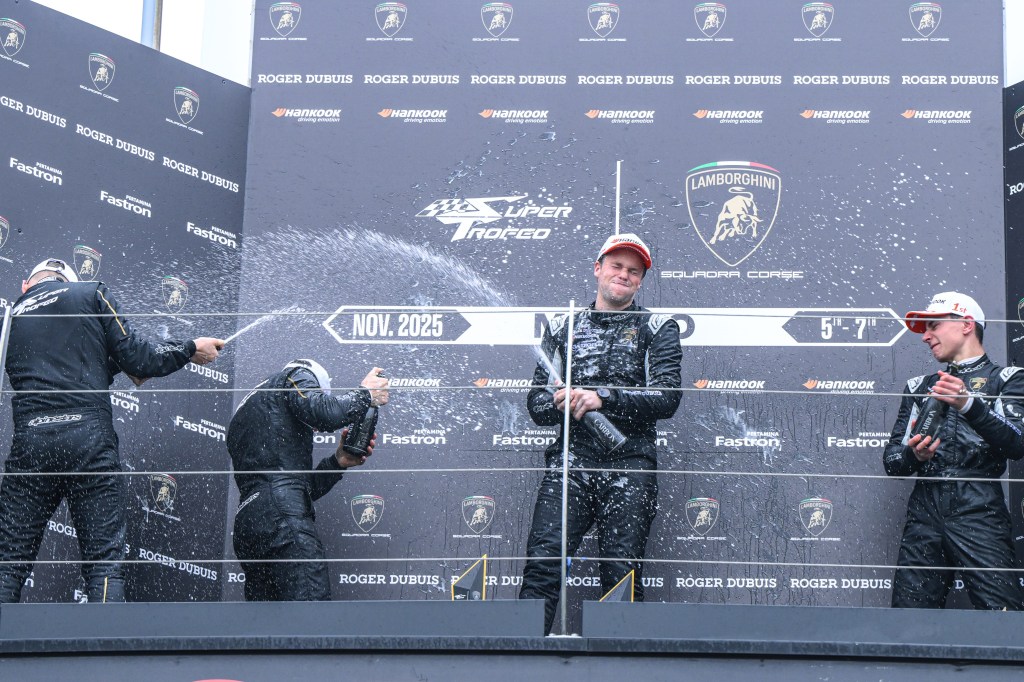
Lamborghini Super Trofeo Europe – Nürburgring

0

Leipert Motorsport, supported by PROFICAR, competed in front of a home crowd at
the fourth round of the Lamborghini Super Trofeo Europe season at the Nürburgring. In front of numerous fans, the team once again demonstrated strong pace and convincing performances. However, despite promising starting positions, the deserved podium finishes failed to materialize this race weekend.

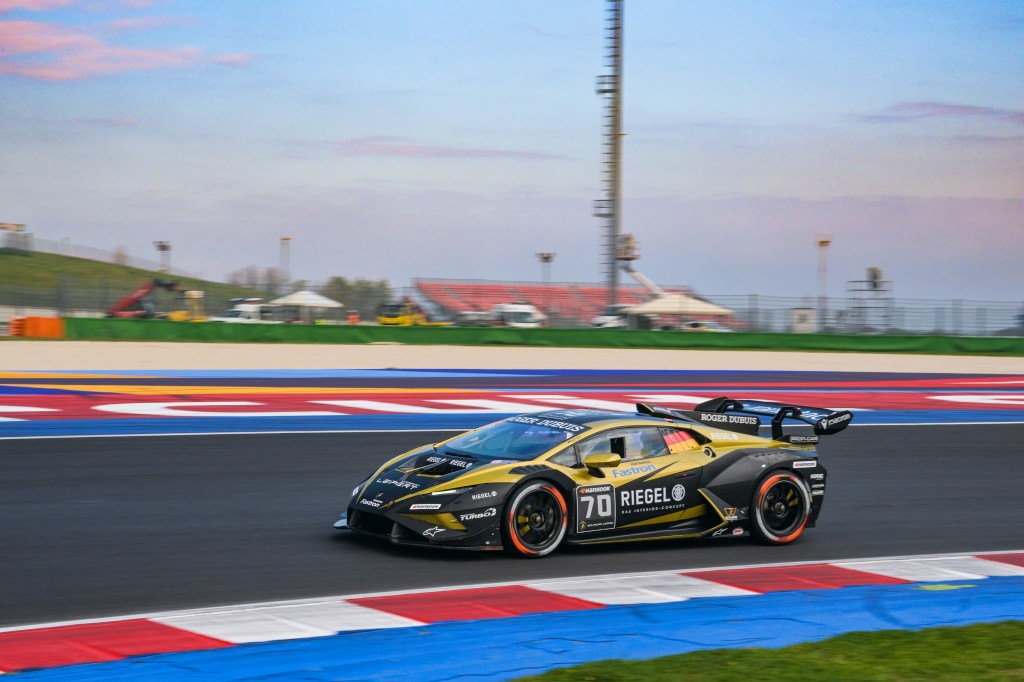
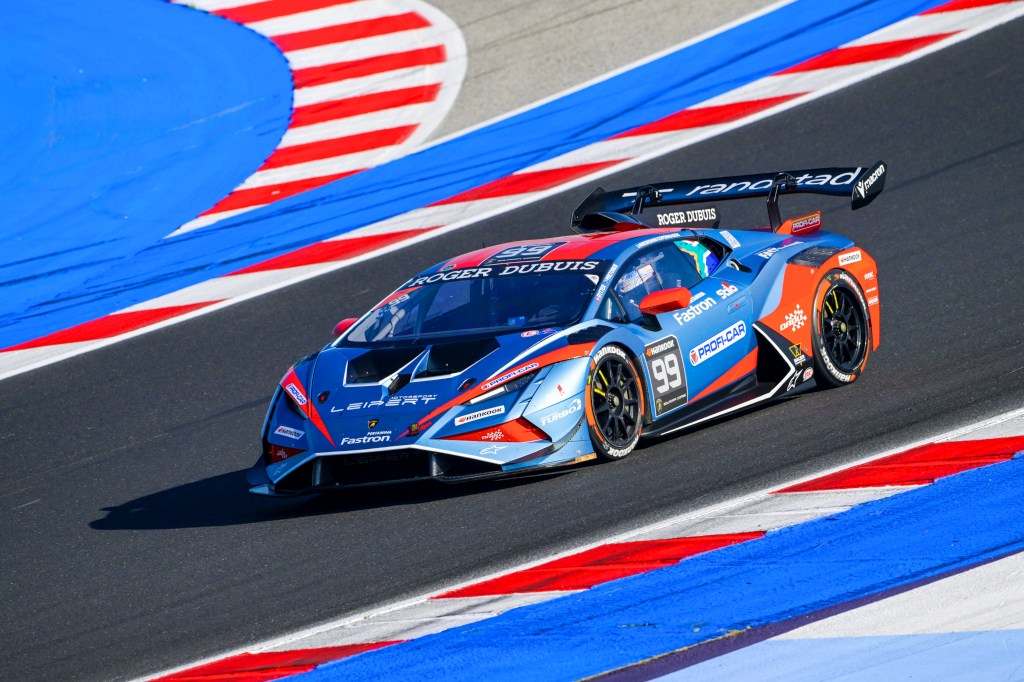
Contrary to expectations, the free practice sessions and qualifying at the Nürburgring took place in good weather conditions, allowing the pace of the cars to be clearly assessed. Leipert Motorsport performed strongly in qualifying: the #99 (Rytter/Pretorius) was temporarily in pole position, but had its fastest lap disqualified due to track limits and ultimately qualified in 4th and 5th place in the Pro class. Pablo Schumm (#88) placed his car twice in 11th place in the Pro class. The #44 (Thalin/Bergman) secured solid starting positions with 8th and 3rd place. Gerhard Watzinger’s (#70) performance was particularly outstanding, putting his Lamborghini in 2nd and 1st place in the Cup qualifying.

#99 Rytter (DK) / Pretorius (ZAF) – Pro class

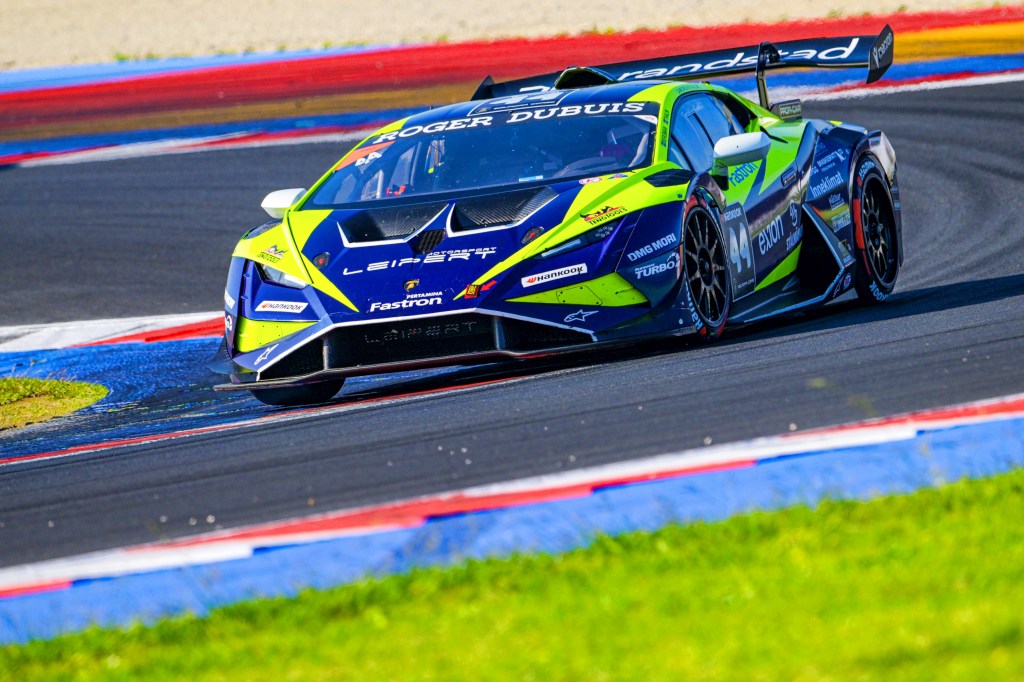
Pretorius started Race 1 from P4, but initially fell back to 8th place after a turbulent start in Turn 1. The duo fought their way back to the front, but after a failed restart following a full-course yellow phase and a resulting collision with a competitor, the race was over shortly before the finish, just short of the podium. In the second race, the #99, like most of the field, opted for rain tires. After a strong start, Rytter moved up to P2 and remained consistently at the front of the field until the pit stop. Pretorius continued to set top lap times in the second stint and crossed the finish line in 4th position.

Photo courtesy Liepert Motorsports

#88 Pablo Schumm (SUI) – Pro class

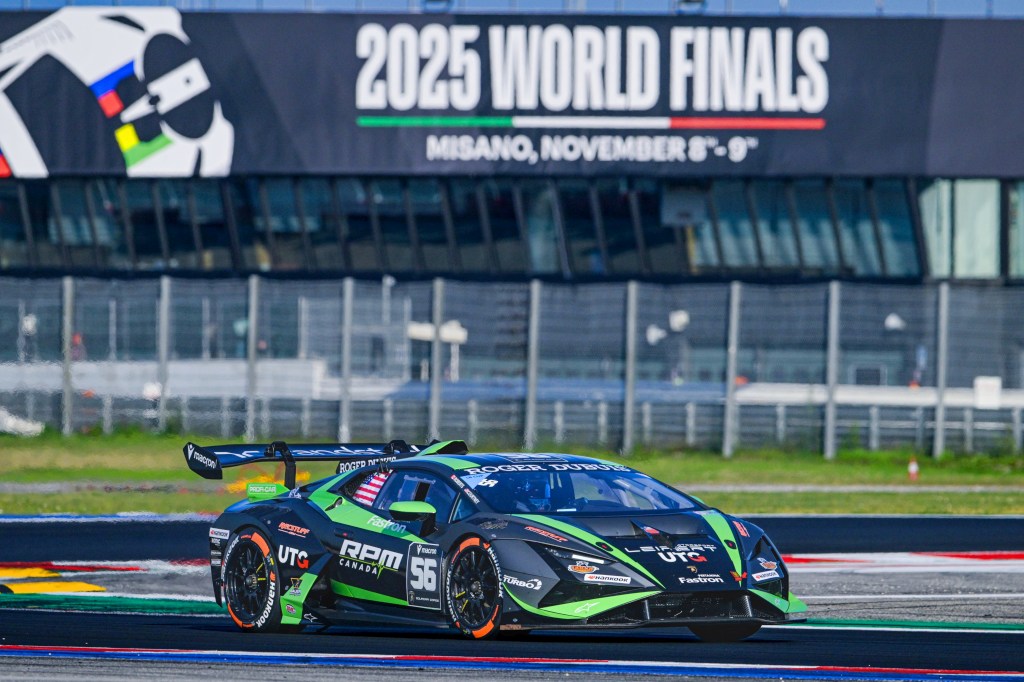
Schumm put in a strong performance at the start and brought the #88 home in 10th place in Race 1. The second race, however, was unfortunate: halfway through the race, he lost control while braking in the NGK chicane and unfortunately collided with his teammate Watzinger (#70), resulting in both cars retiring early.

Photo courtesy Liepert Motorsports

#44 Thalin/Bergman (SWE) – Pro class

In the first race, the #44 finished in 8th place in its class. In the second race, Bergman got off to a strong start and was in the top 3 for a long time. However, as the track dried out, the rain tires lost grip, causing the duo to lose positions. Thalin finally brought the Lamborghini home in 9th place.

Photo courtesy Liepert Motorsports

#70 Gerhard Watzinger (USA) – Lamborghini Cup

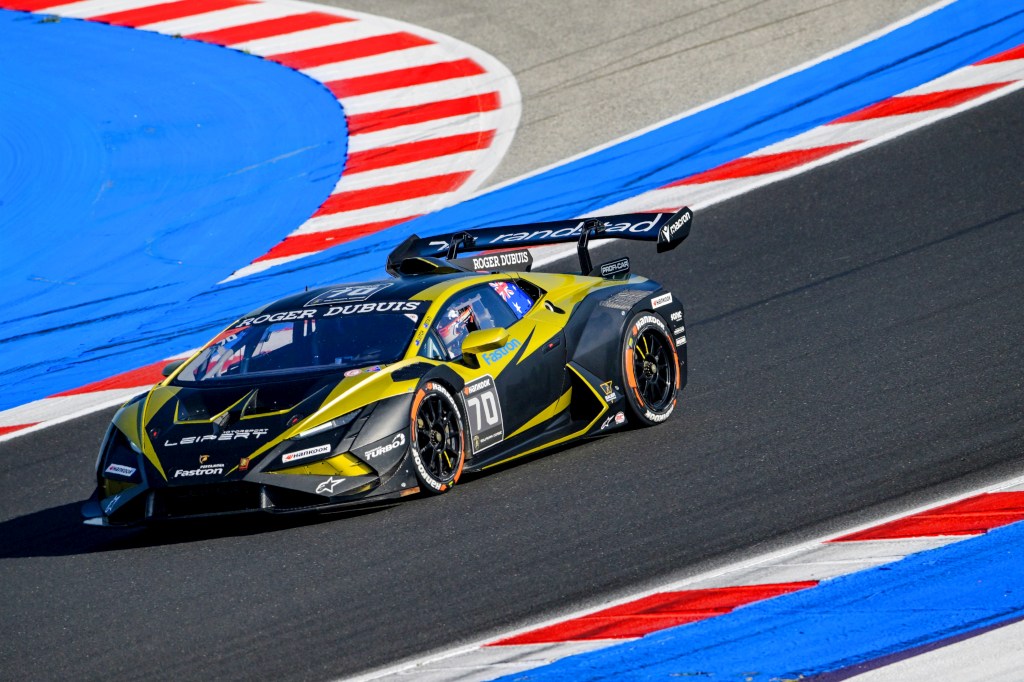
After his very strong qualifying performances, Watzinger confirmed his good pace in the race as well. In the first race, he was clearly on course for a podium finish, but unfortunately had to park his car in the gravel after the pit stop because he was unable to continue the race under his own power. In the second race, too, it looked for a long time as if he had a chance of a podium finish or even another race win: after the pit stop, Watzinger was in second place in the Cup class. However, an unfortunate collision with his team-mate brought the race to a premature end – a bitter end to a weekend that had shown so much potential.

The next step: on the way to the World Final

Managing Directors Marc Poos and Marcel Leipert: “We started this weekend very well prepared and, as always, had a strong pace, but were unable to build on our victory in the last race at Spa. It is particularly bitter for Gerhard Watzinger, who was clearly on course for the podium twice and was only two points off the top of the table before the event. Nevertheless, our drivers clearly showed that we can compete at the front, which makes us very confident for the final events in Barcelona and Misano.”

Leipert Motorsport will continue with the next round of the Lamborghini Super Trofeo Asia from 5 to 7 September in Sepang, Malaysia. Just a few weeks later, another highlight awaits with the Super Trofeo Europe in Barcelona (10–12 October), marking the last race weekend before the World Final in Misano.


About Liepert Motorsport

Leipert Motorsport was founded in 2002 and became one of Europe’s top GT-Teams in Sprint- and Endurance-Racing. Spreading its GT-Engagement even wider across the continental borders, this step is the logical consequence for the German team after being a front runner and championship winning team in multiple competitions.

Alfa Romeo’s P2: Speed, Symbolism, and the Birth of Fascist Motorsport

0

As Italy approached the centennial of the Alfa Romeo P2’s debut, it’s worth revisiting the legacy of a car that was far more than a racing machine. Designed by Vittorio Jano and championed by a young Enzo Ferrari, the P2 wasn’t just fast – it was a political and cultural icon, forged in the crucible of Mussolini’s Italy.

Photo courtesy Paul Baxa

The P2’s rise mirrored a broader industrial and ideological shift. Milan, home to Alfa Romeo, was cast by fascists as youthful and dynamic, in contrast to the staid, liberal Turin of Fiat. Fascist publications like La Vista del Popolo framed Alfa as the audacious future, Fiat as the outdated past. Alfa’s victories on the track became metaphors for Mussolini’s political revolution.

Tune in everywhere you stream, download or listen!

Listen on Apple
Listen on YouTube
Listen on Spotify

Alfa’s first major international win came at the 1923 Targa Florio, just months after Mussolini became Prime Minister. Coincidence or not, the regime seized on the moment. When Giuseppe Campari won the 1924 European Grand Prix at Lyon, the announcement interrupted a tense fascist party meeting in Rome. The next day, Italy’s leading newspaper placed the race win alongside political headlines – a symbolic pairing of speed and state.

Designed in record time by Jano and his youthful team, the P2 embodied fascist ideals of discipline, innovation, and velocity. Ferrari, then just 25, recruited the talent and shaped the team’s ethos. The car’s aesthetic echoed Fiat’s 805, but its engine and suspension were refined to deliver superior performance – an act of industrial revenge against Ferrari’s former employer.

Spotlight

Paul Baxa is Professor of History at Ave Maria University in Florida. Parts of his most recent book, Motorsport and Fascism: Living Dangerously have been presented at past Argetsinger Symposia. He was privileged to have presented at the first symposium in 2015.

Synopsis

This episode of The Logbook, our History of Motorsports series, discusses the Alfa Romeo P2, an iconic racing car designed by Vittorio Jano that debuted 100 years ago. The P2 dominated Grand Prix racing during the two-liter formula in the mid-1920s, helping Alfa Romeo win the first World Championship in 1925. The presentation, delivered by Paul Baxa, explores the broader industrial, cultural, and political significance of the P2 beyond its sporting achievements, particularly its role in Mussolini’s Fascist Italy. The P2’s victories were used by Mussolini’s regime to symbolize Italy’s industrial revival and national pride, while also influencing motorsport culture and politics during that era. The narrative touches on the car’s design, its impact on Italian motorsports, and the personal stories of key figures like Antonio Ascari and Enzo Ferrari. The Alfa Romeo P2 remained successful in racing through the 1930s and eventually became a symbol of Italy’s motorsport legacy.

Follow along using the video version of the Slide Deck from this Presentation

Transcript

Crew Chief Brad: [00:00:00] Break Fix’s History of Motorsports Series is brought to you in part by the International Motor Racing Research Center, as well as the Society of Automotive Historians, the Watkins Glen Area Chamber of Commerce, and the Argo Singer family.

Crew Chief Eric: The P two Alpha Fascist Icon by Paul Bax. This year, we’ll mark the hundredth anniversary of the iconic Alpha Romeo’s P two’s debut, designed by legendary Vitor Yano.

The P two went on to dominate Grand Prix racing in the final two years of the two Leader Formula. In 1925, alpha Romeo won the first World Championship, after which the team dually withdrew from the sport. However, privately owned Alpha P Twos continue to participate in racing and win races up until 1930.

The sporting achievements of the Alpha P twos are well known as is the role the car played in establishing Alpha Romeo as Italy’s most famous racing mark. Up until the advent of the Second World War, less known is the broader significance of the P two that went well beyond the [00:01:00] racetrack. Informed by the history of objects developed by cultural historians.

This paper argues that the P two significance was industrial, cultural, and ultimately political. The achievements of the P two and the emergence of the mil based alpha company coincided with the establishment of Mussolini’s dictatorship in Italy. The fascist regime used the successes to celebrate the rise of fascist Italy as an industrial and sporting power.

Moreover, the unique characteristics of the P two came to embody the values promoted by fascism such as speed and dominance, both the design and performance of the car, as well as the men who raced. It came to shape not only Grand Prix racing in the 1920s, but also impacted the role played by the sport in the political and cultural context of fascist Italy.

Paul Baxa is a professor of history at Ave Maria University in Florida. Parts of his most recent book, motor Sport and Fascism Living Dangerously have been presented at past Argen Singer Symposia. He was privileged to have presented at the first symposium in 2015.

Kip Zeiter: Thanks everybody. I’d like to introduce you to our next [00:02:00] speaker, Paul Baxa, who’s going to talk about the P two Alpha fascist icon.

Thank you, Kip.

Paul Baxa: Thank you all. Uh, I wanna thank Don Kas and Bob Barr and Duke Kininger and everyone who make this great event happen. It was my privilege to be at the first one back in 2015 and it’s amazing how this has grown. Thank you for having me. Just, uh, before I get to my presentation, Jim had a, uh, slide showing the program for the 1980 US Grand Prix.

I had the privilege of being at that race back in October of 1980. I came down with my dad. I remember. Bruno Giac in the Alfa Romeo Getting Pole position, and I came from a family of Tizi, but my dad told me that weekend, he said a, you know, a real Italian racing fan knows that Alfa Romeo is really the team to cheer for.

And that leads me actually to today’s presentation. Actually. My dad grew up in fascist Italy, so he may have been influenced by some of the things I might be talking about today. [00:03:00] So on Sunday, August 3rd, 1924, the fascist party of Italy was holding an emergency meeting in the Palazzo Venetia in Rome. It was the height of the Mati crisis, and Mussolini’s government was facing an uncertain future.

The body of the socialist deputy, Giacomo Mati was still missing after he was kidnapped by a group of fascist thugs in June. Although his fate was unknown, the expectation was that Mati had been assassinated and that Mussolini was to blame. At 5:00 PM during a series of tense exchanges and speeches, calling for Mussolini to crack down on his enemies, the radical fascist.

Francesco Junta interrupted the conference to announce that Giuseppe Camp driving a P two Alfa Romeo had just won the European Grand Prix at Leon. The next day, the front page of Italy’s most important national newspaper carried two items, the PNF meeting and the Grand Prix in its report of the party meeting, the article noted Junta’s announcement.

It [00:04:00] was a bright light and an otherwise darkening situation from Mussolini and his government. 10 days after camp stirring victory, Mattel’s body was discovered in a shallow grave north of Rome. As it turned out, Mussolini’s regime not only survived the crisis, but it became the jumping off point for his dismantling of Italian democracy and the establishment of the fascist dictatorship.

In the meantime, the P two alphas would go on to dominate Grand Prix racing during the two liter formula and beyond. To be sure the victories of the Alphas led by the charismatic Antonio Ascotti served as a distraction from the tumultuous events in Italy. They were also used by Mussolini to exalt the New Italy that he and his fascists were in the process of building.

In the pages of Italy’s most Read Illustrated magazine, the lead editorial in the next edition noted how the common man was more interested and excited by the exploits of the Alphas than they were by the sorted events of Roman politics. Victory at Leon [00:05:00] was far more important it seemed than the disappearance of a socialist politician.

The car at the center of this was the P two Alfa Male’s First Grand Prix winning machine. Designed by Vittorio Yano and Record Time. The car was introduced at the Remona Grand Prix in June of 24. Results was an easy victory in the hands of Antonio Ascotti. With it came a new speed record on the circuit’s 10 kilometers straight, clocked at 121 miles per hour.

The car and the company that built it quickly became a symbol of Italy’s rebirth under the sign of fascism. This paper will demonstrate the correlation between the P two, its design and its successes with the rise of Italian fascism in the decisive years between 1924 and 1930. In those years, Mussolini consolidated his dictatorship and promoted sport as one of the regimes greatest achievements.

At the Party Congress in August, Mussolini gave a speech where he declared that it was time [00:06:00] for Italians to live dangerously. Present at that meeting was Roberto Farci, the violent fascist chief of Cremona and leader of the intransigent wing of the party. Faade Naci was also a some time race car driver and promoter of the Remona Grand Prix.

Apart from Mussolini, no one embodied fascist violence and the cult of speed more than Faade. Naci, a man who approved the TIS assassination and called for even more bloodshed. The fact that the P two began its legendary run of successes on his patch of lumber de. Seemed fitting, especially as the Remona Road Course was known for being one of the fastest racetracks in the world.

In his book, objects of Desire, a study of Italian industrial culture in the late 19th and early 20th century, Luca Tini has argued that objects are culture makers mediating devices. And vehicles of meaning. In the 1920s, Kini argues Italian industrial design reached a peak of expressive energy [00:07:00] that was found mostly in the aviation and automobile industries.

Two modern activities exalted by fascism. In addition, thanks to design theorists like Joe Ponti, Italian industrial products became works of art as well as commercial objects. I would add that they also became political objects, vehicles to draw Italians to Mussolini’s dictatorship in the late 1920s, precisely the period that Kini points out as the culmination of Italy’s developing industrial culture and entrance into modernity.

No object expressed this network of relations. I argue more than the P two. The link between the successes of the Alpha Maleo P two and national industrial political revival was even noted by foreign journalists. After a crushing demonstration of dominance in the 1925 European Grand Prix at spa, the Dean of French Motorsport, writers Shao Faru, exclaimed how the Alfa Romeo Squad embodied the Italian National Renaissance.

Those are the words that he used. [00:08:00] Before I came to represent Italy’s political shift, the P two caused a qualitative shift for its company and a major shift in Italian motorsport. Based in Milan, Italy’s emerging industrial and financial capital. Alpha’s victory in the 24 French Grand Prix effectively knocked fiat out of Grand Prix racing for good.

Although, to be fair, I think Fiat was, had already essentially made the decision to leave before that. Fiat had represented racing success for Italy since the early 19 hundreds, and was the country’s leading automobile manufacturer aspiring to become Italy’s Ford. Ali’s company was based in Tarin Milan’s rival for industrial prowess.

Alpha’s victories, therefore not only represented success on the track, but also symbolized Milan’s challenge to the Piedmontese capital. In doing this, alpha was accomplishing an industry what Mussolini’s movement was doing in politics. Like Alpha Fascism was born in Milan, a city that presented itself as a more dynamic and youthful one compared [00:09:00] to the state city of Turin.

A city described by some fascists as filled with sticks in the mud quote. After winning the 1924 Italian Grand Prix, the Fascist magazine, LA Vista del Popolo contrasted the young audacious alpha with the old Fiat end quote. Like the cities, the two companies were often presented in contrasting ways by the fascists.

Turin and Fiat were throwbacks to the old liberal Italy. Well, alpha and Milan were part of the new avant-garde Italy. Fascism’s relationship with Turrin and Fiat was a difficult one. Giovanni Ali, Fiat’s founder was not a fascist, and the company’s labor force was mostly anti-fascist. Alpha, on the other hand, was a smaller, younger company, and its labor force would become home to former black shirts.

Fiat was the past, alpha was the future. Nothing embodied this more than the P two project. Everything about the P two, the men who built and raced it, and the successes on [00:10:00] the track corresponded to Mussolini’s new image for Italy. Up until 1924, Alfa Romeo had limited success on international racetracks.

Its success seemed to coincide with the rise of the regime. Alpha’s first major victory came at the Targa Florio in 1923, international victory. Only a few months after Mussolini became Prime Minister of Italy, which of course is. Pure coincidence, but it was something that was commented upon that same year.

The design and engineering department of the Mil outfit was completed with the arrival of Vittorio Yano from Fiat. It was Yano and his team of engineers who put together the P two project in record time. Both the speed of the project and the youthfulness of the team fit in with Fascism’s cultivation of speed and youth.

Both Yano and Luigi Basi, who had also come over from Fiat were in their thirties. Meanwhile, the man most responsible for bringing these men into the alpha fold. Enzo Ferrari was only 25 years old, according to Peter Hall and Luigi Fuzzi [00:11:00] Ferrari was the driving force by an alpha’s assembling of a crack designing team.

Ferrari represented everything that Mussolini’s regime, ext stalled in Italy. He held from the same region as Mussolini and came from a similar modest background. After serving in the First World War, Ferrari had applied for a job at Fiat, but was turned down in later years. He would describe this moment as a turning point in his life as fate would drive him to Milan, where he eventually joined the fledgling Alpha Company.

Ferrari’s story thus resembled the profile of the ideal fascist in some ways, as one who was rejected by the establishment and then turned that frustration into revenge. In Ferrari’s case, the revenge came with knocking Fiat out of racing. The development of the P two was born out of a similar set of frustrations.

Yano was part of the design team that had put together the Fiat 8 0 5 a car that was the class of the field in 1923, but it failed to win the French Grand Prix, which is the most important [00:12:00] international race at the time. Aware of the car’s weaknesses, Yano was not able to rectify them due to his subordinate position within the team.

At Alpha, he would use the P two project to improve on the Fiat. In his time at Fiat, Yano was shackled by the corporate structure of the company and the fact that Fiat emphasized. Its production cars over racing. Alpha, on the other hand, was smaller with an increasing emphasis on high performance sports cars.

At Alpha Yano was able to instill a military-like discipline that suited the type of rhetoric that was being pumped out by Mussolini’s, Italy. He joined the team in September of 23, and the first drawings for the car were completed by mid-October. The following March saw the first engine put on the test bed, and in June, the first example was taken to Monza and tested by Antonio Scottie and Giuseppe Compati just a few days before it won at Cremona.

The speed of the car’s production was helped by the fact that Yano was merely perfecting the Fiat 8 0 5. He had worked [00:13:00] at in Turin, modifications on engine and suspension design helped produce a car that was more powerful and ultimately faster than the 8 0 5 without the reliability issues aesthetically.

The P two was almost a carbon copy of the Fiat, but the modifications to the engine were significant to the point where Yano later claimed that the car was a completely new design. That was his claim. In this case, unintentionally, the P two did resemble Mussolini’s movement. Fascism two was largely derivative, appropriating preexisting ideas and concepts while claiming to create a new Italy.

P two’s successes on the track however, appeared to usher in a revolution while the REM Grand Prix demonstrated the new car’s potential, it was the Grand Prix Leon that consecrated the P two in the eyes of Mussolini’s New Italy. The stage could not have been more appropriate. Beginning in 1923, the governing body of Motorsport anointed one National Grand Prix.

To have the title of European Grand Prix in [00:14:00] 1924 was the turn of the Grand Prix de France, or the Grand Prix de la cf. Strictly speaking, ALS known as the French Grand Prix. Furthermore, the 1924 edition of the Race was a special one since it marked the 10th anniversary of the Epic 1914 race that saw the French and German teams battle on the track only weeks before the outbreak of the First World War.

As a commemoration of that event, the race returned to the Leon Vo circuit, the scene of that historic race in 1914. The event thus served to remember a great race, but also served as a memorial to the war. A fact that fed the fascist regime’s own exaltation of the war experience. The resulting race was nearly as epic as its 1914 predecessor on the Spectacular Road Course.

It wasn’t exactly the same by the way. They cut it in half, so they used half of the original course, but they used the most exciting part on The Spectacular Road Course. Alfa Romeo Fiat, Sunbeam de Lodge, and Bugatti [00:15:00] battled for over seven hours in a race that went back and forth with numerous lead changes with Compati Alpha emerging triumphant.

Giuseppe Camp’s Victory at Leon Made Alfra Romeo a national name and was able albia briefly to serve as a distraction from the mati crisis. As I already mentioned, the car appeared in ads for the company and for Pelli the tire manufacturer. This poster calls the race the Olympiad of engines. The P twos triumphant, Leon encouraged a more bullish attitude on the part of Italy’s representatives at the sporting Commission of the A-I-A-C-R, which is the forerunner of the FIA, taking advantage of a procedural loophole.

The Italian representatives tried to convince the commission to award the title of European Grand Prix in 1925 to Italy and not to Belgium as had been approved by the A-I-A-C-R in its previous general meeting. Claiming that Italy had the stronger racing tradition proven by office victory. At Leon [00:16:00] Arturo Meti, one of the two representatives argued that Italy deserved the race, not Belgium.

The challenge which caused some friction at the sporting commission’s meeting in the fall of 24, was unsuccessful. However, the Italian delegation did succeed in persuading the sporting commission to create a world championship for manufacturers in 1925. The desire to use Alpha’s triumphs to elevate Italy’s international motorsport.

Prestige mirrored the fascist regime’s, attempts to make Italy into a world power. In 1925, Mussolini turned to the dismantling of the Italian liberal state in the wake of the Mati assassination, an event that should have been his end, but instead marked the beginning of fascist. Italy’s rise to power.

The new secretary of the fascist party was none other than Roberto Farci, the patron of the Cremona Grand Prix. An intransigent fascist who now aim to activate Mussolini’s call for living dangerously. The events on the [00:17:00] racetracks of Europe reflected the radical and violent shift in Italian politics.

1925 was to be the last year of the successful two leader formula and alpha set its sight on dominating the opposition in three races. The European Grand Prix at spa, the French Grand Prix at the new Mulla Auto Drum and the Italian Grand Prix at Monza Alpha’s approach to these races involved a degree of swagger and even arrogance.

They lapped the field at spa prompting jeers from the partisan crowd. After crossing the line, Scotty’s car had a giant Italian flag placed on the hood. Uh, there is a story about this race that I didn’t find any of the contemporary accounts, but it kind of was told later by Motorsport historians that in order to taunt the crowd, the alphas, because they had lapped everybody and I think all the French cars had dropped out.

Actually, and so there was just two alphas kind of circulating in the last part of the race. At one point they made such a lengthy pit stop that they took out a table and laid out a [00:18:00] food spread. Um, it’s a great story. It might be apocryphal though, because I didn’t find it in contemporary counts, and Giovanni kind of Sini was kind of one of the Dean of Motorsport.

Historians later said it wasn’t really like that, it was just simply, you know, they had some panini, you know, sandwiches ready. Pit stops took a bit longer than usual. So it, you know, Scotty and Campti had timed it down a, you know, a sandwich and that’s really all it was. But it’s one of those wonderful stories, but it might be apocryphal.

Whatever, though it still shows a certain degree of swagger, whatever it was, uh, on the part of the Alpha team. The Alphas were also dominating the French Grand Prix until Antonio Ascotti crashed and was killed while leading the race. Prompting the team to withdraw from the race as a final gesture of defiance, the two remaining alphas revved their engines loudly before leaving the race, and that is in a contemporary account.

Uh, so they stopped in the pits and they started revving their engine. Now that was probably a salute to a Scotty, but again, you can’t interpret that as kind of a [00:19:00] defiant gesture. It was, uh, Bri Petty Gu, BLI Petty who gave Alpha the World Championship when he won the Italian Grand Prix in September. No one represented the new order in Grand Prix racing better than Antonio Hasti.

His name became synonymous with the P two and with the Living Dangerously motto promoted by Mussolini and Fad naci. It had given the P two, its verse of Victory at Cremona and one at Manza in 1924 and its SPA in 1925. More than his victories. He came to embody a certain aggressiveness in his driving. He would be the first example of what would later be called the Gati Baldino approach to racing.

That’s a reference to Giuseppe Gati bdi, the guy who helped unify Italy. This Gati Baldino tag is most famously embodied by the likes of Tatio NTI in the 1930s, but as Scotty really was the first to kind of get that reputation. In short, he took risks. Amanza in 1924, his driving prompted a rebuke from the race director who instructed [00:20:00] Alur to slow him down or they would call him in.

This is the telegram that was sent from the race director who was Arturo Meti to the Alur MEO PIP saying, tell us Gotti to slow down. Otherwise we’re gonna call him in. It’s ’cause he was on the banking. He was going too close to the guardrail at the top. His style of driving ultimately proved his undoing while dominating the French Grand Prix.

In 1925, he continuously brushed the apex of a fast left hand turn, coming with an inches of a wooden fence. On lap 22, he came too close, clipping the fence and rolling the car, which led to his death. A Scotty’s death and Moni resulted in an outpouring of grief and a state funeral. In Milan, he became fascist.

Italy’s first racing martyr, and that word was in fact used when his body returned to Italy on a train. A large wreath from Mussolini was placed on the casket across the wreath that was donated by Mussolini were the words repi the intrepid. The funeral [00:21:00] card repeated Mussolini’s epithet with a message that read Antonio Ascotti, the Intrepid one, who sacrificed himself defending with undefeated faith, the colors of the Fatherland and Italian industry, although he had been racing since the 1910s, as Scotty’s memory is indelibly marked with the P two.

Not only did the car symbolize Trium. But it now also created martyrs speed and death in the service of glory. Found echoes in fascist rhetoric. The response to a Scotty’s death and his depiction as a martyr to speed became the response template for the numerous Italian drivers killed in Grand Prix racing over the next decade.

But none of them would be as celebrated as a Scottie, which showed a great deal to the Alpha Romeo P two. And in fact, um, I don’t. Have a hard number in my head, but Italy probably produced more dead race drivers in the late twenties and thirties than any other country, but I, I can’t say that for certainty, but there were a number of Italian drivers who were killed in that period.

Unwilling [00:22:00] to build a new car for the new one and a half liter formula Introduced in 1926 and troubled by financial problems. Alpha withdrew from Grand Prix racing after the 25 season. The legend of the P two continued on though as the car would enjoy an afterlife that kept it winning races until 1930.

Mostly run by the SC Ferrari. In 1928, the A-I-A-C-R introduced the formula Libra Rules, which allowed this car to enter the official Grand Prix races. It was in this era that the legend of the car actually deepened in the late twenties Grand Prix racing entered a period of doldrums. Indicative of this was the fact that there was only one Grand Prix race held in 1928 at Manza.

It would not be an exaggeration to say that Italy saved the sport or Grand Prix racing in particular in these years with the P two right at its center at Manza. All the attention of the Italian press, especially the newspapers closely associated with the fascist party, focused on [00:23:00] the P two, driven by Akili Zi.

In 1929, the cars were run by the new Kuia Ferri, where former Alpha personnel like Ferrari and Luigi Bati were reunited with the P twos in 1930. The P twos are driven by Akili, Zi and Tazi nti. Thus launching what was to become the most legendary driver rivalry in Italian motor sports in the 1930s, probably of all time.

One last epic victory came at the Targa Florio in 1930 in the hands of Akili Tazi. By 1930, the P two had been substantially modified. This included the adoption of the flat slanted radiator taken from the Alpha 1,517 50 sports car models. These cars, which brought alpha more glory in the Mil Melia races were directly inspired by the P two.

According to the Alpha Romeo historian Peter Hall, this made Alpha the only mark, which directly transferred Grand Prix technology to sports cars and vice versa. That’s. Peter Hall’s [00:24:00] claim the introduction of the high performance six cylinder sports cars. Also designed by Vito Ano made alpha the most prestigious Italian maker of sports cars into the 1930s in Italy and worldwide, possibly thus establishing itself as the mark most suitable to the fascist era and Mussolini’s regime building a process that was completed by 1929.

As the modified P twos raced into their swansong year of 1930, fascism had completed the dismantling of the liberal state, and sport had become completely fasc size fiat. In the meantime, after an aborted attempt to return to Grand Prix racing in 1927 turns its attention to mass produced utility vehicles.

A turned to the masses that would shape fascist policy in the thirties. As fascist Italy entered the decade of the thirties, alpha Romeo become closely identified with Mussolini. He called Alpha Romeo our best national product, and it was increasingly seen at the wheel of an alpha. Here he is driving, I believe, let’s say 1750 [00:25:00] around the new, um, litorial Autodrome in Rome, which is a purpose built track in Rome, which no longer exists.

It’s now an airport. In 1951 with Italy embroiled in a war that was going from bad to worse. Alfa Romeo’s magazine published a retrospective on the P two written by Rado Filip, one of Italy’s leading Motorsport journalists. This article summed up the importance of the P two for Italy’s national prestige.

The two years of Alpha Domination in 24 and 25 were characterized by Filip as the most spectacular era of Italian genius. Ignoring the fact that the P two was largely based on the Fiat 8 0 5, the retrospective claim that the P two had set a new standard for race car design, calling it authentically avant-garde.

For NY proof of the car’s greatness came in the 28 19 30 period when this older car was beating newer cars. Sometimes. Moreover, NY was confident that the car could even hold its own [00:26:00] against contemporary competition. That would be auto unions and Mercedes. So. Make of that what you will hyperbole aside. A Philipp’s article demonstrated the continued legacy of a car that had elevated Italy to the top of Grand Prix racing in an era when Mussolini’s fascist regime was being constructed in peace time Alfa Mayo contributed to the triumphs of Italy on the track.

In 1941, Alpha’s production was directed to the war effort, and although the Italians are struggling on the battlefield, its access partner was walking all over Europe. For Philippines readers memories of the P two could be harnessed in the hope that Italian technology could once again triumph, while history would demonstrate otherwise.

Thank you.

Kip Zeiter: Thank you Paul. That was fascinating. Anyone have questions? We have a question from the internet for Paul Terry

Crew Chief Eric: Johnson writes, are there any P two alphas currently appearing at vintage and or historic events?

Paul Baxa: Uh, I don’t know if they appear at events, [00:27:00] but I think there are still two in existence. There’s a, an original P two, the first spec of the P two in the Alpha Mayo Museum in re.

And there is one of the later P twos at the um, automobile museum in Torino or Turin, so I know that they exist. I don’t know if they take them out on the track though.

Audience Q&A: I’m just interested in your commentary on the state sponsorship of Alpha Rome or other Italian motor manufacturing and how this episode plays into that.

If it does or if it does not.

Paul Baxa: Yeah, that’s an important question. The fascist regime did not subsidize the racing teams the way the Nazi regime did, but Mussolini did intervene on a few occasions to save the company from bankruptcy. In 1933 though, uh, alpha Mayo was taken over by the, it was bailed out by the IRI, which was the state run bailout institution.

So after 33, it did become a state owned. Team, but it wasn’t racing officially as a works team. Alphas were always raced by the Ferrari. However, [00:28:00] in 1938, they did come back as an official team, alpha corse. So in that sense, yes it was because it was effectively owned by the state at this point. So. I dunno if that answers your

Jim Miller: question, Paul.

It turns out I have something of a follow up question, which is to compare, if not narrowly, regarding finances, the Nazi use of symbolism in racing during this time with the Italians.

Paul Baxa: In, in what sense are they equally

Jim Miller: active, more successful in using, uh, auto racing as a a means of political expression or.

Paul Baxa: Oh yes. Yeah. Uh, absolutely. The Nazi regime, of course, would very much celebrate its victories. Uh, the, the German cards, victories, and, um, Italy did the same for the, um, Motorsport magazines, but even in the national newspapers, there would always be front page coverage when Alpha won a race. So you did have a similar type use of propaganda.

For the races. Absolutely.

Audience Q&A: When Fascist, Italy no longer existed, did Alpha Romeo struggle to shift any kind of negative associations with it, or was it relatively smooth sailing?

Paul Baxa: They [00:29:00] were able, I think, to shift rather easily into the postwar, and that that goes with any sporting hero. Actually under fascism.

Even the great cyclists like Bartley and the soccer teams, they were all able to really easily transition. Uh, Simon Martin, uh, a sports historian, non Italian. Sports history makes this argument. I mean, it shows that the sporting heroes were able to create their own kind of popularity or their own niche in the Italian imagination that transcended fascism.

So perhaps going back to Jim’s earlier question that shows that maybe the regime was not as successful ultimately in making it truly fascist. I have to say though, that the managing director of Alfa Romeos name was Ugo GoTo, and he was, uh, he was appointed by Mussolini. After the state took over the company in 33, he was assassinated by the Italian resistance in 1945.

And so not to be cynical, but I think by getting rid of him, even though he was not, as far as I know, he was not a convinced fascist. In fact, he had an industrial background. He had [00:30:00] worked for Fiat. He had actually designed the lingo Hotel factory in Tur, if you’re familiar with that. But he kind of paid the price, if you will, for Al Alpha Rome’s association with the regime.

So maybe that was enough to make others forget. And keep cheering for Al Romeo. Afterwards. Al Romeo remained a state run company until the 1980s, and then it was taken over by Fiat, if I’m not mistaken.

Crew Chief Eric: Ruby, Joanne Wright. Were there any drivers that felt unhappy about Italy’s fascism back then?

Paul Baxa: Great question.

There is no one that comes to mind. I don’t know of any driver that comes to mind that was either anti-fascist. Or in some way bothered by the regime. Not to say that these guys were fascists necessarily. Antonio Skai, I think, belonged to a local fascist cell in Milan, Gaston, really, Perry, whom I mentioned, he’s the one that won the 25 Italian Grand Prix.

I think he was, he had a, he was known to be a, a fascist, actually politically active. Fascist. As for the others, they were, I, I would argue they were neither fascists or [00:31:00] anti-fascists, as far as I know. Again, we don’t know enough. This is a gap in the research. I think we don’t know enough about a lot of these drivers during the fascist era because they didn’t write much.

Uh, n Vladi did write a couple of articles, had it written for him, I don’t know, but his name was attached to them in some of the sporting magazines where he used some fascist language. Enzo Ferrari actually in the newsletters, would write periodically articles that exalted Mussolini’s regime. But you have to remember too, that after the war, there was a lot of post hoc refashioning or sanitizing of a lot of this, and a lot of drivers, and a lot of people who carried over did not really talk much about that past politically Anyway, so we, we, we don’t know enough on that topic, but it’s, it’s a, it’s a great question.

Kip Zeiter: Thank you, Paul. That was terrific.

Paul Baxa: Thank you. Thank you.

IMRRC/SAH Promo: This episode is brought to you in part by the International Motor Racing Research Center. [00:32:00] Its charter is to collect, share, and preserve the history of motor sports spanning continents, eras, and race series. The Center’s collection embodies the speed, drama and camaraderie of amateur and professional motor racing throughout the world.

The center welcomes serious researchers and casual fans alike to share stories of race drivers. Race series and race cars captured on their shelves and walls and brought to life through a regular calendar of public lectures and special events. To learn more about the center, visit www.racing archives.org.

This episode is also brought to you by the Society of Automotive Historians. They encourage research into any aspect of automotive history. The SAH actively supports the compilation and preservation of papers, organizational records, [00:33:00] print ephemera, and images to safeguard, as well as to broaden and deepen the understanding.

Of motorized wheeled land transportation through the modern age and into the future. For more information about the SAH, visit www.auto history.org.

Crew Chief Eric: We hope you enjoyed another awesome episode of Break Fix Podcasts, brought to you by Grand Tour Motorsports. If you’d like to be a guest on the show or get involved, be sure to follow us on all social media platforms at Grand Touring Motorsports.

And if you’d like to learn more about the content of this episode, be sure to check out the follow on article@gtmotorsports.org. We remain a commercial free and no annual fees organization through our sponsors, but also through the generous support of our fans, families, and friends through Patreon. For as little as $2 and 50 cents a month, you can get access to more behind the scenes action, [00:34:00] additional pit stop, minisodes and other VIP goodies, as well as keeping our team of creators.

Fed on their strict diet of fig Newton’s, Gumby bears, and monster. So consider signing up for Patreon today at www.patreon.com/gt motorsports. And remember, without you, none of this would be possible.

Highlights

Skip ahead if you must… Here’s the highlights from this episode you might be most interested in and their corresponding time stamps.

  • 00:00 The Alfa Romeo P2: A Racing Legend
  • 00:53 The P2’s Broader Significance: Fascism and Motorsport
  • 03:00 Historical Context: Italy in the 1920s
  • 04:21 The P2’s Racing Achievements
  • 05:11 Design and Engineering of the P2
  • 06:40 The P2 and Italian Industrial Culture
  • 07:34 The P2’s Impact on Italian Motorsport
  • 22:11 The P2’s Legacy and Continued Influence
  • 26:47 Q&A Session; Closing Remarks and Credits

Livestream

Learn More

If you enjoyed this History of Motorsports Series episode, please go to Apple Podcasts and leave us a review. That would help us beat the algorithms and help spread the enthusiasm to others. Subscribe to Break/Fix using your favorite Podcast App:
Listen on Apple
Listen on YouTube
Listen on Spotify

Consider becoming a Patreon VIP and get behind the scenes content and schwag from the Motoring Podcast Network

Do you like what you've seen, heard and read? - Don't forget, GTM is fueled by volunteers and remains a no-annual-fee organization, but we still need help to pay to keep the lights on... For as little as $2.50/month you can help us keep the momentum going so we can continue to record, write, edit and broadcast your favorite content. Support GTM today! or make a One Time Donation.

The P2’s dominance culminated in 1925, with wins at Spa, Monza, and the new Autodrome de Montlhéry. At Spa, Alfa lapped the field, prompting jeers from the crowd and tales of panini-fueled pit stops that may or may not have involved a full picnic spread. At Monza, Antonio Ascari’s aggressive driving earned rebukes from race officials – and later, a state funeral when he died in a crash at the French Grand Prix.

Ascari became fascist Italy’s first racing martyr. Mussolini’s wreath bore the words “Repose, the Intrepid,” and the funeral card exalted Ascari’s sacrifice for the fatherland and Italian industry. His death set a template for how fascist Italy would memorialize its fallen drivers – speed and death in service of glory.

Photo courtesy Paul Baxa

While Mussolini didn’t subsidize racing like the Nazis did, he did intervene to save Alfa from bankruptcy. In 1933, the company was taken over by the IRI, Italy’s state-run bailout institution. Though Alfa’s cars were raced by Scuderia Ferrari, the brand was effectively state-owned. By 1938, Alfa Corse returned as an official works team.

Both Italy and Germany used motorsport victories as propaganda. Alfa’s wins were front-page news, just like Mercedes and Auto Union’s triumphs in Nazi Germany. Yet Alfa transitioned smoothly into the postwar era, shedding its fascist associations. Sporting heroes like Ascari and Ferrari retained their popularity, and Alfa’s legacy endured.

Alfa Romeo P3 (Tipo B) successor to the P2; photo courtesy Donovan Lara, GarageRiot

Even after Alfa withdrew from Grand Prix racing in 1925, the P2 continued to win under Scuderia Ferrari. Modified versions raced until 1930, including a final victory at the Targa Florio. The car’s design influenced Alfa’s 6C sports cars, which became icons of Italian engineering. Historian Peter Hull noted that Alfa was unique in transferring Grand Prix technology directly to road cars.

By 1930, fascism had reshaped Italy’s political landscape, and Alfa had become Mussolini’s favorite brand. He called it “our best national product” and was often seen behind the wheel of an Alfa. The P2’s legacy was sealed – not just as a race car, but as a symbol of Italy’s industrial ambition and political transformation.

Today, two original P2s survive – one in the Alfa Romeo Museum in Arese, and another in the automobile museum in Turin. Whether they still run is uncertain, but their legacy is undeniable. As historian Paul Baxa reminds us, the P2 was more than a machine. It was a cultural object, a political tool, and a vehicle for Italy’s transformation – on and off the track.

This episode is sponsored in part by: The International Motor Racing Research Center (IMRRC), The Society of Automotive Historians (SAH), The Watkins Glen Area Chamber of Commerce, and the Argetsinger Family – and was recorded in front of a live studio audience.


Other episodes you might enjoy

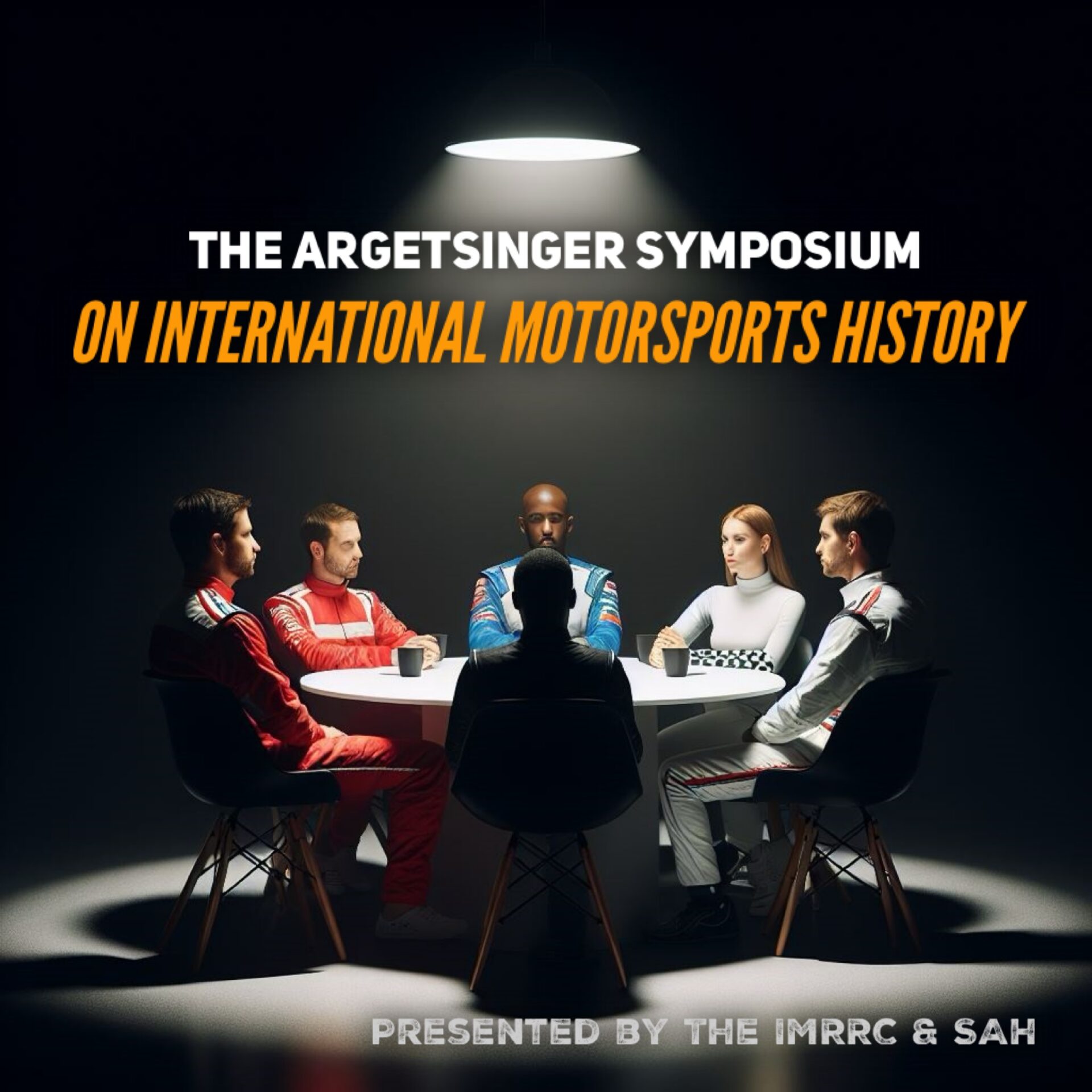
Michael R. Argetsinger Symposium on International Motor Racing History

The International Motor Racing Research Center (IMRRC), partnering with the Society of Automotive Historians (SAH), presents the annual Michael R. Argetsinger Symposium on International Motor Racing History. The Symposium established itself as a unique and respected scholarly forum and has gained a growing audience of students and enthusiasts. It provides an opportunity for scholars, researchers and writers to present their work related to the history of automotive competition and the cultural impact of motor racing. Papers are presented by faculty members, graduate students and independent researchers.The history of international automotive competition falls within several realms, all of which are welcomed as topics for presentations, including, but not limited to: sports history, cultural studies, public history, political history, the history of technology, sports geography and gender studies, as well as archival studies.

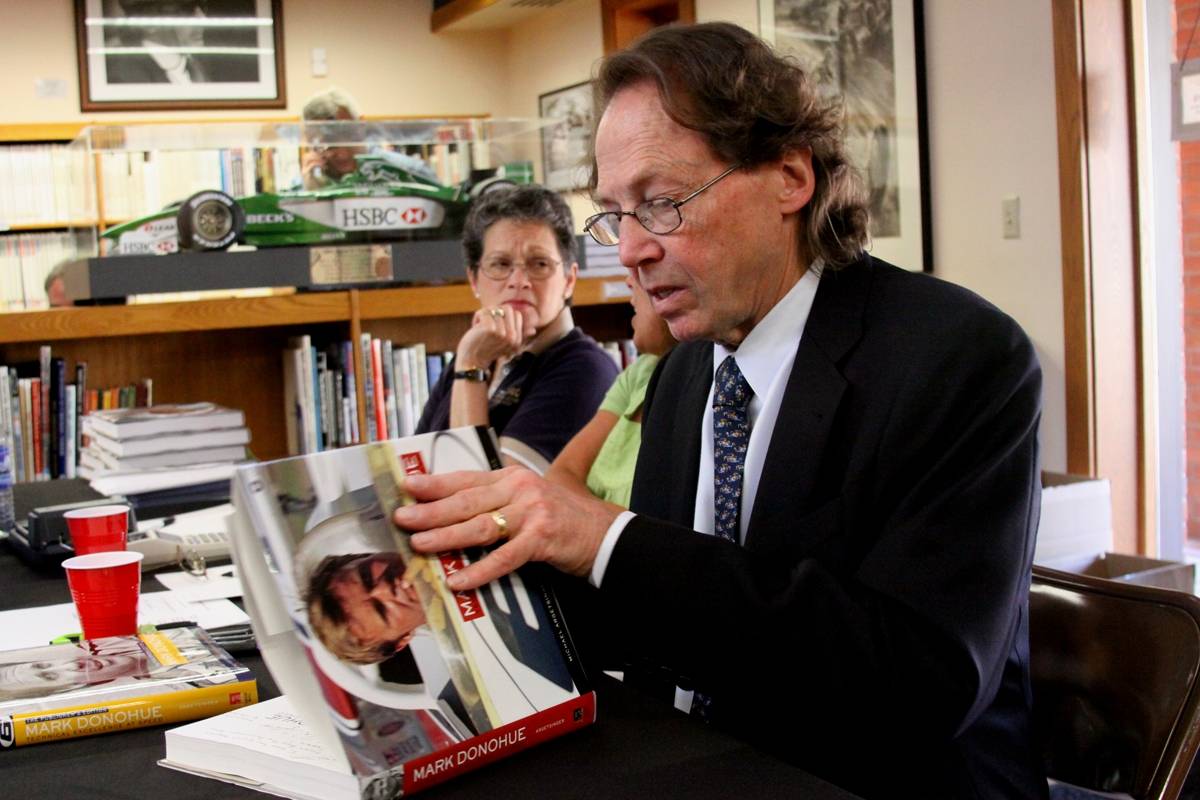
The symposium is named in honor of Michael R. Argetsinger (1944-2015), an award-winning motorsports author and longtime member of the Center's Governing Council. Michael's work on motorsports includes:


  • Walt Hansgen: His Life and the History of Post-war American Road Racing (2006)
  • Mark Donohue: Technical Excellence at Speed (2009)
  • Formula One at Watkins Glen: 20 Years of the United States Grand Prix, 1961-1980 (2011)
  • An American Racer: Bobby Marshman and the Indianapolis 500 (2019)

This content has been brought to you in-part by support through...

Motoring Podcast Network

From Stagnant to Stunning: Why Your Garage Deserves a Motorsports Makeover

Remember rotary phones? 8-tracks? Bell bottoms? Your garage probably does -because for many of us, it’s been stuck in a time warp since the day we moved in. But just like a barn-find Ferrari waiting to be restored, your garage holds untapped potential. It’s time to bring it into the modern era and make it worthy of the machines it houses.

Photo courtesy Crew Chief Eric; Gran Touring Motorsports

Why Go Pro?

Motorsports fans are a hands-on bunch. We wrench, we tune, we restore. So when it comes to garage renovation, it’s tempting to say, “I’ve got this.” But designing a garage that’s both functional and visually striking is a niche skill – one that professional garage designers have honed through years of experience. Hiring a pro means:

  • Efficient use of space (think vertical storage for tools and tires)
  • Smart layout for movement and accessibility
  • High-end finishes that match your car’s pedigree
  • Accountability for design and installation

Whether you want a man cave, a media room, or a showroom for your classic Maserati, a professional designer can help you get there faster – and better.

Photo courtesy Crew Chief Eric; Gran Touring Motorsports

Design That Reflects You

A great garage isn’t just about budget – it’s about personality. A good designer will ask what makes you tick. Are you a vintage Porsche purist? A Ducati devotee? A Ford GT fanatic? Your garage should reflect that passion.

Photo courtesy Crew Chief Eric; Gran Touring Motorsports

Consider upgrades like:

  • Slat walls for tool organization and visual appeal
  • Epoxy floors with embedded flakes for durability and style
  • LED lighting to highlight your vehicle’s curves
  • Custom cabinetry that complements your collection

And don’t overlook flow. Just like a racetrack, your garage should guide movement intuitively. Designers can help you decide whether clockwise or counterclockwise layout suits your habits best – yes, that matters.

Photo courtesy Crew Chief Eric; Gran Touring Motorsports

DIY Prep Before You Go All-In

Not ready to hire a pro just yet? Here are three upgrades you can tackle yourself:

  1. Garage Door Replacement A new door can offer nearly 100% ROI. Choose between sectional or roll-up styles, and consider remote openers for convenience.
  2. Floor Resurfacing Paint or epoxy can transform your garage’s vibe. DIY kits range from $30 to $1,000, but pro-installed epoxy can hit $3,000+ and its worth it for a showroom finish.
  3. Energy Efficiency Install LED bulbs, insulate walls, and consider a mini-split HVAC system. It’s a game-changer for year-round comfort, especially if you spend hours tuning engines or detailing bodywork.

Case Study: A Garage Worthy of a Porsche

Designer Page Sigband recently transformed a Newport Beach garage into a dual-purpose space: part office, part Porsche shrine. Upgrades included:

  • LED dimmable can lighting
  • Custom cabinetry and hardware
  • Slat walls and velvet curtain accents
  • Under-counter fridge and freezer
  • Wall-mounted TV and media setup

The result? A space that celebrates automotive beauty while serving family needs – a true motorsports lifestyle blend.

Final Lap: Your Garage, Your Legacy

Whether you’re showcasing a vintage Ferrari or prepping your track-day Miata, your garage should be more than a parking spot. It’s a reflection of your passion, your personality, and your pursuit of excellence.

Photo courtesy Crew Chief Eric; Gran Touring Motorsports

Start dreaming. Sketch ideas. Then reach out to a garage design pro. Get a few quotes, ask tough questions, and don’t settle. This is your pit lane – make it legendary.

If you’ve got questions or want advice, drop me a line. I’d love to help you build the garage your machines deserve. Be sure to check out Part-1 of this series for more tips on building your motorsports garage.


Contributing Writer: Jeff Willis

In case you missed it... be sure to check out the following Break/Fix episode to learn more about our featured writer.
Listen on Apple
Listen on YouTube
Listen on Spotify

From the Pits to the Press: Lessons from Two Legends of Automotive Journalism

If you dream of turning your passion for cars into a career behind the keyboard, buckle up. In a rare and riveting reunion, Break/Fix Podcast brought together two titans of automotive storytelling – Matt Stone and Preston Lerner – for a conversation that’s part history lesson, part masterclass, and all heart.

Whether you’re a motorsports junkie, a car culture obsessive, or just someone who wants to write about the machines that move us, their stories offer a roadmap for how to build a career in automotive journalism—and why it still matters.

Tune in everywhere you stream, download or listen!

Listen on Apple
Listen on YouTube
Listen on Spotify

Matt and Preston didn’t just write about cars – they reported, analyzed, and contextualized them. During our chat they emphasized a key distinction: Writers craft compelling narratives. Journalists dig deep, verify facts, and tell stories that matter. Preston, who came from a newspaper background, stressed that knowing cars is just as important as knowing how to write. Matt added that the best journalists blend technical expertise with a unique voice – something AI can’t replicate. “Not every writer is a great journalist, and not every journalist is a great writer. But when both meet in one person, that’s magic” says Matt.

Bio: Matt Stone


Matt Stone has been a professional automotive journalist/photographer since 1990 and has evolved his career from Managing Editor of Motor Trend Magazine and Editor of Motor Trend Classic Magazine to becoming a freelance journalist, author, and broadcaster with numerous titles and credits to his name.

Bio: Preston Lerner

Preston Lerner is a freelance writer who has covered racing for the past four decades. For many years, he was a regular contributor to Automobile Magazine and Road & Track. Lerner is also the author or co-author of six books, most recently Shelby American: The Renegades Who Built the Cars, Won the Races, and Lived the Legend. The material used in “Television Turns Its Gaze on Motorsports” is drawn from his upcoming book, The Deadliest Decade, which examines the safety, commercial and technological developments that transformed racing from 1964 to 1973.

Synopsis

In this special reunion episode of the Break/Fix, hosts Crew Chief Eric and Garage Style Magazine’s Don Weberg bring together pioneering automotive journalists Matt Stone and Preston Lerner. The conversation dives into their notable careers chronicling the highs and lows of car culture—from glossy magazines like MotorTrend and Automobile Magazine to bestselling books like their collaborative work on Paul Newman. They reminisce about iconic moments, exhilarating stories from the road, facing competition, and interacting with automotive industry giants. The episode also explores challenges in automotive journalism in the age of social media and reflects on the powerful role of storytelling in preserving and sharing car culture for future generations.

  • Let’s talk about how you both met?
  • What was the daily grind like? I’ve been told there’s a difference between “a writer and a journalist”
  • What were some of the most memorable stories or assignments you’ve worked on together—or separately—that still stand out today?
  • You’ve worked on some books together … How do your individual styles as writers complement or contrast with one another, and did that shape the outcome of the work? Did you edit each other, or bring in a third party?
  • Are there any cars or stories you feel are underrated or overlooked in automotive history that deserve more attention?
  • How has the landscape of automotive journalism changed since you began your careers, and where do you see it heading?
  • What role do you think print media still plays in an increasingly digital and social media-driven world? 
  • Looking back on your careers, what would you say has been the most rewarding aspect of telling the stories of the automotive world?

Transcript

Crew Chief Brad: [00:00:00] Break Fix podcast is all about capturing the living history of people from all over the autos sphere, from wrench, turners, and racers to artists, authors, designers, and everything in between. Our goal is to inspire a new generation of Petrolhead that wonder. How did they get that job or become that person?

The Road to Success is paved by all of us because everyone has a story.

Crew Chief Eric: Welcome to a very special reunion episode of Break Fix Podcast, where automotive journalism meets memory lane. Today we’re bringing together two of the industry’s most respected voices, Matt Stone and Preston Lerner for a conversation that’s equal parts insightful, nostalgic, and full throttle fun with decades of experience.

Between them, Matt and Preston have chronicled some of the most iconic moments, machines and personalities and car culture. From glossy magazine pages to bestselling books. Their stories have shaped how we see the automotive world so tune [00:01:00] in as they reflect on their journeys, trade tales from the road, and share what still gets their engines revving today.

Joining us tonight is returning co-host Don Weiberg from Garage Style Magazine, one of the many personalities on the Motoring Podcast Network. Welcome back, Don.

Don Weberg: Thank you, Eric. How are you this evening?

Crew Chief Eric: I’m good. And with that, let’s welcome Preston and Matt to break fix. Nice to be here. Great to be here, Eric.

Yeah, just

Matt Stone: what he said.

Crew Chief Eric: All right, guys. This episode’s gonna be a little different than our Normal Road to Success. Tell me your life story. You know, were you a petrolhead since you were a kid? This comes to us by way of the I-M-R-R-C because as a lot of our fans know, we do remastering of content from them as part of our history of Motorsports series.

And I came across this wonderful little DVD four gt, how Ford silenced the critics and humbled Ferrari and conquered Lamonts by Preston Lerner. And inside this insightful DVD Preston talks about working with Matt Stone, and I’m like, wait, wait, hold on a second. What a small world we live in, especially the automotive world.

So I wanted to talk about. How did you guys meet? [00:02:00] And let’s just start from there.

Matt Stone: I have one remembrance of meeting press. The first time was at a book signing for his extremely definitive and seminal book about the entire scarab scene, the race cars, the street cars, LANs Rev Low, the whole scarab thing.

Now a lot of you out there will not know what a scarab is other than a a dung beetle, but a fabulous breed of American born and built race cars. That are just fabulous and gorgeous and fast and noisy and all that. Nobody had ever written much truth to power about Revit Low and his effort and the guys who drove for him and where the cars went and blah, blah, blah, and Preston decided here’s a story to be told proper, and he did it.

I have this book. I think, again, if my house was on fire, that would be one of the books that would go out the door with me because it’s so well done on such an interesting story. And it was a book signing, I believe, at the Auto books in Burbank. And he was the guy behind the table with the [00:03:00] pen. And I bought the book.

And I don’t have the pen, but I have the book and I have Preston as my pal.

Crew Chief Eric: So Preston, is that how you remember the story going, or,

Preston Lerner: uh, well, not exactly. Funny thing is, is you never know what you’re gonna have behind you in your bookcase. Only by coincidence. I have Matt’s Irock book over here, right to my left.

It’s just sitting there. I wrote the SC book, and that was really a great experience. It was wonderful to meet all those people from the early Sports Card days of the fifties and then into the Formula One into the sixties. But I remember Matt was, we were both freelancers at the time, and I swear, Matt, you’re pretty sure you wrote an escape road, as I recall what it was called wasn’t the Auto Week would do the one Pagers.

Matt Stone: It was the one page per issue. Classic car section.

Preston Lerner: Yeah. And you did one on the scab as I recall.

Matt Stone: Okay. It’s coming back to me now. Yeah.

Preston Lerner: That’s my recollection of when we met. We talked about the scabs, I believe. Then I don’t even remember doing a book signing at Auto Books for the scab.

Matt Stone: Well, maybe we just met there and I got your book and you signed it for me.

I don’t remember could, but I have very distinct memories of you and I together the first time at Auto Books. Although we’ve met up there many, many, many more times over a lot of other books. But I knew it was [00:04:00] scarab related for sure. So we’re going back a few years yet. Yeah,

Preston Lerner: that’s 91. 90, 91.

Matt Stone: Now, was that 1890 or 91?

Preston Lerner: It was one. Dinosaurs, Rome the Earth, that’s for sure. But okay. Long time ago, but of course I lived in Burbank and Matt at the time was in Glendale, so we were neighbors as well. And we would run into each other periodically at various events.

Crew Chief Eric: Well, since we’re on that subject, Preston, why don’t you bring the audience up to speed on a little bit of your cv.

What magazines did you write for as a journalist?

Preston Lerner: So I started as a newspaper reporter in Dallas. I was at the store Telegram, and then the uh, morning news never wrote for the Times Herald started freelancing for various magazines, moved up to California and I was originally doing stuff for Sports Court International and Road and Track Specials, which was, it was a whole division back then.

It was incredible. They would put out 13 issues a year, as I recall. It was as big as the monthly magazine, but eventually I caught on with Automobile Magazine, which was still a going concern at the time. Thanks to Jean. She was then Jean Linde mood, but later Jean Jennings. That’s who I did most of my, uh, car riding for was for automobile.

You know, Matt [00:05:00] actually ended up over at MotorTrend. So at the time we were competitors. Eventually we were under the same corporate ownership, but that was further down the road.

Crew Chief Eric: So what was it like, you know, you knew Matt, you met Matt, now you’re competitors in the world of journalism. What is that like?

So Matt, from your perspective, and maybe tell us a little bit about your journalism fame outside of MotorTrend and how it overlapped with Preston’s, but how did you guys feel as competitors?

Matt Stone: From what I said, I mean it, it was a totally friendly competition. I mean, we all competed for the same exclusive stories and the most juiciest drive or most juiciest interview.

Certainly between Preston and I, only friendly competition. But I would have to say our bosses. Maybe not always because they were competing for the same newsstand buyer and the same magazine dollar and the same advertiser dollars. So it was very competitive. And it was kind of funny because Road and Track and Car and Driver were under the same ownership for a while as was automobile and MotorTrend.

We had in-house competitors and we had down the road competitors. And like I said, person to person, it was more often than not very friendly. If somebody from a competing magazine [00:06:00] called and needed some help, I’d help ’em. And I would like to say that there were few times I made that same call that they helped me, but again, for advertising dollars, newsstand dollars, and you know, those killer cover stories, it was pretty competitive.

Preston Lerner: It was pretty collegial I thought, but I was not on staff. So Matt was on staff and he had to deal with the advertisers and he had to deal with corporate. Um, for me, I just would go out and do stories that were assigned to me or, you know. Or that I pitched in.

Crew Chief Eric: So speaking of Rodent Track, this is the post John Bond period, right?

So this is whole new management. Totally different regime, right?

Preston Lerner: It was a different regime, but it was still, it was Matt Lorenzo was doing it then, and it was, Matt may remember better than not, but I still think it was the same. It was before it was bought by Hearst and when they fired everybody and they moved to To Ann Arbor?

Matt Stone: Yeah, it was, it was Matt De Lorenzo and John Dinkle. Oh, right. Yeah. Ron Sessions was running the specials. That’s the guy that I worked for when you were working for him too. That was a lot of fun.

Preston Lerner: Yeah, that was great.

Matt Stone: Yeah, that was way down the highway from John and Elaine Bond and the much more modern times.

And that company was bought and sold. I don’t know, CBS owned [00:07:00] them and somebody else owned them and then somebody else owned them again and, and then most recently they turned over their editorial and management staff, 48 different directions. Nobody that I really still know there or do any work for.

Preston Lerner: The road track specials, which Ron Sessions ran at.

Andy Bhop was the second in command. Andy was a, is a great guy and they put out 13 one shots a year. So they did two new cars issues and they did two new trucks issues and they did like a sports and GT car issue and, but I do remember like Road and Track had an amazing library back then. They were in, uh, Newport Beach at the time was before they moved in Arbor, they had a librarian which is like incredible, a full-time librarian.

Otis Meyer. Yep. And when I wrote that SC book, they allowed me to use a bunch of their photos free and I was able to just go through their archive, which was incredible. They had just rolls and rolls and rolls of undeveloped film, of just stuff. It was all archived and you could find stuff, but they didn’t print any, the unprinted stuff out for me.

I mean they had all the press kits and everything. It was really incredible. And I mean, I don’t know how they did it putting out between the monthly and this specialist 25 issues a year. Those were the fat days of print [00:08:00] journalism, that’s for sure.

Crew Chief Eric: That brings up a really good question about the daily grind.

As an automotive journalist,

Preston Lerner: my experience was somewhat different ’cause I wasn’t on staff, so I only worked on specific stories that typically. About half of them that I pitched and half of them that were assigned to me and kind of at automobile, I became, for lack of anybody else there, kind of their racing experts.

So when they wanted to do a racing story, I usually did ’em. I didn’t do as many of the press trips for new car launches. I typically didn’t get assigned to those. I did some of them and they were fun, but for me it was, it was kind of a different experience. And I was also freelancing for other magazines, non-car magazines as well.

So. My experience is a little different than someone who would be on staff, although Matt was a freelancer for many years before going on staff, but I guess he would’ve a better perspective kind of from the two different viewpoints.

Matt Stone: You know, generally it was a lot of fun. I mean, there were some fabulous days.

There were a lot of great and good days and a few tough days, but it was a lot of fun because you’re surrounded by working with guys and gals that love cars and love to drive and love to do all that kind of stuff. I was sort of the cultural imperative and history guy, so when it was something to do with history, [00:09:00] cultural imperative, personalities, whatever, that was a lot of in my bucket, and that’s where I got to meet a guy named Don Weiberg.

Uh oh. I am happy to say these 4,000 years later, we are still friends and like I said, some of the days were really fun and some of the days were just long and some were long and fun. One of the things that I so enjoyed is when we would go out on a staff road test, okay, we’re gonna take these four cars and we’re gonna go to New Mexico and shoot a feature and do a a road test.

And we’d sit around every night at dinner and talk about how we felt about driving this car and that car, Hey, the seats on that one as good as this one or whatever. And the dinner conversation was a blast. Everybody came from a different perspective and of course has different physicality and different tastes in how they like to drive front, drive, rear drive, all drive, VH, turbos, whatever

Crew Chief Eric: Matt’s words painted this imaginary picture of what we all see on a top gear special.

Is there any truth to those, you know, behind the scenes when you see like a top gear [00:10:00] special and they’ve gone out and they’ve tested the cars and you see the crews and they’re sitting at dinner. I mean, is it very much like that or is that more dramatized? The life that you led as a journalist,

Don Weberg: Eric, I bring to your table of lesson Met Stone teach me long time ago.

We admit to nothing when the recording devices don’t work. You’ll live in mystery.

Matt Stone: I’ll answer that a little more. What the top gear guys have created is quite amazing, and those guys are all personalities and, and I have respect for them and affection for them. That’s a little spiced up.

Crew Chief Eric: Okay? That

Matt Stone: doesn’t mean it’s lies.

Or untruthful, but it is definitely seasoned for tv. I enjoyed going out on the road trip with the guys and gals. That was a lot of fun, a lot of work, long days, but it was really, to me, one of the sweet spots of doing this kind of work was bonding with a great team, and I had those most years, not every year or all the time, but most years.

Really good teams. We worked hard and we had a blast and we did photo shoots until [00:11:00] dark and plus hopefully put it all together in a good story when we got back. That was very satisfying.

Don Weberg: Eric, now you see why I’ve always spoken kind of highly of Matt Stone, having worked for him, having been his whipping boy.

He was fun to work for. He really was. He was never short of words. He would always had an opinion about something, but he was always really, really good at guiding you when you asked kind of questions, when you had straight up ideas. He had a a really great way of guiding you. And I’ll tell you, I remember a couple of those.

I mean, I never took the New Mexico vacations or anything like that with you guys, boondoggles. Yeah. But I do remember a couple of long road trips where they were stuck with me because they needed a body to drive the vehicle to the location. And a couple of those were with Matt.

Preston Lerner: Yeah, I gotta say, I would only occasionally get called in for some of the campos.

You know, you get four or five cars and needed. Like Don was saying, you needed bodies, you know, even if you weren’t gonna be writing the story, you needed somebody to drive the cars, get ’em from A to B and B2C, and so on. And I found those to be the longest assignments because photography had to be [00:12:00] done either very early or very late.

’cause they wanted the golden light. And really the stories were driven by photography. I mean, because the photographer only had one bite at the apple. So the photographers needed to get what they needed to get and they needed to get it whenever they needed to get it. And even though as a writer, you know, even when you were writing the story, and a lot of times I wasn’t writing the story, you’d think, oh, you spent all this time driving the car and getting dynamic feedback and, and so on and so forth.

And no, you were mostly standing around waiting for the photographer to take interiors and, and do beauty shots. And for the high speeds thing, that would rig the suction cup card of the camera. It was going two miles an hour. It looks like it’s going 180. So I found those to be a little tiresome. To be honest.

They were long days. I like going out on feature stories. I was by myself occasionally. I had a photographer with me and I sort of set my own agenda. That was a lot more pleasant for me.

Don Weberg: I do remember Matt a couple of times watching you work with the other senior editors, including the man in the corner office, and I remember it was always impressive.

They always kinda look to you.

Matt Stone: Something I never understood, by the way.

Don Weberg: Right. You were just playing it. Right. You were just going with it. You know? They want my opinion. I’ll give it [00:13:00] to ’em. I was doing my thing. Yeah, it was always fun working with you. It really was. Except for that time, he slapped me across the face, but I guess I deserved it.

Crew Chief Eric: Okay then. Now that is a Jeremy Clark’s moment.

Matt Stone: We worked hard and learned a lot and went great and marvelous places, and made many, many friends all over this world. I mean.

Crew Chief Eric: And I’ve heard Matt say it a bunch of times before, there’s a difference between a writer and a journalist. So I want you guys to expand upon that for our audience,

Matt Stone: and this is no knock on you, tiktoks and Facebookers and all, well, maybe it’s 40 characters and a crappy photo is not great journalism.

In my humble opinion. It may or may not even be journalism. I mean, I guess if you got the one photo of somebody very, very important, running naked down through Times Square, maybe that’s journalism.

Crew Chief Eric: So when I was a kid, they called those tabloids. I just wanna throw that out there, what you described, right?

Social media and all that. Content

Matt Stone: creator.

Crew Chief Eric: Yeah, content creators, tabloids.

Matt Stone: But there’s no analysis in that. It’s, it’s a [00:14:00] crappy photo in 40 characters. I never have, nor do I now want anything to do with that scene. I don’t do that stuff. Good luck to those who do. And if you make money good on you, and you have fun and you’re providing good content.

I love that you have to be a content creator. Now, you used to be able to be a writer or a journalist, and now you have to be a content creator.

Preston Lerner: Well, I’m not sure there’s really, uh, a tremendous difference. I mean, I, I kind of came to the game through newspapers. I didn’t come through it as a car lover first, so I think I brought a little bit more of that kind of granular stuff to it.

The thing is, is marginalism was a thing you really needed expertise in cars. More than journalism. I mean, if you weren’t, if you didn’t know cars, you could be a great journalist, but you know, you didn’t know the nitty gritty about how cars worked and how they were supposed to handle and perform. You were kind of worthless, I think.

I think you needed to really have both skills needed to be there.

Matt Stone: I would agree with that. I would say that not every writer is a great journalist, and not every journalist is a great writer, but there are poets. Poets can be fabulous writers. They may not know or understand the [00:15:00] tenets. Journalist. The ideal quinella is when both of them meet in the middle in one individual with a singular writing voice and a singular mind that really understands the job, the topic, the story, and the results, and then really knows how to put it down in writing.

And that guy’s name is Preston Lerner, as far as I’m concerned,

Crew Chief Eric: in the world of automotive journalism, the goat, that’s the greatest of all time. Is that still Brock Yates or is there somebody else that you guys look up to and say? He was one of the greatest automotive writers of all time.

Matt Stone: Brock Yates, the assassin,

Preston Lerner: just finished a manuscript for a book on racing from 64 to 73 pro racing.

And so I. Went through all the literature magazines back in the day, and I gotta say, Yates was unbelievable. He was the most opinionated. If you agree with him, he was the best. If you disagree with him, you’d probably want to kill him. But I think he was probably the most influential journalist I know. He went beyond journalism, you know, cannonball stuff and safety and I mean, he was on TV as a broadcaster.

I never really thought about who would be the goat, but I think he was the biggest name, best known outside of the field. I mean, he wrote novels. [00:16:00] He was really something. I didn’t know him very well, unfortunately. ’cause I never worked for Car And Driver was never back in the Michigan area. I’d say he would be the first one that comes to mind.

Matt Stone: Yeah, and he absolutely had the chops. He had the chops and the receipts. Could I conclusively? Undoubtedly unequivocally name, name him the goat. I’d have to think longer and harder. But with Preston, he was right up there. Right up there. I knew him late in his life. What a fascinating guy to sit and talk with.

Yeah.

Crew Chief Eric: What do you, would you say Matt is the key differentiator between a writer and a journalist?

Matt Stone: They, again, can be the same person and can be acting. In a duality, but the tenets of journalism about, you know, corroborating evidence and doing good reporting and all of the stuff that goes with journalism, that’s something not every writer understands.

You know, in terms of attribution, of information, of quoting, of credits, of backup, of second sources, of all the things that make a great journalist may or may not have anything to do with being a great writer. Ideally, you want both

Preston Lerner: using [00:17:00] automobile as a, an example, David E. Davis, PJ O’Rourke, gene, I mean.

They weren’t really journalists. I mean, they weren’t out there interviewing engineers and typically their reporters notebooks, like I was, you know, laying down specs. And that wasn’t their job. I mean, they were there to reflect their larger than life personalities and tell great narratives, and, and they were great writers.

You know, they had stuff that I couldn’t do. I mean, no one was gonna mistake me for David e and, and when you were at a dinner, I mean, David e and Gene would just hold court. Matt too. That’s not what, what I was, but the skills are somewhat different, but they’re not antithetical. I think, like Matt said, if you could do both of ’em, that’s better and better.

Crew Chief Eric: So Preston, would you say then, for writers that are listening to this right now, we’re just gonna use that term to not split hairs. If you’re in the realm of non-fiction, do you think the transition to journalism is a little easier than a straight fiction writer? Or to Matt’s point, a poet or somebody that’s writing prose?

Preston Lerner: I mean, I think it’s pretty straightforward. I mean, if you’re doing a piece where you need to do real reporting, I mean there, there is some experience you need or expertise and, but I think it’s pretty easy to, you know, you ask people questions that you’re, you’re all of a sudden, you’re a journalist, you’re a reporter.

I think you can [00:18:00] learn that on the job. You know, the point is, sometimes I, I feel like when you watch, you know, the influencers, I mean, they’re not asking questions. Their stock and trade is their own opinion. That’s not what a journalist is. A journalist is not out there to give your opinion. You’re out there to get what other people have to say about a subject, sort of pass that information along.

So I think you can certainly do it, but I, a lot of people, they rather talk about their own opinions than they would get somebody else’s opinions. That I find a little off-putting sometimes. But you know, I’m a little bit old school that way.

Crew Chief Eric: And we could probably debate the difference when we bring in historians into this as well.

Or we’re recounting facts and figures just like as journalists would, but it’s in more academic, you know, those kinds of things. But we’ll put a pin in that for now. So, Don, do you wanna weigh in here? As we transition?

Don Weberg: I want to take you boys back to New Mexico and some of those road trips where we grind the hell outta the Audis and wonder if the Mercedes will survive.

What were some of the more memorable stories, the more memorable assignments that you worked on, either together or separately, that still stand out in your head today?

Matt Stone: It’s a great question, Don. I can name a [00:19:00] couple from my own experience and I’m sure press has his too. Something we did at MotorTrend every year was a annual top speed shootout and we would go to a proving ground in Arizona on New Mexico that had a five mile banked oval Indianapolis motor speed bay, but twice the size.

And we would bring a race driver de jour with us to take whatever car that was and ring them out to VM Max. On this five mile track, we had Justin Bell one time, Danica Patrick one time, and one I particularly remember who was the ice? Cool, wonderful professional, Brian Herda. Oh, and we, and we brought big weapons that time.

We had the four gt, the first one, the five four supercharge V eight, and we had a Porsche Carrera gt the V 10. I’m trying to remember at the minute what the third one was, but we had that strata of cars. We’re having a little meeting before, you know, photographers are snapping around a little and the test equipment [00:20:00] guys are rigging up cars.

And so Herta comes to me, he says, top speed, right? I said, yep. He says, you know, it could take me one or two laps to get to that. Take all the time you need. We’re looking for the biggest number you can ring out of this car and stay in one piece. Boy, if he didn’t do it too, Brian was the coolest guy, an extremely competent racing driver.

He got in every car, and I think all three cars, if I remember, cracked 200 that day. And for a street streetcar granted of an exotic, very high, powerful one, that was impressive. And, and we have the pictures and the timing slips to prove it. Danica Patrick also did a very good job for us. She drove extremely professionally and listened to us and gave great feedback of what the car was doing in a corner, banked at whatever angle and mean.

She was a complete pro and did a wonderful job. But those events were wonderful. Sometimes we had three or four cars, sometimes we’d bring 10. Another one I particularly remember, of course, uh, Preston and I have many of the same heroes, but one in particular, [00:21:00] and this was my idea for a story, is, uh, Mario Andretti used to have a winery in Napa.

And there were a whole bunch of great hot convertibles that had just roadsters and spiders that had come out about the same time. The Mercedes SL 55 A-M-G-A-V 12, Aston Martin DB seven, the BMWZ eight. So we thought, you know, let’s just bring those things up to Napa, take pictures and we’ll have Mario drive them, make him the road tester, putting Mario Andretti in a race car and saying, tell us about this race car that’s not new ground to evaluate high performance and exotic cars on the street.

Okay, Mario, we’re out here driving in the backyards of Napa. What are you feeling? And I’m gonna tell you, I’ll never forget that day, the last sign up in my brain when I die. We’ll be thinking about that story and spending two days with him out just driving and talking. I’m pleased to say that he’s still my hero.

He’s become my friend. I’ll never forget that one. Anytime soon. There were others. But I’ve talked [00:22:00] enough. Preston,

Preston Lerner: I’m curious, was that before the Newman book or after the Newman book? Before. Cool. That’s

Matt Stone: great.

Preston Lerner: So back in again, the days when there were really elaborate press trips, Chrysler was doing a deal for, um, the second gen Viper had just come out.

Remember the GTS coop with the blue with the white stripes?

Crew Chief Eric: You mean second generation Daytona Coop. That’s my favorite. Viper. I love that car.

Preston Lerner: Tom Kaki was the, uh, legendary PR guy for Chrysler at the time. Put together this trip where we went with these vipers. We went to the berg ring, we went to spa and we went to Ram, or Reem, or however you pronounce it, in France.

The plan was to go then to drive from France. We were supposed to go to the Arctic Reon and all these vipers would be there at the Arctic Reon. But it was really as incredible. So along for this trip to give like presentations at night where Phil Hill and Jesse Alexander. So it was really cool. I knew Phil Little and Jesse was a friend, and that was great.

At any rate, what happened was the leg of the trip was like three days or something. We were going to the Arctic Dream. I was paired up with Phil for some reason. I don’t know why. I mean, Phil Hill is like a, you know, a hero and I’m mostly asking him questions and he’s talking, you know, I’m asking about various races and this and that.

I’m supposed to be doing [00:23:00] the navigating. Well, I wasn’t paying any attention to the navigating, and I got us totally lost. So we’re supposed to be at the York Triumph at a certain hour and we’re nowhere close to there. We’re lost in the middle of Paris and Phil had this reputation, justifiably for being very high strung.

He was going insane because we were lost in Paris. You know, we were supposed to be at this thing. And I was like, you are Phil Hill. Who cares? You know, we don’t need to be there. We, we’ve got our own Viper, you know, we made to the York Triumph after they’d done the big photo shoot and we missed it. And Phil was peeing the whole time at me, but I got a great story about, it’s why I really didn’t care.

And like I had Phil to myself for like two and a half hours or whatever it was,

Don Weberg: in a Viper GTS.

Preston Lerner: It was cool. And Phil was driving. I was just. Navigating or not navigating it. Again, those are the kind of press trips. I don’t think they do anymore. I mean, it was like a three or four days. And I mean, they didn’t even need to sell the viper to the media.

Everyone in the media loved that car anyway, right? Mm-hmm. But that was, that was a great thrill. I mean, I, there’s so many, when you ask the question, so many pinch me moments that I’ve had mm-hmm. Through this field. I mean, I’m just, I feel lucky to have been able to do what I’ve been able to do, and I never would’ve been able to do it otherwise.

So just have to thank the powers that be for letting me have these opportunities.

Matt Stone: [00:24:00] Preston is a very competent, road racer, good racing driver. But when you ride with Phil Hill, Mario Andretti. Any of those drivers that any of us have ever ridden with, you realize what a crap slow driver you are. I mean, it’s uncanny.

These folks have talents in their fingernails that you can’t dream of. They’re just talking and driving like it’s a taxi rolling through a residential neighborhood at 25 miles an hour, except they’re going 150 or whatever, and they’re looking at you and talking. But they’re also looking there too. It’s I, you know, I don’t know.

They have talents and senses and calibrated ass. That just like normal people don’t have, I call that a speedometer. I like that. I’m gonna order one of those, but it’s just true. I, anytime I’ve ever ridden with a world class racer like that, it just reminds me how slow I am.

Don Weberg: You talked about racing, you talked about meeting Mario Andretti and all those people.

What about meeting auto industry executives? Have you guys spent much time with those [00:25:00] people? Matt, I know you have. I know you got some great stories. Good, bad, indifferent.

Matt Stone: I would say most times good. And I met a lot of them, and I particularly enjoyed the designers. The automotive designers or now the independent ones who designed great cars and went on their own, founded their own company.

I knew Tom Char very, very well. I think Gito Gito, he’s the goat, Giro is the goat of all ever and ever. I mean, just go through his roster of cars and you’ll just go, this came outta one head from one guy’s pencil. What’s with, how did that happen? I really enjoyed hanging and banging with the designers, especially at an auto show.

I used to go walking around with Tom or others and we’d walk up to whatever concept car and they would talk and I would listen and occasionally they’d ask my opinion. I thought, well that was really nice, but they don’t care ’cause I wanna know their opinion. So the designers were terrific. I’ll give you one example of, of two guys coincidentally that worked for [00:26:00] the same company for a while.

They would be Robert. Lutz. Oh, Bob Lutz and Chairman Lido, a AA Coka.

Crew Chief Eric: Mm.

Matt Stone: Those guys as car company executives, they could smell it in the air. They had this nose, whether it was a trend or impending doom or whatever, they could just smelled the car business in the air, and they just had instinct. Now, did they make mistakes?

Of course they did, but they also each achieved great things and saved companies. Those guys were fascinating just to sit and talk with Lotts, and he goes on and on about what’s right and wrong with the car business or this car company. He smelled it in the air or the water, or in the blood or whatever.

And Mr. Iaccoca too, I mean, you know, not every Iaccoca car was great. A whole lot of ’em were successful either as machines or as sales. Most of them were pretty smart guys and gals, some, not all the racing drivers ’cause [00:27:00] of our need for speed and all that. That’s one thing and, and because of course how great they can all drive.

But I enjoyed the designers. The senior most car executives that I could get FaceTime with, Luca Cordero de Montelo, he chairman of Ferrari for a number of years, positively brilliant guy, and has so much heat and so much enthusiasm for the car business. You, you can’t believe it. And he would be the first one to tell you that when he took over all the things that were wrong with Ferrari and then he proceeded to go like a target shooter and fix them one at a time.

Those guys are fascinating. Yeah, of course there’s, there’s guys that tanked and went nowhere and were supposed to be the great saviors of whatever company and did nothing. There were those two, but generally some pretty interesting. And smartphone,

Preston Lerner: I will say. I mean, the ones that I met, they were all impressive and it’s, you know, outsiders can always criticize and say, oh, what a stupid idea.

The solstice or whatever. The Aztec, we can all agree the Aztec, there you go, someone messed up. But I mean, by and large, the [00:28:00] people I met were all really bright. They were really committed. They were real, mostly car people. I mean, I didn’t meet that many who were just bean counters. I’m sure they were there, but it’s just that I think cars is a, it’s a tough business.

It became a lot tougher when you had a lot more foreign competition. Margins are small and it’s a hard way to make a living, and so no one gets a ride all the time. Cut people a lot more slack than some of the critics do.

Matt Stone: I will also say the smartest, perhaps, of all of them that I have ever met and spoken to Roger s Penske, I’ve heard that quite now.

That is one smart dude. He’s too smart to be president, but he’d make a great president. But you know, he runs a global business employing like 70,000 people and you know, race teams that have been there, won that, and again, car dealership groups. As a guy who owns a big car dealership group, he is so influential he can and has convinced various car makers to do or not do something.

Because his brain operates at a different level than mere mortals. [00:29:00] I have nothing but immense respect and affection for Roger Penske as a truly brilliant and nice man who just

Crew Chief Eric: really gets the car business. Was there a story that got away, something still that you wanna write about, someone you wanted to interview?

Preston Lerner: I used to do a lot of stories about young guys before they had really succeeded or also some women, ’cause I also did Danica Patrick just sort of getting started out and I was gonna do something on, uh, Jeff Gordon and he had just moved up to Cup and they were going to do the first Brickyard 400, I believe it was 94.

And I pitched the story to automobile about follow Jeff Gordon. He’s going back to do, uh, indie, which he originally wanted to do Indie as Indy car guy, but you know, ended up being shunted over to to NASCAR because there was no future for Midget and Sprint car drivers in, in, in car. And so I saw this story to automobile and Gene Jennings Green lit the whole thing.

I set everything up and at the last second, David e gave the assignment to offend of his, to just do a general story on first Brick yard four. So I didn’t get to the story and Jeff Gordon won the race. And it was actually, it would’ve been like my greatest story ever. And Jean never forgot I didn’t get that story in.

She treated [00:30:00] me. Uh, she gave me assignments that I shouldn’t have gotten for years after that. Just to say I was sorry for not giving me that. That for me was the story that got away.

Matt Stone: I don’t know that I have any of those tales, that too much that got away. I didn’t, didn’t miss much.

Crew Chief Eric: But I bet you fall victim to the adage, never meet your heroes.

So was there one story that was disappointing that didn’t turn out the way you wanted it to, or it sort of broke the glass ceiling for you and you’re like completely disillusioned?

Matt Stone: No, not that I, I met my heroes and never regretted one of them. Everyone that I would’ve put in the hero category that I ultimately met.

I’m glad I did. And they were still my hero when we were done. And many became friends in that sense. No. Major mega disappointments. And I would love Preston’s opinion on this too. When you get in whatever car, and it’s supposed to be something that’s supposed to be pretty good and you want the cars to be good, but you’re disappointed when they’re not.

And that’s happened. I’m not avoiding naming a suspect, but I’m trying to think of a car I would name, but I remember cars that just, it was hyped and noise and you [00:31:00] wanted it to be good and it wasn’t. It just fell flat. And that’s disappointing. But you know, you, you have to write that story and you have to point those things out.

And I always did. Always and why. Yeah, that’s happened a few times. But anyway, press go ahead. How about you Again,

Preston Lerner: I didn’t do as much of the new car stuff somewhere better than those. I mean, I always felt thrilled to get in a Ferrari or get in those. Never disappointed for sure, but to get a little bit jaded.

’cause you got in all the really great cars. So when you were in kind of a standard family sedan, it was hard to work up too much enthusiasm. Back to

Matt Stone: Eric’s point a little, did you ever have that interview that you’re just waiting to kill it with somebody That’s really important, and you sat with that person an hour later and said.

I got nothing.

Preston Lerner: I did have a tape recorder fail on me once. Clearly some guys were better than others and, and Mario was the all time great. Mario was the best racing interview ever. Ever. Yeah. I mean he managed to convey his enthusiasm and he had great stories and I would, maybe not a lot, but certainly a substantial portion of racers were not race fans.

They didn’t succeed on the trek because they knew that N won the German Grand Prix and you know, beat the [00:32:00] Silverados, but they were just fast. Um, sometimes it was disappointing to talk to people who didn’t know the history or didn’t really have a perspective on what was going on. And, you know, some guys were better noters.

Mario was tremendous. The only guy who was really my hero growing up, Emerson Fitted Pol and meeting him after he went Indy for the first time was a thrill. He is the only guy who was autographed I ever got. He was great. Uh, a lot of fun. There were, a lot of them were great. The Hobbes, the Redmonds, they’re all great storytellers and, and it’s always fun to talk to him.

Some not quite so good, especially the younger drivers not as interested in the history of the sport.

Matt Stone: Yeah. The ones who have perspective and are mega talents. Those are pretty well, always good talks, always good stories, always good interview because they bring so much to the table. But you’re right, if they’re just too young and and haven’t really done big things, they have very little institutional memory, not necessarily crazy great successes to talk about yet.

Those can be a little disappointing. But generally, uh, the ones who have perspective and mega talent, they’re gonna give you a good interview.

Crew Chief Eric: I’m glad Matt, you brought up the cars ’cause that was next on my list. I wanna [00:33:00] share with you guys, just as an aside, and I know it’s gonna ruffle Don’s feathers, fellow journalist, I’m gonna put ’em in that category.

John Davis from Motor Week was on the show many seasons ago and I asked him a similar question, you know, ’cause he reviews cars all the time and he said his favorite car, he got to drive a Ferrari Enzo, much like Preston, right? He’s like, oh, Ferrari, that’s awesome. And so I turned the question around. I said, the car that you were hyped to test drive and to review for the show and was a complete letdown.

And he said the DeLorean. And he also added that he was really excited to buy one and because of the test drive, he didn’t. And he ended up buying a Panera instead, which he’s known for having a Panera for a very, very long time. So there you go.

Don Weberg: Well, on that note, Preston, if you’re not up to speed, I am a DeLorean junkie.

Oh, okay. Have more crap rattling around in his head about DeLorean than anybody has a right to know about. I love the cars. Yes, I know they’re not very quick, but when compared to everything else in 1981, they weren’t too bad. But I do remember going back to Road and [00:34:00] Track when the car came out. Calm Bryant, he wrote, I remember you opened the magazine and there was this double truck and the DeLorean didn’t slide.

I mean, it’s a really exciting looking picture. And I remember at some point in that article he writes that he really wanted to like the DeLorean. I mean, it literally just says, I really wanted to like the de DeLorean. I remember reading that. That always stuck with me and he kind of smooths it out over time.

He does say things about, maybe it’s not as quick as it looks, and maybe it doesn’t do things. We would hope it would, but the DNA is there. You can feel it. You know, this car can be more in its next iterations. I always appreciated that about him, that he didn’t quite slam the car. I’ve gone so far ’cause I have all these magazines from back in the day when the car is new.

And I remember the one particular journalist who will remain nameless for his own health, who wrote a really scathing review of DeLorean way back in 81. Fast forward to, I don’t know, 2000, somewhere [00:35:00] in there when DeLorean popularity was just starting to come around. Younger people were starting to get more interested in them.

And all of a sudden time was the great forgiver time, was making them a good car. And of course, back to the future had a ton to do with that. That same writer wrote an article about DeLorean saying what a great car they were, how wonderful they were, how ahead of their time they were. And I thought to myself in 1981, you tell everybody what a piece of junk this car is.

Now here we are 20 some odd years later and you’ve got the gall to come out and say, oh no, this car was ahead of its time and it’s terrific. So I found the original magazine where he bashed it. I found his little article and I put them together and I wrote a letter to him and I sent it to him and I asked him to please justify what he was trying to say.

Never heard back from him. And then fast forward a couple years later, LA Aldo show, press days, pop up and guess who I run into? And there he is. Yeah, I shook his hand. I said, hi, I am Don Weiberg, how are you? And [00:36:00] he is kind of looking at me like, I know that name. And I said, yeah, I love your review of the DeLorean.

Gave him that deadpan stare. The look. I’ve never seen a face go white so quickly. And I’m just like, oh my God, this is actually a lot of fun. Now mind you, what I was not prepared for? How old was I? 25, 26. Matt. He was like, your age. Okay. So I’m looking at him like, oh, he’s supposed to be my boss or something, and here I am basically telling him off because he doesn’t know anything about cars.

And that was the fact. Over time I’ve learned that that guy actually knew very little about how cars, it was who he knew in the publishing industry that he kept getting these jobs and for some reason he kept getting thrown into the automotive circle. It was really, really weird. For the record, I was not that

Preston Lerner: journalist.

I just want that on the record. I know

Don Weberg: I looked you up. I know of what you wrote about Zaka You Okay. In my book,

Preston Lerner: did that interview you for his book, by

Crew Chief Eric: the way?

Preston Lerner: Yes, he did.

Don Weberg: I go novan.

Crew Chief Eric: So I know I opened Pandora’s [00:37:00] box by bringing this up, but actually we stepped backwards into a really important final point about the day in the life of an automotive journalist, which is the risk you take about what you write and what you publish.

Can you keep track of everything you’ve written over, let’s say a career 20, 30 years? And just like Don’s anecdote, did that guy even remember what he said in 1981? Was he thinking that far, you know, 20 some years ago? So has that ever happened to either of you guys where you’ve had to, you know, recant what you’ve done or gone back or, you know, the letter to the editor was specifically pointed at something that you wrote, and how did you handle that?

Preston Lerner: There’s some things I’ve written that I wish I had written differently. The most embarrassing moment ever was an email I sent, which was not for publication, and it somehow got published. And then I heard from, uh, Leo Levine, the author of the Dustin, the Glory Great Ford Book, which I love. It was one of the great books ever.

And he then wrote a second, the Dustin Glory two, which, or that’s not what it was called, but it was, it picked up the story after 67 and it was not as great as the first book. And that’s what I’d said in my email. To an editor who shall remain nameless. And he published that. And I got a [00:38:00] call immediately from Leo.

What, what? What did you like about the book? And that was, that was bad. But I have to think back for a while to see if there’s anything I wanted to recant. Nothing comes immediately to mind, but I’m sure there was some, I’m sure there are many things I got wrong over the years.

Matt Stone: I can identify offhand something that I would absolutely recant because it was terribly wrong, factually incorrect.

Awful, awful, awful. We’re humans. We make mistakes. You have opinions that other people disagree with. That’s fair game. And there were times when I had to answer those letters, and some of ’em I did answer. I mean, if somebody came to me with a well reasoned objection. I’d be happy to engage them and I did.

If they’re just, you know, out there, pure bashers who know nothing bashing me, the magazine, the story, and your mother and your, you know, all of that, I don’t have time for that, for that ignorant explosion kind of thing. I could care less That person’s an idiot. Or at least acting like one. But if somebody will engage me professionally and courteously with a disagreement, sure, I’ll have that conversation anytime.

Preston Lerner: Sometimes there’s some group think is [00:39:00] inevitable, you get a lot of guys together and something comes up and sometimes some opinions become sort of standard issue, even though they probably shouldn’t. I remember Finity and Alexis came out in 89. A lot of the, the sports car guys liked the Infinity more.

The Q 45 was, you know, a much more dynamically interesting car than the LS 400. And so we thought, oh, this is gonna be the killer car. Well, of course seems like Q 45 ended up being a bit of a disaster and the LS 400 reshaped the entire luxury car industry. So yeah, I’m sure I was guilty there of getting that one wrong.

I’m sure there’s a bunch of stuff like that, but I don’t recall ever being confronted like by Don or anybody, anybody like that. So I better

Don Weberg: take note of

Preston Lerner: maybe after they see this episode I’ll be in more trouble.

Don Weberg: Yeah, it’s okay. Preston, I’m doing a little research now on your work and I’m gonna have to call you after this.

I’d like to have a few words.

Preston Lerner: I do wanna know who the journalist was though. Maybe after. We’ll do that when the red light’s off,

Don Weberg: right? For me, I wanted to be an auto journalist. That was what I wanted to do. I, you know, you guys are talking about the racing cars guys as your heroes, the Andrettis, and you know Matt Preston, you guys.

Or my hero, you were the ones that I would [00:40:00] pick up a road and track a MotorTrend car and driver and auto week, any of ’em, and read those stories about the new cars, about the classic cars, and to a young guy raised around cars, but looking to learn his own voice in the auto dom

Crew Chief Eric: Auto sphere.

Don Weberg: Auto sphere.

Very good. Yeah. You guys were the ones who gave me the knowledge to develop my voice. You were the ones who gave me the thought processes as to, gee Don, why is it you started liking Corvette a little better than nine 11? What happened there? Well. Reading about it and you guys putting it into words. So me, I took an internship, I wrote a letter to MotorTrend editor Steve Van Toon, who graciously called me, said, please come to my office.

I’d like to meet with you. Let’s have a conversation about what you’re doing and what you wanna do. The guy was fantastic, absolutely incredible. And that was where I met Matt. That’s where I met everybody else. But that was how you did it. In the old days. You wrote to somebody you wanted to be part of.

You saw them as the authority, you wanted to learn from them. So that’s where I went. Now that being said,

Crew Chief Eric: so we’re gonna [00:41:00] switch gears. Talk about books. We’ve interviewed plenty of authors on this show, and I always kind of ask them, Matt included the journey of 80,000 words. Where do you start blinking cursor on the screen?

It’s a lot different than writing an article or something like that. It’s more serialized to make things more complicated. When you’re writing your own book, it’s your voice, your opinion, your story, your fiction, whatever it is. And you’re working with an editor, but you two have co-authored some books.

How do you come to agreement? How do you write it in such a way that it’s seamless and how does that work with editors? Can you explain the process of co-authoring a book together?

Preston Lerner: The first book we did together, it was Matt’s project. It was a Paul Newman book. Matt had me come in towards the end to help out with some of the racing portion of it, specific ’cause Matt had done a great job with, uh, especially the attainment, the movie winning and the cars.

That was a great chapter on the, uh, the movie cars. And I was doing kind of more sort of the inter nuts and bolts kind of, uh, racing side. We each wrote our own material and then we vetted each other’s material. So it worked out really well. ’cause these days there [00:42:00] are no real editors in the book publishing world.

I mean, there, there’s copy editors. It’s not, you’re getting first edit people giving you good ideas about what to do. So we were fortunately able, we were both writers, we’ve both done some editing, so we’re able to look at each other’s work, I think, and make it better. I think the voices sound pretty. I mean, I, I don’t know, people could tell the difference between what we wrote or not.

I think it was pretty seamless. And so we handed in something that we were happy with, get my perspective on this as well. But I was happy with, anyway, what, what we handed in. So it didn’t really need to be edited and we actually probably didn’t really want it to be edited ’cause we were happy with the product that we submitted.

Crew Chief Eric: Does it get even more complicated though, when we bring self-publishing into the equation? Something like an Amazon where you really have to do your own work. Have you guys ventured down that path at all?

Preston Lerner: I’ve never done that, but I, I also write a. Fiction and first book I sold. The only novel I sold so far, unfortunately.

I mean, there was a New York editor who, he went through the copy page by page and he had thoughts on what needed to be done. You know, all the books I’ve done, I haven’t done as many as Matt, but done seven or eight now. And I mean, there’s really not much input from [00:43:00] the editors at the publishing houses. I mean, they give you, you know, you.

Talk about what you’re gonna do ahead of time and then you pretty much deliver the product and then it is copy edited and proofread.

Don Weberg: What about like fact checking? Is that part of the editing process? Does the publishing house go into that or do they pretty much just trust you to turn in a book that’s ready to go?

Uh, you know, Matt, you just recently wrote the DeLorean book, and how did that go? You turned it in, did they go through it and make sure all the facts are correct? Is there somebody at the publishing house that does that,

Matt Stone: in that particular instance, Don? Yes. The commissioning editor, the guy who I reported to, so to speak, at motor books on this project, he normally could have and would’ve done it himself, but he was very, very, very busy at the time with numerous projects.

He hired a woman to do a, a copy, edit and proof, and she just did marvelous research. She would come up, she said, well, I found this here, and you said this. Are you comfortable that you’re right, or is this guy perhaps right? Or is everybody right? And, and [00:44:00] her attitude and style to President’s Point made it better.

Mm-hmm. Now, you, you, you can get somebody who just, they’re stuck in Wikipedia. I mean, I use Wikipedia, but is it my only source for everything I ever write? No, of course not. That’d be foolish. Mm-hmm. I want that. I want it to be good. I want it to be right and accurate, and that process, as Preston said, makes you better and makes the work better if it’s good.

Crew Chief Eric: Right. If

Matt Stone: it’s somebody who’s just anxious to make a name for themselves and steal your project. That’s very dissatisfying. I think only one time have I ever had that, and it was a project that Preston and I also worked on together. Oh right. That was, you remember who that was? I do, isn’t it? I don’t think is there anymore, is it?

I don’t think so. I think that person who shall remain quite nameless isn’t there. But yeah, when it’s bad, it’s awful. ’cause then you start questioning yourself,

Don Weberg: right?

Matt Stone: And then you got a negotiation with this person of authority. Well, he’s the editor he’s supposed to know. Wait a minute, I did the homework.

I know, and [00:45:00] you get feeling like that sometimes, but if it’s a good collaborative thing, you’re all on the same page, you understand kind of what the book’s gonna be, and you do your homework, it’s fine.

Don Weberg: How do you justify your answers? In other words, in that, in that scenario where that lady walked up to you and said, well, I have this guy here saying A, you said E.

Do you have notes on the situation? How do you say to that person? Well, this is how I came to my conclusion.

Matt Stone: When I’m doing a book project, I have banker’s boxes next to my desk, and I keep every stitch of anything that has to do with that book, whether that’s a screen print, an interview, a magazine article, a book, whatever.

I build my own personal internet by the pound, and it depends on the quality of the source. And in some cases it’s the source period. It’s a direct quote from so-and-so who invented the thing. And I have his SAE paper or his interview right here in front of me. Miss copy editor, or who are you quoting? I keep everything handy until it’s done.

And again, [00:46:00] sometimes there’s a little bit of a negotiation and if you can’t agree, there’s nothing wrong with saying historical sources or authorities do not agree on this issue. Here’s the two viewpoints, and I’ve done that and it sounds like a cop out, but it’s like, wait a minute, I wasn’t sitting there.

Lightning doesn’t strike with the answer. So if their source is credible and honest and was well founded and mine is a good solid direct source, I’ll say, well, here’s two opinions. Here’s from the guy that designed it and here’s from the engineer that built it.

Preston Lerner: Nothing wrong with that. I mean, I love fact checkers.

I wish they had more of ’em. Maybe it’s some publishing houses. They devote more to that. I do know that automobile, I mean they had a part of the copy editing process was fact checking and they were really vigilant. You know, sometimes it was frustrating. You don’t wanna have everything questioned. But I think it was good.

I mean, it was rarely a time where Randy Blackwell was there. He went to Car driver. I think he still had car driver, but I mean, rarely he didn’t catch something or at least something that we had to discuss. And I think that’s, that’s really important. You know, to Matt’s point, sometimes the sources don’t agree and sometimes you’ll find sources disagree with the historical, what was [00:47:00] written back in the day.

And you have to sort of make a judgment call about, you know, what’s right or what’s wrong. But, you know, it’s the famous New Yorker article about fact checkers, where one of the stories is, it was about the invention of the, uh, vibrator. The guy who invented it said it was ’cause his wife was frigid and the wife said it was ’cause he was impotent.

And the poor fact checker had to like talk to the two people on asked which, which was it. And I guess they sort of didn’t get that one resolved. But I mean, fact checkers have a tough job. So I, I like to, uh. Help them out as much as I could.

Matt Stone: At the end of the day though, it’s my opinion that great editing makes you better.

If it’s really great work. Somebody who’s not out to be a hero and put their voice into what you wrote, you know, if somebody’s editing without ego and and is just really good on facts and style and the root tenets of journalism and all that kind of stuff, great. Editing makes my work better. I want that.

Don Weberg: Have you guys, either one of you individually or together as a team,

Matt Stone: have

Don Weberg: you ever worked on more than one

book

Matt Stone: at a time? I have. I have done it. It can be tough. You have to be really [00:48:00] smart and hopefully kg and good about, I don’t want to be working on two projects that have the same deadline or on the same schedule.

If I’m finishing up this and I’m just starting to wanna chase something new, that’s okay. I’ll start gathering information, might do some interviews, maybe do a little writing, but I want book A to be well down the river and on its way to the press. Before I get too far into book B, but I had a collision one time and it was hell.

I’ll be honest, it was very difficult for me to make that separation in my head comfortably. I did it, got away with it. It was fine, but it was tough.

Preston Lerner: Yeah, I’ve never done, I mean, I would always do freelance work while I was writing, so sometimes you had to because you had to make a living, you juggle. Yeah.

There’s not a lot of money in car books, especially racing books. I mean, they’re not laborers of love. Exactly. But magazine work just pays so much better that that’s what would pay the bills, and so I had to make sure I was left time to do those assignments and did the books as time permitted, or you know, after dinner or something.

It’s nice to be able to stretch out on a project, you know, instead of doing, you know, a feature story of [00:49:00] 2,003,000 words or 5,000 words is a really long feature story. By modern standards and book you get to write 50, 70, a hundred thousand words. It’s fun to be able to stretch out like that. It’s great to have that opportunity because you can’t do that in a magazine story.

You just just don’t have the space.

Crew Chief Eric: You know, you guys have written so much. You’ve spent your whole careers writing. Are there any stories that you feel. Are underrated or overlooked in automotive history that maybe deserve more attention, a little bit more light shined on them.

Preston Lerner: What’s really good, you mentioned Amazon and self-publishing, which once upon a time had a really terrible reputation.

Vanity Publishing was what it was called and and people look down upon it and what’s happened is, is now because the economics have changed and the software has changed, there’s now the ability to write books on subjects that never would’ve been published because you couldn’t make money writing a book about Lloyd Ruby.

I mean, that would’ve been really borderline. Well, now you can do that. I mean, you can, you know, you can do that with desktop publishing. Makes it possible. So I think a lot of subjects that were too obscure to get through the mainstream media and really get out there in the world because they didn’t pencil out financially, I think now are plausible when you go to auto [00:50:00] books.

This is the bookstore here in Burbank, pretty well known all over the world. I mean, there were just hundreds of books that I would happily buy if I could afford to buy all of ’em about subjects that, you know, they would’ve been an article, a 2000 word article, and now it’s this 80,000 word book on Eddie Sachs.

That would not have been done, you know, a generation ago, or even a decade ago, because no publisher would take that on. How could you possibly make it work? So I, I do think that’s a great thing that’s available now, and I’m, I’m happy to see that.

Matt Stone: Tell you one, Eric, that I would love to see researched and written by a relentless team of Wall Street Journal level investigative reporters.

And I’m not a conspiracy theorist, but there’s too much meat on this bones. I’d really love to know, did the big three put Preston Tucker down? Ooh, that would be good. I wanna know for sure. I have a feeling that there’s a lot that people know that hasn’t been said, although a whole lot of ’em are probably dead by now too.

I don’t know. Was Preston Tucker promoter and maybe a, a bit of a huckster and a this, that and the other thing? Yeah, maybe. But boy did he come up with one [00:51:00] outrageously fabulous car. It was right at, you know, the end of the World War and car companies were scrambling for dollars, and I do know that within the halls of certain car makers, they saw that car and went, holy crap.

That I do know. I’ve read interviews to that effect, but nobody has ever said for sure that some faction of the big three put him down or absolutely did not. There’s several books out on Tucker and everybody talks some about it and did the SEC, the securities exchange violations. We’ve got all that, but did somebody just make sure that he didn’t make it?

I’d love to know.

Don Weberg: Okay. Let’s dive right into it. Journalism, how has it changed since you began your careers? Where do you see it going? Join me. I’m Phil Donahue. What do we see from where you’ve been to where you are to where it’s going?

Matt Stone: If I were the smartest guy, I would know that, but I’m not, so I don’t.

Preston, please back me or jack me on this. The whole internet and connectivity [00:52:00] and anti-social media and all that kind of stuff changed it immeasurably and irreparably in a whole lot of ways. That’s where I think the biggest paradigm changes came. Where is it gonna go? I wish I knew that. But there are countries, England particularly, that still seem to be able to turn out these beautiful long form magazines with long form stories and lavish photography and fabulous magazines, and sell ’em for 10 or 12 bucks, which nobody here in America seems to be able to do.

So where’s it gonna go? I don’t know, but that to me was the paradigm shift, the mysterious interwebs. I

Preston Lerner: started getting journalism and I got a journalism degree, got a job. My first job with Don, you’ll appreciate this, was out in Abilene, Texas, about three hours west of Dallas. And at the time that they had not just one, but two daily newspapers, they had an afternoon edition.

In the morning edition. I’d say about half the people who worked there were people like me, the young guys and girls who wanted to go on to bigger jobs, and we wanted to get to the big city. And the other half were gonna stay in Abilene. And they raised a family on it, being a newspaper reporter editor or [00:53:00] working in the back shop.

There was a back shop back then because you actually had to physically put a paper together. You didn’t just do it all on the, on the computer. And, um, you kind of thought that that was gonna be something you do for the rest of your life and you retire. And that was it. And in our lifetime, that just completely disappeared.

I mean, Craigslist destroyed the classified, you know, the internet changed the reading habits. I mean, I’m not saying anything new. We were obviously, but, and clearly that came on to effect the card journalism. Moral as well. I mean, again, when Matt and I started four or five of these, it was more than that.

But I mean, there was a bunch of Alist and Blist magazines that were great magazines that looked like that was something you would do for the rest of your life. You know, they’ve like all disappeared. It’s, it’s a really sad thing. And I don’t know if I would go into drizzling now if I was starting out because it’s, it’s a different field.

I don’t know how you sell yourself. I think Substack is an interesting future, and I do think that’s a way you can make a living. But I think you’re more of a commentator, you’re more of a pundit and you are a reporter. And for people who wanted to be straightforward journalist, I don’t know where you really do that anymore because.

Even we’re out here in la. I mean the LA Times is a shadow of what it used to be, and it’s like the third biggest paper in the country. It’s a very, very sad to watch car journalism, especially because of the internet. And now you have [00:54:00] so many influencers and you know, people doing car reviews so-called where they’re getting a car from, not more manufacturer even, which, I mean, there was always, you know, some sort of questions about, you know, how objective you would be.

I, I think we were objective, but there’s always been, you know, people question it, but if you’re getting a call from manufacturer. People now get ’em just from a car dealer, you know, and you’re doing the review right there. And how honest can you be under those circumstances? Completely different field. And I wish that it were doing better and I wish I could be a little more optimistic, but I’m not that sanguine about the future.

Matt Stone: I’m a little bit in the same boat with Preston. I mean, telling somebody how to learn and train and make a living as an automotive writer, I’m not sure that’s an answerable question from where I sit. It would be a, a short speech or a long boring one. I’m not sure which. One instance I just heard from a public relations person for one of the car companies was telling me that they had an event and they, and they had, I guess some of these folks were on liners and some of ’em were influencers and this and that.

They paired up driver and a ride along to go drive this vehicle wherever, like 30 miles. And I mean, we used to do road [00:55:00] tests a lot longer than 30 miles. Can I get an initial impression in 30 miles? Yeah, probably. But what she told me is this one particular outlet person. Did not have a driver’s license.

So the person he or she was teamed up with in the car drove the car. So this writer, editor, influencer person took the pictures with a phone and all seemed to care about was the technology in the car. If I paired it with my phone, what could I make it do? How good was the audio system, the nav system? All the infotainment and was it smooth?

It didn’t break down. Yeah, it drove, it went good. That’s all he cared about. ’cause that’s from the right seat without knowing how to drive, that’s all he could talk about. So that was a little bit of a, A brain shaker to me,

Don Weberg: definitely shows a different direction. That’s actually really amazing. Let me, let me throw this one out there because one thing I’ve observed over the years, you know, I came as kind of a hybrid when I started interning with Matt.

Yeah. The internet was just starting to get a little bit of traction, just starting to kind of get [00:56:00] going. I was classically trained in all the print journalism, so I was going after that genre. One thing I see now compared to back then, thanks to technology or technology be damned, however you wanna look at it, it’s so much easier for anyone to be an automotive journalist or an influencer, however you want to say it.

The question is the quality. Can you trust this person? What does this person bring to the game? Why are you listening to this person when you’re wanting to know more about the Mazda Miata or the Ferrari 3 0 8 or whatever, and here’s this one person you always go to or these two people you always go to.

You almost have to figure out who’s more trustworthy. I guess where I’m going with this is I wonder if your younger chances are you grew up with this stuff. You know how to run the camera on the phone, you know how to edit. Do you guys think, as you know, as having been there, done that, seeing the future where you were as to where it came, do you think that’d be a good place for a young person to start?

Is just to dive in the pool? If you think you’ve got what it takes to be an automotive journalist, do you make those little [00:57:00] videos? Do you make those commentaries? What advice would you give to somebody who wants to do this? What do you think? I don’t,

Matt Stone: I don’t know Don. ’cause I didn’t come up that way, so I’m not sure exactly.

I think one of the other things which Preston touched on a little earlier is, you know, back not too too many years ago, you know, working at a magazine or a newspaper was the way to make a living. Yeah. Posting to your blog may or may not be Joe Bob’s cool car site without an income stream. You can mechanically do all that, but is it from your grandma’s basement?

Do you make a living? Are you professional at that? I think that’s a bit of the missing link in the equation of your question and, and what does the person wanna accomplish if they wanna make a living? I think it’s a hell of a challenge now. Or do they not need to make a living? I don’t know. This is Blackwater for me and I, I don’t know that I have a credible opinion.

I’m not saying no, or that I don’t know. I’m not saying no, but I’m saying I don’t

Preston Lerner: know, sort of listen to myself speaking. I kind of feel like I’m sort of a parody of the Boomer complaining about everything, and I don’t wanna sound that way. I, it just meant it’s, it’s tough. But I do think, and I actually did have lunch with [00:58:00] somebody, a young guy who was trying to get started and he was making his own videos.

But I still think it’s important somehow to have some sort of journeyman status where you, you’re either an intern or you’re, you start at the bottom or you start at a smaller place where you kind of learn the ropes. It’s sort of hard to get into the business. Fully formed. You know, again, I was, there were small magazines that I started working at where, you know, the pay wasn’t very good and writing for them, and kind of that’s how I learned to do things.

And I was sort of mentored by other people, and I hope that people can still do that. I’m sure that there’s still ways to do that. I guess I like mad. I’m a little bit don’t really know the social media world, and so I don’t really watch any YouTube videos. I don’t know exactly how that works, but I do think somehow you wanna be able to find somebody to help you along so that you’re not on your own.

So you have somebody sort of giving you some tips and helping you make progress if you can do it without somebody’s help or more power to you. It’s just, it seems like a pretty tough road to hoe I, if I were starting out, I would try to find some other people who are doing what I want to be doing and somehow approach them and see if you could get them to help you or something like that.

Matt Stone: A mentor who understands all sides of the coin, you know, I don’t [00:59:00] understand developing these income streams for somebody that needs to do this, earn a living. Is that part of the equation? Probably is. But how does all that get developed? I couldn’t tell somebody. To Preston’s point, if they’re gonna be somebody who’s gonna be tutored, mentored, big brothered, whatever, they really ought to have some grasp of all sides of all facets of the rock.

Because without that, okay, you can operate your video camera and you can say, oh, this is a cool car goes fast. But how does that provide you a living? You’re both talking about

Don Weberg: the new generation, the old generation, how they work together. Here, I’m gonna hit the bull that I’m staring at and I don’t know if you guys see it or not.

Artificial intelligence. You said go find a mentor, go find somebody you look up to. Okay, well I had a trillion of ’em in the autom. Is artificial intelligence, the new mentor, is that where young people can go and type in a question? Dear Mr. Chet, GTP, I want to be an automotive journalist. How do I do it?

Matt Stone: That’s a good question. For certain types of [01:00:00] information, AI can be extremely helpful. As a clearing center is the rounding up stuff. I would say going back a little more to what you said earlier, find and listen to voices that speak to you, and if there’s a way to communicate, Hey, I like your stuff, you know?

Mm-hmm. How do I do what you do? Well, you tell me. Will you share that to me? Not knowing Sounds like it could even be viable. I bet if you ask. GTP how to do that. The answer ain’t gonna make a lot of sense. It might say, oh, you need to go to journalism school and then go to this. And I don’t know,

Don Weberg: I’m looking at Eric’s picture thinking, Eric, can you do this right now?

Real quick, five

Crew Chief Eric: seconds. Yeah. Don brings up a very valid point, you know, coming from the tech world to hear the argument all the time about how artificial intelligence is gonna make all our lives better. It’s the foreshadowing of Skynet. And I wonder though, if writers will be replaced by bots, you know, bots being the chat gpt of the world and you know, all those kinds of things.

So Preston, what’s your thought on this kind of looking at it?

Preston Lerner: I’m really worried about AI and, and the future that I’ll have for writing. I mean, [01:01:00] I think AI can definitely take over a lot of the stuff like, remember you, you know, the new car guides were like a staple of the industry for years and years and years.

They were big money makers. You know, you’d write like 120 words on each model in the GMC lineup, whatever it was. Well, geez, AI can do that in a heartbeat. There’s no reason why it won’t be able to do that. You know, I kind of felt like I was sort of insulated because to do a profile of a race car driver, well, how’s it gonna do it?

You have to interview the guy. I mean, AI can’t do that. I mean, I guess there probably is a way I could do it, but I, I kind of felt a little bit insulated. And also I’m kind of aging out I think, at the right time. But yeah, I do think it’s gonna take a lot of the entry level stuff out. I mean, a lot of the press kit material, which used to be a big deal for the people on the PR side, you know, someone had to write those press kits.

Well, I think the AI can will be able to knock those out in a heartbeat.

Matt Stone: What’s missing from that part of the equation is the voice ua, the perpetual voice. If you ask Chad GTB, what’s it like racing a Camaro in the TransAm series? You ain’t gonna get a piece that sounds like Brock Yates, I promise you. To me, that’s [01:02:00] a great clearinghouse for facts and numbers and wheel bases and all that, but opinion, analysis and voice.

I don’t think we know that yet.

Crew Chief Eric: Preston brings up a really good point about aging out of the industry and Matt, you’ve moved on to being an author now and as you look back over your careers as automotive journalists, what would you say outside of meeting your heroes and driving fantastic cars was the most rewarding aspect about telling stories in the automotive world?

Preston Lerner: I mean, it’s been a great ride, not just since I got to do interesting things and meet interesting people, but because as you say, you gotta tell stories. You got to relate stories to, uh, readers, at least editors. I don’t know if the readers were reading the stories or not. It is still really rewarding to do that.

There are stories that, that are untold or that haven’t been told properly. The ability to sort of set things straight, explain what really happened. I still find that to be a very satisfying experience and I enjoy the ability to talk to guys and women who have sort of maybe gotten their do you know, to tell their story is also something that [01:03:00] I really appreciate the ability to be able to do.

That’s the one good thing about journalism is you do get to. Tell other people’s stories. You’re not, it’s always, not always about you or me. And, uh, I do appreciate the opportunity to do that.

Matt Stone: Yeah, me too. That’s still very satisfying. There’s a compelling kernel of a story and you turn it into a bigger story and it’s a good story and it’s interesting and people read it and like it, and, and they’re informed about it instead of being misinformed.

That’s very satisfying as a basically a storyteller. I find value in that for sure,

Preston Lerner: and I feel bad just ’cause I’m, I always say this, I’m a lot better in print than I am in person, and so I’m not probably articulating this the way I ought to, but like telling a story, I’m in the Delta Wing, which is one of my all time favorite projects.

Even though it was an hideous, ugly car, I remember being able to tell that story. It was a thrill to be able to sort of pass along what went into that project and to sort of tell the backstory to people who maybe didn’t want to hear it and didn’t like the car and didn’t like the people behind it. But that was really an enjoyable experience to be able to.

Watch that car develop and then see it being tested for the first time and going to LA Mile watching it race there and [01:04:00] actually got to drive that car later on myself. You dug. That was really a great, great experience. Um, never in a million years thought I would ever have that opportunity when I got started.

You know, writing stories about city council meetings and school board meetings and stuff like that.

Don Weberg: Yeah. I think we’re all kind of wondering, guy. Both have books under your belt. We all love them. Any new books on the horizon? What’s next for Matt and Preston

Preston Lerner: other than lunch at Bob’s Big Boy? Yeah, we got

Matt Stone: that,

Preston Lerner: but I got a book that’s not gonna be out for, I think till 2027, unfortunately.

But debell Pro Racing from 1964 to 73. Safety is the overarching theme, but it’s also about, this is the era when racing becomes really much more professional thanks to, uh, television and sponsorship and money promotes r and d that creates slick tires, wings and turbocharging and all these things we now take for granted.

I had a lot of fun writing that one. I don’t know if anyone really cares about it, but it’s a subject that’s very dear to my heart.

Matt Stone: I will await my copy ’cause I care and that’s when I first started really, really getting to know and paying attention to racing. Was that era that you just named so Yeah, for sure.

I have one coming out that’s at the [01:05:00] binder right now and will be released in September called The Greatest Icons of the Silver Screen. It’s about great or awful movie cars. Some are great, some are awful. Not only the cars themselves, but how they got cast and costumed in into that movie. But I work with a another guy who’s kind of a cultural, IM Imperativeness guy and he wrote the capsule about the film.

I was the car guy. And we also have interviews with folks that build picture cars and how cars get selected and you know, stuff like that. And you will be happy to know Don Weiberg that the Back to the Future DeLorean Time machine is on cover. Oh, got the cover. I

Don Weberg: love

Matt Stone: it. Yeah, so anyway, that’s one. And I also have been working with the Bachman family.

They of Galpin Motors, Galpin Ford, Galpin, everything else to do their family and company history. The rumor is we’re gonna print it before the end of the year. Very cool. That’s been a wild ride. I don’t know if you’re familiar with Galpin [01:06:00] at all in any way, but very large and influential dealer group out here in Southern California.

Very successful and has, I don’t know, 10 or 11 brands now and dealerships all over the place. And I walked into a conference room. Full of bankers boxes, full of vintage photos going back to the 1940s. That’s where we started. So anyway, uh, Gallin Motors will be out ostensibly early next year. We’re grinding down the final edit right now, and they said, we’ll, we’ll print before the holidays, so that’ll be out next year.

And I have a couple of proposals in development, which I cannot speak about, but Stony done yet, unless nobody buys them,

Crew Chief Eric: whether you’re a longtime reader of their work or just discovering their impact, we hope this conversation sparked your own nostalgia and curiosity. We want to thank you for joining us on this very special reunion episode featuring the legendary voices of automotive journalists, Matt Stone and Preston Lerner.

It’s not every day we get to sit down with two storytellers who [01:07:00] lived and wrote about the highs and horsepower of car culture across some of the best decades from tales behind the wheel, to insights from behind the keyboard. Their shared journey reminds us why cars are so much more than machines, their memories, milestones, and moving histories.

And with that, Matt and Preston, I can’t thank you enough for coming on Break Fix yet again and sharing your stories with us. And I, I look forward to seeing you both next time I’m out in California.

Preston Lerner: Thanks, Don. Thanks, Eric. You, you guys have been great. It’s really, yeah, it’s good fun. Thank you being on here.

Thanks for taking all this time and letting us talk and pontificate at great length,

Matt Stone: but there’s no big boy combo in french fries here in front of us. What next time guys?

Don Weberg: We, we gotta make that happen. We all gotta get together at the Bobs.

Matt Stone: We, we should record one of these at Bob’s. That’d be fun. That’d be

Don Weberg: awesome.

Matt Stone: Keep driving it and keep reading please.

Crew Chief Eric: We hope you enjoyed another awesome episode of Break Fix Podcasts, brought to you by Grand Tour Motorsports. If you’d like to be a guest on the show or get involved, [01:08:00] be sure to follow us on all social media platforms at Grand Touring Motorsports. And if you’d like to learn more about the content of this episode, be sure to check out the follow on article@gtmotorsports.org.

We remain a commercial free and no annual fees organization through our sponsors, but also through the generous support of our fans, families, and friends through Patreon. For as little as $2 and 50 cents a month, you can get access to more behind the scenes action, additional pit stop, minisodes and other VIP goodies, as well as keeping our team of creators fed on their strict diet of Fig Newton’s, Gumby Bears, and Monster.

So consider signing up for Patreon today at www.patreon.com/gt motorsports. And remember, without you, none of this would be [01:09:00] possible.

Highlights

Skip ahead if you must… Here’s the highlights from this episode you might be most interested in and their corresponding time stamps.

  • 00:00:00 Meet the Guests: Matt Stone and Preston Lerner
  • 00:01:58 The First Meeting: Matt and Preston’s Story
  • 00:04:18 Journalism Journeys: From Newspapers to Magazines
  • 00:05:20 Friendly Competition in Automotive Journalism
  • 00:08:03 The Daily Grind of an Automotive Journalist
  • 00:18:48 Memorable Assignments and Press Trips
  • 00:24:50 Meeting the Legends: Racing Heroes and Industry Executives
  • 00:34:17 Confronting a Critic
  • 00:36:58 The Risks of Automotive Journalism
  • 00:40:58 Co-Authoring Books
  • 00:43:09 Fact-Checking and Editing
  • 00:49:24 The Impact of Self-Publishing
  • 00:51:38 The Evolution of Journalism
  • 00:56:45 Advice for Aspiring Auto Journalists
  • 00:59:36 The Role of AI in Journalism
  • 01:02:08 Reflecting on a Career in Auto Journalism
  • 01:04:12 Upcoming Projects and Final Thoughts

Bonus Content

There's more to this story!

Be sure to check out the behind the scenes for this episode, filled with extras, bloopers, and other great moments not found in the final version. Become a Break/Fix VIP today by joining our Patreon.

All of our BEHIND THE SCENES (BTS) Break/Fix episodes are raw and unedited, and expressly shared with the permission and consent of our guests.

Cars are more than machines. They’re memories, milestones, and moving histories. Matt and Preston have spent their lives capturing that magic – and they’re passing the torch to you. So if you’ve ever wondered how to turn your love of cars into a career, start by telling a story. One that only you can tell.

Learn More

The Deadliest Decade (Preston Lerner)

As mentioned on this episode, Preston is working on a new book – The Deadliest Decade (1964-1973) – which will debut in 2026. We are fortune to have samples of his work which were presented as part of the Argetsinger Symposium on Motorsports History.

In this first part (above), Preston talks about the early – and often controversial – efforts of TV to bring automobile racing into American living rooms. In 1961, a segment from the Indianapolis 500 time trials was broadcast as part of ABC’s new Wide World of Sports program. During the next few years, racing coverage was expanded to include Formula 1, Le Mans, NASCAR and even USAC dirt-track races. Television dramatically expanded the reach of the sport, which, in turn, attracted major commercial sponsors. LEARN MORE.

The material used in “Seat Belts Belatedly Come to Formula 1” is also drawn from his upcoming book, which will examine the safety, commercial, and technological developments that transformed racing from 1964-1973.

Both journalists reflected on the thrill of meeting their heroes—and the responsibility of reviewing cars honestly. Matt admitted some cars didn’t live up to the hype, but emphasized the importance of telling the truth, even when it’s unpopular.

Overall, the digital age has changed everything. Print magazines are fading, influencers are rising, and AI is knocking at the door. But Matt and Preston agree: storytelling still matters.

  • AI can’t replace voice, perspective, or lived experience.
  • Mentorship and journeyman experience are still vital.
  • Quality beats quantity—always.

Preston summed it up best: “There are stories that haven’t been told properly. The ability to set things straight – that’s what keeps me going.”

Advice for Aspiring Automotive Journalists

If you’re just starting out, here’s what these veterans recommend:

  • Find your voice. Read widely, write often, and study the greats.
  • Start small. Intern, freelance, or blog—just get your work out there.
  • Seek mentors. Reach out to writers you admire. Ask questions.
  • Stay curious. Learn the history, the engineering, the culture.
  • Be honest. Your credibility is your currency.

Other Recommended Reads

Reading List

Don't miss out on great book like this one, or other titles we've read and covered as part of the GTM Bookclub on Break/Fix Podcast.
My Travels On Racer Road: Can-Am and Formula 1 in their golden age
DeLorean: The Rise, Fall and Second Acts of the DeLorean Motor Company
A French Kiss with Death
Driving to the Future: Living life following Formula One racing
Tales From the Garage
Geared for Life: Making the Shift Into Your Full Potential
Ultimate Garages
Fenders, Fins & Friends: Confessions of a Car Guy
Racing While Black: How an African-American Stock Car Team Made Its Mark on NASCAR
The Last Lap: The Mysterious Demise of Pete Kreis at The Indianapolis 500
James Dean: On The Road To Salinas
Performance Thinking: Mental Skills for the Competitive World...and for Life!
The Other Side of the Fence: Six Decades of Motorsport Photography
Racing with Rich Energy
Little Anton: A Historical Novel Complete Series
Lone Rider: The First British Woman to Motorcycle Around the World
Iacocca: An Autobiography
Colin Chapman: The Man and His Cars: The Authorized Biography by Gerard Crombac
Paved Paradise: How Parking Explains the World
Shipwrecked and Rescued: Cars and Crew: The


Gran Touring Motorsports's favorite books »

Goodreads

Gran Touring's book recommendations, liked quotes, book clubs, book lists (read shelf)

Guest Co-Host: Don Weberg

In case you missed it... be sure to check out the Break/Fix episode with our co-host.
Listen on Apple
Listen on YouTube
Listen on Spotify

This content has been brought to you in-part by sponsorship through...

Motoring Podcast Network

From Moon Missions to Motorsports: The Story Behind Luna Replicas

Max Kaiserman’s journey began with a deep fascination for both space and machinery. From earning a ham radio license at 10 to restoring a WWII Jeep at age 16, his early life was a blend of hands-on engineering and scientific curiosity. His grandfather’s WWII tank battalion history and a love for military vehicles sparked an enduring passion for historical preservation.

Luna Replicas was born from a desire to recreate the iconic flight jackets of the Apollo era. Max and his original partner Jonathan Mayer envisioned museum-quality reproductions of NASA gear, similar to the fidelity found in WWII reenactment uniforms. After Jonathan stepped away, Max took the reins, sourcing original pieces and partnering with skilled manufacturers to bring the vision to life.

Photo courtesy Max Kaiserman; Lunareplicas.com

The brand quickly gained traction – not just among space enthusiasts, but also within the motorsports community. Why? Because the same spirit of innovation and engineering excellence that defined the Apollo missions also powered the golden age of racing.

What do NASA astronauts and Shelby pit crews have in common?

More than you might think. In this episode of the Break/Fix Podcast, Crew Chief Eric and returning co-host Don Weberg from Garage Style Magazine sit down with Max Kaiserman, founder and director of Luna Replicas – a brand that fuses aerospace legacy with motorsports heritage through authentic, wearable art.

Tune in everywhere you stream, download or listen!

Listen on Apple
Listen on YouTube
Listen on Spotify

Luna Replicas’ crossover into motorsports was catalyzed by involvement in the film Ford v Ferrari. Max and his team helped recreate the Shelby team uniforms using original patterns and vintage machinery. This led to a direct licensing agreement with Shelby and Ford, allowing Luna Replicas to continue producing historically accurate gear for fans and collectors.

Photo courtesy Max Kaiserman; Lunareplicas.com

One standout piece of Max’s collection is the original Shelby Cobra van (seen above) used in the film – a 1966 Econoline with only 6,000 miles, complete with a screen-used typo in the lettering. It’s now a rolling piece of history, used to distribute Shelby uniforms at events.

Spotlight

Synopsis

On this episode of Break/Fix, we chat with Max Kaiserman, owner and director of operations at Luna Replicas. Luna Replicas is known for crafting authentic, wearable art from the NASA era, including flight jackets and accessories. The discussion spans Max’s dual passion for motorsport and aerospace, stemming from his childhood interests and family history in World War II. Highlighting the intricate process of recreating historically accurate gear, Max shares anecdotes about collaborations with notable institutions and individuals in both fields. The episode also delves into Max’s car collection, including the iconic Cobra van from the movie ‘Ford vs. Ferrari.’ Future projects at Luna Replicas aim to bridge the gap between historical preservation and everyday wear, with potential expansions into more apparel and functional gear for both racing and aviation. Special mentions include collaborations with museums and their role in honoring both motorsport and space exploration legacies.

  • How did a passion for spaceflight history translate into being involved in the Ford v Ferrari movie? What’s the connection?
  • You’re the official Shelby American apparel/accessories manufacturer; tell us about how that came to be? 
  • Let’s talk about the Cobra “Bowling Shirt” – why such a bold fashion choice back in the day? 
  • Can you walk us through the process of recreating one of your most iconic pieces—how do you ensure historical accuracy?
  • What connections have you discovered between the space exploration world and the automotive or motorsport communities?
  • Is the astrovette the bridge between space and racing in this case?
  • Have you faced any challenges sourcing authentic materials or replicating designs that meet both historical and modern quality standards?
  • Are there any upcoming designs or collections that you’re particularly excited about or that fans should be on the lookout for?

Transcript

Crew Chief Brad: [00:00:00] Break Fix podcast is all about capturing the living history of people from all over the autos sphere, from wrench, turners, and racers to artists, authors, designers, and everything in between. Our goal is to inspire a new generation of Petrolhead that wonder. How did they get that job or become that person?

The Road to Success is paved by all of us because everyone has a story.

Crew Chief Eric: Welcome back to another episode of Break Fix Podcast, where we connect the past, present, and future of automotive and Motorsport culture. In this episode, we’re reaching for the stars. Literally as we sit down with the owner and director of operations at Luna Replicas, a brand that blends the spirit of adventure with the precision of history known for their meticulously recreated NASA era, flight jackets, watches, and accessories.

Luna Replicas celebrates the heroes of the space age through authentic wearable art.

Don Weberg: But this isn’t just about fashion. It’s about legacy. We’re [00:01:00] joined by Max Kaiserman to explore how his team channels their passion for aerospace and motorsports into every stitch, and how the automotive communities have embraced these designs for their shared love of engineering excellence and bold storytelling.

So buckle up for a conversation that’s going to be. Proud of this world

Crew Chief Eric: and joining us tonight is returning co-host Don Webert from Garage Style Magazine, one of the many personalities on the Motoring Podcast Network. So welcome back, Don.

Don Weberg: Hola. Thank you for having me again, Eric.

Crew Chief Eric: And with that, let’s welcome Maxed Break Fix

Don Weberg: Max.

Good to meet you

Max Kaiserman: gentlemen, Don, Eric, it’s so nice. To be aboard your spaceship here today. It’s a pleasure to talk to you about how space history and sort of the golden era, the 1960s and seventies of Mercury, Gemini and Apollo, as well as Ford, Shelby, and several of the other teams. You know, there, there’s a huge Venn diagram where they intersect, uh, and that’s where lunar replicas comes in.

Crew Chief Eric: Very cool. So were you always into [00:02:00] space flight and travel and astronomy, things like that? Did that fuel you as a kid or were you more into motorsport or was it about equal?

Max Kaiserman: It’s about equal. You know, I grew up with Apollo 13 from the earth to the moon, and equally movies like Lamont and I, I was actually, I was a big fan of military vehicles, so my grand.

Father was a tanker in World War ii. He was in the seven 41st Tank Battalion, which is one of the units that actually drove tanks onto Omaha Beach. He was a D-Day veteran. I never got to meet him and he didn’t talk about it much with his daughters who were my mother and my aunt. So in searching his history, I learned a lot about these special duplex drive tanks, and I said, wow, this is really interesting.

And the vehicles and the equipment that was required to maintain, uh, an armored company, Jeeps, all the way up to, you know, 10 ton wreckers and stuff. I got really interested in that and I actually, when I was 16, I went out and bought a World War II Jeep. It was my first car, it was World War II Jeep, and I threw a manual and through military veterans I learned how to work on it.

And I also, I went to a [00:03:00] dorky science camp as a kid, so I, I got way involved in engineering and astronomy and even ham radio. I had a ham radio license when I was. 10 years old, but we also had a minibike shop where, you know, we would take apart the minibikes and fix them and stuff like that. So I rode a motorcycle.

As a kid, I was always doing something hands-on, and that very quickly led to automobiles. My first car was the Jeep. My second car was a 1955 Chevy Bel Air, which I still have. I have, I have both of them. And now several more and possibly another in a few weeks, but my wife will kill me if she hears that.

Crew Chief Eric: Well, we’ll talk about one of the other vehicles in your collection here in a little bit, but let’s talk about the origin story behind Luna Replicas. So let’s talk about the who, what, when, and where of the company and how you got involved.

Max Kaiserman: I was involved since the beginning, but a friend of mine, Jonathan Mayer, who is actually current Canadian military police officer actually, so shout out to Jonathan and the, uh, our friends up north there.

I say that I get free pancakes and syrup. Actually, that’s the plug. [00:04:00] No. So he was interested and we were both interested at the same time of recreating the look. Of the iconic flight jackets and look of those astronauts from the sixties. Where I came in was, uh, you know, I had done World War II reenacting.

I had worked with museums before as an interpreter and knew that, you know, you can get an A two flight jacket, you can get a tanker jacket, you can, you know, bomber jackets and stuff for available, and that it’s this iconic design that has never stopped being made. Some of the same companies are even still making those jackets, you know, alpha Industries or Eastman leather or whatever.

They’ve been around forever. And uh, we both said, how come we can’t do that with Apollo stuff? How cool would that be if I could have that NASA blue flight jacket or the gold flight jacket, which is later? I reached out to collectors that owned them and I found out very quickly that getting an original one is tens of thousands of dollars.

And then I reached out to some of these companies that were making reproduction World War II uniforms, and they were doing it. You know, stitch Perfect, like museum quality, world War II uniforms that had to be these reenactors and [00:05:00] museums and movies and things that were using them and needed to be perfect.

They said, why don’t we do the same Fidelity with the Apollo program with Mercury and Gemini over the course of about a year and a half? And for one reason or another, Jonathan had to bow out. You know, he had some military service and stuff he had to do, and I took over the whole company through the generous donation of, you know, lending from these collectors of original pieces and stuff.

We picked up at auction over about that year or two, and my manufacturing partner in California who does World War II stuff, we recreated this brand. And it’s been incredibly rewarding. It’s one of the most amazing things I’ve been involved with. And through that, we were involved with original Apollo astronauts.

One of them was a partner in the company for a little bit until fortunately, he passed away during COVID that was Al Warden. Through him and his family, his grandson and I basically inherited his Corvette that he was given during the Apollo program. One, one of only three original custom Corvettes that are left from the Apollo program.

Crew Chief Eric: Those are the Astro Vets, [00:06:00] right?

Max Kaiserman: Yeah, the Astro Vet. Yeah. We are calling it Astro Vet Endeavor, which was AL’S command module. He was the command module pilot on Apollo 15, one of 24 guys to go to the moon. His other car was the Corvette, so that’s a main project. And then through just that same time period in high fidelity costumes and uniforms and stuff, we got involved in the movie Ford versus Ferrari.

Monty Ham was a huge part of that. He had done the uniforms for. Tony Branda a number of years ago and then had original pieces, and so there is this pedigree and line of connection between World War II and aviation history through NASA and the Blue Angels and stuff like that. And then to. Bowler shirt and uniform, which was the original manufacturer of uniforms for Shelby, who actually then became the uniform supplier to NASA after the previous company ducked out.

I mean, like I said, this Venn diagram has a massive overlap and coincidentally, so do my interests and so do a lot of interests of motorsports and NASA enthusiast it. It really is In the same vein.

Crew Chief Eric: [00:07:00] Let’s talk a little bit more about crossing the threshold from space. Into Motorsport, especially getting the call from Shelby American.

What was that like? The call came from Fox

Max Kaiserman: at the time, it was Lamont 66 was the, was the film 20th Century Fox. That project had been in production hell for like 10 or 20 years. Originally, I think Tom Cruise was attached to it, like it went through a bunch of iterations when then it finally landed where it.

Did. Which by the way, I think it’s a phenomenal movie if you’re not a motor sports fan or if you are, it’s still exciting. The only people that don’t like that movie are the ones that know the history, like inside and out. ’cause you’re, oh, well they didn’t show 65 Lamont properly. There’s some historical inaccuracies.

But what they do get right. Is the excitement and the can-do attitude of that team. You know, Shelby was an old school, hot Rodder. Phil Remington was an old school, hot Rodder. I mean, these guys were making engines out of, you know, thirties old mobiles and stuff really sing. And that’s what they did with the Cobra.

I mean, they took a [00:08:00] 1950s British car with, as Shelby says, with buggy springs. And they made that start winning the, the Daytona coop started winning FIA and SCCA races like across the board and it was just body and engine mods with the 2 89 Ford Engine independent rear. And that like can-do attitude.

Was something that is exactly the same in the aviation field, early aviation and Apollo, and you know, mercury, Gemini. Have you ever see a mercury spacecraft up close? Friendship seven, freedom seven, any of them, it’s like thrown together with bailing wire and network cables and stuff like that. Like they’re really handbuilt.

It’s such the same like STEM science, technology, engineering, and math can do attitude. And I really was attracted to that. And I find that talking with people about it and connecting the two, there’s a really interesting person that gets into it, and that is the Hot Rodder, that’s the science teacher, the whatever, the weekend warriors, which a lot of these guys were.

Crew Chief Eric: Were you [00:09:00] already making the Shelby apparel and reproductions before? For the movie or as a result of being involved with the movie?

Max Kaiserman: No, it was as a result of being involved in the movie. I mean, it came from the movie Monty handled most of it. It was really about, Monty had made them for like a club or something a few years before, maybe 10 years before, and he had had original pieces from bowlers.

And bowlers is a neat story too. The guy was literally a professional bowler and designed a shirt, which we’re wearing right now, which you can’t see on the podcast.

Crew Chief Eric: They can see it on Patreon though.

Max Kaiserman: Yeah, they designed a shirt with these gussets so that the arms could move freely. And this is in the fifties, you know, so athletic wear didn’t really exist other than a little bit lighter collared shirt and a bow tie or something.

So the, uh, the shirt design came out of sports and then his son, Rick von Henkel, met with the Shelbys and said, you know, this would be really neat for your pit crew. So how we got to it was the film reached out. Because Monty had done it before we spooled up, did it for the film. The film was so good, and I [00:10:00] got really into it and said, you know, why don’t we do this for the public?

For the same reasons that the NASA stuff, you know, why doesn’t anybody, why is this not available in a gift shop at a museum or something? I would love to wear this. Plus if you own a 66 Mustang or a Cobra Replica or a GT 40 or something like that, I mean, this is the ubiquitous look. That jacket or the team shirt of that entire time period.

So about two years after the film, the film came out in 2019, COVID hit. We were looking for stuff to do during and after COVID and 20th Century Fox had been purchased by Disney. They basically said, you know, if you wanna make Ford versus Ferrari merchandise, you’re on your own. Like, we’re not endorsing that.

So since everything that we were doing was originally licensed by Shelby and Ford reached out directly to Shelby and Ford. And over the course of about nine months, we convinced them to give us a license directly. We lobbied and then had several conversations and proposals. We reached out to the Von Henkel family, actually the original family, and got a, a letter from them that said, you [00:11:00] can inherit.

Our entire history. So the name and history we’re allowed to say we are the original uniform supplier. They handed over some notes and patterns and things like that, so it really is, it’s a continuation, just like a continuation cobra. This is a continuation of the original company that made Shelby gear, just like we’re continuation of the flight wear company that made NASA gear in the 1960s.

Crew Chief Eric: Not only is it a continuation as you described, but you’re also reproducing these uniforms on all the other apparel, on the original machinery as well, which makes it super unique to anybody else that’s out there,

Max Kaiserman: just like vintage cars, vintage sewing machines and embroidery machines and stuff actually work.

A lot better and are maintainable than some modern, you know, machines. So what we have done is there’s certain processes in these shirts and jackets that are not done anymore. They’re too labor intensive, so we have restored original machines to bring back the original look as well as the original process.

On [00:12:00] the backs of our team shirts, for instance, it says Cobra, and it’s in change. Stitch embroidery like that is not done by a computer. That’s done by an operator, basically by hand. They’re moving the deck of the embroidery machine by hand and four or five times around for each letter, and it’s done pretty manually.

You’re manually moving this thing. Each shirt takes about 45 minutes to embroider, whereas a computer controlled one would do it a lot faster. So to keep that feeling real, we have restored the original machines to do it.

Crew Chief Eric: Don’s been awful quiet. ’cause I think he’s chopping at the bit to hear about one of the cars in your collection, which just happens to be the Cobra van that is in the Ford versus Ferrari movie.

So you wanna talk about that a little bit?

Max Kaiserman: Yes. The car collection that went into Ford versus Ferrari was absolutely incredible. Just stepping back, the stable of cars that they got for that movie, I think they had something like 200 cars. I think his name’s Billy Stabile or Stabile. It’s like a longstanding family.

That did movie cars for the film and they had, you know, the GT [00:13:00] forties and the Ferrari’s and stuff that went around the track, but they also had all the cars that were at the Venice, California, you know, the Shelby shop in Venice. And then also, you know, if they pass by a parking lot in Dearborn, Michigan at the Ford plant or whatever, they had all those cars too.

Or all the cars in the parking lot at Willow Springs or whatever, like, you know. All of those were part of the movie car production of that. Anyway, the Cobra van for Ford versus Ferrari, the shop in Venice, you know, which is actually still there. The building is still there. It was really cool to try and recreate, you know that whole look driving up in a country, squire whatever, and parked right there was the shop van Shelby had a several original vans, 1966 E one 60 Econoline van.

It’s actually the super van was the one six. The, so Shelby had a, a racing school. Peter Brock was the head of the racing school. I think it was actually one of the first Shelby employees was Shelby American employees. And there’s a great video that you can find on YouTube of them teaching racing. And one of those vans is in the video.

They would hang a chalkboard on the side of the, it’s like a [00:14:00] drip rail on top, and they would go through every turn, you know. After the production was over, the van that was restored for the film went to auction and I bid on it and lost It. Went to Chicago or something? It was, it wound up in Chicago and a few years later, after we had started doing bowlers and doing the gear and stuff like that, one of the main goals was to get out and do more historical stuff and be at more events and things.

Locally, I’m, I’m outside of Philadelphia, so we’ve got Carlisle’s an hour away or an hour and a half away. You’ve got New Jersey Motor Sports Park at Millville is nearby. There’s Dover. You know, like we’re in the center of car culture on the East Coast. Well, wouldn’t it be cool if you could get your uniform from the 65 Shelby team issued from the 65 Shelby Cobra van, just like it would’ve been in the sixties.

And weird enough it, it’s like one of these weird coincidences that just, I thought that thought. And, uh, the van came back up for sale on Facebook Marketplace. The guy that had bought it, I guess he had some financial trouble or something, medical bill came [00:15:00] up or something. It wound up on this like weird vehicle.

Literally, it was like a weird vehicle Facebook group, and a buddy of mine sent it to me. He is like, dude, you have to pull the trigger on this. This is ridiculous. I called him and long story short, a week later the van showed up and we, we had a truck to my house. It’s an original condition. Actually. It only has 6,000 miles on it.

It’s a real unrestored 66 econ line that was barely used, delivered to California originally. No rust. It was repainted for the movie and then lettered for the film. In fact, there’s a typo on it. The shop is on Princeton Drive, but it says Priceton. And the guy that did the lettering on the movie, he’s like, oh, I can redo that for you.

He is like, no, no, no, no. It’s screen use. I can’t change it now. You know? Oh, so it says price than drive on it. And Yeah, I’m, I’ve been getting it back on the road. I’ve driven it up to Carlisle before It’s having some issues that e Conno lines have of, especially with the big engine, they, it’s having some heating issues, but it should be back on the road very soon.

And the goal is to be issued your Shelby uniform outside of the Cobra van.

Don Weberg: That is [00:16:00] awesome. I love that.

Max Kaiserman: It’s fun to drive too. It’s like driving a bus. It’s a cab over.

Don Weberg: It’s a cab over van.

Max Kaiserman: Oh yeah. The engines between the front seats. It’s in a doghouse between the front seats.

Don Weberg: Yeah. Yeah. Okay.

Crew Chief Eric: Like a Dodge, A 100 and all those types like that.

Yeah,

Don Weberg: exactly. We had a collection years ago that we photographed up in Carmel, Monterey, California. Weirdest experience. The guy was a diehard hot rodder. He was in his eighties running businesses. He was Mr. Go-getter. He, I loved him. He was fantastic. He passed away. A couple of years ago, unfortunately, I really, really like that man.

His name was Donna Rosco, so I’m photographing. He has garage attached to garage, attached to garage, and every garage is just back filled with hot rod memorabilia. Cobra memorabilia, more hot rod style ’cause it’s diehard hot Rodder. The last garage I walked into, I’ll never forget ’cause it had two human doors and you open ’em and you walk in, well, you open ’em and bam, you can’t walk in because there’s this wall right in front of you and you think, what the heck is this thing?

And I, I tried edging through. Once I got through, I was okay. I realized I’m looking at that silvery light blue [00:17:00] and white. I’m like, what the hell is this? A huge, huge truck. It was the piggy backer, the original Cobra Vehicle hauler that hauled the GT three fifties, hauled the cobras, all this stuff. Why it was so close to the human door, why it wasn’t further in giving everybody a little bit of breathing room.

The Ferrari hauler was on the other side of it. The dude had both of them, and they were the original trucks. I’m, I’m trying to photograph this thing. How do you photograph these two behemoths that are shoulder to shoulder in this garage? You know, I never thought I’d call any of his garages small. Until I saw the Cobra and the Ferrari truck, that was one of those moments where you’re literally pinching yourself because not only are you in the presence of one, but you’re in the presence of the other.

And this is long before Ford versus Ferrari came out. So the only people who really appreciated this were those who knew at least some of the history between Ford and Ferrari. Not at the racing level, but at the corporate level where those two big egos clashed and all hell broke loose.

Max Kaiserman: So there you go.

Of [00:18:00] course. Well, if walls could talk,

Don Weberg: right?

Max Kaiserman: So Eric and I met at the Ion Museum outside of Philadelphia, and boy, you talk about if cars could talk. Yeah. Collection is just the who’s who and, and when’s when of every. Major race of the 20th century, and it’s there. I mean, the Fred Simeon collected this incredible pedigree of every single one of his pieces, and it’s not like a GT 40 or a Bugatti tank.

It is the Bugatti tank. It is the Allen Mann GT 40, like it’s every single one is, has a story. I wonder when those lights go out there, you know what night at the museum looks like at the ion?

Don Weberg: Yeah. Dr. S what I liked about his collection too, for the most part. He didn’t restore anything.

Max Kaiserman: No. It’s all preserved.

Don Weberg: Yeah, it was all preserved. It was pretty much just as he found it or as it came off the racetrack or off the streets, whatever. Really, really amazing, uh, what he had put together.

Max Kaiserman: Fred unfortunately passed away a few years ago, but with Simone’s help when this opportunity [00:19:00] came up with Al Warden’s grandson will.

To get his original Apollo 15, 19 71 Corvette that they were given, all the astronauts were allowed a GM car a year for a dollar. And it was all through Jim Rothman’s dealership in Florida. But, and most of the guys got Corvettes and they were off the floor. Apollo 12 decided to custom order their Corvettes and they were inseparable from their Corvettes.

They were all best of friends, and they got these gold and black custom Corvettes, you know, 4 27 big block Corvettes in 69. The backup crew for Apollo 12 was the crew that became the primary crew for Apollo 15. So Dave Scott, Al Warden and Jim Irwin decided we’re gonna get Corvettes when our time comes and they’re gonna match too, but we don’t like the gold and black.

We’re gonna get them in red, white, and blue. So they had red, white, and blue with red, white, and blue stripes across the entire car. In any case, long story short, one of the Apollo 12 Corvettes still exists and two of the Apollo 15 cars still exist [00:20:00] and the rest of them are gone. So half of the three of the six are the only ones that survived and al’s the white car of the red, white and blue Apollo 15 cars had sat out in a junkyard for probably about 20 years.

The collector that was the Apollo collector, this guy Danny Reed, had feelers out all over the world and this one came up around 2017. He was the first owner of the Apollo 12 Alan Bean car. So that which is now preserved car and it’s on the, the National Registry of Historic Vehicles. He got the Al Al warden car and didn’t touch.

And coincidentally enough, when that went to a museum as on loan, somebody rang up the museum and said, Hey, I have the blue one. And apparently it was like 10 minutes down the road, so Danny went out and bought the blue one, and now he found Dave Scott’s car from Apollo 15. Fast forward a few years later, Danny’s getting a little bit older.

This s needs some work and it’s really be nice if it went back to the family. I was very good friends with Al and his grandson, and I got the car from Danny Reed. Literally had [00:21:00] hornet’s nests in it. It had sat outside. It had been driven, it had been modified. The engine was original, transmission’s original, but things had been moved over the years and stuff.

The Sion collection, I approached them about it and I’m a local and I had done some volunteering with them. They said, yeah, wouldn’t it be cool if we didn’t exhibit about this? It’s gonna be the 50th anniversary of Apollo 11. All of this stuff is kind of, it’d be neat to do an exhibit about the connection of, of Apollo and Corvette and race cars and stuff.

So it went there, unrestored, it just sat there with a display behind it, a a projector display of some images and, and video footage and stuff. And it was at the end of those nine months there, we did a talk on preservation versus restoration. Which was Fred Simeon’s whole thing. He wrote a book with Miles Colliers about preservation versus restoration.

You know, along with Harry Hurst, who is longtime historian and was a photographer at races since the late sixties, Harry put together this panel of me Corvette Restoration and Preservation people. We had this amazing talk and [00:22:00] literally during the talk, put it out to the audience. We did, you know, phone in votes and stuff, what should we do with the car?

Should it be preserved or restored to pristine condition? And the overwhelming response was, preserve it. Don’t touch the paint, don’t touch the carpet, don’t touch the cigarette butts in the, in the ash ashtray, ’cause that’s history. And it was, that was really Al’s Carr, and he loved it. Said he should never have sold it or given it back, I guess.

So that’s what we did. We preserved it. The body came off the, the entire chassis was brought back to original factory condition. I mean, really original, even reproducing the handwriting and inspection stamps and stuff. This is all done at county Corvette. In Westchester, Pennsylvania, who have been incredible along this process.

Don Weberg: Do you know that they took a lot of pictures while they were restoring that car?

Max Kaiserman: Oh, yeah. We’ve photographed and videoed the entire process, which is also part of the mission. It’s kind of teach about this stuff, and actually you can check our YouTube channel, which is lunar replicas. We also have an Instagram and Facebook and stuff like that.

We’ll be posting stuff there. It’s called Project Astro [00:23:00] Endeavor, which is sort of the homage to Al Warden’s command module, which was Endeavor. It’s the English spelling, E-A-V-O-U-R. It went back together a few weeks ago and we’re actually going to be rolling out some videos and where it’s gonna be stored for the next year or two before it goes on display at a museum someplace.

Don Weberg: That’s awesome.

Max Kaiserman: Al Warden was changed by going to space. He was a test pilot, he’s a military pilot. He became a test pilot instructor. The Air Force lent him to England for a little bit to be at a test pilot school there ’cause he was so good. This guy was Captain America West Point graduate as well. You know, going to space for them was another job.

It was important they learned the job, but it was just, it was another goal to step over for these day personalities and, and go-getters and seeing the earth from 250,000 miles away, everything that was there, every person you’ve ever known, every living and dead human. While the three humans were that far away, absolutely [00:24:00] changed him.

And from the day he landed back on Earth, which actually as of this recording we’re in the anniversary, that was Apollo 15. They landed in August of 1971. From that day till the day he died, his mission was to educate people and get them into science and engineering and preservation, and all of the things that would make the world better.

I think part of the goal for the car is to continue some of that legacy and to get people interested in automotive engineering or aerospace. And the car is a really good vehicle for that. You know, everybody’s into cars, kids love cars, adults love cars. It’s exhilarating. But when you open the hood, there’s so much engineering going on.

There’s physics, there’s chemical engineering, there’s even just in carburetors and stuff, the, the amount of engineering that goes into this, the science. That goes into a car is fascinating. And I think that if we can use that as a tool to teach and preserve history and talk about Apollo, we’ve done al a a good service.

Don Weberg: You were kind of just doing the whole, the [00:25:00] people and then the science involved, the engineering. Just wondering if we can bring that together. What connections have you discovered? Between the space exploration world and the automotive motor sports community?

Max Kaiserman: Well, Scott Carpenter owned a Cobra right from Shelby, so there’s, there’s that.

Okay. No, these guys actually raced on the weekends and stuff. But as far as automotive and aviation go, I mean the airplane and the car were developed. Kind of at the same time, you know, the Wright brothers, well they were building bicycles and stuff like that, but the horseless carriage and the airplane were kind of, and, and also shrinking engines and stuff down were, were developed at the same time.

There’s a ton of aerodynamic overlap with air foils. There were rocket sleds and with downdraft and stuff on cars, and frankly, the precursor to nasa, which was naca, NACA, which existed in the teens, you know, pre-World War I. Their goal was to develop a more streamlined and safe air foils, which were then used on civilian aircraft and military aircraft.

Still to this day, [00:26:00] a lot of those aviation principles are part of racing. Antilock breaks was developed, I believe, for the Concord, for instance. Uh, and if not for the Concord, then certainly for some military aircraft somewhere. Goodyear tires, you know, made all sorts of rubber tires. Goodyear and BF Goodrich made tires for the space shuttle program.

An airplane is a motor vehicle until it takes off. Right. You know, there’s a lot of similarities. And then, you know, you have the computer technologies for analysis and then more for engine management and stuff like that. Like those have translated to aerospace as well. So there’s a ton of overlap.

Don Weberg: Yeah, I would imagine GPS probably found its roots in aerospace too, wouldn’t it?

Max Kaiserman: Absolutely. Yeah. I mean, so there’s also, there’s aerospace as it relates to international travel. You, you just, the lecture Max Kaiser man’s lecture tonight, the, uh, the, uh, you know, accurate timekeeping was designed for crossing the Atlantic Ocean. It got even better. When we were flying seven oh sevens and [00:27:00] seven 40 sevens across in transatlantic flight, it was crucial to have accurate timekeeping before there were GPS satellites and subsequently accurate timekeeping when you’re, you know, racing was incredibly important too.

That’s why companies like. Rolex and Omega and Seiko and stuff like that were all very involved in race timing as much as they were involved in celestial navigation and transatlantic flight. The GPS satellite, you know, revolutionized a lot of that.

Crew Chief Eric: I do think there’s a lot of leap. Fogging though, if you look at the history of aviation and motorsport as a whole, because if you go pre-World War ii, the 1920s, there were already land speed record attempts.

You know, the auto bonds being created in the thirties and Mercedes is, you know, setting its records that the record walk-in and things like that. And they’re designing principles. That would come later to aviation as the jets were being created post-World War ii, and then again, we leapfrog post-World War ii.

Then the cars start to pick up because everybody coming back from the war brought their information that [00:28:00] they learned from aviation with them. And then again, it starts to leapfrog and leapfrog and leapfrog throughout the eighties like you’re saying with electronics. Yeah. And obviously we’re highlighting this.

Sixties when we’re talking about Shelby, you know, the heyday of Lama and their winds with the GT forties and stuff like that. But still, I think it’s very much intertwined in the greater story that we’re telling that we’re talking about here.

Max Kaiserman: Yeah, and and also, you know, the sixties you realize was, you know, the jet set era, people had disposable income.

More of the world was now able to afford automobiles, which had, you know, because of technologies and advancements in metallurgy even. The, was it the 66 Ford Mustang was the first car to build a million a year. I think it was 66 or 67 or something like that. By the way, Ford that made B 20 fours during World War II and was the first commercial airliner with the Ford Tri Motor.

I mean they, there really is a huge overlap now that air travel was affordable. And like rental cars became a real thing. You know, Hertz became this international rental car company that, you know, more [00:29:00] people were traveling and taking road trips overseas or somewhere else in the United States

Crew Chief Eric: pulling on the GT three 50 H that they used to have back.

Right. Well there’s

Max Kaiserman: that too. Yeah, there’s Could rent a racer for the weekend. It’s unfortunately though, now you know, Hertz, they brought it back the GTH, which is a phenomenal rental car actually, that Shelby did a great job with Hertz on those, but they clock you. They know if you’re taking it on a track.

Yeah, I think it was something, it was like $15 and 30 cents a mile or something. You could rent a Shelby. But yeah, aviation. There’s a bunch of stuff I’m not thinking of right now, but there are individuals that even had a foot in both camps that were designing better engines for both cars and aviation needs.

Don Weberg: Well, I mean, if you think about it, it makes sense because here you’ve got motor manufacturers, car manufacturers, we need to build airplanes. Why would we go anywhere else? Those guys right over there. They’re already building engines. Yep. We just have to adapt the engine to do something else. I mean, look at BMW.

They’re rooted.

Max Kaiserman: It’s World War I I just saw one on display at the National Air and Space Museum. There’s a BMW engine with [00:30:00] the same logo. By the way, they haven’t changed their logo in 120 years. Yeah. World War IBMW Engine off of, uh, German aircraft in World War I. I can tell you the Porsche engines, the Boxer engines.

Is very, very similar to a continental engine that goes on a light Cessna. That boxer engine design, air cooled, is exactly what’s used in general aviation. Moreover than that, if you step back 30,000 to a hundred thousand feet, it’s the same can-do attitude. It’s the same. We’re going to miniaturize and lighten and get every ounce out of this explosion.

Or every piece of lift or downdraft that you can get out of this body panel, out of this control surface. I mean, it really is apples to apples. Aviation and racing the essence of time. Let’s circle back.

Don Weberg: Gonna say, you know, max, the airplane guy takes this way out.

Max Kaiserman: And I’m a student pilot, by the way. Like I, I’ve, I really have encompassed this whole thing.

I, I drive my Porsche boxer to the airfield [00:31:00] and hop on a Cessna 1 72. But,

Don Weberg: uh, we were curious. If you had any stories about customers who connected really, really deeply with your pieces, maybe they even tied into their own personal history, you know, they’re linked to that logo or that topography, any, anything like that.

Max Kaiserman: Yeah. On a regular basis, I am blown away. By the people I meet or work with people send me emails from both the Shelby and Ford History and nasa. Nasa. I mean, I, on one hand I can tell you the number of people that have gone to the moon that are wearing our stuff. Almost every living Apollo astronaut and some who are not living anymore, unfortunately, I spoke to, and our customers are, they get a free one by the way.

So everyone who worked on the Apollo program directly, some of them are flight directors and flight controllers that worked, you know, in Mission control, Jerry Griffin and Gene Kranz. I consider friends of mine who were NASA flight directors. As a matter of fact, through that connection with them, we designed the [00:32:00] current.

NASA flight director uniform. They’ve never had a uniform before. They never had their own flight jacket and they didn’t wanna look like astronauts. And about a year and a half ago, Jerry Griffin introduced us to the current chief flight director at NASA and said, we wanna have our own uniform. So in the pedigree of Apollo, we designed the current flight director uniform.

So yeah, almost all sitting on duty flight directors at NASA are wearing something from lunar replicas. That’s really special to me.

Don Weberg: Yeah. That’s incredible.

Max Kaiserman: The other really amazing history that I’ve gotten into are the families of the veterans, Pete Conrad’s son, Peter, the Bean family, Al Warden’s family.

Obviously Allison and, and Will, uh, his grandson. But I also had the honor of meeting Aaron Shelby. Aaron was such a nice guy. It’s funny people don’t realize that Carol Shelby was pretty tall. Aaron is about as tall as I am. I’m six foot three. He’s a big dude. Carol Shelby was a big guy too, which is funny ’cause Matt Damon is not particularly tall.

So they had, they must have had him [00:33:00] up on an apple box or something to stand next to Phil Remington. But yeah, they, uh, the Shelby family, you know, just in the few interactions that I’ve had with Aaron and Sean A. Little bit, they’re really excited to be a part of their family history and I’m excited to be a part of that.

Their attorney, the, uh, group that controls the Shelby name. Their office has been incredibly lovely to deal with as well. They’re really excited to have something that comes from a real place of history and heart and not just a signature for a buck on eBay. You know, this is really a historic endeavor and you know, I started this as a side project.

This is a total passion project for me and. I think that shows through a lot of ways is that this is not kitschy. It’s not your discount aisle, baseball caps and t-shirts. I mean, we’re really trying to rebirth something that has a lot of history and everyone that I’ve met that’s purchased our stuff, especially those that have that deep connection.

Have been amazing,

Don Weberg: you know, going into all the originality and all the original people and this, that, and the other. What are the challenges you’ve had [00:34:00] sourcing the original materials, replicating the design, meeting, the historical and modern quality standard? How has that been a challenge to you?

Max Kaiserman: Yeah, it’s a challenge every day and you know, you have to do things in bulk.

There’s a cash flow where you could normally buy some fabric off of another roll and do a short run or whatever. I, I have to buy a thousand yards at a time because we’re making the fabric, the general supply chain things, but also just finding the people that can do it at this quality level and in the US is a challenge.

The sewing and garment industry in the US has almost disappeared, so we’ve kept a few sewing shops alive because of this. We haven’t quite gotten to the point of having our own sewing shop, but we’re a main customer of two or three sewing shops in in Los Angeles. Some of them are now. Because the buildings got sold to make apartment buildings and stuff, they’ve now moved the shop into people’s garages, which is interesting because flight wear, land manufacturing, and bowlers at certain points in time [00:35:00] in the sixties we’re, we’re doing them out of garages and Quonset huts next to the house.

I would love to do a podcast with the Land Family, which is the guy that owned started Flight Wear. The story of that guy is fascinating. I mean, it really is this, he’s just gonna bid on a military contract whether he can do it or not, but he always delivered. He delivered every time, you know? He even eventually started making motorcycle helmets and racing helmets.

Actually, that’s the land racing helmet, was the first polycarbonate helmet, which was then purchased by the military and used on helicopters and fighter jets. So they supplied the Blue Angels. Out of this guy’s garage in Wichita, Kansas. I think they were bought by Bell Helmet in like 1972.

Don Weberg: Yeah. It’s amazing how it’s gone full circle like that.

I didn’t know anything about that, but you’re right, so many, so many, so many companies, industries have literally been started in a garage.

Max Kaiserman: Oh, absolutely. And you wouldn’t believe what you can do in a garage.

Don Weberg: Well, I would, you know.

Max Kaiserman: Yeah. You go to a store, you go to a Ralph Lauren [00:36:00] or a LL Bean or something like that.

Those guys all started in their, in their living room.

Don Weberg: Yeah. Well, the Disney Corporation, I mean, people don’t realize Walt Disney and his brother, it was in that little garage and, and that garage is still in existence, believe it or not. There’s a museum in Orange County, California of garages. And that is where the Disney Garage is sitting.

Hewlett Packard started in the garage up in Northern Company. Microsoft. Microsoft. Yeah. Google.

Max Kaiserman: All of them. Everyone. Amazon, they were selling books in his living room and he’d ship it at his local post office and, and at the same token, you’ve got the Mercury Project where they took intercontinental ballistic missiles and said, I think we can put a guy on top of that.

And then you had guys with balls big enough to say, Hey, you know what? I might sit on top of that. Let’s see what happens. What could go wrong? The first orbital missions were on Atlas Rockets. John Glenn was on Atlas Rocket prior to John Glenn’s launch. I believe the Atlas self-destruct rate was 50%. It would blow up on the pad.

Crew Chief Brad: Wow.

Max Kaiserman: You know, in the same token, you’ve got guys that are racing engines until they [00:37:00] explode. Yeah. Early NASCAR was a stock car race. They had to take production cars and trick ’em out within the confines of that chassis and frame and body and the production engines. So you got, you know, Strokers and Overboards and stuff like that.

Like this is hot rod, mercury and Gemini were hot rods. Apollo started to be really. Purpose built, but they were repurposing Air Force missiles until the Saturn one and the Saturn five were, were purpose built. In fact, the Saturn one rocket was just six Mercury Redstone rockets taped together and put a capsule on top of nice Apollo was a hot rod.

Crew Chief Eric: So Max. Kind of switching gears here into our last segment, let’s look to the future. Let’s look to the sky a little bit. What kind of research and collaboration goes into designing new products at Luna, and are there any upcoming designs or collections, anything you’re particularly excited about that we should be on the lookout for?

Max Kaiserman: Yeah, so it’s a very complicated process of, oh my God, that’s cool. Let’s make that I am customer number one, you know, and if I think it’s cool or I want it for myself, you [00:38:00] know, as you can see, all this stuff, I’m a very eclectic. Interest person. I’m into cars and historic diving and stuff and there’s a huge connection between diving and space suits.

And you know, I even restored telephones at one point in time. I love rotary phones ’cause it’s just the most interesting mechanical device. So, you know, we don’t just do clothing loon, replicas, we do flashlights, we do tether hooks. It’s basically, for me it was Apollo every day. How can you incorporate this history into your everyday life?

It was tested to death to be working on the Apollo program as far as, uh, racing goes. It was tested to death to withstand 24 hour races or the pit crews and gasoline and whatever. Why not make that part of your every day and now you have something that’s meaningful that’s part of your every day? So we’re getting into more cold weather gear, so like more jackets.

Also being issued a flight jacket is a big deal. Same thing. If you get the jacket, ’cause you’re on the pit crew, you’re on the team. That’s a huge deal. So, you know, it’s this rite of passage in a lot of ways. So finding more of the historic [00:39:00] flight jackets and pit crew jackets. We’re working on that right now.

We’re working on the 1967 Laman jacket, the famous jacket, the Dan Gurney and AJ Foyt wore at the end of the 67 Lamont, where Shelby finally won, even though they should have won in 66 2. That’s a whole separate thing. We do some connections with the Navy with historic recovery caps and stuff. The Navy ships that picked up the Apollo capsules.

At the end of the mission, we’re doing some work with the USS Hornet, possibly with the Midway and the Intrepid, which were kind of involved in the same time period. There’s also the U-S-S-E-O Jima and the Okinawa, which also picked up Apollo 13 and Apollo 15. Unfortunately, those ships no longer exist, but the the Hornet, which picked up 11 and 12, that is still a museum in San Francisco.

We’re doing some stuff with them. The biggest thing coming out right now and the single largest piece that we’re working on is finishing the Astro Vet and showing everyone the Astro Clone because we weren’t able to fully restore the [00:40:00] Astro Vet. And you know, the paint is very fragile. It’s the original paint that will not be going outside, it won’t be going to as many events.

We decided, and Al would’ve liked us to have something that people could. Feel and touch and sit in or even take around the block. So we found another one. We found a 19 71, 4 54 Corvette and restored it to what the Astro VTE would’ve looked like and driven like the day it rolled off the line.

Crew Chief Eric: Is it gonna be the red one since that’s the one that’s missing?

Yeah, we’re

Max Kaiserman: doing, it’s a white one and it’s actually, we found a car. This is crazy. This is, again, one of those, like I’m the luckiest person in the world and it’s the gift that keeps on giving. I found. Locally, the exact same configured car built two weeks before the Astro bet was. It is four digits off the VIN number of Al’s car, and literally it’s exactly the same configuration.

All we did was restore it and paint the stripes on it, and it’s done. So that’s gonna be rolled out and that will hopefully be at events and people can sit in it and feel it and be part of that.

Crew Chief Eric: As fans of the show know we spent some time in Europe this [00:41:00] summer. We noted that there was a lot of buzz around Shelby, and this is to bring the conversation back to Shelby and talk about the future.

Shelby just recently celebrated its 60th anniversary established in 1962. We’re somewhere in between 60 and 65 years now. And so again, there’s all this buzz, all these. You know, new lines of apparel. Folks like Jean Pierre at Classic Legend Motors is coming out with a whole new line of Shelby’s stuff, which looks awesome.

We got a sneak peek. We too got to sit down and chat with Aaron Shelby on some of the stuff he’s working on. And so I’m wondering what’s in the works for Luna and Shelby? Is there more to do? Do you have some other plans? Are you gonna venture into some of Perel, Shelby’s other projects like, you know.

Skunk Works, Viper and some of the other stuff that

Max Kaiserman: he worked on. We’re gonna do something on the Chrysler, I think is what the, uh, you know, the 1980s Shelby? No, no, no. My goal is to keep going with 65 66. 67 through 69. What we’ve discussed doing is more every day apparel, watches, sunglasses, maybe even like racing shoes and racing [00:42:00] gloves.

Shelby himself, he was a shock to the system of the gentleman racer. He was just a chicken farmer that would then sit there and race with, you know, lords and ladies and stuff like that. Like he was a really interesting character, but I think he was also, he was a gentleman himself. It’s neat to emulate that time period with stuff that you can use every day.

You know, the driving gloves that have. A mesh back so they’re more comfortable to wear. I go to events and I wear the big black Stetson hat. I would love to do Carol Shelby Stetson in some way. I know other people have done it. Stetson itself did it at one point in time. And then just sort of the Shelby look of Hot Rod plus gentleman racer.

I think that’d be really neat. And I’m not sure what that looks like just yet, but we’re getting there. The helmet bags and like overnight stuff. Stuff that you can stick in your, you know, a racing trunk, was it famously? The FIA Valise, you know, had to fit in the Cobra Trunk. Maybe we’ll do a version of a Shelby Valise.

With a wrench or what, what was it? Uh, he had a hammer and he, he pounded the, the, you know, we’ll have a, we’ll have a [00:43:00] special, you know, break here for emergency or something. There’s a couple of fun things we’re thinking about, but the big stuff is exact reproduction.

Crew Chief Eric: So do you see yourself looking at some of the other teams that were, at the same time, maybe like a Cunningham or camaraderie, are you gonna venture into other American motor sports teams?

Max Kaiserman: And even more than I, I would like to do stuff with Goodyear. We’ve been looking at trying to reach out to them. For licensing. But Goodyear was a big sponsor of Shelby teams and Shelby himself was a Goodyear distributor. I mean, he had a Goodyear Tire shop, the Shelby Tire Shop, I think it was in the valley someplace.

Goodyear and Dunlop, and you know, a lot of those less leston and stuff, which was, you know, uniform supplier back then out of England. Doing stuff with those, which then opens the door. And maybe if anyone’s listening here from the Porsche shop, bowler shirt and uniforms, supplied the uniforms for the Porsche teams in 69 and 70.

And I would love to do something with Porsche design, if possible. That would be really cool. I have the patterns for that jacket. Oh, there you [00:44:00] go.

Don Weberg: Oh, there it is. This is a bowler’s 500 jacket. Yeah, there it is.

Crew Chief Eric: I know some people that would line up around the block. For that.

Max Kaiserman: They could always use some more suppliers.

You know,

Crew Chief Eric: I miss the sunglasses from the eighties. Those basically Serengeti knockoffs. I think Serengeti might have actually made them with the Porsche design. Mm-hmm. Almost carbon look. Those are really cool. But anyway, moving on.

Max Kaiserman: I am a relatively recent Porsche convert. I only drive a Porsche at home. I mean, my daily driver, I have a cayenne and a boxer, uh, s and I may have a nine 11 in a few weeks.

Ah, that’s what you didn’t wanna tell your wife about, man, the 9, 9 1, it’s a great car. It’s a great daily drive it in the weather, like seriously, they’re made to drive in the Alps, you know, so snow, rain, everything. They’re phenomenal cars. That’s

Don Weberg: fun. You’ve told us a little bit about your Porsche that’s peeking in through your back door there.

What’s next for Max?

Max Kaiserman: We’re trying to be more involved with museums, trying to do more aviation events. I’m finishing my pilot’s license. I would like to get my racing [00:45:00] license. Maybe we’ll take the boxer out. By the way, for affordable track day cars, you cannot beat a 9 86 or 9 87 boxer or Cayman. I mean for five to 10 grand.

You have this incredible platform that are meant to be work. Dawn and stuff, they’re really great cars. I have a 9 81 s, so it’s a little more expensive than a 9 86, but just being more involved and being part of the community so that we can serve the community better. And whether that’s with historic stuff that people wanna see.

Again, you know, we learn the best from our past. Or if it’s new stuff, you know, maybe, maybe Lunar replicas becomes a company that is front lining new types of. Technologies, cooling shirts that help modern race car drivers. Using some of the, the NASA technologies actually and bringing them back to racing or even just, you know, hobby racing, SCCA and stuff like that where you can have a cooling garment or you know, a material science.

That that works a little bit better. Uh, flame, you know, retardants and stuff like that would be, you know, [00:46:00] maybe something we look into in the future. I don’t know what the legalities of that stuff is. You know, I’m just spit balling and if nothing else, I’ll, I’ll show you one thing we’re working on now.

This is an original crew bumper sticker from Apollo 15. You would get these if you were a team member of Apollo 15. This let you on the NASA facility. What’s really neat about this is, you know, they use the wheels from the rover. Apollo 15 was the first mission to go to the moon with a rover. And over the next five years we are going back to the moon.

The Artemis program is going back to the moon. Next year they’ll be launching, they’ll do a crude, Artemis two is going to go around the moon and not land. And then Artemis three is gonna land and we might see another rover on the moon. There will be a new car. A new rover on the moon and that’ll just be really neat to see that within my lifetime, you know, our lifetimes, another car on the moon.

Crew Chief Eric: Well, max, we’ve reached that part of the episode where I like to invite our guests to share any shout outs, promotions, thank yous, or anything else you’d like to mention that we haven’t covered this. Far,

Max Kaiserman: I’ve got a mountain of stuff we could talk about. We’re all the same [00:47:00] geek. You know, I think it’s, uh, that’s what makes it amazing.

You go to these events and you talk to people forever, and you meet some really neat people. One of the partners of Luna Replicas say, partner. It’s like we’re the same geek. You know, there’s a couple of other little companies around that do. Same fidelity reproductions of something and one of the guys that does the same fidelity, not a little company, but global effects.

So Chris Gilman, a global effect. They’ve made every spacesuit for every movie. They even made real spacesuits for a little while from like, you know, the eighties through today. Chris has become a really good friend. Uh, he specializes in machining. Exact reproduction fittings and things like that for spacesuits.

And then the whole space suit, like he’ll make it for literally every, if you’ve ever seen a movie that has a spacesuit in it, whether science fiction or real, it went through global effects 90% of the time. He grew up on SCCA tracks. His parents either owned a track or they, they were very heavily involved.

He grew up with Carol Shelby coming over for dinner. Wow. Same thing his father did, you know, machining, [00:48:00] they had a machine shop and they were making racing parts. And then his mom ran the front of house for these racetracks to the point where he even told me at one point that his mother invented the paper wrist bracelet for track days.

Oh

Don Weberg: wow.

Max Kaiserman: He’s an Abarth guy though, so I’m, I, I joke with him. I’ve got a boxer and he’s got something tiny and he’s bigger than me and I don’t know how he fits in that damn thing. And then he invented, have you ever seen the uh, the Darwin fish. That’s on the back of people’s cars stuff. Yeah. He invented the Darwin Fish, you know, back in like 91 or something.

They were working on a movie and he said he had been drawing them on this, uh, film set as a joke and someone said, man, you should really make that. So he is one of the inventors of the Darwin Fish.

Don Weberg: Very cool.

Max Kaiserman: The artist that you had out at Simone doing that pointillism, Samantha Zimmerman. Yeah, I, I talked with her for an hour.

I mean, that was absolutely incredible, the people we meet doing this stuff. So, another thing that I’m really proud of is Cool Cars for Kids, which is a nonprofit with. The Children’s Hospital of Philadelphia. We do a fundraiser every year for kids with rare genetic [00:49:00] disorders. Um, we connect into the automotive world with these doctors that are doing breakthrough stuff that absolutely makes a difference, and it’s stuff that you’ve never heard of.

It’s really one of one cases. But in the several years it’s been around, we’ve raised money to help have comfortable places for families to go. Some research and you know, attracting doctors and biologists and stuff like that to come and research these genetic differences that some kids are born with.

So. Cool Cars for Kids. The next fundraiser should be next year, and it should be really neat. It’s a, we actually, the Concourse to Elegance. The Philadelphia Concourse is the fundraiser for, you know, so does a real concourse that is a fundraiser for cool cars for kids. So my me, my message to everybody is check out luna replicas.com bowler shirt and uniform.

Uh, we’re actually doing some stuff with World War II now with the aviation crowd in World War II with watches and sunglasses and some other, you know, leather jackets and stuff. Really the goal is for you to put our stuff on and then have your own adventure. Go [00:50:00] out and do it. This is a goal for anybody listening.

Anybody out there. Make it part of your everyday life. Learn from history and then do it yourself. Make it better. Leave something better for your kids and for ourselves.

Don Weberg: Specializing in vintage era spacing and racing gear that make history come alive from their authentic vintage space and motorsports collection, there’s something for everyone over at www.

Lunar replicas.com. If today’s episode sparked your curiosity, be sure to check out Lunar replicas online and follow their journey on social media at Lunar replicas on Instagram and at lunar replicas LC on Facebook as they continue to honor the pioneers of aerospace and Motorsport history.

Crew Chief Eric: And with that, max, I can’t thank you enough for coming on Break Fix and sharing your story with us.

You said during the episode that this started as a passion project and it’s obviously become more than that. It’s a true passion and it shows when you talk about lunar replicas and you talk about everything you’re working on, we [00:51:00] appreciate everything you’re doing for both communities, the world of aviation and of motorsports, and we really can’t wait to see what you guys come up with next.

So thank you so much.

Max Kaiserman: It’s been such a pleasure to meet you guys. Eric and Don, thanks for coming aboard. Thanks for having me aboard.

Crew Chief Eric: We hope you enjoyed another awesome episode of Break Fix Podcasts, brought to you by Grand Tour Motorsports. If you’d like to be a guest on the show or get involved, be sure to follow us on all social media platforms at Grand Touring Motorsports. And if you’d like to learn more about the content of this episode, be sure to check out the follow on article@gtmotorsports.org.

We remain a commercial free and no annual fees organization through our sponsors, but also through the generous support of our fans, families, and friends through Patreon. For as little as $2 and 50 cents a month, you can get access to more behind the scenes action, additional pit stop, minisodes and other VIP goodies, as well as keeping our team of [00:52:00] creators.

Fed on their strict diet of fig Newton’s, Gumby bears, and monster. So consider signing up for Patreon today at www.patreon.com/gt motorsports. And remember, without you, none of this would be possible.

Highlights

Skip ahead if you must… Here’s the highlights from this episode you might be most interested in and their corresponding time stamps.

  • 00:00 Meet Max Kaiserman of Luna Replicas
  • 01:58 Max’s Early Passion for Space and Motorsports
  • 03:33 The Origin Story of Luna Replicas
  • 07:03 Involvement in the Ford vs. Ferrari Movie
  • 12:30 The Shelby Cobra Van
  • 18:54 Apollo 15 (Astrovette) Corvette Restoration
  • 25:04 Connections Between Space Exploration and Motorsports
  • 31:03 Customer Stories and Historical Connections
  • 33:58 Challenges in Sourcing and Manufacturing
  • 37:33 Innovative Projects and Future Plans
  • 44:51 Collaborations and Community Engagement
  • 46:48 Final Thoughts and Shoutouts

Bonus Content

There's more to this story!

Be sure to check out the behind the scenes for this episode, filled with extras, bloopers, and other great moments not found in the final version. Become a Break/Fix VIP today by joining our Patreon.

All of our BEHIND THE SCENES (BTS) Break/Fix episodes are raw and unedited, and expressly shared with the permission and consent of our guests.

Max also acquired astronaut Al Worden’s Apollo 15 Corvette—one of only three surviving “AstroVettes” gifted to astronauts during the Apollo program. Rather than restoring it to showroom condition, Max chose to preserve its original state, honoring Worden’s legacy and using the car as an educational tool to inspire interest in STEM fields.

Photo courtesy Max Kaiserman; Lunareplicas.com

Whether it’s restoring vintage sewing machines or collaborating with NASA flight directors to design new uniforms, Luna Replicas thrives on authenticity. Max’s work bridges the gap between past and present, showing how aerospace and motorsports share a common DNA: precision, passion, and a relentless drive to innovate.

Astrovette (left) and the “Astro-clone” (right) – Photo courtesy Max Kaiserman; Lunareplicas.com

What’s next for Luna Replicas? 

  • New Collections: Cold-weather gear, 1967 Le Mans jackets, and more pit crew apparel.
  • Museum Collaborations: Projects with the USS Hornet and other historic ships.
  • The AstroClone: A fully restored replica of the Apollo 15 Corvette for public engagement.
  • Shelby Expansion: Everyday wearables like watches, sunglasses, and racing gloves inspired by Carroll Shelby’s legacy.
Photo courtesy Max Kaiserman; Lunareplicas.com

Max’s story is a testament to how history can be preserved, celebrated, and worn. Luna Replicas isn’t just about clothing—it’s about connecting people to the pioneering spirit of those who dared to push boundaries, whether on the racetrack or in orbit.

To explore more, visit www.lunareplicas.com and follow them on Instagram (@lunareplicas) and Facebook (@lunarreplicasllc).


Guest Co-Host: Don Weberg

In case you missed it... be sure to check out the Break/Fix episode with our co-host.
Listen on Apple
Listen on YouTube
Listen on Spotify

This content has been brought to you in-part by sponsorship through...

Motoring Podcast Network

Escaping the Circus: A Monterey Car Week Rebellion

I’ve traipsed among the elite – autos, that is – at Monterey Car Week. I’ve indulged in the excess, inhaled the exhaust of $30 million machines, and felt my wallet strain to the brink of internal combustion. Pebble Beach, Mecum, the whole carnival – it’s magnificent. The first time.

But like Icarus flying too close to the sun, one eventually gets singed by the sheer magnitude of it all. Too many people treating million-dollar Duesenbergs like Instagram props. Too many cars worth more than a small nation’s GDP crammed into spaces designed for far fewer cylinders. Too many events requiring the logistical finesse of a Pentagon officer just to navigate them all.

Example of an “Instagram Post” – What are we actually looking at? Photo courtesy Jeff Willis

Locals treat Car Week like Londoners during the Blitz: hunker down, stock up, and pray it passes quickly. They avoid grocery runs for fear of encountering twenty-somethings in Supreme hoodies doing donuts in daddy’s McLaren. And yes, the crowd skews younger and more reckless each year, transforming what was once a genteel gathering of automotive cognoscenti into a mashup of The Fast and the Furious and Coachella.

Then there’s the money. Sweet merciful Henry Ford, the money. Five grand is just the entry fee to this financial colonoscopy. A single day of proper participation – meaning you’re not subsisting on gas station jerky while camping in your Subaru – will separate you from a cool thousand. It’s enough to make Jay Leno weep into his denim shirt.

So this year, I chose a different path – one that didn’t require selling a kidney or explaining why my retirement fund now resembles a rounding error.

A Quieter Pilgrimage

My journey began with a 4.5-hour drive from Eureka to Bally Keal Winery and Estates – a name that sounds like it was coined by an Irish poet with an affinity for spirits. Turns out, that’s not far from the truth. Tucked away like a family secret, Bally Keal is everything Monterey Car Week isn’t: intimate, affordable, and blissfully free of influencers photographing lattes beside vintage Ferraris.

Joe – proprietor of Bally Keal Winery & Estates; Photo courtesy Jeff Willis

Joe and Mary, the proprietors, offer the kind of hospitality that’s increasingly rare – genuine, warm, and uncalculated. Mary gave me a private tour with the pride of someone who’s built something meaningful, not someone angling for a tip. Their operation is impressively eclectic: vodka, agave spirits, Irish whiskey, wine, and beer. It’s a Noah’s Ark of intoxicants.

Joe emigrated from Ireland in the early ’70s at 19 – an age when most Americans are still figuring out how to microwave ramen without parental supervision. A builder by trade, he spent decades shaping San Francisco while assembling one of the most eclectic car collections this side of Jay Leno’s garage.

His automotive menagerie reads like a greatest hits of American muscle and European precision: a ’47 Federal flatbed, a pair of ’55 and ’56 Bel Airs, multiple ’62 Impalas, Ford Galaxies the size of aircraft carriers, and a trio of 1970 muscle cars – a Dodge Challenger convertible and two Plymouth Road Runner convertibles in orange and blue. It’s a shrine to Detroit’s horsepower craze and optimism.

The collection spans from a 1982 Porsche 911 SC race car to a 2025 Raptor R – because sometimes you need to haul things while going very, very fast. There’s even a helicopter, because why drive to your car collection when you can … fly?

Why drive, when you can fly? Photo courtesy Jeff Willis

Most charming of all are the vintage tractors: a 1900 Huber Super 4, a 1906 Har Paar 18-36, and a pair of ’30s-era John Deeres. These aren’t just machines – they’re mechanical time capsules, reminders that internal combustion didn’t just move people, it mechanized hope.

Joe is selling his R8, any bidders? Photo courtesy Jeff Willis

Joe, speaking in an accent that’s Dublin filtered through five decades of California sunshine, confided his intentions to sell his Audi R8 – not out of disdain, but because it attracts too much attention. A refreshingly humble stance in an age of automotive exhibitionism. He’s seen too many near-misses caused by rubberneckers more interested in German engineering than safe following distances.

A Sacred Space for Car Lovers

Welcome to the Blackhawk Museum; Photo courtesy Jeff Willis

From Fairfield, I continued to the Blackhawk Museum in Danville – a monument to automotive reverence. I first visited in the early ’90s with my grandfather, when it spanned two floors and felt like it housed every significant car ever built. It’s smaller now, a victim of shifting exhibition philosophies, but no less magnificent.

Here, in cathedral-like quiet, reside the horseless carriages, antique autos, and special interest vehicles that embody humanity’s love affair with controlled explosions and forward motion. These are the same caliber of machines that cause riots at Pebble Beach, but here you commune with them in monastic silence.

At one point, I achieved automotive nirvana: completely alone with some of the world’s most significant cars, contemplating their chrome and leather in perfect solitude.

For $20 ($15 if you can convincingly impersonate a student), you gain access to automotive history without the chaos of thousands of other supplicants. It’s the difference between visiting the Louvre at closing time versus peak tourist season.


Did you know that the 2025 Pebble Beach Concours d’Elegance winner – the Hispano-Suiza “Tulipwood” – resided at the Blackhawk Museum for much of its restored life? Check out the following podcast episode from Jon Summers, The Motoring Historian – as he explains.


The Road Less Crowded

After a leisurely lunch at In-N-Out – because sometimes the perfect pairing for automotive poetry is a Double-Double – I wandered Napa’s back roads, admiring vineyard estates and homes that suggest their owners have cracked the code to living well. Downtown Napa may resemble an urban planning mishap, but the surrounding countryside is California dreaming made manifest.

My modest hotel near Highway 101 offered clean sheets and a hot tub – luxuries that feel decadent after contemplating the $15,000+ tab that proper Monterey Car Week participation demands.

Photo courtesy Jeff Willis

Total cost for my alternative pilgrimage: $230. Not bad for a weekend filled with real conversations, unobstructed views of automotive masterpieces, and enough peace to actually appreciate what I was seeing.

The Bay Area and Sacramento regions offer countless automotive attractions for those who prefer their car culture without the circus. Maybe it’s time we rediscovered the simple joy of admiring beautiful machines – without treating the experience like a contact sport.

Sometimes the road less traveled – or at least less crowded – leads to more meaningful destinations.

Contributing Writer: Jeff Willis

In case you missed it... be sure to check out the following Break/Fix episode to learn more about our featured writer.
Listen on Apple
Listen on YouTube
Listen on Spotify

From Ferrari to Mirage: Harley Cluxton’s Enduring Legacy at Le Mans

On a recent installment of Evening With a Legend, motorsports fans were treated to a rare, intimate conversation with Harley Cluxton III – a man whose journey from teenage dreamer to Le Mans team owner is as improbable as it is inspiring.

Harley’s story begins in the late 1950s at Culver Military Academy, where access to television was limited and road racing magazines became his window into the world. Inspired by American legends like Dan Gurney and Phil Hill, Harley began writing letters to Luigi Chinetti, the famed Ferrari importer and Le Mans winner. For years, he received no reply – until one day, Chinetti invited him to Greenwich, Connecticut.

That meeting led to an invitation to Ferrari’s driving school at Monza, where Harley found himself among future greats like Jackie Ickx and Derek Bell. “I was incredibly fast for the first lap,” Harley joked, “and then I usually went off.” But the hook was set.

Tune in everywhere you stream, download or listen!

Listen on Apple
Listen on YouTube
Listen on Spotify

Through college, Harley raced Ferraris under Chinetti’s guidance, including a 275 GTB that still holds a lap record at Lime Rock. He sold Ferraris in New Orleans to pay tuition, often receiving used cars from Chinetti with one instruction: sell it, send the money. One buyer even told Harley, “Luigi called me and said I should buy this car.” That was the test – and Harley passed.

After college and a stint in the military, Harley entered law school. But the reality of legal work in Chicago didn’t sit well. “I couldn’t see myself practicing law for the next 20 years,” he said. So he called Chinetti again.

Ferrari offered Harley a dealership west of the Mississippi. He chose Arizona for its roads, weather, and potential. Ferrari and Chinetti funded his first three years. But Harley’s ambitions didn’t stop at selling cars.

Synopsis

This LIVE Evening With a Legend, features Harley Cluxton III, a notable figure in the motorsports community. It covers Harley’s illustrious career, including his time with the Ferrari factory team and his role in advancing the Mirage racing team’s legacy at the 24 Hours of Le Mans in the 1970s. The host, Crew Chief Eric from Motoring Podcast Network, guides the conversation as Harley recounts his early racing days, his significant contributions to motorsport, and personal anecdotes involving legendary drivers such as Pedro Rodriguez and Dan Gurney. The discussion also highlights Harley’s transition from racer to team owner, his experiences at Le Mans, and his views on the evolution of endurance racing. The transcript concludes with a look at future prospects for Mirage’s participation in vintage racing and Harley’s ongoing involvement in motorsport.

  • Our first-ever LIVE EWAL recording from the Simeone Foundation Museum in Philadelphia, PA.
  • Before we get into the Mirage story, earlier today, there was a presentation here at the Simeone Foundation Museum about Luigi Chinetti and his involvement with LeMans; as we mentioned in the intro you’re also a part of that story, so to kick things off and lead us into your LeMans journey briefly tell us about your early racing days with NART, the Chinettis and Ferrari.
  • What motivated you to acquire the Mirage Racing Team after Gulf Oil’s departure, and what did you envision for its future at Le Mans?
  • What were the biggest challenges you faced in keeping Mirage competitive during the mid-to-late 1970s at Le Mans?
  • How important was the collaboration with John Wyer and John Horsman in maintaining Mirage’s success during your tenure?
  • How did the Mirage cars evolve during the years you were involved, and what role did you play in their technical development?
  • How do you reflect today on Mirage’s legacy in endurance racing and your role in preserving and extending it?
  • What advice would you give to modern team owners or privateers looking to make a mark at Le Mans, based on your experience with Mirage?

Transcript

Crew Chief Brad: [00:00:00] Evening With a Legend is a series of presentations exclusive to legends of the famous 24 hours of Le Mans giving us an opportunity to bring a piece of Le Mans to you. By sharing stories and highlights of the big event, you get a chance to become part of the Legend of Le Mans with guests from different eras of over 100 years of racing.

Crew Chief Eric: All right everyone. Welcome to a live evening with the legend tonight. We have an opportunity to bring a piece of Le Mans to you sharing in the Legend of Le Mans with guests from different eras of over 100 years of racing. And as your host, I’m delighted to introduce Harley Clarkston, a notable figure in the Motorsports community.

Known for successful racing career with the Ferrari factory team and North American Racing team, [00:01:00] Nat in the 1970s, becoming the youngest. Exclusive authorized Ferrari dealer in the US at the age of 26, but did you know that he played a pivotal role in sustaining and advancing the Mirage racing team’s legacy at the 24 hours of Le Mans during the 1970s in 1975 following Gulf?

Oil’s withdrawal from International Motorsport. Harley acquired the Mirage team from John Wire and operating under his company Grand Touring Cars. He relocated the team to Arizona and continued to Field Mirage prototypes at Le Mans through the 1970s. Under his leadership, the Mirage cars consistently performed well at Le Mans, never finishing outside of the top 10.

And Harley’s commitment ensued that Mirage remained a competitive force in endurance racing during a transformative period in the sport. As a result, he was also recognized as member number one of the International Club de Piot in 2012, highlighting his significant contributions to Motorsport. And he’s with us here tonight to recount [00:02:00] some of that story.

And with that, I’m your host crew chief Eric from the Motoring Podcast Network, welcoming everyone to this evening with a legend. So Harley, welcome to the show.

Harley Cluxton III: Thank you. Pleasure being here.

Crew Chief Eric: Alright, Harley. Before we get into the Mirage story, earlier today there was a presentation that the folks here at the Sione Foundation enjoyed about Luigi Chinetti and his involvement with Le Manss. And as we mentioned in the introduction, you are also part of that story. So to kick things off and lead us into your Le Mans journey, briefly tell us about the early racing days with Nat, the and Ferrari.

Harley Cluxton III: Go back farther. My, uh. Father had sent me to Culver Military Academy in Indiana in my eighth grade year because I had a case of terminal telephone eyes with girls, and that was 19 59, 19 60. Only first classmen or seniors had a television. So the Plebes, which I was one, all we did for our hours off usually [00:03:00] read magazines, and I had my road and tracks.

I first started writing Mr. Connet because my heroes were Dan Gurney, Phil Hill, I. And I’d noticed that all of these Americans had driven for Mr. Cnet, Nat, and I’m sure you’ve, you’ve heard earlier that he had won Le Mans the 24 hours of Le Mans two times pre-war in Alpha and. And the third time he won, it was in 1946.

That was after that, misunderstandings with the Germans and the French. And so he won the first race, post-war driving 23 hours himself because his co-driver, Lord Shelton, was drunk on cognac. So this is a guy. It drove 23 hours and won the 24 hours of Le Mansr himself in a Ferrari. So that was the relationship between Ferrari and Kennet and Ferrari only wanted to go racing.

Kennet said, you build me the [00:04:00] cars, ’cause I have a lot of rich quote customers in California. So built on that called, called California. Super America, America, whatever, and I’ll sell ’em. So that was the relationship between CNET and it worked out pretty well. I think I wrote for three years or something and I, and I got really ’cause of road and track versed on suspensions and what was happening and I was just kept on writing all this stuff to him, never getting anything back.

Never really expecting to get anything back until my junior year, I think, and I got a letter back from him. By that time I was asking questions like, well, what happened to Phil, you know, at Le Mans? Why did Jean to be in, didn’t do something or whatever. So I got a letter back and he said. Come to Greenwich, Connecticut.

Oh, I was in New York at that point. So I went there and I met him for the first time. And you know, he asked if I had had any racing or anything like that. And at that point I said, oh, just [00:05:00] motorcycles. And he said, okay. I. He said, well, if you come over to Italy to Monza, Ferrari has a driving school at Monza, I’ll sponsor you.

And they were Formula Two cars. Now, I had never driven a Formula two car before and there were people that had just graduated like Jackie Icks and Derek Bell. And so it was, um, a real eye-opening experience. I was incredibly fast for the first lap, and then I usually went off, but I was hooked. And at that point, Mr.

Canadian was always, you know, say, okay, so, you know, you showed some good reactions, but you’re not concentrated hard enough. Never really understood what that was until two, three years later afterwards. So all through that, um, I graduated and then went to college. And in college got my license, my SCCA license through Mr.

Connet, but it was up in Connecticut at that point, and I was at [00:06:00] touring in New Orleans. He provided me a Ferri 2 75 GTB that I raised, and I still think I have the lap record at Limerock and B production in that. So it was that sort of relationship and that continued through my last two years in college.

I had a real falling out with my father. And so I had to, uh, pay my tuition. So I said to Mr. Connet, I, is there anything I can do in the summer or anything like that? Thankfully in New Orleans, and the drinking age was 18 at that point, another big plus for me ended up being a bartender at Pete Fountain’s.

And at the same time, Mr. Connet would send me a used Ferrari to sell it. And he said, what I want you to do is. You sell the car. This is how much I want for the car, and you send all the money to me. And I said, okay. Yes sir, I will. Well, I said, Mr. Kennedy, I, I’ve never sold a car before. Said, well, you figure it out.

I was figuring it out. And uh, this guy [00:07:00] calls very well known. I. Man in New Orleans. He said, uh, I saw your ad. I’d like to see this car. It was a 2 52 plus two Ferrari. And I said, yes sir. Um, I’ll bring it over. He said, yeah, bring it over. I just wanna tell you that Luigi called me and told me I should buy this car.

I. I went, thanks. I drove over and I had all the paperwork and I had all this other stuff and he said, okay, how much do you want for it? I think it was $5,500. And I said, $5,500. He said, okay. Do you want me to make out the check to you or how do you wanna do that? So I said, just send it Mr. Kti, please. So that was his big test.

That was Mr. CTI’s test, which I passed. So then he continued. Send more cars to me and I got to know the car business pretty well. By that time, after college, I went into the military. I came out and on the GI Bill, I uh, went to law school. My first year back, I guess you would [00:08:00] say, I was in law school, a freshman first year law.

And so he asked me if I said, I’d really like to race if I could. And he said, okay, well why don’t you go race Daytona then you can race for me at Daytona. And that was pretty exciting. And so Ronnie Bucknam was my co-driver who’s a pretty famous American driver. He drove for Ford at Le Mans and very, very good driver and, and he won Honda Formula One’s first race in Formula One.

So he was really good. Impatient. Could have been drunk, I’m not sure, but we’re doing really well and I was picking up my lap times and everything. About three o’clock in the morning, the left front wheel came off the car while I was driving. Everybody said at that point it was just lucky that the left front wheel came off ’cause it was the right front wheel.

I’d probably be in Pompano Beach right now. At that point there was at Daytona, there was no lights. I mean there’s [00:09:00] some lights on the track. But not a lot of light, not like the infield is now or anything like that. So there’s sparks and I went into the infield and then I walked back across the grass into the pits.

Mr. Cane looked at me and said, where’s the car? And I was going, uh, well, it’s over there. What happened? I said, well, the wheel came off. And he says to me, just dead serious, the steering wheel or the tire? I said, Mr. Kade, it was a tire. The wheel. Okay. Go sit over there. And at that point, Dan Gurney, my hero was racing a five 12 s 1970 with Chuck Parsons.

I go back into the pits and I’m sitting there and Dan comes in and I’d met him really for the first time. He was a very big man. I mean, he was huge, but he also had huge hands. And I remember I came into the pits. And he was pissed. The door of the five 12 flew open the whole shift, along with the shift [00:10:00] knob itself came flying into the pits.

And I mean, I saw it coming and ducked, almost yelled grenade, and this thing, bang, smashed everything. He said something, I don’t remember what it was, and he gets out of the car and then Parsons goes, looks in and says, well, it’s screwed. He had ripped the whole shift, linkage everything out of the car. So that was the first time I got to meet Dan Gurney.

Crew Chief Eric: So let’s fast forward a little bit. So you finally get to Le Mans behind the wheel of a Ferrari five 12 long tail. And you told me a story earlier that I think the crowd would really enjoy, which was your story about Pedro Rodriguez down the straightaway. So you wanna share that with them? I think it’s a fun little anecdote.

Harley Cluxton III: So Pedro Rodriguez was my driving instructor when I was getting my license. But, and that was when, I think I was 16 years old, or 17, I guess, you know, because I would go up with Connet, go up to Elkhart Lake, and he would be racing for Connet in the Canam and stuff like that. And I got to know him. He was great.

I mean, he was intense. Would call me [00:11:00] gringo. I was, when I say a piece of work, really a piece of work. But he was very, very good. And so when I raced at Daytona. Pedro had called me over. I saw him, he introduced me to John Wire. That’s how I met John Wire. There’s, anyway, there’s kind of famous picture of me sitting there and kind of looking down at him and he’s looking up at me and he’s has his hands together and sort of like explaining stuff to me and what he was saying was, you stay green, go.

In your lane? I pass. I pass, I pass. So that was Pedro at Le Mansr in 1970. I was driving a five 12 long tail. The same way that this car is, this is nine 17. Obviously it was a five 12 s, but a long tail and. It was raining, it was pissing with rain, and unlike this car re decided it would be really cool to put the rear view mirror up above your head and then cut a hole in the back so that you would look in the [00:12:00] roof.

The theory was you could look up and see this behind you. Well, that was all great. Except it was raining, so all of the water was coming in. The wind wiper was at that point, difficult Ferrari. It was going like mad, but it was like three inches off the windshield because of the aerodynamics. So it was going crazy.

I’m looking down, all the water’s going and the battery’s over here. I don’t think, oh, this is just great. And so I’m going down the Mulan, which at that point was four point. Eight miles. Very daunting. The first time you do it, you are watching your RPM and it’s up where it’s supposed to be, but it just goes on and on and on and on, you know?

And you hear every little bit of noise, everything. And the thing is screaming

Crew Chief Eric: at speeds of an excess of 230 miles an hour. Yeah. I was

Harley Cluxton III: doing 2 28, Pedro was doing 2 37. So it’s raining, as I said, and the reason they call it the Mosan Strait is the [00:13:00] town of Mosan is down at the end. If you just went straight, you go right through the town.

Well then there’s a hard right corner at the end. I’m going down and I’m thinking at this point I. There’s no human alive that’s going as fast as I am because I was gripping the wheel like you’re, you’re not supposed to be doing. I was rigid and I was talking to myself saying, I have the wheel straight.

I’m not moving. And the car was aquaplaning and it was like, and so I’m looking through, this would be rear view mirror and I see these blinking lights, you know, they’re coming in. I’m thinking, what the hell? And so they come up closer and I see it’s a golf Porsche. I. And it comes up and here’s little Pedro.

It’s like down like this. And as he drives by, he goes and just motors right by me. So I don’t know if you’ve ever been kicked in the nuts before, but that’s what I felt like and so I’m wasn’t supposed to say that. You’re good. Okay. I lost about, I don’t know, 500 [00:14:00] RPMI come into the pits, it’s rained fog.

Gary’s there going, and the Italians are going like this. And I pull in and I tell Fogger he was the engineer and the team manager and everything else that it was having a problem with the gearbox. I was jumping out at fifth unless I was on it all the time. So I told him, it’s a cambio, you know that? And Mr.

K’s sitting there with his stupid looking hat on. It’s a rain hat kind of. And looked, he looked like cso, honestly. I mean, I loved the guy, but he looked like Inspector cso, the, and he had this beige aqua raincoat on, and he’s sitting there and you know, I mean, I never understood the Italian aristocracy, whether it was Ferrari or whether it was Kitty.

At Alpha, they wear a belt and suspenders, which never understood, never do. But anyway, so the theory was, and I come over to him. And I go, yes. And he looks at me, he looks at me in the eyes, and then he grabs me [00:15:00] By the, your collar? Yeah. On my driving suit. And pulls me really close about this far and he looks at me in the eyes and he goes, Pedro.

And I go, and then he just walks over. So that was, that was Pedro. And this car was racing at the same time.

Crew Chief Eric: We’re gonna get more into this car as we go along. Yeah. So after your whole adventure at Ferrari, which was a beautiful relationship that you had, especially being an authorized dealer here in the States, and it motivated you to acquire Mirage, what was the impetus for that decision?

What made you get involved in that? Going from driver to now team owner, what did you envision for Mirage’s future?

Harley Cluxton III: I did go to law school. I did graduate and I also got my master’s in constitutional law and then reality set in, and I had to go work at a law firm, which was a huge law firm in downtown Chicago called Baker McKinsey, which is a gigantic law firm, and that was definitely no fun.

It was reality and everything you’ve heard about Chicago is true. And I was a constitutional lawyer and [00:16:00] I’d just come back in the military and they were saying, well, you’ve gotta represent this Alderman and Alderman in Chicago. It’s a fiefdom. So you got eight different areas in Chicago, all downtown, and they’re supposed to represent this group of, uh, eight blocks, 10 blocks.

Well, at the same time, they were holding up all of the store owners for protection, and I was supposed to be representing this guy well. I told him I wasn’t gonna do that. So I just couldn’t see myself practicing law for the next 20 years or 30 years and call up Mr. Connet and I said, I can’t do this anymore.

And he said, okay, probably I have to talk to Ferrari. Okay. I. He talked to Ferrari and they said, we’ll give you a dealership, but it has to be west of the Mississippi River. Well, I’d gone east to get my master’s in constitutional law and I didn’t like the weather there. I hated Chicago weather, snow, and all that stuff.

So I looked, and California was definitely out of the question. So I looked at Arizona, I thought. This is great. [00:17:00] It’s got fantastic airport, international. There’s nobody living there. It’s got roads you can go crazy on. And so I said I’d like to have Arizona. So he gave me Arizona, Colorado, and New Mexico.

And then the other thing that they did, which was fantastic was they knew that I didn’t have any money to speak of Ferrari and kti. Funded me for the first three years. In other words, paid my floor plan. They would send the cars out and then I would sell them and everything like that. So we’re done with Ferrari?

Mm-hmm. Okay. During that time, I continued to race for cnet, and as I said, Pedro Rodriguez, my driving instructor, he had introduced me to John Wire. But all during this time, I’d never got to physically see the golf team cars, the GT forties running. Actually the first time I saw 10 75, which is the first Double Le Mans winning car.

It won in 1968 and 69 68. It won with Pedro [00:18:00] Rodriguez, uh, and in 69 it was Jackie Icks, which ended up to be the closest race and most famous race at the 24 hours of LeMans. So this was the car. Knew Derrick Bell by that point really, really well. And so he had been racing mirage and after the 68, 69, he was racing for Ferrari.

Then in 1970, the FIA came out with his formula. It was a five year formula and you had to make 25 cars. Porsche made 25 cars. Ferrari made 25 cars, but that was Ferrari because the last eight cars, the tires were wood and there was, you know, it was Ferrari and Porsche of course had everything down. So that’s how that happened.

And so it just continued to flow. And when I, I. Who was still racing for Ferrari. John Wire had called, I mean, I respected the heck out of him just because he, he approached Le Mansr the way that you should approach it. You’ve [00:19:00] got to be able to manage your drivers, but wire was just a master. Ferrari could never figure it out.

John made sure that the drivers stayed within maybe a second. Every lap, and they could go faster, but they were never allowed to go faster. They had to stay each of them. And that was because you would build up enough time that when you made a pit stop and you had to fix something, you had 20 minutes. Or 30 minutes, you wouldn’t lose the lead.

And that happened when he won Le Mans, he won the World Championship for Porsche. He won the World Championship for Ford. When Ford didn’t do it, you know, with the GT forties, he was a master tactician, but he kept to an absolute, this is the way you do it. And I learned from that and he was my mentor as far as learning how to manage a car, manage drivers and everything like that.

So John called and said, Harley Gulf Oil, you [00:20:00] all don’t remember, but maybe you do. They got into a lot of problems along with Texaco, with the US government because they were going down to South America, both of them. And paying off their oil ministers, whatever country it was for drilling rights. And that was a big no-no.

So TCO was less, but apparently Gulf Oil was pretty blatant about it. So their lawyers said. To them, you’ve gotta go low profile. Well, it’s kind of hard to go low profile when you’ve got a baby blue, an orange race car, and you’re also sponsoring all the tennis tournaments in the United States, and you’re also sponsoring all the golf tournaments in the United States.

So John said, well, they have to sell the team in the cars. Okay, well that’s cool. That’s really cool. You need to buy ’em. I said, well, John, and at that point he was in grass in France. He had just retired. And so this was the longest phone call. And I said, well, John, I’m thinking to myself, are you kidding me?

And, and I said, no, [00:21:00] that’s great. Thank you so much. I, it is a real compliment, but John, I, I just, I don’t have the experience. Yes, you do. Well, I don’t have that sort of money. Yes, you do. Oh, I don’t, I don’t think I do. And so this went back and forth. I said, I don’t wanna embarrass you and I don’t wanna embarrass myself.

He said. Just make the bloody offer a lot more colorful. I said, okay, if I go and I call these people and I buy it, I’m not gonna buy it unless you promise that you will consult. And he said, absolutely, I’ll be there. And then John Horsman said, I’ll move to the United States. And I said, okay. So I called up gentleman, I was supposed to call.

And I said, Mr. I think his name’s Kelsey. Mrs. Harley Collection. Oh, yes, Mr. Collection. We were looking forward to your calling. How much are you offering? And this was the whole team. That was all of the trademark rights. That was all of the equipment. Two race cars. Ready to go a transporter, which we named the Queen Mary.

I think three mechanics were thrown into it. And John [00:22:00] Horsman. So I offered ridiculous amount of money.

Crew Chief Eric: 50 bucks I heard.

Harley Cluxton III: Yeah. Well no, 75. That was ridiculous. It was, I think it was $200,000. No, maybe it was 120

Crew Chief Eric: in 1970s dollars.

Harley Cluxton III: Yeah. $75. Yeah. So I buy, Mirage came. I was racing at Le Mans in 1975 for Mr. Connet.

I’m there with five cars. Kennedy has basically representing the factory because that 75 was going to be a fuel run, so you had to have these cars yet the most fuel efficient. In other words, what they did was they cut down a 60 gallon fuel tank down to 40 gallons and cars had to go slower, which meant also it had to be more aerodynamically efficient.

And you could stretch the mileage and still keep the speed up with Connet. He didn’t have any of these prototypes or the Group six cars, which the Mirage were, he was racing [00:23:00] 365 boxer and three day tos, and I was in a 3 0 8 GT four. And so he got into a real contest with one of the a CO supervisors, I should say, uh, a technical inspection.

And they had put the 3 0 8 GT four in group five, which is a 9 35 Porsche, and he said, that’s impossible because they’ve made enough cars. Now, this Frenchman said, well, Ferrari never notified us of that. And Kennet went, well, I can get him to notify you right now. And he said, no, it’s too late. You can’t race the car.

You can’t race it in this. So he said, if I can’t race this car, then I’m gonna pull the cars. Well, it got ugly. Kennet finally said, well, I’m gonna pull all the cars. And the Frenchman said. You do it. So he pulled all the cars. I went to Mr. Canadian, I said, can I go over to the Mirage team? And he said, yeah, go, go, go.

And so I was over in my Ferri driving suit and then they won the 24 hours of Loma. [00:24:00] That was where then I brought ’em home.

Crew Chief Eric: I. So that’s a very important point that you bring up because this weekend coincides with the 50th anniversary of the Mirage GR Eights, finishing the 1975 Le Mans, which you just mentioned winning.

And there’s some other notable stats here that you shared with me. So six time Le Mans winner Jackie Hicks behind the wheel, a second win and five time winner. Derrick. Bell, first time Winford, Joad, et cetera. There’s a whole list of famous names at Mirage at this point, and you’re joining the team and you’re getting more and more involved.

Harley Cluxton III: Everybody that is famous in your mind drove for John Wire and he, he was called Death Ray. He would talk to his drivers and they had to be absolutely loyal. And when I say loyal, because he would go and he never did it to me. But I could see how he could do it. He would go and when they, he was giving a driver test for a potential team driver, and it would be at Brand’s Hatch, it could be at Silverstone, and he would be hiding in the bushes.

[00:25:00] And I swear to God, Vern Schoen told me that, and he’s Australian, so he’s really colorful language. And he said, I was going, I, and I screwed it up. And I looked up and there was death Ray looking at me. And at that point, again, was important to remember. That when I drove the 24 hours of Le Mans and when Mario, who drove for me, drove the 24 hours of Le Mans in 82, it was the old 24 hours of Le Mans.

You only had two drivers. Now you have three drivers, and it’s a sprint because. The course has been cut up and you’ve got so many chicanes have been put in and you never get up to a lot of speed. They did it for safety, apparently,

Crew Chief Eric: and then you stay involved, like you said, through the seventies, into the eighties with Mario Andretti and things like that.

So let’s talk about your time as a team owner. What sticks out and stands out to you as some of the memorable moments at Mirage?

Harley Cluxton III: Learning from John Wire, all of the drivers loved him and respected him. He was such a figure. It was Mr. Wire, it was this that, you know, and [00:26:00] always, and it was baffled me how I ever got into that position with him.

I brought him to Scottsdale and he was just world of knowledge. And so basically the deal was with John and John. I said, I’ll get the sponsorship. You run the cars, and that was the deal.

Crew Chief Eric: 75. Last time you drove at Le Mans, did you retire from Motorsport at that point as a driver? Yes. Okay. So full-time team owner in that.

So when you reflect back on Mirage’s legacy and all the time you spent there, how did that change you? You mean as far

Harley Cluxton III: as the way I look at the French?

Crew Chief Eric: Well, how you look at Motorsport, right? Because it’s a different lens when you’re a team owner and a team principal versus being a driver, right? Yeah.

More politics. More bureaucracy, more to do more, more, more. Well,

Harley Cluxton III: I think. Having driven there and been a driver. Going back to Le Mansr, it’s a love hate relationship and I mean really hate and whoever the twisted, really demented, A CO member that came up with said, okay, well we have 12 hour [00:27:00] races. Why don’t we have a 24 hour race?

I know so many Americans that. Have been looking for this jerks grave just to beat it to death because it’s, it’s one of those deals you just keep on going ’cause it’s heartbreak until the very last. You never know. We were leading the 79 race up until the 23rd hour. Again, it was pissing vein and we fell out.

Derek was driving for me then. And the 9 36 s, which were my nemesis because we’d won in 75 and I came in second in 76 behind them. And then 77, I thought I was really gonna get ’em. ’cause we were using rno. Turbocharge Miller came in second again, and that was the second most famous race. That’s when. Went crazy and drove

Crew Chief Eric: with Ley Haywood.

Yeah, yeah.

Harley Cluxton III: All that stuff, and UroGen bath and all that continued. And then with Le Mans, it’s a real sickness. It really is, because if you go and you’re a team owner or a driver, you just pray that if you’re gonna [00:28:00] fall out, you fall out in the first two hours, three hours, because it just sucks to fall out at four o’clock in the morning, or just when the sun’s coming up.

There are things that John. Would expect of his drivers. You will do this, you will do that. Your pit stops are gonna be this, and if there’s a screw up. And so he was the first manager, I guess you would say, and he’s a legend of Le Mans that would take notes and I have all of his notes, everything. And take the time it took in the pits, each car in each driver, and then figure out, came in with a broken whatever and how long it was in the pits.

Also the growth of the tires, you know, which is a big deal. ’cause if you’re doing 235 miles an hour, the tires grow. That lifts the car up and then it gets really ly, you know? And so it was all of that stuff and the pit stops were down. I. To half seconds fueling everything and then the drivers comparison every lap.

And you drivers are drivers. [00:29:00] So, so anyway, I, I learned all of that and I learned race management, which is hugely important to be able to manage everything to make sure that you’ve built up enough. Reserve time with your lap times that you’ve set that you can repair something. ’cause the cars were always breaking.

Unlike today that’s going on right now. It’s a sprint race. You have the Mulan, but then you have two of these Chicanes and I doubt the hypercar are getting up to two hundred and ten, two hundred fifteen. I mean Porsche’s. This Porsche was actually the 1971 Porsche Long Tail, which Laro was driving. Gerard Laro was driving this car too.

248 miles an hour every lap at night. That’s impressive.

Crew Chief Eric: With your legs hanging out up by the lights, legs short

Harley Cluxton III: now, but that’s, I, it’s, I impressive.

Crew Chief Eric: Well, since you mentioned it, and we promised the audience that we would talk more about this car, so you got involved in this car, you [00:30:00] competed against this car.

You talked about your racing against Pedro Rodriguez in the Ferraris and whatnot. How did you get involved? In the hippie Porsche, how did you come to own this car and and what drew you to it? This

Harley Cluxton III: was a two year deal. It’s 25 cars, 70 and 71. It went to a new formula, which was group six, and that turned into, it had to be a three liter formula one motor, and you could.

Do it open. You could do a close, but it had to be a three liter formula, one base motor before through 1967. It was bringing you grace, what you belong. Anyway, Ford of course, brought 550 horsepower. Ferrari was 475 horsepower in the P fours or less. But that was a difference in mm-hmm. What, what we were doing.

So my love for Porsches, I mean, I can tell you everything about the tail end of a 9 36 or one of these things. So he motivated me.

Crew Chief Eric: Yeah. You acquired this [00:31:00] car, you had it in your possession for a while. Did you ever get to turn a lap in this car? And what was it like compared to the Ferraris that you drove?

Harley Cluxton III: John Wire had told me and Horsman also, you know, because I always looked at the five twelves as clunkers compared to these Porsche and John Wire said they were built better. The Germans didn’t really care about the drivers, they were expendable. And he said the Mray, which was the 1971 car, was actually pretty good.

He said, but Ferrari decided, which they did ’cause it was the end of the last year, they didn’t develop. The only thing I did was I pretty well known for this piece of, again, it’s Arizona had a very good relationship with the um, Scottsdale Airport management. ’cause I also, I. Fly helicopters. So I knew them and I asked them all along the way, can I test a car on the runway?

And I said, yeah, sure, no problem. So I tested Formula One cars and everything like that. Well, I went out in this car, we just painted it. It was everything that I had heard from John Wire about [00:32:00] Your feet are hanging out in front of the wheels. It all came back to me because as I accelerated, first of all, you know, I’m short.

The visual, you know, your site picture, you know, you usually go off the front vendors, stuff like that, or a visual point. Well, there’s nothing. The way that it’s this windshield is that you can really get a visual shot at what you’re aiming at. But more than that was, I don’t think I was doing 60 miles an hour starting South airport runways.

I don’t know if you’ve ever been on one, but. They’re not like roads. They’re usually cement and stuff. So you go, boom, boom. I was getting so much wind through the cockpit, through the foot well, and I was getting dust. I was getting everything else, and it was like my feet were that far out and I could feel through my driving shoes, I could feel coming up.

It was air. And that is not a good feeling you wanna have, knowing that the first thing you’re gonna hit if you go in nose first is your feet. That was what [00:33:00] was really lethal with a lot of drivers and then also the fuel deal, so to say, if I got up to a hundred miles an hour, I doubt it. I doubt it incredibly fast cars.

But I mean, if you made a mistake or somebody made a mistake for you, guy in front of you, whatever, lethal, no bueno.

Crew Chief Eric: Getting into our final segment here, let’s talk a little bit about the future. So for those of you sitting in the audience, you’re here watching Le Mans as part of the viewing party in a couple of weeks.

The Le Mans Classic is happening, that’s 24 hours of vintage cars. Harley. Do you see Mirage participating in the classic in the future? And if so, will you be involved?

Harley Cluxton III: Well, they, they already have, they’ve won the GR Sevens, which is the Golf racing Sevens, so that would be a 1974 car. We have of the two, there’s the number 10 car that came in second, two times well came in third was Schoen driving in the 1975 La Ma.

And then second overall is now racing. Uh, LA Ma Classic. And [00:34:00] the 74 car has won the Le Mans Classic three times. So it’s a golf Mirage with a Cosworth motor. So yes, they’re very, very good. And the great thing about it is that when you go to the classic, you’ll see all of these cars. You won’t see the nine seventeens that much.

I mean, the last time I think that a nine 17 race there was with Bobby Ra Hall race of nine 17 that he owned with Brian Redmond. Mm-hmm. And they had exactly the same problem that wire had with his nine seventeens. With the aerodynamic changes that the inner wheel bearings when you’re running it to get really hot.

And then they seize

Crew Chief Eric: and wheels come flying off. Yeah.

Harley Cluxton III: That or youth go flying off. And so they were apparently arguing with each other and, and to stop. And it was smart enough, mature enough I guess you’d say. Say now let’s do this again. So if you ever look at Brian Redmond, you see, you know, he’s got all of these wrinkles around, [00:35:00] was baklava, you wear ba I should say not the Greek food.

Sorry. And it’s burned. And that was in a 9 0 8. Porsche winning the Target Florio in 19. He ran it in 1973 and I think maybe it was 1974. Same car. The car was upside down, crashed, and he was caught fuel tank burst and he was caught on fire and he was able to crawl out because there was, this is a target Florida, nobody came for 35 minutes, so that’s why they don’t do that anymore.

But I’m just saying how dangerous these cars are. Pedro died in a five 12. Mm-hmm. Same deal. So the Le Mansr Classic, you know, in talking with really great guy Chris McAllister, who has a nine 17 Porsche that has a golf car and God knows what else he drives it just the way it was. That’s the cool thing about the Le Mansr Classic.

You’re gonna see real cars out there. You’d never see any other place driving at Le [00:36:00] Mans. So it, it is really exciting, it’s really fun. And as Gerard Roos told me when he brought me back after I promised I’d never go back to Le Mans after Le Mans E two and he called up You, you’ve gotta come back, make you, I don’t remember number one.

And I thought it was gonna be another dim. And I told him that. And he said, no, no, no, it’s okay. It’s okay. So I came back and I hadn’t been to Le Mansr and this was 2011. He came back and he said, I have to warn you, the track has changed. And I said, okay. For the good or bad, he said, it’s really bad. It’s really bad.

It’s really bad. I. And then I went and I watched, it was like really bad. Really bad. Just because, you know, it was the most difficult road race in the world. Now it’s a sprint race. Mm-hmm. You know, I mean, you’ve lost so many factors that went into it that make it the most difficult and the race for manufacturers to win.

Crew Chief Eric: Well, I guess we’ll give that to the Bergen 24 now, right?

Harley Cluxton III: Yeah. Oh, the old spa. Yeah. Yeah.

Crew Chief Eric: All right, so let’s talk about Le [00:37:00] Mans. We’re here, we’re watching the race. Are you rooting for Ferrari? Do you have any other projections?

Harley Cluxton III: I think it’s great that Ferrari won and they did, and knowing Ferrari as I do, and I’m sure that you all know enough that know that there F1 team is hopeless.

Um, nobody was allowed to work. None of the engineers, none of the F went in. No, no. Uhuh You guys just continued to screw your things up over and there. So this was all done by Alpha Corso and so, which is, I guess you’d say a semi factory team. Delara built the car and then a of course. So working, driving and all these team, and they won in last year and the year before.

And this year they’re having a, a tough time. I think. I’m just surprised. Penske hasn’t won. Uh, they’ve got four cars and it’s a very, very difficult formula because the only thing that a manufacturer has is that you have three chassis choices. You have [00:38:00] Multimatic, you have Dara. Cadillac has picked Dara.

BMW has Dara. Porsche has Multimatic, which is of course in Canada. And then all you do is you put your motor in. Everybody has the same transmissions. You can do aerodynamically comes from Dara, or you can have your design guy, you know, as long as it meets that spec. Well, you know, this hybrid stuff, it’s just, it’s so expensive and I think, you know, to answer your question, who do I want to win?

I’d love to see ASIN Martin win only because no one is that the whole team is in Arizona and it’s a normally aspirated car. It’s a 6.4 liter, 12 cylinder. How bad is that? But of course then you have to dumb it down to 580 horsepower or whatever it is. And there are too many regulations as far as if you have one team win, whether it’s in.

GT three [00:39:00] or hypercar, if they win like three years in a row, well then they get this BOP selectively served on ’em. Mm-hmm. So Ray Hall’s had it happen. So it’s a very difficult formula to understand. I don’t like it. What can I tell you? I mean, we have it. We have it in Indy car, and it’s just a joke. I’ll give you an example with these hypercar, as they call ’em, the drive shafts have torque meters on ’em, and the torque meter is to make sure that you’re putting out 528 horsepower.

Well, that’s really great. But if you go off the road, this torque meter, one wheel is gonna go crazy. Well, what happens is they have home base, and so they’ll sit there and the minute they see it, they go, and you lose 200 horsepower on the street, gimme a break. Let’s go racing. So that’s my opinion on it.

Crew Chief Eric: All right. Well, Harley, last question. What’s next for you? You’re still very much involved in Motorsport. What’s next? Anything coming up you wanna share?

Harley Cluxton III: No, I’m just [00:40:00] desperately looking for fun. Oh yeah. No, it’s, um, I like vintage racing. It’s really fun, but you get to the age where you’re not as good as you think you should be, or wanna admit, and I’m, I’m there, you know, and so I have fun.

Now, if I go and buy an Alpha GTA. And you go out and smoke Porsches all day, you know, or a cobra or something that, you know, that’s great. Vintage racing for me should be, or any professional driver, you should be able to take a black and white picture of that car that you’re, you’re driving, and then take a pick of black and white picture of you driving.

And if it isn’t all twisted up and one wheel up, you know you’re cheating. Because it, that’s the way that the cars were.

Crew Chief Eric: Well, on that note, folks, we’ve had the privilege of revisiting a fascinating chapter in endurance racing history through the experiences of Harley Clarkston from taking the reins of the Mirage team after golf oil’s exit, and guiding them through a remarkable run of successes at Le Mans, including the win in 75 and podium finishes in 76 and 77.

[00:41:00] Harley’s vision and leadership helped. Preserve one of the sport’s most iconic privateer efforts. His dedication not only extended the Mirage legacy, but also embodied the entrepreneurial spirit that defines motorsports. Golden age.

Harley Cluxton III: God. I love him. I love him. I know, right? I absolutely love it.

Crew Chief Eric: With that, we hope you enjoyed this presentation and look forward to more evening with a legend throughout the season, and on behalf of everyone here, the A-C-O-U-S-A and those listening at home.

Listening at home,

Harley Cluxton III: what? You never told me that.

Crew Chief Eric: Oh yeah. Thank you, Harley. Oh

Harley Cluxton III: God.

Crew Chief Eric: And that’s a wrap. Thank you.

This episode has been brought to you by the Automobile Club of the West and the A-C-O-U-S-A from the awe-inspiring speed demons that have graced the track to the [00:42:00] courageous drivers who have pushed the limits of endurance. The 24 hours of Le Mans is an automotive spectacle like no other. For over a century the 24 hours Le Mans has urged manufacturers to innovate for the benefit of future motorists, and it’s a celebration of the relentless pursuit of speed and excellence in the world of motorsports.

To learn more about or to become a member of the ACO ussa look no further than www.Le Mansn.org, click on English in the upper right corner and then click on the a CO members tab for club offers. Once you’ve become a member, you can follow all the action on the Facebook group, A-C-O-U-S-A Members Club, and become part of the Legend with Future Evening with the legend meetups.

This episode has been brought to you by Grand Touring Motorsports as part of our Motoring Podcast network. For more episodes like this, tune in each week for more exciting and educational content from [00:43:00] organizations like The Exotic Car Marketplace, the Motoring Historian, break Fix, and many others. If you’d like to support Grand Touring Motorsport and the Motoring Podcast Network, sign up for one of our many sponsorship tiers at www.patreon.com/gt Motorsports.

Please note that the content, opinions and materials presented and expressed in this episode are those of its creator, and this episode has been published with their consent. If you have any inquiries about this program, please contact the creators of this episode via email or social media as mentioned in the episode.

Highlights

Skip ahead if you must… Here’s the highlights from this episode you might be most interested in and their corresponding time stamps.

  • 00:00 Meet Harley Cluxton: A Racing Icon
  • 02:14 Harley’s Early Racing Days
  • 03:52 The Ferrari Connection
  • 05:02 Racing Adventures and Challenges
  • 15:18 Transition to Team Ownership; Acquiring the Mirage Team
  • 22:18 Le Mans 1975: A Fuel Efficiency Challenge
  • 23:54 The Mirage Team and John Wyer’s Legacy
  • 26:44 The Love-Hate Relationship with Le Mans
  • 30:04 The Hippie Porsche 917: A Unique Ownership Experience
  • 33:18 The Future of Mirage and Le Mans Classic
  • 36:58 Reflections on Modern Motorsport
  • 40:40 Closing Remarks and Acknowledgements

Simeone Event

Thank you to the more than 1,000 guests who joined us over the course of 24 Heures du Simeone: The Heroes of Le Mans. Your presence helped make this one of the most meaningful events we have ever hosted—a powerful tribute to the endurance, ingenuity, and spirit that define the legacy of Le Mans. READ MORE.

Bonus Content

We recently ran into one of Harley’s former Mirage employees Brian (below; who Harley apparently always called “Nihge” – short for Nigel). We talk about his story in Drive Thru News #59 – tune in to check it out. #smallworld

Learn More

Evening With A Legend (EWAL)

Evening With A Legend is a series of presentations exclusive to Legends of the famous 24 Hours of Le Mans giving us an opportunity to bring a piece of Le Mans to you. By sharing stories and highlights of the big event, you get a chance to become part of the Legend of Le Mans with guests from different eras of over 100 years of racing.

We hope you enjoyed this presentation and look forward to more Evening With A Legend throughout this season. Sign up for the next EWAL TODAY!

In 1975, Gulf Oil withdrew from motorsports amid scandal, and John Wyer – the mastermind behind Gulf’s racing success – called Harley. “You need to buy Mirage,” Wyer insisted. Harley protested: “I don’t have the experience.” Wyer replied, “Yes, you do.” With Wyer’s mentorship and John Horsman’s commitment to move stateside, Harley made the deal.

That same year, Harley was racing for Chinetti at Le Mans when a dispute with race officials led Chinetti to withdraw all his cars. Harley asked, “Can I go over to the Mirage team?” Chinetti agreed. Mirage won Le Mans that year, and Harley brought the team home to Arizona.

Harley and his Mirage team were recently featured in Racer magazine celebrating 50 years of Mirage successes. Scan provided by Harley Cluxton III

Under Harley’s leadership, Mirage remained a top-10 contender throughout the 1970s. The 1975 win with Jackie Ickx and Derek Bell marked a turning point. Harley emphasized Wyer’s tactical brilliance: “He made sure drivers stayed within a second every lap. You build up time so you can fix things and not lose the lead.”

Harley Cluxton consulting with Le Mans legend Pedro Rodriguez; Photo courtesy Harley Cluxton III

Harley’s stories are rich with humor and reverence. He recalled Pedro Rodriguez, his driving instructor, passing him in the rain at 237 mph on the Mulsanne Straight. “He looked over and gave me a little wave,” Harley said. “It felt like getting kicked in the nuts.”

He also recounted meeting Dan Gurney at Daytona, where Gurney ripped the shift linkage out of a Ferrari 512S and hurled it into the pits. “I ducked. Almost yelled ‘grenade.’”


Lessons in Race Management

Harley credits Wyer for teaching him race management: tracking pit stop times, tire growth at high speeds, and driver consistency. “You never know at Le Mans. We were leading in ’79 until the 23rd hour—and then we fell out.”

He also reflected on the emotional toll: “It’s a love-hate relationship. You pray that if you’re going to fall out, it happens in the first few hours. Not at dawn.”

Harley eventually acquired the iconic 917 “hippie” Porsche (above), a car he once competed against. Though he admired Porsche’s engineering, he noted, “The Germans didn’t care about the drivers. They were expendable.” Mirage, by contrast, was built with care and precision.

Harley Cluxton’s journey is more than a tale of racing. It’s a story of mentorship, grit, and a relentless pursuit of excellence. From selling Ferraris in New Orleans to owning one of the most storied teams in Le Mans history, Harley’s legacy is etched into motorsports lore. As he put it, “With Le Mans, it’s a real sickness. You just keep going. It’s heartbreak until the very last.”


ACO USA

To learn more about or to become a member of the ACO USA, look no further than www.lemans.org, Click on English in the upper right corner and then click on the ACO members tab for Club Offers. Once you become a Member you can follow all the action on the Facebook group ACOUSAMembersClub; and become part of the Legend with future Evening With A Legend meet ups.


This content has been brought to you in-part by support through...

Karts to Cars, Brenna Schubert’s Racing Journey

When Brenna Schubert first felt the thrill of a go-kart at a mini-golf course at age nine, she didn’t know she was launching a journey that would take her from rental kart tracks to Radical SR1 prototypes and even the NASCAR Euro Series. But that’s exactly what happened – and her story is one every woman with a dream should hear.

Photo Penn State Sports News

Brenna’s early racing days were fueled by grit and family support. She and her dad chased endurance karting events across the East Coast, from Iron Man races in Connecticut to 24-hour challenges in Briggs LO206 machines. Her love for endurance racing—where strategy and stamina matter more than brute speed—set her apart early on. “I love those endurance karting races. They’re so much fun,” Brenna says “You’re saving fuel, tires, and being careful on track – it’s a while different mindset.”

Photo courtesy Brenna Schubert, Facebook

Her first car experience came via the Lucas Oil Formula Car School, a birthday gift from her dad. But the jump from karting to formula cars wasn’t seamless. “I expected to be the best in the school – and I wasn’t,” she admits. “It was eye-opening. The transition isn’t always smooth.” Still, Brenna pressed on, eventually finding her groove in sports cars through Formula Woman and PT Autosport’s shootouts. Her favorite combo? The Racing Prodigy Radical SR1 at Homestead Miami a track where she finally felt like she had the pace to win.

Tune in everywhere you stream, download or listen!

Listen on Apple
Listen on YouTube
Listen on Spotify
Photo courtesy Brenna Schubert, Facebook

Brenna’s entry into the Racing Prodigy League came through a mobile game called Street Kart. Without her own simulator, she practiced on her phone, posted a top-50 time, and submitted a video that earned her a wildcard spot in the shootout. “It’s amazing that Racing Prodigy included Street Kart. Not everyone can afford a sim rig, and this opened doors for so many people.”

Watch the livestream

Highlights

Skip ahead if you must… Here’s the highlights from this episode you might be most interested in and their corresponding time stamps.

  • 00:00 Meet Brenna Schubert: Prodigy Racing Driver
  • 01:15 Brenna’s Early Racing Journey
  • 02:29 From Indoor Karting to National Championships
  • 05:13 Transitioning from Karts to Cars
  • 10:36 Favorite Tracks and Racing Combos
  • 14:42 The Radical SR1 Experience
  • 23:59 Adapting to the Car and Acknowledging Engineers
  • 24:29 Becoming a Global Ambassador and eSport Cup Winner
  • 27:23 Experiences at the Girls On Track Event
  • 29:11 Facing Stereotypes in Motorsport
  • 35:18 Plans for the Future in Racing
  • 41:35 Advice for Aspiring Racers
  • 44:55 Conclusion and Final Thoughts

Transcript

Crew Chief Brad: [00:00:00] Welcome to Screen to Speed, powered by Init eSports. In this podcast, we dive into the journeys of remarkable individuals making waves in sim racing and bridging the virtual with the real. From the thrill of digital circuits to the roar of real life racetracks, we explore the passion, dedication, and innovation that drives the world of motor sports.

We’ll hear from athletes, creators, and pioneers sharing their stories, insights, and the powerful ways sim racing is connecting communities and creating pathways into motor sports. So buckle up screen to speed starts now.

Lyubov Ozeretskovskaya: Welcome everyone, uh, happy CEO on any talks. Uh, today we got Brenna Schubert with us. Uh, she’s a racing driver for. For Prodigy Racing. Uh, [00:01:00] welcome Brandon. Happy to have you here. Thank you so much. I’m excited to be on. Yeah. So let’s start how you get actually into racing when bring you here and then go on to get to know you better today.

Brenna Schubert: Yeah, definitely. So, um, it was kind of funny. Me and my dad were at a miniature golf course when I was nine years old, and they had these little rinky-dink go-karts there that I just. Begged my dad to try ’em and as soon as my foot hit the gas, I just fell in love with the adrenaline rush. So, um, that was kind of the main start for me.

And then we kind of shopped around for some different go-kart places and eventually got into carting a little bit more serious. Kind of took it into my own hands to try and cart at more of a national level. And then, um, I got some [00:02:00] opportunities in a few different testing opportunities in cars, uh, through the PT Auto Sport, aspiring Driver Shootout.

And then, uh, found this racing prodigy opportunity in the Sims. So I downloaded Streetcar and started practicing on that mobile, uh, racing game. And earn my spot into the the Prodigy Racing League. Hmm. That’s awesome. Uh, so you actually started from indoor car carting, so, which is rent cart. Yeah. Right. Um, uh, do you have like, uh, big, uh, championships, uh, in United States with those?

Lyubov Ozeretskovskaya: Uh, because I remember, uh. That I did some, you know, in, in, in Russia we had endurance championship with run cars, cart. Uh, it was, uh, really exciting, a lot of teams, uh, and, uh, like five people per cart. It was really awesome. So tell me more about this. I. [00:03:00] Yeah, definitely. We have a few, uh, really good championships actually in the United States.

Brenna Schubert: Um, we don’t quite have like the Sodi World Series that mm-hmm. A lot of other countries have. Um, I’m not sure why, ’cause we do have a lot of sodi rental carts here. Um, but we do have the touring cart championship. And, uh, endurance carting USA, which is kind of what you were talking about with a lot of the endurance racing.

Um, so when I first started out, I mainly just kind of started at. My home track, which would be the Lehigh Valley Grand Prix. Mm-hmm. And they’re one of the only gas indoor tracks left, you know, that aren’t electric. Um, so, and then me and my dad would travel around sometimes to find some of the, like Iron Man races or endurance races.

So we went to some tracks in Connecticut. Um, on track carting specifically. [00:04:00] And then, uh, you know, after I kind of did that for a while, then I started traveling more with the touring cart championship where they go to, um, a few different states across the East coast. And I also did some races with endurance carting, USA, where they go all over the country and they hold, you know, super long.

Upwards of 12 hour endurance races. I also did, um, a 24 hour endurance race with sim craft. Mm-hmm. That was really, really fun. That was in the, uh, a Briggs LO 2 2 0 6. Um, so that’s not quite a rental cart per se, but that was just an endurance race. But the rest of the endurance races that I’ve done have been in, in rental carts like that.

Yeah.

Lyubov Ozeretskovskaya: Mm-hmm. I think, you know, endurance racing, so exciting. Uh, I really like to do endurances in I racing. Uh. Because it’s different strategy. You know, you’re trying to save fuel, you’re trying to [00:05:00] save tires, and uh, like be careful on the track, uh, rather than pushing so hard like we’re doing in sprint races and short races.

Uh, so I think you like this format as well and Okay. And how you move actually from car to, uh, national car racing and. Can you tell me about difference? Uh, so like first time you jump into the car on the bigger racing track compared to what you had in the, in the cart?

Brenna Schubert: Yeah, so firstly, I definitely agree with, with you on endurance racing.

I love, I love those endurance carting races. They’re so much fun. But, um, yeah, when I first moved up to cars, my first ever experience in a car was the Lucas Oil Formula Car School. And uh, I believe my dad. Uh, got me that for my birthday. I was like begging him. He was pretty reluctant to do it, but there was the opportunity, um, at the time the Lucas Oil had a, a [00:06:00] shootout where if you just attended the school you were eligible for the shootout of the potential to win a full season with them.

So I think that kind of won him over a little bit. Mm-hmm. But my first time in that car. Was definitely eye-opening and a little humbling because you know, I was coming from winning all these carting championships and everything like that, and then I jumped into this car and I kind of expected to be good right off the bat, and that was not really the case.

So I still did pretty decent looking back, like I just expected to be the best in the school and I wasn’t. So, um. You know, it definitely was eye-opening, just kind of transitioning. I always thought that the transition from carts to cars went super smooth for everybody and that it prepared you for everything.

It definitely prepares you a lot, but I don’t think it’s. A super smooth translation for a lot of people. So I struggled there. [00:07:00] But, um, then my experiences after that were all in like sports cars and I felt really comfortable right away for the most part in the sports cars that I drove. So, um, I got the kind of the opportunity with a formula woman to drive some, some sports cars, and then eventually the.

Being selected for the PT Auto Sport Aspiring Driver Shootout, which is in the the Porsche Boxer. Mm-hmm.

Lyubov Ozeretskovskaya: That’s awesome. Uh, yeah, as you said, you know, uh, transition from cart, uh, not going as smooth as you expect. And, uh, because the same thing, uh, happened to me when I, uh, been, uh, joining the formal, the open wheelers after I’ve been like, uh, for many years in carting, uh, I was.

Wow, you, you actually don’t see anything like, uh, from cockpit and it’s, it’s, it’s, it’s horrible, you know? And, uh, you just realize the track is so wide, [00:08:00] the, the main street, you know, it’s real long and, uh, it took hours like to, to get till the end of it. Uh, so yeah, it took, you know, some time for me to get used to it also because view is, uh, completely different to cart.

Brenna Schubert: Definitely. And not only that, but I mean since we, we both kind of, it sounds like, kind of made that transition to formula. You have to, you know, the, the brakes you have to brake so, so hard and everything like that. And it’s just, it’s just com you know, not completely different, but it’s pretty different there and just a lot more intimidated.

’cause when you’re in a go-kart, you don’t really have to worry too much about crashing or anything like that. But when you’re in a car. If you crash, it’s either very painful or very painful to the wallet. So, or Yeah, that’s true. Like cars is so cheap compared to [00:09:00] racing on the big track. Um, exactly. Yeah.

Lyubov Ozeretskovskaya: Yeah. You know, as you said, uh, you have to push brakes harder and, uh, you know, you, you can feel like, uh, G-Force is also more and, uh, yeah. So formal it’s, uh, completely different. Uh, I remember guys, uh, who’s been, uh, dating the track days and, uh, I’ve been doing formal these days and they like are coming to me and asking me, so they’ve been driving the Porsche G uh.

Gig free errors, uh, on the track. And they like, uh, tried to for a few laps formals and they like coming to me with a huge respect. Like, how are you doing this, this, this thing is so scary to drive on the track, you know? Yeah. So, yeah, it’s definitely, you know, formal. It’s a great experience. Really fun cars.

Brenna Schubert: Yeah.

Big props to you for [00:10:00] doing that. I would like to, at some point, try out a formula car again, now that I have some more basic car knowledge and basic mm-hmm. You know, skills that way. I think it definitely was super intimidating as a first experience in cars, but I’m sure it’ll still be intimidating as a.

You know, secondary experience, but hopefully I can at some point jump back in to see if I’ve, I’ve conquered that, that intimidation or not, but. Yeah, definitely was more experience. Uh, like it’ll be easier to do and, uh, you know, more fun to have, uh, for you for sure. Um, so let’s, uh, dive deep into, uh, like car racing and all this stuff.

Lyubov Ozeretskovskaya: So what’s your favorite combo, uh, which you’ve been driven? Uh, like the, the car and, and the track also in real life, so. Probably my overall favorite combo would have to be, uh, [00:11:00] the Racing Product U Radical. Mm-hmm. Um, at Homestead Miami because I just kind of really jived with that track. I did really good mm-hmm.

Brenna Schubert: Um, on that weekend, and it was the first kind of time in that car where I was like, okay, you know, I have the pace to win and I feel really comfortable on this track. However, I do have to say my first, uh, well actually technically my second experience in a car, ’cause the first time was the Lucas Oil School.

Mm-hmm. But, um, the second time in the car was with the formula woman. Uh. Finals in, you know, north America, they’re held at Calabogie Motor Sports Park in Canada, and it’s not a super well-known track. Mm-hmm. But, oh my gosh, that is the prettiest and coolest track that I’ve been to since, I mean, it’s just, it’s super long.

It’s about, it’s over five [00:12:00] kilometers, so you know, over three miles and. It’s absolutely beautiful. It has the coolest turns that I’ve ever been on, like the coolest combinations. And I went during the fall and it’s like in the woods with all the pretty orange leaves. So it was just absolutely beautiful.

But, um, I was only driving like a scion, um, FRS there, I believe. So it wasn’t a super, super, you know, interesting car necessarily. Mm-hmm. The track was just amazing. Yeah. Yeah. Canada is so beautiful, uh, with nature and everything. Definitely. Um, what do you like the most in tracks? Uh, like for me, uh, I really like, you know, up hills downhill, uh, some blind corners.

Lyubov Ozeretskovskaya: Uh, that that’s really, you know, like, uh, get, get me excited, uh, real like road Atlanta. I, I would like to, would love to [00:13:00] draw. Drive this track in real life, uh, if I will have opportunity. Um, I also had, uh, some races with formulas. We had, uh, the cousin ring. This is, uh, the track which I drove with was formula.

It was with a blind corner. It was really scary, you know, just going uphill. Then you, you’ve got a moment where you’re breaking, you’re like breaking and, uh, you know. Uh, taking the breath and then jumping, uh, into ss, which going down, it was really exciting. So what about you? What, what’s your, like, what’s favorite, uh, like about the, the track for you?

Brenna Schubert: I’d say, so my, my favorite thing is just. Whether I feel like it flows or not. Mm-hmm. Like if I can, if it’s a flowy track and I can just get in the groove, it’s so much fun. Mm-hmm. And just feels great when you’re out there. I’m sure you’ve kind of had similar experiences, but, um, I’d say probably where.[00:14:00]

I’ve found that I do like the best at is kind of high speed tracks. Mm-hmm. For some reason. Um, which is kind of weird ’cause I feel like I’m like, you know, I, I feel like I take tight corners pretty good, but for some reason if it’s more of just kind of high speed corners or anything like that, I feel like I typically do the best at those types of tracks.

Mm-hmm. But, um. Just any track that flows and has a lot of, like you said, interesting corners and elevation changes into dips and corners. Those are, those are so much fun and really feel really good to drive.

Lyubov Ozeretskovskaya: Yeah, I absolutely agree with you. And, uh, you, you mentioned, uh, the radical championship, so how you actually get into this, uh, as I’m aware there was some kind of league, so we get into it and then, uh, get opportunity to drive into the championship.

Um, so tell us more about this. [00:15:00]

Brenna Schubert: Yeah, so, um, I. Didn’t have my own SIM at the time, and I actually technically still don’t have my own sim. I’m just lucky enough to have some race car driver roommates who have sims as well. So, um, I, I get to use their sim, uh, pretty much whenever I want. But, uh, since I didn’t have my own physical sim, I decided to try and enter the Racing Prodigy competition through Street Cart, which is a mobile game on your phone.

And that’s where some of the selections were being made for the, uh, racing Prodigy Shootout, which was in the real cars. So, um, I just had to post. A top 50 fastest time to then be eligible to send in a video on why I should be selected for the shootout. Mm-hmm. Um, so I got in the top 50 on the [00:16:00] game and then sent in.

My video was selected for. The kind of final judges pick. And then I actually wasn’t selected by the judges. Mm-hmm. Um, but they ended up, there was, it was me and one other driver, Camden Hibit, which they found that they saw a lot of potential in also, so they decided to, uh, give. Two extra Prodigy pass passes for the shootout, which were awarded to me and him.

So that was really, really awesome of them, and really nice of them, and nice of the sponsors to allow ’em to do that also and give us the shot that we were looking for.

Lyubov Ozeretskovskaya: It’s really interesting. Uh, you got selection event with a mobile game. Yeah. Right? Yeah. That’s really funny. You know, I, I never heard, uh, that you can get, uh, like.

We, we know, uh, some examples where, uh, [00:17:00] actually, uh, people who’s in some racing, they jumping into the real world of racing and get into selections. Uh, like, you know, for example, the grantor ismo, um, academy or something like this, but never heard that, uh, you know, actually the mobile game can bring you to the real life racing.

Brenna Schubert: Yeah. And I think, you know, the reason that they. Mainly, you know, had streetcar as a part of this opportunity is ’cause racing Prodigy is trying to find the best of the best from, you know, all around the world and just give opportunities to those who don’t have them. So, um, you know. People might not be able to even afford a simulator to mm-hmm.

Enter this competition through iRacing or, or R Factor or the other platforms that Racing Prodigy was selecting from. So I think it’s really cool that they kind of included [00:18:00] street cart, the mobile game in there to give that opportunity to anyone who can just download a game on their phone. Um. And honestly the, the selections or the drivers that came from Streetcar, a lot of them, them did really, really well in real life.

’cause I think mainly, even though it’s just a carting game, it still teaches you all the lines and mm-hmm. Car control and everything like that. So, um, yeah, it was really interesting to see how they progressed throughout and it’s really cool.

Lyubov Ozeretskovskaya: Yeah. You know, it’s really nice. Uh, you also mentioned that, uh.

You know, it’s more open for more people because not everybody got opportunity to got a, a simulator, uh, at home, the r or not enough room, or not enough, uh, like budgets, uh, or something. So it’s really nice to see that, uh, they found a way to, uh, bring more people into [00:19:00] selection event. Uh, really Cool. Uh, tell me more about, uh, radio SR one.

Uh, the car, uh, this is a prototype and, uh. It should be somewhere between, yeah, the, like the road car, like GT car and formula. So what’s your feelings about this car? Uh, do you like it? And, uh, yeah. So gimme more your emotions about it. So I definitely love the car sometimes. It doesn’t love me back though, but No.

Brenna Schubert: But, um, I love the car, I love driving it. It definitely feels very similar to a go-kart. Um, you know, before I had an experience in this car, a lot of people say that it, it feels pretty much exactly like a go-kart and they’re right. But the problem is, I. Have been kind of out of carting for a while, so I have to kind retrain my brain to drive, like I’m in a go-kart [00:20:00] again.

So it’s actually, even though I came from carting, it’s like harder for me because I’m so, I’m so used to now driving heavy sports cars mm-hmm. And having to be super smooth with my steering and, you know, easing off of the brakes for, you know, trail breaking and everything like that. Mm-hmm. In the radical, you really don’t.

I have to trail break that much and, you know, in especially, ’cause right now I’m, I’m working as an instructor at the, uh, Ron Fellows performance Driving School and Spring Mountain, where we’re driving Corvettes and Cadillacs all day long. Mm-hmm. And my muscle memory is, you know, firm on the brakes initially and then pretty much almost immediately start.

Trailing off the brake. Mm-hmm. To turn into the corner and then just coasting for a while, then getting to gas, but like. In the radicals, you have to hold that firm pressure for way longer. Mm-hmm. And, [00:21:00] and then just kind of immediately come off and immediately get to the gas. So it’s kind of hard for my brain to switch off from Corvette mode into radical mode.

But when I am driving and I love it, and I’m like, this feels so good. Like, I feel like I can catch the car really easily too, for the most part. It’s just amazing and fun to drive. And it’s an, it’s a physical workout too, and it feels good ’cause I haven’t really been able to find a car that’s, you know, almost the same physical workout as Go-karting.

Mm-hmm. So, um, the radical is a, a pretty good workout and it just. It’s super, super fun to drive. You feel like you can really feel the arrow kicking in as well, even though the estro ones actually have less arrow than the other radicals. But, um, you can definitely feel the arrow and it’s, it’s a blast to drive.

Lyubov Ozeretskovskaya: Yeah, you know, it’s really sounds, uh, like the form of four [00:22:00] and, uh, form masters, which I draw. Uh, so yeah, you really have to like push brakes and then release as, uh, as soon as possible, uh, the brakes and, uh, jump into the corner, uh, because you don’t need that. Long trail break in, uh, because car got IRO, so IRO help also with it a little bit.

Yeah. So you need to just transfer the weight to the front and then car going to do everything for you and you just, uh, return back on gas as soon as possible. Uh, so it’s really cool. Yeah. Um. It’s, you know, uh, about the Corvette. I can’t imagine, you know, this is really heavy car and like with a big engine, uh, that, that would be, yeah.

Really hard to switch to radical because it’s really light and, uh, nice, uh, car to drive. Yeah.

Brenna Schubert: Yeah. It’s kind of funny because, I mean, I should be better at driving the radical, I feel like, because [00:23:00] my, I grew up in carting. Yeah. And that’s my main background. But because I’m driving these Corvettes every single day as my daily job, like now, it’s kind of screwed me, screwed me for my radical damage.

But I think I like. For the most part, you know, I think I got the hang of these radicals really well. I, you know, at, for example, the Homestead Miami race, I performed really, really well. Um. It’s just sometimes it, you know, after the first session, the, the coaches are always telling me, looking at the data, well, you need to, you’re entering with too much, you know, momentum.

Mm-hmm. You need to stay on the firm pressure longer. Um, and I’m like, Ugh, what the heck? Like, I’m just trying to take this for like, you know, but. Um, yeah. So, but once, once they tell me that, it usually registers okay, I’m in radical mode, Brenna not Corvette mode. Mm-hmm. So, yeah.

Lyubov Ozeretskovskaya: All right. That’s really [00:24:00] cool that you, uh, adapt, uh, to the car and, uh, actually had fun with it.

Um, really nice engineers, like, uh, save them please. Uh, they helping a lot with telemetry and all this stuff for us.

Brenna Schubert: Definitely. Yeah. I mean. Big thank you to the engineers and the coaches and everything. It’s so, it’s so cool what they, you know, and how much we benefit from it too. It’s, it’s awesome.

Lyubov Ozeretskovskaya: Yeah. So, uh, moving forward, uh, let’s talk a little bit about, uh, that you, uh, global Ambassador of the Fi Girls on Track and also, and also you are eSport Cup winner, uh, of it.

Uh, so yeah. I’m ready to hear a story from you.

Brenna Schubert: Yeah. So that, that opportunity was, was really cool. Um, I basically was just scrolling on [00:25:00] Instagram and I found the advertisement from the FIA about the eSport. And I was like, okay, you know, I need to practice on, on the simulator more anyway, so I’ll go for it.

Didn’t really expect to get a top time because I, like I said, I act, I don’t have my own simulator and I don’t really. Um, consider myself a super good simulator racer. I actually typically only use the sims that are available to me for just practicing tracks that I am going to soon. Mm-hmm. So I’ve actually, I don’t think I’ve ever actually done an official I race, race before.

I just go, I just go on the sim, like to do open lapping. So, um. You know, once I saw that it was a time attack and not a race, I was like, now we’re talking. So, so, [00:26:00] um, so, um, basically I just, I just got on the sim and I did like. 500 laps. The other girls that won their region only did like less than a hundred, but I had to do like 500 to get a good time.

Mm-hmm. And just was practicing, practicing. But I’m really glad that I did it because it really, um, I think is gonna help me in the future. I, I find myself already getting faster, much quicker on the simulator when I am do, am practicing other cars ahead of my races. So I think it’s really gonna be beneficial, especially since with the racing prodigy stuff, I saw how good some of these sim racers were as soon as they jumped in the real life car and they didn’t even have any real life car experience and they just jumped in and were quick right away.

So that’s something that I’m trying to work on because I find myself getting up to speed, but not as quickly as some other people. So I’m trying to work on that [00:27:00] using the simulator to do so. But anyway, um, I ended up posting the fastest lap time after 500 laughs for, uh, north America and Central America.

Mm-hmm. So, uh, yeah, they reached out to me, said that I, I won my region and then, uh, we got to be. Um, eSport ambassadors at the Girls On Track event at the London Formula Race. Mm-hmm. And that was really cool. It was the first time going to the formula race and we’re supposed to go, um, again, to one of the upcoming F1 races as well.

So I’m looking forward to it. And, and, uh, it was super great interacting with all of the, the girls on track. Mm-hmm. Girls, they’re, they’re so great and I, it was really cool ’cause um, one of the girls that I’m friends with on Instagram, uh, her name’s Andy and she messaged [00:28:00] me and was like, oh my gosh, I’m gonna be at the Girls On Track event.

I’ll come up to you. And we met and we were. Uh, talking about her go-karting. She’s an Irish Go Karter. And, uh, I was coaching her on the Sims. Mm-hmm. And she did amazing on that simulator. She’s gonna be a really good race car driver when she’s older for sure. But, uh, yeah, so it’s just so cool, you know.

Getting to kind of meet these young girls in carting or, or other aspects who you actually kind of know online and then meet them in person just from around the world. It was, it was really cool.

Lyubov Ozeretskovskaya: Yeah, it’s definitely, I think, nice experience. Uh, as we got here in the, in talks also, I, I made a lot of, uh, girls, uh, who’s like in motor sports industry.

They. Either like designers or racing drivers, uh, or coaches. So, yeah, it’s really cool to meet [00:29:00] people from your industry, share your experience with them, uh, especially if they only on the beginning, only starting their way, uh, into the, the racing. It’s really nice. Um, do you feel, uh, do you have any like stereotype because you’re a girl and they’re in racing or not?

Because, uh, personally I had some, um, it was really funny, uh, when I get into the formula, I was like 17 years old and, uh, here in Kazakhstan, they used to have articles, uh, you know, topics about me that, uh, girl without a driving license. Uh, because you know, people don’t understand that you got racing license.

Yeah. So it was really funny. And you know, when I wasn’t a formula, I also was like alone. So boys, they’ve been together with each other, like having fun, uh, talking and uh, doing all the stuff. I was alone, [00:30:00] like, uh, and uh, do you have something like this in your ex experience or not? So I totally get you. I mean, when I was younger and I first started out in carting, I was like, what are these people talking about that girls are treated differently in motor sport?

Brenna Schubert: ’cause I didn’t get that at all when I was first growing up, uh, in carting. I felt like I was treated perfectly, fairly and everything. And, um, it wasn’t until I kind of got on. Social media and people are able to hide behind the screen. Mm-hmm. And then say kind of bad things about me on their phones or something, because they’re not seeing me in person.

But I think in person also too, because I’m, I’m five feet, 11 inches tall. Mm-hmm. And I, I think sometimes I’m a little intimidating to people, so I think, I think in person it wasn’t as bad because I don’t think anybody was [00:31:00] going to. Say hateful things to my face or anything like that. But there, there are definitely, you know, some, some joking stereotypes or.

Even at my job, uh, since I’m an an instructor, you know, sometimes the students, they’ll, they’ll, you know, lightheartedly make some jokes about, um, being a girl driver and, and, but then I, I take them for their. Demonstration lap where they’re in the passenger seat and I’m, I’m driving the car for them, driving their car to kind of show them a, a good lap.

And then after that they don’t, they don’t say anything anymore. So, yeah. But, um, I mean, for the most part, I don’t, I don’t think anything has been super, super bad for a while. Some of my carding competitors, when I first got started in the national. Series, they were [00:32:00] giving me a lot of hate online. Mm-hmm.

Because, like I said, I was making, I was making a lot of TikTok videos at the time, so I guess maybe they thought that they were, I was making like racing related tiktoks and I think they maybe thought that they were a little cringey or something like that. So, making fun of me a lot there. Um, and sometimes it would translate on track.

They would try and put me off. The track and stuff like that. But other than that, everybody, for the most part has been pretty great. Um, but I do see for sure stereotypes coming into play at times throughout my life.

Lyubov Ozeretskovskaya: Yeah, definitely. You know, we’ve been, uh, talking about, uh, like different communities, different, uh, countries and how, uh, like, uh.

Girls got experience, uh, there. And the only thing which I noticed that, you know, formula can be a little bit more competitive, so people like, uh, more, more aggressive. Uh, and uh, overall, [00:33:00] uh, racing community is really friendly for everybody. Uh, for example, for example, that are racing. And racing is really cool.

And, you know, met some people, uh, with this. Comments. I, I really like, like women and, uh, and a cup of coffee, you know? Yes. Oh yeah. It’s so funny. Yeah, yeah, yeah. And, you know, couple of times really and, uh, most of the time, uh, community are really friendly. They super supportive and so nice. And it’s cool to see that, uh, more girls seem to like jumping into the sim racing and, uh, racing as well.

It’s nice to see.

Brenna Schubert: Yeah, definitely. I mean, there’s, there’s so many more girls involved just over the past few years. Yeah, I mean, when I was growing up there was, there was nobody like, you know, I was always the only girl in my events. Um, in the US I think there’s still. Not many girls in carting. [00:34:00] ’cause a lot of times when I do a carting event, I’m still usually the only girl in my class.

Mm-hmm. But sometimes there are a few others, but I think in other aspects like of, of car racing in general, I think there’s. A bigger population of girls now, and on sim racing as well. It’s definitely growing in all areas, but I think especially in those for sure.

Lyubov Ozeretskovskaya: Yeah, I think the reason of it, uh, just because, you know, ing uh, this is a place where people jumping when they young, when they like nine years old, six years old, or something like this, like maybe that.

A little bit harder to do for some people because their family not aware of racing at all. And then they like, uh, jumping into their twenties 25 and they’re like, oh, I can raise the car on track. So yeah, I think that that’s why, uh, we can see a lot of, uh, girls, uh, like I think in the United States also, we’ve been talking about that in drag racing.

Uh, a lot of girls and in car [00:35:00] racing and. Like everywhere. But you know, ing I think it’s, uh, a little bit, uh, you know, niche, uh, of racing. Uh, where are you getting because of your family, first of all? Yeah, definitely. All right. I would have to think. Yeah. And moving forward, what’s your plans for this year and upcoming years?

Uh, what do you plan to do and what’s your dream?

Brenna Schubert: Yeah, so first and foremost, fingers crossed that I’ll get redrafted for the Racing Prodigy series next year. ’cause I definitely want to continue racing radicals and just being a part of that program is, and their mission is absolutely amazing. Um, but then I’m also at the end of this month gonna make my NASCAR Euro series debut in the Rookie Challenge.

So I’m super excited about that. Uh, one of my [00:36:00] roommates made their, uh, NASCAR Euro Open series debut, um, a few months ago at Brand’s Hatch and. I was just kind of talking to them about it and I was like, you know what? I want to try one of these cars. So, um, I’m just starting out on the rookie challenge though, ’cause I’ve never been in any type of stock car before.

So the rookie challenge is pretty much just. Almost like a time attack. Mm-hmm. Uh, but, but there is a competition to it. Um, so I just starting out in that for now, getting my bearings in the car and then hopefully I can go for a full season in NASCAR Euro next year. Maybe try and do an actual race before the end of this season.

We’ll see. Um, but yeah, I’m super excited about that. It’s gonna be in, uh, chea, uh, at Auto drum [00:37:00] moss or most, I’m not sure. I’m not sure on the pronunciation. Do you know, do you know the pronunciation by any chance?

Lyubov Ozeretskovskaya: Um, I think, I think you’re right with pronunciation. Yeah. I dunno. Yeah. But it’s. You know, I’m aware of this track.

Uh, it’s in, uh, it’s in a race room, uh, simulator. Okay. So you can find it here.

Brenna Schubert: Yeah. It’s a super fun track and it’s definitely flowy. It seems like, like I, I think it’s gonna be my type of track, but, uh, we’ll see. I’m kind of hoping that like if I end up doing. Good. And I feel really good in the car after like the rookie challenge.

Maybe I can just like jump in a car for the race, but We’ll, but probably, probably not. But um, you know, I just. I’ve been driving it on, on one of my roommates simulators, and the track just feels amazing. I’m, I’m so excited for it. [00:38:00] So I’m hoping that that kinda all works out. And then, um, you know, for next season in NASCAR Euro, and then hopefully at some point I can transition over to American nascar.

It’s just, hmm. A lot more of this than over in Europe at the moment. So, um, but you know, I’ll be looking for some sponsors for NASCAR Euro series and hopefully I can transition back to my home country here for mm-hmm. NASCAR at, at some point later on in the journey.

Lyubov Ozeretskovskaya: Yeah. I’m actually, you know, really jealous and, uh, so happy for you, uh, because.

I jump into racing and I’ve been like, racing and foremost, and I discover ovals and I’m like, oh my God. I, I would like to try the car at least for once on track. So yeah, it, it, it’s going to be great for you. So wish you good luck, uh, in NASCAR and hopefully we go on to see you in like Xfinity [00:39:00] and uh, CAP series in the future.

Brenna Schubert: Hopefully. We’ll see. Yeah, I mean, you know, I think like a lot of us. Um, you know, it’s just, obviously it’s, it’s a lot about money these days. Um, not necessarily talent, but that’s why I’m so thankful for the opportunities that I have had. Over the years. Mm-hmm. Um, with the, with all the, the shootouts that I’ve been involved in, you know, the, the pt, auto Sports Shootout, the, um, even the Formula Woman Shootout, the Mazda Shootout, and then the Racing Prodigy Shootout, which ultimately gave me my, you know, my most shot in a professional racing series.

And it’s just incredible what these companies are doing, um, to try and fix. The issue at hand because no other sport has this issue really, it’s, it’s pretty much just racing. So it’s just so cool that all these [00:40:00] companies are. Or trying to help out and have these shootouts just honestly from the kindness of their heart, but for their passion for the sport and passion for helping us out.

So, yeah.

Lyubov Ozeretskovskaya: Yeah, it’s, uh, nice to see. I noticed in some raising the same stuff like, uh, companies getting vault into it and, uh, like bringing more money, bringing more prize money for people also to give them opportunities in their life. And, uh, definitely it’s, uh, cool to see that, uh. In racing, we got, uh, the same stuff.

I also, uh, so happy about my experience, which I had because I’m not from Rich family, like we started ING and then we get sponsors, uh, here in Kazakhstan. And then I get into the team and, uh, actually so grateful for this experience. And yeah, it’s, it’s really cool that, uh, you know, companies. Uh, jumping in and, uh, realize that racing also can be fun and they can support drivers and, uh, [00:41:00] they can be their ambassadors.

And I think it’s really important and what you did for your career already. You did, uh, cool networking. Yeah. And, uh, I think it’s going to help you in the future anyway. Well, thank you. Yeah. That means a lot and I mean, yeah, props to you as well for, I mean, I would absolutely love to drive a formula car too, so I’m jealous of you.

Brenna Schubert: You’re jealous of me. Maybe one of these days we can trade places or something.

Lyubov Ozeretskovskaya: Alright. Yeah. And the last one will be, uh, what advice can you give to girls and boys, uh, who. Want to, uh, jump into the racing, uh, doesn’t matter if they like six years old or 2025 or maybe 45. So what your advice will be for them.

Brenna Schubert: So, I mean, it’s gonna sound like a cliche, but. I always tell myself, ’cause [00:42:00] sometimes I hear these cliches and I’m like, oh, it’s just a cliche.

And then I really think about it and I’m like, wait, that actually has some meaning to it. But really, I mean, truly follow your dreams because, and just don’t give up on them. Because really if you don’t give up on them and you’re working towards them every day, you’re gonna make it. I mean, I, people tell you this all the time, but I feel like you don’t really believe it.

But, um, you should because just, you know, for instance, when I was in middle school. I told my guidance counselor, uh, that I wanted to be a race car driver when I grew up. When he, when he asked, uh, you know, what type of careers I’m looking into, and I said, well, I’m gonna be a race car driver. And he starts laughing.

Mm-hmm. You know, in my face and was like, well, maybe we should come up with another plan. But it’s, you know, if he saw me now. Look who’s laughing, but, so, [00:43:00] so yeah, like, you know, really just follow your dreams and don’t believe anything that anybody says. If you know that you can make it yourself, then go make it.

Because I mean, even my parents, they were. They, we were going through a struggle period because they did not like that I was spending all my money on racing. Mm-hmm. And they really thought that I should just give up the dream. And then like six months later I got the racing Prodigy opportunity, I got the PT auto sport opportunity, I got this job in the, um, you know, instructing industry.

And that all happened, you know, right after. That period where I was really going to head to head with my parents. It was a really rough time for all three of us because I just was not giving up on this dream and I wasn’t going to, but mm-hmm. It worked out and now they’re ultra supportive of me because I made it.

So don’t listen to anybody but yourself. [00:44:00] Really keep pushing for that dream if it’s truly what you want.

Lyubov Ozeretskovskaya: Yeah, absolutely agree with you. And also want to add a little bit that, uh, community is really friendly and, uh, if someone would like to jump into racing, same racing, uh, like ing uh, they should go here.

Uh, people going to welcome you and support you in your way, uh, give you advices and uh, um. Maybe you’ll get the opportunity to jump into like bigger racing team and, uh, on big tracks as well.

Brenna Schubert: Yeah, definitely. And, and if anybody listening or watching, ever wants, you know, any feedback or advice or anything, feel free to reach out on Instagram or anything like that.

Lyubov Ozeretskovskaya: So. Yeah. Uh, so guys, don’t forget to follow Brenna on her Instagram and just share the link into the chat. Uh, Brenda, thank you so much. It was, uh, absolutely amazing to talk [00:45:00] with you. You’re gorgeous. Uh, so yeah, wish you good luck.

Brenna Schubert: Well, thank you. But you should have heard me talking to my roommates earlier because I was like, I was like, oh, because I just got home from work like a half hour before the podcast started and I was like, oh, like I can’t straighten my hair.

My hair’s a mess. And I was like, I was like freaking out. And they’re like, they’re like, Bruna, you look fine. And then you say that, and I’m like, oh my goodness. No.

Lyubov Ozeretskovskaya: Hey, I just, I just had like a one hour sleep before the podcast, so all good. Well, you look beautiful and your red lipstick looks gorgeous too. Yeah. Thank you. Yeah. So yeah, wish you good luck. Uh, once again, thank you so much for your time. It was really fun. Uh, guys, thank you so much for watching. We’ll see you for next, uh, need talks.

Thank you. And thank you Brena.

Brenna Schubert: Yeah, thank you guys.[00:46:00]

Crew Chief Brad: Innate eSports focuses on SIM racing events in digital tournaments. They bring eSports content to fans and sponsorship opportunities to brands while maximizing audience reach across multiple sports industries and platforms. eSports is a woman-led company where diversity, equity, inclusion, and accessibility is in their DNA and their platform aims to combat bullying and cheating to help make the eSports world as safe and fair as possible.

To learn more, be sure to log onto www.initesports.gg or follow them on social media at init eSports. Join their discord, check out their YouTube channel, or follow their live content via switch.

Crew Chief Eric: This episode has been brought to you by Grand Touring Motorsports as part of our Motoring Podcast network.

For more episodes like this, tune in each week for more exciting and educational content from organizations like The Exotic Car Marketplace, the Motoring Historian, break [00:47:00] Fix, and many others. If you’d like to support Grand Touring Motor Sports and the Motoring Podcast Network, sign up for one of our many sponsorship tiers at www.patreon.com/gt Motorsports.

Please note that the content, opinions and materials presented and expressed in this episode are those of its creator, and this episode has been published with their consent. If you have any inquiries about this program, please contact the creators of this episode via email or social media as mentioned in the episode.

Photo courtesy Brenna Schubert, Facebook

By day, Brenna works as a performance driving instructor at Spring Mountain, coaching students in Corvettes and Cadillacs. But switching from heavy sports cars to the nimble Radical SR1 requires mental gymnastics. “My muscle memory is all Corvette mode. I have to remind myself – this is Radical mode now!” Despite the challenge, she loves the SR1’s kart-like feel and physical demands. “It’s a workout, and it feels amazing.”

FIA Girls on Track: Champion & Ambassador

Brenna’s sim racing skills earned her the top North American time in the FIA Girls on Track eSport Cup. That win made her an ambassador at the London Formula 1 race, where she connected with young female racers from around the world. “Meeting girls like Andy, an Irish go-Karter, and coaching her on the sim – it was so rewarding. She’s going to be amazing.”

Photo courtesy Brenna Schubert, Facebook

At 5’11”, Brenna commands presence – but that hasn’t shielded her from stereotypes. From online hate to awkward jokes at work, she’s faced it all. Her response? Let her driving do the talking. “After I take students for a demo lap, they don’t joke anymore.”

What’s Next: NASCAR and Beyond

Brenna’s next chapter includes a debut in the NASCAR Euro Series Rookie Challenge in the Czech Republic. She’s eyeing a full season – and eventually, a transition to American NASCAR. “I’m so excited. The track feels amazing on the sim. Fingers crossed I get redrafted for Racing Prodigy too!”

Photo courtesy Brenna Schubert, Facebook

Whether you’re six or sixty, Brenna’s advice for aspiring drivers is clear: “Follow your dreams. Don’t listen to anyone who says you can’t. Even my guidance counselor laughed when I said I wanted to be a race car driver. Look who’s laughing now.” She adds, “If anyone wants advice or feedback, reach out to me on Instagram @brennaa_. The community is welcoming—and you never know where it might take you.”


There’s more to this story…

Be sure to check out our deep dive into the journeys of Tatiana CalderonBrenna SchubertNina Hahn, and Sally Mott chatting about their challenges, and the adrenaline-fueled passion that keeps them pushing for the podium. From real-life racers breaking barriers to sim drivers redefining the competition from behind the screen, these women are proving that racing isn’t just a man’s game – it’s anyone’s race to win!

Tune in everywhere you stream, download or listen!

Listen on Apple
Listen on YouTube
Listen on Spotify

More Screen to Speed…

Dive into the journeys of remarkable individuals making waves in sim racing and bridging the virtual with the real. From the thrill of digital circuits to the roar of real-life racetracks, they explore the passion, dedication, and innovation that drives the world of motorsports. They hear from athletes, creators, and pioneers sharing their stories, insights, and the powerful ways sim racing is connecting communities and creating pathways into motorsports.

INIT eSports focuses on sim racing events and digital tournaments. They bring eSports content to fans and sponsorship opportunities to brands, while maximizing audience reach across multiple sports, industries, and platforms. INIT eSports is a woman-led company where Diversity, Equity, Inclusion and Accessibility is in their DNA, and their platform aims to combat bullying and cheating to help make the eSports world as safe and fair as possible. To learn more, be sure to logon to www.initesports.gg today or follow them on social media @initesports, join their discord, check out their YouTube Channel, or follow their live content via Twitch.

At INIT eSports, founder and CEO Stefy Bau doesn’t just settle for the ordinary. She creates extraordinary experiences by producing thrilling online competitions and real-life events that transcend the boundaries of the eSports universe. And she’s here with us on Break/Fix to share her story, and help you understand why you need to get more involved in the world of eSports. 

Tune in everywhere you stream, download or listen!

Listen on Apple
Listen on YouTube
Listen on Spotify

Copyright INIT eSports. This podcast is now produced as part of the Motoring Podcast Network and can be found everywhere you stream, download or listen! 

The Little Car That Could: A Love Letter to the VW Beetle

Ironically, Richard Bach is often credited as coming up with the famed quote “…if you love something, let it go…” right around the same time that my beloved Beetle was being produced. But it’s hard to let things go, especially cars. And I wanted to reflect on a bittersweet milestone: the moment my faithful Beetle began a new chapter with a new driver.

Photo courtesy Jeff Willis

There’s something timeless about a VW Beetle. Its rounded silhouette, cheerful hum, and quirky charm have made it more than just a car – it’s a keeper of memories, a symbol of freedom, and for many, a beloved companion.

Photo courtesy of Jeff Willis

My Beetle had been in my stable of cars and had proudly served me for many years. It wasn’t new when I received it – but it was new to me – and full of journey’s it had already taken, and stores it was yet to inspire. As I passed this vehicle along, it made me pause and reflect on the Beetle’s significant influence on people’s lives, and its place in automotive history.

Photo courtesy Jeff Willis

The story of the Volkswagen Beetle begins in 1933, when visionary designer Ferdinand Porsche conceived a compact, affordable car for the masses. But it wasn’t until after World War II – under British occupation in 1945 – that the Beetle truly began its journey toward becoming a global icon. Freed from the shadow of its origins, the little car was finally allowed to blossom.

Ownership of the company eventually transferred to the West German Federal Government. Though Porsche himself was no longer directly involved, his design spirit remained embedded in every curve and contour. Enter Heinz Nordhoff, the German engineer who took the reins and steered Volkswagen toward success. He ramped up production while also improving worker benefits and salaries – a rare combination in postwar industry.

By 1951, the Beetle was being sold in 29 countries. Yet America remained skeptical, haunted by the car’s association with Hitler. Fewer than 330 units were sold in the U.S. that year. But things changed quickly. In 1952, the first major distributor began pushing Beetles to dealerships – sometimes against their will. To everyone’s surprise, the cars flew off lots faster than even Porsche models.

By 1961, annual production had hit one million units. The Beetle was winning hearts worldwide with its charming design, mechanical simplicity, and legendary reliability. The “ugly duckling” was becoming the swan of the streets.

Volkswagen’s advertising was nothing short of genius. One iconic ad simply read: LEMON. It was bold, provocative, and impossible to ignore. As the 1960s unfolded – alongside the rise of The Beatles, The Stones, and The Grateful Dead – the Beetle became the car of the counterculture. It was affordable, dependable, and surprisingly roomy. No wonder it became a symbol of the baby boomer era.

Photo courtesy of Jeff Willis

Even as muscle cars dominated the 1970s, the Bug (like mine) persisted. It rolled through presidencies, music revolutions, fashion shifts, and political upheavals. In the 1980s, it found new life in the car show scene, with custom body kits and a growing fanbase fueled by car magazines and nostalgia.

Photo courtesy of Jeff Willis

The 1990s kept the flame alive, and in 1994, the Beetle was reborn with “The Concept One.” Finally hitting production in 1998, “The New Beetle” brought a fresh take on the classic design – complete with a flower vase holder, one of the most charming design touches in automotive history. A new generation of fans emerged, and the tradition of shouting “slug bug!” or “punch buggy!” lived on.

In 2019, after 81 years of production, the final Beetle rolled off the assembly line in Mexico. But the spirit of the Bug endures. It bridges generations, cultures, and continents. Will we see a next generation of the Beetle? Time will tell, but whether you’re a lifelong fan or a newcomer to its quirky charm, the VW Beetle remains a beloved symbol of joy, simplicity, and timeless design.

Photo courtesy Jeff Willis

And so, the keys to my Beetle have change hands, but its spirit rolls on in my heart. This little car has carried laughter, late-night drives, and quiet moments of reflection within its curved frame. It’s more than metal and wheels – for me – it’s a time capsule of memories, a companion through seasons of life, and an inspiration for my book (Hu)man in the Machine.

Photo courtesy Jeff Willis

As it hums into the future with a new driver behind the wheel, may it continue to spark joy, freedom, and the kind of nostalgia that only a Beetle can bring. Farewell, old friend – and hello to the stories yet to be written.

Jeff Willis on Break/Fix Podcast

BUY YOUR COPY TODAY


Contributing Writer: Jeff Willis

In case you missed it... be sure to check out the following Break/Fix episode to learn more about our featured writer.
Listen on Apple
Listen on YouTube
Listen on Spotify

ELVA’s Legacy: From Chalk Lines to Champions

Founded by Frank Nichols in 1955, ELVA quickly became a staple of British club racing, known for its lightweight, cost-effective sports racers and Formula Junior cars. During the IMRRC’s “Center Conversation” that accompanies this article, Janos Wimpffen’s keynote traced Elva’s evolution from humble beginnings – chalk outlines on garage floors – o international racing acclaim. Janos is also the author of the definitive book on ELVA, and celebrated for his meticulous research and storytelling.

Photo courtesy of Roger Dunbar @ElvaCars social media

Burdette “Birdie” Martin’s stories added color to ELVA’s stateside journey. As the Original ELVA distributor in the U.S., longtime steward of Trans-Am and Can-Am – and former FIA Vice President – he spoke about racing MG TCs to importing Coventry Climax engines, and how his Chicago-based operation helped ELVA thrive in the American club racing scene.

Tune in everywhere you stream, download or listen!

Listen on Apple
Listen on YouTube
Listen on Spotify

ELVA’s historical highlights include:

  • Frank Nichols’ ingenuity: A grocer’s son turned wartime mechanic, Nichols built ELVA around affordability and accessibility. “I only make the cars—I don’t set them up,” Nichols once quipped.
  • Early innovations: The use of fiberglass bodies and inlet-over-exhaust valve kits helped ELVA stand out from brands like Lotus and Cooper.
  • Export-driven success: With limited domestic demand, ELVA found eager buyers in the U.S., including Chuck Dietrich and Birdie Martin.
  • The rise of Formula Junior: Inspired by amusement park midgets and Italian innovation, ELVA’s Formula Junior cars became a gateway for future stars like Mark Donohue and Peter Revson.
1959 ELVA 100 Series Formula Junior

Spotlight

The International Motor Racing Research Center, hosted the ELVA reunion at Watkins Glen, celebrating the historic connection between ELVA cars and the famous racetrack. The event features various speakers, including Janos Wimpffen who authored a definitive book on ELVA, and Burdette “Birdie” Martin, regarded as a leading ambassador for automobile racing and the original ELVA distributor for the United States. Both presenters delve into the intricacies of ELVA’s history from the inception by Frank Nichols in 1955 to its evolution and key milestones in racing history. Various key figures such as Chuck Dietrich, Carl Haas, and Mark Donahue’s early career with ELVA are highlighted. This Center Conversation includes personal anecdotes from racing experiences, descriptions of ELVA’s marketing influence, challenges, innovations, and its esteemed status in vintage car racing today.

This episode was originally recorded in 2012 at International Motor Racing Research Center and has been remastered for Break/Fix podcast.

Synopsis

This Logbook episode covers a conversation hosted by the International Motor Racing Research Center celebrating the Elva reunion at Watkins Glen. This event commemorates the historic bond between Elva cars and the racetrack, featuring speakers like Janos Wimpffen, author of a definitive book on Elva, and Burdette “Birdie” Martin, a leading ambassador for automobile racing. The speakers explore Elva’s history from its inception by Frank Nichols in 1955, emphasizing its evolution, key milestones, and the significance of figures such as Chuck Dietrich, Carl Haas, and Mark Donahue. The conversation includes personal anecdotes, Elva’s marketing influence, challenges, innovations, and the car’s status in vintage motorsports. The event also spotlights notable Elva models and the individuals who have contributed to its storied legacy. The script concludes with a Q&A session, highlighting the irreplaceable role of enthusiasts and historians in preserving motorsport history.

Transcript

Crew Chief Brad: [00:00:00] Break Fix’s History of Motorsports Series is brought to you in part by the International Motor Racing Research Center, as well as the Society of Automotive Historians, the Watkins Glen Area Chamber of Commerce, and the Argo Singer family.

Crew Chief Eric: In this remastered centered conversation, the International Motor Racing Research Center hosts the Elva reunion at Watkins Glen, celebrating the historic connection between Elva cars and the famous racetrack.

The event featured various speakers, including Yanos Wien, who authored a definitive book on Elva and Burette Birdie Martin, regarded as a leading ambassador for automobile racing and the original Elva distributor for the United States. Both presenters delve into the intricacies of Elvis’s history from the inception by Frank Nichols in 1955, to its evolution and key milestones in racing history.

Various key figures such as Chuck Dietrich, Carl Haass, and Mark Donahue’s early career with Elva are highlighted. This center conversation includes personal anecdotes from racing experiences, [00:01:00] descriptions of Elvis’s marketing influence, challenges, innovations, and its esteem status in vintage motor sports.

Today

J.C. Argetsinger: I’m JC Argetsinger, president of the International Motor Racing Research Center, and we are thrilled to have the Elva reunion, Elvis’s and Watkins Glen go back a long time. Perhaps we can get my brother Michael, who’s gonna be coming to the podium to tell you a little story that he had 1958 with an Elva.

We have a number of Elva owners, and I’m gonna introduce them in a moment. Now I know the Elva owners are going to be going up to the track a little later on. Thank you for being here. I’ve said we have two wonderful speakers here, Giannis Wien, who’s our major speaker who has written the definitive book on the Elva, and we were able to coax Birdie Martin to come out.

Birdie, as you know, probably the greatest living ambassador for automobile racing. Delighted he’s here. Birdie is the original EL owner. You know, he was the original Elva distributor. And if you saw our last newsletter or saw Jonas’s book, there’s a spectacular picture of Birdie with the Elva up [00:02:00] on two wheels.

And maybe he’ll tell us what happened. It’s frozen in in time and you wonder, did he write it back or did he roll it over? But thank you Birdie. And maybe, maybe you’ll comment on that. Anyway, we have this wonderful speaker in this just incredible book. I didn’t know that there could be so much material about Elvis’s.

It was so informative and so well researched. The photographs are just terrific, Jonathan. I’m thrilled to see it, but I’m not going to say much about these two gentlemen here because, um, Michael Argetsinger, the good looking Argo singer and the racing Argo singer, I’m, uh, unfortunately the Argo singer who was, had the black sheep of the family who was had a nine to five job.

My brothers, Michael and Peter have raced extensively. Michael has raced, I probably shouldn’t say this anymore because it dates you, but he started when he was nine. He’s raced for four and a half decades and think he’s raced at something like seven different countries, 54 tracks, and over 400 races. Not only is he good looking and he’s a great driver, but he has, uh, produced four wonderful [00:03:00] books on this sport, starting with the Walt Hanskin book, which really brings the story of road racing from its inception here in Watkins Glen after the war.

And then he picks up with his two books on Mark Donahue. Mark was a protege of Walt Hanskin and Michael brings the story further. Now. Our latest book from Michael, which he and David Bull Publishing, have given up any profit on it, and it’s all for the profit of the Motor Racing Research Center. It is the, uh, story of the US Grand Prix here at Watkins Glen from 1960 to 20 years.

Through 1980. So without further ado, I’m going to turn the program over to Michael r ar Singer.

Michael Argetsinger: Well, it’s great to have a big brother who says nice things about you. That’s a nice introduction. Indeed. I. I want to tell you what we’re going to talk about today, and then I’m going to introduce the speakers and before I tell you about the program, I want to thank someone who isn’t with us, but has been really helpful, extraordinarily helpful in putting this [00:04:00] together.

And that’s Roger Dunbar from the uk. No one to most of you. I believe he really worked a lot behind the scenes and he almost was able to make the trip. Yano Schwimm. Finn is going to talk a little more specifically about Roger, but Roger, thank you very much.

Now the program today I is really exciting and I just feel terrifically honored to be introducing these two people who I admire so much. Our keynote speaker is Yosh Wien, who has come from Seattle and Bette Martin. Brady Martin, as he is known all over the world, came out from Chicago. Yosh will keynote it.

Bri’s going to come in a couple of times into the middle of the program, talk about, uh, some of his involvement. Birdie also was, in addition to having been the original Elva importer to this country, wore so many other hats in American racing. He was the series chief steward for the CCAs TransAm in its golden days.

The 1970, which was the seminal year for that later, [00:05:00] was then the uh, series Chief Steward for the Can-Am, which we all dearly recall. This only touches on birdie’s life from 1983 actually to 2006. Birdie was the President of AKIs. AKIs is an acronym for Automobile Competition Committee of the United States.

It’s a tremendous honor to hold that position, but it’s a really difficult job to maintain. The AKIs is the American Delegate to the FIA. The FIA. As you know, doles out the international dates, makes all the rules. It’s where it all emanates from, and America has many competing sanctioning bodies, but where they come together is in AKIs.

They’re all on the board. And with a man like Bernie Martin there to keep them all talking to one another, the international dates and so many other things are doled out. Birdie’s position with his much loved Anne, who we dearly miss, ran AKIs. And so many of you, if you applied for an international license during that period, or you worked with Anne and, and Birdie, but Birdie was chief [00:06:00] steward at many of the World Grand Prix around the world.

He was active in Paris on the FIA itself. He was vice president of FIA, in addition to being president of the American delegation. And he was in fact the longest serving vice president, uh, that the FIA has ever had. He also headed up the International Records Commission and the FIA is the ultimate verifier, if you will, of land speed records, uh, speed records in general, and Birdie was president of that commission.

Again, he was one of the founding members of the FIA Trust. Now we say Chief Steward in Europe, they say clerk of the course. But as I mentioned, many, many of the World Formula One Grand PRIs and of course, birdie operated during that period when Formula One was in a dynamic period. It was a, it was a time of great change, of great controversy.

We were so fortunate as Americans to have someone who has the wit, the charm and the negotiating abilities to keep these very difficult groups of people all agreeing to do the right thing. [00:07:00] So we’re gonna hear from Birdie in just a few minutes and it’s gonna be a delight. Our keynote speaker will be an equal delight.

Yosh Wien is one of America’s great researchers and writers in the world of Motorsport. He has been a prolific writer, and that’s really something to have published as many books as Yosh has published, because his books are incredibly well researched, they’re in depth, they’re respected worldwide. His background is, uh, is a PhD and he’s, he’s an academic, but really, he’s a, he’s a racer at heart, and, uh, he is known and and admired around the world.

He’s a third generation car guy, a member of a historic Austro-Hungarian family. Yanos came here at about age four. So he is in addition to his love of motor sports, he’s a real baseball nut. Yanos has been to more minor league ballparks around America, and I think all but maybe one or two major league parks.

And even on this trip, he’s already got to the Syracuse Stadium and the, uh, Buffalo one. So he, he never [00:08:00] misses a chance. He loves minor leagues equally with the majors. Interesting family. His grandfather held the Austrian driver’s license, number one, and in fact, in taking the test, he had to give the instructions to the Vienna policemen because they had no idea what they were examining.

He learned great engineering skills from his father, mechanical aptitude from his brother, and he did some club racing and he says that taught him he didn’t have driving skills of Austrian such as LADA and rent, but we could all say that we didn’t have talents like LADA and Rent. He has been consulting all over the country.

In addition to his writing, he’s a consultant regularly in, in Naples, Florida for the Collier Museum, for the Bruce McCaw collection and others. And he is sought after by car owners and historians, literally all over the world. I am very proud to, uh, be a friend of Jan OSHA’s, as well as fellow author, and we share the same publisher, David Bull Publishing, and we were together in Beverly Hills this past December at the Peterson Museum for the Motor Press Guilds Award, the [00:09:00] Dean Bachelor Award and David Bull, to his great credit had two of the three finalists, and the winner was Yosh.

I really have so much more to say about both of these men, but you really want to hear them. So I am going to ask Yosh to come to the podium.

Janos Wimpffen: Thank you very much both to Michael and jc. In fact, jcs a little issue there with having additional elbow owners. I’m so familiar with that syndrome that you work hard on something and then when it’s actually out there, all of a sudden more information comes your way. It’s always actually a pleasure rather than a problem.

In fact, of course, here, it’s a pleasure that we have additional Elva owners. I found that from the very first book that I did, which is called Time in Two Seats, that once I finished that and people started coming forward, well, you either got this wrong or you forgot about this, or. Here’s some additional information on this or that race.

First time that happened to me, I was kinda a little [00:10:00] discouraged, like, oh, did I drop the ball here? Or something like that. More often than not, I would be comforted by other people saying, no, no, no, you got it. All right. But next time around, here’s a little extra added information and, and that’s interestingly part of this whole process, process of discovery, I call it.

I get asked a lot about sort of the writing process and the creative process publishing process. All these have a lot of little nuances to them, which I can go on for hours. It, this maybe a separate topic altogether, but I think at the four of this. Is really the joy of learning. Just like those little tidbits that come to you after the fact.

I’ve learned that what really is the joy of that is you learn something new. There’s no such thing as an old dog doesn’t learn new tricks. That’s how we enjoy getting older, is learning more each day, and hopefully that gets incorporated into these books. It certainly is the case with Elva. I didn’t know much about Elva to start with.

I know a lot more now. There’s still [00:11:00] a lot more to know about this morning. People were coming up to me and giving me extra little bits, whether it was about their car or interesting tidbits they accumulated that I didn’t know about. Always a process of learning. The other maybe issue of why do we do what we do that is have an interest in motor sport history and is it really worthwhile after all?

It’s not rocket science. We’re not discovering a cure for some disease. Something like that. How important is it to society? Well, true. It doesn’t rank up with. Some of those other very valuable enterprises that people undertake, but this is important when you think that the automobile is the 20th century’s most significant technological achievement.

It changed everything from the 19th century or 20th century. It was a sea change. Most of that came about because of the automobile. Not all of it. Good. Mind you, there are utopias and dystopias created at the same time and in some small way, that’s what we’re looking at. We’re looking at that history, that 20th century and the most significant part of it we’re [00:12:00] looking at from a motor sports point of view, particularly from the recreational element of it, which is a major part of automotive history, was how it was used as a recreational tool.

That’s not insignificant, but it’s also important to have fun while we’re doing it. And of course we’re all having fun while we’re doing it. This is, by the way, a conversation I often have with a friend of mine in the uk, Doug Nye, who you may know of his books. He’s also a very well known historian, Motorsport historian.

Whenever we sometimes share a podium and talk about these sorts of things and his sort of thing is, well, we in in England don’t do this kind of naval gazing. We just get on with it. Have a lot of fun and he’s got a a really good point about that. Just one other comment about the creative process in general, and we’ll get to the meat of the talk here.

That, and this is again, because I periodically get asked this sort of thing about, well, how do you do these things anyway, I don’t know if this would apply to Michael as well, his creative process. And just like in any enterprise that you undertake any kinda work, you hit roadblocks, you hit problems, you go, how do I [00:13:00] write this next paragraph, this next chapter, in my case, it’s usually the next caption to a photo.

Those are, to me, are always challenging and you hit roadblocks. And sometimes you want to practice iron discipline. I’m gonna sit here at the keyboard until I get this right. Just like you practice sometimes iron discipline at fixing the leak in the, uh, kitchen sink, and you’re gonna get it done now no matter what happens.

And what often happens is you break the nut or whatever it is, or you’re working on the car, you break the nut off rather than accomplish it. So you have to sort of step back from that. And I kind of call it the pleasure principle of creativity. I’ve only lately learned that there’s actually a neuroscientific aspect to this.

I don’t know all the details of that, but you have to step back and do something that’s ultimately very pleasurable, that doesn’t involve a lot of brain activity, necessarily. Relax and let the creative process flow through You. Let the two things connected have never connected before. [00:14:00] My personal preference is a morning shower.

Think of how many times in the shower in the morning you might be dwelling on what you have to do that day, but it’s a very pleasurable moment. Nobody’s bothering you. You’re by yourself. You get to think about what you’re doing during the day, and you inevitably connect two dots that never been connected before about your particular problem of the day.

I use that a lot in the creative process day before I’m stuck on some paragraph the next morning in a shower. Go, oh, that’s a solution to that. Sometimes by the time I get to pad of paper, I’ve forgotten what it was, but, but that’s very much part of the creative process. And like I say, I understand from neuroscientists that there’s actually a part of the brain that goes into play at those times and works on connecting those dots.

The publishing process is a different sort of thing because that involves a lot of give and take. Michael mentioned he and I are really, truly privileged to share what I consider absolutely the best publisher in the world as far as motor racing, motor sports books, and that’s David Bull. I think Michael has maybe a little different [00:15:00] relationship with him than I do.

David is very exacting and he and I have had years and years of debates, just hours and hours worth of debates about how to do sometimes literally a particular sentence, position of photographs, something like that. And there’s a lot of give and take on that. But the end of the day, the product wouldn’t be the product without somebody like David Bone.

A lot of tribute to him. Quick tribute to a couple people that I’ve gotten to know, particularly here in the center, because this is not the first time I’ve been to the center. I think there’s people like Bill Green who has just been a marvelous in terms of helping me put together a lot of the data that goes into this.

Been privileged to meet people like Max Nisha, Randy, Kevin, Josh, Glenda, all the other people involved in the center. You have a treasure here. That’s amazing. A treasure not only in the facilities, but a treasure in terms of the people that are here. There are a marvelous group of people that do really committed and do a good job.

That people thing is [00:16:00] also, by the way, something that I think drives a lot of this history. Yes. The history of motor sports and automotive history in general is one about lug nuts and torque settings and carburetors and the like, but it’s really about the people on all of this, the histories of the people involved, people like Birdie, Martin sitting here, and characters left and right are really what this history is ultimately about.

That’s what we carry on the next generation to tell the stories of the people who were involved there were. Good people, not so good people, characters of all sorts. And in all the work that I’ve done, I’ve discovered I go into it with sort of a nuts and bolts approach, and at the end of the day, come out of it.

The respect is really for the people. As for Elva, why Elva? Well, maybe a little bit of an introduction to Elva for those of you. I know there are many Elva owners here who know of many cases better than I do. But for those of you who may not be familiar with the Elva, mark Elva was a British mark [00:17:00] that existed for a very short period of time, from roughly 1955 to roughly 1965, although there’s a little bit of fading in and fading out for and after that, but really for a short period of time, it was a contemporary of other makes, such as Cooper Lotus, Lola, particularly those and a few others rival to those.

It came out of a particular muu of the early fifties British scene. The economy in Britain wasn’t that strong, but the technology was there. And again, in terms of the people, there was a lot of expertise into how to go about things. And we’ll see a little bit about that. And that’s just a very, very short overview of what Elva is as a mark.

It’s a unique mark in many ways. It’s both unique and it’s also typical. It’s typical of that time in England. Different automobile constructors won’t really call it manufacturer, but it’s also unique ’cause it has its own particular peculiarities. [00:18:00] I came into this project actually somewhat later down the line.

I didn’t originate the project. A project was originated by two Falls, one of which mentioned before Roger Dunbar in in England and Jeff Allison in Colorado. They had undertaken to produce the history of Elva and did an amazing amount of legwork. They interviewed many of the key people. Thankfully, they interviewed some of the key people who were no longer with us and passed away before I got involved in the project.

They did a lot of the nuts and bolts work involved in getting the information, but they never got around to actually writing it. So I came in, I was asked to do the writing of the book, which of course then as I said before, got me involved in learning as to what Elva was. I mean, I had a rough idea before, but to learning the real nuts and bolts of Elva and sort of took it over from there.

There’s really one person behind Elva more than anybody else, and that’s Frank Nichols. Frank grew up in Sussex County, south of England. [00:19:00] He was a son of a grocer. He was in the army in World War ii, served in Al Maine, was injured Al Maine and gained a lot of mechanical skills during the war. Brought those back to England after he mustered out.

So he’s in the south of England, Becks Hills, the name of the village, which is very close to Hastings, where William the Conquer landed in 10 66 of kind of a historic area. Also historic Automotively. That’s where the, one of the very first automotive competitions took place in England in 1903. So he mustered out of the, uh, military, out of the army, and quickly developed an interest in automotive things because as I say, he developed the skill.

He opened up a garage repairing cars, called the London Road Garage on London Road in Beville. And quickly became interested in racing, and this was where I would say Elva, this is a common occurrence that time in England. Young men develop mechanical aptitude during the war. Now have a little bit of spending money, maybe develop some [00:20:00] kind of an enterprise related to automobiles and get interested in motor racing.

Frank did that. He drove a Ford 10, which is a very common car of that era in racing. He also drove a Lotus Six, A Lotus six, with a Ford 10 engine in it. Modest success. His driving skills were never that particularly great, but he quickly became involved with a fall named wits and also indirectly with Harry Westlake, who you may know of the name from a lot of automotive development.

In the 1960s, they developed a very unique part of the power plant. In addition to the Ford 10, a hop up kit, if you will, an inlet over exhaust valve kit that you could put on the top of the Ford engine. Increase his power a little bit. As a result of this, he also decided, well, I should really commission a car to go with this inlet over outlet head, and that was called the CSM, the Chapman Sports Motor Car.

This is a one-off car and the [00:21:00] CSM special was quite fast again because of his driving. Didn’t necessarily win a lot of races, but. It was lightning fast attracted a lot of attention. People wanna know, well, how can we get the same thing? So he ended up going to business selling those kits that you saw, the inlet over exhaust kits, and those actually became a mainstay of the company for a number of years.

They were sold up until roughly 19 60, 61, about the time that that engine, the Ford 10 was really, became obsolete, no longer used, but they were popular, sold all over the world. Not yet Elva. The term Elva really wasn’t born yet at this point. But of course people liked this concept and they wonder, well, where can we get one of these?

So you decided to go into production actually producing what became known as the Elva. Well, the Elva name, initially it was just gonna be the LRG car for London Road Garage. Not a very pleasant

Michael Argetsinger: name.

Janos Wimpffen: At one point he had this friend Bill Murphy, Bill’s brother. Jim looked at the [00:22:00] car one day and said, Elva the French, for she goes, and the.

It was contracted to ELVA and thus we’re forever have the name Elva. Fairly crude, almost cycle fender car. It was very much, again, the image of that era, kind of a kit car, but now becoming a little bit more sophisticated. Orders came in fairly quick on this. This was indeed a very successful car, successful at this point, no longer for Frank Nichols because he was out of driving himself.

He was taken over by people such as Richard Maning fellow who was tragically killed in the tourist trophy. In an elbow is actually the first of, I believe four fatalities ever occur in an Elva. Now the orders began to expand. There’s another innovation here on this car, and that is a fiberglass body. Not all of the early elves have fiberglass.

Many of them were aluminum. But that was, uh, again, kind of an innovative concept. At the time, Frank wasn’t trying to be [00:23:00] technically advanced. He was always looking at everything from a price point of view. And that’s actually one of the things that sets Elva apart from some of his contemporaries, Lola Lotus Cooper and the like.

Frank was this kind of a stingy sort of fellow, and he liked to build things to cost the others. Lotus typically would be going for speed, and consequently, the Lotus cars were famous for being difficult to drive. All those were something easy that you could get into right away, but because of this kind of stinginess, there were several factors about this.

One of them was that there were no ever any Elva factory racing teams, or really nothing that you could really directly point to an Elva factory racing team. There was adequate servicing. In fact, he was known for being very good with communicating with the purchasers out there. The technical advances were kind of slow and coming.

It was many, many years before he would introduce things such as disc brakes, but everything was always focused on this price point, point of [00:24:00] view. There was also another important element, and this is more external matters than internal home market in England was never particularly strong, or at least not strong in the early years.

This has also coincided with the Suez Canal crisis when there was particularly a clamp on the English economy, so it became a period of export or parish. In order for any small manufacturer, small constructor like Elva to survive. They really had to export quickly. Looked at the American market. Well, one of the benefits is that the car got really good reviews in the English press, and of course the English press was fairly widely read, at least read as a cult matter in the us and one of the people that picked up on that was a fellow named Chuck Dietrich out of Sandusky, Ohio.

Chuck bought one of the first elvas into the us. No one. Necessarily the very first one, but one of the first to North America at least, and he became quickly one of the champions of Elva for years and years. He was one of the main importers and there were actually many importers and dealers and like, it’s a [00:25:00] very convoluted story in that regard.

Became one of the many people involved at this early stage. One of the key people, Chuck actually stayed with the mark for many, many years in most cases. He was actually the imported, the very first of each of the successive models. He did later on, sort of veer away and took a little vacation and drove a bobsy for a while, then returned again to Elva in later years.

He was a very key figure in the early part of this. Another key figure who you’ll meet in a moment here will be Birdie Martin. But before Birdie there’s also Frank Bike and he had a very unusual car. This was a car that had a Chevy VA crammed into this. My understanding is the car went great in the straight line, but not much else.

And that was another thing about Elvis. There are always all kinds of experimentation that went on. We’re moving now kind of into the Mark two era of the Elva, and as you can see, it’s starting to get a little bit more streamlined, a little bit more sophisticated. Didion suspension comes [00:26:00] into play. You’ll see shots of these very distinctive Elva black mag wheels that remain distinctive for Elva for years to come.

Another thing about these cars is that when we talk about these changes in design and all that, all this was done in a very, very kind of intuitive way. Keith Marsden was the main designer you saw in that earlier shot. He basically just drew chalk lines on the floor and that’s what the chassis was built around.

There were no drawings, certainly no computer aid design kind of thing in those days. Nothing of anything from more modern period. In fact, Keith Marsden’s kind of interesting character in and of himself because he really enjoyed this kind of work. And in later years when a company called Trojan came into play and took over some of the Elva production and it became more of a corporate environment, didn’t suit Keith Mars in particularly well, and he left at the company at that point.

But he was a critical factor in these early days. To give you a little bit of a flavor of what this is like, a fell out of [00:27:00] Washington dc Walter Dixon becomes involved with the Elva enterprise and with somewhat chaotic results at that point. But when he became involved, he sent one of his people over Arthur Tweeddale, who himself was an expatriate Brit.

Back over at England to have a look at the Elva factory and report back as to what it was like. Tweeddale goes over there and comes back and reports to his boss Dixon, and said, well, you know, there’s a couple welding torches over there and there’s a couple guys assembling things over here and there’s a radiator guy over here and engine guy pulling in the engines over here.

And somehow in the middle of this, the cars just happened. And that’s very typical of this. And sort of another side is, which is also so typically English. Uh, when Michael and I were in Los Angeles back in December, we were very happy to be interviewed by Jay Leno and his website, not on his TV show, but on his website.

And part of that, Jay had a lot of comments. In fact, in the segment where he interviews me, these comments didn’t quite make it [00:28:00] into the final cut. But it’s funny because Jay started telling stories as only Jay Leno could about his own experiences with English manufacturers. And he said he understood when I would point out these things about how quirky the English are about things.

He goes, oh yeah, well one time I had to call over there for some parts for one of his cars. They said over there we’re kind of busy right now. Could you call back later? And he’s thinking, oh, like Thursday or Tuesday or something like that. And he said, well, when should I call back? He says, well, maybe next November.

And that’s so typically English. And then he would go over and visit and he goes, yeah, there’s a tea kettle here. And they’re too busy having tea to bother with. Things like getting to your part right away. Another instance like that where he called over for some part and they said, oh no, we don’t make that part anymore.

I says, why not? I says, we are getting so many orders for that. It was such a bother that we just we to stop making the part. And I thought, what could be more English than this? And this, this suffuses so much of Elva history. So the mark two things are getting a little bit more [00:29:00] sophisticated, but it’s still very much the intuitive chalk marks kind of thing.

One of the things here is the engine types. I mentioned earlier on that the Ford engine was kind of commonly used on the very early. That changed fairly quickly because really the engine to have in those days was the Coventry climax, FWA featherweight 1100 cc engine. That was really the thing to have.

So for a while, these mark twos and the like, most of them came with the Coventry climax engine. There were all kinds of variants in there as a couple people at a Maserati and a few Alpha Rome males and like. But the Coventry climax became sort of the most common thing. Well, one of the problems with the Coventry climax was that at that point, Lotus is also becoming a big power.

Lotus was a competitor to Elva, and they were trying to put the Gabo on Elva getting, and anybody else getting the Coventry climax. So Frank Nichols had to look around for other suppliers, and one of the people he came to talk to is a fellow by the name of Archie Butterworth. He was one of the most colorful [00:30:00] characters in this whole story.

Archie also, by the way, learned many of his skills during the war. He was in a very unusual way during World War ii. He was in charge of inventorying and studying, captured material from the enemy. So by studying these, you of course then be able to give information back to his superiors as to how to better improve the British armaments.

And at one point there he was sifting through some of the material and a German bomber came over and started strafing that area. And in typical British fashion, he goes, oh, this is so bloody annoying. And he scrambling around, reaches down, picks up this Luger that’s lying on the ground points the Luger up at the belly of the plane, boom, shoots it, and down comes the plane.

And for which he won several awards for that. So that’s the kind of character he was. Later on when he became involved in automotive things, he had good mechanical abilities. He built a really interesting car with an interesting engine handle like garbage. [00:31:00] He ended up selling that car to Bill Milliken, who heard about before revered Bill Milliken here.

Bill basically bought that car as a good study of what not to do. So he learned that from Archie Butterworth. Archie also had a, was known for carrying a fully stocked bar and the boot of his Jaguar. And first thing he’d do when he had arrived at a race circuit would be to, of course, open that up. So at this point now, we’re still kind of early in the Elva history.

They’ve really only produced a few hundred cars. Many of them now are coming to the US though that’s a big, big part of the market. So there’s still very few cars, but now we’ve got a couple of Americans have become deeply involved in this. I mentioned Chuck Dietrich. Another fellow was Carl Haas. Very, very major player in this.

He came an importer in the uh, Midwest, and another fellow was Birdie Martin. And since Birdie is here, I’ll let Birdie talk about his particular era as far as Elva goes.[00:32:00]

Burdette “Birdie” Martin: Yano talk here was so interesting. I’d like to rush through what I’m gonna say to hear more about what he has to tell about. I’ve got a few little comments I have to make and I was reminded today of something that Chris Komack, he told me one time when he was hired to do one of his first major race events.

He was looking forward to it and he’d studied, you know, what talk about and so forth. So as they came on the air, the other man that he was working with, I don’t recall which one it was, but he was a well-known sports announcer and play by play man and so forth. And they started off and this other fellow said, Chris, tell me what are we gonna see here today?

He went into the study he had done. He said, well, you’re gonna see they’ve just changed the ride height on these cars. They’ve done some other things here to allow less fuel consumption. He said, we’ve got some [00:33:00] new drivers here. He went on and named a number of things that would happen. All of a sudden the uh, technical people said.

Cut. Cut. Chris said, what’s that? He said, well, that we, we are just doing a preview of the opening. That was just it. But we’re now ready to go on live, so let’s go back and start again. So the fellow comes on who’s the network announcer, didn’t know very much about Motorsport, but he said, well, ladies and gentlemen we’re here today and we’re gonna see these cars are running with new fuel rules on it, and they’ve got this and they’ve got that and they’ve got everything.

And he repeated everything that Chris Conac he had said in the warmup. And then he turned to Chris and he said, now Chris, what do you think Chris told me? I didn’t know what to say at all. That’s kind of the way I feel right now. I think Yanos, you’ve told a lot of good stories here that I might have been counting on, but with Elva and Nichols and so forth, there’s a lot of.

Also, I have to say, uh, after I heard Michael introduce us and jc, I thought, geez, I wish I could go and listen to those two [00:34:00] guys. They must know what they’re talking about. I was very fortunate. I lived in a great era. I was 21 years old in a great era and a great time to be living in Motorsport and so forth.

I look out and I think these are Elva people. I don’t remember Elva people looking this old, you know? ’cause we dealt with guys that couldn’t afford a lotus at the time and maybe they could get a, uh, elbow or something. And they were all pretty much younger guys just starting out. Many of ’em went a long way too.

Unfortunately, we’ve lost many of them recent years. I have the excuse that couple months here, I’m gonna be 83 years old.

Fortunately, uh, I feel very good. I feel my health feels very good. My doctors tell me I’m pretty good and so forth. I hope to be around a good bit more because I really have had a wonderful period in my life here. Not many people can spend every day working on their passion, which is motor sport and [00:35:00] cars and people.

And that gets to another important part of it, people, and that’s what it’s all about. And the Elva people were very unique. They were quite different than people that bought Lotus’s and that, and a few of the people that bought Lotus’s swung over and bought Elvis, and that they didn’t have the same engineering and the same background as Lotus might have had.

But it was interesting. I have to touch a bit on Frank Nichols too. Uh, you went into his youth and so forth. But I was over in, uh, England in 1953. Right after, uh, the war was over, I visited some of the people over there. In fact, I bought an engine in Italy for a friend and did a few things, and I visited with John Cooper.

At that time. I met John, and I believe I met Frank at that time, but I didn’t make a big impression. He didn’t have an Elva name on him or anything, but we referred back to that time. I did remember though, at that time, that John Cooper said to me, I wanna show you something. We just got the [00:36:00] first one, and it was the FWA Coventry Climax Engine, and he just had gotten the first one.

And as most of you all know, that was really a variation from a water pump that was developed during the war, during the Battle of Britain and so forth. And it was a very light engine for a pump that could really put out some water, and it was very effective. And that’s why they built an overhead cam type engine for it.

He showed me that engine, and little did I know how much that would be a part of my life in a few more years because I ended up being a distributor for not only the elbow, but for Coventry climax parts and so forth. Even had Weber carburetors at one time too. I started my own racing actually in the 1947 in the very early years right after the war, Andy Gran Elli in Chicago where I lived in that era.

Andy uh, formed a group called the Hurricane Hot Rod Association. I had one of the first hot rods in Chicago, 32 High Boy Ford. So I joined that [00:37:00] and Andy was a great politician. He got us an opportunity to run a soldier field in Chicago and even got us a thousand dollars purse to run there. It turned out that this hot rod racing really caught on and that first race at Soldiers Field, we had 40,000 people attend and they probably paid a dollar and a quarter or something to get in, but the promoter made an awful lot of money and I can tell you that the second time we raced there, we got 40% of the gate.

Andy learned that very quickly and that was kind of an interesting thing. I went off to college and first they got got down in Albuquerque. I was going to the University of New Mexico. I walked down the street. I went by a garage and it had a midget racer inside there. Well, I went in and I told ’em that I was a great hot rod racer from Chicago and so forth.

I found out these fellas had just bought this midget and they didn’t have a driver yet. So I got a job driving. While I was in college there, drove for them for about a year or so. I remember the [00:38:00] first time we went out to test, I knew that you held the brake on on a midget and they pushed you off and your wheels were locked up.

And once it got moving a bit, you take the brake off. And I knew all that so that it looked like I knew what I was doing. I made about two laps and spun. I came in and they said, what happened? And I said, well, you know, I’m used to driving on blacktop. I’m not a dirt driver really. And so I got by that had a lot of fun.

I made some money while I was going to college. And of course I couldn’t tell my parents that I was making this kind of money because they wouldn’t like the idea that I was driving race cars. And I hadn’t told them that yet. Anyhow, they eventually accepted it all. In fact, they went to one of my first races in a sports car.

I bought an MG dc, went to a race up at Wilmont Hills, which was a brand new facility they had just bought or had ran and leased it for. Number of years I drove the TC in the race. I think I finished back about fourth or fifth or something. I broke my tail driving that car as hard [00:39:00] as I could. And I got home and my father said to me, he said, Sonny, he said, I like the way you drive.

You’re very consistent and you’re not rushing at all. And I thought, there’s something wrong about this because I was trying awful hard. Anyhow, Frank Bike was one of my very good friends. We went to high school together and so forth, and uh, he was a very close friend. Frank was very mechanically inclined and very handy in the shop.

And he did machining, he did designing and everything else. He came from a family that produced candy and, and they were a very famous family in Chicago area, maybe around the country in those days. The Wiz Bar, which was a chocolate marshmallow candy and that. But he was very good at things and he had picked up an Austin engine, I think it was an A 40 or something like that, Austin engine, and he was doing a complete job on it, porting it and everything else.

Frank, what you gonna do with it? He said, well, I’ve seen an ad or a little [00:40:00] article in a magazine, a British magazine, and there’s an Elva car there. And he said, I think maybe that’s something I could use to put it into, in fact, I’m not sure it even had the name Elva yet. I said, geez, that sounds interesting.

I said, let me go. I’ll write a letter back to them and gimme the address. And he did. And so I wrote back and wrote to Frank Nichols and he sent me some stuff and on the car. I said, why don’t we buy that and then we’ll buy another complete car with an engine in it. And so I wrote back to Frank Nichols and Frank said, listen, we just got a first of these Coventry climax engines.

And he said, this is the hot setup. Are you still interested in two cars? I said, yeah, but one of them we don’t need an engine for. We just need the one. And he said, but you’re gonna buy two. I said, yes, most days. We sent telegrams too, you know, he came back and he said, you’re buying two, so you’re now the dealer for that area.

Michael Argetsinger: So.

Burdette “Birdie” Martin: But he told me that he had dealt with Chuck Dietrich, and I knew Chuck because I had raced [00:41:00] Mgs against him and Susie, his wife, and that I said, that’s great. We will work together on this and I’ll help and we’re gonna get some parts and stuff in and so forth. And Chuck was a good friend and, and a very accomplished driver.

Very, very good. The market area in Chicago at that point, economy was pretty good and so forth was a lot better than it was in Sandusky, Ohio, where Chuck was located. So I think we sold a lot more cars and he did a lot more racing. The problem for me was when these two cars came over. And you saw the one that Frank Bike ended up putting the Chevrolet engine in and took five years to finish it.

And the other one, when it arrived, Frank Nichols came over at the same time to the United States and he was gonna visit us and visit somebody in Texas that had been riding to him. So we arranged to meet Frank at the airport in, uh, New York when it arrived. And we picked up the car the night or so before and got it loaded and on a trailer and so forth.

We went and we met [00:42:00] him at the airport and he said, I’m going to Texas and then I’m gonna come back to you all because you’ll be on the road going back to Chicago with this. So he said, could you take me over to Newark Airport? And I said, sure. That’s no problem. We can do that. So we went over to Newark Airport and we were asking a lot of questions about what was happening in the racing scene.

And believe me, in in England, the uh, 1100 G modified we called here in the United States. Was a hot class over there. I mean, they had the future race drivers driving in that. So, uh, we were talking about the racing and waitress comes back and brings breakfast that we had and Frank got his grapefruit and it had a sparkler sticking in it and it was glowing like this.

And I always remember that ’cause Frank said, I really don’t know. He said, is this how you eat grapefruit over here? Other than his war ventures, which I don’t think got him to very many nice restaurants. He hadn’t really been in a place that was a little fancy. So anyhow, we did that. [00:43:00] Frank came back from Texas.

I don’t think he was terribly successful with that venture. But anyhow, he came back and we met him in Chicago. We had a great time with Frank. We talk about what he was able to do and what he did. He wasn’t really a great engineer, but he was capable. But he didn’t reckon that he was an engineer anyhow.

He figured that somebody, they, you’ll have to hire or use who he already has. But there was something about Frank that you had confidence in him that he could do what he was saying he was gonna do and he had plans. He wanted to run right up there with Lotus and with Cooper and so forth. And I have to tell you, even in his greatest success, well, Colin Chapman, I, he died.

I actually talked to him a few hours before he died. I was in Paris at the time and he was coming out of a meeting of the, uh, what was the Foca at that time? The Formula One people? I was with Max Mosley and a couple other people I knew Max from Watkins Glen here in that. Chapman was never very accommodating to anybody.

I mean, [00:44:00] he, he really, he almost thought you had to have a slot where you could put a quarter in and then he would talk to you or something. Years later when Lola was first coming along and started to win all the races in England, I remember I asked him at Sebring that year, what do you think about this Lola car?

He said, oh, it’s fly by night. They just built a couple cars and they’re not gonna matter. They’re not gonna mean very much. Which was interesting because a third friend that I went to school with at that time was a fellow by the name of Al Ross, who was my mechanic. And he wasn’t a very good mechanic, but he was a good worker, which you really need at that point.

And he imported the very first Lola into the United States. I, he didn’t tell me, in fact, until after it was well on the way and I went with him. In fact, when he cleared it through customs in Chicago, it was a super car. But I always thought of what Chapman had said earlier that year when I talked to him about it.

Frank was always very good about people, but. He re recognized he was working his way up in the [00:45:00] pecking order of motorsport, but he did very well. He impressed a lot of the journalists. I don’t know, he got some really good write-ups on his things and that did very well with that. It was an interesting time and I started to say when these cars came over, it seemed like Frank Nichols would always come over ’cause he knew he’d get another order from me when he came over and.

I would generally take that new car that I just got, which was like the mark one that we ordered complete with an engine. And I would sell that car because I wanted the later one, and then I’d get the later one and then I would sell that one because somebody else would buy it and I would get the newer one all the time.

But I did squeeze a few races in on some of them when they were new. And I was very fortunate and it did pretty well. And the truth of the matter is, the success of of Velva was the fact that the people that got ’em were people that were willing to work on them, willing to learn how to set it up. Frank really delivered you a car that was complete in all the pieces, and they [00:46:00] were all bolted together one way or another.

He didn’t really do an awful lot. Most of the guys that were driving Elvis in, in England even were guys that were doing all their own work, and that there were no big factory teams as s just said. It brings back an instant later on after the Dixon era when, uh, we were gonna run an actual team at Sebring and Dixon arranged everything.

He arranged the rooms for the cars and the mechanics and everything, and I sold two of those cars to two people that each were gonna drive them at Sebring and as part of the Lola team. Another interesting point, Frank was a really good public relations man too, from those first cars we bought when he shipped them over here.

They had our names on the doors, all written by a sign painter. Really done nicely, which was kind of neat. It really thought that was nice. You might have liked to have done it, but in those days you probably wouldn’t do that on your own. People would make a big issue. But when they came on an Elva with your name [00:47:00] on them generally was pretty nice.

And if you got one that you didn’t buy ahead of time, but you bought it from the dealer, you would also get somebody’s put their name on the same way because it was pretty common on the, uh, Elvis at that time. I had a mark two that I drove. I had a mark three that I drove. I had a, one of the first Mark fours.

Generally he would send Chuck and I the first cars that that would come out until he got Dixon involved and then Dixon would get the first cars there. But I got a Mark four that year and that was 1959. And I got it earlier in the year, I believe, because I raced it several times. Actually, it’s the one I sold to Bill Jordan at the time.

That was the Sebring car that Mark four. When I saw it, I knew exactly where he got the design for it that I had. And Abarth 2 0 7, I had that. And when Frank first came over, he saw that car. He really liked the looks of it. That is where Frank got the idea for the knife edge on the, uh, bodies of the, uh, [00:48:00] marked IV cars.

And it so happened in 59 that those were the cars that we were gonna race that uh, Sebring. And you could always tell those ’cause they had an extra set of headlights built into the, uh, bonnet of it. We picked up, ours went with Bill Jordan and I and his wife, and we went to, uh, Washington to pick up the Mark iv.

We were gonna drive at Sebring. They were bringing down the other one that I had sold and one that was gonna be driven by, uh, Frank Batista, who was the national champion in G Modified, was a very good Lotus driver, very good. Arthur Tweeddale was gonna be the other one who worked for Dixon also. They were bringing those cars down.

We went to, uh, Dixon’s place there in, in Washington and or Baltimore, I guess it was. And got the car and that we got down there and first time we took the car out it, it handled terrible. It was awful. And Frank was there, had arrived and got down to Seabring Fellow that I knew very well, who was a Lotus driver, who was very good mechanically, was down at [00:49:00] Seabring and he wanted to help us set up the car.

And he was very good in setting up the front end of the car. But I always remember his name was JC Kilburn. He was from Rockford, later moved down to at Dallas, Texas. And that. Still races at Monterey and that and uh, junior, I guess he told me that, he said to Frank, what kind of camera setting do you set up on the front end?

And Frank said, how the hell should I know? I only make the cars. I don’t set ’em up. And that was typical of him. Listen, I’ll skip on and come back a little later. Sorry to take up.

Janos Wimpffen: Delightful indeed. And you know, birdie has touched on, of course, the name Walter Dixon, who’s a, a major player in this. Not always in the best [00:50:00] way. One of the key things that happened, Walter Dixon, as Birdie mentioned, he was, he’s actually a Washington area. I’m a Baltimore Washington area dealer of a number of different cars.

In an early meeting with Frank Nichols suggested to him that you ever thought of something like an MGA MGAs were quite popular at the time, very successful car, and that you might want to consider building something like an MGA. And Frank thought that a really good idea. That’s what became then the courier.

So the courier was really born out of a discussion between the two, and that became the production car that later actually to some extent led to a temporary downfall for Elva. Continuing on with the story here. I just wanted to quickly mention Archie Butterworth and there’s another key person in in that particular period, and that’s Archie Scott Brown.

So the Tale of two, Archie Archie, Scott Brown was one of the real iconic English drivers of that era, and he was, as far as the Elvis saga goes, he drove several elves of the more particular Mark gre [00:51:00] and he also one of the few who could drive this Butterworth engine car. Archie was born with only a stub of one hand.

Left hand was fine, right hand was just AUB, and yet drove in ear along before political correctness and all that. He was a very successful handicapped driver. Very few people even knew that, that he was handicapped. Quite a success story during that period. I’ll talk more here about the couriers. The courier was, in some ways was an MGA, if you used an MGA engine originally.

Later on the MGB, it was Nichols’s big move into being a proper producer of road cars. And ultimately though, these weren’t really road cars, they were road cars meant for racing. Again, there was this element of no compromise. They weren’t particularly comfortable for creature comforts. They were famous for the engine being located somewhat further back.

So the cockpit was rather cramped. So the courier was quite a cramped [00:52:00] car, but it had a really good advantage. The power to weight ratio was spectacular. Even though it was cost a little more than the competing cars like the MGA, like the Triumph, TR three, it became quite popular among people who wanted this kind of no nonsense race car, something they could drive to the track, race, and drive home in the production categories.

In many ways, the design of the courier presage the Spitfire many. In fact, somebody who came up to me this morning said, yes. A friend of mine sent me this photo, says, oh, look at this interesting spitfire that ran at violin in New Jersey, but it wasn’t spitfire. It was a courier. They were often mistaken for that.

When the courier came online, there was a kind of a problem with Elva because they weren’t really equipped to remember. They were just drawing chalk lines on the floor. Now they actually had to do actual drawings and they had to move to a bigger facility. It was no longer they were behind a fish and chip shop.

Initially they had to move to a bigger facility. Initially they moved to facility in a drill hall that rented out, eventually [00:53:00] moved to Hastings itself. I mentioned. That’s where the Battle of Hastings took place. Later on, production would move on to Croyden near to London and be taken over by a company called Trojan.

Frank Nickles had, I think, kind of an ambivalent relationship with the courier. Hoped that they would be a cash cow. They never turned out that way. He never really wanted, I mean, he expected people to race them, but wasn’t really there to support the racing activity. This is a period now, 1959 to 61 that the courier was built.

So it was a period of rapid growth for Elva. The couriers themselves were built on later on, 62, 65 in different stages, and they were raced for many years after that. In fact, uh, as recently as 2002, a courier won the e production National Championship with SCCA. One of the key things about the courier are some of the drivers involved.

And we talked earlier about drivers such as Chuck Dietrich, can’t forget Susie Dietrich, who was in that rare sorority of really fine women drivers of there is Susie Dietrich, Denise McCluggage, pinky, [00:54:00] Rollo, Donna May Mims, Margaret Wiley would be another one. Her husband, doc Wiley was also Major Elva driver of that era.

A few others of that era, but now we’re Mo we’re moving on to the courier. The courier also was a great starting point for a number of drivers. People like John Quartz, John Cannon, Peter Revson, Jim Downing, who became a big more recently and and Insa racing, got a start with a courier. John Osteen, another IMSA driver much later.

Gotta start with courier. Nobody bigger than Mark Donahue, of course. If Michael has written quite a bit about Mark Donahue, got his start in courier, this very kind of brutish car, and which he won a national championship with. Couriers weren’t, of course, the only thing going on. In fact, this became a very, very busy time for Elva.

They were producing couriers stole the sports racers, and they would slowly, surely move into Formula Junior as well. They produced and Birdie touched on it, the, um, later sports racers. And these became actually the last of the front [00:55:00] engine Elvis sports racers, which were the Mark four and the Mark V.

This is really where Frank Nichols’s passion remained, was still with the sports racers. The Mark IV was first independent rear suspension car that Elva built. It was actually a competitor to the Lotus 11. The Lotus 11 was, in terms of mass members, was the most common car as Birdie mentioned. That class of racing was particularly popular in England and the Mark IV was to some degree, a competition with the Lotus 11.

Mark IV was a more aerodynamic version of the earlier Elvis. Most of them were now fiberglass. Not all of them. Most of ’em were fiberglass. Very low built. Again, mostly climax engines, few alpha males, even one Buick engine, in fact, that spoke with the fellow here who, uh, has that car with the Buick engine.

Bernie Keller was the original owner of that. One of the differences though, with say the Mark four, the Elva, mark Fours and the Lotus, is that the Elva was always considered a true club racer. As [00:56:00] Birdie mentioned, you had to know what you’re doing with an Elva. You had to tinker with, you had to work with it.

It was meant as a club racer, not really as a stepping stone kind of car. The Mark IV was also important. That was the first car that Carl Haas really got involved with. If I’m not mistaken, uh, birdie mentioned that that car won its class at Sebring in 1959. Second place to that car was the car driven by Birdie.

That was driven with Carl Haas and was managed by none other than Tex Hopkins. Also, another famous figure here at Watkins Glen. One of the interesting comments, I think always about these early elvas, as Birdie mentioned, that they were kind of just put together, but even so, Chuck Dietrich was one that always thought that the Elvas were better than the Lotus’s.

Lotus’s would have to be welded together between qualifying in the race, Elvas at least held together a little bit better than that. After the Mark IV came to the Mark five, the LA very last of the front engines, it was even [00:57:00] lower than the Mark IV had arched wheels because it still retained the old 15 inch wheels.

One of the things was that, again, Nichols and his conservative way didn’t move to the smaller wheels that were common at that time. The 13 inch wheels, as I mentioned, that there was really three different kinds of production going on. Here we have these couriers. They’re really gearing up, talked about the sports racers, and then there’s Formula Junior.

Remember in motorsports there’s always this kind of tension between cost and competition. You try to keep the cost down, people develop new technologies, be more competitive, the cost goes back up. So it’s always this kind of battle back and forth to try to keep costs down. And there were a number of formulas already existing in the 1950s that were intended to keep costs down, but they were usually basic used motorcycle engines.

500 cc would be one such classy early Formula three was such. Johnny Ani from Italy came up with this [00:58:00] idea of the formula Junior. Essentially, why not build more or less spec cars? It’ll be a thousand cc cars later, 1100 cc. Use production components, have them as single seater cars, have the races on a kind of a national championship basis, get this approved by the FIA and spread it around the world.

The idea really caught on and from about 1959 to 63 Formula Junior was the stepping stone. Of motor sports in that era, stepping stone. Also, a lot of club racers, it was, you could be a junior fungi or scar or what have you in your formula. Junior, they looked like race cars. Italian cars typically had one liter fiats in them were garage built.

Around that. There were French cars with DB pan hards. There were German cars with D three cylinder, uh, two stroke D kws. And then the English cars typically use BMC Austins. Nobody really jumped to the fore right away and built them in England. In fact, none of the countries had really constructors of formula juniors.

But [00:59:00] then Frank Nichols jumped in and I believe some of the early conversations with that actually took place in Birdie’s kitchen, where Frank saw a midget that Ed Crawford had brought over from the west coast, a small midget racer from amusement park. And that kinda gave frank some ideas that later germinated in becoming the formula Junior.

Frank Nichols. Elva was the first to produce Formula Juniors in any kind of significant quantity and beat Cooper and Lotus Cooper and Lotus at that time were very busy with their Formula One programs and really didn’t pay much attention to Formula Junior. Also, the Formula Junior that Frank Nichols developed had an advantage when it came over to the US ’cause the US caught on to Formula Junior right away.

They were a little bit larger. Cockpit area was a little larger. Americans tend to be a little larger people than most Europeans, and it was very comfortable and convenient for that.

Burdette “Birdie” Martin: I would like to go back to one moment there. Sure. Because you were talking about the, uh, there he is again. I’m back again.

Oh, there he is again. Oh, this was, [01:00:00] that was where the Mark four too, but that was my own one there. That’s one I did with the Lolas at that time. But the thing that happened was we had a number of friends in Chicago, in the Chicago region. Eddie Crawford lived quite close to me, and he was one of my best friends.

We used to go over there and it started out in his yard. He had five acres there and the people had raised horses and that, and so they had jumps in their yard in when he bought it, well, he left them there and we laid out a race course around those jumps in his yard. And we started out because somebody bought a Henkel uh, moped and somebody else had something.

And we started racing in those mopeds. And one Sunday we were going up to Milwaukee, about six of us in the car to a champ car race up there. And we were saying, wouldn’t it be nice if we had some little cars we could race? And I said, wait a minute. I know I saw an ad in the paper for a company that makes these things for a carnivals and for, uh, off-road racing.

They have a little [01:01:00] Wisconsin engine in them and so forth. And so at that moment we said, well, who would buy one? And I said, I’ll order ’em if you, you know, get enough guys. Well we got six guys together. We ordered six of them. I mean, we even included Wacky Arnold who was the MG distributor in Chicago without telling them.

’cause we knew he’d buy anything, you know? And anyhow, we bought those and they came and we had started racing in his yard with these things and we had a ball with it. And then we actually even went on and had the fellow who built Meadowdale, Leonard Binger, who was a really a housing builder at that time.

And he built a, a shopping center and he invited us out to race at his shopping center on Sundays. And he would get a great big crowd of people coming out there. And we were using up all of the wheelbarrow tires that we could find. And because they’d only last a couple races or that, and that’s how we got into, uh, that Frank Nichols was coming over.

So I took Frank [01:02:00] over to Eddie’s house. And we had a little race there, and Frank drove one of those little cars. He thought this was a lot of fun. And we said, Frank, what we need now is we need one with a shifter in it and we need a car. And at that time, the van wall was the hot setup in Grand Prix racing.

So we said, Frank, I said, I’ve got a picture of a van wall. We just want to shrink that down and have it look like a van wall. You put some kind of a motorcycle. Any, any motorcycle engine that’s got a five speed gearbox or something. We don’t want a big one. We want, we said two 50 and we said, go ahead and do this.

This was kind of in the spring. Well, he started work on that car and I remember the time he sent a letter to me and said I was down to, uh, Italy and Johnny Ani has this new program down there for Formula Junior. He said, I’m gonna make the car a little bit bigger, because then they can use it for Formula Junior.

Also, when we got the first ones in, we said, my God, this is the biggest little car we ever saw in our life. [01:03:00] But it was neat and they drove nice. When I said I was an owner, I still own the first one I got, and I still own that. It’s at my son’s race shop and that, and he’s been going to restore it all. It’s probably only run in about 10 races.

Major thing was I drove it in the first US Grand Prix at Sebring. I drove it in the preliminary race that morning for the uh, formula Juniors. Which was the first big formula, junior race, I shouldn’t get into going further, so I’ll stop right now. But the thing was, it was about that time I decided I really wasn’t gonna do that much more racing.

I’d just been married and my wife was pregnant and I thought I, I’ll just stop for a while. And Carl was anxious and this is something I should have talked about before, how Carl got involved. Carl was a good friend of mine. We raced together and so forth. He was driving a Porsche and he came down to Nassau with us one year.

You know, in those days Nassau would give you two rooms. So Al Ross and I had, were sleeping in mine, but Carl [01:04:00] didn’t have anybody. With him, and so he had an empty bed in his room at the hotel. Frank Nichols came over. We didn’t know for sure that he was coming, but Frank came over. He said, Carl, can you put up Frank in your bedroom?

He said, sure. Well, they got talking at night when they were laying in the bed, start talking, and Frank Nichols sold Carl a car at that time.

Michael Argetsinger: He

Burdette “Birdie” Martin: had a Porsche and he sold him a car, and Frank told him about this wonderful thing. He had been to Massachusetts, the fella Candy Pool was his name up there, who had designed a four emo carburetor manifold for the Coventry climax engine, and he was sure that that would give you 15 horsepower more than you were getting out of the stock one.

Carl wanted the car like that with the candy pool manifold on it. Well, when it came, it wasn’t that much faster, if it was any faster at all, and that was in a Mark three body. But Carl got very interested in this thing and he wanted to get involved in the sale of those cars. At the time, [01:05:00] he was working for the Ford Motor Company in a, uh, training program for middle line people.

Carl came to me and he said, I wanna get involved. I said, okay, Carl, you now work for me. You’re a salesman and you get a commission when you sell ’em. We didn’t make much money on the cars anyhow. We made more money really on the parts in those days. So Carl came, at this time, Nichols was having a bit of a problem.

He had some cars that had been ordered by a dealer to Houston Game rhymes with Dixon. They were sitting on a, uh, dock down in Florida and I said, Carl, here’s your first assignment. You go down there and you see if you can’t sell those cars down there somewhere. And he did. And he went over because he knew Jim Hall pretty well.

He went over to Texas and he sold Jim Hall one and one of Jim’s other friends, not Sharp, but another fellow that he sold two juniors that were sitting there. So that’s how Carl got involved. When he came back, I said, Carl, I’m gonna step out of the sale of the cars. Why don’t you just take it on? You can pay me whatever you want out of [01:06:00] it.

Whatever you make something. I don’t know. He did give me some money, believe it or not, but it was pretty informal. But I said, I want to keep the Coventry Climax business and that, and so I did that for quite a while before I sold that part of it to him too. So that’s how Carl got involved. Sorry. Oh, I love it.

I, we didn’t ever get enough time to really spend time to get together. Right.

Janos Wimpffen: No, that’s great. I I, I never knew the end of that story as to what happened with that car. Just outta the phone. I know it became an ad for Johnny Walker. B Bourbon though. Yeah, that was Well, we’ve alluded to these problems with Walt Dixon and basically issue there is, remember you got a shoestring operation, Elva, it’s basically living hand to mouth.

Nichol have been living hand to mouth. So for that matter was Walt Dixon and with his dealership in the DC area. And in fact he started playing quite a shell game with his cars. And his deal with Nichols is he was gonna prepay for this big order of couriers, but after a while the checks weren’t coming or they were bouncing.

Well, the same thing was happening with the creditors that Dixon had, that he wasn’t paying them. And [01:07:00] after a while he was doing shell games where he would to get more loans to get, increase his letter of credit with the bank. He would do these games where he would use the cars as collateral and then have his customers come back with the cars to do servicing.

And then when the bank came around to make sure that the cars were actually there as inventory, there they were, but they had already been sold. So he had all sorts of ways to do this. Well, eventually that caught up with him. And in December of. 59. He was visited by a certain team of US Marshals and that closed the Dixon Enterprise.

And that had immediate repercussions on Frank Nichols and Elva back in England. He was basically left holding the bag, no more income coming, and it was the worst possible time. ’cause the production was ramping up with all the couriers, formula juniors, the various sports racers was at the end of Elva.

Well, of course not. It was really just kind of the in, in some ways, the midpoint. Elva recovered quite quickly, really thanks to three different people or three different organizations. [01:08:00] One is we heard Carl Haas. Carl Haas stepped to the plate and invested a lot in the restructured Elva, which is called Elva Cars, 1961 Limited.

Another fellow was a guy named Frank Webb, who ran a company called R Tune Engineering. He stepped to the plate and built some of those last of the front engine formula. Junior cars, as you saw, those were called Scorpions. They were built out of the, uh, the Elva plant. But because of this liquidation process, they couldn’t be called Elvis.

They were somewhat different actually than the original Elva one hundreds, as they were called. Juniors. And then the other company that came into play was Trojan. Trojan had been around since something like 1910, involved in a variety of automotive enterprises. Most recently at that time was the importer of Lambretta Scooter from Italy.

And they also, in fact, were involved with a big go-karting operation in the United States. Sold many, many go-karts. They took on the production of the couriers. So essentially all the post 1961 couriers [01:09:00] were actually built by Trojan, which is located in Croydon near London. Pretty soon now, Elvis’s back on its feet and they’re producing cars again.

They’re producing another round of formula junior cars. And you kind of quickly saw some of those. These were the rear engine formula junior cars, because by that time, front engines were obsolete. And Formula Junior, as they were. In Formula One, the rear engine formula Juniors called the 200 later the 300 200 ones with the, that vertical fin, the three hundreds with the very, very low boxy ones.

The thing about all the formula Junior cars is they came to be driven by some significant people, particularly in the United States. Bob Bonderant drove one at one point. Charlie Kob won a championship with the Formula Juniors. The later the rear engine formula Junior, one of those was driven by Mark Donna.

You didn’t have as much success with that as he did with the courier, but it was a major, major stepping stone for Donahue that carried forward later into a single seater career. It also kind of [01:10:00] coincided with more or less a general fading of formula. Junior Formula Junior suffered this fate of a lot of these low cost formulas.

Basically, somebody got in there and took it all over. In this case, it was Lotus Lotus 18, and not only was it the Lotus 18 more successful VAR or anybody else and dominated the formula, but they also brought in factory teams. Jimmy Clark, a number of others, drove Formula Junior Cars. So it really defeated the very purpose of that.

Now we have this shift to the rear for, uh, Elva. Very significant time to join the modern age. You have the engine in the rear. So there were now two things going on. The formula Junior era was over. Trojan is taking over the production of the couriers. Elva, meaning Frank Nichols, Keith Marsden themselves can focus a little more again, what they really love, which is two seater sports racers, and now they’re all rear engine from here on out the mark, six being the first one.

The Mark VI is, again, very often climax engines. They were [01:11:00] successful pretty much from the onset. One of Elvis’s heydays came at Boxing Day. That’s day after Christmas in 1961 when Chris Ashmore almost defeated Graham Hill’s, Testa Rosa at Brands Hatch, and this is a real high point, it really made people take notice again, just like they did very early on with the Elva potential.

The Elva and Elva got a lot of orders as a result of that. Also, a lot of characters, again, though endlessly stories of characters and all this, you’ll see in the moment Dan Blocker. But before Dan Blocker, there was a fellow Tony Land, Frankie in the uk, who was another one of these characters. He came to Frank Nichols and boldly said, I want to be the your factory driver.

Frank Nichols said, no, I don’t do that land. Frankie went out to the casino down the road, won a bunch of money that night, and came back the next day and bought his car with all the coins and all, and went racing. At one point his transporter broke. He’s on his way to an international race in the uk and his transporter broke down along the way, so he did the only sensible thing.

He [01:12:00] pulled his Elva out of the back of the transporter and started driving through the circuit. Un muffled and all. Well, the local constabulary didn’t take kindly to this. Stopped him. He convinced the policeman that rather than book him, it would really be best interest of England in this major international race if he would receive a police escort to the race.

He did. So that’s shows you a kind of talking point. It could be another character. A whole story of Elva here is, is as you can see, Dan Blocker, I believe that’s Linda Vaughn with him and Dan Blocker, of course, the Bonanza actor who became involved with the Elvin Mark vi. He had a couple of Mark Sixes, one of ’em, which he put a Maserati engine into it.

And in fact, both of Hi his cars featured in this particular film, Viva Las Vegas with Elvis and Ann Margaret. Uh, so we have Elvis and Elva tied together conveniently enough. In fact, it’s interesting because Blocker’s Maserati engine never ran particularly well. So for the film, they actually had these two [01:13:00] identically painted Elvis, this one with I believe, a Coventry climax that was actually used in the action sequences in the film.

And the other one, which was only in the garage. And you see the engine lifted outta that, which is the Maserati, which is very appropriate because that’s usually the condition that that particular car was in. Another thing about Dan Blocker’s team is he very often used the driver by the name of Bill Harris.

Bill Harris was actually a stunt man from the Hollywood area, but you know, Dan Blacker, of course, knew him from his professional connections. And if any of you have read. Sylvia Wilkinson’s, great book. The stainless steel carrot, which is pretty much mostly about John Morton, but there’s this great little vignette in there about Bill Harris and Bill Harris would organize these stunts for the movies.

And he had this one particular stunt, and I think it might’ve been a Daytona, where he had to catapult the car over the rail. So he arrange us all with a catapult and put a dummy in the car and all that. And the film crew ready in the car got vaulted over the the rail. And then he went out in his pickup truck to go retrieve [01:14:00] this car.

Well, as he went outside the track, he noticed that a crowd had kinda gathered around civilians from driving around the area. They thought that, oh, you know, here’s this terrible racing accident that just has happened. Of course, bill Harris saw, figured out what’s going on here. He runs up to this car, this crash, pulls out this lifeless driver and starts punching.

This says, you dirty so and so, look what you did to my race car. So there all these characters, this, this particular album, mark six that you see here, nothing particularly significant historically about. This is actually driven in a series in the Midwest Midwestern Council Sports Car Clubs. You might have noticed in some of these shots, it has kind of a, almost a Ferrari esque rebo to it that was designed by these two brothers, Dave and Dean Cozy in the late 1960s.

And the Coys were known where they jumped into the big doune buggy craze that was going on at that period. Wanted to make a lot of money on dune buggies, so they built a bunch of dune buggies. The only problem is that their source of the chassis for these [01:15:00] dune buggies were stolen VW beetles. They just go out in the street, steal VW beetles, convert ’em into dune buggies and sell them.

They quickly graduated into manufacturing license plates after that so that they, that was a short, I love these particular sequence of shots because this is now the courier marks three and four that were built by Trojan, and it shows you some of the advertising that was used. Don’t ask me why they did this particular pose, but there are all these, these shots.

They’re also, I think some, maybe some shots I don’t have in there of bathing beauties in the English winter holes on some of these cars. As you can see, not all the couriers are Roadsters. Couriers had a very unique, this reversed rake coop that they developed. Very few of those were built and they are among the most sought after cars right now in the courier collector market.

Couriers were also somewhat similar in concept to the sports racers that virtually no two were alike. There were constant variations of the suspension [01:16:00] types. So there were two plus two seating arrangements. There were the coops or the Roadsters, all these constant variants. ’cause I was never quite sure, is this a road car?

Is this a race car? Is it primarily a road car? Primarily a race car? Nobody ever quite came to grips with that, which was actually, in many ways it’s failing, if you might say. And in fact, it’s something that frustrated Carl Hala because he was the principal importer of the couriers to the US and he was really frustrated by this idea that was constantly switching back and forth.

There was one last courier that was kind of a, an interesting story that this is a Lama courier coup. There was two American expats in France, one military, one non-military who raced couriers with each other and they had a really good time. And over uh, some Van Rouge. One night they decided they were gonna enter Lamont.

Ron Lu, Dick Goldstein. And they hatched this idea over napkins. But this one sort of worked unlike most napkin hatched ideas that we have. They ordered a car from, well, that [01:17:00] point, Peter Ag from Trojan came as more or less a bag of bits. They got a local technical college to put it all together. Found when they got to LA Ma, that windscreen cracked right away.

They got a renewal windscreen to replace it. The problem, and still was that the windshield wipers wouldn’t even touch the screen, but they kind of solved these things one by one. They also had the interesting things that went on that day that they had a problem with a badge shimmy in the alignment. So they took it to a local shop.

That was just kind of the beginnings of electronic alignment for wheels. Didn’t help at all. And there was this guy in the next paddock stall over, heard all this going on and said, I think I can fix it. As a Dunlop technician, I think he just got, picked up the wheel, put on a stand, rolled it, took a weight off here, put a weight on there, gave it back to him.

They expected the worst, and the car handled brilliantly. After that, they still failed. They still didn’t make the start, and it was kind of the last, one of the last times that Elva tried to run at Lamont. The last of the rear engine [01:18:00] series that were pure elvas were the Mark Vi’s and the Mark eights.

These were now thoroughly modern cars. At this point, they were much more professional. They were lightweight, very, very lightweight, really designed from scratch as rear engine cars. Whereas the Mark Vi was more or less a front engine car turned around. They were dealt with actually problems such as grip.

And the like, which was a new concept at that time. They still use primarily Climax and Ford engines. In fact, it’s interesting ’cause later on in history of many of these cars, they got Hondas, Dotson, VWs installed in them. But what really became interesting is when the sevens became the mark seven S’s, this is about 1963 or so, again, there was an engine supply issue.

So Nichols at that point opted for BMW engines, A BMW, which is not yet a household name in the us. It was considered to be a very reliable, very easy to fit in the car. It was quite easy to reconfigure the car for the BMW engine. It [01:19:00] was a two liter dry sump engine that they used. Tony Le Frankie again comes into play.

He was a champion with this particular BMW engine here. The BMW engine also is about that same time that Ali Schmidt, who was the Porsche importer to the us, watched an Elva race of Puerto Rico along with Ska Van Stein of Porsche. They were quite impressed by that. They thought, Hmm, maybe we should adopt some of these concepts to the Porsche, because at that time, the Porsche spiders as sports racing spiders were a little long in the tooth.

They were reliable, but they were heavy. They were not doing particularly well. So they took this idea, actually back to Ferry Porsche, about maybe doing something together with Elva. Porsche was always very conservative about any other constructor using their engines. But they thought, well, maybe this is a good idea, and thus was born the Elva Porsche.

The Elva Porsche became actually sort of the last great highlight of Elva history, came with the Elva Porsche developed partly by Herbert [01:20:00] Linga. The very famous Porsche test driver helped a lot in setting this up. There’s a lot of reconfiguring of the chassis that had to go on to fit Porsche engine into it.

It was brought over in August of 1963 to the US just in time for the Road America 500, which at that stage was one of the major endurance races in the us and it was now waged against big Bo cars, cobras, Ferraris, and the like. Were running in this race. Bill Woff, great American driver from the Midwest started the race.

Frank Nichols was there, one of his many, but still sporadic visits to the us. Immediately. This was a success from the start of the race, actually from qualifying on on. It was fast, and more importantly, it was very, very fuel efficient. There was a problem with a co-driver. They didn’t have a co-driver nominee.

Carl Haas at one point was going to drive, but he and Westoff are so different in physical size that Carl didn’t quite fit in the [01:21:00] car. They ended up at the end of the day deciding on Augie PS as a co-driver. Augie had never driven the car before. He stepped out of Roger Penske’s Ferrari and when Bill Westoff came in halfway through the race in the lead, handed the car over to Augie.

Augie had never driven the car before, spun off at the first lap, slowly gained confidence and ended up winning the race. It was one of the great moments of Elva first, big two liter win for a car in a major endurance race like that. And it was a win for Elva immediately led to a large order of Elva, Porsches.

And it’s actually in interesting because in terms of Porsche history. It’s maybe the only non Porsche built chassis that is accepted as a Porsche. Lessons that Porsche learned from that were put to use later on when they built the other space frame. Porsches, the 9 0 8, the nine seventeens, and the like.

Kinda last of the true elves as it were, was the GT one 60, and this is a very [01:22:00] special, not one off, but three off built on a marked seven s chassis, but with a coop body, a very nicely styled coop body, designed by a guy, call him two names out there, Trevor Frost. Trevor Fiori. He just thought that Trevor Fiori di Torino sounds better than Trevor Frost of latent buzzard.

And so he just went with this kind of Italianate name that he created and designed this car called the GT one 60, which only three were built. And again, in sort of typical fashion for small constructors of this type, they misjudged some of the calculations on the weights and misjudged some the calculations on cost.

And as a result, the car never went into production. All three of those cars do survive. One of them went on and raced at Lamar the following year, not with a whole lot of success, but it was always a very attractive car. Elvis story doesn’t quite end there because it really ends with McLaren. Bruce McLaren when he first was thinking about starting his own [01:23:00] race team and was actually thinking of constructing sports racers, thought I can construct the basic idea, but I can’t make customer cars.

So he came to the group now led by Peter Ag, which was the uh, CEO of Trojan, and asked them and worked out an arrangement with them to build the original McLaren, which became known as the McLaren Elvis’s, the M1 a. At a time. This is now 65, 66 when Group seven racing big boar sports racing is becoming popular, not just in the US but also in Europe.

Build a series of 25 customer cars from me, Bruce McLaren saying, and this became sort of the last, this real story of Elva kind of ends there with the McLaren Elva. There were a series of other McLaren elves built that usually never were called McLaren Elves usually only went by the name of McLaren.

They were the kind of the last chapter of the Elva story. Elva does live on in a number of different ways. Frank Nichols himself went on, became part of a partnership [01:24:00] with Len Terry and Carl Haas called Transatlantic Consultants. They helped develop some of the BMS of the late 1960s of King Crowborough in the late 1960s.

So he kept his hand in with other automotive concerns, although later he really moved into boat building, built boats that were used for various rescue and fishing services in Britain. Nichols became very active in sort of the next phase of Elva, which was its afterlife, if you will. Elva became and remains today one of the most popular cars in vintage and historic racing.

One of the nice things about most of the elvas that you’ve seen in this, and almost all of these still exist. Very few were destroyed, almost all still exist, and almost all can be found in vintage racing. One kind or another, one of the first people who really stoked this flame was Sterling Moss.

Sterling Moss’s first vintage racing car when he got back in the sport in the 1980s was indeed an Elva Mark seven s. And he to this day, remains a real champion of Elva in the history of Elva, which is one of the reasons [01:25:00] he wrote the forward to the book. Another key player in this kind of late stage of Elva, and he’s mentioned at the beginning was Roger Dunbar.

Roger Dunbar owns the Elva name, supplies the spares. As many of you deal with, Elvas know he’s actually involved in the project in bringing Elva back again. The recreation of Elva and brand new Elva courier remains to be seen if that’s gonna be done, if the investment is there for it. Roger is also involved in restoring, he restored a a mark two recently that now resides in the museum at Beckville.

But if you were to go over to that McLaren sitting over in the lobby, in the, in the research center, if you look at the cellular level, there might be a little bit of the DNA of a little shop that began behind a hotel, began a fish and chip shop. There were the chalk lines on the floor that McLaren in there.

Its Origins due date back to the shop in Beil on Sea. So with that, thank you very much.[01:26:00]

Michael Argetsinger: Stay up here.

What a wonderful presentation led by Yosh and augmented by Birdie. What a treat for all of us. Yos is such a pro. He brought it in right on time. We are gonna do some q and a. We’re gonna bring Birdie up for that as well. We’re gonna take a few questions and answers. And by the way, that wonderful photo of Birdie up on Two wheels is by Ron Nelson, who has been a big supporter here of the research center.

So I wanted to get his name in there, but Birdie, I’ll start it out. How did you, uh, manage to get along with, simultaneously with Bernie Eckles Stone, Jean Beer, blessed Max Mosley, Colin Chapman, and all the other, uh, Remicades of Motorsport? That’s a good

Burdette “Birdie” Martin: question. I’m not sure how I did it myself, but I. I like people and, and that’s one of the reasons I like Elva, because Elva had the nicest people to work with and it was always fun to have a guy call and that was what problem somebody wanted to Pistons or something.

[01:27:00] We’d spend more time talking about different things and what was going on and that, no, I, I really meant to bring that into this. The Elva people were just turned out to be great people to work with and it’s continued to those of who have bought ’em in recent years and that it’s the same kind of group of people.

It’s really fun to be with and talk about the cars. So any questions from the floor? Rumor,

Janos Wimpffen: original Elva that Mark had as a tour? Is that a bathroom?

Michael Argetsinger: That it’s what the, well, he owned it as a

Janos Wimpffen: tour. He just liked it as personal and he had an he on his, well, I’m aware of the Elva. You mean the courier that he.

Raced or a different courier. I know one that he drove on the road

Michael Argetsinger: as his biographer. That may be true, but I missed it if it’s so sorry.

Janos Wimpffen: Don’t know of his race car, which I saw some photographs earlier. Somebody had of one that was painted up as [01:28:00] Mark’s original car, but I don’t believe that is actually the chassis that he had because my understanding is his race courier, and I’m not sure about nothing, about a road courier, but his race courier sort of disappeared into the overall fabric of American racing as, as years went on before people realized that it was marked on his car.

I know. Passed on to a fellow’s surname is Gaunt, G-A-N-U-T. I think Robert Gaunt, who raced it for a while, but then it disappeared after that.

Burdette “Birdie” Martin: That would be, uh, he’s from Fort Wayne, Indiana. Yeah, Harry Gaunt. Harry. Harry Gaunt. He’s the

Janos Wimpffen: fact, he was my wife’s jeweler. Oh, okay. By the way, just one administrative note I was gonna mention.

There were some films here we didn’t have a chance to show them. Primarily show Susie Dietrich. They’re from the Susie Dietrich Archive. And there’s one actually that shows the British Racing Show of 1960. Kinda a nice period piece. And I wanna put in a plug, another book to get is Michael’s book, because you want, again, this idea of people and racing, the Formula one at Watkins Glen, 19 61, 81 [01:29:00] is a real treasure in that regards.

So thank you.

Michael Argetsinger: I don’t see any questions coming from the audience. I will say this about that courier. Let me just finish this point, Tim, and I want to get your question. That may be true that it went into the miss that courier, but there are people who believe that car did exist. And when we had the Mark Donahue reunion here three years ago, that car was there.

His son Michael drove it. That car then was sold to uh, Johannes, Willem Park who took it to Austria. And Johannes has an interesting hobby. In addition to a lot of great classic race cars, he also collects the first race cars of famous race car drivers. If you can imagine that. Tim,

Dave Wilde: the records were lost in a fire.

Probably finding out

Janos Wimpffen: about some of this, just the estimates, like what the total number of sports racers, carriers, and junior early, right. I think the records lost in the fire might be somewhat there. It seems like that happens a lot. The records are lost in fires, you know, and you’re looking for, so I got, yeah, I [01:30:00] can probably write a chapter about records lost in fires.

I think it was more records lost because we don’t want, Hm, revenue to find out what really went on. That was probably more what really happened. But the records are really confusing with Elva production and the really, the number one reason for that is not because of any skullduggery, but because of unfinished kits coming out the door.

You have finished cars coming out the door, you have some that were supposed to go out, kits came back in the door and were finished sent out. So because of the nature of this kind of hodgepodge, industry, records weren’t kept that closely. And then add to that, these issues with the Dixon Saga, the Dixon problem recovery.

After that Trojan coming into play, you have all kinds of opportunities for things to go awry and record keeping. That had a lot to do. But to answer your question about numbers. As best we can tell, there were about seven, 800 couriers built of all stripes, and [01:31:00] this includes actually a, a handful that were built way after the Trojan era because Trojan then handed it off to a fellow named Ken Shepherd, then handed off to fellow named Tony S, and they built the few cars after just a handful.

But the number 800 fits juniors, that’s actually the, I don’t know the number into my head, but the juniors happen to be the one that we’re pretty well documented on, and it’s right around 100 in total of the three different kinds of juniors, actually four, if it includes Scorpion. I don’t have that in my head, but I know that number is pretty concrete.

The sports racers in the neighborhood of three to 400, some of those with the later ones, 6, 7, 8, we know the numbers exactly. Earlier ones. No, that’s where we get into this kit. Car problems.

J.C. Argetsinger: You raise a a point there and I’m gonna ask both of you. Are you aware that there is a controversy that maybe there is someone in England or somewhere else who is manufacturing historic race cars and passing them off as Sterling Moss’s car?

And is [01:32:00] anyone doing this with Elva? Is any clever mechanic who had built Elvis at one time, are they manufacturing new ones that they’re passing off?

Janos Wimpffen: No, because Elvis’s aren’t that valuable. After all, we, you know, we have this, this wonderful cult following of Elvis, but they’re not Ferraris. That problem exists with Ferrari.

Cobras, Ford, gts. Coopers. Coopers, yeah. Yeah. Coopers, some Lolas, it happens with a number of, some of ’em actually are licensed. Some in some cases, like Lola for example, now is licensed, what they call continuation license. Somebody to build it. So those are legit. But then you get in this problem of, okay, they’re built just like the old cars, are they the same as the old cars?

They’re built with modern techniques and all gets into all these issues. There’s a couple different problems with that. One is there is the fraud aspect where people try to pass off a car as having this and this provenance and it really doesn’t, and that happens over and over again. I’ve been involved in some of those cases, in fact.

And then there is the [01:33:00] other kind of aspect, which is, well, we want to build this continuation, but now where are you gonna race these things? Because the different vintage and historic sanctioning bodies, they have a wide variety of rules. Some are very, very strict. This particular car you raced, the car itself must have documented history of having done X, Y, and Z.

Other sanctioning bodies are much looser. They’ll say, we’ll accept cars that have been modified, modernized in some way. We’ll also accept cars that have been built as a continuation. So those, those, there’s the issue too of what you can do with these cars besides this, what their particular provenance.

Burdette “Birdie” Martin: I got involved in a lot of this just recently because after I retired, my wife had done most of the, uh, papers for historic cars for the FIA in the United States.

She wanted to continue doing that ’cause she enjoyed talking with the people and so forth. And so when we retired, my successor Nick Crawl asked if we wouldn’t continue doing [01:34:00] that. And I said yes, but I didn’t want to do inspections because I didn’t want to travel. And we used Jeremy Hall who was the, uh, FIA inspector that inspected all the cars for us, and we got involved in a number of those.

We didn’t have any problems that I can recall on any elvas at all. But we did have a lot of them on other cars and the FIA had a procedure, they started out doing it for a, uh, historic papers called Heritage Program. And it was fairly expensive because it required the car to be, regardless of where the car was located, you had to have an inspector go out to it, had it go back.

And generally it took a couple times to do it and if there was any other car or any other person that claimed the Providence car that you had, they would not accept either one of them until it was resolved and it got kind of difficult. I actually have a Cooper still that I’m the only owner of the car.

I bought it from Reg Parnell and he was the original [01:35:00] buyer of the car. It was a race team and I bought it from him and it’s been in my garage almost completely since that time. Yet we know of one in England that has claiming the same numbers on it. You know the sad part, when these were first built, we didn’t look into the things that you all look into now.

We knew the cars because we knew it. It was a red Elva so and so owned it, and if he put a blue stripe on it, it was the red Elva with a blue stripe. Nobody ever asked about a serial number or anything. It’s really a shame that we didn’t do more. But I think on the first Elvis, we get, I remember the only thing I saw that had a number on it, and I’m not sure it looked like a little tin strip that you’d get at a arcade for a quarter where you could print your name on a piece of metal or something, and I think Frank would go down to the arcade and get ’em made when he needed them.

And it was really kind of funny. It’s sad, but it makes it interesting too. If it was all cut and dried and we knew where everyone was and [01:36:00] everything that had done, it’d be different. But it’s fun. You know, there are people that collect cars just to do that sort of thing. They don’t care about racing them or anything.

They like to look at ’em and they love enjoying the, uh, history of them. And it’s kind of fun when you find out your car had some kind of providence do it.

Janos Wimpffen: Comment on that. It’s interesting about how, yeah, this thing about chassis numbers and so forth is, is of issue now because of the cars that become valuable.

And then we, when you do dig through the history, there are all these problems come about for a variety of reasons that, that Birdie had mentioned. And many of ’em had to do with legal issues back in the day. Because particularly before the onset of the European Union crossing every border in Europe, you had to show that the car has, yeah, left and entered the country.

And so the documentation had to match the chassis number. But if you crashed a car, that means you still had to export that car. So you take the plate off and put it onto another car. That kind of switching went on all the time. And it goes on today, like probably [01:37:00] current racing quite a bit. ’cause I. The writing that I do, and I was, there was a particular car in the A LMS race that was crashed at Lime Rock, and a week later, the next race of mid Ohio, I was there and the team had this brand new car, and I went up to him, I said, oh, I want to get the chassis number of your new car.

And the guy tells me the chassis number and I said, no, no, that’s the one you crashed last week. He goes, no, no, that’s this one. And I said, no, that can’t be. You’ve got a new car here. He goes, no, we repaired it. And I said, wait a minute, couldn’t I? It was there at Limerock. It was badly damaged. It was destroyed.

You didn’t repair that car. It said, no, we repaired it. And I said, no, this. And I looked and sure enough had the same chassis number I saw a week earlier, and I said, well, how can I have the same chassis number? He says, well, we sent it back to Germany. They repaired it, they sent it back to us. It’s a repaired car.

No customs duties paid. I

Burdette “Birdie” Martin: got that Juergen Barth. Let me just tell you. Tell you, Juergen Barth told me that Porsche. Even did the same thing. They [01:38:00] built a lot of race cars, team cars, and none of them have plates of their own. They just would move them from whatever they were taking them with, and that’s the company as big as Porsche.

We have a question back here.

Michael Argetsinger: Yes. Did you really know anything about Gas?

Janos Wimpffen: Yes. The name, name shows up Trust

Burdette “Birdie” Martin: was 5,000 Drive. Well, he drove, I know he drove very successfully in the Continental series at one time and that I don’t ever remember him in a courier and,

well, there were quite a few of them down in Atlanta and it may be some place he worked or somebody he knew or something, but it’s possible.

Janos Wimpffen: The name very much rings a bell and I believe he’s in my database that comes. With the books, we can probably take one here. Just

Michael Argetsinger: Dave, introduce yourself.

Dave Wilde: I’m Dave Wild.

We have an Elva courier that I [01:39:00] started racing after racing at MGTD for quite a few years. The courier, we were racing, uh, early sixties into mid sixties. Anyway. This is a story that I never shared with my wife until many years later. It had been raining for oh, three days down here at Watkins Glen. That time we’re still doing standing starts.

False grid was mud at that time. Curious mix of Watkins Glen, clay, and. The oil leaks of a thousand British cars that had gone before. It was kind of a sticky mess at that time. They slowly put us out on the grid and when the flag fell, I pulled a good starting position in the second row, staggered just behind a Porsche 3 56.

As the flag fell, the 3 56 spun its tires unloaded its load of mud directly in my face because we’re sitting kind of exposed in an [01:40:00] Elva courier. Initially, I let off on the gas almost immediately, then instantaneously, easily got back on it. Because I realized there were a hundred cars behind me at a hundred miles an hour.

We had to get moving, so I put my foot back down. I could not see a thing trying to get enough water off the cow of the car to clear the mud off my visor, and was unsuccessful for a while. But just on instinct alone and experience running the course there, I managed to. Come up from the old start, finish line up the hill through the S and out onto the strait before I could see again.

Michael Argetsinger: Great story, great story. It was hairy

Dave Wilde: one other time. I was up on the back straight and somehow or another it collided with a bird. It must have been a crow ’cause all I could see was black feathers. It spun the helmet sideways to cover one eye, and [01:41:00] it felt like a pterodactyl, not a crow. But thank you.

Michael Argetsinger: Well, with that, I’m gonna say very special thanks to Burette Martin to Y win, and to all of you for being here today. Thank you today for a great.

IMRRC/SAH Promo: This episode is brought to you in part by the International Motor Racing Research Center. Its charter is to collect, share, and preserve the history of motor sports spanning continents, eras, and race series. The Center’s collection embodies the speed, drama and camaraderie of amateur and professional motor racing throughout the world.

The center welcomes serious researchers and casual fans alike. To share stories of race drivers [01:42:00] race series, and race cars captured on their shelves and walls, and brought to life through a regular calendar of public lectures and special events. To learn more about the center, visit www.racing archives.org.

This episode is also brought to you by the Society of Automotive Historians. They encourage research into any aspect of automotive history. The SAH actively supports the compilation and preservation of papers, organizational records, print ephemera, and images to safeguard, as well as to broaden and deepen the understanding of motorized wheeled land transportation through the modern age and into the future.

For more information about the SAH, visit www.auto history.org.

Crew Chief Eric: We hope you enjoyed another awesome episode of Break Fix Podcasts, brought to you [01:43:00] by Grand Tour Motorsports. If you’d like to be a guest on the show or get involved, be sure to follow us on all social media platforms at Grand Touring Motorsports.

And if you’d like to learn more about the content of this episode, be sure to check out the follow on article@gtmotorsports.org. We remain a commercial free and no annual fees organization through our sponsors, but also through the generous support of our fans, families, and friends through Patreon. For as little as $2 and 50 cents a month, you can get access to more behind the scenes action, additional pit Stop, mini sos and other VIP goodies, as well as keeping our team of creators fed on their strict diet of Fig Newton’s, Gumby bears, and Monster.

So consider signing up for Patreon today at www.patreon.com/gt motorsports. And remember, without you, none of this would be [01:44:00] possible.

Highlights

Skip ahead if you must… Here’s the highlights from this episode you might be most interested in and their corresponding time stamps.

  • 00:00:00 Elva Reunion at Watkins Glen; Welcome by JC Argetsinger
  • 00:02:39 Michael Argetsinger’s Program Overview and Acknowledgements
  • 00:04:27 Keynote Speaker: Janos Wimpffen
  • 00:11:11 Elva’s Historical Significance
  • 00:18:49 Frank Nichols and the Birth of Elva
  • 00:24:27 Elva’s Expansion and Key Figures
  • 00:32:06 Birdie Martin’s Personal Stories
  • 00:51:25 The Courier and Production Challenges
  • 00:53:23 Elva’s Rapid Growth and Racing Success
  • 00:53:44 Key Drivers and Racing Achievements
  • 00:57:26 Formula Junior and Elva’s Innovations
  • 01:06:27 Challenges and Recovery for Elva
  • 01:19:46 The Elva Porsche and McLaren
  • 01:22:51 Elva’s Legacy and Modern Impact
  • 01:26:17 Q&A Session and Closing Remarks

Livestream (Part 1)

Livestream (Part 2)

Learn More

If you enjoyed this History of Motorsports Series episode, please go to Apple Podcasts and leave us a review. That would help us beat the algorithms and help spread the enthusiasm to others. Subscribe to Break/Fix using your favorite Podcast App:
Listen on Apple
Listen on YouTube
Listen on Spotify

Consider becoming a Patreon VIP and get behind the scenes content and schwag from the Motoring Podcast Network

Do you like what you've seen, heard and read? - Don't forget, GTM is fueled by volunteers and remains a no-annual-fee organization, but we still need help to pay to keep the lights on... For as little as $2.50/month you can help us keep the momentum going so we can continue to record, write, edit and broadcast your favorite content. Support GTM today! or make a One Time Donation.
ELVA Porsche; Photo courtesy of the REVS Institure

ELVAs remain popular in (vintage) historic racing, with many original cars still active. The McLaren-Elva M1A marked the final chapter of ELVA’s production legacy; and it’s connections to Porsche and BMW also cement its legacy in the sports car world. And even today enthusiasts like Roger Dunbar, steward of the ELVA name, continues to support restorations and parts supply.

Photo courtesy of Wikipedia.com; by Tom at at Picassa

This episode is sponsored in part by: The International Motor Racing Research Center (IMRRC), The Society of Automotive Historians (SAH), The Watkins Glen Area Chamber of Commerce, and the Argetsinger Family – and was recorded in front of a live studio audience.


Other episodes you might enjoy

Michael R. Argetsinger Symposium on International Motor Racing History

The International Motor Racing Research Center (IMRRC), partnering with the Society of Automotive Historians (SAH), presents the annual Michael R. Argetsinger Symposium on International Motor Racing History. The Symposium established itself as a unique and respected scholarly forum and has gained a growing audience of students and enthusiasts. It provides an opportunity for scholars, researchers and writers to present their work related to the history of automotive competition and the cultural impact of motor racing. Papers are presented by faculty members, graduate students and independent researchers.The history of international automotive competition falls within several realms, all of which are welcomed as topics for presentations, including, but not limited to: sports history, cultural studies, public history, political history, the history of technology, sports geography and gender studies, as well as archival studies.

The symposium is named in honor of Michael R. Argetsinger (1944-2015), an award-winning motorsports author and longtime member of the Center's Governing Council. Michael's work on motorsports includes:

  • Walt Hansgen: His Life and the History of Post-war American Road Racing (2006)
  • Mark Donohue: Technical Excellence at Speed (2009)
  • Formula One at Watkins Glen: 20 Years of the United States Grand Prix, 1961-1980 (2011)
  • An American Racer: Bobby Marshman and the Indianapolis 500 (2019)

This content has been brought to you in-part by support through...

Motoring Podcast Network