spot_img
Home Blog Page 5

Rediscovering a Forgotten Pioneer: Benjamin F. Harris III & his Speedster

In the annals of American motorsports history, few figures have been as quietly influential – and as technically visionary – as Benjamin F. Harris III. In this episode of The Logbook we dive deep into Harris’s legacy, sparked by the 1987 rediscovery of his 1935 front-wheel drive speedster, a vehicle decades ahead of its time in design and engineering.

Tune in everywhere you stream, download or listen!

Listen on Apple
Listen on YouTube
Listen on Spotify

The Harris Speedster, unearthed in Clarksville, Missouri, was more than a relic – it was a blueprint for the future of race car design. With a dual-cam, dual-distributor V8 engine built in 1933–34, friction shock absorbers, and DuPont’s pioneering “chrome Metallica” lacquer finish, the car anticipated the form factor and performance ethos of 1950s icons like the AC Cobra and Jaguar D-Type.

Benjamin Harris wasn’t just a builder – he was a motorsports architect. His collaborations with Harley Earl, Jim Kimberly, and Zora Arkus-Duntov placed him at the heart of American automotive innovation. He held senior competition licenses from the SCCA, AAA, and FIA, and was instrumental in shaping the rules, safety standards, and organizational structure of post-war American racing.

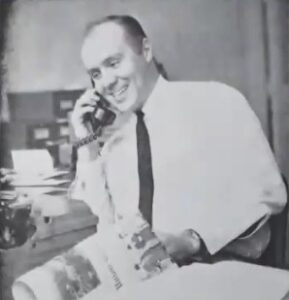
Benjamin Harris III with his speedster; Photo courtesy Autopuzzles.org

Harris played a foundational role in the development of Road America, helping to scout and shape the track layout alongside David Biggs. His involvement extended to officiating races, drafting regulations, and even flying GM executives to meetings in his personal aircraft. His fingerprints are all over the early infrastructure of American road racing.

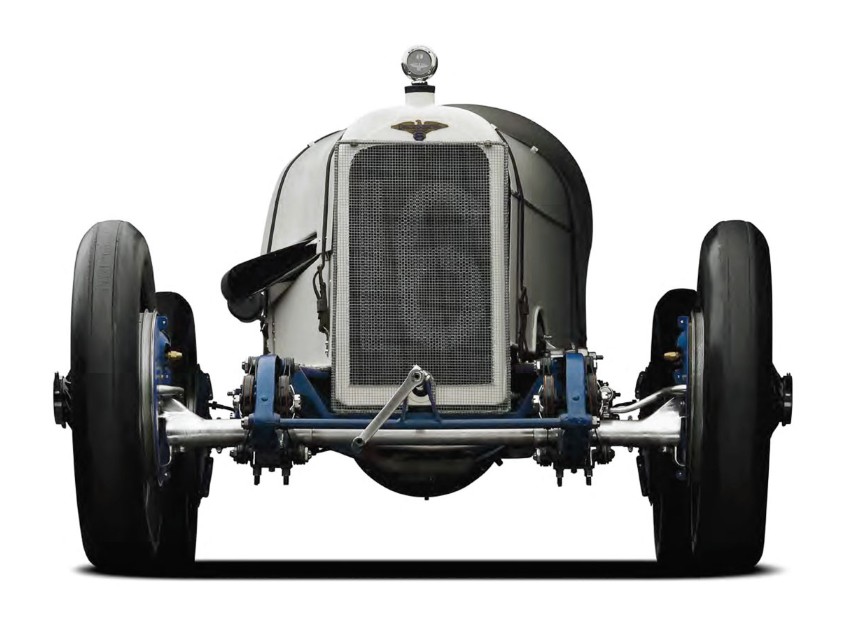
Rendering courtesy of the AACA forums on the Harris Speedster

Long before safety became a regulatory mandate, Harris was advocating for seat belts and roll bars. His vehicles incorporated these features in the 1930s and 40s, and he lobbied for their adoption across SCCA and FIA events. His foresight helped catalyze a shift in motorsport safety culture—especially in the wake of tragedies like the 1955 Le Mans disaster.

Spotlight

John Yasenko’s purchase of the remains of the 1935 Harris FWD Speedster decades ago led him into conducting 36 years of research into the car and its creator, Benjamin F. Harris. John’s objective has been to document how Harris was a key figure in postwar racetrack design and development, and in transforming the Sports Car Club of America (SCCA) into a national organization. John is a lifelong car enthusiast, business owner, restorer and historian, automotive show host, and all-around jack of all trades.

Synopsis

In this episode of The Logbook, our History of Motorsports series, John Yasenko recounts the discovery and historical significance of a unique 1935 front-wheel-drive speedster created by Benjamin F. Harris III. Initially found in a neglected state in 1987, this speedster led to extensive research revealing Harris’s influential role as an early industrial designer and motorsports architect. Harris contributed significantly to the development of American road racing, collaborated with notable figures like Harley Earl and Jim Kimberly, and played a key role in establishing Road America racetrack. The episode delves into Harris’s innovative design elements, his associations with automotive icons, and his advocacy for safety measures like seat belts and roll bars. Harris’s impactful legacy culminates in his posthumous induction into the SECA Walk of Fame in 2020. The episode also discusses the car’s current state and its ongoing restoration, underscoring the importance of preserving Harris’s contributions to automotive history.

Follow along using the video version of the Slide Deck from this Presentation

Transcript

Crew Chief Brad: [00:00:00] Break Fix’s History of Motorsports series is brought to you in part by the International Motor Racing Research Center, as well as the Society of Automotive Historians, the Watkins Glen Area Chamber of Commerce, and the Arge Singer family.

Crew Chief Eric: In this episode of the log book, John Yako recounts the discovery and historical significance of a unique 1935 front wheel drive speedster, created by Benjamin F.

Harris iii. Initially found in a neglected state in 1987, the vehicle’s unusual design and Harris’s innovative contributions to automotive history, intrigued John and his brother. This led to an extensive pre-internet research endeavor where they discovered Ben Harris was an early industrial designer and motorsports architect, and was deeply involved in the development of American Road Racing and CCAs national organization.

He collaborated with notable figures like Harley Earl and Jim Kimberly, and played a pivotal role in the establishment of the Road [00:01:00] America racetrack. John presents us with rich historical insights, personal anecdotes, and acknowledges the extensive research and supportive collaborations that uncovered Harris’s legacy, culminating in his posthumous induction into the SECA Walk of Fame in 2020.

John Yasenko: My introduction to Ben Harris as a story past occurred in 1987 while touring a property for purchase in Clarksville, Missouri. The property was a time capsule of partially buried pedigree automobiles and of their components I was drawn to and later purchased the Harris Front wheel drive speed because of its unique appearance and the fact that a tree had gone through the center of its cockpit.

And it just amazed me. I began researching the purchase pre-internet with a little more than this rendering by my brother Dan Yanko.

Crew Chief Eric: John, what initially intrigued you about Ben Harris and his work in automotive design

John Yasenko: as Ben f Harris III built? An anomaly in time in [00:02:00] 1935. We wanted to just touch upon it because he kind of built what was to come in the fifties in race car designs and exotic designs.

Always wore his hat, usually flight glasses. He was a pilot. He was a very politically involved person, and he usually had a dress code on, or he was dressed in the SCCA efficient material. This picture is from an SCCA magazine, Indiana Race, July, August, 1954.

Crew Chief Eric: Can you elaborate on the significance of Harris’s association with the AAA in the early days,

John Yasenko: Ben, apparently all the way back when this picture was taken was 1936, was highly involved with the a, a AAA.

You’ll notice there’s AAA license plate on the back of the speedster. That license plate says AAA official card.

Crew Chief Eric: What are some of the design elements of the Harris Speedster that were ahead of their time compared to the later race cars of the [00:03:00] 1950s?

John Yasenko: Remarkably, in 1935, the speedster was the size of an AC cobra and a D type jaguar.

The motors was a two cam. Two distributor dual rated V eight, built in 1933 and 34. We could see that it had friction shock absorbers, which I knew was something from the twenties and thirties. Ben’s car started silk chr, Metallica paint. DuPont’s first. Actually, the color of that is their patent formular.

For chr, Metallica Paint, duke Lacquer was put onto the Harris Speedster.

Crew Chief Eric: How did GM executives react to Harris’s work? And was there any notable collaboration between them?

John Yasenko: My favorite picture to illustrate the size of the futuristic exotic design, the speedster photo from 52 Chicago Invitational event.

There are some GM executives in this picture. Here we have some other ones. GM was participating with Ben in this booth, and we do believe this is the one that another friend of Ben’s, Chrissy [00:04:00] Kaki, put a picture and featured Ben’s car on the front cover of his magazine for a special edition. We believe it was for this showing, but we’re truly not sure.

It mentions Ben’s car won an Indianapolis custom car show in 1951. The reason for this was Wally Parks, and I can’t think of the owner’s name of Hot Rod Magazine, ran a full page ad looking for Ben and his car. They wanted to send him an invitation to the second annual indie rod custom show. Ironically, at the end, 17 years of age and design, it won a first place trophy.

Can you even imagine that? It was still state-of-the-art futuristic. This picture here is actually clipped from the Hot Rod Magazine from 1951 where they were looking for Ben to send him an invitation. The car, at this point in time. Was still the chrome Metallica as DuPont called it. Ben never really named the [00:05:00] car that’s talked about in auto puzzles, which some may enjoy reading that story ’cause it brings back forth many, many more facts about Ben and the car.

This is a speedster stretching out its legs on the racetrack. This is a boardwalk. The speedster is on, and again, we think this is 46 to 48. The vehicle did do some racing. Very limited, but it did. The more I learned about the car, the more I became intrigued about the man behind the car. Harris’s interest in performance.

Cars wasn’t limited to industrial design. He was also an enthusiast who raced in and officiated numerous AAA SCCA and FI events in three. Countries. Yes. Three countries at Cuba, Nassau, Bahama, and 12 states that we have him at with pictures and magazine articles and stuff. Harris needs to say, was very active in the SCZA as it transitional lies into a [00:06:00] unified national organization.

Benjamin F. Harris was among the vanguards of industrial designers, engineers, and Motorsport architects as early as the 1930s. A small sampling of his associates include Gordon Bing, Harley Earl, ed Cole, Zora Doff, James Kimberly, wacky Arno, and many, many others. You’ll see pictures of Ben talking with Carol Shelby and his Maserati.

You’ll see a lot of different pictures coming up, uh, including with Wacky and everybody else. He was good friends with Fred Dusenberg, August son, Fritz. He was Best man at Gordon Bings wedding in Auburn, Indiana to Betty Whitten.

Crew Chief Eric: Can you describe the significance of Harris’ relationship with automotive icons like Harley Earl and Zora Donoff?

John Yasenko: Uh, knowing Harley Earl when he first went to GM 56 Harley, and I guess [00:07:00] Zora built him a special car vet and delivered it to him right out of the styling building at General Motors. Ben took his plate, flew there, picked it up, and while I was there, they also had a real nice luncheon for him. With most of the GM hierarchy.

They’re at the meeting Ben brings in Harley Earl, which is a lot to be said there. I have talked to Richard Earl. We’ve coordinated just a little bit. I gave him some documents that he’d never seen before. There’s another way that Ben Harris found together with his friends, Harley Earl. And others, um, concept CARNA Harris Speech for Marketing Techniques.

Benjamin Harris used to draw crowds at many racing events throughout the us. 1952 to 60 we’ll mention, we also talked about the loss history of the car, John Hendricks that owns, uh, discovery channels and a lot the 30 year loss history. And I told him what I thought, how that happened, but at the same [00:08:00] point in time, he showed me that he’d done a YouTube on that.

That’s a whole nother story. There’s a lot of sub stories off this. We moved out past that. We run into the name Teeter. Teeter is the one that actually was Perfect Circle Corporation, and also he’s the one that sued pretty much everybody for stealing his cruise control patent. Yeah. He’s the one that designed it and made it.

He brings in his friendships with Pop Meyers, Jimmy Snyder, Peter Collins, Rodriguez Brothers, Phil Hill, Alfred Momo, Alex Allman, and the great gentleman. Start your engines, Wil Shaw, Wil Behar another. A few others are pitching in a film that Ben did at one of the races, many races. That he was associated with in officiating and sanctioning.

We have not ran into anybody that contributed more to building the national level in rules, books and presentations than Ben Harris. That’s a bold statement, but [00:09:00] yet we’ve been at this for 35 years. Then he talks about Colonel Harrington of the contest board, the AA and American representative of FIA. I wonder if that’s perhaps why Ben was thrown an international flag at Nassau Bahamas.

Speedway talks about him holding SCCA Senior Competition license, AAA license, and FIA licenses, having served as an SCCA regional executive member of the National Activities Committee in a former national Vice president and publications director. Driven to different tracks. Stockholder of Road America.

Crew Chief Eric: What role did Ben play in the early development of Road America?

John Yasenko: David Biggs’s son told me he has records of them driving around and David Biggs’s, uh, Mercedes 500 cab filming the Road America before. It had any surface put onto it. They were making sure the track was just as they wanted it. And this same book also has rules [00:10:00] and regulations that they were talking about adding in.

This was 52 or 53 when this is filmed. I’ve tried to get that ’cause it would be great to go with this, especially for Road America, to show the real beginnings of shaking the track down at the inaugural race at Road America. Preston Tucker did have one of his tuckers at that too, promoting the concept car and everything else.

And by the way. I find this entertaining and not to take away from anybody, but this is 52. Ben’s car is 17 years old. It seems like it’s still drawing lots of people around it, and right in front of it is the four lac. Yes. Ben was also good friends with the Granite Teles. This is ones that they actually built for him.

Cut the body. Put in the different rear end knock off wheels. He used it as a tool. Ben had just driven it two weeks prior to a big Indy race where ironically, many, [00:11:00] many of the people that were there were gonna be president coming at the Chino race that had almost 80,000 people there. But the point is, is Ben used every tool that he could get.

There’s also rally events, which involves sometimes 30 mile drives, but he wanted to draw as many as possible, and I’m sure. Everybody around him agreed and they all participated in their plot that they were unleashing. Harris recognized the cart racing, provided an incubator for tomorrow’s motor sports champions, which it did.

This is from the collection of the Henry Ford Museum archives. There’s a lot more to be said about this picture, too. If you look in the background, you’ll see all the stands are full of people. He must have been bouncing everywhere over that whole 10 days for this event. Road America Big Bo event is what it was turned Harris could be spotted wearing a signature English flat cap and an SCCA official shirt with a hands-on car number one 19.

This photo is one of many [00:12:00] SCCA events officiated by Harris. This number 60 Jag. I think this is the 60 Jag that won the inaugural race at Road America. Sorry to learn that. The one archivist that I’d spoken with, really a nice guy, passed away. Looking forward to working with him, to giving him a bunch of information that they don’t have about the beginnings of Road America and how it all happened.

Finn Harris was a pilot. He owned an airport and he was constantly flying. People like Harley Earl, wacky Arnold James, Kimberly around to the different tracks, and in the meetings they were having in making the national SCC and also Building Road America.

Crew Chief Eric: How did Harris’s involvement in SCCA and other organizations influence Motorsport regulations?

John Yasenko: Now we’re getting into the actual racing part. We did wanna bring in some about the speedster. Is the 65-year-old mystery of CCAs early development solved. The question was initially posed in this edition of [00:13:00] SCCA magazine by executive director. Uh, last name was Bird of the SCCA. This is the front cover.

Ironically, I’m not sure what model or makeup vehicle it is going over the tracks. There’s a picture of Ben going over the same tracks, airborne in one of his mgs. That erased this SCCA article written by the executive director acknowledges that SCCA records were sketchy and very incomplete.

Unfortunately, this voids severely limited the ability to identify and recognize the individuals who made certificate contributions to the transformation of the SCA from a regional to a national organization. This was published in SCCA publication 1959. I do believe it was. February and what the executive director says is, when after the war, the ARCA was not reactivated to any great extent.

A group of enthusiasts in Boston founded a Sports Card Club of [00:14:00] America in February of 1944. This is in direct contradiction to California, claiming it in 1948. The club’s growth from then on is a matter of pride and common knowledge to the membership. This account, it is well realized is sketchy and very incomplete, and through inadvertence of poor memory, many names having been omitted, that should have been set down.

The records have almost without exception, disappeared, are been destroyed and this brief fragmentary switch has set down. But to hope that it may prove of some interest to present day enthusiasts despite its very incomplete nature. So if the thought from little acorns, et cetera, we set the time machine back to the present, take our somewhat creaking departure.

Jim Kimberly and Ben Harris, they were recognized in the first edition of Sports Illustrated in August, 1954. How did they ever get that done? Why wasn’t [00:15:00] Pebble Beach Indy or Watkins Glen use and why were Jim, Kimberly and Ben Harris featured? Could it be because of the title, new Herty? Bringing in new vision, dress codes, racing rules and regulations, safety aspects and formulas for drivers and race teams to follow, which ironically, it seems like all the teams to this very day were inspired that still going on with team colors and team wardrobes.

There was a wealthy that was really into this and of some of the other common people as is today, which mostly constitutes the SCCA membership. Records were lost unfortunately, when they removed from back east. I think to Indiana, maybe one or two dumpster loads were thrown away. Not doing any fault of the person doing it, you just didn’t have enough help.

It was something that happened that made life very difficult for us. I did go to Indy one time, AAA early. They [00:16:00] concentrated more so on. Indy, researched a lot of their races. Harris served is A-S-E-C-A National VP, public, and other leadership positions for the national SEC, which we have discussed. Ben was a rally official at this.

He was already digging in to statuses of the SCCA at the regional levels and such. He is wearing his rally event official jacket. This is one of the three mgs that Ben raced through the 12 years. Always had white walls on it and always had BFH on his license plate. Ben was wealthy and he also had. On all of his cars.

This kind of neat silver mascot for opening up the hood of the speedster and on the radiator of this MG of a character called Adolf, and it was a Jacques Cartier original. That’s kind of way he was.

Crew Chief Eric: It’s noted that Watkins Glen is a turning point for Motorsport safety, but what role did Ben play in rebuilding after the tragedy?

In [00:17:00] 1952,

John Yasenko: Harris worked closely with Wacky Anot, Jim, Kimberly, Harley Earl, amongst others to rebuild. After the tragedy at Watkins Glen, Ben was on the front row of the one race. But it wasn’t a race in which Fred Wacker slid and unfortunately hit the one child. Together. They tackled design and construction of Road America advocating the use of airports for future events, and an emphasis on safety measures for both drivers and spectators.

Crew Chief Eric: Let’s talk about Ben’s advocacy for safety measures such as seat belts and roll bars, and how these innovations changed racing.

John Yasenko: I know that Ben, which they’re in his car’s seat belts. And a built-in rule bar, Ben was constantly pushing that, that to become the law in SCCA racing and in hopes that even Formula One would pick it up for the safety of the drivers.

Few things that people didn’t realize. But yeah, Ben had seat belts in his car, quite amazing. Everything had to change at this [00:18:00] time. Racing in Europe, it changed Mercedes, it just had a horrible wreck and I think 40 or 50 people were killed and they actually pulled out a racing in entirety for decades. It went to future events.

Ended up being a Boeing SCCA trophy and officiated at SCCA base racing for racing planes. This has been 1954 Chino Air Force Base event. Our estimated attendance was 80,000 over the three day event, race car bill and legend, wacky on Noll as a whimsical point, and his wife were film checking race cars into the event.

If you can imagine. Even back then a multimillionaire, even owning one of the towers at Sebring, where the crews and Ben and everybody else would get to go on top and watch the races. All of this, the two years that they held, this was all in the plot, let’s say, of [00:19:00] what they were doing in building. Road America and to take it further was throwing the international flag at the first cart, SCCA competition in the world.

I think we have about 95 SCCA Sports Car America, um, magazines shows Ben as the SCCA publications director. I think Ben moved around through the groups here, more or less, to accomplish things that they wanted to get done. His association with Kimberly was really not known that well, but at the same point in time was very strong, along with other, let’s say, powerful known individuals have, I think five of the different proposed rules, changes and formula changes and stuff.

As I mentioned, some of these rules were probably being written up, either driving on Road Road America while it was still in dirt, shaking the track down. Does show Ben Harris down here as a director of publication [00:20:00] and these other names that come up through here. We have pictures of Ben with them. So many more documents we had to limit ourselves.

There’s a lot to this. Let’s just say that it changes things from the way many people thought it was.

Crew Chief Eric: How did Harris’s work influence the trajectory of SECA and International Motorsport standards?

John Yasenko: Ben was, I guess, nominated again, or, or maybe because there’s probably shortages of people that were allowed to throw the FIA flag that were FIA licensed here in the United States.

I pose that as a question to historians. This race 59 was being covered by NBC. I truly would like to find someone that can get into the NBC archives ’cause we’re sure it’s gonna show Ben all over the place. ’cause he flagged, I mentioned the first cart competition and uh, a speed week and showing Ben as the flagman of the whole thing.

This brings forth that Ben, I [00:21:00] guess, had enough power where he stopped wide broadcast and it caused a heated debate between Team Roosevelt and the A Bars. Uh, they were not allowed back on the track, but think of the power he carried to stop the whole international race. In here, you see a lot of the names of the people, the Scare Up Cars.

You see Paps in there, you see Donald Healy in there, you see Duncan, see Shelby’s name. All of these people are the ones that Ben ran with. I guess they all wanted to be friends with Ben too, when you think about it. But this is the televised event. We know Ben was there in 1958 too. You would’ve thought that the kidnapping of Juan Fangio would’ve maybe scared the person off for 1959 for other possible events.

But needless to say, Ben stood up. He took it and it all turned out well. Ben is throwing a flag. We believe this was the 59 Nassau Bahamas Speedway in his group of cars, or the most famous legend and race drivers ever recorded in the [00:22:00] history books. This image raises a question. How many FIF race officials were active in the US in 1959?

As I mentioned prior, I’d sure like to find that out. And again, Ben, his cap on cigarette, he always had cigarettes and his official shirt always wanting to be efficient and put on a show and have all the drivers and teams. Do the same. And you’ll notice too, he has his SCCA stopwatch on his belt that comes into a lot of pictures that we have of him.

Shelby was driving his Maserati Bird Cage Works card note. The Harris front wheel drive speedster Bird Cage design was produced 24 years prior to the Maserati. We have pictures of Ben with Gurney, Juan Fangio Moss, the Generals, and we have donated money to use the pictures from the Henry Ford Museum for the purpose of student and historic knowledge for records and such.[00:23:00]

It ends here is to work. Needed to create a national and united SCCA. Was finished. Tracy Bird, executive Director, SCCA 1959. There’s several articles, but what it all boils down to is the fact that there were five different racing organizations trying to rule the race, which was not working. They all had different formulas.

They had this, they had that. And it wasn’t working anymore. Names like Jack McAfee never cut. Jim Kimberly and even Ken Miles come up in this where they’re all arguing over. Apparently there was a lot of arguing when it all settled down. The SCCA was the national organization that they were gonna be racing under.

From then on, they had their other races, but they were not sanctioned, nor could they use the SCCA logoing for anything. Tracy Bird seemed to [00:24:00] think at the end of it all, that this was the big merger that came out of a desert deal between four people. It was a good one for SCCA and yes, it was. We could go on with Ben in the racing, but the last picture we have, was it a Michigan race track and he was looking at the gas cap of an AC Cobra doing a post race inspection of a winning car that won the race, the AC Cobra.

Crew Chief Eric: What’s the significance of the induction of Ben Harris into the walk of fame and how does it preserve his legacy?

John Yasenko: Benjamin F. Harris, I third National International Race Organization, track official and original stockholder in Road America. Three author of National SCCA positions 1952 Front Roof, the Glen’s Last Queen Catherine Cup Race.

This was used for Ben’s induction into the walk of fame. Thank you again, Mr. Bill Green for [00:25:00] helping me out. There again in ceremony, Ben and Jim Kimberly World Award Special Metal Lifetime, SCCA membership cards. I have yet to find anything of a ceremony whenever they retired after 10 and 12 years of building the national level at their own expenses too.

The first 10 years of Road America, Harris was active in the development of racing throughout the thirties through the fifties, Harris was nominated and selected as a track official for the inaugural event. Harris was an original stockholder and designer of the track, as we previously mentioned. The records of this are at the Chicago SCCA archival department where it shows they took a vote and they nominated Van to be, I guess the track official and the official flagman.

That is a picture of, I believe it’s Phil Hill and Sherwood Johnson. Gone past Ben at 130 miles an hour. Benjamin F. Harris third is inducted [00:26:00] in the DSCC walk of Fame September, 2020. The recognition was accepted on behalf of Harris by John Yanko. A sincere thank you to Mr. Bill Green. Again, this is on the courthouse steps at Watkins Glen.

Bill was very kind and let us put on a nice display of posters, which people really seem to enjoy. Which was part of Ben’s racing history and organization. I’d like to point out that, uh, for additional information on Ben, there’s a site called Auto Puzzles. I believe it is the largest site for archival automobiles from around the world.

Last year I looked ahead over 9 million.

Crew Chief Eric: Reads and getting back to the Harris Speedster, can you tell us more about the significance of the fire in 1964 and the impact that it had on the Harris collection?

John Yasenko: Remember, this car was built in 1935. This pencil sketch here from my brother Dan. This is when we first found the car and brought it in.

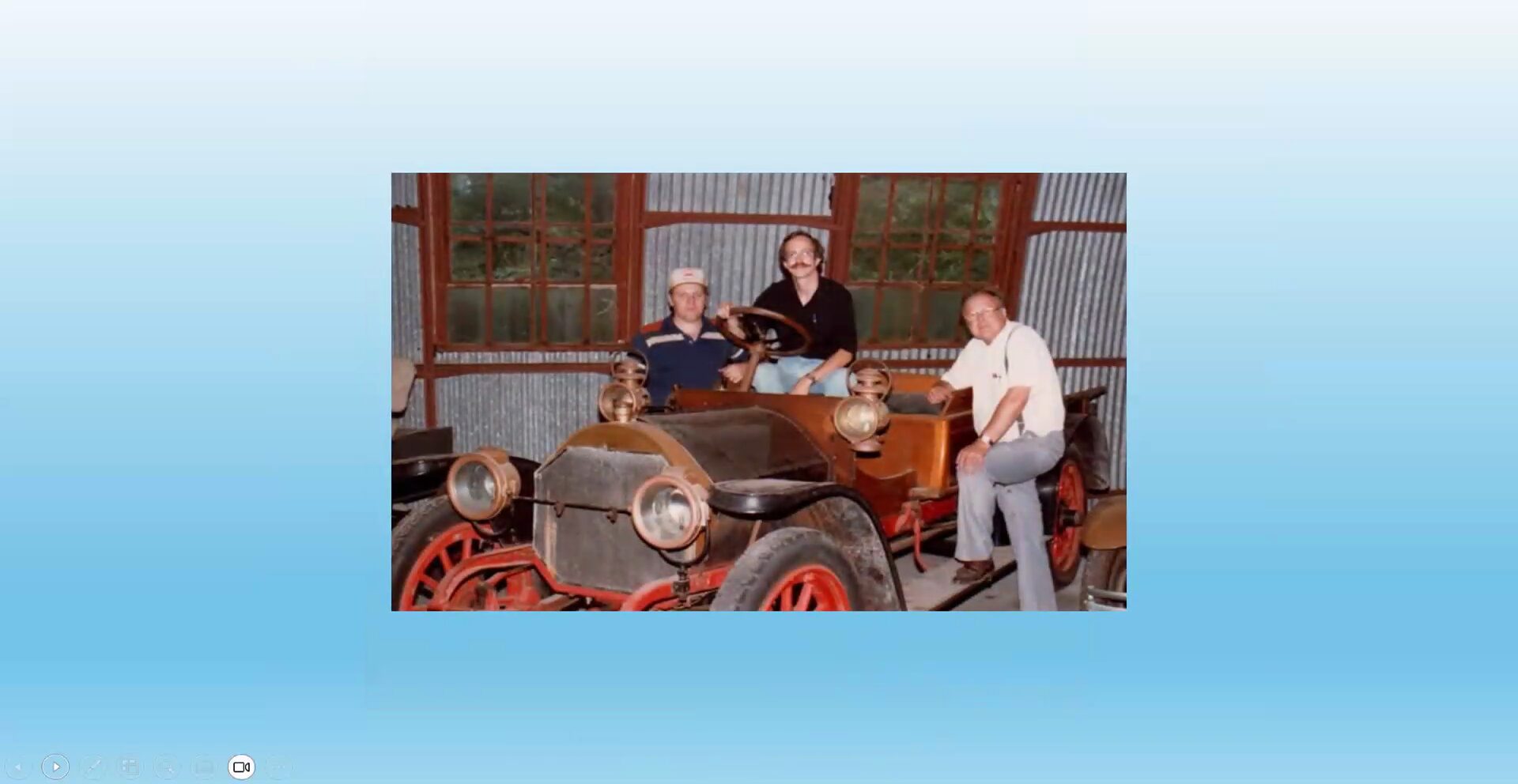
And we were trying to [00:27:00] make sense of what we found owned by David Biggs II and owner, proprietor of a selected museum for automobiles of pedigree in Louisiana, Missouri, a fire in 1964 damaged 13 to 18 vehicles. In his collection, the Harris Front Wheel Drive speedster in a newspaper article was considered the most valuable of these vehicles.

Other vintage cars damage included a 58 Ferrari tester. Known well through the Ferrari people is big red. A factory alloy bodied going with knockoffs, which he raced a pre-war Mercedes 500 Clee, a horse Clee. It was a really rare alpha Roadster, which actually Ralph Lauren owns one of the four, I believe it was four or five cars that was built that was special.

Crew Chief Eric: What’s next for the Harris Beat Reservation? John, how do you hope to contribute to automotive history?

John Yasenko: We figured everybody would wanna know. Uh, I’m always asked, what condition is the [00:28:00] car in right now? We’re blatantly showing you the picture of it sitting there. It is real as the day is long. There are panels right now being restored and the motor is being finished off right now.

And also, if you wanna get in and look at this, the American Pickers came here to History Channel and filmed an episode, gave ’em about maybe. 30 seconds, 40 seconds on the car. It was their focus and my focus, the episode is called Tough Texas. I guess it turned into a favorite there. Unfortunately, they still make it pay to watch the episode even though it’s seven years old and they wanna come back and do an update on the car in the story in the future.

This whole story and the documents that are shown to you are actual documents. That are backed up. A lot of the things that we’ve read about race tracks and this person and that person, we’ve never seen an ounce of documentation to back it up. We, on the other hand, have become totally overwhelmed with what we have.

We [00:29:00] actually maybe can see a few of the posters here. We have 48 posters made. The story got to be so unbelievable that it was hard to even rationalize what had went on that got missed all through the decades.

Crew Chief Eric: All right, John. Well, we’ve reached that part of the episode where we’d like to invite our guests to share any shout outs, thank yous, promotions, or anything else we haven’t covered thus far.

John Yasenko: Uh, again, we have to thank the ER symposium, the Society of Automotive Historians. I am RRC, Mr. Robert Barr, Ruben Verde, my brother Dan Yankel, my son John Yankel, and probably hundreds more that will come out later in another presentation when we do one more so on Ben himself and really lay down the documents on the Harris Fester and the other 25 documents.

On his racing, which were being held back, we just can’t give it [00:30:00] all away. Not 35 years of work is deserving of a book. I want to thank everyone again for their time, and I hope that this, um, this knowledge that we’ve passed on is beneficial to some in their research and in their museums and archives. One other thing, Richard Taylor, thank you so much.

Richard Taylor did this for almost nothing and he also made blueprints of the car while making this computer generated image. Uh, so we can turn it into the Library of Congress and some other halls of fame as we go along. If anybody finds anything on Ben, I’d sure like to know about it. An email address to contact me is is capital B, capital J, capital H, capital S.

P-E-E-D-S-T-E r@outlook.com. Feel free to send. It’s truly appreciated.

IMRRC/SAH Promo: Thank you so much. This episode is brought to you in part by the International Motor Racing Research Center. Its [00:31:00] charter is to collect, share, and preserve the history of motor sports spanning continents, eras, and race series. The Center’s collection embodies the speed, drama and camaraderie of amateur and professional motor racing throughout the world.

The center welcomes serious researchers and casual fans alike to share stories of race drivers race series, and race cars captured on their shelves and walls, and brought to life through a regular calendar of public lectures and special events to learn more about the center. Visit www.racing archives.org.

This episode is also brought to you by the Society of Automotive Historians. They encourage research into any aspect of automotive history. The SAH actively supports the compilation and preservation of papers, organizational records. Print ephemera [00:32:00] and images to safeguard, as well as to broaden and deepen the understanding of motorized wheeled land transportation through the modern age and into the future.

For more information about the SAH, visit www.auto history.org.

Crew Chief Eric: We hope you enjoyed another awesome episode of Break Fix Podcast, brought to you by Grand Tour Motorsports. If you’d like to be a guest on the show or get involved, be sure to follow us on all social media platforms at Grand Touring Motorsports. And if you’d like to learn more about the content of this episode, be sure to check out the follow on article@gtmotorsports.org.

We remain a commercial free and no annual fees organization through our sponsors, but also through the generous support of our fans, families, and friends through Patreon. For as little as $2 and 50 cents a month, you can get access to more behind the [00:33:00] scenes action, additional pit Stop, mini SOS and other VIP goodies, as well as keeping our team of creators fed on their strict diet of Fig Newton’s, Gumby bears, and Monster.

So consider signing up for Patreon today at www.patreon.com/gt motorsports. And remember, without you. None of this would be possible.

Highlights

Skip ahead if you must… Here’s the highlights from this episode you might be most interested in and their corresponding time stamps.

  • 00:00 Discovery of the Harris Speedster
  • 01:15 Ben Harris: The Man Behind the Machine
  • 02:54 Innovative Design Elements of the Harris Speedster
  • 03:33 Harris’s Collaborations and Achievements
  • 05:27 Racing Legacy and Contributions to Motorsport
  • 09:36 Involvement in SCCA and Road America
  • 17:29 Advocacy for Safety in Motorsport
  • 24:29 Legacy and Induction into the Walk of Fame
  • 29:15 Conclusion and Acknowledgements

Livestream

Learn More

If you enjoyed this History of Motorsports Series episode, please go to Apple Podcasts and leave us a review. That would help us beat the algorithms and help spread the enthusiasm to others. Subscribe to Break/Fix using your favorite Podcast App:
Listen on Apple
Listen on YouTube
Listen on Spotify

Consider becoming a Patreon VIP and get behind the scenes content and schwag from the Motoring Podcast Network

Do you like what you've seen, heard and read? - Don't forget, GTM is fueled by volunteers and remains a no-annual-fee organization, but we still need help to pay to keep the lights on... For as little as $2.50/month you can help us keep the momentum going so we can continue to record, write, edit and broadcast your favorite content. Support GTM today! or make a One Time Donation.

From racing MGs with whitewall tires to officiating international events in Nassau and Cuba, Harris’s career spanned continents and decades. He was featured in Sports Illustrated’s inaugural issue in 1954, and his car won custom shows nearly two decades after its creation. His induction into the Watkins Glen Walk of Fame in 2020 was a long-overdue recognition of his contributions.

Photo courtesy John Yasenko via Facebook

The Harris Speedster is currently undergoing restoration, with panels and the original engine being meticulously rebuilt. The project is backed by extensive documentation, including blueprints, photographs, and archival materials—many of which are being prepared for submission to the Library of Congress and other institutions.

Photo courtesy John Yasenko via Facebook

Benjamin F. Harris III was more than a designer – he was a systems thinker who helped unify fragmented racing organizations into a national body. His technical innovations, organizational leadership, and relentless advocacy for safety and structure laid the groundwork for modern American motorsports. To learn more, be sure to check out all the details and discussions about this car at Autopuzzles.com. If you have additional information or questions about the Harris Speedster please get in contact with John Yasenko.

This episode is sponsored in part by: The International Motor Racing Research Center (IMRRC), The Society of Automotive Historians (SAH), The Watkins Glen Area Chamber of Commerce, and the Argetsinger Family – and was recorded in front of a live studio audience.


Other episodes you might enjoy

Michael R. Argetsinger Symposium on International Motor Racing History

The International Motor Racing Research Center (IMRRC), partnering with the Society of Automotive Historians (SAH), presents the annual Michael R. Argetsinger Symposium on International Motor Racing History. The Symposium established itself as a unique and respected scholarly forum and has gained a growing audience of students and enthusiasts. It provides an opportunity for scholars, researchers and writers to present their work related to the history of automotive competition and the cultural impact of motor racing. Papers are presented by faculty members, graduate students and independent researchers.The history of international automotive competition falls within several realms, all of which are welcomed as topics for presentations, including, but not limited to: sports history, cultural studies, public history, political history, the history of technology, sports geography and gender studies, as well as archival studies.

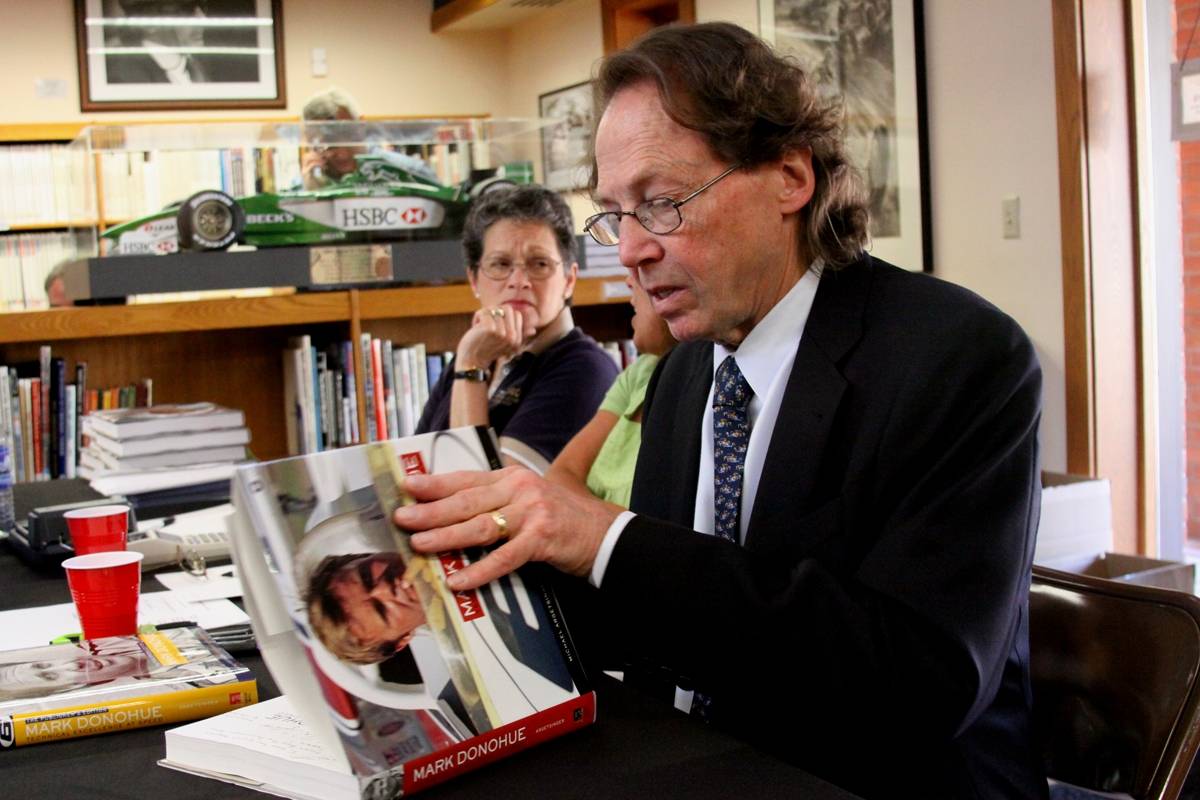
The symposium is named in honor of Michael R. Argetsinger (1944-2015), an award-winning motorsports author and longtime member of the Center's Governing Council. Michael's work on motorsports includes:
  • Walt Hansgen: His Life and the History of Post-war American Road Racing (2006)
  • Mark Donohue: Technical Excellence at Speed (2009)
  • Formula One at Watkins Glen: 20 Years of the United States Grand Prix, 1961-1980 (2011)
  • An American Racer: Bobby Marshman and the Indianapolis 500 (2019)

This content has been brought to you in-part by support through...

Motoring Podcast Network

One Man’s Vision

A blind boy from America’s heartland changed the way the world drives.

This is the powerful story behind One Man’s Vision, the upcoming feature film inspired by the life of inventor Ralph Teetor – the mind behind Cruise Control – who lost his sight at age five but never lost his vision of what was possible.

Inspired by the book, One Man’s Vision, by the late Marjorie Teetor Meyer, the film is a collaboration between Brookwell McNamara Entertainment, Blind Logic Productions, and Bernstein/Romero Productions. At its core, it’s a story of iron-willed perseverance, love, and how one man refused to be defined by his blindness and instead shaped the future of the American automotive industry.

An American triumph over tragedy story that follows a man who overcomes unthinkable odds. Ralph Teetor lived his life as a sighted person. His own daughter didn’t know he was blind until age 10.

Reuniting the team behind the 2024 biopic Reagan, the film will be written by Howard “Howie” Klausner and directed by the acclaimed filmmaker Sean McNamara. Producers include David Brookwell, Jack Teetor, and Gary Bernstein, with Klausner also serving as executive producer.

McNamara’s credits include Soul Surfer, On a Wing and a Prayer, and the upcoming John O’Leary story Soul on Fire, for Sony Pictures and Emile Hirsch’s Holocaust drama Bau: Artist at War, for Paramount Pictures. Klausner’s writing includes Space Cowboy’s (Clint Eastwood), The Last Ride, and The Identical. David Brookwell brings decades of experience in feature films and television.

Tune in everywhere you stream, download or listen!

Listen on Apple
Listen on YouTube
Listen on Spotify

This film was sparked by Ralph Teetor’s great nephew, Jack Teetor (interviewed in the Break/Fix podcast episode above), who produced the award-winning documentary, Blind Logic, which premiered on July 8th on digital platforms and cable providers. “Ralph’s legacy goes far beyond Cruise Control,” said Jack Teetor. “It’s about resilience, imagination, and a love story that fueled his pursuit of achievement.”

Producers Gary Bernstein & Ernesto Romero introduced Brookwell McNamara to Jack Teetor and discussed a feature film about Ralph Teetor’s life. Gary Bernstein produced the highest rated series on six different networks including “Lingo” which has been on the air for five decades.

Bernstein commented, “After reading the book, ‘One Man’s Vision,’ I knew immediately it needed to be a motion picture and I’m excited to play a role in bringing it to fruition. Ralph Teetor’s life story caused a major positive paradigm shift in my life and I’m certain the motion picture will do the same for millions of others.”

McNamara added, “I’m so excited to be making ‘One Man’s Vision’ for the big screen. This is an extraordinary American story that is not just about bringing Ralph Teetor’s remarkable journey to life, it’s about illuminating the power of resilience and innovation against all odds. I am thrilled to share his inspiring legacy with the world!” 

For more information visit: www.onemansvision.com

From Russia to Dubai with Ekaterina Nazarova

In Episode 52 of Screen to Speed we’re treated to an inspiring conversation with Ekaterina Nazarova (aka “Shark Katrin”) a motorcycle coach whose journey spans continents, disciplines, and personal transformation. From humble beginnings in Russia to becoming a full-time coach in Dubai, her story is a testament to the power of intuition, resilience, and the unifying spirit of motorsports.

Photo courtesy Ekaterina Nazarova @shark_katrin_official on Threads

Ekaterina’s move from Russia to Dubai wasn’t just geographical—it was deeply spiritual. Influenced by the film The Secret and the Law of Attraction, she envisioned a place with smooth roads, warm weather, and beautiful signboards. Despite initial resistance, life nudged her toward Dubai, where she found exactly what she had imagined. “I wished to be on a clean road, no winter, and with beautiful signs… and then life played a joke – It was Dubai.”

Tune in everywhere you stream, download or listen!

Listen on Apple
Listen on YouTube
Listen on Spotify

Before Dubai, she had no experience with motorcycles. A spontaneous idea from a friend to ride across America sparked her interest. What began as a casual plan turned into a life-changing pursuit. She recalled writing “I want to ride motorcycles” on a list of 100 dreams—proof that her passion was waiting to be discovered. “I crashed on my first day. I knew nothing. But when I found that list again, I saw it written: ‘I want to ride motorcycles.’ It was destiny.”

Photo courtesy Ekaterina Nazarova @shark_katrin_official on Threads

Her racing career took her across Europe, including a memorable race in Italy where she experienced a surreal, almost spiritual state of flow. She described her bike as floating above the track, her mind silent, her body instinctively responding. “I didn’t feel the ground. No sound. No plan. Just pure focus. I achieved my personal best lap time that day.”

Watch the livestream

Highlights

Skip ahead if you must… Here’s the highlights from this episode you might be most interested in and their corresponding time stamps.

  • 00:00 Meet Our Guest: Ekaterina Nazarova (a.k.a. “Shark Katrin”)
  • 01:07 From Russia to Dubai: A Life-Changing Move
  • 05:22 Discovering Motorcycles in Dubai
  • 12:38 Racing Adventures and Memorable Podiums
  • 18:12 Transition from Racing to Coaching
  • 25:34 Coaching Philosophy and Training Programs
  • 30:45 The Importance of Racing on Tracks
  • 31:32 Coaching Female Racers; the Learning Process and Gender Differences
  • 39:33 Favorite Motorcycles and Racing Experiences
  • 49:24 Transitioning from Street to Track Riding
  • 54:22 Future Plans and Final Thoughts

Transcript

Crew Chief Brad: [00:00:00] Welcome to Screen to Speed, powered by Init eSports. In this podcast, we dive into the journeys of remarkable individuals making waves in sim racing and bridging the virtual with the real, from the thrill of digital circuits to the roar of real life racetracks, we explore the passion, dedication, and innovation that drives the world of motor sports.

We’ll hear from athletes, creators, and pioneers sharing their stories, insights, and the powerful ways Sim racing is connecting communities and creating pathways into motor sports. So buckle up screen to speed starts now.

Lyubov Ozeretskovskaya: Hi guys. Welcome everyone to New Talks. Uh, happy to see everybody here today. We got

Ekaterina Nazarova: everybody’s, hello, hello,

Lyubov Ozeretskovskaya: hello, hello. [00:01:00] Um, so she is a motorcycle coach and a great person also. We get to know her today. Um, so, uh, you could again, and let’s start from, uh, you, you’ve been born in Russia and uh, then you moved to Dubai. Yeah. Like, uh, 14 years ago. So, uh, can you tell me what, uh, brought you there originally?

Ekaterina Nazarova: Well, it is a very nice, and it’s a special story always for me, and it will be this personal story because it has something with, uh, law of Abstraction and I watched movie A Secret. Yeah. It’s material beginning. I know. Yeah. So. Just, it’s been like those days, the secret movie wasn’t, um, like no free like this on YouTube.

You can find everywhere those days, at least to me, maybe I never saw before. And I saw one successful man give it to a friend of mine, one like disk, really disk. And he said, watch it and do [00:02:00] not let see no one. Mm-hmm. And of course there is nothing more important being that time than for me to reach that, that disc.

Mm-hmm. I had to see one there and I was definitely, yes. And I was young. I was like, I think 20, maybe 20 or 21 years old. Mm-hmm. Not even 21 before 21. So, and then I made it. So I was just moving like there is like, you know, like you can’t hear nothing. You don’t sell nothing. You just a hundred percent focus.

And well, it’s similar, like if you’re gonna, if you’re racing, who knows who raised the know. Mm-hmm. So you remove everything else, you have one thing. So I watch this movie the same and from that days I used these instruments and one time I was driving in my country in Russia, I was driving a car and I hit the old and this God its name blah, you know, the holes, some bad condition road is [00:03:00] Russian style.

Mm-hmm. So I look at it and I said, I said I wish to be in Theam Road when there is nothing and that be amazing, like so flat and so nice. And I put it in my heart and that feeling. And then I put my eyes up and it was a stein board, like, you know, putting indicators like mm-hmm. For dry. And I look at it, it was kind of rusted.

And I look and I said, look at that. How look angry that I wanna see an nice, beautiful signboard. And even if I don’t know what written there, let me not even understand what’s there, but I want to see that. Mm-hmm. Uh, and then it was cold. It’s three in one, like, you know, three in one, I’m cold. I’m like, it’s too much cold.

You know, I wanna be somewhere where no winter existing really. Mm-hmm. And three things. I was having that special feeling. And I do have a time to time and I love it. It’s my favorite. [00:04:00] So some mystical happened that time and everything start to change. My life just put me in one direction, which is Dubai.

And I was resisting. Mm-hmm. Literally resisting. I’m like, Dubai, no way. What I gonna do there? I don’t speak English. I know nobody there. Nothing. And I heard, you know, things about it. It’s not like I’m not gonna put myself there. Mm-hmm. Because that’s what I heard sometimes before. And I’m like, no way. But live, play.

A very nice joke. And it was a one way ticket. I will not go to, to really deep explanation, just no problem after problem. It’s, it’s like, it’s like from movies to be honest, it’s another story. Maybe one day again shared. That’s special. Special time. Probably not, not today. So, and I had really no way to stay in Russia and I had to go somewhere and not come back.

And guess what? It’s been Dubai. I came to Dubai. I look man. Soundboards. [00:05:00] Beautiful. I sold them somewhere. Well, it’s in my head, the road. Amazing. Wow. And guess what? There is no winter. Mm-hmm. Imagine.

Lyubov Ozeretskovskaya: Yeah. Other story. Yeah. That’s really nice story about this. So you actually like, resist your dream and uh, then move, uh, to your, your dream, uh, city.

That’s really cool. Um, how Dubai change, uh, like your view on motorsports and uh, how is it compared to what you had in Russia? And I, I know that you also race in Europe and uh, so tell me more about this. Alright, nice question. Well,

Ekaterina Nazarova: in Russia, I was a car lover. I knew nothing about motorcycle. Nothing. Not at all.

So in Dubai, even not too soon, it’s been like, I think about maybe five, four years I was in Dubai. I was doing war, then I did business. And then [00:06:00] out nowhere my friend come up with a story like Katrina. Let’s do, she was partner, um, with the beer salon hair before. Uh, so I said, let’s do motorcycle, you know, journey.

We go to America and we are gonna ride this road amazing over there. I’m like, what an idea. What an idea. It’s so amazing idea. It wasn’t mine. I’m like, yeah, okay. What’s the plan? And she was like a main hit, you know, in plants. Okay. And so she said, very easy. We are gonna make a license. Okay. I’m like, okay.

She was much bigger than me, very big lady. So she was about a hundred plus kilograms. I’m like, all right, I don’t know how she gonna do it, but I will do it. Okay. So

I’m doing it. So I knew nothing about it. I just went there. How very Well, I bit early than that. I had bad days and I was [00:07:00] listening some videos, which is might help me to go out from my mood, which is, was so down. And the video said you take a list, uh, like a paper and pen and write down a hundred points.

Mm-hmm What you wanna do, but don’t think about it. And I’m like, alright. So I did it. It’s been maybe months back then I moved, moved my house. Nothing. But when we start, this lady and me, we did driving license for a motorcycle. I was knew, I knew nothing. I crashed. First day, went to the wall, nothing. I knew absolutely it.

Then I come back home, I found this paper and it’s written on the middle, written, I wanna ride motorcycle and I wanna do extreme sport. Mm-hmm. I knew nothing about it. I was so sure. Ideas or it’s not mine, you know, so it’s me there. That’s how magic happened, basically. Mm-hmm. So it’s been somewhere inside me, but I knew probably nothing subconsciously.

So that’s why when you write down something fast, you don’t analyze, you don’t put [00:08:00] a border, which is our head sometimes. Mm-hmm. Very often you, you just, you know, put both fast, fast, fast, fast. And the subconscious will be, you know, open up and it’ll be speaking things, which is, you don’t know. Mm-hmm. Right.

That’s what happen. Interesting. So it’s probably been way like from that I believe it’s been from God, it’s the destiny. And that’s came a time. Mm-hmm. That’s it. And I need a license. So I cannot say how I knew it before Russia, because I knew it from Dubai, but from. Then I’m training. I train every day, man, every day.

Then I became ready for some reason, for a challenge, for a championship. Mm-hmm. Then I start to race, and then I discover Europe, main places in Europe and then Russia. So I saw it little bit later. Mm-hmm. I can compare, but, but it’s not like people might expect, you know? Yeah. So it was amazing. Yes. It’s beautiful.

Mm-hmm. But, but mobile sports [00:09:00] Exactly. Particularly bikes is on the back. Mm-hmm. Where in the back, yes. Where everywhere. Probably first or many, many Where? Dubai. And it’s my favorite country. I do it. Beautiful country everywhere, leading, but for some reason, motorcycle, particularly in Dubai, is not at the first, it is not leading.

Mm-hmm. Not at all. Yeah. We have Qatar, in Qatar, we have motor gp, um, like 35 racetrack. Mm-hmm. If, let’s say from GCC countries, yes. But in Dubai, we don’t have a truck, which is certified for auto GP yet, but I believe we will do it. Yeah. I believe,

Lyubov Ozeretskovskaya: yeah. That, that’s really interesting so far. Uh, because, uh, you, you know, in my, in my point of view, I see that Dubai is really a good development in developing, uh, racing.

Uh, so here’s a lot of, uh, marathons like, uh, long endurance races, uh, with GT cars and uh, something like this. [00:10:00] Yep. So I felt that maybe, uh, motor sport also, um, like not on the back as you said, um, but I hope it’s going to develop, uh. With some time because if, uh, people getting into it, more people, um, like getting into the sports and it’s going to grow anyway,

Ekaterina Nazarova: I’m sure it’ll be a right time for that and I will do it properly.

Mm-hmm. I’m sure however, just there are a little bit gap, I believe where is a people not obeying enough regime of safe riding, uh, style here by, in the motorcycle and is developing, uh, you know, likely not pleasant opinion and in generally, uh, motorcycle biking style. Mm-hmm. In general, if you say I’m riding motorcycle over there is.

People are paying it. Yes, that’s true. Mm-hmm. It’s [00:11:00] maybe being so far, many, most of the countries, I believe, but yeah, it’s, I have to say it, we, we, we need a proper place. So proper, we need a bit of support that could have saved from the government. Mm-hmm. It’s, it’s, honestly, it’s very hard. I am a motorcycle coach today.

I’m training people. I believe I’m touching people lives and, you know, helping them. Mm-hmm. For some reason, PE people need always, not just like that. It’s always, people need each other, so, and I believe I, I’m kind of that bridge from, you know, being a bridge from human to what they need. Mm-hmm. Like, like that.

Yeah. From the help or maybe fulfilling their dreams. Sometimes it’s a safety, whatever. So it’s, it’s a bit difficult for me to, um, how to say, to, to, to grow, let’s say, to touch more, uh, souls and hearts. Mm-hmm. Uh, by doing it pretty so much alone. I do have a lot of partners, [00:12:00] companies with who we do collaboration mm-hmm.

Support each other. Mm-hmm. But again, it’s on the ground floor, it’s not on government level. Yep. So, yeah. That, that’s the difficulty. Land is a bit expensive and, you know, this is the main thing so far. Mm-hmm. So far. The rest is, everything is, uh, amazing. But I never stop. It’s been from 2020, no, 2021 actually to today.

It’s a full-time coach. Mm-hmm. No part-time, nothing. It’s a completely full-time coach. Even summer today, my first summer, I’m out of Dubai, but I never stopped before, you know? Mm-hmm. Yeah.

Lyubov Ozeretskovskaya: That’s awesome. Yeah. Also, I know that, that you race, uh, like in many, uh, countries, and, uh, can you tell me which podium, uh, finish felt the most special to you and why?

And, and then we’ll move to actually to coaching because it’s really interesting also how you switch from racing to coaching. Coaching.

Ekaterina Nazarova: Sure. Well, yes, it’s [00:13:00] a, it’s a very nice special to me, um, event. I can say one of them. It’s first of course, right? Mm-hmm. First race, one of them. But something else happened in Italy in general, and the feeling I’ve been searching.

Again and again, and it’s never come back. I found out over there a feeling came to me during the race, and it’s never come back after that. Imagine what happened. I’ll tell you, I didn’t share, by the way, this story. Mm-hmm. Like this, like in public. I never did it before. I think so. Forgive me people if I forget something, but I don’t really remember.

I shared That’s okay. But I did. But I did share people like this face to face. Yes. Uh, a feeling is very interesting, like being from so stressed, I felt I’m not ready. And I also felt maybe I will, I will back off. Imagine. Yeah. I had that feeling. [00:14:00] So maybe not today, you know, who cares? But then I imagine like, all right, imagine Katrina.

I talk to myself like that. Imagine if you did not do it past time and then you look back and you nothing you can change. Mm-hmm. How would you feel about it? And I’m like, no way. No way. No, no, no way. And I did, so I raced, of course I jumped to the race after this thinking. Mm-hmm. So, and then what happened while I’m racing, it’s like, um, we have first corner and that corner, and that then rabata this corner I know.

Later. And another story, I’ll tell you why. Anyway, so, so what happens is all of a sudden motorcycle became all wait list. Mm-hmm. I could, it’s all, it’s in any way. Very light. Uh, it’s very hard, very heavy. And the breaking guess. But on, on from January the ride, it’s light. Yeah. So far. If you, of course, but all of a sudden it’s a new feeling.

It’s light in [00:15:00] a way that it is floating above the ground. That is completely like usually I feel every grip, I feel, every angle, even every stone. Mm-hmm. But this time, nothing like that. This time there is no grip at all. I don’t feel touch. So, and it is above the racetrack? Mm-hmm. Maybe two meters or two and a half meters if I have to say it.

So it’s literally up. Mm-hmm. Right. It’s the first thing. And then what happened? The sound in my head disappeared completely. Plan in my head disappeared. Even I didn’t remember. Next will be right or left nothing. Even the gear which gear, nothing which lap. Mm-hmm. Completely nothing. So that’s not normal, you know, for racing.

You, you are still strategic. So focused. But I was focused but nothing. So I only see myself past and it is something else. God knows what and don’t know what. So all of these qualities, even [00:16:00] I missed the code. Like I missed the gear because I’m like, oh really? This will be right now. Okay, so gear should be go up, like go down sheet.

Mm-hmm. And raising its opposite. And I managed to do it and cover the mistakes, everything. And guess what, when I finished the race, I was like the biggest, my personal lap time ever, I did it. Mm-hmm. Wow. So I was the path that I could believe that time to my time. Yeah. Not over, not overall. So. It was a state of mind, unbelievable.

And I asked so many riders, guys, did you have anything like that? What, what? What I ask all riders experience. Like many people, I ask nobody, nobody find this. And they said, yes. I felt every stone. It’s not about every stone, it’s about there enough stone. It’s about your two, almost three meters up, you know?

Mm-hmm. Stone, nothing. So I thought, unfortunately I didn’t find, um, uh, nobody who, [00:17:00] who experience same till day to day. Maybe somebody from people who was watching today, us, maybe they command somewhere, somebody who had the same, I would literally wanna talk to this person, connect, and we know we have things to discuss.

Yeah. Wow, that’s really

Lyubov Ozeretskovskaya: magical story about your race. And, uh, it is. Yeah. That’s why it’s really special for you. So I feel you about this. It’s, um, yeah. You know what, I, I want

Ekaterina Nazarova: podium by the way. Yeah. If I was there that day, I had to point the podium, I have to mention. Yeah.

Lyubov Ozeretskovskaya: Yeah. I think I still, you know, still remember how I won, uh, one of the first races in, in cars.

Uh, I remember a guy, uh, been crying after this, uh, because he, he won the championship. Uh, but there was like, uh, the special event, uh, in the end of the season and I won this. And, uh, he’s been crying. Oh. And then, yeah, I was like nine years old, 10 years old, [00:18:00] something like this.

Ekaterina Nazarova: It’s happy and sad, you know?

Yeah. Happy because it’s very happy. Of course. And sad because, you know, someone was crying, but it’s what Well, I’m proud of you.

Lyubov Ozeretskovskaya: Yeah. Thank you. Uh, so let’s move how you, uh, like, uh, change from, uh, being in racing, uh, racing motorcycles to actually coaching. So what lead you to do this decision in your life?

Ekaterina Nazarova: Okay, this time will be, no, it’ll be really normal. Oh, alright. Very normal story. Okay. Uh, it was a COVID, very simple COVID time. My, my last race I was racing, uh, no, no, pretty last, but the last one. Complete lost. I had to pull myself out because we couldn’t, we had to say our. Supporters, people who comes fans, we have to tell them you cannot come.

And it was my principle, [00:19:00] maybe like I, I, I lost the position overall. Oh no, the, the final championship. I moved to be third, but I was supposed to be second or overall it was really, like, for me, achievement to be second is hard, to be honest, because the only boys were there and they’re all mostly experienced.

I was the only lady to be second or it’s, it’s, it’s a big thing to be honest. And I had to make a decision that I cannot come and tell guys, do not come, you know, don’t come here. You’ll be knocking the doors, but no, no security, you cannot come. Mm-hmm. So for me it was a kind of. You know, human being and principle.

Maybe some people can tell me now, you know, it’s a sport and you have to go on people heads or whatever. So you’re not a good sportsman. Maybe, you know, maybe. But for me it was more, more of humanity and respect people who really, you know. Mm-hmm. And I did so much show that it’s last race, you know, there’s so many people wanted to come read so many.

And I just couldn’t do that. [00:20:00] And I pulled myself out last race and I lost the position became third automatically, and then COVID appeared a hundred percent. A hundred percent. And well, no sponsorships, nothing. I had to survive. I found a job, yes. I was sales. Later on, I said, look what I gonna do now We are living in Dubai.

I have to work because not, no event is gonna happen. Mm-hmm. And during the COVID, I joined VMW. Uh, so I was sales work there for a year almost. And then. Things like maybe me. Maybe what? It was just not for me. I think so. Maybe God knows better why I think it’s a God plan still because everything was so much unfair to me.

What happened as well, that job, I’m like, God, why think that on unfair, you know, to me. So, but then, so I resigned from them and I sat down and I said, what I gonna do now? You know, and I was so much tired to worry [00:21:00] the cha like, you know, the payments here and there, what I gonna do, how I gonna manage now?

And I do allow bikes here, but what, how can I make living out of this? And. Some of my friends call and say, Katrina, you know, my friend need help. Could you help, please? I’m like, look, okay, I’m available. I’m not working. You know? Mm-hmm. Let’s try it. So we went to the parking and I saw what I just, you know, few touches, ta, ta, ta explained.

Mm-hmm. I saw Miracle. I saw really miracle, unbelievable results. And I’m like, how that possible? I put my knee down one and a half months, this person put it in one hour. How that possible? Mm-hmm. You know, it was like a training for me. It was a really like magic. And he was really happy. And, and then another person, another person, and all things felt by itself that, all right, mm-hmm.

I’m gonna coach and I’m gonna do this full time. And well, it’s, people are happy. [00:22:00] I’m doing the right thing. I’m not living only for myself. I do something good in this life. That’s what I feel. And of course, it’s, it’s also rewarding. Yeah. So that’s the story, the part,

Lyubov Ozeretskovskaya: yeah. That, that’s true. You know, during COVID, I think a lot of people changed their, uh, direction of the life, uh, really.

Mm-hmm. Like, uh, in the, uh, like, uh, the, in, in the hard way. Uh, so I changed it too. Uh, I’ve been into racing and then unfortunately in 2000, uh, 15, so I’ve been into program. We had plans, you know, till the formal one in all the series, uh mm-hmm. Free in Spain. Uh, but unfortunately Asna Motor Sports, uh, the team which, uh, support me in this, uh, they just, uh, decided to shut down the program in Kazakhstan.

And, uh, then I’ve been, you know, working in some racing, uh, club in, in Moscow, and I mm-hmm. Moved here from El Matty. Mm-hmm. Uh, and you know, I [00:23:00] just, I started from scratch, like you said, about motorcycles, so I just knew nothing in PCs, in some racing hardware and all the stuff. So I started to learn, uh, from scratch.

Uh, also coach people, so. From time to time, uh, in summer racing, uh, and then, uh, when COVID hits. So I’ve lost my job in Moscow, uh, because all the malls just shut down completely. Yeah. And, uh, we, with my husband decided that, Hey, let’s try like streaming. Let’s try to jump in. And I started to stream and, uh, yeah, for five years already, a full-time streamer.

Amazing. Amazing. And doing this. And it’s, it’s really rewarding because, you know, it’s really cool that you, uh, can see people, they coming to watch your race. You can communicate with them. It’s really cool. So yes, actually the same as you said about coaching. Uh, it’s, it’s really nice to inspire people, uh, because some people come exactly to.[00:24:00]

Like, Hey, what, what to get to start with, uh, some racing, um, how to start. And you, you tell people about this and then they, uh, coming to, to you after months and they’re like, Hey, I bought the new wheel. Hey, I just jump in. I’m having a lot of fun. Thank, thank you so much. Yeah, it’s it’s really cool.

Ekaterina Nazarova: Exactly.

Um, well, my favorite feedbacks when I say I’m receiving a phone call or a message and you know, I hear Trina, you know what happened, you know, when they start like this, I’m like, oh, wow, it’s this message. Probably gonna laugh. I put a star on them and WhatsApp to see them, you know, forever, but I have bad mood.

I’m gonna listen. And they said, you know, Katrina, I, that corner, if you know, I did what you tell me, that was amazing. Or another thing can be, you know, Katrina today, thanks God, you, you know, I get saved because we, you know, did. Mm-hmm. 1, 2, 3, 4. These moments, it’s for me, everything like I feel Yes. [00:25:00] You know, so I’m living for true, like I’m doing the right thing.

I love what I do and I wanna eat more. I wanna know how to come the planet. Uh, yeah, like that.

Lyubov Ozeretskovskaya: Yeah. It’s real cool. You know, when you inspire people, when you, uh, like can give advice, which going to make their life safer and, uh, they’re going to enjoy like riding more motorcycle or being in some racing and enjoy it more.

So it’s really cool. Correct. Correct, correct.

Ekaterina Nazarova: Agree with you.

Lyubov Ozeretskovskaya: Uh, can you tell me about your tr uh, training program? So, um, what’s different? Uh, because you, you got different people. Yeah. Uh, like beginners. You got, uh, I think kids also, uh, and, uh, like professional dri uh, professional riders, uh, as well. So can you tell me about, uh, what’s the difference between their programs, uh, and, uh, like how you train them?

Ekaterina Nazarova: Okay. [00:26:00] Well, you write Absolutely. We have kids. Before I was just lawn and I got a team, so I speak, we okay. Mm-hmm. Yeah. Okay. Uh, yeah. So now some are, we are traveling here and there, but of course we have also, uh. So trainers and so wait. We have kids. They’re so amazing and cute. The program I, I, I adore to train kids.

Uh, it’s very special for me for some reason. So it’s cute bikes. The, everything is so cute and amazing, but it’s a lot of responsibilities, of course. And I always said to train on one kid, it’s like, so. Slash three adults. Mm-hmm. Like be, maybe, maybe for me at least, you know, because I put everything in it, the, the prediction, the i, i just in them, you know?

Mm-hmm. A hundred percent. Mm-hmm. It’s, it’s not easy. Not at all. But, uh, parallel. Anyway, so, so kids, uh, [00:27:00] we have female, uh, programs because also we’re in, you know, Muslim country. Mm-hmm. The, it’s a cultural, yeah. So we, I, this time I can say I mm-hmm. Because other trainers are men, so I can, I, I have a lot of ladies.

Yes. It’s make things are much more comfortable for many ladies. Mm-hmm. When you know, a lady to late, two lady, and especially for their husbands, it is amazing, comfortable. Mm-hmm. So yeah, ladies, then we have a normal general beginners and advance, and we have also, not just advance, we do have. Extreme classes, but I’m not really advertising this.

Mm-hmm. Because I’m more into safe safety, but it’s only for those people who gonna do this in any way. Mm-hmm. So I’m never pronouncing this whole. Doing this in any way. But after a long time saying, I always put them, come on. I do succeed in [00:28:00] 90%, by the way. 90% by talking. I said, look, why do you need a wheelie?

You know the wheelie? Yeah, I know. It’s cool. But come on, you know, if you are gonna do a leaning corners, you’ll, you know, these things are. Something really needed. And it is not, you’re gonna be punished by law because you’re gonna do things like mm-hmm. You know, wheelies, it’s, it’s prohibited in the streets.

Come on. And it is a lot risky. For what? For a couple of pictures? No, you, no. It’s so much risk. No need. Okay. No need. So, but 10% I’m losing it. Yeah, sometimes. But mainly 90% people follow advice and when they do truck riding, it’s like, you, it is very good for your. In general, be a good rider. It does not mean you’re gonna go on the streets, put a knee down.

It’s a, it’s a rule number one. We are not doing this on the streets. Never, never, never, never, ever. We not do this, but we’re gonna go and see the limits. So we wanna put the knee down because we wanna see a limit, what gonna happen in [00:29:00] this situation. Mm-hmm. And we’re gonna do it together in the full safety gears.

We’re gonna be in proper place and we’re gonna be using right tools for that. Not huge things to discover and hurt themselves. Yeah. Uh, so, so far it’s, it’s a, the training. I don’t know. Lately we have a lot new riders. Some people said, Katrina been, I’m finally ready. I’m following you for three years, you know, on my page, three years and something happened.

Now I’m ready. So, so, but, and like that and gifts also. Somebody they said, all right, I don’t know what to give to now let’s say that person are gonna purchase, I don’t know, five, 10 classes. Somebody do one only to try. Uh, yeah. This program as well also very useful.

Lyubov Ozeretskovskaya: It’s really nice, uh, that you, for safety side of course, uh, because you know so many writers, especially on streets, they sometimes doing some crazy stuff, uh, which is dangerous for [00:30:00] them and also for other people around them.

Like who also in motor, on motorcycles or either in the car. Um, so I think you’re doing really good, uh, thing for. Everybody, uh, you know, uh, like coaching the safety and, uh, that actually racing should happen only on racing track and, uh, exactly. Yeah. This is, uh, what I’ve been, uh, telling to people as well, uh, because it’s, it’s really funny, uh, when you in racing, uh, here’s some weird questions, um, by people who has been, uh, like interviewing you and they like, Hey, do, do you race on streets?

I’m like, no, I’m, I’m for safety. Come on. I’m just, uh, yeah. You know, I’m, come on. If I in a car, I’m trying to be safe, safe for everybody and I respect rules and uh, everything and, uh, yeah, exactly. Racing should happen only on racing track because we got like safety zones, uh, where you can [00:31:00] fall and not get any injuries.

And, uh, also that’s. Like the track to try, uh, different things. Exactly, yeah. It’s real, really good.

Ekaterina Nazarova: It’s like, it’s like a ren to ask Ren for example, or Mc Tyson, like, are you fighting on the streets? Yeah, true. Can you imagine these guys, they will go and, you know, fight on the streets with who? Are you serious?

No. No, no, man. I’m not gonna do that. No.

Lyubov Ozeretskovskaya: Can you tell me a bit more, uh, about how is it for you to be a coach for, for girls? Uh, because I think it’s a bit different. Yeah. And, um, in some racing, for example, I found that, uh, for girls it’s, uh, a little bit easier to, uh, like communicate with me. So I’ve been coaching, uh, some girls, uh, who are also streamers and they’ve been really comfortable with me.

And, uh, then tell me about this and. [00:32:00] So, how’s it for you? And, uh mm-hmm. Do you think that maybe you can build a maybe female, uh, academia or something like this?

Ekaterina Nazarova: All right. Well, um, female academia, I didn’t, I would correct you a little bit. Mm-hmm. It is like female racing team. Female racing team. I had it and planned then things are, I was too busy in work.

It just did not happen. But it’s still in my mind just a female racing team. Mm-hmm. Yeah. Yeah. But academic can, can’t stop people, you know, they want, they wanna learn. Yeah. You’re a man. Not come. No, it’s not working. Yeah. But it’s, I adore my ladies and what. I look, it’s just general. It’s not to hurt a man feeling, let’s say this way or so, but ladies, what they do, how fast they learn mm-hmm.[00:33:00]

They’re like, statistically, I cannot say a hundred percent on everybody, but it’s not a number of, um, like a minimum, uh, statistically basically. Mm-hmm. That’s what I wanna say. Yeah.

Mm-hmm. So sometimes it’s easier to say some, some things like that. So statistically, ladies are learning faster. Mm-hmm. That’s what I can ask, say. And it’s important to find the right way, right approach. I always believe that there are no bad students, there are bad teachers. Mm-hmm. So when a person can feel the student, there are no like, you know, marker or shalon or marker.

Mm-hmm. You’re gonna be going this way. And that’s how it works. First. 1, 2, 3, 4. This will never work this way for somebody, will for somebody. No, but why do you will? Well, you will struggle and struggle and exhaust other people. Mm-hmm. No, it is individual. So lady can [00:34:00] feel, you know, more of, uh, the right way, the right approach.

I can feel how she’s ready, how to make her ready, how to change her attention, move to somewhere else so she can rest mm-hmm. From this stress, which is, you know, bring out. So it’s, it’s like an art. I can say it’s, it’s hard to explain it, but with the ladies, I believe, let me put a sta couple of stars on my shoulders.

I believe I’m doing a great job with the ladies.

Yeah. I gonna say it. And I’m so proud of it. Yeah. Well, my ladies are the best. Everybody the best, but the ladies are number one.

Lyubov Ozeretskovskaya: Yeah. You know, I’m just thinking that, uh, maybe ladies, uh, learn faster because, uh, they don’t have this, uh, stereotypical, uh, thoughts in their mind, uh, about that, you know, you have to be strong. You have to be the fastest, right, right. From, uh, from the first [00:35:00] coaching session or something like this. And, um, maybe they just, uh, you know, learning step by step.

And, uh, I noticed, uh, the same when I did, uh, coaching in some racing. Uh, so the girl, uh, which I’ve been coaching for some time, she’s like, you know, listening closely and, uh, trying to do everything step by step and also communicate with me, uh, in a nice way. Yes. So it’s really cool. Yeah.

Ekaterina Nazarova: Did you notice that ladies in general, they.

Don’t have an ego, which is not to you personally, not to, to instructor, not to coach a ego within, I don’t know, something themself like they’re hurry. Mm-hmm. They know they not, maybe didn’t really understand. Maybe they’re not ready. Uh, or maybe you need just one more thing to try, you know, in between. No, they jump in.

So they jump in, they can hurt themselves, and then they get scared. They have step back and blah, blah. Mm-hmm. [00:36:00] So the ego gonna slap ladies. What I noticed, they quite, uh, they, they, they put it outside somewhere else. If, if somebody has it, they put it outside on, on the training, they’re coming, you know, pure.

Mm-hmm. So, um, that’s how they focus better. They learn better. They, they just like maybe one, two more times. More, but they will do it with feeling, you know? Mm-hmm. They close feeling first. They kind of feel better. Yeah. Like that. Did you notice something like that?

Lyubov Ozeretskovskaya: Yeah. Yeah. I think I noticed, uh, the same because, uh, you know, boys, they Harry so bad sometimes and they like Exactly.

Trying to jump over their head and, uh, yes. Yeah. As a, as a girl, you, you just trying to, you know, do everything step, step by step. Of course if you, uh, in competition you sometimes, uh, trying to jump over your head, but, uh, when you’re learning, you trying to do like everything step by step because you, uh, understand that you, that this going [00:37:00] to lead you to a good result then on the track.

Ekaterina Nazarova: Exactly. And interesting point that when people come to training, it depends on the category and blah blah, but in anyway, the condition its own trainer. Mm-hmm. Like if they listen to trainer, you are not gonna be hurt a hundred percent. Not a hundred percent. If you listen, you trainer, you’re not gonna be hurt.

Right? Yeah. And so people who is watching me, they for sure have some of their own thinking who get hurt, they did not listen. And they know about it a hundred percent. I have one person, I, maybe he can hear it if he is wearing it. So he knows, uh, they like this. Okay. Because, because, you know, the, the trainer can, can balance your speed, you know everything.

You will balance that. Even if you fall, you’re not gonna get hurt. But sometimes you need to to fall. And I hurt couple of times. Oh, many times [00:38:00] actually what they said, you know. Speed was nothing. But actually I had bruise. It’s hurting.

I’m like, yeah, but you’re okay. You’ll sit a little bit, so you’ll walk, you’ll do everything what you need to do. But yes, it’s a, it’s a learning process. You can fall and you did it, but you are, you are able, you’re not. Mm-hmm. You know, you’re able to, to be normal, don’t work and do everything. And he say, yeah, but you know, in the road I’m riding not this speed and I’m not wearing this full safety girls, you know, they’re.

It’s like awake, awakening for them. Mm-hmm. How actually feel like when the first time fall down on the training base, they already feel it. The bruise somewhere happened, you know, usually they put on the bat on somewhere else or somewhere there. Some, some bruises happening from actually like little so slow speed, so minor speed.

Mm-hmm. Yeah. [00:39:00] And it’s like a big awakening for them. It’s like a brain start to work. It’s good. Mm-hmm.

Lyubov Ozeretskovskaya: Yeah. For sure. You know, we all learning from mistakes and, uh, it, it’s okay to, you know, crash out on the racing track and, uh, do mistakes, uh, because Yes, you’re actually learning from them. Because if you fall down Yes.

With motorcycle, then you, uh, like going to, um, tell about this. Yeah. And, uh, you going to tell Yes what what’s mistakes and uh, then you go on to correct them, uh, in next sessions. Yeah, exactly. I agree with you.

Ekaterina Nazarova: Alright,

Lyubov Ozeretskovskaya: can you tell me what’s your, uh, personal bike and, uh, like favorite, uh, to ride and why?

Ekaterina Nazarova: Okay. Well, very nice question. Thank you.

Yeah. So, uh, an all ages, an all time. My favorite bike is BMW thousand. Mm-hmm. Before it was s then it later [00:40:00] became m So it is a classic beautiful bike. I love it, but it’s not that the bike, which is I gonna enjoy on the racetrack, at least in Dubai. Alright? Mm-hmm. Because I, I didn’t try BMW on other trucks.

I didn’t really try it. So it’s today opinion. I might change it later. Yeah. But today I tried it in Dubai and I. Found out that a 600 category, which is a racing, is a much, much, much faster, much better, much everything. Amazing. So I segregated this way, BMW, it is my road bike because mm-hmm. I’m not racing on the road.

It has enough glass. Mm-hmm. Enough power. But you know, when not gonna use this power, you just have it and that’s it. You know it in your pocket, you know it. And like if you have a Ferrari, you don’t have to use the power, you know, the Ferrari, you just have it and that’s it. Mm-hmm. So I, this [00:41:00] is about, and w and it is a road bike.

So, and then I have other bike, which is a race bike. Mm-hmm. Race bike between two. I still, to be honest, don’t know, I have a Yamaha and a Kawasaki Yamaha, R six Kawasaki is a six. Six R. Mm-hmm. So between these two bikes, I still don’t know, but I know the Kawasaki, not everybody can ride. And by the way, those who ride in Kawasaki can ride any bike.

Mm-hmm. Those who is riding other bikes, they will be struggling or they might say, Kawasaki, I don’t like it. You know? So it’s not easy to ride a Kawasaki, it’s not easy to ride a Kawasaki. It’s a very moody, um, lady. Very moody, very sensitive. More than other bikes, I ride many bikes. Mm-hmm. Many, many, many, many, especially, you know, race category bikes.

Yes. Many, many. But the Kawasaki is very special. So I respect a lot of people. Everybody who rides bikes, but especially Kawasaki on the racetrack, not on the streets. On the streets are okay, but race [00:42:00] style Kawasaki who can do this, they can definitely manage any motorcycle. Mm-hmm. So yes, it’s, it’s two of my racing bikes.

Mm-hmm. Yeah, this bike’s been traveling Kiro, I send them by plane. Very cool. Days was, so we raced over there and come back. It was amazing, you know?

Yeah. That’s the, uh, my, my bikes. I love it so much. The Ducati beautiful, but, well, I never had dati as my own bike. And when I race, because there’s also like, you know, competition between Ducati and BMW, and it’s like, uh, people are to, it’s forever, forever conflict. Forever better. Not that better. This better.

Not that better. So I’m on the m BMW side and I raced, I really raced, uh, the Duc. In, in Bahrain? No, no, no, no, no. [00:43:00] Bahrain school came to Dubai. Mm-hmm. And they managed to officially with que race in, in Dubai. So I raised the Ducati. Beautiful. But m BMW a beautiful one, but I never own it, so maybe I need to own it to understand it better.

That knows,

Lyubov Ozeretskovskaya: you know, it’s actually really nice that you mentioned, uh, BMW because, uh, uh, in people mind, they’re like, oh, BMW’s, that’s like cars. But, uh, they actually making a really nice motorcycles also. And, uh, they, they’re beautiful. So when I see motorcycle from BMW on streets, I’m like, wow. It’s, it’s really beautiful.

Love it. It

Ekaterina Nazarova: is very beautiful. You

Lyubov Ozeretskovskaya: see,

Ekaterina Nazarova: see? Yeah. Yeah. You don’t have really ride a bike. BMW has something, um, again, that’s always BM bmw or the ka, the cat’s beautiful. It’s, it’s a very beautiful bike, but I believe BMW, it’s [00:44:00] so much elegance, you know it. Mm-hmm. The brutal, brutal by, yeah. True. Yeah. But BMW, it has a power in glass too.

That’s it. Power in glass. It has its presence. All right. As you, you need to, maybe you need to try it one day, uh, just, you know, to, to ride a motorbike. Maybe you come to Dubai and I’m gonna put you on bike.

Lyubov Ozeretskovskaya: That sounds good. You know, actually, uh, it’s really funny. Uh, so I did ing, I did formulas, uh, and uh, like some GT cars as well.

Uh, but when in childhood I’ve been watching motor gp, I’m a big fan of Valentino. Uh, that’s why Oh yeah, that’s why I got number 46. And that’s why my nickname here is Love 46, uh, because I’ve been with this racing number for my life. So yeah, maybe I have to try motorcycle.

Ekaterina Nazarova: You are gonna ride [00:45:00] in one day.

Like one hour, one day you will be riding motorcycle. Yeah. You are not gonna go like volunteer Rosie. That’s so, I did not mention that. No, but you will be managing just to feel, what is that? When you’re riding motorbike for the first time and you know, it just listens you and you’re not scared, you know what you’re doing.

You can stop easily, you can, you know a bit, you can accelerate later. Mm-hmm. We can agree with you little because speed. Okay. Little bit. Yeah. But yeah, it’s just one day. Yeah. You know, 98% God knows that they maybe, you know, not ready, it’s too much. Whatever. But 19%.

Lyubov Ozeretskovskaya: Mm-hmm. It’s gonna be one. Yeah. You know, I’m just, uh, I’m so afraid to ride a motorcycle on streets, uh, because here.

I just moved to Elma. Uh, this is my hometown and like a lot of people, uh, got scooters here, ball, right? [00:46:00] Yeah. But you know, it’s actually the traffic and uh, whole traffic crazy. And I’m so afraid to ride motorcycle here. Uh, but you know, I’ve never been thinking that, hey, I can try it on the racing track, actually.

Ekaterina Nazarova: Uh, I see.

Lyubov Ozeretskovskaya: Yeah, you

Ekaterina Nazarova: all

Lyubov Ozeretskovskaya: time.

Ekaterina Nazarova: You’re welcome. But, but wise by way about Alti, I heard there’s so many bikes over there. It’s a very developed mm-hmm. You know, cultural country for a motorcycle. That’s what I heard. I never been there, but I heard, um, maybe three weeks ago or two weeks ago, I heard something like that.

Hmm. I’m like, really? Okay. Interesting. Really. Okay. So, but mind wise to you. There if you gonna try it, if you wanna search the right person, you know, for the first time, because this is the most important thing. Mm-hmm. It’s, some people might never like it because of the first experience [00:47:00] and then it’s gonna be fair.

One fall on the first class is gonna be, you know, forever changing the picture. Mm-hmm. I always say if you first time fall, or not even, especially at the beginning, first time or whatever, we don’t usually fall on first class usually. Okay. When we, because it’s a first step back. Mm-hmm. You don’t have any steps and you know, yet.

And if we have a back, it’s not good. Not good. Really. And then if for some reason her, uh, she or he not, did not jump on the bike again, the same time on the same class for any reason, God knows, maybe a hurt, maybe a bike broke and you don’t have other one. Mm-hmm. God knows. Yeah. There can be resist like that.

Then this finishing part on the fall is the worst part. Whatever, because it’s like a seed small al small seed Yeah. Of fa and it just plant it. Mm-hmm. So if [00:48:00] you’re not gonna jump on it again, it’s gonna grow. It gonna grow. And then to be big tree of fear. Mm-hmm. And then you have to deal with it. You know, it’s a lot of work to finish that.

But if it’s the same time, fall down, drink water. Okay. All good. Yellow jumping in, you jump, you jump on it. And then nothing we killed, it’s it, you know, nothing. We remove it. That’s the restaurant.

Lyubov Ozeretskovskaya: Yeah. It’s, it’s real important to have a proper, uh, first experience. I agree with you.

Ekaterina Nazarova: Yeah. It’s very important.

It’s a fun diamond. First, first, first, fun diamond. Very important. So try to search and I’m, I’m sure there are plenty of people can help you, but, but you know, see. These people, like where they train, how they train, who they train, who these people became. Mm-hmm. Like, this kind of questions are very important.

Not only this, this, this, no. Who did you teach? No. Where is these people, like how they are now? Maybe you can contact these people, listen feedback from them. Mm-hmm. It’s important. Yeah, that’s true. [00:49:00] So, uh, or come to Dubai or wait a bit, then come to Dubai. Yeah. Maybe.

Lyubov Ozeretskovskaya: All right. Yeah. I’m

Ekaterina Nazarova: sure you’re gonna enjoy a lot.

Lyubov Ozeretskovskaya: So as we’ve been, uh, talking about bikes, yeah. So you got like road bike and you got bikes, uh, which you riding on track and, uh, like your, um, people, uh, who’s learning from you, also writing them. Uh, can you give, uh, advice to someone who want to transition from street writing to track writing and uh, uh, what’s actually the first thing they should learn?

Ekaterina Nazarova: Okay. Good question. Well, for where to start? So much to say the first thing is not easy, but choice. Uh, again, if, if somebody from the streets wanna try a racetrack, I would advise to find a place near you in your hometown or close somewhere near somebody [00:50:00] who can help you at least one class. You know, go somebody to explain, because it is another world.

It’s not, it’s totally different from whatever street can say. It’s completely different. So, because when you will go to the racetrack, you might, you will enjoy half or maybe some percent. Mm-hmm. But if you have something before, you know, per private session, somebody who can give it to you to week and give it to radio on the plate, like.

You, then you, maybe it’s gonna be mini modelto, right? Mm-hmm. It’s, you fall mini, mini modelto is the shortest way to understand fastest, shortest, the easiest, all of the tenons in it. So the way I understand the racetrack, the physics, the everything, the sitting position. So it’s, it’s, it’s amazing. Even one class, one, mm-hmm.

Somebody carting, you can go onto carting. It’s will not be expensive. It’s probably, they will rent you, you know, the safety gears. So you can experience that. [00:51:00] And then when you go to the bakery truck, you really enjoy because they not stop you. They will never, never, never stop. You need to have some experience on the streets.

You go sign, you can rent from them, a suit, a bikes, everything you can, nobody will stop organizers. Usually they only stop those people whose complete beginners, which really struck for you, you know? Mm-hmm. Only but if you have some to experience on streets, they never stop you. How much will you enjoy over there?

You know, it is gonna be expensive in anyway, but how much, and it’s also one thing is enjoyment. Other thing is your own safety, of course. Mm-hmm. Maybe doesn’t swap them up here. This too. Yeah. The safety and then ment altogether. But if you have a. Personal session with someone. Coach. I’m not saying me. So where you live, right.

On a big bike or a mini motto. Yes. It’ll gonna be so easy first time, but you luck, you will understand. Mm-hmm. So with this knowledge, you go to the big racetrack and then [00:52:00] say, enjoy weather. That’s what I was saying. Alright. Don’t go

Lyubov Ozeretskovskaya: just blindly. That’s nice. Yeah. Yeah. Actually, uh, you remind me that I actually try mini motor, uh, on a car trek once.

It’s been really fun. Um, because did you know, it’s, it’s small and, uh, it’s quite easy to uh, like steer and do everything. It’s really nice. You

Ekaterina Nazarova: did it by

Lyubov Ozeretskovskaya: yourself? Yeah, yeah, I did it.

Ekaterina Nazarova: Oh really? Yeah. Yeah. That’s amazing. Okay. I did not know that. Okay. That’s super amazing. Yeah. You know, it was real

Lyubov Ozeretskovskaya: funny. Uh, I was in a carting suit with a carting helmet and all this stuff.

So I’ve been, uh, doing like a couple of laps.

Ekaterina Nazarova: Ben May, maybe that was not good experience because on the bike they would is you cannot be wearing the same suit, you know, because you need another Sure. Yeah. It, it’s not good suit. Alright. Because it’s leather. That’s it. Nothing else cannot be cutting suit.

No, no, no, no. But I’m glad you it.

Lyubov Ozeretskovskaya: Yeah. You know, I think [00:53:00] it’s, uh, it’s good to start from scratch. Uh, so as you said, like try mini motor and then go to the big track. Uh, because, uh, for me also, when you’ve been. Racing on a card circuit. Uh, then when I, uh, first time jump into open Wheeler, for example, uh, I was in shock.

Like, you can see anything from formula. Uh, it’s really limited view compared to, uh, to the cart. And, uh, you, you really need time to get used to the big track because it’s Of course, of course it’s different. Yeah,

Ekaterina Nazarova: of course, of course. But it’s like simulator live simulator. You from, from carting, you go to to, to what?

To the next story. I What about cars? Not so much educated, but I mean, you have a carting then after carting, there is something upgraded, right? Yeah. Some cars. Which one? Then? And then, then. So it’s, it’s like transitioning you, you will be understanding what you’re doing. You’ll have apex, you know, middle corner exit, I [00:54:00] dunno.

Entry, middle corner, exit. Apex is everything like, you know, line. It’s important where you can get it, you’ll get it the fastest way of somewhere on carting. That’s the fastest way shortcut. Course. Yeah, no, if

Lyubov Ozeretskovskaya: you, if you got a really good, uh, base, uh, like, uh, it, it’s going to lead you to like more experience and, uh, you’re going to learn easier, in easier way.

Um, mm-hmm. So last one. Exactly. Uh, let’s talk about your future. Um, so what’s your plans? Uh, what are you planning for this year and for upcoming years? Also, uh, are you going to stay in coaching? Are you going to stay in Dubai or are you maybe moving to other countries?

Ekaterina Nazarova: Amazing

Lyubov Ozeretskovskaya: question.

Ekaterina Nazarova: Well, it is so much amazing because I am really little, little bit.

Okay. I’m gonna say some secrets, but not too much. Okay. Alright. Okay. Not too much. Well, of course, here is Dubai. I’m, I’m coming back to Dubai soon. Basically. Uh, a lot to do with their, [00:55:00] uh, to, we have a lot of work with the students, those who unfinished. Mm-hmm. You know, work. We have unfinished work and we have, we didn’t start yet work.

We have a lot of work. So, uh, also the project of, um, of our ways I could have say yeah, but which has always been struggle in Dubai. I, in, I hope it’ll be, you know, a successful, I general hope it’ll work, to be honest. Mm-hmm. I’m trying something. If it’ll work, I gain hope with God help then. We’ll need to do another podcast with you.

Alright. If it’ll work. Okay. We’ll, not to say, but if not, I think it’ll be the same. And I’m kind of, I’ll say one thing in Russian. Yes.

Creator. Yeah. Yeah. So to try to translate it in English, like [00:56:00] if you want to, um, you know, entertain or make laugh, uh, God, tell him about your plan. Yeah. So I, lately, lately I do have a direction, I do have a plan, but I’ll always keep a big gap Some place. I, I don’t wanna say big or small, I will keep place for gut interference because whenever he knows, it’ll be always better than ever.

I can imagine. You know? Mm-hmm. That’s it. So I, I open this door complete. Yes. The rest, we’re gonna just work, teach people safe lives, you know, inspire, make dreams. True again, bikes. Nothing else. I don’t see myself in painting, however, I’m a tattoo artist. But so far this became for me, more, far, more, far, more far.

I’m sold with bikes, bike bikes. Yes. And also what I see here in Russia, um, currently in Cdar, a lot of bikes, PE people are unfortunately a lot of situations not good here. Not really nice to, to [00:57:00] mention. I feel that they also need some help. Mm-hmm. So I maybe will see how can I make it in those places one year.

Mm-hmm. And one there.

Lyubov Ozeretskovskaya: Right. So you got a good plan.

Ekaterina Nazarova: That’s a plan.

Lyubov Ozeretskovskaya: Yeah, that’s a plan. You know, I really like, uh, to go with. You got, you got a plan. Uh, but you kind of go in with the flow. So if you mm-hmm. Get some like side opportunities, you’re like, Hey, maybe I can try this. Yeah, why not? So it’s, it’s not in my plan, but why not?

Exactly. Yeah. It’s real nice. Yeah. Just to be

Ekaterina Nazarova: it, it’s a fate. I say good faith, believe in a good thing. Open your heart. When it’s open, the right, the right thing will just reach you. You, it’s like opening, not the heart. Open your eyes. You see, you enter. That’s it. The right, the right things. Good people and everything.

Yeah. I became lately so much con, connected to God, connected to something. You know that one? [00:58:00] Yeah.

Lyubov Ozeretskovskaya: Alright.

Ekaterina Nazarova: Just

Lyubov Ozeretskovskaya: life. So thank you so much for being here. It was a pleasure to talk with you. It’s really. It’s really good experience for me as well. So now I’m going to thank you so much. Maybe, uh, fly to Dubai and uh, learn some motorcycle.

Ekaterina Nazarova: Please come. You’ll enjoy, you’ll have a home to stay. You’ll have a room to sleep. You’ll have food to eat. You have everything just come. That’s really nice. Let’s record. Don’t worry. You can come with your husband. Yes, I know that’s most important. That’s

Lyubov Ozeretskovskaya: nice. So once again, thank you so much for your time.

Uh, it was a pleasure for me to talk with you. Uh, once again guys, thank you so much for another one. Need talk.

Ekaterina Nazarova: I ho I, I hope people enjoy through our talk. Yeah. Too, but sure.[00:59:00]

Crew Chief Brad: Innate eSports focuses on sim racing events in digital tournaments. They bring eSports content to fans and sponsorship opportunities to brands while maximizing audience reach across multiple sports industries and platforms. Innate eSports is a woman-led company where diversity, equity, inclusion, and accessibility is in their DNA and their platform aims to combat bullying and cheating to help make the eSports world as safe and fair as possible.

To learn more, be sure to log on to www.initesports.gg or follow them on social media at init eSports. Join their discord, check out their YouTube channel, or follow their live content via switch.

Crew Chief Eric: This episode has been brought to you by Grand Touring Motorsports as part of our Motoring Podcast network.

For more episodes like this, tune in each week for more exciting and educational content from organizations like the Exotic Car Marketplace, the Motoring Historian, break Fixx, and many others. If you’d like to support Grand Touring Motor [01:00:00] Sports and the Motoring Podcast Network, sign up for one of our many sponsorship tiers at www.patreon.com/gt motorsports.

Please note that the content, opinions and materials presented and expressed in this episode are those of its creator, and this episode has been published with their consent. If you have any inquiries about this program, please contact the creators of this episode via email or social media as mentioned in the episode.

Building a Safer Riding Culture

Photo courtesy Ekaterina Nazarova @shark_katrin_official on Threads

When COVID-19 disrupted Ekaterina’s racing plans, she pivoted to coaching. What started as helping a friend quickly evolved into a full-time mission. She now trains riders of all levels—from kids to professionals—with a strong emphasis on safety and emotional connection. “I believe I’m a bridge – from Humans to what they need. Whether it’s safety, confidence, or fulfilling a dream.”

Her coaching programs include:

  • Kids’ training (high responsibility, high reward)
  • Women-specific sessions (culturally sensitive and empowering)
  • Advanced and extreme riding (with a focus on safety)
  • Gift sessions and personalized plans
Photo courtesy Ekaterina Nazarova @shark_katrin_official on Threads

In this episode she also highlighted the unique strengths of female riders, noting their ability to learn quickly, follow instructions, and approach training with humility and emotional intelligence. For those looking to move from street riding to track racing, she recommends starting with mini motos or karting circuits to build foundational skills in a safe, controlled environment. “Don’t go blindly. Even one private session can make your first track experience safer and more enjoyable.” To learn more be sure to follow Ekaterina @shark_katrin_official on all social media platforms.


More Screen to Speed…

Dive into the journeys of remarkable individuals making waves in sim racing and bridging the virtual with the real. From the thrill of digital circuits to the roar of real-life racetracks, they explore the passion, dedication, and innovation that drives the world of motorsports. They hear from athletes, creators, and pioneers sharing their stories, insights, and the powerful ways sim racing is connecting communities and creating pathways into motorsports.

INIT eSports focuses on sim racing events and digital tournaments. They bring eSports content to fans and sponsorship opportunities to brands, while maximizing audience reach across multiple sports, industries, and platforms. INIT eSports is a woman-led company where Diversity, Equity, Inclusion and Accessibility is in their DNA, and their platform aims to combat bullying and cheating to help make the eSports world as safe and fair as possible. To learn more, be sure to logon to www.initesports.gg today or follow them on social media @initesports, join their discord, check out their YouTube Channel, or follow their live content via Twitch.

At INIT eSports, founder and CEO Stefy Bau doesn’t just settle for the ordinary. She creates extraordinary experiences by producing thrilling online competitions and real-life events that transcend the boundaries of the eSports universe. And she’s here with us on Break/Fix to share her story, and help you understand why you need to get more involved in the world of eSports. 

Tune in everywhere you stream, download or listen!

Listen on Apple
Listen on YouTube
Listen on Spotify

Copyright INIT eSports. This podcast is now produced as part of the Motoring Podcast Network and can be found everywhere you stream, download or listen! 

Full Throttle: The Unstoppable, Boris Said

When it comes to American motorsports, few names evoke the same mix of grit, charisma, and sheer unpredictability as Boris Said. With a career that spans nearly four decades and touches everything from showroom stock Mustangs to the Nürburgring 24, Boris is a living testament to the idea that racing isn’t just a sport – it’s a calling.

Boris didn’t grow up dreaming of Formula One. In fact, he once thought car racing was “stupid.” At 21, he was running one of the youngest Honda motorcycle dealerships in the country when a free trip to the Detroit Grand Prix changed everything. One glimpse of Ayrton Senna blasting by in a black Lotus, and Boris was hooked. “I gotta get a Formula One car,” he told himself – without the faintest clue how.

Tune in everywhere you stream, download or listen!

Listen on Apple
Listen on YouTube
Listen on Spotify

Enter Bob Sharp, who redirected Boris’s ambition with a dose of realism: Skip Barber Racing School, showroom stock cars, and SCCA weekends. Boris dove in headfirst, duct-taping numbers to his Mustang and faking entries in his logbook just to qualify for a pro license. His first endurance race? A solo six-hour stint at Road Atlanta, complete with self-service pit stops and a fake co-driver named “George.”

Photo courtesy Alchetron, The Free Social Encyclopedia

Boris’s father, Bob Said, was a racer too – though Boris didn’t find that out until he started racing himself. Turns out, his dad ran the first NASCAR race at Daytona and the first Formula One race at Sebring. “I learned more about my dad from strangers at the track than I ever did growing up,” Boris admits. That legacy now continues with his own son, Boris Said Jr., who’s carving his path in Trans Am after a late start in Miatas.

Boris became a household name in the 1990s and 2000s as a road course ringer in NASCAR, but his roots run deep in sports cars. From the Corvette Challenge to World Challenge Mustangs and BMWs, he’s raced – and won – against some of the best. He’s shared the track (and dripping bacon fat sandwiches) with Andy Pilgrim, battled Audi’s “unfair advantage” in World Challenge, and never once let Balance of Performance (BOP) politics get in his head. “I didn’t care what I raced. I just wanted to race the next fastest car,” he says. “You can’t control BOP, so why worry about it? Just drive harder.”

Spotlight

Synopsis

This episode of Break/Fix features an in-depth interview with Boris Said, a legendary pro driver known for his fearless driving and distinctive style in various motorsport disciplines. Boris shares his unconventional entry into motorsports, starting from owning a motorcycle dealership to becoming a highly respected figure in American racing. The conversation covers his diverse career spanning sports cars, touring cars, NASCAR, and endurance racing, highlighting notable achievements like his win at the Nürburgring 24 Hours and participation in prominent races like the Daytona 500 and Bathurst 1000. Boris reflects on the emotional highs and personal challenges throughout his career, including insights on racing dynamics, team collaborations, and his continued passion for the sport. Additionally, the episode touches on his involvement with K1 Speed and future aspirations, including racing with his son and building a race track in Southern California.

  • Joining us tonight was Mike Carr, our resident Sports Car & Endurance racing Guru… who some of you might remember from our Randy Lanier and Bob Garretson episodes.
  • Looking back, what first drew you to racing, and how did your early experiences shape the kind of driver you became?
  • You’ve raced in everything from Trans-Am to NASCAR—what have been the biggest challenges in adapting between different racing disciplines?
  • You’re widely regarded as one of the best road course specialists—what’s your approach to mastering a track, and how does that differ from oval racing? 
  • What was it like being a “road course ringer” in NASCAR, and how did that role evolve throughout your time in the series?
  • You’ve had a long career—how have you seen the sport change over the years, both in terms of competition and technology?
  • With your distinct personality and style, you’ve built a strong fan base—how has your connection with fans influenced your journey?
  • Let’s talk about the future, what’s next Boris?

Transcript

Crew Chief Brad: [00:00:00] Break Fix podcast is all about capturing the living history of people from all over the autos sphere, from wrench, turners, and racers to artists, authors, designers, and everything in between. Our goal is to inspire a new generation of Petrolhead that wonder to. How did they get that job or become that person?

The road to success is paved by all of us because everyone has a story

Crew Chief Eric: on break fix. We’re always trying to bring you closer to the legends of Motorsport. I. Today’s guest is a true icon known for his fearless driving and unmistakable presence. On and off the track we’re talking about none other than pro driver.

Boris said, with a career spanning decades, Boris has raced and won in just about every discipline you can think of from sports cars and touring cars to NASCAR and endurance racing. He’s a Daytona 24 hours champion, a TransAm winner, and one of the most respected road course specialists in American racing history.

Mike Carr: Boris, whether [00:01:00] it’s your aggressive style, your versatile talent, or that signature head of hair under the helmet, which, uh, has receded somewhat since the, uh, early days of your career, it was very impressive. You’ve carved out a legacy that’s as bold as it is inspiring.

Crew Chief Eric: And joining me tonight is Mike Carr, our resonant sports car, an endurance racing guru, and we’re delighted to have him back in the studio with us tonight.

So welcome back, Mike.

Mike Carr: Thank you very much. Happy to be here.

Crew Chief Eric: And with that, let’s welcome Boris to break fix.

Mike Carr: How you doing?

Boris Said: It’s good to be here.

Crew Chief Eric: Well, Boris, like all good superhero stories, there’s an origin. So let’s talk about how you got your start in the world of motorsports and what drew you in all those years ago, and how did your early experiences shape the kind of driver you became?

Boris Said: Well, I mean, I didn’t really take the traditional route. I owned a motorcycle dealership when I was 21. I was one of the youngest Honda dealers ever. The guy that helped me get that dealership was a guy named John McLean. He owned a Ford dealership. And what happened was I bought the dealership but I couldn’t get approved for financing for the credit line.

And he was a big [00:02:00] fan because the motorcycle shop I worked at before, he was like a race dad. And uh, we were all in the motocross and I helped his kid and him, and so he became a fake partner. And for doing that, I gave him a couple free dirt bikes back then in 1985. One day, he goes, Hey, I have this free trip to the Detroit Grand Prix.

It’s a Ford trip. It’s all first class hotel. I go, what is it? He goes, it’s an F1 race. I go, ah, car racing is stupid. I don’t need to go to that. You know? I just never watched it, never knew much about it. I ended up going, you know, and I didn’t want to go, but as soon as I walked out on the roof. In Detroit and I saw Ton Santa Go by and this Black Lotus, I was like instantly, like I gotta get a Formula One car.

That’s the coolest thing I’ve ever seen in my life. So, you know, one thing led to another, I met a guy named Bob Sharp who had a business up the street from where my dealership was, and I ran into him in, in the paddock and he said, Hey, what are you doing here? I didn’t know you were in the race. I go, that was my first race ever.

He goes, oh, you like it? I go, I want it. I wanna get a Formula One car. Where do I get one? How much are they the stupidest question in the world looking back. Right? But he took the [00:03:00] time to sit me down and explain like, Hey, you know, you gotta go to the Skip Barber Racing School and then you get yourself to showroom stock car and you race some SCCA and, and you know, at the end of the conversation I was like, but how much is the Formula One car?

Because that’s all I could think about. But I did exactly that. I went to the Skip Barber Racing school and then bought a showroom stock car. And originally I was only gonna race cars for a year and then go back to the motorcycle business. You know, this is year 39 right now. So it was a crazy ride, but I, I loved every minute of it.

Mike Carr: You didn’t ask your dad how to get into an F1 car?

Boris Said: No, my dad. I didn’t really know he raced. He left home when I was six. You know, I had the typical single mom living with our grandparents. Not a whole lot of parental supervision. I was pretty much on the career path to jail as a kid, you know, I got in a lot of trouble, but as a kid, you know, when you’re 12, 13, 14 years old, it’s just fun.

But I didn’t know any better. And then when I was 14, I got a job in a motorcycle shop for like these bullies, you know, these guys are rough guys, ex roofers, and they straightened my life out. They just. Made me work and work and work and work. [00:04:00] So I didn’t know much about my father until I went to, you know, the first few races when I started racing, people would say, oh, you’re Bob Said’s kid.

You know, your dad raced. And I never knew he raced the first NASCAR race at the Daytona 500. You know, the first Formula One race at Sebring. I had no idea. You know, one time I was lucky enough to race for the Wood Brothers, Eddie and Lenny, I mean, they’re great great guys. First race to Daytona on the asphalt.

He gave me the result sheet and my dad, he finished last, but he was in the race. So I learned more about my dad when I started racing than I ever knew about him. Wow. So I guess you could say it’s in your genes. ’cause I didn’t know he did it, but that’s, it’s all I think about even after 39 years, it’s still, I eat, sleep, live and love racing.

Crew Chief Eric: It’s interesting you say that, Boris, because you have one of the most unique but simple last names in racing. Have you ever traced back your genealogy? Are you somehow related to like Tatio N and we don’t know it?

Boris Said: No. No, man, I, I look back, you know, my grandfather immigrated, you know, he was a. Officer in Zas army when the Bolshevik Revolution, he immigrated and went through Ellis Island, [00:05:00] you know, that’s all.

I had never met him. My wife went and did all that. She went down the rabbit hole and all that stuff, you know, I always thought the name was Sayeed, that’s how it’s pronounced. I thought, oh, you know, I’m Middle Eastern and they must have immigrated to Russia. But you know, one time I was in a Thai restaurant and the guy asked me, he goes, Sayed.

He goes, oh yeah. I think they, you know, they went from probably Syria to Russia. No, impossible. He goes, you look like a Jew. And so we started thinking they probably chopped the name at Ellis Islands. You know, and I did the genealogy thing and sure enough, I’m, you know, 30% Jewish, so he was right. This professor, I’ve always said my whole life, I’m just a mutt.

I never really cared about that stuff. I was just always looking forward and always looking to work hard, have fun, and, and then once I found racing, that was my passion. You know, I’ve turned that into a career and pretty much my whole life is. Based around racing now, you know, currently I’m a partner with Rick Hendrick, which if somebody would’ve told me that 20 years ago, I would’ve told ’em they were crazy.

And uh, we’ve been partners in a car dealership for 14 years and been quite the ride.

Mike Carr: Talking about it being in your blood, your dad Bob, his name was actually Boris as well. And your son is Boris and [00:06:00] Right. But you’re racing with your son now?

Boris Said: Yeah, I’m actually, Boris said the third, but when my son was born, you know, in the hospital I just said Junior, ’cause I was good friends with Dale Junior and I liked the name Junior.

I thought Boris said the fourth sounds kind of like I didn’t want him to get made fun of at school. I didn’t even wanna name him Boris. I used to tell people I was gonna name him Simon, and they would just walk away laughing. Simon said,

Mike Carr: that’s great. My last name’s Carr and I threatened to name my kid bumper or something stupid like that.

Boris Said: We couldn’t think of a name other than Boris, so we just, yeah, let’s call him junior. Because I didn’t know the first two anyway really. You know, growing up he didn’t want anything to do with racing. I took him all over the world and that wasn’t his thing. And I’m like, that’s fine. And it wasn’t until like five years ago, he said, Hey, I wanna try a go-kart.

You know, we went, go-karting and I didn’t really like the go-kart scene too much. It was pretty different than the road racing scene. So we bought a Miata and we went MI Auto Racing and SCCA and that was great. And then, you know, one thing led to another, now he is racing a TransAm car. So we’re having a lot of fun going around the country doing that together.

Mike Carr: Getting back [00:07:00] to the, the beginning, what did you first get into?

Boris Said: So I bought a showroom stock Mustang and drove it to the racetrack and duct taped my numbers on there. I remember the first race was at driver’s school at Pocono, Pennsylvania. And then I was gonna do the race. It was a double regional right after that, and I did that on the tires.

I bought the car on and I met BF Goodrich and they were motorcycle guys, so they were, they gave me tires my first weekend, you know, just because we became friends. Literally that just started it and I just started going to the races and I, you know, I did some crazy things the first year I started really late and I might have rode in a lot of fake races in my log books so I could get a pro license to do a six hour race, and I did a six hour pro race in Atlanta escort endurance series.

I even came up with a fake co-driver ’cause I’m like, I’m just gonna run the whole six hours myself. I’m not gonna let anybody drive my car. Literally got out and fueled it myself, swapped the tires from left to right myself, and did the whole six hours. It was really neat. It was fun. And then the last race of the year was at Seabring, and now I’m getting smarter.

So I [00:08:00] rented a car from Hertz, a Mustang, so I had spare parts, spare wheels, spare everything, you know, for $70 a day. It was the best deal ever. So that, that was my first year racing. That’s amazing.

Crew Chief Eric: I think it’s the first time I’ve ever heard that somebody’s got a backup car that came from a rental agency.

That’s awesome.

Boris Said: So during the weekend at Sebring, it went through a fuel pump, so it was on jack stands and didn’t run. And then in the race I. You know, I had brought two guys with me to fuel and when I pulled in I would get out with a T handle and start changing the tires while they were fueling. And when I get half of that done, I’d get back in.

You know, I didn’t really care how I finished. I just wanted to do the whole six hours. I had another fake co-driver on there, and near the end of the race I. I think I was coming in from my last stop and as I pulled in, all these guys jumped over the wall with air guns and they start changing the tires and they were all the saline racing guys from the Saline Ford team.

My guy comes over, I go, Hey, what the hell’s going on? He goes, well, they need you to finish in the top 10. The wind manufacturers right where you are. If you finish where you are, Ford can win the manufacturers, if not Porsche’s gonna win, but they don’t wanna get disqualified, so they [00:09:00] wanna put this guy in.

George Fulmer. And I didn’t

Mike Carr: know who he was. We’ve heard of him. Yeah.

Boris Said: I didn’t know anything about racing when he’s on the pit wall, ready to jump over the wall and me get out and I just tell him, I said, I told him, Hey, thanks for the tires, but I’m driving my own car the last hour. You know, I’ve already driven five hours.

Right. Gone through this whole thing. And so, yeah. And they ended up not disqualifying me ’cause. Porsche thought it was so funny. I did the whole six hours and they were laughing at me for changing the tires with a T handle and the the whole bit. And at the end of the weekend when we left, I had to call Hertz and say, Hey, your car won’t start.

It’s in the parking lot. So

Mike Carr: yeah,

Boris Said: and that was my first year racing. That was 1987. Then in 88 I sold my motorcycle dealership and I said, I’m gonna go racing. And I bought a Corvette Challenge car. I did the Pro Series Corvette Challenge and you know, I was a one man band in my van and open trailer and drove around the country and had the best time of my life.

Crew Chief Eric: So you would’ve raced against some other folks that we had on the show. I’m just gonna throw some names out there. Andy Pilgrim, David Murray, Johnny O’Connell. You all are from the same [00:10:00] graduating class, right?

Boris Said: Yeah. Andy Pilgrim was one of the first guys I ended up meeting in the Corvette Challenge. He was with a private tier team.

These guys Al Bear from Texas. After the Corvette Challenge, I ended up racing their Mustang a lot. Over the years, you know, Andy and I were, after 88, we we’re great friends and we ended up racing on the same Camaro team for mainline racing a lot of years. And, and we’ve raced in BMW over the years. So we’ve raced a lot together.

Uh, actually all those names we’ve raced. Yeah. And Andy is a awesome driver, right. And a great guy. But he’s also disgusting and I’m gonna tell you why

Crew Chief Eric: it is ought to be good.

Boris Said: So we were teammates. And you know, he’s very English, sounds very English, and I’m like, what are you eating? He goes, A dripping sandwich.

I’m like, what the hell is a dripping sandwich? He goes, oh, my mom made ’em when I was little. I still love him. They take the bacon grease, you know, and they pour it into a can. You know that white grease? Yeah. And he puts it on white bread and then adds salt, and that’s their idea of a peanut butter and jelly sandwich.

Dripping sandwich. I’m like, Andy. I’m gonna remember that for the rest of my life. And [00:11:00] that was probably 30 years ago he told me that. And I still, when I hear Andy Pilgrim, I think dripping sandwiches. Oh, that’s crazy. Yeah. That’s awesome. Well, Andy, Andy’s a wheelman and a really good guy and always has been

Crew Chief Eric: where I got plugged into Boris.

Was through my dad and he’s like, you gotta come watch this guy, because he was watching World Challenge. He had been following your career since the early days and stuff like that. And so for me, seeing you on TV and the Mustangs and the BMWs, then competing against the Audis in World Challenge with Mike, a Lotti behind the wheel, the S fours, stuff like that, it got my spidey sense tingling.

So I wanted to know, you know, was this the second coming, like it was in TransAm in the old GTO days where Audi, quote unquote, the unfair advantage, what was it like racing against? The four wheel drive cars with a classic rear wheel drive setup.

Boris Said: They were better, they had an advantage. But I didn’t care what I raced.

I just wanted to race and I always wanted to race the next fastest car. What’s the fastest car I can get in? Like, you know, I’m in a showroom stock Mustang, now I’m in a showroom stock Corvette. Now I’m in a world challenge [00:12:00] Corvette and I, I was always just trying to get to the next fastest car. I wanna get in a cup car, I wanna race against Dale Earnhardt Sr.

Right? And then when you’re, you’re racing World Challenge. I mean, that seemed like every time I got somewhere it was like, this is the pinnacle. This is unbelievable. I’m getting a paycheck to drive these cars. And there were always guys along the way, like Mike ate is a hardcore racer. Doesn’t look like it.

You know, he looks like he should have a pizza restaurant and the way he talks. He’s a great, great guy and he was deadly in those cars. I mean, he was, he was a really good front wheel drive guy and really good in the four wheel drive cars.

Crew Chief Eric: I bring this up because it’s a constant conversation. Nowadays, as I’m sure it was back then, which is BOP balance of performance, do you think it was right to keep adding weight to the Audis and penalize them and penalize them, or should Ford or BMW wherever built a better mouse trap?

That’s the argument against BOP, because that has perpetuated your entire career.

Boris Said: But I, you know, especially now in the GT three series, it’s whatever cars, whatever the BOP gives it that weekend. And I just always [00:13:00] thought, you know what? I don’t give a crap about that. I can’t control that. You know, so why worry about something I can’t control?

I see that it’s not right for, you know, one car to win every race. It’s not gonna look good. The other manufacturers will leave and those are the guys paying you. It’s a tough job for the sanctioning body to try to get every manufacturer to win. That’s what they want. So everybody’s happy, but are you equalizing drivers or are you equalizing cars?

That’s the big argument really. The Audi that Michael Audi drove was a well-funded team, backed by Audi, which was a lot for World Challenge at the time. And so I think if they were in two wheel drive, they’d probably still be just as competitive ’cause of, of all the engineering and everything they had behind it, and they had the really good drivers.

But you know, I never really bitched about stuff like that. I didn’t really see the point. I just. Drive harder. You gotta figure out a way to beat ’em. Always gonna be a weakness, you know, no matter how good their car is, is the way I always thought in my head.

Mike Carr: I started racing in an Audi and you know, we always just prayed for rain, but let’s talk about road courses.

You’ve had good success at Sonoma [00:14:00] Daytona. Sebring, Watkins Glen. Bathhurst, I wanna hear about Bathhurst and the Berg Green. Obviously the Berg Green was a high point.

Boris Said: Yeah, I mean, Berg Green to me is, it’s the best piece of road in the world. You know, I remember we went over there, I forget what year we did an IMS race on the Berg Green Grand Prix Circuit, you know, and I was a teammate with Han Stook, so he was taking me around the old track and it was just like, are you kidding me?

I mean, a track that three times the lap, your all four wheels are off the ground. It is the craziest. Piece of road in the world. And so I was addicted to it and I wanted to do it so bad, so I kept bugging BMW to get me a berg ring. And they kept saying, no, an American can’t learn it. No, it’s too hard. No, it’s not an American thing.

And Hans, he talked him in to let me do it. They flew me over there. This is one of the most fun days they ever had. They gave me two BMWM three CSL lightweights street cars. And it was just open days with the public and they go, okay, those cars are yours for two days. Old cars. Both cars. ’cause I would go out in one with Hans and we’d run 10 laps, fuel it [00:15:00] up, go out, run another 10 laps, bring it back, and they’d change the tires and brakes.

And I’d take the other one and burn that up for a couple hours and I just kept rotating them.

Mike Carr: What a joy.

Boris Said: It was the most fun I’ve ever had in two days, and that was in a street car. So then going back in the race car, it was just unbelievable. You know, we did a lot of VLN races in one short, you know, they were giving us three hour races to get ready for the 24 hour, but the first 24 hour race, which was a big deal for BMW, it was first time back there as a factory effort on the pay lap.

Both cars broke down.

Mike Carr: Yeah.

Boris Said: They packed the radiators with dry ice so they wouldn’t overheat on the, you know, 30 minute pay lap. The Russell Line fittings froze and cracked. So they both lost tranny on the first lap, so we were way behind that first year. I had a lot of speed, but I crashed the car at like three in the morning going by a slow car down in the foxhole.

He didn’t see me turned in and clipped me in the right rear. And you know, I dumpster the thing. I remember going back to the hotel, telling my wife and just like, oh man, I just screwed the pooch. There’s no way they’re ever gonna invite me back. I’m bummed that was a low, low point in racing, but they [00:16:00] invited me back and then next year we finished one, two, I was second, and then 2005 I became the first American to ever win that race.

And

Mike Carr: congratulations.

Boris Said: Probably one of the highlights of my racing career was it was one of the most fun cars. It’s the hardest race in the world by far. I mean, you’re lapping cars every three laps, the difference in speed and there’s 230 cars on the track and you’re passing 50, 60 cars a lap. It’s unbelievable how much fun it is.

It’s complete craziness.

Crew Chief Eric: Mike mentioned some great memories of racetracks you’ve been to. There’s an almost at LAMA with Andrea Robertson and her husband. We could talk about that, maybe how that didn’t play out, you know? Is LAMA still a bucket list thing for you?

Boris Said: Well, I went to Lama the first time was in 94 with Callaway.

I put it on the pole. It looked like, you know, we were gonna win, but less than halfway through the race, you know, we had a French driver in the car that. Didn’t hear pit in two times and ran outta gas. So we got disqualified and that was it. It was really fun. But then, yeah, I met the Robertsons and did a few races.

David Murray got me in to run [00:17:00] with them and I ran, you know, Seing and another race and we were gonna go to LA Mall, but they only got one entry, so I got kicked out. But they were super nice people and it was a lot of fun. But after going to Berg Ring and Bathurst Lamas kind of boring, to be honest with you.

It’s a big track. It’s all straightaways. There’s only 48 cars on there. Berg ring is, that is the ultimate spectacle in in motor sports. It is the craziest thing ever. And I think the second craziest race would be Bathurst 1000. You know, those V eight supercar guys are wide open. They’re nuts. They’re 10 tenths every single lap.

You know, you can watch that track on tv, but the first time I went there was with a buddy of mine. He landed a helicopter there and I was like, are you kidding me? This is what they race on. It was. So steep and so fast and so blind TV doesn’t do it justice.

Mike Carr: It’s completely insane. I’ve seen some video and it looked like bathhurst.

I could be wrong. You’re in a Mustang Fox body. It’s full of smoke and your head is out the window because you can’t see through the windshield.

Boris Said: No, that was actually [00:18:00] a Sonoma early in my career.

Mike Carr: Okay.

Boris Said: In the Bayer brothers Mustang? Yeah. Yeah. When I went to Bathurst, I was in a pretty badass car.

Mike Carr: All right.

Let’s come back to Bathurst in a second, but tell me what it’s like to unbuckle and stick your head out the window and continue at race speed.

Boris Said: Well, I mean that was early in my career and you know, an oil line or something came off or something I thought, I go, man, I just gotta get back to the pits. And I figured the only way I could do it is to unbuckle, ’cause I couldn’t see anything in the car.

That’s when you’re not really thinking about safety. Full speed. Joey Chitwood hanging out the window, got it back, and unfortunately it was the terminal oil line situation.

Mike Carr: It looked horrible on video.

Boris Said: Yeah, it was as bad as it looked.

Mike Carr: What else do you have to say about Bathurst that looked incredible?

Boris Said: I mean, that VH Supercar is as professional as nascar.

Cup series, but all road racers, those guys are some of the best racers in the world. You know, proven by McLaughlin Ambrose, SDG, coming over here. They breed some really good race car drivers there. So to be able to compete in that was a lot of fun and got to do four B [00:19:00] eight supercar races over my career.

You know, once at Bathurst, Philip Islands, and then twice at Surface Paradise. Great memories,

Mike Carr: I have to say. It’s really fun to see SVG in nascar. Kicking ass. You know, like it’s really fun. Yeah. To watch him just jump in and get right up to speed.

Boris Said: That was the deal I put together for him, you

Mike Carr: know? ‘

Boris Said: cause Justin Marks, we met at BMW when he was this young kid that came over and we raced together and I kind of mentored him a little bit.

I mean, back then he was this idiot kid, like, you know, every 20-year-old kid. To see what he’s become now in NASCAR is crazy. ’cause he is, in my opinion, he’s the next Hendrick. He’s the next Penske, you know, he’s that. Next generation of, it’s gonna be the super teams in nascar. So I got a call from Paul Morris and he goes, Hey man, can, can you do me a favor?

Can you, you know, you know Shane, can you get him a ride in that Justin Marks car? And I called Justin and asked him, and he goes, ah, you know, I don’t know, you know, got a guy, I’m not really sure. And I’m like, I go, Justin, I’ve raced with this guy. This guy could win. I’m telling you. Yeah. He goes, all right, I’ll call him.

And he never called him. So I called him back and really bugged him. I [00:20:00] go, Justin, I’m telling you this guy can win. And so they ended up putting a deal together. He goes, yeah, I’m gonna put him in Chicago. It was the first time in my life I ever been on a race. Me and my son, ’cause he was, my son’s a big gambler.

We bet on him. And he paid off pretty good for us. It was pretty neat to see him win and he’s a great guy.

Mike Carr: Do you think Shane’s a road course guy or an oval guy? I mean, he is a road course racer, but you know, he seems to do quite well at the oval.

Boris Said: He’s getting there. I mean. It’s so much harder now because when I was doing nascar, you know, you got three hours of practice before the race and he’s going there with 20 minutes of practice and qualifying to learn the ovals.

He’s only really learning them when he gets in the race, and that’s really hard. So I, I hope they give him a couple years and I think he’ll get it. I mean, he’s one of the best drivers I’ve ever seen besides Connors Village, who I think is. Probably the world’s best.

Mike Carr: There’s a bunch of Connors, Connor Di Felipe, I think you ran with him.

Yep. In the BMWs.

Boris Said: Well, he ran in the prototype. You know I was way before him. Yeah. But he was the second American to Winberg ring. And he’s good. But I’m telling you, [00:21:00] Connors Village, if he went to Formula One, he would beat those guys. I’ve looked at his data. I’ve never seen a kid like this. He is head and shoulders above anyone I’ve ever seen or raced with, and he is a nice kid, one of the nicest kids you’d ever wanna meet.

Mike Carr: I wanna get your thoughts on the, the state of sports car endurance racing. Today. We’ve got S-R-O-M-S-A-W-R-L-A-E-R, champ CAR WEC. Even Lemons, SCCA is doing some Trans AM is doing a little bit. Has it become accessible? In a way that you’ve given any thought to,

Boris Said: I love how popular it is. I mean, to go to a 24 hour Daytona race now, WeatherTech, it’s packed.

Never had that kind of crowds. Cars are beautiful to look at, you know, all the different GT three cars and relatively, they keep ’em pretty equal. Personally, I, I don’t like racing those cars. I think it’s taken a lot of the skill away, you know, to have paddle shift and track control and a BS braking. It took a lot of the skill away from shifting through a gated shifter, having to match the revs and use the [00:22:00] clutch and not use the clutch.

Trans Am now the TA one class. That’s the best race car that anyone could ever drive. It’s almost 900 horsepower. Some of ’em still have a gated shifter. No a BS no track control. Requires a lot of finesse, a lot of control. The tires, you know, they still go 194 miles an hour at Road America down the straightaway.

I mean, they really go. In saying that I’m old school, so it’s me saying, you know, I’m riding my horse. These cars are stupid. So I, I get that. And these GT three cars are just so cool looking, you know, they have a lot more arrow than the cars ever had. The technology is unbelievable and they’re beautiful looking cars, all of them.

I really don’t enjoy driving ’em. Like I enjoy driving a older school car with a gated shifter and a lot of horsepower. You know, I wish they had more horsepower. Even nascar now they’ve dumbed them down so bad, you know, they’re only 700 plus horsepower. They used to be almost 900, and that was a lot harder to drive.

Crew Chief Eric: You know, Mike brought up a really good point about all the different sports Car and endurance series that exist, and I’m sure we missed a few, but there’s [00:23:00] also been a rise in vintage racing. Do you see yourself getting involved in that? Maybe something as outlandish as like the Lamont’s Classic?

Boris Said: I still really enjoy driving.

I mean, I did a NASCAR race last year. It was probably too old to do it. I had a blast and I still enjoy Trans Am. There’s such good racing in all the series. Now, one thing, I mean, you look at real grassroots spec Miata. You know, you go to an SCCA race that Road America, and you see 70 spec Miatas driving around there, four cars, bumper to bumper, drafting,

Mike Carr: folding in each other’s mirrors.

Boris Said: Yeah, those guys put on the best show in racing, I think. I mean, they’re really, really good and they’re, it’s amateur racing. There’s so much good racing now in, in all this series. It’s really cool Now, I mean, you can turn on the tv, you can watch it anywhere. Still after 39 years. I love watching racing. I love being around it.

You know, I have a really successful BMW dealership. Super proud of it, building it. But when I’m there, I personally don’t feel like I belong there. Where if I’m at a go-kart track or an SECA national or a TransAm race, I [00:24:00] feel like at home I just still love the race track. I love car racing.

Mike Carr: We may have breezed past it, but you are renowned for a number of things.

One being the road track ringer.

Boris Said: You know, I was doing some truck races. Jimmy Spencer had me sub for him in a cup race when he got hurt. Nobody knew who I was. Showed up at Watkins Glen, qualified fifth, and then in the race, you know, he started the race. I got in, got all the way up to 12, spun out in a wreck, went all the way to the back, got all the way up to 12.

Again, I forget where I finished, but in the top 15 or something. So after that. I started getting calls and I got, first person that called me was a guy named Eddie Wood, the wood brothers, and they go, Hey, uh, you want to go, uh, teach my driver road racing to Elliot Sadler? And I’m like, well, I’m not really a teacher, you know, well, we’re gonna go up to Sears Point, you know, be really good.

I go, well, I’m not really a teacher, but what are you thinking? He goes, well, I’m gonna bring two cars up and do some lead follow. I go, so I get to drive a car. And he goes, yeah. I go. Okay, I’m in. I get to go drive a another cup car. I, I, for sure. I’m doing that. And so we finished the two days of [00:25:00] testing and it was fantastic, you know, and they paid for my flight and a hotel and food, and treated me like a king.

It was great. And at the end of the second day, he goes, well, what do I owe you? And I go, well, I don’t know. Do me a favor down the road. I’m good. You know, you paid for all my expenses and I had a blast driving. Oh no, I gotta pay. What, what do, what do you charge? And I go, uh, just forget about it. And I went home and, and that was it.

Two weeks later, I got a check in the mail. That was my biggest check in racing by far. And I just, I remember just looking at it like, oh my God, this is crazy. But what he did was he must have told everybody in the paddock because after that my phone just started ringing to go testing and so I just became this test guy testing for all the teams

Mike Carr: are these NASCAR guys who wanna learn road tracks,

Boris Said: all NASCAR guys.

Yeah. There was 30 of them, you know, over a few years. So that’s just got me to be, you know, every year when somebody got hurt. Or didn’t wanna race the road courses, they called me or Ron Fellows and we became these road course Rainers. It was an awesome, awesome experience and I love racing. I love racers and just, I learned so much by doing that and it, you know, got me faster along the way.

Crew Chief Eric: We’re sort of [00:26:00] jumping around, you know, talking about, I. Trucks and NASCAR and road racing and everything in between and jumping between all these different disciplines in Motorsport, how were you able to adapt? Or was it just Boris’ full send? We’re gonna go as fast as we can.

Boris Said: No, you know, I, I did a lot of weekends, like Automobile Magazine did an article on me once at Sonoma called The Hardest Working Man in Racing at Sonoma, I would do all three races, the Cup Race, the Southwest Tour race.

A TransAm race, you’re jumping back and forth. The race days weren’t the hardest. The hardest was Friday doing two practices in each car and then qualifying two cars. So you’re jumping back and forth a lot. You know, the hardest thing about that is I used to explain it, it’s like dating girls. You know, every girl is different and you can’t say the same thing to every girl.

They get the results you’re looking for, right? So they, they have their own personality and that’s how cars are. When you sit in that car, it’s like, am I in a batting cage or am I hitting golf balls with the driving range? Everything’s different. So I was always good at just switching from one to another to another, [00:27:00] and I, I don’t know, I just had a knack for it.

You know, one year at Daytona, 24 hours, I drove four different cars in the race. I drove 18 hours of the race. I drove Callaway C seven and GT one, and I drove three BMWs in the GT class, which one of ’em we won and at one point in the race we were leading in both classes, but the Callaway expired about two in the morning.

Crew Chief Eric: And I won’t name names, but you hear things in even recent times of racing where pro drivers are struggling with their engineers or struggling with their crew chiefs to communicate how the car should be set up. Maybe they have braking problems, maybe they have steering problems, electrical problems, whatever.

But now you’re telling, you’re jumping between three different cars, four different cars. How are you able to translate your driving style, how you want the car to act? To three entirely different teams, engineers to say, I wanna steer off the rear end. I don’t want it to push. I wanted to drive like that had to have been a challenge to get those cars dialed in so that you could just jump between them and feel good about it.

Boris Said: It didn’t really seem that big a deal to me. I mean, every car has, its. Feeling you’re just like, all right, it’s a little loose here. It’s a little tight here. Most [00:28:00] important thing is I need to make a turn better. And, and you pick something to make a turn better. Like, can you put a little bigger springs in the back, in the cup car?

You know, the sports cars are a lot more of a compromise, but it never, I don’t know, for some reason I always had a knack at it. I had a really good butt with a good feeling, and, and I could translate what I was feeling to the guys the years I did in nascar, testing all the cars and working with Penske, Childress Hendrick.

I knew what everybody had. I knew what they were doing. I had so much information. I was really good at knowing what the car needed in that era. You know, now the cars are so different the way they run. It’s a lot harder where you, they’ll change the shim. The 16th shim in the shock will make a big difference.

So you know now what you would just tell it feeling this, I needed to turn a little better in the center and the engineers will come up with something. Where back then it was so easy to say, yeah, you know, go up the 16th on the sway bar or put a round a wedge in the right rear. It was really easy to relate what you needed, but now it’s a lot more scientific, I think, and it’s a lot smaller.

Adjustments make a big change.

Mike Carr: Talked a lot with Colin Brown’s [00:29:00] dad, Jeff, about hi. His early involvement in damper testing and those minor adjustments that make a NASCAR car run better and a sports car run better. It’s magic, it’s complete science and if your butt can tell your engineers what you need seems to be super important.

And you know, it strikes me that that is what has led teams to say, yes, we would like you to come along to perfect these cars.

Boris Said: Well, Dale Junior’s, he was probably my closest friend in nascar and I remember, you know, I got a call, you know, to go teach him road racing. I showed up at Sonoma. I walk up to the car early in the morning.

Tony and Tony are senior, are working on the car, and I’m like, Hey, I’m Boris. Said I’m here to help you test. And, and it was kind of like days of thunder. They looked at me like I was poisoned, cold as could be. And I’m like, okay. And I just backed up and I’m standing around for about 45 minutes. And it is early in the morning, like eight o’clock or seven 30, and I’m like, Hmm, doesn’t seem like they want me here.

And then this engine guy came up from uh, Childress and I was [00:30:00] good friends with him and I’m like, Hey man, we’re talking. I go, it doesn’t seem like they really want me there. I go, where’s Junior? Anyway, I, I haven’t even met him. He goes, oh, he is probably in the trailer sleeping. Go in the holler and meet him.

And you know, I had this preconceived notion that he’s gonna be this spoiled Brad. I mean, he is Dale Earnhardt, SR’S kid. He’s got everything right like this in my head. Sure enough, I open the door to the lounge and walk in. He is dead asleep and he wakes up. Man, I was 180 degrees off. He is the coolest dude.

And we just hit it off. It was like we were brothers, you know, he is like my little brother right away. Never had a little brother, but he would’ve been it. So the test starts going and he’s running. He is running. He is like, well, let’s put Boris in the car. So I get in the car and, and go quite a bit faster than him, and then I tell him their car’s crap.

I go, here’s what you need to do. And they made some changes and it got faster, and now all of a sudden they’re like, oh, buddy, buddy, buddy, you wanna go to dinner with us tonight? Hey, let’s go to dinner. You know, they wanna pull all the information outta your brain. And that started our relationship with Dale Junior.

Mike Carr: You knew Dale Sr, too.

Boris Said: Yeah. So Dale Sr. I mean, everyone always asked me about what’s your best racing story? And that’s a Dale Sr story. You know, one day we were [00:31:00] all, there was about 15 cars tested at Watkins Glen. And I was pretty fast. I was in a car, Jimmy Spencer built, sponsored by Federated Auto Parts.

So this is after I’ve helped Dale Jr. And you know, his dad, he would always come up to me and he was the only guy I’ve ever met that I was starstruck that I would just lock up. I couldn’t say anything, you know, he’d come up and he’d squeeze my neck, you know? He always called me, said, he goes, Hey, s said, man, my kid couldn’t stop talking about you, man.

Thanks for helping ’em out, man. I owe you one. I’m like, okay. So that day he walks down to the garage where we were and I’m like, Dale’s coming this way. He goes, Hey, said man, come here. Will you help me out? I’m like, yeah. So we start walking towards his car and he is got his hand on my neck squeezing it. He always did that.

He goes, yeah, just run like crap, man. This car’s just saying, I don’t think it’s right. I tell them boys, but I don’t know. I don’t know what to tell him. He goes, we drive my car, and I’m like, holy crap. I’m gonna get to drive the number three car.

Mike Carr: That’s

Boris Said: unusual for him. And at the time, I didn’t know only three people in history ever drove that number three car other than him, Jeff Green, Paul Newman, and Neil Bonnet.

That was it.

Mike Carr: Why was Paul Newman in that [00:32:00] car?

Boris Said: Because they were friends and he took some laps at Daytona.

Mike Carr: Okay?

Boris Said: So anyway, he goes, let’s see if you fit in there. And I get in there and I’m sitting, you know, my knees are in my chest, and he sits leaning way back and kind of his hands on the door shut. And he goes, man, s you don’t fit.

Very good in there. I think you can drive it. And I go, I know one thing. I feel like a bad motherfucker sitting in this thing. This is the coolest thing ever. He goes, can you drive it? I go, I’ll drive it on one condition. I go, I know I’m the only race fan you’ll ever let drive your car. I want to picture me driving this thing.

Oh my God, that’s fantastic. And he goes, ah, yeah, on. So I go get my helmet on with my big Ford sticker, you know, right here. And I pull out and I drive like three or four laps and I come into the garages. Were real small at Watkins Glen, and as I pull in, there must have been 30 people there taking pictures.

It was crazy. And I was like thinking of that old EF hunting commercial, you know, where everyone just stopped to listen to what he said. Yeah. And as he took the window net down, I was just horrified looking at all these people and he is like, well, like a deer at the headlights. I go, man, this thing’s a piece of crap.

You drove my car, you wouldn’t get in this thing. Right? He [00:33:00] goes, come on, let’s go. So me, him and his crew chief, Kevin Hamlin, we go in the Hollerer. Now we’re sitting in the Dale Senior’s Hollerer, and I give him this laundry list. I go, the first thing is your brakes, man. It’s like pushing concrete. You need a smaller master cylinder to get a little travel.

He’s like, man, I told them boys that wore my leg out at Sears Point. And they don’t listen. And I’m thinking in my head like, how do they not listen to him? He is the freaking king. So I give him this list of second and third gear. I remember the front sway bar, the rear springs, and he just told this guy, he goes.

Okay man, do it all. I’ll be here. Call him when you’re ready. And so now it’s just me and him sitting there in the lounge looking at each other and I’m sweating and I’m nervous and I’m like, I am thinking something cool to say. Think of something cool to say. And airplane two, the movie was on the tv and I go, pretty funny movie, huh?

And he goes, yeah, I like that guy. And he put his hand on the table and he walked outta the lounge. And I’m like, oh Jesus, that’s the best you can come up with. And I was just so nervous and all of a sudden he yells, he goes, Hey, SED you hungry. You want anything to eat? And I was just like. Make me a peanut butter and jelly and cut the crust off and hurri it up.

Just a joke and nothing, not a [00:34:00] sound. And I’m like, if there was a door in the front of that lounge, I would’ve took off. It seemed like an hour, but it was probably two minutes. He walks in with a peanut butter and jelly on a paper towel and a water. He goes, here you go, man. And I’m like, Hey, you didn’t cut the crust off.

He goes, no, man, it makes your hair curly. I don’t wanna ruin your look.

Mike Carr: Did he make one for himself? Yeah, he had one for himself too. Oh, good.

Boris Said: And so we sat there and ate. That was just the coolest thing ever. Then I finally could talk to him. I finally was like, at ease. Let’s look at some data. Yeah. Yeah. It was pretty neat.

Mike Carr: That’s really cool. The, the variety of cars that you’ve done that in is insane. I mean, we’re talking about trucks, cop cars, sports cars, the X Games in rally cars. Like I want to hear a little bit about that.

Boris Said: I never said no to anything. You know, if it was front wheel, rear wheel, never tried it. You know, I did the X Games, you know, that weekend I was doing the Xfinity Race in Montreal, you know, and they were doing a special test on like a dirt track.

And I was missing that. So I literally, the first time I went to the X Games, I literally got one [00:35:00] lap of practice. I literally left the Xfinity Race in Montreal, got in a helicopter, flew to the airport, took a private plane to Chicago to get a commercial flight to LA just to make the X Games. They go, don’t worry, you’ll have plenty of practice in the morning.

I’m like, okay. And, uh, sure enough, in the morning the track was delayed getting built and blah, blah, blah. And you know, so I did the X Games, but I literally got one lap of practice and, and, uh, didn’t do the best, but I lost by like a quarter of a car length. So I was bummed, but it was a lot of fun

Mike Carr: to do.

It. Did Travis or, uh,

Boris Said: Travis helped a lot. But if I bring a driver that’s never been to a track, I can tell him about the track, but until he goes out and drives it, it’s like, teach him Greek, you know? But once he drives it, I can say, okay, now in that corner, you know, if you turn in earlier, he’ll get it. So that’s how it was tough at the X Games to talk to Travis.

’cause he helped me a lot there and just say like, how do I do this? And he kind of told me I did my one lap and I’m like, oh boy, it’s gonna be tough in the race. But it was still, it was a blast to do it.

Mike Carr: Yeah, it sounds like a lot of fun. Yeah. Yeah. I don’t know how you choose between Sonoma and [00:36:00] Daytona and the ring.

And if you have a favorite, I’d love to hear about it.

Boris Said: I have multiple favorites. I mean, the ring by far is my favorite. To be the first American to win, there was a big feather. And you know, I’m a big World War II buff to be standing on the, I remember, I remember this so distinctly standing on the podium when we won and thinking, you know, 50 years earlier, Adolf Hitler, he’d be rolling over in his grave right now.

If you saw some Paul kid from California with an Afro winning on his track. ’cause it was just by the Arden force where the Battle of the Bulge was fought. That to me was one of the highlights. And then, you know, second was just competing in Daytona 500 as where I started, you know, driving my car to the track.

I just never, ever thought I would get there, and I think every time I lined up for a race there, I would just sit there and think like, man, only 43 people get to do this in the world. It was one of the most fun experiences you could ever think of. Even though people say Drafting’s boring, that place was a little crazy and it was a lot of fun.

Mike Carr: Getting back to, uh, the rivalries that you [00:37:00] had, you have a reputation for not taking any crap. We all get more mellow as we age, but I want to hear about how the whole biffle thing has played out over the years. Oh,

Crew Chief Eric: man.

Mike Carr: Do you still want

Boris Said: to give Greg Biffle a black eye? No. So, I mean, I did a lot of training with Greg Biffle, you know, ’cause I did a lot of stuff with Roush and that day he made me super mad and he remembers the story different.

I remember the story different, so maybe the truth lies in between, but we were mad at each other probably for three years. I’ll never forget it. We’re at the, I was at the SEMA show and I saw him with a girl and the girl, I saw the girl say, Boris is here. Then he came and we started talking, and now we’re really good friends again.

You know, we went on some off-roading trips together in razors at the desert. He was a good guy. Just racing gets emotional. I was always a very emotional racer. And so was he. And that day our emotions crossed,

Mike Carr: you probably know Mike Skeen. Oh yeah. His girlfriend, Kelly Hefe slapped Max Papas after That’s the truck [00:38:00] race.

And, and when Max took him out, and Kelly and Mike and I are really good friends and I. She got famous from this, right? It was a shame, but it wound up being pretty funny ’cause they wound up on an airplane together, one seat away from each other, right? Kelly and Mico. That’s Max. Should we make friends? And they decided that they should.

Which was the right move I guess. So

Boris Said: my situation with Greg Biffle, what happened was when I got interviewed after I had my son who was probably sick. Six or seven at the time, standing next to me, I’m holding his hand, but he is not in camera. I didn’t wanna just start swearing and bleeping in front of him.

So my interview was this most ridiculous, funny thing, ’cause I’m using all these words like wampum and, and so the interview played everywhere. I had no idea how it, it went that viral. I mean, when I got to Australia that year to race, that’s all they wanted to talk about. Greg Biffle. Gotcha. Greg Biffle.

And so it was funny, but in saying that about Mike Skiing. That to me is a tragic story. That’s the hardest thing about racing is unlike other sports like [00:39:00] golf, tennis, baseball, if you’re good enough, you get your shot right. I think Mike skiing is the most underrated, fast guy ever. I mean, that guy can get in anything and drive it, and his style is like the smoothest glass, how he is on the car and.

I like feel for that guy because like I know he’s better than I am. He just for some reason, didn’t get the right brakes. I mean, that guy should be in a NASCAR or he is too tall for an Indy car, or he should be in a factory ride somewhere. I mean, the guy still to this day is fast as lightning.

Mike Carr: Oh, he’s amazing.

Boris Said: And he is the nicest guy. He is just quiet, you know, and he just, man, I wish the guy would exer himself more because he’s a hell of a racer.

Mike Carr: He really is. I would like to ask you about. Characters in nascar. I think NASCAR has gotten sort of mellowed out by like the commercialism and all that. And you know, it used to be the, the, you know, the guys who were running moonshine and you were a character in nascar.

Here we have this Cletus McFarland guy coming into ARCA and shaken things up. I think NASCAR is [00:40:00] recognizing it from my perspective. It’s really fun.

Boris Said: A hundred percent agree. I think NASCAR has become way too vanilla. You know, all these young guys, I mean, granted, they’re talented, but they’re boring back in the day, I mean, you had Dale Earnhardt Sr.

And Rusty Wallace and Mark Martin, and they all had these personalities, you know, that were entertaining. And now, you know, the most entertaining guy is Kyle Busch, because you, wow. I wanna hear what he has to say. It’s gonna be big. But he’s even mellowed out now in, in his old age.

Mike Carr: Right.

Boris Said: You know, it’s still great racing.

I miss the characters and maybe just ’cause I’m old school, you know, I’m 62 now. May it could be that too. There’s really good drivers now and they’re all young. But I, I agree with you. I think guys like him are gonna have a big career just because he is entertaining. I.

Mike Carr: Cletus and Biffle are very tight, which is fun to watch.

And then he’s got, is it Harvick as his spotter? Ooh, I’m not sure. I’m not sure either. But there’s a lot of guys that have moved between NASCAR and the road courses and stuff like that and Smoke and Dale Jr. And you know, Dale [00:41:00] gets out at Talladega to give Cletus. Some coaching in a streetcar, and it’s fun to watch and the YouTube videos are off the charts.

Boris Said: I think that’s what NASCAR is missing. But I, I thought Dale Earnhardt Jr. I mean, after knowing him all these years, that’s why he was always the most popular driver. Kind of similar to Chase Elliot today. I mean, he’s the same kind of character, you know, really, really good guy. Top-notch. ’cause he was so genuine.

Even if his name wasn’t Dale Earnhardt Jr. He would’ve still been that guy. He’s just such a cool dude. Everything he says is genuine. There’s nothing made up with him. If he thinks that, he says it, you know, I was always genuine. I said what I thought a lot of times people did not like it, and maybe I should have shut my mouth just the way I am and I can’t change Too old to change.

Crew Chief Eric: I’ve been thinking about this. With all of your expertise and various disciplines and all the time you spent in nascar, what was it like for you seeing the Garage 56 car at Lama two years ago?

Boris Said: Oh, I thought that was the coolest thing ever. It was just awesome. And then to see him win the pit stop competition was, I thought, one of [00:42:00] the highlights of the weekend.

And you know, everybody thought that car was gonna be the slowest car in the field. And they ended up being faster than all the GT three cars. So I thought it was, that was a big win for Chevrolet. And I saw all the work that Hendrick Motorsports put into it. Chad Canal and his whole team, and it was pretty neat.

I mean, I’m a partner of Rick Hendricks and I, I’ll call him a friend because he’s definitely my mentor in the car business and we talk a lot. I think they put a lot of effort into it and showed. You know, Hendrick Motorsports, you know, the organization is just ridiculous. It’s top shelf. That’s the pinnacle of motorsports, I think.

Crew Chief Eric: You think that car was a one and done or are we gonna see more of that kind of racing?

Boris Said: Uh, that’s a one. And, and done. That’s the museum piece. Now

Mike Carr: you’re not done. You started the Go-Kart franchise, but you were hanging up your old suits on the walls of these. Go-kart tracks.

Boris Said: Well, my wife was so mad because I used to keep one suit from every car I raced.

And I probably had like 400 suits in the house, all stacked everywhere, you know, and all these things. And they opened this indoor go-kart track by us in Carlsbad. I saw the sign and it [00:43:00] was off in this industrial park way in the back. I go, nobody’s ever gonna go there. They’re never gonna find this place.

And I went in there and met the guy. It was a French guy named David Denard. His girlfriend at the time, and we became friends and they couldn’t get the use permit, so I helped him with all the businesses in the area. They had to, you know, write letters of support and they ended up opening and I go, man, this place is never gonna make it.

So, you know, they go, Hey, can we get some suits? So I’d hang up some suits there and some memorabilia and an old race car went in there and, and the place just rocks. It was packed all the time. I became a partner in the second store.

Crew Chief Eric: Just for the benefit of our listeners who have probably been Googling this for the last couple of minutes.

Boris helped put K one speed. That’s right, folks. K one speed. Indoor go-kart tracks on the map back in 2003. So if you’ve ever been to one, you can say I’ve been to Boris’s place.

Boris Said: I didn’t do much with the business, but you know, they grew it from, you know, one store to two stores to three stores and before long they had 60 of these things and, and then I didn’t have any more suits in the house, so my wife was really happy about that.

Yeah. So it was a good place to throw [00:44:00] all my memorabilia.

Mike Carr: But then one day you got a call from Corvette Racing and, and they said, jump in a car. Like always. I think I have a Corvette suit hanging in a go-kart.

Boris Said: No, it was Lou gel, it was a private tier Corvette. And he goes, Hey, do you wanna do Long Beach with me?

I’m like, yeah, sure. And then I go, Hey y’all, you wanna take the team? Go-karting. And we have a a go-kart track in Torrance. Oh yeah, that’d be great. So the night before practice. They’re all go-karting, and the crew chief goes, Hey, do you got a suit with the right patches? And I’m like, ah, IM za. I’m like, shoot.

Oh yeah, there’s a Corvette suit on the wall there that I was supposed to use with Dale Jr. But he caught on fire and I never used it. So I pulled that suit off the wall, and then two days later, it was in the same condition that Dale Earnhardt Jr’s suit was. ’cause you know I had a big fire. That was a weird coincidence.

Crew Chief Eric: I have always regarded carting as the place to start off. Young road racers. Do you think that’s still the goal? Or would you go down, like you mentioned before with your son? I put him in a Miata and we just went for it.

Boris Said: I think go-karting is the place to start, especially K one speed. You can start there very cheap and start indoor.

And then now K [00:45:00] one has two outdoor tracks. One of the best circuits in North America by far. A Go-Karting facility, you know, out here in in Winchester, California. But I mean, look at. Kids like Connor Village and Brett Cruz, you know, they all came from Go-Karting. You know, you look at Formula One right now, you know Kimmy Antonelli and all these young hot shots.

I mean, they’re all go-karts. So it’s definitely the place to start, if you can start that early. I never started go-karting until I became a car racer. I never did anything like that when I was a kid. But I, I think it’s definitely the place to start.

Mike Carr: I’ve only ever had one racing budget and my kid goes to the go-kart track as often as possible and gets fast time of the week.

I just pretend that that didn’t happen because I only have one racing budget. But what’s next? I mean maybe some GT three stuff. In SROI have a team that would love to welcome you.

Boris Said: Well, I mean, it’s good now because I’m a bronze driver.

Mike Carr: That’s kind of perfect. Yeah. It, it works into this strategy

Boris Said: and I, I like it.

I like doing TransAm. I’m gonna do a few more TransAm races this year. I’m working on building a, [00:46:00] a race track in Southern California right now and start like a country club track very close to la so it would be definitely different. That’s the big project I’m working on right now.

Mike Carr: I just invited you to come drive for an S-R-O-M-S-A team that I do not own, but that I sort of manage.

I don’t know whether that invite, I can execute on it, but I do own a lemons team. And if you were ever interested in driving in the 24 hours of lemons, I have a shitty old BMW that I could completely put you behind the wheel of. And I’ve done it with other famous older race car drivers, including Randy Lanier, who Eric and I interviewed, and the invitation is open.

Boris Said: I would do that for sure. SRO don’t need any money anymore to race. I just do it for the love of the game now. But yeah, I still go. All right. For a bronze guy,

Crew Chief Eric: I would love to see a rematch between Boris and Andy. And we talked a lot about the past and now Mike has brought us into the future, but there’s one thing that we sort of left on the table from your origin story.

You said you wanted to buy a Formula One [00:47:00] car. Did you ever do any open wheel racing? Did you ever get a chance to sit in a Formula One car or even an Indy car and run some laps?

Mike Carr: Let’s assume that he bought one.

Crew Chief Eric: I wasn’t gonna ask.

Boris Said: No, I never bought one in racing, driving other people’s stuff’s a lot more fun, so I never owned any race cars.

I

Mike Carr: agree completely. Yeah.

Boris Said: But one time I was doing World Challenge in uh, probably 1990 at Des Moines Super V was racing there. S-S-E-C-A Super V Racing, the Pro Series, and I was walking through looking at the cars. Some guy stopped me and he was a New Zealander guy, and Ken Marillo ran for him and he goes, how come you never tried any open wheel cars, Barris?

And I’m like, oh, no one’s ever asked. He goes, well, you come out and test my car sometime. I’m like, when? And I remember, you know, I kept bugging the guy and I went to Willow Springs. You know, I was living in Connecticut at the time. He tested me in a Super V and it was Chad McQueen’s car.

Mike Carr: Steve’s son. Yeah.

Boris Said: I, I ended up being really fast and he goes, okay, I’m gonna sign you as my driver for next year. And I thought, well, I got a ride. Sure enough, a month before the season, he goes, I’m sorry man, I gotta take somebody that’s paying. And I’m like, okay. So that was the only time in a, in an open wheel car, but [00:48:00] I didn’t really fit.

You know, open wheel and even running the prototype cars the little as I did a few years, I was too tall on the legs for those cars. It was just hard to be comfortable in them.

Crew Chief Eric: It’s a real shame the more I think about it. They did the wrong casting call for the US top gear. I think Boris should have been on the US top gear and that show would’ve survived.

Boris Said: I tried out for it, actually. I didn’t get it, but I did try out for it. Yep. That’s awesome.

Mike Carr: That’s crazy. ’cause a couple of the rally guys that I’m friends with Got it. Whatever. Like

Crew Chief Eric: Tanner.

Mike Carr: Yeah, Tanner. Yeah. Uh, it’s frustrating.

Crew Chief Eric: You mentioned earlier, we’ve hit on it a couple times, you’re now racing with your son who, like you kind of had to be brought into racing a little bit.

So that means the said legacy lives on in Motorsport. What’s the family goal there? I mean, obviously you are still turning laps as well. What’s the plan for your son and maybe grandson, future generations?

Boris Said: Let’s not talk about a grandson just yet. Big fella. But, uh, so he, uh, even though he, he is going out with Dave Jones’s daughter, which is pretty neat.

She’s super nice girl. Carrera Jones. He loves it, but my son has [00:49:00] his own business. He is more successful than I am and he is doing really well. And I think he’s torn right now. Between his 70 hours a week, you know that he works. Is it working or bracing? And right now he’s doing both. But I. I love doing the racing with him ’cause we do it together and you know, we’re best buddies.

But I’m not sure if that’ll be his career. I think business is gonna be his career and I’m super proud of what he’s done in that. I mean, it’s, he’s 21 years old and it’s amazing what he is accomplished.

Crew Chief Eric: Well, Boris, we have reached that part of the episode where I like to invite our guests to share any shout outs, thank yous, promotions, or anything else that we haven’t covered thus far.

Boris Said: Uh, no, I’m good. Thanks. After 39 years of racing, I just. Still love it. So I like being around it, like talking about it. It was a hell of a ride for me.

Mike Carr: You don’t have a website where you’re selling t-shirts or something? No,

Boris Said: I’ve never had any of that stuff.

Mike Carr: Okay, cool.

Boris Said: If any of your fans need A BMW, they can come to BMW Murrieta.

How about that?

Mike Carr: I need one. I would like an M three 40. I.

Boris Said: That’s a great bar.

Mike Carr: For something less than 80 grand.

Boris Said: It is [00:50:00] less than 80 grand. Well then we’re in

Mike Carr: luck.

Boris Said: I’ll be out. Okay. Alright. No problem.

Crew Chief Eric: Well, folks, that brings us to the checkered flag on this episode, and it’s been an absolute ride. Talking about the legendary career of Boris said, a driver who’s raced it all, one big and never back down from a challenge from road courses to stock cars.

Boris has left his mark on every track. He’s touched and his passion for racing continues to inspire fans and drivers alike. If you wanna keep up with Boris and all the cool things, he’s still up to on and off the track. You can follow him on Instagram and Twitter at Boris said. So whether it’s racing, mentoring, or making appearances at events around the country, Boris is still very much part of the motorsports world.

Mike Carr: Great talking to you, man. All right. Take care.

Crew Chief Eric: We hope you enjoyed another awesome episode of Break Fix Podcasts, brought to you by Grand Tour Motorsports. If you’d like to be a guest on the show or get involved, be sure to follow us on all social media platforms at Grand Touring Motorsports. And [00:51:00] if you’d like to learn more about the content of this episode, be sure to check out the follow on article@gtmotorsports.org.

We remain a commercial free and no annual fees organization through our sponsors, but also through the generous support of our fans, families, and friends through Patreon. For as little as $2 and 50 cents a month, you can get access to more behind the scenes action, additional pit stop, mini SOS and other VIP goodies, as well as keeping our team of creators.

Fed on their strict diet of fig Newton’s, Gumby bears, and monster. So consider signing up for Patreon today at www.patreon.com/gt motorsports. And remember, without you, none of this would be possible.

Highlights

Skip ahead if you must… Here’s the highlights from this episode you might be most interested in and their corresponding time stamps.

  • 00:00 Meet Boris Said: A Racing Legend
  • 01:27 Boris Said’s Early Career and Influences
  • 05:53 Family Legacy and Racing with His Son
  • 06:59 Racing Stories and Memorable Moments
  • 09:53 Competing Against the Best
  • 13:50 Iconic Racetracks and Experiences
  • 24:03 Becoming a Road Course Ringer
  • 29:26 Teaching Dale Jr. Road Racing
  • 30:53 Driving Dale Sr.’s Car
  • 34:41 Racing in the X Games
  • 36:56 Rivalries and Friendships in Racing
  • 44:41 The Importance of Go-Karting
  • 45:41 Future Plans and Reflections; Conclusion

Bonus Content

There's more to this story!

Be sure to check out the behind the scenes for this episode, filled with extras, bloopers, and other great moments not found in the final version. Become a Break/Fix VIP today by joining our Patreon.

All of our BEHIND THE SCENES (BTS) Break/Fix episodes are raw and unedited, and expressly shared with the permission and consent of our guests.

Ask Boris about his favorite tracks, and he lights up. The Nürburgring? “The best piece of road in the world.” Bathurst? “Completely insane.” He became the first American to win the Nürburgring 24 in 2005, but not before crashing out in his debut and fearing he’d never be invited back. BMW gave him a second chance – and he delivered.

Bathurst, meanwhile, left him in awe. “TV doesn’t do it justice,” he says. “Those V8 Supercar guys are wide open, 10/10ths every lap. They’re nuts.”


Still Racing, Still Learning

Today, Boris is a successful BMW dealer and still races in Trans Am, where he finds the raw, analog thrill that modern GT3 cars – with their paddle shifters and traction control – can’t match. “Trans Am TA1 is the best race car anyone could ever drive,” he says. “No ABS, no traction control, just 900 horsepower and a gated shifter.”

He’s also mentoring the next generation, helping bring Shane van Gisbergen into NASCAR and keeping a close eye on rising stars like Conner Zilisch, whom he calls “head and shoulders above anyone I’ve ever seen.”

Boris is still racing, but in the last few seasons he’s been partnered with his son, continuing the Said legacy in Motorsports.

From wrenching on dirt bikes to winning at the Nürburgring, Boris’s story is anything but conventional. He’s raced with legends, mentored future stars, and built a life around the track. And after 39 years, he still feels most at home at a go-kart track or an SCCA weekend. “I love the racetrack. I love car racing,” he says. “Even now, I still eat, sleep, live, and love racing.”


Joining us tonight was Mike Carr, our resident Sports Car & Endurance racing Guru… who some of you might remember from our Randy Lanier and Bob Garretson episodes.

Guest Co-Host: Mike Carr

In case you missed it... be sure to check out the Break/Fix episode with our co-host.
Listen on Apple
Listen on YouTube
Listen on Spotify

This content has been brought to you in-part by sponsorship through...

Motoring Podcast Network

B/F: The Drive Thru #59

0

In this monthly news episode of ‘The Drive-Thru,’ sponsored by various automotive organizations, the hosts take listeners on an extensive journey through their recent adventures in France and Italy. The trip includes attending the Le Mans Classic, exploring renowned automotive museums like Ferrari and Dallara, and recounting the driving experiences with rental cars through the mountainous terrains of Europe. There are discussions about legendary motorsports icons like Ayrton Senna, thrilling hot laps around the Le Mans circuit, and a sneak peek into private car collections in Miami, Florida. The hosts wrap up with insights on the current and future state of Formula 1 racing, including a review of the latest F1-themed movie and Apple’s potential venture into F1 broadcasting. The episode commemorates the 5th anniversary of the Break Fix podcast and reflects on the growth and milestones of their motoring network.

Tune in everywhere you stream, download or listen!

Listen on Apple
Listen on YouTube
Listen on Spotify

Showcase: Summer Vacations

Hanging' with "The Professor"

We join MPN creator Jon Summers "The Motoring Historian" at the Hillsborough Concours ... [READ MORE]

All roads lead to Le Mans Classic!

William and Eric head off to France to check out the 2025 edition of the Le Mans Classic ... [READ MORE]

All the VIPs!

How much access is too much access? There's never enough wrist bands at Le Mans Classic. Become an ACO USA member and learn how. ... [READ MORE]

Rental Cars in Europe & Our top picks to bring stateside!

Remember when we talked about how all Nissan's are related to the Legendary Skyline R32?  ... [READ MORE]

Stories from William "Big Money" Ross

William our "roaving reporter" is always on the scene; check out his stories from Europe and beyond! ... [READ MORE]

New 24H of MOTOS Exhibit at Le Mans Museum

The Le Mans museum is undergoing renovations, and now includes a 24H of MOTOS (motorcycles) Exhibit. ... [READ MORE]

A Pilgrimage to Maranello: Inside the Ferrari Museum

The Ferrari Museum in Maranello isn’t just a showcase of cars—it’s a celebration of passion, precision, and performance. Whether you’re a lifelong tifoso or a curious traveler, the museum invites you to feel the pulse of Ferrari and understand why it’s more than a brand—it’s a legend. ... [READ MORE]

Visiting Senna's Crash site at Tamburello corner, at Imola

Lemme tell ya… its hard not to start get to emotional when you visit Tamburello. Weird feeling in the air; lots of momentos and the plaque looks directly at the “the point of impact” ... [READ MORE]

Visiting Dallara Automobiles Academy

Too bad it was closed; but our Executive Producer has been there so we can still tell you all about it! ... [READ MORE]

Wishing you were here!

Shoutout to David Middleton from MIE racing who was going to join us for a reunion with friends from our 2023 Le Mans 100th Anniversary Trip. Maybe next time Dave!  ... [READ MORE]

**All photos and articles are dynamically aggregated from the source; click on the image or link to be taken to the original article. GTM makes no claims to this material and is not responsible for any claims made by the original authors, publishers or their sponsoring organizations. All rights to original content remain with authors/publishers.


Show notes & Supporting Stories

For a list of all the articles and events referenced on this episode check out the show notes below.

Lowered Expectations

Bring home all the Carbon Fiber. Alpine A110-R ULTIME

Motorsports

Gently Used Audi for Sale

Stellantis

The Hottest Hot Hatch! Alfa 147 GTA

TRANSCRIPT

Executive Producer Tania: [00:00:00] The drive-through is our monthly news episode and is sponsored in part by organizations like Collector Car guide.net Project, motoring Garage Style Magazine, the Exotic Car Marketplace, and many others. If you’re interested in becoming a sponsor of the drive-thru, look no further than www.motoringpodcast.net, click about, and then advertising.

Thank you again to everyone that supports the Motoring Podcast Network, grand Touring Motorsport, our podcast Break Fix, and all the other services we provide.
Crew Chief Eric: All right, let’s rock in Revs.

William Ross: There we go. Welcome to Drive through episode number 59. This is our monthly recap. Put together a menu of automotive motorsport and entertaining car adjacent news. Now, let’s pull up to the window number one for

Crew Chief Eric: some automotive news. You notice, Tanya, he puts the gun there just like Brad does.

French Anthem: Mm-hmm.

Crew Chief Eric: It’s something about the human mind. We just add that the, the window number one. Well, William, we are picking up where we left off. Welcome back to the studio. [00:01:00] Thanks for joining us tonight. Lots to talk about, but it starts with these really stupid hats. You don’t look good in that hat. You don’t like my hat Not worn.

That way it looks worse when I put it all the way on my head. Wait, wait. I’ll show you what it looks like.

Executive Producer Tania: It is better that way. It’s better. No,

Crew Chief Eric: it’s totally worse. This, no,

Executive Producer Tania: it’s better. It is better. That way.

Crew Chief Eric: I can’t get

Executive Producer Tania: my

Crew Chief Eric: headphones on. Oh, there you go. What the hell did you do to that thing? You sit on it.

It was my suitcase that took care of the hat. It does look like the lone ranger thing here. It’s all sorts of bent up and whatnot.

William Ross: Oh my God. My band already broke. I mean, it broke when I set it down on my stand over here. Just fell right off. I’m like, yeah, I’m not even bothering. Doesn’t fit my head anyway, so this is perfect.

I have no idea how they could get away. I, I should have stood there for about 10 minutes to see what sucker paid. $60 for one of those, right? I wouldn’t pay ’em six

Crew Chief Eric: bucks

William Ross: for this hat. No, I saw that price. Like that was sad.

Crew Chief Eric: So the audience is looking at this behind the scenes on Patreon going, [00:02:00] what the hell is up with this stupid hat?

So this is the infamous. Docents straw hat that you’re supposed to wear at events like Pebble and other concourses and, and so we have not the Professor John Summers to thank for the acquisition of these wonderful hats. As we were talking about on our last drive through, we were getting ready to embark upon this massive guy’s vacation.

You know, all this car stuff. And so it starts. In San Francisco at the Hillsborough Concourse

William Ross: basically for 30 days. A little break for a day here or two here then. But yeah, getting out there, I’d never been to San Francisco too. That was a first for me. I’ve always been Southern California, everything like that.

So that was awesome about that. But you know, it was well worked it because friend of mine hooked us up with a little shop visit. So we go to the old Riley, what is it? Restoration shop or, which was phenomenal. Can’t remember. What was the name of that shop we went to? Wasn’t it Bob Riley’s place? But then Brian, uh, what’s Brian’s last name?

More, whatever. But he took it over. But he moved it from where it was, it was, and this is a cool thing ’cause if you drive by, you think [00:03:00] it’s an abandoned building, a hundred percent. You, you not know what’s in, like there’s an old refrigerator sitting outside the building. This an old chicken farm or something.

The hatchery, I don’t know, something like that. But you go inside, it’s one of those. Old cool ass buildings, all brick. It’s got the big wood hand, Hoon, dormer, drafters. Awesome. And then, I mean, just BRM, dhe, what you saw in there was just incredible and respecting owners’ privacy and whatnot. You know, we really didn’t, we took some pictures, but we didn’t share because we just, you know, hey, you didn’t want, it was like, which is fine, which is cool, but I mean.

It was unbelievable the cars that were in there. And it was cool to see because you got stuff that was just starting. You had stuff that was basically just getting touched up or you know, a little fine tuned for some concourse and stuff like that.

Crew Chief Eric: Well, millions of dollars worth of cars. And you’d drive by it going, Jed Clampett lives there.

And you’d never pay attention to it ever again. You know?

William Ross: No, you wouldn’t at all. And it’s not like it’s got any shape or anything to it. Think Okay, there’s a bunch of carless or, I mean, just, it’s crazy. ’cause I mean, all the metal working equipment seeing, I mean it just, it’s got all the [00:04:00] stuff and they need to do the proper restoration of cars of that magnitude.

Basically, though it’s only three of ’em in essence doing it. And actually only two of ’em really are actually doing any of the work. Yeah. Brian Kind is almost, I would say retired, but basically retired. Just runs the shop. He’s got a married couple, which one of the individuals, that’d be an interesting conversation to have.

Crew Chief Eric: That’s an episode unto itself. Yeah.

William Ross: Yeah, because like, wait, what? Wait.

Crew Chief Eric: Oh,

William Ross: okay.

Crew Chief Eric: But her metalworking is just unbelievable. Especially that wanderer and redoing all that pieces that are missing from that car and all that stuff that was in the back was super cool. Yeah. But you wanna talk about a small world, Tanya.

We walk into this place and Brian walks out, older gentleman, these big glasses, and he’s wearing a T-shirt and it’s a blue t-shirt and all it says is Mirage. I just have this smile on my face, do the, you know, the whole Kojack point my finger like a gun. And I’m like, man, you’re wearing the right T-shirt.

He said, well, what do you mean? And I said, I just interviewed Harley k Clarkson like a week ago. And he goes, you won’t believe it. I used to work for Harley. And so suddenly this whole conversation, he worked at [00:05:00] Mirage, all these cars and how Harley got started and this and that, and so we got a really interesting backstory, which led us into the legend of Lamborghini and Bob Wallace.

And brought us back to camaraderie and the Corvette and it was like, who is this guy? What have we stumbled into? We’re in the nexus now. Right. You know, I, I, all

William Ross: those conversations were great because one, Eric was conversing with all these great stories and people he talked to and then he went into his stories and it just kind of kept going because when he would bring something up, it basically just got, oh yeah, I interviewed or I talk, you know, so it all just kind of, all of a sudden little web we weave, so to speak.

And he really opened up. ’cause he’s the kind of guy that throughout his years, you can tell he’s been like all these awesome places involved stuff. But you know, he’s the guy just kind of quiet, kept to himself, just did his work and stuff like that. But he was involved in all this stuff. So he, he has all the connections.

So we’re getting ready to leave. We’re outside. I know he had mentioned before over at Sonoma at the racetrack, they had another storage facility and the gentleman with Mark Addison, God bless him ’cause he’s the one that got this all set up for [00:06:00] us. Brian goes, well, hey, here, you guys wanna go? Here’s the key.
I mean, I’m like, I just look just like WTFI don’t know you from

Crew Chief Eric: Adam. I met you an

William Ross: hour ago, right? Yeah, exactly. Well here’s the key, you know, go. Yeah, just go over there and this unit, da da da. ’cause that was a whole nother thing, trying to find the unit once we got there and we look like Keystone cops running around.

Crew Chief Eric: Yeah. Trying to find the shop. It was so bad. They

William Ross: had on track stuff going on too. So getting in, you had to do all this stuff. Well, mark just pulls right past the gate. These guys are, him and John, they’re in the rental car we had and they get stopped for like 20 minutes, get debriefed like by the Gestapo or something, trying to get in.

We just blew right through ’em and just went, and I’m like, all right. And trying to find the unit. ’cause the way it was explained to us and oh, it’s this one. It’s, I mean, just made no sense. But we’re like, it’s gotta be this one. Try the key. Try the key. It opens the door. You open the door and what do you find?

Another slice of heaven. Oh my God. And we got free roam. I mean, just free run of it. It was me. Eric, John and Mark

Crew Chief Eric: and whatever was living in that wall. ’cause there was something and [00:07:00] was

William Ross: in that wall. Yeah, there was something else overseeing, I think keeping an eye on everything. ’cause I mean it would make itself known every now and then you kinda just like, all right it it is what it is.

Oh god. Oh, the cars

Crew Chief Eric: let, let me list off some of the cars. Yes. As soon as you walked in, there’s two shadow formula one cars. When was the last time you saw a shadow in picture, let alone in person. So you got those two right up front and then you walk in and there was that Ferrari 1 66 under the covers.

Yeah. Then there was that Aston Martin

William Ross: bandage.

Crew Chief Eric: That Chevron, which looks like a McLaren P four, whatever it is. Behind that was not just any McLaren formula one car, James Hunt’s, McLaren Formula one car up on the rack. And then there was a bunch of other stuff. And the car that got me when we got to the back corner of the shop, you know we had been talking to Brian about the camaraderie, Corvette and Bob Wallace and all this stuff, and sitting there in its original livery, fully restored, whatever is the camaraderie, bird Cage, Maserati, that was at LAMA with the Corvette.

And I’m like. You gotta be kidding me. Like [00:08:00] what? Just the sheer chance of being in the presence of, you know, all these cars and all this stuff. Absolutely incredible.

William Ross: I mean, scene one,

Crew Chief Eric: if

William Ross: we walked into that shop and one of those would’ve been in there, it would’ve been God is great. Yeah. But just the magnitude of everything that was in there was just.

Insane. I still argue I would’ve taken that alpine home with me. That was like perfect. Yeah, that was a great little car. And that thing was ready to go. That thing was sweet. You know, not only just the cars though, ’cause then you start looking at all the stuff that’s kind of laying around and stacked up or whatever.

Oh yeah. Because it’s just shop parts everywhere. Yeah. It’s not like it’s some place you’re going into where they’re on display and it’s like, no, these are cars are running on the track. And so they got just all this stuff stacked up everywhere and posters on the wall that are. Probably not very appropriate.

You know, in this day and age in the eighties they were okay. In the eighties they were great, but not this day and age. Like, no, I might not wanna this. But I mean, just seeing the old trinkets and stuff was unbelievable too. ’cause it’s just like stuff you collect over the years, God, this is from this and you know, and you, it’s not like it’s repo.

I miss the legit stuff. It’s original. Yeah. And plus, you know, the cars on the track in the background, so you got this whole little vibe going [00:09:00] on. Yeah, that was crazy. We’ve been blessed how we’ve started our trips from that one to the next one, to the next one, all just kind of steamroll. It’s like, man, the a precedent was set right out of the gate.

You’re like, wow.

Crew Chief Eric: And we do have to apologize to Sonoma Raceway. You will sign the waiver the next time you come through there. Yes,

William Ross: yes. My apologies. My bad. Didn’t know. And I hope we weren’t supposed to do anything when we left either. ’cause he just went right through on the

Crew Chief Eric: way out too. Mark’s like, what, what?

And then we spent some time with John Summers, the motoring historian, and we got to see his motorcycle collection, which is extensive. Yeah. He’s got a problem. And he keeps acquiring more. And then it was like, how many cars does he have? Like, I can’t believe he fits that Pontiac down there. I don’t either.

With everything. It’s like, holy smokes.

William Ross: Yeah. I, I have no idea. I mean, I’m amazed he doesn’t have a shed out in his backyard with more stuff in it. I, that’s probably coming, but, well, he’s

Crew Chief Eric: got his other cars in the warehouse, so of course it’s not like

William Ross: he’s buying these beat up junk. He’s buying bikes, getting a great deal on him that either needing just maybe a little TLC or, you know, they’re a little scratched here or there.

But they [00:10:00] all run. He rides ’em all. And you know, he has his little post-it note on it. Last time it was starting, I mean everything. But I mean, I’m a big bike nuts. What he had in there was just, I mean, GS six R at the Ninja ZX six is all this stuff. Crazy, crazy stuff. Just all crammed in there. And I, I will say this, when you see John’s videos of where he is sitting, it gives it a whole new context of his little hovel that he has where he is sitting a hundred percent.

Changes your perspective completely.

Crew Chief Eric: You, you’re like, please turn the camera around so I can see all the bikes. There with you in that he just sit the other way and he says on his show all the time, he’s like, oh, I got all these bikes I gotta fix, you know, blah, blah, blah in the garage. And I’m like, they’re three feet from you, dude.
They’re like right behind you. It’s crazy. Yeah.

William Ross: It’s like just goes like this and touching ’em all. Yeah. He needs to spin it around because then not to mention all the stuff he’s got on the one wall, which the ta, I mean he just needs to do an episode. Just touring that thing, just
Crew Chief Eric: like everything else we’ve talked about.
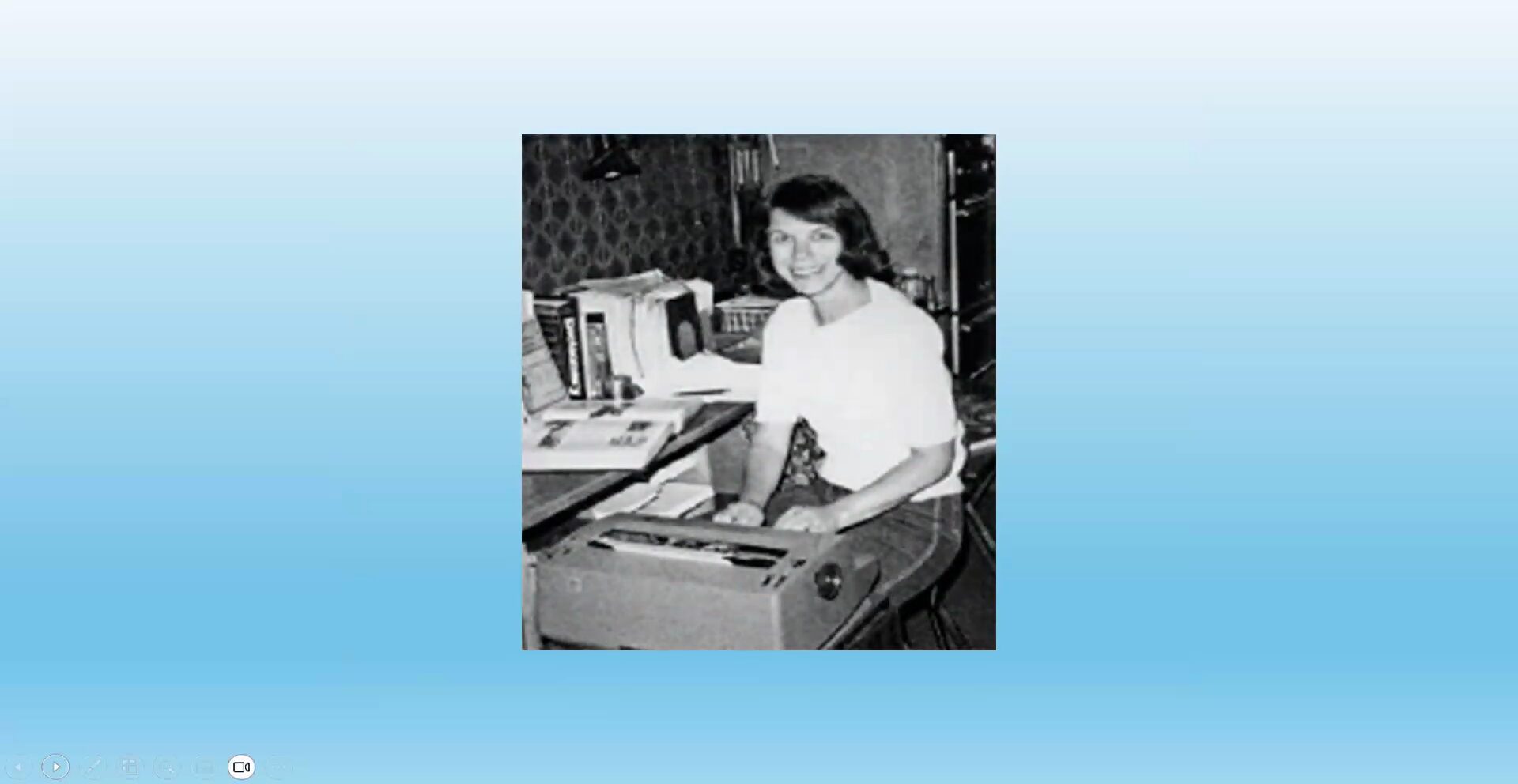
Like Don talks about on garage tile, you drive past some of these houses, you have no idea what’s inside them, what people have been hoarding or storing or collecting or otherwise. And like his [00:11:00] neighbor, which leads us into the concord. Yeah.

William Ross: As we were point, what was it, 7:00 AM seven 30? Yeah. On the day we were going out to see this garage and stuff like that, we catched a gentleman’s garage was open and he had his two, three oh eights sitting there and we’re like, oh.

So we stopped as we get outta the car, walk towards the garage, the garage cut and I’m like, oh, maybe he thought we were gonna go rob him, but it turns out awesome guy. It’s John’s dear friend. John’s actually driven his cars and stuff like that. We met him following day at the Concor and had lengthy chats.

Him, great guy. Lots of photos and stuff like that. It’s interesting to the point, especially in San Francisco, ’cause I mean, yeah, you got basically a single car garage door. I mean if you got a double wide garage, you’re living large. I mean, ’cause they’re deep. They’re all like two car lengths deep at a

Crew Chief Eric: minimum.

Two cars as in like a 57 Thunderbird, two cars deep. They’re huge. Like you put three modern cars in those garages easily.

William Ross: Exactly. I mean, he’s got his four door Catalina, his Mustang 2002 Mustang bullet, one of the first series of bullets, and then 20 motorcycles. If not more. They’re deep. I mean, you’re fitting a lot of stuff in there and it’s just [00:12:00] basically garage space unless you redid it.

But yeah, they’re huge. It’s very surprising, you know? And then obviously on the hills and stuff like that. So yes, it started out that first day set precedent and was like, fantastic. Now we gotta talk about concor and the silly hats. Exactly the weather, you know, it was wasn’t too bad. But that’s a concern.

’cause not only you gotta wear the hat, you gotta wear the blue blazer. Oh my god. White collared shirt and khaki pants. Poor Eric had to go to, I don’t Did you go to Kohl’s? I bought everything. I bought everything. I had none of it. But

Executive Producer Tania: didn’t you know the wardrobe before? You didn’t bring the proper stuff or you did and it was wrong?

Crew Chief Eric: No, no, no. It was correct and I had to buy it ahead of time so we knew what the dress code was gonna be, but it’s worse when you put it all on my stuff. Still had the tags on it. Like if we don’t go through with this, I could return it. That’s where I was even the morning of. I was like, oh shit, I still got a tag on my, you know, my jacket kind of thing.

William Ross: Those of you who listen or watch the channels and stuff like that? No, I have an issue and a addiction to Diet Mountain Deuce. Oh my god, that was so funny. 7:00 AM I found a Walmart. No, I’m sorry, target. That was [00:13:00] about 10 minutes from the hotel I went. I bought a cooler so that way I could take my own beverages and I bought Diet Mountain.

Did it? ’cause you know I have a very serious problem.

Crew Chief Eric: It got worse when we got to France, but we’ll get to that point.

William Ross: Yeah, that was hor. Wow. Yeah, we’ll get to that. I was all right for two days ’cause I kind of strung some things out.

Crew Chief Eric: These Jones in after that. Yeah. So anyway, we get to the Concord. I didn’t know what to expect.

I don’t think you knew what to expect. No, I have no idea. The only thing we had gotten, and it was literally the night before, was this 200 car spreadsheet that we needed to somehow digest, memorize, understand what was on the field, and then link these random abbreviations to the groups and try to figure out where the cars were on the field.

And then I get there and I’m like, well the field’s not that big because he made it sound like it’s gonna take an hour and a half to get to one end of the field and then you’re not gonna be able to cover the other half. And like all this, I was like, what? The

William Ross: way it was presented, it was very daunting and it was like, oh crap.

Because then you get nervous. ’cause the position you’re being put into. Yeah. And how people are perceiving you. You don’t wanna look like an idiot. [00:14:00] But also to John. And you know, the concourse individuals themselves have put on the event because they put the trust in John to John, find the people and da da da.

So we come up. So it’s like, you know, it’s a big responsibility. But then to your point, we get there and it’s okay. This is very manageable, you know? Which is great. ’cause that was the one thing about it. It wasn’t like they had 500 cars or something like that, you know? Yeah. You could technically stopping to look at some and this and that.

Probably 45 minutes, an hour if you’re really kind of stopping some of the cars and scrutinize them. It wasn’t that overwhelming once we kind of got the lay of the land.

Crew Chief Eric: Well, your slice of the cake was a lot easier than mine too, because Yes, it was all the Ferraris were together. Yeah.

William Ross: That made it, I was, yeah, that did make it very, very simple.

They were all just in this one spot. Perfect. And basically almost in chronological order too, which was great.

Crew Chief Eric: I was like, which manic? A DD person put all the German cars where they did, they were all over the place. I was like, it felt like a bee buzzing around trying to like weave a story. And so you and I strategized quite a bit on how we wanted approach the field, but in the end.

What was it? [00:15:00] We had a couple financial groups, US Bank, there were a bunch of different groups that had gone out and these tours and all this kinda stuff. So one of the docents took the US Bank guys and kind of went off with them by themselves. And then we were with John. I never saw this side of John before.

I mean, he doesn’t like it when we call him the professor, but I called him the professor in an affectionate way, like Gilligan’s Island. Right. As

William Ross: a side note, in regards to. Mr. Professor, we kinda were told that he, we wished that we wouldn’t call him that or put that out there anymore due to some circumstances.

So, yeah. Yeah. We only can do that in private, I guess, from

Crew Chief Eric: now on. So we’re gonna continue to say it throughout this episode, right? Yeah.

William Ross: We’re gonna continue to say it. So to drive it home because you a request was made, but we’re like, sure. That’s like the worst thing to do is to ask that. ’cause then you’re just gonna double down.

Right? Right.

Crew Chief Eric: So he starts lecturing and he starts with like these cheaty chitty bang, bang, open top cars from like the 1920s and stuff. And I’m like, okay, where is this going? And then eventually he’s like, [00:16:00] all right, Eric, William, you take over. And we’re like, uh, excuse me.

William Ross: Yeah. Again then. And he wandered off too.

Yeah. Stayed there and kinda like oversaw him. Just be sure you know. Nope, I gotta go like, all right. Thank God we were together and we tag teamed it. Yeah, I think that was very helpful. Instead of just getting thrown into the very deep end, that helped a lot too, because then he played off each other and as you’re talking, someone can fill in a gap or what have you.

So that, that worked out very well. ’cause the other fact was the group we were taking around showing cars, you know, they’re not car, I mean they like cars. A couple guys had a Porsche snap, but it’s not like they’re hardcore, right? Like us. But it was interesting, you know, you pick up on the cues of things that are gonna interest them ’cause you wanna keep ’em, uh, attention, captivate ’em and get ’em.

So it’s kinda like you had to see what perked people up and stuff like that. And being money and stuff like that. I started touching on about avoiding taxes and Montana license plates and all this kind of stuff. And you

Crew Chief Eric: went into this whole investment thing and

William Ross: I

Crew Chief Eric: was like,

William Ross: that

Crew Chief Eric: gives me a break. I can collect my thought.

They seem to kind of grasp bond of that. I’m like, I thought you [00:17:00] guys’d be something they’d be interested in. Well, and they were, they were into the super fun facts. Right. And I think, yeah, we started off well talking about, you know, Porsche and 20% of the market for Porsche comes from California.

Everybody’s like, Ooh, ah, that’s really cool. And then, you know, we led into other things, you know, and there was a lot we talked, ’cause I think we had them for 45 minutes maybe to an hour, just to ourselves. It was nice to know that by the end, granted they’re there. It’s part of like a corporate outing for this investment group.

And you know, somebody paid for their lunch and all the thing, you know, to kind of wine and dine them. But we didn’t lose anybody. No. When we got to the end. And I think that’s a indication that we did an okay job.

William Ross: No, I agree. No one wandered off the herd, didn’t thin out or anything like that. And I think that’s a, hey that we’re, I guess we’re doing it right I guess, you know, so

Crew Chief Eric: I like the whole docent thing.

I think it’s cool. Would I do it again? Yes. Obviously this is the thing that leads to the next thing. So we’ll see when we get the call to go do pebble and all that. This was all part of building up to that. So your takeaway from being a concourse docent and, and I know your feelings on being a concourse [00:18:00] judge ’cause you did an entire episode about that leading

William Ross: up to this event.

I mean, no, I’d love to be a docent again. I mean, ’cause this weight’s not getting put on you in regards to objectifying something and putting points to it. I would do it again, a heartbeat. And I thought that the idea presented was like, hey. Go to Pebble this year and shadow some people and stuff like that.

I thought that was a great way to go about doing it. Then next year in 2026, then hey, you step in. Yeah. Instead of just like, okay, 2026, you step in. Okay, here you go. You’ve done a few more events or something like that. And I don’t know if, hey, maybe we gotta do a few more. I don’t know. But if we get asked, I mean, I’d do it in a second to be another docent again, because I thought that was great.

Crew Chief Eric: Yeah, absolutely.

William Ross: You know, you get in for free, which is great, but hey, you know, you meet some nice people and stuff like that, you know, and it was a lot of fun. Definitely. It was a lot of fun.

Crew Chief Eric: So big thank you to John for inviting us. Yes. And making

William Ross: us

Crew Chief Eric: part of that. So yeah, for sure. Yeah. A huge thank Before we transition away from California and talk about Europe.

Gotta talk about our rental car for just a second.

William Ross: So fast. So fast.

Crew Chief Eric: We were chatting about this thing on Discord the other day [00:19:00] and you know, new Volkswagens and all this kinda stuff. So you, you ended up with a 2025 Jetta with a 1.5 turbo slush box automatic. Oh.

French Anthem: If

Crew Chief Eric: you remember on the, I think it was the trip back or two Sonoma John started without sort of starting.

He got under my. Skin because he’s talking about how nice it is, and I’m like, you obviously have not owned Volkswagens in your lifetime because this is, oh, I got on my soapbox and I was going off about, oh, how much I disliked it, and then I got a chance to drive it, disliked it even more. And you sat there quietly, sort of just smiling and not saying anything.

So I wanted to get your final opinion on our Jetta rental car because we’re gonna talk about rental cars more as we go along.

William Ross: You think to yourself, God, this is probably the worst rental car there is on the planet. But then you get to Europe into the 2008, it gets beat. You’re like, holy crap. It is possible to find something that’s even a bigger pile of shit.

Crew Chief Eric: To say that that Jetta was gutless is a [00:20:00] compliment to that car. Oh my god. It was bad. Yeah.

William Ross: If you’re a 16-year-old girl getting her first car, it’s perfect.

Crew Chief Eric: The Jetta’s always had that reputation, so it’s fantastic for that. No offense, Tanya.

William Ross: I don’t think that thing had more than 90 horsepower. I don’t know.

It was, it was awful. And everything was plastic inside. I mean, you can just tell It’s a mess. I mean, it’s built to be a rental car. Yeah. Now basically that’s all it is. Built and sell to all the rental car issues. That’s all that thing is for Yeah, you might have one here, two or there on a lot or something.
But I mean,

Crew Chief Eric: I’ve said it before. I’ll say it again. No one aspires to own a rental car. Hands down, right? No. So again, as we wrap out the California part of the trip, I wanna give another shout out to John Summers, the motoring historian. He’s got an episode that’s gonna air right behind this one, and he too talks about his rental car experience in Cape Cod.

And I gotta tell you, editing it, I was laughing my ass off like it was that Seinfeld moment. It’s gold, Jerry. It’s gold. [00:21:00] It’s really good. You gotta listen to it and it really goes with the whole theme of the rental car thing. So check out the motoring historian after this airs on Friday,

France. Do we start with your flight like you had

William Ross: some bad flights? Oh my God. Yeah. I mean, I was getting screwed by United Left, right and Center. Everything’s set. Everything’s good. Then get to the airport. Now mind you, I had bought extra leg room, all that stuff and everything because like I’m not gonna spend extra money, but I kept following the prices.

I checked every couple days to see what it is, and all of a sudden, bam, it was $950 to upgrade the first class. But I was like, done. So upgrade the first class. I’m like, great. Hey, eight hours I can sleep. Then that way when I get there, hey, we’re resting you. Get to the airport flight’s. Delayed weather in Dulles.

’cause that’s where I was supposed to fly in from Cleveland to Dulles. Dulles over, it’s delayed like six hours. So it’s [00:22:00] like, well I ain’t making that connection. That ain’t happening. I had like a two and a half hour later or so. It was like, okay, making it

Comedian Laura Ramoso: the flight to Paris. Paris. No, this is not the flight to Paris.

Okay, the flight to Paris. You need to go to terminal two. Ladies and gentlemen, welcome to Flight 3 0 9. Service to Paris. Paris.

William Ross: So, you know, my phone starts blowing up, trying to get things switched, whatnot. And I’m like going, I don’t know what I’m gonna do. And their first choice and response was, well, we can get you out tomorrow.

Ah,

Comedian Laura Ramoso: I can offer upgrade. I upgrade you to the flight tomorrow.
William Ross: I’m like, no. What would you do if you go into Europe and all you lose a whole day and everything like that. Oh, it’s just, oh, let’s go tomorrow. I go, there’s gotta be something better. I’m like, serious. It’s like, you know, and they think it’s the greatest thing since sliced bread.

Like, oh, we solved this problem, we’re the greatest. I’m like, you gotta be kidding me. I’m not the only one. ’cause all these other people too are, you know, in the same boat that we’re on this flight,
Comedian Laura Ramoso: we’re looking for passenger Marcos. Third for brown hold and iron glance.

William Ross: So then finally [00:23:00] after about 45 minutes, I didn’t get a phone call or nothing like that.

All I get is another text with the thing saying, oh, okay, now you’re flying to Chicago. Then Chicago, of course I might get in the person, but then I look at my seat, I’m like, all right, you

Comedian Laura Ramoso: are in the window seat. Okay, no problem. I changed the middle.

William Ross: It’s premium plus I ain’t gonna complain. It’s still, you got the nice seat, everything like that, but you know it’s not your own little cubicle, whatever.

So it is a downgrade. Yes. So I get to Chicago, which you fly enough, you get to learn to airports. They have Diet Mountain Dew Hopkins. There’s only two of the food places up Soon as you go through TSA that, so you gotta like buy ’em and walk all the way down. But anyways, it’s a different story.

Crew Chief Eric: He builds all his travel around where he can acquire Diet Mountain Dew.

Exactly.

William Ross: And it’s critical. It’s like, I’m gonna do a travel guide on it. They had it, so I you like, I bought a couple, so I’m waiting ’cause it was like two hours, whatever before the flight was going over. So I call United said, Hey, uh, you got me there, which is great. I go, but what are you gonna do about the downgrade?

Can you do something right? What are you gonna do? Nothing. And I just gave up. I mean I didn’t even bother after I got home to bother with any of that. I’m like, it’s just a waste of time. And

Crew Chief Eric: the best part is, [00:24:00] while this is all happening, you’re texting with me, I’m talking with David Middleton, I’m talking with David Lowe from the A CO, all this stuff.

And my flight had changed ’cause I was supposed to go to Boston and go over. Yeah. And I got redirected to Detroit and then went over and we were trying to figure out when are we gonna land? When are we gonna be there? Oh my God, you’re gonna have to wait for me. And then it turned out I was waiting for you and like it

William Ross: was a whole circus and no, almost basically it was a flip flop.

’cause it would’ve been, originally I was gonna get there 40 minutes for you and then now it just flipped. And you got there four minutes for me and I worked out big things just getting over there. But you get nervous ’cause you’re like, okay, is this kinda gonna set the tone and whatnot? It’s going over there.

It’s like. You know what got there. It was great. Now, of course, the one thing I will say is my partner for the trip stated that he’s at the enterprise, but there’s five different hubs and terminals over there at Charles de Golf, and each one has their own rental car thing. So I’m down in this parking garage, wandering around looking for, alright, where the frick is he?

And he is like, oh, I’m standing right in front of the thing. I’m like, no you’re not. He goes, no, there’s only the one. I’m over at [00:25:00] two. Like, well I’m in five so I’ll be there in a half hour ’cause I gotta take a train. Eventually found him. It only took an hour. I mean, you know, and walking forever, five

Crew Chief Eric: miles I think it was.

I, I was amazed ’cause the last time I went, I went with Dave Middleton, you know, I was texting him and all this kinda stuff. He was on his way back to Germany anyway, and I’m like, Hey, remember, and this and that. And it took him like two hours to get through customs. I blazed through customs in like two minutes.

I did too. Yeah. It was amazing. Yeah. So I go to the rental counter and I’m talking to the guy and he’s like, wait, wait,

William Ross: wait, wait, wait, wait. Tell him what you thought you were getting.

Crew Chief Eric: Well that’s, that’s what I’m getting at, right? So I’m talking to the rental guy. I said, please make sure I’m in France. I would like a French car.

The last time I was here I got an Italian car, doesn’t make any sense to me. Like I would like to rent a French car. And he’s like, oh, not a problem. I already have you booked in one. I have a EO 2 0 8. I said, oh, okay. 2 0 8. That’s awesome. I was like, is it a GTI? And he goes, oh yeah, GT series. Oh cool. ’cause I’m thinking Hot hatch 2 0 8, this is gonna be awesome.

There’s only the two of us. We can go bombing down some B roads with this thing. [00:26:00] ’cause I think the two eight is really good looking car. GTI sized it’s appropriate hot little engine and all this kind of thing. Even if it had a downgraded version of the motor, I still would’ve been happy with it. So I tell William, I’m all excited.

We’re getting to 2 0 8, this is gonna be great. This is gonna be fantastic. Hopefully it’s not that metallic mustard color that they come in. So they send us not to the normal parking lot that I’m used to where the cars are right there. ’cause I kept looking at it. Some really cool stuff in the lot, the brand new Ipson, some Audis, like other stuff was in the, I was like, okay, well I don’t see a 2 0 8 anywhere in the lot.

I’m like, oh no, no, no, no. You gotta go to the bowels of de gall. Yeah. Three levels down into this parking garage where they hide all the cars under the airport. It’s like subterranean, right? And we get down there and it looks like something out of black mirror and we’re just walking and walking and walking.

And there’s just row after tunnel after row after tunnel of just cars and cars And cars are like, where the hell are we? And we finally get, it’s like 24 out of 26 or something like that. And we get all the way down, the far end [00:27:00] end, we’re walking down the aisle and I’m like, I don’t see any two oh eights anywhere.

The key, when you blink the key, it wouldn’t make any noise. So it was like, where is it? So we found this one guy, he was this random guy sitting in a chair. I guess he’s the attendant.

William Ross: No booth, no nothing. Just in a chair.

Crew Chief Eric: Yeah. He’s just sitting there in the garage underground all day long. That’s what he gets paid to do.

And I’m like, I’m looking for this car and I can’t find it. So he looks at the little tag and he walks us over and he goes, boop. And he blinks the lights and he goes, this is your car. I’ll look at William. And then I run to the back of the car and I’m like, 2008. What is this? I forgot to add a zero. Oh on that little description.

It was a manual, which is exactly what I wanted. But here’s the deal. And Tanya, you can sympathize. ’cause when we get to the Italy part of this, you could talk about your rental car. 2008 is the size of a Tiguan. The older Tiguan, about that size. C-U-V-S-U-V, whatever. Do you know the specs of a 2008 peo? How many cylinders?

How many

Executive Producer Tania: hears pers on a scale of [00:28:00] dog? Shit. Slow to

Crew Chief Eric: Pretty much. Yes.

William Ross: Yeah,

Crew Chief Eric: it’s a turbo. I’ll give you that. It is a turbo. It’s

William Ross: a, it’s an odd number of cylinders. We’ll tell you that. Is it really a three cylinder Yes. Three cylinder of turbo? Yes.

Crew Chief Eric: How many Hearst pers 115. 115. That’s generous. Oh man, that Jetta made 115 horsepower.

You kidding me? We looked it up. I don’t remember what the torque numbers were. ’cause it did feel torque. Year 75 horsepower for something that weighs 3,200 pounds with two adult. And their luggage in it. So you can imagine how fast it was. Well, he thought it was a diesel. When we were leaving. It sounded like a diesel.

I was like, oh, they gave us a diesel. We’re screwed.

Executive Producer Tania: So I would’ve scorched it off the line in my 40-year-old.

Crew Chief Eric: Yes, a thousand percent Audi. A thousand percent. It did have that diesel sound to it. It hummed kinda like a motorcycle at high RPM. It revved up pretty quick. It just didn’t do anything when it revved up.

No. [00:29:00] So it didn’t, it got horrible fuel economy too. We’re gonna talk about that. Yeah. So no, the fuel economy was amazing actually. Just enough. Just enough. Just enough. So it was toy, I think what saved it was the gearing was so tight and so short that it must have been like a four 11 final drive because it would spin up pretty quick.

That’s all it was, saving that car. ’cause otherwise it wouldn’t get out of its own way. So it took us an hour and a half to get out of Paris.

William Ross: Yeah. But yeah,

Crew Chief Eric: you have to cut through it. So it took forever. And then the two and a half hours to Lama, three hours after that on the highway to get to the middle of nowhere.

Driving through Indiana. That’s what he told me. He’s like, I flew all the way here to drive through Indiana. That part of France is like flat and just farmland and boring. And if you’ve driven on Route 70 going east or west in the middle of the country, it’s almost exactly the same. It’s like, all right, whatever.

So we show up finally in downtown Lamont. I had never been there because the last time I went I stayed at the track. So that’s what we did. [00:30:00] So we’re in downtown Lamont and I turned to you and I go, so we drove through Indiana to end up in Baltimore. Yeah, because that’s what it looks like, the trams and everything.

Oh yeah. All of it. Turns out Williams like, oh, my Airbnb is across the street from you. Well, across the street was under a bridge. Through a tunnel, but realistically, on the other side, on the other side of the block, I was directly out the front door of the downtown Lamont train station. So that was like right there.

And we’re like, oh, okay. This is cool. And it wasn’t far from the track. It was what, three, four miles? Yeah,

William Ross: it wasn’t that far. I mean, a little traffic in there, but yeah. Well, it depends on which route we went that day.

Crew Chief Eric: That was just it. So the GPS never took us the same way twice. No. And it would take like a half an hour to go three miles.

It was absolutely insane that one time we came back, we went down these roads. Where it’s like, if you’ve seen those episodes of Top Gear where they’re in Italy and they’re trying to fit the car between the walls, it was really tight. Cars just parked as tight as they could be. And I’m like, are these one way streets?

What if a car comes the other way? I mean, it was nuts. It wasn’t as stressful as it is to drive [00:31:00] in Paris, but it was really just kind of a obnoxious, the way Lama is laid out, it’s very industrial, it’s very tight, it’s very old. It’s cute, I guess you could say. Yeah, it’s a lot of

William Ross: one way stuff. ’cause of those trams, that’s what kinda screwed everything up.

’cause all of a sudden it’ll be one way. So you gotta go through these little enclaves or whatever and that’s the route. And they love a traffic circle. Geez, we But your hotel was remodeled, which was nice. I had a fiat in the lobby. It was awesome. Closet you had was a little tiny.

Crew Chief Eric: Oh my God. Oh yeah. I had initially booked the room thinking David Middleton was coming with us.

And I booked a room with two beds. And the pictures, everything looks bigger ’cause he’s a fish eye lens and whatever. William comes, I checked out his Airbnb, which was super nice. He had a ton of space. I go up to my room, which was the coldest place in all of Europe. Yeah. Below zero all the time in that room.

It was ridiculous. But I walk in and I’m like, oh my God. And he just looks at me, starts laughing. It’s not two king beds or two queen beds. No, no. Two twins that are basically next to each other. And I’m like, oh my God. That would’ve

William Ross: been hilarious [00:32:00] if Middleton did end up coming because you, I’m like, oh Lord, one of you would’ve been sleeping on my couch.

He wouldn’t have cared. He’ll tell you the story. We shared a room in fer. But we’ll leave that where it is. Yeah. But my r and b was nice. I had one bedroom. I mean it was ground for full kid. I mean it was nice to had this courtyard. The young couple above me, the kid worked at uh, he’s A BMW salesman, the dealership there and they just adopted this cute little spaniel puppy and Oh

Crew Chief Eric: yeah, it was great.

He was having a good old time. Oh yeah. Meanwhile, the first day there was nothing going on at the track. So we went to the museum and figured, knock that out, get that outta the way, go to the official boutique, which is the official merchandise store and all that kinda stuff. So William, your impressions on the museum seeing it now, outside of the pictures that I had showed you when I went the first time, it’s very

William Ross: car centric.

You can see where they’re getting to. But I mean, no, you go to some places, the settings all there, they really sell it on the ambiance, stuff like that. And obviously, you know, they’re doing a huge expansion. Probably two years it’d be done, but it’d be cool to see what they end up finishing with. It’s great because it’s about the cars, it’s [00:33:00] about to race, stuff like that.

And again, it’s not some massive thing where you can get lost in it and it’s like, well why do they have this here? You know, it’s Lamont Cars. Cars that race at Lamont. It was a great way to start the trip for sure. Membership has the privileges, an A CO. So if you ever go, be sure you are an A CO member ’cause you get ’em for free.

Yeah, that was awesome. And

Crew Chief Eric: the other thing I love about that museum is. It’s in chronological order. Yes. So you start with the earliest cars and you wind up with the newest winners and then they had their McLaren display and then they expanded and added the 24 hours of Motos display, which is pretty cool.

I’m hoping when they expand the museum in the next couple of years, maybe they’ll have some of the big trucks in there and some of the other stuff that they run. That would be really, really cool to see.

William Ross: You know, I didn’t ask and I don’t know if you had seen it but you know, ’cause you go to some of those ones kind of like when you go to an art museum, you get the headphones and you’re like, you just do your own walking tour.

I dunno if they had that, that’d be kind of cool if they did that. Yeah. But it was awesome to start from the beginning and you get all the way to wasn’t last year’s winning car was two years ago winning car, wasn’t it? Still all dirtied up, everything like that, which is cool like how they kinda do for Daytona and [00:34:00] stuff like that here.

But it’s really neat ’cause you can just see how things progress and were, and how things changed technologically, everything like that. And how went from street cars to full on race cars, kind of back to street cars, back to full on race car. I mean. So it’s really neat to see that progressive and seeing the jump in certain areas where you can see like what it was like a

huge

William Ross: jump in regards to aerodynamics and just the engineering thought that went into going something a totally different route in regards to just following the same old shit.

It’s really great. I mean it’s definitely something you need to go see when you’re there and

Crew Chief Eric: it’s right at the front gate. You can’t miss it right at the front. Yeah,

William Ross: it’s right there.

Crew Chief Eric: Did we go shopping after that or was that the next.

William Ross: Yeah, no, we went in because, yeah, ’cause we were looking at buying, I bought some books and I bought the remote control 4 9 9.

Yeah, yeah. Got it. And the guy was there at the classic autograph and I was like, oh crap, I could’ve brought it, had him sign ’em. But he does those really cool comic book type storybook that were really, yeah. And they’re cheat. There’s only like 10, 12 bucks thing know, it was like I bought a couple of them again is that scenario you can kind of go through and you could spend a crap load of money if you really wanted to.

But then you get into, which we [00:35:00] kind of had this discussion is we’ll get into the third day or second day we were at the track to, okay now space in my suitcase. Yeah, we mentioned at the museum too, it’s like, well let’s see if maybe it’s somewhere else you can find a better price on it. If not, you can come back in the museum and buy it.

But you know, I had a lot of cool stuff. I mean I could have went to town buying a lot of the books they had there. I bought the one. But like, just historical, everything like that. I mean just fantastic stuff there. It’s nice ’cause it’s, again, you can actually put your hands on everything like that. Yeah.

So, but it’s always gotta keep in mind if European sizes. To American sites. Oh boy. Because that is the dilemma you can run into. That can be a big problem.

Crew Chief Eric: So day two, a Lama classic, the track is still not hot, they’re still teching, they’re getting cars ready. So we end up doing some shopping at all the different pagodas that are there in the villages.

And then we do the paddock tour.

William Ross: Exactly. And I didn’t know this, you know, I’m thinking, oh this is great how they have this set up. No on tracks, just all tech and stuff like that. All the cars are in the paddock. Once you can try and figure out which paddock is which and where they’re all at, then you can go walking through ’em all.

But then obviously go through all the merchandise day and stuff like that. You can take [00:36:00] that time to do it. It’s not like you got a day where there’s all this on track stuff going on. Like, well I gotta watch what’s going on in the track. Well, but I wanna go see this. You know? So yeah, you can spend that time and get the lay of the land and it’s awesome to see.

I know how they everything set up, but I didn’t know previous tions of that. They didn’t have that on Thursday. They jumped right in on a Friday and went, oh wow. So you didn’t have that opportunity to do it. So I was like, oh this is great. It’s just really cool to see. ’cause everything’s there. You can get right up on the cars.

A couple of ’em here and there had kind of roped off and so they should have, because they were rather expensive vehicles. But 99% of ’em just walk right along the side, go talk to the crews, everything like that. So you can really get. Into it and looking at what they were doing and what the car was. And that was really cool.

And they had some very unique cars there too. Yeah, that was awesome. You know, I mean it’s, ’cause you, you had that access to get right up on ’em. I mean it was, it was awesome.

Crew Chief Eric: Well, we never made it to the group C Paddock because they must have put it at the airport. It was so far away. Yeah. From everything.

Yeah, exactly. They kept those cars hidden, but they were blocked off by eras. So you’d go into, you know, [00:37:00] 1923, which is the beginning of Lama, to like, I think 1933. And then the next one was like 34 to whatever. And then there was like all the heyday of the Ferrari were all together and then, you know, the hoopla, the sixties with the GT forties and all that stuff.

So they had all these like corrals just for the paddocks and you would move from one era to the next, which I thought was really, really cool. And then the legends of lama, those were up in a big pavilion, really pretty with the restaurants around it. That’s where like all the main stationary shops are and everything.

Yeah. So that was really cool. And then you had car clubs? Like everywhere. Oh,

William Ross: everywhere.

Crew Chief Eric: Oh my goodness.

William Ross: You know, obviously it’s a big place, the whole track itself. ’cause they weren’t using the Bugatti circuit, so that’s where they had a lot of these clubs and yeah, it was one of those deals where every day we all of a sudden figured out there was something new we stumbled on.

It was just like, oh geez, I didn’t know this was here. You know? ’cause you’re just kind of going around following stuff, trying to figure out. And that was neat too ’cause you always find something new but it just, the car clubs itself are awesome.

Crew Chief Eric: Well I read there was 8,000 cars on display, everything under the sun.

You saw how big that place is. It didn’t feel [00:38:00] like it, but there were cars everywhere

William Ross: on display in groupings. What? I mean, again, it was fantastic ’cause it was kinda like get your cars and coffee almost in essence. Well I mean the Shelby Village alone was the size of the normal

Crew Chief Eric: car shows. Huge.

William Ross: Yeah. And we find, didn’t find that till the last day when it was raining too.

That was the other thing too. Trying to find John Pierre and, and going there. And we met Mr. Aaron Shelby as well. But yeah, so it’s like that alone, I mean, God now kicking ourselves that we didn’t find that the day before because they must have had at least a hundred different variations of Shelby. GT 40, GT three.

Oh it’s insane. Cobras everything. It was just nuts. Well

Crew Chief Eric: that and the original Shelby car carriers and the trucks. Yeah. And

William Ross: like all, oh, it was nuts. That was really cool to see. But the one thing I will say is I still can’t understand why they call the different groupings plateaus. You know, I don’t, I don’t know why Plateau.

And that was what the class they call Plateau two. Plateau One Plateau. What? And so the first day, though, I mean, that opens up a can of worms when you start going shopping because they have anything in everything under the sun that you could want, that you desperately want, that you desperately [00:39:00] need in your mind.

I need none of it, but I want all of it. Exactly. And it’s kinda like the other place you go, a lot of them clustered up. A lot of ’em had the same things, so you kinda like could chop it, but 90% of ’em all had different things. You know, you had all your models, stuff like that. But there were different types of models these places and just, I ended up buying some models.

Eric’s ended up buying some models because it’s like, uh, you twisted my

Crew Chief Eric: arm though and I’m, I am glad it is sitting here. I’ll, I’ll do a little show and show and tell. I had to buy a backpack to bring this home. This is sick wide body, second generation Audi Quatra coup. This is number 7 99 out of 2,500 that were produced.

It was well worth it. Again, I had to buy a backpack. Just to bring it home, but

William Ross: it was priced good too. That

Crew Chief Eric: was another thing too. It wasn’t like it was obscenely priced, 119 Euros, so I paid more for model cars before.

William Ross: It was super cool. Yeah, and clothing wise, that was really cool too because there’s a lot of stuff that you don’t see over here, and when you go to any races here in the States, you know, you don’t see any of this type of stuff that they’re selling.

You

Crew Chief Eric: remember that Golf Mirage polo shirt that I bought? Yeah. My wife absolutely loves that. She’s like, that was a super good pick. [00:40:00] She’s like, I really like it. Looks good on you. Nice colors. Yeah. Oh sure. I like the way it’s made and that wasn’t that expensive. We bought that from one of my favorite vendors.

That I found the last time I was there, which is RS selection. They got some really nice stuff at really reasonable prices.

William Ross: If you’re going in there to look for something special, you will definitely find something special there. A thousand percent. It’s awesome. Great stuff. A tip. If you go take a really big suitcase and only pack it half full a thousand percent because you will leave with a lot of stuff.

And again, it’s not price bad either, so it’s not that you’re gonna spend thousands of dollars.

Crew Chief Eric: The only thing you’ll leave with less with is the money you started with.

William Ross: Yeah, exactly. Yeah. Your light wallet’s gonna be a little bit lighter. But other than that,

Crew Chief Eric: so we get to the first day of track time, which is practice and qualifying.

Shout out to Ty and to Tebow. Are we allowed to use his real name? I’m not sure some secret squirrel stuff going on there, but shout out to them. I hung out with them when we were at the hundredth Lamont. Great guys. A lot of fun. Very knowledgeable about their area of the car world, especially Porsches and Renos and stuff like that.

So we hung out with them for a while and then unfortunately I got called away. I had [00:41:00] some a CO obligations that I had to take care of. And then you went off venturing and wandering and filming and being our roving reporter. So that kind of sucked up that whole day. But we gotta talk about some of the VIP experiences that we had.

Yeah. Throughout the two days of racing that we got

William Ross: you going off to do what you had to do was very beneficial. For you. What ended up coming about with that? Fantastic. And it needed to happen too, but that was great. But yeah, we kind of stumbled onto some things that were like, it didn’t seem like it was gonna be real.

Our first thing we ended up in the BMW hospitality boost. Yeah. ’cause we had found out, and it was very hush hush. It wasn’t like they were shouting out to the world you could do this, that you could purchase a hot lap of the track now just like putting around in a bus with 50 other people. It was out the gate smoking the tires.

It was 400 bucks. So you could split it if you want. So two people, I mean, you weren’t driving, someone drove you, but it was a racer that drove you. It was in an M three touring. You guys were an M three. Yeah. But it was a hell of a deal and still not, [00:42:00] you know, there was us three yourself and Mr. Withers.

You go, you guys split it. And then I’m like, I go, I would spend $800 to do this myself. Yeah. Well worth the price of admission to do this. ’cause it was unbelievable to be able to do, ’cause one, get the sense of the track. It’s not as wise as it looks in TV at all. No at all. You know, and like he’s, Eric said these guys, as soon as you got past that pit lane line.

Boom. Floored. We’re doing a buck 80 down the straightaway. Yeah. Bonkers guys. Were not messing around. I mean, having fun. I just, oh, it was great. But the cool thing was is Bill’s, uh, wife Simone joined us that day. We tried to finagle it at first when we first went in to, to do the hot lab, ’cause you had to get your helmet and stuff like that.

And the first, they kinda like being a little standoff, well no, she needed to sign it, da da da. It’s like, well, it’s paid for. So we’re like, all right, we gave, it ain’t gonna happen. Literally a minute before we’re about to go. They’re like, well, does she wanna go? Yeah, she wants to go. So she was able to jump in the car with me, which was awesome because she probably has never gone more than 65 miles an hour in her life, even on the highway.

So it was hilarious. Listen to her giggle [00:43:00] in the backseat when he’s clicking off how fast we were going. ’cause he’s clicking off in kilometers, so he is like 2 80, 2 9, and it’s like you’re trying to calculate it out. You know, she’s just laughing. That is alone. Like I said, that’s worth $800 to do it.

Crew Chief Eric: It gives you such perspective on the track that you cannot get from tv.

We argue all the time as armchair quarterbacks going, why aren’t they passing there? Just get around them, just go blah, blah, blah, blah, blah. And then you realize it’s a two lane road that they’re doing 200 miles an hour on no shoulder and it’s super narrow. Yeah. There is no room to pass. There’s certain places where they’ve widened it a little bit, but realistically, when you’re going down the mo sun, you get tunnel vision because you don’t realize on tv, like all the trees, like how close everything is.

Yeah. And then the two slowest corners going through, let’s say Indian arage combination and then mosan corner, you need anti-gravity breaks to get through there. And then Yeah, it’s like turning into somebody’s driveway. It’s a 90 degree corner. Yeah. And it’s super narrow at that pace you’re going through there like 40 miles an [00:44:00] hour.

It’s insane. But what was really cool was Indianapolis Corner, and the Porsche curves obviously, but Indianapolis. Is banked. Yes. There’s a ton of negative camra there that hooks the car and they come in just screaming with the tires on fire and it’s just like, tap the brakes, let the turn, suck ’em in. And then they gotta lose all the speed going into Arage because that’s a 90 degree righthander.

Yeah. And it’s just like, holy crud. But even there in that short stretch from Bolson to Indianapolis, they’re back up to full speed again. You know? And then there’s that kink. And again, on tv or even in a video game, you don’t get the same perspective you do in the car and it becomes suddenly very real and Oh yeah.

It’s the shortest eight and a half mile lap you’ve ever done. Like it goes by in the blink of an eye, it’s so fast. Oh yeah.

William Ross: But it’s justifi because you’re getting one lap, so they, they gotta cool down so you don’t get a full lap, so you’re not blasting through everything and then going back down the front straight.

But to your point, that was eight and a half miles. Wow. Granted the [00:45:00] cars we were in, yes, they were fast. But from what we are doing, you’re probably take another 30 seconds off. Yeah. Wouldn’t you think?

Crew Chief Eric: Yeah, a hundred percent. And when the tires are warm and the cars actually warmed up and the brake, I mean, they just come out of the gate, the cars have been sitting there for hours, fire ’em up and just.

Full bore out the door. And I’m like, yeah. Like I told my coach, you’ll listen to it on the video that goes along with this. And I’m like, dude, the tires are cold. And he’s like, yeah, yeah. And then he just steps on it even more. And I’m like, dude, yeah, let’s warm them up. Yeah. And he’s like, four wheel drifting outta one of the corners.

I’m like, Bravo. We didn’t die.

William Ross: Yeah. I mean, they did not hold back one bit. And again, that’s what for the whole spirit is you would think in your mind like, okay, they’re taking people out on the track. Yeah. You sign your life away, in essence when you sign your forms and stuff. Hit that line man foot to the floor and just gone.

Yeah. They were not whole and going around all the court, I mean as fast as that thing could take it, they were going at it nose the tail. It was pretty awesome. Awesome. And

Crew Chief Eric: to your point, the BMW booth was probably one of the coolest VIP experiences because we got to be over top [00:46:00] of the pit box during the Group C run when they were qualifying and their pit change and all that stuff.

And then obviously a pit fire broke out. You can check out the video. It’s actually really comical. Yeah. But it was such a awesome view, such a great place to be. You’re sort of in the middle of pit row too, so you could see from one way to the other. I mean it was, oh, that was awesome. That was, oh yeah. I mean the view and watch that was pheno food

William Ross: sucked.

No Diet Mountain Dew beverages sucked. But the view was phenomenal. I mean, you’re leaning right over and you check out the channels and the video, stuff like that. Everything’s right there. And I mean, you get the sounds, the smell and everything like that. I mean, it just, and it was awesome when, and you wanted to use that adage of like a monkey to a football uhhuh and one of the stops and they’re during one of the rings because it was just mass chaos from the perspective of, you know, these are historic cars, so normally you have a shop that’s doing it, so that shop’s doing other cars too as well.

Yeah. So they were serving some other ones. So. You like had one guy that was by himself with about 20 people. Then he had five guys. With the five people working on all five cars. [00:47:00] It seemed to be so, it was, it was really cool to see. But the sound, it’s Clarkson says, gives you the fizz. It just, it warms you.

Crew Chief Eric: I mean it just like, yes. I mean it just, it gets to your soul. It’s so awesome. I still think the EO 9 0 5 B, the 19 92 1 with the V 10. Oh with the Jordan Formula one engine was the best sounding group C card there was by far. It just rips your ears out and it also kind of brings a tear to your eye. ’cause you’re like, that’s when motors were motors in Formula One.

Yes. Like they’re pretty awesome. Yes. Talk about the pit stop. I still think those Porsche guys during the Porsche race heard you, because you want to talk about guys clowning around. They put this car in the air on the Jack with no Jacks stand. The dude slides underneath it and Williams’s like leaning out and he’s like, you think they should put a Jacks stand under there?

William Ross: Oh, OSHA’s not involved over there one bit or anything. ’cause in all I’m doing is just waiting for that thing to drop on this dude because I wouldn’t trust that floor jack keeping

Crew Chief Eric: that thing up. So from there I went with the A-C-O-U-S-A pre to the [00:48:00] administrator’s lounge, which is pretty cool. It’s all a bunch of a CO people.

They’re even higher up. They’ve got a higher vantage point. It kind of sits almost directly above the BM BMW box. We went there for a little bit and then you and I went to the club to ot, which was pretty cool. Yeah, that’s a different experience. That’s like the exclusive driver’s club. They have their own private box.

It’s all glassed in, got food, a whole bunch, good food, wine. They had the best food by far. Yes. So shout out to Charlotte Verne for doing that. And no air

William Ross: conditioning though. They

Crew Chief Eric: don’t believe in that. In Europe,

William Ross: they don’t believe in that over

Crew Chief Eric: there. Bit stuffy. It was. It was. And then if you opened the door, you got yelled at.

William Ross: Oh yeah. I mean you had some very pretentious people sitting in that thing. And it’s like you look at it, so when you’re in there, it’s enclosed and, and when you’re sitting in the thing, looking on the track, in the thing off to the right, there’s a small little deck here, there’s a door, you go out and right, there’s deck.

But then to the left, same thing, but it’s much larger and it’s got the grandstand seating over by the stairs. There’s security, everything like that, keeping people from entering. So you’re like, oh, it’s part of it. So, and it was stuffy. So we went out there to someone inside decided to lock the door [00:49:00] on us,

Crew Chief Eric: like, oops.

But on the other hand, you get to sit down and you get to talk with Jurgen Barth and you get to talk with Gerard Lause and you get to talk with all these pro drivers that are in there. So that was sort of cool. Yeah. And, and the club de Palat was our refuge when we got rained out on. Sunday. So that worked out really well ’cause it’s the only place that is closed.

So at that point I was like, well it’s a little stuffy but I’m not wet.

William Ross: Yeah, it worked out well. I mean it’s again, for experience wise, it’s, you know, you’re sitting there going, how in the hell did we end up here? Yeah. I mean it’s one of those things like you’re thinking to yourself, the people you mentioned are just hanging out in there, stuff like that.

And again, it just adds to this experience that just seemed to get better and better and better.

Crew Chief Eric: Yeah. And I kept collecting more and more armbands as time went on too. You need an armband to go everywhere, right? Yeah.

William Ross: And you need to scan your ticket to enter, you need to scan a ticket to leave or your armband or whatever.

I mean, so they were gathering data left, right, and center. And

Crew Chief Eric: then obviously we did all the A CO stuff like La Chappelle and the Our Tribune and that was all the Tribune was great for breakfast the morning. Yeah, it rained and all that stuff. But there’s two [00:50:00] more things that we did I think that are super cool.

We had to split up in order to do them. So you went to the grid walk and I’ll let you talk about that. And I went to the SPORTIF mode, which is the famous building you see on tv. The round one that has the panorama. It sits over top of start finish and you can see down the Porsche Chicanes down in, you know, where the Ferris wheel is and all that.

And I will tell you the view from there, and I took pictures and stuff is absolutely incredible. Now granted, there weren’t a lot of people up there. We could hear a pin drop. It was like a library up there. Club de OT had the best food. Hands down. We can agree on that. But the Sportif model, it’s one of those places when you go up to that fifth level, you gotta have the special access and the handshake and the colored band and the whole nine yards.

And you’re just like, I am in a place. I think maybe this is where the Pope watches Lamonts. You know what I mean? Yeah. Like it’s, it’s super special. It’s super exclusive. So that was really neat. Now could I have spent the whole weekend there? Not unless all my friends were with me because there wasn’t enough atmosphere at classic versus what I was told is at the 24, [00:51:00] that place is bumping.

It’s like a club and it’s like a whole thing and there’s music and you’re watching the race. And so with a different group of people, different atmosphere, that would be a lot of fun. That would be holy cow. Sees so much from there it’s got a 270 degree view. So it’s like you can see all around you, which is awesome.

William Ross: That’s a neat thing. Yeah. Been on cron ’cause right where that thing’s located. I mean you’re seeing down the one way you’re seeing down the other way. I’m sure that was spectacular. And again, that was the cool thing too, is you got to be able to go do that stuff. I got the opportunity to go do some other things too.

So I mean we got these experiences Yeah. That we can share. Yeah, we did a lot together and knew it but then we got to do these separate things that really kind of just took it to the moon in regards to what the experience was regarding. The grid walk was unbelievable and a huge thank you to Bill Withers ’cause he had gotten a band to do it as a thank you for getting his wife to go on the, a hot lap, whatever.

He gave it to me and I was unbelievably humbled that he actually, you know, gave that to me. ’cause you can pay to get to do it but it ain’t cheap. Probably the most expensive upgrade. Yes. It was like [00:52:00] 1500 bucks or something, wasn’t it? So it was insane. Yeah, it was crazy amount. So I mean that was like huge on his part.

I mean I just like, I could not believe it. So yeah, that was really cool to go out there and there might’ve been, I don’t know, 500 people, 300 people that probably got out there to do it out of the 200,000 that were in attendance. Uh, you wanna talk about humbling thing? ’cause you know, so we go in and as you start going down the line, ’cause you’re at the tail end, things start thinning out where people start stopping to talk all this stuff.

So, you know, you’re not in such a crowd. But I got all the way down and was filming stuff that night. Stopped, got separated, like went out in the middle of the track up front as far as I almost could go. And I had to change my battery. So I’m down on the ground all of a sudden, you know, I stand up and I look at the crowd.

You wanna talk about holy shit moment because I mean, right there alone’s gotta be about 80, 90,000 people standing there and you know, they’re looking at you going, how’s this jackass get down there? It’s very humbling to see that crowd like that. I mean, it’s really puts things again into perspective for what these guys see.

It’s. Unbelievable seeing that [00:53:00] and seeing what the lineup was. The cars talking to the guys. ’cause they started out, I think it was Plateau four, I think it was.

Crew Chief Eric: Yeah. It’s all like the cobras and the GT forties. Yeah. All the stuff from the sixties.

William Ross: Yeah. That did the start. They did the running Laman start, which

Crew Chief Eric: was epic.

Yeah.

William Ross: They did the actual one and it’s like, I’m amazed at a couple of the guys didn’t fall over from heart attacks. That guy in that Cobra late elevens for quite a long time. There was a some sketchy moments, some of those guys pulling out going, Ooh, that’s gonna be expensive, but that one’s cool too.

Bringing that back. They have done such an awesome job putting that together and just creating the experience and how and how you can partake in it. Yes, granted some of the stuff’s gonna be a bit pricey, but you know, somehow some way if you can do it, I highly recommend trying to get all these experiences and especially when you buy your ticket, don’t go buy the base thing.

You gotta go buy the ones where you got the paddock access, everything like that. Become an ACL member. You get even more stuff that pays for itself tenfold. I’m telling you right now, thousand percent. It pays for itself tenfold. But it was just, again, the experience again, you know, you see Lifetime, [00:54:00] it’s gonna stick with lifetime.

But that’s something that’s gonna stick at the forefront of your mind because it’s just unbelievable. And

Crew Chief Eric: the racing too. Yeah. Seeing those cars in picture, seeing them in a museum is one thing, but seeing a nine 17, seeing an Audi R eight, seeing a Ferrari 3 33 SP a PEO 9 0 5 B at full tilt. Yeah.

Lamont’s Classic isn’t a race, it’s a freaking time machine. Like it’s taking you back to that era of racing and suddenly you’re like, it’s as if you were there for real. And these guys aren’t messing around. It’s like Goodwood when they do the revival, not the Hill Climb, which is the festival of speed.

Yeah. They’re going at it. I mean, they’re driving nine tenths. They’re not messing around. And it’s like, you guys okay, you’re going home. First of all, I heard every driver pays like 10 grand or 40 grand or whatever the heck it is, and they’re going home with a plastic trophy, but they’re running the crap outta these cars that are in some ways priceless.

Some of them are Oh yeah, one of one, right? And you’re just like, what? Yeah.

William Ross: You’re talking, this is

Crew Chief Eric: high stakes poker right here.

William Ross: Seven Figure Cars, and some of ’em starting with the five to eight. Yeah, I mean, it’s just. And God bless [00:55:00] ’em too. And the cool thing is it’s not like you’re just hearing this engine just blip the throttle and just sitting there.

I mean, you’re hearing that thing coming out, full chat going, I mean it just singing unreal. And it makes you sit there going, why are they getting away from this? Yeah, you get it ’cause environment, this kind of stuff. But I mean there’s gotta be some way to bring that back. ’cause I mean it’s, I wanna say majority of the conversations where when you kind of hear other people eavesdrop and whatnot, everything kept pointing out was about just how.

Glorious those things sounded. Yeah, I mean just, oh, fantastic. And for those just, Hey, I dropped a 20 minute video and all it is is just all on track stuff. I’m not even talking, it’s just hearing the cars go so awesome. Let them do the work. ’cause I mean, that’s all you need to hear.

Crew Chief Eric: And Tanya, they beat us too at, we’ve joked about this before, like on the rich people, thanks where, you know, we should get the go-karts together that look like the replica cars and go racing.

They do that at Lamont Classic with the kids and it is. Hilarious. Yeah, the cars look good. I mean, they’re really cool. Yeah, definitely got the corner marketed on that too. Some of them couldn’t even make it up the hill in that

William Ross: first straight ’cause that is a hill that goes up. It is. It’s deceptive. [00:56:00] It’s steep.

Yeah. Yeah. I mean it’s, you don’t realize how steep that is. And it was ones that had two kids in it, so I think they pushing maximum weight limit on that. But it’s really cool to watch. ’cause I mean, God, they had to have close to 80.

Crew Chief Eric: There was so many, I mean they had to grid ’em up going way back. I mean it was, it was really cool.

Yeah. And they do qualifying for that too. Yeah. It’s just

William Ross: hilarious. Yeah, I mean they take that stuff serious. That was really cool. See, ’cause it gets the kids involved, it gets them to doing something. A little side story. This is a point when I was kinda wandering around myself and I was walking past the one paddock.

Sure enough, as it’s trying to come out outta the paddock to go down to wherever this lister Kny was sitting there rumbling away and they’re trying to turn right and you know, obviously, you know, these cars don’t have any turn radius. Behind it was the bread van. But these three kids and those little carts were coming up.

There’s a car parked and they’re trying to come, they stopped him right next to that car and they told the guy and the lister, Hey, alright, come out. So the guy’s doing a 10 point turn to try and get around him side pipes right there. Blast these little kids right there at ear level. This guy going by.

I’m like, just move those kids. [00:57:00] Get ’em outta the way. Tell ’em to go. I’m just watching this take place going. That kid’s gonna be deaf now.

Crew Chief Eric: Yeah.

William Ross: But seeing those things go like that, and again, it was just those little things that all of a sudden it’s like, oh my god. Elicit. But then the bread van infamous of Bread Van Ferrari right there, pulling out everything like that.

I mean, again, talk about value of a car and everything like that. And she’s like, great deal. Pulling on out, driving away. That

Crew Chief Eric: was so cool. It was great because we talked last time I went to Lama two years ago, like how much walking David and I did and obviously mm-hmm. You know, we’re recounting this, some of it for him because he’s gonna listen to this.

He’s gonna get Yeah. More jealous than he was when we were texting him the whole time. Yeah.

William Ross: I was Florida. Yeah,

Crew Chief Eric: I was Florida. Exactly. So we went from Tetra Rouge to the four Chicanes where the Ferris wheel and the Porsche Experience Center is. That’s sort of like our area outside of the hot lap where we got to see the rest of the track.

That’s where we walked. I recalculated, we were just shy of 40 miles of walking in those four days. So that’s not too long. Well now that was

William Ross: you. Yes. By yes. I had a few extra things in there [00:58:00] because yeah, you’re

Crew Chief Eric: like a busy bee, so

William Ross: going around, but two of the days, because I have some ailments in my body that I reach maximum, I’m gonna go lay down because my body can’t take anymore.

Luckily, the tram goes out there, but it’s not close. And found it the first day. And it was funny enough ’cause I was walking out and uh, Ty was walking there. I ran his, so I walked with him to it and I walked down the one street right there. He went past the K one cart. It wasn’t bad. It was maybe a mile and a half at most, maybe a mile.

So jump on and go. Well. Next day kind of saying I gotta go. They decide to close that stop for whatever reason. That’s the coast to the track. They rock

Crew Chief Eric: strike.

William Ross: Yeah. There’s three other people. There’s two girls standing there and then there’s an Indian fellow standing there and we’re sitting waiting at time’s up there.

I don’t read French. I have no clue. They just goes right past us. Then guy’s talking and we going basically, I could tell what he’s saying. He is like, what the hell? I could make out that and look it up and think whatnot. And he points down. So I go, I guess this one’s closed. We gotta go to the next one. So I’m hustling down the street to the next stop because I don’t wanna get [00:59:00] passed again by the train.

It was nice. ’cause the fact is where we were staying, it basically dropped you off right at where we were at. So, which was great. Didn’t have do much walking out, but it was a hike just to get to that tram to take it back. And I don’t, I never paid, I think, to buy the ticket I just hopped on. And if someone asked, I figured out.

Crew Chief Eric: It’s sort of like the Sonoma thing. You apologize now, next time you’ll pay, right?

William Ross: Yeah. Well they, but I didn’t feel bad because Wither’s wife, Simone, she’s the same thing. She just gets on and she goes, if someone asked, then I’ll pay. Okay. I’m not the only one. So they asked,

Crew Chief Eric: asks good it it’s a lot of walking.

We did a lot of walking. We did a lot of walking. Even when we got back, ’cause we walked everywhere even to go to dinner and we finally found what like the hot spots are for the restaurants and that was at Republic Square or whatever they call it, downtown Lamont. We finally found some good places to eat.

We had dinner with some folks, so that was all good. We did a lot of car spotting while we were roaming around. Yeah, that was neat. All sorts of weird stuff that was out there. Like the sunburst 3 0 8 and you know, some of the other stuff that’s just randomly parked like here and there and everywhere. I mean there’s cars from all over, from [01:00:00] Switzerland, from Italy, from France, from Jersey.

People are coming in. Obviously 200,000 people coming in for this event. So you got cars all over the place and you start to recognize, oh those guys are at our hotel and they’ve got the triumph and you know, that’s the guy with the three 30 Ferrari that was driving downtown or whatever. Yeah, I gotta do my hot car picks.

I came in with two cars, I would’ve taken home from France Street cars are on the track. No, no street cars. Like I would take these cars home with me. They are a little bit more modern. So here, here are my hot picks for cars. I would take home from France. I already know which one is I? Yeah, yeah, yeah. The first one is that EO 5 0 8 Sport Wagon.

Remember that one? The really wide low? That thing was cool. Super aggressive. It looks kind of like a Audi RS six. That was hot. Yeah, that was sweet. Yeah. That’s my number one pick. Yeah, that thing was killer, followed by the hotness of all hotness. That Alpine A one 10 R al team? Yeah, or whatever they

William Ross: pronounce that dude.

That’s what I would take too. I agree with you on that thousand, that thing was gorgeous that that car’s gotta come here somehow, some way. I [01:01:00] mean that thing was phenomenal

Crew Chief Eric: at that level, that old team level. I mean that’s basically a GT three specked car. I mean it’s all gutted out and caged and there’s carbon fiber every time you turn around on that thing.

I mean, the only thing, it doesn’t have sort of like the alpha male four C ’cause of the tub and everything. It doesn’t have a manual transmission. No. So it It’s all computerized flappy paddle. But you know what? Because of all the other cool stuff it comes with, I’m totally okay with it.

William Ross: Oh yeah, I agree with you on that.

I mean, Matt, fair Smoking Tire channel, they got their hands on one, some has it here for a year. I know it was show display or something, but did what he had to do and they made the same exact comment in saying, you know what, you know you can’t get AEM manager, but the way the gearbox, everything works, you don’t miss it.

Yeah. You know, it just. Unbelievable. But the other car I would’ve taken this F told TDF that was there. Oh yeah, that’d been the other one. But again, they were just parked up in the parking lot where we were parked, you know, underneath the car yet. But it just tells you the level of cars that were just out and about.

I think that’s one of the cool things about over there. Granted for us, it’s driving for me, like Ohio to Indiana, to Michigan, whatever [01:02:00] that, but you know, they’re driving from France to Italy, you know, for UK and stuff like that. They take their cars and drive ’em on these road trips, which is awesome to see.

It’s a lot more prevalent over there than it is over here. I think it’s really cool to see. But that’s a cool thing going over there, just seeing the stuff that we can’t get here. Stuff you can drool over, man. We should have that. And just, and, and not just the newer stuff, the older stuff as well. I mean, just stuff that like you know about, you’ve read about, especially like the hot hatches and stuff like that.

It’s like, man, these things are just so cool. I will say the one cool thing if you go there, when you go to the square area, when you figure out where the square’s at, there is the coolest merry-go-round I’ve ever seen Two stories. Unbelievably beautiful. Really cool. Especially if you’ve got kids or little kids.

I mean, is that the one next to the Kentucky Fried Chicken? Yeah, it’s right next to the Kentucky Fried Chicken. You can’t miss it. It adds a little ambiance. You can smell the wave of the fried chicken

Crew Chief Eric: made no sense. So bizarre. Yeah, and they got the drive through window that nobody can drive up to. You walk up to the drive to it.

So bizarre.

William Ross: Yeah, exactly. There’s a lot of [01:03:00] contrasting things. ’cause you know, you’re walking in cobblestones, you have this beautiful old square and then all of a sudden there’s Kentucky

Crew Chief Eric: Fried Chicken. It was so bizarre. And, and that’s the one thing, France food was super eclectic. I know if Brad was here with us, he’d be wanting to know about the food.

Lots of Persian stuff and Indian and curries and like there was a good blend. It wasn’t like the typical like, oh my God, we’re gonna eat escargo. Or you know, something like that. It would, there was a really interesting mix of cuisine in France, so I wasn’t disappointed with that. I don’t know that we had a bad meal.

Well, once we got found to a place that would serve

William Ross: Americans. Yeah. It wasn’t bad at all. Well, there was that

Crew Chief Eric: problem too. Yeah. You don’t have a reservation. We’ll let 20 other people in because you don’t have a reservation. Exactly. Yeah. Whatever.

William Ross: As we said, you got French. Oh, that other place

Crew Chief Eric: is better anyway.

William Ross: Yeah, well it turned out and you’re eating three courses. God, and they look at you very strangely. If you don’t eat one of the courses, they’re like, look at you like you have a third head or something. Because man, you gotta have your app, your Maine, your dessert everyth like that. So it’s like starve yourself a little bit to the day.

’cause you will a hundred percent. We had this discussion over there too. It’s how they’re making money [01:04:00] because it’s not like here, the states where they’re turning tables, turning tables like, Hey, we need four turns to this dinner service. They’re basic. Like one turn. I mean that’s just you. That’s it. Then they’re done.

They close up shop, they go home. Bizarre. It’s unbelievable. It’s all baffling, but tweak their own. So God bless ’em.

Crew Chief Eric: My number one top tip, if you go to Lama now that I’ve actually had to drive there and do that part of it, ’cause I didn’t have to do that the first time. I would say the expo parking outside of the main gate across the museum, right by the T 22 Tribunes and all that stuff, which isn’t far from the A CO Tribune and the Porsche box and the Club de Piot and all that stuff.

That is choice. Like that is prime parking. It was quarter full. Yeah. It cost me 40 bucks to park there for four days. Undercover too. That’s other nice. They have the solar panels everywhere. So I’m like, top tip, if you can buy expo parking, doesn’t matter what event you’re there for, buy those parking passes because it’s a short walk to everything.

That’s the best spot to park,

William Ross: period. Five minute walk to that main gate right there. Done. I mean [01:05:00] museums, right? Yeah. I mean 40 bucks. That’s the deal. That’s make a note of that because that was perfect.

So

Crew Chief Eric: let’s talk about our return trip. We kind of alluded to this earlier on the way out to Lamont, it was sort of like, eh, typical traffic, blah, blah blah.

Nothing really to write home about the way back though, because it was Sunday. Now

William Ross: remember back into our earlier discussion regarding gas mileage.

Crew Chief Eric: Go ahead. Yes, yes. Yeah, we’re gonna, Tanya wants to know about this. So they filled the car for me at Daal. We drove all the way to Lama. We run around, we get lost, we miss an exit or two a couple of times.

That one we backtracked like 20 minutes lost all that time. So anyway, on our way back to the airport to Paris, we are rained out of the race. Like they red flagged a bunch of the plateaus, the sessions, whatever you wanna call them. So we hung out at the Club de Palat, and then you finally were like, man, let’s get the hell outta here.

Let’s just beat the traffic of anybody leaving the track, and let’s get out of the area and head back to Paris. What did we have, like maybe half a tank left or something like that on this. Little three cylinder corn popper.

William Ross: It was below half. Yeah, [01:06:00] I mean, it was right there,

Crew Chief Eric: but I was like, uh, if I do the math, it’s this far away.

We should be okay. It’s mostly highway. It should have been fine. Yeah. Yeah. Should have been key work. So I prepaid the fuel and I was like, I’m not spending any money on this car if I don’t have to. We’re doing okay until we basically get to the edge of what I call Dante’s nine circles of hell, which is all those circles of Paris.

And we have to cut across Paris to get to De Gaul because it’s on the north eastern corner or whatever. So you gotta go through all this mess to get there, and the traffic’s getting worse and the rain’s coming. And it’s just like the last time I drove in Paris. And the drivers are super aggressive cutting people off, and the trucks just get over when they feel like it.

And you’re quietly sitting there and I’m like, gnashing my teeth the entire time. Well, I had a pee real bad. There was that too. And I’m like, we’re not gonna make it. No, we’re not gonna make, and then it was like the mileage was just plummeting. And I’m like, we’re gonna have to stop. There’s nowhere to stop.

There’s nowhere to get off. There’s no fuel. Even the GP PS says there’s no gas around. And then the car starts [01:07:00] making weird. Bing, bing, bing. You’re like, what was that? Ignore it. Making some big noises now like, okay, go a little further. Bing, bing, bing. And then a little light turns on. But one point it shot back up like, oh look, it did.

And the mileage, because we started moving it, so it was like, oh, we’re, we’re in the home stretch. We’re clear. And then the traffic doubled down on us and it got worse. And then more lights started turning on the dashboard. So I kid you not Tonya, we get to desal. Dugal is massive. I mean it’s its own city and you’re driving around and we’re trying to get to the rental place.

And so again, they love their roundabouts. It’s like circling a toilet bowl to get to the rental car place and terminal too. So you gotta go all the way and go here and go there and this and that and the other thing. And we finally get there and it’s all these lights are on the dash. I don’t know if you saw ’em or not, William.

Oh. But I’ve told them, I said We are gonna coast in, there’s nothing left. So we get in there and I just, I put it in neutral and we roll in. According to the gauge, there was 10 miles left in the tank. Yeah. Which I don’t know was the truth because it was on zero. It was red. It was like that top gear episode where [01:08:00] they sealed the gas tank and they kept driving and kept driving and they’re like, when is it gonna run outta fuel?

I think it was whatever was circulating in the fuel rail, it’s what we were running on. Yeah. ’cause there there was nothing left.

William Ross: Good luck getting that to the station of, fill it back up by. That’s gonna be one of the fucking Americans. Hope they had a Jerry can somewhere with some gas. ’cause that wasn’t making it to the gas station.

Crew Chief Eric: We got every penny out of that gas tank. The three cylinder turbo, all 75 horsepower got us to Lamont back on fumes. That’s the

William Ross: only

Crew Chief Eric: impressive part

William Ross: about that car was that Otherwise it was wholly

Crew Chief Eric: unimpressive.

William Ross: Yeah. Ugh. I will say that the hotel, the Hilton, whatever’s right there. Yeah, stay there. And another little tidbit, if you’re coming back out and you got a flat stay at the Hilton, that’s right there because you can get up in the morning, just walk right over to the airport.

Crew Chief Eric: You roll out of bed and you’re at your terminal. It’s like done. Super

William Ross: easy. Nice hotel too. Good food restaurant’s. Really good. Another recommendation for you guys, stay there ’cause it was awesome.

Crew Chief Eric: So shout out again David Milton, we miss you next time. We are gonna shame you into going with us. So your trip ended, you went [01:09:00] home.

Other things going on? I continued the voyage and I met up with my family in Italy and my sister and my mom were already there. This is where Tanya picks up the story ’cause we’re gonna talk about driving adventures in Italy.

Tanya, you got there like a couple days before he went over, right? Yeah, yeah. It’s been a while since I’ve driven in Italy. So I have these not necessarily romantic fantasies about what it’s like driving in Italy, but I began to realize about 20 minutes in to picking up the car at Maza. That driving in Italy has changed a lot.

Remember I was telling you in the car, oh, just, you know, the French, they’re aggressive, but when you get to Italy, it’s like they’re off the chain, they’re unleashed. Everything’s like a Grand Prix. And that might be true in Naples from what I understand, but the rest of Italy is,

Executive Producer Tania: I don’t know. ’cause I guess you hadn’t driven there in a hundred years.

’cause the only thing I found different was I felt like there was more people taking [01:10:00] too long to leave the left lane right to camp for passing. But otherwise. In the types of roads I would drive on. It wasn’t like Autobahn in Germany, people were always normal.

Crew Chief Eric: Is that because of the cameras and the systems that they use over there?

The

Executive Producer Tania: cameras have always been there. I’m like, what was it that you drove that they didn’t exist?

Crew Chief Eric: They were there when I drove 10 years ago. Right. I mean, the tele camera system tutor or whatever they call it that they have over there has been around a while, but now it feels like it’s every 10 feet.

Executive Producer Tania: So there’s two different systems.

Okay. The Tudor system on the large highways, and it’s only on the big alto stratas, which is like our equivalent of 95 up and down the East coast or whatever. The Tudor system is an average speed camera, so it’s actually not a point specific speed camera. So when you cross it the first time, couple miles later.

You cross it again and it’s supposed to calculate your average speed in that, cross the two, and then give you a ticket if you exceeded whatever the hell the average limit is. I’m so screwed [01:11:00] because they’re trying to not have somebody slam on the brakes two seconds before the speed camera and then do a million miles an hour and then slam on the brakes again, right?

So if you kept an average speed, you’re fine. Then they have the auto veloc system everywhere else, like in America where you have stationary cameras that are on the side of the road in various shapes, forms and sizes. Those are taking in point specific reading, but unlike hours which only work in the direction that the cameras pointed, apparently some of those doesn’t matter which side of the road you’re on, it can catch you in either direction.

I’m so screwed.

William Ross: So

Executive Producer Tania: if you thought you were safe, ’cause the camera’s on the other side of the road so I can just keep going. Ooh, might not be the case. I’ve never gotten, knock on wood, I don’t think I’ve ever gotten a speed ticket. I got a weird parking violation ticket one time, not even parking. It was apparently I drove down a street that it was in the two hour window of [01:12:00] which you should not have been driving down the street, and I literally went like three cars deep on this street.

U turned because I realized it wasn’t even the street I needed to be on. U turned left and then six months later got this ticket about how like I was on an uh, unauthorized. Street or something. I’m like, whatever. How do you pay that? Hey man, it’s modern times. Just go online and pay it. They

William Ross: hunt you down.

Don’t, you should see yours about December.

Crew Chief Eric: That’ll be my Christmas gift from Enterprise. Yeah. Basically they’ll Merry Christmas, they’ll

Executive Producer Tania: send it to them and then they’ll forward it along. I mean, hopefully not, they’re really hard because the speed limits tend to fluctuate like a a lot. Wildly, wildly. Like suddenly you’re like, oh, well first of all, you don’t know what the speed limit is.

Like I think I drove for half an hour at one point and I was like, I haven’t seen the speed limit sign. I don’t know how. And I’m like passing under the tutor thing. I’m like, I don’t know how fast I should be going. But I was feeling rest assured by the quote locals who aren’t slowing [01:13:00] down at all. So I’m like, well, if I’m not going any faster than all these other people that are blowing by every form of camera, I guess hopefully I’m okay.

Crew Chief Eric: Could you really go that fast in your rental car?

Executive Producer Tania: I mean, what’d you have? I had a Citroen C3 Air Cross. Compact. SUV. It was slightly larger than what I was supposed to have gotten. I should have gotten probably something the size of a golf. However, when I booked the reservation that I made, you had to set the time you were picking it up and in the US you set a time and it really doesn’t matter.

It’s Yeah, like an indication of when they start billing you. Right. But apparently in Europe, in Italy, when you show up at the rental counter and it’s 1115 and you said you were picking up at noon, they go, we don’t have your car yet.

Comedian Laura Ramoso: You reserve a car. Okay, we have a problem. Your car is not available. We can do a bicycle.

Okay. Or a 7 47.

Crew Chief Eric: She got French in Italy.

Executive Producer Tania: We can [01:14:00] upgrade you for 10 extra euros a day if you don’t wanna wait. And I’m like, okay, I’ve already been up. I left America, I didn’t sleep on the plane. I really wanna stand here for 45 minutes. I

Comedian Laura Ramoso: can offer a discount. It is a special discount because it is a discount of.

Uh, more money you need to pay.

Executive Producer Tania: Screw it. I’ll pay 10 extra dollars. So I don’t know what I should have gotten or what I would’ve gotten, but this is, I got this Citroen compact SUV thing.

Crew Chief Eric: It’s okay because I landed at the same airport as you

Comedian Laura Ramoso: and

Crew Chief Eric: they didn’t have any golfs anywhere, so we got the upgrade as well.

So I ended up with a Nissan Qua. Oh

William Ross: geez. Yeah. Oh. How you pronounce that. Yeah, yeah,

Crew Chief Eric: yeah. Qua don’t know why they call it that in America. That would be the equivalent to the rogue, more or less. It’s in that size range. It’s a Renault like anything else. How many horsepowers did you have, Tanya?

Executive Producer Tania: I think it only had like a hundred or something, I think.

I think. I [01:15:00] think that’s what I saw when I looked it up. It wasn’t a lot.

Crew Chief Eric: I had 158. Yeah. Woo. Race car. Chasing her in the mountains was like, no problem. And Jess was like, you need to back off. ’cause I think she’s got it floored. So driving in Italy to Tanya’s point, it’s not like the old days. That’s what I noticed.

They do drive slower. Although they were making fun when I was talking to some of the locals, like you were talking to some of the locals, they were like, don’t you guys drive fast in America? I’m like,

French Anthem: no.

Crew Chief Eric: National speed limit is 65 miles an hour. Which is like what, one 10? They’re all doing 80 on the highway.

Yeah.

Executive Producer Tania: The speed limit there is basically 80 on the The large highway. Yeah.

William Ross: Kilometers or miles per hour. There’s

Executive Producer Tania: 130 kilometers an hour, which is more or less 80 miles an hour.

William Ross: Yeah.

Executive Producer Tania: Which our speed limit is 65 miles an hour and everybody’s doing 90. So we do drive fast. Yeah. Yeah.

Crew Chief Eric: They don’t drive as aggressive as they used to.

That’s for sure. The one thing I did notice is France. Didn’t have nearly as many trucks as Italy did. The [01:16:00] right lane in Italy is truck after truck, after semi after semi. And they’re all limited to like they can do 65 miles an hour, like tops 55 miles. I mean, they’re really slow so they stay in the right lane.

But the problem is usually on the raa it’s three lanes, sometimes four, but it’s three lanes. Generally they’ll get over. And then you got this slow mule train of semis trying to pass another slow mule train of semis. And so now you’re down to the left lane and then everybody tries to shift over. And then you got some 87-year-old guy in a Fiat 600 that can’t get out of its own way and he’s just parked in the left lane and it’s like, what

Executive Producer Tania: are we doing?

I did flash my lights at some people, it worked at the left lane

Crew Chief Eric: and it worked. They moved over, dude, I came up on somebody ’cause I was trying to clear some traffic and we were booking, so I flashed the lights at this dude in a Mercedes suddenly just boom outta the way. Goodbye parted this red sea. And I was through and I backed off and then I got over ’cause I was like, I felt bad ’cause I was [01:17:00] holding somebody up.

I saw like a Porsche coming and I’m like, I gotta get here. I gotta get outta the way. I’m already in the left lane so I gotta dump it and go. But yeah, it was like flashlights. That still works. I was happy about that.

Executive Producer Tania: Maybe they drive a little bit slower now, blah, blah, blah. But they still respect, maybe there’s a lot of tractor trailers on the road.

I don’t know. I didn’t think it was any more than I’ve seen before. But they still respect the rules of the road for the most part. Yeah. You get this ass wipe that I’m like, am I in America right now? Like why are you in the left lane? But they will get over on the above average scale. Everybody gets over, they get out of the way.

They don’t just sit there doing stupid stuff in the left lane,

Crew Chief Eric: but they don’t know how to merge. I realized they don’t know how to merge. Every traffic jam we ended up in was because they were closing a lane. It was like, you guys have forgotten the zipper. Like that used to be the thing. I didn’t have any of those experiences.

We did, and it was horrendous. Every time there was a traffic backup,

Executive Producer Tania: what I experienced, which I could not understand ’cause we did hit traffic at one point. [01:18:00] It was the most bizarre thing. I couldn’t understand. There were no ramps and we were dead. Stop not moving. And I’m like, oh, this is gonna be fun.

We’re gonna be here for a while. Not moving, not moving, not moving. And then we’d move a little bit, not moving, not moving. Move a little bit and then suddenly you’re

Crew Chief Eric: doing 80 again. It

Executive Producer Tania: was like a green light and all of a sudden we were moving and we were flowing, and then we’d stop again. But then like five minutes later, suddenly we stopped again.

And I’m like, but there was no ramp, there was no shoulder. Why were we stopped? I couldn’t understand it. Yeah. We had that problem too, this weird flow that I’ve

Crew Chief Eric: never seen before. Despite the fact that the GPS that I was used in France got us lost a whole bunch for whatever reason in Italy, it was actually a godsend because it would tell me what the speed limit was, despite the fact that it was rapidly changing and it identified where the speed cameras were.

Yeah. And on which side of the road it was on. So that was awesome. So that’s why I jokingly, I probably got away with quite a bit because the GPS told us where everything was. So that was pretty awesome. So where it [01:19:00] failed me in France. It worked out really, really well in Italy. So no problems there. The other thing I noticed about Italy, despite all the big trucks on the road, is the amount of trucks.

I put air quotes rather, that people are driving now in Italy, there are more SUVs per capita in Italy than there’s ever been before. Like, I mean, granted I’m in an SUV myself. I mean, that is not a fact check number. I’m telling you. It was like nine out of 10 were SUVs. There’s always the Fiat 500 and the golf and all the little cars.

But it was like I was constantly surrounded by, if it wasn’t the Nissan, it was a EO or it was uh, you know, the Mercedes SU BMWs, I felt like I was in America. I was like, your roads and your towns weren’t built for these size vehicles. Like when did you supersize, when did you get the Big Mac, you know, of cars in Italy.

It

William Ross: just

Crew Chief Eric: doesn’t make sense.

William Ross: Well, did they force it down their throats with cross platform, you know, uh, manufacturing, all that stuff. You have to buy these now. Well,

Crew Chief Eric: they might’ve, because you know, the other thing is. There’s not a lot of old cars on the road. [01:20:00] There’s always the guy with the fiat multiple.

There’s always somebody with the Chiquito, you know, from the nineties or something like that. But they’re fewer and far between because I think the way I understand it is Italy heavily taxes, keeping old cars. And so people are constantly sort of getting new stuff. If you looked around, it was all within the last five years, it was all really, really new cars, the way they drive.

Executive Producer Tania: So transmission mechanics must make a lot of money. Right. Especially the older people when you see them a little bit sometimes, and it’s just like, Ooh, my thought was in France, body shop, my heart hurts for this transmission. The clutch is

Crew Chief Eric: alone, right? I mean, you’re just like, man, ugh. You can’t find it.

Grind it. But you bring up a really valid point ’cause William and I noted that in France it was like nine out of every 10 cars, maybe eight out of every 10 cars was still a stick shift, unless it was super new or a hybrid where they don’t come with manuals. But Italy the same. There was a surprising number of cars you’re like, I didn’t know that was offered in a manual.

Like those Jeeps that we saw, like [01:21:00] all of them were stick shift like the Cherokee and not in gear when parked always with the hand brakes. That was weird about France. Like they don’t leave them in gear.

Executive Producer Tania: None of them. No. That’s even a thing. I think that’s sort of a universal thing they recommend not doing.

Why? I mean, I’ve heard that even here, you should never leave your car in gear. It’s bad. Yeah. It’s easier to steal it if it’s not in gear. Yeah, I totally, but yeah, I don’t know. Like I’ve never had a transmission promise as a result of leaving it parked in gear. So I don’t know what bad thing I’ve been doing.

Crew Chief Eric: Yeah. I trust leaving my transmission in gear, then relying on my handbrake to hold the car. You know what I mean?

William Ross: Seeing some of these hand brakes on cars, that’s not the most beefiest brake.

Executive Producer Tania: And I accidentally the other day went to pull my handbrake and weld the cables. Came off again. So that’s, guess I’m leaving it in gear

Crew Chief Eric: to William’s Point about France and seeing some cool cars.

Executive Producer Tania: Well, what I didn’t see a lot of, which I was surprised, I hardly saw any alphas in Italy. Yes. Yes. And normally there’s tons. [01:22:00] I think I saw

Crew Chief Eric: two, there were not many. There were some Stelvio’s every now and again. But that was pretty much it, the what we saw. But to your point, William was saying earlier, cool cars that we saw on the roads, there’s a lot of stuff that isn’t cool that you’ve seen in pictures and magazines.

You’re like, yeah. But I will say there’s still a lot of VWs in Italy, which is totally cool and totally fine. But you know, we talked a lot on previous drive-throughs about like the ID two, the ID three, and you know, oh, that’d be kind of cool if they brought it here. Now that I’ve seen them in person, you can keep all of ’em.

They look horrendous. They actually photograph better than they look in person, which is odd because usually cars don’t photograph as well as they look in person. But these new VWs are just, ugh, I don’t like ’em.

William Ross: They’re getting out there in regards to styling and how, what they’re doing. And it’s almost like they don’t do any type of focus group or let’s do something or let’s just go out into the public and talk to people in general.

Get a consensus or get a little feedback. But it sounds like, nope, this is what we’re doing.

Executive Producer Tania: So I will say there was an ID buzz on the highway that’s massive next to the things it was [01:23:00] next to. At that time it did not look massive. Um, ’cause to your point, it was surrounded by a bunch of tractor trailers, but it was like a worker van of some sort.

So it was white, but they had paneled out the back glass and the side glass. You only had glass at the front doors. It looked really cool actually. It didn’t seem like it was like, see-through that, it was just like white, but the driver maybe could still see out. It seemed more like how sometimes we have those worker vans where they’ve closed off all the windows.

It was like all white. The taillights were like blacked out and all this stuff, so maybe it wasn’t a worker van, but um, it looked really good.

Crew Chief Eric: That trim. See the car. I like the car I would take home, the car I would buy if I was in Italy was the Fiat Tepo wagon. I actually really liked that. It was reminiscent of older VWs.

It had a very German look to it. At first I was like, what is that? And then I was like, that’s a fiat no way. I really liked the look of that. I just saw the sedan version, but I think the wagon, something about the long roof, it just looks better. So that was my pick. You know, nothing to write home [01:24:00] about in the performance department, but if you’re looking for a family wagon with a manual transmission, like yeah, that’s not bad.

Looking at all outside of that, my number one pick for Italy was the Alpha 1 47 GTA that we saw at Lamont’s Classic. So that thing was awesome.

William Ross: Yeah, that day was nice.

Crew Chief Eric: Let’s talk a little bit more about our rental cars and driving in the mountains. How was that with your alleged a hundred horsepower and my legendary three spoke steering wheel, three spoke steering wheel.

Executive Producer Tania: So where I was staying, I had a 20 minute ride up the mountain to get to where I was in a 20 minute ride down the mountain.

Crew Chief Eric: She says ride, she means rally stage. Yes.

Executive Producer Tania: I mean, it’s hairpins and lefts and turns and all that. Is

William Ross: this the roads you were explaining to me, Eric, when you’re talking about when you were younger going there and Yes.

Yes. Following the car Uhhuh? Yes. Yes. Okay. It

Crew Chief Eric: hasn’t changed. It’s more paved now than it used to be. That’s the only difference.

William Ross: Except for the spots. It’s

Executive Producer Tania: not. Well,

William Ross: it’s like Pikes

Executive Producer Tania: Peak used to be gravel. I was pavement, so I I going up the mountain, I had to do a lot of shifting.

William Ross: You don’t say [01:25:00] a lot downshifting constantly.

I’d say downshift. Yeah. Only one direction down. It won’t go any lower,

Executive Producer Tania: but you know, like honestly, the car wasn’t anything, you know what, it got me where I needed to go. It took the bumps, it took everything like a champ. You were rowing the boat. If you needed to get around somebody, you had to plan it. Be strategic.

You’re constantly down shifting

William Ross: to, to get the curves and go up the hills on the mountain. You were riding with your mom, right? Uhhuh and a lot of this. How was she as a passenger? Did she critique? Is she quiet? She didn’t say anything.

Executive Producer Tania: The only time she got nervous was there are, so we, we ended up crossing through the mountains.

We took sort of a back way to go visit some family. There were certain parts that got extremely tight, like I can only fit, I hope nobody’s coming and there’s a hairpin turn and I can’t see and we’re gonna have a head on collision. Then she was getting nervous, but otherwise she didn’t really [01:26:00] say much as long as there was kind of room

Crew Chief Eric: for two.

Let’s fast forward to us going lead follow down the mountain, us behind Tanya and what was my wife saying the whole time?

Executive Producer Tania: So I don’t know if you realized, because again we came back through on part of a section where there was a lot of more turns that were tended to be blind and some corners that got narrow and like cliffs on one side.

So, and I was in the front and I don’t know if you noticed, I wasn’t just driving like an ass, but as soon as I could see nobody was coming, I would cut onto the other side. Yes. Be like signaling, you can take the turn however you want. Nobody’s coming.

Crew Chief Eric: Yeah, yeah.

William Ross: I’ve

Executive Producer Tania: taken the

William Ross: opposite side of the road.

Crew Chief Eric: No, no, no.

I picked up that, that, so I want, I wanted to ask you because we didn’t talk about it then figuring we talk about it now. I don’t think we were driving overly aggressive whether we were coming down from the castle or we were going up, whatever we were doing. I don’t think we were really pushing the cars because I think both of us agreed that they were giant pieces of crap and they weren’t going to give us very much, even if we wanted it.

I would like [01:27:00] to think we were pretty well behaved.

Executive Producer Tania: Other people might have. So I, so going up the mountain. I had people that would pull over and let me go right there.

William Ross: So it’s obvious. They can tell that’s, oh, that’s an American. They’re like, that’s Tio right there. Just,

Executive Producer Tania: they gotta tell that I was going to go at a little bit faster clip, like they were going, some people were going like, painfully slow.

I’m like, dude. Seriously. I know I’m a gutless wonder, but we can go faster than this. According

William Ross: to Eric, he says that everyone has to stop at every house. Someone’s car’s in the driveways, they gotta stop and chat. Hundred

Crew Chief Eric: percent. We got stuck behind a tractor. I was making a joke. I said, somewhere up here, we’re gonna get stuck behind a tractor whip around the corner.

Boom, tractor got stuck by him.

Executive Producer Tania: I got stuck twice behind the final destination Tractors.

French Anthem: Ah.

Executive Producer Tania: Or trailers with like these wood piles. And it wasn’t like final destination with the big long beams. No, this was, they had chopped it up in the nice little pieces and then somehow, as we had plenty of time [01:28:00] to watch this and I’m sitting and going, my God, don’t let a piece come off bounce and come through the windshield because I don’t wanna pay for this.

They had somehow strategically stacked all these in this beautiful stack that like mounded, like a pyramid up out of the back of the, of the tractor trailer, nothing securing anything down. I’m like, how the hell are these pieces of wood? Just, they weren’t tied down. No gravity. Gravity holding. No, they were just sitting there magically not, and I was, and I was like hyperfocused.

I was just staring at the wood waiting for one to wobble. You were on a hill too. I was far back and not a single one move. I was like, okay.

Crew Chief Eric: The tree sap was holding them together. That’s what was going on there.

Executive Producer Tania: Back to your passengers.

Crew Chief Eric: Okay, so I gotta put this in reference. We’ve talked about this before.

The roads over there are narrow, you know, you talk about mountain roads in the us you’re gonna drive up into the Rockies or the Appalachians or something like that. It’s a two lane road. Like you drive tail of the dragon. It’s a two lane road. Yeah. You go to Italy, you cut that in half, and then in some places you cut it.

And half again. [01:29:00] So you’re driving on a one lane road basically at one point, I’m following you. I think it was when we were going down the mountain to go to that pizza place or whatever, which by the way, my kids got totally sick of pasta pizza pane, which is bread and prosciutto by the end of it, they don’t wanna, they don’t wanna hear, eat, or see any of it.

At this point. It’s gonna be a while, but, so anyway, we go to this pizzeria and I’m following Tanya down and I’m doing everything I can to like not be on top of her. As you probably noticed. I’m literally riding the brakes and my wife’s like, why are you being so aggressive? And I’m like, I’m not.

Executive Producer Tania: I was

Crew Chief Eric: just going.

Normal for my car. Literally the weight of this behemoth is pulling it down the mountain. Like I’m just doing everything I can to just maintain any sort of distance.

Executive Producer Tania: And I wasn’t going. I had gone down faster on other trips with just me and mom and not anything super fast. But I definitely driven faster than that.

Crew Chief Eric: But here’s the deal, you got a big heavy car with teeny little breaks. Yeah. Coming down a mountain, you know what you’re gonna do If you ride ’em all the way down, you’re not gonna have [01:30:00] any by the time you’re done. So you gotta play this game of, I gotta take this corner, I gotta scrub off some speed, I gotta let it kind of just do its thing or, or whatever.

And the roads are not smooth. They’re not bumpy, but they’re literally like if there was a boulder, they paved over the boulder and now that is, it’s like a, a mogul when you’re skiing, right? So it’s just part of the landscape of the road. So the whole car is like jostling as you’re coming down. And it’s like being in Baja, right?

My girls are used to taking off ramp, whatever it is, you know, they don’t really care. But 200 turns later down the mountain, ’cause that’s what it ends up being, they’re turning green in the back. And even my wife is like, Jesus, is this roller coaster ever going to end? Because you know, it’s been a long time and we’d only gone up and down that road one time 10 years ago, her and I.

So she’s forgotten what it’s like. And I’m like, for me, I’m like, oh. Paradise, right? This is autocross, there’s heaven. But it was just everything I could do to keep people from getting the barf bags out in the car. But again, I didn’t think we were driving that hard, you know? Anyway, the Nissan, [01:31:00] that one stretch of highway that we did, or that section there, that’s from like Bartos back to the mountains or whatever.

I got around that one guy. I lost you. It was like, I could tell we both pulled out and I had the torque. I was gone. It was,

William Ross: yeah, I was unprepared to make a pass.

Crew Chief Eric: I was like, oh, I got double the horsepower. I’ll see you later. That being said, somewhere along the trip though, in our quash qua legendary Nissan product related to the R 32, in some way or another, we picked up a rock on the windshield.

Oh, oh, yeah. And it continued to grow. It continued to get worse. I mean, we broke the windshield. I mean, it wasn’t my fault. It came from something. So during the trip, the midway point, we were somewhere in Sienna. My wife finds. Loctite super glue. So we glued the windshield to try to keep it from cracking.

And the only time it did it it, you remember when we were all there together, Tanya, I told you the windshield was busted or whatever. So it stopped. The only other time it expanded was when the car sat in direct sun and then suddenly like it just kept cracking and then we would glue [01:32:00] it some more and it would stop and we’d try to park it in the shade.

But even going down the mountain, all that stuff, I was figuring, man, it’s gonna twist because this thing is a flexible flyer and it’s just gonna break the windshield the rest of the way. But it didn’t do anything. I mean the super glue held up I guess. So we’ll see if Enterprise sends me a bill. I did buy the insurance, so I think we’re okay

Executive Producer Tania: man.

I was so went, we drove down to CNA and for me that was a three hour one way drive. It was 30 minutes. So this is like the midpoint of the trip almost for me, I guess. So I’ve already had the car for five days or something, 30 minutes from arriving at the destination. I notice all the sudden like there’s a little light on in the dashboard and it’s this.

Orange wrench, symbol. And I was like, I don’t know the F. That means that can’t be good. I’m like, well, I’m not gonna say anything. Just gonna keep going. Just gonna keep going.

William Ross: Well, all this talk now going on in regards about rental cars. You’re saying about getting a bill, is it Hertz? They’re installing those AI scanners now.

[01:33:00] That’s

Executive Producer Tania: who I rented with. Yeah.

William Ross: People are getting clipped big time. They’re creating a lot of headaches.

Executive Producer Tania: Speaking of that, ’cause I did rent with Hertz and my orange. I looked it up on the wonderful interweb, so the orange wrench symbol, which I was hoping can’t be the check engine light. This must be like a service symbol and, and according to the internets, that’s what it was.

I guess it was due for an oil change and they didn’t say anything to me, anything to me when I returned it. You

Crew Chief Eric: exceeded the maximum number of shifts in a particular period.

Executive Producer Tania: Transmission fluid needs flushing. No, so when I picked it up from the rental, I did the walk around and all that stuff and then did little bullshit piece of paper they gave me with some chicken scratch on it.

Like I couldn’t tell. The car actually had like a big scrape on the front bumper and then it had a couple other nicks here and there. And I’m like, well I couldn’t tell that they had it marked, it took me like 45 minutes to get the freaking car out of the parking lot and get all the, anyway, whatever. To your point, it’s not quite the AI that does it to themselves, but, and they’re like, oh, well we emailed you all the pictures of the car.

I’m like, oh shit. Did you, okay, lemme look at [01:34:00] that. So they have the little scanner thing and they go and it goes and it’s like this little price checker thing and they take like a photo of it. And so then they upload all the photos and then they mark it on the paper and then they give it to you when you pick up the car or whatever.

So you have that record. If you found something else, they could add it to that. So they give you all the photo documentation. Oh, that’s from the start. And then when I returned it, I purposely, I, I was like, I’m returning the car and you know, the light came on the wrench symbol, I think it’s the maintenance for the oil or whatever.

And he is like, okay, that’s fine. He’s like, do you want me to email the receipt? I was like, do you wanna check the card? I, I can, do you wanna wait? I’m like, yeah, I’ll wait. So then he got his little scanner around and he starts walking around it. And I made a big deal before I left because based on the scratches they had indicated on the car.

They were like little things. I was like, well, here’s a little scratch and you didn’t write it down. And I like made the guy come out and I was like, well, there’s this and this. And he’s like, well, these are too small. We’re not gonna count ’em. It’s fine. So he didn’t record ’em. I’m like, okay. So then when I returned it, same [01:35:00] guy sitting there walking around the car and he’s like, oh geez.

Literally doing stuff on something. I’m like, there’s nothing there. What? There’s like dirt on the car. I’m like sitting here going, man, are you gonna find these same scratches I pointed out to you before that you didn’t record down. He’s got a little scanner thing. Do you

Crew Chief Eric: know how many times he’s charged people for the scratches on that citra one?

Executive Producer Tania: That’s the racket of all the car rental agencies, but the bigger racket outside of the us I think so. At the end of the day, they marked it all off. It was all good. Nothing was wrong with it. I’d returned it completely full, blah, blah, blah. Everything was fine. So paid the bill, got the receipt. Hopefully you shouldn’t receive any notification from them.

That is the most frustrating thing outside of the United States to rent a car because they don’t hold us strapped like they do in Europe, in the United States. It’s very clear. They’re like, oh, if it’s smaller than a quarter, we don’t care. Don’t about it. No big deal. Don’t worry. But it’s much more loose.

But over there it’s like, oh, there’s like an eyelash length scratch there. I’m gonna bark you down and charge you $200, but I’m not gonna fix it. So I’m just collecting [01:36:00] money to your point, like every time there’s a new thing,

Crew Chief Eric: I’ve heard horror stories about that and at least you got some customer service.

’cause we run it through enterprise. So I took the quash quoi back with its broken windshield and we show up it. It was a whole thing to figure out where to take the car. ’cause we picked it up in one terminal. We were supposed to drop it off another terminal, no big deal. So we do that whole thing and then we get there and the guy had warned us when we picked it up.

The guys that were there when we picked up the car were super nice, very just accommodating, whatever. And as we know, you know, customer service isn’t usually the priority in, in Europe as William and I discovered even in France. So we get back in the morning, we drop the car off. 10 minutes before Enterprise is supposed to be open.

And the guy had told us, look, if there’s nobody there, put the keys in the Dropbox and go about your business and don’t worry about it. I said, okay, cool. I’m looking around where the hell’s the Dropbox? ’cause in America the Dropbox is at the little toll booth thing where the people usually sit with their scanners, like Tanya’s talking about you put the keys in the box and you drag your luggage and you go about your merry way.

Instead, we had to wander all around terminal to [01:37:00] uh, Mel Paya to go figure out where the hell enterprise was. And it was like way out of our way and we’re like, we gotta go catch this flight, but I gotta return the keys. I could have possibly waited in the garage for the guy that was gonna show up at nine o’clock in the morning.

’cause just ’cause they say they’re open at seven doesn’t mean they’re actually open. So I finally get there. There is a woman at the enterprise counter and I walk up and she goes, we’re not open,

Comedian Laura Ramoso: we are open. 11 2, 11

Crew Chief Eric: 10. God bless it. It’s like two minutes before you open. What time was that? This is like, I don’t know, seven in the morning or something like, okay.

Or eight in the morning or whatever it was. And I’m like, I’m getting flashbacks of like the post office and the DMV. Like it immediately my blood pressure is starting to build, right? And I’m holding up the keys and I’m like, I need to return the keys. And she’s like, oh. And I’m like, hand her the keys. And then she kinda looks at me like a deer in the headlights.

And I said, I also want to report damage to the vehicle.

Comedian Laura Ramoso: If you have a problem, you can telephone four zero seven. Go. Ah, fun. Cool. You want to speak to the manager? Okay.

Crew Chief Eric: No, you don’t [01:38:00] understand. I bought the insurance. I’m letting you know the windshield is broken. It got hit by a rock.

Comedian Laura Ramoso: We have three levels of insurance.

All the three levels they cover nothing.

Crew Chief Eric: But I don’t have your ticket in front of me, so I don’t know that you bought the insurance. I, I’m telling you, I bought the insurance.

Comedian Laura Ramoso: Why you want the contract? Okay. I go get to the contract

Crew Chief Eric: now, but I wanna let you know that the windshield is broken so you can put a note in and blah, blah.

And she was just like,

Comedian Laura Ramoso: if you don’t know, it is not my problem. It’s lunch. Ah,

Crew Chief Eric: ah. The whole thing was irritating. Yeah, you’re trying to do the right thing. Yeah. By

Executive Producer Tania: let

Crew Chief Eric: them

Executive Producer Tania: know.

Crew Chief Eric: So, but then, well I will say the people it hurts. Were quite nice. The people in enterprise were great until I returned the car. I

William Ross: went back into their office like literally three or four times and every time they were like super.

Okay,

Crew Chief Eric: well anyway, the Italy trip isn’t all about rental cars. There was some car stuff in this. Yeah, you gotta see some really

William Ross: cool stuff

Crew Chief Eric: for you William. I went on your behalf. You visited the Ferrari museum. [01:39:00] Am Ello vicariously through me.

French Anthem: Yes.

Crew Chief Eric: I will say if you get a chance to go, go, I would also say go to the other one.

’cause there’s two. Yes. The other one is more motorsports focused. The only problem I have with going to the Ferrari Museum of Ello is it Ello is a hellhole. There’s no parking people everywhere. There’s the Ferrari experience thing where they’re driving off to Fiorano, like you can rent a 2 96 or a F eight or whatever.

Like they all have different cars. And then you go with a driver and you’re driving the car and you go off to Fiorano and you can go do laps of the track and it’s just chaos. It’s Italy in a nutshell, right? But you drive down there and you think you’re driving through Hollywood where there’s just buildings.

It’s very industrial, there’s a lot of factories. It’s not that nice. Lots of cool stuff once you get there. So inside the museum, again, one of the few places that has air conditioning in Italy, you get in there, you know it’s hot outside. They kind of gate keep you in terms of coming in. But once you come in, the experience is cool.

I expected slightly more cars than there were. There are not many. Yeah, no, but it’s kind of cool. It’s like a whole [01:40:00] evolution thing, right? Obviously there’s the superstars that are in there. You’ve got the 2 88 GTO, you got an F 40, you got a LA Ferrari, everything you expect to be there, Schumacher’s, formula one car, all this kind of stuff.

So it’s cheap. It’s worth going. You can actually buy a pass. I don’t think it matters which of the two museums you go to first, but you can actually buy a pass that lets you go to both of them. So you just drive to the other one and then go check out what’s over there. It’s one museum split into two locations and then Fiorano ISS right there, and you can go check out the track and all that kinda stuff.

So I posted a bunch of pictures on your website, kind of did a photo dump of a lot of the things that were in the museum. Again, really cool stuff, totally worth seeing. We did a coast to coast sort of trip. We drove all the way out to the Adriatic and then we drove all the way out to the Mediterranean of this whole loop of North central Italy.

So along the way we’re kind of strategizing. My wife was like, oh, we should go to San Marino and check it out, because it’s one of the little provincial kingdoms into itself. You know, sovereign kingdoms that live inside of Italy, sort of like the Vatican is its own thing and it’s not really Italy. And I said, oh, San Marino, that’s cool.

We should go to Amela. And she’s like, yeah, you wanna go to the track. Like last time [01:41:00] we went to Italy, we drove past Magie and she was like, we should stop. But it was like the middle of winter. There’s no reason to stop in Magie. The track’s closed. It’s wintertime like, what are we gonna do? I’m like, well go to Amala.

Right? So we go there and secretly with all the work that we’ve done with the professor about Sena and yeah, commemorating his death after 30 years, I was like, this is an opportunity to go. See the Senate memorial and to go see the track. So my girls were sort of dragging their heels a little bit, right?

And they’re like, oh my God, we’re gonna go to a racetrack and blah, blah, blah. Unlike Mar, which was in the middle of just an industrial park, Mila’s sort of off the beaten path, it’s almost like going to an American race track. You get there and there’s a fast food joint and a gas station and a couple of houses, and there’s nobody around.

But they built the track around this town or the town of Imus. Sits in the, it’s really bizarre. Yeah. Like the way it’s laid out. But when you get there, you realize sort of like Montreal, the track is open. You can’t get on the track like you can in Montreal, but you can walk around it, you can go [01:42:00] everywhere.

And then once you cross under the tunnel, which goes under like start, finish, like that area, the track where the grandstands are, you can cut into the inside and there’s all these parks and like sporting complexes and like all this stuff that belongs to the track. So there’s all these signs that say, you know, Nu Memorial and this memorial and that memorial and then the SNA one and like the SNA one’s like way out there because you walk all the way to Ello, right?

So you go out there, you go out there, you go out there and you keep walking, keep walking. I actually had walked past it and I didn’t realize, I saw all these banners and flags and I’m like, I’m close. Like I can see there’s a sign that says Sena and it’s on the opposite wall on the other side of the track.

And I said, this is the Ella Chicane, I’m here, but like, where’s the memorial? Right? This is really strange. So I walk past it, I walk all the way to the gates and there’s this guy there, and I don’t know if he worked at the track or not, but he was super nice older guy. And I said, Hey, excuse me, I don’t know if I missed it or what, but I said, where is.

The Senate memorial and he’s like, oh, if you’re looking for the point of impact, like where the plaque is and whatever, [01:43:00] I’ll show you. It’s actually kind of hard to find. So he walks me back and inside of all that mess of t-shirts and flags and flowers and just all this stuff that’s maintained there, there’s this little plaque and it looks directly at the point of impact when you look across the track where he hit.

And so at that moment now you realize you’re kind of like in the trees. You’re up against the guardrail, you’re looking at this plaque, you’re looking out over the track, you’re surrounded by all this memorabilia and all this stuff. And then there’s this statue like in bronze of Sena, sort of almost looking like the thinking man, I don’t know.

Maybe it’s just me, but there’s this overwhelming sense of like, I don’t know what to call it. Like John tried to even explain it in his article that he wrote about when he went to go visit and all that, and it just. It’s weird, it’s very emotional and it’s very quiet. And then you sort of realize in the distance there’s a park with kids and stuff.

You know, Sena was big with kids and helping kids and giving money and the foundations and all, and it’s sort of like, it’s just this juxtaposition that you’re just like, okay, I get it now. Like it becomes suddenly becomes very real, his [01:44:00] whole legacy and everything. And so for me, I don’t know, emotional, spiritual moment, but it was very worth going.

And I would say if I had to pick a European track to go watch an F1 race at, I don’t know, you know, I’ve never been to Monza, but I think Monza would be cool, but I think MLO would be on my list of top places to go check out a Formula One race. I just, I like the whole atmosphere. I like the whole vibe. I like the way it’s laid out.

I, I like the vantage points and everything. I think it was pretty cool.

William Ross: Yeah, no, definitely. I think Italy is one of the, if you go for an F1 race, it’s one of the places to go. Just, I mean it’s de fci. I really like that. I mean, just, it’s supposed to be unbelievable. Well,

Crew Chief Eric: and I tried to do one more thing ’cause on our last day we went to go visit my uncle.

He invited us over for lunch and the day before we were supposed to leave. And so he lives. Eight miles from the Dara Academy. And so they got their whole museum thing there too. And I know Tanya’s been before and she wrote an article about it and took pictures of everything. I said, oh, this is my chance.

I didn’t go the last time I was here. I wanna check it out. We’ve literally driven by it 16 times. ’cause it was on the road where our [01:45:00] Airbnb was or whatever. So I’m like, okay, you know, I want to go check this place out and we’re looking online and you know, okay, it’s open Mondays from this time to this time and you know, blah blah, all this kind of stuff.

And so we get there parking lot’s full. We’re like, that’s a good sign. You know, find a parking spot, walk around close due to like renovations or whatever. Like, ah, you gotta be kidding me. I took a picture in front of the de la you know, the same way Tanya did. I stood behind it instead of in front of it.

And, and now I realize, I was like, how far back were you to take that picture? Because it’s right up against the road. I mean, you know, that kind of thing. Tanya, if you want, because you’ve been there, you wanna describe what the De La Academy Museum is sort of like,

Executive Producer Tania: I mean, when you first walk in, there’s like all these placards that kind of take you through the history of De La and it’s all the chassis work with the, the Indy cars and even Formula cars and all that stuff.

Are they still building those road cars? They’re, I know they don’t sell ’em here. Are they still building those for Europe? I think so, yeah. But then they have a bunch of other race cars that they were involved with. They’re all on display basically. And it’s, it’s a weird building [01:46:00] inside that kind of, almost has this like circular ramp.

And then there’s, I think there different rooms and there’s Lamborghinis and there’s. Barons and you know, a whole bunch of stuff.

Crew Chief Eric: Well, the one thing I saw in the window that I thought was pretty cool, kind of ogling from the outside. Not that I didn’t see it in person. The garage 56 car is in the Delara Academy.

Executive Producer Tania: Well, that’s new.

Crew Chief Eric: It’s sitting up in the Oh, interesting. In the glass. It’s the car furthest back.

Executive Producer Tania: I mean, honestly, I’d have to go back and even read my own article to see what was there. It’s been a decade.

Crew Chief Eric: The adventures didn’t stop there. William, you set off for Miami. What was going on in Miami?

William Ross: I land and my flight’s coming back from Chicago is delayed two and a half hours.

Lovely. United again. So when I finally get back here, phone turns on and I get a text message. From our good friend Mr. David Beatie from Slot Mod. He goes, well what are you doing next week? I, I don’t have anything. He goes, he goes, I’m going to Miami, can you come with me? Yeah, sure. And I’m like, what’s going on?

And he tells me that he’s, you know, hooked up to go to Barry Konik collection ’cause Barry’s interested in buying a track from him. Barry’s [01:47:00] very public in regards to his collection. Like that. Super nice guy. Unbelievable cars, unbelievable artwork. You know, we were with him for a couple hours, you know, he’s got a real keen eye for art and it’s really cool stuff.

It’s not kinda your basic, just boring stuff. And he finds these guys like on Instagram or street artists, stuff like that. So it’s really cool stuff. So I was really neat to see. ’cause I mean he just got a crazy collection of cars and when he first started getting into car stuff, he was into the muscle cars, you know, the chopped cars like 49 Mercks and that kind of stuff.

Which he has some there. But then obviously grew into what he has now is Daytona sp threes, you know, he is got his A MG ones coming, he’s got a cones, a lot of high class stuff. But that was neat. But in talking with Dave before we left, he wanted to try and fill in some more time. One was about going to Curated.

I know those guys well. So I said, well that’s not a problem you forever I go. But I don’t know if Herschel or John would be there. ’cause you know, Dave just kind of wanted to meet him, networking, stuff like that. But the other one was garage 26. I had never heard of them. He sent me their Instagram page.

But there’s a few things on there. You do a little research, find out father [01:48:00] son duo real estate and everything. The son, Tommy, he runs in Ferrari Challenge, that kind stuff. So he’s trying to get a hold of someone to find out how we go in there. He’s not have much luck and he knows Adrian Fernandez very well.

I he’s, so Eric, you just interviewed Adrian. When’s listening? Go listen to that episode. Awesome. I was, I was digging around. I noticed there’s a little blurb in there about Adrian’s office and that is in the same building as his garage 26 and it kind of throws you off ’cause you’re like, you know, Adrian’s on the fourth floor and hey, they’re on the fifth, blah, blah.

I’m like, okay. He reaches out to Adrian. Lo and behold, Adrian’s part of that whole thing. So it’s like boom, there’s our entry. And so after we go to Skolnik, we go over there and we meet Adrian’s nephew, jp. Awesome dude. Super nice. He does these cool things. I was trying to get some more details outta my, anyways, we go to the building five stories high, right then.

Tesla dealership First street forwards. Well, you go into where the parking lot’s at, so you got your service doors and like that. Well, then there’s these little, maybe I’d say six foot wide red door entryway [01:49:00] and it’s for Gable’s Auto Vault as it that was being called. And you look through there, you can see this bank door and like that.

And to the right of it, maybe about 15 feet, there’s these two double glass garage doors that you look through when they open up. Then there’s two car elevator doors. They’re like, okay, this has gotta be it. Initially this whole building was supposed to be like a private garage type deal for owners and stuff like that.

Display the cars. Well, when they did it, Tesla approached ’em. I guess, you know, obviously the dollar talks. So Tesla’s got the first three floors. So we go up to the fifth floor. That’s the first one. This is garage 26. There’s the whole floor doors open up. As soon as it opens up, you step out. There’s a hallway, there’s a mannequin right here that’s a cop.

Whatever that looks so realistic, you swear it’s a person, it kind of throws you off. The elevator door opens, you look straight ahead. There is a 2003 Ferrari F1 Michael Schumacher a Ferrari 3 33 SP F 40 LM a pi. So I mean, just those four cars there you see alone the lms. 9 million, 10 million, maybe 3, 3, 3 sps probably five, 6 million.

Now [01:50:00] maybe even a little bit more. God knows what you’re gonna put a price on uh, X shoe marker, F1 car. But then you step out and it’s a hallway. ’cause these are all glass doors and these things are behind the garage doors. They’re all glass, real nice marble floors and that. So you gotta a real wide hallways going down.

You know, as you scan on there, you know, there’s this model sitting here. They got a wire frame of an F1 car’s hanging a wall, but all you see is Ferrari. Ferrari, Ferrari. You go, then you pan ’em the other way. Just Ferrari, Ferrari, Ferrari. Everywhere that I can see. You wanna talk about me being in heaven, open up the doors, everything like that.

And so that was the plan was, is you could buy these units depending on size and whatnot, you know, you stash your collection there. So like I said, SP one, sp two sp threes F 42 8 8 GTO La Ferrari a 12 comps, the creme de la creme. The cars that are impossible to get. People want, like there’s multiples. And then you go down little other side, there’s a 9 6 2 Porsche, you know, you got some Porsches and stuff.

Unbelievable stuff. JP is like opening the doors. Oh, let’s go in here. I mean, wide open, you can check everything out. It’s got, it’s hanging out there. It’s got a bar, two story [01:51:00] area, nice glass, I mean gorgeous. You go around, it’s got your little seating area and stuff like that. But another thing, you go up the flight of stairs to the roof, there’s still an indoor area there where there’s a, a loft.

The simulator that they have is an actual tub from a 4 8 8 race car. Wow. So they took off the front, they took off the back end. It’s the actual tub is the air jacks, I mean. Unbelievable. Then it’s got a beautiful outside deck, everything like that. So then we go down to the fourth floor and that’s where Adrian’s office is at.

But then you have smaller units, you know, still all the glass doors, everyth like that. But these are ones where some owners got smaller space. Like one guy’s just got two cars in there. He is got a 12 company, a 12 TDF. Other side guys have got a rough CTR, all this. I mean just again mind-bending stuff.

But Adrian’s unit was super cool ’cause it’s his office and everything. So you go in there at the end, he is got a new 3 5 6 that he bought. He’s got one of his old Indy cars that’s on display engine lids off everyth like that. I mean fully functional, the whole thing. He’s, he’s got one hanging on the wall too, right?

Yeah. And he’s got one that does over here hanging on the wall. And then he is got [01:52:00] all his trophies, race suits, all his old helmets. And then on the one end he’s got the track he bought from Dave. It’s very minimalistic, I guess you could say. You know, it’s not like the, some of the ones where he is got all the trees and all this stuff.

It’s very sleek and fits in perfectly with the decor. I mean, it’s just dead nuts on. Then you know, you go up, he’s got a little office area, he is got a seating area, he is got a track, he’s got a couple, you know, simulators. I mean you wanna talk about presentation and just mind blowing way to have your vehicle stored, displayed.

I mean, this is like another level. Unbelievable. The quality of the cars that were in this, not just in the garage 26. ’cause that was just unbelievable. But the other units too is, and then the elevators, I posted a quick video of it ’cause it’s like you’re going in the bat cave, like, oh my God. Check out those cars.

You, it’s going. Then when it goes down, it opens back up. You’re like, oh my God, look at these cars. Me and Dave were both just absolutely blown away. The cars that were in these collections, and again, JP was. Awesome. I mean, just Awesome, awesome dude. I can’t say enough about him

Crew Chief Eric: when you finally get through the [01:53:00] backlog of editing all your videos and stuff, I look forward to seeing ’em up on YouTube, but also, you know, maybe we’ll see some of these garages and private collections showing up on Garage Top Magazine as well.

Some of the photos that you took. So we’ll keep everybody up to speed on where you are with all your travels and everything. But I mean, I can’t wait to look at all the pictures. It’s pretty awesome.

William Ross: I, I still have one more video to, I gotta do all the paddock one or the grid walk for Lamont, then I’m gonna do those ones.

But it’s some really cool stuff and I, and again, to Barry as well, and I mean, oh, do whatever you want. Take as many video, you know, I mean, just have at it. And I was trying to get a Barry’s getting fo of some of the stuff that you really don’t see. ’cause you know, a lot of people just take this stuff that everyone sees.

Very rare that someone gets that access to Garage 26. So I think people should definitely see that because it’s not something that, oh, everyone can go in or just say, give a call or something like the Stars aligned and days of relationship with Adrian and Goddess in and everything like that. ’cause again, and Adrian was the same way.

I mean, I didn’t get to meet him. He was out of town or something, but he was like very a comedy, you know, telling David, well get ahold of my nephew. Oh he’ll get, you know, and everyth like that. So great people [01:54:00] definitely check him out. You’ll be amazed at what you see.

Crew Chief Eric: William, it’s been an adventure. It’s been a lot of fun.

I know by the time this airs, you’ll have already closed out rocks and revs and all that kind of, the merry ground is coming to an end here. Any projections, things you want to take off the bucket list for maybe next year, the year after? What are you thinking?

William Ross: Goodwood,

Crew Chief Eric: that was the one thing too, is like

William Ross: if I was able to figure it out.

Perfect. ’cause Goodwood is the following weekend after head up North and do it. I mean, that would be outstanding to that. I mean, it wouldn’t be a cheap trip, but you’re already over in Europe. Might as well just, hey, just spend a few more days and go up north. But Goodwood would be the one to go to. But I would definitely do the revival.

I wouldn’t do the hill climb. Yeah. ’cause I mean, they’re just driving up this driveway that wouldn’t always, I kind of scratched my head it as like, I mean, yeah, they do a lot of, you know, launches and that kind of cool stuff, but, eh, I, I wanna see ’em go on the track. So I, I’d go, I’d love to go to the revival.

Crew Chief Eric: I think we might be tainted though, because if we go to the revival Yeah. And we’re gonna be comparing it to Lama Classic Disappointed and then it’s like, well why do we do this? We’ll just do classic again. Which is nice [01:55:00] because classic they’ve announced starting this year, it’s gonna be every year instead of like whenever they feel like it kind of thing or what they were doing.

So it’s cool to see. Classic has got some legs underneath of it, so there’ll be an opportunity to go back and I kind of like that. Right. Go to the big lama like the next. Hundredth.

William Ross: Yeah, the actual hundredth.

Crew Chief Eric: Hundredth running, you know, is the next big one, but the rest of the Lamont 24 hours. You watch it on TV and that’s great, but classic, again, it’s just got that vibe.

It’s got that feel. It’s a time machine. There’s something awesome about it. Well,

William Ross: especially now going to it once, getting the lay of the land, understand things get, okay, this is how they’re doing stuff now. You can really attack it in regards to what you’d wanna accomplish. Kind of know the ins and outs.

That would definitely be something to go back to, would be that. I mean, it’s well worth it. Everyone I’ve talked to, I said, buckle this thing. If you ever get the chance, you have to go do it. You have to figure out some way to go do it.

Crew Chief Eric: Well, it looks like we took over the whole episode with our adventures.

William Ross: Seems like it.

Crew Chief Eric: Since Brad isn’t here. We’ll kind of reconvene our normal news next month. We got all the lots of cool [01:56:00] stuff that in essence of time we will cover next time. But there’s a couple things I do want to add that are part of our European adventures. I did, I found a lost and found for you, Tanya, when we were at Lamont.

Do you remember this one? William? You can buy an R 18 Audi l and p one car. Yes you can. It’s for sale. Don’t ask. With the low, low prices though, low, low price of a million dollars somewhere in that neighborhood. Yeah. They were making sure it was in tip top shape. I love the for sale sign official Audi for sale sign on that R 18.

I mean, it is diesel powered. It can’t be worth that much, that clean diesel,

William Ross: you know, that kind of thing. Okay. What you gonna pay for it then? You’re gonna pay 10 times that much every year trying to operate it again. It is just a situation where, okay, you actually will have the car in your possession then do you They fly the text in or no audio.

Keep it. You own it, but it’s gonna stay at Audi then whenever you wanna drive with it.

Crew Chief Eric: Uh, no. That’s a Ferrari thing. Don’t be confused.

William Ross: Yeah. If I own something, I want it in my possession.

Crew Chief Eric: So, jumping ahead. We do have an uncool wall nominee this month and this comes straight outta Italy, but it’s French.

Mind you, I saw plenty of ugly cars while I was over there, [01:57:00] but this one took the cake. We were walking down the one of the roads. In S Mione, which is on the lakes up in Italy. My whole family stopped and was like, what the heck is this thing? So I present for your consideration, the EO 1007 and it’s sliding doors.

Oh wow.

William Ross: That’s interesting. They don’t ride the brakes much. Look at the there, this little bit of brake dust on those front wheels.

Crew Chief Eric: Ah, I mean, can you imagine having a two-door car and the doors slide

William Ross: and obviously that tells you the parking over there in regards to how people probably park next to each other.

Executive Producer Tania: Right? There’s not a car without a door done.

Crew Chief Eric: Yeah, the interior looked like a handicap shower, so you know, you can imagine. But the whole thing, it just was like, I don’t know, it was so bizarre. It’s the most bizarre car I’ve seen in a long time. But like what possesses a designer to say, you know what?

We’re gonna make it two doors and it’s gonna be the shape of a box and we’re gonna make the door slide quintessentially French.

William Ross: The person colorblind that bought this, I mean, why would you buy that colored boot? This is

Crew Chief Eric: that [01:58:00] metallic mustard copper stuff that they like. I don’t, Ugh. It’s awful. Since you’re here, William, and I know you made it part of your summer vacation and I’m sure we’ll talk more about Formula One in our next episode.

But I’ve gotta ask because we joked we made fun of your $10 movie theater. Did you go see the F1 movie?

William Ross: Hell yes. It’s awesome. Is it, I think it’s a, I think it was a fantastic movie. I thought it was really good. And again, though I can asking, I said this like with Ford verse fire and stuff, this is for entertainment.

It’s not trying to nail it down, but they did a hell of a job capturing like the speed, the sound, everything. I mean, some of the shots that they got were ly. ’cause I mean you saw when they were filming how immersed they were with the actual F1 after races and everything like that. Obviously you can clearly tell lots the CGI stuff, this and that.

Like, oh, that’ll never happen. So there’s a lot of stuff you go like, uh, but you gotta take with a grain of salt. It’s pure entertainment [01:59:00] purposes.

Executive Producer Tania: Most of the racing footage was. Literally real racing footage that they went and CGI didn’t change the colors of the car, so there wasn’t, you know, an Alpine or a Red Bull and stuff like that.

William Ross: Well, the one cool thing is they go back to, in the eighties when he like got into it, they used Martin Donnelly’s actual crash video and footage of him crashing, lying in the middle of the track, the whole nine yards. Wow. So it’s like that, it’s the actual video of it. So they used some real stuff in it.

They kind of cji to make, you know, so it was him in the car driving that lotus, but they used a lot of old footage back then, kind of having flashbacks and kinda how like he was supposed to be the next big thing just, and it’s kind of based Martin do never got back into an F1 car, but no spoilers.

Crew Chief Eric: All right, so let me ask this.

Lemme ask again. Brad Pitt, blah, blah, blah. It’s like Tom Cruise and the rest of ’em, and you talk about the CGI and all this cool stuff in my mind, I think that the storyline, the plot, the acting, the, oh, it’s crap. Okay, so it’s like Grand Smo then, right? Yeah.

William Ross: I mean, come on, you go look at the thing. Go. This would never happen.[02:00:00]

It’s a complete joke. Oh, come on this guy. You’re trying to do the math in your head. Okay. If he was. Even 18 or 19 when they’re saying he would have to be in the eighties when he break, and then what the years now would be, he’d be in his sixties.

Crew Chief Eric: I would never, ever freaking happen. It’s Alonzo. It’s just the story of Alonzo.

That’s,

William Ross: it’s Brad Pitts. All right. He’s made some good movies, but I mean, every movie he is in he, he is the same demeanor, same. It’s just plug and play and doing it how he acts. But I enjoyed it. I think it’s definitely worth it to go see it. We didn’t stay for it, but we actually went to the drive-in the other night and it was the second movie.

We went and saw Superman and it was supposed to be the second one, but I was like, yeah, I don’t feel like staying. That’s when I’ll wait till it comes back out on Apple TV and I’ll watch it, you know, on my TV again. But I thought it was good.

Crew Chief Eric: Speaking of Apple tv, I heard that Apple is bidding for Formula One coverage for next year.

William Ross: I think they got it.

Crew Chief Eric: Did they really? No, I thought Disney did. What is the deal with Disney and Formula One?

William Ross: Everyone’s trying to get on the bandwagon and depending on how long they buy the rice for to [02:01:00] do it, if they buy it for any more than five years, they’re gonna be effed because I guarantee in five years the.

Popularity here in the States is gonna start waning big time. It’s gonna do that NASCAR thing where NASCAR was boom, boom, boom. Yeah. You know, same thing’s gonna happen here with that. What? Because everyone’s gonna just like, nah, it’s the same to your weekend

Crew Chief Eric: to point. We heard a lot of that when we were at Lamont Classic and we were talking to other people about other racing disciplines and you know, people were surprised.

200,000 people showing for a vintage event is just ridiculous numbers. But you heard the same thing from a lot of people. I’m really tired of Formula One. The racing’s really boring. The drama is really fake, blah, blah, you know, the same thing. And it, and I know I’ve been saying this, hearing it from other people, unsolicited, you’re sort of like, well, I guess I’m not alone on Survivor Island.

Okay. First of all, formula one TV has always been boring. I mean, it just doesn’t matter what era you pick. Kind of like you’ve always said. You watch the beginning, you snooze in the middle. You watch the end and it’s over. But now it’s to me more spec racing than it’s ever been, at least during the S days.

And [02:02:00] Schumacher, the cars were sort of different, you know, especially during the Sena days. You had the flat 12 Ferraris and the V eight Judds and you know, the turbo this and the that. And so it was a mixed bag of stuff. And then the V 10 era was obviously amazing, but now, I don’t know, it’s just hard. And I think the whole COVID is over for a long time now.

People have gone back to, let’s say, quote unquote normal, and Formula One doesn’t have the same draw because we’re not all. Stuck at home with nothing else to watch.

William Ross: I agree. I mean that’s why I say, you know, the shine will come off of that diamond or everyone I call it, it’ll

Crew Chief Eric: be Shinola when it’s done.

William Ross: Yeah. I especially like the Vegas race of Miamis. I’ll be amazed at that Miami races last another three or four seasons because it’s just crap. You know, Austin’s always gonna be there ’cause you’re gonna have that one Austin, you know, great tracker like that. But, and in Vegas too, I think it’s just,

Crew Chief Eric: I’d rather watch the WEC race at Austin than the Formula One race at Austin.

William Ross: I, I agree with you on that. A thousand percent. So, yeah, I mean, and the obscene amount of money that either Disney or Apple, whoever ends with is gonna have to pay. I mean, Liberty Media is just cash cashing and it would not surprise me within the next five years, Liberty [02:03:00] Media ends up selling up to the oil rich nations of Saudi Arabia, one of those DAE funds, whatever, and just walks away making their billions and billions of dollars.

’cause it’s at that point, saturation 24 races. I mean, that’s just too many. I mean that’s, and it’s total cash grab

Crew Chief Eric: To close out this thought on Formula One, as we sort of wrap out this impromptu bitter sports news. I gotta give props to Hulk burg. It’s taking like 25 years to podium. Yes.

Executive Producer Tania: You know, I’m sad to miss that race ’cause that actually looked like it was a really good race at Silverstone.

I watched the highlights,

William Ross: you know, that’s why they always wish for rain at every race because it evens things out. I make everything interesting when it’s rain. I’ll watch the whole race. I’m be like, okay, this will be interesting. Yeah, I’ll watch whole thing if it rains.

Crew Chief Eric: That’s it for Motorsport News, but we are gonna rejoin the conversation next month with more F1 more of everything because [02:04:00] July is an exciting month, so we look forward to more Motorsports news in the next drive through. And remember folks that our Motors Sports News is brought to us in partnership with the International Motor Racing Research Center.

Their sweepstakes is back in full swing, and as we’ve said before, it’s your chance to win a 2025 Porsche nine 11 T. With a six speed manual or take a $75,000 cash option. Details on how you could enter to win that Porsche are@racingarchives.org, and then click on sweepstakes from the upper right corner.

And with that, Tanya, it’s time for our GTM Trackside Report sponsored by the northeast region of the Audi Club of America. Are you ready to

Executive Producer Tania: discover the exhilarating world of track driving this season? Step into your driver’s seat and experience the thrill of pushing your car to its limits in a safe, controlled environment.

Perfect for those who have always dreamt of getting on track. Here are some upcoming A CNA events. You might want to check out Watkins Glen on a Wednesday and Thursday, August 13th and 14th. And [02:05:00] if you are in the Mid-Atlantic region, you can go to NJ MP’s Thunderbolt for a Monday, Tuesday event, September 15th and 16th.

And also there is an HBDE Solo Day at Lime Rock Park on Friday, October 10th, along with FCP Euros. October Fest. Challenge your position on the track. Reconnect with the vibrant community of drivers and instructors who share your passion and enjoy the friendly and supportive atmosphere. Push your limits, improve your handling skills, and take the opportunity to make every second on the track count.

And

Crew Chief Eric: for more Audi Club events outside of just track time, please visit www.nqclub.org to discover more events like this. You can also visit our motorsports calendar@club.gt motorsports.org and then click on events. All right, Brad, it’s time to take us home.

Crew Chief Brad: And if you’re not quite ready to hit the track, don’t forget that you can find tons of upcoming local shows and events at the ultimate reference for car enthusiasts, collector car guide.net.

Executive Producer Tania: Be sure to jump back into our podcast [02:06:00] catalog and check out other programs we offer like screen to speed, the Ferrari marketplace, the motoring historian evening with a legend, the logbook break fix, and of course, the drive-through. And remember, for everything we talked about on this episode and more, be sure to check out follow on article and show notes available@gtmotorsports.org.

Crew Chief Brad: And if you enjoy our various podcasts, there’s a great way for you to support our creators on the MPN. We’ve got lots of great extras and bonuses to explore on our expanded Patreon page. So if you’d like to learn more about our bonus and behind the scenes content and get early access to upcoming episodes, consider becoming a break fix VIP by clicking the blue join for free button in the middle of the page when you visit patreon.com/gigi motorsports.

And a thank you to our co-host and executive producer Tanya, and a big shout out to William, big Money Ross for joining us tonight. William,

Crew Chief Eric: I appreciate you filling in for Brad this month. I know he’s down with the flu and we miss him. We’re looking forward to next month’s drive through where we [02:07:00] can catch back up with him and do the news and all that kind of stuff.

Again, shout out to you. Thank you for coming on and it was a pleasure traveling with you. It’s been a hell of a ride. And let’s see what comes next.

William Ross: Yeah. Oh, same here, man. It’s uh, awesome and more things to come, more great fun things to come, I’m sure.

Crew Chief Eric: And we got a promo for the Ferrari marketplace too.

Exotic Car Marketplace Promo: For everything from Ferrari and Porsche, Lamborghini and Konig seg, visit exotic car marketplace.com. If you’re into anything with wheels in a Motor, log onto the Motoring Podcast network and check out our family of podcasts@motoringpodcast.net. This is the place to find your favorite new show. Next up a shout out to David Beatie and his team at Slot Mods who custom build some of the coolest slot car tracks in the world@slotmods.com.

Let your imagination run wild and finally, grand touring motorsports covering all aspects of auto racing and motorsports history. Check out their ine@gtmotorsports.org. All the links for our sponsors are in the description.

Crew Chief Eric: Well on that, another quick [02:08:00] shout out, I just wanna throw out there for folks.

July is generally our anniversary episode, and obviously we got to celebrate by doing this gigantic car centric vacation here over the last month between drive through episodes. So shout out to Break Fix fifth anniversary on the air. And then obviously we picked up all the other shows and all the other creators along the way when we founded the Motoring Podcast over a year ago at this point.

And then 11 years of grand touring motor sports in its current form. So we’ve crossed that decade threshold. So happy anniversary to us.

William Ross: Yeah, congrats. That’s a big milestone in this statement. That’s huge. A lot of come and go, you know, a lot of these things come and go and, but you take it, you grow with it, make things happen and, and it’s going in the right direction.

So, I mean, it’s, it’s gonna be cool to see what the next 10 years brings.

Crew Chief Eric: Well, I’m glad you’re along for the ride.

William Ross: Yeah. So, yeah, I’m excited. Besides more gray hairs, but you know,

Crew Chief Brad: and all the fans, friends and family who support Grand Touring Motor sports and the Motoring Podcast network. Without you, none of this would be possible.[02:09:00]

Tro

Crew Chief Eric: and we’re out. Did William freeze? William froze. Do looks like it. He was a little choppy there for a second. I thought it was me. I thought it was me too. Well, I guess we’ll have to wait till he comes back. This is like when Brad was frozen back like episode. I remember drive through 13 or something like that.

He’s like B Tanya. Anything you wanted to add?

William Ross: It’s man, it’s like you guys listen to these stories baiting so fast

when here we are in the drive through line. Me and her cars in front of us, cars in back of us all just waiting to order. There’s some idiot in a Volvo with us. Brights on behind me. I lean out the window and scream, Hey, what ya trying to do? Blind me. My

French Anthem: wife

says maybe we should park.

Crew Chief Eric: We hope you enjoyed another awesome episode [02:10:00] of Break Fix Podcasts, brought to you by Grand Tour Motorsports. If you’d like to be a guest on the show or get involved, be sure to follow us on all social media platforms at Grand Touring Motorsports. And if you’d like to learn more about the content of this episode, be sure to check out the follow on article@gtmotorsports.org.

We remain a commercial free and no annual fees organization through our sponsors, but also through the generous support of our fans, families, and friends through Patreon. For as little as $2 and 50 cents a month, you can get access to more behind the scenes action, additional Pit Stop Minisodes and other VIP goodies, as well as keeping our team of creators fed on their strict diet of Fig Newton’s, Gumby Bears, and Monster.

So consider signing up for Patreon today at www.patreon.com/gt motorsports. And remember, without you, none of this would be [02:11:00] possible.

Highlights

Skip ahead if you must… Here’s the highlights from this episode you might be most interested in and their corresponding time stamps.

  • 00:00:00 Kicking Off Episode 59 with Studio Banter & Silly Hats!
  • 00:02:23 San Francisco Car Adventures
  • 00:03:07 Exploring the Riley Restoration Shop
  • 00:05:50 Sonoma Raceway
  • 00:09:25 John Summers’ Motorcycle Collection
  • 00:10:59 Hillsborough Concours d’Elegance
  • 00:21:19 Travel Troubles and The Journey to Le Mans Classic
  • 00:32:27 First Day at the Track: Museum Visit and Impressions
  • 00:34:33 Shopping Adventures, Paddock Tour and Car Clubs
  • 00:40:35 VIP Experiences: Hot Laps, Grid Walk & Racing Highlights
  • 01:00:13 Hot Car Picks from France
  • 01:09:07 Driving in Italy & Rental Car Woes
  • 01:38:49 Visiting the Ferrari Museum at Maranello
  • 01:40:56 Exploring Imola and the Senna Memorial
  • 01:46:30 Miami Car Collection Adventures
  • 01:58:24 Formula One Movie Review
  • 02:03:52 Future Motorsports Adventures
  • 02:08:02 Shoutouts, Anniversaries and Wrap-Up!

Track Side Report

Are you ready to discover the exhilarating world of track driving? This season step into your driver’s seat and experience the thrill of pushing your car to its limits in a safe, controlled environment. Perfect for those who have always dreamt of getting on track … here are some upcoming ACNA events you might want to check out:

  • 2-Day HPDE @ Watkins Glen International on Wednesday & Thursday, August 13-14
  • 2-Day HPDE @ NJMP Thunderbolt Circuit on Monday & Tuesday, September 15-16
  • And just added to the roster is an HPDE Solo Day, at Lime Rock Park on Friday October 10th, along with FCP Euro’s Autoberfest event (also at LimeRock) on Sunday October 26th. 

MORE DETAILS ON OUR MOTORSPORT CALENDAR

For experienced track enthusiasts, these events offer a fantastic opportunity to refine your techniques and challenge your precision on the track. Reconnect with the vibrant community of drivers and instructors who share your passion, and enjoy the friendly and supportive atmosphere. Push your limits, improve your handling skills, and take the opportunity to make every second on the track count. For more Audi Club events outside of just track time, please visit https://www.neqclub.org

Would you like fries with that?

  • It's all quiet on the Floridian front... check back next time for more stories.

There's more to this story!

Be sure to check out the behind the scenes for this episode, filled with extras, bloopers, and other great moments not found in the final version. Become a Break/Fix VIP today by joining our Patreon.

All of our BEHIND THE SCENES (BTS) Break/Fix episodes are raw and unedited, and expressly shared with the permission and consent of our guests.

Guest Co-Host: William Ross

In case you missed it... be sure to check out the Break/Fix episode with our co-host.
Listen on Apple
Listen on YouTube
Listen on Spotify

UnCOOL-wall! 

There’s nothing better than “Quirky French Design” especially in their automobiles, but this Peugeot 1007 takes it to a whole new level. How would you rate this sliding two-door CUV?

What do you think? Cool or Uncool? Cast your vote for 80+ cars on our uncool wall!

Now is your chance to rate some of the best of the worst from our Drive Thru NewsParking Lot Gold and What Should I Buy? series. Vote early and often!


Support our Creators!

We hope you enjoyed another awesome episode of the Drive Thru! We remain a commercial free and no annual fees organization through our sponsors, but also through the generous support of our fans, families, and friends through Patreon.

For as little as $2.50 cents a month, you can get access to more behind the scenes action, additional Pit Stop mini-sodes and other VIP goodies, as well as keeping our team of creators fed on their strict diet of Fig Newton’s, Gummy Bears, and Monster. Consider signing up for Patreon today. And remember, without *YOU*, none of this would be possible!


This content has been brought to you in-part by sponsorship through...

Motoring Podcast Network

Passing the Torch: The Evolution of Cars Yeah with Mark Greene and Ginger Baker Rust

On this special episode of the Break/Fix episode, hosts Crew Chief Eric and Garage Style Magazine’s Don Weberg welcome two automotive media legends: Mark Greene, founder of the long-running podcast Cars Yeah, and its new host, Ginger Baker Rust – for a heartfelt conversation about legacy, transition, and the future of storytelling in the car world.

Mark Greene spent over ten years building Cars Yeah into a beloved destination for automotive enthusiasts, featuring over 2,500 interviews with racers, designers, authors, and industry insiders. But after a decade behind the mic, Mark began contemplating the next chapter.

“I wasn’t tired of it,” Mark shared, “but after ten years, I wondered if there was something else for me to do.” A potential sale in 2022 fell through due to the buyer’s health issues, and Mark found himself navigating a complex process – pitching to over 36 interested parties, signing NDAs, and fielding questions from people who underestimated the work involved. “They thought you just talk and have fun,” he laughed. “It’s not that simple.”

Tune in everywhere you stream, download or listen!

Listen on Apple
Listen on YouTube
Listen on Spotify

After years of dodging Mark’s invitations to appear on the show—due to a demanding career in NASCAR and motorsports marketing—Ginger surprised him with a call. But instead of agreeing to be a guest, she asked to buy the show.

Photo courtesy Ginger Baker Rust, Cars Yeah

“I’ve always loved a challenge,” Ginger explained. “I’ve pitched hundred-million-dollar deals, sung on stage, and raced land speed cars. But hosting a podcast? That was a whole new race car.”

Over eight months of deep conversations, Ginger and Mark worked through the logistics, fears, and possibilities. Ginger’s biggest concern? Honoring the legacy Mark had built. “I didn’t want to wreck it,” she said. “I wanted to protect it.”

Ginger’s debut episode featured her close friend Kat DeLorean, daughter of John DeLorean, in a powerful and emotional conversation. “I wasn’t prepared for how emotional some guests would get,” Ginger admitted. “But it made the show more authentic.”

Spotlight

Synopsis

This Break/Fix episode discusses the history, transition, and future of the Cars Yeah podcast. Hosted by Crew Chief Eric and Garage Style Magazine’s Don Weberg, the episode features former podcast host Mark Greene and new host Ginger Baker Rust. The conversation covers the origin and journey of Cars Yeah, the reasons behind Mark’s decision to hand over the reins, and how Ginger was selected as his successor. The episode delves into the challenges and processes involved in transitioning the podcast, highlights favorite moments and episodes from Mark’s time as host, and outlines exciting plans for the show’s future under Ginger’s leadership. Discussion points include inspiring loves for cars, memorable podcast episodes, advice for aspiring podcasters, and Ginger’s vision for expanding the podcast’s reach, particularly among younger audiences. Additionally, the episode touches on notable guests, including the potential appearance of Hulk Hogan, and emphasizes the importance of passion, dedication, and inspiration in sustaining long-term success in podcasting.

  • Mark, after hosting Cars Yeah for so many years, what inspired your decision to pass the torch, what was your process for selecting a successor – How did you find Ginger? 
  • Ginger, tell us about your personal journey with cars and storytelling, and how do you think that will shape your approach as the new host?
  • Mark, looking back on your time with Cars Yeah, what were some of the most memorable moments or interviews that defined the show for you?
  • What do you think makes a great automotive podcast, and how has Cars Yeah managed to keep listeners engaged over the years?
  • Mark, when you were stepping away from the hosting chair, what advice did you give Ginger as she took on this new role?
  • What’s next for Mark? What’s the NEXT BIG THING? Are you officially retired now? Or is there more to come?
  • What’s next for Ginger? Any Spoilers? Who are the special guests…

Transcript

Crew Chief Brad: [00:00:00] Break Fix podcast is all about capturing the living history of people from all over the autos sphere, from wrench, turners, and racers to artists, authors, designers, and everything in between. Our goal is to inspire a new generation of Petrolhead that wonder to. How did they get that job or become that person?

The Road to Success is paved by all of us because everyone has a story.

Mark Greene: We’re rev it up and welcome to uh Yeah, the Break Fix podcast, not cars. Yeah. But we are gonna be talking about cars. Yeah. Today

Crew Chief Eric: for years, cars Yeah. Has been a go-to destination for automotive enthusiasts, industry insiders, and anyone that finds inspiration in the world of cars.

Hosted by the legendary Mark Green. The show has featured in-depth conversations with some of the most fascinating people in the automotive space. Today we’re shifting gears and heading into an exciting new chapter as Caria Transitions to its new host, ginger Baker [00:01:00] Rust.

Don Weberg: Ginger brings a fresh perspective, a deep love for cars, and a passion for storytelling that will keep the spirit of Caria alive while taking it to new heights.

What did this transition mean for the podcast? How will the show evolve while staying true to its roots? Knuckle up as we take a behind the scenes look at this exciting shift and hear from both Mark and Ginger about what’s next for cars. Yeah.

Crew Chief Eric: And joining me tonight is returning co-host Don Weiberg from Garage Style Magazine, one of the many personalities on the Motoring Podcast network.

And with that, let’s welcome Mark and Ginger to break fix.

Mark Greene: Thank you. It’s nice to be here. And I wanted to remind your listeners that Eric and Don were on Caria back in October, 2023 together. And then Eric was a guest August 16th, and Don was, I think he was a three timer. He was show number 27. That’s how old Don and I are.

And then he was also show, uh, number 1,341, I believe. I get [00:02:00] that right. Maybe you’re just a two timer. I’ve heard that about you. No, I think I was three, but the third was with Eric. That’s right. Okay. We, we won’t call you a two timer then, but Yeah, it’s great to be here and it’s very special to be here with Ginger because this transition has been so unique for me and so much fun.

Ginger, we did do some shows together in, in December of January, right?

Ginger Baker Rust: Yes, sir. We did.

Mark Greene: Which was fun and kind of odd for me too, because I’m always used to being on one side of the mic and not the other. But yeah, it’s great to, uh, talk to you guys again. Feel like I’ve known you guys forever and, uh, it’s, uh, gonna be a unique thing to be here on the show with Ginger, because I’ve been editing her shows for her and that’s really weird too, because I hear cars.

Yeah. And I don’t hear myself. What’s with that? Oh, you mean the voices in your head have stopped? You know, like most people, I don’t like to listen to myself. And for 10 and a half, 11 years, I had to listen to myself because I edited almost all my shows. There was several years here where I was having somebody else edit the shows, but I did like to edit them [00:03:00] because.

I would learn things every time I edit the show, and that would help me try to improve for the next show. I did have some great editors. The ladies that were helping me were doing a great job, but then Covid came and some of the sponsors at that time went away. So the money factor was like, well, I think I should take this back.

Kind of reinvented myself a little bit at that time and learned a lot more, and I just kept doing it from there on. But yeah, it is odd listening to the beginning a rev it up and welcome to cars. Yeah. And it’s, it’s not me, it’s Ginger, it’s, it’s still very hard to get used to

Crew Chief Eric: see Don. He’s a pro seasoned podcaster.

He did the whole setup for us and he’s created a segue for me to introduce the first question, which is really what is on everybody’s mind. Mark, you’ve been hosting cars yet for over a decade. What inspired your decision to pass the torch and what was your process for selecting a successor to such a legacy that was behind cars yet?

And how did you find Ginger after all that? How long is this show? As long as

Mark Greene: we need it to be as long as we need in 2022. I had a long [00:04:00] time friend. Come to me and say, have you ever thought about selling your podcast? I would like to take it over. And at that time I was getting a little bit, I wouldn’t say tired of it, but you know, when you do something for 10 years, it’s like, well, maybe there’s something else for me to do.

I’m not so sure. And we, we had a long talk and then I said, you know what? Maybe this will work. So we negotiated a price, we talked about how we were gonna do it, and then sadly he got ill and he had esophageal issues, which kind of affects a podcaster, right? Being able to speak properly and so forth. Or normally, I should say, not properly.

So almost that entire year, I was waiting for him to get better and he, he had some surgeries, he got better, then he got worse, then he got a lot worse. And then finally he said, I don’t think this is gonna happen. And by that time, almost seven, eight months had gone by. And you have all this momentum and in your mind, when you’re ready to let something go, I hold this all to like selling a car.

We’re in love with our cars, and then you decide to let it go. And all my listeners cars yeah, know about Orange Crush, the turbo [00:05:00] that I had, I was all jazzed up to do this and then it all fell apart. So, and it was like, oh, okay, now how do you go about selling a podcast? That proved to be way more difficult than I ever thought it would be, because people think of a podcast as your voice.

And so I started to pitch it out there. I got a lot of response from a lot of people. I think I talked to almost 36 different people. One of the other things I did was I did research on have any podcasts ever sold and I found three. Out of those three, two of them were very reluctant to talk about much of anything.

One of them gave me a lot of great information. I think he was doing a horse podcast or something like that. There was a podcast for everything. And so I went, okay, well there’s a process for this. So I started in 23 trying to sell it. I had all these people contact me. I had many meetings signed, lots of NDAs, went through a lot of things, and it usually came down to a couple things.

Once the person found out how much work this is, and you’re [00:06:00] shaking her head and you guys are shaking your head, they went, well, don’t you just talk to people and have fun? And it just happens. I actually had somebody say that to me. I said, what do you mean it happens? That’s a bumper sticker mark. Yeah, yeah.

Just do it right. At that point, I started to get a little bit frustrated because I would pitch the whole thing and talk to people. I even had a couple big name, I can’t say who they were because we have NDAs, but big names. If I mentioned you’d go, whoa. But then for those companies, and even for some other people, you’d get down to the finance part of it, and usually it was the finance guy.

The bean counter said, why don’t we just do one ourselves? This is easy. Okay, well, you’re just gonna start a podcast and have, at that time, I think I was having 85, 90,000 unique downloads a month. Really? You could do that. Good for you. Okay, go for it. None of those companies have gone on to do a podcast. I think they just realized it’s not as easy as it looks.

I was getting kind of frustrated and I was starting to think, well, you know in your mind, again, you’re ready to sell the car. And then the guy that was supposed to show up at the cash doesn’t show up. And then some [00:07:00] other people come and kick the tires and, and you go through that whole eBay sale thing or marketplace on Facebook or whatever it is, and you start to go, maybe this is gonna happen and your steam is starting to kind of blow out a little bit.

And then one day this lady named Ginger calls me on the phone. Now Ginger, I had been chasing Ginger. Well, I’m married, not that way, but I’d been trying to get Ginger on the show. What was it? Ginger, all the way back to oh seven or oh six.

Ginger Baker Rust: Uh, it’s like eight or nine years. Yeah,

Mark Greene: it was a long time. And I have a list and Ginger owns it.

Now the list of all the people I’ve chased and she probably looks at it every day and goes, oh my gosh, mark. Now remember back then I was doing five shows a week, so I was pumping out a lot of shows. So you know, the phone rings and I went. Ginger, what’d she call me for? I go, ginger, how you doing? She goes, hi Mark.

I said, are you finally ready? ’cause I had contacted Ginger maybe two, three times a year for seven years, like I do. Everybody, you know? And she goes, well, I don’t know if I’m quite ready to be on your show, but I’d like to talk to you about buying it. And I went, what? And [00:08:00] she, he caught me off guard so much because I didn’t know a lot about Ginger.

I had heard about her. She’d been referred to me by another previous Kaja guest, like many of the guests there did. And so we started talking and I think our process from signing the deal from the beginning was probably seven months.

Ginger Baker Rust: Oh yeah. At least

Mark Greene: eight months. It was a long time. This was something completely outta her wheelhouse.

I was like, I think I would like to do this and it would help augment the other businesses that I do, but I don’t know if I can do it. And we had lots of these intellectual talks about why I thought she could, or she would tell me why she thought she couldn’t. And then I would tell her, well, here’s what you have to learn and all that kind of thing.

So eventually we struck a deal and we decided when that was going to start. The rest is history really, because we did some shows together end of January, I think. Ginger, you started doing them yourself? Yes, because at this point we’re doing one a week. I think we did four, six, something like that. And I finally said, ginger time two jump up.

Yeah, the [00:09:00] training wheels off. Yeah, I’m getting outta the car. You’re gonna drive down the road now and don’t crash my baby because I spent, you know, and I don’t want this to fail, not only for her personally, ’cause I’d be become friends, but I built this brand in a way that I felt it could continue on forever.

You know? It’s like somebody, again, buying your car and then driving it off a cliff or butchering it, you know, in a way, even though it’s hers now, if you wanna put fender flares on it or turbocharge it or whatever. Wait, I already had a turbo. Anyway, that’s the process in a nutshell, and that really was a two and a half year process.

All told, maybe even three years. It was a long time, but it was a bit of a challenge. But I’m very happy with how this has all worked. Can see by the smile on Ginger’s face. She’s done a great job. Again, like I said, when I’m editing her shows, it’s just very still bizarre. It’s just like, where’s Mark now? I did do her a special intro and outro and she’s still using that.

Yep. So my voice is still there for a while. I guess you really have weaned yourself away when Someday I turn on cars. Yeah. And hey, what happened to me? [00:10:00] I’m gone. That’s how it all came together, and

Crew Chief Eric: I’m very happy that it all worked out. Ginger, before we dive into your background a little bit, let’s pull on this thread for just a second.

Mark’s trying to get you on the show. No, no, no. And then one day the phone rings and I want your show. I don’t wanna be on your show. I want your show. When did that realization happen for you and how did it happen?

Ginger Baker Rust: It wasn’t all those years that I didn’t wanna be on a show. It was just. Because of what was going on in my career and personal life.

And I was on the road all the time working in NASCAR and other racing series and I was just, I mean, I was home a day and a half a week traveling, you know, 10 months a year. And it just was difficult timing more than anything. I. But I had listened to his show for years and I had gotten to know him and the show, but I think I, I was coming to a transition in my career, in my life.

You know, I’ve done a lot of stuff. I’ve done a lot of things, marketing and corporate marketing and racing and in numerous other industries, pitching a hundred million dollars deals for media [00:11:00] companies. And I’ve always been comfortable being the one, being interviewed or pitching deals or getting on stage and singing in front of people, you know, or, or giving speeches.

That’s never been a problem. But getting behind the mic is totally different. I mean, I can sing all day long to a huge crowd on the mic, but being able to carry a show, that was something that I was a little nervous about, especially his, because it’s such a legacy. So, yeah, I thought about it and I talked to a couple people and, and I reached out to Mark and, you know, I was like, you know, I had this like, crazy idea.

I don’t even know, you know, but let’s talk about it. And, you know, so he started telling me about it and, and I told him what my ideas were and why, but that I was really nervous taking over such a legacy. Also, it’s beyond that. It’s not just about being on the mic, you know, it’s also understanding the business side of it, of what has to be done on the business side, what kind of priorities that you have to give to it.

And it’s not just jumping on and recording. I mean, you have to schedule you all these things. Then I’m actually still learning a lot of pieces of it. I, I had, [00:12:00] I had an understanding primary foundation, but understanding all the pieces of parts totally different. I mean, I’ve written TV, commercials, radio commercials, you name it, but I’ve never.

Done a podcast. So, you know, I wanted to make sure that I was fully prepared and wanted to make sure that I was not biting off more than I could chew because it was so important to me to carry on Mark’s legacy that he built more than anything. And that internal fear of, oh my gosh, you know, is people gonna accept the fact that it would be a woman taking it over?

Would they still listen? Would they be open to that? Would they care that I come from the racing side? Not necessarily from the car collector side. All these different things were going through my mind. Those were all the things that I was considering and whether I could carry his toe, but more than anything was making sure that I protected Mark’s legacy and what he built.

Mark Greene: Yeah. I told her, don’t wreck this thing.

Ginger Baker Rust: Yeah. I absolutely would not do that outta my control, but nothing within my control, for sure. Yeah, no pressure by the way. Yeah,

Mark Greene: well they say in racing it’s yours to lose as they [00:13:00] transition the, uh, endurance driver to the next driver.

Crew Chief Eric: If you’re not first, you’re last.

Mark Greene: That one too. That one too. Yeah, I particularly love endurance racing and, and I didn’t get to do much of it when I was vintage racing, but I did get to do a few. And I remember jumping into a car, I was co-driving and the guy that got out said, okay, I’ve got us in first. It’s yours to lose, psyched to go.

And I’m like. Wait, what did you say? Oh, crap. And then you take off and you’re like, I could lose this thing. And he put us out in front. The pressure’s on, so. Exactly.

Ginger Baker Rust: Yeah. Well, I’ve jumped in a couple of different seats, other people’s race cars, you know, and I was just fine. That didn’t make me nervous, you know?

But this was a whole different race car that I was jumping into.

Don Weberg: New kind of ride.

Ginger Baker Rust: Yeah.

Don Weberg: So Ginger, what you’re saying though, it is not like the meat and the gravy, the gravy doesn’t just come when you cook the meat?

Ginger Baker Rust: Oh, no, no, no, no, no. You have to develop, I mean, you, it’s, it’s almost like going back to Betty Crocker cookbook.

You gotta go back and you gotta learn the old school, and you’ve gotta learn the [00:14:00] business of it. And you’ve gotta learn all the ingredients and the recipe of what makes it work and what doesn’t work, and how you can screw it up if you put in sugar instead of salt. Right? I mean, and, you know, those kinds of things.

That’s the way I looked at it in, in the way I approach everything in business. Is being able to take things one piece at a time and look it at it from all directions on what can be successful, what can wreck it. It’s like a setup on a car too, right? You gotta understand the technical part. You gotta understand what makes it work in order to drive it.

And it’s the same thing.

Mark Greene: Did pride myself in creating systems and procedures for this. That’s the only way I could have done this for 10 years. So I had it all very tightly dialed in. And would you agree that probably helped you a lot? Because I learned that at the beginning when I started this and I had to do that because when I was doing five shows a week, you’re on a treadmill that is spinning super fast and it never stops ever.

If you go on vacation, it’s still going. The listeners want those five shows, or in the case of now one show they want it. As Ginger’s taking this over, I’ve said, okay, uh, when’s the next [00:15:00] show? Come on, you gotta get a bunch of them in the can. Come on. She’s like, I know I’ll put three people canceled today.

And I said, yeah, welcome to my world. Yeah, it’s a challenge, but she’s doing a great job. I feel good every day.

Ginger Baker Rust: It’s been interesting because, you know, I’ll have stuff lined up or ready to to record and then we have a power outage.

Mark Greene: Yeah.

Ginger Baker Rust: It’s happened a couple of times.

Mark Greene: Yep.

Ginger Baker Rust: Or you. Have these people scheduled and then they have an emergency or something like that.

Plus just learning the procedures. Again, taking my rookie runs down the track. I, I’m learning a lot of things and I’ve already bumped the wall a few times. I’ve definitely got my Darlington stripe, you know, on this, but it’s going better. I, I’m getting to where I’m getting things a little bit more ahead and just learning the systems and then, you know, thank goodness I’ve had Mark as a guide on this, because I would’ve definitely had to pull into pit lane and crash and burn a couple times if I didn’t have him, so.

Mark Greene: Well, you’re welcome. That’s 10 years of learning right there. Take it for granted. Why go here?

Don Weberg: What is it that, I mean, you’re leading [00:16:00] into it and, and you’re kind of getting real close to the wall and you’re not touching it. You’re going away from it. It’s killing me to wonder You have good stuff going on.

Yeah. And all of a sudden you decide, ah, what the hell? I’ll just take on this podcast. Gosh,

Ginger Baker Rust: I am always been the one that likes challenges that other people would not necessarily think about doing. I mean, I love a challenge and I’m an adrenaline junkie. It’s kinda like anything else. When I sit at World Land Speed Record, I didn’t go there to do that.

I didn’t even know I was gonna get in a car and do that. I didn’t even know I was gonna race. So I was going there to be with a client, and then an opportunity presented itself. The client offered me to run his car, and I did, and I broke a record, and I hadn’t raced in 30 some odd years. I, I’ve done a lot of things in my career where I’ve been the first one to get bloody through the wall.

And so that’s just kind of my mo and, and also I have a, a really good. Intuition on looking at things and what things are capable of being and what they are already tying it in. [00:17:00] Also, with the business side of what I do in racing and in motor sports, for me it was kind of a natural transition. There’s a lot of things that I’ve been trying to work on in the racing community and the car enthusiast community, but one in particular is, is keeping racing alive.

Crew Chief Eric: Amen.

Ginger Baker Rust: Our beloved racing is in trouble. Our car culture’s in trouble. Our love with cars and our passion and our history with cars is in trouble. That honestly was the biggest driver is ran against the wall, not walls that were supposed to be there, but that were put in front of me just ’cause I’m a female in, in a sport.

But kind of looked at this also as a way to be able to break some more barriers. For a lot of people, including myself, but it’s not the woman thing I’m, that’s not my platform. It’s not the Me Too thing, it’s not anything about that. It’s about the love affair that I have with cars in the racing community.

First and foremost, being able to use this platform to help save it in some way, and that that really [00:18:00] was what made me, made me pick up the phone was in some way, maybe I can use my voice in this direction when maybe it’s not being listened to in other directions. So that was part of it. Part of it. That was part of it.

Don Weberg: But wait, there’s more.

Ginger Baker Rust: Yeah, there’s more. I have a lot of big ideas. I’ve been in corporate marketing for 30 years. I, I, like I said, I’ve been the first one bloody through the wall many times and it has always worked out for me. And that’s just who I am. I lacked big challenges and I knew that this was gonna be a big challenge and it just seemed to be a natural fit for where I was outta my career.

Mark Greene: I’ll say too, that tenacity and persistence are two things that made Kaia happened for so long. Just bulldogs. And that’s something that when I spoke to. Ginger over many months. I learned that’s who she is. And I was just talking to a longtime car listener to the other day. He actually called me and we were talking about Ginger.

He actually met Ginger at an event and he said, yeah, she’s, she’s a bulldog like you. She just doesn’t stop. And he also knows your mom and knows all about that. Yeah, [00:19:00] Raleigh. Yeah. And you gotta have that to do any kind of business. Go through the highs and lows, of course. But that was something that many of the people that wanted to do this, I could just tell they didn’t have that.

You gotta commit to this. As I said, it’s a treadmill. You can’t be successful in podcasting and let time lapse, because listeners nowadays, especially when I started this, there were only three car podcasters, just three NPR, which was the old Click and clack show. Adam Corolla had a show car cast, you know, and he’s still famous and doing all sorts of stuff, and I forget what the other one was, but Caria was the next one.

Now there’s. Everybody has a podcast.

Crew Chief Eric: Us too. Look

Mark Greene: at that. Well, it, it was interesting over time because more and more people would come to me and say, Hey, I wanna start a podcast. I get a lot of it now, three emails this morning, Hey, I wanna start a podcast. Can I talk to you? And I, I finally started saying, I’ll do some consulting.

Here’s my hourly fee. Yeah. Call me if you’re interested because otherwise you can’t just spend 30 minutes and explain this. No, it’s way too complicated. There’s too many [00:20:00] aspects of it. So I usually give a polite response and just say, no, I’m not interested. I’m not doing consulting right now. When I am, I’ll contact you.

Ginger Baker Rust: Yeah. Mark’s right. I mean, you gotta have tenacity and you’ve gotta be a bulldog. And yeah, I talked about with Mark when he first talked to me about the art of no, learning how to use that in an effective way, not taking no for an answer. That just means maybe another way or another time. But also I spent a lot of time doing a lot of research.

I do a lot of research before I go into anything generally if I can’t, you know, so I really researched it from all directions. Okay, well, you know, how would you do this marketing wise? How would you do this guest wise? You know, do I know enough people? Am I far enough in the industry that I could carry this?

You know, who could I rely on the editing? You know, all these different ideas, the website, I mean, there’s just layers and layers and layers and layers and layers that people don’t understand. And then, you know, also understanding the business of it, of how making successful and doing the research of, okay, how do you sell a podcast?

[00:21:00] How do you buy a podcast? How do you make it have value? Gosh, there’s so much that went into it. It wasn’t just a couple of phone calls. We literally talked back and forth for seven, eight months and, and quite frankly, I mean, there was a couple times, I mean, mark had to really say, okay, you know, you can do this.

Yeah, I get to the point that I was getting a little bit discouraged and, and not even that. I think more so that. I was having that little bit of internal doubt of fear, but fear to me is just something that you just have to walk around and say, you know what? Get behind me. ’cause it’s, I’m gonna lead. But when it finally came down to it, and you know, I was just like, like anything else, I’m just, I’m gonna jump in and put the seatbelt on and I’m gonna stomp the loud pedal and here we go.

Mark Greene: There were a lot of great questions and some of the people that I talked to before that were interested, they wouldn’t ask me any of the pertinent, important questions. It was just all, you know, little things like little things. How do you get somebody to guess? Yeah. Okay. Well, there’s uh, many ways to do that.

And, and at some points, ginger and my wife will, I’d say, I don’t know if this lady’s gonna ever get in the car and drive because it’s just dragging on. Come on. But I could sense that with [00:22:00] Ginger. And we became friends over the phone. We’ve never met in person, which is kind of silly, but she’s quite a ways away.

North Carolina, I’m up here in the Pacific Northwest so many times when she would drift off a little bit and I could sense, what’s worrying you today? What, what do you think you can’t do? And she would say something. I said, okay, well here’s how you do that. Because I had answers for everything. ’cause I’ve, I’ve done it.

Yeah. There’s very, and there’s things that, she has strengths that are far exceeding me because of her marketing. I mean, she just did an awesome, huge deal. She had some strengths there that I didn’t have the technical side and she’ll self acclaim is the weakest part. But she’s got two sons that are techie guys.

And I actually had my first meeting with one of them that I thought was gonna be with Ginger about how to do it. And I thought, you know, I figured if Ginger doesn’t know all this, this is gonna be an all day meeting. I think after an hour and a half, her son goes, okay, we’re done. I’m like, well this guy knows more about tech than I do.

You know, he’s a cyber tech expert and all this stuff. So I went, okay, she’s got good people on her team. Because again, when I started this, I had nobody so. I had to figure out everything, [00:23:00] build a website and how to record. And you know, there’s just all these things that go wrong and can go wrong and every time they do, you just, okay, how do I do that?

Thank goodness for Google and YouTube. I stay up all night long watching YouTube. So why are these wave tracks doing what they’re doing? I don’t under what is going on. So.

Crew Chief Eric: There’s a lot of pieces to the puzzle to use a cars Yeah. Analogy here. We have blown through first and second gear and we’re tacking like 9,000 RRP M right now.

So we gotta shift into the next gear. Cool. And talk a little bit more about the legacy of cars. Yeah. So, mark, as you look back over your 2,500 plus episodes of cars Yeah. Before the transition, there’s some memorable moments that you’ve mentioned over the years. You know, some of your favorite episodes and things like that.

I wanna highlight those for the listeners that are like, man, I gotta go back and check out cars yet, you know, I don’t know where you’ve been, if you haven’t listened to cars yet episode yet, and Ginger, you’re still defining the next generation of cars yet is gonna be, and what those memorable moments are.

So I want both of you to kind of touch on the [00:24:00] highs of what you’ve experienced so far.

Ginger Baker Rust: I can tell you I’ve been very grateful and blessed in the fact that my very first show by myself was with my really good friend, Kat DeLorean, John DeLorean’s daughter. I had thought a lot who my first guest was gonna be.

And I really wanted to be able to give a platform to Kat to be able to tell her story and to clear up a lot of stuff about John DeLorean, especially with some of the documentaries and things that had just come out. So it was just really, really good timing, but be able to capture, I think one of the biggest things for me so far that’s been really surprising is several of my guests, they’ve actually gotten emotional.

And that’s something that I wasn’t quite prepared for. And Pat got emotional, and a good friend of mine, Danny Drynan, he was going through some stuff, you know, so I told Mark, I said, you know, that was something I wasn’t prepared for when I’m recording and someone got emotional and here these are my friends, and I’m like filling all this emotion for ’em and you know, and then your voice breaks and all these other things and you get [00:25:00] thrown off.

Right? You know, I prepare, prepare, prepare. And then like it just threw me off. But in a good way, I realized that that was okay because it actually made it more authentic. And I think that’s been the biggest surprises. So far other than, you know, just the stuff that we talked about that just things that happened, they’re outta your control.

Right? But I think that has been one of the most special moments. And every person that I’ve had on there, a lot of them have been my really close friends, and it’s been wonderful to be able to share. I. Finally share their stories. Also, the biggest thing that I was, I, I will be honest that I, part of the things I was worried about it, you know, like I mentioned, was how are people gonna react to a woman taking over the show?

And then how are they gonna react to the fact that I’m gonna have more women on there? And it’s been interesting, you know, there’s always the one percentage of the little bit of pushback that it’s like, oh, well you’ve had three women in a row on the show. Well, okay, well one, it was March, it was Women’s History Month, but two, do you ever hear that?

And saying, okay, well they’ve been three men on the show in a row. You never [00:26:00] hear that, but you hear, oh, well you’ve had three women on the show, so is it all gonna be about women? Well, you know, these are women in worldwide motorsport that have some incredible achievements. I think that’s been the thing so far.

That’s been a little bit of a surprise to me on one hand, but not a surprise to me on the other, I mean, it’s not anything different I haven’t faced in the motorsports world or corporate world, so,

Crew Chief Eric: so Mark, you have a lot of memorable moments. Can you pick one? No, sorry, I can’t.

Mark Greene: Funny, my start was so different than Ginger’s because my first show, I, I had set a definite date to start 2014, May 28th.

That was a, an anniversary for me of one year after leaving Grillo’s Garage, figuring out I was gonna do this and then doing it. I said, I have to have the first show. I did my website, which I’d never done before. I’d been in the design world, graphic world like Ginger, but I’d never built a website. I didn’t know how to do that.

I was coming up to that date. I made the crazy decision to do five shows a week and it was crazy. I mean, it was nuts. Looking back, I honestly, I’ve said this to Ginger, I don’t know how I did it. I really don’t. I mean, it was just, I guess [00:27:00] you could ask my wife, she didn’t see me for 10 years ’cause I was just in my office here doing this.

But the first show was coming up in. I didn’t have anybody lined up. And I had called, I knew a lot of people. I called people and people say, what’s a podcast? Because again, this is 11, 12 years ago, but nobody knew what a podcast was. They go, is that like a radio show or, and I had some friends that I thought were gonna be really great, and they just said, no, I don’t wanna do that.

Sounds weird. I don’t wanna talk about myself. And I was literally a, I think it was about five days away and I went, I wonder if this is gonna even happen. Uh, Cindy Mele, who’s in the car marketing world, she reached out to me, I’d known her from long ago, and she said, Hey, this thing you’re gonna do, plus I didn’t have any social media presence at all.

I didn’t even have a Facebook page. I just wasn’t into that stuff. So I had to like invent this thing. And she said, Hey, you’re gonna do this podcast thing, right? And I go, yeah. And she said, well, who’s gonna be your first guest? And I said, I had no idea. She goes, mark, it’s like five days away. And I said, I know.

I’m starting to kind of freak out. And she said, well, how about one of my clients? I said, who is it? [00:28:00] And she goes, Rick Cole. And I said, Rick Cole, the auction guy. Now, Rick Cole was the first guy to do auctions during Car Week. When Car Week was just three days, but still he was the first guy. Now there’s auctions at every single event.

I went, wow, Rick Cole. Yeah, I know Rick. I hadn’t thought of calling him. I don’t know him that well. And so my first show literally was recorded the day before. I went live, he was at an airport ready to fly to Europe. ’cause otherwise I would’ve lost the opportunity. So I did the show. It was horrible. I was horrible.

He was fine. But he was at an airport. So every few minutes it was like flight number 73 ready for morning. And I’m like, how am I gonna edit that out? And so we did it. He’s been on the show again once more later, much later on. But, but somehow it happened. Editing. I remember I learned the hard lesson with show number seven.

You always make a copy because. The whole thing disappeared on me and we had to redo the show. Thank goodness. It was a friend who was very nice to me. Jonathan Ward of Icon. He said, [00:29:00] no problem, mark, we’ll do it again. Oh God. I thought for sure you just go, this obviously isn’t something you should be doing, mark.

’cause you don’t know what you’re doing when you come back to favorites. I’ll say this for me, the shows that are most memorable, I don’t have favorites because there’s things about many, many, many, many guests that were very enlightening, fun. Unlike Ginger, I didn’t do shows with hardly anybody I knew.

Even my first a hundred shows where people I didn’t know, they weren’t close friends. So I went in cold. Every one of these things is Baptism by fire. I kind of started to like that. The, uh, grittiness of it, the scared factor of it. I don’t have a problem talking to people. I’d never have. So, you know, my wife always says, when we go to events, you just start talking to people.

She’s more shy and she’s like, I don’t wanna talk to anybody. I’d rather be home reading my books. And so, I would say the ones that stood out for me are the people that shared, like Ginger said, emotional times in their life. But there was a consistency. They all learned a major lesson through a horrible thing, a catastrophe, something [00:30:00] that happened in their life that was very challenging, and they learned that they needed to start helping people in order to be happy.

I’ve even done some keynote talks at events over the years, and it’s always the same thing. It’s what I learned after 1000 conversations. What I learned after 2000 conversations, what I learned after all these shows, and that is that we are happiest as people when we find a way to help other people. And I was really excited when that started to happen.

And some of the shows were very emotional. Uh, John Neas, who’s a car guy that many people know, a writer and does a lot of things, he got me crying. I just stopped in the middle of the show because the story he was telling just had so much emphasis. And it was at a time when I just lost my dad and it was like all this stuff just came.

And I just, he goes, mark, are you still there? I couldn’t even talk. I was like, so choked up. And I go, I, I, I had to stop for a minute, you know? And he’s like, what? And I go, just a minute, you know? And I just had to compose myself. Today, he wears that badge of pride. He goes, I made Mark Green cry. I’m the only one that’s, [00:31:00] but you do, you get emotional with people when they start telling your stories.

I had a, a guest on the show, Barry McGuire every become friends with, I’ve known Barry since way back my Rios days, and his daughter, who’s since passed away, but she was on the show and she shared this story about this horrible husband she had who was abusive. And she decided one day to take her own life.

And she went to go do that. And thank goodness it didn’t happen. And there’s a long story. You have to listen to the show. It’s the great thing about podcasts. You can go back and listen to all the podcast shows if you wanna hear some of me. But you know, that show I, as she was saying it, I was like, oh my gosh, what I, I had no idea.

And there was many shows like that and out of that horrible situation where thank goodness she didn’t get to, she didn’t take her own life and. Things happen and you have to listen to the show to hear the rest of the story, as Paul Harvey says is that she learned I need to start doing things for others.

This horrible part of my life is about me. I need to help others. So she started a car show, the Castle Show at the castle there in Los Angeles, helping young kids who are runaways on drugs, having trouble in their [00:32:00] lives, terrible life with their families abused. She found ways to help them, but there’s a repeat to this that goes on over and over and over again, and that’s the secret that I’ve learned is find a way to help other people.

So that was the key for me to learn that lesson. And there’s some Tim Med vets who figured out how to take paraplegics, climbed them out Everest. He was about to take his own life because he was addicted to drugs after a horrible motorcycle accident. He was actually a builder of choppers. He was gonna marry Cher, and I think he found out she was a little woo woo woo.

So, uh, she, he decided not to. At any rate, that’s how I answer that question. I can’t just pick one. And there’s ginger mentions women. I, I think I had close to 450 women on the show before Ginger came on, and she was a guest on the show before she took over. And so having women on the show was always fun for me and different, I think the youngest guest I had was a 12-year-old racer.

Ginger just did a show with a 17-year-old racer, a young woman who’s coming up through the ranks. And then Ginger will have to get to her old guy or [00:33:00] old woman show because I think the oldest guy who was ever on my show was Ed Arian Isky, right before he turned a hundred. And then famous people. And Ginger’s already had some famous people ’cause she knows more famous people than I do.

But you know, as you guys know, for me, my white whale was Jay Leno. And I always said, I can’t stop doing cars yet until I get Jay Leno. And he was very hard Yes. To get. He’s just so busy. You know, he’s just, but you did it, that was the crescendo, right? And then you kept going. Well, and it was the Christmas morning show and I, I seriously thought about.

Just ending it at Christmas. It was the end of the year and I thought, okay, I’ve done it. Yeah, I mean there’s a couple others that I really, sir Sterling Moss, I had him lined up many times and he had to cancel ’cause he was ill. And the last time he canceled his wife, lady Susie called me and said, he just can’t do this.

He’s not well. And he just will come across as not healthy and not sharp minded and that would just not be a good show for him or for you. A month later he passed away. Same with Dan Gurney. Had him lined up many times, had to cancel. And then the last time I had him lined up, his assistant called, said he’s just not doing [00:34:00] well.

And he passed away soon after that. So, you know, those are two that I really wanted to have. They were like childhood stars of mine, you know, that you kind of think about, there’s a few others that I wish, but Ginger will get ’em.

Ginger Baker Rust: Yeah. Well, luckily I already got to meet Jay Leno a couple years ago. He came out to a land speed event that was doing at Spaceport in New Mexico, and he came out and filmed with us out there, and that was really cool.

So I got to have my Jay Leno moment on that. But there’s some more people that I definitely on have on my list that I would like to get on the show, and hopefully that’ll be soon.

Crew Chief Eric: Some spoilers there. Ginger, can you,

Ginger Baker Rust: uh, let’s see. I can potentially say it had to do with the big deal. I just did.

Mark Greene: Yeah. Maybe you should ask her about this deal.

This is a huge deal and it might bring a very unique guest to cars. Yeah, right. Ginger,

Ginger Baker Rust: absolutely unique. And I, I’ve had a, a unique guest on already that people wouldn’t expect on Boston be a man who’s a celebrity influencer that does satire about men being a man. But this one would be. Off the chain. So looking forward to [00:35:00] it.

Mark Greene: Can you say who that might be?

Ginger Baker Rust: Can’t yet.

Mark Greene: Not yet. Okay. I will. I know who it is, so Yeah. Yeah. I’m not gonna give it away, but

Ginger Baker Rust: I, I can talk about the deal, but I can’t do that yet.

Don Weberg: Real, real quick, you know, because Eric, you didn’t touch on it. Mark, I’m a little disappointed you didn’t talk about your best looking guest, and we all know.

Here we go. Right here. That was me. The Don. The

Mark Greene: Don, that’s right. Yeah. We’re not talking about the president. We’re talking about Don Weiberg. So.

Don Weberg: Oh God, the day he looks better than me, just, you know, just forget about it.

Mark Greene: Yeah, forget about it. Forget

Don Weberg: about it. But, no, for both of you though, what do you think makes a great automotive podcast, and how has Haria managed to keep listeners engaged for all these years?

Is it the guests? Is it the comradery? Is it the stories? Is it just good looking people? What is it? Well,

Mark Greene: it’s a podcast so nobody sees you. So sorry. Whatever.

Ginger Baker Rust: Woo. Way to played him. Yeah.

Mark Greene: Do you wanna go for this first, ginger, or [00:36:00] you wanna

Ginger Baker Rust: Oh, it is absolutely. The stories for me, the best thing about the racing community or about the car community is the stories.

When you sit around and you share the stories and you listen, talked about this a little bit. When Mark did my interview, when I moved out to Mooresville. And went into Big Daddy’s restaurant and I’m sitting there and in walks, Bobby Allison, and he’s sitting down next to me at the next table with other legendary racers.

But just listening to the stories and being in NASCAR and being around the racing community, I think that that is the biggest thing that I’ve absolutely love is I get set for hours, I get set for days just listening to the stories. And I think that that is really what makes a podcast successful. And that’s what I really liked about Marx, and I love the stories.

I think that’s the number one key.

Mark Greene: I would agree. The thing about podcasting is interesting is I, I have a format and listeners know that I ask the same questions again and again. And some people that I’ve talked to said, well, you asked the same questions over and over [00:37:00] again. I said, but the answers are never the same.

Now, they might be in some ways, like who is the person that really inspired you? Well, my parents. But why? When I had Jay Leno on, I didn’t stick to a script with him. I just let him go because the idea was a Christmas morning show. So I did devise a few questions for him, but even he. Drifted into the same thing.

He told a wonderful story that I’d never heard, and you’d think you’ve heard all of his stories about his parents and his first car. And it was this crummy jalopy that had broken windows and he drove it to school and it started raining. And he was sitting in class looking out the window and rain was going into his new car, his new old car, and his dad and mom got in the car, drove over and put a tarp over the car.

While he was sitting in class. Now what a heartwarming story, even though it was this crummy old car with broken windows. But I thought, I’ve never heard that story. And after the show we chatted a little bit and I said, I’ve never heard that. And he goes, I don’t think I’ve ever shared that with anybody before, because I got him to reminisce.

Because the idea of the Christmas show was Christmas morning. What were the cars that you [00:38:00] got? What did you wish you could get every Christmas? My birthday’s right after Christmas, so I get all the leftover Christmas gifts nobody wants. They repurposed them. And every birthday I, my mom would say, what do you want?

And I’d say A Porsche, you know, my parents would laugh like, you’re gonna get that. And one year my mom baked a cake that looked like a Porsche. She goes, now you have your cake and you can eat it too. You have your Porsche. You can eat it too. But those kinds of memories that people share when they get into their personal lives.

And if you can make them feel at ease, and that’s. The key with podcasting. When the person called me for almost every one of my shows, I had never spoken to them. A lot of people say, well, could we have a phone call first? And I’m like, I don’t wanna do that. Number one, when you’re doing five shows a week, you don’t have the time.

But number two, it takes away the spontaneity and then it’s like what actors have to do. I did it my own TV show for a year. I decided I’m not gonna script this because I don’t remember lines that well. I would rather just ask the person to tell stories. So that to me was the most exciting [00:39:00] part, not knowing where we were gonna go.

And if somebody started to drift off course, I just let ’em go and you never know where they went. Sometimes they went to weird places and you had to kind of pull the, you know. Get ’em back in the boat. Yeah, it’s the stories of the fun part. You can tell with people, and I had some guests that didn’t do it.

They were either very corporate or very tightly wound or very nervous. That was another big problem. A lot of people really nervous. And so I would spend time before I hit the record button, talking to them, making sure, look, I’m not gonna trick you. I’m not Barbara Walters. I’m not gonna trick you with some question and bring up an illegitimate child you had back when you were in college or something.

This is gonna be about cars. We’re gonna not gonna talk politics, and if you wanna get into religion, that’s fine with me, but this is about your passion, your love for cars, and that mantra that Ginger’s picking up and caring forward inspiring automotive enthusiasts. It goes back to that question you asked about the why.

When you asked Ginger about the why, that was really important to me in developing and it’s really fun. And sometimes I would get off shows and I’d go, wow, that was [00:40:00] cool. Or I’d get off a show and go, I would like to go work with that guy or that woman, or, I had no idea we were gonna go down that path.

This is very interesting. Yeah, it’s, it’s like a blind date a little bit, I guess. Been so long, so, you know, I’ve been married 40 years, so I can’t tell you what those are like, but, uh, you, you don’t know what’s gonna happen and there’s some excitement to that if you’re the kind of person that likes that and I am, it makes it a lot more fun as long as you can get that ease.

And, and you know, Ginger’s got that southern style to her. I’ve teased her a little bit about she, she says she has this accent and every once in a while I hear a word come out here and there that she’s, uh, fought that off. But that southern comfort, southern style friendship comes through, which is helpful for the guest, which is the most important thing with the guests at ease.

’cause we’ve all watched interviews, especially with celebrities. Yeah. And I will say celebrities to the most challenging. And in fact, I even had a, I’m not gonna mention his name, but I have big time celebrity planned and his agent called the day of the show and said, uh, he is not interested doing the show.

Your questions are too different for him. Like, what do you mean? [00:41:00] Well, he is used to answering the same questions from everybody. Well, wouldn’t that be more interesting? Uh, he is not, not interested in that. It’s too scary for him ’cause he is got a script in his mind and this is a big name person. So that was a really disappointing day.

I was all fired up to get him. But I think for the most part, and I think people have found this with Ginger in editing or shows and listening to her, she has a way to put people at ease and make them feel comfortable.

Ginger Baker Rust: Mark said it best. I can say this about the first show that I did with Cat DeLorean.

There was. Some truth bombs that she released on there that I had no idea was coming that she literally had just learned about her mother and father.

Mark Greene: Oh yeah. That one on. ’cause you did a two part show. Yes. I still talk to people about that. Do you know John DeLorean that this Yeah. You gotta listen to that show.

Ginger Baker Rust: Yeah, you do. Mark and I both, we were blown away and it was really interesting. I mean, you know, all this stuff that’s out there about Jalon, DeLorean, and documentaries and the books and all this, that, and the other. Then she had just learned this part of history about him and her mother that she had [00:42:00] no idea.

And I mean, it was a huge truth bomb. And it was great. I mean, it was great.

Mark Greene: Look at Don Smile. He’s a big DeLorean guy, so, uh,

Don Weberg: I don’t know what you’re talking of. I don’t,

Mark Greene: yeah, right, right.

Don Weberg: No clue. Not one in my garage. No.

Mark Greene: There you go, Eric. There’s that character. It always comes out,

Don Weberg: you know, ginger, you talk of accent.

People tell me all time you have accent. I don’t know what they’re saying.

Ginger Baker Rust: Let me talk about that. ’cause actually a store behind that, I actually really do have a very thick southern accent when I’m around my people, so to speak. When I was, but when I was, when I started out in corporate advertising, I was in my early twenties.

And I’m going in front of boardrooms full of, you know, middle-aged men as a 22-year-old blonde, you know, five foot nothing pitching deals. You know, my boss, he said, you know, this is nothing against you. He said, but your accent makes it difficult to take you serious because you’re just a southern belle, right?

So he said, you need to talk more like a [00:43:00] Yankee. Okay, well, I’m trained in singing growing up, so I understood what he meant. I worked on to where I lowered my voice, I talked slower, I got rid of most of the accent. Now there’s some words that will come out that I just can’t help because it’s just difficult to say.

I had to actually learn that to do it this way, and now it’s just muscle memory to be able to, to get taken seriously in business. But like I said, when I’m around people I’m comfortable with, or it’s my people, or I’m around my southern folk, so to speak, then the southern accent’s right there, you know, it’s still there, but it’s so muscle memory now after 30 some odd years of having to speak more, that I could be taken seriously in business.

Mark Greene: Every once in a while when we were talking, she’d say something. I’d go, what? Yeah, what’d you say? And she’d, oh, oh, okay.

Crew Chief Eric: Start

Mark Greene: the

Crew Chief Eric: show. How y’all doing? Yeah. Yeah.

Ginger Baker Rust: Well, it’s like the word heal. Okay. It’s, for me, it’s heal. Okay. HILL or HEEL. It’s heal. Okay. It’s healed. You know. Or Mooresville. Or Statesville or Louisville.

It’s not Mooresville. [00:44:00] It’s uh, yeah,

Mark Greene: rave it up and welcome to car. Yeah,

Ginger Baker Rust: rave it up and welcome to car. It sneaks out once in a while. Like I said, any, in any business situation, it’s generally just that muscle memory comes in from having to do it so long differently.

Don Weberg: Accent aside, you’ve got a kind of a big role ahead of you.

You’re stepping into. A new old show. What excites you about the opportunity most, you’ve kind of touched on a few things, but what most excites you about this and how do you plan to really make the show your own?

Ginger Baker Rust: First of all, I’m gonna be updating the website, revamping and, you know, 2.0. Because you, you have to evolve.

And so I’m gonna be doing a lot of things with that as well. And to where there’s gonna be storytelling section and you know, some, and then highlighting a couple of different things. I can’t tell everything yet, but I’ve been working on potentially some co-hosts at some point and I have a lot of ideas that are on the table that, again, I don’t want to be premature on announcing ’cause I’m still [00:45:00] working through the logistics of it.

And again, I spent a lot of time researching and thinking about what I want to do with this show. The biggest thing is I want to make sure to keep the listeners that Mark built, I want to make sure to maintain that culture as the foundation and, you know, the car enthusiast and the car collector and, and I mean all the things that Mark built, what I think I bring to the table that’s going to extend it is.

The broad aspect of motorsport from every genre, right? Whether it’s NHRE or NASCAR or it’s off-road or dirt racing. There’s so many different aspects of motor sports. People understand. I think most people that are outside of Motorsport in the in the car community don’t understand in globally how actually a tight knit community it really, really is.

And so my biggest goal is to bring people that are not in that community and never, especially youth that have never been educated. Or introduced to the car world [00:46:00] to introduce them to that and to bring new people in that maybe know who I am or I’m familiar with or don’t know who I am, but maybe I have a different voice than Mark does that will bring it to them in a little bit of a different storytelling aspect or from a different aspect that will actually make them interested.

Like I, I stated the first of the show. It’s important for all of us. This is our love. This was our passion. We have to figure out a way to keep it alive and to keep the history alive and, and to keep motorsports alive no matter what the technology is. Those are the things that I think are the, that I’m focused more so on, on building on further,

Don Weberg: you want to bring in more youth, is that what you said?

Ginger Baker Rust: Yes. For instance, uh, the young lady that her show will be airing, there’s a lot out there that don’t have a platform or a voice and they don’t get interviewed because they’re young and up and coming. And I want to be able to give a voice to some of those up and coming youth that are actually taking interest in the car world or actually trying to make it up in racing or actually trying to climb the ladder.

And, [00:47:00] you know, she’s not experienced at speaking and it’s a short show, but I wanted to give her an experience that she needed just to be able to not only survive, but to actually try to be able to take the next step in Motorsport in her career. Most of the youth don’t get that. Actually, most of the adults or even professionals are, are running every week.

Don’t even get that opportunity. But my big thing is being able to bring youth in a more diverse playbook. As far as a larger community at hand,

Don Weberg: how are you outreaching to the youth of America or the young people of America? What is your game plan? Or if you can even go into that?

Ginger Baker Rust: Oh, absolutely. Oh, no, no, no.

Don Weberg: So what is the game plan? How are we gonna engage with more youth?

Ginger Baker Rust: I mean, here’s the thing. I come from a very tiny, tiny, small farm town in South Missouri from the Ozarks. Where I grew up, at the time, women and children would be seen and not heard. Okay. I mean, girls weren’t allowed, women weren’t allowed even in the track, the pit area, let alone you didn’t race a [00:48:00] car.

I mean, that was just unheard of. And so, I mean, I was the only girl in town. I was sneaking the car outta the garage at 12 years old, in the middle of the night going and racing with the guys. But I never saw myself ever being able to be in the race community or, or even be around it because it was not made available to me.

And it was shown to me that this is not for girls or women. This is not for you. This is not feasible. This is, you know, nothing. I, I had no way, no intention of even knowing that I could do this later on in life. And it did take place later on in life. And so I take that and every youth, I try to take as many as I can to erase.

I talk to ’em about racing. I tell them what I do, especially girls, but I want them to understand that it’s not about just getting into a car and being able to race a car. It’s about being an engineer. It’s about mechanics, it’s about mathematics. It’s about all these other things that people don’t understand that are involved in racing.

Even the marketing side or, or the business side. I just start talking to them. I bring them to races or I [00:49:00] take ’em to car shows. I’ve worked with a, a lot of youth in my career and in my personal life. I’ve had the opportunity to help care for a lot of kids, especially troubled kids. One of the things that I introduced them to was racing and showing them that this seems beyond your reach, but it’s not actually giving them introduction to something that they were not familiar with, and you would be amazed how much the experience gave them on being able to just look and see that there’s a whole different world out there that they had never even thought of.

Also being able to talk about the history. The history. The history. The history. We have to talk about the history. I I do it all the time. All the time. Anybody I meet,

Don Weberg: where are you meeting these people? How are you getting yourself in front of the Youth of America?

Ginger Baker Rust: Okay, well, so I’ll give you an example.

One of my sons, he was a all-star competitive cheerleader. Now, most people will not understand what that is, but it’s not like what you see In high school. He made the equivalent of a Junior Olympic team. He made a world’s team. He competed [00:50:00] against 800 other teams from around the world. And we traveled eight months out of the year to these competitions.

And I would talk to these kids about racing or tell ’em about a race that I went to, or I invited them. I have been a foster mom to kids that were hurt in war torn areas of Afghanistan. And I brought kids from Afghanistan over and took care of them and gave them medical care. Guess what I did? I took ’em to a race.

I took them to a race and exposed them to things that they had never seen before. I never even heard of, you know, let alone they come over and they see the grass on the ground or swimming pool or things that they had never, you know, did in their life, but to take ’em to a race and they went back to Afghanistan with these stories and these pictures about things that they could tell Other people have traveled in Europe and I’ve talked to, to kids there, or kids that, that were friends of my son’s.

You know, when they would come over, I’d take ’em to a race. That’s how you do it. I mean it, it sounds very simplistic, but that’s how you do it

Don Weberg: Sounds like it’s just [00:51:00] major networking.

Ginger Baker Rust: Yes.

Don Weberg: Working within, yeah. The community, you know, or the community you’re exposed to.

Ginger Baker Rust: Yeah.

Don Weberg: And kind of making it your own.

Ginger Baker Rust: Yes, absolutely.

Well, what’s interesting is you can set and you can watch these kids listen to, you know, their dad talk about it, but it’s interesting when they hear a woman because they look at you and like, really, I’ll just give you an example. I interviewed a young gentleman today for a job and was talking to him and you know, I told him a little bit about me and I said, you know, I’ve been in racing.

And he’s like really racing even. Wow. I would’ve never thought about that for you. I’ve never expected that. I get that over and over and over again, especially when I talk to young males. They’re like, really? Wow, I didn’t know women could do that. No, I’m serious. I mean, that’s a reaction. It just like, oh, you don’t look like the type of person that would do these things.

And that has actually been the greatest part about it is, and that’s what I’ve learned, is talk to more males. Talk to more youth. You know, youth and females, but the same thing. I’ve got little girls. I own another business that, that come into the business and these little three or [00:52:00] four or 5-year-old girls, you and I’ll be talking to ’em or their mom or whatever, and I’ll always mention racing in some way, or a car or whatever.

They just look at you like really? Even that young, really. There’s not one time so far that I’ve run into that. It hasn’t been a Wow. That’s interesting. And that’s the way you have to do it. You gotta talk to these kids like it’s something that they should know, but they don’t, other than what they’ve seen on the cars movie.

Don, did I answer your question to your satisfaction?

Don Weberg: You did. Oh, believe me, I could keep going. I think you and I could go back and forth. Probably Banta, that’s what they call it back east. They call it Banta. You know, Banta

Ginger Baker Rust: Banta.

Crew Chief Eric: Well, switching into top gear as we round out the last segment of the show here we turn back to Mark.

We really wanna talk about podcasting again at its core, because that’s what we started off talking about. And so stepping away from the hosting chair, stepping away from the microphone, you’re still in the editing room, you’re making sure things do hit the cutting room floor in some cases. Because I’ve heard you speak to other podcasters before.

You’ve been a mentor to me as well. You’ve helped a lot of people along the way. But what advice did you give to [00:53:00] Ginger as she took on this new role?

Mark Greene: I would say maybe one of the first things was be yourself. Don’t try to copy me. Don’t try to copy somebody else. Don’t try to be somebody else. I was given that advice when I started this by a, a very, very successful podcaster.

John Lee Dumas, who does Entrepreneurs on Fire, I mean, super successful guy, and I was able to actually get him on the phone for a little bit. That was one of the things he said, just be yourself, be enthusiastic about what you do. She’s enthusiastic about cars. So that was pretty easy. I, I, I think that was probably the main thing, and just being encouraging, saying, you can do this, and I’ve got all the tools.

Here’s the toolbox. Open it and use them. Because I’ve created this whole system of procedures. And the other thing I asked the why question. Why do you wanna do this? Because that exposed what the many of the people that were interested in taking over the show, that’s where things crumbled. They didn’t even know their why.

I always tell people, if you’re gonna do anything in life. You need to ask yourself why. And I always say, go and listen to Simon Sinek. He does a YouTube, uh, [00:54:00] Ted talk about why, and he explains the importance of whys. I just deal with a guy yesterday he contacted me. He has a podcast, but he’s kind of new at, it’s not really going anywhere.

And he wanted to bend my ear again, would’ve been a eight hour bend. So I just sent him this question and I said, you need to define why you’re doing this. This will answer all the other questions you can’t figure out yet. And you need to write it down. Write it down in detail your why. From that, you’ll be able to define your mantra, your slogan, like the Nike slogan.

Just do it. Mine. I mentioned, uh, and all the listeners who’ve listened to cars. Yeah, inspiring automotive enthusiasts. That became my why. I remember when I started this, there weren’t many podcasts out there, and I had so many people, why are you doing this? Why don’t you go run another company? I’d been running GRE’s Garage and you know, had all these employees and all those things and I said, well, I wanna do something for myself, not for somebody else.

Even though I was part owner at Grios and I had a joke, I said, my next [00:55:00] job will have no employees and no commuting. So I got that operate from my home here. I didn’t have to go anywhere. I didn’t have to deal with anybody, although I had a lot of employees. ’cause all my guests were. Like employees. So I kind of got that back, but that’s okay because when you’re done with a podcast, you fire ’em and they go away and you don’t have to talk to ’em again.

It’s one way to look at it. Yeah. Kind of the way it is. So I, I wanted to inspire automotive enthusiast, and it goes back to the, the second thing I said is, define your avatar. Define very clearly. Write it down. I’ve got a three page writeup at the beginning of this journey for me on my avatar, and that is, who is your listener?

What does his or her name, are they married? What age are they? What do they do for a living? But that comes back to why do they wanna listen to you? And in my case, it goes back, my avatar was a guy named Bill. He was a very successful neurosurgeon. He loved cars. It went back to a friend of mine, I’m still friends with him.

We raced vintage cars together for a dozen years. We even raced in the same class. We both raced Lotuses and Lola’s and had a lot [00:56:00] of fun. But in Bill’s case, he would come over every Thursday night when I was at Rio’s to Boys Night Out, and I would invite a bunch of friends over, had pizzas, and we would work on cars.

I had an ulterior motive. I had new products that we were bringing to market, and I would give them to test them, and I’d kind of watch, how did that work? Do you like that? What do you not like about it? They thought they were just having fun with cars. They were all test beds for me. But Bill, one night he was there with me late.

We are the only two people there. And he goes, you know, I wanna do what you do. And I said, bill, you’re a freaking neurosurgeon, pediatric neurosurgeon. You operate on baby’s brains, on people’s spines. I mean, you save people’s lives. And in his dry way, he goes, well, most of them, he’s a very funny guy, but he’s one of the best.

He said, no, you’re working in the field you love, you love cars, and you come every day and you. Work around cars. I wanna do that. So my goal when I retire is just to play in my garage around cars. It always stuck with me because I had him on this huge platform. This is a guy that saves people. I mean, the brain surgeon jokes, right?

The [00:57:00] only person smarter than a brain surgeon is a rocket scientist. Well, the brain surgeon might disagree with you there, but you know what I mean. So that defining why, and then creating that avatar gets you back to your why. And then from there you can start to figure out what you’re doing. And as far as the rest of the podcasting, once you get that figured out, you’ll be able to do what you wanna do.

And, and in Ginger’s case, when we had our many, many talks, I asked her all these questions, why? And I was excited. And you just heard her answer in a way that she wants to take this to another level. And that was my dream too, is that this would live on forever. And at some point Ginger will be doing other things and she can transfer it over to someone else.

Maybe it’s somebody that is working for her and her business, maybe it’s somebody else who comes along and then they can make it their own. And by then, who knows, maybe we’ll all be driving flying cars and it’ll be fly. Yeah. I don’t know. So,

Crew Chief Eric: so Mark, earlier you talked about having that plan and that readiness and preparedness.

Ginger used an analogy with cooking and it’s been [00:58:00] sticking in my mind that you have to have what they call in the cooking world, Nissan plus everything in place before you get started, because podcasting is a career. And if you read between the lines of what you were just saying, there was some advice there for the newbies that are getting into this even today, because more and more podcasts are coming online every week at a scary rate.

It’s one of the biggest booming industries in the modern era, unlike a lot of other things. And so. You’ve given sage advice many, many times over, and a lot of that surrounds perseverance and tenacity, which happened to be my middle names. But that being said, I wanna pick your brain on Sticktoitiveness the long game, because even with you transitioning to Ginger and Caria living on, it’s still one of the longest running podcasts, one of the most episodes in its catalog in the industry as a whole, you know, 2,600 episodes, let’s say.

How do you keep going? How do you motivate yourself, and how do you give advice to people to say, get past the early milestones and set your sights on 500, a thousand, 2,500 episodes? How do you do that [00:59:00] every morning? It goes back

Mark Greene: to why you have to ask yourself every morning that you get up and you go, I don’t want to do this today.

Well, why did you start it? Did something change in your life? Well, for me, I’ve been a car guy since I was a little kid. No, it didn’t change. Now maybe it didn’t move as fast as I’d liked or maybe it didn’t generate as much income as I dreamed of or whatever those types of things would be. But if you go back to the why, why am I doing this now?

Your why can change. Certainly the way you do it can change. The great thing about this, there’s so many supportive roles Now that didn’t exist when I started try to find somebody to edit a show. When I started, uh, nobody did edit a pod. What? Now there were some people, but. Not really, but now there’s this giant infrastructure around podcasting businesses that support podcasting in all these different ways that I could have only dreamed of.

Like, I wish I could have found a person to do that, but I had to figure it out myself. But for me, it was important to know how to do everything because there wasn’t that support. Like my website now, I’ve worked in design and advertising forever, so I can design [01:00:00] anything you want. But when I had to create a website, when it went goofy, something went wrong, it needs to be changed.

I’m still very proud of what it looks like, but it’s the old WordPress structure. I always say, you know, these people that do programming or uh, coding, I should say they’re a different breed. Because to me it was like having to build a carburetor on my kitchen counter. Then going out to the garage to see if the carburetor worked.

I came from a design world where it now used Illustrator, Photoshop, InDesign, all these things that are just do magic and now ai. There’s a podcast group that I’m still kind of a part of. I don’t do a lot with them anymore. Two years ago, created a podcast out of ai. With two people editing a chapter in his book and he played it for us.

It was 12 minutes long. And he said there were no people, they didn’t read the book ’cause there was no people. I just put my book online and went, and you know, now you’ve got Grok what it’s doing. Have you played with that? Oh my gosh. It’s like having a conversation with somebody. It’s magical [01:01:00] what you could do now.

So I just sit there and I go, wow. If I’d had that tool, if I’d had this tool. So Ginger’s going into this with the toolbox analogy, an entire different set of toolboxes and tools that I could have only dreamed about and it’s quite wonderful. So again, there’s more competition. Yes. Again, back when I started, I can’t tell you how many times I would reach out to somebody and say, would you be on my podcast?

And they’d say, what is a podcast? And a lot of them would say, I have no interest in that. Nobody must be listening ’cause. What is it? I don’t know what it is. And then I would do some keynote talks. I remember one I did with a, uh, company that built high performance parts. I went back to Alabama, got it in front of 300 people.

And I said, how many people in this room listen to a podcast? Two hands went up and there was literally, I think there were 320 people in the room. And I went, okay, how many people know that on this device you’re holding in your hand, there is a button you can push and you can become a kaja listener? And that evening I picked up 280 subscribers.

I just showed ’em by pushing three buttons. Now you’re a [01:02:00] subscriber. My show every day will come to your phone and you can listen. So that was a key thing for me going, okay, I gotta figure out how to tell everybody how to do this. But I was still new to social media still. So again, you have to go back to your why.

To answer your original question, why stick with this? You have to go back to your why. You just gotta get up every day and do it. That’s what every good person does. And if you’re lazy, this is the wrong sport for you. The treadmill never stops. It never stops. I, I, the longest vacation I took during this was I went to India for 18 days when my son got married.

And the work I had to do to plan for that trip to have all those shows lined up for almost a, well, I did it for a whole month. And then of course when you’re in India, they have the internet there. Yeah. They’re, they’re techie. Right. But I still had to go and make, and I remember one show didn’t load for some reason, you know, so I’m midnight India trying to make, you know.

Uh, you just learn. You just do it. Try not to take it all so seriously, which I don’t listen to myself when I say that.

Crew Chief Eric: So, mark, you used the phrase, the original question. You know, I’ve been thinking about that. And for [01:03:00] old times sake, let’s throw in some classic cars. Yeah. Questions for you and Ginger to answer.

Okay. If you’re a fan of the original cars, yeah, you kind of know how the format goes. So I decided to pick one for each of you. All right. So Mark, since you’ve got some extra time on your hands these days, please share a great book or two that you’ve read and you believe others would learn from.

Mark Greene: Thank you.

That’s a great question, Eric. I will remind everybody listening. There is an, and I hope I haven’t even asked you, Andrea, this, she’s gonna keep this on the website, guest recommended books. Thank goodness she’s nodding her head ’cause it’s a huge endeavor. But there are over 3000 books listed there on the website.

’cause I asked all the guests that question, ’cause I think learning is important. You have to learn all the time and reading is a good way to do that. So that’s one way I’m gonna answer your question is go to the caria website, click on the resources tab and go to guest recommended books. And there’s over 3000 books there with quick, easy click to buy.

Most of ’em are car, but some are business related. The other two books that I’ll recommend are by a good friend of mine, Chris [01:04:00] Pento. He is a financial advisor and really sharp young man. The first one is Capitalize your Sales. I wish I’d had this book when I was doing my podcast because my weak link was trying to get sponsors and.

Being good at that. Ginger’s gonna be an all star at that, so I don’t worry about her there. But this book is all about learning how to do sales. It’s a very quick read, 172 pages, so you can read it in evening or two. The other one he wrote is Capitalize Your Finances Again by Christopher Pan, O2 P-A-N-A-G-I-O-T-U.

Try to spell that and say it doesn’t work, but he’s a great guy and I wish I’d had that book when I was younger ’cause I’d have a lot more money invested and saved up right now instead of spending it on race cars and sports cars and other cars. And more cars. And more cars. But those two books I would suggest they’re great for younger people trying to get a grasp on their finances and also who need to be in sales and let’s face it.

No matter what you do, you’re [01:05:00] always trying to sell, you’re trying to sell yourself to your boss, to your clients, your products and everything. And it’s a world that Ginger lives in. So, uh, those are my recommendations right now. But I will say I’m in the process of categorizing my car library. I counted, did over 900 books back there.

What, this is one, the advantage of having so many authors on the show. And, and Ginger and I have had a few authors together and she’ll have more, I’m sure they send you books. So I have a car library that I always say when I’m too old to get up and get outta my easy chair, I will be able to read books until they just find me in there with books piled on top of me and I’m dead.

It’s pretty cool, but I’m trying to categorize ’em all so that someday, and my son is an avid reader, he will know what’s there and he can either hand ’em off to a library somewhere or add ’em to his big library. There you go. That’s my answer.

Crew Chief Eric: Alright, ginger, your classic cars. Yeah. Question. Tell us about a really special car bike or truck in your life.

Share great memory or experience you had with that vehicle.

Ginger Baker Rust: Well, I’d have to say it was my father’s [01:06:00] 1957 Chevy. It was blue and silver metallic. My dad raced local stock cars when he wasn’t racing stock cars. He moved over to racing local NHRE events. And if you’ve ever watched the movie Heart like a wheel about Shirley Muldowney in the very beginning scene of that movie, she’s sitting on his lap when she’s little driving the car and they’re going really fast and hilltop in a little bit.

Well, I did that with my dad in that car. That car’s the car. He took me into my very, very first race when I was about six or seven years old. The first racer I ever got to meet was Charlie Mulani, you know, and listening to, and watching her and seeing the cars, and listening to the cars and meeting Big Daddy Don Garlett and Connie Colletta, and, you know, all those.

But, but it was the sound, the smell, the energy, all that, but. You know, watching Shirley, but I didn’t have really very much times with my father. He was pretty absent most of my life. And I think that’s part of why racing was always so [01:07:00] important to me was that was the one connection that I had with my dad was racing.

And the one connection that we had, the only connection that we had was that car. And that was really, really special for me. And, and when I decided later in life to go into racing, going through a very, very difficult time in my life personally and medically, I was going through a very life-threatening situation right after a very difficult divorce.

And I was in the hospital and I woke up from surgery and I decided right then that I wanted to feel exactly the same way I did when I was at a racetrack. And while I was in the hospital, I actually wrote a poem of why I love racing, and I’ll share it with you if you don’t mind, but it has to do with this car.

And it says. I wrote this little piece a few years ago about my love for racing. The words seem more appropriate now about just restoring the rumble of life, and it’s called When the smoke Clears and it says, the heart begins to beat from the roar of the rumble. As you feel the earth [01:08:00] shake, the walls start to crumble.

When you smell the sweet air, it ignites the fire to desperately fuel that winning desire As the winds blow by drafting its way, any darkness subsides to the light of day. When the smoke clears from the victory circle, your passion in life is renewed for your miracle, and I decided that day I was going to go and get a career in racing.

No matter what.

Mark Greene: So will Shirley be on cars? Yeah.

Ginger Baker Rust: You know, I hope to have Shirley on. I really do. I got to meet her again a few years ago at Bristol, and, uh, she hasn’t changed a bit, but, uh, I hope so. And I, I actually, I plan on it and I hope so, and I hope she can do it, so that’d be great. But that’s my special car.

Don Weberg: What’s next for Mark? Are you officially retired? Is there more to come? What’s going on in Mark Lane?

Mark Greene: Well, yes, right now Jill and I are in our fourth month of a major remodel here at the house, and that is eating up all my time. We went through this 19 years ago in a much bigger way, [01:09:00] and I was run off every morning to work all day and leave Jill with the kids in a house full of contractors and.

Chaos. And uh, I think to this day she has PTSD every time a power tool starts up from that experience. But now I’m here to help and I’m glad I am because there are a lot of very minute details. And I grew up with a father who was an architect and a contractor, so I’ve got a bit of that in me. So we’re almost done.

I think we’re one month away. Uh, other than that, we’ve been traveling a little bit. We have our third grandchild now. So we head off to Arizona about every two months to see them and see my daughter and her husband. My son and his wife travel a lot, so they, I was gonna say dump, they drop off their child, which is a dog.

We’ve never had a dog, so it’s like having a toddler in the house this morning was especially challenging. It was like, leave me alone. I want the dog would not leave me alone. But he, he’s gotten us out for some very long walks and my wife does like six miles a day. So we go out on these long, long walks with the dog, which is good.

We’re having a beautiful week here. I have some trips [01:10:00] planned coming up very soon. I’m going to the La Jolla Concor, which is my hometown. Ginger’s had three people from La Jolla Concor on the show recently to talk about that event. I’ve attended lots of Concord, has been to 32 Pebble Beach car weeks and historic races and pretty much, I dunno if not all the Concord, ’cause there’s as many concourses as our podcast, as seems m these days.

But I’ll be going to that. And I’m going to Patrick Long, who’s known for endurance racing with Porsche, his air water event, which is part of his lu cult events. And that’s happens to be the same weekend. So I’m gonna go down to see my mom while I’m down there. My sister took off for Paris, so I’ll be staying at her house.

I will get to see her, but I’ll see my mom, which is good ’cause he’s going through certain challenges health-wise right now. But I’m gonna sneak away for two days with an old college surf buddy. See Bernstein. He’s gonna come and be the official car Caria photographer. He does that for us. We’ll do that for Ginger, hopefully in the future, going to racing events and.

Takes pictures and kind of thing. So I’m gonna meet up with him and he’s gonna go to both those events with me and take pictures that we can hand off to ginger for social media, [01:11:00] temp, things like that. Yeah. But other than that, I don’t have right now, any big thing, as you say, planned, I have some ideas in my head, but every time I start to think, uh, do you really wanna start that at this point in time?

Crew Chief Eric: You gotta find the why Mark.

Mark Greene: I find the why. Yeah, I’ve heard that. Yeah. You know, I’ve worked since I was about 12 years old, and so right now it’s a very weird time for me because to get up in the morning and go, oh. I don’t have to do anything. It’s kind of cool, is unique for me, trying to focus more on my health, so more exercise, need to lose some weight.

Same old, same old. So try to get myself in better shape because as you age, that’s very important obviously. But other than that, we’ll see. I’m playing around with some ideas for some things, but I think I, one thing I’d like to do is get back into photography. I was very into photography for a long time, and then I kind of steered away from it other than just the iPhone thing.

Sold all my Nikon equipment, thinking about getting all new equipment with the digital Sony cameras. I’ve been talking to friends of mine who do that for fun. [01:12:00] Talking to my friend Steve. I don’t think he’s a Nikon guy or a Sony guy. I think he’s a Canon guy. But, uh, at any rate, yeah, there’ll be some fun things to come and, and trying to help people out a little bit.

As my wife says, I need to learn to say no, and I’m learning that from Ginger, her no rule. That’s, there’s some things you need to say no to, otherwise you can end up helping people all day, which is fine, but at some point you need to know when to stop that in. Go do something for yourself. So, um, yeah, but right now I’m just kind of enjoying this bit of freedom and my goal this year is helping Ginger be successful.

So helping her edit shows, answering questions she has going along and nudging her. I feel like I need to give her a little nudge once in a while. Yep. Over certain things. So,

Don Weberg: yeah. Pointing the divining rods at you, ginger, what’s the, the next thing we’re working on you? Any spoilers, any special guests?

Wink, wink, nudge, nudge. How about this big deal? I was gonna say yeah, right? Yeah, yeah. Mark, you hit it head on. I didn’t want to hit head on. I was trying to be subtle about it, you know?

Ginger Baker Rust: Yes. There was a announcement that was released. [01:13:00] Nationally that I had put together a, a very large deal, especially in the dirt world of dirt racing between Hulk Hogan and his company, real American Beer and, um, the World Racing Group and the Five Dirt Series under that umbrella.

And when you talk about World Racing Group and the world of outlaws, especially the world outlaw’s late models, you know, you’re talking about people that aren’t familiar with is basically the NASCAR of dirt. There hadn’t been a deal like this in a very, very long time in the dirt world, and I was very excited that a gentleman by the name of James Case, who’s the senior VP of partnerships for real American Beer, called me one day and said, Hey, we are going into Motorsports.

We wanna go into Motorsport, and we want you to lead us to it, and we want you to take us where we need to be. We announced the deal. So there’s a lot of things gonna be coming out of that. It’s growing really, really fast. It’s been fun that this partnership’s gonna be fun. I get to play Switzerland ’cause I get to work with both sides, right?

People always ask me to [01:14:00] explain kind of what I do, my, my job. And I ask them, well, if you’ve ever seen the movie Jerry McGuire? And they’re like, yeah. And I say, well, I’m the female version of Jerry McGuire. Letting the motor sports world is a huge deal. And there’s a lot to come from that and more things that I’m working on.

And probably some people on the show in the near future from that partnership. We’ll just say that.

Crew Chief Eric: I knew it. She’s gonna have Hulk Hogan on the show I called it. There it is. Brother.

Ginger Baker Rust: I’m pleading

Crew Chief Eric: the fifth, ripping his shirt open, you know,

Ginger Baker Rust: so, but no, I’m very grateful to Hawk and his crew, and James and Conrad and Terry, all of them that are leading this charge with that.

And then also really proud of doing this deal with the world racing group in, in their group of guys and, and gals. It’s gonna be fun. And there’s, there’s more to come in a lot of other series that I’m working on right now. But that’s to remain

Mark Greene: in, I got to meet Hulk at sema just by chance. I walked around a car and he was standing there.

We both turned right in each other’s faces and Hulk Hogan, and he got a big smile, you know, everybody was [01:15:00] trying to talk to him and just, he was the nicest person. Took time, listened, you know, unlike some stars, you meet and you can like, eh. Get outta my face. He was super, he was super great guy. So yeah, this is a big deal.

Congratulations, ginger. This is awesome. And this will have some great ramifications for Caria and using that Caria platform to carry things forward. So really proud of you.

Ginger Baker Rust: Thank you. Yes, it was a multi-year deal and yes, and Caria was very much part of this conversation for something in the future.

Crew Chief Eric: Woohoo. Well, folks, we’ve reached that part of the episode where I like to invite our guests to share any shout outs, promotions, thank yous, or anything else you’d like to share that we haven’t covered thus far. So we’ll start with Ginger.

Ginger Baker Rust: I’m in Victory Lane and I need to, oh, yeah. And I need to do the,

Mark Greene: you need to drink the milk and say something.

Ginger Baker Rust: Yeah. The Burger King and the, thank you. Thank you. Real American Beer. Thank you. World Racing Group. Thank you Mark Green. Thank you guys for having me on this show. I especially wanna thank Mark for believing in me and giving me this [01:16:00] opportunity to share my voice and, and share my passion. But most of all entrusting me with his legacy.

And I, I couldn’t be more grateful and humble about the opportunity. And thank you guys for having me on here today. It was wonderful to meet you guys and, and talk and I’m sure we’ll be talking more in the near future.

Crew Chief Eric: Well, mark, you get the last

Mark Greene: word. As always, I encourage everyone to listen to cars.

Yeah. Ginger’s weekly show. And she, she said to me one time she might bring back more shows and get to the crazy world that I had. That would be awesome. I know she could handle that. I’m excited by the new guests that she’s bringing the new voice, the new thought process, which is exciting for me. ’cause as I said, I want this to live on, you know, having handed what I say the keys over to Ginger.

I wish her the best success and, and encourage her to have fun with this show and keep bringing all those wonderful people forward. And of course, if you wanna listen to cars yeah, you can find on any mobile podcast app, new website will be coming. I’m excited to see that, which will be very, very cool. And of course, the social media sites.

Car, jazz kind of [01:17:00] everywhere, YouTube and Instagram. And I think the only place I never put it on was TikTok just couldn’t get into the TikTok thing. But we’ll

Ginger Baker Rust: see if that still exists soon. Yeah,

Mark Greene: maybe Ginger will en enlighten me. And if any of you want to keep up with me, I just started my own Instagram.

I think I have 16 followers, so Woo-hoo. I am backing away from social media a bit because I spent so much time on it and trying to spend more time on reading and learning. And with my wife Jill, we’ve been married, as I mentioned, for 40 years, so she’s carried me and promoted me. And the times I was gonna give up on this, she just said, you gotta keep going.

Why’d you start it? Why’d you start it? And, uh, spending more time with my kids. Being a grandparent is just insanely cool. Still can’t think of myself as a grandpa. I think that’s for old people. But, uh, I guess I am. So three little ones is awesome. Hopefully there’ll be more in the future. So, uh, yeah, but you can find me there.

And I have my own Facebook page too, so you can find me there. Happy to accept, uh, anybody that wants to, uh, hang out [01:18:00] with me and, uh, I’m trying to promote Ka as much as I can, but I’m, I’m trying to take some steps back away from it too.

Don Weberg: As we wrap up this special crossover episode with Caria. It’s clear.

While one chapter is closing, an exciting new journey is just beginning. Mark. Your passion and dedication has shaped cars. Yeah, into a go-to destination for automotive inspiration. And your legacy will undoubtedly continue and resonate with listeners, ginger, as you take the wheel. We can’t wait to see where you steer Kaia next, bringing fresh perspectives while honoring the spirit that has made the show so beloved.

Crew Chief Eric: And with that, I can’t thank you both enough for coming on the show. And Mark, I have to say, you know, you talked about tenacity, perseverance, the why. Inspiration is at the core of Kaia. I’ve been thinking about it this whole time that you guys have been talking. Like you say, you never know what’s gonna come out at the end in the story.

And I thought to myself, there was a moment, even in, in my motorsports career and and getting into [01:19:00] podcasting that I said one day I’m gonna be on cars. Yet it was a goal. And to use a phrase that the young kids use now. I visioned it, I put it out there, it manifested itself and I ended up on cars. Yeah.

And so it’s been an incredible ride. It’s been an absolute honor to call you a friend and a mentor and to be involved in the cars. Yeah. Universe. I want to thank you for joining us on this crossover episode, and we really do look forward to what comes next. We’re staying in tuned for those new stories, the new voices, and of course, the most incredible automotive journeys and passions that are out there.

So in my best impression of Mark here goes. Until next time, keep the engines revving and the inspiration rolling, and we’ll see you down the road.

We hope you enjoyed another awesome episode of Break Fix Podcasts, brought to you by Grand Tour Motorsports. If you’d like to be a guest on the show or get involved, be sure to follow us on all social media platforms at Grand Touring Motorsports. And if you’d like to learn more about the content of this episode, be sure to check out the follow on [01:20:00] article@gtmotorsports.org.

We remain a commercial free and no annual fees organization through our sponsors, but also through the generous support of our fans, families, and friends through Patreon. For as little as $2 and 50 cents a month, you can get access to more behind the scenes action, additional pit Stop, mini sos and other VIP goodies, as well as keeping our team of creators fed on their strict diet of Fig Newton’s, Gumby bears, and Monster.

So consider signing up for Patreon today at www.patreon.com/gt motorsports. And remember, without you, none of this would be possible.

Highlights

Skip ahead if you must… Here’s the highlights from this episode you might be most interested in and their corresponding time stamps.

  • 00:00 Introductions
  • 00:52 Transition to New Host: Ginger Baker Rust
  • 01:25 Behind the Scenes of the Transition
  • 02:49 Mark Green’s Journey and Reflections
  • 10:06 Ginger’s Perspective and Challenges
  • 23:32 Mark’s Memorable Moments and Emotional Stories
  • 35:34 The Future of Cars Yeah
  • 39:10 Overcoming Nervousness in Interviews
  • 40:24 Ginger’s Southern Style and Celebrity Challenges
  • 44:19 Revamping the Show and Engaging Youth
  • 47:29 Empowering Youth Through Racing
  • 52:33 Mark’s Podcasting Advice and Legacy
  • 01:15:29 Final Thoughts and Future Plans

Bonus Content

There's more to this story!

Be sure to check out the behind the scenes for this episode, filled with extras, bloopers, and other great moments not found in the final version. Become a Break/Fix VIP today by joining our Patreon.

All of our BEHIND THE SCENES (BTS) Break/Fix episodes are raw and unedited, and expressly shared with the permission and consent of our guests.

Learn More

About Mark Greene

Mark Greene is an incurable automotive enthusiast who spent the last 10 years interviewing successful automotive entrepreneurs who live a lifestyle around their passion for automobiles. His guests included: Artists, celebrities, journalists, authors, concours directors, racers, designer, builders, and more!

Taking you on their journey, Mark got under the hood, and went behind the garage door, while providing some inspiration. You will find over 2,500 shows on the Cars Yeah website (hosted by Mark) and on all the major podcast apps.

[Editors Note]: Mark & Ginger thank you for joining us on this ride. We look forward to what comes next, and we’re staying tuned for new stories, new voices, and, of course, more incredible automotive passion. Until next time—keep the engines revving and the inspiration rolling!

Ginger’s already earned her “Darlington stripe,” navigating power outages, last-minute cancellations, and the steep learning curve of podcast production. With Mark still editing her episodes and offering guidance, the transition has been smooth – but not without its bumps.


Preserving Car Culture

For Ginger, taking over Cars Yeah is more than a career move – it’s a mission. “Our beloved racing and car culture is in trouble,” she said. “I want to use this platform to help save it.”

She’s not interested in making it a gender issue, though she acknowledges the barriers she’s faced as a woman in motorsports. “This isn’t about being the first female host,” she said. “It’s about the love affair I have with cars and the racing community.”

Photo courtesy Cars Yeah

With Ginger at the wheel, Cars Yeah is shifting gears but staying true to its roots. She brings a fresh voice, deep industry connections, and a passion for storytelling that promises to keep the show relevant and resonant.

Mark, meanwhile, is proud of the handoff. “She’s a bulldog,” he said. “Just like me. That’s what it takes to keep this going.”

As the episode wrapped, the crew reflected on the endurance racing analogy: “It’s yours to lose,” Mark joked. But with Ginger in the driver’s seat, it’s clear Cars Yeah is heading into an exciting new lap.


Guest Co-Host: Don Weberg

In case you missed it... be sure to check out the Break/Fix episode with our co-host.
Listen on Apple
Listen on YouTube
Listen on Spotify

This content has been brought to you in-part by sponsorship through...

Motoring Podcast Network

Amber Slawson: From Samurai to Bomber—Blazing Her Own Trail at King of the Hammers

In the world of off-road racing, where grit meets gears and horsepower is only half the battle, Amber Slawson is carving her own path – one boulder, one busted tire, one mile at a time.

Photo courtesy Amber Slawson

On this episode of the Break/Fix Podcast, we go deep into the dust with Amber, a fearless competitor whose journey from college wanderer to King of the Hammers racer is as rugged and inspiring as the terrain she conquers.

Photo courtesy Amber Slawson, Two Stone Racing, Social Media.

Amber didn’t grow up in the off-road world. Her family had dirt bikes and camping trips, but it wasn’t until college that she found her calling. The turning point? The tragic passing of off-road legend Jessi Combs in 2019. Inspired by Combs’ legacy as a racer, welder, and fabricator, Amber made a bold decision: she would race King of the Hammers. “I kind of wanted to do my own off-road thing,” she recalls. “So I got my Samurai and just figured it out.”

Tune in everywhere you stream, download or listen!

Listen on Apple
Listen on YouTube
Listen on Spotify

For the uninitiated, King of the Hammers (KOH) is no ordinary race. Held in Johnson Valley, California, it’s a brutal blend of high-speed desert racing and technical rock crawling. What began in 2007 as a 36-mile challenge for a case of beer has evolved into a multi-week motorsports festival.

Photo courtesy Amber Slawson, Two Stone Racing, Social Media.

Amber’s first KOH experience was a revelation. “I was there for three days and didn’t see a single regular car. Just rock crawlers everywhere. It was the coolest thing ever.”

Spotlight

Synopsis

This Break/Fix episode features Off-Road Racer Amber Slawson, discussing her journey into off-road racing. Amber sheds light on her inspiration stemming from Jessi Combs and details her entry into the sport with a Suzuki Samurai. She shares experiences at the King of the Hammers, a grueling off-road race, detailing vehicle preparations, race strategies, and overcoming challenges. The episode also explores the dynamics of having a co-driver, the rigorous nature of off-road racing, and the importance of maintaining public lands for sport continuity. Amber also highlights her role as a mentor for young women in motorsport through the Jessi Combs Foundation and her endeavors to encourage more female participation in off-roading.

  • What first drew you into the world of offroad racing, and do you remember the moment you knew this was your calling?
  • Can you describe one of the most challenging races you’ve ever competed in and how you pushed through it?
  • How has your approach to offroad racing evolved since you first started?
  • What goes into preparing both mentally and physically for a grueling offroad event?
  • How important is your team to your success, and what’s the dynamic like behind the scenes?
  • What are some of the biggest misconceptions people have about offroad racing?
  • Can you share a moment when things didn’t go as planned during a race and what you learned from it?
  • How do you see the offroad racing scene evolving, particularly for women racers? What advice would you give to young drivers, especially girls, looking to get started in offroad motorsports?
  • What’s next for Amber? When will we see you running in the Mint 400?

Transcript

Crew Chief Brad: [00:00:00] Break Fix podcast is all about capturing the living history of people from all over the autos sphere, from wrench, turners, and racers to artists, authors, designers, and everything in between. Our goal is to inspire a new generation of Petrolhead that wonder to. How did they get that job or become that person?

The Road to Success is paved by all of us because everyone has a story.

Crew Chief Eric: Strap in and hold tight because today’s episode takes us off the beaten path and deep into the wild. With Off-Road Racer Amber Slawson, a fearless competitor carving her own trail through some of the toughest terrain on four wheels.

From Dusty deserts to Rocky Mountain climbs. Amber’s journey into the world of off-road racing is powered by grit, determination, and a love for adventure that knows no limits. Whether she’s wrenching on her rig or flying through a stage at full throttle, Amber’s proof that the off-road world is just as much about heart as it is horsepower.

So get ready to meet the woman who’s rewriting the rules of [00:01:00] off-road racing one mile at a time. And with that, let’s welcome Amber to break fix.

David Andrews: Hello Amber.

Crew Chief Eric: Hi guys, and joining me tonight is a special co-host returning to the studio, David Andrews, our resident off-roading expert, who you might remember from the all the torques.

And Jesus takes the wheel episodes. So welcome back Drew.

David Andrews: What’s up?

Crew Chief Eric: All right, Amber, like all good break, fix stories. There’s a super heroine origin. So let’s talk about the who, what, when and where of you. What first drew you in to the world of off-road racing and do you remember the moment that you knew it was your calling?

Amber Slawson: Uh, I was in college and I didn’t really have direction. I didn’t grow up in Offroading at all. Like my dad and my brothers had dirt bikes and we would go camping and stuff like that. And then when my dad got two older ride dirt bikes, he had this Toyota pickup and that’s kind what I learned how to drive in.

So he kind of got into offroading that way. It’s because, so you do you know who Jesse Combs was?

David Andrews: Mm-hmm.

Amber Slawson: So, yeah, so just for listeners, Jesse Combs was a female race car driver and a welder. And a fabricator. She raced King the Hammers, and she won in [00:02:00] spec class. The only year they raced it in 2014 and won stock class in 2018, I believe.

But anyways, so she passed away in August of 2019 trying to set a land speed record. I’d always been a big fan of hers. Know, watched her growing up and she really inspired me to get into welding and then to get into the rock crawling and offroading. And then when she passed away next day, me and my brother were like sharing memories over the phone and he’s like, well, you gotta do something.

And I was like, kind of wanna risking the hammers and he is like, you should do it. So it was. Her passing that me to take on this whole challenge, and I was like, I kind of wanna do my own off-road thing. And then, uh, I got my Samurai when I was 20 ish. I went to my first King of the Hammers. We only went for like a three day stint on the way home.

I was like. Man, that was so awesome. I gotta make this the center of my life. It was just the, I was so impressed. I was there for three days and didn’t see another single regular car. ’cause like back then, you know how nowadays King of the Hammers, you see a bunch of like regular cars driving [00:03:00] around, people bring their daily drivers and there’s people coming in from town and stuff like that.

Back then it was just rock crawlers everywhere. I was like, this is. The coolest thing ever. So that was kind of the inflection point for me.

David Andrews: Well, Amber, first off for our listeners, let’s cover what King of the Hammers is.

Amber Slawson: Yeah. So King of the Hammers, it’s called the hardest one day off-road race. It’s a lot like the Burning Man of Off-Road.

That’s what a lot of people like to call it. It’s turned into this like three week long, almost like a festival where it all started, the King of the Hammers race. Was with rock crawlers basically going fast in the desert too. So the very first king to hammers was in 2007 and it was like a 36 mile long course on means dry lake bed and out in the hammers trails.

And the hammers trails are in Southern California, Johnson Valley, OHV Park. So it was this loop with a little bit of desert and a couple rock trails and whoever did ’em, all the fastest one for a case of beer basically. So that kind of evolved [00:04:00] into desert racing plus rock racing. And now this year’s course, the one that I ran was, uh, 120 miles.

Something around there, I think is usually what they are. So it was about 60 miles of desert for our first lap, which we did twice, and then 20 or 30 miles of rocks. So if you’ve never been to or seen the rock trails at Johnson Valley, you should go look ’em up. See how big these rocks are?

David Andrews: Yeah, those rocks can beat you up.

Even just floating over ’em. You guys are taking them at speed. Up and down the mountain. Can you describe some of your most challenging races you’ve ever competed in and how you pushed through it?

Crew Chief Eric: Oh, wait, wait. Before we get to that, drew, I thought you would ask her about this Suzuki Samurai, like you’ve had some weird off roaders.

David Andrews: Well, no, hold on, hold on, hold on. I’m gonna get to that. I’m very curious about the samurai, but I’m really curious about the whole process [00:05:00] that she brought up, bouncing over those rocks. That’s tough.

Amber Slawson: It’s pretty totally my body. Especially, and that’s something that I’ve learned going from the Samurai to now I’m in the bomber, is how much more comfortable this car is and how much less I get beat up.

When I used to race in my Samurai, I started in 20 and the goal was always just to finish because there’s like a 85% attrition rate, so like 85% of cars that interchange the hammers don’t finish at all. So my goal was to just finish and I’d usually spend around 10 to 14 hours in the car just trying to get that finish.

It would beat me the heck up getting into the bomber. Nowadays it’s a lot more comfortable, like I’m coming off it the next day. Less sore, less beat up. But going into, you know, even when I was just prepping my Samurai, it was October through January, ’cause the race is the first week of February. To circle back to your original question, the most challenging thing I’ve ever had to overcome, it’s kind of a hard question for me because.

A lot of racers don’t finish this race because they break. I’ve never had a [00:06:00] mechanical failure. I’ve always only ever not finished due to time. Probably the hardest thing mentally for me to overcome was my very first year that I raced. My goal was just to finish, and I was so absolutely just hell bent on.

I just wanna keep going. I just wanna make it to the finish. The cutoff time had come and gone and they were like, oh, you need to come in now. Like race ops went to my mom. And told her she needs to come in ’cause we wanna see her cross the stage and come into Hammer Town. I had just done the whole desert lap.

I had just gotten to the rock trails, which is all I really wanted to do was rock crawl. And so they called me in before I got to my first rock trail and I was so upset. I was driving in and I busted two tires on my way in and that year too, I got most of the way through the first lap and then I think I was out on my second lap and the rear pinion nut came off.

It backed off ’cause it didn’t get. And, and so my pick career had that changed out in like 15 minutes.

David Andrews: Oh, that’s a terrible, so that

Amber Slawson: wasn’t that hard of a thing to overcome

David Andrews: when [00:07:00] I did my research on you and I was sitting there like this girl did King of the Hammers in a fricking samurai. I would’ve been good with just most challenging things being there in a samurai.

So for most users that don’t know what a Suzuki Samurai is. It’s a late eighties, early nineties, SUV with solid front and rear axles that do not move Much. Very pleased to see your samurai and how you were just a rebel. I don’t know anyone else who would run King of the hammers in a samurai probably saw some really amazing things that that thing can do.

Amber Slawson: When I started racing my Samurai, no one had ever raced a Samurai stock class before, so I kind of had to figure it out. ’cause. Had to figure out all this safety stuff. More or less, read the rule book cover to cover a million frigging times, trying to figure out what goes and what doesn’t. So between August, 2019, it was like six months to get my Samurai ready for King of the Hammers.

’cause like racing, king of the Hammers had always kind of been like [00:08:00] this. I’ll do it one of these days kind of gold. And I had always imagined building another rig to do King Hammer in like a real race car. And so at the time I was like, well, I don’t have time to build a bigger race car, and I don’t really have the skills yet, but I’ve got my Samurai so I’ll figure it out as I go.

I got through all that stuff, made it through tech. I think I only had to go back to tech once, you know, they sent me back to fix my window nets or something like that. Came back and passed, which is pretty good. Apparently made it to the green flag. And so I was the first to race stock class in the Suzuki Samurai.

And then I think at our peak there were six Samurai racing in total.

Crew Chief Eric: He started a trend. Look at you.

Amber Slawson: Yeah, a little bit because I mean, they’re so cheap. Like I figured my whole program was. Cheaper than any other race car out there. It was so cool to just put these things together for people that just wanted to go racing.

You know, they were just like me racing something that they already had.

Crew Chief Eric: Cheap, but not fast.

Amber Slawson: Not fast. No,

Crew Chief Eric: no, no. What did you learn from your samurai? Was that one of those [00:09:00] things that other than, you know, slight little things, that it was actually kind of like a little donkey, a little workhorse. It made it through without too much issue?

Amber Slawson: Yeah, actually, that really speaks to, like me never having a mechanical failure on course. I like to say those things don’t have enough power to hurt themselves. You know, there’s 60 horsepower from the factory stock and then like the fuel injection ones are like 65 horsepower and they’ve got small axle shafts and stock axles.

To get this, I was only running 31 inch tires the first two years I raced as well. Oh my gosh. And stock axle.

David Andrews: Oh my goodness.

Amber Slawson: But the, by the third year, I’d raised. I had done Toyota axles and then by the fourth year I had done fuel injection and much bigger shocks and basically tapped the thing for the modifications that I could do to it.

I length in the wheel base three inches, which was the max for the rule book. It was on 35 inch tires when I finished racing it ’cause stock class. Rules are you have to keep the stock body, if it came solid axle, it has to [00:10:00] stay solid axle. If it came IFS, it has to stay IFS. If it came with leaf springs, you have to stay on leaf springs.

You can’t go to Lynx, vice versa. And then you have to keep the stock motor and stock transmission. You have any transportation axles.

David Andrews: Weren’t TAM MRIs on Leaf Springs at one point?

Amber Slawson: Yeah. All the Suzuki Samura that were made in America were all leaf sprung.

David Andrews: And yours was a foil sprung?

Amber Slawson: No, no, no. Mine’s still leaf springs.

David Andrews: Okay.

Amber Slawson: Yeah. By the time I was done racing it, I had Holly Fuel injection on the stock motor, longer leaf springs on it, but it was still leaf sprung, so it was okay. Toyota axles 35 inch tires length in the wheel base. Like I said, it was. As fast and capable as I could make it. And it still wasn’t fast

Crew Chief Eric: because you said 60 horsepower on a brand new engine back in the day.

So what did a dino at?

Amber Slawson: I’ve never actually dno the thing, but I assume calculated is about 65, 66 horsepower. 23 or 24. I blew it up and then I rebuilt it, put a freshie in it. Then I did the fuel injection and that added like five or six horsepower. [00:11:00] You think about it, it’s a 10% gain in horsepower.

Crew Chief Eric: Yeah, absolutely.

It’s huge.

David Andrews: Yeah. But Eric, you don’t really need a whole lot of horsepower when you’re running in lower gears. And if you get your gear in right, it helps to have more horsepower. But that thing is so little and it, how much did it weigh?

Amber Slawson: 29 50. Think was with the 17 inch wheels on it.

Crew Chief Eric: Wow. That’s heavy for that little thing.

Amber Slawson: Yeah. I cut the weight a lot when I put the 15 inch wheels, but I don’t think I weighed since then.

David Andrews: And then when you put the 30 fives on, something like that, the breakover on it is amazing. So it doesn’t need the 37, 44 inch tires to get it over rocks. It just literally Billy goats over to everything.

Amber Slawson: Yeah. Or it squeezes in between it because it’s so.

Crew Chief Eric: So we might have skipped over it, but let’s talk about the speeds of an event like King of Hammers, because there’s different types of off-road events, some really low and slow stuff. There’s high speed stuff like the Mint 400 and everything in between.

So where does King of Hammers [00:12:00] sit? You were talking about the desert portion of it. Is that pretty flat and you’re just trying to cruise as fast as you can and you get to the rocky part, which slows you up?

Amber Slawson: Yeah. So speaking about comparing speed. Mint 400. I think the average speed for that one is around 60 miles an hour.

For the winners, it’s around 60 miles an hour to finish all 400 miles. And so the average speed, I remember calculating it a couple years ago just to finish, king of the Hammers is around 12 miles per hour, and so the first lap is pretty much just flat out, kind of go as fast as you can to get to the rocks.

I feel like my average was probably around 45 or 50 miles an hour, even though I hit up to 70 and it’s pretty flat. Like this year was pretty smooth. They changed the course every year and they try to keep it as flat and smooth as they can. But we also run the same as the Desert Challenge that goes on the first weekend of King of a Hammers.

So like the big Mint 400 trucks will run that course and shoot it up, so we run the same one. [00:13:00] And you’re doing about 50 or 60 or 70 in the desert section, and then the rocks you’re doing maybe top speed 12 miles an hour, usually one to two miles an hour, especially in the bigger cars. You’re not just rock crawling, you know, you look at rock crawlers and you see like small, technical, really slow movements, really low gearing.

When you’re racing, it’s all about picking your line and tuning your shocks just for right tires, just dance over the rocks instead of having a bam, bam, bam, bam hit every single one. But in the Samurai it was, I was going pretty slow, but I was still trying to go as fast as I could. But it taught me a lot in that respect.

Crew Chief Eric: Well, you know, drew, you know what I didn’t hear on her list? I didn’t hear Jeep Commander or Mercedes G Wagon on that list. Um, yeah, that’s. Messed up. You

David Andrews: got no name for the G Commander or the, or the Mercedes G Wagon.

Amber Slawson: I haven’t seen either of those races, but I’d really like to. I’d be so stoked. Yeah.

Actually, when you bring that up, I’ve always kind of been a fan of the underdog, like who isn’t right? But. Every time I see a car come into stock [00:14:00] class that’s a little bit different. Like last year we had a, a Volkswagen Porig come in and compete with us. And then a couple years ago we had a Durango buddy of mine had a Toyota Sequoia that he had built up, and I like really suckered him in to racing mat a couple years ago.

I was like, that’s a really cool rig. It looks like a, a modified class card. He is like, yo, what kind of is. Now he races and his wife races and they’ve just stepped up to a bigger car and got them all into it. And then like all the S that came in racing, like I kind of created this still community of, we’re all just kind of connected.

’cause you know, if I came into pit. And needed help. I know that those guys, they totally lend a hand. I’ve had friends do that for me before and if I wasn’t in my pit, I’d want my crew to help out the next Samurai guy because you know, we all share the same parts.

David Andrews: Well, that’s what I had. I had a Jeep commander and I’m currently on a Mercedes G wagon, and IU actually use both of them.

Nice. Commander is Donezo,

Crew Chief Eric: [00:15:00] and I bring that up because in every racer’s life there’s the car you started out with, which is the one eventually kind of becomes your personal museum piece. So your samurai’s never gonna leave you unless money talks, right?

Amber Slawson: Nope, sorry, not with that one.

Crew Chief Eric: Yeah. Right. But at the end of the day, that’s.

Gonna be the one that’s gonna be with you forever and then you evolve to something else. And you mentioned earlier that you’re an A bomber now, and so as I understand it, that’s more like you see an RC car offer a, you know, big wheels kind of low truck, that kind of thing. Right? So that’s what you’re in now, what was that transition like going from stock class?

To a fully prepared off roader.

Amber Slawson: So backstory, Randy’s my husband. He’s the one that designed these cars in the first place. Bomber is his business. I like to think that bombers is all ultra. Four cars are kind of called the Swiss Army knife of our sport. You know, they have to run fast in the desert and crawl through the rocks quickly.

But so going from the samurai to the bomber was kind of detrimental to the Samurai ’cause now I jump back in Samurai and forget, I’m.[00:16:00]

I had never driven anything with that much horsepower. The bombers only got 460 horsepower. It’s a Crate LT one,

Crew Chief Eric: only 460 horsepower,

Amber Slawson: only 460 horsepower,

Crew Chief Eric: 400 more than your Samurai. I just wanna point that out.

Amber Slawson: Exactly, and it’s cool ’cause just with this last race that I just did in Moab a couple weeks ago, I’m finally finding the limits of that.

You only use the horsepower flat out fast stuff coming from the samra. I’ve always been really intimidated by that fast stuff, so I just. Really easing into it. And now I’m trying to finally finding the limits of the 460 horsepower. Let’s see, the bomber’s got 114 inch wheel base, 37 inch tires when I race it.

Nine inch axles.

David Andrews: Yeah. It’s a full

Amber Slawson: cheater code, basically. Yeah, it’s, and they’re built for the hammer trails too, like my husband. And Randy lived down there for years and that’s how he did his research and development is what he would go out and run the trails and come home and fix whatever broke and update it and [00:17:00] upgrade it for the next car.

So they’re really like purpose built for King of the Hammer stuff. You know, I got to know the hammers trails really well from my Samurai and I got to know rock crawling really well for my Samurai. And there were a lot of just fundamentals that I learned from small tires and small horsepower and small wheel base and stuff like that.

And it really helped me going into the bomber because. You know, you can’t just go from a pee shooter to a big gun. There’s a big learning curve and all it really took was seat time for me. I think I’ve got like eight weeks total worth of seat time at this point in that car or more. 24 was the first time I raised it.

25. I’ve done two more races. I’ve got four races under my belt at this point in that car.

Crew Chief Eric: So I’m gonna lean back into our question from before. ’cause speed is important, right? You got 400 extra horses. Now, what’s it like on the open desert? You were able to do 60, maybe 70 in the samurai, but you’re pegging that thing.

What’s it like in the bomber? Are you doing a hundred plus mile an hour?

Amber Slawson: Oh no, I wasn’t that confident with it this year. I think we did hit [00:18:00] 90 at one point across the dry lake bed, there’s a nice dry lake bed out in the back of hammers that you can go as fast as you want to and then you can let off and go back up into the rock trails.

But the summer, I really only ever got it up to like 50 or 60 miles an hour foot to the floor. The hole for lap downhill with wind. You back. But so driving the bomber on the first slap, it’s. Win or lose the race in the corners. And that’s something that I’ve struggled with recently is just cornering and the timing of it all and breaking, working on coming into a corner, breaking, drifting the corner, and then throttling right back into it.

The infrared back in your seat is pretty cool.

Crew Chief Eric: So it’s funny you bring that up because sometimes we talk about how. Other disciplines of motorsport can help you with your own personal racecraft in your own discipline. And so have you ventured into, let’s say, any circuit racing or done any other kind of practice in other cars to get that car controlled, to build that confidence, to get a better understanding of the cornering and the braking, or you’re just doing it as you’re out there?

Amber Slawson: Honestly, haven’t had any [00:19:00] opportunities. To do that sort of thing, I’d totally be open for it. We have BLM land right across the street, but we spend so much time just out practice there and we’ll go from here. We’ll do 200 mile loops in a day out to the desert and out around corners and just practice then.

Going up to Rubicon is only an hour and a half from us. So rock crawling is right there

David Andrews: and the federal officers don’t give you guys any mess for being out there.

Amber Slawson: Yeah, we haven’t been hassled off road. We get yelled at if we try to go on road. It’s pretty game out there.

David Andrews: Imagine that you mentioned that you’re constantly tuning and tweaking on the vehicle to be able to etch out a little bit more time to help your bottom line and help you to win.

So what are some of the things that you guys look at? To improve the balance and the performance of the vehicle.

Amber Slawson: Mostly what goes into fine tuning that goes into them these days is just shock tuning. So last year I made a point to make more shock tuning appointments, and I think last [00:20:00] year low, when we did four or five, they were mostly for Randy’s car.

He is 4,400 car, but we got my car so freaking dialed. It is. Arguably better than the big cars now. Wow. I watch videos of this thing and what you’re kind of looking for. The goal is if the car’s going straight over rocks, you want the tires dancing over the rocks and you wanna watch the chassis stay still, and that’s exactly what my car does now.

That’s where the fine testing and tuning goes into with every car that we build. We build it as best we can and there’s gonna be little tweaks here and there that you gotta make. It’s mostly shock tuning.

Crew Chief Eric: Wouldn’t the tires also be part of that package as well? Because the air pressure alone making drastic changes in air pressure would change the way the shocks bound and rebound.

’cause they’re all part of that mechanism when it’s impacting a stone or whatever it is, right?

Amber Slawson: Yeah, actually. So, we’ll, we’ll mess with horsepower depending on what race we’re doing. Like for King, the Hammers, we’ll run about 25 pounds. You’re going fast and you’re going [00:21:00] slow in the rocks, so you don’t want the rocks beat you up, but you don’t want to bust a tire if you hit something part of the desert.

But like this last Moab race that I did was mostly a rock race, and those rocks are harsh, so I bumped mine down to 22 pounds. Just to give me a little bit more cushion. Playing with that goes into it a lot, and it depends on what we’re doing. If we’re just running out in the backyard doing laps in the desert, we’ll bump it up to 25 and keep it there.

Crew Chief Eric: Do you see any change in tire pressure like the road racers do, where you’re out there and you’re running hard, you’re in the sun. Do you see the temps and the pressure start to climb and then you have to adjust or you’re not really paying attention to it? After you said it,

Amber Slawson: I’m not really paying attention to it.

Like I, I don’t whip out a tire gauge when I’m out in the middle of nowhere to check the tire pressures, but we do kind of compensate for it a little bit when we’re racing. You know, it’s something we keep in mind. It’s not like driving on asphalt where you’ve got that constant tension and traction.

You’re not building that kind of heat. You know, you’ve always got a little bit of slip under the tires with the dirt. Kind of keeps it. Cool.

Crew Chief Eric: Kinda switching gears a little bit, let’s talk about the human side of this. ’cause we talked a lot about the car and the [00:22:00] prep and it gets beat up and shock adjustments and stuff like that, but you’re getting beat up in the car.

There’s a lot of prep you gotta do. And when I sit down and talk with pro drivers in the road racing world, they always talk about, oh, I jump on the simulator and it’s all about hydration. And what’s the prep like mentally and physically. For off-roading,

Amber Slawson: but this is the thing that I love the most is off-roading.

It’s wheeling and rock crawling and that kind of stuff. So for me it’s super easy to just get into it and just love every minute. All of the prep that I do, I kind of love too. In the last year or so, I’ve actually started, I lift weights like two or three times a week, and I’m trying to get a cardio machine so I can, you know, increase my stamina a little bit.

And then I’ve gotten really hard on my snack game and my hydration game in the car, and that’s something that I’m constantly. Tweaking and tuning on with the last couple races that I’ve done is just staying fed and hydrated. ’cause yeah, we wear this fitness monitor just watching what your body does, or at least me an hour before I get in the car, my heart rate raises and just stays there, the whole [00:23:00] race.

So I have to keep feeding my body so that it performs like I need it to, or else I crash. My brain stops working. I can’t think straight and I don’t perform as well. I gotta remember to hydrate, eat snacks and just keeping calm. And I’ve been told and kind of experiences for myself that running off the adrenaline is not.

A safe or good idea. So you kind of keep your heart rate down, stay calm, twist, throttle.

Crew Chief Eric: You’re not slamming Red Bulls and just, yeah.

Amber Slawson: But I mean, it’s still, uh, the whole time I’m in the car, but I’ve been working on mitigating that

Crew Chief Eric: in your samurai older car manual transmission. More rowing of the gears, working the clutch.

Even at low speed, you’re a lot more physically active in the car. I can assume if it’s anything like some of the ATVs I’ve been in, especially the high speed ones, floppy paddle gearbox in your bomber automatic transmission, it’s a little less physical. And I’m not saying it’s any less physically demanding, but [00:24:00] you’re not as active behind the wheel.

Am I wrong about that?

Amber Slawson: Well, I mean, if you’re comparing the same ride of the bomber figure, I’m probably more active behind the wheel on the bomber just because I’m going faster. Well, I am using my clutch foot on the brake pedal now just in a different way. And then I’m still shifting gears because it’s turbo 400 transmission.

So I’m still shipping 1, 2, 3 in reverse whenever I need it. But it’s a lot less of pat your head, rub your belly, and jump up and down on one foot. Kind to think with the automatic transmission. But I kind of love that about the clutch too, ’cause I got so good at it. My samurai just. Became second nature

Crew Chief Eric: and with the three pedals set up a skill that translates from road racing to off-road is knowing how to heel toe, because you need to be able to hold the car, slip the clutch, give it a little all at the same time.

It’s like, wait, I got two feet and three pedals. How the heck does this work? Yep. It’s something we try to drill into our students in road racing, but I think you guys kind of pick it up almost intuitively.

Amber Slawson: Yeah, you, you have to. There’s a stuff, especially with the Samurai, that it just won’t do clutch. A [00:25:00] dirt bike, clutch.

Beat the crap out of it to make it do some really cool stuff. And that’s what I really loved about that thing. That was a fun part.

David Andrews: You’re taking the biggest beating out of everyone who you’re working with, but do you expect your crew to be able to have some sort of level of fit as you to be able to, you know, replace a half shaft?

As fast as they can. Those tires are like over a hundred pounds. They have to pull disassemble, suspension. So is there a a requirement for them to be just as capable as you? I

Amber Slawson: mean, I don’t expect my pick crew to be as physically capable. I know they are though because I’m 130 pound chick. If I can do it, these dudes on my pit crew, they could definitely do it.

And so that was actually a. Thing this year with me and my co-driver, because I busted a tire going into one of the rock sections at Hammers this year. I didn’t realize it at the time, but I was so exhausted and gotten tasked for [00:26:00] water when we came for our main pit stop. So I was exhausted, I was dehydrated, and I busted this tire.

I couldn’t have gotten that done by myself if my co-driver had been there to help me. Like we even had a hard time just getting the lug nuts off. They’ve been toed on so tight, which is something that I’m now fixing going forward. I know that I can’t pick those tires back up, put them back onto the rack on the car.

Having my co-driver physically fit is a requirement, and I know that most guys are able to lift those tires. I just can’t. As far as the crew goes, you always hope for the best. Right? You know, if we breaks something major, like a link mount rips off or something like that, we’ll just call the race. This year at Hammers on Randy’s car, we had a diff failure for him.

It was me and a couple guys trying to get the thing changed out. It was no problem for any of us. You know, these parts aren’t big and heavy. It’s just a matter of knowing how to do it.

Crew Chief Eric: Well, you brought up something really interesting. You said the word co-driver. Immediately. I fall back to growing up watching World [00:27:00] Rally and.

Stuff like that. You know, again, very centered in European racing, but in the rally world, co-drivers are there with their hieroglyphs and their notes, and it’s all pace notes, how much to the next corner, how fast you can go. They do a lot of sighting and trying to figure out where the course goes, even on those long stages that they have that are tens of twenties of miles.

So what is the expectation of a co-driver at King of Hammers? What are they there to do for you? Are they giving you those same pace notes and that, or they there to help you, like fit the vehicle through an area? What, what’s. The deal.

Amber Slawson: Yeah, so it’s not so much Pace Notes is like, we have a low risk GPS in the car and it’s got the course downloaded onto it.

So it’s basically just telling me, you know, there’s a corner coming up, turn right, turn left. And then this year they’ve been really hard on rock checkpoints. RCPs and vcps virtual checkpoints that our GPS points are exact. So these are points on the course, and you have to hit the vcps within, I think 125 feet and the RCPs within 50 feet.

So we basically have to navigate from [00:28:00] point to point to point. Like it’s not like Rally where it’s just point to point. You have to figure out how to get there. The course is kind of set up for us. We just have to hit those checkpoints. So that’s the biggest job of the co-driver is just to wash the map and make sure we hit those.

Also, like I mentioned earlier, when you bust a tire, they need to get out and help. We got stuck a couple times in the rocks, and so the co-driver will hop out and either winch or try to get the car unstuck or something like that. Shout out to my co-driver, Tom, this you. He did a great frigging job. We got stuck more times than I’d like to admit.

Had a ton of issues with at one point. I was almost with my steering ram into a rock. So we couldn’t winch forward, couldn’t pull ourselves backwards. I was ed on a rock and we had to get the high lift jack off, and he tried to jack up every corner of the car, get some traction somewhere to get it unstuck.

It finally worked, but just the high lifts didn’t wanna cooperate most of the time. So that’s pretty much co-driver duties.

Crew Chief Eric: So Drew, this goes back to what you’ve always told me, which is never go [00:29:00] offroad in a low,

David Andrews: never in front of camera.

Crew Chief Eric: Drew opened the door to talk a little bit more about how much the team plays into your success.

We’ve heard from drag racers what it’s like behind the scenes, and they come in from a run and they got a thrash and you know, tear motors down and replace clutches and all this kind of stuff. What’s the dynamic like on an off-road event behind the scenes?

Amber Slawson: Oh, it’s definitely still a thrash sometimes.

And so we try to prep these cars as best we can while we’re at home in the shop where everything’s nice, but sometimes things do break out there and you do have to come back and absolutely thrash in the car. The night before the race a couple years ago, Randy brought two cars. He had a 4,400 unlimited car and a 4,800 limited class car that he was racing.

One of them blew a transmission and the other one cracked the axle housing. Thrashed to get those things ready. One of ’em was the day before qualifying, and the other one was like two days before the actual race. Sometimes you pull the [00:30:00] car into the tent from pre-running and find something’s absolutely broken and needs to be fixed right now, and you just don’t go to bed until it’s fixed.

And then you try to get as much sleep as you can until the next day. And then either you gotta a qualifi or you got a race. Sometimes it’s like that. Thankfully it hasn’t been like that in the last couple years, and I like to keep it that way, so I’m gonna keep prepping my cars. Well, but yeah, and, and that’s kind of the beauty of hammers too, is if you camp close to Hammer town, you’ll hear grinders and cars revving and that kind of stuff going all night long.

And it’s kind of part of our culture, if you wanna put it that way. Yeah. Even just in rock crawling and off-roading in general, you know, if you break on the trail, sometimes you’re out there fixing it after a and all the way through the night just to get home the next day, go to work.

David Andrews: And that’s why we tow our rigs in.

Amber Slawson: Yeah. No help.

David Andrews: Well, this might be intimidating to a lot of people that look at this stuff and they don’t have any clue like what goes on in the background. What are some of the [00:31:00] biggest misconceptions people have about off-road racing?

Amber Slawson: Everybody thinks it’s dirty, and it definitely is. Probably the biggest one, is that we don’t care about our public land and we’re just here to mess it up, which is completely not true.

You know, it’s this balance where we love what we do and we have to keep the land Nice. To keep doing it. It’s really funny. They were really hard on the RCPs, the rock check points and stuff this year, and they told us we have to hit them because they didn’t want us blazing other trails next to the actual rock trail.

They wanted us to stay in the rock trail. And so we do things like that to minimize the impact on the environment. There’s also suns of smokey and tread lightly will come out and do trash pickups every night because the place does get pretty trash. I know King of the Hammers works a lot with the BLM, especially throughout the year to keep the trails nice and keep Johnson Valley OHB good for the rest of us.

But there’s a lot of stuff that I do too with Rubicon [00:32:00] Trail Foundation, for example, is trying to set a good example of people that need to be out there and keep our trails nice and don’t trash the place, don’t drive off trail. And you know, it’s just, it’s little stuff that seems like it should be common knowledge, common sense, but it really isn’t.

And I’ve seen that side of it. It’s just a matter of teaching people when you come out here, we have to treat this stuff with respect or else we’re gonna lose it. All of us have to do our part to treat it with respect and act responsibly and teach others so that we can keep having fun out on public lands.

David Andrews: I, I don’t think people understand, like you said, when you gotta treat these lands and trails with respect. Because once the government gets involved or any local municipality and they take it away from you, that’s it. There’s no getting it back. You can petition. You can go and talk. It’s happening all over the country where trails and lands are getting shut down for recreational use, so it’s very important.

[00:33:00] One of the first things I talked about when I was being interviewed was to make sure you clean up after yourself, any fluids, dirty water, trash. Fire pits clean up.

Amber Slawson: I always like to say, leave it better than you found it.

David Andrews: Absolutely. Leave it better than when you found it. Yeah. So what are some of the moments and things that didn’t go as planned during a race that’s like, gosh darn it, and did you learn from it?

Did you have a after action review and say, all right. This is fixable. This is what we’ll do going forward to not let this happen again.

Amber Slawson: So the second year that I raised King the hammers in my samurai, I had finally made it to the rock trails. I made it down the first rock trail and I started heading up the second one.

And I was so stoked to finally be out Rock crawl, and we got maybe a hundred feet into this trail. And came up on six or seven cars, either broken or stuck, basically in this trailhead completely blocking me from going forward and completing my race, and there was nothing [00:34:00] I could do about it. I was so pissed off in that moment.

I was literally looking at these canyon walls thinking I could attach my winch up there, just like Spider-Man across the cake. That thought seriously crossed my mind and after. But, so the lesson that I learned from that was staying ahead of the traffic because king of a Hammer’s, like I said, there’s an 85% attrition rate.

85% of the cars don’t finish. Traffic happens and it’s a big deal. Strategizing in a way to stay ahead of the traffic is a huge priority in my book now, and that’s part of what led to my success this year. So I actually took second place. In overall in the Everman this year I finished physical first and I was the first female to take the physical first overall finish in the Everman Challenge this year.

And I was knocked down to second place due to missing a couple RCPs. So those are time penalties worth 15 minutes a piece, and I missed three of them. So I got knocked from [00:35:00] first to second. That was my second official finish at King of the Hammers, and obviously my best one yet, so next year it’s just gonna have to be better.

By the time I was finished with Lap one, I started in 30th position and I moved up to six. So there were only six cars ahead of me going into the rocks. Six cars is totally manageable. Even if all six of those cars broke down in the same spot, I should be able to get around them. But if you are last in a field of 120 cars like I was in the Samurai and you’ve got a hundred cars broken in front of you along various points in the course, it’s gonna be really hard to get through those spots.

That was a big frustration.

David Andrews: They are then the obstacles.

Amber Slawson: Yeah. They, we like to say, uh, if you’re not moving on the race course, you’re part of the race course.

Crew Chief Eric: That’s like, you are not in traffic. You are traffic. Yeah.

David Andrews: Earlier you mentioned you were the, uh, only female at the time racing a stock class Samurai.

Did you have any [00:36:00] goals or aspirations to be like a. Figure for other women or other rebels to choose vehicles that not necessarily the gold standard.

Amber Slawson: Yeah. As far as goals of being a role model for females in the sport, that’s been a thing too. And I’ve been working a lot with the Jesse Combs Foundation, bringing new girls into King of Hammers ’cause they have a scholarship program for girls going into the trades.

It’s not just a scholarship. They also really try to immerse these girls in the whole community and the industries that are involved too. So they’ll bring the scholarship recipients, they’ll grab a group of them and they’ll bring ’em back to King of the Hammers or SEMA or PRI show, or Easter Jeep Safar, another one.

You know, they. Bring these girls out and introduce us to us, and I show ’em around our pit and show ’em what it takes to go racing. So that’s been really cool too.

David Andrews: Oh, that’s really cool. The Easter Jeep Safari stuff. So they bought a new Jeep and you show ’em [00:37:00] like, Hey, if you’re interested, there’s levels to this.

Crew Chief Eric: Oh

Amber Slawson: yeah.

David Andrews: Okay.

Amber Slawson: Yeah. I

Crew Chief Eric: love that part. This past year has been really interesting because we have looked at a lot of different disciplines of motorsport investigating the gender parody that exists. In some motor sports and not in others. And so NHRA drag racing is at the top where it’s almost 50 50 men to women and you kind of come down into short track racing and things like that.

So how do you see the off-roading landscape, at least in your area? What does it look like in terms of, you know, men to women ratio? Are you seeing more women getting involved in off-roading?

Amber Slawson: Oh yeah. Definitely seen a lot more women getting offroading, especially since I was a kid, which is really cool and I attribute most of that to Jesse.

Tom. She was a big driving force and having women offroading and wrenching and wheeling and welding and all that stuff. I’d say around here it’s probably 15 to one men to women, and then also with King of the Hammers. This year I was the only [00:38:00] female to race in 4,800. Although I had other female friends racing in 4,500 modified class, 4,600 stock class.

So I think total in the everyman challenge, there was five or six. Females racing, the every man challenge. I know there was exactly one female racing in the 4,400 unlimited class. That was Bailey Campbell this year. And I’ve actually become friends with a lot of the females that have started racing after me, and a lot of ’em that came before me too.

So it’s fun to have that little friend group and we all bring each other up and help each other out.

Crew Chief Eric: So what do you think off-roading could do to make the sport more inviting to women?

Amber Slawson: That’s a good question because in general we don’t like to get dirty and it’s a really dirty sport. The thing that really drew me to it was the independence of it all.

First of all, like when I was a kid and having my own car, being able to drive places and take myself places was.

David Andrews: Awesome.

Amber Slawson: That was paramount. Getting into off-roading and learning [00:39:00] how to fix your vehicle when it breaks, how to maintenance your vehicle so it doesn’t break. Taking yourself out into the wilderness confidently and just knowing that you can take care of yourself, you know, whatever happens, you’re not gonna die for the most part.

Just having that confidence to be able to go out and do these solo trips. It’s been a building block for me in a way, just like a pushing factor. You know, when I’m out by myself, I can go out by myself first and foremost, and then when I am out by myself and something happens, I know that I can get myself outta it.

Circling back to your question, and this is something that I push for, is showing people, especially women, that these are attributes. That they already have in them. It’s just a matter of knowing that you can do it, whether you think you can or you think you can’t, you’re right.

Crew Chief Eric: Do you think having representation in organizations like Women in Motor Sports North America, or Shift Up now, or some of the other groups out there that represent women racers, would that [00:40:00] help with inviting more off roaders in especially young girls?

Amber Slawson: Oh yeah, for sure. Jesse Combs was the whole reason I started racing, and if I hadn’t seen her in Extreme four by four when I was a teenager, you know, she was on that TV show, extreme four by four, and we would watch it every Saturday morning on Spike tv. So seeing Jesse do these things. That mostly guys would do made me think to myself, well, if Jesse could do it, I could do it.

And so I’ve had this conversation with a friend before about how people are inspired to do new things when they see someone that’s like them doing it. Having women out there representing the sports is a big deal.

Crew Chief Eric: Well, you’ve been at this now for over a decade, and whether you have acknowledged it or internalized it, you’re now a role model.

Four young girls looking to get into Motorsport, like my two daughters. They’re of the age where they’re going. I see myself as you said, see me. Then I can be there, sort of thing. Let’s say one of my daughters walked up to you and said, Amber, why race off road? What advice would you give them? [00:41:00] How would you tell them to start out?

Amber Slawson: Probably biases you, Sam, I

David Andrews: or you commander

Amber Slawson: or a Jeep commander.

Crew Chief Eric: She says, begrudgingly.

Amber Slawson: Yeah, because that’s kinda how I got started was when I bought my Samurai and I just kind of dove into it. I just wanted to learn all this stuff that I could.

Crew Chief Eric: Would it be worth coming in and basically shadowing by maybe starting out as a co-driver or something?

Amber Slawson: Yeah, that is another way. So. If we go all the way back, if came to me and asked, how do I get into offroad racing? I would tell them, get on with pit crew. Find a friend who races. I’m a friend who races here, come here, be part of my pit crew. Just hang out with us at the campfire, like see what goes into this.

And that’s kind of how I got started in racing too. So 2014 was my first king to hammers and me and my family all volunteered the whole first year and we volunteered every year since. So having that behind the scenes perspective. Of the whole event really helped a lot too. That would [00:42:00] probably be my number one piece of advice to any regular Joe or Jody out there looking to get into these kinds of events is volunteer first.

You know, they’re always looking for volunteers. It’s a great behind the scenes. Thing to do. You really see the inner workings of the whole situation. And then from there you’re gonna meet people, you can get on a pit crew, start seeing what picks to be on pit crew, go from there to a co-driver. You just work your way up.

It’s kind of like I started welding, you know, start sweeping floors, same kind of thing. You work your way up.

David Andrews: What’s next for you? When will we see you running the Mint 400 or. Maybe NASCAR is in your future. Dirt oval. Yeah. A little bit more flatter, straighter, softer. Oh gosh. What’s next for you? What’s coming up?

Amber Slawson: So the next thing for sure is King of Hammers next year. That’s all I’ve got planned for sure. May or may not risk. Vegas to Reno this year, which would be a big one for me. That’s a bucket list. That would be a fun thing. And that’s about it. That’s about all I’ve got planned. I try not [00:43:00] to plan too far in advance, but you know, if opportunities pop up, sometimes I say no.

It’s sometimes the stupidest thing I ever say, but I catch myself or I go back and say, yes,

David Andrews: we’re gonna see you on, I be rooting for you. Hundred percent.

Crew Chief Eric: We can get some stickers on her rig at least if nothing else. Matter

David Andrews: fact, I wanna see that the barbecue hut that you guys got, where you do catering and stuff like that, just putting it out there.

Amber Slawson: Oh gosh. So in my camp we actually do have a building that one of our friends brings that’s like a four or five-sided wood building from Burning Man that they bring out and set up.

And that’s our kitchen like tent area.

David Andrews: Okay, that’s interesting.

Amber Slawson: So my mom gets there about a month ahead of the event, ropes off a big old area for us. And so we set up this kitchen tent and the whole camp area pitches in for meals and cooks together. And it’s, it’s a big community effort and it’s a lot of fun.

We may [00:44:00] or may not also have pyrotechnics up there.

David Andrews: Well, I’m glad you brought up camping, like outside of getting in. Your bomber and your Suzuki and and racing for a living, what do you like to do outside of the motor sports space? Do you still like to be an outdoorsman type, recreational off-roading or anything like that?

Amber Slawson: Oh yeah, for sure. I wanna say this. Racing thing is kind of the full-time thing for me because if I have a free weekend, I’m up on Rubicon Trail Rock Crawl. If we’ve got another free weekend, we’ll take the race cars and go head out to the desert, do a couple hundred miles in the desert. I’ve also got a 22 Tacoma, and I take that camping.

I did. Three days in Death Valley last year by myself actually, so funny story. When I was a kid, I didn’t like camping. We would go to Jone Canyon in test on California, so my dad and my brothers could go dirt bike riding every year, and I would sit and play on my game. He kinda snowballed. But yeah, I also [00:45:00] ride dirt bikes too, so we’ll go out and do that behind the house.

I just love every part of the stuff I get to do every day. I get to. Come in and work in the shop and build cool stuff and make customers happy. And then after work, I go out and play in the hills and go to the river and go camping. Stuff like that.

David Andrews: Well, I gotta tell you, one of my bucket lists is to get out to the Rubicon trail and experience that whether I’m driving or be in a passenger.

I’ve always wanted to see that and go on top of the mountain, wherever that, I call it a river lake, but it’s a big old lake on top of a mountain somewhere, and people jump into that lake all the time from like a big boulder, and it’s on a Rubicon trail.

Amber Slawson: It might be Buck Island Lake in case you ever do wanna come out.

I run an event called Zuki Con. It’s mostly for Samura, but I let anyone come. I gear it towards new people coming to the root Con. If you ever want to, you’re invited.

Crew Chief Eric: We could dress up your GWA to look like a Suzuki Samurai. I don’t think

David Andrews: so. Well, I got some things I wanna do to that thing first before I [00:46:00] even think about hitting the actually stock.

I think that thing could tackle the Rubicon trail. It’s a fricking tank when you get up under them. They are so simple. They have radius arms and they’re just beefy. They don’t have control arms or a leaf spring or anything like that. A SE coil and a big metal arm directly connected to the body.

Amber Slawson: I have yet to see a G wagon out on Rubicon.

I’m gonna be stoked the day that I do see one out there, but I think. Either way, get some arm under it or else it ain’t gonna be the same coming out.

David Andrews: Maybe, uh, we can trade some information and I’ll send you some photos. And I have a YouTube channel as well with videos of me scaling walls.

Amber Slawson: Oh, cool.

David Andrews: Nothing like what you do.

Amber Slawson: That would be super cool to see.

Crew Chief Eric: All right, Amber, we’ve reached that part of the episode where I’d like to invite our guests. To share any shout outs, promotions, thank yous, or anything else that we haven’t covered thus far.

Amber Slawson: If you want to reach out to me, if you’re interested in my event, Zuki Con, or you want to learn [00:47:00] more about Bomber or King of the Hammers or any kind of off road racing, you can reach out to me on Instagram.

My handle is. The Bur D-A-B-U-R-R-S, and if you have to ask, it kind of sounds like my name, Amber Da Burrs, or you can look up two stone racing on Facebook. Check us out.

Crew Chief Eric: All right, folks, that wraps up another adrenaline fueled episode of Break Fix. We had an absolute pleasure diving into the dirt, grit, and glory of off-road racing with the unstoppable Amber Slawson from her early days behind the wheel to the high octane challenges that she tackles today.

Amber gave us a powerful glimpse into what it takes to thrive in one of motorsports. Toughest arenas. Her passion, resilience, and drive are nothing short of inspiring. Not just for racers, but for anyone chasing the dream off the beaten path. And with that, Amber, I can’t thank you enough for coming on Break Fix, sharing your story with us.

And we wish you the best of luck. We wanna see more trophies in the trophy case for you from King Hammers and other events. And I wanna see you at the Mint. One, we’re gonna be rooting for you.

Amber Slawson: I’ve been to the men, just haven’t raced it yet. Let so I’ll see it [00:48:00] there.

Crew Chief Eric: We wanna see you in it. Not at it.

Amber Slawson: Okay.

Maybe

David Andrews: calling, but

Amber Slawson: yeah,

Crew Chief Eric: please tell me you got your inspiration from the police car episode of Top Gear when Richard Hammond built one with the spike strip in the front. You remember that with all the glowy lights. And the pink foo trim and all that.

Amber Slawson: Gosh, I don’t know if I’ve seen that one. Oh

Crew Chief Eric: yeah, it’s a classic.

Gosh, I think that’s the last time I’ve seen a Suzuki Sam ride was on top gear like 20 years ago. There was a second time I saw a Suzuki Sam ride and that was also on top gear, and they used one in their Bolivia special. James May drove one, and I remember how slow it was compared to the Range Rover and the FJ and all this other stuff that they had.

But at the end, it was the most reliable. It made it through that whole journey that they took, which was like 1200 miles or so.

Amber Slawson: Okay. I gotta go back and bl that one now. Go ahead.

Crew Chief Eric: I don’t know why when you said Burning Man, I immediately, my mind shifted to the Fyre Festival and I imagined this guy standing there with nothing around him.

And that was the kitchen. I’m sorry. It’s just like [00:49:00] my mind was wandering. Mine’s a fire needle going

David Andrews: the kitchen.

Crew Chief Eric: And on that bombshell. It’s time to end.

David Andrews: Amber, thank you for your time. I enjoyed the Good luck.

Crew Chief Eric: Thank you guys.

We hope you enjoyed another awesome episode of Break Fix Podcasts, brought to you by Grantor Motorsports. If you’d like to be a guest in the show or get involved, be sure to follow us on all social media platforms at Grand Touring Motorsports. If you’d like to learn more about the content of this episode, be sure to check out the follow on article@gtmotorsports.org.

We remain a commercial free and no annual fees organization through our sponsors, but also through the generous support of our fans, families, and friends through Patreon. For as little as $2 and 50 cents a month, you can get access to more behind the scenes action, additional pit Stop, mini SOS and other VIP goodies, as well as keeping our team of creators fed on their [00:50:00] strict diet of Fig Newton’s, Gumby bears, and Monster.

So consider signing up for Patreon today at www.patreon.com/gt motorsports. And remember, without you. None of this would be possible.

Highlights

Skip ahead if you must… Here’s the highlights from this episode you might be most interested in and their corresponding time stamps.

  • 00:00 Meet Amber Slawson: Off-Road Racer
  • 01:26 Amber’s Journey into Off-Road Racing
  • 03:13 King of the Hammers: The Ultimate Off-Road Challenge
  • 04:43 The Suzuki Samurai: Amber’s First Racing Rig
  • 15:18 Transitioning to the Bomber
  • 19:29 Fine-Tuning and Racing Strategies
  • 21:54 Physical and Mental Preparation for Racing
  • 26:52 Role and Importance of a Co-Driver
  • 29:08 Behind the Scenes of Off-Road Racing
  • 30:59 Environmental Responsibility in Off-Road Racing
  • 33:17 Challenges and Lessons Learned
  • 35:52 Encouraging Women in Off-Road Racing
  • 40:55 Advice for Aspiring Off-Road Racers
  • 42:28 Future Plans, Personal Interests, Closing Remarks and Shoutouts!

Bonus Content

There's more to this story!

Be sure to check out the behind the scenes for this episode, filled with extras, bloopers, and other great moments not found in the final version. Become a Break/Fix VIP today by joining our Patreon.

All of our BEHIND THE SCENES (BTS) Break/Fix episodes are raw and unedited, and expressly shared with the permission and consent of our guests.

Learn More

A letter about Amber from previous Guest: Keri Weishaar

“I’m excited to introduce you to Amber who is an off-road star. She’s a lifer, starting from a young age and showing no signs of stopping taking over the competitive world in off-roading. 

Tune in everywhere you stream, download or listen!

Listen on Apple
Listen on YouTube
Listen on Spotify

She loves to go off-roading.  She bought her first car, her Suzuki Samurai, and learned to wrench and weld so she could build it to go off-road every weekend.  It is built but still street legal to this day.  Originally from the San Francisco Bay area, she moved to northern Nevada to be closer to off-roading trails.  

She has been competing for many years now in the US and Mexico as a spotter, co-driver and driver in some of the most well-known off-road racing events out there.  Rocks, high-speed desert, or both, she has done it all.  She works for Bomber Fabrication, manufacturer of top-of-the-line and winning off-road race cars.  She’s also married to the owner, Randy Slawson, 4-time winner at the King of the Hammers events in Johnson Valley, CA.  Together they have a very colorful race resume but Amber has taken her career from one race a year to several in the last few years and with partners such as Warn Industries, BF Goodrich Tires, and King Shocks just to name a few. 

She also loves to volunteer on trail maintenance projects and off-road events, as well as putting on an event on the Rubicon trail.  She’s a genuine advocate for the sport and has the support of the Jessi Combs Foundation, meaning she’s a real supporter of women in the industry.

She has a full race resume with all the winning details I’m sure she’d love to share with your audiences.” ~ Keri Weishaar

Amber’s first race rig was a Suzuki Samurai – a late ’80s, early ’90s SUV with solid axles and a reputation for being underpowered but scrappy. She was the first to race a Samurai in stock class at KOH, and her DIY spirit sparked a mini movement. At one point, there were six Samurais competing.

Photo courtesy of Amber Slawson

“I like to say those things don’t have enough power to hurt themselves,” she laughs. “Sixty horsepower stock. I was running 31-inch tires and stock axles my first two years.”

Despite the limitations, Amber never suffered a mechanical failure – only timing out. Her Samurai became a symbol of resilience and ingenuity, maxed out within the rulebook’s constraints: stock motor, stock transmission, leaf springs, and a wheelbase stretched just three inches.

Photo courtesy Amber Slawson, photo credit Cory Bechtold.

Eventually, Amber transitioned to a Bomber – a purpose-built Ultra4 car designed by her husband, Randy Slauson. With 460 horsepower, 37-inch tires, and a 114-inch wheelbase, the Bomber was a quantum leap from the Samurai. “It was kind of detrimental to the Samurai,” she jokes. “Now I jump back in and forget I’m not in the Bomber.”

But the fundamentals she learned in the Samurai – line choice, throttle control, and mechanical sympathy – translated perfectly. “You can’t just go from a pea shooter to a big gun. It takes seat time.”


Speed, Strategy, and Shock Tuning

While the Mint 400 averages 60 mph, KOH’s average speed is closer to 12 mph. Amber’s desert lap speeds hover around 45–50 mph, peaking at 70 in the Samurai and 90 in the Bomber. But it’s not just about speed—it’s about surviving the rocks.

Shock tuning has become a critical part of her race prep. “You want the tires dancing over the rocks while the chassis stays still,” she explains. “We’ve got my car so dialed now, it’s arguably better than the big cars.”

Off-road racing isn’t just hard on machines – it’s brutal on bodies. Amber lifts weights, monitors her heart rate, and fine-tunes her hydration and snack game to stay sharp in the cockpit. “My heart rate spikes an hour before I even get in the car and stays there the whole race,” she says. “If I don’t eat or hydrate, I crash—mentally and physically.”

Photo courtesy Amber Slawson.

She also emphasizes the importance of a fit and capable co-driver. “I couldn’t have changed that tire alone this year. My co-driver is essential.”


Building Community, One Underdog at a Time

Amber’s influence extends beyond the track. She’s helped bring other unconventional rigs – like a VW Touareg, a Toyota Sequoia, and even a Dodge Durango – into the KOH fold. Her pit is a hub of camaraderie, where Samurai racers share parts, tools, and encouragement.

“We’re all just kind of connected,” she says. “If I’m not in my pit, I want my crew helping the next Samurai guy.”

With four races under her belt in the Bomber and a growing reputation as a trailblazer in the off-road world, Amber Slawson is just getting started. Whether she’s crawling over boulders or mentoring the next generation of racers, she’s proving that heart matters just as much as horsepower. And that sometimes, the best way to blaze a trail… is to build it yourself.


Guest Co-Host: David Andrews

In case you missed it... be sure to check out the Break/Fix episode with our co-host.
Listen on Apple
Listen on YouTube
Listen on Spotify

This content has been brought to you in-part by sponsorship through...

Motoring Podcast Network

Leipert Motorsport with podium success in Inje, South Korea

0

The fourth round of the Lamborghini Super Trofeo Asia took the Leipert Motorsport team to the Inje Speedium in South Korea. As in Fuji, the Lamborghinis were driven by E. Brown (SIN) / N. Pirttilahti (FIN) in car number 27 and JJ Song (CHN) / B. Leitch (NZL) in car number 89. Despite challenging weather conditions during the monsoon season, the team once again presented itself in strong form and impressed with consistently fast lap times and a well-deserved podium finish.

Strong pace in wet conditions in practice and qualifying Both cars were already among the front-runners in free practice, showing strong pace in changeable track conditions. In the subsequent qualifying, the team held its own in consistently wet conditions and secured strong starting positions: In Q1, Pirttilahti (#27) qualified in P4 (PRO) and Song (#89) in P5 (PRO-AM). In Q2, Brown in the #27 car secured third place on the grid in the PRO class, while Leitch secured pole position in the PRO-AM classification.

Race 1: Good pace and time penalties. Photo courtesy of Liepert Motorsports, photo by Drew Gibson

In the first race, the #27 car with Pirttilahti got off to a strong start and fought its way up to third place. However, a 10-second time penalty during the mandatory pit stop and a safety car phase lasting over 20 minutes prevented a better result. Brown took over at the halfway point and brought the car home in a well-deserved fourth place in the PRO class.

The #89 also put in a solid performance: Song confidently defended his starting position before Leitch made up ground with several strong overtaking maneuvers. However, due to a safety car phase during the pit stop window and a subsequent penalty, the duo ultimately dropped from fourth to sixth place in the PRO-AM class.

Race 2: Early exit for #27, podium for #89. Photo courtesy Liepert Motorsports, photo by Drew Gibson

The second race did not start as planned for #27, as it later transpired that the fastest qualifying lap was set when part of the track was under yellow flags. As a result, #27 started the second race from fifth on the grid. However, Brown worked his way up the field very well in the opening minutes and impressed with his strong pace. But an unfortunate collision while overtaking ended the race prematurely with radiator damage, meaning the duo failed to finish. Leitch once again got off to a strong start in the #89, setting the fastest lap of the race and handing over to Song in the lead of the PRO-AM class.

Despite a confusing safety car phase and attacks from the competition, Song defended his good starting position with all his might and crossed the finish line in a strong second place – a well-deserved podium finish in the PRO-AM class.

What’s next: Last stop in Asia before the world final

Managing Directors Marc Poos and Marcel Leipert were generally satisfied with the performance in South Korea: “Under the difficult conditions of the weekend, we showed very good pace, which unfortunately was not sufficiently rewarded in the case of the Brown/Pirttilahti duo. Nevertheless, the performance of the entire team – both on and off the track – was once again very good. In addition to many positive impressions, we were also able to collect valuable points for the championship.”

The Lamborghini Super Trofeo Asia is entering the home stretch: the fifth and final stop on the Asian continent will take the field to the Malaysian Sepang International Circuit from 5 to 7 September. There, Leipert Motorsport will once again battle for overall and class victories before the big World Final in Misano in November.


About Liepert Motorsport

Leipert Motorsport was founded in 2002 and became one of Europe’s top GT-Teams in Sprint- and Endurance-Racing. Spreading its GT-Engagement even wider across the continental borders, this step is the logical consequence for the German team after being a front runner and championship winning team in multiple competitions.

Screen to Speed: Bex Betman

In a world where horsepower often overshadows heart, Bex Betman is driving a new kind of narrative—one where motherhood, motorsport, and fierce individuality all share the same lane. From early days surrounded by Nissan Skylines and Honda Civics to becoming a competitive time attack racer and mentor to her daughters, Bex exemplifies how racing isn’t just a passion—it’s a lifestyle, a community, and sometimes, a family business.

Growing up in New Zealand, Bex had motorsports in her DNA. With a mechanic dad and a stepfather who shared the same obsession, her weekends were spent trackside—particularly at the local dirt ovals, which are more widespread in Kiwi towns than many would expect. Unlike many young girls, Bex learned to drive in her mother’s manual Nissan Skyline, and she quickly fell in love with Japanese cars—reliable, fast, and part of her everyday culture.

Tune in everywhere you stream, download or listen!

Listen on Apple
Listen on YouTube
Listen on Spotify

Bex paints a picture of New Zealand’s motorsport scene that feels like a homegrown version of Fast & Furious—minus the Hollywood excess. Tracks are everywhere, drifting is celebrated, demolition derbies offer stress relief, and families come together in fierce yet friendly competition. The irony? While Americans might lust after a rare JDM import, in New Zealand, Skylines and Civics were a dime a dozen.

In a landscape where V8 muscle cars argue with JDM diehards, gender rarely enters the conversation. “Once you put the helmet on, it doesn’t matter,” she said. Respect comes from skill, not stereotypes.

Photo courtesy Bex Betman on Instagram

Although Bex grew up around speedway ovals, her heart gravitated toward tarmac and twisty tracks. Her early ventures into drag racing led to a ten-second quarter-mile dream realized in her Mitsubishi Evo—a car she jokingly called a “reliable family car” until modifications made that claim dubious at best.

Time attack proved the perfect transition. “One lap matters,” she explained. Unlike endurance or circuit racing, time attack is a blend of engineering finesse and driving precision. It requires downforce, aero smarts, and boldness—and Becks thrives on all three.

Watch the livestream

Racing with Daughters: The Family in Fast Lane

While Bex races with grit and determination, she’s just as passionate about seeing her daughters build their own legacies. Her youngest—part of a set of twins—is already earning accolades in local motorsport events. From cone work to drifting ambitions, Becks not only supports her daughters—she coaches, celebrates, and races beside them.

What’s the secret to balancing parenthood and the paddock? “I’m the mom that says yes,” Bex laughed. Whether it’s racing, travel, or building a new drift car together, Becks empowers her daughters to get dirty, learn mechanics, and chase adrenaline just like she did. Her parenting philosophy is refreshingly direct: “If you break something, you need to fix it.”

Highlights

Skip ahead if you must… Here’s the highlights from this episode you might be most interested in and their corresponding time stamps.

  • 00:00 Meet Bex Betman
  • 01:36 Dirt Racing in New Zealand
  • 08:26 Time Attack and Drag Racing
  • 11:30 Balancing Family and Racing
  • 15:07 Community and Events
  • 18:56 Challenges and Gender in Motorsport: Her Daughter’s MX-5 Racing Journey
  • 26:58 EVO Build and Racing Duties
  • 29:41 Plans for Upcoming Racing Season
  • 33:57 Endurance Racing Aspirations
  • 42:25 Dream Tracks and Future Goals
  • 47:38 Final Thoughts

Transcript

Crew Chief Brad: [00:00:00] Welcome to Screen to Speed, powered by Init eSports. In this podcast, we dive into the journeys of remarkable individuals making waves in sim racing and bridging the virtual with the real. From the thrill of digital circuits to the roar of real life racetracks, we explore the passion, dedication, and innovation that drives the world of motor sports.

We’ll hear from athletes, creators, and pioneers sharing their stories, insights, and the powerful ways sim racing is connecting communities and creating pathways into motor sports. So buckle up screen to speed starts now.

Lyubov Ozeretskovskaya: Happy to see you on any talks today, and we got, uh, beautiful Bex Betman today with us, uh, welcoming Bex. Hi.

Bex Betman: Nice to be here.

Lyubov Ozeretskovskaya: [00:01:00] Yeah, nice to meet you too. Uh, so hope you’re doing well today. And, uh, let’s start, uh, from where, where are you from, first of all? Uh, because I, I can see you good morning, also as I in Kazakhstan and it’s, uh, 6:00 AM right now.

Bex Betman: Um, well, I’m from New Zealand and we’re a little island in the Pacific Ocean, miles away. And yes, it is one, uh, 1:00 PM here Friday. So the future looks good, everyone. Yeah. Yeah. Yeah. So yeah, it’s winter for us.

Lyubov Ozeretskovskaya: That’s nice. Uh, so let’s start with basic, uh, so how you get into motor sports, how you get involved into this.

Uh, so where your, uh, journey started.

Bex Betman: Um, I sort of had no say in it when I was younger. My dad was a mechanic and I was just sort of brought up around cars and then my stepfather was the same. And I sort of grew up at the Speedway Track, which is a [00:02:00] dirt track here for um, new Zealanders. And then as I got older, I was sort of determined I didn’t really like Speedway as much and I wanted to give the tar sales stuff a bit of a go.

So I think even as a young teenager, we all had cars and were driving around and we all sort of, um, we’re a country with a lot of, um, Japanese cars. Mm-hmm. So in the early nineties. So we sort of had every Japanese car available and that’s sort of what we grew up driving. Honda Civics. Mm-hmm. Yeah. The old sky.

Yeah. I learned to drive in my mom’s skyline, so it was kind of just stemmed from my childhood really, of what options were there for us to drive around in. And being a girl from the nineties, we all drove manuals. Mm-hmm. And. That’s sort of where it started.

Lyubov Ozeretskovskaya: That’s really cool. You know, I think that, uh, some people will be jealous that you got all these, uh, Japanese cars and, uh, they, uh, really, you know, available not really far away from you.

It’s really cool, uh, because I bet so many [00:03:00] people, like in United States and Europe also, uh, struggling to find a decent like skyline or something like this. So it’s really cool.

Bex Betman: Yes, they definitely do. We didn’t sort of realize how great we had it back in the day. Mm-hmm. And like back then you wouldn’t realize, like with the internet now, everyone knows everything.

Back then you didn’t realize actually how fun it was to be honing around and what we were growing up in. Mm-hmm. And as I say, my daughter, her, her daily driver now is a skyline. So they’re still very common here. Mm-hmm. And we wonder what. Yeah, we, we know now why they get a bit jealous ’cause they are great with cars.

We get jealous. We didn’t get a all muscle cars.

Lyubov Ozeretskovskaya: That’s true. Okay. And also another one thing you, you told me that, uh, you got dirt ovals. In New Zealand, uh, this is really surprising me because, you know, usually you’re thinking like, oh, in United States, uh, this kind of racing, this category is really [00:04:00] popular, but you’re not thinking that somewhere else on, on our planet, uh, this can be popular also.

So can you tell me more about the dirt rolls and, uh, like how people get, get here and, uh, like how big the community in New Zealand also.

Bex Betman: Speedway is huge in New Zealand. Um, there’s a lot of sponsors and all sorts that go into Speedway here. Um, basically every town in New Zealand has a speedway track as to how big depends on the size of the town.

Mm-hmm. But there’s always dirt tracks. New Zealand for people to go on. Depends how well, how big your budget is really in terms of a lot of motors sport in New Zealand. But I don’t have a lot to do with the Speedway community now. But the events that I’ve done out at Speedway recently are the demolition Doobies.

Mm-hmm. So you get an old car. Normally an old Japanese car, sorry, America, but um, and you hang around, they put a ramp in it and you go over the ramps and you crash into [00:05:00] each other pretty much. And that’s done on the dirt track and I love it. They do one here on Boxing Day, and that’s my biggest stress relief at the end of the year.

Year. Mm-hmm. Was to go out and just match up a car and drive around in circles, not not care in the world. After those you come on. Oh,

so yeah, no, dirt racing is very big here. Yeah. Uh, sprint cars mainly, there’s a lot of money tied up in the sprint cars here and I think my uncle used to actually build them some for some time. And, um, no, it’s just, I sort of steered cleared a, because once I found my we community, I, yeah. Sort of fell in love with what I do now.

Yeah. But no Nelson’s Speedway, Speedway around. I better say that for my cousin.

Lyubov Ozeretskovskaya: Yeah, I can agree with you about, uh, demolition derby. I didn’t try this in real life, but I tried so many times in [00:06:00] breakfast with community and with other streamers. It was, uh, like ton of fun. So it’s really cool. Uh, category. I like it.

Bex Betman: Highly. Yeah. Highly recommend trying one.

Lyubov Ozeretskovskaya: All right. And stressful, as I’m aware you with Mitsubishis right now with evil.

Yeah. And, uh, so what drew you into, uh, that car and, uh, like switch sky into this one?

Bex Betman: Wow. My Evo, I have three daughters.

Lyubov Ozeretskovskaya: Mm-hmm.

Bex Betman: Mitsubishi Evo. Mm-hmm. Is a reliable family car,

reliable. I will refuse to have a people mover or a big wagon. When I had daughters, I’m like, no, you’ll never see me drive people mover like a big car, like a. Mm-hmm. And I considered my Evo first off to be a good family car. Mm-hmm. [00:07:00] Needed a bigger motor, it needed a bigger turbo. I needed to modify it, and then it became not such a reliable family car.

Mm-hmm.

Lyubov Ozeretskovskaya: That’s really cool. So yeah, my

Bex Betman: journey. Yeah.

Lyubov Ozeretskovskaya: That’s nice. You, you balance with, uh, with motor sports and, uh, family life and evil. Just perfect car for this.

Bex Betman: I dunno, my daughter might disagree about the room in the back seat, but

she might not agree. But we managed to squeeze the car seats in and yeah, they, they had a ball.

Years, no. Yes. Cards prior to the poor Evo, but um, yeah, it’s boroughs. As I say, we’re very Japanese car orientated here. Mm-hmm. Yeah, everything was sort of Japanese. It was just a normal [00:08:00] car that you would drive every day. Mm-hmm. Um, the trucks like a Toyota, the Toyotas, again, Toyota had a Land Cruiser.

Mm-hmm. UX has a Toyota Hilux. So yeah, they’re very common here. We’ve had several arguments with the Americans on what we call the vehicles. Mm-hmm. Because they all have different names for all these different vehicles.

Lyubov Ozeretskovskaya: Yes. All right. And, uh, you actually start, uh, to take apart in time attacks, uh, events. Uh, so can you tell me more about this also?

Bex Betman: That seems to be my genre of racing at the moment is the time attack. So it’s one lap. One lap matters. Mm-hmm. So you do need power that has got enough power. That’s all to do with the arrow and the downforce and how you can quickly get that one as quick as you can.

So if you blow up after that lap, who cares? Yeah. With my background being [00:09:00] first off drag racing, I built my evo say for, um, drag racing. Mm-hmm. So my goal is to do a ten second quarter mile. Mm-hmm. So we do quarter miles here. That’s a 10 10 like and fast and furious ten second run. Mm-hmm. So I did ten second run and then I was like, oh, that goal’s done.

What do I do now? So I went into more time attack ’cause I like running, doing laps. Mm-hmm. So that was sort of how we built the time attack car really. And I like the engineering side of it in terms of like the body and the function of the cars and vehicles. Mm-hmm. So I. Lot of time sort of designing different parts of it and different downfall, different ways to mm-hmm.

Make it faster. Pretty much. Yeah.

Lyubov Ozeretskovskaya: That’s nice. Uh.

Bex Betman: Was it how I got involved with,

Lyubov Ozeretskovskaya: yeah. Uh, was it really hard for you to like switch categories and, uh, actually, uh, get [00:10:00] used to, uh, this fast times with, uh, with corners with everything and working on the corners, working on your line and, uh, to be, uh, the fastest on track?

Bex Betman: Yeah. I’m still working on it.

Lyubov Ozeretskovskaya: Mm-hmm.

Bex Betman: Yeah. But yeah, I think you can never, ever stop learning or never stop progressing with it with yourself and with the car. Mm-hmm. I’ve had issues years and years with the car, and then that’s made me fail as a driver because when the car’s not playing ball, neither am I.

So when you go home and your car’s had a bad day, so have I. Mm-hmm. And then when you are on. Car’s not, it’s heartbreaking, but yeah, it comes with the territory and sadly it comes with your budget too, here. And I’m really happy to have a few sponsors on board who have been great and getting the car running and keeping things going, keeping me going.

Mm-hmm. And. Like you couldn’t do it here in New Zealand without a bit of help and yeah. That’s how a lot of people here end [00:11:00] up just going out street racing. They probably do in every country. Mm-hmm. But I say to anyone, just stick at it. Keep going. And you, you get there, you learn a lot as you go. Mm-hmm.

Lyubov Ozeretskovskaya: I think, you know, racing and like motor sport is so expensive everywhere and it’s really cool that you having the support, uh, people around you, support you in your, uh.

Like racing career, let’s say like this. Uh, and it’s, it’s really nice. Uh, can you tell me more about, uh, how is it for you to race with your daughters? Uh, so you mentioned, uh, before that, uh, they also race and, uh, how is it?

Bex Betman: Um, my youngest, she’s a twin. She’s just getting involved in it because I do a lot with the drifting.

Mm-hmm. With helping. But she wants to be the driver, so she’s determined. She’s only just turned 16, so she has only just really got her actual road license. [00:12:00] Mm-hmm. And she doesn’t. Events are motors, so it learns a lot of cone work. Teaches her how to maneuver the car and handle it. And she’s progressing that really well this season.

And she’s actually won the fastest female, I think it was for the season, in her events. So she’s stoked with that. So she’s gonna keep going and progressing. Mm-hmm. And then. And yeah, she will move into drifting and, but sadly, I just, it’s, it’s the budget. Understand she’s, she’s doing this, it’s fantastic.

But yeah, you can only enter so many things before you just can’t afford. So we spend on.

But as I said to her, that’s how you learn. That’s how you learn. When she breaks something, I would like her to be able to help fix it. Mm-hmm. Not just hand it to someone else. So yeah, she’ll learn the hard way.

Lyubov Ozeretskovskaya: All right. [00:13:00] Uh, so how you balance, uh, being a parent, uh, also like mentor and, uh, like racing driver with your daughters, how you balance this in your life?

Bex Betman: Well, I’m sort of the mom that if I can afford to do it, I’ll probably say yes. Mm-hmm. There’s really nothing my girls have thrown at me that I’ve gone, oh no, I won’t let you do that. Mm-hmm. So, anything they wanna, this one’s laughing at me. Have I just said no to you? Can I go to America? Yeah. Can I go to America?

Yeah. Yeah. I think, yeah, I, I would never say no to my girls. There’s not a lot that they’ll come at me with that. I’ll go, oh, actually no, we’re not gonna do that. Mm-hmm. And I think that’s right in them. It’s given them their independence and it’s teaching them they have to earn it however. Mm-hmm. I think they can give everything a go.[00:14:00]

I mean, some things are gonna be very risky, but I’m yet to get a moment with them where I’ve gone, oh no, we better not do this. Mm-hmm. Because, I mean, for me, they see me do it, so I think, well they, I might as well let them do it too. Mm-hmm. Yeah. It’s molded when a bit older to go out and get jobs, careers to then go, Hey, I don’t think nothing’s gonna hold them back.

Mm-hmm. There shouldn’t be an obstacle. For anyone to do it. So you, I look at myself too, like, um, I’m my biggest critic. Mm-hmm. So I’m the only person in my life that often goes, oh, I shouldn’t do that. When everyone else is saying, go for it. Mm-hmm. So to them, I’m. All the ones saying don’t do it. ’cause I probably know that inside they saying, should I be doing this?

So I think the best way is to say it and do it. She often only dents a panel or two or what did she break the gearbox? Yeah.

They’re still making [00:15:00] gear boxes for MX five, so that’s all right. Mm-hmm.

Lyubov Ozeretskovskaya: All right. Uh, tell me about your, uh, favorite racing events, which you take part in and, uh, maybe together with your daughters. Also, like the same track. There’s

Bex Betman: so many. There’s so many. It’s whether I’m helping out with the event, being an official mm-hmm.

My daughter comes along down and helps me with the drifting events for drifting. I’ve sold my drift car. We are building another one though, so coming out of a timer. But, um, my daughter comes along and she runs the grid, so she helps get the drivers ready to go and do their thing. It’s just great that she’s out there helping me too.

But the events themselves, there’s so every season, every event’s different. Every event someone else wins. There’s, you can have the same winners, same losers. You get your favorite drivers and whatnot when you’re [00:16:00] helping out, but you can’t play favorites. Mm-hmm. But, um, so you make different memories every time.

And I love just seeing every other person out there when they win, all their crew, come together. And how they celebrate. Mm-hmm. And you just become part of that vibe too, like when they’ll celebrate and when they’re about to win, especially in drifting when it’s down to like the top four. Mm-hmm. And they’re going into battles.

You just become part of that scene. You just become part of that love that you want ’em to win. Like you cry afterwards when they win and you partners the kids, all your kids come together and just have an awesome time watching dad or mom. There’s some lovely moms out there with their kids out there too.

Mm-hmm. And it’s just such a community, such a vibe to be part of, to watch other people win. Then I go him smiling because I’m like, wow, he’s just had the best day ever. Mm-hmm. And then now my daughter’s doing it too, and I can see that in her as well, that she’s just happy for other people to be out there doing it [00:17:00] and she’s happy to support them and then go, wow, I’m, I’m gonna do this one day too.

Mm-hmm. And then she’ll get the support too. So it’s really awesome to be part of. But I must admit, the latest event we went to, and they call it Highlands Motorsport Park. Mm-hmm. It’s a very, very nice looking. It’ll be, if we got ever got F1, it would be where we put the F1 here in New Zealand. Mm-hmm. And it’s, they don’t like drifters though.

But this one event, they finally opened it up for a drift day and the track got absolutely shooted up in tires. Mm-hmm. But. Day ever. And my daughter got to interview one of the, the famous guy who hosted a Mad Mike. I dunno if you know him. Um, a lot of people might know. Mad Mike.

Lyubov Ozeretskovskaya: Mm, yeah. Yeah. My daughter.

I know him.

Bex Betman: Do you know him? And my daughter interviewed his son. She always had this goal. I want to talk to him and ask him some questions. Mm-hmm. And he was more than [00:18:00] happy for her to, to him. So she’s topped her bucket list, so she needs some more goals. Mm-hmm. Yeah. So that was a very good event to go to and be part of.

Yeah. Mm-hmm.

Lyubov Ozeretskovskaya: It’s nice that you got, uh, seems like really friendly and like family, family based, uh, community in New Zealand and racing. Uh, it’s really cool, uh, because I think it’s, you know, it’s really warm and, and cozy when you got, uh, families and just, uh, it’s really, uh, good atmosphere. You got around.

Uh, it’s, it’s really nice.

Bex Betman: Oh, it is. Yeah. And that’s, yeah, that’s sort of the whole part of it that we do enjoy. Is that you can go out there with the family, with a group, a group of your friends, your pet crew, and just have a good time. Really? Yeah. It does sort of become way fast and furious families.

Lyubov Ozeretskovskaya: As we, we talking here a lot about, uh, [00:19:00] you know, how to be a girl in, uh, motor sport community, in racing community, uh, how is it for you, uh, to be mom with daughters, uh, in this racing community in New Zealand? Uh. Like, uh, do, do you, uh, have any issues or maybe, uh, like no issues with this?

Bex Betman: I don’t as such, but I know it probably does happen out there.

But if you go along to an event and your main focus is just to have good time, enjoy yourself, compete, help out, it doesn’t matter whether you’re male, female, cat, dog. Mm-hmm. I think New Zealand. I don’t think we have this as much. I may be wrong. There could be people out there that do experience the female thing, but I think in our community you are respected.

If you get out there and you’re just doing what you wanna do. Mm-hmm. Once you put the helmet on, doesn’t matter what’s between your legs, literally.[00:20:00]

Earn that respect for men and women and you’re just out there doing it because you genuinely love what you’re doing. Mm-hmm. So I’m, but it probably does happen, but I wanna say maybe not so much in the actual racing sector. Mm-hmm. I’m guessing in the cast. No, like we meet some things that may do, but I go to meet some, we, um, women, men, we all just have a really good time as well.

Mm-hmm. And yeah, I think very lucky in New Zealand that we haven’t got that stigma. Mm-hmm. Our stigma is that you, um, basically us old Japanese JDM people, we get a bit ganged up on by the muscle car people. Mm-hmm. I think New Zealand’s conflict is what you drive, not who’s driving it. Mm-hmm. Yeah. And playing with the different racing, like the Speedway boys don’t like, you know, people.

So I think that’s our biggest battle in New Zealand is that we’re a little country. We’ve got some [00:21:00] very talented drivers here, but, um, yeah, I think it just matters what you drive. You get a bit ganged up on when you’re driving EVO and not a V eight. Mm-hmm.

Lyubov Ozeretskovskaya: All right, so you got more be battles about, uh, what’s better, like Subra Mitsubishi.

Yeah.

Bex Betman: Yes. That is horrific. Those are the worst.

Lyubov Ozeretskovskaya: This is actually really, yeah. You know, it’s, it’s really nice because I’ve been into carting from nine years old and then I’ve been into open wheelers and formalists, and I can tell you that, uh, carting and open village community. Really toxic. So they really care about like, oh, you, you like overtook me.

Like, oh, that, that’s girl. Oh no. Something like this.

Bex Betman: Yeah. Even our open wheeler, boys and girls, there’s a lot of females coming through from New Zealand. Mm-hmm. There’s some awesome talent. Our [00:22:00] country, not to brag, but in both sixes and in a lot of competition, we’ve got a lot of people hitting off to like mm-hmm.

F1 or whatever you call early F1 development teams and that. Mm-hmm. There’s a lot of Kiwi girls and boys coming to. Yeah. So I think if you can overtake anyone, just just do it. Make the pass.

Lyubov Ozeretskovskaya: Yeah, it’s really nice. You know, I moved to sim racing and, uh, I kind of see the same thing as, uh, you know, a lot of people, uh, racing in sim racing. And, uh, particularly I’m in a racing and. Like, you know, people usually really welcome to newcomers and, uh, they trying to help you, trying to give you advice, and it’s really easy to get into endurance team if you want, uh, to be a part of it.

And, um, yeah, I’m just, I, I really enjoy this compared to real life racing, which I had. Uh, but once again, there was, you know, really competitive cars, really [00:23:00] competitive, uh, open wheelers and yeah, people, uh, you know. Like fighting for their life on the track.

Bex Betman: Oh yeah. It’s a battle every day. Yeah, yeah, yeah.

Something like

Lyubov Ozeretskovskaya: this. Yeah.

Bex Betman: Was mostly with the car. The car has to perform. Mm-hmm. You do have to know what every noise is. Why is it doing that? What’s wrong? How’s this working? Mm-hmm. So you do, you have to spend hours behind the scenes with it too working. Or Yeah. So yeah, your pet crew are your best helpers.

You’re just the driver. Mm-hmm. But they make everything work for you. Yeah. You’re lost without your helpers. Mm-hmm. Yeah. Fingers. And I do, I, I take off to all you some races ’cause I am shit. Yeah. The ripples, nothing feels quite realistic enough. And I, I, I’m, I’m, shit, [00:24:00] we wanna get one so that my daughter can learn.

The girls are like convincing me that it’s a good move. Mm-hmm. Oh, we had a group of drifters, get real drifters, get on them for a competition night and yeah, we, we were, shit.

Lyubov Ozeretskovskaya: Yeah. You know. Um, I’m just thinking that, uh, you got, uh, really good involved, uh, from, uh, GDM, uh, culture from Japan and, uh. Actually, anime is really popular in, in Japan as well.

And you know, they really don’t care about like, who’s, uh, behind the helmet, as you said, and just take, take care about cars. Yeah.

Bex Betman: Yeah, you get picked on for what color or what brand you represent most.

Lyubov Ozeretskovskaya: Alright, I got it.

Bex Betman: Uh, we have big competition over what ECU you run

and what tire. If you’re not running a certain [00:25:00] tire, you.

Lyubov Ozeretskovskaya: All right. And speaking about cars, uh, are you working on a car together with your daughter or like someone help you from your family? Like, how you doing this?

Bex Betman: Just one car or the lot?

Lyubov Ozeretskovskaya: Uh, like all cars, which you got, how, how you prepare them for competition.

Bex Betman: Well, at the moment I’ve got one another Evo being built. Mm-hmm. And that’s gonna be a dedicated track car. Mm-hmm. Because my car currently is road legal to an extent. Mm-hmm. But now I’ve decided, right. I wanna push myself that much further. So I need a dedicated track car. So that’s, um, at tuners now, so that’s not far off being complete and I’ve got a lot of the body work to still complete with that.

So that’s when I’m hoping that my daughter, she’s taking an interest in it, so she’s looking at jumping on board too and just helping out. Mm-hmm. Just learning a lot as she got. Because [00:26:00] then the next car we are building is in Nissan. Nissan 180. I’ve always wanted to own a dedicated track, one of those, and we’ve got one, and we’re just gonna build that up over summer, which will be your guys’ winter.

Mm-hmm. And, um. And that’s gonna be basically her, her and my drift car to start using again. Mm-hmm. So that’s on the build. Her actual dedicated track builds. And then my daughter’s got an MX five that’s still, she races that now. So that’s what she’s using. Um, so then now we just need to tidy that up a bit for her because when she does get her actual road license, she’ll be driving it on the road.

Mm-hmm.

Crew Chief Eric: So she’s

Bex Betman: gonna be learning a little bit more about. How to fix that and correct things with it. And, um, she busted her radiator, so she actually did that. I watched, but she did the bulk of it by herself. Mm-hmm. So at 15 she was turning, when you break something, you need to fix it. Yeah. But, um, the EVO [00:27:00] builds sort of taken up a lot of our funds this year.

Mm-hmm. So that’s why I haven’t been. Racing, but I’ve been doing more of the official duties this season. But, um, not everyone’s very excited for this Evo to come out, so I’m excited. Too nervous. You’re always nervous when you got a new car. It’s like when you go somewhere and you hope you’ve worn the right outfit kind of thing, I guess.

Mm-hmm. It’s a lot of pressure on getting the right color or the right. Oh.

Can’t turn up for too many events with the same card. Be like wearing the same dress again again. Mm-hmm. Oh, that old thing. Oh, she needs a new one.

So, no. So there’d be a lot happening for us over summer. Mm-hmm. Yeah.

Lyubov Ozeretskovskaya: No. All right. Uh, what color are you planning to dye your, uh, evil? Or maybe it’s [00:28:00] already in the, in, in color.

Bex Betman: Yeah. Um, we’ve ganged with a sort of a family color theme. We’ve thought my current VO is the gray, like the nto. Mm-hmm. Um, Audi Gray.

Mm-hmm. So I’ve had that color on that one, but I’ve gone with just black. Mm-hmm. Pouring old black. But I’m a bit annoyed because I’ve also done a lot of like powder coating and spray painting to master a fluro yellow, so that stays. Mm-hmm. It’s a very hard to get unless you’re wrapping them. So I’ve gone, right.

I wanna go fluro yellow. So I’ve done helmet, I’ve done a lot of all my gear, and then I hate to say it, but now I’ve seen Orlando Norris is walk rocking flu yellow, isn’t he?

Son and he stole my color. Gonna be black with flu or yellow. And then my daughter’s doing black and with a green like a mm-hmm. Old greeny color. [00:29:00] So yeah. Well we’re sticking with black just ’cause it’s easy when you dent panel and you break something, you can just quickly spray it black, can’t you?

Lyubov Ozeretskovskaya: Yeah.

That, that’s really cool. Uh, so you’re really practical.

Bex Betman: Yeah, we have to be, and like I say, with the Japanese cars, they were cheap here, but parts are becoming very expensive. Mm-hmm. So the 180, we haven’t gone through too many guards and pieces off it. I like doing a bit of fiberglass work myself, so at least I can sort of.

Myself here and there. Two years.

Lyubov Ozeretskovskaya: All right. So you already already told me about, uh, plans about cars. Uh, what events are you planning to do, uh, when the racing season, uh, will be here? Um, just not aware. You, you said that, uh, uh, it will be summer for you when, uh, it’s going to be winter for us and it’s, it’s actually winter for you right now, [00:30:00] right?

Bex Betman: Yes, we are the middle of winter. Mm-hmm. So winter’s, let’s build a car time. Mm-hmm. There’s not a little on, so my daughter’s still doing things throughout the winter season. Mm-hmm. And coming up to summer, not putting my name to a series in, I’m waiting. Mm-hmm. Because there’s a lot of d. I can do, so I’m gonna try and get the car dialed in first and sort any little teething issues that I may have.

So I might just be doing test days and things in it just to walk, get it used to life and myself again, because I’ll. Last summer I had pretty major surgery, so I thought, oh, I’ll wait and see if I can bounce back that, which I have. I’m doing good. So, but um, yeah, I won’t race a series yet. There is a series here for the endurance racing.

Mm-hmm. So I do wanna get an, and then they call a, oh, what would you call SS cup? They call a series, which is basically just open [00:31:00] class saloon racing. So most them are like a JDM shower with a motor, and you can sort of be a bit unlimited with your power in your vehicles. So it’s sort of like handicapped, if that makes sense.

Like a handicapped class racing. Mm-hmm. If I go out there with 800 horsepower, I’m not gonna penalize a dude just in a 200 horsepower car. So it’s pretty fair, pretty fair for everyone. And that’s sort of based on your lap time. So I’ll look at going into something like that. Even in New Zealand, we might be a little country, but it’s still a lot of travel to get to the other part of New Zealand.

Mm-hmm. So it can cost a lot. So my major plan would be hopefully one day keep one of the cars on the other island, go up north. North we say, because they go up north. So I’ll leave one car up there and then have one here. Mm-hmm. To sort of use going forward. We do wanna branch out. We’ve heard it now New Zealand.

I do wanna go up north. Yeah. Yeah. And um, [00:32:00] we’ve, I’ve talked and spoke with and met a lot of lovely people even within New Zealand, who I haven’t met, so mm-hmm. It would be nice to go off and meet all these people and waste them mm-hmm. In my mouth, so, yeah. So there’s plenty to do and I, I might be 42, but, um, I think I’ve still got a few years left in me to do it.

Lyubov Ozeretskovskaya: I, I, I think that, uh, it does matter, uh, like what age you got. You just, if you got like, uh, physically you can do this and, uh, like you got motivation, this is all you need to go through and to keep going. And in racing, in motor sports or in any other, uh, stuff in life.

Bex Betman: I think so, yes. Feel 10 years younger kids keep me young.

Lyubov Ozeretskovskaya: That, that’s really cool. Yeah, especially, you know, when you got the, your family, your kids, [00:33:00] and the same hobby which you doing. It’s, it’s great. It’s just the dream.

Bex Betman: We had an event not long ago. I hosted an event and just like a hard park where people come and park up and even my mom came and got involved. Mm.

Lyubov Ozeretskovskaya: You, you tell me about, uh, endurance event. Yeah. Uh, how long this endurance, uh, will be. I’m just curious because I am just in love with endurance event. I really like, uh, to do this team event in some racing. Uh, because usually working not only going fast, but you also have to save fuel. You have to work on a strategy, uh, work with the, like steam schedule with the team.

It’s really interesting. Thing, uh, to do all the time. And, uh, so, uh, what kind of format of endurance event, uh, are you planning to take apart in

Bex Betman: endurance Racing is probably, it is quite big in New Zealand [00:34:00] and Australia. Mm-hmm. So like, if you’re familiar with series supercars

Lyubov Ozeretskovskaya: Yes. New

Bex Betman: Zealand and Australia have supercars.

Mm-hmm. So. They race against each other. There’s teams. So there’s a lot of strategy between the teams. They keep changing the rules. They change rules every season to do with how they race and what they’re doing. Every race, I think, has different, like, sort of like F1 two with different fuel, um, uh, pit stop strategies and things like that as to what the race is gonna entail.

Mm-hmm. Here in New Zealand, um, we do, it’s a south island endurance. I wanna give a go. Mm-hmm. So within the one. Your five different classes. Mm-hmm. So being in an evo, I’ll be racing against like brand new McLaren’s, the new Aldis, all the Porsche GT threes and, but due to being in an evo, I’ll be in the bottom class.

Mm-hmm. If you don’t mind, ’cause you’re still against some really awesome top drivers and the main one they do is one hours and [00:35:00] three hours. Mm-hmm. Which is. Standard, pretty standard times for most even our supercar series. But, um, that’s what I wanna get involved with more, is doing a little bit more long-term racing.

Mm-hmm. But sadly, when you’re. Car to be a time attack car. You’ve gotta definitely change your strategy of how your car’s even mate, because my car will last what, two laps? It won’t last hundreds. Mm-hmm. It is very much also you and it’s down to your car, how your car’s gonna be set up and built to handle it.

Mm-hmm. So I’m hoping an hour one ago. And then see what, see what happens. That’s why I wanna do a lot of testing this season to try and get myself and the car dialed in to go, yeah, I can, I can do this. Mm-hmm. And then go from there. Um, ’cause there’s some phenomenal drivers, some phenomenal guys in New Zealand that come out of endurance road racing.

Mm-hmm. And that’s what we love. We don’t have like NASCAR and America, the big ovals, we don’t have that [00:36:00] here. I’d love that here. ’cause that’s what I love doing in America, or that’s what I loved about going to America. Mm-hmm. But we do road courses here, so to turn corners and do everything like that. And that’s the endurance part of it as well.

And that’s part of it is you have to be physically fit to sit in the car for hours. Mm-hmm. Yes. Um, our legend at the moment is we’ve got Shane Van Bergen. They call him SVG Open America at the moment. And he’s winning all the road courses because he is just, he can turn a corner. He, it’s how he breaks, it’s how he drives that car that’s excelling him against these guys who are just racing oval their whole life.

So love him or hate him. He’s doing bloody well.

Lyubov Ozeretskovskaya: Yeah. You know. Like Supercars V eight. Uh, for me, this is like top series in the world, uh, together with like Porsche Cup. Um, because these cars are so hard to drive, like no traction, no a, [00:37:00] b, s, and it’s really cool. All drivers from Supercars are really fast and, uh, talented.

Bex Betman: They are. Yes. It’s hard to believe that in from two little islands across the Pacific Ocean, we can produce such talented drivers. Mm-hmm. And have such an awesome that Yeah. Can compete against the rest of the world and shock them like they like. He is

phenomenal. I remember meeting him one night in the pub after a drifting event.

Yeah. But no, no. Endurance is incredible. Yeah. Incredible. And same again, with the vibe of the people that do that as well. Mm-hmm. And you’re as strong as your team and those you have around you. Yeah. To sort your car out. Yeah. Or to be picked to drive someone else’s car. That would be my goal or for my daughter one day to have someone say, [00:38:00] right, can you come and drive for us?

Mm-hmm. Yeah. That’s incredible for New Zealanders to get an opportunity to

Lyubov Ozeretskovskaya: do.

Bex Betman: Mm-hmm. Mm-hmm.

Lyubov Ozeretskovskaya: Uh, so this endurance went, you said that there’ll be one hour in three hours. Yeah. Uh uh. Are you going to drive alone in the car or are you going to have a teammate in your car?

Bex Betman: Four to one hours. So for this season, for it, you do two one hour races.

Mm-hmm. And then there’s a three, so you can pick, I mean, I’ve gotta work out how it fully works, but, um, when the three, you, you can have a co-driver even in the hour. But then the three hour Yes. You, you, yeah. You, you have a co, you have a co-driver as well. So you, the one hour, it’s still an hour. It’s a lot.

Not of a lot. We’re probably gonna stick with our, and yes, I do have a friend in mind for the co-driver. Mm-hmm. So my best mate will probably be co-driver. He’s happy to do that. [00:39:00] His car’s definitely built for time attack or um, drag racing. Mm-hmm. So we’ll definitely be for this, but it is something that we both wanna give a go and yeah, so we’ll probably do a one hour and see how that goes, and then work our way up to the three hour.

Lyubov Ozeretskovskaya: Mm-hmm. Okay. You, you took part in, uh, like time attack, drifting. Uh, you’re planning to do endurance. Yeah. Uh, what other motor sport disciplines, uh, which you secretly wanted to try one day? Like I know maybe, um. Motorcycle racing, maybe some hardcore drag racing in the United States, something like this.

Bex Betman: I feel like I’m a little bit too old to be getting back on a motorbike now.

Mm-hmm. But, um. I honestly, I’ve never driven in an open wheeler. Mm-hmm. So, yeah, they’re here, they race. I’ve got [00:40:00] a friend of mine who her husband does them, and I’ve always said to her, I said, how much is it gonna cost me to get a drive in one of these? So I’m hoping I can tick that off my bucket list one day.

And my daughter would be quite happy in pursuing having a go in one of them too, to see how she does. Mm-hmm. So that’s probably my bucket list, is to get in an open wheeler, a formula 5,000, they are here. And there’s smaller categories than that, but I’d just like to give it a go in a single seater.

Mm-hmm. I’ve never driven in one. My dream is, of course, NASCAR and the Oval, but it’s a lot that’ll never come to New Zealand. Sadly, we’re not gonna be able to get tracks like that here. Um, the coolest thing was in Vegas going to the NASCAR place. That was very cool to see. Mm-hmm. It was closed. The whole track.

We had the whole facility to herself. The lady just said, yeah, go have a look. Didn’t have to tell me twice to drive around the oval in the rental car. Mm-hmm. But it’ll be cool to go to those events. Yeah.[00:41:00]

But, um, no. Yeah, definitely the single seater would be a goal of mine. And if my daughter got into one of those and excelled and wanted to keep doing that too, I’d be more than happy to support her with that. Yeah. Mm-hmm.

Lyubov Ozeretskovskaya: Yeah, I’m pretty sure they’re going to like open V because it’s absolute different feelings, which you get.

I still remember guys, uh, uh, like, uh, came to our box. Uh, they’ve been driving the Porsche GD three arrest and the racing track to get it with me. Like, uh, we had a practice, um, and. They just, uh, came, came to me and they tried open v uh, this day and they told me like, how you going fast with this? It’s, it is like, it’s crazy.

You, you’re sitting, you’re sitting on your butt with a tarmac, you know, really close to you. Like, it’s, it’s crazy feeling.

Bex Betman: So Yeah, it is. I can imagine. Yeah.

Yes. So, no, that, that would [00:42:00] be a very cool goal to, mm-hmm. Yeah. One.

It is very expensive. You sort of gotta narrow down what you’re gonna do. Mm-hmm.

Lyubov Ozeretskovskaya: Yeah. It’s expensive. Yeah, really. Uh, but I, I think worst try it, uh, definitely because completely different feelings, uh, of what you getting from the like road car, uh, compared to it. Can you tell me now, uh, what’s, uh, your dream circuit to visit?

Uh, like for maybe time attack, maybe some road racing endurance. Uh, so what’s your dream track you would like to visit? Like in the future?

Bex Betman: I would still have to say, uh, more of the NASCAR ovals.

Lyubov Ozeretskovskaya: Mm-hmm.

Bex Betman: That fascinate me. Yeah. Yeah. To actually see them race and do what they do, the drafting, do everything.

Mm-hmm. Would be fascinating. Yeah, I still, yeah. ’cause we don’t have that here. Mm-hmm. So it is something. Like, [00:43:00] that’s so foreign to us that it would be cool. And because I did go to one and I got the buzz just from the empty stadium, to see that packed out for a race would be phenomenal. Mm-hmm. So any of the na, any of them, we went to Vegas.

But um, yeah, to go to any of those tracks, Indianapolis, places like that, that would be very cool. Yeah. Alright. And then as my doctor. I have to say, she would say we have to go to every Formula One most.

She’s a huge Daniel Ricardo fan. Probably have to say that too, for her sake. She would love to see him come back. But yeah, to go, we’re gonna go to the Melbourne F1 next year, so mm-hmm. That would be pretty, that’ll take that off her bucket list. So yeah, that would be pretty good.

Lyubov Ozeretskovskaya: All right. And, uh, what track would you like to drive?[00:44:00]

Maybe, I know, maybe Mount Panorama because, uh, for me, when I’m like thinking about, uh, this part of the world, I’ve been into Malaysia so many times, it’s a punk, absolutely beautiful, wonderful trek. Love it. Uh, but you know, my dream, uh, will be like. Drive Mount Panorama, at least for one lap because it’s, uh, so exciting with this app, heels and downhills and also va supercar, uh, racing here.

So it’s really cool trek. Um, so what, what’s your dream track here, like to drive by yourself?

Bex Betman: Yes. Um, I’ve driven around there. Yeah. Oh

Lyubov Ozeretskovskaya: yeah. That’s really cool. I’m jealous.

Bex Betman: Is it’s a public road. It’s a public hill. So people live there. Mm-hmm. And then they just have the race. It’s set up as well throughout the year. But yeah, it is a public road, so the people who live there get awesome views of the Bathurst race. They either go away for the week ’cause it’s absolute [00:45:00] carnage, like it’s Oh, the drinking, yeah, the hang on the racing culture of Australia.

So a different breed. Yeah. ’cause when I was little, my dad used to go quite a bit too. Mm-hmm. And back. Was always the highlight event of the Yeah. Of the calendar. So, no, um, yeah, that would be good. Again, and, ’cause I was born in Australia. Mm-hmm. So, yeah, I grew up. Yeah. Yeah. So, no. Yes, but I dunno, an individual track, I, I’m still being way away from anywhere in the world.

Us Kiwis. Want to go and see all the other world tracks that you guys sort of take for granted or see often enough. Yeah. I’ve got a friend now who’s over in Europe and of course they’ve gone to a few of the, I’d like to go to that good visit it Goods, wood, the festival that was just on. Mm-hmm. Oh, [00:46:00] it, it’s Goodwood, isn’t it?

Goodwood? Yeah.

Lyubov Ozeretskovskaya: Yeah, yeah, yeah, you’re right. Yeah,

Bex Betman: yeah, yeah, yeah. I mean, that would be cool to go to. Yeah. Yeah. So it’d be more, not so much a track, but more the event, which would be good. Mm-hmm.

Lyubov Ozeretskovskaya: Alright, got it. You know, in Australia I like also Philipp Island. Great, great track. Um, you know, not. A big fan of, uh, European tracks.

Uh, not a lot of them. Uh, you know, really interesting to drive a thing. Uh, I like App Hills, downhills, uh, tracks like this where, where you got, uh, blind corners. Uh, it’s so exciting to raise them all the time. Uh, so yeah, maybe one day I’ll go, go to Australia for some racing, uh, because you, you got really cool tracks.

Yeah.

Bex Betman: Yes. My daughter’s like, they’ve been to Flip Island one a few times. Mm. Yeah. And the good news for us here, and I live in Christchurch and our local track, so the track I help, I [00:47:00] work at, um, we are getting around the supercars next year. Mm-hmm. So supercar. To our home track. So that’s gonna be really good to have it here on the local track that I drive every week sort of thing.

Mm-hmm. So to have that event come to us is gonna be really great for next March. Yes.

So yeah, I hope we offer them a good, um, good race. Good. Mm-hmm. Our track’s very narrow here. Our local track compared to some of the other ones. But yeah, it makes for some interesting driving, some interesting spots to have to try and overtake.

Lyubov Ozeretskovskaya: Mm-hmm. All right. And, uh, the last one will be. Where people can find you, uh, on socials and, uh, like to follow you because you got a lot of plans.

And I’m really curious, uh, to see you in endurance racing and, uh, maybe, maybe even in VA supercar, like in the future. Who knows?[00:48:00]

Bex Betman: Oh wow. A lot of my stuff is quite, um, humorous to say the least. There’s a lot of epic fails that go on in the garage. I. Of it. If you can show your failures, then you can definitely show when you succeed. Mm-hmm. Um, my known one is my Instagram. Yeah. I’m also known as b to Miss Prime.

Lyubov Ozeretskovskaya: Yeah, just uh, drop the link to the chat

Bex Betman: guys.

I’ve always had a love for Old Optimist Prime. I’m a bit robotic myself. Um, so yeah, so no BEUs Prime. We, we have a TikTok. Me and the girls post a lot of stuff to TikTok and you’re only Instagram. At the moment, there’s a lot of stuff about them learning to drive on the road. Mm-hmm. Because it’s quite challenging now to cross back over from racing on track to learning the road rules.[00:49:00]

Yeah. So they battle a bit. All right. But yes, I’m not gaming stuff yet, but yeah. One day I’ll, I’ll take that off my bucket list.

Lyubov Ozeretskovskaya: You have to. Alright. It was, uh, nice to meet you. It was. So fun to talk with you, and I’m so happy that you got a lot of plans, uh, for your future in your life and you’re really motivated about it and also your family involved into racing and it’s really, uh, cool to see.

Definitely. So thank you so much, Bex. Taking your time. Lovely.

Bex Betman: I look forward to. Yeah, some more progress.

Lyubov Ozeretskovskaya: Thank you so much. Uh, guys, thank you so much for watching. Uh, hope you had fun with us. Uh, so we’ll see you next time.[00:50:00]

Crew Chief Brad: Innate eSports focuses on sim racing events in digital tournaments. They bring eSports content to fans and sponsorship opportunities to brands while maximizing audience reach across multiple sports industries and platforms. Innate eSports is a woman-led company where diversity, equity, inclusion, and accessibility is in their DNA and their platform aims to combat bullying and cheating to help make the eSports world as safe and fair as possible to learn more.

Be sure to log on to www.initesports.gg or follow them on social media at init eSports. Join their discord, check out their YouTube channel or follow their live content via switch.

Crew Chief Eric: This episode has been brought to you by Grand Touring Motorsports as part of our Motoring Podcast network. For more episodes like this, tune in each week for more exciting and educational content from organizations like The Exotic Car Marketplace, the Motoring Historian, break Fixx, and many others.

If you’d like to support Grand Touring Motor Sports and the Motoring [00:51:00] Podcast Network, sign up for one of our many sponsorship tiers at www.patreon.com/gt Motorsports. Please note that the content, opinions and materials presented and expressed in this episode are those of its creator, and this episode has been published with their consent.

If you have any inquiries about this program, please contact the creators of this episode via email or social media as mentioned in the episode.

Photo Courtesy Bex Betman on X

Big Dreams, Bigger Goals

Racing isn’t always glamour and checkered flags. Bex faced surgery last season and had to step back, trading seat time for official duties at events. She’s rebuilt, recovered, and is now preparing to debut a dedicated track Evo—complete with powder-coated fluro yellow accents that were definitely hers before Lando Norris made it mainstream.

Her goal? Endurance racing. Starting with one-hour events and building toward multi-hour drives alongside trusted teammates. She dreams of competing against McLarens and GT3 Porsches—not for the glory, but for the thrill of the fight.

Bex has lofty ambitions: racing at Bathurst (been there), checking off Goodwood Festival, and supporting her daughters toward professional driving careers. Whether she’s working on a Nissan 180SX drift build or tinkering with an MX-5 radiator, the goal is always progress. More speed, more learning, more fun. And if someone invites her to drive an open-wheeler one day? You bet she’ll say yes.

For behind-the-scenes moments, garage bloopers, and updates on upcoming track days, you can follow Bex Betman—aka @Bextimus_Prime—on Instagram. You’ll find her managing tires, coaching teens, and reminding everyone that racing isn’t just about velocity—it’s about tenacity.


More Screen to Speed…

Dive into the journeys of remarkable individuals making waves in sim racing and bridging the virtual with the real. From the thrill of digital circuits to the roar of real-life racetracks, they explore the passion, dedication, and innovation that drives the world of motorsports. They hear from athletes, creators, and pioneers sharing their stories, insights, and the powerful ways sim racing is connecting communities and creating pathways into motorsports.

INIT eSports focuses on sim racing events and digital tournaments. They bring eSports content to fans and sponsorship opportunities to brands, while maximizing audience reach across multiple sports, industries, and platforms. INIT eSports is a woman-led company where Diversity, Equity, Inclusion and Accessibility is in their DNA, and their platform aims to combat bullying and cheating to help make the eSports world as safe and fair as possible. To learn more, be sure to logon to www.initesports.gg today or follow them on social media @initesports, join their discord, check out their YouTube Channel, or follow their live content via Twitch.

At INIT eSports, founder and CEO Stefy Bau doesn’t just settle for the ordinary. She creates extraordinary experiences by producing thrilling online competitions and real-life events that transcend the boundaries of the eSports universe. And she’s here with us on Break/Fix to share her story, and help you understand why you need to get more involved in the world of eSports. 

Tune in everywhere you stream, download or listen!

Listen on Apple
Listen on YouTube
Listen on Spotify

Copyright INIT eSports. This podcast is now produced as part of the Motoring Podcast Network and can be found everywhere you stream, download or listen! 

24 Heures du Simeone Recap

Thank you to the more than 1,000 guests who joined us over the course of 24 Heures du Simeone: The Heroes of Le Mans. Your presence helped make this one of the most meaningful events we have ever hosted—a powerful tribute to the endurance, ingenuity, and spirit that define the legacy of Le Mans.

From dramatic storylines to cars in motion, your energy brought the experience to life in ways that far exceeded expectations. Whether you came for the history, the atmosphere, or the machines themselves, we are grateful to have shared this moment with you. We will see you next year for Part II: The Americans at Le Mans.


A Sebring Legend Arrives: 1952 Frazer Nash Debuts at 24 Heures du Simeone

The Simeone Museum was proud to debut its newest acquisition, the 1952 Frazer Nash Le Mans Replica, during 24 Heures du Simeone: The Heroes of Le Mans. This remarkable machine was the overall winner of the first 12 Hours of Sebring, a race that helped define American endurance racing.

Lightweight and purposeful, with deep ties to the engineering traditions of Le Mans, the Frazer Nash captures the spirit of competition at the heart of our collection. Its presence added a powerful new chapter to this year’s story and gave guests a rare chance to experience a pivotal piece of motorsport history in motion.


Pre Orders Now Open for the New Edition of The Spirit of Competition

We’re now taking preorders for the upcoming edition of The Spirit of Competition, the definitive book on the Simeone Foundation Automotive Museum by Dr. Frederick Simeone with photography by Michael Furman.

This updated volume celebrates the museum’s philosophy through some of the world’s most important racing sports cars, captured in stunning detail and accompanied by new commentary, insights, and historical context. Reserve your copy today and experience the story behind the collection that defines the true spirit of competition.