Home Blog Page 6

A Bigger, Bolder Concours: Copshaholm Launches a Full Weekend Festival

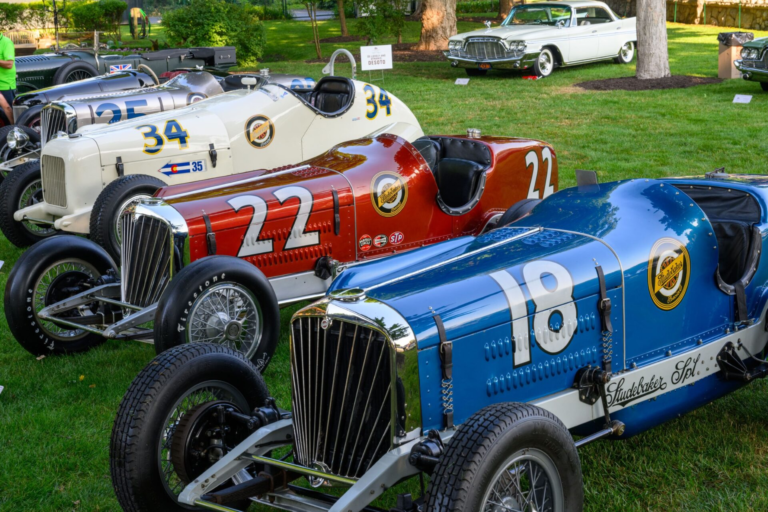
The Studebaker National Museum is turning up the excitement for 2026 by announcing that the eighth annual Concours d’Elegance at Copshaholm will expand into a dynamic, two-day celebration of automotive excellence and culture, beginning on Friday, July 10, 2026, with two new programmatic offerings and culminating with the Concours d’Elegance at Copshaholm on Saturday, July 11, 2026.

Set against the elegant historic grounds of Copshaholm, this year’s events invite enthusiasts, collectors, and families alike to experience more cars, more stories, and more ways to engage than ever before.


Two Days. One Unforgettable Experience!

New for 2026, the Concours weekend transforms into a multi-day automotive festival, offering something for every kind of enthusiast!

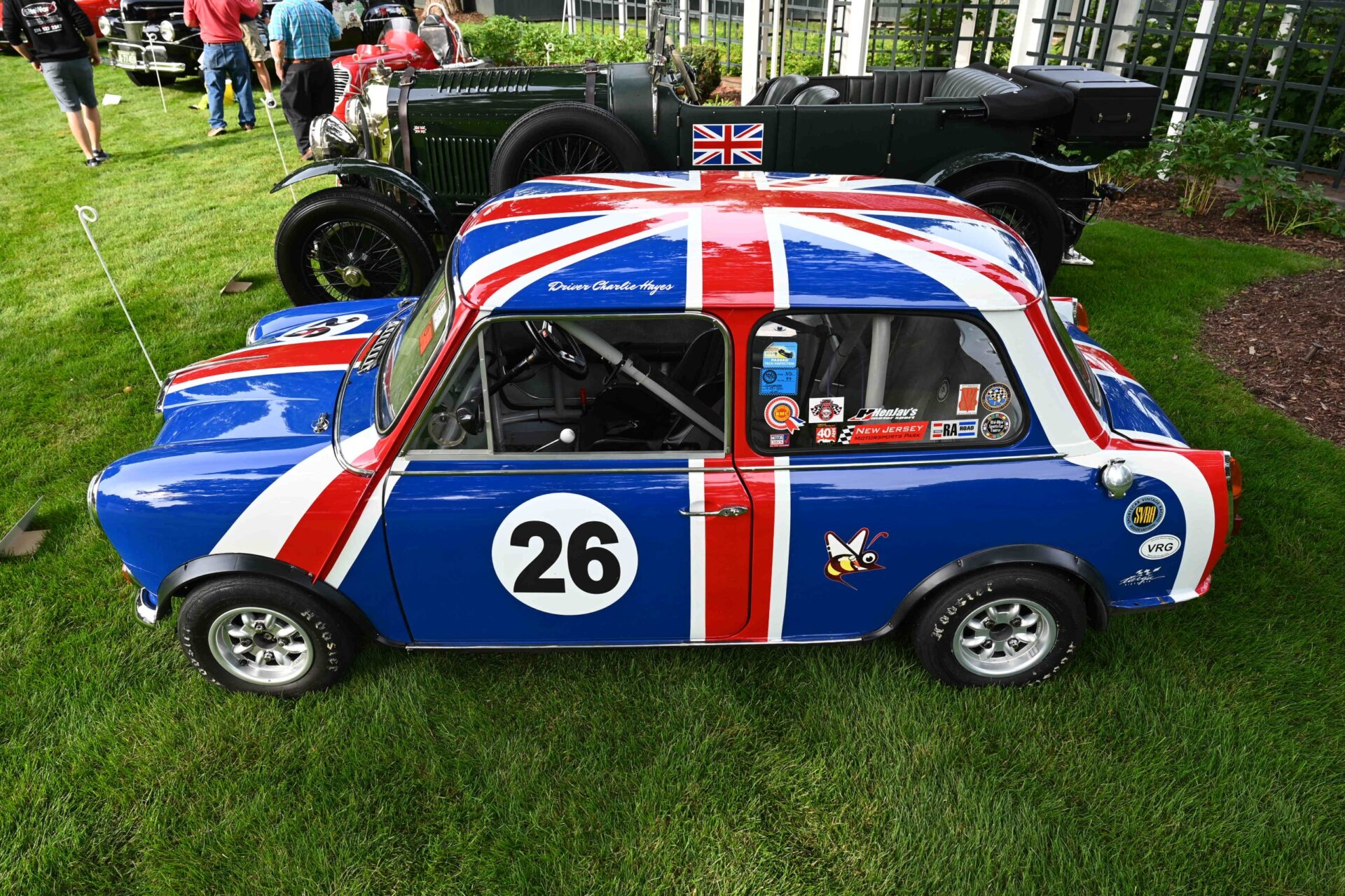
Photo courtesy Studebaker National Museum

NEW on Friday!

  • Concours d’Lemons South Bend — A crowd-favorite, this tongue-in-cheek event celebrates the weird, the flawed, and the un-best of the automotive world.
  • Automotive History Live: A Lecture Forum — Lectures from world-renowned automotive historians and speakers will delight automotive hobbyists and collectors alike.
  • Collectors Celebration Dinner — An elegant evening event bringing together collectors, exhibitors, and special guests for fine dining and conversation.
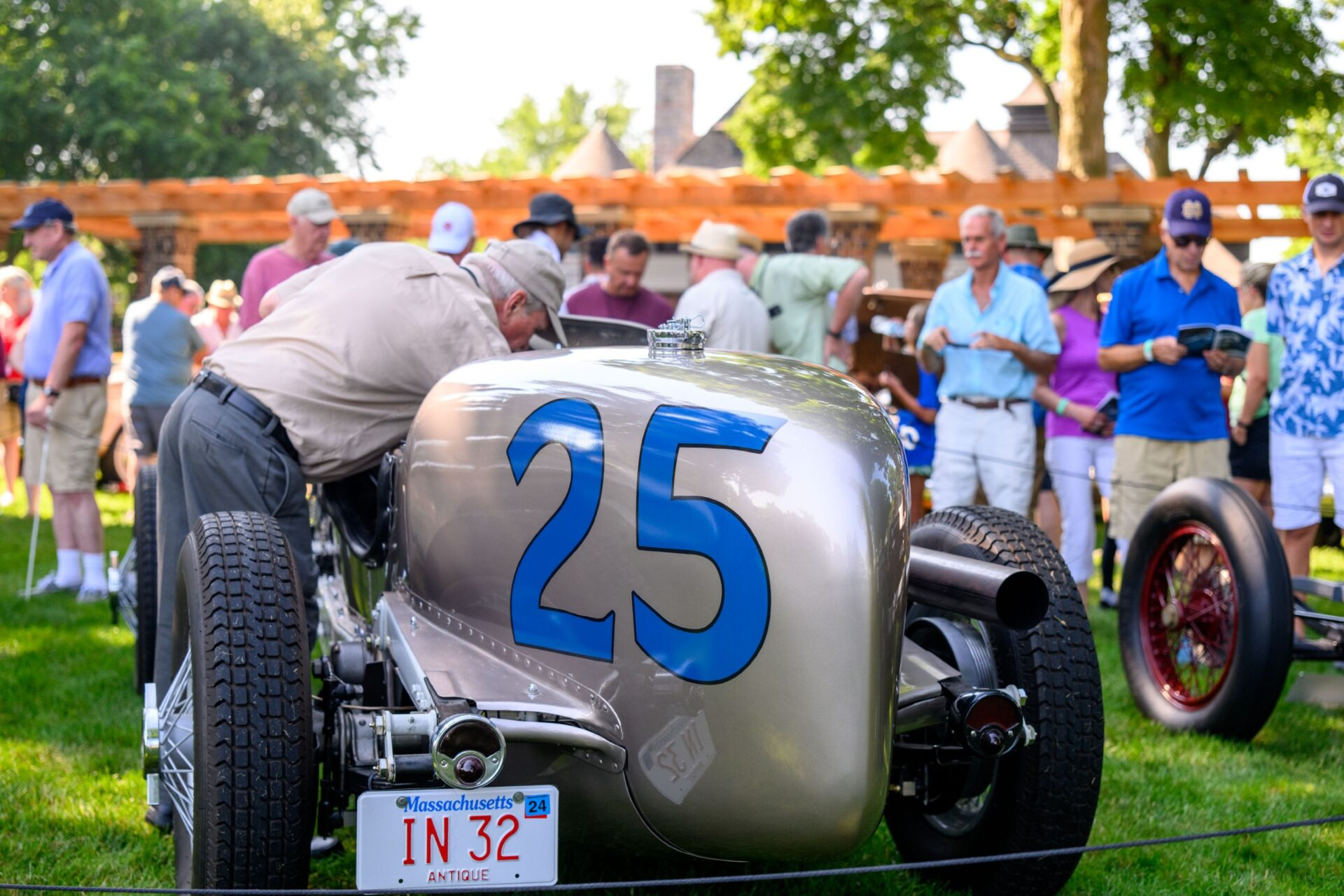
Photo by Matt Cashore; courtesy Studebaker National Museum

Concours d’Elegance at Copshaholm — The main event, this Concours showcases world-class automobiles in the historic gardens of the Copshaholm mansion. Throughout the day, guests will enjoy a lively atmosphere with local food trucks, a specialty ice cream vendor, and plenty of opportunities to relax, explore, and connect. The Concours will open to the public Saturday at 10:00 a.m. and conclude at 4:00 p.m., with the highly anticipated Pass-In-Review and Awards Ceremony beginning at 2:30 p.m.

A Centennial Celebration of Pontiac and Automotive Icons

The 2026 event will spotlight the 100th anniversary of Pontiac, featuring a dedicated class spanning the brand’s full legacy. Joining the celebration are the legendary Indiana makes of Auburn, Cord, and Duesenberg—names synonymous with innovation and style.

From the sculpted elegance of Coachbuilt Classics to the muscle and mystique of the Pontiac GTO, and the jet-age flair of Fabulous Fins, this year’s show field promises a visually stunning journey through automotive history. Additional classes include:

  • Motorcars of the Lincoln Highway (1913–1926)
  • European Economy
  • New Deal Motoring (1933–1942)
  • Vintage Motorcycles
  • Hail to the Chief: Studebaker Presidents
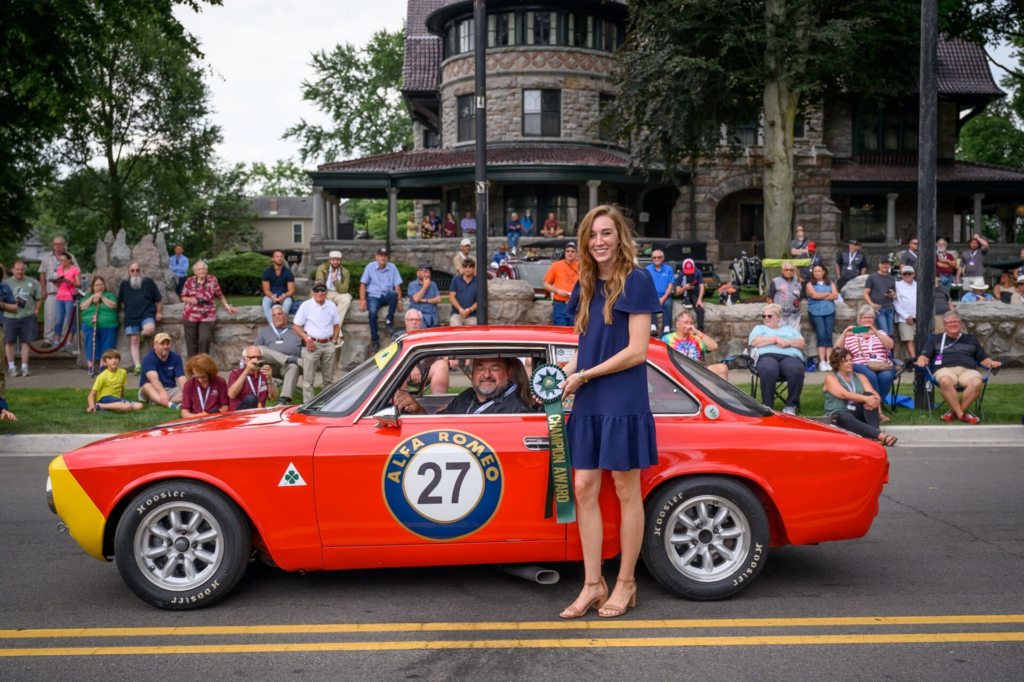
Photo by Matt Cashore; courtesy Studebaker National Museum

The Concours’ Chief Judge will be noted automotive historian Matt Short, with judging conducted in the French Traditional style. The Awards Ceremony will be narrated by renowned automotive author and expert, Bill Rothermel.

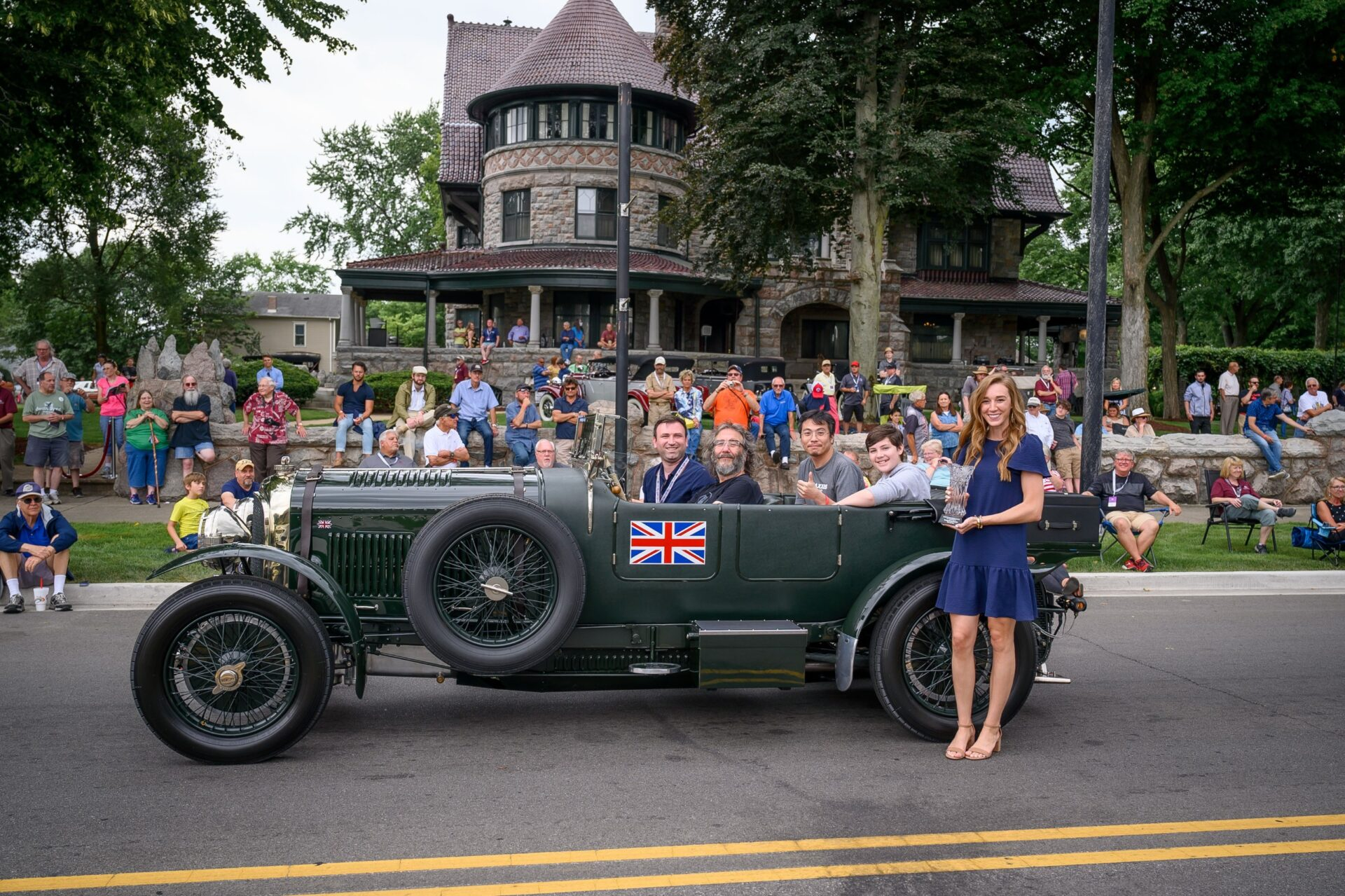
Awards will be presented across all classes, culminating in the prestigious Best of Show.

Photo by Matt Cashore; courtesy Studebaker National Museum

Tickets & Packages

A variety of ticketing options are available. Make sure to buy your tickets in advance to take advantage of special early bird discounts.

Leipert Motorsport Opens the Season With a Podium Surge at Paul Ricard

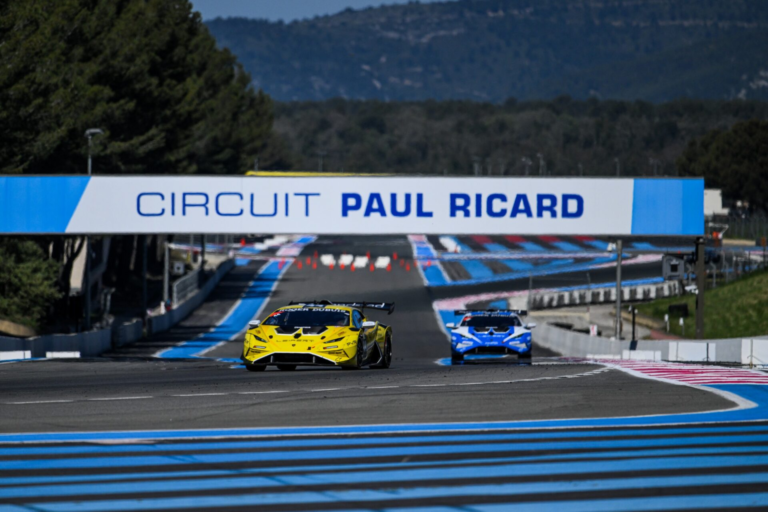
The start of the Lamborghini Super Trofeo Europe season at the Circuit Paul Ricard proved extremely satisfying for Leipert Motorsport. With two cars in the PRO class, the team was in strong form throughout the weekend and was rewarded with a podium finish and three further top-five results.

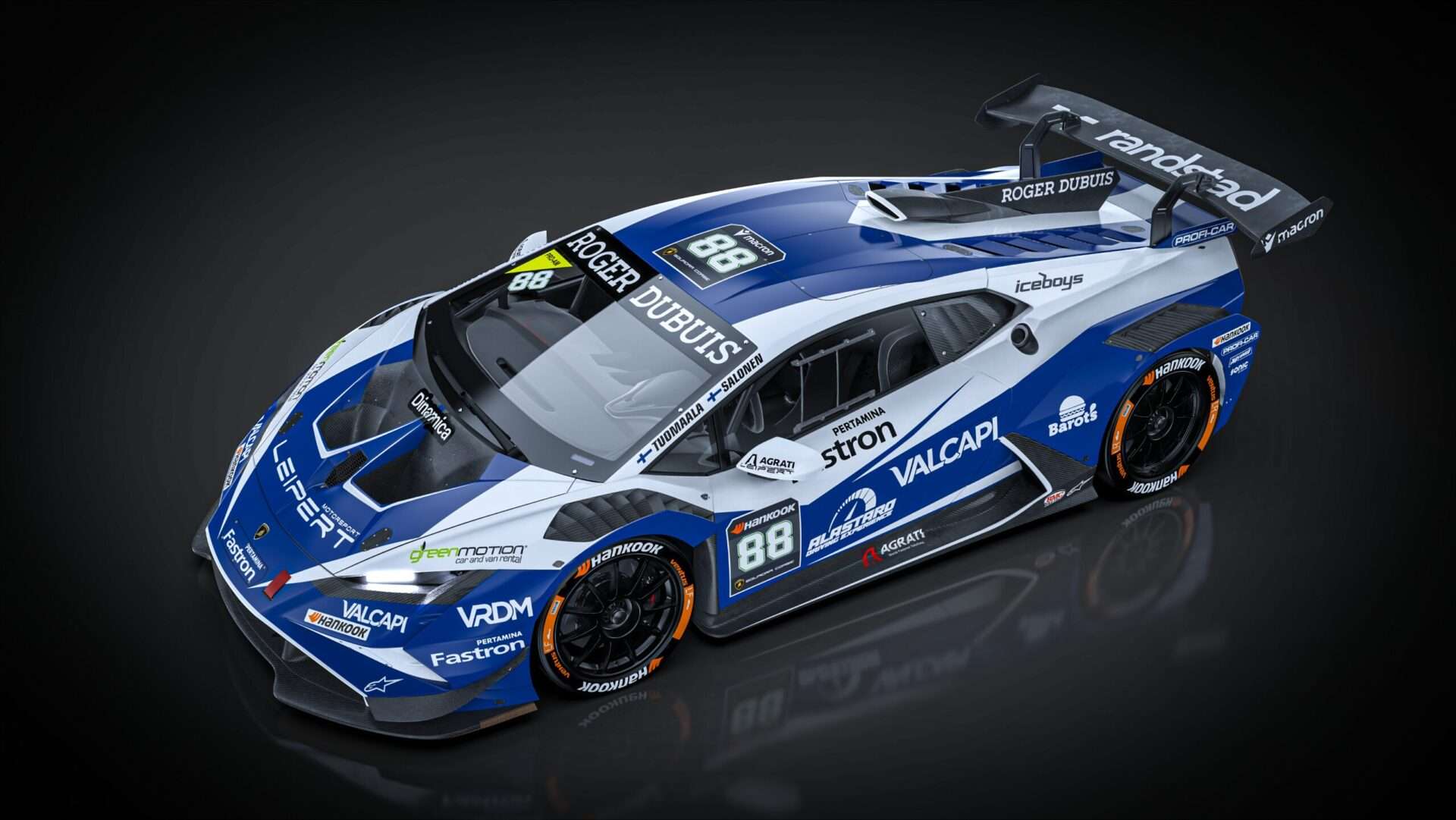
The potential was already evident in free practice: the #88 (Tuomaala/Salonen) established itself at the front of the field with consistently fast lap times, whilst the #44 (Thalin/Bengtsson) also demonstrated top pace with fourth place in the second practice session. The team also underlined its competitiveness in qualifying, securing solid starting positions. With sixth and tenth on the grid for the #88 and two ninth places for the #44, a good foundation had been laid for the races.

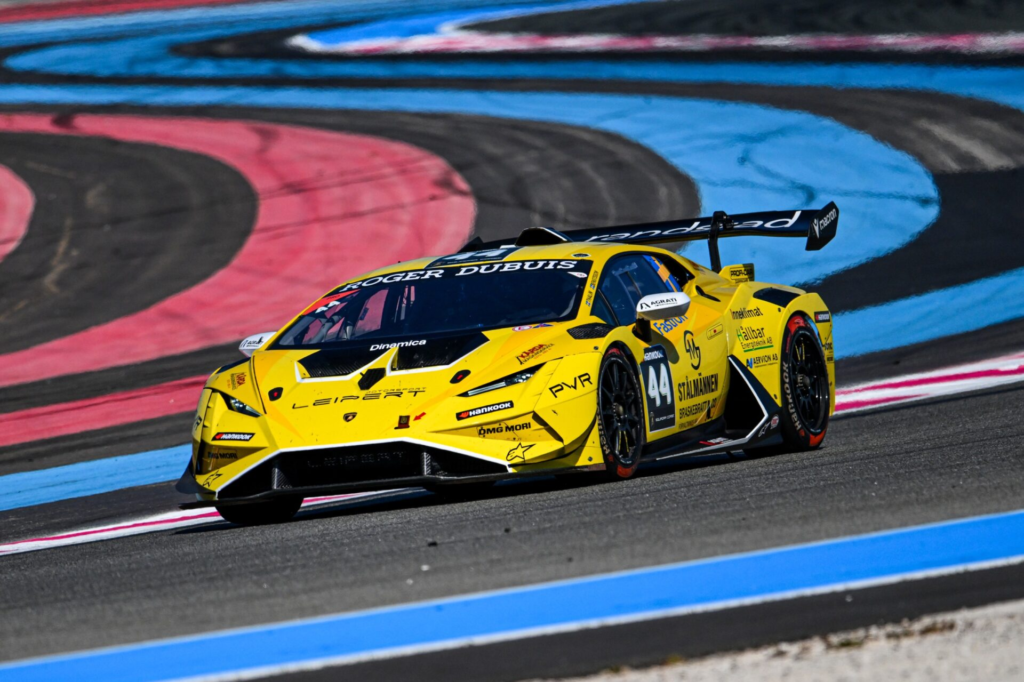
#44 Thalin (SWE) / Bengtsson (SWE) – Pro class; Photo by SCIARRA GIANLUCA FOTOSPEEDY courtesy Liepert Motorsports.

The #44 was in strong form throughout both races, confirming the positive progress made in practice and qualifying. In the first race, Thalin and Bengtsson put in a combative performance and narrowly missed out on the podium with fourth place. In the second race, the duo seamlessly built on their previous performance and secured another convincing result with fifth place. In doing so, they collected important points and underlined their potential for further top finishes as the season progresses.

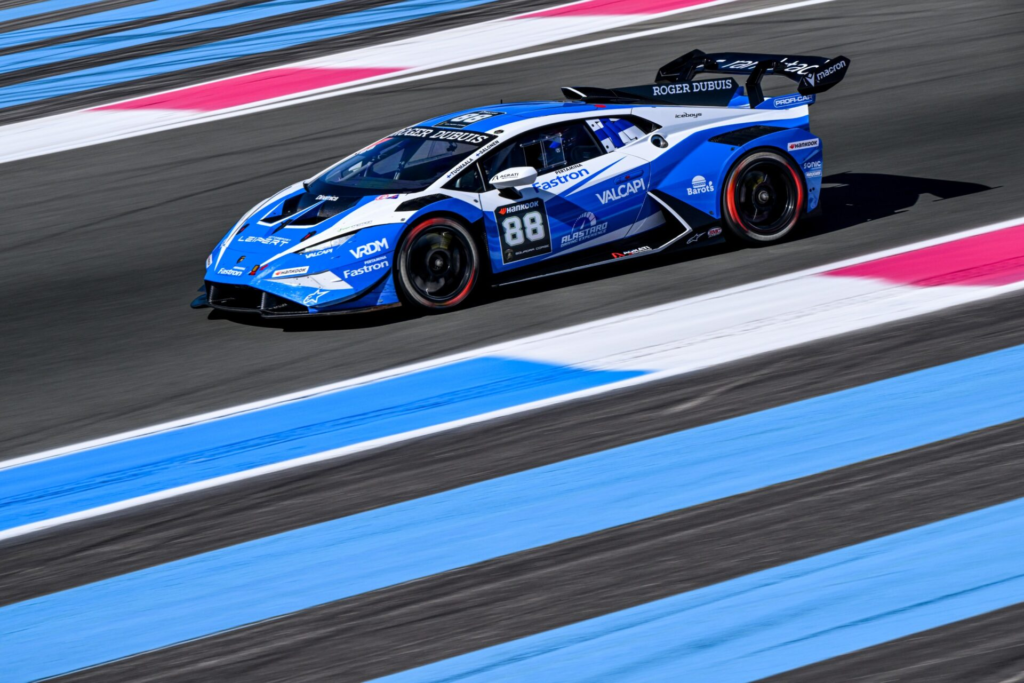
#88 Tuomaala (FIN) / Salonen (FIN) – Pro class; Photo by SCIARRA GIANLUCA FOTOSPEEDY courtesy Liepert Motorsports

The #88 driver duo put in a strong and consistent performance in both races. Tuomaala and Salonen impressed right from the first race with a commanding display, securing a well-deserved podium finish in third place. With a consistently high pace and a flawless drive, they laid the foundations for a successful weekend. With another strong performance and fourth place in the second race, Tuomaala and Salonen narrowly missed out on the podium but also picked up important points for the championship.

“A successful start to the season. With the two new driver pairings, we once again have a very competitive line-up. The debut of three out of four drivers in the Super Trofeo was extremely satisfying. As always, the team did an excellent job, meaning we can celebrate an absolutely flawless and successful start to the season. We are therefore heading to Imola highly motivated, sitting third and fifth in the overall standings.” – said Managing Directors Marc Poos and Marcel Leipert.

The next round of the Lamborghini Super Trofeo Europe takes place in early May at Imola, where the team aims to build on the strong form shown at Paul Ricard.


About Liepert Motorsport

Leipert Motorsport was founded in 2002 and became one of Europe’s top GT-Teams in Sprint- and Endurance-Racing. Spreading its GT-Engagement even wider across the continental borders, this step is the logical consequence for the German team after being a front runner and championship winning team in multiple competitions.

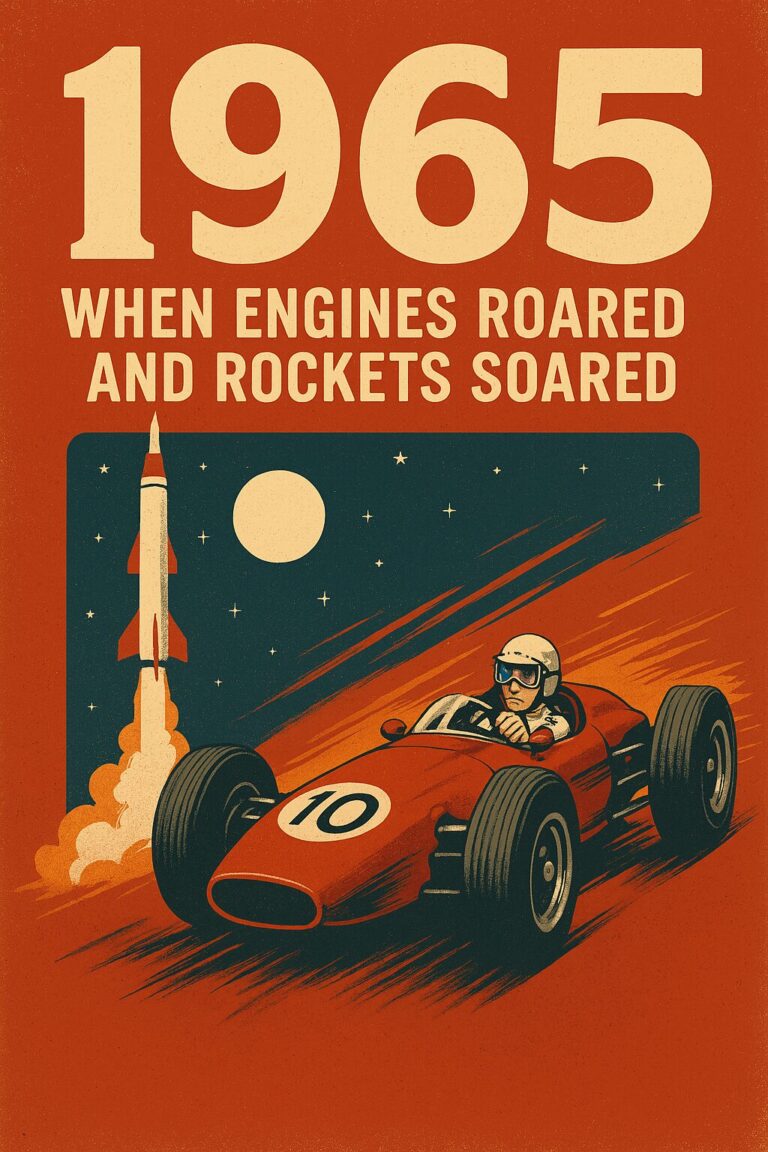
1965: When Engines Roared and Rockets Soared

In the grand tapestry of history, few years shine as brightly as 1965 – a year when the roar of engines on the racetrack echoed the thunder of rockets piercing the skies. It was a time when motorsports and space exploration, seemingly worlds apart, converged in spirit, ambition, and innovation.

Guiding us through this pivotal moment is Dr. Mark D. Howell, motorsports scholar and cultural historian, who reminds us that 1965 was more than a calendar of milestones. It was a cultural touchstone, a year when technology, competition, and national purpose intertwined to redefine what humanity could achieve.

Listen on Apple
Listen on YouTube
Listen on Spotify

Bio

Mark Howell
Dr. Mark D. Howell has been involved with motorsports his entire life (thus far). He earned a BA in English in 1987 and an MA in American Studies in 1990 from Penn State, then earned a Ph.D. in American Culture Studies from Bowling Green State University in 1995. His dissertation evolved into From Moonshine to Madison Avenue: A Cultural History of the NASCAR Winston Cup Series, published in 1997. In 2014, Howell co-edited (with Dr. John Miller of Longwood University) Motorsports and American Culture: From Demolition Derbies to NASCAR.

Howell’s full-time job since August of 1997 has been as a Professor of Communications at Northwestern Michigan College in Traverse City. He spent two years before NMC as a Visiting Assistant Professor in the Department of American Thought and Language at Michigan State University. Mark has also taught advanced courses for Tiffin University, Oakland University, Ferris State University, and Davenport University. Dr. Howell is on the Board of Directors of the Society of Automotive Historians, and is editor of the SAH’s Automotive History Review.

Synopsis

This episode of the Logbook, our History of Motorsports Series, discusses the intertwining advancements in motorsports and space exploration in 1965. Dr. Mark D. Howell, a cultural historian, explores the parallels between pioneering figures in motorsports, like Richard Petty and Jim Clark, and space exploration heroes, such as Frank Borman and Jim Lovell. Dr. Howell draws connections between technological innovations and national ambitions that shaped historical milestones in both fields. The narrative highlights Formula One’s 75th anniversary, NASA’s Project Gemini, and competitive advancements in NASCAR, Indy 500, and land speed records at Bonneville Salt Flats. Additionally, the influence of societal and cultural memory in shaping historical understanding is examined. The episode underscores how the accomplishments of 1965 have continued to impact racing, space exploration, and collective cultural identity.

Follow along using the Slide Deck from this Presentation

Transcript

[00:00:00] Break Fix’s History of Motorsports Series is brought to you in part by the International Motor Racing Research Center, as well as the Society of Automotive Historians, the Watkins Glen Area Chamber of Commerce, and the Argo Singer family.

On this episode of the Logbook, we stepped back into 1965 a year when engines roared rocket soared, and history was written across two frontiers, motorsports, and space exploration. It was the time of bold technologies, ambitious plans, and unforgettable achievements on the racetrack. Legends like Richard Petty, Jim Clark and Dan Gurney redefined competition in orbit and beyond.

Pioneers, such as Frank Borman, Jim Lovell, and Ed White carried humanities aspirations to the stars. Together, their innovation set benchmarks that continue to shape both racing and exploration six decades later. Guiding us through this pivotal year is Dr. Mark D. Howell, a lifelong motorsports scholar and cultural historian with a PhD in American Culture Studies and a career spanning decades [00:01:00] of teaching, writing, and leadership in the Society of Automotive Historians.

Dr. Howell brings unmatched insight into how 1965 became a turning point in both speed and space. His work connects the roar of engines to the silence of space, showing how one extraordinary year continues to influence the way we race, explore, and dream. Join us as we uncover the sociocultural significance of 1965 a year that proved innovation, knows no boundaries, whether on the track or among the stars.

Thank you. It’s good to be here. I’m working on a book manuscript right now that is juxtaposing, as Kip was saying, kind of the connection between motor sports and space exploration because there is a connection and as a kid who grew up wanting to both be a race car driver and an astronaut, and couldn’t quite determine which of the two was going to win.

To my surprise, I noticed as I got older and became a cultural historian and started in academia that there was a connection between the two. So today this is an ongoing part of that research, [00:02:00] and the reason I selected 1965 in part is because this year is significant. I mean, if you think about it, this is the 75th anniversary of what we know as Formula One.

It’s the 75th anniversary of the Wood Brothers getting into racing. So you’ve got these different kinds of anniversaries that kind of pop up around this year and 60 years ago, it seemed like there was a lot going on both in space exploration and motor sports, things that were going on that ended up setting the course for the future of both occupations and both endeavors.

So that’s where this comes from. The year 1965 stands out as a turning point in American technological and cultural history in both space exploration and in motor sports. Two fields that are often seen as unrelated, but they are connected. You had engineers, astronauts, drivers, and institutions that were simultaneously.

Pushing the boundaries of speed, endurance, and human capability. It was a moment when advances in [00:03:00] materials design and engineering converged with national ambition. It was also the year I was born and I haven’t changed much. I still lean forward and I’m still kind of round in the face. So that’s me.

While these events meant nothing to me at the time, they have become meaningful through what was recorded, remembered, and retold. Looking back across six decades, I propose we understand 1965, not merely as a collection of milestones, but as a year whose significance is shaped by collective memory using the frameworks of societal logics and cultural identity.

I submit that the narrative constructed around 1965 stories of innovation. Competition and national purpose continue to shape how we understand the relationship between technology and culture when examined through this lens, 1965 becomes more than a year of achievements. It becomes a cultural [00:04:00] touchstone that reveals how societies make meaning from historic, competitive, and technological triumphs.

As 1965 began, the United States was in the midst of the space race running second to the Soviet Union in placing satellites and animals in low Earth orbit. America was also chasing the technological and ideological target set by President John F. Kennedy in 1961. Of landing a man on the moon. By the end of the decade, NASA was caught off guard.

When on April 12th, 1961, Yuri Guerin made a 108 minute flight aboard his VO stock won spacecraft scoring. Two monumental firsts for the Soviet Union. The first human in space and the first human to orbit the earth. In 1963, Russia’s Valentina Ter Cova made 48 orbits over three days to become the first woman in space.

And as a point of comparison, the [00:05:00] first American woman in space was Sally Ride. 20 years later, in June of 1983, in 1965, project Gemini tightened the space race by demonstrating the versatility and technology needed to reach the moon, not that Gemini got off to a rousing start. An article in the Bulletin of the Atomic scientists highlighted a rift between the US military and nasa.

Because the agency, according to some people, was more interested in landing on the moon than developing America’s military capability in space. Some believed, and this was precisely the case, this is what the Soviet Union was doing with their vehicles. So the rift was actually pretty well meaning. We weren’t spying like the Soviet Union was using their technology to do.

Now, that said, astronauts had been photographing the earth since. John Glenn took a store-bought Minolta point and shoot camera into orbit on [00:06:00] Friendship seven In 1962, while American Space flight was seen as more scientific than spying, there were some in the federal government who thought manned missions were missed opportunities to observe America’s enemies.

From afar, the United States Air Force was in fact working with McDonald Aircraft, adapting Gemini hardware to develop a manned orbital laboratory that would conduct essential research as long as that essential research meant spying on other countries. The project stalled in 1966 as satellite technology was improving and funds were needed to fund the war in Vietnam.

All the while the Soviet Union fully believed it was capable of beating NASA to the cratered lunar finish line. The Soviets upped the lunar ante in March with Alexi Land’s Surprise 13 minute extra vehicular activity. A move that forced NASA to fast track an [00:07:00] American response. The first American EVA was scheduled for Gemini five later in the year, but Russia’s awkward, yet successful, and I say awkward because when Leon F got out in the vacuum of space, his pressure suit inflated, and for a while they weren’t sure how to deflate it enough to get ’em back through the hatch.

Period of time when they thought they would just have to cut him loose because he was essentially the Michelin man in space and they had to figure out a way to get him back. They did. But anyway, his early spacewalk led the agency to assign America’s first EVA to Gemini for only the second man flight of the program.

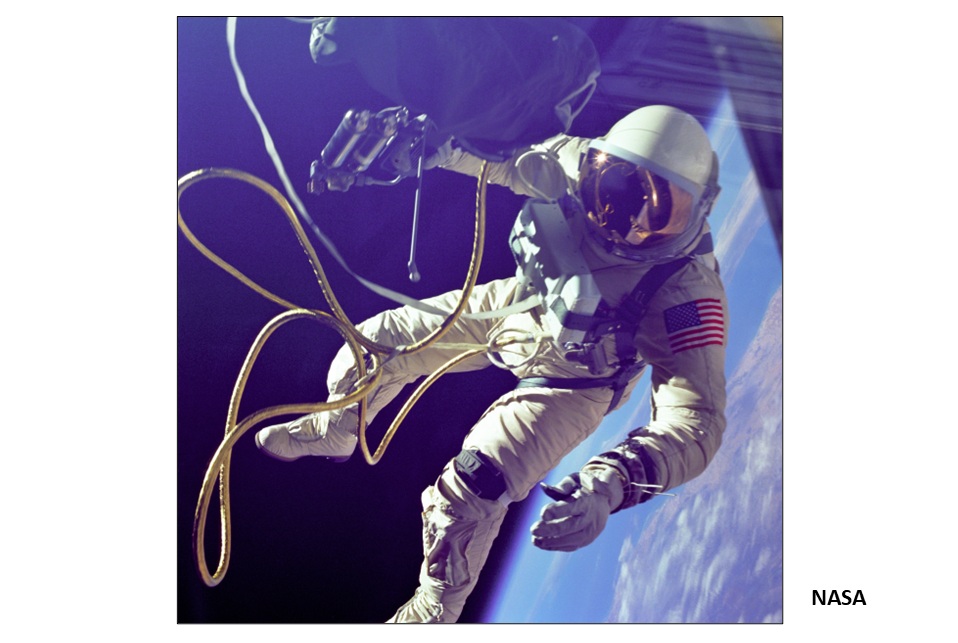
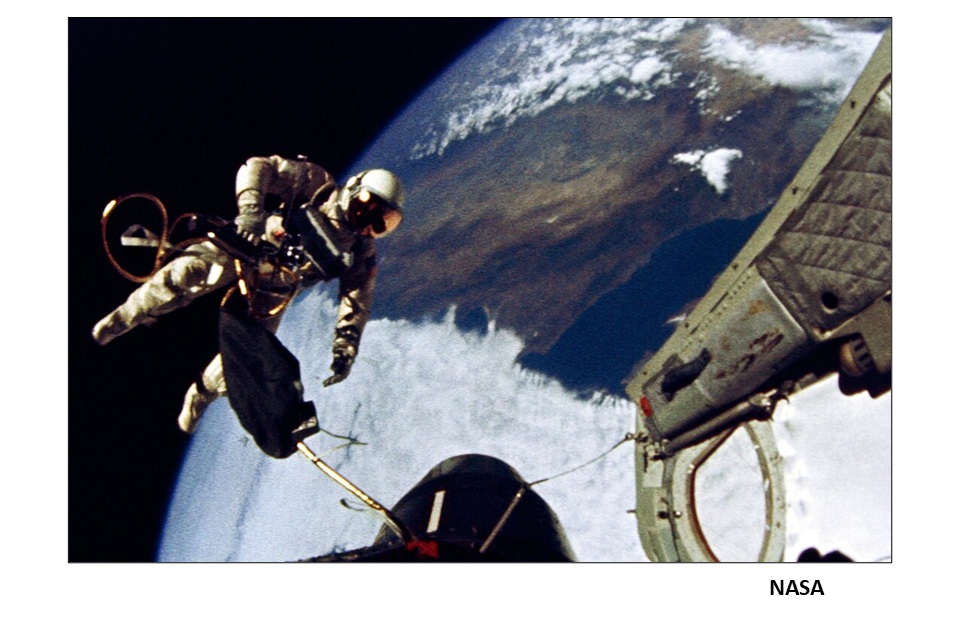
Astronaut Edward White was assigned to conduct the spacewalk in early June. On the second orbit of Gemini Four’s 66 orbit flight Commander James McDivitt assisted white in opening his hatch, allowing white to float free of his spacecraft, tethered by a 15 foot umbilical cord that provided communications and [00:08:00] life support.

White spent 23 minutes in space taking photographs and creating optics that unlike Leonardo’s, EVA would promote Gemini Four’s accomplishment throughout the world. More than a technical demonstration, ed White’s EVA quickly became a cultural moment. The image of an American astronaut floating freely against the blackness of space, tethered only by a lifeline offered the nation a powerful symbol.

At a moment when Cold War anxieties were high, this is the first mission where astronauts wore the American flag on their spacesuits, and that was actually at the bequest of McDivitt and white. They kind of knew that this was going to be a big moment for the United States, and so they went ahead and said, Hey, can you put the American flag on our space suits?

NASA didn’t stay with that, but if you look at the majority of space suits from this point on, you see an American flag, Gemini five flown in August by Gordon Cooper and Charles Pete Conrad, who were, by the way. [00:09:00] Recognized outside the space program as both being competitive. Racers in their own right Cooper raced sports cars and hydroplane boats.

Pete Conrad raced sports cars with the SCCA and he actually raced at Watkins Glen at least one time back in the early seventies. But their mission, Gemini five was to be the first spacecraft to use fuel cells instead of batteries as a source of internal power. Cooper and Conrad described their mission as eight days in a garbage can.

Since their sole purpose was to live in Earth orbit and demonstrate that fuel cells could generate enough energy for a minimum duration lunar mission, they also had the EVA. Taken away from them. So they were kind of frustrated at that. They would also test a new radar technology that enabled vehicles to rendezvous in orbit with great precision, which was another critical aspect of going to the Moon.

Cooper and Conrad being racers in their own right, [00:10:00] commented on how loud and fast the Titan two launch vehicle was. Which was understandable given that Gemini crews went into space atop and ICBM designed to carry nuclear weapons Astronauts compared the Titan two to a sports car, maybe a Corvette Stingray.

That’s what they were driving. Given its quick and steady acceleration, which interestingly enough led to a sharp change in trajectory at a particular altitude that aimed the vehicle toward Russia. So what the astronauts had to learn to do was to counter that change in trajectory because that wasn’t their intent.

At least in the Gemini program. Gemini five ultimately earned the United States a new flight duration record of 7.96 days in orbit exceeding cosmina. Valerie Bukowski’s record by 72 hours. The flight duration record of Gemini five was shattered four months later in December by Jim Lovell and Frank Borman on Gemini seven when they spent [00:11:00] 13.77 days in orbit.

This mission was the most ambitious of 1965 and probably of the entire Gemini. Program. It included a pretty big to-do list. The astronauts were gonna spend two weeks in space. They were gonna try new extra lightweight space suits, which you can see here. Their helmets are like, almost like big bags.

They’re wearing over their heads and executing a controlled reentry near their recovery location. Borman and Lovell were also tasked, and this is a direct quote from NASA three Scientific. Four technical, four spacecraft, and eight medical experiments. The medical experiments involved Frank Borman going into space with electrodes stuck in his skull under his helmet to get physiological data on their condition.

Gemini seven became part of an unplanned exercise when Gemini six, an unmanned rendezvous target vehicle. Was lost after liftoff, which delayed the launch of Gemini six A, which was going [00:12:00] to meet up with the target vehicle, Gemini six A, which was going to carry astronauts Tom Stafford and Wally Shirah.

NASA planners suggested that Gemini seven liftoff before Gemini six A, so the two vehicles could attempt a manned rendezvous, which would be necessary for a lunar mission. In December, 1965, NASA achieved the incredible two Gemini spacecraft, one piloted by indie team car owner Wally Shara. He was a silent partner with AJ Foyt actually in 1967.

Their car finished second at Indianapolis with Joe Leonard behind the wheel. But Wally Shara got the spacecraft together. They did kind of a side drafting sort of a thing. They got to within three feet to actually, at one point they got to within one foot of each other. At 17,500 miles an hour for five and a half hours at an altitude of 160 nautical miles, the astronauts could see each other.

They could read [00:13:00] signs held up to windows, and they were able to visually inspect the condition of both spacecraft. It was a technological achievement that gave 1965, added historical significance just as NASA rushed to match Soviet achievements through technical improvisation. Motorsports organizations in 1965 faced parallel pressures, organizational, cultural, and technological that shaped their own collective narratives.

Take nascar for example. By 1965, American automakers were focused on engine development and horsepower. Nascar, on the other hand, stuck to its 1949 notion of showroom stock, stock cars, and the slogan, win on Sunday, sell on Monday. Another factor was the sanctioning body’s homologation rules requiring manufacturers to produce a specific number of high powered creations for commercial sale.

Many of these specialty engines like the 4 26 Hemi, which you see here, Ford’s 4 [00:14:00] 27 camera and GM’s 4 27 mark two. Were simply not available in showrooms. In October of 1964, NASCAR founder Bill France announced that in 1965, all engines used in competition had to meet strict guidelines limiting their displacement.

Among other restrictive measures meant to govern on track performance. While manufacturers wanted to park their big engines in Victory Lane, big Bill France wanted stock cars to carry stock motors available to consumers. During the 1964 NASCAR season, Chrysler and Ford repeatedly criticized each other’s creative engineering efforts while addressing NASCAR rule changes meant to level the high banked playing field.

It was Chrysler’s 4 26 Hemi that received the most public attention. Hemispherical combustion chambers were nothing new in 1964 and 1965. They were actually developed by Chrysler [00:15:00] for the P 47 Thunderbolt. In World War ii, but World War II ended before the design could be put into production. This technology led to the development of the 4 26 Hemi, which big Bill France banned from competition in late 1964.

Chrysler’s Hemi allowed Richard Petty to dominate the Grand National Division earlier in 1964, winning his first Daytona 500 and his first grand National title with nine victories and 43 top tens. For 61 starts in a Plymouth Belvedere, powered by the Now Outlawed in 1965 by NASCAR 4 26 Hemi Engine. As such, the Chrysler Corporation took extreme measures after Chrysler announced it would boycott the 1965 NASCAR season.

Richard Petty went racing with the National Hot Rod Association driving a petty enterprises prepared Hemi powered Plymouth Barracuda, given Petty’s national fame and competitive [00:16:00] dominance. In 1964, he was usually matched against a full-time drag racer. He ran against such NHRA regulars as. Don Nicholson and Ronnie Sox, and they were pretty much more like celebrity shootouts than elimination heats that you would see in competition.

Petty’s 1965 drag racing sabbatical was marred tragically in late February. When a component in the left front of his Plymouth failed during a race at Southeastern International Dragway near Dallas, Georgia, the car careened through a chain link fence. Went into the crowd, injured seven spectators, and took the life of 6-year-old Wayne Edward die Petty enterprises.

Then built a second Hemi powered Barracuda, which carried Richard to an NHRA Spring Nationals win at Bristol Motor Speedway in 1965. Chrysler’s Boycott of the 1965 NASCAR grand national season worked to the Ford [00:17:00] Motor Company’s advantage. Illinois native Fred Lorenzen led 25 of 133 laps to win the rain, shortened Daytona 500 in a top 11 sweep by Ford products.

Lorenzen also won both grand National races at Charlotte in 1965, the day of my birth. By the way, was well timed and conveniently sandwiched between Fred Lorenzen win at Martinsville on 4 25, April 25th. That’s the day before I was born, and then Tiny Lund drove a Ford to victory at Columbia. South Carolina on April 28th, and in the middle was me.

Chrysler’s. NASCAR boycott ended in late July of 1965 when the company met those homologation guidelines. Chrysler’s first 1965 Grand National win came when Richard Petty won at Nashville in a 1965 Plymouth. The damage, however, had already been done. [00:18:00] Ned Jarrett won the 1965 Grand National Championship with 13 wins in 54 starts in a Ford while Fred Lorenzen ended the year 13th in points with four wins in only 17 starts.

Ford easily won the 1965 manufacturers championship with 50 victories in 55 races. One of the 50 wins, interestingly enough, was by Curtis Turner, who returned from his four year NASCAR induced suspension. He was suspended by Bill France for trying to bring organized labor, bring the Teamsters into organized nascar, NASCAR drivers at least.

And so he returned from his sabbatical, shall we say. To win the very first grand national race held at Rockingham Speedway, and that was, uh, on October 31st in 1965. No discussion about the Ford Motor Company and 1965 would be complete without mention of that year’s [00:19:00] Indianapolis 500. The 1965 Indy 500 was a perfect storm as Scotsman Jim Clark dominated the race in his Lotus 38, a streamlined, lightweight Monaco chassis.

Designed by Colin Chapman, who was an aviation engineer at one point and Len Terry. The car was engineered with an offset suspension and powered by a mid mounted 4.2 liter double overhead cam Ford V eight. The Lotus 38 was based on the Lotus 29 that finished second at Indy with Jim Clark in 1963 and the Lotus 34 that finished 17th at Indy with Dan Gurney in 1964, Jim Clark and his Lotus 38 averaged 150.686 miles an hour to win at the Brickyard.

Breaking the 150 mile an hour barrier, as well as a J FO’s 1964 record of 1 47 0.35 in the final Indy [00:20:00] 500 won by a front engine car. By the way, 64 was the last front engine win. Only six front engine cars were on the grid in 1965, making it the first Indianapolis 500 to feature mostly rear engine.

Entrance teams at Indianapolis in 1965 face new rules in response to the tragic events of 1964. If you remember, that’s when Dave McDonald and Eddie Sacks died in that fiery wreck right near the start of the race. These new rules included a new minimum weight restriction and new guidelines for fuel management guidelines that required cars to have a 75 gallon onboard capacity fuel tanks with rubber bladders.

And no crossover tubes located in front of the driver teams at India in 1965 were encouraged to run methanol, which made more horsepower even though gasoline provided better mileage. That said, teams were now required by the roll to pit at least [00:21:00] twice and to connect to their newly required. Another new rule, gravity fed fueling rigs, which eliminated any advantage to be had by running gasoline.

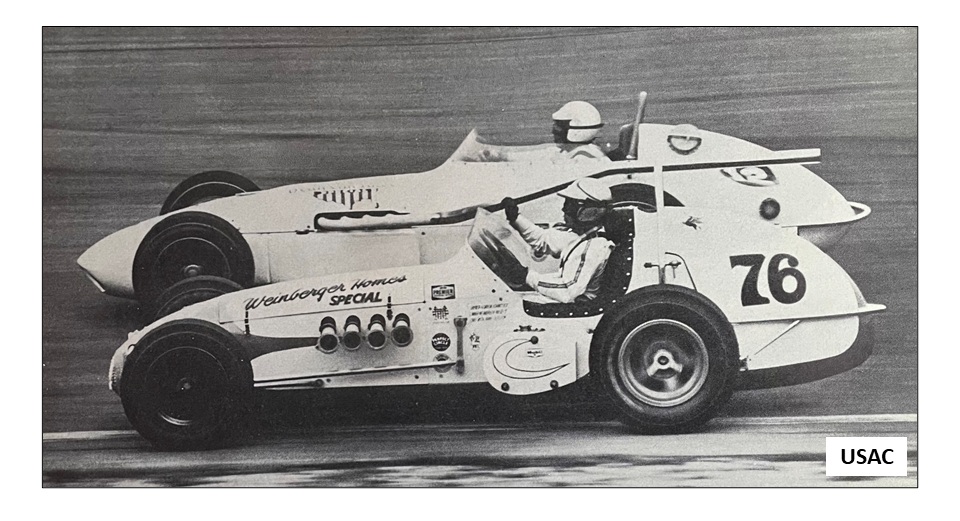
The 1965 Indy 500 featured one of the largest and most impressive rookie classes in the events history. A roster that included Mario Andretti, Gordon Johncock, Joe Leonard, and Al Unser. The front row was comprised of a J Foyt who qualified with a new track record. Jim Clark was second and Dan Gurney on the outside of row one.

Andretti was the fastest rookie starting fourth on the grid. When it comes to the 1965 Indy 500 and the influence of collective memory, the story of the Wood Brothers comes to mind. Popular meaning comes from our memories of the famous NASCAR pit crew servicing Jim Clark’s Lotus and Route to Victory at the Brickyard.

Despite such memories. Fact over fiction suggests the wood [00:22:00] brothers were more of a Ford public relations stunt than a competitive necessity. Teams at Indy knew the wood brothers and their reputation in nascar, yet the crew was new to USAC competition. So any advantage they brought. To Team Lotus was unproven.

Both time and history have suggested that the Wood brothers were not as much of a secret weapon, quote unquote. As our recollection of the 1965 Indy 500 leads us to believe the Wood Brothers turned 41.9 total seconds on Pit Road into team Lotus’s dominating win. But the truth is. The Lotus 30 eights potent blend of aerodynamics, chassis design, and horsepower when put in the hands of an incredibly talented driver, enabled Ford to win.

The Wood Brothers notable contribution at Indianapolis, which led to the Venturi tube that the Wood Brothers added to the gravity Fed fuel rig that was now required. The [00:23:00] idea that Venturi tube made the fuel flow smoother and faster. But anyway, after getting through USAC inspection. Leonard Wood then devoted several hours to polishing and fitting, making sure all the connections and nozzles worked right to ensure maximum efficiency come race day.

Jim Clark had to stop precisely in his box to maximize his refueling strategy. Leonard Wood quoted Clark as saying, you tell me where to stop and I’ll stop. Wood showed Clark the exact location the crew needed and the world driving champion. According to wood, squatted the Lotus 38 down on the exact spot every time.

Stops were simpler for the wood brothers because Clark went the entire 500 miles on a single set of tires. The first stop took only 17 seconds, which is an amazing time given that pit stops during the era. Typically ran about a minute or so. Colin Chapman was taken aback by the efficiency of the wood brothers after their first record [00:24:00] breaking stop.

Chapman apparently looked over at Glen Wood and asked, I say, did you fill it up? Wood assured him the car was full, and Chapman simply turned away and said, jolly good. In a way, they went. Even the wood brothers themselves downplayed the significance of their role at Indianapolis in 1965, giving credit not only to Team Lotus and Jim Clark, but to the powerful 4.2 liter double overhead cam Ford motor that took them to Victory Lane.

As Leonard Woods said many years later, it was their engine, so it was all about Ford and what they brought. The Ford Motor Company wanted to gain a stronghold in European style endurance racing, so they turned to racer. Turned innovator. Carol Shelby for guidance. Not only did Shelby oversee production of the 4 27 Cobra in 1965, finding a practical use for the high performance motor, but he also assumed control of the company’s GT 40 [00:25:00] program that it struggled mightily at LA Mall in 1964.

At Daytona in February, 1965, Carol Shelby brought a roster of competitive cars and drivers to open the FIA World Sports Car Championship season. Shelby went to Florida with four Cobra Daytona coops and a pair of brand new GT forties. When the checkered flag fell, Ken Miles and Lloyd Ruby went to Victory Lane earning Ford’s GT program.

Its First World Sports Car Championship win. Taking first place with a five lap advantage and setting the stage for the GT Forty’s future success. All in all, Shelby entries that day took five of the top six finishing positions, the global presence of Shelby and his GT forties, and his Cobra Daytona coops turned forward from a pretender into a contender.

While Daytona Coops performed well in World Sports Car Competition and won the CCAs United States GT [00:26:00] title in 1964, the cars did even better in 1965, winning not only at Daytona, but also at Sebring Monza, the Berg Ring and Ream. To take the International Championship for GT manufacturers in November of 1965, Carol Shelby received a call from Goodyear with an offer.

The company had four days available to run at the Bonneville Salt Flats, but no viable car. The forecast for weather wasn’t good and the clock was ticking. Art Arfons was preparing to make a record attempt using Firestone Tires, and the rules at Bonneville dictated that cars not ready to run, had to yield to other competitors.

Shelby sent a Daytona Coop that competed at Lima in June to the Salt Flats with a new motor. New Goodyear tires and the same rear axle ratio used in France. The Shelby entry traveled the 700 miles from California to [00:27:00] Utah overnight, and upon getting there, the car wound up setting 25 FIA records. One of the records was when Bobby Tero and Craig Breedlove teamed up to run 1,931 miles on the 12 mile Bonneville loop, and they reached an average speed of 150 miles an hour.

No review of motor sports during 1965 would be complete without the Bonneville salt flats. The dry lake bed in Utah was a hemi friendly environment, uh, where the big engine was enthusiastically welcomed in November, California and Bob Summers set a world land speed record for wheel driven vehicles achieving a two pass average of 4 0 9 0.277 in his revolutionary golden rod car measuring 32 feet long by 48 inches wide.

Its frontal area was calculated to be 8.53 square feet with a drag coefficient of [00:28:00] 0.1165 making the vehicle literally more aerodynamic than a bullet. Goldenrod was designed by Bill Summers. Bob’s brother using four Hemi Motors borrowed from Chrysler. The hemis ran in line two-faced front, two-faced rear with a five speed truck transmission mounted at each end.

The entire powertrain linked by custom built drive shafts. Bill and Bob Summers handcrafted the car’s entire chassis roll cage and body in a converted vegetable stand in Ontario, California, creating a vehicle that set a land speed record that stood until 2010. In addition to the record, Craig Breedlove.

Set in Carol Shelby’s Daytona Coop, he and Art Aons, they took turns breaking speed barriers in their renowned battle of the jet cars. The rivalry between breed love and Aons actually began in late 1964 when breed love’s [00:29:00] Spirit of America reached 526.28 miles an hour before his parachute failed and the car was wrecked.

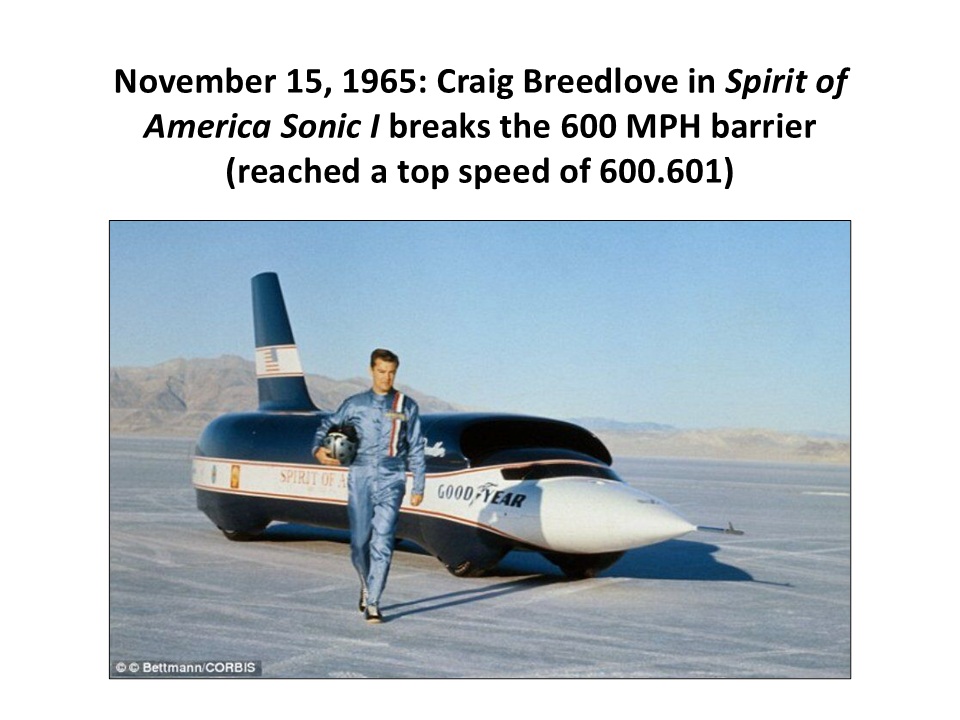
Art Aons set a new record about a year later in his green monster, only to lose it to Breedlove the following week. The one upsmanship came to a head when Breedlove hit 5 55 0.485 on November 2nd, only to be outrun by Aons on November 7th at 5 76 0.55. Three breed love made yet another. Record attempt on November 15th in his Spirit of America, Sonic One, and this time, the third time was the charm as Breedlove’s fighter jet shaped race car broke the 600 mile an hour barrier.

He hit 600.601 miles an hour, and Craig Breedlove was instantly labeled by the media as America’s quote. Astronaut on Wheels Breed Loves 1965. Records stood until Gary Gli ran [00:30:00] 6 22 in October of 1970. 1965 was populated with an incredible assortment of motorsports talent. Mario Andretti won the 1965 USAC National Championship, taking the title by 610 points over a j Foyt in 1965.

Andretti drove Roadsters. Rear engine cars, dirt cars, and was named Rookie of the Year at the Indianapolis 500. An example of the young driver’s tenacity at the Trenton one 50 in July, Andretti wrecked his Dean Van Lines entry and failed to qualify for the race. Even after missing Trenton and including back-to-back DNFs at Milwaukee and Decoin, Mario Andretti took the 1965 U Sac title with one win.

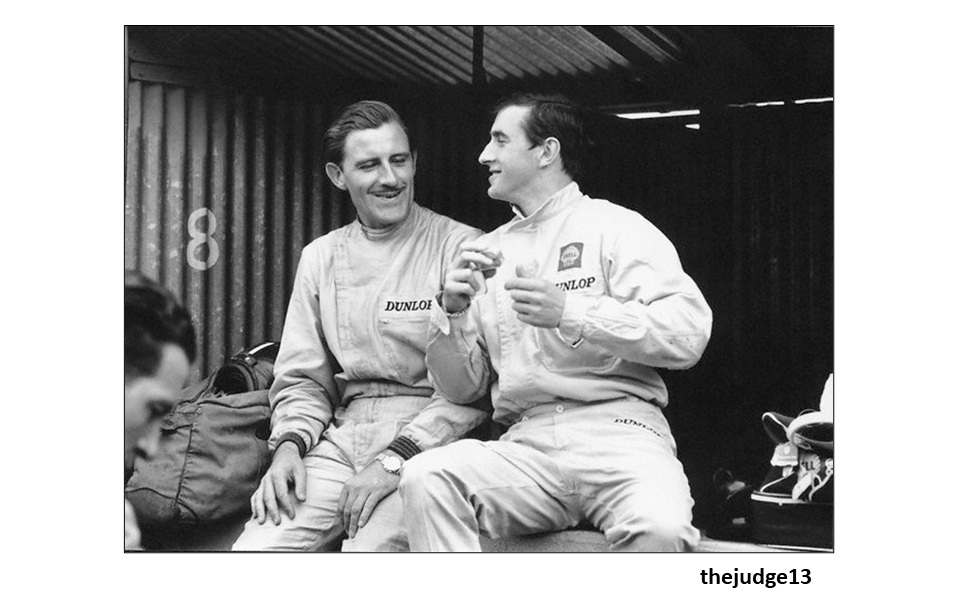
12 top fives, 13 top tens and three poll positions across the Atlantic. A young Scotsman named Jackie Stewart Advanced from Formula two to Formula [00:31:00] One, making his first championship start in South Africa and finishing sixth for BRM. His first World Championship victory came in the Italian Grand Prix at Manza, where he finished ahead of his teammate Graham Hill.

Stewart’s rookie season in 1965 was an impressive one as he scored one win three seconds, a third, a fifth, and a sixth performances that put him third for the World Drivers Championship that year behind Jim Clark. And Graham Hill. No review of 1965 would be complete without considering the historic accomplishments of a sheep farmer from Fife named Jim Clark.

Jim Clark’s modesty was only overshadowed by his immense driving talent. His racing career began in 1958 with road rallies and hill climbs eventually leading to Formula two, and then a quick promotion to Formula One partway through the 1960 season. Jim Clark won seven F1 races in 1963 to claim his first world [00:32:00] driving title.

In addition to finishing second at Indianapolis. At India, 1964, Jim Clark started from the pole but finished 24th. The we, Scott also came parly close to winning another world driving championship that same year. He won the most races in 1964, but struggled with late season engine problems and finished second behind John Certes.

It was in 1965 that Jim Clark experienced a season that remains 60 years later. Unmatched Clark not only won the Indy 500, but also his second world driving championship with five consecutive victories. Jim Clark spent the 1965 Formula One. Off season racing against other F1 and regional drivers to win the Tasman series in Australia and New Zealand taking the title with one race to go on the schedule.

Clark also won the British and the French Formula Two championships in 1965, making him [00:33:00] the first and so far the only driver to win multiple championships in a single year. To his legendary credit, Jim Clark still holds the Formula One record for the most Grand Slams with eight, his closest competition being Max Tappin and Louis Hamilton who were tied with six.

It is highly unlikely we will ever see another driver who exceeds the success that Jim Clark experienced in 1965. Now a conceptual foundation that lies beneath the historically significant events of 1965 can help us understand the many levels of meaning we commonly apply to such narratives from our past as Aca o Mossoff, and Steele suggest in their 2016 article in the Academy of Management Review.

Quote, societal logic serve as the organizing principles for distinct domains of social activity. The authors theorize that there are at least seven societal logics, [00:34:00] including the family, religion, the state, the market professions, community. And the corporation. Now, they continued to explain their idea, and it’s one that’s actually rooted in organizational studies.

They said, and this is a quote, collective memory making is not just a cognitive process, but a social one generated through communication and dynamic patterns of interaction and stored in material artifacts and collective consciousness. Each of these societal logics related to motor sports and space exploration, especially with regard to the events of 1965.

That year highlighted our shared understanding of family via the Petties, the woods, and the summers, while showcasing the almost religious nature of an event like the Indianapolis 500. The man space program in 1965 identified the state as in the United States through our acknowledgement of professions like astronauts and engineers as managed by the [00:35:00] corporation as in like, say nasa.

For every player in the market, whether it be Ford or Firestone or Goodyear, there is a community of fans, competitors that supports their cause. What makes this history relevant to historians is the fact that societal logics are established through collective memory. Collective memory creates resources we use to better understand and navigate societal logics, which in turn, shape cultural identity and institutional legitimacy.

Through the lens of collective memory, 1965 emerges not just as a year of remarkable accomplishments, but as a moment when Americans organized their understanding of technology, identity and ambition. The stories that endure from Ed White. Floating Above the earth to Jim Clark dominating Indianapolis to the summers brothers.

Engineering Marvels at Bonneville reflect the interplay of societal logics that shape our [00:36:00] shared narratives. What we remember of 1965 reveals how technological power becomes cultural power, rockets, engines, chassis, and speed records gain, meaning only when filtered through the stories we tell and retell stories that craft identities, legitimize institutions, and shape our understanding of history.

Over time, these events have been distilled not simply into facts, but into symbols that express national purpose, corporate competition, and human ambition. I was only an infant in 1965, unaware of the significance unfolding around me. Yet the records, the recollections, and the narratives passed down through family, community, and institutions have shaped my understanding of that year.

History gains meaning because we give it and ourselves, meaning the human experience, whether on a racetrack in orbit, or in everyday life, becomes more powerful when [00:37:00] it is shared. And with that, I thank you for your time and your attention.

That was terrific. Mark questions? I think Eric has a question. Alright, mark. Ben writes, this is a fascinating talk. You mentioned the collective memories influence on how we recall the 1965 Indy 500. Do you think there’s similar influence on our memory of the space race? It’s such a great story of triumph over adversity.

I wonder how much is clouded by our desire for everything to fit into that narrative? That’s a great question because that’s something that I’m wrestling with in this manuscript. When the space race started. We, pardon my language, sucked. The United States couldn’t do anything right. The Soviets put Sputnik into space, into orbit.

We tried to counter with putting our own satellites in space. Most of them blew up on the launchpad to the point where the national media started to wonder if maybe we were doing the wrong thing in the wrong sort of prioritization [00:38:00] that we should be thinking about. Other ways to put our technology because we just couldn’t get a satellite in orbit.

It took a couple years. We missed out on the first man in space. Gagarin went up first. He went up and orbited went up for 108 minutes and orbited the earth. We scrambled. About three weeks later, Alan Shepherd went up and his time in space. Was five minutes. If you remember Shepherd’s flight. It was a suborbital hop.

He went up and then came down. The whole flight lasted 15 minutes from lift off to splash down. It’s a swing and a miss. The Russians are still ahead. Second flight, Gus Grissom, same thing up down in his case. The hatch blows off the spacecraft while it’s in the ocean. Fills with water, spacecraft sinks. He gets accused of making a mistake and it’s a whole big kerfluffle.

Again, swinging a Ms. John Glenn goes up, okay, we’re gonna orbit the earth. John Glenn goes up, gets the go ahead for seven orbits on orbit. Number two, there’s a problem with, they think the heat shield, meaning that they’re gonna have to stop the mission [00:39:00] quickly instead of doing seven orbits. They’ve got what they think is a defective spacecraft, they cut it down to three and they bring ’em back.

So right off the bat, I mean, we were struggling and it seemed like everything we did, the Russians could do a little, is that whole thing, you know, whatever I could do, you could do better. It was really the space race was not really going our way at first. But that said, we immortalized Alan Shepherd. We immortalized John Glenn.

I didn’t talk about 1966. That’s a whole nother speech, but in 1966, Neil Armstrong and Dave Scott on Gemini eight Dock with one of those Gina Target vehicles. They dock as soon as they get there. It’s about half hour after they’re docked one of the thrusters on the Gemini spacecraft. It’s a steering rocket, activates short circuits and puts the thing into a spin to the point where they almost lose consciousness.

It’s only after they get rid of the Gina. Well, that actually makes it worse. They get rid of the Gina and the Gemini spun even faster, and they had to cut that mission short because otherwise they would’ve passed [00:40:00] out and probably died. So right off the bat, we are compartmentalizing a lot of these events and making them collective memory and making them significant history.

When if you match what we did versus what the Soviets did, we weren’t that great, but we got better. And finally we won the space race, Gemini seven. That puts us ahead, you know, we could do things that nobody else could do. And then in December of 68, Apollo eight goes around the moon, orbits the moon, and that’s the end of the space race.

We got to the moon first. We didn’t land first, but it was a matter of semantics. Who could get there first? And actually the Russians were in the process of sending a cosmonaut to the moon to orbit. So NASA hurried up and scrambled and said, okay, we’re gonna change the whole flight routine here. We’re gonna move this flight up, move this crew back.

Apollo eight went with an untested Saturn five rocket. No human had ever ridden on a Saturn five rocket, the biggest, most powerful vehicle ever built. But Frank Borman, Jim [00:41:00] Lovell and Bill Anders got on top of the thing and. Went into space because they had to do it. We had to beat the Soviet Union. So I hope that answers Ben’s question.

It’s a whole nother tangent there. Sorry. Hey, mark. Yes, mark A. Okay there. You’re over there. Good to see you. So I think actually my question is maybe even a development on that. So in talking about the societal logics, these collective memories that play together, I’m sort of a historian. I work at a museum.

I interpret objects. I interpret material culture from history, and yes, I can observe the. Collective memory and societal logics and just put the objects in a place that people understand because hey, it plays into the story you already have as a culture. But actually, how much of my job is bursting that bubble?

So for example, most people come in, look at our GT forties and think Ford versus Ferrari. How much is my job talking about Roy? And Don Frey, how much of it is actually saying it’s not just one guy in a cowboy hat. It was a huge organization, the equivalent of billions dollars today. That’s a [00:42:00] great point.

You know, one thing that doesn’t play into this is popular culture and that adds a whole new wrinkle to it because so much of our collective memory is shaped by not historical fact. You know, we kind of know history a little bit, but we know movies. TV shows books, and that’s what we often use as sort of the guidepost for artifacts and personalities and things like.

Yeah, I mean, Ford versus Ferrari totally changed our narrative of the GT 40 program because it was a hit movie. And it was, it was a fun movie. People went to see it. I remember when the movie came out, the first weekend it came out, I came back to my office. People started coming to my office to say, Hey, did you see forward versus Ferrari?

You must have seen Ford versus Ferrari. I saw Ford versus Ferrari. Now tell me all about it. Was that real? You tell me. What did you think was real? What did you get from that? That was real? Because popular culture often takes it upon itself to sort of recreate fact, you know, this [00:43:00] idea of based on a true story, all these movies that are based on a true story.

Well, how do you define that? Is it a true biographical depiction or is. 5% based on fact and artifacts work that way. You know, especially cars, race cars are amazing museum exhibits because when you get a race car, as anyone in this room could attest, what car are you getting? Race cars are in constant states of change.

So when somebody comes up and says. Here’s a car that won such and such an event on this day. It’s like, what’s the provenance on that? If I’m the archivist or the historian who’s gonna bring that car into a collection? I wanna know, are those the same shocks? Are they the same brakes? Are they the same tires?

What has happened to that car from that victory? To this point when it’s being donated, you know, and I think NASCAR kind of got the jump on that. The whole Daytona USA thing, you know, the car wins the Daytona 500. It’s immediately impounded, even with the confetti and all the stuff on it. The next morning it goes into Daytona USA, and it [00:44:00] stays there for a year, and it’s what you run is what you brung to the museum.

So in that case, there’s a sense of authenticity. And that’s kind of like real history. So much of this other stuff, we just play fast and loose with it and we make it what we want it to be, and that’s what a lot of these societal logics do. We can kind of compartmentalize and subdivide what we know and what we experience into these neat packages that we can then share.

They help us understand these complex events. They also help us understand ourselves and where we fit in. This may be a topic for another discussion, but uh, I was just thinking about the amazing influence that the Space Age had on automotive styling and even. Industrial products like toasters and things.

Yeah. I mean, if the whole Fins concept, as soon as the jet age rolls around, you start seeing that sort of absorbed by the auto industry and you start to see concept cars that look more and more like aircraft and the, yeah, the space age was the same way. Anybody drink Tang? When they were a kid, [00:45:00] you know, there’s like no history at all that astronauts drank Tang, but that’s how they marketed that for years it was, this is the drink of the astronauts.

The astronauts who did drink it just as like a sample kind of thing, didn’t like it. They didn’t want to take it on missions, but. General Mills or whoever it was, that’s the way they sold it. Astronaut ice cream. Go to a museum and see, you’ll see freeze dried ice cream. That’s what the astronauts eat on the Space Station.

No, it’s not. There’s no such thing on the Space Station. Even though what the space station’s involved with Gemini seven and Gemini six, what happened when those spacecraft were able to fly in formation for that length of time? That’s what led to. The International Space Station, we could not have an international Space station if it weren’t for the ability for two vehicles at that speed, at that altitude to come together and do stuff.

And so we forget that. My quick question is about the uh, Lotus at one in 65. I’m so used to seeing it appear at events in the UK year after year, after year. I was [00:46:00] surprised to see it listed as resident at the Henry Ford Museum. You know, the, the Henry Ford has that whole big section that’s devoted to racing and that’s where the car actually has been kept.

But that raises a good question. What’s the car that’s going around Europe? What’s the car that they’ve got? That’s my, yeah. What’s the car that they’re taking to Goodwood and places like that and saying, here, here’s Jim Clark’s, you know, Lotus 38. Really? Prove it, you know, is that the one, and I dunno if you noticed too, in the car in the background, that was the Wood Brothers car from this year in honor of Jim Clark’s Indie win.

They took their stock car for this year for one of the races for, uh, Darlington, and they painted it to look like. The Lotus and they put the number just the way it was. And so it even said on the side it said, you know, wood Brothers powered by Ford. You know, it had all the same kind of nomenclature and it was a slick looking car.

They should have run it more than just at Darlington, but that’s on display with Jim Clark’s car as kind of a, this was then here’s now. And interestingly enough, it’s the wood brothers, it’s their car mark. That was [00:47:00] terrific as always. Thanks everybody for the questions. Um, thank you. Thank you very much.

This episode is brought to you in part by the International Motor Racing Research Center. Its charter is to collect, share, and preserve the history of motor sports. Spanning Continents, eras, and race series. The Center’s collection embodies the speed, drama and camaraderie of amateur and professional motor racing throughout the world.

The center welcomes serious researchers and casual fans alike. To share stories of race drivers race series, and race cars captured on their shelves and walls, and brought to life through a regular calendar of public lectures and special events. To learn more about the center, visit www.racing [00:48:00] archives.org.

This episode is also brought to you by the Society of Automotive Historians. They encourage research into any aspect of automotive history. The SAH actively supports the compilation and preservation of papers, organizational records, print ephemera, and images to safeguard, as well as to broaden and deepen the understanding of motorized wheeled land transportation through the modern age and into the future.

For more information about the SAH, visit www.auto history.org. We hope you enjoyed another awesome episode of Break Fix Podcasts, brought to you by Grand Tour Motorsports. If you’d like to be a guest on the show or get involved, be sure to follow us on all social media platforms at Grand Touring Motorsports.

And if you’d like to learn more about the content of this episode, be sure to check out the follow on [00:49:00] article@gtmotorsports.org. We remain a commercial free and no annual fees organization through our sponsors, but also through the generous support of our fans, families, and friends through Patreon. For as little as $2 and 50 cents a month, you can get access to more behind the scenes action, additional pit stop, mini SOS and other VIP goodies, as well as keeping our team of creators.

Fed on their strict diet of fig Newton’s, Gumby bears, and monster. So consider signing up for Patreon today at www.patreon.com/gt motorsports. And remember, without you, none of this would be possible.

Highlights

Skip ahead if you must… Here’s the highlights from this episode you might be most interested in and their corresponding time stamps.

  • 00:00 Setting the Stage: 1965 in Motorsports and Space Exploration
  • 00:50 The Significance of 1965
  • 04:07 The Space Race: Achievements and Challenges
  • 05:03 Gemini Missions and American EVAs
  • 13:27 NASCAR’s Evolution and Controversies
  • 18:52 The 1965 Indianapolis 500
  • 24:37 Ford’s Global Racing Ambitions
  • 27:21 Bonneville Salt Flats and Land Speed Records
  • 30:03 Motorsports Legends of 1965
  • 33:25 Societal Logics and Collective Memory
  • 37:12 Q&A Session
  • 47:13 Closing Remarks and Credits

Livestream


In case you missed it, please enjoy the original recording of: Memorable Motorsports Moments: Meaning and the Year 1965 by Mark Howell

This episode is sponsored in part by: The International Motor Racing Research Center (IMRRC), The Society of Automotive Historians (SAH), The Watkins Glen Area Chamber of Commerce, and the Argetsinger Family – and was recorded in front of a live studio audience.

Learn More

Michael R. Argetsinger Symposium on International Motor Racing History

The International Motor Racing Research Center (IMRRC), partnering with the Society of Automotive Historians (SAH), presents the annual Michael R. Argetsinger Symposium on International Motor Racing History. The Symposium established itself as a unique and respected scholarly forum and has gained a growing audience of students and enthusiasts. It provides an opportunity for scholars, researchers and writers to present their work related to the history of automotive competition and the cultural impact of motor racing. Papers are presented by faculty members, graduate students and independent researchers.The history of international automotive competition falls within several realms, all of which are welcomed as topics for presentations, including, but not limited to: sports history, cultural studies, public history, political history, the history of technology, sports geography and gender studies, as well as archival studies.

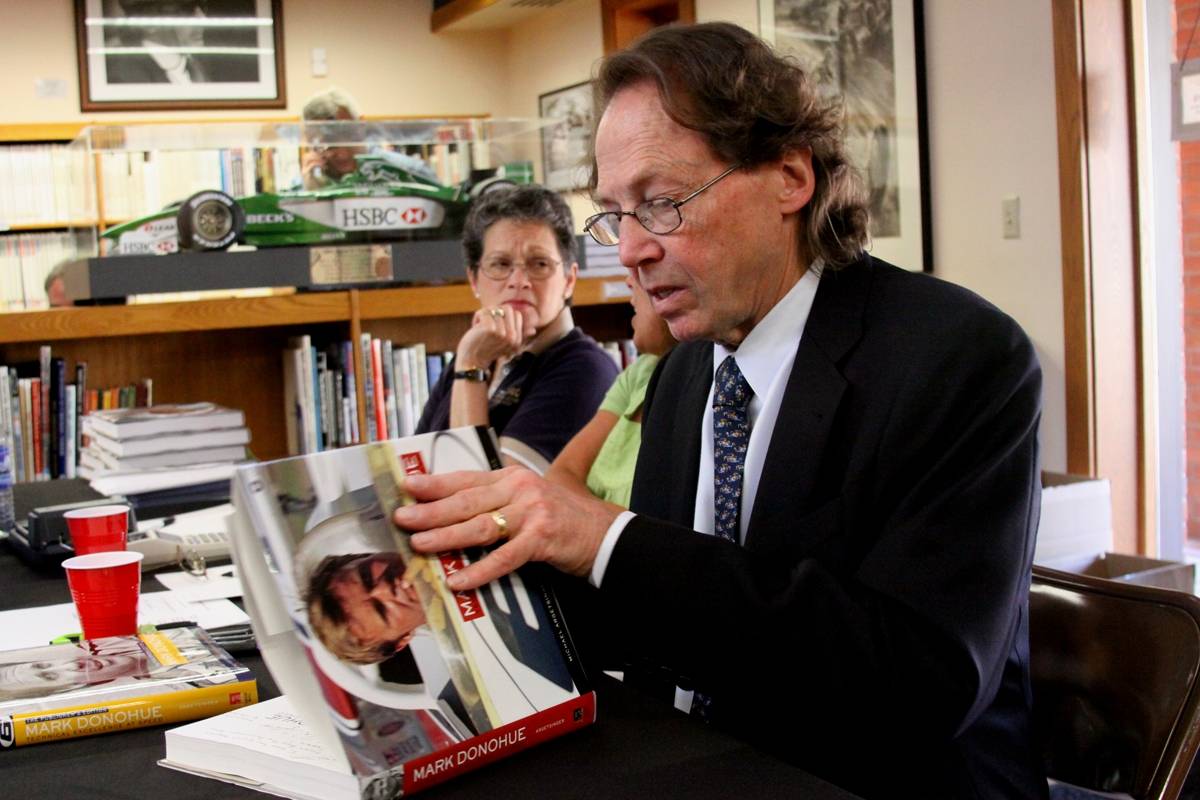
The symposium is named in honor of Michael R. Argetsinger (1944-2015), an award-winning motorsports author and longtime member of the Center's Governing Council. Michael's work on motorsports includes:
  • Walt Hansgen: His Life and the History of Post-war American Road Racing (2006)
  • Mark Donohue: Technical Excellence at Speed (2009)
  • Formula One at Watkins Glen: 20 Years of the United States Grand Prix, 1961-1980 (2011)
  • An American Racer: Bobby Marshman and the Indianapolis 500 (2019)

The United States entered 1965 trailing the Soviet Union in the space race. Russia had already claimed firsts with Yuri Gagarin’s orbital flight and Valentina Tereshkova’s groundbreaking mission as the first woman in space. America’s response came through Project Gemini, a program that tested the endurance, engineering, and improvisation needed to reach the Moon.

  • Ed White’s EVA (spacewalk) became a cultural symbol, his tethered silhouette against the void embodying both vulnerability and triumph.
  • Gemini 5 and Gemini 7 pushed flight duration records, proving astronauts could survive long enough for lunar missions.
  • Rendezvous maneuvers between Gemini spacecraft demonstrated precision at 17,500 mph – an achievement as daring as any motorsport duel.

Astronauts themselves often drew parallels between rockets and race cars. Gordon Cooper compared the Titan II launch vehicle to a Corvette Stingray, underscoring how speed and control defined both frontiers.

Motorsports in 1965 mirrored the pressures of space exploration. NASCAR, Formula One, and endurance racing all faced technological upheaval and cultural shifts.

  • NASCAR’s Engine Wars: Chrysler’s 426 Hemi dominated early, only to be banned by Bill France, sparking boycotts and reshaping competition. Richard Petty’s detour into drag racing highlighted both the risks and resilience of the sport.
  • Indy 500 Revolution: Jim Clark’s victory in the Lotus 38 marked the end of front-engine dominance and the dawn of rear-engine supremacy. The Wood Brothers’ famed pit crew added efficiency and spectacle, though history suggests their role was more symbolic than decisive.
  • Ford vs. Ferrari: Carroll Shelby’s stewardship of the GT40 program transformed Ford from pretender to contender, with Daytona and Le Mans victories laying the groundwork for endurance racing glory.

Meanwhile, Bonneville Salt Flats became the proving ground for speed itself. Bob Summers’ Goldenrod shattered land speed records with four Chrysler Hemis, while Craig Breedlove and Art Arfons pushed jet cars past 600 mph, earning Breedlove the moniker “Astronaut on Wheels.”

The year also introduced names that would define motorsport for decades:

  • Mario Andretti, Rookie of the Year at Indy, claimed the USAC National Championship.
  • Jackie Stewart debuted in Formula One, quickly proving himself among the elite.
  • Jim Clark, already a champion, achieved an unmatched season—winning the Indy 500, the F1 World Championship, and multiple Formula Two titles. His modesty and mastery cemented him as one of the greatest drivers in history.

Dr. Howell emphasizes that 1965’s significance lies not only in its achievements but in how societies remember them. The year’s stories—of innovation, competition, and national ambition – continue to shape our understanding of technology and culture.

Motorsports and space exploration may seem like separate pursuits, but in 1965 they shared a common ethos: pushing boundaries, embracing risk, and redefining human capability. Whether on the track or among the stars, the spirit of that year reminds us that innovation knows no limits.

1965 was not just a year—it was a turning point. Engines roared, rockets soared, and humanity learned to dream bigger than ever before.


Other episodes you might enjoy

If you enjoyed this History of Motorsports Series episode, please go to Apple Podcasts and leave us a review. That would help us beat the algorithms and help spread motorsports enthusiasm to others.


Remember to subscribe to Break/Fix using your favorite Podcast App.

Listen on Apple
Listen on YouTube
Listen on Spotify

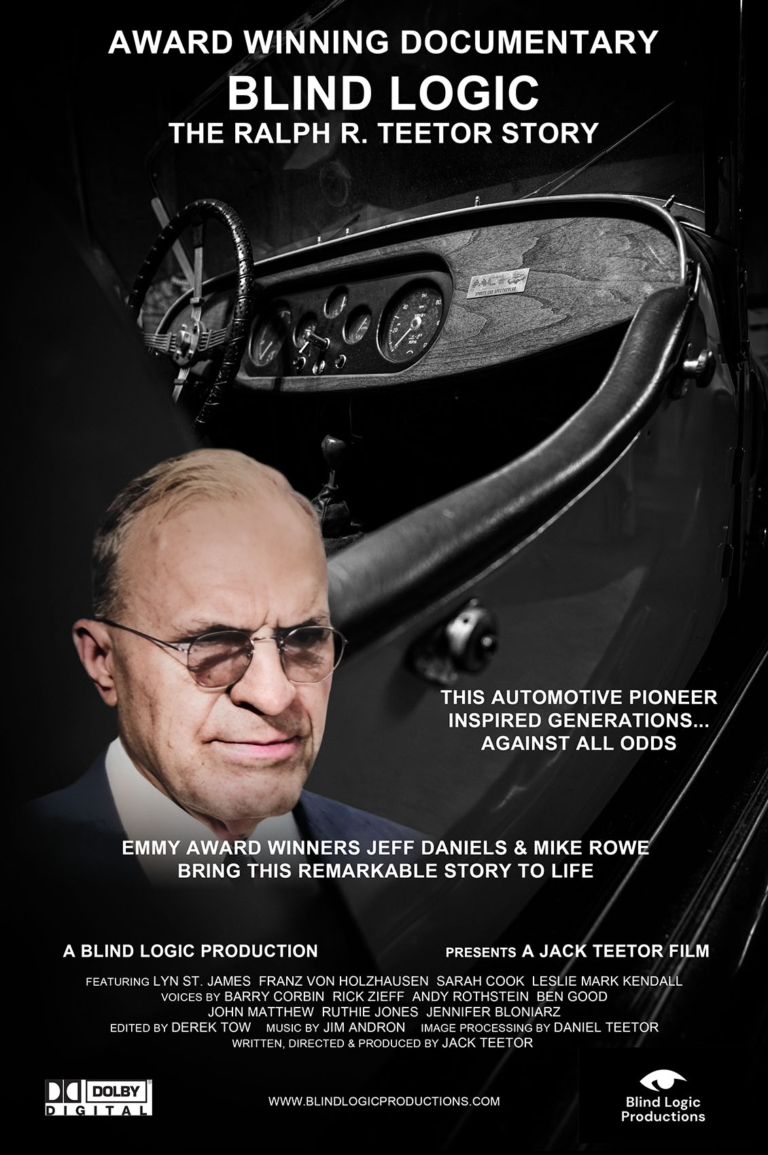
Blind Logic – The Ralph R. Teetor Story Celebrates the 11th Annual “Wine, Wit & Wisdom”

Los Angeles, CA – April 10, 2026 – Blind Logic Productions proudly celebrates the 11 Annual “Wine, Wit & Wisdom” event, benefiting the Rochester Hills Public Library (RHPL), taking place on Saturday, April 25, 2026.

Blind Logic Productions is honored to participate in this prominent fundraising event hosted by The Friends of the Library. The evening will feature dinner, entertainment, and a lineup of distinguished guest speakers. Proceeds from the event will support RHPL programming, collections, and essential library services, further strengthening the library’s connection to the Rochester community.

The Friends of the Library is a dedicated organization committed to fostering a relationship between the library and its patrons while ensuring continued access to educational and cultural resources.

Filmmaker & guest speaker Jack Teetor shared, “We are honored to be a part of this prestigious event supporting a distinguished library with more than 100-year history of service to the Rochester community.”  Betsy Raczkowski, Head of Communications and Engagement at RPHL added, “We’re excited to share this story and grateful for the unique opportunity for our patrons to screen this documentary alongside the filmmaker.”

In addition to the fundraiser, The Friends of the Library will host a special screening of the award-winning documentary, “Blind Logic,” on Monday, April 27, at 6:30pm, followed by a Q & A session.

Blind Logic: The Ralph R. Teetor Story” chronicles the inspirational life of Ralph R. Teetor, a blind American visionary and automotive pioneer who overcome unthinkable odds to leave a lasting impact on the automotive industry. As Ralph Teetor famously stated in 1945, “I am not handicapped because I never considered myself so.”

The documentary features Emmy Award winners Jeff Daniels and Mike Rowe, along with Emmy nominated Barry Corbin. This film features renowned trailblazers Lyn St. James, legendary race car driver and 1992 Indy 500 “Rookie of the Year;” Franz von Holzhausen, Chief Designer at Tesla, Inc.; Sarah Cook, President of the Automotive Hall of Fame; and Leslie Mark Kendall, Chief Historian at the Petersen Automotive Museum.

The film’s award-winning creative team includes editor Derek Tow, composer Jim Andron, photo editor the late Daniel Teetor, and sound editors Darren King, Nikola Simikic, and Amanda Roy. Written, directed, and produced by Jack Teetor, this documentary is based on the book “One Man’s Vision – The Life of Automotive Pioneer Ralph R. Teetor,” by the late Marjorie Teetor Meyer.

The motion picture about Ralph Teetor is currently in development entitled “One Man’s Vision,” reuniting the creative team behind the acclaimed 2024 biopic Reagan to bring his extraordinary life to a new audience. https://onemansvision.com/

Registration link for screening: https://events.getlocalhop.com/blind-logic-the-ralph-r-teetor-story-documentary-screening/event/CiKRukrLnm/


MEDIA CONTACT: Deborah Gilels

LA Media Consultants

Email: gilelsdeborah@gmail.com

Cell: 818-648-9513

BLIND LOGIC PRODUCTIONS, LLC   Los Angeles, CA    www.blindlogicproductions.com

Leipert Motorsport’s 2026 Lamborghini Super Trofeo Line Up!

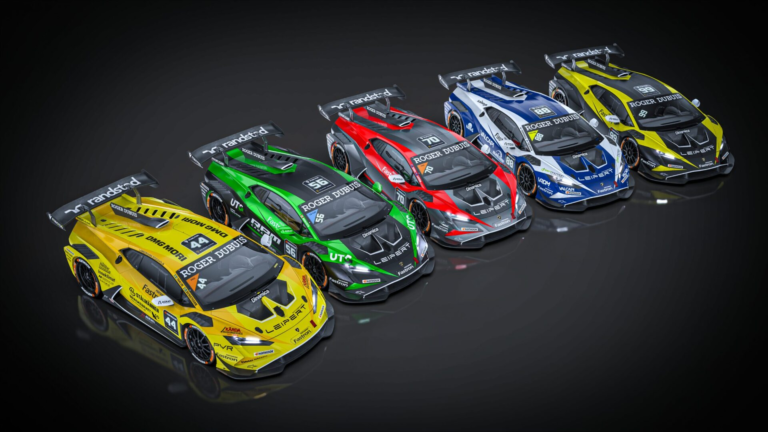
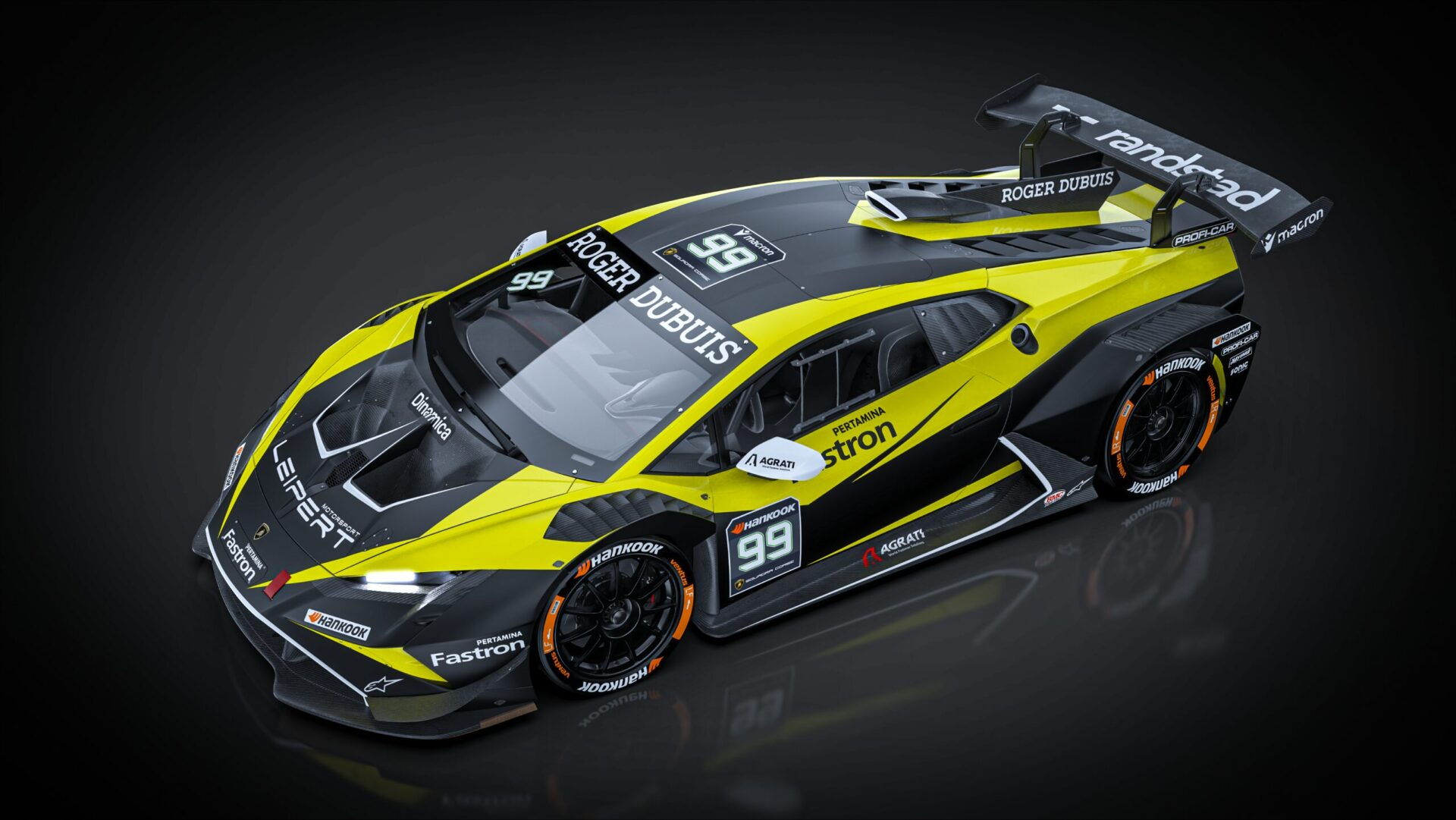
Leipert Motorsport is heading into the 2026 season of the Lamborghini Super Trofeo Europe with a strong and versatile line-up. The Wegberg, Germany-based team has secured two full-season entries with cars #44 and #88 and also plans to field additional cars at selected events.

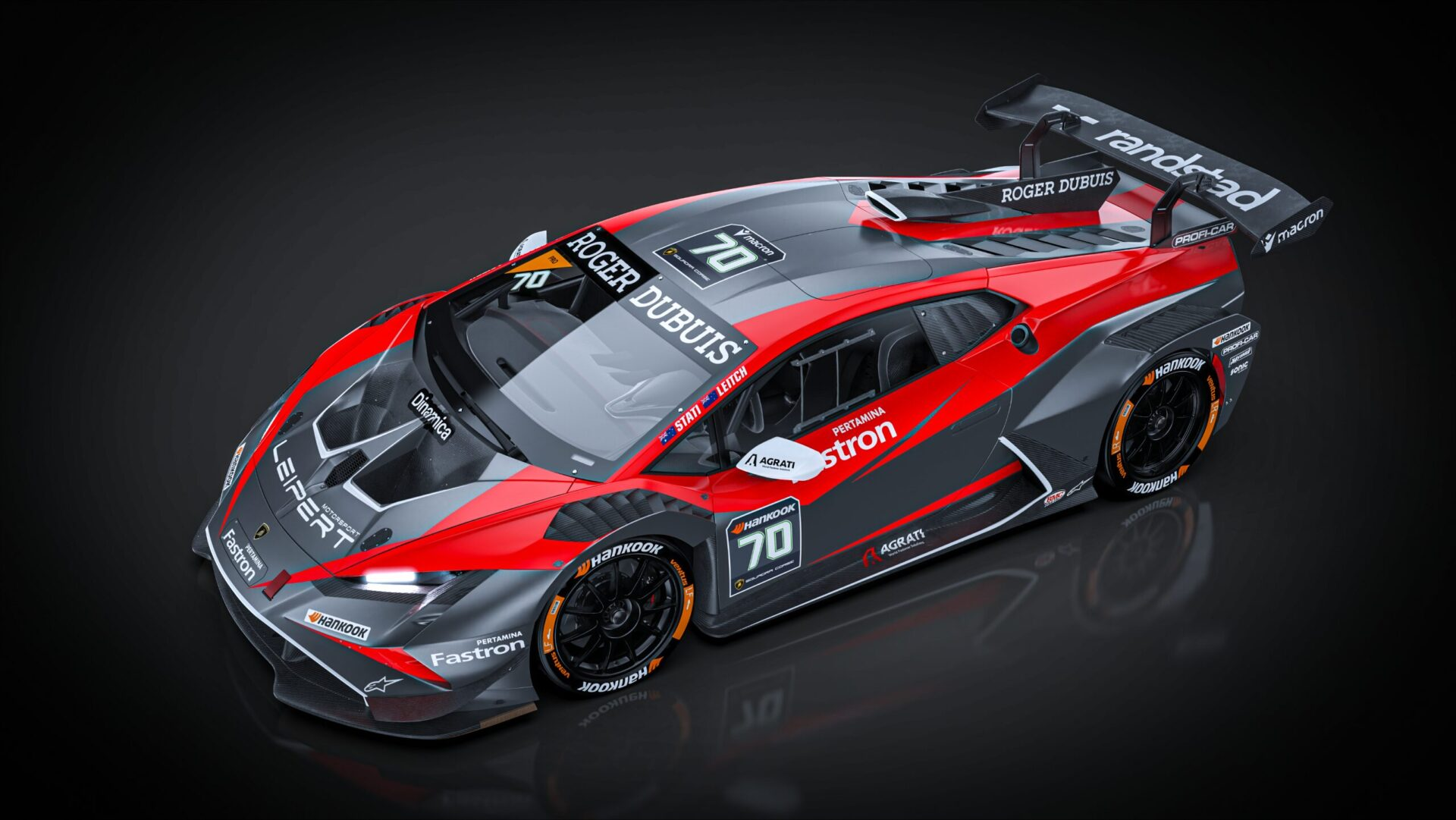
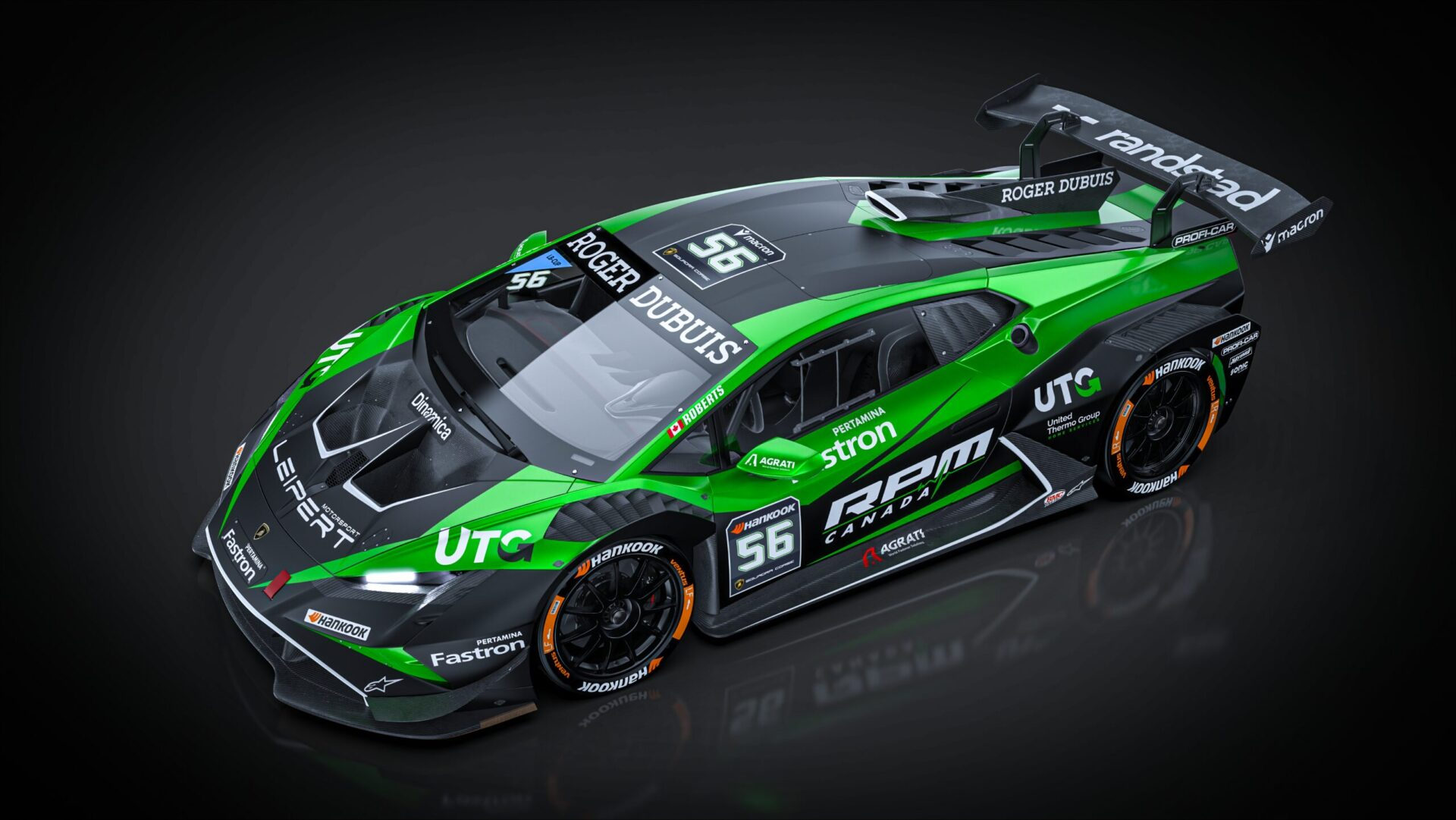
Additional entries throughout the season have already been confirmed for cars #56, #70 and #99. This once again underlines Leipert Motorsport’s ambition to play a defining role in Lamborghini’s long-established one make series this year as well.

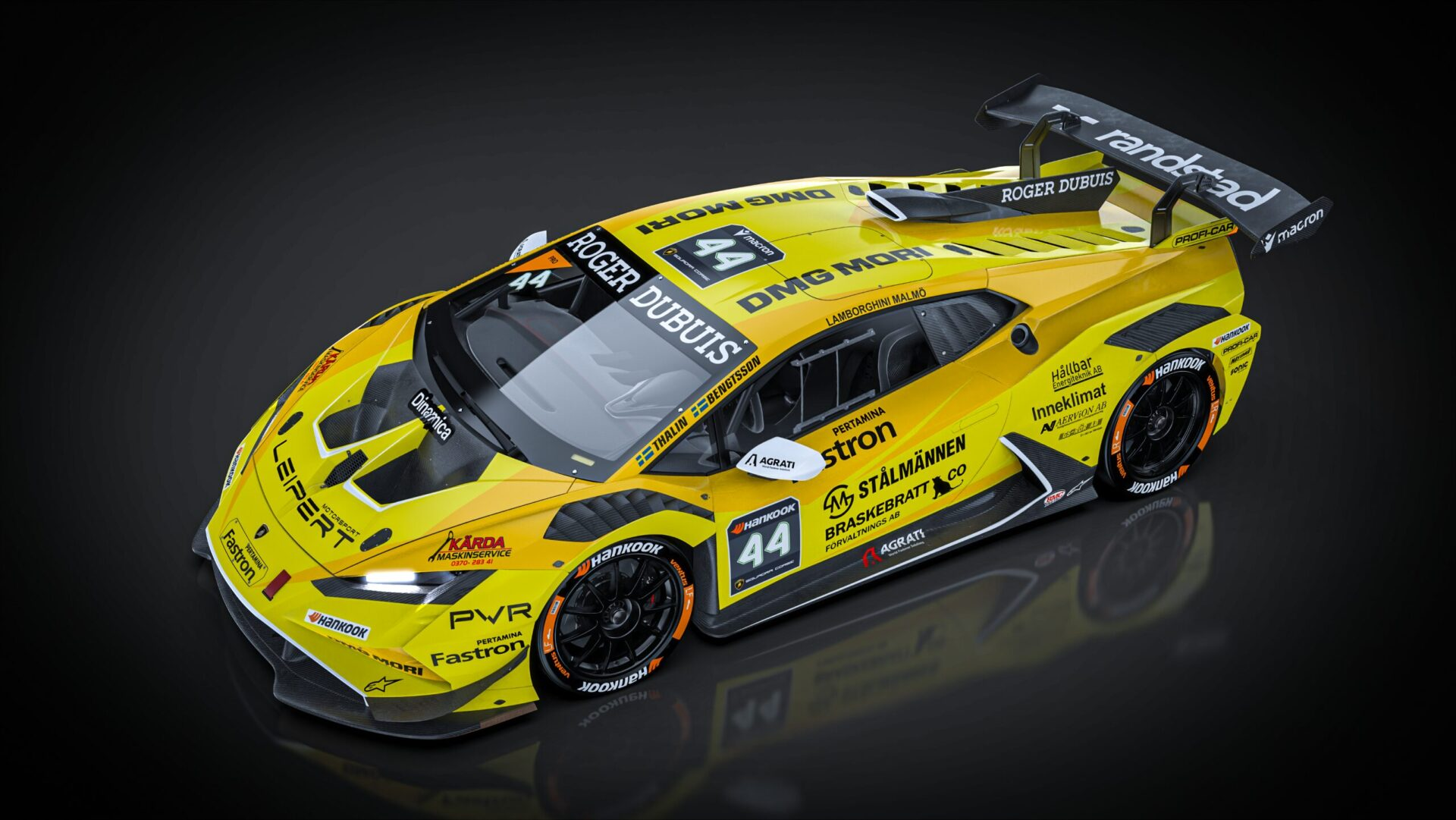
#44 PRO – Månz Thalin (SWE) & Axel Bengtsson (SWE); Photo courtesy Liepert Motorsport

For car #44 in the PRO class, the team is fielding an all-Swedish driver duo: Månz Thalin and Axel Bengtsson. Thalin returns to the Lamborghini Super Trofeo following a convincing rookie season and has already celebrated another success with Leipert Motorsport this winter: together with his team-mates, he won the GTX category at the Dubai 24-hour race. Bengtsson is moving up from the ADAC GT4 Germany to the Lamborghini Super Trofeo in 2026. He gained his first experience with Leipert Motorsport back in December 2025 at the 12 Hours of Malaysia.\

#88 PRO-AM – Henri Tuomaala (FIN) & Matias Salonen (FIN); Photo courtesy Liepert Motorsport

In the PRO-AM class, the #88 will be driven by the Finnish duo Henri Tuomaala and Matias Salonen. Tuomaala brings extensive experience from various GT series and has most recently competed in the Porsche Carrera Cup Benelux, the Italian GT Endurance Championship and the Porsche Sprint Challenge Southern Europe, amongst others. Salonen is one of the most promising young drivers in international GT racing. Having competed in the DTM Trophy and ADAC GT4 Germany, he has already gained valuable racing experience and is now set to embark on his first season in the Lamborghini Super Trofeo.

Leipert Motorsport will receive additional reinforcement (see photos above) for the races in Barcelona and Monza. There, car #70 will be fielded in the PRO category. With Brendon Leitch (NZL) and Nicolas Stati (AUS), two familiar faces are returning to the team; they will bolster the line-up at these events as well as at the Lamborghini World Finals and are likely to be among the title contenders in the battle for the world final. Fred Roberts (CAN) and Jeff Courtney (USA), who already competed for Leipert Motorsport last season, will also be back in action later this year in the #56 car in the LB Cup class. Both have extensive experience in international GT and endurance racing and will be in action at Leipert’s home race at the Nürburgring as well as at Monza.

Furthermore, additional race entries with guest drivers are planned. Leipert Motorsport will announce the final driver line-ups for the other cars at a later date. “We are delighted to start the 2026 Lamborghini Super Trofeo Europe season with a strong mix of new and familiar drivers. The pre-season tests were promising and have shown that we are well positioned competitively. Our clear goal is to build on the successes of recent years and to fight for titles again this season.” – Marc Poos and Marcel Leipert, Managing Directors of Leipert Motorsport.


About Liepert Motorsport

Leipert Motorsport was founded in 2002 and became one of Europe’s top GT-Teams in Sprint- and Endurance-Racing. Spreading its GT-Engagement even wider across the continental borders, this step is the logical consequence for the German team after being a front runner and championship winning team in multiple competitions.

A Victory Lap for Days of Thunder

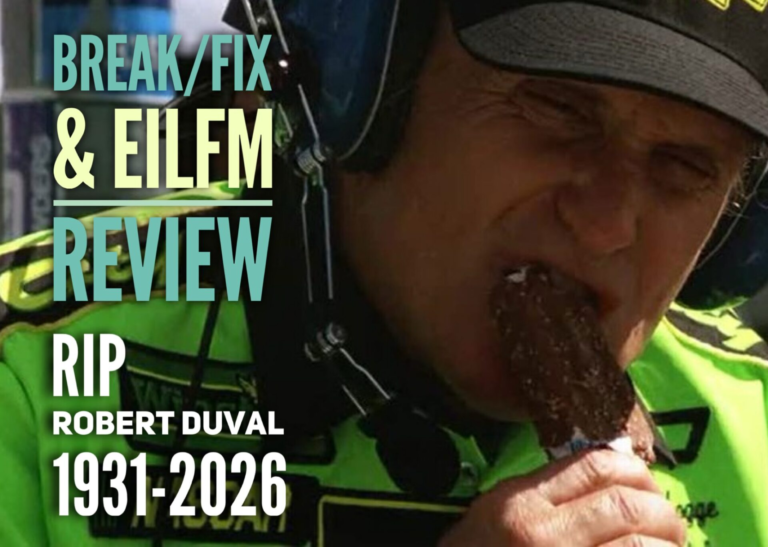
Dearly Beloved … we gather here tonight not in sorrow, but in awe.

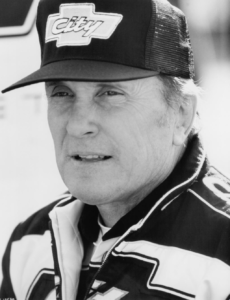
While the world will remember Robert Duvall for movies like: The Godfather, Apocalypse Now, Tender Mercies, and a resume that reads like the Library of Congress had a baby with the Oscars… we know the truth!

His real masterpiece — his Sistine Chapel, his Hamlet, his Mount Rushmore – is carved from pure American horsepower … Yes!, I am referring to Days of Thunder: a film where Duvall didn’t just act – he laid hands on broken race cars like a Southern-fried automotive shaman. Where he delivered lines with the gravitas of a man who had seen the face of God — and God was drafting at 200 mph. Where he taught a young Tom Cruise the sacred art of “rubbing is racing,” and somehow made it sound like scripture.

So tonight, as we celebrate the life of Robert Duvall, we honor the role that defined a generation of gearheads, romantics, and people who think NASCAR pit strategy is a spiritual practice.

We salute the man who could whisper to an engine like it was a wounded soldier… who could diagnose a blown piston ring with the same emotional weight most actors reserve for death scenes… and who proved, once and for all, that the greatest special effect in cinema is saying, “Let’s build a race car.”

This is not a goodbye…

This is a victory lap!

A checkered flag waved for the man who gave us the greatest racing mentor in movie history.

Ladies and gentlemen… start your emotions. Because tonight!, we remember Robert Duvall the only way that makes sense: through the roar of engines, the smell of burning rubber, and the eternal glory of Days of Thunder.

Listen on Apple
Listen on YouTube
Listen on Spotify

READ THE FULL REVIEW ON THE GTM CLUBHOUSE

Synopsis

Gran Touring Motorsports and Everything I Learned From Movies team up for a comedic crossover episode reviewing Days of Thunder while opening with an extended tribute to Robert Duvall’s role. The group discusses our nostalgic rewatches and the film’s cast and creators (Tony Scott, Simpson/Bruckheimer, Tom Cruise, Nicole Kidman, Michael Rooker, Randy Quaid, Cary Elwes). They recap major plot beats: Cole Trickle’s rough start, Harry’s mentoring and “rubbing is racing,” sponsorship, the crash and hospital storyline, romance with Dr. Claire Lewicki, rivalries with Rowdy Burns, Russ Wheeler’s rise, Cole’s fear and comeback, and the Daytona finale – while comparing the movie to NASCAR culture and later parodies like Talladega Nights. They share fun facts, Rotten Tomatoes scores, box office, and wrap with plugs for their podcasts and the Motoring Podcast Network.

Steve & Izzy from Everything I Learned from Movies Podcast return to join us in reviewing the 1990 Film “Days of Thunder” starring Tom Cruise and Robert Duvall (1931-2026). 

  • 00:00:00 Duvall Tribute
  • 00:02:38 Meet The Crossover Crew
  • 00:05:57 Cast And Filmmaker Roll Call
  • 00:16:16 Opening Montage NASCAR Nostalgia
  • 00:18:30 Rowdy Burns And Race Day Setup
  • 00:21:11 Building The Car And First Races
  • 00:25:50 Rubbing Is Racing Reality Check
  • 00:28:29 Wreck Montage And Ice Cream Scene
  • 00:32:55 Trust Talk At The Bar
  • 00:35:38 Trailer Pullover Chaos
  • 00:37:53 Smoke Cloud Full Throttle
  • 00:38:54 Nicole Kidman Arrives
  • 00:42:21 Wheelchair Hallway Race
  • 00:47:27 Rental Car Road Duel
  • 00:51:08 Russ Wheeler Steps In
  • 00:52:50 Sweet N Low Drafting
  • 00:56:14 Rowdy’s Hidden Injury
  • 01:00:53 Taxi Fight Reality Check
  • 01:02:38 Rowdy’s Daytona Request & Daytona 500 Chaos
  • 01:11:18 Movie Verdict Debate
  • 01:13:50 Commercial Break Promos
  • 01:16:02 Fun Facts vs True Stories
  • 01:25:25 Wild Production Trivia
  • 01:28:54 What We Learned? Segment
  • 01:33:49 Next Movie Picks
  • 01:36:36 Final Sign Off

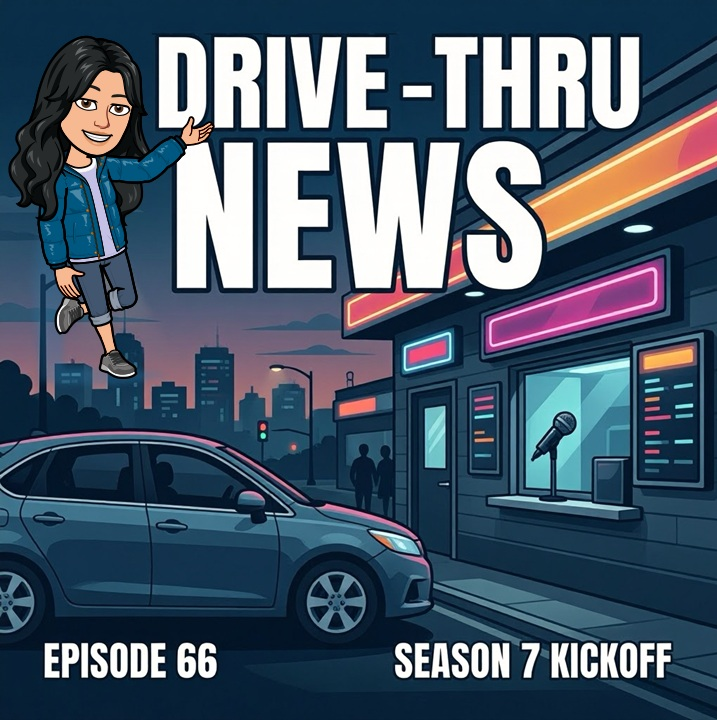
B/F: The Drive Thru #66

0

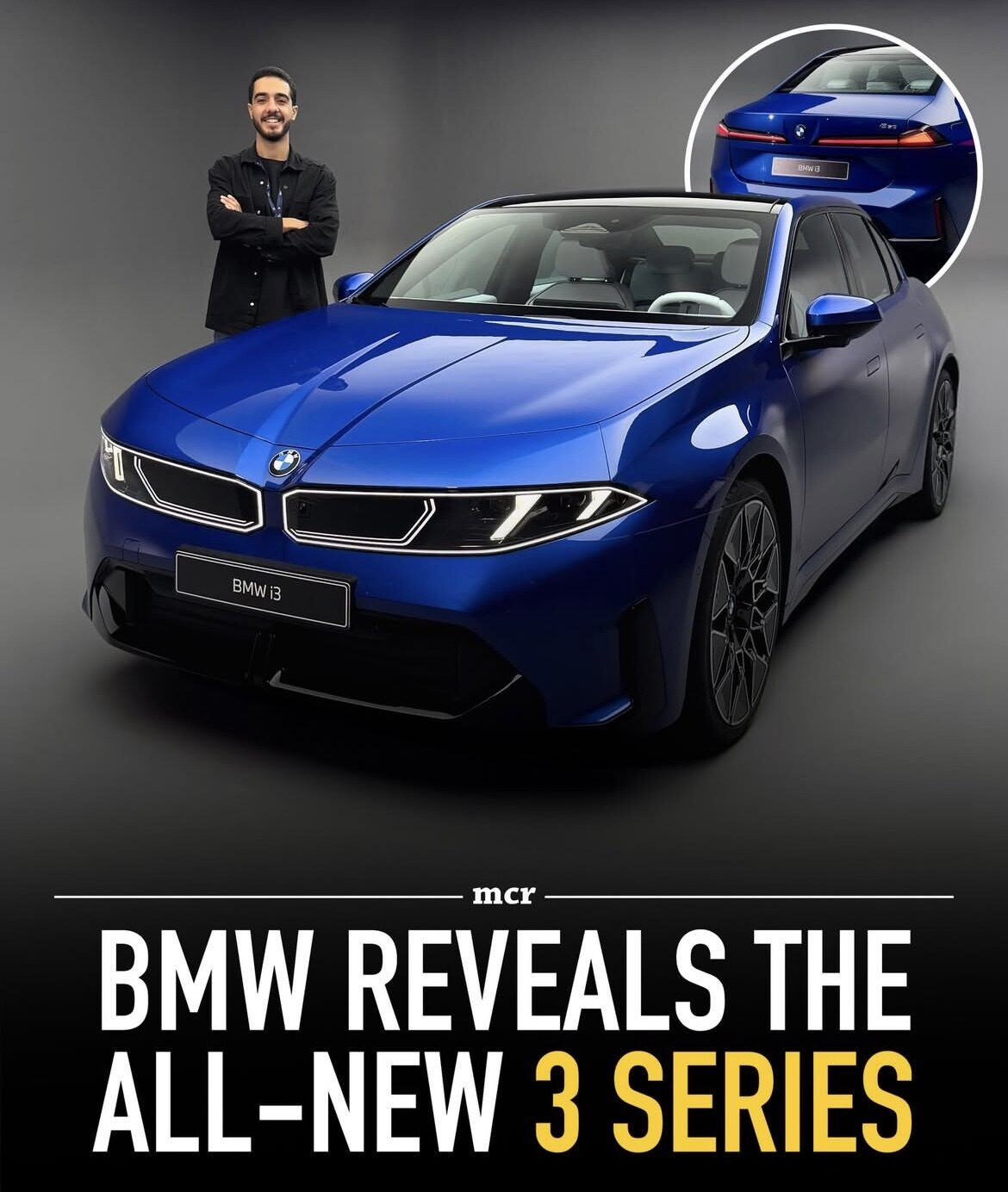
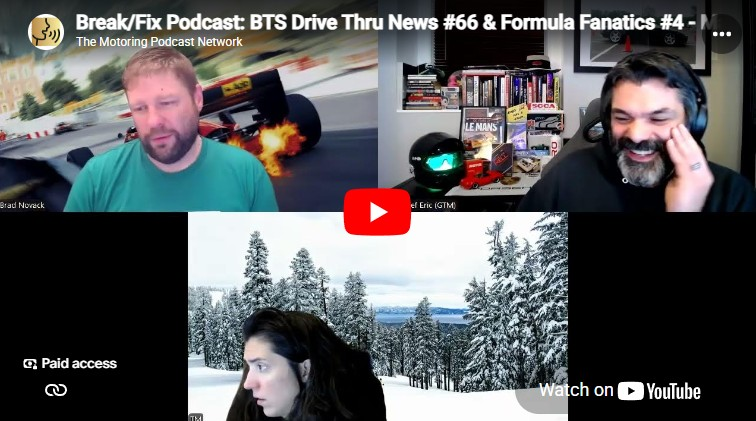
Break/Fix’s monthly Drive-Thru News episode mixes banter with automotive and motorsports headlines: Porsche’s EV plans for Boxster/Cayman remain unclear amid broader VW/Porsche EV backpedaling, while VW faces a U.S. class-action lawsuit over oil consumption in 2018+ EA888 2.0T engines. The hosts react to a new BMW 3 Series reveal, discuss “peak” driver’s cars (largely the ’80s/’90s), and note a court blocking efforts to force BMW and Mercedes to stop selling gas cars by 2030; BMW tuner AC Schnitzer closes citing German bureaucracy. Toyota teases a new Celica, Subaru debuts the Trailseeker EV, rumors swirl about a limited Hyundai N Vision 74, and Alpine may pursue U.S. crash certification for the A110. Other items include a $24k Bugatti bicycle, Austria dropping EV police cars, Florida-man stories, a 2026 Le Mans entry list update, Bob Tullius’ passing, and a Lemons Ford Focus build update that shifts the first race to NJMP Thunderbolt in June while seeking parts and support via Patreon.

Listen on Apple
Listen on YouTube
Listen on Spotify

News from Our Network Partners!

This is your fast lane to the latest in automotive culture, powered by a coalition of passionate publishers and insiders. From the vintage elegance of Garage Style Magazine to the high-octane listings of Exotic Car Marketplace, and the deep historical dives of The Motoring Historian, our coverage is enriched by voices that live and breathe the motoring world. Whether it’s the eclectic archives of Motorcopia, the endurance grit of Enduroverse, or contributions from other trusted partners, each segment delivers sharp, informed perspectives straight from the garages, paddocks, and showrooms that shape the scene.

SL in a Name

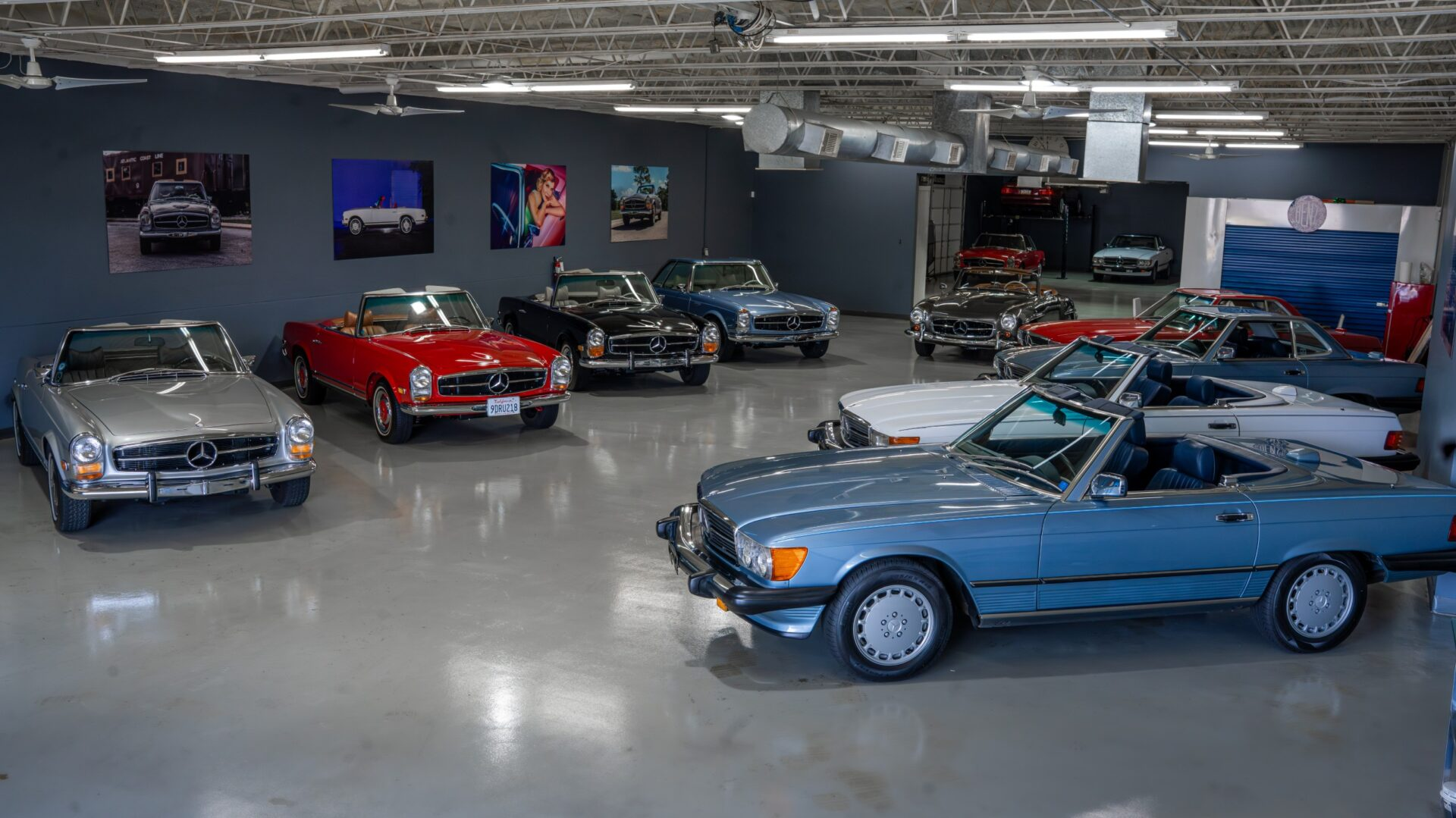
Few cars hold the mystique, the panache of the Mercedes-Benz SL. Beginning life in 1952 as the W194, it was a true racecar, a spacey-looking coupe with Gull Wing doors that took home a number of victories including the 24 Hours of Le Mans, the Carrera Panamericana, and Bern-Bremgarten to name a few.  ... [READ MORE]

What is "Peak Car?"

Jon Summers & Mark Gammie discuss "Peak Car" and what that means for enthusiasts.  ... [READ MORE]

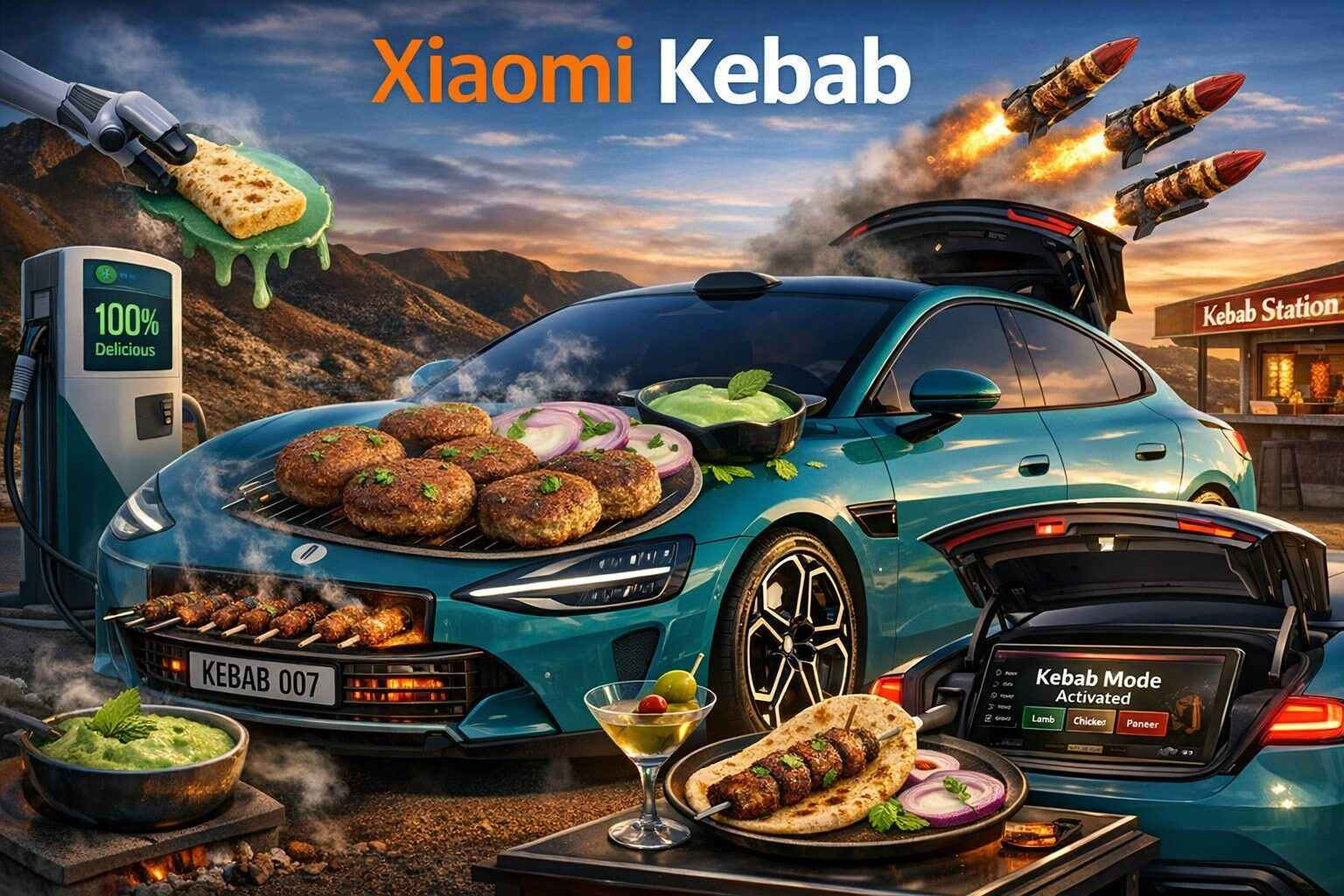
Motoring Historian EP57: CES 2026 – Xiaomi Kebab

On this episode of The Motoring Historian, Jon Summers summarizes a Western Automotive Journalists recap of CES 2026 led by chair Charlie Vogelheim, arguing that major auto innovation has shifted from traditional auto shows to CES. He frames the industry around electrification, autonomy, connectivity, and shared mobility, noting huge spending since 2010 largely from outside traditional OEMs, and discusses how autonomy remains harder than early forecasts. ... [READ MORE]

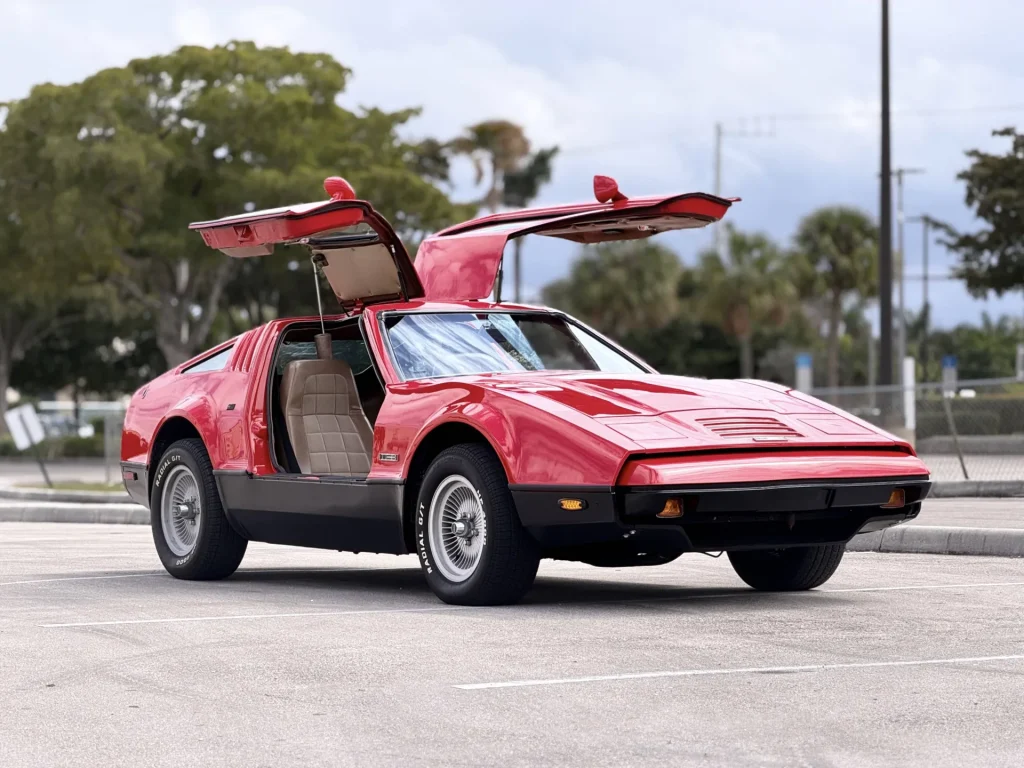
Great Buy…Maybe? This Safety Red Bricklin SV-1 Is Testing the Market After Mecum Glendale

A few days ago, Bricklin had a moment. ... [READ MORE]

Artcurial’s €5 Million Fritz Neuser Sale Confirms the Power of Single-Collection Auctions

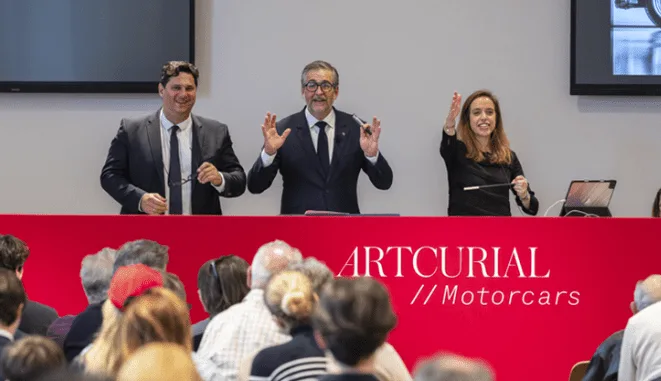
Artcurial Motorcars achieved the sort of result auction houses like to call magical: a white-glove sale, €5 million in total, and every single lot sold from the Fritz Neuser Collection. ... [READ MORE]

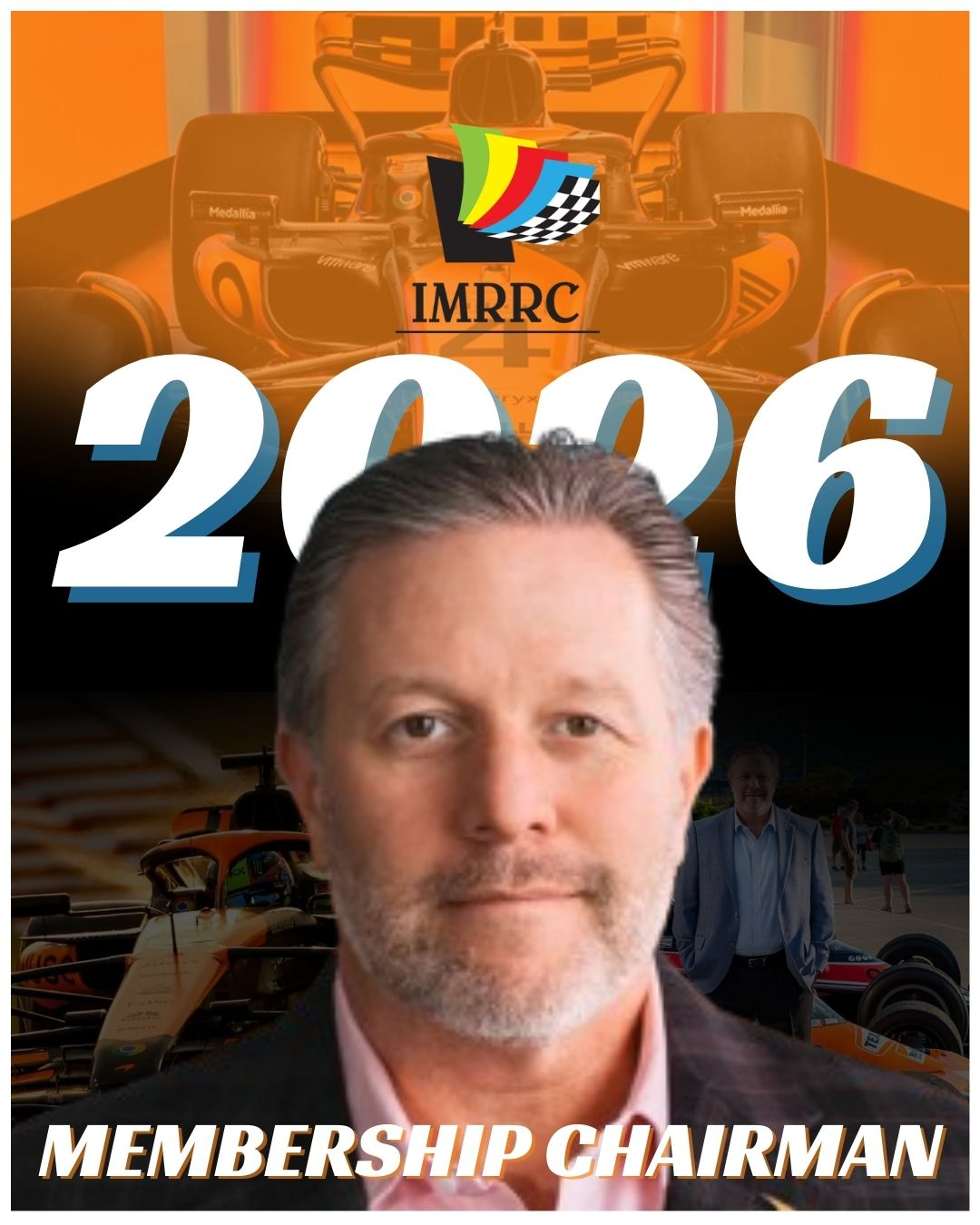
McLaren Racing’s Zak Brown, IMRRC’s 2026 Membership Chairman

 ... [READ MORE]

Unfocused Performance: Status Update!

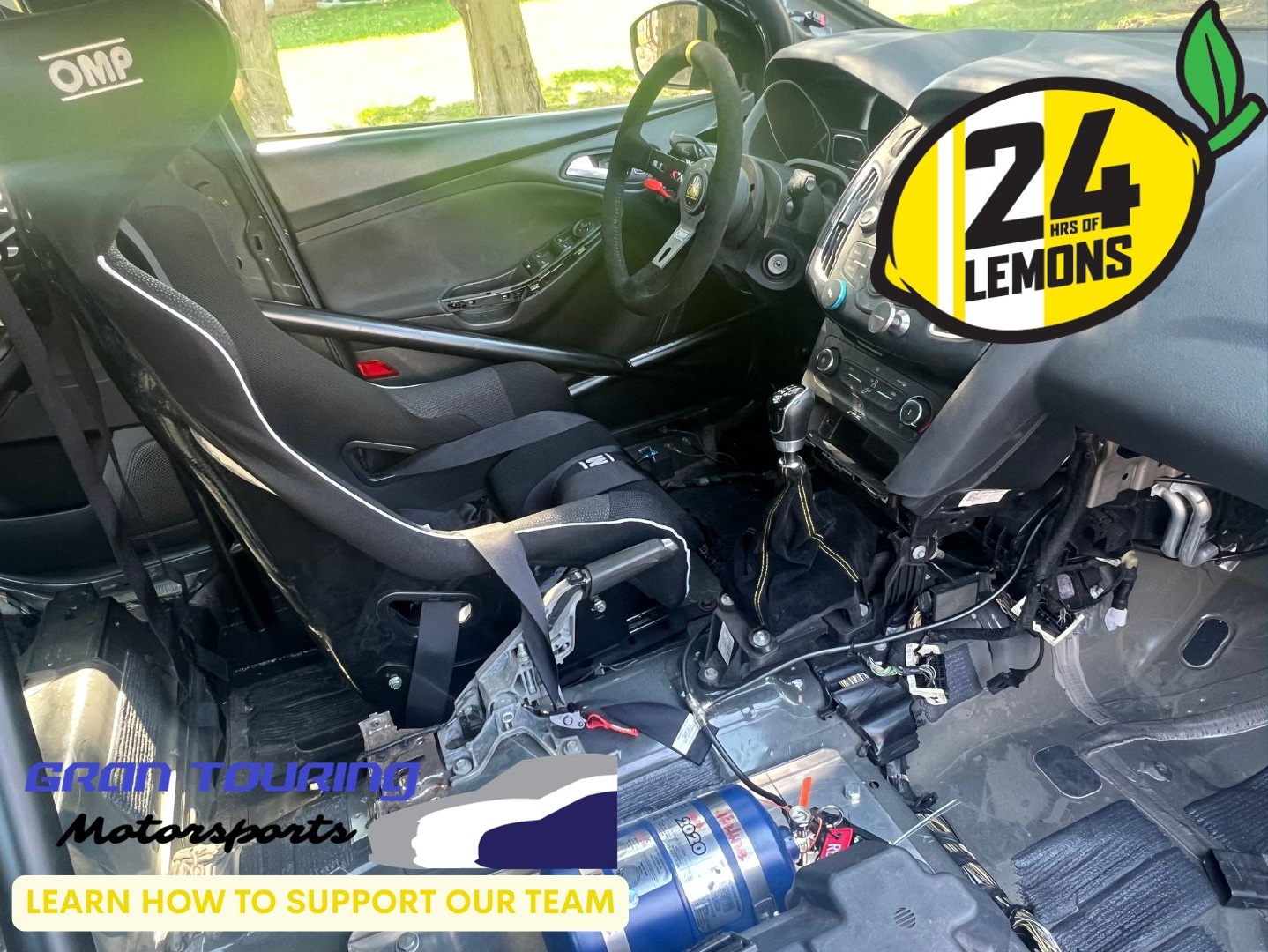
Our 24 Hours of Lemons build is officially back in our hands, which means it’s time for the next chapter in the saga of Unfocused Performance. And if there’s one thing we’ve learned so far, it’s this: building a race car is easy… until you try doing it with a Ford. ... [READ MORE]

**All photos and articles are dynamically aggregated from the source; click on the image or link to be taken to the original article. GTM makes no claims to this material and is not responsible for any claims made by the original authors, publishers or their sponsoring organizations. All rights to original content remain with authors/publishers.


Show Notes & Supporting Stories

For a list of all the articles and events referenced on this episode check out the show notes below.

Domestics

Formula One

Ferrari "new spoiler"

Japanese & JDM

90's Toyota Celica Commercial w/ Eddie Murphy

Lost & Found

Lower Saxony

BMW reveals the new 3-series

Motorsports

Rich People Thangs!

VAG & Porsche

Track Side Report

Our 24 Hours of Lemons build is officially back in our hands, which means it’s time for the next chapter in the saga of Unfocused Performance. And if there’s one thing we’ve learned so far, it’s this: building a race car is easy… until you try doing it with a Ford. The biggest challenge hasn’t been the cost of safety gear (which is already absurd), but simply finding parts. After years of being spoiled by ECS Tuning, FCP Euro, and the endless aftermarket support behind German cars, diving into the Ford ecosystem has been a rude awakening. Unless you’re ordering from Advance Auto, RockAuto, Jegs, or Speedway Motors, you’re basically out of luck. For a car as common as the Focus, the lack of performance‑grade parts is baffling. Thankfully, one of our teammates unearthed FSWerks, which feels like the closest thing to a Euro‑style tuning shop for Ford owners. We’re still hunting for more sources, so if you know where the good Focus parts are hiding, send us a message or drop into the Discord.

CHECK OUT THE BUILD UPDATE ON THE GTM CLUBHOUSE SITE.

Because of delays in fabrication and the ongoing parts chase, we’re officially missing our first planned event at Mid‑Ohio. The car simply isn’t ready — there’s still a clutch to install and a long list of reliability items to knock out before we trust this thing to survive more than 20 minutes on track. For everyone asking how they can help, the answer is simple: come hang out, turn a wrench, or toss a few bucks toward fuel, tires, or whatever breaks next. Our Specials Tier on Patreon is the easiest way to support the team and help get this car across its first checkered flag. With Mid‑Ohio off the table, our new debut will be NJMP Thunderbolt in June, followed by Summit Point, and — if the budget gods smile upon us — a December run at Road Atlanta. Maybe even Nelson Ledges if the stars align. One way or another, Unfocused Performance will hit the grid this season, and we’ll bring you every chaotic update along the way.

Would you like fries with that?


Behind the Scenes

There's more to this story!

Be sure to check out the behind the scenes for this episode, filled with extras, bloopers, and other great moments not found in the final version. Become a Break/Fix VIP today by joining our Patreon.

All of our BEHIND THE SCENES (BTS) Break/Fix episodes are raw and unedited, and expressly shared with the permission and consent of our guests.

TRANSCRIPT

Executive Producer Tania: [00:00:00] Welcome to Break Fixes, drive-through News, your monthly recap for everything fast, fascinating, and usually four wheeled. We’re serving up a fresh batch of automotive headlines, motorsports madness, and car adjacent curiosities, all with zero wait time and maximum flavor from Formula One. Drama to concept car debuts with garage built legends.

To the Quirkiest stories rolling out of the state of Florida. We’ve got your fix. So grab your coffee, buckle up, and let’s cruise through the latest in the world of wheels with a side of entertainment and just a dash of tire smoke.

Crew Chief Eric: Well, hello.

Crew Chief Brad: Hello.

Crew Chief Eric: Spring is here.

Crew Chief Brad: Spring has sprung.

Crew Chief Eric: We have a new season Has Riz.

Crew Chief Brad: I wonder where all the cars is. Is

Crew Chief Eric: that’s terrible.

Crew Chief Brad: I feel like that’s a greeting card. We need g team greeting cards now.

Crew Chief Eric: Ah, we would be terrible at Hallmark. Like you get fired like the first day.

Crew Chief Brad: Well, I mean, we’re terrible at everything else.

Why not just keep it going?

Crew Chief Eric: That’s true. [00:01:00] So he, so Brad, how are, how are things going for you now in the new season

Crew Chief Brad: since the jet started? Great. Things are amazing. I’m well prepared. I’m just, I’m ready to go. I actually watched some races. I’m eager to, to get started.

Crew Chief Eric: I detect a hint of sarcasm there though.

No.

Crew Chief Brad: What are you talking about? Not at all. No. I am terrible at sarcasm.

Crew Chief Eric: Let’s hear from Kathleen Turner,

Crew Chief Brad: Katie Curry. Wow,

Executive Producer Tania: thank you. I know I’m several octaves lower than normal. I got that sultry sound.

Crew Chief Brad: Sultry

Executive Producer Tania: coming at you.

Crew Chief Brad: When is the 900 number come out?

Executive Producer Tania: This is like Delilah in the evenings. Delilah,

Crew Chief Eric: oh my God.

Crew Chief Brad: I think Tanya needs to just do the rest of the drive through, just like that.

Crew Chief Eric: But you seem like you’re a little down in the dumps. What’s going on?

Crew Chief Brad: You know, this is the dilemma of the car person. You know, you’ve got these really cool cars that you like [00:02:00] to put money into and fix up. You know, you buy all these mods and stuff. But then your uncool car, your daily driver, it gets sad that it’s not getting any attention.

So it manufactures a reason for you to spend money on it.

Crew Chief Eric: Oh, do tell.

Crew Chief Brad: It’s nothing crazy. I just need to do brakes and brakes and brakes, and brakes along the tundra. So new pads and rotors are en route

Crew Chief Eric: to get something special. Cross drilled, ventilated. Slotted, anti glaze, super blacks,

Crew Chief Brad: because it’s Toyota Tundra, I obviously went with Ferrari, carbon ceramic.

The entire brakes cost more than I paid for the truck, like five times over. No, I, last time I did this, which granted it was about 60,000 miles ago. 50,000 miles ago, so they, they’ve lasted really, really long. Tire rack had a hawk, you know the LTS or whatever the, the, the truck kit is with

Crew Chief Eric: Yeah.

Crew Chief Brad: Cross drilled [00:03:00] rotors and everything.

So I just did the same kit again.

Crew Chief Eric: Are you seeing the after effects of tariffs and other bureaucratic nonsense?

Crew Chief Brad: I don’t remember how much it cost last time, so maybe I just know how much it cost me now. And my wallet is almost $800 lighter. Oh,

Crew Chief Eric: oh

Crew Chief Brad: oh. But that’s pads and rotors. All four corners.

Crew Chief Eric: And you’ll be able to do the work yourself.

So you’re gonna save some money. Theres

Crew Chief Brad: yeah. Yeah. In my apartment parking lot. That’s gonna be great. Or I’ll save it ’cause I’ll, the parts will be here. I’ll do it that weekend that come up and it’ll just be one of the things we do. And yet pumpkin spice gets pushed to the back yet again.

Crew Chief Eric: You know,

Crew Chief Brad: I gotta be able to stop though.

It’s kind of important.

Crew Chief Eric: All it does is slow you down. I mean, it seems like a waste of time.

Crew Chief Brad: All breaks. All they do is slow you down. Yeah.

Crew Chief Eric: That’s the olem right there. Remember?

Crew Chief Brad: Yeah.

Crew Chief Eric: What good or breaks, all they do is slow you down.

Crew Chief Brad: Exactly.

Crew Chief Eric: Well, you know what’s not slowing down the news? The automotive industry, the auto [00:04:00] sphere, it just keeps turning and churning and burning.

We don’t really have a formal showcase for our season kickoff, so why don’t we dive right into your favorite segment, not Lost and found, Porsche News.

Crew Chief Brad: Porsche News. Great.

Crew Chief Eric: You’re a PAR man at heart. You love those Porsches?

Crew Chief Brad: I, I do, I do. I do.

Crew Chief Eric: The hokey pokey with the boxer and the Cayman continue. So this social media post Porsche is secretly meeting to decide if the boxer and the Cayman EVs live or die.

Ah, hype, click bait. Ah, flashy light, AI generated pictures, the whole nine yards.

Crew Chief Brad: So this says the drive can exclusively report a meeting is currently underway. So which meeting is more important? The Federal Reserve’s FOMC meeting about rate cuts or this meeting about the Porsche Boxter Cayman.

Crew Chief Eric: This is more interesting than the treasury meeting by a mile.

Crew Chief Brad: I could see that. [00:05:00] Yes.

Crew Chief Eric: I think this is all bs. There’s an article that I found in doing some research ’cause I wanted to follow up on the social media post that had come out a bit ago. ’cause this isn’t new news that Porsche’s been meeting about the fate of the boxer and the Cayman. Truth be told, the take can is being scrapped.

They’re kind of backpedaling on a lot of their EVs. The new Macon that was supposed to be ev, they said, Nope, we’re gonna put a six cylinder back in it. We’re just gonna sell it the way people want it. By the way, the new Macon, I thought looked like the ID four. It’s pretty ugly.

Crew Chief Brad: That is a novel concept, selling vehicles the way people actually want to buy them.

I wish more car manufacturers would do that.

Crew Chief Eric: You know, there’s so many other options with your Porsche. Do you want it purple with yellow stitching or with white stitching? All this customization stuff, right? Maybe you could make it optional to say, I want the electric power plant, or I want the fossil fuel power plant.

And that’s something you choose. And the car’s basically the same because at the end, does it really, does it really have to look different? It should perform the same. It [00:06:00] should handle the same. They need to figure out a way to put the electrics in the place of where the gas motor is. Now granted, that’s not always the easiest thing to do because of packaging, ’cause of batteries, ’cause of this.

’cause of that. I just go back to the original Tesla Roadster where they figured it out without modifying that El lease too much. But you know, we’ll leave that where it is.

FLORIDA MAN: Yeah.

Crew Chief Eric: But I did find an article to sort of follow this up. I was like, what did Porsche decide about the fate of the Cayman and the boxer?

And the only thing I came up with was an article from MotorTrend where a gentleman from Porsche of Australia said he drove. The electric boxer and that the electric boxer was not dead yet. So I’m sort of like, well, uh, okay, but there’s no other indication. And even the MotorTrend articles like, well, if once we learn more, we will post more about this particular topic.

But there’s really no news. But it has been confirmed that the other Porsche models, because of their poor sales in China, VW suffering, Porsche’s having money [00:07:00] problems. So they’re backpedaling on a lot of these EVs because they’re trying to make take hands as an example that nobody wants to buy.

Crew Chief Brad: It seems like people don’t even go to Porsche dealerships to buy Porsches anymore.

FLORIDA MAN: Oh,

Crew Chief Brad: if you look at the article that I just put in the chat, I don’t know if this is rich people things or it’s P car adjacent, but somebody just bought a brand new Mustang GTD, which is a $300,000 car, which makes it qualify for rich people things. Why don’t you just take a guess at where they had it delivered?

Crew Chief Eric: Well, because we’re talking about Porsche’s. Did he have it delivered to a Volkswagen dealership?

Crew Chief Brad: He had it delivered to a Porsche dealership so he could take delivery of his $300,000 Porsche Killer Mustang, right in front of Porsche.

Crew Chief Eric: Why?

Crew Chief Brad: Well, because nobody wants to buy a Porsche.

Crew Chief Eric: It’s just to show off.

Hey, check out my

Crew Chief Brad: Mustang. Yeah, it’s just to show. Just because he could.

Crew Chief Eric: That’s weird. That’s very weird. Well, so, so speaking of weird, [00:08:00] Lamborghini is putting out yet another car without an R eight as a sibling to it. So Lambos continuing to do what Lambo does, but in the same breath, the CTO from Lambo is going to Audi.

How does this work? Does this mean we’re gonna get an R eight? Because if this guy’s been behind Lambo, just pumping out more cars every couple of years, does that mean Audi? He’s gonna have a supercar again,

Crew Chief Brad: but he’s just the CTO. He’s not the COO or the chief engineer or anything like that. I don’t know where I was going with that, but I, I feel like it, it’s like the c No, it is like the CFO going somewhere, you know, the, the head bean counter.

Crew Chief Eric: Well, aren’t the bean counters the ones in charge of all the designs now anyway,

Crew Chief Brad: for places like Chevy and you can clearly tell

Crew Chief Eric: to me it’s all that C level juju that, that voodoo, that I don’t understand, like what those guys do other than get really big bonuses at the end of the year.

Crew Chief Brad: They make a [00:09:00] ton of money for themselves and their shareholders.

That’s what, that’s what they do.

Crew Chief Eric: If that’s the case with the CTO coming over from Lambo, shouldn’t he use a little leverage and say, Hey guys, work for us at Lambo. Maybe you should build a supercar again

Crew Chief Brad: maybe. But did you also hear, and it’s not in the notes here, but the Audi is discontinuing the A eight.

Crew Chief Eric: That doesn’t surprise me. It hasn’t sold well in years.

Crew Chief Brad: It hasn’t looked good in years.

Crew Chief Eric: No, it looks terrible. Oh yeah. It’s like an old Mercedes almost. It’s super blocky and just, ugh.

Crew Chief Brad: Yeah.

Crew Chief Eric: Super terrible.

Crew Chief Brad: So yeah, if there’s no R eight sibling and then they’re getting rid of the A eight, what are, well, you know, they have to fund, as we’ve talked about multiple times, they have to fund that F1 team

Crew Chief Eric: somehow,

Crew Chief Brad: you know, that they’re doing so well with, they’re actually not doing too bad, but yeah, they have to fund that program.

Crew Chief Eric: Well, there’s a little wrinkle in that plan because first we had Dieselgate. Now we have Turbo Gate.

Crew Chief Brad: Oh, turbo Gate.

Crew Chief Eric: Oh [00:10:00] man. Have you read about this?

Crew Chief Brad: Uh, no.

Crew Chief Eric: So there were problems with the two liter turbos already a while ago. Chain guide issues and other stuff that they had. I mean, this goes back to like the Mark five GTIs, like that far back where there were always sort of issues with the two liter turbo and you know, and much like the 180 T, they sort of figured them out over time.

Recalls do this, do that. Well, unfortunately, with the newer motors, the EA 8, 8 8, I gotta say that right, they are being hit with a class action lawsuit over oil consumption because the motors are basically blowing up and they have defective piston rings and high oil consumption and they use this motor in everything

Crew Chief Brad: in a point of clarification.

Even though the motor did come in cars all the way back to 2008, the lawsuit specifies 2018 and newer,

Crew Chief Eric: correct? Correct. There’s a statute of

Crew Chief Brad: limitation, so that gives them a little bit of relief.

Crew Chief Eric: Yeah. But then you [00:11:00] gotta go back and look at the production numbers of vehicles that use that motor. From 2018 forward, that’s still an absolute ton of cars.

So anything with a four cylinder from VAG has the same power plant in it, and this is their new diesel gate. This is gonna cost them billions with a B.

Crew Chief Brad: Are they gonna buy back all these cars? Are people gonna do, is it gonna be like Dieselgate all over again where people like removed doors and windshields and basically, as long as the vehicle could still drive into the lot, they were able to trade it back in.

Crew Chief Eric: I don’t know that it’s gonna get to that point, but what it does bring up is an interesting dilemma that they have on their hands. Do you go the Toyota route like they did with their twin turbo sixes and all that stuff where it’s like, well, you’re gonna have to wait in line to get your new motor and then we’ll swap out the motor for the defective one.

That kind of thing. But if they have to do that for all of these cars, going back to a certain point, they’re not gonna be able to produce enough motors for one and for two it’s gonna cost them a mint.

Crew Chief Brad: Are you kidding? Of course, they’re gonna be able to, to [00:12:00] produce no motors. They didn’t sell that many of this shit.

Crew Chief Eric: But there’s four cylinders in everything, right? It’s in the VWs.

Crew Chief Brad: There are, there are,

Crew Chief Eric: you know, it’s in all of ’em. The thing is, if you were to do a fix, it requires an engine rebuild. So now you gotta tear the whole thing down. So where is the point of no return? Where Audi and Volkswagen, and even if they used the four cylinders and the Porsches, which at one point I, they were rumored that they were gonna try to use the same two liter turbo for some project over there too.

But let’s just say the VAG family as a whole globally, don’t forget, right? Because they’re selling these motors in Brazil. They’re selling ’em in Australia, they’re selling ’em in Germany. They’re sell ’em everywhere. Now granted, the class action lawsuit is in America, but that doesn’t mean it won’t be like Dieselgate, where it’s more widespread.

Again, where is the point of no return? Where do you cut your losses and say, yeah, we’ll just buy back the car, or we’ll give you a trade in value that’s decent towards a new one, or you just don’t, and people run ’em till they explode and they’re worth nothing. So I wish them luck, [00:13:00] but I think that’s gonna cut into their financial plans for Formula One.

That’s all I’m gonna say.

Crew Chief Brad: Yeah, that’s okay. They won’t be missed. No, that’s Cadillac. Sorry.

Crew Chief Eric: Well we’ll get, we’ll get to that. A recent social media post that I threw up on Discord from the Automatic, pretty much sums up everything I have to say about VW these days. And I thought it was spot on. The caption says VW claims drivers wanted, but stop making drivers cars.

Executive Producer Tania: It’s pretty disappointing. I think they have a lot of problems drivers wanted. They really do want drivers, but they’re not making anything drivers want. That’s the problem. I don’t know what to say. I mean they’re really expensive. And to option out A GTI at 50 or $60,000 to have it eat oil off the lot at zero miles is insanity.

Crew Chief Eric: Yeah, it’s ridiculous.

Executive Producer Tania: I don’t know who’s in charge charge.

Crew Chief Eric: And that was one thing you [00:14:00] could count on in the old days, was that German build quality and that has just plummeted. It’s just not there anymore. Yeah. And breaking news

mentioned before about the new Macan, the new ID four will be rebadged as the Tiguan. Oh, I’m sorry Brad, did I put you to sleep?

Crew Chief Brad: Oh, not you, Volkswagen did.

Crew Chief Eric: Oh yeah. So boring.

Crew Chief Brad: You know I am a huge Volkswagen fan as you know. I love Volkswagen cars. I recommend anything. Mark four and older and my friend just ball one and she, not a Volkswagen, she was looking for a new car.

She needed to replace her, like 13-year-old Jeep. And I was like, oh, why not a Volkswagen? She said, Nope, nope, not gonna happen. She went to the dealership and what did she end up with? A Mazda CX 50. The new Volkswagen, the new driver’s cars.

Crew Chief Eric: A hundred percent.

Crew Chief Brad: Yep. But [00:15:00] I think that’s an issue across all the German cars, Mercedes and BMW, you know, the, the brands we love to talk about.

And Audi even too, like all their quality has been going down for years.

Crew Chief Eric: Well, I’m glad you opened the door to talk about BMW and Mercedes. ’cause I know we try to avoid it. We sometimes we just can’t, Brad that we have news coming from Lower Saxony this month. I know we talked about this design and we were like, oh man, rendering, this is some AI nonsense.

Well, guess what? It ain’t AI rendering anymore. The new three series has been revealed.

Executive Producer Tania: I’m sorry, I don’t know what that is.

Crew Chief Eric: I think it’s a Geely. Brad is speechless.

Executive Producer Tania: I don’t know what that is.

Crew Chief Brad: Uh, that’s the new BMWI three.

Crew Chief Eric: That is the three series. That’s what they’re gonna look like.

Crew Chief Brad: But it So it’s the three, it’s the I three though.

So does this replace the regular three series? I guess It does say, yeah. Uh, it says right there, right in front of me reading, [00:16:00] you know, comprehension, everybody reviews all new three series. Yeah. So yeah. What, what it looks like a Corolla.

Crew Chief Eric: It also kind of looks like a five series. It looks really big.

Crew Chief Brad: Which the five series are super ugly too.

Yeah.

Crew Chief Eric: Yeah. To their credit, they got rid of the big carp grills.

Crew Chief Brad: They were growing on me. I actually really like those on the M three. I saw an M three today on my way home, and I saw, I, I actually kinda like that.

Executive Producer Tania: You think you couldn’t make it uglier? And then they managed to figure out how,

Crew Chief Eric: see this is the Subaru thing.

I keep talking about it. Every time the new Subaru comes out, you’re like, man, is it ugly? Ah, until the next one comes out. And then you look at the old one, you go, you know, it’s not that bad. And you can do that with every Subaru, especially the Impreza that’s come out since the 2.5 Rs body style, like the Colin McRay one from the nineties, which was actually a halfway decent looking little shit box.

But after that, they just got with a bla eye and the Hawkeye and the this eye and the da, and then they just got uglier and uglier ugly, [00:17:00] and BM BMW’s doing the same thing. Same thing.

Crew Chief Brad: And I read an article about this car and they, they were talking about how it’s supposed to be like a really, it’s really fast and it’s gonna have a lot of power and everything.

But it got me thinking, and I don’t know if we’ll answer this question now, but like what was the best decade for actual driver’s cars?

Crew Chief Eric: So this is something that John Summers and his co-host Mark Gammy debate quite a lot on the motoring historian these days. I was talking to John even this week and he was saying how he sort of settled in to how the cars from the eighties and nineties are probably what he calls peak car.

Crew Chief Brad: Yeah, totally.

Crew Chief Eric: Because you had the beginnings of a BS, but you didn’t have all the nannies. And in some cases some cars were better off having a BS than without. But then they were still very analog. Suspensions were very simple. Designs were things that people liked and you could get in, flog the crap out of the [00:18:00] cars and enjoy the experience of driving.

But after a certain point, and I think that’s the mid two thousands, like 2005, six timeframe, they all, because those cars are sort of left over from the nineties, they were developed in the nineties and carried in. You know, we’ve had these discussions on the, what should I buy episodes. But after the mid two thousands, it all just starts to fall apart.

It aligns exactly with the Bengal period at BMW. As soon as Chris Bengal stepped in as a designer, just to kind of highlight them at, because we’re talking about them, that’s when it all began to fall apart

Crew Chief Brad: to stick with bmw. I mean, people would argue that like the E 46 series of the BMWs and even the E 39 were like the best.

Most well-balanced fun cars.

Crew Chief Eric: Yeah.

Crew Chief Brad: Their slogan back then used to be the ultimate driving machine, and then it got me wondering like, what was the, I think also around that time there was a, that’s when the, the really big horsepower wars started.

Crew Chief Eric: Yeah.

Crew Chief Brad: And I think that [00:19:00] ruined cars now. It’s it. Yeah. I, you can have a car with 7, 800, 900 horsepower or whatever off a deal or lot.

Fantastic. That’s amazing. What’s it like to drive? What is it like to drive a Hellcat? Probably Bing sucks.

FLORIDA MAN: Yeah. Yeah.

Crew Chief Brad: It’s probably a terrible car to drive. So like what were, what was the best generation or the best decade or time period for an actual driver’s car? I, I, I’d like to hear actually if she’s up for it, what Tanya thinks the best generation or time period of driver’s cars.

’cause she’s got something. Very, very modern. And something in that time period we were just talking and then something in the eighties, she’s kind of got

Crew Chief Eric: Yeah. A,

Crew Chief Brad: a plethora.

Executive Producer Tania: When the question was first asked, what I thought of in my head as the answer was eighties and nineties.

Crew Chief Brad: Mm-hmm.

Executive Producer Tania: Which then you went on to say that John Summers said the same thing.

Crew Chief Eric: Yeah. I mean, if you’re discounting all the muscle cars and the [00:20:00] malaise and all that stuff, you know, the people like,

Crew Chief Brad: they were all terrible to drive.

Crew Chief Eric: They were, they were not great.

Crew Chief Brad: Yeah. I, I think you’re right. Like the, the, the, the nineties and early two thousands was the best combination of safe, fun to drive, had enough power that you could, you know, get into a little bit of trouble, but not too much trouble.

Crew Chief Eric: And they were still stylish.

Crew Chief Brad: I think that’s, that’s the period. And they, they, and they looked good. Yeah.

Crew Chief Eric: Now I will say to your point about the horsepower wars, I think that started with the C five Z oh six. When they came to the table and said 400, 400, everybody stood back and said, whoa, we’re going 400 horsepower now.

Because if you look at the cars, up until that point, 247 horsepower was, you know, the by turbo S four and the M three and even the Nissan GTR, they were all like sub 300 horsepower because of insurance.

Crew Chief Brad: And, and in Japan they were all 2 76.

Crew Chief Eric: Yeah. Right. And then Porsche was like, oh three 30 in the nine 11 turbo and it was like right around 300 horsepower.

And, you know, [00:21:00] everybody was creeping around that number and 300 was like, whoa, that’s a lot. And then Corvette said. Y’all 400. And then from there it was like to the stratosphere. Now we have 1100 horsepower gas motors and we got 1900 horsepower equivalent EVs. But the driving capability of people does not match the ability of the vehicles either.

Right,

Crew Chief Brad: right. And And that’s the thing like the, you mentioned the Corvette, I mean, yeah, 400. They were so proud of the 400. They even stamped it right on the zero six badge Z six. Yeah. They did 400 horsepower. But the flip side of that, with that particular car is not only did they advertise 400, 400, they also advertised one G.

One G because it could pull a G and turn. Yes. A lot of the, most of the other cars that were started with the horsepower war and definitely the cars. Now they can’t do that.

Crew Chief Eric: No. And this generation of pony wars. That’s gone on is just absolutely insane. The stuff that they’re producing, and again, I’m not knocking people’s ability to drive, but you know, the standard driving test that you get [00:22:00] does not necessarily say, oh yeah, you’re ready to go drive an 1100 horsepower demon tomorrow.

That’s just, no, that’s a whole different caliber of driving.

Crew Chief Brad: Even though you can roll up to your driver’s test in one.

Crew Chief Eric: Yeah, a thousand percent. I’m sure it’s been done, but you know, hey, whatever.

Executive Producer Tania: While you all were talking, was perusing a list of, ah, just outta curiosity. Coolest and probably best nineties cars ever.

It’s a very long list, and you read down the list and it’s like. The Acura legend, all of the different Audis. The coop, the 100, the 200 wagon, the Z 3M coop, BMW was in that timeframe. You had the Rado, you had whatever other golfs, you had the Miata coming out. Obviously there was Borsch

Crew Chief Eric: Viper. You had the Viper.

Executive Producer Tania: You had the Viper, you had the Eagle Talon people. The Eagle Talon was there. You had, if you were into Vans, man, the Aerostar wagons, vans, the minivans. You with

Crew Chief Brad: all wheel drive and Emanuel. Yeah,

Executive Producer Tania: the F 40, yeah.

Crew Chief Eric: [00:23:00] Yeah,

Executive Producer Tania: the NSXs. Even Mercedes with the C-L-K-G-T-R was that time. Yeah. The The eight 50 BMW, the 300 ZX Twin Turbo.

If you’re into American, you had the Firebird TransAm, you know the RX seven? The Celica, yeah, the Skylines.

Crew Chief Eric: Yeah. It goes on and on.

Executive Producer Tania: I mean, it goes on and on the launches. If you’re in Europe, the Delta was that time period. My God. Yes. I mean, so many things out of this list, the SL Mercedes, the little two door, there was a ton of good stuff back then

Crew Chief Brad: and they were all unique and different looking and they, they all had their own personalities.

Yeah,

Executive Producer Tania: exactly. You could tell them apart, that’s a Toyota, that’s an Audi, that’s an Acura. It wasn’t like, I’m sorry, is that a BM BMW three series or is that a Toyota crawler,

Crew Chief Eric: right.

FLORIDA MAN: Yeah.

Executive Producer Tania: Or is that the new Civic

Crew Chief Eric: And, and I think that’s why John calls it peak car, because we’ve crested the peak. We are on the [00:24:00] other side of that slope, and it’s not getting any better anytime soon.

Executive Producer Tania: You’re, you’re probably right. Start teetering off. After the mid two thousands because in the early two thousands you still had like the A four was really nice. You had the TT that was coming out right there at the cusp of the end of the nineties into the TUR two thousands. You had the resurgence of the Beatle take that for what you will, depending on your fandom.

The peak of golf.

Crew Chief Eric: Yeah.

Executive Producer Tania: Was the mid, the early to mid two thousands, the Mark IVs and even the Jettas. Right. And then slowly, I think after that time period, you couldn’t play that game anymore when you were a kid at night looking down the street or riding in the car and going like, oh, those headlights, that’s a whatever.

That’s a whatever. Now it’s like, I don’t know. Is that a cop behind me? Is that a Kia? Is that Hyundai? Is that an Altima coming to take me out? I don’t know. Maybe it’s a pickup truck.

Crew Chief Eric: It’s a cyber truck. Yeah. And we’ll get to another iconic [00:25:00] car. I don’t wanna take the cat out of the bag for lost and found just yet, but there’s another one on this list that everybody forgets and it might be the, the most iconic of iconic cars, but we’ll, we’ll get there.

So let’s put a pin in that and get back on track and talk about BMW and Mercedes. ’cause I found this next thing really, really amusing. I’m gonna just read the headline. Court blocks attempt to force BMW and Mercedes to stop selling gas cars.

Executive Producer Tania: They block an attempt, so someone’s trying to stop them from making gasoline cars, but the courts said no.

No,

Crew Chief Eric: yes.

Executive Producer Tania: Okay.

Crew Chief Eric: An environmental group sought in court to halt BMW and Mercedes sales of new combustion engine vehicles by 2030, but to no avail. That’s the subtitle there.

Crew Chief Brad: You know who heads up the group?

Crew Chief Eric: Who’s that?

Crew Chief Brad: Christian Horner

Crew Chief Eric: protesting the wrong thing. That man is Unhirable. [00:26:00] No one will give him a job.

Oh Lord. Yeah. So there’s that going on for BMW and Mercedes. And Oh, by the way, Tanya, you talked about I, we got together at the end of the season. We’re talking about things that were closing and things that were dying. We missed one. After 39 years in business, AC Schnitzer, the BMW tuner has closed its doors.

Executive Producer Tania: Oh, okay.

Crew Chief Eric: But the reason they’re closing, I thought was really interesting. Unlike everybody else, whatever excuses they use for going out of business, AC Schnier came to the table and they legitimately said it was German bureaucracy that forced them to close. Because they’re a tuner. Every change they make to A BMW has to go through like regulatory compliance and all this kind of stuff with their version of the DOT.

And they said it was taking upwards of nine months to get changes approved for highway use on the BMWs that they [00:27:00] were tuning and that they were modifying that left buyers wanting to go spend their money elsewhere. To which I thought probably Porsche.

Crew Chief Brad: So who’s going to support? Any warranty claims for ac schnitt or parts and products?

Crew Chief Eric: I think that’s a five minute, five mile warranty from the word go. I think as soon as you sign that pad and tandem your credit card, it’s, it, it’s over

Crew Chief Brad: because they, they, they all have stamped on ’em. Race use only not to be used on public rec.

Crew Chief Eric: Yeah. Not approved by German DOT.

Crew Chief Brad: Yes.

Crew Chief Eric: Some those cars will find their way out to bring a trailer just like everything else. Alright, so let’s get, let’s get out of this BMW Mercedes. Thank

Crew Chief Brad: god

Crew Chief Eric: funk and let’s talk about Japanese stuff in Asian domestic news. This is exciting stuff here After 20 years.

Toyota has unveiled the new Celica and you know where they did it on the world rally championship stage?

FLORIDA MAN: Yeah. [00:28:00]

Crew Chief Eric: The celicas coming back. So that means if Gazoo has their way, we’re gonna see we proper Celica. Supra. Not that BMW thing they gave us.

Executive Producer Tania: Oh. Nobody’s gonna have their way. They put the bean counter in charge.

Crew Chief Eric: Uh, why you got a rain on my parade?

Executive Producer Tania: Reality because we really think the MR two that they said is gonna come, is gonna come out.

Crew Chief Eric: I remain hopeful and steadfast the Gazoo will continue to produce cool stuff. Notice I didn’t say Toyota Gazoo will continue to produce.

Executive Producer Tania: So this like, is this gonna be like Scion?

Crew Chief Eric: Yeah. Yes, exactly. It’ll be like Scion. It looks cool though. It’s big for a two-door coupe, let’s call it that. It’s big now, granted, it has the big rally flares, just like the Yaris and all the other rally Toyotas have, and it’s all jacked up. So it’s hard to tell what it would look like as a streetcar, but this is exciting.

The Celica could be coming back,

Executive Producer Tania: mine’s gonna drive it.[00:29:00]

Crew Chief Eric: And it also sort of boggled my mind that it’s been 20 years since Celica went out of production. That’s a long time. The last sica was sort of crap, wasn’t it? I mean, no offense Ron Sheri if you’re listening, but it was sort of crap.

Crew Chief Brad: That’s funny that you think you would be listening.

Crew Chief Eric: Thank you for your continued Patreon support.

Crew Chief Brad: Yes.

Crew Chief Eric: I don’t know. I think that’s exciting. Selica. It’s coming back. Alright, so you remember before we were talking about BMW and how there’s the Subaru effect, I like to call it. This next one is case in point of what I’m talking about. Please take a look at the 2026 Subaru Trail Seeker

Executive Producer Tania: Subaru can.

FLORIDA MAN: The what?

Crew Chief Eric: The trail seeker.

Crew Chief Brad: What the, [00:30:00]

Executive Producer Tania: it seeks trails. I don’t understand what this, is this like a wagon?

Crew Chief Eric: Is it a van?

Crew Chief Brad: It’s owners are blonde.

Executive Producer Tania: Well, it’s like a really smooshed van. It has like lines of a van.

Crew Chief Brad: It looks like a 94

Executive Producer Tania: A two. What?

Crew Chief Eric: They all have that same rear light. Now, did you notice that with the long light bar, just like the Porsches and the Audis have, why is that a design thing now?

Executive Producer Tania: Because they all copied.

Crew Chief Brad: Why is the fog light integrated into the plastic co cladded fenders?

Crew Chief Eric: That reminds me of the, what was that Jeep that had the three headlights?

Crew Chief Brad: Oh, that was the Cherokee

Crew Chief Eric: like 10, 15 years ago, right?

Crew Chief Brad: Yeah.

Crew Chief Eric: Got it. How much plastic did they put on this?

Executive Producer Tania: This is terrible.

Crew Chief Eric: And the windows are tiny and the doors are huge.

It’s all wrong. Was this designed by chat, GPT?

Executive Producer Tania: I mean, it has the lines of a minivan, but it’s too short. So then it’s like, well wagon, but then it’s not,

Crew Chief Eric: I bet if you saw this in person, it’s [00:31:00] massive.

Executive Producer Tania: Probably

Crew Chief Eric: this is the trickery of these things. They never put an object next to the car. So you can gauge how big it is, right?

Because if you put a six foot male next to this, you kind of go, oh shit, it’s as tall as he is, it’s six feet. That’s huge. So you got a perspective. It’s like stand, you know, person standing next to a redwood tree. But this, this thing is, I don’t know, this is what people want.

Executive Producer Tania: No, I think might be the size of a Tahoe.

It’s noise.

Crew Chief Eric: In

Executive Producer Tania: real life,

Crew Chief Eric: I could care less about the cubic foot of storage that it has. It has towing capacity. Apparently it’ll do zero to 60 in 4.3 seconds because it’s electric. I’m like, it’s still ugly. It

FLORIDA MAN: is.

Crew Chief Eric: Cloth is the new thing, right? There’s no more leather or vinyl in cars. It’s all this cloth, like it looks like a dentist’s office.

Executive Producer Tania: No, that’s a very Subaru thing and I don’t know why.

Crew Chief Eric: Looks terrible.

Executive Producer Tania: It’s part of that rugged appeal. [00:32:00] Apparently leather’s not rugged, but cloth is

Crew Chief Eric: until,

Executive Producer Tania: because that way when you’re dirty from your hiking adventures and you get in, then you can get the seat dirty and then not be able to clean it. And it just adds to the ambiance of outdoor trail seeking.

Crew Chief Eric: What is that television? In the middle of the dashboard. It’s that 17 inches. It’s huge. God. Nothing about that says awesome.

Executive Producer Tania: And you know what? The driver’s era of cars didn’t have computer screens in them.

Crew Chief Eric: They barely had cassette decks.

Executive Producer Tania: They barely had CD players. They had cassette decks

Crew Chief Eric: continuing with Asian domestic news.

Guess what, Tanya? The rumor mill is humming. Hyundai is expected to make 21 examples of the vision N 74 concept at the low, low price of $350,000 a piece. You gonna get one?

Executive Producer Tania: I don’t know. I haven’t seen that confirmed anywhere, but

Crew Chief Eric: except social media, that’s the only place. It’s where the best [00:33:00] news comes from.

I think it’s BS because I don’t, I don’t think they’re gonna make it. It’s hydrogen powered for one. Then what are people gonna do with it? Use it as a model car. I mean, unless they’re making it back to the future reboot movie. That would make sense.

Executive Producer Tania: You’re selling it for three 50,000. You’re only selling it to rich people who aren’t gonna drive it.

Crew Chief Eric: So it doesn’t matter if they can get hydrogen or not. So it’ll have like 12 original miles. But on the same token, not necessarily Asian news, but the French connection.

Alpine, yes. Alpine. The same. Alpine is in Formula One is reportedly going through US. Crash certification for the one 10.

Executive Producer Tania: That is true.

Crew Chief Eric: That is exciting. The Cayman killer could be coming to the us.

Crew Chief Brad: Well, Porsche is the Cayman killer. Oh,

Crew Chief Eric: oh, REM shot. [00:34:00] Now granted it’s gonna cost a quadrillion dollars. I mean, I’ve seen these in person, especially I’ve seen the A one 10 R old team.

They call it, which is like the GT three version or whatever fan freaking tastic. I would love to have one of these. They are amazing. Oh, and, and I never would I have ever thought that Alpine would be like, oh yeah, we’re gonna bring cars to the United States. There’s still a possibility that they’re not going to, but the fact that they’re going to crash testing means they might be making a push.

Because unlike Audi, who’s in denial, Alpine needs to sell cars to fund their Formula One program. They’re probably a good idea to expand their market a little bit, don’t you think? I dunno. I’m excited. I think those cars are awesome. The downside, much like the alpha male four C because of its mono co and all that other stuff that they did will never come with a manual transmission.

But with a car like that, do you really want it? Do you really care? Left foot break in and some paddle [00:35:00] shifters. Let’s go. Let’s go. This is a weapon. This is a proper sports car. Let’s go. Tanya, as we close out this segment, this thing says commercial.

Executive Producer Tania: Since last time we were doing Super Bowl commercials,

Crew Chief Eric: Uhhuh.

Executive Producer Tania: So I’ve dug back into the historical archives.

Crew Chief Eric: Oh boy.

Executive Producer Tania: Find some old car commercials. And this one featuring celebrity Eddie Murphy.

Crew Chief Eric: And look at that. The Toyota Celica. How on point.

Executive Producer Tania: Bringing it full circle.

Crew Chief Eric: Did you look at this Sica commercial with Eddie Murphy?

Crew Chief Brad: I have not. Let’s see.

Crew Chief Eric: Alright. How bad is this one?

It’s only 30 seconds. How good could it be?

Executive Producer Tania: There’s like a series of them, but yes,

FLORIDA MAN: Sean, talking of town in New York, it’s almost popular as I am. I look at the

Crew Chief Eric: glamorous

FLORIDA MAN: style,

Crew Chief Brad: glamorous styling.

Crew Chief Eric: Take out the dual MO four wheel steering.

Crew Chief Brad: Giving it a little rub down.

Crew Chief Eric: What is he doing to the car?

Executive Producer Tania: So weird.

Crew Chief Eric: Was he like fondling it?

What was [00:36:00] that?

Crew Chief Brad: Watch it.

Crew Chief Eric: That was almost Burgess Meredith level. Weird. Ah, so weird. Tanya, where do you find this stuff

Executive Producer Tania: from? The depths of YouTube.

Crew Chief Eric: It’s a place I don’t like to go very often. Switching gears to lost and found your favorite section of the drive through and keeping with what we were just talking about or what Tanya was just talking about before headline reads, 70% of Americans say new cars are unaffordable.

This is Jalopnik reporting top shelf news here,

Crew Chief Brad: as is everything.

Crew Chief Eric: Yes, everything’s gone up in price. But you know what’s really interesting about this? Because they say that, and Tanya, you and I know because we’ve been doing some of our own independent research on new cars as of late, there is suddenly a glu.

Cars starting at $25,000. That very quickly ramp up into the $40,000 sweet spot, which we talked about. Remember we did that whole episode on the, what [00:37:00] can you buy for less than 50 grand in millennial gray? But there is a glut of cars in that space between 25 and 40,000. And they’re not all terrible.

They’re not all great, but they’re not all terrible either. I find this an interesting juxtaposition between what they’re saying. 74% of Americans say new cars aren’t affordable. Is that because we’re all bougie and we don’t wanna drive the cars that exist in the 25 to $40,000 range now because they’re considered too cheap and we all have to have some nice status symbol.

Tesla set the bar. We all need to be driving whatever it is, 60,000 is the new 30,000. Because if that’s the case, maybe we need to kind of look at things in a different lens, in a different light, because I think we’re overlooking some really good cars that are actually quite affordable.

Crew Chief Brad: Well, if you read further down into the article, they actually solved the problem for us.

Crew Chief Eric: Oh, did they?

Crew Chief Brad: Yeah. So they say that the real problem is that companies just don’t pay their employees enough. It’s okay [00:38:00] that the car prices are so high, it’s just people just need to make more money.

Crew Chief Eric: What’s that got to do with the price of T and

Crew Chief Brad: yeah, it is just a way to make a political statement.

Crew Chief Eric: Oh, well that’s wah w

Executive Producer Tania: If a majority of Americans only make, let’s make up numbers, $70,000 a year and they have to go buy a car that costs $50,000.

Crew Chief Brad: Yeah.

Executive Producer Tania: How do they afford it?

Crew Chief Eric: Yeah, but the new Sentra is like less than $30,000. So why wouldn’t you go buy that

Executive Producer Tania: to that point? You can still get something that’s $20,000 or around, there is just going to be a toaster.

Crew Chief Brad: You also don’t have to buy a new,

Crew Chief Eric: and that’s just it. I mean, there are cars sitting on CarMax lots.

That are reasonably price as well. And their stuff is generally pretty good quality because they’re very selective on what they sell and what they get rid of and all that kind of stuff. Why not buy a car that’s a couple years old that’s already been broken in, that might have been [00:39:00] already through all the warranty stuff and all the recalls and all the nonsense.

Find yourself a car with 10,000 miles on it or less, call it a day.

Executive Producer Tania: I don’t know, because people can’t do anything anymore. Like, I mean,

Crew Chief Eric: because you think you’re gonna do more with a brand new car.

Executive Producer Tania: No, I mean, like if you go back in time, cars were simpler.

Crew Chief Eric: Yeah.

Executive Producer Tania: But people still didn’t, like you could buy a used car and if you could probably do your, you know, some of your own maintenance.

But nowadays people don’t have an interest.

Crew Chief Eric: Well, and they’ve made the cars impossible to work on without,

Executive Producer Tania: even if you had an interest, you’d need a PhD to, uh, unlock the brake caliber.

Crew Chief Eric: Yeah. There’s that. Yeah.

Executive Producer Tania: And stuff like that. I mean, I don’t know because. Yes, there’s inflation. The price of everything is high.

Salaries haven’t necessarily kept up. One could argue, but you could make that argument probably 20 years ago too.

Crew Chief Eric: That is very true. That is very true. I mean, if you compare a car with fuel injection to something with the carburetor that was [00:40:00] space, age technology, fuel injection. Why? Why I can’t put a screwdriver in there and change my settings and make it run rich or make it run lean, like, no, you couldn’t do that.

It was computer controlled. Right? That was the future. It’s been an evolution for sure, but I think at the end of the day, if you’re shopping for a car right now, I wouldn’t discount a car Max or a used car that was from a reputable source, because if you think about it, despite the fact you’re gonna get a three year, 36,000 mile warranty, that seems to be the going rate for any new car these days, which is not a lot because the way people are driving still, you’re gonna blow through 36,000 miles in no time.

Let’s be fair. If you had a reputable shop to work on your car, their hourly rate is still lower than that of the dealership. Once you’re out of warranty, taking your car to the dealer is insane. You go to the Honda dealer, it’s $150 an hour, at least you know your local mechanic. Okay. Maybe it’s a hundred.

So you’re saving even there if you’ve gotta, you know, do any maintenance on the car and you [00:41:00] can’t do it yourself. So there’s something to be said about still buying a used car, but I, I don’t think you buy the one with 285,000 miles, you buy the one with 28,000 miles.

Crew Chief Brad: I mean, this goes into something we’ve talked about numerous times on the drive-thru.

Don’t buy a car if you don’t have to.

Crew Chief Eric: Yeah, there’s that as well.

Crew Chief Brad: And I had many friends that did it, and I tried to keep up with the Joneses too. It’s, you get into this cycle of like trading up your car every two years or whatever, every three years. It’s almost like a lease mentality when you don’t have a lease.

You’re just creating problems for yourself. If you don’t need to get rid of the car, then don’t get rid of the car. Just because you want, if you just want a new car to get a new car, that’s not a reason to get a new car.

Crew Chief Eric: That’s fair. And you know, you’re touching on something that John Summers also talks about on some of the other episodes he does by himself, where he goes to these seminars out in California where he sits in and he listens to these lectures on these companies that are building autonomous vehicles and all these new EVs [00:42:00] and all this kinda stuff.

And the paradigm shift that’s occurring in that space. Because if Johnny Cab is the future, none of us will own cars. We’ll be calling up our little Johnny cab and it’ll come and get us and or we’ll lease the car so it sits in our driveway and then it takes us where we wanna go. But when the car needs to be repaired or replaced.

That’s on Waymo or Google or whoever owns the car at that time, you know, manufactures the car at that time to do the service and the repairs and all that. But what’s interesting about that, and I think the big block that everybody’s forgetting is when you shift to that new way of doing business, insurance companies are out of business.

Executive Producer Tania: Mm-hmm.

Crew Chief Eric: Right. Geico and Allstate and Jake from State Farm aren’t gonna let that happen because they wanna make their money too. Then who are they insuring? I’m not driving. I, I’m just a passenger, so that’s great. I got a ton of money in my pocket at that point.

Crew Chief Brad: But then you need passenger insurance.

Executive Producer Tania: Exactly. That’s what it’ll become. It’ll become like whoever it is, [00:43:00] Waymo or whatever, they’ll become the insurer. It’s like when you go to work, your employer provides you subsidized health insurance, but you pay a part into that. So now I don’t own the car, but I’m taking part in this business. Yeah.

Therefore, now I have to pay into the insurance of them. Right. And then they’ll probably charge high premiums to Waymo or whoever, and then that just gets passed on to you. So you’ll be paying for insurance on something you don’t own because you are a passenger in there.

Crew Chief Eric: So it’s like renter’s insurance basically.

Crew Chief Brad: Yeah, you need to pay for passenger’s protection

Executive Producer Tania: because after all you got in that Waymo. And if you hadn’t chosen to get in that Waymo then it wouldn’t have been on the road at the time of an incident.

Crew Chief Eric: Now I will say, Brad, to your point, if you’ve ever ridden in a cab in DC or New York, you almost wanna have passenger insurance.

’cause that is legit scary.

Crew Chief Brad: Yeah, you’re taking your life into your own hands.

Crew Chief Eric: You really are. Like you need to up your life insurance every time you get in a cab in Manhattan. But yeah, so there, there’s [00:44:00] definitely a paradigm shift there as well. But the problem is if we ever get to that dystopia that they’re creating, there’s gonna be a weird period where all of this overlaps and it’s gonna be the most chaotic nonsense that we’ve ever experienced.

And I hope it all happens like after we’re gone, because I really don’t wanna have to suffer through it. It’s bad enough as it is. Anyway, new car prices, ugh. Lost found is all about digging up stuff that we haven’t seen before or, you know, we’ve forgotten about. I keep saying this, how many more barns are there full of cars in this world?

I feel like, you know, the fours of Horizon games where you drive around, you know, looking for the barn. Another, it’s got another classic car. Like here we go again, another barn full of cars. Well, this time it’s a barn full of sobs and I’m looking at your face.

Executive Producer Tania: Yeah,

Crew Chief Eric: I don’t even know that I’m that interested in the sobs.

I’m actually more interested in this barn. [00:45:00] Like how did they get the cars up there? Where is this barn Like, tell me more about this bar.

Crew Chief Brad: Well, they show you in, in the video, they have a forklift, so that’s how they got ’em up there.

Executive Producer Tania: I mean, it’s pretty cool,

Crew Chief Eric: right? I mean, they’re up in the air. If you drove by this barn you were sniffing around, you wouldn’t even know these sobs were here.

This is a big barn. How many cars are in there? Like 20 plus easily, right?

FLORIDA MAN: Yeah.

Crew Chief Eric: So I teased this up earlier. We’re talking about you, you brought up peak cars. You know, we’re talking about the eighties and the nineties in another post that, because you know, you go down a rabbit hole sometimes when you find this stuff.

Another post SOB 900 is the most underrated iconic car of the eighties and nineties.

Executive Producer Tania: Is that right?

Crew Chief Eric: Is that a missed opportunity?

Executive Producer Tania: I don’t know enough about them to comment.

Crew Chief Eric: I’ve driven one in my life. It was an ugly green color and it was as quirky on the inside as is on the outside. It was very strange to drive

Crew Chief Brad: very quirky vehicles.

I,

Crew Chief Eric: I mean, I [00:46:00] thought French cars were weird and then I drove a sob, right? It was just like, why is the key on the floor? Like, what are we, that’s where you put it. Like it makes, no, there’s some weird stuff that just makes no sense.

Crew Chief Brad: I think their whole thing is ’cause they were designed by like aerospace engineers.

Crew Chief Eric: Yeah. Born from jets.

Crew Chief Brad: So they tried to take cues from like aviation and stuff like that.

Crew Chief Eric: That’s not practical.

Crew Chief Brad: Oh. That’s why 99% of all the other car manufacturers didn’t do that.

Crew Chief Eric: Bizarre. Although, you know, I will say with wiser eyes, looking at the SOB 900, I like its shape. It’s grown on me quite a bit.

There is one I see in in the city every now and again and I’m like, it’s in Black 900 Turbo. And I’m just like, that’s a cool car. It really is kind of cool. Then you remember how quirky it is and you’re like, yeah, it’s, it’s like not cool anymore.

Crew Chief Brad: I always thought the SOB 900 was a very weird looking nine 11.

Tell me I’m wrong. [00:47:00]

Crew Chief Eric: No you’re not. You’re not wrong at all.

Crew Chief Brad: Yeah. It just looks like a very odd looking nine 11 because I used to, there was a guy in my. In my neighborhood in elementary school that it would park, it was parked on the street all the time. And I would look at it and I was like, what the f is that?

The nine 11 looks really funny.

Crew Chief Eric: Yeah. All right. We don’t have any uncool wall, no Tesla gate for our season kickoff. Brad, I’ll give you three guesses what Tanya’s gonna say for the next question.

Crew Chief Brad: Um, the answer is yes.

Crew Chief Eric: She did not watch the F1 movie. Come on. Are you serious?

Crew Chief Brad: That’s, sorry, that’s just wishful thinking.

Executive Producer Tania: Nope. But I will have watched it by the next episode.

Crew Chief Eric: We got close the other day. I was like, Hey, you wanna watch it? And she was like, uh, how long is the movie? And then I brought it up and then just literally like, walked out of my house. Like did, it was like, duh.

Crew Chief Brad: So if she has not watched it by the weekend, I come up there, we’re gonna watch it.

I’m gonna, we’re [00:48:00] gonna tie her into a chair and make her sit there and watch it. Clockwork Orange style. Yes. So Tanya be, if you’re around that weekend, you better be prepared.

Crew Chief Eric: It is two and a half hours of your life. You’ll never get back.

Crew Chief Brad: Yeah. But like 20 minutes of it is credits.

Crew Chief Eric: Or Brad Pitt on a motorcycle, one or

the

Crew Chief Brad: other, or Brad Pitt on a motorcycle doing his weird talk

Crew Chief Eric: days of thunder too.

That’s what it is. Yeah. Days thunder too. You mentioned some rich people. Thanks. Earlier we talked about the N 74. We talked about those other cars. But Brad, you dug this for Tanya and I couldn’t help but start laughing at this.

Crew Chief Brad: Oh yeah. Bugatti debuted a zero horsepower Bugatti factor one. Can you guess what it is?

Crew Chief Eric: No. What is that? Is it a, it’s not like another baby two or one of those go-kart things. Is it

Crew Chief Brad: It is a set of roller blades. No, it’s a, it’s a road bike. It’s a bicycle. Hence the, uh, the zero horsepower

Crew Chief Eric: for [00:49:00] the low, low price of,

Crew Chief Brad: for the low, low price of 24. Thousand dollars.

Crew Chief Eric: Oh, brutal.

Crew Chief Brad: So how much are you paying per horsepower?

Crew Chief Eric: Can people actually make equivalent horsepower? Has that ever been measured? How much horsepower does a Olympic cyclist make? Is that a thing?

Crew Chief Brad: So according to ai, an Olympic cyclist typically generates between 0.4 and and three horsepower.

Executive Producer Tania: Wait, what did you say their answer was?

Crew Chief Eric: 0.4 to three horsepower.

Executive Producer Tania: 0.4 to three three would be a lot.

Crew Chief Brad: That’s for like the elite of the elite.

Executive Producer Tania: Yeah. That’s a lot. ’cause you used to have to convert watts to horsepower. Yeah. Somewhere in 0.1 to a, a very normal person is [00:50:00] probably not even 0.3.

Crew Chief Brad: Yeah. I wonder if I could generate more horsepower for a very much shorter amount of time.

Crew Chief Eric: Well, you got bigger pistons.

Crew Chief Brad: Yeah, I got bigger pistons. I’ve got I I more displacement.

Crew Chief Eric: You’re like a V eight. She’s like a turbo four. I mean

Crew Chief Brad: Yeah, exactly.

Crew Chief Eric: You got all them torque. SI,

Crew Chief Brad: yeah, I I can probably generate a lot of torque.

Executive Producer Tania: That’s true. Unless you’re really stroking.

Crew Chief Eric: Wait, are you having a stroke?

Crew Chief Brad: Someone check my air Fuel?

Executive Producer Tania: Yeah. You, your, your, your air fuel mixture would be, you’d be running lean, you’d be out of breath.

Crew Chief Brad: Oh my God. Oh, man.

Crew Chief Eric: I’m sorry, ma’am. You’re gonna have to go for an inspection. Your methane levels are off.

Crew Chief Brad: You need a new catalytic converter.

Executive Producer Tania: I’d be cur, I’d be curious. Now, I’d have to look.[00:51:00]

I could probably hit 0.3 horsepower, but not very long Horsepower.

Crew Chief Brad: I feel like this is, this is a challenge. We gotta, we gotta find a way to get this done.

Crew Chief Eric: Oh man. I wonder if you could do that on a bike trainer and figure it out.

Executive Producer Tania: Yeah. ’cause I can, I can see, I can do a power run and see my wattage and just convert it to horsepower.

Crew Chief Eric: All right. You do that and you let us know next time. I’ll put a note for the next drive. How much horsepower does Tanya make?

Crew Chief Brad: And for how long?

Crew Chief Eric: Yeah. Oh, ooh, ooh. Yeah.

Crew Chief Brad: So if you want to decrease the ratio of dollars per horsepower, you just gotta be a better athlete.

Crew Chief Eric: So that means this is false advertising because you can make up the three horsepower if you provide it yourself.

Crew Chief Brad: Yeah. This is B-B-Y-O-H-P.

Crew Chief Eric: So it is a non-zero number is what we’re saying. This can actually produce a non-zero number because I love the sub quote here. [00:52:00] The Bugatti factor one isn’t powered by horsepower at all, but by pure human effort, making it one of the most unexpected Bugatti vehicles ever created.

Who comes up with this marketing nonsense?

Crew Chief Brad: Uh, and don’t forget, if you’re looking for that extra special automobile to complete your garage office den or man cave, be sure to check out garage style magazine.com for a list of upcoming auctions and events, along with a curated list of items going up for sale all over the country, because after all, what doesn’t belong in your garage.

Crew Chief Eric: All right, well, let’s switch gears and go to, are you faster than an Interceptor?

I found this article to be a bit of a boomerang because we’re coming back to a story we [00:53:00] reported on a couple years ago on the drive through, and it’s about how the Austrians were switching over to EVs as their police cars. Well, Austria has decided that they are going to pull the plug on EV police cars.

Executive Producer Tania: I would just like to say that I appreciate. The author of this article who succinctly summarized in three bullet points at the top of the article.

Crew Chief Eric: Mm-hmm.

Executive Producer Tania: In the first bullet point, Austrian police found EVs unsuitable for general patrols due to range in charging issues. That saved me from reading and reading and reading and reading and reading.

So thank you for that.

Crew Chief Eric: Yeah, it does go on for a long time.

Crew Chief Brad: I bet AI did that.

Executive Producer Tania: Maybe

Crew Chief Brad: that’s how I’m gonna do

Executive Producer Tania: the drive through.

Crew Chief Brad: I’m gonna take each article, run it through AI and say, gimme the bullet points.

Crew Chief Eric: You still won’t be any more prepared than you are now.

Crew Chief Brad: Nope. ’cause I’m gonna forget I said this and then we’re gonna come back to next, next month.

Crew Chief Eric: Brad, since we’re kicking things off, let’s actually kick off [00:54:00] Tanya’s Florida demand section here. With a proper Florida man story, not totally related to cars, but you sent us this one and I could not help but want to reshare it. Why don’t you read us what this one’s about?

Crew Chief Brad: So you gotta take this with a grain of salt.

Crew Chief Eric: No, I don’t.

Crew Chief Brad: As I was saying to Tanya earlier, I get a lot of posts and news and stories and stuff on social media and I have no idea without fact checking if any of this stuff is real or AI generated or whatever. I’m gonna read the caption though. A Florida man was arrested for attempting to baptize an alligator in a waffle house using a picture of iced tea

FLORIDA MAN: on here every time.

Crew Chief Brad: Yeah. Miami-Dade County, Florida. So down in, down in southern Florida. What witnesses are calling the most Waffle House moment in history? Florida man was arrested after allegedly attending to baptize a live alligator inside a wall house using a picture ice team.

Crew Chief Eric: I heard a story which was [00:55:00] allegedly true from someone I met from Florida that said they had seen somebody throw an alligator, like I guess a baby alligator out.

They had it in their car, threw a Wendy’s drive through window. So I mean, anything is possible. Anything is possible in Florida.

Crew Chief Brad: So I don’t believe this is real. ’cause the hashtags are funny. Comedy F book lifestyle satire for entertainment only. So I think this is like a, this is like the onion.

Executive Producer Tania: Yeah. I think the Snopes fact check that as being not true.

I think it was staged.

Crew Chief Eric: Yeah. I want it to be true though. Really

Executive Producer Tania: do, it could be true. That’s the reality.

Crew Chief Eric: I think still the killer is the old man with the leaf blower trying to blow himself down the road on the, in the wheelchair, like. That for me is one of the best Florida man memories.

Executive Producer Tania: I don’t know. The guy that lit his Malibu on fire with candles is pretty good too.

Crew Chief Eric: That was like the first drive through episode.

Crew Chief Brad: I love that Florida is so bonkers that we can’t actually [00:56:00] definitively say if some of these stories are real or not.

Crew Chief Eric: Right. All right. Well Tanya, what do you have here on the list?

Executive Producer Tania: Well, the first one, I don’t know why that link doesn’t work anymore, but apparently this person was a transporter and he was transporting some guys.

Porsche and his two scooters, and then decided that he needed to go to the DMV to renew his license and his car wouldn’t do. So he took the Porsche that wasn’t his. And the owner I think had some sort of tracking on it and could realize that it wasn’t on the trailer, but it was like driving around somewhere.

Crew Chief Eric: Oh no.

Executive Producer Tania: Needless to say he was arrested.

Crew Chief Eric: LoJack to the rescue.

Executive Producer Tania: Note to self, you’re transporting your car. Put some ear tags or something in it.

Crew Chief Eric: Yeah, no kidding.

Executive Producer Tania: This next one though is even better. So the title is. Florida man doing 101 in a 55 trying to quote, avoid an animal. The [00:57:00] dude got pulled over and told deputy he was speeding to avoid an animal in the roadway.

Under what circumstances? Does that make sense? Were you being chased by a cheetah?

Crew Chief Eric: By an ostrich? They could do 45 miles an hour.

Executive Producer Tania: A cheetah can do a hundred, right?

Crew Chief Eric: 80 or something like that At full tilt. Yeah.

Crew Chief Brad: So a cheetah can do about 55, I think.

Executive Producer Tania: 70. They can do 70. Sorry.

Crew Chief Eric: Does he say what he was avoiding?

Was it a squirrel like or is an alligator?

Executive Producer Tania: It was himself. Now the real question,

Crew Chief Eric: what was he driving?

Executive Producer Tania: I know, and it doesn’t say, all it says is dark four-door sedan. What do we think it is?

Crew Chief Eric: Ultima? It had to have been, had to have been Ultima.

Executive Producer Tania: I mean,

Crew Chief Brad: it doesn’t look like a a, it looks like an infinity interior.

Executive Producer Tania: They don’t show it.

Crew Chief Eric: You found a picture?

Crew Chief Brad: Oh no, sorry, I’m looking at the, the, I’m getting tripped up by the,

Executive Producer Tania: the body cam. Yeah, yeah. No, that’s, that’s a Olympian. Shakar. Richardson’s getting pulled over,

Crew Chief Brad: huh? Yeah.

Crew Chief Eric: Can we actually use this excuse, excuse me, [00:58:00] officer, but I was evading an animal.

Executive Producer Tania: I’m sorry, officer.

There was a squirrel.

Crew Chief Eric: I was being chased by a hippopotamus. Don’t they do like 25 mile an hour?

Executive Producer Tania: Was it like Jurassic Park? It was a T-Rex. Those seem pretty fast.

Crew Chief Eric: Little alarm.

Crew Chief Brad: I’m sorry, officer. I was speeding. To avoid the police.

Crew Chief Eric: I don’t know that, that carries a lot of weight. I,

Crew Chief Brad: I, I was running from a pig.

Crew Chief Eric: Jesus Christ. Before we wrap out this Florida man segment, just a little sneak peek. Into season seven of Break Fix. We have an author coming on the show here in the next couple of months. His name is Jesse Fresco. I met him at Awesome Con down in DC where I happened to bump into Max Kaiserman from losing Replicas who was down there.

We can talk about that another time. But he has this new little novella series, calls it the Autumn Frost Story series, and the very first one takes place in the DMV and it’s called Drive Like Hell. And then there’s gonna be a whole series of these novellas. And so I just wanna read you a little bit of what it says [00:59:00] here.

It says, autumn Frost never wanted much out of life. A nice home in Annapolis, A decent job to live comfortably, someone to love to wake up to every morning. But life had other plans while out on her rounds is a two in from driver, that means Uber or Lyft. She picks up a hysterical young girl who’s being chased by her boyfriend with a gun as they speed off.

The girl admits that in her backpack is two pounds of fentanyl. From that point on, the girl’s boyfriend is after them. A drug ring is after them. A sociopath hit man and the cops, all of it is up to Autumn Frost to drive like hell. I’m excited for this and this actually leads into some other books that Jesse has written, so really excited to have like proper Florida man author coming on the show.

So look forward to that as the season progresses. But you can pick up a copy of Jesse Fresco’s books today if you’re interested. Well on that, it’s time we go behind the pit wall and quickly talk about commercial news. The 2026 LAMA [01:00:00] entry list has been posted really early compared to previous years.

Have you guys looked at this yet?

Executive Producer Tania: No.

Crew Chief Eric: 62 cars Uhhuh across three classes. Okay. 18 cars in hypercar. 19 in LMP two. The rest of them in LM GT three.

Executive Producer Tania: What is this race again? June.

Crew Chief Eric: June is Father’s Day. It’s always Father’s Day.

Crew Chief Brad: I don’t think it’s actually Father’s Day weekend this year,

Crew Chief Eric: is it not? It’s always like the longest day of summer,

Executive Producer Tania: June 13th.

Crew Chief Eric: So here we go, hypercar, which is the only class anybody cares about. Aston Martin with the Valkyrie Toyota with the new TRO one Oh that we talked about. Cadillac, BMW, Genesis Magma,

Crew Chief Brad: S Magma.

Crew Chief Eric: Alpine Ferrari eo. That’s a hell of a lineup.

Executive Producer Tania: So Porsche is out.

Crew Chief Eric: Porsche is out officially of Lama. We skip over LMP two because they’re all orcas with Gibson engine.

So whatever. And then we get to LMGT three [01:01:00] and we’re looking at Corvette, McLaren, Ferrari, Aston, BMW, Mercedes Ford, Lexus, and two private tier nine elevens. So Porsche is out out of LAMA for 2026. Other than the two private tier cars, can you believe it? When was the last time Porsche didn’t run in Lama?

Executive Producer Tania: Well,

Crew Chief Brad: they stopped for a couple years when Toyota kept winning.

Executive Producer Tania: Why are the Iron Dames programs scaled back?

Crew Chief Eric: That, I don’t know. I had heard rumors, something there was changing as well. They were getting a different card, different series or something like that. Maybe I, and I don’t wanna say getting out altogether, but there was definitely some changes afoot, but I never dug into it more.

The Iron links, the men’s version of the Iron Dames, they’re still in it.

Executive Producer Tania: Why is there a men’s version? The rest of it’s men’s version,

Crew Chief Eric: that’s how they split it up. The dynamic makes no sense to me either.

Crew Chief Brad: I don’t see Jackie Chan racing either.

Crew Chief Eric: No. Jackie Chan’s been out for quite a while. My, and it’s funny you bring that up.

I got [01:02:00] to interview

Crew Chief Brad: Jackie Chan.

Crew Chief Eric: No, I got to interview Ricky Taylor and he talks about racing for Jackie Chan. I don’t know if you remember or not. He was one of the drivers for Jackie Chan racing in LMP two.

Crew Chief Brad: You interviewed Ricky or Jordan?

Crew Chief Eric: I’ve interviewed both of them, but when I interviewed Ricky, Ricky was talking about how he raced for Jackie Chan now.

He never got to meet him, but he got to be part of the program and all that kind of stuff. So that was pretty cool.

Crew Chief Brad: Interesting. That’s cool.

Crew Chief Eric: So yeah, they announced the full roster of cars that are gonna be running at LAMA this year. I’m still excited even if Porsche’s not there. I’m really curious to see what Hyundai does with the Genesis magma and how Aston does and all that.

But it’s, I’m worried for Ferrari. Uh, again, I’ve said they need to leave on a high. Ford is not here. I would hate to see Ferrari lose to Ford, so maybe they’ll get out before the getting out is is not good, you know, but Ford is supposed to come by next year, right is, is what they said by 2027. So we’ll see this list change again, but I think this might [01:03:00] be the first time we’ve ever seen a Korean brand at the 24 hour lama, so that’s pretty historic in and of itself, so pretty cool stuff.

Oh, by the way, last time we talked about the FIA WEC tv, since we’re talking about watching the 24 hours of LAMA, and we didn’t know what it was going to cost. They did finally announce their pricing. It’s 49 euros. You gotta do the conversion there. 49 euros a year. So I thought that was not terrible. So you get the entire WEC series and the 24 hours lama through the FIA WEC TV plus subscription.

Executive Producer Tania: It’s cheaper than what the F1 used to be.

Crew Chief Eric: Oh yeah, that’s true. Now we pay the Apple tax instead. And in some sad news, motor sports legend Bobul passed away on March the 16th. Now some of you might be asking who? Bob Bobul. Who’s that? I, I, I might have heard that name before. Well, you probably had, because TIUs famous for creating group 44 racing back in the [01:04:00] 1960s and campaigning cars like the infamous group, 44 Jags at the 24 hours of Lama and the Audi Quatros that ran in the United States in both TransAm and ISA in the late eighties and early nineties.

So. An icon in the Motorsport world passed away just a couple weeks ago, so sad to see it.

Executive Producer Tania: He lived a long life. Nine five.

Crew Chief Eric: Yeah. He’s up there with Robert Deval now they’re having some ice cream.

Executive Producer Tania: That’s ice cream with Newman.

Crew Chief Eric: That’s right. Our Motorsport News is brought to you in part by Enduro verse, powered by Hyper dev, America’s premier endurance racing community.

Check it out online and become a member@www.endurreverse.com.

Alright, well switching gears to the GTM track side report. As you guys know, we’re doing a lemons build for the 24 hours of Lemon series this season, and we wanted to give you an update on our unfocused performance project. The car’s [01:05:00] back, so what’s next? One of the toughest things so far outside of the ridiculous cost for safety equipment has actually been trying to find parts for the Ford, and especially something that’s the equivalent of ECS tuning or FCP Euro.

We’ve talked about it behind the scenes and I don’t think we ever realize how good we have it with the German stuff until you go look for parts to work on something else. Like how easy we have it that you can go to an ECS tuning and get everything for anything going back, put in your part numbers order from the Black forest.

You need this specialty that they keep making new parts for old cars. The Ford, it’s just, it’s, the struggle is real. Like if you’re not getting it in advance, you’re not getting it anywhere kind of thing, you know? And, and thank goodness for places like Speedway Motors and Rock Auto and Jags and stuff like that where you can get stuff.

You’d think with something like a Ford focus, it’d be a lot easier to get parts for

Executive Producer Tania: it’s un unexciting. No wonder you all don’t make cars anymore and just trucks [01:06:00]

Crew Chief Eric: because there’s no aftermarket for it, right? But with as many of those cars as they sold and the popularity of hot hatches and stuff like that, you would think there would be more places.

Now we’re very fortunate. One of the guys on the team brought us a website, FS Works, and that is a sort of like a Euro tuning ECS kind of thing. And we’ve been able to find some parts on there that look like, hey, we can actually use that. It might be track worthy and it’s not just some, you know, street racer parts or whatever, looking to find more of that kind of stuff.

So if any of our listeners out there know of places to get high performance forward parts, especially for a focus, let us know, send us a note, hit us up on Discord, whatever, because again, we’re having those challenges, sourcing the stuff we need that is track worthy to make sure that the car is reliable going throughout the season.

Unfortunately because we had some setbacks timing wise, getting all the fabrication work done and all that kind of thing, we are going to be missing our first event. We were supposed to be going to mid Ohio. We were not able to register in time ’cause the car is not ready. There’s [01:07:00] still a ton of stuff to do.

We gotta put a clutch in it just to make sure that it is again, turnkey, reliable. ’cause the last thing you wanna do is go to this race and the thing dies on you 20 minutes later. So stuff like that’s gotta get done. People are still asking, you know, how can we help? Well, a couple different ways you can help.

You can come and hang out, you can turn wrenches if you want, stuff like that. But the one thing that goes the longest is if you’ve got a couple extra bucks to spare, even if it buys us gas or we put it towards tires or whatever, we do have a specials tier on Patreon. You can go to patreon.com/gt motorsports and sign up to contribute and help sponsor our lemons team so we can get to our first event safely, reliably, and be able to report back on what the experience is like.

So our first event shifted from Mid-Ohio. Two New Jersey. We’re gonna be running Thunderbolt in June. One of my favorite tracks. It’s an awesome lap. So looking forward to having the car ready to go by mid-June for the NJMP event. So we’ll see you there. And then the plan from that point forward [01:08:00] will be Summit Point and I am hoping to go to Road Atlanta in December.

’cause that sounds like a lot of fun. We’ve been there before. We know what that’s like. I think that’s worth the tow to go down there and do that. And then maybe if there’s enough money, it’d be cool to do Nelson Ledges or one of the other tracks in the middle of the summer, but we just gotta have to see how things play out.

But New Jersey for sure, and June, and then Summit Point as well. So looking forward to it.

Crew Chief Brad: And if you’re not quite ready to hit the track, don’t forget that you can find tons of upcoming local shows and events at the ultimate reference for car enthusiasts. Collector car guide.net.

Executive Producer Tania: March kicked off season seven on the MPN with our International Women’s Month celebrations, and we’ve got more awesome stories to come through the rest of this season.

But if you’re hearing us for the first time, be sure to jump back into our podcast catalog and check out other programs we offer, like the Ferrari marketplace, the motoring historian evening with a legend, the racers round table, formula, fanatics, [01:09:00] break fix, and of course the drive-through.

Crew Chief Brad: And if you enjoy our various podcasts, there’s a great way for you to support our creators on MPN.

There’s tons of extras and bonuses to explore on our updated Patreon page. Learn more about our bonus and behind the scenes content. Get early access to upcoming episodes and consider becoming a break fix VIP when you visit patreon.com/gt motorsports. As always, thank you to our co-host and executive producer, Kathleen Turner.

Executive Producer Tania: And if you are tuning in for the first time, my voice isn’t usually this low.

Crew Chief Brad: She’s just being honest folks.

Crew Chief Eric: She’s auditioning for the reboot of Vi Wwki.

Crew Chief Brad: As you can tell, Tanya has taken up smoking cigarettes

Executive Producer Tania: in already

Crew Chief Brad: and to all the fans, friends and family who support [01:10:00] grand touring motor sports, as well as the Motoring Podcast network. Without you, none of this would be possible. Actually, I think Kathleen Turner should say TRO this time.

Executive Producer Tania: Tro.

Crew Chief Brad: Oh my God. It’s deeper than mine.

Crew Chief Eric: That’s what she said.

Crew Chief Brad: Sultry.

Crew Chief Eric: Can you imagine, Tanya?

On a bicycle, on a dyno? Let, let’s go. Let’s see how much worse power you make.

Crew Chief Brad: All I know is I don’t wanna be around when they do the air fuel.

FLORIDA MAN: Freaking tail pipe dust. You fail missions.

Oh my God,

Crew Chief Brad: it is outro, outro, outro. Air, fuel,

FLORIDA MAN: nail

Crew Chief Eric: pipe test

Crew Chief Brad: remain. Remember, failing to prepare is just preparing to fail.

Crew Chief Eric: There you go,

Crew Chief Brad: deep. [01:11:00]

FLORIDA MAN: Sorry, I gotta compose myself. Woo.

Crew Chief Brad: Oh my.

Executive Producer Tania: The drive-through is our monthly news episode and is sponsored in part by organizations like Collector Car guide.net Project, motoring Garage Style Magazine, the Exotic Car Marketplace, and many others. If you’re interested in becoming a sponsor of the drive-thru, look no further than www.motoringpodcast.net, click about, and then advertising.

Thank you again to everyone that supports the Motoring Podcast Network, grand Touring Motorsports, our podcast Break Fix, and all the other services we provide.


Highlights

Skip ahead if you must… Here’s the highlights from this episode you might be most interested in and their corresponding time stamps.

  • 00:00:00 Drive Thru Springtime Banter
  • 00:01:52 Daily Driver Dilemma
  • 00:04:03 Porsche EV Rumors
  • 00:07:58 Lambo CTO To Audi?
  • 00:09:47 VW’s “Turbo Gate” Lawsuit
  • 00:15:11 New BMW 3-Series Shock
  • 00:17:13 What was the “Peak Car” Era?
  • 00:25:10 Bimmer & Benz – Gas Car Ban Blocked!
  • 00:26:08 AC Schnitzer Shuts Down
  • 00:27:42 The Celica Returns!
  • 00:29:39 Subaru Trailseeker Roast & Hyundai N74 Rumors
  • 00:33:20 Alpine Coming To US?
  • 00:36:15 Are New Cars Too Expensive?
  • 00:41:44 Autonomous Future and Insurance
  • 00:44:25 Barn Find Saab Stash
  • 00:47:19 F1 Movie and the Bugatti Bike
  • 00:52:34 Florida Man Headlines
  • 00:59:51 Le Mans 2026 Grid Talk
  • 01:04:45 24 Hours of Lemons Focus Build Update!
  • 01:08:37 Signoff

UnCOOL-wall! 

What do you think? Cool or Uncool? Cast your vote for 80+ cars on our uncool wall!

Now is your chance to rate some of the best of the worst from our Drive Thru NewsParking Lot Gold and What Should I Buy? series. Vote early and often!


Support our Creators!

We hope you enjoyed another awesome episode of the Drive Thru! We remain a commercial free and no annual fees organization through our sponsors, but also through the generous support of our fans, families, and friends through Patreon.

For as little as $2.50 cents a month, you can get access to more behind the scenes action, additional Pit Stop mini-sodes and other VIP goodies, as well as keeping our team of creators fed on their strict diet of Fig Newton’s, Gummy Bears, and Monster. Consider signing up for Patreon today. And remember, without *YOU*, none of this would be possible!


Unearthing the Speed Kings!

For most people, the quiet mountain town of Ohiopyle, Pennsylvania is a place for hiking, rafting, and weekend escapes. But for author, historian, and screenwriter Marcy McGuinness, it has been the center of a 45‑year quest to uncover one of America’s most overlooked motorsport stories – a saga of hill climbs, wooden board tracks, rum‑running racers, and the rise and fall of a forgotten racing empire.

Photo courtesy Marci McGuiness

Recently featured on the Women of the AutoSphere – Break/Fix Podcast, McGuinness shared the remarkable journey that led her from her grandmother’s hotel kitchen to becoming the unofficial historian of the Laurel Highlands – and the driving force behind the upcoming documentary Speed King.

McGuinness’ connection to Ohiopyle runs deep. Her grandmother owned the historic hotel on the river, and the family’s stories, recipes, and photographs became the seeds of her first projects. What began as a simple cookbook turned into a flood of community contributions — boxes of forgotten photos, handwritten notes, and memories from residents who feared their history would be lost. Then came the moment that changed everything.

Listen on Apple
Listen on YouTube
Listen on Spotify

One summer evening, local historian Jim Boyd summoned her to his basement. There, he handed her a stack of panoramic photos, race programs, and century‑old newspapers documenting two nearly forgotten motorsport phenomena:

  • The Summit Mountain Hill Climbs (1913–1915)
  • The Uniontown Speedway Board Track (1916–1922)

He made her promise to “do something with this.” Three decades later, she still is.

Synopsis

Marci McGuinness, author, historian, and screenwriter, joins the Break/Fix podcast to share her journey of uncovering and preserving the rich history of Uniontown Speedway and Ohio Pyle, Pennsylvania. With 45 years of dedication, Marci explores the lives of early motorsport legends like Charlie Johnson and discusses her ongoing work on the Speed King documentary. The discussion delves into the historical context of early 20th-century racing, the impact of prohibition, and the construction of wooden board tracks. Marci also shares her experiences in creating documentaries, gathering historical research, and promoting motorsport heritage to future generations.

  • What first drew you to the history of Ohiopyle, and when did you realize it would become a decades-long passion and focus of your work?
  • Over 45 years of research, what discoveries have surprised you the most about Ohiopyle’s past or the people who shaped it?
  • Can you walk us through the moment or the story that sparked the idea for the Speed King documentary?
  • As both a historian and a storyteller, how do you balance factual accuracy with narrative engagement when bringing the past to life?
  • What challenges have you encountered while researching or reconstructing the early motorsports history featured in Speed King?
  • In your work as an author and screenwriter, how do you decide which stories deserve a deeper dive or a dedicated project?
  • How does this film resonate with younger Motorsports enthusiasts?
  • Has your decades long study and understanding of Ohiopyle or its cultural identity changed as you’ve uncovered more stories and preserved more history?
  • Looking ahead, what stories or projects related to Ohiopyle’s history are you most excited to explore next?

Transcript

Lauren Goodman: [00:00:00] Welcome to Women of the Autos Sphere. On Break Fix, we dive into the stories of trailblazers, engineers, racers, designers, and disruptors who are shaping the automotive and motor sports industries. From the pit lane to the boardroom, from concept sketches to championship podiums, these women are driving change breaking barriers, and inspiring the next generation.

Whether you’re a lifelong gearhead, a curious newcomer, or someone who simply loves a good story. You are in the right place. This is more than a podcast. It’s a movement.

Crew Chief Eric: Welcome back to Women of the Autos Sphere. On Break Fix podcast. Today we’re joined by a remarkable storyteller who has become inseparable from the history and spirit of the Ohio pile, Pennsylvania area. For more than 45 years, author, historian, and screenwriter, Marcy McGuinness has dedicated her life to uncovering, preserving, and bringing to life the rich and often overlooked stories of this iconic region.

Lauren Goodman: From her [00:01:00] extensive books and historical research to her ongoing work on the Speed King documentary, Marcy has become one of the leading voices illuminating the legacy of early motor sports, local legends, and the cultural heartbeat of the Laurel Highlands. Get ready for a conversation filled with passion, history, and incredible storytelling as we explore her journey, her discoveries, and the fascinating world behind speaking.

Crew Chief Eric: That’s right. And joining me tonight is returning co-host Lauren Goodman, associate curator of exhibitions at the Revs Institute, and one of the many personalities here on the Motor Inc podcast network. So welcome back, Lauren. Hi. Great to be here. And with that, let’s officially welcome Marcy to break Fixx.

Thank you. Glad to be here. So let’s talk about what first drew you to the history of Ohio Pile and when did you realize it would become a decades long passion project and focus of your work?

Marci McGuinness: Well, my grandmother owned this big hotel in Ohio, pal on the river when I was a kid. And my mom had grown up in Ohio pal.

And then when I was [00:02:00] 17, I of course ran away to a higher pal ’cause it’s up in the mountains. It’s beautiful. All my cousins were there. The two characters that I write about Charlie Johnson, and then in a High Power I write about Congressman Andrew Stewart, who developed a high power in the before the Civil War.

They both grew up here in the mountains in the same little tiny little village over here, Gibbon Glade, which I always found interesting. I lived on part of the property that Congressman Andrew. Lived on and I didn’t know it at the time. And then when I started writing about him, I’m like, oh my Lord. I was living on their property, huh?

Just always paid attention when I was old. The state came in and, you know, evicted all these people with eminent domain along the riverside and took over and built this huge state park in Ohio pile. So I watched this happen later, 1991 when I moved into my grandmother’s. Home. Laura Bell, Morrison Marietta, she had been very popular, her [00:03:00] hotel was popular, her homemade noodles or homemade breads and everything, and she had this drawer in the kitchen full of all these little pieces of paper, you know, note cards with recipes.

My cousins asked me to please put a cookbook together. So after I decipher all these recipes, after talking to all the old ladies in the neighborhood, you know, there were no measurements. So I put together a nanny’s cookbook. And in that cookbook, my grandmother was also a shutter bug and she, uh, had boxes of old photographs.

So I put about a dozen pages of these old photographs of the old Ohio Powell Hotel and Landmarks, and people in the cookbook. People kind of went wild over that and started knocking on my door with boxes of old photographs. The story was usually, I’m afraid I’m gonna die and my kids will throw these out.

I had already written a history of Ohio PAL for a local magazine, the Scene magazine out of Scottdale. So I put together a yesteryear at a high [00:04:00] PAL calendar for the annual Buckwheat supper, the annual. Fundraiser for the fire department and a High Pal and sold hundreds of them. So I did that for a couple of years in a couple different towns, had a series of calendars, and I had so many photographs.

I started a whole series of yester year books, yester Year in a High Pal, volumes one, two, and three. Yester in Masontown Yester in Smithfield. So this led me to a friend of mine, introduced me to an old fellow Jim Boyd, and he had been contributing to the Yes Year and a High Pal Books. He had grown up in a little town that was also taken over by eminent domain to build the YY River Dam Summerfield.

So he had a lot of interesting historical photographs and we became friends. So one night he calls me seven 30 on a summer night and he said, can you come to my house right now? Meet me in my basement. This is always a good story. I said, well, you know, I, I have daughters. All the kids are running around town and I kind of busy and [00:05:00] he’s like, no, please come down.

He was, he had skin cancer and he was almost 80 and I went and met him in his basement and he had his arms loaded with old newspapers and panoramic photographs and just all this information programs from Summit Mountain Hill climbs 19 13, 14, and 15. And the Uniontown Speedway board track 1916 through 1922, and I had never heard of either one of them, didn’t know anything about them, and he wouldn’t show me what he had in his arms until he said, you have to promise to do something with this.

It’s important. No one has ever researched this. You know, he was a hoarder collector. He had buildings of stuff and he wanted to see this preserved, and so I promised him not knowing what I was even getting into. Now, 32 years later, here I am still creating for him, but that’s the story I promised him. And he died before the first book even got out.

That was 1993. And that was before the internet [00:06:00] had everything. And I was in microfilm in the library, you know, digging and digging. And I had gone home and called an historian who was also pretty old at the time, and he said, well, I can’t help you with a book. I’m too old, but I can lead you. Two people and he did.

And then other people, you know, it, it was snowballing. And in this 32 years I’ve been in more garages. I mean, shattered with more car guys. It’s phenomenal. I, I know a lot about cars now. It’s been a fun, fun journey.

Lauren Goodman: This is amazing to me by word of mouth. It’s like you became the local historical society.

Marci McGuinness: Yes, that is true. People always want to know if I am in an historical site, and I said it’s just, it’s just me. You know, when I go to people for advertising, sponsorships in the documentary so that I can get it across the finish line, I tell them that it’s just me. I’m 70 years old. Don’t wait till I die because my kids will own it.

There’s no promising you that we’ll have a Speedway museum and, and be [00:07:00] showing this film. You

Lauren Goodman: have this treasure trove from Jim Boyd about the Union Town Speedway and the Summit Mountain Hill Climb. And could you set the stage a little bit for us about what that looked like in the town and what did that look like for Motorsport in early America?

What was a hill climb? What was a board

Marci McGuinness: track to start out? The cars and the horses? Early 19 hundreds were fighting with each other. The cars were trying to take over the horses. Our roads were knee deep in mud and horrifying and manure. Sheep and cow. I mean, we had cattle going down the national road and all that.

Okay, so in Europe they had pretty good roads and they had road races, and I had never heard of a board track before. Jim Boyd laid this out for me. I’d never, I’m like, what do you, people were driving on wood. That’s pretty wild. Really wild. So anyway, George Tutlow in Uniontown in 1902 had driven the first car into the town.

Our understand southwestern PA was the wealthiest area in the United States at the [00:08:00] time due to our coal. Coke and Steel. Pittsburgh Steel. I mean, we had more co barrens than dozens of them, and they are the ones that opened this board track. They’re the ones who built the hotels and partied here. World War I was going on the whole time when other tracks, Indy 500, closed down for two years.

During World War I, they couldn’t afford to stay open. But Podunk, Uniontown, pa, we were rocking and rolling, putting 50,000 people in the stands. So before the board track. We have Summit Mountain here, which is three and a half miles, goes from maybe 900 at the bottom. 900 elevation feet, 26, 2700 at the top.

So, and it was def defying Turkey’s nest curve was taking people out and everything. So in 1913, the first automobile club in the county. Decided to have an amateur hill climb on the safest side of the mountain, the other side, the east side. And it was all amateur and it was very popular and there’s just thousands of people showed up.

So the [00:09:00] next year they had it on the dangerous side of the mountain, had a two day event and triple A sanctioned the race. AA came in, sent a guy from Philadelphia in 19 14th Uniontown to sanction this summit Mountain Hill climb, and some professional drivers were coming in from Pittsburgh and. Different states.

1915 comes along. Now we’ve got Ralph De Palmer came three weeks after he won the Indianapolis 500 to Uniontown. He was determined to beat Charlie Johnson, who was the local speed king, and he was ended up being the president of the Uniontown Speedway btr. He was determined because Charlie knew that mountain like nobody knew that mountain.

And of course, Charlie beat him by. I don’t know, 28 seconds or something. So, you know, there’s a quote in the local newspaper, Ralph DePalma said, I’ll be back next year. Take that trophy from Charlie Johnson. So, of course he never did. So I write about the Speed King in the documentary is Charlie Johnson, but it’s also Barney [00:10:00] Oldfield and Ralph DePalma and Louis Chevrolet.

You know, we had three years of these hill climbs. 1916, Charlie was planning this big hill climb, the Pennsylvania Department of Transportation. Shut them down four days before the hill climb. Now, understand the county, the tri-state area, was full of tourists coming on trains and buying mules and walking and carriages and buggies and cars in the mud.

Thousands and thousands of people, and they couldn’t hold the race. They scrambled and held it in a nearby town, Youngwood. Immediately. Charlie went to all the cold bears and he collected a hundred thousand dollars to build a wooden trek. He had like Louis Chevrolet and Barn Oldfield started out racing bicycles.

So he knew Jack Prince, who was the designer of all these. Wooden racetracks. They were built for bicycles and then motorcycles and then getting bigger. Ended up there were 24 in America, because our roads were so bad, we’re driving

Crew Chief Eric: on

Marci McGuinness: wood.

Crew Chief Eric: I wanna point out a hundred thousand [00:11:00] dollars in 1916 is $2.97 million in today’s dollars.

That’s an incredible amount of money.

Marci McGuinness: He did it in two months time. This is how much money was here. People were lined up coming to his garage. He had the big standard garage in town, sold cars and built race cars, and they were coming there and just handing out money. So Jack Prince comes in, who designed all these tracks all over America.

He set up an office in Uniontown at the standard garage and was collecting the money, and it took no time. They had the first race in December. They outlawed the race in July, signed the lease in the end of August, and boom, boom, boom. And the war was on. The men were. Off to war. And the United States hadn’t declared war yet, but many men were already being taken.

They hired 168 teenage boys, high school boys to put that track together to pound nails after school. So that’s who built the track. And it was just under 4 million square feet of [00:12:00] hemlock lumber, two by fours, you know, side by side. The curves were 34 degrees. I mean, they were so steep and they went over a hundred miles an hour.

They were breaking records. The last race in 1922, Jimmy Murphy broke all the records at 109 point something mile per hour.

Lauren Goodman: This is what I like to point out to folks about the birth of American racing is we didn’t have great roads, so we built these board tracks. Firstly, the wood allowed you to build those crazy bankings.

Crew Chief Eric: I’ll put it in perspective. 34 degrees on a wooden track today, the steepest track in NASCAR on the schedule is still Talladega at 33 degrees, so that was one degree steeper back then than the most steep track today. That’s absolutely incredible that they could build something like that.

Lauren Goodman: Crazy, crazy angles so cars could just keep going faster and faster and faster.

Second of all, building a board track meant that you could fence off the area and charge tickets. Oh

Marci McGuinness: [00:13:00] yeah,

Lauren Goodman: many

Marci McGuinness: tickets. It was quite amazing. And today I live maybe five miles from the old track, and Hopwood is not a, you know, just a few businesses and not much going on. And even people who live down there don’t even know about it.

And Uniontown. I’d said there were 24 of those tracks. A lot of ’em were quarter mile circles. You know, they grew, grew. But the ones that lasted the longest, most of ’em didn’t last two years. They would burn. They’re just different things. They’re just run outta money. Tacoma, Altoona, and Uniontown. Lasted seven and eight years.

The three of those, and then really most of them burnt or were, like I said, they were abandoned or half-built and all that.

Crew Chief Eric: Were any of ’em phased out because there were new techniques to building tracks by that point, or had they moved to dirt track racing? They wore out.

Marci McGuinness: There were so many splinters, I mean, filling up radiators and tires.

Barney Oldfield and Firestone Tire created the old field tire for racing. It was like a solid, like a tricycle tire, you know, that [00:14:00] solid rubber to avoid having to change tires constantly. And guys were getting big splinters in their elbows, in their eyeballs, and they didn’t have a helmet. They had no windshield, they had no roof.

So when Miller and ER. Built the first race car with a roof, which cost Barney old filled $15,000 in 1916. A lot of money. He brought it by train in his own special car to Uniontown for the grand opening in 1917. He was the world’s speed king and he was here. Can you even imagine they paid him $4,000 just to show up?

He didn’t even have to do anything, but he did race. He did bring his fancy car, and I have a photograph of Fred Dusenberg standing there looking at it with this awful scowl on his face. He didn’t think of it, but it was the big time. I have a photograph of in 1915, Vivian Prescott. Her husband, uh, Neil Waylan sitting on top of a sign on top of Summit Mountain watching the Hill Climb.

[00:15:00] Vivian Prescott was a silent film store for Universal Films. She made 202 films and uh, she was married to Neil Waylan, who owned auto dealerships in New York City and Philly, and he was a race car driver at Indian, blah, blah, blah. And they were promoting Sheepshead Bay, another very popular New York wooden track.

So in 1916, when. They started putting the board track together. They became the promoters for Uniontown Speedway, and she brought in the president of Universal Films, Carl Lemley. He spent $3,000 on a solid silver, three foot tall universal film trophy for the annual big race, 225 mile race every year. So in 1916, Louis Chevrolet won that trophy.

It’s hard to believe it.

Crew Chief Eric: So the last race was 1922, but racing was still gaining popularity pretty hard. Post World War I, especially in Europe. You had the birth of the Milam and a lot of other big races and racing had returned to Indianapolis and things like that. What happened in 1923 and beyond? We weren’t [00:16:00] in the depression area yet.

There was still plenty of good life in that area, obviously in a lot of affluence and whatnot. Why not another race? Or another location.

Marci McGuinness: That was the interesting thing that took me decades to really discover for a hundred years. People in the area here in the newspapers said that Charlie Johnson, president of the Union Town Speedway, ran off to Cuba with the Speedway money.

Now that was the normal. What I discovered was a rumor about Charlie. Charlie was their golden boy. He brought more people than Uniontown than anyone’s ever brought to Uniontown or ever will. And then they turned on him in that way. But this is what actually happened. It took me a lot of research. Charlie Johnson grew up right down the road here in the mountains, but he in the standard garage, he and his father, they owned a brewery, the Johnson Brewery, they owned a dairy, they owned coal mines.

They owned, you know, rental properties. Well, prohibition hit in January, 1920, and this is a time when they were putting more people in the stands. You know, the war was over the, it was [00:17:00] just 50,000 people was the record in 1920. But in January, 1920, prohibition hit and shut down all the breweries, the hotel, you know, they were busting everybody.

Charlie Johnson, he had a car called the Greyhound, who is the big star of this film. He was a Packard and he won all the races that he ever drove in, in the Greyhound Packard, and he outran the prohibition agents several times in that Packard trying to be the decoy so that his trucks of booze could go to Pittsburgh or wherever they were going during prohibition.

They kept throwing him in jail. Now he’s the big shot of the region, of the country, really in racing. And they kept throwing him in jail and that, you know, sheriff’s, his buddy, he’d pop him out. And this happened in 1921. They threw him in jail just before the big race, the universal film. Race Sheriff popped him out right after the race.

He had to go to New York. He had just a year or two before that formed a National Speedway Association with [00:18:00] some of the other guys at these big tracks, and they would meet annually in New York City. Well, those same guys were in the same position as Charlie. You know, they owned breweries, they owned this and this and that, and having trouble with prohibition.

Well, they started rum running. Bringing in ships from Cuba and rum running all over to Detroit and Chicago and Uniontown. And so Charlie became big time rum runner in his Greyhound Packard, trying to keep his parents afloat because they had shut these businesses down. His parents are like 65. And broke.

So he went to this meeting in New York in 1921 and his wife begged him not to go, but he went. And when he came back she had had a fatal heart attack. I had for many years, been so curious about these panoramic photos from each big race. Every year. Charlie’s cock of the W three piece suit in his cigar, the 1922, a year after his wife died.

He doesn’t even have a hat. He has. Sunglasses on no one. The [00:19:00] thousands of photographs I’ve seen of his board track, he’s the only one I’ve ever seen in shades. He had lost 50 pounds. He didn’t even have a suit on. Crooked tie, and you know, he was a wreck. You could tell. So I did all this deep diving and really found out what happened to her, what hap It was just a big snowball.

Not only did Prohibition take his wife, prohibition took the Greyhound and every business, they shut him down. They took everything. Charlie owned days after that last race, they busted the ship from Cuba out in the New York Harbor, and the federal agents were leaving those guys out there freezing. And the guys actually started burning the ship trying to keep warm.

So he took off to Cuba. He moved his parents, his siblings, his entire family to Florida. I have all their addresses and I figured it all out. He continued rum running. I have manifests of him on banana boats. Literally it says fruit boat, but I’m like, that is the banana boat, Cuba and New Orleans, Cuba and [00:20:00] Miami.

He did that throughout prohibition and then he came back home and he spoke at the. Opening Race of the Second Uniontown Speedway in 1940.

Crew Chief Eric: Okay. Wow. There’s a lot to unpack here. I know. Yeah. Where does this intersect? The legends of NASCAR Junior Johnson and the stills and the moonshine Runners of the South.

Does this predate that

Marci McGuinness: way? Predates that really? I know that the NASCAR thinks they invented it. They did not. You know, this is 1922 through 34. Prohibition ended in. 33. And Charlie’s parents died right around that time. And then they all moved home. You know, nascar, that stuff was in the forties. There was a big jump in between these two things.

They were the moonshiners, these were the rum runners. Charlie was one of the first race car drivers who was a rum runner. We had a question

Lauren Goodman: here about how do you, uh, balance factual accuracy with narrative engagement, but it doesn’t sound like you need to with a guy like Charlie. No,

Marci McGuinness: [00:21:00] because everyone wrote about him.

He was in awe the papers, there was a paper trail, no internet back then, but by golly, if you dig deep enough and with the internet today, you know, I couldn’t find all that stuff in 93 for the first book. When I decided to actually do the documentary, I’m like, I have to find out what actually happened to Charlie.

You know, rumors are rumors and I don’t wanna make a documentary about the rumors or prove it was true.

Crew Chief Eric: So let’s close the loop on Charlie’s life. So he is a rum runner. We’re in the thirties. You talked about his parents dying. What did he do for the rest of, how long did he live? What happened next?

Marci McGuinness: He had remarried in Miami, 1928.

You know, he was coming back and forth Miami, back and forth in New Orleans and La, la, la. His second wife. Edna met her and married her. She was from Vermont, and that was another rumor. Someone had told me he had brought a Cuban woman back with him and his wife, and they had all kinds, people have told me many things, but you know, you have to [00:22:00] figure out what actually happened.

And he actually moved back here. I have his address, Gallatin Avenue in Uniontown. And like I said, he spoke at the dedication of the Bryson’s. Uniontown Speedway, which was built inside the old wooden track, half mile track, and it was dirt with asphalt curves. They ran that for seven years. But yeah, they really honored him in the newspaper at that time.

You know that he did so much for road safety. He worked a lot with the Triple A. He did a lot of road races trying to get the Department of Transportation to spend money on. Roads, fixing roads and all that kind of thing. So they honored him for that. And he’s, he was here for about 10 years and then he and his wife moved to Chattanooga.

Some of his other family had a real estate office down there. He died in Chattanooga in 1954. It was a heart attack. And I do make this up at the end because I don’t know exactly what happened. Fell asleep and had a, i, i have no idea, but in the edit documentary, I [00:23:00] have him in his garage fixing a 1912 Packard.

He’s telling his wife, just let me die here with the greasy rags and, you know, let me die in my garage. And she calls an ambulance and Charlie says, you know, I might’ve lived if I drove that ambulance. But the, the driver was no speed king. That’s how I ended up. All right. And I do have a picture of his.

Grave. There you have it.

Crew Chief Eric: History is not linear. Hmm. This is one thread of many threads all happening simultaneously. So we got a glimpse of Charlie’s life. Let’s take a step back. The original track closed 1922, and there’s some famous names in there that we can follow their history, right? Louis Chevrolet and Barney Oldfield and all those guys.

But where did the rest of the racers who obviously were addicted to racing at that point? If they weren’t rum runners, where did they find themselves participating in races during all those years?

Marci McGuinness: 1923, Pennsylvania and California had the most tracks, ’cause that’s where the money was. Pennsylvania had three wooden tracks nearby.

Altoona, Pennsylvania. [00:24:00] Altoona built a track. They did the curves different for safety. They ran for eight years. Now that was all during prohibition and I don’t know how they handled that, but the same people were riding. Fred Dusenberg actually died over there, test driving a car on the mountain near that track.

There were a couple other ones built after that time. They actually finished the last race in 33 or so, these wooden tracks, and then there was more dirt. There were dirt tracks and drag tracks, you know, around, but the big crowds were coming to those wooden tracks because they put on the shows at the Uniontown Speedway during the war, they had a guy named Deloitte Thompson flying in a war plane, and they had built a fake fort in the middle of the infield, and he was dropping fake bombs during intermission.

All this kinda stuff. So really big show.

Lauren Goodman: Let’s bring that back During Grand Prix Indian Fields bombs, dropping glitter bombs on a [00:25:00] fake Ford or something like that.

Crew Chief Eric: Well, on that bombshell, why don’t we switch gears? Let’s talk about the world of making films. So let’s dive a little bit more into the documentary itself.

Marci McGuinness: I had never made a film. I’ve been in a bunch of documentaries and, you know, whatnot through the years and done a lot of radio shows and all that. But friend of mine, two years ago in January now, he said, you know, it’s about the time you did that documentary. I haven’t a clue how to even go about that, but I, I get it because.

It’s now or never really now or never. So I dropped, literally dropped what I was doing and delved into it, educated myself. And then I was in Florida at the time and I, when I got home, I started visiting all my old car guys who have sponsored all my books. I have four books on this track. So you know, they’ve been sponsoring my books or racetrack programs and all these years, and I first sent them out a note about what I was thinking about doing with [00:26:00] an outline.

They’re like, yeah, come see me. So I started visiting them and collecting sponsorships, and then I bought the Da Vinci Resolve Studio Software. I have no idea that I was gonna have to be the one to do it. ’cause I thought, well, I can just put the photographs and captions together and pass it on. Somebody put together, but there’s no way, because I literally would’ve had to remove my brain and put it in someone else’s brain because they don’t know all the extra stuff, all the zillions of silly, crazy facts and whatnot.

I ended up putting it together and now it’s a 72 minute film. What a trip this has been during this, I had a fellow who does videos and things around here and he has a good sound room and I was looking for someone to do the voice of Charlie Johnson. ’cause I wrote the screenplay and I’m like, I can fill in the blanks.

I can narrate blah, blah, blah. But I needed Charlie. So he found me a guy who has a great voice and he did a great job. He, he’s not a reader, he’s reading the screen. He, he’d never heard this story. He didn’t read the script that I’d [00:27:00] sent him in. He’s a busy guy and he runs a Derby race promotion business, hardcore Derby promotions.

Frankie guy, he did really a great job when I. Started going through it and trying to piece everything together with photographs and blah, blah, blah. He really nailed it. He had a lot of the same emotions. You know, he used to drive and he understood what Charlie went through. He even teared up, you know, when the wife died.

I’m like, whoa, stop. I’ve gotcha. You know? But, so putting it together has been a lot of fun. So I had that recording. Him and just all my stuff and I actually went and house, sat for a friend of mine and sequestered myself to try to put the story together, you know, in the first form. Took me about two months and I did it, but mine are the only eyes had been on this film except for my grandsons and a couple of two friends.

While I was doing that, I need some old film clips. So I dug around and dug around till I could find some [00:28:00] film clips that I could buy. I started out in 1902. I’m like, okay, I need a, a big guy who kind of looks like George Tutlow and he’s driving his car over a hill and into this town, just like George Tutlow drove into Uniontown with the first car, and I have all these old clips in between all of my photographs and articles and stories, and I found clips like.

1913 when we were having our first hill climb. Henry Ford was developing his first assembly line. I bought a clip of him, Henry’s standing on the steps with his stopwatch going go. And these guys, he call, he calls him a strong young man, but he’s my age. He ties a rope, the front of the chassis, pulls it and there’s a little crew here and they puts parts on, pulls it up some more.

There’s a crew, puts some parts on. That was the first assembly line he was trying to. Drop the price on his cars. He wanted to get that going. So then the second assembly line is [00:29:00] also in this clip. They built a one wheel track and they pushed the cars to each crew. I mean, it’s just stuff like that. I’ve found so many.

I have a clip of Barney Oldfield driving. Henry Ford’s first race car 9 9 9 on wood, and he comes around the track and he stops and he the car in his mouth and he takes his golfers off and grin. Here’s some good stuff. I have Louis Chevrolet winning the Harkins Trophy at Sheephead Bay and Gaston Chevrolet’s fatal crash.

Where three of those guys got killed in Beverly Hills. Oh my. They card him off in this clip. I couldn’t believe I found that and things like that. So I would have what’s going on with the speedway, but what’s going on in the automotive world and the racing world. And then what’s going on with the war at the same time?

So I have clips like 1918, so we are neck deep in the war. The United States is, at that time we put 4.8 million men from the United States over France and [00:30:00] oh my gosh. So I have clips of our soldiers marching down the streets of Paris and women throwing flowers at them and cheering because we won the war.

And I have clips of our guys bombing a German sub torpedoing it. You know, it says, while Charlie’s planning, uh, three big races for 1918, here’s the navy, boop, you know, that kind of thing.

Lauren Goodman: I feel very keenly how you feel like such a guardian and a steward of this legacy and making sure that going back to the day in the basement with Jim.

You’re gonna make sure that it gets passed on. I have such respect for that. I mean, of course I a little biased. I work at a car museum that also has a library and archive dedicated to the automobile. So all we do is we think about how can we save these things, and not just the physical objects, the ephemera, the photographs, but talk to people.

Because so much of the wisdom and the history is in people’s heads. Especially on the automobile. It’s trying to capture that while they’re still with us.

Marci McGuinness: It’s true. I’ve only [00:31:00] met two people who actually met Charlie. One is his niece and she’s 94. She contributed photos recently and remembered a lot what a character he was and remembered him coming back from Cuba and all this stuff.

Another guy who was almost a hundred when he passed away had ran into Charlie in the street during the 1940s. And Charlie told him stories about building race cars, showed him where the standard garage had been and all that. You’re right. And you can’t piece things together without talking to people.

’cause it’s like, ah, okay. That makes sense and it’s a lot of work. It’s crazy. Sometimes you just feel kind of insane, but you just have to keep on trucking to get it done. I want my grandsons, I want all my car guys, grandkids. And that’s what, when I first went to see Gary Sissen about it, Gary’s always been a sponsor of mine.

He has a car lot down here in Uniontown. He put his. Fingers under his chin and he said, oh my [00:32:00] grandkids. Exactly. So these car guys that are sponsoring the film is an hour of Charlie’s story, and then the next 12 minutes are clips from the Speed King meeting that I held last year at the Summit Hotel on top of Summit Mountain, where all these guys stayed, where Barney and Louis stayed across the hall from each other.

We had a meeting in the uh, Harvey Firestone room and filmed it, and all these guys talked about the importance of this story. They talked about their own lives racing. LJ Dennis, he’s won over 400 races. He’s in the Hall of Fame in North Carolina, but he lives right up the road. Here he is 90 and he’s still working on cars.

I pulled my car in there a couple weeks ago and said, what is this weird noise? You know? But you know, they’re all in the film. And throughout the main film, even several of them were talking about the coal mining, the, the wealth, and the, you know, how we could open such a track. In Southwestern Pennsylvania, [00:33:00] uh, you know, people don’t understand how wealthy this area was, and that’s Uniontown.

Pennsylvania is undermined. That’s how Andrew Carnegie made his money. But Greg Dahl speaks to it in the film under Uniontown. That’s Pittsburgh still, and Pittsburgh still supplied 50% of the Still for World War I that kind of brings it all home. It’s how we could race and Indy couldn’t throughout. That war and now, now it’s, it’s still a tourist area here, but for different reasons.

Lauren Goodman: In your work as an author and a screenwriter, how do you decide which of these stories, which of these threads deserves a closer

Marci McGuinness: look? It’s gut. When John May called me and said, you, you really need to do that documentary. I’m neck deep, just launched a book on a higher pal to do a three book series and then a documentary, and all my car guys are aging.

In January, it’ll be two years since we had the conversation. And I’ll tell you this summer, I was really tired. Really [00:34:00] tired after spending months and months in Da Vinci resolve Studio ’cause I’m a writer that was so technical and hurt my brain, but learned a lot, really happy that this is the way I went.

Then I’ll be ready for my second high power would be easy because I mean, I know that I don’t even need to interview anybody about that. I can just spill it.

Crew Chief Eric: So as we close out this thought on the film and the making of the film and everything that went into it, how do you think this is going to resonate with younger Motorsport enthusiasts?

Marci McGuinness: Now, that’s a big question. I know that there are a few things. The documentaries I’ve been into are running local schools. When I started the documentary, uh, one of my car guys, John over, took me down to South Union Township to see one of their township supervisors who wanted to put a trail over to Hopwood on Route 40 from this sheep’s skin trail that is there.

And John said to him, you know, that goes right through [00:35:00] the old Uniontown Speedway property. And Bob didn’t know he just wanted it where he went. In the meantime, they’re waiting on grants. To put the Speedway Trail in the unit, Speedway Trail and it there on the National Pike. This old gas station, the uh, national Road Heritage Corridor Group are trying to get grants to put the Uniontown Speedway Museum there.

Now this is a tourist area. So what I would we would like to do as this comes into fruition is of course continually play the film there. I’d like to design a, some kind of games where these guys can come in and drive on the wooden board track and play the film in schools and get them interested and and excited about it.

And through this museum and. Just let ’em know where cars come from. I think people take their cars for granted something terrible, so I’m going to do my best to launch this and get it on streamers and everything, but it’s a step by step thing. It will be in some film festivals next year [00:36:00] and all that jazz, and definitely I wanna show, and there’s middle schools and high schools.

Crew Chief Eric: So let’s talk about the future a little bit here. As you mentioned, the racing in the Ohio pile and Uniontown areas ended in 1922, over a hundred years ago. Yeah. Despite all the run running and everything else, but there’s a hundred years of history in that area, and you alluded to the fact that it’s still a very much a tourist area in southwestern Pennsylvania.

What does that a hundred years look like? Are there other chapters of the Ohio pile story that you wanna explore and talk about outside of, you know, speed King and, and things like that?

Marci McGuinness: Oh yeah. Ohio Pile is on the Yoki Gny Whitewater River. During the French and Indian War, George Washington came down the yak.

A log canoe almost drowned. They saved him right above the high Powell Falls. I write about all this kind of thing, but a High Powell was the busiest commercially run Whitewater River in the world for a long time, and my family owned a couple of those companies. And so. [00:37:00] What I’m writing about as far as how Haal goes is the beginning of a Haal after the Revolutionary War.

A lot of soldiers out of Virginia in these areas were not paid with money. They were paid with bounty land grants, and they would send these guys who were broke, just been shot at. Up into the hills, you know, like they owned 400 acres, but they didn’t have anything. So anyway, Congressman Andrew Stewart, these guys would come up here and he would buy their land from them and set them up.

Like one of ’em was raising mules and one of ’em was raising different things on all these different properties. He bought up 80,000 acres of Fayette County, this congressman. So I write about him. I don’t know what a high Powell would’ve been without the Congressman. He almost became president and when there was a flub in Philadelphia during the voting and all this stuff, and he came back home and they had been nominating him for vice president at the [00:38:00] time.

So he came back home and he had several hotels in this hotel down by the courthouse in Uniontown, the Clinton house. President Taylor came. Stopped there to see him and offered him the position of Secretary of the Treasury. He turned it down and bought up a high power. Instead, he came up here, built bridges over, you know, you couldn’t get into high power.

I mean, it’s mountainous and it was just forests and a river and creeks, and you couldn’t cross. I mean, he built bridges and gristmills and homes and made electricity out of the waterfall and built hotels, and he fought for 20 years to bring. The B and O railroad up through a high pal to his hotel, the Ohio Pal Hotel, which my grandparents later owned.

You know, he made a town out of this frontier, which just had travelers and Indians hunting the ground and fishing, and then poor soldiers coming up here trying to build log cabins and stuff. He really put people to work. He had [00:39:00] made tons of money. He did a lot of good for a Ohio pal.

Lauren Goodman: Ohio Pal is this incredible setting.

Beautiful kind of the stage for all these human dramas.

Marci McGuinness: Mm-hmm.

Lauren Goodman: Do you have any words of wisdom or advice to, let’s say, younger folks today who think, gosh, I wonder what happened. If there’s a similar history in my town, I wonder if I could get started looking around and seeing about that. Do you have any advice for budding local historians?

Marci McGuinness: Right, about what interests you? And do your research. Research is so much fun. The discovery, you know, putting things together and every town has a story and every town has interesting people and a lot of times, like Charlie Johnson and the congressmen are really unsung heroes around here. Like Hyatt Powell doesn’t have a bust of the congressman.

I always say this, where’s the bust of Congressman Andrew Stewart? Because he gave land for the fire department, the community center, the. Playground, everything. I mean, built all the homes. There’s nothing about him. The township is called Stor Township, but nobody knows why unless they [00:40:00] read my books. But I think a lot of places do have historical societies.

I would start there if that is available, but many libraries have, like we have the Pennsylvania room. You know, it used to be microfilm and everything. The libraries have collections of the oldest stuff. If you’re lucky and had really good people in these libraries. Libraries and historical societies, and talk to the oldest people.

You can find the oldest people. I’ve interviewed three 105 year old women, and I think the oldest man was 99. And they were still sharp. Listen to older people. Don’t ignore these people when they talk, ask them questions, ask them about their lives. They’ve been through more. I’ve lived seven decades now and I cannot believe Higher Pal is nothing like it was when I was a child.

Nothing. You know, sometimes I just lay on a river rock and think about 1960 and 1955. Oh my gosh. So you really have to [00:41:00] write about what interests you and do your homework and have fun.

Lauren Goodman: You know, besides the, you got some upcoming books planned about Ohio Pilot history. Any other kind of projects you have cooking?

Oh my gosh,

Marci McGuinness: a few years ago I wrote my memoir, it’s called Writer’s Life in case I croak or something, some cry. My kids hate when I say that, but I’m like. It’s gonna happen, but I’m writing my memoir and hopefully after I get done with the Higher Pal documentary and books, I will finish that thing. I wrote it actually up to maybe two years ago, and it’s a comedy.

I write all the crap, you know, boo blah, blah, blah, and I come up from a huge family. So there’s a lot of funny stuff. I’m writing it as a comedy, so anything I was bitchy about, you know, in the first draft is. Out, get out. You know, life is fun and who knows? I mean, it’s gonna take me a while to get all this done.

There’s no end to subjects I don’t think.

Crew Chief Eric: Well, that being said, Marcie, when you look back at all this and you [00:42:00] think about the history of Ohio pile and racing and everything else, what would you say is the one thing that motor sports has taught you? Those are good people.

Marci McGuinness: Those car guys. I didn’t know anything about racing.

You know, not really. I mean, I’ve been to races, but I didn’t know anything about it. They’ve taught me so much. It’s flabbergasting, and they’re such good, good people. When I promised to do something with this information, I had no idea I was gonna make so many friends, so many long, I mean, they’ve been with me for 32 years on this speaking project, 32 years.

I think back, I’m like, oh my gosh. We were young. When we started this stuff, beyond the writing and the research, I’ve just learned that racing people are good people, family oriented, and. Solid, solid people. That’s what I’ve learned.

Crew Chief Eric: All right, Marcy. Well, we’ve reached that part of the episode where I’d like to invite our guests to share any shout outs, promotions, thank yous, or anything else that we haven’t covered thus far.

Marci McGuinness: I’d like to thank Jim [00:43:00] Boyd for torturing me for 32 years with this and all of my sponsors. I have a website@speedkingstory.com. I have some clips from this Speed King documentary Uncut on YouTube Shore Films, S-H-O-R-E Shore Films. You can find, just go Uniontown Speedway. You’ll find it. The last 10 minutes of the film or the funny part where all the guys are talking, telling their stories, and uh, just talking about each other, talking about their dead friends and all that jazz.

But all my books are on Amazon. I mean, I sell them locally, et cetera. Marcy McGuinness. Just look up Uniontown Speedway books, you’ll find, you know, I have like 40 books on there. I have an High PAL info website. It’s a lot of information on that end of things, and I would just like to thank anyone who has ever contributed to any of my projects since 1981 when I started writing.[00:44:00]

Lauren Goodman: Well, that brings us to the end of today’s conversation with Marcy McGuinness, author, historian, screenwriter, and one of the most passionate guardians of Ohio, pys past her decades of dedication from uncovering forgotten stories to bringing the Speed King documentary to life. It reminds us how powerful history can be when it’s preserved by someone who really cares.

If Marcy’s work inspired you today, be sure to explore her books, follow the progress of speaking, and dive deeper into the rich heritage of Ohio Pile, Pennsylvania. For more information, be sure to check out her websites, Ohio pile.info and speed king story.com.

Crew Chief Eric: Marcy, I can’t thank you enough for coming on Break Fix and sharing your story with us, and it’s one of those reminders that no matter where you look, no matter what corner of the world you’re in, there’s always.

Something that pulls us back to motor sports, and I think you’ve proven that yet again, and I appreciate what you’re doing and keep up the good work.

Marci McGuinness: Thank you guys so much. It was [00:45:00] fun.

Lauren Goodman: Yay. It was a pleasure to meet you.

Marci McGuinness: You too.

Crew Chief Brad: We hope you enjoyed this journey through racing history and the personal stories that keep the spirit of Motorsport alive.

The Eastern Museum of Motor Racing is a premier destination for motor racing enthusiasts, showcasing a vast collection of historic racing cars, artifacts, and memorabilia. To learn more about the EMMR or to be a part of the next in-person racers Roundtable. You can plan your visit or support the museum’s mission to preserve and celebrate the legacy of racing by heading to www dotr.org.

Follow them on social media for the latest news, upcoming events, and exclusive content. Until next time, keep the engines running and the memories alive.

Crew Chief Eric: We hope you enjoyed another awesome episode of Break Fix Podcast, brought to you by Grand Tour Motorsports. If you’d like to be a guest on the show [00:46:00] or get involved, be sure to follow us on all social media platforms at Grand Touring Motorsports. And if you’d like to learn more about the content of this episode, be sure to check out the follow on article@gtmotorsports.org.

We remain a commercial free and no annual fees organization through our sponsors, but also through the generous support of our fans, families, and friends through Patreon. For as little as $2 and 50 cents a month, you can get access to more behind the scenes action, additional pit Stop, mini SOS and other VIP goodies, as well as keeping our team of creators fed on their strict diet of Fig Newton’s, Gumby bears, and Monster.

So consider signing up for Patreon today at www.patreon.com/gt motorsports. And remember, without you. None of this would be [00:47:00] possible.

Highlights

Skip ahead if you must… Here’s the highlights from this episode you might be most interested in and their corresponding time stamps.

  • 00:00 Meet Marci McGuinness: Historian and Storyteller
  • 01:42 Marci’s Early Inspirations and Projects
  • 04:45 The Discovery of Uniontown Speedway
  • 07:08 The Birth of American Racing: Board Tracks and Hill Climbs
  • 13:40 Challenges and Innovations in Early Motorsports
  • 16:13 Charlie Johnson: The Speed King and Rum Runner
  • 20:05 The Legacy of Charlie Johnson and Early Motorsports
  • 22:02 Honoring Charlie’s Contributions
  • 23:30 The Evolution of Racing Tracks
  • 25:06 Creating the Documentary
  • 27:54 Gathering Historical Footage
  • 30:21 Preserving Automotive History
  • 36:07 Future Projects and Reflections
  • 42:51 Closing Thoughts and Acknowledgments

Bonus Content

There's more to this story!

Be sure to check out the behind the scenes for this episode, filled with extras, bloopers, and other great moments not found in the final version. Become a Break/Fix VIP today by joining our Patreon.

All of our BEHIND THE SCENES (BTS) Break/Fix episodes are raw and unedited, and expressly shared with the permission and consent of our guests.

Learn More


Photo courtesy Marci McGuiness

Beyond Speed King, Marci’s working on a multi‑volume history of Ohiopyle, a comedic memoir, continued preservation of local archives and she’s still honoring the promise she made in that basement in 1993!

The early 1900s were a chaotic time for transportation. Roads were muddy, livestock still dominated the streets, and automobiles were fighting for legitimacy. Europe had road racing — America had lumber.

Board tracks, built from millions of feet of hemlock, became the proving grounds for speed. Uniontown’s track was among the most ambitious:

  • 34-degree banking — steeper than modern Talladega
  • Nearly 4 million square feet of lumber
  • Built in just two months
  • Funded by wealthy coal and steel barons
  • Staffed by 168 teenage boys hammering nails after school

And the crowds came. 50,000 spectators packed the stands — even during World War I, when the Indianapolis 500 shut down. Racing royalty arrived too: Barney Oldfield, Louis Chevrolet, Ralph DePalma, and local hero Charlie Johnson, the “Speed King” himself.


Charlie Johnson: Racer, Folk Hero… and Rum‑Runner

Johnson’s story is the beating heart of McGuinness’ documentary.

A brilliant driver and beloved local figure, Johnson dominated the hill climbs and became president of the Uniontown Speedway. But when Prohibition hit in 1920, everything changed.

His family’s brewery, dairy, and coal operations were shut down. To keep them afloat, Johnson turned to rum‑running – using his Packard “Greyhound” to outrun federal agents on mountain roads he knew better than anyone.

He was jailed repeatedly. He lost his wife. He lost his businesses. And eventually, he fled to Cuba. For decades, locals believed he “ran off with the Speedway money.” McGuinness’ research proved otherwise – revealing a man crushed by Prohibition, not corrupted by it.


The Board Track Era Burns Out

By 1922, the Uniontown Speedway – like most wooden tracks – was splintering, dangerous, and expensive to maintain. Tires filled with wooden shards. Drivers suffered injuries from flying debris. Fires were common. The era ended as quickly as it began.

But the legacy lived on in the racers who moved to Altoona, Beverly Hills, and other tracks – and in the rum‑running culture that would later inspire NASCAR’s moonshine legends.

Despite never having made a film, McGuinness threw herself into the world of documentary production. She learned editing software, gathered archival footage, and recorded voiceovers – including a powerful performance from a local derby promoter who voiced Charlie Johnson.

The result is a 72‑minute documentary blending:

  • Rare photographs
  • Restored film clips
  • Firsthand accounts
  • Wartime context
  • Automotive milestones
  • And the emotional arc of a forgotten American racer

The final 12 minutes feature modern racers and historians reflecting on the Speedway’s significance – a bridge between past and present.

Marci’s mission goes beyond the film. Working with local leaders she is now pursuing: A Uniontown Speedway Trail, a Speedway Museum on Route 40, Educational programs for schools and interactive exhibits for young motorsport fans (like the one seen below).

Photo courtesy Marci McGuiness

Her hope is simple: Teach people where cars – and American racing culture – really came from. McGuinness encourages anyone curious about their town’s past to: Follow your gut, visit libraries and historical societies, talk to the oldest people you can find, capture stories before they disappear and write about what fascinates you. “Every town has a story,” she says. “You just have to dig…”


Guest Co-Host: Lauren Goodman

In case you missed it... be sure to check out the Break/Fix episode with our co-host.
Listen on Apple
Listen on YouTube
Listen on Spotify

Other Recommended Reads

Reading List

Don't miss out on great book like this one, or other titles we've read and covered as part of the GTM Bookclub on Break/Fix Podcast.
My Travels On Racer Road: Can-Am and Formula 1 in their golden age
DeLorean: The Rise, Fall and Second Acts of the DeLorean Motor Company
A French Kiss with Death
Driving to the Future: Living life following Formula One racing
Tales From the Garage
Geared for Life: Making the Shift Into Your Full Potential
Ultimate Garages
Fenders, Fins & Friends: Confessions of a Car Guy
Racing While Black: How an African-American Stock Car Team Made Its Mark on NASCAR
The Last Lap: The Mysterious Demise of Pete Kreis at The Indianapolis 500
James Dean: On The Road To Salinas
Performance Thinking: Mental Skills for the Competitive World...and for Life!
The Other Side of the Fence: Six Decades of Motorsport Photography
Racing with Rich Energy
Little Anton: A Historical Novel Complete Series
Lone Rider: The First British Woman to Motorcycle Around the World
Iacocca: An Autobiography
Colin Chapman: The Man and His Cars: The Authorized Biography by Gerard Crombac
Paved Paradise: How Parking Explains the World
Shipwrecked and Rescued: Cars and Crew: The


Gran Touring Motorsports's favorite books »

Goodreads

Gran Touring's book recommendations, liked quotes, book clubs, book lists (read shelf)

The Spirit of Everywoman: Rediscovering Eleanor Velasco Thornton

For more than a century, the Rolls‑Royce Spirit of Ecstasy has glided ahead of some of the world’s most exclusive automobiles – an icon of elegance, speed, and mystique. But behind the legend lies a woman whose real story is far more compelling than the myths cast in silver. In a recent You’re Listening to Radio Revel “Keyhole Witness” episode, listeners were invited into the life of Eleanor Velasco Thornton, a woman who moved through Edwardian England with quiet brilliance, remarkable resilience, and a talent for navigating a world that rarely made room for women like her.

Photo courtesy Steve Purdy, Society of Automotive Historians (SAH)

Eleanor – born Nelly Thornton in Stockwell – grew up in a working‑class family where practicality was survival. Her father managed telegraph offices across Britain, and her mother earned extra income typing letters for neighbors. As one document notes, she was “a charming, competent, creative young woman… who thrived as a free spirit.” Those early years taught her precision, brevity, and the power of language – skills that would later make her indispensable.

Listen on Apple
Listen on YouTube
Listen on Spotify

But Nelly wanted more than the narrow future offered by the Gray Coat Hospital Academy, where girls were trained for domestic service. With the encouragement of her neighbor Emma Velasco, a Polish elocution teacher who saw her potential, she left home at sixteen and reinvented herself as Eleanor Velasco Thornton. She tried acting and modeling in Chelsea’s bohemian Pheasantry, even posing for young sculptor Charles Sykes. Yet the artistic life didn’t pay the rent, and Eleanor soon turned to the practical world she knew best: clerical work. That decision changed everything…

Synopsis

Eleanor “Nelly” Velasco Thornton – long rumored to be the muse for Rolls‑Royce’s Spirit of Ecstasy – led a far richer life than the legend suggests, rising from a struggling London family to become a skilled telegraphist, actress, model, and ultimately a pivotal figure in Britain’s early motoring world. Her work at the Automobile Club and later Car Illustrated brought her into the orbit of John “Monty” Montagu, whose private commission of a small sculpture by Charles Sykes would later evolve, through corporate reinvention and mythmaking, into the famous Rolls‑Royce mascot. Though the evidence linking her to the emblem is largely circumstantial, her true legacy lies in her quiet, class‑defying professional success and the life she built before her death at 35 aboard the torpedoed SS Persia – a story far more compelling than any automotive myth.

Revel retired from active ESL teaching in 2014. But before that retirement, he spent 32 years in the profession. His last job was in a small, private academy in the North of Spain, an area he’d eventually move to after the hustle and bustle of New York City life.

CHECK OUT REVEL’S SUBSTACK

His work was a combination of helping kids with their school learning and teaching English as a Second Language; and in his retirement years, he’s found himself at the creative helm of You’re Listening to Radio Revel podcast, a combination of memoir and audio drama.

Transcript

[00:00:00] Welcome back listeners to your listening to Radio Revel. This week is a bit of a throwback episode. I’ve resurrected the Keyhole Witness series to tell a story of an English woman who lived in the late 19th, early 20th century. The story came to me through my fellow podcaster and virtual friend Eric of the Break Fix podcast.

He had someone reach out to him with the idea of elaborating a story about the woman who has been credited with sitting for the Rolls Royce mascot, known as the spirit of ecstasy. After researching this woman and the men she rubbed elbows with, I came up with this story, a kind of alternative look at the legend, as well as a bit more focused on the woman herself.

What I tell, I do not report. I merely tell. Welcome to a new Keyhole witness episode titled The Spirit of Every [00:01:00] Woman.

Nelly was lying on the rumble sheets of the unmade bed clad only in one silk stocking pulled up over her bent right knee. Her left foot crossed over that knee and her arm stretched to her toes in the gesture of putting on the other stocking. Though that stocking was tangled in the bed clothes to her left, maybe the next movement was actually lowering the left leg and removing the stocking from the right.

Was she to do this? She would be totally nude. Nelly would not reach over for that stocking, though her nose itched, but she wouldn’t lift her hand to her face to scratch. Charles was a very fussy man and right now concentrating deeply on the charcoal sketch. He was blending into his notebook. Nelly knew that if she broke this pose or something like an itchy nose, it would break that concentration.

He would, as he had in the past, snap at her and [00:02:00] scold her as if she were a child. Despite being only 16 years old, literally a child, Nelly didn’t like being treated as one. Eleanor Nelly scolded herself mentally. Your name is Eleanor. Nelly is gone. You left her behind when you left home, the day you came to live here, you were reborn as Eleanor Velasco Thornton, renowned actress and dancer.

Applauded on the London stage. Favored muse of Charles Johnson Sykes, famous sculptor and painter, Eleanor Velasco Thornton, the incarnation of Aphrodite. Ecstasy Incarnate Nelly didn’t share these thoughts aloud with anyone. She understood that they were childish, knew that she’d be laughed at, and again treated like a child.

Many of her fantasies of goddesses and ecstasy came from her own imaginings, her own escapism from her fairly strict struggling tradesman class upbringing. Some of her [00:03:00] musings arose from the acting and social etiquette classes she received from her neighbor, Emma. And yet this idle daydreaming, this self distraction from the boredom of sitting for Charles would become a line upon which she could peg her hopes and dreams for her future.

Nelly’s. Father Frederick was a particularly unimaginative man, educated in engineering, fresh out of school, and recently married. He procured a position with the l Clark Muirhead and Company Telegraph interest, a job that had him traveling about England and Scotland to oversee installations and repairs on telegraph lines.

When he was not out in the field, he was responsible for local offices and operators. This meant he was most often home in the summer when weather was less likely to take down lines. The closest Fred Thornton came to spending time with his daughter, Nellie was during those periods that he was home when he needed help at a local [00:04:00] office.

Telegraph operators were not a dime a dozen then an absence at one office or another meant that Fred would have to substitute. And when there were two or more absences, Fred would take Nelly and later her younger sister Rose, park them in the swivel chair, and have them attend to both the incoming and outgoing messages.

The girls knew the Morris code as well as they knew the alphabet they used in school.

Nelly caught onto the entire messaging thing, especially well as when her father was away. Her mother, Sarah Ann often drafted Nelly into her service, despite her parents having sent both Nelly and Rose to the subsidized Poor Girls School, the Gray Coats Hospital Academy. Money was almost always problematic in the Thornton home.

Sarah Ann kept a tight reign on the household books and Fred’s salary. Nearly met their needs, but she had finally taken on jobs herself. Sarah Ann was literate, [00:05:00] something many of her neighbors in the terrace housed neighborhood were not. She could read letters sent by local departments, and more importantly, she could draft letters in reply.

She had a Remington typewriter. Her husband had fixed from junk yard recovery, and she made enough money to comfortably supplement Fred’s pay.

So many in afternoon. On arriving home from school, Nellie would find a hastily written note on the table asking her to rush over to this or that neighbor’s house to take notes or to read correspondence or bring the typewriter there or pick it up to take it to another neighbor’s. Nelly became well acquainted with typing, grammar, spelling, and thanks to the telegraph work, the concise use of language, she hardly ever said more than was absolutely necessary to get what she wanted, and that talent helped her almost always get what she wanted.

What Nelly had most recently wanted was to get outta the Gray Coat Hospital Academy. [00:06:00] Nelly walked every morning with her younger sister, rose more than an hour through the foggy, damp streets of London from their tired terrace house in the Stockwell neighborhood up to the academy near Westminster Cathedral.

Nelly felt stifled, suffocated, a gray coat. Girls were only allowed to wear those name forsaken gray coats with those scratchy gray skirts. During the long days at school, they were shuffled from Bible class to cooking class to household cleaning class, back to Bible class with a nod towards the modern young woman employment possibility of clerical or shop work.

Most girls would end up taking a position that would begin with washing up in the scullery, perhaps move up to making beds, and finally graduate to polishing silver, maybe even simply a combination of the three. So most of the education offered a gray coat focused on preparing the girls for this. Nelly, though was quite sure her future would not include white aprons and raw hands.[00:07:00]

There were also days when there was no note on the table. When Rose and Nelly returned home after school, they would often find the house cold and empty. Frederick would’ve been called up to Scotland to direct the rehanging of wires or the replacement of broken posts. Sarah Ann would most certainly be somewhere else reading a letter that had come in the post this morning with a threatening looking coat of arms replacing the return address.

Or perhaps crafting response to that letter in reasonable language that the neighbor would not have used, nor would have known how to write out an empty, cold house was no problem. Right next door, the girls would find Emily, whom they called Emma, fussing about in her kitchen with a hot kettle ready on the stove, and a bit of bread and jam spread out on the table.

Emily Velasco was an exotic member of the Stockwell Terrace House community. Despite having a Spanish sounding surname. Eine was Polish. She had come to London with her [00:08:00] Ukrainian husband, mainly because it was in London that she could find clients for her ever burgeoning acting slash social Graces school.

While she and her husband Ralph plotted and planned the school, they would eventually open in Devon. Years later, Emily gave Lucian and poise lessons throughout the year to young artist recently arrived in London, Emma, who had no children of her own treated Nelly and Rose as if they were her special pets, her talented daughters.

She saw clearly that both had been blessed with physical traits that would be advantageous as they navigated their futures. Nelly was even in her early teens, a well-built, rounded out female who would certainly attract the attention of a man of some station, perhaps even a station above the strict terrace house station the girls had been born into.

In addition, Nelly was incredibly clever, obsessively organized, and a very quick study. The challenge was to rise outta the cast of the Terrace house, [00:09:00] perhaps find a path into at least one cast above.

Emma focused most of her efforts on molding Nelly into a modern woman. The suffragist movement was not something that could be ignored. Women were marching in the streets. Some were even throwing explosives here and there. Emma was fairly critical of most of the demands placed upon women by those whose main efforts seemed at times violent and always political.

Emma had no reason for a woman to dress like a man or go after a man’s job or even behave like a man. Women were women and should be allowed to be so and take every advantage afforded them as women over the men they would encounter in this modern world. Emma belief firmly that women possess the wiles and the arms necessary not only to survive, to defend themselves, but also to triumph without counting on any manly traits.

These were the ideas she infused into Nelly’s Open Mind. Being [00:10:00] clever simply meant that Nelly would be more capable of holding her own when men eventually entered the picture. Right around the time Nelly turned 16, she confided her frustration with the strict atmosphere of the Gray Coates Hospital Academy.

To Emma complained that the studies there offered such a narrow outlook on life, all bed making and Shopkeeping. Nelly asked Emma if she mightn’t suggest a way out outta the school out of her home where she was basically unpaid labor to her father or her mother, and out with a pathway to a future that fit Nelly.

Emma Hobnobbed with most of the artists who lived in the Bohemian Chelsea neighborhood in small flats in the ancient pheasant tree. That building that only decades earlier had housed the principal nursery for the exotic pheasants and live hunted animals shot at by the nobility. She enjoyed the company, especially of the actresses, models and dancers.

Three professions that women could [00:11:00] aspire to without much male obstruction. Although the aspiration to these always seemed to be considered secondary to respectful marriage and homemaking, these women were often discriminated by society as not much more than pseudo prostitutes, even so Emma thought Nelly might fit in with that Bohemian crowd, or at least get a start among them.

Emma first consulted with Sarah Ann, who knew her daughter was headstrong, obliging her daughter to take that hour long walk to the Gray Coat Academy that only restricted her growth as a person would finally end in an uncontrollable rebellion with a probable, unfortunate outcome. Sarah Ann agreed to allow Nelly to take a room at the pheasant tree in Chelsea.

Emma had vouched for others who lived in the complex, especially one Charles Robinson Sykes, a young artist then 27 years old, who was beginning to make a name for himself as a sculptor who might agree to serving [00:12:00] as a type of mentor or guardian to the girl while she got her feet wet. With her looks, Nelly might even take on work as a paid artist’s model for Sykes and other artists living there in this way begin to make a living for herself.

So it was that with her mother’s hesitant blessings and her father’s near total ignorance. Nelly only 16 years old, an age that many girls began looking for positions. Quit the Gray Coates Hospital Academy, moved out of her parents’ home and began her career as an actress, a dancer, and an artist’s model.

That last artist modeled, that’s what placed her on Charles’ bed in Charles’s apartments at the pheasant tree in Chelsea.

A knock on the door broke into Charles’s concentration and he groaned, no actually growled at the interruption. He shouted a distracted what in the direction of the closed door, which [00:13:00] opened, and one of his mates hesitantly, leaned in to tell Charles that Monty and sis were in the drying room asking after him.

Charles growled again. The mates softly closed the door. Nelly lifted her head slightly to make eye contact with Charles, who cursed and told her that he’d forgotten. Plans he’d made with some friends. She could get dressed. They were done for the day. Nelly was glad of that. She finally reached up and robbed under her nostrils with energy before she rescued her stocking from the sheets, pulled it on, then wrapped herself in the dressing gown.

She’d worn to the sitting. As she passed through the drawing room, she saw couples standing next to the fireplace who somehow seemed outta place in these apartments like nobility descending into the world of the pros. For a disagreeable, fleeting moment, the man noticed Nellie, but rapidly looked away.

The woman made a more careful assessment, but also turned away when Charles came in from the bedroom and greeted them. Nelly slipped out the main door of the apartment and climbed the stairs to [00:14:00] her own room that she shared with two other girls in the attic.

The shillings and pennies the unknown struggling painters and sculptors at the pheasant tree were able to pay. Nellie were far from what she needed to pay for that shared room. No matter how elegant her stage name Eleanor Velasco Thornton sounded. She’d only been called upon once as a stand in for a tableau, forced to wear a scratchy, woolen overcoat that smelled of grease, paint and sweat to pose without moving for 20 minutes.

While the comics and singers who had the lights brought laughter and applause from the audience. And Eleanor Velasco Thornton had only played the dancing with her younger sister. She had no moves and less rhythm. So despite all her mother’s lessons in home economy, if there were no earnings, there was nothing there to budget with, and Eleanor was near ruin.

Nelly whined about this to her mother one Monday evening as the two women did the [00:15:00] washing up. After a rare family dinner, Nelly’s father was smoking a pipe in the back courtyard, outside the kitchen door, and her mother reached over the basin to push the window shut, both to block the smoke and to keep their mother daughter conversation private.

Fred had not been approving of his oldest daughter’s move into the pheasant tree, which he considered the den of inequity in London. Sarah Anne began clanking the stoneware plates in the watcher to make a distracting sound from the words she meant only for her daughter to hear. See here, Nelly, I know how important it was for you to get out on your own.

I know you thought you weren’t going anywhere at Gray Coat. Now having one less tuition to pay has been a bit of a relief on expenses around here, but not enough that your father and I can support you in your current lifestyle, and especially not the lifestyle of an actress or a dancer. Ah, no. Sarah Anne held up a wet soapy finger to Nellie’s objection.

Your father is way too conscious for your excuses, so there’s no use [00:16:00] you asking me or him for any money. You need to take advantage of what you do have. Emma Velasco was not wrong in teaching you how a woman should navigate a man’s world, but the whole acting artistic path is evidently not working. You are a bright girl.

You know how to manage numbers. You’re articulate. You know how to read and write. You’ve been concise with your telegraph work for years. You’re almost obsessively organized. There isn’t a straw in your head. You’re all brains. Being cute, certainly helps. It might get the door open though it will probably open the wrong doors.

Most cute women end up naked in beds and not so that some men can project them into posterity. Look over on the cupboard there. I’ve left you a few pages from the Times. There’s ads in there, dozens of ads, looking for young women able to do the same things you can do. Write letters, organize papers. Use the Typewriting machine.

These are salaried jobs. You’ll make money doing them [00:17:00] without money, you know, you won’t get anywhere. And Nelly knew that Sarah Ann was right. It was unlikely Eleanor Velasco Thornton would ever actually support herself as a member of that clan of Bohemians who were likewise, nearly unable to support themselves.

If Eleanor was to move forward, it would be in the serious world where her natural, almost inherited practicality of thought would be her best advantage. Eleanor had drive and was smart enough to know when the road her drive was taking her down was probably not the one that would most directly take her to her desired destination.

Nelly, or perhaps now that it’s been nearly a year since she’s moved away from home, who she call her, Eleanor was sitting for Charles again. Though she wasn’t really sitting. She was standing in his bathroom leaning over the large tub towards a huge oval shaped mirror hanging on the tiled wall. This time, Charles had draped a long bolt of gauze [00:18:00] over her shoulders, suggesting some type of a mythological bathing gown, something to partially discover the inm modesty of a nymph at a pond in the forest and uncharacteristically.

As he sketched, he chatted with her asking her how her search for a day job had been going. Eleanor explained while trying to keep as still as possible in the somewhat uncomfortable lean that she’d been rising nearly every morning, buying the times, clipping an advertisement, getting dressed in her only formal dress and hat and shoes, interviewing for a position, or simply leaving a typewritten note in different offices about the city.

She was not especially enthusiastic today. The insurance office, the Scriveners shop, the hat manufacturers all had been polite, but none had sent word of employment. Charles Crypta, that’s too bad and kept on sketching. Once he’d finished up and told Eleanor that she could dress, Charles suddenly remembered something that he’d forgotten Again, not uncommon in his character.[00:19:00]

He told Eleanor that he had a friend who had just recently become a founding member of what would be some kind of automobile club in the city, and that the gentleman who was named secretary of this club, one Claude Goodman Johnson, was looking around for some clerical help to get the offices of the club up and running.

Charles asked Eleanor if she’d be interested, and she replied that automobiles couldn’t be any more mundane than insurance or women’s hats could even be something exciting. They were new and somewhat controversial. Charles scribbled out a note of introduction in his sketchbook and handed her the leaf.

And Eleanor planned to visit the offices the next day.

Eleanor was not. Claude Johnson’s first choice for Girl Friday. She seemed fairly young and had an A of frivolity that could just be perceived under an otherwise serious demeanor. She was also really attractive, something that could be problematic to his personal life. [00:20:00] Claude was still flirting about with a childhood sweetheart looking towards marriage, much to the chagrin of his parents who felt that they had educated him better.

Jessica, the girl in question, was a rather controlling and jealous fiance who would certainly have some sharp words to say about the hiring of a cute, well-developed adolescent as a secretary. Yet a certain stroke of fate intervened on Eleanor’s behalf the very day that Eleanor presented herself for the position as she sat at the table and demonstrated that she could indeed manage a typewriting machine.

Claude had a visit from one of the founding members of the automobile club, the esteemed John Montague, member of Parliament, son of the first Lord Montague Douglas, Scott of eu. John or Monte to his friends, had dropped in on club business and to steal Claude away for an afternoon drive in his Daimler automobile.

Looking over at that young woman clacking away on that infernal writing machine. Monte had the strange intuition that [00:21:00] he’d seen her somewhere before. Without making any connections. He turned to Claude and made a comment on how a good looking secretary certainly brightened up a drab office space.

Eleanor worked for Claude from 1897 until 1902. In those years, she proved herself to be an organized, intelligent woman with an uncanny talent for event logistics. Her work on the club sponsored famous 1000 mile trials in the spring of 1900 was hardly applauded enough from heading off local protests against motorcar, still considered by rural folk as a nuisance at the least, and a real danger to body and property at most to simply making sure there was petrol available along the route, as well as reserving hotels, restaurants, and catering services.

Eleanor naturally and effortlessly shined like any event planner. The better the job done, the more invisible [00:22:00] they become. The 1000 mile trials was a massive success for the Automobile Club of Great Britain and Ireland, and so Eleanor went almost totally unnoticed, but not totally. Soon to be second Lord Montague of Blu.

That is Monty who had, as a founding member of the Automobile Club, had an active role in the planning of the trials who participated with moderate success in the race. Well, he had noticed Eleanor and her tireless efforts to pull off this logistical challenge. Monty noticed how she always allowed the men at the planning meetings to think they’d originated an idea to do this or that when it had been she who had imagined the detail.

She always managed all the testosterone in the room with one or two carefully worded sentences. He noticed how she made her simple beauty into an effective tool for getting what she wanted from the men. He had also made the connection during a visit to the club offices with Sykes, who warmly greeted Eleanor, that he’d [00:23:00] seen her so scantily clothed in Sykes apartments about a year ago, an image he could and would super impose on the serious professional look She presented in the Automobile club offices.

Monty could certainly give the impression of a man of means, a member of the wealthy class who moves through life’s challenges with the confidence that a fat bank balance and secret business connections afford. But at the time, he was motoring about in his Daimler, impressing the other rich men in his motoring circle.

He was actually living off his father’s estate. Having been voted, a member of Parliament just a few years earlier, at least ensured that he could brandish his own reputation and he had plenty of influential friends, but the truth be known, and it was kind of known just around 1902, Monty found himself pretty much broke.

It was then when one of his friends, the newspaper man, Alfred Harms [00:24:00] Worth offered him an opportunity to make a living within the strict class expectations of his cast. Harms with was a sort of silent party all across the upper class ecosystem. Publisher of several very popular newspapers, beginning with the Daily Mail in 1896 and later, the Daily Mirror in 1902.

His journalism was renowned for its simple language and straightforward reporting of stories that were of interest to the plebe. Harm’s Worth had been instrumental in making sure the 1000 mile trials were a success, not only by providing popular positive coverage in his press, not even by participating himself with his motorcar, but by putting up much of the money needed to pay for the event at a time that the auto club was in the red.

When Monty let slip in an unguarded moment of soul bearing, fueled by tobacco and brandy, that he was tight for capital to continue his auto hobbies harms worth suggested creating a magazine, [00:25:00] the. Glossy magazines were not something new. There were magazines that covered all kinds of interests from ladies fashion to politics.

However, up to the date, no one had thought to create and publish a glossy magazine about automobiles. The idea was golden. The entire reason the Automobile Club of Great Britain and Ireland existed in the first place was to promote the automobile in the kingdom. What better way to do so than an illustrated rag with the latest news and information to convince a hesitant population to jump onto the auto Mobilist chassis?

Of course, as the man who would establish the advertising driven business model for the printed press harms worth was also thinking about the money he could make advertising cars and car related stuff.

Monty went about the business of starting up his foray into publishing in the same way he did everything. He turned to the people he knew. First, he spoke with Claude. The automobile club was now [00:26:00] fairly firmly established, was making some money, had caught the eye of the crown Prince, who Monty himself had encouraged into the burgeoning auto fever.

After five solid years of making the Club a solid foundation for both the industry and the political world, Claude had decided to move on having partnered with one Charles Stewart roles and ambitious young man, everyone called cs, who had a special flare for sales. Claude and Cs were to set up the first car dealerships in the realm.

And let’s face it, Claude would make a whole lot more money than the always struggling auto club was able to pay him. The physical offices of the club were moving. Everything seemed to be ripe for change the most. Claude could promise Monty was to place automobile ads in his new magazine. As Monty left Claude’s office, he stopped to chat with Eleanor who was sitting at the very table he had seen her at five years earlier.

Despite her hard work, her efficiency, [00:27:00] her capacity for solving problems, even before they became problems, Claude hadn’t even promoted her to her own office. She had become much more than a simple secretary, and yet here she was typewriting machine to one side of her desk and papers to the other.

Thinking it was an appropriate moment. Monty offered Eleanor a position at his magazine with a higher wage and her own space to do her logistical magic. Eleanor looked around at all the boxes prepared for the move of the office to Piccadilly realized that change was indeed in the air and accepted the job.

No one really knows when Eleanor and Monty started their affair. It at least had to have started soon after Eleanor’s taking the job at Carr Illustrated in 1903, Eleanor found herself pregnant and giving birth to her only child. A girl, Joan, who she held briefly after the delivery. Then immediately gave [00:28:00] into adoption.

Monty could not possibly recognize the child publicly. He was happily married to Lady Cecil Victoria, constant Kerr Douglas, Scott Montague. He was a member of Parliament. At some point, he’d become the second Lord Montague of ou. Eleanor could not become a single mother that would simply cast her into infamy.

She would lose her hard earned status. Her job, her connections, albeit superficial with the rich and powerful men, her lover rubbed elbows with. So Joan was given over to the Ierson, a lovely couple who became friends with Monty and his wife, lady Sis. A lady Sis was a woman who was always the even headed one in any room.

The wife who knew her husband garnished his walking stick elsewhere, but helped him keep it discreet. Sis would make sure that Monty took good care of his responsibilities to Joan, even if they were to be kept secret. Eleanor would later consider the decision to give up her child to have been the hardest she’d had to [00:29:00] make in her life.

But there it was done and over. She had chosen both her affair with the married man and her career as his at attache over the harsh realities of single motherhood in early 20th century England.

Monty for his part was entirely smitten by Eleanor. Though he loved his wife, had loved her almost his entire life. They had known one another since they were children. No surprise. Monty and sis were first cousins. After all. He was like so many privileged men of his time. The Manly bravado, the expectations of virility, a certain disdain for women in general.

It was almost expected of him that he would have an affair or two. He was a noble man. Or Well, he’d become a noble man on his father’s death in 1905. Moving so from Parliament into the House of Lords.

Now, you’ll recall [00:30:00] that Claude Johnson had partnered up with a CS roll to open automobile salons and sell the machines to, well-to-do Englishmen. Well, right around the time that Monty was packing up his papers and moving them from one governmental office into another, both Claude and Cs had met an automobile engineer by the name of Frederick Henry Royce.

His cars were well made, had a touch of the luxurious, and Claude and Cs. Saw how they could focus exclusively on Royce’s designs and stability to create an exclusive car fit for the exclusive buyer. The Rolls Royce became our thing, and Claude became the company’s first boss.

Monty. Now a Lord got caught up in the whole exclusivity idea. He’d been placing ads in his magazine for all kinds of automobiles with prices ranging from the affordable to prohibitive, and the new Rolls Royce Silver Ghost represented [00:31:00] the peak of prohibitive. Consequently, the Lord John Walter Edward Montague, Douglas, Scott, yes, Monty had to have one.

He was not the only rich man who had one, but he was one of the first.

Now, the Rolls-Royce car was so exclusive for many reasons. Uh, for example, they were designed with the latest and best concepts of automotive engineering available. Each car was highly personalized, nearly artistically created according to the personal taste and suggestions of the man purchasing the vehicle.

Every detail was planned, consulted, executed with the idea of creating the quote, best car in the world, a car that a king would drive. One detail, though, was not necessarily considered or perhaps was considered to be spoken, and that was the car’s mascot.

The mascot was actually a fancy schmancy [00:32:00] radiator cap. You could buy a Rolls Royce with a traditional though shiny stainless steel screw on cap to cover that access to the radiator. But that would hardly be all that exclusive would it? Monty certainly didn’t think so. He asked his friend Charles Sykes, if he couldn’t make a design of something that could be stuck on that boring cap, kind of like the figurehead of a ship.

Something that would symbolize the grace, the beauty, the stealth of the Rolls Royce Silver Ghost.

Sykes had been illustrating for Monty’s Magazine, car Illustrated for years now. Had painted portraits of the Rolls-Royce had actually drawn an entire series of Rolls-Royces, driving up to different places, the theater, the horse races, the country home. Sykes liked the idea of making some kind of stat for his friend and his playful side.

Had him pulling a box of old sketchbooks off a high shelf in his studio and looking for drawings of one special model he’d drawn years earlier. Special [00:33:00] because she had been his muse for a couple of years, especially ’cause she was quite stunning in the sketches. Special because she was Monty’s lover, Eleanor.

Sykes made a couple of drawings from his sketches. He settled on one that presented a young version of Eleanor leaning slightly forward, a gauzy bathing garment, like one worn by a nymph at a hidden forest pond billowing behind her. This nymph held a finger to her lips. Sykes hint to Monty that the lover’s affair would always be kept secret between the two friends.

Monty was delighted with the little bronze Statu Sykes cast for him, bolted it onto every Silver Ghost automobile he used for years. Sykes called the Stae the Whisperer.

Now, Monty was not the only man who wanted a figurehead bolted onto their fancy radiator cap on their exclusive Rolls-Royce automobile. As the manufacturer was so [00:34:00] dedicated to respond to each and every whim of the purchaser, other artisans sculptures were producing personalized mascots from comical police figures to downright nearly pornographic representations of human copulation.

That young automobile engineer Henry Royce was somewhat scandalized by the idea of a figurehead being bolted under the hood of his cars at all, but there was little he could do to prevent the habit. Men will be men and will want their symbols right up front where everyone can see them. Royce asked Claude Johnson, if anything shouldn’t be done to protect the prestige of the Rolls Royce Mark.

Claude had a quick and historic insight. He’d, of course seen Monty’s personalized mascot. The whisperer Claude had liked it, found it dignified of the Rolls Royce, though he found Monty’s dedicated poem to the statue. A little silly. I am a little silver fairy. Your mascot of many a mile, [00:35:00] bringing you golden hours, guiding you safely the wild.

Anyway. Claude consulted with Sykes, asked him if he mightn’t rework the design he’d done for Monty. Make it a more mature, stylized version of the whisperer to serve as the official mascot for the Rolls Royce. Something that would look good in silver, something like that. Statue in the Louvre, what was it called?

Winged Victory. About what? Head in arms please. And maybe a bit of discretion was needed, it might not be a good idea to keep the face of the Lord’s secret lover on a mascot that would represent the best of the best in Autumn over well. You get the message. Sykes loved the idea and got right down to work.

He resched the statue, simplified the gauze and shaped it more like wings. Pushed the arms back into that billowing cape, and considering it the most correct. Reworked the face to represent perhaps the only other woman in his life. He would consider his muse, his mother.[00:36:00]

The evolution was evident. Eleanor was only a base for the end design. She had been diluted outta the statuette. Rumors ran rampant among those who knew. Those rumors became urban legend, and yet truth be known, that mascot that started out as the spirit of speed and then became known as the spirit of Ecstasy, was a conglomeration of charcoal sketches of Eleanor’s, early sittings as a model, a marble statue in the Louvre and the artist’s own mother.

None of this actually mattered to Eleanor or anyone else for that matter. She was comfortably installed in a pleasant apartment near Hanover Square, could take a coach to work every day, or the nicest of frocks and jackets and shoes and hats that a professional woman could want. She was excellent at her job managing the offices of the magazine, and as time passed, she became indispensable to Monty.

As his responsibilities in the House of Lords became more [00:37:00] complex, especially as the war was becoming an unpleasant reality. Even in London, Eleanor was becoming more a trusted lord’s at attache than a publisher’s executive secretary.

Round about 1915, Monty Lord Montague of Blu was commissioned to travel to India to manage something to do with motor cars for the British armed forces. There he proposed to Eleanor that she accompany him, if not all the way to India, well, at least to Egypt. To those who would observe the trip would simply be a Lord unofficial business, traveling with his secretary.

To those who knew, including Monty’s wife, who continued to nod and then turn her head, it would be an opportunity for the two to be alone and not have to play act, at least not on the cruise across the Mediterranean.

Eleanor wasn’t all that keen to travel so far. She had become an avid [00:38:00] reader of the press the Times with her breakfast at home, the daily mail with coffee at the office, the daily mirror at tea in her parlor. She was horrified at any news from the front, frustrated with the stupidity of politicians and generals and noblemen and businessmen who caused and pushed this silly war forward.

She understood the cultural, social, even economic realities that surrounded the events but couldn’t find justification for the massacre of so many young men, and she was deadly afraid of those deadly U-boats. The Germans had developed a kind of boat, an underwater tank, a sausage made of iron, and armed with torpedoes, a vessel that could not be seen, that could sneak up on a boat and sink it in less time than a call for help might be heard.

Speeding away under the waves to attack another boat. The Mediterranean Sea was just beginning to see more and more of these U-boats. Eleanor did [00:39:00] not fancy being on a ship that had been targeted yet the promise of a cruise with her lover. A relaxed honeymoon like voyage across the Mediterranean, away from gossip and restrictions.

Well, Eleanor was a woman in love as well. She agreed to travel with Monty, at least to Egypt, then returned to London to continue to manage business. A car illustrated.

On Christmas Day, 1915, Monte and Eleanor boarded the SS Persia and rapidly settled into the routines of sea travel, discreet separate rooms and first class accommodations. The relaxed spirit of the voyage, a calm sea. The first five days, almost convinced Eleanor to change her plans and accompany Monty all the way to Bombay.

It was on the 30th of December as the couple were settling down to lunch that a German U-boat torpedoed the SS Persia. The torpedo blasted into the [00:40:00] steam boilers, one of which exploded on its own. As the ship began to sink, Monty and Eleanor rushed to Monty’s Cabin to retrieve the newfangled inflatable life jackets he received as a gift rushed back to the deck.

The SS Persia was tilting. Water was rushing about as well. Both Monty and Eleanor ended up in the cold Mediterranean Sea. Monty lost grip on his lover. Eleanor was gone. Monty was picked up three days later, clinging to the underside of an upturned lifeboat with other survivors.

Nellie’s. Father and mother would not see her die. They would both die before her. Her sister Rose, married a guy named Gordon. When Eleanor died, Charles Sykes got in touch with Rose and gave her the original mold he’d used to cast the whisperer for Monty as a memento of his sister. Once Rose died, [00:41:00] Gordon remarried.

Funny anecdote, someone broke into Gordon’s home once he’d remarried, and among the things stolen was that cast funny thing to steal.

Around 1910, Eleanor had stopped frequenting the pheasant tree, concentrating on her professional career, and so lost touch with Emma Velasco, the elocution teacher. Emma and Ralph finally moved to Devon and opened their acting school. Emma Velasco passed away not long after the war was over. CS rolls. The car salesman got a bit of air fever, traveled about in hot air balloons, then became the first private person to buy an airplane, one of the first people to fly with Wilbur Wright as a passenger in a biplane, the first pilot to make a nonstop return trip over the English channel.

He did not stop there with being the first though. CES rolls [00:42:00] was the first fatality in British aviation. Falling from the sky knows first when the boom of his bi planes separated from the chassis. His funeral procession was almost a state event in crowd size, at least.

Alfred Harms worth. The newspaper publisher survived Ellen Ho by seven years passing away in 1922 from a prolonged illness at first rumored to be syphilis, probably because of his reputation as a lady’s man later confirmed as a chronic blood infection he’d harbored for years.

Claude Johnson, the first CEO of Rolls Royce died just 11 years after Eleanor. He’d been poorly for a while, insisted on attending a niece’s wedding collapsed. Was rushed back to London and finally succumbed to pneumonia. Only days later in 1926. John Walter Edward [00:43:00] Douglas, Scott Montague, second Barren Montague of eu known to friends as Monty would live another 14 years after losing his lover.

His death at 63 and 1929 like Claude from Pneumonia would leave a single heir Edward at the time, only two years old. Fruit of his second wife, lady Sis, having passed away in 1866. Monty would remember Eleanor with a dedicated plaque hung in the eu. Abbey reading in memory of Eleanor Velasco Thornton, who served him to vote Lee for 15 years.

Frederick Henry Royce, the automobile engineer, was never a very social person, so that when in 1930 his health began to deteriorate, it was not considered odd that he worked from home and be cared for there. Despite this quiet home and work situation, Royce passed away in 1933 asking [00:44:00] specifically to only be remembered not to be heralded.

His wishes were respected. Charles Sykes, the man who sculptured the mascot of an elegant woman with a gauzy cape, leaning into the destiny ahead, would survive Eleanor another 35 years. For many of those years, he would personally cast and polish each and every spirit of ecstasy mascot ordered to embellish the radiator cap of a Rolls Royce automobile.

A quick afterward. Contemporary information about Nellie a Thornton, more popularly known as Eleanor Velasco Thornton is so sparse and mostly anchored to the men she worked with and around. It is also conditioned by the necessity of keeping her relationship with Lord Montague Secret. Conditioned by social morals and expectations conditioned by attitudes, [00:45:00] prejudices, envy, and gossip that would have made her life a hell had she not been discreet and clever as she evidently was.

In other words, there’s really not much about her. There is little or no indication in her time of her having been a particularly active member of any feminist or suffragist movement. Her climb in the professional world seems only to likely to have come from a combination of evident factors. She was indeed good looking.

She was clever. She had a particular background and upbringing that gave her the practical skills she could use within the limited opportunities. Offered a woman in the working world of the late 19th, early 20th century. In a heavily classist society. She had family and friends who supported her and encouraged her throughout her initial years.

She had context as well that obviously made her entrance into the work world easier.

She does seem to have been a self-made woman, but she was [00:46:00] also the servant of two masters, the chauvinistic male oriented world of Edwardian England. Open to her only through the men she kept company with and her own ambitions to rise out of the social position of the Terrace house neighborhood of her youth.

Perhaps at least inhabit the neighborhood of the class one step above her. Movement between classes in Great Britain wasn’t something that happened frequently.

And allow me to address the elephant in the room, the story of her being. The inspiration for the Rolls Royce mascot may very well be true, though I didn’t find reliable contemporary evidence of such. Just the same circumstantial detail I’ve used to tell this slightly more mundane story of the woman in her connection with the statue.

I personally think the general acceptation of the story of Eleanor being the model of the spirit of ecstasy is more a product of urban legend supposedly confirmed years after the actual events [00:47:00] combined with romantic marketing. I am not suggesting that she was not. I’m merely telling the story that I saw as I delved into what little information we have about her from her contemporaries.

Eleanor was definitely a remarkable woman, one who probably died too young. She was only 35 years old. Had she lived the track record she had until her death would no doubt lead us to expect that she would’ve accomplished much more, might even have lifted herself out of anonymity and into a respectable place in history that represented more substantially who she was, what she had done than the superficial story of posing for a luxury car mascot.

Eleanor was one of hundreds, no thousands of women struggling in a world that continued to consider them second class for having been born girls. Her legacy should be her personal success in life. That’s what I will remember of her now that I’ve told this version of her story.[00:48:00]

A beautiful, talented, clever woman, able to put men in their places, able to tell men what to do and get them to do it. Able to climb a professional ladder and all that without the men around her taking notice. Hats off to Nelly, Eleanor, Velasco Thornton. Artist, model secretary, executive secretary at attache to a Lord, the spirit of the successful 20th century every woman.

Cheers, Eleanor,

your you are listening to radio.

Listen, like, subscribe, and share.[00:49:00]

This episode is brought to you in part by the Society of Automotive Historians. They encourage research into any aspect of automotive history. The SAH actively supports the compilation and preservation of papers, organizational records, print ephemera, and images to safeguard, as well as to broaden and deepen the understanding.

Of motorized wheeled land transportation through the modern age and into the future. For more information about the SAH, visit www.auto history.org. This episode has been brought to you by Grand Touring Motorsports as part of our Motoring Podcast network. For more episodes like this, tune in each week for more exciting and educational content from organizations like The Exotic Car Marketplace, the Motoring Historian, break Fix, and many others.

If you’d like to support Grand Touring Motorsport and the Motoring Podcast Network, sign up [00:50:00] for one of our many sponsorship tiers at www.patreon.com/gt Motorsports. Please note that the content, opinions and materials presented and expressed in this episode are those of its creator, and this episode has been published with their consent.

If you have any inquiries about this program, please contact the creators of this episode via email or social media as mentioned in the episode.

Highlights

Skip ahead if you must… Here’s the highlights from this episode you might be most interested in and their corresponding time stamps.

  • 00:00 Throwback Return: Introducing Keyhole Witness & the Spirit of Every Woman
  • 01:10 Eleanor Poses for Sykes: A Muse, a Name, and a Dream of Reinvention
  • 03:20 Growing Up Thornton: Telegraph Work, Typewriting, and a Working-Class London Home
  • 05:55 Gray Coats to Chelsea: Emma Velasco’s Lessons and Nelly’s Escape Plan
  • 12:48 Bohemian Reality Check: The Pheasant Tree, Barely-Paid Modeling, and Money Trouble
  • 14:56 A Practical Pivot: Sarah Ann’s Advice and the Search for a Real Salary
  • 17:40 The Automobile Club Breakthrough: Meeting Claude Johnson and Landing the Job
  • 21:16 Making the 1000-Mile Trials Happen: Eleanor’s Invisible Genius Gets Noticed
  • 23:15 Monty’s Magazine Offer: Class, Cash Problems, and a New Role at Car Illustrated
  • 27:42 Secret Love & Secret Child: The Affair, Pregnancy, and Joan’s Adoption
  • 29:58 Rolls-Royce Origins: Monty, Claude, and the Rise of the Silver Ghost
  • 31:44 From “The Whisperer” to Spirit of Ecstasy: How the Mascot Was Really Made
  • 36:56 War Years and a Dangerous Voyage: Choosing to Sail on the SS Persia
  • 39:25 Torpedoed in the Med: The Sinking of the SS Persia and Eleanor’s Death
  • 40:41 Aftermath & Legacies: What Happened to the People Around Eleanor?
  • 44:38 Afterword: Separating Urban Legend from the Woman’s Real Story
  • 47:16 Final Tribute, Credits, and How to Support the Show

Learn More

Want to learn more about the fascinating world of automotive Mascots and the stories, people and places that inspired them?

This amazing coffee table book introduces the reader to the “sculptures” known as mascots and hood ornaments.

Photo courtesy Steve Purdy, Society of Automotive Historians (SAH)

Photographed “in the wild” by Michigan-based automotive journalist and SAH member Steve Purdy at concours events, special shows, junkyards, back yards, salvage yards, anywhere, and always in natural light.

ORDER YOUR COPY TODAY

The photographs are beautifully presented by the art-book specialists at M.J. Jacobs, LLC, and annotated with their stories researched by the author/photographer who then puts it all into context with other complimentary images.  As an added touch, each book is autographed by the author!

Bonus Content

In 1897, she joined the newly formed Automobile Club of Great Britain and Ireland as assistant to Claude Johnson – later known as “the hyphen in Rolls‑Royce.” Eleanor quickly became the quiet engine behind the club’s operations. Her logistical mastery during the 1900 Thousand Mile Trial was legendary among those who knew the truth. As the transcript recounts, she handled everything from fuel stops to rural protests, “always allowing the men… to think they’d originated an idea” while she kept the event from collapsing.

It was during these years that she caught the attention of John Montagu – MP, motoring pioneer, and future Lord Montagu of Beaulieu. Their professional relationship evolved into a deeply personal one, though constrained by class, marriage, and the rigid expectations of Edwardian society. Their daughter, Joan, born in 1904, was quietly adopted to protect Eleanor’s reputation and Montagu’s political career. It was, she later felt, the hardest decision of her life.

Montagu adored her. Sykes admired her. Harmsworth respected her. And yet history nearly erased her.

The famous Rolls‑Royce mascot – first The Whisperer, then the Spirit of Ecstasy – has long been linked to Eleanor. The truth is more nuanced. Sykes did use earlier sketches of her as inspiration, but the final form blended multiple influences, including the Winged Victory of Samothrace and even Sykes’s mother. As Revel notes, Eleanor was only a base for the end design… diluted out of the statuette.” Still, the legend persisted, fueled by romance, rumor, and Rolls‑Royce marketing.

Photo courtesy Steve Purdy, Society of Automotive Historians (SAH)

What cannot be diluted is her impact

Eleanor became Montagu’s right hand at The Car Illustrated, shaping early automotive journalism. She moved effortlessly between bohemian artists and aristocratic motorists. She managed events, edited copy, soothed egos, and kept the gears of Britain’s motoring world turning. She lived independently, intelligently, and boldly at a time when few women could.

Her life ended tragically in 1915 when the SS Persia was torpedoed in the Mediterranean. Montagu survived after clinging to an overturned lifeboat for days. Eleanor – just 35 – was lost to the sea.

Her legacy, however, is not the silver figurine on a radiator cap. It is the life she carved out for herself in a society that tried to confine her. As the transcript concludes, she was “the spirit of the successful 20th‑century every woman” – a woman who rose by talent, grit, and grace, not by myth.

Eleanor Velasco Thornton deserves to be remembered not as a muse, but as a maker – of events, of opportunities, of her own destiny.


Guest Co-Host: Revel Arroway

In case you missed it... be sure to check out the Break/Fix episode with our co-host.
Listen on Apple
Listen on YouTube
Listen on Spotify

Rolling Twenties, Roaring Art: What French Automotive Mascots Teach Us About Heritage

What can a palm‑sized sculpture teach us about the sweeping story of automotive history? According to Lauren Goodman, Associate Curator of Exhibitions at Revs Institute, the answer is quite a lot. In her recent presentation, Goodman peeled back the layers of her award‑winning exhibition “Rolling Twenties, Roaring Art: French Automotive Mascots”, revealing how these elegant hood ornaments illuminate the tensions, triumphs, and blind spots within the broader world of automotive heritage.

These mascots – once perched proudly atop radiator caps – may be small, but they carry enormous cultural weight. They reflect the artistry, technology, and social values of their era, and they expose the challenges facing historians who work to preserve and interpret automotive material culture today.

Revs Institute has long enjoyed a close relationship with renowned mascot collector Jon Zoler (seen below), whose extensive holdings include everything from American classics to rare French glass mascots by Lalique, Sabino, and others.

Mr. Zoler assisting with the exhibition preparations. Photo courtesy Lauren Goodman, Revs Institute

When the museum decided to refresh several display cases using pieces from Zoler’s collection, Goodman expected a straightforward project. Instead, she fell down the rabbit hole…

Listen on Apple
Listen on YouTube
Listen on Spotify

What began as a simple exhibition quickly became a research odyssey into the world of French interwar mascots – their creators, their manufacturing processes, their cultural context, and the surprising gaps in the scholarship surrounding them.

The final exhibition is visually stunning, but Goodman emphasizes that the real work happened behind the scenes: digging through period French publications, comparing auction catalogs, cross‑referencing collector guides, and identifying where decades of English‑language literature had repeated the same unverified assumptions.

Bio

Lauren Goodman
Lauren Goodman is the Associate Curator of Exhibitions at Revs Institute in Naples, Florida. She is passionate about the history of women in motorsport and the preservation of historic cars. She presented at the 2022 Symposium on Lucy O’Reilly Schell; Schell’s team Maserati 8CTF is permanently on display at Revs.

Synopsis

In this episode of The Logbook, our History of Motorsports Series, Lauren Goodman – Associate Curator of exhibitions at Revs Institute – discusses her award-winning exhibition on French automotive mascots from the interwar period, exploring their cultural significance and preservation challenges. The talk delves into the history of these mascots, their design processes, and the importance of documentation and collector-institution collaboration for future generations. She emphasizes the need for more cross-disciplinary studies and technological applications in automotive heritage, highlighting significant works and potential research pathways.

Follow along using the Slide Deck from this Presentation

Transcript

Crew Chief Brad: [00:00:00] Break Fix’s History of Motorsports Series is brought to you in part by the International Motor Racing Research Center, as well as the Society of Automotive Historians, the Watkins Glen Area Chamber of Commerce, and the Argo Singer family.

Crew Chief Eric: What can a small sculpture tell us about the big questions of automotive heritage in her award-winning exhibition?

Rolling twenties, roaring Art, French automotive mascots at the Revs Institute, Lauren Goodman reveals how these elegant ornaments, once perched proudly in the hoods of cars, embody the tensions and triumphs of preservation, design and cultural memory. They may be small in size, but they carry enormous meaning sparking debates about how we honor and interpret the past.

Lauren Goodman, associate curator of exhibitions at the Revs Institute in Naples, Florida, joins us to share her insights, passionate about the history of women in Motorsport. Today, she invites us to consider whether these mascots, these miniature works of art, might point us towards new directions in understanding automotive [00:01:00] heritage.

Stay tuned as we explore how the smallest details can spark the biggest conversations.

Lauren Goodman: Thank you. Thank you for that wonderful introduction. I feel very important right now. Thank you very much. If we haven’t met, my name’s Lauren Goodman and I am here in my capacity as the associate curator of exhibitions at Revs Institute.

Representing Revs. I’m very excited because last time I was presenting here in 2022, I was working a different job and just volunteering at Revs on the weekend. So I was only here in my capacity as a huge nerd instead of as an official representative of Revs Institute. So I’m gonna give you about a 20 minute presentation about interesting findings I had while working on an exhibition.

I wanted to talk to you about French mascots. Mascots are the fancy waves saying hood ornament much the way. Concur is the fancy way of saying car show, specifically French mascots of the interwar period between World Wars one and two. Revs Institute is [00:02:00] fortunate to enjoy the friendship of Mr. John in Zoler, and he’s one of the foremost collectors of mascots of all types in the world.

You may have seen some of his collections, if you’ve ever been to the Auburn Core Dusenberg Museum, where he has a lot of beautiful American examples on display in the past. He’s also lent us his lovely glass mascots, so not just lik but. Sabino and Che. Just beautiful examples. And Mr. Zoler also self-publishers catalogs of his collections, which is just a real boon to having documentation.

So in 2024 with Mr. Zoler’s collaboration, our team at Revs decided to refresh some of our display cases with some of his beautiful mascot. And what began as a fairly simple display became instead my own looking glass, and I, as Alice dug into the wonderland of French mascots from the interwar period. I’d like you to come on that journey with me.

I’m happy to say that the resulting exhibition is beautiful on even a [00:03:00] little bit educational. In fact, you could see here we were able to put all the information on a website, QR codes and the display cases. So if anyone was interested, they could drill down and discover more about each specific piece, see a video about it.

Pretty proud of that. And even some other materials that illuminate some of things going on, design wise, culture wise, economy wise at the time in France, that would’ve influenced the design of these mascots. Pretty cool. So if you have ever put together an exhibition. You understand that the final installation is only the tip of the iceberg.

The bulk of the labor is spent in suffering, or it’s also pronounced research. I thought after I did all that work, maybe I should find a way to compile and share my research so future generations can pull from it for their own uses. So I wrote a lit review. It’s very fancy and very long, and my mom is very proud of me.

My mom. So more importantly, when I was writing [00:04:00] about what I found about mascots, I began to realize what was missing. So that paper, yeah, it’s about automotive mascots, but it’s also a paper about where automotive heritage is losing time in the corners compared to other heritage organizations and disciplines.

Now, let me say now, up front, I’m not assigning any blame. There’s no malfeasance here. We’re all passionate about these automobiles and their associated automobilia. I simply used mascot collecting as a lens through which to view the automotive heritage ecosystem. So the paper helped me understand and elucidate.

My own work and my own mission at the museum. So I’ll spend a little time sharing some of the points from the paper. I’m not gonna go over the whole thing, but I just wanna spark some more conversations about our future and the future of these objects that we love First, some clarifications. Since the exhibition focused mostly on accessory mascots, they form the bulk of this discussion.

But some of these findings apply to mark specific designs for high-end manufacturers like automobile [00:05:00] farming, for example. And although mascots were produced in a range of prices and quality, I was focusing really on the ones that I was displaying, which are the upmarket pieces. They were typically cast in bronze using the very complicated lost wax process, and then coated with silver, and even occasionally gold.

They were prized by collectors even then, meaning that many pieces enjoyed a protected life on a desk or a shelf instead of on the radiator cap of a car. And there are of course mascot examples that predate 1914, but the golden age for accessory mascots. Aftermarket mascots really began in France after World War I and peaked during the 1920s and early thirties.

Eventually, streamlining and underhood radiators made the mascot an old fashioned accessory. So by 1938, the Paris Salon had practically no mascots on display, on the automobiles on the show floor. So where does one begin researching these objects? Especially in the English language? I identified three [00:06:00] major works published in the late seventies that became the source for most of the later literature in English.

And you’re probably gonna recognize some of these names. We are indebted to these authors, and the literature in the eighties and nineties relies heavily on these works. To paraphrase Don Caps, the difference between fiction and history is footnotes. So in these three books, for example, you’re lucky to find a list of sources at the end, let alone an EndNote.

But the absence of those things actually makes sense when you consider the following. These authors were creating the literature. No one had bothered to write about it before. It was either a tacit knowledge, it was trade knowhow. So those who are writing about it, especially if they wanted photos, often had to negotiate access to privately held collections.

These authors had an audience in mind and that. Was enthusiasts and collectors. These were the people driving the demand for information. They weren’t necessarily demanding an academic bibliography. The [00:07:00] next major author emerges in the mid nineties. Michel LaGrand is so important. You can really divide the literature into a pre LaGrand era and a post LaGrand era.

Although some of his work is only available in French, the captions are really short, easy to read and translate, which is why he’s still a major source for those writing in English today. LaGrand first began by reproducing period catalogs, period sales catalogs. Then he began photographing mascots and ephemera from private collections.

Authors in the present day are still largely enthusiasts and collectors who draw heavily on LA gra and the three major works from the late seventies. Now, the magic of the internet allowed me to search contemporary French periodicals for more information about the mascots that I had on display and those who designed them.

In my paper, I make some really nitpicky points about provenance, contrasting primary sources with the later English literature. As I scoured the primary sources, I wondered why hasn’t the scholarship been done before? And there are a few major [00:08:00] reasons for that. One is the participation of collectors.

These are key collaborators, but they may feel they risk devaluing an investment piece. If new research casts a shadow on what was said in the auction catalog, there is risk as well. And sending their collections out for public display or research, it’s reasonable that a private collector would want to avoid risk.

The acquisition and maintenance of mascots like any other collection represents an investment of creativity, time, money, and the collection itself contributes to the collector’s own happiness. The most obvious solution, I think would be for collectors to plan what happens with their collections after their lifetimes, while continuing to enjoy them in the present.

By collaborating today on a plan with a public institution such as a museum or an archive, the collector can be assured that these mascots will be held in trust for future generations. These institutions have a duty of care for their collections, but they don’t assume financial risk or reward based on authentication and [00:09:00] research.

That is because collection items do not appear on the balance sheet as an asset. If you are a museum, I think the next typical barrier is an echo chamber. Now cross pollination between automobile, heritage and other disciplines from the humanities and social sciences that would equip automotive historians with better tools and encourage experts from other fields to conduct research on automobile.

For example, the 1970 sources do make reference to the Anier School of Sculpture and its impact on French bronze production, but the subsequent literature kind of dropped the ball on that. It doesn’t take up that thread again, which is really interesting when you consider that there are numerous collector guides and art historical texts on the Maier School of Sculpture and its artists such works date back all the way to the seventies, and the most recent major one I could find was from 2007.

And finally, I think it’s also the novelty of our field. The phrase automobile heritage is itself fairly new. In fact, in the scope of human history, the [00:10:00] car itself is fairly new. The Turin Charter, the conservation charter for most historic cars was adopted in 2013, which is nearly 50 years after the Venice Conservation Charter addressed the heritage of architecture and our built environment, the mascot as worthy manifestation of automotive material culture.

That may be an idea that takes time. As opposed to people thinking it’s a mere collector’s hobby. Here’s the crux. These obstacles, I believe, are symptomatic of a larger issue. Automobile heritage is still the purview of private collectors and enthusiasts. We don’t have an academic market for automotive history like other disciplines.

I’m talking about the market where the publisher parish imperative creates volumes of peer review journals. And where tenure tracks, endowed chairs and research grants underwrite the research. Rather, the automotive historian today makes his or her living by teaching in another specialty, by working in another field entirely and devoting his or her free time or retirement years to the topic, or by researching in authenticating for auction houses and collectors.

[00:11:00] Now it’s this less instance that’s the most potentially problematic enthusiasts and collectors rely on auction catalog. Which in rely on the writings of enthusiasts, collectors, and it becomes a vicious circle. Future scholarship should aim to break this particular feedback loop. I think about this a lot in my work as a museum.

Professional museums must maintain the public trust. We cannot status satisfact, which we only hope to be true. And if we cannot provide the funding for academics to draw them to automobile heritage, then we’ll have to pull information from other disciplines and find ways to apply it to what we do and to cars.

In my paper, I then turned my attention to other disciplines. Maybe they had something to teach us about French mascots. I wondered what I might find, but surely, surely it was too much to hope for an art historical book. That covers a topic as niche as bronze art foundries in 20th century Paris. Mad voila.

Here it [00:12:00] is. Dictionary of bronze art. Foundries in France is one of the most important works in this space by Luis Be Leal. It incorporates previous scholarship in French and was made available in English translation in 2015. Leal helped me understand something that had been bothering me as I researched mascot.

One of the central issues in English language literature is identification and attribution, and oftentimes the different people involved in making a mascot that would be people like the artist, but also the modeler, the fabricator, the editor, the chaser, and the retailer, and the associated marks on these pieces would get conflated.

English language catalogs have used dubious language when attributing mascot. To the point where a reasonable person might believe the artist was a central part of the manufacturer, and that the final piece received an intervention by the artist himself, the reality is murkier. So we’ll jump right in with one example from Leal and this particular case, the role of the Fa k and French.

[00:13:00] And I’ll just read aloud the quote here for anyone who can’t see. This is a quote from Lab, LeBron’s book, an editor of Art bronzes, also called himself a manufacturer, Fabricant. When he ran a factory fabrik, a term which designated a company where semi fine products are completed for marketing. The casting operations were very generally carried out by an independent foundry man who delivered the raw bronzes to the manufacturer who would handle either in his own workshops or by calling on molders and the final chiseling and patina operations.

Large houses like Continental Lure and Pinedo, which have always subcontracted their foundry work are therefore excluded from this study. Now if you are by any chance somebody who has read a lot of auction catalogs about mascots, you know the term company Continental and Lily Ever, ’cause they later merged, are often attributed as foundries in the literature.

And already we could see here in art history, they say that’s simply not true. Furthermore, the introduction of the term Fab K to the literature in English is [00:14:00] important. There were enough self-described fab camp in the late 19th and 20th century Paris, that they had their own trade organization with their own professional standards.

Understanding their role sheds new light on issues of attribution. For example, at the premises of the fabricant, the separate pieces delivered by the foundry would be assembled by the chaser, as stated in the previous paragraph, since several designs were being assembled at a given time, a system of numeration with letters and with numbers would indicate to the chaser which pieces together.

These numbers are therefore nothing like a print number, and do not give us any idea of the number of additions produced of a particular mascot. However, it does stand to reason these small marks could be useful for the authentication of mascots. Labone dictionary addresses the changing relationship between artist and foundry in 20th century Paris.

There was an industry of smaller foundries and these enterprising artists who were also creating multiple editions of their pieces. Now, these same topics are actually briefly mentioned by Michelle Gronk, the major author in in [00:15:00] the 1990s about mascots. He even addresses some of these enterprising artists, editors, and there were a number of small craft foundries, not fine art foundries, but craft foundries and the 11th r and d Mall of Paris that created both say, bronze light fixtures and fittings.

And also mascots as a sideline. Here clearly is an area where more cross pollination between art history and automotive history would be very fruitful. Now, historical study is not the only way we can learn more about mascots. New breakthroughs in technology have already been applied to bronzes produced in France in the 19th and 20th century.

Two studies available in English deal directly with the use of new technology to help with the provenance and attribution of friends Bronzes. They often use the handheld x-ray fluorescence spectrometer, which is a non-invasive and effective way to determine a bronze sculpture’s artist boundary, even date of casting.

And I think it’s an ideal framework for beginning to apply some of these [00:16:00] new technologies to things we already are familiar with and love. I will pause here to say, I’m sure there is a keen listener in the audience who is tapping their foot and thinking when is the Q and a? ’cause Lauren is missing some very important French mascots.

And I say. Fear not gentle listener. We are now at the automotive mascots of Lale. I’ve saved them for last because they’re the exception that proves the rule literature on lale glass mascots has long benefited from that very cross pollination between the worlds of the automobile and fine art like mascots.

Generally. The first major work in English on the lake appeared in the seventies and was aimed at the private collector. Lik made a variety of decorative objects for the home and office. So numerous collectors’ guides mentioned automobile mascots just as they would VAs or picture frames and table settings.

Yet these guides cite not only previous lite guides by 1988, they were also citing automotive mascot sources in their literature. Conversely, when Gigi Weiner devoted a two volume work [00:17:00] to Ali Mascots, he drew on the wider literature of decorative art collection and art history. In addition to our literature on automotive mascots, this cross pollination means that Ali mascots are better documented than all other French mascots combined.

So what, well, as I begin to think about it, I wondered perhaps the beauty and desirability of the Lille pieces are enough to account for its robust documentation. But I also began to consider is lite so well documented because it is popular or is it popular because it is so well documented? McClin, who is one of the ER texts in the field reproduced the mascot listings from L’S 1932 catalog, and this became a major point of reference for subsequent lite collector’s guides.

Furthermore, Ali’s entree to the world of mascots through a CI commission in 1925 is well documented. And lik had an exclusive sales agent in the UK from the early days, meaning there was always sales literature published in English. As small oar [00:18:00] mascots are not likely to have sales records to establish provenance, so sales catalogs are therefore the most common tool for identification.

Generally, if sales literature is the main source for authentication of mascots, and if collectors prefer pieces, which can be authenticated. Then trends in collecting are driven by availability of information as much as if not more than the inherent aesthetic qualities of the objects collected. This is evident in the sheer number of sources in the current literature about mascots that reproduce pages from sales catalogs.

So what does this mean for the future of these mascots? Well, I hope I’ve demonstrated that documentation creates value. And that we can create more documentation almost instantly just by drawing on work already published in other fields like art history. I believe that when scholars and other disciplines see their work cited in our publications, they will be enticed to focus a little more on cars.

More documentation will create information which will [00:19:00] drive collector confidence, thereby increasing market demand. The demand itself will create prices that justify spending more labor, therefore money on research and authentication. Herein is the one caveat I’ll say, as with fine art, this upward spiral may put the price of mascots beyond the reach of all, but a few enthusiasts.

A smaller handful of collectors will become even more important for the research and preservation of mascots as material culture. As the collections become larger and collectors become older, it seems likely that just as with fine art, our public institutions become the necessary destination of these pieces.

Anticipating this, collectors and institutions should begin collaborating now in the present about what will happen to these beautiful mascots in the future. Such collaborations between collectors and institutions exist already in the world of fine art. Recipient institutions. Work closely with scholars who in turn publish work that expands on our collective understanding of the fabrication, history, [00:20:00] conservation, and social import of material culture.

The collector is not necessarily the first person to own an object. But a collector who plans to give his or her collection to a museum is in a very real sense holding those objects in trust for future generations. The current collector of significant automobiles and automobilia is now faced with the same dilemma that has long weighed on the collectors of Titian, Picasso and Calder.

Are these works purchased for my own pleasure, a financial investment for myself and my descendants, or are they important material culture of which I have been merely the steward? And if so. Who should be the next steward? Thanks very much.

IMRRC/SAH PROMO: This episode is brought to you in part by the International Motor Racing Research Center. Its charter is to collect, share, and preserve the history of motor sports. Spanning [00:21:00] Continents, eras, and race series. The Center’s collection embodies the speed, drama and camaraderie of amateur and professional motor racing throughout the world.

The center welcomes serious researchers and casual fans alike. To share stories of race drivers race series, and race cars captured on their shelves and walls, and brought to life through a regular calendar of public lectures and special events. To learn more about the center, visit www.racing archives.org.

This episode is also brought to you by the Society of Automotive Historians. They encourage research into any aspect of automotive history. The SAH actively supports the compilation and preservation of papers, organizational records, print ephemera, and images. To safeguard as well as to broaden and deepen the understanding of [00:22:00] motorized wheeled land transportation through the modern age and into the future.

For more information about the SAH, visit www.auto history.org.

Crew Chief Eric: We hope you enjoyed another awesome episode of Break Fix Podcasts, brought to you by Grand Tour Motorsports. If you’d like to be a guest on the show or get involved, be sure to follow us on all social media platforms at Grand Touring Motorsports.

And if you’d like to learn more about the content of this episode, be sure to check out the follow on article@gtmotorsports.org. We remain a commercial free and no annual fees organization through our sponsors, but also through the generous support of our fans, families, and friends through Patreon. For as little as $2 and 50 cents a month, you can get access to more behind the scenes action, additional pit stop, minisodes and other VIP goodies, as well as keeping our team of creators.

Fed on [00:23:00] their strict diet of fig Newton’s, Gumby bears, and monster. So consider signing up for Patreon today at www.patreon.com/gt motorsports. And remember, without you, none of this would be possible.

Highlights

Skip ahead if you must… Here’s the highlights from this episode you might be most interested in and their corresponding time stamps.

  • 00:00 Meet Lauren Goodman
  • 01:43 The Journey into French Mascots
  • 03:26 Research and Exhibition Insights
  • 04:39 Challenges in Automotive Heritage
  • 08:33 The Role of Collectors and Institutions
  • 15:25 Technological Advances in Research
  • 18:36 The Future of Automotive Mascots
  • 20:48 Closing Remarks and Credits

Livestream

In case you missed it, please enjoy the original recording of: What Mascots Taught Me About Museums by Lauren Goodman

This episode is sponsored in part by: The International Motor Racing Research Center (IMRRC), The Society of Automotive Historians (SAH), The Watkins Glen Area Chamber of Commerce, and the Argetsinger Family – and was recorded in front of a live studio audience.

Learn More

Michael R. Argetsinger Symposium on International Motor Racing History

The International Motor Racing Research Center (IMRRC), partnering with the Society of Automotive Historians (SAH), presents the annual Michael R. Argetsinger Symposium on International Motor Racing History. The Symposium established itself as a unique and respected scholarly forum and has gained a growing audience of students and enthusiasts. It provides an opportunity for scholars, researchers and writers to present their work related to the history of automotive competition and the cultural impact of motor racing. Papers are presented by faculty members, graduate students and independent researchers.The history of international automotive competition falls within several realms, all of which are welcomed as topics for presentations, including, but not limited to: sports history, cultural studies, public history, political history, the history of technology, sports geography and gender studies, as well as archival studies.

The symposium is named in honor of Michael R. Argetsinger (1944-2015), an award-winning motorsports author and longtime member of the Center's Governing Council. Michael's work on motorsports includes:


  • Walt Hansgen: His Life and the History of Post-war American Road Racing (2006)
  • Mark Donohue: Technical Excellence at Speed (2009)
  • Formula One at Watkins Glen: 20 Years of the United States Grand Prix, 1961-1980 (2011)
  • An American Racer: Bobby Marshman and the Indianapolis 500 (2019)

Mascots  or “hood ornaments,” if we’re being less French about it, flourished between World War I and World War II. In France especially, the 1920s and early 1930s saw an explosion of creativity. Artists and foundries produced mascots in bronze, silver, and glass, often using the complex lost‑wax casting method.

These were not cheap trinkets. Many were luxury accessories, prized as much for their artistry as for their automotive flair. Some never touched a car at all, living instead on desks and shelves as objets d’art.

But by the late 1930s, streamlining and under‑hood radiators rendered mascots obsolete. By 1938, the Paris Salon featured almost none.

Photo courtesy Lauren Goodman, Revs Institute

Lauren identified a recurring issue: the foundational literature on mascots was created by collectors, not academics.

The earliest major English‑language works appeared in the late 1970s. They were groundbreaking – but they lacked citations, footnotes, and academic rigor. Later authors relied heavily on these early books, creating a feedback loop where assumptions hardened into “facts.”

Why does this happen?

  • Collectors control access to many of the most important pieces.
  • Auction houses rely on existing literature, even when it’s flawed.
  • Automotive history lacks an academic ecosystem — no tenure tracks, no dedicated research funding, no peer‑reviewed journals on the scale of art history or archaeology.

As Goodman puts it, automotive heritage is still largely the domain of passionate amateurs, not institutional scholars.

Photo courtesy Lauren Goodman, Revs Institute

To move forward, Lauren argues, automotive historians must borrow tools and methods from other disciplines – especially art history.

One breakthrough came from a surprising source: a 2015 English translation of “Dictionary of Bronze Art Foundries in France” by Elisabeth Lebon. This work clarified the roles of artists, foundries, fabricators, and fabricants (manufacturers) in early 20th‑century Paris.

This matters because many English‑language mascot catalogs misattribute pieces, conflating the roles of sculptor, foundry, and retailer. Leal’s research shows that companies like Contenot et Lelievre and Pinedo, often labeled as “foundries,” actually subcontracted their casting work.

In other words: the mascot world has been mixing up its credits for decades.
Photo courtesy Amazon, Lauren Goodman, Revs Institute

Lauren also highlights the potential of modern tools like handheld XRF spectrometers (seen above), which can analyze the metal composition of bronzes without damaging them. These methods are already used in fine‑art authentication and could revolutionize mascot research.

Imagine being able to identify:

  • which foundry cast a mascot
  • when it was produced
  • whether it’s a period original or later reproduction

All without removing a single patina.

Photo courtesy Lauren Goodman, Revs Institute

If most mascots suffer from sparse documentation, René Lalique’s glass mascots (above) are the opposite. They are the best‑documented mascots in the world — and Goodman believes this is no coincidence.

Lalique’s popularity may stem not only from his artistry, but from the fact that:

  • his catalogs were widely published
  • his work crossed into the fine‑art world
  • English‑language sales literature existed early
  • scholars in decorative arts embraced him

This cross‑pollination between automotive and art‑historical scholarship created a virtuous cycle: more documentation → more collector confidence → more demand → more research.

Goodman wonders whether other mascots might enjoy similar prestige if they received the same scholarly attention.

Photo courtesy Lauren Goodman, Revs Institute

Lauren closes with a challenge – and an opportunity. As prices rise and collections grow, private collectors will play an increasingly important role in preserving mascot heritage. But they cannot do it alone. Museums and archives must work with collectors now to plan for the long‑term stewardship of these objects.

Just as fine‑art collectors see themselves as custodians of cultural heritage, automotive collectors may need to embrace a similar mindset.

These mascots are not just decorative accessories. They are artifacts of design, engineering, culture, and memory. And they deserve the same care and scholarship we give to paintings, sculptures, and architecture.

Lauren’s work reminds us that automotive heritage is more than engines and sheet metal. Sometimes the smallest objects – a leaping greyhound, a winged goddess, a glass falcon – can spark the biggest conversations about how we preserve and interpret our past.

And perhaps, by looking closely at these tiny sculptures, we can chart a better path for the future of automotive history itself.


Other episodes you might enjoy

If you enjoyed this History of Motorsports Series episode, please go to Apple Podcasts and leave us a review. That would help us beat the algorithms and help spread motorsports enthusiasm to others.


Remember to subscribe to Break/Fix using your favorite Podcast App.

Listen on Apple
Listen on YouTube
Listen on Spotify