Home Blog Page 4

The Wild, Witty & Wondrous Racing Life of Jimmy Maguire

0

In the world of motorsports, few stories are as jaw-dropping, hilarious, and inspiring as that of Jimmy Maguire – a man who raced with one arm, flipped cars more times than most drivers have laps, and still managed to charm fans, car owners, and even Mario Andretti himself.

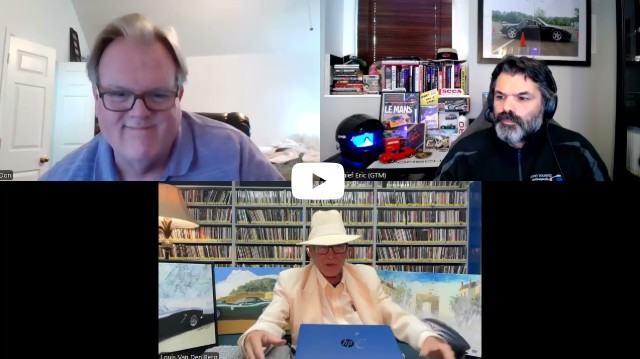
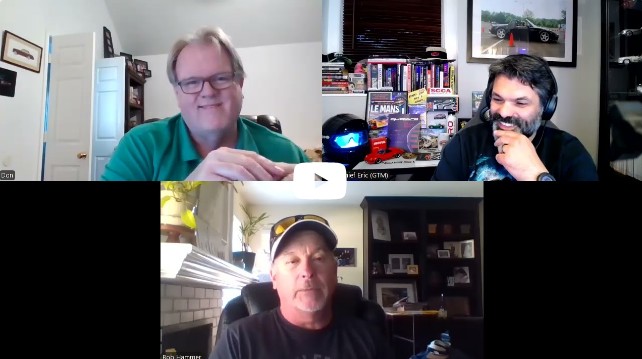
At the Eastern Museum of Motor Racing’s Racers Roundtable, Jimmy took center stage, flanked by fellow veterans like Ron Lauer and Lynn Paxton, with a special appearance by Bill Wentz Sr. What followed was a whirlwind of tales that spanned six decades, from dirt tracks to asphalt, from sprint cars to midgets, and even a stint in a truly terrible movie.

Tune in everywhere you stream, download or listen!

Listen on Apple
Listen on YouTube
Listen on Spotify

Maguire’s career is defined not just by his 52 wins, but by the fact that 31 of them came after he lost his arm in a brutal USAC crash. He didn’t just return to racing—he reinvented himself, designing a custom prosthetic system that allowed him to grip the wheel and keep his foot to the floor. His grit and ingenuity earned him the nickname “Magoo,” courtesy of Bobby Cartright, who once said, “You don’t know where the hell you’re going,” referring to Jimmy’s on-track abilities.

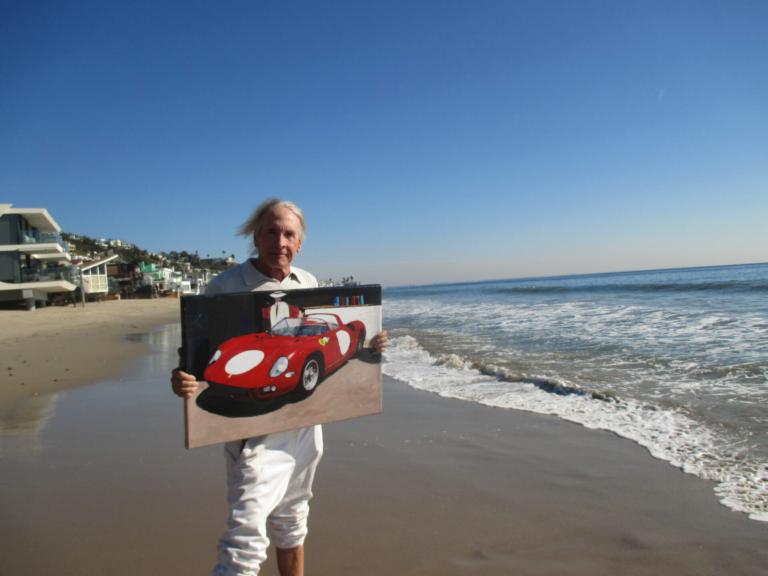
Photo courtesy EMMR; Photo by Edward Radesky

One of the most animated stories involved Hank Rogers Jr., a fellow racer and friend who Maguire claims “got him fired” so Hank could win the championship. The two remained close, trading jabs and memories for decades. Jimmy’s storytelling style – equal parts bravado and self-deprecating humor – made it clear that in racing, friendships and rivalries often blur.

Highlights

Skip ahead if you must… Here’s the highlights from this episode you might be most interested in and their corresponding time stamps.

  • 00:00:00 The Racers Roundtable: Jimmy Maguire
  • 00:01:57 Racing with One Arm: Jimmy’s Story
  • 00:03:34 Rivalries and Championships
  • 00:06:21 Crashes and Comebacks
  • 00:17:13 The Legend of “Magoo”
  • 00:22:35 Mario Andretti: Honoring a Racing Legend
  • 00:35:44 Rehabilitation and Early Racing Days
  • 00:35:52 Winning the Bobby Marsh Memorial Race
  • 00:36:39 Midget Racing and Championships
  • 00:39:54 Other Crashes and Injuries
  • 00:42:19 Racing in Australia
  • 00:47:45 The Queen is the Trophy?
  • 01:02:27 Movie Stunts and Acting
  • 01:06:46 Life After Racing
  • 01:09:16 Conclusion and Final Thoughts

Transcript

Crew Chief Brad: [00:00:00] Welcome to The Racers Roundtable, a podcast sponsored by the Eastern Museum of Motor Racing where history meets horsepower and legends live on each episode brings together voices from across the motor sports world, from grassroots heroes to seasoned veterans as they share stories, insights, and behind the scenes tales that shaped their racing journeys.

Whether you’re a diehard fan of dirt tracks, drag strips, or open wheel icons. The racers round table is your seat at the table for candid conversations and timeless memories from those who lived it. Strap in tight because it’s time to talk. Racing history one lap at a time.

Lynn Paxton: We always put the best up here first, and then this is the rest. Okay,

Jimmy Maguire: is this on? Can people hear me? Is this on?

Lynn Paxton: I hope not, but I think it is.

Jimmy Maguire: I can’t hear myself talking

Lynn Paxton: now. I’ve stuck enough [00:01:00] needles in him. I, I want Ron Lauer to work on him here a little bit. My best friend in racing with your, I know I sat side with your background.

I didn’t realize until I read your resume. Yeah, I think your daughter put it out. I don’t know. I, I knew you were, you know, a RDC racer and in one races, and I knew you were A RDC champion won race.

Stink.

Ron Lauer: That’s when you were old and done.

Lynn Paxton: Got a point there. Anyhow, I want you to work on him a little bit. I’m gonna step back from the, the microphone here a little bit.

Ron Lauer: I knew what this was all about. See, Lynn knows that in a three hour segment like this, Jimmy’s gotta take at least six or seven deep breaths and I’m here to fill the gap.

But that’s about it, right? Well, actually I didn’t know Jimmy when he was taking people out at her rides. I was, I was just a kid. And, uh, but when he [00:02:00] had his, uh, accident and came back in the TQS and N-A-R-D-C, I got to know Jimmy, and he really does have a great story. When you go through the whole thing, you just don’t have to hear it as many times.

That’s all know now, really the things you accomplished, I, I know you didn’t race as long with both arms as you did with one, and you won more races with one arm than you did with two.

Lynn Paxton: Yeah.

Ron Lauer: 52 rashes total. 21 with two

Jimmy Maguire: arms and three, one with one on them. Now how many guys have done that? Come on. A

Lynn Paxton: he?

Jimmy Maguire: Yeah. There you go. Yeah. But he had a hand, he just lost his hand. He just, he just lost his hand. I lost the hand. See that’s right here.

Ron Lauer: LER won 52 races two years in a row with one leg. One

Jimmy Maguire: leg. Yeah. And I ran, you are seeing, finished his fourth and points and won three race. And I had my whole leg in a cast on the right side.

When I drove for Harry D and the way I worked the gas pedal, they gave me a test. I took a hammer and I smashed the ball of the cast so I could work the work. The gas pedal, [00:03:00] they took two laps. I just kept the, the gas pedal to the floor. The first two blows went

Lynn Paxton: to the head though, I’ll tell you that.

Jimmy Maguire: Two, two laps around the racetrack, but my foot to the foot and say, okay, can run all way.

Some along in 62. I goes, my crutches. Get in the car and run the car. Won a couple of races, did good. Finish both points so you can run a car with one leg. He should

Ron Lauer: breathe soon. I’m ready. Okay, we’re up here. Lynn’s not up here, so I don’t know what in the world we’re gonna talk about. You wanna talk about it then, or.

About who? Lynn.

Audience Q&A: Oh. Oh,

Ron Lauer: Mr. McCabe has a question for him. What

Audience Q&A: was it like racing with Hank Rogers, Jr.

Jimmy Maguire: Oh, Hank was the buddy man. He sold mine. He sold, listen, his

Audience Q&A: father,

Jimmy Maguire: listen, let me tell you about Hank. I wanted him down here so I could refute it. We raced against each other. A great guy. He ran for Kalen for two years, didn’t win the race, right?

So I appeared on the scene. We were at the Check five pain club and he said, Hey, my, my car owner’s getting another car. Would you like to drive? Oh, I’d love to drive. I didn’t have a ride for a couple years. So he got me a ride with Kaylin. [00:04:00] So I got in and of course I set my own cars up. Kaylin doesn’t set ’em up, right?

And that’s why they never won. So any, and I’m telling you, this is what happened. Anyway, I set the car up and after a couple of races, I won a race. So after I won a race, he set Hank’s car up that way, and Hank started to win races. So all season long was back and forth. I’d went and go ahead and point. So finally I had a little alation one night at the race and some guy, uh.

Call me a bad name. So I punch him in the mouth that, that, uh, suspended me for two races. So then I was still up there and fighting for the championship, two races to go the end of the season, Hank’s about maybe 50 points ahead of me. So we’re going to two asphalt tracks. Thompson, I forget what the, but I was good in asphalt.

Hank wasn’t. So what does his father do? He fires me right at the racetrack. I couldn’t even get, I was with his father going to the racetrack and I had hitch a ride from somebody else to go home and we were three oh oh miles away from home. So anyway, Hank runs, I don’t know, whatever it was, he wins the championship.[00:05:00]

So of course the night of the championship, and I congratulate him, but I kid with ’em all the time because I took my average, what I got for every race I ran, an average every race that Hank got. And if I had to ran the whole season, I would’ve won the championship with the average. If, you know, that doesn’t always happen.

So anyways, father fired me and you know, I still stayed friends. That’s the way it was. You know, guy had this swing about him once in a while and they fire guys. We go to the banquet, congratulate Hank and congratulate everybody. He finished first the championship. I finished second, but I always tell Hank, Hank, you know, I know you’re the champion, but we were gonna make a decision.

We’ve put this before a judge, and I said, I made so many average points per race and I even had so many average points per race. If I ran the whole circuit, I’d beat you. Right. I said before court of law, I’d win the race, I’d win the championship. So I was, so this is a ongoing thing with Hank and I, but he’s officially the A RDC champ for that year, and I finished second, but we always get together and we river on that, you know?

So [00:06:00] anyway, that’s what we is, and it gets him fired up. That’s why I wanted him here today. Get him fired up and he couldn’t make it. Great friend. Great guy.

Lynn Paxton: When you bump Wednesday out of that ride, that was over 60 years ago. Do you realize that? I know

Jimmy Maguire: that, I know. It was 1962 and it’s 19 2 23. So it’s 60 years in 1 61 years.

Yeah. Yeah. And I’m still here, so I must have done something. Right before that, we had a racer, Richmond, Virginia. I blew the engine to Harry D’s car. So there was another guy that wrecked his car. So I said, Hey, can we change engines? Okay, we up at Williams Grove. It was a seven hour ride to Richmond. We rode up, cut to Williams Grove at seven o’clock next Sunday morning.

We changed it. Took the engine out of a bunch of guys, helped me. We had a two by four in the field. We had spectators watching. Two by four. We lifted the engine out, took the engine out of Brownie sky, went to put it in. I had an eight tooth spine on the transmission heat at 10th. By this time it was one o’clock in the afternoon.

There I ran the heat. Bill [00:07:00] hints ran like that was right. He ran the heat, whatever he finished. So anyway, we get up the next day, one o’clock we couldn’t do. I’m sitting there like this. The car owner from cys or whatever cys car that he was driving. The car owner came over personally and said to me, what are you gonna do now?

I said, well, I don’t have a ride. I’m out of, he said, well, I want you to run the car on the feature. I said, what happened to Cy? He said, I don’t want in my race car. So he said, I want a guy that stands on the gas pedal. I know this. Kyle, go Now what this car was, this was a USAC car, a good car. So I said, I said to him, yeah, I’m a race car driver.

So on the way over there, once he grabs me, he said, where you going? That’s my race car. I said, no, that guy owns the race car. You’re just a driver and he wants somebody that puts the foot to the floor. So all I know is that’s my reputation. So I get in the race car, I start last in the race because first time I’m driving the car and he qualified through the consolation race.

So I start back. So I stepped on the gas bar. Wow. The going down the straightaway passed three cars. I said, wow. Kept my foot to the floor. [00:08:00] Passed before, you know, in four, five laps. I was in second spot. So I said, wow. He said, good car. So all of a sudden they had a red flag. Big stop, crashed someplace. They restart the race cookie os out is on the pole.

Now in those days you didn’t start side by side, you start single file. So Cook, we go in the corner. I’m right behind Cookie Os out. He spins right in front of me. Well, when you spin, he lets the car roll up the racetrack. I’m trying to go around the outside of my left front wheel, hits his left rear wheel.

I do a series of Andover and flips, which made the front lane paper of the illustrated news. I end over and over and I land upside down. Fortunately, I was okay because I held myself in the car, in the robot, saved my life so I get outta the car. So once he comes over afterwards and says to me, see that you wrecked the car.

That was my ride. The car owner said, look boy, you’re gonna run the car next week for me. You fixed the car that was open and twisted. You fixed the car all up. The next week I ran the car at Abbot, stop the car. In those days, the beat [00:09:00] was the number 27, the Venetia car. That was the car on the East Coast to beat.

Here I am, I got through the Tri Baytown here. All of a sudden you see this guy in front of me. Wow. I got close to him and I didn’t win the race. They finished second, so the car was happy. So that ended my ride, that car because, uh, the season was ended for URC. The last race for URC was in Shelby, not Carolina work.

And I was auditioning for him. He said, do you wanna ride my car there? You don’t? Yeah, I’ll ride a car. Anyway, I go down there. I was four. I won the feature, sat in back, I won the feature. That was my first feature with URC in 1962. And I had the ride for the following year. So when the following year started, now all, all went along.

I was a single guy, so I ate at his house every night. I managed kids. We had a good time. I became part of John LAN’s family. So the season started about a week before USAC was gonna run Langhorn. He said to me, Jim, I’m not gonna put you in the car. You’re too close to the family. Langhorn is a killer racetrack in them days.

And he said, A lot of you young guys go [00:10:00] wacky down there. I was mad as heck. I got so mad at

Lynn Paxton: him. He put Bobby Marvin in. He put Bobby in

Jimmy Maguire: the car, same age as I was. He was a crazy guy, but he was from Ohio. Well, he gets in the car and kills himself. He hit one of the chuck holes that I probably would’ve hit.

Goes in over in car catches, fires in them days where he had no fuel cells. The car catches fire. And of course you can’t see the fire burning. And you know what they had for a fire crew back in those days? A truck with a one, one bottle on it to put the fire on. Well, by the time he got to the car, 15 minutes later, it was all burnt up and alcohol.

He couldn’t see the fire. Of course, he burned the dead. The cow was surround. So I went over and apologized that, John, thanks for not giving me a ride up. This was a Sunday afternoon, right? I get home nine o’clock, Sunday night, I get a call from Venetia. Here I am 21-year-old kid. He says to me, Jim McGuire, right?

I said, yeah. So I says, this is sad, Venetia. I said, are you the guy that owns that 27, the one that Hank Rogers senior drives? He said, yeah. He said, well, we weren’t very satisfied with laying on today. He [00:11:00] should have went faster. So we want a young guy like your charger. You were the one that gave us the most hot time passing.

That’s right. You

Lynn Paxton: got Hank Senior fired out of that car so you could get in it, right?

Jimmy Maguire: Is that true? No. He said to me, Uhhuh, he said to me, Hank’s not Hank’s getting old now, he should have been. Go do it. He was 50 years old. He was an old man. So, uh,

Lynn Paxton: his son still holds it against you.

Jimmy Maguire: He says, we want you to drive the car for us. You’re a hot charger. Okay, so the first time I rode the car was, are we gonna yank asphalt? Which I’m good on asphalt. That’s what I was brought up in. So Bobby caught Wright al qui fighting with each other and they won first and second. I finished third, but but easy was happy.

Finished third on asphalt. Hank Rogers senior never did good on asphalt. None of the old time dirt drivers. Never did good on asphalt, but I did good. So I was happy. So he says, you’ve got the ride. So the next race we go to Georgetown. I win that race and I won. Did pretty good as the season. Went on an asphalt track again in [00:12:00] Quebec, Canada.

I was leading the race, running good, I’m laughing. Dave Humphreys, the rear axle breaks, he goes out in front of me, hit the tire, flip end over, and I land on the wall up, upside down and the wall, the back of the race goes shit. Right.

Lynn Paxton: Seems to be a pattern here, doesn’t it? One

Jimmy Maguire: behind the robot. Well that’s what happens there guys.

It, I only knew one way to drive before, got the floor. And car owners do a lot of money like and you like extra car

Lynn Paxton: owner. I only

Jimmy Maguire: knew one way to drive car owners, like guys that put the floor to the floor. They didn’t care if they have to spend the money as long as they want. That’s the way it was really.

So that’s why a young age. I got quick. So anyway, uh, I landed upside down the wall. She had the race car off the back. Said there like half conscious. I said to sab, how’s the race car? Don’t worry about the race car. You gotta get better. So we go to the hospital. I spend a week in the hospital. I get outta the hospital, I fly down on Friday to Georgetown, Delaware.

The car’s waiting for me. They get all ready for me. I win the race down there in the Georgetown. I was back. The newspaper says my body, what

Lynn Paxton: were you in the hospital for? Mental illness or what was it?

Jimmy Maguire: They thought I broke my neck. They [00:13:00] thought I broke ’cause my neck was hurting and they hooked me x-rays.

You’d

Lynn Paxton: have been in trouble if you broke your jaw because you wouldn’t have been able to talk

Jimmy Maguire: anyway. Hey, once talked a long time. He said a lot of nice things. All right, come on. He still talked longer than I did.

Lynn Paxton: They were better stories. He was an extra at attraction. That’s he put first. You know what’s

Jimmy Maguire: great about we?

Lynn Paxton: I was listening to a loser.

Jimmy Maguire: That’s why I was listening. So that was it. I was a winner. That was the difference. And the car owners liked winners. That’s why I got a best ride. The best guy Wednesday.

Lynn Paxton: You never got your car upside down, right.

Billy Wentz Sr: Never did. Right. It is everybody

Lynn Paxton: else’s car. Right.

Billy Wentz Sr: How far? Never did.

Yeah. But, uh, I’ve been held the car, couple them over,

Lynn Paxton: not as many as Wonder Boy. Over here. I went over, okay, thank you. I went over

Jimmy Maguire: 15 times in my career.

Lynn Paxton: His percentages. There’s 14 pictures over there, right in that Jimmy McGuire, case 14. Which one did we miss?

Jimmy Maguire: I didn’t put any of my Ricks in there. I’m glad you didn’t put any of my Ricks in there.

I brought that to Well, I got,

Lynn Paxton: I got one of Vene Carl [00:14:00] tour to hell. Who did that? Uh, yeah. Where’s that? The guy that just went, uh, that’s

Jimmy Maguire: Dick. Yeah. But he told me, he said to me, don’t worry about it. We’ll fix up. We’ll get to the next race. The next race at one part. We’ll see. When you drove for Ezio, I was a young kid.

I thought you had to win every race when you drove for him. ’cause the driver, Hank Senior did a job. He won 12 races one year for him. And here’s another thing I did. Whenever we were young drivers and you got a car, car owners, you got in, you know, some guy would say, well, can you change this? You can change that.

If I told Mari this a long time ago. I said when you we’re young guys, when you get in a race guy, never complain that something’s wrong. Wait till you do good, then complain. So I get into an easiest guy. I said, man, everything’s perfect. I love this guy. After I won my first race, I said, you know, this should be this way.

So then after you win and do good for him, then they changed for you. You know? And that’s the way it was in them days. Because the cos, well, one way Carl said one thing in their mind. Right? It my way. When I went to Kinesio, I said, everything’s perfect. Everything. Even when I finished third, everything was perfect.

Everything was perfect. [00:15:00] They were happy with me when I won Georgetown and I changed things, but I had to win first before they’d listen to me. If you didn’t win, they put another charge in the car. Right? And I’m telling the truth, right, bill? That’s it. You gotta put the guy. Hey. That’s the first

Lynn Paxton: thing they’ve agreed on for a long time.

Okay? They both remembered the situation. One a little different than the other, but that’s okay.

Jimmy Maguire: Well, anyway,

Lynn Paxton: but I forgot about it. Hank, how you stealing that ride from him? I came,

Jimmy Maguire: wait a minute. When I came back, after my being in the hospital, I was down a few points. Now I was a point leader before that happened.

They had a couple of races. SAB gets to me sign. He says, you know Jim, you don’t have to win every race. I said, I thought I had to win every race. That’s why I try and I crash if I can win. He says, Jim, ’cause I’d crash, I’d win a race. I crashed. I win. I crashed. He said, Jim, just finish second or third if you have to.

I said, oh, okay. So then I started, I started racing. If I finished second, and if it was hard to race, I’d finish third, fourth. I had 52 races in my career. Right. There’s probably about another 25 that this year won [00:16:00] when I never won ’em. Like on a weekend, on a rough dirt track. I’d be leading the race and all of a sudden a guy would come to challenge me.

I’d back off a little bit because my arm, my left arm was so numb. I didn’t have full control of the wheel. So I just let the guy go by me and I didn’t want to have to fight him. So some other times they finished second and third. I had the lead at that time, but I was good. If we had 10 laps to go in the race, I was strong for 10 laps.

If we had like a 25 straight race to run my amud weekend, I have to back off a little bit. That’s an honest truth. So, and we get to the end of the season, right? Where at Shelby, North Carolina. So he says to me, Jim, you got the point lead. All you’re gotta do is finish in the top 10 and you win the championship.

And he said that guy’s, even if he wins, you finish the top 10, you win the championship. So I got down to North Carolina, I worked my way through travel. I’m up in second spot and Earl Hor is in front of me, the champion that year before. So I said, set up a gun. I can beat Earl. I remember what Cas Sam said.

Finished in the top 10 and you got the championship. I backed off. Earl helped me. He was an older guy. He helped me a lot. Him and Bobby. Kwright [00:17:00] really helped me a lot in my younger career. He

Lynn Paxton: helped

Jimmy Maguire: me too. He seriously, he helped me. Bobby Kwright gave me the name Magoo. It was the first time I ran against him.

He couldn’t, I’d give you a different name than

Lynn Paxton: that, but I couldn’t repeat it up here.

Jimmy Maguire: And the way I got the name Magoo was my first year at Binghamton, New York. That was my first year running Spencer in 61. When you run asphalt to New England, when you get the move over, fight, you move down on dirt, you move up to leave the guy.

I didn’t know that. So when they gave me the move over fight for Bobby Cutright leading the race. I pulled down, which I cut him off. He didn’t crash, but Earl went around the outside, he won the race ball. We finished second and that didn’t mean too much then. But when the season ended in 1962, they tied from the championship.

If he had a pass mate, he would’ve won the championship by five points. So they were the first coach champs in the only coach Champs in URC. And that was because I cut Bobby, cut right off. So after the race, he comes walking over to me. Now he’s an old man. He’s 35 years old, right? I’m a young kid,

Lynn Paxton: 20 years old.

We should be 35 again. [00:18:00]

Jimmy Maguire: He says, he sees me coming down and he says, what’s your name, kid? I said McGuire. Jim McGuire, he is my first sprint. He says to me, McGuire, we’re gonna call you Magoo. You don’t know where the hell you are going. So ironically, that name is stuck with me all the time. And of course it helped me be Bump.

I bumped in a few guys along my way. So every time they say, McGuire named you Magoo. So that, that name stuck with me.

Lynn Paxton: Ey, you sure you didn’t give that name? Magoo?

Billy Wentz Sr: I’ll tell you one thing, ever since that happened, I never walked away from my ride

Lynn Paxton: at a boy.

Billy Wentz Sr: I stayed right there all the time.

Jimmy Maguire: Vince soon was a great driver.

Don’t, don’t get me wrong, he was a great one. So wait a minute, what? I kissed his daughter in Victory Lane. When I beat Foot, I did. I kissed Bill’s daughter in Victory Lane. When I beat Foy. That was the girl on the trophy. Okay, go ahead. Wait a minute. I didn’t do that. Hey, no.

Lynn Paxton: Who got paid that night?

Jimmy Maguire: Foy.

Yeah. Wanted the trophy. And I said, no, that’s my trophy. Yeah,

Lynn Paxton: the trophy. And I pulled it away from the hand on it top, the big [00:19:00] trophy, except for one piece. Foy has that

Jimmy Maguire: he took. I said, I’m so serious. I said to Foy, you got the money, I’m gonna keep the trophy.

Lynn Paxton: Yep.

Jimmy Maguire: I worked out in Indy for five years after that, and every year I went on to say, where’s my trophy?

Where’s my trophy?

Ron Lauer: Ray. Ray McCabe was gonna bring this up because as I’m sitting here next to you, tell him about the time you went to Pocono on the three quarter mile and didn’t have any of their stuff with you, and you borrowed everything and what happened after you? Oh yeah, that was, well,

Jimmy Maguire: that was Boston.

I went up there with Hank and I, him a ride. You’re a good friend, Dan. We’re best friends. We’re still out, I think. Uh, although, you know what? He got me fired from my car. That’s why he won the championship. I wanted him here to tell him that he was afraid I was gonna beat Hank. And his, his wife had owned the car.

That’s the way it worked. And he didn’t want his wife winning the championship.

Lynn Paxton: Kalen told me I was a bunch of bullshit. Hank probably

Jimmy Maguire: did too. Yeah.

Ron Lauer: Anyway. Tell when you went to Pocono.

Jimmy Maguire: So I went to the Poconos. I had no ride. [00:20:00] So all of sudden, and a three

Ron Lauer: quarter mile track inside Pocot.

Jimmy Maguire: And what happened is, uh.

Blackie came down. He was supposed to be a driver, but the forecast from New England was, it was gonna rain in Poconos. So the driver never came to the racetrack. So they said, Hey, Blackie’s got the car. And I knew Blackie very personally from back home in Boston. So he said to me, uh, do you wanna run the car?

I said, okay. I don’t have any equipment. So I borrowed a uniform from somebody. I borrowed a helmet from oil and I borrowed everything from extra drivers. I get in the car and I go out in the heat to qualify and man, Blackie had an illegal engine. They let him run. It was a sco, really built big illegal engine that’s a fresh, it was an oversized Nova sized engine, but they let him go because the guy guys had in it weren’t drivers.

So they never competed hard against anybody. So I stepped in the gas filet. I passed three off. He, I, whoa. Anyway, I got up the second or third spot. And I said, wow, this car’s flying, and all of a sudden I passed the two Scon brothers on the outside and I says, this thing’s flying. Then all of a [00:21:00] sudden I go in the corner, I lose it.

I hit the wall, I flip in over and I lost mother one. Yeah. That was my time. I hit the wall. I over.

Ron Lauer: Yeah, but how about when you were in practice and you didn’t have your racing arm with you and your other one kind of left the steering wheel. Do you remember that?

Jimmy Maguire: Oh yeah. Oh yeah. Yeah. I didn’t have my steering arm with my, had my regular artificial arm and Yeah, that’s right too.

That’s probably why I spun out. You’re right, right. By the way,

Lynn Paxton: we have his bag here. His one arm is hanging right there on the case, and the other one’s in the bag.

Jimmy Maguire: Well, the other one was a high, when you run heavy, that one I could run asphalt with. The other one, I had to run dirt because dirt was rough.

And when I ran this one on dirt, it broke in the elbow all the time. It was a rough dirt track. It was the one I run an asphalt. The other one, I took the screw off and screwed it in and it had quarter orange titanium rods on either side of it had all laminated so it wouldn’t break. And that’s the way I drove that one.

I drove on dirt and this one, I drove an asphalt. That’s why I had a big bag. I had a lot of things in my bag. [00:22:00]

Ron Lauer: Anyway, he came in after that warmup. He may not remember this, but somewhere along the line, his regular hook bounced off the wheel and his right arm was banging on the right rear tire. And he came in and there was rubber all over his hook.

And the guys on the track that didn’t know this was Jimmy McGuire, his arms bouncing on the back and they thought I lost every hand. And then you flip the guy’s car. You know, I was gonna bid on that neck brace they had. But it said on their living legend that I didn’t know you were still alive.

Jimmy Maguire: Well, you know, I thought it was, wait a minute, February 5th this year down in Daytona, I never had NASCAR in my life, but they made me a living legend along with Larry McReynolds, uh, Kyle Pit.

Oh, that’s right.

Lynn Paxton: That’s what this show’s all about, him being a living legend. I forgot about that.

Jimmy Maguire: And it says, and I got this February 5th. 2023. Honest to God, I was invited to come down. So Mario and Dirty sponsored three [00:23:00] tables because you know, I make friends easy. I cost eight. We’re gonna have

Lynn Paxton: Mario’s introduction for McGuire,

Jimmy Maguire: so, so $800 a table had cost these sponsors.

I had a good time. All my friend showed up. My daughter’s come down from Boston. One come, my daughters are there, and my grandsons were there. So a matter of fact, Mario gave me a tribute, which is on the wall. My grandson, 19 years old, gave me, he presented me the Hall of Fame down there and they said, and it’s all written on the wall then

Lynn Paxton: It’s not the bathroom wall, it’s the wall over there, Mario Speech

Jimmy Maguire: is on top and the grandsons on the bottom.

It’s got a picture of Mario and I together in 63 the year he finished Second Points with the A RDC and I won the championship in URC. So that’s all on the wall if you want to look at it. But anyway. I got pictures taken with Kyle Petty and all the other guys. But Larry Res was first getting, and he had to leave right away.

He had to be on TV the next day, so he left right away. So I never got a picture, but this year I’m planning to go up and I hope he’s there. I want, I get a picture taken with him. But that was quite, so I [00:24:00] got in there with those guys and those guys were real nascat guys. And I was just an outsider. You know what they call me?

They call me a Saturday night hero. And I guess that pissed me.

Lynn Paxton: They call

Jimmy Maguire: the award was a Saturday night hero.

Lynn Paxton: Saturday night special was always a gun to me. No

Jimmy Maguire: Saturday night, right? Didn’t I win the at A RDC at at Grandview because I was good with the fans. Right? Now you, Ernie Saxon had a favorite driver of roll water something every year, and I won six years in a row.

They finally ended it because nobody else could win it. And I was a ham. I was a ham. I’d get down an intermission, sit in the stands with all the fans, sign autographs.

Lynn Paxton: You ran second three times by the way.

Jimmy Maguire: So I’d get down to the fans, I talk with him, invite him up the trailer afterwards, and I was the only one that allowed to have the dog in the pistol thing.

He was on the trailer at Benjamin. And the kids would come around, I’d sign autographs with the kids that that bench. So I was kind of a, a happy fan, you know, with the fans. That’s why they voted for me. I guess I had a rule at Grand Grandview, whenever I wanna race, the kids had to all come in with me.

They weren’t allowed to give me the [00:25:00] presentation, take pictures, unless the kids were with me. So I have several pictures of me with all the kids when I went, they’d be in there and I hold a checkered flag and the kids would be in Victory Lane with me. That’s why I guess I got the most popular drive right.

I get the most That’s true. Yes.

Ron Lauer: You were very good with the fence.

Jimmy Maguire: And the promoters like me and the, the photographers like me. Why? Because every time the picture was taken with a hundred kids, how about the beauty queen down in

Lynn Paxton: Australia? Did she like it? Wait, wait a minute. We’re not getting in

Jimmy Maguire: Australia anymore.

That’s another story. So anyway, when I would, when I would, when I would get in the fans, hey five spin out, there’d be a hundred, there’d be a hundred kids in that picture, right? The next week the photographer there would sell the pictures. He made a ton of dope with me and Victory Lane. ’cause all the fans wanted that kid in that picture.

Take a breath, take a breath. I’ll keep, if

Lynn Paxton: you’re right, I don’t want to be, I’ll tell you that

Ron Lauer: now. That was pretty much all truth.

Jimmy Maguire: Pretty

Lynn Paxton: much, pretty much.

Jimmy Maguire: I exaggerate on a few things, like a talks about getting one more fish than you should want, [00:26:00] but I have fun.

Billy Wentz Sr: Hey Jim. I have a doctor’s appointment tomorrow over again.

Ron Lauer: Not in the morning, I hope.

Jimmy Maguire: I’m not taking off till four o’clock tomorrow afternoon.

Ron Lauer: What type

Jimmy Maguire: of

Ron Lauer: car

Jimmy Maguire: did

Ron Lauer: you lose your

Jimmy Maguire: arm in? It was, it was a sprint car, and Bobby Marshman drove in. Usac. Now I was in USAC now, so he had a stock car race that day. So he called me up and because he was a former URC pupil, he said, do you want to drive it?

I didn’t have ride because my car owner, which I did good in, I, I ran a car that was owned by AJ Watson and I took a second and third to flight in my debut, and then I, so I wanted to go racing, so, uh, yeah, I said, I wanna go. It was, I was already living on Indianapolis. He said, you got my car if you want it.

So I got in it. And, uh, now normally if the car was owned eight cylinders, I would’ve qualified further. But the les that only had seven cylinders in it, I didn’t care. I went. So I qualified. Good. I qualified fourth fastest Les, when you have only seven cylinders, you don’t do the pickup. So I had to [00:27:00] go three.

Hes, before I qualified, I qualified ninth. Well with cylinders, but I worked my way up to fifth and that’s when the, he spun. Once you ran two laps over the end, the thing was built up, you know, the speed was built up and I caught guys, as long as the race went on, I pass guys and of course the guy spun out in front of me.

Chuck Booth spun in front of me and instead of staying there, he backed up the racetrack and I got pictures of it. He’s backing up and my left front wheel hits his left rear wheel and I, he did a barrel side rolls. And when you do it, no rinse, they, they’re wild looking into over rinse, but those are the best ones to take because only the front and the back of hitting, you’re in the race guy, you’re not hitting it.

When you are a side roll, you head hits the ground, you knocked out immediately and that’s when most drivers, you look back at K with side rolls because back in those days, because you didn’t do a side rail, you had hits, head hits the ground, you’re out like a light. So that’s what happened to me. But Bobby Martin in the car drove that and that’s, I lost Miami.

And another thing would probably be Marshman car. Most robots are three or four inches behind. Behind your head. Bobby Marshman car [00:28:00] was right eve with your head. So of course when I started flipping with my arms when the car landed, the robot saved my life. But I took my arm off because the arm was between the roll bar on the ground and a message that was new Bernan, right?

And I didn’t wake up till two days later. So I didn’t feel anything. I didn’t know what the hell happened. All I know is I woke up, I could still see me waking up in the hospital. My dad was there, my girlfriend was there, which eventually became my wife, Henry Banks was there, all the big shots for insurance.

I was gonna act. I woke up and I said, whoa. I go, well on. I got. And I simply said, I got a new challenge in life. They all looked at each other and said, well this guy’s wacky. Said they all left. I had my one out. First thing I asked for was a pencil. ’cause I had to learn how to write with the left hand. And the whole six months I was in the hospital, I wrote, I learned how to write.

And you know what? If you ever talk to anybody that has lost a limb, when you learn how to write even with your other hand, by writing ’em the same thing as my right hand, you look at the signature, the only thing is it goes to the left. If I turn the paper sideways and I write, you can’t tell a my right hand or my left hand because you [00:29:00] learn.

Your brain only knows one way to write. You write slow. But it’s, I had to go back to drafting. My printing is the same as it was my right. You do it slower. Your brain only is one way. The right. So it goes back how I learn to write. ’cause I still have the feeling right now. I’m giving the finger to Paxton.

Lynn Paxton: If

Jimmy Maguire: I had this shirt off, you talk to your nerves are still, you have phip pain right now. If you looked at my arm off, you see a little nerve tch in there. That’s my little finger.

Lynn Paxton: Take a picture of that.

Ron Lauer: I’m glad you straightened that out.

Lynn Paxton: I’ve been told I’m number one. Before

Jimmy Maguire: when I laid in the hospital it hurt. I did not tell him, okay, I’m laying there and they said to me. Chuck Hal also. That was the number one driver for the Dean of Van Lion team. I was gonna take a test in the second car just to see if I could drive an Indy [00:30:00] car, but it never happened.

Sunday, I lost my arm. The next day I was supposed to sign my driver assist at Indy. So Wednesday I’m in the hospital, Jim Mcg again and Clint Brown and come in to see me. First they offered the ride to Roger Chop Penske. He said, no, I ain’t gonna drive any car. Me, I don’t want be killed. Roger Chop. Penske a nice guy, great for racing, but he drove sporty cars.

The ones that beat behind when they want to pass. That’s what he drove. I’m laying in the hospital of bed and they said, who are we gonna get for a driver? I said, well, did you ever hear of Andrei? He’s only, yeah, he’s a good midget driver. We read. But he’s the only 120 pounds and he only five foot four. I pointed to my foot in bed and I said, he’s got it there.

And I took my hand, I went, he’s got it here. Give him a shot at it. Jim, you don’t have any. And see Jim again. And I go to go up to Boston in the same racetracks. He was a mechanic and I was a driver. That’s how I knew him real good. He watched me as I was going through my career and he said, well, in the wintertime he said, we’ll give you a test.

And when I did good news act, he said, we’ll give you a test at, didn’t he? So it was all set up. I said to him, give Andre a shot. And I said, you don’t [00:31:00] have a driver. If you don’t like it, get rid of him. You don’t have a drive. Give him a shot and see what happens. Well, he gave him a shot and as the story goes, all the rest is history.

And he goes, well, let’s driving race here. And and another thing, he took a lot of flips. Did a lot of crashes, but that’s one of the reasons he never got hurt, except why he was so small. He was way inside the race car. So that’s it. That’s the story, my Andre. Now we get there.

Alison Kreitzer: So we do have this introduction to show you for Mario Andretti that he did for Mr.

McGuire, and we’ll play that here.

Jimmy Maguire: The awards, when I had the, uh, when I, when I got last February, I got the award for, uh, setting a hero for legends. So, uh, Mario gave a speech there for me and somebody videotaped it and the certificate speech, and I cried after I heard it. I called him up and I said, I wanna go back driving a restart again.

So I listened to the speech. It’s only a minute, nine seconds long.

Mario Andretti: And here we go. Hello everyone. I’m pleased you’re honoring Jim McGuire this evening. Our friendship goes back to [00:32:00] the early sixties when we were both carving our own way through our careers. He was really on his way to the top, no question about it.

What’s most impressive to me is after this accident, Jim showed you can’t keep a good man down. He reinvented himself by learning to write with his left hand and continuing work as a draft man, and designing and creating a system. There were allowed his prosthetic arm to connect with the steering wheel of a race car.

He was back on track racing again, but not just racing, winning, winning against the very best. So Jim, I congratulate you on this very special recognition and thank you for being such an inspiration to all of us.[00:33:00]

Jimmy Maguire: Call him up the next day and I said, buy me a race car. I’m spied. I want to go back. He said, when I go to a place and somebody talks about me, I feel like going back racing too. But we said we’re too old. I said, I agree with you. So glad you enjoy it. God, it was only, it was only a minute long, so that was it.

Good. So.

Ron Lauer: He knew your crash record. He wasn’t buying a car for you.

Jimmy Maguire: I get you. Smart ass boy. We got a lot of stories from Mario. Come here. We have a lot of stories. We may have to say a little, because we have a lot of stories. Mario, I Hey.

Lynn Paxton: You get some booze in him. You hear a lot of merrier stories.

Something you don’t wanna hear. I, I’ve heard

Ron Lauer: the, the Hershey and the Yeah, yeah. There you go. Yeah. You wanna talk about Hershey?

Jimmy Maguire: I didn’t

Lynn Paxton: think

Jimmy Maguire: so did you?

Ron Lauer: I heard you had a woman visit you in the camper.

Jimmy Maguire: I don’t drink anymore. And that’s one, that’s one of the reasons, yeah. The camp. Oh yeah. Heard that really?

Oh, you wanna hear that? Can I tell a story now? We gotta tell story. [00:34:00] No, no,

Lynn Paxton: it’s just a family show. Stay away from that story,

Jimmy Maguire: then you find out what we’re really doing to her show. Well, is anybody enjoying this talking here at all? What’s going on again, again, you gotta make the fans happy.

Ron Lauer: That’s what it’s

Jimmy Maguire: all

Ron Lauer: about.

I’d like to, but uh, I don’t have a chance. When you came back to the midgets, who did you drive for first? Not the TQ with, uh, Bob, but it was, uh, four Midgets, uh,

Jimmy Maguire: first race back. I was driving for Eddie Tow, really any out for a year. I drove for him. First time I drove for him was over to New Jersey and asphalt.

I finished nine. He was very happy with, because he just bought the car. He got the car and Ed clinic is taking care of the car, and I guess he recommended the driver. So I got in the car. Then as the time went on, I got better in the car and we had a Bobby Marshall Memorial at, uh, Hatfield, Pennsylvania.

That was the track that he, he promoted. A RDC and that was my kind track as I went there. In [00:35:00] sprint cars, I go in the counter, I take the lead in the first lap, 49 laps. I led that race, touch shape was right behind me, led the race. Just kept my foot to the floor. See a Hatfield if you’re in it good, you just kept your foot to the floor.

You were in right in the rim high bank. You didn’t have to take your foot outta the throttle. The last lap. I said, geez, I’m gonna win. I see the white. I’m gonna win this race. So I come off the bank, right? I come off the bank, come down, and Dutch Shaer goes right around the outside of me and wins the race.

I make more money than he did because I let every lap and then get front money. The fans pulled the hell outta him. He beat me, but he finished second and I told him Victory Land. I said to George, er, well, I wanted to win you your son’s memorial, because footy did for me after I lost my arm. ’cause I lost the arm in his sprint car that he drove.

He had a ride with a stock high that day. So he asked if I’d wanna run. So I ran it. But he F so he helped me out along the way with my rehabilitation. Touch Safer won the race. I made more money than, than I can say now. It took me seven times to run in the Bobby Marsh Memorial race. I finished second, third, fourth.

Every time I got in a car, I was leaving it. [00:36:00] I dropped back when I finally won it, when I bought a car, George just bought a race car finally. It had nothing to do for a year. He bought a race car, miss you. He was the sprint car owner, so he bought a car for him and we go up there with the Vene and Frank Jennings.

They brought the car up with him. We go up to Bloomberg, Pennsylvania. I’m sorry, bus Milwaukee was the car. See Jake Vago. Let me take the midget out. I was gonna run it during the month of May if I had passed my driver’s test. ’cause that in those days, every night across the street from the Speedway, they had a quarter mile track and they were in the track across the street from the speed all the drivers in practice, they go in the midget the night and eventually that went to Mario for the month of May.

But anyway, I was gonna drive it. Jake Vago gave me the car and I took it out there. So then when I wanted to run midget there, in fact get back in midgets, it was after the TQ season. I had done good. I won the hundred lap and I won the championship for Paulson. So I called him up and I said, Hey, can you bring the car up to, uh, Bloomsburg?

I’d like to run for you again. Yeah, okay. I’ll sit bus walkie with him. So bus walkie rides to the car. He was the type, [00:37:00] if anybody knows the name, bus walkie, obviously you know him. He was a mechanic, a big Indianapolis mechanic and a driver. And so he took the car up there. Anyway, I got in the car. I led the race for 24 laps, again, long, around 24 laps.

The same thing. I’m running good. It’s like I back off in the third and fourth turn ’cause I won, I won this race. Who goes around the outside of me? Bill Brown and, and Eddie Dar Scott wins the race. The fans booed the hell out of him, but again, he made only 600 bucks. Win the race. I made 850 because I got a lot money.

That’s what Gil Brown, I finally won that race with George Ey gave me a ride. I led the race, the whole race, and I won the race. And I think I got a picture there someplace with Frank Jennings, his son and, uh, me winning the race of Bloomsburg. I finally won the volume and I, and I had tears when I was up there on the stage with Mr.

Marshall. I was crying because I said it took me seven years to win this Bobby Marshall Memorial. So, and he was, he had tears in his eyes too because, you know, it was his son. And I always wanted to do that and [00:38:00] I always win that. Bobby Marshall Memorial took me seven races to win it, but I finally wanted, and, and like Far Gump says to the movie, and that’s all I got to say about the matter.

Ron Lauer: That’s funny. ’cause my first midget ride was with Ed Toth at Mahoning Valley in 1971. You were almost retired by then.

Jimmy Maguire: Yeah, I Did he tell you I won the first race with him?

Lynn Paxton: Yeah.

Jimmy Maguire: And I won the first race. I was first race on him. Then that year, after that year, then he went to, with Williams going, he bought a sprint car, I think.

Yeah.

Ron Lauer: I, I had something to do with that.

Jimmy Maguire: Oh, you did? Okay. You did you drive the sprint? Yeah, I

Ron Lauer: destroyed his midget, so I went sprint car. Oh, that’s, that’s he went,

Lynn Paxton: he went with Oz. Yes.

Ron Lauer: Ozzie built the cars

Jimmy Maguire: and drove. He was a good car. I he

Ron Lauer: a good guy. Yeah.

Jimmy Maguire: Did he get steering that sprint car? I don’t know if he had, I was gonna call him and see.

He had steering, but I was happy running mid. No, I was, he might have later on, but not at first. He did. Yeah. Right. Because I, if I had punched a guy, I would’ve talked to him and let me drive it. I had a good way with words with car owners. That was a good race. Car isn’t midget. Oh yeah. [00:39:00] Back in those days, they were all rigu sprint cars with Offie and Hickey took em care of most of the cars, you know, Offie, when I, when I ran for all the time, I had afi, just like Ferguson ran the five years I ran for Ferguson.

Fergu had office. Yeah. And you ran him with afi, but he ran No, I didn’t run an off. You didn’t have an off? What did you have? I ran a Sesco. Oh, you had a Sesco? Okay. Yeah, that was later on. Oh, then I was done. I Was that when you were in Caleb’s car? Yeah. Okay. That’s right. You were gonna win the championship.

Yeah. Right. Okay.

Lynn Paxton: But you didn’t win Williams Grove that day. I guarantee that.

Billy Wentz Sr: I wanna ask you a question. You have a guy by the name of Shark that comes here and his grandfather had a race car. Yes, yes. That I ball up at Lincoln. Did anybody? Oh, I didn’t know you tore sharks car up down there. Yeah, that’s a whole story.

Yeah. Well, you had come after me, then you’ll be, you’ll be at a retake. It didn’t have a safety there. It came out. I went up in the air. There’s no picture. Oh, you crashed too. Oh my God. Crash. I broke my back that day. [00:40:00] Broke your back from out on a race car like Superman. And I landed in the infield and it had it raining and it was like mud.

So when I landed, it was a soft landing, but my ass was sore and I had to drive home from Lincoln with a broken back and went to the hospital the next day and then got the operation. But sure when they got there, they didn’t have a driver. And they said, am I interested? I said, yeah. Hell yeah. And it was a rocket.

Had a good motor. I don’t know what that frame was made out of, but they said the back and the front fold together. If I’d have stayed that car, I’d have been drunk. So I came out of the car like, you think you’re better than junk right now? Well, I made it this far. All right. I not, and I’m not in the junk yard yet.

Thank you.

Ron Lauer: You all guys think you’re the only ones that crashed, right?

Lynn Paxton: Yeah. Well, he wanted finally to admit to come up and say he crashed. That was great. Well, I

Jimmy Maguire: had 15 [00:41:00] crashes in my career. Flips rather. I had a lot of crashes, but I had 15 flips. I probably had more than 15 crashes and one championship. I, but I always won.

I always won. I won more races. How many guys here won 52 races? Accident won 250. I’m sorry. And how many have done it with? 31 with one arm. And 22 with two ounce.

Lynn Paxton: I I wait to the fans for the other one.

Ron Lauer: I got the two covered.

Jimmy Maguire: I got a picture of me in Victory Lane. Now they beat foot before they took it

Lynn Paxton: away from me and I got the four foot trophy.

Hey Joe. Hold. Hold it up there. Explain it. Hold the mic at the same time we wanna watch.

Jimmy Maguire: Okay. That night I won. I got Bill’s daughter in one here, her mother’s right behind us, so it was all legal to see in the picture. And I’m holding her and giving her a big kiss for about a minute, and then everybody’s laughing like hell behind me, you can see in the picture.

And I got my, that time I had two arms. I’m holding a four foot trophy. Whenever my daughter shows that picture [00:42:00] to French, she says, oh, that’s my mother. That’s his wife. The daughter shows that. She says

Lynn Paxton: he kids’ wife. How about the queen down in, uh, Australia?

Jimmy Maguire: What about her? You weren’t there. You don’t know what went on.

Lynn Paxton: I read the paper.

Jimmy Maguire: I know. Well, what happened there? I, I went to Australia in 69. That was a nice deal. I had six races over there. Has anybody here ever been to Australia? Okay. It is about the same size as the United States. New York is is Sydney, Texas is Adelaide and Perth is California and I raced in all three places.

When you run to Australia a Holden, I won a Holden. A Holden is a Chevy two over there. They call ’em Holden’s. It was Chevy when I won races. Third and a win a hundred lap in Adelaide. I had an offie that was the caliber of the road, so I won with the roads a quarter mile track, and the guy was behind me the whole time.

They had champion. But he couldn’t get by me ’cause I ran the car, I put the car sideways, I’d watch him, it was a small truck, and I’d watch him [00:43:00] shadows behind me. Wherever he’d go high with the shadow. I’d get in front of him when there was no shadow. I knew he was underneath me, so I’d cut him off and go high back and forth, back and forth.

That’s the way the whole race was won. And I got a picture going on the car to finish line. He’s right on my tail. Uh, did you ever drive a VW Power Plant car? Oh yeah. What are you talking about? With Eddie Dar, it was the first time I drove one and I got him. We’d run the Silver Dome and do it when I went on.

He, he wanted to go. So he hated my guts but he wanted to go because bench was gone. And I got the invite to go out there. ’cause Mario said he, the way we got to go out there, Mario said he was gonna be cheap and get another car. Of course he never showed up. But I got the ride out there and that was the first time a Volkswagen said, wow, it’s a good car.

And we didn’t do anything there. We made the race for, didn’t do anything. But then the next time I drove the car was when Hank Rogers was running a car. He won the championship but he had to do a wedding. So he called me up and he said, I talked to, I drove for Mike Chin once with an off hit and I won the race at IC Junction.

That was one of the very few times I’m the only driver ever to win the midget race at IC Junction on Friday. [00:44:00] And the next day I went, I won the sprint race. It was the easiest car. So I did drive for Mike. She, so he said, okay, let Jim drive it. I get in the car at Middletown, the York and Wow. I won the heat running good.

It rained out. The feature rained out. I never ran the car. And that was the only time I ever ran a Volkswagen that I, in the feature truck. I probably didn’t wanted it. It was fast, fast, race, car and, but that was the only time we had a Volkswagen. They were good. Yeah, I ran SESCO’s, but then when I got to, uh, Sydney, the guy who owned the car was an engineer, smart guy.

He had a fiat in there. And the fiat was a tough runner. And, and it’s still a tough runner in Formula One car, but he had a 600 of fiat in that. And of course he couldn’t run hard with, he just about made the race. When I got in it, first of all, all the guys, the beginning guys all raised 60 pounds inside weight.

When I got in the car to get in it for warmups, I couldn’t even lift the rear left rear tire. I took three turns outta the left. Dang. I put three turns the right way, and I got weight on the outside. Kyle was straight as an arrow. I went everything I wanted, the heat, the semi, the match [00:45:00] race, and I won the feature.

So when I went home, I said, that’s the way you gotta run the car. But he said, but the car was so straight under dirt, don’t you go sideways? And he said, no, that’s why I won everybody else’s sideways and I’m straight. So that’s, that’s what happened over there. They, they, they brought up heavyweight in the inside and all the race cars were sideways.

Everybody was side. And as long as the top guys run sideways, all the other guys do the same thing. Stare all running sideways. When you are run sideways, sure you look, you can win as long as everybody else is sideways. Well, when I went over, I kept my race car straight and every time I’m at the corner that’s how I’d pass.

I’d pass him on the inside. Coming off that picture over there, if you look at it, me and usac Mario was sideways. And I’m straight and narrow. And you win races when you’re straight. That’s how you get the whole bike. But the dangerous thing about that is when you hit a chuck hole, tips over much easier.

You just gotta make sure that the, the rear is over the hole and the front coast of the, and so I was lucky like that outside race is the place to go. When I ran asphalt, like down the wall stadium and I always had 30 pounds outside weight with an offie and I won down [00:46:00] there. And uh, always on asphalt, I ran outside weight, put a little more on asphalt.

But when I ran the dirt tracks, I ran 15 to 20 pounds outside weight. Remember the midges little smaller when you run a sprint car, I imagine like those guys, when you see kings with them guys, they had to run at least. 60, 70 pounds the outside weight. ’cause that’s why their right front tire lifted up, you know, and you ever see the sprint go on the probably 60, 80 pounds outside weight.

That’s how they keep their foot to the floor. When you give your foot to the floor, you take your foot out, the front end wants to push right away was the right front, so light. But all those will, and even now, Williams Grove, you see they keep the foot right to the floor. They took their foot outta the floor, the right front, and they’d go right to the wall.

But you gotta keep your foot to the floor. It makes that right front real light and, uh, you know, blah, blah, blah. I won four outta six races over there. I finished third and, uh, one of the, my first time over there, and then I crashed in the other one. What else? So anyway, uh,

Lynn Paxton: imagine something like that doesn’t matter.

Oh no. Wait a minute. I didn’t crash. They have a rule when I you driving on the wrong [00:47:00] side of the track. At Perth. At Perth,

Jimmy Maguire: what they do at Perth, they have a guy at each end of the corner and they have a white curb going on a six foot square curb. If you hit that curb, you disqualified. They, they say wife, they see a tire, so they watch it.

So I was on my second race, I was racing. I hit the curb. I didn’t know that was the rule. And I had black tie mark on. They dis, even though I won the race, they disqualified me ’cause I hit that tire. So I made sure the next time I didn’t do that, I stayed out and I did not, they had a white curb going around the racetrack and I said, boy, that nobody ever told me if you hit it, you’re disqualified.

So I got disqualified. Otherwise I would’ve won three races over there. But I won two races there and I came back to Adelaide. I took, I won a hundred lap there, then I went to Sydney and one there and, uh, how about the queen? Oh, now the queen. Okay, this is the queen that was in Adelaide. My wife was over.

We all go to the beach with the, the car owner, which was a rich guy who one the newspaper owned. Odd guy. He owned everything and he brought me over from the, he owned the racetrack. We ran Adelaide, owned that racetrack. [00:48:00] Finished third, my first time there. Then about six ladies, I’m back there on lap. Uh, we go to the beach and we’re at the beach.

During the week, nanny was taking care of the kids, boyfriend was there and everything else. We were all at the beach having a good time. She says to me, oh, Mr. Benign asked me to be the queen for Saturday night’s race. You know, this is like Wednesday or Thursday. I said, well, who’s gonna finish second? She says, what do you mean?

I said, well, if you’re gonna be the Queen, I’m gonna win the race. She says, why? She says, because in America we kiss girls when we win the race. So my boyfriend’s laughing, my wife’s laughing, and my wife would say, yeah, that’s right. When you win a race you kiss the queen. So, you know, that was just a joke.

Saturday night comes, I win the race. So anyway, I win the race. So as we’re going to victory circle over there, they don’t give trophies, they give coffee. Tea sets a big tray with four cups on it and a tea. Dang. So anyway, in the newspaper, as the article outcome comes out the next week. We could do the kissing.

I kiss her and all that stuff, but then I picked her up. Right now she only weighed about a hundred pounds by one arm. They picked her up. She was in a bikini. I walk all the way across the racetrack. They report [00:49:00] this in the racer paper. They say, I guess in America they take the trophy girl home with him, because Jim, Jim McGuire was seen leaving the racetrack, and I was born on the stands.

I sat her down beside her boyfriend and my wife was there too. And the whole crew, everybody’s laughing, all the fans are laughing. So that’s what happened. The newspaper didn’t know that. I carried it in the stand. They thought I took her home. They said, I guess, I guess in America they take the trophy home.

So that’s what’s in the race paper. So that was the joke.

Ron Lauer: How many times did you go back to Australia? To Australia? I don’t. They went again. I never went again. Never went again. They never invited. Well,

Jimmy Maguire: I wouldn’t go anyway because they wouldn’t let him back in. No, I never, I never went back again. I think what it was, I wanted more money.

That’s what it was. I wanted more money. See what they did, they, it was a good deal going over there. They paid your expenses, playing gift you going over, they gave you a certain amount of money no matter whether you win or loss. They gave you the same amount of money. In other words, I forget what it was, it was good money.

I mean, I made money outta it. I come home with a few thousand in my pocket. It was more money, but you get it guaranteed no matter whether you [00:50:00] crash the win or whatever. My name was the name. So the next year I went back, I knew it. I asked for a little bit more money and I wanted a percentage of the purse.

They said, no, I can’t do this because I had a good ride back in the United States. And uh, who was I driving by then at that time? So where here? Ferguson? I think it was Ferguson. Ferguson probably. Yeah. Yeah. And I had a better deal there with Ferguson. So you

Ron Lauer: had a deal with Ferguson? Oh yeah. I got 50%. Well, yeah, there was nobody else in the car when you got there.

’cause I tried that. So wait a minute. I only got

Lynn Paxton: 40% when I drove,

Jimmy Maguire: but when I went in, I, he gave me 50%, 50% and plus. He had a nice wife too.

Ron Lauer: I drove him for

Jimmy Maguire: five years.

Ron Lauer: He’s got a better midget record than you. He drove a midget once and won. That’s right.

Lynn Paxton: No, I drove twice. Twice.

Ron Lauer: Oh, okay.

Lynn Paxton: I ran sales because we probably could have won up there, but we kept popping. Right. Retire off.

Jimmy Maguire: Not a bad record. Did I run against you when you won that night?

Yeah. Oh, I did. Oh, I was in the other camp. You were in the camp car. I, I finished second. You’re right. No, you finished

Lynn Paxton: third.

Jimmy Maguire: Okay. Sorry. [00:51:00] To a guy like you, you had two, two guys in front of me drove with two arms. I had a handicap. I was the first handicapped. You had a

Lynn Paxton: handicap with two arms. I want to tell you

Jimmy Maguire: I was handicapped, so I figured I won the race with a handicap.

I was the best handicapped driver there. Yep. Now, does anybody wanna ask me a question? I’ve given you a lot of,

Audience Q&A: I got a question for you to ask Lynn. You have, you had 50 wins? 52. I want you to ask Lynn the truth. Stand low. And Smokey SBA told me that half a Lynn’s 250 winds were in a snowmobile come

Jimmy Maguire: race. Hey, wait a minute, I’m a race. Well, when is the wind? I ask the wind if he ran. That’s the

Lynn Paxton: first time he’s ever defended me in his life. Look,

Jimmy Maguire: house [00:52:00] for two days. Speak to me. His wife’s nice at night. Everybody’s nice. His kids at nice. I’m not gonna say him bad about him. What’s his name? Joe. Okay, Joe.

Lynn Paxton: On pitching, you know

Ron Lauer: where it’s going,

Lynn Paxton: but

Ron Lauer: on pitching.

I mean, like I said, I didn’t know you were still alive, so

you gotta be alive to be a living legend. Well, that’s why I’m a living legend. I’m

Jimmy Maguire: alive. That’s what you read. The what over there says, I’m a living. I didn’t make it up. All of a sudden, NASCO calls me up and says, I said, what? I never in Nasco in my life. He says, you’re a living legend. So you’re going in, you, you’ve been all over the country, know we had

Lynn Paxton: two choices.

Living or

Ron Lauer: dead. Who’s your PR person?

Jimmy Maguire: Nobody. I don’t know who. I know who it was. I dunno how they

Ron Lauer: got your name. Well,

Jimmy Maguire: I knew a few guys in nascar. They knew of me, I guess. I guess. I don’t know. They had some, but all I know is I was so surprised. I called Maya and I said, you have anything to do with, no, I didn’t have anything to do with this.

And he said, well, I said, and then I get the book and in the [00:53:00] book there. Now listen to, in the book, Ernie Saxon about 10 years ago, was a living legend. He’s in as a writer and Mario and was in there from back in the day when he was the world champion. So he, he’s in there too. So I guess. Maybe they ask guys, Hey, who do you know?

They wanna be a legend, so whatever. Somebody was good to me. Whatever. I have a legend shirt. We don’t wanna go there. I know. Well, I was gonna take it off, but the legend shirts, we see it. Did we see it? Hold it.

Lynn Paxton: You

Ron Lauer: had to do that, didn’t you?

Lynn Paxton: Don’t take two of them. What the hell are you doing?

Hold the black

Ron Lauer: one down. Hold the black one. Oh my

Lynn Paxton: God. He needs help. He does need help.

Jimmy Maguire: This is the one Daytona gave me, but it had only stock cars on it. NASCAR’s stuff. Oh, I didn’t know

Lynn Paxton: you drove stock

Jimmy Maguire: cars. I did. I I wanna erase it. Uh, AllBridge. And that’s one of those pictures you got in that book Shows me the stock car.

I cut that picture out [00:54:00] now. It’s in there. I saw it in there. That’s the one I took out the other day. I’ve never made the stock car. 26 Ford at I won the race center and the planet all put it back down.

Ron Lauer: Who sponsors your underwear? I

Jimmy Maguire: don’t wear.

Ron Lauer: Oh, thanks for telling me. We needed to know that. I’m ready for action all the time.

What else do you have to tell us?

Jimmy Maguire: How about the Pauls jack? Whoa. The Pul adjust. Yeah. Yeah. When I was in the hospital with my one arm, he came to Indianapolis. He always went to Indianapolis and he said to me, do you want to go back racing? I said, sure, I’d love to go back. He said, well, I got a tq. It’s for him, tall ones in the country.

And he said, uh, would like you to drive, give you a shot? I said, okay. So I got outta the hospital and get married. Matter of fact, we getting married, my, my head wasn’t right for about a year, married

Lynn Paxton: a year. So you, [00:55:00] crap,

Ron Lauer: you got a big.

Jimmy Maguire: So about six months after I get outta the hospital, I get married November 7th and my head didn’t clear till about April of March of the next year. So every once in a while, you know you have family arguments with either wife. I said to her, you know, I get in a no and I said my head wasn’t right then you shit at me, you still isn’t right.

They all laugh, go to bed. You happy with each other, but. That really happened. That really is one of the things that happened. I got married when my head in my head was still in a circle, and you know what? My wife disappeared. She died 17 years ago. I’m trying to get up there, but she doesn’t want me. They said, you don’t want me up here.

You wanna keep me down here on earth, bother everybody. But I, I told my goal is to be a hundred years old now at Paxton, and I told Ton how I get there. I take 32 vitamins a day. Six of ’em I took at Pax House this morning. First thing I had, his wife made me a bowl of cereal. I took my six vitamin pills in the afternoon.

I have a bottle of Boost, which is B-O-O-S-T. Got 27 vitamins in that. I’ve been taking that for like 30 years and that’s why I’m in good shape and [00:56:00] do everything. I play bce. As long

Lynn Paxton: as you stay alive till 5 55 tomorrow afternoon when I put you in the airplane. That’s all I,

Jimmy Maguire: so I recommend that Boost. I don’t get any money for that. Boost is great Liquid drink. It is a, you’ve probably seen it on the market. It’s the most popular nutrition drink on the market. That’s why it sells out. The minute it goes into Walmart or anybody sells it, sell sells out immediately. So anyway, June came the following year.

I got in the car playing Pleasant Pleasantville Racetrack. I won the heat, the semi in the feature, and my first racetrack. I went arm and I had the hook that night to put the hook around. You know, I, I used this spinning knob like, you’re buying a stove for 25 cents. And I put my hook around there and I put elastic band around the hook to keep it closed.

You went on a bumpy track, your own asphalt. So I won the race and you know who I passed in the last lap to the league. Hank Rogers, Jr. Was his first race. He was served that kind of four years. It was his first year back and he got in Lenny Boyd’s car. He was running, leading the race. And of course I beat him.

And of course I didn’t really [00:57:00] know him till after the race. But then as time went on. He was the one that got me a ride to be a teammate with him, to Midt. And I also took the, even though he took my father’s ride, he said, I want you to be my teammate. He said, great

Lynn Paxton: Hank’s father. Did he send you Christmas

Jimmy Maguire: cards?

No, he never sent me anything.

Lynn Paxton: Oh, okay. Thank you.

Jimmy Maguire: Race drivers usually don’t send Christmas cards to each other. Oh, that’s a dig. In other words, uh, in Indian interviews when we talk about it, we kidding around with a driver. We say, well, he doesn’t send me Christmas cards anyway. You know, that’s the thing of I’m not gonna send you a Christmas card.

Or they’re the thing, you know what? They used to write about me when I was going to the USC championship. Yeah. They used to say, we’re gotta send McGuire Christmas cards in August because he’s not gonna be here. The way I used to drive, I mean that’s the way it was. I just was one of ’em guys to get my foot to the floor.

You see in all these young guys, they drive crazy and hard and you know you wanna run and look at the young guys that went in. That’s the way it works. You gotta move guys. Order, get out of the way. That’s the way it is and that’s the way I was. But I was young. I wanted to go fast and after about 15 times on my head, I slowed down a [00:58:00] little bit.

What happened when you fell off the bicycle? Oh, that’s another crash. I forgot I had another foot when I come down here. Now listen to this. This is something I come down here, I get in this over 55 group down here, right? I arrived the first Senate. And when they had trivia night, right? I go in the hall and I see a tape, all these guys sitting with yellow shirts at the table and they, they says, easy ride around ’em.

I said, this must be a motorcycle crew. So I said, do you have, can I sit in this chair? I went, yeah, sit down there. So I sit down there, I passed that night. The next week comes over and I ride at the table. Now I’m friendly with these guys. I said, listen, uh, what kind of bikes do you guys ride? He said, motorcycles.

He said, we don’t ride motorcycles, we ride bikes. Oh. So I said, well, can I join the club? Yeah. Trouble is I can’t ride a bike. I fell about five or six years before Riz. You couldn’t

Lynn Paxton: drive race car. But that didn’t stop.

Jimmy Maguire: Well, they said, I, what happened is I fell, I fell in my driveway and hit my head, and I got a bad concussion riding up with my two wheel bike.

That was about five years before. So I said, well, I said, you got anything against the three [00:59:00] wheeler? No. So I got a three, a nine speed, three wheeler, and I joined the club. And every, what we do is Monday, Wednesday and Friday we ride to a restaurant five or six miles one way. And then we ride home and we do about 10 miles a day every other day.

So I joined the bike club. That’s what I do. I, it’s part of my exercise. About three or four months after the three wheeler, we have a rule in the club. Stay six foot apart for each. Don’t ride vania. This one guy wanted to talk to me racing. So he pulls up beside me, right? And he’s got a regular two wheel brake.

My bike is wide. The three wheeler, if anybody rides it, his handlebar hits my handlebar. He calls my wheeler, go in, I flip in over in, oh, crash. I’m unconscious for half hour, right in front of one of the developments. They call the ambulance. I wake up, I’m in the ambulance. Where the hell are we going? He says, you had a crash on the bike.

What? Three weeks in the Holmes Hospital in in Melbourne for three weeks getting rehabilitated for a concussion. I broke three ribs on my left side. I got my side all scraped up. I had a helmet on, but you know that one of those cheap helmets from Walmart, it cracked. I got a inch and a half cash in my [01:00:00] head.

I had four stitches in my head. Anyway, I spent three, three weeks in the hospital and I got out and uh, I was okay. And here I am, crashed on a bike. Can you imagine that three wheel bike? What’s next? Nothing. I, I still ride the bike, but what I did is all the guys had these regular bike helmets. You see ’em, it’s just a flat thing, top of your head.

And they all wear that, but they didn’t have a crack. When I crashed, I did it. I split my head wide open. So you know what I did? I bought another helmet. I bought a full racing helmet. So when we’re all riding, I get the full racing helmet completely

Lynn Paxton: closed,

Jimmy Maguire: and they say, what you got? I said, I’m riding with this.

So everybody’s got the regular bike hats and I got a regular full helmet with flames on and everything else. And so I looked a little out of place. I’m riding with him, but that’s what I’m gonna ride with.

Ron Lauer: I told Lynn one time after you gave him your arm, I said, I’ll give you a helmet and a uniform, but you ain’t getting an arm from me.

Okay, so yours is the only one in here.

Jimmy Maguire: That’s right. I’m telling you interesting. I may not be millionaire like Mario, but uh, I do. Okay. Done a lot. [01:01:00] Other accomplishments, I guess, you know, I got a lot of friends in racing. A lot of people have been good to me. Like here, even though I get busted once in a while, guys like Len and, and uh, bill Wentz.

But it is all part of the game. It’s all like race drivers. We all exaggerate a little bit.

Ron Lauer: Yeah. We’ve heard everything else. How’s your level? Well, I was, I was

Jimmy Maguire: very good, you know. How far are you going with it? We’ve been in the movies a couple of times together and she’s 82, 81 years old. I’m 83. So the guys in the club say, ’cause she’s at the apartment next door.

She put a door from your apartment. Her, the condo says, she said wouldn’t approve that. But we’re all the same age. The oldest guy in my club, and he plays bocce. He’s 97 years old. The second oldest is 95, third oldest is 92. And they play bocce. You know, we have to hand him the blow, you know, and they can’t pick it up.

You know, we’re all full of pep and we do the things and I ride a bike and we swim. I swim six lap. Every other day and ’cause I hate to be outdone and when I see somebody older than me doing it, do it. You have any

Lynn Paxton: accidents with a bocce ball?

Jimmy Maguire: No. Nobody threw at you? No, not yet. I dropped it on my foot [01:02:00] times coming, I dropped it on my foot a couple of times, but, uh,

Lynn Paxton: yeah.

Jimmy Maguire: Do you wear, do you wear your helmet to play

Ron Lauer: bocce? None. Only when I ride the bike. I’m glad I asked that last question there a red line, 7,000 movie. Did you hear that question? Were you in a red line? 7,000 movie? There was a one arm driver in that movie. Oh. Hm. I thought it was, I

Lynn Paxton: thought she did a movie.

Didn’t you do excerpts for a movie? Well, I did a, yeah, I did a movie talking to the microphone. That’s did, I

Jimmy Maguire: did a movie, but I didn’t to drive race car. Was that a movie with a race

Lynn Paxton: guy?

Jimmy Maguire: It was a one arm driver. I, I did, made a movie, it’s called Baren Wolf Game on Trips, the worst movie that was ever made.

And they hired me to be a, a stunt driver. Lou Timon asked me, he was a radio announcer and the weatherman, they knew he was a race driver, so they needed stunt drivers to make this movie. So he called me as a stunt driver, and me and him were gonna be doing crazy things in race, in cars, regular cars called race and stuff like that.

But then when they, [01:03:00] when I appeared on set, the guy says to me, man, you could be a sto. See they had two stooges, STO number one and STO number two. And I was stu number one in the movie. That was my nanny. What we did is you were number one and two both. And when I, when I did the stunts, I had to wear a beard because they didn’t want me to look the same.

So I did a couple stunts wearing a beard. When I did in the movie, they had me go to a hairdresser, so they made hair all curly. They curled me hair up to look battalion and they gave me a suit and they made me hook 12 inches in diameter and put a little, and then they put a thing on the steering wheel and I drove a Cadillac.

We did crazy things on the road crashing here and there. One of the things these I did was my boss was a gangster and he had lent money to this guy to make a movie and he couldn’t pay my boss back. So we had to go after him. And that’s what the theme of the survey was, trying to get the money from this guy.

All the movies were made at night. We went to Brooklyn, right? We went to the Brooklyn Bridge and I got the guy and we want that money so he wouldn’t pay the money. So what we did is we took the hook, pushed him off, and [01:04:00] we hung him down with a rope on the Roosevelt Parkway and he’s traffic’s going, mine, he’s hanging by this rope.

That was one scene. Pull him back up. And through the whole movie, we’re trying to catch this guy to get the money. Catch this guy. It finally ended this way. We’re in Little Italy, right? And we’re at the counter like this, and I’m in the counter. You see my hook and my boss is sitting at the table with this guy.

So this guy, the bad guy, the good guy, and he’s starting to get the, he takes a fork and he sticks it in. My boss’s throat was sitting at the table in an Italian restaurant, and we had seven. We did this seven times. Every time he sucked the thing and bud would come all over the white jacket. But what the scene was, you saw the arm going forward, back in the studio, they had a guy there with a fake throat sticking the fork in it.

Bud skirt all over his jacket. So every time you did seen about seven scenes, they did the actual bleeding in the uh, studio. So you thought this guy was getting the throat stuck in him. So when this happened. The guy runs out. I run out after him and I get in the Cadillac, he gets [01:05:00] in, he gets in a sports car and I’m chasing him down the highway, right?

This is the way the movie ended. He lock some drink spin around, hits towards me, right? I, the last thing you see in the movie is me going, oh shit. He hits head on. There’s a big sport, big explosion in the movie. We both, we all get killed in the movie The boss is dead for, but I get killed from the head on collision and the last thing you see is me saying, oh shit, big explosion.

It was a canned explosion. Fire goes up like this. Then the curtain score across the screen, that movie couldn’t sell. It didn’t sell. So it went on private star and you know who was in the movie with us? She was the mama Do, no, we don’t wanna know. Joan Ell was the star. She was a mama do. And she ran Ahoe house.

This what. House. House would refused. And the hero was one. She, he went there all the time. So that’s where went, she’s in the movie running, doing something. I wasn’t even in that scene, but she was in the movie and a lot of [01:06:00] other stars were in the movie who made the movie. So the guys who made Shaft one, two, and three, they made this movie.

So anyway, how long, how long was that movie? It lasted about an hour. I, it was horrible. It was a horrible, when I saw the whole movie, you even, and they showed it, one of the guys from the Retirement Village I in, they found it on the, it’s on the, if you look on the Joan but ELs movie, it’s called Going to Netflix.

It’s on the Barn. Wolf one came, he found it and showed it at the clubhouse. It was horrible. We all laughed like hell at it. And they showed it at the Clubhouse in Florida and horrible. But you can get it if you go on Netflix. And go under Joan Mantel’s movies and read down a credits when you get Tover and Wolf Main trips.

I’m in that movie and, and you went to the Academy Awards? No, no. It’s a horror movie, but I made $3,500 because I had to join the Actors Guild. As long as you show up in the city, you get paid. I made 3,500 bucks for three weeks work, so I didn’t laugh at that. So I had a lot of, a lot of [01:07:00] memories in here.

Somebody told me, my lawyer told me, they said, you know, we should write a book. We probably make a few bucks. I said. Well, why don’t we wait till I’m a hundred years old? Because I mean, there might be a lot of things happening. You know how when you write a book, you sit down in a column with a writer and he pulls things outta you?

Lynn Paxton: Well, if you’re gonna write with your right hand, I’m quitting right now.

Jimmy Maguire: You know? That’s how writers sue. They sit down with the, with the victim or whoever you are, and they pull things outta you, and you say, yeah, that’s right too. I did that. I forgot that. And they read about your scrapbook and they say, what about, look, I’ve had a scrapbook for what, 60 years.

There’s a lot of things in there. I’m gonna sit, I’ve won 52 races, I only remember about 30. Who knows how many races I could have won, but I’m happy I’m alive. I had a lot of fun. I’m remembered I’m in Hall of Fame here and there and blah, blah, blah. And here I am here. But I, I gotta read the, read about it.

I say, oh geez, I wanna race there. I wanna race there. And I gave a lot of my trophies away. I got about maybe down in Florida, I got about 20 trophies. The big ones I got, I gave some to my father, my brother, you know, when I was single. Like the guy I stayed with for two years in Jersey, when I went to [01:08:00] race, I always gave him the trophies.

I was staying at his house, you know? So I just looked him there.

Ron Lauer: When you left Jersey to move to Florida, did you dig up all those cans in the yard with money in them? Yeah. I dig those. I thought you would I dig all those. That’s how I,

Jimmy Maguire: that’s how I paid cash for everything. I went to Florida. There you go.

You all had cash. I said, wow. What I did, I had four, two cars and I used to park my antique cos in the backyard. And my money was all, I was a ground guy. I put everything, I didn’t put anything in the bank or stocks or anything else. I put all my money in the ground. I used to tell the guys this. I had a metal plate.

I parked the antique pedal with the metal plate and, and the guys wouldn’t believe me, the guys I backed all the cars, that one, they lifted the metal plates up. One hit twenties and one hit tens and one hit fifties in and they were all filled up with money and I didn’t know how much was in there.

Finally, when I came to Florida, took on all and the guys believed me and they didn’t believe me when they said, wow. So all my antique cars, I parked a car on top of ’em. They had to steal the antique car to get the money, but everybody knew that. But nobody did anything. ’cause see, I knew all the crooks in town.

That was the secret.

Lynn Paxton: Hey, I don’t want you to let all your nuggets out. Now save [01:09:00] some of them. You don’t see pizza very often, but there it is. The only

Jimmy Maguire: reason I come up here is to look at this. It pretty spies me when I come up here. Thank you all. Thank

Lynn Paxton: you. Thank you everybody. Your water, your water’s down.

Crew Chief Brad: We hope you enjoyed this journey through racing history and the personal stories that keep the spirit of motorsports alive. The Eastern Museum of Motor Racing is a premier destination for motor racing enthusiasts, showcasing a vast collection of historic racing cars, artifacts, and memorabilia. To learn more about the EMMR or to be a part of the next in-person Racers Roundtable, you can plan your visit or support the museum’s mission to preserve and celebrate the legacy of racing by heading to www dotr.org.

Follow them on social media for the latest news, upcoming events, and exclusive content. Until next time, keep the engines running and the memories alive.[01:10:00]

Crew Chief Eric: This episode has been brought to you by Grand Touring Motorsports as part of our Motoring Podcast network. For more episodes like this, tune in each week for more exciting and educational content from organizations like The Exotic Car Marketplace, the Motoring Historian, break Fix, and many others. If you’d like to support Grand Touring Motorsports and the Motoring Podcast Network, sign up for one of our many sponsorship tiers at www.patreon.com/gt motorsports.

Please note that the content, opinions and materials presented and expressed in this episode are those of its creator, and this episode has been published with their consent. If you have any inquiries about this program, please contact the creators of this episode via email or social media. As mentioned in the episode.

Mini-sode Transcript

Crew Chief Brad: [00:00:00] Welcome to The Racers Roundtable, a podcast sponsored by the Eastern Museum of Motor Racing where history meets horsepower and legends live on each episode brings together voices from across the motor sports world, from grassroots heroes to seasoned veterans as they share stories, insights, and behind the scenes tales that shaped their racing journeys.

Whether you’re a diehard fan of dirt tracks, drag strips, or open wheel icons. The racers round table is your seat at the table for candid conversations and timeless memories from those who lived it. Strap in tight because it’s time to talk racing history one lap at a time.

Lynn Paxton: And I’m sorry to say, here’s my ears, so you gotta put up with me today. I know you’re all disappointed, but that’s tough. Shit. That’s the way it’s gonna be. Anyhow, before we get into our subject matter for today, I had a guy I thought was worth coming up here. [00:01:00] Billy wins.

Billy Wentz Sr: Billy, I know you guys. Uh. Glad to be here.

This is very impressive him. And, uh, thank you for all the work you guys did you put this thing together?

Lynn Paxton: Billy delivered parts from Bethlem over here to me today, and I offered to go pick him up now Billy, 96 years old and, uh, I, uh, I raced with him a little bit. Uh, he drove for SCAT team for I think eight years, something like that.

I know he is got one story when he had a good sprint car race. Do you want to tell us that story about how you run third in the heat race or feeling the car out? I to roll? Yes. Yeah.

Billy Wentz Sr: I can tell you a better story. I stand correct. URC had a race at William. Well. And we would invite all the people as long as they conform to our rules.

That means Kenny, well, Jan, I from Mitch Smith, whoever wanted to come in and I’ll tell you what, those [00:02:00] guys were just awesome. There was no contest. Well, we drew. We drew for spot starting spots. I got the full position. Wow. And guess who was outside Kenny Weld In Whiter car. So I thought, well, this is, this is gonna be no contest.

It was a Sunday afternoon. And the, and the, the cars couldn’t grab that track at all. It was slick as could be. It was just right. I had a 3 27, I was half wore out and I looked at, I heard that whiter car next to me. I thought, this is gonna be fun. It comes down for the green flag. All I heard was buzzing on his, on outside, and I grabbed the racetrack and I took off.

This went on. We had four restarts and every restart, I beat him to the punch. I come off first, but by the time I got going good, they got pictures of it. The front shocks went out and one frame, this wheel was up. The other frame, that wheel was up and it was so much for me to hold on [00:03:00] to. Went down in one and two, and I spun the car.

But. I kept going and I thought, well, I come out about 10th or 11th from first, and I thought, well, I’ll, I’m still in the race. So I came about and they give me the black flag that can’t be for me. So Louis Ks was, was the starter that day, and I refused to come in. They almost had to come out there and yank me out of that car.

I come in and I was so goddamn mad for him doing, I said, I didn’t spend and stop. I just spun. He says, well, the guy in the corner with a yellow flag, he hung it up. He said, had no choice. I said, well, at least I give him a little bit of a run for money. But, uh, to start alongside a Kenny welder in any car, it was a thrill for me.

I would go to the Grove every chance I get. And we always had underpowered cars that just for scratching, no chess With scratching? Yeah, with scratching cars. Well, they were always underpowered. They had, yeah, probably [00:04:00] we, we did pretty good. We qualified and I guess one year we got a seventh or eighth out of it and it wasn’t too bad.

Just the idea going out and competing with these guys. It was just awesome.

Lynn Paxton: But I’m talking about 1962. You had a, a ride you were gonna go to Florida with, and you got Oh yeah. Okay.

Billy Wentz Sr: I got a call one day, it was in the winter time, and it was a guy by the name of JJ Smith from Straton said, bill, do you want to go to Tampa?

Drive my car? Uh, I had to think that one over. I said, hell yeah. Yeah, I’ll be there now. I didn’t know if I could get time off, but I was going no matter what. So we made arrangements. He said, I want you come up to the garage, get fitted in the car. We’ll talk about the arrangements about how to get the car down.

You’re gonna have to take it down. He worked for the railroad, so he just rode the railroad. So now I’m all pumped up. I’m going to go to Tampa. I have my bags packed, everything ready. A week before I was ready [00:05:00] to leave, I got a phone call from his kid. He said, Hey, um, my dad fell and broke his heart. I said, really glad, I’m sorry to hear that.

He said, we won’t be going to Florida. I said, well, the car is ready to go, isn’t it? He said, yeah, but that car don’t go unless the old man goes. I. So you could travel with a broken arm. It ain’t that bad. He says he’s not going to take the car down. And I thought, oh shit. You don’t know how pumped I was. He said, listen, in a couple months it’ll be nice and the The Grove will be open.

So you’ll have the rides for the grove. Well, I guess I had to wait for the grove finally came around. Race day. I’m ready. I’m pumped. So I go out there. It was a pretty good race car that had a flathead board. They ran pretty good and it was a decent ride. I go out there, I get fitted in the car, we go out warmups.

The car felt. We got a fourth. I’m taking an easy field in the car out. I thought, ah, good. Now [00:06:00] we’re all set for the future. I figured I think I could eat a hot dog. So I went down to the stand. I got a hot dog and a Coke, and I’m talking to my buddies down there. Oh, i’s getting feature time. I better get back up there again.

So I walk up the. I looked at the car, somebody’s sitting in my car. I felt like the three bears. Somebody’s in my bed. Who might that a bit? I don’t know. I don’t. I looked at it, says McGuire. Gimme McGuire. What the hell are you doing in my whatcha doing in my seat? He says, I’m driving a car. I said, the hell you are?

He said, I’m driving the car. I said, how’d that happen? And the owner didn’t even want to talk to me. He was embarrassed. So I finally collared him. I says, Hey, what’s going on? I drove the car. He said, listen, bill, I’m gonna pay you for the heat. I said, you paid $10. He said, I’ll pay you for the heat, but Jimmy’s gonna drive the car in the future.

I said, why? I qualified the car. He said, well, Jimmy says you don’t have the [00:07:00] experience he has and he could do a much better job if this none of a bitch can drive. Like he talk like he talks, he’s gonna win the feature today. Well, you wanna hear the end of the story? Yes, we do. It was kind of sweet to me, but not the reach.

To wish anybody bad luck. He fold it up in the feature and, uh, loading it up on a trailer, I walked over, I said, you know what? I could have done that myself.

Lynn Paxton: Now, McGuire, you’re gonna allow to rebut that later on. Not right now, but later on. Okay. Anyhow, I remember the first picture I seen of him was in an old number three. It was in NARA, it would’ve been in the fifties. It was a basket case looking and he was just a young pup in there. But tell him what car that was and who helped you put that together.

Billy Wentz Sr: Well, you know, I used to hang out at a hill to shop [00:08:00] and I’d go down there. Any fact, a tavern, I’ll hang out down there. Any place there was a race bar or or drivers, I would be there. I wanted so much to be a part of it. We had an old car. It wasn’t much to talk about, but it was an introduction to racing.

So I walked behind Hill at the shop and I saw there’s an old frame there. It was a two frame, and I thought, my God, it’s all busted up. I’ll bet you I could buy this from fire. So I went in there and said to hire him. I. I wanna buy that car back there. He says, it’s not a car. It’s only pieces. It’s junk.

It’s not for sale. He says, that’s a car that Ley Campbell got killed in. And he says, I don’t want to sell it to anybody. Well, I, I went back the next day and the next day and the next day he got tired of seeing, he says, what the hell are you gonna do with it? I said, I need the tubing. I’m building a race bar.

I said, that’s called Molly. I need some of that tubing. He said, but if you make a car out of this thing and something happens, it’s gonna make me look [00:09:00] bad. I said, I promise I won’t make a car out of it. I lied. I took it home. I didn’t have a garage. I didn’t have any tools. I didn’t have a welder. I had had nothing.

All he had an idea that I was going to be a race car driver. Somehow I took this down in the basement, took a carpenter square, and made a a rectangle out of it and start laying the pieces out. I thought, well, how am I gonna do this? I don’t have the facility, the faculty to do these things. If I go over to Sketch, he’s gonna kill me.

I’ll take it down to Frank Murray. Now, Frank Murray was building his own shop, his own body shop at the time by hand, digging the foundation, putting the blocks in and everything. So there were three of us. I took my other two buddies in with me under the condition that this is our car, not my car, it’s our car.

We were all three of us in it. But guess what? I’m the driver. I don’t care what you guys do. I’m going to drive this thing, no matter how it turns out. So [00:10:00] I finally convinced him. We took it down to Frank Murray. His wife says, get that thing the hell out of here. We’re trying to build a shop and I don’t want you to waste Frank’s time.

They said, listen, mark, stop and think of it. He’s over there with a shovel taking a foundation. One person, he can be working on our race car, and there’s three of us with three shovels doing three times the work. You know, backhoe would’ve been a lot better. Saw the bus that for a while, he says, okay, so Frank took it over.

No, we had the pad, just the, the, the concrete pad to start with. And he took it over. He had a couple rings in there and a jack and he welded that that thing straightened that thing out. They used a stainless steel wire to put it together. We’ve got all four parts. Whatever it stock is two wheel mechanical brakes.

Terrible thing you bought for 50 bucks. Well then I had $50 on my pocket. I went over to huffing junk yard. I said, I got 50 bucks. I want buy a motor for a race car. You get the hell outta here. [00:11:00] I said, well, this is what I got. And one of his helpers said, Hey, that Ford six that came in here in 1954, it was on fire.

He says, I’ll bet that you could make a good race car engine out of that thing. I went down and took a look at it and said, how much you want? He said, 75 bucks. I got 50. That’s what I’ll give you. So we went back and forth, took the 50, we loaded up, took it home. We fitted that thing in. Long story short, we didn’t have all the money to put it together the right way, so we bought flexible tubing and we used that for an exhaust pipe, and we went around the track.

It was at least a whistle, and it was so unique to hear it. You could hear that thing. Whistle. Was that you whistling or the car? No, the car with was, I was just smiling. All I was happy Went at to Lee Height for the first race up there and I won. There was 10 cars, shows up, 10 cars with a national, all the Racing Association, 10 cars show up and I won the feature.

Guess how much I [00:12:00] got? Nothing. We didn’t have enough money to pay everybody until the guys from out of town get to town at 10 and $15. I said, forget about it. I know I won. That’s all I need to know. Who built the body for the car? The body was there. He just straightened it out. He didn’t straighten it.

Very good. Look like a refugee from, we went to Hy Hill and he had a guy by the name of Drum Hiller. We, man. Yeah, yeah. And he made up a, a hood and a cow for that was 75 bucks. That was the most expensive thing on the car. But we got it together and we went racing with it. It didn’t go very fast. The only people scared was the driver.

So as far as tires go, we go to Charlie Sacks and buy his tires when the knobs were off for five bucks, and we use them tires on every surface. Guess how fast we were? Mm-hmm. It was experience, that’s all it was. You weren’t the guy that put ’em on the front, were you? No. Oh, okay. So I [00:13:00] finally got a couple rides here and there and I made my way to, Scott’s asked me to drive for him and that was a big thing for me.

And I drove for Scotts for eight hours, eight years. And he was the best person I ever met in racing in or outer racing. He was a hell of a man. I have to say. I quit him one day. He said that You can’t quit me. I said, why? He said, I had Mario in my car. I had everybody, all the good drivers I had in my car.

The only guy I ever put in my car was McGuire. I said, well, I don’t know how you missed that, how you missed that race, didn’t you? You, he didn’t have a good enough car. No. That’s Say you the only guy that did, he offered, he offered me driving the car, but he

Lynn Paxton: said, bill, what’s describing it? I said, I don’t want.

Jimmy Maguire: I’m,

if he’s driving that, I don’t wanna drive.

Billy Wentz Sr: He said he

couldn’t afford you.

Jimmy Maguire: That’s right, that’s right. Well,

I, I

required 50% whenever I drove any, anybody,

Billy Wentz Sr: but I, I drove for him for, uh, quite a while and I, him, he was there to play, [00:14:00] didn’t want getting his daughter though, so I was out of there. I got hooked up with Pete Sach and it was much better for me.

But as far as the person goes. You couldn’t beat Scot. He was just amazing, man. How about, tell me a bit about Scott, about your association with Stan Lopez. Well, I met Stan out at the shop, down s Scott’s shop. He’s another guy, you know, I used to go up there for the, for the banquets for this party a lot.

He was just amazing. One day he said, uh, I wanna show you something. When said, took me over to his, one of his Quo Hus and he said, I have your first race car. I said, the hell you do. I said, you couldn’t have it. He said, I have your first race car. And he showed it to me and I couldn’t believe it. I couldn’t believe that he had that first one.

The body was made from an old Coca-Cola side. It was crude as you can be. We had a pull it with a rope. That’s how we started. We didn’t have a bumper for him the hard way. That’s the way I had the hard way, but had a lot of fun. Had a lot [00:15:00] of fun. Has

Lynn Paxton: anybody got any questions? I mean, he’s seen it all. He precedes me by a whole lot, and that’s hard to say, but he does.

Audience: Did you ever think in your lifetime you’d see a sprint car race? Pay a million dollars to win? A million to win What Eldora did this year?

Lynn Paxton: This year paid a million dollars to win the race. Bobby Allen’s car won it.

Billy Wentz Sr: Oh my God. Yeah. Million. A million

Lynn Paxton: dollars. A million bucks. One race. Damn. I raced my whole

career.

Didn’t make that kind

of money. They made it one night.

Billy Wentz Sr: If I ever got a hundred dollars, I thought I’d win the lottery, but you know, it wasn’t about money. I want to have enough money so I could keep raising, put the money back in the car, which I never did and never paid for until. I’m borrowing a little bit out a paycheck once in a while.

Lynn Paxton: Take

food

off the table for the family.

Billy Wentz Sr: Yeah, working two extra jobs. It was tough to keep it together. Then finally, when I and I, I never turned my old car over when I drove for other people. Yes. [00:16:00]

Lynn Paxton: Was that intentional?

Billy Wentz Sr: No. No. It does not. It just happen

that way.

That’s built in.

Lynn Paxton: Anybody else? You

got a chance here.

Audience: Did you ever run Lang?

Billy Wentz Sr: It was one of my long desires. I’ve always wanted to go there because it was a, to me, when I seen those guys run down there, that was the extreme test. I never got to run. Not lying horn, but I did run the mile and eight at Nazareth and Syracuse. I love Nazareth. Nazareth Track was great.

I drove a, a car for, uh, Jimmy up there one time and it was a lot of fun.

Audience: Did McGuire ever get any good?

Billy Wentz Sr: I can’t say he not. He’s not smiling over there looking. Come on Jimmy Smile.

Jimmy Maguire: I take three hours. Can I do that?

Lynn Paxton: No, you can’t.

Billy Wentz Sr: What do you want me to do?

Lynn Paxton: I can’t have you both [00:17:00] up here at the same time. You know why? There’d be a hell of a fist fight and your nose would be on the other side hand.

Billy Wentz Sr: You gotta gimme a hand getting down.

Lynn Paxton: We thank you very much. He was hand, we only had pay him a hundred bucks to come, so that wasn’t bad.

Jimmy Maguire: I’m here for No, you’ll put me up. You know I’m making money with you. That’s good. I’m giving it back to you.

Lynn Paxton: Anyhow. Anyhow, what can I say now? You heard how you cut him out of a ride and he told the story pretty good.

I thought, is there a rebuttal to the story?

Jimmy Maguire: Of course there is.

It was

I

a lie.

Lynn Paxton: It didn’t happen that way

Jimmy Maguire: half a lot.

Good ride. I’m gonna, I’m gonna see if I can lie better.

Crew Chief Brad: We hope you enjoyed this journey through racing history and the personal stories that keep the spirit of motor sports alive. The Eastern Museum of Motor Racing is a premier destination for motor [00:18:00] racing enthusiasts, showcasing a vast collection of historic racing cars, artifacts, and memorabilia.

To learn more about the EMMR or to be a part of the next in-person racers Roundtable, you can plan your visit or support the museum’s mission to preserve and celebrate the legacy of racing by heading to www dotr.org. Follow them on social media for the latest news, upcoming events, and exclusive content.

Until next time, keep the engines running and the memories alive.

Crew Chief Eric: This episode has been brought to you by Grand Touring Motorsports as part of our Motoring Podcast network. For more episodes like this, tune in each week for more exciting and educational content from organizations like The Exotic Car Marketplace, the Motoring Historian, break Fix, and many others. If you’d like to support Grand Touring Motorsports and the Motoring Podcast Network, sign up for one of our many sponsorship tiers at www.patreon.com/gt [00:19:00] Motorsports.

Please note that the content, opinions and materials presented and expressed in this episode are those of its creator, and this episode has been published with their consent. If you have any inquiries about this program, please contact the creators of this episode via email or social media as mentioned in the episode.

In 2023, NASCAR named Jimmy Maguire a “Saturday Night Hero” and a Living Legend. Mario Andretti delivered a heartfelt tribute, praising Jimmy’s resilience and innovation. “He was really on his way to the top,” Andretti said, “and after his accident, he showed you can’t keep a good man down.”

Photo courtesy EMMR; Photo by Edward Radesky

McGuire wasn’t just a fan favorite – he was a fan’s driver. He insisted kids join him in Victory Lane, signed autographs, and made sure every photo had smiling faces. He won six consecutive “Most Popular Driver” awards at Grandview Speedway, a record that ended only because no one else could win. During a race in Australia, Maguire jokingly told the local trophy queen he’d win just to kiss her. He did – and then carried her across the track in front of a stunned crowd. The local paper quipped, “I guess in America they take the trophy girl home.” His wife and the girls boyfriend were both in the stands; Everyone laughed.

The Final Lap

Now in his 80s, Maguire credits his longevity to 32 vitamins a day, a bottle of Boost, while participating in a bocce ball league where the oldest player is 97, at his retirement home in Florida. He still rides a three-wheeled bike (even after a crash that sent him to the hospital), swims laps, and tells stories that leave listeners in stitches.

Photo courtesy EMMR; Photo by Edward Radesky

Jimmy Maguire’s life is a masterclass in perseverance, humor, and the sheer joy of racing. Whether flipping cars, kissing queens, or outsmarting car owners, he’s lived every moment with passion and purpose. And as the curtain closed on this episode of The Racers Roundtable, one thing was clear: legends aren’t born—they’re built, one lap at a time.


There’s more to this story…

Bill Wentz Sr with Lynn Paxton. Photo courtesy EMMR; Photo by Edward Radesky

In this mini-sode, 96-year-old Billy Wentz Sr, recounts his extensive racing career, including memorable races and interactions with notable racers like Jimmy Maguire. Billy shares anecdotes from his early days in racing, constructing his first car, and the camaraderie and challenges faced in the sport.

Photo courtesy EMMR; Photo by Edward Radesky

About the EMMR

The Eastern Museum of Motor Racing is a premiere destination for motor racing enthusiasts, showcasing a vast collection of historic racing cars, artifacts and memorabilia.

Each roundtable brings together voices from across the motorsports world, from grassroots heroes to seasoned veterans, as they share stories, insights, and behind-the-scenes tales that shaped their racing journeys. Whether you’re a die-hard fan of dirt tracks, drag strips, or open-wheel icons, the Racers Roundtable is your seat at the table for candid conversations and timeless memories from those who lived it.

To learn more about the EMMR, or to take part of the next in-person Racers Roundtable, you can plan your visit, or support the museum’s mission to preserve and celebrate the legacy of racing by heading to www.EMMR.org. Follow them on social media for the latest news, upcoming events, and exclusive content.

Tune in everywhere you stream, download or listen!

Listen on Apple
Listen on YouTube
Listen on Spotify

Copyright Eastern Museum of Motor Racing. This episode was recorded in front of a live audience at the Eastern Museum of Motor Racing. This content in this episode has been remastered and published with the EMMRs consent; and has been reproduced as part of the Motoring Podcast Network and can be found everywhere you stream, download or listen to podcasts! 

Bob Varsha: The Voice Who Brought Le Mans to America

For over a century, the 24 Hours of Le Mans has stood as one of motorsport’s most enduring legends – a race that blends endurance, engineering, and human drama into a spectacle unlike any other. For American fans, much of that magic was translated through the voice of Bob Varsha, one of the most recognizable narrators in motorsport broadcasting. His signature blend of technical insight and storytelling helped transform Le Mans from a distant European tradition into a must-watch event for U.S. audiences.

Our commentary crew once we moved indoors into our Charlotte studios in the late 2010’s: Calvin Fish, me, Brad Kettler (Former Audi customer boss in N.America), Jamie Howe, Brian Till, Tommy Kendall; Photo courtesy Bob Varsha.

Varsha’s path to the commentary box was anything but conventional. Trained as a lawyer at Emory Law School, he seemed destined for a career in the courtroom. Yet his passion for running—he competed in the 1976 Olympic Trials—led him into Atlanta’s vibrant sports community. A chance invitation to commentate on the Peachtree Road Race opened the door to broadcasting, first with Turner Broadcasting and later CNN.

In the old town for dinner in 2018: Justin Bell, producer Pete Richards, Greg Creamer, Jamie Howe Sellers, me, Calvin Fish. Photo courtesy Bob Varsha

When CNN downsized after the 1984 Olympics, Varsha stumbled into motorsport almost by accident. A trailer in the Turner parking lot housed World Sports Enterprises, a pioneering motorsports production company. With no prior racing knowledge, Varsha dove headfirst into covering IMSA’s Camel GT series, learning the craft alongside legends of the sport. That leap eventually brought him to ESPN, where he became a fixture in Formula One, MotoGP, and endurance racing coverage.

Tune in everywhere you stream, download or listen!

Listen on Apple
Listen on YouTube
Listen on Spotify

Varsha’s Le Mans journey began in 1986, when producer Terry Langner tapped him to join the ESPN crew. Arriving at the Circuit de la Sarthe, he was struck by the sensory overload: the sound of engines echoing through the French countryside, the patchwork of industrial parks, farmland, and forest that make up the eight-mile circuit. His first night trackside brought both awe and danger—bits of bodywork from a Mercedes exploded tire rained down on him and his Japanese colleagues. It was a baptism into the unpredictable theater of Le Mans.

Early Setup, 2013. Photo courtesy Bob Varsha

Synopsis

On this episode of Evening With a Legend we interview Bob Varsha, a renowned motorsport broadcaster, about his extensive career and experiences covering the 24 Hours of Le Mans. Varsha discusses his unconventional path from law to broadcasting, the intricacies of commentating long endurance races, memorable moments at Le Mans, and his broadcasting style. The conversation also touches on the logistics and challenges of broadcasting such a complex event, the evolution of motorsport broadcasting and facilities at Le Mans, and advice for aspiring broadcasters. The interview provides a deep dive into Varsha’s contributions to motorsport broadcasting and his love for storytelling.

  • Everyone has a unique “Road to Le Mans” story; take us through the events that led you to get “that first call” to come to announce the 24. 
  • What was that experience like calling the 24 Hours of Le Mans (compared to other events), and how did you prepare for such a complex event? Who were you in the box with?
  • What were some of the biggest challenges of commentating on a 24-hour race compared to shorter formats like Formula 1 or IndyCar?
  • Can you share a moment from your Le Mans broadcasts that you consider the most dramatic or memorable?
  • How did you approach balancing the technical side of the race with storytelling to keep both hardcore fans and casual viewers engaged?
  • What role do you think broadcasters play in shaping the way audiences perceive Le Mans and endurance racing in general?
  • Were there times when the unpredictability of Le Mans forced you to adapt your commentary style on the fly?

Transcript

Crew Chief Eric: [00:00:00] Evening With a Legend is a series of presentations exclusive to legends of the famous 24 hours of Le Mans giving us an opportunity to bring a piece of Le Mans to you. By sharing stories and highlights of the big event, you get a chance to become part of the Legend of Le Mans with guests from different eras of over 100 years of racing.

Tonight we have an opportunity to bring a piece of Le Mans to you sharing in the Legend of Le Mans with guests from different eras of over 100 years of racing. And as your host, I’m delighted to introduce Bob Varsha, one of America’s most recognizable voices in Motorsport broadcasting, bringing his signature depth, clarity, and enthusiasm to coverage of the 24 hours Le Mans for us audiences.

Over the years, Bob served as lead commentator for [00:01:00] networks like Speed Channel and ESPN guiding viewers through the complexities of the race with a rare blend of technical knowledge and storytelling, his ability to balance real-time analysis and historical context made Le Mans’s broadcast, both engaging for seasoned fans and accessible for newcomers.

Whether calling the drama of late night stints, dissecting strategy, or capturing the emotion of the finish, Bob’s commentary helped elevate Le Mans into a must watch event for American Motorsport. Enthusiasts cementing his reputation as one of the sport’s premier narrators. And with that, I’m your host crew chief Eric from the Motoring Podcast Network, welcoming everyone to this evening with a legend.

So Bob, welcome to the show. Thank you very much, Eric. Pleasure to be here. Bob, you started your broadcasting career in 1980, and your first LA mob broadcast was in 1986, still in the days of quote unquote the old Le Mans before all of the renovations. So let’s talk about your unique. Road to Le Mans story and take us through the [00:02:00] events that led you to get that first call to come announce the 24.

Bob Varsha: My entire career, all 41 years of it, I guess, has been total happenstance. I trained as a lawyer at Emory Law School here in Atlanta. Figured that was gonna be my career. I was gonna be an attorney and I was for about four years, but I was also a distance runner of some note Olympic trials in 1976 for the Montreal Games.

I did very well. Finished six there. So I was kind of a part of the running community here in Atlanta. And Atlanta is a big running town, so, um. By Hooker, by Crook. I wound up as the executive director of the Atlanta Track Club, and our biggest event of the year was and is the Peachtree Road Race, 65,000 people running a 10 K through Atlanta on the 4th of July.

And I got an invitation from a local TV broadcaster to come and help comment on the race because I knew it inside and out. So I did that, didn’t think much about it. And then I got a call from Turner [00:03:00] Broadcasting, which is based here in Atlanta. They said, would you like to come and do that for our national broadcast?

And I said, okay, great. So I did it. A few weeks after that, I got a phone call offering me a part-time job, which wound up being 22nd news reports in the commercial breaks of the late night movies. But one thing led to another and I moved to CNN Sports and CNN radio and on and on and on because those opportunities were there.

To be honest, I was the only guy in the very small CNN radio sports department eventually got fired in Word. We had a great news department on the CNN side with great people. Kathleen Sullivan, Dan Patrick, Keith Berman. These folks were all at CNN when I was, but for whatever reason, oh, well I know the reason.

It was after the 84 Olympics in, uh, Los Angeles. They wanted to slim down the department, so I was let go. But I knew that out in the parking lot at Turner Broadcasting, there was a construction [00:04:00] trailer, which housed the first ever motor sports production company I’d ever heard about called World Sports Enterprises.

So I went over there and said, Hey, is there a job here? And they said, yep, come on. So I became a Motorsports reporter at that point, having no knowledge whatsoever about Motorsports. They sent me off to do the uh, camel GT program and the great days of the Porsche nine 60 twos and the Nissans and Toyotas and what have you.

I went there, learned a lot, met some ESPN people. Who asked, will you come and host some of our stuff? So, you know, that was sort of the theme of my career. I was inundated with opportunities, picked and chose and, and wound up 10 years at ESPN. And it was during those 10 years that I became a Le Mansr host, a Formula one host, plus motorcycles, motor gp, and all sorts of things.

Or whenever there was an opportunity at ESPN, I put my hand in the air because I love telling stories and I love researching new things. Loved the [00:05:00] people I worked with. And so, you know, it all really worked out. And then it became Speed, vision, outdoor Life, and uh, Fox Sports and so on and so forth. And now I’m a freelancer just looking for work here, there, and everywhere.

You ask how I got to Le Mans, it was a phone call from our coordinating motor sports producer, a guy named Terry Langner, who also stuck me into the Formula One seat. As I said, I love telling stories. The internet was alive and growing, so there was plenty of opportunity to learn various nuances. I also knew who I was working with.

We had a great crew, David Hobbs, Brian Till, Calvin Fish, and the group kind of changed over the years, but we had basically. 10 solid announcers, some of which knew vastly more than I did, like HaBO and others, who, this isn’t gonna sound right, but needed a little guidance, a little, um, mentoring. Yeah, mentoring.

There you go. But I also had tremendous respect for Le Mansr. You know, I used to do my [00:06:00] search by reading everything I could get my hands on. I had a shelf of books just like that one behind you. And dug through them working with a producer to find out what we’re likely to be talking about. Fully aware that our pictures and television is a picture medium, not a words medium.

We’re coming from the French who create the world feed, as we call it, that everybody uses supplementing with a camera or two, which is what we did.

So you get to Le Mans 86, the first time you’re on hallowed ground.

Bob Varsha: Absolutely. The first time I went to Le Mans. We had a, a skeleton crew for ESPN and we stayed in people’s houses.

We rented space. I was in a house with a small crew of Japanese television people. Nobody spoke any English. We go out on the, uh, the first day and Le Mansr is really all about sounds. The daily traffic stops, it goes away. And then the trucks come and bolt on the armco and then the sweeper trucks come through and, and clear the road.

And then you hear off in the distance miles away. The car’s starting up, [00:07:00] run, run, run, run, run. And then they, they go, which means they’ve left the pit lane and they’re going up over the Dunlop curve and down through, uh, church Rouge and onto the straightaway. And that’s when the engine note goes Rain.

And it never comes down because they’re coming down the mosan and there’s no other chicanes there or anything. And uh, so my Japanese pals and I are standing up by the Armco. I let my ego get the best of me. So I’m gonna show these Japanese guys what’s going on. And we watch a car go by Porsche and the Japanese guys look at me and say, ah, I, there goes a Jaguar about the fourth or fifth car that comes by, gets to within.

50 yards of us and he goes, ring blows a tire. It was one of the Mercedes, the Salberg Heim Mercedes was introducing Michelin’s new long distance racing [00:08:00] tire. This thing went off with a bang that would deafen you and for about the next 30 seconds, little bits of race car came raining down on us. So we all got a a little souvenir of the body work of the Mercedes.

But part of the magic of LA Mall is it’s different every quarter of a mile. You’re either you’re in the Bugatti circuit or you’re out going down through Terra Rouge. Uh, you go through an industrial park and there’s a stadium there, and then you’re off into the trees until they come out down at Mosan Corner and that’s like farmland and then back down through Indianapolis and Arage and Porsche.

So it’s like a different racetrack every quarter of a mile. The scenery is different. The, uh, pavement is different. You can get as deep into Le Mans as you like. You know,

and then you’ve been to many tracks around the world and around the country. Mm-hmm. What was the experience of calling the 24 like compared to other events like the Indy 500 or Daytona or anything like that?

Bob Varsha: So, you know, it, it was a big, kind of [00:09:00] fraternal kind of thing. A big adventure. We all got on, fly over to Charles Leal airport, go down to the TVG platform, get on the, the rocket train and, and be in Le Mans in an hour or so. Having said that, there was an awful lot to get used to. The French do things their own way as everybody does credentialing and parking.

And where are we staying? Where we eating and you know, all that kind of nitty gritty stuff had to be sought out. But again, having HaBO there, having raced in the 24 hours, 20 times, it was pretty easy to find our way around. And just about any time you approached one of the old hands that was directing traffic and they spotted David, they would recognize him and suddenly they couldn’t do enough for us.

So it was kind of a, um, golden road we had because we had David there as our credential, if you like.

You mentioned HaBO a couple of times already. Yep. More than just coworkers, but friends I’ve seen you guys present before together in, in other, uh, instances. And he was just [00:10:00] here on evening with a legend, as a matter of fact.

So any good stories, some good gossips, some good dirt on behind the scenes with HaBO in the LeMans box.

Bob Varsha: Oh God. David and I traveled together for 25 years or so doing Formula One, but at Le Mansr, obviously he was working with this huge backlog of experiences. Not a lot of those stories can be told on a family show.

We kind of hooked up with the British television contingent, as you might expect, and just had some great times and sort of helped each other out when somebody was short of a body or some information or some video or whatever it might happen to be. But David could tell so many stories about Le Mansr. It’s one of the great regrets of his life, I can tell you as it is with Mario Andretti, that they didn’t win the overall at Le Mansr.

The great driver, Bob Wallach once won a GT category and someone was congratulating him on the podium and he said, oh, it’s just a class win. As if it didn’t count. [00:11:00] Everybody wants to win the overall, David did win things. He won the index of performance one year driving a spitfire. He won some GT things.

He was third in the overall once He accomplished a lot there, but he didn’t have that one big. Win. We had lots of fun dealing with that in various way, shape, or form during, uh, the broadcasts. How do you prepare for such a long race? It’s a complex race. It’s a fairly compact racetrack. You know, the Bugatti circuit is the purpose built racetrack within the big eight mile loop of public roads that constitutes Le Mansr race course.

And there’s not a lot of room in there when you get 60 racing teams and all of their stuff. And, and since that first race, way back when in the old LA Mall, teams like Porsche and Audi and so on have erected these giant garages behind the pit lane. People everywhere. It can get pretty chaotic there, but you know, but it’s still fun [00:12:00] because you know, you’re still there, you’re at LA Mall, you’ve got a job to do and you’re going to, uh, to do it.

We would rotate responsibilities. So I actually put in some time as a pit reporter during the, uh, nighttime hours and uh, I would remember walking down the pit lane and above. On top of the building were hundreds of people sitting with their legs dangling over the edge of the roof. And I would hear people yelling, oh, ESPN, Hey Faria, what are you doing?

And of course, a lot of ’em were drunk as hell, but that was okay. Nobody fell off. But if you’ve seen the movie Le Mans, you get little glimpses of what it was actually like back then. The characters, you know, stomping around in these dusty concrete hallways behind the garages. It was pretty rustic, I have to say.

And in fact, after one of their appearances in the race without a result, the Jaguar team might have been that first year in 1986, spray painted on the inside walls of their garage. We will be back. They are putting so much [00:13:00] ego into coming back, having not won the race since 1957 with a D type. Tom Walkinshaw was selling a bill of goods about what they could accomplish, which they finally did.

Yeah, that was uh, the crazy old days at Le Mansr. Now it’s all clean and shiny and that’s a good thing. ’cause it desperately needed it. It was all part of a general. Wake up period. In international motor sport, you cannot just be an athletic endeavor or contest. You have to be entertaining. You have to follow up your stories.

You have to honor your past greats, you know, all of these things. You had to have good facilities, clean bathrooms, and all that sort of thing. But they left some touches there that I appreciate and point out to people from time to time. It’s a magical place. It really is.

On evening with a legend. We happen to have a lot of pro drivers come on here.

And obviously we know what their job description is, drive car fast, win races, right? But there’s so many other jobs that are going on at the same time in this microcosm that is the [00:14:00] 24 hours of Le Manss. So I wanna hone in a little bit more on what happens in the box. Let’s talk about some of the challenges of commentating a 24 hour race.

There’s only a few in the world. Le Mans, Rolex, Bergrin and Spa being the big four on the list, but how does that compare to commentating action packed races that are more condensed, like IndyCar and Formula One?

Bob Varsha: Well, it’s an entirely different exercise. You know, short races are a bit more intense. It’s more important that you stay on top of everything as it’s happening.

Long races. I actually prefer, because you can speak more, you can bring up stories, you can do things. And that’s more interesting to me. ’cause as I said, I got into it to tell stories and, uh, there’s so many great stories. I’ve met so many wonderful people over the years that, yeah, I just prefer those long races.

I like that. Have a subject that I can really tear big chunks out of and chew ’em up.

So like the drivers do the broadcasters have minimum air times or maximum [00:15:00] air times that you can be behind the mic?

Bob Varsha: Not by rule, we do. Just for the sake of maintaining energy and that sort of thing. Typically we would have two teams of announcers, two or three up top may be supplemented by.

Someone we bumped into and invited up to the booth, and then two groups of probably three pit reporters each. ’cause uh, that’s a long pit lane at Le Mansr. You gotta be very careful. You can’t walk down the pit lane as such because the pit marshals or commissars as, uh, Derek Bell likes to call them. Are out there telling you to get outta the way and the cars are coming up from behind you, yada, yada, yada.

So yeah, it takes manpower, no doubt about it. And then you have the technical side, and those folks are supplemented, of course, by the World Feed and what you get, your audio and video all worked out. You have. Two to three cameras of your own, and there’s a story behind that. You’d have a high camera looking down on the pit complex, you would have two pit cameras walking up and down, [00:16:00] especially during the night because that first year we went to LA Mall with ESPN, nobody seemed to know until our production manager found out that the French World feed does not play all night.

We’re there to do the 24 hours. We had this big six hour hole in the middle of the night with the French all go home. So we had to quickly rig up a system, which amounted to me in front of a green screen type of arrangement. It was actually a tarp hung over. A two by four nailed to the wall and they would play headlights running around in the dark while I was sitting on a stool and basically talking about anything I could think of for, for six hours.

We, we did have one guy over in the pits, so he would interrupt from time to time with something happening down there. But yeah, I mean, we almost got caught with our pants down in terms of. Having pictures to show the folks at home. Then, fortunately, within a few years, they had a [00:17:00] 24 hour French feed. It’s spectacular.

They do a great job, including the um, Le Mans Air Force, we call it. It was like six helicopters in a relay type race. They would land at the airstrip, which is right across the country road from the racetrack, where teams would go to warm engines and check repairs and adjustments and go up and down the runway.

But these helicopters. Pass the baton and just go and go and go for the whole 24 hours, which is great fun.

Well, you mentioned earlier you have a very, very long tenure at the 24 hours Le Mans from 86 all the way up through 2016 with three different broadcasting companies, ESPN, speed, vision, and then Fox.

You kind of described a memorable moment there, but. Are there some from the races themselves that stick out to you? One of them, for me growing up, watching the race every year was when Audi stage, the three cars crossing the line together and you guys are like, can you believe this? We haven’t seen this since, you know, the 1960s or whatever.

Like those moments captured with your [00:18:00] voice and with HaBO and everybody else. Are there others that really stuck with you? Were important.

Bob Varsha: Oh gosh, yes. One of the E early ESPN years. Well, we didn’t have a booth and I was sitting in the back seat of a van with, it was Larry Newberg from ESPN. As I mentioned earlier, Jaguar had said, we will return.

We wanna win this race. So they started coming back and failing until 1988. They came with a fleet of cars, five and all, including all of their factory guys, plus Danny Sullivan, who I was doing. Champ Car with at that time Derek Daley, who I did Champ Car and Formula One with, you know Davey Jones. A lot of very, very good drivers.

Race goes on. Big dramatic moment was when Porsche factory driver plus Ludwig ran the car outta gas on the back stretch. Now this is the mall. You only get about seven laps on a tank of gas and you’ve got to be careful to get in clouds. Kind of forgot and had to grind. About four miles around the [00:19:00] track on the starter motor to get it back to the pit lane where they could fix it.

At that point, they lost the race lead. Jaguar took over and believe it or not, the Porsches almost came back and caught Jaguar, but they weren’t able to. And the car with Andy Wallace and John Lamers and the Earl of Butte, Johnny Re, a British nobleman, good guy. They hung on. Won the race and then two of the original five Jaguars that were still in the race joined up with the race leaders and came across in that three wide echelon style that always thrills.

Now everybody knows, or everybody likes to say, they know that Le Mansr is a British race on French soil. So after, um, years of domination by the Germans with their Porsches. A lot of the Brits stopped coming, but during the race, as it became more and more clear that Jaguar had a legitimate shot at winning for the first time since 1957.

This is 1988, the ports [00:20:00] at Kle, the ferries. Became jammed as British fans crossed the channel to come to Le Mans so they could say they were there to witness Jaguar’s comeback win at Le Mans. And I remember those laps of honor after the finish. Confetti flying everywhere. Jaguar flags, British Union Jacks singing the national anthem.

I mean, it was this thundering grandstand of people and it was about as emotional as I’ve ever gotten on the air. I was just so impressed with the, uh, national support for the Jaguar victory in 88, and that actually kicked off from, I would say 87 when Porsche won as usual, and then Jaguar won, and then Mercedes won.

With the, uh, C nine, and then somebody else won, and then Mazda won with their 7 87 B four rotor car that made an absolutely eye watering noise. And then years after that, it was a different [00:21:00] brand or a different model car from a different brand every single year. I mean, there was something new every year, which we weren’t used to because we had spent seventies and eighties watching Porsches.

Sweep the table. That’s one moment that will stick with me forever was the year the Toyota Hybrid came around and died at the start of the last lap. That one I’ll always remember. So that was fun going back, knowing there was a a chance we were gonna see something different and new.

So you talked about pit reporting, which gives you an opportunity to talk to the drivers.

You know, they’re fatigued, let’s say they just jumped out of the car. You gotta get that instant report. But the question that always comes up, everybody wants to know who’s the best interview. Some say it’s andretti, others say it’s HaBO, whatever. Is there a best interview and were there some tough interviews and why?

Bob Varsha: Well, that comes naturally, you know, is there a prettiest girl? No. It just depends on your taste. Now you mentioned Mario Andretti, I assume. Yes, Mario is a wonderful interview. [00:22:00] He remains just a darling of the media rooms overseas. People just love to know that Mario’s gonna be there that weekend and every journalist wants an interview with him as far as the worst go.

Well, you went there. I said tough. Oh, I’m sure there is, but I tend to stick with the good guys. One thing that Le Mans taught me right away is that drivers who are from foreign countries. For whom English is not a first language, and drivers who have not been exposed to the pretty prudish American broadcast standards.

When it comes to expressing yourself, you can get some really crazy comments from drivers. I remember one Jamal Delmondo son of the famous actor, Alba Mondo. Was driving a GT car, I think, and there was an OnTrack Contra to, and he got out of the car and I wasn’t doing the interview, but one of my colleagues was this guy got so worked up, [00:23:00] he was dropping F-bombs left, right and center, and I was working in the booth for that race with Alan McNich.

And of course Alan being a first time broadcaster, hadn’t been through this before himself. So I looked over at Alan and he had an expression on his face, something like this, and I just gave him the, the hand signal to calm down, count down, you apologize, you explain. People don’t understand. I mean, I heard Sena didn’t understand that an F-bomb was not appreciated on, on American broadcast.

And the Brits have come around to that as well. So. You have to watch out for that. As far as the toughest interview and full credit to these drivers who may have just gotten out of the car and been through life changing experiences, gosh, who would I pick on? My toughest interview was my first year at Le Mansr.

David Hobbs was not going on air with us. He was driving with Damon Hill. I know. And I knew David. I knew we’re gonna work together and so on, and he had just gotten out of the [00:24:00] car. He was driving a Richard Lloyd Porsche. And, you know, I walked up to him, little hail fellow, well met, how’s it going? And he looked right through me.

It was like he had no idea who I was. And you know, I got a couple of monosyllabic comments out of him and I thought, this is not gonna work. He’s got some explaining to do later on. Does David, but no, I, I can’t think of anybody who gave bad interviews unless they were just afraid of their English. Course.

Remember too, at Le Mansr, there’s an army of journalists there. Everybody I think, is somewhat reconciled to the idea that you’re gonna have to talk because you’re just gonna be waves beating on the shore, people asking you to comment on this or that, the other thing. So I don’t recall a bad experience with anybody in that context.

Speaking a little bit more to your broadcasting style. You talked about the amount of research you do, trying to keep up learning new things, all the new cars that are coming. So how did you approach balancing all that technical information with [00:25:00] storytelling to keep both us hardcore fans engaged, but also casual newcomers that might be turning on Le Mans for the first time?

Bob Varsha: That touches on a subject that I’ve always felt pretty strongly about. Making a broadcast, you wanna throw your net as far as you can, because every viewer is a potentially new viewer. They may know all about the sport, they may know nothing about the sport. So you really have to include those people in your commentary narrative to provide the greatest opportunity for them to be entertained, to be appreciated.

During my early formula one days, we used to go through the qualifying system every Saturday in our broadcast. And I used to get occasional emails from people saying, why do you keep talking about the qualifying format? Every time there’s a qualifying show, we know what it is, just get on with it. And I thought, no, you really don’t.

Because there’s a lot of people out there who may not understand that it’s a three session deal and we drop five cars and blah, blah, blah, blah, blah, [00:26:00] blah. So I’ve always tried to uh, one, stay away from very technical topics ’cause I’m not a technician. Stay away from trying to explain what a driver did wrong.

That came up badly for him because I’m not a driver. That’s why our booth at Speed Vision with me, David Hobbs, Steve Matchett, and Sam Posey, it worked because we each knew what our role was. I’m getting us in and outta breaks and setting the scene and all that. David, as the driver takes over when there’s a replay that calls for driver expertise, same thing when we have a dramatic event in the garage.

Steve was a mechanic, he can explain that. And Sam was just the poet laureate. So we each played our role and I think, uh, it really led to the best, most economical in terms of words broadcast in American broadcasting. We don’t talk constantly. We talk a lot. Well listen to Sky TV with the Formula One shows constant words, [00:27:00] words, words, words.

They never stopped to take a breath. I call that the Murray Walker syndrome. Murray worked alone in the booth before he hooked up with James Hunt and would just talk, talk, talk, talk, talk, talk, and he became famous for his screw ups. There are whole books full of what they call mems, you know, hilarious things like that.

Formula One car is absolutely one of a kind. There’s nothing quite like it except the car behind it, which is identical, that kind of stuff. Unless I am terribly wrong and it appears I am, you know, that’s just the way he would do things. But he would talk constantly and everybody since that I’ve worked with on international broadcasts.

Does that, and I never quite understood why. Because to me, you want the squeal of tires, you want the roar of the engines, you want the sound of motor sports not, uh, filtered through some constant chatter from a guy like me.

And I feel that the broadcasting style that you and your team brought to the table is actually similar to the [00:28:00] way radio IMSA and Radio Le Mansn work, because John Hind Hoff does the same thing.

There’s all these pauses. And you just hear the background sounds of the cars going for a while, and then they kind of regain their steam and peter off and things like that. And so I’ve always appreciated that because like you just said, it’s a lot for the audience to take in, but you’re just this constant waterfall of words all the time.

It makes me wonder as announcers, do you get to decide what the TV coverage should focus on, or are you constantly being reactive to what you see

Bob Varsha: generally speaking? It depends what country you’re in. I did a lot of Formula E stuff with British television and they think announcers are light bulbs.

Unscrew one screw in another one, shut up until we tell you to talk. It was quite different here in America, the producer and director and so on. We’ll sit with the announcers and we agree on what the key themes are coming into the race weekend, which I really appreciated. I was kind of put out when I did my first show overseas.

They don’t want to hear what you think. [00:29:00] So yeah, it’s a very different style of broadcasting that you have to know your audience, know who you’re working with. Well, and the reason

I bring it up is because I feel like one of the most underappreciated classes Yep. At Le Mans every year is LMP two. They just never seem to get any airtime.

Right. And I always wonder. Is that a decision of the folks behind the cameras, or is it the announcers that are like, it’s really not that interesting, we’re just gonna follow the leaders around for the next three hours. Where it would be nice to, you know, switch gears a little bit. Yes. Look at what else is going on in the race.

So do you play a part in influencing what we see on the television

Bob Varsha: in a very casual way? Yeah, we’ll talk and the producers, you know, they’re not dubbing, they’ve done their homework. They know what the key. Elements of this race bring out, whether it’s the points championship or the mechanical reliability of certain cars, it’s a group function.

You talk amongst yourself, you learn what you think is important. And then you talked about being reactive. You absolutely have to do that. The pit [00:30:00] reporters. Play a big role in that because they find out all the information before we do. And sometimes you’ll be just totally surprised by something like one of the first years the, uh, Audi R eight was racing somebody’s car broke gearbox problem, swing it back into the garage.

And David Hobbes’s son guy was being a pit reporter. And so he disappears behind the car into the garage and we’re talking about something else. All of a sudden he says, oh my God, I can’t believe this. And we thought, oh, oh, what terrible thing happened. The Audi guys had built their car in a modular fashion so they could take off the rear body work.

And the gearbox and unplug it and plug it. Not they came. So, you know, we got a camera down there and watched all this happen and somebody put a stopwatch on it in like seven minutes. That car came back out with a new rear end on it, you know, away they went. So you learn a lot just by watching the teams, manufacturers keep their latest innovations under a [00:31:00] cover until they really need it.

And you mentioned the other classes. That’s mainly a factor that all of the big recognizable driver names. And the fastest cars in class are gonna be in prototype and well, what is now GT three Pro? So yeah, they’re just naturally going to attract more attention. They’re gonna have the bigger accidents, the more drama, the fantastic numbers in terms of terminal velocity and all that kind of thing.

So I agree with you. I think LMP too deserves a little more attention and everyone, I mean, if you’re at lab ball, you’re spending money, you’re risking your life, you’re doing something. Huge in your own life, you deserve a little attention, I think. But that’s not always possible when you’re working in the international format that we are.

You know, we can’t go say, anybody, speak enough French to tell the director in there. We want to go see something else on track. Yeah. We just react to the pictures we see.

So for those of us at home, perception is reality. Mm-hmm. That’s why I’m asking this question about how the broadcasters and [00:32:00] how the announcers kind of shape the way we see things.

Right. And one of the biggest things, doesn’t matter the discipline of racing, but especially at Le Mans, there’s always the rivalries. Yeah. Famously, Porsche versus Corvette. Corvette versus Viper, and maybe more realistically Porsche versus Ferrari. Mm-hmm. How much of that is real? Because if you ask the drivers, they’re sort of like, well, eh, maybe sort of, kind of.

Yeah, in the booth, it’s all this energy and this excitement around these rivalries. Are they contrived or are they real

Bob Varsha: to the guys in the booth? This is a war pure and simple. There is, you know, no quarter asked or taken, you know, to the drivers, to the mechanics, to the team personnel. They are professionals.

This is what they do for a living. And that other garage down there may be where you’re working next year. You may get hired, you switch teams. You, you know, you wanna do a good job, which is why the drivers are so friendly out of the car. You know, you don’t want to close off any potential pathway for your career.

I mean, there’s a certain amount of huge pride [00:33:00] in what they do. Corvette racing is a great example. You go there and win nine championships in 12 years or whatever it was. The Corvettes were huge favorites at Le Mansr, a lot of American flags waving, all that sort of thing. But there was a lot of pride in being a part of the Corvette team.

T-shirts everywhere. On and on and on. Yeah. I mean, the rivalries are there, you know, back in the board rooms of Porsche and Audi and, you know, general Motors or whomever that win means a lot. Look what Ford went through before they finally got, you know, the 66 victory and then the, the All American AJ and Dan Gurney win in 67.

That means a lot. The marketers want fresh meat all the time. You know, the drivers know it’s racing, it’s sport, it’s fun, and they do it for nothing, but they don’t want you to spread that around.

You’ve mentioned throughout, there’s a lot of unpredictability, especially on a very long race, like the 24 hours of Le Mans.

You talked about some of the things you did to react [00:34:00] in creative ways, the makeshift green screen and things like that. Then you touched on, especially the downtimes, nighttime has to be really hard. The drivers talk about how hard it is for them because they feel like they’re just driving on the highway.

Cars are spread out. Lots of cars have retired. I don’t wanna say it gets boring, but it, it does kind of get boring. Sure. How do you keep your energy up? How does your team. Are you guys slamming Red Bulls? I mean, how do you keep talking through the night to continue coverage?

Bob Varsha: Well, we each kind of have our own way, our own schedule, our own diet and so on.

I drink a lot of coffee and we, we lean on our poor pit reporters to find something because, uh, as you say, it can get boring. I mean, there are boring races and I’ve always said the hardest race to call is a bad race. A boring race because then your mind starts to wander. You’re thinking of silly things and you start saying silly things, and that’s no fun.

The easiest races to call are the exciting ones because that’s where you know the action [00:35:00] speaks for itself. And you’re calling the Kentucky Derby, you know, here’s who they are and here’s what they’re doing. And there’s much more energy g just naturally in the way you talk about things.

So Bob, with a couple extra minutes here, we’re gonna go to some audience questions and I’m gonna try to interpret this one from David Schmidt.

He wants to know about the gentleman drivers at Le Mans. Le Mans is an anomaly in racing ’cause it’s one of the few races in the world where, I hate to say it, you can pay to play. What’s your take on the whole gentleman driver situation at Le Mans?

Bob Varsha: Well, you know, at Seabring and Daytona, and you know, the long races are by and large, not necessarily all of them are, uh, exactly like that.

You can buy your way into the race naturally. You have to have resources and licenses and all that sort of thing. I think. Berg Ring 24 is the only one that has very specific. You gotta show that you can handle a few laps by yourself before you can get into a [00:36:00] field of 120 cars going around and around. I, I always admired that fact that a race like Le Mansr is a race you could get into.

As I say, a minimum of experience and so on, and I used to think that was a great thing. I’m not so sure anymore, especially given the power and speed of current race cars and the potential to spoil a great experience for race fans all over the world by doing something stupid and getting in the way. And we’ve seen that a lot of times in these enduros, if you like, around the world.

You need some way of assuring yourself that guys are gonna be able to handle themselves at that first Le Mansr I went to do for ESPN, the guy who put me in the chair, Terry Langner was driving in the race. He paid his money and rented a seat. The thing that makes me think twice about my opinion is that these teams, unless you’re a big manufacturer, gm, Porsche, Ferrari, whatever, [00:37:00] the smaller teams that provide the bulk of the field in a race are.

Businesses. They are people earning a living by building and tuning and perfecting race cars and renting seats to hopefully qualified people. There’s that business aspect to it that I think the race would suffer from if it weren’t there.

Well, I’m gonna ask a fan favorite, and based upon what you said earlier, spoke very fondly of the Jaguar team and their memorable win in 88.

If you could have driven a car at Le Mans, is there one in particular you would’ve liked to have gotten behind the wheel of?

Bob Varsha: Oh gosh, I, I mean, there’s so many favorites out there. I would probably go with the 12 centimeter jag, whether it’s a nine or the 12. I just love it. I mean, Jaguar is the true spirit of Le Mans, I think.

Of course now I could drive a dark horse Mustang, you know, something like that. The cars that are coming to Le Mans. Coming to the sports car racing generally are of a quality we’ve never seen before. At least not in my experience going back to 1980. The focus [00:38:00] on efficiency and safety and all of these sorts of things, it just keeps calling me back.

It’s just so much fun to try to describe to people what’s going on out there. Who these people are. Ken Squire, one of my mentors told me many years ago, he said, if people don’t care about what happens to the drivers, you know, if the human element is not there, they’re just gonna switch off. So it’s part of my job as the, uh, as a host or a play about play guy, is to talk about the drivers.

Talk about the history of the brand, talk about where you are and what’s at stake and all those sorts of things. ’cause every racetrack in the world looks the same from curb to curb. And as I said earlier, I’m not gonna try to reverse engineer an accident or something like that. I should have people with me to do that.

There’s a, that element of romance to it.

One more crowd question and they’re gonna test my French here.

Bob Varsha: Okay.

John Quist asks, please describe your experience at [00:39:00] Albe de on Andre. You’re sitting alongside the Molson Straight for lunch. Seems like a great place to experience the speed. Were

Bob Varsha: you there with me, pal?

Yeah. So Bear, there’s more than one of them. You’d literally sit, you can sit by the Trackside wall. A couple of feet away, other side of that, couple of feet beyond you get to the pavement and cars come by. The time I was most impressed with it was we’d had a brief rain shower. So we’re sitting there heating our kds in way or whatever it was, the cars, and you can hear them all the way around the racetrack.

So here comes a car from, you know, let’s say four miles away and you can hear it coming. They get into top gear and top revs and don’t shift, which is a really weird sound. And then they go flashing by and if you stood up, you could hit ’em with your crumpet. They are literally three to four feet away.

It’s noisy and uh, in the rain it’s messy, but it is really fun.

Bob, as we transition into our final segment, we often ask our pro [00:40:00] drivers this on evening with the legend. The question is, what did Le Manss teach you or what did you bring home from the experience? So how does that apply to your career as a broadcaster?

Did Le Mans teach you anything?

Bob Varsha: Oh yeah. Every race teaches me something, whether it’s an exciting one or a boring one or what have you, Le Mansr. Teaches me more about broadcasting in terms of the dynamics of time, how much is available, you know, what else do you have to be thinking about while you’re talking about the action that’s happening in front of you?

Working with fellow commentators in the booth, radios if we have them. But Le Mansr, as much as anything taught me about racing history. The racing business because the business is a huge part of what happens on a racing weekend, as big as Le Ba, and as far as I’m concerned, it’s the biggest and best race in the world.

Do you have any advice for aspiring broadcasters, any words of wisdom for folks that might step up and one day commentate at a race like the 24?

Bob Varsha: You know, as I explained off [00:41:00] the top. I never intended to be a broadcaster. I was a lawyer, fell into the business, met a lot of very helpful people to help me hone my craft, if you will.

Awful lot of learning about racing, about, you know, the mechanicals, about the people who do it, about how they get to do it and so on. So I never trained, I never took a, a film and television course at any university. I’m living proof that you don’t have to do that to embark on a career in broadcasting.

Now times are constantly changing. AI and new electronic gizmos are changing the nature of the business very, very quickly, but the racing is still out there. So what I recommend to young people is not so much sure. You know, take a a university level course that’ll help you with a lot of the history and whatnot.

But get out there and do it right. Even if you have to sweep up in the newspaper hallways or, or submit reports to websites and [00:42:00] the constantly diminishing print media out there, magazines, newspapers. If you hope to be on the air someday, then find a way to get involved at your local racetrack and do whatever you have to do to get to that point.

If I. Clean the grants stands afterwards. I’m serious. I mean, you may have some, what you might consider otherwise demeaning work to do, but that’s how you get started. Chip Robinson, who won a bazillion races in imsa, raced for Bob Tulio, the Jaguar team, Al Holbert, Porsche, even on and on on, he started sweeping out the shops.

You know, any way you can get your foot in the door, do it. Then keep your eyes and ears open, probably your mouth shut and just soak it all in. But you know, the most important thing is to get that first gig to get in the door. And unless I’m mistaken, college homework isn’t gonna help you get there. There may be some way through a university level course, but nothing beats.

On the job training doing it.

So Bob, when you look [00:43:00] back and you reflect on your very long and prestigious career in broadcasting, part of what we do on this show is very similar to what you did in the booth, which is bringing the Le Mans experience to those that may never get the chance. Mm-hmm. To be there themselves.

So when you think about that and you, and you reflect on it, how does that make you feel?

Bob Varsha: I’m proud of my career and what I’ve done. I still have unfinished business. Like any career, I suppose. It’s not always fair, but you then make a decision about whether it’s really what you want to do, and this is all I really want to do, and if people come away from what we’ve talked about tonight and think, I didn’t know it was like that.

But I’ll find a way.

Well, since we’re speaking about advice and you speak so fondly of your many trips to Le Mans, any advice for people going for the first time?

Bob Varsha: And I do recommend that you go to Le Mans. Absolutely. Go. I would hook up with a regarded tour company, and there are lots of them out there that will arrange your tickets, your [00:44:00] seats, if you have any hotels, all that kind of stuff.

Stuff. And if not that go with someone, A person you know who’s been there before, knows the ins and outs. ’cause it’s a pretty crowded, complicated place on the race weekend. And the race is just so diverse. There is so much to see and do at Le Mansr. The fan zone areas have all kinds of crazy stuff you can buy in addition to the usual books and model cars and all that kind of stuff.

The museum that the, uh, a CO has is, uh. Good, good fun. They get great cars in there, so there’s so much to see and do. It really can be a family event. You can go down the road to, uh, wonderful old hotels like Lahar or you can go camp out in some open field. So you can, you can drive around, you see camps, and these are commercial operations.

You’ll see like a hundred. Identical little red tents with a stake in the ground and a number on it like your mailbox at home. People will camp there. You know, you rent [00:45:00] one for the weekend, and so you’ll see a beautiful little red tent with this monster Bentley parked next to it, or a Ferrari parked next to it, or you know you no right away.

That, uh, you’re in a place that’s very special to car guys.

Well, Bob, you said you had some unfinished business, so what’s next? Spoilers, surprises, things that we should be looking out for you on?

Bob Varsha: I’m a freelancer now. I had prostate cancer that took me off the stage, if you will, for a couple of years. And I came back to try to reinvent myself, thinking I was just gonna slide right into where I left.

But that wasn’t happening. And people have short memories by and large. Hey, I’m 74 years old. Not as old as Hobbes, but a lot older than a lot of the people who do the hiring. And nothing’s more frustrating to be than to walk up to a fan or a, or a fellow professional and have ’em say, Hey, I didn’t know you were still alive.

What’s going on? You know, I mean, they’re genuinely happy to see me, but they’re [00:46:00] not thinking of me top of mind. When they want somebody with the, uh, experience and the, uh, the talent, who’s the baggage? You know, I’ve done so many forms of motor sports, so many sports generally over the years that, um, I’m pretty firm in the belief that I can do just about anything that comes up out there.

Preferably bleeding motorsports, but if it doesn’t happen, I could be happy with what I’ve had.

That begs the question, will we see you commentating at Le Mans Classic in the future?

Bob Varsha: Boy, I would love to do that, but again, the international chauvinism kind of pops up. You know, there’s a, a lot of companies and a lot of individuals in Europe who want to do that, and so they do.

Now over here, of course, we have vintage racing programs. They get great cars. It’s always fun to go to, uh, California. To, uh, Monterey or, uh, or any of the HSR events or what have you here, but no, nobody has, uh, dialed me up about the Le Mans historics. That would be fun.

Before [00:47:00] we sign off, I wanna pass the mic to our A-C-O-U-S-A representative David Lowe for some parting

David Lowe: thoughts.

Bob, on behalf of the a CO and endurance racing fans around the world, thank you so much for incredible evening taking your time out to share with us. Very informative. Thank you.

Bob Varsha: Thank you, David. It’s a pleasure.

Well, folks, that brings us to the end of this evening with a legend where we explored the voice behind so many unforgettable moments at the 24 hours of Le Mans.

For decades, Bob CIA’s insight, passion, and storytelling helped bring the magic of Le Mans to living rooms across America guiding fans through the drama of night stints, last minute heartbreaks and historic victories. His commentary not only explained the race, but elevated it, making the spectacle of an endurance racing accessible to all.

So if you’d like to keep up with Bob, you can follow him on Twitter at Bob Varsha for latest insights on racing, or check out his ongoing appearances across motor sports media. With that. We hope you enjoyed this presentation and look forward to more evening with the [00:48:00] legends throughout the season. On behalf of everyone here and those listening at home, thank you Bob for sharing your stories with us.

Thank you.

This episode has been brought to you by the Automobile Club of the West and the A-C-O-U-S-A from the awe-inspiring speed demons that have graced the track to the courageous drivers who have pushed the limits of endurance. The 24 hours of the Le Mans is an automotive spectacle like no other. For over a century the 24 hours Le Mans has urged manufacturers to innovate for the benefit of future motorists, and it’s a celebration of the relentless pursuit of speed and excellence in the world of motorsports.

To learn more about or to become a member of the ACO USA, look no further than www.Le Mansn.org, click on English in the upper right corner and then click on the a CO members tab for club offers. Once you’ve become a member, you can [00:49:00] follow all the action on the Facebook group, A-C-O-U-S-A Members Club, and become part of the Legend with Future Evening with the legend meetups.

This episode has been brought to you by Grand Touring Motorsports as part of our Motoring Podcast network. For more episodes like this, tune in each week for more exciting and educational content from organizations like The Exotic Car Marketplace, the Motoring Historian, break Fix, and many others. If you’d like to support Grand Touring Motorsport and the Motoring Podcast Network, sign up for one of our many sponsorship tiers at www.patreon.com/gt Motorsports.

Please note that the content, opinions and materials presented and expressed in this episode are those of its creator, and this episode has been published with their consent. If you have any inquiries about this program, please contact the creators of this episode via email or social media as mentioned in the [00:50:00] episode.

Highlights

Skip ahead if you must… Here’s the highlights from this episode you might be most interested in and their corresponding time stamps.

  • 00:00 Meet Bob Varsha: The Voice of Motorsport
  • 01:42 Bob Varsha’s Journey to Broadcasting
  • 06:23 First Experiences at Le Mans
  • 11:21 Challenges and Stories from the Pit Lane
  • 17:27 Memorable Moments and Interviews
  • 24:46 Balancing Technical Information and Storytelling
  • 25:22 Broadcasting Styles and Audience Engagement
  • 28:20 Influence of Announcers on TV Coverage
  • 32:03 Rivalries and Realities in Racing
  • 33:49 Challenges of Long Races and Nighttime Coverage
  • 35:19 Gentleman Drivers and Business of Racing
  • 40:50 Advice for Aspiring Broadcasters
  • 42:58 Reflections on a Broadcasting Career
  • 45:15 Final Thoughts and Future Plans

Bonus Content

There's more to this story!

Be sure to check out the behind the scenes for this episode, filled with extras, bloopers, and other great moments not found in the final version. Become a Break/Fix VIP today by joining our Patreon.

All of our BEHIND THE SCENES (BTS) Break/Fix episodes are raw and unedited, and expressly shared with the permission and consent of our guests.

Learn More

Evening With A Legend

We hope you enjoyed this presentation and look forward to more Evening With A Legend throughout this season. Sign up for the next EWAL TODAY!

Evening With A Legend is a series of presentations exclusive to Legends of the famous 24 Hours of Le Mans giving us an opportunity to bring a piece of Le Mans to you. By sharing stories and highlights of the big event, you get a chance to become part of the Legend of Le Mans with guests from different eras of over 100 years of racing.

Unlike sprint races such as IndyCar or Formula One, endurance events demand a different rhythm. For Varsha, the long format was a gift: “You can speak more, you can bring up stories, you can do things. And that’s more interesting to me, because I got into it to tell stories.”

In the media compound in 2018: Me, Greg Creamer, Justin Bell. Andrew Marriott, Leigh Diffey, David Hobbs, Calvin Fish, Brian Till, Jamie Howe Sellers. Photo courtesy Bob Varsha.

Preparation was exhaustive. Varsha filled shelves with books, studied historical nuances, and leaned on the expertise of colleagues like David Hobbs, Calvin Fish, and Brian Till. Together, they balanced technical analysis with narrative, ensuring broadcasts resonated with both hardcore fans and newcomers.

The early years weren’t without hiccups. In 1986, ESPN discovered mid-race that the French world feed shut down overnight. Varsha improvised, sitting in front of a tarp “green screen” while headlights played in the background, filling six hours with stories until coverage resumed. It was a reminder that endurance applied not just to drivers, but to broadcasters too.

Pit box for the new Porsche 963. Photo courtesy Bob Varsha

Over three decades, Varsha witnessed some of the race’s most iconic chapters. He recalls Jaguar’s triumphant 1988 comeback, when British fans flooded ferries to witness the brand’s first win since 1957. The emotional finish saw three Jaguars cross the line together, Union Jacks waving and anthems echoing across the grandstands.

He also remembers the heartbreaks – Toyota’s hybrid faltering on the final lap, or Porsche’s Ludwig running out of fuel and grinding four miles on the starter motor. Each moment underscored Le Mans’ unique blend of triumph and tragedy.

Scrutineering Day in the town center, 2014. Photo courtesy Bob Varsha.

Varsha’s broadcasting philosophy was simple: cast the widest net possible. Every viewer, whether seasoned or new, deserved context and clarity. That meant explaining qualifying formats, avoiding overly technical jargon, and letting the sounds of racing breathe between commentary.

Interviewing Alex Brundle in the media area, 2014. Photo courtesy Bob Varsha

His booth chemistry was legendary. With Hobbs offering driver insight, Steve Matchett dissecting mechanical details, and Sam Posey weaving poetic narratives, the team struck a balance that elevated American motorsport broadcasting. “We don’t talk constantly,” Varsha noted, contrasting their style with the nonstop chatter of some international feeds. For him, silence wasn’t empty – it was the roar of engines speaking for themselves.

The Legacy of a Storyteller

From 1986 through 2016, across ESPN, Speedvision, and Fox Sports, Bob Varsha’s voice became inseparable from Le Mans for American fans. His career, born of happenstance, evolved into a vocation defined by curiosity, preparation, and a love of storytelling.

Le Mans is a race of endurance, but it is also a race of memory. For countless fans, Varsha’s commentary is part of that memory – moments of triumph, heartbreak, and history, carried across the Atlantic by a voice that made them feel like they were standing trackside in France.


ACO USA

To learn more about or to become a member of the ACO USA, look no further than www.lemans.org, Click on English in the upper right corner and then click on the ACO members tab for Club Offers. Once you become a Member you can follow all the action on the Facebook group ACOUSAMembersClub; and become part of the Legend with future Evening With A Legend meet ups.


This content has been brought to you in-part by support through...

Racing Through Crisis: The Winston West Series in the Shadow of the Oil Embargo

0

When the OPEC oil embargo struck in 1974, it rattled the foundations of American motorsport. Fuel shortages, canceled events, and shuttered tracks left fans and competitors wondering if racing itself might be banned – something not seen since World War II. Yet out of this uncertainty, resilience and reinvention defined the second half of the decade. Between 1975 and 1979, the NASCAR Winston West Series became a vivid stage for transformation, proving that regional racing could thrive even in turbulent times.

Tune in everywhere you stream, download or listen!

Listen on Apple
Listen on YouTube
Listen on Spotify

The oil crisis forced shortened race weekends, abbreviated schedules, and permanent closures for many tracks. Environmental concerns, suburban sprawl, and noise debates added pressure. Yet, despite these challenges, regional divisions pressed forward. The Winston West Series, born from the Pacific Coast Late Model Division in the 1950s, carried the banner for West Coast stock car racing, offering fans continuity and drama when national racing seemed uncertain.

Bio

Daniel J. Simone earned his Ph.D. in American History from the University of Florida in 2009. From 2010-2015, Dr. Simone taught World History and Environmental History at Monmouth University. Curator of the NASCAR Hall of Fame in Charlotte, North Carolina, and held that position through 2021. The following year, he was tabbed to assist the New York Historical Society Museum & Library, where he co-processed the Women’s Sports Foundation Collection and developed content for digital exhibition. Dr. Simone is on the editorial board of the Journal of Motorsport Culture & History and serves on the Indianapolis Motor Speedway Hall of Fame Voting Committee.

Synopsis

This episode of The Logbook, our History of Motorsports Series, looks back at a transformative period in American motorsports during the mid-1970s to 1979, guided by Dr. Daniel J. Simone. The episode explores how the OPEC oil embargo challenged and eventually reshaped racing, focusing on the NASCAR Winston West Series. Various significant drivers, such as Ray Elder, Jimmy Insolo, and Herschel McGriff, are highlighted alongside the struggles and triumphs of west coast racing teams. The narrative also covers the impact of the environmental movement on racing and the importance of regional talents in shaping the national scene. The episode concludes with the legacies left by these drivers and the changes in racing dynamics heading into the 1980s.

Follow along using the video version of the Slide Deck from this Presentation

Transcript

[00:00:00] Break Fix’s History of Motorsports Series is brought to you in part by the International Motor Racing Research Center, as well as the Society of Automotive Historians, the Watkins Glen Area Chamber of Commerce, and the Argo Singer family.

On this episode of the Logbook re returned to the mid 1970s where American Motorsports faced one of its greatest challenges, the OPEC oil embargo. It had shaken the nation fueling fears that racing itself might be banned for the first time since World War II as the 1975 season, dawn competitors, fans, and industry leaders long for normalcy.

But what unfolded was anything but ordinary. By 1979, the sport had been reshaped in ways no one could have predicted new sanctioning structures, shifting venues and fresh pathways to reach audiences. The NASCAR Winston West Series captured this turbulent era with vivid fashion. A six time champion stepped away to tend the family farm.

While a lumberman who began racing in 1945 proved age was no barrier, a [00:01:00] journeyman Californian claimed his first championship at 41, then doubled down with another title. Just two years later, Canadian Stock Car Legends broke through and Riverside International Raceway became the stage for unforgettable drama, all in the fraction of a race.

Guiding us through this remarkable story is Dr. Daniel j Simone with a PhD in American history from the University of Florida. Dr. Simone has taught, curated and chronicled motorsports history at the highest levels. From his tenure as curator of the NASCAR Hall of Fame to his work with the New York Historical Society.

His scholarship and storytelling illuminate how the oil crisis and its aftermath forever altered the trajectory of racing in America. Today he brings us into the heart of an era defined by uncertainty, resilience, and transformation. Thanks again for having me. I spoke about West coast racing last year, and particularly about Ray Elder and the racing farmers and, and some of that ties into my topic for this year, mostly the Winston West Series and its history.

In the second half of the 1970s competitors, spectators, fans in the motorsports industry, from [00:02:00] the highest levels to the grassroots hoped normalcy would return to American Motor Sports at the start of the 1975 season. A year earlier, many feared automobile racing could be banned, as was the case after the American entry into World War II in 1974.

The OPEC oil embargo had a profound influence on sport, travel and recreation throughout the United States, and nearly all varieties of auto racing, American auto racing got through the first half of the season with abbreviated competition. Weekends, shortened races, canceled events, and temporary, or in some instances, permanent track closures.

To be sure the 1974 auto racing season was like no other season before since the oil embargo did force some to reconsider motor sports and its place in the environment, a growing citizen-based environmental consciousness, suburban sprawl, highway construction, noise pollution, and other factors. Put motor sports more on the defensive.

Nationwide, many track owners and operators were permanently placed under a [00:03:00] great amount of strain. The signs were rather obvious and many did not quite know their days were numbered. But from 1975 to 1979, national racing entities as well as smaller regional series and divisions pressed on despite a rough decade for the American economy.

One regional series competing under a national banner was the NASCAR Winston West Series from 1975 through 1979. The division featured robust schedules with annual visits to many of the same facilities, a deep talent pool and memorable races. Going back to its early days in 19 54, 5 years after what is now known as the NASCAR Cup series was inaugurated.

The NASCAR Pacific Coast Late Model Division began competition teams and drivers in regionally and locally sponsored stock cars, competed mostly in California with occasional events in other Western states and British Columbia, Canada. During the 1950s Pacific Coast Division drivers did occasionally Venture East to race in NASCAR Cup, or as it was known then grad national [00:04:00] events beginning in 1959.

It was not uncommon for west coasts to trek all the way east of Florida to take a stab at qualifying for the Daytona 500. However, west Coast Racers did not have to journey across America if they wanted to pit their talents behind the wheel and in the garage against the Cup Series, hoping to spoil the efforts of cup regulars.

Riverside International Raceway, which first hosted races in 1957 became Southern California’s capital of American Auto Sport in the 1960s. Riverside was located about an hour’s drive east of Los Angeles and the then sparsely populated wine growing desert community of Moreno Valley. The track accommodated all forms of motor sports and attracted domestic and foreign competition, even hosting a Formula One race in 1960 and during the 1960s, NASCAR’s Top division visited Riverside twice a year.

There were a couple occasions where the Cup Series raced there three times in the season. The NASCAR Pacific Coast Late Model Division changed names a bunch of times. It became the NASCAR Grand National West Division for the 1970 season. RJ Reynolds Tobacco [00:05:00] company entered a sport in 1971 through its Winston brand, brought money and support to the Cup Series, but also to other divisions.

For a time it was known as the NASCAR Winston Western Grand National Series and eventually in the mid seventies, was referred to by its most famous moniker, the NASCAR Winston West Series. Perhaps no better place to start. A discussion of the 1975 Winston West season is with a brief mention of who was not on the track.

Jack McCoy concluded his driving career at the close of the 1974 Winston West season. The Modesto, California driver claimed two championships, one in 1966 and another in 1973. And is best remembered for being credited with 54 series victories. His indelible impact on the growth and development of the series cannot be quantified, not to be overlooked.

There was a second major series absence in 1975. Dick Bound quit his career behind the wheel after competing in the season to opener at Riverside in January, he won 14 races in the division and was one of the most popular [00:06:00] drivers to hail from the Pacific Northwest in the first decades of the series.

McCoy and Bound left behind a talented group of series regulars and young drivers. A few had aspirations of moving on to the Winston Cub series, but most maintained a focus commitment to excellence at the regional level, ensuring the series would remain vibrant for the second half of the decade. Ray Elder, one driver who hoped to race full-time at the national level, picked up championship number five in 1974, and few were willing to bet against the pride of Tiny Caruthers California and his quest for his sixth title in 1975.

Elder was still in his early thirties. And the racing farmers, his laser focused and loyal team of family and friends were up to the challenge after McCoy and bound hung up their helmets. Elder remained as the only longtime veteran of the series to compete on a full-time basis in 1975 as he sought a full-time ride in the Winston Cup series.

Elder was no stranger to Victory Lane in NASCAR’s Elite division. He defeated all of the cup drivers winning at Riverside in [00:07:00] 1971. And then winning again in the second Riverside race in 1972 and in 1975, elder made it a half a dozen Winston West Championships. Elder’s final title would be one of his finest.

He won five races, including his ninth and final triumph on the dirt at the legendary Ascot Park just outside of Los Angeles. Elder posted 14 top fives, finished on the lead lap 12 times, and was one of four drivers who competed in all 18 points paying content. Elder moved to the top of the points after a fifth place finish at Phoenix Arizona’s Manzanita Speedway in the third race of the season.

On May 10, later that year, the West Series returned to Manzanita for a second date. It was the final time the division competed at the legendary Phoenix facility. Perhaps most famous for its rich history of Wingless spring car racing. Although the Arizona State fairgrounds in Phoenix, which was paged in the early 1960s would absolutely require inclusion in the debate.

There is no more iconic dirt track in the valley, the Sun, and in the Grand Canyon state than Manzanita. And according to one of the [00:08:00] greatest contributors of our understanding and deep knowledge of track histories in both the US and Canada was the late Allen Brown who should be in every racing hall of fame in the United States.

By next year, Manzanita, which originally hosted dog races. Began hosting auto races in 1951, but the development of affordable air conditioning, the interstate highway system, and a growing baby boomer population led to massive growth in many small Sunbelt cities. Beginning in the 1950s, greater Phoenix has become one of the largest metropolitans areas in the United States.

The Manita properties sold for development in 2009. Many of the tracks once on the Winston West calendar throughout the seventies suffered similar, fades in the decades to come and are long gone today. And returning from this racetrack rabbit hole, elder won his 45th career race at Man cta, and it was his final Trump of the 1975 season for Elder.

The path towards championship number six was a little easier than some of the others, primarily because three of the biggest names in Western racing at the time, Hirschel McGriff, Chuck Bound [00:09:00] and Jimmy Anslow raced in scattered events that season. None competing the full season. Herschel McGriff, an age-defying Lumberman from Portland, Oregon began racing in 1945.

In 1950, he teamed up with co-driver Ray Elliot to win the inaugural Mexican road race in a 1950 Oldsmobile. I believe that car was on display when he was inducted into the NASCAR Hall of Fame a couple of years ago. Later that summer in 1950, McGriff Journeyed diagonally across the country to South Carolina to finish ninth at Darlington Raceway in the first Southern 500.

He then went on to win four cup races in 1954 before stepping away from the sport until the mid sixties to raise his family to develop his businesses. Looking back now, we can see that McGriff already approaching 50 in 1975. Was more or less still getting warmed up at an age where most drivers were considering retirement.

At this stage of his career, he set his sights on competing at Le Mons, and in 1976 McGriff and his son traveled to [00:10:00] France and competed in the 24 hours throughout the 1970s. He often raced at Portland Speedway, his home track, where he won five straight Winston West races in between 1971 and 1973.

Beginning in 1980, he committed to full-time Winston West Seasons and McGriff was voted Winston West’s most popular driver for 12 consecutive seasons. He won the series Championship in 1986 and claimed 34 West Series victories. His last one coming in 1989 at the age of 61. McGriff strapped himself into a West Series event in 2018 in Tucson, Arizona at the age of 90, and he was inducted into the NASCAR Hall of Fame a couple of years ago.

McGriff is also the all time winningest racer at Riverside. As Shav Glick, a member of multiple halls of fame will covered motorsports for decades. For the Los Angeles Times reflected shortly after Riverside’s 1988 closure on a cool Saturday in January of 1969, the Perx 100 unveiled a driver who went on to win more road races than [00:11:00] anyone else would ever win There.

Herschel McGriff, almost totally unknown in Southern California. Started 41st in last, but by the sixth lap he was in second and he wound up passing Ron Grable to win. Who is this guy? The assembled media and the track officials asked, well, McGriff scored his 14th and last Riverside victory in the 1985 Pep Boys 300 at the age of 57.

He was 60 when he drove in the 1988 Budweiser 400. The final NASCAR Winston Cup race held at Riverside, where he also served as the events. Grand Marshal McGriff did not race full-time in the series from 1973 through 79. In 75, he competed in four Winston West Series events, but three were joint cup races, two at Riverside and won at Ontario.

He competed at Evergreen Raceway in Washington in his only pure Winston West contest where he finished second behind elder. So that following January 16th at the Winston West Awards banquet in early [00:12:00] 1976, Ray Elder received a $10,000 bonus for claiming the championship at the Winston West Series banquet held at Riverside.

Runner up. Sonny Easley received $6,500 for his efforts finishing second in 1975, his last full-time season on the circuit. He also finished second in 1973 easily, who began racing in 1963. Mounted a respectable career on the West Coast, including eight victories in the circuit before losing his life in a freak accident while practicing at Riverside In 1978, Douglas Grunts, one of his crew members, also perished in the accident.

Chuck Wal finished third overall and picked up $5,000 for his efforts. The Burbank driver only won his only career events that year. But it truly was a night to remember for the racing farmers race crew Chief and brother Richard Elder won the Golden Ranch Award and NASCAR representative Ken Piper honored Fred and Laura Elder with a special appreciation award for their efforts to promote racing on the West Coast for over a decade.

Fred served as car owner and family matriarch. Laura took care of the rest of the family and young grandchildren. It was a [00:13:00] sweet award ceremony, but the window was closing for El duress. The 76 season approached after failing to do so in 1975. Elder hoped he would finally score an opportunity to race full-time with the Winston Cub series at the start of the 1976 season with two children to support in the family farm to maintain a temporary relocation to where the big Winston Cup teams were based anywhere throughout the southeast.

It needed to happen soon, but an opportunity with the sports Premier Division did not materialize worse. Olympia Brewing opted to discontinue their sponsorship commitment, and the racing farmers were back on their own. The Washington based brewery shifted their marketing objectives and began focusing on their own series across Washington, Oregon, and Idaho.

Consequently, with no corporate cash. Elder decided not to compete for a seventh Winston West Championship in 1976 as he warned his fans the previous year unable to land sponsorship and committed to the family farm and family matters. Ray Elder pulled out of the sport for nearly all of 1976 and the racing farmers [00:14:00] seized operations.

Richard Petty would race for his seventh Cup Championship in 1976. Ray Elder would not race for his seventh West title. That 76 season opened as it often did at Riverside with a combined cup in West Race. And as always, a group of regional regulars took a stab at making the race every January and June.

During the 1970s Winston Cup drivers had to muscle their cars up and down and around an unfamiliar road course. Their crews tasked with setting up a car to turn right. Back then, it was the only road course on the schedule. Watkins Glen would not become a series staple until 1986. The Winston Cup Stars had to compete against a group of talented drivers and crews with a home track advantage.

And not surprisingly, the south versus west dynamic was fodder for the California sports writers who ramped up the pre-race hype in the days leading up to the. Benny Parsons who finished third at the previous Riverside Race in June, 1975. Mentioned both Elder and Jimmy Insula as two of the guys to beat in a pre-race interview.

Parsons the 73 cup champion knew he had to finish ahead of the local [00:15:00] ringers if he hoped to produce a good result to start the 1976 Winston Cup season. Well driving for a wood brothers racing. David Pearson earned his first win at Riverside after 13 tries. That same Sunday, the Pittsburgh Steelers defeated the Dallas Cowboys in Super Bowl 10 by a score of 2117 Kele Yarborough finished second in front of nearly 55,000 race fans.

This race would also mark the last time two Winston West regulars would finish in the top five at Riverside, Jimmy, and slow. Starting way back in row 13, drove all the way to a lead lap, podium finish, taking third ins. Lo bested Elder who entered the Riverside race. Hoping to again spoil as he did in 71 and 72.

Elder came from row five and battled to a fourth place result. The first driver won lap down. Elder put himself in position for Cup Series win number three at one time, racing side by side with eventual winner Pearson at one point in the race. Eventually, elder ran out of room and slid off the track going on to muscle to a fourth place result.

A lap down [00:16:00] Betty Parsons, by the way, rounded out the top five Winston West regulars once again took it to nearly all of the cup regulars. But that was just about it because good runs for West and west drivers wanes considerably over the next 10 years. At both Riverside and at Ontario. The way the 1976 season was set up, a lengthy scheduling gap, gave West Coasters plenty of time to prepare for their true season opener and the spring approach.

Both racers and fans realized there would be a first time champion in 1976. Chuck bound only 22 years old, but already a Winston West veteran had the talent, resources, connections, and personality to make a mark on a national series someday. He was Herschel McGriffs son-in-law, grew up around and raced against his dad, dick bound in many events, competing in his first series race at the age of 16 in 1970.

After two strong Winston West full seasons in 72 and 73. Chuck Bound raced a limited number of events in 74 and [00:17:00] 75, however, he consistently ran up front with the leaders posting 35 career top finishes outta 75 races. Dick Bounds Rose Auto wrecking sponsored his son Chuck’s cars through the 1975 season.

However, in 1976 bound would compete in the series. Driving a 1975 Chevy Laguna, prepared by fellow North Westerner and engine specialist Jack D. McCoy. Not to be confused with the champion driver from Modesto. With Gerald Craker serving as car owner Leaks Drywall, a local company operating out of Oregon, his primary sponsor.

With additional sponsorship and assistance extending beyond the family business bound was positioned to become the first driver other than elder or McCoy to win the championship. Since Scotty Kain did. Winning back to back titles. In 1967 and 68, on June 27th, Chuck Bound began his championship run in the Winston West regular season opener at the paved five eighth mile oval at Evergreen Speedway.

It was bounds only series win that year. The 1976 season consisted of 13 [00:18:00] races. Three of which were combined Cup events, two at Riverside in January and in June, and one in Ontario in November. Just like the Winston Cup series commitment, consistency and competing laps were again, the keys to a championship run on the Western circuit as it had been so many times before.

Stan was the only driver to compete in every race, having the funding team support, and time to do so. The 22-year-old driver never finished outside the top five the entire season. He competed every lap, but one when he finished second in the series return to Evergreen that summer. His incredible consistency made for a runaway points battle, something NASCAR and most racing sanctioning bodies have struggled with since the first champions were awarded over a century ago.

Some of course, implementing a playoff system or double points paying races in an attempt to remedy this longstanding issue. But what a difference a few years makes the drivers who won so many of the races in the first half of the 1970s were now gone. They were outta the sport or they weren’t racing in the West Series full time.

Enter [00:19:00] 41-year-old brand new champion in 1977, bill Schmidt. He established himself as a consistent tough series competitor in his 74 debut season, and picked up his first series Victory the following year, coming in the Coca-Cola one 50 at Portland Raceway. In 1976, he returned to Victory Lane, taking the Checkers at the one third mile oval at Anderson Speedway in Shasta, California, which he also owned and operated.

In 1977, schmick picked up. Three wins and 13 top fives in his number 73 Chevy, which featured old Milwaukee sponsorship in some of the races that year. Schmid competed in all the races for the first time. Only two drivers of Schmid and bound competed in all 20 scheduled races including the two joint cup events.

Schmid won the championship with a 111 point March. One of the best drivers to emerge from Northern California. Schmidt remained competitive into his fifties and wound up with four series championships. His 19th and final Winston West series win came in 1992. At the age of 56, perhaps only Herschel McGriff [00:20:00] raced against more future NASCAR Cup series regulars on the West Coast.

As often as Schmidt both often bailed it out on West Coast Bull rings with young drivers who would find their way to full-time rides in the Cup Series many years later, Chad Little. Derek Cope and four time truck series champion Ron Hode Day, Jr. Were some of the drivers that they battled against as though they were starting their careers.

Interesting combination of generations racing during that time because Schmidt also raced against Ernie Irvin, who raced in his first full-time cup season in 1988 and helped put West Coast stock car racers on the national stage for good regionalism. Persisted in American stock car racing, headed into the 1980s.

Southeastern drivers still dominated, but Irvin was one of the drivers who began to change that permanently. The second generation versatile driver from Salinas, California won the 1991 Daytona 500 and wrapped up his injury. Shortened career with 15 wins in NASCAR’s top division on all types of tracks.

Also somewhat overlooked by racing communities east of the [00:21:00] Pacific Coast, both racers and historians. Ernie’s Father Vic, for over two decades was one of the top local pilots on the West coast. Vic Irvin picked up his lone career. Winston West win at one of its most iconic and toughest tracks. Taking the Checkers at Ascot on May 30.

Ron Hornaday is another driver I should have mentioned who also saw success racing the series in the 1960s. Moving into 19 78, 2 big early storylines unfolded before they even took to the racetrack. Chuck Bound was gone and Ray Elder was back down, relocated to Charlotte with aspirations to land a full-time Winston Cup ride.

But opportunities did not come to fruition as he continued his racing career east of the Mississippi in 1979. He finished seventh in the Daytona 500 and later that July was credited with a sixth place in the firecracker 400 at the same track down race in roughly 50 cup events in the seventies and eighties.

And his persistence and talent would pay off. He would race four Seasons in the NASCAR North Series and two [00:22:00] more stints with the NASCAR Bush North Series in 87 and 88, and battle it out with Northeastern Regional ACEs, such as Dave Dion and Robbie Crouch. There was a lot of tough competition during this time as some New Englanders competing in the division versed on moving on to competing in the Winston Cup series.

But though it was a long journey for bound, it was certainly one mission accomplished for the West Coast, more specifically, the Northwest, when he captured the 1990 NASCAR Bush Series Championship with six wins that year to boot Elder, however, was set to run a full season in 78, the first and only of his career without the racing farmers.

He was also driving a red and yellow number 32. Not the iconic 96 and Familiar Blue. The team was a serious championship contender with strong ownership with Dave Hill in sponsorship for Midland Homes and some former racing farmer team members providing support at Las Vegas. Later that summer. Elder won his final West Series race and won two races that year, and despite many good runs, he wrapped up the season in fourth [00:23:00] place Overall.

Not only did he add to his impressive resume, he also showed that he could win without the full racing farmer’s operation. Overall, Sik Championships 47 series wins countless heat victories and two cup wins. He was so good on all different types of tracks, but probably more than anywhere else mastered the dirt surface at Ascot Park.

The best racers adapt to nuances and compositions of different dirt surfaces. They understand racing environments and the best crews also recognize how environmental factors dictate the speed and performance of a racing machine. Ascot was unique as Glick reflected in 1990. The year of its closure.

Several things set. ASCO a park from other tracks. For one, it is 60 yards short of a half mile. So it’s exceptionally fast and being close to the ocean. The sea air rolls in during the evening and helps keep the track from drying out and becoming too slippery at Ascot. Elder perhaps best understood these factors more than any driver of his generation.

No NASCAR Hall of Fame yet for Ray Elder, it’s hard to imagine the well-informed selection [00:24:00] committee ignoring his accomplishments much longer. In 1978, elder was the only driver other than Jimmy SLO to win more than once that year. SLO had the best Winston West Series season of his career that year, originally for Mission Hills.

California INS Slow began racing at roughly the same time as Elder in the early 1960s. However, ins slow hit his stride a little bit later in his career. He made his Winston West debut in 1970, claiming his first victory the following year, coming at the Quarter miler at Craig Road Speedway on the outskirts of Las Vegas in 1972.

He finished third points, winning seven races along the way, including four in a row in a span of six days. Gentleman, Jim, as he was known for his clean driving style, was popular and respected among fans and competitors on the west coast. Insular drove the number of 38 for most of his career. It was nearly as iconic as elders 96 on the West Coast.

But his best, Winston West Seasons, however, came driving the number one car for Jerry Craker, who was one of the top owners of the decade. [00:25:00] He was the same car owner that Chuck Bound had great success with before he relocated to the East Coast in 78 in slow one nine of 22 races. The 1973 West Season finale took place on Thanksgiving weekend and INow again proved he could hang with and beat some of the best funded and seasoned Winston Cup drivers After finishing behind the King who traveled out to Arizona to race.

In the event, hoping to spoil the show, which he did, he claimed the pole position and won the Arizona Napa two 50 ins. Lo was second, and then there were a couple more cup drivers who came out west with their season having been completed. Bobby Allison finished second Yil bonnet took third. The race was held the week following the conclusion of the 78 cup season and proved to be a much needed confidence boost.

To wrap up Richard Petty’s season, petty Enterprises struggled to get the Dodge Magnum up to speed during most of the year, and the king went windless in 1978 for the first time ever, and also finished sixth and points. It was the worst he had finished in his standings, not including his abbreviated season in 1965.

[00:26:00] Since placing eighth in the points in 1962. It’s a little foreshadowing here as we move into the final year of my, of my study, of my presentation, 1979, we can get into all, everything that took place in February at the Daytona 500, the Great American race. We can never assume that everybody in the audience knows some of the commonly known racing facts that we talk about, but I think goes out.

Say that most of us know that the 79 Daytona 500, the fight between Donnie, Bobby, and Kale. Was a pretty big deal, and it snowed that weekend and people were stuck inside and they had nothing else to watch on television. Football season had ended, and you cannot argue against how much of a benchmark event that was for stock car racing, particularly for nascar, but it was also one of the most important seasons for NASCAR as well.

But NASCAR’s aside for a moment, 1979 was tough for many Americans marked by a struggling economy and yet another gas crisis. 79 was also a benchmark year for racing, and many people in this room over the years discussed some of the [00:27:00] developments from 1979 in previous presentations. The cart USAC split being perhaps the most memorable and significant, and that it permanently altered the trajectory of American Open Wheel Championship racing.

But there were a lot of different things that took place in 79 that really directed racing’s direction headed into a new decade. What about the Winston West Series? A few up and comers began making noise in the series. The season featured more drivers than usual, competing in the entire schedule, and an exciting points battle unfolded.

The most promising newcomer was Tim Williamson from Seaside, California, which is not too far from Monterey. Williamson began competing in go-karts as a high schooler before making the jump to race cars in 1974. He spent a few seasons developing his skills at Merced and Watsonville, and in 1978 he won his first Winston West race in his very first attempt leading 99 of a hundred laps in a 1976 Chevy at Stockton, 99 Speedway.

In the fifth event on the series calendar, he competed in five races in 1978 and also took pole position at the [00:28:00] Sears Point Road course winding up six. He was only 22 at the time. Williams, I got off to a hot start at the outset of the 1979 racing season in January. He won the 300 kilometer NASCAR Grand American Race at Riverside ahead of Bobby Allison and Herschel McGriff.

He finished ninth at the season opening NASCAR Cup series event at Riverside in his old mobile. And then he won again in June when the Grand American Division returned to Riverside, the end of the decade Also saw the emergence of one of the greatest Canadian stock car racers of all time racing. Roy, the Stock Car Boy Smith won his first career race in 1979.

He began competing in the series in the seventies and began a full-time racer in the eighties. Claiming back to back to back championships from 19 83 82, the first driver to three-peat since Elder did it, Smith won another in 1988. He finished 10th in the Stans in 1979. Having competed in just over half of the series schedule that year, Sharon Bishop became the first woman to run full-time in the series.

The Washington based driver was somewhat of the Janet Guthrie of the West Series. Who raced from [00:29:00] 1975 through 1980 in NASCAR competition, paving the way for regional racers such as Bishop with her husband, serving as crew. Chief Bishop raced in three seasons, never competing a full schedule, but regularly mixing it up with the best drivers in the series and putting together some good runs along the way and.

In 1979, Bishop wound up ninth overall in the Winston West standings. The 79 season was tight all the way to the finish, much closer than the previous season. Five drivers competed in all 16 events and that same content finished in the top five, but only separated by 105 points. Williamson maintained the points lead throughout most of the fall and a season worth of racing came down to the final event.

Schmidt and Williamson led the championship battle into the season finale in the Napa, Arizona two 50. At Phoenix, though Jimmy Anslow and Richard White were also still mathematically in the mix. Schmid finished 11th, five laps down while Williamson took fourth one lap down. Schmidt earned that finish after crashing in an oil spill on the track left behind.

[00:30:00] After Jimmy Insula blew his engine on the second lap. Schmid crashed hard into the wall and returned to the race. He nursed his car around the one mile flat oval, and every lap he completed and every car he passed was critical. At the end of the 156 lap race, only five points separated. Schmidt, the championship veteran, and Williamson, the emerging superstar.

Williamson had an average finish of 7.8. Schmitz was 9.1. Williamson had one victory. Schmid had four. Schmidt had nine top fives. Williamson had eight. But Schmidt had 10 top tens to Williamson’s 13 when Waltrip was getting better and better and making a lot of noise. It was just a matter of time before he was gonna win a Cup championship and there was a real good chance it was gonna come in 79.

’cause at the time it was the closest championship chase in history. It was a season long neck to neck battle between Petty and Darryl Waltrip. And the championship would be decided at the final race. At the Indianapolis of the West, the 2.5 mile oval at Ontario. Petty finished fifth on the lead lap while DW came home.

Eighth one lap down. [00:31:00] Both received five crucial bonus points for leading a lap. I missed that old NASCAR point system. It was finishing with one through 10. I think you received five points and it was down to four points, then down to three points. I think that ended right about when Winston. Got outta the sport and Nextel came in and, and the playoff system was put in, but I still miss that.

It rewarded consistency. That old system by the numbers. Petty won five races. Waltrip claimed seven victories. The King’s average finish was 6.4. Waltrip was 7.0. Petty had 23 top fives. DW had 19, petty had 27 top tens. Waltrip had 22. Petty won a single poll. Waltrip was credited with five. But it’s the littlest of little things that really were part of the title of my presentation comes from.

Yes, in many instances, luck factors into a season just as hard work, hard driving, brilliant strategy and precise pit work factors into championships just as often down to individual races. Then there are those moments that are little known at the time to have massive implications down the road. A lot of you, or some of you have probably heard this story before.

It shows [00:32:00] how sometimes statistics and numbers are only part of the equation, whereas impact is sometimes unquantifiable reenter Jimmy and slo. By the time the NASCAR Cup series returned to Riverside for its second date in June, 1979, INS had clearly made his mark with the Cup Series drivers. He had already posted eight top tens, four of which were top fives in cup events from 73 through 78.

Seeing success at Riverside in Ontario too. So he was good on the road course and he was able to run to run fast at Ontario. He was also on his way to another excellent Winston West season. Although he didn’t repeat his champion, he was locked up in the points battle all season long, ultimately placing third in the championship.

He won two races, won in Sears Point. Another one became Washington and Ins slow, started the June Riverside. Then on the front row after qualifying second. He set the track record in 1978 in the 1977 Camaro for a Grand American stock car race with a lap of one 17.585. So it was no surprise he would qualify outside the front row.

By the way, next to rookie Dale [00:33:00] Earnhardt for the 1979 Summer Cup race at Riverside. In fact, the 79 cup season featured the emergence of Earnhardt. He won his first race that year and took rookie of the year honors. In the final race of 1978, insular started the Ontario race for Earnhardt. This allowed the young contender to hold onto his rookie status for the 1979 season.

As per NASCAR rules, insular earned the seven place finish. Earnhardt came home with insular, was running in the top five at Riverside until blowing his engine on lap 45. His day came to an early end. He cooled off and changed into his street clothes. The race took place on a hotter than normal day, and the drivers still competing in the race.

Had to contest a difficult racetrack under exceptionally uncomfortable weather conditions. Meanwhile, Richard Petty, who is as tough as they come, was struggling behind the wheel of his famous 43 to make matters worse for Petty. He was already not feeling well on race day, and he was wrestling with mechanical issues with his Dodge crew, chief Dale Inman and Engine Builder.

Maurice Petty knew Richard would need to [00:34:00] vacate the car at some point. And there’s a great account of this story and I, I just wanted to give a shout out by former Reer Rick Crow, who did a podcast with Jimmy Slo. I mean, you can find it on YouTube. It’s a 90 minute discussion with INS slow. It’s entertaining and it’s insightful, and Jimmy really does a great job talking about some of the other side stories involved with that race at Riverside.

Maury filled in for the king. He was asked to drive in relief for Petty with 20 laps left in the event. The 43 rejoined the race in fourth place with insular. Now behind the wheel, he passed kale and finished third NASCAR as it always had awards. The points in finishing position to the driver that takes the opening green flag and that car’s number.

There have been some notable relief drivers taking the checkered first and not officially credited with a victory. NASCAR is not alone. Ray Harun had a relief driver in the first Indy 500, but few remember his relief driver, Cyrus Paki. As Mike Hembry, longtime Motorsport journalist pointed out a few years ago, a rear view mirror of that [00:35:00] 1979 season, which showed numerous places in which the tide ebbed and flowed, but insulars, smooth and steady finish kept petty in the top five with a few minor slipups.

The king may not have had seven championships, and Dale Edmond may not have claimed eight career championships as a crew chief. He had seven with Patty and one came later as crew chief for Terry Leni in 1984. And that’s where my disrupting history reference kind of comes in the most for this presentation.

Sometimes it’s the smallest mid-season matter of a few laps that can have a great effect on a championship and on legacies. Nearly all Winston West drivers remained regional racing stars. And heading into the 1980s, Westerners continued making their biggest impact on the Cup Series as owners, innovators, crew chiefs, administrators, and mechanics.

But just like in baseball’s early days, there were stars who never made it east. It wasn’t that long ago when the furthest west that Major League baseball extended was Chicago and St. Louis. In the 1970s, national corporations were mostly [00:36:00] disinterested in signing Western talent to their sports marketing platforms.

The few mid to large-sized businesses in the Winston West Series were regionally focused companies with a limited national outreach. But it’s still hard to not wonder what if from time to time in 1980 the West Coast lost its rising young star. Tim Williamson died in the crash while qualifying for a Grand American Series event at Riverside.

A day before his 24th birthday. Williamson had the talent funding crew and support, but we’ll never know. Ken Clap, founder of the West Coast Stock Car Racing Hall of Fame and a longtime NASCAR West Coast executive for decades. Mentions in his autobiography that Williamson likely had a cup ride for the 1980 Daytona 500 with car owner JD Stacey, and K Clap put it very, very simply.

He believed, quote. Williamson could go all the way. Still as the Winston West Series enjoyed sustained commitment from nascar. It remained a regional, minor league series with a driver talent pool capable of making the jump. If the major leagues came calling. Finding a job is a job. [00:37:00] Therefore, the only route to a cup ride at this time in the sports history meant a driver was willing to move East.

And commit to a full-time search, lacking the necessary resources and commitment needed for this level of outreach. West Coast drivers and their efforts to garner sponsorship and interest from established cup teams remained mostly fruitless throughout the 1970s. Ray Elder with a family and farm to take care of, not take that chance.

Chuck Bound, who was much younger, did relocate East, and although he enjoyed local and regional success in the 1990 Bush Series Championship, the full-time ride remained elusive until the age of 40. In 1994, he linked up with car owner Bobby Allison. And Jimmy Fenning as his crew chief. Unfortunately, that season and his career was cut short by a horrible crash.

Regionalism persisted in American stock racing, and getting into the 1980s, Southeastern drivers still dominated. Eventually West Coast drivers found national success as many of the tracks they competed on, disappeared, replaced by strip malls, neighborhoods. And rarely with open park space in the second half of the 1970s, auto racing forever became a much [00:38:00] larger component of debates over place and space.

Although the Federal Noise Abatement Act of 1972 granted auto racing exemption from noise statutes and motorsports survived the 73 and 74 OPEC oil embargo. Nearly every week from 1975 through 1979, national Speed Sport News and illustrated Speedway News included at least one article updating the status of a battle between a racetrack operator and his or her neighbors forced to address civilian noise complaints.

Promoters attended workshops to gather tips regarding noise abatement and to develop public friendly policies. Basically, the survival of a racetrack depended on an owner’s willingness to cooperate with citizens and government officials, not drivers and fans. Regardless of a track operator’s vain attempt to silence cars and work with surrounding community sprawl and a growing demand for quiet, it still killed countless speedways.

However, states and communities enacted their own ordinances. Which led to curfews and muffler equipped race cars, and that’s why I’m closing with this photo of elder in 1978. I love the, he’s got [00:39:00] the, the stash going, which is outstanding opposing next to his new ride, the Midland ride from 78. The caption isn’t about going for his six championship and having 43 career wins at the time and, and all of his success on the track.

It’s about the muffler and that just kind of shows that, you know, racing was, I mean, part of a bigger. Environmental conversation after the OPEC Oil embargo. Nearly all of the racetracks were Jack McCoy won two Winston West Championships and Chuck Baum, Jimmy Anslow and Herschel McGriff won. Their series Championships are long gone.

It was clearly a back in the good old days era for motor sports on the West coast. But now looking back 50 years since Ray Elder’s sixth to the final championship in 1975, we can see that changes were underway, particularly in the business of racing, the politics of racing and criticism of autosport.

With an increasing awareness of the place of motorsport within the environment. The racing green initiatives we see today are rooted in the American environmental movement during the 1970s. Thanks everyone.[00:40:00]

Thanks, Dan.

This episode is brought to you in part by the International Motor Racing Research Center. Its charter is to collect, share, and preserve the history of motor sports spanning continents, eras, and race series. The Center’s collection embodies the speed, drama and camaraderie of amateur and professional motor racing throughout the world.

The Center welcomes serious researchers and casual fans alike to share stories of race drivers race series, and race cars captured on their shelves and walls, and brought to life through a regular calendar of public lectures and special events. To learn more about the center, visit www.racing archives.org.

This [00:41:00] episode is also brought to you by the Society of Automotive Historians. They encourage research into any aspect of automotive history. The SAH actively supports the compilation and preservation of papers, organizational records, print ephemera, and images to safeguard, as well as to broaden and deepen the understanding of motorized wheeled land transportation.

Through the modern age and into the future. For more information about the SAH, visit www.auto history.org. We hope you enjoyed another awesome episode of Break Fix Podcasts, brought to you by Grand Tour Motorsports. If you’d like to be a guest on the show or get involved, be sure to follow us on all social media platforms at Grand Touring Motorsports.

And if you’d like to learn more about the content of this episode, be sure to check out the follow on article@gtmotorsports.org. [00:42:00] We remain a commercial free and no annual fees organization through our sponsors, but also through the generous support of our fans, families, and friends through Patreon. For as little as $2 and 50 cents a month, you can get access to more behind the scenes action, additional pit stop, mini SOS and other VIP goodies, as well as keeping our team of creators.

Fed on their strict diet of fig Newton’s, Gumby bears, and monster. So consider signing up for Patreon today at www.patreon.com/gt motorsports. And remember, without you, none of this would be possible.

Highlights

Skip ahead if you must… Here’s the highlights from this episode you might be most interested in and their corresponding time stamps.

  • 00:00 NASCAR Winston West Series: A Turbulent Era
  • 01:55 The 1975 Racing Season: Challenges and Changes
  • 03:31 NASCAR Pacific Coast Late Model Division: Early Days
  • 04:18 Riverside International Raceway: A Hub of Motorsports
  • 04:50 The Evolution of NASCAR Winston West Series
  • 05:26 Key Drivers and Their Legacies
  • 06:19 Ray Elder: A Racing Legend
  • 09:05 Herschel McGriff: The Age-Defying Lumberman
  • 13:03 The 1976 Season: New Challenges and Opportunities
  • 16:32 The Rise of New Champions
  • 26:02 The 1979 Season: A Benchmark Year
  • 35:32 The Legacy of the Winston West Series
  • 39:57 Conclusion and Acknowledgements

Livestream

Learn More

Tune in everywhere you stream, download or listen!

Listen on Apple
Listen on YouTube
Listen on Spotify
If you enjoyed this History of Motorsports Series episode, please go to Apple Podcasts and leave us a review. That would help us beat the algorithms and help spread the enthusiasm to others. Subscribe to Break/Fix using your favorite Podcast App:
Listen on Apple
Listen on YouTube
Listen on Spotify

Consider becoming a Patreon VIP and get behind the scenes content and schwag from the Motoring Podcast Network

Do you like what you've seen, heard and read? - Don't forget, GTM is fueled by volunteers and remains a no-annual-fee organization, but we still need help to pay to keep the lights on... For as little as $2.50/month you can help us keep the momentum going so we can continue to record, write, edit and broadcast your favorite content. Support GTM today! or make a One Time Donation.

The 1975 season opened with notable absences. Jack McCoy, a two-time champion with 54 victories, stepped away. Dick Bown, a fan favorite from the Pacific Northwest, also retired. Their departures left Ray Elder – the pride of Caruthers, California – as the veteran standard-bearer. Elder seized his sixth championship that year, cementing his legacy with victories on dirt at Ascot Park and consistency across 18 races.

Meanwhile, Hershel McGriff, the lumberman who began racing in 1945, defied age and expectations. Though he raced part-time, his performances at Riverside and Evergreen reminded fans that passion could outlast decades. McGriff’s career stretched astonishingly into the 1980s and beyond, culminating in a Winston West title in 1986 and a Hall of Fame induction.

Photo courtesy Dan J. Simone

By 1976, the series saw generational change. Chuck Bown, just 22, captured his first championship with remarkable consistency, never finishing outside the top five. His journey eastward eventually led to a Busch Series title in 1990, proving that West Coast talent could succeed nationally.

Bill Schmitt followed, claiming his first championship in 1977 at age 41. Known for his grit and longevity, Schmitt would go on to win four titles, racing well into his fifties. His battles against future Cup stars like Chad Little, Derek Cope, and Ernie Irvan showcased the series as a proving ground for national contenders.

No venue embodied the Winston West spirit more than Riverside International Raceway. Hosting Cup and West events alike, Riverside became the crucible where local heroes challenged national champions. Elder’s victories over Cup regulars in 1971 and 1972, and McGriff’s dominance on its road course, underscored the West’s competitive fire. Even as Riverside closed in 1988, its legacy as a battleground for regional pride endured.

Photo courtesy Dan J. Simone

By 1978 and 1979, the series welcomed new names like Jimmy Insolo and Tim Williamson. Insolo, nicknamed “Gentleman Jim,” delivered his best season in 1978, while Williamson’s breakout in 1979 hinted at a new generation ready to carry the torch. These years coincided with broader upheavals in motorsport – the CART/USAC split, another gas crisis, and the nationally televised 1979 Daytona 500 that catapulted NASCAR into mainstream culture.

The Winston West Series of the late 1970s was more than a regional competition; it was a testament to motorsport’s ability to adapt. Amid economic strain and cultural shifts, drivers, crews, and fans kept the spirit alive. Their stories – of farmers turned champions, lumbermen defying age, and journeymen seizing opportunity – reflect the resilience of racing itself.

Today, as historians and enthusiasts revisit this era, the Winston West Series stands as proof that even in the shadow of crisis, motorsport found ways to endure, evolve, and inspire.

This episode is sponsored in part by: The International Motor Racing Research Center (IMRRC), The Society of Automotive Historians (SAH), The Watkins Glen Area Chamber of Commerce, and the Argetsinger Family – and was recorded in front of a live studio audience.


Other episodes you might enjoy

Michael R. Argetsinger Symposium on International Motor Racing History

The International Motor Racing Research Center (IMRRC), partnering with the Society of Automotive Historians (SAH), presents the annual Michael R. Argetsinger Symposium on International Motor Racing History. The Symposium established itself as a unique and respected scholarly forum and has gained a growing audience of students and enthusiasts. It provides an opportunity for scholars, researchers and writers to present their work related to the history of automotive competition and the cultural impact of motor racing. Papers are presented by faculty members, graduate students and independent researchers.The history of international automotive competition falls within several realms, all of which are welcomed as topics for presentations, including, but not limited to: sports history, cultural studies, public history, political history, the history of technology, sports geography and gender studies, as well as archival studies.

The symposium is named in honor of Michael R. Argetsinger (1944-2015), an award-winning motorsports author and longtime member of the Center's Governing Council. Michael's work on motorsports includes:
  • Walt Hansgen: His Life and the History of Post-war American Road Racing (2006)
  • Mark Donohue: Technical Excellence at Speed (2009)
  • Formula One at Watkins Glen: 20 Years of the United States Grand Prix, 1961-1980 (2011)
  • An American Racer: Bobby Marshman and the Indianapolis 500 (2019)

This content has been brought to you in-part by support through...

Motoring Podcast Network

Mr. Excitement: Jimmy Spencer’s Journey from Dirt to NASCAR Glory

0

The Eastern Museum of Motor Racing has always been a place where history meets horsepower, but on this episode of The Racers Roundtable, the spotlight shone brightly on one of the sport’s most colorful personalities: Jimmy Spencer. Known to fans as “Mr. Excitement,” Spencer’s career spanned grassroots dirt tracks, NASCAR’s top divisions, and even a stint as a media personality. His stories, told with humor and candor, reminded everyone why racing is as much about people as it is about machines.

Photo courtesy EMMR; Photo by Edward Radesky

Spencer’s path began at Port Royal Speedway in 1976, where he captured his first late model win. Though his heart was set on sprint cars, a fateful night at Selinsgrove – and a beer bottle thrown at his girlfriend- convinced him to leave dirt racing behind. “You’ll never see me in a dirt car again,” he vowed, pivoting toward asphalt and eventually NASCAR’s national stage.

Tune in everywhere you stream, download or listen!

Listen on Apple
Listen on YouTube
Listen on Spotify

What defined Spencer’s career wasn’t just victories – it was relationships. He spoke warmly of legends like AJ Foyt, Mario Andretti, and Dale Earnhardt, weaving tales of camaraderie and mischief. From corn roasts at his family’s junkyard track (the infamous “International Race of Shitheads”) to Earnhardt’s quiet acts of generosity, Spencer painted a vivid picture of racing’s human side. “Nobody knew Earnhardt like he really was,” Spencer recalled. “He was a hell of a race car driver, but he was special—if you needed something, he’d help you.”

Highlights

Skip ahead if you must… Here’s the highlights from this episode you might be most interested in and their corresponding time stamps.

  • 00:00:00 Please welcome… Jimmy Spencer
  • 00:01:28 Jimmy Spencer’s Early Racing Career
  • 00:03:26 Transition to Asphalt Racing
  • 00:04:45 Friendships and Rivalries in Racing
  • 00:09:27 Racing with Legends: Dale Earnhardt & Buddy Baker
  • 00:10:13 The Move to NASCAR’s Top Divisions
  • 00:11:34 The Birth of ‘Mr. Excitement’
  • 00:30:58 Racing for Bobby Allison
  • 00:36:36 Pit Stop Troubles and Phoenix Race
  • 00:37:59 Racing for the Championship
  • 00:42:29 Dale Earnhardt’s Determination
  • 00:50:34 NASCAR Politics and History
  • 00:58:41 Conflicts with Kurt Busch
  • 01:13:57 Memorable TV Moments & Victory Lane Stories
  • 01:17:15 Racing Strategies and Techniques
  • 01:26:35 Cheating in NASCAR
  • 01:38:38 Family and Racing Legacy
  • 01:51:35 Final Thoughts and Reflections

Transcript

Crew Chief Brad: [00:00:00] Welcome to The Racers Roundtable, a podcast sponsored by the Eastern Museum of Motor Racing where history meets horsepower and legends live on each episode brings together voices from across the motor sports world, from grassroots heroes to seasoned veterans as they share stories, insights, and behind the scenes tales that shaped their racing journeys.

Whether you’re a diehard fan of dirt tracks, drag strips, or open wheel icons. The racers round table is your seat at the table for candid conversations and timeless memories from those who lived it. Strap in tight because it’s time to talk. Racing history, one lap at a time.

Alison Kreitzer: Hi everyone. Welcome to the Eastern Museum of Motor Racing. We’re gonna get started. My name is Allison Kreitzer and I’m the executive director here at the museum. We’re so thrilled to have Jimmy Spencer here with us today. I know we’re gonna have a very exciting round table. Thank you again for coming.

If you wanna know more about our events, you can [00:01:00] always check us out on the website emr.org, and I’m so thrilled to have Dave Hare here today to be our mc. So I’ll turn it over to him. Please give Dave and Jimmy a big round of applause.

Dave Hare: Thank you, Allison, and we certainly appreciate the fine work. Allison is our executive director and her staff are doing here at the Eastern Museum of Motor Racing, and once again, it is primarily a staff of volunteers that give their time and efforts in heart to make this facility what it is.

Today’s guest won his first late model race at Port Royal Speedway in 1976. He’s a multi-time NASCAR modified champion. Spent two decades competing in NASCAR’s top divisions where he has won of 41 drivers to win a race in Cup Xfinity and Truck series competition. He would eventually forge a career as a NASCAR media darling.

And of course, he is the founder of the Burwick School of Etiquette, which rose to prominence following the enrollment of Mr. Kurt Bush. Please welcome [00:02:00] to the Eastern Museum of Motor Racing, the pride of Burwick, Pennsylvania. Mr. Excitement, Jimmy Spencer,

Jimmy Spencer: thank you. It is working. Thanks everybody.

Dave Hare: Mr. Paxton, I see you pulling with the microphone over there. Is there, is there there something? Oh no, don’t

Jimmy Spencer: give him a mic.

Dave Hare: I’m sorry, but we’re there.

Jimmy Spencer: He knows too much stuff.

Lynn Paxton: Spencer. Spencer just shut up a little bit. Once they heard Spencer was coming, we’ve got a lot of people that he competed with.

Big Slim was back here. The renter. Family’s back here. I’m sorry, Butch can’t be with us. I invited Charlie Wman, but he said, this building’s not big enough for a Spencer and a Wman, so you take it from there.

Jimmy Spencer: You know, growing up I wanted to run sprint cars and I, and I loved Bobby Allen and Lynn Paxton and I, I would watch those guys race and then Bob weer with the sprint and I wanted to race a sprint car.

I told Paxton, and one night I was at Seals Grove, first year of dirt racing and Paxton challenged me. I got in the sprint car down there his, that ended [00:03:00] my career in dirt racing. True story. He won at Port Royal and I won a Port Royal. I passed Jim Nave on the last corner of the last lap. Never touched him.

And Jim Nave and his wife were fantastic people from near Bedford. Somebody threw a beer bottle. A lot of people threw stuff that night and they hit my wife, my girlfriend in the head, and I said, listen, you son of a bitches, you’ll never see me in a dirt car again. And I never got back in a dirt car. I said that was it because my dad had a reputation, but my dad won lots and lots of races and I wanted to race sprint cars, and I decided I was gonna go asphalt racing.

That’s that set my career in that way, but I definitely wanted to go Indy car racing. I know I wasn’t as big at the time, and I met AJ Foot, became friends with him, Marianne Andretti. And fortunately enough in my career, I even became bigger friends with them as we became cup drivers. And boy am I

Lynn Paxton: glad you went nascar.

Jimmy Spencer: We had a lot of good friends. Old Hogan used to bust his butt all the time. Hogan [00:04:00] Fogarty, he’s a prankster. Just so you guys know that Paxton is a piece of work. Uh, love, I love Lynn. I got with Schrader and oh man, we talk about Paxton all the time and I, I gotta tell you something guys. First time here won’t be my last.

Absolutely incredible what you guys have done here. The motors, the freaking history. Stevie Smith. I go down the list. Slim double best right up. There he is. That’s the car I tried to pass, slim on the outside at Lincoln. I got up on the top and I said I got enough room. I was a rookie first year and bam, I hit the wall.

My brother said, damn slim, put you in the wall. He says, no he didn’t. I said, he gave me enough room. I was dumb enough to run into the wall, but I was telling slim the story. Slim’s good to see at renters. Oh Jesus, my. I gotta tell you a quick story about Butch. Me and Butch, we were racing at Clearfield Sunday evening race.

It was dark and I can’t recall the car, but there was a pretty bad wreck. And Butch and I running together, we got involved in it. The motor hit roof of my car [00:05:00] and butch caught the rear end and the whole freaking car busted the apart. And me and Butch are there and we’re looking and we said, Butch, I think I killed the son of a bitch.

And that was Butch. Finally, he got out of the rest of his car. You remember Michael Waltrip’s incident at Bristol? I, it was blocky Watt’s car. It was a convertible, but it was incredible. You meet people in your lifetime, Paxton’s, one of ’em, Barry Klein a lot more calmer. Uh, but Butch is a guy you never forgot.

And I was telling his wife, I still think the world of Butch and his whole family. So it means a lot to be invited here and see the old people,

see all these beautiful faces.

Dave Hare: Oh, nice recovery, nice recovery. See what he learned when he did television. He’s so polished now.

Jimmy Spencer: Race, religion, and politics.

Dave Hare: Never. After this is done, I want you to tell me about Barry Klein dance when he was not calm, because I’ve never known that part. So you and we can talk later.

Jimmy Spencer: No, I, I [00:06:00] don’t know about Barry taught me a lot. Okay. First time with Barry Klein dance. My dad was winning lots of races and he saw the boys coming up, my brother, ed and me. I raced, go-karts. Dad said, I think I’m selling my car. So we, he sold the car about July or August. Like, what the hell did he do that for?

Well, we didn’t know at the time, but he didn’t want us racing. We’re bored as heck. We don’t know what we’re gonna do on a Friday or Saturday night. So we see a car somewhere near Clearfield for sale for 3,500 bucks or something like that. So it says, I wanna race dad. Dad says, well, go ahead. So we went and got it, brought it home.

Uh, I can’t show you because his first night at Seals Grove, his legs were shaking so bad and my dad said, eh, and you okay? Yeah, yeah, yeah. I’m okay. Well, he proceeded to go out and finish dead last. He said, this car’s a piece of crap. Dad says, all right, well, we’ll work on it and we’ll see what we got. So the next week we go to the racetrack.

He says, dad, you need to get in and see if it’s any good. He goes out, what does he do? Starts in the rear, wins the race. I said,

Music: yes.

Jimmy Spencer: [00:07:00] There was three races to go in the season. The guy wanted to buy the car so that my dad sells him the car. My dad says, good, we’re done racing. That’s the first time I met Barry.

Barry Klein dance has a car. Uh, I’ll never forget that was my first ever race car 64 Chevelle. My dad raced it, won the Chuck Championship, Williams Grove Seals Grove, both the oh man. And that’s who became friends with Barry. And when I walked in his shop, he had a old pipe. Calm, never spoke a whole lot, but boy, he could build a damn engine.

And he could do anything. And my dad and him won lots of races together. So that’s my first time meeting Barry. And then I had the opportunity, Barry worked for me and my Bush team. He took care of Dick Trickles motors and stuff like that. Pretty long time relationship. Barry

Dave Hare: doesn’t talk about himself that much.

Jimmy Spencer: That’s Barry. Yeah.

Dave Hare: Well Jimmy got here at nine and the story started at 9 0 1 and they have not stopped. And there’s plenty yet to be told. So I’m not gonna get in the way of that. But I did wanna just bring something up real quickly, and I know we’re out of alignment here chronologically, but my buddy Paul Shuck is here and he reminded me [00:08:00] that he said it was this weekend, wasn’t sure what year it was, but on this weekend you would want a Bush race in Vegas.

Well,

Jimmy Spencer: it wouldn’t have been this weekend. No, not Vegas. That was the spring race because I, I went there the year earlier. Okay. I went there the year earlier in spring.

Music: Yep.

Jimmy Spencer: Was leading the race and the motor blow up, pissed me off. Went back the second time. This is on Friday ’cause I met Ernest Borg nine.

That day, Ernest Boite come in and he says, I love the looks of your race car. And I loved Ernest Boite and I didn’t ever seen the movie The Theon Adventure, and I loved Ernest Boite on McHale’s Navy. I mean, that was just, anyway, been very fortunate to meet a lot of people and he came that Saturday morning, he said, look what I found heads up.

I said, well tape it to the dash, said you’re gonna win today. We won 92 grand, we won. So that was pretty special and that was, uh, one of my biggest paydays ever. And, uh, good memories

Dave Hare: you talked about, well, your dad was such an influence in your life. He was a force.

Jimmy Spencer: You know, I tell Barry, my dad raised seven kids and my mom never went to the [00:09:00] races.

Now she did go to the races with me when I was got into the Cup series at Nationwide series, Bush series at the time. But, uh, mom would sit home when dad was racing. She was sitting at rocking chair, rocking man. We’d come home from Ceiling Grove wherever we were at. She bobbled the head count. The heads said, okay, go to bed.

Now, that was mom. God bless her, but dad, he had a temper and attacks him. He said, if you pushed him, he gonna push you back twice as hard. That’s the way he was. And me and Earnhardt used to talk a lot about my dad because he loved my dad. I’ve became really good friends with Dale Earnhardt. Every week he would come by the Hollerer and, Hey, pop, how you doing?

He, he, he told me, he says Ralph, his dad, Ralph. He says, every time I talked to your dad, he reminds me of my dad. He said, wish my dad was still here like yours. And he billed the Taj Mahal and the whole nine yards. And he comes to the hauler. He goes, Spence. He goes, Jimmy, is your dad here? He says, no, he’s coming in tomorrow.

It was a Charlotte weekend. He says, okay, next day, here comes Earnhart Pop. I want you to come to my shop Monday after the race. So we did. And I go over there with dad. [00:10:00] Earnhart pushes me away. He says, get hell away. He said, I’m gonna show your dad the shop. So Earnhart showed us the shop, and I’ll never forget as long as I live, but.

Yeah, we are all off track.

Dave Hare: Oh no, there’s nothing off track either. And

Jimmy Spencer: uh,

Dave Hare: just run.

Jimmy Spencer: I got my first shot with Buddy Baker and back when we were racing, my dad never really liked to race on Sundays. ’cause of my mom would take all of us to church and then we’d get our candy and all that stuff and come home, we’d eat.

And dad, he was tough. But we built a race track. It was called iosh, international Race of Shitheads. And my dad built the racetrack down at the junkyard. We had a junkyard, the racetrack is still there. My dad invited Buddy Baker and Earnhardt and them all. Oh my God. People would pay big money for the tape if I could find it.

So we were racing that night, big corn roast and the wind got out. So we had to call the state troopers and block all the people from coming. We were racing there. And Earnhardt has. Broke. We’ve done almost run outta cars. And Buddy Baker’s still out there running to me and earn, earn, says, [00:11:00] Spencer, I need a car.

I need a car. So I said, well jump in. He, hey, he jumped in. He jumped in the other side and pushed me over. So he’s driving the car around because he had busted his ball joint. And I says, baker, I said, put him in the damn soupy hole. Over in the third turn, we get a hold of Baker and he push that son of a bitch, run our keys, pushing him.

A baker’s going, whoa. You have to know buddy. He, he, even my first cup run, I was driving for Buddy at the time, and buddy’s out there in the mud hole and he can’t get out. He opens the door. Holy cow. Long story short here. We’re up there having a corn roast and everybody’s eating it. Buddy could always tell a story and buddy always would say, oh God damn.

Oh God damn. But anyway, he says all at once, he says, I know I’m stuck in the soupy hole down there in the mud hole. And he says, I see Godzilla coming. My brother had a big cat. It was dark, it was nine o’clock at nine 30 at night. Two big eyes on it, you know, two lights. And he come. He says, buddy, I’ll get you out of there.

And he put buddy up. Buddy would tell that story to everybody, but Earnhart was there. We got pictures of [00:12:00] him hugging. My mom and dad put his head next to my daddy, his head. It’s illegal to have this much fun. He, he came back the following year and then we had to stop it ’cause it got outta control ’cause of the people and stuff.

But, but six months later he, my dad, he says, Hey, let’s go over the farm. I’m gonna show you something. He said, I wanna build a track like you got. And my dad says, let me teach you something buddy. He says, you don’t have a junkyard. Dale says, you’re right here. Won’t do it. He why just come up there and race when you have it.

But we were good friends. Earnhart was a pretty special person. It hurt the day that we lost him. I rush, I ask what? Shithead?

Dave Hare: Yeah. I’m thinking there’s an entire line of apparel there somewhere. Just waiting to be,

Jimmy Spencer: Hey man, you gotta listen. Tony Stewart, Richard Childers, I’ve got another Richard Childers in this pilot riding around.

They run outta cars now. My mom was a cleaning fanatic. My mom has a laundry car and in the back seat is two laundry baskets. Childre says that thing’s got the keys in it.

Child’s [00:13:00] cousin jumps in the seat. He says to the pilot, come on, get, let’s go. We got a car. You can tell Richard. He’ll tell you the story. And my mom goes, Richard, that’s my damn laundry car. Where you going? I’ll bring piece.

And he proceeded to go around. And who hits him? Earnhardt right in the fricking door. And he goes to the pilot. Pilot says, that’s some bitch is crazy. He says, yeah, but he says he really pissed me off. ’cause he says now he knocked the radio out. The radio ain’t working. But oh the I, if I had it on film, it was just incredible stuff.

Tony Stewart wanted to do it every fricking week. He brought helmets. Oh smoke was there And the best one was Robbie Gordon comes up. So we’re about outta cars. That stupid son of a bee goes and takes his rental car. He’s out there and he knocks the hell out of it. And he says to the guy, he said, did you put your shirts on that?

He said, I hope so. And he did. He knocked it. You can’t prove the damage he did to the car. Oh, those are good memories.[00:14:00]

Dave Hare: So you started out in, in the late model rag.

Jimmy Spencer: Yep. Like one year,

Dave Hare: right around 79. Then you went to the modifieds.

Jimmy Spencer: First year 79 incident was a port royal.

Dave Hare: Yeah. That prompted your, that prompted

Jimmy Spencer: it. And, uh, I actually went to Maryland Beltsville. It wasn’t Bush cars, it was Grand Nationals. I went down there, I met with Emanuels of Wakus.

I was gonna go dirt racing because I loved dirt. So I went up, Dave Aniel, did all my rear ends and stuff in my, I became good friends with Dave after Dave had built cars. He won Syracuse and stuff. But anyway, Dave said, you don’t want to do this. He said, you’re too good for this. He says, you need a asphalt racing.

And NASCAR was starting a touring series, and the most instrumental one was Jack Johnson. Jack said, I, I’ve heard about you dirt racing and your daddy. He says, no. He says, you want to go asphalt racing? He says, as young as you are, you don’t need to be doing this dirt, man. That’s what I did.

Dave Hare: So you would’ve been think

Jimmy Spencer: 20.

Yeah. 20 years old. Not even.

Dave Hare: Yeah. Somewhere around there.

Jimmy Spencer: Yeah. Got, I think I got my first cup right. Late twenties and now they’re doing it when they’re 16.

Dave Hare: Right? Lon Rookie of the year.

Jimmy Spencer: Yeah. [00:15:00] 79.

Dave Hare: Yep.

Jimmy Spencer: Gail Clark, he built my motors. That guy taught me a lot about racing. When I first went to Barry’s shop, I was impressed how clean it was.

When I went to Gail Clark’s, he would not let you touch the bearings with your fingers, the acid on your fingers. He says, no, you have to have rubber whatever. Gloves chewed my head off. I says, oh no, don’t touch them. No. Oh, whoa. And Gail was actually the crew chief for Jeff Bodine.

Dave Hare: Okay.

Jimmy Spencer: And, uh, that’s how I became known Gail.

And Gail was the one who told me, he says, you’re pretty damn good at what you do, buddy. You know, it’s like Lynn and I were talking before about younger drivers. We wanna help ’em. You wanna see a young driver do good. And so many young drivers today are afraid to ask you.

Music: Really?

Jimmy Spencer: Yeah, you, you see it a lot.

I think the internet is changing them, but there’s still a lot. I was very fortunate when I moved south to race a couple times against Richard Petty, Bobby Allison. They teach me a lot

Dave Hare: different times. 82 and 83. Shangrila, nascar, Winston Racing Series track titles there. That was

Jimmy Spencer: my first, I, uh, bought a car from Rich.

And I didn’t like it. Richie Evans? [00:16:00] Yeah. My dad actually bought it and I was selling tires at Evergreen, still trying to make money. Race Plus had a car lot. I knew we were doing good ’cause we were winning races. But I remember Ga Clark telling me, you need to go buy a trailer. Car me your Troy. I said, you know what, I’ll call ’em up until I got to lose.

So I was broke. My wife Pat and my sister go on a cruise ’cause I was supposed to go on a cruise. And I said, we’ll take, take Chrissy. So they were on a cruise. I stayed home and I sold 13 cars that week at the car lot. And I says, yeah, good idea to buy a race car route about now. So thirsty come called Maynard up, I says, Hey Maynard, I want a new car.

I said, listen, I want Chrome on it. I want it nice. He says, it’d be about 9,200 bucks. I says, all right, I’ll send you a deposit. He says, no, I’ll just build you one. Don’t worry about it. And about a week or so he says, I’ll have it almost done. He says, then send me half the money. So I did. So you know, pat says, what’s that check outta that account for?

He says, raised car. I knew it. She was very supportive and so was my dad. But we bought a tour car and I ended up becoming the house driver. And Maynard said, [00:17:00] as as good as you are at a Wego New York, you can go anywhere and win. He said, when you can master Shangri Law Wego, you can. And he was right. I’ve been fortunate to, in every modified race strike I’ve been at.

Dave Hare: So you transitioned to the ings and you’re looking at the asphalt end of things. At what point then are you moving toward the Bush series?

Jimmy Spencer: You know, Richie Evans and I were good friends. We end, we didn’t end up real good friends, but. Because you raced the first championships in 84. I did, but he said to me, I says, Richie, I says, how come you never went?

Cup racing goes hell. He went down there. Do you remember when the built the modifieds? He went down there to Daytona on Friday with the NASCAR modifieds.

Music: Okay.

Jimmy Spencer: He kicked their ass. Richie was very good. He beat Darryl Waltrip, Bobby Allison, all of them. He goes, I make more money driving modifieds than you do Raven Nasco.

Because he had b Dubt is the sponsor the whole nine yards. So in 84, I raced Richie and I went broke. I, I, I literally went broke again. I said, well, time to go south in 84. I started, I started selling a lot of cars and stuff [00:18:00] and met some great people. I drove for Art Murray out of Rhode Island. I drove for Eddie Mke.

I drove for Renie Garland, not Char Garland outta Canada. And was very fortunate. They paid me good money and I, I won for him. I went to Westboro, went to a lot of these races and you know, I became fairly good friends with Richie and he said, whatcha gonna do next year? And I said, I’m going south. I got a phone call my buddy, you ain’t gonna believe what happened today.

And I says, shit, no, you know, Richie gets killed. And then, uh, you know, a month goes by and Hunter calls me up and he says, gene DeWit wants you to drive his car modified. I said, okay. So that sounds like a good deal. And, uh, that would’ve been 80, 86. So over the winter, everything’s going good. I ordered two brand new Toyota cars.

That was a dream because I was gonna have a Goodyear Tire deal. I was gonna have a motor deal and a credit card. I never had that. And uh, that was pretty cool. And I said, man, I can make some money doing modify it. So. Gene DeWitt’s son says to [00:19:00] Mr. Dewitt, we can’t have him drive. He’s from Pennsylvania. We have to have a New York driver, gene dewitt concrete company.

So Hutter called me about on and he said, listen. He says, Gene’s son’s saying you can’t drive his cars. I says, well, that’s great. I says A month ago, and we gotta be at the circuit. He goes, well, Frank Cece asked me you could drive his cars. So I said, okay. So I went up, Frank had his car sitting there. I go to the Shangrila the first night, a week in New York, and I’m leading the race, and George Kent passes me.

George Kent’s driving for BEI duet my brother. Ed says he does not get passed. So something’s wrong with that car. Well, the crew chief is pissed off and all. My brother Ed says, hang on a second. We pulled over it said jack it up. So we jack it up. He takes the rear wheels off and the rear end’s bent and said the damn rear end’s bent in that car.

Frank, get the hell outta here. It’s a brand new rear end. Well, Ronnie Kent said to Frank, get used to it because that’s what’s gonna happen to you every race. Frank said, I got news for you, son of a bitch. You guys are in a lot of trouble because they pissed him off. So Frank says, whatever you need, [00:20:00] go. We had George Kent two races to go in the season.

We had to lock the championship up. So Frank Cece was very instrumental in me winning those races. But the moral of the story for me was the best story ever. I was at a Wigga, New York, and Mr. Dewitt was a fantastic man with a cane. Wigga, New York had the best hotdog in the world. I said, bats. Anyway, I’m standing there and he goes, I’ll get that.

I look Mr. Dewitt. He says, Jimmy, come over. I wanna talk to you. So I go over there and I sit down there by him and he goes, congratulations. I said, what’s that, Mr. Dewett? He says, oh, you, you won this championship. He says, you’re 10 times the driver I got. And he said, Richie always told me that I just wanna take congratulations.

He said, I made a big mistake. I says, is never too late. He says, no, I’m done. He said My last year. And, uh, we won the championship and he quit sponsoring NASCAR modified. Then we went on one second time again with Frank, and then we decided to go south racing. Pretty cool. The good memories.

Dave Hare: Tell us about that decision in the move south because it’s hard.

Yeah. I mean, we’re talking 35 years [00:21:00] ago or so. Yeah, and it basically, it was a different world then. I mean, that’s a different culture.

Jimmy Spencer: You know, NASCAR didn’t care. I was at Stafford Springs, Connecticut about 19 82, 19 83. It was Spring Sizzler. I went out there and they’d implemented a Hoosier Tire rule.

Tires were junk. They blew right off the beads. Well, I blew three of ’em out that

Lynn Paxton: day

Jimmy Spencer: and I lost my front brakes. So when I lost my front brakes, I went in to fix ’em. And NASCAR says, you’re done for the day. So, Jim Hunter at Stafford, you have to understand this is the grand stands, and this was the back of the grandstand.

Okay. And I was parked right there, and Hunter is out there and he goes, so he’s making weight. Mike Joy’s there. That’s how I got Mr. Excitement. So I said, so that was it? Yeah, that’s what got me, Mr. Excitement. So I started to rear field Quebec that second.

Dave Hare: Okay.

Jimmy Spencer: The fans were pounding, right? Yeah. So anyway, Eddie Young ended up coming to me after the race over.

They said, we told you not. I said, listen, when I pulled out to that tower and that guy had the chain there, I didn’t run a chain down. I said to him, I said, you two options, you either drop [00:22:00] the chain or I run it over. I said he took the smart option. I said he dropped the chain, let me go through. So I said it wasn’t my fault.

They said that, don’t be a smart Alec. But anyway, that’s them guys. That was at Ed Root and Eddie Yarrington. So they were gonna find me two grand. I call nascar, I get the letter. I called Bill France and Bill France goes, hello? I said, Mr. France, you heard what happened Sunday at Stafford. Uh, yeah, I think I did hear about that.

He goes, uh, why did you disobey the officials? I says, man, Mr. France, Jim Hunter was on the back of the damn grand stands waving for me to come on here. He was on speakerphone, France. He goes, no, no, no. I wasn’t telling you to come back on the track. I was giving you the thumbs up that you have done a good job.

I said, you sons of bitches, France says, you just keep doing what you’re doing. I said, what about this flying? He says, what? Flying? [00:23:00] So I knew where the strings were pulled down. That became Mr. Excitement and then from there became pretty successful,

Dave Hare: not arguing that full season with the Bush series. Uh, you end up, I think this is 1988, seventh in the point standings in the 34 car, you had five top fives, 13 top tens.

Pretty solid.

Jimmy Spencer: Yeah. We were sitting out as in the spring, 89 and I was sitting in the garage with me and two other guys working on the car and the phone rings and we’re in this little shop. Herb nabs, man, we were hurting for money. Phone rings, they’re underneath the car working. Hello? Yeah, this is Buddy Baker.

Is Jimmy there? I says, yeah, and if you’re F-ing buddy, b I’m the president of the United States. And I hung the phone up so we didn’t have cell phones at the time. So anyway, I go back out in the garage and Al goes, who was that? Some asshole said he was Buddy Baker and he wanted me to drive his car. Do you know Buddy Baker fired Greg Sack yesterday.

I said, what? He goes, [00:24:00] they fired Greg Sack yesterday. Jesus Christ. I. Stupid. Well, we go back to work. About 10, 50 minutes later, the phone rings again. I I run in there as quick as I can. Is is Jimmy there? I I, God Jimmy, you there? This is Jimmy. He said This is Buddy Baker. Do you wanna drive my goddamn race car, don’t you?

I said I’ll be over immediately. Bring a seat. Not supposed, my mom never used God’s name of name, but that’s what Buddy was. Anyway, drove over to the garage, put the car seat in the car, and went to Dover. That was my first cup race with Buddy, 1989. Gave me my break.

Dave Hare: You almost missed it.

Jimmy Spencer: Can you believe that?

Dave Hare: Unbelievable.

Jimmy Spencer: Drove for Bobby Allison. I was. I was very fortunate.

Dave Hare: You talked about, uh, your relationship with Dale. I’ve heard you tell a story about time Dale asked you to test a car for him at Indy. Oh

Jimmy Spencer: yeah. I got one before that.

Dave Hare: Yeah. Yeah. Whatever you got, bring it on.

Jimmy Spencer: Nobody knew Earnhardt, like he really was Earnhardt.

He was a hell race car driver, but he was special. Like every one of us. If you needed something, he’d help you. But his [00:25:00] persona at the races was different. We would go to Isabella’s to eat lunch every so often. About once a week we were driving to Isabella’s and I was sitting in the passenger seat, I guess it was about 92, maybe 93 maybe.

We’re driving down Linwood Road and he sees these two black guys over there working the church. He spins his truck around, he says, Hey boys, what you doing? Ah, you know, the old preacher says, we need to get this here leveled out. Get in the truck. He says, I’m gonna buy you boys lunch. So they jump in the truck.

He has the pack phone. Remember the old pack phone? They blast you out. Yeah. I forget who the guy was. He says, Hey, tell Blue Max to send a load of two B gravel over here to Glenwood Road and Zion Church. And he says, get the bobcat and get your ass up there and level that great, all that driveway for him.

Parking area. So we go to Isabella’s about that time, about an hour. ’cause they’re in our, he loves sweet tea and talk. And he loves Sundrop. He, oh, he loves Sundrop. And we sat there and talked to this two guys. We were just super guys and they were up in age and we, we learned a lot about them and their church and stuff.

And we stopped on the way [00:26:00] back and it is all level out. And he says, I know who you be now, man. I, I, I know who you be. And that’s Southern, that’s typical. Earnhart goes, you don’t worry about it. You just don’t owe me nothing. We are gonna pray for you and earn. He says, Earnhart believed in the Lord. I, I believe Dale’s in a better place.

He was saved. Daryl Waltrip, his wife, Stevie Waltrip was big into that. Not preacher, but make sure you were saved and stuff. So I think Earnhardt’s. But that’s the stuff that he did. I, uh, had two kids and my wife was living in Ville and I promised Pat that I would take her and the kids that weekend. We were gonna take a weekend off and we’re gonna go to Carol’s.

So about a month before that, Earnhart says, Jimmy, I need to come outta shop. Alright, so I go to the shop, he says, sit that car. He had an old 40 con line seat. I sat in the seat and everything else and I says, wow. I said, uh, these are comfortable. I see why you like him. He says, you’re driving this thing at Indy for me?

And I says, oh no, I’m not. Ain’t gonna happen. He says, that’s our off weekend. You’re driving for me. I says, I am not driving this car. I am not going to [00:27:00] Indianapolis. He goes, yay, you are. I said, I’m not. I left. Following weekend, we go to the cup race. He comes over and he says, you’re driving that damn car. I says, Dale, I promised Pat that I was taking them kids to Carolyn’s on Sunday.

He says, I promise you, I mean you will be back Saturday night at all costs to have them kids at Carolyn’s, I promise you. And I go, what if it rains? He says, Mike, call you, fly You home the. I said, okay, I’ll do it. And I was hurting for money at the time. And one thing led to another. It was one of the greatest days, one of the greatest weekends.

I says, babe, I’ll be back Saturday night. I mean, he promised me she’s okay, but, and I think he’s gonna gimme a couple grand. I could use the money. So I drive up to Tony U, senior and junior. What a great time. Get my own motel room. I can’t believe this crap. And I, I don’t know why earns doing what he’s doing, because he could have got some other people to do it.

I realized after I did it, why he did. ’cause I was winning some Bush races and he trusted me. So I, I said to him, I said, I’ll go up there, but I’m not going to do nothing to the car. He says, [00:28:00] make the car the way it’s supposed to. I want to know. I said, okay. So he goes into Michigan to the I rock race. So he flies back.

Well, that afternoon, just the man alive, he could draw a freaking crowd, that freaking grandstand. And they were, they were lined up everywhere, you know, as I was practicing with a Saturday and I says, Tony, I said, this is what, you know, make a long story short. I said, I feel this. It needs to be a little bit freer, dead center corner.

They did everything. I said, I fixed it. I qualified. Fifth, I get in there and he, he comes in, he comes in, he goes, what’s the story? And I said. Dead neutral, little snug to start after about four or five laps, I said, that bitch is on the money. He said, okay. Drives from the rear of the field to the lead. And unfortunately he had an air gun break and he ends up finishing third in the race.

We jump in the van on a hill, so there is in the van and Earnhardt’s in the front seat and Mike’s in the other seat and I’m in the back. So, oh, oh, Mike, stop there. Stop there. So he goes and he stops with the pay shack. Where you going? Uh, don’t worry about it. And he gets a fricking brown envelope. [00:29:00] Brown’s pack.

Whoa. I know what that is. That’s dead presidents. And we get to the airport before that. He says, leave your luggage. We get at the airport, we’ll get it later. You know, you come to the shop, pick it up, I’ll drop you off the task. ’cause we landed a Spencer airport up in near Spencer, North Carolina entrance Ville.

Annapolis go to get into the plant there. He says, no you’re not. Said some stuff to there. And he said, yes, he is. He’s sitting right there. So I did. So we’re coming home and our nurse says, what the hell did you do to that car? And I says, nothing. I says, Dale, I told you I was gonna get in the car. I says, Tony changed the can.

I said, they realized the can game wasn’t right. I says, he changed the both upper A arms went out. And I said, son, bitch was hooked. He says, you’re damn right was he goes, what do you think’s wrong? I says, Dale, the last time I drove a MoSo motor, I believe I could pull spark, plug wire off and beat that motor you had.

And he goes, I know. That’s what Childress has been telling me. I said, Dale, your motors are terrible. I mean, they were down. Major Dennis Fisher was built and they were terrible motors. So I fall asleep on the [00:30:00] airplane and then Theresa, I land and we have a new, new suburban. I get in the back seat and he drives me off and eat front my house.

And he hands me a big white envelope. I didn’t think nothing of, threw it on the counter. Go to bed about seven o’clock, my wife comes in and wakes me up. Hey, there’s an awful lot of money in that envelope. I go, how much is in there? She says, $9,000. Ah. I said, he must have made a mistake. Don’t worry about it.

So we got to car Monday. I come order an art shop, reach in my back pocket. He’s up in his office signing autograph, and I throw the envelope down. What’s the matter? I says, I think you made a mistake. Well, you want more?

I, I couldn’t believe it. And I said, Dale, do you know how much is in there? He says, it’s worth every penny to me. He’s, I got 40 grand to do that deal anyway. What are you worried about? So earn, I made a lot of freaking money. That was, that was, that was interesting. But good friends with Dale. I, it, it hurt that day pretty bad when we lost him.

But part of the sport, I guess

Dave Hare: doesn’t making any easier.

Jimmy Spencer: No.

Dave Hare: Another guy that Jimmy, that [00:31:00] you’ve talked so fondly about over the years, Bobby Allison, tell us about getting hooked up with him and what it was like to work with Bobby Allison.

Jimmy Spencer: You know, Joe Gibbs is probably a strong Christian. I mean, he gives you his testimony.

It’s absolutely phenomenal. And Bobby Allen’s pretty close. Bobby lost both of his sons. Now he’s lost. Judy. Judy, Judy, my dad used to say I finished third at Nazareth, passed Bobby Allison to get third. He finished fourth. He come over, we were talking there. He said to me, he said, you did a good job. We became pretty good friends.

And one of my first times at at Daytona, I was parked right next to ’em. ’cause we were on the outside looking in because they had the points lined up. The cars with the points were lined up. Then we were in the other garage, Darryl Waltrip, Dale Earnhart. ’cause they weren’t in the points and that’s where the new cars had to park.

I was fortunate. Park next to Bobby, I qualified Sabbath. He qualified eighth and he’s looking at my car and he goes. Nope. Nope. Put that spoiler back up. We put the spoiler back up. It slowed the car down. About two and a half tents. Saturday comes and I’m out there [00:32:00] and he sees me on the introduction, sees me on the pit road.

He walks by and he looks at my car and he goes, buddy, what did I tell you? No, no, no, no, no. He said, bump that thing up. Second lap coming off a four. Caution, caution spin. Yeah. Who the hell do you think it is? Me. Here I go spinning into the damn infield. I don’t hit nothing. I said, oh, thank God. I says, ed bumped the goddamn spoiler up.

Like Bobby said,

Music: I bumped

Jimmy Spencer: it up. And anyway, that was the year Bobby got hurt. Bobby won the Daytona 500 and he won the goodies 300 the day before. Won both races. Bobby was watching my career with Buddy and all that, and I was driving for Dick MoSo. What happened was I was driving for Travis. Travis ran outta money.

Dave Hare: Travis Carter.

Jimmy Spencer: Travis Carter. That would’ve been 91. 91. So I was driving for Moosa, the Daily First Aid car and all that. We won a bunch of races and I was at Myrtle Beach. There was a rain delay at Michigan and they were all watching us at Myrtle Beach and I [00:33:00] was fortunate enough to make a three laps that day.

It’s weird, but you get a feeling when sometimes the good Lord’s watching over you. So Dick Moroso, who’s Robbie was a hell of a race car driver, got killed two years earlier. Lots of guys drove his race car and he come to Travis, he says Travis, he says, I fired Mike Wallace. He says, I want Jimmy to drive my car.

And he says, well, yeah, you can drive his car. So I did, and we won three races. We were at Myrtle Beach. Mark Reno had built a hell of a car. Saturday morning comes, Dick goes, Aldi said, you changed the gear. I says, yeah. I says, I need this gear. He said, motor’s gonna blow up. I says, no, won’t. I said, I’ll lift.

Be careful. ’cause he said, if you don’t, it’s gonna blow up. I says, no. I’ll lift a new tires, it’ll turn. Look what happened. I had that gear in it because on the restart, I was leading the race. And the fricking thing jammed in gear. The her ship pin broke, so it jammed in third gear. So by the time they got it fixed, there was three laps down.

Go back out on the track. Chief Griss was leading the race then, and I made the one lap up. I’m sitting there two laps down and the caution comes out and Dick Russell comes on the radio races. I think you need to park that car and save it for [00:34:00] next week. And Mark Rina was one of the best crew chief he ever had.

He says, we don’t park nothing, Dick. He says, we, you worry about this race, we’ll worry about next week. Dick says That car’s too fast. I want to, I want to run it in. He says, I don’t give a shit. We’re gonna run it. He says, Jimmy, what do you think? And I says, I believe we can make these laps up. So you would line up back then at the, on the inside.

Fuck what happened. We made up the

Music: lap

Jimmy Spencer: cars. Yeah, the lap car we made, we made the laps up and won the race, but under the rain delay, you know, got a phone call and it was Bobby Allison. He said, you, you’re gonna make another lap up? I said, yeah. He goes, I gotta talk to you on Monday. I want you to stop by the shop.

I said, okay. I wouldn’t race. Monday comes, I go over to see Bobby. He goes, I’m having a problem with es. They want to leave. They want to keep one of the greatest dirt racers ever to drive a dirt late model. Jeff Purvis, hell racer good friends with Jeff still is today. Jeff tore a bunch of stuff up, Wilkesboro, they tore two more cars up.

They have one car left in the shop and Bobby calls me up. He said, I want you to come over Tuesday, put your scene in the car. Pervis is taking all this stuff out. He’s gone. We want you to drive for [00:35:00] us. Because what had happened was that they put Hut Strickland in it and Hut got fired. Pervis got put in it and then I got in it.

It’s interesting ’cause Hagerstown, Frank, er, he owns Hagerstown, him, Bob, bill B and Bobby were owners of that team. They were like 28th in the points, and it was a lot of money. If you could move the car in the top 20, I went in there with Jimmy Finning. That was the best crew chief I had without a question, even though I didn’t win with him.

And we went in that shop. There was four races to go. We were gonna win Charlotte. That was the first one we qualified. I was running third and we were tracking down whoever it was at the time, and they come on the radio and they said, you are about three tenths quicker lap than them guys right now. So whatever you’re doing, keep doing it.

And Dick trickle, ironically, wasn’t his fault at all. Dick Grammy High. And I thought I got the wall a little bit, but I didn’t. It got a little loose. And so about seven 30 in the morning on Monday, Bobby said, what are you doing? I said, taking the kids to school. I want you to come over here as soon as you can.

I said, okay. So Monday, I, I mean I shoot over, I told Pat this, [00:36:00] babe, I’m gonna run over here. I do. Bobby says, come out and show you something. So the right rear truck arm was cracked all the way around. There was two U bolts that went down the thing like that. And there was an eighth inch plate of steel.

That’s the only thing. Held it together. And Bobby’s looking at that and he goes, that’s what cost us the race yesterday. But more importantly, he said that the good Lord was watching over you. ’cause he says, if that would’ve broke, you probably wouldn’t be here. And I says, holy hell, Bobby. He said, you did fourth.

We got fourth. He said, just hang onto to the car. ’cause Jimmy, I said, Jimmy, this has gotten very, very loose. I says, if I step on the brake it gets worse. He said, but don’t you, you know, so hang on. So we hang on about fourth because there’re like 20 laps to go in. Charlotte, you running pretty fast but you don’t know what’s gonna break.

We go test the next week, Tuesday at Rockingham, we’re gonna win Rockingham and the fricking air gun breaks end up losing a lap. Making a lap back up. Finish seventh, we go to Phoenix. Davy was racing with the championship leading the race and all day long we kept having bad pit stops and I said, BA, you have to fix the pit stops.

He’s, I’ve taken care of it. So he gets a new Jackman. The last two pit stops, hysteric. We [00:37:00] come in third. Instead of coming in and running sixth or seventh, we come out third, the last pit stop of the day. Come out running second. Wow. What an awesome job. Great guys. I’m coming down pit road, going down the back street.

I look, I said son of a bitch. 28 car, Davey. Bobby? Yeah. I said, we got a problem in front of us. Jimmy Finney. What do you mean? I says, you’ll see in it less than a minute. We were coming down the front straightaway. I had an open face helmet on Mike Keys. I’m watching him. He goes, that’s no problem. He said, that’s just another car that you have to pass today to win this race.

And I was like, did I just hear that right? And I said to myself, holy cow. He goes, listen to me buddy. He says, you’ve done a great job today. Now that car is racing for the championship, but you need to pass that car so we can win. And he says, you remember we’ll be racing that same position next year. So you treat him like you want to be treated and go get him.

I was absolutely in, couldn’t say nothing. I waited and Jimmy comes like, is you okay? I says, yeah, I’m okay. Went back to 1518 lefts to go in the race. We passed [00:38:00] Davy to get the lead and the fricking motor broke a rocker arm. I said, Jesus Christ. How the hell could that happen? Broke a rocker arm and we still finished.

Fifth what to Atlanta? Had a car capable winning in that race. So Davey was in the 28 car that day. And I said to Bobby, I said, Bobby, listen to me swerving. Irvin is driving like a maniac and he’s driving a Kodak car. And I says, tell Davey to stay behind me. And I says, well, I could protect him. Bobby says, yeah, ’cause we were in the top 28 points now and we were in the top 10 in the race.

And my concern was to help Davy win the championship. ’cause if Davy would’ve finished in the top 10, he was locked in. And at the time we were running like eighth or ninth and weren’t running that hard. And this is no lie. You guys go back on YouTube or whatever, you watch that wreck, you watch the white and blue, red number 12, go on the inside of that wreck.

And Davey was ahead of me and he wrecked, unfortunately. And Larry Mc Reynolds was the crew chief. And I told Bobby what we were gonna do and Bobby went down there and told Robert Yates and Larry [00:39:00] mc Reynolds never told Davey. Pretty pissed off. Bobby Allison was pretty pissed off. So after Davey wrecks, Bobby says, there’s only one thing you can do.

Go get him. Well, that’s the day that Alan and Bill ran for the championship. Well know it all here, I’m gonna get ’em. So I went after their ass and I was as fast as they were, and I think I was faster and about a hundred laps to go in the race. I was wore out. I was like, Hey, no. So I come on the radio and I says, yeah, the car’s getting a little tight.

So I started slowing down. I was falling outta the seat. I still can’t believe how tired I was. And I realized how in shape you had to beat a race, the intensity level that Quicky and Bill put on. So after the race was over, we finished fourth, I think Jeff put, I end up beating me and I come in. I said, Bobby and Jim, I didn’t talk to you guys in the holler.

So we go up in the hall, I close the door and Bobby says, we know what happened. I’ll help you. We gotta fix it. Jimmy said, we know what happened, but he says, you’re our driver. We had a great year, but we didn’t have no money. But we had a great year. But that was the best team I drove for. Even I never [00:40:00] won.

It was Bobby Ellison. I remember when Davey got killed. I was there when Clifford got killed at Michigan. He lost both of his boys. Bobby Allison was a pretty special person. He’s still my friend today. Talked to him a lot. I still talk to him at least once a month.

Dave Hare: Jimmy, there was a story you told, I found just so intriguing.

You were testing, I guess, driving for Bobby and I think it was super Speedway. Yeah. And the car was what? A little loose? Yeah. Kicked in and he gave you a piece of advice. Just doesn’t seem to make sense. It did make sense.

Jimmy Spencer: We were at Daytona, you know, we kept working. All we worked on was do not turn the steering wheel, try to keep the wheels least amount of possible, don’t turn the wheel at, try to let the car drive itself.

And we kept working on working and Bobby would pound in my head, whatever you do, keep doing it. Identical. Don’t change your line. The computer could pick up the speeds. Yeah. I said, Bobby, I said, it’s a little free. I says, when I roll that thing down in the corner, it starts to free up. I have to back off the wheel.

He says, turn it to the right. I went, what? He goes, when you go down into the corner, [00:41:00] take all the pressure off the wheel and push it back to the right a little bit. He said it’ll tighten it up. It’ll put wedge in it. I says, Bobby, man, we’re running 200 mile an hour into the corner. He goes, trust me, it’ll work now.

You don’t panic. He said, you just do it gradually. And I went out there and I tried it and it worked. I was like son and it worked, learned from a lot of this I’ve never worked with Junior, where one in 94 we was at Daytona and Banjo Matthews come over, junior goes banjo. He goes, boy’s complaining about the car doing this and that.

Banjo had a big thick old pair of glasses. Smart son of a big old banjo Matthews. And uh, he had built a front steer car with a rear steer suspension. The pivot points had to be at the right height. And him and Junior, you haven’t seen that. Them two big old bellies and you know, they laying on the ground looking and he take a tape measure.

Banjo looked at Junior, he says, can’t fix this son of a bitch. He said They put the clip on wrong. I said, boy, that’s great. So we went on to Daytona. Unfortunately we wrecked, which I sort of [00:42:00] figured we were gonna have with what happened with the front end. ’cause he could never turn the car back the other way.

That was after Bobby I was driving. This is 94 for the Daytona 500. We won Daytona. We were beating Ernie back to Talladega in April and finished second Earn Earnhardt. That was pretty cool. I remember Teddy Musgrave drove my car and he says, there is no way you can drive that car that way. I says, well, if you ever drove for Bobby Allison, you, you would do that.

And he says, you, you will wreck. I says, no, I don’t. And we didn’t rack.

Dave Hare: I want you to tell just one more short story about Dale. There was something he told you that he did before the race on Pit Road. Oh man. That just sort of separated him from everybody else. That was his mindset. Tell us about that.

Jimmy Spencer: Yeah, it was, Schrader would come over, we’d all sit in Earnhardt’s old barn, we’d bullshit steal stories.

Earnhart had five gallon buckets, you know, the old like pal plaster buckets of water, and that was our meeting room. So this is before I was cup racing, and this would’ve been 80, 88. We were sitting there one night, I says, Earnhart hated a skunky beer. He loved Bud Light. He could tell he’s not skunky throwing, [00:43:00] he’d made Go get more Bud Light.

But anyway, I says Earnhardt. So they were all like Inger. And I sat there next to my Earnhardt. I says, what makes you think you’re so damn good? I don’t know. He said, I guess I just think I’m better than everybody. He says, what I do is that before the race starts, he would always get on his car and he would sit on the windowsill of his car.

Slide his butt down in there, get on the window, Silva’s car. Wherever he started, he’d looked back and he’d go to himself. Ain’t nobody here good enough to beat me there. I believe I can get all those guys in front of me to believe I could beat every one of them. He’d slide back in the car. Determination.

Paxton could tell you, I mean, you knew you could race against, you knew how determination a lot of guys never had the focus and the determination. They always would complain about their car. Earnhart taught me one time, he said, listen, you have a three foot yard stick. You tell them to get that son of the bitch within that three foot yard stick and you handle it the rest of the way.

It’s a lot more complicated now, but he was right. If it’s tight, you loosen it up. If [00:44:00] it’s loose, you tighten it up. You have that yard say you gotta drive that car. And I, I remember one time Bill Elliot telling me, Ray Abraham says, listen. He says, I need you to talk to Casey Kane and, and I think the world of Casey and Casey was just over driving all the time and Bill was his teammate.

Bill says he’s the best at telling you this story. He says, Gacy, I’ve done it my whole life. I always drove to the edge and beyond and I, I usually didn’t come back. I says, you got to learn that you only could push that car to nine and a half 10, and that’s it. If you go over, you’re gonna wreck, you’re wrecking a lot.

And that’s what I did. And I says, you, you gotta back up and tell the crew chief to fix that car. And the biggest thing that I found in racing was that’s why Kirk Schine and Earnhart were so good together. And Earnhardt hated Larry McReynolds. You, you, you hated certain people because they, I knew the day was over for Chad au I was sitting with Rick Hendrick and Jimmy Johnson was out there and Chad Au was telling him how to drive that car.

And I said to myself, that’s the end of this man. You don’t become a seven time [00:45:00] champ by listening to your crew chief tell you how to drive that damn race car. And I knew that marriage was over. I said, that’s instant divorce. It’s funny because. Talking about being booed and yay. And we were at WA as Glen and we were coming across the track and man, these people were going crazy.

Yay. Oh, you know, and my buddy tc, he’s 87 years old with me, my Alex, my best friend, and Mike says, tc, can you believe this at TC said No. ’cause he said the last time he left, hit him sons a bitches boot him so bad he couldn’t stand it and now they’re applauding. So Mike said what it just, how it changes.

But uh, we were getting introduced to Dover and I don’t know what happened the week before. I guess they must have thought I’d done something wrong, which I never thought I did anything wrong. And we were coming across it, it di intros, they are booing and yaying like, no tomorrow. I think I started the 17th and Earnhardt was 18th.

No, Earnhardt come across first. [00:46:00] Boone Yank going crazy. So he’s sitting in the back of the pickup truck waiting for me and they start boo and yanking for me and I’m like, son, why are they booing? Get up in the Hollerer and Earnhardt puts his arm around me and he goes, doing good buddy. He said, because when they people are yelling, you gotta appreciate it.

I hate to pick on people. But the next guy up was Brett Benign, and then the next guy up, they never made a sound. I got his point. I said, wow, that’s interesting. And one thing about being booed and yay that you’re doing your job. And I mean, you look back, AJ Foyt, Mario Andretti, you look back, they hate Kyle Bus.

I’ll never eat another Emine M in my life. And they’re the first ones to buy an Eminem. I mean, what the hell is Eminem’s got to do? It’s the greatest candy in the world. But Kyle Bus, because he didn’t like him, but I had a talk with him one time ’cause won Bristol. I was doing TV and part-time truck racing.

He smashed a guitar and then he wins the race at Bristol. And he said, this is the worst piece of shit ever drill in my life. Now that was the car of [00:47:00] the morning. He just won the race. So the following week, it was the Darlington, I believe, when we were gonna go to Texas the following week. And Mr. Hendrick and Mr.

France were up in the hollerer and bust her out and comes over to the thing and he goes, Hey, some guys wanna talk to you up in the Hollerer. I says, oh shucks, what do I do now? So I go up into the Hollerer and old man France is sitting there and. He said, close the door, said, I closed the door and they said, we need you to do us a favor.

We need to talk to Kyle. And I said, okay, I’ll, I’ll do that. And Bill explained to him that the sport doesn’t need him. We want him, but if he wants to, we can kick his ass out just like anybody else. So you, you know the old story, ’cause I had that talk too, too. Certain drivers would tell you what you’re doing right and wrong.

We were in the truck race Thursday, I went to the hauler. I knew he was qualified, so I was sitting there waiting at the truck. Like we always just sit on the director’s chairs. And one of the crew members said, you need you, you need to move. I says, no, you need to leave me alone. ’cause I says, I’m in in a talkative mood, which I’m not gonna talk to you anybody.

I gotta talk to Kyle. So you just need to be on your way. I said, you need to move. I says, [00:48:00] no, you don’t know what I’m telling you. Anyway, long story short, the other guy come over, he says, whoa, whoa, whoa. He says, there was an official there. He says, get the hell away from here. Anyway, so here comes Kyle. Very respectful guy.

Hey Jimmy, what’s up? I said, need to talk to you. So he said, lemme change. So he goes up in the hollerer to change. He comes back out, he goes, I said, Kyle, I need to talk to you. And you go between the two haulers. He goes, boy, I don’t know if I should do that. I, I know what you’ve done to my brother. I says,

Kyle, he ain’t got nothing to do with your brother. He’s got something to do with you and what’s going on. All right. So we go up in putting holler. He’s smirking and laughing and everything. He said, Kyle, this, this is no joke or matter. I said, you realize there’s a lot of people in this support you respect, but there’s two that I respect up more than anybody.

One of them is your car owner and the other one’s Mr. France. And I said, the last one either can make you stay or let you leave. That’s totally up to you. I don’t know. I said, Kyle, if he wants you gone, you can be gone. That’s just the way NASCAR operates. Now, Mr [00:49:00] PR knows you’re a good draw, but he wants me to talk to you about something.

I said, do you realize how many guys out there raced their whole life and never won a trophy and you broke a cherished trophy like you did it? The guitar knows I’m serious now. He goes, so this is Kyle. You stop and think a minute about what you did. You disgraced the sport, you disgraced the trophy. He says, I got another one for you.

You just won Bristol. That’s what we’re still selling out. 120,000 people. And you said the car’s a piece of shit. Kyle, do you know how many guys never won a cup race? They want to run a cup and you’re, you know, he says, you know, thanks for talking to me. I said, Kyle, I’m just telling him for your own good.

Still didn’t straighten him out ’cause Rick still fired him, but I think straightened him out was Samantha, his wife. And he come to me about three years later and he goes, you know what talk we had? I said, yeah. He says, you know, I thought about. And he says, you know, you were right. I just wish you would’ve acted quicker.

And I think Joe Gibbs helped him a lot too, because I think the biggest thing, I was talking to Rick, but he still confides in Rick [00:50:00] a lot. The biggest thing with Kyle was that Rick and Kyle still do good together. Everybody trusts Rick Hendrick, everybody trusts Joe Gibbs and that, and you keep a lot of stuff in house.

I said to myself, can you imagine being a young guy winning races and your car owner says, we don’t need you any longer. And he’s the number one card owner in the sport. You have to see yourself driving home. What the hell just happened? And I think that helped him along. And then the joke gives, hired him and you know that it was history.

Hell, the driver talented, one of the greatest guy rights.

Dave Hare: Jimmy, uh, we talk about, we’ll call the primary storylines, what’s up front. Everybody sees, you know, the racing, the rivalry, that type of thing. I mean, you’ve touched on it briefly, but talk a little bit about the secondary storyline, the politics of NASCAR and what goes on behind the scenes.

My buddy Paul had worked for Carlisle Events and they brought Richard Petty in for an event and he was having a conversation with Richard. And Richard. At one point during the conversation said to him, it’s not a race, it’s a show.

Jimmy Spencer: The one thing that Mr. [00:51:00] France Senior started, he saw back in the forties, there was promoters putting races on all over the country and nobody had organized and nobody had control to where that anybody could race anywhere.

That’s William France. That’s the old man, and he, he started nascar, him and a bunch of other guys, Daytona Beach, the whole nine yards. I was talking to Mr. Melvin Joseph one time, the guy that owned built Dover, how they were building Talladega and how they relied the people behind the scenes that helped them build racetracks.

And then Bill got in charge and he learned from his dad the same thing. I mean, they went through some tough times, but they tried to police the sport. They tried to make it as competitive as it was. I, I remember when Taurus days, they had the Lumina. So the Tauruses came out and that was right after the Thunderbirds.

And they had won like six or seven in a row. And Earnhardt says, bill wants to talk to us. So we went into the Hollerer. [00:52:00] Earnhart said, tell ’em Spence. And I said, bill, when them cars getting ya, they gained about 700 counts of downpours in earn. That’s what I’ve been telling you, bill. And then I remember one time with the Luminous were way better than the Thunderbirds.

France would adjust the spoilers, adjust the rules to try to make the field balanced. We you get in the conversation with ’em, he would always sit at his desk and the hollerer and he always had his back to the crowd. When that hauler was parked, the grant stands was behind him. He’d go, that’s what we’re doing.

And that message was. We’re worried about the fans. We’ve got to keep the fans going. And I said, bill, how do you police this thing? These guys have no clue what they’re doing today compared to what we went through. We went through the five and five rule. We went through fricking rules. You talk about changes.

No fan wants to hear. Well, we had a good day today. Finished eighth. Had a good point. What the hell are you talking about? Eighth is a good points today. What the hell’s going on with this sport? I remember when Earnhardt and Rusty, I remember how, I mean they talk about aero push. Hell, [00:53:00] a fan could care less about aero fricking push.

They wanna see a god dang race. And that’s what Bill always would put on. And the drivers were their own worst enemy. I mean, bill had to put restrictive plates on this. There was two ways to face the restrict the plate races. Buddy Bak taught me, if you see a seagull, you follow that son of a bitch. Or you could just sit there and say, you know, it’s a matter of time.

I listened to drivers of Daytona and Talladega say, it’s just a matter of time I gonna be in a wreck. Those are the guys, Bobby Allison and Buddy Baker and Junior Johnson loved the race against, ’cause they had to beat already old Ben Earnhardt. He could see. I mean, people would laugh and he was incredible at watching the angle of the car.

I mean, he was one of the best. He won all, I mean, do you realize races he’s won that Daytona 500 eluded him how many times. But Earn was one of the best plate racers and was taught by Buddy Baker and these people like that. Those guys were good at what they did, but these guys, they, they diluted the sport.

Well, he has a better car. I remember my dad one time telling me I was racing against Richie. I looked over there and I said, son, a bitch. He [00:54:00] had like four sets of tires up there and everything else. Dad said, what’s the matter? I said, look at that bastard. He got all those tires. That’s his rule. How many tires you got on your car?

Four. How many tires do you have on his car? Four. What’s the problem? That’s old racers. It’s like Paxton and I were talking Paxton. What the hell did you put them things on the side of the car for? They were nothing but heat grabbers, and then they never worked, but it was because we saw somebody else do it, so we would try it.

That’s where NASCAR lost their way. When Bill France died, they lost their way. They lost what they’re supposed to be doing, and that’s putting a show on for the people they listened to, the drivers. Denny Hammond is the biggest goddamn whiny you’ll ever meet in your life. I mean, yeah. I mean, come on.

Music: Yeah.

Jimmy Spencer: You know, in all truthfulness, you know, I mean, I’m not saying they’re not a hell of a racer, but it’s like I’m aggravated with football players because I played high school football. But you want another 25 million? And then you want me to buy your [00:55:00] jersey and everything else? And then, oh, Jesus mighty. He hurt his finger.

Oh, he’s gonna be out. I love dick Buck. We lost him. But that son of the bitch played football for one reason to kill the quarterback. And that’s what we watched it for. Okay. We watched racing because it, it was a matter of, oh boy, that guy’s gone. You had a guy that won every week, there wouldn’t be nobody in the grandstand.

That’s why you changed your state. You did anything you could in your power to try to beat that guy that was beating you. If he had a Firestone Tire on and you had a Goodyear Tire on, you would’ve say, Hmm, I better try Firestones. ’cause there are women, it was Monkey Sea Monkey deal self-policing the Parliament sing.

The problem of NASCAR was, is I was doing stuff this, and I, I said to John Darby, we were in this meeting about all this stuff and I, I said, you guys are letting them do too much stuff to these cars. I said, I know how to stop. And the engineers go, you didn’t even go to school for? I said, I’m smarter than any.

The engineer here they go, what the hell are you talking? I went for [00:56:00] six years to MIT. I said, I don’t give a shit where you are. And I said, I learned about a Stanley tape measure a long time ago. I says, you can’t outsmart a Stanley tape measure. And they looked at me and Rusty Wallace said, God damn Spence, you’re right.

I begged them to put rules in that plus or minus a quarter of an inch on their suspension. They would’ve had not had these problems if they would’ve stopped these cars from bottoming out, looking like Bucks cars going down the track. They could have stopped it 10 years ago before the old man, you know, the old man died, but they didn’t, ’cause they all thought they were smarter than the engineers.

I’m not saying I’m a smart guy, but I’m smart enough to say, wait a minute, we’re losing people in the seats. We’re losing our product. We’re losing the excitement of being Kenny Wallace. We’re not the water cooler talk anymore. Spence, you got a great point. Old Kenny was a hundred percent right about that.

When you’re not talking about it on Monday morning, you’re in trouble.

Dave Hare: Jimmy, you’re 30 years younger. Do you drive a NASCAR today? Is it an environment where you could thrive? [00:57:00]

Jimmy Spencer: Oh yeah. I think that, I remember I went to Darlington and one of my heroes was Kale Yarborough. We were parked at the fourth turn, the original fourth turn at Darlington.

Earnhart mastered that track, and we were standing and he had Derek Koch driving his car. And, and Kale was up there watching, and you could see him, you know, he’s doing the old moves and stuff. I was standing there, Travis said, kale come here. And he says, kale, think you can still do it. He’s like, could beat 90% of sons of bitches.

And the other 10% would know I’m here. And the only thing about that is it’s true to your mindset, but not your physical stamina. It’s inevitable. You can still win race, you can still do good, but you gotta know when it’s time to say, you know what, it’s time to move on. And I, I enjoy watching, I still watching nascar and I, I, I, I love Kyle Larson.

I think Kyle Larson’s incredible. I like Tyler Reddick. Watch Jeff Gordon come up. It’s fun. And there’s, there’s a lot of guys I, I love watching the, uh, brace in January, chili Bowl, chili Bowl. That’s always a good race. I never could fit in a midget, so I couldn’t. [00:58:00] Hell, you didn’t fit in my sprint car. Oh, I don’t.

I thought you were gonna have to get a torch out to cut. Cut me off to Paxton. I still think we have a lot of young talent. I remember I was telling Barry when I went down to North Carolina with my dad, we did really good. We won two championships and I had a lot of money. My car lot was making a lot of money.

Our junk guard was doing really good. And my dad, I never called him my old man. My old man sat there and he goes, it’s not too late to turn around. We’d drive another 30, 40 miles and he’d say, it’s not too late to turn around. Had a U-Haul. Had a U-Haul. I was taking all my stuff to North Carolina to live 1988.

I says, dad, if I fail, I can always come back. Yeah, but you won’t fail. He says, I know that. That’s pretty cool. Good stuff.

Dave Hare: Talking about young drivers, let’s go back about 20 years. Bristol Motor Speedway and Kurt Bus.

Jimmy Spencer: I, I’ll, I’ll tell you a quick story about Kurt

Dave Hare: Busch. Yeah,

Jimmy Spencer: yeah. I’m sitting there with old man one day at the driver’s meeting.

At the driver’s meeting. When you would come through that door and somebody [00:59:00] whistle or whatever you respect, especially Erhardt, you’d never mess with Richard Pat, Bobby Allison. When they called you to the office, you better come. I’m sitting there right by Earnhardt, Earnhart, all he sat on the front corner.

Kurt, what up bitch? Naughty. Walked that way. Kurt and now everybody sees him. Kurt, he comes over. Kurt sits down in front er. I’m sitting right there. You stick that finger up in me again. I won’t break it and both off and stick them up your ass. I’m like, oh, Earnhardt hated to be flared. Don’t ever do that.

And I went, damn, what’s that about? He goes, you know me buddy, take anything but a flare. He said, he flared me twice. He said, Jim, he’s a hell of a race car driver, but he has no respect for anybody. That’s the easiest way to explain it. Kurt said that I, he’s funny. That’s somewhere. Then it proceeded to go to Bristol.

He knocked me up at Bristol, tried to not wreck me. I says, well, Bobby Allison always taught me this needs to be addressed. And I [01:00:00] said, well, I’ll address it. We was in Indianapolis. I decided that he needed to meet the third turn barrier, and he did.

Dave Hare: And it, it was smooth.

Jimmy Spencer: It was it, oh yeah, Hilton said, Spencer, that’s as good as it gets.

And I, I said, what are you talking about? He says, how the hell did you do that? Jim Hunter said he was still living. He goes, Spencer, how did you do this? What are you guys talking about? Jimmy Johnson called me up after that wreck. He was having a problem with Kurt. Kurt was driving for Pesky. Then at the time, Jimmy called me up one day.

He goes, SP, I want to talk to you. I said, okay. He goes, how do you spin somebody out like you did Kurt? And I says, well, I’ll show you how to do it. I go to the truck next week and I, I said, you know, Jimmy, I’ve been thinking about this. You don’t need to go down that road. Hey, you’re a five time champion. I said, he’s an asshole.

I said, don’t go down to his level. Yeah, but he’s, I want to. I want to take his ass out. And I said, well, he tried to take him out at Richmond. And I says, Jimmy, I says, what you did at Richmond, you [01:01:00] can’t mess with somebody at Richmond because there’s too much break on the car. You gotta mess with somebody at a track.

Once they lose a little control their history, you don’t mess with ’em on a track. When they got control of their car, do it at Dover. You gotta do it where it means something. When they hit the wall, it’s like, man, that hurt. So. I showed him how to do it. I mean, you just, you gotta make it look good. You gotta stay up on his back bumper and the minute you know he is gonna lift, you don’t lift, but you slam your brake on.

I mean, that’s happened in a split second. And that’s what happened to Kurt. I, I said, okay, you’re gonna lift right about now. And I just pushed him that extra five feet and I said, now something’s going in the wall, but it didn’t bother me, didn’t cost me a lot of money because they kicked me out. I can tell the story because it has to be told.

We had a talk, Jack Rauch was in there, the whole nine yards. Hilton says, I’m telling you two sons of bitches. This is over. If you do anything at all, the next time, when is this gonna be suspended? I don’t want to do it, but I will. I says, I ain’t got a problem. Well, in the meantime, Tony Stewart ran into [01:02:00] it with him.

Everybody had, he goes in the holler and Tony knocked him right in the end of the nose. Anyway, we go to Watkins Glen, okay? Everything’s fine following. We go to Michigan, we’re running in the top five. He keeps trying to knock my fenders in. He says he run outta gas. We had a pit for fuel. Michigan, you’re coming in off the fourth turn and there’s a pit opening to come in after the race.

All the haulers are lined up here and I’m coming in and here comes Kurt rubbing his motors up and he pulls up in front of me to cut me off. Ah, it’s okay. So he cuts me off. Mm-hmm. I pull in behind him, so he’s pretending like his car is stalling. I, I almost bumped him a little bit. Damnit Kurt. What? And then the next thing you know, right in front of the hauler.

In

Dave Hare: front of your hauler. In

Jimmy Spencer: front of my hauler, he sees my seven crew through gas. Man, me, you know, waving. Here, here we are. Kurt slammed his brakes on the stops. Well, I bumped him going, damnit, yeah, we’ll take care of, we’ll take care of it. So Kurt’s doing, he goes, Hey, you old bastard. I hear you. Right? So I went over there, I says, Kurt, get out of this car.

I’m gonna put one hand behind my back that’ll [01:03:00] make it a fair fight. He goes, listen, you old son of, I’m like, oh me. So I walked close to the car and he goes, I know where your family lives. That is the gospel truth. As long as I live. I looked at him and I said, no, you’re not. And all I did was just, I didn’t realize hitting that hard.

Uh, so I, I knew I was in trouble ’cause the blood squirted. I said, oh. So he goes, you broke my goddamn nose. Yeah, I did. I hope I did. So we go into the hauler. I try to sneak out. I knew I was in trouble.

Dave Hare: You and Mike Davis.

Jimmy Spencer: Oh, Mike

Dave Hare: Davis. He was driving, right? I You were laying across the back seat.

Jimmy Spencer: You, I says, Mike, he’s waiting.

I says, just get the hell out. Get us to the airplane. I get on my airplane. I said, you gotta get us to the air. He goes, oh no, Jimmy. He said, these officials are looking for something. I said, yeah, me. So the officials are going down through their garage area, looking at all the cars. [01:04:00] I says, okay, Mike, drive over to the, so we go over to the thing, and Tony Stewart was the one that told me, he says, called me up Monday.

He says, don’t say a word to anybody. I’ve been in this situation before. He says, don’t say nothing. If anybody says anything to say, boy, it’s a beautiful day today. Well, let’s talk about Darlington or whatever, which is right. That’s how he handled it. That’s how he did handle it. It helped me, but it didn’t help.

Kurt made him bigger dummy than he was. So, Helton calls me up, he says. What’d you do? I said, I, I only bitch slapped him. And Elton says, why? I explained to him Why? Well, Mike Davis got the tape. Yep. Mike Davis got the tape where he said he was gonna F up my family. He was gonna do this and that. Afterwards, Mike suspends me from Bristol Truck Race Thursday night to Bush Race Friday night, and the cup race Saturday night cost me about a hundred thousand bucks.

Never forget as long as I live, car owner pulled the truck out of the race. The Bush car finished in the top five and the cup car finish in the top five. And I felt like I could win. I was better than the guy that was in the car.

Music: Yeah. [01:05:00]

Jimmy Spencer: But anyway, I sat at home and said, you know, this sport will go on without you.

And it proved it, but he made me a hero.

Music: Yeah,

Jimmy Spencer: he made me a hero because the people where Jimmy had all these kind of shirts, Mongo and the whole nine yards, Kurt proceeded to spin out Sterling Marlin to win that race. I’m serious. People hate him. He is trying so hard. He called Mike Davis up to get on Earnhardt’s show and all this, and Earnhardt says, Kurt, nobody likes you.

He said, don’t you understand that? And he’s trying to become a TV analyst and stuff like he’s a superstar. Like everybody forgot what he said. I, I mean, I, we were at Darlington, them NASCAR officials are some of the best guys. And the girls, they’re fantastic. They’re doing their job. You never would touch ’em.

Kurt told them, he, I want you guys to lick my sweaty privates, man, why you don’t do that stuff? That is fighting words my friend. Yeah, and there were some military men and the one guy said to me, I says, why don’t you whip his ass? He goes, Jimmy, but we can’t because of who we are and what we do, so we [01:06:00] just go on.

But people don’t forget those things. I mean, it was Earnhardt, it was Tony Stewart, not just me. Go down the list of drivers he’s had a run in with and explain to me that he’s right and they’re all wrong.

Dave Hare: Well, when I was doing my research, I punched into Google, Kurt Bush spins, and before I could get to Jimmy Spencer, it dropped down this entire list of names and I went, wow, that’s pretty extensive.

Jimmy Spencer: You know what’s interesting though? I’m doing tv. Jack Rauch has got thousands of employee. Mark Martin calls me up. He says, Jack wants to talk to you at Darlington. You know, I says, Jack really pissed me off up there at Michigan last week. Mark told me you got me arrested and everything else. I says, Jack, you gotta listen to the story.

And I says, he blew up. He told me, I says, Jack, I have the most respect for you ever. I said, can’t believe you just said that to me. I said, well, you can kiss my ass right now, Jack. I’m done with you. So in Michigan, I didn’t know this. I could have been arrested, but I said, I have witnesses and all that. So then afterwards, Jack pursued it.

So the state troopers called me and I said, yes, I did hit him. But he swung at me. I [01:07:00] moved ducked. He did. How stupid are you? He’s sitting in a race car and you’re gonna swing it. You know? That’s stupid. That’s how stupid he is. And he swings. I’m like, whoa, what the hell? But anyway, so Jack comes to the hollerer mark’s there Friday night.

He goes, I’m tell you, I’m sorry. He says, Jack, I can’t accept your apology. It really hurt me. I said, I have the most respect for you, Roger. All you guys, this is better. I said, I hurt. Well, I’m gonna tell you something. To make a long story short, he explained a whole nine yards to me about the fuel, everything he heard the tape, everything else under in the sun.

And then it was actually gonna resurge my career. He would call me and I was doing tv and that’s when Kirk got in trouble with the cop at Phoenix. You don’t mess messes up, messes up the county in Arizona, that guy put, he paints his jails pink. That guy is nobody to fool with him. Well, Kurt did something wrong.

He disrespected the law. That’s one thing. Bill France say, never disrespect the military. Never disrespect the law. We can handle the hell. Sterling Marley gotta take it for 110 mile an hour. And Bill France got it taken care of like, no, [01:08:00] tomorrow. If you respect the people, you’re fine. That’s the problem I had with Kurt.

But anyway, so Jack called me up around 1130 that night. My cell phone rings. I said, Jack Roush tells me the whole nine yards. He said, I want him to drive Kurt’s car tomorrow, Phoenix. I says, oh, that’s pretty cool, Jack. I says, yeah. I said, I think I can do that. So I’m starting to realize I don’t have no helmet, I don’t have nothing.

And I said, I can’t fit in the seat. So Jimmy Finn says, well, meet me at the track tomorrow and we’ll figure something out. The wood brothers didn’t want to change the seat. I was gonna use Michael Waltrip’s seat. So I said, you know what? Jack said, listen, just drive it next week at Miami, the last race of the year, and we’ll put Kenny Wallace in it there.

Well, Kenny ran like shit in that car. He convinced the rubber made people that he needed one more shot at it. I outran Kenny Wallace in Miami with a Don Arnold’s car. God rest his soul. Good man. He wanted me to drive his car and I had called him up and told him what was happening. He says, that’s fine buddy.

You drive that nine seven car, you can win in that car. Kenny convinced him, and I said to my buddy, tc, after the race is over, I says, here’s my gloves, helmet. I’m done. Never driving another car [01:09:00] again. I never did again. But Kurt did two good things for me, and one of ’em was made me a hero. The other one was, I finally said, you know, it’s time to hang it up.

Your equipment ain’t good enough.

Dave Hare: The hero part, for those that didn’t have a chance to hear this or see it, you know, on television anywhere, but Mike Davis had gotten a hold of the in-car radio exchange where Kurt comes on and tells his crew, Hey, I just tried to wreck him and I messed up. And Mike sent that to, I believe Dave to Spain.

He did. And then after that. Man, your popularity, you’re just like Spencer for president. Yeah.

Jimmy Spencer: I could do no wrong.

Dave Hare: Yeah, yeah.

Jimmy Spencer: Well, you know, the thing is, I think the biggest problem, I never lied and to nascar, he needed an old man earner. He might have told the press something wrong, but when you were in that Hollywood Bill French, you told him what happened, and if you kept your word, but those guys, you never had nothing to worry about.

And I was tired of watching these guys do stuff on the track. Oh, I blew a tire. Well, Jesus crap. You could see he didn’t blow a tire, just watched the film. And I would tell Rick Minor, he says, Rick, he didn’t blow no damn tire. I says, Teddy was our producer. He says, Teddy, roll [01:10:00] that tape back. Look. He goes, damn, you’re right.

And I’d call him. Then the next thing you know, they’re all blaming me for their misfortunes. But the best one was Tony Stewart calls me up. He goes, Spence, he says, I think I gonna own my own team. And I said, Tony, if you put any money into this thing, you’re stupid. He goes, well, I ain’t got that kind of money, but he says, I’ve been offered a deal from Gene Haas.

And I says, that’d be a good deal. So I said, what is He told me, I mean, give him a percentage, not drive the car, but you don’t play the team. I said, that’s a no brainer. So Teddy goes, you gotta explain that, how you explain it in the meeting. I said, I’ll explain it to the people. So I said, here you go. You got a man named Gene Haas.

He owns two cup cars. They run like crap. Now they’re Hendrick cars, Hendrick Motors. He’s went through 20 damn different crew chiefs. He went through everything under the sun except the two drivers. So I think it’s time to get rid of the drivers. So Jeff Green comes on cussing me and everything else. He wants to refire, he wants to have a recourse for me on the show.

Confirm to the fans that he’s a good driver. And I said, [01:11:00] okay, no. I says, how many top fights have you had? Oh, by the way, instead of top fives, he says, how many top tens have you had? He couldn’t answer ’cause he didn’t have any. And I said, Jeff Green needs to be gone. One thing leads to another. He comes on the show the next week, Teddy, he goes, Jimmy, you know we’re live.

I says, I can handle it fantastically. Don’t worry about it, Teddy. I’m not going to get you in trouble or anybody. So I’m looking in the camera and Jeff’s on and he goes, you know, you said some stuff to me last week, Jimmy, about this race team and me and everything else. And I said, yeah, Jeff, I did. I says, okay.

I says, I’ll tell you what I’m gonna do, buddy. Tomorrow morning, eight o’clock Monday, you’re the boss of that team. What are you gonna do? What’s the first thing you’re gonna do know? I mean, he, he, he don’t know what he’s gonna do. Well, no, because he need to fire the driver. Johnny Roberts catches it real quick and never again did he say anything.

Well, Brian Vickers was another one. He was gonna sue me ’cause I said some stuff to him about he was gonna win the race and Jimmy Johnson didn’t run outta gas. Oh, he, no, Jimmy Johnson didn’t run outta gas. You [01:12:00] weren’t gonna win that race anyway. He went on gas mileage, all kinds of stuff like that. But you know, it’s one of them deals that I tried to bring this, the other slide to the fans and that’s what the crane towel was for.

The crane towel was intended. Here you go. You need some help crying this towel, because that’s the only relief you’re gonna get from me.

Dave Hare: Did you have a favorite crying towel moment? ’cause there were some classics.

Jimmy Spencer: God, that’s a tough one.

Dave Hare: I kind of like the, uh, Kevin Harvick, who was he mixing up with? And he left his helmet on and you, you had said he’s gonna get in so much trouble with Delena, and then you made the comment that Delena would’ve taken her helmet off.

And then the try and tell was just

Jimmy Spencer: that was with Biffle.

Dave Hare: Okay.

Jimmy Spencer: That dates back. Okay. I was driving the yellow freight car that was in Richmond? No, I think it was Bristol. I think I figured second or third and Harvick and Bhel were behind me. That’s when he was driving for Childress and freaking Harvick.

You remember Greg Biffle gave me a black eye? Do you remember that? Yeah. That was great. That makeup artist did a fantastic job. Diff comes in and slides across the [01:13:00] table because I can have fun with all those guys. The best funny I ever had was Tony Stewarts and Harvick, and they’re there and they’re, I go, you guys look like two banny roosters.

I says, punch one another and makes something happen. You know? I mean, God dang, you guys are standing up. The people wanna see something and he’s just standing there like, David says, what the hell is a ba rooster? He says, I don’t know. I said, he just looks like a ba rooster. The official says, why’d you get the hell outta here?

He says, no. Jesus Mady. I said, it’s so exciting. I said, we need to see something. Harvick done that to Ricky Rudd. Now, Ricky Rudds says You wouldn’t want to fool around with Ricky. But Harvick done that to Ricky Rudd at Richmond. He was driving the 28 car. I remember Harvick flying across like a stunt guy, but the other one was, uh, Jack Sprague.

We was at Bristol ish. Cost me race. He was a lap car in the way, you know, I mean, I have less than three laps to go. I gotta just bumped and moved him up the racetrack, right? He comes running down the pit wall and I went, come on. I said, ’cause he knows he can’t come over here. Really? Didn’t do nothing wrong.

Well, then they called me in the [01:14:00] holler and, and, and I said to him, I says, well, I wasn’t gonna punch him. I said, because he’s too small. I said, that wouldn’t be fair. I says, obviously can’t talk to him about it. Which I wouldn’t, ’cause it’s not fair, you know, to have a fight for no reason. Banny Rooster, I, I would’ve to say that.

One of my favorite, I remember I was doing a TV show and oh my, my guy Taylor, look, he loved me. Ben was a good guy. And he goes, Spence, he said, I’m waiting to get Harvick and smoke on. I said, well, I’ll take care of it. So we’re poking them. And that was after Indianapolis when Tony won the race and Harper got together and they were really good friends and I was good friends with to, I was good friends with all of ’em.

So Dave Burns is waiting there and he’s, you know, I’m new to TV and I come over and the girl goes, Hey, we’re gonna have him on at this time. I says, I says, gimme five minutes. Yeah, he says, I’ll be back. So s is waiting there with the mic. You know, I, I got like 10 minutes and we’re going off the air ’cause they were coming on the air at five after one or whatever it was for live.

Music: Okay.

Jimmy Spencer: I said, oh hell. I says, it’s 10 up. We got plenty of time. So I says, Teddy, I won live. I says, Teddy, I [01:15:00] got him. Come here. Heart comes over from my right talking and I see Tony coming. I go Smoke. Get your ass over here. So I put ’em together and we’re talking. I says, explain to the fans out there. There’s no hard feelings.

What happened? It was racing. We cut, I got the mic and them two sons of bitches pushed me over the guardrail on my, on tv. The both of, I’m sitting there and they push me over. The penny will always show that shot. So afterwards, Dave Burns comes over and he says, you ever do that again? I’ll have your job.

Woo. I said, I’m scared. I said, let me tell you something, birds. I said, when you can draw as many fans as we can on a Sunday morning, then you can tell me I can have my job. But I says, until you catch two and a half million people watching this show, I ain’t got nothing to worry about. And that’s what the stories I did, because I was, and, and they would trust me.

Roger Penske would tell me stuff, Richard Childress, you couldn’t take it to the air. And Teddy would be upset. I knew that Kurt Bush was fired and Teddy begged me three weeks earlier, he says, tell him, tell him. I says, Teddy, I cannot do that. I said, I cannot tell you that Kurt Bush was fired because I [01:16:00] says that was nce between me and Jack.

And he, he’s like, I don’t blame you. We knew what was going on and a lot of stuff. And they just wanted to vent themselves, but they wanted to trust you too. They had to be able to talk about their crew chiefs or whatever. ’cause they couldn’t talk to nobody else ’cause they could explain it to you.

Dave Hare: That was the trust factor.

Jimmy Spencer: A lot of trust.

Dave Hare: Yeah. I wanna go back to your trips to Victory Lane. Talk about the win over Ernie Irvin at Daytona. Those last five laps or so. Man, you. Wow, you were setting him up, checking your options.

Jimmy Spencer: Well, the cars were, were real equal and all day long. I kept telling Junior, I said, junior, I can’t quite hold it wide open.

Dave Hare: 27th at this point. Yeah.

Jimmy Spencer: I was in the 27th and Ernie was in the 28 and I said, the only way you can hold it wide open is if you get in front of him. Because it’s, when I’m in front, I can hold it wide open and Junior says, okay. He says, well, I’ll take care of it. So the last pit stop Junior says to Mike Hill, put a little more spoiler in it.

Just put a little more spoiler in it so that’ll not lift. So then I knew that I, could I not lift? Then I was falling and I trying to figure out how to get by him, and we had mirrors. You could just [01:17:00] see the guy’s eyes in the mirror. When you watch these quarterbacks like Mahomes, it’s incredible to watch the closeups of the quarterbacks when they got their helmet there, but they’re looking to the right.

It’s amazing the perception. NASCAR’s no dip. You’re looking in the car and you can see it and you can see his eyes, you know, so natural. Sure. You go radio silent. The last few laps in the race, every driver just wants to be quiet. You gotta hit your marks, hit your marks. You don’t need to tell me to hit my marks.

I know what I gotta do. Shut the hell up. And that’s the biggest thing. They just kept watching them. I said, the only way I can get ’em but I gotta is somehow get along. So because you block and the blocks today, they don’t respect the blocks. That’s what causes the wrecks at Daytona and Talladega. I mean, they go to block, they just smash into one another.

Cause big wrecks, we didn’t do it. We had a little bit of class. If you blocked, you said, okay, if I get alongside of them, so you can’t really block me anymore. Then you gotta respect the guy. And then sometimes you eat the goose. Sometimes the goose eats you. No, that’s not how that goes.

Dave Hare: That’ll work for today.

Jimmy Spencer: Sometimes. How the hell does that work? [01:18:00] Sometimes.

Dave Hare: Sometimes it’ll get you the bug. The bug

Jimmy Spencer: anyway, unfortunately for the bug. But anyway, so then once I said, you know what, if I could get the timing right and I could get him in the corner where he can’t be looking in your mirror, he’ll lose me. Yeah. Bam. I go down and instead of going to the bottom of the racetrack with him, I shot that baby up to the top, holding it wide open.

And I knew he was looking. I could see him look and he’s like, oh shit. So he had to get to the top. Once he got back, then they had that little bit of room to get alongside of him, and then the two cars came. It was awesome. I mean, you know, but Ernie was a, a good friend. Ernie was a hell of a driver. He got hurt really bad twice.

That’s what took him out. Yeah. You know, his head injuries.

Dave Hare: That moved there. You came down off of two. Yep. And got under and they had a huge run. But then you get beside him getting into three and four and you guys are door to door off of four. How in the world did you hold it down there? Well, when you finally got, well,

Jimmy Spencer: you know, give Nie a lot of credit, both could wrecked.

I talked to David Pearson. God rest his soul. Loved him to death. But he wrecked Petty in 1976. [01:19:00] So I became good friends with them guys. Ernie could have done the same thing and turned me, who would’ve won? Who knows? But Ernie was racing for the championship. Ernie got hurt that year. Ernie had heard of Michigan that year and Ernie was leading points, so I didn’t know that at the time, but you gotta think about it.

And Miami Reynolds says, don’t forget the big picture. Don’t forget the big picture. I remember Pearson and Petty. I thought David Pearson was one of the greatest drivers, if not the greatest driver of all time, because I remember Junior Johnson telling me the stories. David Pearson was a silver fox. I was driving to Talladega with Buddy Baker and we’re going through Atlanta my first year, and I says, baker, he says, who’s probably one of the best drivers you drove against?

He says, I’ll tell you what buddy. He says, I’m gonna tell you the best driver. Well, I think ever lived your dad? He says, no, no, no. He, I That for Bud Moore, we were in Atlanta. I led majority of the race. We come in the second pit, stop, come back out. I’m almost ready to lap. Pearson never could lap him. Third pit stop, almost ready to lap.

Pearson never could lap him. Last pit [01:20:00] stop, come out first. Who’s second Pearson? He goes, got the cigarette in his hand. He’s waving to Buddy B. Said he had a mind game like no tomorrow. And he said he proceeded to beat me. Pearson was special, but Pearson knew that the Hemis, they had an advantage over the fours at the time.

When Pearson passed Petty, he says, damn, I screwed up because he says that son of a bitch ain’t gonna pass me to the last lap. The drivers know that was like 12 laps to go. Think back to this race, think back to Pearson telling you this story. The Pearson saying, I’m in trouble. So you’re plan it all along, plan it all along.

And he said, I realized that he wasn’t as good as I thought he was, but I knew what he was gonna do. He was gonna take a shot at getting underneath me. So when he got underneath me, he says, I knew that he had a lift. And he says, I kept giving him room, kept giving him room. And he says that son of a bitch wasn’t lifting Jimmy.

And he says, [01:21:00] gonna wreck me. And he says, no you’re not. He turned into it and he took Petty out. Petty got pushed across the line and Pearson won to 500. That to me is priceless. To hear David tell the story, he said, I knew I messed up so many times you could hear, and I just screwed up. And you remember those things.

I remember Richard Petty saying, never forgot the ones that I should have won. Those are the ones that bother you. They were great guys. Bobby, oh man, I these, these guys. Incredible.

Dave Hare: And that was half a car length wind there

Jimmy Spencer: for me with Ernie. Oh, it was close.

Dave Hare: If that

Jimmy Spencer: you see it today where there’s a couple only, the cars are so competitive, so equal.

It was a few inches. I didn’t know one. I mean he didn’t either. He congratulated me afterwards. But yeah, we bumped a couple times. But you try to side draft. And what he was trying to do is he kept pushing against me, trying to slow me down and I would keep turn off, try to break off. ’cause I knew it was gonna come down to just close.

Dave Hare: Wow. If you’re gonna win your first one, that’s the way to do it.

Jimmy Spencer: It was awesome. I should’ve won a lot more, but we were rocking him. Peter Guy was building the [01:22:00] motors. Robert Yates came, he’s dead and gone, but he come, he would always look at the cars and he looked at the motor and he, he said to Donny, he says, Donny, he says.

Them gator belts. The Goodyear belts are gonna turn in the race. He’s, I’m gonna send you down instead. The deco belts, I’ve had them turn on the dyno. They would run those motors for 500 miles on an endurance test on the dyno. Robert Yates would 500 miles on the dyno to know it, that it would break. I was a rocking when I was leading the damn race.

Erna ended up winning it. He ended up passing brick mast, the god dang thing, ran hot, turned the fan belt, cooked the motor, and another time I, I was loving to death. He’s no longer with his, Harold Elliot was Rusty Wallace’s Indian builder, and Harold Elliot worked for us and he built the motor at Bristol.

He said to me, he says, no idea why Travis has a spirit throttle linkage in that toolbox. And he, he tried to get Travis to put on a quarter inch highman, but it was actually a bike, a half inch aluminum, I guess you would call it Hexagon, T six.

Dave Hare: Okay.

Jimmy Spencer: On the throttle linkage. I was practicing Saturday afternoon [01:23:00] before the race, and Harry can’t come over.

And I told Travis, I says, Travis, I just don’t like the way it’s coming off of Ford. And Harry come over and he says, listen, that car’s good enough to win this race, Jimmy. I said, I told Harry what I’m doing, Harry. He says, Travis, do what you used to do to me. Travis went to that truck, got a Carrera shock.

Everybody’s got a bill seat, and he puts a, he says, go try that. He tried it. I says, wow, that thing fixed. It ran five lap. I pulled in. I says, Travis, I don’t know what the hell you done. I said, I fixed it. Let 200 and I don’t know how many laps getting ready to lap. Quickie fifth place. He says, you need to slow down.

I says, Travis, I did. And he goes, okay, well if you did to keep doing what you’re doing, I was running two tenths quicker, a lap than anybody on the track. The car was incredible. Same car I won with the, with junior. It was a banjo front steer, rear steer, front clip with a front steer. It was incredible, incredible car.

It would go through the corners. And I was explaining to Barry Klein, I said, the car would never, the Campbell wouldn’t change in the cast area, you know, there caster gain or nothing. So whatever you had, it was gonna stay. And once you adjust to the car, the fuel, no matter what, it would stay the same. It was incredible.

Made a pit stop [01:24:00] and come back out on the pitch leading the race. And I says, Travis, I says, the gas PO just went to the floor. Travis Carter’s never won the curse. And he says, don’t you F with me, Jimmy. I says, Travis, I’m telling you that’s what’s wrong with it. The throttle linkage broke. That was the biggest heartbreak I had it.

I wanted to win Bristol. So I won a couple times in the Bush car. I never won the. Kurt Costy, the one that put the 41 7 car, Tommy Baldwin Ram me outta gas, which just racing Dick’s car. Oh, did we have a car that night? In fact, Robert Gates bought the car from Dick Roso the following week. Highman broke today, the NASCAR engine builders, they don’t break the technology.

The sport has progressed so long, even in sprint cars, dirt late, anything. They don’t break. The guys have gotten so smart. We don’t have no bearing failures anymore. We don’t have hardly any piston failures, valve nothing. I mean, when they adjust the valves down, they don’t adjust ’em. They put shims underneath the push rod and the, the rocker arm.

I said there’s no nuts and bolts to break. I lost so many modified races when I was telling Barry would, Hutter, you used to loosen [01:25:00] the the poly lock and you tighten it down. If you tighten it down too much, it’ll crack. I remember I was at Richmond, man, that car was fast. I practiced. You always would be there early.

And I said to the kid, I said, what do you, I said to Tommy, I said, what is he doing? Trip said that he had one of the, no, the push rod wasn’t lined up to the rocker arm and it slipped out. I said, the motor’s gonna blow up and bent the valve. They said, you’re not a motor builder. I said, I’m telling you right now that I know what I’m talking about.

That push rod cocked that rocker arm and it bent the valve well for seven hours. They kept convincing me there was nothing gonna happen. Well guess who was leading a goddamn race but a hundred something laps to go and the motor blow up. Me and then they wanted to talk to me. I says, you just gonna all kiss my fat ass?

And I walked out and I mean, you just, you don’t forget I was gonna win. I had just won the third race in a row at freaking Richmond in the Bush series. I loved it. They said, well, how’d you know it was gonna happen, motor builder? I said, I damn. I know what happened About 10 years ago, we were at a Oswego, New York, and my brother Edward, was [01:26:00] adjusting the valves.

And I watched him, this thing slipped, and Bobby Jacobi said, eh, that wasn’t good. So Hunter comes and Hunter changes it. I says, and Hunter said it might’ve bent the valve. I said, let’s change the motor. I said, we got another one in there. No, he said it’ll be okay. Guess who was leading that race? And the motor blew up?

Well, it broke the rocker arm with about 10 laps to go. Me and I ended up finishing second because of it. You don’t forget the ones you lose just the way it is.

Dave Hare: Let me go one more question and then, uh, we’ll wrap things up. We’ll have, um, a couple questions from the crowd before we let you go here, but, you know, we talk a little bit about the technical end of NASCAR and big league racing.

How much cheating goes on. I, I heard Dale Jr. Say on one occasion, he said, I don’t think I’ve ever driven a legal car.

Jimmy Spencer: Oh, I he exaggerates for publicity. All right,

Dave Hare: fair enough.

Jimmy Spencer: I’m serious. I do not believe that there’s a lot of cheating going on in nascar. I believe there was years ago, I think in the last 20 years, there isn’t.

I remember when Junior Johnson would go to Wilkesboro, he always wondered why Terry Le Barney, whoever [01:27:00] drove junior’s car, Wilkesboro one, I saw the wheels of his shop. So what they did. Is they melted lead on the inside of the wheel around the interior of the wheel.

Music: Okay?

Jimmy Spencer: Then they would mount two tires.

Well, the first couple times they let ’em get away of both tire changes, but then they come down and say, ah, something’s fishy. They went out. So then they got down to one. It was 130 pounds of lead in that fricking wheel, and Shorty Edwards, they pushed the car through tech, get it weighed. They would say, ah shit, we got a leak in that tire.

Well, nascar, well you can change the tire. And they were nascar, never smart enough to check it. And they would roll that tire back and take two men and a truck to lift that damn thing up and they proceeded to go on and win the race. Well, hell, they’re 120 pounds later. This is the cheating. That was funny.

They had a guy named Bud Green weighed about 130 pounds, a 1 35 pounds short hell of a farmer. He was junior’s main hog man. He would take care of the cattle and everything else. Now Bud was a pretty short guy and Fri Tim Brewer would slide that son of [01:28:00] a bitch in the trunk of the car. They would lift the trunk up and they’d roll his ass in the damn trunk of the car.

He would rule out of the car and they’d hurry up, put a hanky on his thing. Somebody said that You need to watch that. So Dick Beaty, God dressed his soul. He was, they was at Wilkesboro or somewhere. They’re rolling the car around the back and Dick’s over there by the ambulance and he’s standing there and he’s watching and he goes, he more five.

And they’d go by the ambulance and he goes, what did. Six. Okay. He comes over, stop. He goes. Now boys, there was five yous. When you come around that ambulance, now there’s six. And Brewer, Dick, you need a goddamn pair of glasses. Dick says. You might be goddamn right, but right now you’re gonna goddamn pull that car in and we weigh it and we weighed it was 135 pounds light and goes to brew.

You ever do that to me again? You’re gone. That was the stuff, you know, they used to put [01:29:00] wax when they p and g demo motors, they don’t do that stuff anymore. They used to cheat on the bodies a lot. You know, cheaters get caught one way or the other. I won’t deny it. We were at Daytona and uh, I was driving my own car and David McKay, he was a pretty smart guy and he raised bull semen and he would freeze it in liquid nitrogen.

So we were sitting there one day and he goes, got me an idea. He says, I believe I could freeze two of those shocks to hold that car up an inch. And when it haws out. It’ll drop an inch. I says, uh, Richard, if you could do that, I kicked their ass. He said, okay, well we’ll try it. So they played with it for about two weeks in that garage.

They finally figured it out. So NASCAR caught it. Okay? We knew that the car had to be 38 inches or whatever the height of the quarter panel was, 34 and a half, whatever it was on the right rear quarter panel. And then he had one inch difference, and the right rear was high. We would never want to be high because it’s disadvantage.

So they’re rolling that car through [01:30:00] tech, and Billy Kerrwood said the CR that comes over and he goes, Billy, your car’s like a eight three sixteen’s high, Billy. He says, oh, Jesus Christ. He says, you know, Jimmy, if I touch a jack bolt on this car, he’ll fucking fire me. So Fisher says, well, I think you should lower it.

He says, no. He says, he told me, do not touch that car. He says, well, I’m just telling you, you got a disadvantage. I didn’t know what happened. You know, we’re going through driver intros and I come walking over and they’re sitting there and I keep staring at the car. I’m like, okay. What do you think? Uh, David says, I might have left him in a little too long.

Him, he said. Okay, what can I expect? He says, oh boy. He says, well, they won’t break, but he says, oh, you’re gonna have a hell of a a chop to it, you know? Alright. So I decided that I could wreck it’s bouncing and I went, oh boy. So I said, but go to the rear of the field. So I went to the last place. I kept trying, I said, boy, I hope the heat heated up and luck would have it.

They had us go one more pay lap and we got it and they said, oh, they’re fine now. And, but I went to the lead and I was gonna win that race. And [01:31:00] my t and l motor blowed up. So there you go. And that car was so fast. And then we went to Daytona. I said illegal as could be. I was a hundred percent legal. ’cause my mom always said, if you cheat it, you get caught somehow.

And that was the truth. That is a good example. When we cheated that car, it didn’t win. But anyway, so we went through tech, everything. The car is so fast. I spent a lot of money newly put the body on the whole nine yards. We’re leading the race at Daytona. I come on the radio and they said there’s a caution with like 55 laps to go or whatever.

And I said to the crew, I said, they said, what do you wanna do? And I said, well, I don’t want to pit if we don’t have to. I said, okay, if we pick, can we make it to the end of the race? And they said, no you can’t. I said, we gotta pin again, no matter what they said. Yeah. I said We don’t need tires. I says, why get back like Bobby Allison taught me.

Why get back in the rattlesnake pit? So I stayed out front leading the race. Well I led the race all the way up to 90, 91 laps. It was 120 lap race. Well they had to start pitting around lap 1 0 5 to one 10. I waited as long as I could, I could down pit road. I know I was running [01:32:00] 10 mile an hour slower than I was supposed to.

I had that thing. I was only caught on pit road and I’m coming down pit road in first gear at 4,700 RPMs and it was supposed to be 5,700. I’m watching the thing. I pulled in. No tires fuel only ’cause you never wear tires out at Daytona. Come back out on the pit road, come back out a track and they said, post the car speeding.

So I wasn’t, Gary Nelson was up in the booth and he goes, Les, he wasn’t speeding. David Hoots said he wasn’t speeding. Les, the girl that I knew said they both said the same thing, but Les said you were speeding. And he says, I said, post the car. This is what was wrong with nascar. To a certain point that was his vendetta to get me.

If he post the car, I have to come down Pit Road. I come right out behind Dale Jarret and Grissom and Bechtel Corporation owned Grissom’s car. And one of Jared’s people come down and say, Hey, if you protect us, we’ll get you a set of tires. Well, buddy Parrot come down and Buddy says, gimme them radios said, buddy [01:33:00] Parrot puts the radios on.

He goes, Jimmy? I said, yeah, who’s this? He says, this is bp. What do you want, buddy? He said, make sure you, uh, push us to victory. You’re gonna take care of me, don’t you worry about it. So I, I knew then I was in good shape, so it was a lot more than a set of tires. So I says, tell Steve to get behind me. We’ll pass Jared with five laps to go.

So now here comes no. And all Les Richter on the radio, they could scan every one of us. Mr. Spencer, I don’t believe you need to be in that field of cars, the three cars. And I went, I, I, I can’t hear you. You got bad communication. He goes, I don’t believe you need to be in that field of cars. And the race was winding down.

And I, I said to Grissom, let’s go. And I said, on the radio, I take the lead, Grissom’s second, Jared’s third. ’cause Jared we’re going down the straightaway. Jared’s going. He knew. So we come in, I says, now listen to the spotter. I says, you tell Steve we’re going down the back straighter. I’m gonna go to the high site.

Go on win Ray. So he [01:34:00] did. I went in the next day, the Daytona 500. I was bitching to bill about it. And Bill says, well, we can get to the bottom of it. So we go in there, Les comes in and he says, yeah, I posted your ass. He’s, I told you I was gonna get you for what you said. At Bristol. And I’m like, what are you talking about day?

You know the whole, he’s, I told you we hold the black flag cost me the Daytona goodies 300. Never forgot. And they wonder why I couldn’t stand that son of a bay. And I told him I, I could never whip his ass. ’cause he was a professional football player. You got your ass stomped. Yeah. But they knew how to get back at you.

They, they would say there’s foam rubber coming out of a car, debris on the track. Denny Hammond always complains about that. You know so many stories you hear about, put it out. I remember Bill France would say, put it out because. You’d rather err on the side of caution than not, you know? Now they don’t even put a caution flag out.

And to me, I think that’s a mistake.

Dave Hare: Well, great insights. We certainly appreciate that. Jimmy, thank you for everything. We have a little bit of time here. Let’s, uh, see anyone has any questions for Jimmy?

Jimmy Spencer: Talk about, what the hell [01:35:00] would you bring that up for?

Well, I’ll explain it to you. I had the 70th year of Snap-on Tools on my truck. That was the 10th anniversary of the Craftsman Truck Series. Who would you want to win the race anyway? NASCAR has a line. That you go back to that line when the caution comes out, not the line that’s there. The last line at the caution light plus they have a timer and they have a timer stamp.

When that caution comes out, that timer stamps that caution. You can’t lie when that caution come out. I went by the start finish line under white flag, and then down the straightaway the caution came out. So I had already locked myself in. They went to the fourth turn camera to get the angle. This way of Bobby Hamilton passing me, congratulating me that I won the race and they said he won the race.

So I pulled in the victory lane because they said you won the race, which I did win the race, and somebody made a decision that I didn’t win the race. I don’t think [01:36:00] it would’ve been too bright for craftsmen to have a snap on truck, win the race. Plus he had a good excuse. You know, I sat in there and I says, first time I ever was backed outta Victory Lane.

And Hilton said to me, thanks for doing that afterwards. And I said, well, I’m getting paid by TV and stuff, and I know that if, if I would’ve done that, it could have fired me for what I was gonna say. But I said, you know what? You guys have effed me my whole life and you wonder why I’ve got a chip on my shoulder for it.

That’s the reason I said, Mike, show me the timestamp. They still, to this day won’t show you the timestamp of the caution and the position rest my case. But hey, what you, Hey, you know what, Bobby Hamilton, God rest his soul. He is in hand the good Lord, so he won the race. Another question

Dave Hare: for Jimmy. Yes, sir.

Jimmy Spencer: Jimmy admit you crashed. Wound up, down. Oh, Wally, Dolly. What did Wally’s Wally Dolly, what did the window that say to you? He wouldn’t put it down. He was driving for Bud Moore. I was running the third spot, and that dumb ass wrecked me. And he was five laps down. I was just mad. You know, it’s funny, that [01:37:00] Peterson guy that grabbed me on the back.

Yeah. I threw him off, you know, and I was going to drop him. And I realized, you know, he was watching Daytona 500 and died in his lounge chair. He was a good guy. All the officials. I had the utmost respect for him. You never would fight. Put an official, but Wally, you know, he knew I was pretty mad. I, I remember when Michael Waltrip done that to, uh, leg speed.

Yeah. You know, you’re gonna hurt yourself, but you’re like, you just, Paxton, how many times have you lost a race

Music: lot?

Jimmy Spencer: That’s what I’m getting at you. No, no, but that’s what I’m getting at you. And you, you’re, so how did that get away? And you’re just so tense up. Yeah. You gave what you’re like, what? Dang. You know, and you’re just so.

And you’re aggravated for not having a good finish. I mean, that’s, that’s the thing. I mean, wow. I, I, Bristol, I remember Prestol one time I was driving for Dick Morso. There was 12 laps to go. Morgan Shepherd wrecked me. He didn’t intentionally do it, it was just that he was out. And I’m like, cop dang, Morgan, what the, just slow the hell down.

He wrecked me. I [01:38:00] went to the car, give him peace of my mind and he was in there. Oh, think guy broke my shoulder and all, you know, looking for mercy. I said, you listen, you old son, you’re gonna pay for this deer. You just cost me Bristol with seven or eight laps to go in the race. The next day. The both wood brothers, the woodies, I call ’em, they come over.

I was driving Rosa’s Cup car. They come over and they said, Mr. Excitement, will you do, will you do us a favor? I said, boys, I’m not messing with your car. I got too much respect for you guys. You got my word. But if he messes with me tonight, I’ll park his possess in the fifth bleacher and they say he will not do that.

He’s more concerned about what you’re gonna do tonight. He says, no, I’m not. And I outran him anyway. But you just had respect for one another

Dave Hare: for the folks in the back, on or off the track, if there’s one event you could change, what would that be?

Music: Hell,

Jimmy Spencer: uh, probably not having the jack break at Pocono when I was driving. Bobby Allison. We were gonna win that race, and the jack broke on the [01:39:00] last pit stop, and that haunted me. The olis were fantastic. I love Pocono. We were talking about Ru Well, I was there. I was at Pocono, and Mark Donahue was one of my heroes.

Won his first IndyCar race there. Mario. I used to, I wanted to drive Indy cars. Pocono was a special place. I went to Poconos and I’m, I’m saying, all right, I think I can get into pits. So as they were pushing the IndyCar in, I just put a rag in my back pocket and I pushed the car in with them and I’m over there and God dang, I wanted to meet AJ Fo.

And he hit the block. Number 14. He always was in the front pit row. And I said, well, I’ll just go in there and check it out. I’m over there and I’m looking at the car. He comes over and he bumps me. I go, oh, what’s up buddy? Holy shit, aj. He says, what are you doing there, buddy? I says, man, I says. These cars intrigue me.

I, I love Indy cars. I’m racing a little bit of dirt cars, but I love to run Indy cars. He goes, really? And I said, yeah. He said, they’re pretty cool. And I got the meeting. He said, well keep it [01:40:00] up. You know, you’re going the right route. And I, me and Tyson talked about that, about going dirt route, then going asphalt because I first started dirt.

And you look at Tony Stewart, you look at Jeff Gordon, you look at these guys that came from dirt to asphalt. They had better car control. And that, that means a lot. But Pocono is pretty special. I, uh, I never had a lot. I won token in the modified, but he never had the luck I needed in the cup car there.

You would pretty cool for you didn’t want it.

Dave Hare: Jimmy, you said you love Indy cars. Did you and Chip Asse have a

Jimmy Spencer: badge? Yeah. Chip at me a hundred bucks. I couldn’t fit in the Indy car.

Music: And he won.

Jimmy Spencer: No, I fit in it. I tested it. Kenny Brack was driving it and we went there for a target shoot and the guy’s still, his crew chief for Scott Dixon now.

And Chip goes, did this fat as in that car. And the guy goes, yeah. He says, okay, now I have to let him on the track. Uh, court said that I could go on the track and Kenny Brack told me what I had to do and I said, I don’t wanna wreck the car because they’re very easy to wreck. You’ve actually felt the down [01:41:00] force about 70, 80 mile an hour.

And he told me where to go. So I got in the car, they made all the adjustments. Bill Fran sent me a picture. Oh man, it was funny. I had a lot of publicity at that one, but I actually drove the Indy car at Seabring in Florida and I got it up to where I was three and a half seconds slower than they were.

Tony Glover comes over and he goes, Spence. What adjustments do we need to make? And I knew he was having fun. And I says, take this helmet, put it in there, and put another helmet on somebody that knows what the hell they’re doing. Because I, I, I knew that it, it’s not the car, it’s the driver. But I says, Tony, how much time do I have to make up?

He goes, I think 3.9 seconds. I says, 39 hundreds of a second. I can make that up. He says, no, 3.9 seconds. I said, I don’t think I can make that up. Jimmy Johnson found that out. There’s a lot to those Indy cars. There’s a lot to a sprint car. I mean, every, oh, you just get in there and you turn it and you hold the son of a bitch [01:42:00] wide open.

No, I drove a spare car one time. There’s a lot to him. They’re more than people realize. You just don’t sit ’em in there and hold ’em wide open and go around the racetrack. You better know what you’re doing.

Lynn Paxton: Now we’re gonna have Spencer back and the next time we’re gonna take

Dave Hare: you got time for two more questions. If given the opportunity, would you accept an offer to run the SRX tour?

Jimmy Spencer: I had an offer, no, I don’t want to do it. Last time I drove a car was in Canada, finished third, and if I would listen to the damn crew chief, I probably would’ve won. Hardheaded me.

Dave Hare: You’re not supposed to listen to the crew chief, you said?

Jimmy Spencer: No, I didn’t say that. I said, when the crew chief tells you how to drive the car, would you tell the crew chief what to do? That’s time for you to quit. Alright. No, I, I wouldn’t drive the SRX because I think that. I’d have to lose 40 pounds maybe, and I just don’t want my grandchildren to have those memories.

I think there’s a lot better things to do than race. If you wanna race [01:43:00] local and enjoy it, that’s fine, but if you wanna go cup racing, you’re gonna have to mortgage your house. Your mom and dad’s house. Your grandfather and your grandmother’s house and then you’re gonna have to tell ’em you’ll do anything you can for the next 10 years to pay for it.

Because what has happened to the NASCAR sport? I got in on talent. Dale Earner got in on talent and Rusty Wallace and you go down a list of drivers, you got the phone call because you could do it today. It’s not how good you are, it’s how damn much money can you bring me? And that sucks because there’s so many talented drivers out there that don’t not ever get a shot.

There’s some people out there driving that they cannot ever be as good as some of the guys that are out there. They’re not gonna get the brakes, unfortunately.

Dave Hare: Alright, final question, Joe. For the same race

Jimmy Spencer: I kicked his ass.

First year race in the port world, I was leading the race. I, I didn’t win. I was going for my first ever win. I think he needed five [01:44:00] feet and I left four feet, eight inches. And he, he moved you over? He moved me over. And I said, son of a bitch, dad. And he ended up beating me. I got second, this is like my fifth or sixth race of the year now.

I had a good car ’cause my own man could set the cars up and it was a Barry Klein dance car. I proceeded to ignore him. I wouldn’t talk to him for about three or four weeks. Mom said this gotta stop. We were eating supper one night. She said, this has gotta stop. I said, your son of a bitch, dad. Why did you do that to me?

And he goes. I didn’t do nothing anybody else wouldn’t do. He goes, how much room did you leave me? And I said, you’re right. I left you too much room. He said, you just drove in a little too far. You got the car tailing in the middle of one and two. And he got up underneath me. I did race against him. I did win my first race against him.

That Jimmy Nave deal. I knew it was time to move on. I didn’t wanna race against my dad and I didn’t want, he didn’t want me. To do what he did for [01:45:00] 25 or 30 years. But I remember one time he wanted to run a modified, Tim Richard was one of the best drivers you can imagine. The promoter at Shangrila, the promoter says to me, he says, I know you bring two cars to track.

I wanna run a car for Tim. Richard. So I said Okay, made a deal with him and Tim Richmond comes in, both cars are sitting there and my brother Eddie, Tim goes, what’s that car? And he says, well, the last time he was out with that car, I think he wanted Thompson. And he goes, what about that car? He says He won with this car last week.

He goes, that’s the one I want. Okay. I gave that car to Tim and talking about a driver knowing more than the crew chief. So we go out and we’re racing. Tim kept telling him, he says, you need to free that car up. And Ed says, Tim, you don’t need no more stagger. He goes, gimme a quarter inch more stagger. And he says, Jimmy will kick your ass.

He’ll give you a quarter inch more stagger he so I can hang onto it. So it was a 50 lap race, Tim got out in front of me. We had good cars, Tim. He got ahead of me on the one restart and he takes the lead. I says, it could be hard to beat him. And all at once, [01:46:00] I’m watching a Goodyear Tire on the asphalt.

They would, they would wafer the inside edge, the outside edges. He had too much stagger and I had open face. Somehow I could see it. And I saw I got him now, and sure enough, I bumped him a little bit, my own car, and I ended up passing him and, and beating him. So the following week my dad says, you can’t do that to me.

So. I said, dad, you could drive that car. So dad drives it. He starts in the back. We’re out there racing. It was a, it was a hundred lapper, I think, and my dad was up in age, man. He pulls in the pits. Ed says, dad, what the hell did you pull in for? He said, I got a bad vibration. There’s a bad vibration in it.

After the race was over, I ended up, I ended up winning race. I said, dad, what happened? He says, I wasn’t gonna let you lap me. You think I’m stupid?

Oh my God. Oh, oh. They all liked my dad. My dad was a character. He was a good man.

Dave Hare: Classic.

Jimmy Spencer: My dad [01:47:00] drove sprint cars. They weren’t sprint cars. Lynn, what the hell would they call? They were super modern, super mods and you know. But anyway, so my dad was back in the sixties, I was, I would’ve been 19 61, 62. I think my sister was born in 61.

My dad was driving for what? You weres. Who was the guy that drove your cars? Emrick. Mr. Emrick had a lot of money and he wanted his cars to look nice. Yeah, well, dad drove for two brothers up near Pitton, Pennsylvania that had coops that they were winning. All my dad won lots of races for him. They had two full-time mechanics, Paxton, two full-time mechanics working on my dad’s car.

So they said, ed, we we want to go to Indy. And Dad says, yeah, I’ll go to Indy. They go to Indy and he takes all the tests that he’s supposed to and everything, and I guess it was about 61 or 62 that killed a bunch of guys. Which is normal. Dad sat there and the next day he was supposed to go on the track.

The Chevy dealer said, ed, what are you thinking? He goes, man, guys. He said, I think I can do it. In fact, I know I can do it, but I got Fran at home with seven kids and I got a big [01:48:00] business and if something happens to me, who’s gonna run it? That right there stopped my dad from going to IndyCar racing because of what happened.

He was always so supportive of me and my NASCAR Cup series because I know my dad could have made it. A lot of these guys are, I know these guys could have run Richie Evans. I guarantee you a Paxton. We saw Dave bla. There’s so many guys that could have ran the Cup series, but the problem was they weren’t making no more money than you guys were making in the days.

They weren’t making as much. They weren’t making as much. Paxton, you’re a hundred percent right. You could make more money. I remember Richie Evans telling me that he made more money than they were. Won in the Cup races. The only thing that made the Cup Series more popular was if you look back at the sixties, the cup race, you were lucky to get $400 to start a race and he only won 10 or 15,000.

And I remember winning some modified races in the eighties that paid 15, 18,000 to 100 lap, 200 lap races, and now they’re not even [01:49:00] paying three or 4,000. But to me it was a big disparity and I think there were so many good racers in the sixties and seventies that didn’t race. And then you had to go up against Richard Petty who was backed by Chrysler.

Plymouth Dodge. I mean that that’s what made Holman Moody what they were. Holman Moony could beat the Petty, especially with Pearson. I remember Junior Johnson telling me that if Bobby Allison would’ve stayed with me in 1972, Richard Petty would not have seven championships. But Bobby Allison, I love him to death.

He wanted half. The Dean of sponsorship money from Coca-Cola Junior told me that story of his own mouth. And Bobby didn’t do it. But you look at who won all his kale, won a championship. Darryl Walham, bill Elliott, you didn’t go down. The people that won championships for Junior, he was pretty special. But those guys, bud Moore, they had cliques.

The wood brothers. But they all knew they needed money to race. That’s how they survived. And it was all sponsorship money really. It wasn’t the winnings.

Dave Hare: So how does the driver come up with, with their number in your family? You had the [01:50:00] 24 for years, you and your dad.

Jimmy Spencer: You know, my dad would come up with 24.

I wanted 24, and they wouldn’t take it. Then they gave it to Jeff Gordon. My dad used to own a gas station, and at the time gas was mostly 16, 17, 18 cents a gallon. He never was over 20 cents. And it was never under 15 cents. And that’s why we used the two and four. That’s the truth. And there’s a lady, somebody has a picture from Langhorn and there’s a white 24.

Those are gas station numbers on my attached car. 24. Yes. That’s gas station numbers. And that’s how we got 24. And you look through my whole career, I was 24. 24 junior.

Dave Hare: That’s beautiful.

Jimmy Spencer: That’s how you added Amazing,

Dave Hare: perfect sense.

Jimmy Spencer: How did you get one? Paxton?

Lynn Paxton: You used to paint.

Dave Hare: You asked

Jimmy Spencer: why know It’s Paxton.

Dave Hare: Yeah.

Jimmy Spencer: Why? Why one and one a? Well, one A was for Alan Allen. Yeah. Allen. And then one was for Paxton. Well,

Lynn Paxton: we started with one and [01:51:00] three, so that’s how it first started. We had a number one and Alan didn’t like that. Then we got one A and three ’cause Oman to drive

Jimmy Spencer: the hippie.

Wow. That’s how most of the guys took the numbers. The owners. Junior Johnson. 11 was the number baby. That was it. And Earnhardt. Always told me that he wanted the three because childs got the three. But he said that two when he won his first races and all that in three was always better than number two.

’cause it was always one better and And Earnhardt had that slanted three. I mean it was just, you know, that was a hell of a marriage. Him and childs good people.

Dave Hare: Well that’s a great way to end the day. Well, we appreciate everybody coming out today, Jimmy. It has been an incredible day. Thank you so much.

Applause.

Crew Chief Brad: We hope you enjoyed this journey through racing history and the personal stories that keep the spirit of motorsports alive. The Eastern Museum [01:52:00] of Motor Racing is a premier destination for motor racing enthusiasts, showcasing a vast collection of historic racing cars, artifacts, and memorabilia. To learn more about the EMMR or to be a part of the next in-person Racers Roundtable, you can plan your visit or support the museum’s mission to preserve and celebrate the legacy of racing by heading to www dotr.org.

Follow them on social media for the latest news, upcoming events, and exclusive content. Until next time, keep the engines running and the memories alive.

Crew Chief Eric: This episode has been brought to you by Grand Touring Motorsports as part of our Motoring Podcast network. For more episodes like this, tune in each week for more exciting and educational content from organizations like The Exotic Car Marketplace, the Motoring Historian, break Fix, and many others. If you’d like to support Grand Touring Motor Sports and the Motoring Podcast Network, sign up for one of our many sponsorship tiers at [01:53:00] www.patreon.com/gt motorsports.

Please note that the content, opinions and materials presented and expressed in this episode are those of its creator, and this episode has been published with their consent. If you have any inquiries about this program, please contact the creators of this episode via email or social media as mentioned in the episode.

Spencer credited his father, a fierce competitor with a fiery temper, for instilling toughness and discipline. He also remembered mentors like Barry Kleindienst and Gail Clark, whose mechanical expertise and insistence on precision shaped his approach to racing. “Gail wouldn’t even let you touch bearings with your fingers,” Spencer laughed. “That’s how serious he was.”

Photo courtesy EMMR; Photo by Edward Radesky

By the mid-1980s, Spencer was ready to chase NASCAR dreams. He recalled the challenges of moving south – different culture, different expectations – but also the opportunities. His break came in 1989 when Buddy Baker called with an offer to drive his Cup car. Spencer nearly hung up, thinking it was a prank. “If you’re Buddy Baker, I’m the President of the United States,” he joked. But the call was real, and Dover became the site of his first Cup start.


Mr. Excitement Lives On

Spencer’s nickname, “Mr. Excitement,” was born at Stafford Springs when he defied officials and thrilled fans with a daring comeback. It stuck, and so did his reputation for boldness. Over two decades, he became one of just 41 drivers to win in NASCAR’s Cup, Xfinity, and Truck Series. Later, he transitioned into broadcasting, bringing the same unfiltered energy to television.

Photo courtesy EMMR; Photo by Edward Radesky

At the Racers Roundtable, Spencer’s anecdotes flowed effortlessly – —about Richie Evans, Michael Waltrip’s Bristol crash, and even Ernest Borgnine taping a lucky charm to his dash before a Vegas win. Each story underscored the joy, danger, and unpredictability of racing life. “It’s illegal to have this much fun,” Spencer quipped, recalling nights of chaos and camaraderie.

Photo courtesy EMMR; Photo by Edward Radesky

Jimmy Spencer’s visit to the Eastern Museum of Motor Racing wasn’t just a trip down memory lane – it was a reminder of why motorsport history matters. His tales blended triumph and tragedy, humor and humility, showing that behind every checkered flag lies a web of friendships, rivalries, and unforgettable moments. For fans, racers, and historians alike, “Mr. Excitement” proved that racing’s greatest legacy is its people.


About the EMMR

The Eastern Museum of Motor Racing is a premiere destination for motor racing enthusiasts, showcasing a vast collection of historic racing cars, artifacts and memorabilia.

Each roundtable brings together voices from across the motorsports world, from grassroots heroes to seasoned veterans, as they share stories, insights, and behind-the-scenes tales that shaped their racing journeys. Whether you’re a die-hard fan of dirt tracks, drag strips, or open-wheel icons, the Racers Roundtable is your seat at the table for candid conversations and timeless memories from those who lived it.

To learn more about the EMMR, or to take part of the next in-person Racers Roundtable, you can plan your visit, or support the museum’s mission to preserve and celebrate the legacy of racing by heading to www.EMMR.org. Follow them on social media for the latest news, upcoming events, and exclusive content.

Tune in everywhere you stream, download or listen!

Listen on Apple
Listen on YouTube
Listen on Spotify

Copyright Eastern Museum of Motor Racing. This episode was recorded in front of a live audience at the Eastern Museum of Motor Racing. This content in this episode has been remastered and published with the EMMRs consent; and has been reproduced as part of the Motoring Podcast Network and can be found everywhere you stream, download or listen to podcasts! 

B/F: The Drive Thru #64

0

In the 64th episode of Break/Fix’s, Drive Thru News, our hosts provide a comprehensive winter recap of the automotive industry, covering dramatic changes, new car releases, and motorsports updates. They discuss the EU relaxing its 2035 combustion engine ban, Ford’s mixed EV strategy, and the Audi’s new diesel-hybrid. The team also covers the 2026 Mecum Kissimmee auction, including rich people’s extravagant car purchases, and a humorous personal encounter at a Circle K.

Tune in everywhere you stream, download or listen!

Listen on Apple
Listen on YouTube
Listen on Spotify

Showcase: The Winter Recap Episode!

Mecum Kissimmee: Inside the Bachman Collection Play‑By‑Play

Our review of Mecum Kissimmee 2026 ... [READ MORE]

A visit to the Revs Institute

There's a first time for everything... ... [READ MORE]

Ferrari 250 GT 3729 GT Sold On-Block at Mecum Kissimmee for USD $35 Million

 ... [READ MORE]

Looking Back at Mecum’s 2026 Kissimmee Event

 ... [READ MORE]

Recommended Read: Brock Yates' "ENZO FERRARI - The Man and His Machines"

If you haven't read the original, be sure to pick up the revised edition that was the basis for the FERRARI movie.  ... [READ MORE]

Help Us Turn a Ford Focus Into a Force for ADHD Awareness

Most people look at a 2015 Ford Focus hatchback and think, “That’s a practical commuter car.” We looked at it and thought, “What if we drove this thing … in a race… with hundreds of other lunatics… to raise awareness for ADHD?” ... [READ MORE]

“Highway to Hell” – A Campy Ride Through Cinematic Chaos

We crossover with Steve & Izzy from Everything I Learned from Movies to review 1991's "Highway to Hell"  ... [READ MORE]

**All photos and articles are dynamically aggregated from the source; click on the image or link to be taken to the original article. GTM makes no claims to this material and is not responsible for any claims made by the original authors, publishers or their sponsoring organizations. All rights to original content remain with authors/publishers.


Show notes & Supporting Stories

For a list of all the articles and events referenced on this episode check out the show notes below.

EVs & Concepts

Formula One

Japanese & JDM

New Genesis G90 Magma Wingback is the Hotness!

Motorsports

Stellantis

The Pacific-at is done!

Tesla

VAG & Porsche

Would you like fries with that?


Behind the Scenes

There's more to this story!

Be sure to check out the behind the scenes for this episode, filled with extras, bloopers, and other great moments not found in the final version. Become a Break/Fix VIP today by joining our Patreon.

All of our BEHIND THE SCENES (BTS) Break/Fix episodes are raw and unedited, and expressly shared with the permission and consent of our guests.

TRANSCRIPT

Executive Producer Tania: [00:00:00] Welcome to Break Fixes, Drive-Through News, your monthly recap for everything fast, fascinating, and usually four wheeled. We’re serving up a fresh batch of automotive headlines, motorsports madness, and car adjacent curiosities, all with zero wait time and maximum flavor from Formula One. Drama to concept car debuts with garage built legends.

To the quirkiest stories rolling out of the state of Florida. We’ve got your fix. So grab your coffee, buckle up, and let’s cruise through the latest in the world of wheels with a side of entertainment and just a dash of tire smoke.

Crew Chief Brad: Hi guys.

Crew Chief Eric: Hi, Brad. What’s up?

Crew Chief Brad: Yes. When was the last time we did one of these? Feels like it’s been a while.

Crew Chief Eric: October. What

Crew Chief Brad: we didn’t, when did we? We, I thought we did one in November.

Crew Chief Eric: No, because November is always the holiday special. Last year we did the game show and all that stuff, and then we do the holiday gift exchange and all that.

And then December was the Formula One retrospective.

Crew Chief Brad: Right.

Crew Chief Eric: So this is the winter recap. We get [00:01:00] to talk about everything that happened since October, basically when we went into hibernation.

Crew Chief Brad: So you mean it’s gonna be a really short episode?

Crew Chief Eric: I mean,

Crew Chief Brad: I don’t think anything really happened

Crew Chief Eric: with the absence of Formula One in the episode.

Yeah, everybody gets back half an hour of their day.

Crew Chief Brad: Lucky them. Welcome to drive through episode number 64,

Crew Chief Eric: our 64th drive through episode. Can you believe it?

Crew Chief Brad: No,

Crew Chief Eric: we’ve only skipped two in the entirety of break fix. We’ve only skipped two drive-through episodes. Can you believe that?

Crew Chief Brad: Uh, no.

Crew Chief Eric: You don’t listen anyway.

So the difference is

Crew Chief Brad: so, so, so you have only skipped two. I’ve skipped a couple because I popped out babies and all that good

Crew Chief Eric: stuff. Oh, that’s true. Yeah, that’s true. So

Crew Chief Brad: I’ve skipped a lot more than two.

Crew Chief Eric: That’s very true. We did have some fill-ins there over time. So mad shout out to our guest hosts that have come on in the past to fill in your size.

13 loafers.

Crew Chief Brad: Yes, my loafers.

Crew Chief Eric: Did you get anything good for Christmas?

Crew Chief Brad: I didn’t get anything for Christmas.

Crew Chief Eric: What

Crew Chief Brad: you can imagine. Why.

Crew Chief Eric: Oh, well, yeah, I, I [00:02:00] can’t, I mean,

Crew Chief Brad: so yeah, I, yeah, literally I got nothing.

Crew Chief Eric: I mean, I got car parts delivered to the house for Christmas, but they’re yours, so Does that really count?

Crew Chief Brad: Yeah, I bought myself stuff for Christmas. Yeah.

Crew Chief Eric: Well, we’ll get into that Winter recap. Traditionally, we look back over the months that we haven’t been recording the drive through and kind of see what’s been going on in the automotive industry. ’cause it’s a slow time of year. Even though, as I constantly remind you, the beginning of the sales cycle is September.

So if we are now almost like halfway through the sales year at this point, nothing’s really going on. But there have been some significant changes and maybe some backpedaling, we’ll call it that in the automotive industry during the winter months, Instagram posts from the car News network, sort of by way of BMW, the EU officially kills the 2035 combustion engine ban.

Clickbait or is there some truth to this?

Executive Producer Tania: [00:03:00] That’s not exactly what they’re doing. They’re relaxing the requirement that by 2035 propulsion system is a hundred percent clean and they’re relaxing at 90%. So you have a 10% window there to pollute. So you still have to have a really efficient ice engine, or it’s a hybrid.

Basically, and you’re using very little fuel, so it’s not clear cut that, oh, EVs are out and we’re just going right back to gas guzzling four cylinders in Europe. Right? Right. So I think it’s more nuanced than that.

Crew Chief Eric: I think there’s an ounce of credibility to at least this sentiment that governments around the world are rolling back.

The hard and fast mandates that we were gonna go all electric by, you know, 2027 by 2029, and the dial kept moving towards 11. Right? So 20, 35. And now we’re walking back from that. And one of the things that I think resonates with what I saw from Cars News Network is Jim Farley, the CEO of [00:04:00] Ford, put out a statement and inside of there, there was a paragraph that I pulled out and I’ll, I’ll read it for you.

It says, Ford CEO, Jim Farley was inspired to lead an overhaul of the automaker’s electric vehicle strategy after examining rival EVs. And on a recent podcast, Jim Farley said he came down to the shocking. Quote unquote realization that Ford needed a major company reset after tearing down Tesla and the Chinese EVs, and noticing how much less electrical wiring they required, yada, yada, yada.

And despite a recent EV slowdown in the us, Farley believes EV innovation remains vital globally. However, in that same breath, yeah, yeah. EVs are great and wonderful. It continues on. The one line that you pull out of that is Ford is considering scrapping its electric F-150 pickup, which means the lightning is gone.

Mach E sales are down. I mean, obviously there’s all the controversy over Mustang Mach e, Mach E, what is it really called? Who cares what it’s called? Right.

Crew Chief Brad: I don’t know if that’s really controversy. That’s just us going back and forth, like [00:05:00] boomers about badge engineering.

Crew Chief Eric: Yeah. Yeah. I mean, enthusiasts aren’t happy about it, but, but the real thing is the sales numbers of Mach E, they were okay.

They weren’t great, but the F-150 lightning, as we know, that kept getting its truck bed handed to it in every competition it was put in. Sometimes it would pull ahead of like a cyber truck or whatever, you know, one of the other electric EVs that’s out there, but it’s not what people want. Right? And the whole farce of it can charge itself.

You remember that whole thing and you’re like, it doesn’t surprise me in a world of a hundred thousand dollars pickup trucks that the F-150 lightning is not something that people want.

Crew Chief Brad: I thought we’d been talking about manufacturers backtracking on the. Full ev thing for like the last year though.

That’s not something that’s new. Yeah, it’s

Executive Producer Tania: not new. And a lot of it has to do with the tax credit, incentives, whatever, for purchasing ’em being erased.

Crew Chief Brad: Right.

Executive Producer Tania: Suddenly people don’t wanna buy ’em anymore, which I’m like, how much was this incentive? Really? It’s not like they were free. They were still really expensive.

Crew Chief Brad: Yeah. Overly expensive. Well, [00:06:00]

Crew Chief Eric: relief might be in sight, and I feel like I’m being partially vindicated here in some ways. I’ve been arguing for six years now that we needed to borrow 40-year-old trained technology and come up with a better hybrid system than the hybrid that we’re using. And we saw inklings of this in the past.

If you guys remember, Audi had built that two liter turbo generator system on one other Decar prototype things, and it ran it like 9 billion RPM to make electricity to power the electrical system. One of their e-tron prototypes or whatever. Well, that. Is sort of the way people are starting to lean in the market now you’re seeing more reports of we should use gas and diesel as a generator to create electricity and we can double and triple the range of these electric vehicles with like a one cylinder gas power generator.

I mean, they’re gonna be bigger than that, right? They’re gonna be four cylinders, more than likely, stuff like that. But I found it funny. There was an article from the Audi Club and I just started singing Diesel’s back, back [00:07:00] again. Diesel’s back because TDI hybrid Audi launching the next generation V six diesel for its Q five and its a six series.

So Dieselgate on the end of the world, diesels are back, baby.

Crew Chief Brad: Well, not here though.

Crew Chief Eric: Not yet. It’s only a matter of time.

Crew Chief Brad: Mm.

Executive Producer Tania: All they have to do is make them actually cleaner without cheating.

Crew Chief Eric: And as a generator, they can do that because it’s basically idling and they can come up with all sorts of exhaust, gas recirculation, catalytic, combustion incineration process to make it super clean and emit, you know, wafts of rat breath out the back or something.

I don’t know. But the point is, in my mind, diesel electric hybrid, as I’ve been saying, makes way more sense. And I know big oil doesn’t wanna hear that because they wanna sell more gasoline. Right?

Executive Producer Tania: Big oil sells diesel too,

Crew Chief Brad: at like $700 a gallon too.

Crew Chief Eric: But that’s just it. So is this gonna affect the price of diesel long term that, you know, we can get into all that [00:08:00] whole economic debate.

But the thing is, it makes more sense to have like a high torque, low rev diesel little generator than a gas motor that’s gotta run at, you know, 9,000 RPM to generate the same kilowatt hours that’s necessary to charge the system. So I’m really excited about this. I feel like it’s 10 years too late. Like we should have started at this point, not done the fully electric unicorn farts and you know, lithium powered everything.

Excited to see where this goes. Longer term.

Crew Chief Brad: Yes.

Executive Producer Tania: $150,000. Audi TDI.

Crew Chief Eric: Did you expect anything less? Meanwhile over at Jaguar, we talked about this car before. Remember the one that they officially showed at Pebble Beach this year, which had only been in like concept drawings and designs, and you’re like, man, did AI generate this car?

It looked like something out of Batman in the animated series. Super cartoony Jaguar. And then, you know, they went through the whole backlash with changing the logo and you know, Jaguar lost its weight and all this kind of thing. Well, as a [00:09:00] result of all the negative publicity from the Type zero zero concept, that cartoon Jaguar, I was just referencing, they fired Jerry McGovern after 20 years at Jaguar

Executive Producer Tania: who.

Crew Chief Brad: Exactly

Crew Chief Eric: if you’re in that circle, the circle of Land Rover, Jaguar, Tata, and all that kind of stuff. Apparently he’s designed some iconic models like the defender and and stuff like that, which are kind of cool, like if you like that sort of thing. They’re kind of cool, but that Jaguar type, double zero, whatever was just a step away from what anybody actually wanted.

The reason I bring up this Jaguar, and you guys are like, well, who cares? We know that thing’s ugly.

Crew Chief Brad: Mm-hmm. Not surprised he’s fired.

Crew Chief Eric: Have you seen the new A four sedan?

Crew Chief Brad: Oh, so Audi hired him.

Crew Chief Eric: Right.

Crew Chief Brad: The front end is very nineties alpha to me. The way the headlights go and the the square should be the, not a square, but

Executive Producer Tania: that’s trash.

Crew Chief Brad: [00:10:00] It looks like a Lego car.

Crew Chief Eric: It looks like the back end of a wide body IMSA car from the eighties. The Nissan Skyline silhouette with the box flares. Yeah, it looks like the back of that is on the front. I also immediately thought Chrysler 300.

Crew Chief Brad: Oh yeah, I get that.

Executive Producer Tania: This is a garbage scowl,

Crew Chief Eric: but this is the new design language.

All the Audis are gonna look like this now.

Executive Producer Tania: Then they’re all gonna look like trash.

Crew Chief Brad: Yeah. And they’re not going to sell and they’re gonna change it again to something worse. To

Executive Producer Tania: something worse. I mean, what is this like Bugatti front end? I mean that’s what it reminds me of.

Crew Chief Eric: I don’t even think the grills were this square in the eighties.

Executive Producer Tania: No, because they were rectangles. Never was there a square grill

Crew Chief Eric: maybe in the auto union days of like 1932 or whatever.

Executive Producer Tania: Not even those. Those were like more oval.

Crew Chief Eric: It’s ugly.

Crew Chief Brad: The square grill’s from like a Mack truck.

Crew Chief Eric: You know Volkswagen owns man trucks, so maybe they’re just borrowing from their design department.

It kind of does look like a semi,

Crew Chief Brad: maybe somebody missed a meeting and they got Joe Blow from the blue collar division to come in and it was like, yeah, just throw a [00:11:00] square on the front there.

Crew Chief Eric: How is that aerodynamic?

Executive Producer Tania: I mean this straight up looks like you photoshopped and just said, let me cut a rectangle out of the front of like a regular A four and then let me just like copy and paste this image and just like put it on.

That’s what this rendering looks like.

Crew Chief Brad: To that point, do we know that this is actually what the car’s gonna look like?

Executive Producer Tania: Well, this is a still a concept, right? Yeah. So like all concepts, it could look nothing like this.

Crew Chief Brad: No. But like everything I see here says new A four rendering by motor one. Like this isn’t the concept car actually built by out?

Executive Producer Tania: Oh, well then this is exactly what I said is some dude in Photoshop just copying and pasting chunks of something else onto

Crew Chief Brad: a

Executive Producer Tania: regular A four.

Crew Chief Brad: Yeah, exactly. This is non-New. This is clickbait.

Crew Chief Eric: No, but if you go back to the pictures of the concept C, which they linked to, it’s the same design language, Tanya’s point, they probably grafted the front end of that, onto the current a four body, you know, and kind of fix it up a little bit.

But the new car has this look to it with the square [00:12:00] grill and everything else. Mm-hmm. It just, it’s pretty terrible.

Executive Producer Tania: So Audi’s concept is in there. It’s the concept C.

Crew Chief Brad: Yeah.

Executive Producer Tania: So motor one took, like I said, a screenshot of this. Change the color in Photoshop and put this on a regular A four and said, Ooh, we should make an A four.

Crew Chief Brad: Hey, let’s write an article about this.

Crew Chief Eric: It looks like trash though.

Crew Chief Brad: Let’s make this shit up and write article.

Executive Producer Tania: See, concept C doesn’t look good either.

Crew Chief Brad: No,

Executive Producer Tania: it actually looks better as this concept C.

Crew Chief Brad: Yeah, because

Executive Producer Tania: it’s proportions, but it’s still garbage.

Crew Chief Brad: Yeah, it looks better as a coop for one thing. And like to Tanya’s point, like the proportions and everything look better.

Audi in the concept C did a better job than Jake the intern at MO on when he did the Photoshop.

Crew Chief Eric: Well, moving right along, we have to introduce a whole bunch of new cars if we’re gonna pay for the Audi F1 program. So Volkswagen is lining up a new wave of models for 2026.

Crew Chief Brad: I feel like your logic is flawed.

Crew Chief Eric: Uh oh.

Crew Chief Brad: You don’t need to make new cars. You need to sell more cars. [00:13:00] I think that’s where they’re messing up.

Crew Chief Eric: Oh, is that what it is?

Crew Chief Brad: Yeah. They can make all the cars they want. If they’re not selling ’em, they’re not making any money. Just make more cars that people want to actually buy. Top tip.

Crew Chief Eric: So to your point, scroll through this list of new Volkswagens.

There’s not a ton of them here. Are any of these appealing to you?

Executive Producer Tania: None of these are being sold in this country.

Crew Chief Eric: Yes, but they’ll eventually make their way here, won’t they?

Executive Producer Tania: No.

Crew Chief Brad: 25 years.

Executive Producer Tania: No, nothing. This small is gonna come over here.

Crew Chief Eric: Yeah, but what about the ID era and the ID cross, which looked like the ID four and whatever the bigger one is than that.

Crew Chief Brad: Id declare none of these are coming here.

Executive Producer Tania: That was good.

Crew Chief Eric: I’m gonna just say it. These have a very like BYD sort of look to them. Is that where we’re leaning now in terms of like, we need to copy them because they’re leading the market.

Crew Chief Brad: They have A what? A what? Look to ’em.

Crew Chief Eric: B-Y-D-B-Y.

Crew Chief Brad: I don’t know what that means.

The

Executive Producer Tania: Chinese EV maker.

Crew Chief Brad: Oh, okay. Okay. Yeah. I thought you were saying like, bring your own design team. [00:14:00]

Crew Chief Eric: That’s what it stands for. I’m sure.

Executive Producer Tania: No, that was the motor one article.

Crew Chief Brad: Oh, yeah, yeah, yeah. Bring your own intern.

Crew Chief Eric: No, I will say we’re never gonna get whatever this. Polo thing is that’s at the top. I don’t even know what this thing’s called.

Maybe it’s the ID three or maybe it’s the smaller one. It doesn’t really matter. I do like this nineties. What was her name? Lisa Frank. Remember those folders? We had the Trapper Keepers and we had the Lisa Frank stuff.

Executive Producer Tania: This is the Hot Pink. Enough to be Lisa Frank. Sorry.

Crew Chief Eric: But it’s like a Harley Quinn thing though.

Did you notice the colors? It goes back to the mark three Harlequin. I think this is a cool livery.

Crew Chief Brad: Yeah.

Crew Chief Eric: We may have to put an earmark on this and look at it more closely and study it for an upcoming project, which we’re gonna talk about later in the episode. But I, I really like this livery. It’s, it’s very chaotic.

It’s unfocused.

Crew Chief Brad: We are not gonna put this on pumpkin spice.

Crew Chief Eric: Definitely not.

Crew Chief Brad: All. What’s next?

Crew Chief Eric: Well, we have a little bit of Stellan news. All right. I’m just gonna read the title here and get your guys’ opinion. This comes [00:15:00] from the drive. It says, Jeep is selling a V eight Wrangler for $70,000, but you have to be a veteran or active military to be able to buy it.

Executive Producer Tania: Stupid.

Crew Chief Eric: I, I don’t get this.

Crew Chief Brad: I just don’t understand why

Executive Producer Tania: you’d probably sell more if you didn’t have to be active military or a veteran.

Crew Chief Brad: I was gonna say, maybe this is a way just to show a little appreciation for the active military

Executive Producer Tania: at $70,000.

Crew Chief Brad: Well, there’s a, so one thing, it’s $70,000

Crew Chief Eric: starting

Crew Chief Brad: very, very expensive.

Like, so an infantry man’s not gonna be able to afford that shit. And then two, what this really is, is a publicity stunt.

Crew Chief Eric: Yes.

Crew Chief Brad: They’re gonna sell more of the other Jeeps because people are gonna come in, oh, you guys are doing something great for the military. You know what I’m gonna, I’m gonna spend my money with you.

Crew Chief Eric: The Jeep Stir Commando.

Crew Chief Brad: Well, that’s a name for you. This jeepsters going commando.

Crew Chief Eric: It is. Have you seen these doors?

Crew Chief Brad: I, I have seen these doors.

Crew Chief Eric: Yeah. They might as well not even exist. Mm. That’s a lot of tubing. It’s not roll cagey enough.

Crew Chief Brad: This commando’s [00:16:00] got a lot of tubing. Well.

Executive Producer Tania: I also like how there’s seemingly the attachment for the spare tire on the trunk door.

Yet the tire’s in the trunk,

Crew Chief Eric: buddy. Hey, it’s got a Hemi. It’s got a Hemi. And did you realize that it has a Hemi?

Executive Producer Tania: And what are you doing with this wildly unstable, horribly handling vehicle with V eight in it,

Crew Chief Brad: you’re spending an additional $11,500 and adding a Whipple supercharger to it.

Crew Chief Eric: Yeah. Yeah. Now you have a Hellcat.

I mean,

Crew Chief Brad: come on now. Yes. Now you’ve got a Hellcat

Crew Chief Eric: boosted to 705 horsepower. Just two horsepower, shy of a Hellcat. Look at that.

Crew Chief Brad: Yep.

Executive Producer Tania: How many people are gonna take this off road? Gun it and crash it because,

Crew Chief Eric: well, they kind of have to because there’s no malls anymore. So there’s nowhere to drive your Jeep.

Crew Chief Brad: They’re gonna make 250 of ’em. And to Tanya’s point, I think they’re going to wreck 250 of ’em.

Crew Chief Eric: There’s a lot of No for [00:17:00] me here, dog,

Crew Chief Brad: it’s no for me. I don’t like the white wheels. Other than that, I think it’s cool. The thing is a marketing stunt, a publicity stunt, it’s not doing anything for anybody.

Crew Chief Eric: See, and this is where you and I differ.

I actually like the wheels. I don’t know why, but that’s like the most appealing part of this thing.

Crew Chief Brad: So I wonder if they’re gonna do like Tesla did and put a clause in the purchase agreement that you can’t turn around and flip it.

Crew Chief Eric: Ah, that’s probably true. Alright, the next one. I have been following this build for years and I am so excited that it’s finally done.

And when I saw this video, I had to share it with you guys. The Pacific Cat is done, the hell cat powered Pacifica is on the road and it is freaking awesome. This thing is amazing.

Crew Chief Brad: So that’s a minivan I would buy.

Crew Chief Eric: I sent this to my wife and I was like, so what do you think? And she’s like,

Crew Chief Brad: you’re insane.

Crew Chief Eric: Yeah, she just sighed. And then she’s like, no. And I’m like, damn. I will say [00:18:00] this, if I could put those wheels at that stance on my wife’s Pacifica, just that and the flares. Oh, it look amazing. Like, I like the body lines of the Pacifica. And that’s weird to say, ’cause it’s a van.

Crew Chief Brad: It’s just a big wagon.

Crew Chief Eric: It is, but it’s kind of sporty, right?

Crew Chief Brad: Yeah.

Crew Chief Eric: But it needs to be more sporty. And this is like extreme sports. This is X Games, 700 plus horsepower. Extreme, right? It’s like Harold and Kumar going through the seven 11 or the Circle K or whatever it was. Ah, this thing is aw, smoky burnouts in a minivan. I mean, does it get any better than that? Mm.

Crew Chief Brad: No,

Crew Chief Eric: that sound of that supercharger. Mm. That’s just delicious.

Crew Chief Brad: Yeah. Yep.

Crew Chief Eric: Well, since we’re speaking of Stellantis, I got an opportunity to rent yet another Stellantis product. So I gotta give you a little renter review here.

Crew Chief Brad: Why?

Crew Chief Eric: Guess what? I got to drive when I was down in Florida.

Crew Chief Brad: Oh, oh, oh. Um, I don’t know.

Crew Chief Eric: Brand new

Crew Chief Brad: God start,

Crew Chief Eric: it’s like [00:19:00] 2016 brand new Grand Wagoner L. The only thing as big as that is the expedition. Max monstrosity.

Crew Chief Brad: Mm.

Crew Chief Eric: Third row with a trunk. Big enough for coffins. I mean, this thing is a yacht. It’s probably the biggest thing I’ve driven since the old Autocrossers Inc. Autocross van, if you remember that.

You know, 17 passenger church van.

Crew Chief Brad: Yeah.

Crew Chief Eric: Back in the day. I didn’t hate it, but I didn’t love it either because it’s too big. It was too big in general parking, it was a nuisance. It didn’t fit in most parking spots. It was too long. Too wide, whatever. Driving it wasn’t really that different than my Jeep.

Mm-hmm. A lot of the creature comforts in my Jeep are there, but they’re now very much more digital. Everything is like super high gloss and behind the touchscreen. I mean, I have a touchscreen in my Jeep, 11 years old, but it’s much simpler. It’s more intuitive. The icons are bigger, they’re easier to determine.

Like I knew where everything sort of [00:20:00] needed to be, but it took a minute to orient myself Again, driving, it was like any other Stellantis product. It handled like any other Stellantis product to fit and finish was what I expected. Is it worth $150,000 MSRP? No. Is it as nice as my Jeep inside 10 years ago as a summit edition?

Yes. Is it nicer than the current Jeeps? Yes, but I’m gonna go back to, is it worth $150,000?

Crew Chief Brad: No, I feel like it’s probably worth 80.

Crew Chief Eric: Yes.

Crew Chief Brad: And the regular Wagoner is probably worth 45 or 50, and the Grand Cherokee should be in the 30 range. The Cherokee should be in the 20 range, and yeah. So on and so forth, down.

That’s not how car pricing works, unfortunately. Yeah. But that’s where I think these vehicles should be.

Crew Chief Eric: No, I, I agree with you. A thousand percent. And it wasn’t just a, you know, a round kissimmee type of thing with the wagoner, you know, dealing with stop and go traffic. We drove it long distances. Uh, and I’ll talk about this a little bit [00:21:00] more as we go along.

We started our trip in Fort Myers and Fort Myers to Orlandos three hours plus.

Crew Chief Brad: Yeah.

Crew Chief Eric: Despite it being big and bulky and cumbersome, it was super comfy. It was a nice place to be, especially with four people and luggage and everything else. You really were not pining for space in any way. It was, again, it was super comfortable.

And then after three hours in the truck, you got out and it’s like, huh. It wasn’t, it wasn’t even hateful. The seats are super comfortable. I will say the only thing that was really obnoxious was. A feature that I don’t have in any of my cars, which is the lane guidance assistance thing. And so the Wagoner is so big, it takes a while to sort of orient where the corners of it are, where the edges of it are, and it is wider than my Jeep, even though my Jeep’s kind of a big old hippopotamus going down the road.

I found myself maybe skirting the edge of the lane a little bit where the white line was not like going off on the shoulder and it would try to correct. And what it would do is it would bump the truck over, but because it was so big, it would bump over to the other line and it would bump it [00:22:00] back. So it was playing this like ping pong back and forth in the lane and the guys are like, are you okay?

And I’m like, watch, it’s doing it itself. And I would let go and it, you would just move it back and forth a couple of inches. This is so annoying. And I couldn’t figure out how to turn it off. And it was one of those features that I don’t think you could permanently disable it, or I had to dig 12 menu layers deep to figure that out.

I’m like, it’s a rental, I’m just gonna give it back after a couple days. I don’t wanna sit here and you know, that be the cause of somebody else’s problem, so I’ll just live with it. But you were always on the knife edge when you were driving it. It was pretty pronounced how it would bump the truck over.

When it thought you were going over the lane and it has these big flag mirrors too, so they’re already sticking out past the body and it doesn’t take much for those sensors to suddenly pick up the line when the mirror is sticking out 18 inches. Like most stellantis truck owners have their mirrors extended for no reason.

This is sort of the same thing from the factory and it, it just blew my mind. It was one of the most obnoxious things that I’ve ever encountered in a new car. [00:23:00]

Crew Chief Brad: You know, for that kind of money I would just save half of it and get a Yukon XL Denali.

Crew Chief Eric: Haven’t they been having engine problems with those though?

There’s recalls in those GMV eights and stuff.

Crew Chief Brad: Yeah, but they’ve, they’ve got it all sorted out now and basically if you’re within thresholds, they’ll just put a different viscosity oil in it or they’ll fix it and give you an extended warranty. ’cause they have all the parts and stuff now. So. Nice. What was it an issue where there was a shortage on parts and parts availability and they couldn’t get the trucks fixed and everything.

That’s all workeded itself out now.

Crew Chief Eric: Let’s switch gears and talk about Asian cars.

Crew Chief Brad: What about Mercedes and BMW?

Crew Chief Eric: We did that last year. We’re done. Remember?

Crew Chief Brad: Oh, we don’t ever have to do it again.

Crew Chief Eric: No, never again. Like in another five years they’ll have changed the grills again or something.

Crew Chief Brad: Praise Lord, baby Jesus.

Crew Chief Eric: So let’s talk about Asian cars. I don’t know what changed in the Department of Transportation. If it’s our current administration, whatever, it doesn’t matter. But suddenly K [00:24:00] cars are coming to America.

Executive Producer Tania: Well, they’re super cute.

Crew Chief Brad: They’re accessories like chihuahuas and handbags,

Crew Chief Eric: they are. I mean, you could fit these K cars in your purse,

Crew Chief Brad: but you know who buys K cars in the us?

Nerdy white guys. Tell me I’m wrong.

Crew Chief Eric: You have to be of a certain build to fit in these too. I mean, at your height, Brad, you put on a K car as a shoe,

Crew Chief Brad: so I’d buy two of them. Yeah,

Crew Chief Eric: pretty much. Right now, I do think this Honda, the Modelo X or whatever, is super cool. I’ve seen some videos of these in Japan.

They’re mid engine. You could put the roof in the FR and the FR is tiny, like it holds like, you know, three wrenches kind of thing. I mean the cars are super compact. Oddly enough, it’s like MR two meets S 2000. It has that kind of vibe going. I like it. I’d love to drive one just to see, and I think it wouldd be super cool if they start making left hand drive ones and bring them over to the States.

Crew Chief Brad: Yes,

Crew Chief Eric: there is a subculture in the American automotive landscape that will [00:25:00] buy this for sure. But the, the bigger question is if we’re allowing new K cars to come in, what does it mean for old K cars?

Crew Chief Brad: No, because I think it’s the st the same overarching rules still apply.

Crew Chief Eric: There’s been folks that have been importing ’em for years.

There’s actually a huge shop in like Virginia that brings in K cars that are over 25 years old. You know, the typical gray market stuff. But does this mean we can start bringing over any K cars?

Crew Chief Brad: And even here there’s an update from Department of Transportation that says manufacturers must certify that they meet US Federal Motor Vehicle Safety standards.

So if we’re going to import a K car, unless we change those standards to allow those, the k cars that they create must meet those standards. So the old ones that were created before don’t. So they have to wait. The 25 year rule is my understanding of it.

Crew Chief Eric: Tanya, would you buy a K car? No. No,

Crew Chief Brad: she bought a K car.

Crew Chief Eric: I thought you’d be like one of the first people in line for something like this. You don’t, you don’t like K cars? [00:26:00]

Executive Producer Tania: Uh,

Crew Chief Eric: you just haven’t found the right one yet.

Executive Producer Tania: I know which K car I want.

Crew Chief Eric: Oh, which one is it?

Executive Producer Tania: It’s called the Fiat Panda.

Crew Chief Eric: Alright, that’s fair. I’ll give you that.

Crew Chief Brad: Not the Al Alpha Romeo Wagon, whatever.

Cross

Executive Producer Tania: Cabo something. Something

Crew Chief Brad: something, something, something. Yeah. Whatever that stick with that thing was

Crew Chief Eric: the longest name ever. Yeah. Good job there, my man. Yes. In other Asian car news, this is the sickest station wagon I’ve seen in a long time. Tell me I’m wrong. The S

Crew Chief Brad: magma,

Crew Chief Eric: the Hyundai Magma series.

Look at this thing.

Crew Chief Brad: The Genesis, smegma wingback,

Crew Chief Eric: the G 90. Look at that color. Look at those wheels, look at those flares. I mean, this is Audi RS six avant territory that Genesis slash Hyundai is going in. Am I wrong?

Crew Chief Brad: Well, no, that’s what they always do.

Crew Chief Eric: That looks sick.

Crew Chief Brad: Remember the stinger?

Crew Chief Eric: Yeah.

Crew Chief Brad: Stinger’s basically an A seven or it looks like an A seven,

Crew Chief Eric: which should have come in a stick shift, but we’ll just leave that where it is.

Crew Chief Brad: Yeah,

Crew Chief Eric: I would buy one of these.

Crew Chief Brad: Yeah.

Crew Chief Eric: Stop me. Stop me. ’cause [00:27:00] the price is like $200,000, I’m sure. But Tanya, you have a very discerning eye when it comes to this sort of thing. What do you think of the G 90 magma? Wingback

Executive Producer Tania: got a very asked and rear end.

Crew Chief Eric: Yes.

Executive Producer Tania: The double spoiler is. Interesting.

Crew Chief Eric: Yes. All of this is good.

Executive Producer Tania: The weird shark fin thing on the roof.

Crew Chief Brad: On the edges? Yeah.

Executive Producer Tania: Unsettling from the side angle.

Crew Chief Eric: It’s for aerodynamics. It looks cool from the front.

Executive Producer Tania: You know, I think it’s, if they got rid of those weird twin shark fins or whatever you wanna call those ribs, the line would be much better.

Crew Chief Eric: That’s for the roof rack though.

That’s why those are there. So you, you don’t have a wagon. You don’t understand roof rails. I get it.

Executive Producer Tania: Excuse me. How many wagons have there been made that have roof rails that look better than this? We did not need to reinvent roof rails.

Crew Chief Brad: They just integrated the roof rails into the body as opposed to slapping everyone separately.

Executive Producer Tania: Basically

Crew Chief Eric: these are aerodynamic roof rails. They also provide lateral down force. Okay. It [00:28:00] was tested in a wind tunnel. Okay. In some country that you can’t pronounce. Okay. And the Formula one team that’s involved, or the LAMA team that’s involved said it was good.

Executive Producer Tania: Okay. Is

Crew Chief Brad: good.

Executive Producer Tania: That’s a beautiful color.

I’ll give him that.

Crew Chief Eric: This is the hotness fire right here, despite the name. Well, Hyundai’s gotta do something to get us excited. Right. I’m really, I’m really interested to see what happens with their WEC entry in the next couple years.

Executive Producer Tania: Here’s the K car we should all have.

Crew Chief Brad: I was just about to say that. Tanya stole my thunder.

Yes. This is the K car that we all deserve

Executive Producer Tania: because Honda’s just click baiting us with this teaser. They are re-releasing or they’re releasing a new fit only for the Chinese market. So we’re not gonna see, not gonna see another Honda fit here, but they did this, I don’t know, rendering of it in in race trim.

Yes, please. Can we have another Honda Fit Race series? Seriously, that’d be super fun to see these

Crew Chief Eric: B spec cars, is it just me or does it look like a little hamster, like it’s going to [00:29:00] like nod a carrot or

Executive Producer Tania: something? It does, yes.

Crew Chief Eric: It’s got these like buck teeth.

Executive Producer Tania: It does absolutely better front end than that Audi.

Crew Chief Eric: Yeah, you’re very right about that. And I didn’t plan this, but I mentioned the m mr two earlier. But what is this that you brought us here?

Executive Producer Tania: Well, they haven’t said what it’s going to be. And of course they show pictures of an m mr two because that’s their previous mid-engine sports car. But allegedly Toyota is confirming they will be bringing another midg engine sports car, you know, might be a few years out, but it’s coming.

And then they show a picture of the one they built out of like the Yaris or whatever.

Crew Chief Eric: Right.

Executive Producer Tania: And it’s like are we gonna get a Yaris with a Midg engine or are we gonna actually get something like a breezy with a mid engine?

Crew Chief Brad: Ooh. But

not

Executive Producer Tania: the breezy but the The GR

Crew Chief Brad: Toyota version of the Cleo Sport.

Crew Chief Eric: That’s exactly what I was thinking.

Completely useless for everyday driving. Who

Crew Chief Brad: cares? That’s awesome.

Crew Chief Eric: I think [00:30:00] we should go back to the second generation, MR two. I mean I like the RS, the Mr. Spider. I drove those. The poor man’s lease. I mean the lease and the mr. The MRS are basically the same thing at the end of the day. Similar power plant, all that borrowed from the the sica, but the body lines of the second gen, MR two, if they were modernized and brought into today, like you, we’ve seen some of the body kits for the GR 86 that make it look like the 80 86 of the popup headlights.

I think that stuff is all ultra fantastic and those are the directions that Toyota should be going in. I think they could reintroduce the second generation MR two today. It’s the perfect size. Just do it right for 2026 and you’ve got a boxer killer on top of it all. If they want to go toe to toe with Porsche, Tanya, you always bring us the latest and greatest.

What have you got for us?

Executive Producer Tania: Well, we have the, uh, recent article from Car and Driver about future electric vehicles that you’ll soon be able to buy, but these aren’t necessarily around the corner for sale. They could be [00:31:00] concept to actually being in production and oh, lo and behold, look, there’s that concept C Audi in the picture,

Crew Chief Eric: ma Ma.

But there is that Lancia looking rivian thing again that we talked about a bunch of months ago that is still super cool looking.

Crew Chief Brad: This whole article is kind of contradictory to what we were talking about at the beginning about how manufacturers are scaling back on the whole EV thing.

Executive Producer Tania: Well scaling back.

So it means they still have to make some. Yeah. And you got in here, aside from Okay. Some of the, the usual players. You got Acura coming out with an RSX. An RSX. We’re BRA engineering, the RSX name. ’cause this thing looks like an SUV.

Crew Chief Eric: This thing looks like a Euros. It’s huge.

Executive Producer Tania: It’s terrible. Like this should be the MDX and it’s an ev, but apparently this is expected in the second half of this year.

Crew Chief Eric: Oh.

Executive Producer Tania: So who knows?

Crew Chief Eric: Awful.

Executive Producer Tania: You got Sony apparently gonna come out with that Aila.

Crew Chief Brad: What?

Executive Producer Tania: Which I first saw like several years ago at the Consumer Electronics Show. Apparently [00:32:00] that’s actually becoming real. We haven’t been following Sony and what they were doing. They’re alleging that there’s one expected late this year.

Crew Chief Eric: Wow.

Executive Producer Tania: You’ve got Alpha Romeo with a GI BI

Crew Chief Eric: am really interested in that actually. If you kept the body the way the Julia’s always looked, that’s a handsome ev. It would be the best looking ev on the road. Hands down.

Executive Producer Tania: Yes.

Crew Chief Eric: Unlike its cousin, the Stelvio God,

Executive Producer Tania: which is interesting. I thought the Stelvio was pretty much

Crew Chief Eric: dead,

Executive Producer Tania: a gunner.

So the fact that they’d wanna try and make an EV out of that seems interesting. You got Alpine entering the foray.

Crew Chief Eric: Those are hot.

Executive Producer Tania: And here look at this Audi, TTEV. So that concept C. Tt,

Crew Chief Eric: I think I threw up a little bit

Executive Producer Tania: artistic license in writing this to say this is a tt. I don’t think in any way has Audi, you know, said that they’re gonna be coming out with a tt.

But nonetheless, this is

Crew Chief Eric: the concept. Oh, well. So, so that’s funny you say that. You know how the other, the A four was photoshopped?

Executive Producer Tania: Yes.

Crew Chief Eric: Look at the roof line on this one and tell me they didn’t Photoshop.

Executive Producer Tania: Oh yes.

Crew Chief Eric: This [00:33:00] front end on a T. Oh yes. That’s a tt Gen one TT roof line.

Executive Producer Tania: Yeah, it is.

Crew Chief Eric: As a TT owner, I can vouch for this.

Yes, that is what they did. That is terrible.

Executive Producer Tania: Whatever’s going on with that Audi, that’s ridiculous. And then of course you’ve got Bentleys and BMWs. Of course, they’re staying with their I Series. But look at that grill on that. Im three.

Crew Chief Eric: Oh my God. That is horrible.

Crew Chief Brad: Yes. The, uh, that car looks like a mark eight or mark nine Lancer is what that is.

Bad three. Looks like it is. It’s bad. It’s terrible. Oh, it looks like that Infinity. The Infiniti I 30.

Crew Chief Eric: Yes, yes, yes. From

Crew Chief Brad: the nineties. Yes.

Crew Chief Eric: You know what I will give them credit for though? If those wheels are for real? They look really, really cool. I think those are neat.

Crew Chief Brad: You are on an island, my friends.

Executive Producer Tania: Didn’t something have something like that similar or no?

Crew Chief Eric: I don’t know, but they look super slick. Like the way wheels are being made these days is just amazing what they think. What

Executive Producer Tania: do we think of the catter?

Crew Chief Eric: The the what?

Executive Producer Tania: Once you get past the BMWs.

Crew Chief Eric: What’s that?

Executive Producer Tania: Hater em, sorry, I think I pronounced it incorrectly.

Crew Chief Eric: Is that an [00:34:00] vora? I don’t know. That’s what it looks like. Kind of.

Crew Chief Brad: It is stunning.

Crew Chief Eric: That’s a good looking car.

Crew Chief Brad: Yes.

Executive Producer Tania: And here’s a surprise, the bolt’s coming back.

Crew Chief Eric: Oh. Boo God, it looks even more like a shopping cart than it did before.

Crew Chief Brad: I actually like the Bolt. I went out the other night and did an Uber and the person that picked me up had a Chevy Bolt and I was impressed with the Chevy Bolt,

Crew Chief Eric: this Ferrari ev.

Executive Producer Tania: We got Ferrari being Ferrari really, because that SUV was so successful. Now we gotta be an ev, let things lie anyway. Yeah. How about here you go, magma.

Crew Chief Eric: Oh God. I instantly love it. So can we talk about the Hoffmeister kink? Do you guys know what that is? I recently learned about it. What? The Hoffmeister kink.

Uh,

Executive Producer Tania: okay. What happens if I google Hoffmeister kink? Do I hit enter right now?

Crew Chief Eric: You don’t Google that. I, I believe it takes you to the wrong kind of [00:35:00] website.

Crew Chief Brad: You never Google anything with the word kink in it?

Executive Producer Tania: No, I haven’t hit enter, so I’m, I’m,

Crew Chief Eric: but, but you can look it up. But maybe put automotive hoffmeister kink that could give you some other search results.

Executive Producer Tania: Oh, no. Okay. It came up the very first. Okay.

Crew Chief Eric: Alright. So I learned from John Summers the motoring historian.

Executive Producer Tania: Mm. Okay.

Crew Chief Eric: This goes back to 1960s Ferrari. There’s the Super Americas cars are very swoopy, you know, very beautiful lines. And then the glass has this like cut in it. It’s very sharp, it’s very angular on a car that’s very curvy, like the Super America and the Luso and all those.

This thing, the Hoffmeister kink, it’s like a signature of those Ferraris apparently that carried forward into the modern cars. It’s to break up those swoopy lines and give you something to like focus on for whatever reason. So all modern cars apparently now have this hoffmeister kink, which I don’t understand.

I’d rather see a smooth line.

Executive Producer Tania: It was developed by a German dude [00:36:00] for BMW.

Crew Chief Eric: Well, there you go. It was on those Ferraris way back when. It’s like, I don’t like it, but it’s clear and present on every new design. The

Executive Producer Tania: mark one Volkswagen has a kink

Crew Chief Eric: where

Executive Producer Tania: apparently that is considered a kink

Crew Chief Eric: in the back window of the GTI.

Executive Producer Tania: Yep.

Crew Chief Eric: But it works for that car.

Crew Chief Brad: Do you mean liking the mark one Volkswagen as a kink?

Crew Chief Eric: It might be these days.

Executive Producer Tania: The E 36 has a kink. Yeah,

Crew Chief Brad: it does.

Crew Chief Eric: Scratch that. Reverse it. Willy Wonka style.

Executive Producer Tania: Okay. What made you think of this? ’cause the magma doesn’t have a kink.

Crew Chief Eric: It’s that swoopy thing in the back

Executive Producer Tania: that, no, it’s not. The kink comes down. It goes back the opposite direction.

Crew Chief Eric: Yeah. Yeah. But there’s a lot of new cars that still

Executive Producer Tania: have, so this magma doesn’t have that.

This magma goes just to a tip to the back. It actually looked bad. It probably looked better if it was a kink, ’cause it would have curved back the other way.

Crew Chief Eric: But yeah, that’s what reminded me. ’cause it’s so pronounced. It’s like a penant. It kind of reminds me of, remember the first gen focuses had the penant window on the back.

It was like a [00:37:00] triangular window on a hatchback. It never made any sense to me design-wise. It was like, why didn’t you square it up? I guess they didn’t want to make it look like a golfer, a Reno, Cleo, or anything like that.

Executive Producer Tania: This catering has a kink that is an example of the. The glass turned back to meet the bottom.

And look how that looks. Nice. It looks nicer than if they made it a point.

Crew Chief Eric: But if you look at the Chevy Bolt, doesn’t that also have the kink?

Executive Producer Tania: Yes. It’s very, very subtle

Crew Chief Eric: and it’s awful. It looks terrible.

Executive Producer Tania: Well, this, there’s other issues.

But anyway. The one car you were calling the Lancia, apparently it’s a Honda.

Crew Chief Eric: What? I thought that was a rivian.

Executive Producer Tania: You were calling it Rivian?

Crew Chief Eric: Yeah.

Executive Producer Tania: A weird wedge.

Crew Chief Eric: No, I think that one looks like a Lamborghini from the A

Executive Producer Tania: Lamborghini. Yeah. That’s a Honda. No, the fir. Yeah. That pickup truck looked like a rivian.

Crew Chief Eric: These are all getting terrible. Ooh, the Kevin is back. E like Kev.

Executive Producer Tania: Like Kev,

Crew Chief Eric: yeah. Remember the commercial Kevin Bacon? Eev like Kev. He’s got his daughter in the car [00:38:00] and he’s like embarrassing her. It’s like a Super Bowl commercial.

Executive Producer Tania: No.

Crew Chief Eric: Oh yeah. This is the SOB 900 Turbo s. That’s what this is.

Executive Producer Tania: I mean the, you, you guys, it goes on and on and, and Lucid and Lotus and Lexus and Mazda, Mercedes.

We didn’t talk about them.

Crew Chief Eric: We are not allowed to talk about them. System

Executive Producer Tania: we’re not. So we’ll skip over the various Mercedes and they have a lot a Mitsubishi Lancer ev. They’re gonna desecrate the name Lancer with a bizarre looking smushed. SUV. There’s an ev and of course you have, you know, Polestar and whatever have you.

The Porsche Cayman and Cayenne EVs, rolls Royce. And then, yes, the Rivian R two, which I thought was already out, but I guess it’s coming out. Now

Crew Chief Eric: I want the R three and the R three.

Executive Producer Tania: The R three is so good. It is a fi panda. Ah. They didn’t kink it though. They didn’t kink That glass

Crew Chief Eric: doesn’t need the kink.

Look at the glass. It looks perfect. Without the kink.

Executive Producer Tania: The line of this car [00:39:00] does not need the kink.

Crew Chief Eric: Kink is in the back. Brad is just, he’s, he’s not buying it.

Crew Chief Brad: I’m still trying to understand what the kink is. I was too scared to Google it.

Crew Chief Eric: Look at the scout and it’ll

Executive Producer Tania: make sense to you. No, you can Google it.

Hoffmeister kink, the very first thing that’ll come up is the appropriate thing.

Crew Chief Brad: Okay, now I, now, now I got it. Okay. For some reason I was thinking the rear glass, like the back glass.

Executive Producer Tania: Oh no, no, no. The side back glass.

Crew Chief Brad: Do they actually explain why this does this?

Executive Producer Tania: I think it’s just a design.

Crew Chief Brad: A design thing,

Executive Producer Tania: because if not, it’d be awkward.

You either have to round it like they did on that R three. You’re coming to a point which is just awkward and probably very difficult to manufacture the glass.

Crew Chief Brad: Right.

Executive Producer Tania: And also probably structurally having that kink, flattening it out there probably does something to the structural rigid or integrity of the the side panel and the glass itself.

Crew Chief Brad: I can see that I totally want an R three.

Executive Producer Tania: Right.

Crew Chief Eric: They’re awesome. Yeah,

Executive Producer Tania: right.

Crew Chief Brad: I could see getting one of these in a couple years once the boys are outta [00:40:00] daycare. That’s my goal.

Executive Producer Tania: That’d be fun. And if it is truly starting under 40,000,

Crew Chief Eric: I don’t believe that for a second.

Crew Chief Brad: 37 to 47,

Crew Chief Eric: I’m sorry.

Executive Producer Tania: No, but one of the more interesting things on this list in terms of seeing how this actually plays out is the slate.

Crew Chief Eric: Yeah.

Executive Producer Tania: The Bezos truck.

Crew Chief Eric: Oh my God.

Executive Producer Tania: To see how this actually turns out it, I think that’ll be interesting to keep our eyes on this year and into next year. So obviously the list goes on and on and on and on, and Toyota and Volvo and et cetera. So apparently, even though everybody’s rolling back their EVs, they’re keeping some in the lineups until they aren’t.

These aren’t all confirmed, so,

Crew Chief Eric: but you know what else isn’t confirmed? Things that are lost. So let’s switch to Brad’s favorite part of the drive through. Lost and frowned. I don’t believe you scoured the internet or called Chuck La Duck or Gray Chevrolet over the winter break.

Crew Chief Brad: No,

Crew Chief Eric: but I found something for you guys.

I’d mentioned this. Probably before [00:41:00] I mentioned the other rado that was modified, that they had turned it into a station wagon. They used the Audi 90 rear lights. I dunno if you guys remember that one eventually, that sort of became the polo station wagon way back when. But have you guys heard about the like one-off Rado Cabrio Le

Crew Chief Brad: Nope.

Executive Producer Tania: Horrible name for the video.

Crew Chief Eric: Yeah, it’s, it’s pretty terrible.

Executive Producer Tania: Who would’ve thought it would’ve worked as a Cabrio?

Crew Chief Eric: It looks really good,

Executive Producer Tania: man, seeing this car. Not as the Cabrio though. I’m like, shit,

Crew Chief Eric: every time I see a Rado I’m like, I want a carrado in my life again. And then. I think if I get a carra in my life again, I will regret every minute of it.

You know, like, ugh.

Crew Chief Brad: So I’m confused. Okay. So Volkswagen actually made this car.

Crew Chief Eric: Volkswagen commissioned a design house to create a Cabrio Le of the Carrado as a concept, and I think they built like two of them or something like that. But this guy, private guy owns one of them, and so he does this little tour, drives around and shows everybody.

It’s one of those forgotten things, sort of like the Rado station wagon that I was just [00:42:00] mentioning. Every time you see it, you’re kinda like, yeah, I like that. They should have done that. Like what were they thinking? They should have sold more rados. They should have sold them for longer. They should have evolved it yet again and continued the Rocco line because there was a period of nothing between the Rado and the next generation Mark, six based Rocco.

There was not a whole lot going on there, so I think they could have stretched out that lineage a little bit. Now granted, there’s some fallbacks there because the longer you keep the rado going, while at that point the Mark fours would’ve been out, let’s just say the Rado was using a Mark two chassis, so we’re talking eighties technology with a nineties body, and now you’re building it into the two thousands.

That would’ve been pretty crazy. I can understand why they had to kill it off. It just doesn’t make sense to continue to keep the tool and die around for a platform that doesn’t exist anymore. But I think they could have evolved a rado and kept it going. But stuff like this, I mean, just imagine instead of that weird.

Mark three and a half Cabrio le that we got, that’s like a mark three in the back and [00:43:00] a mark four in the front, and you know, nothing’s cross compatible between the generations. That’s what we ended up with instead of this, which would’ve been super cool. Again, if they had made one, I would’ve really considered collecting one.

You know, have a Coupa and a convertible. I think that’d be super cool. Tanya, any car commercials you’d like us to review for Lost and Found this month?

Executive Producer Tania: Do not have one this time.

Crew Chief Eric: Next time.

Crew Chief Brad: By the next time we’ll actually have Super Bowl commercials to review.

Crew Chief Eric: Oh yeah, that’s right.

Executive Producer Tania: Exactly.

Crew Chief Eric: We’ll have a whole slew of car commercial

Executive Producer Tania: and they’ll probably be wildly disappointing.

Crew Chief Brad: Tanya’s holding out for the good stuff.

Executive Producer Tania: Exactly,

Crew Chief Eric: so it’s a new year. Do we have a new New Year’s resolution or are we gonna stick with last year? Are we allowed to talk about Tesla in 2026?

Crew Chief Brad: That was our resolution

Executive Producer Tania: last year.

Crew Chief Eric: Yeah.

Executive Producer Tania: I think we’ll make some exceptions.

Crew Chief Eric: Oh, okay.

Crew Chief Brad: Only when it’s comical and it paints Tesla in a bad light.

Executive Producer Tania: Only when it’s talking about the cyber truck and how the sales have plummeted [00:44:00] like a rock off Mount Everest.

Crew Chief Eric: Nobody wants these.

Crew Chief Brad: It’s my fault. Had I bought mine, they would’ve been negative 14,999 instead of 15,000.

Executive Producer Tania: And here’s the the hilarious thing. Cyber Truck was America’s bestselling electric pickup in 2024.

Wasn’t it like the only

Crew Chief Brad: I, it it was between that and the F1 Lightning. I don’t think there were any other pickups.

Executive Producer Tania: No. But the F1 lightning barely didn’t even, I, I don’t even remember when it came out. Yeah, maybe they came out pretty close, I guess. Nonetheless, they sold 39,000 cyber trucks during the first full year.

On the market in 2024.

Crew Chief Brad: Mm-hmm.

Executive Producer Tania: And then the sales got cut in half. They estimate that only 20,200 were sold in 2025.

Crew Chief Brad: Wow.

Executive Producer Tania: Even though Muskie would have said they were gonna sell, like, I don’t know, over a hundred thousand or 200,000 or some BS that he had floated at one point of all, all they were gonna [00:45:00] sell.

And now apparently, I think they’re saying they’re just like sitting in lots right now.

Crew Chief Eric: I just realized that the entire design of the cyber truck is a hofmeister kink.

Crew Chief Brad: There’s a kink. There’s a kink.

Executive Producer Tania: No, there’s is no kink. No, this is great.

Crew Chief Brad: The back bumper is a kink.

Executive Producer Tania: If you look at the side view of it when you scroll down.

Crew Chief Eric: Oh, the one that’s covered in vomit.

Executive Producer Tania: Well, where you see all the dirty hand smudges all down the side of it. Yeah. Yes. The, the perfect profile of the side.

This is what happens when you don’t do a kink. They didn’t do a kink on that back glass. It’s straight down. And then they didn’t kink anything on that front glass. It comes to a point, look how dumb that looks.

Crew Chief Brad: Yeah. There’s nothing kinky about the cyber truck.

It is Kless.

Crew Chief Eric: I see more of these on the road, and the wraps are crazy and they look terrible in every color. Whether it’s red, orange, yellow, blue, black.

Executive Producer Tania: You have to wrap ’em [00:46:00] because they look like vomit. If not,

Crew Chief Brad: okay, so if you go further down, there is a graph showing the pickup trucks that were sold in 2024 and 2025, the electric pickup trucks,

Crew Chief Eric: Uhhuh,

Crew Chief Brad: the cyber truck, the lightning, the Rivian R one, they’re considering the Hummer, a pickup truck.

Executive Producer Tania: Oh, okay.

Crew Chief Brad: I don’t really think it is. The Silverado ev, which I’ve seen a few of those around here. I actually kinda like ’em. And then the Sierra Ev, which is just the same thing as the Silverado ev.

Crew Chief Eric: You know, you reminded me of something Brad, and maybe we’ll have to have him on the show to talk about life with Hummer Ev.

If you remember Big Drew who has been off-roading Jeeps and he had his G wagon and all that. He got rid of all that stuff. He now has a Hummer Ev. And he said when we had talked to him last time about off-roading for him that would be like the pinnacle offroad vehicle. Like that’s the one he want. He finally got one.

And I’m wondering, A, if he took it off-road and B, what it’s like to be an owner of a Hummer ev. So maybe we’ll have him back to talk about [00:47:00] that.

Crew Chief Brad: I can’t imagine. It’s very good off-road being 200,000 pounds.

Executive Producer Tania: So the question I would have sometimes being discerning of graphs and data. The cyber truck came out in 2023 uhhuh, so yes, it technically had a full 2024 sales year.

The F-150 didn’t come out till April. The Silverado didn’t come out till like June. Or mid-year sometime the cyber truck had a headstart on these guys and it barely eked out. Actually, the F-150, I had never seen this data before. I’d never paid attention to how many F1 fifties were sold. Who cares? So I wonder if the F-150 had come out.

Earlier in 2023 alongside the cyber truck. This might be a different graph because in 2025 it outpaced the cyber truck.

Crew Chief Brad: And to that point, like its drop off might’ve been proportional though, because all the early adopters were going, all the people that were going to buy them would buy them first, and then the casual customers would kind of stroll in and you know, pick one up.

All the [00:48:00] diehards would’ve bought them at first, so the sales would’ve come down because it’s the early adopters and everybody that are buying ’em and not the people that necessarily are just looking for a vehicle.

Executive Producer Tania: But then there’s also the, all the problems with it.

Crew Chief Brad: Well,

Executive Producer Tania: bricking, you can’t get it wet. It rusts because

Crew Chief Brad: yes, I have a vehicle that I cannot get wet.

Executive Producer Tania: The panels blow off and fall off and the accelerator pedal breaks underneath you and the, and the console disintegrates

Crew Chief Eric: quality.

Executive Producer Tania: I wonder how much of that also contributed to a downward decline in sales.

Crew Chief Eric: Yeah. Nah.

Crew Chief Brad: Yeah. How much of whistling diesel contributed to the decline in sales?

Crew Chief Eric: Nah. Moving on to the segment.

That has changed more times than Brad has changed his socks over the years we’re at. Seriously, what could go wrong formerly? Lowered expectations.

Crew Chief Brad: Lowered expectations.

Crew Chief Eric: This one takes the cake. Tanya, you spent a week with [00:49:00] a rental Ultima. I’m just gonna throw it out there.

Crew Chief Brad: You did what? Now

Crew Chief Eric: I’m gonna say it again. She spent a week with an Altima.

Executive Producer Tania: Well, actually I was gonna bring this up. I had the rare opportunity to actually sample some of JD M’s. Finest over a short period of time for a variety of reasons.

So not only did I have a rental Ultima, but I also had a rental Elantra. And I had a rental Kia.

Crew Chief Brad: A rental Kia what?

Executive Producer Tania: Kia? Soul.

Crew Chief Brad: Kia Soul. Okay. No

Crew Chief Eric: Kia Rio from like 1995.

Crew Chief Brad: Did the buy one get one free?

Crew Chief Eric: Yeah. Yeah.

Executive Producer Tania: So Hyundai, Kia, and Nissan, for all intents and purposes,

Crew Chief Eric: who came out on top?

Executive Producer Tania: Who came out on bottom?

The Kia

Crew Chief Eric: Really

Crew Chief Brad: not surprised. The, the Kia Souls in a condo car. The Elantra and Ultima are mid-size family sedans.

Executive Producer Tania: Yes. And the Kia. Felt its economy. Yeah. Literally in its fuel [00:50:00] economy as well as its quality of interior and, and the feel and the sad motor that it tried its best.

Crew Chief Eric: How were those cardboard seats?

Executive Producer Tania: The surprise in this? Actually was the Elantra. Oh

Crew Chief Eric: really?

Executive Producer Tania: The Elantra would give you in the forties, miles per gallon all day long. I was shocked. And it’s got a nice little gauge and it’s telling you as modern cars do, like where you’re falling in the band and all that stuff. And it was like, I drove around and around and some cruising, like long distance on the highway.

I thought for the longest time after driving like two hours and stuff, that the gas needle was broken and the gas gauge didn’t work because it did not move.

Crew Chief Brad: Mm.

Executive Producer Tania: And and I’m watching the thing and it’s going, you’re doing 45 miles at a gallon. I’m like, bullshit. I am. This is a big ass car. I went around and around in a two hour drive and a two hour drive back and then here and there in city and highway [00:51:00] practically returned to full.

It was ridiculous. I mean, great. I’ll also say the interior wasn’t terrible. It was fine. It wasn’t the most luxurious. Having also recently been in some other Japanese cars, there are more luxurious interiors in that same kind of range of car that you could get in a similar price range. Probably Also, see, the other thing about the Kia, which might have swayed me, not really, there was a smoker in that car and that car fucking wreaked.

Wreaked. And I should have returned it immediately on the spot, but I did not. Eventually I got used to the smell, which was pretty bad. But anyway, the Altima, so get to the Altima.

Crew Chief Eric: Oh boy.

Executive Producer Tania: So I, I had Elantra. Kia and then the Altima.

Crew Chief Eric: Save the best for last. Yeah.

Executive Producer Tania: Yeah. Save the best for last baby. When I was still in the rental car garage, I snapped a photo and sent it to you.

And what was wrong with that Altima? The front bumper was hanging off slightly

Crew Chief Eric: [00:52:00] from the, they come that way from the factory. It’s like Fiats in the seventies with the rust. Altimas do not come fully put together. It’s like some assembly required,

Executive Producer Tania: but here is my legitimate, okay, I got in the Altima, get out of the airport, all that stuff.

Get on the highway, whatever, wherever I’m going.

Crew Chief Eric: Before you get, did you do any antics in the Altima? Did you go full Altima driver?

Executive Producer Tania: Of course

Crew Chief Eric: not. You jumped some curbs. Did you reenact Bullet. Did you bounce off of some telephone poles?

Crew Chief Brad: Did you pay for the insurance?

Executive Producer Tania: No. But kid you not. I literally had the thought while I’m driving this car.

This car gives no fucks.

Crew Chief Eric: It’s a on badger.

Executive Producer Tania: This car is here for it. All the Elantra and the Kia, they were sitting there driving you back into the lane constantly. Boop, boop, boop. This boop, boop, boop, that the Altima you wanna drive in the middle of the road on the yellow line. I’ll downshift for you. Let’s go.

Those are the Tima vibes. Okay.

Crew Chief Brad: The Ulta [00:53:00] is the Ultima’s a Ride or Die?

Executive Producer Tania: The Tima

Crew Chief Eric: literally

Executive Producer Tania: is there for you.

Crew Chief Brad: Yeah,

Crew Chief Eric: that’s why it’s the number one selling vehicle at Nissan, despite the fact that it’s the only vehicle that Nissan sells.

Crew Chief Brad: I, I wanna buy an Ultima now.

Executive Producer Tania: I will say the, the, the Elantra though, like interior and everything was still slightly superior.

I had a little bit nicer finish and polish to it. The Ultima felt a little, little plasticy inside.

Crew Chief Brad: Rough around the edges.

Executive Producer Tania: Yeah. It was, it was rough on the edges. It didn’t give a shit. Yeah. It’s just getting you where you need to go.

Crew Chief Brad: Yeah. Need dragging pedestrians behind you?

Crew Chief Eric: Well, it’s dragging its bumper, it’s flapping in the wind.

All right, so I’m gonna ask this every month until you answer. Nope. Yes. That question is, did you watch the F1 movie?

Executive Producer Tania: Not yet.

Crew Chief Brad: It’s not free yet, but it’s Do you pay for Apple? Not, not yet. If you pay for Apple tv, you’re waiting for the F1 season. I get

Crew Chief Eric: it. So the last minute, you wanna get the maximum out of that Apple [00:54:00] subscription you possibly.

Exactly.

Executive Producer Tania: Exactly.

Crew Chief Eric: The Olympics are happening first. Okay. Yes. Then Formula One.

Executive Producer Tania: Yes.

Crew Chief Eric: Since we’re in the middle of winter, really cold, and we’ve got some huge storms coming here. Destined for some inclement weather. Probably as you’re listening to this, we’re on the other end of some inclement weather that hit us pretty hard.

This is borderline Florida. Man. I don’t know if you guys saw this Instagram reel that was going around and it’s not artificial intelligence, you know, generating a video to be funny or any, you know, somebody being a parody. I literally watched a video and I must have watched it 10 times ’cause I didn’t believe what I was seeing.

A woman was using one of those small, like little portable snowblowers and I’m not talking like the Ryobi one, I’m talking like the neck size up. Okay. So I’m not sure if it was gas powered or what to clear off their car from the hood. Up through the windshield with the snowblower back and forth and back and forth, and every time they went back and forth, I just cringed and said, I wonder [00:55:00] how their windshield got busted.

Can you believe the stuff that people do? Like how hard is it to clear your windshield

Crew Chief Brad: considering there are so many people out there that just don’t fucking do it after a snowstorm and they just drive? It’s probably pretty hard. Apparently.

Crew Chief Eric: I wouldn’t think it was that easy to get the snowblower up on the car.

Executive Producer Tania: I would think it would be harder to go through the effort of this, whatever the snowblower thing was than to just even use your arm if you don’t have an ice scraper or something.

Crew Chief Brad: Right. She did it for the grim,

Executive Producer Tania: basically.

Crew Chief Eric: She looked like an older lady, so I don’t know that she was TikTok in the old folks home kind of thing.

Right.

Crew Chief Brad: Wait, wait, wait, wait. But but before we go any further, I think there is a question that needs to be asked.

Crew Chief Eric: Okay.

Crew Chief Brad: Was it an Altima?

Crew Chief Eric: Yes. Yes.

Crew Chief Brad: Yes,

Crew Chief Eric: because it’s here for it all. As Tanya says, it’s here for all of it. Okay. Yes. So that’s what got me. ’cause I was like, there’s no way the windshield’s cracked because ultimas will survive nuclear holocaust and there’s no way that the paint is [00:56:00] chipped because you could go through Armageddon with an Ultima and it will last.

And I kept thinking the snowblower has augers. It should have torn up the hood. Nah. Ultimas are bulletproof. It’s all good. So if you own an Ultima and you have a small snowblower, apparently you can clear off your car.

Crew Chief Brad: Yep.

Crew Chief Eric: Again, what could go wrong

Crew Chief Brad: And then they drive 150 miles an hour down the road on the wrong side of the road

Crew Chief Eric: because there’s no lane assist.

So what’s stopping you from Alright, so book club. I am on a mission to get through some automotive books. I’ve got a backlog of them. So, you know, I just wanna throw a plug out here. Finally finished the revised edition of Brock Yates’s tome, the love letter to Enzo Ferrari. It’s the history of Enzo Ferrari from the very beginning up until his death in 1988, and this version was updated by his daughter because of the Ferrari movie that had come out a couple of years ago.

I will say, if you’re a Ferrari fan, read it. Get the audiobook on Spotify or Audible or wherever, check it out. It’s [00:57:00] immensely detailed. You can tell that it is a little biased. Brock Gates seem to be a big fan of Ferrari, although he kind of poo-poos on the Europeans. You know, very pro-American stuff like that.

It, it is what it is. It was written quite a long time ago, but it is one of the definitive Ferrari books, especially when it comes to Ferrari history. So I enjoyed it. It’s quite long. Book itself is hundreds and hundreds of pages, and the revised edition adds another couple of chapters because it goes up through Schumacher and current days and the return of Mon de Zilo and all this kind of stuff.

So it’s updated for the current times up until the movie a couple of years ago. So Enzo by Brock Yates is on my recommended read list. If you are a automotive historian or a automotive enthusiast, nerd. That’s that. But speaking of Ferrari, we need to switch to rich people. Thanks. So I mentioned I had rental wagon here and went on a little trip to Florida.

This is a multi-layered story here, but I will say this. Shout out to our friends at the Revs [00:58:00] Institute, Naples, Florida. I’d never been before. So before going to the 2026 Mecu auction, I took a little detour to go visit Lauren Goodman and Arthur down at Revs and hang out there and see the museum and all that kinda stuff.

Never been before, always heard good things from people that had been, didn’t know what to expect. When I went there, I kept my expectations low thinking, ah, car museum. How good could it be? The minute you walk into Revs, you suddenly realize you’re on a whole nother level. The place is immaculate. It’s well curated, it’s fascinating.

The cars are interesting, the people are interesting. It runs like a well-oiled machine. I mean, we got the full tour, even the restoration shop, all of it. We got to see the new archives that they built in Fort Myers and got access to a whole bunch of like photographs and talked to a bunch of people. It was absolutely amazing.

Cannot recommend revs enough. I wrote a short article about it with some pictures that will include in the show notes. So if you’re headed to Florida and you can make the Detour to Southwestern Florida, go to Naples. Go check it out. Go check out the cars, ask for [00:59:00] Lauren. She’ll take you around or hook you up with someone there that can take you on a really nicely well guided tour.

It’s very much worth the stop over from Revs. We went to Mecu in Kissimmee, not too far from Disney World, NEP Cot and all that fun stuff right there in the heart of Orlando. It’s a circus, like that’s all I could say. Mecu Kissimmee, one of the biggest auctions in the country, absolute nonstop for two weeks.

We were there at the tail end, specifically for the Bachman collection and the Bianco Spile, which we covered earlier in December. So you can go back to that multi-part mini series that we did Leading up to that, we got there trying to get a lay of the land pictures of all the cars, you know, what we wanted to see, get the programs and figure out the run order for the auctions and all this kind of stuff.

And so what we did is we set up shop right there amongst all the craziness that was happening. And we did play by play commentary of the Bachman collection and the Bianco special. So there’s an episode that dropped on January the 17th. You can go back into our catalog and check it out. [01:00:00] And I was there with William from the Ferrari marketplace, John Summers the motoring historian, and we had David Ions fly in from Ontario, Canada, who’s from Motor Copia, and we had all been part of that miniseries in December, but we all got together live and did commentary right there from the auction.

It was pretty cool. So lots of really neat stuff across the blocks. 17 record setting Ferraris, I mean, we’re talking Enzos that sold for double what they should normally sell for F forties. That broke the record. 2 88 GTOs, 360 challenge s, just all sorts of stuff that was off the charts expensive. There was even a Ferrari 400 I that was like in disrepair and motors, half apart body panels are missing.

And we were like, Hey Willie, you like those cars? You should bid on that, blah. It came out the gate and suddenly it’s like a hundred thousand dollars for a car that needs to be put back together that isn’t even running. And it was like just absolute off the chain. Rich people things. And so you’re probably wondering as you’re nodding your head, brag on, yeah.

Ferrari. Was there more ketchup than there was mustard? No. The [01:01:00] Bachmans were huge fans of yellow Ferrari. Most of their collection was yellow. So if you wanna see Ferrari you’ve never seen in that fly yellow or some of the more modern yellow colors, definitely check out the pictures we have from the Bachman collection.

Just one of a kind. A lot of them were last of the line cars, like the last one off the production line. European delivery, crazy color combinations that were specifically ordered for them, like completely bespoke and all that.

Crew Chief Brad: And how many Altimas went across the block and what did they sell for?

Crew Chief Eric: Zero.

Crew Chief Brad: Yeah.

Crew Chief Eric: Here’s the thing that boggles me about auctions, right? It’s crazy. Now Mecu is a little bit. Less what John Summers likes to call past the butter auctions. Those are the, you know, the Sotheby’s, you know, the Goodings and all those, like what you would expect if you ever watched the movie, the Red Violin.

That’s what those auctions are like. You know, they’re quiet, but you got these auctioneers telling a story and trying to get people excited and there’s someone in the background sipping tea and holding a little paddle, you know, or gently rubbing their ear or something, you know, whatever the signal is that they wanna make a bid.[01:02:00]

Kom is more like, it’s like the farm show auction, and they got the guy,

and it is just this pattern that’s constantly going on nonstop, and they take turns. They just have auctioneers that just rotate through and they take a break and it’s just, it’s bonkers. And so there’s a lot of energy in the room, but it’s no ultimas. No, but Corvettes for $800,000. You’re like, where is the money coming from?

I mean, Yanko, Camaros for millions of dollars. You’re like. Who’s buying these cars? The amount of money that was crossing the block was absolutely insane. And I did a rough calculation. The Bachman collection alone, hammer values before fees. ’cause you always have to tack on like another 10% to everything that sells.

It was like $55 million just for those 40 cars in the Bachman collection. You’re like, they had four to 5,000 cars go through Mecu in two weeks. And I mean, you’re talking again, Corvettes for [01:03:00] $800,000 a pop. You do the math, it’s billions and billions of dollars running through and it’s like, where is it coming from?

Where’s it going? Some of these cars, I feel like they rotate from one auction to the next. Right. People are buying them and flipping ’em. They probably didn’t even take ’em off the car carrier that, you know, they probably showed up to collect them on. So there’s a game there too. I mean, you get some inside baseball and how some of that stuff works, but I’m just like, that’s too rich for my blood man.

It’s straight up rich people things.

Crew Chief Brad: Yeah.

Crew Chief Eric: So then the crescendo, you know, we were building up to the Bianca Spec. That’s the 19 61, 2 50 GTO Ferrari. The only one made in white, one of eight right hand drives driven by Graham Hill. You know, Roy Salvador, all this stuff. You, you can go back and listen to the whole story.

All the provenance that that car has. You gotta remember two 50 GTOs don’t sell on an auction block. Normally they are traded like Picassos and Rembrandt and Renoirs. They’re like art pieces. People don’t really drive two 50 GTOs unless you’re uh,

Crew Chief Brad: crazy.

Crew Chief Eric: No, the guy from Pink Floyd, what’s his name? Nick.

Crew Chief Brad: Nick Mason.

Crew Chief Eric: Yes. Nick Mason. There you go. [01:04:00] So, at any rate. This two 50 GTO up for auction. It’s the first one up for auction in like over 10 years or something like that. So anyway, there’s a, there’s sort of a range. When you sell privately, they don’t declare like how much things go for. And so there’s sort of a range between let’s say like, I think 35 and 75, right?

The guy from WeatherTech bought his for right around 75. And then there was one that, you know, somebody bought way back when and wrecked and they died in it, but they never raced it and it had to be rebuilt and that one was considered a bad one and it sold for like 35. There was all these projections that either the Bianca was gonna do better than McNeil’s silver one, or it was gonna sit somewhere in the middle, right?

Maybe, let’s say 50 million, right? We’re not talking thousands, we’re talking millions of dollars. So we get there. You could tell that there was somebody on the phone, there was somebody in the room. There were only a couple people that were in that space, right? Because they came out opening bid 50 million, and then they had to drop it.

They dropped it all the way down to 25 [01:05:00] to try to get some bidding going, and it just crept up and crept up and crept up, and the whole thing was sort of over and done with in about 20 to 25 minutes. Unlike the other cars where they kind of speed ’em through, they’re trying to ramp it up. They wanna get it back to that 50 million, which is where we thought the reserve was probably sitting there.

So they took the reserve off at 35, trying to push it to 36, you know, and that number, and it just sort of sat there and sat there and sat there. And then they finally settled on 35, which came out to 38 and changed with fees, but still $35 million for a Ferrari. Good god. That’s rich people things.

Crew Chief Brad: It is pretty though.

Crew Chief Eric: It’s even prettier in person. I mean, it’s a good, it’s one of the best looking Ferrari’s hands down. I mean, it’s like that moment they just got it right, you know? They got it right on all levels. It was winning and racing. It was winning in design. It was just a winning car. Not to say that they couldn’t repeat it later.

But it was just one of those things, you know, but you had to be there, but you can sort of relive it by re-listening to that episode. So, [01:06:00] and in the end, would I go to another auction as a commentator? Absolutely. Could I bid on anything? No. Like, it hurts me, like, just to see those numbers. Like maybe I could go to the, the co-part auction when they’re getting rid of, you know, like an insurance car or an old police car or something.

But that caliber of auction is just, you have to be committed to what you’re buying at that point.

Executive Producer Tania: Mm-hmm.

Crew Chief Eric: It looks here that we got some extra notes in the, uh, in our rich people. What is this value meal? What’s going on here?

Crew Chief Brad: It’s a different segment.

Crew Chief Eric: What is the drive-through,

Executive Producer Tania: blah, blah, blah, blah. It’s not rich people things.

It’s it’s value meal. It’s things the everyday person can afford. Yeah. That are fun.

Crew Chief Eric: Ah,

Crew Chief Brad: it’s rich people things And Goodwill. Dollar menu. Maybe it should be Dollar menu.

Crew Chief Eric: Dollar menu.

Executive Producer Tania: I thought of dollar menu at first and then I thought maybe that’s ripping somebody off. Do, do, do, do, do.

Crew Chief Eric: It’s the extra value menu.

Crew Chief Brad: Yeah. Family Dollar.

Crew Chief Eric: This ain’t Burger King. You can’t have it your way.

Executive Producer Tania: No. But as [01:07:00] you know, more and more of us are becoming Lego or brick enthusiasts. The Brick shop by Mattel has unveiled their latest build, which is a nineties Honda Civic.

Crew Chief Brad: Gee, I wonder who’s had one of those before.

Crew Chief Eric: I don’t know Brad, who had one of those.

Me. I mean, if this was red, it would look exactly like yours.

Crew Chief Brad: It would, it would.

Crew Chief Eric: Why did they pick this color though?

Executive Producer Tania: Because they already have the Hot Wheels in that color.

Crew Chief Brad: Yeah, the Hot Wheels was already in that color. They already had the paint.

Crew Chief Eric: You know, and it’s funny because these are becoming more popular.

Mattel is trying to break into that speed champion’s Lego market there the other day. Well, when I was in Florida, I actually went through a Walmart. I had to go pick something up and I walked just for giggles. You walk through the toy aisle,

Crew Chief Brad: always

Crew Chief Eric: the Hot Wheels section. I’ve never been more repulsed in my life.

It looked like a bomb went off. I was like, I’m not even gonna bother. Like, I won’t bother with the bins that you see, you know, like the, the, the 50 gallon drums. Like, I’m like, ah, it’s a [01:08:00] disaster. I’m not dealing with that. Usually Walmart Target, like they put ’em up on the pegboard and you kind of glance underneath and you could see everything.

This looked like an explosion. So I was like, all right, nevermind. But what caught my eye, it looked over because the Hot Wheels. These Mattel brick shop, not to call them Legos ’cause they’re their own thing. It’s like mega blocks, right? Or whatever they used to be called are right next to the Hot Wheels.

And I saw the Audi RS two version that they have available. And for a minute I was like, I’m gonna buy that. I’m gonna do it, I’m gonna get it, it’s gonna be mine, I’m gonna bring it home. And then I went, I don’t have that much space in my luggage so I’m not gonna do it. And I’ll see if I can find one local.

I had, it was right there, it was like in, it was just within reach and I didn’t do it, but I did buy the Audi 90 GTO car a couple years ago when that came out. So I have that. So I was like, ah, so maybe I made a mistake and I’m never gonna find one. You should

Crew Chief Brad: have bought it and went straight to the UPS store.

Crew Chief Eric: And just ship it to yourself. It’s so stupid. So stupid. Oh, well. But glad to see that Mattel is doing something like this. I think it’s pretty [01:09:00] cool. There’s some new stuff coming out from Lego too, which looks super interesting. So this whole, you know, one 18 scale brick based modeling is pretty neat. I think this is cool stuff.

All right,

Crew Chief Brad: segment two F colon r ru. Faster than an interceptor. Tanya in parentheses Florida. Man.

Crew Chief Eric: Oh boy. Ron Burgundy’s back.

So I have a Florida man story because I was in Florida.

Crew Chief Brad: There was this Ja off driving a Grand Wagoner owl.

Crew Chief Eric: Yeah, ping ponging down the road. No, no, no. So get this. So we’re on our way from Revs to Mecu early in the morning. We got up, hit the road figure, we’ll knock it out, we gotta pick up William. ’cause he had gone down early, all this kind of stuff.

So it’s like, all right, cool. We get most of the way there and I’m like, anybody else gotta pee? And they’re like, yeah, yeah, yeah, yeah. So there’s a Circle K. So I just, [01:10:00] you know, bail pulled in a circle K figure. It’s a good time to get a cup of coffee and relieve oneself and, and whatever. Yeah. I wander around the circle KA little bit and it’s like, ah, before I buy anything, you know, go pee.

Well, you know, normally I, I don’t wanna say you go as a group ’cause you don’t, you try not to, you know, the whole, you know, there’s that unspoken rule of space at the urinal and all that kind of thing. You know, we all, we all know how it goes, right. Instead, we all go in together. John Summers to my right, I’m in the middle.

David Nyan, our friendly Canadian walks into the stall that the door is open to and all you hear is, whoa. I’m sorry. And there’s an older guy in there doing his business, wiping himself, and he looks at David and apparently David is completely embarrassed and I heard it through the stall wall. He’s just like he.

He like, gotcha sucker. And then next I hear John Summers go, I suddenly have stage fright and I’m like, oh my God. This is the most awkward bathroom situation I could have ever [01:11:00] anticipated in my life. So can you imagine walking into a bathroom stall and facing a Florida man? And he’s happy by the fact that he snared you in his web.

As he’s sitting there in the Circle K bathroom.

Crew Chief Brad: Wow.

Crew Chief Eric: Your guys’ faces say it all.

Crew Chief Brad: Was it a Circle K or a Circle J?

Crew Chief Eric: Something was amiss. Something was afoot. The Circle K.

Crew Chief Brad: Yeah. Something’s amiss.

Crew Chief Eric: And I had to keep him laughing. Right? Because I find all of this extremely amusing. David is so polite. He closes the stall door and it’s just like, oh my God.

Crew Chief Brad: That’s very Canadian of you, David.

Crew Chief Eric: I know, right? I’m just like, oh, wow. But can you imagine? Can you imagine Florida man?

Crew Chief Brad: I’m surprised he didn’t spread his legs and say, you can go in between.

Crew Chief Eric: No. Ah.

Crew Chief Brad: How good of a shot are you?

Crew Chief Eric: Here hold this.

Crew Chief Brad: Yeah. [01:12:00]

Crew Chief Eric: Taken so many different ways.

Crew Chief Brad: Did you need some help there, bud?

Crew Chief Eric: God, it’s so good.

Crew Chief Brad: Wow.

Crew Chief Eric: That’s a memory there. That’s unforgettable. I mean, it’s different for me. David must be still having nightmares about that. I mean, can you imagine?

Crew Chief Brad: It really puts the name of the next segment into perspective behind the pit wall.

Crew Chief Eric: Yeah. Right. Well, let’s go behind the pit wall for some of motor sports news, not formula Rolex.

That’s it. Is. The beginning of the year, Rolex is here. I cannot tell you the results because we recorded this just before Rolex, and it’s gonna come out just after Rolex, so we’ll have to talk about that next time. But in WEC imsa, SRO News, something interesting that happened during the winter months came across my desk.

Changes are coming to Lama this year, and a news article that was sort of buried on Lamont’s website. There’s a rendering of the changes that are being made to the infamous Dunlap Bridge and Dunlap Curve. They’re no longer gonna be called either. They’re going to be sponsored [01:13:00] by Goodyear and branded by Goodyear.

Thus connecting the Goodyear Tribune, which is where the Club de Piot is with La Chappelle. Over the Goodyear Bridge, through the Goodyear Curves. Goodyear, Goodyear, Goodyear. It’s all gonna be Goodyear. I don’t know how I feel about it. I care, but I don’t care. But I care because it’s always been Dunlop Bridge and it’s always been Dunlop Curve forever.

Why the sudden change?

Crew Chief Brad: If you want to know how I feel about it, I didn’t even know it was Dunlop Bridge before ’cause I paid zero attention to that. So I, it’s a, it, I’m indifferent.

Crew Chief Eric: Ah, that’s no fun.

Crew Chief Brad: I recuse myself, I

Executive Producer Tania: mean. Why

Crew Chief Eric: there is no explanation for that other than money talks.

Executive Producer Tania: I mean, iconic at this point,

Crew Chief Eric: it’d be like painting the Eiffel Tower Blue and slapping the Goodyear logo on it.

Right. It’s doesn’t making any sense to me.

Executive Producer Tania: Well, Michelin wouldn’t let that happen.

Crew Chief Eric: Well, you know, it’s kind of funny because correct me if I’m wrong, and Dunlap’s British, right?

Executive Producer Tania: It’s currently owned by Sumi. Oh,

Crew Chief Eric: so it’s Japanese then. All right. Then

Executive Producer Tania: was founded by John Boyd Dunlap in Belfast, [01:14:00] Ireland.

Crew Chief Eric: There you go.

See my memory’s still. Okay, well, speaking of Lamont 2026, my. Favorite race of the year, though I’m not a, again, I have committed to Formula One, and we’ll talk about that on another episode.

Executive Producer Tania: Well, we have to,

Crew Chief Eric: this year we have to. Yes. I have to commit to Formula One for one more year.

Executive Producer Tania: Everything’s changing and there’s new cars and everything, so new drivers, new teams.

Crew Chief Eric: Speaking of new cars, but not new teams, you posted a link to the Twitter feed for the new Toyota Hypercar. This looks really cool. Sort of a step away from what they’ve done before. Lots more airflow in this design. I like the front end. I like the sharpness. It’s got that GR 86 super kind of look to it.

But what do we think about, are we hopeful for Toyota and Laman this year? They’ve three years in a row. It’s been Ferrari’s game. It’s their year to lose.

Executive Producer Tania: Of course, we have to cheer for Ferrari and then I silently cheer for Poeo to do well.

Crew Chief Eric: I know, I know, right? Well, Porsche’s out. We know that. Porsche’s out.

Lamborghini’s out a hypercar. [01:15:00] So there’s two teams out. ’cause again, gotta pay for Formula One somehow. So Toyota’s still in the game. Hyundai’s coming. Ford is coming, probably not this year, but next year. I still think it would be smart if Ferrari got out, go out on a high.

Executive Producer Tania: Cadillac’s. Still there, right?

Crew Chief Eric: Cadillac’s still there. BMWI think is iffy, but I, if I recall, they’re committed for another year. And then I gotta look at who else is on the roster. But L and P one, P one GTP, whatever you wanna call it, is filling up, it’s getting bulky up there. So there’s a lot of people in contention, but Toyota coming with a new car, it’s still Ferrari’s race to lose if they commit this year.

So we’ll see. Time will tell. They have not announced the roster of cars that are going to be at this year’s running of Lamas. So we’ll see. The other thing I wanted to mention with respect to endurance racing, for anybody that’s been following our digital magazine for a while, you probably caught on last year, we are carrying Lepert Motor Sports Super T News and they do endurance races of all lengths [01:16:00] around the world, especially Asia and Europe and so on.

So there’s like six hours of Dubai, did you know those? A 24 hours Yas Marina, places like that. It’s super cool. So we get all of their press information and then, you know, we run it as part of the magazine. So if you’re interested in more forms of endurance racing than maybe you weren’t familiar with, check out.

Articles that we’re putting out following Leaper Motorsport. There’s other teams that you can follow in that series, but I think it’s really cool to check out, you know, the super TRO racing and whatnot. It’s actually pretty good racing. I mean, the, when they’re together as a spec series, the cars are very, very competitive and it’s a lot of fun to see a bunch of R eights going, oh, did I say that out loud?

Uh, a bunch of Lamborghinis running together on track now, you know, we talked about Christmas presents. What we didn’t get, I actually got a couple things during the winter break. I got project motor racing and I got a Seto rally, so I wanted to follow up on that. And I also wanted to follow up on the update to a Seto Evo.

Project motor racing is project cars two, race skin the way it should have been, instead of the [01:17:00] pitiful disgraceful disappointment. That was Project Cars three, which was two cartoony and two Forza, you know, and all the things that people hated about Project Cars three. So Project Motor Racing takes us back to Project Cars two and does everything right that it’s supposed to do.

It has its own issues. It’s being updated. It gets better with every patch. You know, they’re, they are taking the advice of the fans and making changes, and they’re doing them in pretty rapid order, which is pretty cool. A Seto rally came outta the gate swinging, looks amazing. Didn’t come with a ton of tracks, stages, or cars.

They released their winter pack during these winter months. It added snow. And it added a test track in Italy, but it’s just a test track. It’s not a winter stage in Sweden or Monte Carlo or anywhere else where they run rally stages in the wintertime and they added a, a couple new cars. But it’s sort of like you’re waiting for that.

Okay, gimme the rest of it. Moment. Is it good? Yes. Is it amazing? Absolutely. Is it visually stunning? Check, check, check, check. All the things [01:18:00] that a Seto Evo was not Aceto. Evo always looked good, but the physics was wha and the tracks were, eh, and the cars were, you just couldn’t get over the fact that it was like pre alpha code that they were giving us in a Seto.

Evo now Evo and rally under the same design house of simulators, but developed by two entirely different units inside of that same house. So rally by one team. Evo by another. What’s interesting is Evo jumped massively when they released version 0.4. So their fourth release of a set of Evo, that’s when they introduced the Ferrari F 40 lm, bunch of other cars, new tracks and stuff.

And I tell you what, man, I have been driving the heck out of it now. The physics has improved. Handling’s improved. Some of the cars are very fragile. Like I love driving the F 40. It puts a smile on my face. The gearbox is absolute garbage, but you get it something like an NSX or a nine 11 Turbo, and they’re a lot of fun to drive.

You don’t really have to [01:19:00] worry about them. They’re a lot stronger. They’re like indestructible in comparison to the F 40, but the F 40, they, the sound alone just puts a smile on my face and running it at tracks like Mila and Monza and you know, all the famous Italian tracks. It’s just, oh, it’s so good. I am very hopeful now for a set of evos.

So I’m hoping that, you know, version five and six and seven that they put out, ’cause they’re on this supposedly monthly, but it’s more like when they feel like it release schedule that it’s only gonna continue to progress and it’s going to get where they promised us it would be. So those are my top three titles right now.

Granted the fact that Lamont’s Ultimate JDM, drift Masters, solar Crowns, they’re all, they were all updated during the winter months. It just takes me a whole bunch of time to go back and kind of mess with them and play with them and, and get a feel. So it’s hard to jump between games ’cause then you, you gotta get used to the physics all over again ’cause they’re all very different.

But really happy with what’s coming out of Project Motor Racing and the Aceto Rally and Seto Evo stuff. So, good stuff there. Brad, I mean, you were a drag racer in your younger years. I’m not [01:20:00] as directly connected to this last bit of Motorsport news here. John Force officially announced his retirement.

Crew Chief Brad: It’s about time,

Crew Chief Eric: 16 time NHRA champion. I. You almost don’t have enough digits to put rings on at that point. You know what I mean?

Crew Chief Brad: It’s ally putting him on his to

Crew Chief Eric: Yeah, that’s what I’m saying. Right. A fill in both feet. Yeah. Go for the full 20. So yeah, John Forcet retires. That doesn’t mean his kids aren’t still drag racing.

The forced daughters and, and all them. So there’s a lot still going on in the John Forcet dynasty.

Crew Chief Brad: Yeah. And I, I think he’s still affiliated with the team. He’s just not driving

Crew Chief Eric: anymore. Yeah. So it’s not the last we’ve seen of John. It’s just he’s not gonna be driving anymore. And you know, at his age.

That’s probably smart. Probably smart.

Crew Chief Brad: Yep.

Executive Producer Tania: Or it’s the traumatic brain injury he suffered in 2024 from a crash.

Crew Chief Brad: That too.

Crew Chief Eric: Why do you have to rain on my parade

this year? Our Motorsports News is brought to you in part by Enduros, powered by Hyper [01:21:00] Dev America’s premier endurance racing community. So check it out online and become a member@www.endur.com.

This year’s GTM Trackside report is gonna take a slightly different turn for 2026. Instead of talking about, you know, who, what, when and where of HPE track days and all that kind of thing. We’re gonna use this spot to talk about our latest adventure in racing. And what is that exactly? Well, we bought a car because we’re gonna go 24 hours of lemons.

Endurance racing. Woo. We did not use Brad’s pumpkin spice. Although that was a $500 special, we found another 500 car, two $500 cars in one Y. That’s like, we might as well play the lottery or at least get SHA GPT to play the lottery for us. Right. You heard about that, right? We got a Ford [01:22:00] Focus. For 500 bucks and we’re gonna go racing and it’s gonna be awesome and we’re gonna talk about the progress we’re making, things like that.

So the first step, you know, acquire the car for the right amount of money, you know, playing to the lemons rules. Go check out 24 hour hours of lemons.com so you can kind of get up to speed of what we’re talking about. If you don’t know next stages, we’re taking it off to the cage builder to get all the safety stuff put in fire suppression seats.

You know, all that kind of thing. So that’s the next phase of the project and we’re gonna go on from there. We are gonna have an opportunity for people to get involved with the team. So look for an announcement about that very soon. Look to our show notes for how you can be part of the team and put air quotes around that, how you can help us reach our goal.

We’re actually doing this not only just for the fun of racing, but for a good cause as well. So if you’re looking to donate or be involved, or be there, live with us as a VIP, there’ll be a bunch of opportunities to do that. So we will, uh, we’ll send that link along in the show notes so you can check it out.

And I will say, you know, we’re going into this. We already got a rival. We got a rival in this field. Can you believe it? It’s [01:23:00] another podcasting team. So Bill and Vicki from Garage Hero in training. If you are listening to this, which I know Bill listens to this show, we’re gonna see you on track. We’re gonna be there.

Look out for us. GTM Garage Hero in training. Oh. 24 hours, 11 all year.

Crew Chief Brad: And if you’re not quite ready to hit the track, don’t forget that you can find tons of upcoming local shows and events at the ultimate reference for car enthusiasts, collector car guide.net.

Executive Producer Tania: Be sure to jump back into our podcast catalog and check out other programs we offer, like the Ferrari marketplace, the motoring historian evening with a legend, the Racers round table break fix.

And of course, the drive-through season six isn’t quite over yet. So stay tuned through February for some awesome episodes.

Crew Chief Brad: And if you enjoy our various podcasts, there’s a great way for you to support our creators on the MPN. There’s tons of extras and bonuses to explore on our updated Patreon page. You can learn more about our bonus and behind the scenes content, get early access to upcoming episodes, and consider becoming a break fix [01:24:00] VIP when you visit patreon.com/gt motorsports.

As always, thank you to our co-host and executive producer Tanya.

Crew Chief Eric: You know, we gotta change your title, we gotta change your title. This year she’s gonna be team principal.

Crew Chief Brad: Team Principal Tanya Bono.

Executive Producer Tania: Pando.

Crew Chief Eric: Are you gonna wear your hair? Like straight up like Beekman?

Executive Producer Tania: Oh my god.

Crew Chief Eric: Team principal Tanya. That’s that’s what we’re gonna call her.

Crew Chief Brad: Yes. Yes. Uh, and always thank you to our co-host and executive producer and team principal Tanya, and to all the fans, friends and family who support Grant touring motor sports, as well as the Motoring Podcast network. Without you. None of this would be possible. And tro and first of all, can I just say that all of my segments here, all of my statements here start with and all four of them

Executive Producer Tania: and,

Crew Chief Brad: and, and, and I mean, a [01:25:00] wouldn’t a quick Google search answer that question for us?

I have no idea. ’cause I’m just now opening the show notes. Because you’re never more prepared than when you’re unprepared.

Crew Chief Eric: Hundred percent. Hundred percent.

Crew Chief Brad: Yeah. Who wrote this shit?

Executive Producer Tania: The drive through is our monthly news episode and is sponsored in part by organizations like Collector Car guide.net Project, motoring Garage Style Magazine, the Exotic Car Marketplace, and many others. If you’re interested in becoming a sponsor of the Drive-Through, look no further than www.motoringpodcast.net, click about, and then advertising.

Thank you again to everyone that supports the Motoring Podcast Network, grand Touring Motorsports, our podcast Break Fix, and all the other services we [01:26:00] provide.
Highlights

Skip ahead if you must… Here’s the highlights from this episode you might be most interested in and their corresponding time stamps.

  • 00:00:00 Hosts Reconnect and Reflect on Past Episodes
  • 00:00:57 Winter Recap: Automotive Industry Updates
  • 00:02:38 EU’s 2035 Combustion Engine Ban Relaxation?
  • 00:03:52 Ford’s EV Strategy Overhaul
  • 00:06:04 Diesel’s Comeback and Hybrid Innovations at VAG
  • 00:08:35 Jaguar’s Design Controversy and Audi’s New Look
  • 00:12:41 Volkswagen’s New Models and Market Strategy
  • 00:14:50 Jeep’s Military-Exclusive Wrangler and Other Stellantis News
  • 00:17:27 Hellcat-Powered Pacifica and Grand Wagoneer Review
  • 00:23:30 Asian Cars: Kei Cars and Hyundai’s G90 Magma Wagon
  • 00:30:47 Future Electric Vehicles: Concepts and Controversies
  • 00:39:22 Design Quirks: The Hoffmeister Kink!
  • 00:40:11 The Bezos Truck and EV Lineup Speculations
  • 00:40:45 Lost and Found: Rare Car Discoveries
  • 00:43:40 Tesla’s Cybertruck Sales in decline!
  • 00:48:58 Rental Car Reviews: Elantra, Soul, and Altima
  • 01:09:32 Florida Man at the Circle K
  • 01:12:19 Motorsports News and Updates
  • 01:21:34 24 Hours of Lemons Racing Adventure
  • 01:23:15 Outro!

UnCOOL-wall! 

What do you think? Cool or Uncool? Cast your vote for 80+ cars on our uncool wall!

Now is your chance to rate some of the best of the worst from our Drive Thru NewsParking Lot Gold and What Should I Buy? series. Vote early and often!


Support our Creators!

We hope you enjoyed another awesome episode of the Drive Thru! We remain a commercial free and no annual fees organization through our sponsors, but also through the generous support of our fans, families, and friends through Patreon.

For as little as $2.50 cents a month, you can get access to more behind the scenes action, additional Pit Stop mini-sodes and other VIP goodies, as well as keeping our team of creators fed on their strict diet of Fig Newton’s, Gummy Bears, and Monster. Consider signing up for Patreon today. And remember, without *YOU*, none of this would be possible!


This content has been brought to you in-part by sponsorship through...

Motoring Podcast Network

Mecum Kissimmee: Inside the Bachman Collection Play‑By‑Play

Our “Ferrari Fridays” reporting took on a whole new dimension this year as I reunited with Crew Chief Eric, Jon Summers (The Motoring Historian) and Motorcopia’s David Neyens for a special on‑site podcast episode at the 2026 Mecum Kissimmee Auction. Our team set up auctionside – figuratively and almost literally – to deliver a live, unscripted, deeply knowledgeable commentary on the Bachman Collection (as well as the Bianco Speciale), one of the most anticipated Ferrari groupings to cross the block in years.

Left to Right: William Ross, Jon Summers (The Motoring Historian), Crew Chief Eric and David Neyens (Motorcopia.com)

What unfolded was part auction analysis, part automotive anthropology, and part wide‑eyed enthusiasm as the market delivered surprise after surprise.

Tune in everywhere you stream, download or listen!

Listen on Apple
Listen on YouTube
Listen on Spotify

The first spark came from an 1987 Ferrari Testarossa, prompting a lively debate about “flying mirror” cars – those early single‑mirror, high‑mounted designs from 1985–1986 that were once dismissed and now coveted for their rarity. Add in the early center‑lock wheels and you have a configuration that has swung from unloved to highly desirable.

Featured here, one of the Bachman’s 512s, this one a 512 TR

When the hammer fell at $260,000 (about $312,000 with fees), even David’s data models were caught off guard. The Testarossa market, long stable, suddenly felt like it had torque steer. “There’s a pop,” David noted. “It’s palpable.” 

The team speculated on whether this was nostalgia, macro‑economics, or simply the return of deep‑pocketed buyers chasing the cars they once had on their bedroom walls. But there was more even more excitement to come as the auction drove on, with more than a dozen recording setting Ferrari’s crossing the block, including a green Ferrari 360 Challenge Stradale (seen below).

Synopsis

In this episode, William Ross from the Exotic Car Marketplace joins Crew Chief Eric from Break/Fix Podcast, Jon Summers (The Motoring Historian) and special guest David Neyens from Motorcopia.com to provide live commentary on the MECUM Kissimmee Auction 2026. The team focuses on the extensive and valuable Ferrari collection from the Bachman family, covering a range of classic and modern Ferrari models, including the rare Ferrari 250 GTO “Bianco Speciale.” They analyze the historical and cultural significance of several models, discuss market trends, and consider the factors influencing auction prices. Key highlights include record-breaking bids for unique and low-mileage Ferraris and the unexpected final hammer price for the Bianco Speciale, sparking debates on the evolving collector car market.

Transcript

[00:00:00] As part of Ferrari Fridays, William Ross from the Exotic Car Marketplace will be discussing all things Ferrari and interviewing people that live and breathe The Ferrari brand. Topics range from road cars to racing drivers to owners, as well as auctions, private sales and trends in the collector market.

Never, never.

As part of this week’s Ferra Fridays, you’ve just tuned into a very special episode where host William Ross gets together with me, crew Chief Eric John Summers, the motoring historian and special guest David Ions from Motor Copia as we reunited at the 2026 Mecu Kissimmee Auction to do a play-by-play commentary on all the Ferrari in the Bachman collection, which led up to the sale of the Bianco special.

So we invite you to sit back and enjoy the show. Welcome to the Fire Marketplace Grand [00:01:00] Jury Motor Motor Story Motor Copia. We got the whole crew here. We’re at Combs Kissy Sale and we are getting ready to start firing all at the bottom collection. But there’s a teaser. There is a, what year is this tester?

Uh, it is a 87 tester. 87 tester. Rosa is gonna kind of start the fireworks here. They’re trying to do commentary across the board, the whole collection, and then we’ll get to the PTO. But here we go. Tester coming up. Alright, so John, you brought up a really good question. You just said flying mirror and I’ve heard the single spec and all that kind stuff, which, that makes sense.

One mirror on one side of the car. What’s the flying mirror? Is that the two mirrors? It’s 85 86. First 87 when they went to the two mirrors. But it’s just a single high mirror on the driver’s side. That’s it. That’s modest speco. Every, you want pronounce it. He, so they call the flying mirror. For a long time those were poo-pooed.
No one liked them. Right. Then all of a sudden everyone wanted ’em. ’cause they were more rare [00:02:00] than the standard ones. I love it when people realize how cool or interesting or rare something is that was once unloved the redheaded stepchild. Right now it’s in the in flavor. It’s, it keeps things interesting.

The other thing with these test Ross, is the early ones had center lock wheels and then the late ones had traditional five luck. And that center lock thing was something that wasn’t desirable at first, but subsequently has become something that people really look for. Oh yeah. Every Porsche owner today wants center lock wheels.

Who wants to have five bolts to take off something? Yeah. On that wheel when they driving down the skate. 260 K for the tester. So 260 k Dave, that’s well above your algorithmic average for these cars. So are you thinking there’s a growth in the tester market right now? There’s a pop and it’s, it’s, that’s three 12,000 with fees.

It’s palpable because, and I, and I’d have to say we’ve been discussing this earlier, I think it’s because of all the capital. That’s floating around right now looking for a home, and people are [00:03:00] going back and looking at what they wanted back in the day. Now they might have the money and now they’re ready to roll and pull the trigger and, and get what they wanted on the, from the poster in the eighties.

Black power already done at 1600 models as well. So it needs everything is what you’re saying. It needs a full belt service. Yeah, yeah, of course. Hey David, what was the production numbers on Tester Rosas? Not TRS and m, just the tester itself. I think they were 7,100 and some odd. About 7,200. Okay. In all definitely a successful production model, if you can call that a production number for, for Ferrari, that’s significant.

But the cultural significance, I think maybe people are just going back and just saying, this is a great car. They’re easy to drive, they’re brilliant performers and I wanted one back when I was a kid and now I can get one. So Dave, when you go back to the office and you take a look at your test case of the Testa Rosa for motor copia, how are you gonna have to adjust?

Just going to have to plug in the latest sales results and these rung the bell. This is amazing. This car went for almost for a hundred thousand more than the [00:04:00] top estimate for that I had before based on sales data, based on the culture, based on the macro data for the economy and politics and all that.

These cars that I think they’ve always had joint strong demand, but I think that people are, now, they’ve got money again, that, that tells me there’s money. I don’t know where the money’s coming from or what country, but I’m, I’m, I’m wondering if there’s international demand for these cars or if it’s, if it’s domestic and, and people are just saying it’s time to have something fun that I’ve always wanted.

When we look back in the catalog of the Mecu cars that sold, there were a couple other tester Rosas that also hammered above 200,000. Yeah. Which is probably a good sign. As we look across the Bachman collection, there’s probably a high probability they’re all gonna be 200,000 and above. I think that’s reasonable coming from fastidious collectors that were in the Ferrari community, maybe that provenance, it’d be interesting to see if that provenance gives it an even further bump to the test.

You’re gonna have to look at the entire calendar year because here. In January at the beginning. So we need to see if it [00:05:00] carries through the entire rest of the auction season. Exactly. It’ll be interesting to see if this actually does carry through. It seems like there’s a lot of exuberance, positivity.

The stadium’s almost full. This seems to me like we’re back to, you know, record setting numbers again. It used to be that, sorry, pricing per for the year. Are we feeling like now maybe Mecu and Kissie are doing that? Yeah, I think, I think Mecu Kissimmee is displacing the traditional, uh, catalog type players and the other events like Scottsdale and Amelia.

But it’d be interesting to see, again, does this carry through to the next two events? And if so, then we’re gonna have a banger of a, of a Monterey barring any black swan situations, which are always out there. So do you think it’s gonna be buy low, sell high, let’s say this is the low, they’re buying ’em now in January, taking ’em to car week and trying to make more money there.

Is that a possible strategy? You know, there’s always a possibility of arbitrage and going to other events. I, I would love to be a fly on the [00:06:00] wall, uh, as to whoever takes this test OSA home to see whether or not it’s a cherished keepsake, something they’re going to enjoy and show. Or are they going to just be flipping the thing right there?

There’s never the VH one. Where are they now moment with these cars? It’s a, it’s a moment on the block and then they’re gone and you may never see them again. Exactly. That’s why I like to always copy down VIN numbers and, and chassis numbers, because I like to track them now. This 69 L 88 coup. I know the Roadsters and the 60 sevens are far more rare and and stuff like that, but 310,000 for an L 88, 1 of 116, that’s a bargain.

Well we are two Corvettes away from the Bachman collection, so we are just rounding out the end of what Muscle Car Alley here. Yeah, this is like the sixth Camaro Jenko Camaro we’ve seen and we, we just saw the proto like Jenko Camaro across the block for $1.7 million kind. Not me. Flat on my ass. [00:07:00] Yeah, absolutely insane.

Oh, the kos are having a record day today. This is 69, 4 50 already just when the calling started,

but before Don Yanko was putting four 20 sevens in Camaros, there was a dealership in LA called Dana Chevrolet who were doing exactly the same thing. And it’s always confusing to me why Yanko is the guy that’s got all the reputation and why Danish Chevrolet are kind of forgotten. I think it’s because Don Yanko is responsible for initiating the copal program at Chevrolet with their internal office in order to get these cars even built so that they could be updated and customized at the dealer level.

And I think that might be the heritage. Plus he’s an immensely successful SECA racer in the sixties. I’m wondering if it’s that sort of, that glow that that’s causing that bump in value. However, if you’re looking for something like that as potent and but more rare, [00:08:00] then one that came outta Dana or Berger in Detroit or any other dealer that was part of that program, like Nick, then you’ve got something even cooler as far as I’m concerned.

Yeah. With all that heritage, would a Berger or a Dana car make as much as we’ve seen these Yanks back? You know what, I’ve gotta take a look there. There’d be a lot fewer of them. You know what? That’s a possibility. Just due to rarity. They were all kind of developed the same way. And I think Dick. Had something to do with them early on.

There’s a sort of a commonality and then a little bit of a rarity differentiator. So it’d be interesting to see how those cars perform. So for the European enthusiast that know Yanko, the man, what does COPO stand for? Oh, um, corporate Office for production order. It’s like a arcane nerd level, uh, fleet ordering system that Chevrolet used.

Okay. Was it taxis? Police cars, emergency vehicles would’ve all been ordered through a fleet ordering system to streamline the process and then maximize efficiency. But [00:09:00] Vince Piggins was the brains behind the, the dominance of Hudson, uh, in NASCAR in the early fifties. And he was Chevy’s product promotion and an engineer that really worked the Copo program with don y to make it all happen and put Chevy back on top.

They were taking a beating in relation to the Hemi cars that Chrysler was building. They were building race cars before this, you know, that you couldn’t really buy them for the street, but what was considered street car like the 60 68 Hemi Dart. Sorry, that’s not a street car. Right. They even came with disclaimer cards all over them saying, but you know, the idea was make a streetable car that street legal, that Chevrolet could kick out the door and then they could be back in the lime lights.

So, well gentlemen, we are one car away from the beginning of the Bachman collection, which is kicking off with what looks like a his and hers Alfa Romeo eight C combination, both a spider and a cupe. So really curious to see what those hammer for. But then we will dive deep for what, 44 more [00:10:00] cars after that.

Love it. World of Ferrari. Yeah. This is, this is like, uh, being a kid in the candy store.

I remember being a kid and you couldn’t give a split window coop away, but now people are recognizing how cool they were. How one year only, and I will say the stands are filling in. When we got here earlier, it was a little bit thinner, but we are kind of at high tide at the moment. It’s exciting, you know, it’s, it.

It also shows how much interest there is in this market. It’s a show, it’s a, uh, an auction. It’s an experience. It certainly is an experience just walking around outside with the Floridian crowds, my words. You see some sight, not least, that dark wood Miss America eight boat. Yeah, that was pretty cool.

Miller V 16. Can you imagine building a boat? A beautiful woodhall, a speedboat back then and two custom built two [00:11:00] order V 16 Miller Engines. I mean, it’s, it’s music when it runs, it is peak hot rod. Absolutely. Garwood made his money inventing the hydraulic press, and the reason he made a lot of money was coal wagons didn’t have a hydraulic press.

You just have to shut. I did not know that. And what a industrial leap, imagine that just to reduce the workload required. To move that goal. It’s amazing. But that’s seeing an opportunity and making it work and then reaping the spoils. Alright. We have an interesting break in the flow of cars at the moment as we transition over to the Bachman collection.

They’ve been one after the other for hours now. Sort of like, where are the cars? Are they gonna do a special presentation? Oh, we’re doing a little bit of Automobilia signed photograph of Mario Andretti winning the 12 hours of Seaburn. Oh, that’s cool. There’s something for everybody here. [00:12:00] It’s like the last Foo Fighters concert I was at.

You go through waves and then you reach a crescendo near the end and then it goes two levels higher. So it’ll be interesting to see how the day progresses. That’s Bill Warner up there on stage. Oh, that’s, I think, I think you’re right. I think that’s really cool, bill.

Right? That’s a paradigm shift is what it was. And, and, and, and Emelia Island’s been considered the Pebble Beach of the East Coast. Right? Yeah. And I’ve, I’ve had the distinct privilege of meeting Bill several times. I’ve interviewed him on the show [00:13:00] before. He’s a wealth of information. He’s always a yes.

When you wanna, Hey Bill, can you tell me another story about this or what was it like doing that? He’s, he’s a fascinating gentleman and he’s got a couple books out too. He’s an author. I mean, he’s a, a noted author, great on, so great opportunity to look him up. I, I think a bunch of his books are on Amazon.

And not only that, the proceeds of the books go to the Spina Bifida Foundation in Jacksonville, which he’s a big part of. So, you know, great cause. Give back, especially if you want to add a coffee table book to your collection at home. Everything. One day Saturday talking about high end stuff. By the end of the conversation we were talking about.

Yep. He’s one of the reasons why, um, I, I’m building out my road and track collection because, uh, of his coverage and his photography, I can’t believe 60 grand for a photograph. From your vantage [00:14:00] point, Dave, can you see the cars or are we still dealing with memorabilia? We we’re still dealing memorabilia.

Sign now and then the cars.

It’s a great time window though to, to shift direction slightly and bring these great collectibles out too. But what do people do with these kind of collectibles guys? What do they actually do? Do you just put ’em up in your garage? Do you have them as an investment? Like they’re, they’re a peculiar thing to me.

I think there’s a whole market for, what are they, they call automobilia. But to your point, you have to have the space to be able to use it for decoration. Because if you’ve ever seen, let’s say a traffic signal in person, they look so small when you’re in the car, they’re massive. The reality. Yeah. Seen, right?

And so these dealership signs are absolutely just huge. They take up a ton of space. So you have to have the right garage, warehouse, airport hanger, or whatever it is to be able to put it. Now granted [00:15:00] that’s the premise behind Garage Style Magazine is how can you take this sort of stuff and then decorate your garage and make it your garage?

Mahal, let’s just call it that. So, but I think there’s a market for it. I sometimes, I wish I could have this kind of stuff. It’s almost more about interior design, correct. Than Automobility, isn’t it? Now they can be a little problematic. Dealers like, uh, brand signs like this, I know BMW, they actually litigated against a car dealer.

That wasn’t a BMW dealer, but had a illuminated BMW dealer sign. This is about 20 2004 and it was quite an interesting case, but I think if it’s for personal use, I don’t think anybody can quibble with that. Yeah, I mean, if we put it into perspective, I mean, look at those gentlemen that are standing by the Buick Neon dealership sign over there.

I mean, that, that guy’s probably, what, six foot tall? He comes up between the C and the K. That’s a big sign. You need a real building to put that on. Oh yeah.[00:16:00]

It’s a Ferrari sign. 28,000. The hammer. Oh, they turned the lights off. Okay. Changing Focus Bugman collection coming up. Oh, we’re gonna watch a movie. Okay. Gosh, I like this dramatic buildup, ladies. And

here we go. All cars in the Bachman collection. No reserve. Never seen do that before where they’re like, dim the light to do the intro. This is interesting. We’ve got two out from air, eight Cs here, a yellow one and a red one. It’s been interesting to me all the way through the event, how they’ve stacked the same cars alongside each other so you can, as a potential buyer, make comparison between them or buy the pair.

I like it. You’ve got the, uh, got the [00:17:00] convertible and the coop. Why not get both? I mean, we, I mean, we joked about these cars. Why are they here? This doesn’t make sense. And, and you know, the consensus is well underneath the skin. They’re really Ferrari, so it, it, it makes total sense that they’re here in the collection.

I mean, they’re more modern cars too. Probably some of the, the leader acquisitions that Phil and Martha made, but, you know, they’re a handsome car. I personally like ’em in a slightly darker tone. A blue or a dark gray or black, especially, I think it wears black really, really well. But you know, for the discerning buyer, yellow is interesting cost.

Who was the feeling of the tub? What would they like to draw? I would love to drive one. I think they’d probably be just amazing considering what they’re, how they’re powered and how they’re engineered. For my money though, I feel as though this is in the same realm as the Maserati Cupe, the Ferrari powered Maserati.

But also if you draw parallel to BMW, this is like the Z eight and for my money, I actually want the [00:18:00] four C, which is a little bit more like, you know, Z four territory than Z eight territory. You know what I mean? There’s some, there’s a bit of a mystique around these eight Cs that actually for me is a little bit off putting.

On the other hand, I think it represents the, the precise moment when, as I understand the corporate structure, FCA started really celebrating its heritage and branching out to cars like the eight C, bringing them to life, the four C, and then branching out to cars that are more production oriented.

Yeah, just like the thirties,

again, celebrating heritage, just like the eight c uh, cars of the thirties.[00:19:00]

Don’t you think the coop is worth more than the convertible? I would think the convertible, because it’s, uh, there were less built, fewer built. I mean, although I think the red is a much more appealing color than the yellow for me. Oh, it looks so right on that car, on that coop. The red was a far more common color.

When I think of an Alpha eight c, I think of it in red.

I think Eric, to your point about comparing with the four C, to me the four C is uh, something like a Porsche Boxster, whereas this is far more like a Ferrari five 50. This is a grand tour, front engine, grand tour, not a mid engine sports car.

So the open air premium holds in Florida

four. [00:20:00] Yeah. 94 Ferrari five 12 tr So five 12 TR and five 12 M. What is the difference between them? David, do you know? This is funny. I, I used to have this on the top of my head, but I, William probably knows what the difference between the TR and the m Uh, well, big day front headlights, just more fines. Got a little more power.

Uh, it’s a little wider and it’s kind of beefed it up for the last, the last go go around for it. So it looks, I’m a lover hate because it’s just some people don’t like those open headlights.

I’m in that camp. I prefer the, the, uh, TR five 12 m it sort of echoes the, the, uh, 3 48 a little bit too for a little family resemblance, doesn’t it? Yeah. Ley is the finally evolution of that fact 12 line that started way back in the early seventies with the [00:21:00] 3 6 5 and moved through the Berlin netter boxer cars.

And then finally we had these five twelves at, at, at the end. And my understanding is that these of the group were probably the best to drive Fabulous heritage. Yeah, that’s what I’ve heard.

As I understand, easy to use, easy to drive, good visibility, Mo at least out the front and the sides, and lots of performance. I think rarer than the tester Ross as well. That’s right. That is such a clean design and when you compare it to the 80 fours, the very first ones, it’s so much more refined. But you don’t lose the streaks.

The straights are the most important part and they’re very distinctive in in farina design. In that Pininfarina designs tend to be a couple of simple lines in contrast to uh, for example, vle tend to do very complicated, often quite challenging shapes or [00:22:00] zagato less so, but they have a similar kind of styling aesthetic.

Whereas Pininfarina a few simple clean lines, super elegant. That’s right. And the side strikes, I mean people kind of found them controversial, but I mean they were aerodynamic solution to venting the cool air into the radiators. I think that’s a little bit the same as the Cadillacs 59 Cadillac spins with the stability stabilizing at speed.

Yeah. And actually the Chrysler 300 F in 1960, they set a bunch of speed records at Bonneville with it and the fans did enhance lateral stability Well and need did on ejaculate type as well. Yes. So maybe there is something to it That’s right. More than double that Testa Rosser and that Testa Rosser did over its estimate.

I mean this is remarkable. Wow. Alright, here’s one of the Fab five. We [00:23:00] had a 2 88 GTO up on the block with a whopping 2000 kilometers. What’s that in Miles? Dave? You’re Canadian. Yeah, I think that’s 1600 or 50. Yep, that’s right. Slightly used just ever so slightly. But it, it is in this car significant because it’s the first of Ferrari drill halo cars that have led down the road to.

Ferrari. This is the first of those real supercars and although it looks like a 3 0 8 with extra spotlights and a body kit on it, in fact there was a lot more development work done. Was there not? There was. And more importantly, this is a longitudinal orientation for the motor, which is a step away from some of the other designs that they’ve used with the transverse engines.

But it also is the door that opened for the F 40. ’cause when you re-skin a 2 88, that’s what you end up with is basically a wide body, almost LAMA prototype [00:24:00] is where the F 40 lands.

Oh wow. 7 million. We’re already at 7 million seconds into the bidding. What have these been selling for four to six range? We’re double that. Yeah, I mean, again, one owner 27 2000 kilometers. I mean, come on. And that’s the power of a single owner. Long-term ownership provenance.

You love the air horn, don’t you? Got a soccer game? Anybody have a cowbell? You know, like they using scheme 75. What we might be witnessing here is somewhat of a paradigm shift in terms of what bidders, qualified bidders are willing to commit and are willing to step up. You know, it’s, [00:25:00] it’s kind of setting new marks for this year.

The uncertainty in the economy at the moment. It’s astonishing to me that, that we should be seeing a record price like this. And it’s uncertainty for some and not for all. There’s a, we’re we’re seeing a stratification right here, right here is physical manifestation of it. You, you were saying you thought the one owner thing was very important with this car.

That’s right. Do you, is it, it’s one owner and the backman provenance, because that’s gonna mean that your GTO, your two aa GTO always stands out from anybody else’s. Yeah, there could be, uh, there could be differences. Absolutely. And then go also depending on mileage condition, but I think a single owner grouping, there you go.

8 million

a car that saved Ferrari. Eric, the 3 0 8, you keep saying that they, this is the car that saved Ferrari. Why? Why was that? Because it’s the most mass produced Ferrari ever. And [00:26:00] it came at a time where Ferrari was in transition from, you know, the cars of the sixties and the, you know, the 360 fives and the five twelves and all these other things.

They were even being produced in the early seventies, but they weren’t selling well. Right? You had the Dino 2 46 that didn’t really sell that well. You had a lot of, were not doing well, and the economy wasn’t great in the seventies, and you had, you know, post-war Vietnam, a lot of things. Now granted, this car gained a ton of popularity thanks to the hit show with Tom Selleck Magnum pi.

But at the end, it forced fer, the 3 0 8 forced Ferrari to go into mass production, to not only fuel the, the racing program through the seventies, but to keep the company afloat. So, William, how many three oh eights did they build in? It’s like seven, eight year time span. You use that tens and tens of thousands of them.

30 to 40,000. It’s a lot. Something like that. And then that carries on into the three 20 eights, you know, a couple years later. So long life and a long purpose, but it’s a very popular car. Maybe [00:27:00] not the poster on the wall car like the tester is, but it’s the cheap version of the car you couldn’t really get at that time.

The body lines are supremely Yeah, they’re beautiful and, and that, you know what, the three liter VA mid engine, this looks like the car that the Dino could have been earlier on. Yes. Well it, the Dino’s, the precursor to it, right? Absolutely. I think the 3 0 8 appeared as at the, as early as 1969. I think the shape was penned very, very early, long before production.

And of course the early cars were fiberglass or racino is the Italian term for it. And absurdly the plastic fantastics are worth more than the steel ones. Yeah. Because the rarity, well also, I mean you consider the plastic ones or the fiberglass ones. Carbon Kevlar, whatever they were using back then.

They’re the lightweights. Right. Versus the steel cars are heavier. So if you’re going for performance and you want to eek out as much as you [00:28:00] can, you want the lightweight 3 0 8. Now granted the early cars are carbureted versus the four valve head later fuel injected cars, which would make more power. So in the end, is it a wash powered away ratio?

Probably yes. Fully. Because my understanding is, is that the QV head and the 3.2 only came in to offset the performance loss that was as a result of emissions in the 3 28. Yes, absolutely. And I got a chance to actually autocross the 3 28 again to drive it as well. And I’ve never been in a V eight that is so happy to live Its life at the top end of PM Band is absolutely brilliant.

Engine’s exciting. It must been for autocross because they feel like little sports cars. Yeah. Waits at the back a hundred percent. The Starling heritage that goes with TV production crew wanted to use a Porsche 9 2 8, but Porsche refused to cut the roof off, so they went to Ferrari instead. And the rest history, I mean, Tom Selleck barely fit in the 3 0 8.

I can’t imagine him fitting in a 9 28.[00:29:00]

So now we have a 365 John. So we were talking about this yesterday. In preparation, when you look at it from afar and you don’t know any better, you go, oh, that’s just another Berlin out of boxer. But it’s not a five 12 bb, it’s the precursor, right? Yes, absolutely. And, and the 3 6 5 designation is the cubic capacity of each one of the 12 cylinders.

This is the gray market delight of, uh, doctors, lawyers, uh, successful dental, uh, practitioners, academics, anybody that had a sporting event and, and available capital, and they weren’t afraid to wait for it to be federalized. And again, this is the car that gave way to something like the 2 88 GTO because you can see the body lines in its design.

Now, there’s a couple other cars that share similar design language. We could talk about the 2 37 and the launch of Beta Monte Carlo and things like that. They’re very, very similar, even though those are, I think they’re [00:30:00] Tony Designs, but you see that wedgie seventies Italian, they’re all kind of going in the same direction.

But what this car was the genesis of is pretty incredible. This was space age, I mean, yeah. And I think if you speak to Ferrari purists, they, although the later BBS may have had more power, these early ones were so light and, and delicate to drive without the safety or emission stuff that came through the seventies and into the eighties.

Well, it’s funny you that, because I had the opportunity a couple years back to interview John Warner iv, and one of his daily drivers was a five 12 bb. And I asked about it, you know, during a meetup one time. I said, John, what is it like to drive a Berlin Netta box star? And he’s like, it’s an absolute widow maker in an absolute nightmare in some respects, to drive.

They’re very twitchy, they’re very unpredictable, you know, and he’s owned all sorts of crazy cars, Paneras and all sorts of things. And, but he was like, the five 12 is one of those cars that puts the hair on your chest. Well, [00:31:00] isn’t there something weird about the engine bin on top of the Transaxle? So the handling somewhat compromised because of the height of the engine.

You know the thing about the, the early the, the Berlin in Boxer, I mean all flavor, all the iterations. It wasn’t so long ago those were 130 5K car. Now here is the car that was on my bedroom wall as a kid. This for me is still a gorgeous car. It’s an ultimate supercar. It’s beautiful from every, you’re in your forties, Eric.

That’s why if you were older than that, you wouldn’t feel like that about the F 40. But it is the up and coming car, isn’t it The F 40? But I don’t understand people that like the F 50. I’m just gonna come out and say it right now. Seconds into the bidding. We’re at 7,000 R 7 million. Excuse me. Add three zeros.

Six five.

Oh sorry, six five. My understanding was these were two or $3 [00:32:00] million cars. We are just a six and a half. Is this this one ownership thing? Is it the low mileage thing or, or are we just seeing, I mean 456 documented miles. Oh, the Buckman took factory delivery in 1992. I don’t think there’s, I don’t think there’s that forties in the Ferrari museum that have less miles than this.

On the one hand, that’s great. And on the other other hand, that’s a sad thing. It needs everything. That’s, I keep saying, but at the same time, I’m glad that there’s folk like Phil Backman preserving cars. ’cause there’s too folk like me who just drive the kaho and that one out. Yeah, but you’ve had a good time in the process and you reduced the cost per mile.

You have reduced the cost per mile. Yes. Let’s not forget that. You know what I would give for a black F 40? I’m just gonna say that right now. Well, there is that meat colored one isn’t there? Yeah, though, like the, which. Really [00:33:00] makes you stand out there. If you own that min color, 40, everyone knows it’s your car.

There was one recently reaped done. Or repainted. Or rehabbed. It’s a, it is a light blue like metallic. It is gorgeous in that color.

That has to be a market setting record throughout that.

Alright, so very early 3 0 8 GP here with fiberglass bodies. You guys the last for us one, right? One of the last, yeah. Now this 3G TB is a razina, is that correct? A fiberglas body? Yeah. It a is a only 9,931 miles. The eighth example produced, the thing that people always say about this is they need a belt service either every three years or 30,000 miles or whatever it is, and how that’s a bit of a pain, the bottom.

But of course the car was designed to have the engine lifted out [00:34:00] and have those belts done. So it’s not even that challenging. That’s my understanding. So the beginning of the line here, fiberglass body

clean, GTB body

see, but I’m sort of, of the opinion that if you offered me a 3 0 8, I would take it. Oh yeah. I would probably be happier if it was the one that had a hundred thousand miles on it. Because I knew it was driven. I knew it was loved and it had to be maintained in order to get there. No, you don’t think so?

Yes. For me, the, the living breathing car is far more appealing than the garage queen. Low mileage special. But you know, this is what Phil Backman used to say his there when people used to say to him, drive the cars dude. He would say, you enjoy the cars your way and I’ll enjoy them my way. The fees and stuff.[00:35:00]

I, I was outside and some people were chatting and like one older gentleman asked this younger gentleman, they was probably around our age, but the older gentleman’s probably in the seventies, he goes, what do you think the total thing worth? And the guy was like, oh, I don’t know, probably around 50 million.

And I turned around and said, you’re way off. Five of the cars total will go for that. Yeah, it should break a hundred million total. At least get close. Well we can add it up afterwards. Find out roughly taking a ballpark is say 12% total in fees. You know, maybe they negotiate a little better rate stuff.

Even just doing that, we get, you know, let’s still impressive. Yeah. So now we got another Testa Rosa for your books here. This is way out of the ballpark, isn’t it, Dave? Totally, totally. Why are we reach 257 miles? 257 miles. There you go. Interesting aside, Darrell Greenmeyer, the late ne Darrell Greenmeyer, former [00:36:00] SR 71 pilot holds the, uh, bought this car new, he holds the, uh, piston powered world record that has yet to be unbroken since it’s 19 69, 483 miles an hour in a Grum and Bearcat.

Wow. So this was his car new. So Dave, when you go back and do your analysis on the Testa Rosas, does this car suddenly become an outlier at $600,000? Absolutely. Absolutely. So it’s almost off the table is, is it the provenance? I mean, is it, you know, not only original owner provenance, but also Bachman provenance, low mileage.

It’s just ticking all the boxes. But Testa roses are, are entering a new paradigm right now. Yes. 6 25. It wasn’t that long ago at Monterey. I, I sat in a black car that was estimated to make 90 grand and thought, oh, I might even be able to get there. But six 50, I don’t think I can get there. It’ll remain to be seen at the next round of auctions, [00:37:00] uh, January, March.

And then Monterey, have we entered a new era for these cars or, or, uh, and a new expectation? Or is it just simply a function of a perfect alignment of the planet’s money, supply, exuberance, people appreciating these cars, and also the presentation of them as one single collection? I love the, uh, plexi nose on this Daytona that we’ve got on the block at the moment.

What’s the premium? Is there a significant premium for cars with the plexi nose? I think it’s rarity and early production status. There was a time they weren’t as much in vogue as they are now. If you’re collecting Ferrari’s and you like the Daytona, then an early one should be in your collection. Again, it’s money chasing rarity and first of the line status.

I mean, I’m gonna be the detractor here. I’ve said it before on our drive through news program when these cars just happen to come up every now and again. I am not a [00:38:00] fan of the shape of these cars. I mean, I get the whole Miami Vice thing. You know, they did use these on Miami Vice in the early seasons versus Tesla Rosa later.

But I just, I don’t get it. Well, a story about Miami Vice was the original. The, the Daytona in Miami Vice was a replica. It was a Corvette on a replica chassis. The Ferrari himself was a fan of the show, contacted the production company and said, I will give you a cup the next season. As long as that black replica meets a horrible end, what it does, it burns up.

Sonny Crockett fakes his own death in when episode. She’s the car and it burns, hence the white tester. Also to the Daytona. It was not intended as a race car, and yet I think it earned second. And the 24 hours of Daytona at 19 79, 6 25. That Daytona just paid, what, five 50 I think or something? I’ve got 6 25.

Oh, was this, so we’ve, uh, 79 3 0 8 on the block now. So [00:39:00] super rare color here. Never even seen this color on a Ferrari before. How much is that gonna add to value or to, to interest to a 3 0 8 fan like me? Dollar for dollar? I would love to have one that’s in, not in Rosso. What you’re not able to see when you’re watching this on television is the actual color of the car.

This is a very, very gray car with a green undertone, but on television it presents itself as very green. Now there is a green color for three oh eights, which is really, really nice. And there was actually, if you use a Magna Pi reference, there was an episode where they actually featured a green at 3 0 8 on there that Carol Burnett drove.

And the story goes that Tom Selleck was in the shop and they brought the green around all this kind of thing. This is not that color. This is a gray, uh, that you’re seeing here. You know what, you’d have to show me a bad color on the 3 0 8. I’m sorry. I just think [00:40:00] that that color they wear pretty much every color.

Well, that is just gorgeous and I love it’s that it’s apparently it’s the first 3 0 8 produced in that color combination.

So isn’t this a this, we, we now have a, uh, five 50 barta crossing, uh, crossing the block. Isn’t this a case of, uh, you give the punters less and charge ’em more? You cut the roof off and yeah, charge ’em more money for it. That’s the Porsche formula, right? Take something away and charge more for it. I love some 5 55 75.

Not a fan of the convertible. And I’m gonna say it on. Probably say it again during this broadcast, I don’t like yellow. It’s all in the eye of the beholder. Eric. I don’t think the five 50 wears yellow. Well that, that’s my point. Black is Corvettes wear yellow excellently. The nine 11 looks. That’s really good.

Yellowness. That’s Kyle light yellow. Yeah. This body shape does not lend itself well to yellow. Now sadly, it doesn’t roll off the tongue. Like [00:41:00] say uh, red Barta from uh, from Rush. Yeah, yeah, yeah. I wonder what Neil Pert would’ve done, but you know what? I’ll take a yellow Ferrari any day. I don’t care. We’re at 1.1 already for five 50.

These look really good in that gun metal gr. They do a lot of gun metal gray in that car and the dark blue that the four five sixes came in is really, really nice as well. And I worked at EMC in the.com boom. My boss was rookie of the year and with her bonus, just her bonus, she bought a new five 50 oh and sat it in the garage one time at her house.

You know, I love the observance of those days. As a bystander I was in banking and financial services and just hearing about the stories like that and then getting the inside baseball of the tech, uh, Silicon Valley scene from you, John. That’s fun. How many other grand tours did [00:42:00] we cut the roof off of Ferrari you think of?

No, design wise, not Ferrari in general, but like we talked about before, you wouldn’t cut the roof off on 9 28 because this is the sort of classic card that the five 50 is in. So can we think of any other, maybe some Astons where we cut the roof off? Thanks. Js Jaguars, yes. There’s not many in that class where you take a grand tour and make ’em a cabrio.

Le you’re making me think of that traditional British term that the Drop Drophead coop or drophead co a, that it’s almost that kind of, as opposed to a true Roadster drophead. Has like the folding roof so it can be a little more formal, right? So,

alright, here we go. Another halo car. So why want that vibe? I teach a class at a prominent west coast university [00:43:00] each year and I had a student a couple of years ago pull one of these cars up in a presentation he was doing as an illustration of design that’s 20 years old that has moved onward and and upward.

Now for me, I was really not sure about these enzos when they first came out. As the years have gone by, I’ve really begun to appreciate how they represent what Ferrari was doing in Formula One. At the time, the high nose, like the anhe nose that was on contemporary Formula one cars. But my question for you guys is how has the Enzo shape stood up over the decades?

I don’t think it’s aged well, John, it looks very early two thousands. It is to your point, mimicking the formula one cars of that era and it’s just sort of stuck in time versus a car like let’s say the Audi R eight or the third Gen RX seven or other more fluid designs, you can’t put a date on them. This car, in my opinion, is very dated, especially when you [00:44:00] compare it to things like the LA Ferrari and things that came after it.

But it is a step away if you keep it in the same lineage as the F 40 and the F 50 and the cars before it. It’s very different, right? It’s very much more the Batmobile. There goes yeah, definitely those top of the range Ferrari sort of hyper cars from the days of the 2 8 8 that basically they a Hot Rod 3 0 8.

This is something completely different in terms of order new by the bot messaging personalized at the factory for the Batmans who ordered at new 645. Miles. We’re already asking for 10, five, 10 million, 500,000.

None of these supercars do very high mileages. Unfortunately, no, it would be very hard to find at Canara or a Mustang with miles this low. But surely there are other F 50 out [00:45:00] there that have miles that are this low that might be able to command this kind of massive premium. Well, let’s, let’s, let’s put a ribbon around that, right?

Where do you drive an Enzo where you can actually enjoy it? There better not be any speed bumps in your neighborhood. We’ve broken through to the, the other side is Jim Morrison and the doors would sing. We’re asking for 12 million on this car now. This is a record, isn’t it? I, I believe it might be. I’d have to go, go back and check.

But this is exciting. We, we talked before we, we came on air about how there’s a momentum around auctions and, and how if one car early in the auction and performs that can lead to under performance in, in other cars. You seem to be experiencing the opposite effect here. There seems to be a flywheel effect of very high prices in a correction of [00:46:00] this size and magnitude.

Anybody who’s bidding probably has agents in the field that are doing the bidding for them. They’ve probably researched these cars thoroughly inspected them. Any bidding here would not be a surprise, and unless it comes down to who really wants the car at the end of it all. But I think, I think a lot of research has been done.

They’re pushing right now.

There’s this hush that has come over the audience as they’re pushing the number.

Yes. Everybody else

closing.[00:47:00]

Wow. Asking for 12 six now.

Wow. Asking 13 million. You know what they say? That there only needs to be two people in the audience who really want it. Yeah. Right. 13 million. 13 million

motivated seller and two willing bids. That’s all you need. I mean, we haven’t even gone to the Bianco special yet, and we’re seeing history being created right in front of us. Yeah. The whole pricing curve for all these cars is brand new.

Yesterday when we were walking round, we were talking about whether it really made sense for the [00:48:00] Backman collection to be at Mecca and whether or not it should be a standalone event, 19 million. Now, it should have been handled by perhaps one of the other, or auction companies. Well, I think we can confirm that this probably has to be the right environment for the Batman collection to be sold.

Yeah, for sure. This is. Turned out to be a great move to bring this collection here. The stadium’s full, there’s excitement everywhere. Positive atmosphere. The money is here. Yeah. Am we still grinding up 13, 2 50, asking now? Yeah. They’re not letting go of this 13 million. Any fear of speed on the auction block is, uh, is, uh, unfounded.

Well, and the hilarious part is right behind. This is also a super ultra rare FXX, so we’ve got two heavy hitters back to back. Love it. And they’re both [00:49:00] yellow, I’m not mistaken. Oh, there’s a lot of yellow This Dave. Love it. You know what, I find it refreshing and Florida’s the, uh, sunshine state and, uh, this looks like the color that we need here.

You know, if you like mustard more than ketchup, I get it. It is. Okay. I’m apt to put both on my hot dog. You know, I love both condiments. Absolutely. I’m with you. John’s more of a chili man, you know. Oh, that’s delicious too. We’re asking 14 million right now for, there’s no reserve for Ferrari. Enzo order New by the Bachmans customized at the factory to their specification.

So this is safe to say this is a singular example of the Ultra Air Enzo, and it is going into the stratosphere.

The, uh, the ink on my pen is gonna run dry before we [00:50:00] finalize this bit, I think. I think so. There’s still a little bit of juice to extract from this one. This is exciting. I, I didn’t come here to see, uh, see a doll auction and, uh, this is, this is actually, uh, this is better than caffeine. Yeah, this is really exciting.

We just said we felt that, I mean, the styling wasn’t that desirable. Agent battery, maybe the yellow would, would hurt the price of it. Well look at that. 15 million. My God, I’d have to say this is delicious in honor of your recent Schumacher episode. John, I am going to mention that Michael’s Enzo was black.

Just wanna point that out. Flying. If I could choose a color to have me and I’d have mine in black. I like a black Ferrari

asking 15 million. Now on the auction block,[00:51:00]

we’ve obviously got two motivated bidders at minimum, but I’d like to know where they are. Are they in the crowd? Are they up near the block on the phone?

14,

or is that into hundred thousand dollars increments there? Yeah,

I want to see somebody putting their paddle up.

Sold at 15 million.

They still bidding.

Okay, so we’ve [00:52:00] hit 15 million, now they’re going 15. Two 50,

got it. 15 two.

50.

Come on. 50 50. Wrote asking 15 million, $500,000 for this one family. One couple from new, we are in uncharted territory with right now.

Where are the dragons? Has as [00:53:00] black car. Lord knows what that would be worth.

That’s a before or after conversation, John, but we can’t have that yet.

Now asking 16 million at, they’ve got 15,000,500 asking 16 million. 15 million. Wow. 16 million. They have a bid for 16 million.

It’s not often. I struggle for words, but I’m sort of struggling for words at the moment. I, I was expecting this to make about a million and a half or two. Right?[00:54:00]

They’ve got $16 million in the room. In the room.

You know, John, it might have been cheaper to buy everybody a beer in this stadium.

I’m getting chills. I’m having. Anole moment today. There’s a bidder in the room that just made the last winning the last highest bid.

Okay. 16,000,500 is the, is the now[00:55:00]

$16,250,000. Wow. In the, I believe it’s in the room too. That’s what, 6 million over record, right? Yeah, 6 million over the, for the record previous record it, the classic car walk. It’s got some legs yet then. Yeah, it does that though. This is that Bitcoin money, John? Yeah. I wish I’d gotten some of that. My God.

It’s Nvidia Tech stock cash outs.

Now here’s a race car straight up. Oh, Ferrari xx. I mean Fxx talk about an evolution off of the Enzo. So wasn’t this similar to the Maserati mc 12? Correct. Was so which came first and I believe the mc 12 is older and then there was the mc 20 as well. [00:56:00] This is the only example in yellow. Are these Fxx, is street legal or is it one of these things where you would tow to The William would know more on these than we do, but I always thought Legend had it.

You couldn’t actually own an FX X. I thought it was one of the cars that Ferrari would bring to you when you wanted to drive it. And then they would take it back to Ello and keep it under lock and cube. Is that, did they actually sell Epic X? No. I mean obviously they sold this one. Yeah, after two years something or something after or were special, they let it out of the wild.

But Norm think the plan is or was that they kept it and maintained it? They would deliver Jack the whole nine yards, but then they kind of got a little more flexible with it. Yeah. How many FX sixes did they make? Not many, right? No, 25. Okay. 25 cars. And can you get it set? It’s all one in yellow. Can you get it serviced at your local Ferrari dealership or does it have to go right away?

Back to Marin [00:57:00] Will? Yeah, I was gonna say, will Silicon Valley Ferrari be able to look after mine when I buy it or you know, my guess would be they’d send it to a dealer or they’d buy someone older maybe. I mean that’s if you actually drive the thing. Now I can’t imagine an FXX would sell for less than an Enzo.

It’s way more rare. It’s way more capable. I could be wrong

if it does go for less than the Enzo, the Enzo guy’s gonna look as if he had overpaid. Yeah, it’s sort of stuck at 6 million right now. I mean it’s, it’s kind of funny to say that like, ah, it’s Monopoly money or something. But yeah, it’s, it’s just sitting there. I wonder if the difference in bidding boils down to whether or not this car is actually usable in the wild, in the real [00:58:00] world to some extent.

Listen to that exhaust. Oh my goodness. Pure race car. I’m glad they started it. So this is some unique and theater, isn’t it? We leave the engine off until the bidding stalls and when the bidding stall, we turn that and motor on. Well, and you also get a little high off the fum, so you might bid on it, you know, sold at.

6 million round. Is that right? 6 million flat. Interesting. The Ferrari 360. Now this example’s a challenge. Strada and I, for one, would love to have a go in one of these. ’cause the first Ferrari I ever drove was a, uh, 360 standard car at Thruxton ton the circuit in England. And it understood, oh my God, I got bush out a hundred miles an hour through church.

I was so disappointed. We do that and I wanna charge one of these challenge to make sure they don’t do that.[00:59:00]

William, would you be to tell me, is the FXX uh, actually road legal here? Yeah. Wow. Road legal race car. Just slap some plates on and yeah, it’s awesome car. Oh my gosh. John claims that he made a 360 motor, a under steer truck, and I, I’m wondering if there’s a pattern here. Yeah, I don’t know that it’s the car.

I, I believe it might be the driver. Understood. Can be fun. A good running joke in the studio, John and his under steer cars. Yeah, I, I should say we’ve, uh, offline we were talking about this and, and you think I turned into early, don’t you? I, I think you early apex my friend. You, you need to go a little later, a little deeper, a little later.

And that applies to a lot of things in life. But, you know, hey,

what do we make of the red accents on this challenge to the red tail panel and the red headlight inserts? What do we make of that? I, [01:00:00] I’m gonna say this. I am not a fan, but I am a fan of like tinted headlights. But then again, I do harken back to the days of the Amber French headlights. There’s some, I love the yellow headlights on something.

I think they just look super cool and I’ve done that on a couple race cars myself, where I’ll convert them over to have the French style headlights. I, the red is. It’s a contrast to the yellow, but to me it makes it feel a little bit too hot. Wheels. Yeah. I could be wrong, but I believe this example has all the kit that was supposed to come, uh, be installed for competition but never was.

It comes with the extra features. But this to my understanding, this car was never used in competition. So does it have the roll cage and so does it have the roll cage and everything? The all, all that does come with the car, to my understanding. And in the, the package of, uh, extras. Okay. It came with them and then there was a directive not to install them and the car was not to be [01:01:00] tracked.

So you have a real challenge, STLE, this is actually a, you know, not fully fitted out for competition. Yeah. You challenge cat that was truly full of Stle. Yeah, yeah, exactly. True to its name. Which is funny ’cause I learned through William. There’s actually a separate manual on how to put together the challenge package.

They walk you through how to install all those components to include how the roll cage should be welded and where it should be. It’s very, very intricate. So could you take a 360 and retro it into a challenge ada? Yeah, because it’s all boltons, it’s sort of a three series BMW morphed into an M three.

What’s the difference between the two? For a long time it was Boltons, right? So I think the same is very true of these three sixties. You can make them cup cars, but do you wanna make them authentic cup cars or do you wanna make them aftermarket? And that’s where you gotta make a decision today getting a hold of a Strada package that’s still in the boxes.

That’s as rare as the car [01:02:00] itself. Yeah, car just did a million dollars, which I’d never, I never would’ve imagined I would ever see a 360, make a million dollars. And that, I think that’s goes straight back to the fact that that kit was never, uh, the, the factory equipment was not put on for competition. And I think it makes this car even more interesting.

Right. And you know. And then, you know, the new owner does have a decision to make. And if it were me, I’d covet the equipment, but I would keep it the way it is. I just, I’m that kind of a guy. Yeah. Yes, absolutely. Because that yellow with the red light, so just distinctive. Everybody would know it was your car.

And I think for a lot of collectors that’s important. Exactly. And then I think you run into the problem where if that challenge strada kit is numbers matching to the car, if you are this discerning enthusiast that just bought this one, would you sell it to somebody that wants to do what you want to do, John, which is bolted into a regular 360 to make it a cup car.

Now we’ve got this weird dilemma because it’s a very specific buyer [01:03:00] who would want to get that kick, but I think it sort of just lives with the car in perpetuity. To me it’s similar to a, um, a Dodge Demon with the demon crate. And I’m always looking, if I, when I’m, when I’m, uh, looking at a car that’s considering a car that needs an auction description, does it come with the demon crate?

And is it, and then even at that, has it been opened even? And it’s sort of like I’d leave it alone. Like the Ark of the Covenant. Yeah, yeah. You know what I mean? Well, you know what happens when you open that you’ve seen the movie, so Oh yeah. Things that have been started in the motion cannot be reversed at from that point forward.

So we have this, uh, Daytona on the block, a million dollar mark. Looking at the provenance on this, it seems like it was a car that the Backmans very much used for showing purposes. It seems to have won a, a number of, of Concor in in the past there. Of course, this is a very large [01:04:00] part of the Ferrari community that going to shows the competition and, and if you’ve ever done any show field judging, you’ll know that the Ferrari Club has very high standards of judging.

I know some of the concourses I judge at out on the West coast. We let the Ferrari guys judge their own class, judge. Rest of it, 432 miles one of 19 produced in its color combination. You’ve just gotta respect this car regardless of color. The yellow’s interesting.

We’re at 1,150,000 is the ask, you know, you know what really stands out to me about the design of this car that I maybe don’t notice in some of the other colors? And I’ve said before, I’m not a big fan of this body style. I think it’s that front turn signal that really sort of turns me off in yellow.

It’s apparent, it’s like this punch up [01:05:00] in the eye. I think maybe it was less noticeable with the fiberglass front like we saw in the previous car. Interesting. My feeling around that is, can you see the, the side marker to towards the, the end there? Euro spec cars do not have those side markers. And for, for me, it’s a small thing, but those side markers are ugly.

I would certainly prefer a Euro spec car a lot, and especially during that time period, you know, in the early seventies when they were, hadn’t introduced the big safety bumpers, you know, all those kinds of things. A lot of that stuff would just bolted on, tacked on. It’s like, let’s go down to the local trailer supply store and grab some rectangle reflectors and glue ’em to the side of the car.

It looks, I don’t know, luckily, you know, with some dental floss and a heat gun, you could take a lot of that stuff off.

2 75 behind that one. That combat, that’s gonna be another big number. Oh yeah, [01:06:00] this 5 75 m 625 miles. The last example built for the US with the, uh, rev ahr co, uh, roof. I guess, uh, that changes. Its, uh, very, its opacity, it flips back. I’ve actually never seen this reef style before. I miss it. When we were walking around yesterday, I’ve never seen this before.

It’d be interesting to know, you know, how that roof mechanism functions. Uh, there was a factory patch or fix when owners were having difficulty with it. Great technological leap. Uh, these roof, uh, designs are being in use, uh, today with various manufacturers. It’s in yellow. Again, just a, just a super cool, interesting Ferrari, modern Ferrari supercar.

It kind of reminds me in a way of that Shelby series one that we saw yesterday in its body lines. I mean, again, the [01:07:00] five 50 and five 70 fives, they’re handsome grand tours, but once you cut the roof off of them, I, I I’m still trying to just put it together. You know, I’m trying. You are correct. Yeah. I think that certainly speaks to the era when these cars were, uh, designed, developed, and built.

Absolutely. It’s got that look definitely similarity to the series one. And so we dive deeper into this roof line. It’s not a convertible, it’s sort of a targa or what we would have called a targa in the seventies. Yeah. With a power operated variable, uh, opacity roof. There is a debate, isn’t the between five 50 and five seven fives because the five seven fives were only available with an automatic transmission, whereas the five fifties, the earlier cars were available with a stick.

So for me, the five 50 is always more desirable than a 5 7 5. ’cause of that third pedal, especially, uh, the, we’re going through the, the era when there’s that transition from the six speed [01:08:00] and the F1 automatic availability to the F1 automatic only. It would be interesting to see what both flavors of the car would, of the, of them would be like.

Well, and you know what’s really good about this 5 50, 5 75 conversation is that William devoted an entire episode to the nuances between the five 50, the 5 75, and which one you should or should. Not invested and opportunities you have to, let’s say, modify them, do the manual transmission swap. So if you’re wanna dive a little deeper, I would take one of those.

I would take one of those cars all day long because they won’t be worth the same as the original cars. I would love a, a manual converted one for me, A old fashioned, but this 2 7 5 GTB alloy four camp car that is crossing the block at the moment is my favorite of the Backman cars. Yeah. The best spec beautiful, from what I understand is am, am I correct or incorrect?

It’s one of the last of the really handbuilt Ferrari [01:09:00] bodies. I believe that to be true. So that would’ve been a scte body car, right? I believe so. There’s a great article in Car and Driver, I believe from 1967 where the rider sat on a, on a bar stool with a 2 75 GTB and just considered it visually for about a day and really could not find one body dimension that matched the one on the other side of the car.

Like the, the, the differences were minute, but what they came up with at the end was these are handbuilt creations and we’ll likely never see them again. And isn’t that great? And you know what? I don’t care if my right rear rocker panel is one millimeter off and if somebody was actually working over a form and, and beating panels, because that’s craftsmanship, right?

That’s craftsmanship. And and of course you’re gonna see that. Yeah, it’s the kind of [01:10:00] artisanal craftsmanship that, you know, we love craft bread and we are ready to pay a premium for handmade crafted stuff, stuff from before the machine age. And it cars like this absolutely symbolize that. I would say about it, about these 2 7, 5.

So I, uh, I asked Ed Gilbertson, who’s very well known in the Ferrari community, I asked him what, you know, he’s owned and driven Ferrari for the last six or seven decades. What’s his, you know, from a purely driver’s perspective, what’s the best Ferrari you’ve ever owned? And he said, A two cam, 2 7 5. ’cause the four cams did not make a lot more power than the two cams and were a lot more difficult to, to maintain.

So for him, the best driving Ferrari price, no object to two cam 2, 7, 5. No doubt with the steel body rate. ’cause those allied body ones too [01:11:00] expensive, too easy to paint the panels. Now I’m not as much a Ferrari historian as let’s say William is. These were Colombo motors right at this point, or had they already evolved past that point?

I believe, I believe they were. Yeah. Whole price on that. That’s a, the whole deal with Colombo and lamp Brady Motors is, is really interesting. If, if you look into the 2 75 GB four, um, the, the two V 12, both the Colombo and the lamp radio were available in increasing displacement. And, and literally when Ferrari was employing ano, it was the Colombo motor that was developed.

But when he fell out with Colombo, he was the motor that was developed. Then when Lamp Brady left, we went back to developing the Colombo. You can tell, looking under the hood by the spark plug position, whether it’s a Colombo or a lamb, I forget which one has the plugs high and which one has the plugs low.

[01:12:00] But that’s how you can tell. Now here’s a shape. Here’s a Ferrari that I really like. I think these are underappreciated. The Luso, this is a really pretty car. Now we’ve talked about Enzo’s daily driver, which is the three 30 Super America, right? 3 32 plus 3 32 plus two, right? With that. Weirdly Penta, you know, rear glass thing that it’s got going on.

I don’t like it ’cause it, it, it takes away from the sleek body shape that you see in the Berlin Luso because the cars are very similar in design, but this still re retains all that curvature, much like a 300 sl, right? To me it’s the Ferrari’s version of that. I, it’s a very pretty car. These are gorgeous cars and I love the way the, the frontal treatment looks almost like shark, like how it protrudes just a little ever so much the hood.

And it’s just a beautiful, beautiful car. And it’s glad I’m well, they’ve been getting their due for years now, but it’s, uh, good to see. And [01:13:00] we’re already at 2 million for the ask.

These are another Ferrari that presents very, very well in silver or black, right over the traditional red or yellow, dark blue as well. Yes. Extraordinarily well in dark blue. Is there an undesirable, uh, color on these cars? They’re just so beautiful. It’s not yellow.

You’re laying me the waist, but yeah, you know what, it’s nice to see that a different, a different hue, uh, a different color in the mix.

A rosso cor is amazing on any carb, on any Ferrari, but this just something more dignified about a color like this. Well, as we just clip past the $2.3 million [01:14:00] moment, I’m reminded of when I was at an auction back in, oh, would’ve been 2006, something like that, when Steve McQueen’s, Luso was sold and, and made 2.3 million, which at the time people will fall in off their chairs at the thought of Aus making 2.3.

Yeah, we’re back to that era again here. This is great. The stadium’s still full looking for bids. The ask is 2.6 million. I really love this. Just icy gray throws a little bit of blue under these neon lights. Obviously on tv it looks different than it does in person. It’s a absolutely gorgeous car. Yeah, it effect on tv, isn’t it?

It looks far more blue in the coverage that we can see in the studio here. I, I would have to say as Ferrari passenger cars go, [01:15:00] I mean, we, we can all sort of lean on the 3 0 8 and, and things like that. This is, in my opinion, one of the best. I really like it. There’s little doubt. This is one of the most elegant Ferraris.

This is not the right auctioneer to have doing the stars. The guy’s good, but he’s not the right person. Why are you saying that with him? ’cause I mean, he just, I keep, all I can think of is cattle her, not Drew, because it’s just, I’m thinking 67 to 72 Chevy C tens coming through and Blazers. I love ’em. You love ’em.

And, but there’s a lot of them,

and I know there’s a schedule and, uh, you know, you gotta push them dogies through. But, uh, these cars deserve to have, uh, I think a little more, uh, possibly a little more time and, well, I, I [01:16:00] feel like we’re, we have a little bit of a breathing space at the moment, but this is a car that’s, I also feel is stalled out at the moment.

And we’ve created a breathing space only because it’s not at the same level. Like maybe as the buying audience that just picked up that Enzo and picked up the, the FXX. Right. That’s a different, you know, breed of collector or buyer. Both these cars coming, UPO one six. Yeah. Different you, you’re right.

Different collector. And I’d love to know what the demographic, you know, metrics are for the bid profiles here. Obviously the company’s probably mining that and looking at it, but it’d be interesting to see how the market has shifted Who’s going for the classic, the rare, classic era Ferraris, who’s focused on the modern and who’s focused on the supercars.

And here we have the earliest car in the Backman collection, the 1953 or 1 66 mm body by vile. [01:17:00] Usually these one six sixes I think have, uh, touring or pin in for bodies on them. Noticeable to me, at least as a vile lover, as the, the cutaway spats under the headlights. They, the way the body’s been cut away.

And of course that mm, designation refers to the mille milia. And really, you can’t talk about Ferrari without thinking about the milia, that figure of eight road race around Italy that ran for so long. Because for, for Ferrari, this was the use case for his cars. Winning the mil mil was what it was all about.

It wasn’t about selling lots of cars. It wasn’t about even really about Formula One. It became about Formula One after the milli milia ended. But when the mil mil was running, that was what Ferrari was all about. And this car was built for that event. Yeah. You know what’s interesting about the Al Body though, when I look at it, if I wasn’t [01:18:00] in the know or didn’t, you know, appreciate these cars for their history and whatnot, I look at it and think British Roadster, I think like AC Bristol, I think in that direction in terms of the island.

’cause the, the AC ace was based on the Ferrari 1 66 and of course the AC ace was the car that Shelby took and became. The Cobra. So the Cobra styling wise is directly related to the Ferrari one six. What really excites me is how Vinali could craft an elemental competition. Roadster, like a spider body with events at the rear, et cetera, events at the side and a tight envelope body, and yet make it look elegant and beautiful.

This would be an amazing car on the road if you wanted to tour it. And I believe I see, uh, road rally stripes on the side. It looks like Colorado [01:19:00] brand possibly that the Bachmans might use this car on. And what a, what an amazing way to go through a long distance road tour slash rally than in, in this 1 66.
Uh mm. Beautiful and, and elegant. And yet at the same time, effective. Would you wear a helmet on the Colorado brand in this car? I’d wear a pilot’s World War II helmet and go aviator goggles. I’d go like, I’d be like this. I’d full, I’d Do you know, I’d want a full head because there’s no row bar. Yeah, there’s an easy car to turn.

Aren’t, I mean, look at this guy. He, he’s probably five foot something. He sticks way out over the top of that car. Well, the whole deal with the arrow screens were was that they were minted, the screen didn’t come up to your face. The screen was only designed to throw the air over, over your head. Yeah, like a deflector more.

That was low though. That guy, guy, that was a one five. That 1, 1 9. It installed at one five and then it went up to two. When did you last see, uh, fifties Ferrari with [01:20:00] competition history go for less than $2 million. Yeah, that, it’s the audience right now. This car 3 48, this was always one of my favorites. I felt like it was like the baby tester.

Yeah, it was the affordable one, right? It had the same layout. V eight powered instead of V 12 Powered. Same. Look and feel. Obviously the T. The later five 12 looks like a 3 48. They kind of copied that front end. I really like these. I actually think it wears yellow pretty well. So I feel like a hypocrite saying that, but you know, ’cause you know how I feel about yellow.

But we won’t hold that against you, Eric, the MO press. It’s fine. The mojo press at the time didn’t rate them. I mean, I’m not sure if I really believe what the Moin press say, but that’s what I remember in period, that they weren’t as sharp as they might have been. And it wasn’t until the 3 5 5 came along that they really became great cars drive.

What disillusioned me with the 3 5 5 was that F1 training with that little joystick thing. And I was like, you [01:21:00] got rid of the gated shifter. So immediately I was sort of turned off even as a young enthusiast, I was like, that should have a stick shift that shouldn’t have this weird flappy paddle thing.

And, and, and actually I feel as though, and maybe it’s true to, to engineering chronology Ferrari was the first to really start introducing the flappy paddle gearbox into production cards. Yes they were. Because it was, they, because when you were buying a Ferrari, you were wanting to get Formula One technology and the whole flappy paddle gearbox is like a double win, isn’t it?

I mean, I live in California and they say the best way to make sure you don’t get your car stolen in California is driver stick ship. Nobody can drive stick anymore. I have to say, you know, I, I know Ferrari is known probably primarily for its classic Enzo era, V 12 cars, but bless them for bifurcating into the mid engine V eight line and the heritage that they’ve had since the seventies with that and continuing in the V 12 [01:22:00] tradition.

Hi, I, I gotta interrupt you Dave. Coming up is William’s car? Yeah, we’re gonna see him playing a bid on this 400 high work in progress. So this foot, the four hundreds are unloved, aren’t they? This is a V 12. You can get five speed ones V 12 Ferrari. For what, under $50,000? You can get air condition for four.

I would not buy one in front of 50,000 because that means it’s gonna lead another about $50,000 worth of work mechanically. So a sweet spot would be about 80 to a hundred. ’cause then, you know it’s been gone through the whole nine yard service records. You can jive it for about three weeks, then you have to put another 20 grand for mechanical.

They have the best reliability. But I mean, just smooth. I mean that’s just a grand tour right there. Yeah. I just love it. PE people don’t like the three box shape. And I, I personally, I think these are really good looking cars. I like the Daytona [01:23:00] nose and I like the three box shape. And I like the fact that there is room in the backseat because at least that way it is easier to use a car that has a backseat, a two seat car, you tend not to use.

’cause there’s no room. I just love the crisp styling. The, the body. Look at it’s already, uh, the ask is a hundred thousand priced out right on the gate. There’s still, there’s still hope, there’s still time. So William, was it the 400 or the four 12? That was in Rain Man. 400 I believe for the movie nerds out there.

You know, one of these cars was a celebrity for 15 minutes. Yeah. Was that the beginning when they were in the import building? You had those, that’s what you drove them around in. Oh, that’s right. Wait, he’s counting as jelly beans. I haven’t seen that movie in 30 years. Alright, here we have that five 12 MI love it or hate it with these headlights.

What do you think, John? What do you think? You’re the design guy. I am not a big fan of, of these particular headlights. I don’t like it when on cows [01:24:00] like Mazda RX sevens, like FDRX sevens, they change the popup lights to being behind the plexi or they go the sleepy eye lights. The, I’m just not a fan of that.

I feel like I like the tester also having the popup lights. This isn’t a disaster for me, but I, I prefer that that straight, whole contr my friend. I would not throw that this car outta my. Rush fried crackers. I’ll tell you that much. Okay. But I will say in the defense of this design idea, yeah, the F 40 LM looks good with this style of headlight.

It just, I don’t know, there’s something about the shape of the five 12 that it doesn’t wear it well. Yeah. I’ll tell you what though. Those wheels are awesome with the curved spokes. That is just incredible. The classic Ferrari five spoke with a bit of a curve on it, love it. But they feel like an answer to Porsche’s turbo twist.

That’s what that wheel looks like to me. And actually because, well now you’ve said that they spoil is spoiling for me. You’re welcome. Now I can unsee it, but you can’t, what’s also, if you notice it’s [01:25:00] an optical illusion. The wheel is probably 17 inches, maybe 18 inches. But because of the rivets, to make it look multi-piece, the wheel still sort of looks like a 15 inch five star off of a 3 0 8.

And with its really high offset being outboard of the car, it looks a little strange. I would want something like a deep lipped fixie type of wheel. You know, I know that’s very German, but I think it would just look better. It would also maybe make the headlights look better. Now, we’ve not talked about the bachman’s relationship with the Ferrari special order programs, have we?

But this car’s very illustrative of these special order kind of programs that Ferrari did and the way that the Backmans worked with Ferrari and had a special relationship with Ferrari to have the cars customized and exactly the way that they wanted. So this guy yellow over yellow wheels with blue accents, [01:26:00] but then there is blue, I wanna say pinstriping, is that what we call it, around interiors and, and strikes?

You know, it’s, it’s what we might say in England, it’s, it’s a Marmite color. You either love it or hate it. Is this color combination though the frontal treatment with the blue cross the nose and then up the, the longitudinal stripe? Is that a nod to Belgian racing blue, like Jacque Swats team? Iie Beic and possibly, um, like the original GTO there, isn’t there one that had a blue nose treatment like that?

I’m not sure about about that, but I, I think you may be right, because looking at this car yesterday, I found myself thinking, you know, I, I’m not a fan of the color combo, but that stripe, I’ve never seen a stripe where the color is on the air dam and on the nose of the car, and then it goes to the stripe up over the top.

It looks to me like a Tour de France livery or, or a, a 62 to 64 GTO. But [01:27:00] I could be wrong. It just seems to me like Akii, uh, Frans, I think is what the name of s SWAT’s, uh, team was. I’m wondering if that might be the inspiration. Somewhat. It’s unique car, unique treatment. Well, judging by the $3 million that we’re at, at the moment, the unusual color accommodation has not put off becomes Florida bidders, and it’s different.

You’ll certainly not be the, uh, the same as anybody else at a concor or an event. You know what I like about this? The Bachman’s had a passion for Ferrari. They truly did. And, and, and also the hobby of showing at events. But to be able to go and spec out a brand new Ferrari the way you want it to fulfill your vision with the factory in collaboration, to me, one European delivery in one lifetime of any car would be a thrill.

And they did this several [01:28:00] times, had cars built to their spec by buying one of those cars. You are becoming part of that legacy, which is a really awesome thing. Absolutely. Right from the beginning. You’ve got that right Dave. I mean, I’m with you. Granted, the, the car that’s next in line is a contradiction because it’s a different color combination.

Right? We’re going with a yellow with a. Lime green accent over this yellow and blue. And when I was sort of thinking about it at first, I’m with John in the sense that maybe it’s not my cup of Earl Gray, but maybe there’s some cultural significance there. Maybe it’s the colors of one of the, the football clubs, or maybe it’s part of the logos of one of the polio horses of Sienna or something like that.

Like we’d have to dig in a little bit more to the Bachman story to understand why they chose these colors. And unfortunately maybe over time, much like the Bianca Spial that we’re going to see later this afternoon. It’s one of those we may never know. And sadly, and the thing is they obviously, the Bachman’s chose these [01:29:00] combinations and these options purposefully with intention.

And I’d love to know the significance of these colors and, and maybe it’s a conversation with somebody at the factory to really nail it down. And I would be open to that at any time. And that’s what makes Ferrari ownership and Ferrari culture so fascinating. There’s so many unanswered questions in a lot of respects that really somebody knows the answer to

this one compared to the blue and yellow one, for me is a challenge to want to have in my collection as I use the reference. Maybe it’s a little too hot Wheels it, it’s maybe beyond that. It feels like a basketball sneaker. [01:30:00] That’s funny. Yeah. Well you know what, this car is a product of its era too, and that’s certainly when things like basketball culture, sneakers, they became kind of couture items.

And when you’re in that league where you’re ordering and personalizing a Ferrari with the factory’s personalization department to make a one of one. A spoke car again, there’s gotta be some kind of a cultural significance, personal connection, something. This car is already, they’re at a $4 million. Ask again, these cars are all home runs out of the park.

I believe this one is again, part of the magic. They, they really are looking. Yesterday I looked at these two cars and I thought, just for the sake of the backmans, I hope these cars bring more than they would if they were just standard colors and standard whatever. But because it does kind of hurt the eyes a little bit, you know, the yellow and the green there [01:31:00] again, clearly the Florida audience is lapping up the rarity.

Absolutely. Absolutely. So let me put you in the mind of factory worker, Giovanni Ti of donuts that put this thing together. That’s Johnny bag of donuts. The American listeners out there that was putting this together, John, what do you think he was thinking when he was stitching together this green interior?

Bloody, the Americans would buy anything. Well, isn’t that, isn’t that the funny part of Ferrari history? Right. If they couldn’t sell it, take ’em to California. ’cause the Californians will buy anything. Right? Well that’s what they used to say when I worked at the Black Haw Black Hawk Museum in, in Danville in northern California.

We had a, uh, salmon over gray Ferrari 3 7 5. And I used to look at it and think it was the ugliest thing. Then I learned about the 3 7 5 mojo and then suddenly I began to think, oh, this is really cool. It looks like the love child of a [01:32:00] 57 Chevy and a proper Ferrari. But you know, it’s like, it’s a real proper Ferrari.

Yankee Netti apparently set about that car when it wouldn’t sell on the East Coast. You know, just put it out to California. They’ll buy anything out there. Well, somebody just bought this erta for four and a half million dollars. Can you. I’m gonna get my sneakers on. I’d love to tour this.

Well now we’ll see how the BBI, uh, Ferrari five 12 BBI performs against the 365, uh, bb. Phil and Martha were clearly real lovers of the bb Yeah. Having what shape the aesthetic. Yeah, absolutely. Now, as I understand it, they were large car dealers. Did they have, uh, a Ferrari dealership under their wing too?

Would you know? I don’t think so. Hi. Behind this. Okay, [01:33:00] good, reliable cars. And, um, so every CRX owner in the middle America contributed to this collection at some point in their life. Eric, you were asking about styling differences between the 3, 6, 5 and the five twelves. One fairly distinctive difference, which I should have mentioned earlier, is the early cars have six taillights.

The later ones only have four. So this BB has four. That yellow 3 6 5 has six. So the function was just kind of Tom, Don other. And the other thing is, those orange reflectors are those lights, fog lights. The, the flip up headlights are behind them. Yeah. So those are running lights, the orange up front turn signal, they’re turn signals.

Could you imagine seeing something this coming? The other, you know, in the other lane, uh, in oncoming traffic, uh, when you’re tooling around [01:34:00] somewhere, that would be a memorable event sold at 550,000. So in Ferrari speak, of course, GTB Grand Touring Berlinetta, the hard top GTS is the target model with the, uh, removable roof panel here.

Is for spider indeed

early 3 0 8 Carre. These later ones fuel injected. That’s where the eye comes into play. Eye for injected.

I cannot believe the breadth and depth and scope of this collection, and I’m not trying to chill for anybody. This is, this is thrilling. We’ve got 1, 2, 3, 3 more pages of Boman cars. This is fabulous. [01:35:00] Again, I just love sort of the modern thrust of this collection. They do pay tribute to some of the classics, but this is really unique, in my opinion, for a single family Ferrari collection.

Well, and isn’t it striking how the cars that have underperformed and there are a couple that look like they have underperformed, have all been offset by that crazy price for the Enzo? It’s interesting. I, I don’t know if it breaks down to the logic of the run order or is it the car itself? There’s more questions than answers.

When to, to your question, John. Now we lean into another beautiful shape. We’re talking Dino 2 46 is here. The Ferrari, that isn’t a Ferrari but is a Ferrari. Right? Because it doesn’t carry a Ferrari badge. It carries a Dino badge and it’s in commemoration of his dear departed Sun. And always impressed with how gorgeous these cars are and the precursor to the 3 0 8, and it’s really the genesis of this.

Yeah, I know. My understanding was, was that Dino as an engineering [01:36:00] student, was in, involved in designing the V six motor that went into the late fifties Formula One cars, and it was a derivation of that motor that went into this car, the Dino, and since it wasn’t a fourth B12 Ferrari, Ferrari thought he would name the car after his son, hence the the Dino badging.

Of course, nobody knew what a dino was. There was a bit of a challenge in the showroom. So in short order, they ditched the Dino badging and just put a straight prancing horse on the, on the road. That legacy is so poignant, but I like the idea that they called it Dino and tribute because it’s, it’s kind of like, it, it lends to my mind more exclusivity, even though it was an important production model, 1,274 maiden, all of the 2 46.

But it’s like Cher, you know, or, uh, prince or why not Liberace? It’s a singular given name and I, I really, I really kinda like that [01:37:00] legacy. We’re at 825,000 for the ask on the Dino. Fabulous. Now, the, there are various versions of these Dinos aren’t there? The early ones are two oh sixes. And although the performance is less, they are considered more desirable, I think, and certainly more valuable because of the rarity later models that they called the big chair models.

I think specifically for the US market, where the, the early cars were, where they narrower body on them, and I think the later ones had bigger seats in a slightly wider body to accommodate your bigger American. So was this a p Farina design or was this one of the other folks at Ferrari that came up with this body shape?

Because the reason I ask is it has that sort of bini feel. It also reminds me of a Porsche 9 0 4, which is around the same time period, but obviously the 3 0 8 was body p farina. So I’m guessing this is [01:38:00] two because it’s an evolution, right? Yeah, I, I, I’d have to check, but I think this is a p and farina style car.

I, I think at this time far, I was still not building the cars in house. Um, and I’m not sure in the fifties it was Scte. Scte would often build the cars that were styled by somebody else. Scte was the. The builder, the Dino never saw any sort of, let’s say, racing victories, not officially from the factory, but that motor lived onto victory in the large RAOs in the WRC base in that motor won.

The last was, was in the car, was the last front engine car to win a Formula one grand pri. It really is a significant engine and if you think about it, it’s a V six and that racing engine was developed just shortly after Launchy invented the V six. So now we’re looking at a F 12 TDF. I know William likes these quite a bit.

Well, in that TDF thing, it speaks to Ferrari naming cars [01:39:00] for races that they participated in. This is a road rally around France and TDF is two to fourth. Uh, it’s another car that also reminds me of a viper in that shape, and I wrong about that. I also see C seven Corvette in it a little bit. Yeah, it’s very much so, but it works.

I mean, I, I have no, no shade on it. Yeah. For, for me, this is one of the best looking modern Ferrari. I would agree with you that I love the, I love the cuts in the rear fender that make you think of the cuts in the fender behind the front wheel of an F 40. I’ll just add, too bad it’s yellow.

You know what, it’s all in the eye of the beholder. I actually think this guy looks pretty good in yellow. I think like, like a Corvette. It wears it. Well, yes. Now I will say it’s hard to visualize it on the TV because it’s doing this interesting reflection, but I would say it’s a little [01:40:00] bit more gold than just a straight fly yellow.

It looks like it has some metallic in it. It would almost a satin finish. Yeah, it does have a sort of satiny like magnolia kind of color to it, doesn’t it? I, I like it. And maybe because it’s not the regular yellow, it’s gluten spicy brown versus frenches yellow mustard.

It’s more Dee, isn’t it? Mm. You’re making me hungry. Where’s the guy with the beer and the hot dogs? Yeah, that’s what we need. It’d be appropriate. Actually, you know what? It would work inside the stadium. Do you remember that James Bond movie where the, the bond girl is named Zena on a Top and there’s that wonderful scene where Bond and her are racing down into Monaco on the winding road into Monaco.

And of course the car Zena on a top is driving is a Ferrari 3 5, 5 [01:41:00] convertible just like we have crossing the block. Now hers is red. This is a Batman cars. Of course it’s yellow. I’m more of a hard top guy than an open top guy. I agree with you. I agree with you. But this is a great looking car. Yeah, it is.

It is. You know it’s funny you went to that James Bond movie with the car chase scene headed down into Monaco. ’cause I thought you were actually gonna talk about Barbara Carrera as Fatima Blush driving a Reno R five Turbo being chased by James Bond on A BMW motorcycle That I remember. I don’t, there’s, there’s not a BMW motorcycle or a RiNo five turbo on crossing the block at the moment.

I

I think it’s

4 75 fer a Ferrari three five. Five. My god. John, this 360, you and I have talked about quite a bit. It’s another challenge. Rad. I don’t know the provenance on this one, whether or not the challenge [01:42:00] kid is in a box like the yellow one was, but the color, when was the last time you saw a green Ferrari? I, I can’t remember the last time I saw it.

It’s certainly a British racing green Ferrari and, and surely there cannot be very many challenge stradas in British racing Green. Oh, you looks pretty good in it. I Beautiful. You still got challenge Strada Stripe, hasn’t it? And this is that. Green. I was talking about with the magnum fill in 3 0 8 that they used, the 3 0 8 came into green like this and it wears it.

Well I, I wish more Ferrari came into color like this, but the green pairs very well with a tan interior that it has as well. I think it was absolutely stunning.

I mean, William normally three sixty’s clock in at, is it standard 360? Yeah, just standard 360 or even an, even a regular challenge Should, where are they coming in at pricewise, your standard 360 Depends. F1 train or a manual. If you got F1 trade, depending on miles, low, hundreds factory, six feet [01:43:00] high, hundreds, maybe even low two hundreds depending on mileage.

Everything. Like they have provenance. They challenge the dollars though. They’re going through the roof to all a million dollars. Well this one here is already a record, but it’s the color. But your standard challenge dollars are approaching a million dollars. Wow. And two years ago, two years ago, you probably could have got it for 300 grand, if not a little less.

He maybe even a year ago. Damn. Kept gone nuts. And the challenge for rally, other than all the bolt on race car stuff that they come with, obviously, was there actually a performance difference? Yes. Immensely. ’cause it’s got definitely tranny. They rework the ECU. So your shifts are faster, crisper like that.

It’s more solid. There’s not so much chassis flex. That’s basically the pinnacle of, of the 360 production. That’s how they all should have been built. That thing is phenomenal. You talked about chassis stiffness, all that, that comes from the fact of having the roll cage and all that. But if you have, let’s say like the yellow challenge tri that they had earlier that didn’t [01:44:00] have that, you basically just have a 360 with a chip.

Nah, I mean suspension everyth like that. I mean there’s more tweaks for the motor than just to, but wouldn’t the suspension be in the boxes? ’cause you have to convert it over, right? I mean, if you wanted to, yeah, you could technically, but by the time you purchased that. Everyth and did it all so that much as buy a real one.

Yeah, I mean the big thing that people do though is on Standard 360 is they’ll buy the challenge front and rear grills. So they’ll put the front end on it and the rear end on it, and then they buy the wheels for it and then they fiddle with the suspension and drop it to make it look like it’s challenge stroll because it looks beautiful like that.

So that’s what a lot of people do it out in the market. You’ll see that because everyone will market it or you’ll be able to see it. Clearly it’s got a challenge, front grill and rear grill and everything on it because it just finishes off really nice. We are back in the swing of grand touring cars.

We’ve got a 5 75 Super [01:45:00] America, this is like, they drove this from quite a bit, 1700 miles. Oh wow. I mean, when you have 46 cars, you gotta spread the love a little. You gotta drive all of them at least every once in a while, right? Yeah. Well, I was gonna say is if you have a larger number of vehicles, it’s actually hard to put a decent number of miles onto vehicle.

If, if, if the Backmans used their cars, they drove to and from a couple of show events that might justify the two, 300 miles that they put on the cars. They went to a show, they came back again. That was it. They only did one show with that car, three shows with that car. And that’s why it has, maybe they took it to a show and you know, went out to dinner in a couple of times and you, if you 40 cars, if you use one car every weekend for a year, you know, you’ve got enough cars to last you a whole year.

If I, I’ve not explained myself pretty well there, but I think you understand what I’m talking about, these British math skills, you know,

we’re using the metric system [01:46:00] today, John. Yeah, yeah. No, Pam Shillings and Pence here. Respect, I mean, I’ve gotta deal with that myself. A lot of conversions for our Canadian contingent over here. Yeah, absolutely. So a brown dino. Now, now we all know about the, uh, that green dino that was buried in the garden in LA for.

All those years, there’s a lot of value in the rare colored Ferrari, right? Is that that brown? Would you consider that brown? You have to have a creative name for it. Maroni. Is it, did I pronounce it properly? But you know, mar is actually chestnut, like, ah, interesting. I did not know Maroni. It’s like does, yeah.

So like the husk of a chestnut. Yeah. It’s interesting and different. And I’m liking it. It’s metallic too. It’s very interesting. But now it’s, it’s brown was really period appropriate in the early seventies. A lot of cars came. Shades of brown and earth tones. We’ll call them that. It’s got a very just sort of, I [01:47:00] don’t know, dignified, elegant look to it.

It does. Ken. I, I would not have put this, uh, if you’d have asked me before, if I hadn’t have looked at, you know, hacker’s price guide or whatever, I’d have suspected that, uh, Dino was worth half a million. And here we are. Well on the way to three quarters of a million for this one. Well, during the last financial crisis in 2009, I remember the finest Dino available on the market at auction.

At a high end auction. 175 to 190. That’s it. That was all the money I used to, I did a job one time selling area or photographs, door to door. I door knocked one house, got talking with the guy. He had a dino in the garage. We got it out. We sat in it. We had a little look at it. I didn’t sell him an hour or a photograph.

I did look at his Dino. He had paid 43,000 pounds for it. Now that’s the mid nineties, but, oh, that’s, is that most expensive Dino that you were talking about? Is that the one that Cher owned? Not that I’m aware of, no. Oh, I heard hers was [01:48:00] worth more because her butt cheeks were in the seat, you know,

to throw back. That’s a good one. Our drive through episodes here. Oh, that’s funny. Here comes the most gorgeous car. The whole lot. You know, if it wasn’t manual then okay, you might be able to tolerate it, but I don’t understand this kind of. Icing on top of the cake thinking the bachmans were colorblind.

Well, it kind of looks like icing on top of chocolate cake. I mean it’s, yeah. Or like a cinnamon roll. I mean, I’m trying to put a positive spin on this thing. It’s breakfast food. I mean that’s, yeah, this is gonna be a longer hate. I mean, I believe the colors though, where the product of the fact that it was a Asante, so one of 60 examples and there was something to do with the celebrations of Ferrari’s 60th anniversary.

And I think that was sort of the root of the, of the color combination, if I’m not mistaken. Can we call it cappuccino? I like it. Cappuccino’s delicious, right, Ryan? Yeah. Yeah. So it’s got, you got the [01:49:00] coffee and then you got the foam on top. You know what, I think I would, daily this is, it, is it more appealing now that I’ve framed it that way, if anything with caffeine, uh, that makes it work for me?

Well, we’re already at 400 and thousand, uh, 4 25 is the ask. So we’ll need to keep track of which YouTube influencer bought this car.

Well, the, the buyer can be assured that there’s no other example like this one of 66 12 scte ante, if I pronounce that properly. I just wanna confirm for the sheer sake of science, brown is not a color men or colorblind to Right. It’s blues and things.

You could be Right. So this was a conscious decision. Yep. It’s uh, it was border named by the Blands. So if you want [01:50:00] exclusivity, there’s no other one of the 60 that are like this.

I’m thinking this kind of look reminds me of a, of a mid seventies Barcelona edition, EMC Matador, and I liked it. Oh, wow. I liked it too. You went there? Oh yeah. I had to go there. Much fun. Though, can we put the not sure stripe of vinyl on it. I’m not sure if the Batmans would appreciate the a MC comparison.

Exactly. We do though. I, I very much appreciate that. That is a reach. I think the products of Kenosha, Wisconsin are criminally, criminally unrecognized. And by the way, I dig the gremlin. Oh, I’m not afraid to say it. You know, if you really wanted to go full lampoon this thing, you could turn the bottom part into a wood paneling.

Oh, the whole rule. 4, 6 5. That would be cool. That wood rule. That would be really cool. It did, but then you’d be joking aside, you would be hurt in the [01:51:00] backmans provenance to do that, would you? When well painted faux wood green paneling a car I knew 20 years ago is back. It’s a 96 Chevy Impala wagon Black.

And the, the, the owner’s daughter at the time, she put faux wood grain that terminated in flames on the rear quarter panels. And it’s delicious. It’s back for sale again. And I want it. So if you’re listening, I’m in the market. Well, we have yet another 3 0 8 on the block. Something we haven’t seen before.

And again, not so long ago, these were sub hundred thousand dollars cars. And here we are taking a cruise past 150. But look, it is a early car. It’s a Backman car, so low miles, easy to understand why the premium’s being paid. There’s a dealer down the street from me. It’s, I say a buyer pay here a lot, but sketchy say the least.

But you know, he gets decent stuff. But you know, you get those like high mileage stuff that it says no credit, it says no credit checks William. We get [01:52:00] it. Sorry. But he gets in his short store showroom, he gets some couple nice pieces of inventory. He’s had an 84, uh, he’s got a black on black 3 0 8 super, like 9,000 miles immaculate, gorgeous.

He’s had it for like two plus years now because he’s asking 95 grand. So the guy’s not out alone. Because what you’re getting, price your wises, I mean Randy’s have better provenance one owner, stuff like that. But, but surely really what you’re saying is the reason your guy can’t sell it for 95 and that one just sold for two 10.

A lot of that is to do with the atmosphere. Yeah. And the Buckman thing and the fact that all these cars have come along, boom, boom, boom, one after another. Well, here we have a special 1 20 17 Ferrari, LA Ferrari apta. This is a million dollar car to start with. What’s the premium on the APTA over the closed ones?

Is this the one, are they rare? Ra [01:53:00] 50%. Wow. 40 50. Yeah. It’s massive. Now the car that was formerly owned by Sammy Hagar, the cream colored one at Bear Jackson last year, was that an app Herta, do you know? Or if that was the coop? I doubt not. It’d be interesting to be able to tease out. Okay. Coop versus Aita.

Wow. Starting at 5 million in Oh yeah. We’re way past Sammy’s three and a half from last year. So obviously celebrity provenance doesn’t make that big a difference in this market. So a one of two 10 La Ferrari apta, they’re asking for 9 million now. I was gonna say driving a, uh, Ferrari, LA Ferrari now under Sammy Hager.

I can’t drive 55. Yeah. Yeah. You won’t be driving 55 in one of these

nine. [01:54:00] Well, we rushed up to nine and then it sat, hasn’t it? It stalled out. Nine. Nine. We popped a clutch early. That was that, that that Enzo is looking OTT, is it not? Yeah.

So the open air app, not celebrity provenance, but certainly well known and respected Ferrari ownership from New by the Bachmans. It’s interesting to see the gap. Is this new money looking for a home? Uh, is this market correct? Are we seeing a new trend? Yeah, absolutely. But you can definitely tell the money is flowing to the more modern cars.

Absolutely. Right. There seems to be a breaking point [01:55:00] at the five fifties and the 3 55 range. Anything older than that is kind of selling. Other than the tester Rosas, which seemed to be an anomaly. Everything else kinda seems to be selling where it should be. But these are just over the top, as John puts it.

Yeah. Sort like that one. Six six. They should have broken that out and sent that somewhere else. Yeah. Oh, well, 10 million.

I can’t help but feeling if I worked at Ferrari, certainly if I was in finance at Ferrari, I would look at these prices that the cars make just a few years. This is less than 10 years after this car’s sold and think, wow, we undersold those cars a hundred percent. Our price for selling new was too low in a, in a big component of that.

This is a 2017 model. And it’s very easy to find online how much things have inflated pri in terms of price and how much [01:56:00] money has deflated in a lot of currencies. I think it’s a function of that as well. And it, it’s, I don’t wanna be flipping and say it’s all relative, but on the other hand, there’s definitely macro issues that have affected the nominal prices, the numbers that people are willing to bid versus the true intrinsic value of the car.

But this is a, again, another paradigm shift. When you look at, again, the Sammy Hagar car, not to keep going harping on that, I think it was three to 4 million, three and a half, something like that is what the, the winning bid was. And you put that against where we are at right now with, uh, with 10 million.

There we go. Yes. Even with the Backman provenance, even with the premium for it being an erta that still makes this car look very highly priced in comparison to the Hagar car, it’s a significant premium, uh, we’re seeing here.

I, I would say, I, I think the celebrity provenance thing is interesting. I mean, there was a Ford [01:57:00] Escort that had been owned by Princess Diana that made a ridiculous price. I feel like the kind of person who’s buying a LA Ferrari is not the kind of person who would pay a premium for celebrity ownership.

If that celebrity ownership was a rock singer, they might pay a premium if that was a different kind of celebrity. But to pay a premium for a rock star owned car, you have to sort of be a rock fan. And my sense is a lot of the people buying these cars are not those kind of people. I think you’re right. I think these are people that are making, actually, despite the electric air here, they’re making quite sober decisions on what they’re willing to spend.

Do you think it’s individuals or do you think it’s groups? Do you think it’s an individual bid or do you think it’s like a investment group where three or four of us are gonna own the car together and share it and share. Highway. And if it’s an investment group, they’re very low profile and under the, under the radar.

I, that’s a great [01:58:00] question. I I do know that there’s a number of people that have tried to form limited partnerships or hedge funds or just pools, pools of money. You know, maybe that’s something that’s happening now too that could explain some of these dollars. I don’t think anybody’s really being flippant with their bids.

I think that they’re actually really, you know, there’s la clapping and crowds, but I think people are actually really digging in and doing their homework. So it’d be interesting to see the quarter 10 and a quarter for the, uh, perala Ferrari.

We got another heavy hitter here. We’re going with a La Ferrari coop instead of the erta. So, interesting contrast between the two. I’ve got pricing. Well you’re thinking 50% difference between, you’re saying 5 million for this one should between five to six, maybe seven. ’cause of one owner the low miles that then the question is, is it’s got the new [01:59:00] battery in it.

Has that been done? Uh, tell us about the new battery in the old battery. William. Better cooling, more, uh, efficient. You know, longer lasting and, and it, what they just did a new battery in the production life of the car, or It was a war. There’s like a retrofit thing that you can do that’s got a retrofit.

It was done on a warranty so that it didn’t cost the owner anything. Technology jumped so fast after this couple years, five, 10 years, you know, it was double the life of it. Everything. I mean, it just made sense. So Ferrari actually did the right thing and stepped up and replaced him. Now William, is that a warranty replacement or is that something that’s at an extra cost for the owner?

No, it was a warranty deal that Ferrari did for him. Oh, that’s, that is stepping up Absolutely. For the customer that’s been like hundred, $200. Wow. Probably not a simple procedure to do the change out either. No. We were sat at six for a little bit there now, but now it’s clicked [02:00:00] on to six and a half, which means we’re a good way beyond William’s estimate of uh, you know, the closed card being worth half what the open one is.

It’s only 15% over. It’s not that much of a jump. It’s an interesting contrast between the two. I mean, uh, just in terms of roof style, I would prefer the coop over the convertible, honestly. Yeah, I would too. That would be the world’s fastest hairdryer in open form, would it not?

I got six, 6 billion I should say. This is the last US delivered LaFerrari and this is a feature of the way that the backmans like to collect as they like to have as late a production car as they, uh, as they possibly could.

That’ll always be a selling feature if we’re down the road for [02:01:00] somebody. Ab absolutely provenance and uh, single ownership. And then here we are, 6.21, 6.1, 6.1 73 365.

William, you have another chance. There’s another work in progress car here for you.

So he should say that the official name of of the Daytona is 3 6 5 GTB stroke four, the four B and the four cam motor from the 2 7 5 GTB four Daytona being the Daytona 24 hours. And, and this being Ferrari’s way of, uh, reminding Ford that he could still win some motor races and, and won the Daytona 24 hours shortly before this car came into production.

Hence everybody knew it as the Daytona. That 1, 2, 3 photo finish though, uh, I know [02:02:00] obviously it’s intentional, but I’m wondering what Ford thought of that. Did they just kind of go, oh, whatever, or was that I would, I would love to have been a fly on the wall at, you know, Henry Ford the second in the offices in, in Dearborn to see what, what he thought of that.

I wonder if in the early seventies, if Henry Ford was focused on the sport in the way that he’d been focused on it before. I feel like with the fuel crisis and all of the general, you know, safety stuff, the big bumpers, all of that kind of stuff, I feel like Ford probably his mind wasn’t on the total performance as it had been in the sixties.

They were very, very concerned, ready at the top of Ford Motor Company, as I understand it, when they abruptly pulled the plug on Motorsport in 1970, and then a little bit trickled out after that. But I, I think they were really afraid of being sued by, uh, the Department of Transportation or the federal government at the time.

GM thought in 60, the early sixties that [02:03:00] they would be broken up, um, with, uh, antitrust or, uh, for being too big. So performance was a linchpin and all that, and, and it put a target on these manufacturers backs at the time in America. So, yeah, I think you, you’re onto something there. Now. I will walk back what I said earlier about not liking the design of the Daytona, because in race trim, like you’re talking about John in the photo finish and the cars that they took to the mall, they are beautiful as a race car.

They really are. Something about adding stickers to that body shape does make all the difference, at least for me, white, it’s the white pipe side off on the race cars. Yes. A thousand percent. Yeah. Yeah. That it really does, it, it really lends itself well to like competition preparation. Absolutely. And these, it, it, you know, like I said, it, uh, it was, uh, one came second that the.

79, uh, 24 hours a Daytona long after other competitors, uh, had retired.[02:04:00]

Well, for a car that needs a full restoration and probably another two or $300,000 spending on it, 430 seems a pretty good price. It does, it does. This time I saw a car with a primer colored body panel on it sell for more than a quarter of a million dollars. Yeah, right. Well there’s definitely value to unlock with this one perfect candidate for an LS swap.

I mean, there’s a white tester on my mind that I can’t forget about that needs an ls. No, this

scoot 16 m Ooh, this guy makes some big money. These have been going through the roof too.

So what’s so special about the 16 m? I don’t, it’s a four 30 scud just in convertible. So the 16 m is indicative of just being a convertible. Yeah, but it’s already called the [02:05:00] Spider Talk to Ferrari. I forget what the meaning behind the 16 m is. There’s something behind, I can’t remember what the heck it is.

It might be the 16 F1 championships. They had had that possibly. Oh, maybe So is this, uh, end of the line run out kind of model, William? Oh yeah. ’cause he had the four three squad that this came after that kind of as the last rod. And they’re incredible, incredible cars. Well, surely it’s the ref, the, the final iteration of the 360 4 30 kind of platform.

So if you get the very last one, aren’t you getting the very best one with all the refinements? Well, you know, you can’t really bundle a 360, 4 30 kind together. ’cause the four 30 is such a completely different car than the 360. But yeah, I mean it’s that point you just refined everything like that.

Because look what they came out with. Then the 4, 5, 8 came out, annihilated everything. I mean, absolutely brilliant car, you know, V eight [02:06:00] natural just screams, took everything they learned and just created an absolute masterpiece in the 4, 5, 8, especially when they got to the special out. In answer to, uh, what our speculation on the model designation, the 16 m refers to Ferrari’s 16 World Grand Prix manufacturers, champions, titles.

Yeah. Championships to the time, uh, to through two step seven. So William, you know, John’s question was really interesting because it made me think, does the four 30 share more lineage or more DNA with the 360 or with the 4, 5 8 that came after it? It’s hard to say. ’cause the 360 4 2 looks so much alike underpinning wise, it probably shares more to 4, 5, 8, whereas, you know, obviously a static’s gonna share more.

360, to me it’s sort of like, it’s like the Cayman boxer thing, right? When they went 9 86, 7 18, this and that and the other thing. And you’re sort of like, [02:07:00] you sort of look at them and go, I recognize that that’s the boxer in the Cayman. But it’s those subtle differences in those generations. This seems mighty strong money.

I may answer 1.8 Mighty strong money for a four 30.

All right, so now we just gotta run to the mill four 30. Scott. Same color though. There’s a lot of cars here, isn’t it? I, I wonder if we might do what they do in Italian movie theaters and have a break in the middle so you can get some ice cream and take a pee. I mean, it is relentless, isn’t it? And if a motorcycle rode by a Fellini film, it’d be great.

It’s definitely an attack of, uh, Ferrari. It’s, it’s amazing. I mean, I will say that. Crowd has thinned out since after the Enzo crossed the block because you know, maybe you got a little tired of [02:08:00] seeing Ferrari’s and Ferrari’s and Ferrari’s. I never thought I’d ever hear anybody say, you know, that that could be a reason you get it is like Ferrari fatigue.

Yeah, it’s interesting. The audience has definitely thinned and it’ll be interested to see if this second F 40 that we have coming up shortly, bing more or less than the previous one. I, I didn’t compare specifications to understand about value, but it is interesting that there was definitely more of a buzz earlier in the day.

Yeah. And the bidding has also seemed to have slowed quite a bit. So whatever money was in the room might have been spent. You know what I, we’ve seen a lot of big numbers today, but I think that bidders are, and their representatives obviously in this space are doing their research. They’re doing their homework.

They are willing to bid what it takes, but I don’t think that they’re willing to throw money at the market either. Right. This is selective, it’s [02:09:00] stratified. This is on a car by car basis as we’re seeing the results are great, but on the other hand it’s, it’s not something that, I’m just trying to pick out the trend here.

What I’m seeing is good numbers, strong numbers, we’re gonna have to gonna reflect on the rest of the market. That’s what you are asking. Well, the fact that these are all supermar, low mile cars that have awesome provenance and because of the yellow, it’s very distinctive. So that, that’s three factors that might really encourage bid to open the checkbooks a little bit wider.

Totally correct. Yeah. No stories, quality cars, single or limited ownership, low miles, they’ll always win the day as a complete amateur to my contemporary sitting here with me. I also feel like you’re saying there’s no desperate bidding. Like I must own a Ferrari from this collection. Silly money is just being thrown at something to own it.

It seems very deliberate what is being bought. And that’s just my completely unbiased third [02:10:00] party opinion here. You know, kind of viewing what I’m seeing unfold in front of me. I’m getting a very intentional feeling about how the bidding is shaping up here and how it’s continuing. Absolutely right. And you know, there’s dozens more Ferrari from this collection, but then there are pages of it in the catalog, but then we’ve got more collector cars and then the Bianco special.

So it’s interesting, you know, there’s gonna be some crescendos today for sure. Five today. I feel like we are trying to really push this car up right now. Yeah, I think you’re right. This is, I never thought I would see a, I mean I never thought I would see a million dollar, four 30. I’m astonished. Is it 1.3?

Is there a chance, David, that the professionals in the space, you, maybe some of the critics, maybe some of the, the subject matter experts are gonna take the [02:11:00] results from this and just, I don’t wanna say discard them, but push them to the side as an anomaly? These might be outlier results. Absolutely. And, and I’ll have to, when I, when I’m working on reports for motor copia is when I’m analyzing certain years makes and models, I’m going to have to be kind of measured as to how much weight I put on the, in these results.

I think they’re strong. I’d love to see, you know, I can’t wait to see again with upcoming auctions whether or not the trend continues. So we’ve mentioned it before. Some of the other place markers for the market are going to be the actions that follow this. So where do you think the breaking point is? Is it going to be Monterey Car Week, where that sort of settles, if these numbers stick for the year and for maybe next year?

Or is it gonna take something else to really solidify the numbers that we’re seeing? I think it’s gonna be, uh, an auction, uh, sort of week. I auction week thing, we’re gonna have to watch Monterey. Obviously everybody’s watching Amelia Island Scottsdale [02:12:00] and you know, Paris Retro Mobile. Let’s face it. Let, that’s more prevalent here than ever before in North America.

Monterey for sure. Monterey’s gonna show whether this extends and, and endures this trend or not. That’s going to be a big test. So let’s talk a little bit about buyer’s etiquette when it comes to these. I mean, obviously it’s anybody’s prerogative to do what they want with their cars. They could go drive them, they could go track them, they could put ’em in cold storage if they want to.

But let’s say this car shows up at Amelia in a couple of weeks and they’re trying to flip it. Like, is that frowned upon in the community or does it really matter? I, I think it is actually. I think that people can spot a cynical, commercially driven decision that if it’s, um, monetary as, uh, and that quick, I don’t think people appreciate the flippers as much.

I, I, I think there’s all kinds of room for arbitrage, buy low, sell high in this market. But if it’s that quick of a turn of an attempt to turnaround a, I don’t think it’ll happen because it a hammer because of [02:13:00] consignment, uh, and marketing deadlines and time windows for auctions. So if any of these cars do come back to market, I would suspect it, it would only happen in, uh, Monterey or beyond.

So this four 30 Scot, we were going up in $25,000 increments. I mean, it really slowed down. It was like the inside. There were two people in the room who really wanted it. Yeah. So what do you think is a grace period if you bought this car as an investment car, it’s sort of like a first date. You know, how long do you wait till you call?

So how long do you wait before you try to relist it in the market? Because obviously these cars are going to be followed. They’re very obvious which collection they came from. That’s right. That’s exactly right. I think maybe Monterey would probably be an appropriate window to start attempting to market any of these cars.
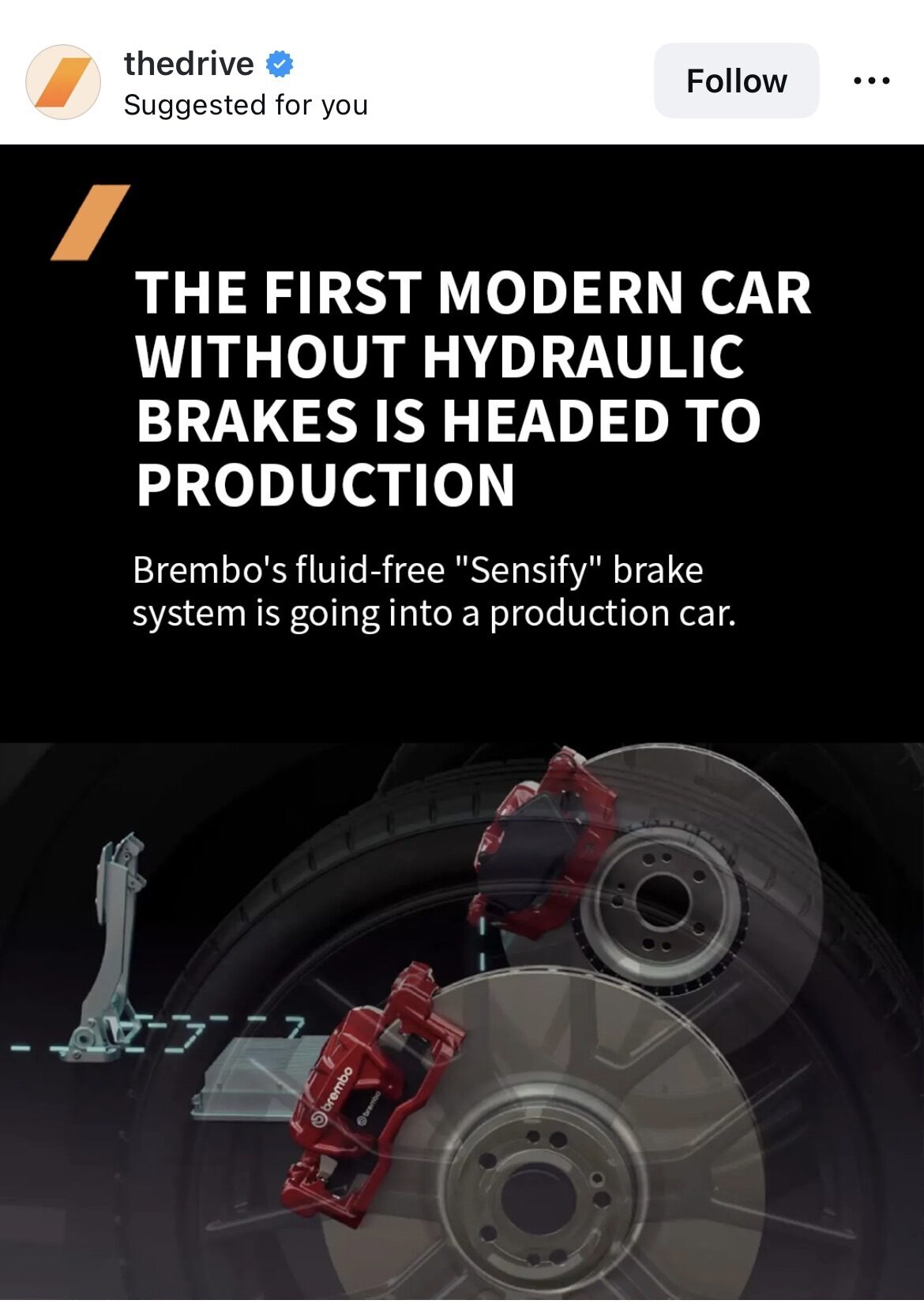
The prices here today and the bid interest. I think you’re seeing that there’s sufficient interest and [02:14:00] sufficient value. People will try. I hate it when people do try to sell, resell something so quickly. It’s a tough call. I’m hoping that enthusiasts and real collectors will pick up these cars and continue that legacy that the boman started and respect it.

I’m not saying not use your car the way you see fit, but what I’m saying is these aren’t just art to be hung on the wall. These are machines that were meant to either win races or establish dominance on the road and I’d like to see them used a little bit. Well, as we kind of transition here to another heavy hitter, which is gonna be the second F 40 in the collection, we do have a five 12 bbb, not A BBI, that just crossed the block at 400,000.

The importance of this car, John, we talked about it yesterday. This is a Carbureted five 12, which sort of sets it apart from the other three that are in the collection. The fuel injected one. So that’s the [02:15:00] importance of this car. I mean, aesthetically it’s the same as the other red one. Yeah, it’s a steady evolution and it’s more to do with American smog legislation than it is to do with, you know, basically smog legislation came in and, and Ferrari introduced modifications to offset that.

So first, the bigger motor from the 3 6 5 model to the five 12 and then fuel injection to just clean up what was going into the, uh, into the tailpipe. Of course, for the purist, that carretta raws quite an important thing for the purist. The lightness of the 3, 6 5 versus the five 12 is a significant factor.

So as we lean into this second F 40, let me recap for you guys the last one in the collection. The other one, it’s twin, sold for six point. Two 5 million. So will this clock in the same, or, well, we just passed [02:16:00] five, haven’t we? Or right at five now

at 865 miles as of today. And ordered new by the Bachmans. I mean, this is, it’d be interesting to see if this matches the, uh, the other example. Now, the other car had half as many miles at 456. What’s that amount to a hundred thousand dollars difference? I mean, I don’t know. Yeah, we’re gonna find out soon though.

They’re both sub 1000, uh, mile cars. I, I don’t think it’s about the miles. I think it’s that if you came in by an F 40, you’ve either got that F 40 or with the previous car, or you are wanting it now. I think that’s what, or you’re trying to build the Fab five, right? 2 88, F 40, F 50 Enzo and so on that line.

So it’ll be very interesting to see. The F 50 is not too far away either, but we are under where its twin was,[02:17:00]

I need to rev this car up a little bit though. Really get the sense of that flat plane crank V eight. I’ve just realized the three exhausts on civic type bars Yes. From the Air Force. Yes. Never realized that before. It was ahead of its time, John, I keep saying Huh.

And you have 40 sell for 5 million, $300, a bit of a gap, but hey, what’s a few hundred thousand dollars for Ferrari F [02:18:00] 40 buyers?

Oh wait, something I’ve never seen before. Uh, Ferrari five 12. Well, this one’s A PBI, isn’t it? Yeah. This is the fuel injected one.

I wonder what it was about bbs that the Buckman so liked. I wonder if it was the shape or if it was the way that they drove, or quite what it was that was the attraction, or it was a moment in time where it was a Ferrari that was easy to pick up because nobody really wanted them. Right. It, it could be a child of circumstance.

Yeah. There, there was a period, wasn’t that 15 years ago when these were 30, 40, $50,000 cars? You know, from what I’ve been seeing over the, over the years in the, in the business, there were a lot of, um, wealthier professionals. Again, academics and major universities. The Chicago [02:19:00] area especially. Uh, there seemed to be a group of professors that really liked the BBB and the BBI had a sense of adventure.

Uh, some of them were pilots too. Uh, just their lives were different. Inflation was different. Wealth was different. A a working professional could aspire to and achieve a BB if they had, you know, everything in order. And, uh, it just seems like, um, now they’ve become, after a price drop, you know, about 20 years ago.

Now they’re coming back into vogue. But when you’re talking about the eighties and working professionals, I mean this five 12 BB 1984 talking about hookers, it’s the eighties. I mean yes, of course, world, but I mean, you, you have a lot of choices. In 1984, would you buy a five 12 BB or buy a Lotus Espree?

Yeah. Or a. Sis, what are you talking about, Eric? Just because they’re both wedges. They’re not remotely the same car one’s got a epoxy little [02:20:00] cylinder engine. The other’s got a mighty V 12. It’s like, would you date a girl or a carport? Cutout?

Oh, John. I mean, I’m trying to draw parallel without having to be like, oh, well there were Porsches available at the time, or there was this, or there was the Corvette. The competition for the BB would’ve been older cars than you could have got at great prices. Imagine the price that you could have paid for, uh, fifties Ferrari tester Rossa for something like that at the top in the mid eighties.

These, at that time, you know, you could have picked up a Ferrari GTO for under a million pounds. Okay, so let’s take the debate to that end, which is 1984. Ferrari Testa Rosa versus 19 84 5 12 bb. Which would you choose the new hotness or the old guard that’s going out the door? Oh, I’m in the fifties. Tesa Rossa, not the eighties.

Tesa Rossa.

This is [02:21:00] very interesting. This far, 3 28 GTS is actually, I believe, selling for more than the five 12 bb. That just, this is the one to watch. Here we go. 4 58 special. Absolutely crazy in the market. So isn’t the deal with these that this is the last time Ferrari did a naturally aspirated high revving V eight, correct.

The four 80 eights were turbos and then the 2 96 we got a twin turbo, six cylinder. I’m predicting over 4 million. I mean, this will break record special. A, what does that mean, ER to again? And it’s getting more and more stated. You know, this is quite possibly one of the best Ferraris ever built or converter.

That’s why they’re getting obscene money for ’em. I really like the four 80. Very nice car. Yeah, no, they’re starting to game better trailer. So fresh from the, and they had, they had a great racing track record as well. They [02:22:00] did really. And oddly enough, when they transitioned there was a period where the, they’re working the bugs out of the 4 88 and the four 50 eights were running right alongside of ’em.

They’re just as quick. Yeah. But it’s getting used to the turbo and the spool and you know, the drivers are trying to acclimate to the new car. And actually funny enough, the same thing happened in 2 96 debuted. Yeah. The 4 88 was actually quicker than the 2 96 until they worked out the problems and then it, you know, obviously they sunset the 4 88, but it’s always that overlap when you see ’em in motor sport running together.

You’re like, is it really worth jumping to the new car yet? Yeah. Progress could be commitment financial wise, you know what I mean? Progress could be difficult sometimes, but yeah. The 4, 5, 8 saw a great, great track record across different racing bodies across the world. So the specialty, A designation that means aita, is that correct?[02:23:00]

I mean, I thought four maybe, but I thought at least three. I mean, what these things are doing, should it be colored? I don’t know. I mean, the last one produced how many miles? 58 miles. You know? Of course then that’s a sad situation is it’s such an incredible car to drive. In reality, you can’t drive it.

’cause then you, unless you just don’t care about the money factor right, or what the investment is, you wanna go enjoy it because they had the other one that sold, they had like aspect to 1.5, 1.8. I can’t remember what sold for. But this being one owner, low mile last produced everything.

Alright. Countdown. Two 2,900,000, sold[02:24:00]

2,000,008. Alright, we got the last three cars. So the 3, 2 8 is cost the evolution of the 3 0 8. Slightly bigger motor, slightly different grill chrome on, on the grill there, rather than black and bigger back bumpers. For my money, I prefer the earlier, smaller bumper cars. But of course you do get more creature comforts and, and generally a more just together vehicle.

If you buy a 3, 2, 8 rather than your 3 0 8, I would’ve agreed with you. If you had, we had this debate 20 years ago, I would’ve said 3 0 8 all day long. Forget the 3 28. It’s just bloated and big and heavy and you know, so be it. But now as I reintroduce myself to these cars with wiser and more mature eyes, I see the appeal of 3 28.

I really like them. I mean, I got the chance to drive one and it was fabulous. And now, you know, if I could’ve different from the 3 0 8. Hmm, [02:25:00] different from the 3 0 8 You auto crossed? Yeah. How so? How so quicker? More linear in terms of power. Also Rev happy, just like the 3 0 8, but it just, it just felt like it had more low end grunt in comparison because of the 3.2.

And it was a QV right away. Right. They never had a non four valve head on the, on those cars, that four valve head. It really helped the top end as well. It did. It did. And so I enjoyed it very much. And again, if I had the money to be able to pick one up today, I would love to have a 3 28. Well this one’s at, this one’s at five 50, but surely you can, you can pick him up for under a hundred count.

Oh yeah, yeah, yeah. I’ll call uh, I got Lance Stroll’s dad on speed dial. I’ll just call him, you know.

Here we go. F 50. So these F fifties, they are, I I wasn’t [02:26:00] into them when they were new. Now I really am. It is a Formula One car, which you can drive on the road. It truly is. I just wish it looked better. I’m sorry. Compared to the F 40, it’s quintessential nineties. It’s very blobby and round and soft. I mean, I’m not discounting its technology or its ability capabilities.

The V 12 is awesome, but it’s just I can’t get over the styling. Is it wrong for me to say that? It kind of reminds me of, um, those McLaren M eight styled, uh, kitty beds from the early seventies. Yes. Which I always wanted. So maybe I should aspire to one of these. Are you trying to say, it looks like the coyote from Castle and McCormick?

Yes. Yes. I might. You I would be more excited except Iron and McClaren M eight that I would’ve Ferrari F 50. Oh man, you’re tripping me back with starting at 9 million with Curry Castle. McCormick should look, we, we should, [02:27:00] you know, as we passed 10 million here, we, we should recognize that, you know, this was a card that was developed by Michael Schumacher when Michael Schumacher and Ferraro were at their most dominant in Formula One in the DNA of those turn of the Century Formula One cars with their normal aspiration and their super high revenue.

That is right there in this F 50, the F 48, and people always compare 40 and F 50. And I just think it’s an absurd comparison because the F 40 is a totally different car. This is a, the F 40 is like we talked about. What that is. This F 50 is a Formula one derived. It’s a different kind. It is, but the problem, you can’t compare them.

The problem I have is if you follow the legacy of Schumacher, like you recently did on episode, this is the beginning of his career versus the Enzo, which is at the end of his career. And everybody says the enzo’s a better car. So in in for my money, this car gets discounted and you fall back to the F [02:28:00] 40 because the F 40 put you it’s square in the rivalry with Porsche because the question always comes up 9 59 or F 40.

The F 50 doesn’t have a contemporary, what is that? The Diablo? The Diablo doesn’t hand stand the chance against this car and Porsche didn’t have anything. The nine 11 STRASSON version doesn’t really work as a comparison because that was a Homologated LMP one or GT one LAMA car. So it stands by itself with no competitor.

Yes. It sounds by we know competitor and hard to find a comparison as we cruise past 11 million here. There is one car I would put up against it and I know you’re gonna hate me for saying this, and that’s the XJ two 20. We’ve had this debate before, but I would choose that over the F 50. If the XJ two 20 had a V 12, I’d be with you on the comparison.

The F 50, [02:29:00] the ask is at 11 2 50. They’re counting down.

I don’t even like the wheels. I was just gonna throw it out there. Oh, I don’t know. As it’s rolled up there, I’ve looked at it and thought I like the proportions of that. They just, million 200 is the ask. I would definitely have an counting down 40.

Ready maybe when I’ve matured like you have, as is typical of some Ferrari Marketplace podcast episodes. There was a slight technical snafu and it looks like we ran out of battery, but that’s okay. We were one car away from the end and we cut to commercial break and we’ll be back after the break with the Bianco spec.

For everything from Ferrari and Porsche, Lamborghini and Konig seg, visit exotic car marketplace.com. If you’re into anything with wheels and a motor, log onto the Motoring Podcast network and check out our family of [02:30:00] podcasts@motoringpodcast.net. This is the place to find your favorite new show. Next up a shout out to David Beatie and his team at Slot Mods who custom build some of the coolest slot car tracks in the world@slotmods.com.

Let your imagination run wild and finally, grand touring motorsports covering all aspects of auto racing and motorsports history. Check out their ezine@gtmotorsports.org. All the links for our sponsors are in the description. All right, gentlemen, we are back. We are moments away, moments away from the Bianco special, the main attraction of Mecca’s, Kissimmee 2026 auction.

And we’ve continued to see really strong numbers in great sell through, haven’t we? We have, there’s been a few Ferrari that have crossed the block since the Bachman collection. A lot of, uh, Ferrari 365, GTSs, GTVs, all those Daytona cars. And then we have one final Ferrari in the mix, [02:31:00] 63 Ferrari, 400 Super America that’s coming up.

So looking forward to that. And then there’ll be two more cars, and then I’m sure Mecca’s gonna put together just a small break. And then we will get started with our main event, which is the Bianco Speciale that we’ve been leading up to. So any key points that we want to make about the car as we bring our listeners back up to speed if they haven’t listened to our previous episodes.

Well, I was just gonna talk a little bit about the Super America that we have coming up. First of all, these were, each was an individual car that was ordered from the factory, and I think in the sixties they were two or three times more than Ferrari’s standard offerings. So when we see these four 10 Super Americas come to market, we’re really looking at what at the time was Peak Ferrari?

Well, one of the most beautiful, uh, Ferraris ever built. And, and I believe I, I’ve lost count of how many individual [02:32:00] series of these cars, but they were all, like you said, built basically to order for all the great personalities of the era too. I think, uh, Peter Sellers might have, I believe he had either had and he did.

Yeah, yeah. A Man of a Thousand Faces. That’s right. And the Pink Panther and Dr. Strangelove. Oh, what a movie that was. Yeah. So it’s, uh, pebble Beach. Each year up the hill from where the Concor takes place, there’s Kaza Ferrari. Cars, a Ferrari. They always have a display of 40 or 50 Ferrari, and, and this last year there were a couple of Super Americas, and I could, you could make comparisons between them and look at how the styling evolves.

The wheels, the positioning of the chrome, the, the shape of the taillights, the shape of the headlights, the shape of the air intakes. You can really compare and mix and match and see how each individual styling element it was developed and was taken on some cars and taken off other cars. And that is very [02:33:00] relevant for us talking about the two 50 GTO because you can talk about, you know, numbers and there being enough GTOs that were 39 built, 36 survive.

The feeling is that because of the 36, there’s some kind of a, you know, there’s enough to make a market, but there’s not so many to create excess supply and drive prices down. So that’s certainly one of the reasons why they cite for the GTO being the Mona Lisa of, of automobiles. But let’s be real about this.

The GTO is the Mona Lisa of automobiles because of the way that it looks, because the GTO got all of those different styling cues that we see through Ferraris in the previous 15, 20 years. It had the best of those styling cues all in one place. The e type style nose, the three straights behind the rear wheels, the awesome cupe shape with a little ducktail spoiler.

All of those elements came [02:34:00] together on the two 50 GTO to really make it stand out. You know what, it didn’t have John, it didn’t have a trapezoidal passenger glass on a very curved car. That was one design feature that did not make it in two 50 GTO that you do see on the 400 Super America. I can’t get over that piece of glass.

For me, I, I see the evolution from the two 50 luso that we talked about earlier, but I just don’t get that piece of glass. But it’s the hough. I don’t like it. It doesn’t matter if the Pope invented it.

Do you know? For some reason that element doesn’t really come into my vision. It’s just, I just love the, just the, the way that body flows from a profile and that tail end on that car. It’s just, it’s just beautiful. I don’t know, for me, it’s a magnet for my eye. It’s the first thing I see because it, I don’t, maybe it’s my brain, but it feels out of place.

So the Hoffmeister kink, John, I, I kid you a little bit, [02:35:00] but why is that important? Why, why is, why do we need to know Hoffmeister and his kink? Well, because every modern car has it, because the way they break up the boring shape of these modern SUVs and crossovers is by doing the hofmeister kink. If you walk through any car park, you will see more cars with a hofmeister kink than not.

I’ve never, and I don’t like it on modern cars either. So now I have someone to blame. I see how this works, and now you cannot un see it. Alright. This car, I mean, a sign, the kink, call it what it is. It’s beautiful. It’s a beautiful car. The way it sits on the road is absolutely awesome. The, the interior designed for me is absolutely pink car interior, this area of sixties Ferrari with the, the five gauge package and the thin, the thin stick shift.

I, I, I really believe interior design has never been, I love that luxury back then was defined not by how many widgets and, [02:36:00] and, and doodads you, you had, or in the interior. It was conservatively, elegantly luxurious. And we’ll never see that kind of look again. We’ll never see that, that level of, of, of pre add-on optioned out interiors.

And these four hundreds were fast as well. Yeah, they were, I mean, they were 150 mile an hour plus cars and. That is pretty astonishing for their sixties technology. So, uh, the car’s just moved across the block here as we pass 2.3, the way the line comes off the top of the front wheel arch and extends along the fender above the bit in farina badge there.

Just so awesome. Does this car act as the precursor to the 400 and the four 12? Well, in basic concept it does. You know, the two plus two, [02:37:00] right? They were a replacement for this. Yeah. They took their design cues from the 365 GTV fours, right? Yeah, that’s right. Maybe an overall essence. I I, I will have to say though that the 400 to four 12, they’re the most criminally underrated Ferrari.

I think there is this generation or the newer ones, in all honesty. Absolutely. So what did that hammer at? It’s a 2.3 or so. Is that what we saw? Yeah, something like that, which to be honest seems a little low for, uh, 400 Super America Coach Bill Ferrari. That looks that, that nice. I mean, such a lovely car.

The blue, it, it’s a shame that that car didn’t cross the block earlier when maybe there was a little more buying enthusiasm in the room. I think so that’s that. It’s funny, you know, how you stage an auction and, and I wouldn’t even begin to comment on how an auction of this size and volume, what goes into the [02:38:00] decision making because, you know, there, there, and that’s what makes this market interesting though, is there’s, there’s a chance for actually someone to jump in, buy something and if they’re in it for a profit motive after a little while right.

You, you do have that opportunity to arbitrage a little bit. So John, we are two cars away from the Bianco. Speciale. Do you want to kind of bring everybody up to speed on its significance? Yeah, absolutely. I mean, we said 36 GTOs bill. This one, the only white one. The whole world of GTOs is, ’cause there’s only 36 people have got them any driving event that you are invited on.

This is an opportunity to rub shoulders with people who you would not normally be able to rub soldiers with. So it’s not just a car, it’s an introduction into a very, very exclusive club. The court, the court of owls, if you will. Yeah, yeah. This particular. Car was bought by a British Jaguar dealer, [02:39:00] and it was bought specifically in order to go racing with.

And, and the guys who he had raced it were names that were very well known to the British public and subsequently even became known internationally. Soy salvadori, but more famously, Graham Hill, who, you know, the only man to win the triple crown of motor racing. And really a, a very well known figure within, uh, international motorsport in the sixties and seventies.

So we are, you were talking about John Coombs as the original owner and order of this Bianca special. Yeah. John Coombs being the owner of the Jaguar dealership and being somebody who’s very much in Britain associated with racing. Mm-hmm. Jaguars and always in white. He was known for racing in white and, and he was clearly well enough regarded by the Ferrari factory that when, when Coombs requested the car be painted white, it was indeed painted white, which, uh, apparently at the time was a very difficult [02:40:00] thing to get Ferrari to do.

I dare say in those days you couldn’t just pick up the phone, call the factory and say, well, I wanted in white, kind of thing. It just wasn’t possible to do that. And one of the things that we walked backwards into during our research and the coverage that we did on this car a couple of months ago was that the significance of the Bianca isn’t necess.

About the significance of a Ferrari, but its influence on Jaguar’s racing history at that time. Well, absolutely. ’cause John Coons was so close with the Jaguar board of directors and the, the, there is a story that he had lunch with Bill Hayes one day when of Jaguar’s, uh, senior guys and, and said to them, you know, I can’t race your E types anymore ’cause they’re too slow.

I’m gonna have to race this Ferrari. And the long and short of that meeting was this car, the Bianco spec, spent the winter of 19 62 3 at the Jaguar factory [02:41:00] with the ideas being copied and incorporated into what became the lightweight E type. Okay. We’ll put air quotes on that, John. We’ll call it. It was.

Studied it was being studied. So as we’re getting that much closer to the car, crossing the block, Dave, you put together a meticulous analysis of where this car should fall. How are you feeling based on the energy in the room of where the car might hammer? Well, uh, as far as, uh, the room kind of thinning out a little bit, I’m not concerned about that because anybody that’s in the market for a car of this magnitude and significance will probably have representatives on hand a bid for them, or they’ll be on the telephone.

I believe there’s probably two to five, not only financially qualified bidders, but bidders that would want something like this as a crowning achievement of either the anchor or the crowning achievement of their collection. Here we go. They’re running a video of the car right [02:42:00] now. Get everybody hyped up.

What do you think the opening salvo will be in terms of the bid? I think, uh, based on where things have been of over the last five years, with the few GTOs that have come to market at auctions, I’m thinking they’re probably open up at about 40 or 50 million. Yeah. ’cause the range, we’ve, the range of purse prices we’ve seen is 35 for a car that was considered to have a bad history and the 75 for a car that’s been considered to have a, a good history.

And this car does have a good history. It’s never been totally restored. It’s never been wrecked. It’s never caused, uh, uh, been, uh, the subject of a, uh, racing accident, uh, of any magnitude and the only one in, in white. And it was run for three whole years. Uh, competitively in the uk. Here we come. Yeah, here we go.

Also,

the only fer.[02:43:00]

Look at that. Here it comes.

What a gorgeous car. That doesn’t matter what color the GTO is in. Oh my God. That’s, that’s art. That’s not even the car anymore. Yeah. We’re, this is an art auction right now. Yep. This is, this is pure art.

Starting. Starting at 50 million. 50. Wow. Making 40 million. So making 30 million. 30 million. Making 30.

The auctioneers looking for bids. Incre, we’re gonna go up in,

okay. They got 25, asking 30.[02:44:00]

We’re at 30.

So there’s an awful lot of people around the block, but it’s hard to see if any of the bidders are in the house. 35 million. The bid is at 30 million. Looking for 35 million.

30. 30 million dead. 32. 31 million. Dead. Seems to have stalled out here a little bit. It has. It really has. And it’s below the, the threshold of the lowest one ever sold. Well, the low is sold in in recent. This car has, yeah. Continuous. Great history.

Ownership of two fame collectors, [02:45:00] including Jack Sears, who drove this car. I feel like we’re playing the price. Right, exactly. Uh, $1 Bob. 33 million. 33 million. 32 million. 33 million. Oh gosh. We’ve been hanging for a while now. I haven’t we, my God. Is there anyone on the phone? Can we tell if there’s any international bidders or phone bidders?

30. Okay. 30 million, 32 million. You over here? 33 million. Well this will be, uh, could possibly become the bargain of the century in the, in the fer. A classic vintage Ferrari market. This is a solid car with solid history. 32 now. Alright. It’s not moved at all. And they’re trying to whip the audience up a little bit now.

Yeah. Let’s see if that achieves any movement. [02:46:00] I am literally on the edge of my seat. This is

33 million. Asking 34 million million while it’s moved now 34,000,030.

There’s always a chance this will not sell and then sell privately afterwards. Right. ’cause they have, their whole bid goes on process at Mecu where you can put in a bid later. Exactly. You know, and there’s a chance. An opportunity to engineer a private deal for sure. But with the presentation this has had and the history of this car being well known, okay, they have 33 5, [02:47:00] 34.

Well, it is creeping up. So does it seem like that’s too bitters to you? It’s hard to tell. It is really hard to tell. The likelihood of a bidder being on the phone is strong here. I mean, there is somebody on the phone with a guy in the hat that’s,

do we have an idea of what the most expensive car to cross the block at Mecu is? Is this it? Is this gonna set a record for them? I’d be very surprised if not. Yeah.

34 we’re holding it. 34, you know something. He’s gonna

take

35 million with all the, uh, all the [02:48:00] excess liquidity in the out there worldwide. This might look back like the deal of the century, or it might be a changing of the God. Yes. It might be a movement of the guard away from racing cars from the last century and towards hypercar of this century. Yeah. Because we saw them do very, very well earlier during the Bachman collections and Enzo and the Sac car that we saw.

So yes, the, the Sac 9 1 8 that we saw. Yes. They do what? Double Its two and a half million dollar estimate. I mean, this is the automotive equivalent of a Picasso, Rembrandt, a Van Gogh all roll into one. Well, and to walk away with this car at 35, this sets GTO price is significantly back, doesn’t it? I mean, yeah, the weather tech guy supposedly paid 70 or 75, just three or four years ago.

Yeah,[02:49:00]

this one’s at 35. And it’s never been wrecked. Nobody died in it. I mean, there’s a lot of positives. Yeah. Lesser examples with issues, uh, have sold for more. Well, yes. ’cause of course, that’s the story with the $35 million car. It wasn’t written so much that it had a bad history. It was that it, it was that it had virtually no history at all.

Right. In that when it was born new, it was wrecked shortly afterwards. It was wrecked shortly afterwards, and the family seemed likely that it seemed to have hung onto the car for many years until Bonhams brought it to auction and sold it in 2023.

Still sticking at 35, asking, we’re not moving from this part 35. We are not, I mean, unless we are not getting to 40, which puts even Williams’ projection pretty high.[02:50:00]

This was certainly a bold offering for Mecom Auctions. They’ve done amazing pre-sale marketing of this car, promotion, presentation, everything that an auction house should be doing to present a car of this magnitude. So hats off to them. They have been doing an awesome job of this. Could not agree more.

Absolutely fabulous. Yes. If you were in the market for the car, for a car like this, there’s no way you couldn’t know it was on sale. You would know this car was on sale. Everybody’s been watching this car, everybody’s been talking about this car. I haven’t bumped into anybody that doesn’t, doesn’t know that this car has been on the block.

It’s been up for sale for quite a while. So it seems clear then that the prices on these, it seems clear that this is a dip in price for these very high end fifties, sixties sports racing cars,[02:51:00]

racing tides don’t necessarily raise all boats. And I think that’s the market. There’s, it’s very selective. It’s very stratified. This, hopefully this. Uh, high, high, high of the high end, uh, offering Will, will, will work. Uh, we’ve seen a lot of surprises to the upside today.

Now they’re giving a history lesson to get everybody tuned in and hopefully we’ll see a nice, healthy bump and some aggressive bidding. A competitive bidding. Um, I’m wondering though, is it, could it be dangerous to advance market something like this as far ahead as it as it had been? Or is it good practice to do that?

Because you would think that the diligence that’s gone into this since about August, probably around Monterey, uh, last year. Yes. The car was at [02:52:00] Monterey last year. My son and I saw it. Yeah. And it’s. Beautiful. It’s just simply beautiful. And I think with the generational money that’s out there, the international money that’s out there again, do you think people are waiting for the bid goes on?

Is that what’s happening at the moment? I’d have to wonder. I’d have to wonder. I mean, try and buy it on the block. I mean, the, the, I don’t think that the bid goes on will provide a bargain. Right. It’ll probably provide, again, a starting point, a starting point for negotiation with a serious, motivated prospect.

But if I had to take a guess, I would guess the reserve is 50. Yeah. Yeah. I was gonna say, because at this point with some of the other cars we’ve seen cross the block, they would’ve been like, reserve is off and then people go crazy. So I guess everybody in the room kind of understands we’re not at that point yet.

Yeah, that’s right. The car’s not for sale. Yeah. It’s just kicking, stalking. Yeah. Well, if somebody’s out there with the money and the, and the [02:53:00] willingness, uh, or the readiness to buy something like this, they, uh, I think they’d be well advised to do it on the block. Yeah. The, the one sort of black market against the card that when we discussed this last night is.

The fact that it’s right hand drive, not left hand drive. Yeah. There’s like eight right hand drives, if I remember the stats correctly, and this is one of eight, however, but a right hand drive car in the States. I, to your point, John, it’s not that difficult to adapt, but for a lot of people, I think it might be a point at which you just don’t want to engage.

Yeah. I mean, I, I personally, I I hadn’t considered it as a factor until we were discussing it, but I just wonder if it is something that holds people back. Just because if you’ve not driven a car with, uh, you know, ears are weird back to front thing. It’s not just that you place the car on the other side of the road.

It’s that everything is, you know, the, the shift is on the other side. You’re using another hand to, to change gear and that’s perhaps offput. However, for up until [02:54:00] not terribly long ago, all ’em on 24 hour cars were all right. Right hand drive, were they not, or most of them racing cars tend to be Right hand drive.

That’s right. There’s more right hand so you can see to place the car better. That’s my understanding of why they That’s great. It it’s also for driver changes. We talked about this before. Oh, exactly. John is, I, John and I have debate this, but guys, we’re still at 35. Yeah. We, I dunno what the guys on the block are talking about whilst we’re talking about this stuff, but the car is not being bid up.

Yeah. And folks, we’re not, we’re not trying to fill air time. We’re just like wondering what’s going on. Yeah, exactly. Are they thinking that somebody’s gonna find $35 million down the back of their seat or, or something to bid on it? There’s a bag here. I don’t know what’s in it. Oh yeah. Where’s that guy?

Chat, GB t’s gonna bet on this. Oh, isn’t that amazing? Bitcoin’s up. I’m gonna make a bid. Yeah, yeah. What’s my Nvidia stock at?

It’s quiet in here. It’s thinned out quite a bit. I’m [02:55:00] surprised that a group of people didn’t form an investment LLC and and buy something like this. Oh, sorry. Yeah, that’s a, sorry to cut you off there. That’s a new thing though these days, right? Where they go in together and buy something like this. Yeah, yeah.

And run it, you know, as a, as a venture. But if, if we was slightly better healed, if we’d arrived there, each planet, each with 10 million that we were ready to spend, I have 50 bucks I could give you, I mean that Well, I mean, but, but if had we arrived you, we could have picked up a bargain. Yeah. Could you imagine a fractional offering of if.

For to qualified bidders of say, I think the, the threshold’s 200,000 to own, to, to play in that market. There we go. 35

reserve is off. That 35 reserve was at 35. The reserve was at 35.

I would’ve expected a far higher

35[02:56:00]

final call. Third and final call at 35. Five

going once

35 million.

5 million. 5 million. Anybody. Those the people that are in the audience. There are a good number of people standing and a great number of people filming. Yeah. How many are bidding? That’s exactly right. Need, need bidders

sold at 35 million [02:57:00] a car with this quality, that is the bargain of the century. Oh yeah. Somebody got a huge bargain. This is not gonna, sorry. So it has been a day full of anomalies. Right. We got outliers in both directions. Wow. On Unreal. This is. People will be talking about this for a long time to come.

Yeah. This is significantly, I I really feel this paradigm shift that we were discussing earlier. I, I really feel like the people in the audience with the big checkbooks are now in their forties and fifties, not old. Uh, yeah, they’re not, I hate to say baby, they’re not interested in sixties eras, Ferraris.

Like we saw some of the lower cars really not perform that well. And then if that’s the case, shifting tastes, how can a car like this, this is like lust on wheels, let alone it’s competitive history, who had their backside in the driver’s seat. [02:58:00] The, you know, the fact that it wasn’t never totally restored.

My mind is blown. Somebody’s got an entry to every event they ever should care to participate in. And maybe this is a reset of that end of the market. You know, we’d be, it’ll be amazing to see what happens next in the high ultra highend, uh, market. But it’s, it will be because the e and had coup seems a very, very long time ago now, doesn’t it?

That $143 million Mercedes-Benz, that seems like quite a long time ago now, way in the rear view mirror. Yeah. Well, for the sake of our listeners, what we’re gonna do is we’re gonna get back together under less chaotic circumstances and do a postmortem of Mecu Kissimmee and the Ferraris that crossed the block.

’cause there are a bunch of other Ferrari that we didn’t cover that we are able to capture numbers on. So you’ll go back to your maths there, Dave, and kind of come up with what things look like. And then we’ll reset and talk about what some of the patterns look like, what it might mean for the rest of the [02:59:00] auction season.

But I cannot thank you gentlemen, enough for sharing booth time with me to, for coverage here at Mecu Kissimmee, and, uh, look forward to doing it again. Thank you very much, much. Nobody sells more than Meum. Nobody. Mecom Auctions is the world’s leader of collector car vintage and antique motorcycle and road art sales hosting auctions throughout the United States.

The company had specialized in the sale of collector cars for more than 35 years now, offering more than 22,000 lots per year and averaging more than one auction per month. Mecom Auctions is headquartered in Walworth, Wisconsin, and since 2011 had been ranked number one in the world with the number of collective cars offered at auction, and is host to the world’s largest collective car auction held annually in Kissimmee, Florida, as well as the largest motorcycle auction held annually in Las Vegas, Nevada Mecca’s Road [03:00:00] Art and Mecca on Time.

Divisions offer a wide variety of collectibles for live and online auctions. You can learn more and follow mem and their upcoming events@www.meum.com, or you can follow them on social at Meum Auction on Facebook, at Meum Auctions, on Instagram, at Meum, on Twitter, and at Meum Auction on YouTube.

This episode has been brought to you by Grand Touring Motorsports as part of our Motoring Podcast network. For more episodes like this, tune in each week for more exciting and educational content from organizations like The Exotic Car Marketplace, the Motoring Historian, break Fix, and many others. If you’d like to support Grand Touring Motor Sports and the Motoring Podcast Network, sign up for one of our many sponsorship tiers at www.patreon.com/gt motorsports.

Please note that the content, [03:01:00] opinions and materials presented and expressed in this episode are those of its creator, and this episode has been published with their consent. If you have any inquiries about this program, please contact the creators of this episode via email or social media as mentioned in the episode.

Highlights

Skip ahead if you must… Here’s the highlights from this episode you might be most interested in and their corresponding time stamps.

  • 00:00:00 Special Episode at MECUM Kissimmee Auction
  • 00:01:29 Discussing the Ferrari Testarossa
  • 00:02:44 Market Trends and Auction Insights
  • 00:06:36 Exploring the Bachman Collection
  • 00:11:49 Automobilia and Memorabilia
  • 00:20:00 Diving into Ferrari’s Heritage
  • 00:25:51 The Significance of the Ferrari 308
  • 00:42:54 The Enzo and Modern Ferrari Design
  • 00:45:35 Auction Dynamics and High Bids
  • 00:47:36 Excitement and High Stakes Bidding
  • 00:48:51 Rare Ferrari Models and Their Appeal
  • 00:51:42 Unique Customizations and Collector Insights
  • 00:55:39 Ferrari FXX and Its Exclusivity
  • 00:58:27 Ferrari 360 and Challenge Stradale
  • 01:03:46 Classic Ferrari Models and Their Legacy
  • 01:22:02 Ferrari 400 and Its Market Perception
  • 01:25:27 Special Order Ferraris and Unique Color Schemes
  • 01:31:57 The Unique Ferrari Aesthetic
  • 01:32:30 BBI vs. 365: A Ferrari Showdown
  • 01:35:36 The Dino Legacy
  • 01:38:51 Modern Ferrari Design: F12 TDF
  • 01:41:51 The Green Ferrari 360
  • 01:46:13 The Value of Rare Colored Ferraris
  • 01:52:44 The LaFerrari Aperta: A Million Dollar Marvel
  • 01:55:32 Ferrari Market Trends and Investment
  • 02:14:38 The 512 BB: A Carbureted Classic
  • 02:16:25 Discussing the F40 and F50
  • 02:18:06 Ferrari 512 BB and Market Trends
  • 02:21:09 Ferrari 458 Speciale and Market Predictions
  • 02:25:55 The F50: A Formula One Car for the Road
  • 02:30:31 The Bianco Speciale: A Unique Ferrari GTO
  • 02:38:15 Auction Analysis and Market Trends
  • 02:58:35 Concluding Thoughts and Future Auctions

Learn More

On Ferrari Friday’s, William Ross from the Exotic Car Marketplace will be discussing all things Ferrari and interviewing people that live and breathe the Ferrari brand. Topics range from road cars to racing; drivers to owners, as well as auctions, private sales and trends in the collector market.

With the arena lights lowered and a cinematic intro rolling, the Bachman Collection finally took center stage. First up: a pair of Alfa Romeo 8Cs – a Spider and a Coupe – modern exotics with Ferrari DNA under the skin.

The group debated color, rarity, and driving character (of this car, and many others in the collection). The consensus: the 8C is a grand tourer with presence, heritage, and a design language that nods to Alfa’s 1930s glory.


Five‑Twelve Fever: TR vs. M

Next came the Ferrari 512 TR, prompting a comparison with the later 512 M. The M’s exposed headlights (seen below) and more aggressive styling divide enthusiasts, but both represent the final evolution of Ferrari’s flat‑12 lineage that began with the 365 GT4 BB in the early 1970s.

These cars are known for being surprisingly usable – good visibility, strong performance, and a refinement that early Berlinetta Boxers lacked.


The First Ferrari Supercar: 288 GTO Ignites the Room

Then came one of the day’s crown jewels: a Ferrari 288 GTO with just 2,000 km and single‑owner provenance. The bidding erupted instantly. Within seconds, the car soared past $7 million, eventually reaching $8 million – a staggering leap from the typical $4–6M range. The team was stunned. “We might be witnessing a paradigm shift,” David said. “This is the power of provenance,” I added.

The GTO’s significance as Ferrari’s first true “halo” supercar – precursor to the F40, F50, Enzo, and LaFerrari (with offerings also crossing the block as part of the Bachman collection) – was on full display.


The Car That Saved Ferrari: 308 Reflections

The conversation shifted to the Ferrari 308, a car Eric passionately calls “the car that saved Ferrari.” Built in large numbers, made famous by Magnum P.I., and accessible compared to the Testarossa, the 308 kept Ferrari afloat during a turbulent era.

Fiberglass early cars (“vetroresina”) remain the lightweight unicorns of the lineup, while later QV and 328 (3.2-litre) models balanced emissions with performance.


Berlinetta Boxer: Beauty, Danger, and the Birth of a Lineage

A 365 GT4 BB followed, prompting stories of gray‑market imports, twitchy handling, and the car’s role as the progenitor of the entire flat‑12 Berlinetta Boxer family.

These early BBs, once $130k cars, now command serious attention for their purity and rarity.


The F40: A Poster Car Comes to Life

Finally, the team reached another one of the Fab Five: the Ferrari F40. With just 456 miles and factory delivery to the Bachmans, this example was essentially a time capsule.

Bidding rocketed past $6.5 million, far beyond the $2–3M range many still associate with F40s. For Eric, this was the car of his childhood bedroom wall. For the market, it was another signal that 2026 might be a watershed year for blue‑chip Ferraris.


The Bianco Speciale: The Emotional Crescendo of the Collection

No discussion of the Bachman Collection would be complete without acknowledging the car that served as its emotional crescendo: the Ferrari 250 GTO (3792GT) “Bianco Speciale.”

More than just a rare specification, finished in a striking white rarely seen on Ferrari’s flagship models, the Bianco Speciale became the symbolic finale of the auction – the car everything else had been building toward. Its presence wasn’t just about rarity or value; it was about narrative. This was the car that tied together with a philosophy of preservation, curation, and passion.

When it finally crossed the block, the room shifted – not just in anticipation of the number it would bring ($35 million, before fees), but in recognition that a chapter in Ferrari collecting history was closing right in front of them.


A Day of Surprises, Stories, and Market Shifts

From Testarossas to GTOs, neon signs to Alfa 8Cs, and lets not forget the incredible provenance of the Bianco Speciale, the 2026 Mecum Kissimmee auction delivered spectacle, nostalgia, and a few market‑shaking surprises (like the record setting Ferrari Enzo below).

The Bachman Collection proved that provenance, condition, and timing can rewrite expectations in real time. And for our team, it was the perfect storm of expertise, enthusiasm, and live‑wire auction energy – captured in a single unforgettable “Super Saturday” (ahem… Friday Friday.)


Guest Co-Host: William Ross

In case you missed it... be sure to check out the Break/Fix episode with our co-host.
Listen on Apple
Listen on YouTube
Listen on Spotify

Guest Co-Host: Jon Summers

In case you missed it... be sure to check out the Break/Fix episode with our co-host.
Listen on Apple
Listen on YouTube
Listen on Spotify

Guest Co-Host: David Neyens

In case you missed it... be sure to check out the Break/Fix episode with our co-host.
Listen on Apple
Listen on YouTube
Listen on Spotify

This content has been brought to you in-part by sponsorship through...

Motoring Podcast Network

A visit to the Revs Institute

Our journey to “The Sunshine State” for coverage of Mecum’s 2026 Kissimmee event, (featuring the Bachman Collection and Bianco Speciale), began with an unforgettable first visit to the world‑renowned Revs Institute in beautiful Naples, Florida.

Ferrari 250 LM

Even before stepping through any one of the many exhibit rooms in the facility, there’s a sense that you’re entering hallowed ground, where preservation, scholarship, and passion intersect. Revs is a place that feels less like a museum and more like a sanctuary for automotive history.

Revs Institute is home to the Briggs Cunningham collection and has many of his racecars of display.

Our guided tour with Lauren Goodman, Associate Curator of Exhibitions – one of the many personalities on the Motoring Podcast Network – set the tone immediately.

Briggs Cunningham’s Ferrari, as raced in Watkins Glen in the 1950s

She brought the galleries to life with the kind of insight that only comes from living and breathing these machines every day. Every car had a story, and every story had a heartbeat.

“Yes, it’s the real thing … we’re so excited to have it here” says Lauren about the infamous Cadillac “Le Monstre” which raced at Le Mans

Just a short drive away in Ft. Myers, Florida, Revs Institute’s Archive and Research Center offered a completely different kind of awe. Director of Archives and Research Center Operations Arthur Carlson and his team welcomed us into a purpose‑built research facility that feels like a cathedral for historians.

Porsche 917, preserved with all it’s battle scars as raced in the 1970s.

Floor‑to‑ceiling collections, meticulously organized materials, and a quiet hum of scholarship make it clear why researchers from around the world treat this place as a magnet for serious study.

You can get right up to the vehicles at Revs, like this Gurney-Eagle F1 car

This visit wasn’t just a tour – it was an immersion. A reminder that automotive history isn’t just preserved; it’s actively cared for, interpreted, and shared by people who genuinely love it.

And if you’re as passionate about cars as we are, and find yourself near southwest Florida, we highly recommend that you take an afternoon and detour to the Revs Institute and check out this absolute gem of a museum.


**Be sure to stay tuned to the MPN for future episode with Lauren Goodman, as she hosts our “Women of the Autosphere” series on Break/Fix.

Guest Co-Host: Lauren Goodman

In case you missed it... be sure to check out the Break/Fix episode with our co-host.
Listen on Apple
Listen on YouTube
Listen on Spotify

Leipert Motorsport celebrates title defense

Leipert Motorsport celebrated another major success last weekend at the 24H Dubai, the final round of the Creventic 24H Middle Eastern Trophy. In the second race of the year, the team fielded a Lamborghini Super Trofeo Evo2 in the GTX class with a five-man driver line-up: Gerhard Watzinger (USA), Don Yount (USA), Fred Roberts (CAN), Manz Thalin (SWE) and Brendon Leitch (NZL).

Photos courtesy Lieper Motorsport, photo by Sciarra Gianluca Fotospeedy

The GTX class was stronger than ever. In addition to a total of three Lamborghinis, other competitive cars from various manufacturers were on the grid, including models from Vortex, Rossa and Ginetta.


Smooth preparation and strong qualifying

The team showed that it was well prepared right from the practice sessions. All sessions went without a hitch, and Thalin and Roberts in particular made intensive use of the extensive track time. For both of them, it was not only their first participation in a 24-hour race, but also their first outing at the Dubai Autodrome.

Photos courtesy Lieper Motorsport, photo by Sciarra Gianluca Fotospeedy

Leipert Motorsport confirmed its strong form in qualifying. Yount put the Lamborghini in third place on the grid in the first qualifying session, Thalin set the second-fastest time in the second session, before Leitch secured pole position in the GTX class for the #710 Lamborghini with the fastest time in the third qualifying session.


Mature performance and flawless race over 24 hours

Thalin took the start of the race and, at just 17 years of age, put in a remarkably confident performance in his first 24-hour race. He steered the Lamborghini safely through the early stages and handed the car over to his teammates without incident.

In the following stints, AM drivers Watzinger, Yount and Roberts and PRO driver Leitch drove the Lamborghini into the evening and night hours.

A close head-to-head battle developed in the GTX class over the entire race distance. Until the middle of the race, the six cars were fighting on an almost equal footing, before a three-way battle between the Ginetta, the Rossa and the Lamborghini from Leipert Motorsport emerged in the second half of the race.

Photos courtesy Lieper Motorsport, photo by Sciarra Gianluca Fotospeedy

Thanks to consistently strong stints from all drivers, a flawless team performance and reliable car performance, Leipert Motorsport was able to pull away decisively as the race progressed. Without any collisions, damage or strategic errors, the team finally brought the Lamborghini home as class winner after 24 hours.


Repeat of last year’s success

“That was an outstanding team performance over the entire distance. All the drivers did an excellent job. The decisive factor was that we remained error-free throughout the entire weekend – no collisions, no damage, no unnecessary risks. Winning the 24H Dubai again is a great confirmation of our work and means a lot to us. A big thank you to the entire team for doing another outstanding job in Dubai after last week’s 6H of Abu Dhabi!” says Managing Directors Marc Poos and Marcel Leipert.

Photos courtesy Lieper Motorsport, photo by Sciarra Gianluca Fotospeedy

With the class victory in Dubai, Leipert Motorsport repeats last year’s success and wins the 24H Dubai for the second time in a row. After this successful start, the team is now  focusing on the upcoming season in the Lamborghini Super Trofeo Europe and Lamborghini Super Trofeo Asia, which will kick off with the opening races from 10 to 12 April at the Circuit Paul Ricard and from 24 to 26 April at the Sepang International Circuit.


About Liepert Motorsport

Leipert Motorsport was founded in 2002 and became one of Europe’s top GT-Teams in Sprint- and Endurance-Racing. Spreading its GT-Engagement even wider across the continental borders, this step is the logical consequence for the German team after being a front runner and championship winning team in multiple competitions.

David Hobbs: A Life at Le Mans

Few names in motorsport carry the same weight of endurance, adaptability, and charisma as David Hobbs. Across two unique decades and 20 attempts at conquering the 24 Hours of Le Mans, Hobbs carved out a legacy that bridged eras, manufacturers, and some of the most transformative decades in sports car racing history.

David Hobbs, Porsche 917K, at Le Mans 1970

Hobbs’ path to Le Mans began not with open-wheel racing, but with innovation. His father’s groundbreaking automatic transmission – featuring four gears and a friction clutch – became the unlikely catalyst for his career. Racing family cars around Britain soon gave way to a Lotus Elite, where Hobbs proved his mettle by winning 14 of 18 starts in 1961. That success earned him a call from Team Elite, and in 1962 he made his Le Mans debut alongside Frank Gardner. Against the odds, they not only finished but claimed a class win and the Index of Thermal Efficiency. Hobbs was hooked: “Le Mans seemed like a very groovy race, and I was more interested in it than Formula One.”

Tune in everywhere you stream, download or listen!

Listen on Apple
Listen on YouTube
Listen on Spotify

The 1960s were a whirlwind of experimentation. Hobbs drove everything from Triumph Spitfires to Aston Martins, often wrestling with underpowered or unreliable machinery. Yet his persistence paid off. In 1969, driving for John Wyer’s Ford GT40 team, Hobbs stood on the podium with a third-place overall finish – a moment both exhilarating and bittersweet, as it came during the final year of the traditional Le Mans start. Brake failures, fiery crashes, and mechanical gremlins were constant companions, but Hobbs’ resilience kept him in the fight.

Synopsis

This episode of Evening With a Legend features a detailed conversation with racing veteran David Hobbs. David recounts his extensive career, spanning over two unique decades, at the famed 24 Hours of Le Mans, providing in-depth stories and personal insights into his experiences from 1962 to 1989. From his early success with a Lotus Elite and a class win in his debut year, to his podium finishes in 1969 and 1984, Hobbs shares the challenges and triumphs of competing in various cars for major manufacturers like Ford, Porsche, and BMW. He also discusses the technological changes in motorsport, the evolution of endurance racing, and his transition to a successful broadcasting career after retiring from racing. The conversation is rich with anecdotes involving other racing legends, technological advancements, and thrilling moments from the track, making it a captivating recount of one man’s journey through the world of high-speed endurance racing.

  • What initially drew you to compete at Le Mans, and how did that opportunity come about in the context of your open-wheel career? What do you remember most about your very first Le Mans race in 1962, and how did it shape your approach to endurance racing?
  • You competed at Le Mans across nearly three decades—how did the cars, technology, and racing culture evolve during that time?
  • What was it like racing for iconic teams such as Ford, Porsche, and John Wyer’s Gulf Mirage outfit, and how did those experiences differ?
  • Can you describe the feeling of achieving a podium finish in 1969 and how that result compared to other milestones in your career?
  • Which race or car stands out to you as the most memorable of your Le Mans entries, and what made it special?
  • Le Mans is known for its grueling nature—what were some of the most challenging or unexpected moments you faced during the 24 hours?
  • You’ve served as a color commentator for various disciplines of motorsports over the years, but what was it like to return to Le Mans and provide coverage for a race you’d participated in so many times?
  • Looking back now, what does Le Mans mean to you personally, and how do you see your place in the race’s long and storied history?

Transcript

Crew Chief Brad: [00:00:00] Evening With a Legend is a series of presentations exclusive to legends of the famous 24 hours of Le Mans giving us an opportunity to bring a piece of Le Mans to you. By sharing stories and highlights of the big event, you get a chance to become part of the Legend of Le Mans with guests from different eras of over 100 years of racing.

Crew Chief Eric: Tonight we have an opportunity to bring a piece of Le Mans to you sharing in the Legend of Le Mans with guests from different eras of over 100 years of racing. And as your host, I’m delighted to introduce David Hobbs, who has enjoyed a long and diverse racing career with a 24 hours of Le Mans serving as a cornerstone of his legacy in international motorsport competing in the iconic endurance race 20 times between 1962 and [00:01:00] 1989.

He drove a wide variety of machinery, including GTS prototypes and group C cars for manufacturers such as Ford Mirage, Porsche BMW, and Jaguar. His adaptability and technical insight made him a valuable asset in multi driver lineups, and he earned several strong finishes, including a class win in 1962 at third place overall in 1969, driving for John Wire’s four GT 40 team, and then again in 1984 in a Porsche 9 56, David Hobbes’s.

Consistency, endurance, and charisma made him a fan favorite and a respected figure at Le Mans where his career spanned some of the most transformative decades in sports car racing history. And with that, I’m your host crew chief Eric from the Motoring Podcast Network, welcoming everyone to this evening with a legend.

So David, welcome to the show.

David Hobbs: Thank you very much, Jared. That’s a. A very complimentary opening statement there by yourself. Thank you very much.

Crew Chief Eric: No worries. Let’s begin at the beginning. What initially drew you to compete at Le Mans? How did that opportunity [00:02:00] present itself? What do you remember about your very first Le Mans race in 1962, and how did that shape your approach to endurance racing later?

David Hobbs: Well, actually, I hadn’t done any open wheel racing when I first went to the Mon. I was fortunate enough. I have a father who was extremely clever and had invented an automatic transmission that was way ahead of the field in as much as it had four gears instead of three, which most automatics had. And it did not have a, uh, fluid drive.

It had a friction clutch, which is automatically operated and it used very little power to run the gearbox. I had raised my mum’s my Oxford, first of all, that 1959. The 1960 IRA dad’s XK one 40, and then his company got an injection of money from an American company who could see a lot of future in his gear box, and it puts a lot of money into dad’s company and they all thought.

Of course, I helped them think that, that it would be a good idea to advertise the gearbox with racing in a small car. So they bought a Lows Elite for me. So in 1961, I raced a [00:03:00] Lows Elite, which was incredibly successful. I won 14 out of 18 starts with that car. We had some teaming troubles to start with, and then we employed a guy who came up to, I volunteer his services.

Who had been an ex Lotus employee, and he, uh, gave us a lot of tricks, how to light in the car, how to strengthen it, especially where the axles attached to the fiberglass shell. So I had a very successful year with that. In 1962, I got a call from Team Elite, which was run by Clive Hunter at the time, and he ran two or three Lotus Elites in Lotus colors.

And of course they had a stick ship. And they asked me to drive with them at Le Mans with Frank Gardner from Australia. So we dually assembled in a little village just south of Le Mans, to do the 19 62, 24 hour, and that was my first run. Now, to say that I was very pleased would be an understatement because when I’d started racing, not one of the reasons had been, to me, a big reason that I wanted to go racing was I really wanted to win.

Le Mans. Le Mans to me, seemed like a very, very groovy race, and I was slightly more [00:04:00] interested in Le Mans than I was in Formula One, actually. So, uh, I was very pleased to be able to go to Le Mans. And the team elite people were very helpful. Ron Bennett was a mechanic on our car, and Ron Bennett just died a few months ago at the age of like 94.

And Ron went on to fame, I’m not sure about Fortune, but so he went on to fame as a chief mechanic when Denny Holmes drove for the Irish to, and they had an incredibly successful career in, uh, big sports car racing, the Braham sports car, whatever it was, a BT 21. Then he bought a load of T 70 and it was all concrete in that Ron Bennett was a terrific mechanic.

Anyway, Frank and I, there was another car, John Wagstaff was driving in the other car. And anyway, we were fortunate enough to, um, last the 24 hours and it was incredibly hot, very, very hot weekend. So we didn’t have any rain, which of course was nice. And, uh, we won the class, well, we, we’d win the class, but we un won the index of Thurman efficiency as well.

And we were eight. They were all in the first British car home. All in all, it was a pretty good weekend. So I thought, well, this is a bit of [00:05:00] a battle. This race should be able to win this one of these days.

Crew Chief Eric: So let’s take two steps back so we can proceed through the rest of your Le Mans career. So with that early Lotus, with the automatic transmission prototype that you were racing, most of that was done in the uk.

Had you raced anywhere else in Europe before turning laps at Le Mans?

David Hobbs: Funnily enough. In 61, we got an entry the Berg green thousand kilometers on the Norge life. And a friend of mine, bill Pinckney, was racing a Los 11 and it was very quick. So he and I went off to drive in the Nu Berg Green thousand Ks.

Now the gearbox caused a bit of a fracker because I had been told by a Lotus Elite owner the week before brand’s hatch that, why on earth would I racing car and automatic transmission? ’cause they were useless and they were absolute crap and just not worth why, why was I doing it? And I said, well, it’s the only reason I’m race is ’cause my dad’s gearbox.

Anyway, I beat him fairly soundly at Brand’s Hatch and also a guy called Graham Warner, who is the sort of [00:06:00] king of loads of elites, had a white and gray one. And, uh, I beat them both and won the race atranta. And the following week, we, the Bergy, we hadn’t been there long and I had a call, came over the Act Act Ha Hobbs, come to the office.

So I go to the office. They say Your car is one automatic Katrina. And I said, yes. It has said, well, it’s not homologated with automatic, one of your competitors has protested. So they moved me up to 1200 CC GT class to the 1600 CC sports car class, which in the end. We won. And now the Germans being very onic and very sort of precise, had a lot more money for sports cars than they did for GT cars.

And of course a lot more money still for a bigger sports car. So I ended up with about four times of money that I would’ve done if I had won a GT class. Needless to say, I still beat the aforementioned better anyway. So I had actually done one race overseas, which was the burging thousand Ks in 1961. And in fact, I went [00:07:00] again in 1962.

And this time my co-driver was Richard Outward. Of course, Richard Outward and I were both apprentices at Jaguar at that time, or had been just right up to that time. And of course, Richard went on to become the first guy to win the month for Porsche overall in 1970. So he and I drove with a berg ring as a quid pro quo.

I drove his former junior later that year at a place called Alton Park in England. And everybody thought I might come about fourth or fifth ’cause they were very seasoned former junior drivers in the race, a couple of whom were real Alton Park specialists. And I won that. So I won my very first single seater race and I won my very first international long distance race, Berg ring.

And then later that year, 1962. Clive Hunt asked me to drive with him and Frank, and we won that too. It all seemed pretty easy, but it definitely got more difficult as time went on.

Crew Chief Eric: There’s 20 attempts in your career at taking the Crown at Le Mans and [00:08:00] jokingly. When Patrick Long was here, I said the only person that’s got more attempts than Patrick is David Hobbes because Patrick’s got 16.

And so how do we summarize 20 attempts? Do we kind of take it in blocks and say what happened between the milestones 1962 and 1969? You were doing a lot of racing then. Open Wheel Le Mans, sports cars, endurance. Do you wanna talk about that period? Or we wanna just jump to the highlights?

David Hobbs: Well, as you say, I was doing a lot, well in the 62, I drove the Formula Junior then in 1963 by having won that race with Richard’s car in 62, the Midland Racing Partnership, were going to run the factory Lolas in 1963 in the Formula Junior Championship.

They asked me to drive. Which I did. So I became a Lola kind of worst driver, even though it was a private team, but they were racing under the auspices of the factory team. That was the year that the Lola March six came out, which of course was the forerunner of the GT 40. And so Richard and I drove that at Le Mans in 1963, which was an incredible [00:09:00] hassle.

It ran very late. We were down at the Bromley factory, which is where Below were in those days. Little factory in Bromley, south London. We went down there, well, they were finishing the car and they were running way behind. And then on like Monday of race week, Eric said, well, you two. I’d better go to the mom and sign on and get your medicals done and do the work stuff, and I’ll drive the car down tomorrow, which of course we did.

And, and he did. And he arrived and we were late for Cru hearing. And then of course, the French officials who weren’t very officially those days, it was a bunch of old guys who just were friends of the track. I mean, they weren’t real engineers, the technical team, they didn’t like the sloping back window.

They didn’t like the mirror, they didn’t like the trunk room for the box that gotta fit in the trunk. But we finally got practicing and started the race. It had the colos gearbox, which is a horrible box. And then the middle of the night we had problem. And of course at Le Mansr you can’t change or you couldn’t then change components.

You have to [00:10:00] fix them. So we had the gearbox apart on the pit lane, which was separated from the track then by a white line. And, uh, this was actually the corner, white House was still there. By the time you exited White House and got to the pits and the Dunlop Curve, you were back up to top speed. So in those days, the Ferraris and things were doing probably 170 parts, the pits.

And there’s old Malcolm Malone lying on the floor fitting with his kibo. Anyway, when they put it together, it only had three. We had to leave one out going later on in the evening, well about five o’clock in the morning, it was just starting to get a light. I went down into White House and it just sort of selected neutral.

I couldn’t get it into, so, you know, you go whistling to White House about 150 mile an hour. Anyway, I crashed the car and um, Eric was very disappointed in everything. Not as disappointed as I was probably, but so that’s what happened in 63 and that kinda relegated me on people’s driver list. And in 64 and five, I drove for Triumph in the Spitfire.

I drove with the Skid School specialist from Holland in 64. We [00:11:00] finished, I don’t know how well we did in the class.

Crew Chief Eric: Third in class,

David Hobbs: were we?

Crew Chief Eric: Yeah.

David Hobbs: Better than I thought.

Crew Chief Eric: Fourth, the second time.

David Hobbs: Well, the second time course, he crashed it at White House. We were four. There must have been only four cars in the class.

Crew Chief Eric: I’ve got the official records in front of me

David Hobbs: in 64. I drove for Team Lotus in there. Lotus Corina. Over here in the States a couple of times at uh, Marlborough and at Road America. Fun enough, 65. I then started to repair my credentials a bit. Colonel Ronnie Haw, who ran a Ferrari concessionaire in England and who ran some very successful race cars, asked me to drive one of his cars for a chap called Mike Salmon, who was also a very experienced driver, but we were only an adino, which he was as, it’s funny enough, I mean it’s, yeah, Richard Ford Ferrari is based around, we only lasted about an hour.

Something broke, I can’t remember what it was. And Richard at was driving for him with David Piper in a P three and that broke P Courage and Roy Pike and American Driver. [00:12:00] I think they won the GT class in, in the GTB or whatever it would’ve been in 1965. So there we, now we’ve got what, 1, 2, 3, 4, 5 racers and only one class went to talk about in 66 I was racing at Lola T 70.

David Fletcher was the guy that ran it from Anso Station in Long Melford in Suffolk. That was a beautiful car. We won quite a few races in now. So John Serty was running the Aston Martin Lola project and he asked me to drive with him, but he and Aston Martin didn’t get on well and the engine was not very powerful to be truthful.

It was a big V eight and it was a bit heavy and it wasn’t as powerful as the chef, the Aston Martin people kept saying it was the car. And Eric broadly kept saying, well. It’s not the, it’s the engine. So I did quite a bit of track testing with the engine, trying various things and couldn’t really get it to go very fast.

Ironically, unbeknownst to them at the time, I was secretly testing the Jaguar [00:13:00] XJ 13 with the new Jaguar V 12 engine, which was a twin overhead cam V 12, which was extremely powerful, gave 570 horsepower, which back in 1965 was a hell of a horsepower from a normal aspirated engine. So I could, I could tell exactly which problem was in this, between the engine and the uh, and the car.

Anyway, we went to Le Mans. While we’re at Le Mans. John, who was not the easiest guy to get on with, had a big row with asin ’cause he wanted to change the sparking plug type from like Lucas or NGK or whatever it was. Champion Spark plug to some other mate. Anyway, the engine burned a piston in about four laps, so that was another one I didn’t win.

The other car went on for about an hour or two and then it faded. John said it was Aston Martin’s fault ’cause they changed the head gasket without telling him they said it was his fault ’cause he changed the spark plug. So I don’t know whoever’s fault it was. So that was 1966. In 1967, I drove, uh, what the hell did I drive in 1967.

Crew Chief Eric: [00:14:00] 67 was the Lola 68. You switched to John Wire.

David Hobbs: Oh, 67 was the Lola. Yep. Well, they driving 66 then

Crew Chief Eric: 66 was the Dino, and then 64 and 65 were the drive.

David Hobbs: Yeah, right, exactly. So I haven’t missed a car out. Nope. And then of course, 68 and 69. I drove the golf cart yet.

Crew Chief Eric: So let’s talk about 1969. That’s your first overall podium.

Third overall, yeah. What was that like after so many attempts trying to get the overall win, now you’re, at least you’re up on the podium. What was that like for you?

David Hobbs: Fantastic. Of course, I mean, to be on that podium, which then was shattered what they’ve got now. But still in all, you know, the crowds came out on the track and the podium was above the grandstand, which of course was very different then to what it is now.

The whole pit area changed drastically soon after that. When they rebuilt the pits, did the whole brand new pit area, but it was incredible. It was slightly tainted because it was the last year of Le Mans Star. The old Le Mans star,

Crew Chief Eric: right?

David Hobbs: We qualified fairly well down the field. I don’t know, 10th or 11th or [00:15:00] something.

Jack Ys was protesting the Le Mans star. So I ran across the road, jumped in, and then put the belt on, going down the moan Strait, did a little, all that fiddling around the belts, which is of course highly dangerous, but everybody else is doing that too. Jackie of got strolls across the track, more or less dead last away.

Unfortunately for him, although it didn’t. Last, poor old John Wolf who had decided to drive the nine 17, which he had bought from the factory and he had a factory driver to help him. And of course the factory kept saying, well let you go start and then you take over. But John said, no, no’s my car. I wanna start.

And of course, he crashed at White House and was killed. Took out two or three other cars, including Chris a Amen in the factory Ferrari. Now we’re at the end of the second lap. We’re lap a bit ahead of Jackie and we stayed there for a long time until in the middle of the night. I had a break failure going into the Ballan hairpin.

So I go down the escape road, pumping the pedal, do a U-turn, go back to pits. David York, the team manager, who was a huge, huge [00:16:00] Jackie X fan, said It’s pads. And I said, well, it’s not pads, it’s because it’s all so sudden, you know, Nope, it’s pads, you do the driving, we’ll do the engineering. ’cause in those days, pad change was very long, very complicated.

Take the body off, take the wheels off. Then you have to open the calipers with those reverse type pliers and everybody’s wearing asbestos gloves. I said, well, I can tell you it’s not just pads. Anyway, off I go. And of course, can’t stop at the end of the pit lane, nearly run the pit marsh loader, do another slow lap.

They proceed to do the whole thing again. And of course there’s a little pipe across the top of the calip, which had been clipped by a wheel weight, which had been put on the inside of the wheel, which far certain people have been told to absolutely do not put wheel weights on the inside of the rim.

’cause there’s not enough clearance anyway to chip the hole in this pipe. So then they had to bleed the brakes. So now we are behind, and that’s where we, because that was a fairly harrowing race all around because after we got the brakes done and my next stint, I’m going down the Motown Strai and there’s two nine oh eights in front of me who had passed me and they were gradually pulling [00:17:00] away.

I mean, by a second or maybe. Second and a half a lap going through the kink. Four taillights go round the kink. And then there’s this flash of brilliant white light, which is obviously headlight. And then a huge orange ball of flame erupt. So I’m breaking and slowing down like mad and whistle around the kink for the brakes.

Hard on because can’t see anything ’cause it’s all dust and smoke. I’m aware this ball of fire is a blaze stuck to the guardrail on the inside. And when I break free, there’s the cab of the 9 0 8 bouncing down the road. So I’m looking where it’s going to go to decide where to pass it, and then the driver falls out and he’s bouncing down the road as well.

So it was my in lap. So I said to Mike, gonna be all, I said, there’s a dead driver down on the middle of the road. It’s gonna be an amazingly long caution flag while they clear everything up and blah, blah, blah. Well, the driver concern was Udo CHUs. And Udo was a bit on the, uh, let’s say Porky side a little bit overweight.

Years [00:18:00] later at the Porsche S Sport at Daytona. They said, Hamar, how are you, my man? Very good to see you in a big wave. This great big soul. Udo. I said, Christ, last time I saw you again in the middle of ah, oh no, I was not. That’s all. Everything was fine, you know? And of course, ultimately the other car that he had touched was Hans Herman, who of course then went on right at the end of the race.

They had that incredible dice with Jackie Ys, which he won. But if things had just gone normally for us, we would’ve probably been quite a long way in front of them. That race would’ve been for second, instead of which we came. But it was the podium and it was a great feeling.

Crew Chief Eric: So that’s 1969, and then you stay a household name at Le Mans for the next three years, so 10 years total.

Consecutive racing back to back at the 24 hours of Le Mans through 1972, and from 69 with John wy in the GT 40. You go to a nine 17 K, then to Nat with the Ferrari five 12 M. [00:19:00] And then in 1972 with a mantra, so that first decade of racing, how would you bundle it up?

David Hobbs: Course in those days, Le Mansr was completely different to what it’s today.

Say we qualified at three minutes, whatever we were doing, 3 56 or something in those days, David York, he said, well, for the first six hours we’re gonna run it four minutes and 10 seconds. Then we were reevaluated as the race progresses. And of course you had to be very careful the brakes because the brake had changed.

It was a long, long-winded business. And of course you couldn’t use the engine too much for braking because you didn’t wanna blow the engine up. You had to be very careful with the brakes. You have to be very careful. The clutches, you had to be very careful. The engine, of course now the flag goes at four o’clock in the afternoon and three or four drivers drive absolutely balls the floor all the way through the 24 hours, absolutely flat out.

And they hardly ever break. So cars breaking in those days was very common. And I was getting a bit fed up by then with, um, driving inferior cars like the Spitfire. I [00:20:00] mean, the Triumph people absolutely loved me. They thought I was a hero and that I should be driving much faster car than theirs. I had to agree with them, but you know, I’ve got the opportunity to drive.

So I did. And then of course, the Aston Martin was incredibly disappointing, as was the Ferrari of Ronnie Hall. Could’ve been Ronnie Hall’s car. Never really, he’s always winning races. Yeah, I was a bit upset 1970. As you say, I drove the nine 17. That too was awfully disappointing because Mike and I were a very good pair and we had the third car, which had a 4.7 liter engine, and the other two cars had the five liters, which was significantly more powerful.

But in the end, they all dropped out. And Richard too had a 4.7. Me and Mike were miles ahead of Richard and Han, Herman and Mike going past the pitch. It started to rain or just before he got the pitch. Anyway, he thought I’ll just do one more lap and of course gets to the Dunlop curve and runs into a car that’s already crashed in part there.

So we were out and if he hadn’t done that with a very good chance, we would’ve won the race. But I mean, you know, would’ve coulda, should have, doesn’t count. Unfortunately, [00:21:00] the biggest disappointment was 71 in that Ferrari. Mark Donahue and I run the poll everywhere we went. Daytona Sebring, he crashed at Daytona and at Sebring, which is very unlike Mark Donahue, never crashed.

We put about 2000 yards of tape on it at Daytona, and we, uh, finally ended up third at the 24 Yard Sebring. He had a run in with his absolute pet hate Pedro Rodriguez, who he hated with a passion for some reason or another. He said that Pedro ran into him, not once, but twice, three times. He kept on banging into me.

Well, I’ve spent how cock photographer was down there and saw it all. And many years later, like in about 2018, he said, well, that’s not exactly what I saw. It looked a lot more 50 50 not, it was not, definitely not old Pedro. And anyway, so. Roger Penske. Every time the engine came from Ferra, it went straight to Al Bart in California, who actually was a charitable, a special, but he would blueprint the engine and they were absolutely bulletproof.

They were incredible, [00:22:00] and they gave more power than they did from the fact. Well, we’re at Le Mansr on bloody Friday. Oh, Roger comes to waltz into the guards that shell guards on the main road. Just before you get to the airport, he goes and says, Hey, Ferrari, you’re gonna give us a brand new engine? Well, Don Cox, who was the chief engine, hit Mark, of course, and what he would’ve do was the chief mechanic.

They all said, no, no, no. What we’ve got, this engine’s fine. It’s running perfectly. There’s nothing wrong with it. Nope. No, we’ve gotta put the new engine. They overruled everybody and they put the new engine in, and at about eight 11 at night, we’re already a lap ahead of helmet. Marco and Chris Van Leonard, of course, went on to win the.

We were already a lap in front of them and the bloody engine blows up. Luckily not when I was driving. So every time the car broke, mark was driving it. The accident at Daytona was not really his fault because Vic Elford had spun when he had a tiger down at NASCAR. Three. It caused a lot of dust and everybody slowed up some twerp in nine 11 who we’d probably lapped about 40 times, ran into Mark at real [00:23:00] and his fault.

Uh, Sebring, I’m not sure. Le Mansr was definitely Roger’s fault. We shouldn’t have changed the engine. And then course we go to the box lamb with a six hour and I’ll again around the pole and leading. And the, uh, front hub broke all incredibly on Penser. So that was very disappointing. 1971. Then in 1972, the macho people asked me to drive the V 12 was Jean Pierre Yawe and we had the older car.

Our car was a year old Graham and Pess was a brand new one. Chris Aman was driving for ’em, I think had three cars in the race. Anyway, Graham and PEs were leading most of the race and of course won it. And me and old W eight were lying second for hours and, and it rained in the morning and Le Mansr in the rain is not pretty shy from the driver’s point of view.

I drove from 10 till two. I did a four hour stint from 10 in the morning till two in the afternoon, and I must have changed tires about three times. I had the most godawful. Tank slapper coming out of Arage by now, we’ve got the Porsche curves. But you know, in a car like that between [00:24:00] Arage and the Porsche, when you arrive at the Porsche curves, you’re up to about 190 by halfway there, the car just lifted off the road and I’m twiddling the wheel.

And I mean, suddenly the car, my heart went right up to my throat. I mean, that was one of the worst moments I had in the car. I just felt so completely helpless. I mean, tires weren’t touching the road ever. Floating along the top. But anyway, it hit a bit and luckily the wheels were facing the right direction.

And every time I came in I said, why don’t you let jump yeah out? What about him? No, no, no. David, you were doing fantastic. It’s fine. You keep going. You were doing wonderfully. You put another sur title. Of course, it suddenly dawned me that the reason they wanted me to go till two o’clock was so that ye could finish the Frenchmen in the car when he, when we came second, well, me and my wife Mags with about half an hour go, we set off for the, uh, club at the top of the Dunlop Curve, which used to be where they had all the celebrations at the end of the race.

So we’re about halfway then on watching the cars go through the Dunlop Curve. And I said [00:25:00] to her, hold on a sec. I don’t think our car went through, but I better just check. So we waited and then we saw everybody go through and I realized that our car wasn’t there. So I went back to the pitch and said, yeah, well poor Jean Pierre, the gearbox broke coming outta Moosa with about 20 minutes to go.

That’s another one we didn’t win. And then by then I got very involved with Formula 5,000 over here with Carl Hogan. So I missed quite a few years.

Crew Chief Eric: There’s a seven year gap where you started your. 10 year run at Le Mans. But 1979, your return to Le Mans after you took a break is really interesting because when I look at the records, not one but two Fords in the same weekend, how did you pull that off?

Driving with Derek Bell in one car and then with Vern Schoen in the other, and 79, you also went to a three man team instead of a two, two-man team.

David Hobbs: I’m not quite sure how that happened, but that was that Mirage, which had been designed and built by John Horseman for uh, what’s his name out of Phoenix?

Crew Chief Eric: Harley Clarkston.

David Hobbs: Harley Clarkston, exactly. How could I forget that name? I didn’t like the car. I think I was a [00:26:00] bit too tall for it, so my head got terribly buffeted around because it was an open car and my head got really buffeted around badly by the air and I wasn’t very happy in it. And I, I quite honestly, I wasn’t very quick.

And why they jumped me around that, I’m not quite sure. The best part of that weekend was that. It, it was my 40th birthday and Ford, France put on a hell of a party for us at the Champagne. You remember Mo Shandong had that? Mm-hmm. Club. We had a big party in there for my 40th birthday. That was a lot of fun.

That was the best part of the weekend. Unfortunately, I’m not sure that I did drive two cars. If I did, it was because somebody wasn’t feeling very well and they just shuffled the drivers around. It must have been something like that. Not quite sure what happened. Quite honestly. But I wasn’t very quick in either.

I drove with Jasso for a bit. Of course Joso Jasso was the little guy. So he was well and truly out of the buffeting and it blew me around a lot. I didn’t like that. So that was that year. In 1981, of course I drove with Eddie Irvine and the uh, M1.

Crew Chief Eric: Mm-hmm.

David Hobbs: Which was owned by the guy who was the manager of Pink Floyd.

Crew Chief Eric: Steve [00:27:00] O’Rourke. Steve O’Rourke,

David Hobbs: exactly. And Steve would ask me and Derek to drive for him at the beginning of the year. And we both drove at Silverton and we did quite well in a thousand Ks at Silverton in May. And then Porsche asked Derek to drive for them in the new 9 36, whatever it was. Yep. Off he went, of course in and won the race with X.

And so, um, I drove with Eddie. It wasn’t terribly quick. That car. The worst thing about that was it broke when I was driving down at Tat Rouge, but at about one o’clock lunchtime. So, you know, you’ve done most of the race. My rule of thumb at Le Mansr is, if you’re gonna break, break before dinner on Saturday, don’t drag all through the bloody night and the half the night day.

The one in with matcha, you know, with 20 minutes to go, oh my God. Talk about the pitch.

Crew Chief Eric: What’s interesting about this late seventies, early eighties period is you have still some of the legends of Legends. There’s you and there’s Brian Redmond and there’s Jackie Icks, and I don’t want to call you guys the old timers, but the veterans of Le Mans who had been around turning laps forever.

And then you [00:28:00] got the newcomers coming in, you’ve got the Hurley Haywoods, and you’re starting to see Bobby Raha show up from the US and all these different names all mixing together at Le Mans. What was that like with the new class coming in, competing against people like Hurley Haywood as an example?

David Hobbs: Well, of course Hurley ultimately won it a lot of time.

Uh, he was incredibly lucky he got into a couple of winning cars when they were already winning and he got popped in at the last minute. So he, he gets counted as a win even though he didn’t do much in the cars. Yeah, I mean, that didn’t really worry me or concern me too much. ’cause Le Mansr was still a much more technical race, not technical on this today, but he still had to drive carefully ’cause the cars weren’t as bulletproof.

Although the new era of cars like the 9 56 and then the 9 62, they were becoming much, much more bulletproof. Brake pads were still awkward to change. It wasn’t until the Audi came along in the two thousands and we had all this quick change where he changed the whole bloody hub, the disc, the pads, the whole damn lot.

You know, it takes you like a few seconds really. So I, I never really worried about the [00:29:00] different drivers by now. It’s becoming, I irritating to do it so many times and not win it. And that was getting a bit of an ache. So, uh, but I mean, but that’s racing. I mean, Tom Christensen president, can you believe he’s done what 14 times and he’s only been off the podium once.

When it broke, and you’ve gotta be lucky, ’cause I’ll never forget, he won one year with the German driver who was a DTM driver, whose name I can’t remember. And the following year they shuffled the teams around and Tom Christians goes and wins it again with perio or somebody. And the guy that he’d won with the year before ran the car outta gas.

He was told to come in and and kept going and ran the damn thing out of fuel. Why couldn’t that happen while he drive with Tom Christensen? He certainly would’ve happened if he’d been driving with me. So you’ve gotta be as lucky, as well as good. Obviously Tom Christensen was extremely lucky, but he was also very good.

Yeah, and it was nice when I’d been driving the BMWI didn’t drive at Le Mansr. I drove NM one, but it was not a BMW effort. I would drive A BMW over here in the states in that little BMW three 20 I, and then we had [00:30:00] the first March prototype, which was not very good. They sort of pulled out a racing for a bit and I went to drive for John Fitzpatrick and then had another resurgence in the eighties.

Crew Chief Eric: And that begins your long stretch of Porsche? Porsche. Porsche. Porsche, yeah. From then until the end,

David Hobbs: yeah. John and I were driving that whale tail 9 35 from Kramer, and that car arrived at Le Mans from the factory by Tuesday. It had never turned the wheel, put it together and finish it off and did race prep and it, it ran fless asleep for the 24 hours.

And it was a very quick car. There was a nice car to drive. Very good, very fast. And the factory were running the 3 9 56 ERs, the Rothmans cars, and they were all brand new. And we just thought one of these cars is absolutely bound to drop out. At least would come third. But they’ll finish 1, 2, 3. We finished fourth overall and won the GT class pretty comfortably.

I believe that was a good feeling to, to win the class of that car.

Crew Chief Eric: So right there, 9 35 into the nine 50 sixes, big transition, 9 56 [00:31:00] Single turbo versus Twin Turbo, and then the 9 62 being the longer version of the 9 56 versus safety reasons and whatnot. It brings us into the middle eighties, 1984. Your next podium.

It’s been a lot of years since your last podium. What were you thinking taking home that third place in 84?

David Hobbs: It was very good. So, so that sort of restarted my, uh, kindle of my interest in Le Mansr again. It was a good result. We couldn’t have done better, really. I mean, it was the best we could do with that car.

Then the following year he bought a 9 56. Skull band colors and I’m halfway between Mulan and Porsche Curves late evening I think, and the engine engine just stopped. I did what all good drivers did. I got out and I took the back of the bloody body off. Somehow I got the back off on my own. God knows how.

And of course I look in there. Well, the fell good. It is me looking at the engine. What am I gonna do with it? You know, what had happened was the fuel pump, it wasn’t like I blown the thing up. The fuel pump drive had broken, killed from factory. Um, he said to me, that’s the first time we have ever seen [00:32:00] break.

I said, well, you’ve seen one break now, mate. It was very frustrating. I mean, such a funny thing to break a bloody fuel pump drive. I mean, that’s sort of thing, it kind of runs for a hundred thousand miles. It’s not under any strain at all. It’s not like a, it may be a racing engine, but the fuel pump drive is not under any sort of strain at all.

So that was damn irritating. Philippe was a bit of a whinger ’cause he was a Formula One driver.

Crew Chief Eric: Well, so were you.

David Hobbs: Yeah. But a real Formula one driver. Yeah. When I talk about luck race morning is the warmup, right?

Crew Chief Eric: Mm-hmm.

David Hobbs: Changed the end on Friday like everybody else did. He had very good engine men, terrific guys.

All very good, very thorough. Finally ended up Saturday morning, I drive out the pits on the warmup lap, accelerate up the hills of the Donald Curve and the throttle stick wide open. So I do a whole lap on the key just slowing down. Turn the engine off, put it on, turn it off, put it on. They take the plenum chamber off and there’s a piece of rag down at one of the inlands.

They had left a paper towel in the plenum [00:33:00] chamber. About six o’clock in the morning we’d been duking it out with yo, so we finally took a fairly substantial lead. We thought this could be it now as sooner are we in the lead. Then it goes on to five cylinders. So I come in and I don’t understand any, everything working the right air go off again, uh, coming again.

Uh, they eventually took out the plug and disconnected the fuel. We drove ly flat out from like seven o’clock in the morning till four o’clock in the afternoon on five cylinders. So the thing was vibrating like hell. It’s a miracle. It all stayed together because we came third. Even with all that in and out, in and out stuff, it had burnt a valve, which of course, I suppose it happened with the rag just didn’t have enough fuel or whatever.

But that vital bloody warmup lap, it obviously started to burn the valve, which then eventually gave up the ghost. And, but

Crew Chief Eric: what I love about your stories is that it overlaps with so many other legends that we’ve had on the show so far. And what’s really fun about [00:34:00] 1984, it was sort of a catastrophic year for everybody.

Rick Nup told a story about being in the Lola Mazda with Jim Busby, and they’re having complications and issues with that car. You’re having issues, but still manage the podium. And Margie Smith Haas, who’s in the audience with us, talked about the big wreck that happened in 84 that she witnessed while she was driving her Porsche.

So a lot of things happen in a single race, but all of you there at the same time. It’s pretty cool.

David Hobbs: Yeah. I didn’t know what this other mayhem was going on around me, and he goes. I’m not interested in Rick Masden mis firing or whatever was, but I mean, I couldn’t believe it. John’s cars were very well prepared and I mean that starting throttle sticks open on the very opening lap.

I mean, I just couldn’t bloody believe it. It was just pathetic. And there we are. That was 84? Yep. 84. Was I driving? 85.

Crew Chief Eric: 85. You were still with Fitzpatrick in the 9 56 with Guy Edwards and Joe Gartner.

David Hobbs: Okay. We came like fifth, right?

Crew Chief Eric: Fourth.

David Hobbs: Yeah. Just off the podium because the following airport, old Joe was killed, wouldn’t he?

[00:35:00] On the Mosan Street

Crew Chief Eric: then it seems like if you can’t beat him, join him. So you went to Yost?

David Hobbs: Yeah. Well, John by then had lost a large sponsorship ’cause he lost Jay David when he went to jail for 20 years. A chief sponsor. So I drive around. Yeah, exactly. And we, Ryan, or Yes, there’s one more LA amount that you can shake.

A sticker I drive with Sol, he was a bit bigger than me, actually. He’s about six foot two or three. So we were pretty evenly matched on sides. One of the trouble with driving those little guys as you gotta change the seat every time he ever pitched up. But I drove a Sol and we were absolutely the favorites to win.

Best driver team, best car, best team. Well that was a year when they had dodgy fuel from the main supply there. Something got into the fuel or it wasn’t up to scratch. And for some reason that Raul and his crew who are absolutely bloody bulletproof, didn’t adjust accordingly. So Sorl starts to race and in about five laps he’s in with a burnt [00:36:00] piston and the the factory guys.

Immediately came in, made adjustments to the fuel float or changed the chip. ’cause by now, you know you’ve got the electronic, in the old days it was change the jets or change the float shower, do this or do, now it’s, you gotta change the chip and anyway, the bloody thing burnt out. I, I’m here, I’m riding R Old Bloody Yost and the engine breaks and we are the first engine to break.

Oh. Oh Christ. I couldn’t believe it. So that’s what I mean about you gotta be a bit lucky as well. Whichever way you look at it. It’s not all my fault. And I didn’t win. And then my last Le Mansr,

Crew Chief Eric: 1989 and a 9 62 GT one with Damon Hill and Steven Ankar.

David Hobbs: Right. Another cracking driver lineup. But Richard Lloyd had had that designer who worked with him a lot.

Little guy, English guy. Who had redesigned the 9 62, which he said had a lot more down force and no more drag. Well, we [00:37:00] were nearly 20 miles an hour slow on the straight, which at Le Mans, the kiss of death if you three miles an hour slow on the straight is bad. We all struggled on eventually, and of course the awful thing was that the entry was Porsche cars, great Britain.

They had about a hundred dealers there all there, and a great big camp and a big tent and a dining hall and crushes. What else? I mean, it was a very, very, very big deal. All these dealers. I mean we did, and it broke. I mean, it finally gave up the ghost, which actually we didn’t mind at all. ’cause we were floundering around.

I mean, you know, when I say 20 mile an hour, it might’ve been 15, but it was a massive amount slower down the street. And yet when you got to Porsche Curves, which was where it was, I was gonna be so fast as the Porsche curves, it wasn’t any faster than anything anybody else either. So A didn’t have any more downfalls, and B, it obviously had add a lot more drag.

Crew Chief Eric: When we look back over your 20 attempts at Le Mans, the good, the bad, and the unlucky. Yeah. As it [00:38:00] seems. What would you say was your favorite car out of all the cars you drove?

David Hobbs: I drove so many cars over the years. Course the track by then completely different than what it was when I went there in 1962. You know, Mulan was straight down to the Headin and dead righthander with all that sand on the outside.

Catch the UN wary in there. The GT 40 of wires were a beautiful long distance car. They had a wonderful gearbox out the Zf ZF as I call it, which had a beautiful shift. The only thing is you couldn’t change the individual ratios, so if you’re a bit short, you have to change the final ratio. Otherwise you could, that’s the only thing you could change.

You couldn’t change the individual ratios, so you couldn’t adjust to gearbox. But that was a great long distance car ’cause it had good visibility. It didn’t get too hot. Great gearbox, lots of room, and it had no vices. I mean, it didn’t push or over steer or do any nasty snap over steer. I mean, it was a really easy car to drive fast.

You just have to be careful the brakes. But in those days, be careful with everything. Then I guess [00:39:00] the next best car I drove would be the 9 62 of Fitzpatrick’s. That was a great long distance car. John Bishop of didn’t like them ’cause they were so expensive. He wanted people to use domestic engines like the shes and the Fords and the Dodgers and put them in chais like Lolas in March.

They never, ever got the job done because in those days, those American v eights were a bit prone to break. And the thing about the Porsche, it was absolutely bulletproof. You know, the only thing I didn’t like about it was it had a synchronous gearbox and over the years using the uh, human box, the LG and the Can-Am Cars and the DG and the Formula car.

Brakes were so good in those days that you could break right into the apex and then put it in the gear you wanted to go out of the corner. I didn’t do all that, you know, because I just thought that put more strain on the engine wasn’t worth all that bloody bother changing gear about a million times.

You just break like hell put it in the gear you want and then go, well, obviously with a synchronized gearbox you couldn’t do that, you had to go down to the box. But other than that, I couldn’t for fault. But of course the [00:40:00] other big difference with that is I had been driving cars with wings for some time.

You know, the first wing car drove, we put a wing on my load at four, 5,000, I mean, on the McLaren, but that suddenly, because the 9 62 had the tunnels, so it had a lot of ground effects. So it gripped, I mean it stuck and that took a bit of getting used to, I mean, not too much, but a bit. It was a great cut.

And of course it was so reliable. We didn’t have a cane or anything like that. But I mean, it was very good and it, it didn’t get too hot either. And. It had enough room inside. That was, that was a good car. A nice car to drive.

Crew Chief Eric: So you mentioned when we started this journey that Le Mans came to you very early in your career and as we know, first impressions or lasting impressions, but with your entire career when you factor in Can-Am and Formula One and Endurance racing and Le Mans, everything, did Le Mans keep itself at the top of the list for you?

Has it always been at the pinnacle?

David Hobbs: Yeah, I’ve always liked Le Mansr. I then of course, went on to do about another 10 from the TV booth with Sam Pose and Bob Vacher and a whole [00:41:00] bunch of guys. Well, we PN first and then Speed Beach. I don’t know. There’s something about Le Mansr. I went there for the hundredth anniversary two years ago.

I took my two grown grandsons. We went and stayed in a little hotel near, and we went to the, uh, PLO Onsen suite, which is in the old Goodyear grandstand, dead opposite the, uh, exit. So it’s a good spot. But boy oh boy, the walking, oh, Christ sake. We we’re about a mile, uh, just walk. And at my age, I don’t mind doing a bit of walking.

Oh, sure. I wanna walk a mile each way. And then of course to get around the pit. Don’t forget it, because you gotta walk back to get under the tunnel. And then, oh, if I go again, I want to be right inside and I wanna be able to take my car inside and do it properly. But Le Mansr to me, is a great track to drive onto, like the Daytona 24 hour.

It’s a bit of a Mickey Mouse track. Whichever way you look at it, you’re doing ridiculous speeds around that. Banking not quite so bad. Now they’ve got the chicane in, you know, the bus stop. But I mean, mark went there with, with the Ferrari, with Mark in 1971. I mean, we were doing like 210 into the banking, you know, and of course you [00:42:00] can’t see Dly squat around the banking.

’cause the car, once the car drops over, you can’t see out the top of the windshield. If you put any sort of sign across the windshield, you know, it’s a Sunoco and it’s, it’s a sunshield. I mean, you can’t see anything and you wanna be able to see, well, around the banking. You don’t wanna be to see what’s under your nose.

Then of course the infield is also tight except for the left sweeper in the middle. Now, of course, the bloody things flood it all night, so no point really. It sort of takes away from a proper 24 hour race, which includes darkness. But Le Mansr’s got such great curves and beautiful long. Yeah, I mean, even with the Chica, I never drove it with the Chicanes.

’cause 89 was my last year, and of course it wasn’t till 90 that they put Chicanes. They’re streets now. I mean, the Porsche curves were already there. Indianapolis has been moved back. A lot of stuff’s been moved back, so it’s a lot safer than it was in some ways, a lot safer. To me, Le Mansr is just a terrific race.

’cause if you’re gonna breathe for 24 hours, you wanna be on a long track like you’re going somewhere.

Crew Chief Eric: I’m glad you brought it up before because I think a lot of people may or may not realize that you were [00:43:00] commentating on Motorsport events while you were still driving for quite a long time. Yeah. And so to come back to Le Mansr and be a commentator, what was that like?

Did it give you a sense of maybe nostalgia you wanted to be back on the track? Or were you happy being in the booth?

David Hobbs: Well, I dunno. I was happy to be in the booth, but it was good to be back. And of course a lot of the people were still racing who were racing when I last did it. Can’t remember what my first year in the booth was.

It was probably about 1990. All the people I’d been racing with the year before were back in the race. That point of view. I knew a lot of the contest and they knew me too, so they would talk to me and I was with my son. Guy was also helping in those days. And then we had Lan, who was obviously very well known, was his efforts.

There was a great TV guy and a great storyteller, so I enjoyed those Le Mansrs with the tv I did quite a few of them. As I said, certainly to start with, for the first few years, everybody knew exactly who I was. I mean, if I went to do it now, no one have a clue. I was, but well, everybody’s about 15. [00:44:00] Well, they look it,

Crew Chief Eric: I know you talk about it in your book.

How did you make the transition from pro driver to commentator?

David Hobbs: I first started doing TV in 1976 because Ken Squire, who had interviewed me a few times was the lead announcer for CVS Force. And he said to me, I think it’d be good if you could come on board with me, because Graham Hill was gonna be his color commentator until he got killed in that plane crash.

So they said, we need somebody. He said, I think you could do a good job. So I go for an interview at CVS, which is an absolute unmitigated disaster. I go all dolled up gum, a blade and tie and all that kid on. ’cause the guy I’m being interviewed by, whose name was Clarence Cross, was the vice president of sport who knew absolutely nothing about racing.

Well of course I won the formula 5,000 check. What’s four, 5,000? Well it’s like Formula One car, but it’s got a production engine and Oh, so it’s not a Formula One there? No, it’s formula. Oh, okay. Anyway, I could tell I was on a losing wicked with this guy finally. I mean, the sweats running down my [00:45:00] back and you know, top lips all covered in sweat.

Horrible, horrible interview. So when he shook me by the hand, I mean if ever there was, don’t call us, we’ll call you. That was it. Well, as luck without it, I was a bit lucky. Oh, now here I was very lucky. That was 1975 in October, and I got a drive for BMW in the three CSL in the 24 hour, 1976, and I got a friend of mine that got me a deal with Coca-Cola.

We also did a deal with Benny Parsons, so he was gonna drive with me in the CSL in the 24 hour, and I would drive his backup car and the 500, both of which would have Coca-Cola sponsorship. So I’d stay over between the 24 hour and the 500. Now, Ken Squire has been working on CBS for. Saying you don’t wanna bother indie stuff and Formula and NASCAR’s where it’s at.

NASCAR’s where it’s at, NASCAR’s where it’s at. So finally, I guess to get him off their back, they send clients cross down to watch the Daytona 500 in 1976 being [00:46:00] late January, early February in the winter. And he lives in New York. So he and his wife came down and have a few days R an hour before the race, and Ken Squire had a radio show from the Hawaiian N one night.

He says to me, do you wanna be on the show? Yep, sure. So I walked down there from the Hilton and there is Clarence Cross with his wife. I’m sitting at their table. Then Ken asked me up, he does, people like Kale, Yarborough, and you know, Richard Petty’s there. They’re all there. All the, all the drivers are there.

So I go up and I had about three or four gin and tonics. So I right on top of the cam, I haven’t actually slid down the back yet. So he and I had a hysterically funny five or 10 minutes and all these NASCAR drivers all rolling around laughing like Helen. So when I go back to sit down, Mrs. Cross says to me, you shouldn’t be driving race cars.

You should be on the stage. So I said, well, don’t tell me, tell him, you know. He said, well, I see a different side of you now what I saw in the interview and then blah blah. So yeah, we’ll try and find something for you very much later on in the year, the Pocono 500, it was a champ [00:47:00] car race in the car car.

They wanted a driver who instead said he wanted to drive in the race, so I already pushed it and they put me on the 500 with Ken for Pocono. Anyway, it’s cut a long story short. I never missed a motor race with CBS from then until 1996 when I left to join Speed Bridge and of course was part of the team that did the 1979 Daytona 500, which of course would just beyond all expectation because it snowed up north, half the football games were canceled and they had an audience about six or 7 million.

They thought they were gonna get about 300,000. And of course, kale Yarborough and Donny Allison are duke it out for the lead and on the last lap they crash it, turn three and they hide up the wall. And then they both get out and start fighting and we both going crazy in the booth. Richard Petty goes on from a distant third to win.

He is 900th date on 500. And Bob Allison, who was second goes, goes around and he gets to the fight. So he stops and gets out of his car to help his brother. [00:48:00] You know, you just couldn’t have written a better script. And anyway, uh, so,

Crew Chief Eric: so speaking of scripts, and this is a question I’m planned to ask Bob Varsha as well when he comes on.

Yeah. Because I’ve been thinking about this, you know, you watch Formula One and David Thar is up there and he’s talking about this is what Ptri is thinking right now. And it makes me wonder as a commentator, how much of the stuff that you guys say when you’re on air is, okay, I get what they’re doing, or I empathize with the driver.

Or do you just flat out make it up? Oh,

David Hobbs: no, no, no, no. I mean, I’m the color guy, so I don’t have to do anything. It’s up to the Bob VAs and the lead difference to do all the difficult stuff. Remember whose birthday it is and who’s, how many races they’ve done and what they, you know, my job to say what’s going on on the track.

Sometimes I exaggerate a little bit, but generally speaking, I, I call a spade a spade. I mean, I don’t sort of pushy foot around. ’cause you have to be very careful with people like Bernie. You, you have to be very careful. Otherwise, the next thing you’d have me off the air, it was the same with nascar, the France family rule.

Like, you know, I mean it’s their domain and that [00:49:00] reminded me at 19 it’d be about 83 or four driver Fitz pass at the mall. ’cause I mean, I put my uniform on at three o’clock in the afternoon on Saturday. I didn’t take it off until these days. They all have showers and air conditioned silence rooms and they’ve got clean air rules and.

People washing their O overalls and their underwear and they have new gloves every stint and new helmets and all that stuff. We just had the old same stuff. So in the 500 that year, they had the yellow flag rule, which in those days you could race to the flag even though there was a yellow flag out, you might actually race past where the yellow flag was.

So I said, I just think this is a crazy rule. You know, someone’s gonna get killed on these days. It’s just absolute madness to race the flag when you got a yellow caution flag. I go to Le Mansr in June. This, the race is like 1st of February. I get outta the car between stints and I’m sweating like hell soaking when I’m walking back to what was our motor home, which was a little tiny two wheel caravan, you know?[00:50:00]

And Bill France is there coming to the race with Alan Berto and this limousine is pulling through the paddock area. And Bill Florence gets out of the car near am I what? And not so much as a, Hey, hey, hey Dave, how you doing? How’s the race going? Blah, blah. He gets, he says, there’s the boy that don’t like our rules.

I mean, I thought, good God, talk about a memory like a bloody elephant for the wrong thing. Not so much as a, if I’d been thinking, Carter said, yeah, and good evening to you too, bill. But yeah, you gotta, there’s the boy that don’t like our rule. I went, well that’s the best you could do. So, um, yeah, that

Crew Chief Eric: was funny.

Well David, before we switch to our very final set of questions, I got two from the crowd Uhhuh. People are dying to know the answer so I’m gonna do them in reverse order. Paul Robinson writes, please ask David how the group seven Can-Am compared to the cars at Le Mans. I lived near MidOhio and watched David and Denny Hume, Peter Revson, mark Donahue, all the races.

Paul is a huge Can-Am fan. So talk a little bit about the Can-Am days.

David Hobbs: Well, [00:51:00] I mean, the Can-Am was a really a part of the racing history in the United States that people absolutely love and like a lot of nostalgia things. Everybody thinks it was absolutely amazing and it was, the cars were great. One shoe mark was winning Formula One races, one after the other.

And then when Betel winning race, everybody, oh, show that Formula One. It’s the same guy wins the races. Well, for God’s sake, Canam 1967 to 1971, Denny and Bruce or then, and Bruce and Peter Revson came first and second in battle. Every race, Jackie Stewart won a couple. Peter rep might have won one in a, in a, I mean it was incredibly one-sided, but those were exciting cars.

The Le Mans cars, obviously when I first did Le Mans were, obviously the Canam cars were much bigger and faster. But towards the end, when those turbocharged engines, although they were smaller displacement, they had the same sort of horsepower, even more torque when those big V eights. But one of the nicest cars I ever drove was for Roy Woods in 1973, he bought Peter Revson, the [00:52:00] M 20, which was the last maclan, and we raced in, uh, Carl and black label colors, and one of the best racers I ever had.

Was I came second to Mark Donahue at Watkins Glen in 1973. He was in the 9 17 30, which was absolutely just ridiculously fast. I beat all the other nine 1710s, which had won the championship the year before. ’cause that McLaren, I could see why Bruce, well then Danny had won so many races because the car was just so incredibly good to drive.

Obviously huge horse of horsepower. Unfortunately Roy and his engine guy kept trying to get more and more horsepower out of it by making the engine bigger and bigger. You know, we’re up to 800 cubic inches. But the trouble is because they became totally unreliable. And, uh, we had quite a few engine failures, but that was one of my best ever races and that was a beautiful car to drive.

It was very sensitive. Change the rollbar a bit or change the spring. Change the ride height eight of an inch or quarter of an inch and you, you could really feel the difference. So it was, it was a great car. [00:53:00] So I liked those Canam cars, but of course in the end, the rules were you can run what you’d run.

And of course Porsche brung and I, the nine 17 and of course complains, oh, Porsche have ruined the sport. Well, Porsche done exactly what the rules said all along. So, I mean, tough shit. I mean, that’s, that’s the way, that’s the way it didn’t go. They came with a better machine.

Crew Chief Eric: Alright, take us back again to 1964 because Scott writes, can you please share the story about your commute to the thousand kilometers of the berg ring with sterling Moss?

David Hobbs: God Sterling had that terrible crash in 1962. And then I think prematurely retired. He went to drive and he just didn’t think he was up to scratch. But then many years later he said, I should have just stuck it out, he said, because I think I could have still done very well and I think he would’ve done.

And so Sterling has me drive, I think it’s a nine 14. Scott just tells me it was a 9 0 4. I was driving not a nine 14, so he’s probably right. Well, I’m sure he’s right, but I’m driving a guy called Lucky Kaner who won it the year [00:54:00] before in a Birdcage Maserati. Overall, he won it with, I think, driving with Dan Gurney.

So we were driving nine 14, I can’t remember where we were staying, but we were staying still of about 20 miles from the track. Berg green. Thousand kilometers in those days attracted about 120, 130,000 people. ’cause obviously 14 mile track, there’s plenty of room for them. But the roads weren’t really up.

John went Sterling in whatever he was in Sterling and Susan were. In the front. I’m sitting in the back and Sterling’s driving. He come to the back of this tail of traffic that’s about 10 miles long. Oh, Sterling just proceeds to overtake everybody going down the outside. Then they, then they move over and then somebody see him coming to the mirror and they’d move out.

So we’d just chop and chin, go down the grass road and then go past and it, it just scared the shit of me. I mean, we just, how we weren’t killed on that drive in. I have no idea. I mean, it was the most hair raising part of the whole bloody weekend. I mean, it made the race look like bloody time. It was hair raising.

We were running late because we had to get there. So [00:55:00] yeah, that was a very exciting drive. It was the most dangerous spot the whole weekend.

Crew Chief Eric: You mentioned to me the last time we spoke that Le Mans is one of your favorites, but also one of your biggest regrets. So when you look back over all your attempts at Le Mans, put it in perspective for everybody as a pro driver who always wanted to win the crown but never got it.

David Hobbs: Well, as you get older, you know, all this stuff sort of fades and it’s no good holding a grudge forever because I just didn’t like Jackie Icks because David York was infatuated with Jackie Icks. I’m sure that he saw a great opportunity at Le Mansr to slow me down by doing that bloody break pad change. He didn’t need it.

That’s one thing. And he also, we were leading at Watkins land. Me and uh, Paul Hawkins had a lap lead over Jackie Itch. And David, you, when I came into the pitch, he said, I want you to slow down ’cause I want Jackie itch to win the race. Which of course I did. But I mean now, I mean, Jackie and I like a couple of old brother, you know, Hey David, how you doing David?

He’s lovely to see you. And I think, yeah, Jackie, he said, you didn’t like me, did you? I said, no, I [00:56:00] didn’t like you at all. That’s racing. You gotta take the rough with it. Smooth. I didn’t win it. And of course Brian Re’s big regret. He never won them all. Bob Wallet. Neville won it and he won everything else.

They, both, him and Redmond won everything but they didn’t win Le Mansr and it’s like so many IndyCar drivers that they don’t win any 500. They don’t think they’ve had a career. The fact that I didn’t win it is regretful, but it was all 40 years ago. So see, love you. As the French would say,

Crew Chief Eric: well you’re still very active in the motor sports community as a whole.

What’s next for you, David? Anything?

David Hobbs: Nothing. This year I’ve, I went to concourse in Lakeland last week. Lovely affair, big crowd, lot of cars. I think my next motor racing thing is gonna be probably the Daytona 24 hours probably go there, so not much

Crew Chief Eric: on that. Before we wrap out, I want to pass the torch to our a CO representative David Lowe, for some final thoughts.

David.

David Lowe: On behalf of the a CO and Endurance racing fans around the world. I just wanna thank you for an incredible evening. Thank you so much.

David Hobbs: Well, thank you David. I appreciate it. I, I enjoyed being asked to be on it. And, uh, so, uh, yeah, [00:57:00] a lot of good fun, lot of good questions.

David Lowe: I look forward to catching up with you in the near future.

Thank you again so much.

David Hobbs: Alright. Thank you David.

Crew Chief Eric: And that concludes this evening with a legend where we had the pleasure of diving into the remarkable Le Mans’s journey of David Hobbs, a man whose racing career spans over two transformative decades at the Circuit de Losar from his class win in the early 1960s to driving some of the most iconic endurance machines for legendary teens.

David brought a rare combination of skill, consistency, and wit to the world’s most grueling endurance race. His stories remind us why Le Manss isn’t just a race. It’s a test of time, talent, and tenacity. If you wanna hear more from David Hobbes, be sure to check out his book, HaBO Motor Racer Motor Mouth, and follow him on social media at Mr.

David Dot Hobbs on Facebook. And Mr. David Hobbs on Twitter. We hope you enjoyed this presentation to look forward to more evening with legend throughout the season. And on behalf of everyone here and those listening at home, thank you David for sharing your stories with us.

David Hobbs: Thank you very much, Jack.

Enjoyed it.

Crew Chief Eric: Thank you. It’s been a pleasure getting to know [00:58:00] you and hearing your stories, so thank you again.

David Hobbs: Thank you very much.

Crew Chief Eric: This episode has been brought to you by the Automobile Club of the West and the A-C-O-U-S-A from the awe-inspiring speed demons that have graced the track to the courageous drivers who have pushed the limits of endurance. The 24 hours of Le Mans is an automotive spectacle like no other for over a century.

The 24 hours Le Mans has urged manufacturers to innovate for the benefit of future motorists, and it’s a celebration of the relentless pursuit of speed and excellence in the world of motorsports. To learn more about or to become a member of the A-C-O-U-S-A look no further than www do Le Mansn.org, click on English in the upper right corner and then click on the ACO members tab for club offers.

Once you’ve become a member, you can follow all the action on the Facebook group, A-C-O-U-S-A Members Club, and become part of the [00:59:00] Legend with Future Evening with the legend meetups.

This episode has been brought to you by Grand Touring Motorsports as part of our Motoring Podcast network. For more episodes like this, tune in each week for more exciting and educational content from organizations like The Exotic Car Marketplace, the Motoring Historian, break Fix, and many others. If you’d like to support Grand Touring Motorsport and the Motoring Podcast Network, sign up for one of our many sponsorship tiers at www.patreon.com/gt motorsports.

Please note that the content, opinions and materials presented and expressed in this episode are those of its creator, and this episode has been published with their consent. If you have any inquiries about this program, please contact the creators of this episode via email or social media as mentioned in the [01:00:00] episode.

Highlights

Skip ahead if you must… Here’s the highlights from this episode you might be most interested in and their corresponding time stamps.

  • 00:00 David Hobbs’ Early Racing Career
  • 03:37 First Le Mans Experience in 1962
  • 07:54 Challenges and Triumphs in the 1960s
  • 14:17 The 1969 Podium Finish
  • 18:40 Racing Through the 1970s
  • 25:29 Return to Le Mans in 1979
  • 30:09 The 1980s and Porsche Era
  • 31:16 Reviving the Passion for Le Mans
  • 31:27 Unexpected Mechanical Failures; Race Day Challenges and Triumphs
  • 33:50 Reflecting on the 1984 Le Mans
  • 34:59 Transitioning to Joest Racing
  • 36:34 The Final Le Mans Attempt
  • 38:00 Favorite Cars and Memorable Races
  • 42:54 Commentating on Motorsport
  • 50:33 Audience Questions
  • 55:03 Final Thoughts and Reflections

Bonus Content

There's more to this story!

Be sure to check out the behind the scenes for this episode, filled with extras, bloopers, and other great moments not found in the final version. Become a Break/Fix VIP today by joining our Patreon.

All of our BEHIND THE SCENES (BTS) Break/Fix episodes are raw and unedited, and expressly shared with the permission and consent of our guests.

Learn More

Evening With A Legend

We hope you enjoyed this presentation and look forward to more Evening With A Legend throughout this season. Sign up for the next EWAL TODAY!

Evening With A Legend is a series of presentations exclusive to Legends of the famous 24 Hours of Le Mans giving us an opportunity to bring a piece of Le Mans to you. By sharing stories and highlights of the big event, you get a chance to become part of the Legend of Le Mans with guests from different eras of over 100 years of racing.

The 1970s brought Hobbs into the cockpit of some of the most iconic cars in endurance racing. He piloted Porsche’s mighty 917, Ferrari’s 512M, and Matra’s V12 prototypes. Each campaign carried promise – and heartbreak. A blown engine in 1971 while leading with Mark Donohue, a gearbox failure in 1972 with Jean-Pierre Jaussaud, and countless near-misses underscored the brutal nature of Le Mans. Yet Hobbs’ ability to adapt across manufacturers and disciplines cemented his reputation as a driver teams could trust in the most grueling conditions.

Return, Reflection and a Legacy of Endurance

After a seven-year hiatus, Hobbs returned in 1979, driving Ford-powered Mirages and later BMW’s M1 under the stewardship of Pink Floyd’s manager, Steve O’Rourke, followed by a string of Porsches through 1989. By then, Hobbs was a seasoned veteran, balancing the demands of endurance racing with a growing career in broadcasting. His longevity at Le Mans – spanning from the early 1960s to the late 1980s – offered fans a living link across generations of racing.

David Hobbs never claimed the outright victory at Le Mans, but his career is a testament to the spirit of endurance racing. Class wins, podiums, and countless stories of mechanical battles and human resilience define his journey. More importantly, Hobbs brought humor, humility, and charisma to the paddock, making him a fan favorite and a respected figure among peers.

Le Mans is not only about winners – it’s about legends. And David Hobbs, with 20 attempts and a lifetime of stories, is indelibly part of its fabric.


ACO USA

To learn more about or to become a member of the ACO USA, look no further than www.lemans.org, Click on English in the upper right corner and then click on the ACO members tab for Club Offers. Once you become a Member you can follow all the action on the Facebook group ACOUSAMembersClub; and become part of the Legend with future Evening With A Legend meet ups.


This content has been brought to you in-part by support through...

6 Hours of Abu Dhabi Update!

Last weekend, Leipert Motorsport competed in the CREVENTIC 24H Series 6-hour race at the Yas Marina Circuit in Abu Dhabi with the Lamborghini Huracán GT3 EVO2. In the highly competitive GT3 Pro class, the team fielded an international quartet of drivers: Stanislav Minsky (KGZ), Nikolas Stati (AUS), Brendon Leitch (NZL) and Thomas Kiefer (GER). The team’s strong position for the race weekend was evident even in the preparatory phase. They covered over 1,500 test kilometers on Thursday and Friday, using the extensive track time to optimize the car’s setup, consolidate procedures, and provide ample driving practice for all drivers.

Photo courtesy Liepert Motorsport. Sciarra Gianluca Photography

In the first of the three qualifying sessions, in which only AM drivers are permitted to participate, Kiefer secured pole position for the Lamborghini. In the subsequent sessions, Leitch and Stati also delivered consistently strong performances. Ultimately, the team secured a well-deserved sixth place on the grid.

The team performed consistently well throughout the race Race day began as planned under good conditions. As expected, the Lamborghini Huracán GT3 EVO2 ran smoothly throughout.

Photo courtesy Liepert Motorsport. Sciarra Gianluca Photography

However, due to numerous Code 60 phases, the race distance was significantly shortened, which put the Pro class cars at a strategic disadvantage. The different refueling regulations between the classes also played a decisive role in this situation, allowing other categories to gain an advantage. Despite the team’s consistent good performance, the disadvantages caused by the numerous Code 60 phases could not be fully compensated for.

After six hours of racing, the Lamborghini crossed the finish line in fourth place in the GT3 Pro class and ninth place overall.

Photo courtesy Liepert Motorsport. Sciarra Gianluca Photography

“The team and drivers performed impressively. The entire weekend went very well in terms of both sport and organization. We had an excellent team, a strong car, and a quartet of drivers who performed impressively throughout. Of particular note was the performance of Nicolas Stati, who was competing in his first ever GT3 race and immediately impressed with his exceptional speed and consistency. Under normal racing conditions, we could certainly have achieved more, but the shortened race distance and associated strategic restrictions meant our hands were tied. With fourth place in the GT3 Pro class, we can be very satisfied under these circumstances.”Marc Poos and Marcel Leipert (Managing Directors).

Photo courtesy Liepert Motorsport. Sciarra Gianluca Photography

This coming weekend, Leipert Motorsport will be back in action at the 24H Dubai, the final highlight of the CREVENTIC Middle Eastern Trophy. On 17 and 18 January, the team will compete with a Lamborghini Super Trofeo Evo2 and a newly formed quintet of drivers.


About Liepert Motorsport

Leipert Motorsport was founded in 2002 and became one of Europe’s top GT-Teams in Sprint- and Endurance-Racing. Spreading its GT-Engagement even wider across the continental borders, this step is the logical consequence for the German team after being a front runner and championship winning team in multiple competitions.