

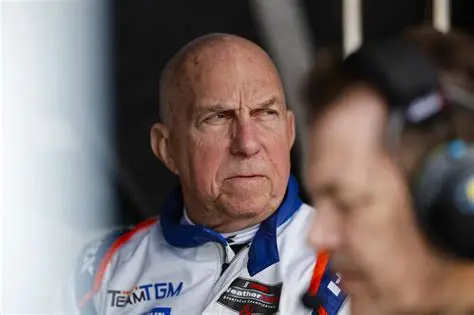
Few figures in modern motorsport embody perseverance, curiosity, and reinvention quite like Theodore “Ted” Giovanis. Known for his tenacity both on and off the track, Ted has carved out a racing career that defies convention – one built not in youth karting leagues or junior formulas, but through passion, discipline, and a relentless desire to improve.
Today, Giovanis is recognized as the driving force behind TGM Racing and the JKTG Foundation, competing in IMSA and endurance events at some of the world’s most iconic circuits. But his path to professional racing began much more humbly – and unexpectedly.
Tune in everywhere you stream, download or listen!



Ted’s love for cars began early, but racing didn’t enter the picture until adulthood. In 1991, after buying a Mitsubishi 3000GT VR‑4, he had a moment of clarity on a highway interchange: “I demonstrated to myself that I was not as good of a driver as I remembered myself being.” That moment of self‑reflection — and a supportive nudge from his wife – sent him to his first driving school.
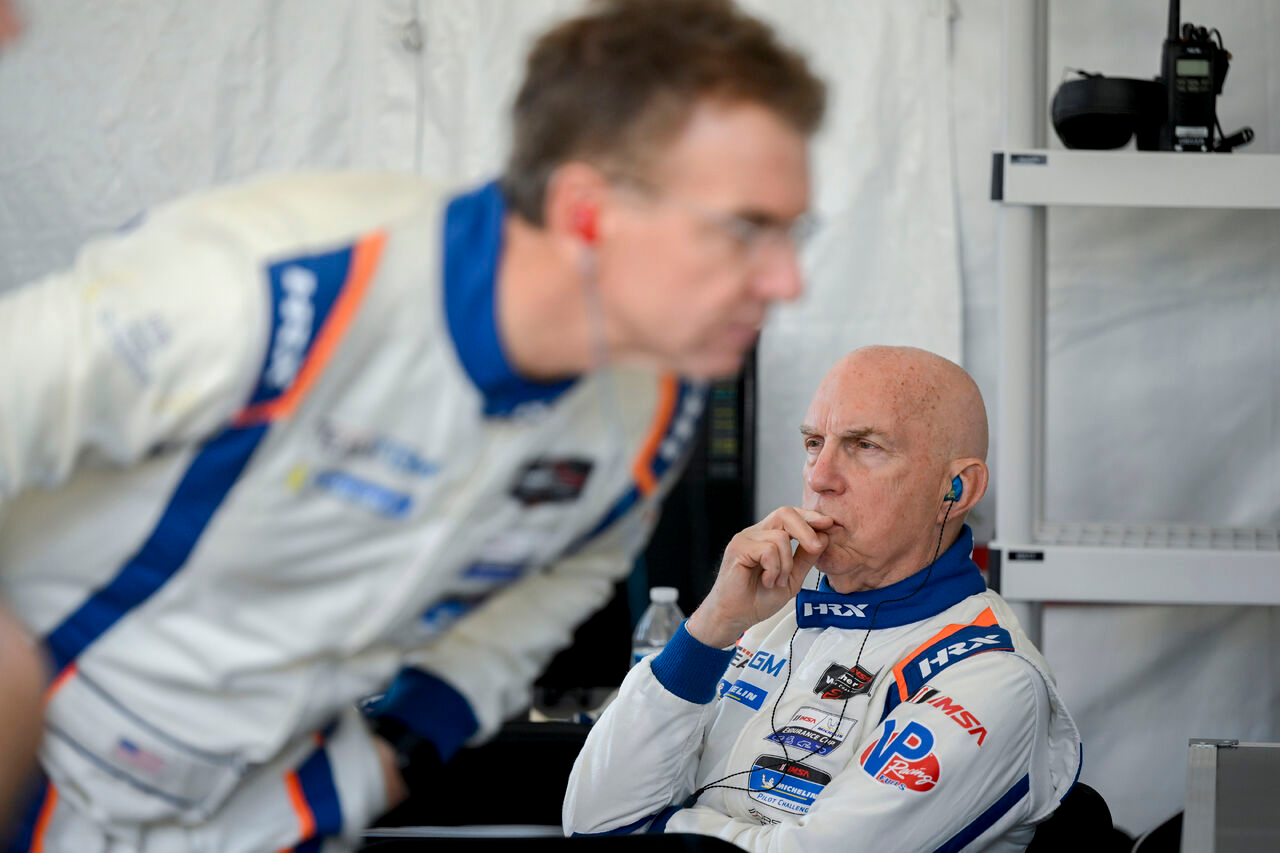
From there, he dove into SCCA racing, progressing from BMW 2002s to E36 platforms, winning regional championships and setting track records along the way.
Spotlight
Ted Giovanis - President at The Jayne Koskinas Ted Giovanis Foundation and TeamTGM for JKTG Foundation

Professional Race Car Driver - Author of "Beyond Fear" & “Focus Forward" - Philanthropist

Contact: Ted Giovanis at Visit Online!


Synopsis
Break/Fix Podcast hosts Theodore “Ted” Giovanis with returning co-host Tom Newman to trace Ted’s unconventional path into road racing – from autocross and early SCCA club racing to Grand-Am/IMSA endurance competition! Ted discusses how Balance of Performance shapes modern racing strategy, the technical and human factors of endurance racing, and how benchmarking with pro-drivers transformed his driving approach. Ted also details the origin and mission of the Jane Koskinas Ted Giovanis (JKTG) Foundation for Health and Policy – formed after his wife Jane passed from metastatic breast cancer – its focus is funding specific researchers with minimal university overhead, and emerging uses of AI in diagnostics and biopsy analysis. The episode closes with Ted’s continued racing plans and future in pro-racing, even at the age of 80.
- Ted, your journey into motorsports is as inspiring as it is unconventional—what first drew you to racing, and how did you take those first steps onto the track?
- You’ve competed in endurance racing and IMSA events—what is it about endurance racing in particular that speaks to you as both a competitor and a strategist?
- Many people know you not only as a racer but also as a businessman, philanthropist, and author. How do these different aspects of your life influence one another?
- Through the JKTG Foundation, you’ve supported medical research and philanthropy. How do you see your racing efforts aligning with your mission off the track?
- As someone who started racing later in life compared to most drivers, what message do you hope your story sends to others about following their passions?
- Looking back on your career so far, what has been your proudest moment in racing, and why does it stand out?
- What’s next for you Ted? —whether it’s on the track, through your foundation, or in new endeavors you’d like to explore?
Transcript
Crew Chief Brad: [00:00:00] Break Fix Podcast is all about capturing the living history of people from all over the autos sphere, from wrench, turners, and racers to artists, authors, designers, and everything in between. Our goal is to inspire a new generation of Petrolhead that wonder how did they get that job or become that person.
The road to success is paved by all of us because everyone has a story.
Crew Chief Eric: Today we’re honored to welcome a truly unique figure in the world of motor sports. Theodore Giovannis known for his tenacity, both on and off the track. Ted is not just a passionate racer, but also the driving force behind JKTG Foundation racing where he has competed in series like IMSA and endurance racing at some of the most iconic tracks in the world.
His journey is one of determination and lifelong learning, balancing his career as a successful businessman, philanthropist, and author with his love for speed and competition. Today, we’ll dive [00:01:00] into his racing career, the challenges he’s faced, the lessons he’s learned, and how Motorsport continues to fuel his pursuit of excellence in every aspect of life.
And joining me tonight is returning guest co-host Tom Newman, who you might remember from our Randy Lanier and Paved Paradise episodes. So welcome back to the studio, Tom.
Tom Newman: Thank you, sir. I’ll be glad to be here.
Crew Chief Eric: And with that, let’s officially welcome Ted to break fix.
Ted Giovanis: How you guys doing? Glad to be here and looking forward to talking to you tonight.
Tom Newman: Excellent.
Crew Chief Eric: Good to see you as well, Ted. Well like all good break fix stories. They all have a superhero origin. So let’s talk about yours, your journey into motorsports. It’s as inspiring as it is unconventional. So what drew you into racing and how did you take those first steps onto the track?
Ted Giovanis: I was always interested in cars when I was really young, you know, as a teenager, but never really executed it along the way.
I bought a Corvette and I got into auto crossing, but never really did any road racing. Sold the Corvette. Then in 1991, I decided [00:02:00] I needed to have another sports car and I bought one. It was a Mitsubishi 3000 GTVR four. I was driving home from the dealership after picking it up and went on an interchange and demonstrated to myself that I was not as good of a driver as I remembered myself being.
So I scared myself. And then I went home and talked to my wife and I said, you know, what would you think if I went to a driving store? And she said, well, that would be, that would be cool. Why don’t you go do that? And so that was what set me off on a trajectory of road racing. I went to a driving school. I bought a car, a, uh, 2002 that had one three horsepower on a good day.
Started club racing from there. And so that’s what started this whole trajectory.
Crew Chief Eric: Describe your road to imsa though for a lot of folks, there’s a lot of steps to get there. So what was that like?
Ted Giovanis: I raced in SCCA Sports Guard Club of America. I went, at the time the professional schools like Bonderant in places like that.
They were not accepted [00:03:00] to get a license at that point. The only way you could really assure yourself that trajectory to get a license in SCCA was to go to an SECA school. So I had to go and you had to go to two of ’em. So I went There was in SCCA for, I’m still an SCCA license driver, but I participated in that.
Gradually progressing. I’m a progressivity kind of guy, so I went from 2000 twos to actually BMWE 36 ERs, which was the. Between 1990 and 1995 kind of platform. And so I, I raced those, had won, uh, regional championships, set track records. Then in 2006 I decided I might want to go into ssa. It wasn’t really EMSA at the time.
It was called Grand Am. It was a Grand America Road Racing series, which was a series that NASCAR put seed money into the Grand Am series and got Jim France to run it. After it grouped its base, it acquired [00:04:00] that, and then that collided with, there was the American Lama series, which was run by Don Panos.
That series was having some financial troubles, and so when Panos decided to sell that off. NASCAR bought both that and Grand M most ’em together with imsa, which was the prior sanction for A LMS. And then that’s sort of where that wound up NASCAR was trying to put sports cars in their book of business rather than just rounding, rounding track.
And when it bought a LMS, it also got Sebring, the hotel there, chat law and it got road Atlanta. And so that was my first participation in the sort of the Pro series in 2006.
Crew Chief Eric: You touched on Grand Dam and that’s where Tom comes into the equation here. So let’s go back to those days and then walk a little bit more forward into your time at emsa.
So any stories you wanna share about brewing with Ted and things like that?
Tom Newman: Ted left out, conveniently left [00:05:00] out the part where we had a, about three pickup trucks in various trailers versus to, oh, how far he’s come. And I remember one distinct experience. It didn’t start off as a pleasant story or pleasant memory.
Ted, do you remember when we were at Limerock and lost the motor in practice?
Ted Giovanis: I think I do.
Tom Newman: The paddock area was just a slog of mud. Yeah,
Ted Giovanis: we were down the other end. Yeah, that’s right.
Tom Newman: Myself and another frequent guest on the, on the show, Matthew Yip. Were sitting on a tailgate after, uh, we had loaded everything back up for the trip home.
We heard two beers crack. I’m not sure where Ted was at this point. I got a clap on the shoulder and Paul Newman said, you’ll get ’em next time. And walked off without another word. Ted kind of introduced me to the world of big time racing and left me, you know, dumbstruck by celebrity fanboys. But, uh, that’s true story and that was courtesy of Ted having me on his team.
Ted Giovanis: There was another thing [00:06:00] that happened then with Yip. I don’t know if that was the time, but it was at Limerock.
Tom Newman: Yep. It was, yip.
Ted Giovanis: We couldn’t find the key to his car.
Tom Newman: Yes, that’s right.
Ted Giovanis: So the, the trailer’s all packed up. It’s got everything in there including, you know, folding lawn chair things and everything that’s in there.
He can’t find his key. We look through everything and then we basically looked at each other and says, I think we gotta unpack the trailer ’cause it’s gotta be here somewhere.
Tom Newman: That’s right.
Ted Giovanis: And we unpack the whole trailer. So you’ve got these folding lawn chairs and they’re in these bags, you know, they, they’re, they’re so contained bags for whatever reason, we took the lawn chairs out of the bags and his key was in one of those net cup holders, how it got in there and who put it there having a clue.
But we were like, how is he gonna get this car home? Ever since then I’ve been on the pro side. We were only running a part of a year back then, five six [00:07:00] races. So half season just trying to get our feet wet. We landed on a BMW of three 30 because at the time in Grand Am you could build cars. You could build cars for the lower, slower class, which is called St.
Street Tuner. And then Grand Sport was the upper class, so you could build those cars. It’s not like that anymore.
Tom Newman: Speaking of BMWs, do you still have the Laguna SE Blue M three? Uh,
Ted Giovanis: no, that’s, that’s been gone for a long while. Uh, somewhere around 2010, I moved from Performance Car. I moved from the BMWs to a Porsche, and then I went that way, and I’m still in the Porsche family for a lot of cars
Tom Newman: now.
Did you seek out Porsche or did Porsche seek you out?
Ted Giovanis: No, I, I sought out pushing.
Tom Newman: Okay.
Ted Giovanis: It was all on the street side as Thomas Wright. I ended Laguna Blue, a 2002 year model year and three. What I had done is, was, I mean, I went through this tailspin of investment. I, I put [00:08:00] an exhaust on it, then I put a suspension on it ’cause I was tracking it too, so I put brakes on it.
So I went through all of this stuff and I’m just like, why can’t they just put all this stuff on it and charge us $15,000 more and hand us the key? ’cause it’ll all be kind of coordinated and matched. Well, it was just at that time when Porsche decided to offer a GT three Rs, that was my pretty much trajectory.
So as I was doing this, I was kind of still the amateur. I was in a pro series, but I did other things professionally for, with my life. One of the things that I was doing. Was I had, I had my own consulting practice, which was sort of the centerpiece of racing because it allowed me the flexibility to do whatever I needed to do to be away.
But one of the things that happened outside there in 2006, in my consulting practice, I found an error in how Medicare pays all the hospitals in the [00:09:00] country. That led to a litigation, which took six years between 2006 and 2012. So I was racing the whole time except for calendar 12, but that led to me eventually getting some money out of that appeal.
That changed the complexion of everything TGM did at the time, and so then that was when, in 2013, so I took 12 off. 2013, I engaged a pro driver who was a previous A LMS driver to drive with me. That began my transformation as a driver because the illuminating moment was I found out that despite my prior performances on track, and I found out everything I was doing was wrong.
So when you have a good benchmark and it’s undeniable that they’re in the same car on the same day, on the same truck. And you have data. It’s pretty revealing. It’s [00:10:00] also, the good thing is you can figure out where you’re doing wrong and try to work on fixing it, which I can tell you is the hardest part.
Changing bad behavior is not easy.
Crew Chief Eric: So when we ran into you earlier this year at VIR, you are behind the wheel of an Aston,
Ted Giovanis: right?
Crew Chief Eric: So let’s talk about some of the race cars you’ve piloted in the Pro series. What has that been like? Has it been a mixed bag or have you been able to stay loyal to Porsche
Ted Giovanis: Mixed bag?
One of the guys that’s in the series, will Turner told me a long time ago, he’s at racing in the Pro series. Primarily because of the balance of performance adjustments is like Baskin Robs, it’s kind of a flavor of the month routine. And so I decided in 2016 to move to GS from st. I had one of Turner’s old cars in ST and then I bought one of Bimmer wheels S cars in AS team.
But I decided to get outta that and go to gs. When we went to Gs, we went to Porsche, and so we ran Porsche in 16 and 17. [00:11:00] Because we were trying to predict the balance of performance adjustments and what they would do and what, in 18 and 19 we went to Mercedes. Then in 20 and 21, which was during COVID, we made the decision to go to Chevy.
Chevrolet had a a GT four platform. All of these are GT four platforms that was based on, you know, the Camaro, but it was built by Pratt and Miller. It was a race car and there were like 13 of them in the world. Good thing about that is it was a really good car. The band part about it, when you only have 13 cars, nobody did a lot of test miles with them, so we were, it break stuff and whatever, not because we were crazy, but because we were breaking stuff like Sebring.
It is pretty bumpy and if there’s something wrong with it, you’ll find it. So in 2021 we were with them in [00:12:00] 22. We went back to Porsche. Par was pretty sorted. Bad thing is there were like five teams in had. First race was Daytona, Porsche, Motorsport thinking BOP. They told all the teams run full wing at Daytona.
In other words, your rear win otherwise slow at down. One team did car, got a BOP killed the car. So we had decided early on, uh, out of 22 to get out. And thereafter that’s when we switched to Astons. And so we switched to Astons, what’s called the 17 a chassis for 2324. And then in 25 we went to the Aston Martin Evo, which is the 40 a h Chassi.
So it, it’s got more dive planes and down force. It’s got more aerodynamic effects on it.
Crew Chief Eric: Well, you opened the door to talk about BOP one of my favorite subjects when it comes to sports, car and endurance racing. And I’ve asked plenty of pro drivers, there are feelings about it, some toe the [00:13:00] political line, and some are more honest about how they feel about BOP.
Do you mind if we go down that route a little bit and get your opinion on balance of performance?
Ted Giovanis: I’m actually a little more balanced and it’s a hard job to try to equalize these cars, and so it takes a lot of effort and data. When it’s complicated, they don’t always get it right where I am. I understand.
I don’t like it, you know, I don’t like what the answers are. But it’s like anything else in life, you have to get your head around. You are gonna succeed and win no matter what they do. Try as they will slow you down. You gotta figure out a way to get better, faster. And however that is, you work with your manufacturer to try to change the BOP to get back something and to make the cars more reasonable.
But at the end of the day, you work on setups, you try to figure out what anything that’s wrong with the car, uh, you try to fix it, meaning we have two [00:14:00] aspens and this year we thought we wanna work like a two car team. So you put one setup on one car and one setup on another car, and then you learn faster.
You learn which ones faster. And it wouldn’t work. It was always confusing. And so we got stuck going to a test day at Watkins Glen torrential rains. And so we were like, God, we should have just let, like not come. But what we did with our race engineer, who was a new guy to us, the cars stayed in the garage the whole two days.
They took both cars pretty much apart side by side. And guess what? They found out? They weren’t the same. They were different. That was fairly enlightening about what we needed to do for setup. And some of it’s the mounting holes, it’s how thick the splitters are on one side versus the other side. So it’s all of this kind of stuff.
So you try to work through it. So we work with, only the manufacturer can talk to the series about the BOP. [00:15:00] And then the man, that’s another level of complexity because the manufacturer has to represent all of the cards of your make, whatever that is. And so they’re working to try to get the best average performance, but the way they do the BOP, what they do is they get data from the as in one highest placing card of each make.
So the BOP is actually based on one car of Tom’s car, whatever car Tom is driving of the BMW. And so the teams have different structures, whereas Tom is the paying gentleman. He brings you in as his pro. Depending on that relationship, Tom wants to win races. That’s drives Eric’s motivation and Tom’s motivation to win races.
However, winning races does not win championships,
Crew Chief Eric: right?
Ted Giovanis: [00:16:00] You can win a championship by hovering between third and fifth if you do that consistently. Our team is focused on winning championships, which is different. What that means is for a guy like, I’m just putting a bogey on you, Eric, a guy like a pro racer like you, you wanna win.
But we gotta get you to hold the line because going as fast as you can is disadvantageous to your fuel mileage. So we are gonna tell you to run. To a number on the dash because we have fuel burn for per liters and it’s between 2.6 and 3.9 or something like that, depending on the track. What we’ll say is you gotta run this number because what we’ve calculated, the people in the pits have calculated that if you run that number from the time you got into the car, you won’t have to stop again, but the other guys might.
So once you get to a certain point, if we know you’re good on fuel, we’ll turn you loose. You see what I mean? Then you can [00:17:00] try to win the, win the race, but uh, you’re following a guy, you tend to want to get past him. But guess what? He probably wants to save fuel too. So if you don’t push ’em too much and you wait till you’re ready.
Then you go.
Crew Chief Eric: It’s funny because this is the same dynamic in Formula One as it is in other disciplines of racing.
Ted Giovanis: Yep.
Crew Chief Eric: I think the rub comes in for enthusiasts and fans sitting on the other side that may not know the intimate and intricate details as you just explained ’em about how BOP works and the strategy of racing as it is, you know, in today’s era of racing.
Because I think a lot of us look back to, I’ll use Can-Am as an example, build a better mousetrap. You wanna be first and put a bigger motor in and that’s gonna cause you to pit 10 times. Well, you know, if you got a 22nd lead, you know, so be it. The days of the Brian Redmonds and the David Hobbes and that type of racing is unfortunately long gone.
And when I look back over the history, I unfortunately tend to blame Audi for this. BOP came into effect because of the quatros, because it was so [00:18:00] unbalanced in imsa. They had to do something or the manufacturers were all gonna pick it and leave. It’s changed the whole dynamic of racing and for those of us watching at home, were like.
Just let ’em race. Like if the Mustangs faster, they had the advantage and they won it, you know? So, you know, having come up through the system after all these years, do you feel that racing is still as fun as it used to be, let’s say, in the good old days? Or is it much more math, science and very, very intricate?
Ted Giovanis: It’s fun in a different way, to be honest with you. That’s the big similarities between racing and what I do in research. It’s all about modeling. It’s all about forecasting and figuring out how things work and what the relative strengths of a particular decision are. And you don’t have this in sprint races and amateur races because you’re only 25 minutes.
You just put gas in it and put air in a tire and you go. But when you move to endurance racing, you’re dealing with tire degradation, human degradation. If you’re going longer races, it’s all about arresting the [00:19:00] derate of either human capital or the physical. If you’re blinding lift fast and you burn tires off, you gain over here and then you lose back here.
Or is it better to be like this and have a, a little slower ate out there where your average time is better? And so that’s sort of what the game is now. And endurance racing, all of the rules are geared to trying to give each car and each driver pairing somewhat of a a chance. And back in the good old days, if you could build your car and you knew how to make it work and you had enough money, you could win.
They’re trying to change some of that, if you know what I mean, and try to balance it out. And so that’s what driver ratings are about. You can’t have too many gold people in the same car. The platinums are usually factories, so you can’t have too many of them in the car, and you’re trying to balance out.
Because the easy thing is, is, I mean, if Tom’s the fastest [00:20:00] driver or the three of us, you just keep him in the car all the time. You just make ’em run the whole race. Well, they sit down. You can’t do that if you’re, he’s paired with me. The minimum drive time is 40 minutes for the pair. One of us could drive 40 minutes and get out, and the other one can drive the rest of the two hours.
Cool. That’s still compliant with the rules. But they have these different driver time rules, so you don’t just get all the super duper pooper drivers. ’cause let’s face it, if we got the biggest budget we can win. So we hire the best drivers, put ’em in a car and whatever. So in Formula One, that’s what in theory, the budget caps are trying to do, trying to smooth that out.
Because if somebody can spend 300 million, but Tom can only spend a hundred million, he’s gonna lose. And so you, you have this allocation of resources, uh, wind, tunnel time, all that kind of stuff. So that’s what they’re trying to do with us. It’s different pools. Our cars are supposed to be built to a GT four spec, the ones in, in the 24 of the GT three spec, and that’s [00:21:00] all sanctioned by the SRO.
It doesn’t mean that they’re all the same. That means that they can achieve a theoretical similar lap time with a pro in it. But you can decide how big that gap is. That’s what the SRO does. Can it be a second elap, maybe? Well, that’s a big difference. And so when ISA went to, you have to have a GT four certified car from the SRO.
Then ISA can make adjustments to slow it down. It can make you run different engine maps. It’s that kind of stuff is, see what I mean? So there’s a, yeah. Nuances. It is pretty technical. What’s better, more torque or more power? The answer kind of is, depends on how long the straightaway you’re going onto.
Crew Chief Eric: I thought it was horsepower, was how fast you hit the wall and torque was how far you pushed it.
Ted Giovanis: Yeah, that’s, that’s same way. But if the straightaway is not too long, you want the torque.
Crew Chief Eric: Right. So
Ted Giovanis: there are adjustments in our cars that give you the [00:22:00] torque, lower end versus upper end. It just means you’ll lose on top speed. Tom’s car can get to 1 65, let’s say, but most of the time the cars only get to 1 63.
So why does he need the extra power to get him to 1 65? He needs the torque to get him outta the corner. ’cause he can get to his max speed faster. So it’s a gigantic trade off. It may not play well. We want to be out in front. We want everybody else to figure out saying, how can they be out that far? And the IMSA guys are looking at it saying, well, how do we get everybody at the finish line at the same time all the makes?
Because each manufacturer has the following. I know drivers do too, but people come to see the Porsches and the Mercedes and the Fords and the whatever they come to see that the way the series looks at it, they want each manufacturer to have a chance. I’m not saying to win, but have a chance to win. And that’s sort of what affects their [00:23:00] metrics with balance of performance.
Tom Newman: You mentioned that the, uh, the BOP is based on the top performing race car of a particular chassis produced by a manufacturer. You are a true privateer. How much advocacy does the manufacturer give you when trying to adjust these balance of power? Clearly, because of the technical nature of this, you have tons and tons and tons of data.
Do they advocate for the privateers or are they mostly interested in those top teams?
Ted Giovanis: They are generally advocating for the platform like Eston Martin, GT four Evo, or the Porsche, GT four, or the Mercedes. So they’re advocating because that BOP is gonna apply to everybody. Everybody that’s got one of those makes, they’re working to do that.
The manufacturers get data from all of the cars, all of our cars, all of the Astons, Aston’s got it all. All of the Porsches, Porsche got it all. So they can [00:24:00] look at that across ’em. Now, they’re not supposed to be helping you versus Eric versus me, if you know what I mean. If we have the same card, they’re not supposed to be doing that, and they can help you in a little way.
They can give you baseline setups or something like that, but pretty much you’re on your own. What they’re doing is they’re advocating with the series and the BOP committee. To work on the data, and it’s more of an argument about what that data means, and the series has data more refined than us. For example, Eric mentioned Formula One.
Think about it in Formula One, when you look at most of the Formula One tracks, they have three zones, 1, 2, 3, of which they, they’re tracking data and all that kind of stuff. Well, SA gets it for like 10, so they know within zone one what those segments are. We don’t, and the manufacturer doesn’t get it that way.
So there’s an advantage that they have, I’ll say an advantage they have, they have more data than [00:25:00] we have.
Tom Newman: Interesting.
Ted Giovanis: If they interpret things in a certain way, you can’t prove ’em wrong.
Crew Chief Eric: You don’t have the same fidelity that they do. Yeah.
Ted Giovanis: So you gotta remember, the best thing to do is you need to figure out how to make your car faster.
And it doesn’t have to do with power all the time. It has to do with handling. Uh, sometimes your brake pad compounds are open. They’re not in the spec. Anytime you want, you can use any manufacturer brake pad, so you can use pad or anything. Then you’ve got compounds within that. So you, you use your connections with the brake pad manufacturers to get the best pads.
You see what I mean? Different compounds of pad front to rear. Now tires we’re stuck. We all have to use whatever tires. That’s part of what IMSA does. And so sometimes the manufacturer will advocate for like a, a heavier car advocate for a wider front tire if [00:26:00] the car’s pushing a lot so they can do that.
You see what I mean? They do basically, it’s all of the segments around the track. It’s not just the straightaway, it’s. Quarter speed and then exit. And the mid quarter, the mid corner is, is a key area to work on. If you’ve been watching, uh, I don’t mean to throw back to Formula One, but if you’ve been watching the Formula One stuff and you hear or stop and complaining about how the car’s I balanced or whatever, forget about the poring stuff, he’ll talk about balance.
Well, balance is you are uncomfortable in the corners at what the car’s doing. It’s not feeling right. When you’re not comfortable or confident, you can’t put it on the edge ’cause you’re still feeling of what it’s going to do in the end. The most significant thing I learned when I started driving with a pro is one fact.
It’s not about the pedals, it’s about feeling the weight. And if you feel the weight on each of the four corners, that’s when you’re, you [00:27:00] need to see what it’s gonna do, where it’s going. And then your head tells your feet to do what with the pel. You see what I mean? So if you can’t feel the front turn, you better not touch the throttle, because what it’s gonna do is pull weight off the nose and it’s not gonna turn even more.
So it’s counter what you’re trying to do. You’re trying to get to the go pedal quick. But if the car’s not pointed right, that’s why you need a bigger front tire on some of these cars then. And then you need to figure out how to drive them differently. Because it’s like, well, the Mercedes and the Aston, they’re kind of similar cars.
You have to drive ’em differently. So that’s another complication where the driver comes in and a guy that’s like me, that’s not really a, I wasn’t born like a pro driver. I didn’t come up and that wasn’t my destiny from the time I was a kid. So you have to learn how to adapt, which is complicated. If you’ve learned it a certain way,
Tom Newman: you’re just [00:28:00] reiterating what I’ve told students for many, many years.
The most valuable sensor in the car is the seat of your pants.
Crew Chief Eric: That’s what Hanok always said too, you know?
Tom Newman: Yep.
Crew Chief Eric: But I think, actually this is a great segue, Ted, to talk about some of the challenges you’ve faced coming up through the system. Are there any stories you can share, maybe most challenging weekends, things you learned from those weekends that have transformed you as a driver?
Ted Giovanis: The key is to learn the good attributes or the good approach. With me it was more, you know, learning about weight management and not power management. It’s a philosophy of an approach. Racing is actually a lot like life. Well, certainly you have to want to do it, but you need to understand you can be tested in what you think you’re gonna achieve.
The year we, we went to Porsche in 2016 in Gs. We were at Canada coming down the back straightaway. It was a test day. It was back [00:29:00] in the, in the days when they used to let the track have a promoter test day as a way to get some of the money back that they were paying IMSA to come there. And so they got money from us in a test day, but he was coming down the back straight as he went into, into brakes, and he lost brakes.
Car went into the wall and we were really worried about him. So we lost a car for the race, but we had another car. So I was in practice the very next day and I was coming into the last turn and got tapped a little bit in the tail. The car shot sideways, and I went right into a concrete barrier and severed my achilles tendon, my right tendon.
I was done for the year. I couldn’t even walk, and we lost two cars that weekend. Four and a half months later, I was back driving a race car because I wanted to drive a race car. And that drove my approach to my surgery, which I was told the only way to be back a hundred percent is to get full [00:30:00] surgery and have, have the thing put back together because that’s the only way it’ll be a hundred percent.
So I did that and I went through all the therapy, did the thing, because I wanted to drive race cars again. However that happened, like July 17th or something like that. The first weekend in August, Hugh and Cosmo were driving the car. I was just sitting on the box watching. We’re always plugging different people into the team and we knew that we were having the team, so we, we wanted to have them together.
To keep the energy moving in the right direction. So that’s sort of, kind of an example. You, you don’t let the stuff slow you down, and some of it’s gonna be terrible. It wasn’t the most bled thing that I’ve ever done, but it’s not the worst. Okay. But then I was racing in the, in the IGT series in that series, erased only Porsches.
We were racing at Daytona. I came through the kink, screwed up, crashed the car. So I couldn’t really continue. And so we’re like, what are we gonna do now? [00:31:00] At the time I needed a Porsche Cup car and I was racing a Porsche Cup car in another series, but another team was doing it for me. It wasn’t our guys.
And so Hugh comes up with the idea. He says, let’s go get the other car. So we’re. Who’s got the other car? Well, a CI had the other car, so we called Kurt who owns a CI. This was on Saturday morning. He happened to be at a funeral for his father. Kurt hooks up with his guys in Chattanooga and our guys drove 10 or 11 hours to Chattanooga.
Met those guys at midnight, got the car, brought it back, and then I was on track the next day. So why don’t we do this? Because you’re sort of driven to wanna succeed because you’ve got a goal in in mind. So there are disappointments, unpleasantries, but then you do it because you want to, because you have a desire [00:32:00] to succeed, you desire to improve, desire to get, and that’s sort of where I am.
Crew Chief Eric: So earlier you mentioned how your day job in medical research, some of the aspects of that, the data crunching and the modeling have translated into the world of motorsport. Have any of the lessons you’ve learned in Motorsport translated into your medical research work?
Ted Giovanis: It’s not necessarily my work, but it starts off in your world of that you were talking about Formula One because those folks have huge mathematical models and they have tons of data from their cars.
It’s such where they can go in. And change one piece of the data to change and affect a part in the car and then rerun it for a whole race to see if the part’s gonna fail. We’re not doing that, but in medical research we are. Just think about it. I’m pretty much settled in the cancer space and more specifically barreling down in the [00:33:00] metastatic breast cancer space.
So that’s when cells get away and they go to a distant part of the body and then they start making trouble there. Imagine if there was a body part and we could simulate that part in a model. And then let’s say it was cancer, and we’re getting the data inputs for the models from how cancer responds in mice.
Then ultimately how it responds in humans by measuring people that are in clinical trials, they’re taking data from these sources. It’s, it’s like the F1 guys with the sensors for their car. We’re using this other kinds of data to try to model this, and then you can try to change the therapeutics to be more effective.
And so that’s sort of how the two relate together. And last year we started running the moniker on the car driving research, [00:34:00] and that comes from our research. My goal is to drive research the way we do it in the United States in a different direction than what we do. Pretty sure you guys will understand this.
You know where the red zone is in football?
Tom Newman: Oh yeah.
Ted Giovanis: That’s where the drug companies are. Just before you score from the 20 back to the 50. That’s where NIH is. I’m down the other end of the field trying to figure out how cells migrate, how they split, what do they talk? They talk to each other. What the hell are they saying?
Why does your immune system when a cancer cell says, I’m okay? Why is your immune system listen? Why does it attack it? So we’re trying to find out how this stuff works. And so if you knew how it worked, you could come up with strategies to get down the field in a more effective way. And the drug companies only want to jump in after things have been de-risked.
They’re closer to the ROI, that’s what their business is. But I’m trying to say, well, how do we get people better, quicker? And maybe it’s through modeling and it’s through a lot of the [00:35:00] research that’s getting published now from a lot of our cancer researchers. That’s why I say we’re, that we’re driving actually came from one of my cancer researchers.
He said, you’re driving us somewhere. Yep. That’s what we’re doing. And so what’s driving about it is I’m investing down this end of the field. Other people aren’t because down our into the field, the risk of failure in the context that the hypothesis, how we think it works is not how it works is higher.
So we might not prove our hypothesis. Research is based on Tom proving his hypothesis and then being able to get more money. That’s his sustenance in the research world. While I say, well, it’s okay if it doesn’t work that way, as long as we just tell everybody that. So now we all learn something and it’s no different than car racing.
What do you think we should do for a setup? Well, we’ll do this at this track on this day. We go out and say, oh, that’s terrible. Well, we failed. Now what do we do? Well, we gotta do something else. [00:36:00] And so it’s sort of crudely similar.
Tom Newman: Absolutely.
Crew Chief Eric: Yeah. There’s a couple things I wanna pull on there to clarify for our audience.
You talked about investing in the research space. You talked about, you know, using Thomas as an example to prove his hypothesis. This sounds like the genesis of the JKTG Foundation. Do you wanna explain a little bit more and elaborate on how that came to be and what it’s about and what it means?
Ted Giovanis: I alluded to the appeal.
I was in between 2006 and 2012. I had my own consulting practice and actually my wife was working with me in the consulting practice in 2001. Jane had, there was an initial finding of breast cancer. They removed it and she got radiation and had some other surgery and everything was fine until. 2008 when it emerged, it had metastasized to her bone.
Breast cancer likes to go to bone, lung, liver, and brains. For whatever reason, we still don’t know why it has a [00:37:00] preference. We’re still working on that. So she had it in her left hip. That was in 2008. Then she went through all kinds of of therapies. December 31st, 2010, she’s dead. Two weeks later, we win the appeal.
So during 2011, I knew I was gonna get money out of it from the appeal, and so I started to think about what I was gonna do next. And emerging through 12. The idea of the JKTG Foundation was born that I was gonna do something else. What I wound up doing was at the end of 12, we started filing applications for tax exemption with the IRS and they all, the legal eagles told me I would get approved in nine months.
I got approved in nine weeks as a game one. So the first part of 13 we worked in things I knew it’s the Jane Kaus, Ted Giovanni Foundation for Health and Policy. And so we jumped into the health policy space, which is [00:38:00] what I knew. And then in the middle of 14 we moved into the cancer space and we pretty much been there ever since.
So it was driven by Jane collided with me wanting to do something different. What I, I’m doing with the foundation is I funded it. I, I, I created an estate for it, which, uh, the foundation has, but it could always use more money because if I had more money, I’d spend it on more research and doing things that we can’t answer.
But that’s sort of where it all came from. But it grew over a period of time. It was purposed by events in my personal life.
Crew Chief Eric: Well, what I’m driving towards with this is we see all the time, logos, sponsorships, graphics, wraps, all sorts of things on race cars. And we wonder all the time, what is CrowdStrike really doing for that car?
Or what is Pennzoil have to do with this other car? Whatever it is. You know, if you look at all the iconic liveries over the years, whether they were tobacco, [00:39:00] alcohol, or whatever have you. But in your case, it’s something real. It’s something personal, and it’s something extremely pointed. Merging those two worlds, ’cause you’ve continued to race throughout all of this time as you’ve been building the foundation and whatnot.
How has Motorsport helped Springboard the foundation? How has it helped you gain exposure for the foundation?
Ted Giovanis: Not as much as I want, let’s put it that way. But there’s more people who are becoming aware of it. I guess there’s two aspects. One is you want other groups and philanthropies or whatever to put money into research.
It gets complicated because it’s not any old research, but it’s funding totally differently. I don’t pick organizations, I don’t pick big schools and I pick people. So you pick the best researchers, and if they just happen to be at Tom Newman University, it’s cool. I’m not going after Tom Newman University.
I’m going after. Eric, who happens to have a lab there. Then we cook up a project with them, which [00:40:00] tends to emanate from an unfunded idea that you had. And good people tend to have really good ideas, and so we wind up funding them. And what we do is we do it in a way, it’s not necessarily what the university wants because I’ll tell you why.
In a project of any, any sort, there’s always the direct research costs, what someone spends in the lab for the postdoctoral students that are doing the stuff and all that stuff. And then there’s the indirect cost. It’s called overhead. What we do in working with the researcher, we take this embryo and idea, we evolve it into some kind of project, which might look like a 10 or 12 page paper, and then we, the foundation come up with an agreement with the university.
Then the project is an appendage to that contract. Then we talk to the university and we don’t allow much or any indirect costs. That’s where they make their money. I’m interested [00:41:00] in the researchers and not the university per se. And so what we’re trying to do is I got a really small glob of peanut butter and I’m trying to spread it on this piece of bread without tearing it.
So I’m trying to get as thin as possible so I can do more with the guava peanut butter. ’cause they got a lot of things to do, a lot of people to, to look after. And so that’s why I don’t wanna blow it on indirect cost. I don’t care about the president of the university and their HR department or their fundraising people.
I don’t care about any of this. Why do they need anything? They didn’t really do anything for this. I brought the money, researcher did what he needs to do. He has the ideas and stuff, and for us, if they get his direct cost funded, they were gonna probably have to pay his direct cost if he didn’t get this money anyway.
So what’s the problem? This tends to empower the researcher and de power, if that’s a word, the university. And so that dynamic, it changes a lot of these researchers. We’ve funded stuff [00:42:00] for eight or so years and they’re always coming up with new and better things, and we’re always expanding our bandwidth.
And so the more we learn, the more everybody learns, the more it becomes an intellectual feeding frenzy where everybody wants to work on these different kinds of modeling projects. You know, some of it you can’t see directly from here to the patient. Like some guy came up with a new modeling grammar that allows all researchers to get this software that he created and be able to see if their project has any anything worth doing there.
And they can do it within having an hour of tutoring without having a bioinformatics person on their staff. So you get more people finding out more good or bad, it’ll work at Walmart, work faster. So more faster leads to a progress.
Crew Chief Eric: Yeah. And that leads to a really interesting question about the use of AI both in your day job and in Motorsport.
So where do you see that [00:43:00] playing a role in both cases?
Ted Giovanis: Well, they’re already using it in some of our cancer research projects, but it needs to be managed by the right people. But yeah, AI is emerging right now at being very good at certain dimensions of healthcare, like reading radiology films. AI is much better at determining whether cancer is present or not present.
It’s like 95% accurate, whereas doctors are 65% accurate. Don’t take this hook and go out to see what my understanding of how that comes to be is AI is better. At determining what the good part of the film is. I mean, my whole hand was alone. There’s one little.here that’s bad. So what the AI is seeing is all of this other space that it’s perceiving that it’s very similar than it’s not a bad part.
You see what I mean? So it becomes more better at [00:44:00] that, which makes it good at identifying the bad stuff. And so one of our projects is doing that same thing with looking at biopsies of cancer. And in order to do this AI, you need a supercomputer. And so only so many people have it and it obviously it’s all over the news, gonna need a lot, lot of electricity.
And it’s not necessarily to power the computer, it’s to power the cooling mechanisms you need to keep everything cool when you’re running these babies. So you can’t just go. Oh, the three of us are gonna start using ai. We gotta have this little infrastructure,
Crew Chief Eric: the whole reason pit race got sold. But we’ll leave that where it is.
Ted Giovanis: The biopsy project’s gonna take, probably it’s gonna take a year and a half to feed the biopsies in there. ’cause it takes like an hour and a half to scan one. You get in there and then you can start to do some analytics of it. You gotta have some baseline information. So you gotta have a scan and you have to know something’s wrong with the scan.
So then [00:45:00] you can put this in there and then you can say to ai, Hey, look at this. What’s wrong? ’cause you know the answer. It’s sort of kind of like that. So that’s what we’re doing with biopsies. And so you’ll see this emerge more on the diagnostics, x-rays, whatever their diagnostics. And then I think you’ll see it emerge into more treatments or more monitoring during treatment.
Once we know it’s there and we decide on a certain therapy. We have to go back and look and say, is the therapy working? Are we doing good? Are we doing not so good? That’s sort of where the whole thing, uh, will shake out first, but it’s gonna take a while. You know, the limitations, the physical stuff, you know what I mean?
The supercomputers, the having the data to train it. I’ll ask you two, what idiot in their right mind would fund a project that deals most of the cost is feeding data and scanning it into a machine.
Tom Newman: The Department of Defense,
Ted Giovanis: well, well, that’s me. I’m paying for that, but you’re right. [00:46:00] Could do that. But I mean, it’s like that’s what you’re trying to do, but, and we don’t have the stuff scanned in to be able to train this thing.
It’s gotta have all the pieces together so it’s the right people, sort of the right conditions. That’s why I’m driving research with how we’re picking people. That’s sort of the simple version of it.
Crew Chief Eric: Let’s switch gears and get back into some more racing conversation, shall we?
Tom Newman: In my experience, and certainly it’s not anything that’s approached yours.
We’ve seen some professional drivers move down from MS IMSA at the true professional level, kind of like as a guest driver for some of the amateur endurance racing teams and take a, a, a spin in their car, whether that’s Randy Popes in the 24 hours of, of lemons or other drivers coming down for the American Endurance Racing Series.
Have you thought about doing any of that if, uh, if you were offered a seat or do you have some prohibitions based on where you’re at now?
Ted Giovanis: To be honest with you, it’s [00:47:00] more time availability. More than anything else. I mean, if I think about it, that was one of the factors when I was racing IGT, I kind of ran out of time to do that and what we were doing, because what we started to do as we purchased new cars, we tested more, and as we test it more, that’s sort of where your time goes.
So it’s the question of what do you have the time? So I consider doing that maybe more for fun. But the reason those pros migrate down there, a lot of those guys, they don’t have rides in the other series. And so they need to make money somewhere so they have driver coaching done at the lower end.
Tom Newman: Gotcha.
Ted Giovanis: It’s a different kind of definition of a gentleman. Driver.
Tom Newman: Yeah.
Ted Giovanis: It’s a person with money that doesn’t really make their living at driving race cars.
Tom Newman: Right.
Crew Chief Eric: And I’m glad you brought that up, Ted, because there’s a lot of people that share the sentiment that there aren’t gentlemen drivers left anymore. You know, like the Graham Hills and you know, [00:48:00] those types of back in the day that to your point, they all had day jobs doing something else, but they had the fortitude and they also had the fortunes to be able to go and do racing in their, say, in their midlife versus these kids that are starting out four or five years old and go-karts and working their way up to the pro ranks by, you know, their 21st birthday kind of thing.
As someone who did start racing later in life compared to these other folks as as examples, what message do you hope your story brings to other people? What Can you share any advice.
Ted Giovanis: First of all, whatever kids are coming up, they gotta do this because they love it. They gotta really like to do it. What was it the, the old quote that Richard Petty said, they said, uh, Richard, what would you like them to say as your epitaph when you’re gone?
And he said, I would like him to say he was a man who had a job, who liked his job and did it well. Uh, when you think about it, he didn’t mention money, but money came because he did it. Well, the dynamic in racing now, it’s very competitive to [00:49:00] get in. When you’re driving, particularly in an endurance series, you need a driver with discipline.
And a young driver that wants to prove themselves may get a little too enthusiastic sometimes, which leads to crash damage, which who pays for that? So you need to be in control of yourself when you’re doing stuff in more ways than one. I’m pretty much a weird bird in that why do I race? The series, which is arguably probably the most competitive series in the United States, because I know when I’m driving, I’m gonna be close to laugh.
Why would I do that? And it’s because of the competitive pond I’m in. It drives me and, and I’m sure if he were here, he would tell you, we do better overall when I do better because I give him the car in a better position. That gets us back to the, the pairings. It’s like we [00:50:00] have to take the two mes and make them a we.
He knows he can’t do anything to set up that I can’t handle. It’s not demeaning to me what I just said. It’s just the talent. But when I can do well on average, then he’s in the top 10 all the time and that’s how we won the bronze and set simple. And while you’re in the heat of battle, you don’t recognize what you’re doing.
You sort of really don’t. And this year was like that. We didn’t do good at Daytona. And then we sort of did a little bit better at the Seing, and then we went for the next couple races. We were like not so good. And so we were behind in the points, but we won bronze. And it wasn’t until the end of the year, Hugh says, he said, well, you know, we won bronze, we were dominant.
I said, are you kidding? We, we won by 200 points. That’s like, like dominant. And he said, and then when you look at it, I read the Yearend review. We were terrible in Canada. We were terrible at [00:51:00] Watkins Glen. Watkins Glen was on me, Canada was on the crew. And then we started to come back and then we said, so then we go to VIR.
We won VIR for Broads. Before that we had won Road America, and then we went to Indy. We won Indy, and then we went to Road Atlanta and we won that. And I was like, oh yeah, we were pretty dominant. And so I didn’t realize it until after everything was over. And then like my experiences, I guess what the, the big takeaway is do it because you love it.
Don’t get disappointed because there’s gonna be disappointments along the way. Mine were just physical or crash or whatever. And you need to have a lot of discipline and set your brain such that you are willing to learn from anybody because the more you learn from the broader the base, the better off you’ll be.
The hard part for the younger guys now is getting in a car. Because while talent helps to get you recognized, ultimately you’re gonna need some money to get you in a seat [00:52:00] and get you in a right car, that kind of stuff. Now, there’s some scholarship programs now, but they’re not big money. They really aren’t.
So I think a lot of the kids coming up are gonna be family funded of some sort, but it’s sort of competitive going to the, like the GT four platform and the GT three. But let’s just talk about the GT four. We used to be able to build a a GS car for 150 grand. In order to buy a new car, you’re gotta buy pay three 50 or three 30.
So the price of entry has gone in just to sit at the table. You have to have so many chips. For the younger guys, you get into a situation where, what kind of an individual would I let drive my 350,000 car?
Crew Chief Eric: That’s fair.
Crew Chief Brad: Yeah.
Ted Giovanis: Three 50,000 cars consume brakes and rotors and gas and tires and all that kinda stuff.
We’re gonna be spending a thousand bucks a piece on tire texture. When they went to this homologated platform, the cost of racing went up. That’s ultimately will be a, a limitation for people, I think. I mean, how do you get [00:53:00] in? It’s like Tom’s saving money to buy a new car and now he finally gets up to 25 grand.
Now he finds out the price of the car is 40 and you’re like, God, I saved all this money to get to this point and now I can’t get the car because
Crew Chief Eric: you’re always chasing it, basically. Right.
Ted Giovanis: And so that’s part of the problem and that’s what happened with the economics of racing where the manufacturers.
Pay the series to be in the series. Michelin pays the series to be the tire VP Fuels pays the series be in the series. The tracks pay the series to come to the track. You get a pattern here.
Tom Newman: Oh yeah.
Ted Giovanis: And so because of that, with tires, it’s fine. We have to buy the Michelins and everything was fine. And then, oh, guess what?
They put tariffs on it because they’re all coming from France. Uh oh.
Tom Newman: Uh, speaking of which for me, I have one last question for you, Ted. Since you are [00:54:00] at the pinnacle of endurance racing in the United States, are there any future plans for Lamar? And can I carry your suitcase if the answer is yes.
Ted Giovanis: Well, I already considered Lamar and in 2020 he asked me that.
He said, have you ever thought about doing anything bigger and going to Lamont? All that kind of stuff. Despite my involvement, that was the first year. This was 19 to 20. That was the first year in January when we raced at Daytona, I decided to stay over for the 24th. I’ve never stayed for the 24th myself.
’cause we race on Friday. I usually leave and watch it on tv like the rest of you. I decided to stay over and it just so happened that we had passes to get into the Cadillac suite. We had raced with Chevy. Chevy didn’t have a suite but Caddy. They got us in the caddy. We were there looking at it and I was watching the 24 and I said, you know, I could go to La Mall, which is a two or three year run ’cause you gotta go to the road, to LA [00:55:00] Mall.
You have to, I’m gonna go to a attract that’s thousands of miles away that I could only run on so many times a year. Why don’t I do this? Why don’t I do this 24 hours in Daytona? And that led to me running the 24 in 21, 22, and 23. And the first two were in Porsche. The second, uh, last one was in Anas.
Probably not gonna go to LA Mall, certainly as a driver, but I probably am gonna run to 24 as a Daytona again.
Tom Newman: Very good.
Ted Giovanis: The most likely time is gonna be in 27. So that’s sort of what’s more in my racing future. If there’s a bigger thing with my other son in my world with cancer research, I’m gonna figure out how change, how we think about research, and that’s sort of my other objective over there.
But no Tom, so I’m not going to the mall. Probably be watching that on TV too with the rest of you guys.
Crew Chief Brad: Yeah,
Ted Giovanis: Daytona is interesting enough, let’s put it that way. The Advantage Daytona [00:56:00] has is it has lights. It’s not light alone, Lamont, it’s as we, a friend of mine used to say, it’s pretty dusky here. It’s like being at the back of BIR at night.
It’s pretty dark back there.
Crew Chief Eric: Yeah.
Ted Giovanis: But at Daytona it’s a different kind of exhilaration. You get similar talent pools ’cause you get people that won the Indy 500 there and Scott Dixon drives there. They’re in the prototypes, but you’re all on the track with them and everything’s sort of works out. The biggest problem with running the 24 is driver degradation.
And that’s why they try to keep the gentleman drivers more in the light than on the in the darkness. ’cause bad stuff happens in the dark and that’s what they say at the 24. If you make it through the night, you get a chance. When we ran the Aston in 23, uh, we had a left rear hub that broke. So that was sort of that, that kind of put a rip in our sail.
But they fixed it. I mean, we were back out, but that’s the only one. The other year we finished like [00:57:00] seventh or something like that. And GDD.
Crew Chief Eric: Ted, you talked about doing a little retrospective analysis over the 2025 season. Let’s take that a little bit further, and if you look back over your very long racing career, what’s your proudest moment and why does it stand out?
Ted Giovanis: Can I pick three?
Crew Chief Eric: Sure.
Ted Giovanis: Not in any particular order. The first one would be winning the IGT Championship, my favorite, because there are like multiple classes of Porsches. It’s basically an aggregation of points. So you could be running against me in a GT three car, I mean a real GT three Porsche, and it’s how much we all make points.
And so it was actually winning against three different classes. So whoever had the best, so that was sort of a big moment. The other one would probably be this year, winning the two bronzes this for the second year. That would, that’s sort of a big deal ’cause it’s becoming harder to do. But I would, I would almost say that the most [00:58:00] significant thing was at the 2024 in some banquet when we were getting the awards was something that two guys said to me from two different perspectives.
Uh, one was the series manager for our series and the other one was a guy that’s team owner of JDC. They both at the banquet said, we noticed you are getting faster because that’s what it’s about. It’s always about me versus me. And if I am able to achieve that while I’m getting older, that’s like a big deal.
It means I’m not losing it. I’m doing something right. I’m not doing everything right by no means, but it means that compared to me, I’m getting better. So that’s a kind of a good thing. And when that stops, that’s when I’ll do something different or recalibrate and drive slower cars or something.
Achievements a one thing, but what you really want to achieve is about improving yourself, and that’s what the young drivers need to [00:59:00] focus on. Prove yourself. That’s what I’ve always said. If I worry about fixing me, the me versus the other guys will take care of itself eventually.
Tom Newman: Advice.
Crew Chief Eric: Alright, Ted, well, we’ve reached that part of the episode where I like to invite our guests to share any shout outs, promotions, thank yous, or anything else that we haven’t covered thus far.
Ted Giovanis: This is not meant to be salesy, but for finding out more about cancer research and what we’re doing, go to jktg foundation.org. It will tell you a lot of what we’re doing. Also, you can go and just search me ted gi honest.com. That’s my website, but that’ll tell you the other dimensions, including it’ll get you to the racing site, TGM racing, and it will tell you a lot of things that we’re doing and I think for a lot of people that are either in business or racing or whatever, follow me on LinkedIn and Instagram.
Because when you find, see, my LinkedIn posts are all about helping people. The posts are taken [01:00:00] from things I’ve learned from racing, but it’s also in business and in life. And so I’m not selling anything. I’m trying to help people, trying to get through all this stuff that we call life, you know? And so it’s not gonna be smooth, and it’s not gonna be straightforward, but, but you can make it through it.
Keep the face. Keep going.
Crew Chief Eric: Well, folks that wraps up today’s conversation with Ted Giovannis. Ted’s story proves that racing isn’t only for the young, but for anyone with the drive and dedication to chase their passion from competing in endurance racing to leading groundbreaking efforts through the JKTG Foundation, Ted’s story is a reminder that it’s never too late to chase your dreams and make an impact.
If you’d like to learn more about Ted’s journey, his racing efforts, or his foundation’s important work in advancing medical research, be sure to visit jktg foundation.org and follow along with updates from JKTG Foundation on social media. And with that, Ted, I can’t thank you enough for sharing your evening with us here on Break Fix.
And I have to say, if it wasn’t said earlier, for [01:01:00] those listening at home, Ted is about to celebrate his 80th birthday proving that you’re never too old to get behind the wheel of a race car. And if that isn’t inspiring for all of us to get off the couch, get out of the garages and get on track, I don’t know what is.
So Ted, keep going. As long as you can keep going. This is awesome.
Ted Giovanis: I will, that’s, that’s what I plan on doing. So it’s uh, it’s really good. I don’t know what the future holds, but I’m going to be finding out, let’s put it that way. I’m gonna be doing, doing it to the end. All good. Thank you for, for having me on.
Thanks for being with you too. Thanks for hooking up with Tom again.
Tom Newman: Thanks, Ted. It was great seeing you as always.
Crew Chief Eric: We hope you enjoyed another awesome episode of Break Fix Podcasts, brought to you by Grand Tour Motorsports. If you’d like to be a guest on the show or get involved, be sure to follow us on all social media platforms at Grand Touring Motorsports. And if you’d like to learn more about the content of this episode, be sure to check out the follow on [01:02:00] article@gtmotorsports.org.
We remain a commercial free and no annual fees organization through our sponsors, but also through the generous support of our fans, families, and friends through Patreon. For as little as $2 and 50 cents a month, you can get access to more behind the scenes action, additional Pit Stop Minisodes and other VIP goodies, as well as keeping our team of creators fed on their strict diet of Fig Newton’s, Gumby Bears, and Monster.
So consider signing up for Patreon today at www.patreon.com/gt motorsports. And remember, without you. None of this would be possible.
Highlights
Skip ahead if you must… Here’s the highlights from this episode you might be most interested in and their corresponding time stamps.
- 00:00 Meet Ted Giovanis
- 01:28 First Steps Racing
- 02:44 Climbing to Grand Am
- 04:45 Lime Rock Paddock Tales
- 07:20 From BMW to Porsche
- 08:37 Business Win Fuels Racing
- 10:10 GT4 Car Carousel
- 12:50 Balance of Performance Explained
- 18:13 Endurance Strategy and Driver Ratings
- 25:07 Setup Secrets and Car Feel
- 28:10 Crashes Comebacks and Grit
- 31:35 Motivation To Improve
- 32:04 F1 Style Cancer Modeling & Driving Research Philosophy
- 36:04 Foundation Origin Story: Funding Researchers Not Overhead
- 42:52 AI In Diagnostics And Biopsies
- 46:20 Gentleman Driver Reality Check and Advice For Late Starters
- 53:54 Daytona Over Le Mans
- 57:03 Proudest Racing Moments
- 59:11 Shoutouts And Final Wrap!
Learn More
If Ted’s story inspires you — and it should — you can explore more of his work here:

- JKTG Foundation: https://jktgfoundation.org
- Ted Giovanis & TGM Racing via Ted’s site: https://tedgiovanis.com
- Follow Ted on LinkedIn and Instagram for insights drawn from racing, research, and leadership
Bonus Content
There's more to this story!
Be sure to check out the behind the scenes for this episode, filled with extras, bloopers, and other great moments not found in the final version. Become a Break/Fix VIP today by joining our Patreon.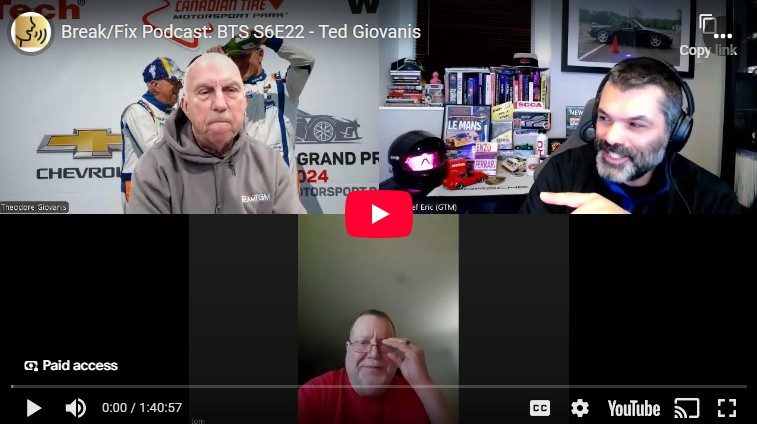
All of our BEHIND THE SCENES (BTS) Break/Fix episodes are raw and unedited, and expressly shared with the permission and consent of our guests.
Consider becoming a GTM Patreon Supporter and get behind the scenes content and schwag!
Do you like what you've seen, heard and read? - Don't forget, GTM is fueled by volunteers and remains a no-annual-fee organization, but we still need help to pay to keep the lights on... For as little as $2.50/month you can help us keep the momentum going so we can continue to record, write, edit and broadcast your favorite content. Support GTM today! or make a One Time Donation.

If you enjoyed this episode, please go to Apple Podcasts and leave us a review. That would help us beat the algorithms and help spread the enthusiasm to others by way of Break/Fix and GTM. Subscribe to Break/Fix using your favorite Podcast App:
By 2006, Ted stepped into the professional ranks through Grand‑Am, the precursor to today’s IMSA. His early years were filled with the gritty realities of privateer racing — muddy paddocks, blown engines, and even a surreal moment when Paul Newman offered encouragement after a tough weekend.
As teammate Tom Newman recalled, the early days were far from glamorous: “We had about three pickup trucks and various trailers… Oh, how far he’s come.” Those formative years built the foundation for what TGM Racing would eventually become.
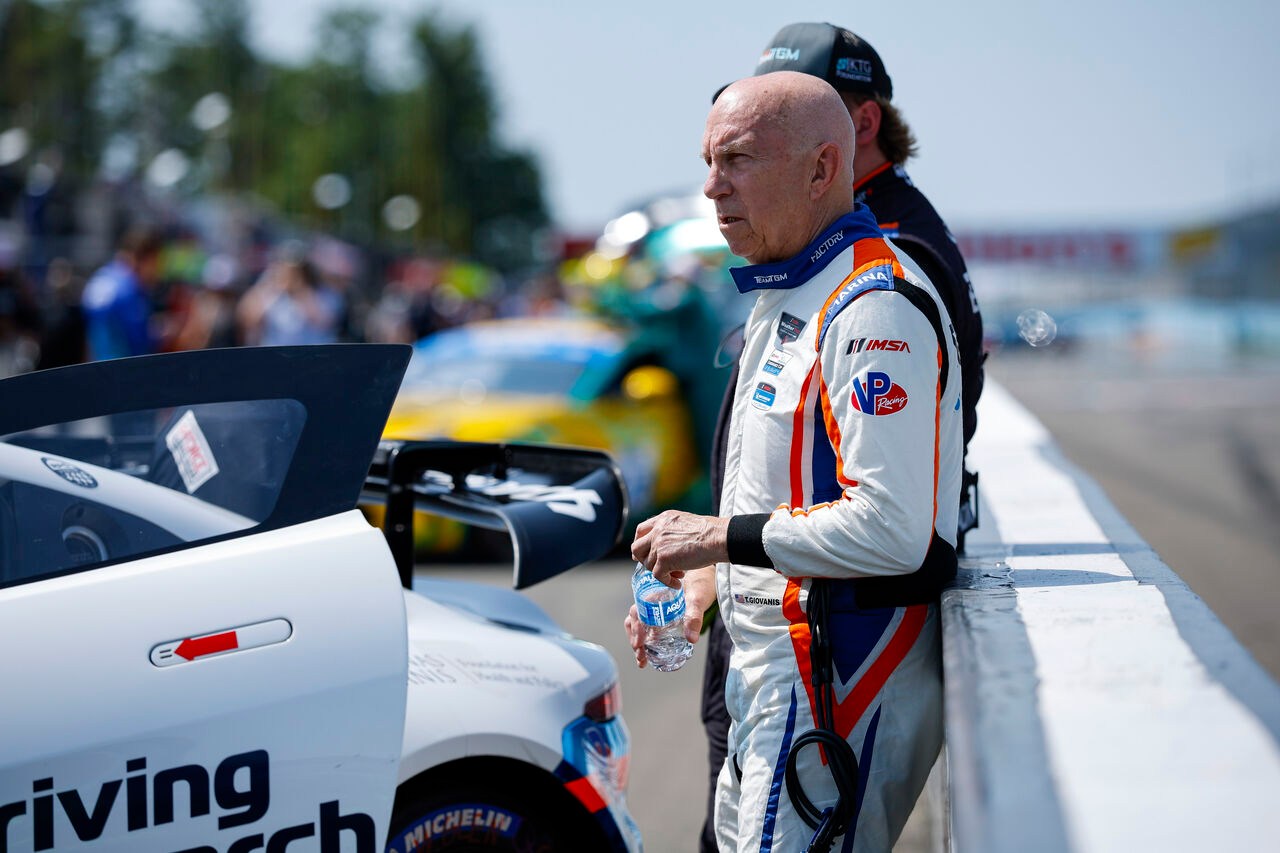
From BMW to Porsche to Aston Martin: A Garage Full of Chapters
Ted’s racing résumé reads like a tour through modern GT machinery:
- BMW 330s in Grand‑Am ST
- Porsche GT4s in GS
- Mercedes-AMG GT4s
- Chevrolet Camaro GT4.Rs
- Aston Martin Vantage GT4s, including the latest Evo chassis
Each transition was driven by strategy, performance, and the ever‑shifting world of Balance of Performance (BOP) — a topic Ted approaches with nuance. “You have to get your head around succeeding no matter what they do. Try as they will to slow you down, you’ve got to figure out a way to get better.”
His analytical mindset — sharpened by decades of work in health policy and research — gives him a unique perspective on the technical and strategic layers of endurance racing.
Racing, Research, and the Art of Modeling
One of the most fascinating aspects of Ted’s story is how his racing life and research life inform one another.
In 2006, Ted uncovered a major error in Medicare hospital payments, leading to a six‑year legal battle that ultimately reshaped his future. After the passing of his wife Jane in 2010, he founded the JKTG Foundation, dedicated to advancing cancer research — especially in metastatic breast cancer.
The connection between racing and research is surprisingly deep: “Racing is all about modeling and forecasting… and so is Cancer Research.”
Just as teams analyze data to optimize performance, Ted’s foundation funds researchers who model how cancer cells migrate, communicate, and respond to therapies. His goal is nothing short of transforming how early‑stage research is funded and understood.
Lessons From the Track — and Life
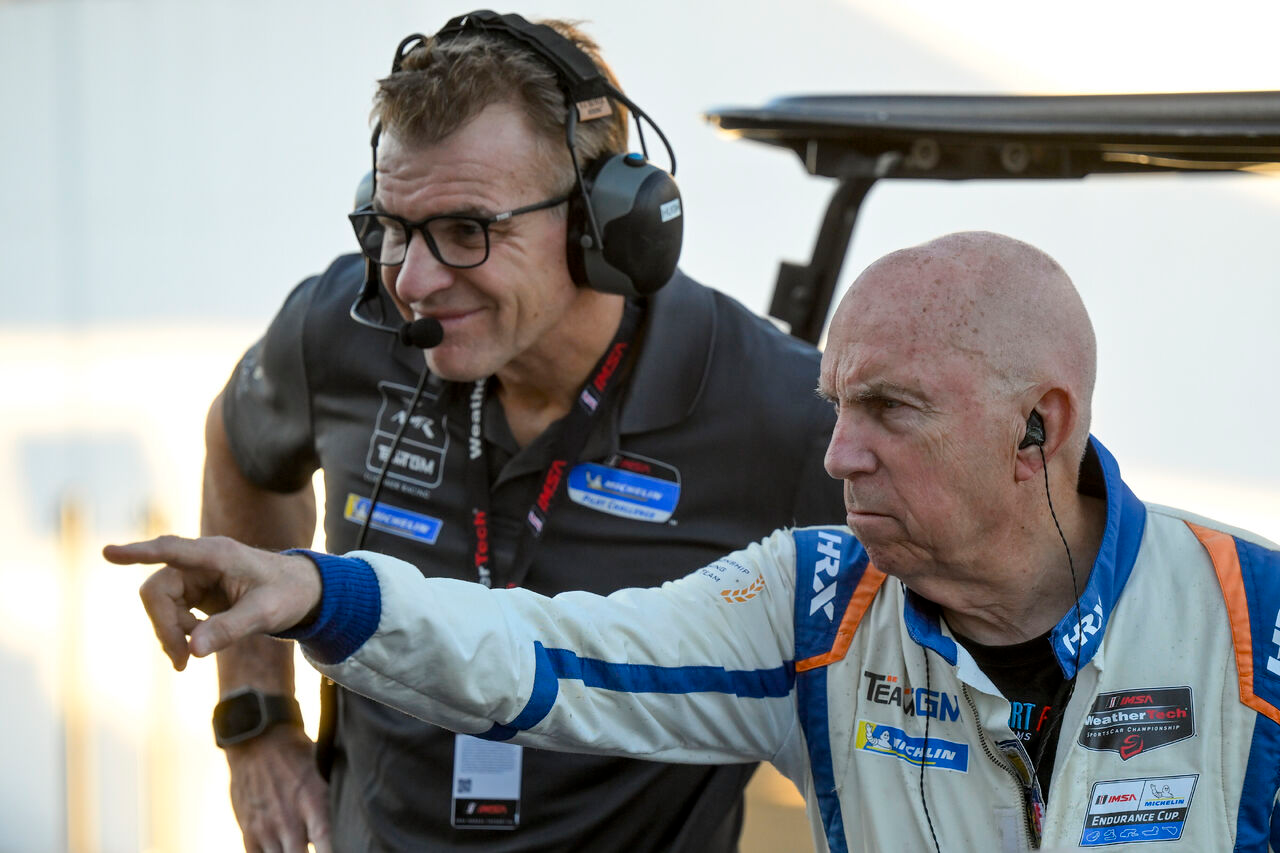
Ted’s racing journey hasn’t been without hardship. A major crash in 2016 left him with a severed Achilles tendon, ending his season. Yet he returned to the cockpit just four and a half months later. “You don’t let the stuff slow you down… You do it because you want to succeed.” His philosophy is simple but powerful:
- Focus on self‑improvement, not comparison
- Embrace discipline and adaptability
- Learn from anyone, at any age
- Do it because you love it
These principles have guided him to multiple championships, including back‑to‑back IMSA Bronze Cup titles — achievements made even more meaningful by the acknowledgment from peers who noticed he was still getting faster.
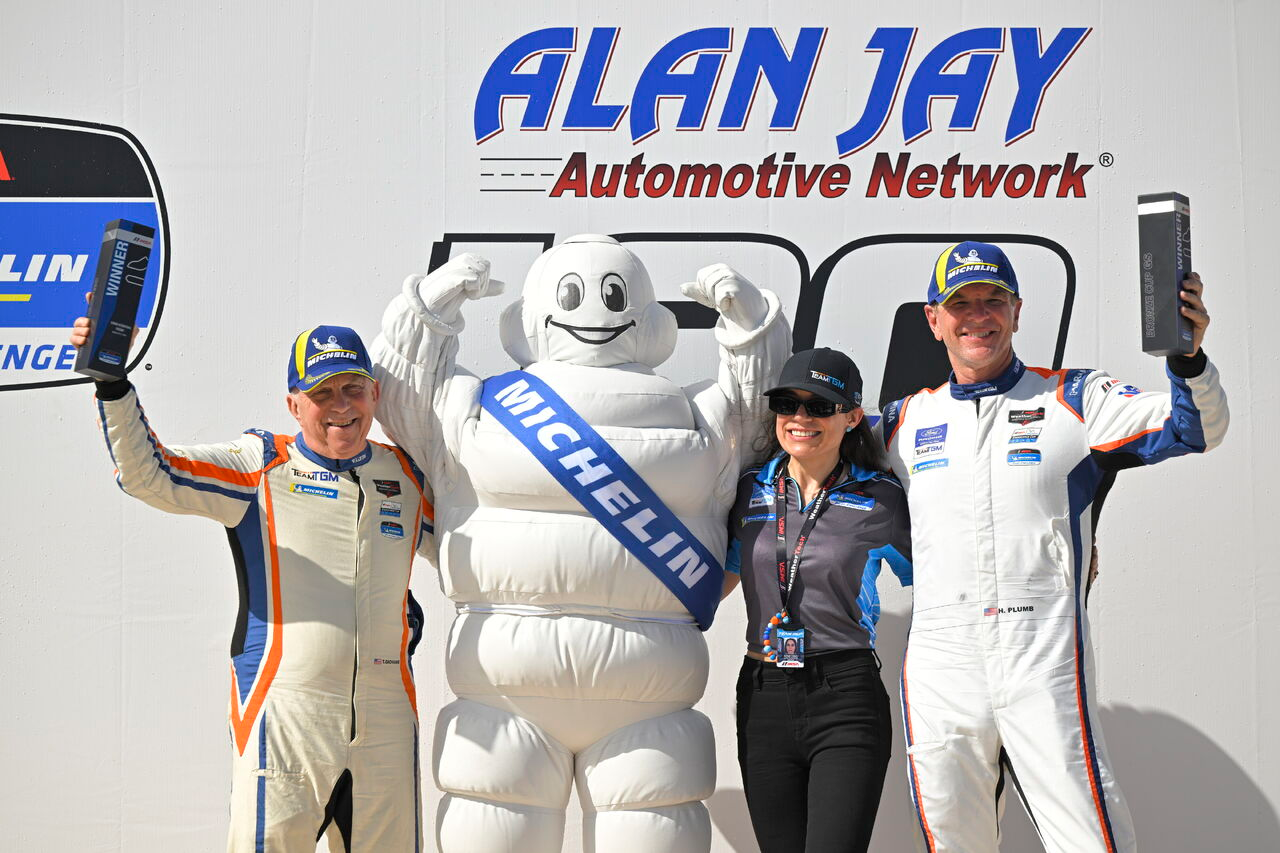
Racing Toward the Future
At 80 years old, Ted shows no signs of slowing down. While Le Mans may not be in the cards, another run at the Rolex 24 at Daytona is very much on the horizon. His dual mission continues:
- On track: Compete at the highest level of American endurance racing
- Off track: Drive cancer research in bold new directions
And through it all, he remains committed to sharing what he’s learned — not to sell anything, but to help others navigate the challenges of racing, business, and life.
This content has been brought to you in-part by sponsorship through...