

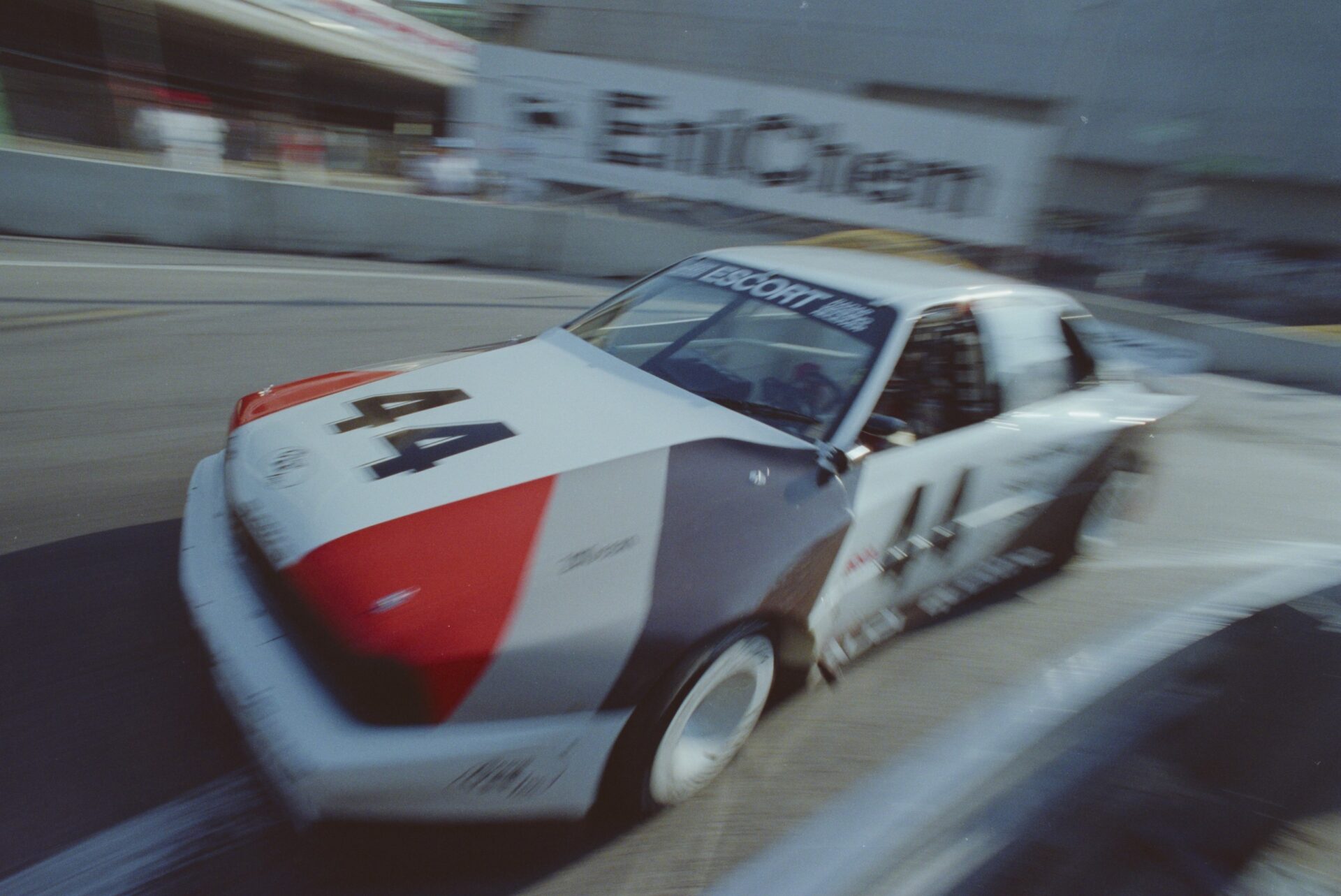
Some stories in motorsport are so seismic that even decades later, they still rattle the paddock. Hurley Haywood’s time behind the wheel of Audi’s all‑wheel‑drive TransAm and IMSA machines is one of those stories — a brief but explosive chapter that reshaped racing technology, infuriated competitors, and cemented Audi’s place in performance history.
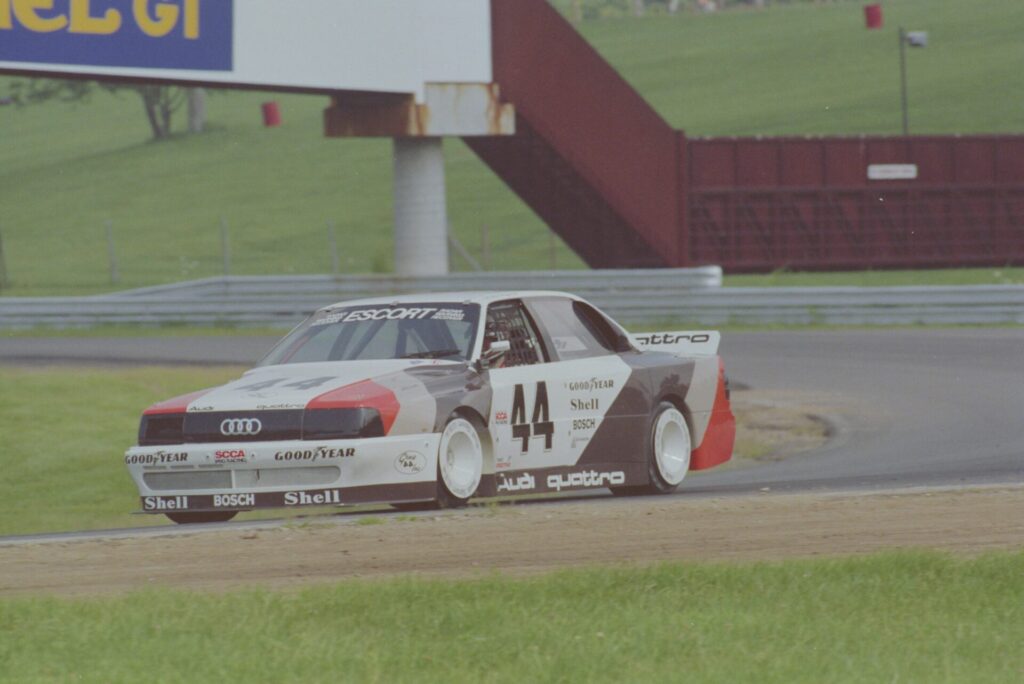
In this special Break/Fix pit‑stop episode, we go behind the scenes with Hurley to revisit the era when a “family sedan” became the most feared weapon in American road racing.



Hurley’s Audi journey began in 1983 under unlikely circumstances. After breaking his leg, he couldn’t operate a traditional clutch in a Porsche — but Bob Tullius of Group 44 saw a workaround. Jaguar’s gearboxes only required the clutch in the pits, and Al Holbert gave Tullius a simple directive: “If you can hire Hurley, do it Today.” That decision set off a chain of events that would forever link Hurley to Group 44 and bring him from Jaguars to one of the most technologically advanced racing programs of its time: Audi.
Synopsis
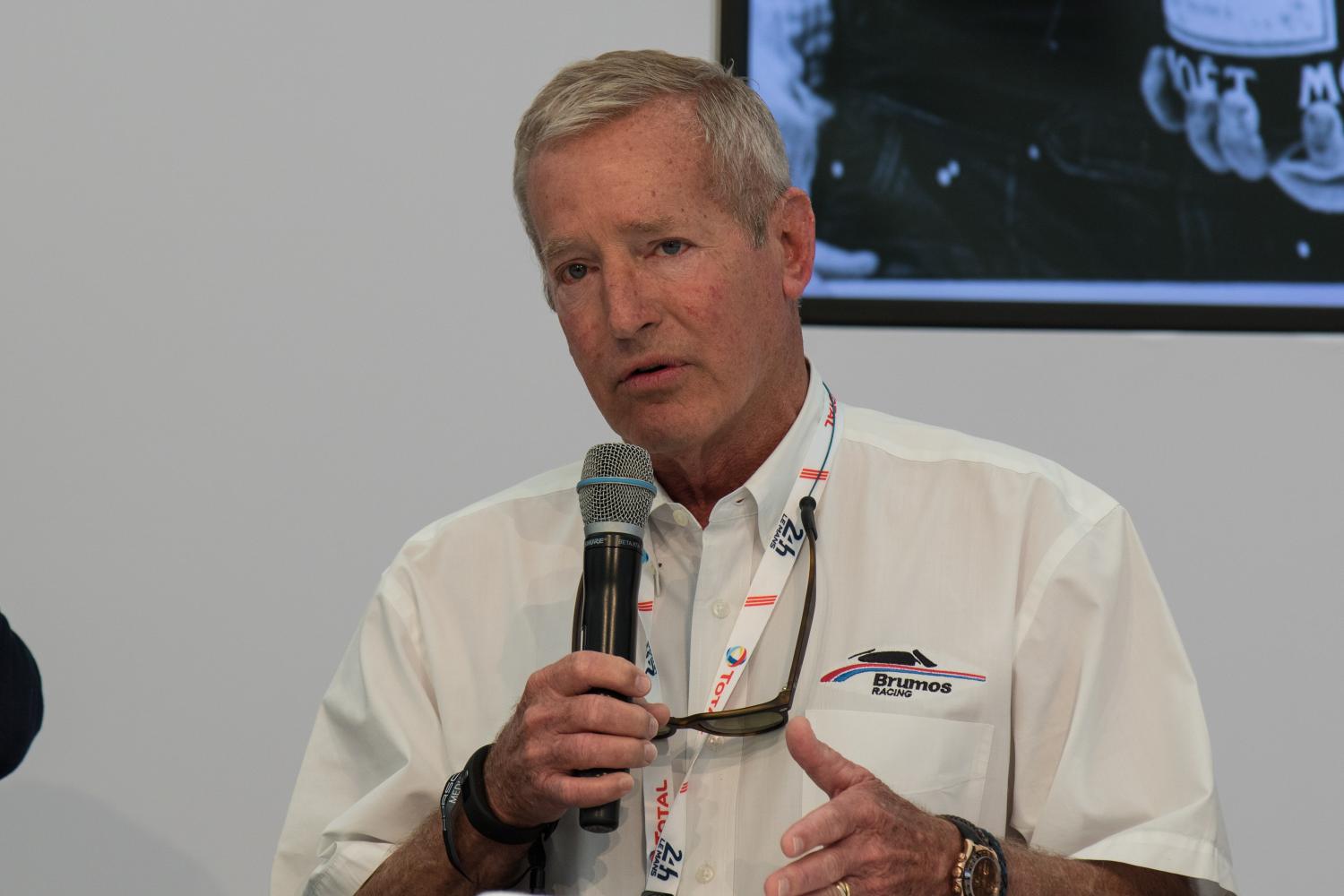
In this Break/Fix Pit Stop Minisode, the hosts welcome back legendary sports car driver Hurley Haywood to revisit his defining years with Audi in Trans-Am and IMSA. Hurley explains how Bob Tullius and Audi brought him into the program after he broke his leg, describes Group 44’s professionalism, and contrasts team dynamics once Audi factory engineers controlled strategy and development. He recounts early surprises with the Quattro, learning all-wheel-drive technique, and how the cars became overwhelmingly dominant, winning a Trans-Am championship before SCCA banned four-wheel drive and IMSA piled on weight and engine restrictions that rarely slowed them. Haywood discusses the advanced 90 Quattro GTO, politics that ended Audi’s program, his brief Ferrari F40 IMSA experience, lessons from Walter Röhrl, and reflections on technology, dominance, and Audi’s prospects in Formula 1.
- Hurley, before we dive into the Audi era, can you share what initially drew you to TransAm racing and how it fit into your broader career at the time?
- Let’s revisit how Bob Tullis put the deal together for the Audi program
- When you first got behind the wheel of the Audi Quattro in TransAm, what were your initial impressions compared to the more traditional rear-wheel drive cars you had raced before?
- The all-wheel drive technology was groundbreaking for TransAm—how did you and the team adapt your driving style and strategy to maximize its strengths?
- How did other drivers and teams in the paddock react to the dominance of the Audi Quattro, and what was the atmosphere like competing under those conditions?
- Beyond just the performance, what was the team culture like working with Audi during that period, and how did it compare with other manufacturers you had raced for?
- Many fans credit that era with helping Audi solidify its motorsport reputation in the U.S.—what do you think was the long-term impact of those TransAm seasons for the brand?
- As a driver, did you feel a sense of responsibility representing a new era of technology in racing, or did you simply focus on executing / winning behind the wheel?
- Looking back, what lessons from those TransAm seasons have stayed with you, either about racing, teamwork, or innovation?
- Finally, if you had the chance to climb back into an Audi TransAm car today, how do you think it would feel revisiting that chapter of your career?
Transcript
Crew Chief Brad: [00:00:00] We always have a blast chatting with our guests about all sorts of different topics, but sometimes we go off the rails and dig deeper into their automotive and motor sports pasts. As a bonus, let’s go behind the scenes with this pit stop mini episode for some extra content that didn’t quite fit in the main episode.
Sit back and enjoy and remember to like, subscribe and support break fix on Patreon.
Crew Chief Eric: Tonight we are honored to revisit the legendary career of Hurley Haywood, one of the most decorated and respected sports car drivers of all time. While many remember Hurley for his victories at the 24 hours at Daytona, and his wins at Lama, his time in the TransAm series with Audi stands as a defining chapter in American Motorsport.
Behind the wheel of the powerful Audi Quatro. Hurley helped rewrite the rule book, showcasing the dominance of all-wheel drive technology on circuits where traditional rear wheel drive muscle. Once ruled his success not only brought Audi unprecedented glory and TransAm, but also cemented his place as a pioneer who bridged [00:01:00] innovation and skill.
We’ll revisit those groundbreaking seasons and hear firsthand how Hurley Haywood helped change the face of the series and get insight about his time in TransAm and imsa. From folks like Rick Huey from the I-M-R-R-C, legendary Pro driver Lynn St. James, and Senior Director of Competition at imsa Mark Roff.
And with that, let’s welcome
AUDI SOUND: Hurley to break fix.
Crew Chief Eric: Well, Hurley, it’s awesome to have you back in the studio. The last time we got together, we talked about your adventures at lama, and during that episode we touched just briefly on your history with Audi and with TransAm, and so we wanted to revisit that part of your motor sports career Before we dive deep into the Audi era.
Can you take us back and explain how you ended up in TransAm racing, how that fit into your broader career, and tell us about how Bob Tullia put together the deal with the Audi program.
Hurley Haywood: Uh, I had broken my leg back in 1983. Bob Tullia called up [00:02:00] Al Holbert and he said, I’m thinking about hiring Hurley because you know, he can’t push the clutch down on a Porsche, but we have a gearbox and he only has to push the clutch to get in and out of the pits.
Al said to Bob, he said, if you can hire Hurley, do it today because he’s one of the best. And that’s exactly what happened. So I raised for the Jaguar team, the Trulia team group, 44 for two and a half years. And then when that program stopped and it moved over to Walkinshaw, Walkinshaw decided that he wanted Brian Redman and myself to come help his team win the race.
Well. We were told basically to keep our mouth shut and drive as fast as we could go. ’cause he wanted to be on television at the start of the race. And so eventually all three cars had mechanical problems and we [00:03:00] would move from one car to the other car. And so I don’t wanna get into the particulars, but it was kind of an amusing round table of guys that were going from one car to another car, and then that car would break and move to the third car.
So it was a, uh, difficult situation to be in. Well, let me back up a little bit. When Bob Tulio lost the Jaguar deal, at the same time Audi was thinking about coming into race in the United States. They wanted to sort of promote the Audi program and Joe Hopin called me up and said, I want you to come to Atlanta.
We have a 12 hour night race in a Audi Quatra in a, basically a sedan, 200 sedan racing seat and seat belts. And that was about the, the only extent of modifications that they made to the car. So I would say. You must be joking. So anyway, the weather turned terrible and it was raining like hell and [00:04:00] we were third overall against really race cars.
So, you know, I was pretty excited about that. And then about a month later, Joe Hopin called me and said, what would you think about racing an Audi in the TransAm? And I kind of thought about it for a moment and, uh, I said, what’s the deal? And he said, well, let’s go over to English dot and I’ll, let me show you the, the car that they’re working on.
So we went over, Walter Rule was there, and he sort of gave me the background of the car I got in this thing and I was really surprised. I said, this is pretty cool. And Joe Hopin was of course, the guy that sort of negotiated all the rules and everything. He called me up and he said, well, what do you think we should do?
What team do you think we should get
Rick Hughey (IMRRC): now Was that Tuus?
AUDI SOUND: That was Tuus
Rick Hughey (IMRRC): ran that program.
AUDI SOUND: That relationship lasted five years. I drove with the Jags for two years or three years, and then I drove for him with the Audi program and he was a great [00:05:00] guy. A lot of people didn’t like Bob, but. I liked him. He and I never had a crossword.
I was always kind of a little rebellious. You know, you had to do the uniform thing on that team. You had to be dressed in a uniform every time. And Bob was very explicit about, you know, white shoes, white socks, white shorts, green belt, gold army type style, belt buckle belt buckle, web belt, white shirt, you know, the whole nine yards.
Mark Raffauf (IMSA): One of the only teams in history whose people were always dressed in white and never got dirty. Not sure how they did that, but I think they had enough uniforms in the truck that if you did, you had to go change right away. But yeah. How many people have white crew guys, you know.
AUDI SOUND: And I would always have one thing that was not quite up to team standard, different color bells or a slightly different shade of sock or you know, something like that.
And he never said anything. I knew he saw it, but he never said anything. It was a nice relationship with him and I really liked the team and I liked the discipline and you know, Bob was one of the first guys that really brought professionalism [00:06:00] up to a standard that’s now enjoyed by everybody. You walk down Pi Lane in Wisa or whatever it is, and the team and the philosophy that you have with these teams, uniforms, detail preparation, always started by Bob.
Mm-hmm. Bob truly has really brought that discipline. Look to sports, car racing
Rick Hughey (IMRRC): and the preparation there was always excellent. I mean, I know one of his mechanics used to work on Air Force One, so that’s gotta be second in.
Hurley Haywood: He’s got all the equipment, he is got the shop, he’s got the transporters. They’re all spotless.
Totally. In the Audi sort of way of thinking,
Crew Chief Eric: you raced for a lot of different teams over the years. I mean, predominantly Porsche E, especially Porsche, I’ll say. What was it like racing for Audi? What was it? What was the team dynamics like? What was the culture like? What was the attitude?
Hurley Haywood: Well, that was definitely a factory team.
And Bob, I think, had a hard time at the beginning accepting that role as to sort of the mechanism that let the Audi happen. But all of the [00:07:00] decisions on how you would run the car during the race, how you would set the car up and engineering wise was taken out of his hands and replaced with the factory people.
We had a lot of factory people that went to Winchester. Which is where the headquarters were for Bob, but it was something that Bob was able to employ all his guys and his guys were very, very quick to learn the process. So it was a real team effort on both the American side and the German side, where everybody came together and worked very nicely together.
I don’t really remember any times when there was a lot of friction between those two entities. Everybody worked together.
Crew Chief Eric: Did you get a chance to work with or meet Roland Gum? He was one of the masterminds behind Audi’s success in World Rally Championship.
Hurley Haywood: Yes, I did.
Crew Chief Eric: So what was Roland like to work with?
Was he involved in the TransAm in the IMSA program too? Trying to refine the car?
Hurley Haywood: Yes. I think he was. And. The development of those cars went on 12 months out of the [00:08:00] year on both the TransAm and the GT Os period, the SSA period. It was a continual development on both types of cars. It was a nice position to be in and then have guys like Joe Hopin sort of smoothing the water out, making everybody happy, but it didn’t work most of the time.
So that’s what happened and he got the deal and everybody went over to Ingles Scott to talk about the program and you know, work out the details. But that was one of the greatest cars. Everybody laughed, said, what are you doing with, this is a family sedan. It looks like a family sedan. I said, well guys, just wait and see.
They stopped laughing after our first race because we were just so superior to everything else on the racetrack.
Crew Chief Eric: Your first impressions of the Audi completely different than anything you had driven up until that point when you compared it to the Porsches and the Jaguars. What was the experience like with a front heavy all wheel drive family sedan, as you put it?
Hurley Haywood: It was actually brilliant to drive. You had to make a little bit of an [00:09:00] adjustment because, you know, it was not a conventional car, so getting used to the all-wheel drive and it didn’t take very long. And I sort of got the technique much quicker than, uh, Hans did. Hans was very frustrated at the beginning of the season because we had engineers with both cars.
My engineer. Was different than Hans’s engineer. And Hans wanted to set up the car a little bit differently that I liked it. So it took a while for him to get into the rhythm, but I found it, okay, this is what the deal is and this is what we’re gonna do. And sure enough, the car was completely dominant in all the TransAm races.
I won the championship for myself and for Audi, and then the SCCA kicked us out. They said no. Four wheel drive is not allowed. Then we moved over to imsa.
Mark Raffauf (IMSA): This is, uh, one of the coolest cars we ever developed with Audi, which also became the biggest pain in the butt for us.
Hurley Haywood: Uh, we started with a 90 Quatro, and the 90 Quatro, in my opinion, was probably one of the best race cars I ever [00:10:00] driven.
I mean, that thing was so incredibly awesome.
Mark Raffauf (IMSA): Full tube frame, five cylinder inline turbo.
Hurley Haywood: It had over 700 horsepower
Mark Raffauf (IMSA): hunch, stook, Hurley Haywood, and occasionally Walter Royal, a rally driver who even people like hunch Stook said when he showed up. I raced for second. The man was amazing. The intriguing thing was the car is constant all-wheel drive car, which meant it applied.
The drive you wanted on each wheel based on the grip level that the car was sensing that it needed, it wasn’t 20% front, 80% back. It was applying that drive to the wheels as it saw it needed. So the hard part of it was, we started it out. Goodyear made ’em special tires 14 inches wide. We realized after a couple races, they didn’t go to Daytona and Sebring because they didn’t think they could finish.
Hurley Haywood: The cars were not really made to do long distance races. So we didn’t do Daytona. We didn’t do Sebring. But then, you know, I think stook. Won almost every race, and I was second in all those races. So that thing was unbelievable. 700 horsepower, [00:11:00] huge tires on the front end rear, and it was really a pretty cool car to drive.
Mark Raffauf (IMSA): So they started on 14th, we summed down two, three races. Changed that to 12 and then changed it to 10, a couple races later, and the end result was, it made no difference. The 10 inch wide tires worked just as good as the 14 inch tires.
Hurley Haywood: We really dominated the whole series. They were pissed off. They kept adding weight to us and all kinds of restrictions on the engines and the intakes.
It made no difference. The cars were just brilliant with the four wheel drive systems,
Mark Raffauf (IMSA): part of the reasons and the learning experience for us was technically what’s going on with a car like this is the tire degradation. Is way better. ’cause your lo, the load of slowing down is spread over all four wheels.
The braking was much better and the acceleration was phenomenal. So it was an amazing car. It is probably, in my opinion, one of the coolest, most technically advanced things that IMSA created. We did some other stuff, but this one was sort of a challenge for them and. To [00:12:00] do this. They won the TransAm the year before with a car, an Audi 100 made out of a real production shell.
This has nothing to do with that other than the greenhouse silhouette and so on, so forth. But spectacular car two remain. One is here in the USA and one is in Germany. And the significance to Audi is when they just showed their first concept, formula One car, the car that’s behind the Formula one car in their display is that car, not the R eight prototype.
That’s off to the side, but that car is right there that embodies. Audi’s performance thing and it’s 1989. Pretty amazing what they were able to do and how they did it.
Rick Hughey (IMRRC): And we mentioned marketing a little while ago. They’re still using video from those days to market the Audi all wheel drive now. So it really stood out in history.
I think,
AUDI SOUND: you know, the all wheel drive is certainly something that has found its way into lots of different types of production cars down. It’s just is a benefit that. His, um, well worth people taking a look at, and Audi was the one that kind of pioneered that system in a race car. It was just phenomenal and that’s why they basically banned them [00:13:00] and don’t see four wheel drive cars anymore.
Hurley Haywood: Everybody was out to get us and nobody really could. There were cars were so dominant, the four wheel drive, regardless of what the conditions were, rain, hot, sandy, you know, whatever the conditions are. The Audis were dominant. The reason we didn’t win the championship. Was because the cars were not built for long distance races for Daytona and for Seabring.
Those were in the calendar for the series. So we missed those two races, but we won everything else after that. Practically.
Rick Hughey (IMRRC): I know you had one race here that you do the whole race yourself.
AUDI SOUND: Yeah, I, I got it into, uh, Scott Goodier was supposed to drive with me. Scott was new to the team. I was having a great battle and just didn’t want to give it up at the pit stop.
So I stayed in. And the Audi, that was really the first time that I had been with a factory team. That was excessive. Anything that we wanted, we could have. I mean, if I said, Hey guys, you know, I want to have wood paneling on the dashboard. I mean, the [00:14:00] next race, I have wood paneling on the. It was like a driver’s dream and the cars themselves were absolutely fantastic.
I mean, just, it was just a really nice atmosphere to be able to work in that kind of situation where. Anything you wanted was possible
Crew Chief Eric: at that time. The term that was used was borrowed from Mark Donahue, the unfair advantage that Audi had because of the all-wheel drive, but it was cutting edge technology, not just in racing, but in the production world itself.
Like Audi put itself on the map after many, many years of being in business by putting all-wheel drive and production cars, and now they bring it to. TransAm racing, this groundbreaking technology. I mean, you dominated, but with all these penalties, with all the setbacks, with everything that they tried to do to stop the Audi’s advantage, how much did you have to adapt as a driver every time they penalized the car?
Hurley Haywood: Yeah, as I said, it made no difference to the performance, weight restrictions on the intakes. None of that really had an effect. The cars were so good [00:15:00] and the engineers. Behind the cars were so good that they, you know, said, oh, we need to do this. We need to change the weight balance a little bit. But in retrospect, it really didn’t slow us down at all.
Cars were so good.
Crew Chief Eric: Were there some tracks where the Audi was at a disadvantage? Like, I remember watching the Long Beach races were super tight and, and watching you kind of struggle and saw it the wheel a little bit to get through the tightness of Long Beach versus something like Watkins Glen where you could really open it up.
Hurley Haywood: It made no difference with the track. Some of the tighter tracks. Like Long Beach, you had a lot of different surface changes and where the other cars might have an advantage in one place, you had an advantage in the other place. So it sort of worked itself out. But still, you know, the worst conditions, like I remember we were running Texas now.
That was with the transient car, Texas. That was a joke. The uh, surface was just, there was one line through the corners and. If you made one step out of that line, you were in the wall and [00:16:00] a very tight chords. And I remember passing Willie Willie t ribs and I got up alongside of him. He was on the inside on the clean track and I was in in the sand, and I sort of kind waved at him when I went by.
He gave me the finger. He said, you know, God damn. At the end of the race, he came up and he says, Jesus, this car is so good making us all look really bad. So, you know, went, it was fun.
Crew Chief Eric: You know, it’s funny you mentioned that we had Lynn St. James on quite a few times on the show. In one of her interviews we talked about this.
Was it really like that when you guys were competing against the Audis? Was everybody so upset about it? Was it really that earth shattering?
Lyn St. James: Yes, it was awful. You would be hanging under your car in a corner. And then they just go driving by, you know? ’cause you got that all wheel drive and it would be like, you would just cuss the hell out of everything.
I mean, I could have killed Hurley and stuck, you know, because it was like, oh, I can remember Meadowlands particularly because you know, when you get in these temporary circuits and, and so it was [00:17:00] maddening. It was totally, it was, it was brutal and maddening because it was an unfair advantage. I mean, it complete, I mean, there’s turbos and there’s normally aspirated that erase it against each other.
They have different power bands. But you know that all eventually it evens out and there are certain tracks that are handling tracks, certain tracks that are more high speed tracks if you have a handling car versus, you know, one versus the other. But it eventually evens out when they had that all wheel drive bullshit.
I mean, that was like, that was never gonna even out.
Crew Chief Eric: There’s no balance of performance there, right?
Lyn St. James: No. Oh, of course now, yeah. I mean, there’s the. That’s a whole different thing the way the rules are. I mean, God, I’d hate to have to run a team right now because every week they changed the BOP, you know? And yeah, back then you were stuck.
You know? You were stuck with what you got, the way the rules were, they didn’t change the rules that much throughout the year, and if they did, it was usually to your disadvantaged. But that whole Audi all wheel drive thing was, it makes me just livid thinking about it again, because we. We struggled so hard.
God, it was awful.
Crew Chief Eric: You know, the [00:18:00] struggle was real for the rest of the drivers, but was it the sanctioning body penalizing the car, or was it the drivers complaining so much that you guys were so dominant that they wanted to pull the Audi back? Do you know what, what the politics was like at that time?
Hurley Haywood: Our politics were governed by Joe Hopin and Joe Hopin was a miracle man with the sanctioning bodies and the rules.
So regardless of what they put on us. Joe would talk to the engineers and say, what would happen if we added a hundred pounds or 50 pounds, and they would kind of look at Joe and say, eh, nothing really wouldn’t affect the cars at all, because the balance of those cars were so good that all of the things that they could put against us were irrelevant at that point.
As far as the restrictions on the. On the engines, you know, the engines were way under stressed, especially with the TransAm motor, so there was a big margin. You know, we didn’t show everything at the beginning. We held a little bit back on the [00:19:00] performance part of it, and they could put the restrictions on us, and it really didn’t make any difference in the end.
Crew Chief Eric: So when you look back at TransAm in those days, obviously the road courses they use a little more rustic. You have things like the Meadowlands and Summit point on the list and whatnot. But even the cars were almost, in a way, an homage to the days of Can-Am, where you could build what you wanted. You had Nissans, you had Corvettes, you had Audis, you had all sorts of stuff in TransAm, you know what you’re describing.
I wonder, when you look back, do you think this was the beginning of almost like balance of performance where they were trying to figure out a way to make the cars more competitive and more even?
Hurley Haywood: Well, I think it was. All the other manufacturers ganged up said, you know, this car is not fair. We can’t compete against these cars.
And we really had a great car, great engineers, and Joe Hopin was a master at politics. That’s the way it was. And I think that combination between the other drivers, the other teams and the other manufacturers all ganged up. Tried to get the Saxon bodies to put, you know, restrictions on [00:20:00] us, but as I said it, they made little difference in the performance.
Crew Chief Eric: So talking about some of those tracks, some are still used today in the TransAm series and others not so much. Are there some memorable tracks, favorite laps or moments that stick out for you behind the wheel of the Audi?
Hurley Haywood: Well, you know, the Audi was so good both on the TransAm car and the GTO car. That regardless of what track you were on, it was like you just could screw with the other guys.
You know, you couldn’t run up alongside of them. Go on the outside, go on the inside and kinda wave as you went by and that would just piss everybody off big time. So I remember one time Joe had said to both Hans and myself, you know, the cars are good, but don’t rub it in their nose. So, you know, that’s what we had to do.
But you know, as a racing driver, especially with Hans, Hans was really good at. Pissing everybody off and, you know, making fun of it. So it, it was two years of great, great fun
Mark Raffauf (IMSA): and there’s some [00:21:00] video of people like Ook would just pass people in the dirt or the grass because the car could do that. So the rest of the guys are like, what is he doing?
He just drove me around me in the dirt.
Crew Chief Eric: And it’s funny you bring that up because I remember distinctly watching one of the races. With my dad watching you, Hurley, Hans and Walter driving the cars and at one point vividly remember him saying, I think he just passed him in the grass. I mean, the kind of shenanigans that went down during the TransAm era was absolutely amazing during that time.
And I remember watching archive footage and so I wanted to ask you what was the deal? With Hans antagonizing, the other drivers with the doll in the rear glass that would like, basically moon, everybody. Where did that come from?
Hurley Haywood: I’m, I’m afraid I don’t remember that part. Han Hans was, uh, always really great at coming up with, you know, really weird things and.
You know, kind of rub it into everybody’s face. Like, we’re so good. We don’t even have to try hard.
Crew Chief Eric: Walter’s also part of this equation, and he’s coming from World Rally Championship. You and Hans coming [00:22:00] from road racing, everybody coming together, obviously under the auspices of the Volkswagen Audi group.
What did you learn from each other? What did Walter teach you about driving an Audi and how did you share your knowledge with Walter about road racing?
Hurley Haywood: I don’t think really that I had. Much to say about, about how to drive the cars with Walter. He was so good and he had a long history with Dowdy. You know, he helped us to get our heads around the trick to driving in an all wheel drive car was, you know, Walter was so good and he was very good at sharing knowledge where most drivers are not willing to share setups or you know, how you would drive this corner, how you would drive that corner.
Walter was really good. And I can remember many times going to Walter and said, you know, what are you doing in this corner? What are you doing? And he would sit down and take a map and said, okay, this is what you do with the front wheel drive. All wheel drive. Especially with the viscous coupling. You couldn’t do it from the cockpit, but you would come in and have the [00:23:00] mechanics adjust the uh, front to rear grip, you know, the traction in those tires.
That helped us a lot. We really work with that. Depending on the track, we would go to. He was really, really helpful for me and the engineer that I had was really good, so we, we had a good combination.
Crew Chief Eric: I remember reviewing some of the file footage and it alluded to Hans especially, had to do a lot more left foot breaking, especially with the early TransAm card.
Because of the amount of turbo lag from the single turbo that you guys had on there, did you find yourself also doing a lot more left foot breaking to keep it spooled up and get it to rotate and things like that?
Hurley Haywood: You know, I learned how to do that with the Can-Am car, the nine, 17, and 10. And if you got off the boost in, in those cars, you were just lost.
Everybody would go by you because you had to be very careful with the timing. So you would come in, do your braking, you would sort of fan the throttle to keep the boost up and then. When you would attack the throttle, you had boost and you, [00:24:00] you didn’t have a big lag that sort of went away. When you got into traffic, you really had to play your cards right on timing and pick where your windows of opportunity would be.
Same with the Audi. The Audi on the lag situation. It was not really that significant. So you would late break, get the car turn, and then the balance between the front and the rear. Was almost perfect. So you didn’t have any over steer, you didn’t have any under steer, you just had power to the ground and that was what really separated us from the rest of the guys.
Crew Chief Eric: That wouldn’t be the last time you drove with Hansuk and Walter Rural. And if we jump forward a little bit and then we’ll do, we will dance back. You actually ran in 1993 with Hans and Walter at Lama and a nine 11 turbo. Was that part of this whole group 44 contract? How did that come to be?
Hurley Haywood: No, it didn’t have anything to do with the contract with Group 44.
It was like a prototype nine 11 that we raced at Daytona and Sebring. I think it was really [00:25:00] fast. It was really a great car. And then we were also gonna race that car at Lamont with Struck myself and Walter. That was the race, if my memory’s correct. Was the race that Walter retired after, you know? So that was the end of that program.
That was a really cool car, really fast.
Crew Chief Eric: Did you guys choose to drive together or was that pre-ordained?
Hurley Haywood: It was pre-ordained. They wanted an American, which was me and Walter of course, and Hans. Were great friends and, and fantastic drivers. And very fast. So we were kicking ass in Daytona and then we had a, I think Danny Sullivan drove with us at Daytona.
There was four guys at the on the team at Daytona and mechanical failure. We were out of the race. We were leading at the time.
Crew Chief Eric: The sound of the five cylinder turbos is legendary. I mean, they sound like dragons with their tails on fire. I mean, they’re pretty raucous and fans love it. But what’s it like from inside the car?
Hurley Haywood: The tailpipe sat [00:26:00] halfway inside the cockpit and then would jump on the right side of the car, but you could definitely hear the chirping sound.
That’s what everybody loved. It would made a very distinctive sound as you would get off the power and then gradually get back on the power. It’d make that sort of fluttering sound. People just love that and, and very distinctive, and you could tell it long before the car got within sight with your eyes.
So you just knew what the car was coming. Based on the sound,
Crew Chief Eric: I wanna highlight a particular period in Audi’s experimentation, which I believe you were involved in with Bobby Unser, and that’s the infamous NASCAR Audi 200 trial, the all black version of the TransAm car that was taken to Talladega for a test run.
Can you talk a little bit about the why, the [00:27:00] what and what happened?
Hurley Haywood: Vaguely remember, remember that I think that Bobby was more involved with the Pikes Peak stuff, the Talladega run. That was kind of outside of my book, so I didn’t really pay too much attention to that. But when we decided that we were gonna do this, Audi decided that we were gonna do it, and Joe Hopin backed it up in United States.
When I went over and saw the kind of commitment that Audi was making to this program, both on the Trans AM and GTO side, I said, this is gonna be. Really, really good. Very successful.
Crew Chief Eric: So the move from TransAm to IMSA makes sense. You guys came and did what you needed to do there and moved on to an unlimited class in GTO.
How did the GTO chapter end, was it just outta sheer frustration or had Audi proven what they needed to with you and Hans behind the wheel of the GTO car, or was there something else that said, no, we’re done racing here?
Hurley Haywood: They proved what they wanted to do. They wanted to. Make the all-wheel drive system something that [00:28:00] people would look at and say, ma’am, that would be great in my car, my streetcar.
And then I really don’t know what the politics were. The decision was made. We had won the championship. Hans did a great job. I was a backup. And IMSA Joe called up and said, that’s it. We’re not coming back the next year. And I was like, Ugh, you’re kidding. And I think. One of the reasons were politics on how dominant we were.
All the other manufacturers were threatening, you know, we’re not gonna compete against this car. We’re not not gonna spend the money to compete against something that we just can’t do. And their all wheel drive systems were so far advanced from anybody else’s system that, you know, it would take the other guys a long time to catch up.
Crew Chief Eric: And in that same breath of a season, you went and drove a Ferrari F 40 at the Glen and imsa. How did that. Pan out.
Mark Raffauf (IMSA): Um, yours truly at the Ferrari Museum. I throw this in there for my own benefit, but I was the guy that had to go over there and homologate this car, Ferrari F 40, which is [00:29:00] 1989, to run in GT racing, both in the US and Europe.
So whenever I go back there, they always remind me, I did two cars with Ferrari, that one, and the 3 3 3 SP prototype. So this one sits in the Ferrari Museum. Hurley Haywood actually drove it. People don’t realize Hurley Haywood drove Audis. He drove Porsches, he drove Ferrari, he drove Jaguars, he drove a lot of stuff.
But he lives and breathes. Porsches great guy.
Hurley Haywood: Don’t ask me. Team was from Italy and they brought fantastic food with him and we have these incredible luncheon, which they would cook. And you know, all the cars that I’ve driven, I’ve driven lots of different stuff. But that was really kind of a, a strange deal.
I can’t really remember what the conditions were that I had going. That allowed me to drive the Ferri in the first place. But it was so unique that everybody said, yeah, let Haywood try it. You know, see what he thinks. And let me tell you, it was a missile that was ready to explode anytime. So I don’t think we [00:30:00] really finished any race without a major problem.
And because of the mystique of the F 40 and the sort of the emotion behind that card, behind the brand. It was sort of fun to be part of that, but from a racing standpoint, it was a real truck.
Crew Chief Eric: You were kind of wishing to be back in the Audi at that point. I can imagine. Yeah. At that time there was a lot of things going on, and the struggle was real, especially with all the penalties that they were putting against and threats of banning and and everything against Audi at that point.
But when you look back, do you feel a sense of responsibility for really representing a new era of technology? I mean, you were on the cutting edge. Racing across all disciplines outside of rally. It’s like all wheel drive in racing. Look at this. I mean, obviously it had been experimented with before, but winning behind the wheel, as you said, it proved it didn’t matter the conditions, it didn’t matter the track, what they did to the car, but when you look back, what does that mean to you to have been behind the wheel of the Audi?
Hurley Haywood: You go through history, you look at [00:31:00] cars that are really, really good cars that are really bad, and I have been really, really lucky in my career that I’ve always had the opportunity to drive great cars. Very seldom in my career have I driven a car that I didn’t like most of the time. Those are with Porsches.
You know, with the Audi deal, Porsche wasn’t racing against us, so that was a cool thing to do in the interim. You know, if you look back at my racing career, I have always driven from manufacturers that had the unfair advantage. You know, look at Porsche’s, everybody was. You know, looking at us with a nine 11, basically a nine 11 that was running against Corvettes and Mustangs and all those stars, and we were wiping them up.
I mean, it was just like we wouldn’t be too great at the beginning in qualifying, but by mid race, we’d caught up and pass all those guys. So I always had the ability to drive cars that were cutting edge cars. Look at all the Porsches that I’ve driven over the years. You know, the 9 62, [00:32:00] 9 11 RSRs. I mean, all those cars were really, really fast and very, very advanced as far as the technology goes.
Same with the, the Audi, a very short period of my raising career, but I was able to drive the latest technology and had it all work in my favor. So I was used to that. I was not an engineer. One of the things that Peter Greg taught me was drive the cars as fast as you can go, articulate what’s going on to engineers and let the engineers figure it out.
Don’t you try to engineer the car? I was not an engineer and I’ve always maintained that. I’ll drive the car, come in and tell the engineers what’s going on and they can fix it, and then I’ll go out. And if it works, fine. If it doesn’t, I’ll say that wrong direction. So if I have a good car underneath me, I’m gonna do well with it.
If I have a bad car, which has not happened often, but you know, I’ll drive it to its extent sometimes that’s enough.
Crew Chief Eric: Well, when we visited the LAMA [00:33:00] chapter of your career. One of the questions we asked was, what did Lama teach you? And so I wanted to rephrase that to ask, what did the Audi teach you? What did it bring to your driving style that you carried with you to the rest of your racing?
Hurley Haywood: I don’t think I could take what the Audi was doing with me driving it and translate that into any other car I’ve driven. All-wheel drive on a race car was something that only lasted for a very brief period of time, and then all the other manufacturers and sanctioned bodies banned four-wheel drive technology because it was so good.
You kind of learn how to cope with the advantages and disadvantages of race cars that you’re driven, and we learned how to maximize that four wheel drive technology. But when that technology was then banned worldwide, that was the end of that deal.
Crew Chief Eric: Hurley in the last couple of years, there was an Audi Heritage video that came out where they brought out all the drivers and going back to the [00:34:00] Silver Arrows days, and it was a very long retrospective and homage to Audi’s racing legacy.
And so I wanted to ask you, you know, if you could climb back in to one of your cars that you drove back then, either the TransAm or the GTO, how do you think revisiting that car today would feel for you?
Hurley Haywood: In the day that technology proved to be better than anybody else’s. When you fast forward to current cars that are on today, you know it’s a driver’s responsibility to maximize the performance of any car that he’s driving.
Whether it’s a sedan, streetcar on street tires, in a kind of vintage car racing scenario, you maximize. The limits of that car. You draw that line with a sharp pen or you draw it with a big crayon, it’s your job getting close to that limit. And every car has a different limit. Every car has a different personality.
You know? Yes, we were dominant in a TransAm and GTO, but other cars. Let’s just fast forward to the 9, 9 [00:35:00] 3, the Penske car, that car. Is so good and the engineers behind that car are so good that a lot of times the competition just can’t keep up. And they, they won the manufacturer’s championship. They won the driver’s championship, and the racing was really, really good.
They’re up against really good cars. Action Express Car, the Chevrolet, the Fords, all those cars. But Porsche has made these great cars. They’ve had great engineers and that line goes through all the cars. We, we didn’t really race against any other Porsches in the TransAm and the IMSA days. They were all big block Detroit iron.
That we were up against. So Porsche kind of sat back and said, okay, let’s check this out. But they went more conventional side and the, and the conventional, like the 9 62 was brilliant. And that car’s life span was really a long period of time. It was 10 years. I won the last major race in that car in 1991.
[00:36:00] And then they canceled that program and went with more GT based cars.
Crew Chief Eric: So you mentioned earlier, I think the key word is. Dominance. They dominated in World Rally. They dominated in TransAm. They dominated in imsa. They went on to dominate at lama. Do you think Audi can dominate in Formula One?
Hurley Haywood: You know, that’s a hard question.
I don’t know if they’re going to just supply the engine. Or whether they’re gonna supply the chassis. Formula One is a very difficult series to be in. You know, you really have, you have to have a truckload of money to make it all work. You know, the sanctioning bodies and the FIA and you know, all the people that are involved in Formula One is a hard nut to, uh, break into.
So if Audi’s willing to spend that money, then they will be successful and they’ve been successful in every racing endeavor that they’ve chosen to go into. And. We just have to see what happens.
Crew Chief Eric: Well, Hurley, I gotta personally thank you for taking the time out and connecting my [00:37:00] boyhood fantasies and and dreams and watching you on television with the reality of what was going on on the track with you behind the wheel.
I mean, it’s been an absolute honor to be able to interview you, but talk about such a. Influential time when I was coming up as a motor sport enthusiast and so this has been absolutely incredible to get your insight and your view on what it was like to be behind the wheel of the Audi. So I really appreciate you taking the time to do this.
Hurley Haywood: My pleasure. Always have a good time talking to you.
Crew Chief Eric: Thanks Harley.
Hurley Haywood: Bye. Bye.
Crew Chief Eric: We hope you enjoyed another awesome episode of Break Fix Podcasts, brought to you by Grand Tour Motorsports. If you’d like to be a guest on the show or get involved, be sure to follow us on all social media platforms at Grand Touring Motorsports. And if you’d like to learn more about the content of this episode, be sure to check out the follow on article@gtmotorsports.org.
We remain a commercial free and no annual fees organization through [00:38:00] our sponsors, but also through the generous support of our fans, families, and friends through Patreon. For as little as $2 and 50 cents a month, you can get access to more behind the scenes action, additional pit stop, minisodes and other VIP goodies, as well as keeping our team of creators.
Fed on their strict diet of fig Newton’s, Gumby bears, and monster. So consider signing up for Patreon today at www.patreon.com/gt motorsports. And remember, without you, none of this would be possible.
Highlights
Skip ahead if you must… Here’s the highlights from this episode you might be most interested in and their corresponding time stamps.
- 00:00 Hurley Haywood Returns
- 01:54 Injury to Audi Opportunity
- 03:21 Audi Quattro First Test
- 04:49 Bob Tullius Team Culture & Factory Team Dynamics
- 08:25 Quattro Dominates TransAm
- 09:47 IMSA 90 Quattro Monster
- 14:17 Penalties Couldnt Stop Audi
- 16:26 Rivals Rage and BOP Politics Begin
- 20:03 Audi Track Antics … Hans’ Mischief Stories
- 21:53 Walter Röhrl Wisdom: Turbo Lag Techniques
- 24:31 Le Mans 911 Turbo Reunion
- 25:46 The Five Cylinder Sound
- 26:41 NASCAR Talladega Test
- 27:33 IMSA Exit Politics & The Ferrari F40 Detour
- 30:20 Revisiting Legends Today
- 36:04 Can Audi Win F1?
- 36:53 Final Thanks and Outro
Bonus Content
There's more to this story!
Be sure to check out the behind the scenes for this episode, filled with extras, bloopers, and other great moments not found in the final version. Become a Break/Fix VIP today by joining our Patreon.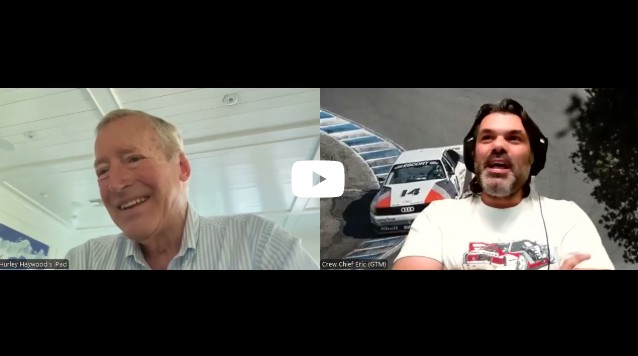
All of our BEHIND THE SCENES (BTS) Break/Fix episodes are raw and unedited, and expressly shared with the permission and consent of our guests.
Audi wanted to make a statement in U.S. motorsport. Their first test? A nearly stock Audi 200 sedan in a 12‑hour night race at Road Atlanta. Racing seat, belts… and not much else. Soon after, Hurley was invited to inspect the new TransAm‑spec Audi Quattro. Walter Röhrl was there.
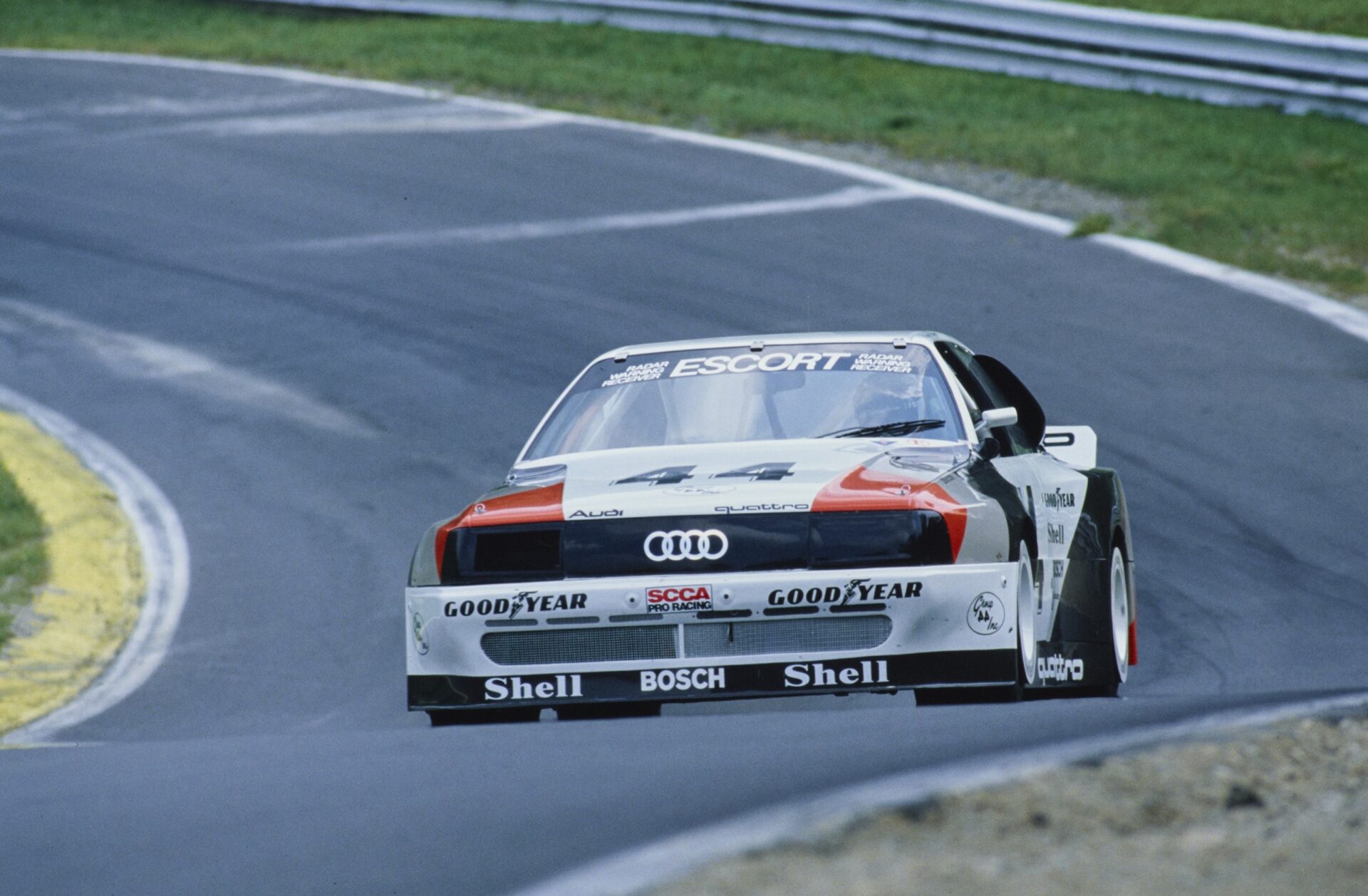
The car looked like a sedan, but Hurley knew immediately: “This is pretty cool” And he was right.
Fast forward to Road Atlanta… It rained. Hard.
Once the Quattro hit the track, the paddock stopped laughing at the unassuming “family sedan” and Hurley finished third overall against purpose‑built race cars; and that was all Audi needed to see.
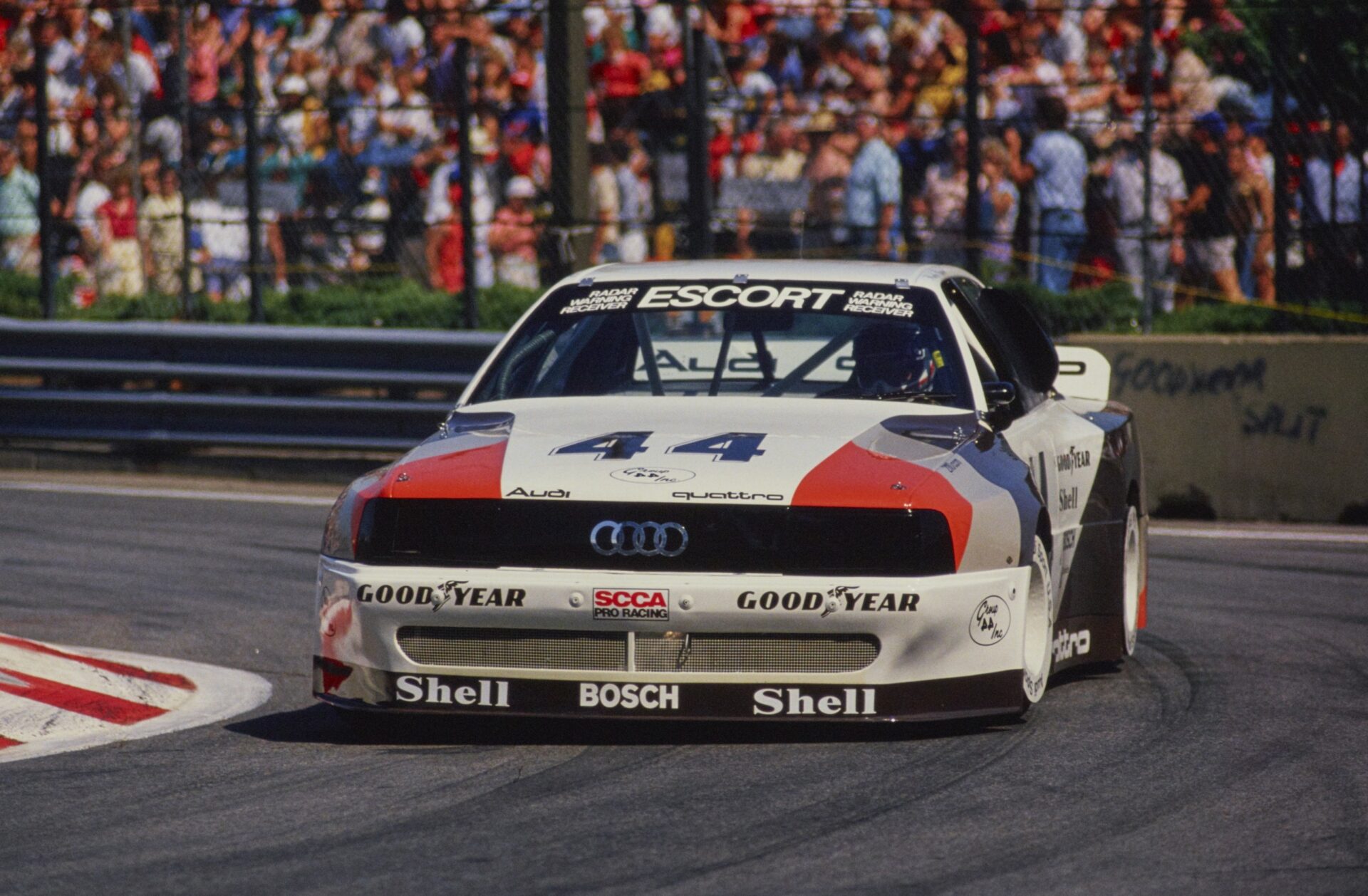
The TransAm Takeover: Dominance on Four Driven Wheels
Audi’s all‑wheel‑drive system — constantly adjusting torque to whichever wheel needed it — was unlike anything TransAm had ever seen. Hurley adapted quickly. Hans‑Joachim Stuck took longer, frustrated at first by the unconventional setup. But once both drivers found the rhythm, the results were devastating.
- Hurley won the championship.
- Audi won the championship.
Competitors were furious. Lyn St. James recalled the frustration vividly: “You’d be hanging on for dear life in a corner… and they’d just drive right by. It was maddening.” And then the SCCA banned them – “…they said four-wheel drive is not allowed” – recalls Hurley, after two seasons with Audi. Audi had created what Mark Donohue once called “the unfair advantage.”
IMSA GTO: The Monster Audi 90 Quattro
If TransAm was impressive, IMSA GTO was outrageous. Stuck won almost everything. Hurley finished second in nearly everything else. IMSA kept adding weight, restricting intakes, and tightening rules — but nothing slowed the car down. The only reason Audi didn’t win the championship? They skipped Daytona and Sebring because the car wasn’t built for endurance. Being in a new series meant stepping away from the 200 Sedan platform, and Audi built a tube‑frame 90 Quattro with:
- A 5‑cylinder turbo engine
- 700+ horsepower
- Massive tires (14 inches wide before penalties from IMSA)
- Constant torque vectoring
- Brutal acceleration and unmatched braking
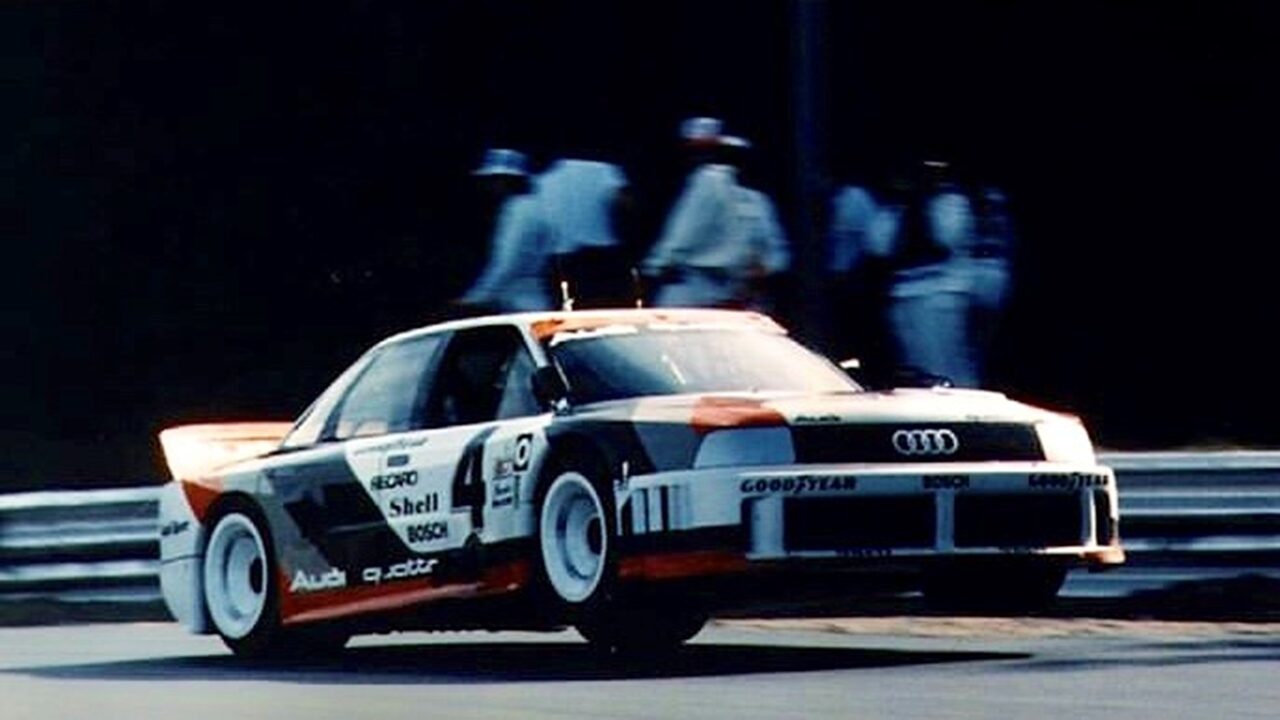
Hurley calls it: “One of the best race cars I ever drove.” But he’s also very clear on the subject: “You couldn’t take what the Audi taught you and apply it to other cars. All-wheel Drive in racing was banned shortly after. [again]” The Audi IMSA-era was a technological comet — brilliant, fast, and unfortunately gone too soon.
Life Inside the Audi Factory Team: Lessons From Legends: Röhrl, Stuck & Haywood
Hurley describes the Audi program as the first time he experienced a truly no‑limits factory effort: “Anything we wanted, we could have. If I asked for wood paneling on the dashboard, it’d be there the next race.” German engineers, American crew, relentless development — and a team culture so strict that even the uniforms were regulated down to sock color. Hurley admits he always wore one thing slightly off‑spec just to see if Bob Tullius would notice. He always did. But he never said a word.
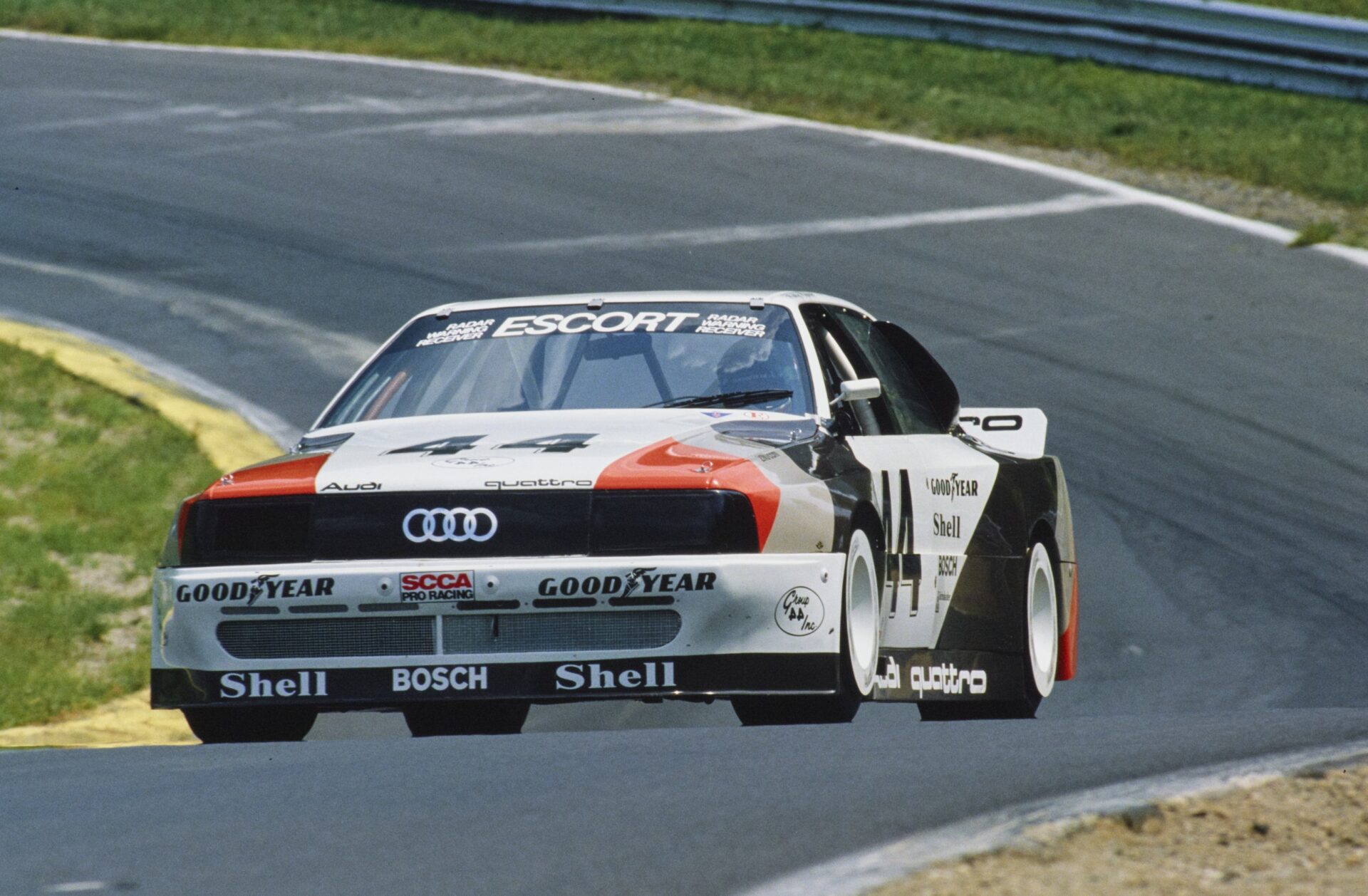
Walter Röhrl, already a rally icon, helped both Hurley and Stuck master the nuances of all‑wheel‑drive racing. He openly shared techniques — rare among elite drivers. Hurley learned:
- How to manage torque distribution
- How to brake late and rotate the car
- How to keep turbo boost alive
- and How to exploit traction where others had none
Life after Audi: Ferraris, Porsches, and the Rest of a Legendary Career
Hurley’s post‑Audi adventures included a wild stint in the Ferrari F40 LM — a car he describes as: “A missile ready to explode at any time.”
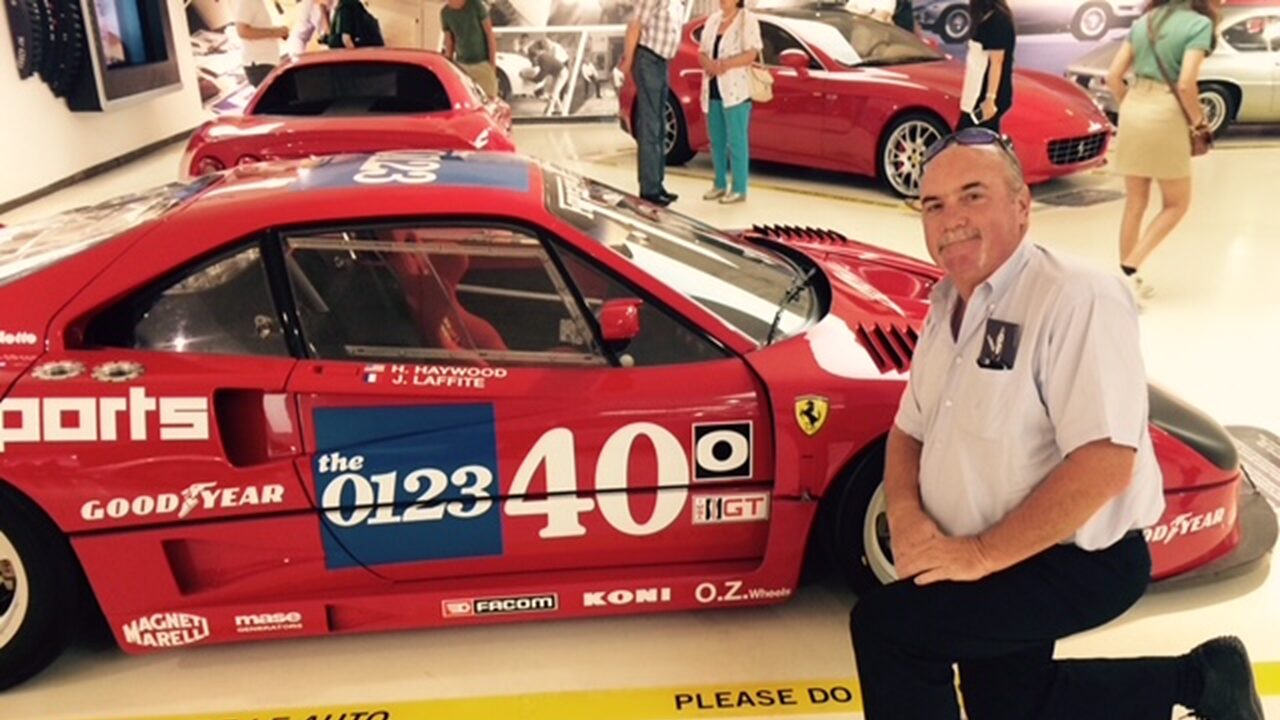
But his heart remained with Porsche, where he continued to win in 962s, RSRs, and GT machinery. Across his career, Hurley says he was lucky: “I’ve always driven cars with the unfair advantage.”
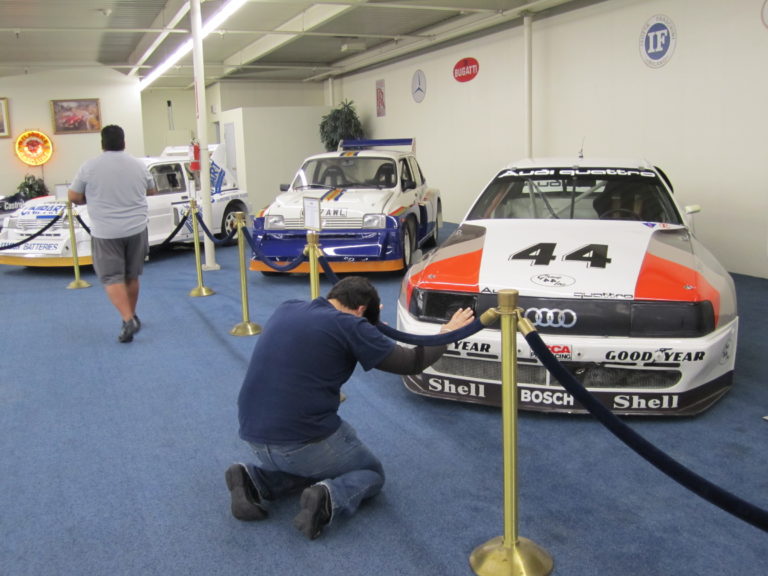
Hurley is candid about why the Audi era ended “[Audi] proved what they wanted to do… and the other manufacturers said ‘We can’t complete with this.'” Audi packed up and left after rewriting the rulebook, mostly due to: other manufacturers protesting, sanctioning bodies scrambling, balance‑of‑performance didn’t exist yet, and Audi’s tech was simply too far ahead. But … could Audi dominate Formula 1 in the same way? Hurley’s take is measured:
- F1 requires enormous investment
- Audi succeeds when they commit fully
- Their track record suggests they could dominate
- But the politics are fierce
- Time will tell
Even today, Audi displays the IMSA 90 Quattro behind their Formula 1 car — not the R8 prototype — as the symbol of their performance heritage.
A Legacy That Still Echoes
Hurley’s Audi years were short — just a few seasons — but their impact was massive. They changed how fans saw all‑wheel drive. They changed how manufacturers approached technology. They changed how sanctioning bodies wrote rules. (Jump to the 6:00m, and 8:40m marks in the video below to see Hurley in this Audi Heritage extended commercial).
https://www.youtube.com/watch?v=myZ24JC7slE
Audi (and Hurley) gave us some of the most outrageous, entertaining, and controversial racing America has ever seen. Hurley sums it up best: “If I have a good car underneath me, I’m going to do well with it.” … Audi gave him a great one. The rest is history.
Guest Co-Host: Mark Raffauf
In case you missed it... be sure to check out the Break/Fix episode with our co-host.Guest Co-Host: Rick Hughey
In case you missed it... be sure to check out the Break/Fix episode with our co-host.Guest Co-Host: Lyn St. James
In case you missed it... be sure to check out the Break/Fix episode with our co-host.This content has been brought to you in-part by sponsorship through...