

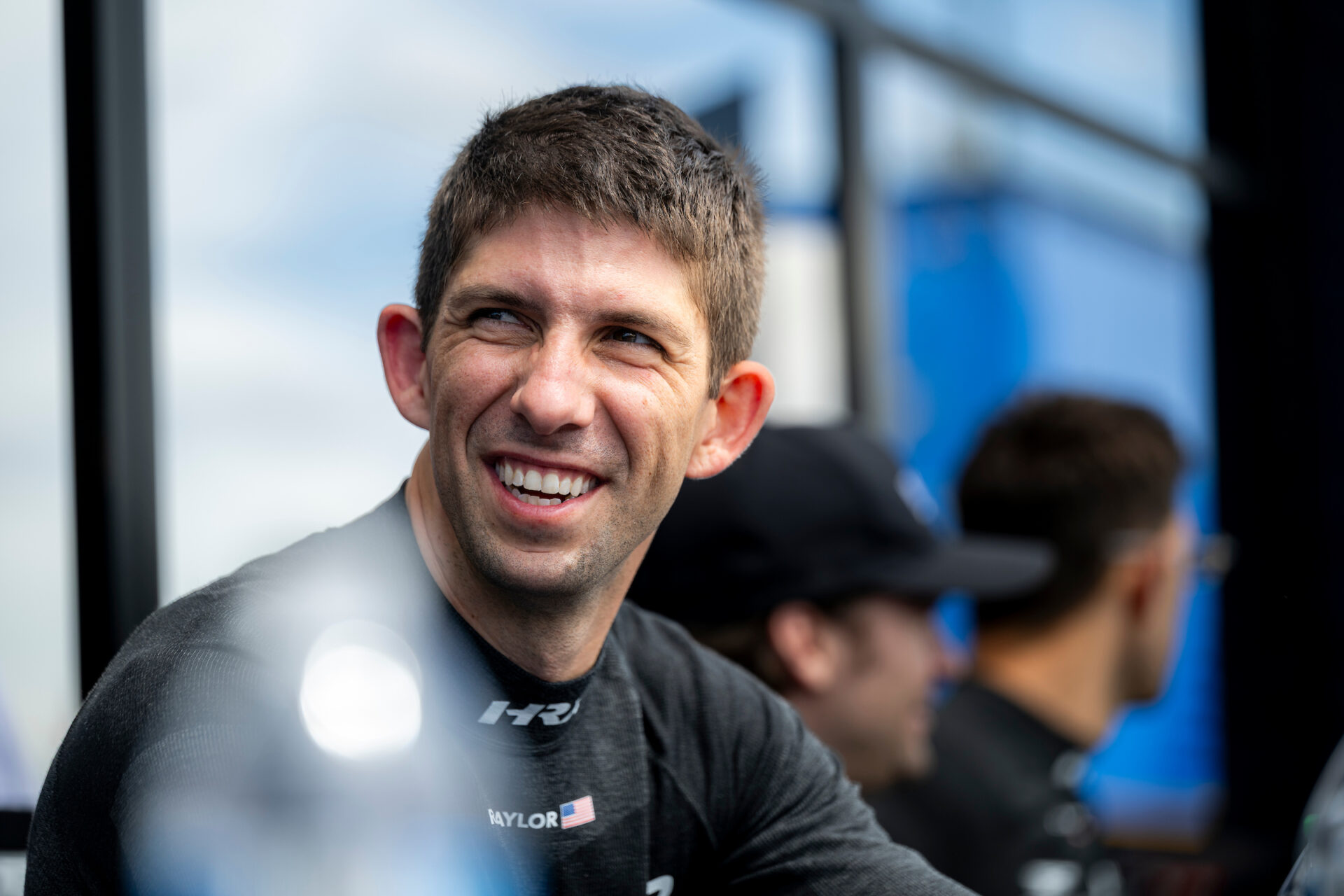
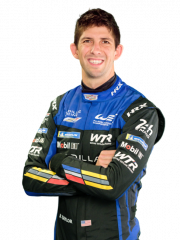
For more than a century, the 24 Hours of Le Mans has stood as the ultimate test of endurance, precision, and resilience. Few American drivers understand that challenge as intimately as Ricky Taylor, who has made nine appearances at the legendary Circuit de la Sarthe since 2013. In a recent Evening With a Legend session, Taylor opened up about his earliest memories of the race, the cultural differences between IMSA and WEC, and the emotional weight of competing on motorsport’s biggest stage.
What emerged was a portrait of a driver shaped by family legacy, sharpened by global competition, and still hungry for the victory that has eluded him.



Taylor’s first exposure to Le Mans came long before he ever turned a lap there. In 2001, he traveled to France with his brother Jordan and their mother to watch their father, Wayne Taylor, compete in the Cadillac LMP900 program. “It was our first time to France… and our first Father’s Day together,” Ricky recalled. “The scale of the event was just shocking.” The chateau lodging, the logistics, the sheer size of the paddock — it all left a mark. Even the rivalries were memorable: as kids, the Taylors viewed Butch Leitzinger as “the enemy” simply because he kept winning.
Synopsis
This episode of Evening With A Legend features endurance driver Ricky Taylor talking about his Le Mans experiences, from attending in 2001 with his father (Wayne Taylor) to racing there from 2013 onward. Ricky describes the event’s scale, the track’s dusty first laps, narrow roads, tricky slow corners, night-time loneliness, and the WEC vs IMSA differences in culture, rules, and precision.
He explains Le Mans’ low-energy surface and long tire life, plus how top-level simulators and Michelin tire models aid preparation. Ricky also reviews Wayne Taylor Racing Cadillac’s recent Le Mans effort, including qualifying pace, missing Hyperpole, and an engine failure, and reflects on racing with his brother Jordan and teammate Filipe Albuquerque. He discusses Jackie Chan’s LMP2 program, LMP2’s competitiveness, Garage 56’s Camaro impact, Cadillac’s 2026 F1 plans, and goals to improve after a difficult season.
- What was your first impression when you arrived at Le Mans and experienced the event’s scale and atmosphere compared to other endurance races?
- How did racing at Le Mans differ from your experiences in IMSA, both in terms of competition and overall race dynamics?
- Can you describe the feeling of driving through the night at Le Mans, especially on the Mulsanne Straight at top speed?
- How did you prepare for the unique demands of a 24-hour race like Le Mans, both physically and mentally?
- What were some of the biggest challenges you faced—either technical or mental—during your Le Mans campaigns?
- Were there any memorable moments or turning points in your Le Mans appearances that still stand out to you today?
- In your opinion – How can we get some more love for LMP-2 (seems to have the least amount of coverage on TV).
- How does the teamwork dynamic differ when competing with an international crew or manufacturer on the global stage?
- Having covered races in both prototype and GT categories, how did the different classes shape your experience and approach to the race?
Transcript
Crew Chief Brad: [00:00:00] Evening With a Legend is a series of presentations exclusive to legends of the famous 24 hours of lamont giving us an opportunity to bring a piece of Le Mans to you. By sharing stories and highlights of the big event, you get a chance to become part of the Legend of Le Mans with guests from different eras of over 100 years of racing.
Crew Chief Eric: Tonight we have an opportunity to bring a piece of Le Mans to you sharing in the Legend of Le Mans with guests from different eras of over 100 years of racing. And as your host, I’m delighted to introduce. Ricky Taylor, one of America’s leading endurance talents. He has made nine appearances at the 24 hours of Le Manss since 2013, showcasing his precision, speed, and composure competing against some of the world’s best drivers in both [00:01:00] prototype and GT categories.
Known for his technical feedback and strategic awareness. He’s carried his ims a success to the global endurance scene consistently delivering competitive performances at Le Mans. Though victory has remained elusive. Ricky Taylor’s appearances at the fame circuit D Losar underscore his standing as a world-class endurance racer, capable of thriving under the immense pressure and complexity that defined the 24 Hour Classic.
And with that, I’m your host crew chief Eric from the Motoring Podcast Network, welcoming everyone to this evening with a legend. So Ricky, welcome to the show.
Ricky Taylor: Yeah, thank you very much. What a great intro. Thank you.
Crew Chief Eric: Well, like all good stories, there’s a superhero origin. So take us back to the mid two thousands and to your first time at Le Mans.
Tell us about your first impression when you got there, what the experience was like, the scale, the atmosphere compared to all the other endurance and sports car racing you’d been doing up until that point.
Ricky Taylor: That would be with my dad, I guess. So Jordan, mom and I all going over to watch Dad in 2001 with the second [00:02:00] iteration of the.
Olympian, 900 Cadillac, and I think it was our first time to France actually. So that was maybe a big part of it. Big memory was, wow, they stay in a chateau for a race weekend. And you know, there’s just so, so much goes into it. It wasn’t just, you know, we’d been to Daytona and Sebring and all the American races quite a few times, but it was such a different scale of a race weekend.
Just from the logistics of getting the team there to the amount of time that we noticed Dad was away for that one. I think that was our first Father’s Day together, because father’s day’s always around La MAs. So the big thing that jumped out to us was, was really the scale of the event and, uh, how many people put so much into it.
Crew Chief Eric: So that 2001 Cadillac, he would’ve raced with another legend we had on the show. He would’ve been there with Butch Leisinger, right?
Ricky Taylor: Yeah, that’s true. Butch Leisinger was in the other car. And Butch Leisinger was always the enemy. To the Taylor, to the Taylor kids because he was always winning. Whether he was with Dyson or Cadillac there, or Bentley, he was always such a strong competitor.
So until we met him, [00:03:00] Butch Leisinger was the enemy. And then once you meet him, he’s just the nicest person ever. And we became fans of his, obviously, but yeah. Yeah, he was in another, he was in the other Cadillac.
Crew Chief Eric: So fast forward a little bit from 2001 to 2013 ish to your first time at Le Mans. Your brother had already been there in 2012 racing for Corvette.
What was it like turning laps at Le Mans for the first time?
Ricky Taylor: Everybody talks about, you know, the challenge of the race track and there’s a few tracks around the world where people really put it on a different pedestal. Bathurst is one of them. Indianapolis is one of them, and Le Mans is one of them. I’d say those are three of the big ones.
You know, maybe, uh. Macau for Open Wheel Guys is a, is a big one. You really can’t give yourself perspective until you’ve been there. And I think the thing that’s important is to remember that it’s a street course and the first laps that you turn the track is incredibly dusty and it reminds you of, of the first laps at Detroit or Long Beach or any of those street courses where there’s dust flying and the trek has next to zero grip and you’re gaining [00:04:00] four or five seconds of lap.
As the track evolves and it was just a shock of, firstly the speed of the L MP one cars. I had mostly prototype experience where I’m not used to being passed and I was in A-G-T-E-M class car in the Corvette and seeing the l MP one in the big hybrid era days come by, but when I’m in first second gear coming out of, let’s say Mosan corner, and they’re already, you know, doing 180 miles per hour, uh, when the front hybrid kicks in.
So that was very eyeopening, a whole different sense of awareness. That I needed to have. And then moving to the race, it was classic Le Mansr completely soaking wet for basically 24 hours. I got my real taste of my first Le Mans and it’s sort of how it, how it goes there sometimes.
Crew Chief Eric: So had you done any racing in Europe before this point?
Ricky Taylor: I’d driven in Europe, test some things, but never raced. The only race I’d done outside of America was a go-kart race in Brazil and I did a V eight supercars race in Australia and that was it basically.
Crew Chief Eric: So having focused your career mostly in imsa, how do you compare [00:05:00] that experience at LA MA to everything you had learned Stateside, you know, driving in IMSA and A LMS and those programs?
Ricky Taylor: It’s definitely culturally different when you go to an IMSA race. Something as simple as the paddock layout, interestingly enough, can change the culture of the weekend. So we work out of trailers. The tents off the side of the truck and sort of a common eating area for everybody and it creates a really nice camaraderie between the teams and drivers.
And you see people and you talk and very warm feeling when you race in Europe or the whole we season, they’re out of garages and so they go from their hospitality to the garage, to the race car, and you never go outside of your little world. You never talk to anybody. It’s very business-minded. And that sort of translates to the on-track product as well.
SA is very raw and hard close racing with full course yellows. And the way that the racing is formatted by the rules lends itself to aggressive racing because you have to fight for track position, most importantly, where in whack it’s very pure. They don’t have as many [00:06:00] mechanisms to bring the field together.
And every second counts where, you know, you could say you’re racing hard in imsa, but you have to race really precisely in whack, and it’s very unforgiving. So a mistake that you make, an hour one at LA Mall, you may never get it back. Whether it was the single safety car era or the three safety car era or slow zones or whatever it is.
You really rarely get it back and we, so that makes it very challenging from that side.
Crew Chief Eric: Let’s talk a little bit more about the racing at Le Mans, especially at night. Everybody seems to be fascinated about what it’s like to drive and your, the way your brother described it was after a while cars drop out and DNF people space apart and pit strategies and pit cycles.
He was like, it feels like you’re driving. Down the highway to nowhere for a very long time. You end up being by yourself at night. Is that true? Even in the LMP two cars?
Ricky Taylor: Yeah, it is. One thing Ford versus Ferrari did well is like that sense of loneliness. I feel like although they were going down a much longer moan straight, that sense of just sort of being [00:07:00] alone, I think they captured that quite well.
I think you’re spot on there. You get into the rhythm at night and it does space out. And especially when you’re in the faster class and you see everybody see the GT cars coming and you get that bit of a rhythm going. And I, I guess, like I alluded to earlier, it’s a lot more like qualifying laps, you know, watching the fuel burn down.
You’re saving the tires in the first half of the stent and then you push a little bit more in the, as the fuel burns and you can use a bit of the tire, you settle into three, maybe four stints on a tire at a time, which. We never do in America. Uh, we may double stick once, but because Le Mans is such low energy trek, the tires last forever.
So that alone makes it quite not monotonous, but repetitive and sort of emphasizes, you know, doing a good job corner after corner, lap after lap.
Crew Chief Eric: What do you do to stay and focus? Do you have your engineer talking to you the whole time you listen to an audio book? What are you doing to stay awake?
Ricky Taylor: Yeah, I think luckily we’re all very competitively minded people, so there’s not only somebody to chase.
You may never catch them and the guy behind you may never catch you at the start of the race. Everybody’s [00:08:00] watching the TVs, everybody’s watching the timing. You’re fighting over little inches spaces here and there, and at night you kind of settle into the rhythm of I’m gonna do my turn good of a job as I can do, give it to the next guy.
And we’re just gonna sort of wind the clock down. But at the same time, obviously doing the best job you can, ’cause it counts, but it feels like you’re just kind of doing your turn sometimes. And so you’re putting the work in and, and trying to keep the car clean and safe.
Crew Chief Eric: So let’s take the veil of nighttime off of the lap.
And for those that watched the race religiously at home, like I’ve done for many, many, many years since I was a little kid, I didn’t have a really good perspective of the track until I got to do some VIP laps. It was surprisingly narrow and surprisingly tight. And some of those corners like aaj and Mosan are extremely slow.
Was that a shocker for you too? Is it always a surprise when you get there compared to the rhythm of some of the US tracks, like a Watkins Glen or a road Atlanta that have, you know, that natural terrain and, and that movement to them?
Ricky Taylor: And I’m glad you mentioned those two [00:09:00] corners because they are such slow speed corners and Lamont gets a reputation for being such a high speed track.
And that’s what makes those corners so difficult is ’cause you’re going so fast for so long, you lose a sense of. Speed. You rely a lot on your, on your references as far as you know, breaking references and things and where you are. I think back in the day before the chicanes, having that hump in the straight actually told them, okay, moan corner’s coming up.
But for us, we can see it much easier. But losing that sense of speed, I’d say you lose that sense of speed at Lamont more than other tracks. So it’s very easy to. Overshoot those low speed corners or just sort of misjudge the speed where I feel like usually drivers have a very good gauge for that, but it’s a little hard to sort of, I guess, calibrate that in there and you’ll see a lot of people go off in, in those two places.
Crew Chief Eric: I also found myself screaming at the television less. In the sense that it’s like, just pass him, just go on tv. It looks like it. There’s all the room in the world, but it’s actually, it’s a two lane country road. There really isn’t the space to make some of the maneuvers, you know, with the fisheye [00:10:00] lenses that we’re looking at the world through when we see it on the broadcast.
Ricky Taylor: Yeah, it’s, it’s interesting, you know, plank wear has been in the news in F1 recently, and we struggle with the same thing and the prototypes wearing the plank is, is. Critical part to, you know, performance. We wanna run the car low and for the drivers preserving that. And the unique thing about Le Mans is the road is very crowned.
So like you said, you, you’re yelling at people to go. And it’s funny, when you watch cars going down the straight, you won’t see a lot of three wide. And if they do go three wide, nobody picks the dead center of the road. The car is just high sided on the crown of the road. You know, a car will pick a lane and then somebody will go off the track, you know, into that sort of green runoff if they go through wide.
It’s kind of a funny game. Everybody knows what the good parts of the race track are and they try not to give that up. But like you kind of hinted, it sometimes changes the way that, that you race the track a little bit.
Crew Chief Eric: So when your brother was here, it was just before this year’s 24 hours of Le Mans, and he was talking about getting prepped and simulation time, and I think [00:11:00] you both were slated to do some time on the Sims.
So let’s talk a little bit more about how you guys prepare both mentally and physically for such a long race, whether it’s this one or Rolex for that matter.
Ricky Taylor: Yeah, I’d say mentally Le Mans is very difficult. Just back to the monotony of it, how much you have to get in the rhythm. So mentally you don’t have those guys to race all the time.
Where Daytona Sebring, you’re always racing somebody head to head, you know, on the track, and it’s just a constant battle. Where at Le Mans, that constant qualifying lap sort of mentality really wears you down. But to your question on preparation, I wouldn’t say that we do anything differently. Physically, mentally, you know, you might do a bit more sim work or I got a little sort of a game on my computer that works on focus and attention and I do that year round, but you know, might ramp it up a little bit for LA Mall.
Simple things like, like heat training or, or things don’t hurt. It’s obviously not super hot there, but the simulator’s sort of the big one. We use the simulator in Indianapolis, the Del la simulator, [00:12:00] and then they’ve got a twin and it’s leaf for the European drivers. We do a lot of pre and post work. So pre Le Mans, I think we did four days in the US one and four days in the Italian one.
They had a lot of data from the previous two years working through set up ideas and hiring models just to see how close we can get it. And since it was our first time, we had a lot to learn as a team. And then after LA Ma correlating the tire again because we had different compounds and making sure everything makes sense with our OnTrack data.
So when we go back it will be even that much better.
Crew Chief Eric: So I know it’s not a fair comparison, but last year I got to try Dara’s Simulator at PRI, which is not the same as what you’re using, but I noted the software was different. I believe they were using a highly modified version of something like a set of Corsa versus, you know, max versus Stoppen is practicing on iRacing or whatever it is because Le Mans doesn’t exist in every piece of software.
Do you happen to know like what the sim is that the Dara hardware runs on?
Ricky Taylor: Yeah, they use Ractor Pro. [00:13:00] So Ractor does all the track scans and even the base vehicle model comes from that. And then they build off of that. The biggest component is the tire model, and each manufacturer licenses Michelin to build their specific tire model.
And so that costs a good fortune. Uh, I think for, for that. ’cause each manufacturer has a, their own Michelin representative, and they’re a Michelin engineer that. Isn’t sharing any of his tricks with the other Michelin guy in other camps, and he is responsible to build as good of a tire model as possible for your specific car.
So that’s where a lot of the development goes. But the base of it is, is our factor,
Crew Chief Eric: obviously on super high end equipment like de LA’s. The difference between virtual and reality probably isn’t very big anymore compared to the commercial stuff or the things you can buy at home. But is there still a moment when you’re on this?
Sim where you realize I’m playing a game. It’s not quite like this in real life.
Ricky Taylor: I think the closer you get to [00:14:00] reality they almo, the more difficult it gets to make it realistic. So when you talk about things like the track scan is, is probably the easiest thing to get right. There’s a bump here, the curb does this.
The check goes this direction. Those are all sort of the easier things to get right. I’d say as you get more detailed, you know, building a static tire model is easy, but when the car slides, what happens in reality, the tire overheats and then the grip drops and that compounds on itself. So modeling that becomes very difficult and oftentimes when you’re trying to model that, you make it less accurate.
While it’s highly accurate and it’s a great tool, it’s easy to get lost and easy to lose your direction as well. So luckily, there’s a really smart group of guys that do this stuff, and I think it’s also about the teams and drivers understanding where the value is and how to use it properly and not trust certain things too much.
Crew Chief Eric: Since Jordan was here before the 24, there was a lot of hype and a lot of excitement and a lot of hope for [00:15:00] Team Cadillac this year. So now that you’re here, let’s do a little postmortem. Let’s talk about what happened at Le Mans.
Ricky Taylor: Oh boy. Again, it was our first time there as a team that was super exciting. I think everybody had been looking forward to this and brand new car for the mall, and everybody was going into it as a learning experience.
I don’t think anybody in the team had expectations to do anything crazy. Uh, obviously Jota was their first year with the Cadillac as well, but they have a great history at Le Mans, almost winning overall in LMP two one year and having some really strong runs in the Porsche 9 6 3 as well. And then Action Express was the only one returning in the same situation.
And then when Jota got the poll and Jack and the Action Express Car actually did the fastest lapping in qualifying, the expectations became a little different. Obviously we just missed hyper pole. I actually made a mistake exit the Porsche curves that cost the transferred time. Otherwise, I think we wouldn’t have been fighting for pole, but I think we would’ve been in hyper pole at least, which would’ve been a, a pretty neat [00:16:00] thing for the team.
But everybody has excuses. And then moving to the race, it was sort of getting to the point where we were gonna settle in and into that night phase where you were talking about just sort of settling in. We’d lost some track position early, but continuing to click collapse and and work our way through, and then US and Action Express have engine failure.
You know, that was basically it. And Philippe tells the story really well. He’s like, you realize how big Le Mans is? It took him like two hours to get back to the pit lane. On some guy’s scooter from parking, the parking the car in a field. He said he feels like he was a World War II behind enemy line, sort of, uh, or he parked the car.
And so that was the end of the race and I was actually sleeping when, when it happened. Yeah. Jordan woke me up and it was a shame ’cause I think finishing that race. Unlike some other ones, finishing it is is quite an accomplishment. So that was a real shame for the team.
Crew Chief Eric: You and your brother have raced together many times over the years, but this was the first time you’d raced together at Le Mans, obviously under your dad’s banner, Wayne Taylor Racing.
What was it like? [00:17:00] The whole family at Le Mans?
Ricky Taylor: It was really cool. And like you said, my dad as well. When Jordan went to Le Mans for the first time, I went to watch and he was driving for the Corvette factory team. It was a big deal, and they’re in the same Corvette hospitality. Now that we’re going first full circle that we went to in 2001, it didn’t change a bit.
It was the exact same building, the same catering, everything from 2001 until 2012. And then when we went back. This year we were sharing it with, you know, the whole family together. And it was a new hospitality. It was actually the same real estate, but doing it all together with a lot of the same people, especially for my dad.
Uh, a good sort of check on the, the life bucket list that we all could do it together. And for me to see it through Jordan’s eyes. ’cause he’s obviously had much more success in Le Mansr than I have. And to be sharing the car with him and. And get his, his inputs and things as well as Philippe also winning in his class at Le Mans.
So I was the one trying to learn as much as I could.
Crew Chief Eric: So, Ricky, you’ve [00:18:00] mentioned some memorable moments as we’ve been talking here. I wanna pull one thread out of your driver career at Le Mans, and that’s racing for Jackie Chan. In the LMP two program. So what was that like? What was Jackie’s involvement? I mean, we were rooting for it going Jackie Chan, this is awesome, right?
I mean he’s done a lot of car related movie Thunderbolt and you know, Cannonball and stuff like that. But what was it like being part of that team
Ricky Taylor: That was so cool. So that year Jackie Chan was supporting Team Jota at the time for the full, we season with two orcas and then Lee had two entries as well and they ended up partnering with.
Jackie Chan, dc racing at the time, and I was in one of Thes. You know, I’ve been in quite a revolving door of drives over the years, so it was just a contact that I’d had and he asked me to do them on. Uh, of course I said yes. And so it was in a leisure, not one of the orcas, and I never got to meet Jackie Chan.
I was so excited to meet him. Obviously I grew up watching Rush Hour and all of his movies, and I couldn’t wait to meet him. And I guess [00:19:00] I might be wrong on this. But I think David Chang, who was running the team at the time, his family’s involved with the university in China, and Jackie Chan supports a film school there.
And that partnership became a racing partnership. I don’t know the behind the scenes, but I never got to meet him, most importantly for me. Uh, and uh, it was cool. It was cool to, to be involved with that though. And, uh. Program was super successful. Just to be alongside all those people was, was really good.
And I got to drive with Km Lagar and he was a really good teammate, so I, I learned a bit from him and still watching him, him racing, GT GT stuff now.
Crew Chief Eric: Well, it’s a good segue to talk a little bit more about LMP two. I’ve made this comment many times before that LMP two doesn’t seem to get enough love, especially on television.
How do we fix that? Why is that? I mean, you guys are out there, you know, racing as hard as you can. It is a little bit of a spec series in some respects, but there’s good racing going on there. How do we get more people [00:20:00] engaged and excited about LMP two?
Ricky Taylor: Yeah, you gotta have Philippe on here ’cause Brendan’s been our teammate for the long distance races for a few years.
Met Brendan Hartley and obviously he is an overall winner at LA Mall, uh, with Toyota and Felipe is a winner in AY two with United Auto Sports. And they talk about their wins. And Philippe has always given him a hard time about his Toyota wins, that you didn’t have to beat anybody and he beat 22 guys on track, uh, like in the class.
And it’s alter ultra competitive. And I think within the sport everybody watches L MP two, they’re hiring such good drivers. The teams have refined those cars to the nth degree, and the racing is is super close and exciting. A really strong deep field that you really don’t know who’s gonna win. To answer your question, I don’t know how to sell it anymore.
I think if the cameras were on them more, I think you’d see some unbelievable racing. Obviously the hypercar class is what it is now. It’s, it’s incredible. But yeah, I think everybody’s sleeping on Olympia two in general. When you [00:21:00] watch those races and you put yourself in one of those cars, you could really appreciate the the level that’s being raced over there.
Crew Chief Eric: Well, you hit on an important point there because we’re starting to see a lot of growth in what used to be LMP one, GTP, hypercar, whatever you wanna call it. Now, as a result of more and more brands coming online, whether it’s Ford or Hyundai, with the New Genesis and all these other cars that are coming into that class, is that gonna force LMP two to get smaller, do you think?
Ricky Taylor: I think it’s a political question. That’s the way that it looks like it would go naturally. It’s like you have these high paying manufacturers that are spending tens and tens of millions of dollars to race in the top class and, and then you’ve got a customer backed class that the harder sell. I don’t know if that’s the way it’s gonna go.
Sports, car racing, as we all know. Very cyclical. So this golden era is not gonna last. And the days of, you know, needing LMP two to support our racing world is, is gonna come back. So, yeah, I don’t know. That’s a tough question. I wish we could just keep adding garages at La Mo ’cause [00:22:00] I think it would be a shame to eliminate, you know, such a great historic class.
Crew Chief Eric: Speaking of adding garages, garage 56. Take us to 2023. Obviously your brother was directly involved with that. What are your thoughts on the Camaro and the American Pride and all the things we saw alongside of the hundredth being a big to do
Ricky Taylor: that was so cool? As an American going to LA Mall, there’s a bit of a stereotype to it.
Like, oh, an American and LA Ma doesn’t really fit. We’re so far outside of our comfort zone from the outside. To us, it’s just another, it’s another big race, but then that just took it to the max, I think. You take everything that’s American and you put it on track, a loud, you know, V eight nascar, any American driver, an American team, very American team doing NASCAR style pit stops.
It was a proud moment, I think, to see the reception that it got. I was super proud. I loved the pit stop competition in Le Mansr. I’ve never watched it as intently. It was that year. And to see the, the NASCAR crew go and beat right at the top, I think they turned a lot of heads. ’cause the teams [00:23:00] really put a lot into that.
So yeah, it was a proud moment and it’s cool to see the notoriety that it’s getting. Even still Jordan’s getting requests to do things here and there for us, so it’s nice to see.
Crew Chief Eric: Was there ever a moment when you were out there, whether it was qualifying or practice, when you looked in the rear view mirror and you went.
That’s a GT car coming up really fast and your eyes get big and go, wait, no, that’s Jensen. In a Camaro, their closing speed was insane,
Ricky Taylor: especially year after year. When the, when the rules are quite consistent, year on year, you really get into a rhythm of, okay, if I catch a GT here, I’m gonna pass ’em by here, or I see him up, he is, you know, going into Porsche Curves and I’m coming out of Arage.
You pretty much get an idea of where you’re gonna catch him and pass ’em, and you get that rhythm. And with the garage 56 car, you had to throw all that out the window because you could catch ’em into the Ford ccan and you wouldn’t pass ’em by turn one. ’cause that drag from the exit of Ford to D one was way faster than anything else out there.
And like you said, the light, like you’d see the lights and you’re like, why am I not [00:24:00] pulling away from this guy?
Crew Chief Eric: You mentioned Philippe Albuquerque, one of your longtime teammates in many series. You guys have raced together. Having him with you at Le Mans, how does that change the dynamic of your team of teamwork?
You know, competing at that international level. Kind of give us an insight of what it’s like in the pits and the orchestration that it takes to, you know, complete a 24 hour race.
Ricky Taylor: Specifically about Philippe. The last time he was at Le Mans in the top class was in the Audi LMP one, and. That is one of the proudest times of his career.
I think he, he reached the pinnacle for any driver getting to be involved in that program and his teammates with Tom Christensen and, and all the, the legends Frank Belo was, was around and Dido Capella was around like all of the guys that were all fans of, he was in that program. So really cool. And he is got so many stories.
So now when we went to a hybrid platform. He had a lot more knowledge than the rest of us. He had a big head start from being in, in that [00:25:00] world. So when it came to energy management or how to strategize, deploying and regen and how we do all that stuff, he had a really good perspective of it. ’cause he, he’d raced it before his year at Le Mans.
He didn’t actually race his car and crashed before he got in the car. So to him, he felt like he had some unfinished business and he wanted to get back and be in the top class. And so to share that with him was really special for me. We have a great relationship and we’ve been together for quite a few years now.
Just to go there with him. He was loving every second of it, walking through the hospitality. He is like, everything feels right. Everything in the world feels, feels right that he we’re here together and racing in the top class. So
Crew Chief Eric: it’s funny you mentioned that because as racers. We have a tendency to learn from each other.
It’s a very collaborative environment. Hey, this is how I take this corner. This is maybe where you can save a couple tenths and scrape us some feet. If you’re coming to the table going, I know everything. Well, there’s faster guys. Right. So that being said, Philippe, all this experience, what do you think is the most important thing that he shared with you or that you learned [00:26:00] from him and his driving style?
Ricky Taylor: So Felipe and I are, are very different people. He’s super confident, so we balance each other out. He is the first one to, to give his opinion. I’m very easily swayed, so I always feel like if somebody makes a good argument, I’m like, maybe they’re right. And I’m very open-minded. I never feel like I know more than anyone else where he’s taught me to trust myself, you know, push my opinion and believe in what I’m, what I’m selling driving wise.
He’s really detailed. We started off driving together. We did not like the same car at all, which in some senses is good in sports car racing because the track changes so much that at some point in the race one driver’s gonna like it and the other’s gonna hate it and vice versa. So sometimes that’s good.
And he sort of brought me closer to his direction, just a much more unstable car. I think that’s made me a better driver to be able to adapt more things. He came through a time when he was racing Reno, two liters and you know, you had very li limited setup [00:27:00] options and he had to really develop his driving style to drive around problems.
So those, those lessons. He passed on to me and that’s a way that we sort of brought each other along.
Crew Chief Eric: You mentioned something there without realizing, you mentioned it and I hear it’s a general complaint from a lot of the, let’s say, seasoned enthusiasts. That’s the term I want to use in that the cars are too reliable nowadays.
We’re hoping for something to break, to mix up the racing. Wouldn’t it be cool if they brought back manual transmissions, you know, if you missed a shift and over Revit, you know, like it was in the, in the golden era of endurance racing. Do you feel that way? Do you think the cars are too reliable in some ways?
Ricky Taylor: Yeah, I think the idea of it is cool, but I love the fact that you always have a chance that the racing is close. Maybe because I’m a driver, if I do a good job and my teammates do a good job and the team executes well, we should have a good result. Where if I’m a mechanic. Maybe I want the cars to be less reliable, so that might work and stand above the others because I believe in myself.
So from a driver’s perspective, I think I like where it is In terms of reliability, [00:28:00] the best drivers will still separate themselves in terms of we don’t have H pattern gear boxes, we have carbon brakes, we don’t have steel brakes. So we don’t have to say brakes, but on the flip side, because we don’t have those, those things that aren’t around anymore, we have a lot of systems changes that we can make.
We can change contraction control. We can change a lot of hybrid settings that change the handling of the car. We’ve got anti-roll bars that we can move active brake bias, brake bias, migration. All kinds of things that the driver can change in the car. Bandwidth that you have in your head can still separate yourself.
So I’d say if it becomes easy, then I would push it to where like you wanna make it difficult. So we’ve got different compounds of tires, none of them last perfectly forever at a stable rate. So there’s plenty of difficulty, I think, in the sport, and that’s a good thing, regardless of technology.
Crew Chief Eric: Well, Ricky, the audience chat is open and I got a couple.
Audience questions for you here, but we’re gonna start with this one. Even though you’re a driver, secretly, you’re probably rooting [00:29:00] for some team to win, not just your own. Let’s say maybe in the LMP one class or something like that. Has there been a particular mark that you’ve been rooting for in the background?
Ricky Taylor: And I’m sorry, in, uh, in whack.
Crew Chief Eric: You tell me.
Ricky Taylor: Okay. If I can’t pick Cadillac. After the year Toyota’s had, Brendan being in the Toyota, I feel so bad for them over there. I know they, they work hard and they’re such a strong team. They execute really well. I think they really deserve some good results. So I have to say, I, I’m cheering for Brendan mostly.
Uh, but that program, I feel like, you know, they’ve had a lot of success, but it’d be nice to see them get back on top.
Crew Chief Eric: So for you, is there a favorite race car? Of all time. Something you would love to get behind the wheel of. Maybe it’s something like Le Mans Classic or even one of the more current cars where it’s like, Hey, I’d love to get behind the wheel of the 4 9 9 p or something like that.
Ricky Taylor: I think a big one is the 9 6 2, but I don’t want to drive it. But for me, the one I would love to drive, uh, would be the Friday, 3 33. That’s sort of one of the first memories I have of my dad [00:30:00] racing properly and the sound of it. I just love that car. I had so much success back in the day, and I’d love to experience that.
Crew Chief Eric: Sam Victor writes, what’s the mindset preparing as a driver? Switching between cars, for example, switching from driving a GT car to a prototype or even a streetcar on the track.
Ricky Taylor: Oh yeah, a streetcar on the track feels like a completely different thing. It’s an interesting point ’cause Jack eight and Philippe and I were having the same discussion ’cause Jack is doing DTM and IMSA in Cadillac and Philippe is doing L MP two and El LMS and IMSA and Cadillac.
And I’m just doing Cadillac basically. And so we were kind of talking about. Who has it most difficult? Is it Ricky? Who has the least seat time? Is it Philippe who has to transition from an LP two very lightweight, right down force prototype to a heavy prototype? Or is it Jack who’s got the biggest split of all of them?
It was interesting. There’s points to be made for, for all of ’em. I think more seat time is always better. Driving a variety gives you a, a good toolbox of [00:31:00] driving styles of how to adapt and how to change quickly. To answer the question. I think when you switch your mindset over, it’s always what makes this car fat or what makes this car perform well on the stopwatch?
Is it? If it’s a GT car, you know that you’re not gonna drive sort of a V style corner, you’re not gonna be prioritizing late breaking. The speed trace always looks like a climate is always climbing, whereas, you know, high down force cars, they plateau. So you prioritize entry speed and you don’t worry so much about the exit speed.
And you’ll start there. And then you’ll sort of work backwards of how do I treat the corner differently depending on, you know, what the car needs. And so case by case, I think there’s a lot of experimentation and stuff involved too.
Crew Chief Eric: Alright, John Rist writes regarding tire wear at Le Mans. What do you mean?
That Le Mans is a low energy track? Did I hear you correctly?
Ricky Taylor: Yeah, so I would think the same thing. When you say energy, it’s just how much load and energy is going into the tire. So it comes everything from top speed, from high [00:32:00] speed corners, from the gradient of the track, from the the macro or the micro of the track.
You know how the stones are laid out, breaking zones. All those things sort of add up into, you know, what makes like high energy or not. So for example, Detroit on paper, the New Street course looks high energy ’cause it’s lots of corners, it’s lots of braking. The cars are sliding around a lot in reality, concrete.
You know, the stones are very tiny. They’re close together, like it’s very smooth. It’s actually very low energy. We use the soft tire for the entire race there. Kona, on the other hand. Pretty high energy only because of the banking. ’cause you have so much vertical load through the banking, whereas you think you’re going straight and the car’s not really sliding.
And Le Mans is such long straits with sort of a low energy surface that the way that it works out between all those variables, it just happens to be quite, quite low energy. Not to mention the conditions are quite cool and mild, especially at night.
Crew Chief Eric: Well, Scott was on the same wavelength I was and he wants to know [00:33:00] about sibling rivalries in the sport, but I’ve heard you and Jordan go back and forth and roast each other and you know, on NBC with Calvin Fish and talking about the good old days and things like that.
But I think we need to take this a step further. So I’m gonna ask you, who’s the better driver? Your brother or Rodney’s sand store?
Ricky Taylor: Rodney is a legend. I, I haven’t seen anything he can’t do, so it’d be hard to, hard to bid against that guy. Oh, I did not see that coming.
Crew Chief Eric: Ricky, you’ve been talking a lot and you are running for Cadillac.
Let’s talk about the future now as we sort of wrap up this episode of Evening with a Legend. But first I wanna get sort of a crowd question, being involved with Cadillac, what are your thoughts on Cadillac and Formula One in 2026?
Ricky Taylor: Oh, it’s exciting. It’s really cool. I think we were worried initially all of our engineers are gonna leave because they need so many people to start that program.
They’re looking for almost a thousand people, I think. Where do you find them? We’re having a hard enough time finding people for our little program, and it’s so cool to see Cadillac. You know? You think this [00:34:00] program feels big. That is just a whole nother level. So to see it actually happening, to see it.
The simulator fully up and running. They’re doing simulation races. All the people are in place. It’s cool to see the drivers that are involved. I must say I’m really excited for Colton. He’s sort of on the, on the track. Track, sorry, no pun intended. He’s got a hard season, I think, ahead of him. F two, but he has a lot of respect for it and I think all of it is cool.
I’m really excited to see the car on track and I know everybody has very reserved expectations ’cause everybody else has a super high starting point. But, uh, it’s cool to see the same brand that we’re affiliated with competing in the medical club, motor sports.
Crew Chief Eric: So speaking of, what does the outlook look like for the 20 26, 24 hours of Le Mans With Cadillac, the plan is to return, right?
Ricky Taylor: The plan is, yeah. So obviously Jota will go, uh, they’ve got the two entries. I don’t know. The entries situation is always tricky. I hope we get an entry. I think, you know, we learned a lot last year, so hopefully, [00:35:00] hopefully Cadillac has at least three. Like you were saying, with the car count, it’s probably gonna be getting more and more difficult as the.
The full season wet entries increase specifically for Le Mans. I would say this past year was a pretty good one. Pretty good opportunity, obviously come the race, the Porsches and the Ferraris were very, very strong, where over a single, I think Cadillacs had a pretty good single lap pace, but none of us had anywhere close to the, the race pace as ’em.
So. A lot of our arrow updates were geared towards improving that. So we, we had, we just unveiled the joker tested on track a couple times, been in the sim, looks like it’s in the right direction. Obviously we have a lot to learn about. It’s a, it’s a pretty different update. I wouldn’t say in one direction or the other, but it’s different.
So Le Mans is a pretty unique track and it’s hard to create, I think, when all the manufacturers build a car. You decide either we’re gonna build a car for America, or we’re gonna build a car for LA Mall. It’s hard to build one that does both well. So if we have a terrible Long Beach, [00:36:00] at least we can be like, well, maybe we’ll have a good LA mall.
So that’s the way it will probably, we’ll probably go,
Crew Chief Eric: is your seat guaranteed or do you have a fallback in LMP two if it doesn’t work out?
Ricky Taylor: Nobody see is guaranteed when there’s no entry yet. Um, so I’d say if there’s a WTR entry, we have four drivers, only three can go. So I think it would only be fair if we rotated through, and this is probably not for me to say, but I think Louis should be in the car.
And one of the three of us should look for something else. But in the same breath, I think Louis also has the best chance of finding an MP two ride. ’cause he’s winning everything. And I think, you know, AO might have an entry for MP two. So yeah. I don’t know.
Crew Chief Eric: From a driver’s perspective, what makes Le Mans the most special event?
You know, people talk about how it’s one of the brown jewels of motorsport. Do you see it that way as well?
Ricky Taylor: Yeah, I do. Sometimes it’s hard to remove myself. From being a sports car racing family, we just grew up in sports, car racing. Obviously we watch the Indy [00:37:00] 500 every year. We watch the Daytona 500 every year.
We, you know, we watch all the F1 races, all the IndyCar races, and we live in sports car racing. And so we grew up like you intensely up all night watching the MA as kids, and it was just always the biggest one. So outside of that, as a driver, I think the one thing you notice is how much it means to so many people, whether it’s the parade or.
Something as simple as Scrutineering. Lamont does an amazing job of making a big deal out of everything. And like we have tech and I’m so, and it’s a tent where the car rolls through, a couple of engineers look at the car and, and then you go on your way and you fix a couple things. For Lamont, it’s a whole public event with autographs and photos and a staged picture, and the car goes up in the middle of town.
Everything from start to finish is. World class and, and then on top of that, I think because it attracts the world’s best, it is inherently the hardest one. You wanna win against the best and you wanna, you know, win the, the [00:38:00] most difficult races that one happens to be them all.
Crew Chief Eric: So after nine attempts and many more to come at Le Mans, what has it taught you?
Ricky Taylor: Yeah, there’s a lot of ways to lose races, I think. But I think, I think it’s just the attention to detail, the, you have to keep the intensity up for so long. And so racing, like I said earlier, you’re always in the mix. Intensity is always high because you’re always racing somebody and there’s always a restart and you know, you’re battling for track position, you know, lap after lap.
But at the same time, things aren’t super consequential until the last couple hours, whereas. Le Mans, you. You just have to be, I keep saying this, but you just have to be so detailed. And just to mention my mistakes. One year at Le Mans, I passed before a safety car line, so I did the restart out of our know, and I passed a car before the safety car line and penalty, and we never came back from it.
Another year it was a bit of a slow getaway outta the pits and we lost a position and then you gotta fight for hours to get it back, and little things like that. [00:39:00] So don’t really matter. And Le Mans, it sort of stresses everything. So yeah, I think it’s just that intensity level and attention to detail lap after that for the whole weekend.
Crew Chief Eric: Well, looking ahead, it sounds like you’ve set some goals for yourself and obviously you have some unfinished business at Le Mans. So when it comes to racing in general, what’s next for Ricky? Something we should look forward to in 2026?
Ricky Taylor: Hopefully it’s a better than 20, 25, I think certainly for me, but as a team, this was one of the hardest years we’ve ever had without a win.
Really struggling for pace. Again, it was our first season with the car, so we give ourselves a little grace with that, but at the same time, we wanna do better, and I’ll be the first to admit that. I don’t think I maximized myself in some situations, so we’re not pointing fingers, but we’re trying to build on last year.
So it’s one thing when you go from year to year to have somebody else’s notes of a history of at a racetrack, but now we get to go with our own firsthand notes and, you know, pick up at a much higher level than last year. So hopefully [00:40:00] you’re gonna see a much, much stronger born normal WCR.
Crew Chief Eric: Well with that, Ricky, as we close out, I want to pass the microphone to David Lowe, our a CO representative for some final thoughts.
David Lowe: Ricky, on behalf of the A CO and Endurance Racing fans everywhere, thank you for wonderful evening. I really wish you the best. Looking forward to seeing you at laal this year.
Ricky Taylor: Thank you very much. Hope to see you there.
Crew Chief Eric: Well, folks that wraps up this evening with a legend where we explored Ricky Taylor’s journey through the world of the greatest endurance race, the 24 hours of Le Mans.
From his early impressions of the legendary circuit to the challenges of racing through the night. Ricky’s experiences reflect the dedication and passion that define true endurance racers. His perspective reminds us that success at Le Mans isn’t just about speed, it’s about teamwork, adaptability, and resilience under pressure.
So to keep up with Ricky and his racing career, be sure to follow him on Instagram and x formerly Twitter at Ricky Taylor race. And visit Wayne Taylor racing.com for [00:41:00] news team updates and upcoming events. And with that, we hope you enjoyed this presentation and look forward to more evening with a legend.
And on behalf of everyone here and those listening at home, thank you Ricky for sharing your evening with us.
Ricky Taylor: Thanks. Thanks so much for having me. It was good fun.
Crew Chief Eric: This episode has been brought to you by the Automobile Club of the West and the A-C-O-U-S-A from the awe-inspiring speed demons that have graced the track to the courageous drivers who have pushed the limits of endurance. The 24 hours of the Le Mans is an automotive spectacle like no other. For over a century the 24 hours Le Mans has urged manufacturers to innovate for the benefit of future motorists, and it’s a celebration of the relentless pursuit of speed and excellence in the world of motorsports.
To learn more about or to become a member of the ACO ussa look no further than www.Le Mansn.org, click on [00:42:00] English in the upper right corner and then click on the a CO members tab for club offers. Once you’ve become a member, you can follow all the action on the Facebook group, A-C-O-U-S-A Members Club, and become part of the Legend with Future Evening with the legend meetups.
This episode has been brought to you by Grand Touring Motorsports as part of our Motoring Podcast network. For more episodes like this, tune in each week for more exciting and educational content from organizations like The Exotic Car Marketplace, the Motoring Historian, break Fix, and many others. If you’d like to support Grand Touring Motorsport and the Motoring Podcast Network, sign up for one of our many sponsorship tiers at www.patreon.com/gt Motorsports.
Please note that the content, opinions and materials presented and expressed in this episode are those of its creator, and this episode has been published with their consent. If you have any [00:43:00] inquiries about this program, please contact the creators of this episode via email or social media as mentioned in the episode.
Highlights
Skip ahead if you must… Here’s the highlights from this episode you might be most interested in and their corresponding time stamps.
- 00:00 Ricky’s early Le Mans Memories
- 03:09 First Racing Laps 2013
- 04:55 IMSA vs WEC Culture
- 06:25 Night Stints, Track Surprises and Passing
- 10:50 Training and Simulator Prep
- 14:53 2025 Cadillac Le Mans Postmortem
- 16:50 Family Racing Together
- 17:59 Jackie Chan LMP2 Story & Why LMP2 Matters
- 22:04 Garage 56
- 24:01 Filipe Albuquerque’s Hybrid Knowhow
- 27:09 Are the Cars Too Reliable?
- 28:48 Audience Q&A
- 33:29 Thoughts on Cadillac F1 in 2026
- 34:40 Le Mans 2026 Plans
- 38:03 Why Le Mans Matters Most and Final Thanks!
Bonus Content
There's more to this story!
Be sure to check out the behind the scenes for this episode, filled with extras, bloopers, and other great moments not found in the final version. Become a Break/Fix VIP today by joining our Patreon.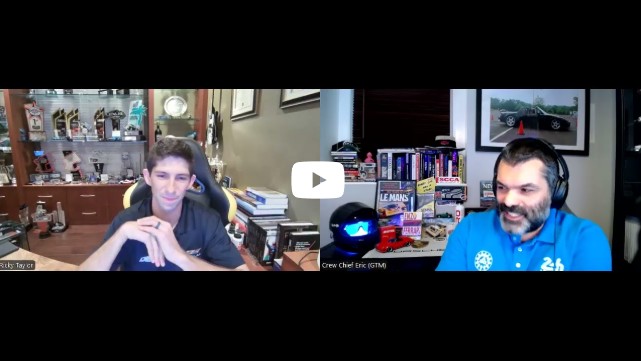
All of our BEHIND THE SCENES (BTS) Break/Fix episodes are raw and unedited, and expressly shared with the permission and consent of our guests.
Learn More
Other episodes you might enjoy
Evening With A Legend is a series of presentations exclusive to Legends of the famous 24 Hours of Le Mans giving us an opportunity to bring a piece of Le Mans to you. By sharing stories and highlights of the big event, you get a chance to become part of the Legend of Le Mans with guests from different eras of over 100 years of racing.We hope you enjoyed this presentation and look forward to more Evening With A Legend throughout this season. Sign up for the next EWAL TODAY!
Remember to subscribe to Break/Fix using your favorite Podcast App.
When Ricky finally made his Le Mans debut in 2013 with Corvette Racing, the experience was overwhelming in ways he didn’t expect.
Le Mans is technically a street circuit, and the opening laps are dusty, slippery, and unpredictable. But the biggest shock came from the LMP1 hybrids of the era: “I’d be in first or second gear coming out of Mulsanne Corner, and they were already doing 180 mph when the hybrid kicked in.” That speed differential forced a new level of awareness — and humility.
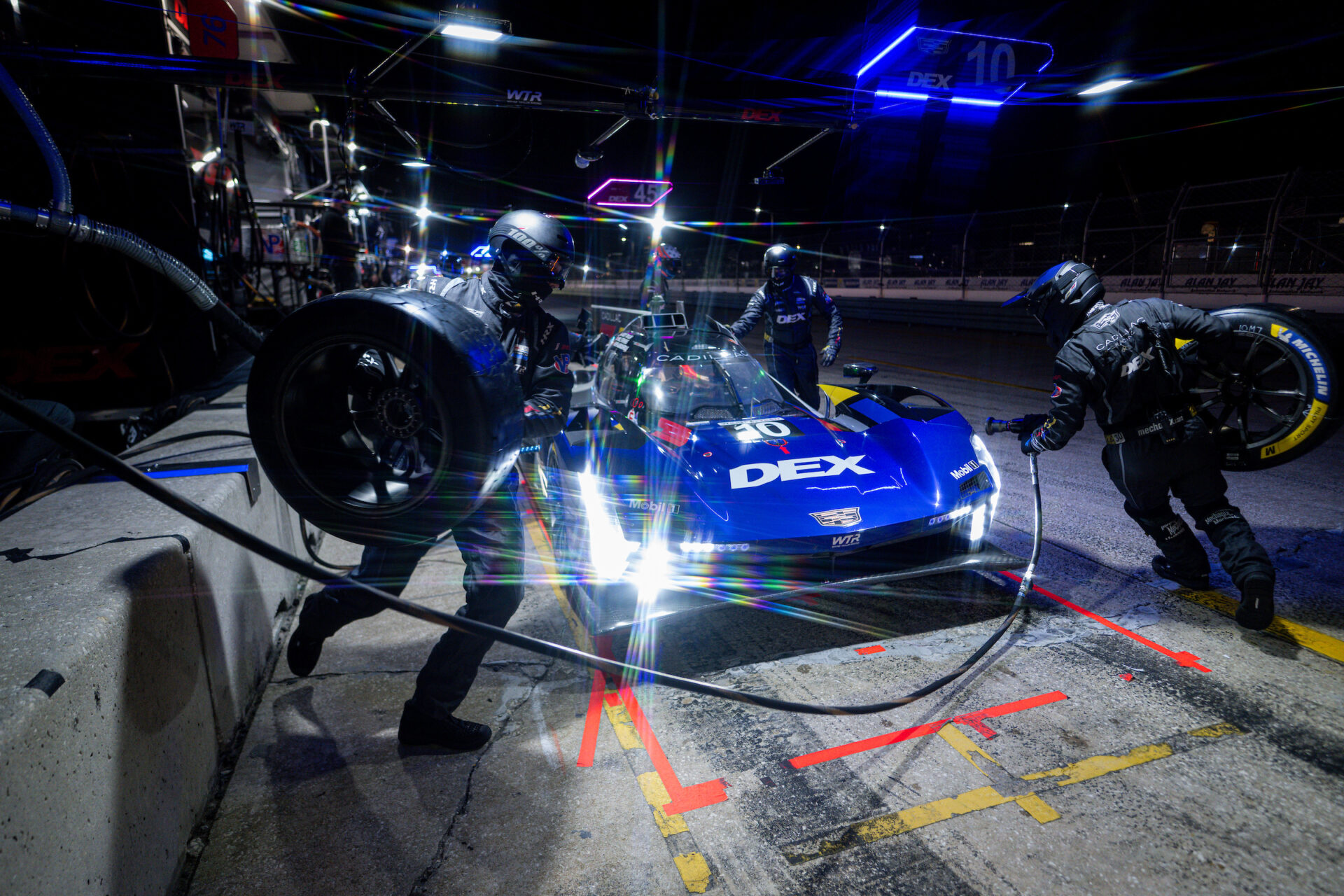
Taylor has spent most of his career in IMSA, and he’s quick to point out how different the culture is compared to Europe.
- IMSA paddocks are open, communal, and social.
- WEC paddocks are structured, closed, and businesslike.
Those differences extend to the racing itself. IMSA’s full-course yellows compress the field and encourage aggression. WEC’s long green-flag runs reward precision and consistency. “A mistake in hour one at Le Mans… you may never get it back.”
Modern Le Mans prep is as much digital as physical. Taylor and his teammates spent eight days in the Dallara simulator between the U.S. and Italy, working through setup ideas and tire models. The tire modeling alone is a massive undertaking — each manufacturer has its own Michelin engineer building a bespoke simulation. But even with all that tech, Taylor says the hardest part is mental: “That constant qualifying‑lap mentality really wears you down.”
The Loneliness of the Night
Fans often imagine Le Mans as a constant wheel‑to‑wheel battle. But Taylor says the reality — especially at night — is far more solitary. “Ford vs. Ferrari actually captured that sense of loneliness really well.” As the field spreads out, drivers settle into long, quiet stretches of qualifying‑style laps, managing tires, fuel, and fatigue. The rhythm becomes almost meditative — until traffic snaps you back to reality.
Television distorts the scale of Le Mans. Corners like Arnage and Mulsanne are shockingly tight, and the public‑road crown makes three‑wide racing nearly impossible. “You’re yelling at the TV — ‘Just pass him!’ But it’s a two‑lane country road.” That crown also affects setup and plank wear, adding another layer of complexity.
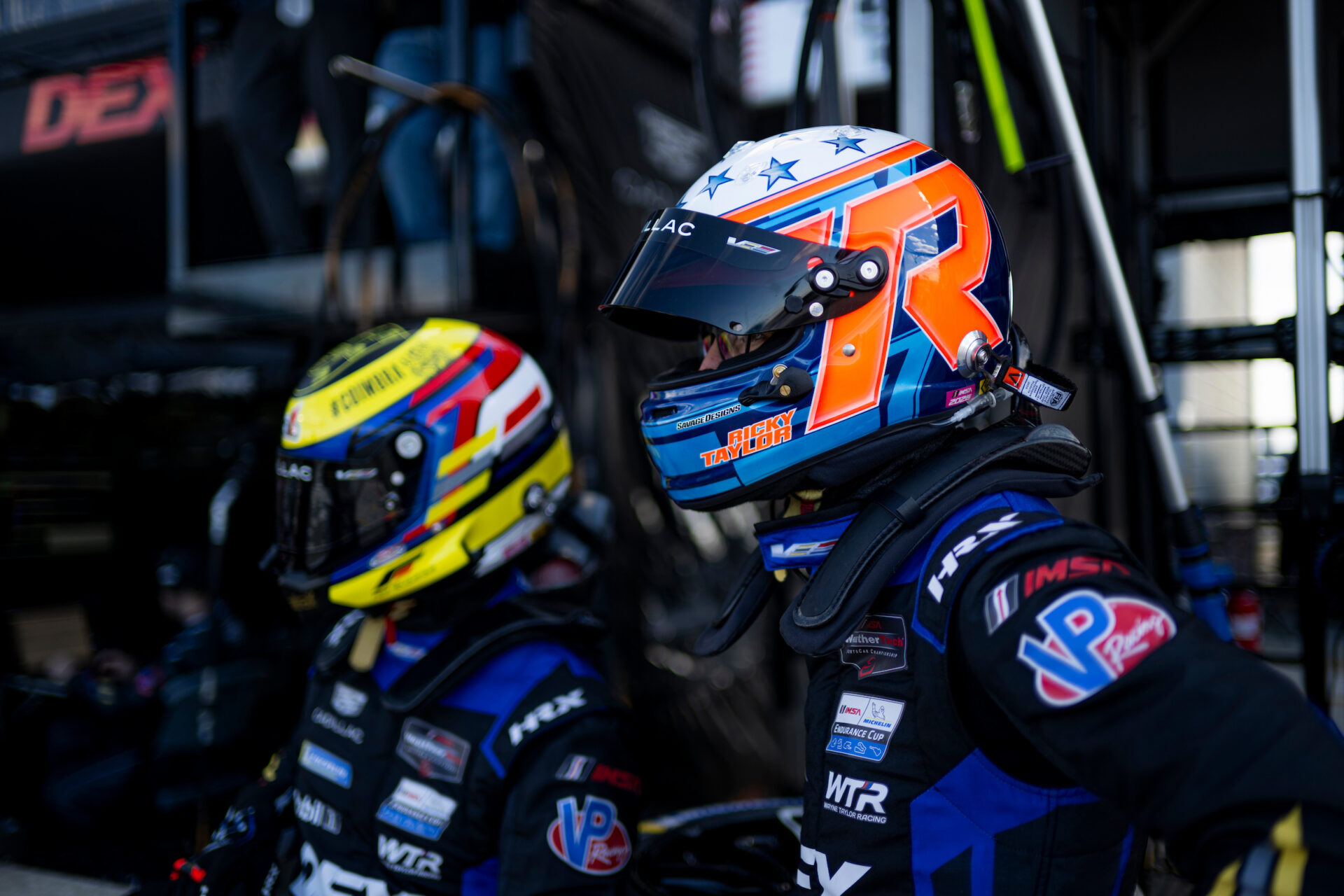
Taylor didn’t sugarcoat Cadillac’s 2024 Le Mans effort. Despite promising qualifying pace, both the WTR and Action Express cars suffered engine failures. “Finishing Le Mans is an accomplishment. It was a real shame.” Still, the team learned a tremendous amount — and the new aero “joker” update offers hope for 2026.
This year marked the first time Ricky, Jordan, and Wayne Taylor all competed at Le Mans together under the Wayne Taylor Racing banner. “A good check on the life bucket list,” Ricky said. Sharing the experience — and the hospitality building they first visited in 2001 — made the moment even more meaningful.
Jackie Chan, LMP2 (the Underrated Class) & Garage 56
One of Taylor’s most memorable Le Mans drives came with Jackie Chan DC Racing, though he never actually met Jackie Chan himself.
He also passionately defended LMP2: “Everybody’s sleeping on LMP2. The racing is unbelievable.” With hypercar grids expanding, the future of LMP2 is uncertain — but Taylor believes the class is too important to lose.
Taylor lit up when discussing the 2023 Garage 56 NASCAR Camaro project. “It was a proud moment. They turned a lot of heads.” The closing speeds were so unusual that drivers had to relearn their traffic instincts — the Camaro could out‑drag prototypes in certain sections.
Taylor credits longtime teammate Philippe Albuquerque with shaping his driving and confidence. “He taught me to trust myself… and to push my opinion.” Their contrasting personalities — Philippe’s boldness and Ricky’s analytical nature — have made them a formidable pairing.
Why Le Mans Still Matters: Looking ahead to 2026
For Taylor, Le Mans is the crown jewel not just because of its history, but because of its intensity. “You have to be so detailed… so perfect… for so long.” Every mistake is magnified. Every second counts. And every year teaches something new.
Taylor is candid about the challenges of 2025 — no wins, inconsistent pace, and a steep learning curve with the new car. But he’s optimistic: “Now we get to go with our own firsthand notes… hopefully you’ll see a much stronger WTR.” Cadillac plans to return to Le Mans in 2026, though entries are increasingly competitive. Taylor’s seat isn’t guaranteed — but his determination is.
After nine attempts, Ricky Taylor remains as hungry as ever for a Le Mans victory. His journey — shaped by family, forged in competition, and fueled by resilience — reflects everything that makes endurance racing special.
And as he looks toward 2026, one thing is clear: he’s not done with Le Mans, and Le Mans isn’t done with him.
Become a member of the ACO USA!
 Once you become a Member you can follow all the action on the Facebook group ACOUSAMembersClub; and become part of the Legend with future Evening With A Legend meet ups.
This content has been brought to you in-part with support from...