

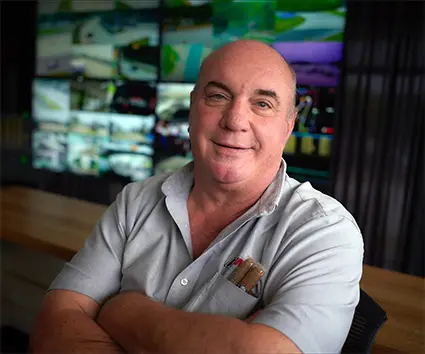
For more than fifty years, Mark Raffauf has been one of the most influential figures in American endurance racing. From IMSA’s scrappy early days to its modern global alignment with the FIA WEC and the ACO, Raffauf has lived through — and helped shape — every major era of sports car racing. His appearance on Evening With a Legend offered a rare, panoramic look at how the sport evolved, why certain decisions were made, and what the future might hold.
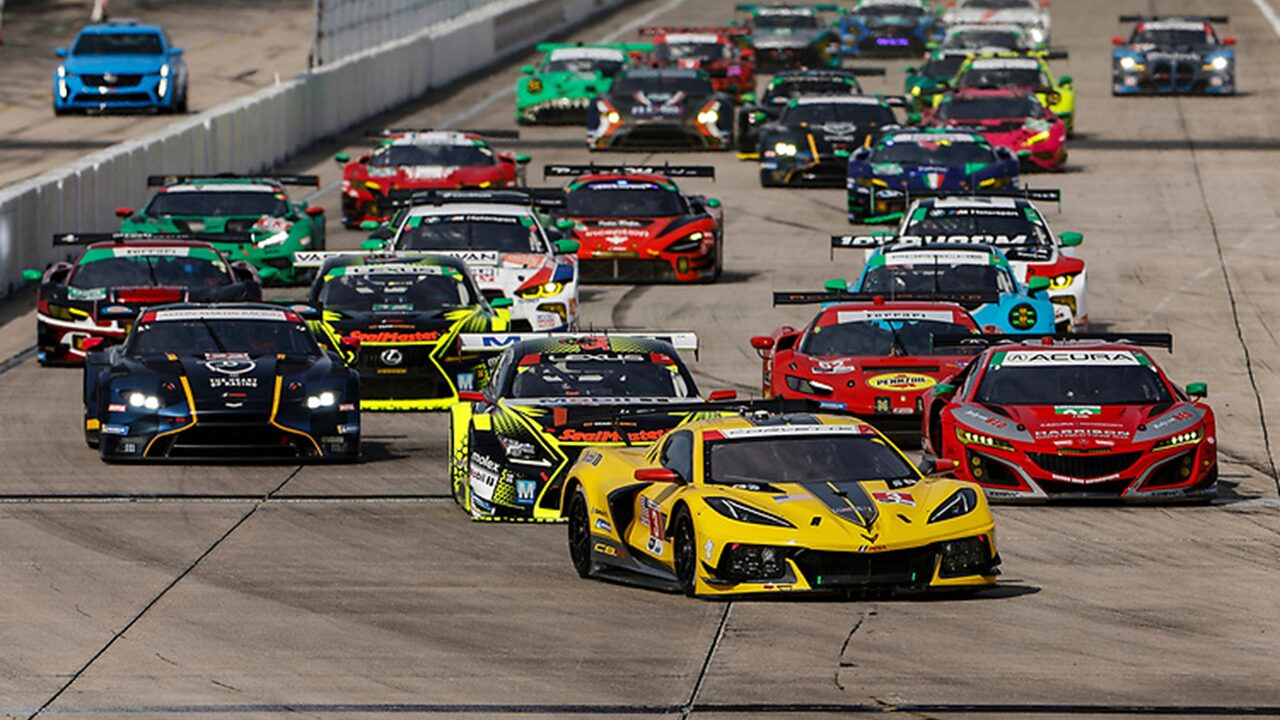
This wasn’t just a conversation about racing. It was a masterclass in motorsport history from someone who has been in the room — often literally — for every pivotal moment.



Raffauf’s story begins in the early 1970s, when IMSA was still defining itself. In 1973, RJ Reynolds threw its weight behind the Camel GT series, and IMSA took over sanctioning of the 12 Hours of Sebring and later the Daytona 24 Hours. These moves set the stage for IMSA’s long relationship with the ACO and the 24 Hours of Le Mans.
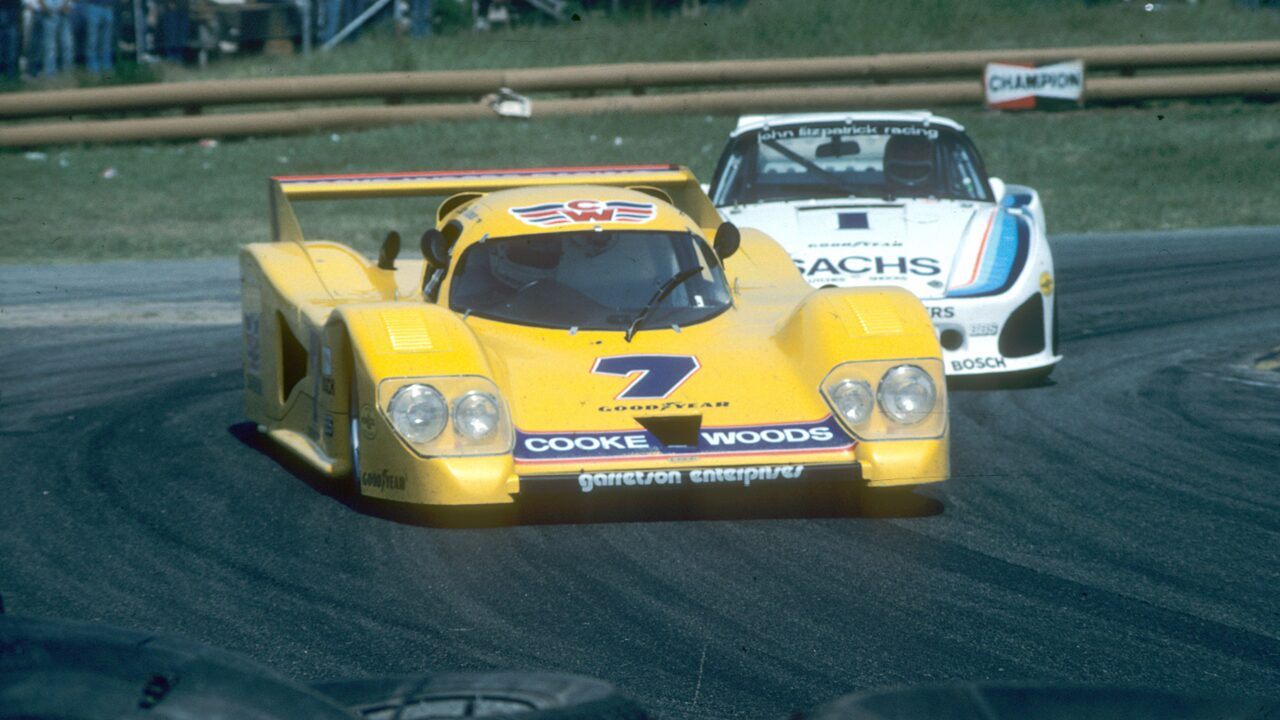
By the mid‑1970s, American teams were making waves in France. John Greenwood’s big‑block Corvette famously hit 225+ mph on the Mulsanne, faster than the Porsche 936s. NASCAR even sent cars to Le Mans in 1976 — a moment so iconic that Raffauf notes IMSA is bringing 30 historic NASCAR stock cars back to the Le Mans Classic this year.
These early exchanges laid the foundation for decades of technical collaboration between IMSA and the ACO.
Synopsis
In this “Evening With a Legend” episode, we interview Mark Raffauf, IMSA’s Senior Director of Competition, tracing how IMSA’s early relationship with the ACO grew from the 1970s through the creation of GTP, the split from FIA Group C’s fuel-formula approach, and the IMSA-driven development that helped shape cars like the Porsche 962. Mark recounts 1980s GTP’s manufacturer battles and behind-the-scenes antics, then explains the 1990s shift to World Sports Car, Ferrari’s 333 SP, and how rule changes at Le Mans affected competitiveness. He details IMSA’s organizational split that led to ALMS and Grand-Am, the rise of Daytona Prototypes, and today’s cost-control challenges. The conversation culminates in a deep discussion of Balance of Performance, LMDh vs hypercar sustainability, lift-and-coast strategy, and the need for a common future platform beyond 2030, while emphasizing Le Mans as a global mega-event.
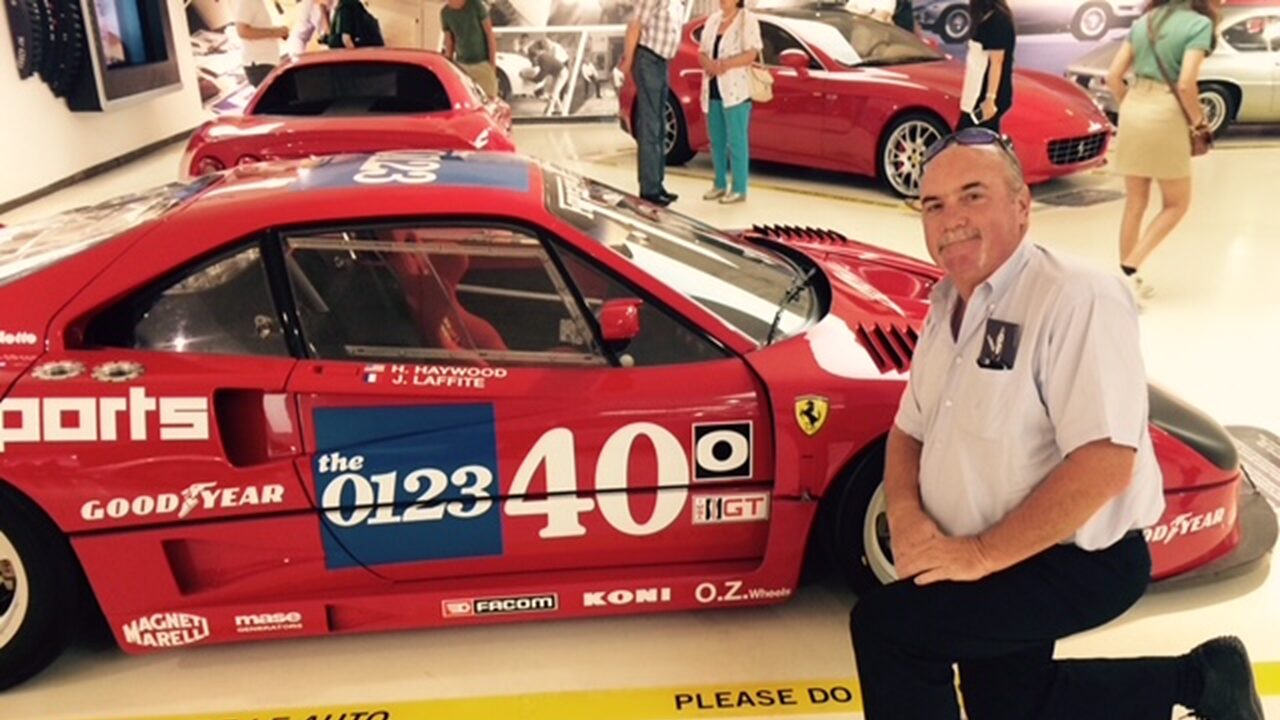
- Let’s quickly talk about IMSA history, and its metamorphosis into the leader in Endurance Racing in the US; 1978 is a Pivotal Year, this is when IMSA and the ACO first really come together, and in cooperation developed the “GTP” class – which resurfaced officially last year (2025).
- There’s a great story about Fitzpatrick testing one of the Kremer 935s (circa 1981/82) on the Highway before Le Mans? Any other crazy stories or antics from this time period that carry over to the 24H?
- There’s also a sense that the World Sports Car effort in the early 90s was also designed to influence WEC/ACO to change the scene at the 24H, how did that play out? And one of the “most successful” WSC cars actually did very well at LeMans in those few years 1994/95?; won both times, and finished 2nd at Petit LeMans in 1998.
- As we talk more about the History and Overlap with WEC/ACO – let’s shed some light on IMSA’s involvement/relationship with the American Le Mans Series and GrandAm which were eventually merged back into IMSA during its “rebirth” in the 2010s.
- Let’s talk about Balance of Performance; which is something very complicated and IMSA has been at the forefront of perfecting for years; What are the conversations like between IMSA and the WEC/ACO over the last few seasons, and how do they get closer to a unified set of rules and BoP?
- Many IMSA teams have found themselves at the 24H of Le Mans in the last couple of years, I’ll use Lexus as an example; and that’s really due to these rules changes and negotiations, it’s awesome to see; But how do we convince teams like Ferrari (499 P) or Peugeot (9X8) to come stateside like Audi did in the 2000s?
- What are your thoughts on how Le Mans has evolved over the decades?, and what does that say about the direction of endurance racing as a whole?
- Looking ahead, what goals or unfinished business do you feel IMSA still has when it comes to its relationship with WEC, the ACO and the 24H of Le Mans?
Transcript
Crew Chief Brad: [00:00:00] Evening With a Legend is a series of presentations exclusive to legends of the famous 24 hours of Le Mans giving us an opportunity to bring a piece of Le Mans to you. By sharing stories and highlights of the big event, you get a chance to become part of the Legend of Le Mans with guests from different eras of over 100 years of racing.
Crew Chief Eric: Tonight we have an opportunity to bring a piece of Le Mans to you sharing in the Legend of Le Mans with guests from different eras of over 100 years of racing. And as your host, I am delighted to introduce. Mark Raffauf, who has been part of the fabric of American endurance racing for more than five decades. A steady hand in the chaos, a strategist in the storm, and one of the few people who can say they lived.
Im SA from its early scrappy [00:01:00] beginnings to its modern global stature. Joining the organization in 1974, he’s now the senior Director of competition and his understanding of how the rules, the philosophies, and the politics have evolved between IMSA Grand Am A LMS wec, and especially the A CO, gives him a rare panoramic view of the sport.
That perspective naturally leads us to the 24 hours of Le Mans, the race that has shaped, challenged, and sometimes divided these organizations, yet ultimately brought them closer together. So tonight we chat with Mark to explore how endurance racing has changed, what unites the paddocks on both sides of the Atlantic, and what the future looks like as IMSA and Weck move toward unprecedented alignment.
And with that, I’m your host Rou chief Erik from the Motoring Podcast Network, welcoming everyone to this evening with a legend. So Mark, welcome to the show.
Mark Raffauf: First, Eric, thank you for having me. I’m happy to be here and looking forward to this for a while.
Crew Chief Eric: Well, I know we could probably talk all night about IMSA [00:02:00] history and its metamorphosis into the leader of endurance racing in the United States, but take us back to one of its most pivotal years, that being 1978, this is when Im SA and the A CO kind of first really crossed paths and came together to develop the GTP class.
So can you walk us through the importance of that and being there and what that means?
Mark Raffauf: Well, actually it was 1973 because in 73, RJ Reynolds threw their weight behind the Camel gt, which was GT racing. That’s what IMSA was. The coup that year is we took over the sanction of the 12 hours of Sebring. We then took over the sanction of the Daytona 24 in 1974, but there was no race ’cause that was the fuel deal where it was odd even probably some people remember that, but you could only get guess and it wasn’t because of racing using fuels ’cause there was no fuel for spectators to come and go.
So both Daytona and Sebring didn’t happen. However, that started the relationship because in 1975 or in 74, there was already a Daytona Le Mans cup between the two [00:03:00] events that had nothing to do with Ipsa. However, it was, I think 10 grand for the car that did both and did the best in both. It was 10 grand back then was a lot of money.
So in 75 what happened was John Greenwood took a big block Corvette, which turned out to be the fastest car at Mosan, even faster than the 9 36 Porsches, like 225 or 230 miles an hour. 500 cubic engine engine, a gearbox that lasted about two hours. Mike Kaiser brought a small block, decon Monza, but the fans loved it because it was the big v eights, the people, there was a very different structure.
There were three guys. It was, uh, JPI. Moreau was like the sporting guy. Beit Ro was the communication press guy, and he had actually worked for Bill France Sr. Here in Daytona for a few years. And Al Lamberto, who was a driver, was the competition guy. So they really wanted this American influx. The next year, 76, 50 years ago was when they sent the first NASCARs over there.
We created with nascar, [00:04:00] grand National International. So we had the Pearsons and Childress and the Allisons. All those, like seven or eight of ’em ran at Daytona. But only two went there. So we’re going back just as a side note with 30 historic NASCAR cars to the Le Mansr Classic in July this year. But we’re taking 30 NASCAR stock cars.
Not current, I mean, 2010 and earlier. So that should be pretty good. So the relationship started there. So we then got really good communication with, and got to be really friendly with Al Lamberto, and he and John Bishop sat down and realized that the FIA and what they were doing, they were kind of lost.
They had group six cars, the Renos, the mantras, but there were like four or five of them. So they created essentially GTP to be a class where private guys could win big races. So obviously the first and most successful one was Jean Rondo winning at LA Mall with a Cosworth powered car that he designed and built in LA Mall.
So those rules and that cooperation carried on late [00:05:00] seventies, well into the eighties, the ISA class within which, uh, the Corvette and the Monza ran in. And then subsequently nine 30 fives both from Europe and the US could modify the cars outside of the FIA raid. So that IPS a, there was an ims, a class ISA tech decal whole deal.
So I had the opportunity, I pretty much was there from 79 to 1990 every year. So watch this development. So GTP started in, in the eighties, early eighties when the rules went out and people like March and Lola and all those guys built cars to those rules and they raced at LA Mall with cause words. They raced here with Chevys or bors, turbo engines, all kinds of engine.
But the engine and the car. Had to be available to everybody. It was a, an across the board effort because group five, the nine 30 fives, once Porsche stopped building them, or BMW stopped building them, you couldn’t get one. There weren’t any. So the A A GT, Corvette, Mazda Bigger engines, we tried to keep.
[00:06:00] The big GT cars going, but essentially, you know, by 1979 we had 15,930 fives. Now no two of ’em were the same on the grid ’cause everybody hot rotted them over here. But it was all Porsche’s, occasional Ford victory, occasional BMW victory with hops. So we had to do something to keep the ball rolling. I think meanwhile, like 1981, there was a fairly major economic downturn as well.
A lot of car. I mean, I think car sales dropped like a million and a half vehicles in the US in a year. So that’s kind of where it really started up until GTP.
Crew Chief Eric: So let’s walk backwards just a little bit because I’ve heard you also tell the story about how GTP was also birthed in a weird way from the Group C regulations, which I’ve heard you refer to as a fuel formula.
Mark Raffauf: Correct.
Crew Chief Eric: And this is where you see the rise of the 9 56 s and then the later nine 60 twos, which IMSA had a hand in basically creating the nine 60 twos.
Mark Raffauf: Correct. So that story was, since we had put these rules out and people had built [00:07:00] cars, when the FIA approached the A CO and us about doing Group C, I’ll get to the 9 56 specifically two problems.
One, a fuel formula at that time in this country wasn’t felt to be what spectators and fans wanted to see. They wanted to see people race the cars, hard, spectacular cars. We were transitioning, you know, we had the K four with John Fitzpatrick and JLP three with John Paul racing against Redmond and the T 600, uh, Ray Hall in the first march.
You know, there was just this diversity of prototypes and nine 30 fives. The big difference was the prototype. The first Lola T six hundreds were $75,000. Even a 9 35 back then was twice that if you could get one. And there weren’t anymore. They built so many, they made a few spare tubs and a couple were built California.
Uh, the Fitzpatrick Sacks car was one that was made from a Porsche factory tub. So the problem was when we got to the Group C thing, we said, we’re not doing the [00:08:00] fuel formula. I could tell you some stories about the politics, but it was pretty much the structure back then of the FIA was there was a manufacturer’s commission, which represented everybody.
So we went to a couple meetings, Paris, and at one point all these people were sitting around trying to decide what the Group C rules were gonna be. And I think Bill France Sr. Got up and he said, which one of you people here would commit two cars to the Camel GT in the US and two cars to the World Sports Guard Championship?
One hand went up Porsche. That was it. None of the people deciding on what the cars would be, whether fuel formula, power to weight, basically the cars were very similar but in three areas. The GTP US one and the early A CO ones were a power to weight. You got this amount of power for that amount of weight.
The group C thing was you could do anything you want. You only got this amount of fuel. So there were a lot of races early on where guys ran outta gas on the last lap after a thousand kilometers. We didn’t think RJ Reynolds, our main sponsor, nobody here thought that was a [00:09:00] good product to present. So the 9 56 comes along and we went, no, we’re not taking this car because of three things.
One part of the GTP formula was everything had to be available to anybody. So you, the engine in that car was the indie engine, the 2.65 liter indie engine. It had an aluminum roll cage, which we had banned after Kathy Root’s big crash at Brainerd and all the BMWM ones and Porsches had aluminum roll cages.
They all had to change ’em to steel. Well, third point was the driver’s feet were out in front of the front axle. So after a year, and I think Fitzpatrick ran one in a Can-Am race once at Road America, 56, the car, never, nobody here really wanted it. So a year later, Holbert stuffed a, basically a 9 34 and a half Porsche turbo motor in the back of a march to develop an engine with Andile Allen Springer in California, which was bigger because all the people here said 2.65 ain’t big enough.
You need torque. So you need a bigger engine. So they build a three and then a three, two air cooled engine out of parts [00:10:00] that anybody could buy. So you could go to Andal. They put those engines in Lolas, they put ’em in marches and they put ’em in the 9 62. So the actual 9 62 is the IMSA car. The 9 62 C was the World Championship car Fuel formula car, which had air cooled, uh, water cooled heads.
So it was even a different engine ’cause it was derived from the Indian engine. So that took us to the point where eventually, and I could tell you a little story, you know, John Bishop went over to Porsche and I think in my first book there’s a drawing of the tub and he was trying to explain to him what they had to change in that tub to beat the rules.
Steel cage. Put the driver behind the front axle and the pedals are fully depressed. So they finally did that because if you remember, I think Stepan Beloff got killed in the 56th at spa cars. Were not anywhere near as safe as they are today. Obviously that’s got nothing to do with Porsche, but everybody built things the way they thought they knew was the best way to build it then, which, when you look at one today, you kind of wonder who, who guys were brave?
That’s a big time. His cars are [00:11:00] fast and they were brave. So that’s kind of the story of how GTP and then ultimately Group C adopted, not the engine part. ’cause Mercedes did their thing. Jaguar did their, everybody did their own thing engine wise, but the cars were, steel cage driver was behind the front axle.
So everybody adopted that. Not that that made us feel any better. We weren’t rocket scientists, but it just made sense to us. If the driver was further back in the car, it’d be a better situation when he hit something right. So that takes us to like the early eighties and then of course it took off with Jaguar, Mercedes, Mazda, Nissan, Toyota, and during the eighties, Le Mans specifically is a huge difference across the board was on the grid at the start of the race.
This is probably, it was 48 cars. Half of them could have won the race. The competition was ferocious. Porsche won Jaguar one, Mercedes won. Mazda eventually won. So everybody got a piece of the pie over the next 10 to 12 years with those kind of cars. That’s kind of the story of GTP and as. What happened here [00:12:00] also happened there, which.
The drawing in the IMSA rule book that John Bishop drew on his desk remained in the IMSA rule book with four pages of regulations unchanged for a decade. The only thing that ever changed was the engine specs, different weight for different types of engines that changed, but the rest of the car, how it was built, how it was run, everything about it.
The other problem with ’em was Group C had a hundred liter tanks. We needed 120, so they had to put a bigger fuel tank in a 9 62 over a 9 56. ’cause we ran what was then 32 gallons and they were not running 32 gallons, they were running less because of the fuel forming. So that kind of takes us through that era, the a CO people back to Berto.
Kind of got, I hate to use the word, but they kind of got blackmailed by Jean Marie Burlesque, who was the president of the FIA at the time. He was also the president of the FFSA, which is the French A SN, and he pretty much told them that the World Sports Guard Championship could not exist if Le Mans was not in it.[00:13:00]
So he kind of mean, I don’t know, that’s a bad word to use, but there was a lot of politics then between the French and the French. We had nothing to do with it. We said, we’re doing this, this is how we’re doing it. You guys decide what you want to do, but they kind of argued over it. And, and finally, the A CO who as sort of co originators of GTP with us were kind of disappointed, but they had to go with the FIA’s World Championship.
Otherwise it probably never would’ve taken off.
Crew Chief Eric: We’ll take a pause there and rejoined the conversation. Talk about the nineties. Before we do that, you know, you mentioned something about getting all the group C cars together, and I’m sure you’re aware of this photo shoot that was done a couple of years ago where they did a, a group C reunion at one of the airports with some jumbo jets behind them and it’s just unbelievably mind blowing to see them all together in the variety of the cars and all that.
David Lowe: Yeah.
Crew Chief Eric: It also reminds me of some of the funny stories you’ve told about that time period because you had some big names in racing them, like you mentioned Holbert and Fitzpatrick and Garson
Mark Raffauf: Bell [00:14:00] shook Wallach,
Crew Chief Eric: Brian Redmond and David Hobbs, and you just go down the list.
Mark Raffauf: Everybody, Ludwig, all the Europeans wanted to come race here because the drivers didn’t like the fuel formula.
I mean, I was at LA Mall when Klaus won it a couple times in the New Man car where pretty much from the bridge all the way after you went past the pits, all the way down through that set of S’s, before you got the Mosan, they were outta gear coasting. That’s how you ran the race. They weren’t driving the car to the extent the car could be driven because of the fuel deal.
And they hated that they were managing fuel consumption as opposed to actually racing. They liked it here.
Crew Chief Eric: So one of the stories I’ve heard you tell is the hijinks that went on, especially during the eighties behind the scenes, and one of them especially is Fitzpatrick testing the Kremer nine 30 fives on the auto bond.
Yeah. Are there any other stories like that, just crazy stuff that happened during that period where there was alignment?
Mark Raffauf: Yeah. Back then, particularly in Europe, you know, you could put a dealer plate on just about anything. So once, [00:15:00] once they got the card done, somebody you know, would take it out. And I think that photo that you saw is like a week before Le Mansr, that was a brand new car.
And so it’s a picture of the car next to a Volkswagen Beetle on the auto bond. It’s pretty funny. So the other stuff, I mean, here in the States, there’s certain people in certain places, they’d run a 9 62 out the door, down the street and around the block a few times just to check it out. So that was fairly common practice if you were in the right place.
The other antics, I mean, everybody in racing is constantly trying to make it go faster. So you know, a lot of times people were using stuff that they shouldn’t have used. The rules were a little bit more. In that era, if it didn’t say you couldn’t, you could so pouring dry ice into the air intake before qualifying in an air cooled 9 62 became normal.
So they’d be hustling down the track and you’d see all that dry ice team coming out all over the back of the car, and everybody says, we can’t do that. This says, no, you can disappears. It evaporates. It’s not putting anything on the [00:16:00] racetrack. But they did that to cool the air charge going in the intercooler and then into the turbo, particularly with the air cooled engine.
So there were a lot of tricks like that. You know, basically the competition back then with, at one point there were nine OE manufacturers in SS GTP at about six or seven in the World championship. Some manufacturers had completely different cars. They would have, the Nissan here was a V six stock block that anybody could get.
The Nissan and the World Championship was a V eight race motor, more or less. Same with Toyota Mazda four Roter. A lot of the big powerful cars here were the gm, Buicks, and Chevys that had a thousand, 1200 horsepower. They also went through a quite an evolution as far as antics of playing with aerodynamics without having a lot of the tools that we have today.
I mean, CAD and wind tunnel stuff. Yeah, they had wind tunnels, but they’re using little models now. We put cars in the wind tunnel full size first. We do a model, then we do the whole car. So there was a lot of stuff there where at the end cars [00:17:00] were running. The downforce was. Tons cars were running 72 to 7,500 pound rear springs to simply keep the car off the racetrack.
That’s how much downforce they could produce that tunnel concept, which is what made GTP probably a better car. The tunnels in GTP were bigger, are longer than they were in group C, so the American style car had more downforce and bigger engines, which was torque, which was cornering speed, which is what you needed for our circuits more so than La Mall.
La Mall was 252 with a low wing 9 62, and the Mosan was okay, but you wouldn’t want to drive that at Road America or Watkins Glen or Daytona. It’s a Streamliner, not a, not a road racing car for our tracks.
Crew Chief Eric: So as we jump into the nineties and the nineties is a really interesting period ’cause we kind of have to address the front end of it and then what happened at the tail end as we get into the Audi Dynasty and things like that.
But let’s kind of walk before we run. And there’s a sense that [00:18:00] in the World Sports car effort, and you kind of alluded to this before, especially in the early nineties, the way you guys were changing that it was designed to really influence WEC and the A CO to change the scene at the 24 hours of Le Mans.
And I’ve heard you say that one of the most successful WSC cars actually did really, really well at Le Mans, like 94, 95. It won both times and it finished second at petite later in that decade.
Mark Raffauf: Ran three races. That was it.
Crew Chief Eric: So let’s talk a little bit more about the WSC and how that eventually gets us to another period of overlap between wec, the A CO and imsa, especially with A LMS involved.
Mark Raffauf: You gotta go back a little bit. By 19 88, 89, the federal government had already told the tobacco companies you’re gonna be done in 1993. So by that point in time, GTP had gone beyond its original concept, which was once again, manufacture exclusive. Cars. You could buy an old Nissan 1-year-old and you could buy an old Toyota because [00:19:00] there was a new one.
No wanted to do. Nobody wanted to do that. You know, 9 62 won races in 1984, and then one races in 1993. So that one car carried through the decade, so to speak. We realized in the early nineties, again, another economic downturn worldwide, I think it was two and a half million fewer car sales in the US in 1991.
And that sort of put some writing on the wall that this was sort of running its course. So we went back to the basics of what GTP was 10 years early and created what was essentially a camel light car with the roof cut off of it with a bigger engine. Narrower tires, no tunnels, no ground effects. Just upper body arrow.
We didn’t need 7,000 pounds of down force anymore. The cars just were too fast. You’ve seen some of the crashes at Atlanta before the chicane was put in with the Nissans. Huge accidents. The cars were going faster than the tracks could handle, so to speak. The tracks had to spend millions of dollars changing the tracks, which some did.
Thankfully, Don [00:20:00] Panos did it at Atlanta, but at the other side, the cars were just unbelievable. I mean, we’re talking about doing a throwback video at Laguna Laguna without the inter loop of GTP car went over 200 miles an hour where the bridge is ’cause turns one and two are flat out. So we, we came back with this concept.
The funny thing was when we did that. There was immediately a response here from Riley cr. All kinds of people looked at this and said, these cars are reasonable. They’re fast enough. A lot of people could drive them. They’re, they’re not scary fast, like the GTP cars were in the early nineties. You had to beat grab them or Chip Robinson or Juan.
Fun Joe, to actually pedal one of those things. Quickly. So when we did that, I actually was at the press conference. The coup was, I went to, well actually Jean Piro Moretti went to Ferrari and convinced Piro Ferrari, we need you to build a customer car. Not a Ferrari rate, but a customer car. And there was a lot of talk, uh, Monte Zelo was the president of the time.
Pierro was the vice president, but Moretti was still thee supplier [00:21:00] for steering wheels. He was always welcome there. So the two of us go a second time and you know, we have the political stuff and everything else. And at the time, Ferrari wasn’t doing well in Formula One and they were pretty adamant that was the priority.
But Pierro said, I want to do this. And Montelo agreed. So they went and designed this car, the 3 3 3 sp, which still today ranks as one of the greatest, in my opinion, sports cars ever made.
Crew Chief Eric: It’s funny how history tends to repeat itself. Ferrari not doing so well at Formula One. So the 4 9 9 P comes out right.
Mark Raffauf: It’s how it works. It’s either that or the Pope will excommunicate ’em all or something. So they build this car. I was at the press conference at the mall where they were doing the GT one cars, the Porsches, the Mercedes, the McLaren’s. That was the top class at the mall. There were no more prototypes. So I was at the press conference when Auto Sprint, which is the Italian weekly magazine, puts the first rendering of the 3, 3, 3 on the cover that week.
I’m sitting in the press room and all these media guys from all over Europe have this magazine and the a [00:22:00] CO guys are up front and they’re all asking us, why aren’t these cars gonna race in the mall? Because we felt here, even though we had strong GT racing with Nissan and the Audi Quatro, the F 40, we had a lot of really cool GT cars.
It wasn’t a big enough deal to sell as the top class here. We had to have a prototype, didn’t need to be 12 seconds, a lot faster, it could be five seconds, a lot faster. And that was kind of the goal technically was to make it a little bit faster than a GT car. So they went another year or so using the GT ones.
And then because of Gabrielle, KD Ringer from the FIA and again, Al Barto was still there going, we gotta have these kind of cars here. All right. Now certain ones like the Riley was made for here, high down force, no top speed. Wayne Taylor did go, uh, with the olds Riley that won at Daytona and Sebring that year in 96.
We basically had Dyson and, uh, four or five Ferrari, six or seven, I think the first world sports car race with [00:23:00] just world sports cars. There were 17 of them at Road Atlanta the first time, you know, so that kind of stuff spawned a lot of people to build cars. Spice built a car, Roger Mandeville built a car, downing built a car.
All these private guys were able to build a car and compete and potentially win big races, and that was the intent. The Ferrari, even though at the time was a Ferrari, the joke was the badge on the nose was 250,000. The rest of the car was 250,000. So it wasn’t really that bad if you took the badge off, but that whole deal, that mid nineties, early nineties, after 93 by 95, it was storming.
It was pretty good. It was excellent racing. The cars were super competitive with each other. Again, a lot of world class guys came over and eventually Le Mans adopted it. However, as we get into the later nineties, we made an effort right then we did not allow turbos. The story about that one world sports car, WSC car is the Porsche with the turbo motor in it.
We made that effort to try and bridge a gap with the A [00:24:00] CO and let them have turbo cars and our cars. They took it, but they also did a couple other things, which were kind of not right, which was they allowed BMW to come in with a six liter motor when everybody else had a four or five, and they used that BOP term for the first time.
Oh, we’ll fix it with BOP. We got no, you’re not. All you’re gonna do is cap the power. You can’t cap the torque. They also put diffusers on that car, and they also put a single roll hoop instead of a full roll hoop with no bracing forward. They did a couple things with the rules that we gave them. Say here, if you wanna do it, here’s the rules to kind of put their mark on it.
And it did attract new cars, but it immediately obsoleted the ones that already existed because they had too small of an engine. Things like the Porsche was based on the XJR 14 Jaguar, which was a ground effect car, which then became a Mazda car and then became the Porsche World Sports Car. And that car ran three races.
It won Le Mans twice, and it finished second at [00:25:00] Petite Le Mans the first year after Wayne Taylor’s Ferrari. So it, we proved there that it could be competitive with turbos, but they changed the rest of the car and you couldn’t take a Ferrari 3, 3 3, which was a flat bottom car with an open rear with no tunnels and just stick diffusers on it.
It doesn’t work that way. The whole car would have to be redesigned to take advantage of that. The Porsche was an exception because it was already built with tunnels. The new cars from Audi and BMW by 98, 99 were all ground effects cars to some extent.
Crew Chief Eric: And the BMW we’re talking about for those, you know, maybe Googling it, that might not know the history, that’s the LM RV 12, which is infamous.
Mark Raffauf: Correct.
Crew Chief Eric: To your point, you mentioned a very specific brand that was in the shadows with the original R eight Roadster, which looks nothing like the McNish car and the ones that we know. It was kind of plain Jane, sort of in the style of the 3 3 3 sp, and that’s the original R eight. So Audi’s in there in the shadows trying to figure out what they’re doing, what their play [00:26:00] is, all the politics with Porsche and all that kind of stuff.
Because you’re right, we were still transitioning out of GT one with the nine 11 GT one and some of those other car, the BM, bmw GTR, all that kind stuff. So it was an interesting period. But at the same time, there’s a lot of stuff going on on our side of the ocean, especially 98 99 with A LMS. So let’s talk a little bit more about that history and overlap, and can you shed some light on IMSA’s involvement in A LMS and how that grew out of Grand Am and eventually they merged back into what we consider the rebirth of IMSA as we know it today.
Mark Raffauf: So what happened was when Andy Evans acquired imsa, who was the fifth owner since 1990, okay, this is 96 7. Basically the management of imsa, old Generation one ended up here in Daytona. Myself, George Silverman, our director of operations, so on so forth. The race staff became the contracted staff and they were part-time people that ran the A LMS races.
So basically [00:27:00] IMSA split in half. Management came to Daytona. We worked with the France family for a long time, so Don Panos vision was to accept the Le Mansr rules and run them here. Looking back at that, it was a great idea, but it didn’t really work that way because most of the LA MA stuff, even today, is designed for Le Mans.
Okay? So you gotta think about, all right, how’s this gonna work at Lime Rock? How’s this gonna work at mid Ohio? How’s this gonna work at Sonoma? Okay. Or the places where, where we raised, you know? So initially it was good. It attracted the manufacturers, okay? Tried new stuff. The Audi, I think was a V eight.
It was black. They ran two of those against the BMWs at Sebring in 99, I believe. And the other side of the equation that didn’t adhere to that philosophy because fundamentally costs just like doubled and tripled within a year. So all of the people that had the original world sports guards were kind of like, we [00:28:00] can’t race against these guys.
It’s not possible. So there was a, not an appeal, but there was people like Rob Dyson, there was people like Moretti, there was people like Freddie Leinart, people with Ferraris and Riley’s and everything who could not race these new factory cars because they were a completely different kind of car, though they looked the same, technically very different.
So the U-S-R-R-C was restarted with the SCCA, the France tracks, which at the time were Watkins Glen. Daytona, middle Ohio, joined that group. So USRC ran a few races in 98, 1 in 99, and at that point is where the people here decided we’re gonna start Grand Dam. On the same principle of the original GTP in the original World Sports Car, which is every component engine and car has to be available to anybody.
They’re gonna be low down force cars. They may not be pretty, but they were designed for close competition and Grand Dam provided that with the DP car as we rolled into 2000 and started Grand Dam’s. First race was the 24 hours of Daytona with [00:29:00] 80 cars. 2000 no prototypes. We were still running the Delara with Lista.
The Riley’s, the Cadillacs were eligible because of how they were made, both sets of rules. They could run in A LMS and run in Grand Dam. And then by 2003 is when the Daytona prototype car was introduced. And then that propagated rapidly because again, reasonable little guys could get one race and have a chance to win the big races.
So that’s kind of taken you through that transition. The transition was difficult times. I’m just gonna speculate, but I know it was hard for Don Panos to understand that people like Daytona we’re not gonna brand an event with Le Mansr at Daytona. They have an interest in the physical plant here, or Watkins Glen, they’re not gonna call it Le Mansr.
We have the petite Le Mansr because we inherited that with the reassembly of the two halves in 20. 13 actually. So for a decade there were two different paths that actually both were part of imsa, but separate. They’re [00:30:00] doing completely different things technically and philosophically. Uh, grand Am was all about reasonable costs, reasonable schedule.
A MS was all about manufacture teams and having gone through the late seventies and then the GTP area where the manufacturers come and then go. After they fulfill whatever their need was. There was a big reluctance to go that way. That kind of takes us to the early two thousands. But by 2005, six and seven Grand AM was booming.
We had just as good a TV audience. We had just as good crowds and we had way more cars. And A LMS was beginning to struggle a little bit with manufacturer dominated Penske and the P two car Audi and the P one car. But. Who else was there? Nobody. They all went away and in gt, I mean the Corvettes ran one year against themselves.
GT Le Mansr had two Astons and two Corvettes the year before, and then Aston stopped because it was too expensive to run the GT car to those rules. [00:31:00] They just parked them in England. So they began to struggle. They put the Porsche Cup cars in there. They came up with the PC car. They came up all of a sudden with similar concepts of cars that were easily accessible that people could get and go participate.
Not win overall, but participate in their big races, which were Atlanta and Sea R, so on and so forth. The other thing that Grand Am had the benefit of was the company owns a lot of racetracks. So the road course at Fontana, the road course at Phoenix, obviously Daytona. Obviously Watkins Glen, we could build a schedule on our own tracks right away.
We also added mid Ohio Lime Rock, three Rivers, uh, San Jovi, you know, uh, we went to Canada twice. Panos owned, uh, most ports, so we didn’t go there. And he owned Atlanta and we owned Seabring. We didn’t go there, but pretty much everywhere else, grand Dam, we went to Sears, we went to, we went to all the same places and did well.
Tracks did well. So that kind of, how should I put it? It kind of created a, a split, but the split, [00:32:00] the long-term view was gonna be the one that succeeded. And the long-term view has always been you have to keep some sort of cost control in place. It’s a discussion item today. It’s cost control. Cars are super technologically oriented, difficult for the little guy to run, if at all.
No customer cars, so it’s got a limited field size. There’s, there’s no cars. Porsche’s the only one that’s made a customer car, so that is a, a current problem, but that recurring problem of economic explosion out of the realm of people being able to do it, including car companies. It’s a constant thing with sports car racing.
Going back to World War ii, what Ford spent in 1967 was crazy to win them all.
Crew Chief Eric: Mark, let’s get into one of my favorite discussions. You and I shared a beer about this particular topic last year. It’s Balance of Performance. I ask all our pro drivers about this. This is something that I know you know very, very well because it’s at the heart of your job and what you [00:33:00] do, and it’s very complicated and it’s very nuanced.
And IMSA has been at the forefront of perfecting balance and performance for years. And I know that there’s been conversations, especially as we get closer to the unification of the rules between IMSA and we in the modern times of how does BOP work? So can you put it in perspective for us? Because as fans, BOP is like, it’s like the worst thing ever, right?
We want people to build better mouse traps, but that’s not how racing works.
Mark Raffauf: No. So BOP, the way it works, the relationship we have with the A CO first, people have to understand there’s two kinds of cars. A hypercar is a hypercar, an LMDH car is an IPSA car. Our class of those two cars together and they’re all eligible for, or you can come, POEO can come.
They can come if they want, is based on a process that we developed over three or four years with all of the manufacturers that were building LMDH cars. And if you think back, other than those three original ones, there have been [00:34:00] no new lm, no new hypercar. Why It cost about eight to nine times more to develop because everything is proprietary technology.
LMDH was decided to be standard hybrid units, standard batteries, standard gearbox. So the system that runs all of the cars in LMDH is the same, so the manufacturers didn’t have to go out and develop that. The Bosch management systems that run it all are the same. They can program it the way they want, but they’re using the same hardware, so that solves everything.
The other thing is there are four chassis options in LMDH. You pick one, you put your stuff in it, and then the manufacturer pretty much, and they are cost capped. Those chassis, the, the what we call the spine. So the manufacturers, really all they had to do was do a body work. Everybody in LMDH is using an engine they already have, I think the genesis will be the first car that has a new engine.
But the BMW engine is two generations ago. DTM engine, the Porsche engine’s out of a nine 18, I think the [00:35:00] Honda engine in DPI was actually the turbo version of the minivan engine. Now it’s more of like, it’s the IndyCar engine, but it’s stuff they had, they didn’t have to go and make new stuff that made the decision economically acceptable to the board of directors to go racing.
Meanwhile, in hypercar, everything is from scratch, so you gotta develop a whole hybrid system. You gotta develop the body work, you gotta develop, and the rules of the cars themselves are not the same. Hypercar has all wheel drive. It’s been reduced a lot at the front from the electric motors, but we learned in 1989 with the Audi GT car, you got a road racing four wheel drive car, see ya.
There’s no way to really match it. So the BOP on both sides of the water is what those two groups us and them want for their championships. World Endurance championship, weather tech championship here. So we don’t do the same thing or do it the same way. They’re trying to get LMDH cars in the game and I’m not being critical, but they’ve changed their [00:36:00] process, we’ve evolved our process.
It isn’t perfect. It’s really kind of like bracket racing. For drag racing. You want, unlike things to go around a racetrack ranging from Daytona to. Long Beach the same way. Well, that’s not possible. So we work within a margin, but the margin of difference of the demonstrated performance during a race at an IPSA race is usually about 0.2%.
It’s smaller than LMP two, which is a spec car. So the quality and the quantity of those cars is unfortunately limited because there aren’t that many cars. But trying to make all that stuff work the same way. You have three tools. You have power, and the power is controlled by torque sensors on the axles, and WC uses it the same.
So we manage that and it has a split. There’s low RPM power and high RPM power, so they have two levels. And then you have a couple other things such as. Weight, but there [00:37:00] are limitations on how heavy the car can be because the battery and all that stuff is heavy. And then you run into tire problems. If the car is too heavy, tires are made for a certain weight range.
You’d really like to put 20 kilos on a car to slow. Its cornering down, weight handles cornering power straightaway, speed. And then there’s the arrow. And all the cars have been in our wind tunnel using our protocol. And now just this last fall is the first time the hypercar went to the wind shear wind tunnel that we use.
And they got different results. If you’ve read the press, Ferrari’s gotta make some, everybody’s gotta make changes over there because the process they were using before. Was, uh, at the Sauber Wind Tunnel, which is a small wind tunnel. Wind shear is probably the best wind tunnel for race cars on the planet.
And we’ve used that really since about 2009 in dp. We were putting cars in there, 10, 20, somewhere around there. So we do the same thing in principle, but not the same way. And that’s been agreed to all along. So when we talk about real convergence for the [00:38:00] future, our opinion is there has to be one car, that’s it.
One car type. These are the rules, and everybody has the same rules. So for an example, a hypercar has a much more active aerodynamic floor than an LMDH car. It has all wheel drive. LMDH doesn’t have that. So there’s some fundamental things that are. My opinion almost impossible to make really equal. One may rise above the other based on a track specification.
It might do better at this kind of track versus that kind of track. It’s a difficult problem because you have two kinds of cars and they are very advanced aerodynamically. And then when you look step back, first off, you gotta remember, BOP does not dictate the results. How you run the race dictates the results.
That’s number one. Number two is trying to make ’em all equal. Even at small percentage, you get differences of where certain cars work well on others. That allows ’em to pass each other. If they were identical, it would like a Formula One race. They’d drive around in line the way they qualified. Be boring.[00:39:00]
Sorry. I’m just saying technically when you get it too good, that’s what happens. And the same, what I’m talking about applies in gt. Except in GT it’s much harder because the base cars are so different. You can see on TV how much bigger a Mustang is over a Lamborghini, but same three tools. So if you drew a circle, I would say the BOP makes up maybe 40% of the performance of the car.
All the other things are in the controls of the teams. What kind of tires when they change ’em, who’s, you know, all these other variables. How long is your pit stop? I mean, just did Seing. Penske’s making three to four seconds on pit stops. Just better. They’re better at it. Making that up on the racetrack when you’re 0.2% apart on performance, actual real performance in the race is really hard.
It’s really hard. The final thing is we run our races where we bring all of the classes back together after a yellow and there’s gonna be yellows and long races. And the first car over in each group, it’s GTP, MP two GTD Pro GTD is the leader [00:40:00] of that class and everybody’s behind them. So some people say, well that’s, no, that’s what it is.
It’s four races separate from one another going on. So our sporting regulations are how we run the races are different than the ACOs and it’s not a right or wrong thing. That’s how they do what they do. They come over and watch what we do and they’ve slowly began to look at how they deploy pace cars on an eight mile track.
Big problem. It’s tough. Um, but they’re beginning to see what we do to make the product. And that’s how we look at what our racing is. It’s a product, it’s an entertainment product. We want people to go there and go, yeah, there’s eight or nine guys that can win this race. I’m gonna watch to see who does the best job to do that.
So we go to the extra mile to do that. But it isn’t easy because basically the game is the OE manufacturers will never go faster than they need to go to win. Which means they’ve always got something in their pocket and we’re always looking for what that is. So [00:41:00] even though we have all this data and all this stuff, and again I’ll emphasize that we only use performance demonstrated in a race.
So we don’t use qualifying, we don’t use practice. You go to the roar here, they’re three seconds elapsed slower than they are at the race or in the 24 hour race. They go faster on Sunday morning after they’ve been racing 16 hours. ’cause there’s what we call go time. Go time is when everybody looks around and says, okay, it’s so many pit stops for fuel and energy to the end of the race.
How am I gonna do this? You know, am I gonna push now or do I push later? But they all go faster. They did it seem too, they’re going as fast at night as they were qualifying us because they push, they really run hard at the end of the race. ’cause that’s what it’s all about. I think that explains it. But it’s basically making, unlike things.
Performing as much as you humanly can, kind of the same way.
Crew Chief Eric: And there’s a couple threads here that we can pull and I’ll, I’ll just pull two of them.
Mark Raffauf: Yep.
Crew Chief Eric: You talked about LMDH versus hypercar. Yeah. And how they’re sort of trying to edge each other out. But in the end, this is just Mark’s opinion. You [00:42:00] know, take your IMSA hat off.
Mark Raffauf: Yeah.
Crew Chief Eric: Who do you think is gonna come out on top in terms of, this is the spec that we’re gonna see in the future When you’re just looking at the P one class?
Mark Raffauf: The sustainability path is LMDH. Look at it. Ford, LMDH. McLaren, LMDH, Genesis LMDH. Nobody has done a hypercar since the initial run. The Aston is kind of a a bit of a bastard car because it was originally done on the original hypercar concept, which it had to be based on a road car, and it is, it’s the Valkyrie Road car, so it has an elements to it that are different.
Again, like the cockpit side, it has certain dimensional things that are required for use on the road in Europe or the UK that you really don’t have to do if you started with a clean sheet of paper. So it’s a little bit of a problem. It’s got a great engine. It’s not gotten the development that the other ones have had, so it’s a little bit awkward.
But again, my opinion is the LMDH concept of standardization of some significant [00:43:00] components that don’t require the manufacturer to have to go develop from scratch is gonna be more welcoming to more people, and that’s what’s happening. Of course, the guys that got the other cars want to keep doing what they’re doing because they hold all that technology to their chest and nobody knows about what they’re doing, which is.
Politics to some extent. And I can’t really speak on that ’cause I don’t know the juicy details of that. But I do know more of the people who have done an LMDH said the only way they would’ve ever done it is that way they will not do hypercar.
Crew Chief Eric: Right. So another thing that came up recently and, and this gave me pause when thinking about motorsports as a whole, and you mentioned before Formula One and Formula One has always been considered at the pinnacle of motorsport.
I’ll make the argument that I think that the P one cars, you know, whether it’s at WE or a CO or IMSA or whatever, they’re as technologically advanced, maybe more so in some ways in Formula One, because I think Formula One cars are hamstrung these days. But there’s something really interesting happening here in the [00:44:00] 2026 season with the new regulations and what gave me pause was someone said, what happens if this new hurry up in Coast methodology that they have in Formula One makes its way to sports, car, and endurance racing because of their mgus.
And their fuel consumption and energy management and that. Do you see a future where it’ll be hurry up and coast in IMSA’s? What?
Mark Raffauf: It’s already there.
Crew Chief Eric: Oh,
Mark Raffauf: it’s already here. It has been from the beginning. We call it Lift and Coast. So Lift and Coast shows up on the data where people are off the gas going into a corner much sooner than you would have to be.
And the reason for that is back to my comment about Penske. If you can save that energy and come into the pits and not take as much, you’re gonna gain time on everybody. There are drivers that can drop 750,000 RPM off an engine and do pretty close to the time they need to do in the race. The other part of Lifted Coast, which a lot of people don’t realize.
The theoretical best performance a car [00:45:00] can do is usually engineering reviewed based on it being by itself, not sharing the track with at Daytona 59 other cars, a lot of lift and coast that you see in data is basically the guy has to lift because he’s gonna run into somebody. He’s got three GT cars in front of ’em.
There’s traffic I figured out a few years ago to win Daytona, you gotta pass like 15 cars a lap for 700 and something laps. So it’s pretty monumental. And we’re running 60 cars on 3.65 miles while they’re, I think running 50 or 55 on eight. So the density of what’s going on impacts the performance that a car potentially can do, regardless of who’s driving it.
So the strategy of. Energy management, it’s not backing off like F1. The problem with F1, in my opinion, is it’s too much dependent on that. It’s sort of like halfway to Formula E. We’re working with like 10 or 15% of the potential energy being that, and that’s manageable, [00:46:00] and the drivers can manage that and the teams can manage that.
But it is a factor in the outcome of the race is who manages their energy the best. It really isn’t different with us than if it was just straight fuel. There are guys that would save fuel and they would get one more lap in a stint just because they saved enough fuel. So what happens, like at Sebring is a lot of cars early in the race or actually in the middle of the race when it went around and around for like hours with just no yellows or nothing.
They’re all basically running laps, but they’re saving energy so that at the end, at night, they could push.
Crew Chief Eric: We’ve talked a lot about the alignment of Im SA and WC and a CO in the modern times, and we saw evidence of this, you know, it was rumored for a long time, but we’ve seen evidence of this over the last couple years and we knew it was real when you saw the Lexuses show up at Le Mans for the first time and it was like, whoa, this is really cool, and that’s awesome that our guys are going over there and competing in GT three, and there’s a lot of excitement and a lot of action in that class, which is awesome.
But how do we do [00:47:00] the reverse? How do we convince Ferrari or EO to bring their cars here?
Mark Raffauf: Some of the reasons that they don’t have some, in my opinion. There’s some technical reasons. Like I said, they for a long time did not want to go through our protocol of how you get Homologated in Ipsa. The deal was both sides have tested all the cars that compete with them the way they want to test them.
We have, you know, 15 years of experience working in a big wind tunnel and have great aerodynamic consultants who have been with us with IMSA or Grand Am since like 2005. Okay. So work with the same people, understand how the cars are made, understand how, what can be done to them, so on and so forth. So they may, I mean, it’s just a matter of, there’s a big expense to that.
The cars are super expensive. Ferrari calls the yellow on a cus it’s not a customer car. The development costs for LMDH cars in the [00:48:00] beginning from design to being at their first test is. Not yet. 10 million hypercar, probably 35 to 40 to develop the car. So there’s, there’s no growth there. So it’s not like they got a stable of eight cars.
They don’t, yeah, there’s like, what you see in a wet race is pretty much what exists. There’s some spare chassis, but they don’t have built up cars sitting around.
Crew Chief Eric: And the reason I bring it up is because if we take Porsche off the table, ’cause Porsche’s always. Built a car to race in every series so they could dominate and do that kinda thing.
There was one brand, and it’s the close cousin of Porsche, and that’s Audi that was able, at the time, at least in the nineties, in the early two thousands, was able to build a car that could compete in both series without really making a lot of changes.
Mark Raffauf: Lot of changes. Yeah.
Crew Chief Eric: And that might have been because there was even closer alignment at the time, and there’s not a schism like there is, as you mentioned.
Mark Raffauf: Keep in mind A LMS was running Le Mans’s rules.
Crew Chief Eric: Exactly.
Mark Raffauf: Grand Am was not, that’s why there was no Audis there. Okay. Or that Audi powered car. You gotta remember in the beginning [00:49:00] of LMDH, the other manufacturer was Audi and Multimatic was gonna provide the chassis for Audis and Porsches factory and customer cars.
Audi then made the shift to F1. Well, they can’t afford to do both. Let’s just tell you where the money is. You can’t do both. They chose to go to F1 and that killed half of Multimatic build of cars because then it was just Porsche’s.
Crew Chief Eric: So that brings up a really interesting point, and I’m glad you went there.
The lineup for the 24 hours of Le Mans for 2026 was released earlier this year than it’s ever been in the past. And you look at the line, you know, you see the usual players. It’s Ferrari, it’s BMW, it’s Cadillac, and you’ve got Genesis in there Now, Ford’s coming next year, this and that. Yep. As you go down the list, even in the production based classes, GT three, there’s only a private tier group.
Of nine elevens, Porsche has pulled out. Is that a result of the F1 program?
Mark Raffauf: No, because Manthey is here. They just won Sebring. AO is getting the same treatment it looks like, as the man’s been the sort of [00:50:00] favored Porsche over there. So they’re going back over there. It’s a perfect example of your previous question.
You can’t do both. So they’re gonna run the endurance races, five endurance races here and the wec. And that’s a huge difference from just running the wec. Okay. There is that. They really can’t do both. You have to have completely separate entities. And you gotta remember GT three is essentially customer programs.
You know? And Le Mans, they have to have, they don’t have a GTD Pro, you’ve gotta have. Am drivers in your car here? We broke it in half because there’s two distinctly, same car, same rules, different teams, different drivers.
Crew Chief Eric: When we step back and we look at what we’ve been talking about tonight, we’ve talked a lot about the influence of Im SA on the A CO and the relationship and this and that.
But if we take that lens away and you look at how Le Mans has evolved over the decades as you’ve been evolved, you’ve been going over there, you’ve been going to the races, all the changes you’ve seen, whether it was adding the Chicanes at Mosan, changing the pits. We hear a lot about that from the drivers, all the politics, [00:51:00] everything that’s going on behind the scenes.
What do you think about the direction of endurance racing as you look at the evolution of Le Mans, what does that say? For Motorsport,
Mark Raffauf: having been to Le Mans as early as the late seventies and having been there recently, Le Mans has transcended as I think both Daytona and Sebring have, that they’re just not car races.
They are events that you need to be at. And Le Mans is a massive event. We had 180,000 people over three days at Daytona. It’s massive. So when you look at the influencers and the people that show up now, those key endurance races are now referred to as events you just need to be at because of the whole experience.
It’s not watching cars drive around for 24 hours, it’s the manufactured Wi Bay. It’s all the stuff you can do and the places you can go. Uh, here you can leave the track and go over to BJ’s and have a really nice dinner and then come back. You know, Le Mans a little different, but they’ve created an event which is a massively [00:52:00] solidly good event.
May not always necessarily be the best racing, but it’s an event you need to go to. And we kind of over the years have seen that and have taken some of those principles of making our bigger events, petite Laal, Sebring, and Daytona. Are essentially almost sold out. I mean, we had to block people from getting in in Atlanta last year ’cause there was no place for ’em.
Actually, the police did. They said, we’re done. We can’t handle this. So when you get to that point, you go, okay, we we’re there. It’s places that people want to be, but I think for us, we’ve still tried to keep the entertainment value of the competition because to us, again, that’s the product. It’s gotta be entertaining.
But I think you gotta give Le Mans credit for establishing a level of event in motor sports that certainly a lot of people might argue. I mean, I think the biggest thing I’ve ever seen is the Indy 500. As far as a one day thing, Le Mans is right up there. I mean, it’s a major sporting event that happens to be with cars, which makes it [00:53:00] cool for car people like us.
But it’s an event that you can go to. Like Sebring, I mean thousands of people go to Sebring and I don’t think they have a clue what’s on the racetrack. They’re having a great time. Okay. And the environment fosters that
Crew Chief Eric: now that Le Mans has made the classic a every year event rather than every so many year event.
If you compare classic to the 24, what does Mark like better?
Mark Raffauf: So the classic I’ll, I’ll probably go, ’cause I mentioned earlier we’re taking 30 stock cars over there from HSR, historic stock cars. But I would say this historic racing in Europe is much more, there’s a lot more finess to it. The cars are much more accurate in their, I argue with people about, there’s no such thing as an original race car.
As soon as it leaves, wherever it was built and gets in the hands of the team, it gets changed. So race cars have a different life than classic cars, for instance. But the classic and Daytona here. 24 Classic or historic classic. It’s different here. We’re a little bit more like cowboys. We kind of do [00:54:00] different things.
A lot of replicas, but there’s a lot of real cars and our whole goal is to try and get people who have worked all their lives to get a car that they’ve loved, an opportunity to take it out on the racetrack, safely compete if they want, but they wanna drive around in the back. They could do that too over there.
It’s hardcore. I mean they, they blow up all kinds of really valuable stuff running the crap out of them and they’re like 45 years old. It’s like stuff wasn’t that good back when it was new and it’s worse today. Okay. I’ve had some significant 9 62 drivers who have been to the 24 here when we’ve had nine 60 twos who take the cars out and they come back in and basically say, if I knew then what I knew now, I probably wouldn’t have done this because they are scary cars and Le Mansr is a serious place.
So I think that the difference is in Europe, it’s a much more pure form of the classic element. While here it’s more Americanized hot rods, you know.
Crew Chief Eric: Well, mark, as we wrap this up, looking [00:55:00] ahead, what goals or unfinished business do you feel that IMSA still has when it comes to the relationship with Weck and the A CO and of course the 24 hours of Le Mans?
Mark Raffauf: We touched on it. I think the goal should be a common platform. If everybody’s using the same kind of car, a lot of the difficulties that we both have would be resolved. WEC does what they do the way they want to do it, and they have changed their process for BOP during the season, which is why you see Ferraris go from winning to 10th or the Porsche being eighth and all of a sudden winning.
There’s an up and down there. And I don’t know that that’s good or bad. I’m not saying it’s wrong. That’s what they choose to do. We go the other way. We’re trying to smash ’em all together in this very narrow window of performance and let the other elements that the teams and drivers decide to determine what the outcome is.
In other words, we want everybody to show up at the race thinking they have a solid chance if they execute correctly and basically perfectly is what you have to do nowadays. It’s not correctly, [00:56:00] perfectly no mistakes, but you know, the Lexus at Sebring, they should have won the GT race. The wheel falls off.
It’s like guys. You can’t do that. You have to be Penske ish. And there’s a reason he has succeeded with all of his racing is the way they execute the races is something everybody should be looking at.
Crew Chief Eric: Well, mark, we mentioned in the intro, you’ve been at this for nearly five decades. What’s next for you?
Mark Raffauf: Everybody says, when are you gonna retire? And I go, well, I’m kinda lucky. I get up every day, get to do what I want to do with the people I want to do it with. How cool is that? Right? So I think for me, what I would like to see, and you kind of touched on it, is what do we do next? You know, in 2030. It took four years to create the LMDH car from concept with the oes all involved.
Or how about we’re gonna do it this way, what? So it was very cooperative effort by all the people in LMDH in the beginning to do this. That took four years, well, it’s 2026, it’s kind 2030. Gonna be honest pretty quick. So the question [00:57:00] is what do, what do we do next? And when I say we, what does the industry do that keeps the entertainment part of it and the return on the investment to the people that funded, engaged?
That’s been the problem with the end of GTP, the end of world sports. All those programs went downhill because return on the investment versus the investment wasn’t hitting the marks. So we gotta do that. And it’s gotta be technological, which means it’s difficult.
Crew Chief Eric: Well Mark, before we close out now, I would love to pass the microphone to our a CO representative David Lowe, for some parting thoughts.
David Lowe: Mark, on behalf of the a CO and Endurance Racing fans everywhere, thank you so much for your time this evening. It’s wonderful to hear you again. Always enjoy your stories and I’m sure on our rebroadcast we’re gonna reach out to a lot of people. So thank you again.
Mark Raffauf: Enjoyed being here. I gotta say, I mean our, we have a really good relationship with the A CO, but we have different business models, so to speak.
Um, they have different influences. We are [00:58:00] actually lucky to be able to do what we do. In one country to do what they do as an operations guy at events, they come to Daytona all the time and they come up to our race control and they just go compared to what we have to deal with from country to country with different people, different systems.
We use the same people in the same stuff at Long Beach in a few weeks for a hundred minute race that we use at Daytona for 24. So we are lucky or have the opportunity to do that. Some of the hurdles or some of the things they have to deal with, they’re problematic because that’s just the way it is. But we’re all in one place, big place.
But we get to do things a little bit differently. I think because of that,
David Lowe: we certainly enjoy the partnership and, and the interaction. So again, let’s keep it rolling.
Mark Raffauf: Yeah, and like I said, we gotta get together and decide what’s 2031 gonna look like. That’s, that’s to me, to Eric’s question. I think for me, I would like to see us get through that and see what the next product looks like.
You know, the people listening gotta understand sports, car [00:59:00] racing has to change. If you do the same thing for more than five years, they look the same. I just told everybody, we need to tell these guys change the bodies. They did, they did all the evos. If you have the last year Porsche, and this year, Porsche next to each other, you would see the differences.
Same with all of BMW Acura. They’ve all made changes to their body work, but as they’re styling changes on their road cars, that’s the next step is between now and 2030, upgrade ’em to what the latest product looks like. That’s what it’s all about.
Crew Chief Eric: As our conversation winds down, it’s impossible not to appreciate just how much of this sport Mark Raffauf has carried on his shoulders and just how much of it he’s preserved for the rest of us.
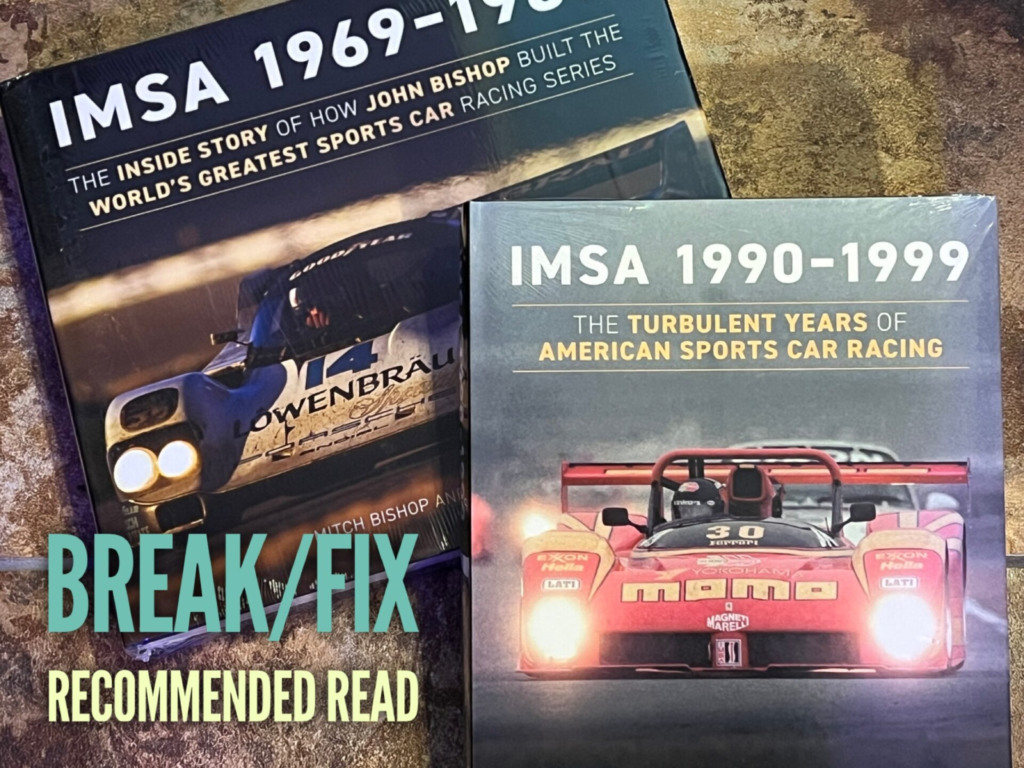
His decades inside of IMSA didn’t just shape the rule book. They shaped the culture, the competitors, and the very identity of North American endurance racing. And if tonight’s stories only scratch the surface for you, that’s because Mark has spent years documenting the rest of them. His two books on IMSA’s history published through Octane Press are essential reading for anyone who wants to understand [01:00:00] how this world was built, race by race and personality by personality.
They are the written counterpart to the wisdom he shared with us here tonight, and we hope that Mark’s perspective helps you see the 24 hours of Le Mans and the global endurance landscape with a little more clarity and a little more context with a deeper appreciation for the people who’ve kept the sport moving forward.
Like Mark. And with that, we hope you enjoyed this presentation and look forward to more evening with the legend throughout the season. And on behalf of everyone here and those listening at home, thank you Mark for sharing the microphone and sharing your stories with us tonight.
Mark Raffauf: If you see me at a race, don’t hesitate to walk up.
Our policy here is we engage with everybody one-on-one, but I have spectators that come up to me and go, can you explain BOP? And I said, it’s gonna be the four minute version. But yeah, I think so. And I think maybe that helps everybody understand how hard this stuff is technically these days. I mean, back in the GTP days, like I said, it was didn’t say you couldn’t.
You could. Now it’s the exact [01:01:00] opposite. If it doesn’t say you can, you can’t. And it, and it’s a completely different dynamic. But I hope I was helpful to some people or many people that understand a little bit more about it. And like I said, if you haven’t been to Le Mans, you can go. You need to go just because it is a great event.
Crew Chief Eric: This episode has been brought to you by the Automobile Club of the West and the A-C-O-U-S-A from the awe-inspiring speed demons that have graced the track to the courageous drivers who have pushed the limits of endurance. The 24 hours of Le Mans is an automotive spectacle like no other for over a century.
The 24 hours Le Mans has urged manufacturers to innovate for the benefit of future motorists, and it’s a celebration of the relentless pursuit of speed and excellence in the world of motorsports. To learn more about or to become a member of the A-C-O-U-S-A look no further than www do Le Mansn.org, [01:02:00] click on English in the upper right corner and then click on the ACO members tab for club offers.
Once you’ve become a member, you can follow all the action on the Facebook group, A-C-O-U-S-A Members Club, and become part of the Legend with Future Evening with the legend meetups.
This episode has been brought to you by Grand Touring Motorsports as part of our Motoring Podcast network. For more episodes like this, tune in each week for more exciting and educational content from organizations like The Exotic Car Marketplace, the Motoring Historian, break Fix, and many others. If you’d like to support Grand Touring Motor Sports and the Motoring Podcast Network, sign up for one of our many sponsorship tiers at www.patreon.com/gt motorsports.
Please note that the content, opinions and materials presented and expressed in this episode are those of its creator, and this episode has been published with their [01:03:00] consent. If you have any inquiries about this program, please contact the creators of this episode via email or social media as mentioned in the episode.
Highlights
Skip ahead if you must… Here’s the highlights from this episode you might be most interested in and their corresponding time stamps.
- 00:00 Meet Mark Raffauf
- 02:20 Early IMSA and ACO Ties
- 04:25 Birth of GTP Rules; Group C vs GTP Debate
- 09:02 Porsche 956 to 962 Shift
- 11:26 Golden Era Grid Battles
- 17:45 Nineties Reset and WSC
- 20:39 Ferrari 333 SP Moment
- 23:44 Rule Drift and Audi’s Rise
- 26:19 ALMS & Grand Am Split
- 30:23 Cost Control Lessons
- 32:43 How BOP Really Works
- 33:28 LMDh versus Hypercar Basics
- 37:56 Why One Rulebook Matters
- 43:32 “Lift and Coast” Energy Management Explained
- 46:33 Getting more Hypercars to IMSA
- 50:35 Endurance Racing As Events
- 54:58 Future Platform, 2030 and beyond
- 59:27 Final Thanks And Wrap Up
Bonus Content
There's more to this story!
Be sure to check out the behind the scenes for this episode, filled with extras, bloopers, and other great moments not found in the final version. Become a Break/Fix VIP today by joining our Patreon.
All of our BEHIND THE SCENES (BTS) Break/Fix episodes are raw and unedited, and expressly shared with the permission and consent of our guests.
Learn More
Other episodes you might enjoy
Evening With A Legend is a series of presentations exclusive to Legends of the famous 24 Hours of Le Mans giving us an opportunity to bring a piece of Le Mans to you. By sharing stories and highlights of the big event, you get a chance to become part of the Legend of Le Mans with guests from different eras of over 100 years of racing.We hope you enjoyed this presentation and look forward to more Evening With A Legend throughout this season. Sign up for the next EWAL TODAY!
Remember to subscribe to Break/Fix using your favorite Podcast App.
One of the most fascinating parts of Raffauf’s story is the creation of the GTP class, a joint effort between IMSA and the ACO to give privateers a chance to win major races. But the real drama came when Porsche introduced the legendary 956.
IMSA rejected it. Why?
- The 956 used an aluminum roll cage, which IMSA had banned for safety reasons.
- The driver’s feet sat ahead of the front axle, another safety red flag.
- The engine wasn’t available to private teams, violating GTP’s “open access” philosophy.
The result? Porsche built the 962, essentially the IMSA‑approved version of the 956 — a car that went on to dominate globally. It’s one of those rare moments where IMSA’s insistence on safety and accessibility changed the course of racing history.
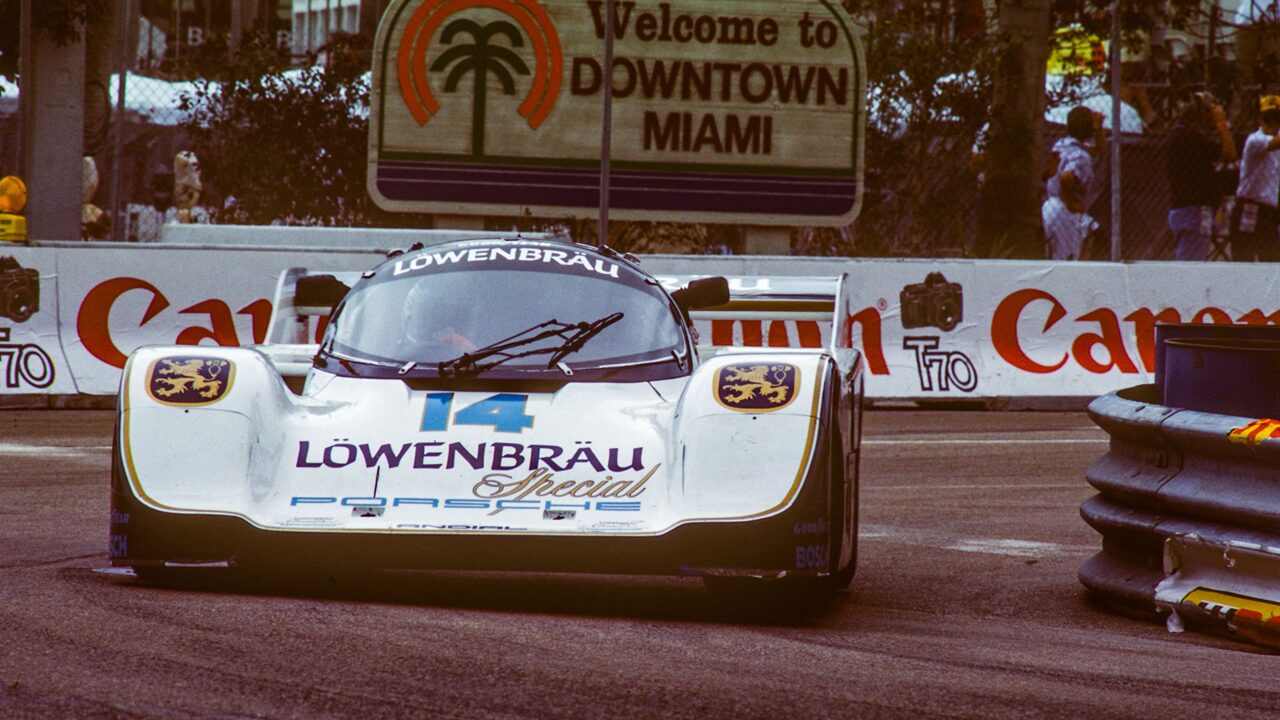
The Wild West of the 1980s
Raffauf’s stories from the GTP era are pure gold.
- Teams testing 935s on the Autobahn with dealer plates
- Dry ice being dumped into intercoolers during qualifying
- Cars producing so much downforce they needed 7,000+ lb rear springs
- Manufacturers building different engines for IMSA vs. WEC
- Drivers coasting for entire sectors at Le Mans to save fuel under Group C rules
It was a time of innovation, excess, and ingenuity — and Raffauf was there for all of it.
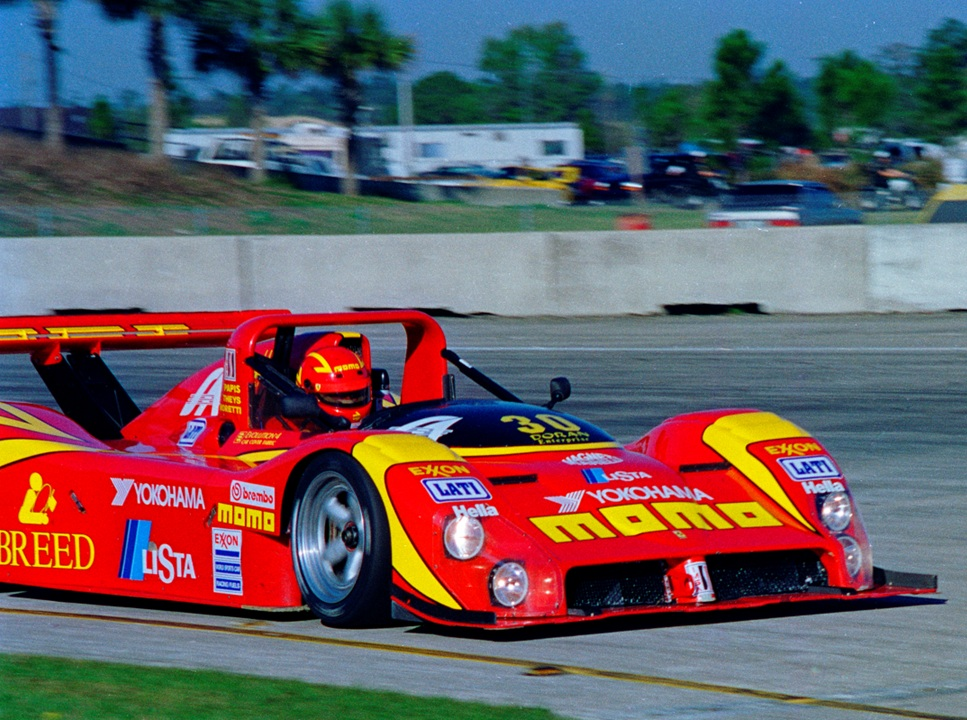
The 1990s: Reinvention, World Sports Cars, and the Rise of ALMS
By the early ’90s, costs were spiraling and tobacco sponsorship was ending. IMSA needed a reset.
Enter the World Sports Car (WSC) formula — open‑cockpit, simpler, cheaper, and designed to bring privateers back into the fold. Ferrari’s 333 SP became the crown jewel of the era, a car Raffauf still calls one of the greatest sports cars ever built. This era also set the stage for:
- Don Panoz’s creation of the American Le Mans Series (ALMS)
- The split between ALMS and Grand‑Am
- The eventual reunification under the modern IMSA WeatherTech Championship
Raffauf explains the politics, the technical battles, and the philosophical divide between the two series with clarity only an insider could provide.
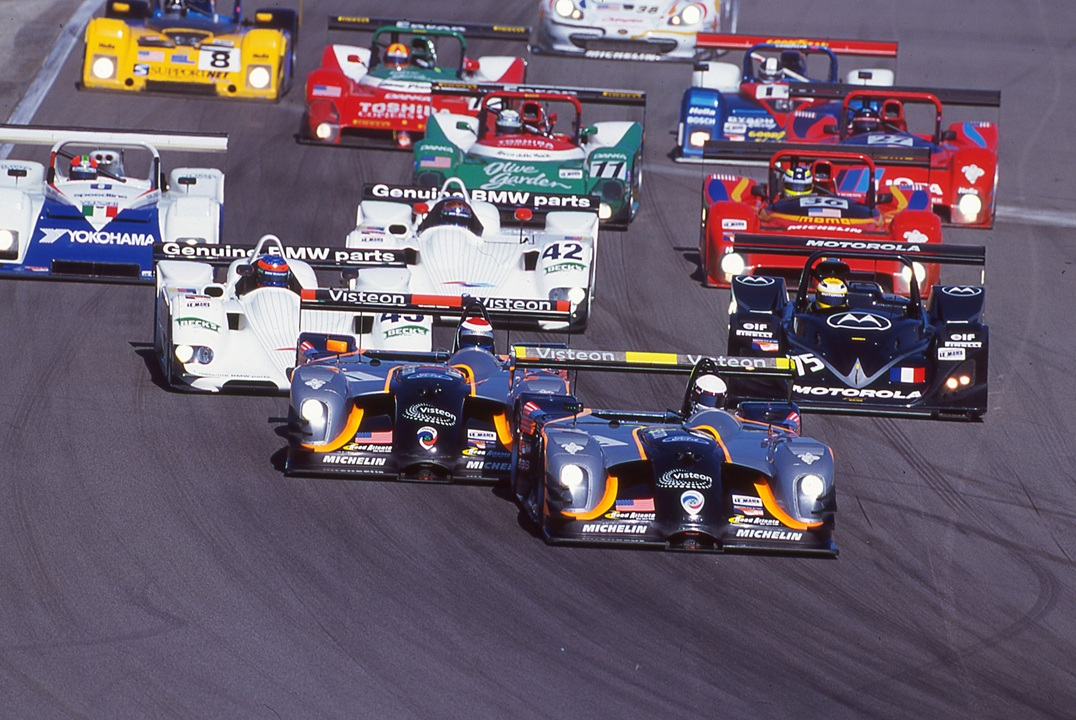
BOP, Hypercar vs. LMDh, and the Future of Convergence
One of the most illuminating parts of the conversation was Raffauf’s explanation of Balance of Performance (BOP) — a topic that fans love to hate. He breaks it down simply:
- BOP is not meant to dictate results.
- It’s designed to keep unlike cars within 0.2% of each other.
- Teams still win or lose based on execution, pit stops, and strategy.
He also makes a bold prediction: “The future belongs to LMDh. Hypercar is too expensive, too proprietary, and too complex for long‑term sustainability.” Manufacturers like Ford, McLaren, and Genesis agree — all have chosen LMDh.
Le Mans as an Event — Not Just a Race
Raffauf has been going to Le Mans since the 1970s, and he’s watched it transform from a grueling endurance contest into a global cultural event. He compares it to The Indy 500, The Daytona 500, and Sebring’s legendary party atmosphere. But Le Mans stands alone in its scale, its history, and its ability to draw 180,000+ fans for a weekend. It’s not just a race — it’s a pilgrimage.
Raffauf closes with a challenge to the entire industry: “We need to decide what 2031 looks like.” The LMDh formula took four years to develop. If the next generation of prototypes is coming, the work must begin now.
The goals?
- Keep costs sustainable
- Maintain manufacturer interest
- Preserve the entertainment value
- Ensure safety and technological relevance
It’s a tall order — but if anyone understands how to navigate the future of endurance racing, it’s Mark Raffauf.
A Legend Who’s Still Writing the Story
As the conversation wrapped, Raffauf reflected on his career: “I get up every day and get to do what I want to do with the people I want to do it with. How cool is that?”
After five decades, he’s still shaping the sport — and still thinking about what comes next. For fans of IMSA, Le Mans, and endurance racing as a whole, his insights are invaluable. And his stories? They’re the connective tissue between eras, technologies, and generations of racers.
Become a member of the ACO USA!
 Once you become a Member you can follow all the action on the Facebook group ACOUSAMembersClub; and become part of the Legend with future Evening With A Legend meet ups.
This content has been brought to you in-part with support from...