

Automotive history isn’t just about machines — it’s about people, communities, innovation, and the stories that shaped the world we drive through today. In the inaugural episode of Automotive History Live, presented by the Studebaker National Museum and sponsored by the Society of Automotive Historians, archivist Andrew Beckman takes listeners on a journey through South Bend’s industrial legacy, the rise and fall of Studebaker, and the museum’s expanding mission to bring history out of the archives and into the public eye.



The Studebaker story begins long before the automobile. In the late 1840s, brothers Clement and Henry Studebaker arrived in South Bend, Indiana, opening a small blacksmith shop that earned just 25 cents on its first day. By the 1880s, the Studebaker Brothers Manufacturing Company had become the world’s largest producer of wagons and buggies — a testament to craftsmanship, persistence, and a keen sense of market evolution.
As the 20th century dawned, Studebaker pivoted toward the automobile, first with electrics in 1902 and later gasoline-powered cars. Their entry into the automotive world wasn’t the typical “inventor in a garage” story. Instead, Studebaker leveraged its national sales network, partnering with early automakers like Garford and EMF before taking full control and launching its own vehicles.
For decades, Studebaker was the beating heart of South Bend. At its peak in the 1950s, the company employed nearly 25,000 workers — a quarter of the city’s population. Generations of families built careers there, and the company’s civic contributions still echo through the region: hospitals, churches, parks, and neighborhoods all bear the Studebaker imprint.
Bio

Andrew Beckman has been with the Studebaker National Museum since 1999 and currently serves as Archivist. He previously worked at the Sheboygan County Historical Society in Sheboygan, Wisconsin, and the Wade House State Historic Site in Greenbush, Wisconsin. Mr. Beckman hails from Manitowoc, Wisconsin, and holds a BA in History from the University of Wisconsin- Green Bay. In 2004, he completed the Modern Archives Institute at the National Archives and Records Administration in Washington, D.C. In 2009, he earned his mid-level certificate in Collections Preservation from the Campbell Center for Historic Preservation Studies in Mount Carroll, Illinois. Mr. Beckman is the author of The Studebaker National Museum: Over a Century on Wheels, and Studebaker’s Last Dance: The Avanti, and is a columnist for the Studebaker Drivers Club magazine, Turning Wheels.
Listen to the whole story!
In addition to his duties at the Studebaker National Museum, Mr. Beckman is a member and Past President of the Society of Automotive Historians. He also serves as a commentator for The Henry Ford Museum’s Motor Muster and Old Car Fest.
Synopsis
The inaugural episode of Automotive History Live! introduces a new show presented by the Studebaker National Museum and sponsored by the Society of Automotive Historians, with hosts joined by Studebaker archivist Andrew Beckman.
Beckman traces Studebaker’s origins from an 1840s South Bend blacksmith shop to the world’s largest wagon builder, its early electric (1902) and gasoline (1904) automobile efforts via partnerships, and its lasting civic and industrial impact on South Bend. He explains the museum’s evolution from Studebaker’s corporate collection to today’s 2005 facility, its archives access and research services, and notable holdings including presidential carriages and the screen-used 1951 “Fozzie Bear” Studebaker. The conversation highlights regional museum collaborations, details the boutique Concours d’Elegance at Copshaholm and its rotating classes, and previews the Automotive History Live conference programming and preservation mission.
Transcript
Crew Chief Brad: [00:00:00] Welcome to Automotive History Live, where the stories drive us. From the grand lawns of Concours to the icons that shape the road ahead, we celebrate the machines, the makers, and the moments that define automotive history.
Crew Chief Eric: For more than a century, the automobile has been shaping our culture, our communities, and the way we tell our stories. And now, one of the nation’s most important custodians of that history is stepping into a brand new spotlight. And today we’re thrilled to introduce Automotive History Live, a new show presented by the Studebaker National Museum, and proudly sponsored by the Society of Automotive Historians.
This series brings scholarship, the archives, and the living legacy of the automobile out of the stacks and onto the airwaves, where enthusiasts, researchers, and the curious minds can experience history in motion.
William Ross: And to help us kick off this inaugural episode, we’re joined by someone who knows the museum’s collection, [00:01:00] its stories, and its mission better than anyone, Andrew Beckman, archivist at the Studebaker National Museum.
Andrew has spent years preserving the documents, designs, photographs, and artifacts that define not just Studebaker’s legacy, but America’s automotive evolution as a whole. We’ll talk about the museum’s role as a guardian of transportation history, the annual concourse at Copseholm, one of the Midwest’s most elegant celebrations of automotive heritage, and the museum’s newest endeavor, Automotive History Live, a conference dedicated to research, preservation, and storytelling.
Crew Chief Eric: That’s right. And joining me tonight is returning co-host William Ross from the Exotic Car Marketplace, one of the many personalities on the Motoring Podcast Network. So welcome back to the studio, William.
William Ross: Hey, great to be here. This is gonna be a lot of fun. I’m excited.
Crew Chief Eric: Well, with that, let’s officially welcome Andy to- Break Fix?
Wait, Automotive History Live.
Andrew Beckman: Well, thanks for having me, guys.
Crew Chief Eric: Well, Andy, as a fan of the show, you know most Break Fix episodes we take a deep dive into the personal [00:02:00] superhero origin story of our guest, but this is a special episode. We’re gonna talk about the museum, the concourse, and the conference. So let’s begin at the beginning and talk about Studebaker and its link to South Bend, Indiana.
Andrew Beckman: Well, you’ve got to go back quite a ways for that initial linkage. In fact, you go back to the late 1840s when Clement and Henry Studebaker made their way to the South Bend of the St. Joseph River in a town coincidentally named South Bend, where their sister Sally had moved a couple years earlier with her husband.
And the brothers were trained blacksmiths and wagon makers. They opened up a, uh, small blacksmith shop at the corner of Michigan and Jefferson Streets in downtown South Bend, Indiana. When I say downtown South Bend, Indiana, it’s probably, you know, smaller than a Walmart parking lot was at the time. But, uh, they opened up a, a blacksmith shop, and their first day in business they shod one horse for a whopping total of 25 cents daily receipts, and their first year in business they built a grand total of three wagons.
But eventually, uh, the rest of their brothers [00:03:00] joined the firm, and by the 1880s the Studebaker Brothers Manufacturing Company is the world’s largest builder of wagons and buggies, headquartered still not far from that original blacksmith shop in downtown South Bend, Indiana.
Crew Chief Eric: After many, many years in that business, they turn to the automobile.
Why?
Andrew Beckman: Certainly they were solid businessmen. You don’t get to be the world’s biggest and best without keeping an eye on the market and, you know, learning the whims of your consumers, but also keeping an eye on the industry as a whole. And by the turn of the 20th century, the second generation of Studebakers are starting to take control of the company, and they are taking a more active interest in, in the automobile.
Studebaker actually entered the market with a line of electric automobiles in 1902 before entering the gasoline market in 1904, and the company’s entry into automobiles wasn’t the traditional one you hear about, you know, Henry Ford making a gasoline-powered car in his garage and realizing he has to pound out the doorframe to get it out the door, or, you know, like the Hames brothers down in Kokomo, Indiana, you know, a similar path with probably different architectural constraints to [00:04:00] get theirs out the door.
What the Studebakers did was essentially they marketed automobiles produced by the upstart companies, as Studebaker had the sales network, they had the name recognition, they had a lot to bring to the table. They just didn’t really have a ready-made product. So they partnered initially with the Garford Company of Elyria, Ohio, and later with the Everett-Metzger-Flanders Company of Detroit, Michigan.
And when Studebaker was satisfied that the automobile was here to stay, they, uh, bought a controlling share of EMF, and boom, Studebaker was in the automobile business. Although they kept building their horse-drawn equipment as well up until 1920. If you can imagine, you know, Eric and William, you’re walking into a Studebaker showroom, say around 1910, you could have your choice of an electric automobile, a gasoline-powered car, or if you were kind of an old-fashioned fellow who still loved your horse, you could buy a full line of carriages or wagons or buggies to whatever you felt would suit your needs.
Crew Chief Eric: And Andy, you’ve graced us with stories about Studebaker’s past at many symposium and conferences in the past. A lot of them interesting stories about Studebaker’s adventures into the world of motorsport. The [00:05:00] most recent one I heard you give, you were talking about sort of the tail end of the Studebaker line in the late ’60s with the Avanti right before they closed their doors officially after more than 70 years of being in business.
Studebaker left a mark on the town of South Bend. A lot of other companies did, too. There’s other famous companies in South Bend, Indiana. But now that you are the custodian of all this history, specifically Studebaker, and how do you see that lasting impression as you look back 100-plus years of Studebaker history?
What does it mean to the town of South Bend? What does it mean to Americana in general?
Andrew Beckman: They were in, in a big sense, the company town, if you will. At Studebaker’s peak during the 1950s, they employed almost 25,000 workers at their South Bend plants. At that time, that was probably quarter to a third of the area population in South Bend.
There was families, generations worked for Studebaker. That, in fact, they touted this father and son craftsmanship where fathers would teach their sons the trades that they had learned at Studebaker. [00:06:00] Even during wartime, they touted it with a little more of a patriotic bent, where the fathers are in the factory while the sons are going off to fight for America’s freedom.
Studebaker was very proud of this relationship, and they called themselves America’s Friendliest Factory, and for generations that’s all towns knew. I mean, there were people who literally, they got out of high school, went to work for Studebaker. That’s the only career they ever had, and suddenly in the early 1960s, that’s all coming to a grinding, screeching halt.
But you look around the community, here we are today, 63 years after the plant closed in South Bend, but there’s still Studebaker just layered throughout our community. Every baby born at Memorial Hospital in downtown South Bend owes a debt of gratitude to J.M. Studebaker’s wife, Mary, for providing the initial donation that started Memorial Hospital back in the day when it was Ep- Epworth Hospital.
I drive past no fewer than three different churches on my way home that were founded with Studebaker money, any number of parks. The Studebaker’s family was very active in, in civic affairs. The southern part of town, you have the Erskine Golf Club, Erskine Hills, named for Albert Erskine, [00:07:00] ’cause that was his land that he bought for his mansion and later was developed as part of the city.
Still with us today, it’s just the Studebaker layers are evident throughout our community, and certainly, you know, other companies in other, uh, Midwestern industrial cities as well can claim similar legacies, but it’s really evident and on the forefront here in South Bend.
Crew Chief Eric: And I’m glad you bring that up, because South Bend is sort of this mini Motown.
If you think about it, Studebaker spawned, maybe influenced other people to come there, but also maybe getting parts supplied to them. Think about companies like Bendix-
Andrew Beckman: Mm-hmm …
Crew Chief Eric: from South Bend, AM Generals from there, EVS, you know, Standard Parts. But also some of us in the European community or even in the JDM world might be familiar with South Bend clutches.
They come from- Mm-hmm … South Bend, Indiana. So you guys have this mini Motown there in South Bend, and it’s never really left, even though Studebaker is more of a historical presence.
Andrew Beckman: So many companies in this town that are still with us today- Got their start in part or, you know, kind of off the coattails of Studebaker.
Uh, there’s a sheet metal firm in town, General Sheet Metal, just north [00:08:00] of downtown, and they mentioned, yes, they got their start supplying Studebaker. There were so many tool and die shops in, peppered around the f- the Studebaker plant for little things like that, and even, uh, one of the body shops and the iron workshops who got tremendous work out of Studebaker.
William Ross: And you gotta think, ’cause y- you see this quite a bit, like with factories and a company of that size and scope, that because all your ancillary suppliers, other entities pop up. Saying before, like the clutches, you know, your stamp Mm-hmm Studebaker had been behind quite a few companies that got created and started there, I would assume, because you had all the resources, metal fab, stamping, everything like that.
I mean, everything had to have been, “Hey, I’m gonna start it there because I have everything I need.”
Andrew Beckman: Yeah, and, and, you know, s- that just develops organically. Of course, you know, with some of that stuff, too, it, it costs money to ship stuff somewhere. So if you can have someone close by, that’s great. And like you mentioned Bendix, I mean, Studebaker used Bendix brakes, and we have…
Actually, we have in our archives the actual vendor engineering files with all the drawings of every part that Studebaker used on [00:09:00] the parts. So you go to the Bendix file and, you know, there’s a full drawer showing every master cylinder and everything else. And you, you know, even other companies around South Bend that you may not have think of, I think I mentioned Edwards Iron Works.
They did a lot of the custom truck bodies and truck bed work, they did. You would see on a production record, it says, “Send over to Iron Works to add, to Edwards to add a nine-foot stake bed body.” And even, you know, South Bend Tent and Awning. That might seem like an odd crossover, but they actually made the-
bed covers, the canvas covers for the Studebaker’s, uh, optional caravan top that you could buy on the trucks. And so many things go into producing an automobile that, you know, it boggles the mind, but, you know, they had to get it from somewhere. And, you know, so many companies just sprang up around the plant as a result of that.
And even after Studebaker closed, some of their plants then were picked up by other companies. Like, their foundry was picked up by Cummins and operated until the early 1970s. Their stamping plant, actually, was under the auspices, I believe it was Allied Stamping towards the end, but they were still using the same old Studebaker presses but stamping out fenders for F-Body, [00:10:00] or I’m sorry, the, uh, Mustangs and, uh, other Ford, uh, Ford Fairmont rear fenders they were cranking out over there.
And the plant only closed because their parent company had financial problems and the Big Three got a little nervous and started pulling all the materials out of there. Now they might still be pounding things out today. But the Studebaker workers, some, especially in the design department I heard, were really sought after by the Big Three, as they had experienced clay modelers.
They had people who really knew what they were doing. In part, Studebaker being a much smaller firm, people were called on to do a lot more, and this experience, uh, proved valuable. We were up at EyesOn Design show, this was probably about 20 years ago, going through the GM Tech Center Design department, and they were going like, “Well, where are you guys from?”
“Oh, we’re from the Studebaker Museum.” He said, “Oh, yeah, we have a guy in our shop here who’s actually…” You know, he was in his 80s then, but he would come in a couple days a, a week and do some fine-tuning on the clay models that they were working on up there. It just absolutely amazed me that good for them.
Glad the legacy’s living on.
Crew Chief Eric: Andy, you and I could probably geek out on Studebaker history and South Bend all night, but I also don’t wanna steal from your [00:11:00] upcoming symposia presentations. So let’s switch gears and talk about the- Sure … museum, right, the custodian of South Bend history. So William, w- what are you thinking?
William Ross: It’s always interesting in regards to a museum starting. There had to have been motivation, reason for it. Obviously, the good reason would because of the Studebaker history and the brand, but what was the exact motivation in regards to why was this museum all of a sudden started, created? And who was the person to actually say, “Hey, we need to have a museum”?
Andrew Beckman: Well, it’s kind of a roundabout way to get there, but Studebaker started its corporate collection back in the late teens, 1918. They had renovated their administration building. They had a few vehicles which the company had collected, but they actually formalized it into an actual museum around that time.
When the company closed, they gave their vehicle collection and the company archives to the city of South Bend, Indiana, and the agreement was, and we have a copy of the statute that governed that gift from Studebaker Corporation to city of South Bend, Indiana, that the collection must be displayed in perpetuity [00:12:00] and it must be in a suitable home.
That was the legalese they put in there. So the city received this gift of 37 vehicles and the company archives. Well, the company archives was, like, three semi-trailers full of stuff. The city had no way to do anything with that at that time Syracuse University was establishing a, uh, industrial history collection, so they said, “Great.”
Off it went to Syracuse, and that was 1966 or so. The collection was housed and displayed in the former Studebaker administration building for a while, but then, uh, the city was having a little tough time getting traction to get something together for that. I mean, the wounds of Studebaker closing were still pretty fresh in the early 1970s.
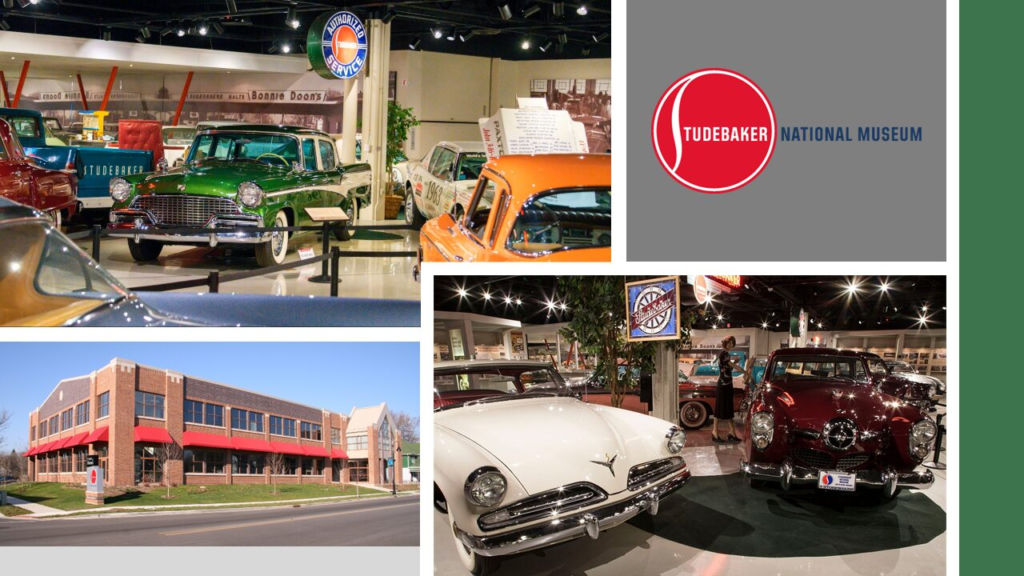
Eventually a n- a home was found in the new Century Center, convention center in downtown South Bend. They quickly outgrew that. They ended up in a former Studebaker dealership building in South Bend. But eventually we moved into our new home, current site of the Concord Elegance at Copco Home, as well as the Automotive History Live, History Forum in our West Washington Historic District in just west of downtown South Bend.
We are, uh, in brand-new facility, opened in [00:13:00] 2005. Just celebrated our 20th anniversary of that home, and, uh, great partnership with our neighbors at the Northern Indiana Historical Society, namesake of Copco Home, which our concourse named after, the Concord El- Elegance at Copco Home. One of the top house museums in the company courtesy of the Oliver family.
I don’t know if you guys have an agricultural background at all, but Oliver chilled plows were, you know, the finest plows in all the land, and they were made right across the street from Studebaker, and they had a lovely mansion and a lovely home, and now it’s a great museum.
William Ross: You’ve mentioned documents, archive that it went to Syracuse.
Now obviously it’s back in South Bend. How is that, I- I guess you say for a visitor coming in, is there a way for them to peruse it or kinda look up stuff, or is it just something on display? I mean, ’cause obviously there was quite a bit that went to Syracuse and obviously came back.
Andrew Beckman: Well, it’s kind of a crazy story how that stuff ended up back in South Bend.
Turned out one of our trustees had written a letter to Syracuse saying, “Hey, I know these three things are out there in these boxes. We would love to have them back,” ’cause then the, uh, Discovery Hall Museum and [00:14:00] the convention center was just opening. And someone at Syracuse wrote back and said, “Well, you want everything back?”
And then the three semis came back- There you go. … from Syracuse, and the, uh, company archives went through a couple of different homes, and now we have a dedicated archive center. But we are open to researchers. People reach out to me all the time actually looking for various related parts of Studebaker history, from some people looking for some information on perhaps a family member who worked there.
Unfortunately, we do not have employee records, but sometimes you can find a note in the company, uh, employee magazine, and we’ve had some luck with that. These two guys came into the archives one day, and they were- quite clearly identical twins. And he said, “Yeah, we were told that when we were born, our picture appeared in the company magazine.”
It’s like, “Okay, well this was pretty easy. When were you born?” And they’re, and I think he said, “Well, we’re September, 1943.” Okay, we got out the 1943, 1944 issues, and 15 minutes later, yep, there was a picture of these two guys on their dad’s, uh, knee published in the Studebaker Spotlight magazine. And, uh, they were th- and it was such, and that’s-
William Ross: Oh, that’s cool.
Andrew Beckman: Yeah, that was s- such a neat thing. It’s like, “Oh my [00:15:00] God, we didn’t know this was a thing.” But we do a big business actually supplying, uh, technical drawings, engineering drawings to people reproducing Studebaker parts. In fact, weather strips of all things. Guys have been reproducing these things for years.
Well, they’re finding their tooling’s getting worn out, and some of it was just reverse engineered from a new old stock part in the first place back in the early ’70s. Well, now they’re having to change suppliers. Well, they want, suppliers want new tooling. They call us and say, “Hey, can you get me this for a, a Novanti rear door weather strip, this part number?”
It’s like, “Sure.” Send it off to them and they’re happy. We get some cash in the process here. And, uh, yeah, we’re happy to help people however we can. They can check out the museum website. I have an archive section on there. We have an online photo library through Photo Shelter You just hunt for Studebaker archives at Photo Shelter, we’re on there as well, and, uh, so many ways that, uh, you can get ahold of us.
William Ross: ‘Cause you hear quite a bit on, I would say, extinct car companies or even current ones, they were not very good in regards to documenting history and holding onto it. Now, you hear us saying trying to research something. Yeah. I mean, who was behind [00:16:00] that in the beginning? Did they, like, have it in their head, “Hey, we need to preserve all this because of history”?
I mean, what was the motivation or was it just, hey, they were very, very diligent in regards to keeping everything?
Andrew Beckman: They kept a lot of important things, and then it, it, it’s … I’m continually amazed what we have, and then I’m also, you know, banging my head against the wall saying, why did they get rid of that in the process?
But case in point is the horse-drawn era technical drawings. We know they were there during World War II. A Studebaker employee told a story of s- a farmer wrote to the company, like, right after he started in, like, the early ’40s, and says, “Hey, I have a Studebaker wagon. I broke my wheel hub. Is there any way I can get a new one?”
So he found out all the horse-drawn equipment drawings were in the top floor of one of the buildings in one part of the property. So he said he went over there, hunted, he found the drawing for the wheel hub, he took it to the guys in the wood shop, and they’re like, “Can you make this?” “Yeah, we can make that.”
So they made him a new hub, and he says, “I boxed it up, sent it off to the guy, didn’t even send him a bill.” He says, “I always wondered what he thought when he opened the box and saw a brand-new hub freshly made for his Studebaker [00:17:00] wagon.”
William Ross: Well, that’s cool.
Andrew Beckman: That stuff didn’t survive past the 1950s. So that was tossed at some time when it was determined, you know, what would we ever need, you know?
William Ross: Yeah.
Andrew Beckman: Are we gonna wait for another guy who needs a wheel hub for a Studebaker farm wagon? The engineering department’s files were destroyed after they closed the South Bend plant in World War II. The head of the engineering department described that as, you know, the most distasteful task he e- ever had to undertake, as they were literally just incinerating engineering files.
He kept a handful of things, and that was all. So every test, every experimental vehicle, everything behind the scenes that was done was tossed and destroyed, presumably from a liability standpoint. But by the same token, this was a couple years ago, someone wrote in s- you know, wrote an email saying, “Hey, I have a 1908 Packard.
Is there any chance you have the drawings for the tool bag?” You know, the little canvas tool bag that goes in with the spare parts and everything. And he sent me the part numbers, and sure enough, we had it. You know, this little drawing saying, you know, “Use this material,” you know, something pound grade canvas with this stitching here, [00:18:00] use this cotton thread.
And it’s like, goodness, you know? That stuff’s still there, and we are far better off as Studebaker owners and Packard owners for what’s still there than a- any number of companies I could name where that stuff just got tossed wholesale.
William Ross: Well, you know what’s cool with that, too, is, you know, with the museum itself, you can kind of go through almost the whole history, starting with the horse-drawn carriages and the buggies.
Mm-hmm. And then you’re going into the teens of the cars and stuff like that, and how they just progressed. It’s always interesting to me to see how, like, the jumps happened. You know, there’s always those, like, increments- Yeah … where it’s like a 10 year or five, 10 years, and you’re like, “Wow, they took a big leap here.”
I think it’s really cool to see, and you could walk that, do this whole thing, do the museum, the show field, everything. The walking tour and the architectural tour, too. I mean, you can take it all in. South Bend’s a really cool town in regards to that, you know, and the style they had there. They’re gorgeous houses.
Andrew Beckman: Well, uh, kind of on that line, uh, there’s a Frank Lloyd Wright house just down, uh, about three houses down from the museum. It’s an Airbnb. People are coming in for the concour. I, I don’t think anyone’s booked it yet, but you could stay at a Frank Lloyd Wright house, and how perfect would [00:19:00] that would be for a celebration of, uh, design and, uh, innovation?
William Ross: Yeah, I was just at a show over the weekend. Incredible selection of cars, ’cause it was the, uh, Classic Car America… You know, it’s got a long name. But anyways, they had- Yeah … a bunch of Packards there to s- I mean, it was just incredible seeing what those cars were and the detail. You know, back then, no CAD, no computers.
Nope. Everything’s hand-drawn on a board, your slide ru- everything like that, and just, it’s just impressive. You know, being able to access that stuff’s just incredible. I mean, that’s just awesome to see.
Andrew Beckman: Yeah. As Studebaker owners and Packard owners too, we have the Packard materials because Studebaker and Packard merged in the early ’50s.
All that stuff came down from Detroit, you know, the surviving Packard technical materials. A lot of it just kind of sat around. I don’t think anyone really worried about it too much, and yeah, still there.
Crew Chief Eric: So I’m glad you bring that up. And then you hear stories about famous people that have walked the halls of Studebaker/Packard, you know, when they were merged- Mm-hmm
and things like that. There is a distinctly separate Packard Museum from the Studebaker Museum. Why are [00:20:00] they separated, or is there reciprocity between the two of you?
Andrew Beckman: There’s actually three Packard museums, depending how you wanna define your terms. So there’s the Packard Proving Ground, kind of in northwestern Metro Detroit area.
You know, great folks up there. They occupy the former Packard test facility up there and with a little vehicle collection. They have some Packard archives as well. Fine folks up there. There’s also a Packard Museum in Warren, Ohio.
William Ross: Mm-hmm.
Andrew Beckman: It’s the National Packard Museum. And then you have the Citizens Motor Car Company, America’s Packard Museum, in Dayton, Ohio.
So I can’t give you the rhyme or reasons for where it is, and certainly out of preservation efforts, uh, Warren was kind of the ancestral home of the Packard Motor Car Company before they got their start there, before moving on to Detroit. The one in Dayton, Ohio was a Packard dealership back in the day, and really started more as, I don’t wanna say private collection, more of a gentleman’s collection who sought to really make a true Packard fan, and that’s a wonderful s- We just had our auto museums conference for the National Association of Automobile Museums there this past April.
A couple years ago before that, we were actually [00:21:00] at the Henry Ford Museum in, in Dearborn, and we did a day up at the Packard Proving Grounds up there. You know, it’s great that all the preservation work is going on. You know, so many companies, defunct company fans wish they had, you know, just one collection, but to have a great resource like that.
And yeah, great people at each place. We work with them all the time and can’t say enough good things about them.
Crew Chief Eric: So does that mean that Studebaker National Museum holds at least the paper archives for Packard, or did that get shipped to Warren, Ohio?
Andrew Beckman: I haven’t gone too far down that rabbit hole, but some of the engineering drawings are up at Proving Grounds in Detroit area.
Some other materials are over in Warren, and the one in Dayton, they actually have, like, one of the big lintels that says Packard from above the Packard factory, one of the main entry doors. They have that down there, and it’s… You know, the stuff was going somewhere and, you know, people were in the right place at the right time.
And, you know, and again, I’m just thrilled that as much of it got preserved as it did.
Crew Chief Eric: But there’s only one Studebaker Museum, as far as you know.
Andrew Beckman: There is only one Studebaker Museum. [00:22:00] Yeah. There are a couple other private collections adopt the land, and actually there’s a, there’s a tremendous collection of Studebakers down in, uh, Osorno, Chile, in South America too.
Auto Museum Monchampulli in Osorno, Chile. But yeah, as far as, you know, we, we are kind of the home base, the central repository for all things Studebaker in North America.
Crew Chief Eric: So William started this off talking about what people would expect to see the first time they pay a visit to the Studebaker Museum.
From your perspective as the, the head archivist, what’s something in the collection that always sparks a conversation, gets people to go, “Well, I didn’t know that was a thing,” or a story that you really like telling even though you’ve told it, like, a thousand times?
Andrew Beckman: It, it’s so much of discovery. I wish I could say there’s kind of one typical story.
Probably the biggest thing we hear is people who walk in- And maybe only vaguely familiar with Studebaker from fathers or grandfathers, you know, it was the family car back in the day, or they heard the name somewhere, or they’re new to the community and they see Studebaker School and Studebaker Street, and we have a bakery in
[00:23:00] town, Studebakels. Seriously. We’ll maybe get, get some to-go there, uh, when you guys come to town in a few weeks here. But usually it’s like they had no idea that Studebaker was in the horse-drawn vehicle business, ’cause they walk in our… Most of our main floor is horse-drawn vehicles. And then once they find that, and then to realize the scope of Studebaker in its horse-drawn era.
We have the world’s largest collection of presidential carriages. We have the carriage Abraham Lincoln took to Ford’s Theatre the night of his assassination. We have a carriage the Marquis de Lafayette used on his tour of the United States from back in 1824. We have Studebaker carriages that belonged to Presidents Harrison and Presidents McKinley.
We have another carriage used by President Grant during his term in office. We have a pony cart used by Dwight Eisenhower on his, uh, farm near Gettysburg, Pennsylvania. And you look at it, you know, through the eyes of history, going back to the pre-Civil War era, there was Studebaker was there the entire time.
They were, supplied wagons for the Union Army during the, the Civil War. One of their divisions was making, uh, the heat shields for the, uh, Mercury spacecrafts during the Space Race of the 1960s. It’s just a [00:24:00] fantastic scope of history.
Crew Chief Eric: Yes, but do you have Fozzie Bear’s 1951 Bulletnose?
Andrew Beckman: Yes, we do.
William Ross: Ah, nice.
Andrew Beckman: Yes, we do. Yeah, we have the screen-used, one of the screen-used 1951 Studebaker Commanders from The Muppet Movie. In fact, we just completed the restoration of that vehicle to its screen-used appearance, and shout out to the guys at Razorfly Studios down in North Carolina who really shepherded that project along for us.
But, uh, yeah, you know, it’s nice to have a touchstone with something that’s still kind of actively in the pop culture, uh, you know, arena. And, uh, yeah, who doesn’t love Muppets? It’s, it… We, we debuted the car at our concour last year, and when we opened up the curtains, it’s like you could hear a smile come over the entire room.
It’s just so many good vibes that exude off that car.
Crew Chief Eric: I believe the quote is waka waka, but we’ll leave that where it is. So we talked about some other museums earlier, Andy. For those of us that are sort of in the know on how museums work, and this is even art galleries are like this and other types of museums, who’s in your [00:25:00] network?
Who do you partner with? Who do you exchange ideas with or meet with? Is it all Midwestern automotive museums, or do you work with places like the Revs Institute? Tell us about your extended network.
Andrew Beckman: In the nonprofit world, it’s all about the partnerships. It’s all around collaborations. We have a wonderful museum organization, as I mentioned, the National Association of Automobile Museums.
I know, Eric, you’re on the board of Society of Automotive Historians. I’m a past board member and past president. I’ve leaned on people from there. You know, made some great friends through that group. We’ll be leaning on those guys some more for the, uh, upcoming Automotive History Live Conference. We have a vehicle on loan to us from the Classic Car Club of America up in Gilmore.
Right now, we have a- our current exhibit, feature exhibit, is called Five Driven Women, and it focuses on the stories behind these five female-owned and driven classic era cars from the teens up through the 1930s. And the Singleton Collection out in Los Angeles, uh, loaned us, uh, I believe it was a 1911 Simplex for that exhibit, and- It’s amazing just, I don’t wanna say the unlikely partnerships, but just you may not think of a certain path to get [00:26:00] somewhere until you pick up the phone and give someone a call and say, “Hey, we’re doing this.
Would you be interested in talking some more about X, Y, Z?” By and large, you know, people usually pretty happy to at least talk about it, and y- you would get some great things that come out of that.
Crew Chief Eric: Do you do anything with ACD? And that’s Auburn Cord Duesenberg.
Andrew Beckman: Brandon Anderson, the director at ACD, used to work at the History Museum in South Bend.
In fact, he and I were neighbors in South Bend. We’ll be seeing Brandon, uh, for our, the Concor in a few weeks here. You know, great relationship with them. They’re good friends and good people and, uh, yeah, we work together all the time, you know? It’s … And we’re blessed in the upper Midwest here with kind of the convenience of geography.
We’re pretty easy to get to whether you, you know, you can fly into Chicago or Detroit or Indianapolis, but you can go see within the span of a couple days Indianapolis Motor Speedway Museum in Indianapolis. About 100 miles away is Auburn Cord Duesenberg Museum north of there in Auburn, Indiana. We’re about 100 miles away from Auburn over here in South Bend.
Then you can head up to Hickory Corners, take advantage of Classic Car Club of America [00:27:00] Museum, the Gilmore Museum, and all their ancillary brand museums they have up there, and there’s even some smaller collection there. And frankly, once you get to Kalamazoo and Gilmore, you’re not that far away from the Henry Ford Museum.
And in turn, once you’re in Hen- Dearborn, you can go up and see Packard Proving Yards. You can go see the Stahls Auto Collection. Now, we’ve literally had guys that’s like, they’ll be cruising through and say, “Oh, we’re heading up here next. Yeah, we took a week and we just flew in here and we’re, we’re making the trip.”
Overseas people as well, they, they’ll come and spend a, a ton of time and all the car guys heading their way. You know, sometimes people will bookend it on a trip making a loop from Hershey even around the time of the Hershey Car Show.
William Ross: Yeah, it’s incredible how many different museums are in that sphere or triangle, however you might wanna do it, from basically Detroit over and down to you guys, and it’s incredible.
And a lot of people aren’t aware of it. They like know a couple, then you say, “Well, you can go here, too.” And, and, you know, Jonathan Summers is, he’s driving whenever- Yeah … you’re participating. Same thing ’cause he was right off a couple, saying, “Well, you could go here, too.” And here, he’s like, “Wait, what?” He wasn’t aware of quite a few of these that he could also stop on the way.
It’s like Disneyland for the [00:28:00] automotive people, in essence. Just, just it’s a little bit more spread out, but I mean, you could touch and hit everything. It’s awesome.
Crew Chief Eric: Disneyland, it feels like a wine tour on a bachelorette party. It’s like, you know, or like- … what, what is it? The whiskey trail in Kentucky? Yeah.
Are you just gonna hit one distillery after the next?
Andrew Beckman: Yeah, we, it’s a hydrocarbon trail for us, I guess. A petroleum trail or something. There you go. But, and I just kind of hit the highlights there but, you know, when you’re in Auburn, you’ve got the Early Ford V8 Museum over there, the National Auto and Truck Museum.
Over in Elkhart, Indiana, the RV capital of the world, the RV Museum and Hall of Fame over there as well. I mean, it’s, you know, how far does your, your wheeled vehicle vice take you? And, you know, there, there’s something for everyone.
Crew Chief Eric: I stopped listening when you said Elkhart, ’cause I thought you were gonna say Road America.
So you lo- you lost me on the RV thing. Nah. But I get your point. It’s
Andrew Beckman: there, really. I swear.
William Ross: Yeah.
Crew Chief Eric: Well, let’s switch gears to one of William’s favorite topics, and that’s car shows and concours. He goes to more of them than anybody I know, so this is his area of expertise. Let’s talk about the [00:29:00] concours at Copse Home.
Andrew Beckman: Yeah.
William Ross: Tell us about the name, history behind that. A- as I said before, I should know how to pronounce it ’cause I am a majority, my bloodline is Scottish. But tell us about the name and how it came about, and what was the thought behind it. ‘Cause obviously there’s usually a mission behind when you do concours and what they wanna showcase.
Andrew Beckman: Yeah, this, this came about kind of on the heels of, there was the Concours on the Bluff up in St. Joseph, Michigan, and they’d been going for a while. St. Joe, if people aren’t familiar, it’s a town on Lake Michigan about,
Studebaker/SAH Promo: yeah,
Andrew Beckman: 30, 45 miles north of South Bend. Just a wonderful little kind of touristy town, but they have a wonderful art museum up there.
And they, in conjunction with that is actually former director of one of the other museums up there, started this little concours on the bluff, and they have this wonderful road out in front looking over Lake Michigan. Well, eventually they were getting some pushback from the city saying, “Yeah, we’d really not rather have you blocking off the bluff for, you know, an entire weekend at this time of year.”
And they decided to fold up the concours, but came to us and said, “We have the resources here. You know, your grounds around the museum and the Copse Home mansion would be [00:30:00] an ideal spot for a car show.” Well, we’d been thinking the same thing for some time, but we didn’t really know much about how do you get this going from off the ground.
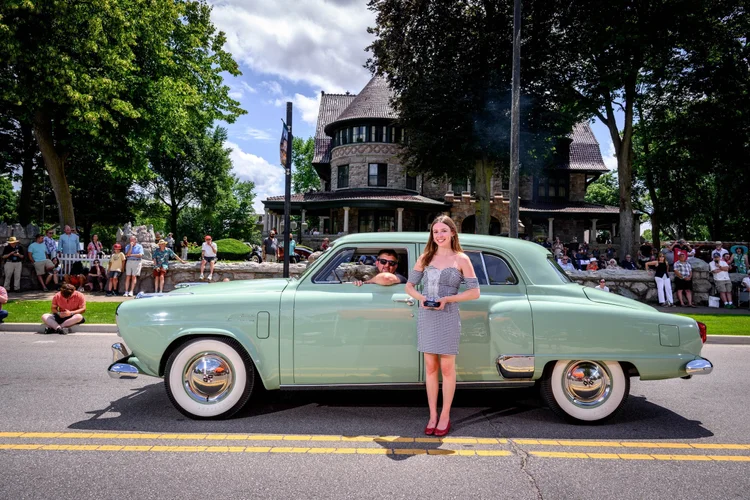
And well, we were able to come to a agreement there to, you know, share some of the info, and we kicked off the Concours d’Elegance at Copse Home in 2018. And Kopach Home is the ancestral home of the Oliver family. We mentioned the Oliver plow just a bit ago, and the Olivers built this palatial mansion, I think it’s 36 rooms or something like that, just west of downtown South Bend.
And they gave it to the Northern Indiana Historical Society back in the late ’80s, early ’90s. When I say they gave it, it wasn’t like the house was standing empty. It’s like they left everything in the house, handed the keys over, and said, “See you.” Mr. Oliver’s shaving brushes are still in the bathroom.
There’s all the silver, all, you know, the summer furniture was in the basement. This is one of the top house museums in the country, as far as you walk in there and you actually can believe people lived here. It’s not like it was turned into a restaurant or a hotel or a law office. It was always a residence until they handed the keys [00:31:00] over to the Northern Indiana Historical Society.
And they opened their adjoining museum in the early ’90s. We joined the campus in 2005, and that was one of the things we were looking to really expand, you know, kind of develop a signature program for the museum, signature automotive thing, and going to different shows like St. Johns and, uh, Glenmore Gathering near Canton, Ohio.
We’re like, “This is something we’d love to do.” The opportunity presented itself, and we took it off. As I said, 2018 was our first year. We’re blessed with great weather and a great show field, and we’ve just been trying to build off it ever since then.
William Ross: Yeah, it’s great to see. I mean, it, from starting in 2018 till now, I mean, it’s still a relatively young concourse.
Andrew Beckman: Yeah.
William Ross: But you wouldn’t know that looking at it, ’cause it, it see- you know, the history is already established, which is fantastic. ‘Cause that’s the one thing you see, some of these ones that just start up, is trying to get their identity. Who are we trying to draw? But you guys nailed it right out of the gate.
Andrew Beckman: Well, thank you. Appreciate that. You know, some of it was, the first year you don’t know what you don’t know yet. I always point to things you think will be pressure points, but [00:32:00] you never know until it actually comes to pass. And we, we had some tremendous advisors. Matt Short, who’s a friend of mine, really my mentor in this business.
He’s been at the Auburn Cord Duesenberg Museum for a lot of years. He was director at the Ariels Transportation Museum, director at the Packard Museum in Dayton. He cut his teeth at the Henry Ford Museum, uh, many moons ago. Actually, Matt and our fellow, uh, SH board member, Mary Seelhorst, actually shared an office up at Henry Ford Museum many years ago.
And he’s been our chief judge from day one. I mean, the man has forgotten more about classic automobiles and old cars than I will ever know, and he’s really helped us along there. Uh, David Schultz, who was, um, the head honcho behind the, uh, Glenmore Gathering in Canton, Ohio, just became a real good friend to the museum.
Tremendously respected that man and how he put together a show, and he freely shared his time and knowledge with us, saying, “Now, here’s what to do, here’s, you know, what we did,” you know. And he was never like, “You have to do this.” He was always, you know, very willing to share his experiences and, and eventually he graced us, uh, as a judge in our second year there, and he kept coming [00:33:00] back.
Uh, we lost David just a couple years ago, but his name lives on and, uh, we have the David Schultz Award for the most outstanding full classic as part of our concours in recognition of his contributions to our event. Our show field is such that we’re limited in our size by our physical footprint, and, uh, we started coining the term boutique concours.
That’s how we describe ourselves. You know, we only have 85 to 90 cars max. You know, Pebble’s got a couple hundred, probably pushing 300 in Amelia. And we, we realize that. We’re not trying to be that, but we’re just trying to be an, as David and I were talking, you know, trying to be the little jewel box of a concours where you’re gonna see something you’re not gonna see at the cruise-in at Culver’s on a Wednesday night or anything like that.
But really, really bring some unique automobiles to the show field and show the, you know, the visitor something they haven’t seen before
William Ross: Yeah, I think that’s critical. You don’t wanna go to one and you’re seeing everything over and over again, you know, week in, week out, going to different events and everything like that.
And having, you know, the unique and say the best of the best, and people wanna see that because, you know, one, it’s just eye candy, especially those cars from back then. They’re just so [00:34:00] elegant. They’re so gorgeous. I mean, the minute detail, I mean, everything. Just, like, the bolts, I mean, it’s just, it’s incredible.
It’s awesome to see that ’cause the other thing, too, is, you know, you can take your time looking at the vehicles. You know, you go to Amelia, Pebble, that kind of stuff, I don’t wanna say you gotta rush yourself, but you wanna have that fear of missing out type of situations. “I, I gotta see everything. You know, I gotta
Let’s hurry up. I gotta get the next car.” There, you can take your time and really soak it in. The owners are so generous and gracious in regards to, one, sharing their vehicles, but two, talking about them, you know, and giving you the history behind it. So I mean, it’s excellent.
Andrew Beckman: I can’t say enough good things either about our, our exhibitors over the years who ultimately they are what make the show.
You can have the nicest grounds and everything in the world, but if you don’t have owners willing to come out and, you know, certainly take time out of their busy schedules and a fair amount of personal expense to come out and show their cars, you- you’re nowhere. We’ve been absolutely, uh, overwhelmed with the response we’ve gotten since we’ve started doing this.
And sometimes it’ll be just a casual conversation with someone, you know, not even related to the show itself. It’s like, “Oh, you know, well, I’ve got a Lincoln [00:35:00] Continental Mark II as part of my collection. You know, I’d love to come out and show that sometime.” Great, we’d love to have you. You know, it, it’s things like that that come about and, you know, having the smaller, and also having the, the location with the museums are on site.
Both museums are open all day. Your show admission gets you into both facilities. You know, we got plenty of shade trees. The bathrooms and creature comforts are nearby, so it’s, uh, it’s worked pretty well for us, and we’re just hoping to really build on the event and, uh, and keep it going.
William Ross: How do you handle that delicate, “Nah, we don’t need your car”?
Andrew Beckman: Well, it’s-
William Ross: That’s delicate.
Andrew Beckman: Yeah, sh- it’s not a pleasant conversation to have. No. But usually we have limited space. We can only fit so many vehicles on the field, and, uh, short of stacking cars on end, you know, we’re not gonna pack much more on there. And, you know, at times, you know, I’ll, I’ve made more than one call to say, “Thank you so much for submitting your car.
We’d absolutely love to have you. We only have room for eight vehicles in this class, and we had 25 applicants, and I’m sorry. We hate to say no to really nice cars, and please consider applying next year [00:36:00] when, or the year after when we have classes that’ll fit for you.” And most people understand that.
Anyone who we do say no to, we always, in the letter letting them know that unfortunately we cannot accept them, we’ll put in a couple of passes for that year’s event, too. So if they wanna come out and check things out, that’s on us.
William Ross: People are attending the concours, how would you say, “Here’s my recommendation how to,” say, “approach it or attack it”?
Like, where would you say, “Hey, go here, then go here, then go here”? I mean, what would you recommend to someone that’s attending the concours for the first time?
Andrew Beckman: I’d recommend get there early. Gates open at 10:00. You can even buy your tickets ahead of time through the concours website. Get there right away in the morning.
That’s when things are still getting, uh, settled in. You c- that way you can take advantage of any of the programming we have during the day. If you don’t wanna look at cars for the entire time of the show, we’re also offering some, uh, historic walking tours of the neighboring historic, uh, West Washington Street District.
Studebaker/SAH Promo: Oh, cool.
Andrew Beckman: Yeah. We’ve got the programs going on. Second day of the Automotive History Live forum going on during the Concours are the ones that are mostly related to the brands on display. We’re featuring Pontiac and Auburn this year. You can come and, uh, check out our, our [00:37:00] old pal Tom Cotter, the Barn Find Hunter.
He’ll be on-hand as well, and he’ll be doing a book signing during the day. But there’s so many things. There are g- you know, if it’s a warm day, go into the museum. We’re air-conditioned and you can see our latest exhibits. Just allow yourself plenty of time. Don’t feel rushed. There’s plenty of stuff to do.
You just make the big circle around the mansion and you’re gonna take in everything and maybe even go back again and catch something you missed.
Crew Chief Eric: I come from the motor sports world. When I was first taken under the wing of some of the guys from the classic car space, they were like, “So let me teach you how this all works.”
And the one word that stuck was classes and classing, ’cause that’s something I knew from autocross and club racing and stuff like that, is I gotta put a car in its class to compete with other cars in its class. But the same is true of collector cars and car shows and Concours.
Andrew Beckman: Yeah.
Crew Chief Eric: So I’ve come to terms with that, but I’ve also come to realize that some Concours are very strict in their classing.
They run these classes every year. To your point, we only accept, you said eight cars in that class, and we got 25, we have to turn some [00:38:00] away. But I come to find out that the Concours at Copps Home changed the classes. There are some static classes, but you change them up every year. What does the classing look like this year compared to previous years?
Andrew Beckman: We generally have, you know, a couple featured marks. Just about every Concours does that something, and this year we’re featuring Auburns and Cords. Uh, again, talk about the Auburn Cord Duesenberg Museum. They’ll be on-hand featuring Duesenbergs this year, celebrating the Pontiac centennial. So we actually have a class for Pontiacs and a class for GTOs.
Everything’s shaping up pretty nicely. But then we also like to have some fun, too. We want, we love the diversity and well, like we’re doing a class of vintage motorcycles this year, and that, uh, we have some wonderful bikes, even going a Mead Aerothrust bike from the teens. You’ll see it when, well, you’ll see it when you guys come out here.
You know, up to a, we got a late ’60s Triumph, a couple Harleys, an Indian mixed in. You know, a little bit of everything. But, you know, ultimately we wanna show the variety of the automotive spectrum. We’re always gonna have classes of like a, you know, something from the full classic area. We like to have something from overseas.
We’re doing a [00:39:00] European economy class this year. So, you know, not necessarily bargain basement, but something cheaper than a Ferrari, a Lambo, or a Jaguar on the field. So we have, I think, everything from a Alfa Romeo Giulia little sedan from 1968 to a Volvo 1800 to, uh, an Amphicar to, uh, it’s a little bit of everything.
We want everyone to have a good time, first and foremost.
William Ross: That economy, the European thing is awesome. You know, obviously that’s gonna attract a younger demographic and attendee, but how much does that play a role and say, “Hey, you know, we wanna try and draw this crowd. Uh, what, what should we go after?”
Crew Chief Eric: Well, and William, you’re 100% right, because when he set that up, I wasn’t thinking Alfa Julias and Volvo P1800s.
I was thinking Volkswagen GTIs and Sciroccos- Yeah, me too … and stuff like that. And I’m like, “That’s a European economy car. Like, what are we talking about here?”
William Ross: That’s right up your alley, Eric.
Andrew Beckman: By the way, if, if anyone wants to send an email to me with a Mark 1 GTI, you’re still there, ’cause I owned one of those when I was in college, and, uh, yeah, that’s on the very short list of cars I really, really loved and wish I still had.
But yeah, you just gotta, you [00:40:00] know, invariably you’re implying if someone goes to the effort to buy the ticket, we’re thinking they must have some interest in automobiles. And, you know, with the diversity on the show field, you’re gonna hopefully find something you like, and hopefully that might lead you to something else that you either didn’t know anything about or maybe you didn’t fully appreciate until you see it sitting there.
And, uh, you know, you can take a little something home with you from something you learned that day.
Crew Chief Eric: And I think one other thing that’s unique to your concours is imitation is a sincere form of flattery, as we know. I think you guys pulled a page out of Amelia’s playbook. You do a fun class every year, and this year’s fun class is exceptionally entertaining.
Andrew Beckman: Well, we try, we try and do some fun things. I mean, it’s, it, you kind of have the loose categories. I mean, we’re the Studebaker Museum. We have to do a Studebaker class every year, and, uh, you know, certainly that’s always gonna be a part of it. We’re always gonna have- You know, something with the full classics.
We want to do something with the very early stuff. But yeah, something more contemporary, too. One of the most fun classes we’ve done in recent memories was the Disco Decade rides, where it was Luxo barges from the [00:41:00] 1970s by and large, and, uh, I grew up in the ’70s, and, you know, even in my mind’s eye I’m like, “Gosh, I didn’t realize how massive these things were,” until we put them on the show field.
Crew Chief Eric: That decreased the amount of cars you could have on the field at that point. What I meant to get at was the Concours de Lemons.
Andrew Beckman: Oh, yes, yes, yes. Well, the, as we mentioned, you know, we’re trying to expand our footprint of the, uh, Concours. I am a proud, uh, co-owner of a 24 Hours of Lemons racing team. Proud winners of the Index of Effluence at GingerIn back in 2024.
But, you know, just, uh, tremendous, we’ve had a wonderful time. And again, uh, we can either thank or blame our pal Mary Sealhurst for introducing me to Lemons. Yeah, we say, “Well, what about, you know, what about doing, like, a Concours de Lemons?” Reached out to Alan. Yeah, managed to put it together, so that’ll be part of Friday’s activities concurrent with the Automotive History Live showcase, and then, you know, that’ll segue right into Saturday.
So, hopefully people can come in and, uh, check out the whole weekend with us. Lot, lot of fun stuff going on.
Crew Chief Eric: Well, since you went there, let’s segue into your latest addition in [00:42:00] this Studebaker layer cake. As we’ve been building up here, it seems like one thing begets the next. This has actually been in the making for several years.
Let’s talk about the birth, finally, of Automotive History Live and what that’s all about.
Andrew Beckman: Well, yeah, and it, you know, as we’ve mentioned, the, we’re all kind of tied into the Society of Automotive Historians, and they’ve been doing their automotive history conferences, oh gosh, going back to when I first joined the organization back in the early 2000s.
And I was always fascinated by, obviously I’m in automotive history, I, I must have some enjoyment factor that goes into that. But you go and you, you hear some of the foremost automotive historians in the land talking about, you know, the subject they’ve sometimes spent their life work researching on. I remember at a very early one listening to Leroy Cole of the Cole Manu- Automobile Manufacturers in Indianapolis talking about his family’s company, and just it’s fascinating to hear kind of that first person account.
I think it was Bill Chapin talking about, uh, his family’s experience with American Motors, and another one, I think that one was in Dayton, Ohio. Of course, the [00:43:00] Arkutsinger Motorsports Symposium, and we were, you know, some talk about taking that on the road possibly. And then it’s like, well, you know, we’d love to do something with that in South Bend, possibly even as part of the Concours, and that really blossomed.
And eventually, I think after we bought Eric enough cocktails, he in a weak moment agreed- … to come and, uh, you know, help us jumpstart our little showcase here. So, uh, yeah, that’s what got us here. Just, uh, looking to add some content and having some willing and interested parties, uh, willing to make it happen.
For that, we very much appreciate it.
Crew Chief Eric: So Andy, what do you hope that listeners, whether they’re listening to it live stream there in the forum, or later as a podcast episode, what do you think they’re gonna get out of Automotive History Live that they can’t get anywhere else?
Andrew Beckman: Well, you’re gonna be hearing some of the nation’s, the top historians in the business talking about subjects they are passionate about.
And hopefully they come away, you know, take away a new take. Even if it’s a subject you’re very familiar with, take away something that you didn’t know before, maybe looking at it in slightly different fashion. I mean, delighted to have Lauren Goodman from the Revs Institute talking about radiator mascots and hood [00:44:00] ornaments as kind of more of an artistic bent on there.
We have a wonderful panel on, uh, America’s roadways. I think we actually call that one Mothers’ Roads. We’re celebrating the 100th anniversary of Route 66. The Lincoln Highway, America’s first coast-to-coast highway, runs about 100 yards from the Studebaker National Museum where it cuts through northern Indiana And of course, the Interstate Highway System, which, uh, I think all of us here will be spending a lot of time on in, in the next few weeks in our various travels.
But, uh, all those is kind of a, you know, a natural look at that, uh, moderated by retired curator of transportation from the Henry Ford Museum, Bob Casey. Bob is g- himself presenting on, uh, three musketeers of Chrysler who also were Studebaker engineers before they went on to really establish Chrysler as the engineering powerhouse it was back in the day.
Of course, Tom Powder, we- we’re working him hard. He’ll be talking Saturday and Friday, so you’ll wanna catch both shows for Tom talking about his coast-to-coast trip in a Model T. He took paralleling a lot of the Lincoln Highways route back pre-COVID. I think that was 2018 or so that Tom did that. Ruben Verdes, you know, the foremost [00:45:00] experts on Rolls-Royce, again, another SAH alum.
Automatic transmissions, who hasn’t used one of those? Bob Elton, another SAH-er talking about the history of GM’s groundbreaking Hydramatic automatic transmission. And, uh, yeah, then of course the Motor Podcasting Network with the, uh, Bianco Speciale. You know, can’t wait to hear what you guys have to say about that.
And, uh, you know, just a great, great time all around, and we’re, we’re really looking forward to that.
Crew Chief Eric: Do you have one that you’re most excited about in that list?
Andrew Beckman: Y- yes. Actually, I’m d- I’m fascinated to hear Bob’s take on the Hydramatic transmission, because I spend a lot of time working on my own Studebakers, and the one component that is just mystery and, you know, something I’ve never taken apart and never fully understood how they work, I assume it’s witchcraft, is automatic transmissions.
If I can come away with that with a better understanding of how they work, I mean, I can read the shop manual and I see the diagrams, but when you get to the swirling arrows going back and forth in the torque converter diagram, it kind of makes my eyes glaze over. But really looking forward to hear about that.
Crew Chief Eric: Well, you’ve never not surprised us when you’ve presented at the Motorsports Symposium in the past about Studebaker’s [00:46:00] involvement in motorsport, and we sort of tease you at the end of every year with yet another project for Studebaker Motorsport stories. But you’re not presenting this year, but if you were, what do you think you’d be talking about?
Andrew Beckman: Oh, gosh. I think the scheduling conflict is just a little much for me this year. We’re actually, we’re the same weekend as the, uh, Muscle Car and Corvette Nationals again. And, uh, and I, I did the, uh, the jet-setting, delivered the car, jet out to Watkins Glen and then back again. And unfortunately, I think we’re displaying two cars this year, so I’m not sure that’s gonna, that’s not gonna work that well.
But, uh, yeah, I’d love to get more into the, we talked about the Avanti racing program at the 24 Hours of Daytona back in the early ’80s, and actually one of our trustees has, can’t remember if it’s the regular car, maybe it was the backup car, but he has one of the racing Avanis from that that they’ve been trying to put back together.
Every time I ask him about it, he kind of gets this look on his eyes and shakes his head. But, uh, you know, they’re still working on that. Another Holman and Moody prepared, I think it was three Studebaker Larks in the early ’60s. And I think they did Sebring and- No, was it Bridgehampton? There’s a couple [00:47:00] other road races and endurance races they had in the early ’60s.
It’s like, what? Studebaker Larks in road racing s- and sure, there’s pictures on the track with them going around, you know, the usual sports car fare of the day. It just … And it’s kind of like when you see the, uh, Galaxies at, at Goodwood. You know, they’re flopping around the track with the Minis and the, and the Mark 2 Jaguars out there.
It’s kind of like that same, uh, automotive dissonance you see when, when you see them on the track at the same time. I’d love to go back and do a, a more in-depth look at the non-Studebaker factory IndyCars at Indianapolis Motor Speedway, the straight-8 powered cars. Literally, this was in the last two weeks, I was going through our photo index, and the entry said, “Race car,” and it was, and the date was around 1940.
And I asked our volunteer, you know, “Can you pull this out and scan these?” “Sure.” And I look at the picture, and sure enough, it’s definitely a race car. It’s kind of that late ’30s, early ’40s shape, but it was none that I’d ever seen before. And there’s a picture under the hood, and yeah, there’s a Studebaker straight-8 in there, and it shows it taking a checkered flag somewhere.
I have no idea where the, what this picture is or where this came from, but you know, there’s little things like that I’d love to dig into further. And, uh, yeah, look [00:48:00] forward to doing that again soon.
William Ross: Why is this more important than ever, you feel, in regards to preserving this and finding a way to share it with the world?
‘Cause you get a lot that, like, you know, people have it, they don’t share and that, which, which is great on your guys’ part. But I mean, tell us about that and your thoughts.
Andrew Beckman: Well, our primary sources are dwindling. The people who were there and remember and can testify to what actually happened are disappearing, you know, every day.
You know, really, I kind of see that as the, the Society of Automotive Historians’ role in that as kind, you know, the vanguard of history to preserve and safeguard, uh, what actually took place for the future generations. In the Studebaker realm, the youngest Studebaker employee is about 80. And we’re talking, uh, one of our life trustees.
He started working at Studebaker I think when he was 17 or 18 in the summer of 1963 putting in headliners. And now Ron is just about, yeah, it’d be just about 80. That story disappearing in 20 years, we’re just gonna have to rely on what has been collected and, you know, disseminated. There’s so much disinformation out there with, you [00:49:00] know, one person’s take on what happened with automotive history.
And even a simple thing like someone asking, well, you know, some basic question on the web on a Facebook message board, “I need something basic for my Studebaker,” and you look at the array of answers, it’s like, no, the guy needed a distributor cap. He doesn’t need a small block or an LS motor in it.
Crew Chief Eric: No, the answer is always LS, Andy.
That’s just the answer.
Andrew Beckman: It is always LS? Oh, okay. I told him put in a 2JZ, but anyway. I, I really didn’t. But- … uh, that’s the key. It’s understanding what happened and how to back it up, how to document it, and how important that is as we strive to tell people the truth as best we can approximate it, and accuracy as best as we can get it.
I look at that as that’s our job as automotive historians. Or frankly, just as, as historians.
William Ross: So you hit the Mega Millions.
Andrew Beckman: Mm-hmm.
William Ross: You’re kind-hearted, ’cause like Studebaker museums, you love. You provide the finances for it. Then what would you have… Okay, this is the best thing we can do, ’cause it’s, funds are unlimited, you know, depending how much you win.
What would your dream thing be for [00:50:00] the Studebaker Museum?
Andrew Beckman: At our museums conference, I made this joke to, uh, one of my colleagues one time. It’s like, you know, these, these conferences, you know, once we all agree that we don’t have enough time, space, money, and staff, we can get on to that. And it’s not like we, they were wasting our times anyway, but it’s really the space that every, not just automobile museum, any museum is dealing with.
So to answer the unlimited funds, storage facility and, uh, extra archival staff to help us digitize, make more accessible the holdings that we do have. That would be fantastic to be able to add a significant amount of square footage, and the ability to staff it as well.
William Ross: I like that.
Andrew Beckman: It’s just there’s so much there.
Our, our photo collection is over probably a quarter million images. We’ve got maybe a couple thousand of them on the Photo Shelter site, and even that might be being generous right now. And, you know, every other museum I know of it, you know, thank God RABS has been able to bring the resources to bear that they have.
That is a tremendous resource. But there’s so many other collections out there that are languishing in someone’s attic or someone’s basement. We found a Studebaker film from the ’30s that we [00:51:00] thought was lost forever, you know. And I get a call from a guy saying, “Hey, I just found this film in my attic, and my father was a projectionist at this thing.”
He’s like, “It’s called Wildflowers.” And I’m like, “Really?” This was an original 35 millimeter nitrate stock film that had somehow managed to survive in this guy’s attic. I don’t know for how long it had been up there, and that was an invention in its own right. Eventually we basically shepherded it over to the Library of Congress, their film and, and media division, as they had, you know, the wherewithal to properly store it.
They said, “Just get it to us. We’ll send you a digital copy for that.” But this was something no one had seen since 1931, thought it was lost forever and, and, you know, here we come up with a actual pristine copy of it still hanging around. But there’s stories like that, that let’s get this stuff and, uh, let’s preserve it as best we can and make it accessible for others to, others to use as a resource.
Crew Chief Eric: He always surprises me, William. I thought he was gonna say he was gonna go on a spending spree at Mecum and buy all the Studebaker- … automobilia that comes up at the auctions. No, that’s [00:52:00] really good. That’s really cool. So with that, Andy, we’ve reached the part of the episode where I like to invite our guests to share any shout-outs, thank yous, promotions, or anything else we haven’t covered thus far.
Andrew Beckman: First of all, thank you guys for taking time out of your busy schedules to make this happen here. It takes a village to make anything, you know, come together of this scale. And, uh, I’ve mentioned some of the people already, you know, thank you to, uh, Society of Automotive Historians, of course, the fine folks at Motor Podcasting Network who have been nothing but gracious putting this together.
Of course, our sponsors of the Concours, uh, the JBS Collection, and also Lavine Restorations down in Nappanee, Indiana. Couldn’t happen without them. Our, uh, Chief Judge Matt Short, our entire judging crew. The shout-out to David Schultz earlier. Our concours wouldn’t be what it is without, uh, David’s support and wisdom.
Bob Barr, Chris Lizotte, they’ve been with us every step of the way, and, uh, staff and volunteers at Studebaker National Museum. Folks can find the museum at studebakermuseum.org. Check us out on Facebook, Instagram, and YouTube. We’re on Twitter as well, and there’s probably one social media [00:53:00] platform, I’m not sure we’re on BlueSky yet, but, uh, I have a feeling we might be.
But check us out there. No, the MySpace page is dead. Sorry, folks, you can’t find us on there. Many, many great ways to please come down to see the concours and the Automotive History Live, the Lemons and everything, and, uh, we’re gonna have a rip-snorting good time. Hope you can be a part of it.
William Ross: Fantastic. Now, as we wrap up this inaugural episode of Automotive History Live, we want to thank our very special guest, Andrew Beckman, for taking us behind the scenes of the Studebaker National Museum, the Concours at Copse Home, and the brand-new Automotive History Live concert.
Crew Chief Eric: That’s right, William, and if today’s conversation sparked your curiosity, and we hope it did, you can explore even more of the museum’s work, collections, and events online. As Andy said, follow the Studebaker National Museum on social media to stay connected by way of Facebook for event updates, behind-the-scenes posts, and community stories, on Instagram for stunning visuals and archives from the collection, on YouTube for video features, lectures, and digital exhibits, and of course, their website for [00:54:00] hours, tickets, research access, and upcoming programs.
And with that, Andy, I can’t thank you enough for coming on. You’re a familiar voice here on the MPN thanks to all your previous presentations. We’ve been able to live stream and remaster those to the world, and we hope to have you back to talk about some of those things that you didn’t get to talk about this year, some of your own personal history with cars, and we look forward to the continued partnership with Automotive History Live, and we’ll be carrying the season throughout the rest of this year and the future with all the events we have planned together, so thank you, thank you.
Andrew Beckman: My pleasure. Appreciate it. And we’d like everyone to please stay tuned to the Motor Podcasting Network for more episodes throughout the season from the Automotive History Live Conference. I’m sure that I have a good time with it. Thanks, everyone.
Studebaker/SAH Promo: This episode is made possible by the Studebaker National Museum, the home of South Bend, Indiana’s automotive and industrial heritage. The [00:55:00] museum preserves and interprets the legacy of Studebaker through its world-class collection of vehicles, artifacts, and archival materials, including several nationally designated treasures.
As a center for history, design, and innovation, the museum inspires enthusiasts and the community alike through its exhibits, programming, and commitment to safeguarding the stories that shaped American transportation. To learn more or plan your visit, check out www.studebakermuseum.org. This episode is also brought to you by the Society of Automotive Historians.
They encourage research into any aspect of automotive history. The SAH actively supports the compilation and preservation of papers, organizational records, print ephemera, and images to safeguard as well as to broaden and deepen the understanding of motorized wheeled [00:56:00] land transportation through the modern age and into the future.
For more information about the SAH, visit www.autohistory.org.
Crew Chief Eric: I hope you enjoyed another awesome episode of Brake Fix Podcast, brought to you by Grand Touring Motorsports. If you’d like to be a guest on the show or get involved, be sure to follow us on all social media platforms at GrandTouringMotorsports, and if you’d like to learn more about the content of this episode, be sure to check out the follow-on article at GTMotorsports.org.
We remain a commercial-free and no annual fees organization through our sponsors, but also through the generous support of our fans, families, and friends through Patreon. For as little as $2.50 a month, you can get access to more behind-the-scenes action, additional Pit Stop minisodes, and other VIP goodies, as well as keeping our team of creators [00:57:00] fed on their strict diet of Fig Newtons, gummy bears, and Monster.
So consider signing up for Patreon today at www.patreon.com/gtmotorsports, and remember, without you, none of this would be possible.
Highlights
Skip ahead if you must… Here’s the highlights from this episode you might be most interested in and their corresponding time stamps.
- 00:00 Show Launch!
- 02:06 Studebaker Origins: From Wagons to Cars
- 05:34 South Bend Indiana Legacy
- 07:17 Supplier Ecosystem
- 11:02 Museum Founded (2005)
- 13:27 Archives Return & Preserving Records
- 19:47 Packard Connections
- 22:18 A Must See Collection
- 24:49 Museum Partnerships
- 28:48 Copshaholm Concours d’Elegance
- 40:20 Fun Classes and Lemons!
- 41:55 Automotive History Live Launch
- 48:01 Preserving Truthful History
- 49:44 Dream Museum Upgrades
- 52:01 Thanks and Wrap Up
Bonus Content
There's more to this story!
Be sure to check out the behind the scenes for this episode, filled with extras, bloopers, and other great moments not found in the final version. Become a Break/Fix VIP today by joining our Patreon.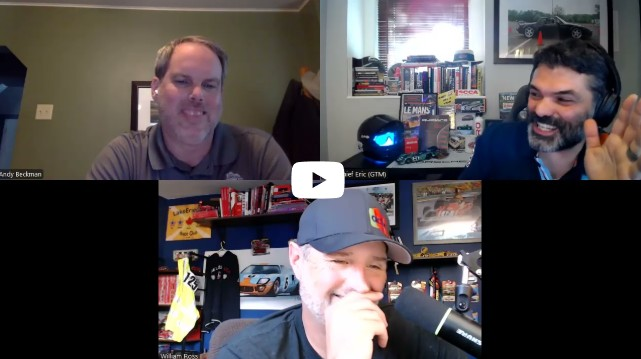
All of our BEHIND THE SCENES (BTS) Break/Fix episodes are raw and unedited, and expressly shared with the permission and consent of our guests.
Learn More
 If you enjoyed this Automotive History Live! Series episode, please go to Apple Podcasts and leave us a review. That would help us beat the algorithms and help spread the enthusiasm to others.
Subscribe to Break/Fix using your favorite Podcast App:
If you enjoyed this Automotive History Live! Series episode, please go to Apple Podcasts and leave us a review. That would help us beat the algorithms and help spread the enthusiasm to others.
Subscribe to Break/Fix using your favorite Podcast App:Consider becoming a Patreon VIP and get behind the scenes content and schwag from the Motoring Podcast Network
Do you like what you've seen, heard and read? - Don't forget, GTM is fueled by volunteers and remains a no-annual-fee organization, but we still need help to pay to keep the lights on... For as little as $2.50/month you can help us keep the momentum going so we can continue to record, write, edit and broadcast your favorite content. Support GTM today! or make a One Time Donation.
When Studebaker closed its doors in the 1960s, the company gifted its vehicle collection and archives to the City of South Bend. The archives — three semi-trailers’ worth — eventually found their way back home after a brief stay at Syracuse University. Today, the Studebaker National Museum houses not only the company’s automotive legacy but also one of the world’s most significant collections of presidential carriages, including:
- Abraham Lincoln’s carriage to Ford’s Theatre
- A carriage used by the Marquis de Lafayette
- Vehicles belonging to Presidents Harrison, McKinley, Grant, and Eisenhower
And yes — even Fozzie Bear’s 1951 Bulletnose Studebaker from The Muppet Movie lives there, fully restored to its screen-used glory.
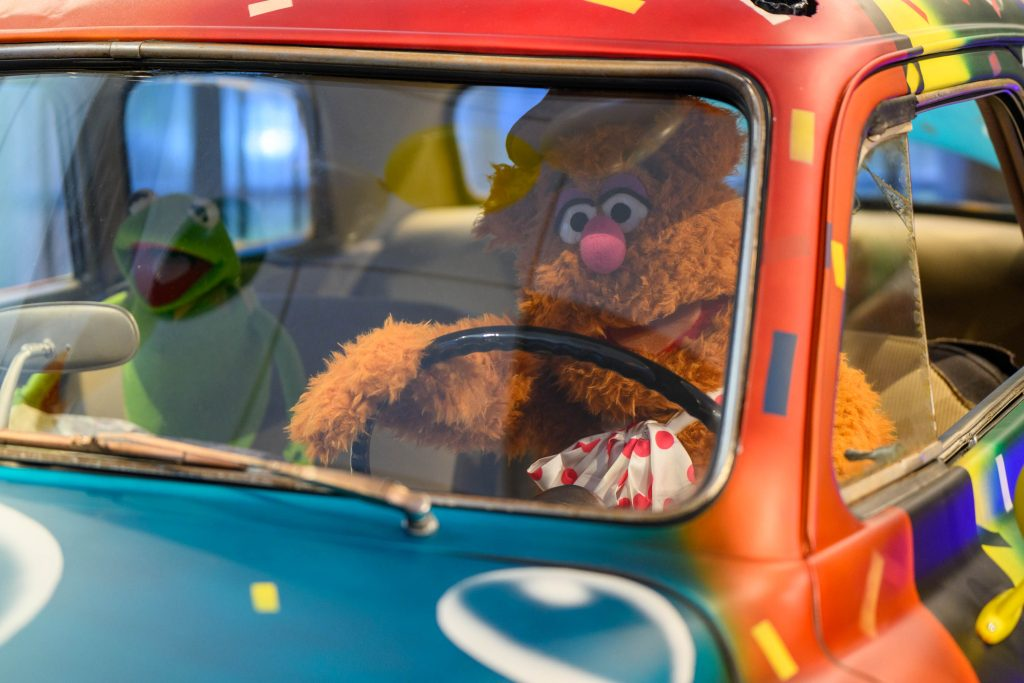
The museum’s archives support researchers, restorers, and enthusiasts worldwide. From technical drawings to rare photographs, the collection helps keep Studebaker and Packard vehicles on the road and in the public imagination.
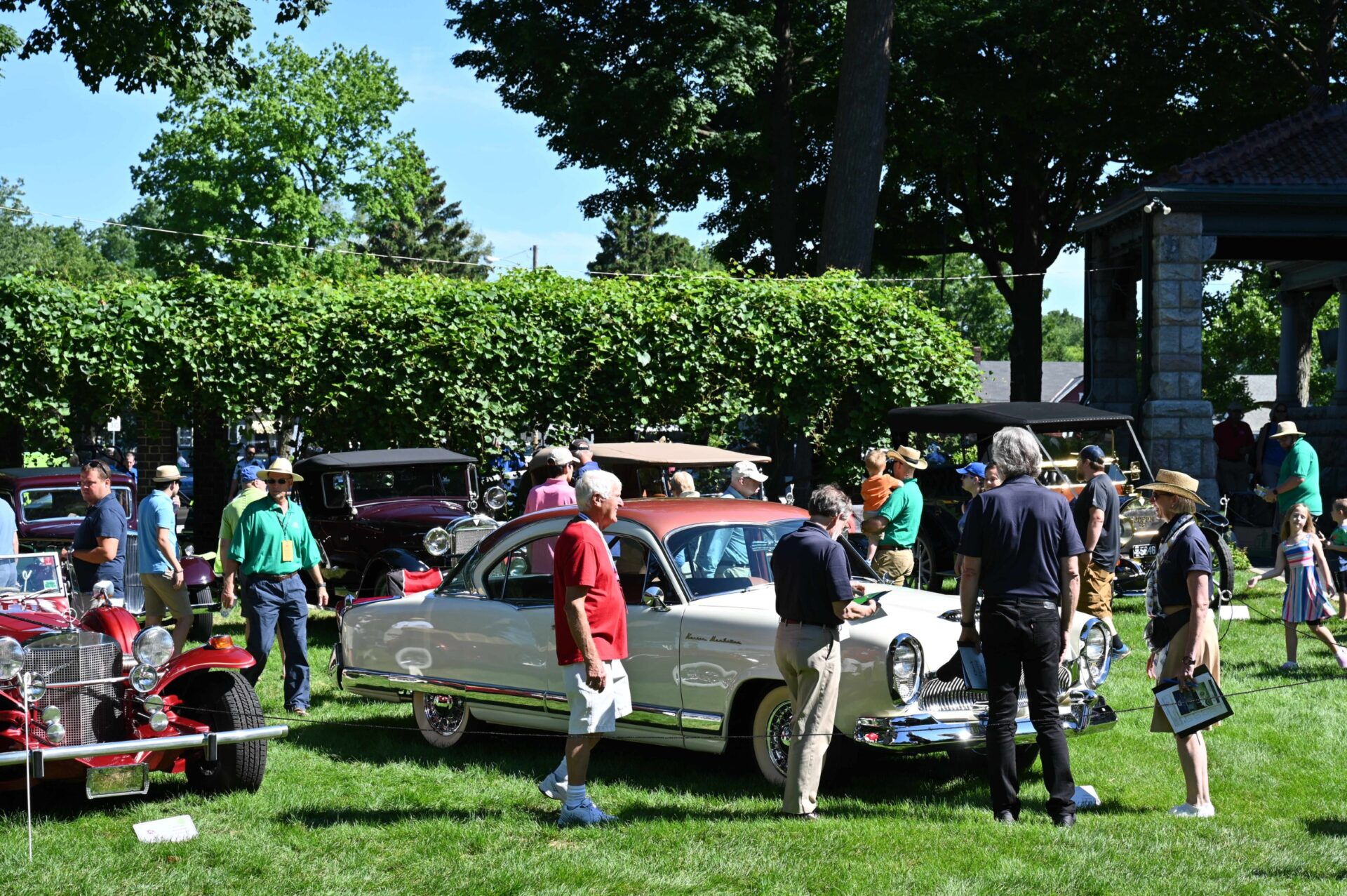
South Bend’s automotive influence extends far beyond Studebaker. Companies like Bendix, AM General, and countless machine shops and suppliers grew alongside the automaker, creating a “mini Motown” in northern Indiana. Even today, the region remains rich with automotive heritage — and the museum sits at the center of a network of world-class institutions including:
- Auburn Cord Duesenberg Museum
- Gilmore Car Museum
- The Henry Ford
- Packard Proving Grounds
- National Auto & Truck Museum
- RV/MH Hall of Fame
For enthusiasts, it’s a “hydrocarbon trail” of museums, events, and historic sites — a pilgrimage waiting to happen.
Concours d’Elegance at Copshaholm: A Boutique Showcase
In 2018, the museum launched the Concours d’Elegance at Copshaholm, held on the grounds of the historic Oliver Mansion. Designed as a “boutique concours,” the event features 85–90 carefully curated vehicles, emphasizing quality, rarity, and storytelling over sheer volume.
Each year brings new classes — from Auburns and Cords to European economy cars, vintage motorcycles, and even whimsical categories inspired by the Concours d’Lemons. Exhibitors travel from across the country, and attendees enjoy access to both the museum and the mansion throughout the day. The concours has quickly become a Midwest favorite, thanks to its intimate scale, exceptional vehicles, and the passion of its organizers and volunteers.
The newest addition to the museum’s programming is Automotive History Live, a multi-day conference bringing together historians, authors, archivists, and enthusiasts. The event features presentations on topics ranging from radiator mascots to the evolution of America’s roadways, the centennial of Route 66, and the engineering breakthroughs behind the Hydramatic transmission.
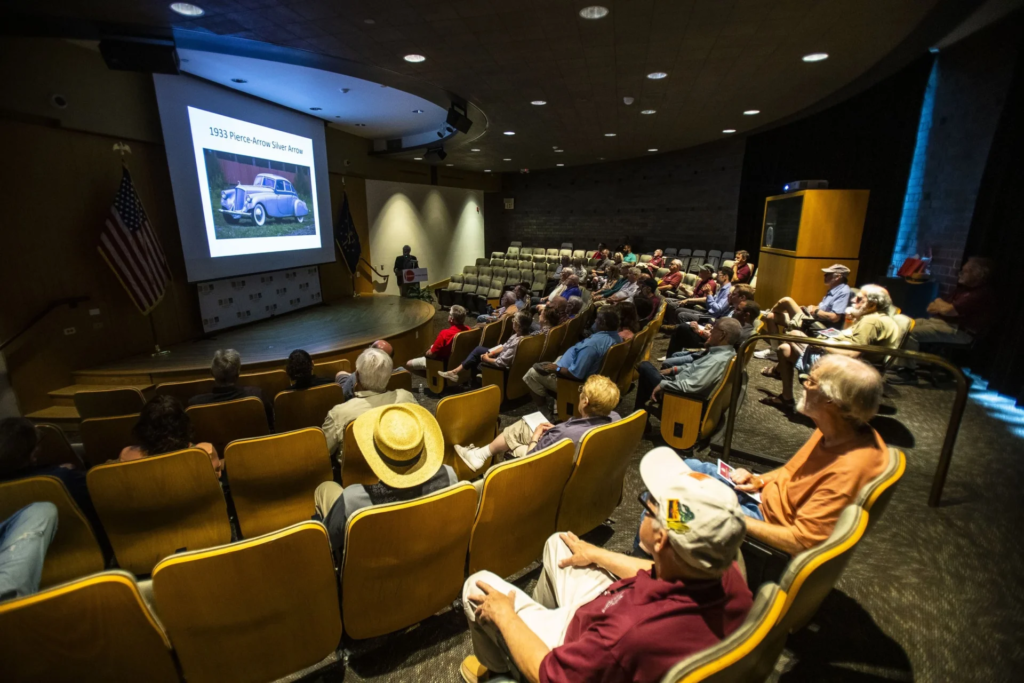
Speakers include experts from the Revs Institute, the Henry Ford Museum, the Society of Automotive Historians, and more — offering attendees a rare opportunity to learn directly from the people preserving and interpreting automotive history.
As Beckman notes, the youngest Studebaker employees are now around 80 years old. Firsthand accounts are fading, and the responsibility to preserve accurate history grows more urgent each year. Whether it’s a rediscovered 1930s Studebaker film found in an attic or a long-lost engineering drawing that helps a restorer recreate a part, every artifact tells a story worth saving.
The museum’s mission — and the mission of Automotive History Live — is to ensure those stories endure.
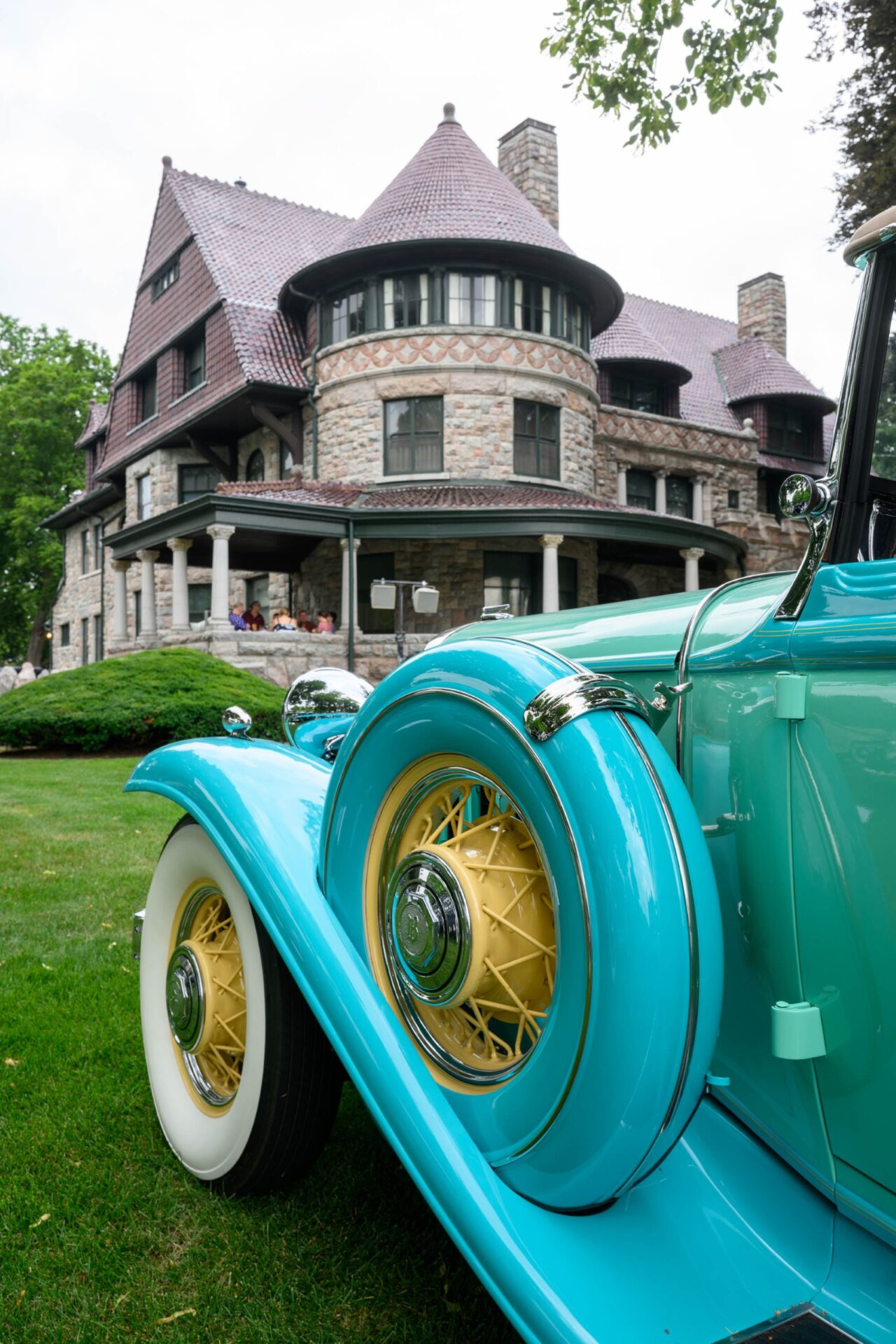
With growing events, expanding archives, and a passionate community behind it, the Studebaker National Museum continues to honor the past while inspiring future generations. Whether you’re a lifelong enthusiast or newly curious, there’s never been a better time to explore South Bend’s automotive heritage.
To learn more, visit studebakermuseum.org or follow the museum on Facebook, Instagram, YouTube, and other platforms for updates, behind-the-scenes content, and upcoming events.
Automotive History Live! at the Copshaholm Concours d'Elegance
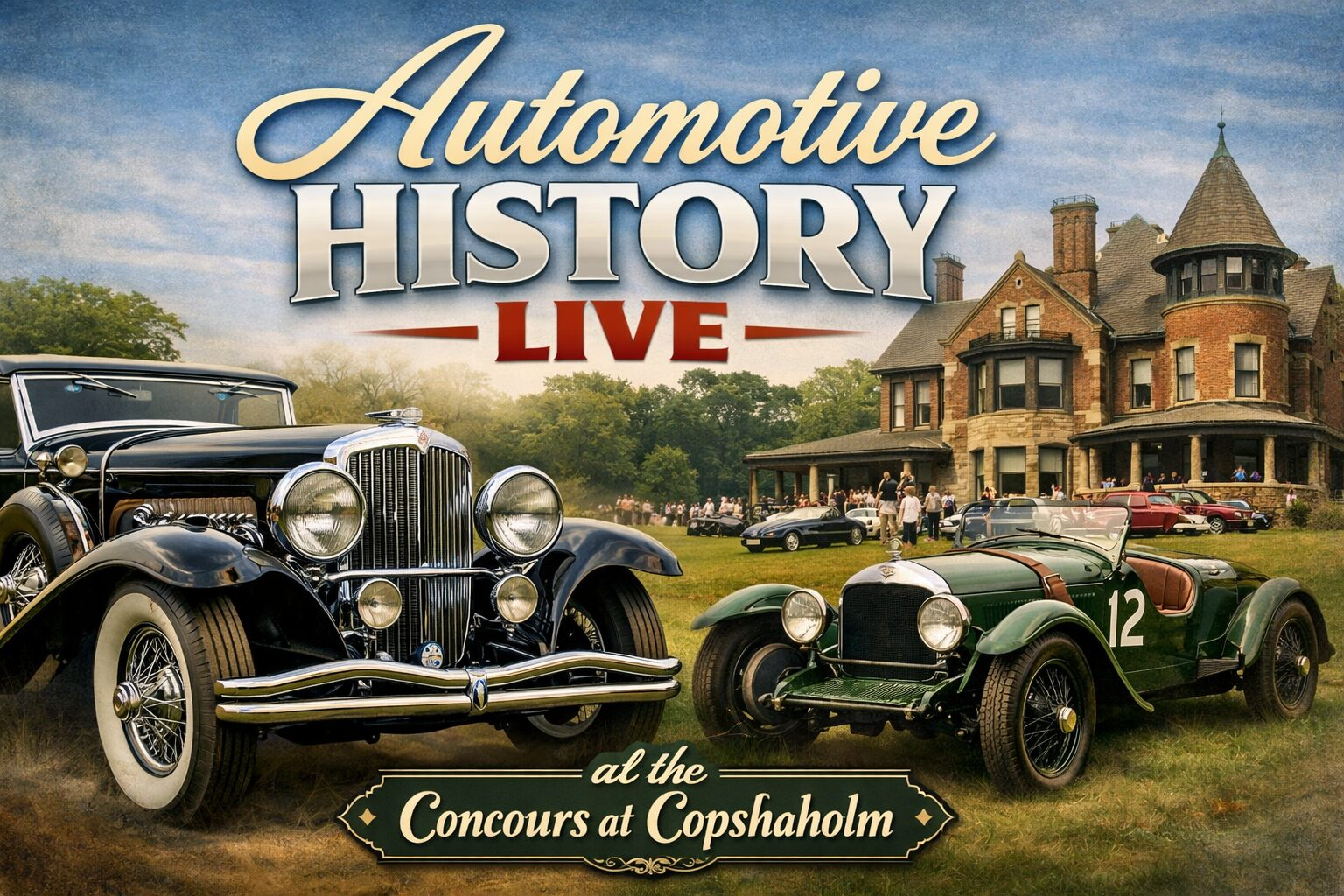 The Studebaker National Museum, partnering with the Society of Automotive Historians (SAH), presents Automotive History Live! The Symposium established itself as a unique and respected scholarly forum and has gained a growing audience of students and enthusiasts. It provides an opportunity for scholars, researchers and writers to present their work related to the history of the automobile and the cultural impact of motorsports. Papers are presented by faculty members, graduate students and independent researchers.
This episode is sponsored in part by: The Studebaker National Museum and The Society of Automotive Historians (SAH) and was recorded in front of a live studio audience.
This content has been brought to you in-part by support through...